A detailed teacher lesson plan for the Article Accuracy lesson, featuring pacing, instructional steps, and differentiation strategies centered around the Newsroom theme.
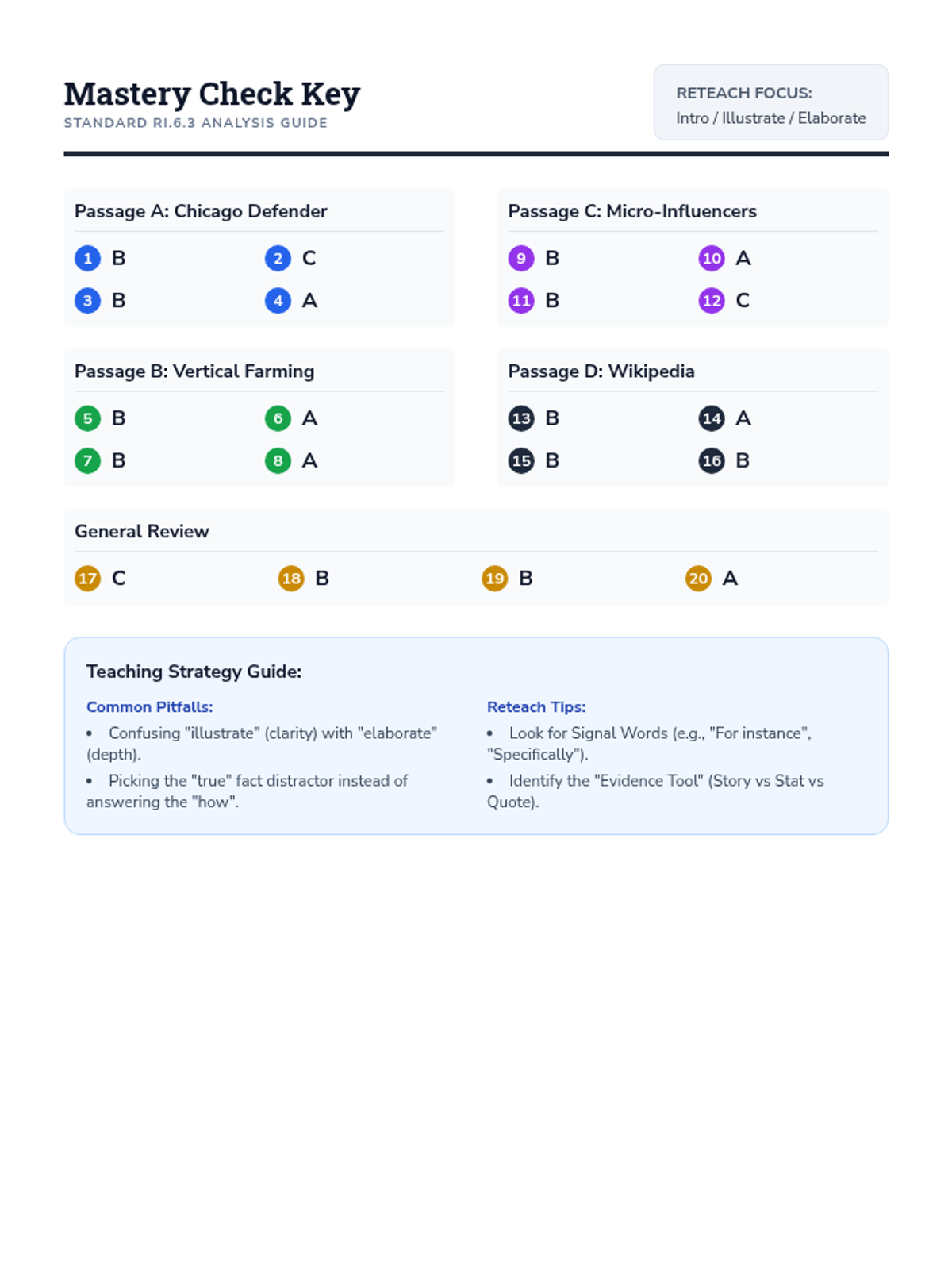
A clear, one-page teacher answer key and strategy guide for the RI 6.3 Mastery Check. Optimized for one-page printing with all teaching tips included.
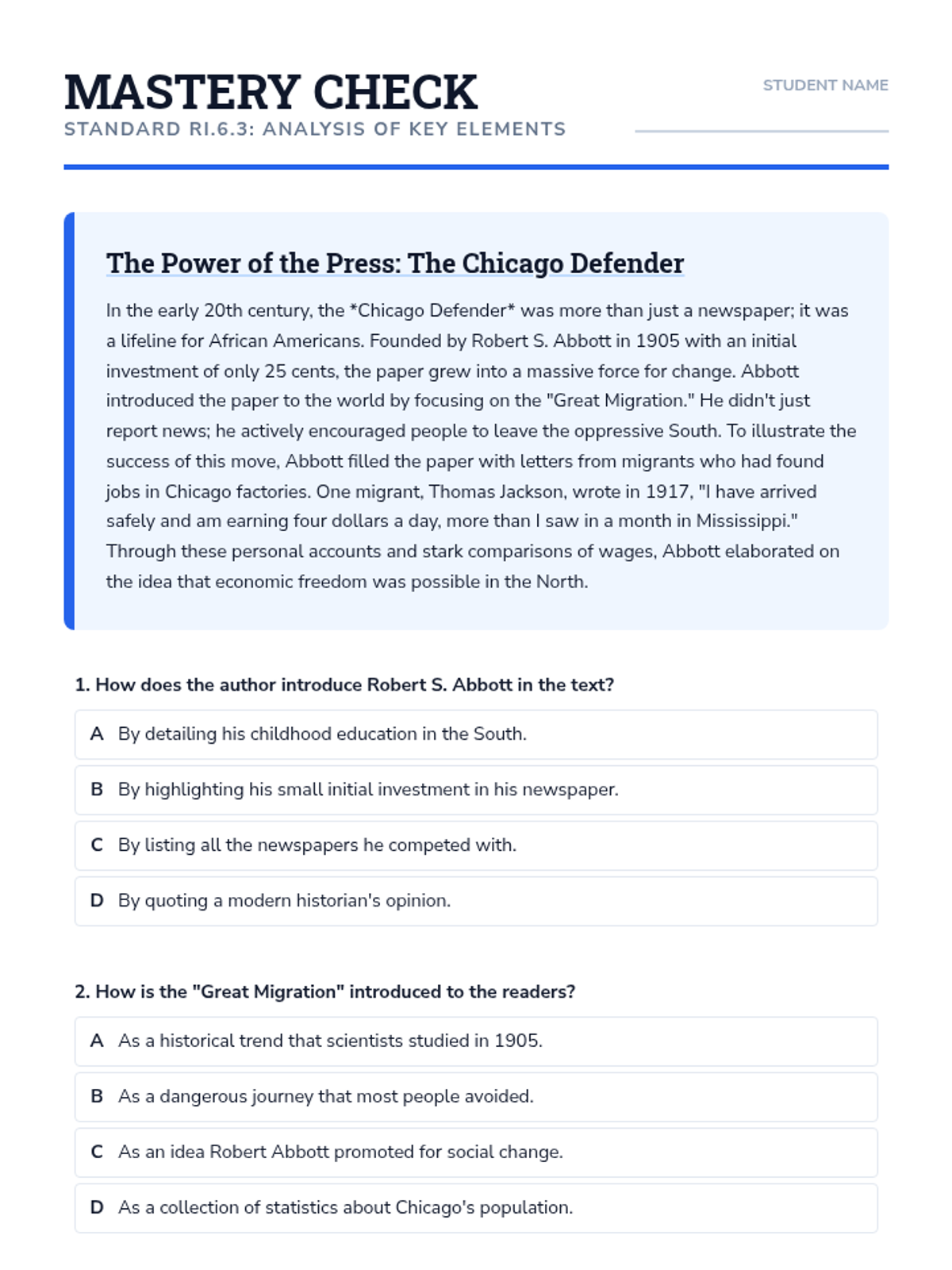
A 20-question multiple-choice mastery check for standard RI.6.3, using passages about Civil Rights, Scientific Innovation, and Social Media. Fixed layout issues and removed trailing white space.
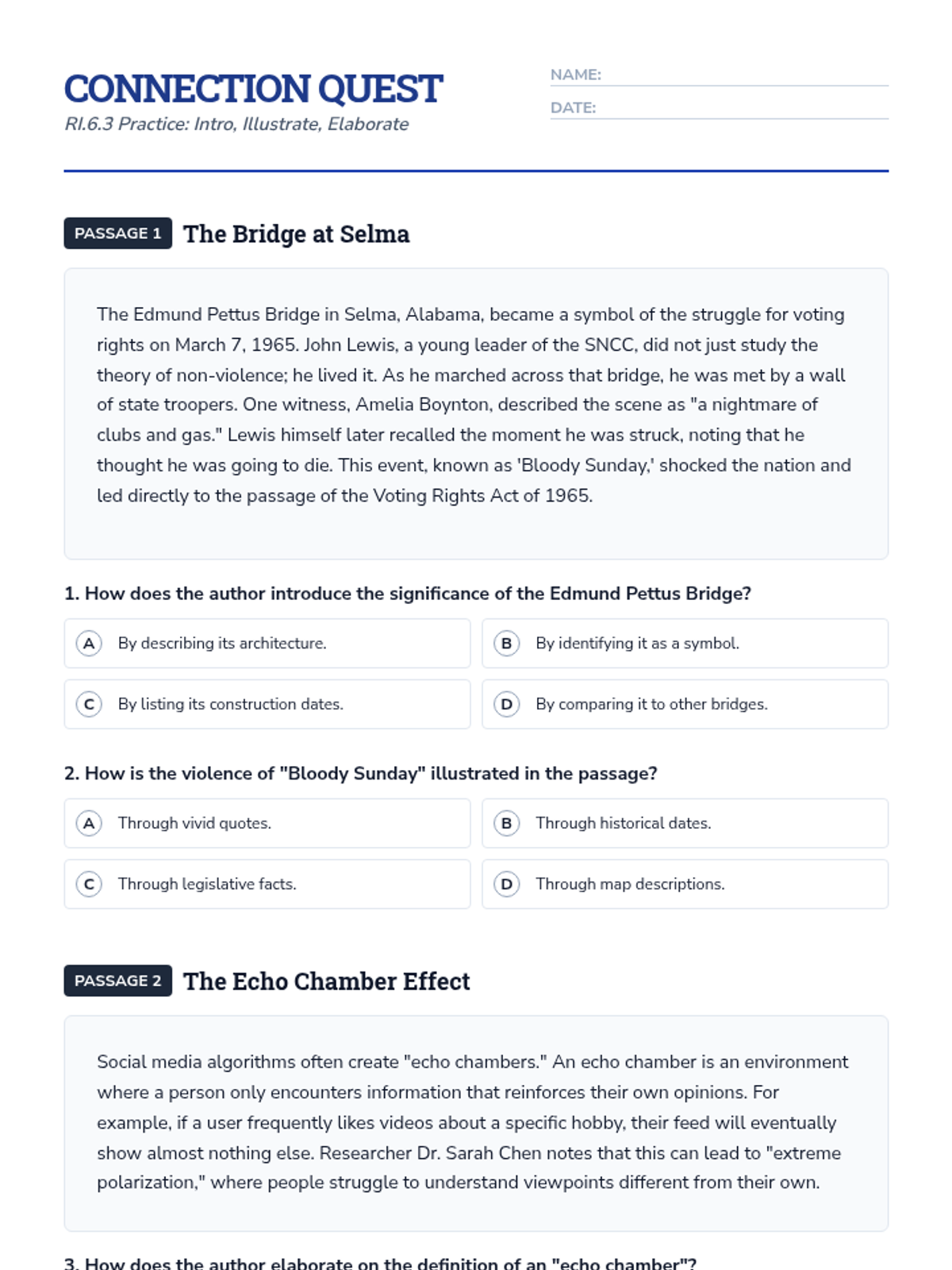
A practice worksheet for RI.6.3 featuring passages on Civil Rights, Social Media, and Scientific Innovation. Includes page-break fixes and expanded answer choices for better EOG alignment.
A comprehensive slide deck designed for an RI.6.3 reteach, featuring visual strategy guides and interactive practice questions on Civil Rights, Social Media, and Science topics. Answer choices now have uniform styling and four options each.
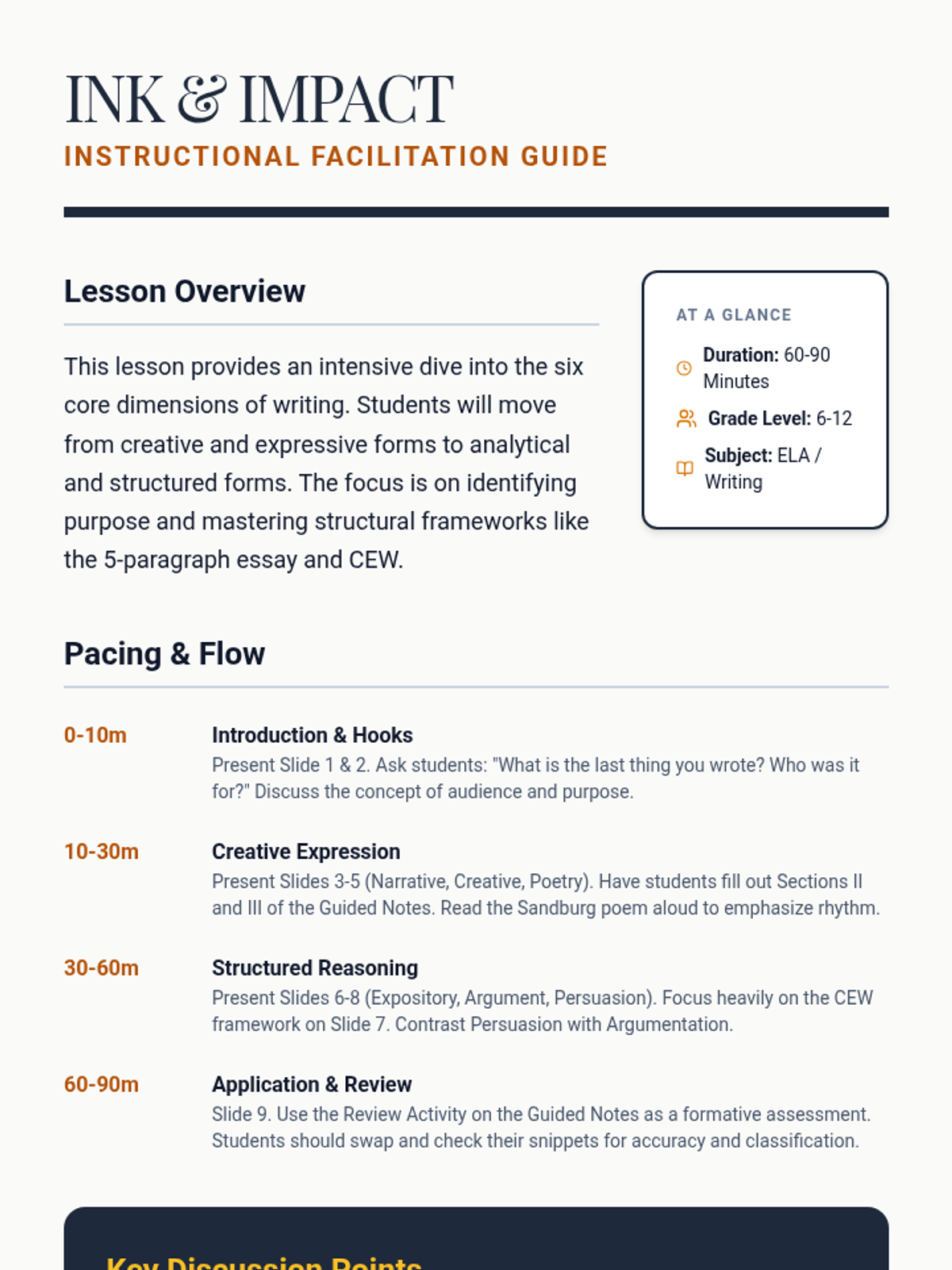
A teacher-facing facilitation guide for the 'Ink & Impact' lesson. Includes a pacing guide, discussion prompts, and differentiation strategies. Fixes layout split issues and balances visual weight.
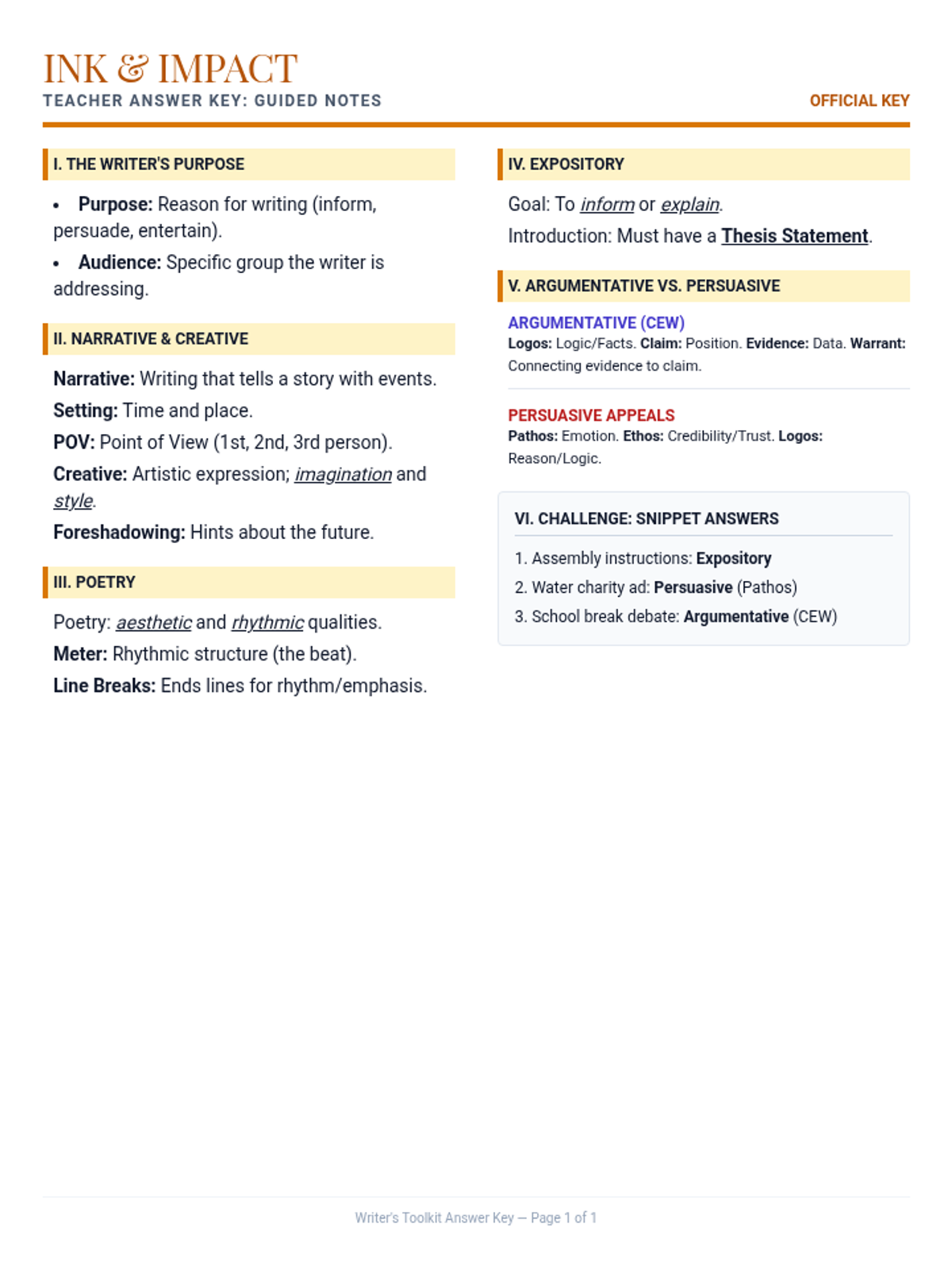
Teacher answer key for the 'Writer Toolkit Guided Notes' document, providing all correct terms and definitions. Condensed to a single-page layout for teacher convenience.
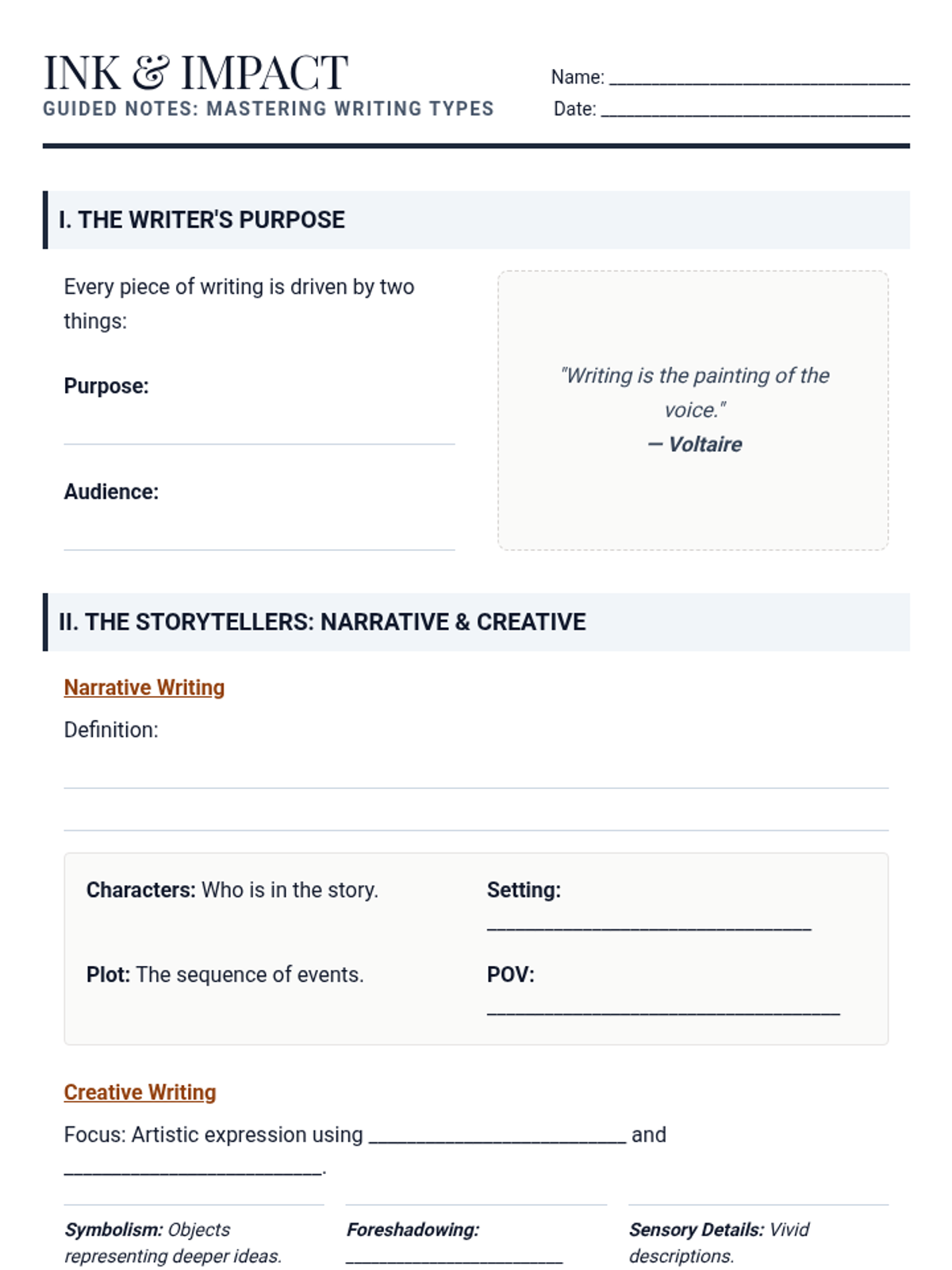
Guided notes document for students to follow along with the 'Ink & Impact' slides. Includes blanks for key terms, definitions for writing types, CEW structure, and rhetorical appeals. Fixes page breaks, background colors for legibility, and improves handwriting spacing.
A comprehensive slide deck covering the six major writing types (Narrative, Creative, Poetry, Expository, Argumentative, and Persuasive), including structures like CEW and the 5-paragraph essay, and rhetorical devices like Ethos, Pathos, and Logos.
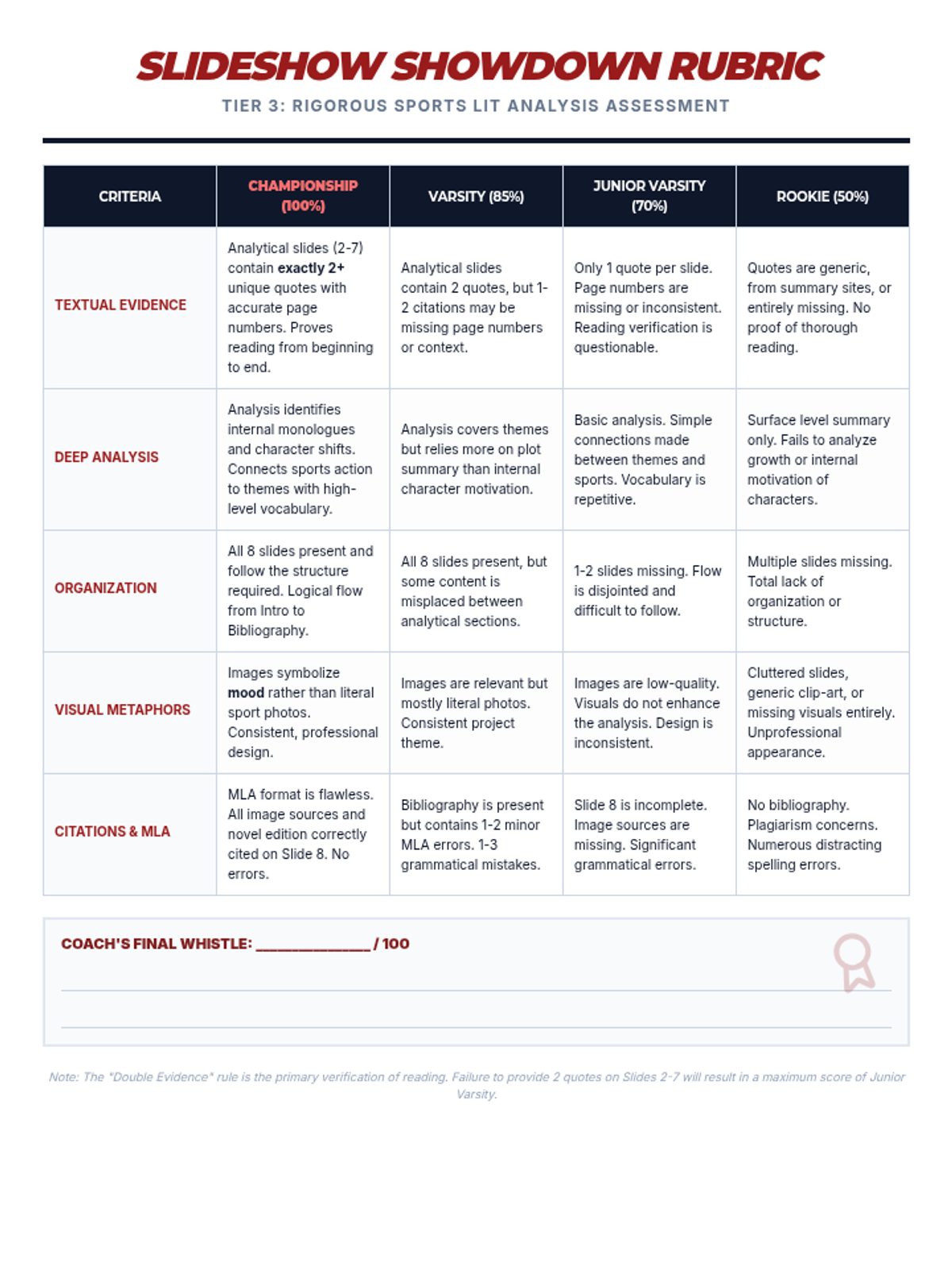
A detailed grading rubric for the Google Slides project, updated to support both fiction and non-fiction tracks. Evaluates textual evidence, dual-track analysis, visual metaphors, and MLA formatting. Fits on one sheet.
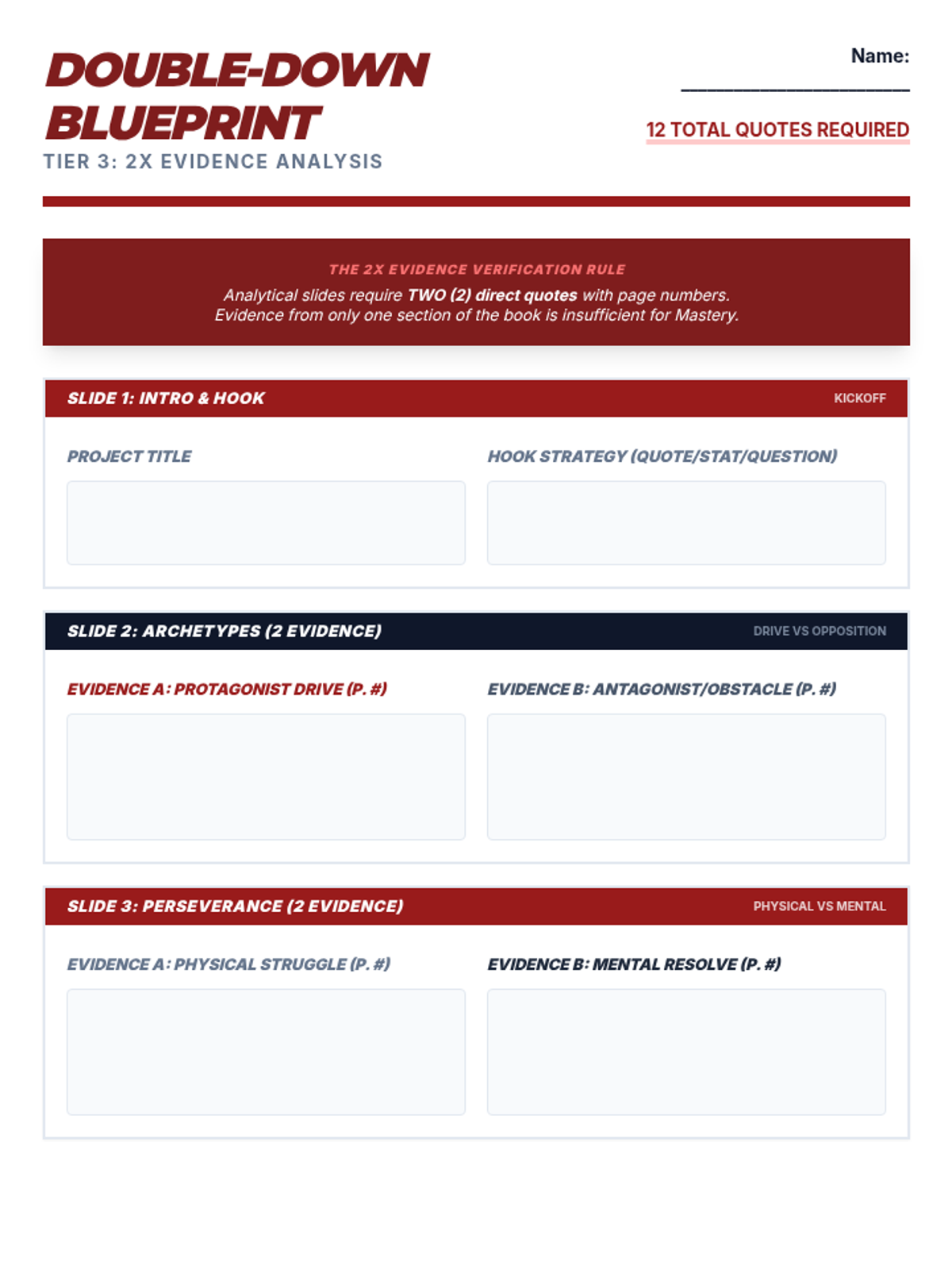
A printable slide-by-slide planning guide for students, updated to support both fiction and non-fiction tracks. Includes two specific evidence boxes for Slide 7 and a student-facing rubric on a 3rd page for self-assessment. Layout optimized for clarity and handwriting space. Fixed page breaks and rubric typos.
Instructional slide deck for students, updated to support both fiction and non-fiction tracks. Clearly outlines the adaptive requirements for biographies/memoirs while maintaining high rigor. Includes a full 8-slide roster and scoring preview.
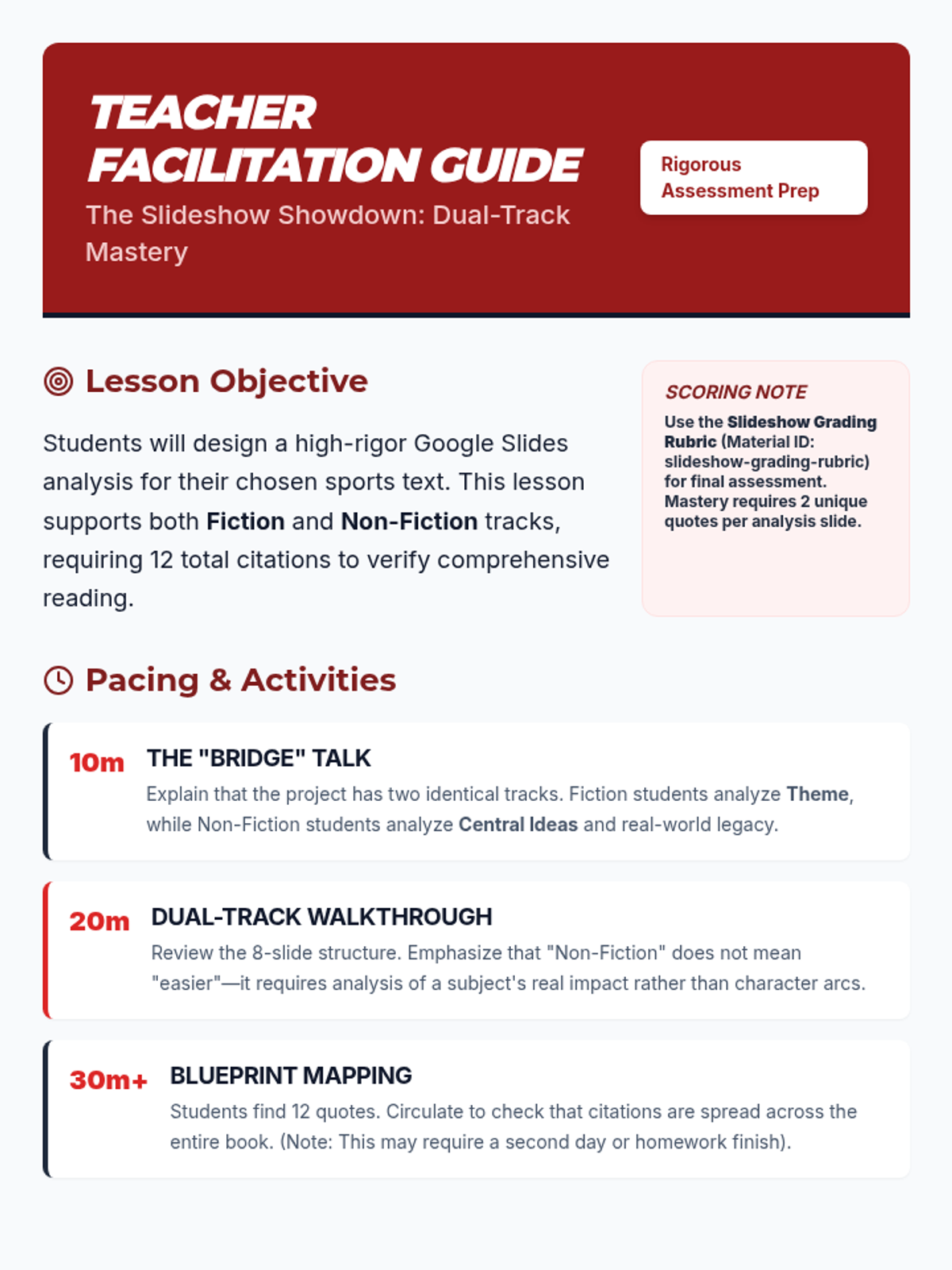
Teacher facilitation guide for the Google Slides project, updated with a comprehensive 8-slide comparison map for both fiction and non-fiction tracks. Includes specific reading verification strategies and fixed orphaned punctuation. Revised Scoring Note for better contrast.
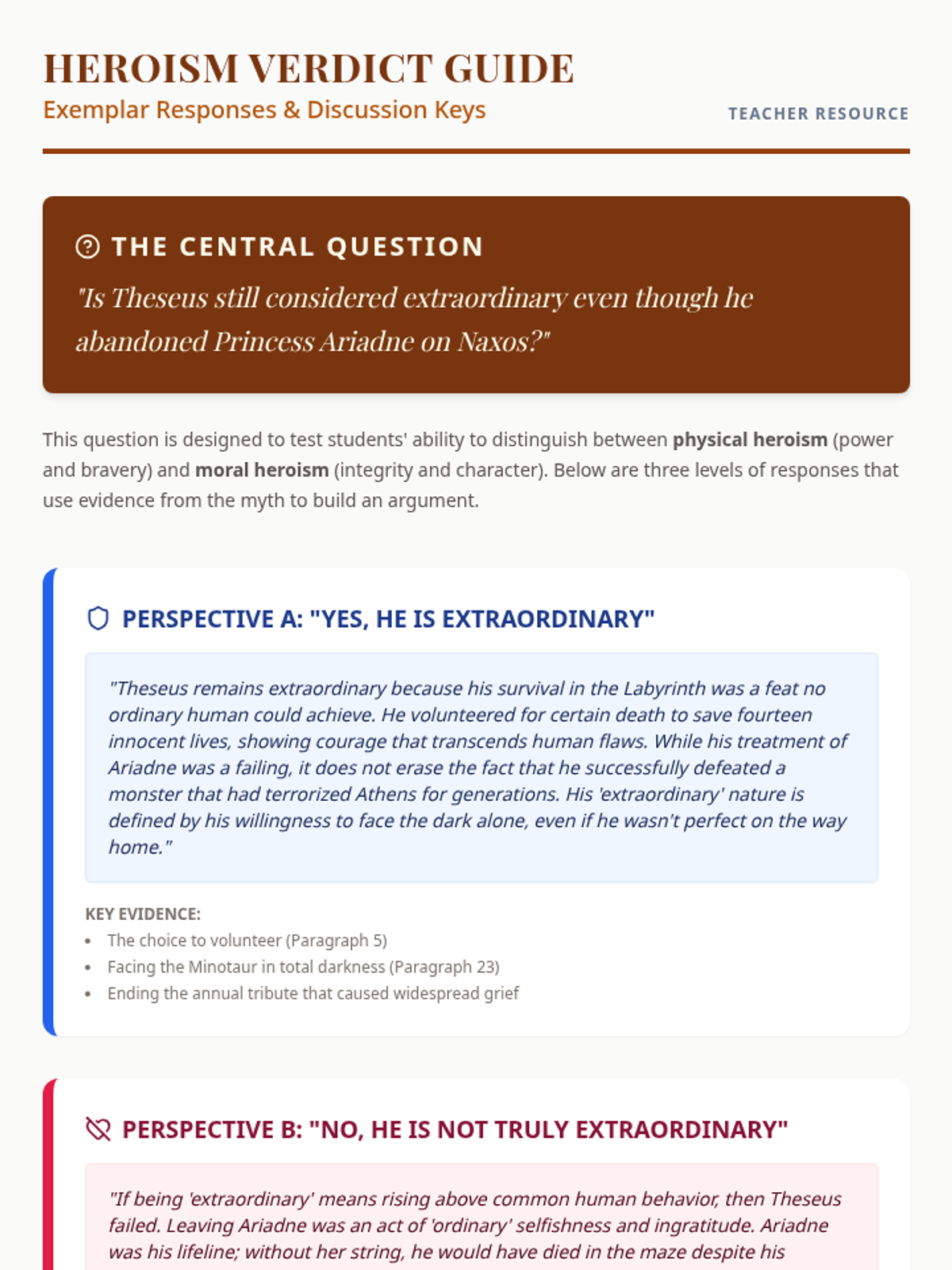
A teacher resource providing exemplar responses and discussion points for the complex question of Theseus's heroism and his abandonment of Ariadne. It offers multiple perspectives based on textual evidence.
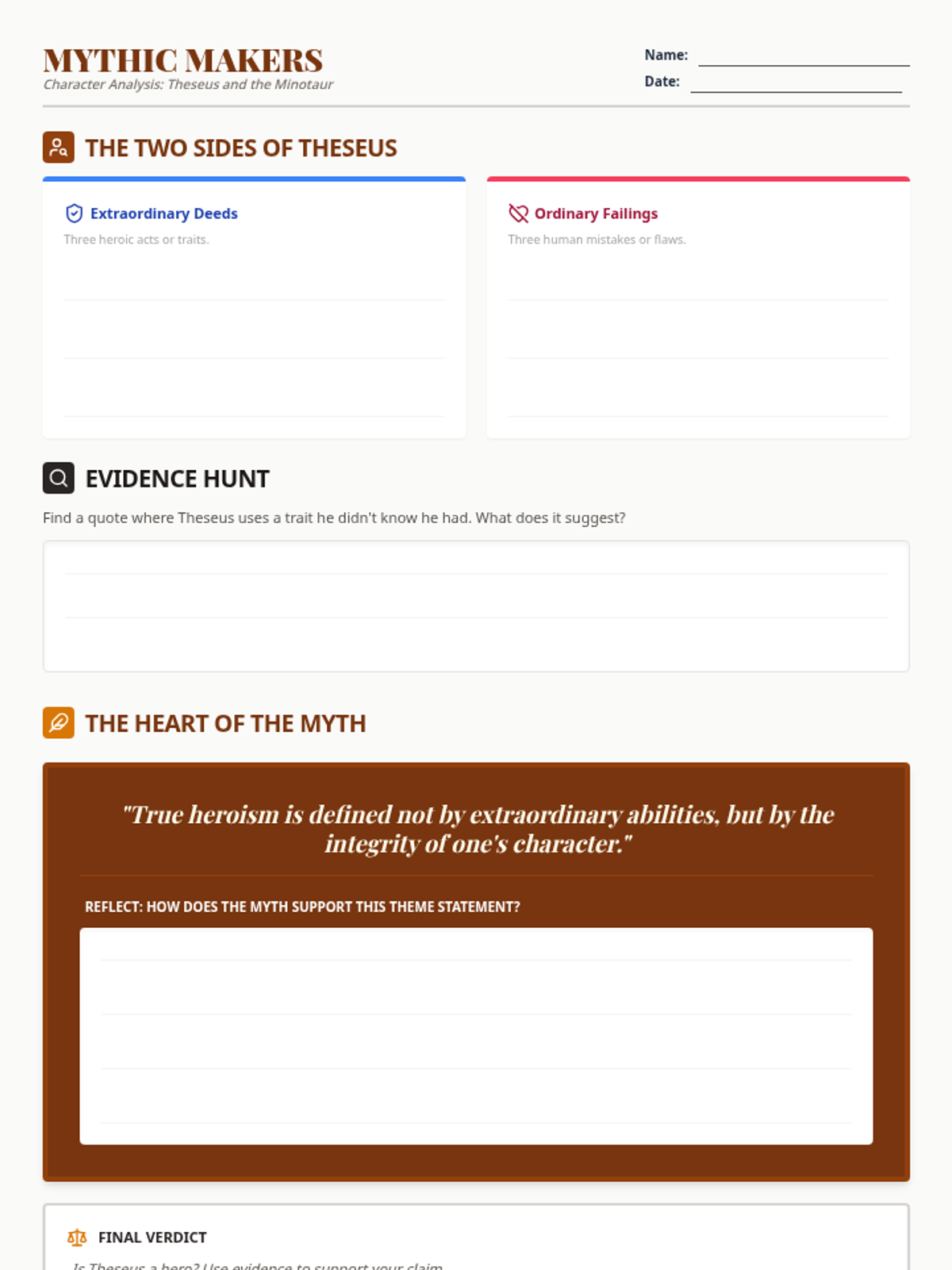
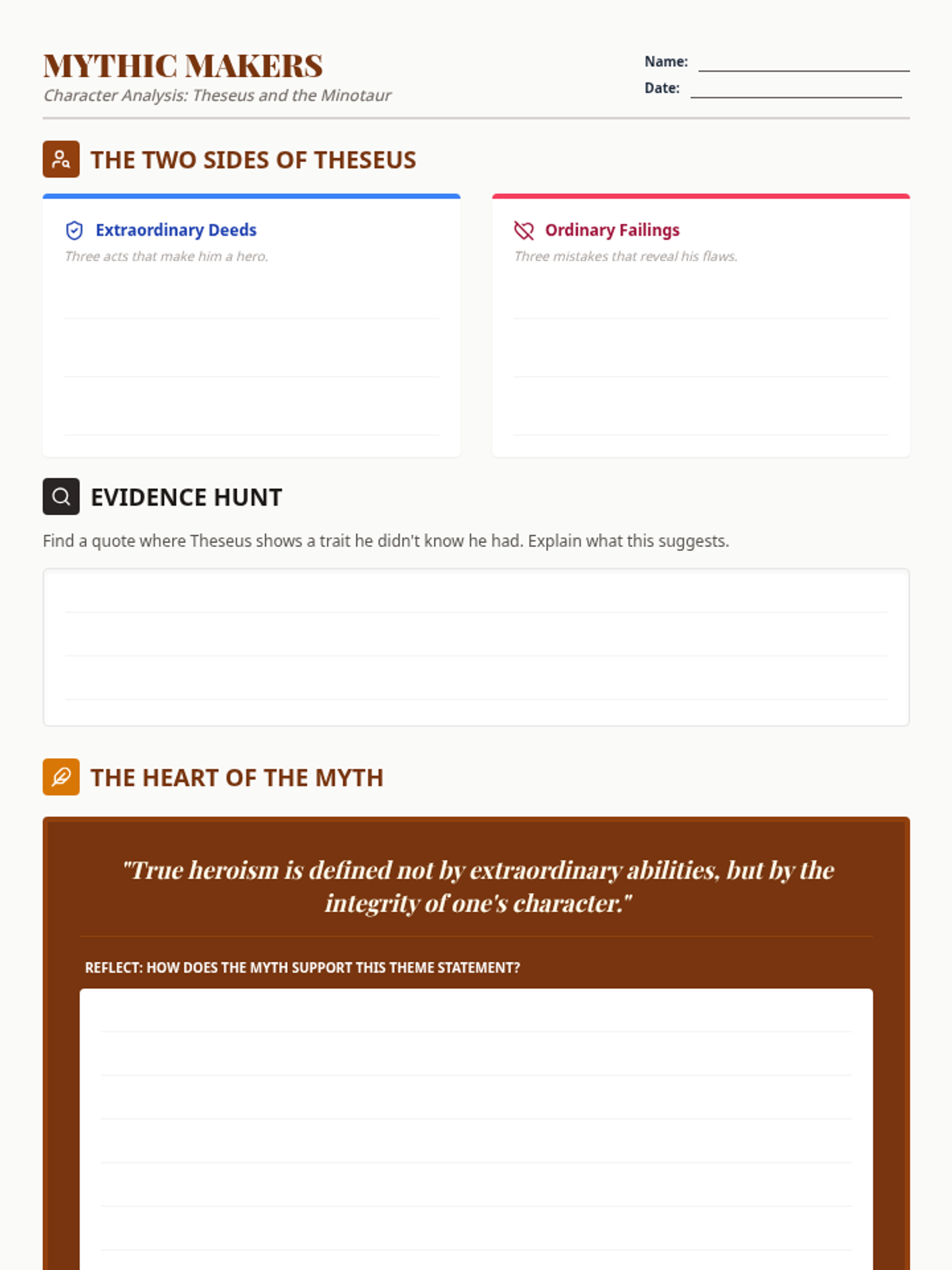
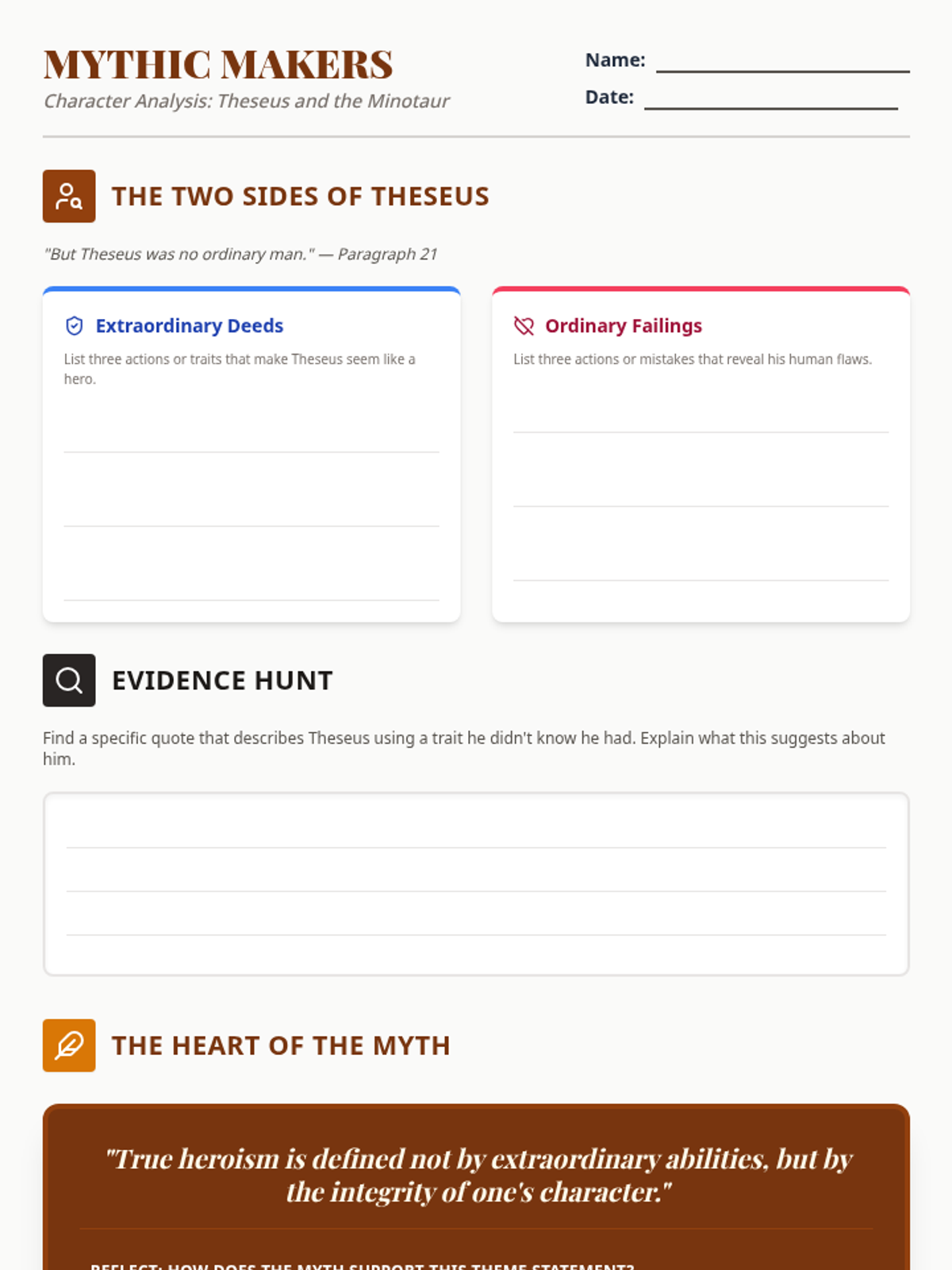
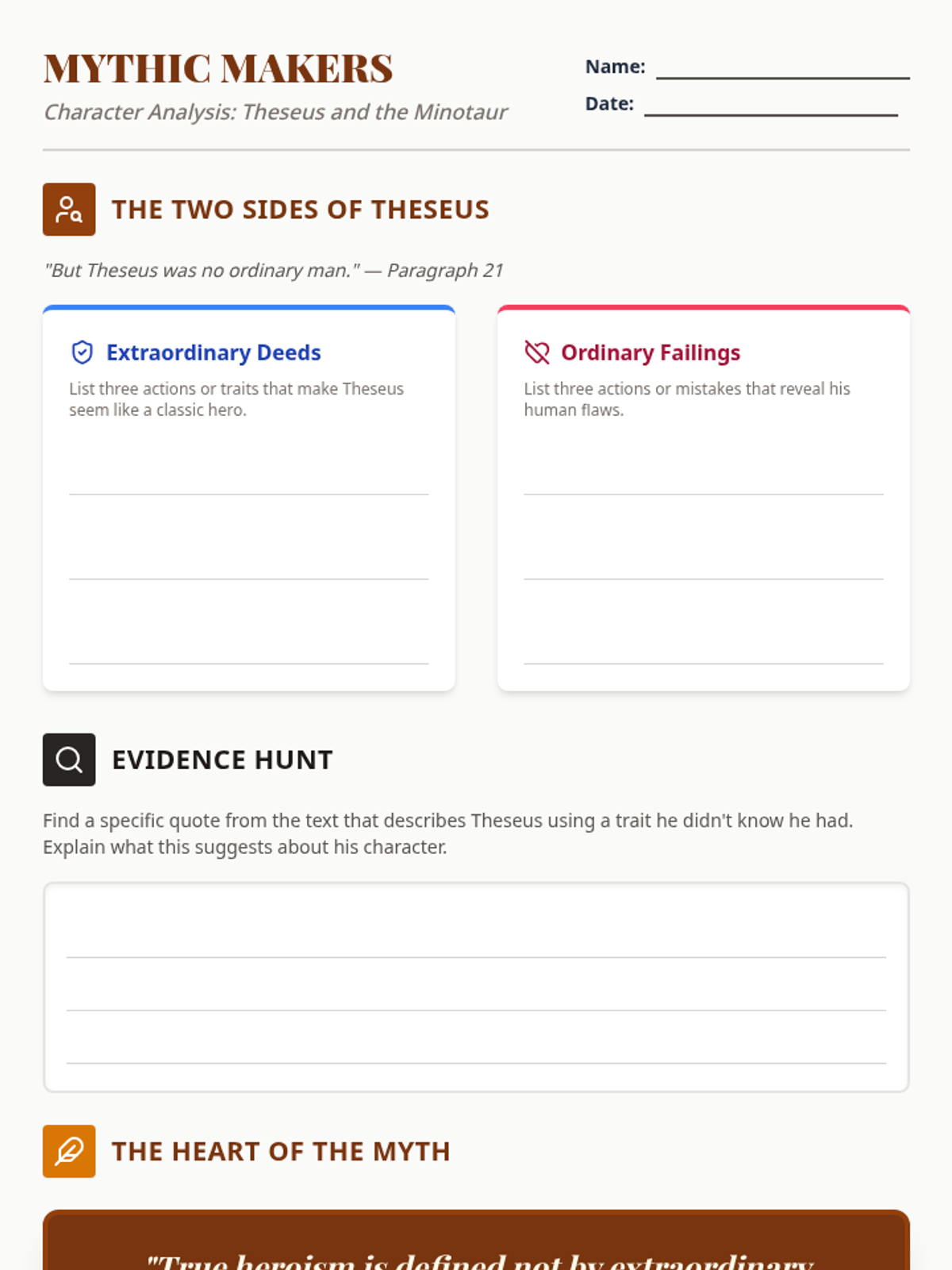
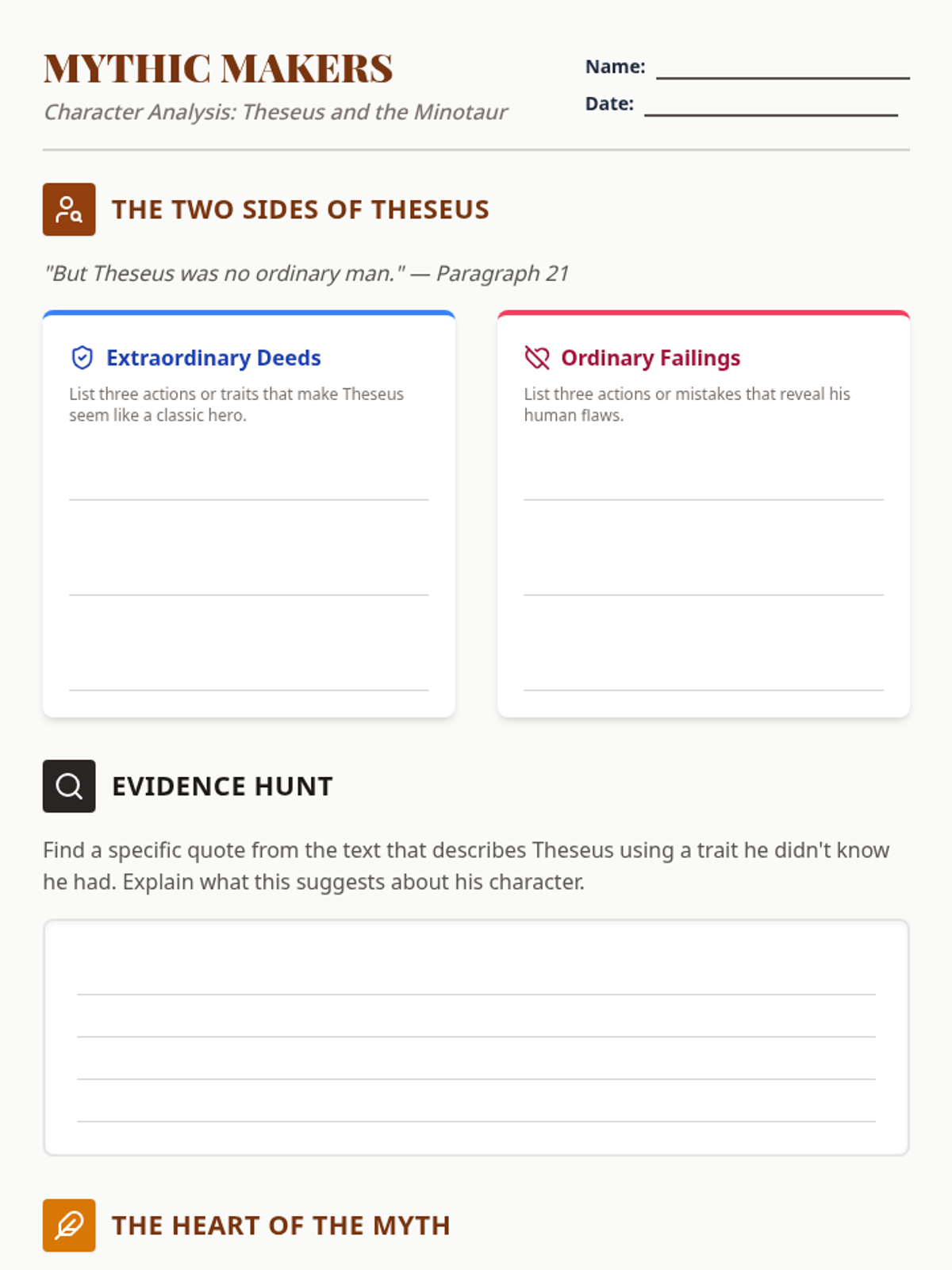
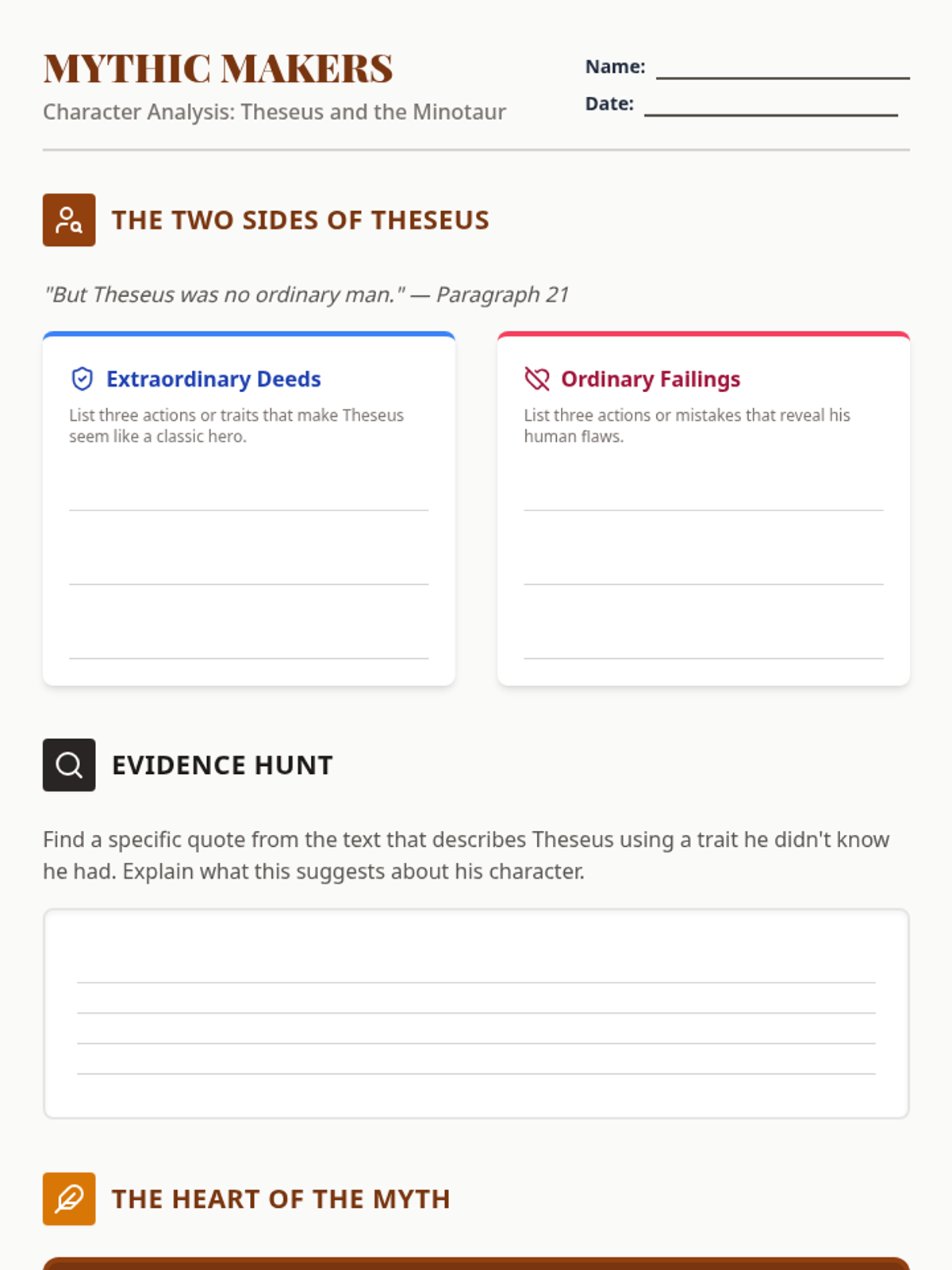
A student worksheet that facilitates character analysis of Theseus, focusing on the contrast between his extraordinary deeds and his moral failings. Includes evidence-finding tasks and deep reflection prompts.
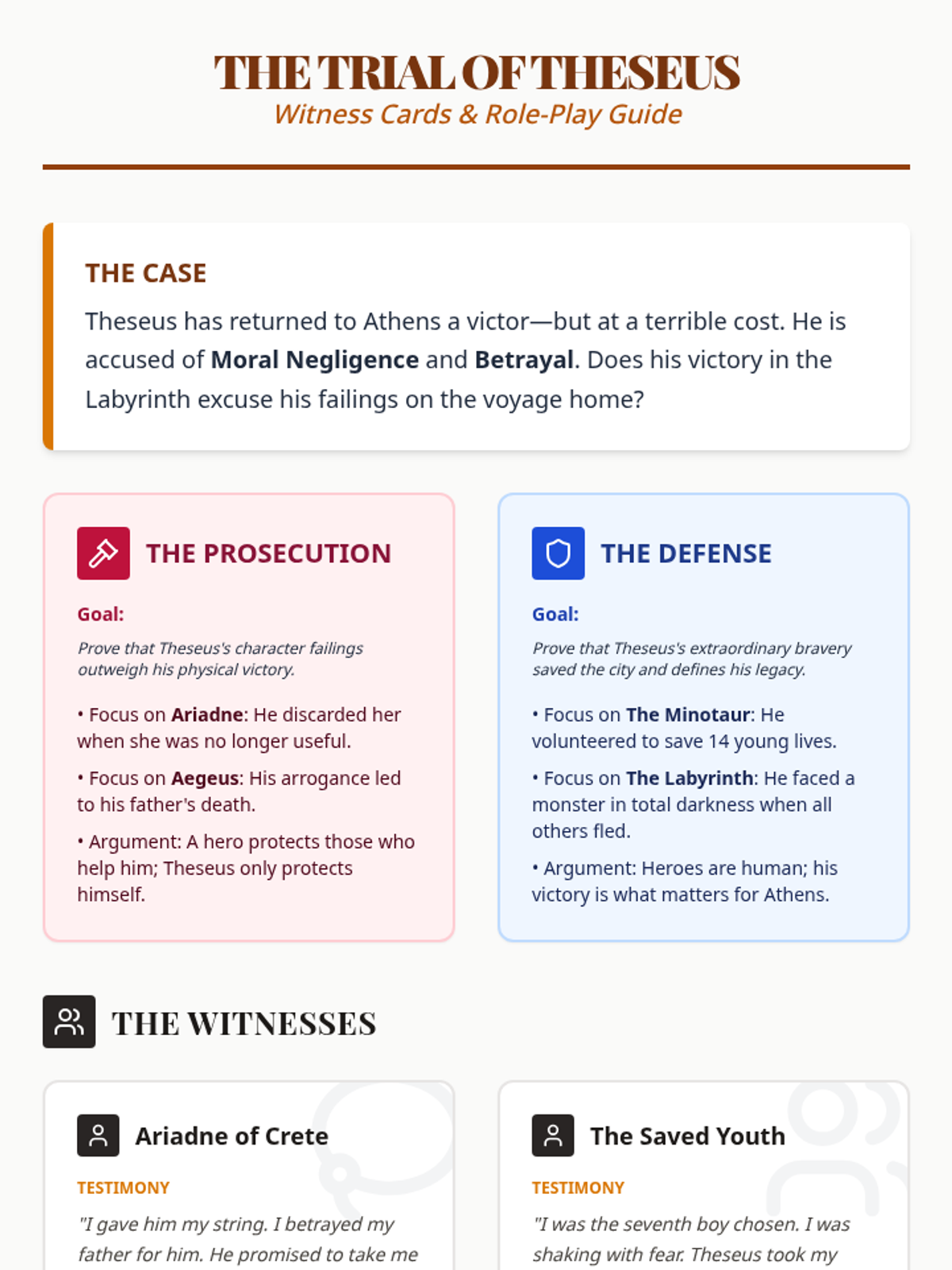
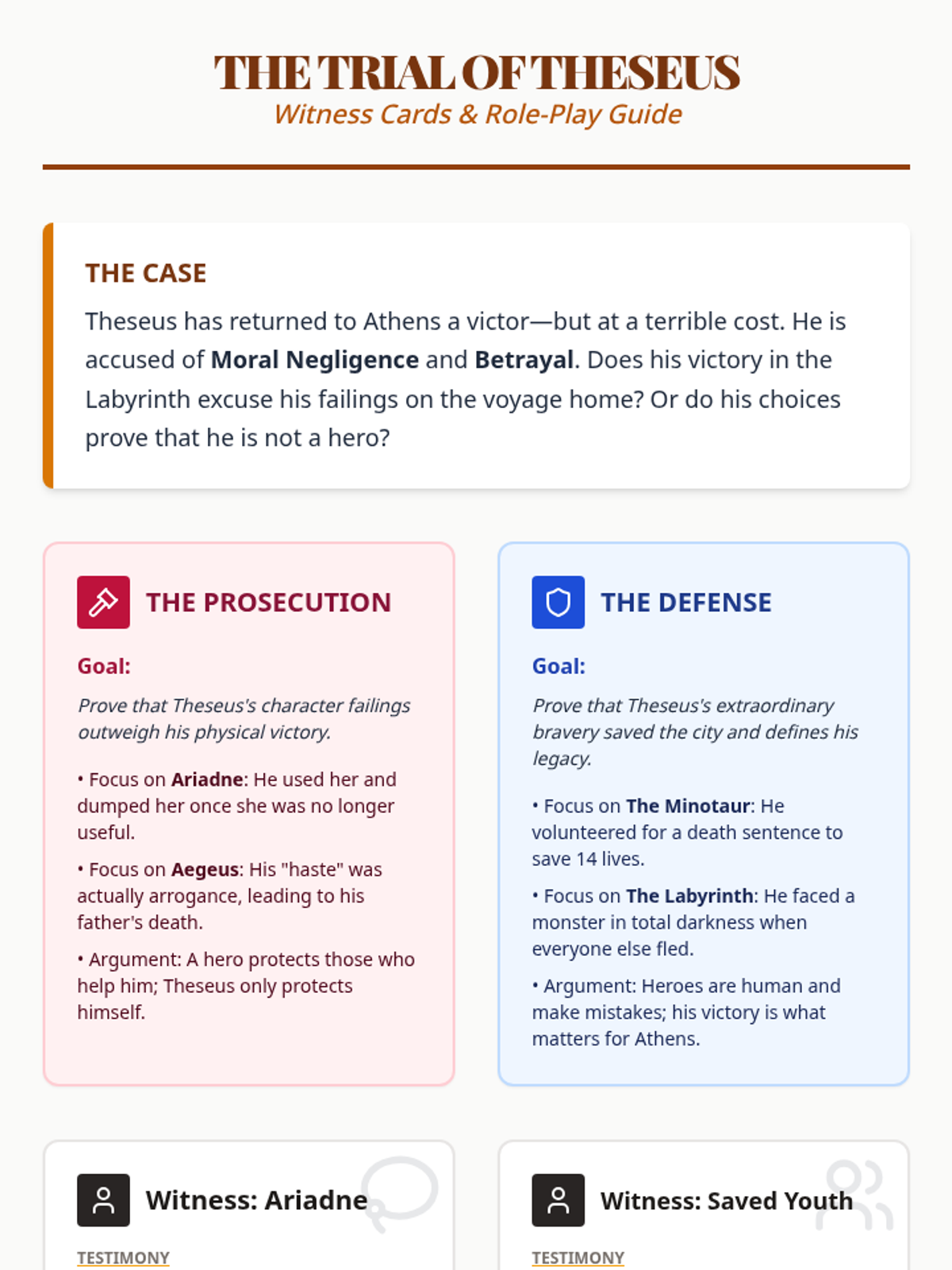
A classroom role-play activity featuring witness cards and a trial procedure to help students debate the heroism of Theseus. It focuses on the moral conflict of his abandonment of Ariadne and the death of King Aegeus.
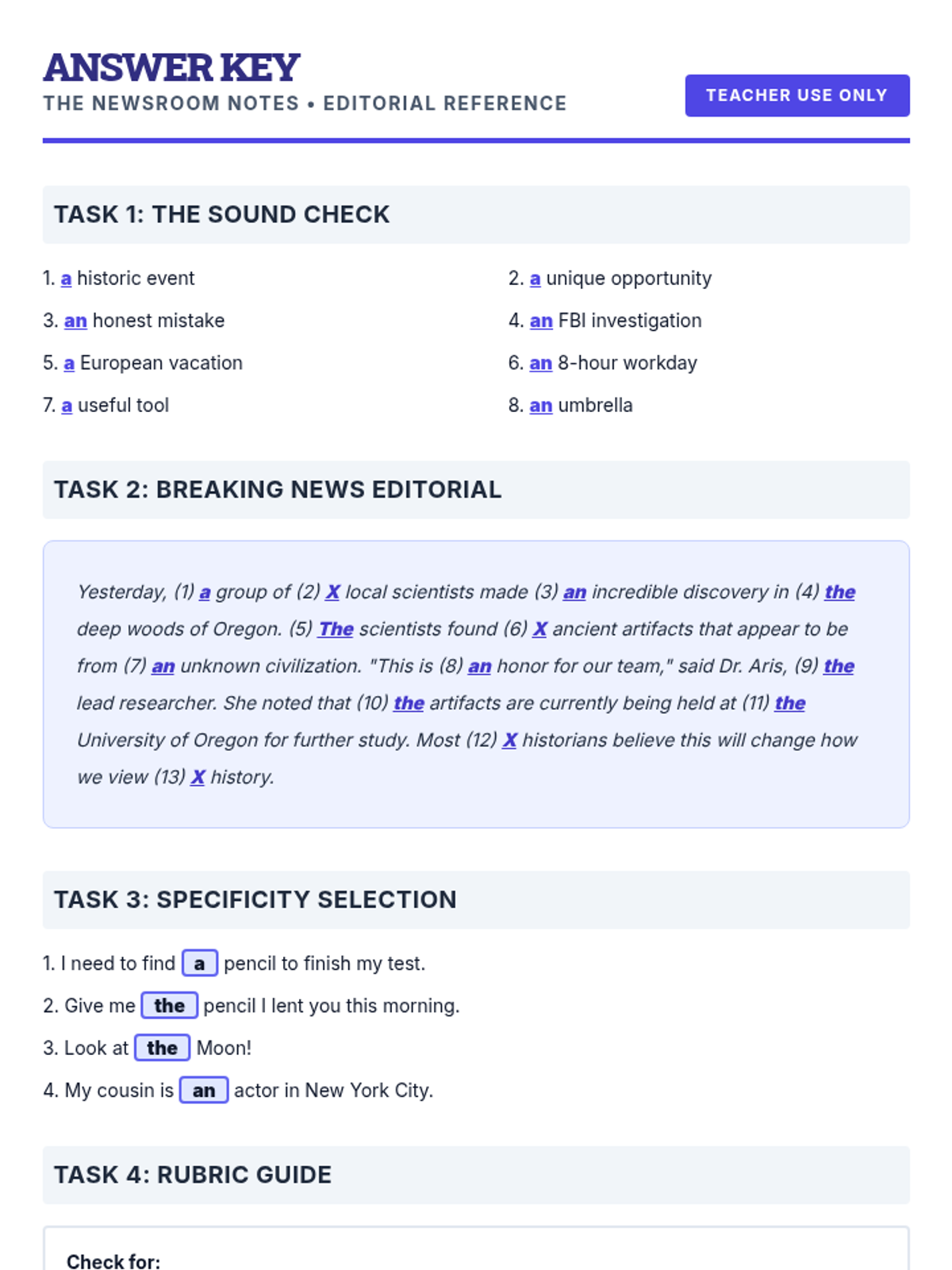
Teacher answer key for the Newsroom Notes worksheet, providing clear explanations for sound-based rules and correct article choices. Revised for layout consistency.
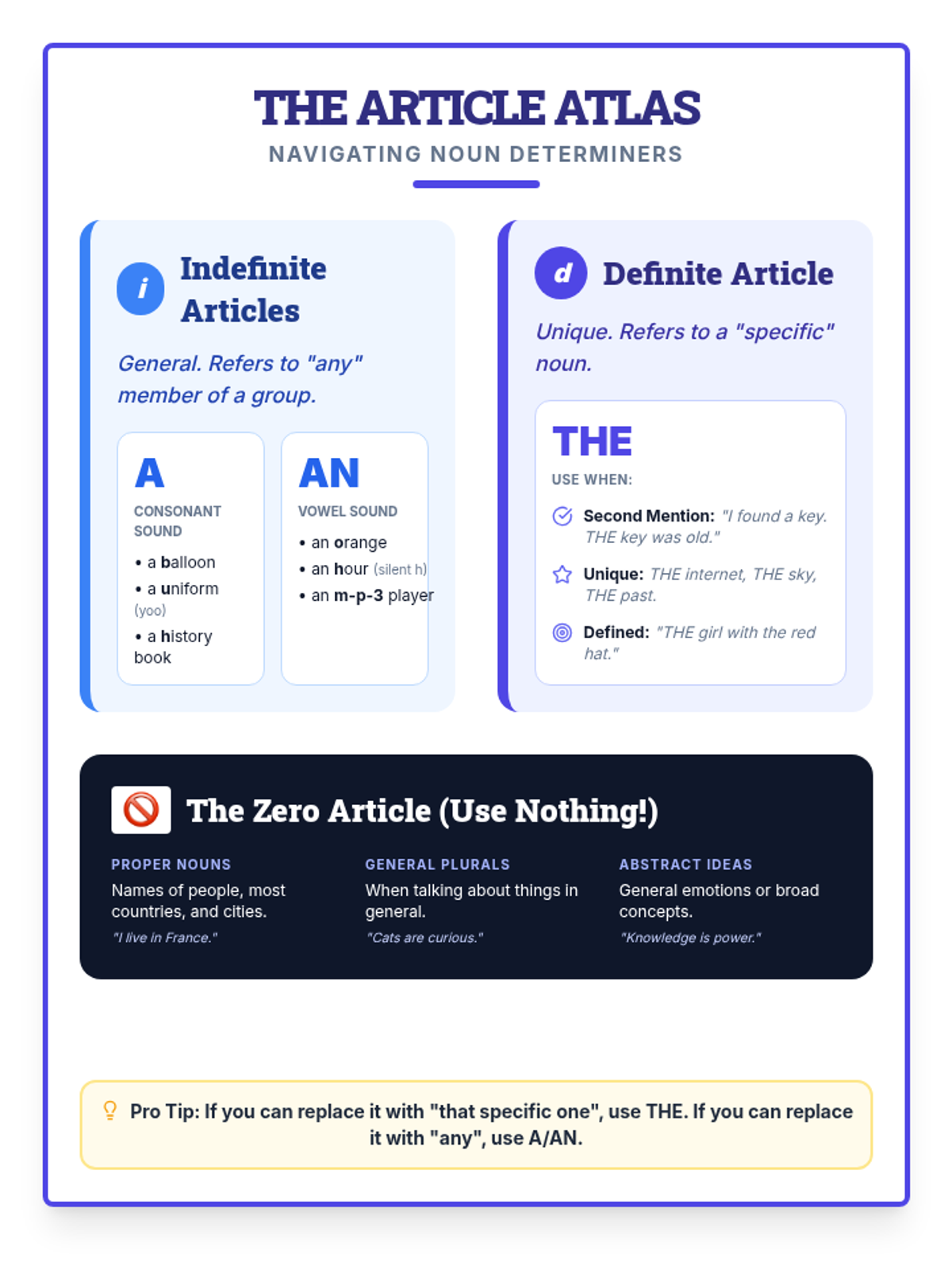
A high-impact graphic organizer anchor chart for articles, clearly distinguishing between indefinite, definite, and zero articles. Revised to fit onto a single page and improve text legibility.
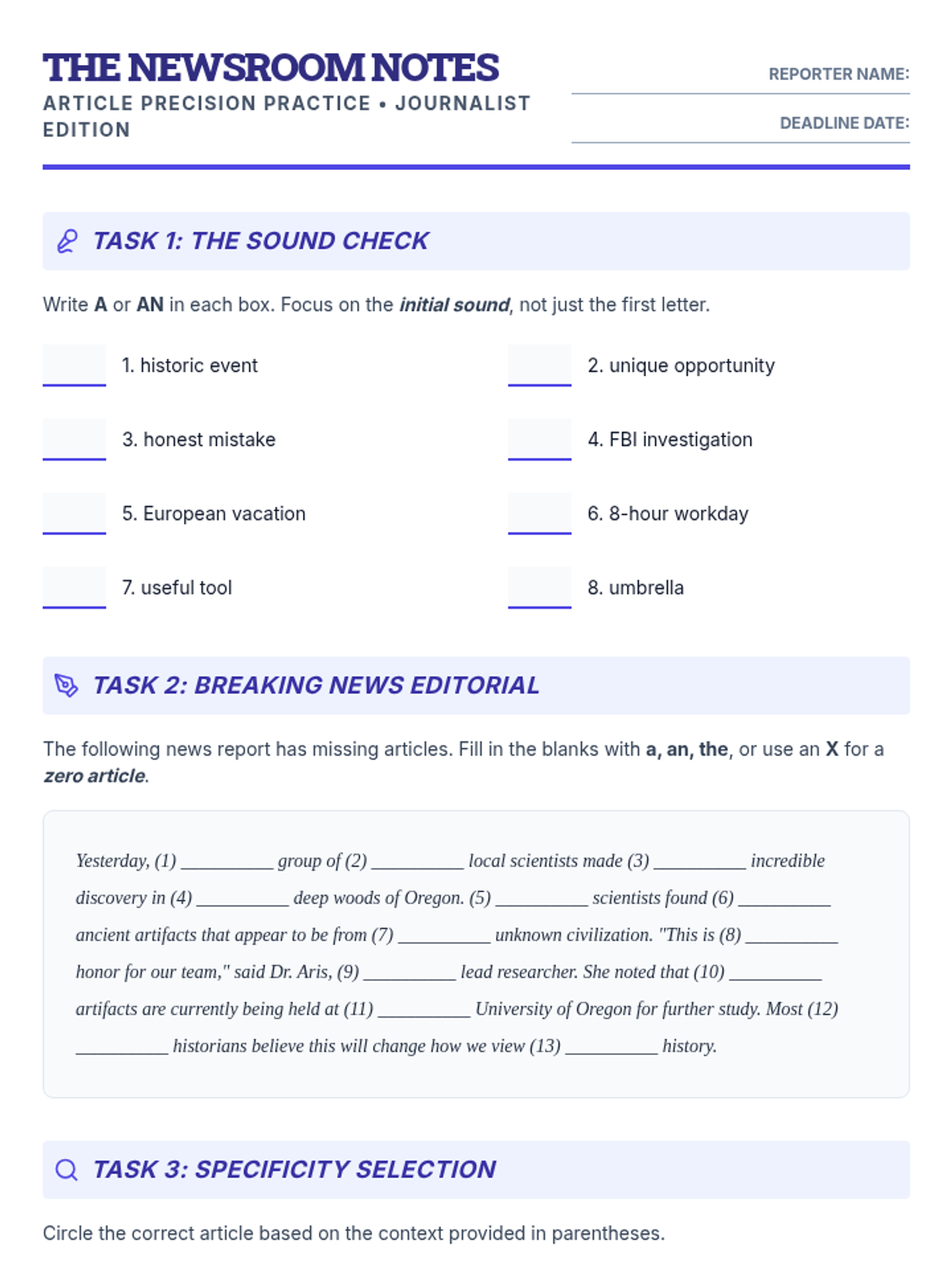
A comprehensive article practice worksheet with a journalism theme, featuring sound-based rules, editing tasks, and specificity challenges for 7th-grade students. Revised for better page layout and visual clarity.
A visually engaging slide deck teaching the rules of definite and indefinite articles for 7th graders, including advanced concepts like zero articles and sound-based rules.
A visually engaging slide deck designed for the 'Heroic Heart' lesson, walking students through the myth of Theseus while prompting deep reflection on the nature of heroism and character.
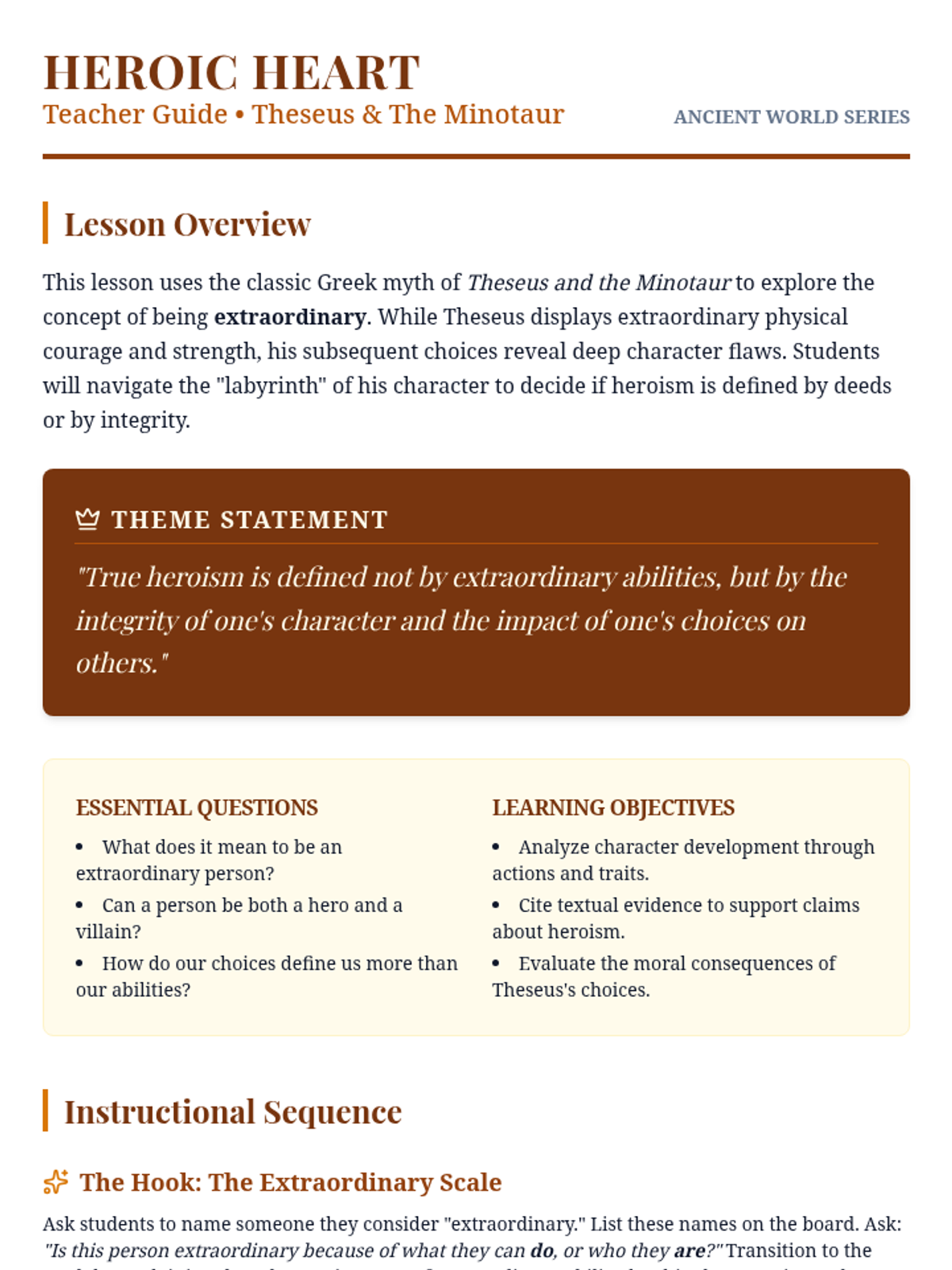
A comprehensive teacher guide for the 'Heroic Heart' lesson, featuring instructional strategies, discussion prompts focused on the concept of being extraordinary, and a detailed answer key for text-dependent questions.
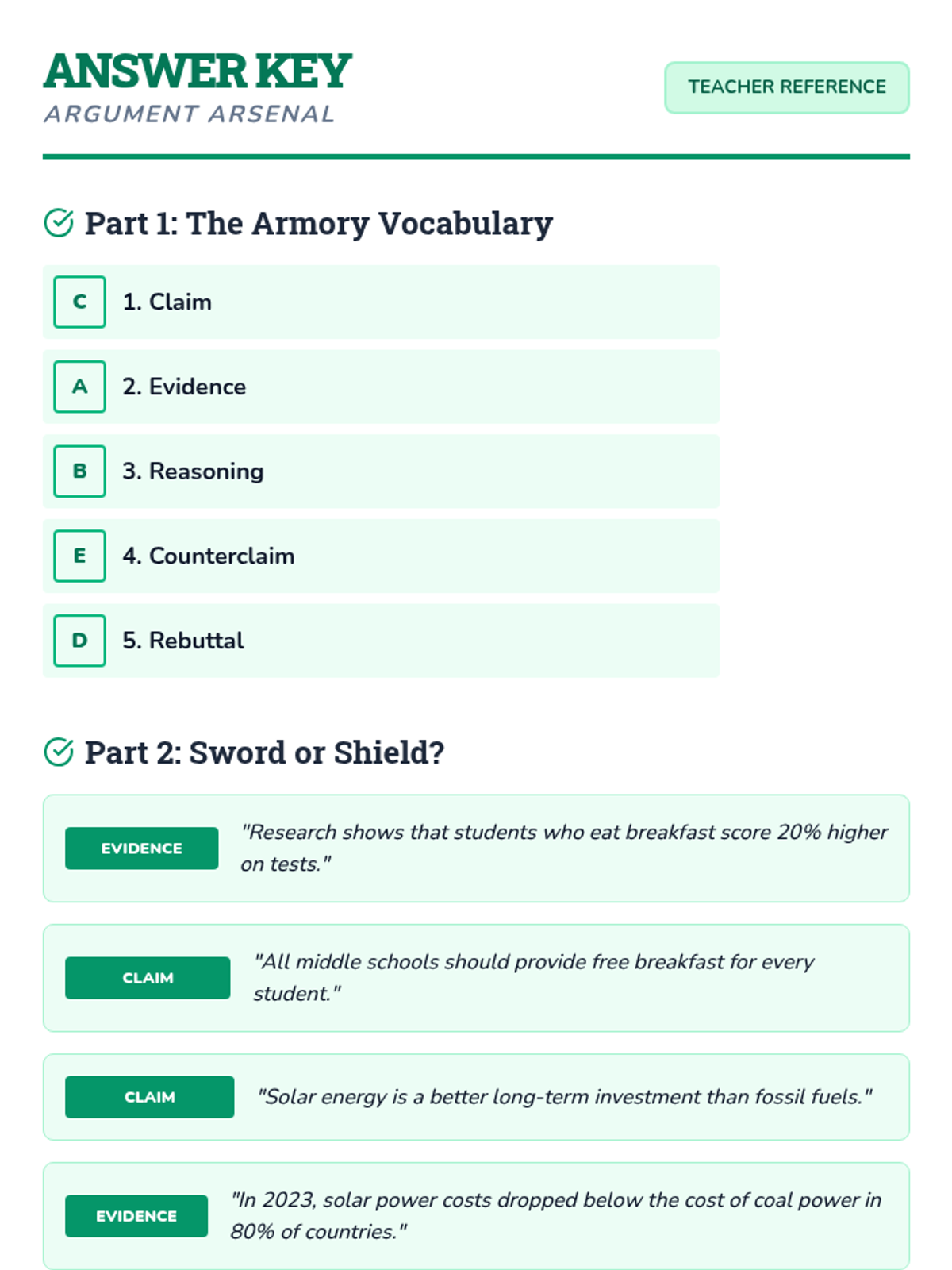
Teacher's answer key for the Argument Arsenal worksheet, including correct vocabulary matches and example evidence responses.
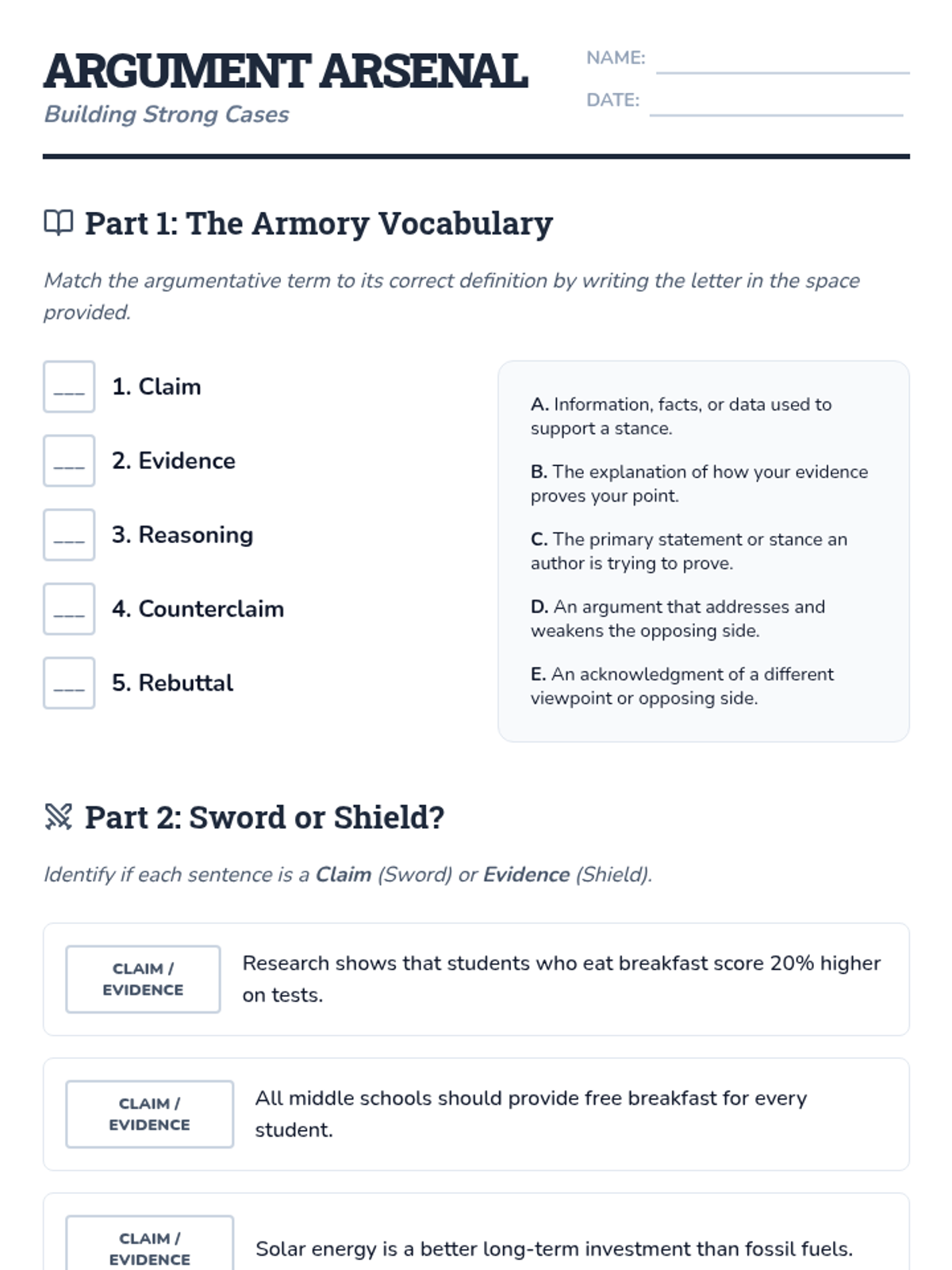
A vocabulary-focused worksheet on argumentative claims and evidence, featuring matching and sentence identification exercises. Revised for better page flow and contrast.
Instructional slides for the "Argument Arsenal" lesson, defining claim, evidence, and reasoning with a medieval armory visual theme.
An introductory presentation for the Lexicon Detectives lesson. It introduces the I.D.E.A.S. method (Inference, Definition, Example, Antonym, Synonym) for identifying context clues with clear, high-contrast examples and a detective theme.
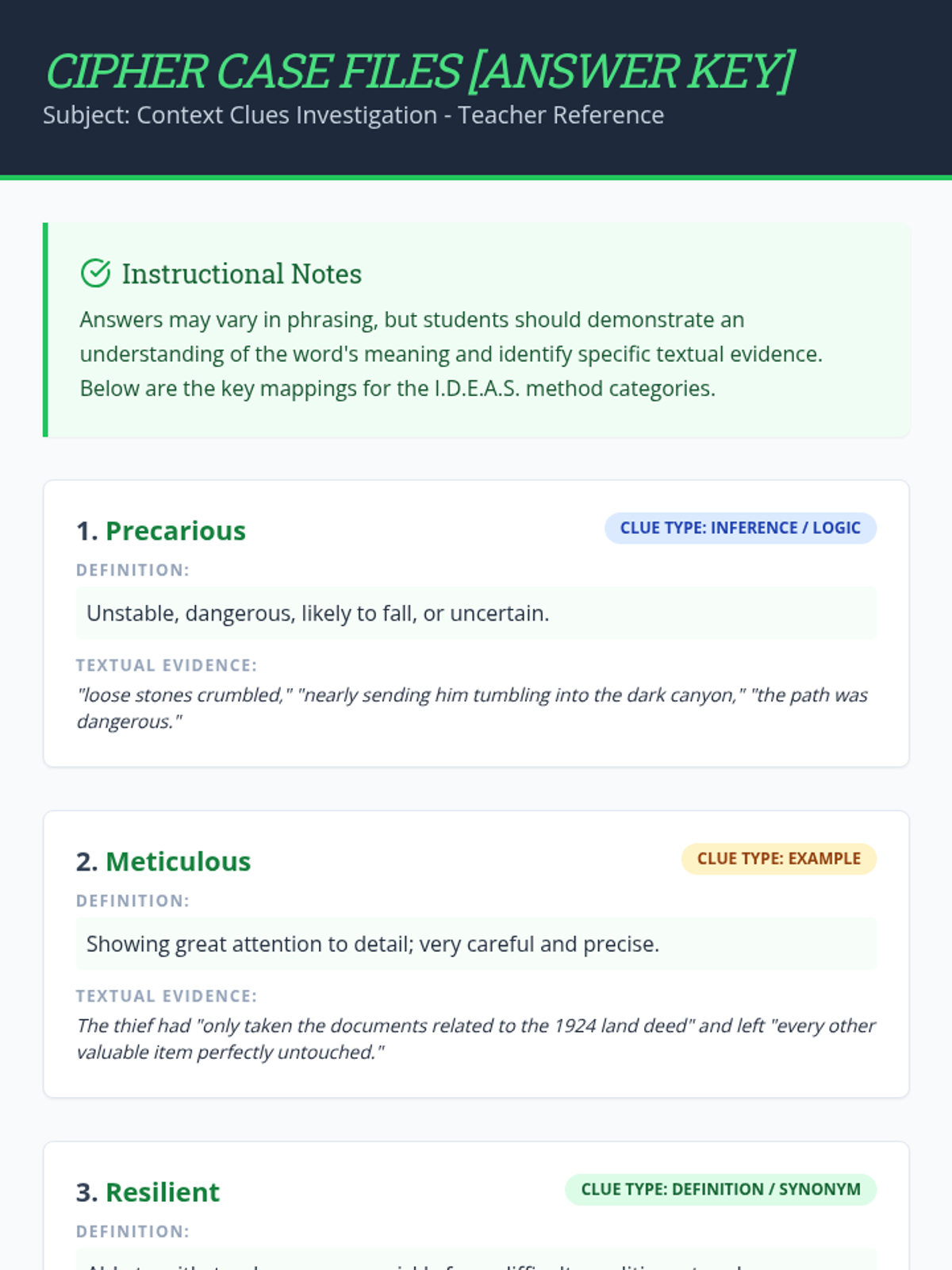
A comprehensive answer key for the Cipher Case Worksheet. It includes detailed mappings for context clue types (Inference, Example, Synonym, etc.) to assist teachers in grading student responses according to the I.D.E.A.S. method.
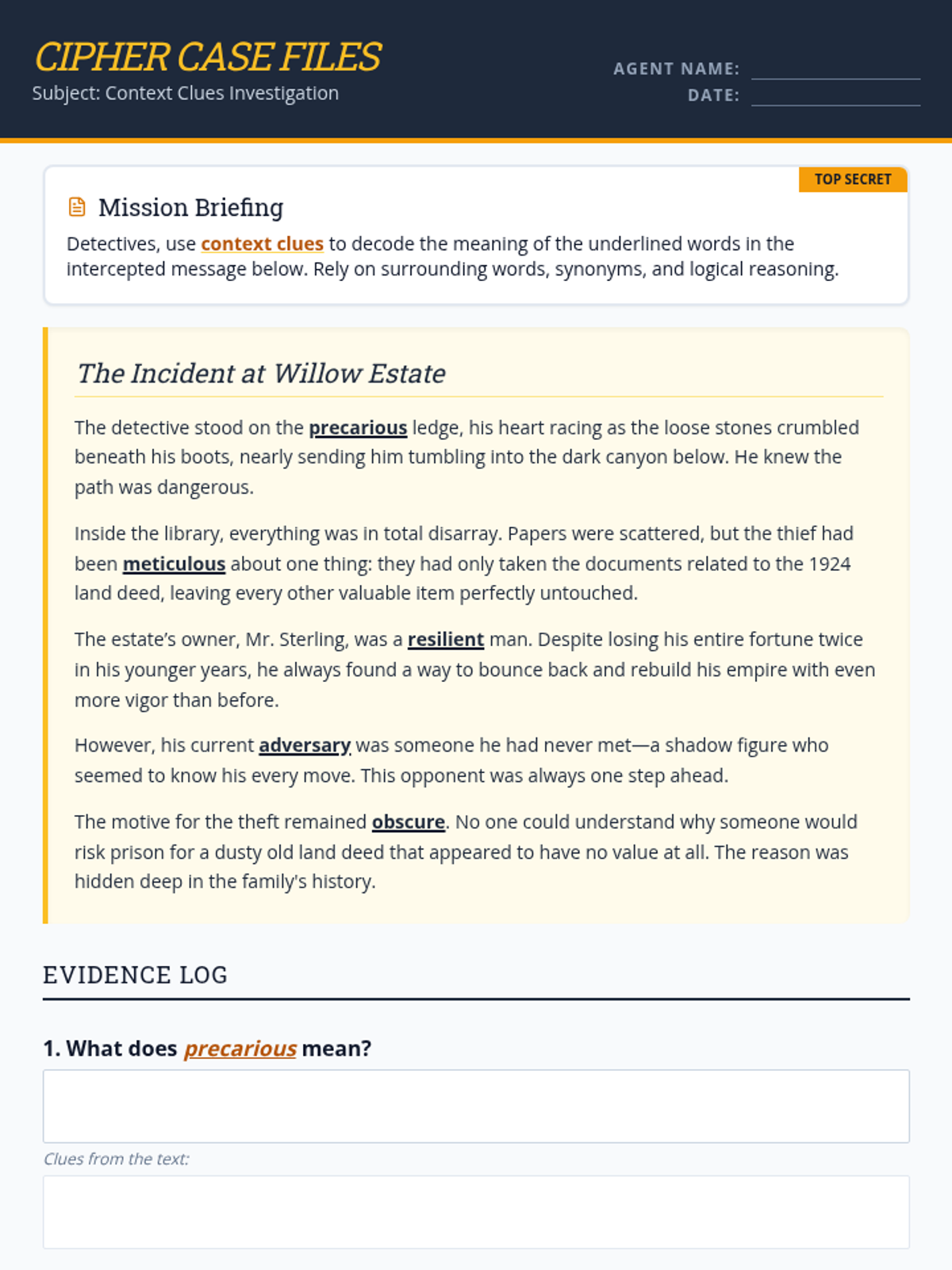
A detective-themed context clues worksheet featuring a short mystery passage. Students analyze five challenging vocabulary words, providing definitions and identifying specific textual evidence used to decode their meanings. This version includes optimized page breaks and space allocation.
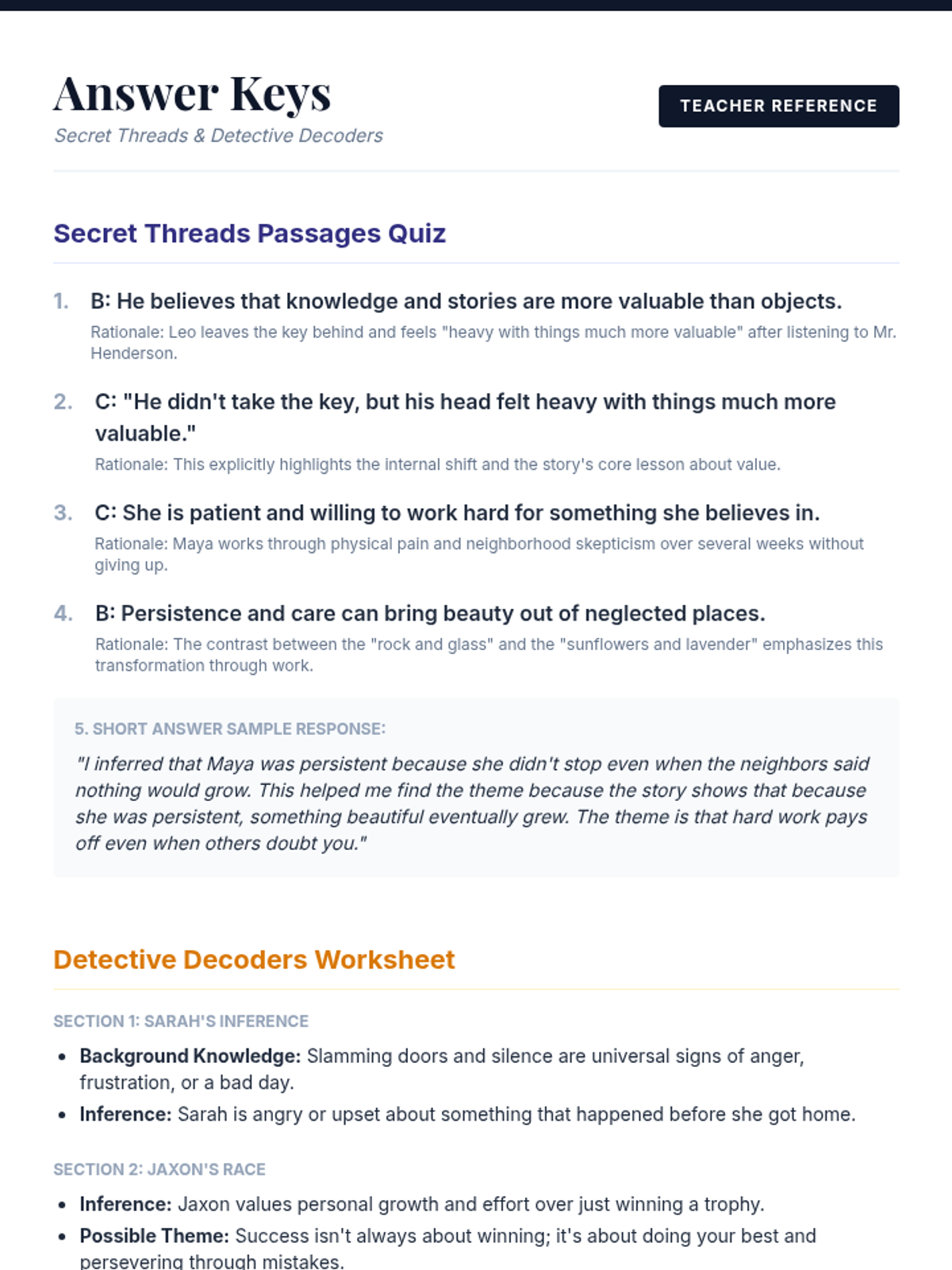
A comprehensive answer key for the 'Secret Threads' reading passages and 'Detective Decoders' worksheet, including rationales for multiple-choice questions and sample responses for open-ended prompts.
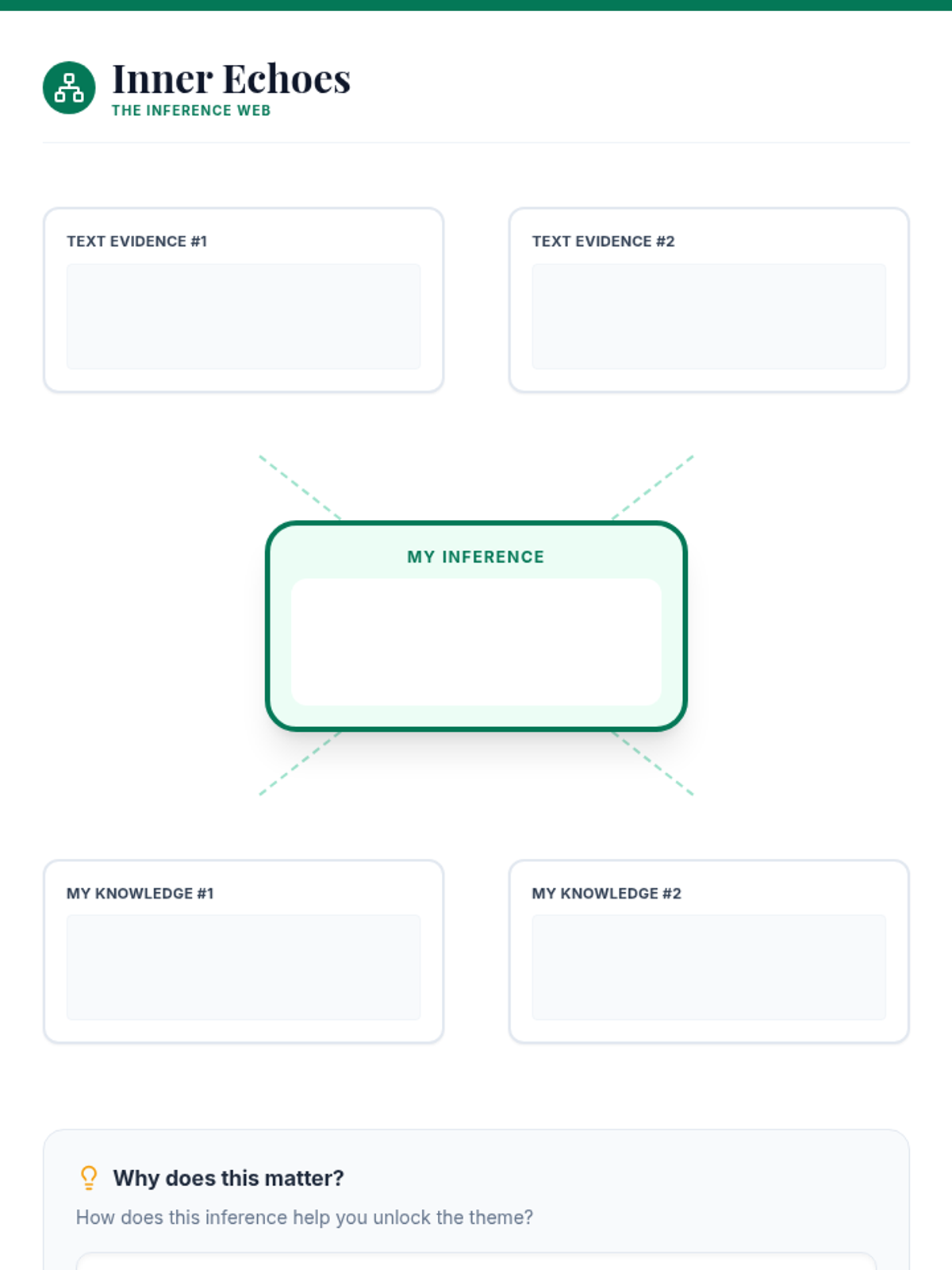
A set of two visual graphic organizers: 'The Inference Web' for breaking down text evidence and background knowledge, and 'Theme Mountain' for tracing character growth and conflict to reach a central theme.
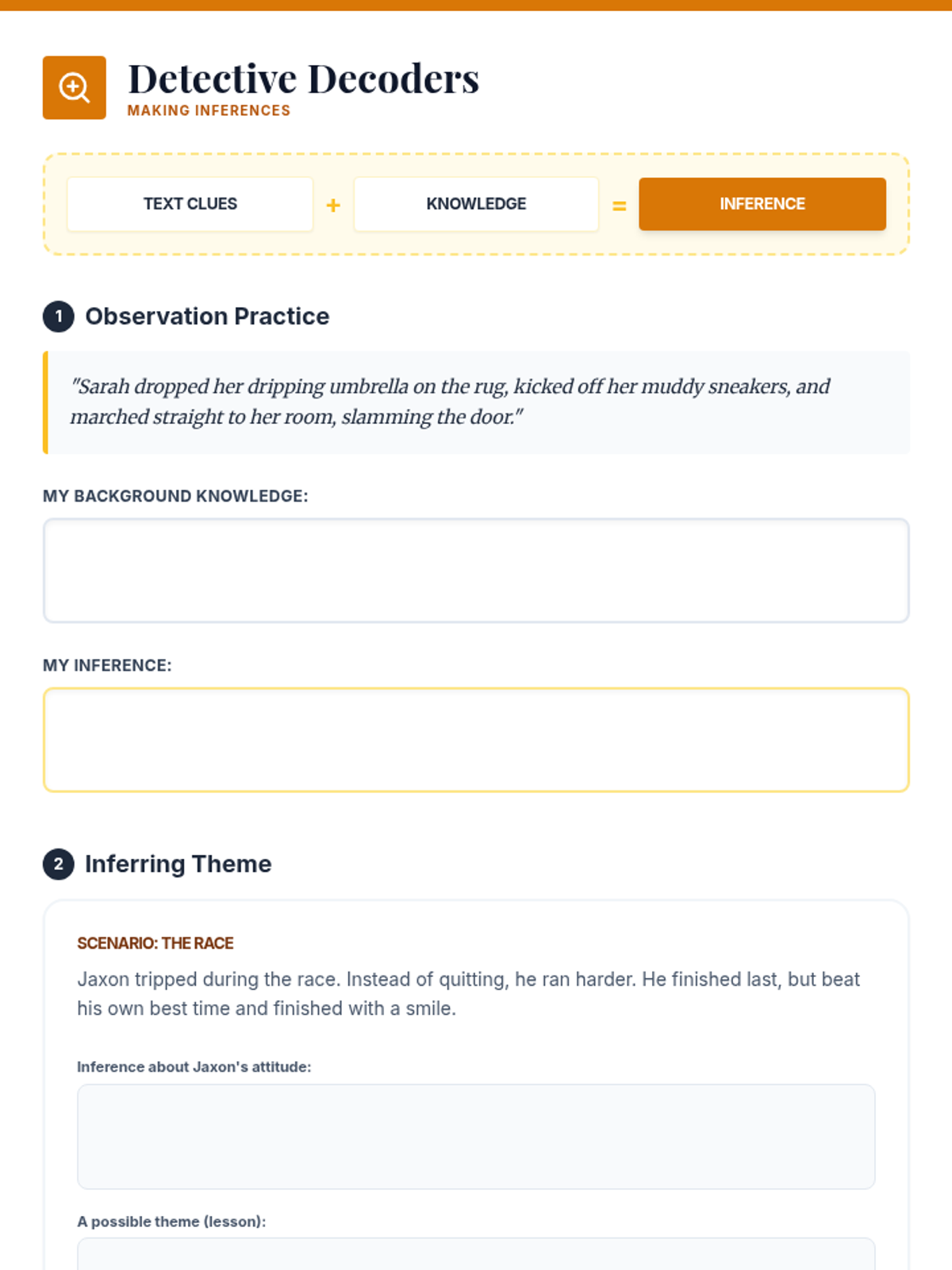
A guided practice worksheet that breaks down the inference process using a simple formula (Text Clues + Background Knowledge = Inference). Includes scaffolding for observational practice and a 'Field Report' section for independent application.
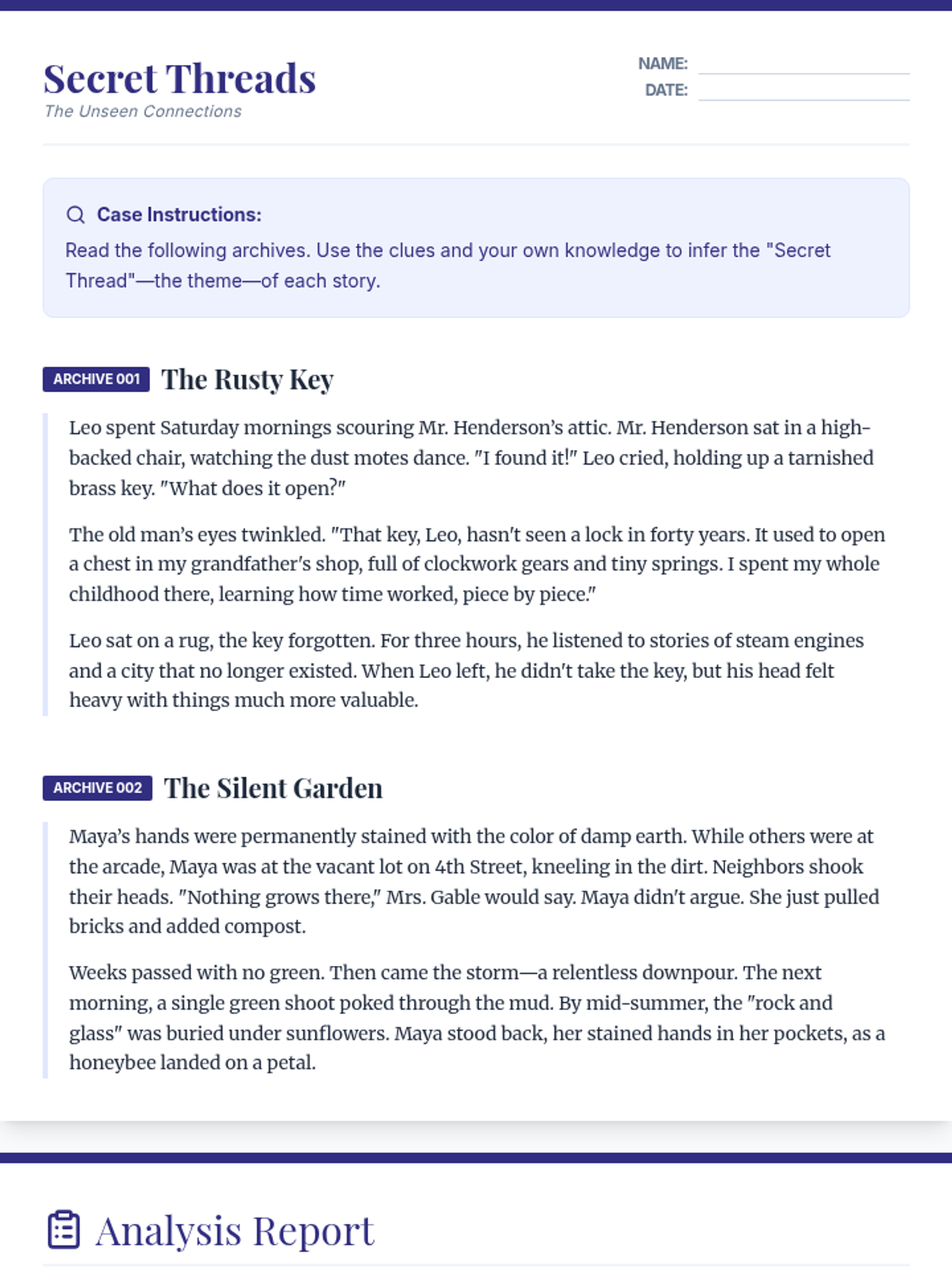
A two-page reading comprehension set featuring two original fiction passages ("The Rusty Key" and "The Silent Garden") designed to challenge students to make inferences and identify central themes. Includes multiple-choice and short-answer questions.
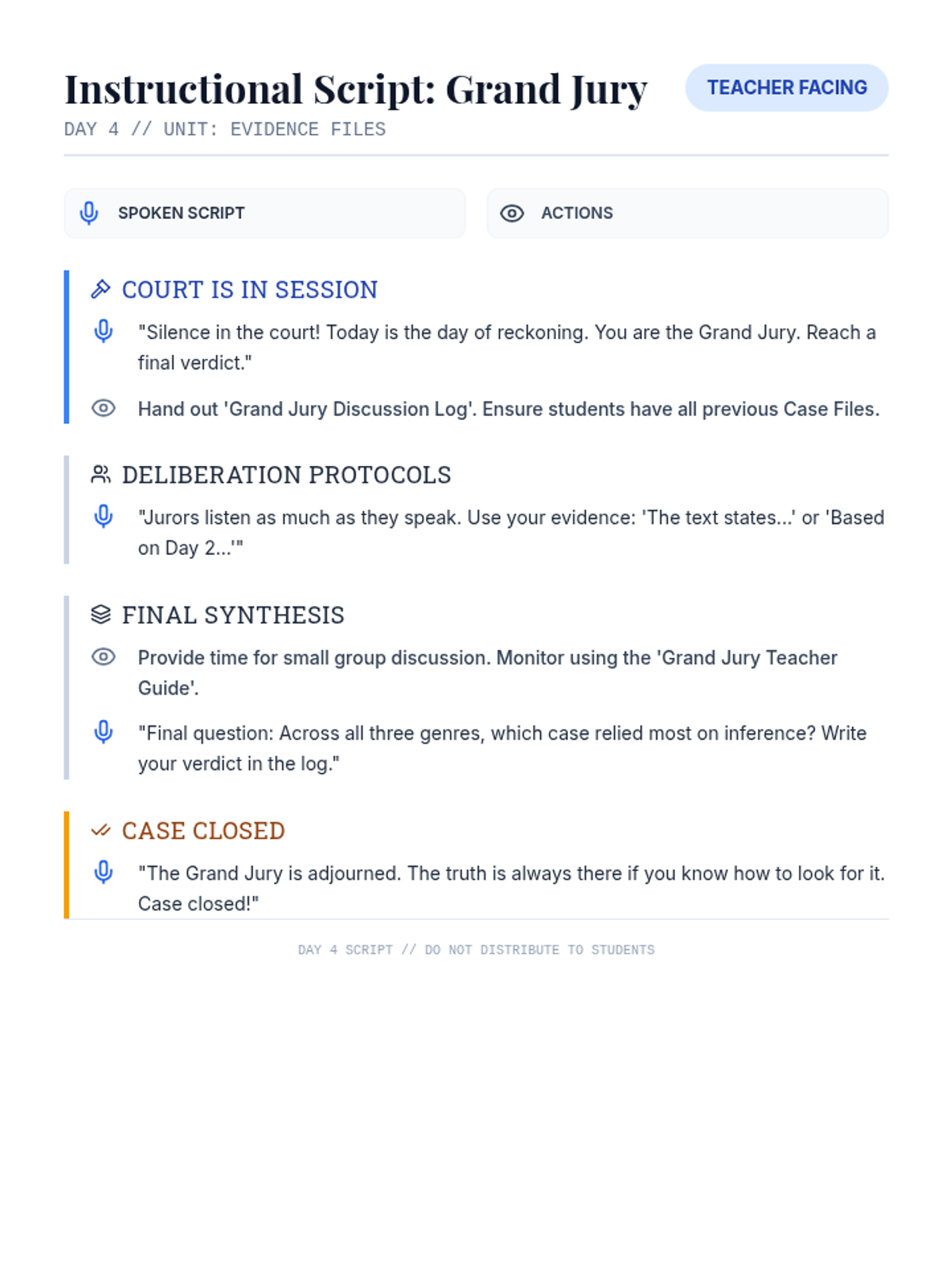
The Grand Jury Script provides the teacher with a structured instructional path for Day 4, focusing on the final synthesis and collaborative deliberation of the unit's key texts. Updated for improved contrast and page-break handling.