Visual presentation for Lesson 4, exploring the transition from basic metal oxides to amphoteric oxides to acidic nonmetal oxides across a period.
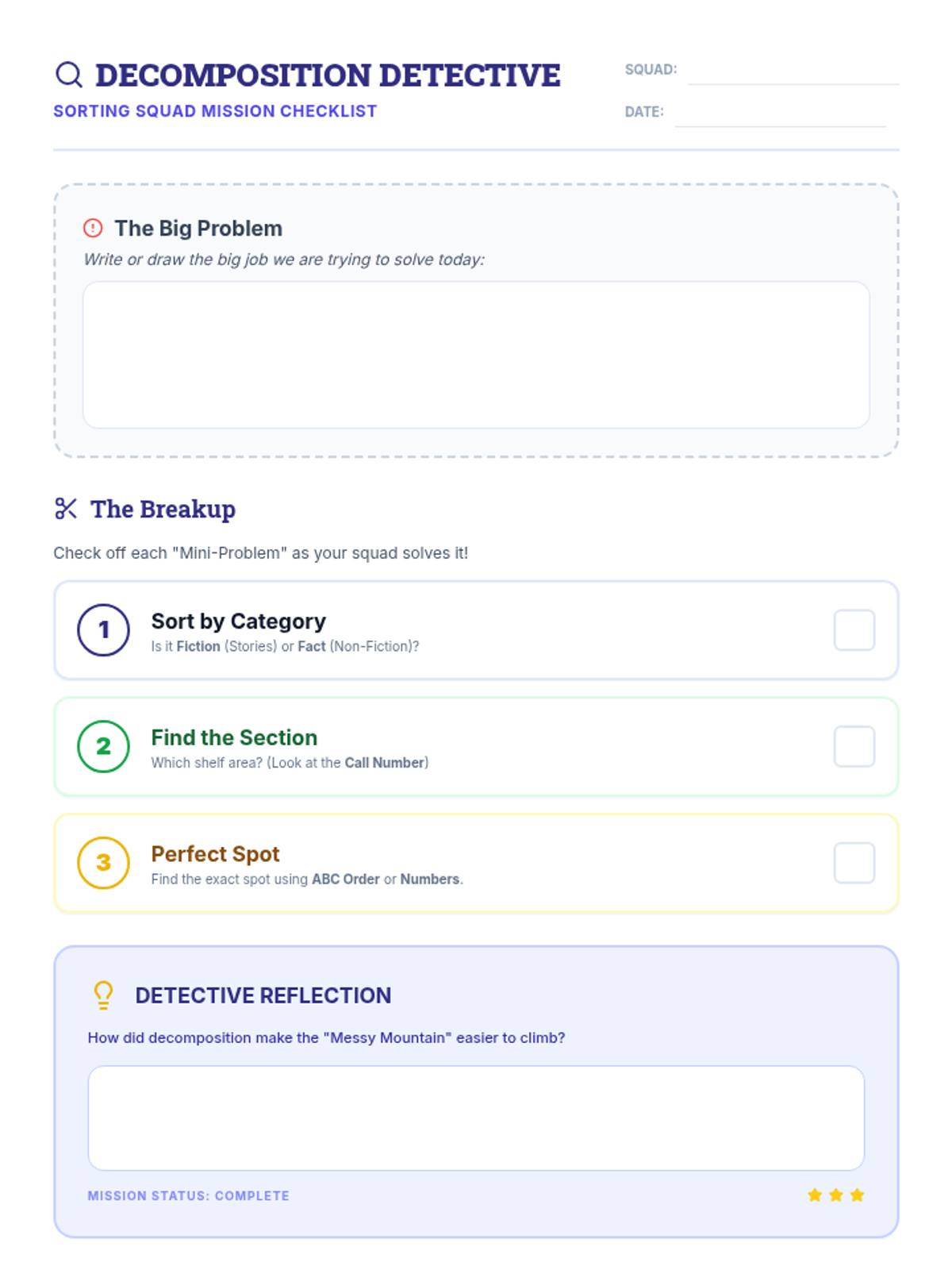
A student-facing application activity and assessment checklist for the 'Great Book Breakup' lesson. Students identify the 'big problem', check off decomposition steps (Category, Section, Spot), and reflect on the process.
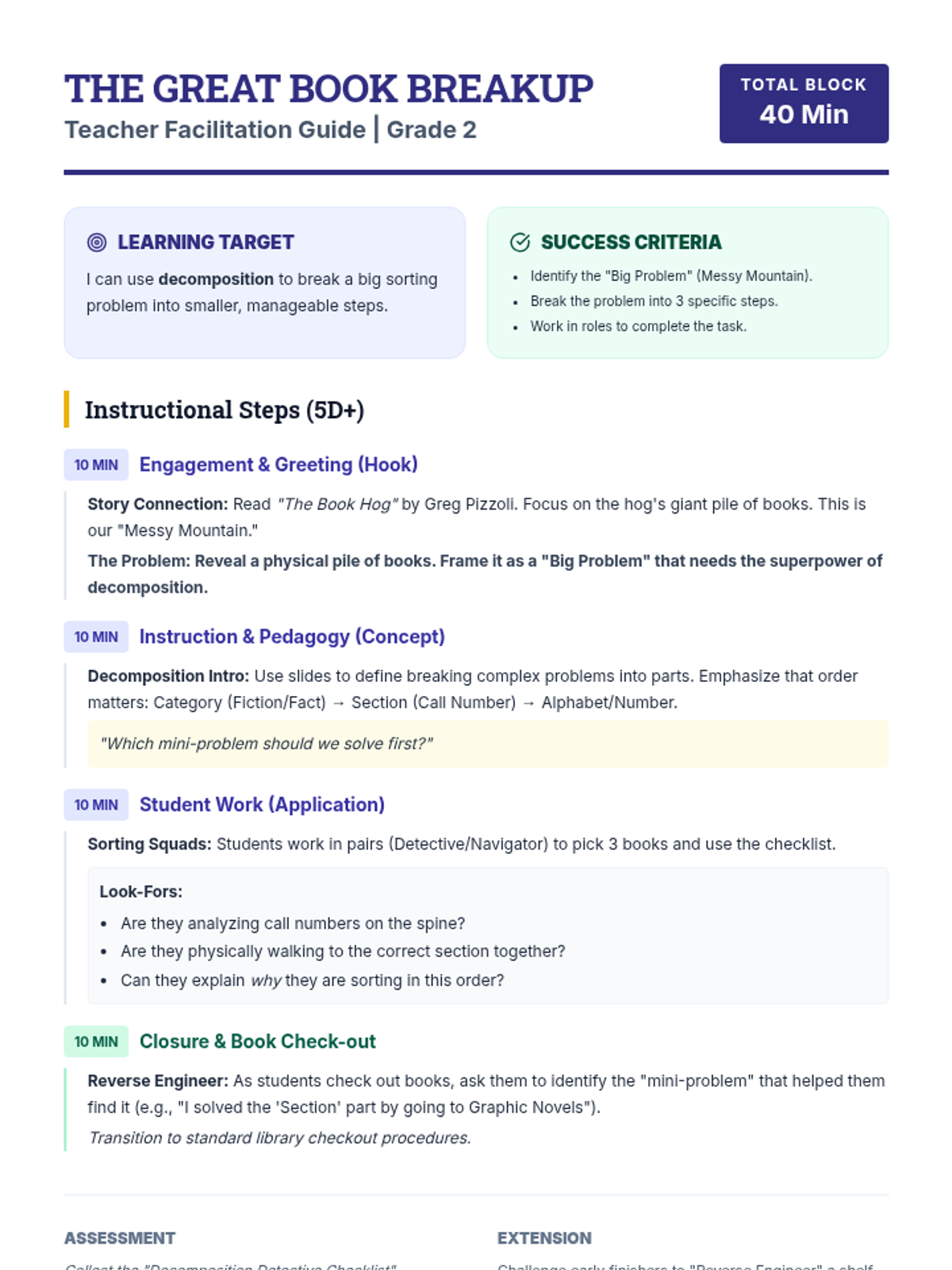
A teacher facilitation guide for the 'Great Book Breakup' lesson, including 5D+ framework alignment, CS and Iowa standards, learning targets, and specific instructional moves for a 40-minute library block.
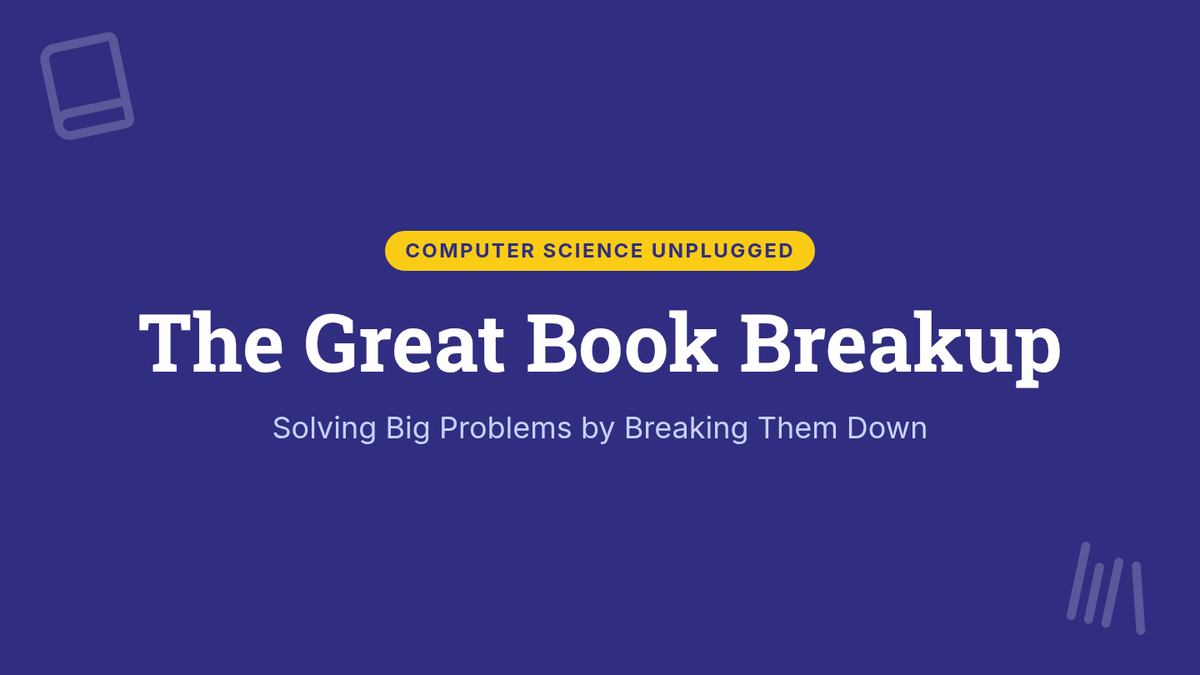
A 6-slide presentation for a 2nd-grade CS unplugged lesson on decomposition. Using a library 'Messy Mountain' theme, it explains breaking large problems into smaller steps and assigns collaborative roles.
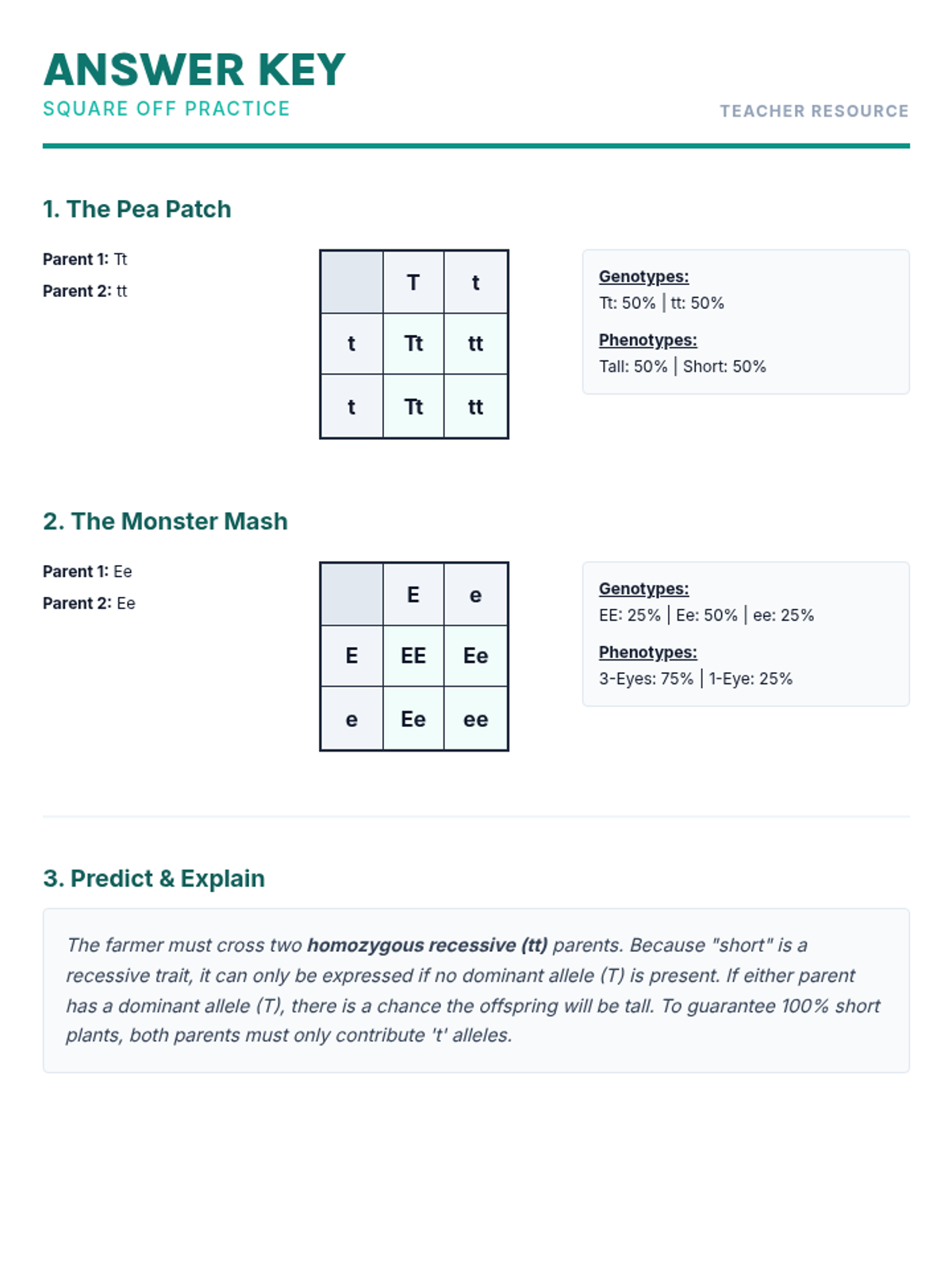
A teacher's answer key for the Square Off Punnett square practice worksheet, providing completed grids and probability calculations with optimized spacing for clarity.
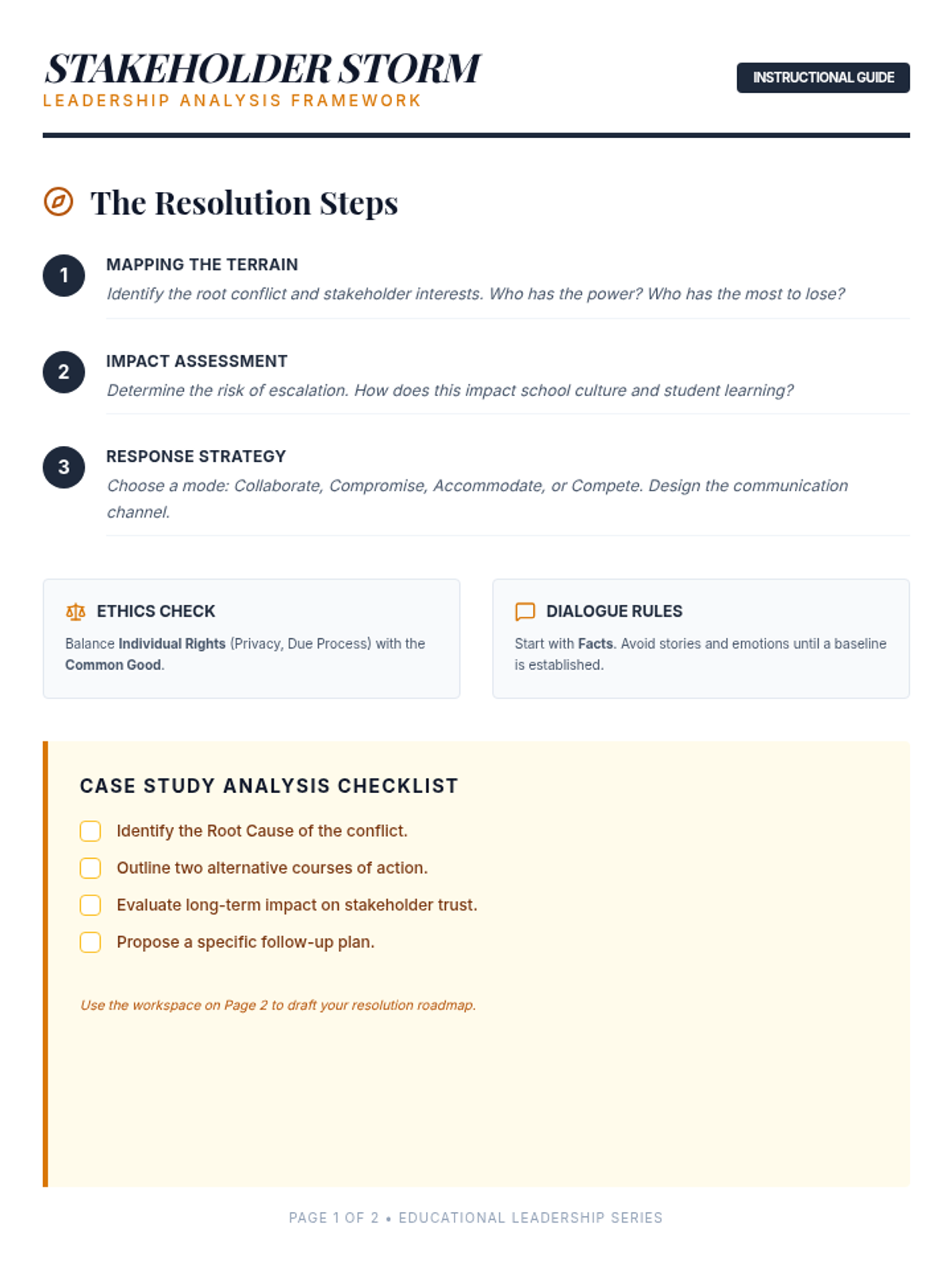
A two-page professional guide for educational leaders. Page 1 provides the analysis framework, while Page 2 serves as a functional workspace for drafting a stakeholder conflict resolution roadmap with lined response areas.
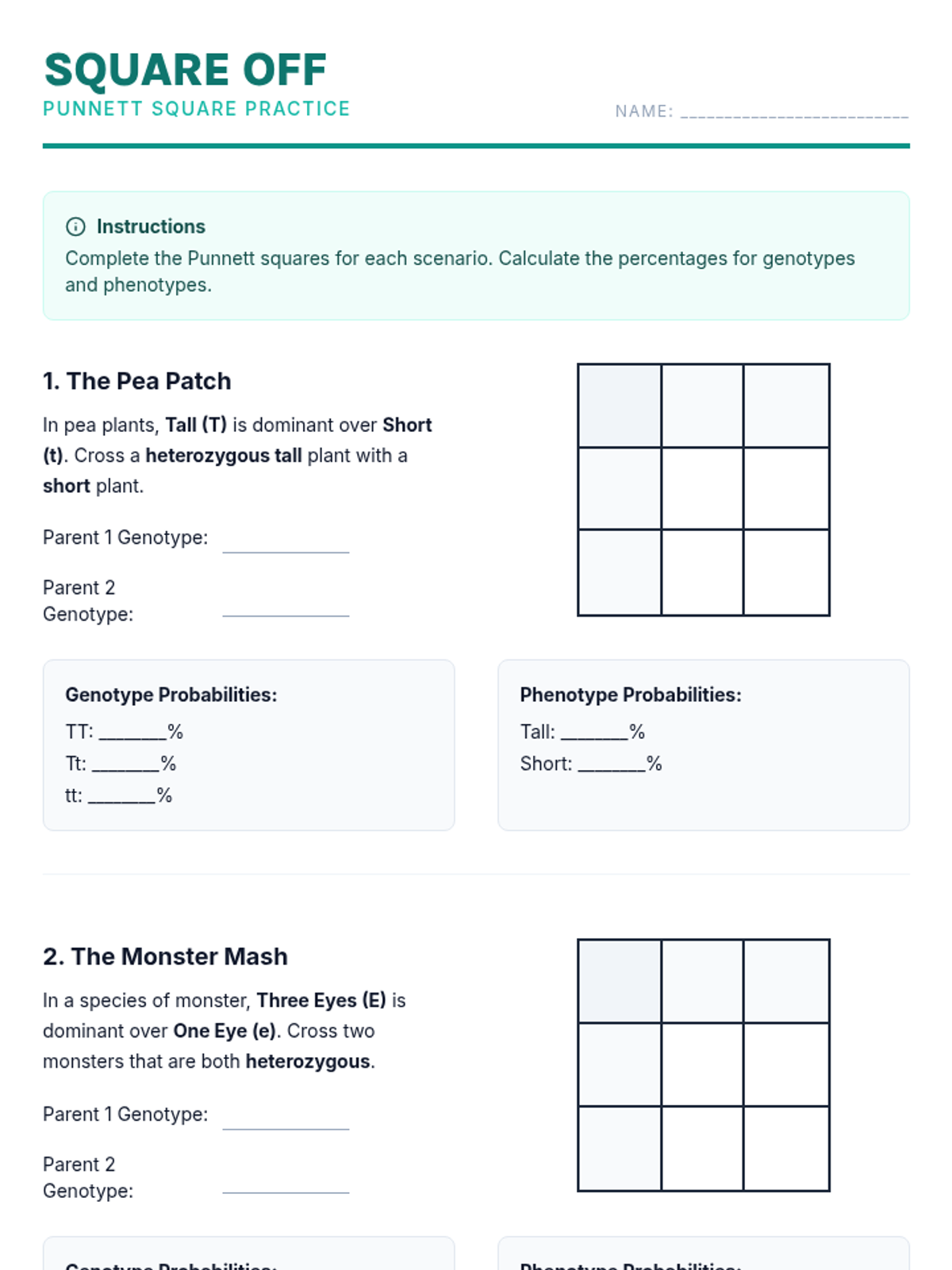
A practice worksheet for 8th-grade students to apply Punnett square skills through monohybrid cross scenarios. Features improved layout and explicit grid borders for clean printing.
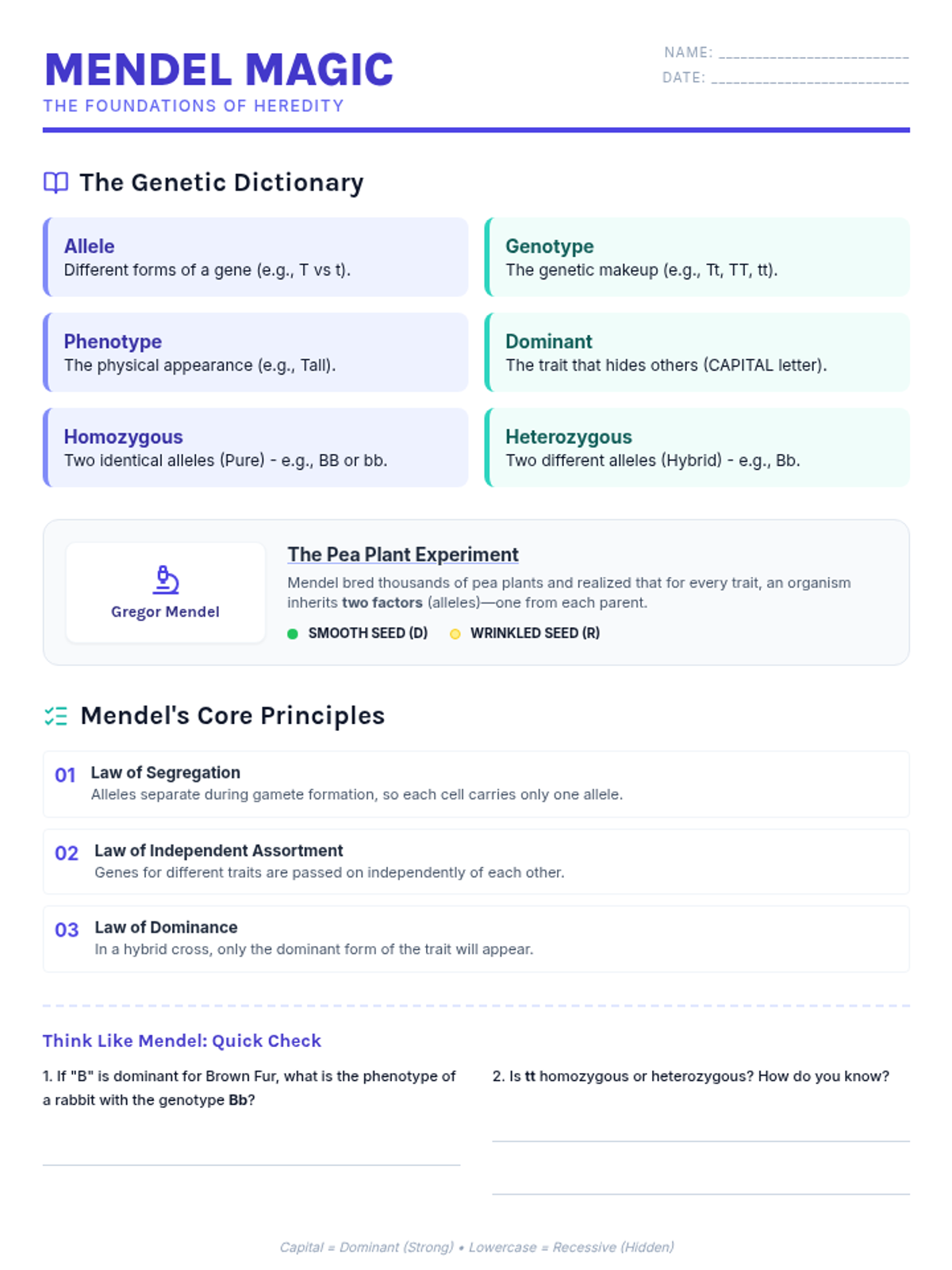
A comprehensive reference handout introducing 8th-grade students to Mendelian inheritance, key genetics vocabulary (including homozygous and heterozygous), and Gregor Mendel's core principles. Now optimized for single-page printing. Now features corrected genetic notation and improved practice space.
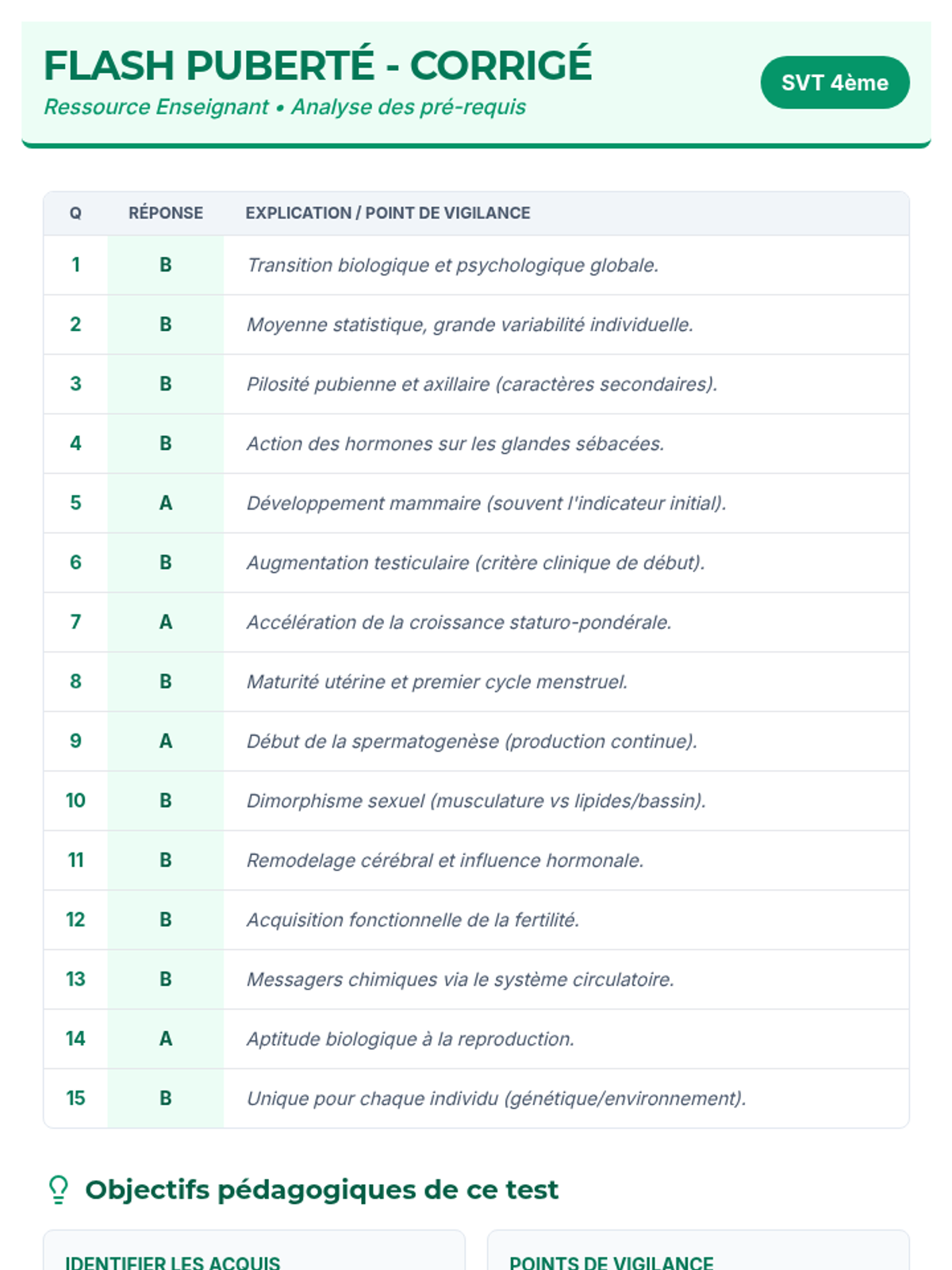
Le corrigé détaillé du QCM de diagnostic sur la puberté, incluant des explications pédagogiques et des conseils pour l'enseignant de SVT.
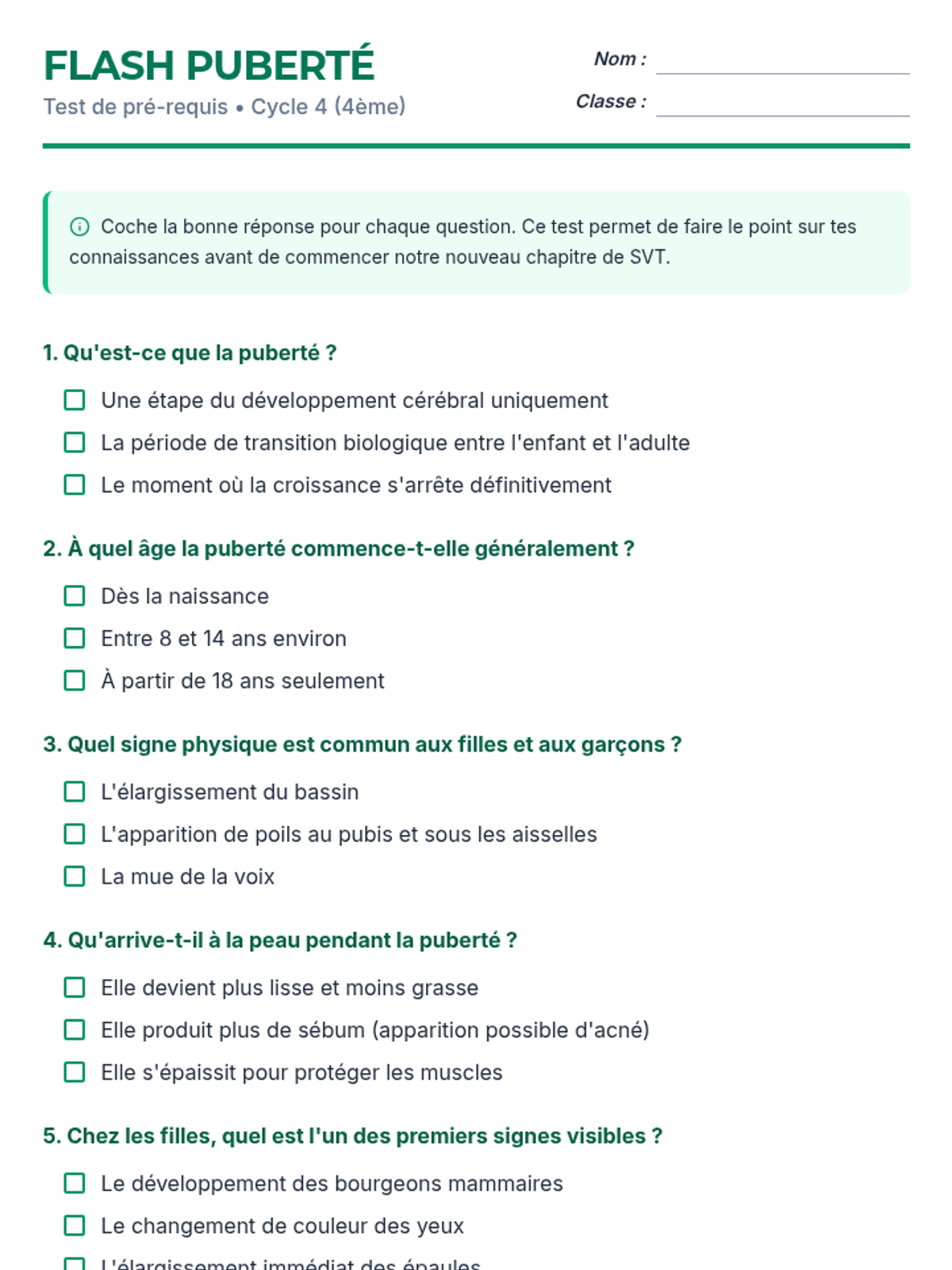
Un questionnaire à choix multiples de 15 questions pour évaluer les connaissances préalables des élèves sur la puberté, les changements physiques et la différence enfant/adulte.
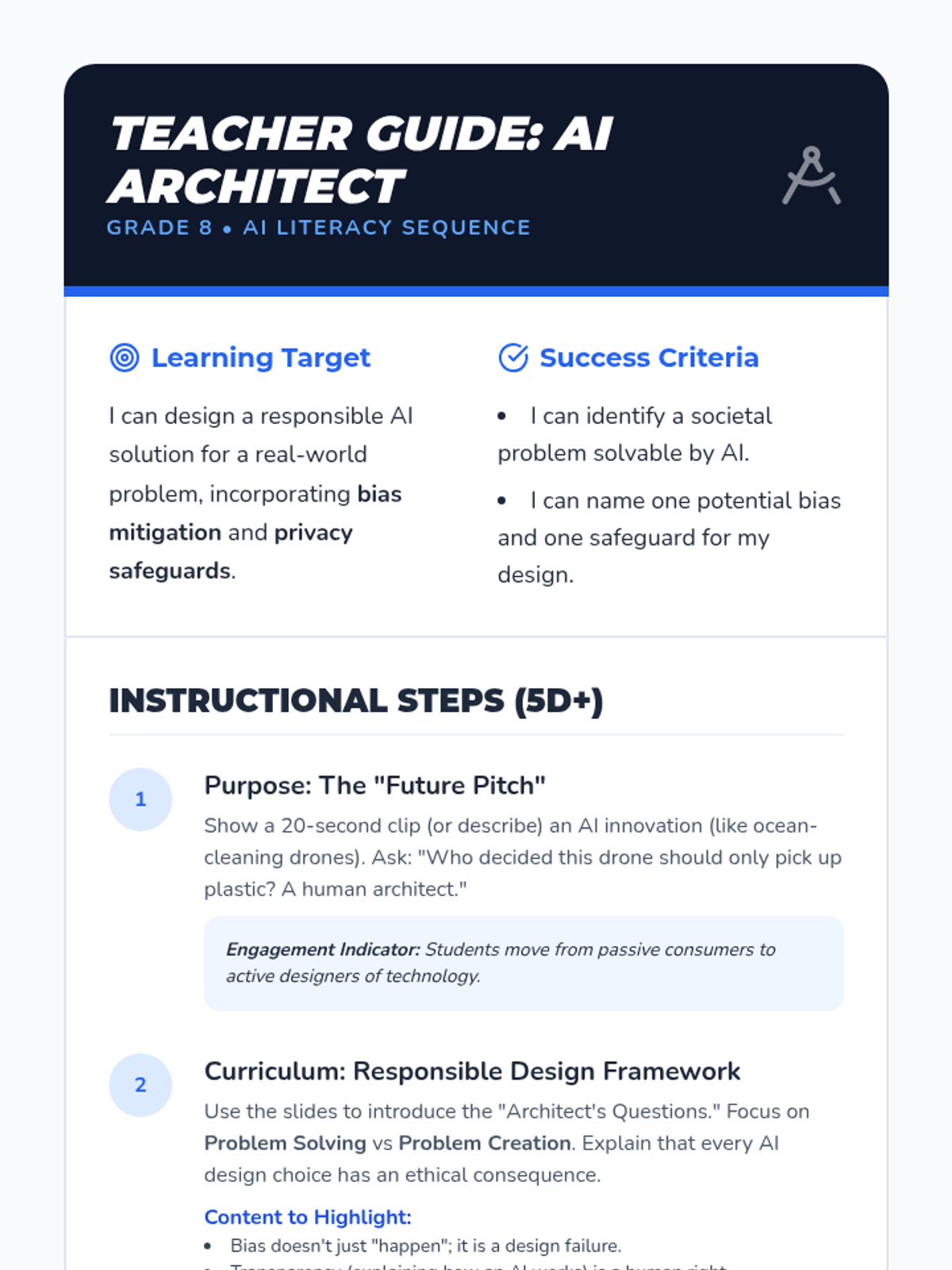
A teacher guide for the culminating Grade 8 AI Literacy lesson. Includes instructional steps for facilitating a "Design Studio" project, 5D+ framework alignment, and strategies for peer-led ethical audits.
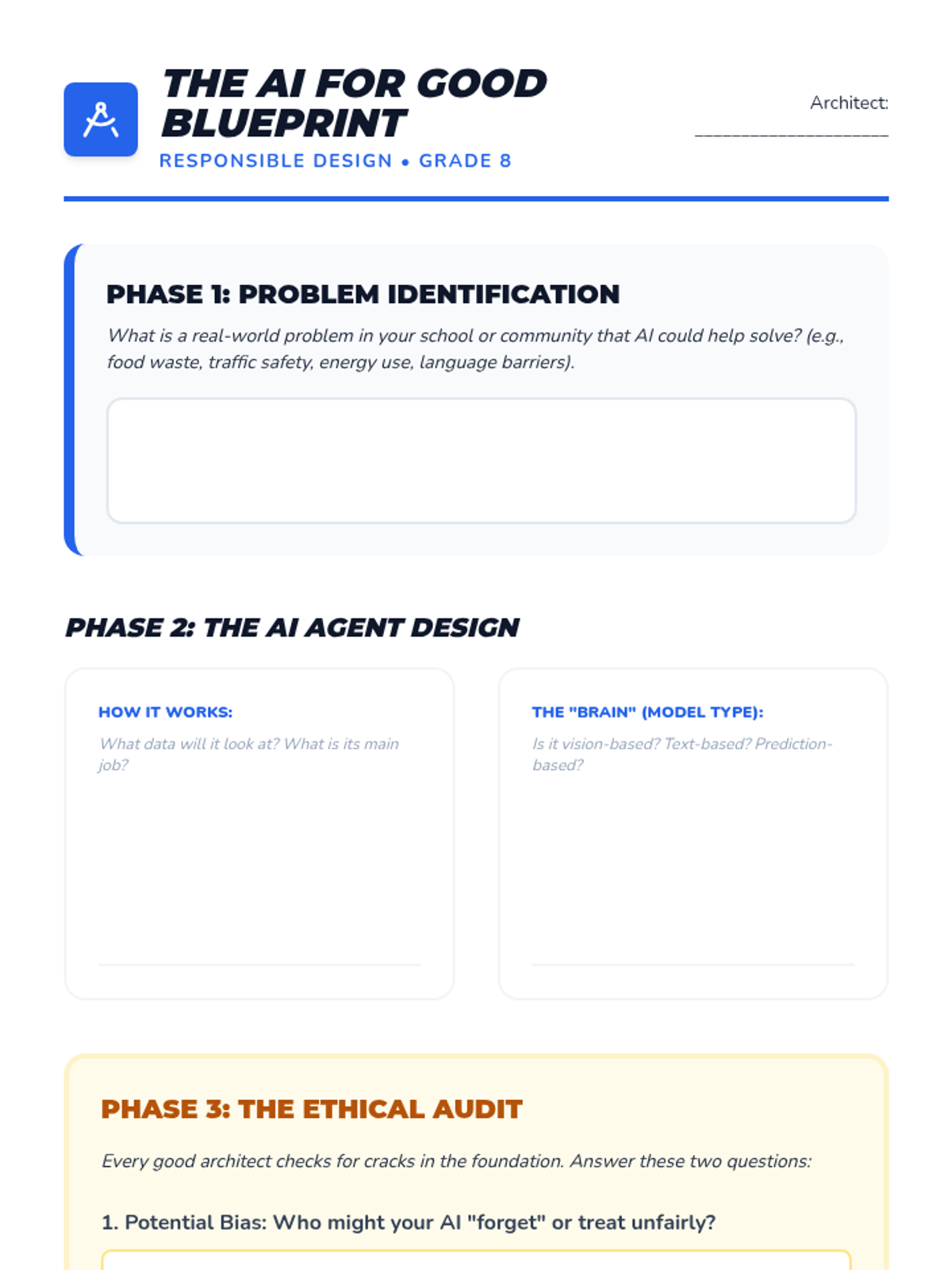
A project blueprint for Grade 8 students to design a responsible AI solution for a real-world problem. It includes sections for problem identification, technical design, an ethical audit (bias and safeguards), and a creative motto.
A 6-slide presentation for 8th Grade students on responsible AI design. It encourages students to move from consumers to creators ("Architects") and outlines a framework for designing AI solutions that are fair, transparent, and safe.
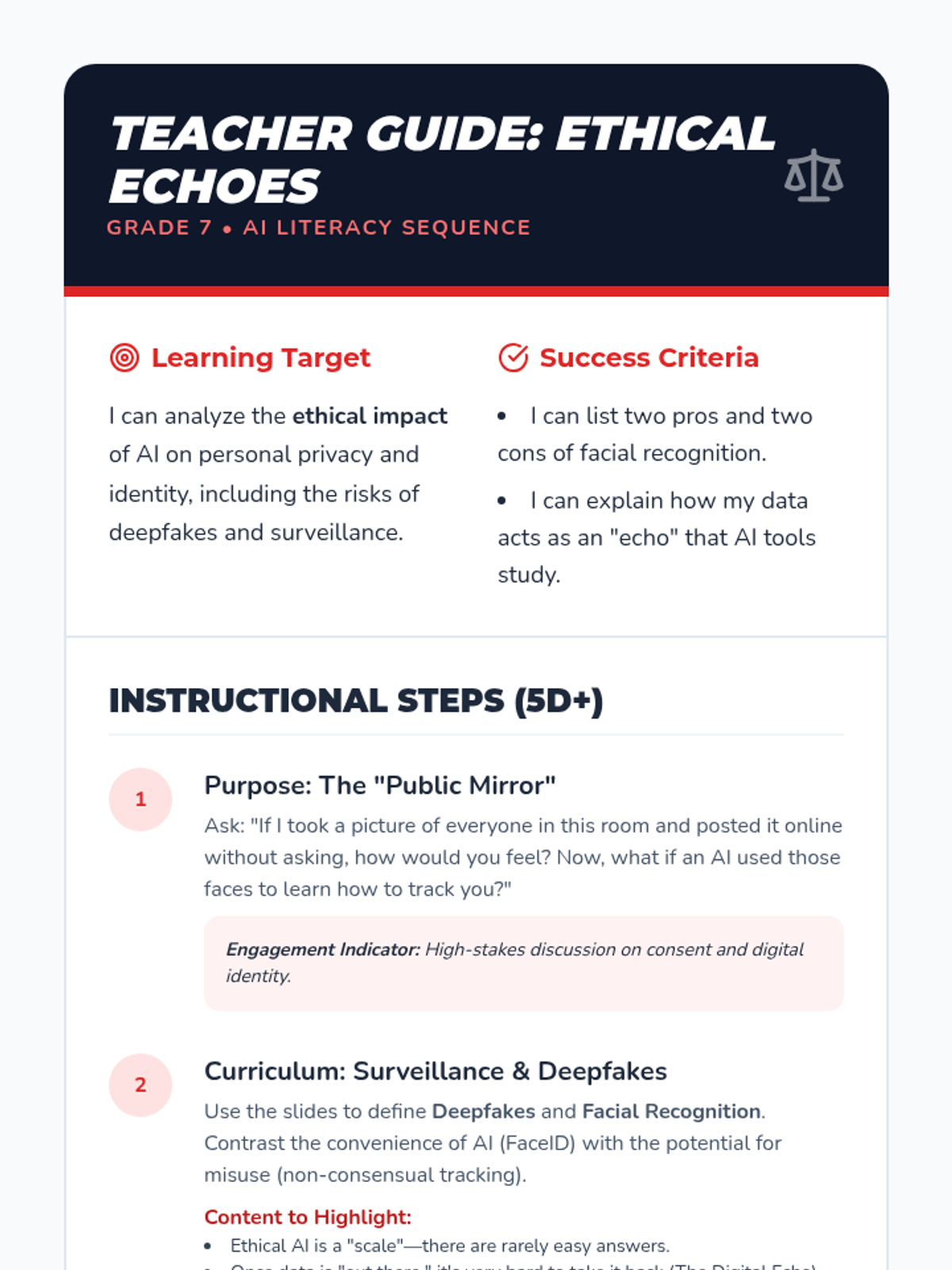
A teacher guide for the Grade 7 AI Literacy lesson on ethics and privacy. Includes instructional steps for facilitating debates on surveillance, alignment with 5D+ framework, and strategies for teaching deepfake awareness.
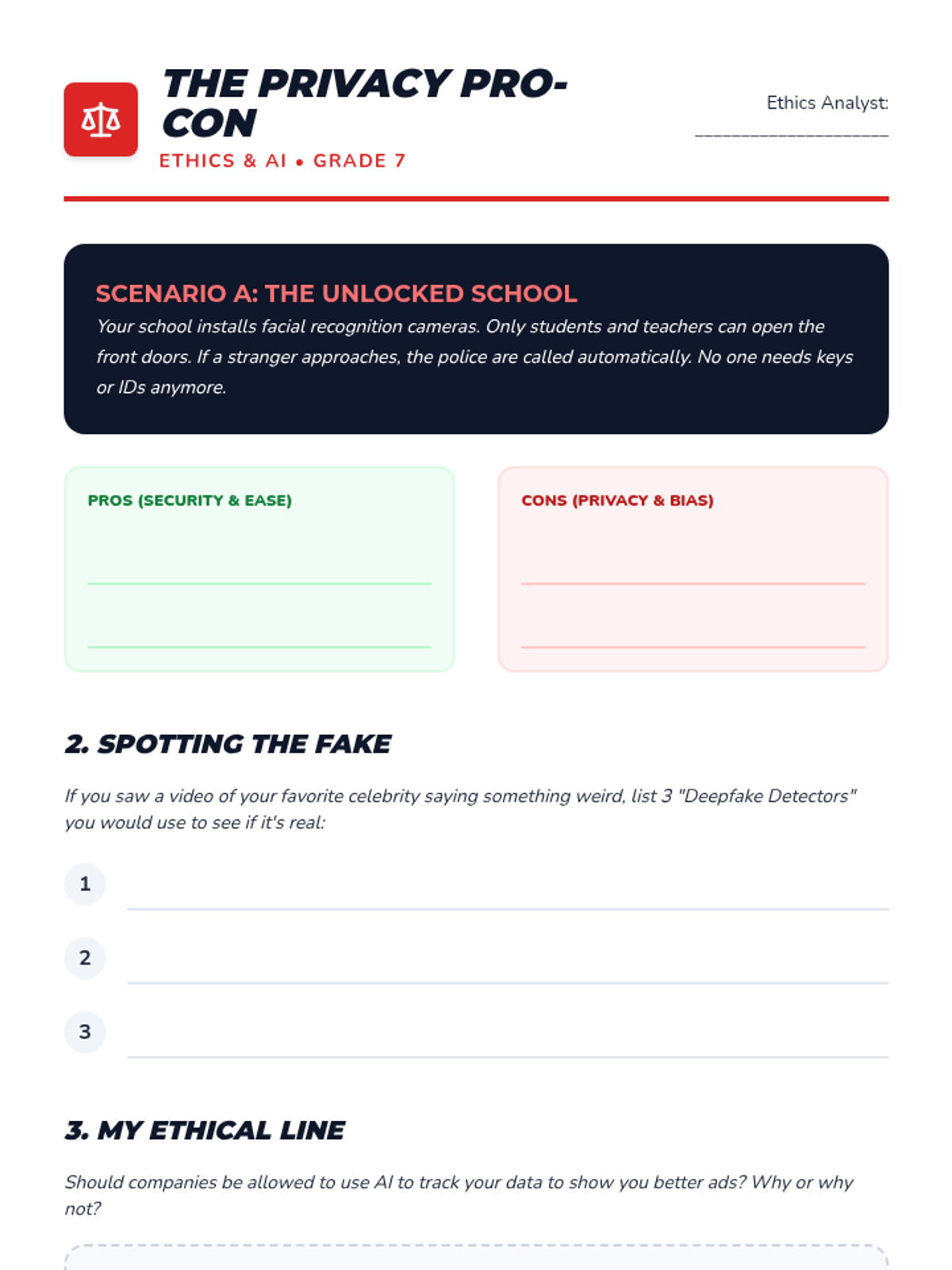
A worksheet for Grade 7 students to explore AI ethics. It includes a pro-con analysis of facial recognition in schools, strategies for detecting deepfakes, and a reflective exercise on personal data privacy boundaries.
A 6-slide presentation for 7th Grade students on AI ethics and privacy. It covers facial recognition, deepfakes, and the trade-off between security and personal privacy, encouraging students to consider where "the line" should be drawn.
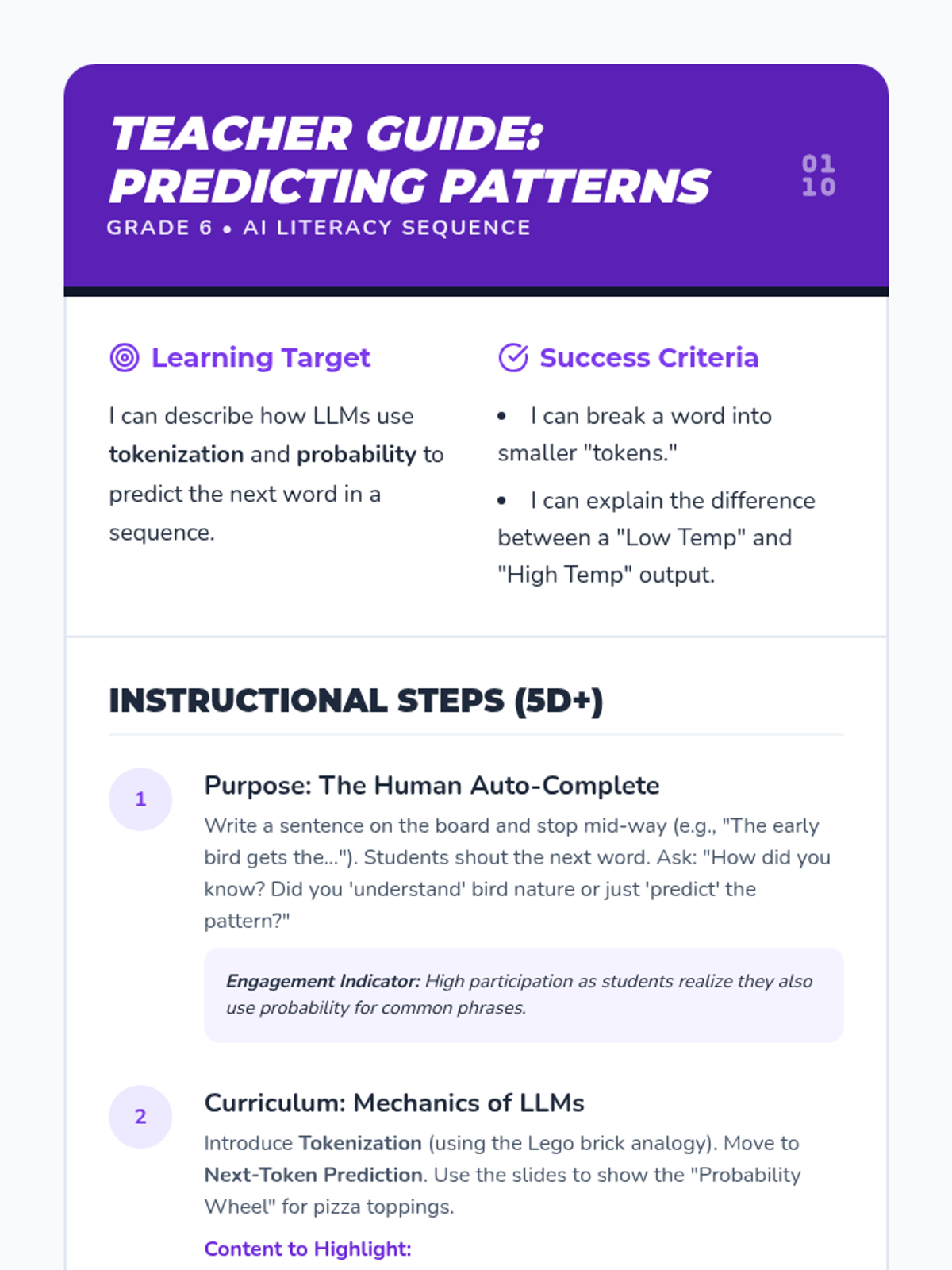
A teacher guide for the Grade 6 AI Literacy lesson on LLM mechanics. Includes instructional steps for teaching tokenization and probability, 5D+ alignment, and discussion prompts on AI creativity.
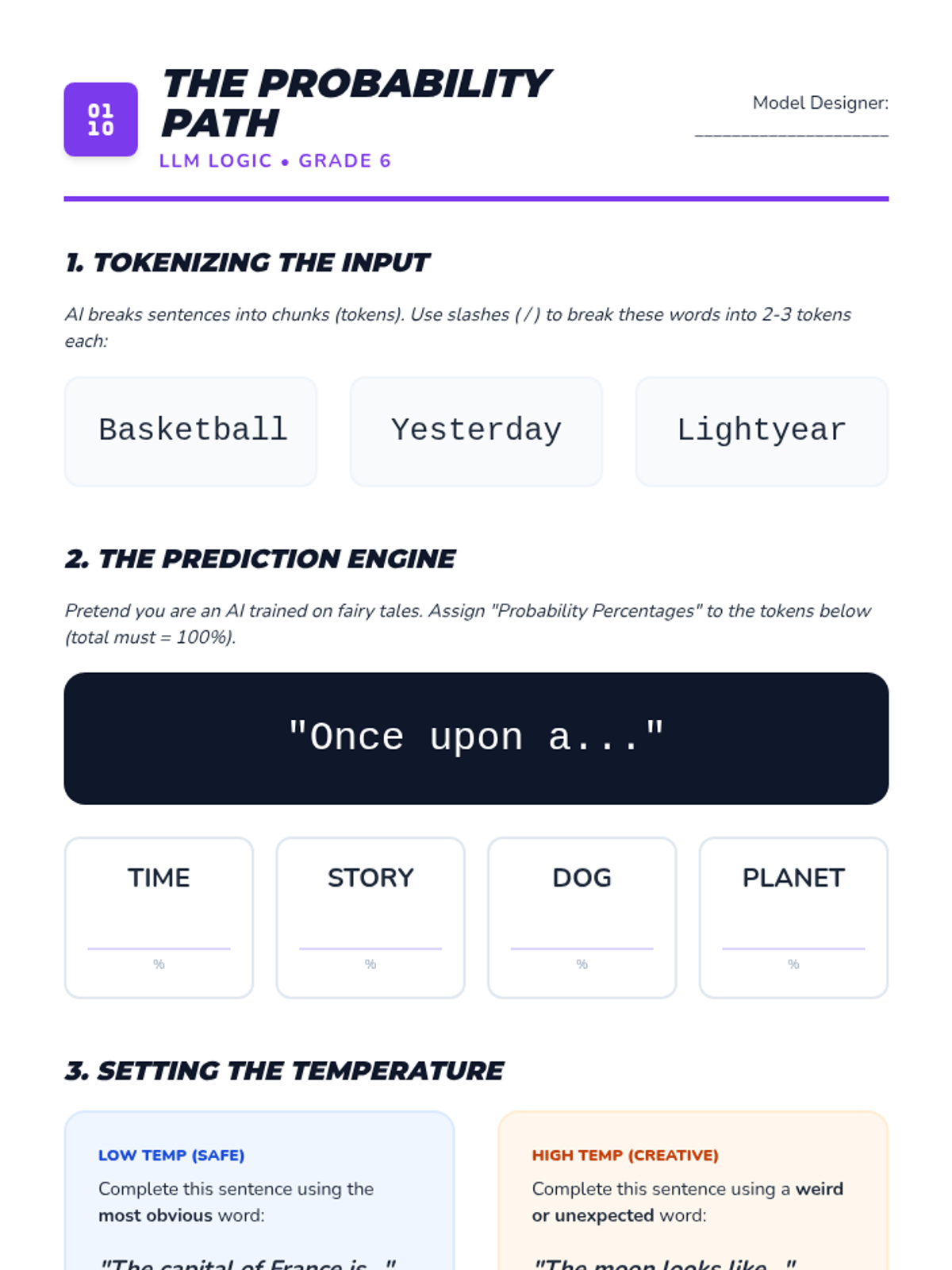
A worksheet for Grade 6 students to practice LLM concepts. It includes exercises on tokenization, assigning probabilities to word predictions, and experimenting with "temperature" settings for safe vs. creative outputs.
A 6-slide presentation for 6th Grade students on the mechanics of LLMs. It explains tokenization, next-word prediction based on probability, and the "temperature" setting that balances precision with creativity.
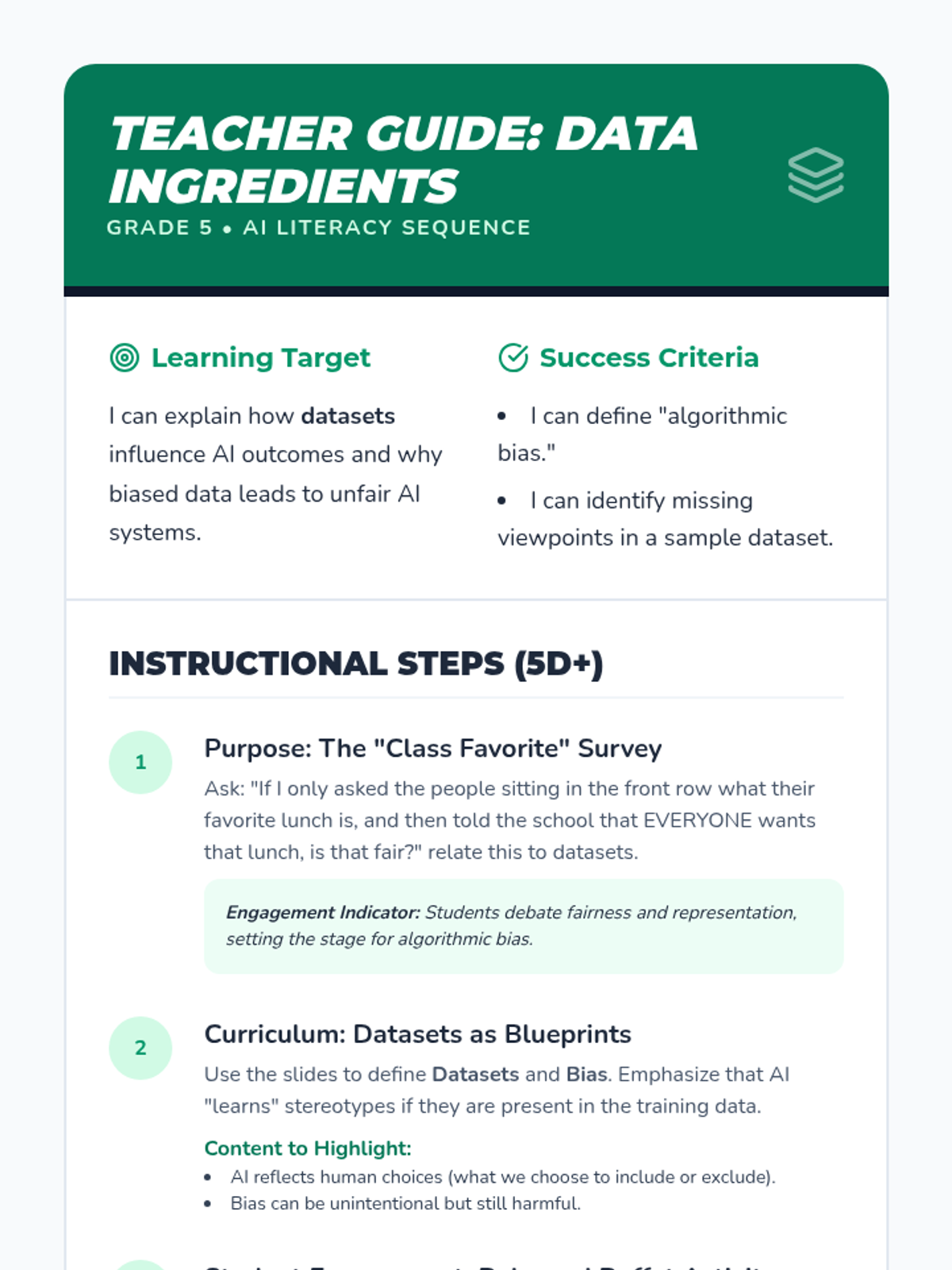
A teacher guide for the Grade 5 AI Literacy lesson on datasets and bias. Includes instructional steps aligned with 5D+, key discussion points on algorithmic fairness, and guidance for the "Balanced Buffet" activity.
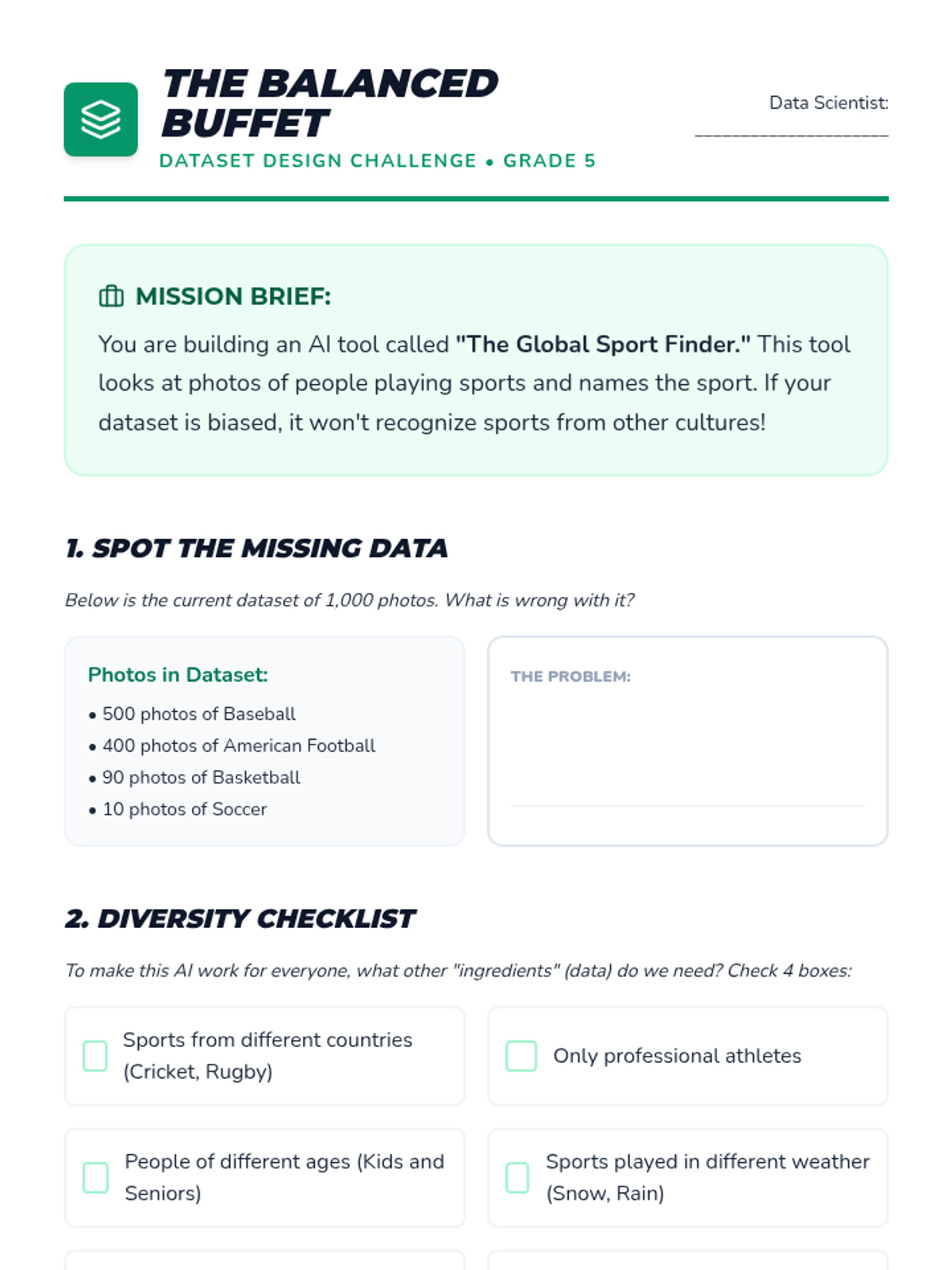
An activity for Grade 5 students to explore dataset bias and fairness. It includes a case study on a sports recognition AI, a diversity checklist for data collection, and a creative section for designing a more equitable dataset.
A 6-slide presentation for 5th Grade students on datasets and algorithmic bias. It uses a "cooking/ingredients" metaphor to explain how training data influences AI behavior and why diversity is essential for fairness.
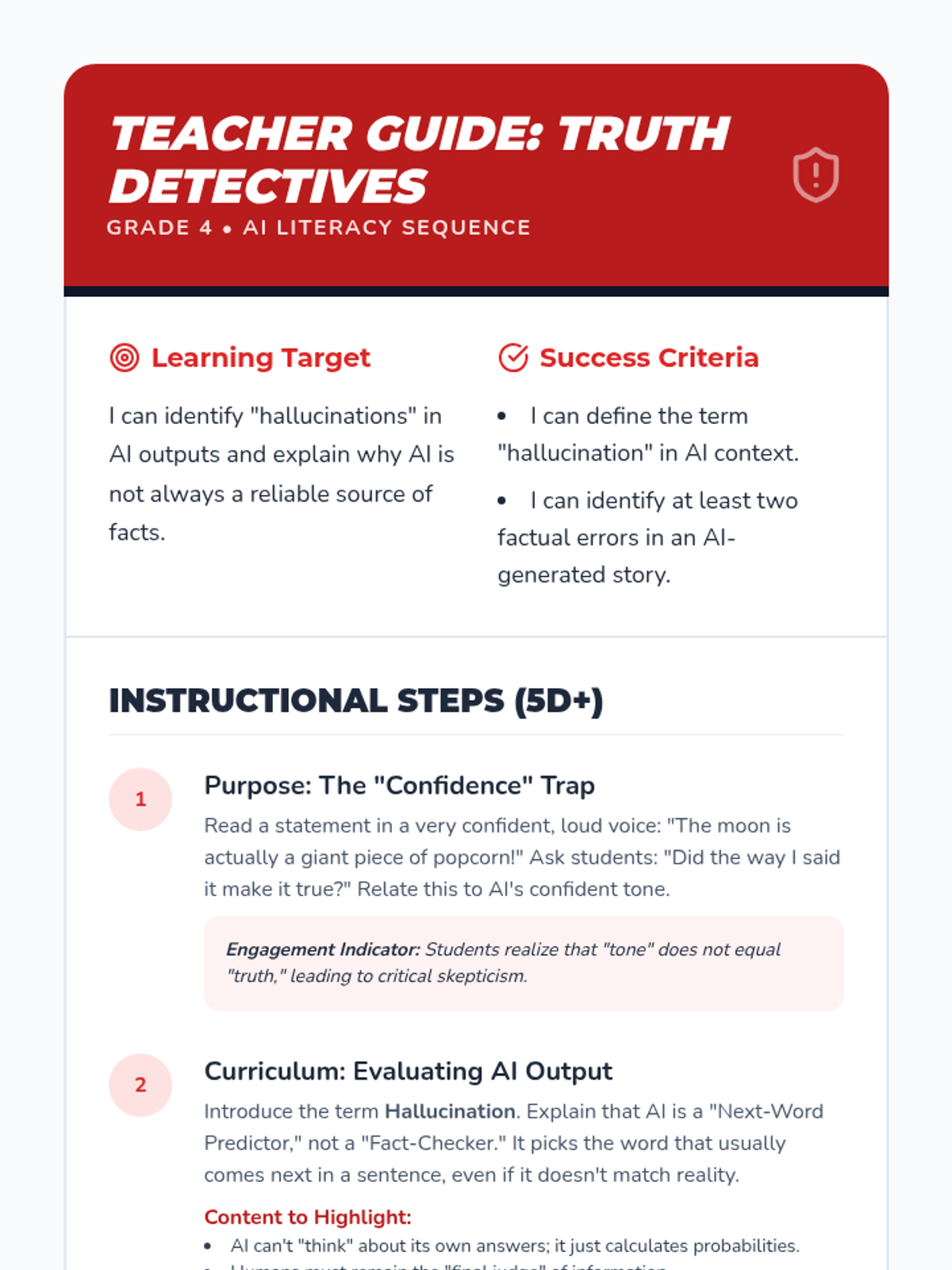
A teacher guide for the Grade 4 AI Literacy lesson on truth evaluation. Includes strategies for teaching the concept of "hallucinations," 5D+ instructional steps, and tips for facilitating the fact-checking activity.
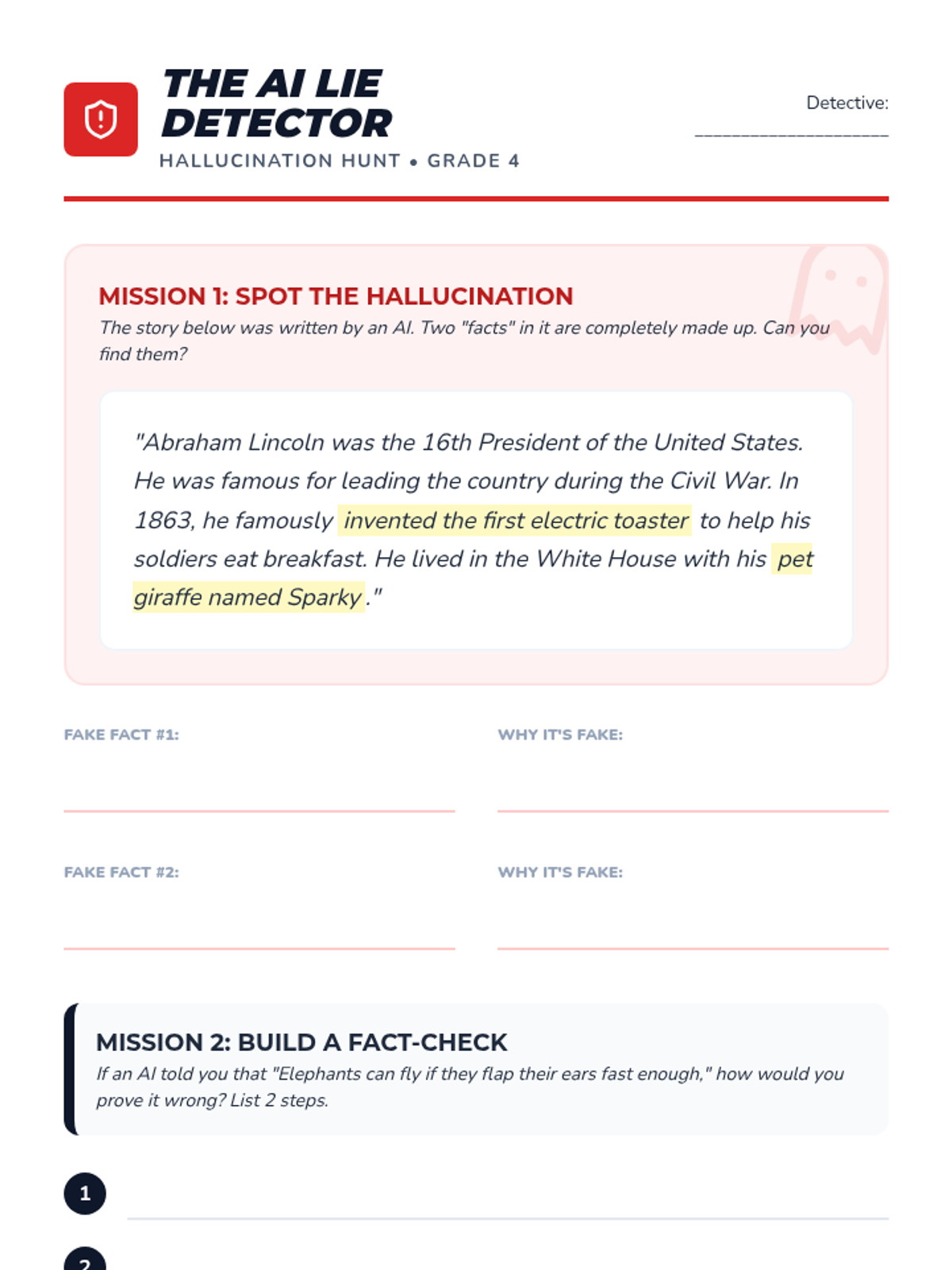
A worksheet for Grade 4 students to practice identifying AI hallucinations. It includes a "spot the error" historical passage, fact-checking strategy development, and a reflective motto-building exercise.
A 6-slide presentation for 4th Grade students on AI hallucinations. It defines hallucinations, explains why AI makes mistakes (word-guessing vs. knowing), and provides strategies for fact-checking AI outputs.
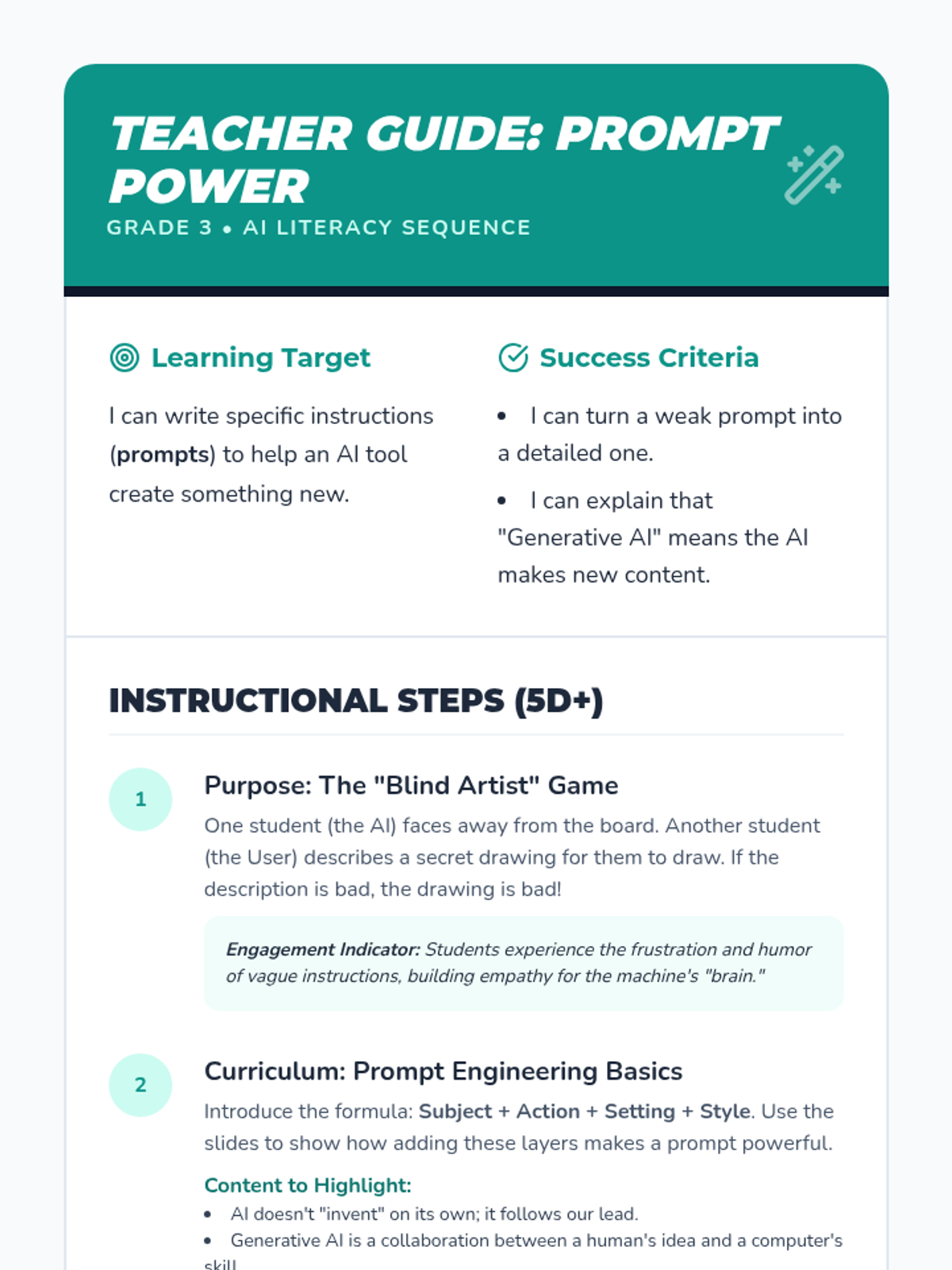
A teacher guide for the Grade 3 AI Literacy lesson on prompt power. Covers the "Blind Artist" game, instructional strategies for teaching prompt formulas, and assessment questions.
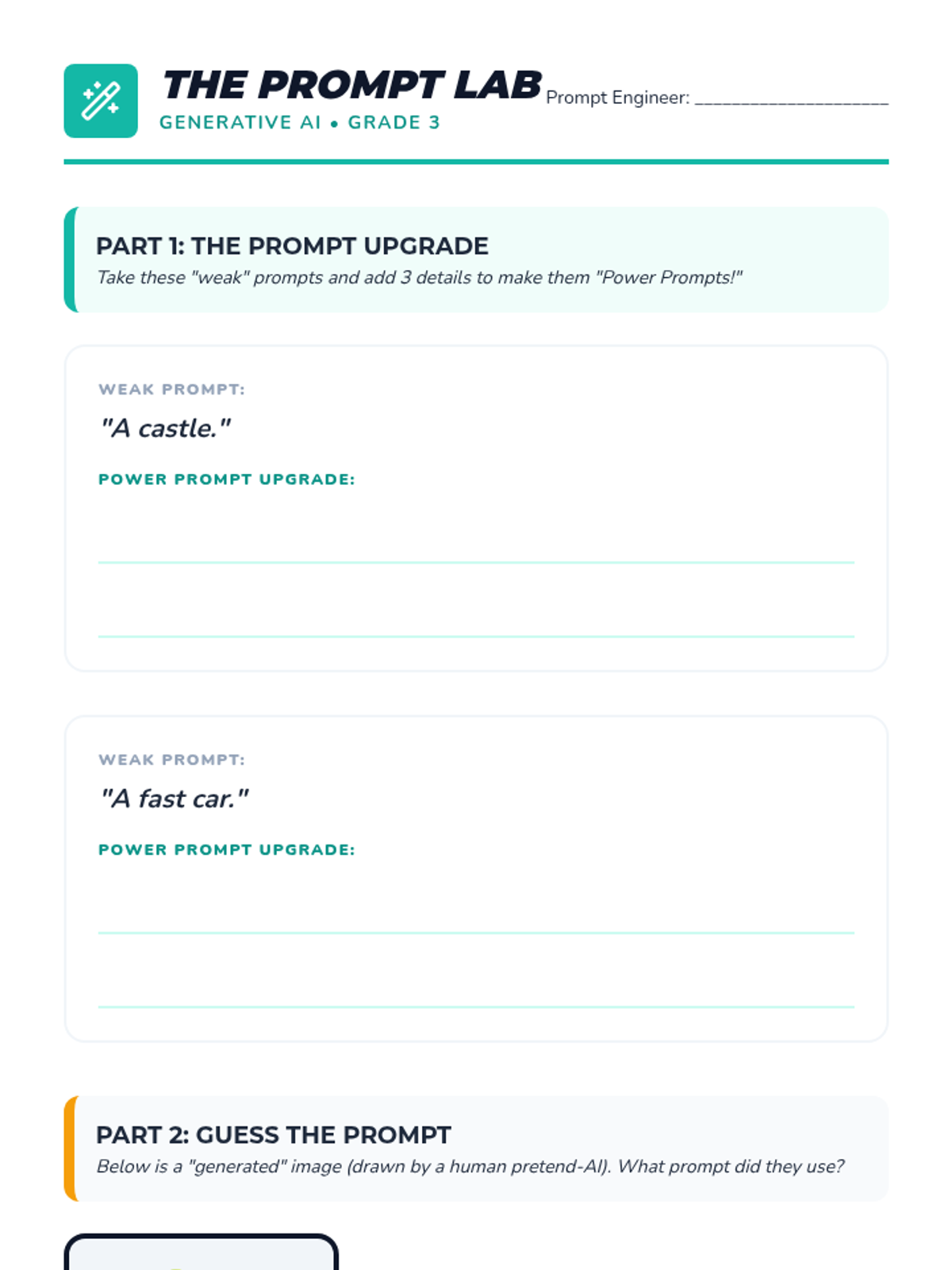
A worksheet for Grade 3 students to practice prompt engineering. It includes activities for upgrading weak prompts, reverse-engineering prompts from images, and designing a creative prompt for an AI-generated book cover.
A 6-slide presentation for 3rd Grade students on prompt engineering and generative AI. It explains what a prompt is, the importance of being specific, and the role of humans as the creative "boss" of AI.
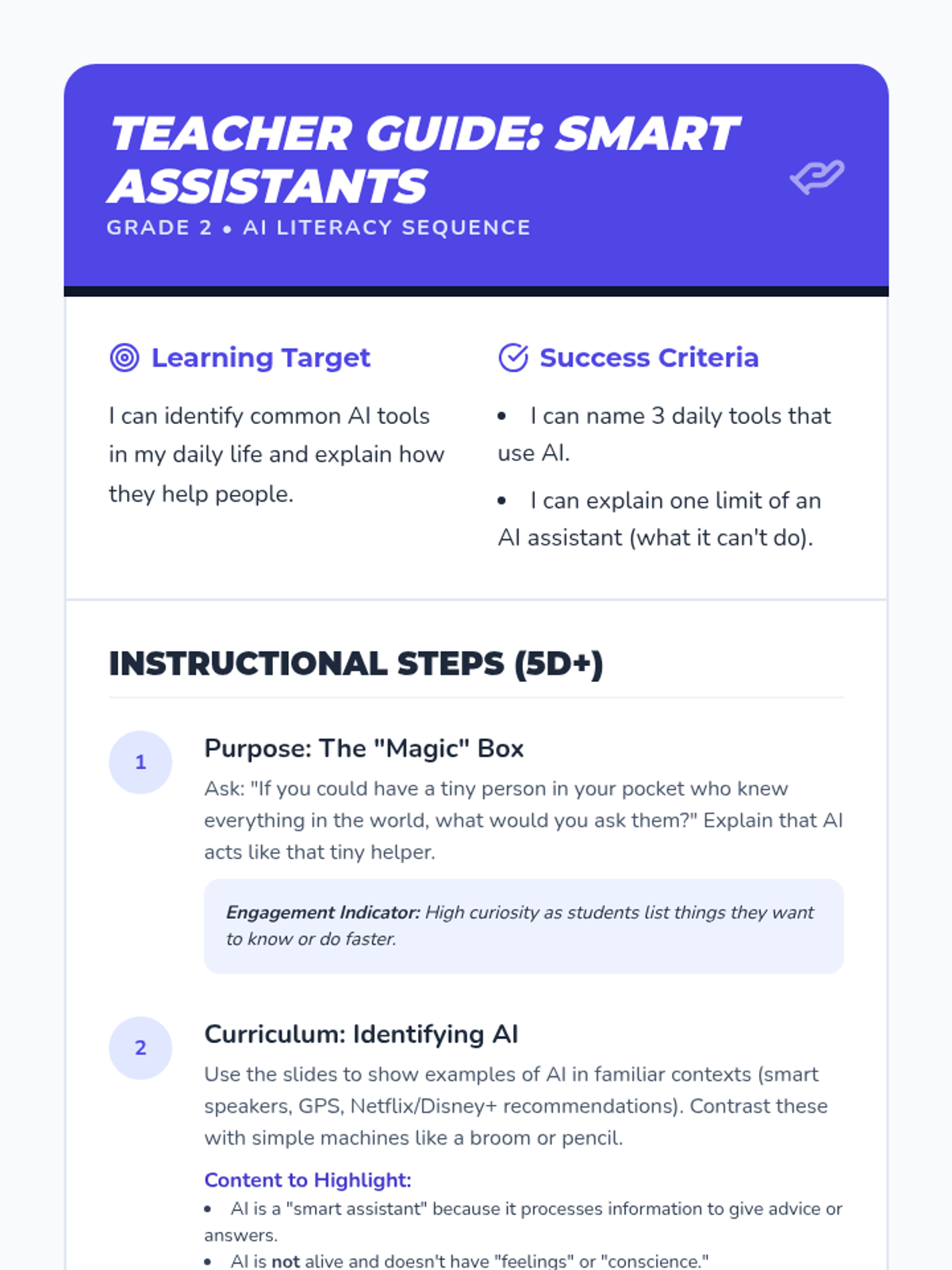
A teacher guide for the Grade 2 AI Literacy lesson on smart assistants. Includes instructional steps aligned with 5D+, tips for classroom discussion, and guidance on the scavenger hunt activity.
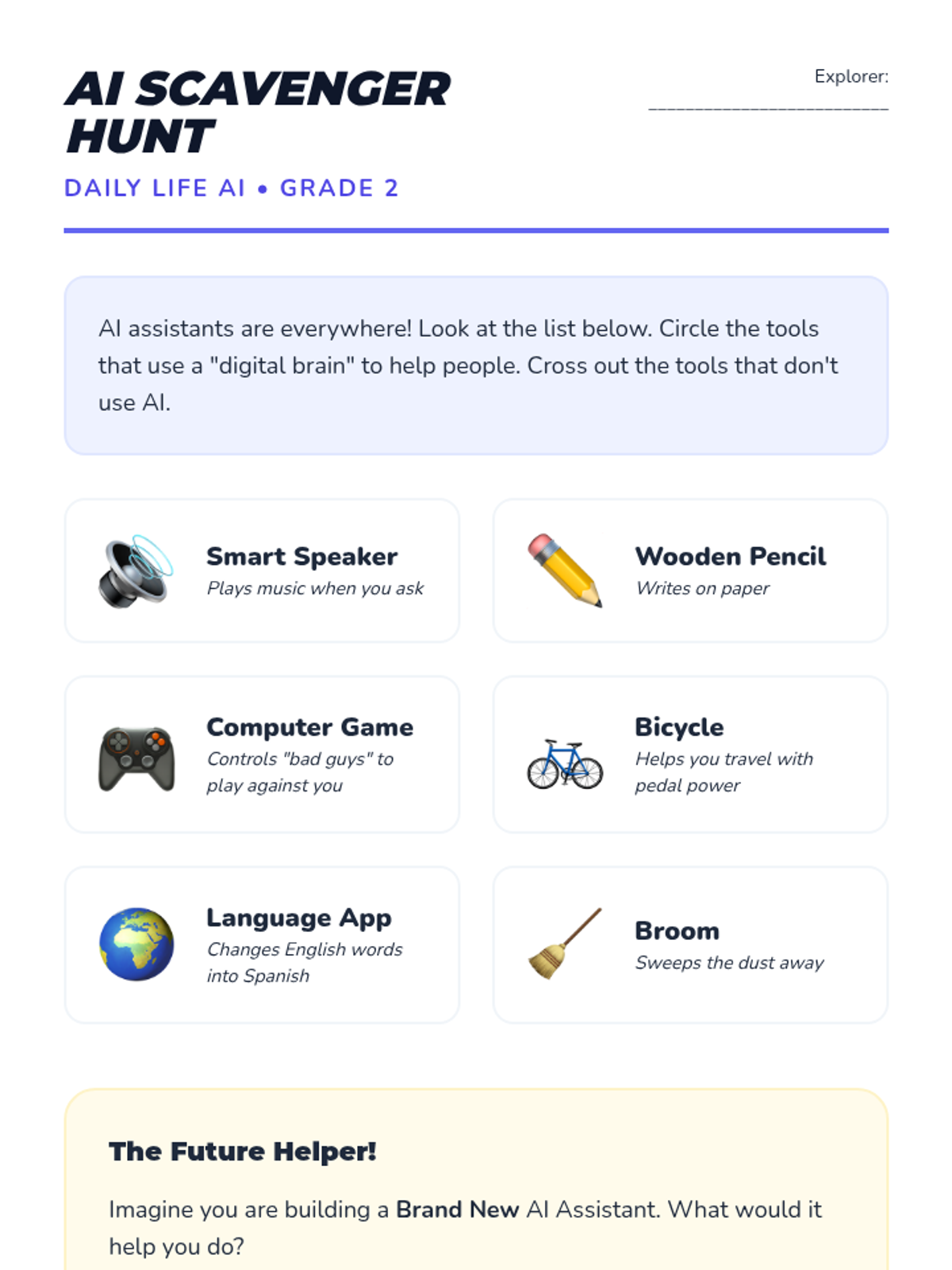
A scavenger hunt activity for Grade 2 students to identify AI in daily life and distinguish it from non-AI tools. Includes a creative section for designing a personal AI assistant.
A 6-slide presentation for 2nd Grade students on AI assistants. It covers everyday examples of AI (smart speakers, recommendations) and emphasizes that AI is a helpful tool but limited in emotional intelligence.
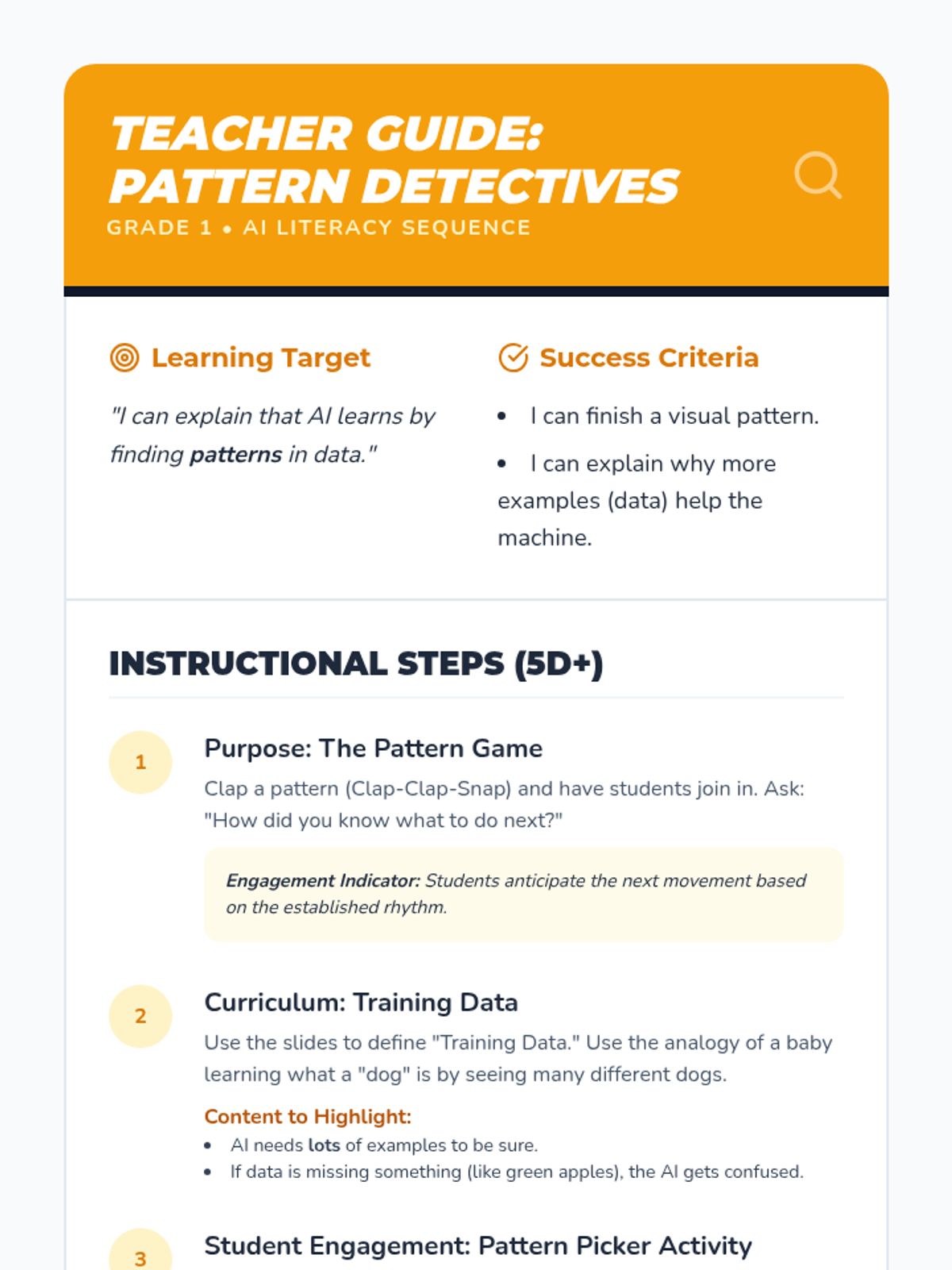
A teacher guide for the Grade 1 AI Literacy lesson on pattern recognition. Includes 5D+ instructional steps, learning targets, and guidance on how to facilitate the "Pattern Picker" activity.
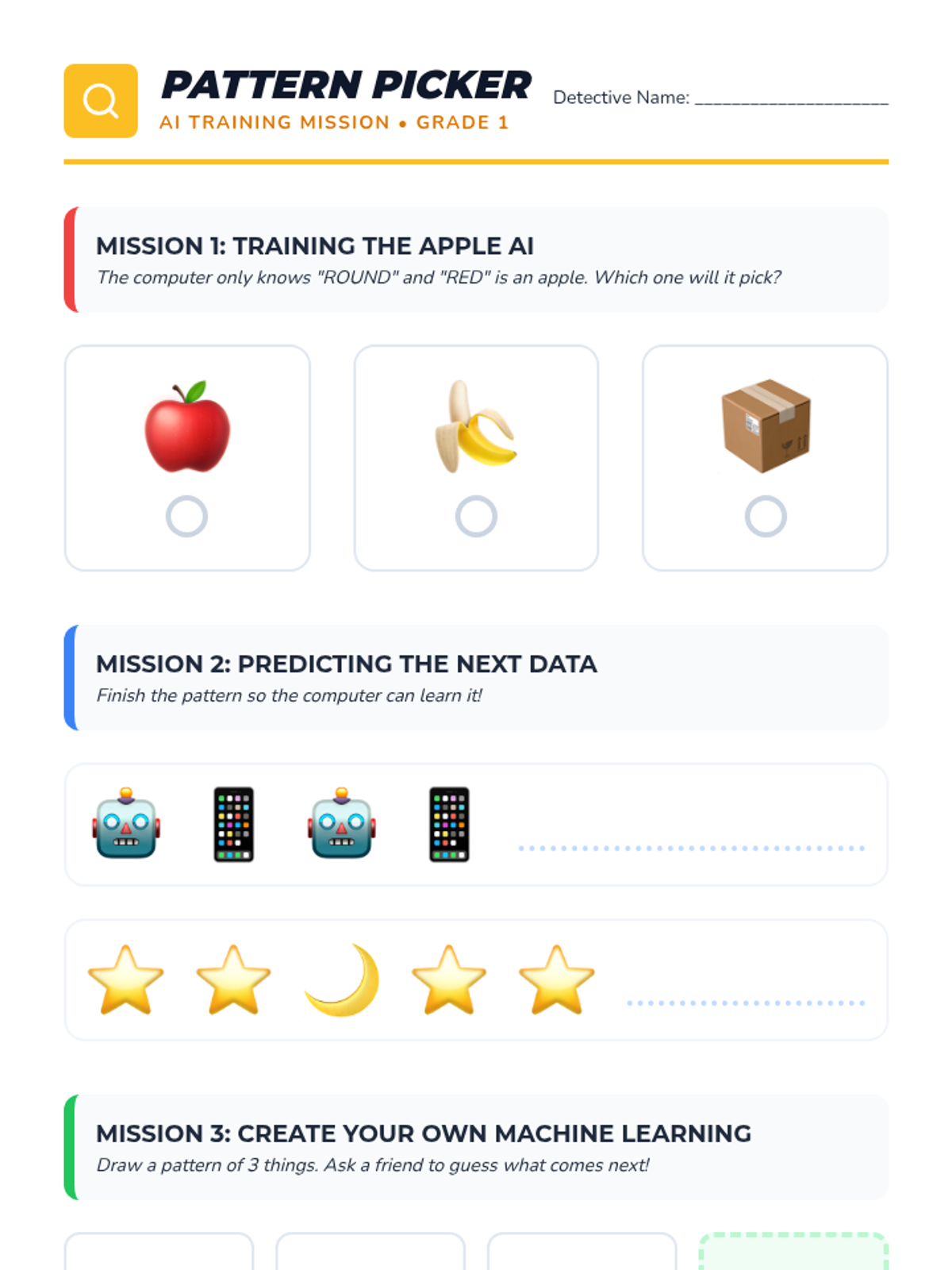
A worksheet for Grade 1 students to practice pattern recognition and simple machine learning concepts. It includes identifying training data and completing visual patterns.
A 6-slide presentation for 1st Grade students on pattern recognition and training data. It uses simple fruit examples to explain how AI learns from repetition and the importance of diverse data.
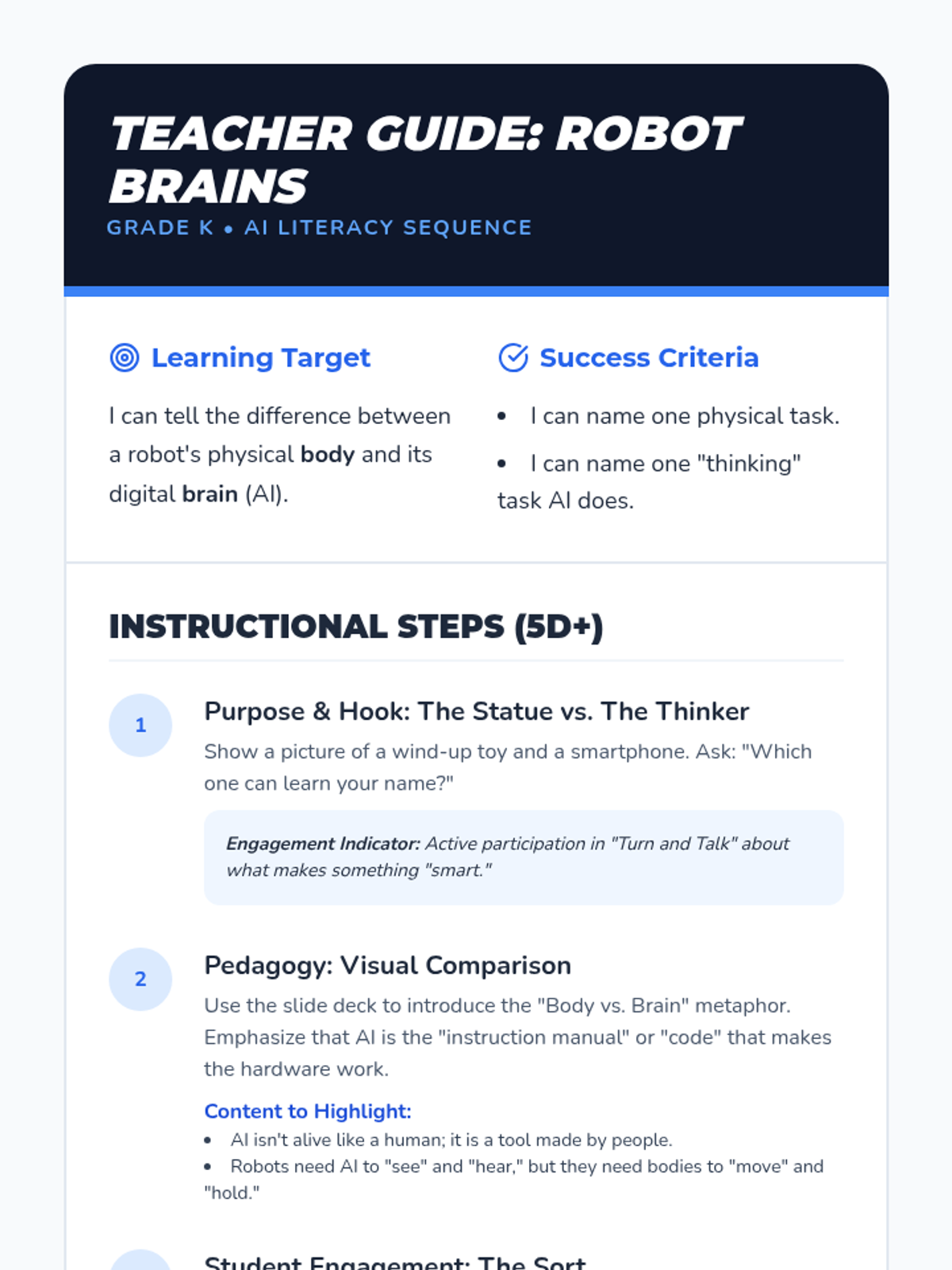
A comprehensive teaching guide for the Grade K AI literacy lesson. Aligned with the 5D+ framework, it provides instructional steps, success criteria, and tips for addressing common student misconceptions.
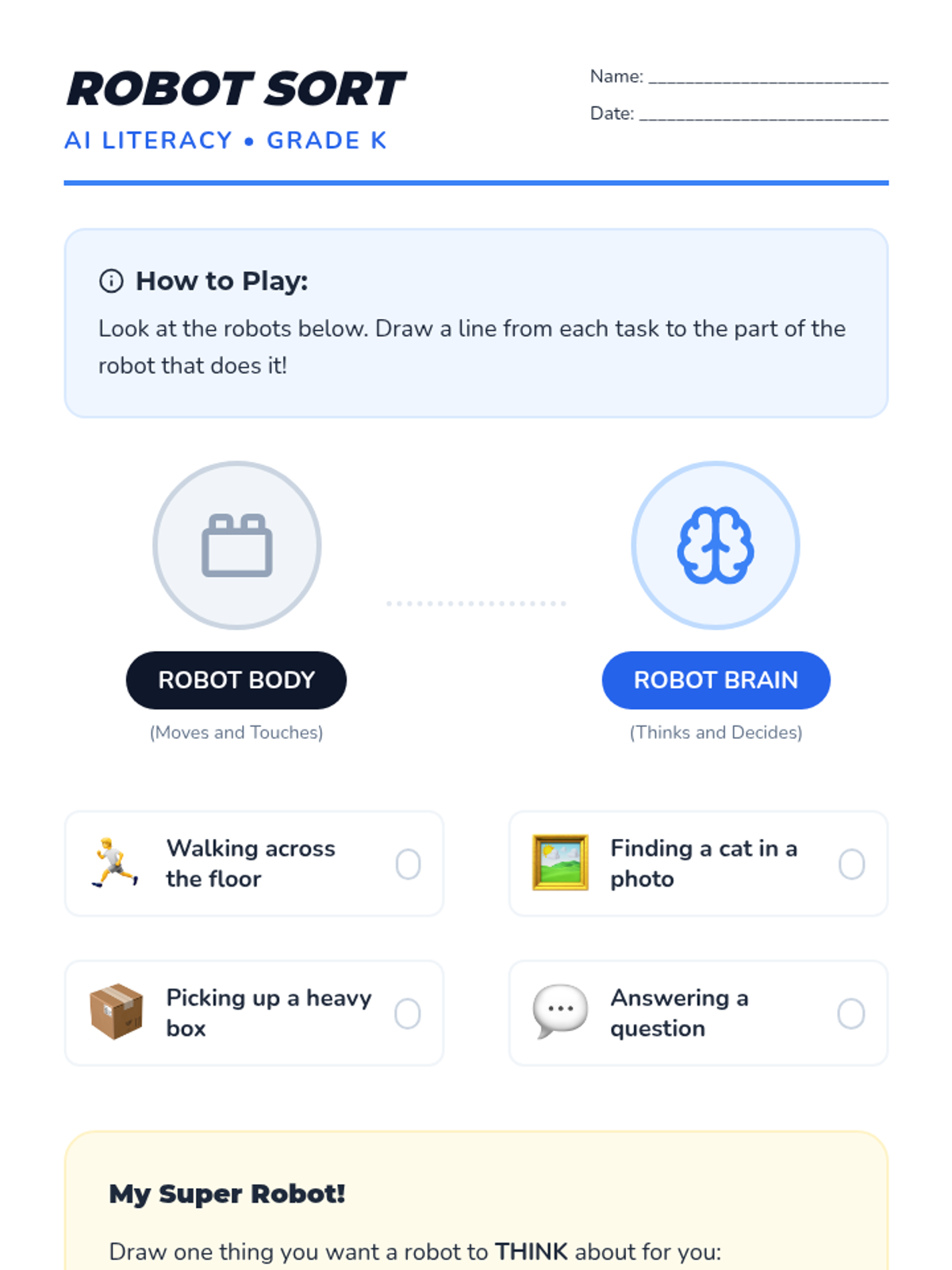
A sorting activity for Kindergarten students where they match physical tasks (Robot Body) to cognitive tasks (Robot Brain/AI). Includes a creative drawing section for student reflection.
A 6-slide presentation for Kindergarten students introducing the difference between a robot's hardware (body) and software (AI brain). Includes visual comparisons and engaging questions to spark discussion.
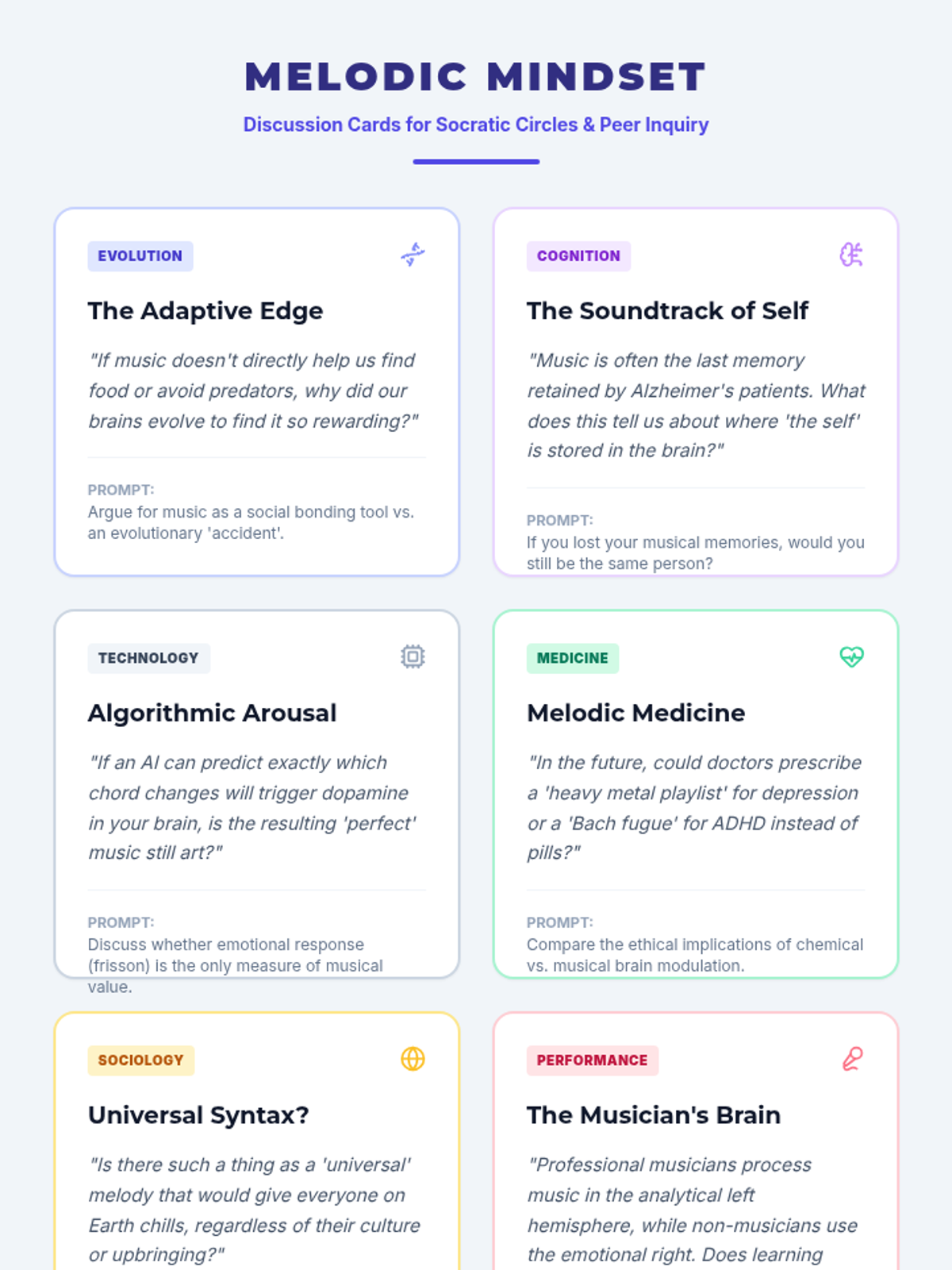
A set of six creative discussion cards for 'The Musical Brain' lesson, featuring thought-provoking prompts on evolution, technology, medicine, and culture, designed for high school Socratic seminars.
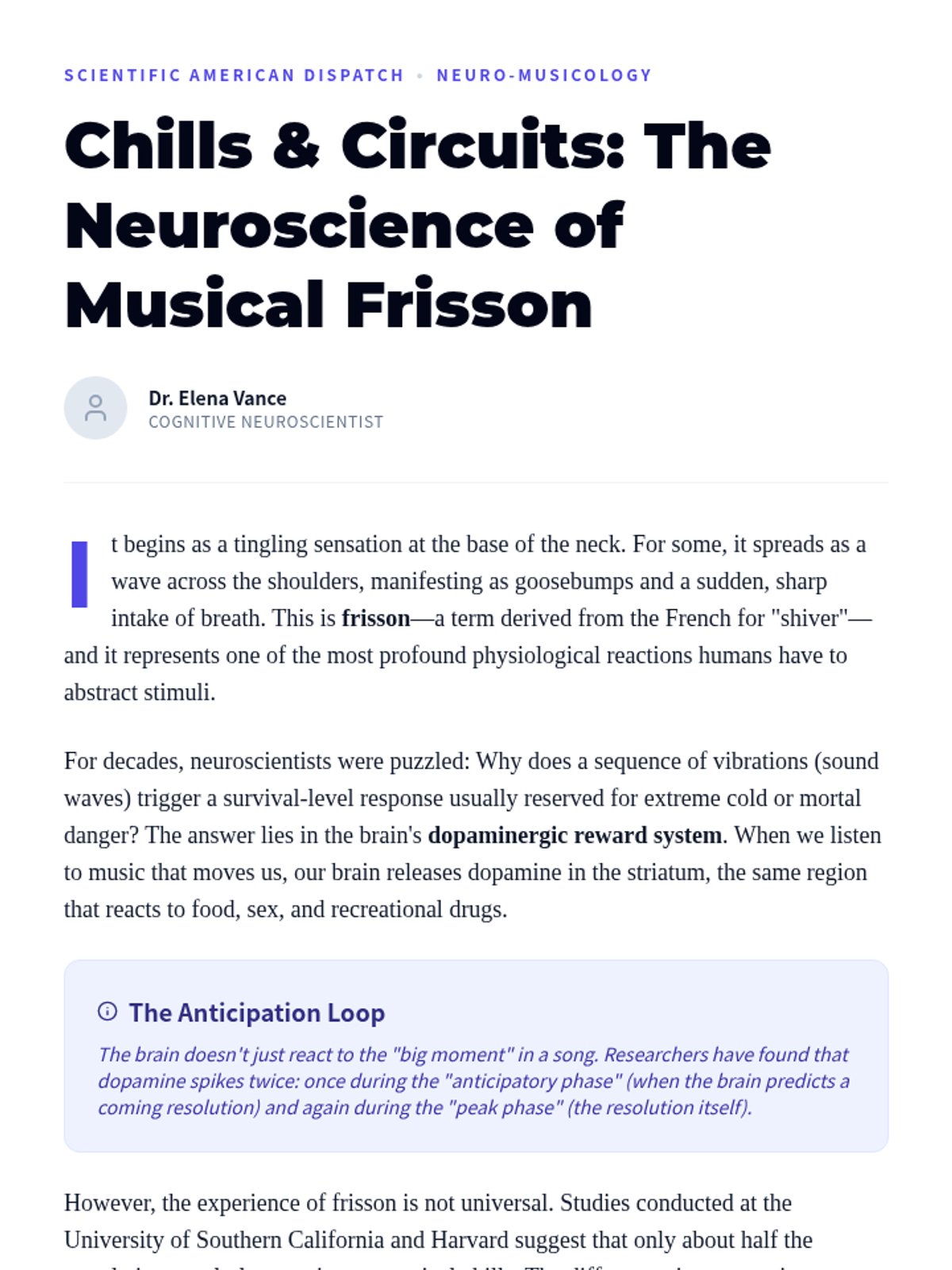
A sophisticated reading passage for high school students exploring the 'frisson' effect, the dopaminergic reward system, and the white matter pathways connecting the auditory cortex to the emotional brain.
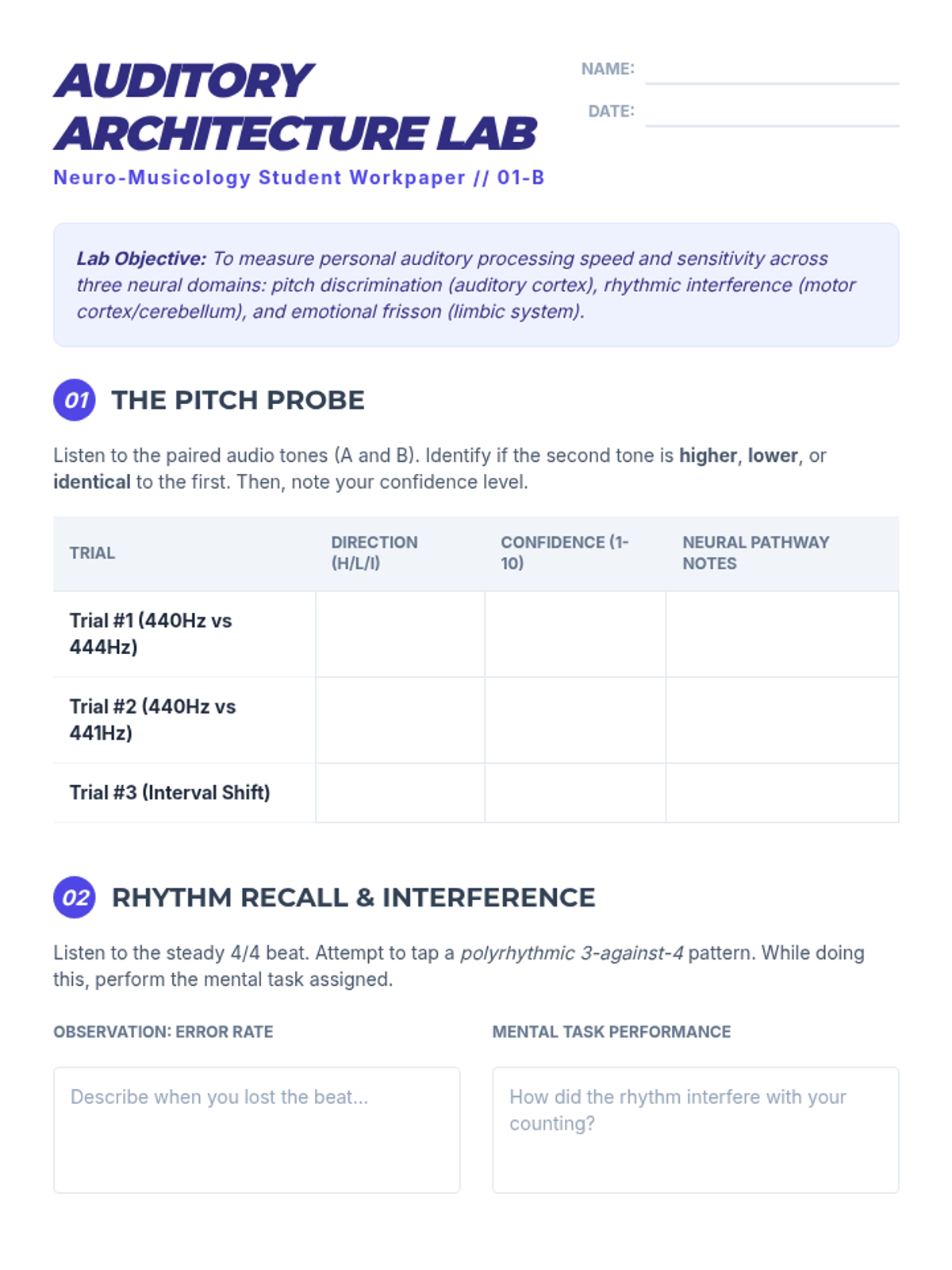
A student-facing lab worksheet designed for grades 9-12. It includes structured sections for pitch discrimination tests, rhythmic interference experiments, and an emotional frisson log, followed by scientific analysis questions.
A visually striking slide deck for 'The Musical Brain' lesson. It covers neuroanatomy, the 'frisson' effect, the difference between pitch and rhythm processing, and the link between music and memory, designed with a sophisticated dark neural theme.
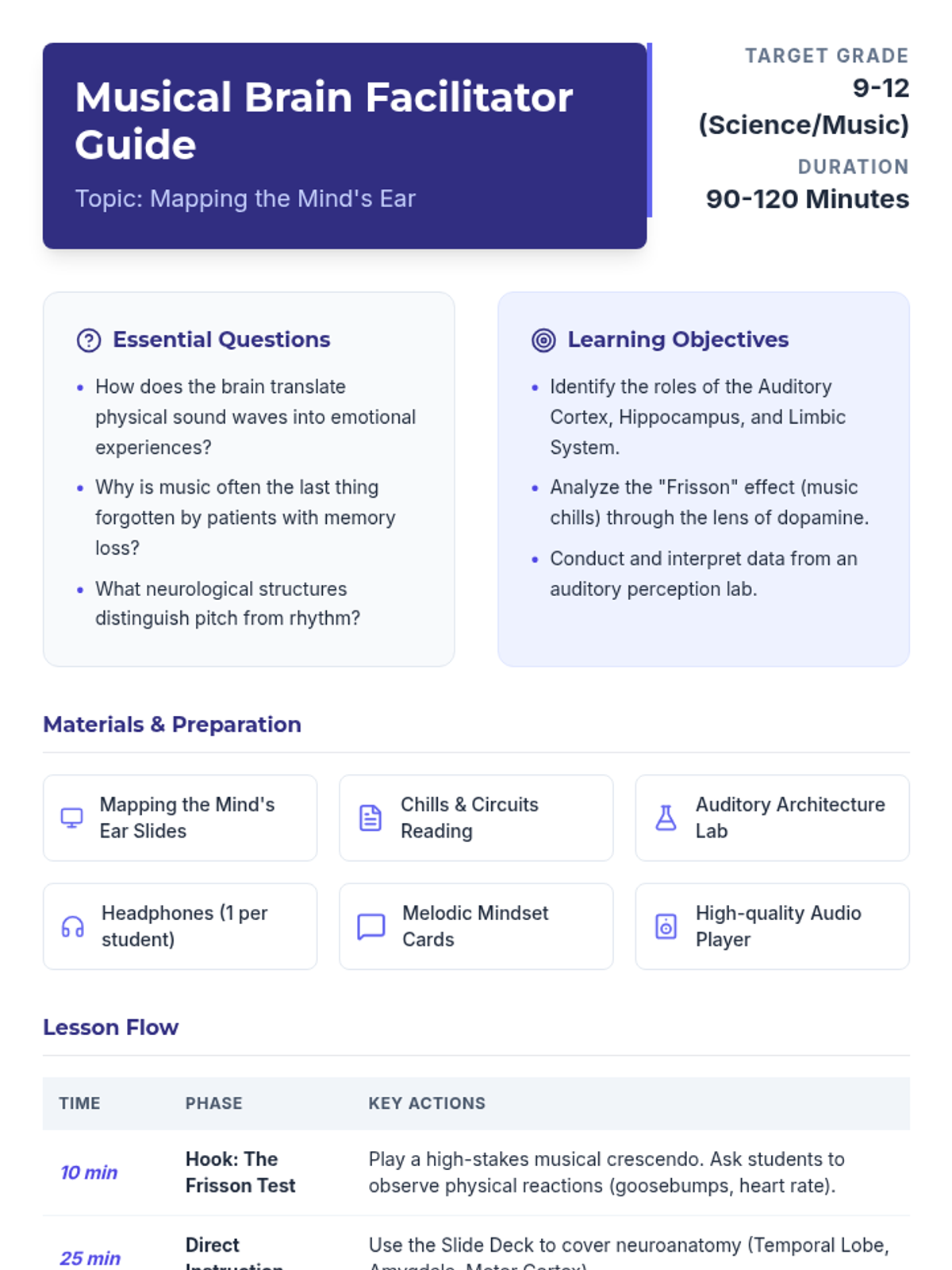
A comprehensive facilitator guide for high school teachers, providing a detailed roadmap for 'The Musical Brain' lesson. It includes essential questions, learning objectives, a timed lesson flow, and specific instructional tips for neuro-musicology instruction.
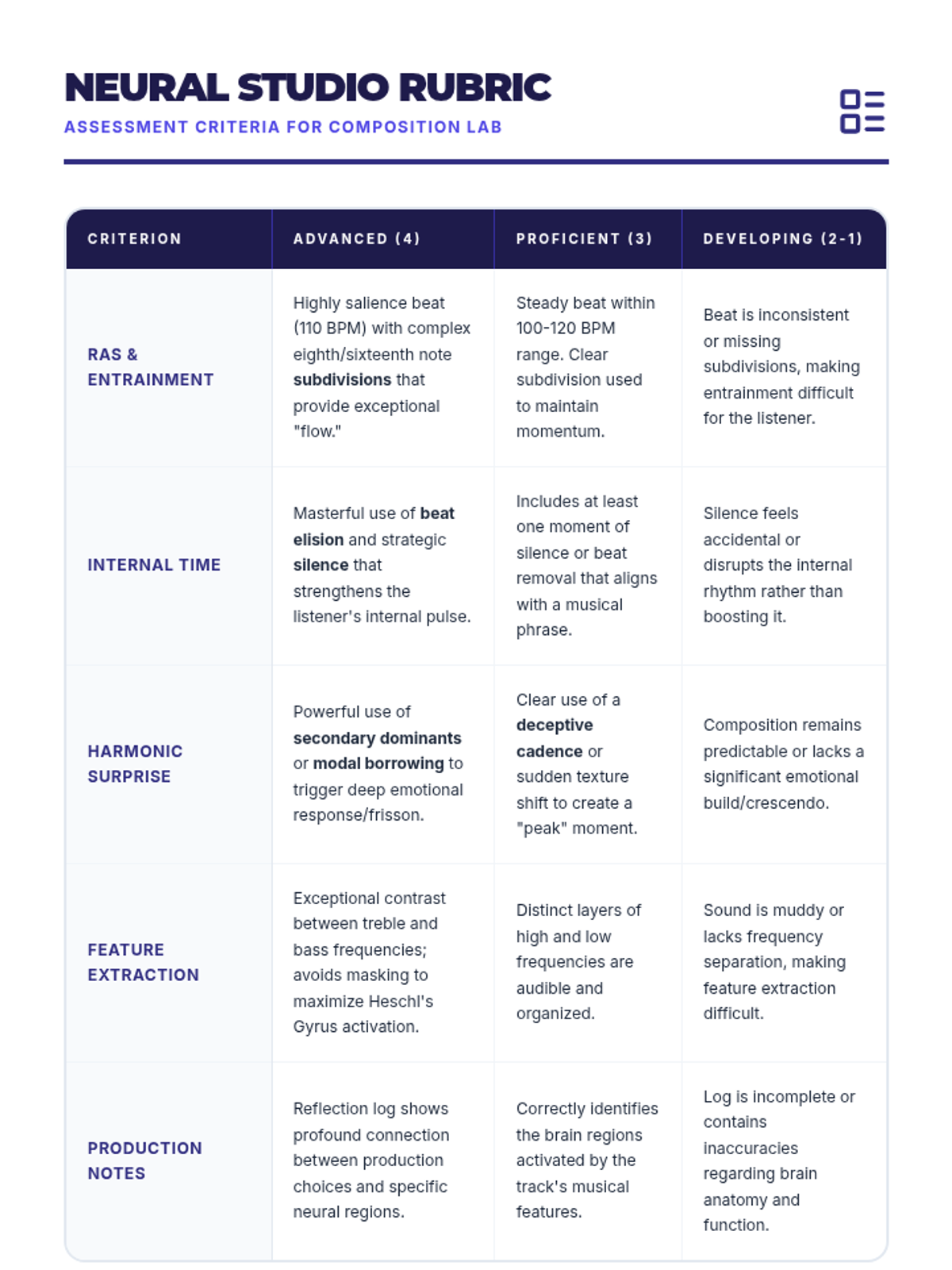
A teacher-facing rubric for assessing the Neural Studio Soundtrap project, covering criteria such as rhythmic entrainment, harmonic surprise, and scientific reflection.
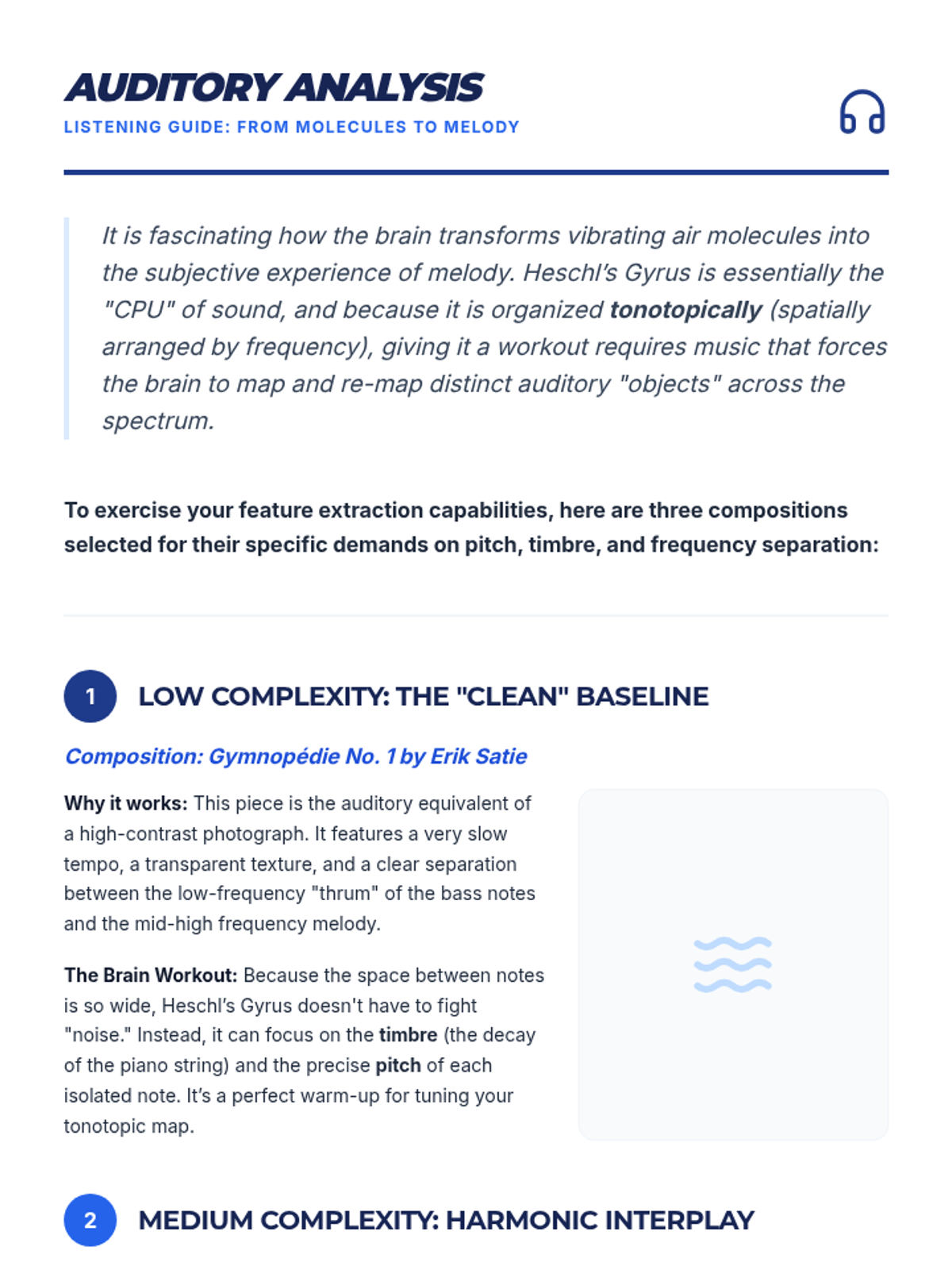
A detailed listening guide for students that analyzes three specific musical compositions (Satie, Bach, and Stravinsky) through the lens of auditory neuroscience and feature extraction.
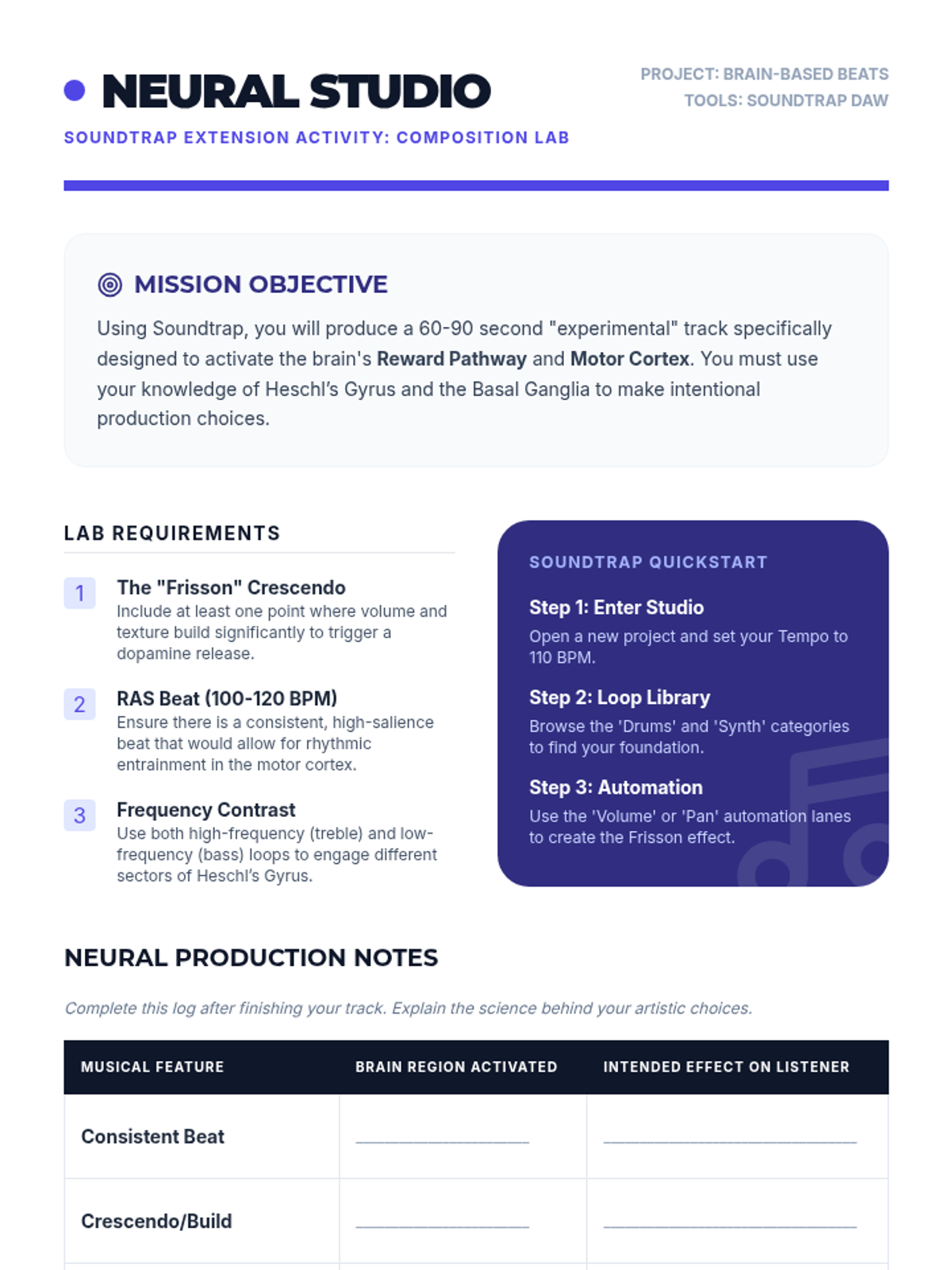
A student-facing extension activity for composing an experimental song in Soundtrap, requiring students to apply neuroscience concepts like entrainment and frisson to their musical production.
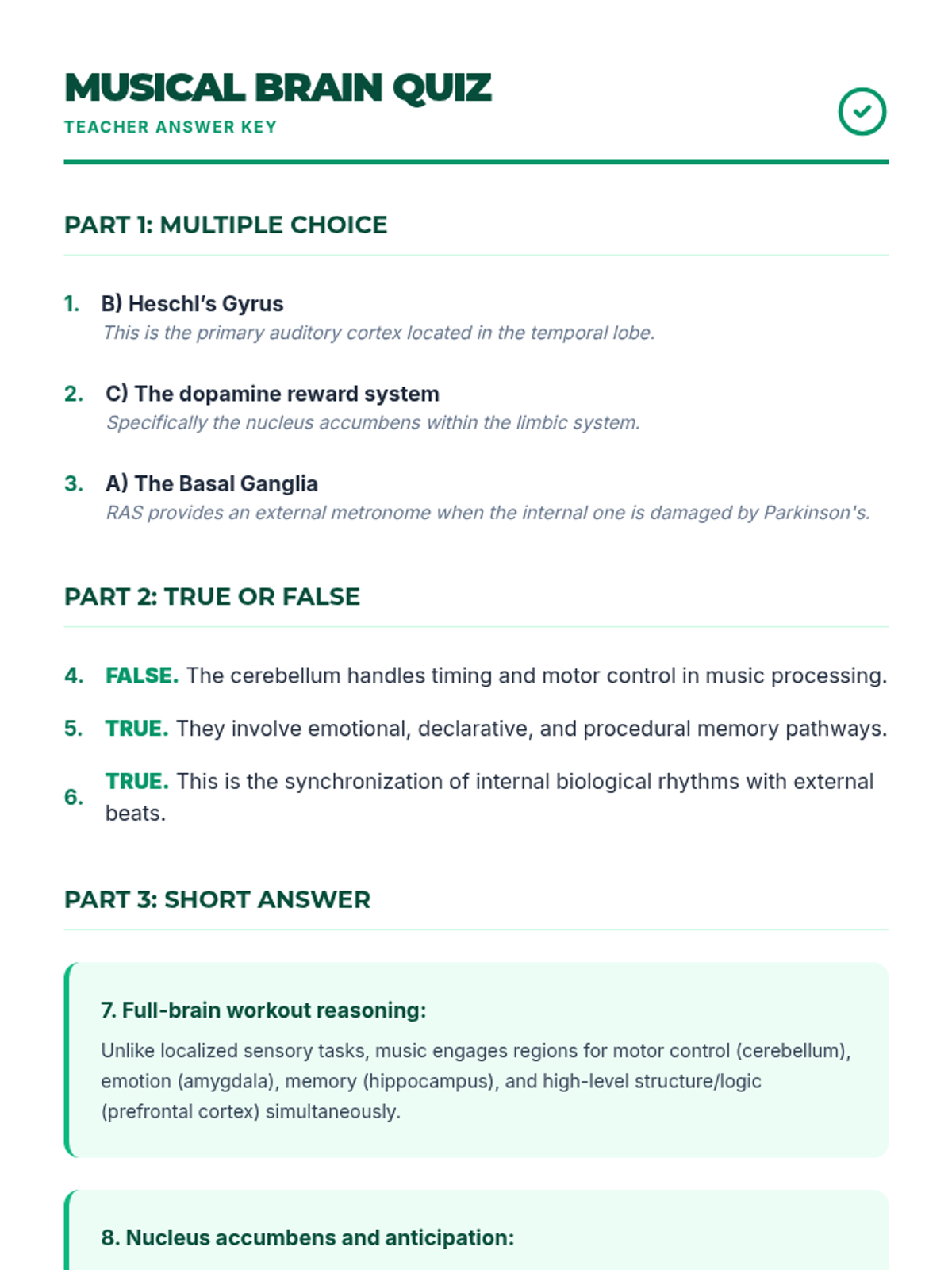
The teacher answer key for the Musical Brain Quiz, including explanations for neural mechanisms and sample short-answer responses.
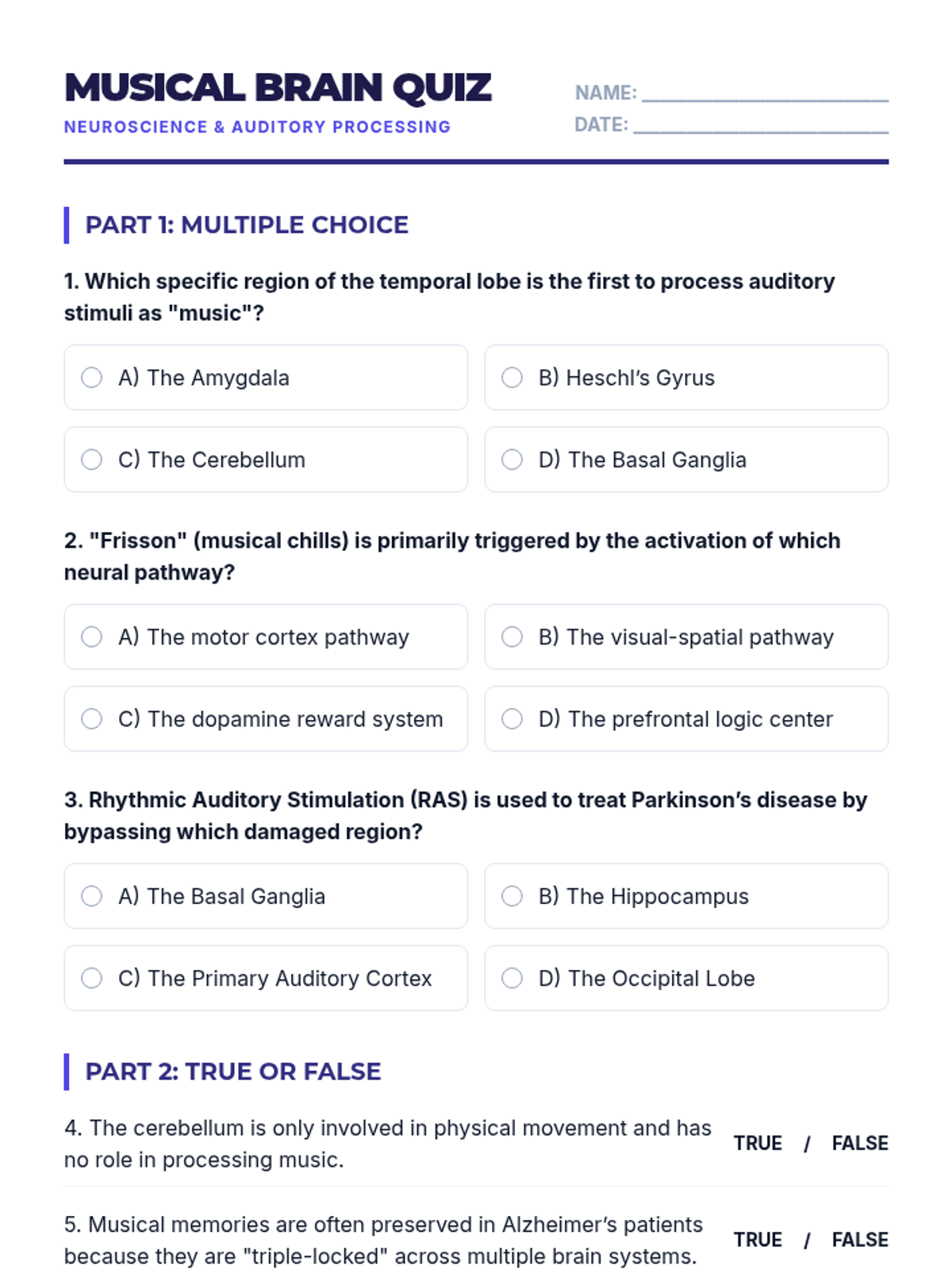
A student quiz covering the key neural regions and concepts from the "Musical Brain" lesson, including auditory processing, frisson, and clinical applications.
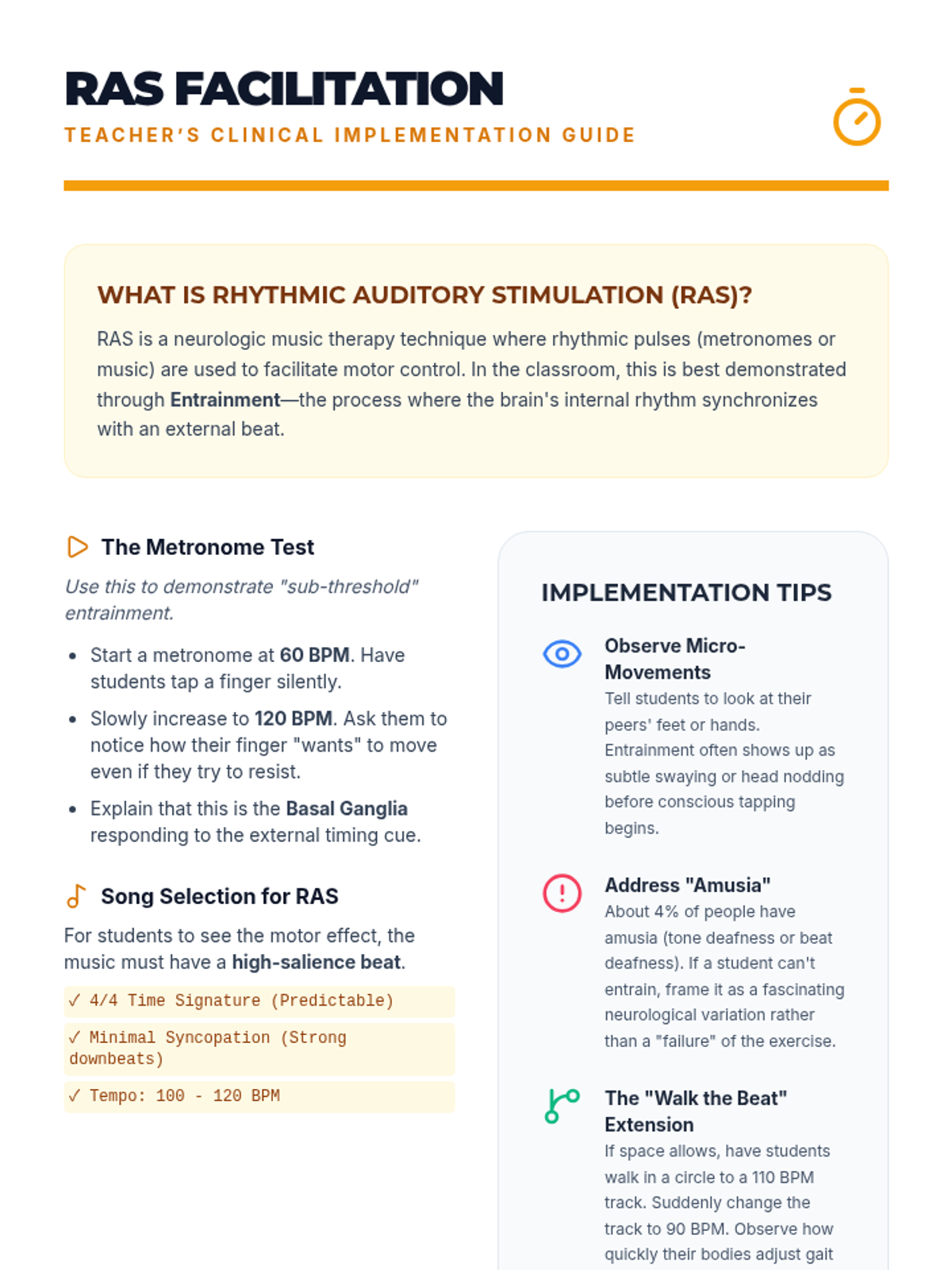
A teacher-facing implementation guide providing practical tips and activities for demonstrating Rhythmic Auditory Stimulation (RAS) and entrainment in the classroom.
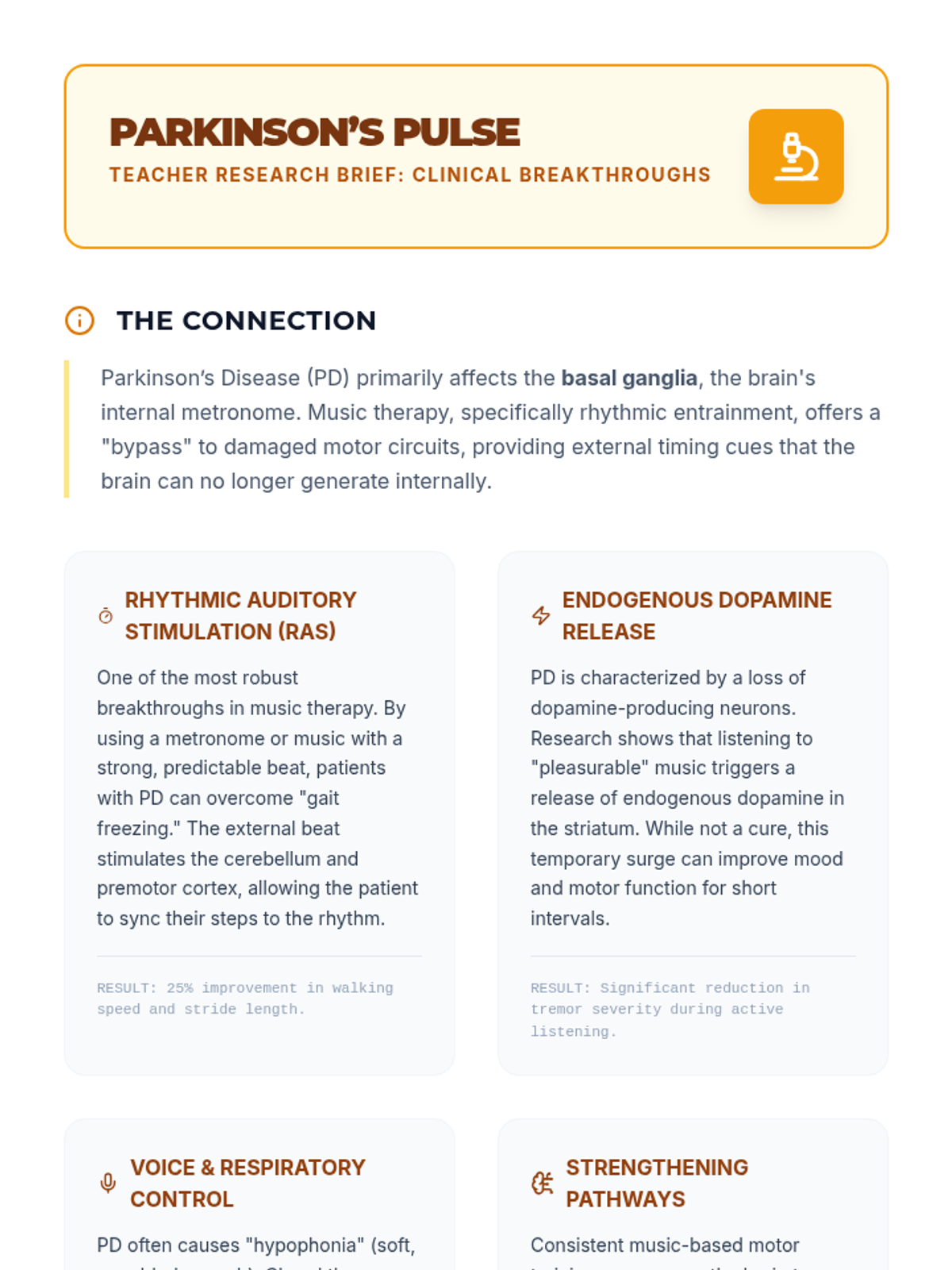
A teacher-facing research brief detailing breakthroughs in music therapy for Parkinson's disease, focusing on Rhythmic Auditory Stimulation (RAS) and neuroplasticity.
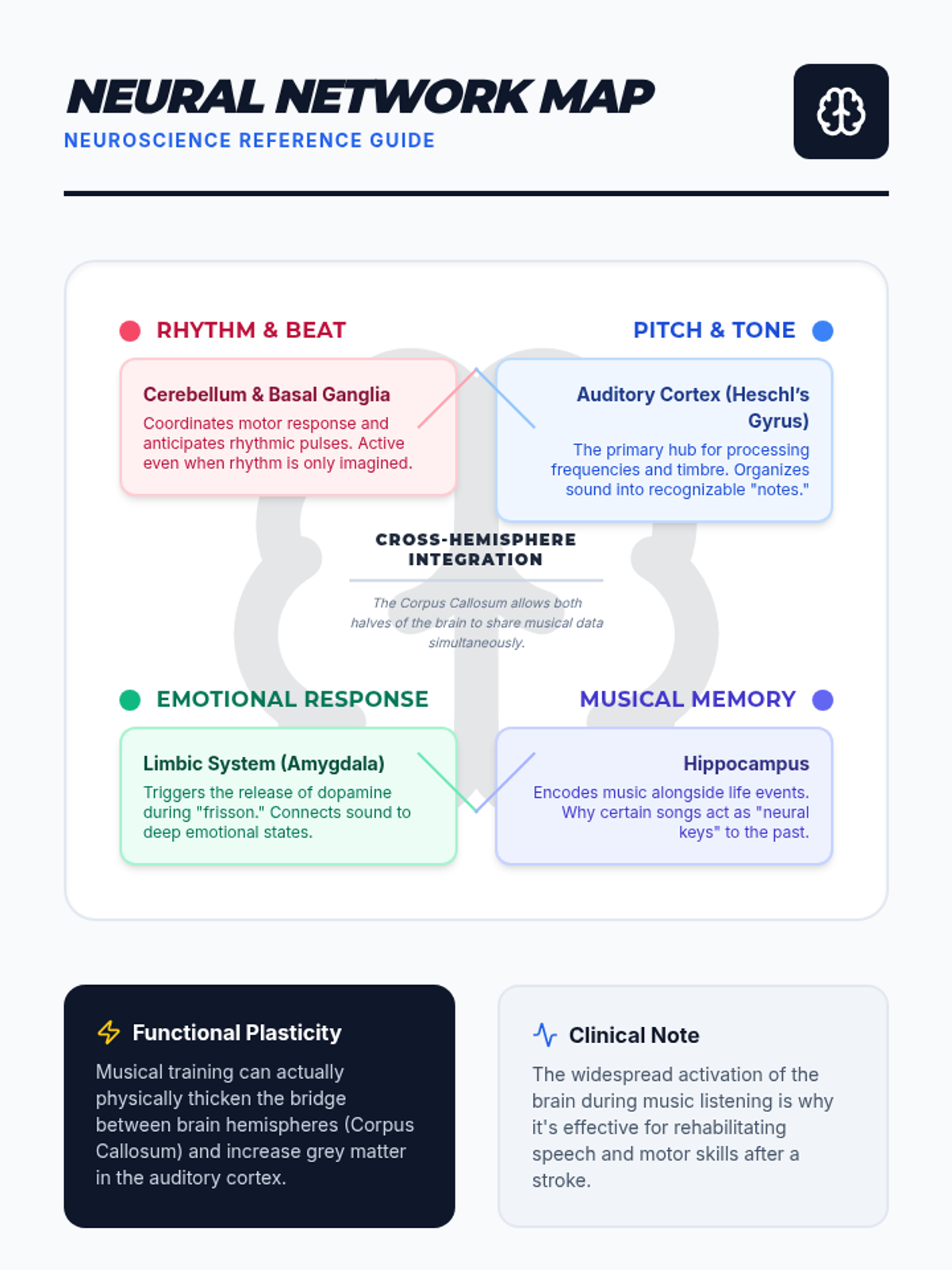
A color-coded reference diagram for students to identify the brain regions involved in processing rhythm, pitch, and emotion.
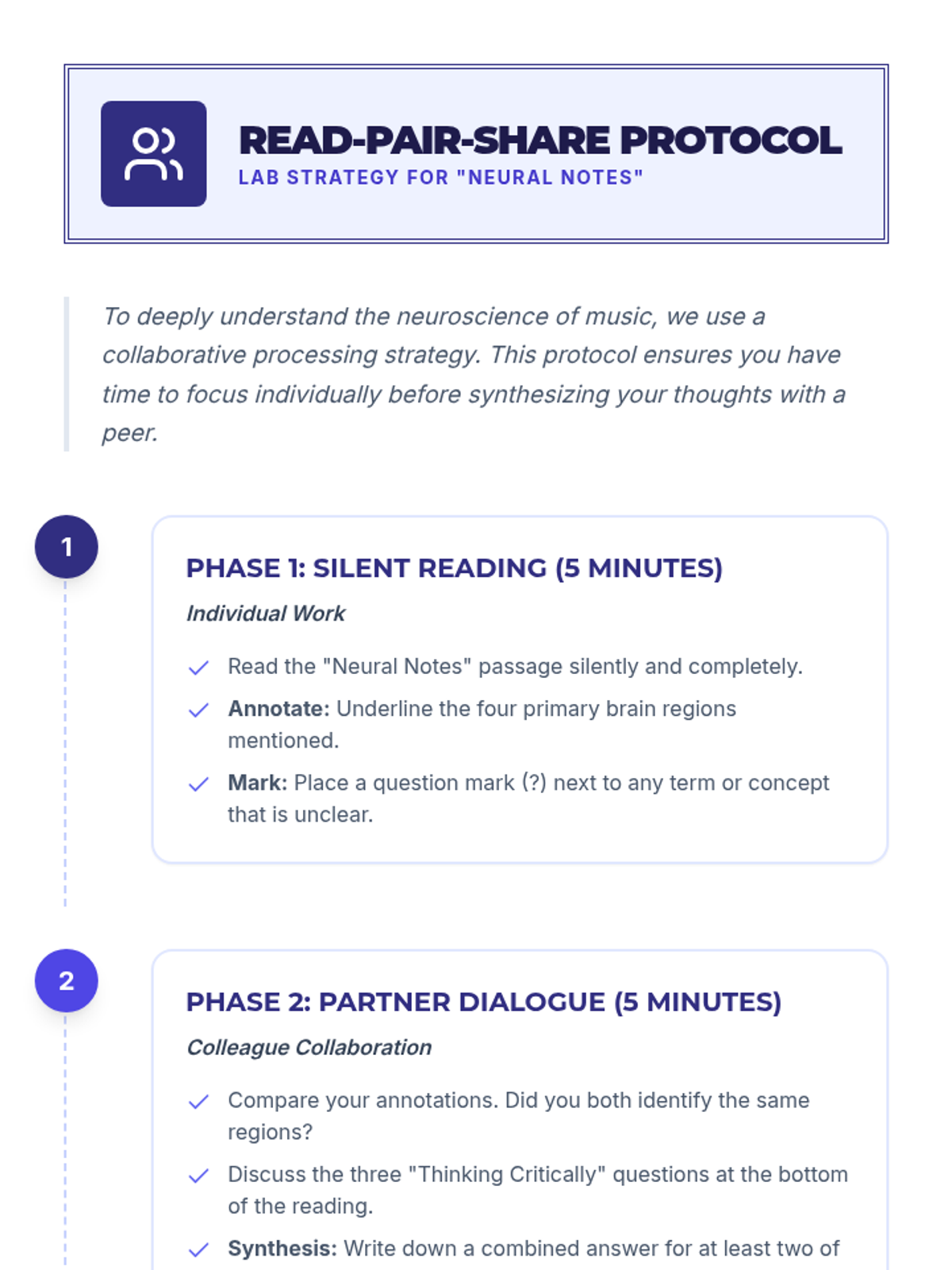
A step-by-step guide for students to use during the reading portion of the lesson, detailing the Read-Pair-Share collaborative learning strategy.