A teacher guide for the Grade 6 AI Literacy lesson on LLM mechanics. Includes instructional steps for teaching tokenization and probability, 5D+ alignment, and discussion prompts on AI creativity.
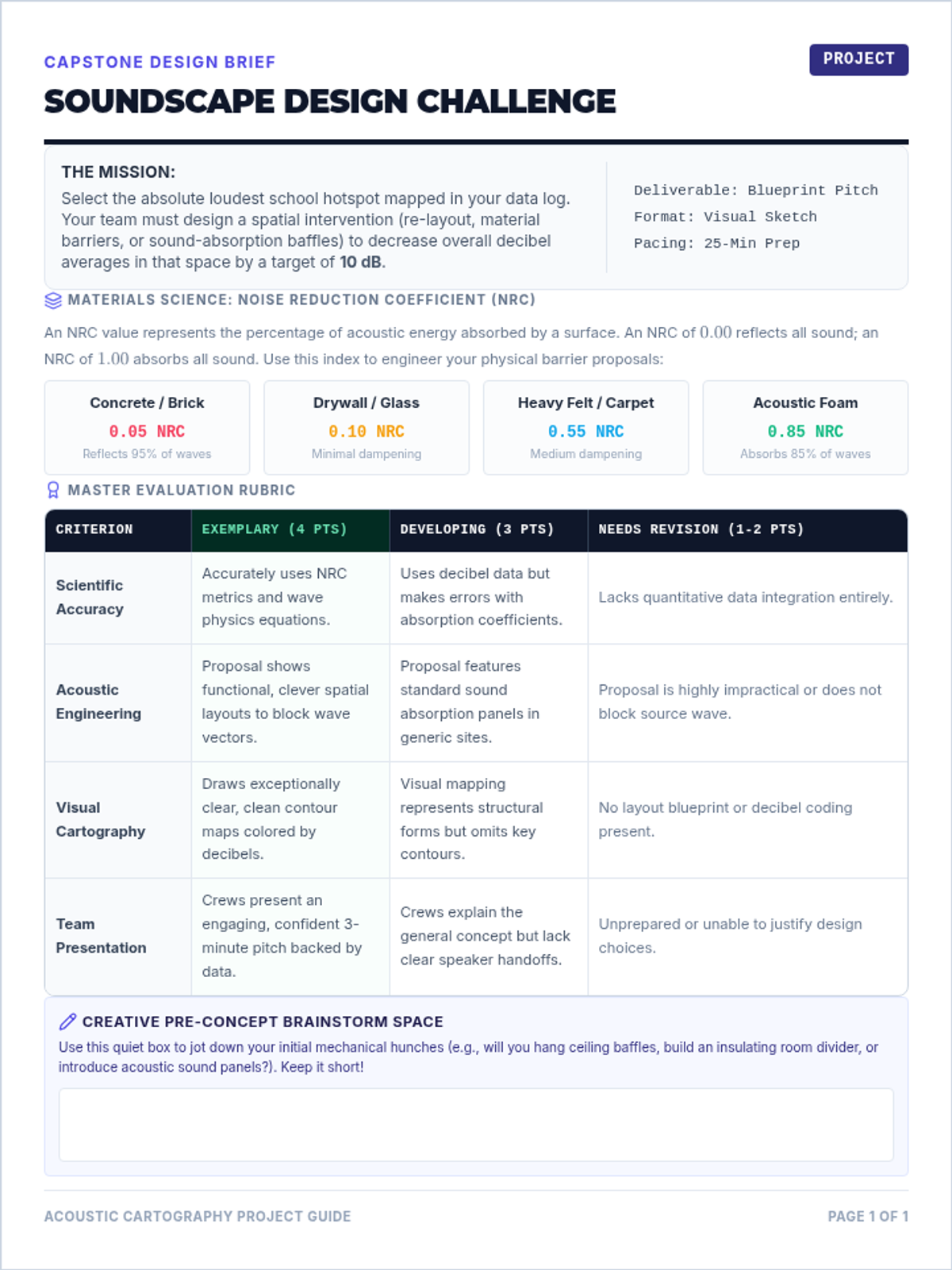
A comprehensive single-page project brief and grading rubric guiding students through designing acoustic noise-mitigation structures.
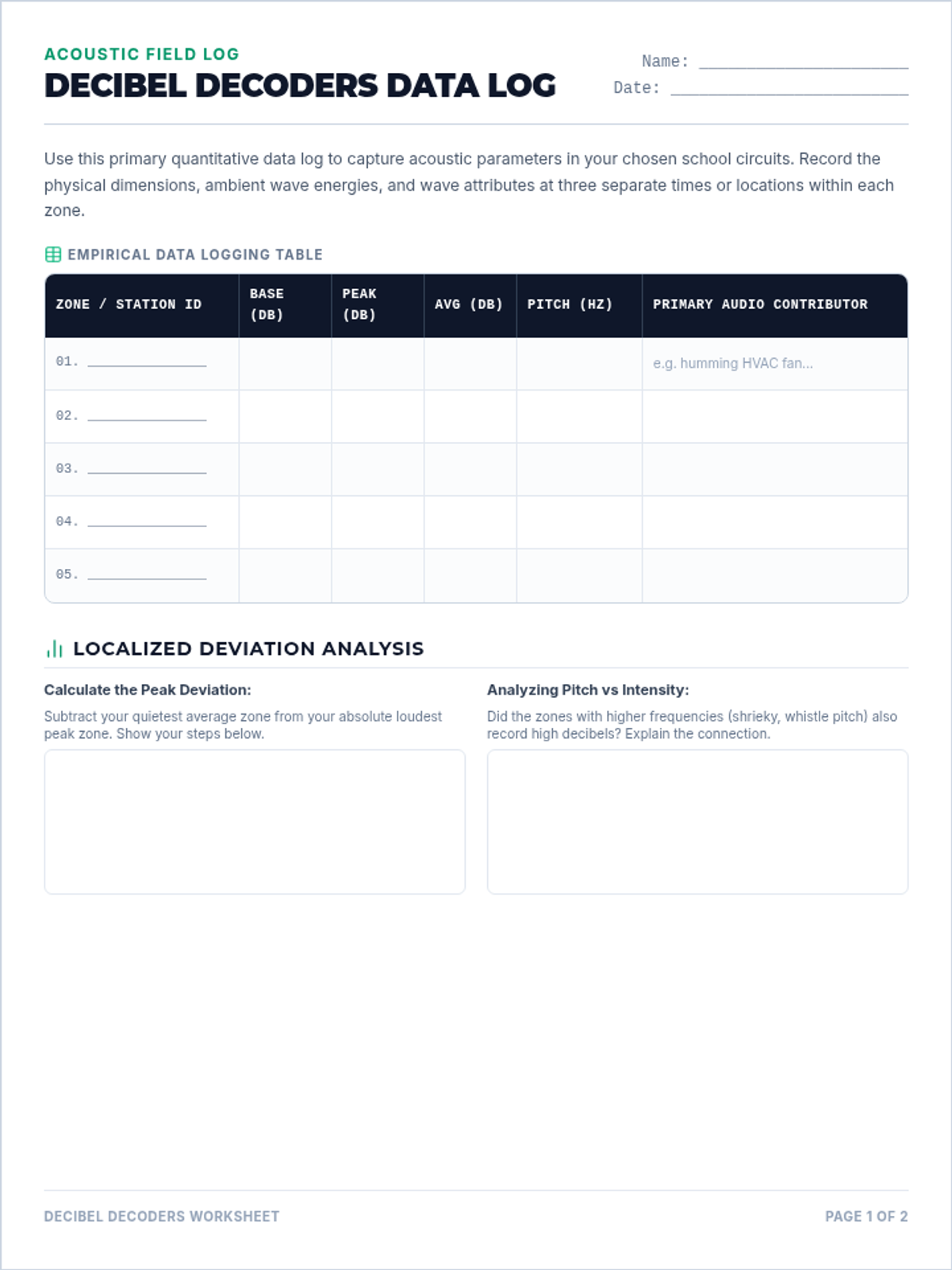
A two-page student data worksheet featuring comprehensive quantitative sound logging, decibel comparison matrices, and mathematical analysis of acoustic energy.
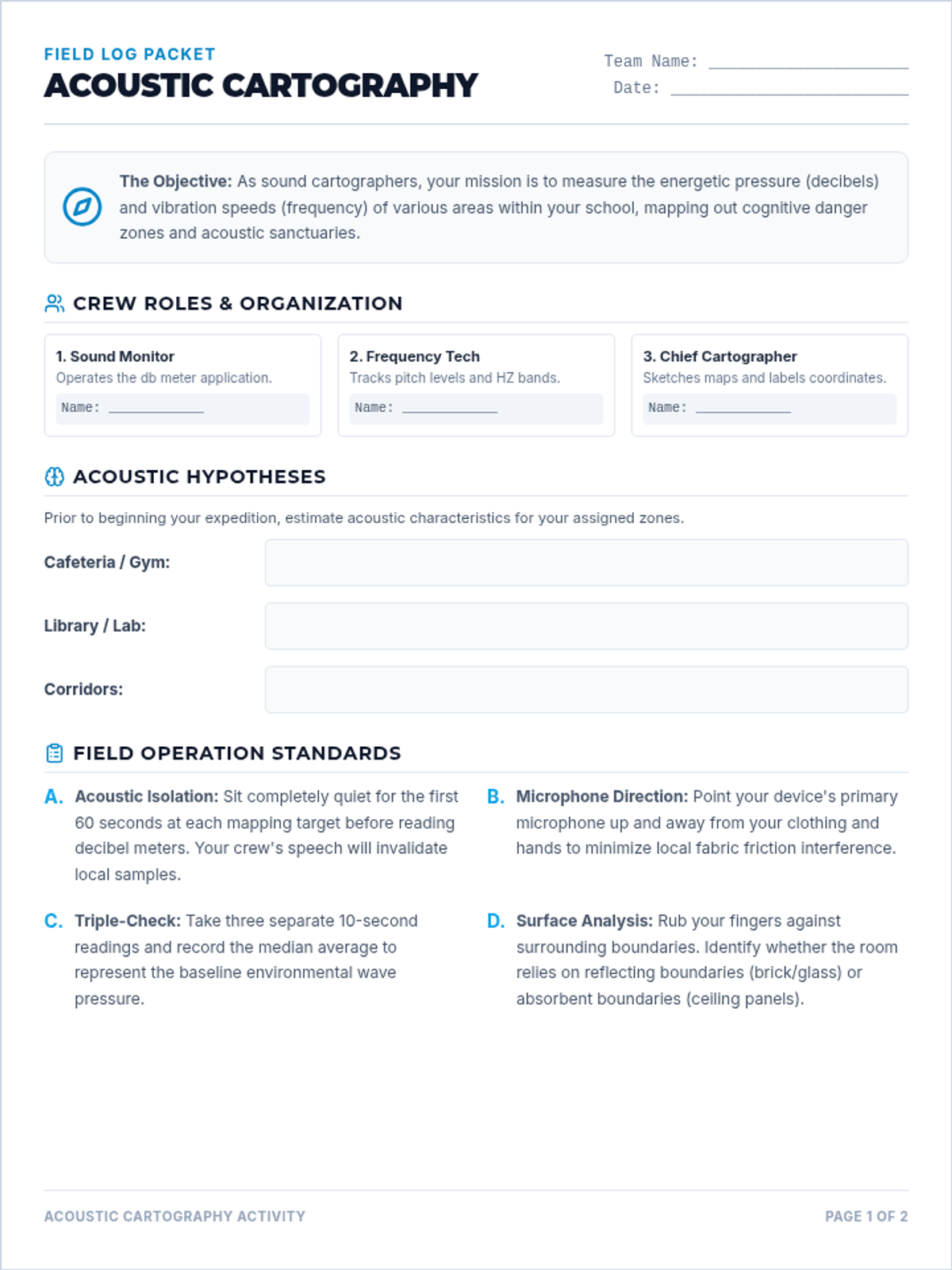
A student activity packet guiding mapping crews through setting hypotheses, setting field safety protocols, and creating hand-sketched acoustic choropleth maps.
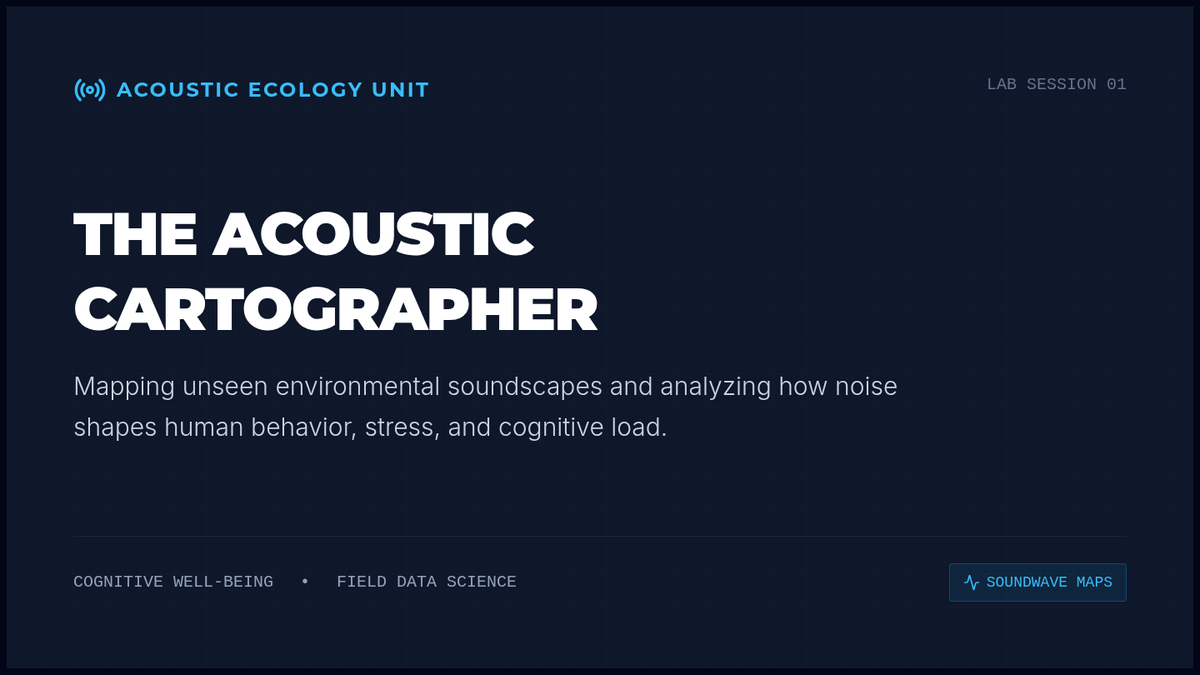
An instructional slide deck designed to deliver the lesson's core acoustic principles, data collection protocols, and cognitive science connections to students.
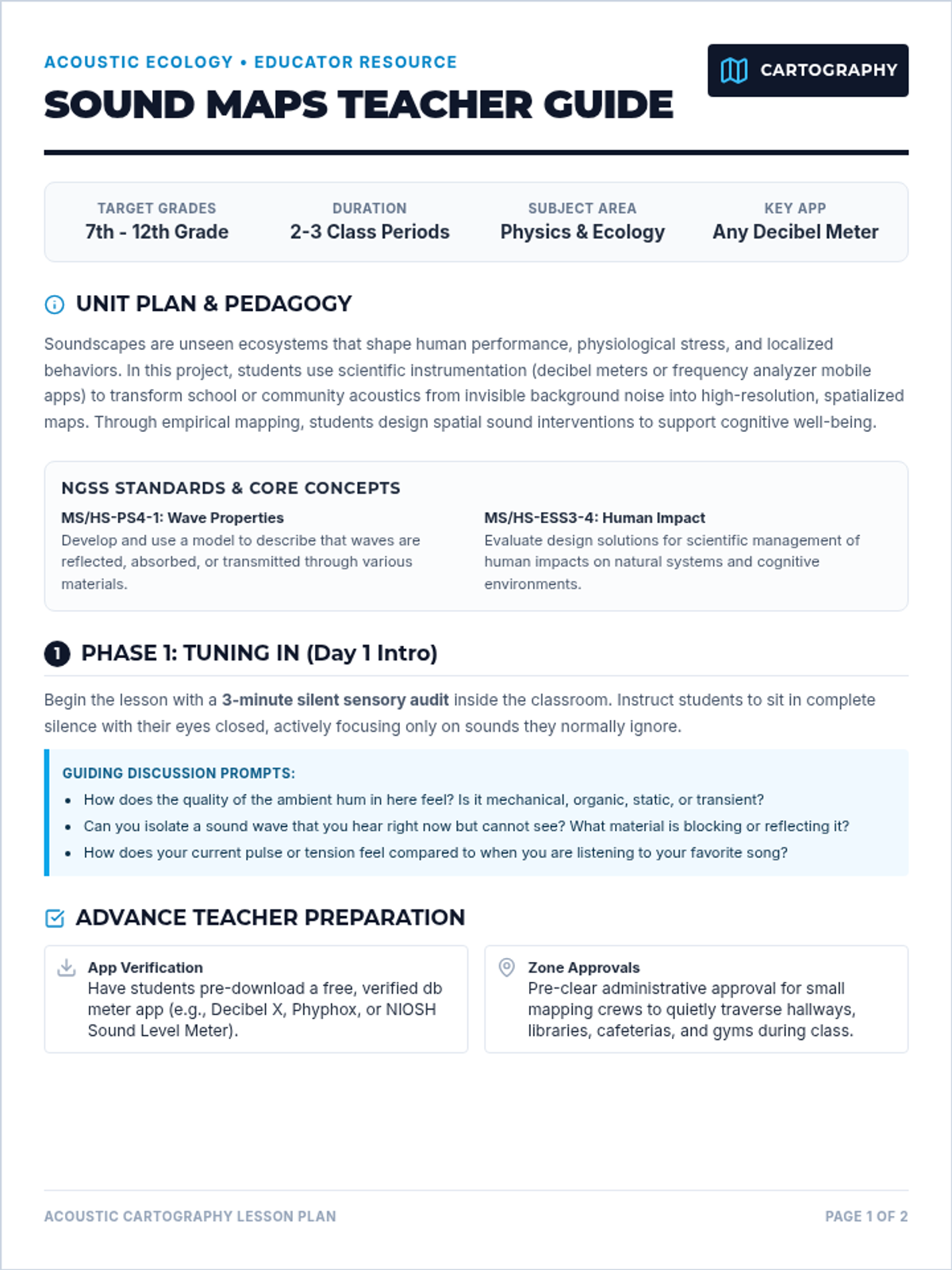
A comprehensive two-page instructional guide for teachers to facilitate the Acoustic Cartography lesson, including scheduling, safety protocols, prompting questions, and discussion frameworks.
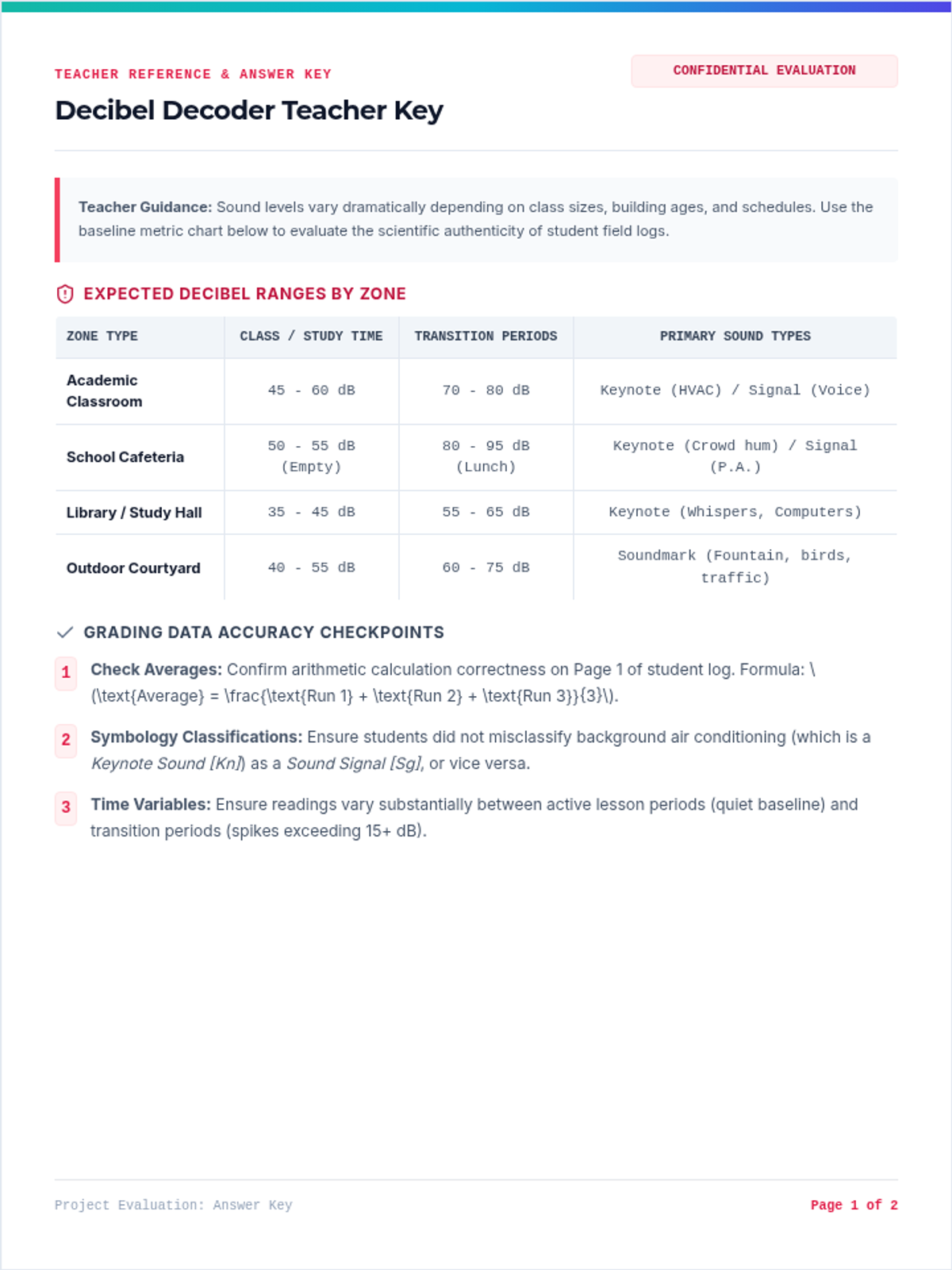
A detailed teacher answer key and assessment guide for the Decibel Decoder Worksheet, featuring exemplar data ranges, calculation reminders, and professional scientific model answers for grading.
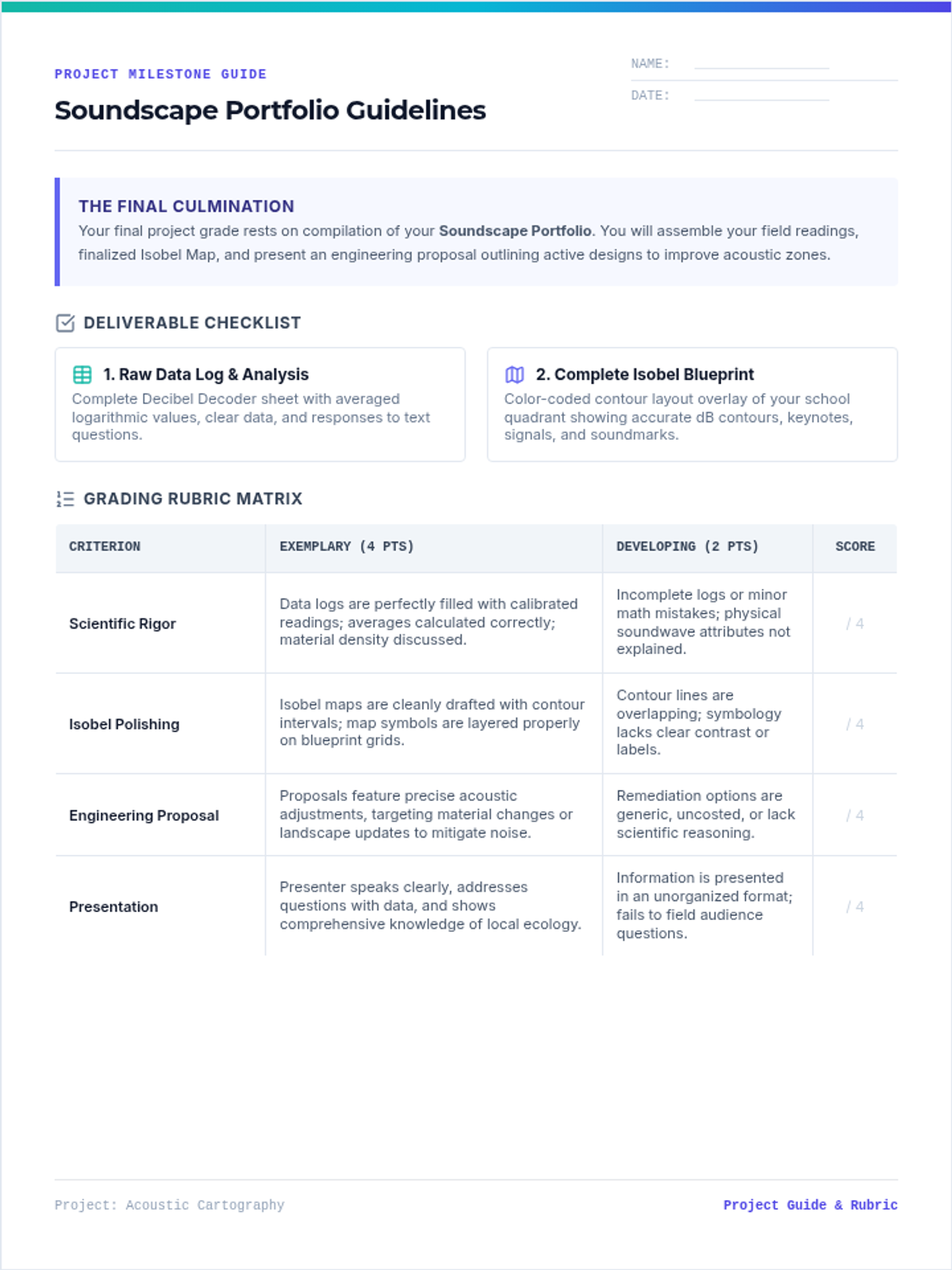
A student-facing guide detailing the deliverables, timeline milestones, and a comprehensive grading rubric for the final Acoustic Portfolio project.
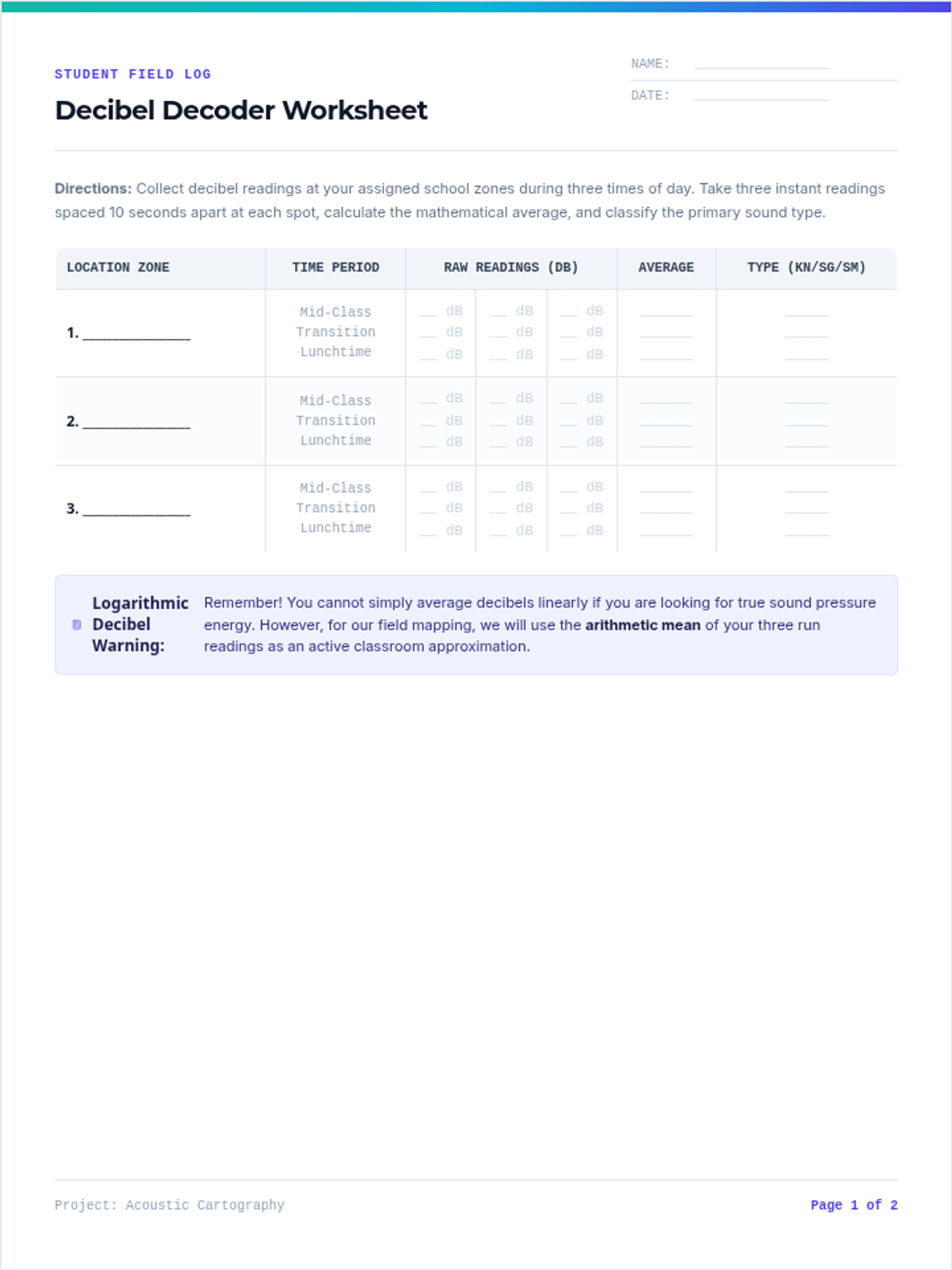
A student data log and comprehensive analysis worksheet for recording multi-interval decibel measurements across various school zones and answering physics and psychology integration questions.
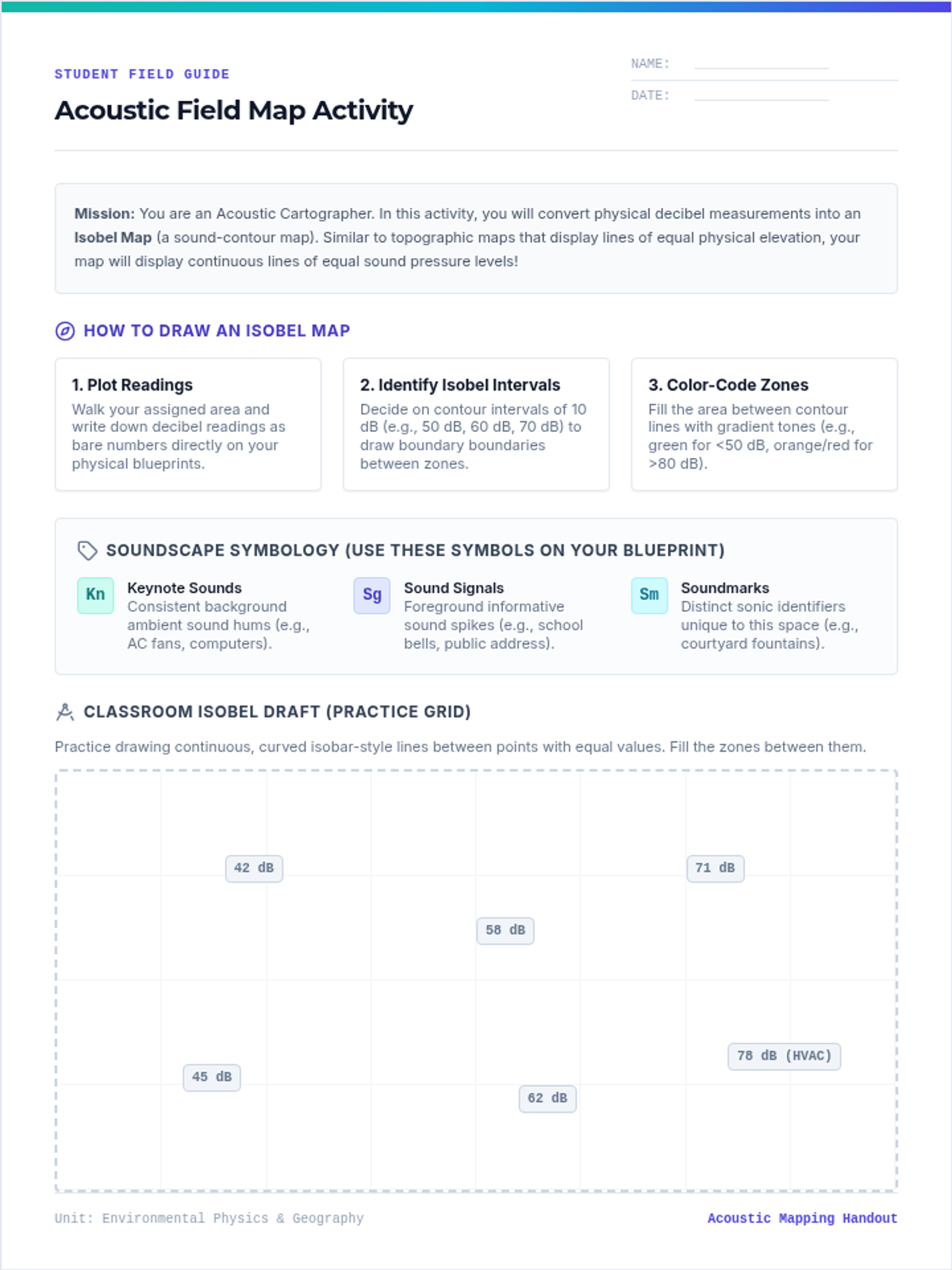
A student field activity guide and graphic organizer that provides step-by-step instructions on creating contour sound maps (isobels) and maps the symbols for keynotes, signals, and soundmarks.
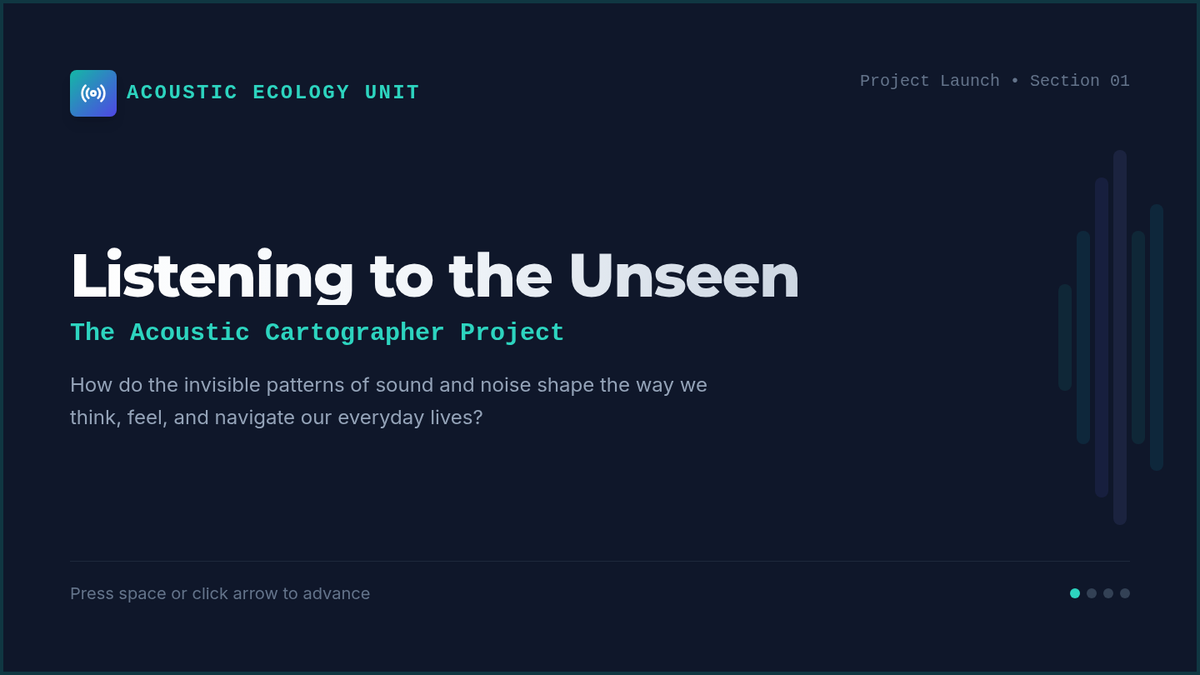
An introductory presentation slide deck designed to engage students in the concepts of acoustic ecology, the science of decibels, soundscapes, and the step-by-step procedures of their field mapping mission.
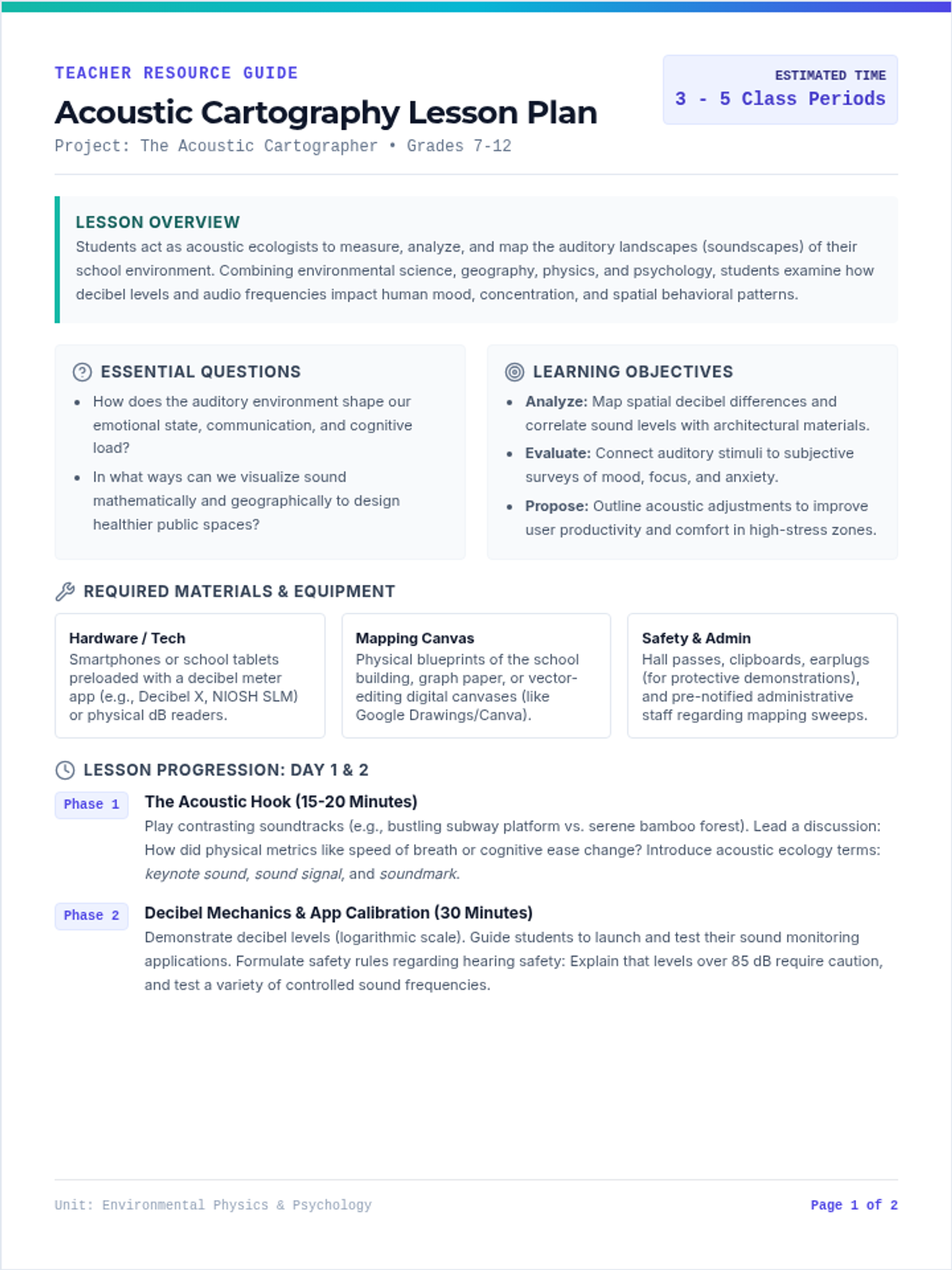
A comprehensive lesson plan for teachers, detailing the academic objectives, step-by-step instructions, materials, safety considerations, and pedagogical strategies for conducting the Acoustic Cartography project in grades 7-12.
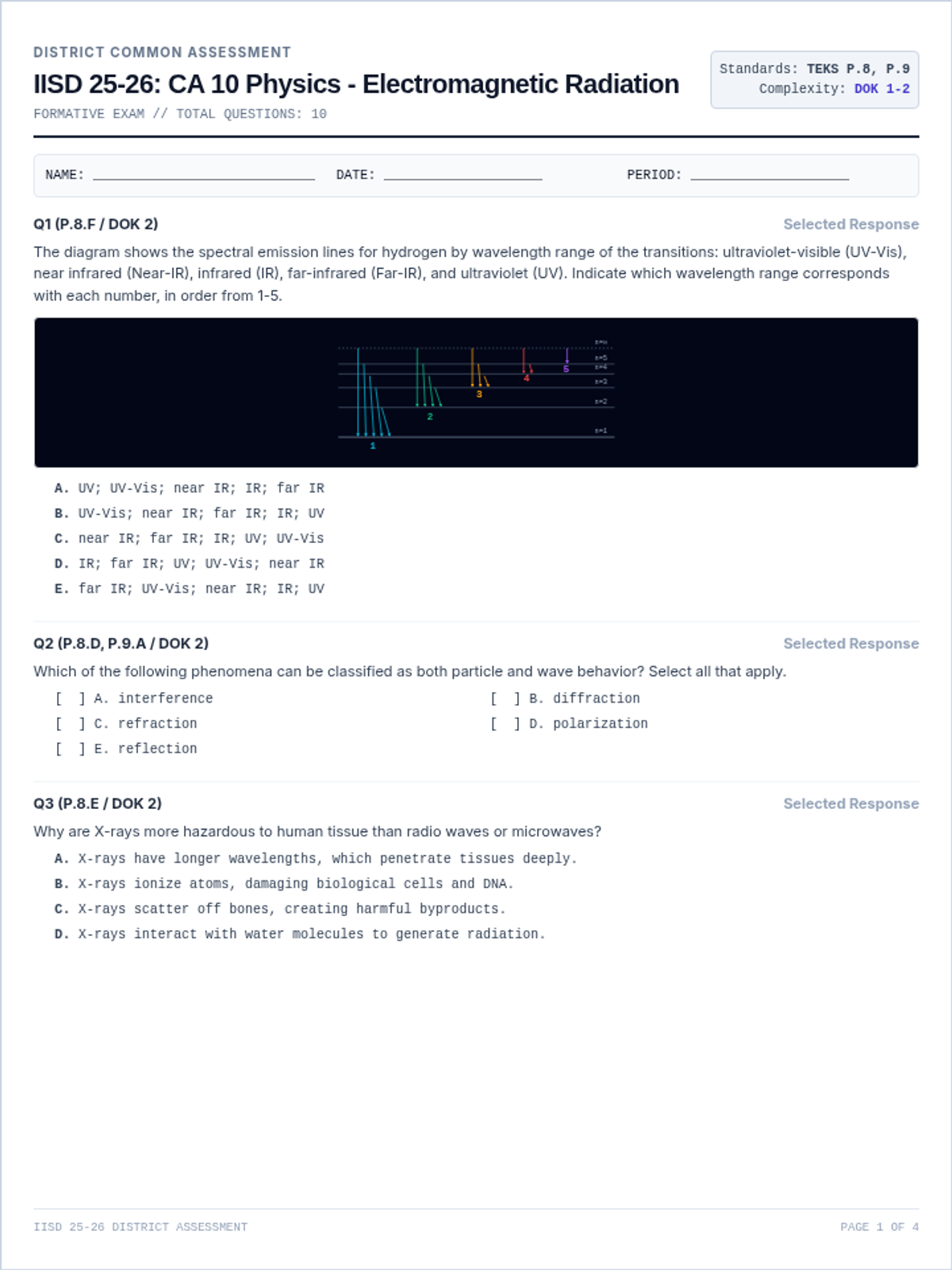
The exact 10-question physics district common assessment covering electromagnetic radiation, atomic transitions, wave-particle duality, polarization, and the photoelectric effect.
A checklist teacher guide to align first-week classroom logistics, lab safety setups, and Indiana biochemistry integration milestones for Honors Biology.
An honors visual one-pager syllabus infographic integrating advanced Indiana Biology standards (2024) with foundational biochemistry concepts, grading profiles, and academic codes.
A highly structured 36-week curriculum roadmap for Honors Biology, detailing all 36 weeks of advanced instruction with AP/IB alignment, explicit unit-to-unit segues, and positive/negative feedback loops.
A set of four advanced Larry Ainsworth style unit unwrapping guides for Honors Biology, covering Indiana standards B.1 through B.4 with elevated DOK 3/4 targets, feedback kinetics, and unit segues.
A 1-page exit ticket and corresponding assessment rubric to measure student mastery of dog trait patterns and scientific explanation skills.
A 2-page printable student handout containing a breed data-tracking table on page 1 and a scaffolded Claim-Evidence-Reasoning (CER) writing template on page 2.
A 2-page printable card resource containing 8 distinct dog breed profiles with descriptions of their physical traits, ancestral environments, and original jobs to enable partner sorting.
An engaging 7-slide interactive slideshow designed for classroom projection to guide students through comparing dog traits, identifying patterns, and structuring their CER explanations.
A comprehensive 2-page teacher facilitation guide containing pacing, lesson objectives, a questioning framework, common misconceptions, and step-by-step instructions for the partner card-sorting and CER writing activities.
A checklist teacher guide to align first-week classroom logistics, lab safety setups, and Indiana biochemistry integration milestones for General Biology.
A highly structured 36-week curriculum roadmap for General Biology, highlighting explicit unit-to-unit segues and negative and positive feedback mechanisms under the homeostasis lens.
A visual one-pager syllabus infographic integrating Indiana Biology standards (2024) B.1 through B.4 with foundational biochemistry concepts for each unit, featuring course policies and grading breakdown.
A set of four Larry Ainsworth RCD style unit unwrapping guides mapping Big Ideas, Essential Questions, Know/Do concepts, vocabulary, Indiana Biology Standards (2024) B.1 through B.4, explicit positive/negative feedback mechanisms, and unit-to-unit segues.
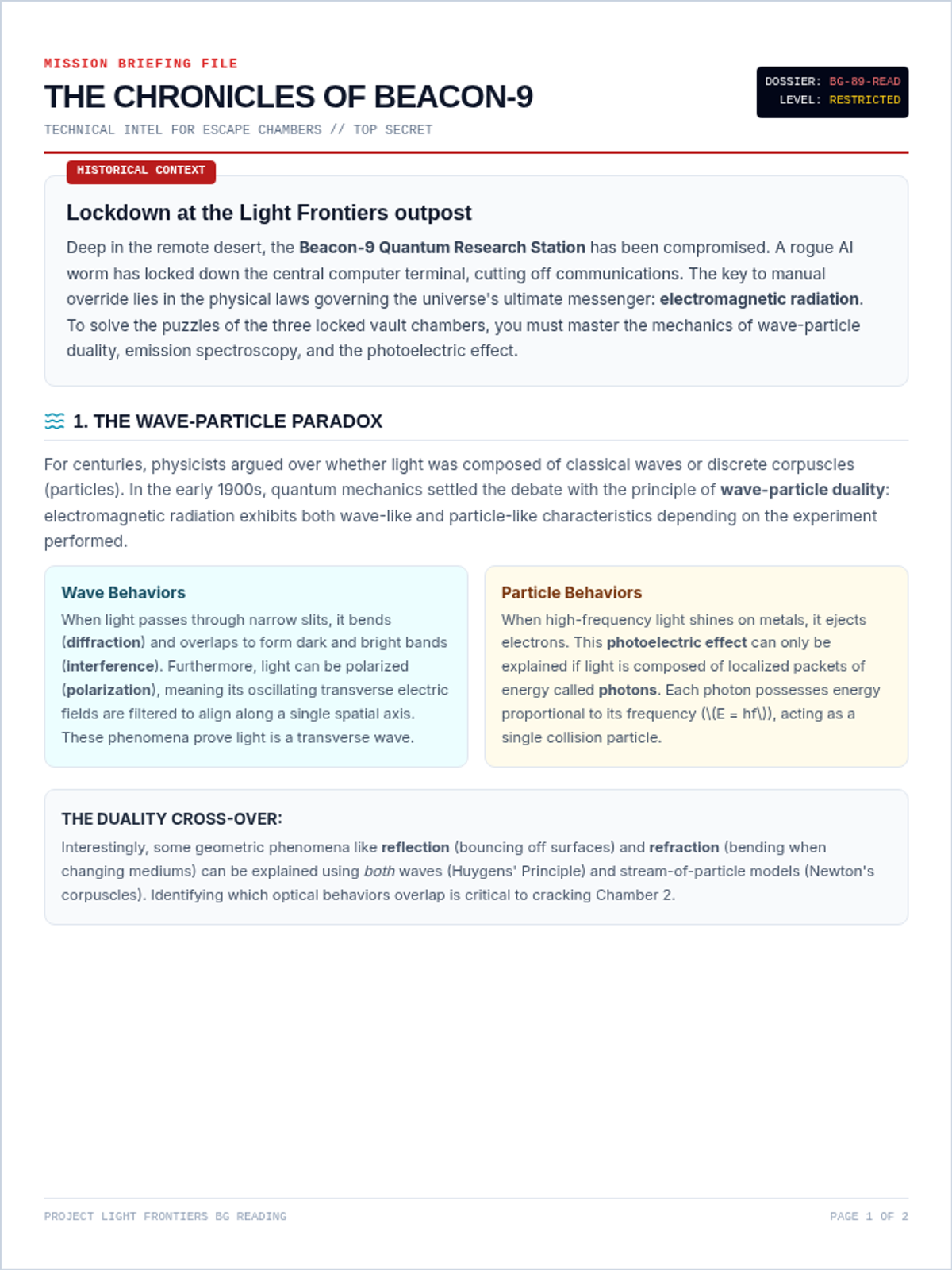
A thrilling, lore-rich background reading passage setting up the scientific concepts (spectroscopy, wave-particle duality, polarization, and the photoelectric effect) needed to solve the Quantum Escape Room.
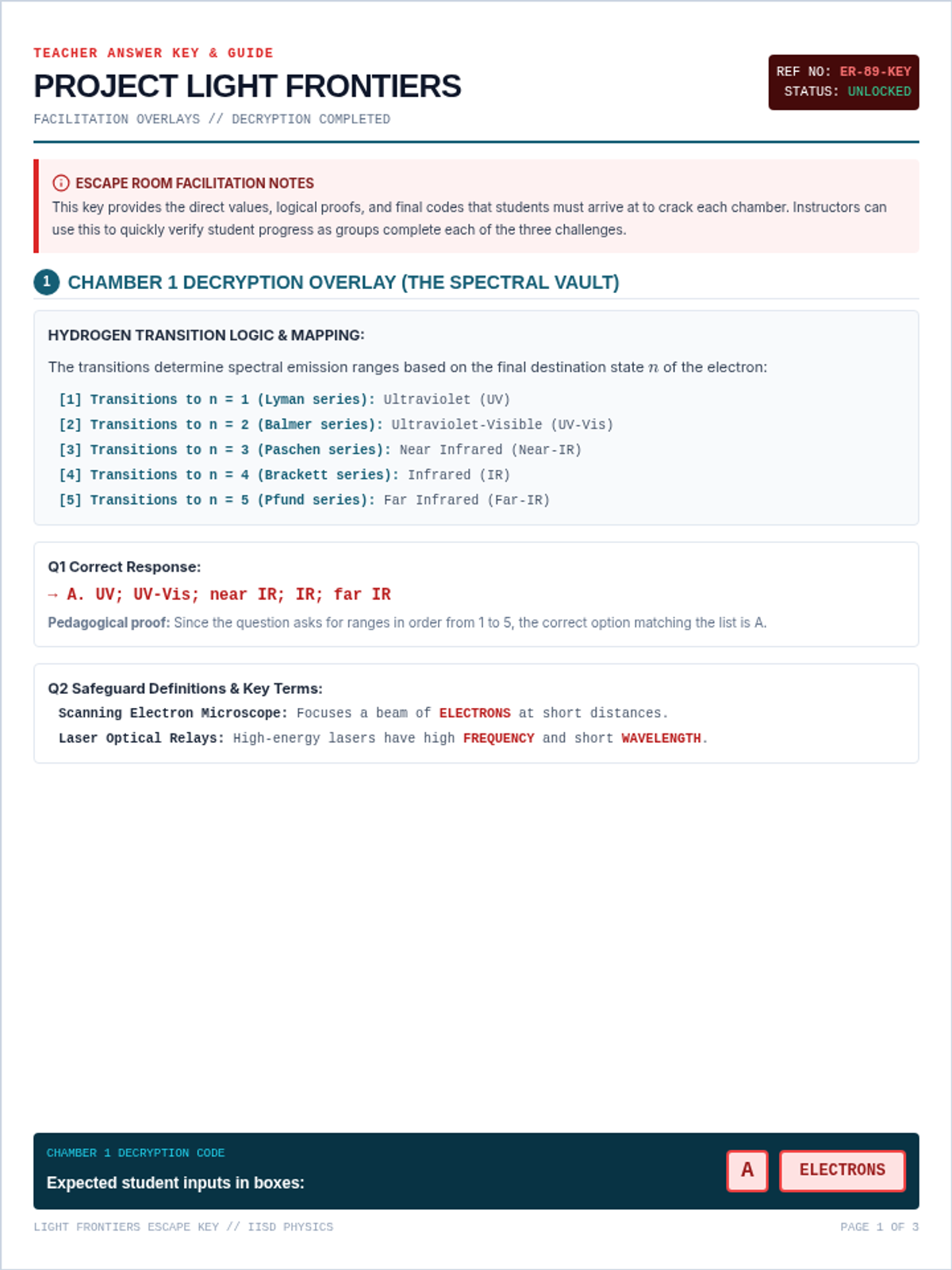
A detailed, comprehensive teacher key and guide for the Quantum Escape Room Worksheet, providing solutions, mathematical proofs, and step-by-step decoding explanations for each chamber.
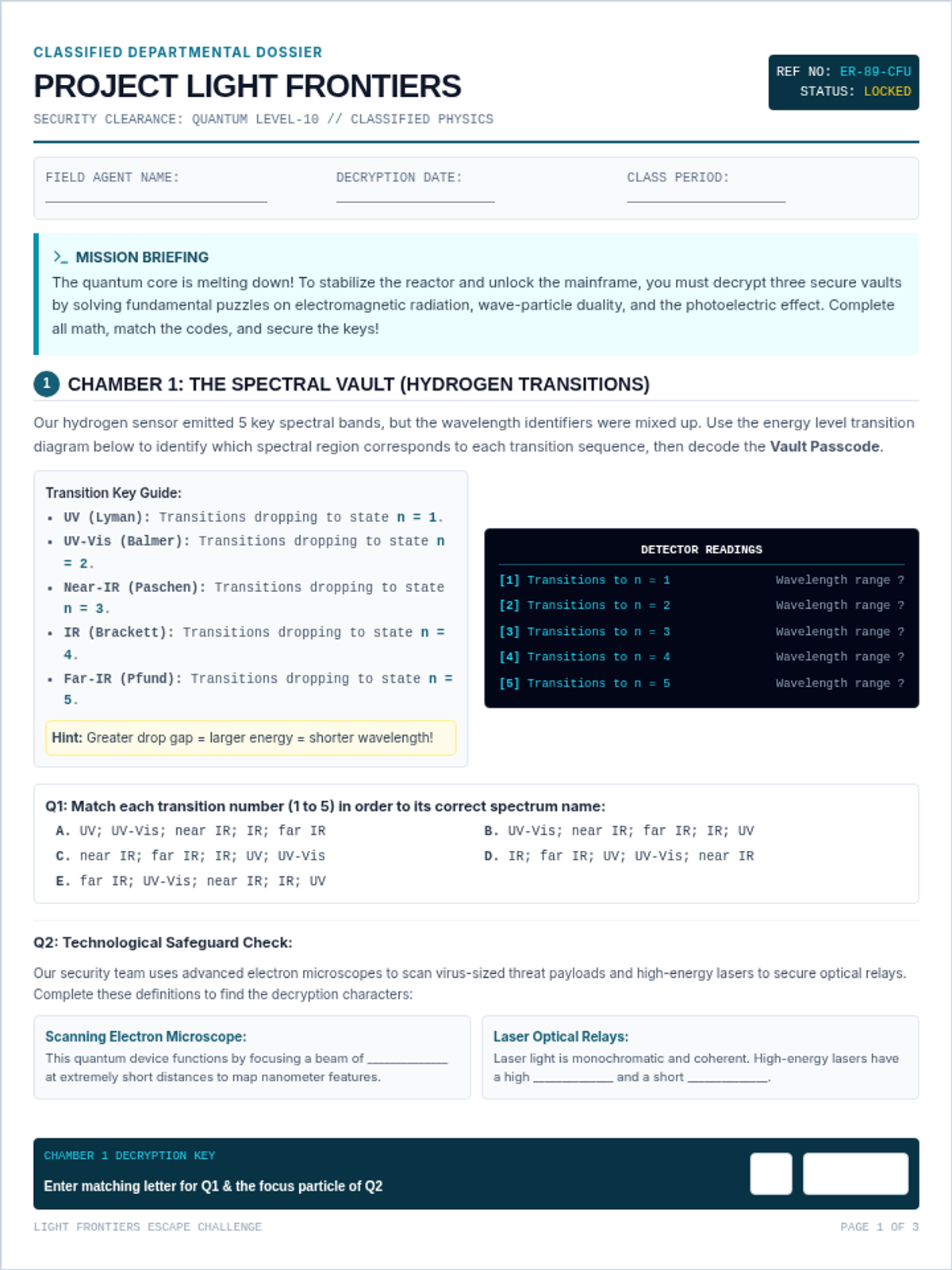
An engaging, highly structured physics escape room student activity consisting of three distinct vault-cracking challenges covering the electromagnetic spectrum, wave-particle duality, polarization, and the photoelectric effect.
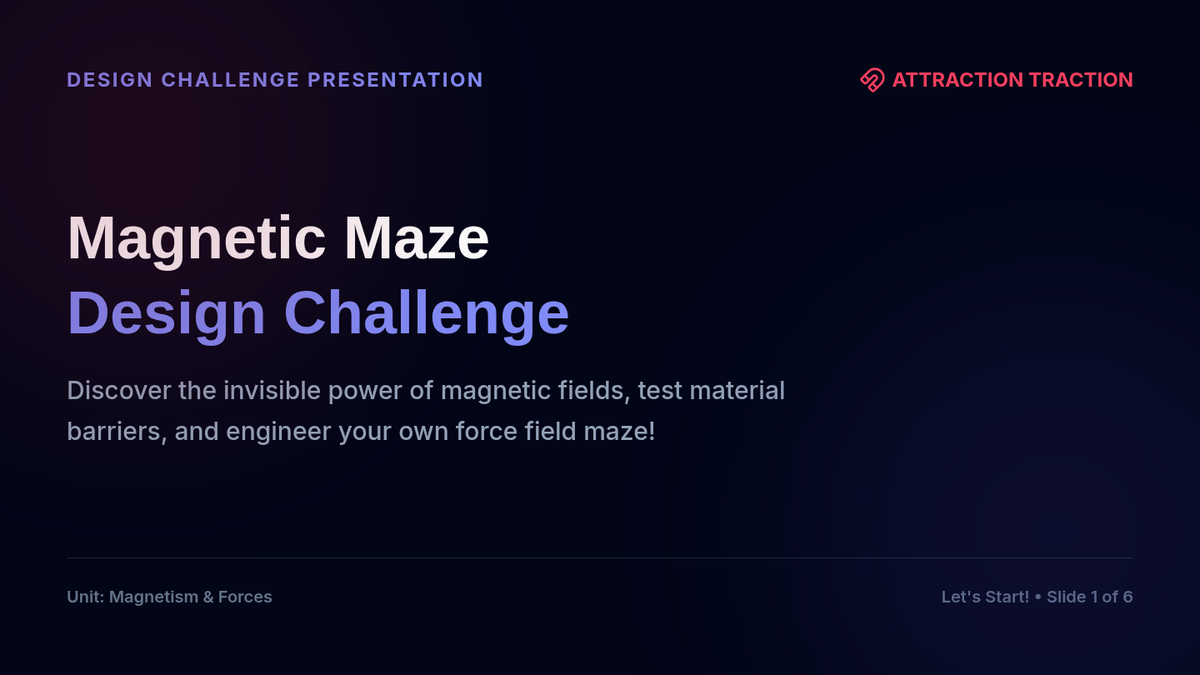
A 6-slide design challenge deck designed to guide students visually through the concepts of magnetism, non-contact forces, material testing, and iterative maze engineering.
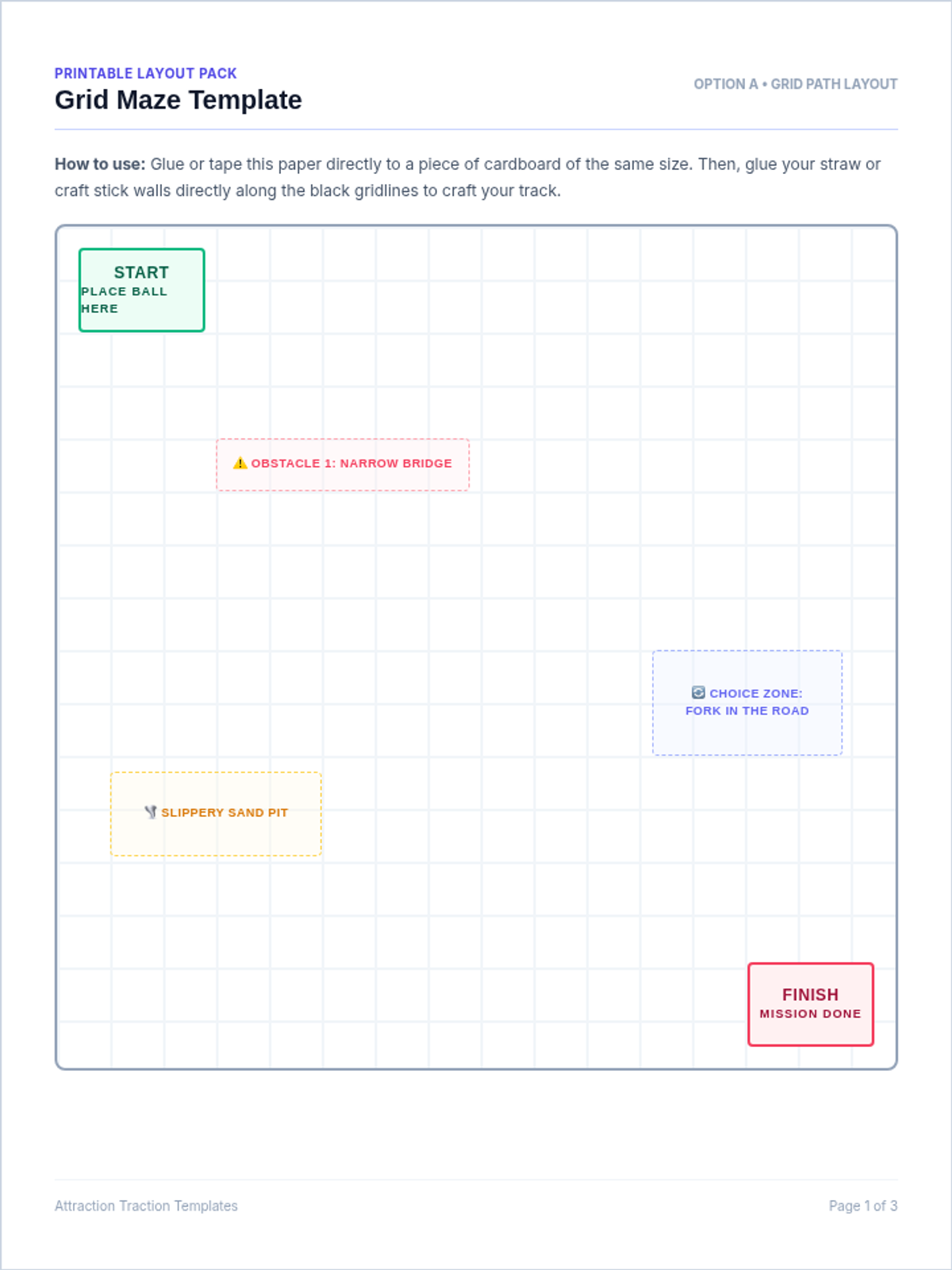
A 3-page printable pack featuring two complete pathing templates (orthogonal grid and concentric radial maze designs) and a hands-on material testing log sheet.
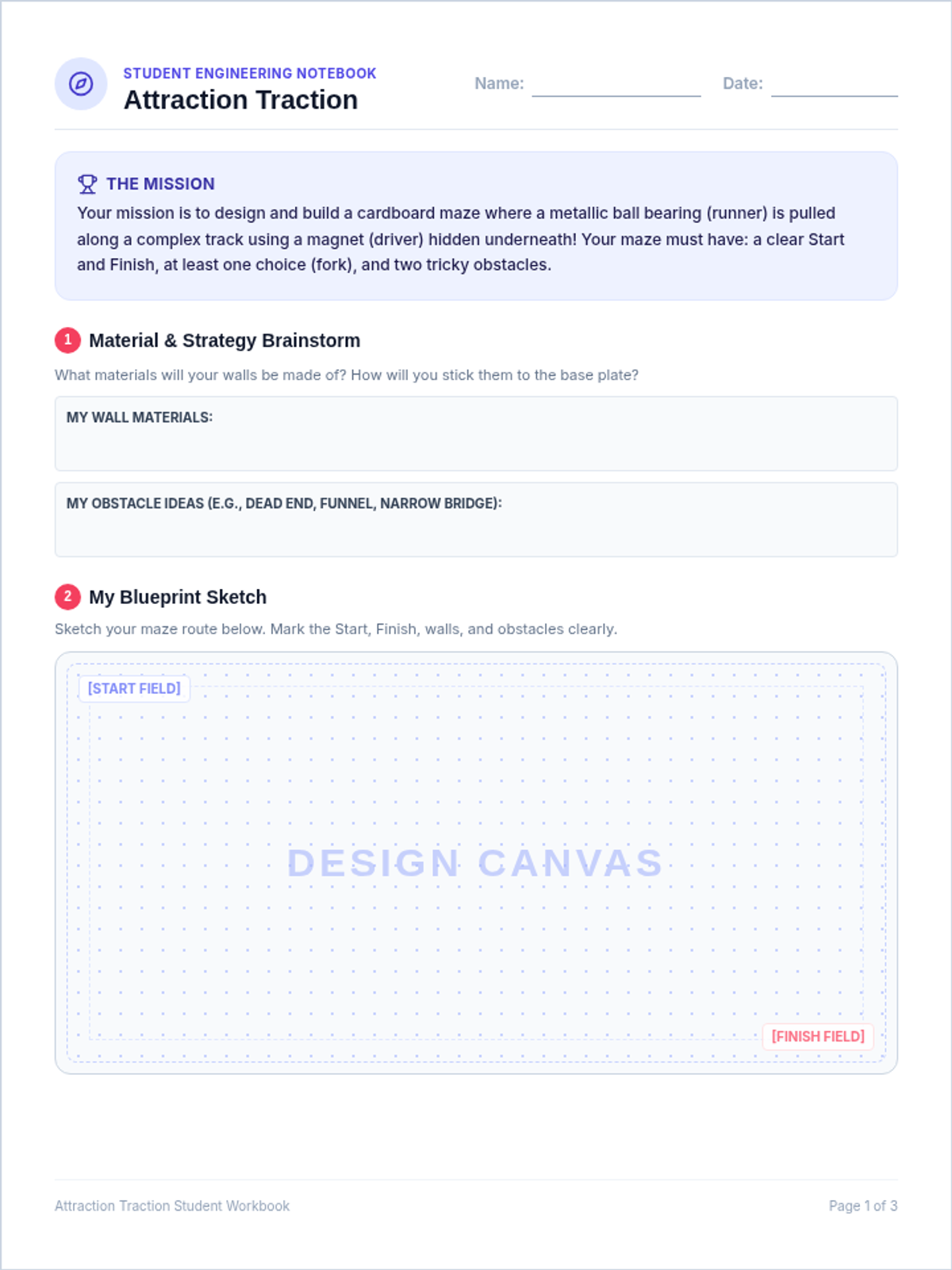
A 3-page student-facing STEM workbook containing a blueprint planning sheet, testing/iteration log, and a high-retention exit ticket with reflective writing prompts about magnetism and force vectors.
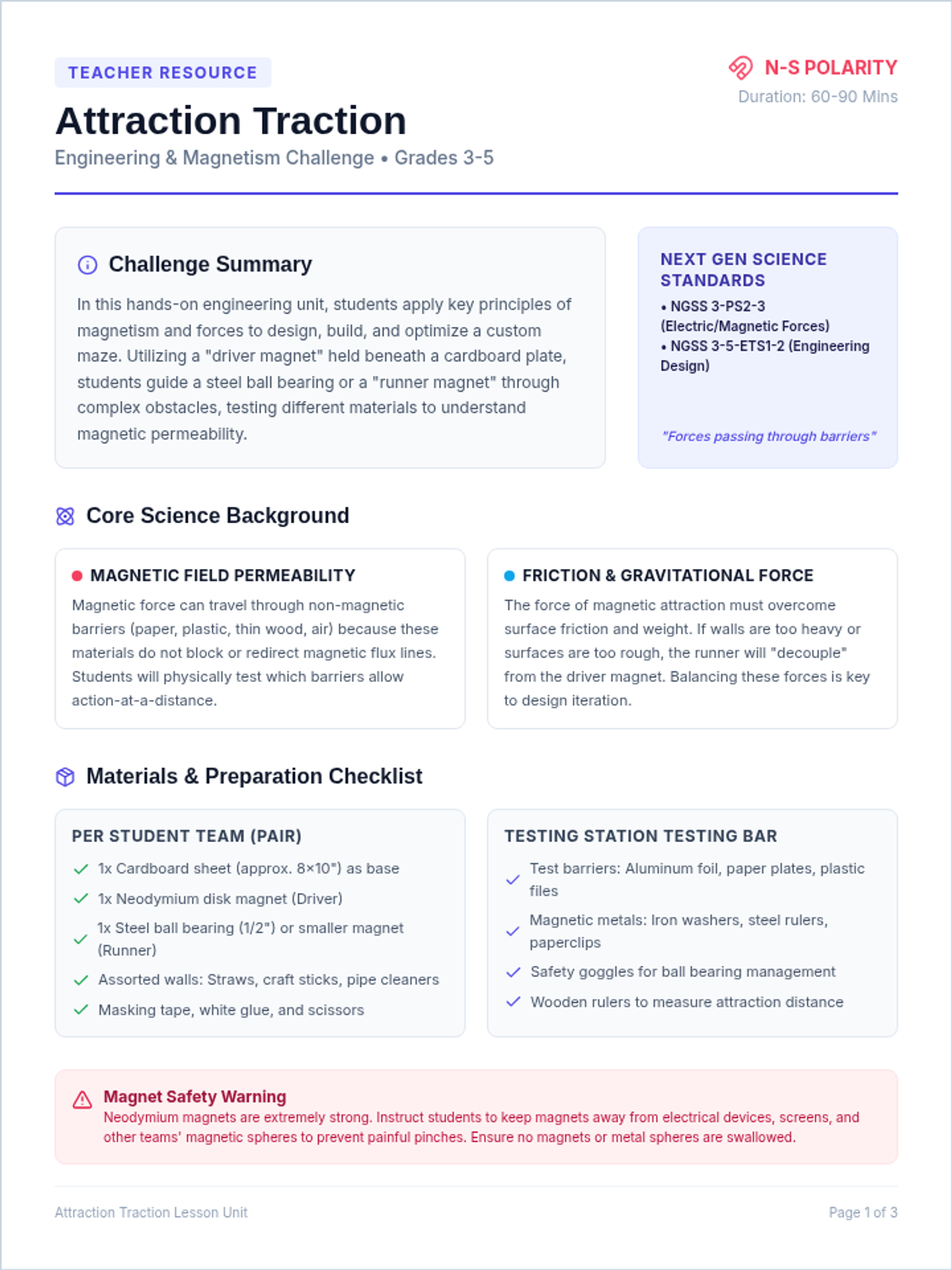
A 3-page printable guide for teachers featuring background science, step-by-step facilitation prompts, material checklists, lesson timeline, and a rubric for the Attraction Traction magnetic maze design challenge.
A 2-page print-ready teacher instructional plan and facilitation guide for running the Force Field Engineers magnet maze lab. Includes NGSS standards, a materials checklist, lesson pacing, inquiry prompts, a 3-tier grading rubric, and classroom troubleshooting tips.
A 2-page collection of printable layout templates, assembly components, and cutouts for building custom student magnet mazes. Includes a 1-inch printable grid board and a materials folding lab sheet.
A 2-page print-ready student lab handbook for the Magnet Maze engineering challenge. It includes a material testing matrix, maze blueprinting grid, testing logs, and reflective engineering prompts.
A 2-page teacher facilitation guide containing next-generation science standards (NGSS) alignments, a detailed 60-minute pacing guide, visual setup directions, a structured engineering design rubric, and a guide to solving common student misconceptions.
A 5-slide visual presentation for teachers to introduce non-contact forces, magnetic fields, attraction/repulsion, and the step-by-step engineering constraints of the Magnet Maze challenge.