Facilitation guide for Lesson 1, using coding analogies to explain Zeno's logic and its connection to ancient Egyptian philosophy. Optimized for single-page printing. Updated to light-mode.
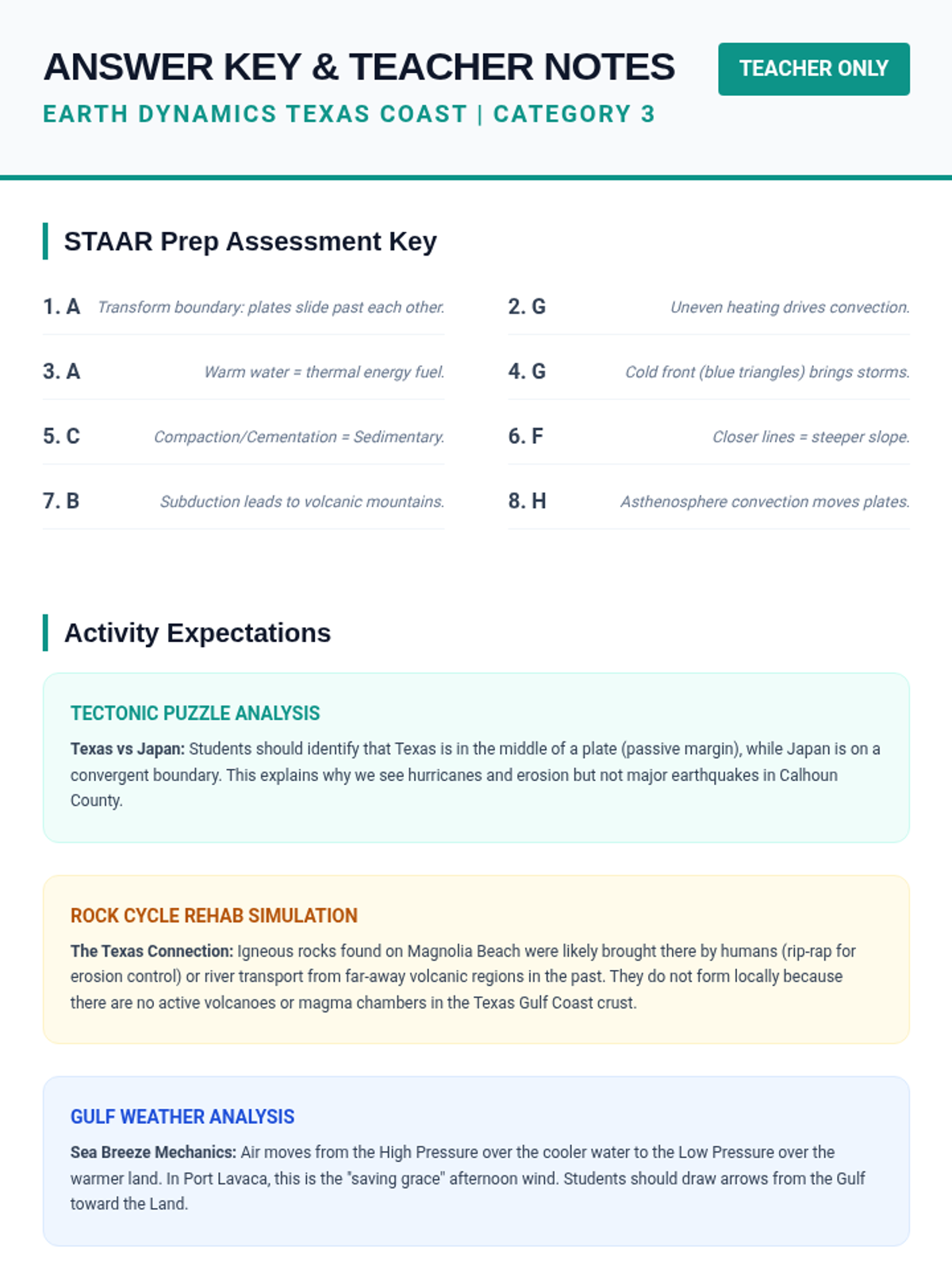
An answer key and teacher facilitation supplement for the Earth Dynamics Texas Coast lesson, providing solutions for the STAAR prep questions and instructional guidance for the lab activities.
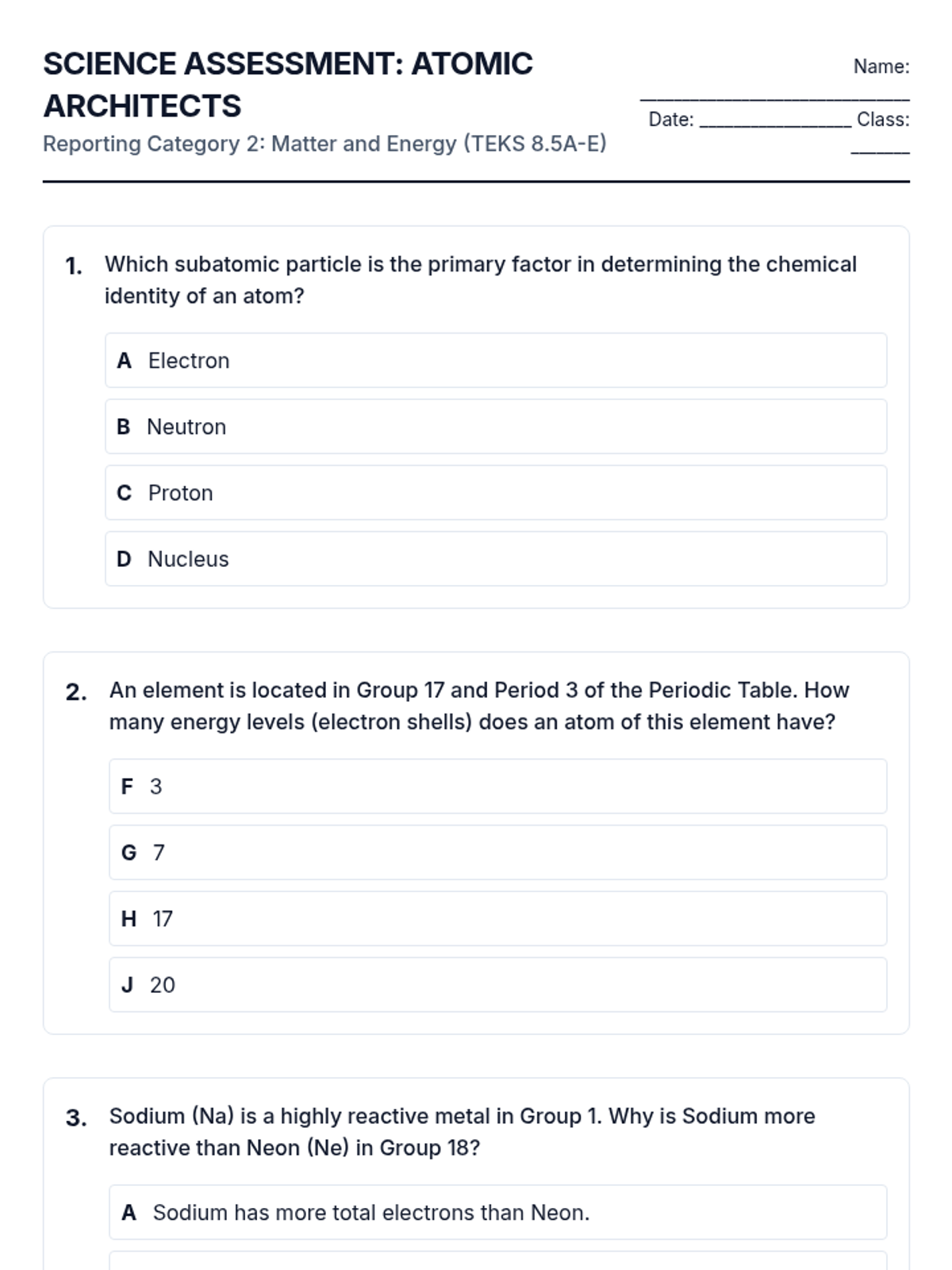
A set of 8 STAAR-format multiple-choice questions covering TEKS 8.5A-E, focusing on atomic structure, periodic table trends, chemical formulas, and the law of conservation of mass.
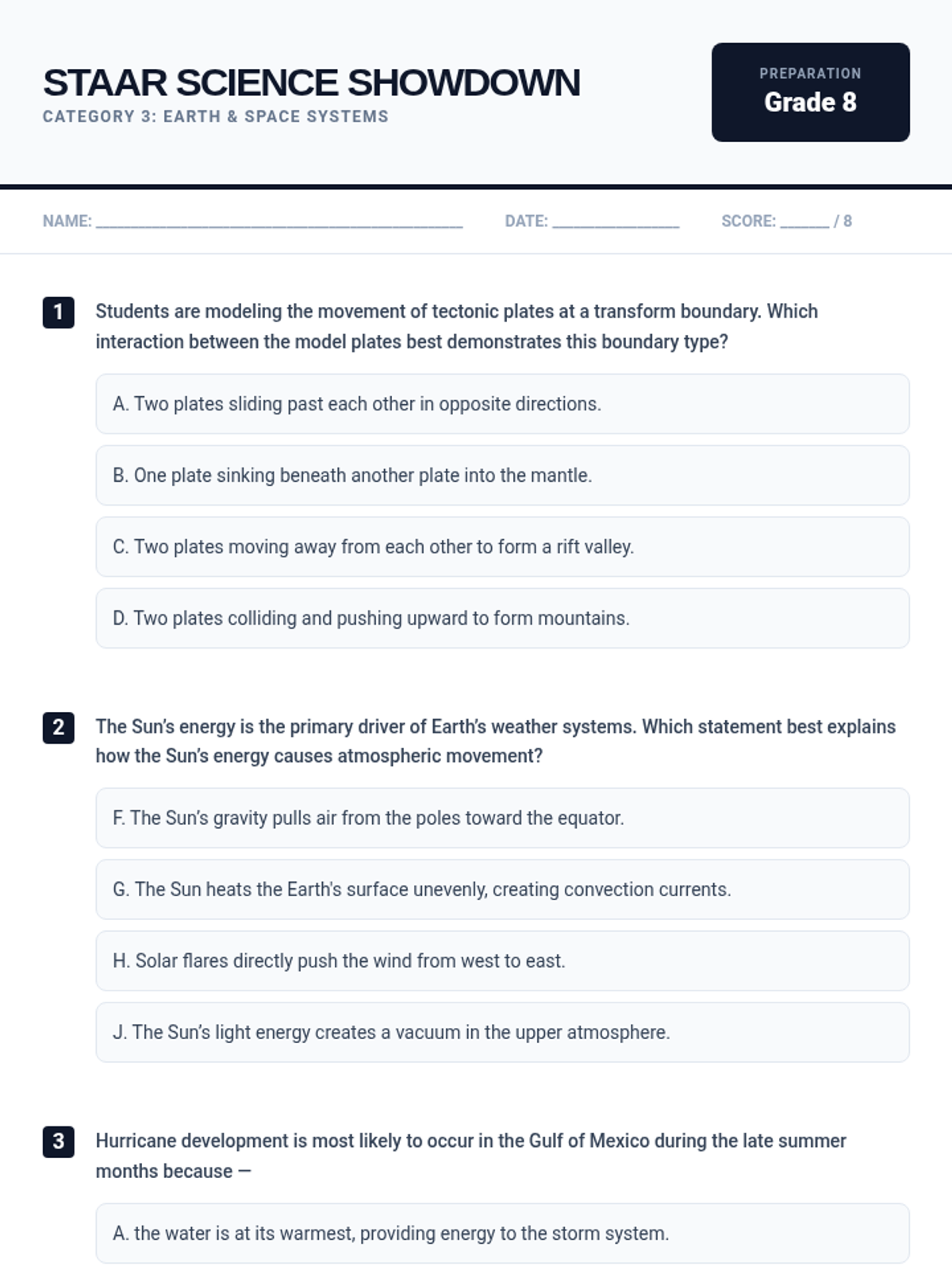
A collection of 8 STAAR-formatted multiple-choice questions covering Grade 8 Science Reporting Category 3 (Earth and Space), designed for test preparation and assessment.
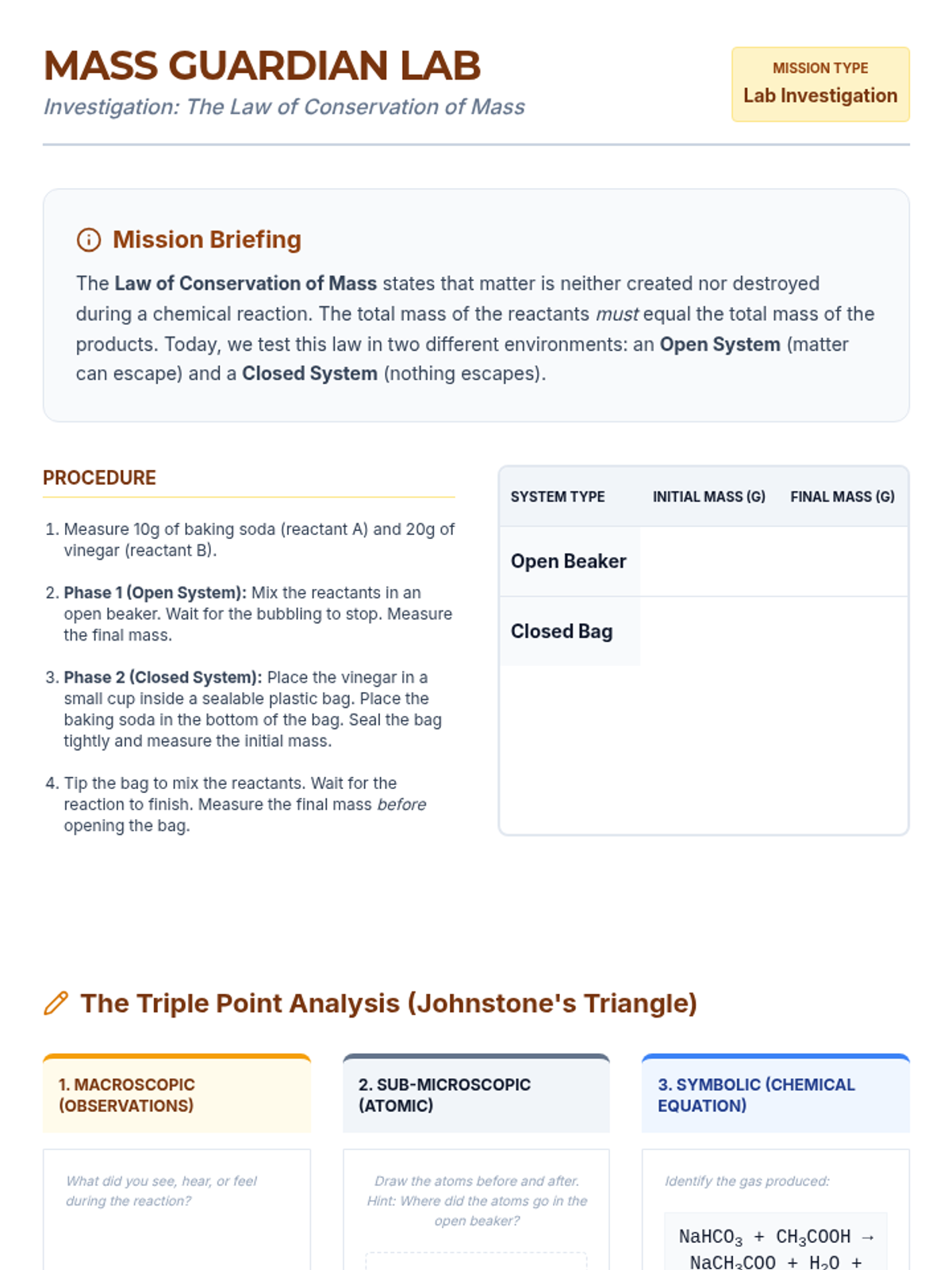
A lab investigation sheet focusing on the Law of Conservation of Mass, comparing open and closed systems through macroscopic observations, sub-microscopic modeling, and symbolic chemical equations.
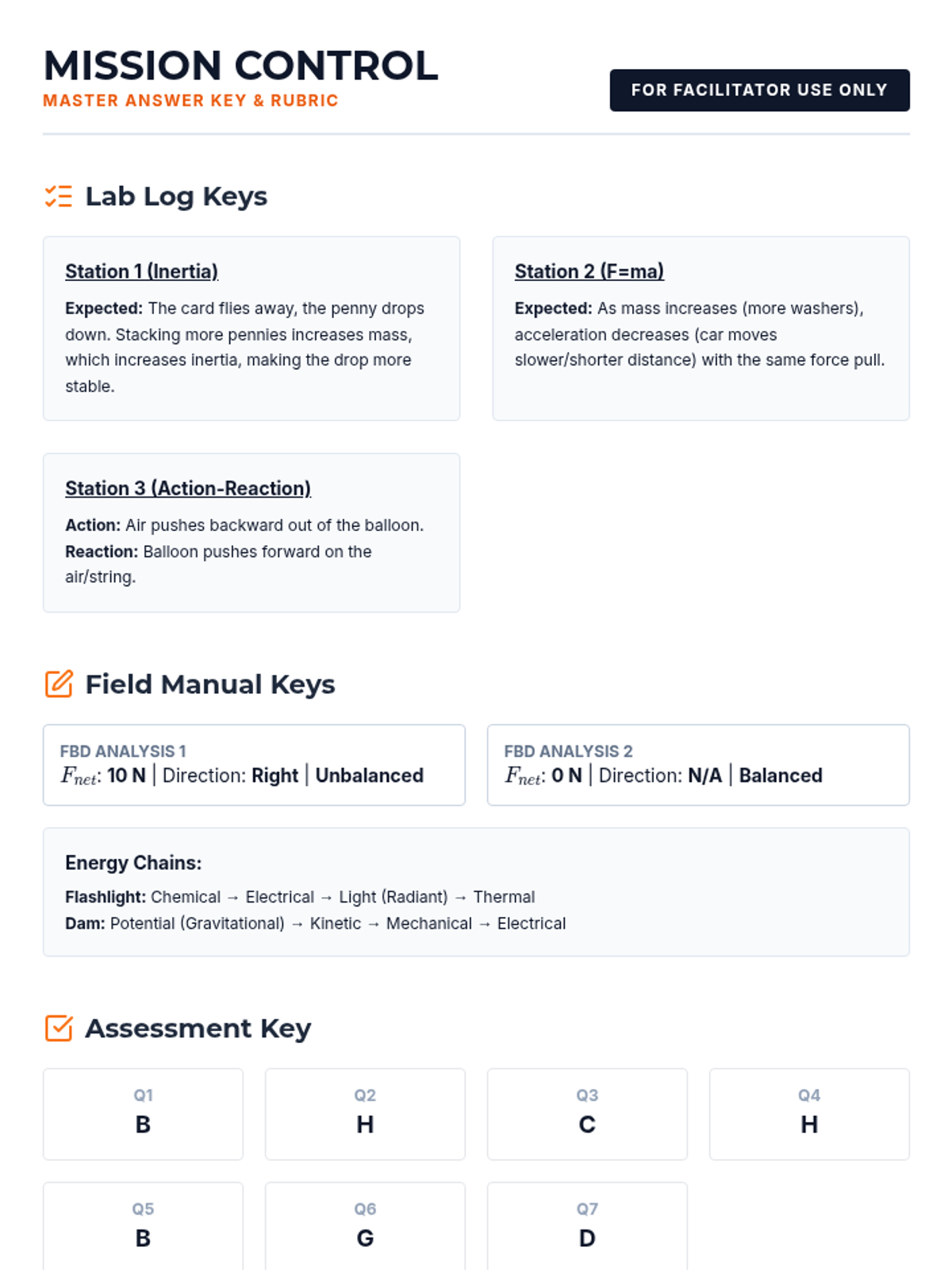
A master answer key and grading rubric for the Lab Log, Field Manual, and Assessment, including specific expected results and a CER scoring table.
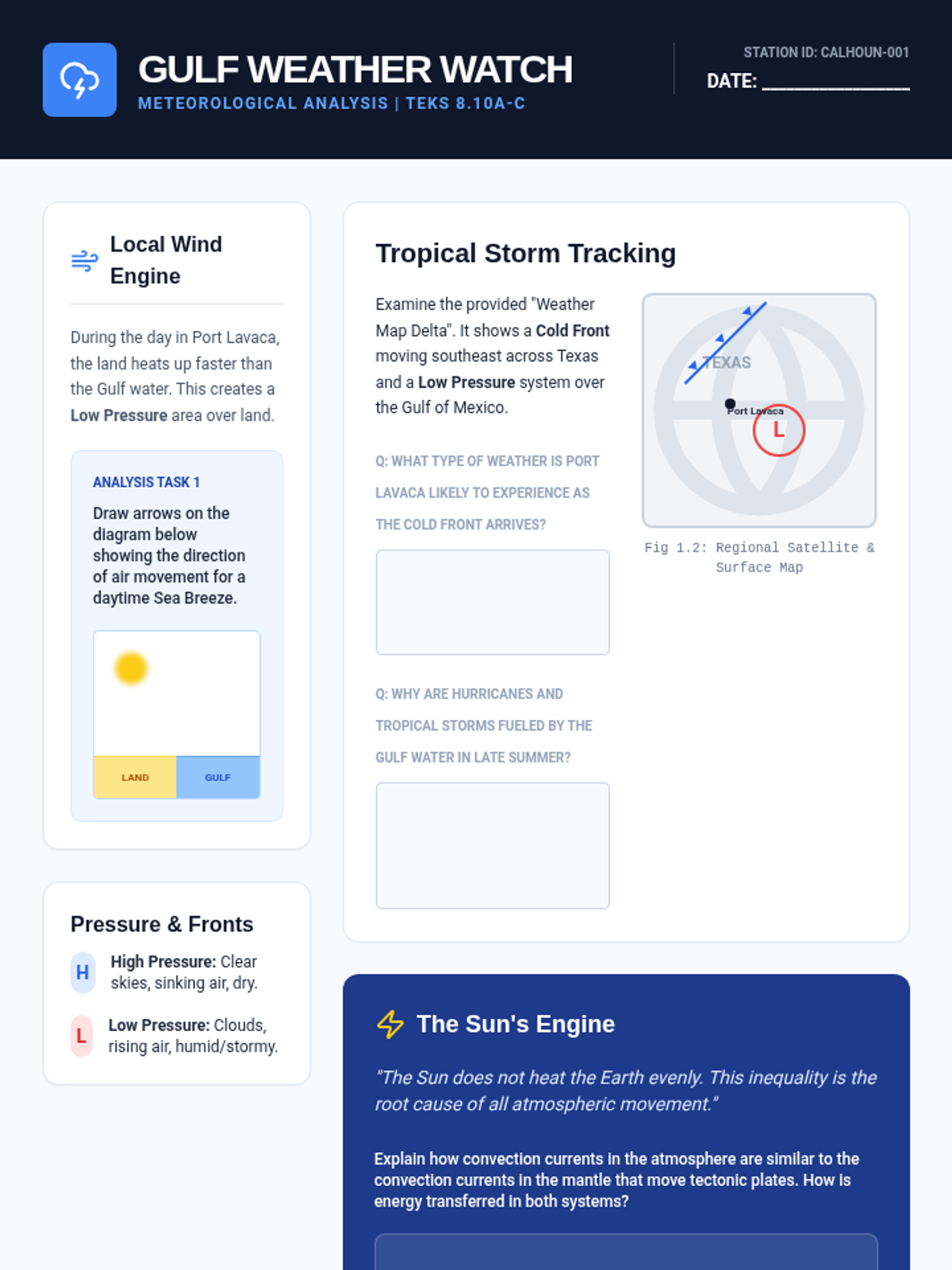
A weather systems analysis worksheet where students interpret weather maps and satellite imagery to understand atmospheric movement, pressure systems, and the Sun's role in driving Gulf Coast weather patterns.
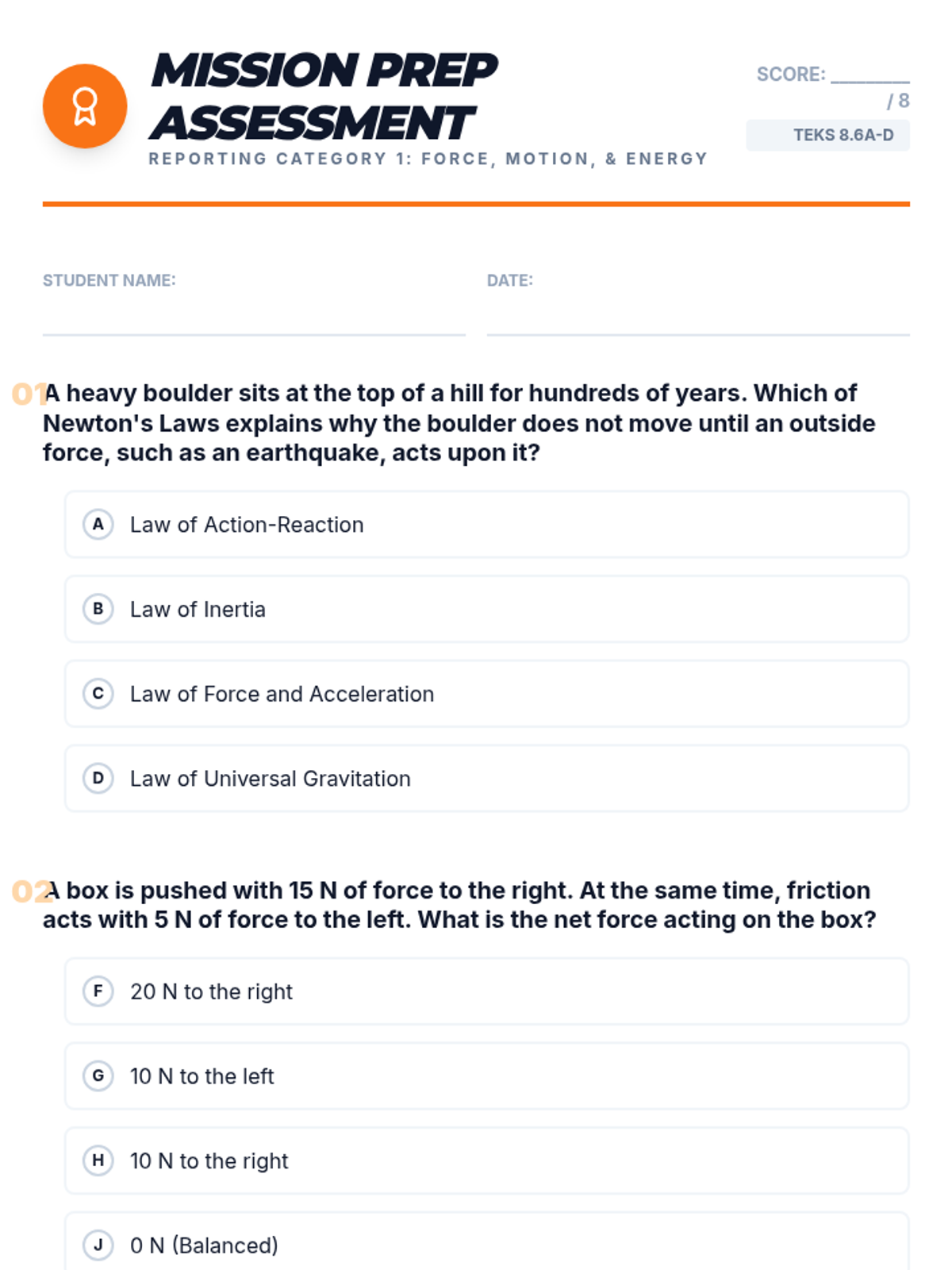
A STAAR-formatted assessment featuring 7 multiple-choice questions and 1 constructed response (CER) covering Newton's Laws and energy transformations (TEKS 8.6A-D).
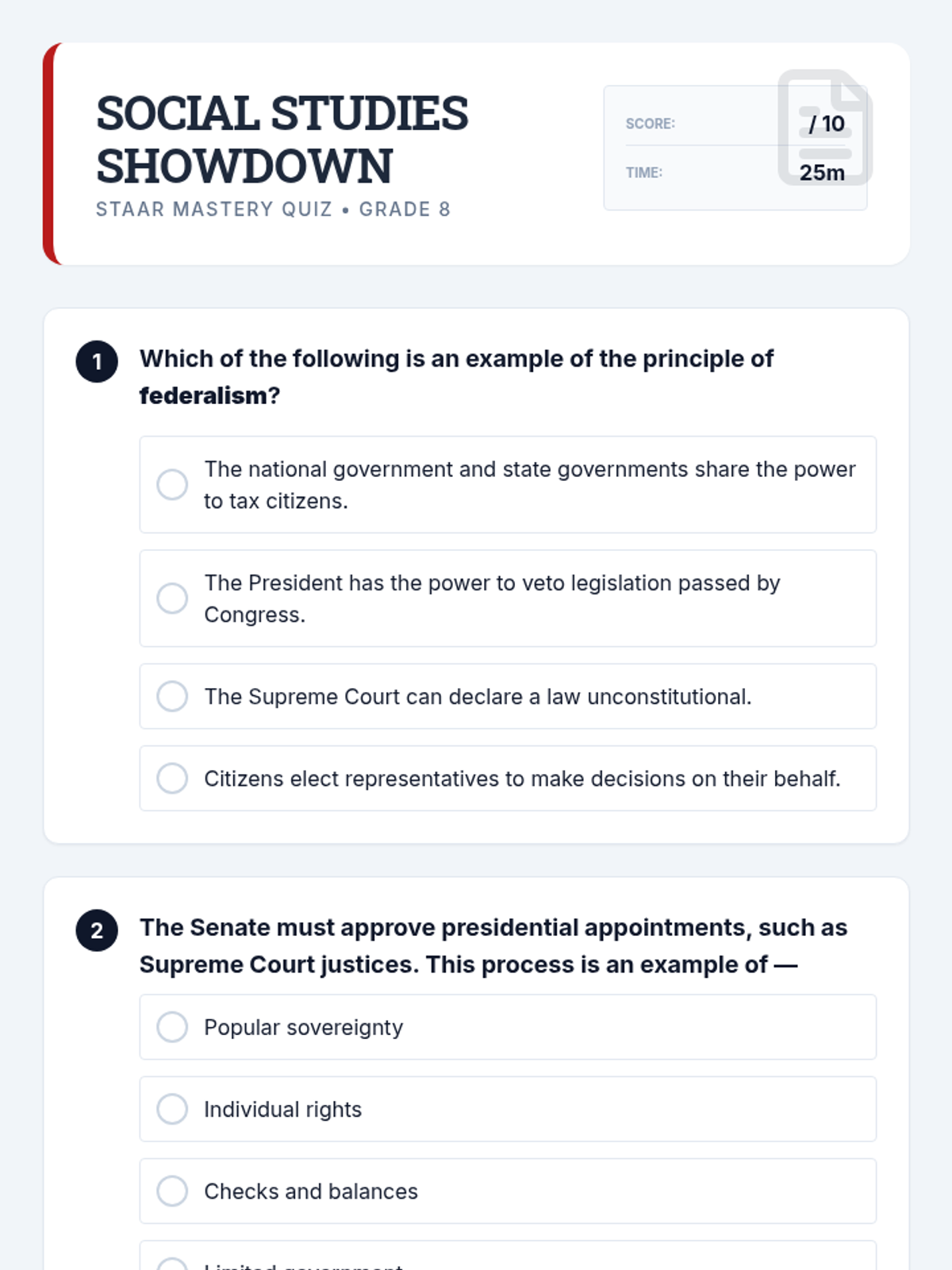
A 10-question multiple-choice quiz formatted to match the Grade 8 Social Studies STAAR assessment. It covers high-stakes TEKS including government principles, geographic factors, and economic systems, designed to test student mastery of challenging concepts.
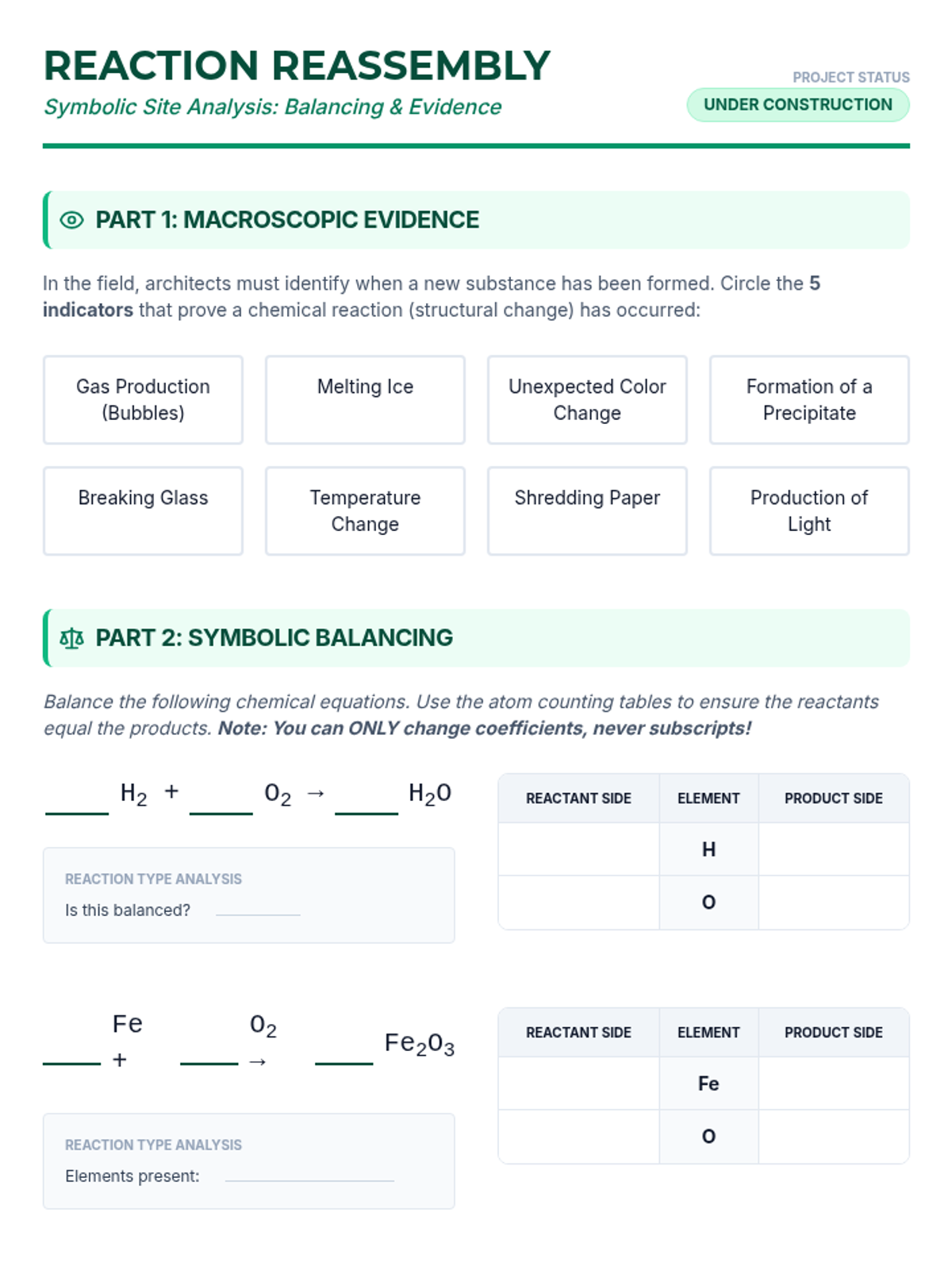
A student worksheet for practice with balancing chemical equations, identifying evidence of chemical reactions, and counting atoms in complex formulas using coefficients and subscripts.
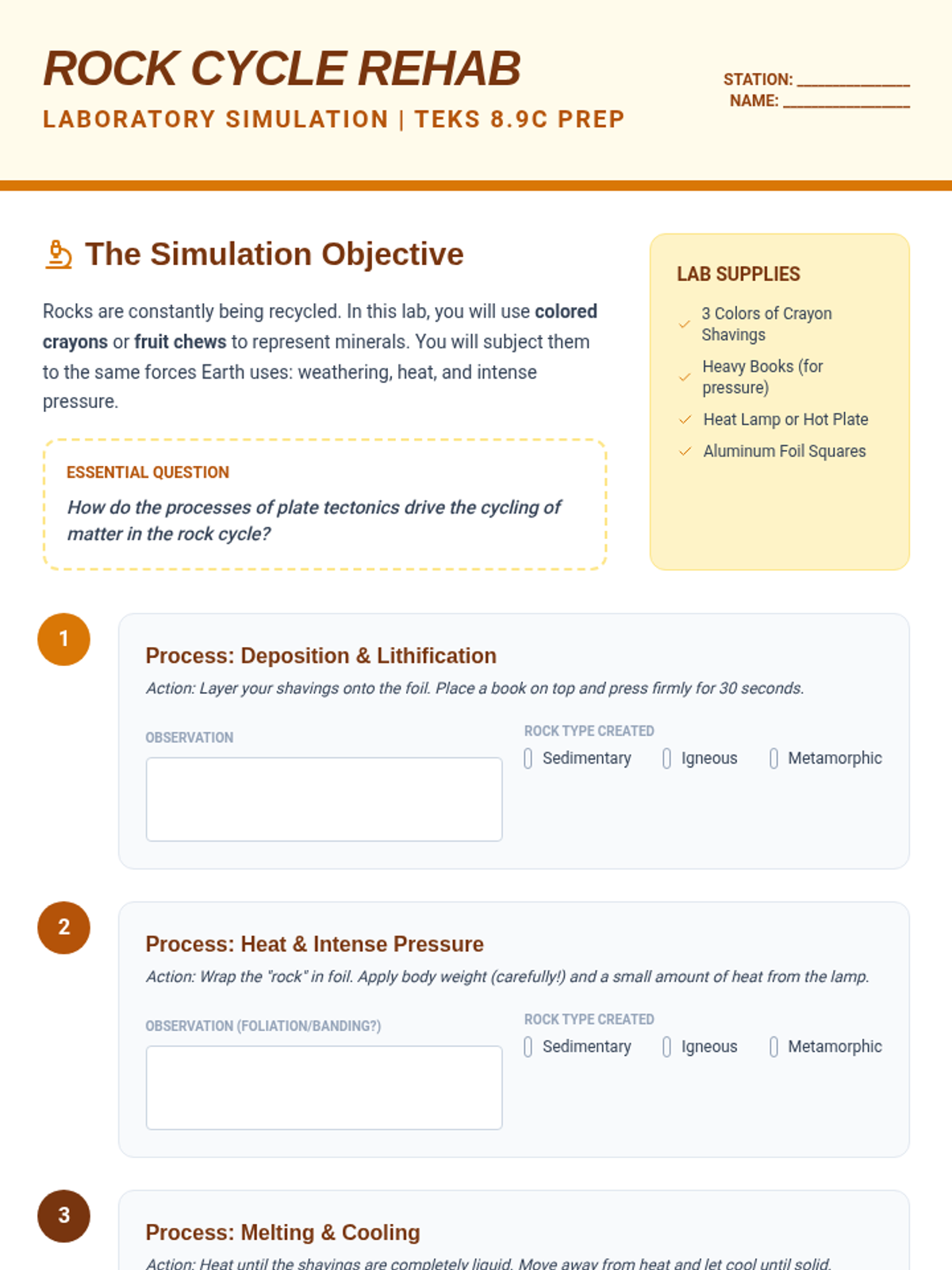
A hands-on rock cycle simulation activity using crayons to model sedimentary, metamorphic, and igneous rock formation processes, specifically connecting the sedimentary nature of the Texas Gulf Coast.
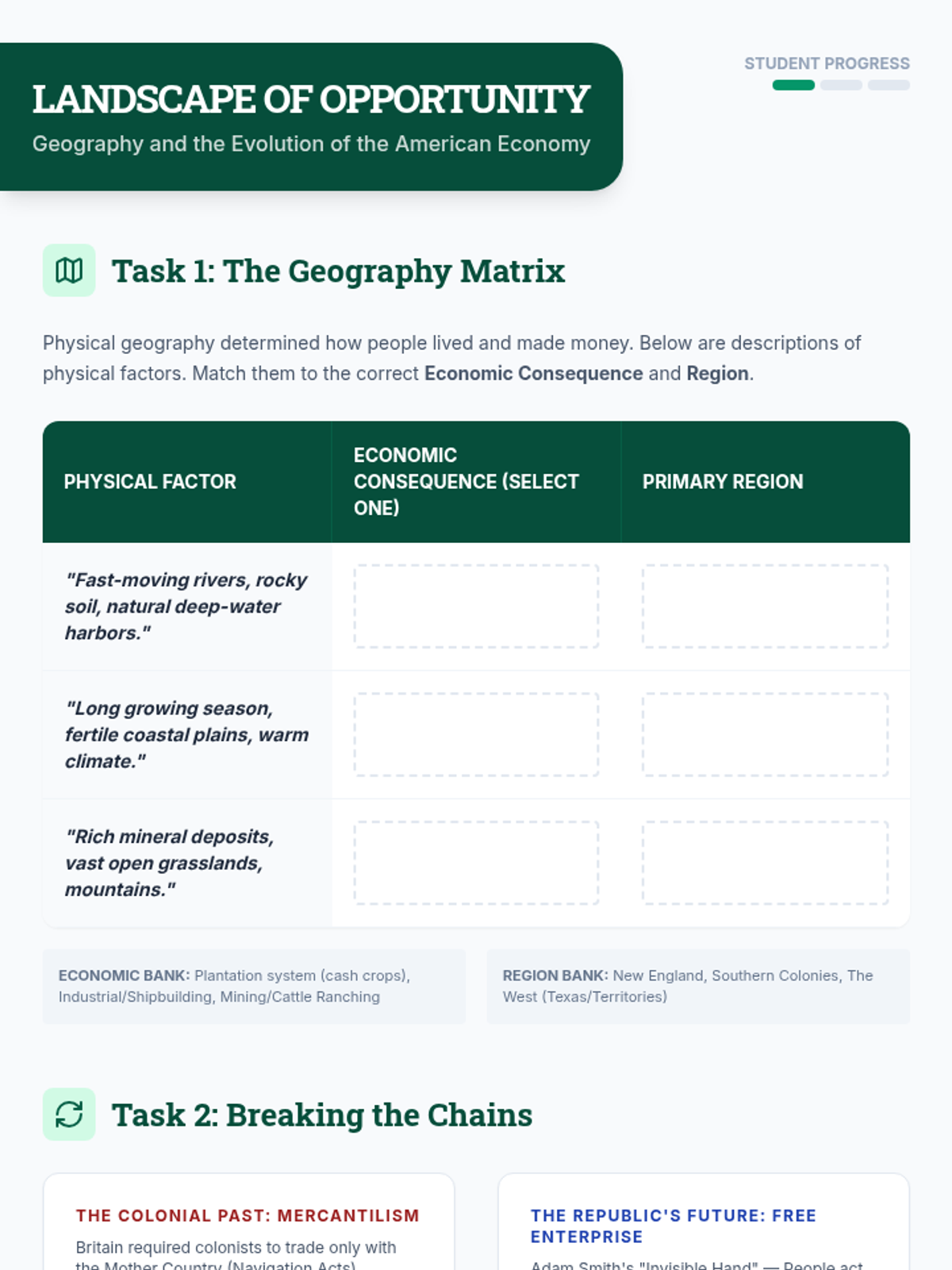
An activity sheet connecting physical geography to economic systems and settlement patterns. Students analyze how land and resources dictated the development of colonial regions, the transition from mercantilism to free enterprise, and the impact of industrial innovations.
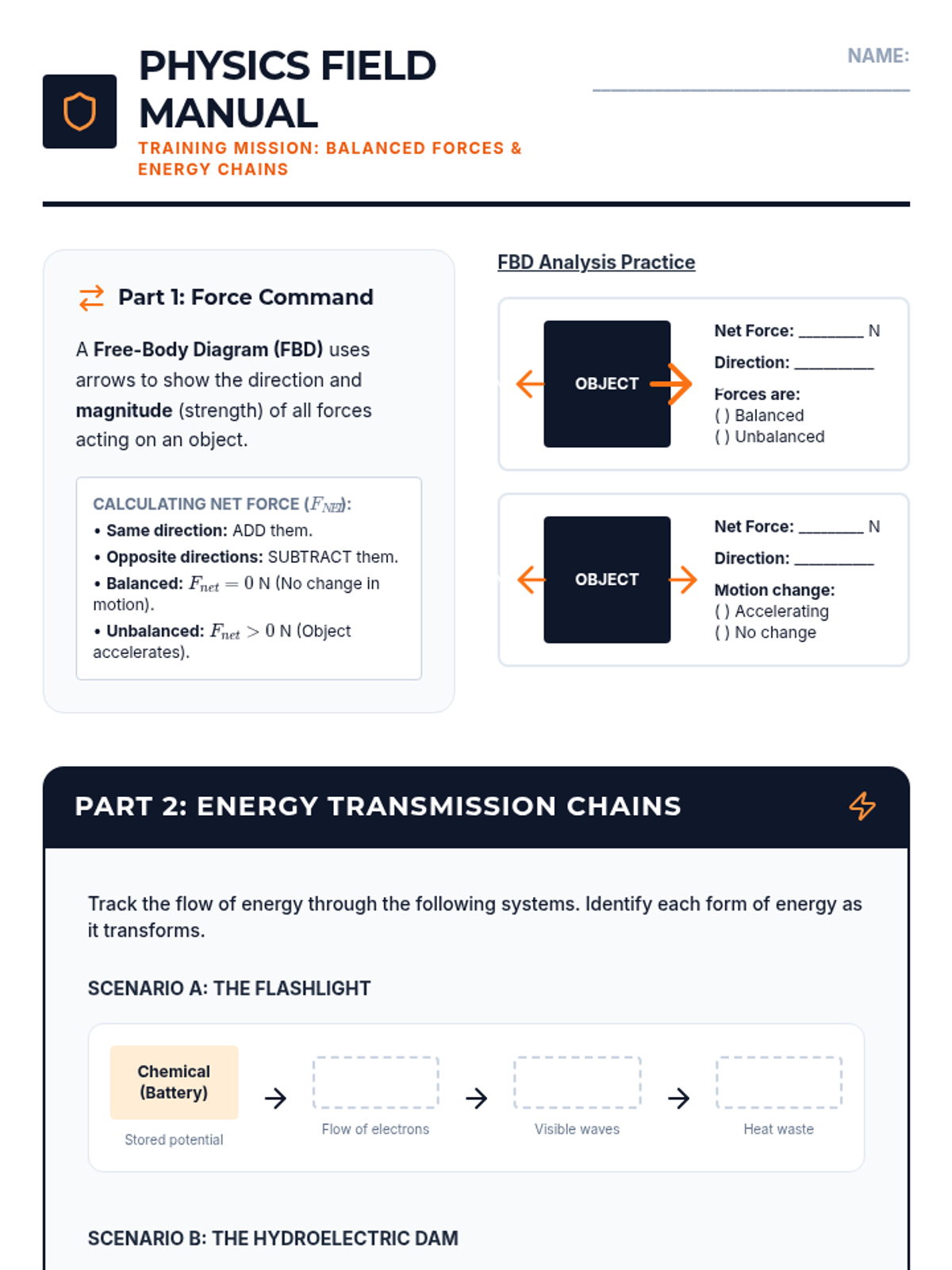
A student field manual focusing on calculating net force from free-body diagrams and identifying energy transformation chains in real-world systems. includes practice problems and critical thinking prompts.
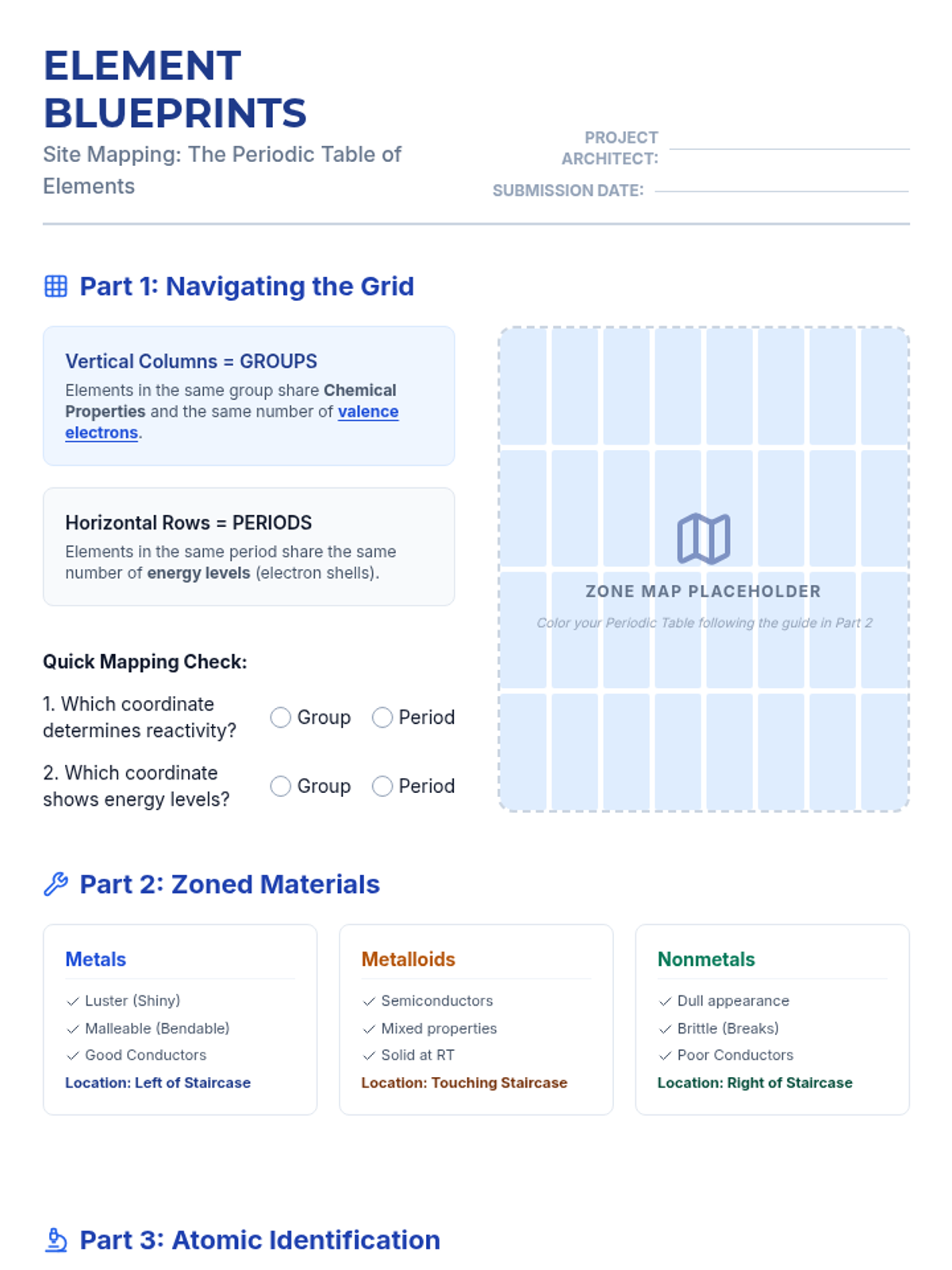
An interactive student exploration worksheet for the periodic table, focusing on groups, periods, classification of elements, and atomic identity through valence electrons and energy levels.
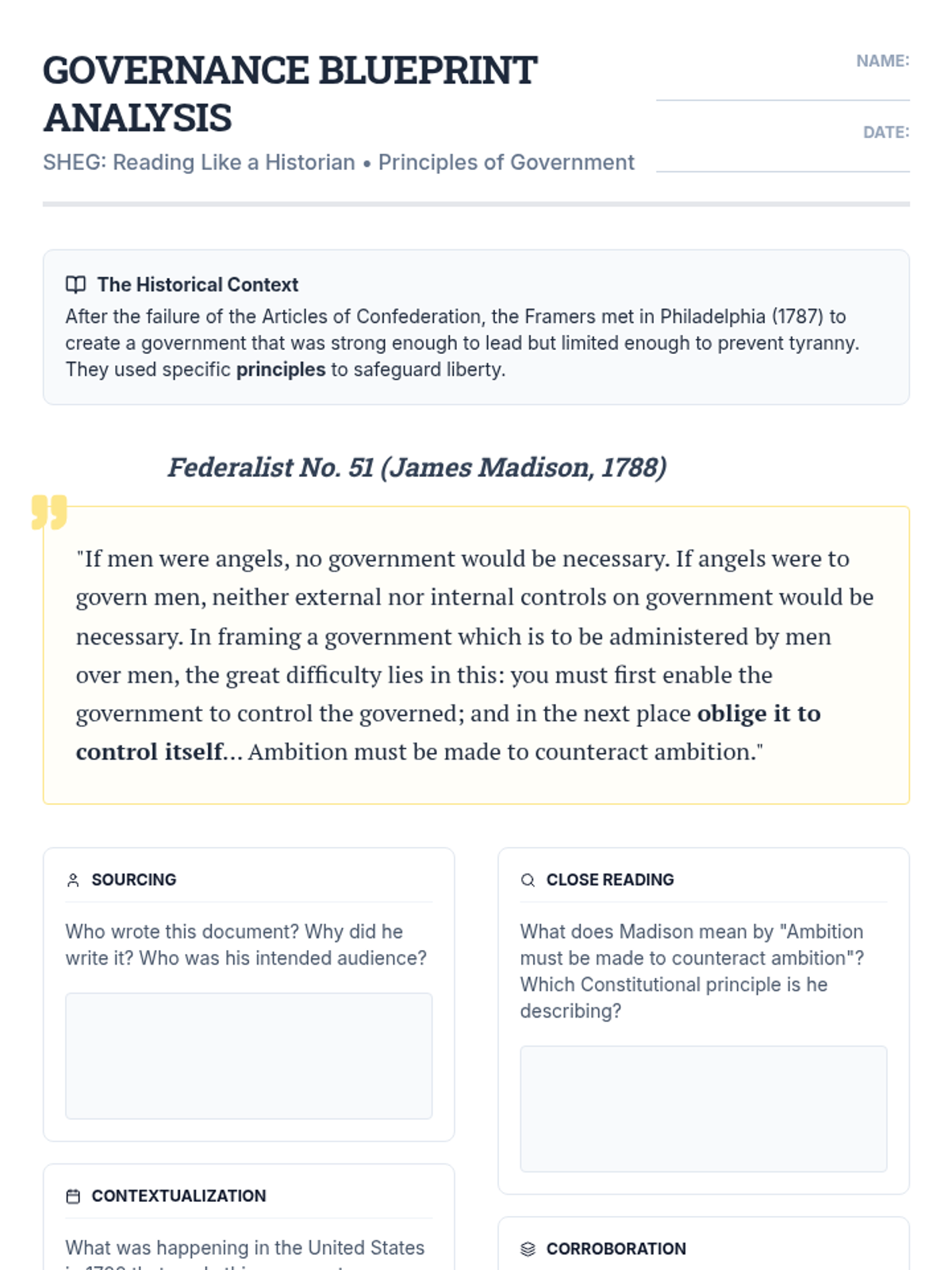
A primary source analysis worksheet based on James Madison's Federalist No. 51. Using the SHEG 'Reading Like a Historian' methodology, students practice sourcing, contextualization, and close reading to understand the principles of checks and balances and separation of powers.
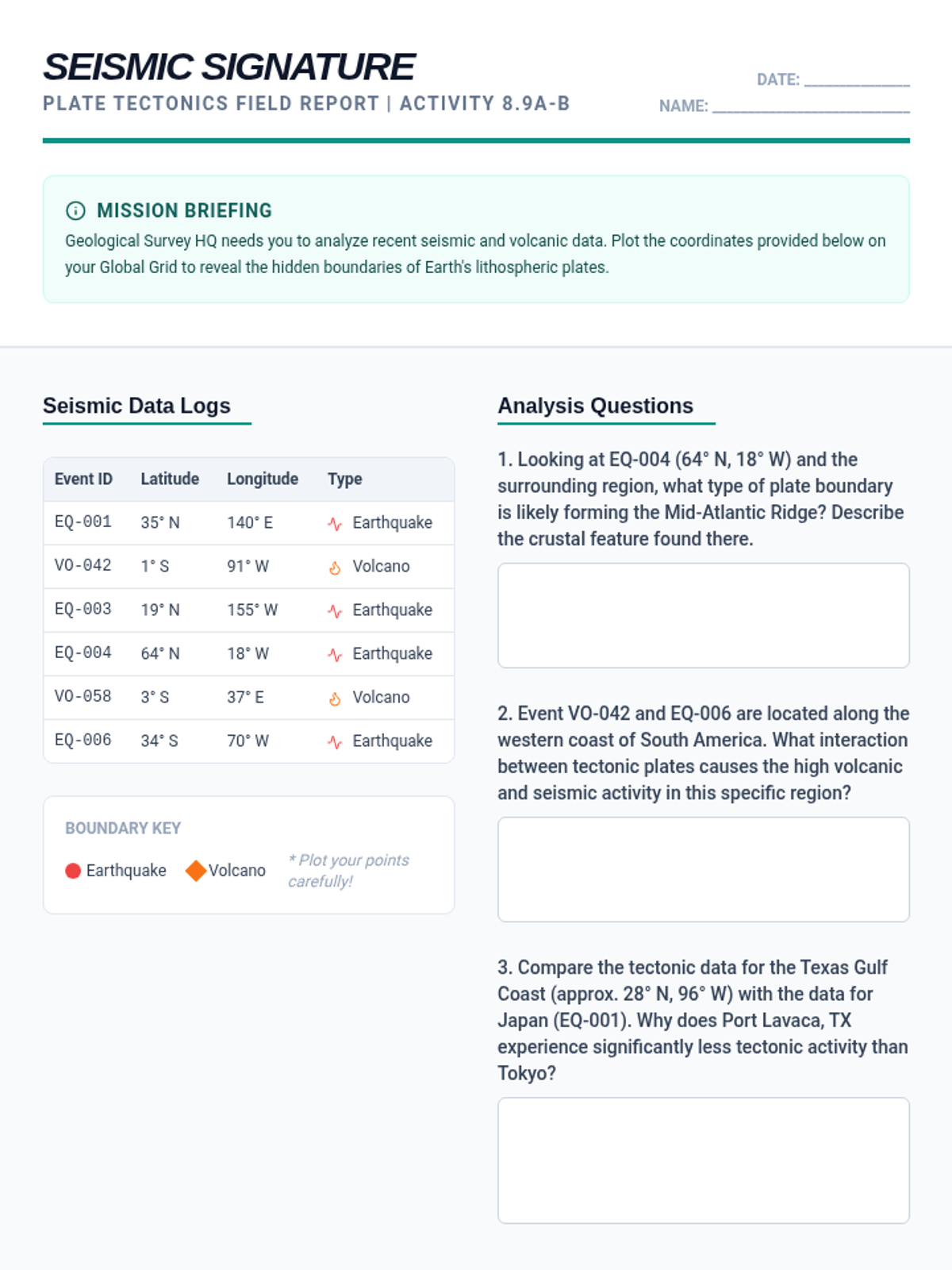
A student-facing mapping activity where they plot real seismic and volcanic data to identify plate boundaries and crustal features, including a comparison to the Texas Gulf Coast tectonic stability.
An engaging slide deck for the Power and Progress lesson, visually explaining the 7 principles of government, the relationship between geography and economic development, and the transition from mercantilism to free enterprise. Designed for Grade 8 STAAR social studies preparation with high-visibility text and graphics.
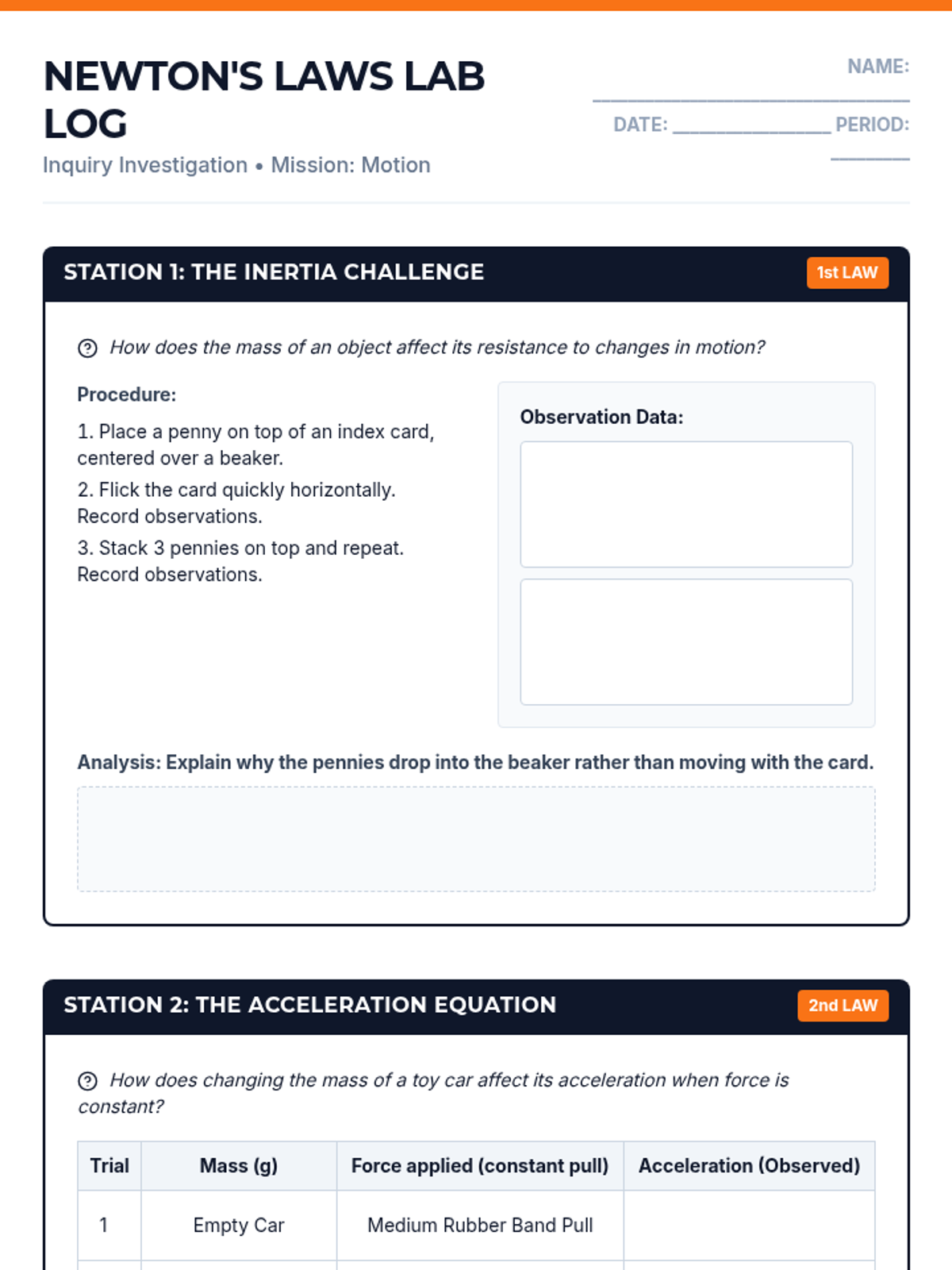
An inquiry-based investigation document covering Newton's three laws of motion through hands-on lab rotations. includes sections for the Law of Inertia, Force and Acceleration, and Action-Reaction forces.