Significantly improved question 4 on the Earth Masters Review Worksheet, now requiring students to identify plate boundary names AND match them with specific real-world examples (Himalayas, San Andreas Fault, Mid-Atlantic Ridge) for higher rigor.
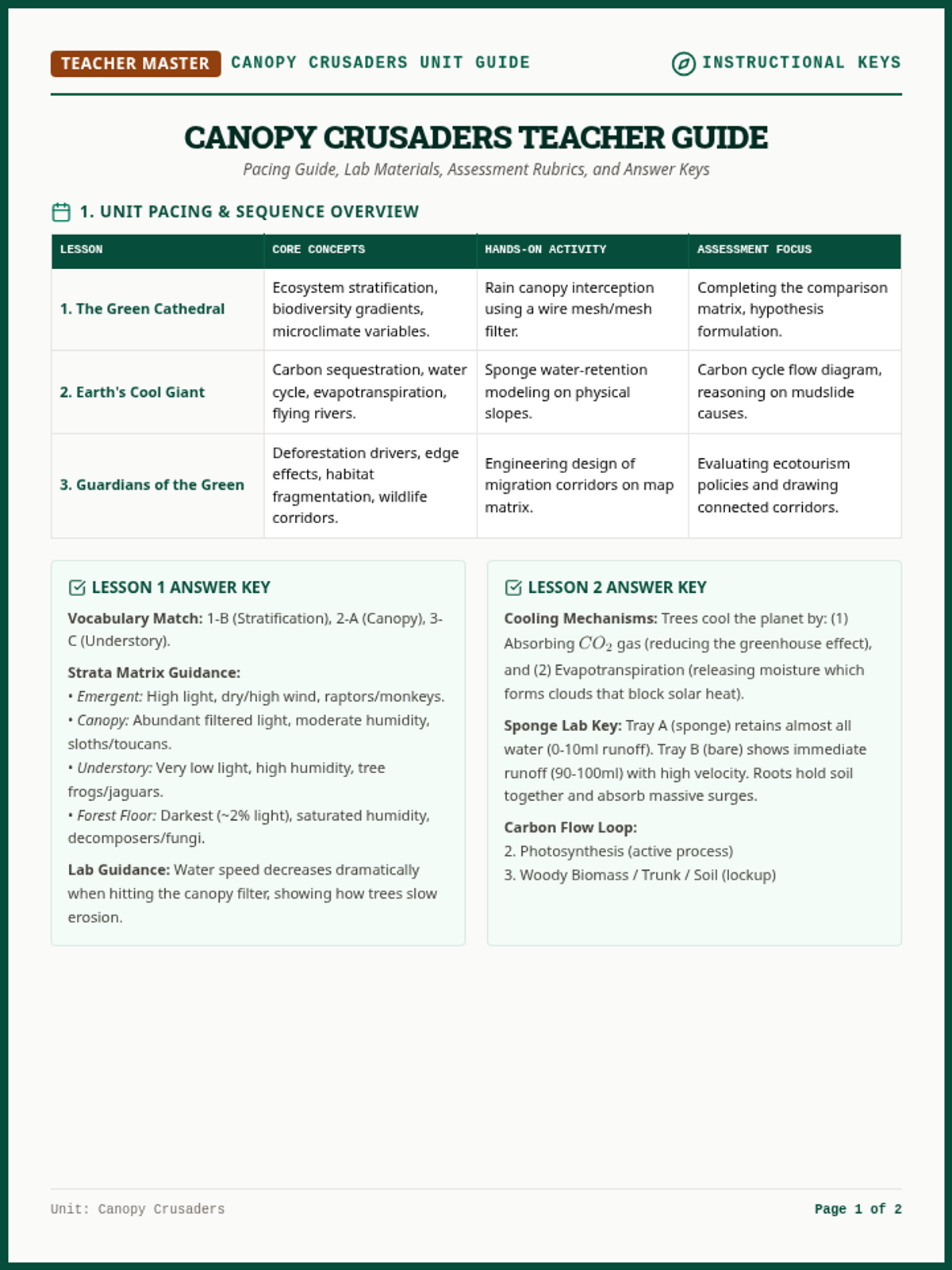
A comprehensive teacher-facing unit guide, providing unit-wide planning advice, hands-on lab setup instructions, grading rubrics, and detailed answer keys for all student worksheets.
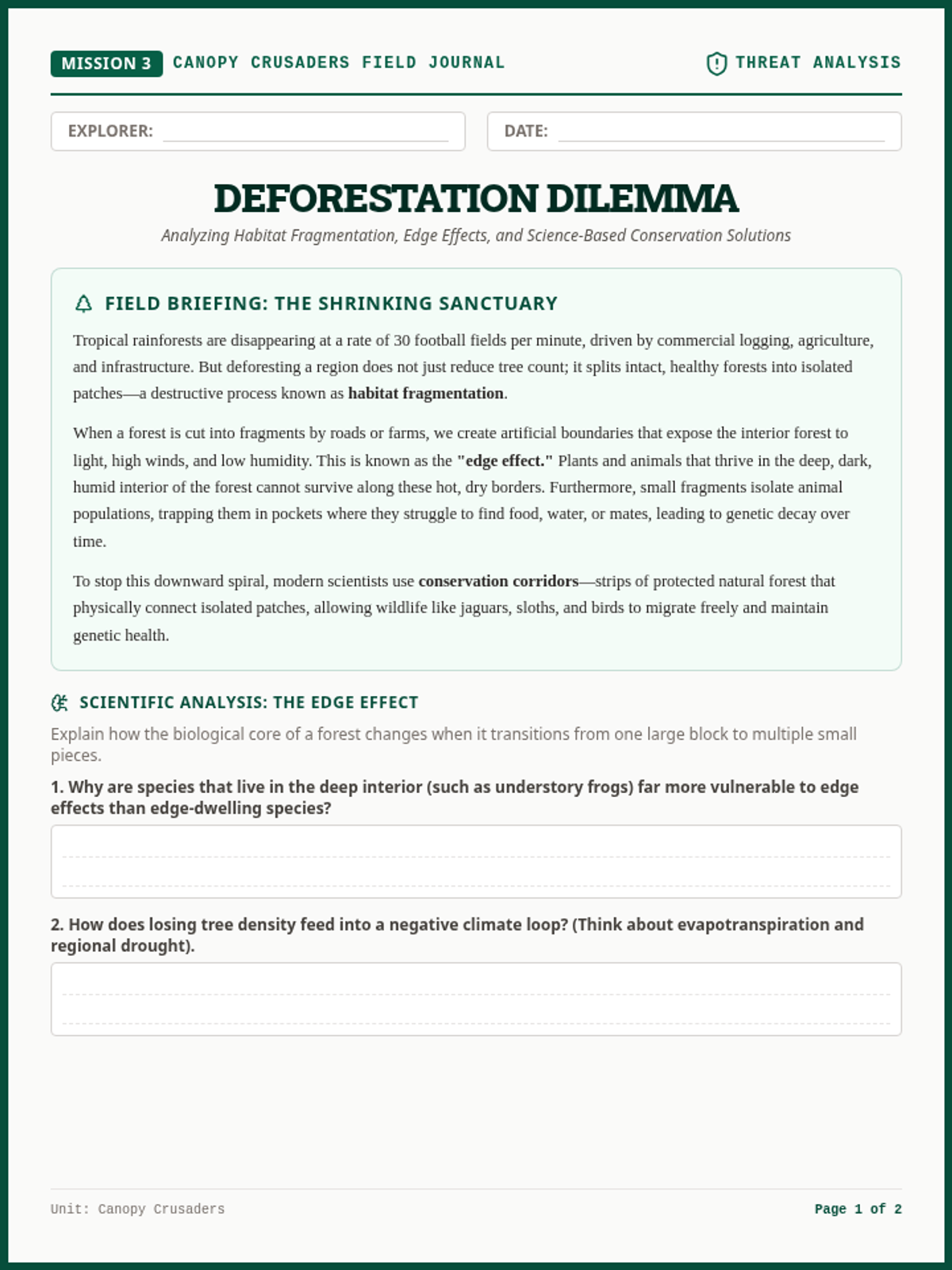
A two-page student activity packet for Lesson 3, focusing on the impacts of deforestation, habitat fragmentation, and edge effects. Includes a case study on ecosystem breakdown, a creative corridor-design science challenge, and a conservation policy evaluation matrix.
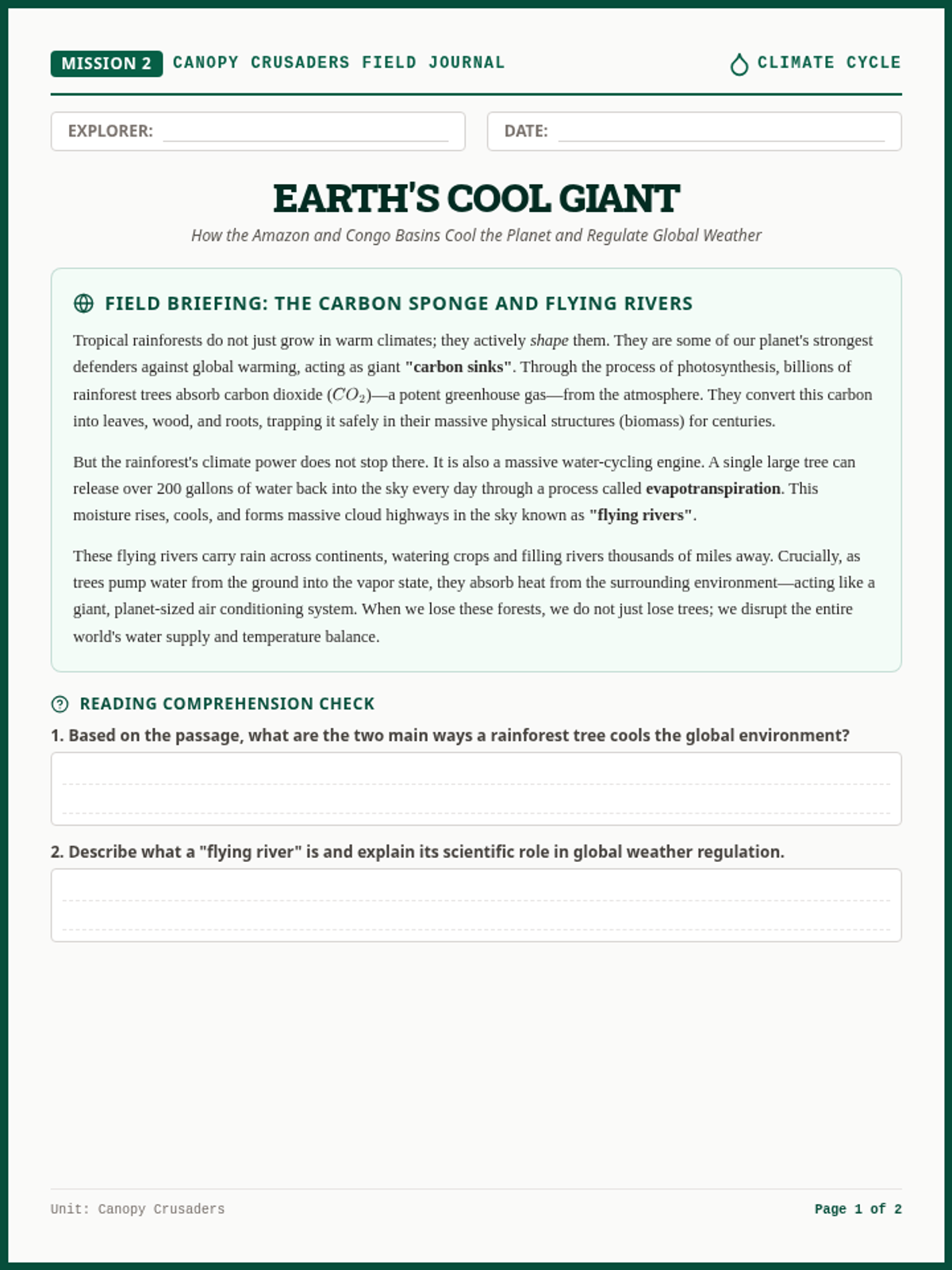
A two-page student activity packet for Lesson 2, focusing on the rainforest's role in global climate. Features a reading passage on carbon sequestration and evapotranspiration, a carbon cycle flow chart, and a hands-on lab simulating water retention using kitchen sponges.
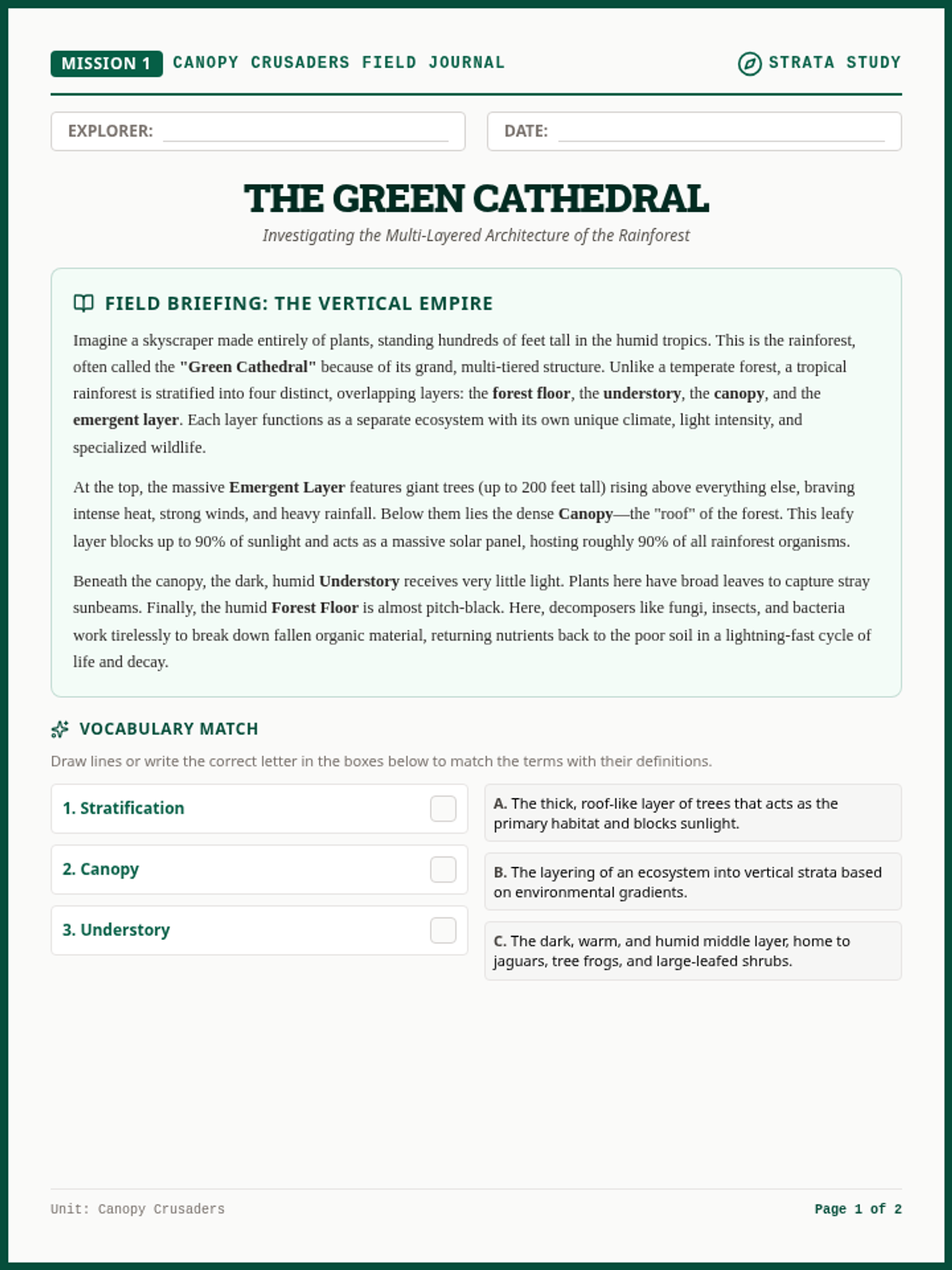
A two-page student activity packet for Lesson 1, featuring a detailed reading passage on the four structural layers of the rainforest, key vocabulary matching, a graphic organizer comparing strata, and a hands-on modeling lab on moisture gradients.
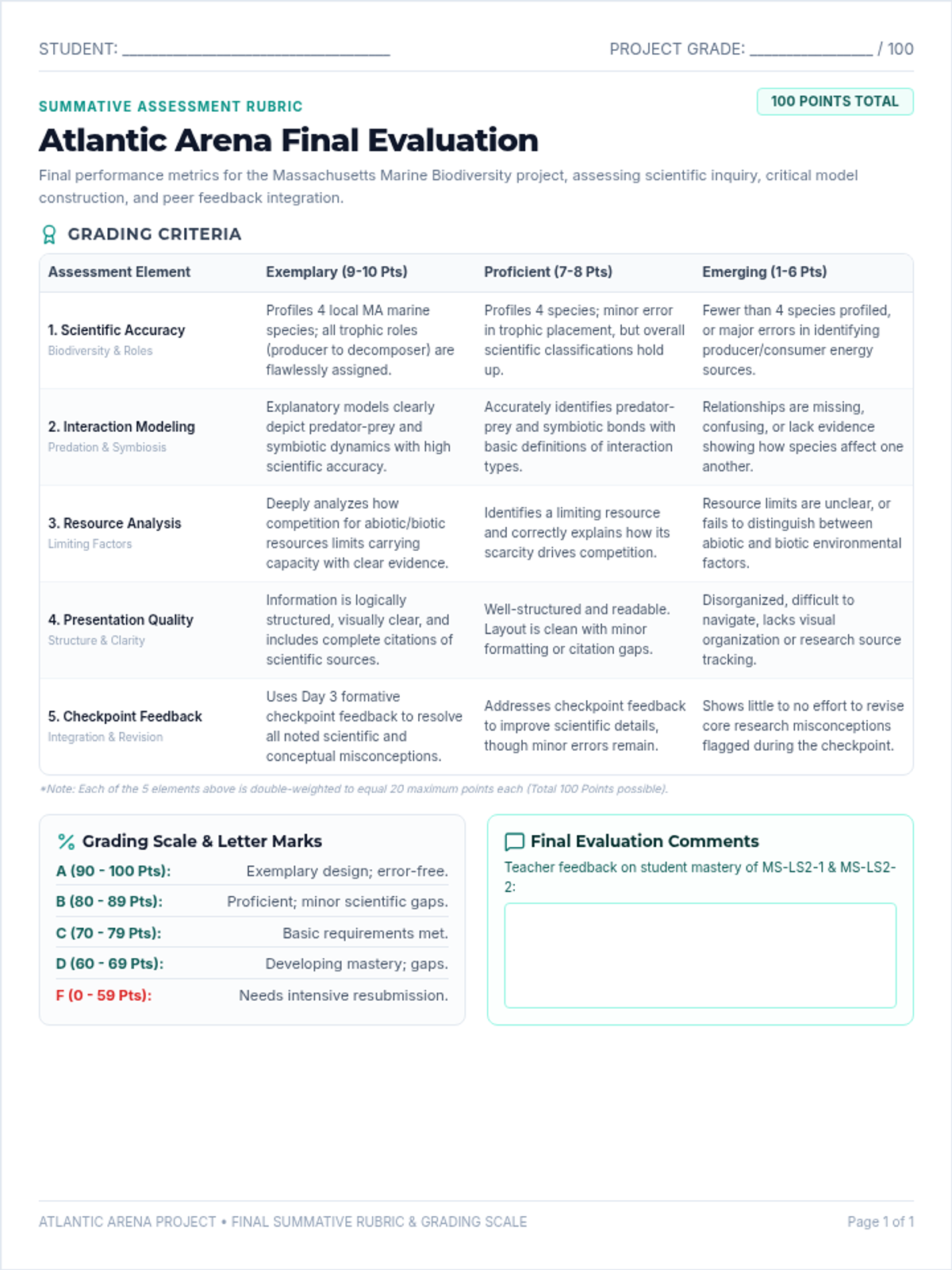
A professional 1-page final project rubric and 100-point grading scale for the Atlantic Arena project, detailing expectations for scientific accuracy, interaction models, resource competition, and incorporation of checkpoint feedback.
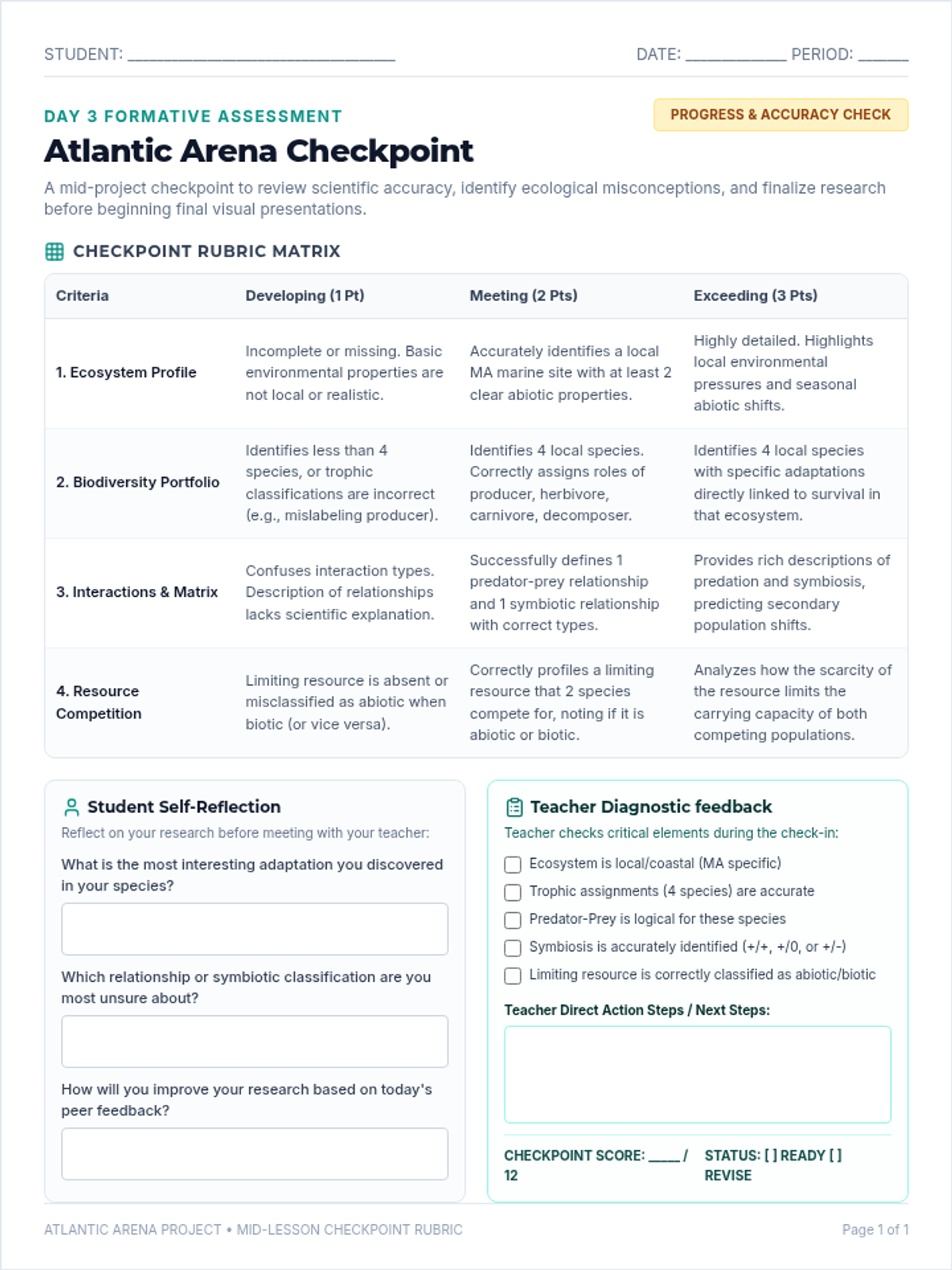
A 1-page student self-assessment and teacher formative checkpoint rubric used on Day 3 of the project to check accuracy of ecological data, classify symbiotic relationships, and correct standard misconceptions.
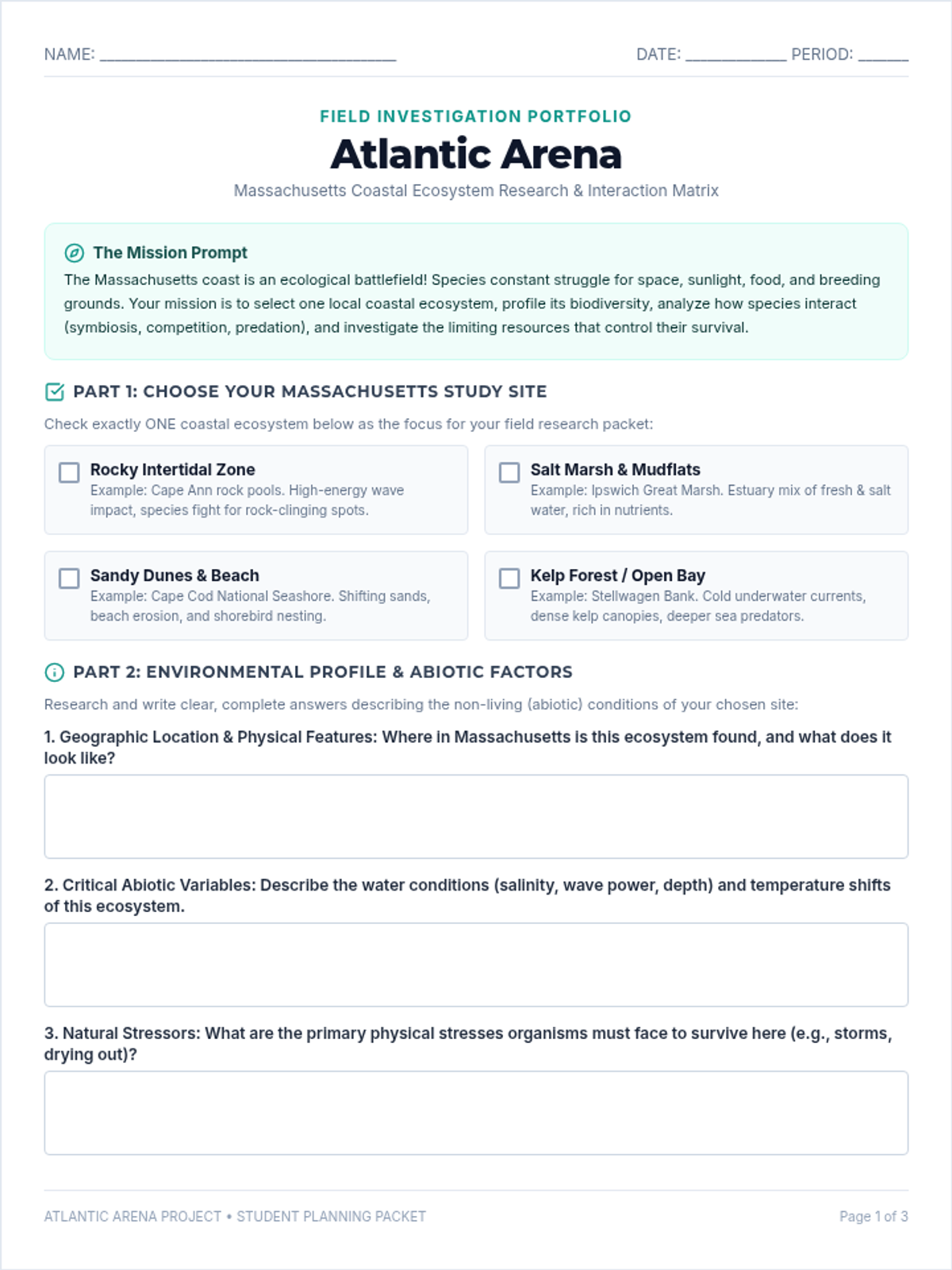
A comprehensive 3-page student-facing research and planning workbook. It guides students through selecting a local Massachusetts ecosystem, researching 4 distinct species across trophic levels, and mapping symbiotic and competitive relationships.
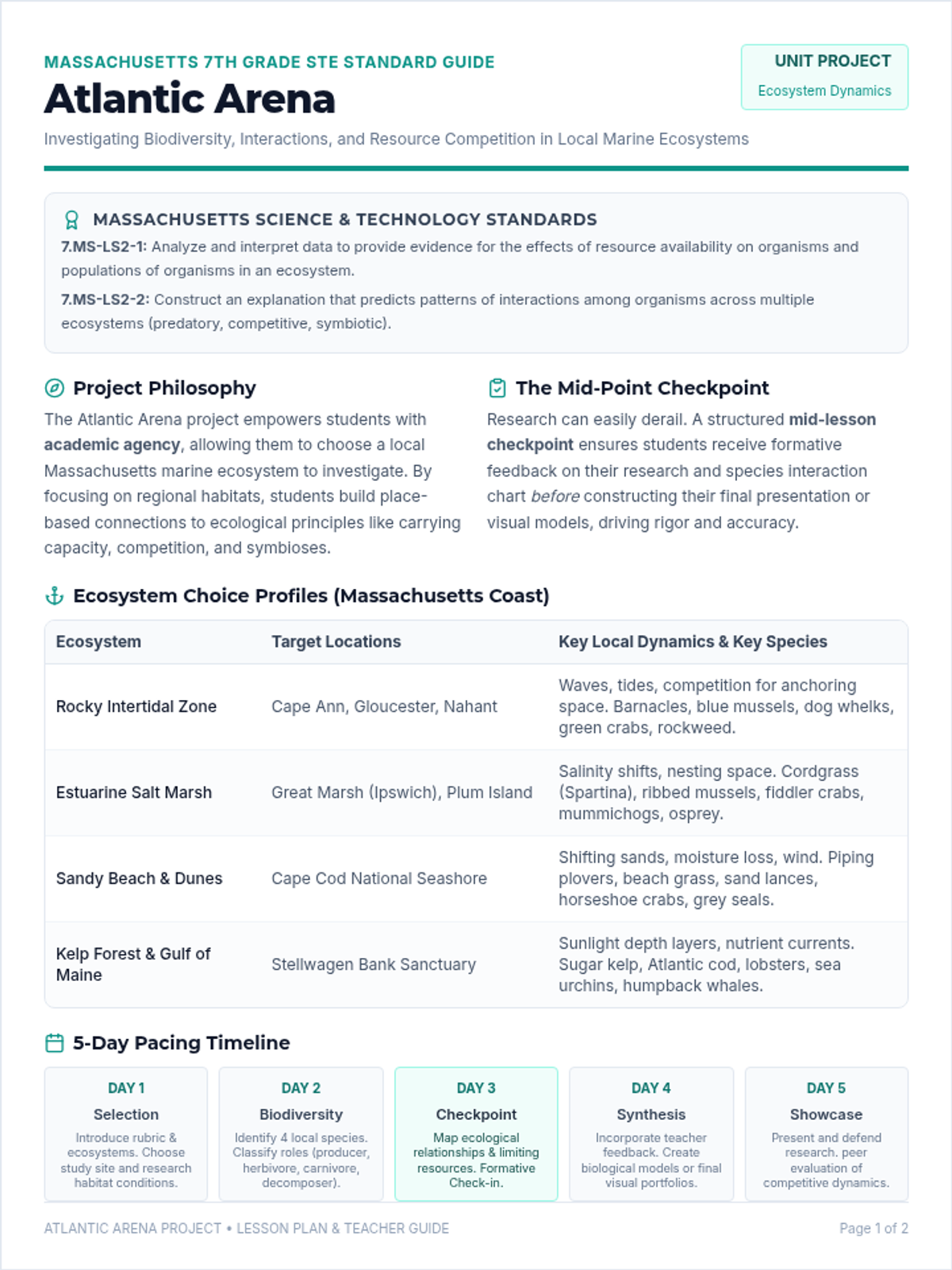
A professional 2-page teacher facilitation guide for the Atlantic Arena project, detailing alignment with Massachusetts 7th-grade science standards, descriptions of local ecosystems, a 5-day implementation timeline, and instructions for managing the mid-project checkpoint.
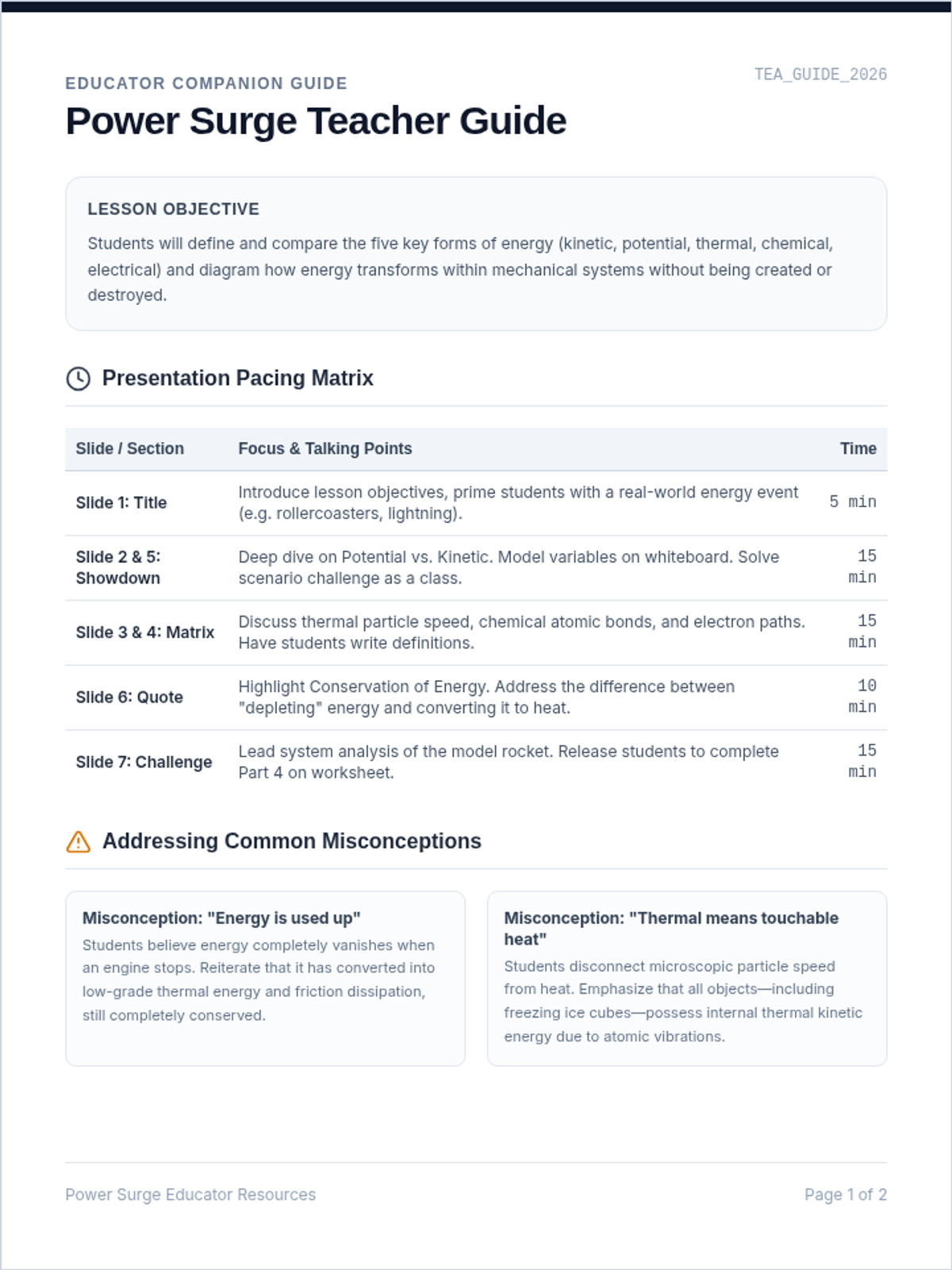
An educator-facing guide containing a structured slide-by-slide pacing layout, key discussion questions, direct strategies for addressing physical science misconceptions, and a comprehensive Answer Key for the Power Surge student worksheet.
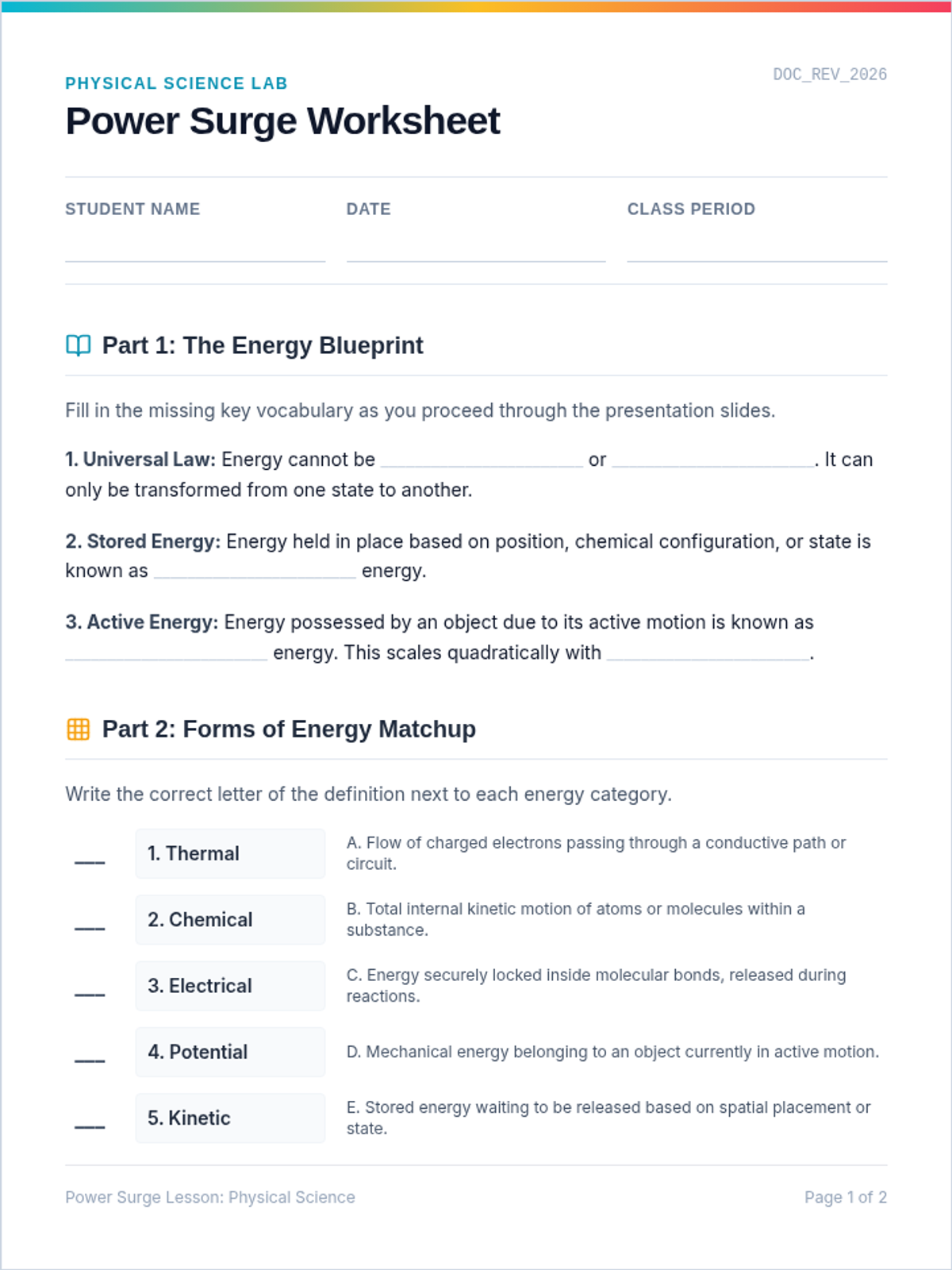
A high-impact student-facing activity sheet designed to accompany the Power Surge slides. Includes guided lecture notes, a vocabulary matching matrix for the five forms of energy, and a structured system analysis section for diagramming energy transformations during a model rocket launch.
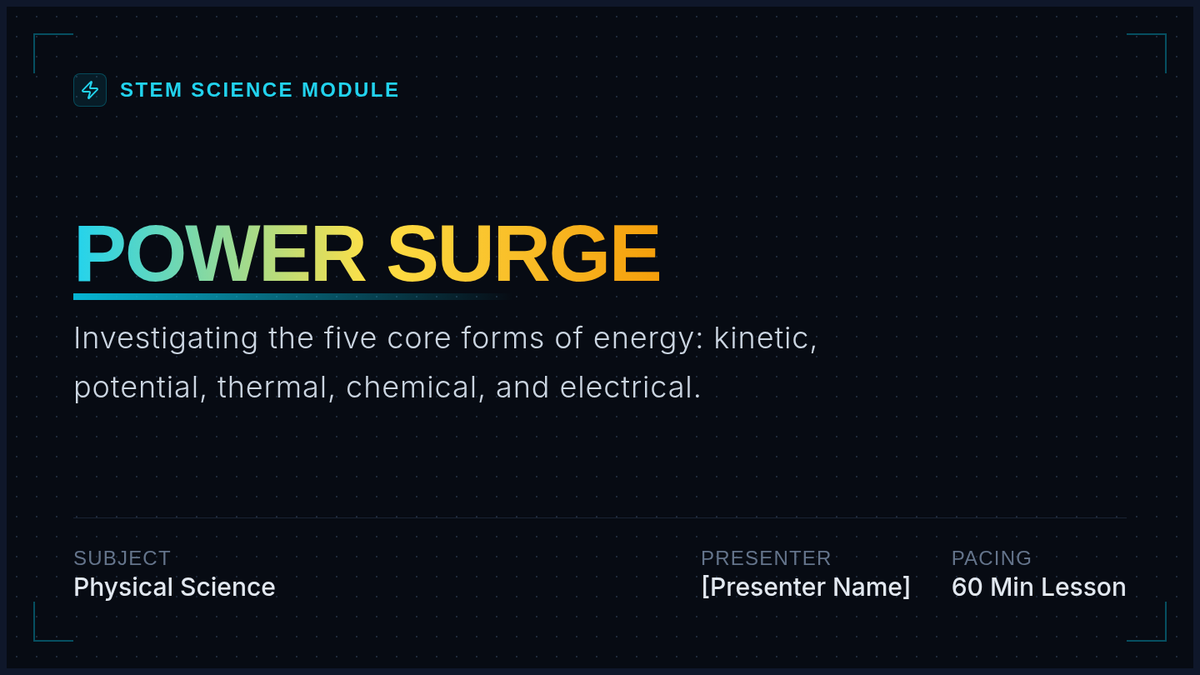
A highly customizable science slide deck template featuring 7 professional layouts themed around the Forms of Energy. Incorporates rich visual styling, strict readability metrics, tech-inspired blueprint grids, and structured content sections for kinetic, potential, thermal, chemical, and electrical energy.
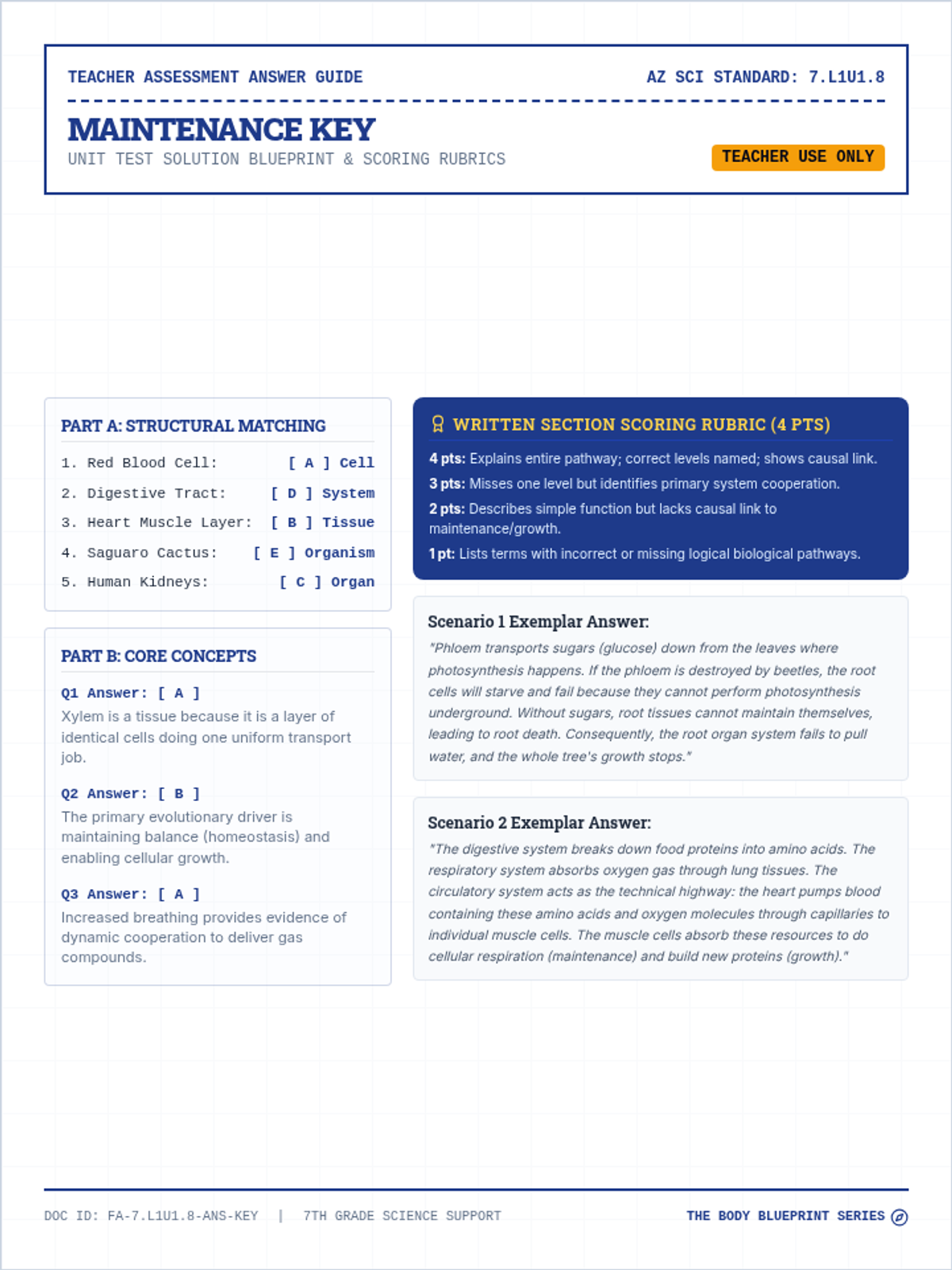
Fully annotated answer key and scoring rubrics for the Unit Mastery Assessment to guide grading.
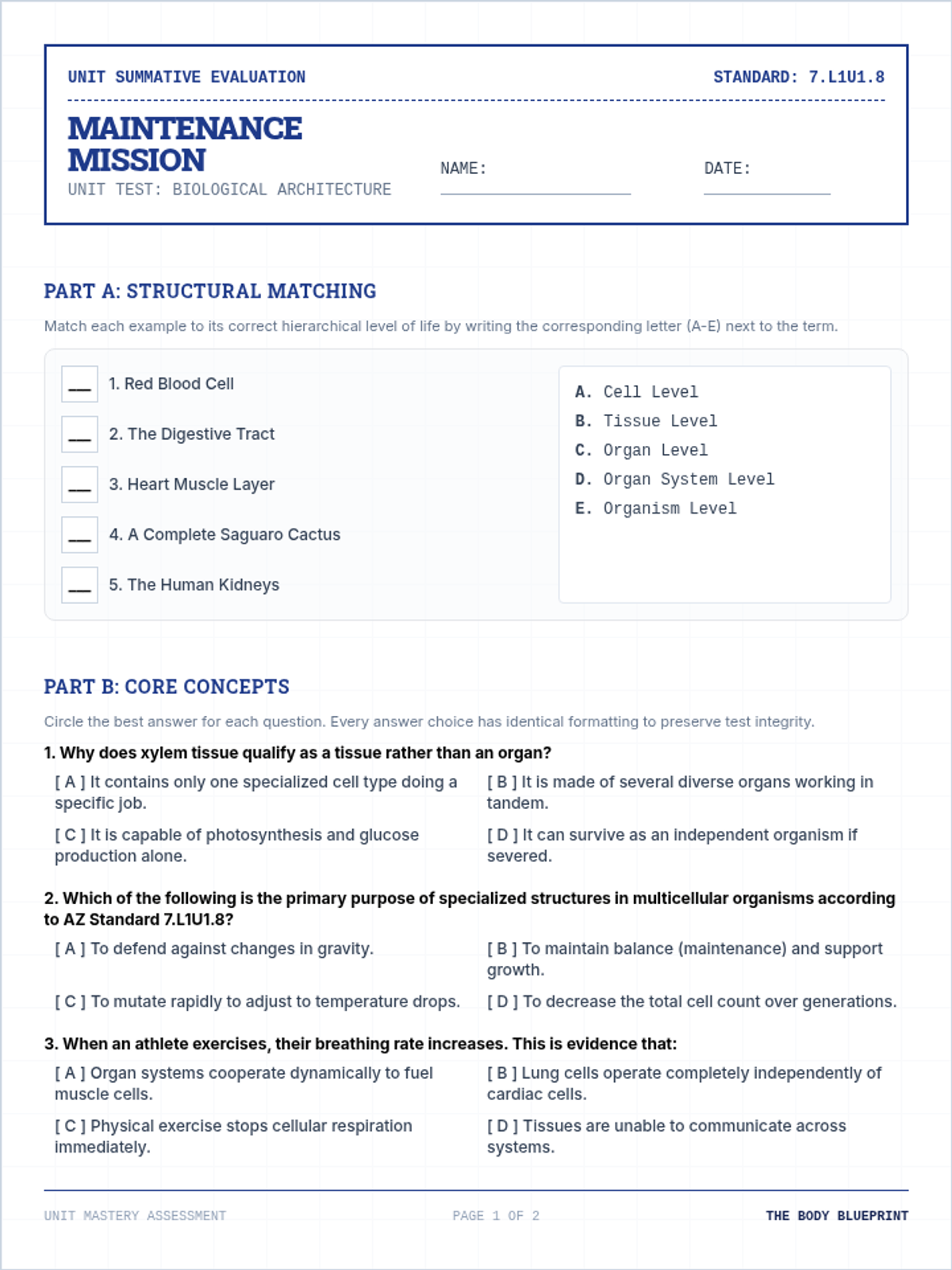
A comprehensive summative unit test with multiple-choice, matching, and short-answer prompts tailored to Arizona Science Standard 7.L1U1.8.
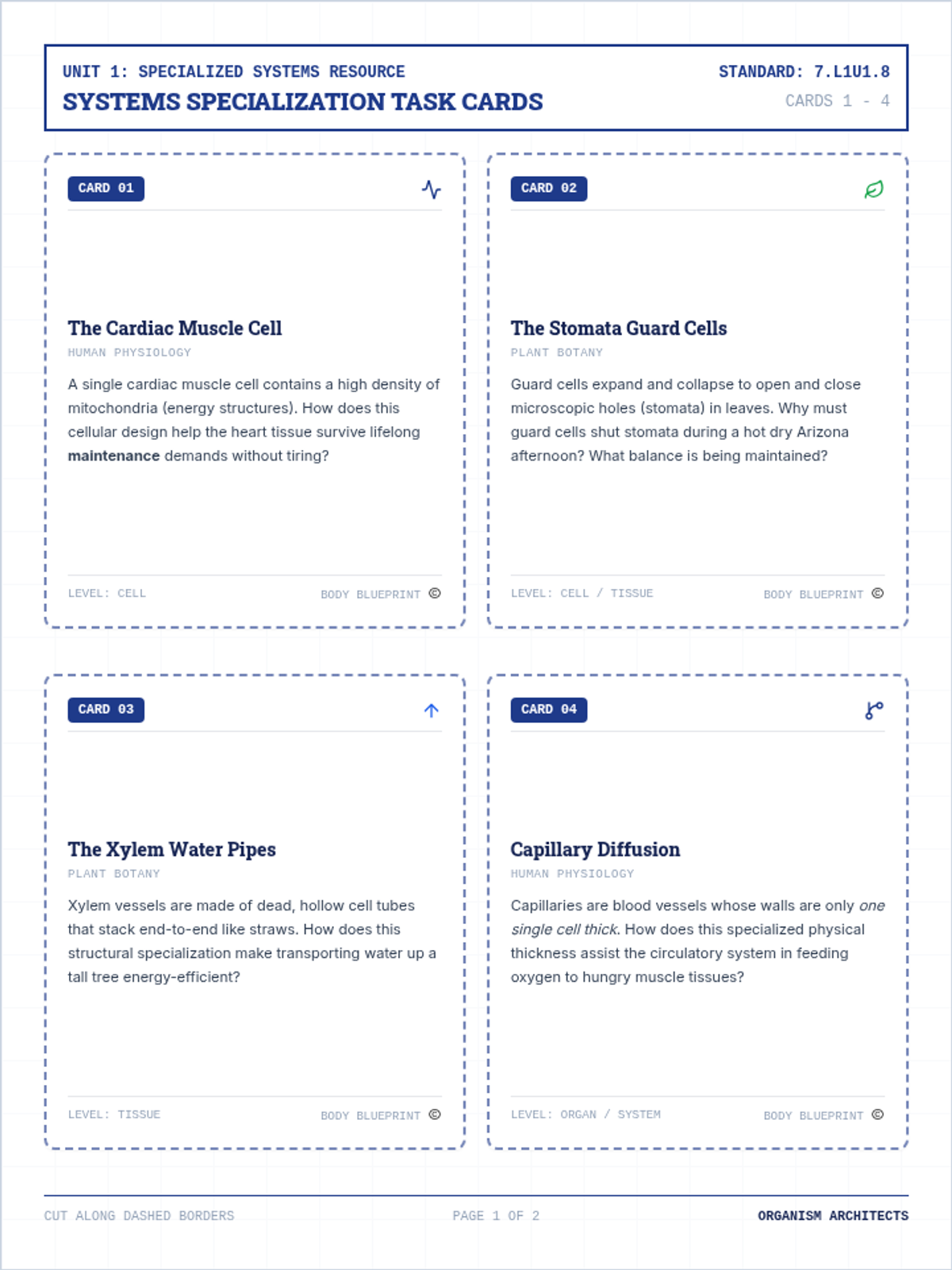
Printable physical task cards for cooperative grouping and mastery checks on specialized human and plant tissues, organs, and systems.
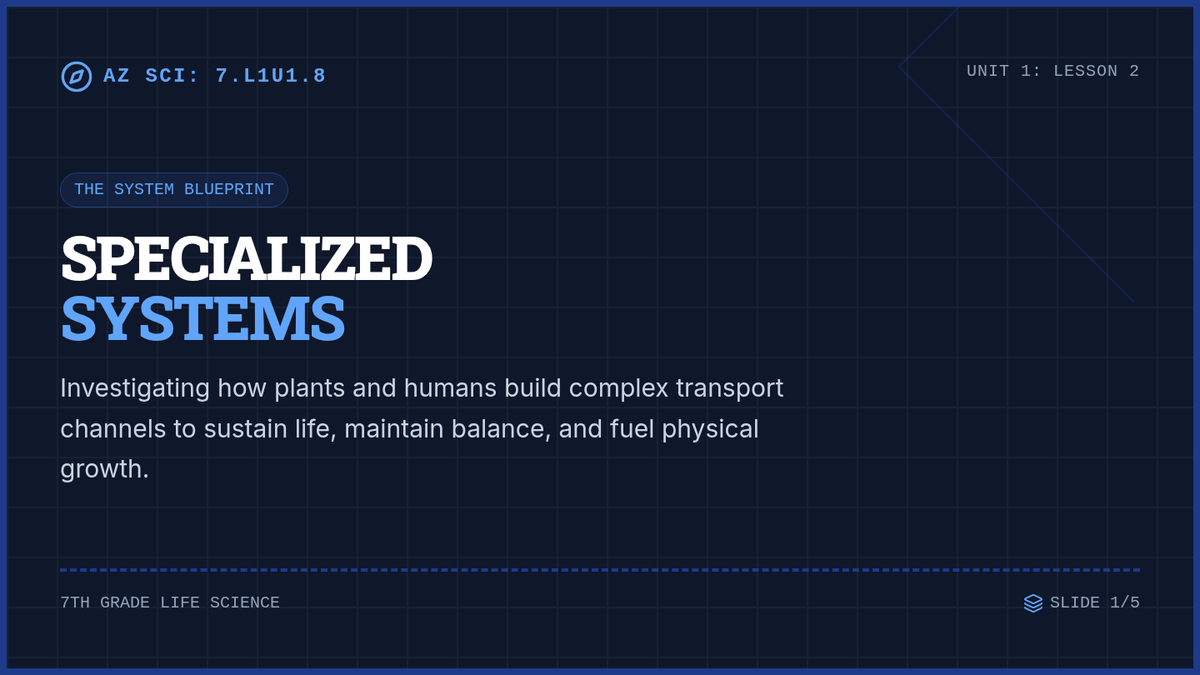
Presentation detailing the transport and nourishment mechanisms in plants and humans, focusing on homeostasis, maintenance, and growth.
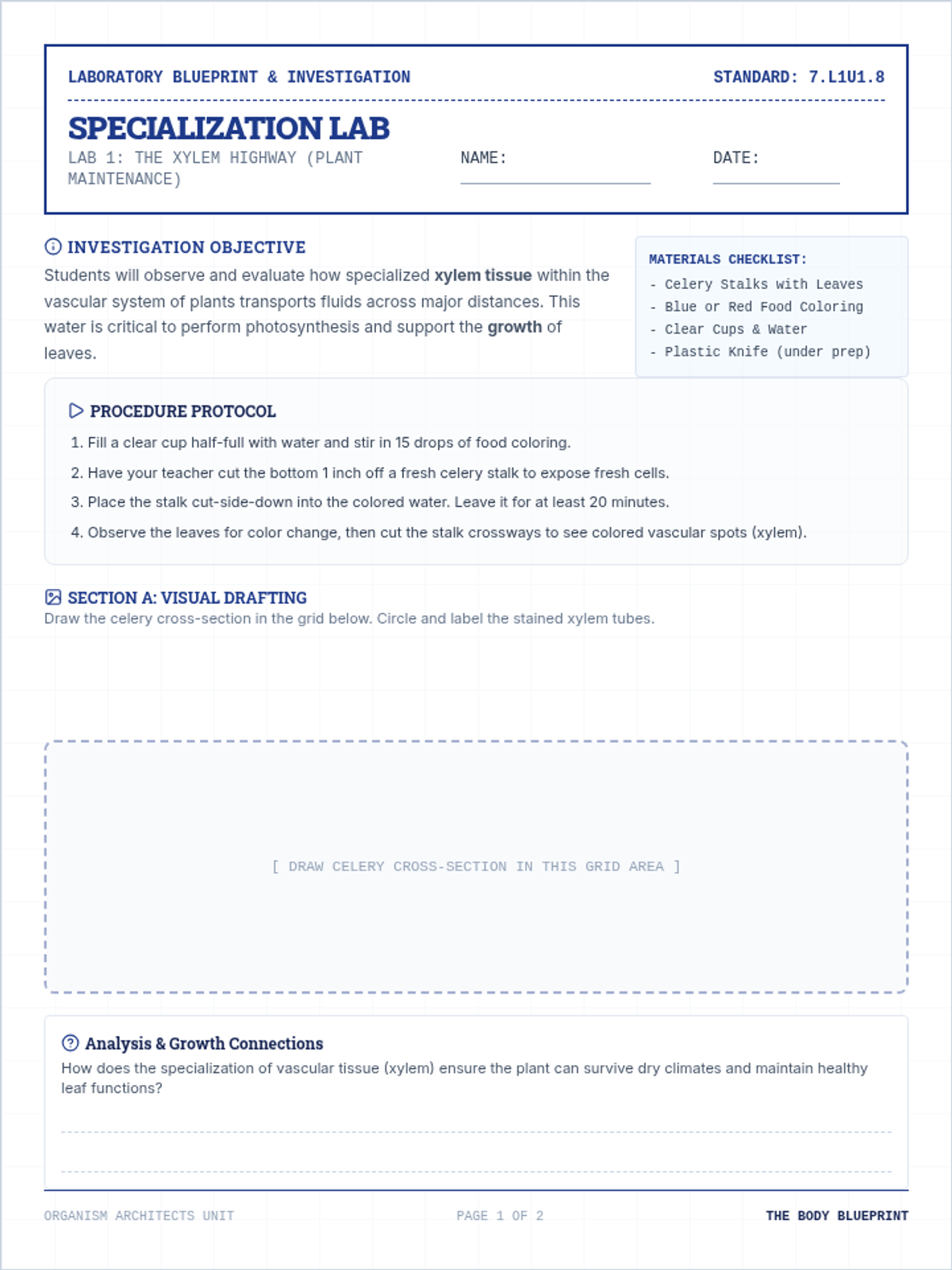
Lab and Activity Guide for hands-on investigations of plant transport (celery/carnation xylem transport) and human heart rate response.
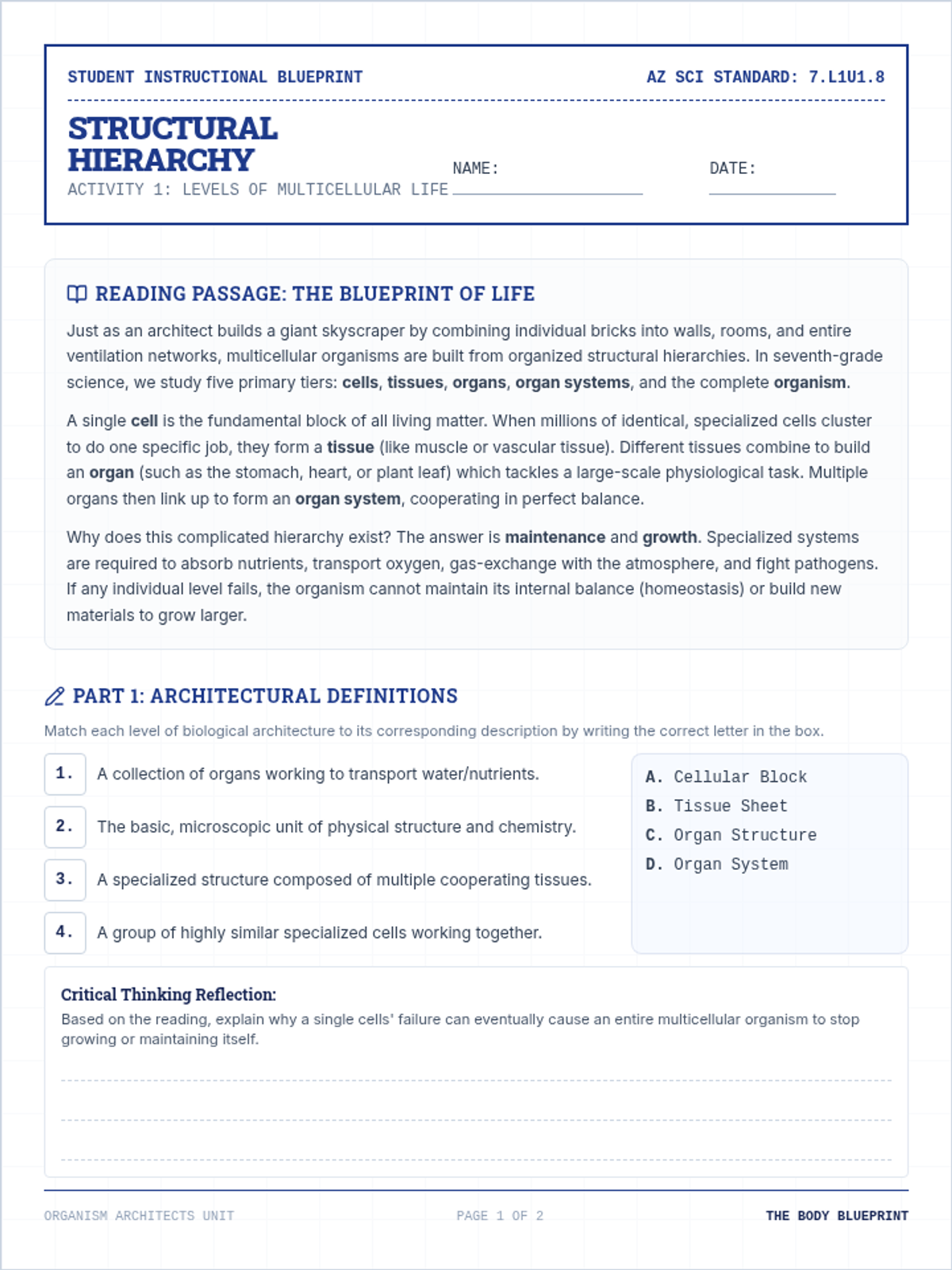
Student worksheet featuring a reading passage, hierarchical graphic organizer, and concept checks for the levels of organization.
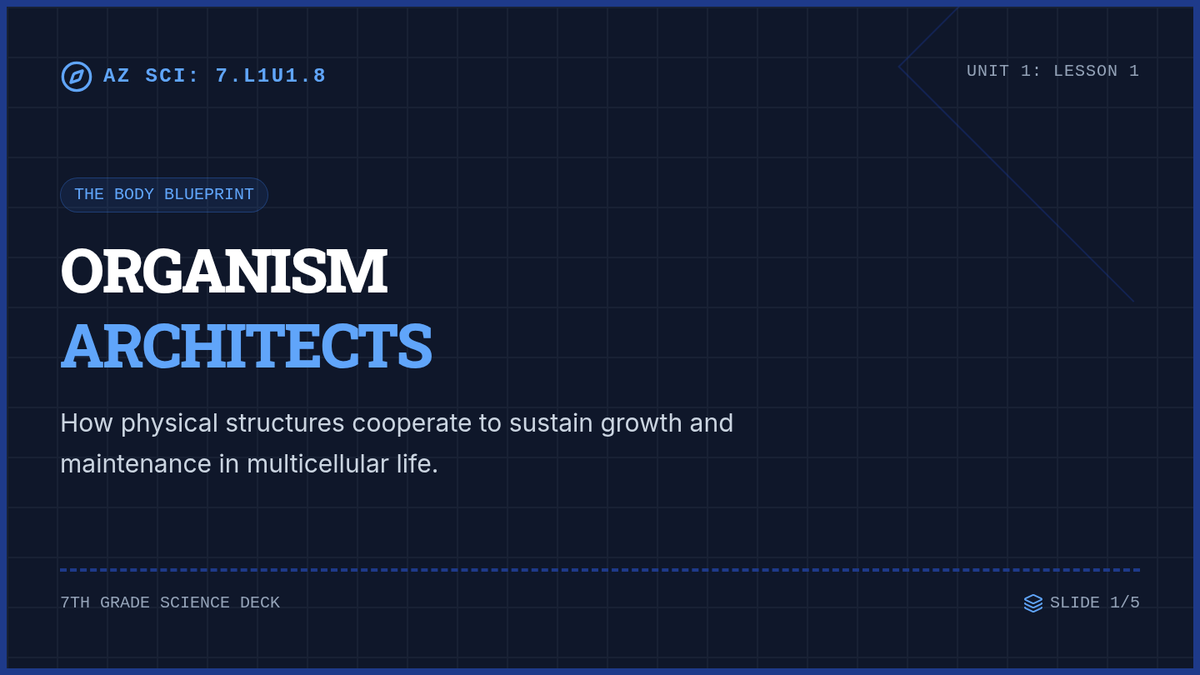
Visual, interactive classroom presentation introducing the levels of organization from cell to organism using a technical blueprint theme.
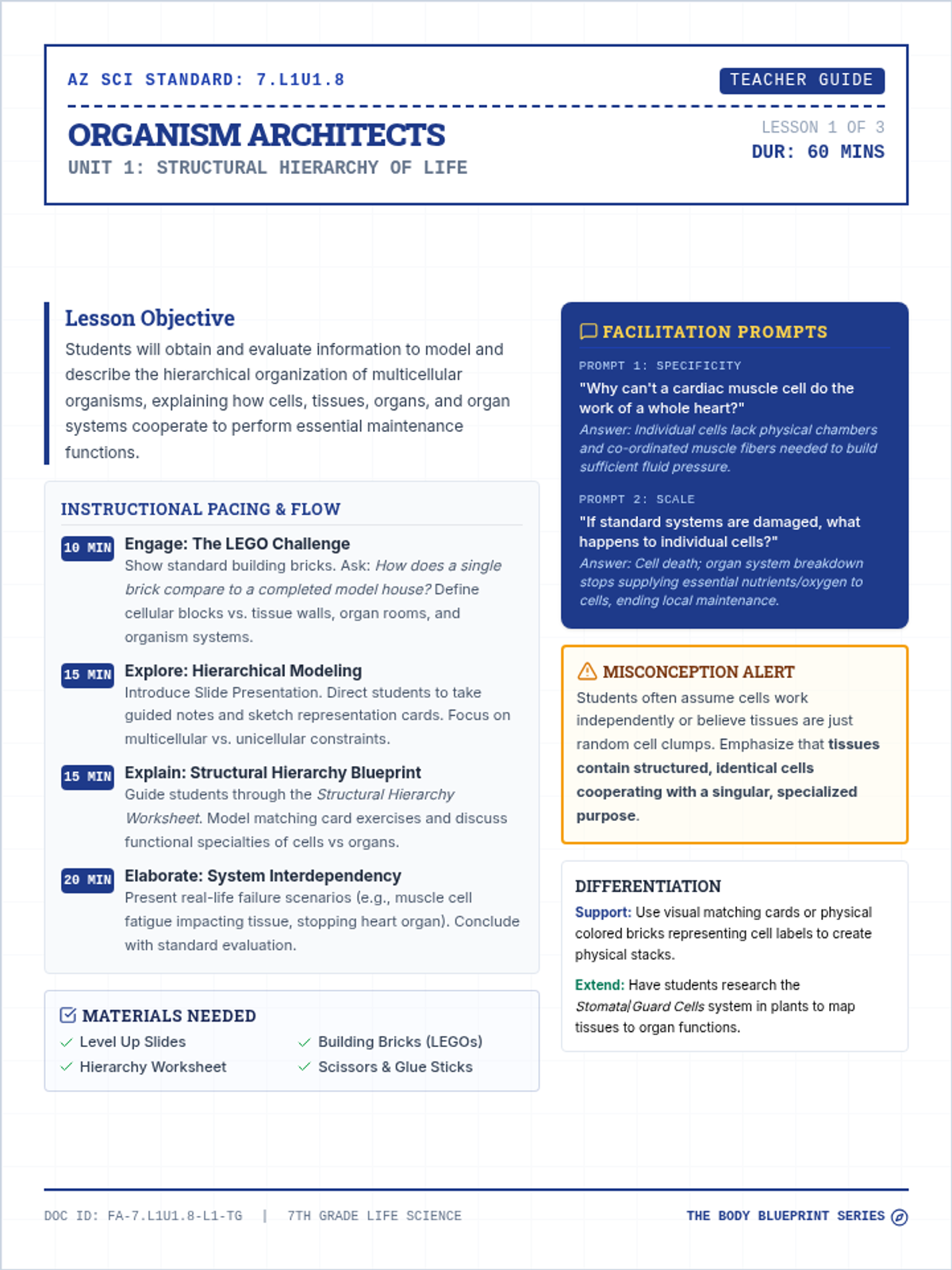
A comprehensive 1-page teacher lesson plan, pacing guide, and discussion framework for introducing cells, tissues, organs, and systems under Arizona Standard 7.L1U1.8.
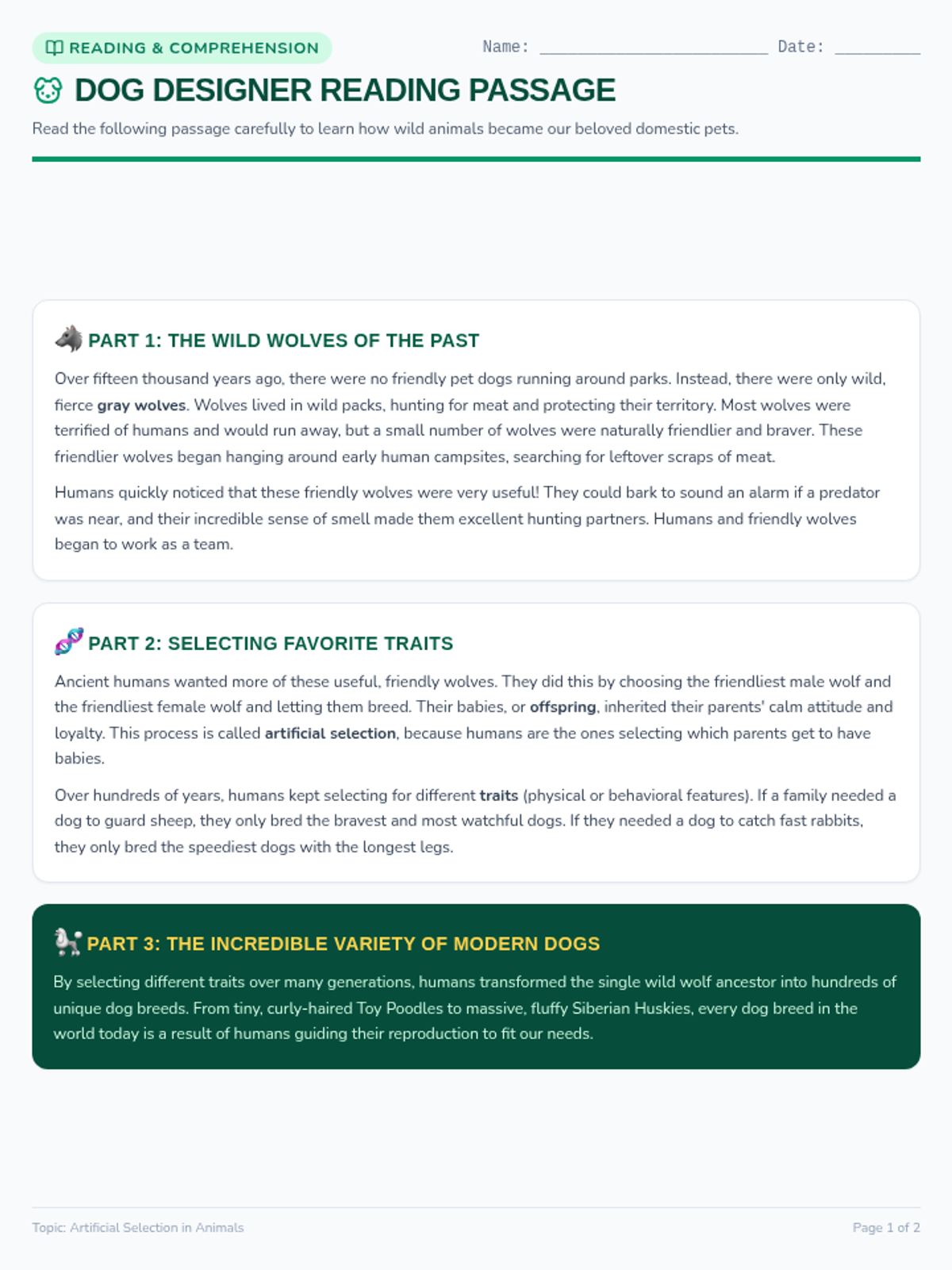
An expanded 2-page reading comprehension document. Page 1 contains a detailed, student-friendly reading passage comparing wild wolves to domesticated dogs, and Page 2 contains 5 structured, multiple-choice questions with identical answer styling.
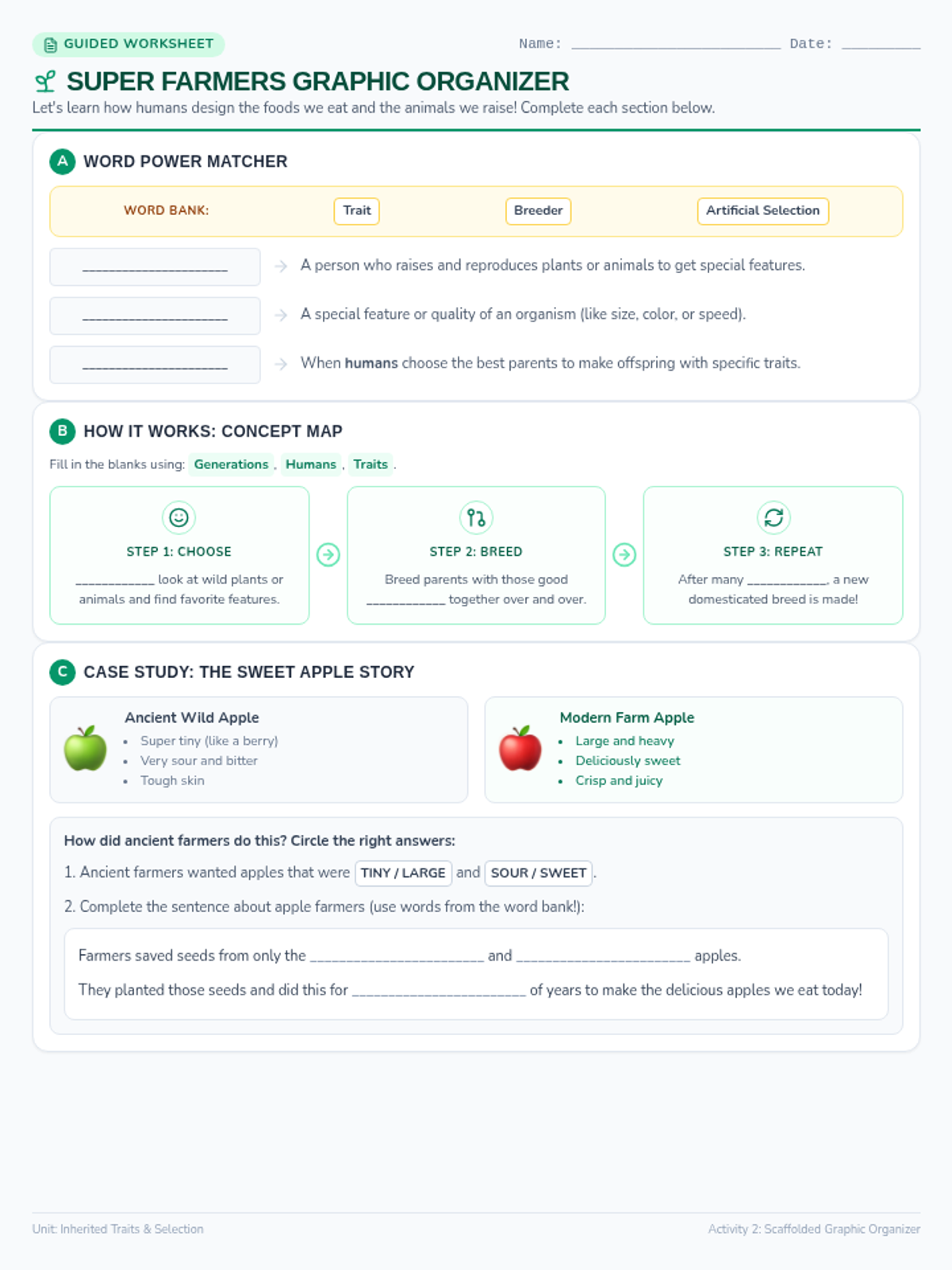
A highly visual, scaffolded graphic organizer worksheet. It features a simplified definition matcher, an illustrated flowchart of artificial selection, and a guided 'Sweet Apple' case study with trace-and-match elements and sentence starters.
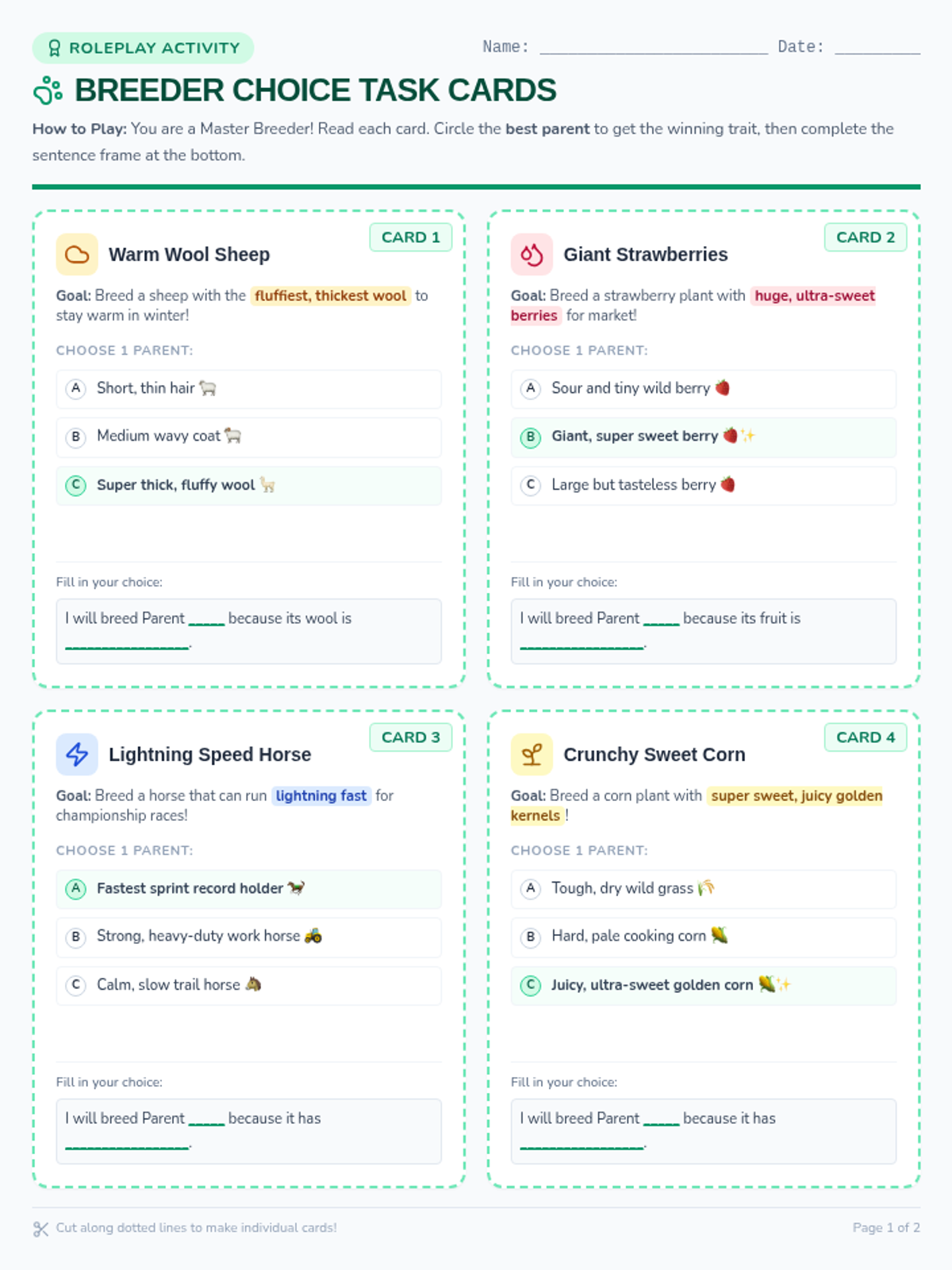
A 2-page printable set of 8 visual task cards where students roleplay as breeders. Students must select parent organisms with specific traits to produce offspring with desired characteristics, featuring structured sentence frames and simple text.
A 5-slide interactive presentation designed for teachers to guide classroom instruction and discussion on forces, contact push-back, balanced forces, and movement triggers.
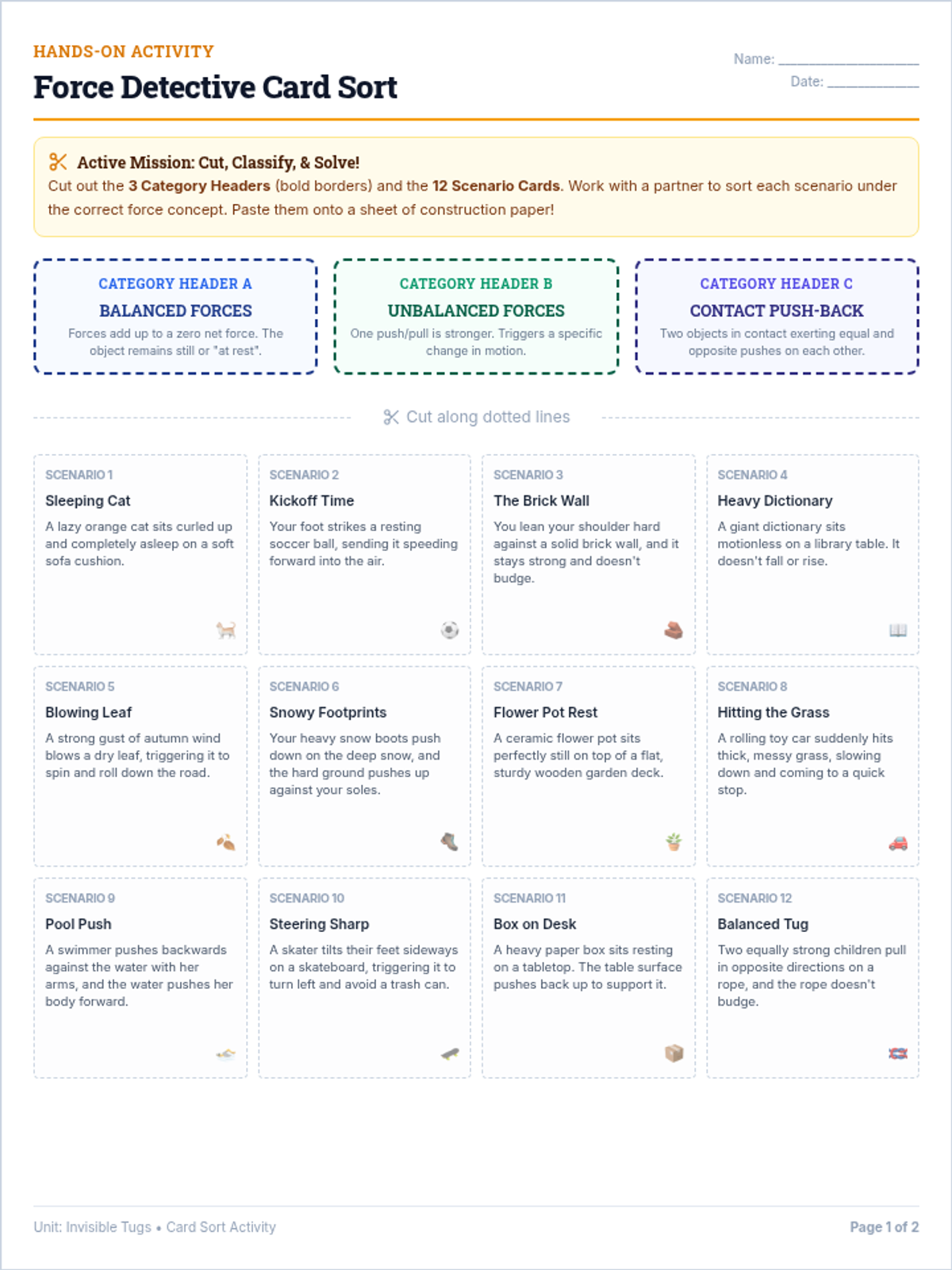
A 2-page printable card sort activity. Page 1 contains 3 bold category header cards and 12 realistic physical scenario cards with dotted cutting guides. Page 2 provides the teacher answer key and quick-check layout showing exactly how cards should be categorized.
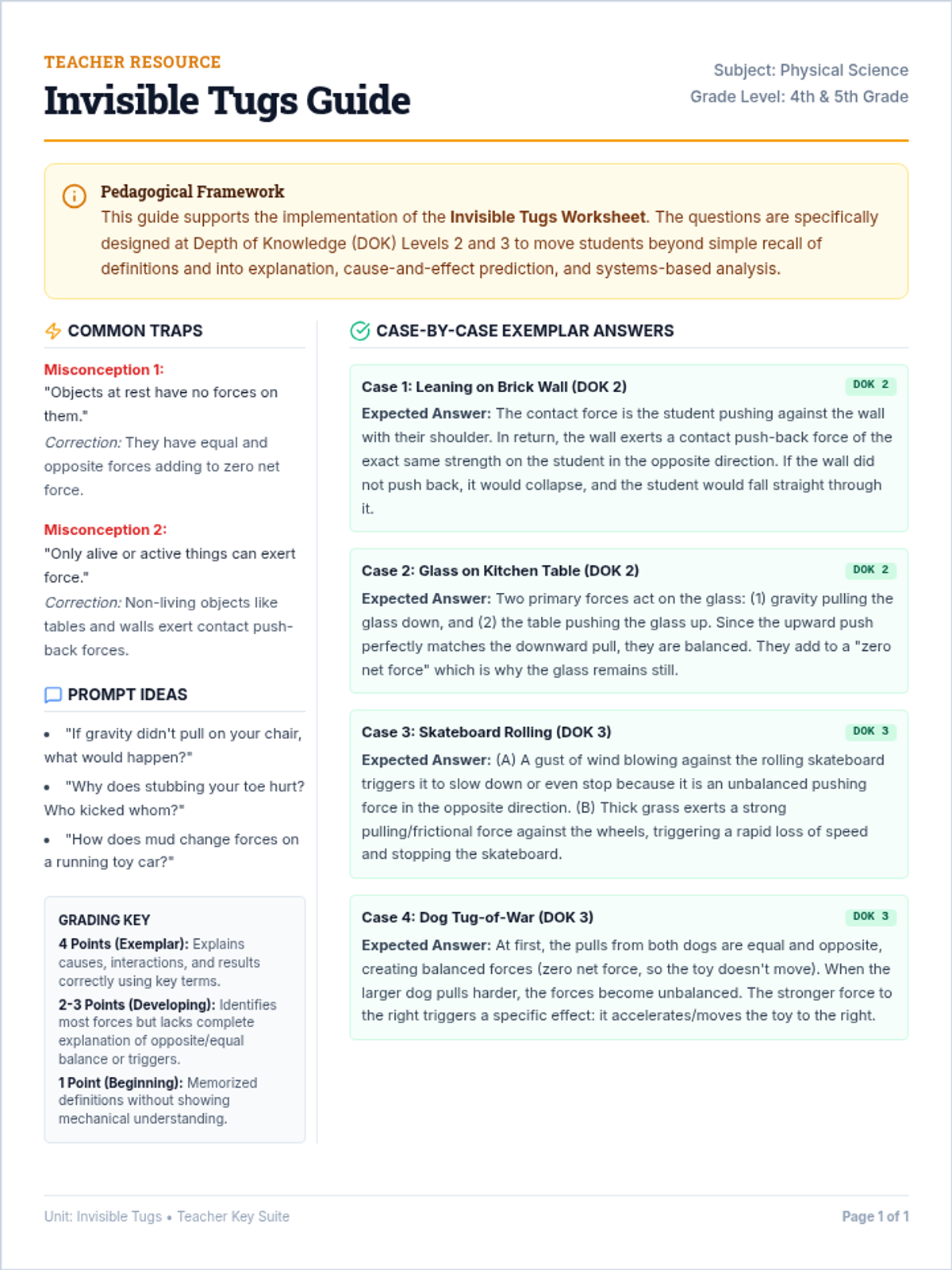
A 1-page printable teacher guide and answer key for the Invisible Tugs worksheet. Features structured guidance on pacing, common misconceptions, and detailed exemplar answers with grading rubrics for all four DOK 2-3 case questions.
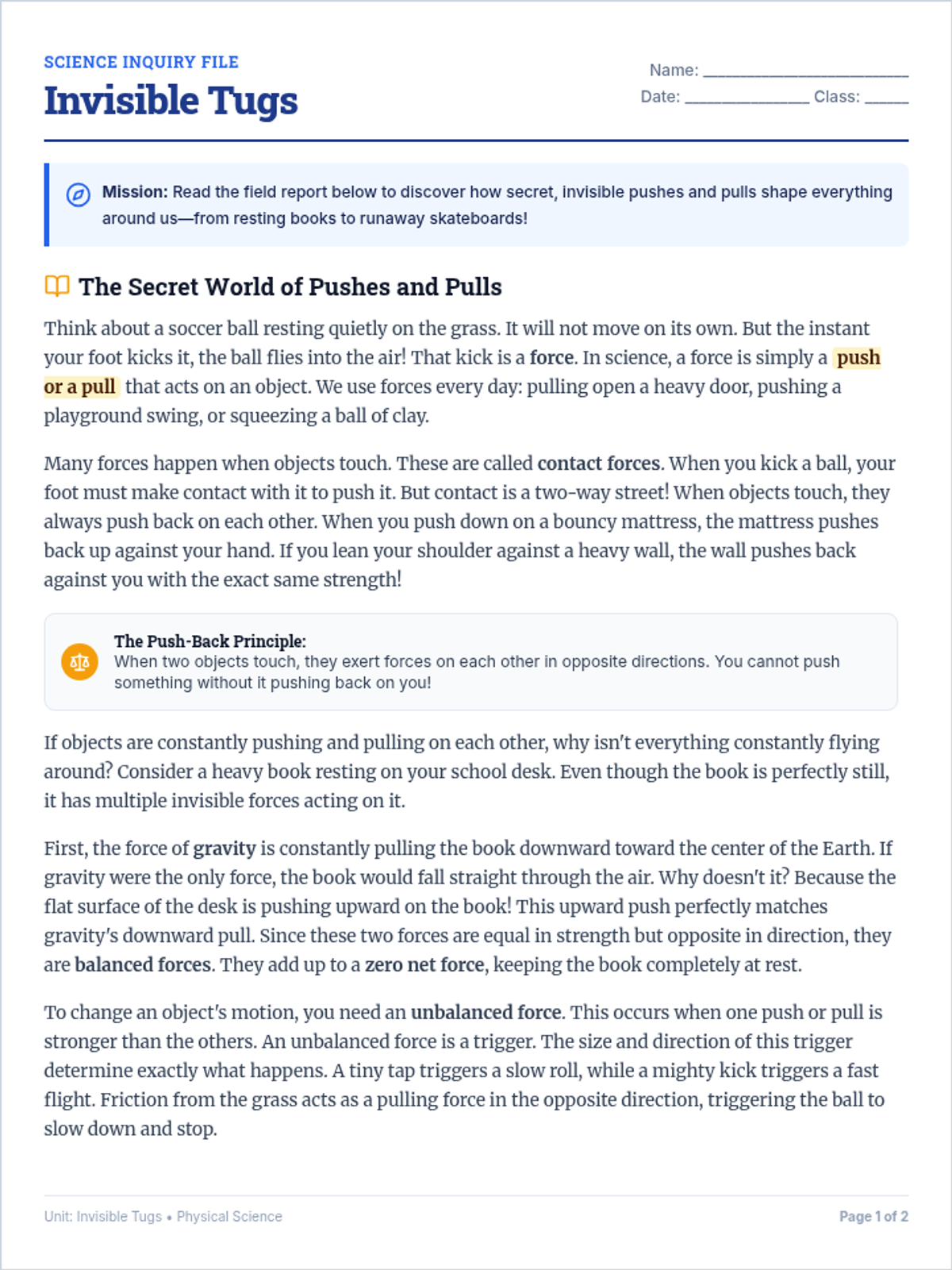
A 2-page printable reading and analysis worksheet for upper elementary students. Page 1 features an engaging, high-interest reading passage on forces, contact forces, balanced forces, and motion triggers. Page 2 provides four deep, DOK 2-3 open-ended analysis questions with lined, clean writing spaces for student work.
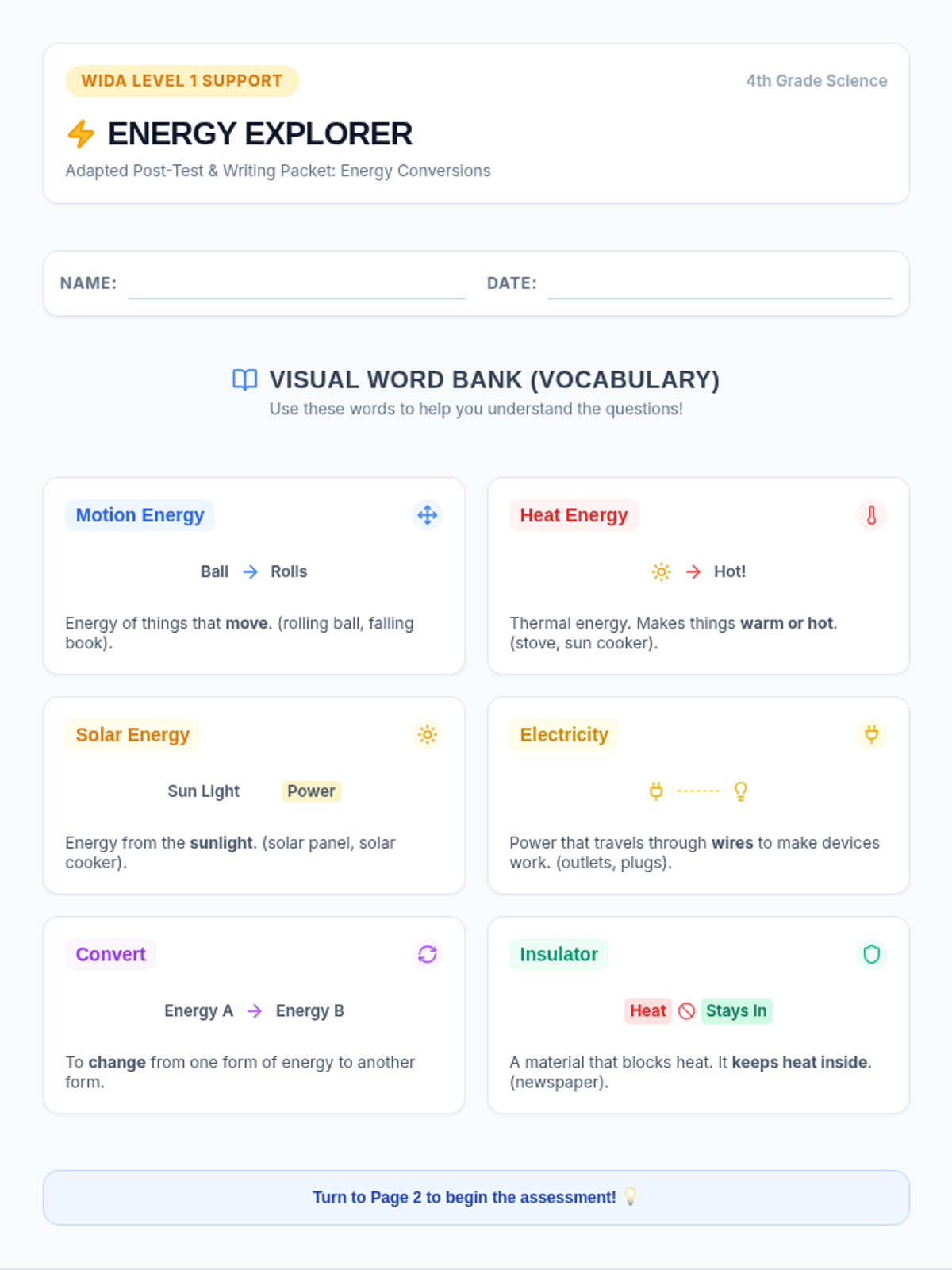
An adapted multi-page science assessment for WIDA Level 1 English Language Learners, containing a pictorial visual word bank, highly simplified question structures, clear tables, and structured sentence frame writing aids.
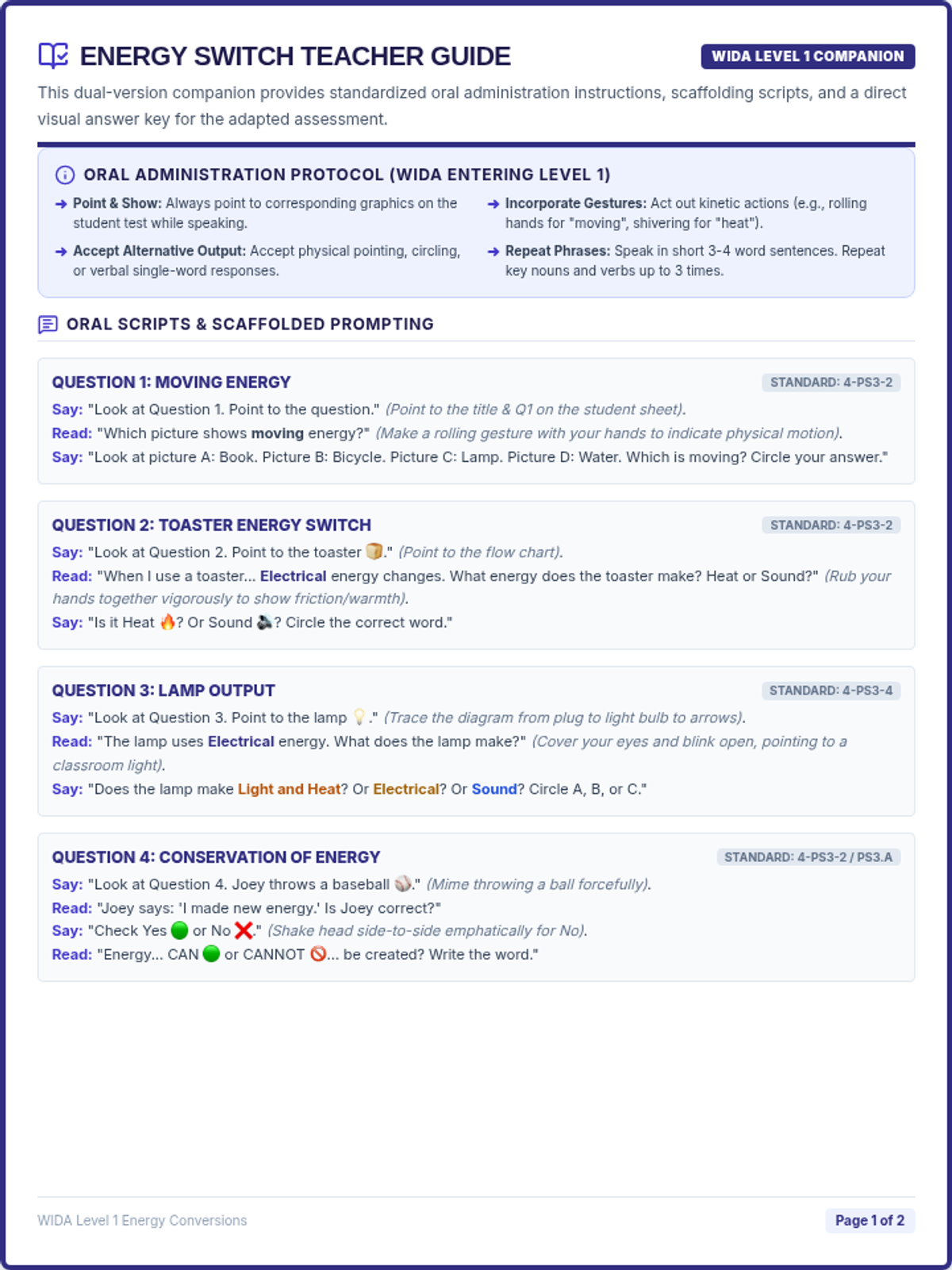
A professional, highly scaffolded teacher guide containing oral read-aloud scripts, pointing instructions, gesture prompts, and a complete answer key for the Energy Switch Test.
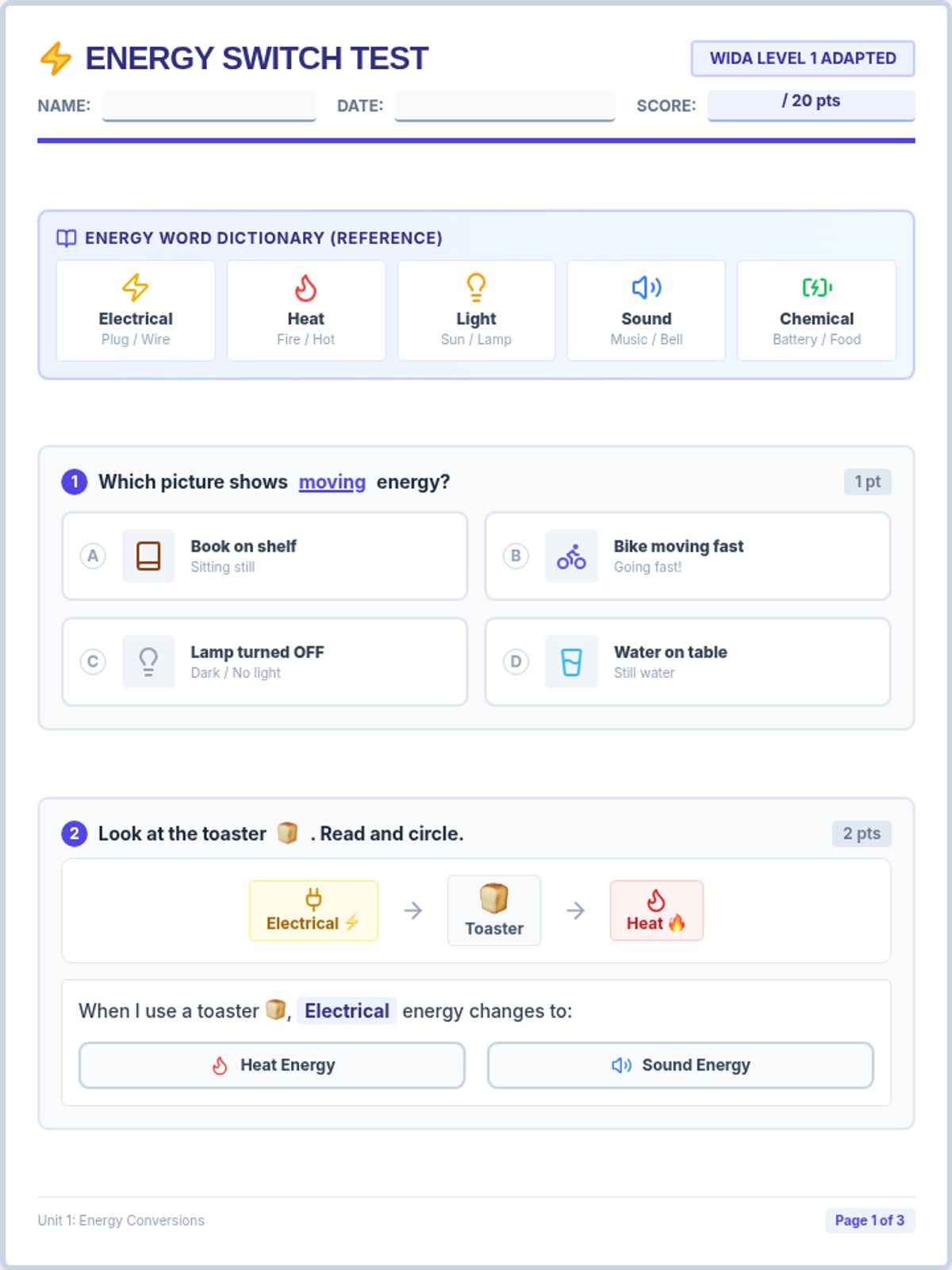
An adapted 4th-grade science assessment on Energy Conversions designed for WIDA Level 1 English Language Learners. Uses simplified syntax, visual dictionaries, graphic organizers, and color-coded arrows.
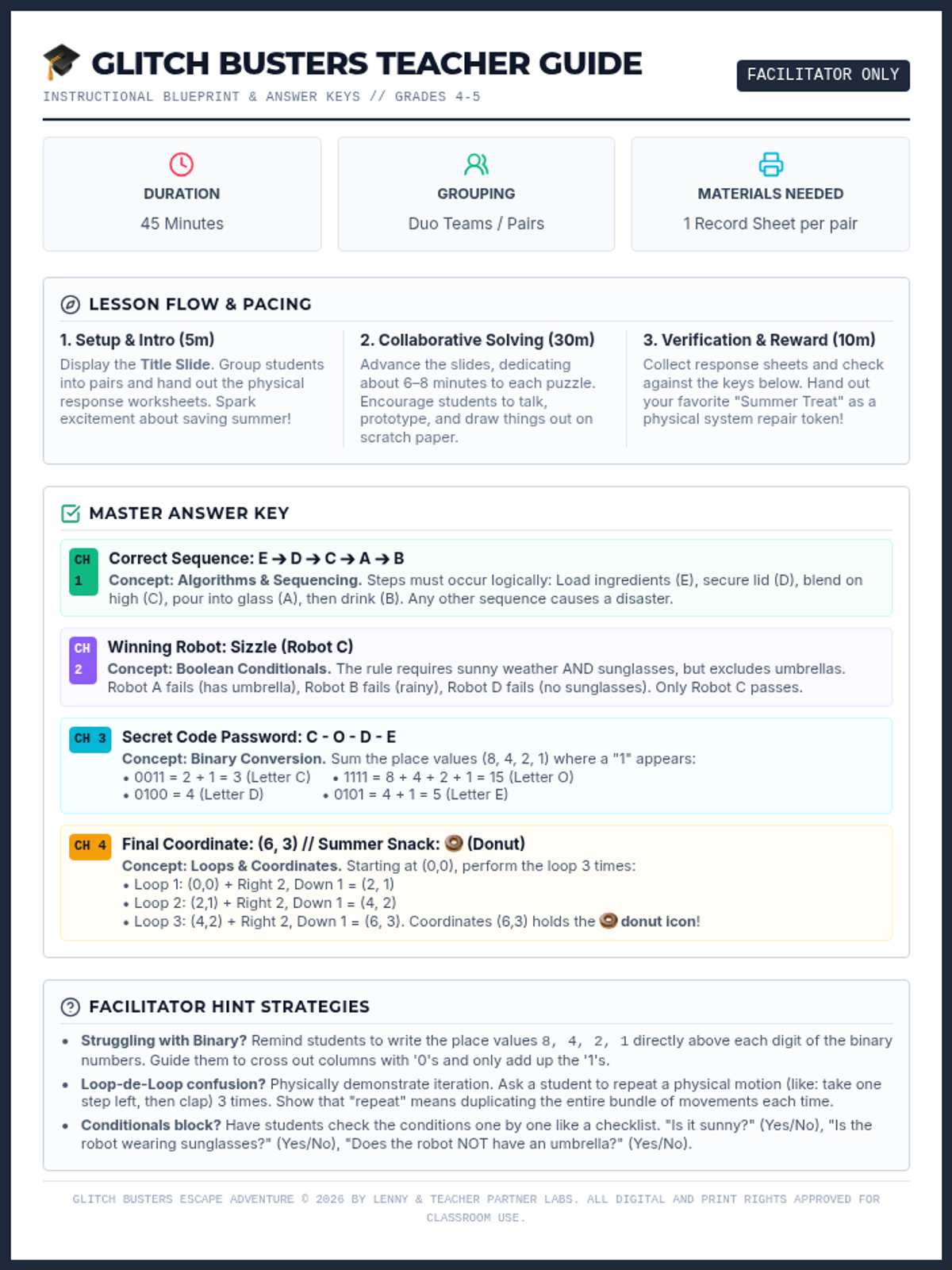
A comprehensive, one-page printable teacher guide containing setup instructions, a recommended pacing guide, helpful hint frameworks, and a detailed answer key with complete solution explanations.
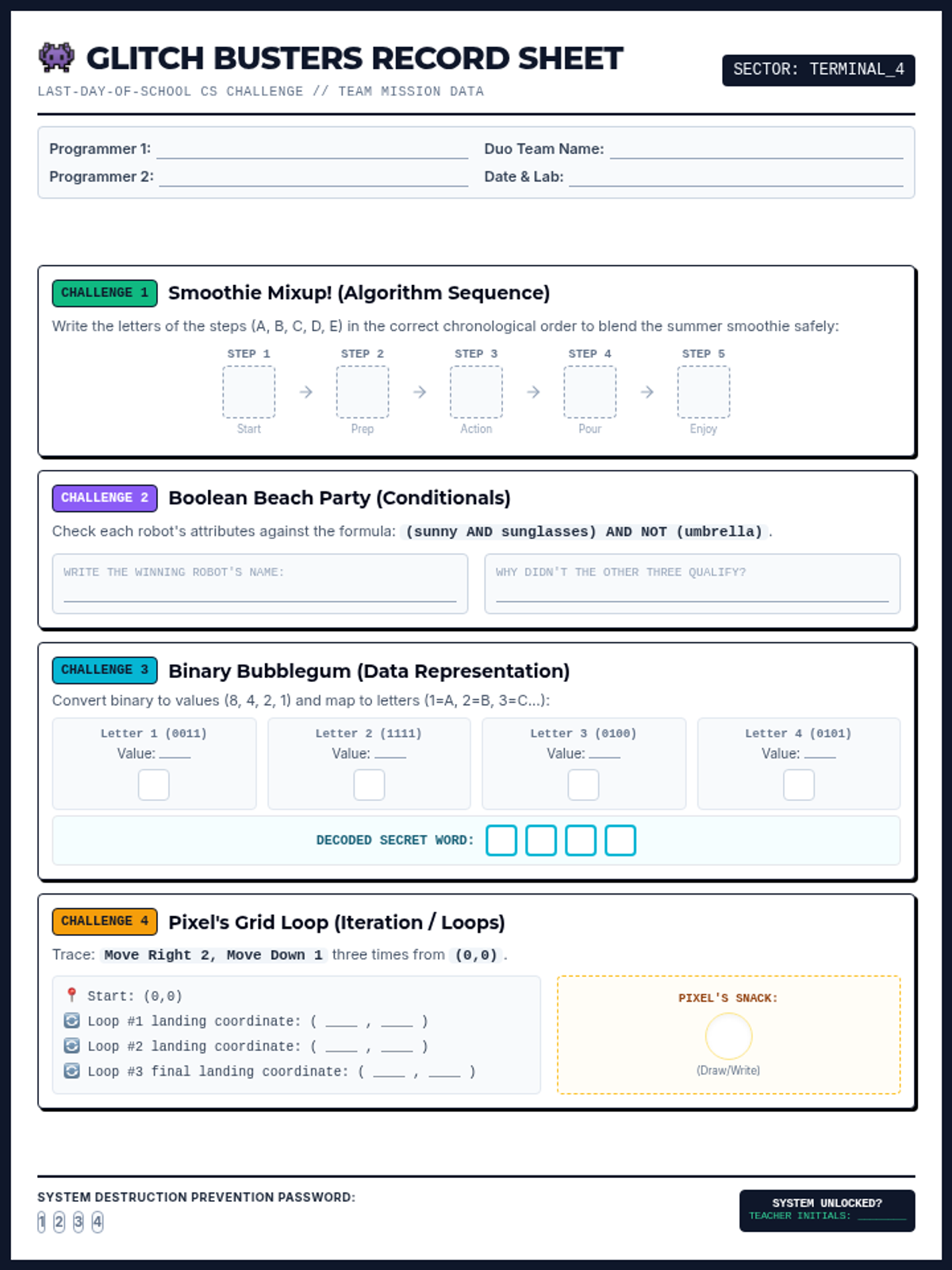
A printable, single-page student response sheet where pairs of 4th and 5th graders record their answers, code trace paths, and passwords for the four Glitch Busters puzzles. Designed with a clean retro-arcade aesthetic and generous white spaces for easy handwriting.
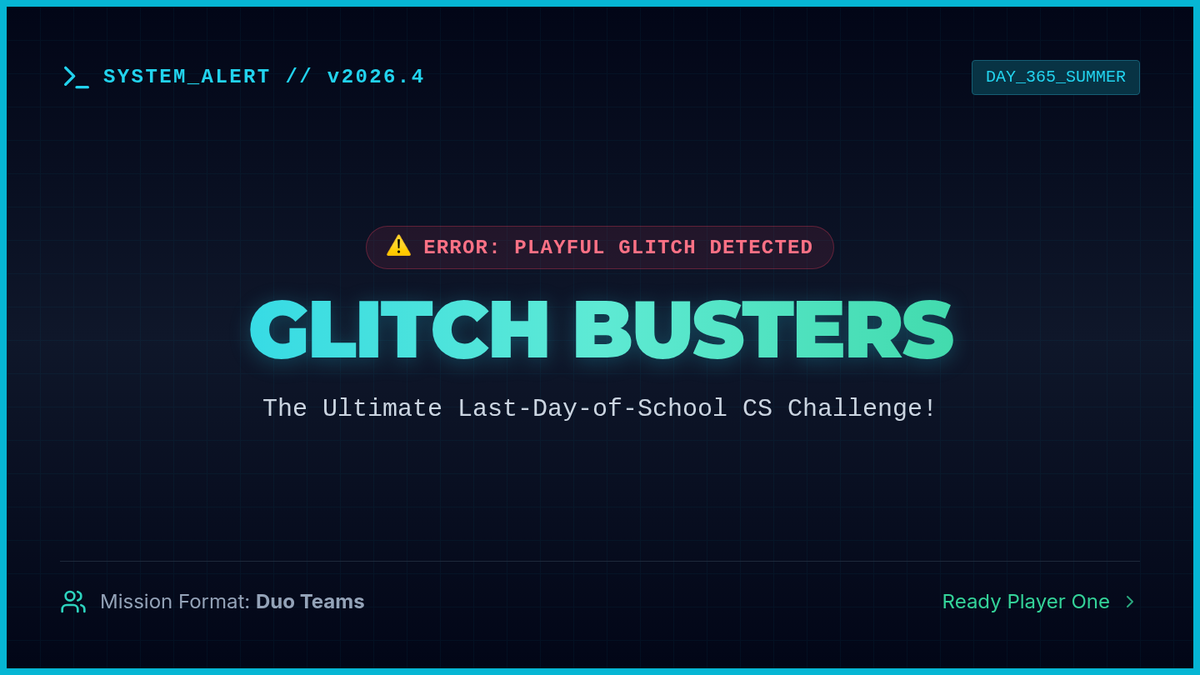
An engaging, retro-style presentation that displays four funny CS-themed puzzles for students to solve in pairs. Features minimum 24px font size, high-contrast layouts, and a cyber-arcade aesthetic suitable for 4th and 5th graders.
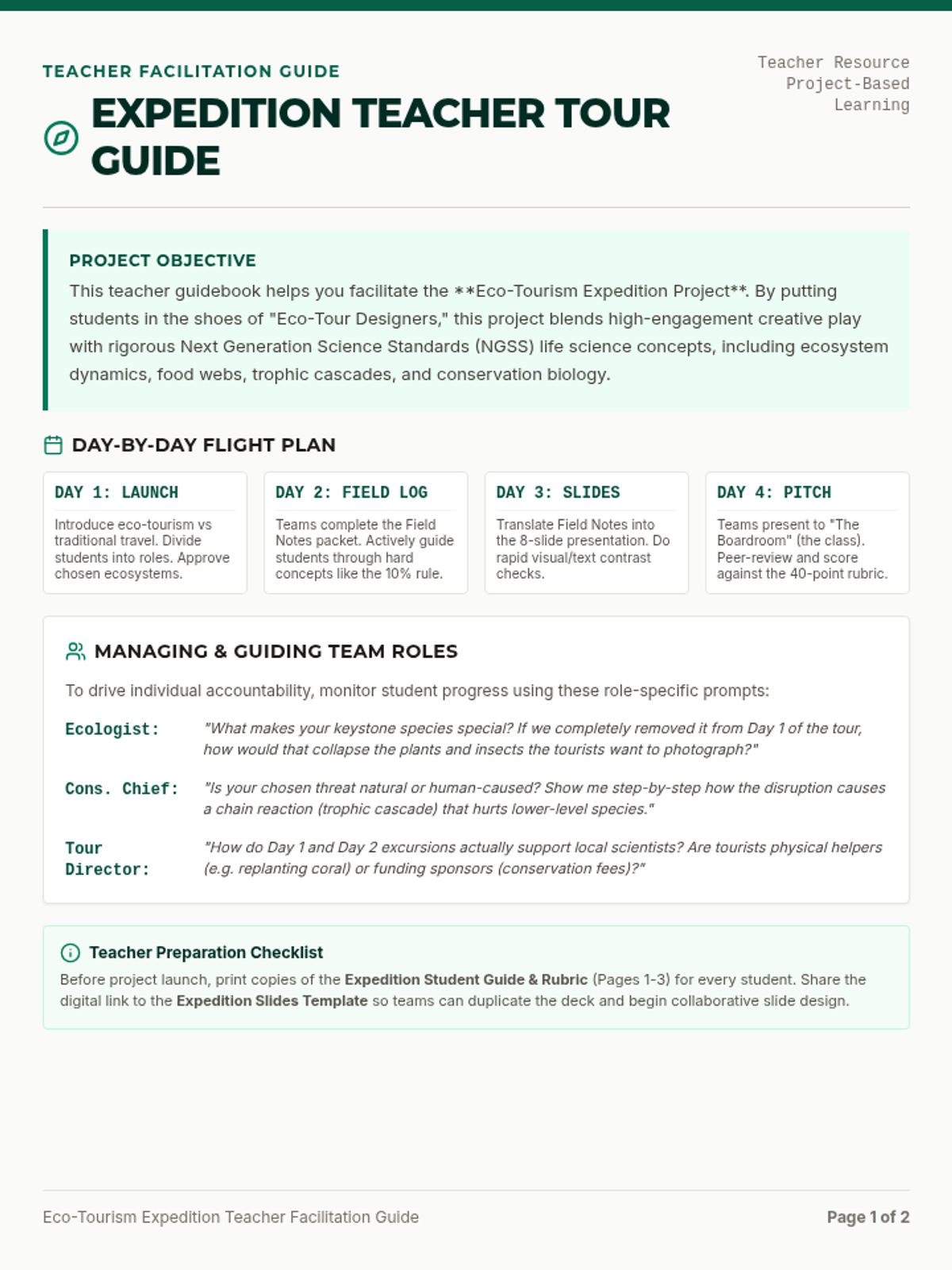
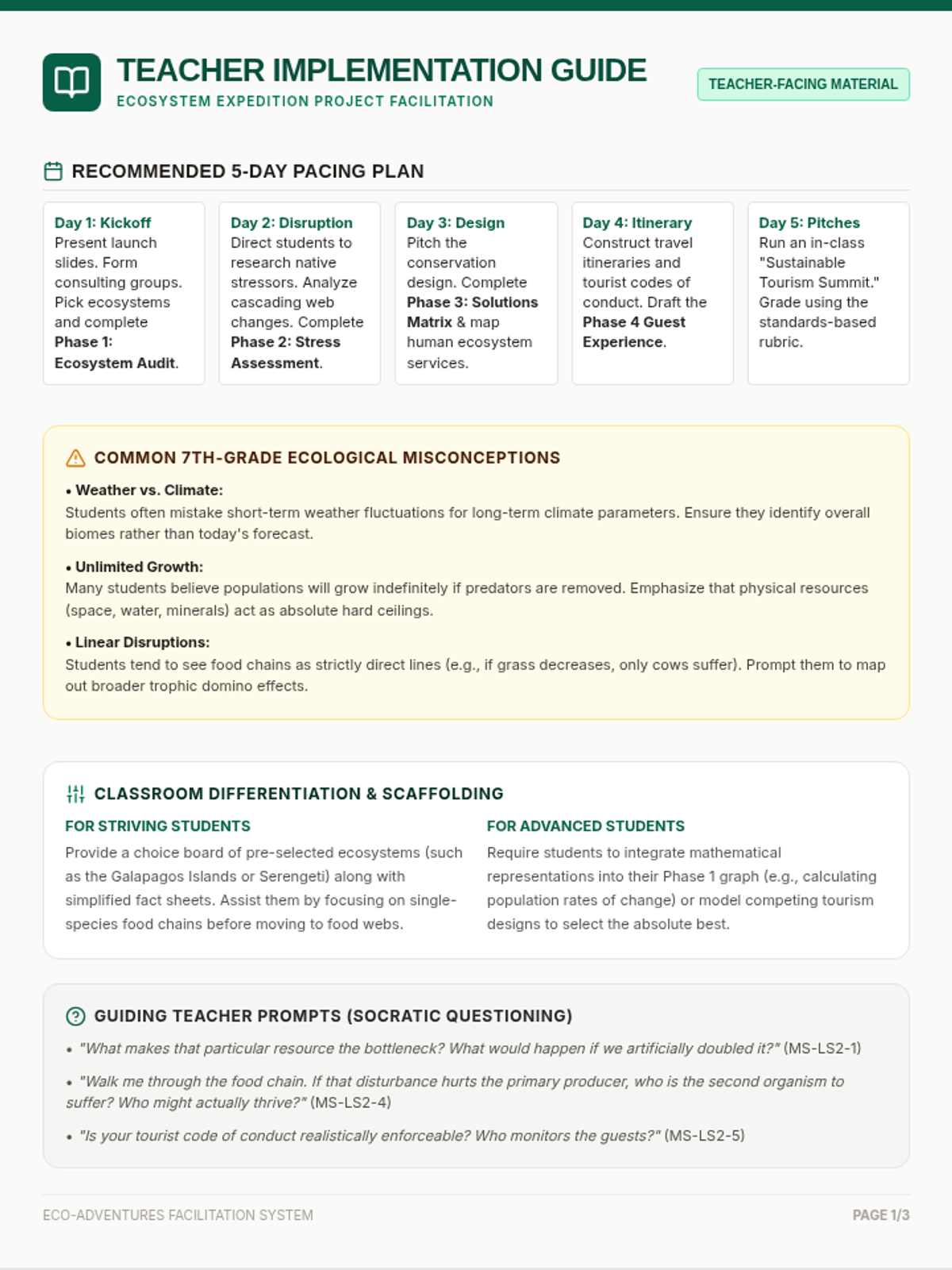
An in-depth teacher facilitation guide containing a 4-day pacing timeline, specialized role prompts, keys to managing ecological misconceptions, and hosting strategies for presentation day.
A beautifully designed, 8-slide digital presentation template for students to present their Eco-Tourism Expedition. Adheres to the 16:9 widescreen format, features a retro field guide aesthetic, and maintains a 24px minimum font size for high visibility.
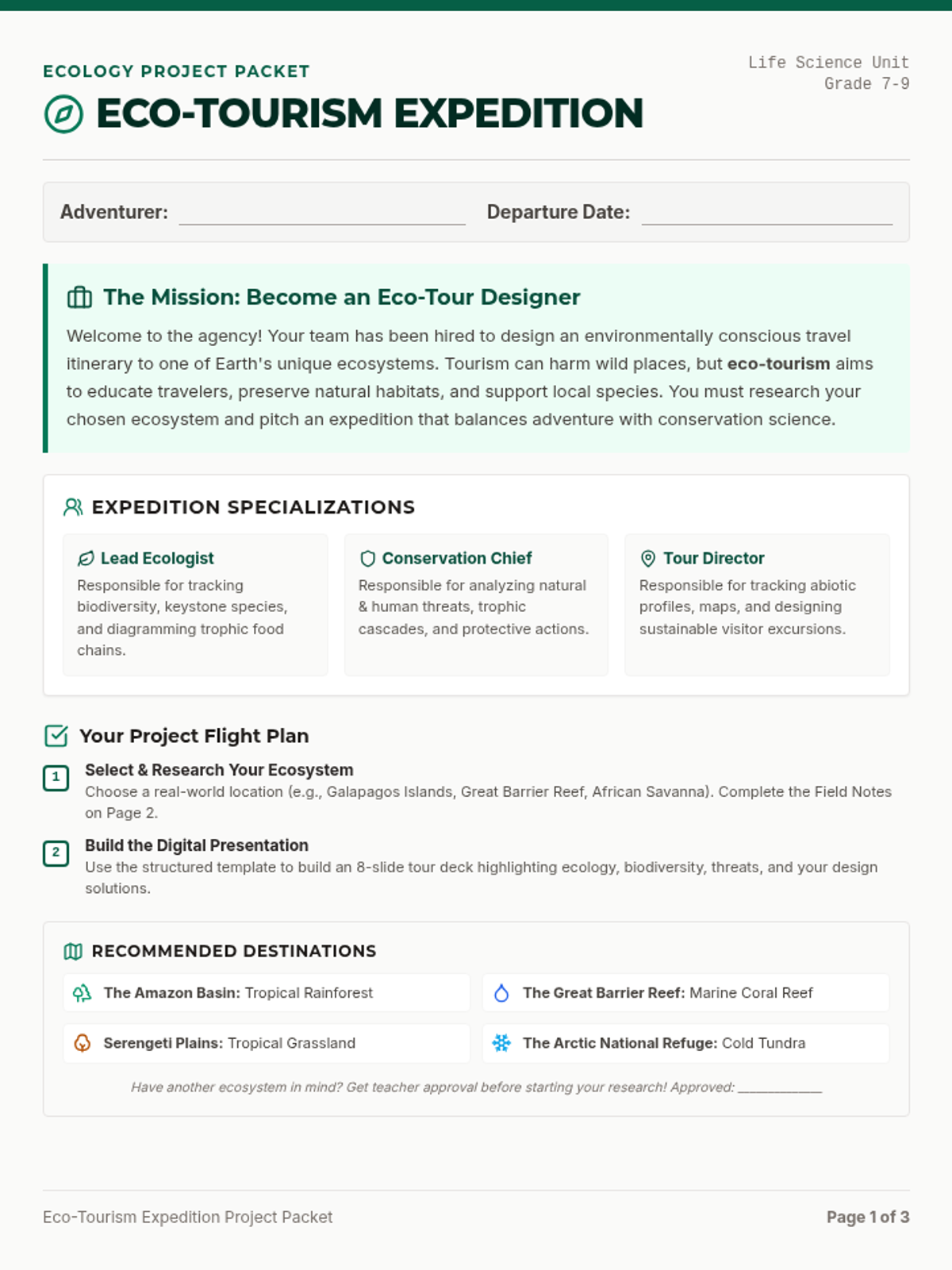
An enhanced student-facing project guide and rubric for the Eco-Tourism Expedition. Includes detailed scientific criteria, specialized team roles (Ecologist, Conservationist, Planner), and deep ecology concepts like keystone species, the 10% energy rule, anthropogenic disruptions, and trophic cascades.
A teacher resource and facilitation guide for the Sustainable Travel Consultant project. Includes a standard pacing guide, scaffolding strategies, sample answers for a Galapagos Islands exemplar project, and grading recommendations.
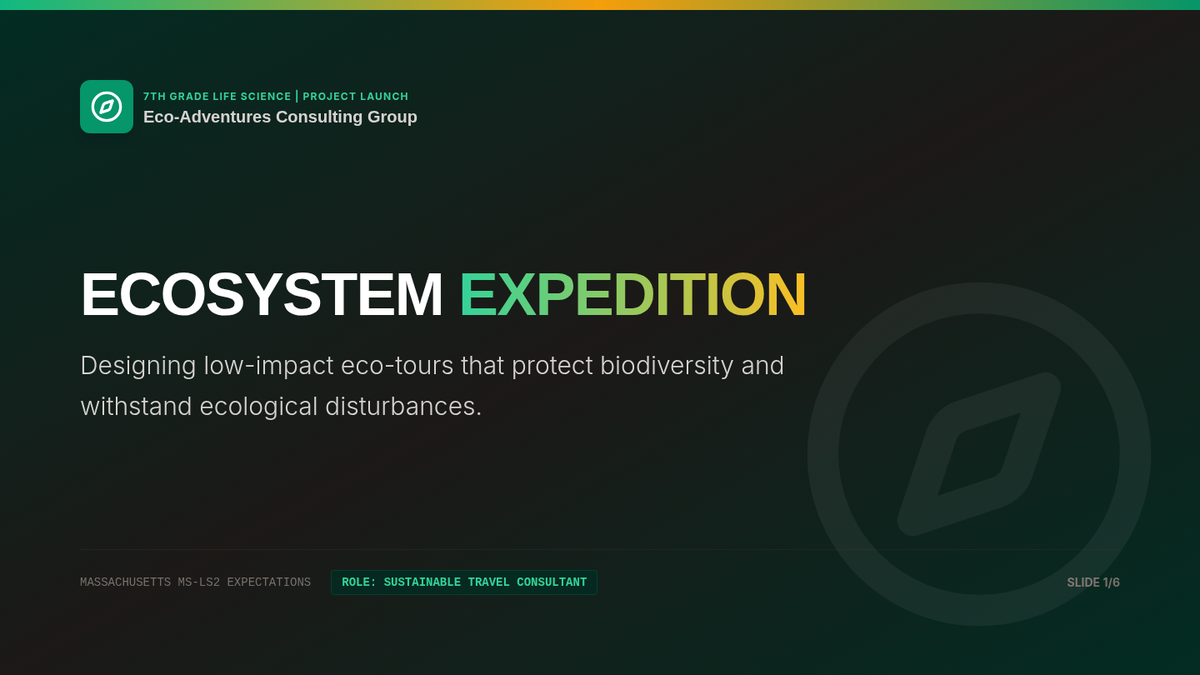
An introductory slide deck designed to launch the Sustainable Travel Consultant project. Reviews key ecological concepts (limiting resources, disruptions, biodiversity), sets the project parameters, and shows student milestones.
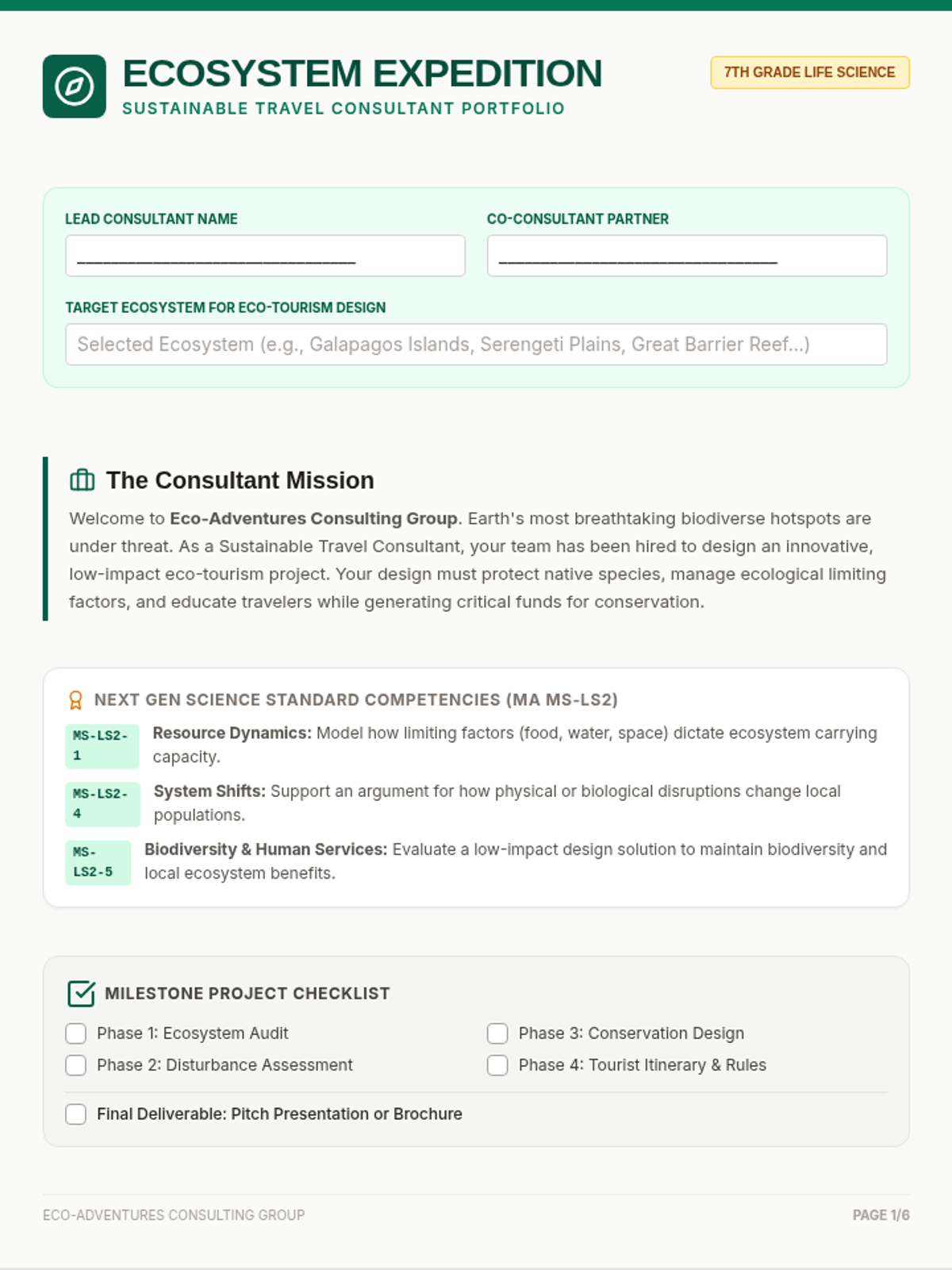
A comprehensive, student-facing project guide and workbook for designing an eco-tourism pitch. Includes graphic organizers for ecosystem profiles, resource dynamics, ecological disruptions, conservation design solutions, and a grading rubric aligned with 7th-grade Massachusetts life science standards.
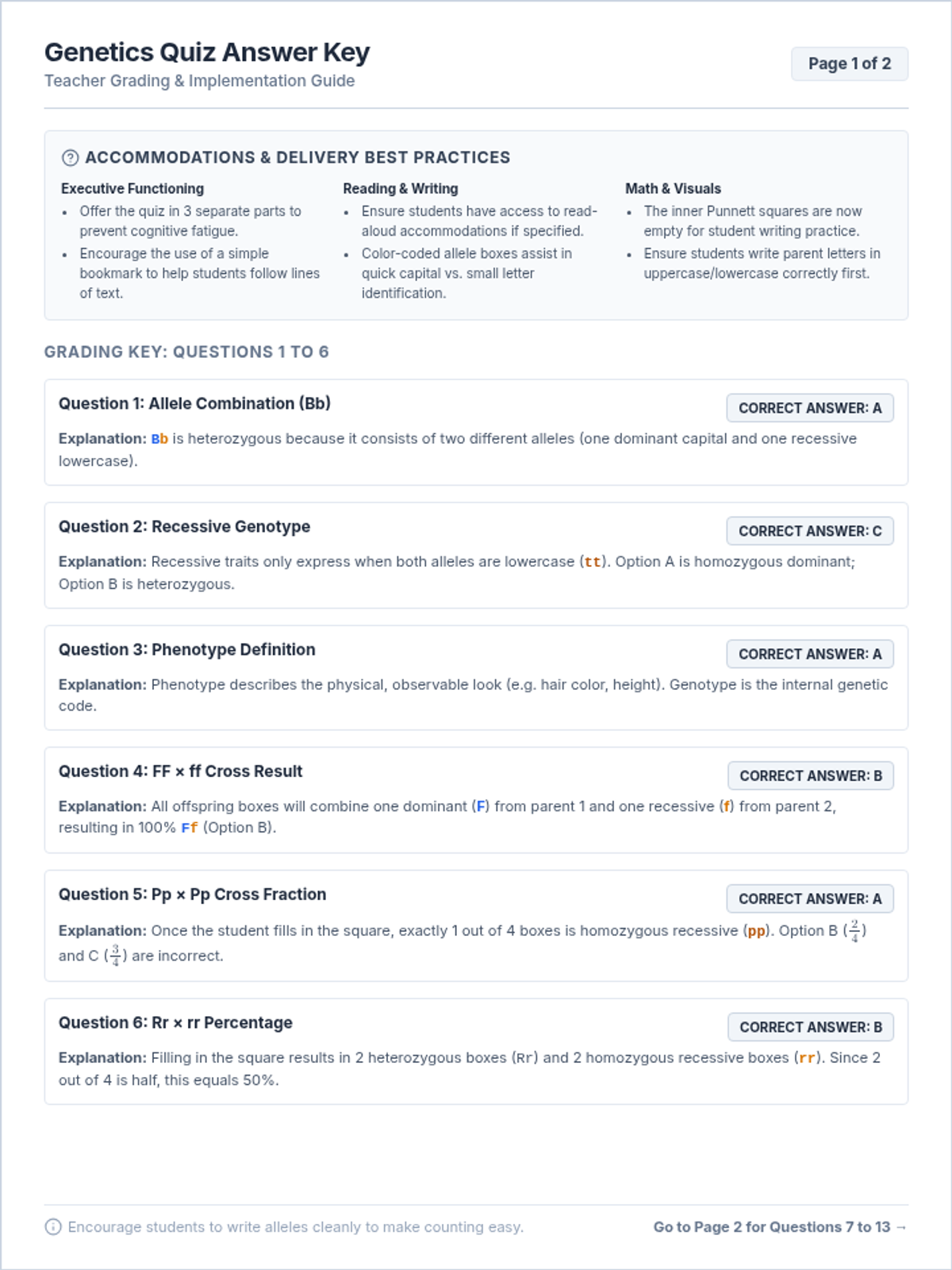
A comprehensive teacher guide and answer key for the Genetics Quiz. Includes clear answers and detailed explanations for all 13 scaffolded questions. All hints and accommodation tips have been removed.
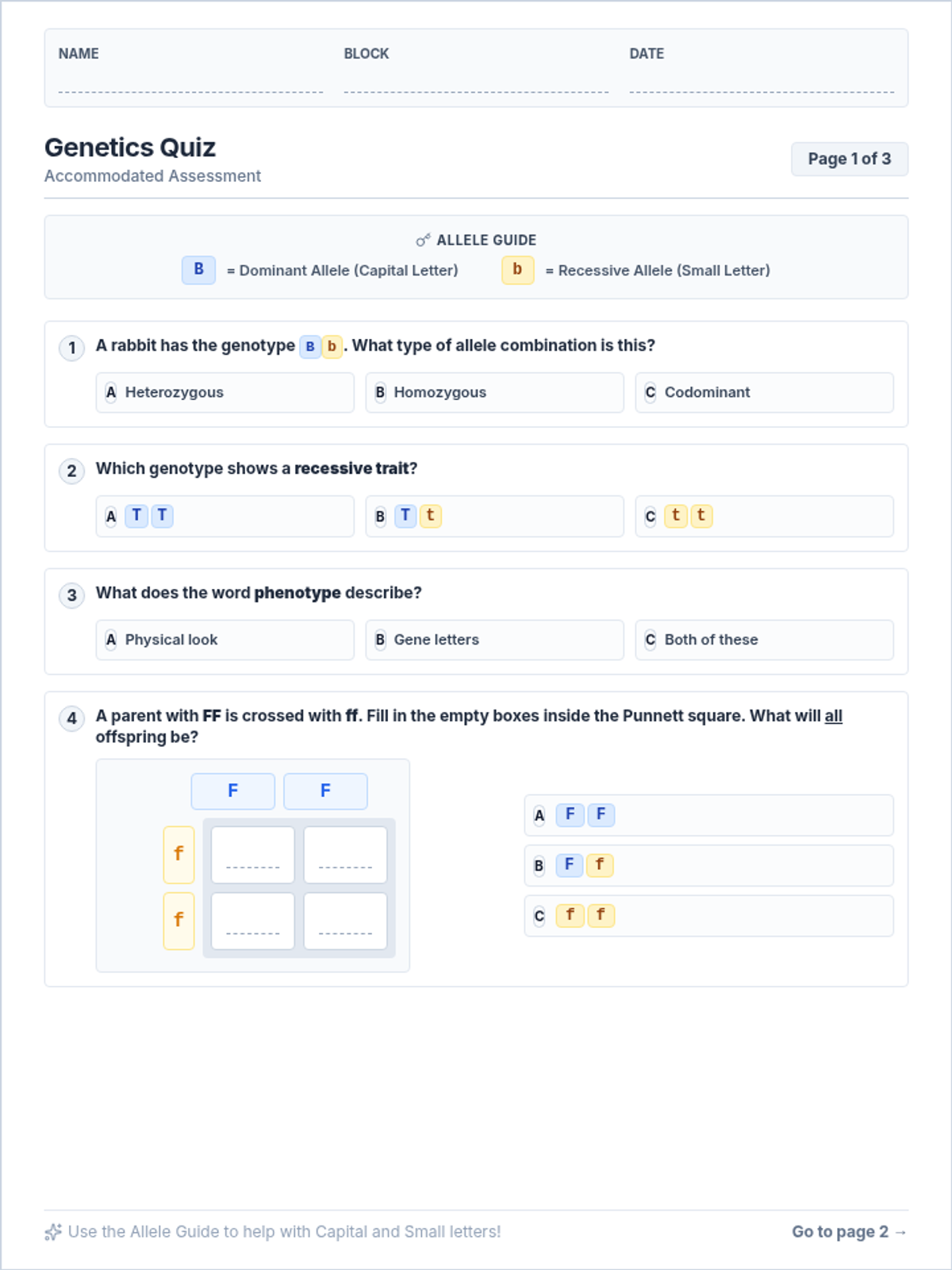
A 13-question genetics quiz with a neutral design, featuring empty Punnett squares with parent labels on the outside, three answer choices for Page 1 & Page 2 questions, a hint on Question 12, simple blood type allele notation (A/B/O instead of superscripts), an AO option on Question 12, clean fraction formatting on Question 5, and a 3-sentence open response question with ample writing space on Page 3.
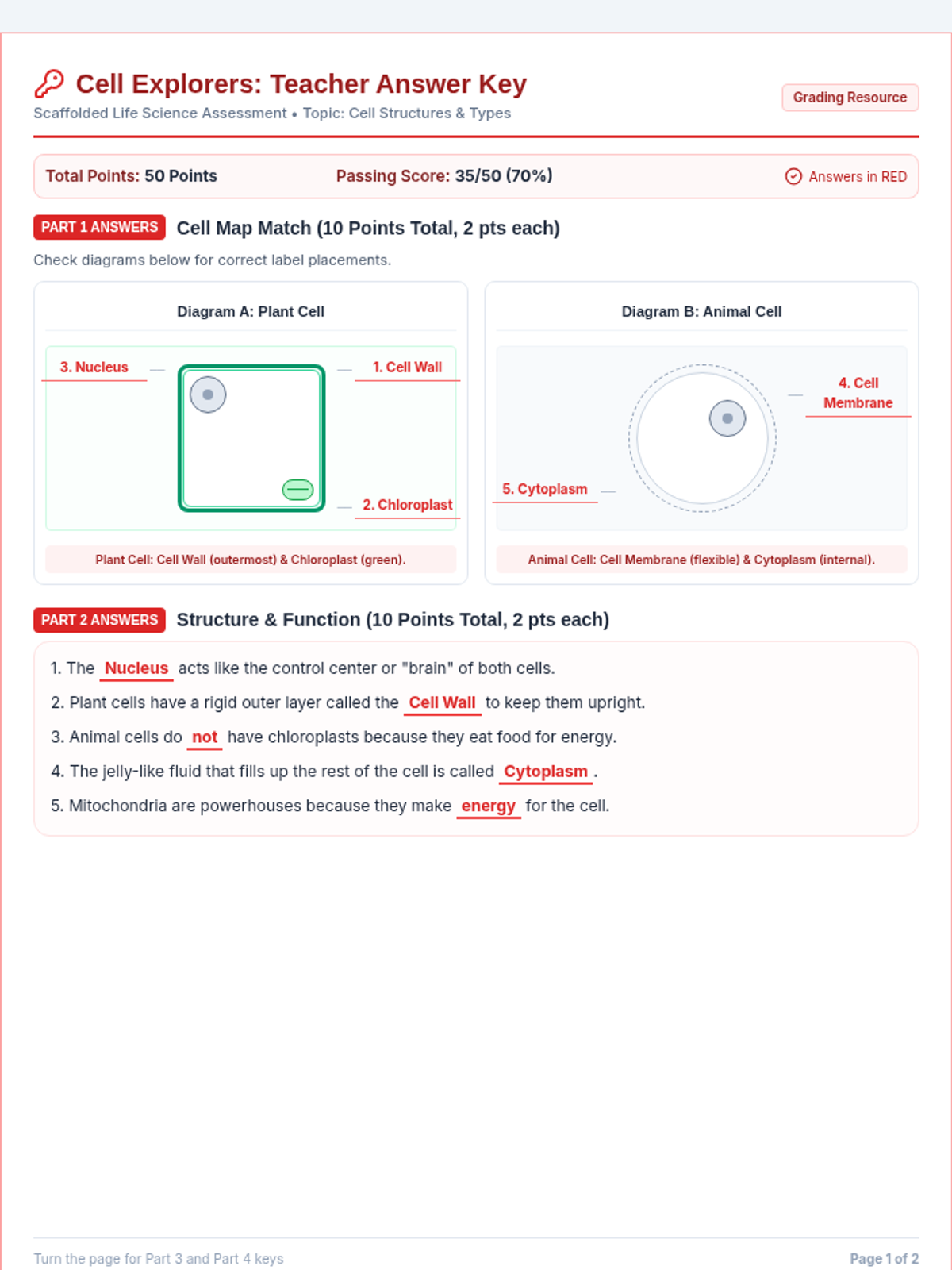
A 2-page teacher answer key companion for the scaffolded cell unit assessment, featuring highlighted correct diagrams, finished sentence frames, and student model short answers, now updated to a 50-point scale.
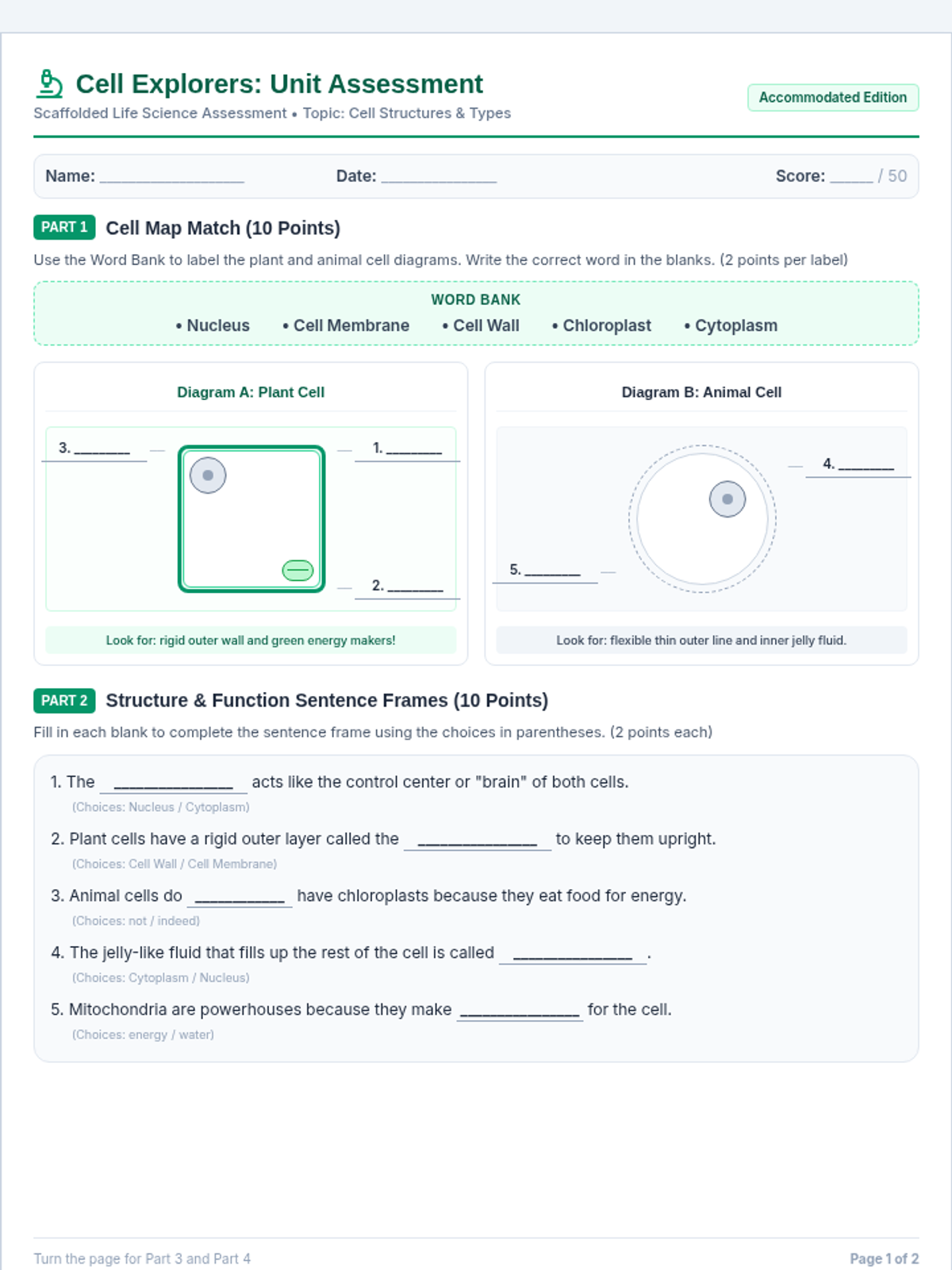
A 2-page scaffolded student cell assessment covering cell organelles, prokaryotic and eukaryotic structures, plant vs. animal cells, and bacterial anatomy. Features word banks, sentence frames, and guided sentence starters, now adjusted to a 50-point scale.