A Wilson-style word scooping worksheet where students identify base words and suffixes for 15 vocabulary words. Consolidated to one page with optimized spacing for student markings. Swapped 'shoplifter' for 'explorer'.
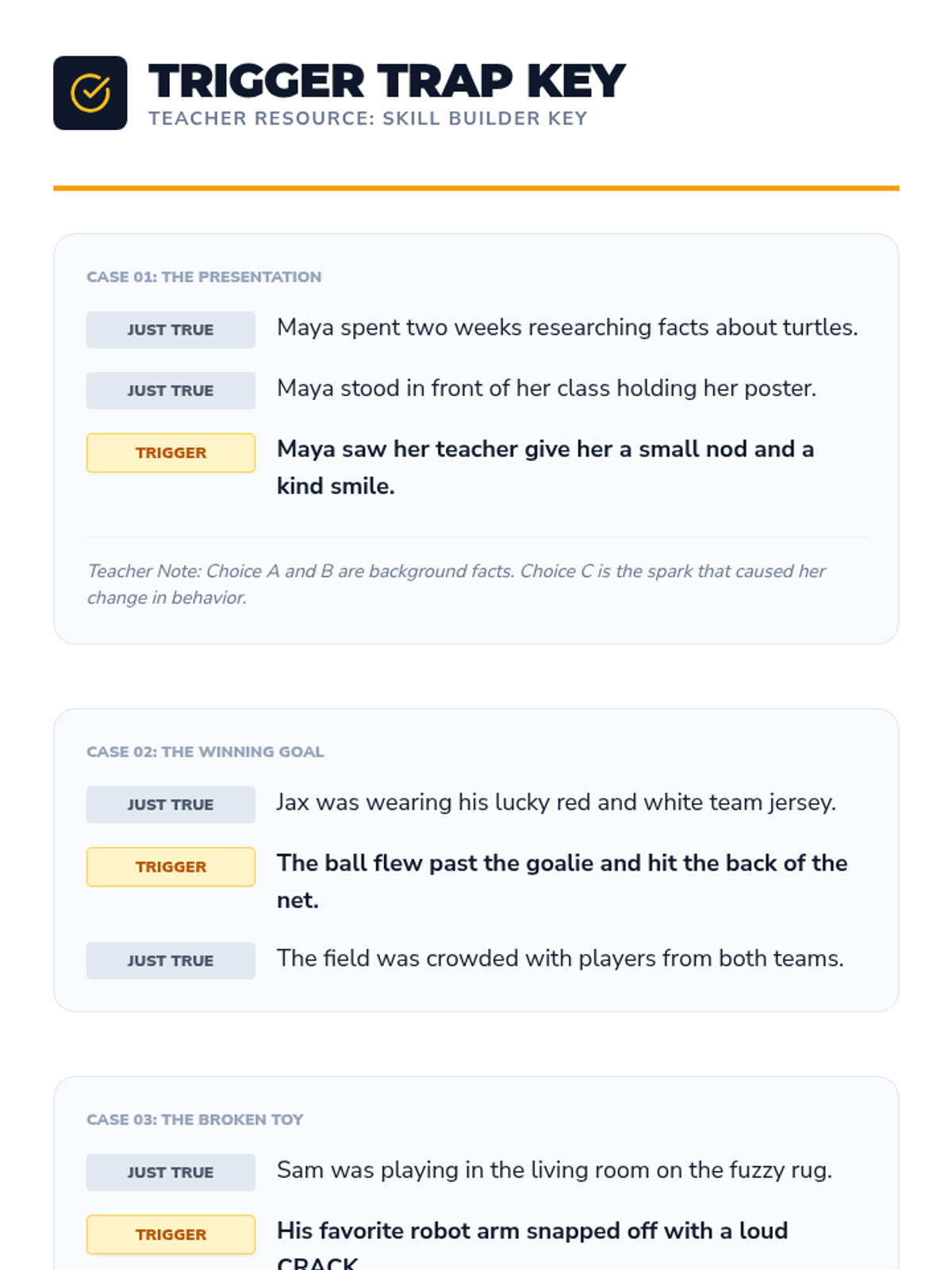
The answer key for the Trigger Trap Activity, providing labels and pedagogical tips for distinguishing between triggers and background facts. Now with improved page break handling and alignment.
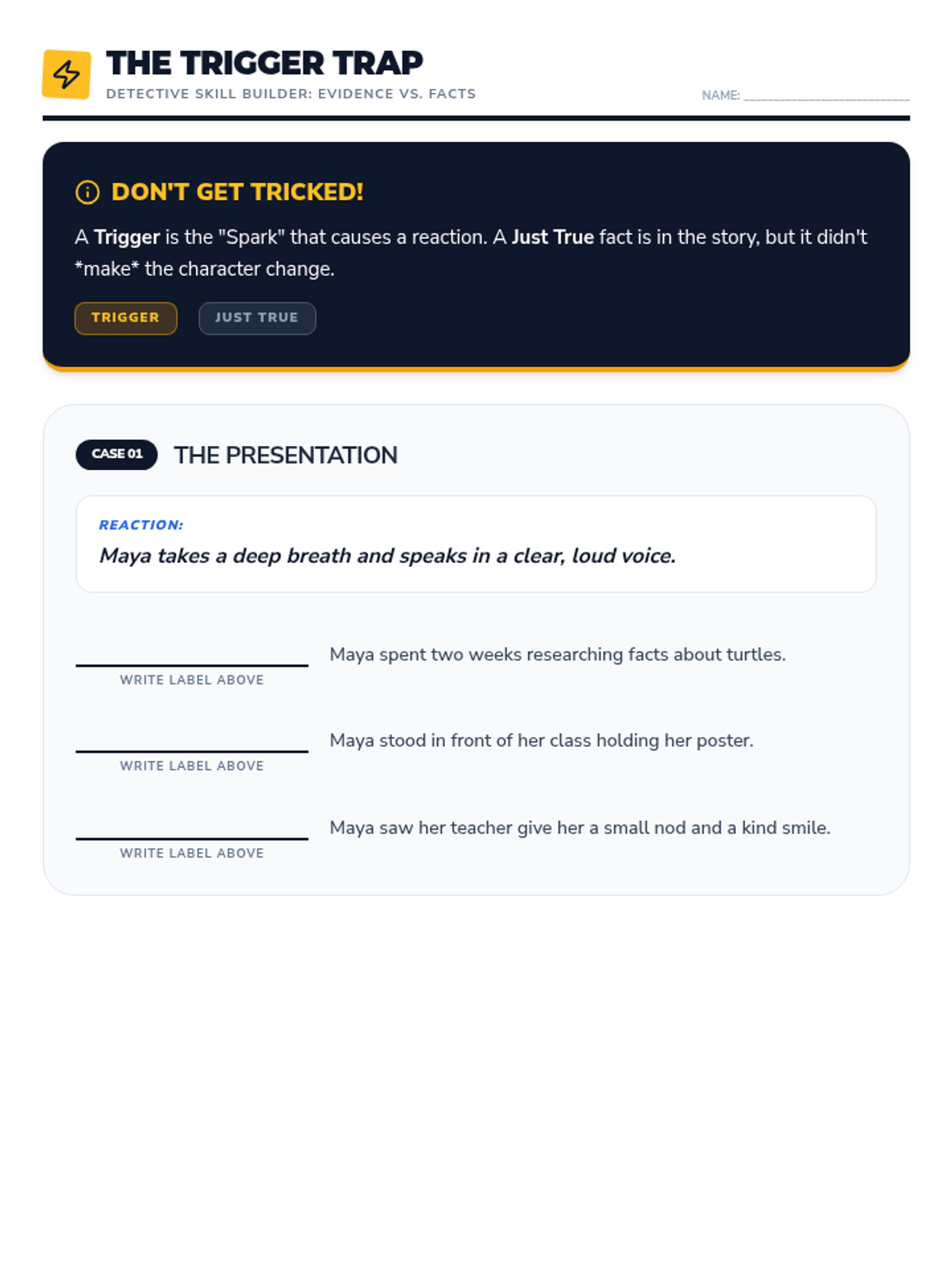
A targeted skill-building activity for 3rd graders to practice distinguishing between immediate triggers (causes) and background facts in a story. Designed to address common misconceptions in text evidence identification. Now with improved layout and readability.
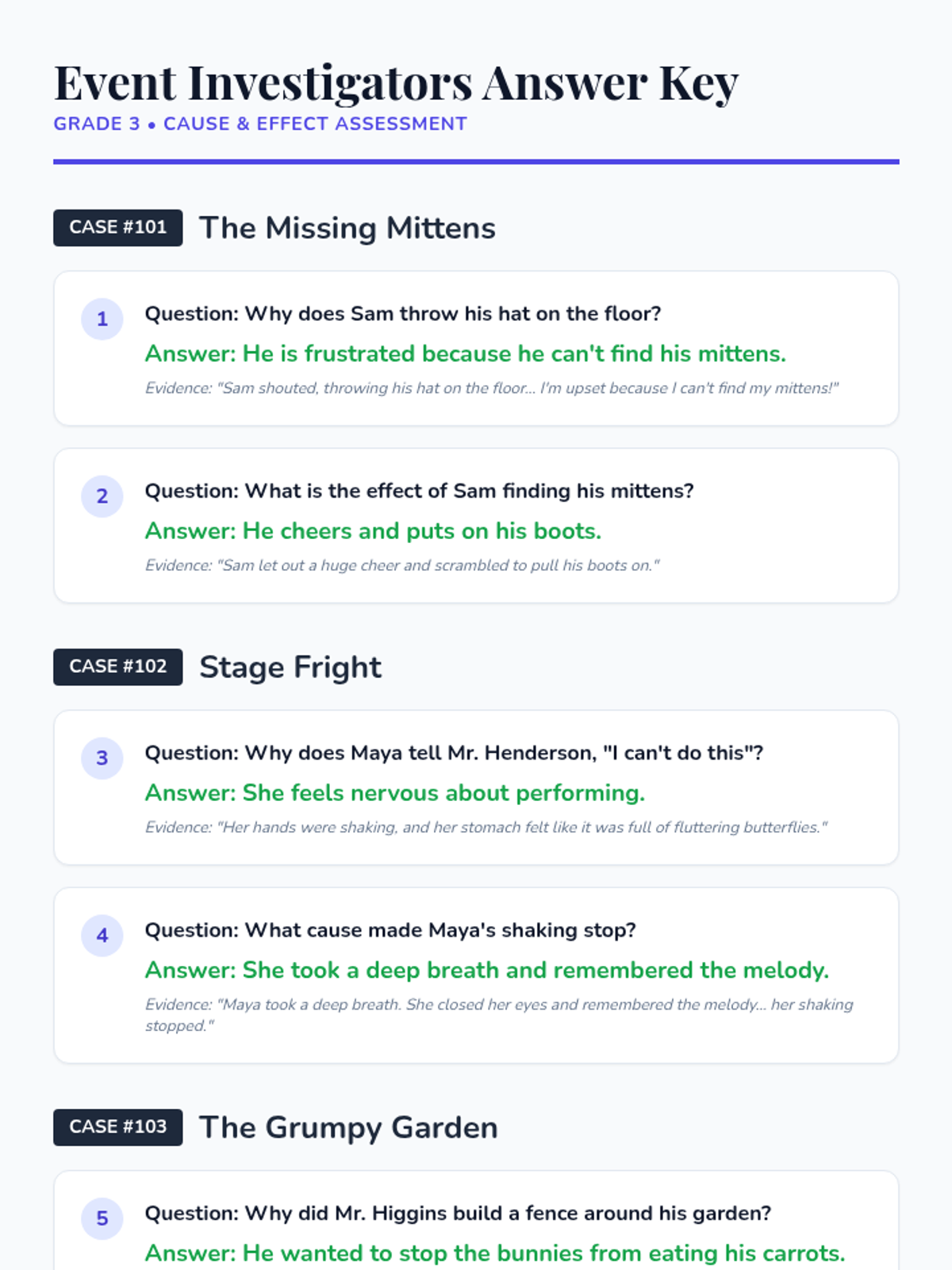
The complete answer key for the 'Event Investigators' worksheet, providing correct responses and textual evidence for teachers to use during grading or review. Question 5 has been removed to match the updated worksheet.
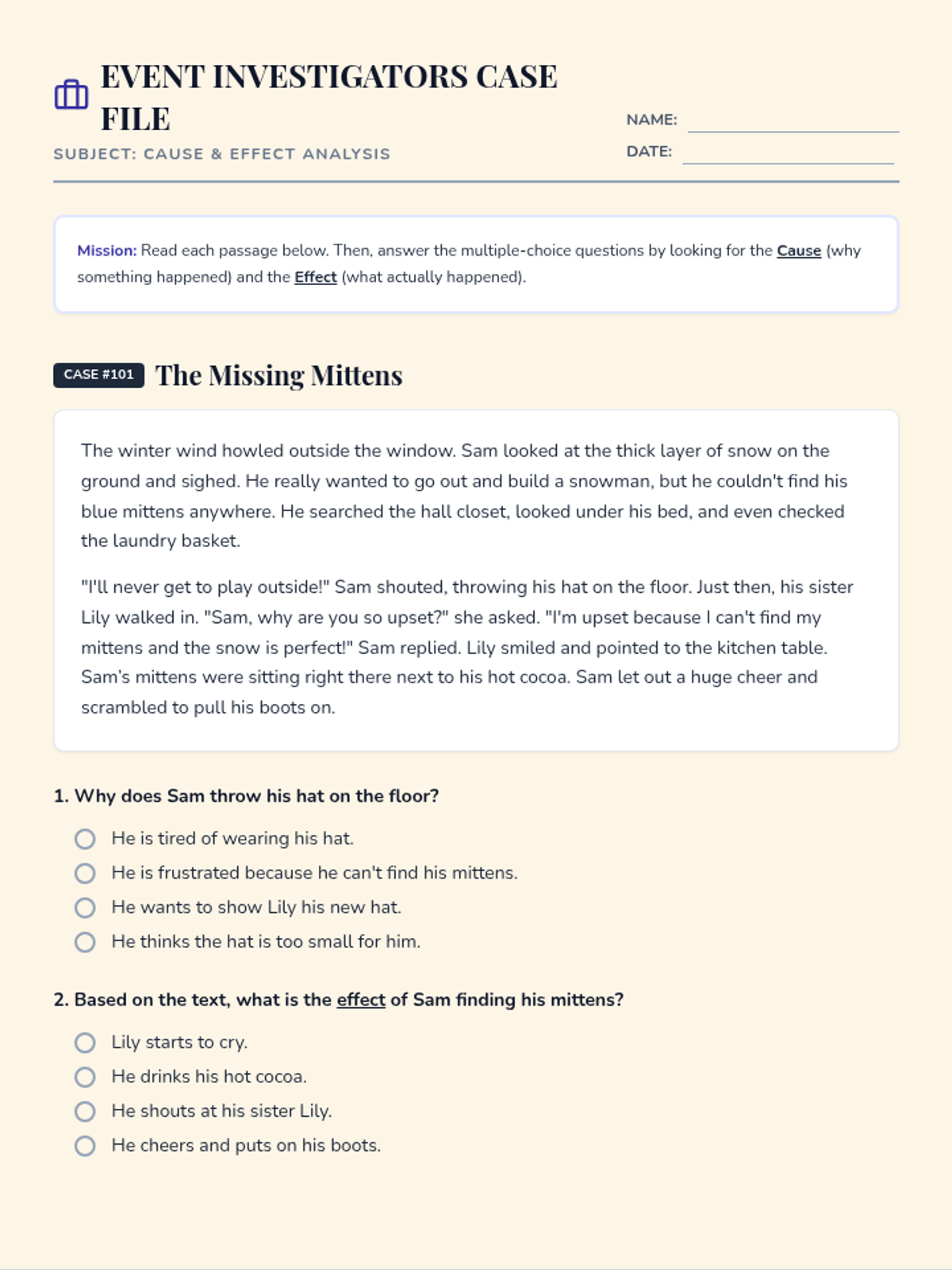
A 3rd-grade reading comprehension worksheet featuring four short story passages and multiple-choice questions focusing on character motivation and cause-and-effect relationships. Question 5 for 'Stage Fright' has been removed as requested. Each case is now presented on its own page for clarity.
An engaging slide deck designed to teach 3rd graders about cause and effect through a "detective" theme, including definitions, character motivation analysis, and guided practice.
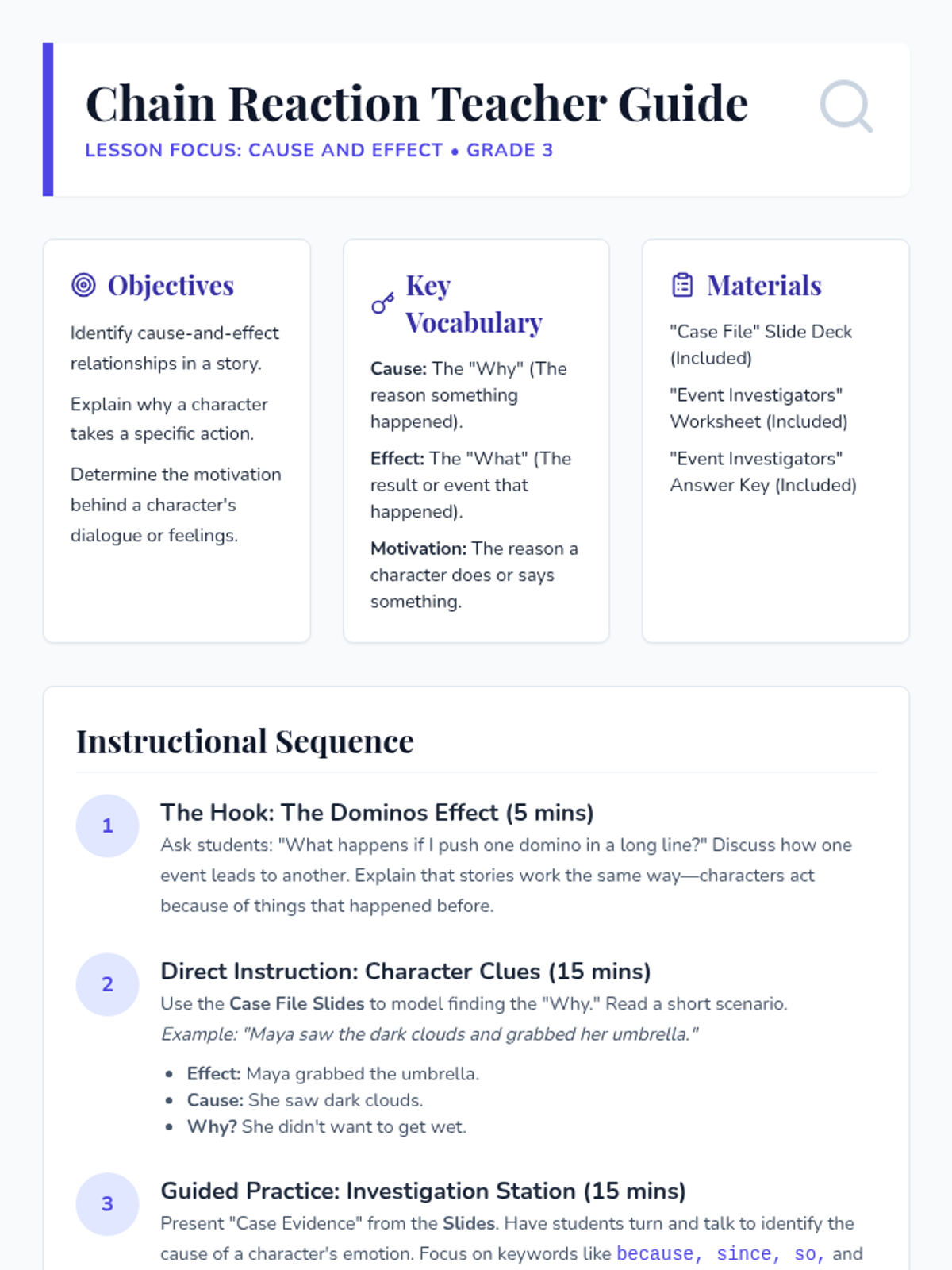
A detailed teacher's guide for a 3rd-grade cause and effect lesson, featuring an instructional sequence, learning objectives, and tips for differentiation.
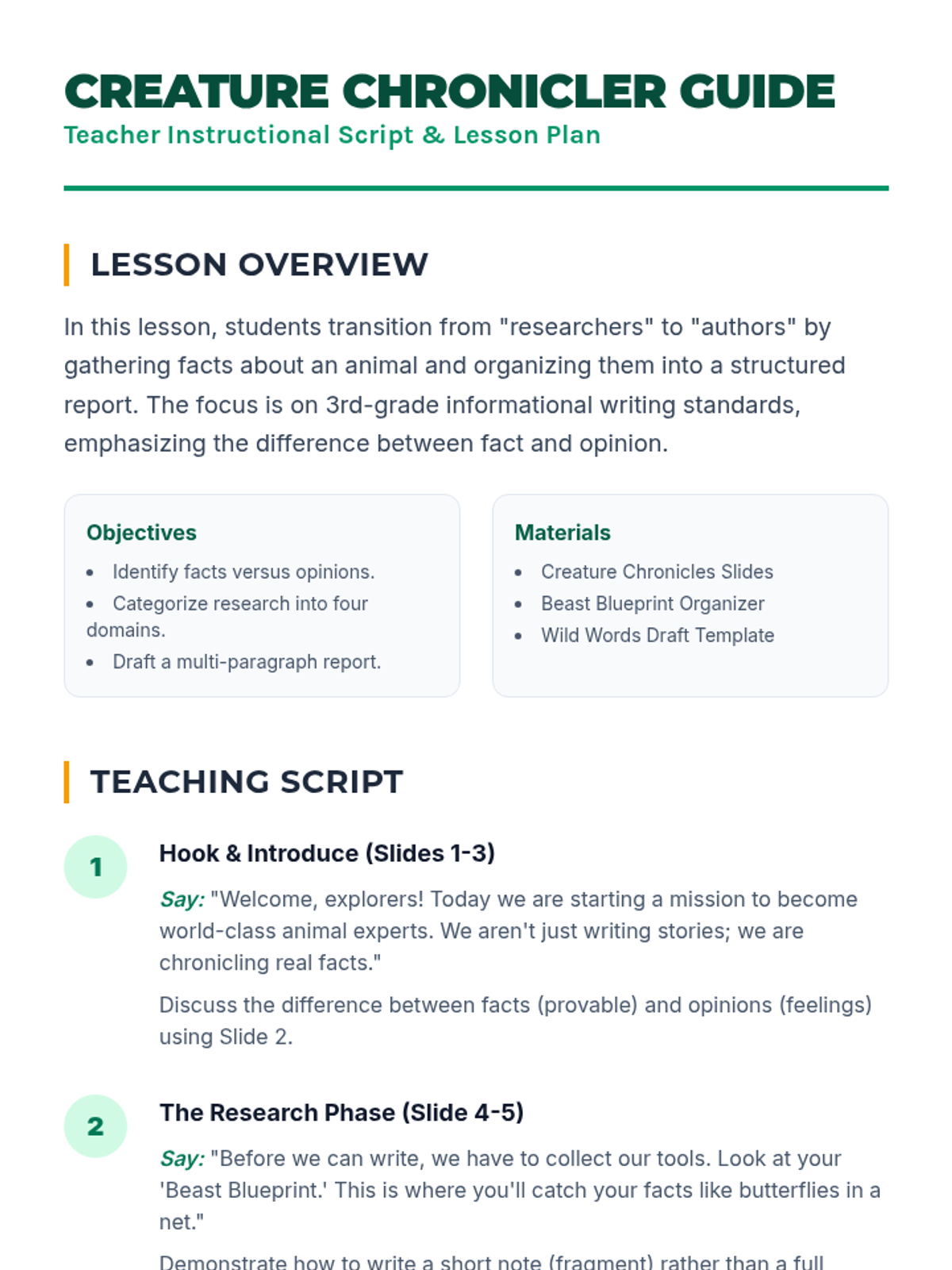
A comprehensive teacher guide for the Creature Chroniclers lesson, featuring an instructional script, differentiation strategies, and clear learning objectives for animal research writing.
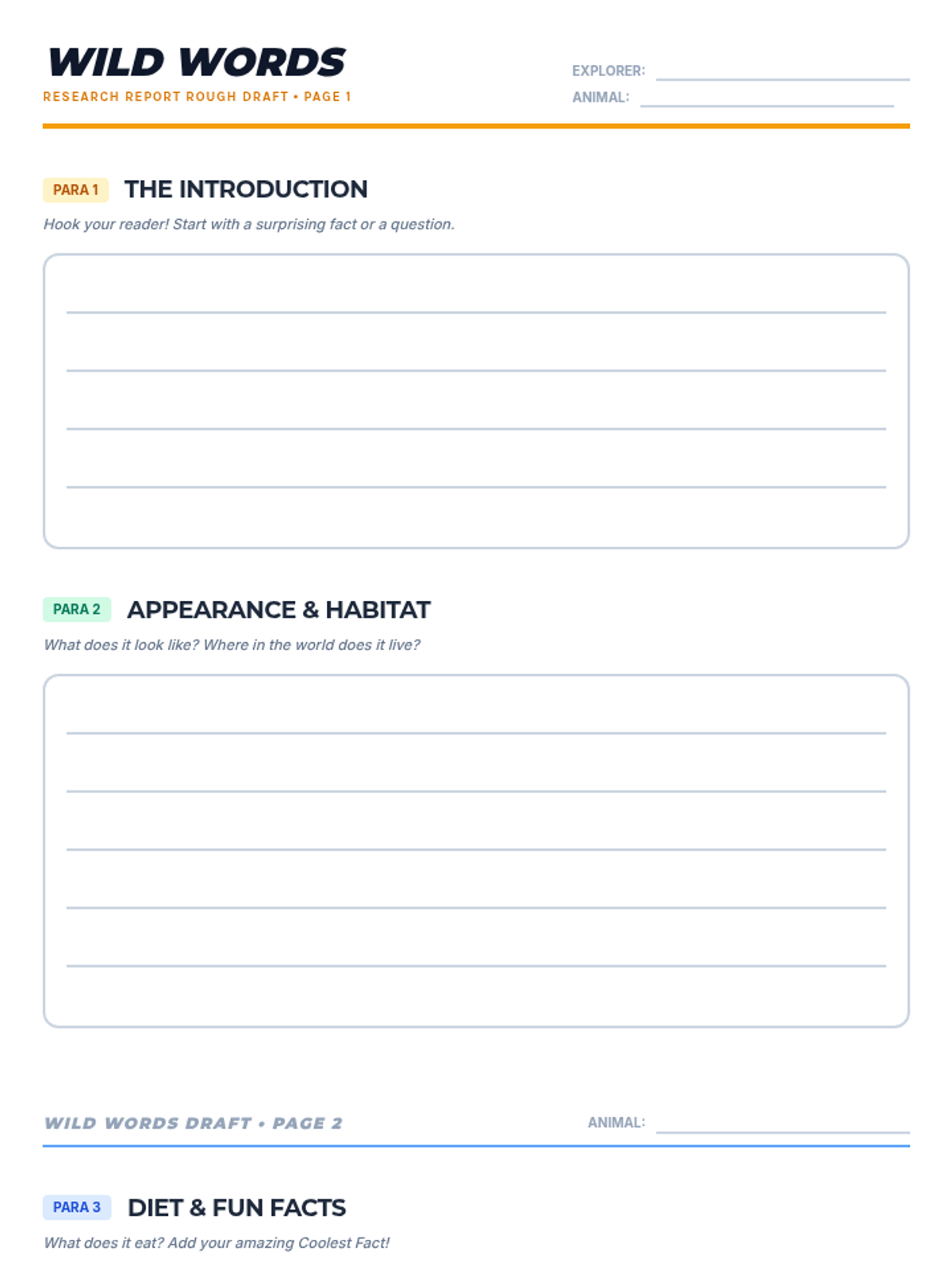
A guided rough draft template for 3rd graders that breaks down an animal research report into manageable paragraphs with helpful prompts and a final self-checklist.
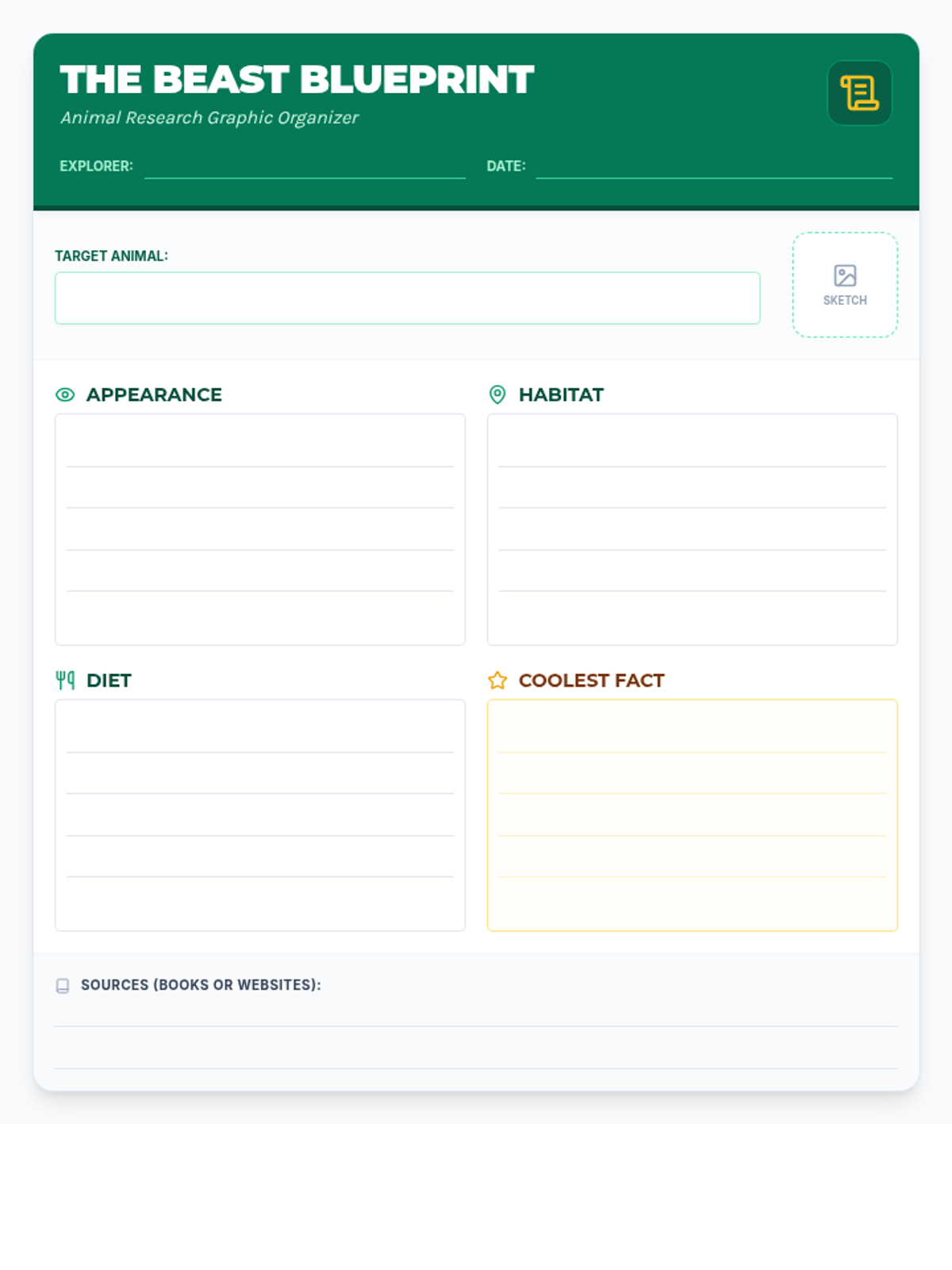
A structured graphic organizer for 3rd-grade students to record facts about an animal's appearance, habitat, diet, and unique characteristics during their research phase.
A vibrant and engaging slide deck designed to introduce 3rd graders to animal research and informational writing, using a 'Wildlife Explorer' theme to guide students from brainstorming to drafting.
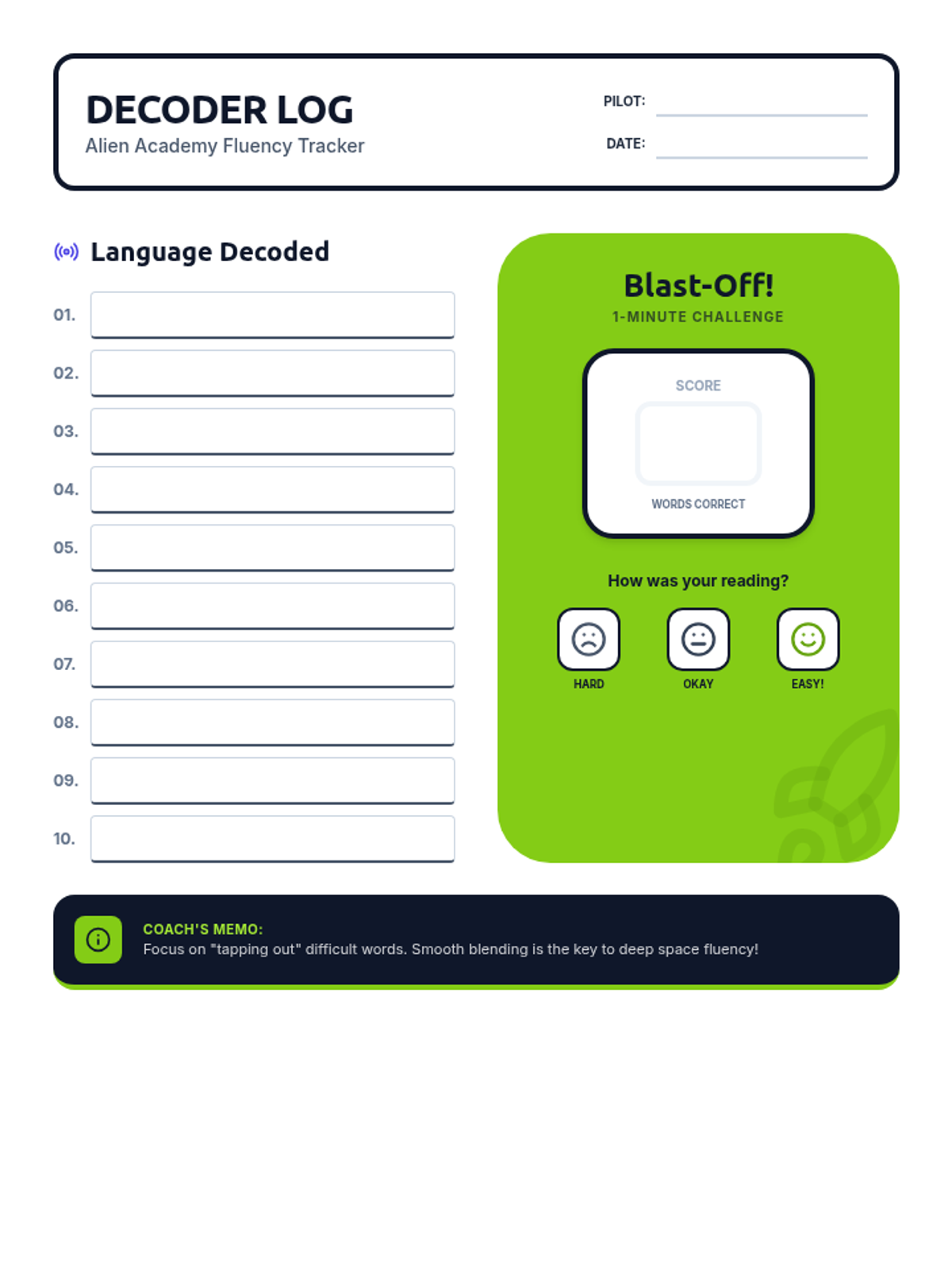
A student recording sheet for tracking nonsense word fluency. Includes space to write decoded 'alien words', record a 1-minute fluency score, and self-assess reading difficulty.
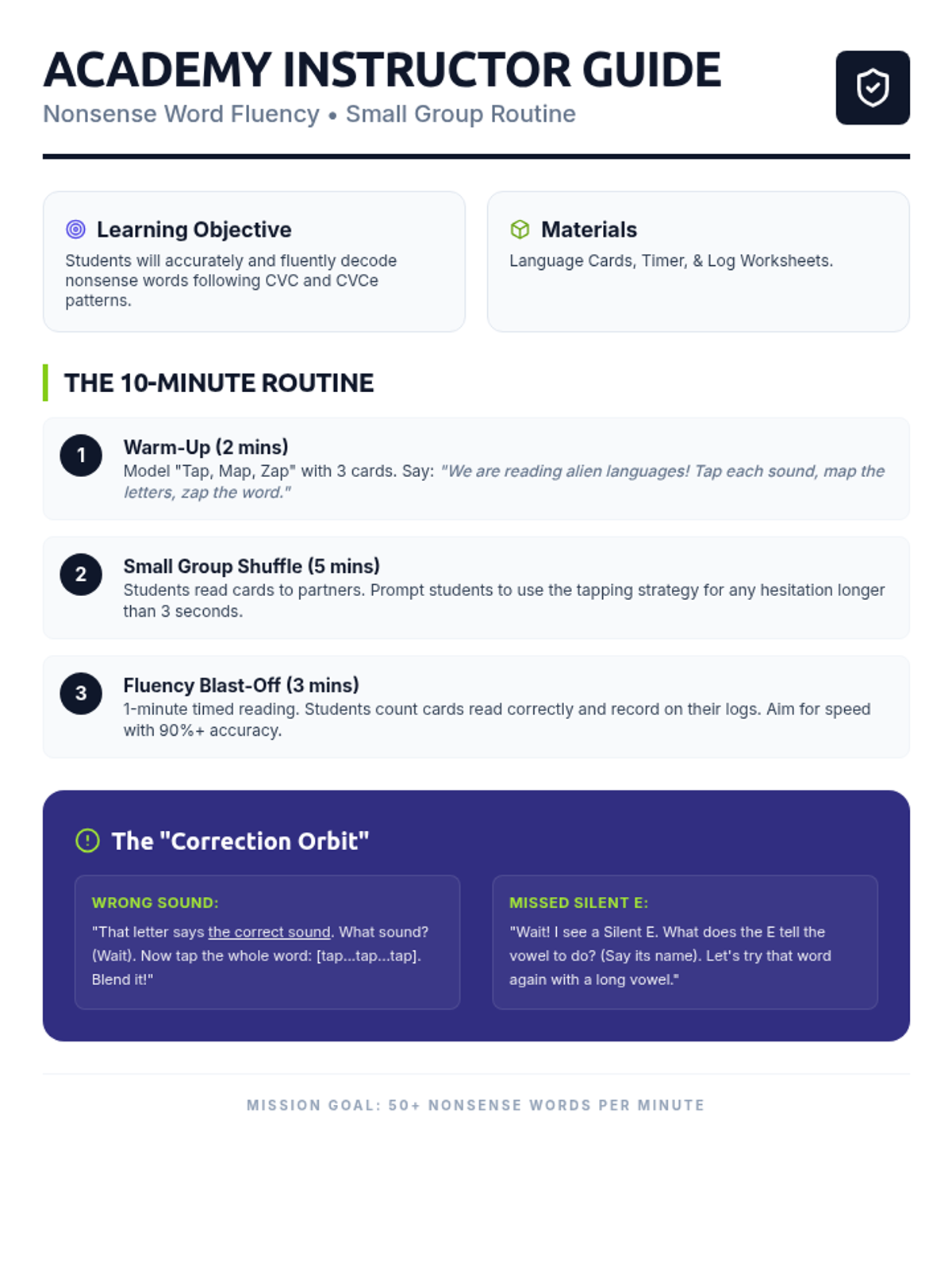
A teacher's guide for the Alien Academy lesson, providing a 10-minute small group routine for nonsense word fluency. Includes instructional scripts, error correction strategies, and lesson objectives.
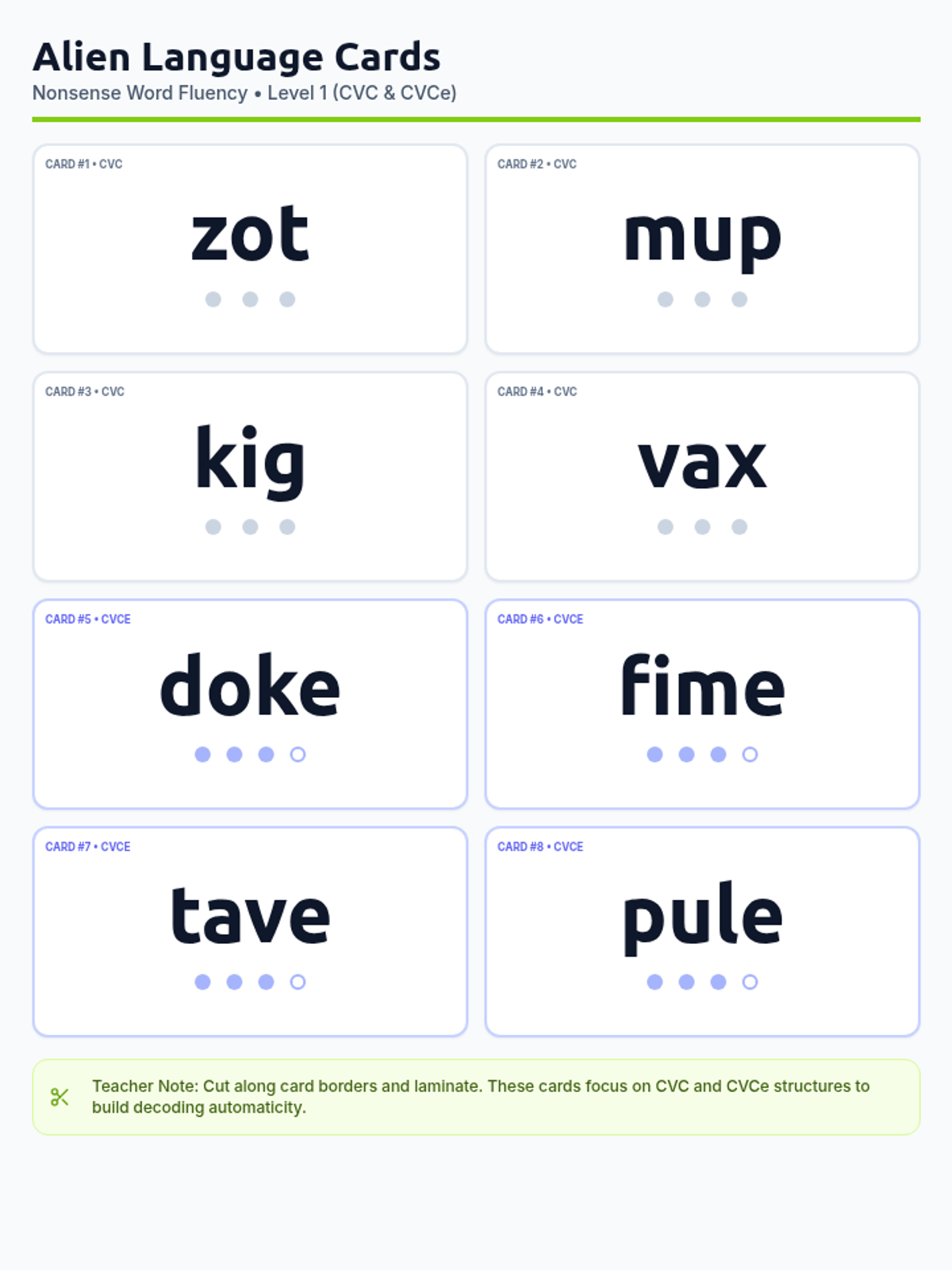
Small group word cards featuring nonsense words with CVC and CVCe patterns. Designed for flashcard practice, matching games, or fluency drills. Includes visual 'sound dots' for tapping support.
Introduction slides for the Alien Academy lesson, teaching students the 'Tap, Map, Zap' strategy for decoding nonsense words with CVC and CVCe patterns. Includes guided practice and a fluency challenge.
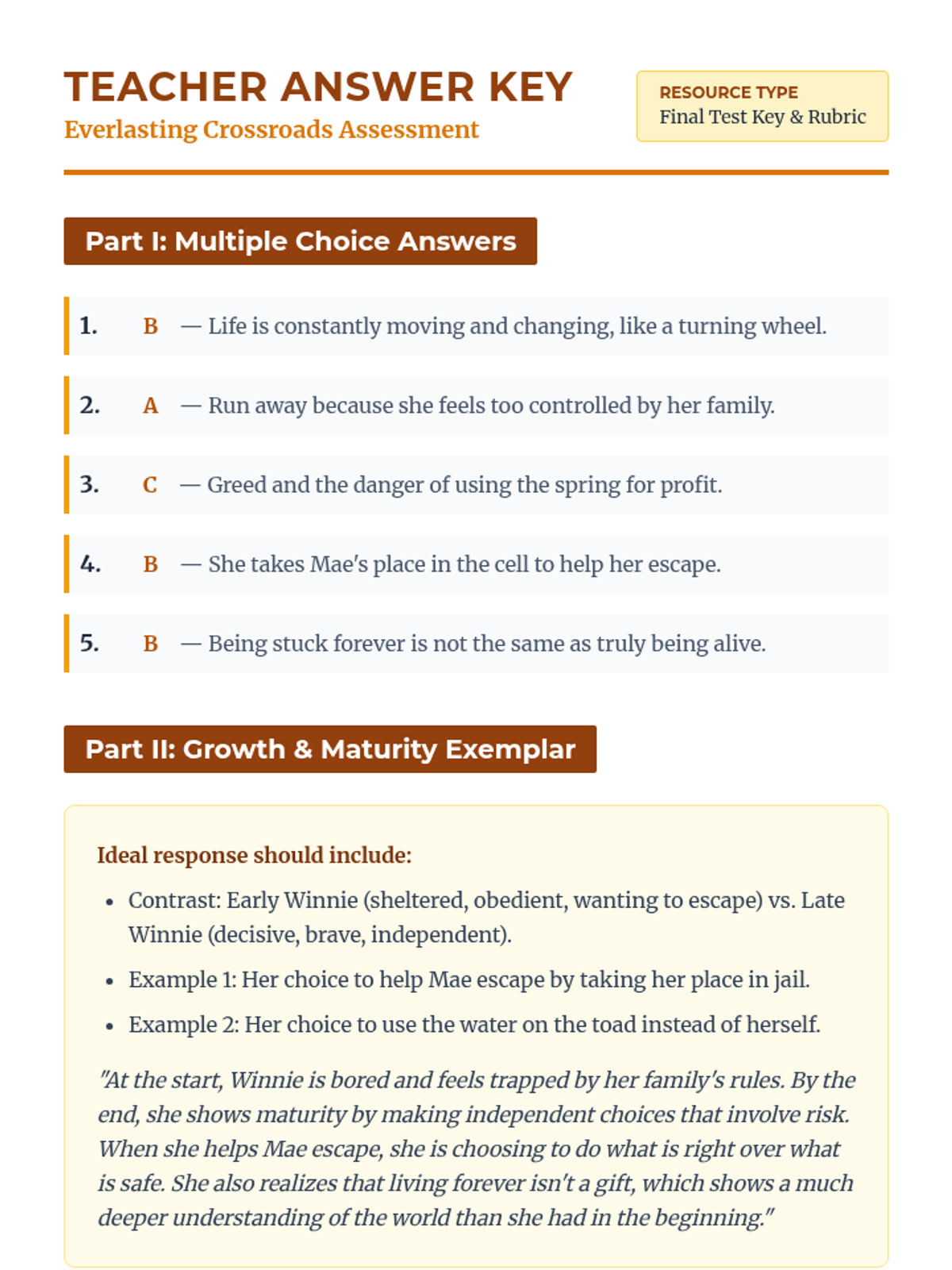
An answer key and grading rubric for the Tuck Everlasting final assessment, including exemplar responses for short answer and essay questions.
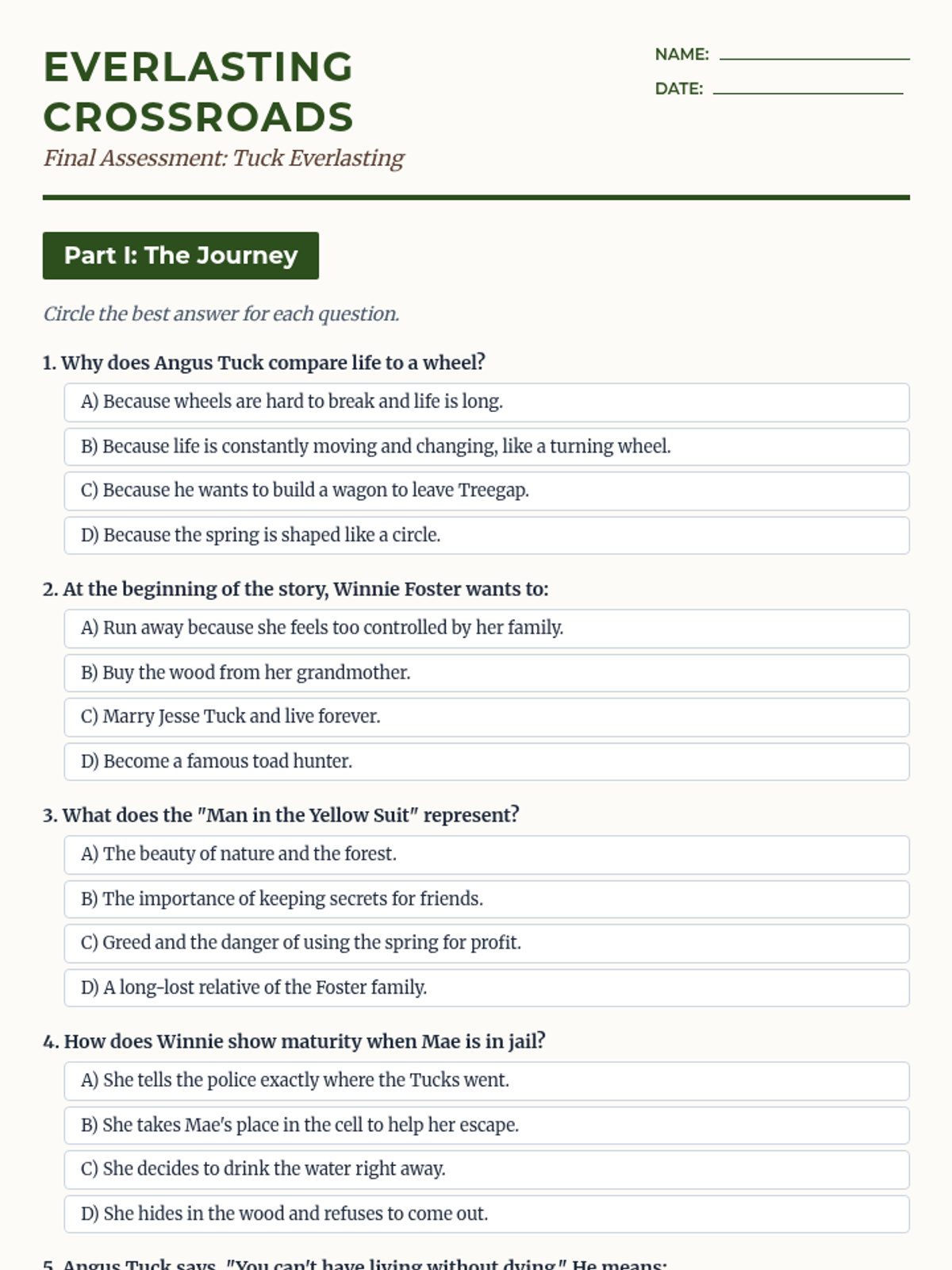
A 2-page final assessment for Tuck Everlasting featuring multiple choice questions and essay prompts. Revised for better page flow and writing space.
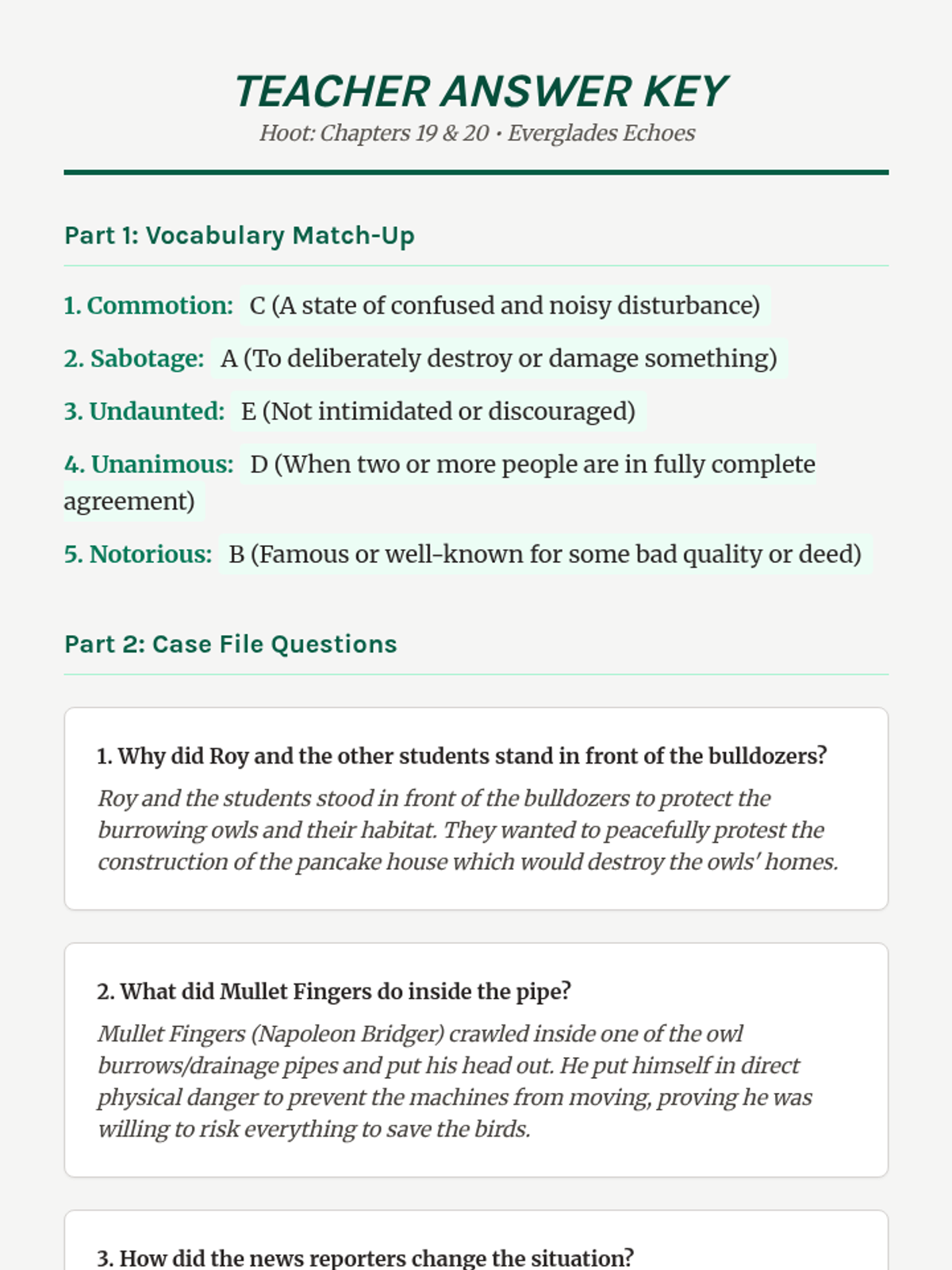
Teacher answer key for the Chapters 19 and 20 Hoot worksheet, including vocabulary definitions and suggested responses for comprehension questions.