Updated facilitator guide with clarified misconception language regarding the relationship between mixtures and solutions, emphasizing that all solutions are mixtures.
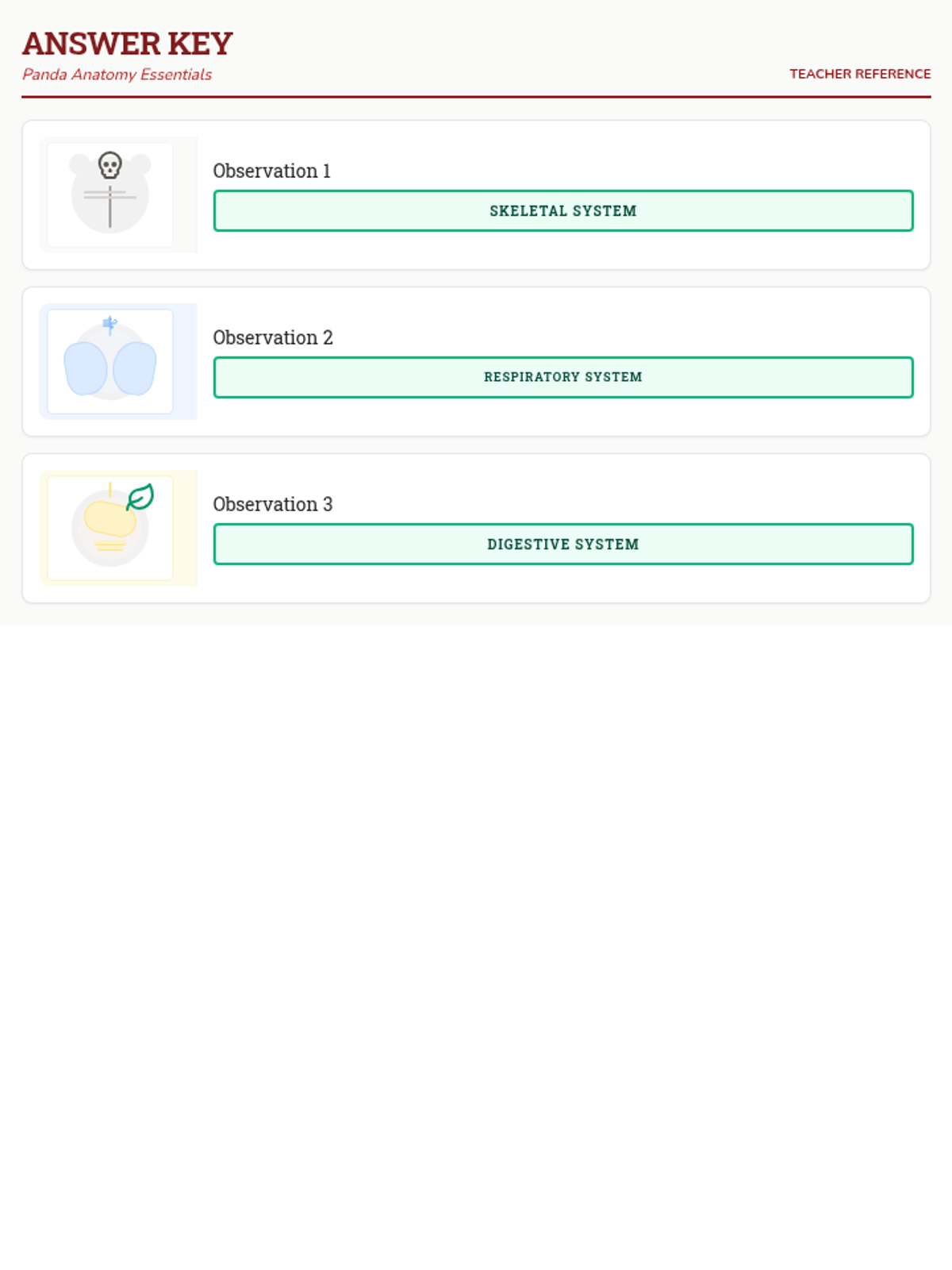
A completed version of the Panda Systems worksheet for teacher reference, showing the correct placement of all labels with matched visual diagrams.
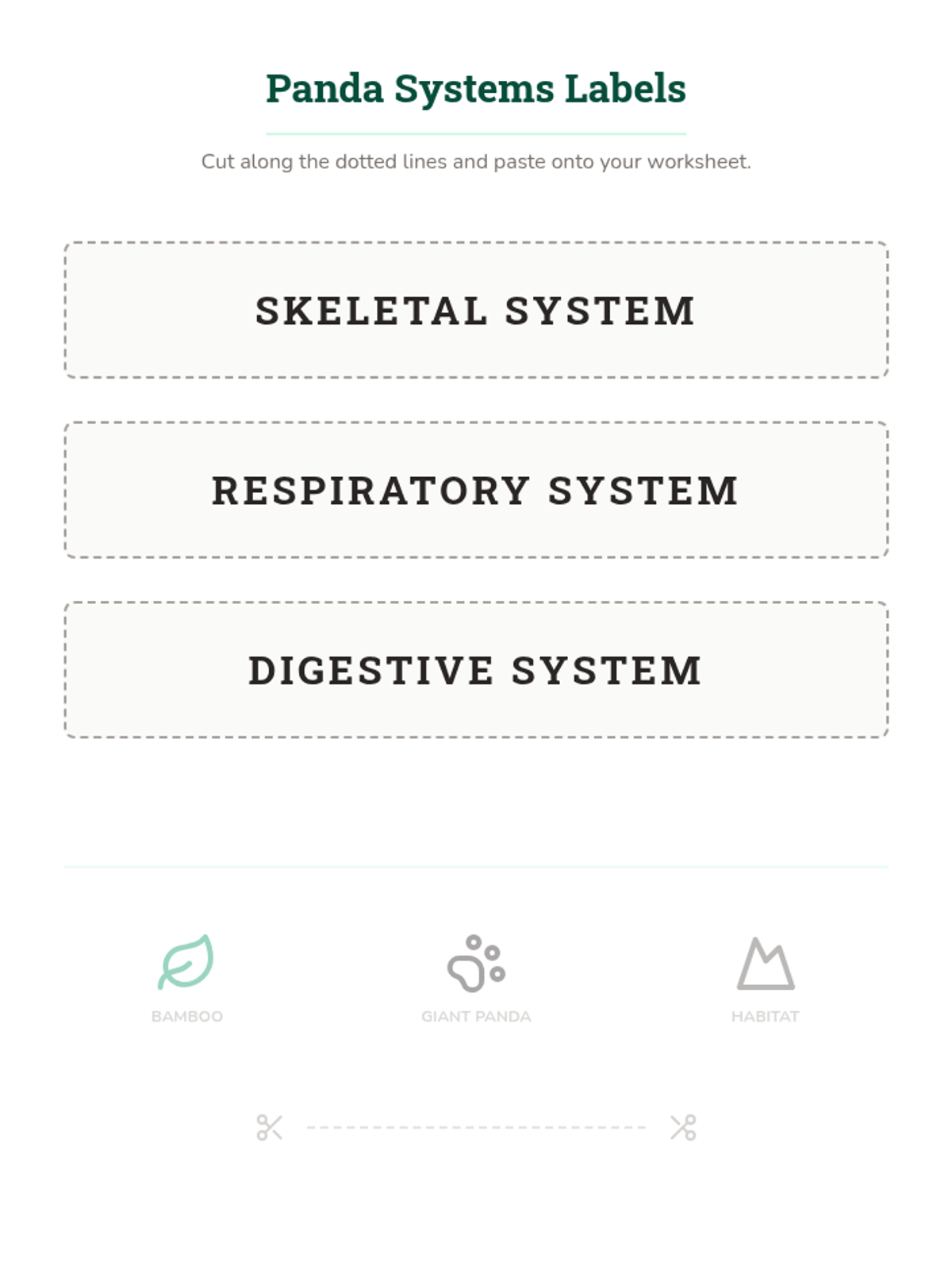
A set of large, clear labels for the skeletal, respiratory, and digestive systems designed for cutting and pasting onto the primary worksheet.
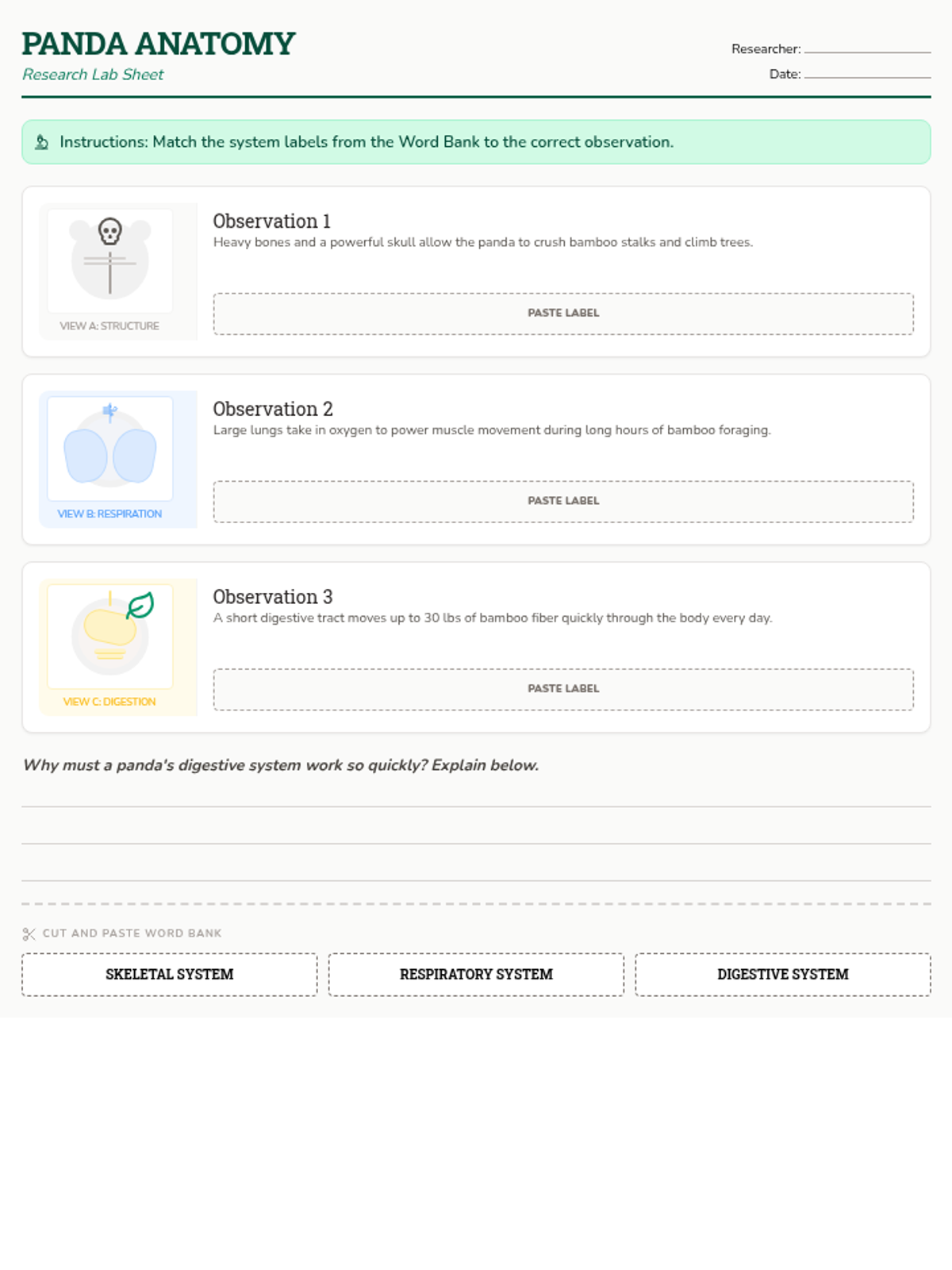
A field-research style worksheet where students identify and label the skeletal, respiratory, and digestive systems of a panda using descriptive clues and stylized internal diagrams, including a built-in cut-and-paste word bank.
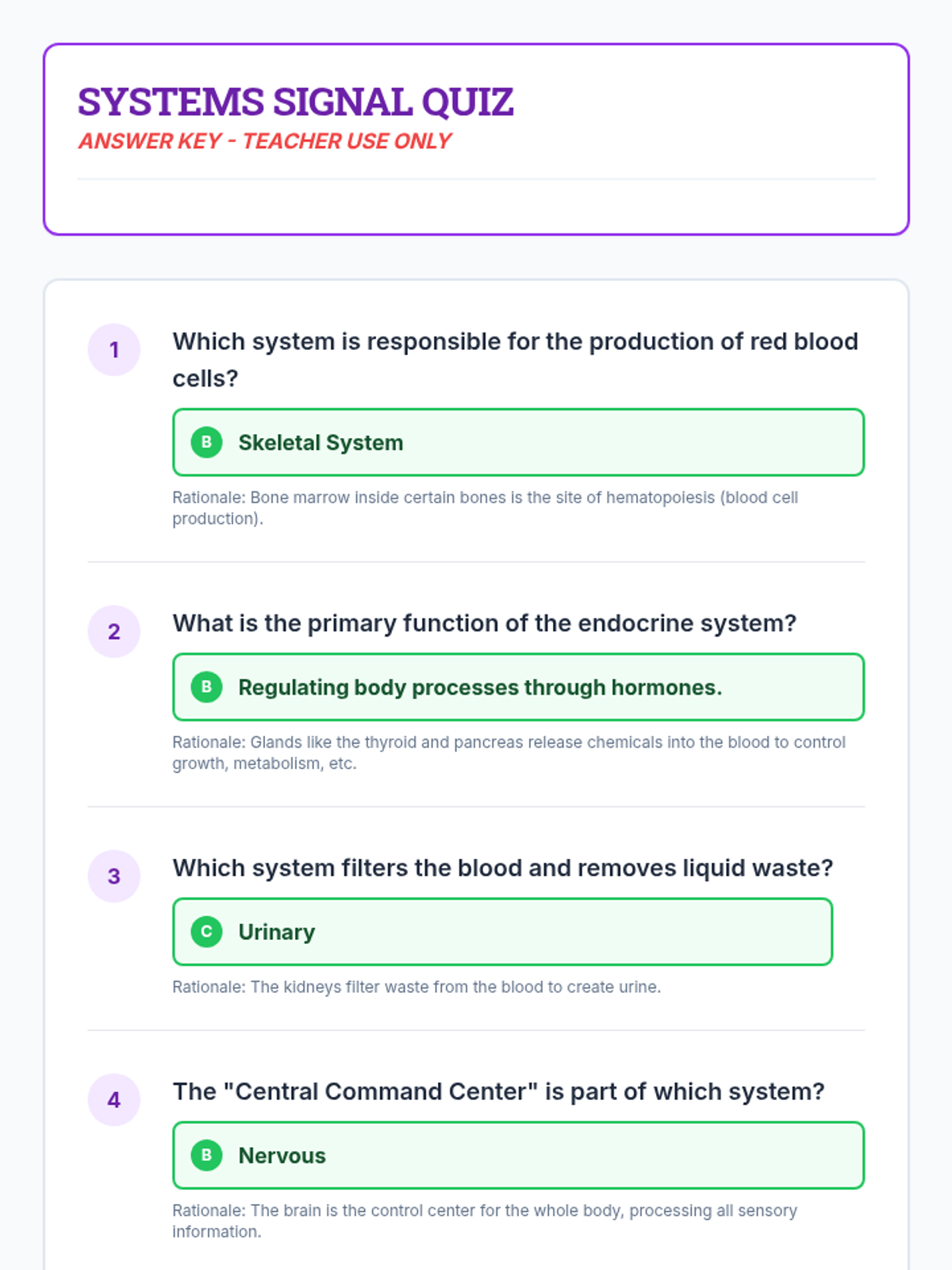
The answer key for the Systems Signal quiz, providing correct answers and rationales for all questions. Revised for consistent teacher guidance and better page flow.
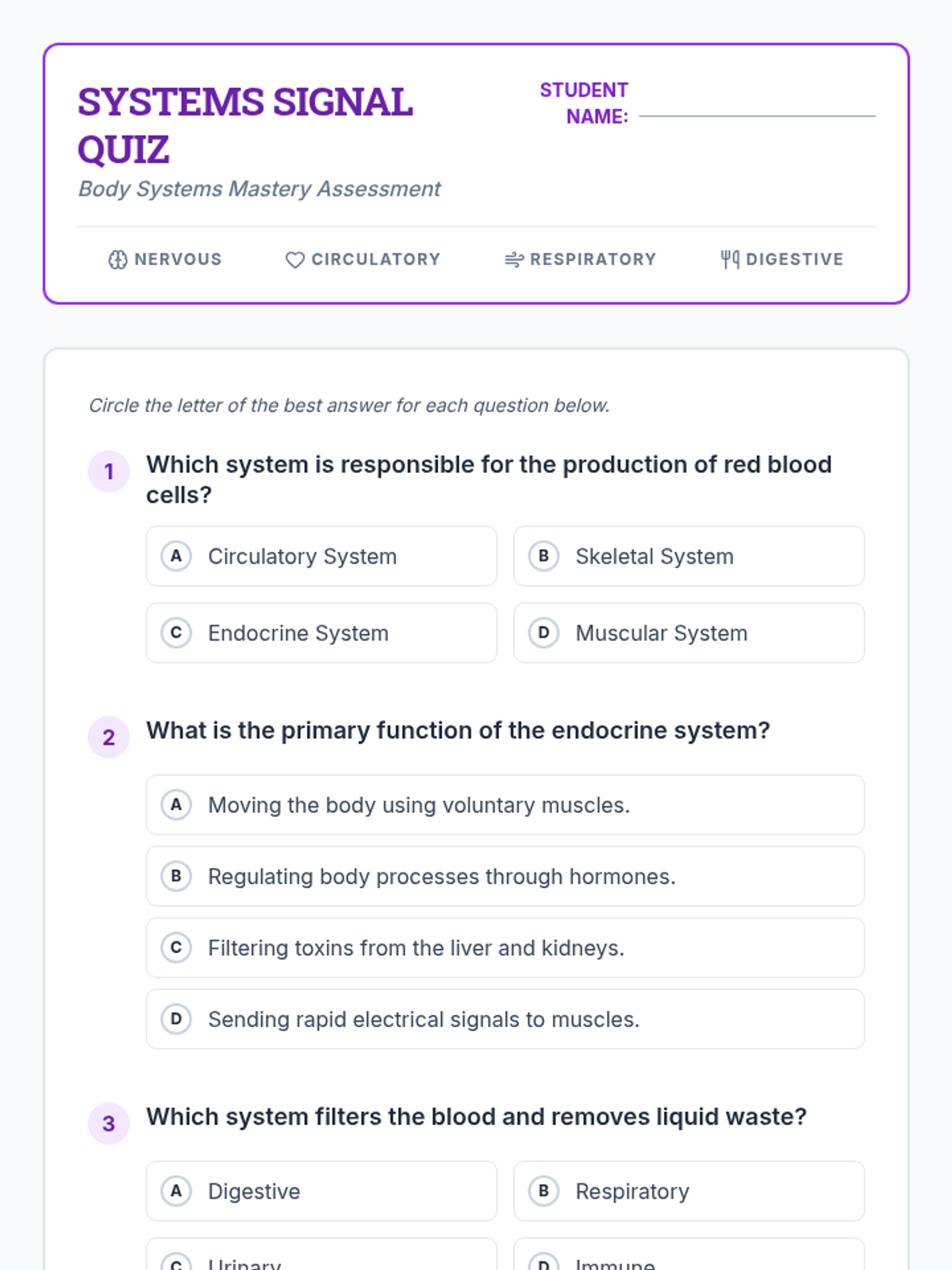
A multiple-choice quiz covering key concepts, organs, and system interactions within the human body. Revised for better page flow and work areas.
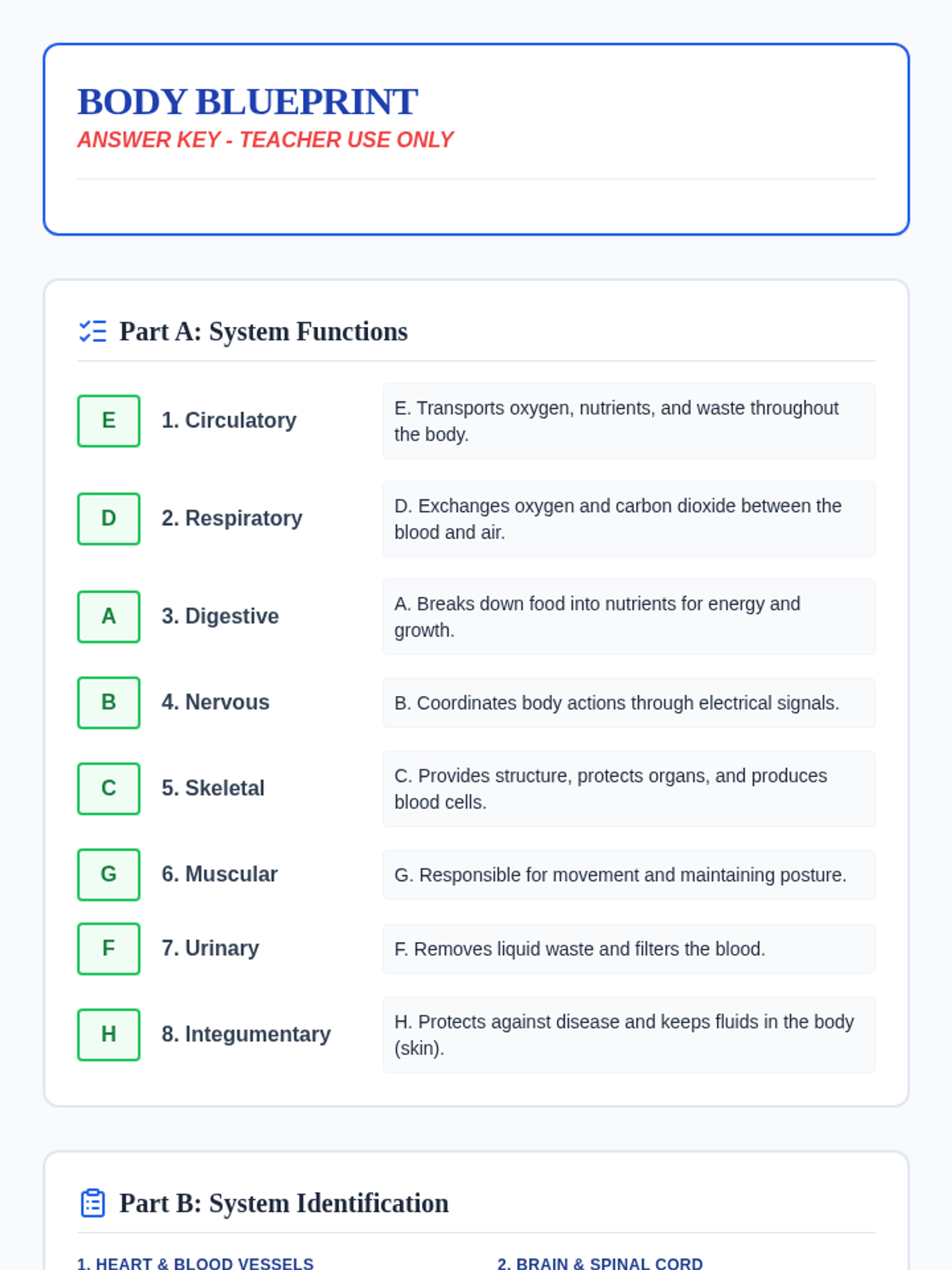
The answer key for the Body Blueprint worksheet, providing correct matches and identification for teacher use.
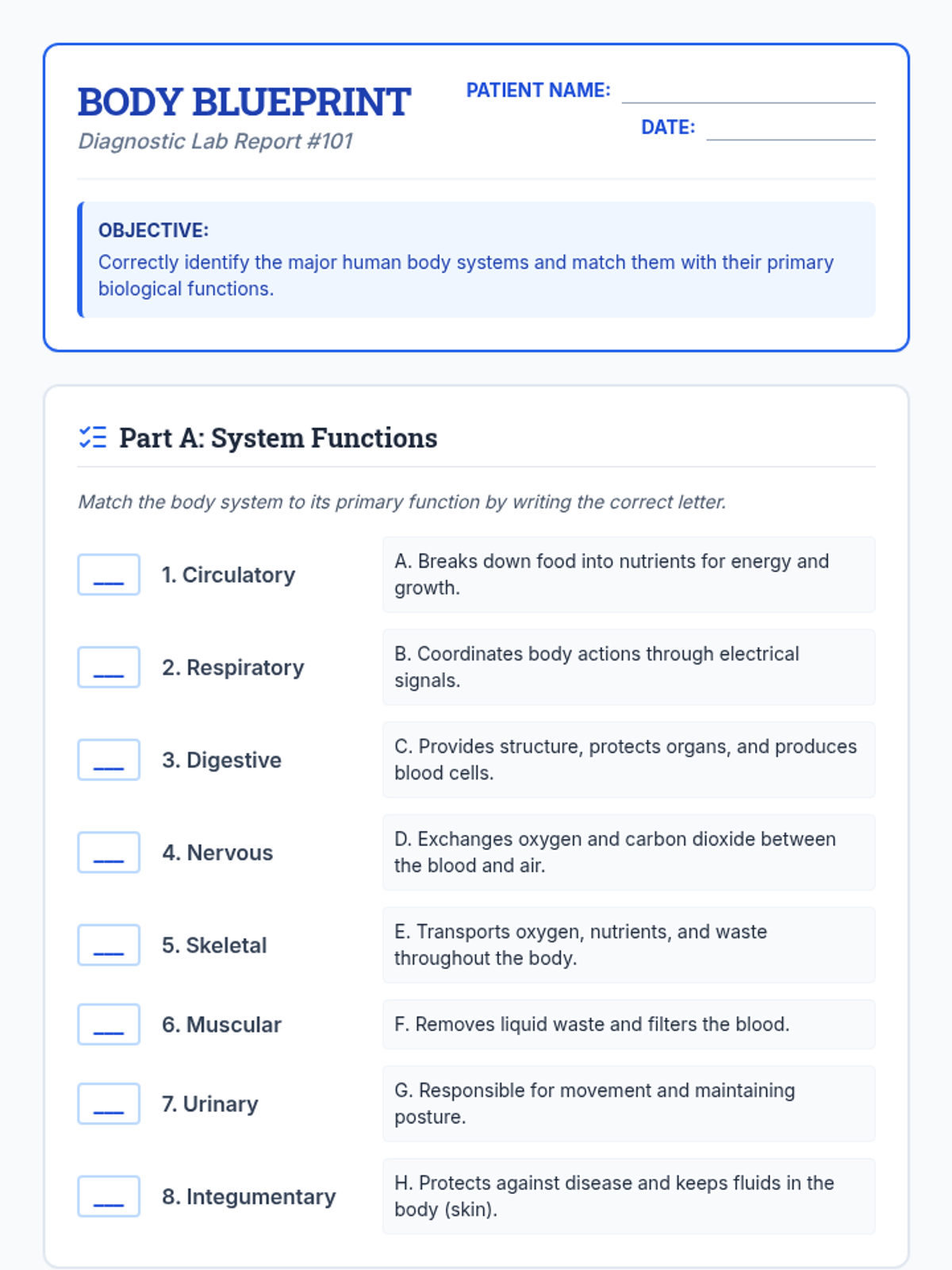
A labeling and matching worksheet for students to identify the functions and organs of major body systems. Revised for better page breaks and legible student work areas.
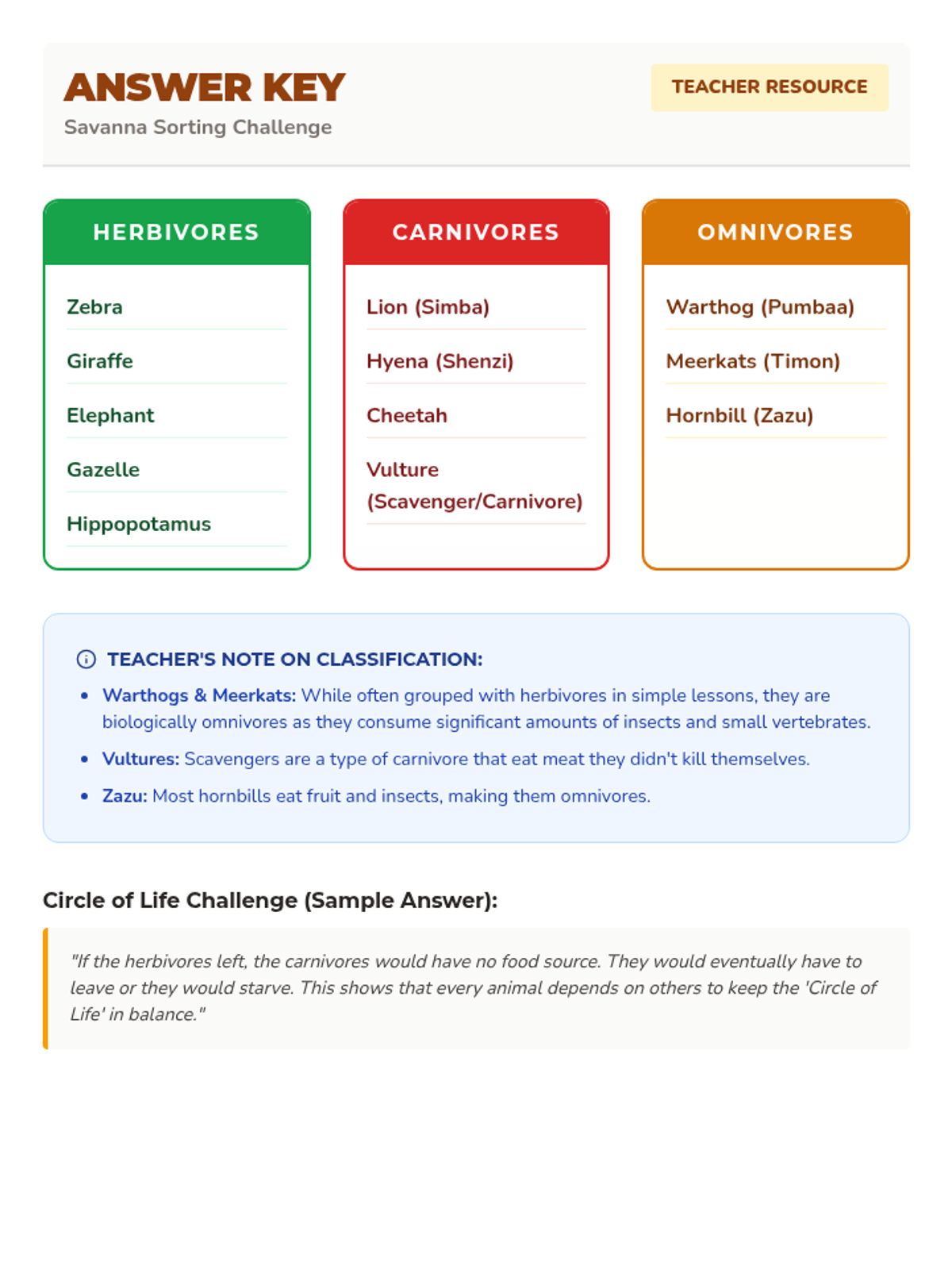
An answer key for the Savanna Sorting Worksheet, including biological notes for teachers regarding complex dietary classifications like omnivorous warthogs.
A polished 5-slide instructional presentation explaining animal diets and ecological balance with Lion King characters. Now features improved contrast, accurate icons, and a circular diagram of the Circle of Life.
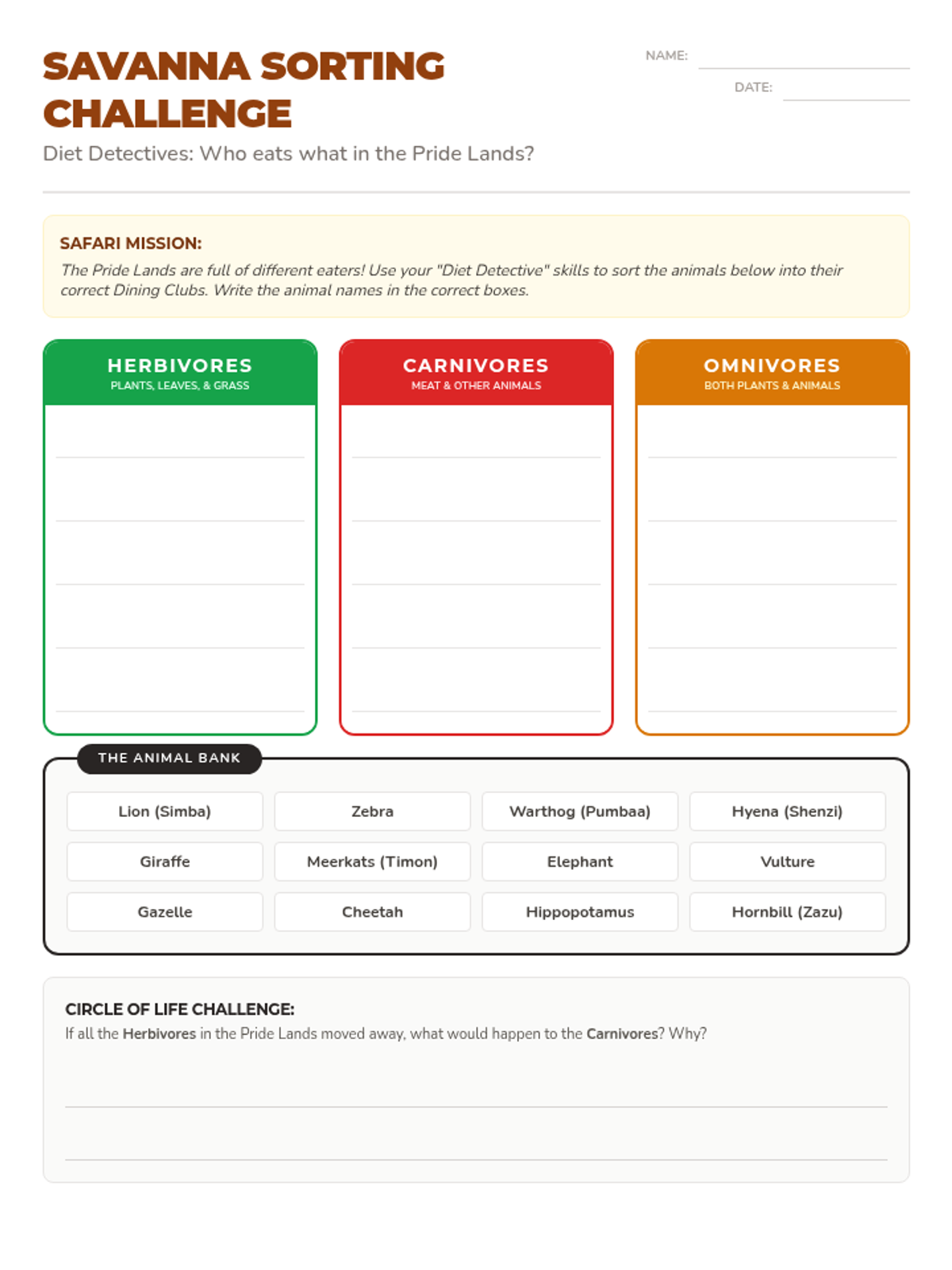
A single-page sorting activity where students categorize characters and savanna animals by diet, featuring a clear animal bank and reflection section.
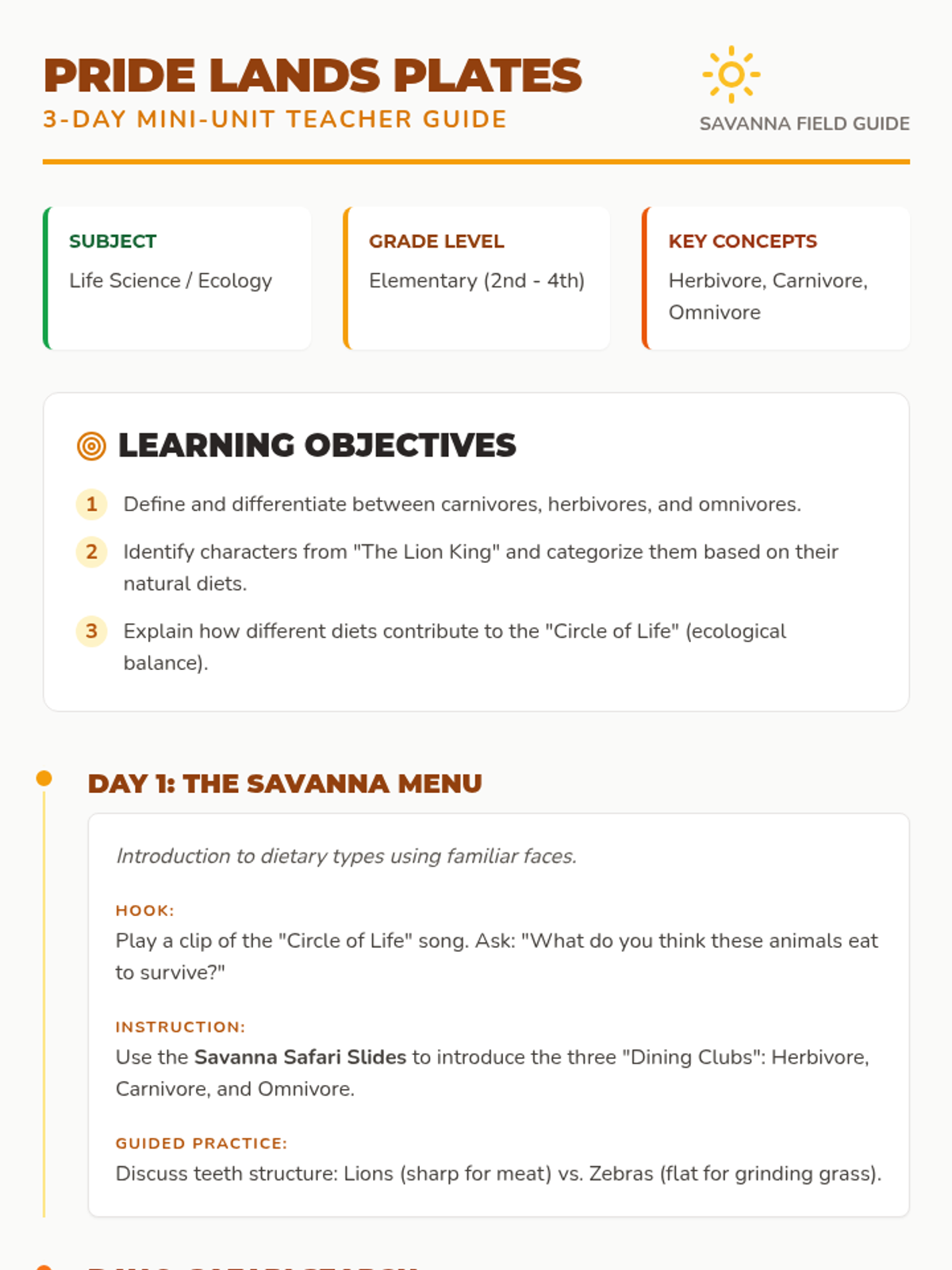
A comprehensive 3-day teacher guide for the Pride Lands Plates unit, including daily lesson breakdowns, learning objectives, and references to accompanying materials.
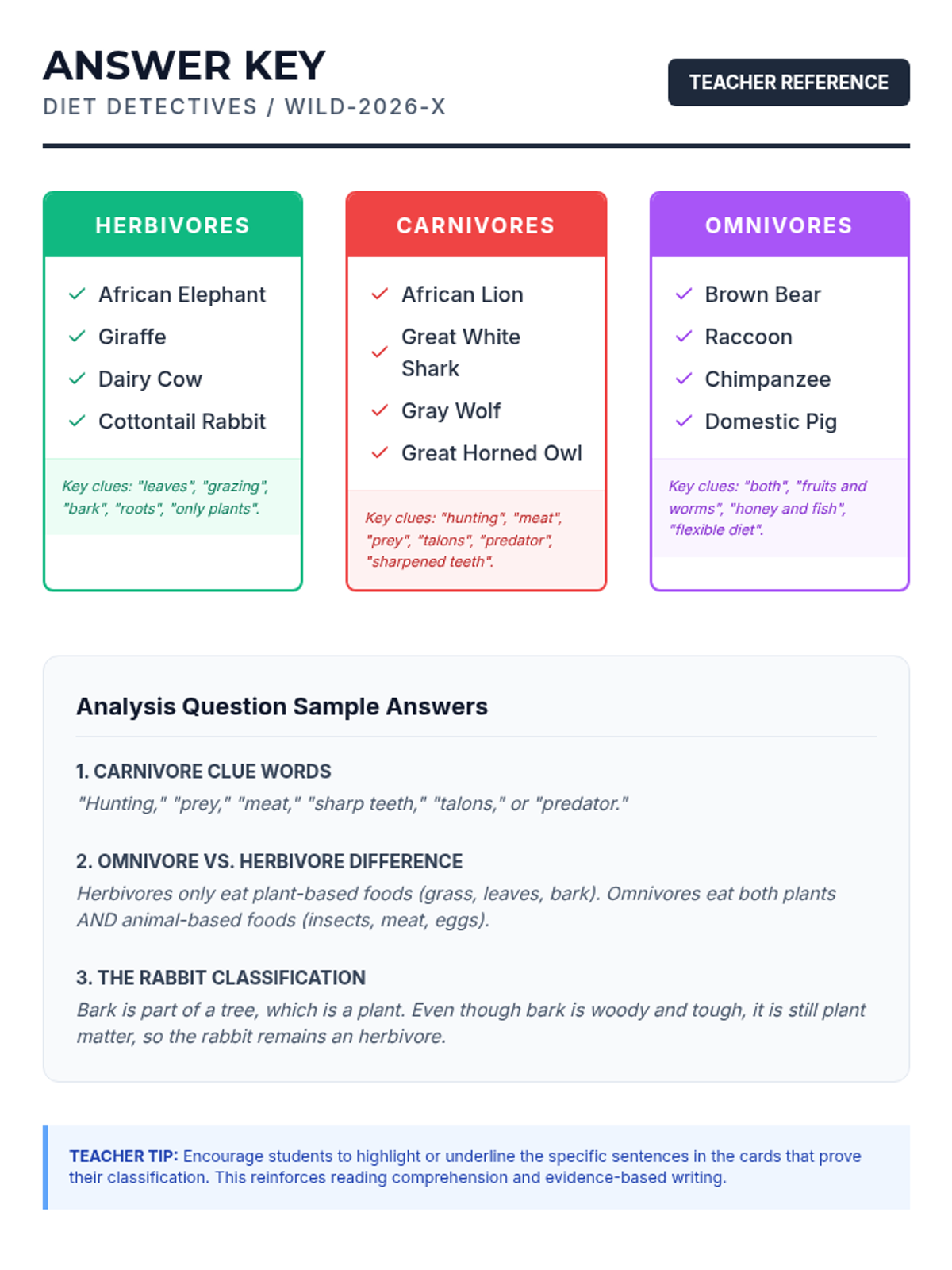
A teacher's answer key providing the correct classification for all 12 animals and sample responses for the analysis questions.
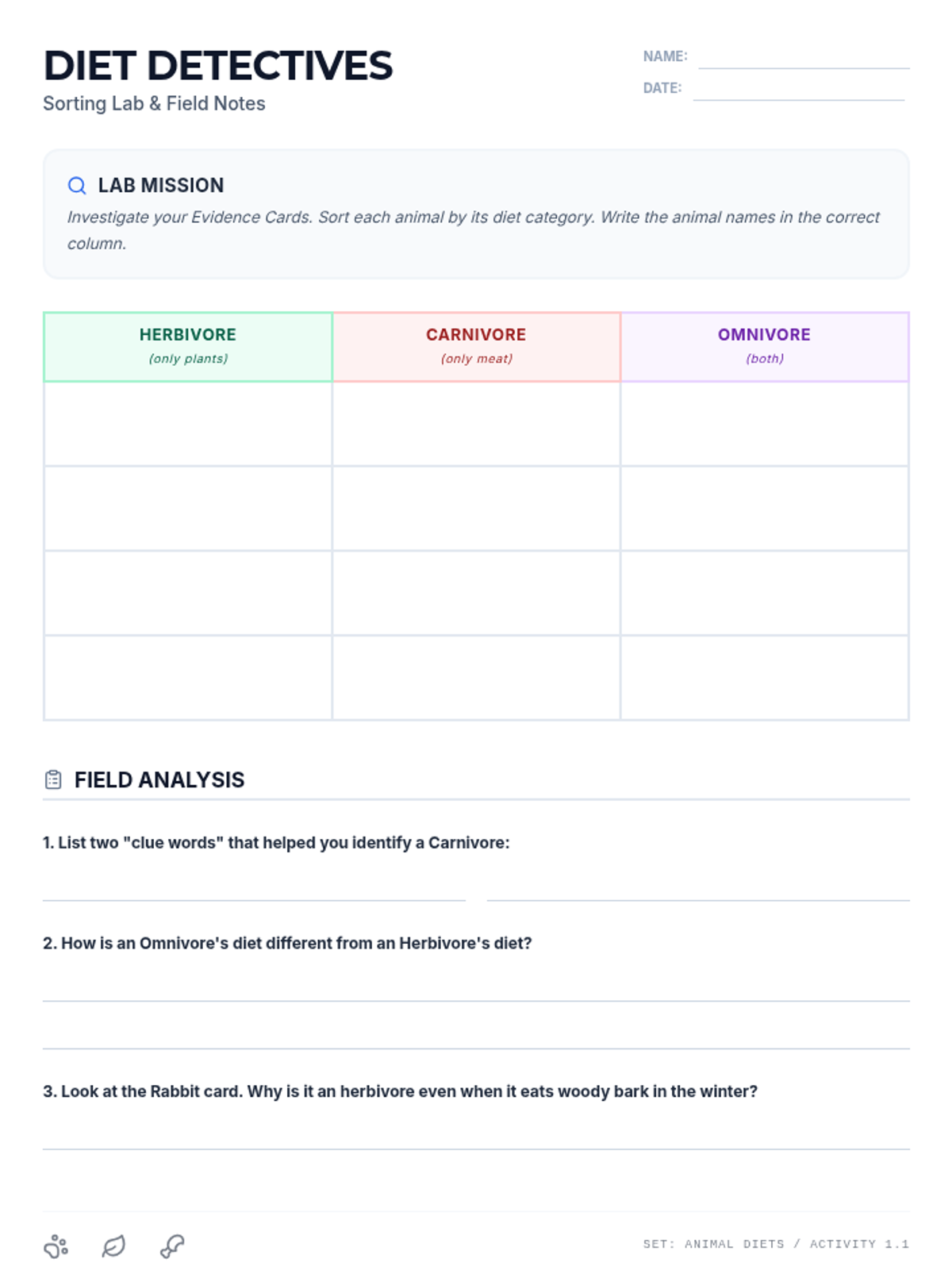
A sorting mat and recording sheet for students to document their animal diet classifications and provide textual evidence for their findings.
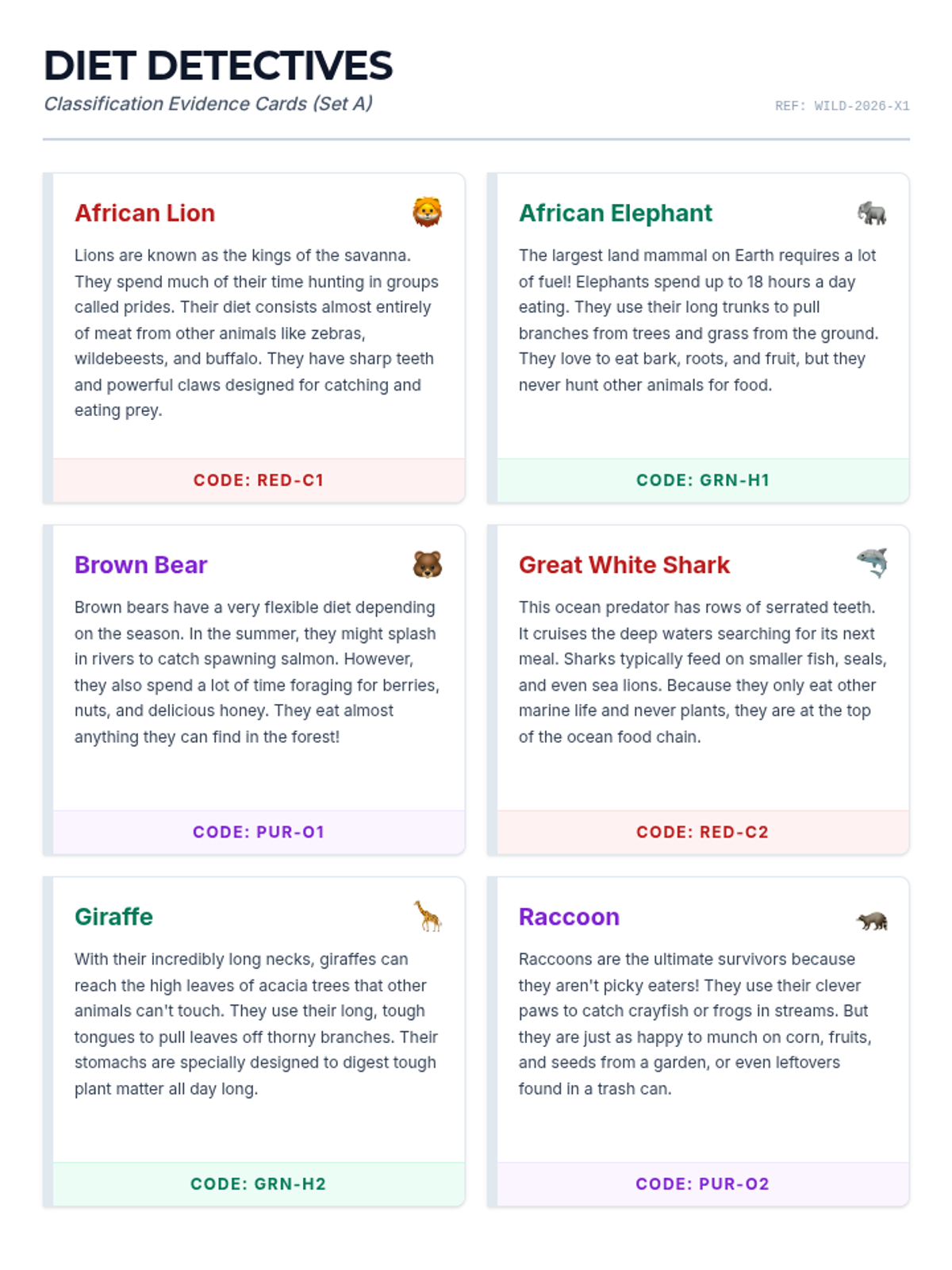
A set of 12 color-coded classification cards featuring various animals and short descriptions of their diets to help students identify herbivores, carnivores, and omnivores.
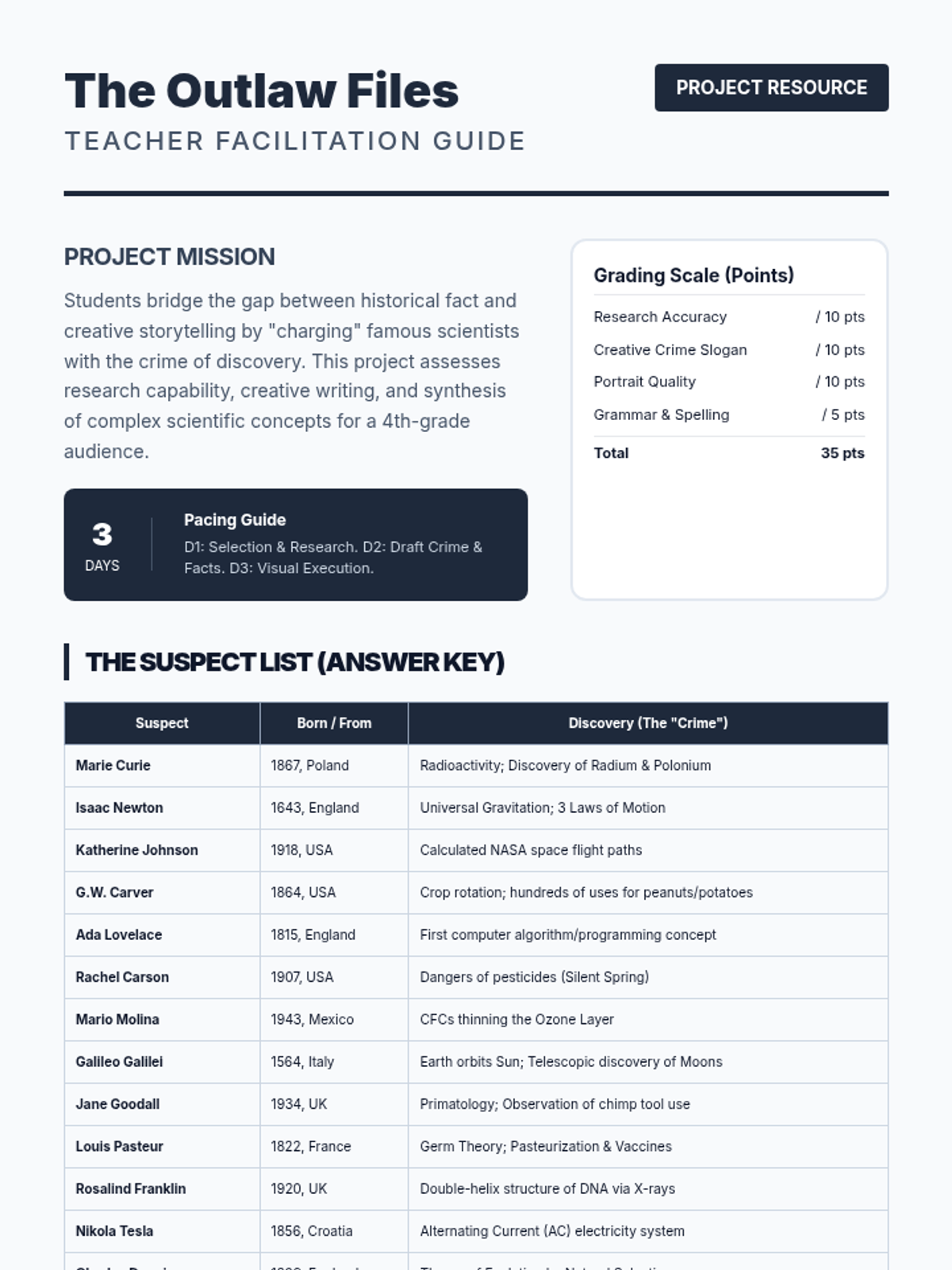
A teacher-facing resource including a project overview, pacing guide, a facts 'cheat sheet' for the 15 scientists, and a detailed scoring rubric.
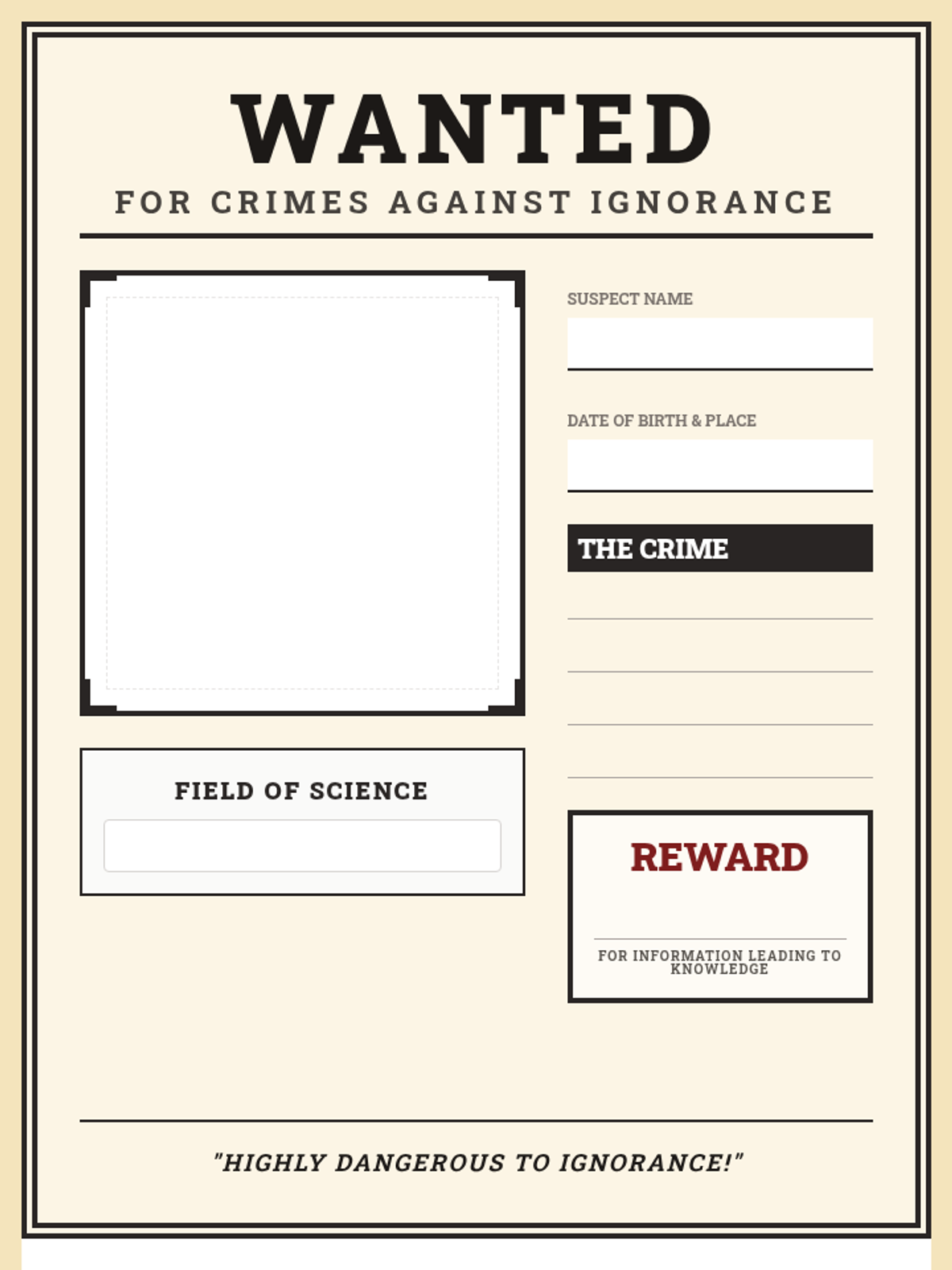
A beautifully themed, vintage-style 'Wanted' poster template for students to fill out with their chosen scientist's details and portrait.
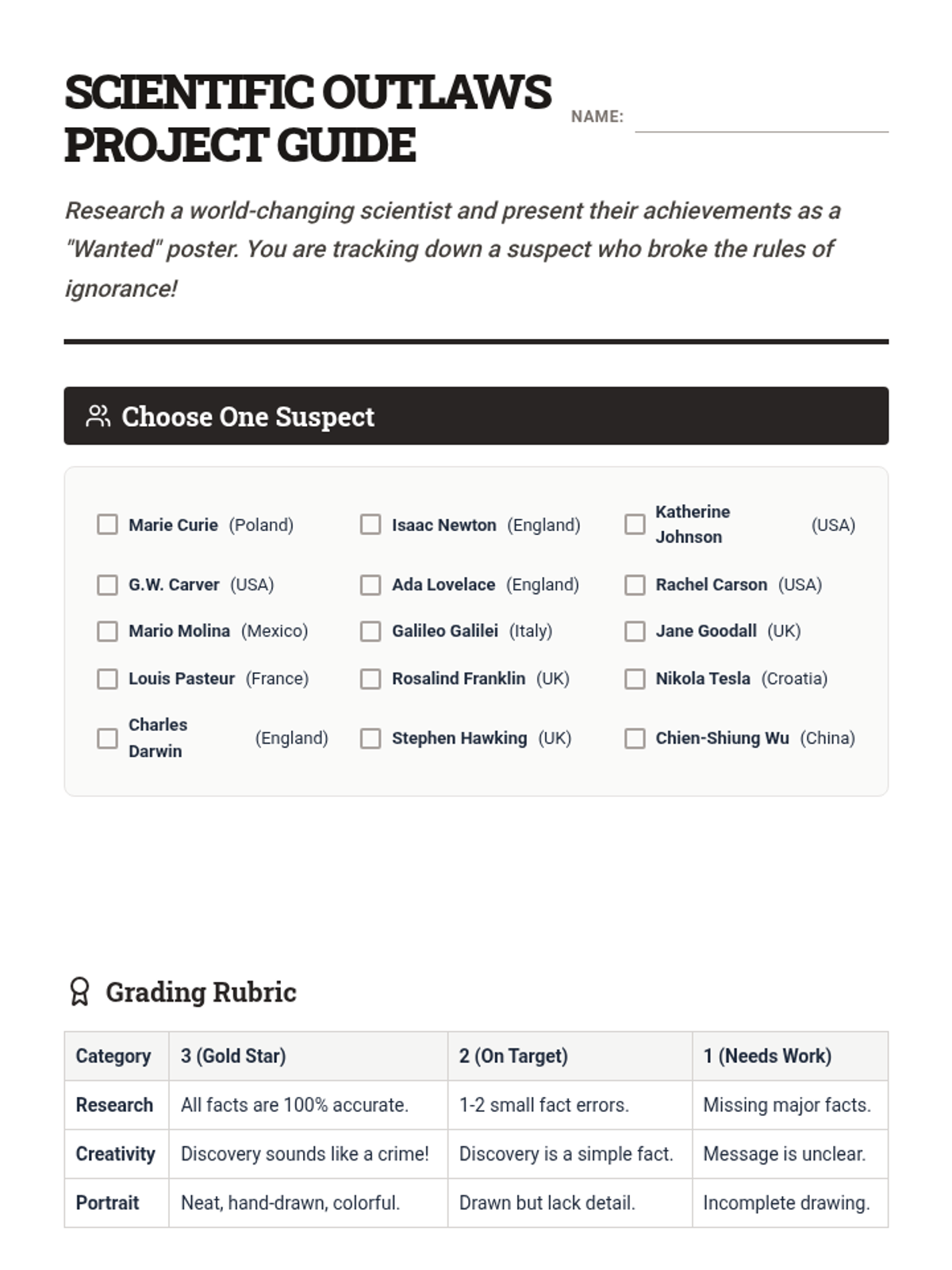
A student research guide that provides the list of 15 scientists, a research organizer for capturing key facts, and the project's grading criteria.
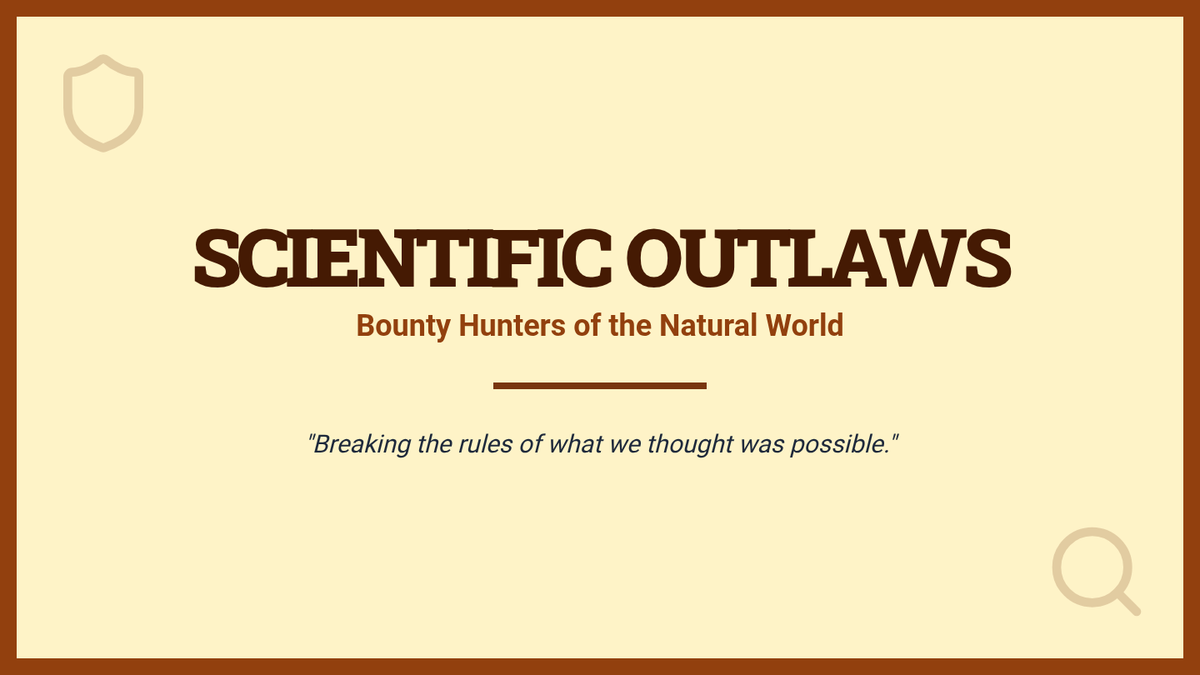
A visually engaging slide deck that introduces the 'Scientific Outlaws' project, explaining the project requirements and providing creative examples.
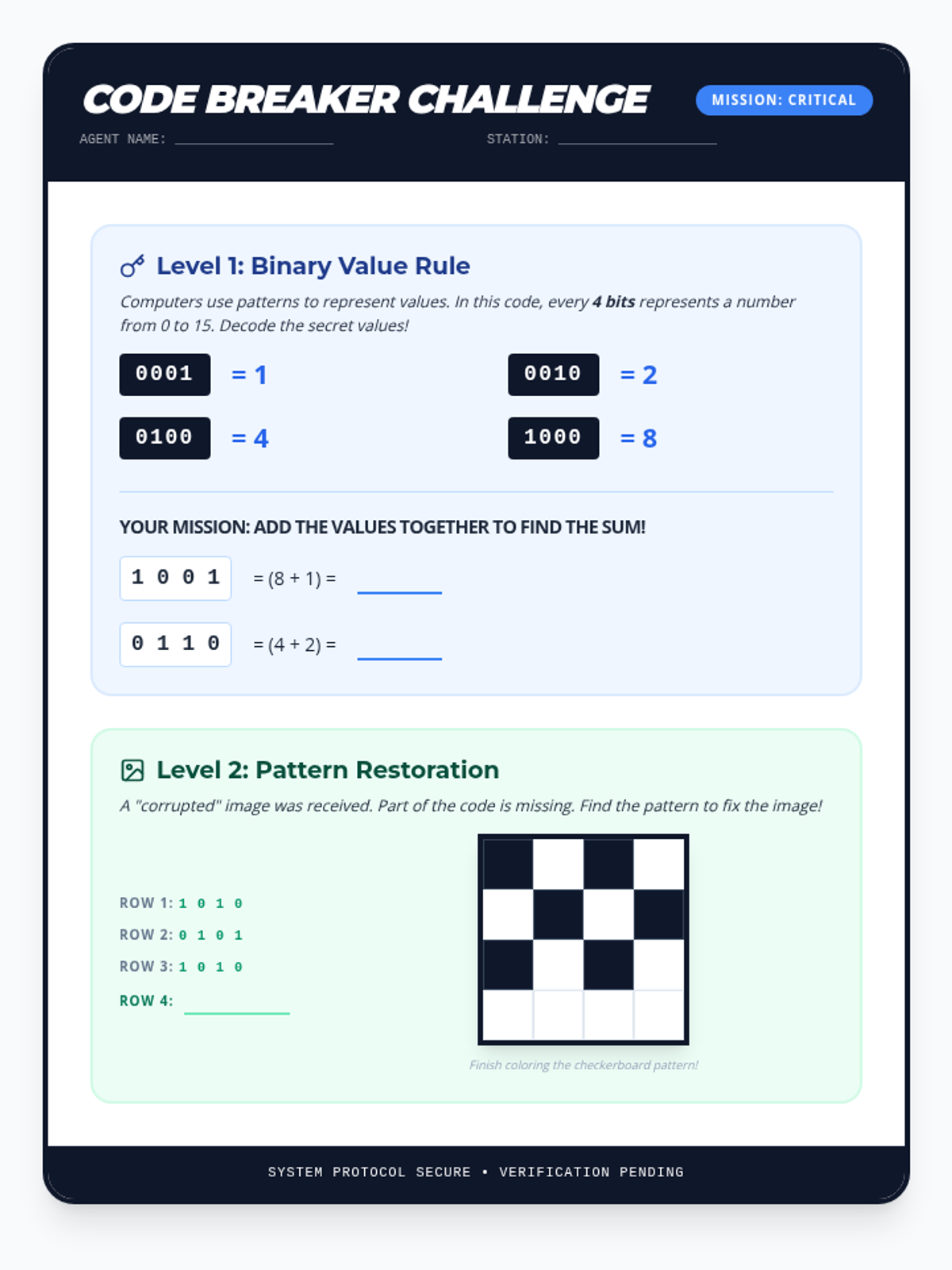
A logic puzzle challenge sheet featuring binary value addition and pattern recognition to restore a checkerboard image. Designed for 4th-grade students to apply binary concepts in a mission-themed format.
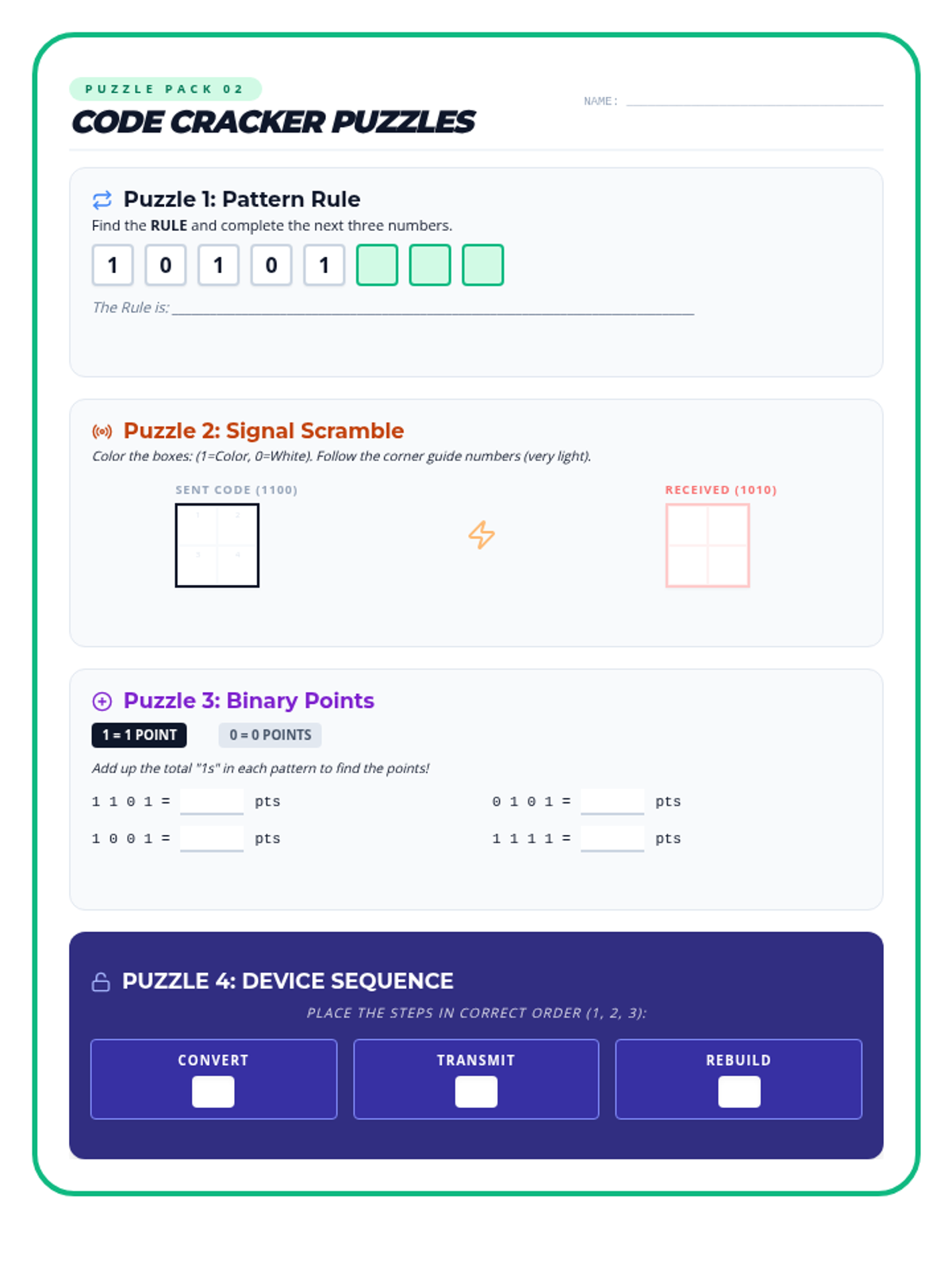
A collection of binary and pattern-based logic puzzles for 4th graders. It includes pattern completion, signal interference visualization, a binary value decoder, and a process sequencing challenge.
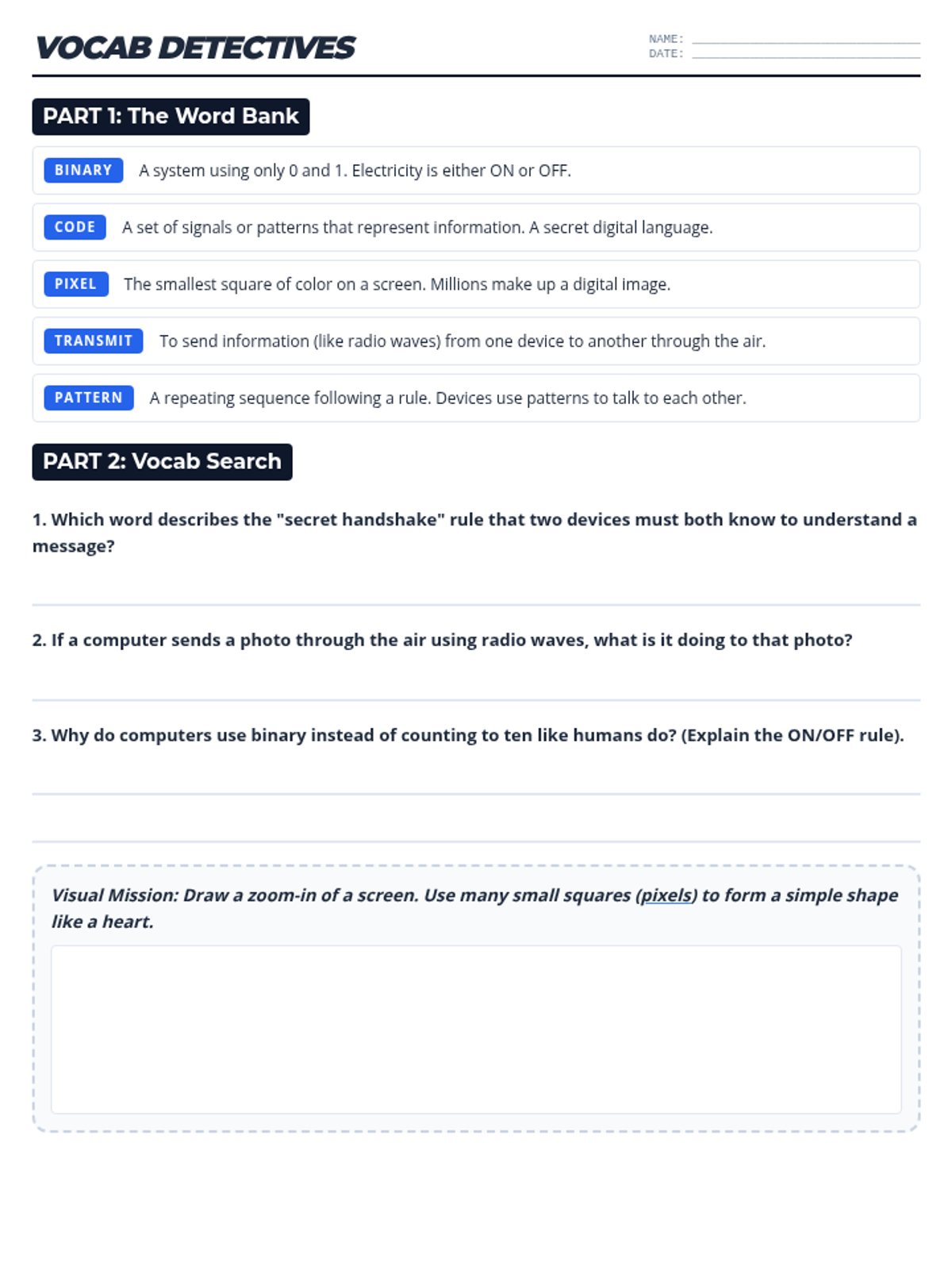
A vocabulary worksheet for 4th-grade students to define and apply key terms like Binary, Code, Pixel, Transmit, and Pattern. It includes definition references, application questions, and a drawing section.
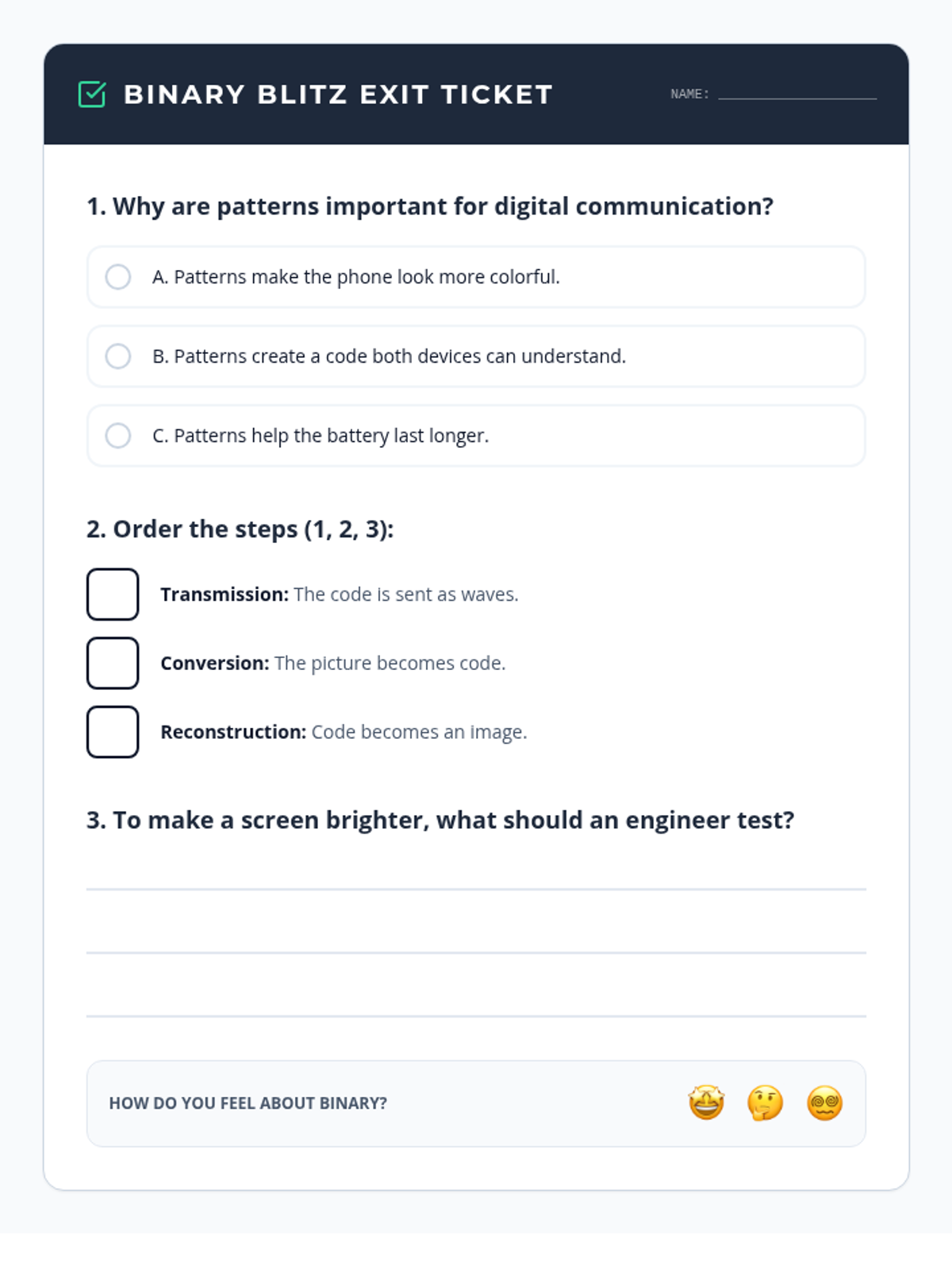
A concise assessment to wrap up the unit, checking student understanding of patterns in communication, the order of digital image transfer, and the engineer's role in solving digital problems.
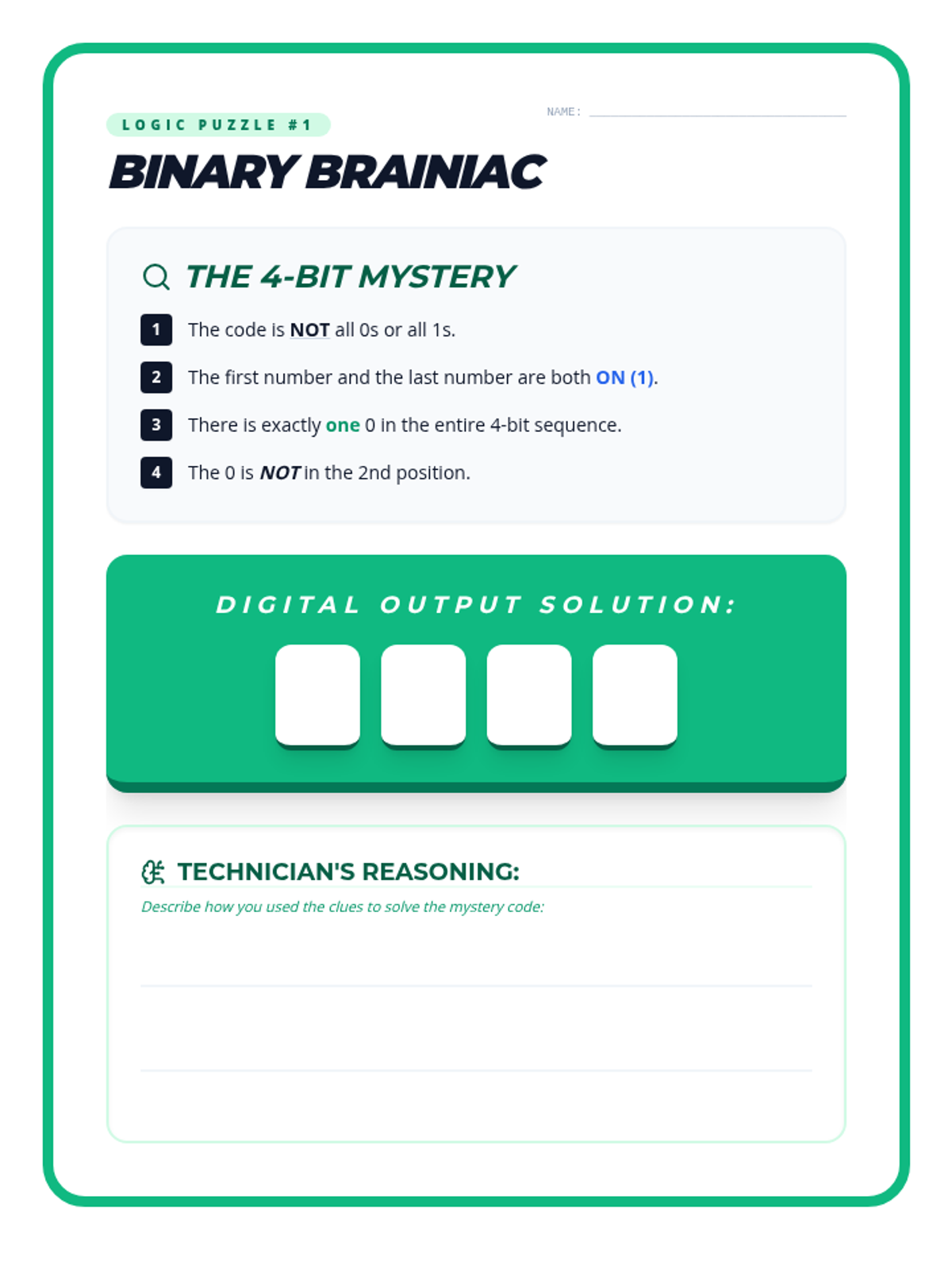
A challenging binary logic puzzle designed to test students' critical thinking and understanding of binary sequences. Students use a series of clues to deduce a secret 4-bit code and then explain their reasoning process.
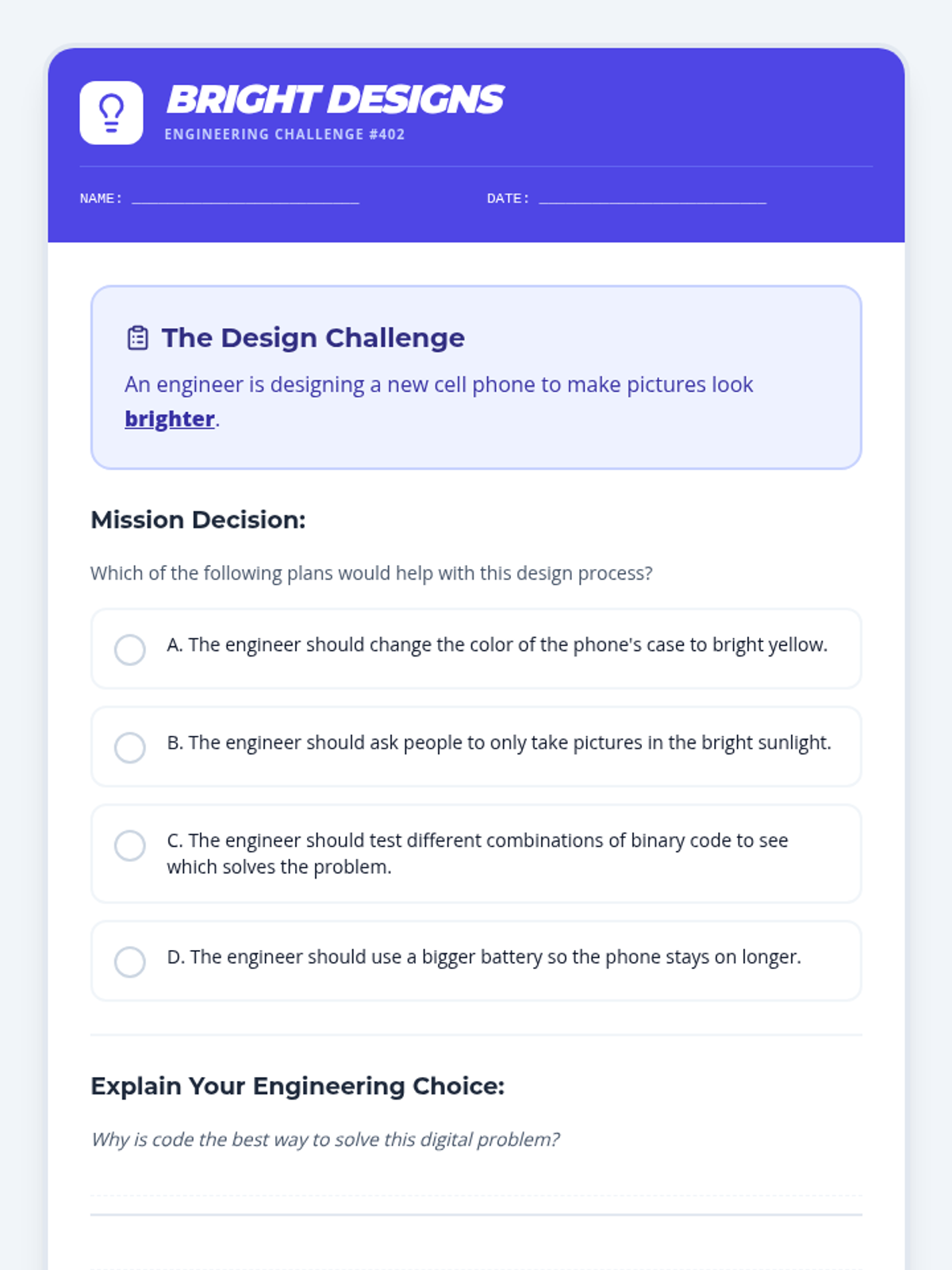
An engineering challenge worksheet focused on troubleshooting and improving digital images. It presents a real-world scenario about image brightness and requires students to identify that testing different binary code combinations is the proper engineering solution.
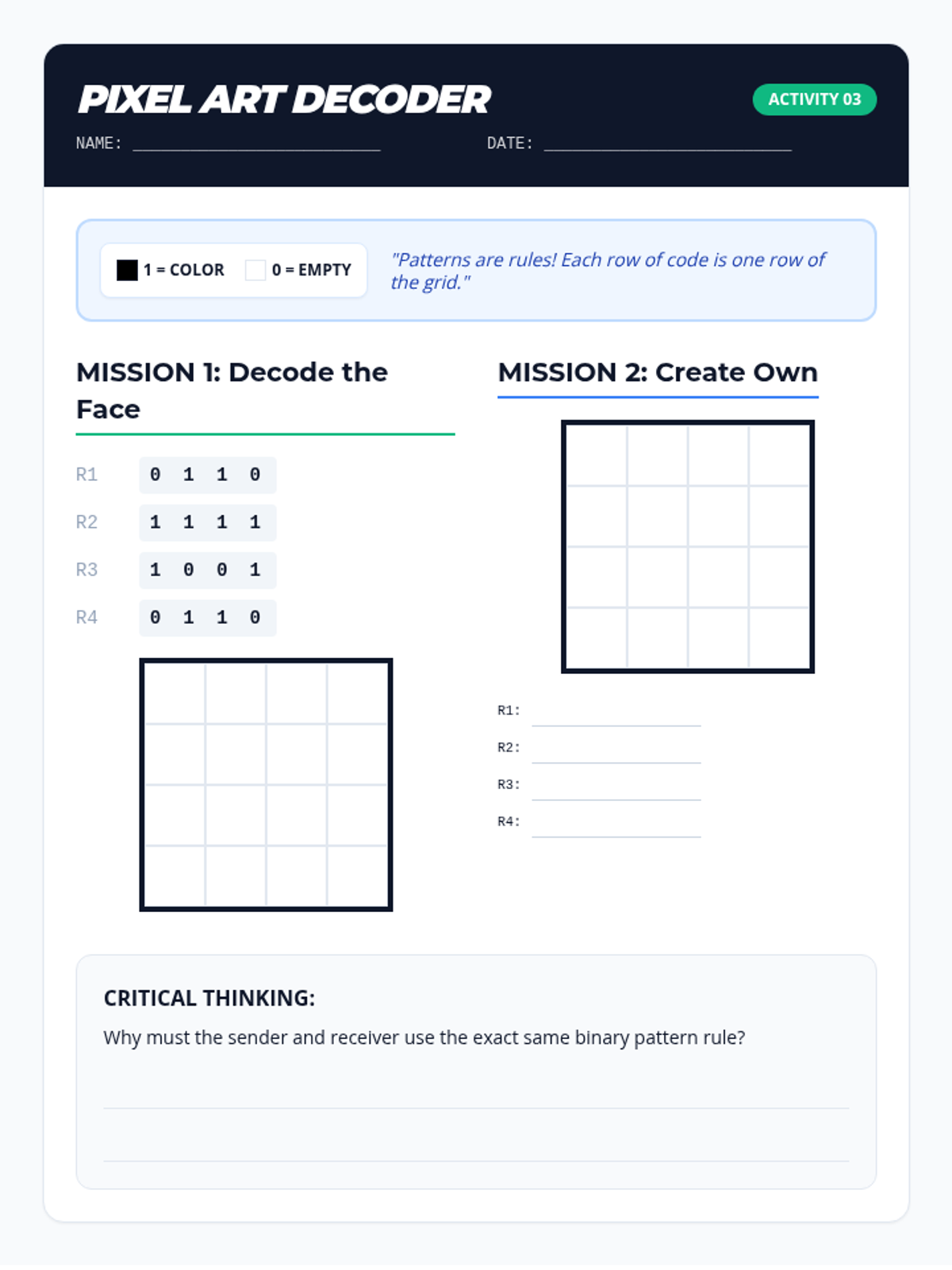
A hands-on activity sheet where students decode binary patterns to reveal pixel art and then create their own encoded message. It reinforces the concept of patterns as rules for communication and the relationship between binary and digital images.
A slide deck detailing the three-step process of digital image transfer: Conversion, Transmission, and Reconstruction. It uses clear animations and diagrams to help 4th graders visualize how a physical image becomes binary code and returns to an image on another device.
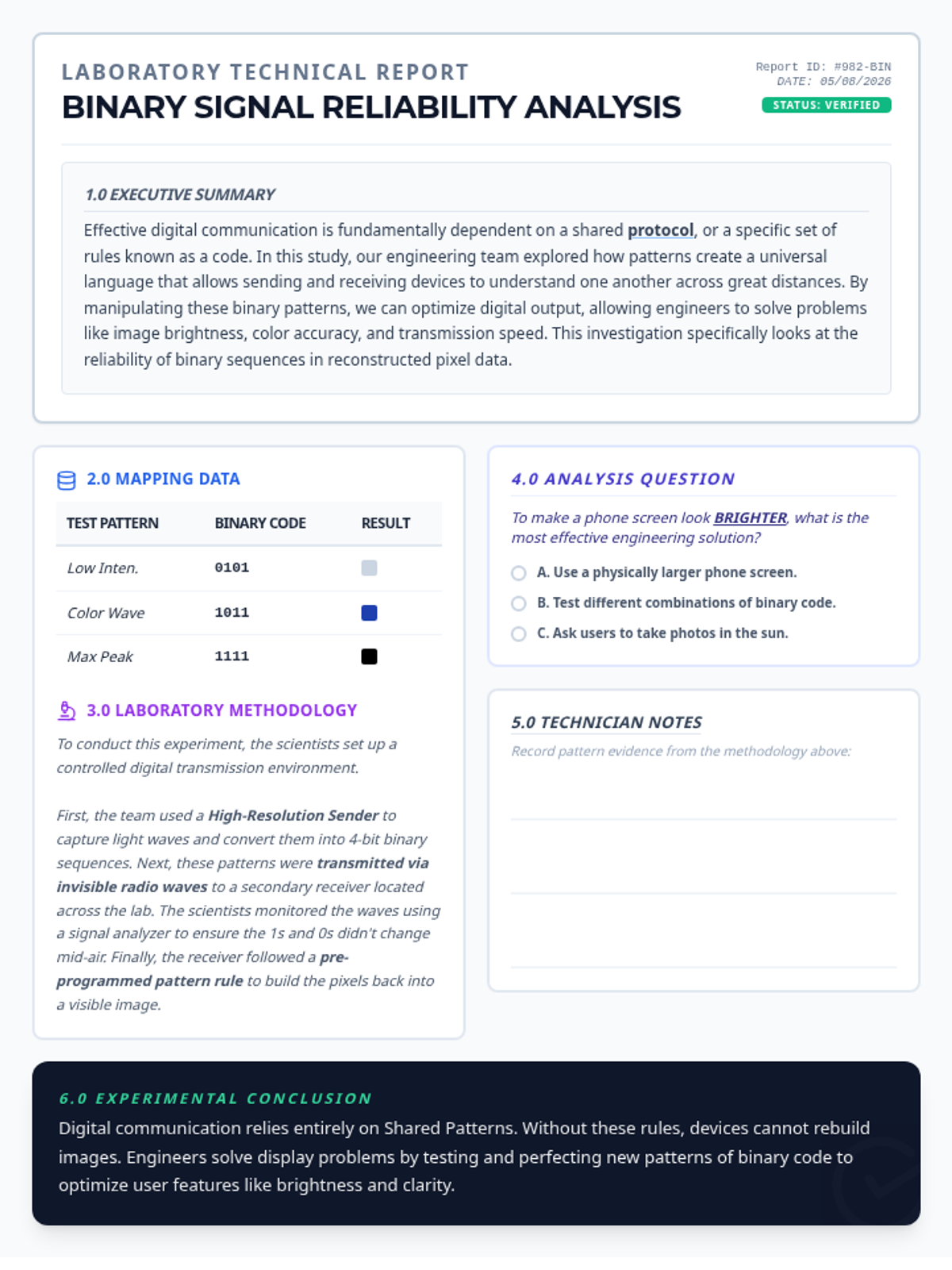
A formal technical lab report regarding binary signal reliability. It includes an expanded executive summary, a detailed methodology section describing the experimental setup with senders and receivers, a data mapping table, and the original experimental conclusions.
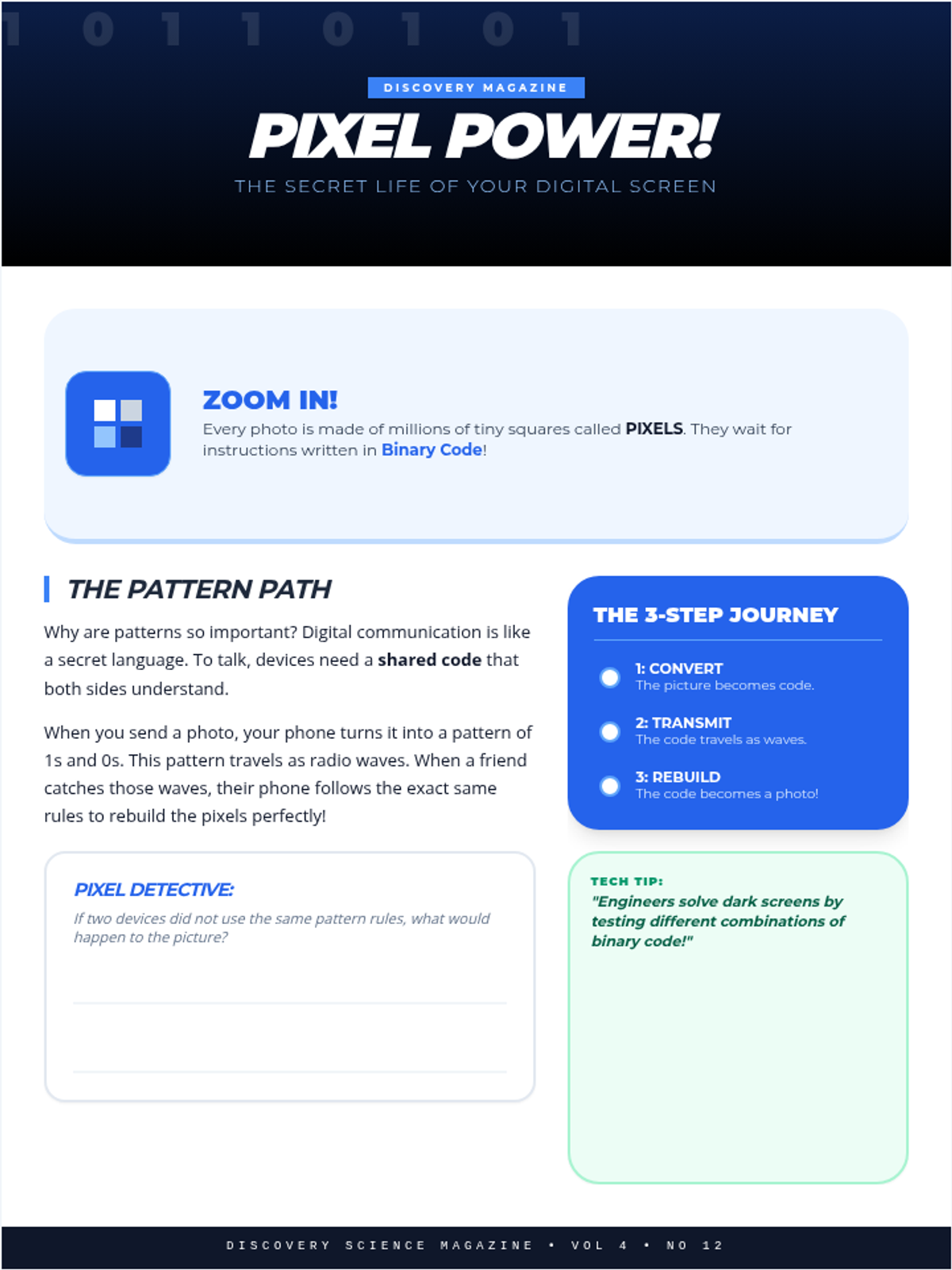
A bold, photo-heavy magazine style article titled 'Pixel Power!'. It uses high-contrast visuals, callouts, and a modern infographic style to explain how images are coded in binary and shared between devices.