Fundamental principles of supply, demand, and monetary systems alongside micro- and macroeconomic structures. Examines the impact of corporate power, labor market dynamics, and global systems on social mobility and class inequality.
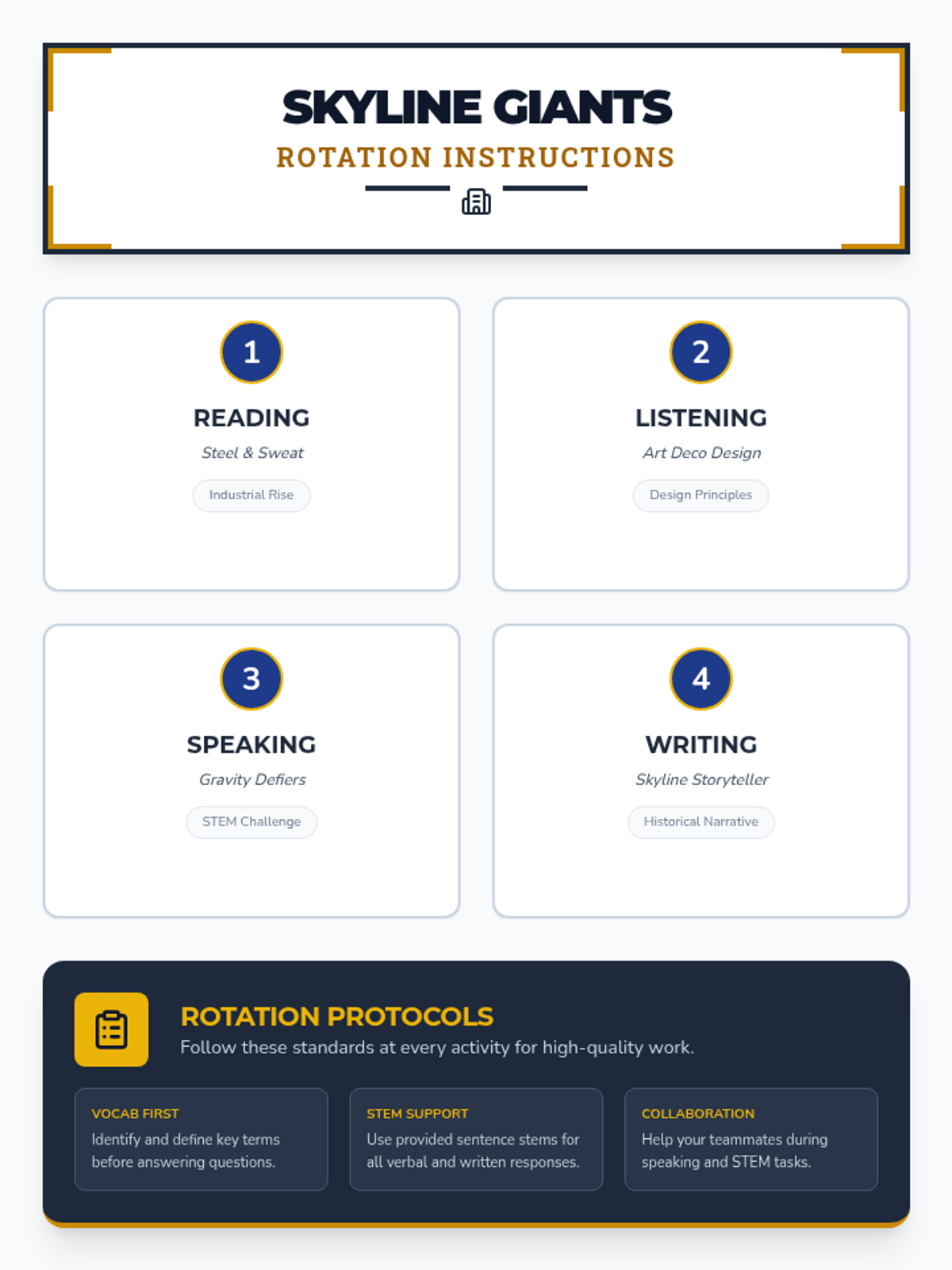
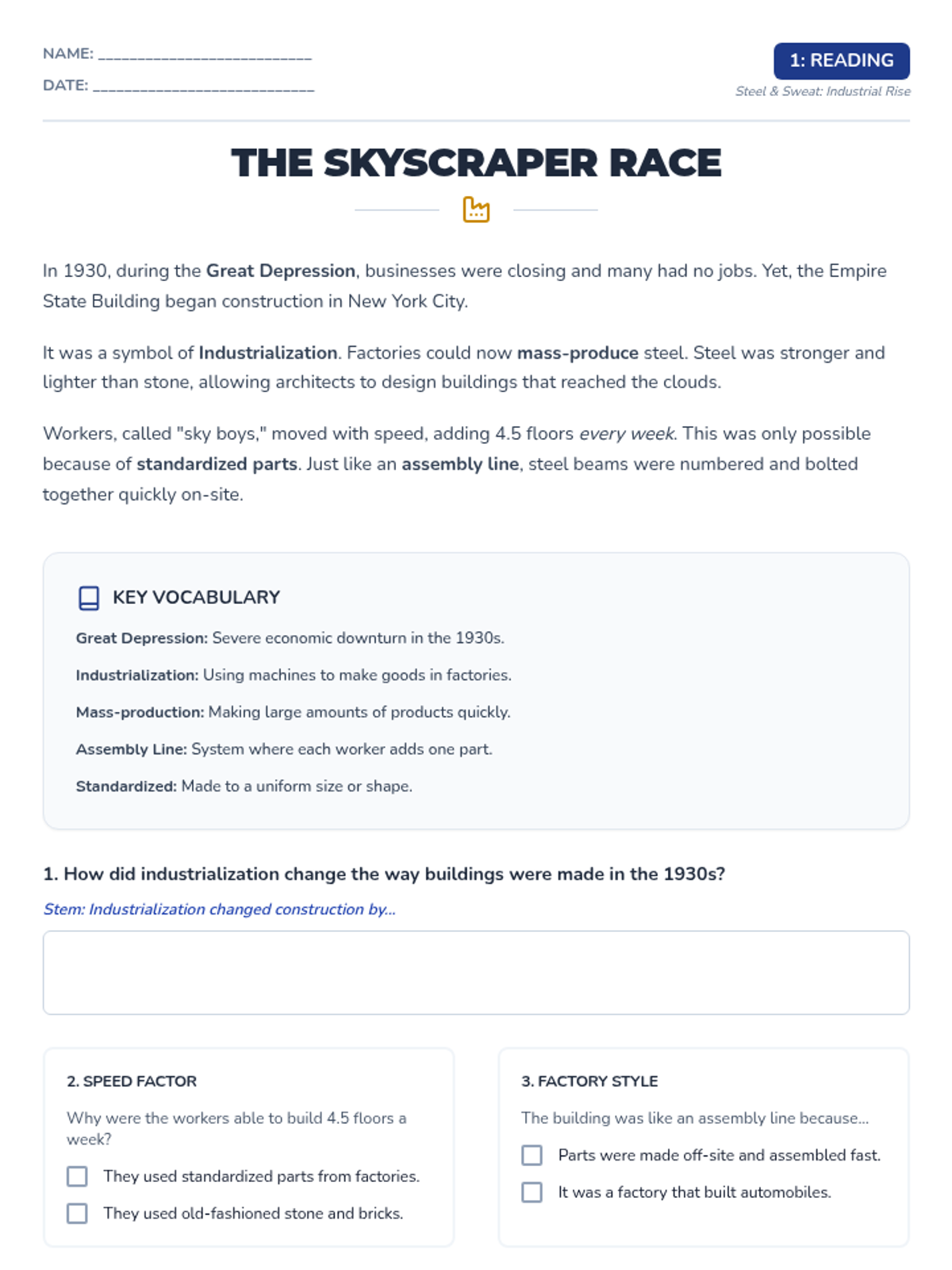
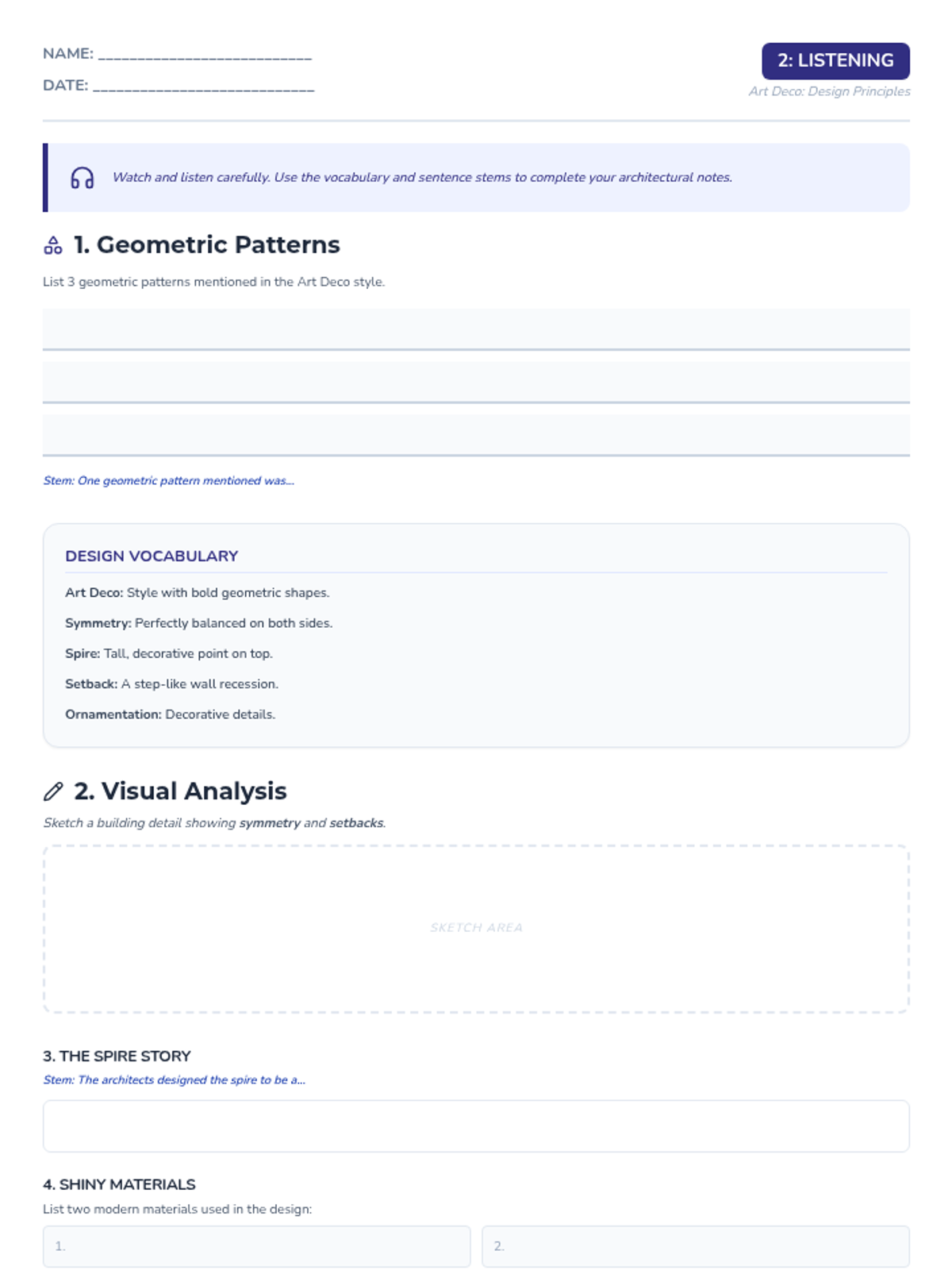
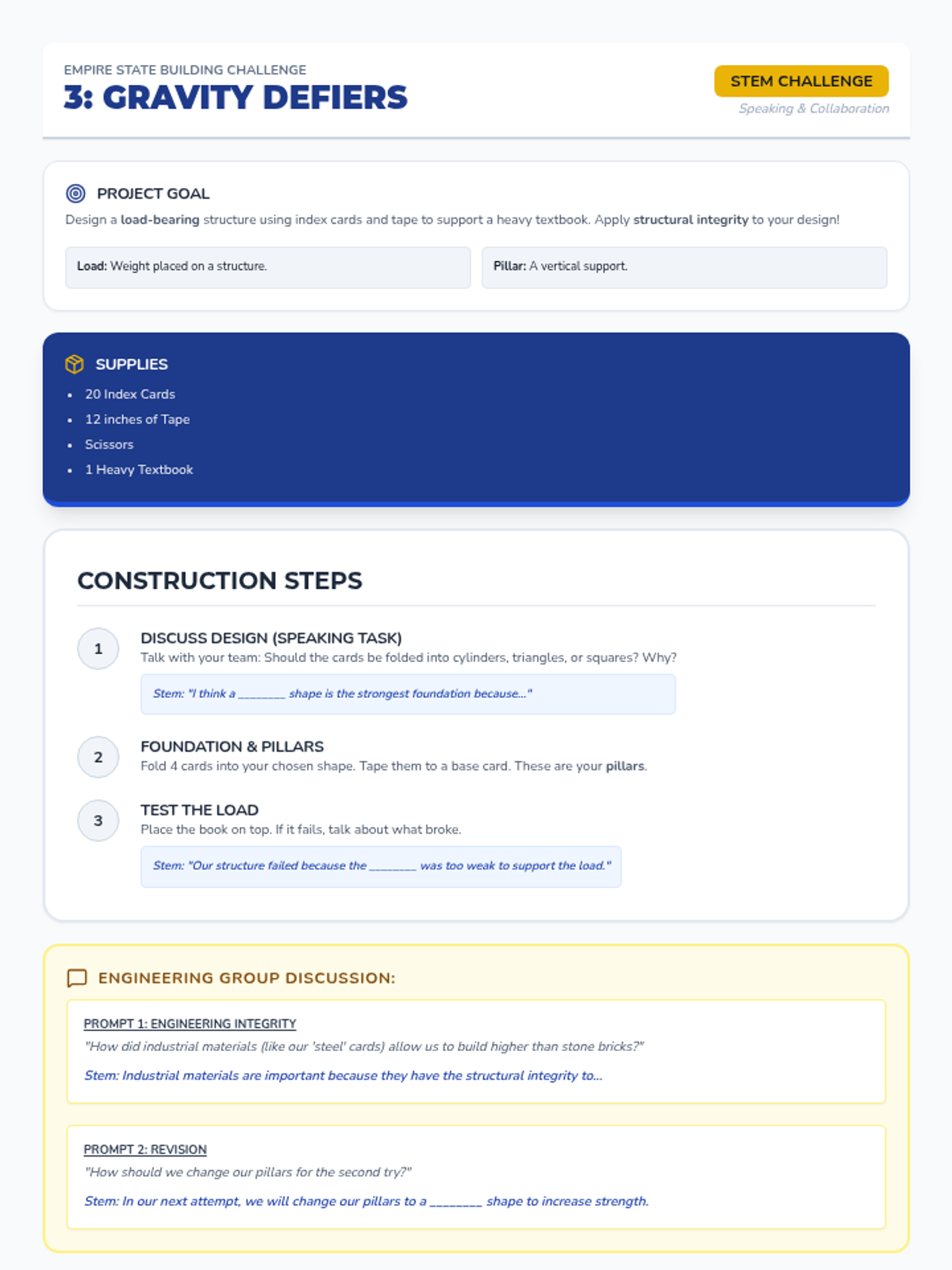
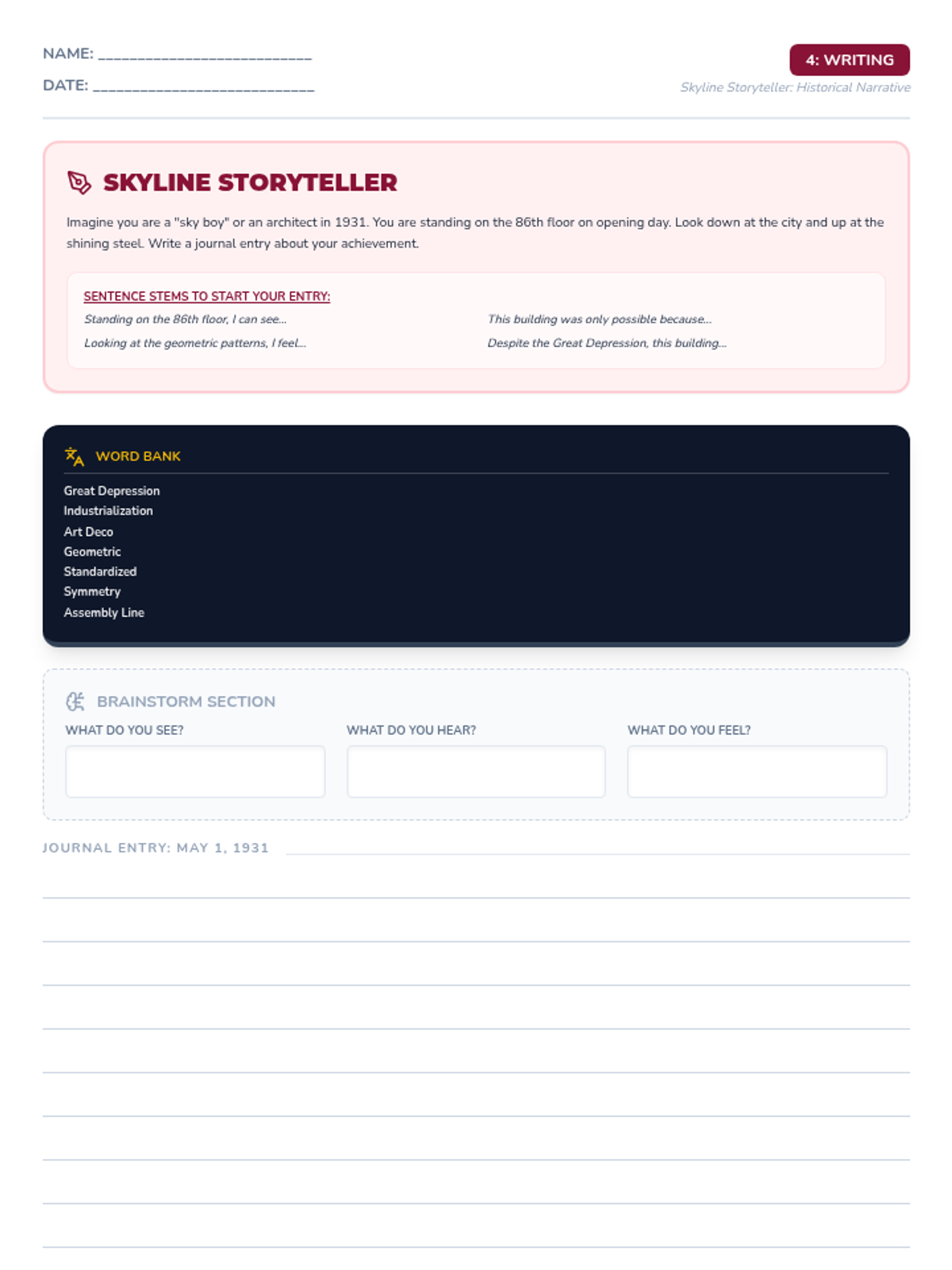
A comprehensive unit exploring the intersection of industrial innovation and architectural design through the iconic lens of the Empire State Building. Students analyze the socio-economic impacts of the Great Depression on construction and the geometric principles of Art Deco style.
A comprehensive unit exploring the diverse urban and rural land use patterns across the Balkan Peninsula, culminating in a comparative research project.
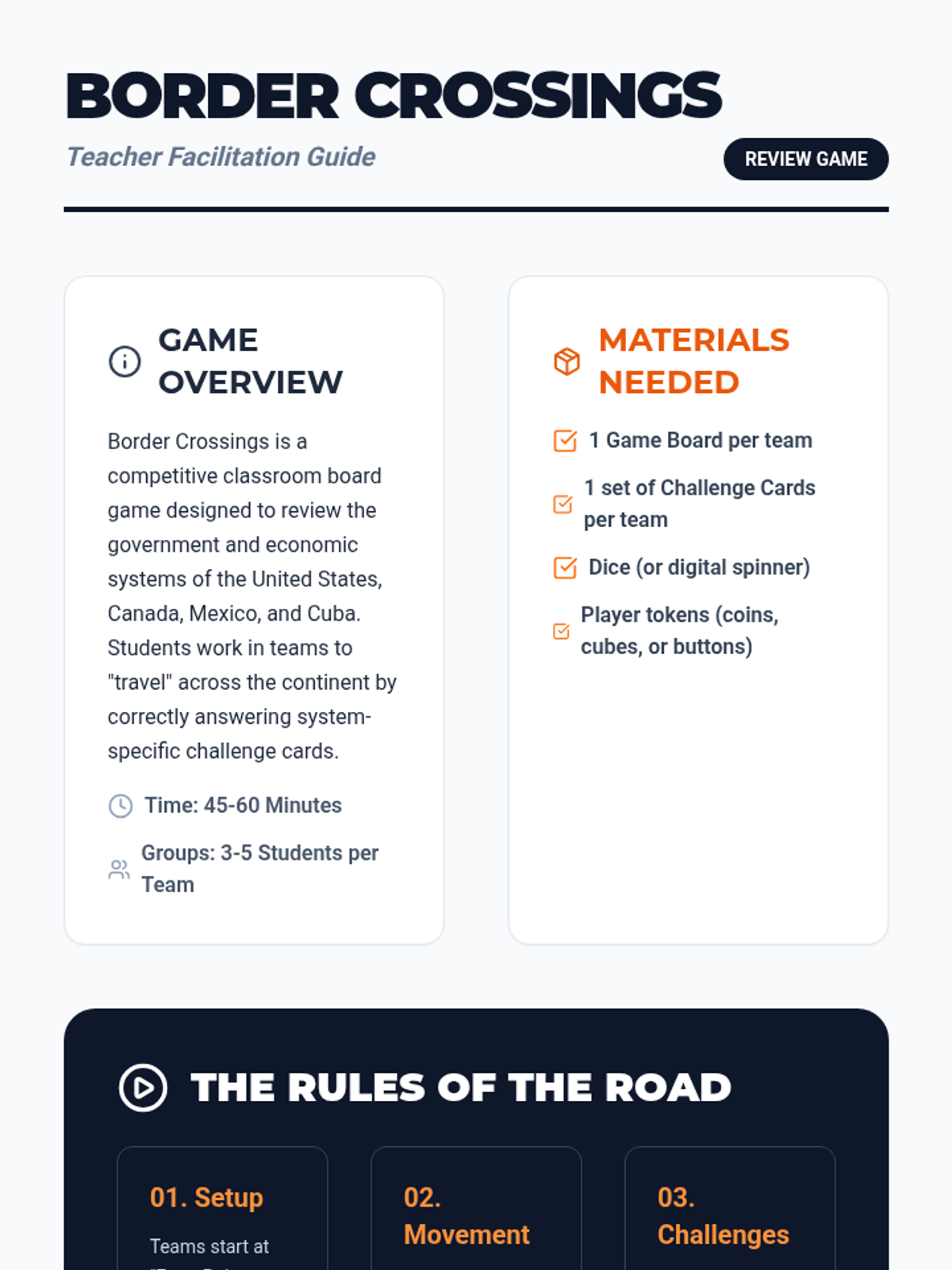
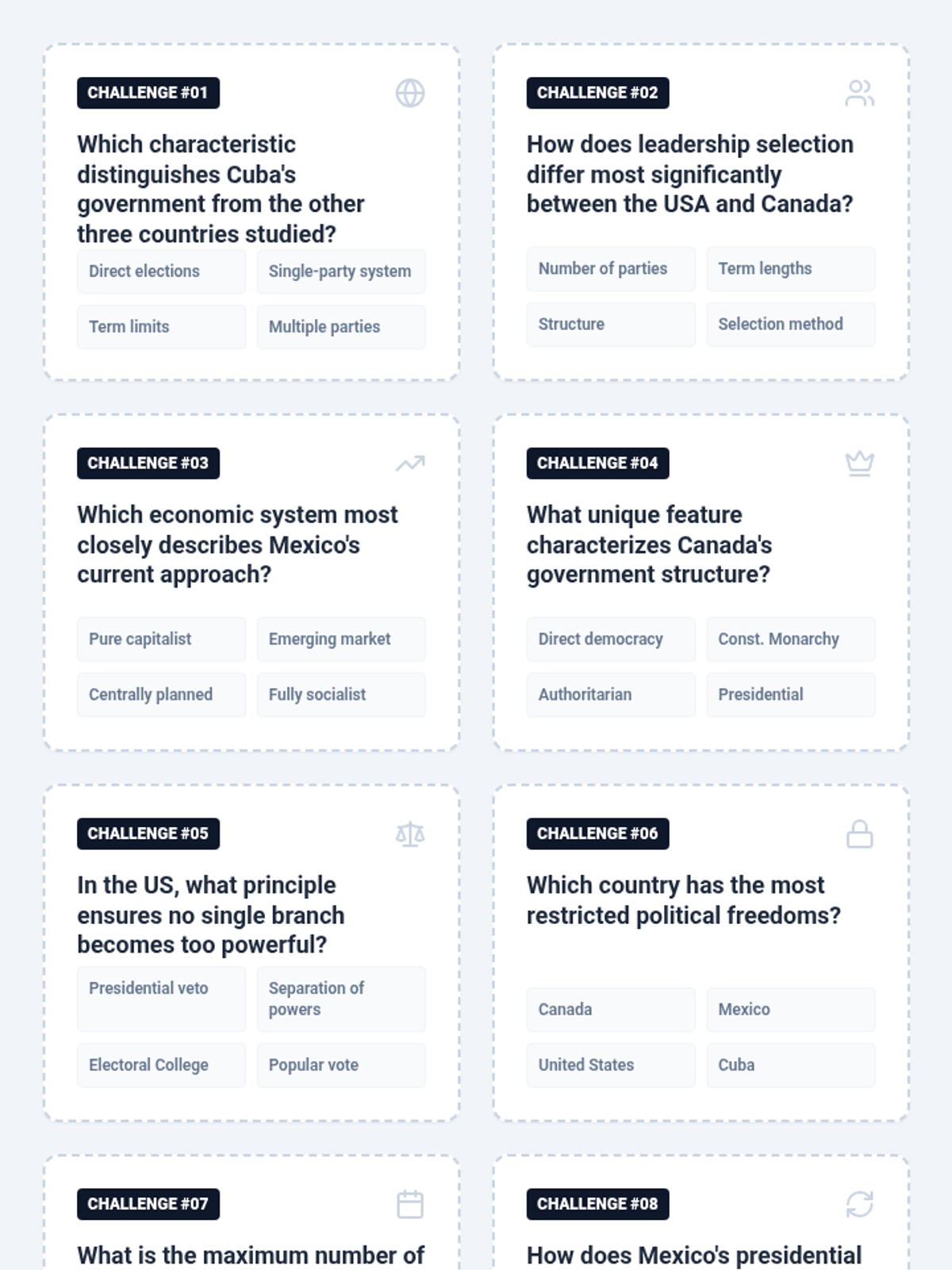
A comprehensive unit exploring the diverse political and economic structures of North American and Caribbean nations.
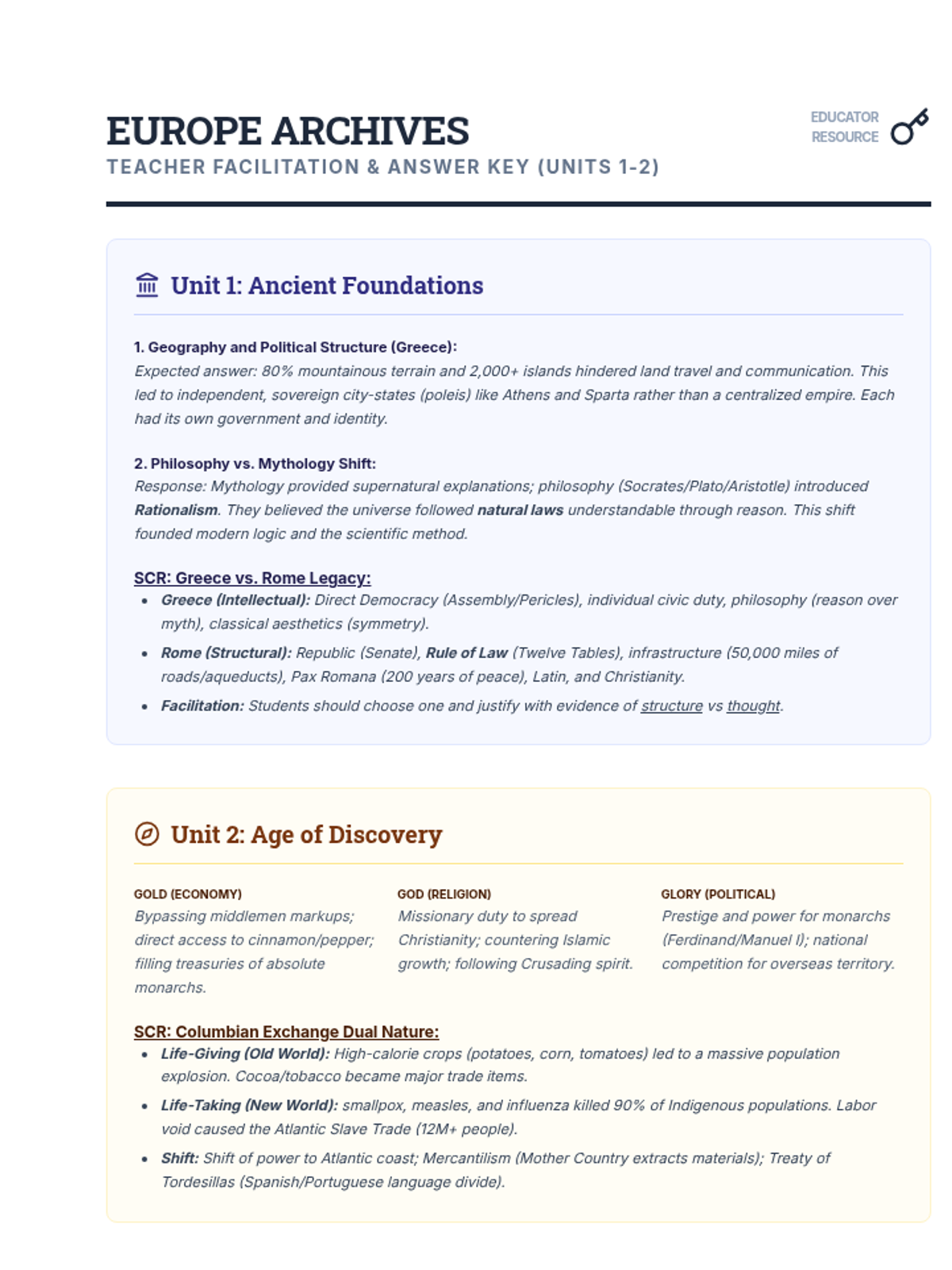
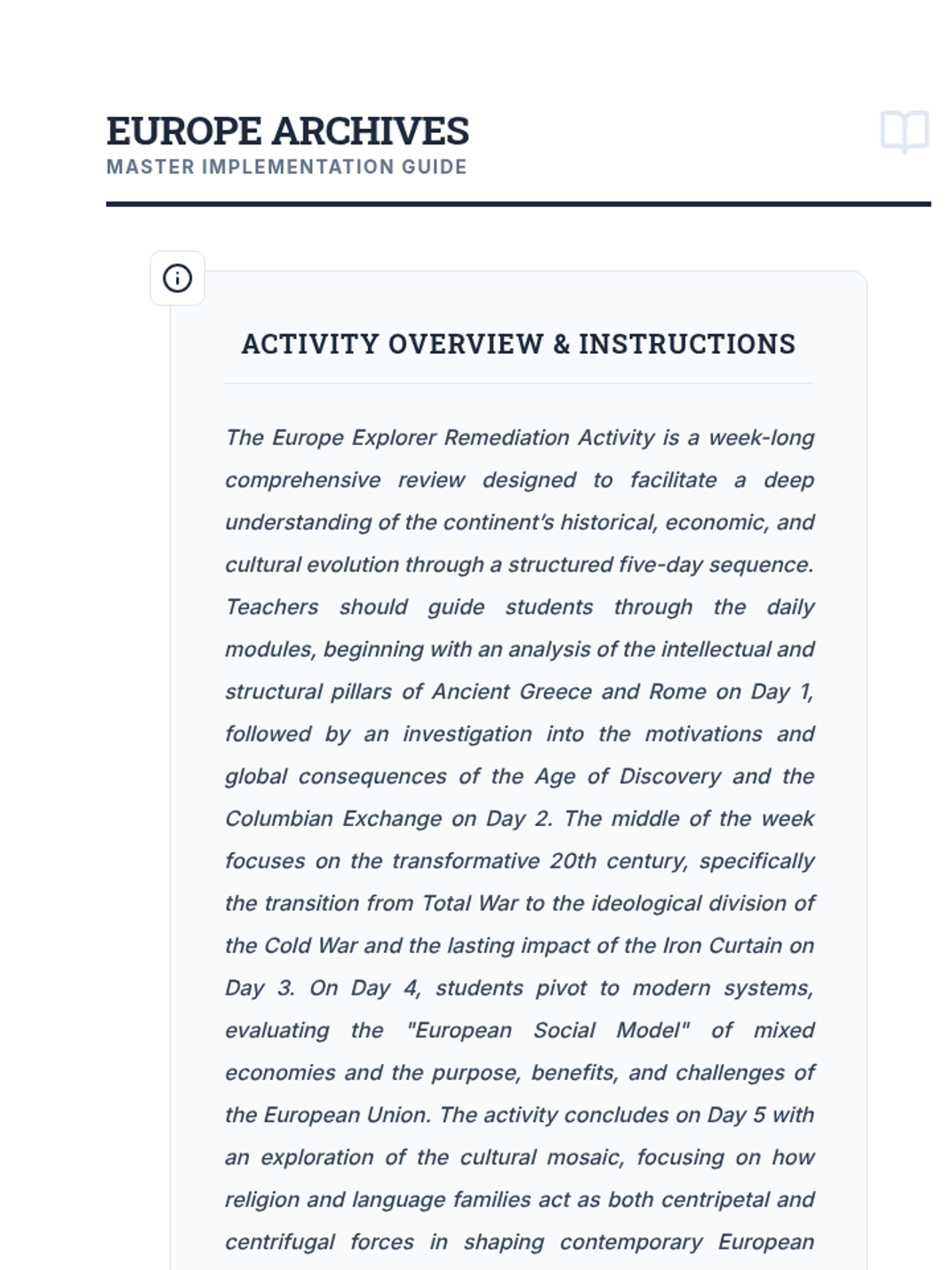
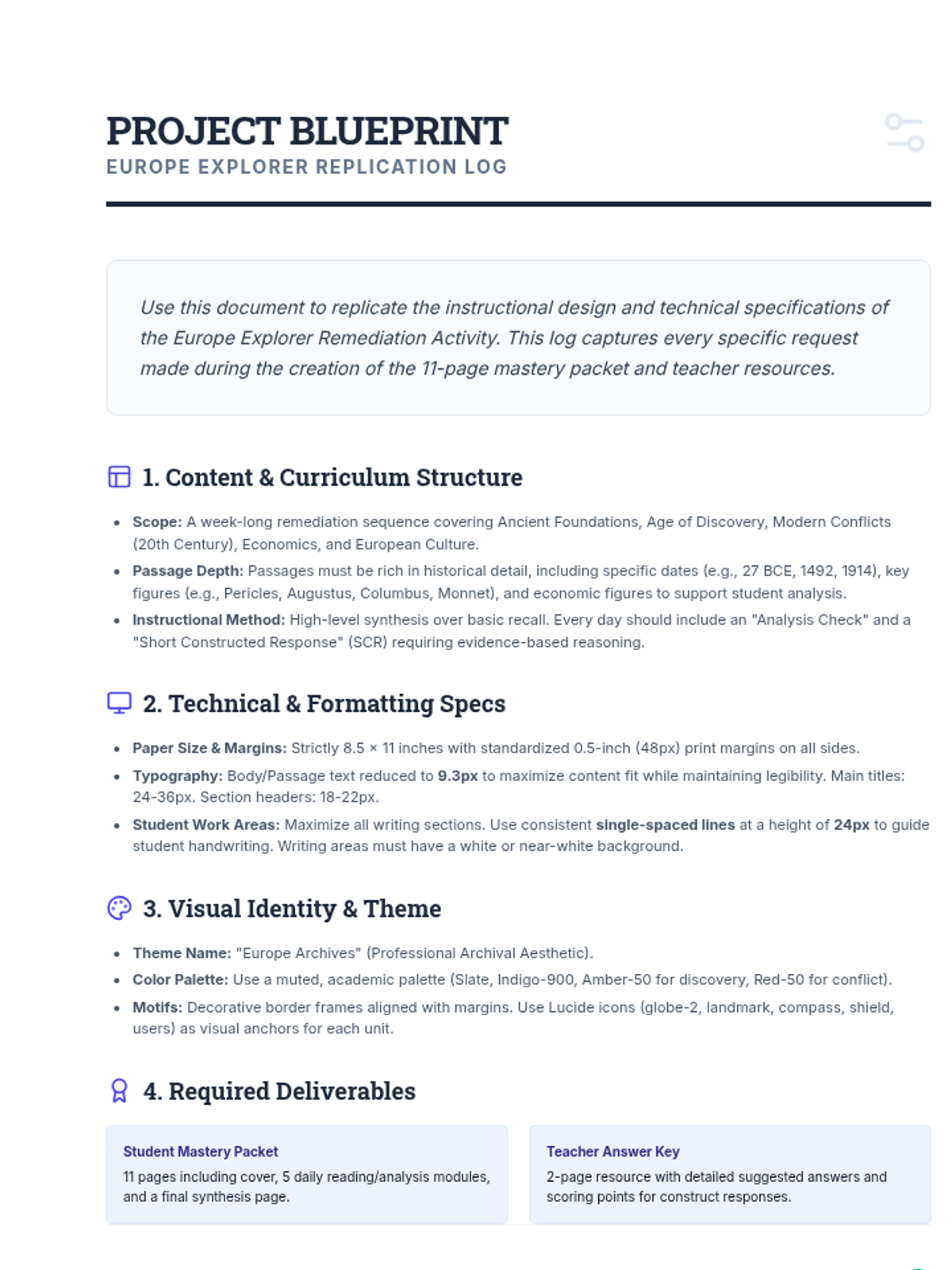
A comprehensive week-long remediation packet covering Europe's history, culture, economics, and the European Union through reading passages and high-level analysis.
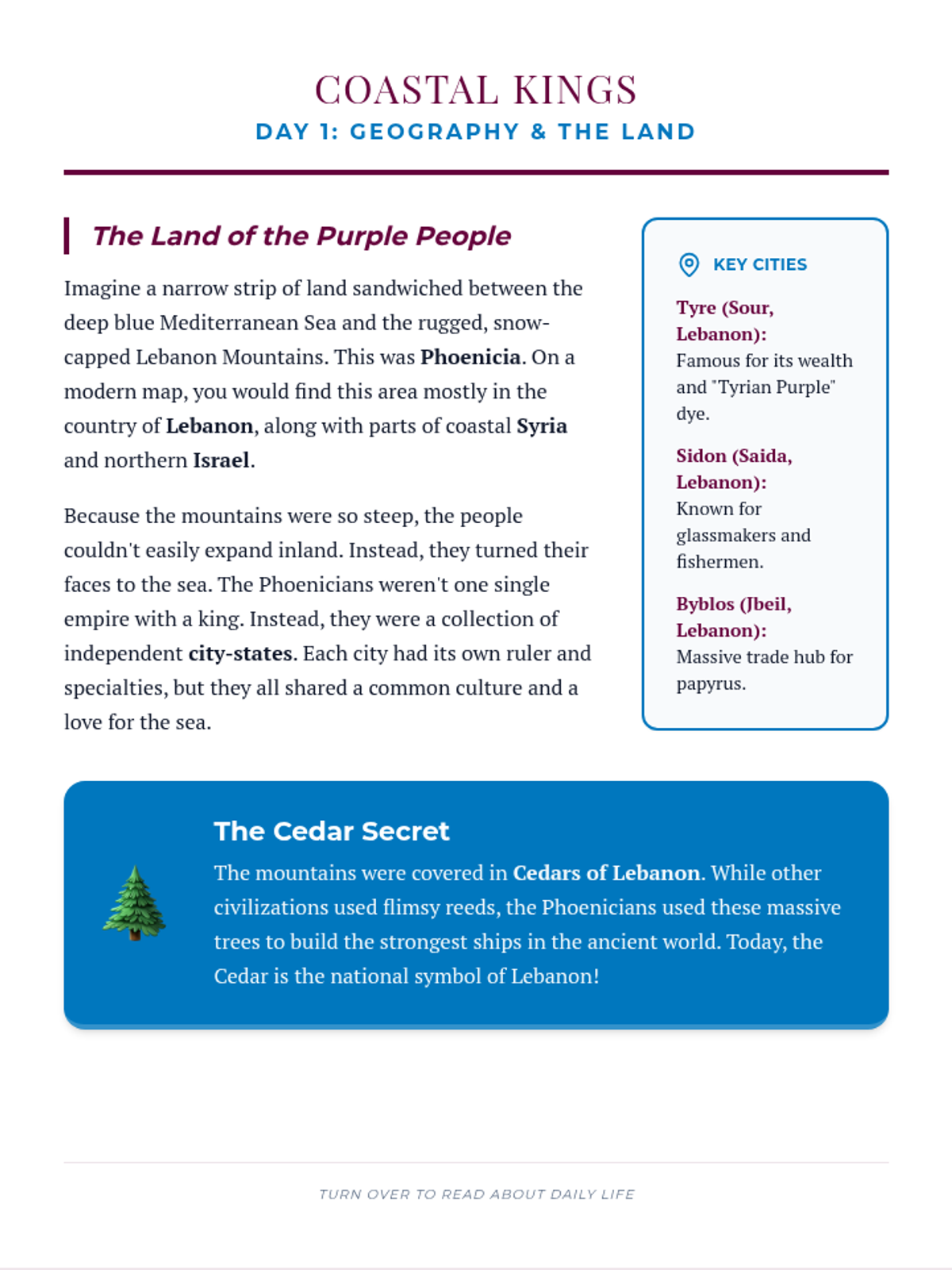
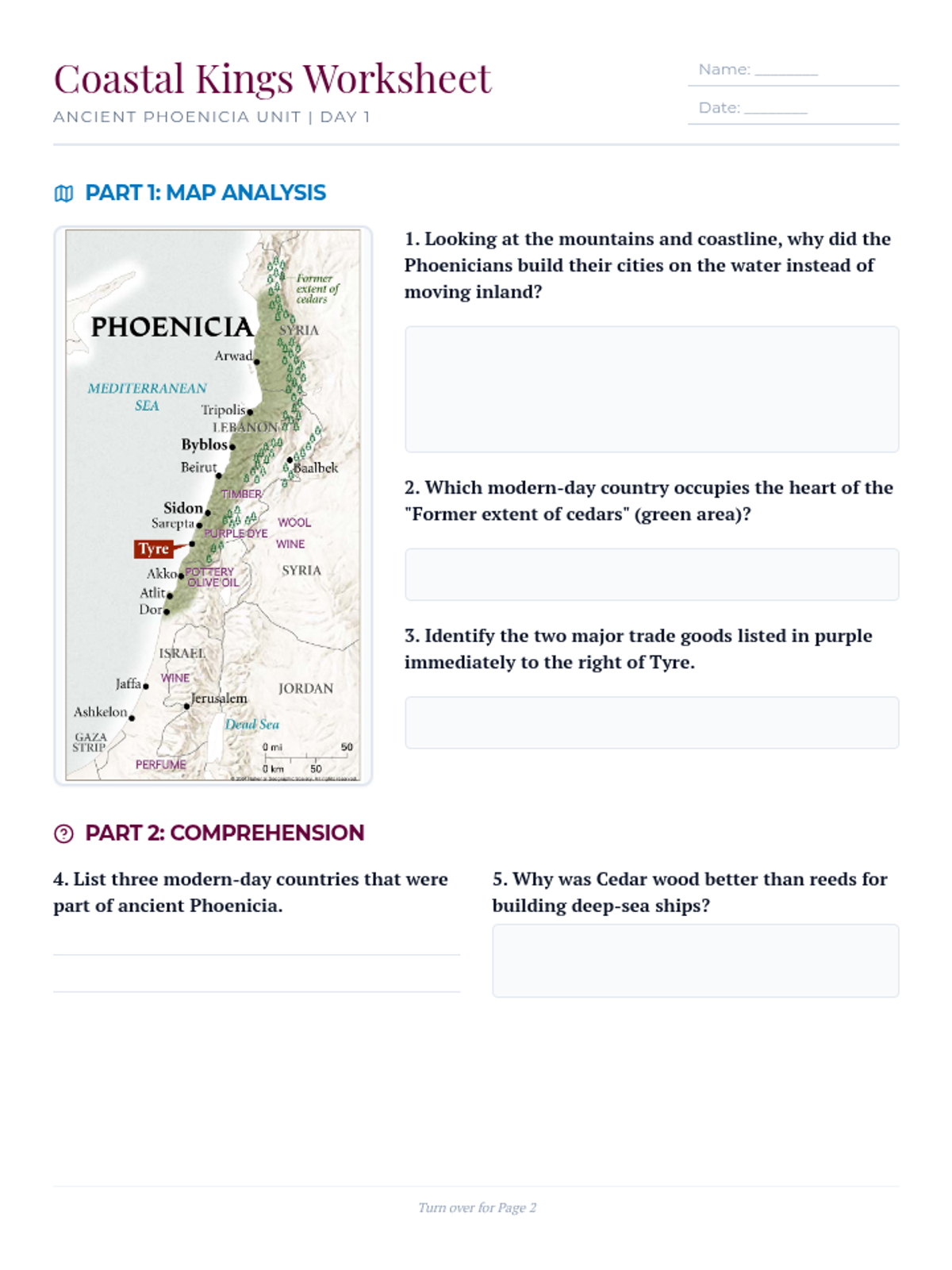
A four-day unit for middle school students exploring the geography, science, maritime technology, and lasting legacy of the ancient Phoenician civilization. The sequence alternates between social studies/geography and science/technology lessons, featuring hands-on activities and map analysis.
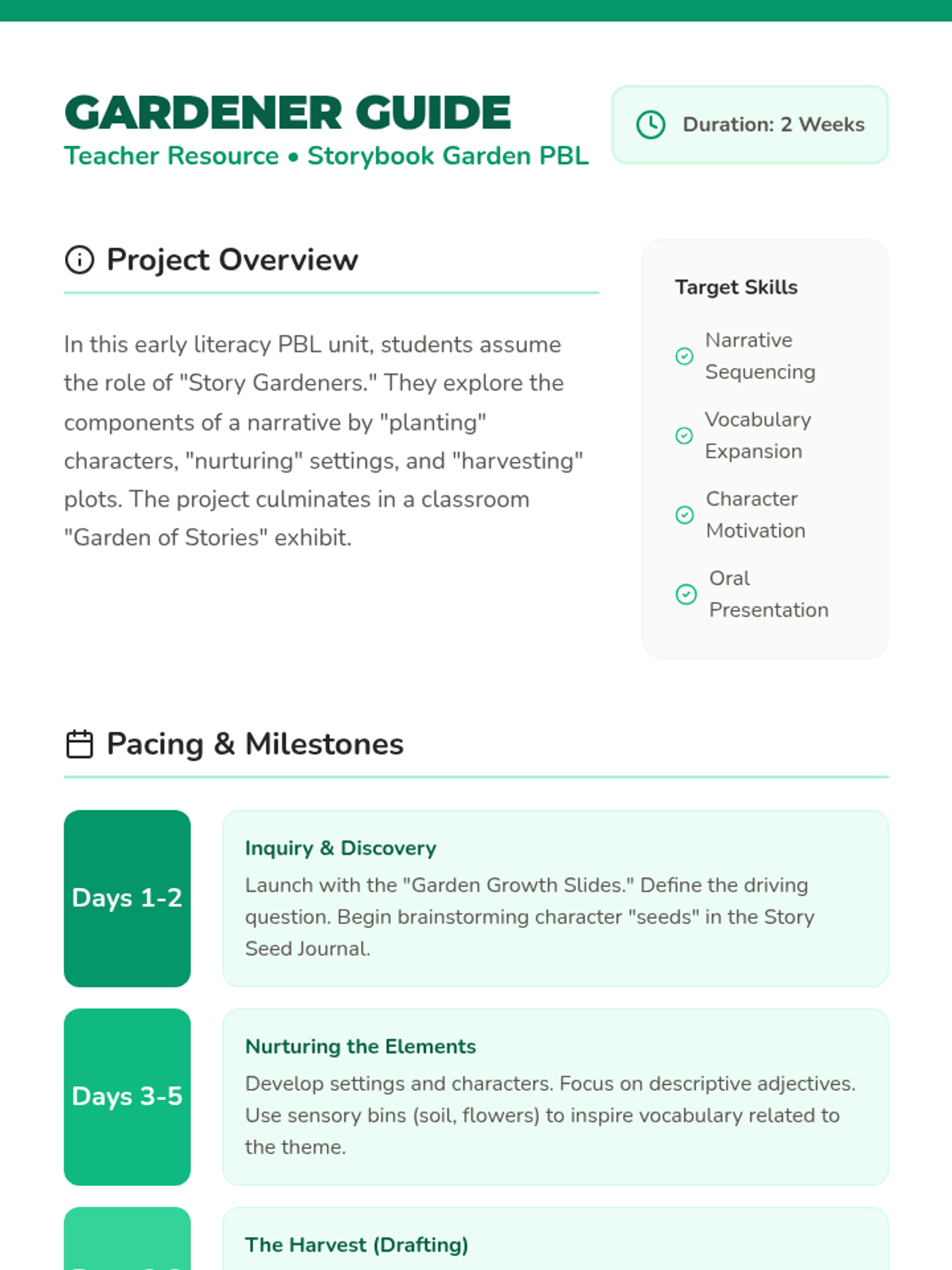
A comprehensive collection of Project-Based Learning (PBL) units spanning early childhood literacy, elementary math and science, and middle school social studies. Each unit guides students through inquiry, creation, and presentation within a themed 'Discovery Files' framework.
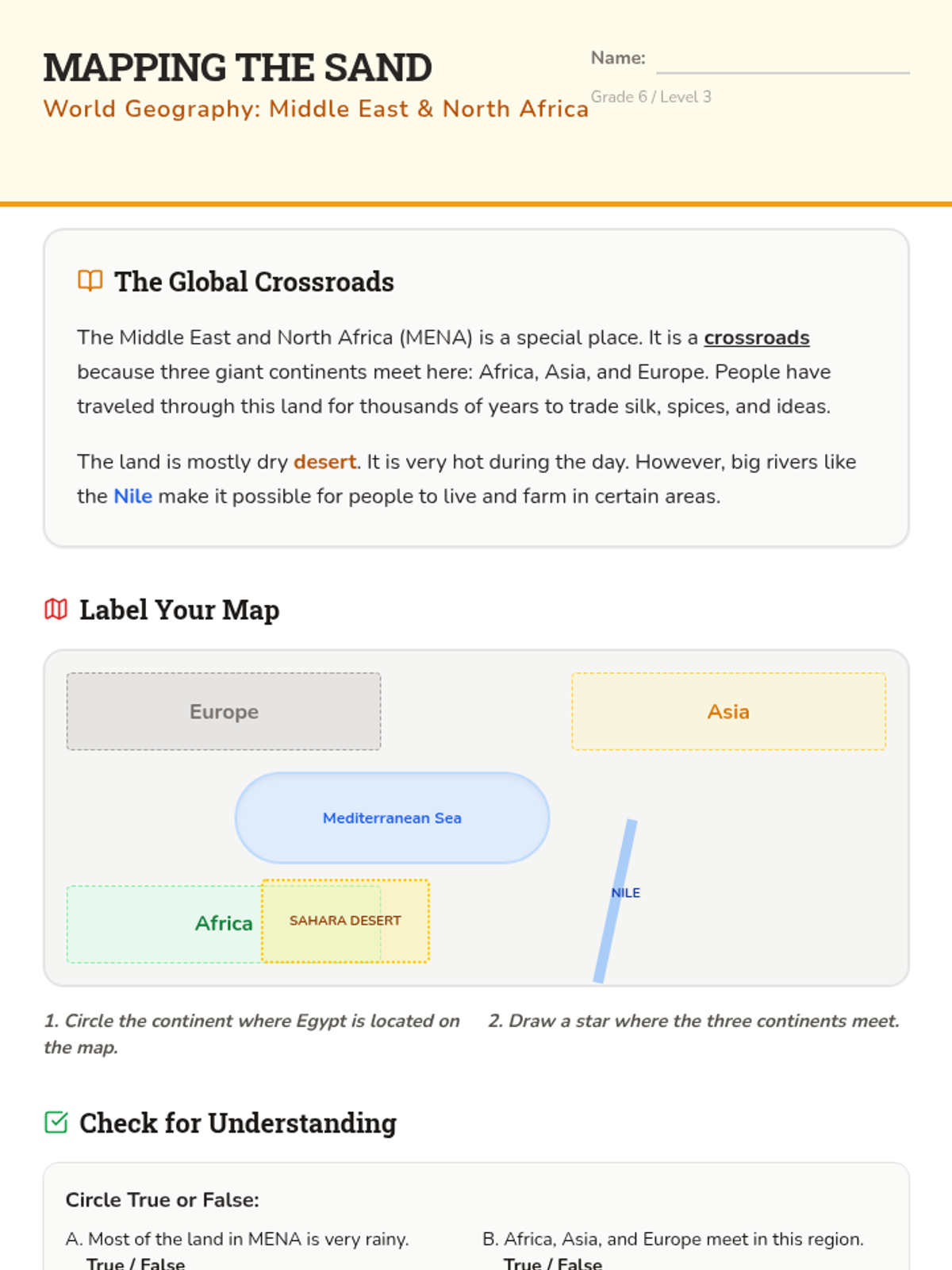
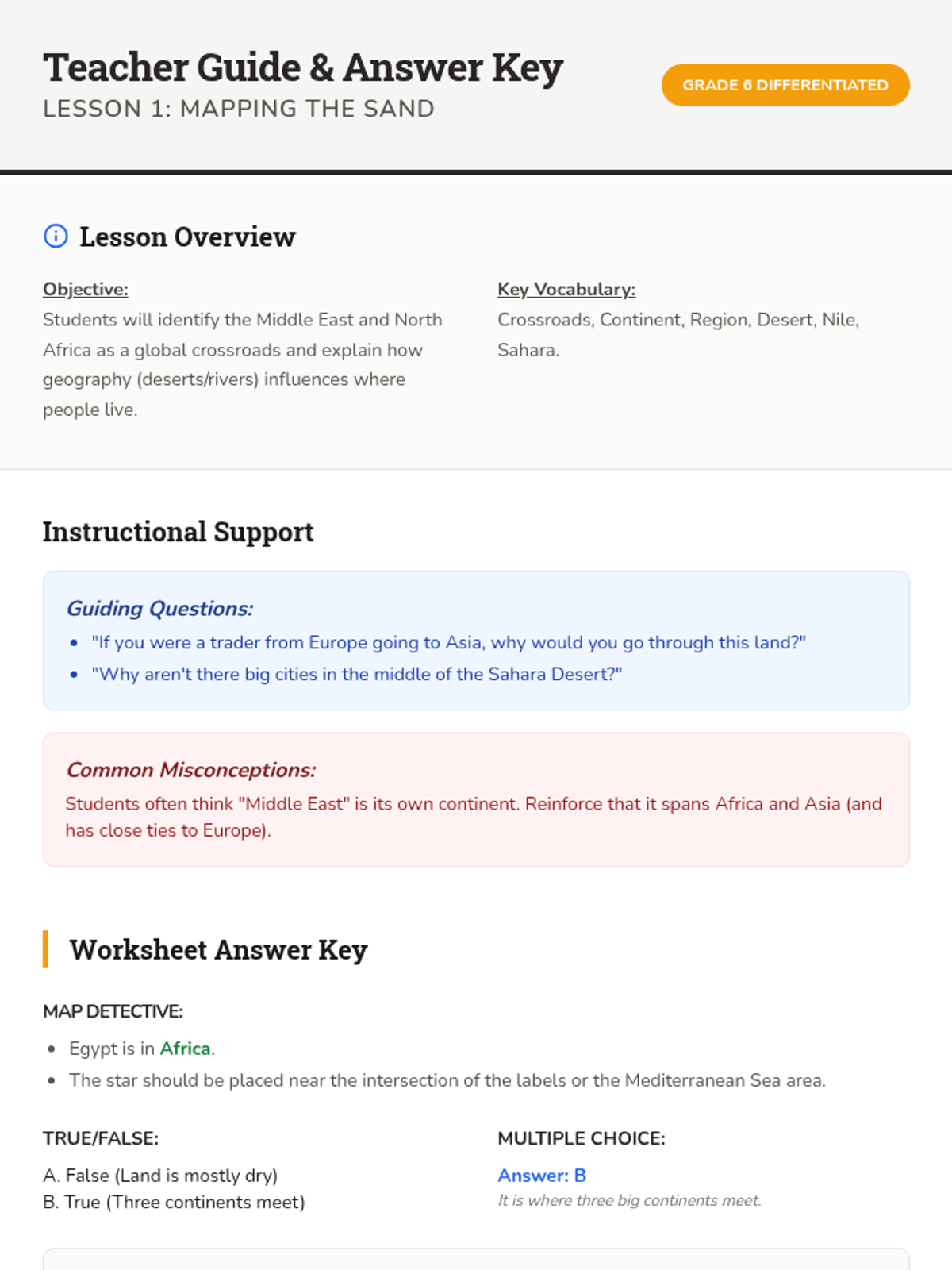
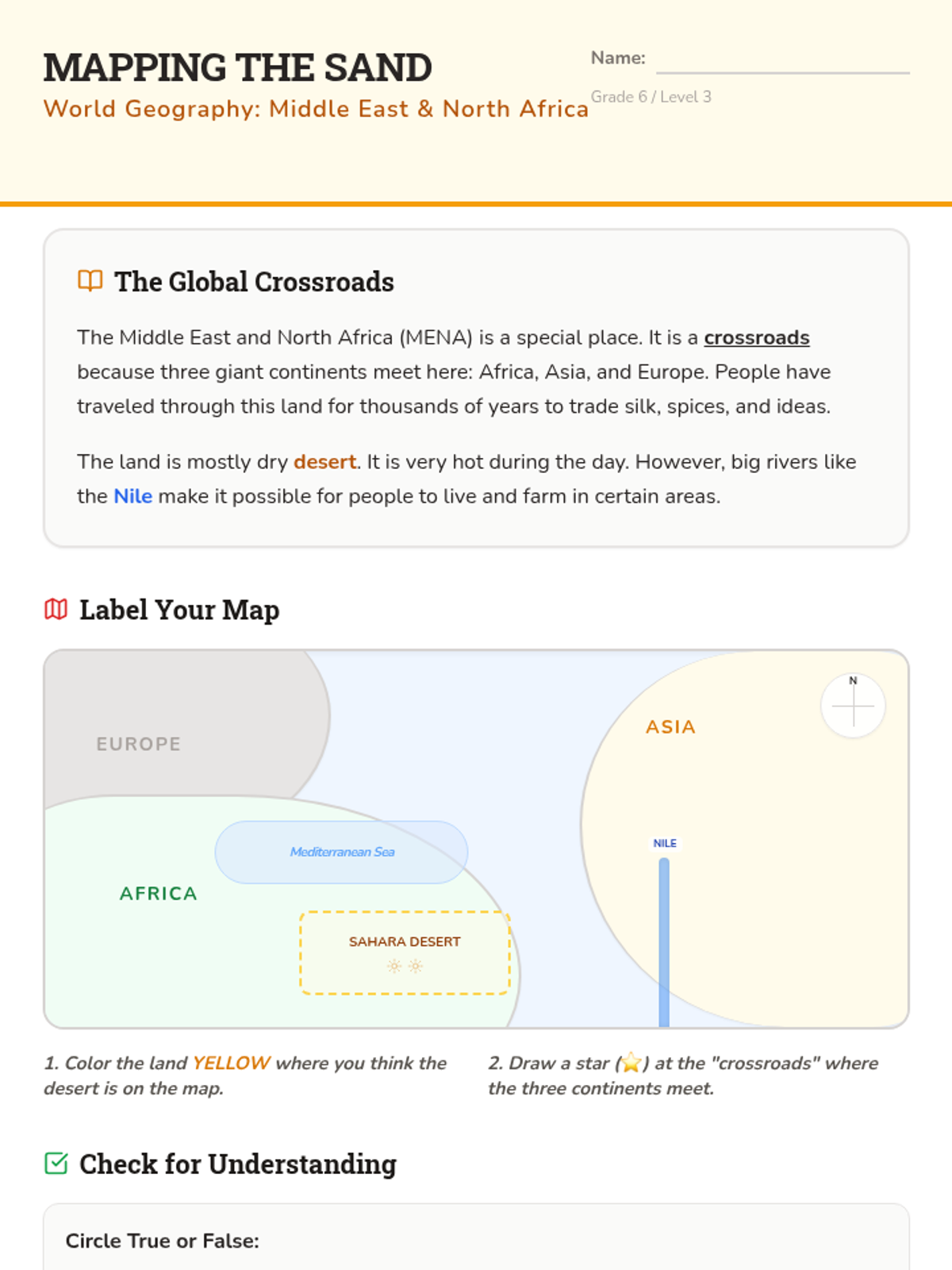
A differentiated social studies unit covering the geography, cultures, and empires of the Middle East and North Africa, adapted for 3rd-grade readability based on the DESE Investigating History Grade 6 curriculum.
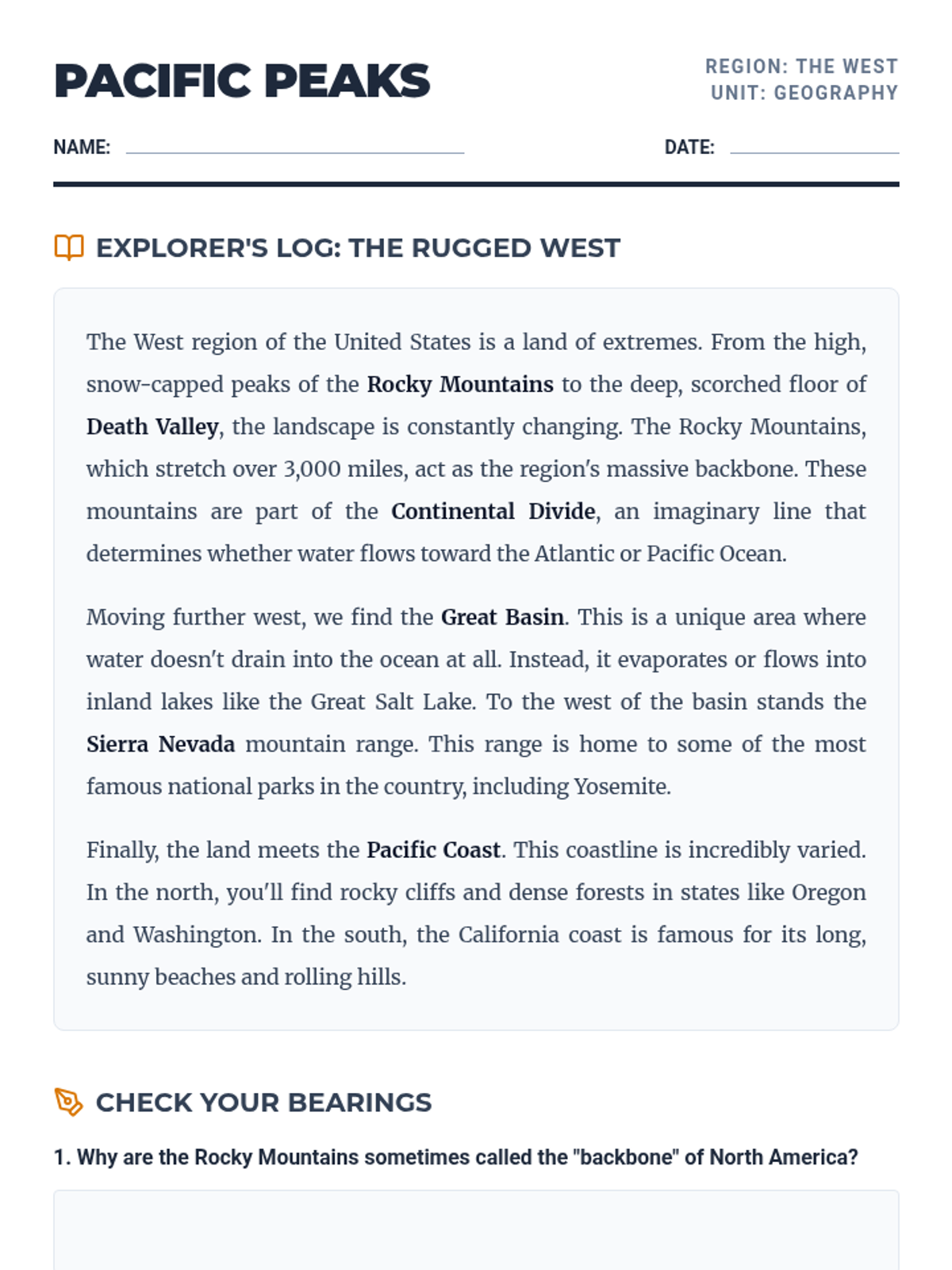
A comprehensive 5-lesson exploration of the West region of the United States, covering geography, climate, resources, culture, and states/capitals through reading passages and interactive activities.
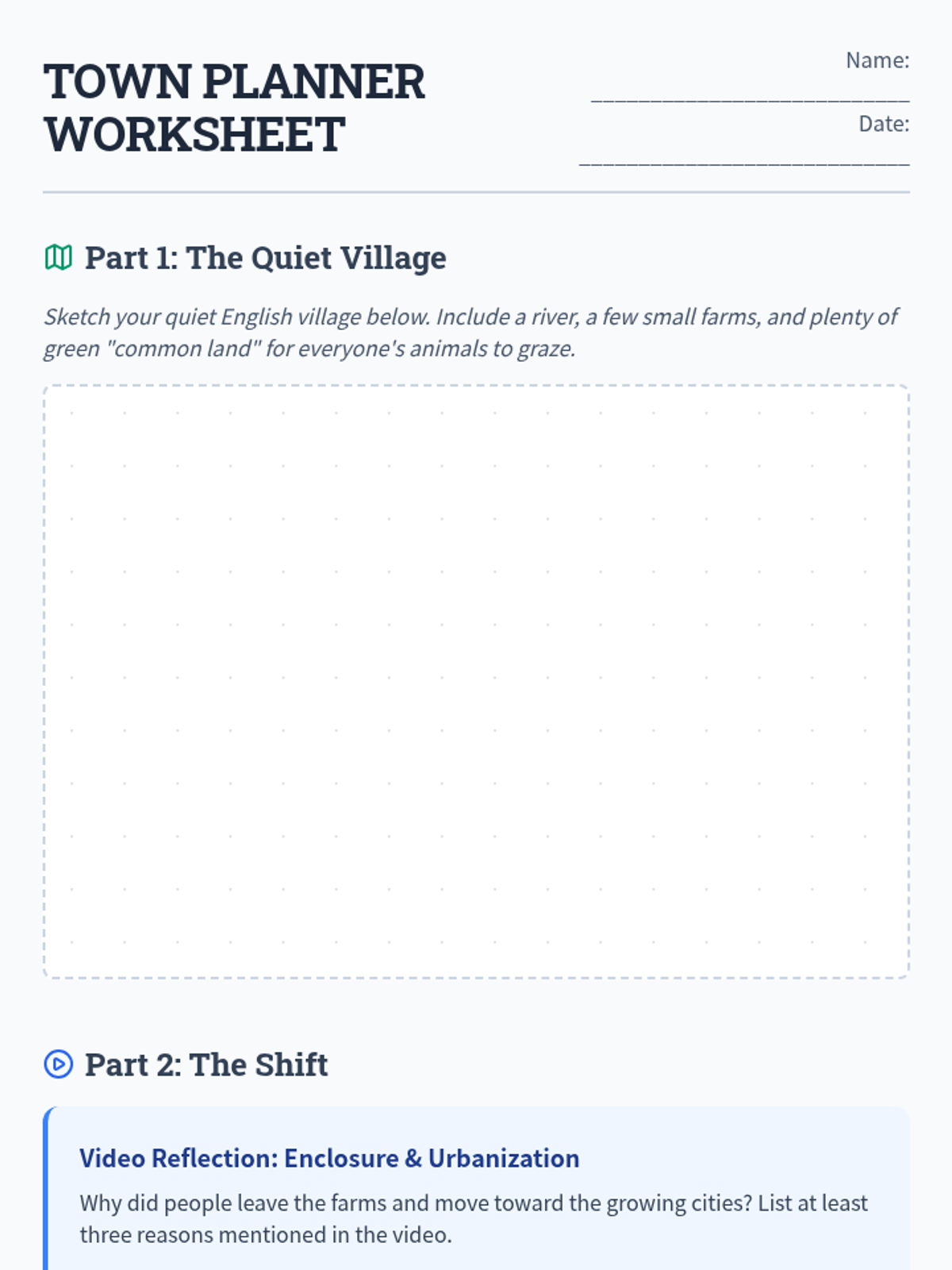
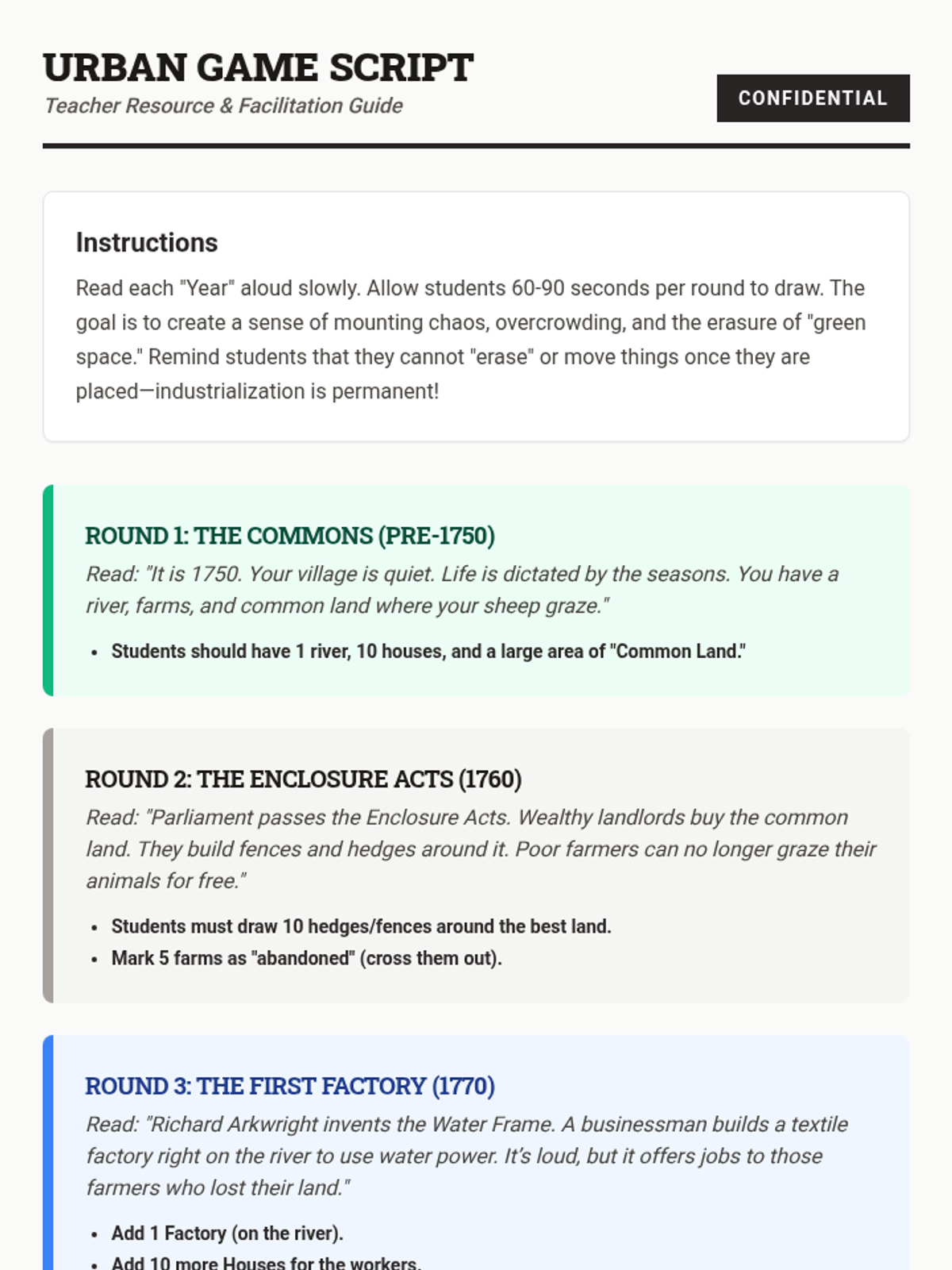
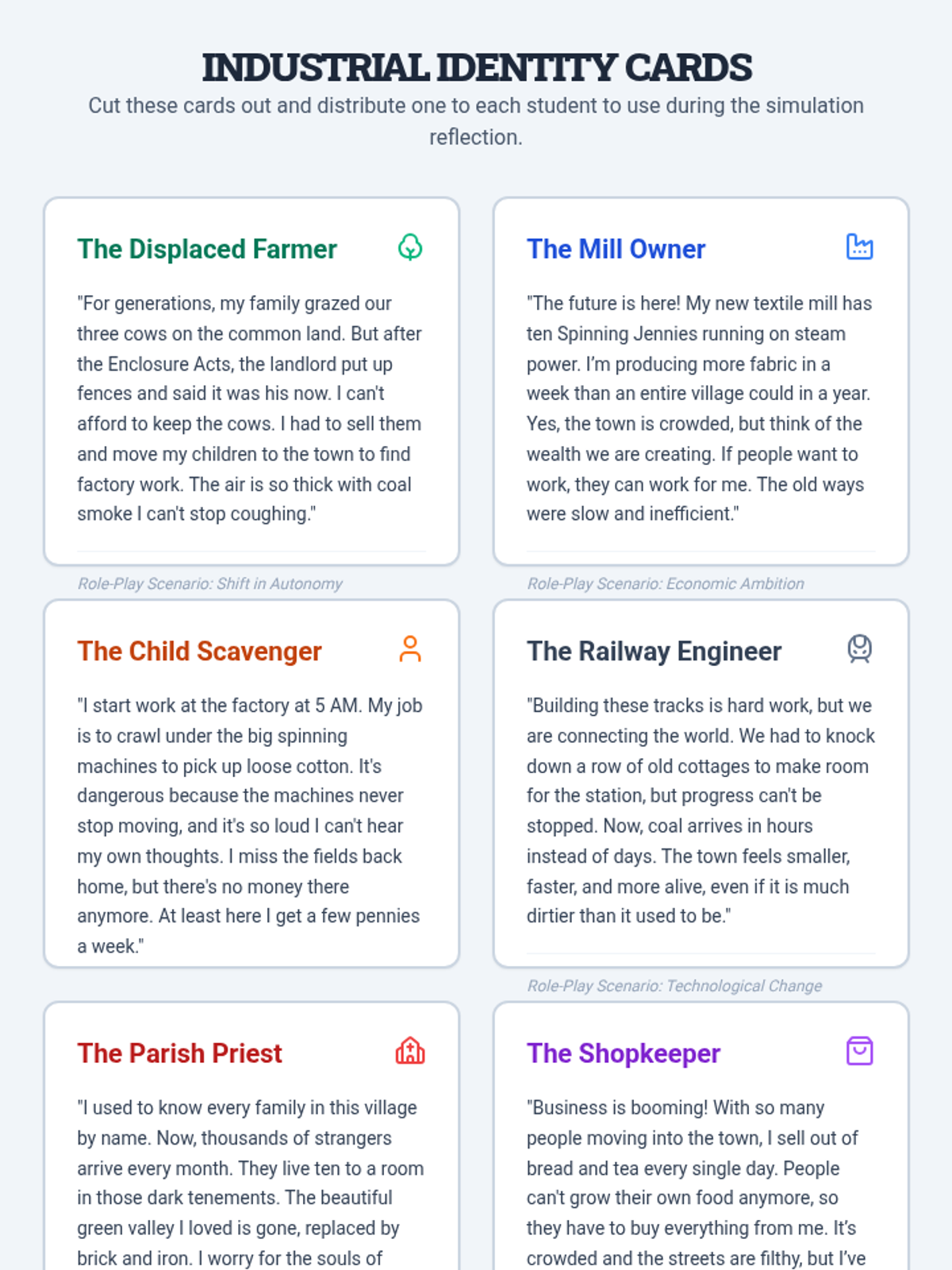
A sequence exploring the transition from agrarian societies to industrial hubs, focusing on the social, economic, and physical changes in 18th-century England.
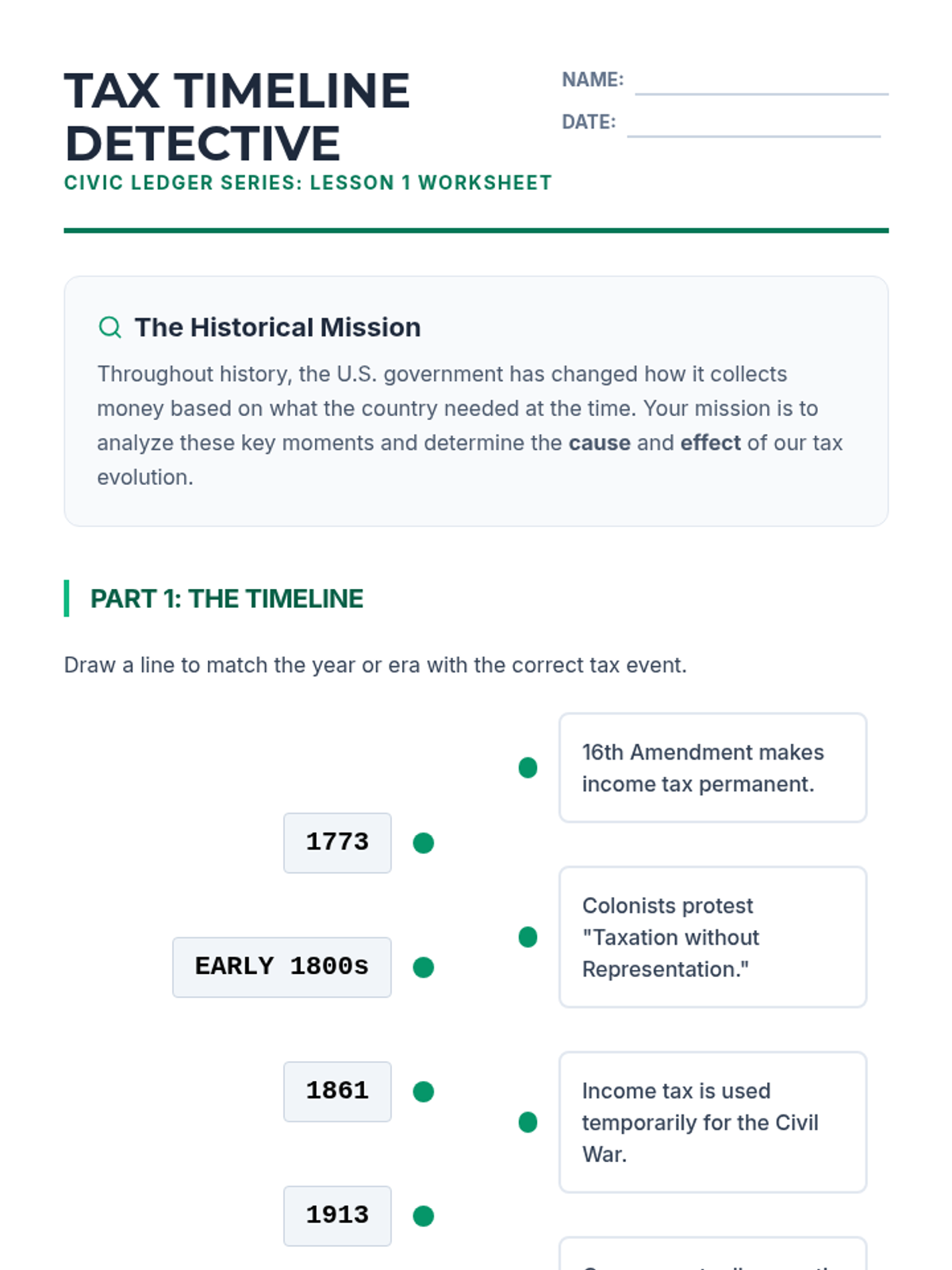
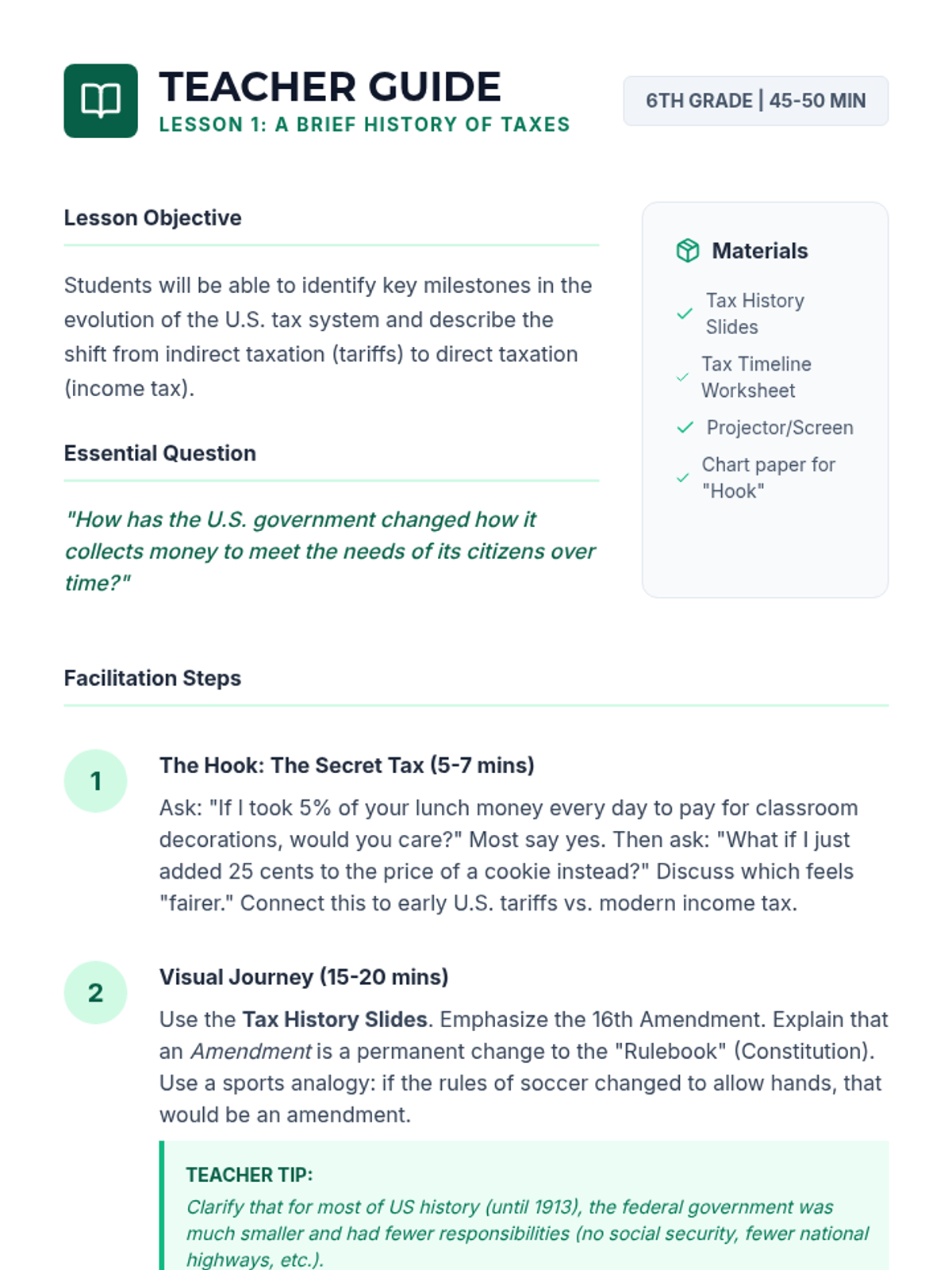
This sequence explores the evolution of the US tax system and the ethical debates surrounding different tax structures. Students will investigate the concept of 'fairness' in financial policy and design their own tax system for a fictional nation.
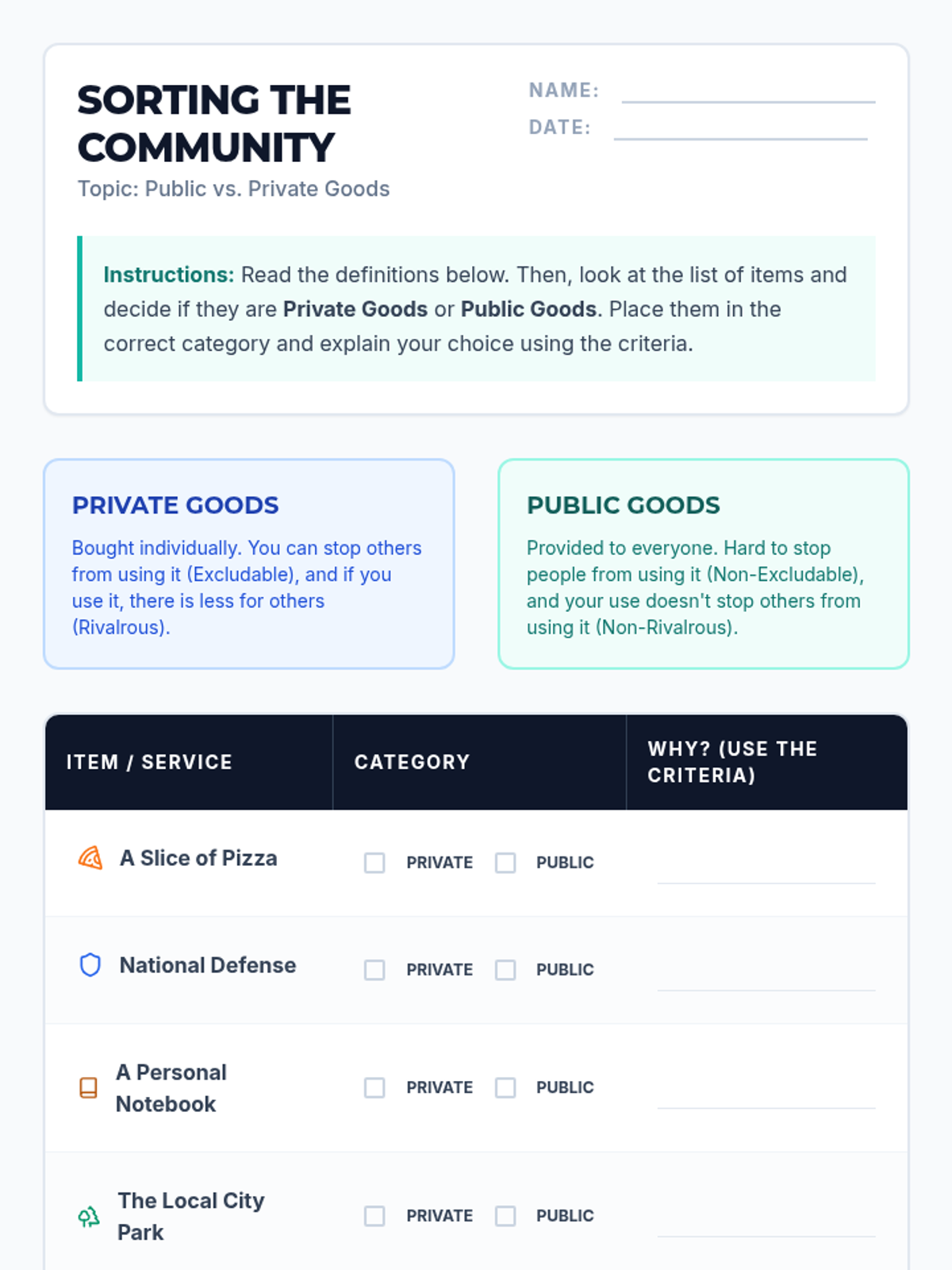
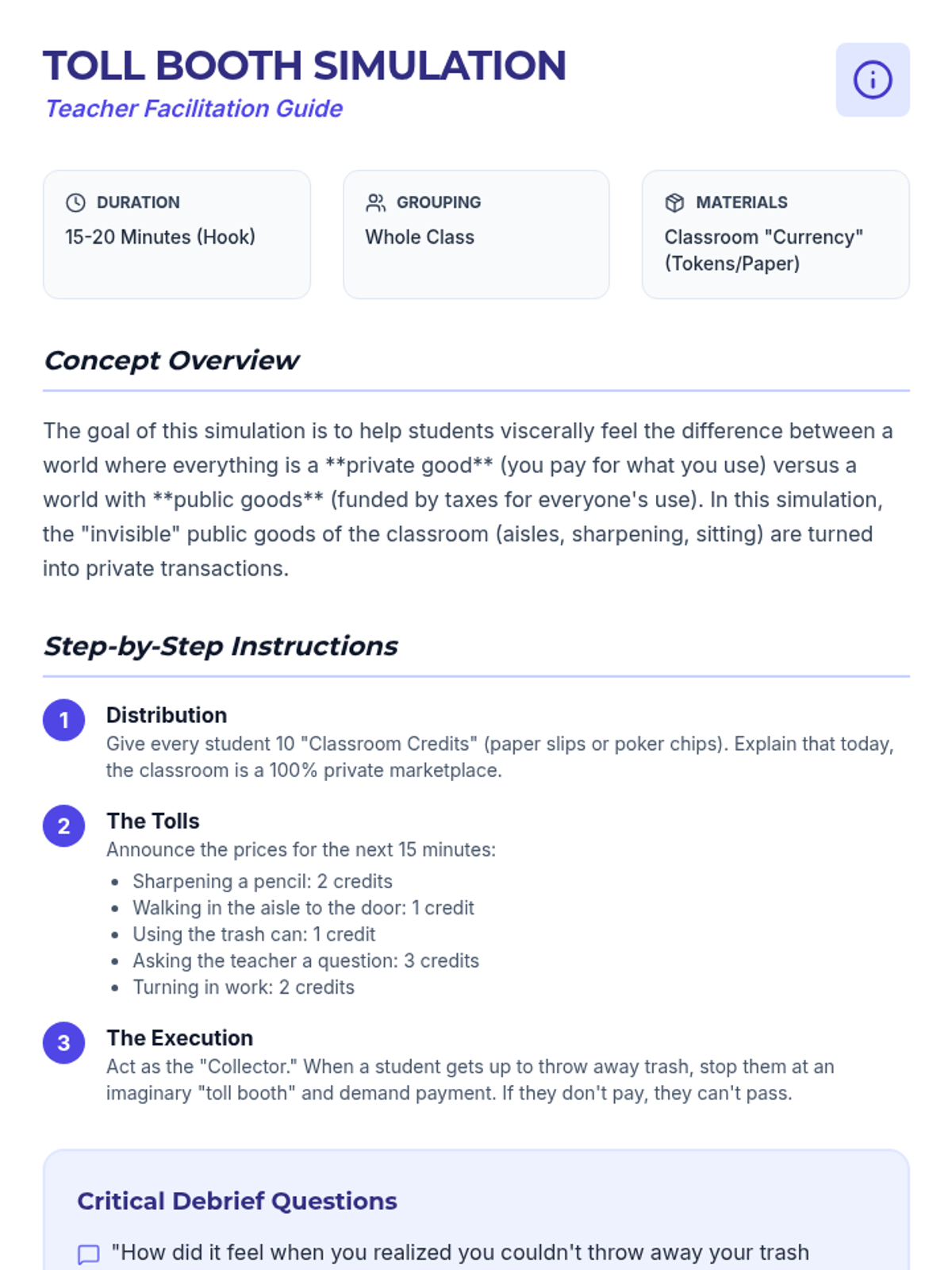
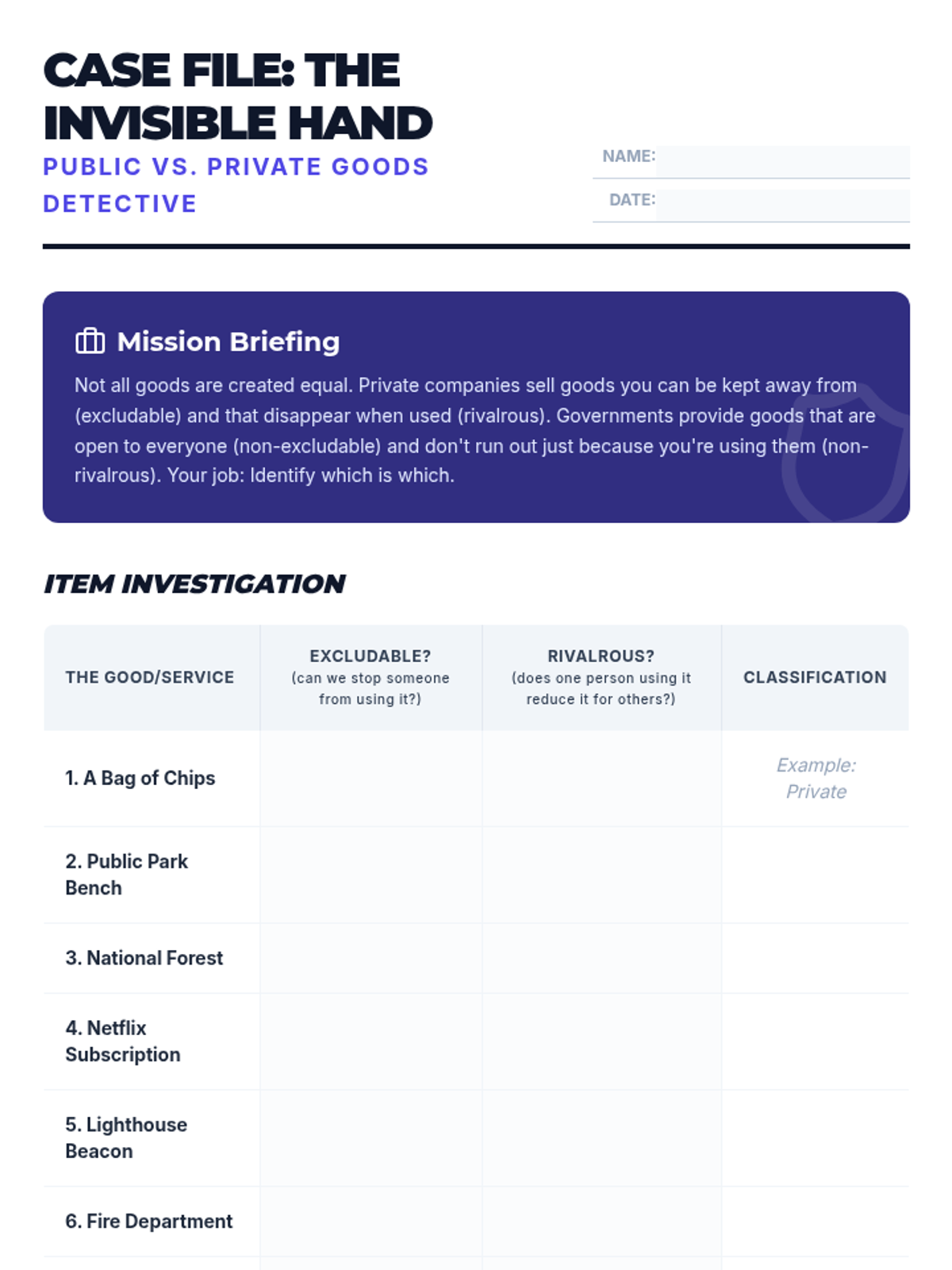
A comprehensive introduction to the purpose of taxation for 6th graders, focusing on public vs. private goods, government responsibilities, and the collective benefits of pooled resources. Students explore how taxes fund the community infrastructure they use every day through simulations, data analysis, and debates.
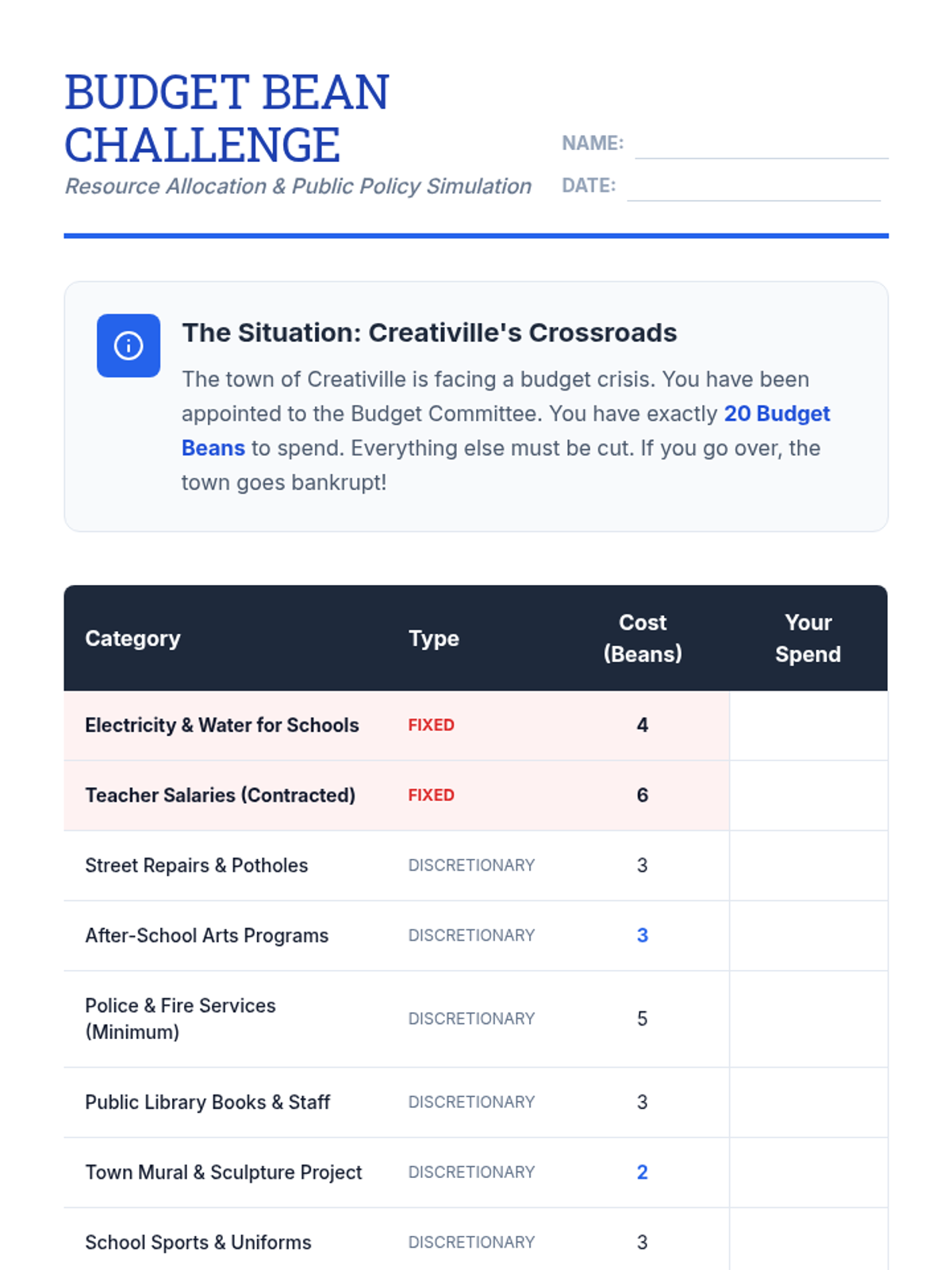
A middle school civics and financial literacy sequence exploring how tax revenue is collected and utilized by federal, state, and local governments to fund public goods and services. Students progress from defining public goods to designing their own community budget.
Students participate in an immersive simulation where they navigate the world of arts policy and resource allocation. They take on roles in a community debate over funding priorities, learning about public budgeting, perspective-taking, and the necessity of civic engagement.
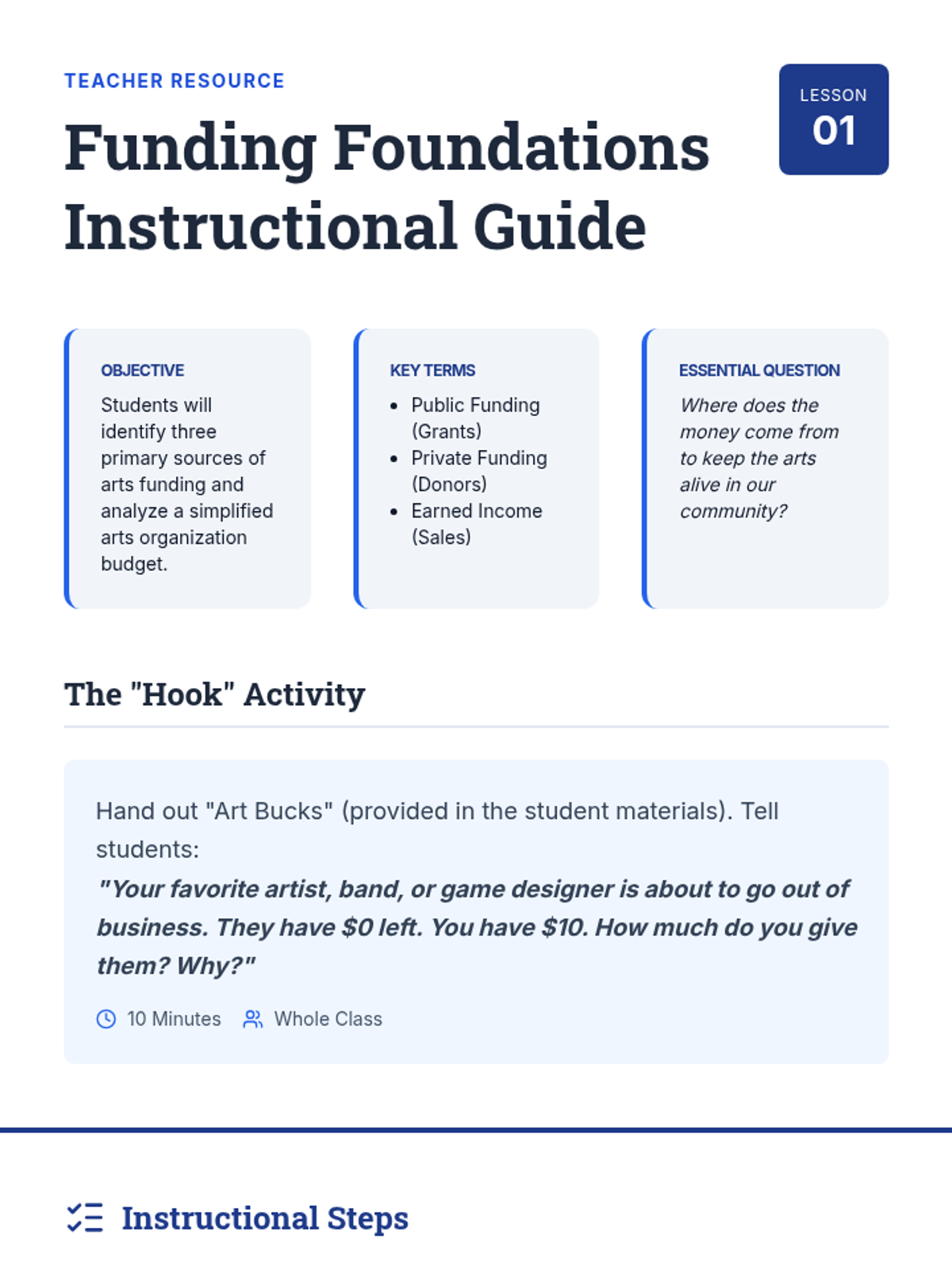
A simulation-based sequence where 6th-grade students act as members of a fictional Community Arts Grant Council to evaluate proposals, understand funding models, and make difficult resource allocation decisions.
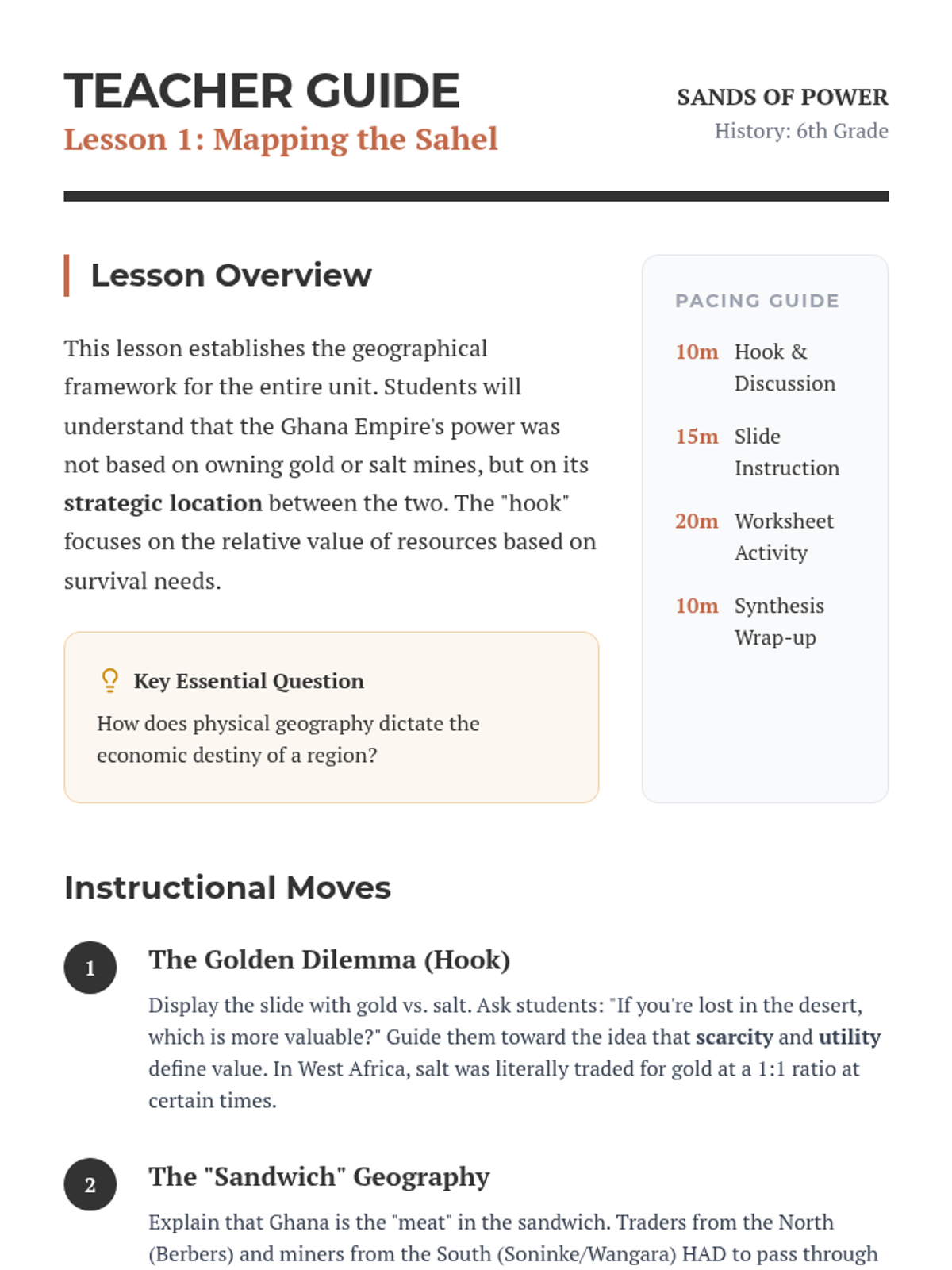
This sequence explores the economic and political power of the Ghana and Mali Empires. Students analyze geography, trade systems, leadership, and the intellectual legacy of Timbuktu to understand how resource control builds civilizations.
Students investigate the economic foundation of medieval life by exploring the manor system, agricultural innovations, and specialized labor, culminating in the design of their own self-sufficient community.
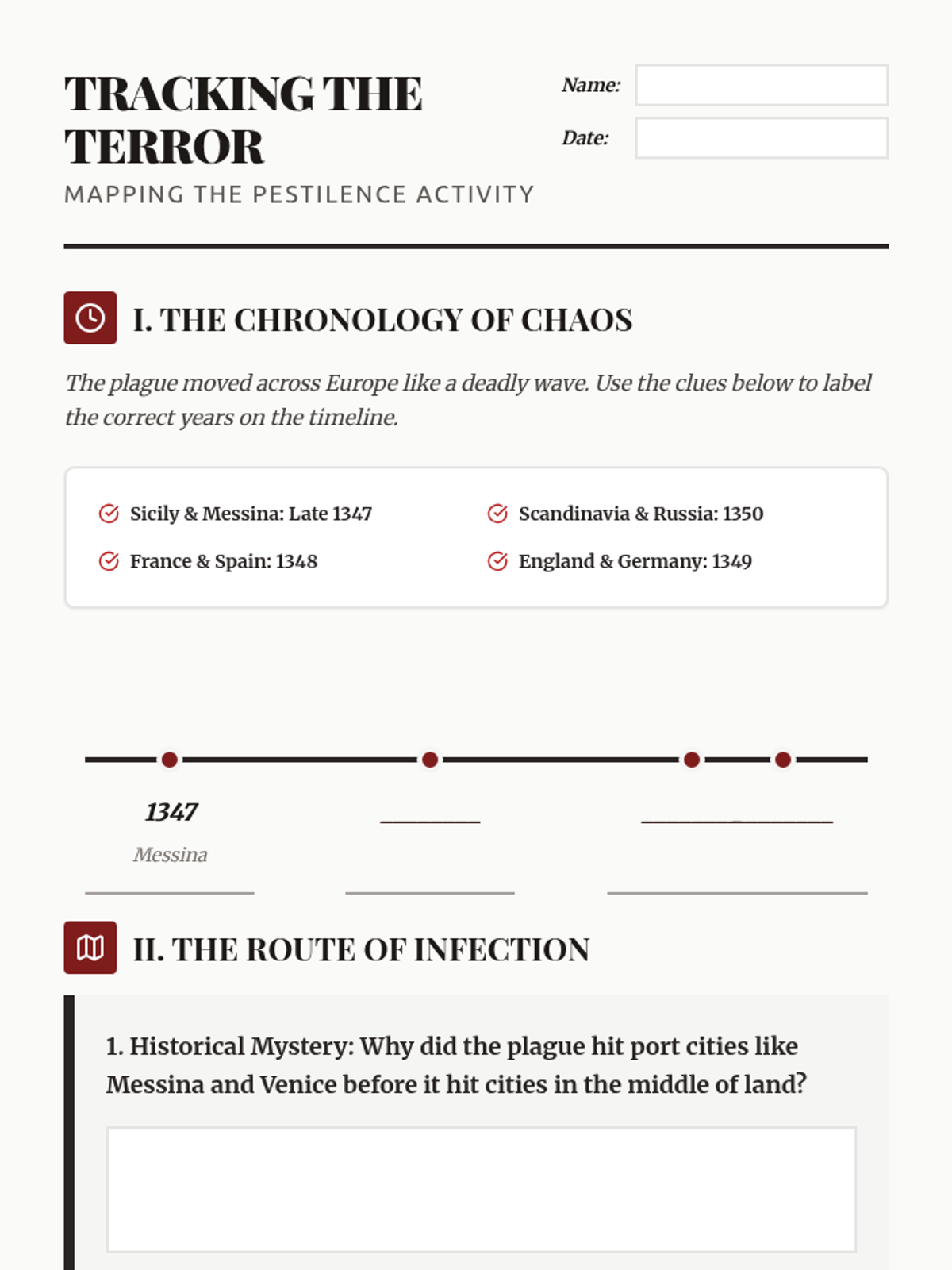
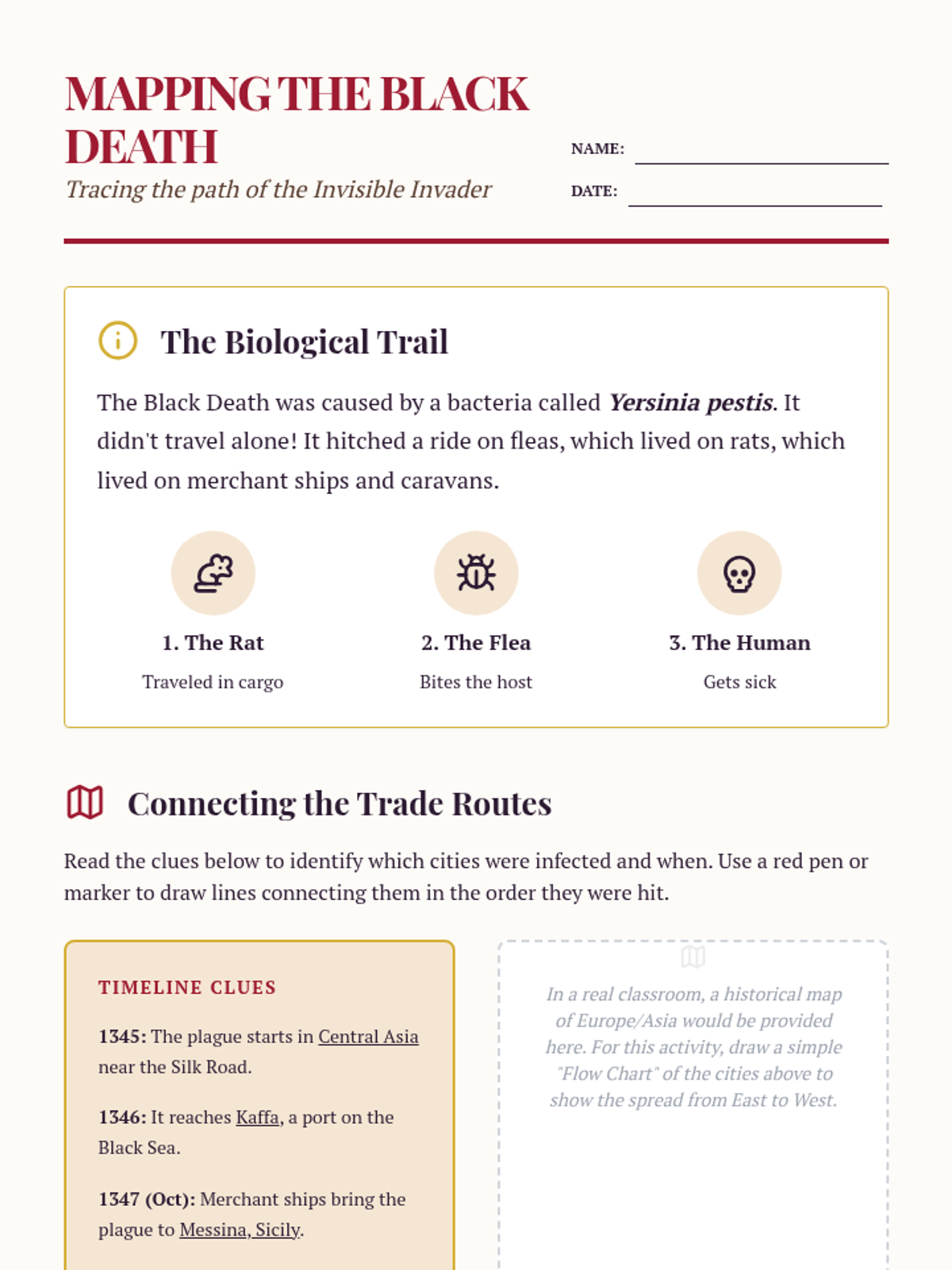
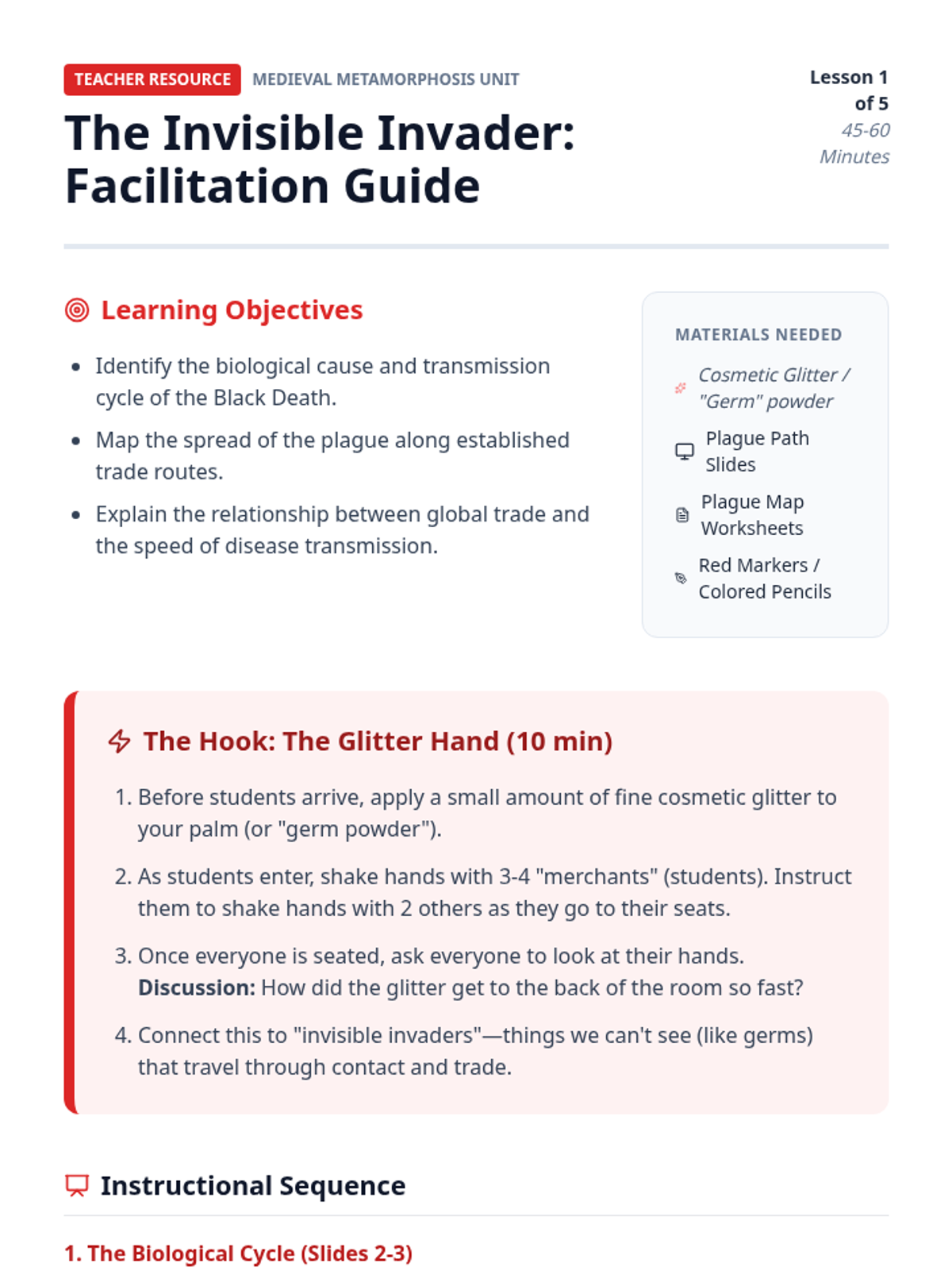
This sequence explores the arrival, spread, and transformative impact of the Black Death on medieval Europe. Students analyze geographic routes, compare medieval and modern medicine, simulate economic shifts, and evaluate how the pandemic triggered the collapse of the feudal system.
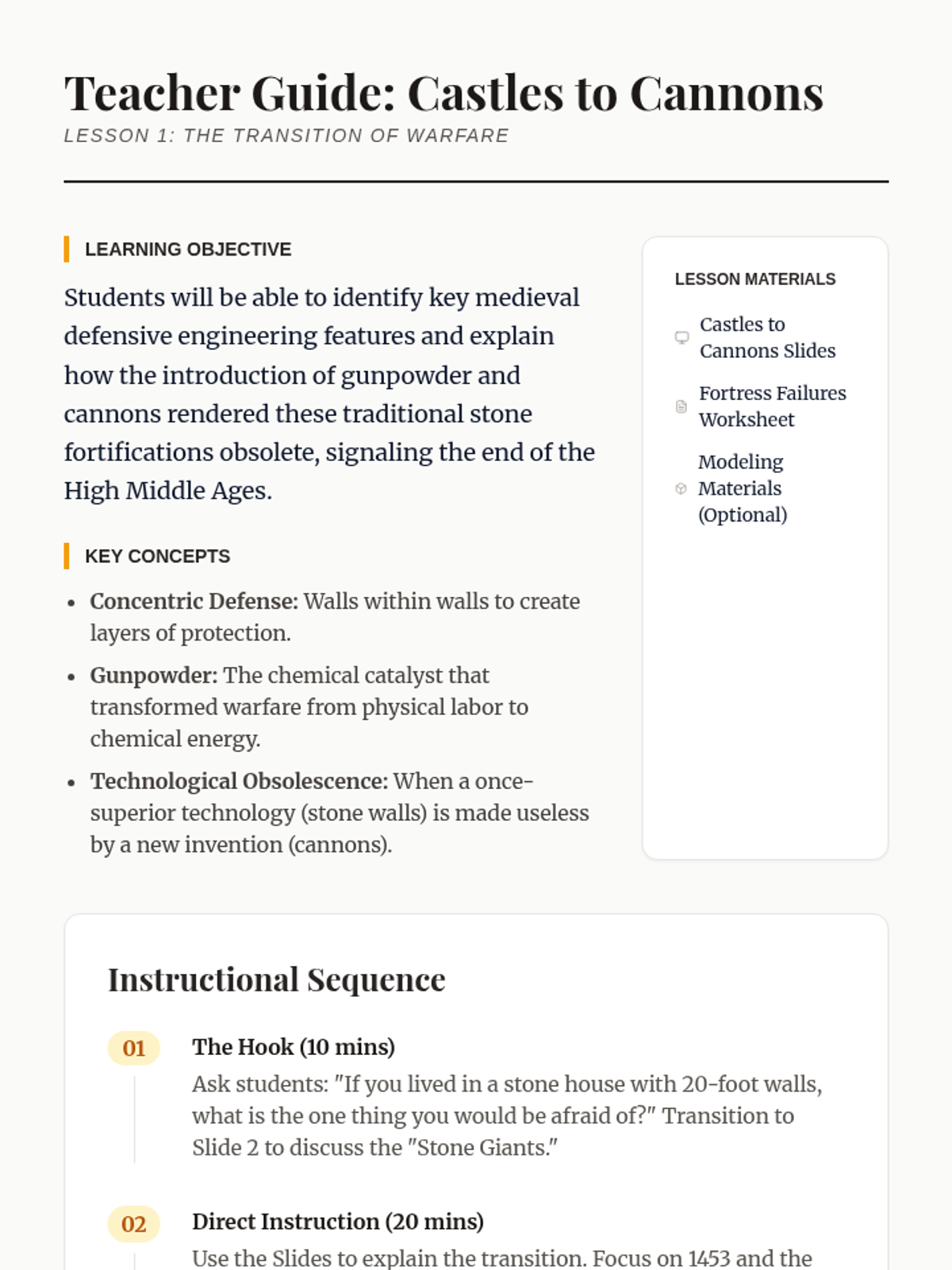
An immersive introduction to the structure of European feudal society. Students explore the social hierarchy, economic self-sufficiency of manors, defensive architecture, and the mutual obligations of the feudal contract through simulations and role-play.
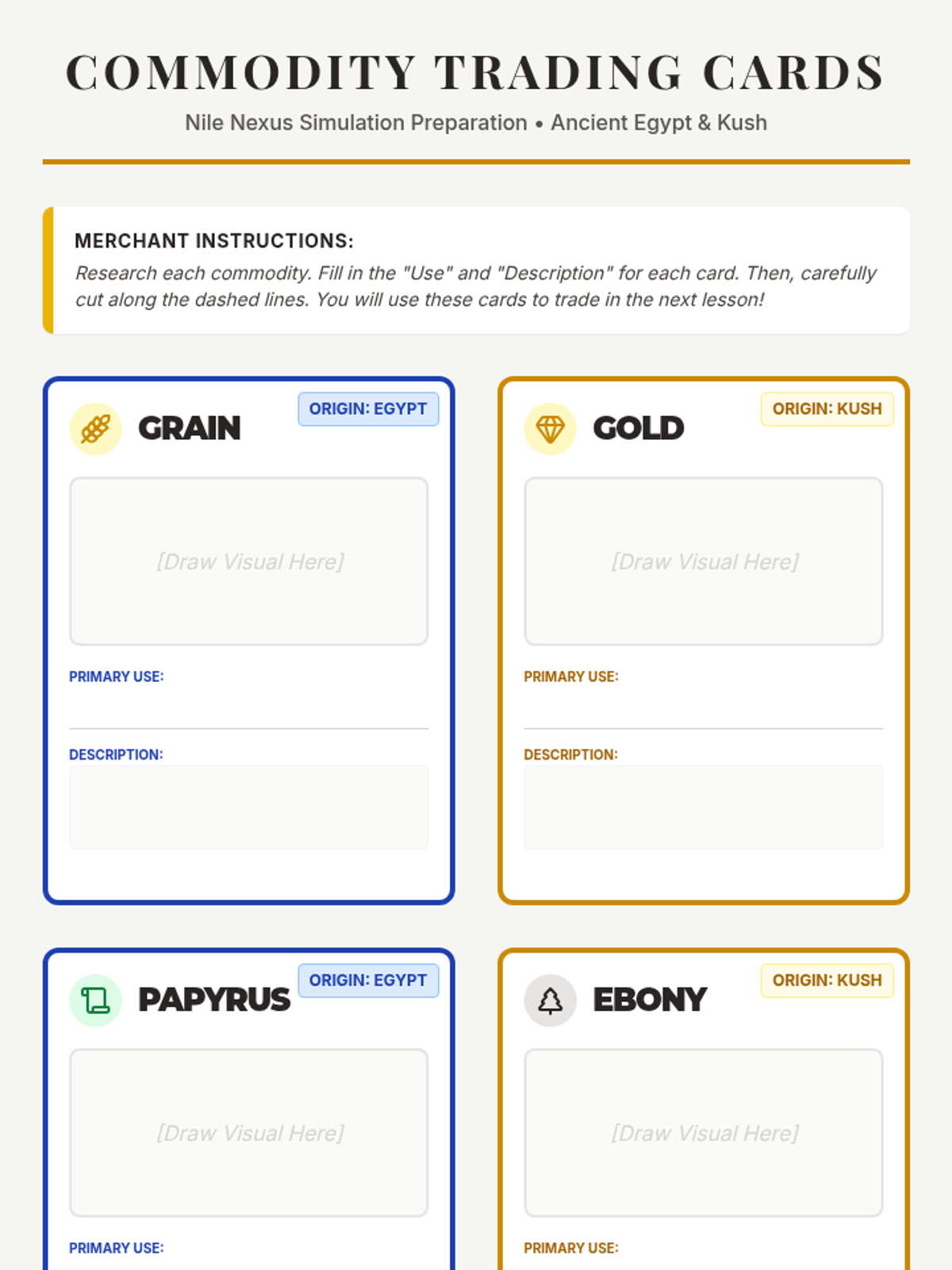
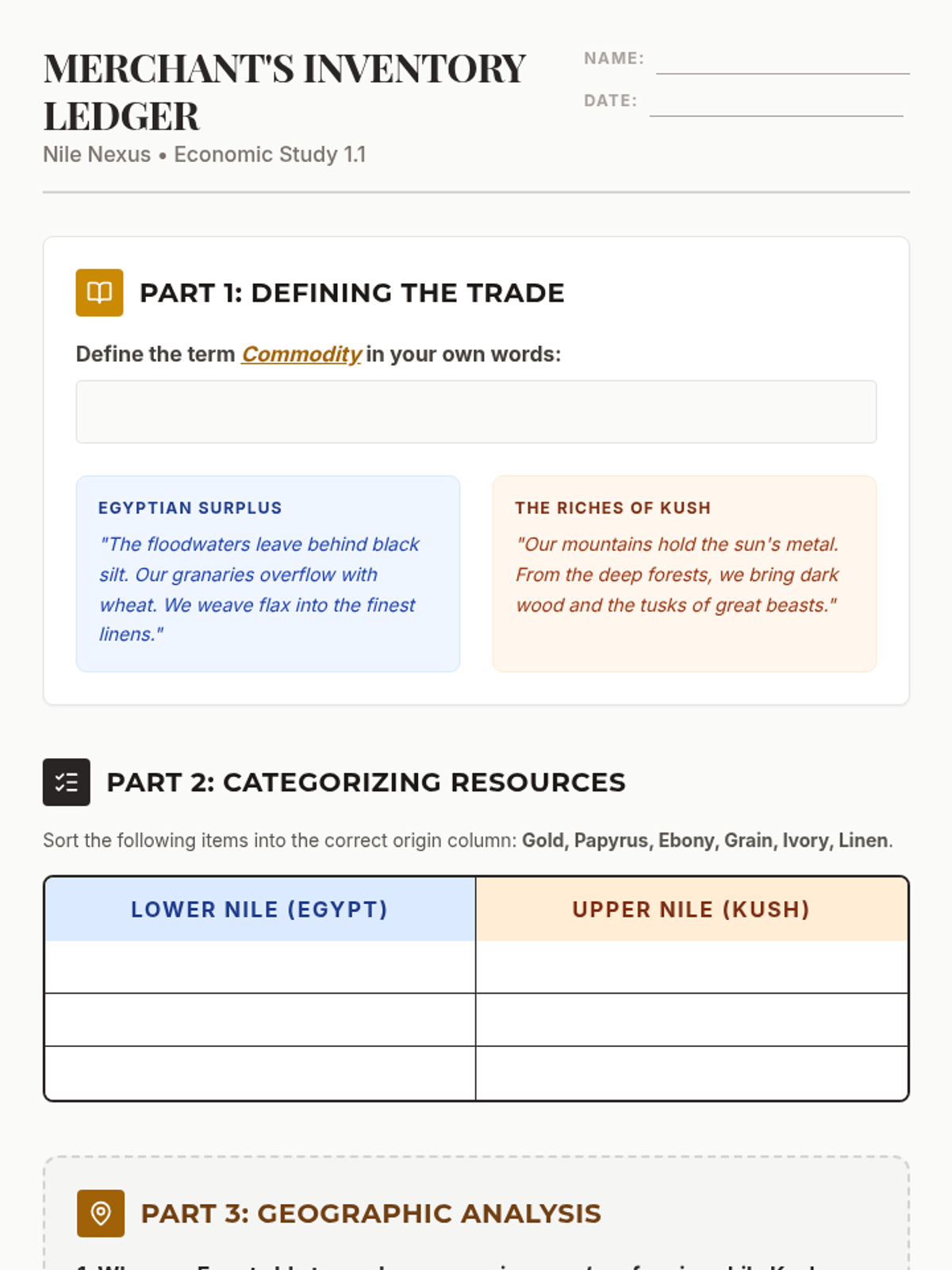
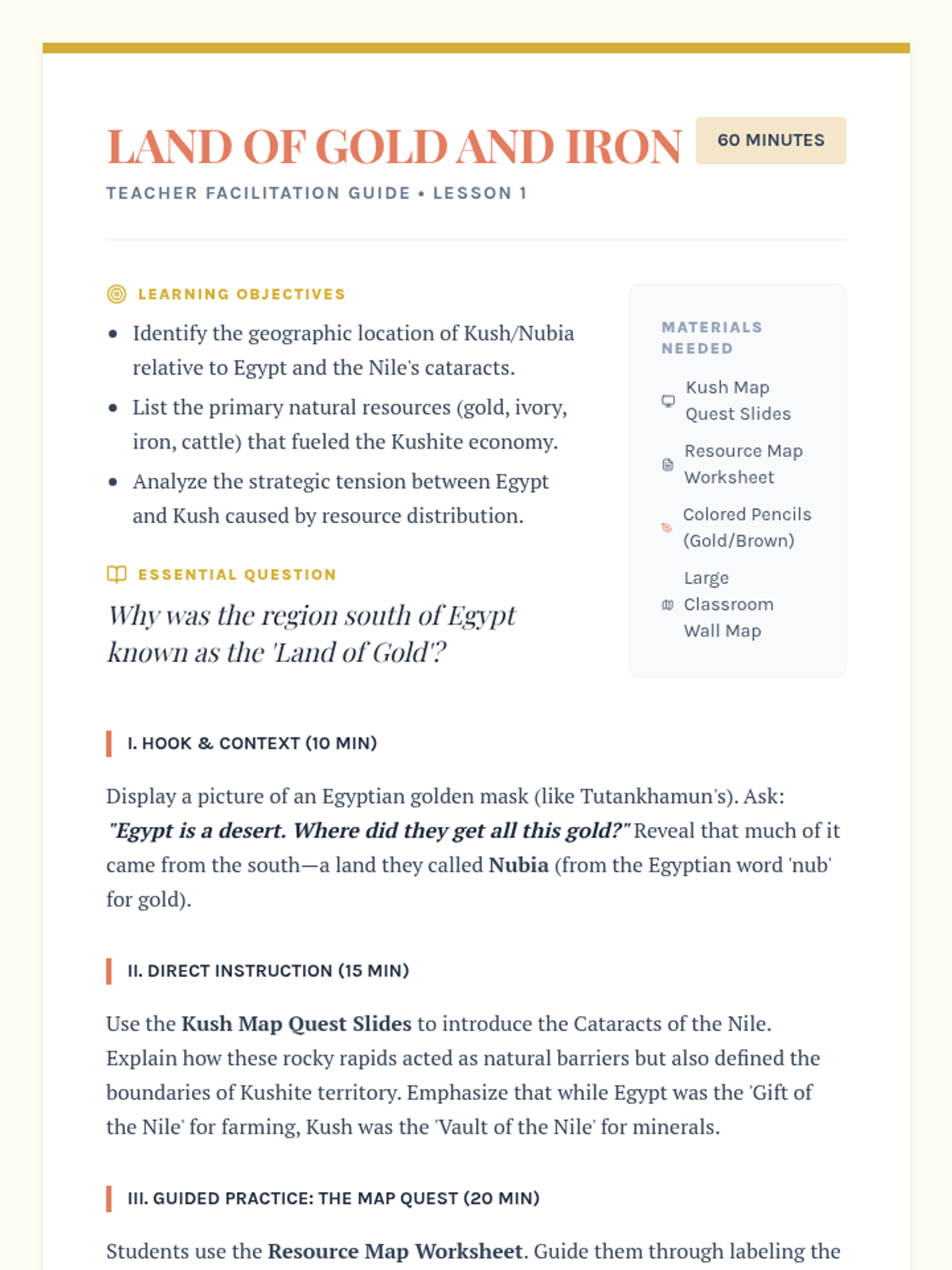
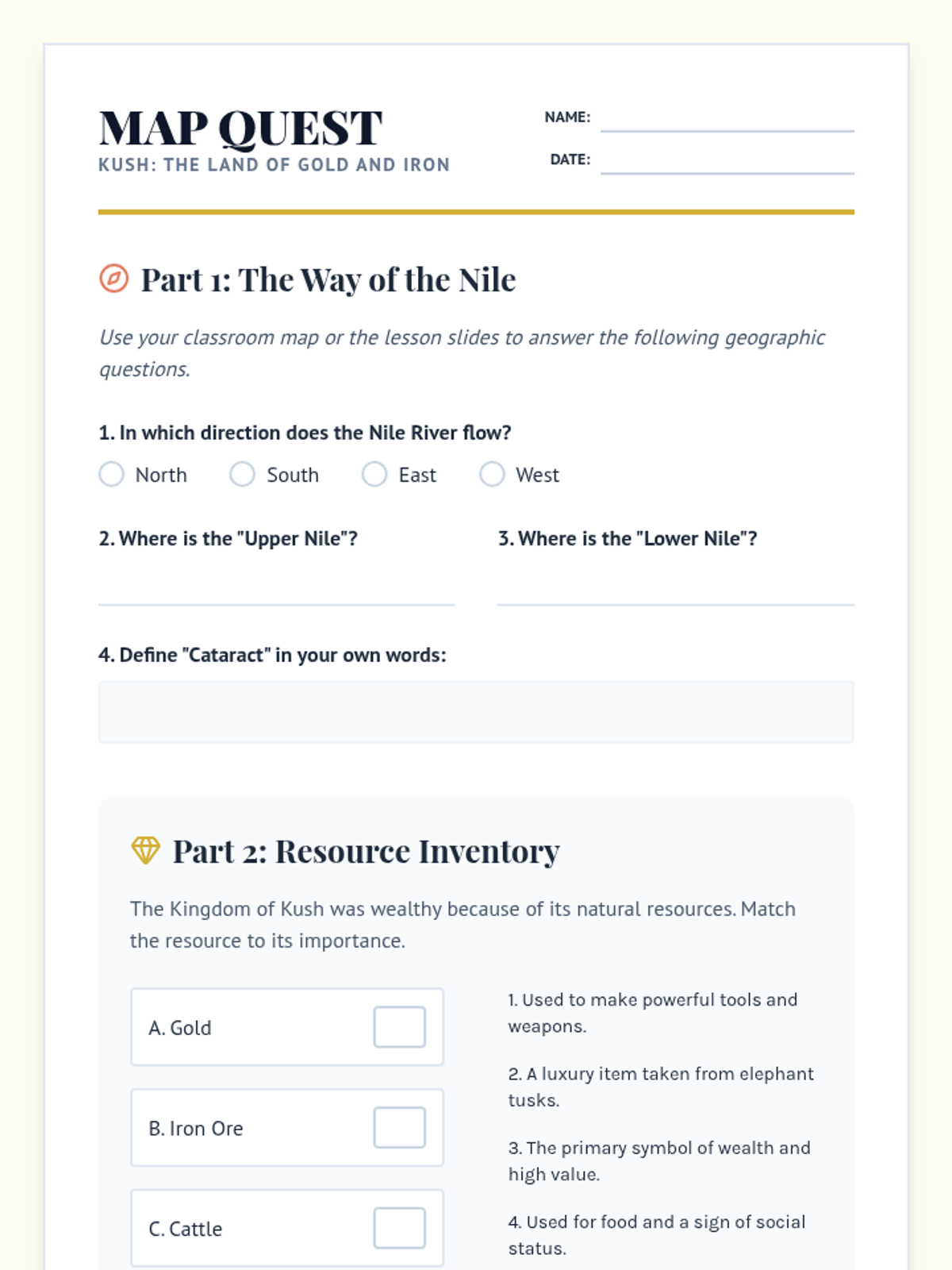
A game-based sequence exploring the economic systems and trade networks between Ancient Egypt and Kush, focusing on commodities, barter systems, logistics, cultural diffusion, and interdependence.
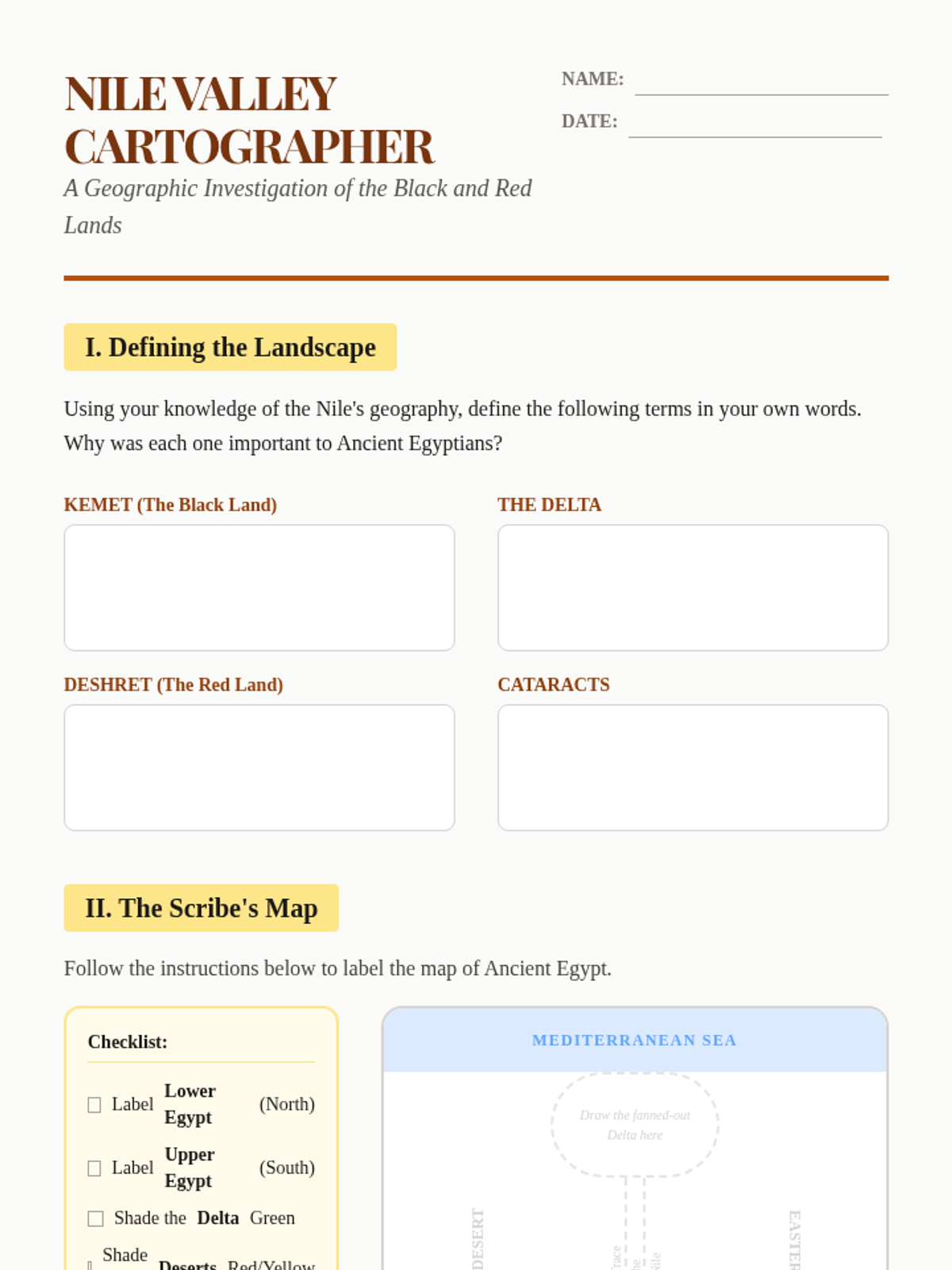
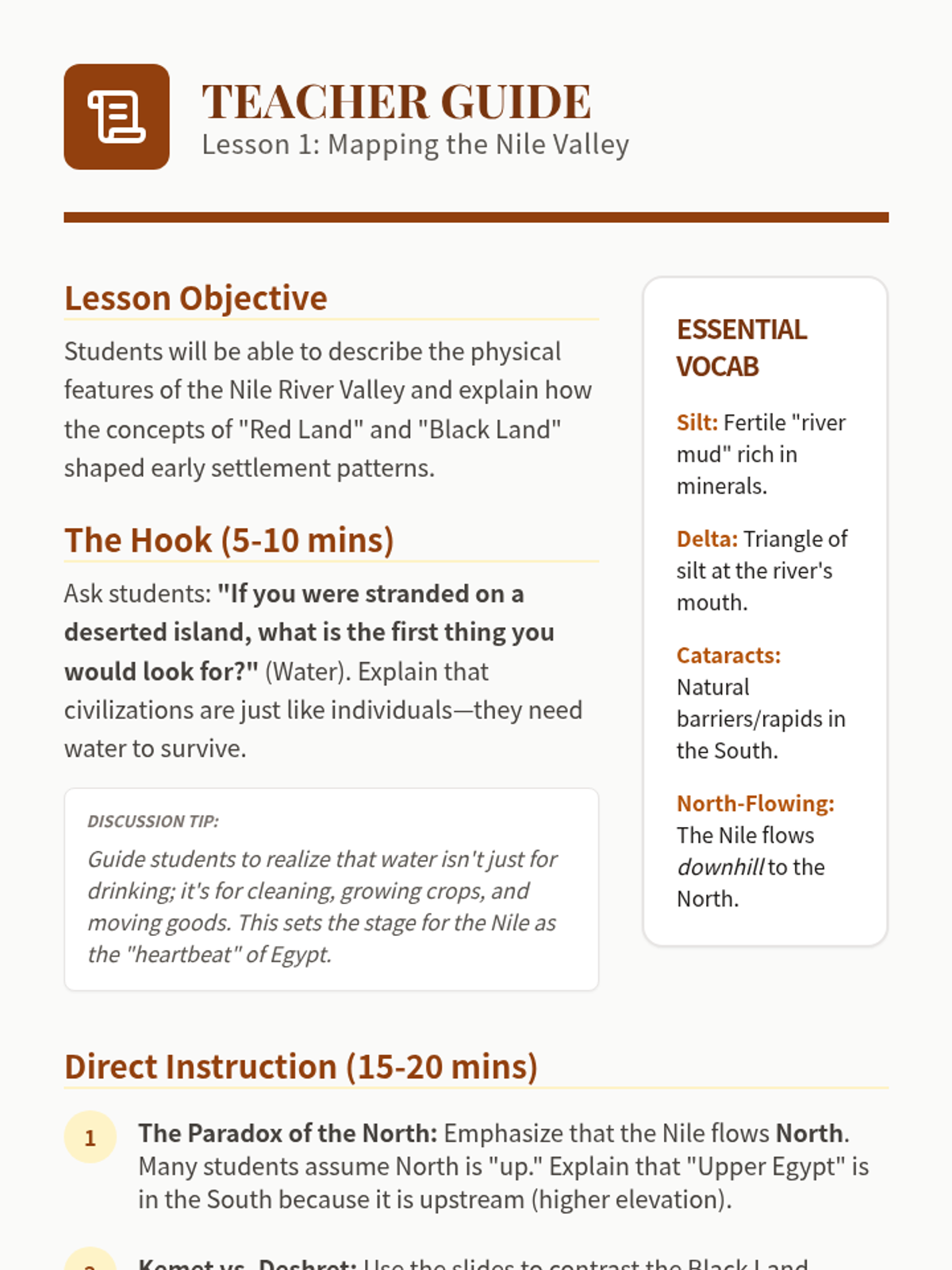
A 5-lesson sequence for 6th-grade students exploring the geography, agriculture, and settlement patterns of Ancient Egypt and Kush, emphasizing the role of the Nile River in civilization development.
A 5-day unit exploring the social, religious, and political structures of Medieval Europe, from the feudal system to the devastating impact of the Black Death.
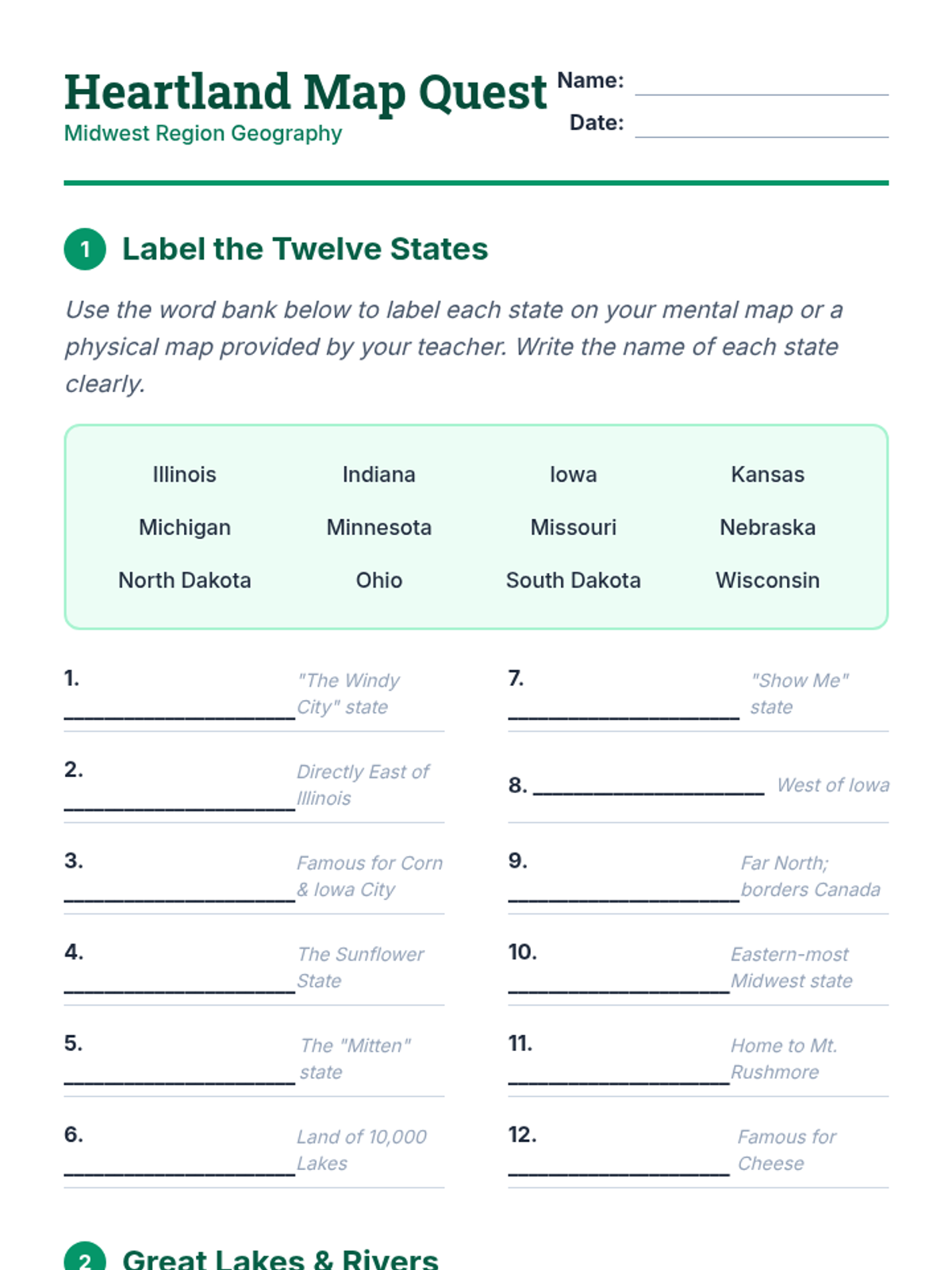
A comprehensive 5-day unit exploring the geography, climate, indigenous history, and modern life of the U.S. Midwest, focusing on the cause-and-effect relationship between environment and industry.
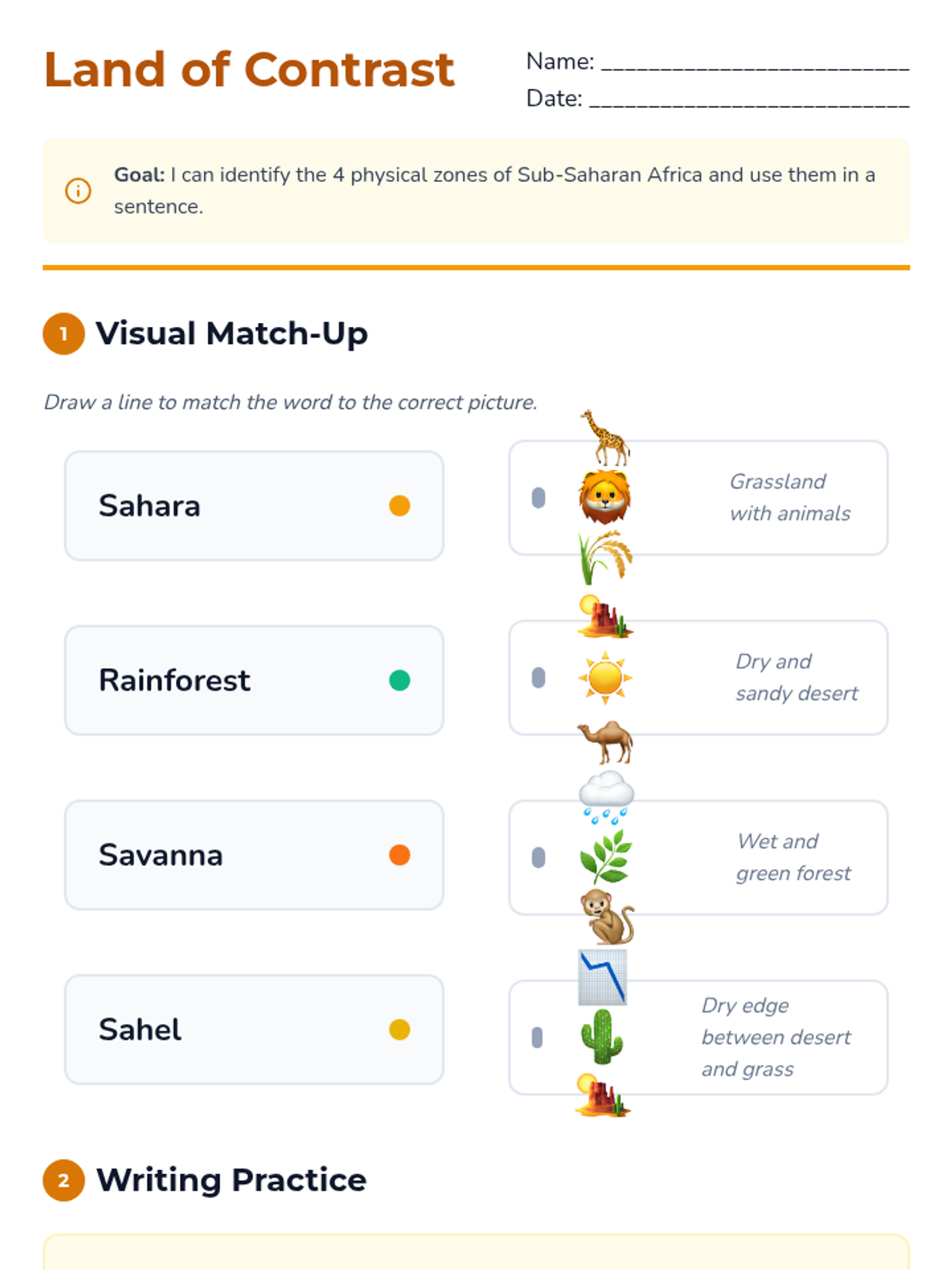
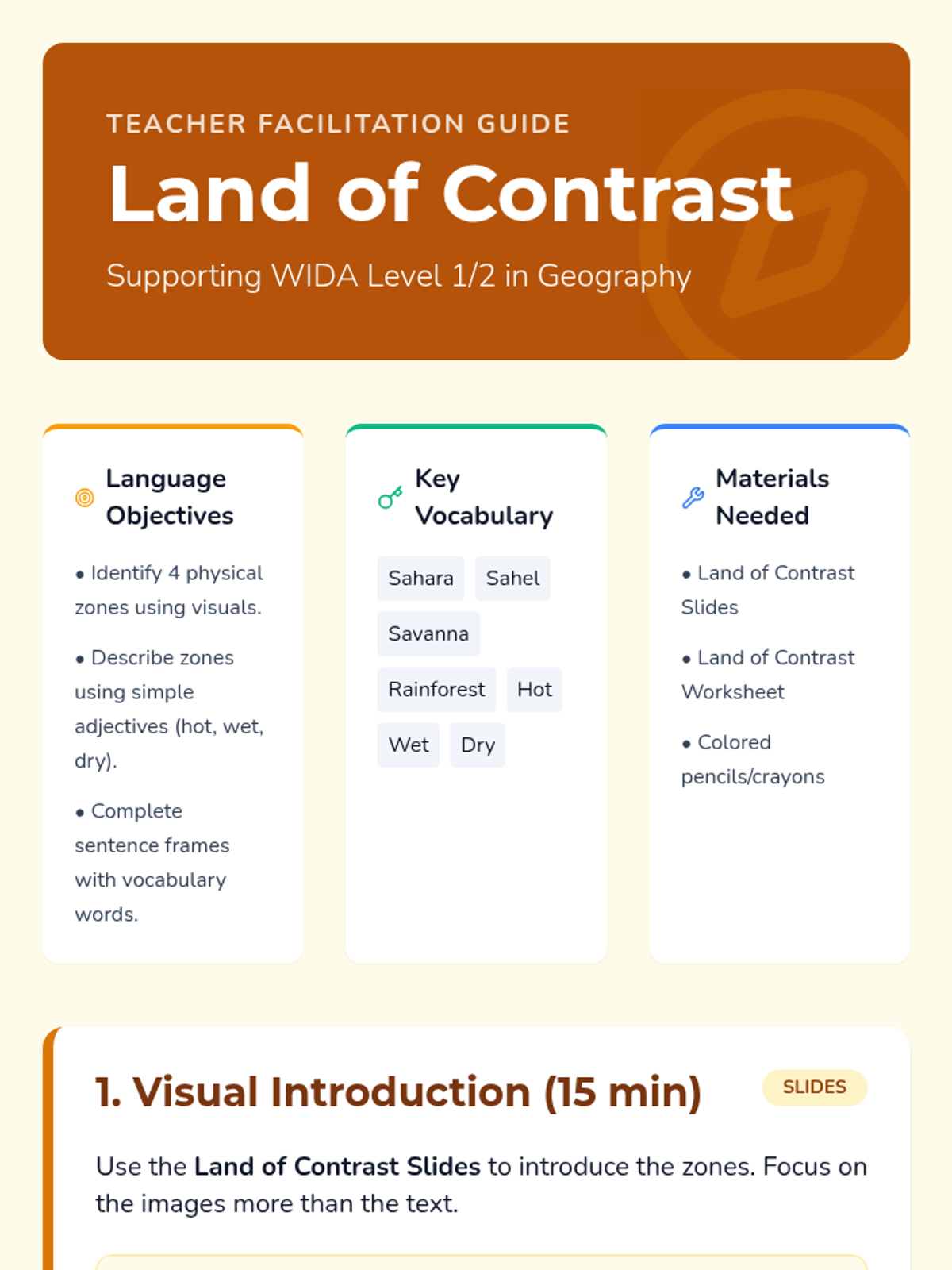
A 3-lesson unit focused on the geography, trade, and kingdoms of Sub-Saharan Africa, specifically designed for WIDA level 1/2 ESL students with heavy visual support and sentence scaffolding.
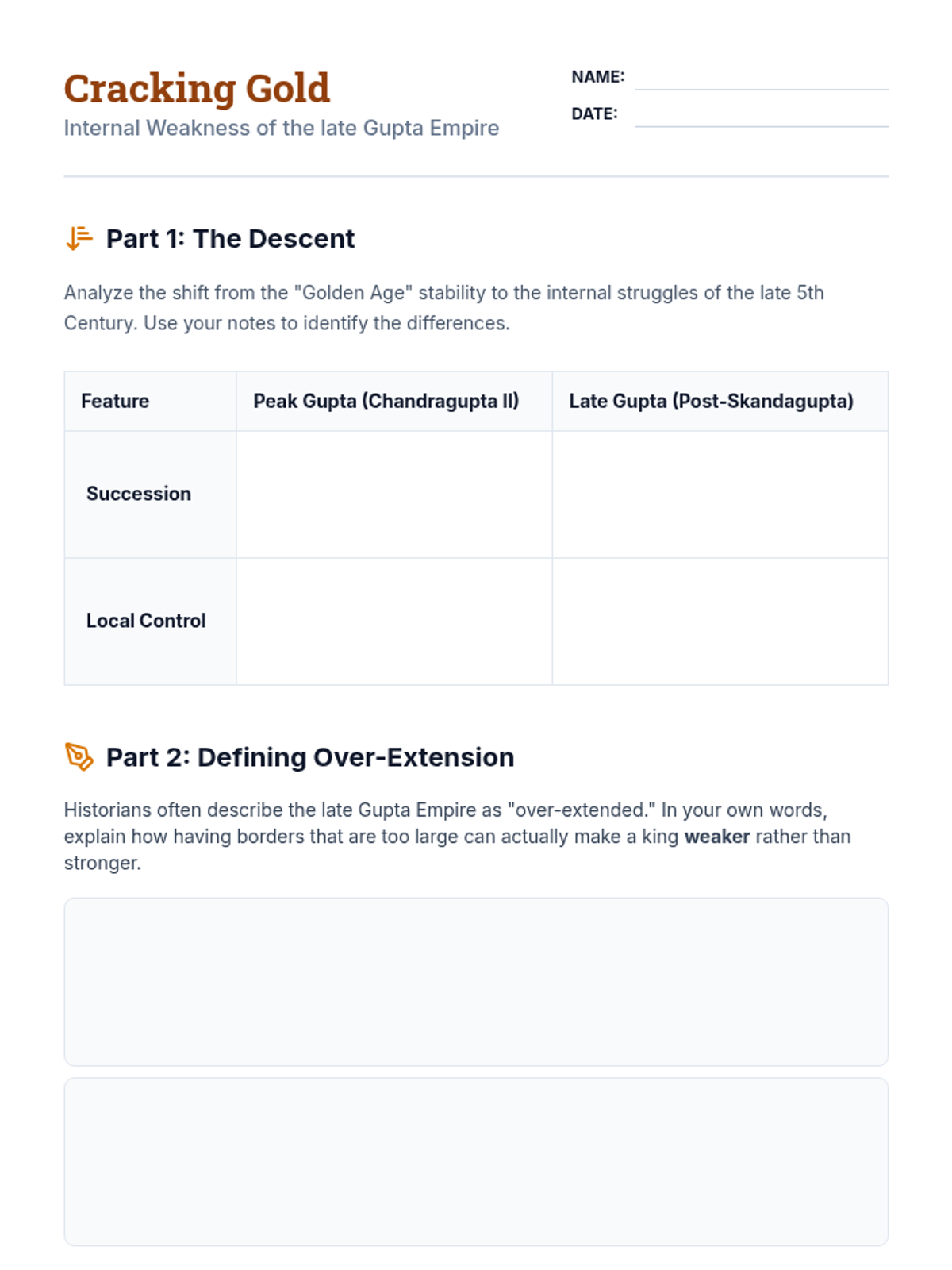
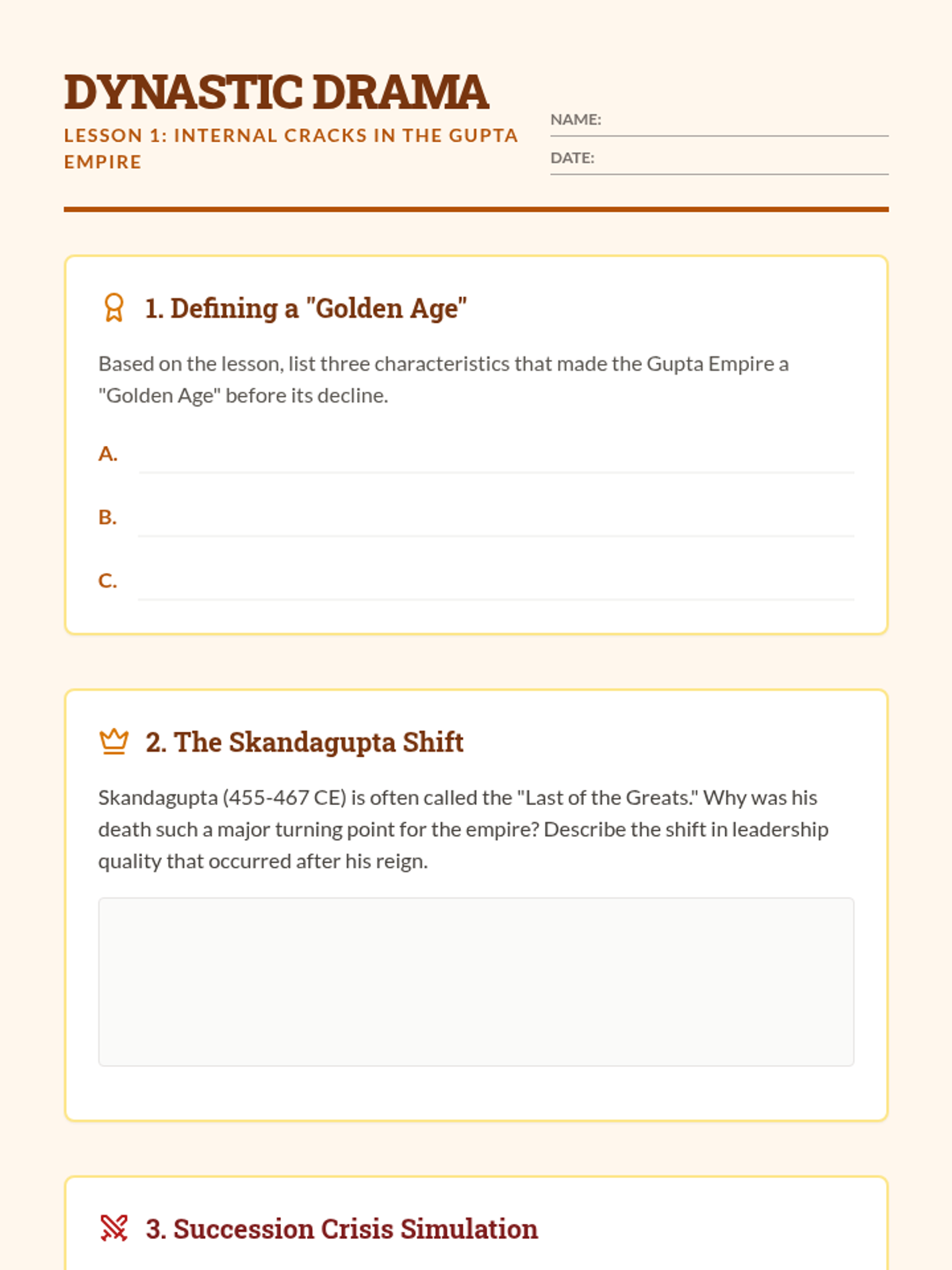
A 5-day unit exploring the multi-faceted decline of the Gupta Empire, from internal structural weaknesses to the devastating Huna invasions and economic collapse.
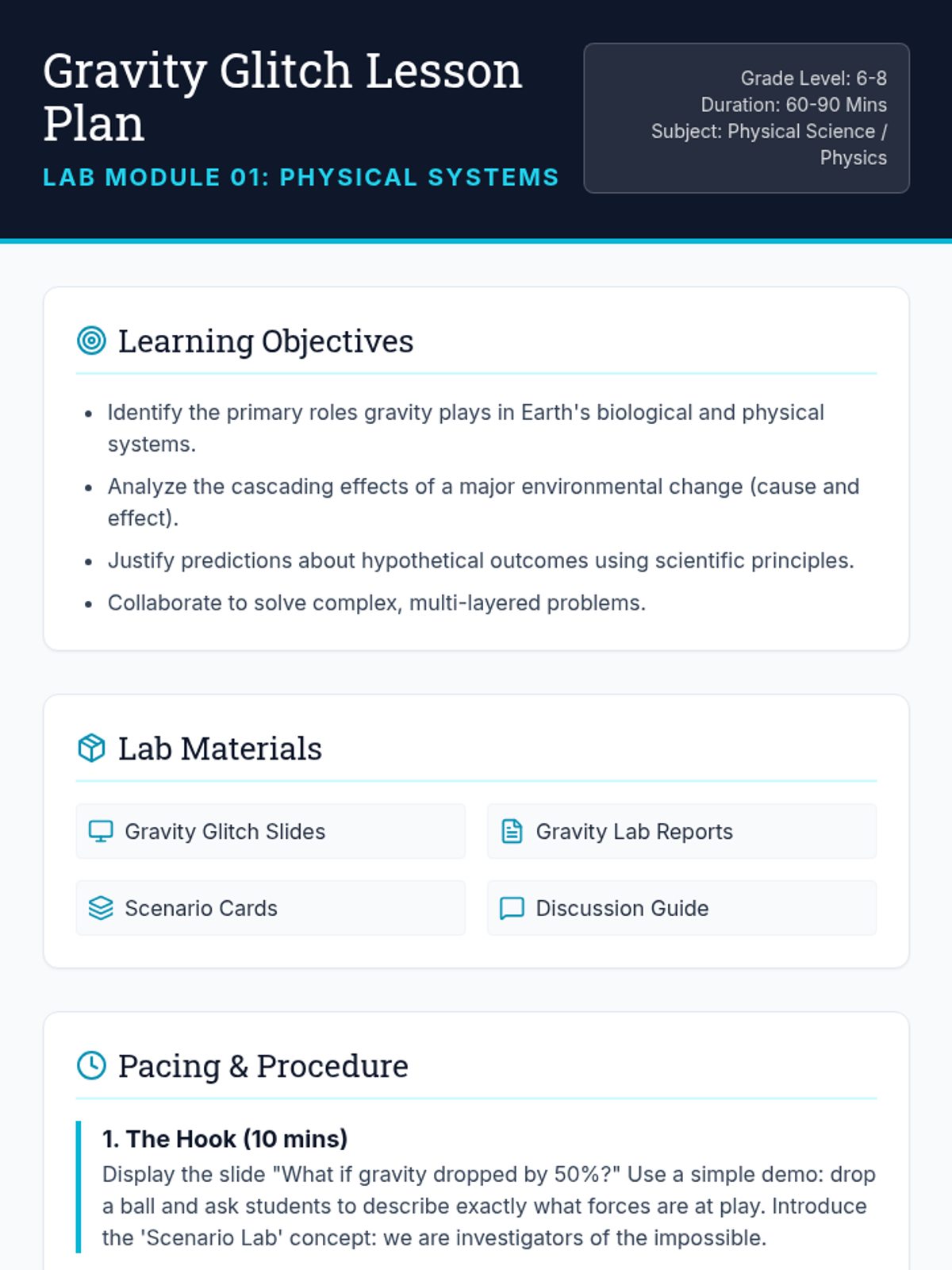
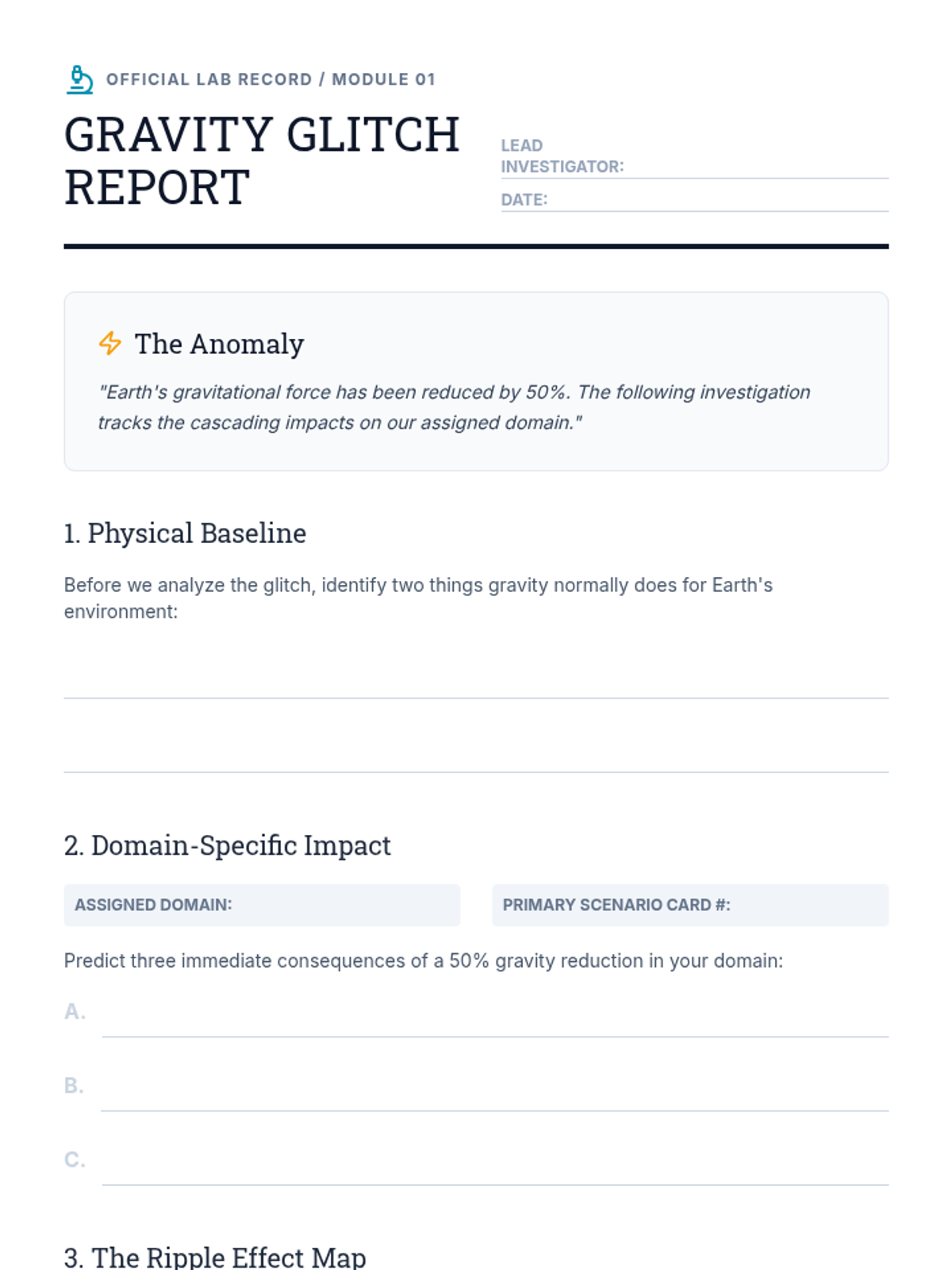
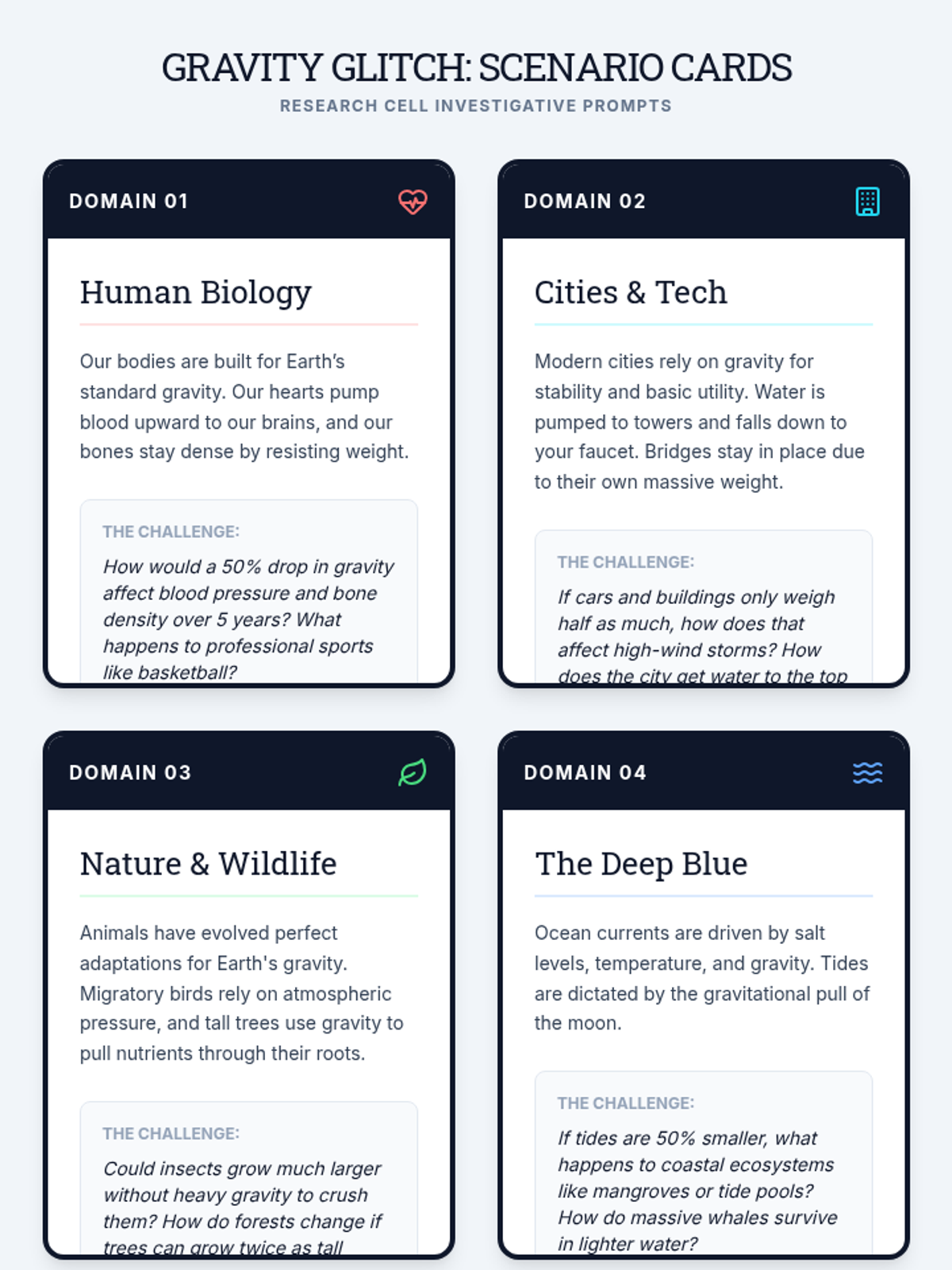
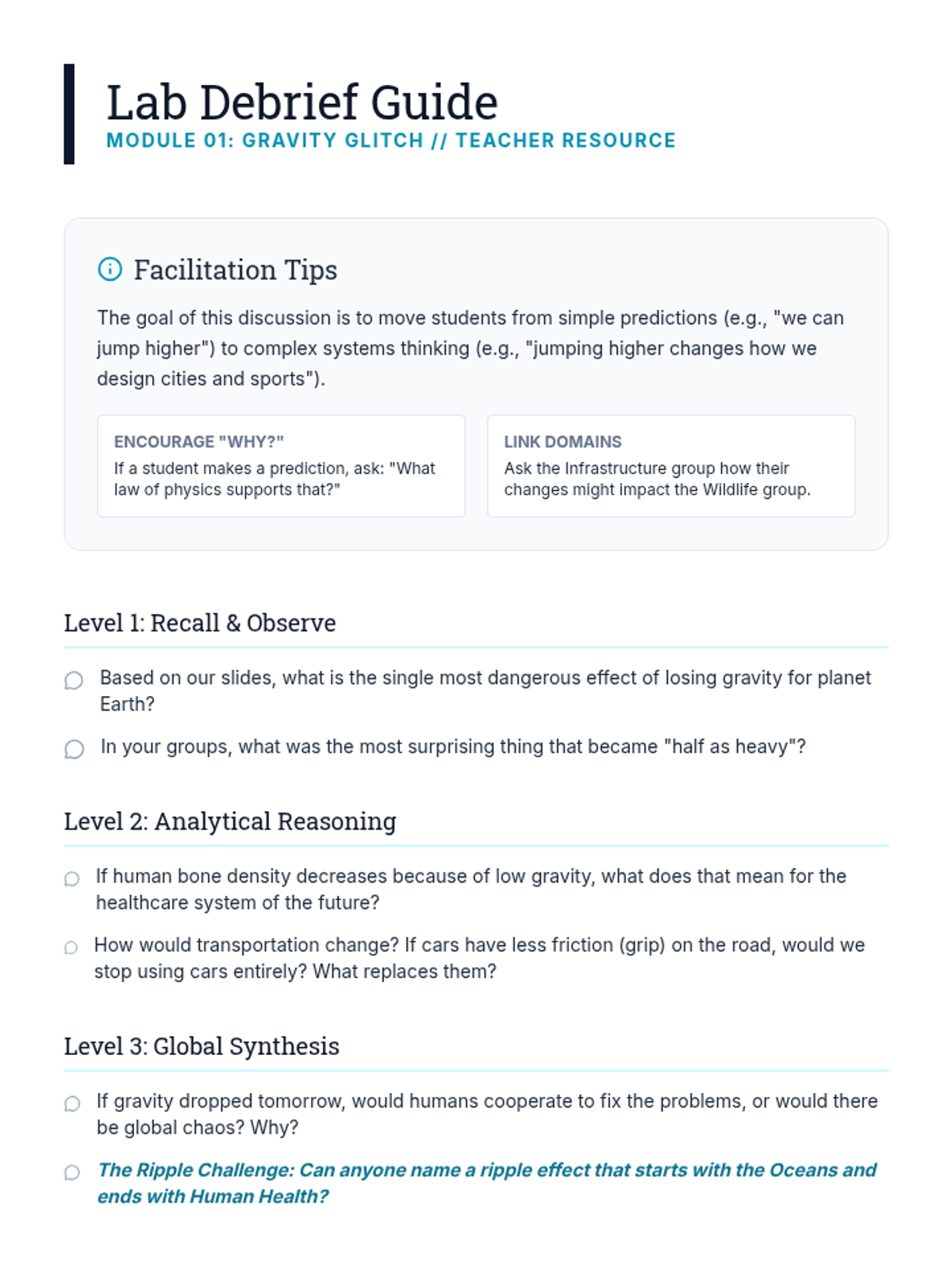
A series of three investigative modules where middle school students analyze hypothetical disruptions to science, history, and society to develop critical cause-and-effect reasoning skills.
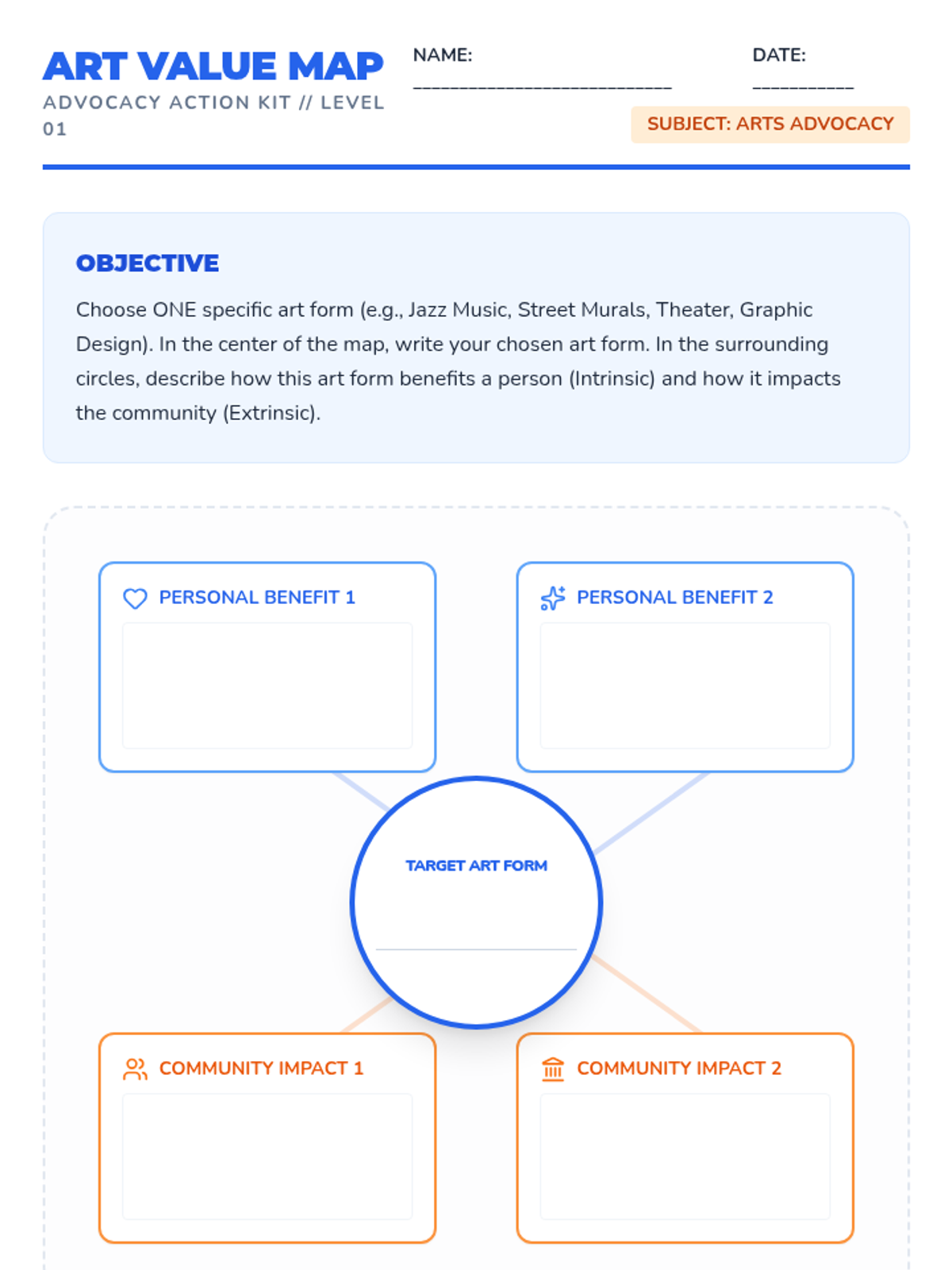
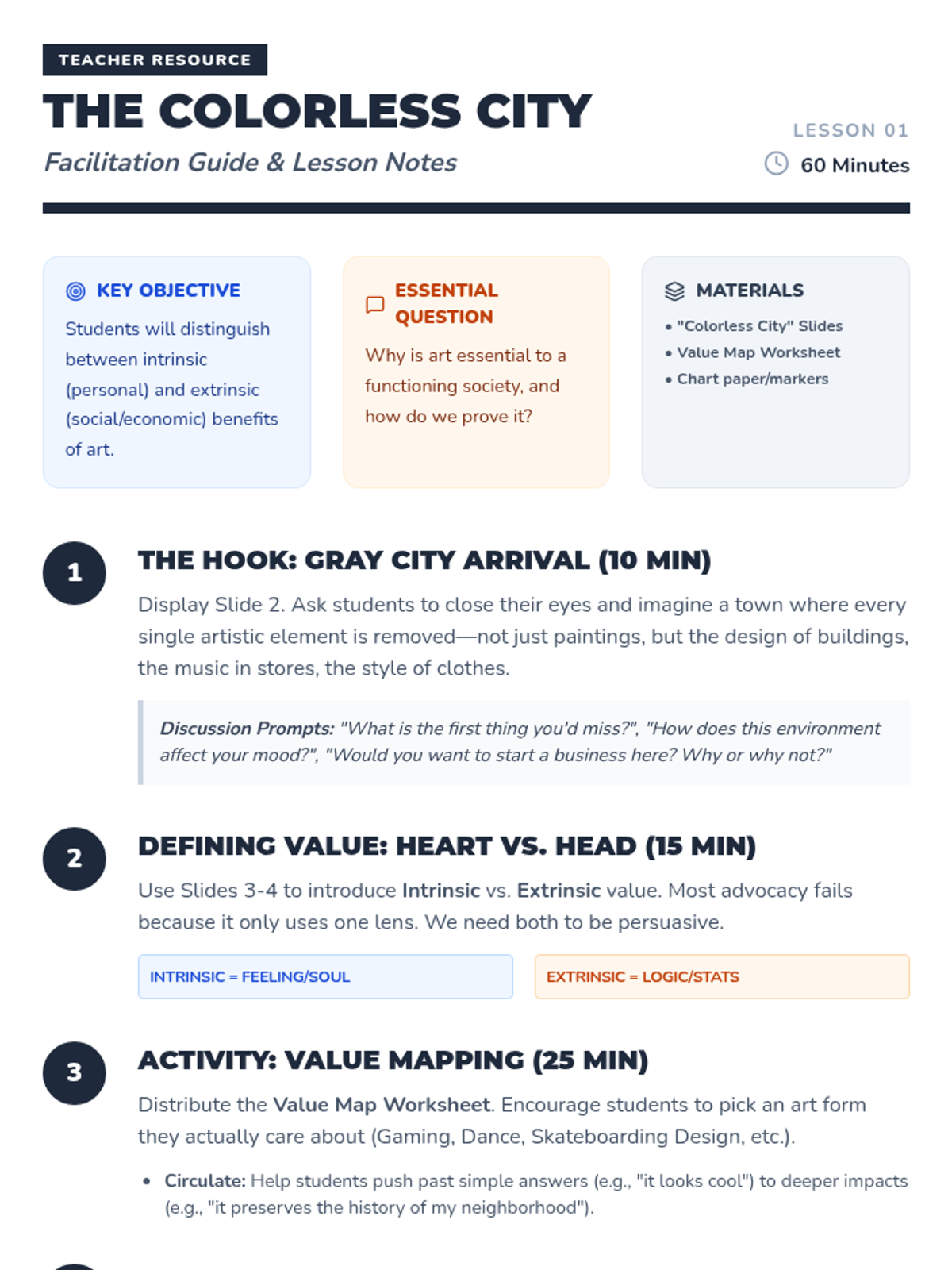
A project-based sequence where 6th-grade students design persuasive campaigns for arts education. Students explore the value of the arts, analyze stakeholder perspectives, and craft compelling narratives and visuals to advocate for community arts programs.
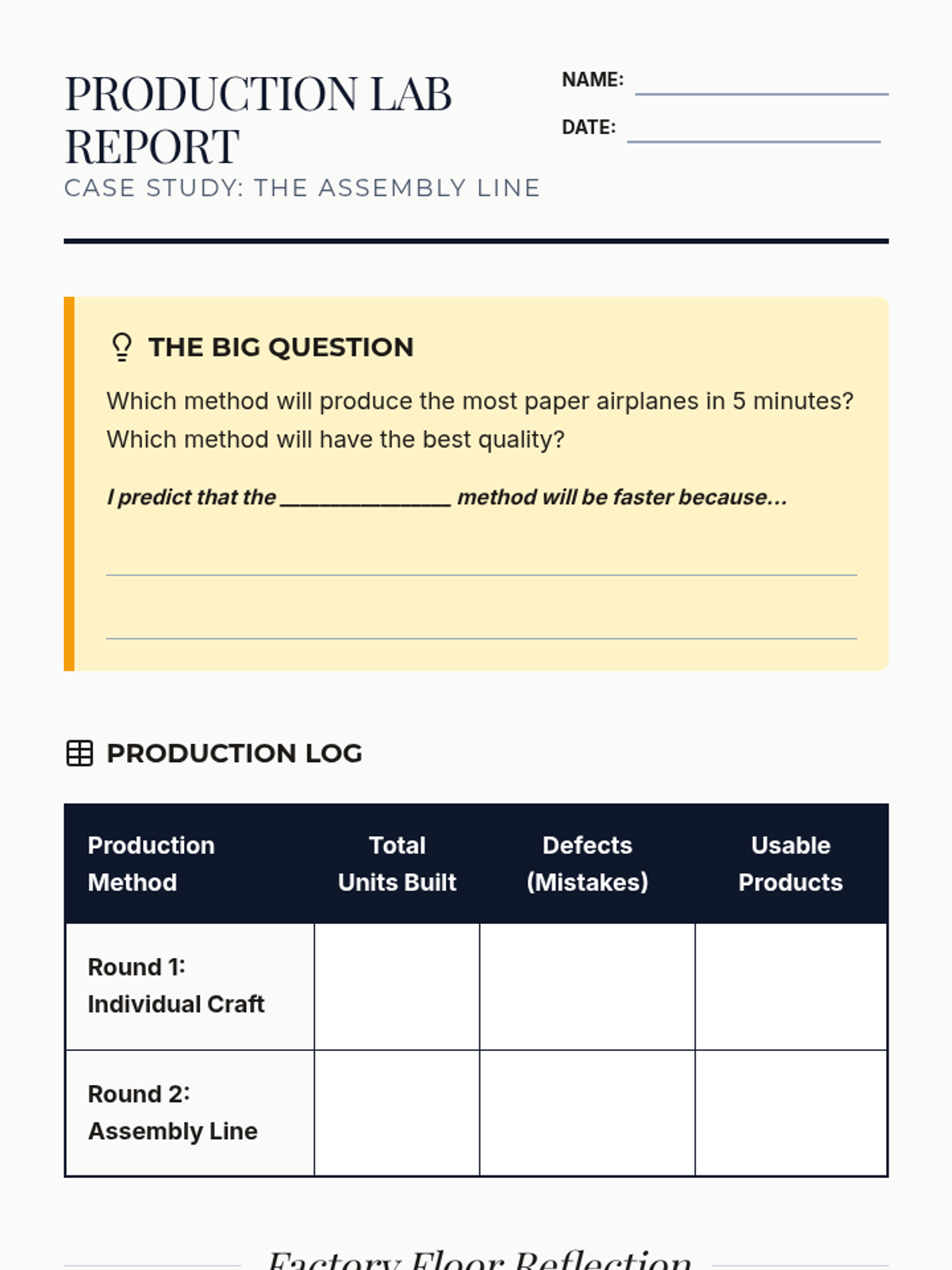
A sequence focused on the economic boom of the 1920s, covering the assembly line, the impact of the automobile, mass media, and the rise of consumer credit. Students analyze how manufacturing and financial shifts transformed American daily life and set the stage for the Great Depression.
This sequence explores the transformative period from the Black Death to the Renaissance. Students will analyze how a global crisis reshaped European society, leading to the decline of feudalism, the rise of towns and guilds, and the birth of modern art and commerce.
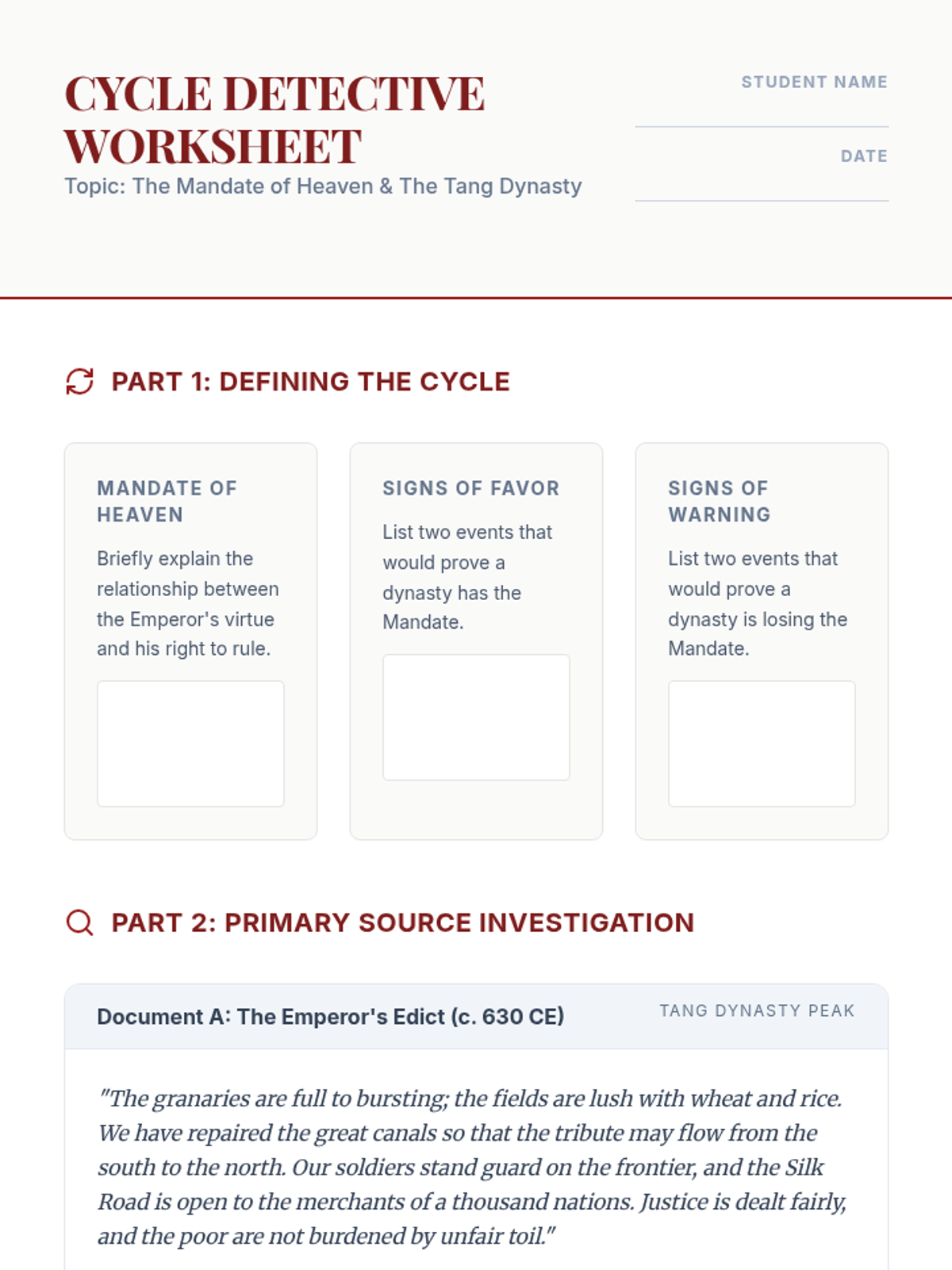
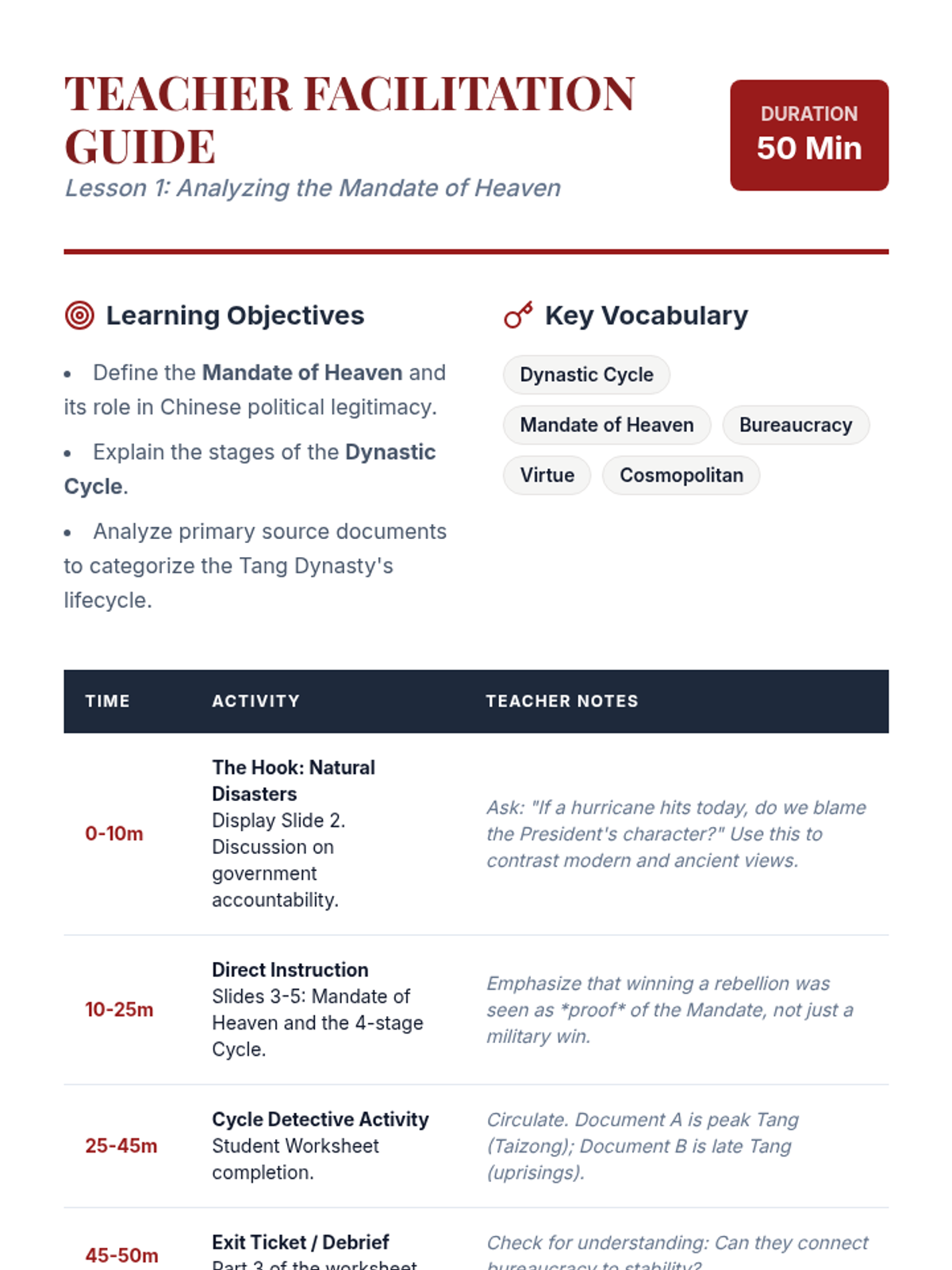
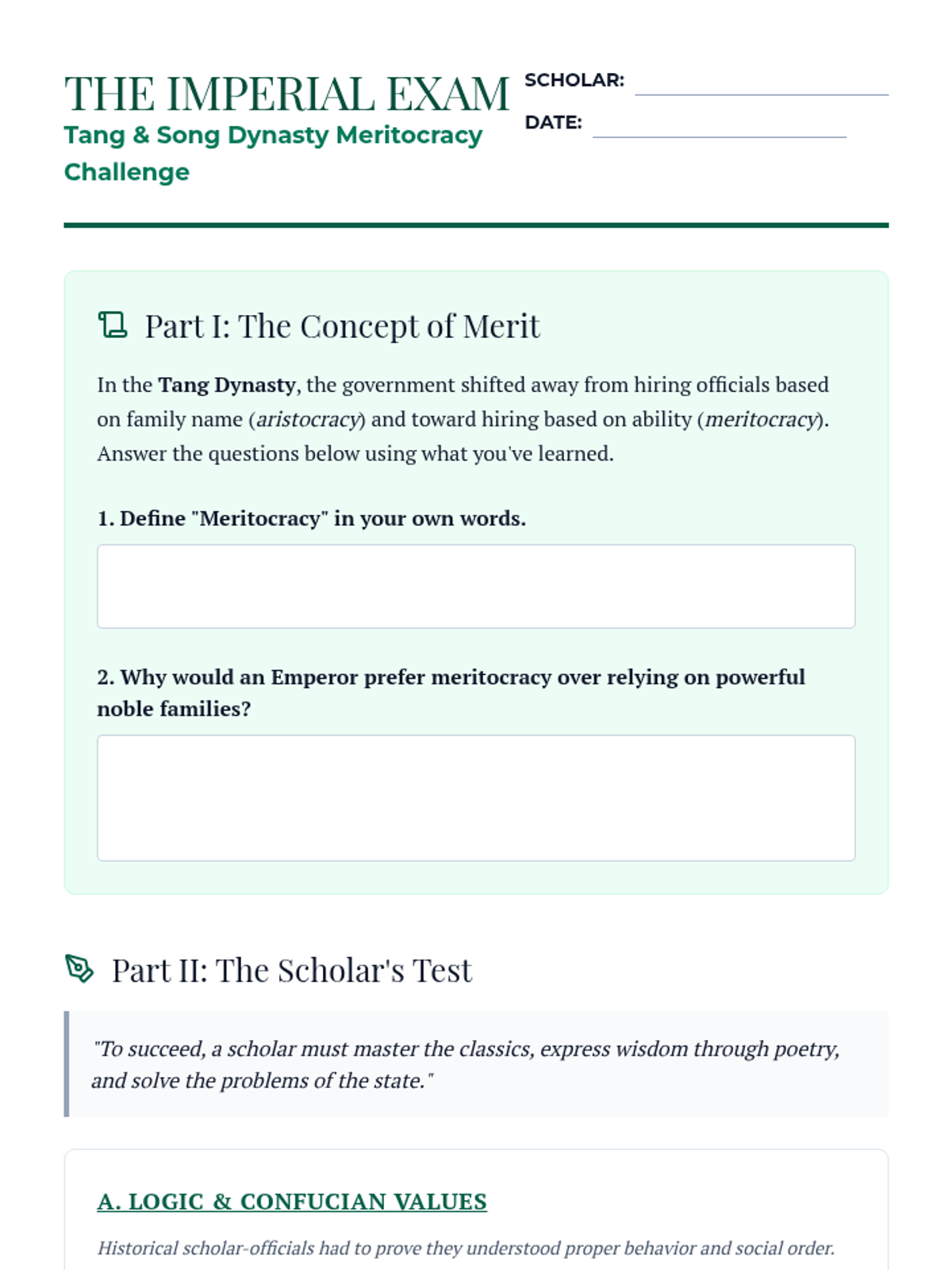
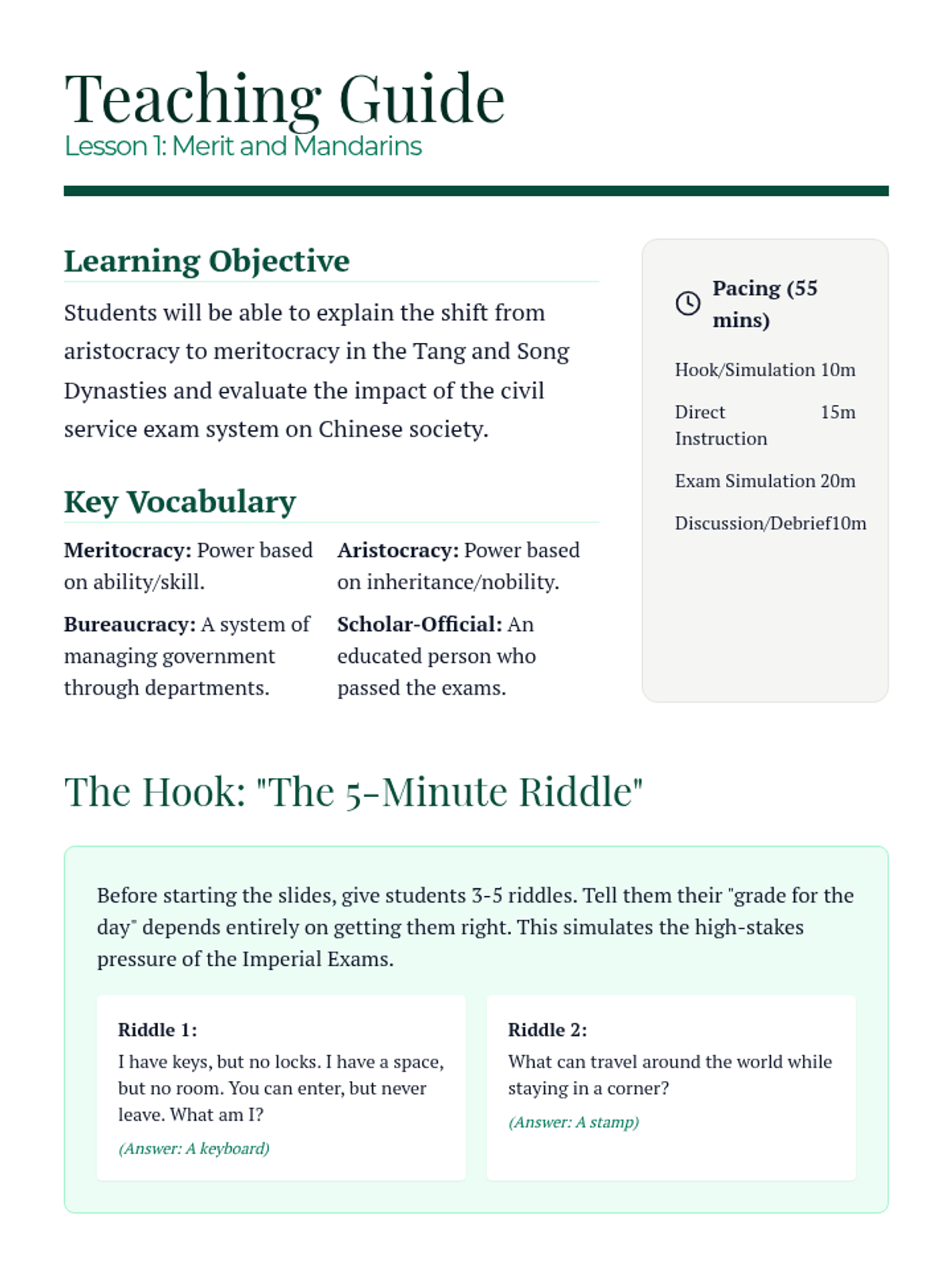
This sequence examines the political evolution and cultural achievements of China's Golden Ages through the Tang, Song, and Ming dynasties. Students will analyze how the Civil Service Examination system created a meritocratic bureaucracy that sustained stability and fostered technological innovation.
This inquiry-based sequence guides students through the 'Golden Age' of China, focusing specifically on the technological and cultural innovations of the Tang and Song dynasties. Students explore the civil service exam system, agricultural revolutions, the 'Four Great Inventions,' and the arts to evaluate how these advancements contributed to global history.
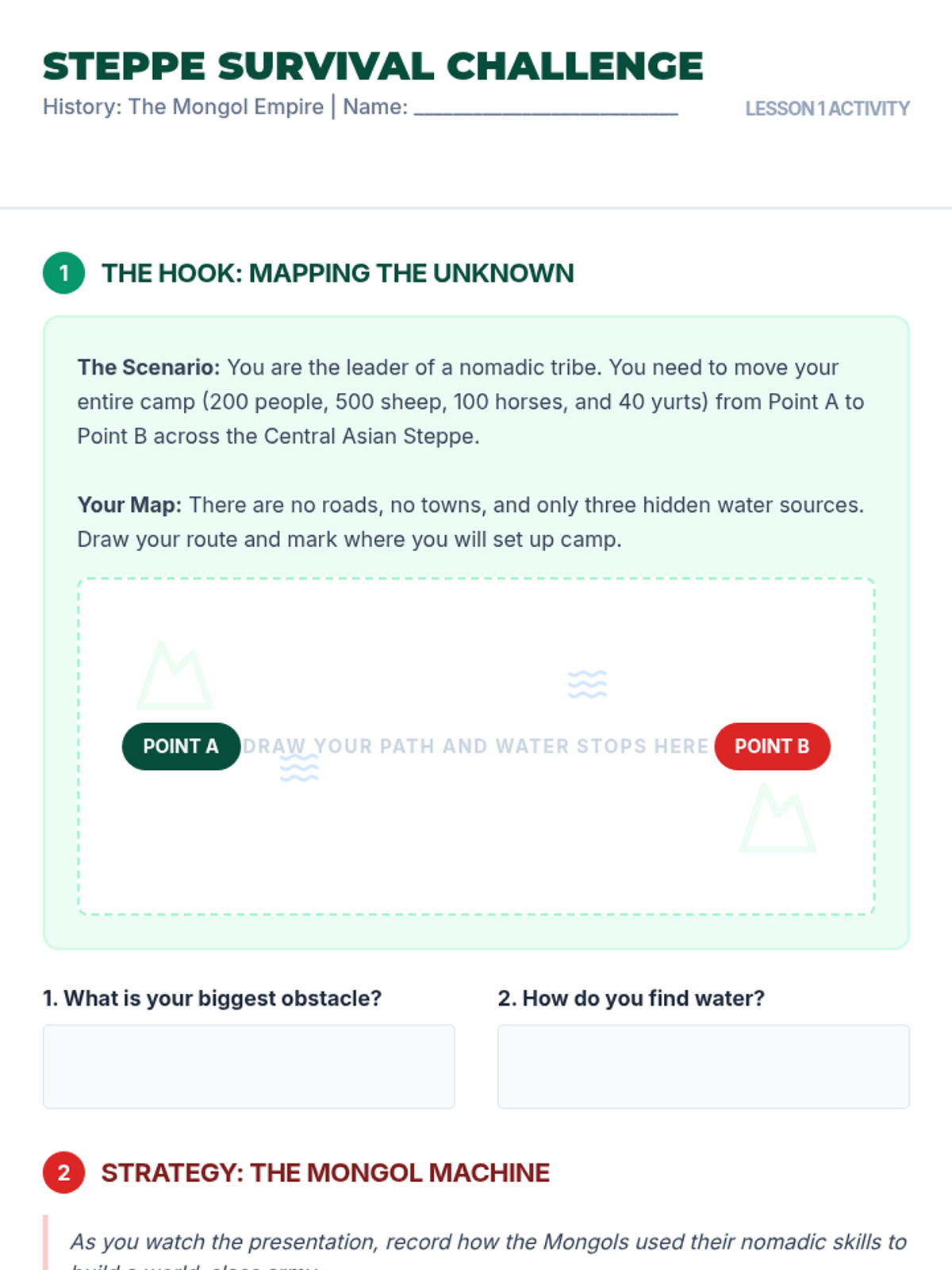
A 6th-grade history sequence exploring the Mongol Empire's rise, its impact on Silk Road trade, and its dual legacy of conquest and cultural connection. Students participate in simulations, map the empire's growth, and analyze the flow of goods and ideas across Eurasia.
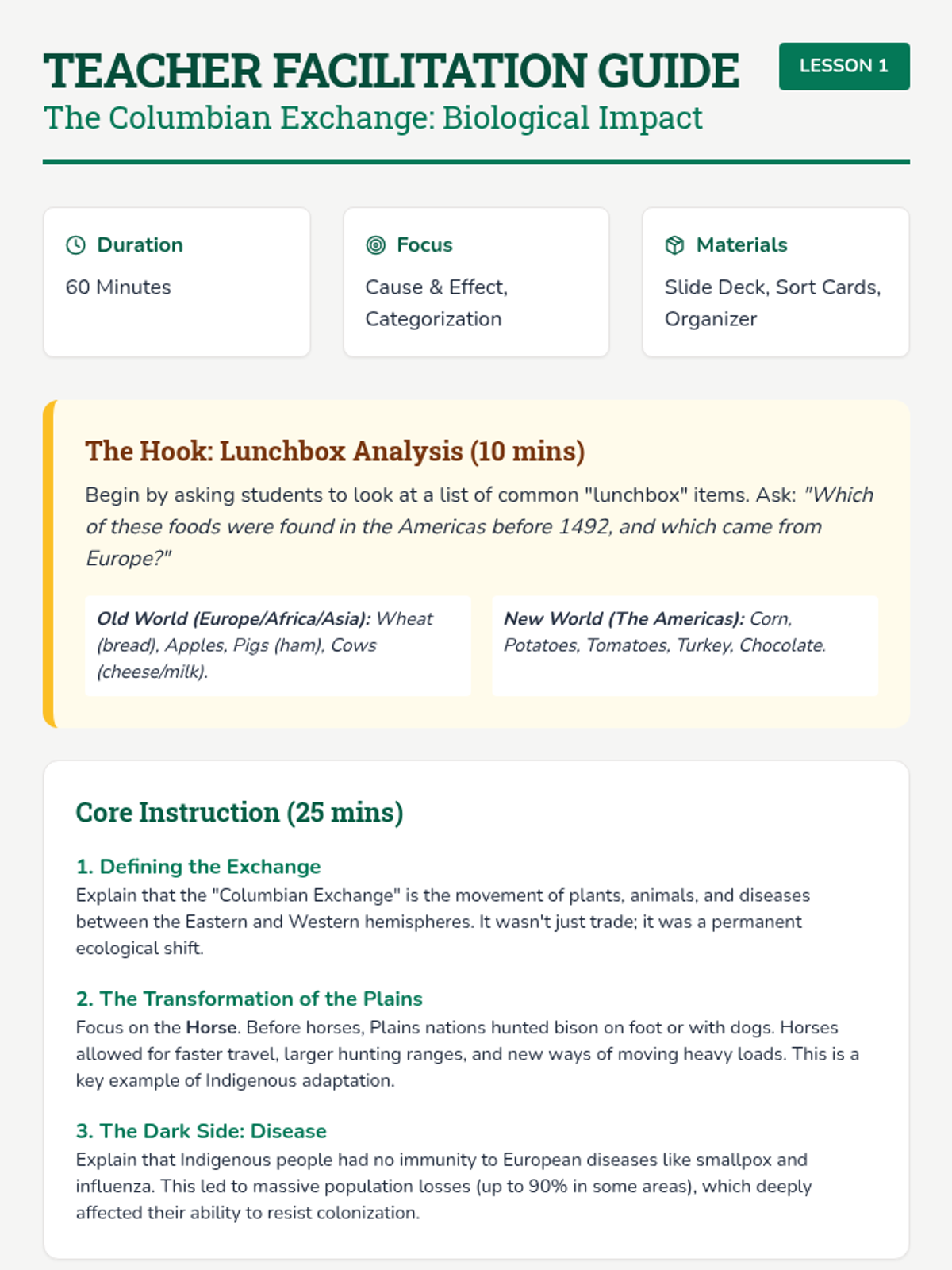
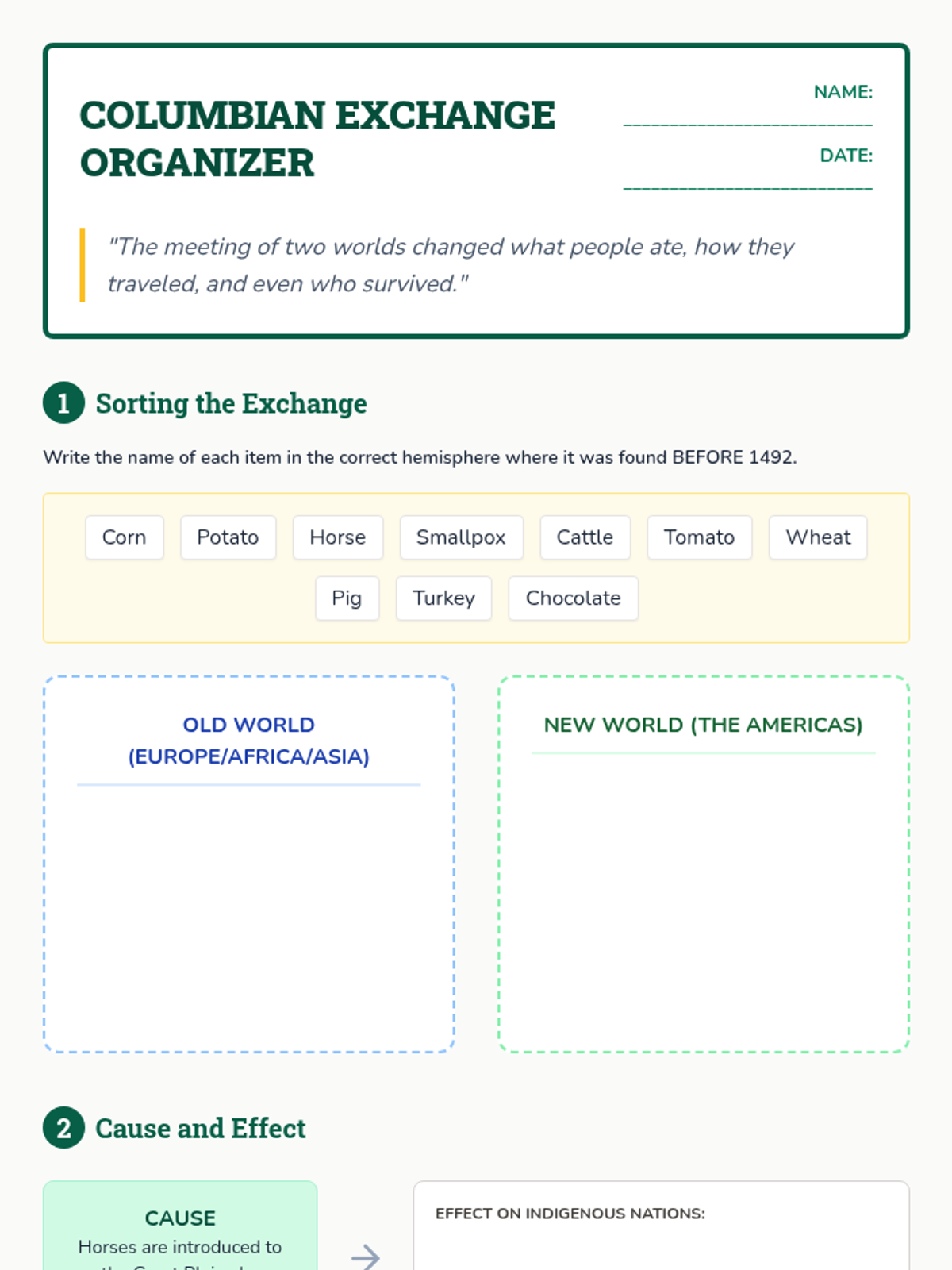
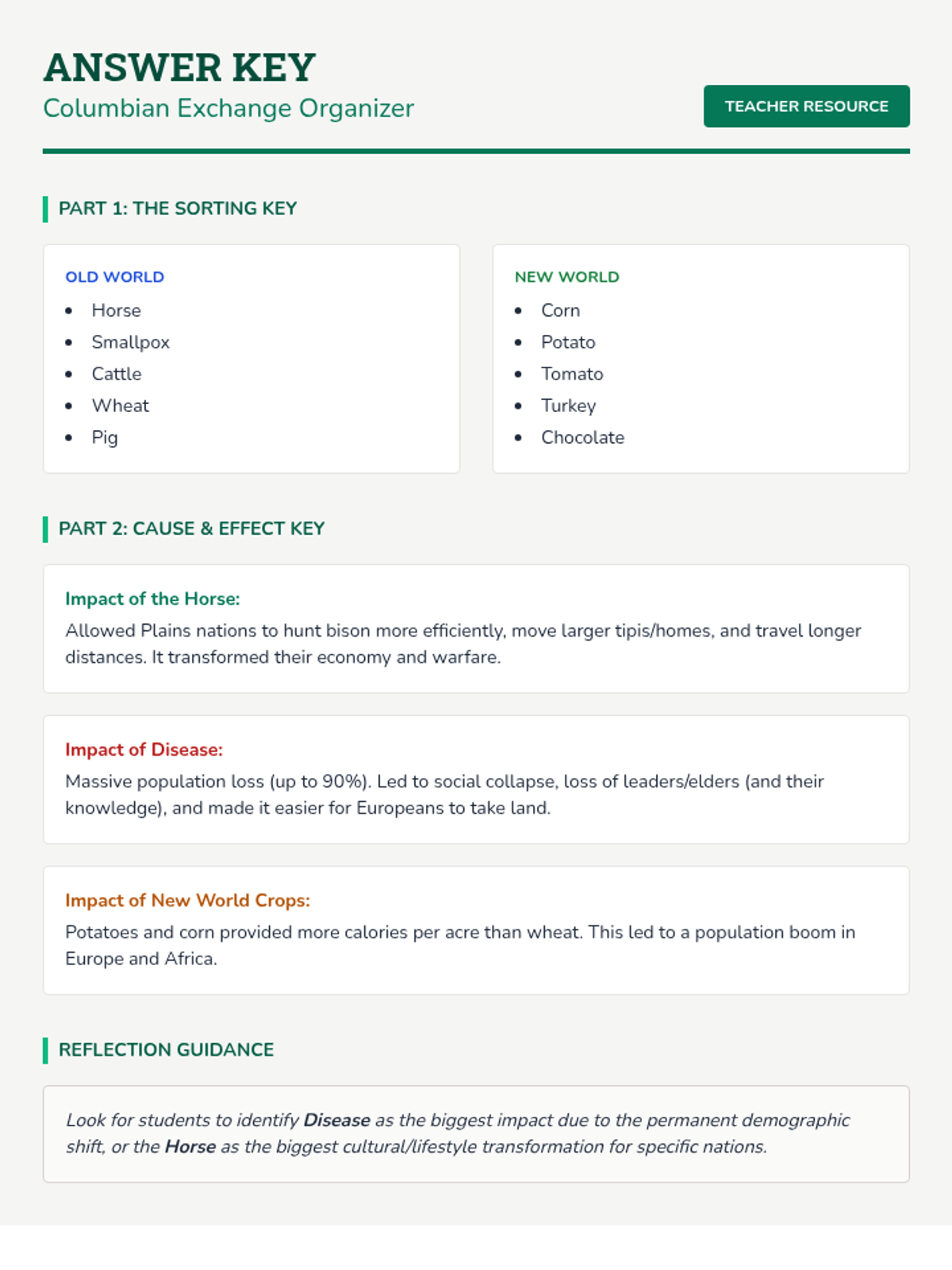
This sequence explores the profound changes during the initial contact between Indigenous nations and European explorers. Students examine the Columbian Exchange, trade economies, conflicting views on land, and political alliances to understand the complexity of this historical encounter.
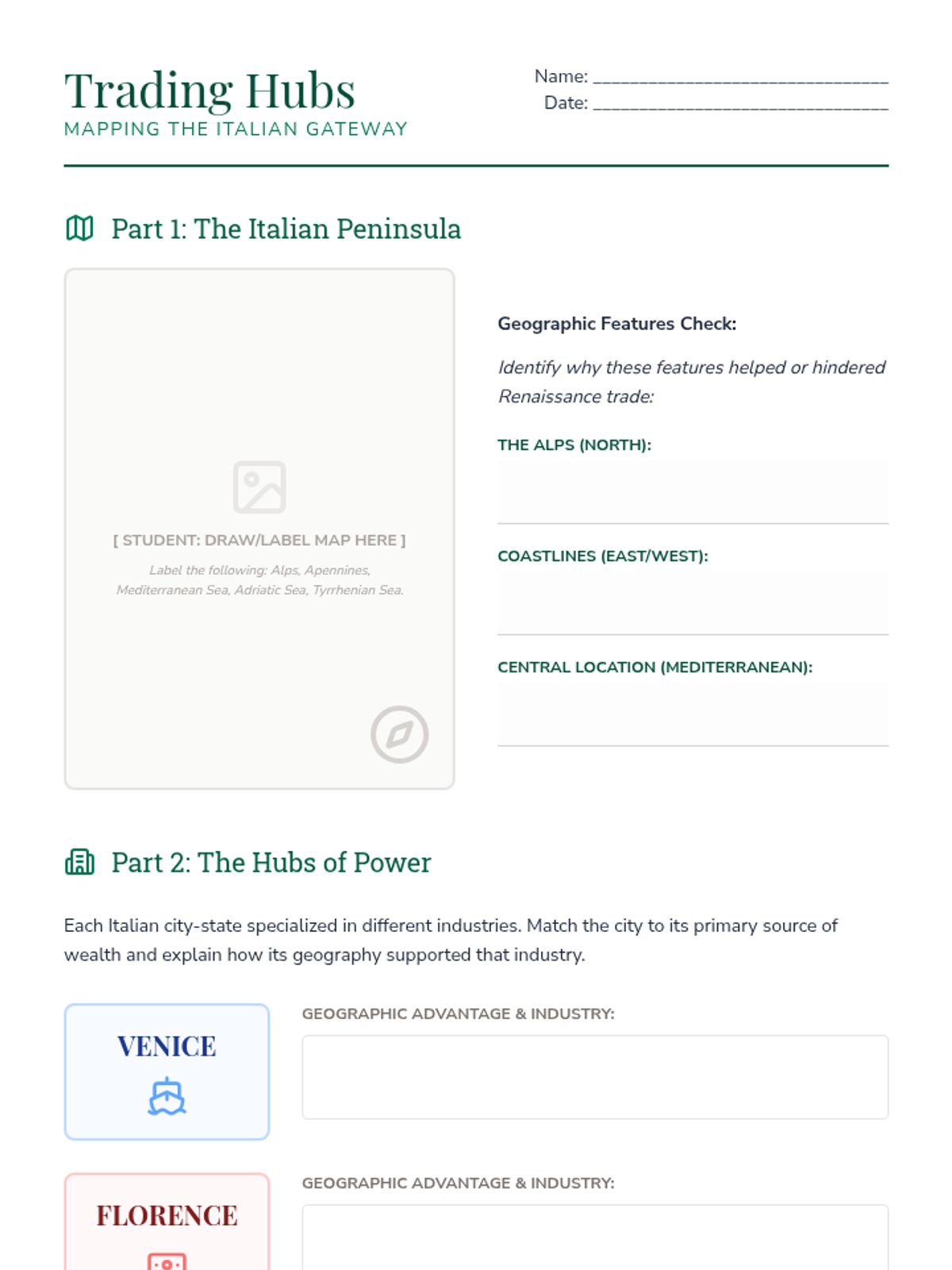
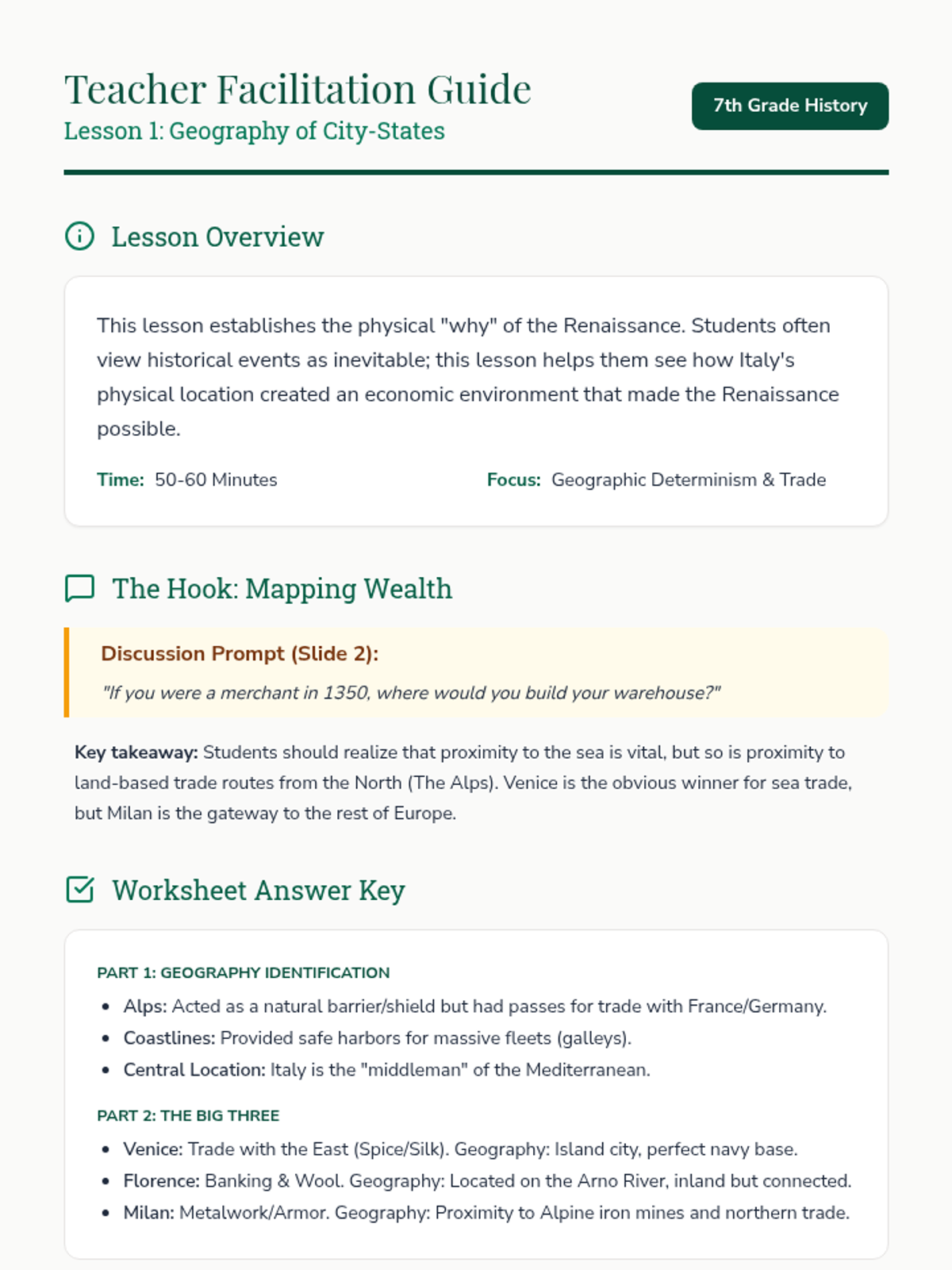
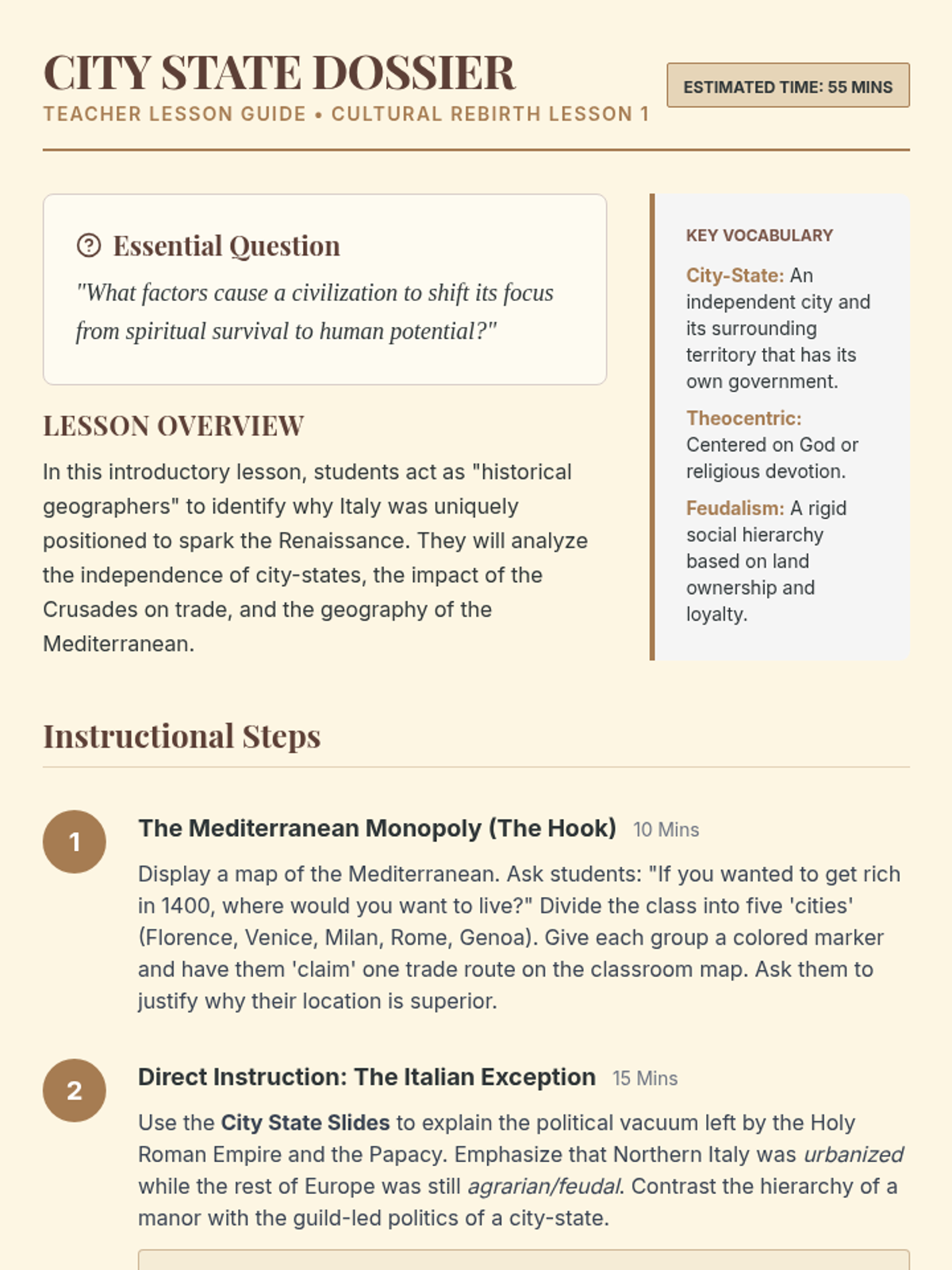
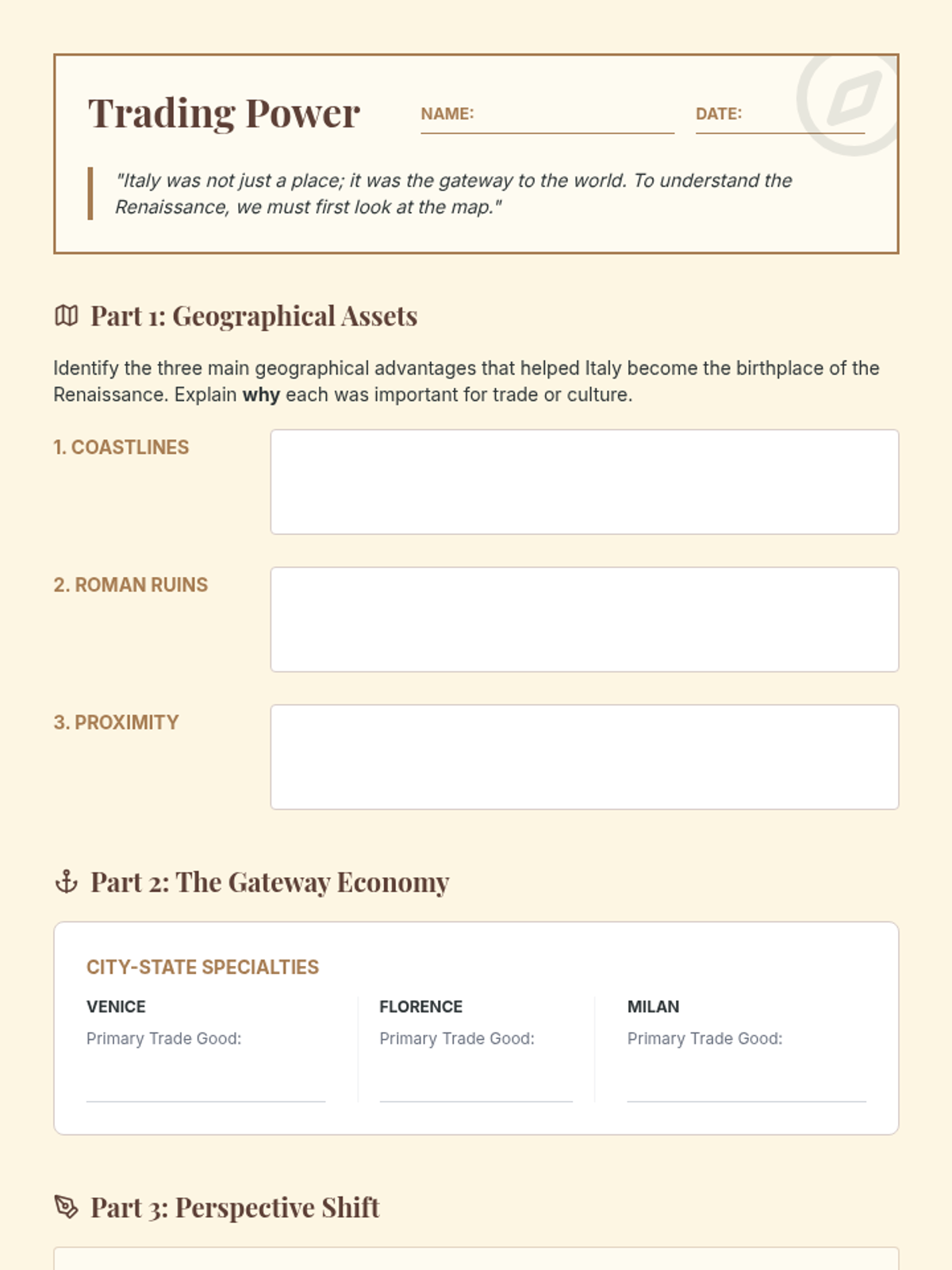
This sequence explores the economic and political foundations of the Renaissance through the lens of the Italian City-States. Students investigate how geography, trade routes, and banking families like the Medici created the surplus wealth necessary to fund the artistic boom.
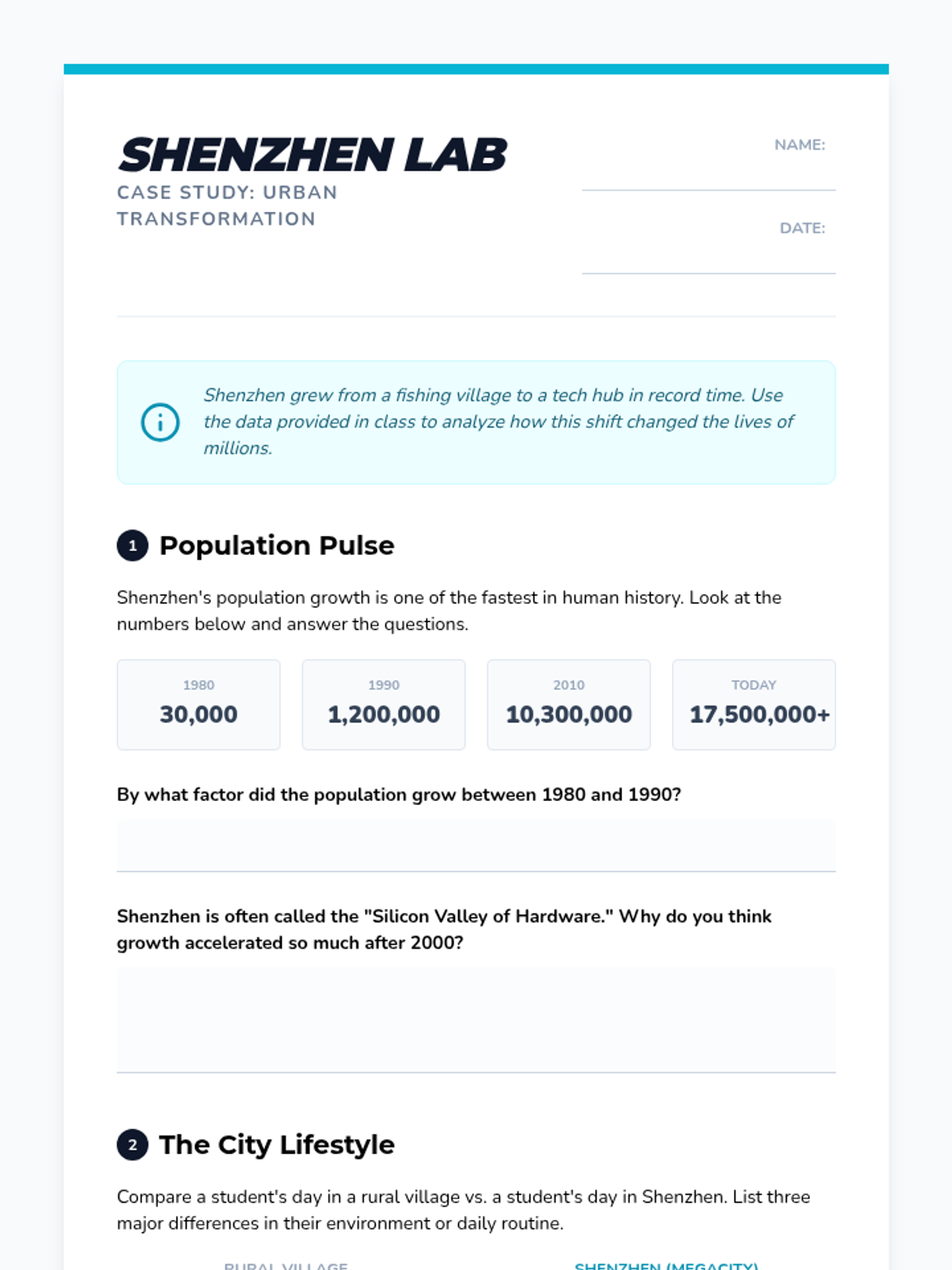
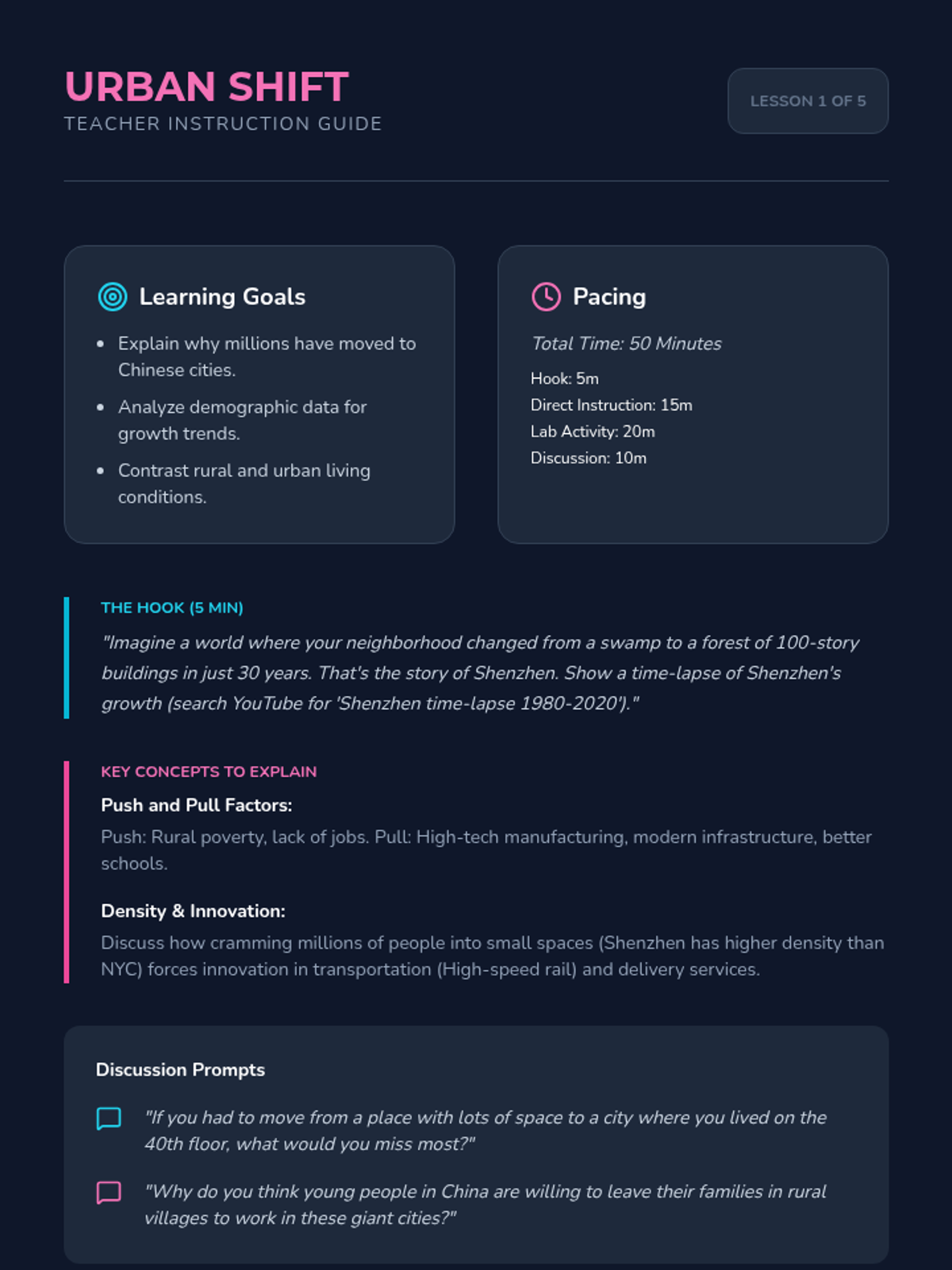
This inquiry-based sequence explores the rapid modernization of China through technology, pop culture, and urbanization, bridging the gap between historical China and today's high-tech reality.
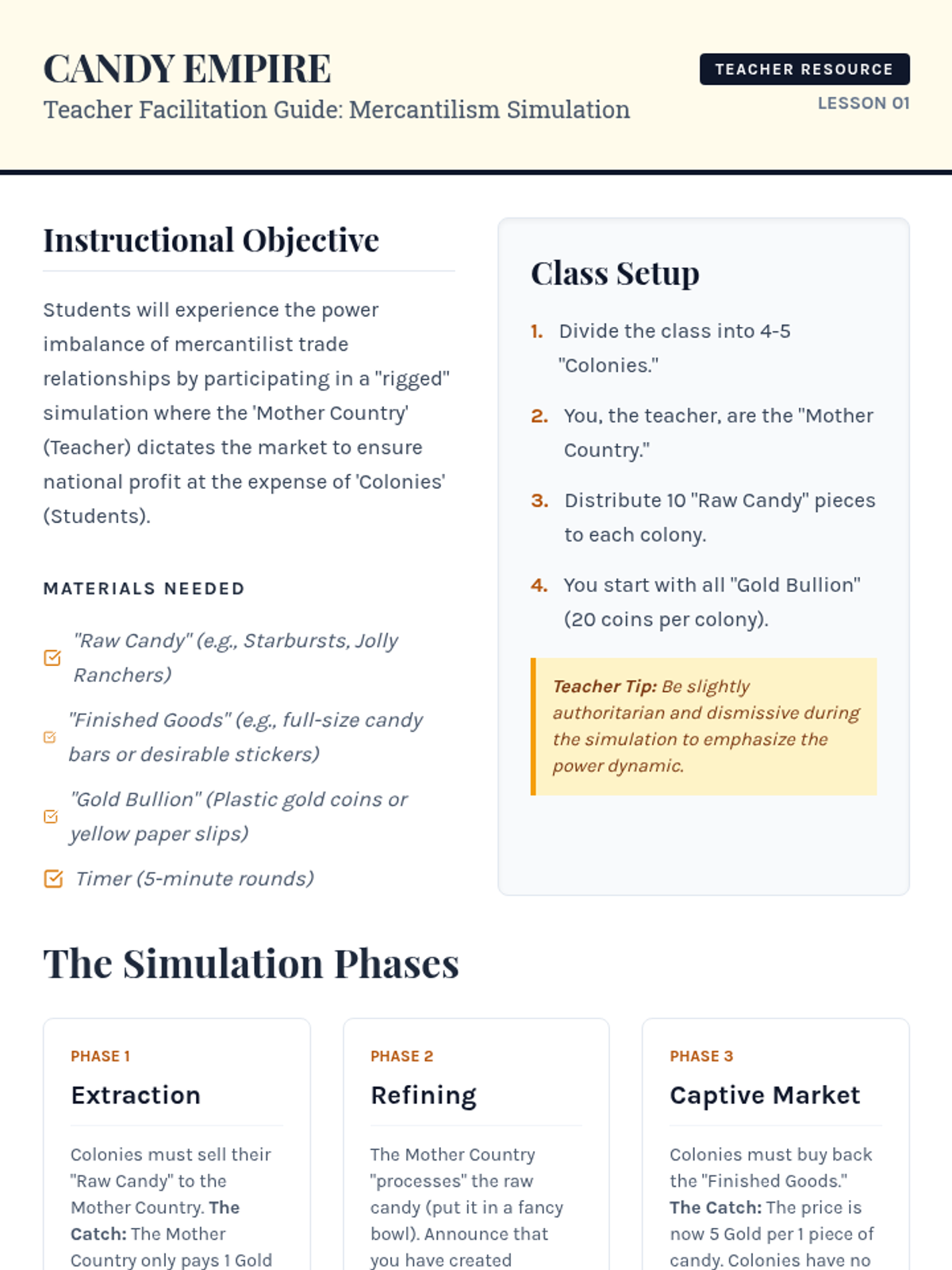
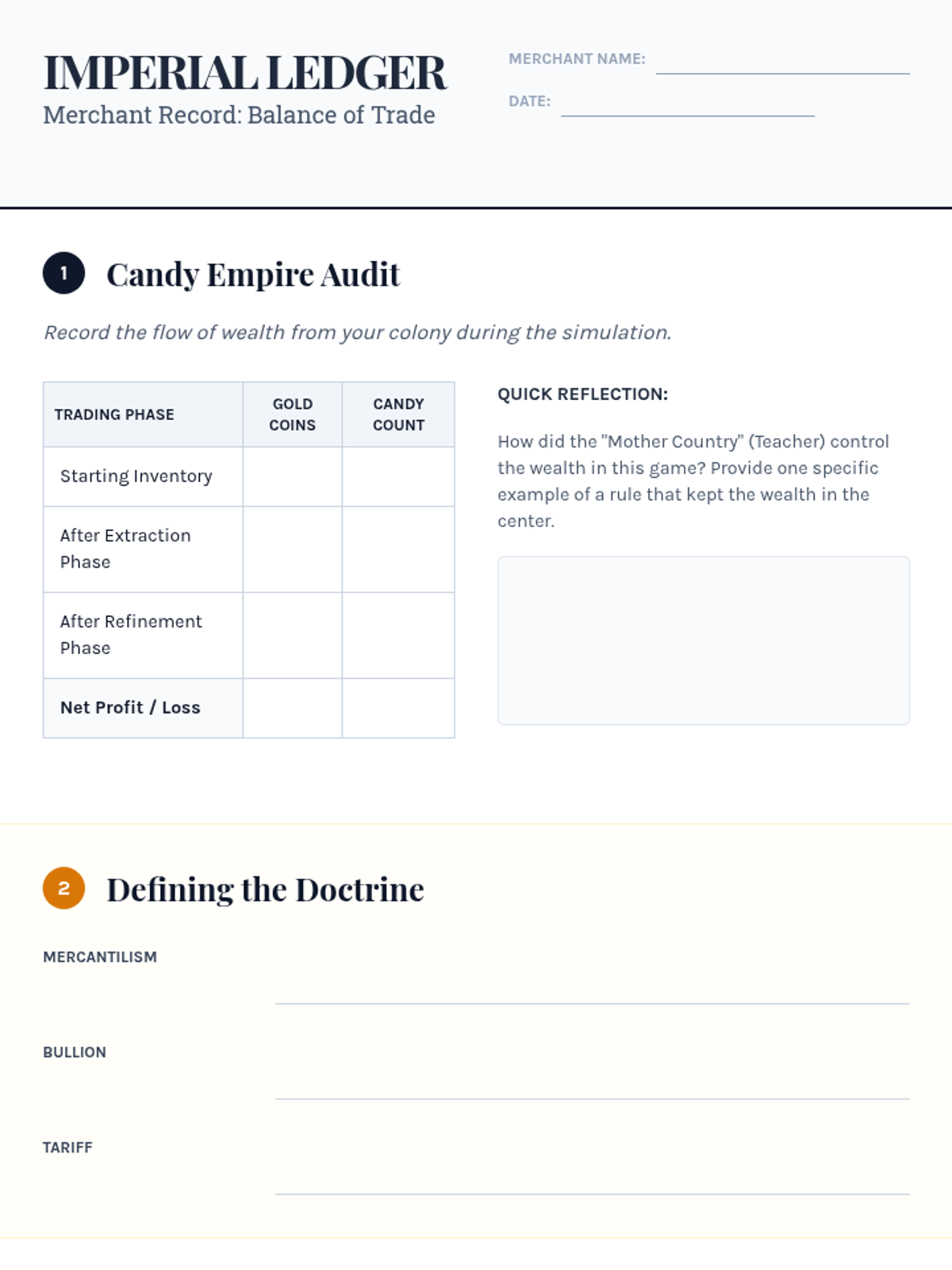
A game-based sequence exploring the economic systems of the Age of Exploration, focusing on mercantilism, joint-stock companies, and the global shift in power. Students engage in simulations and case studies to understand how modern global capitalism began.
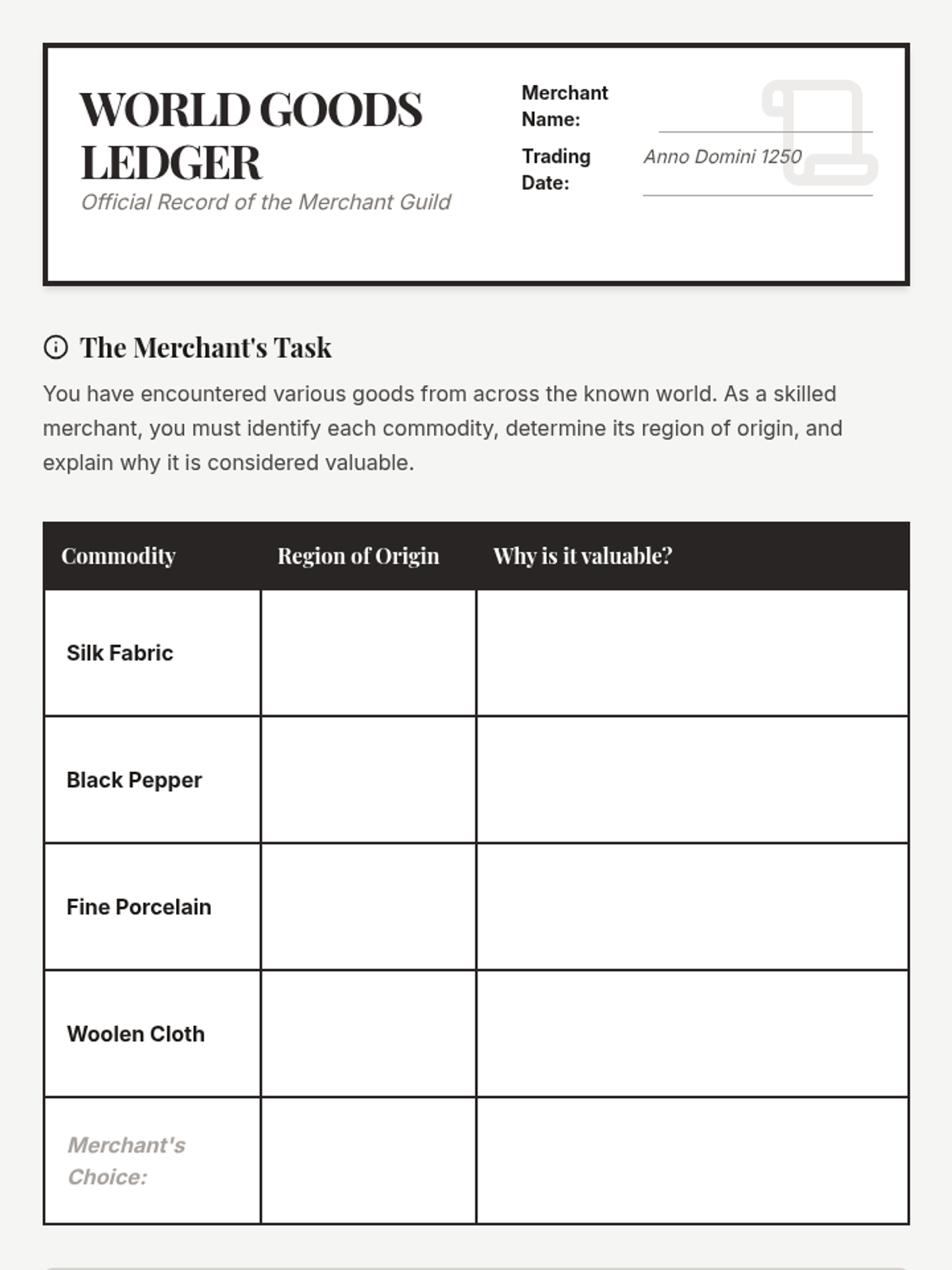
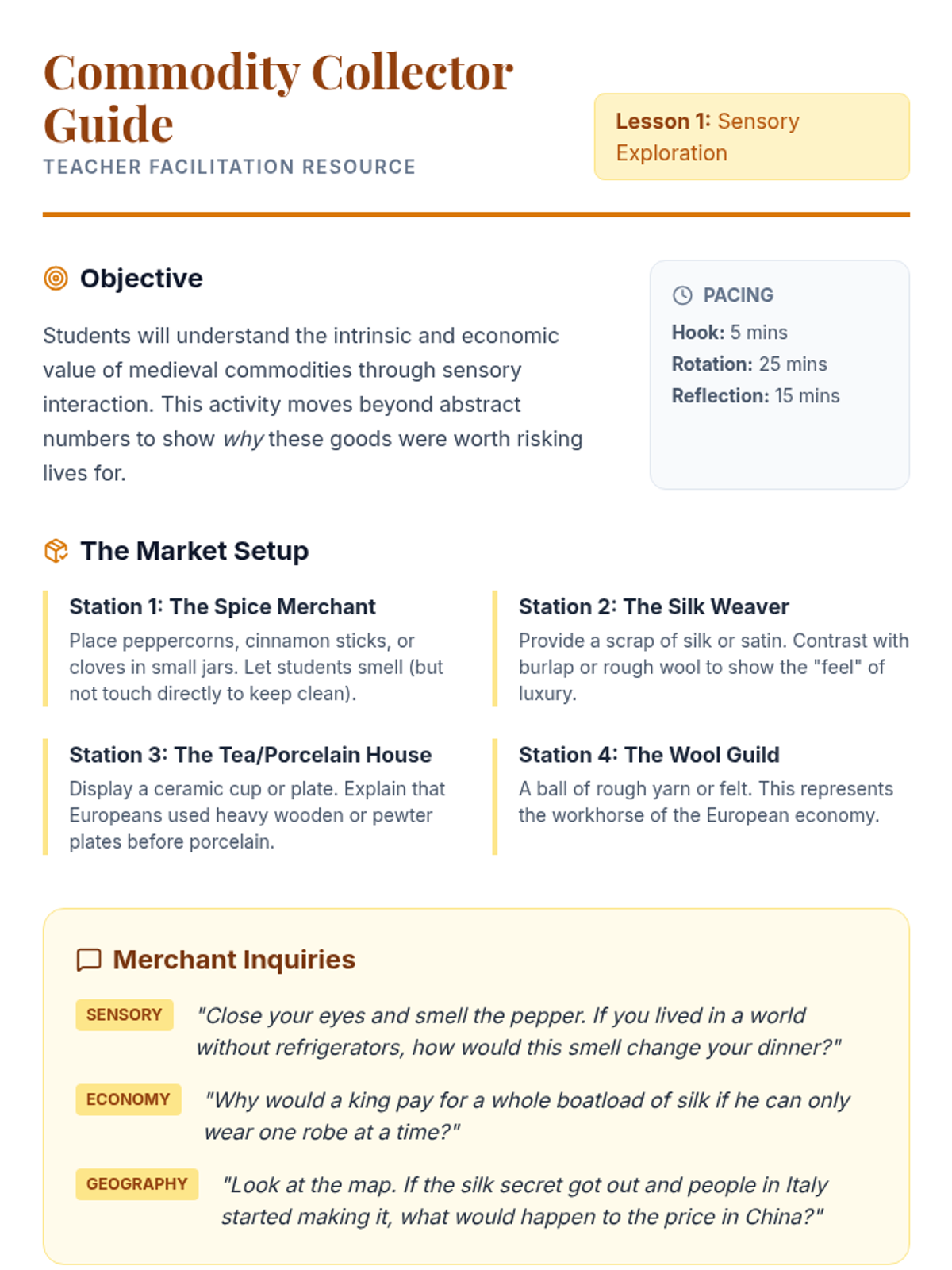
A 5-lesson unit exploring the economic and cultural exchanges of the medieval world, focusing on the Silk Road, maritime trade, and the foundations of modern finance. Students will investigate valuable commodities, simulate the risks of trade routes, and map the spread of ideas and inventions.
A 5-lesson sequence exploring the transition from the Middle Ages to the Renaissance through geography, economics, philosophy, art, and technology. Students analyze the shift from theocentric to anthropocentric worldviews using a project-based approach.
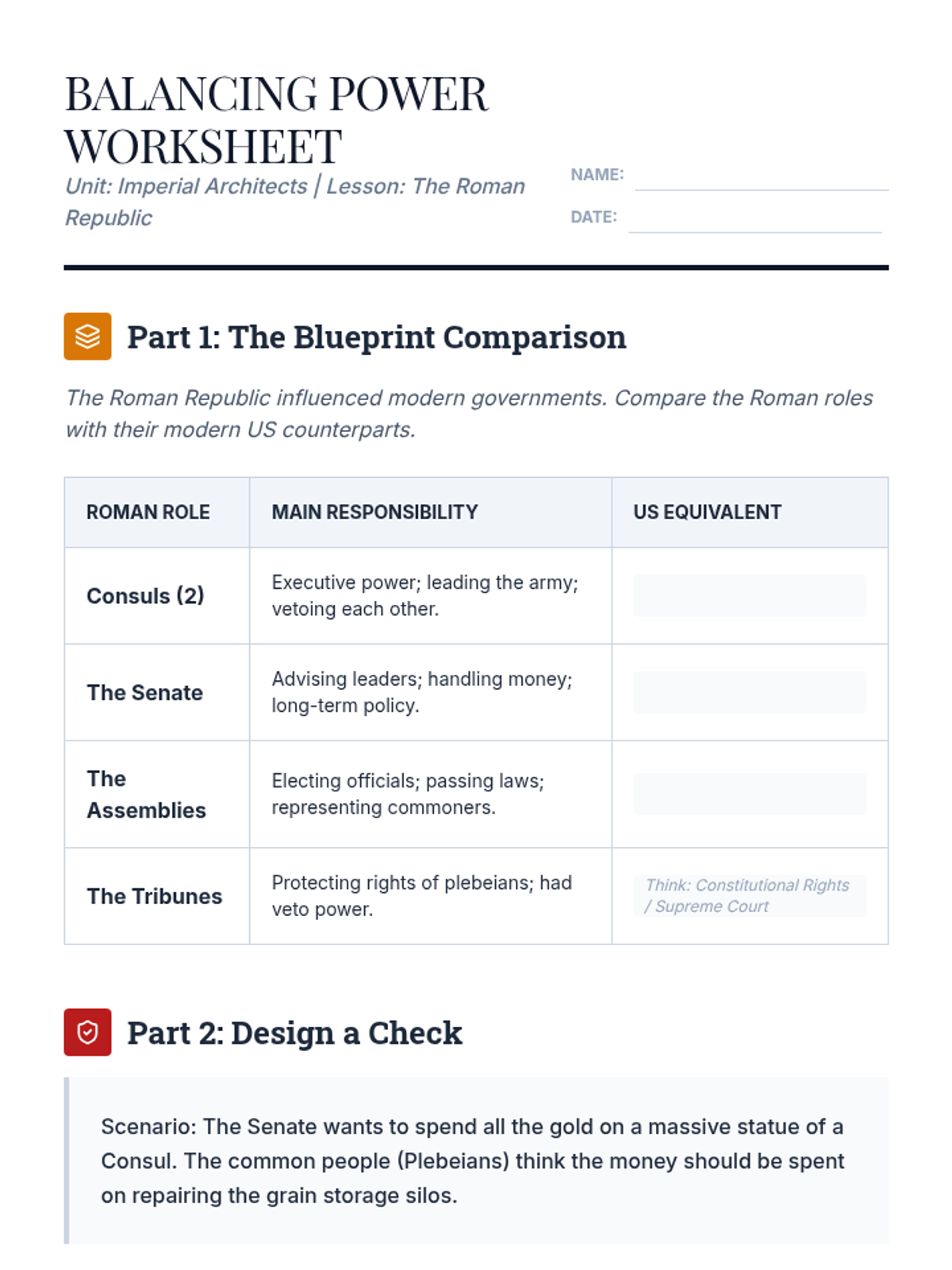
A project-based unit exploring how Roman engineering, infrastructure, and governance created a unified empire, and how those same systems eventually buckled under pressure.
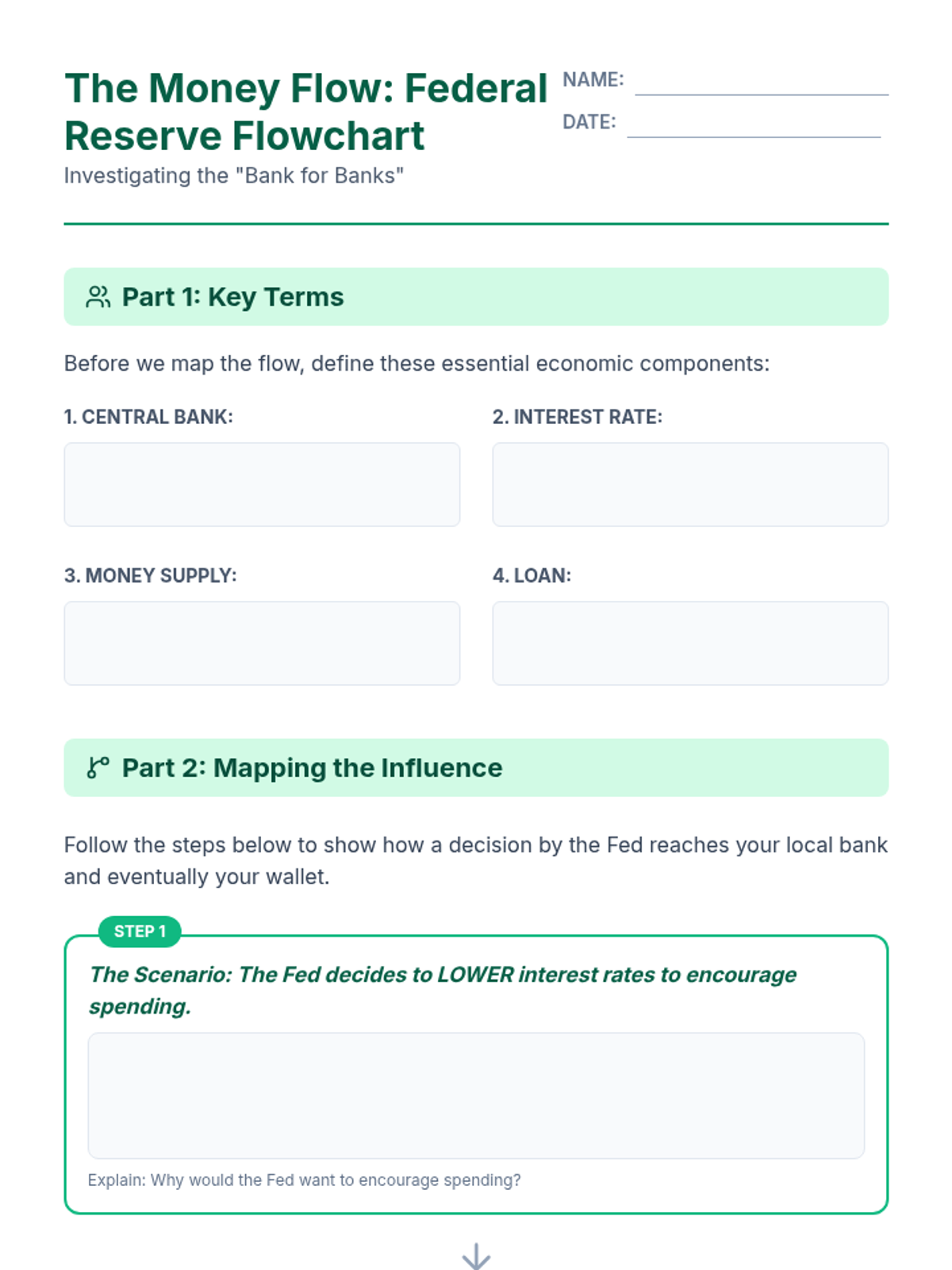
This 6th-grade economics sequence moves beyond personal finance to explore macroeconomics, focusing on central banking, inflation, global currency exchange, and the business cycle. Students engage in simulations and role-plays to understand how the Federal Reserve and global markets maintain economic stability.
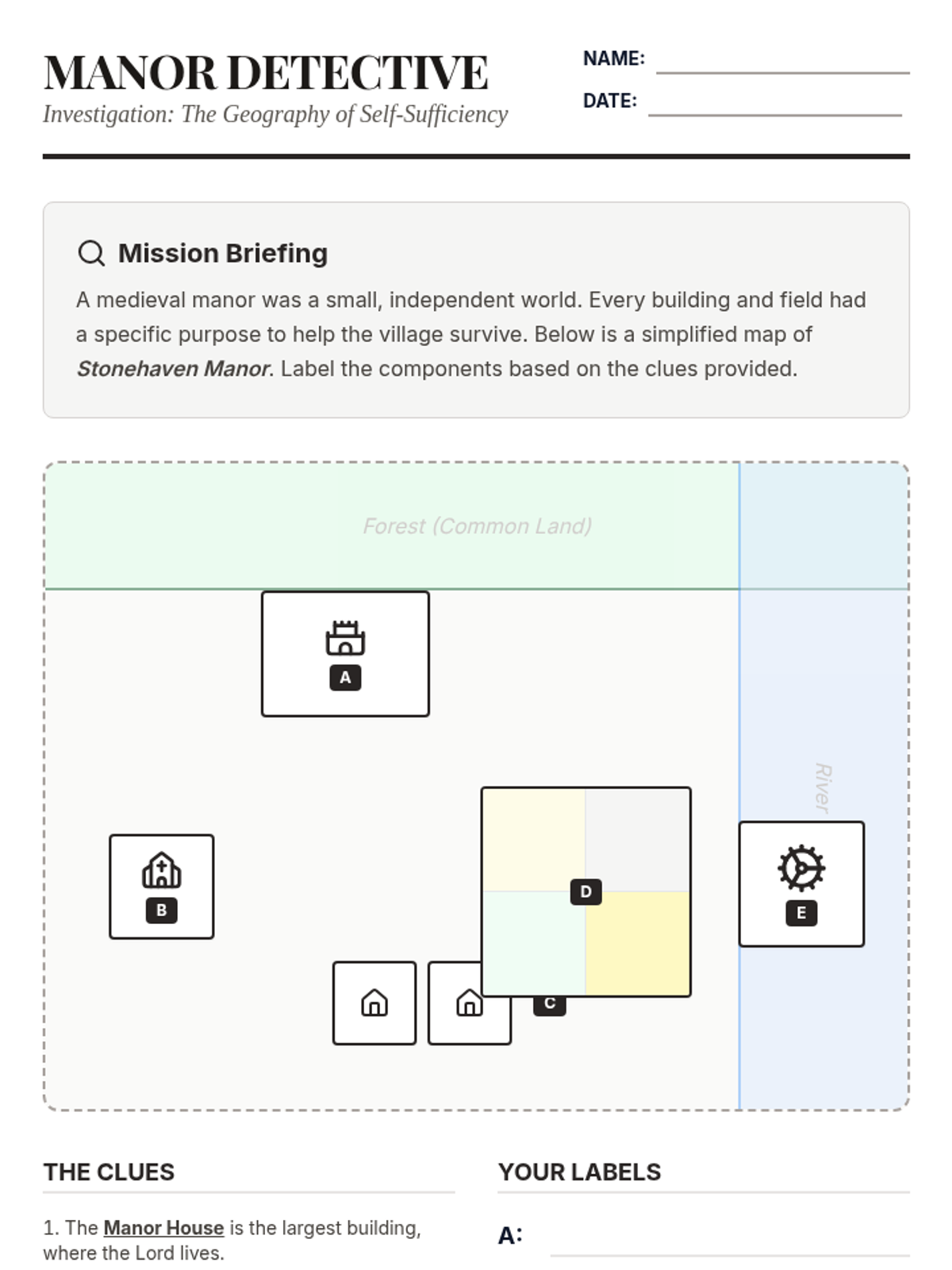
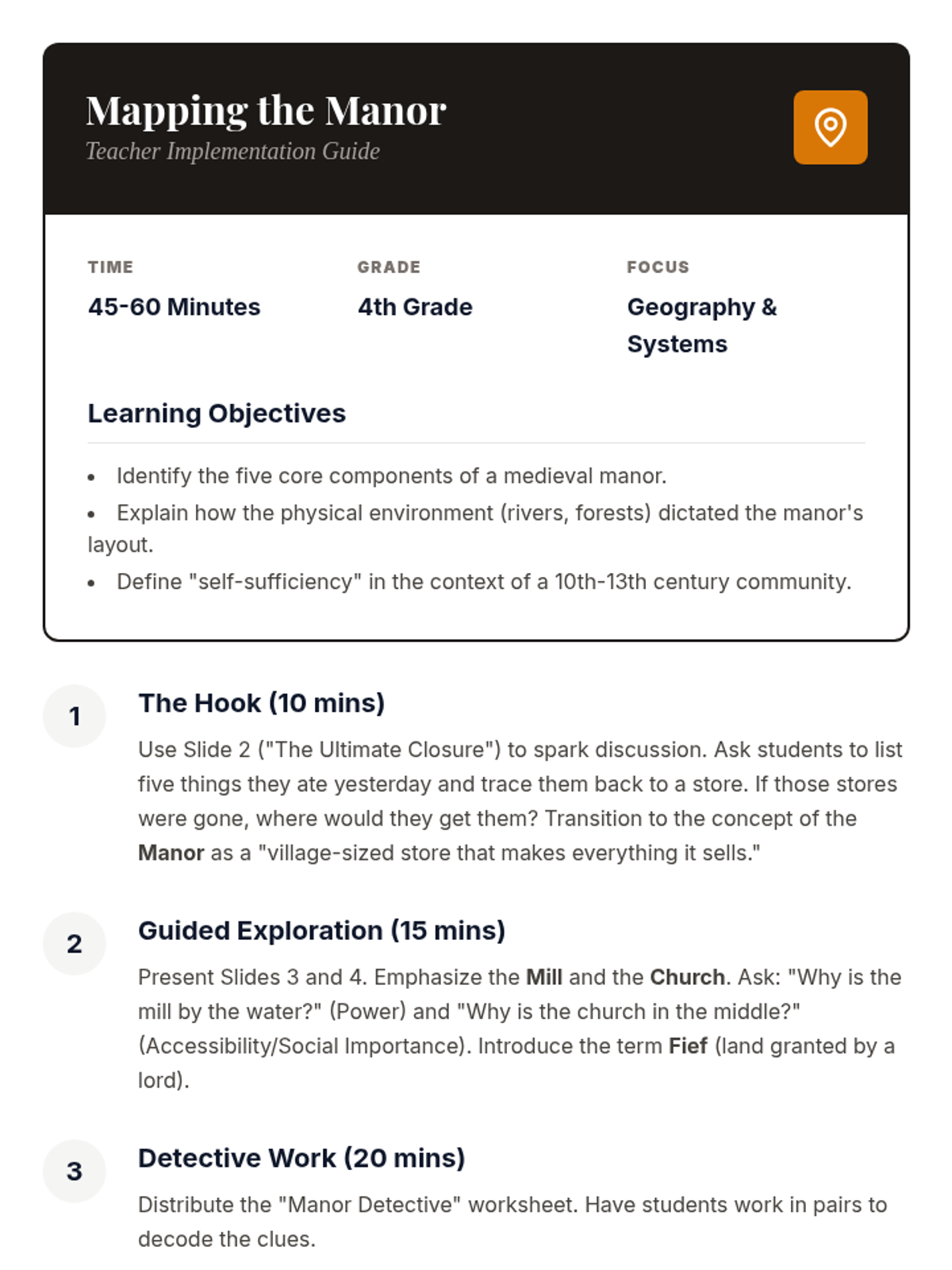
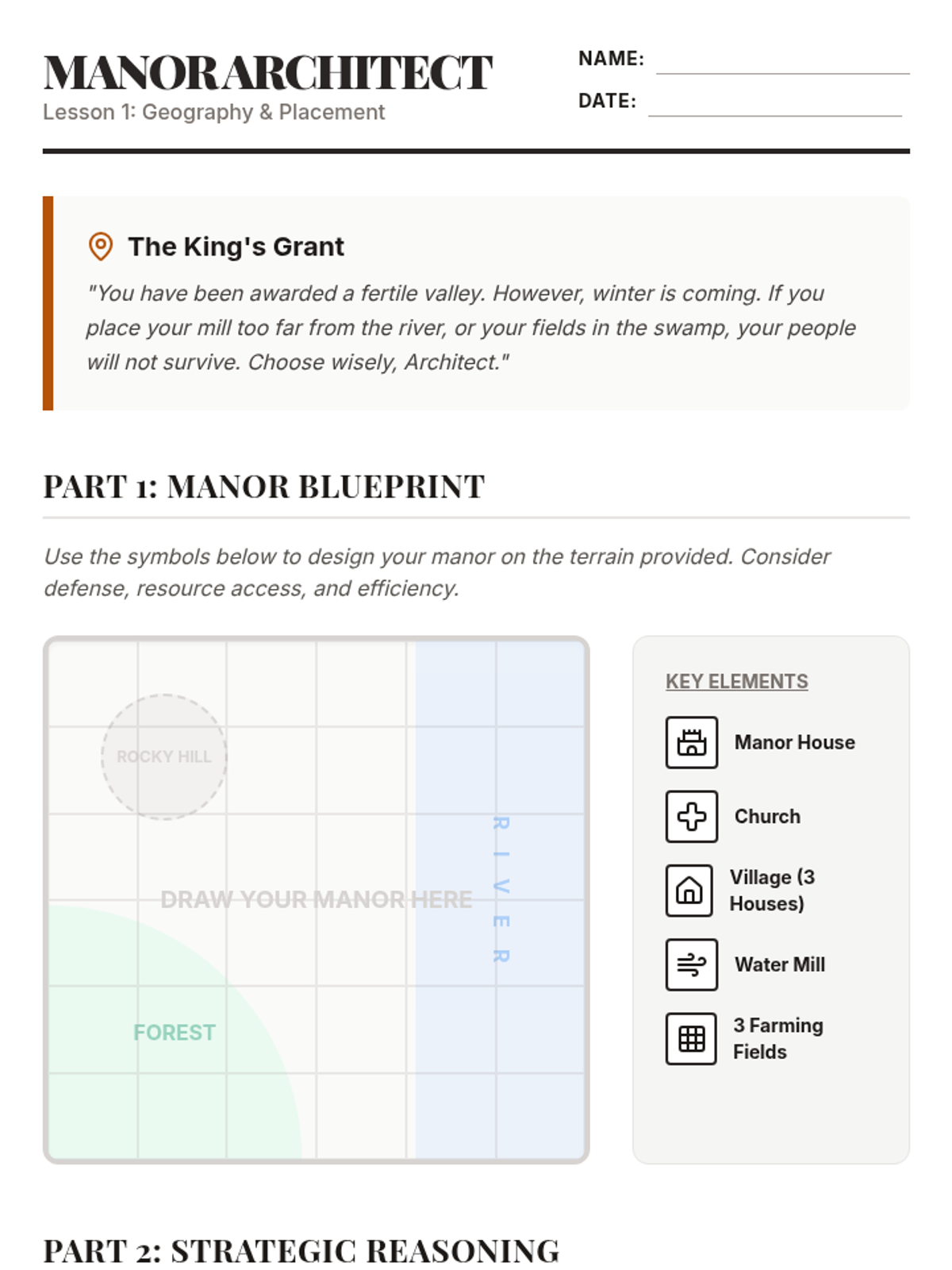
Students explore the economic and social structure of medieval Europe by analyzing the manor system. They investigate geographic requirements for survival, agricultural innovations like the three-field system, the specialized roles of community members, and the daily lives of serfs versus nobility, culminating in the design of their own self-sufficient manor.
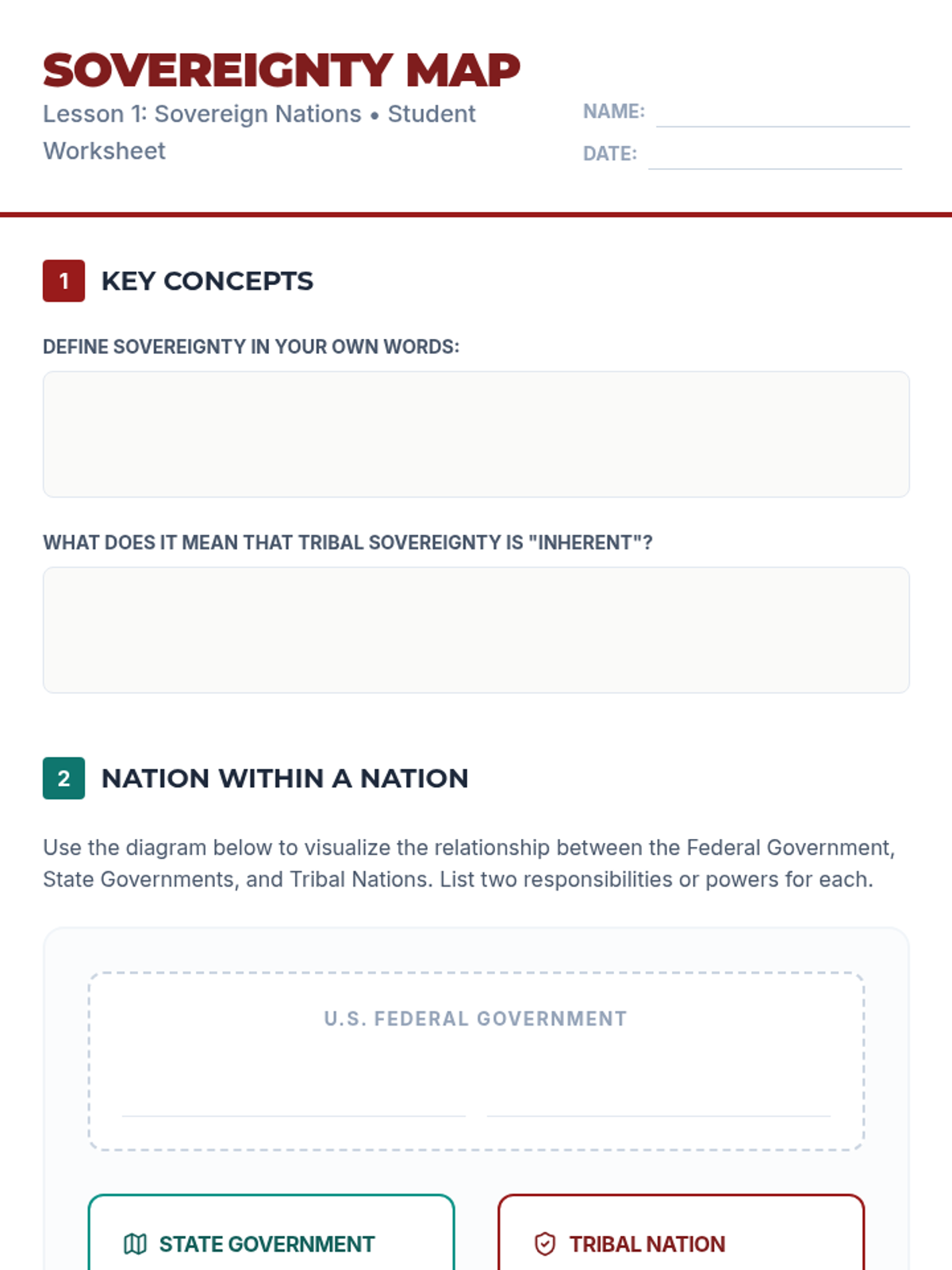
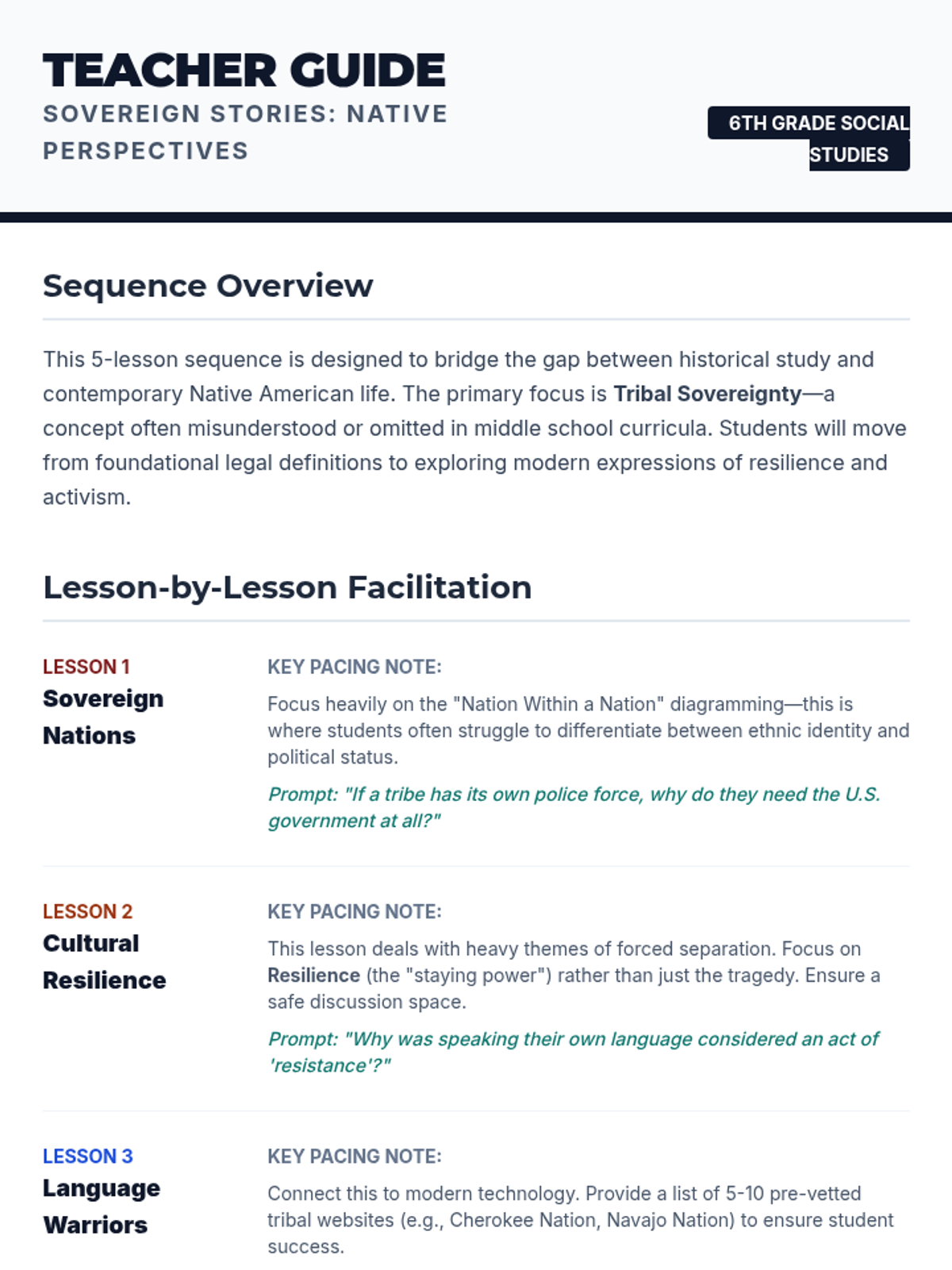
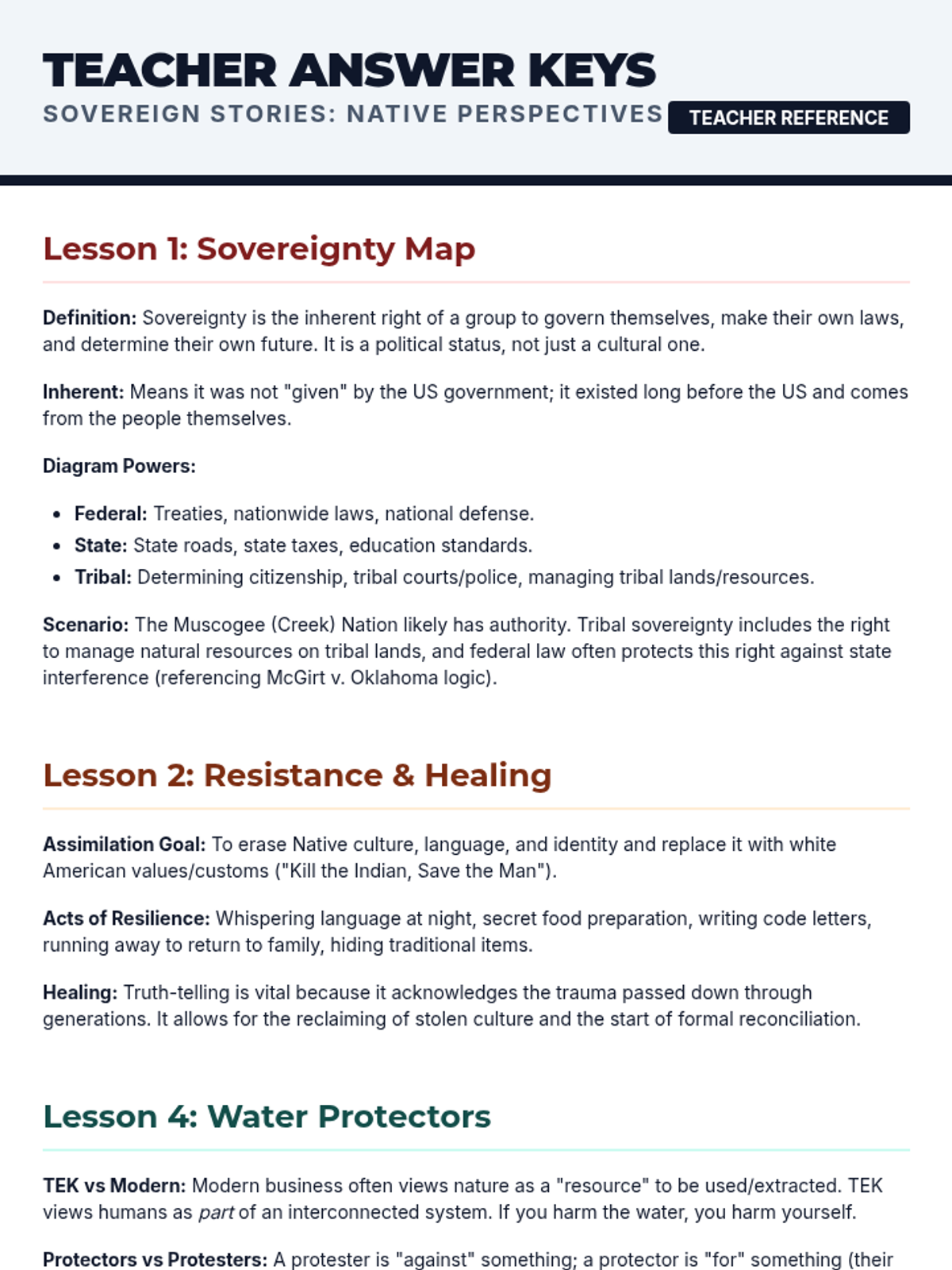
A 5-lesson sequence for 6th grade students exploring tribal sovereignty, historical resilience through the boarding school era, and modern cultural revitalization efforts in Native American communities today.
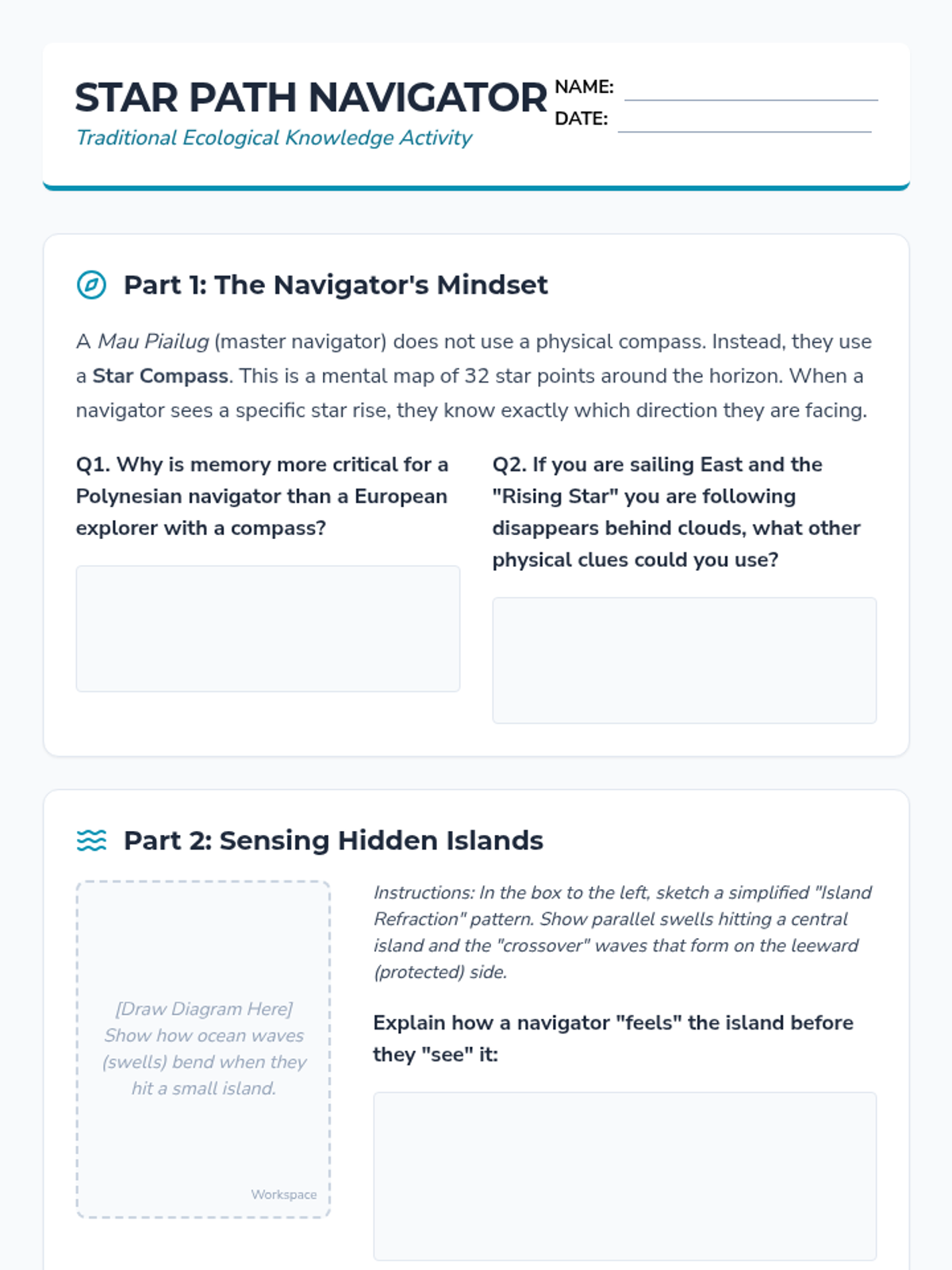
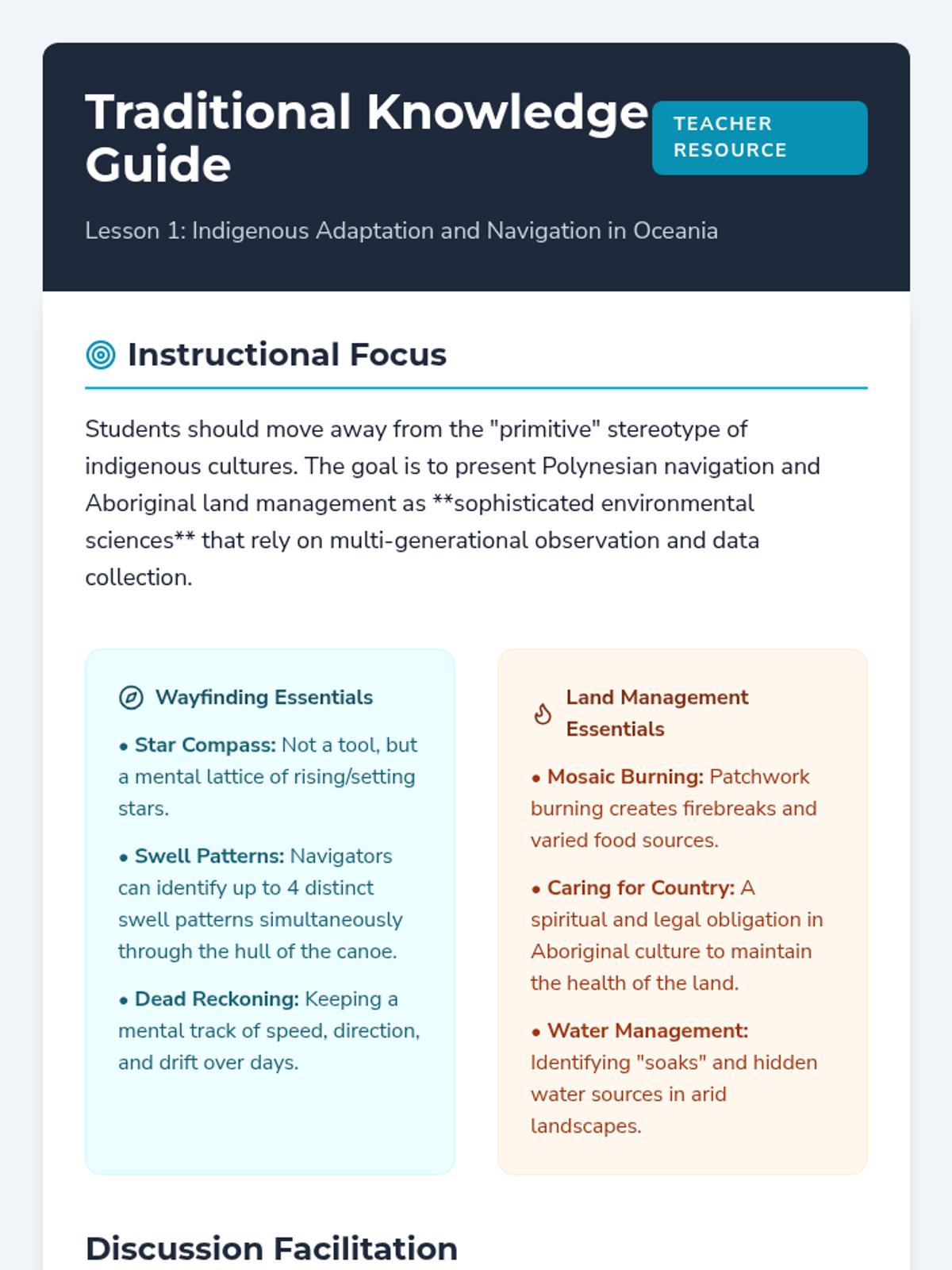
This sequence explores how societies in Oceania adapt to unique environmental constraints through indigenous navigation, arid land management, and modern economic choices. Students analyze the trade-offs between resource extraction and tourism before proposing sustainable development plans for island nations.
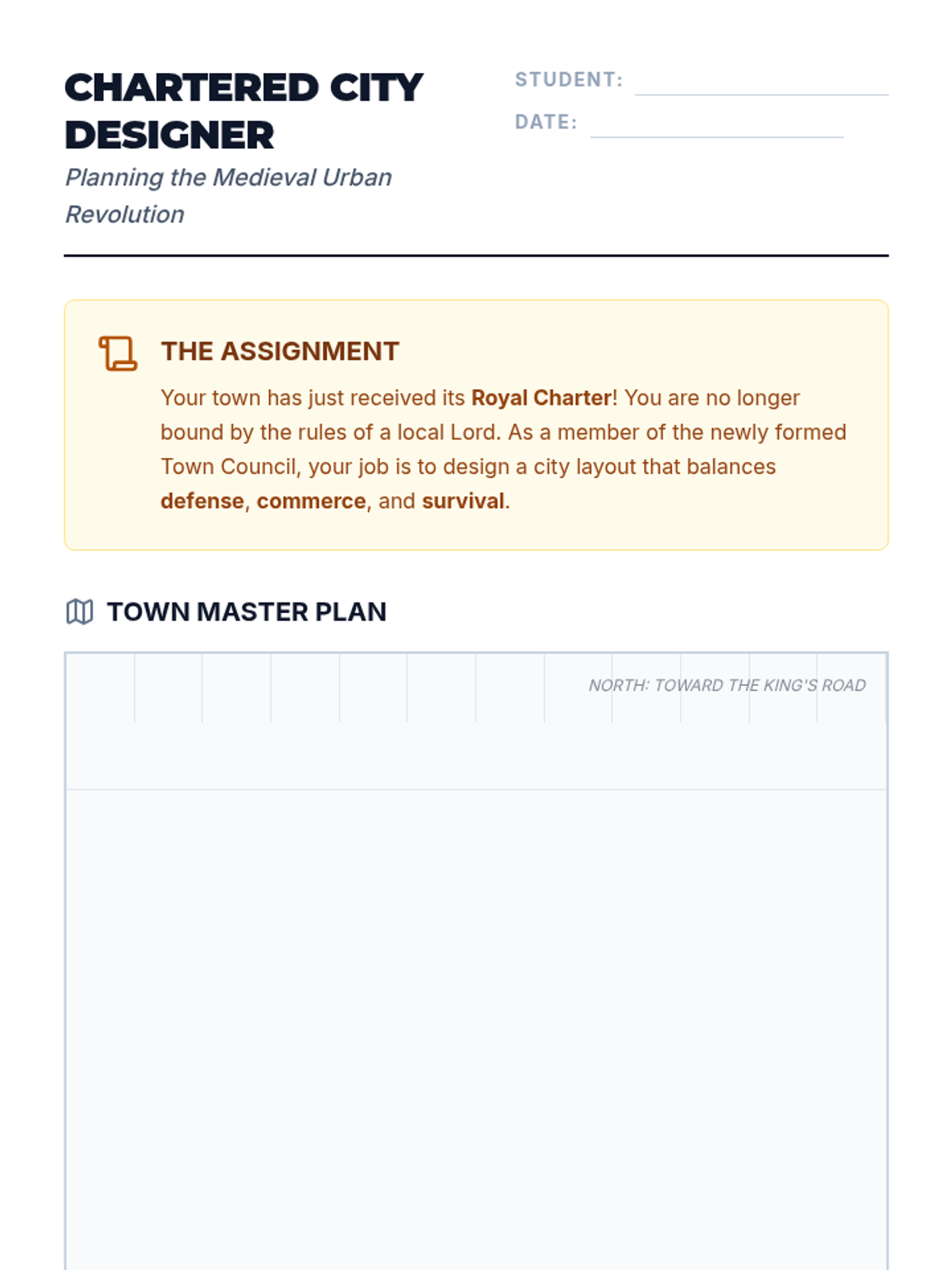
This sequence bridges the gap between the Middle Ages and the early Renaissance, focusing on the resurgence of towns, the rise of the merchant class through guilds, the impact of new military technologies, and the cultural shift toward humanism and realistic art. Students will analyze how these social, economic, and technological changes facilitated the transition toward the modern era.
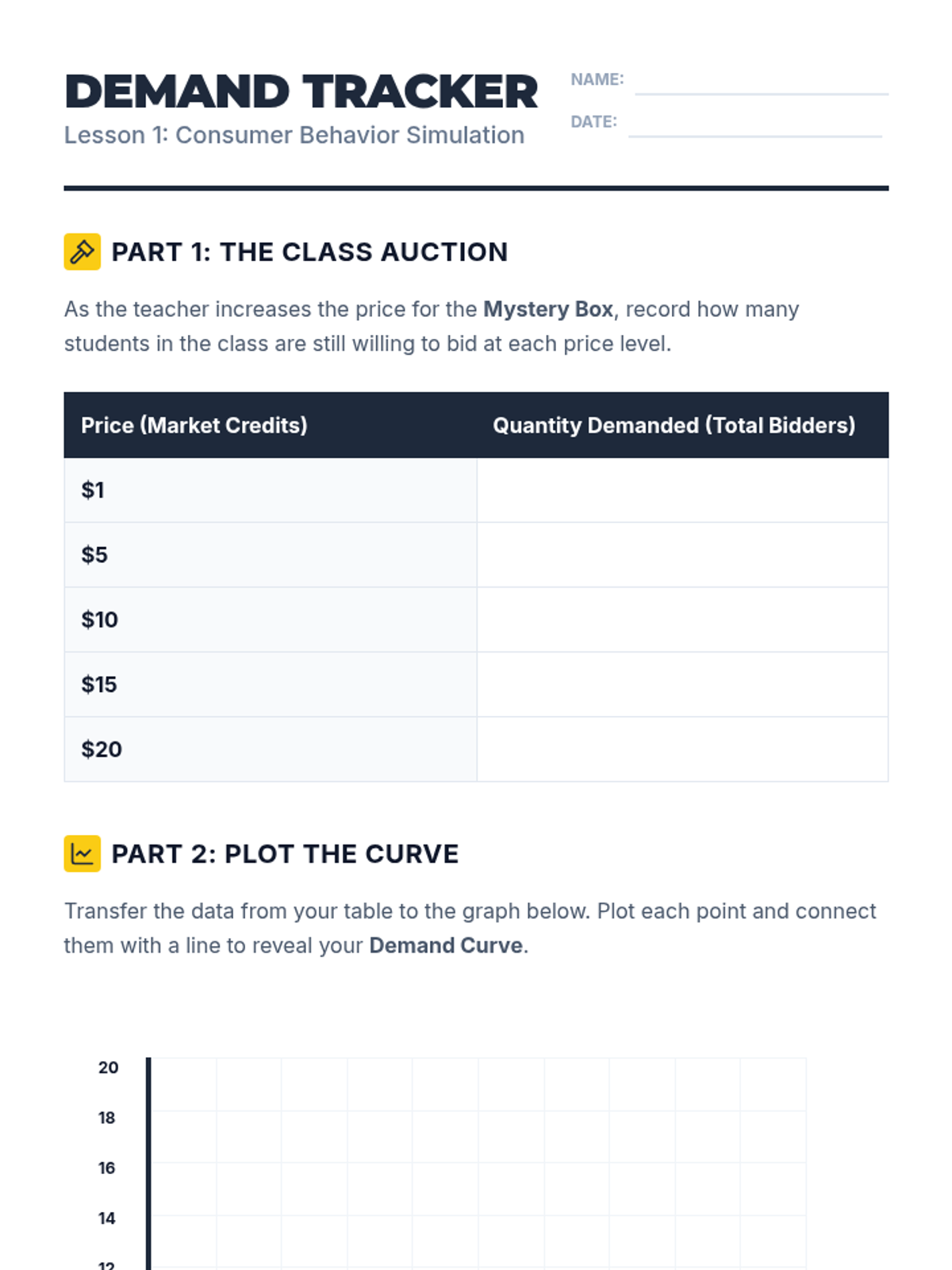
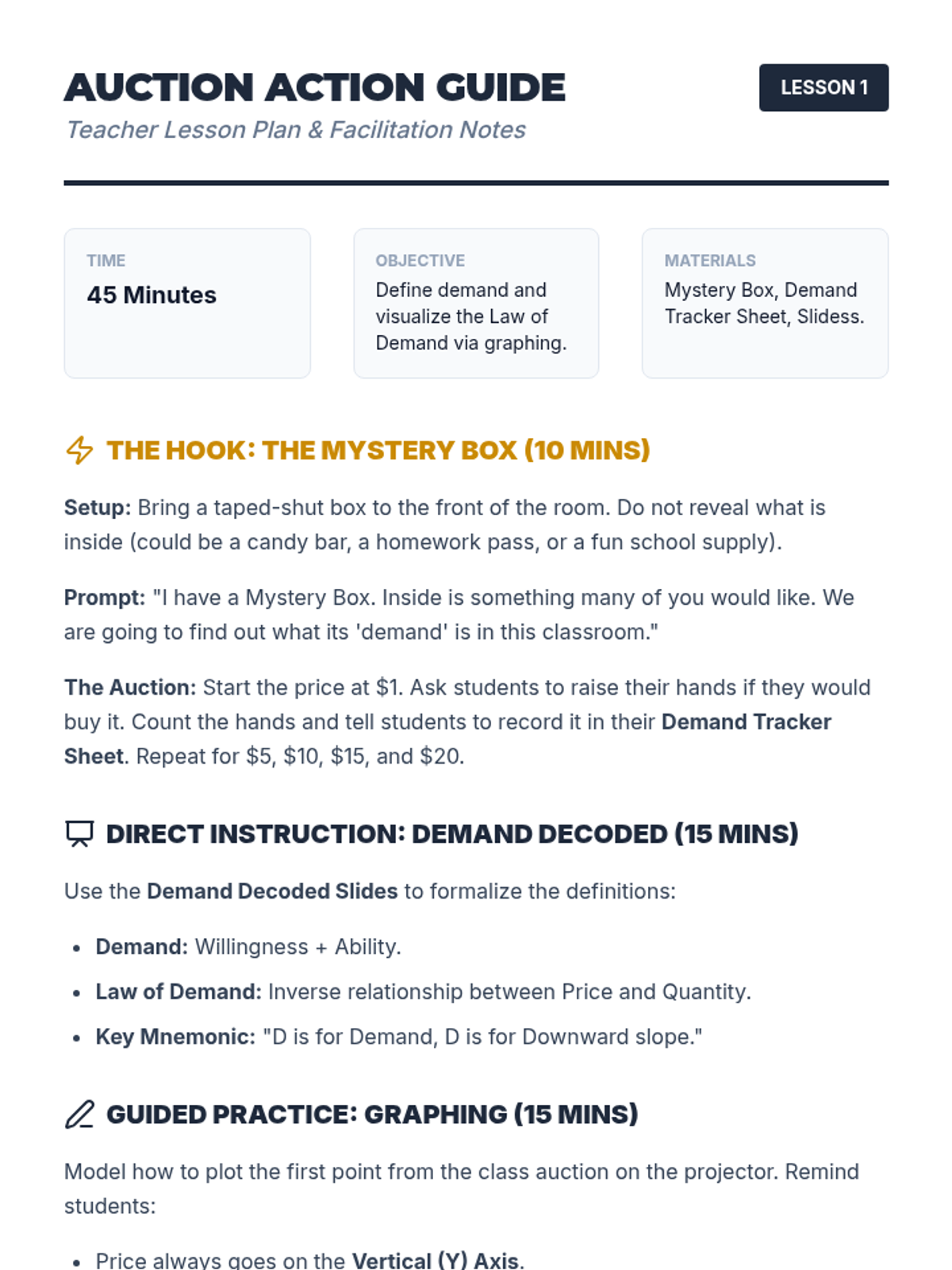
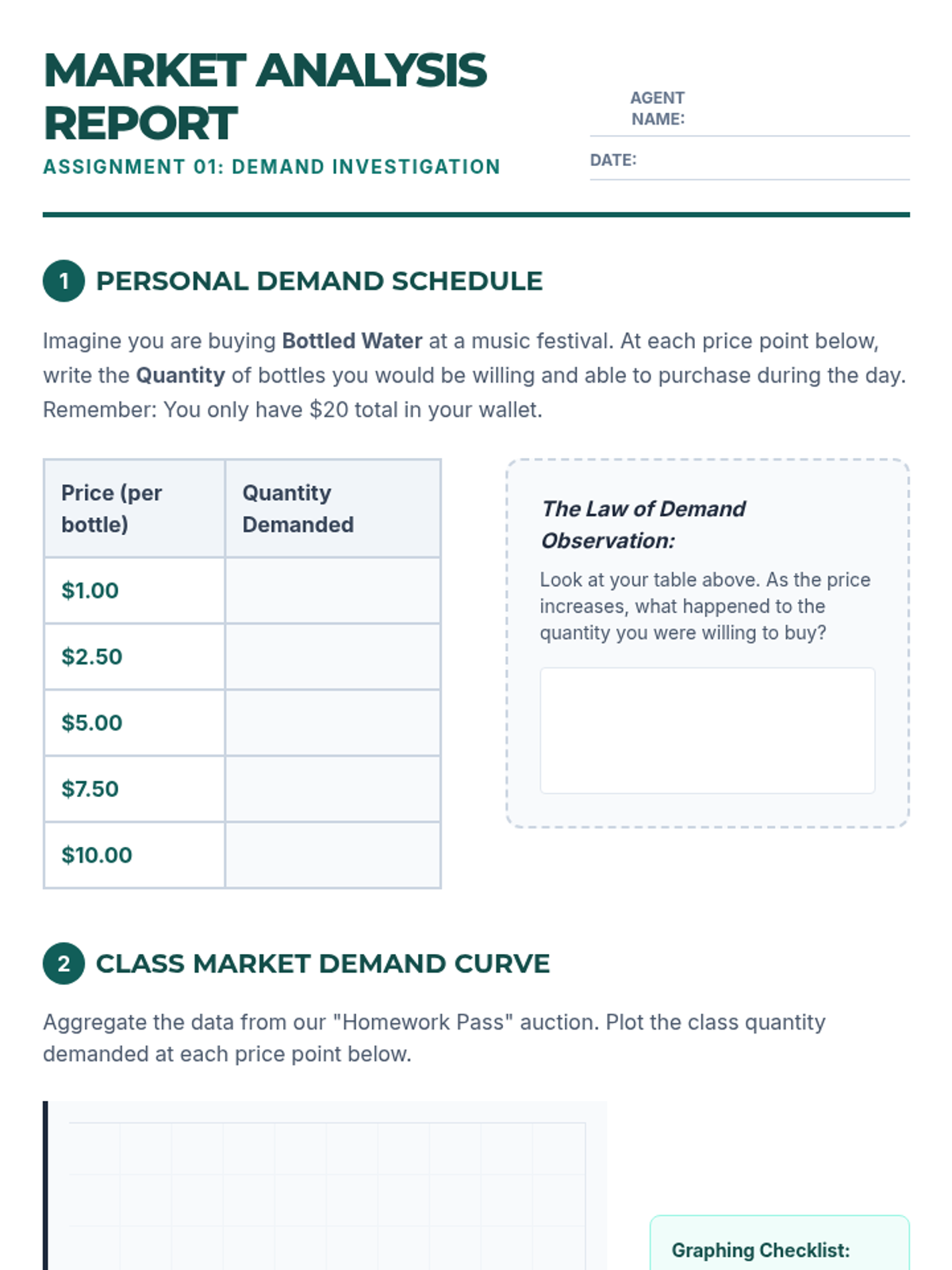
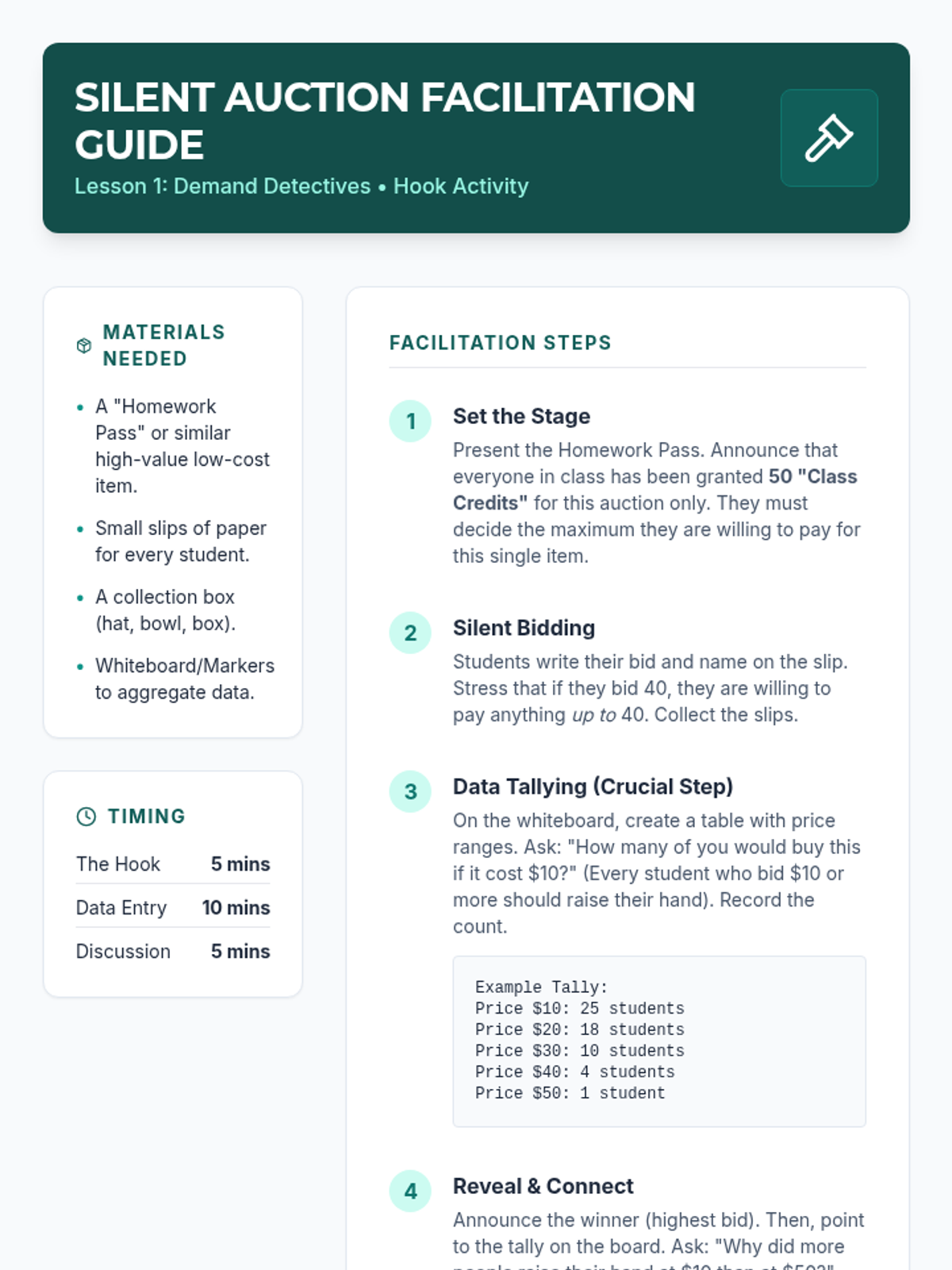
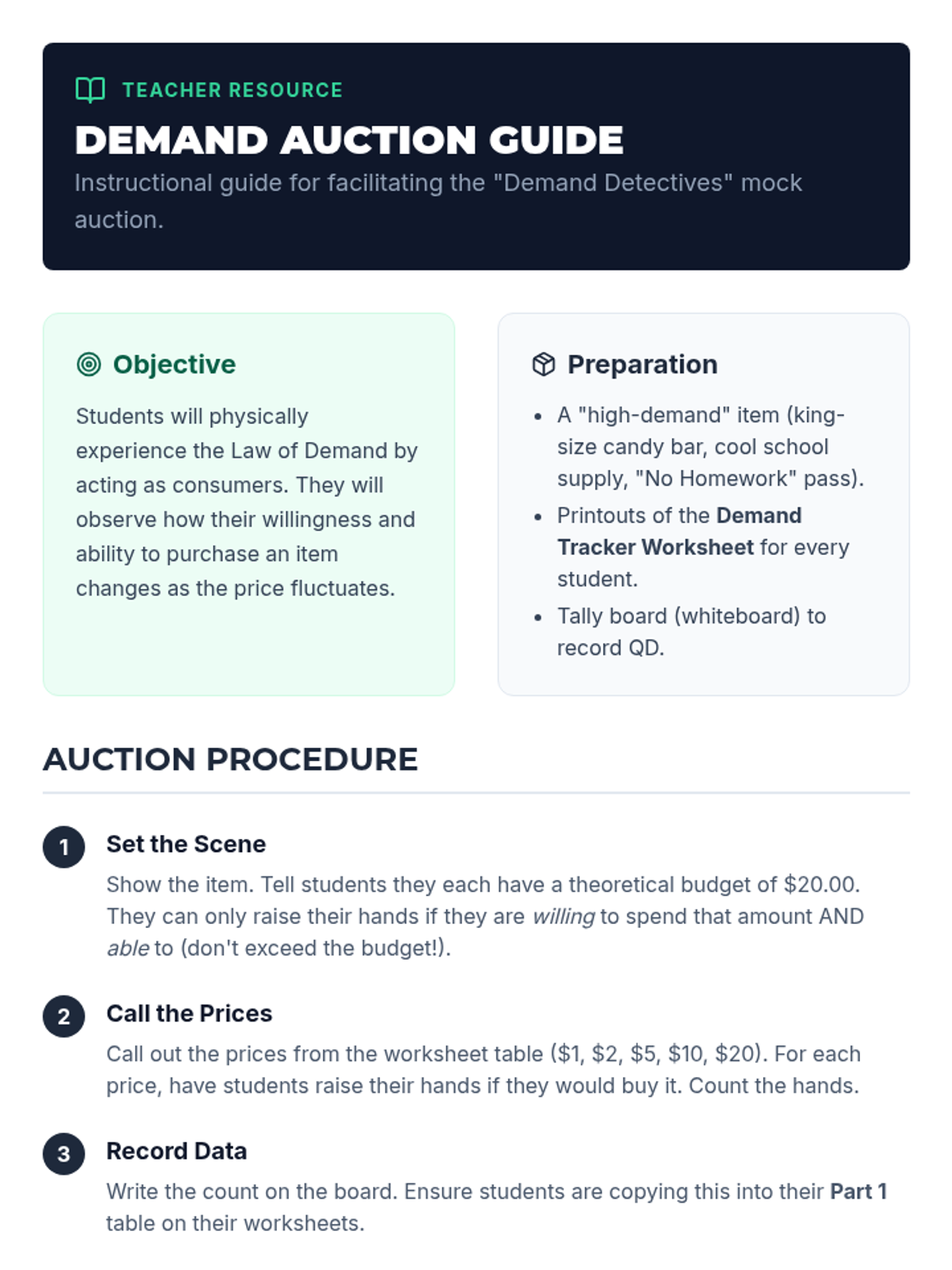
A comprehensive unit exploring how buyers and sellers interact to determine prices through supply, demand, and market equilibrium, featuring hands-on simulations and real-world analysis.
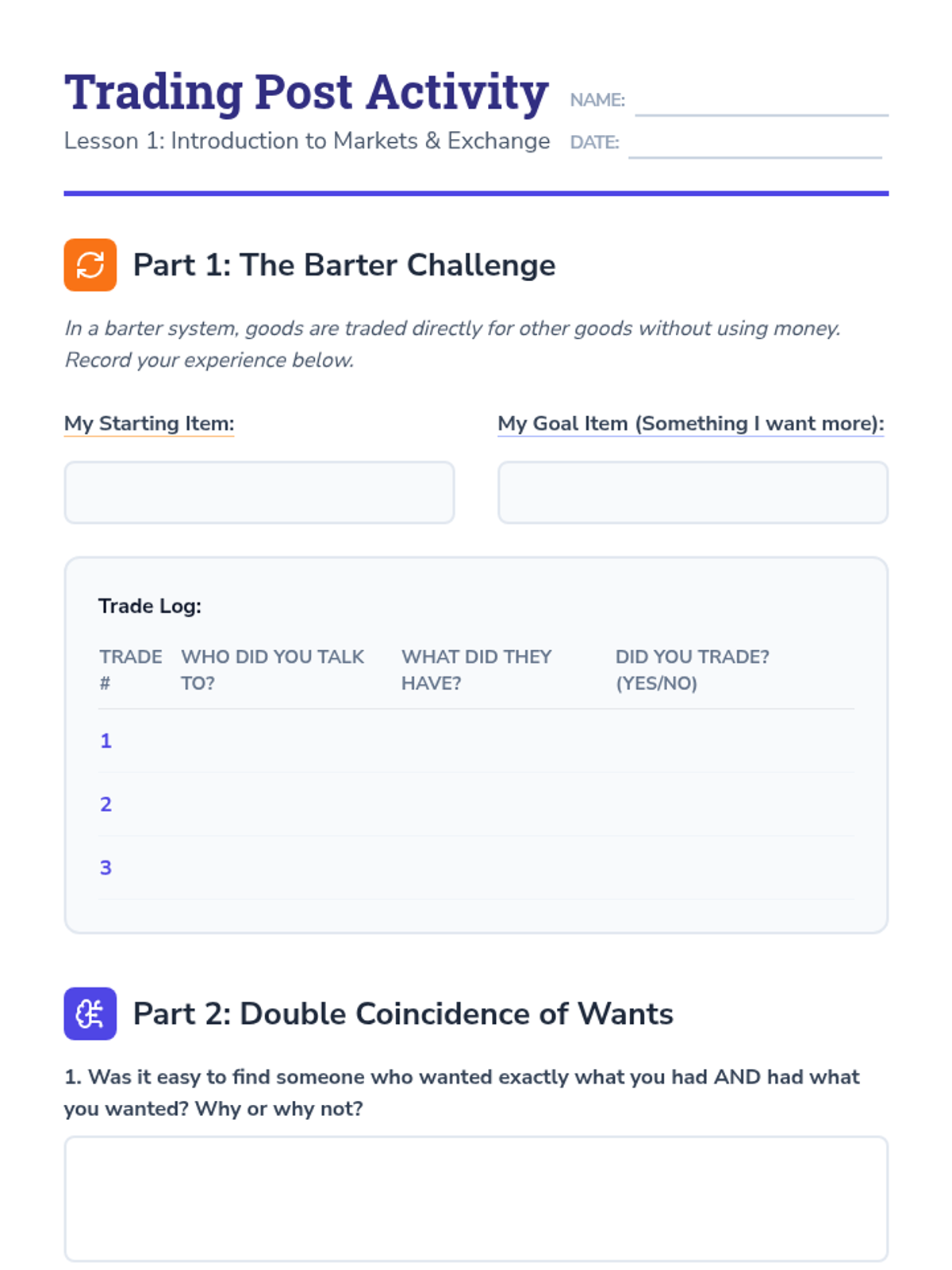
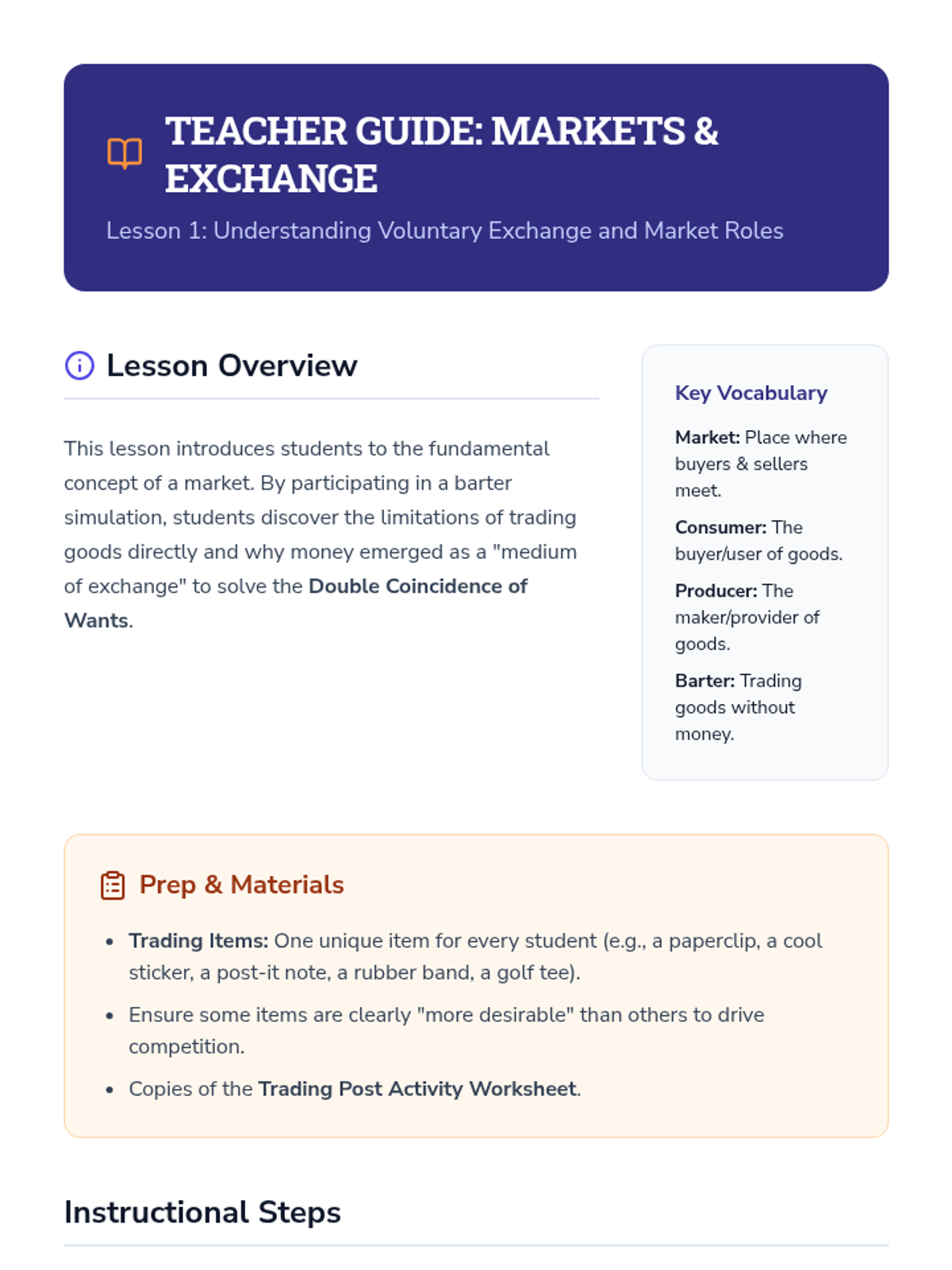
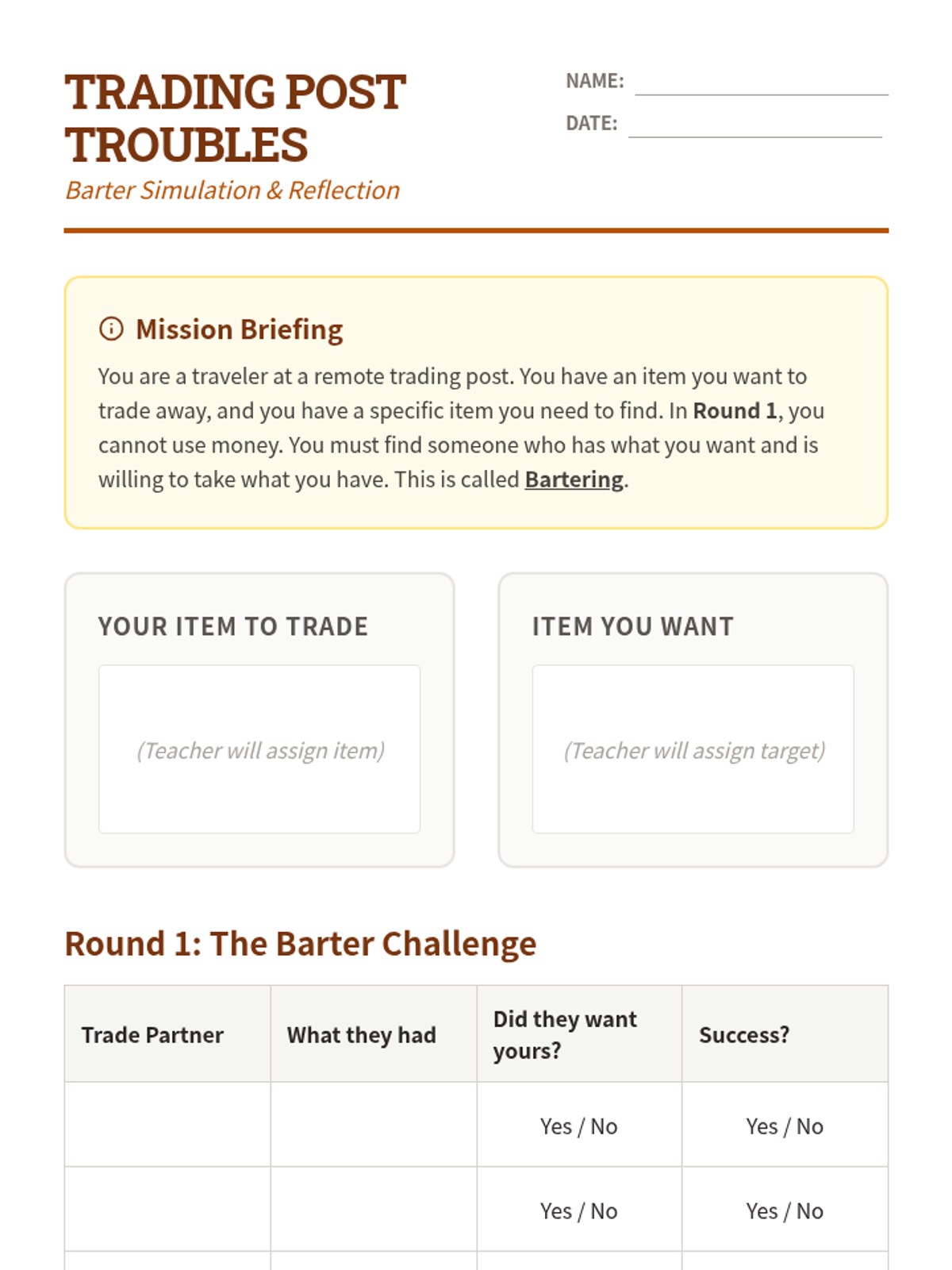
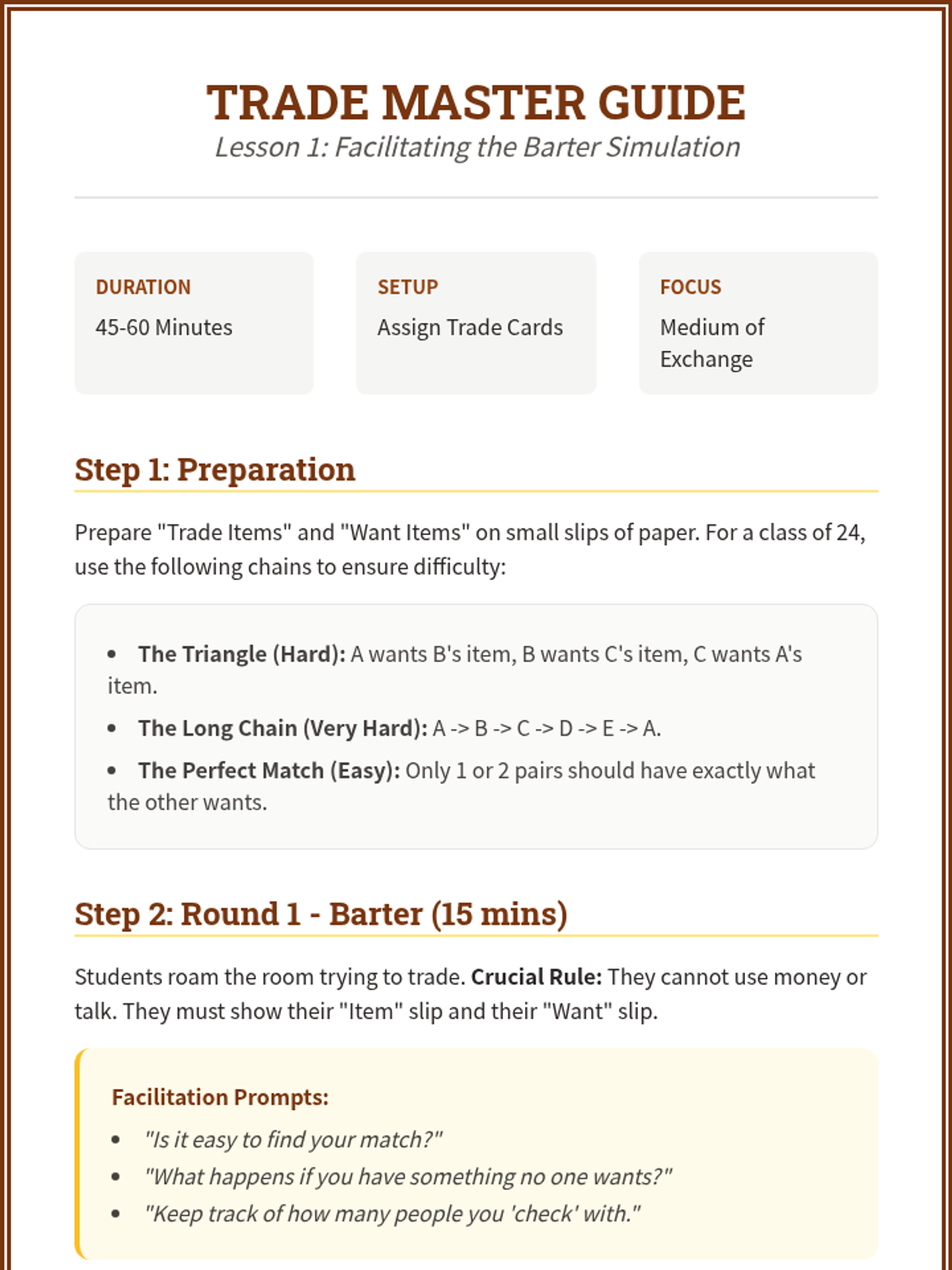
This sequence explores the mechanics of supply and demand through simulations and case studies. Students progress from understanding the limitations of barter to using currency, and finally participate in a full market simulation to see how prices reach equilibrium.
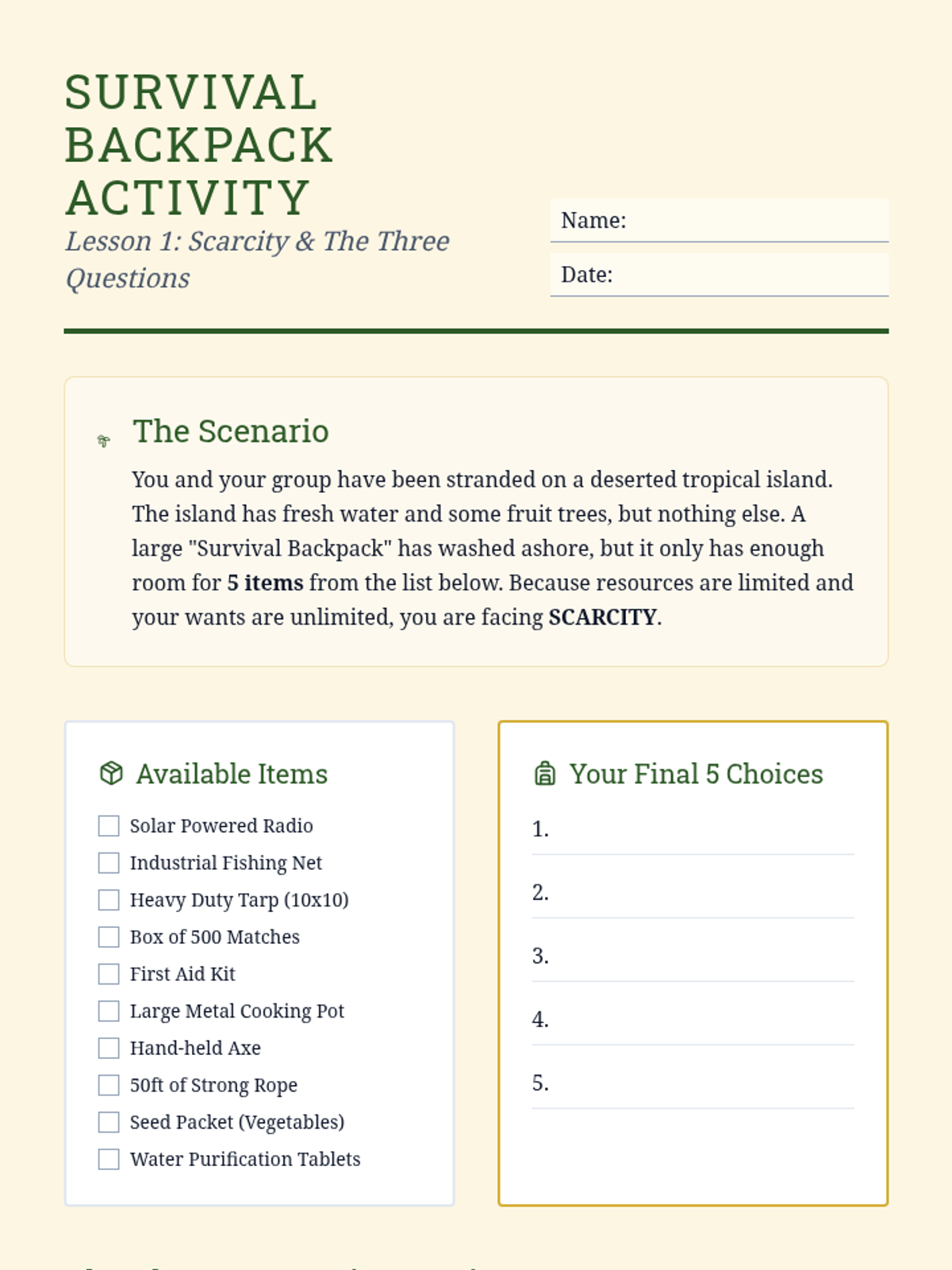
A 5-lesson simulation-based unit where 6th-grade students explore the fundamental economic problem of scarcity and how traditional, command, market, and mixed economies attempt to solve it through an immersive island survival scenario.
An immersive introduction to supply, demand, and market equilibrium for 6th-grade students, featuring simulations, game-based learning, and real-world case studies to understand price determination.
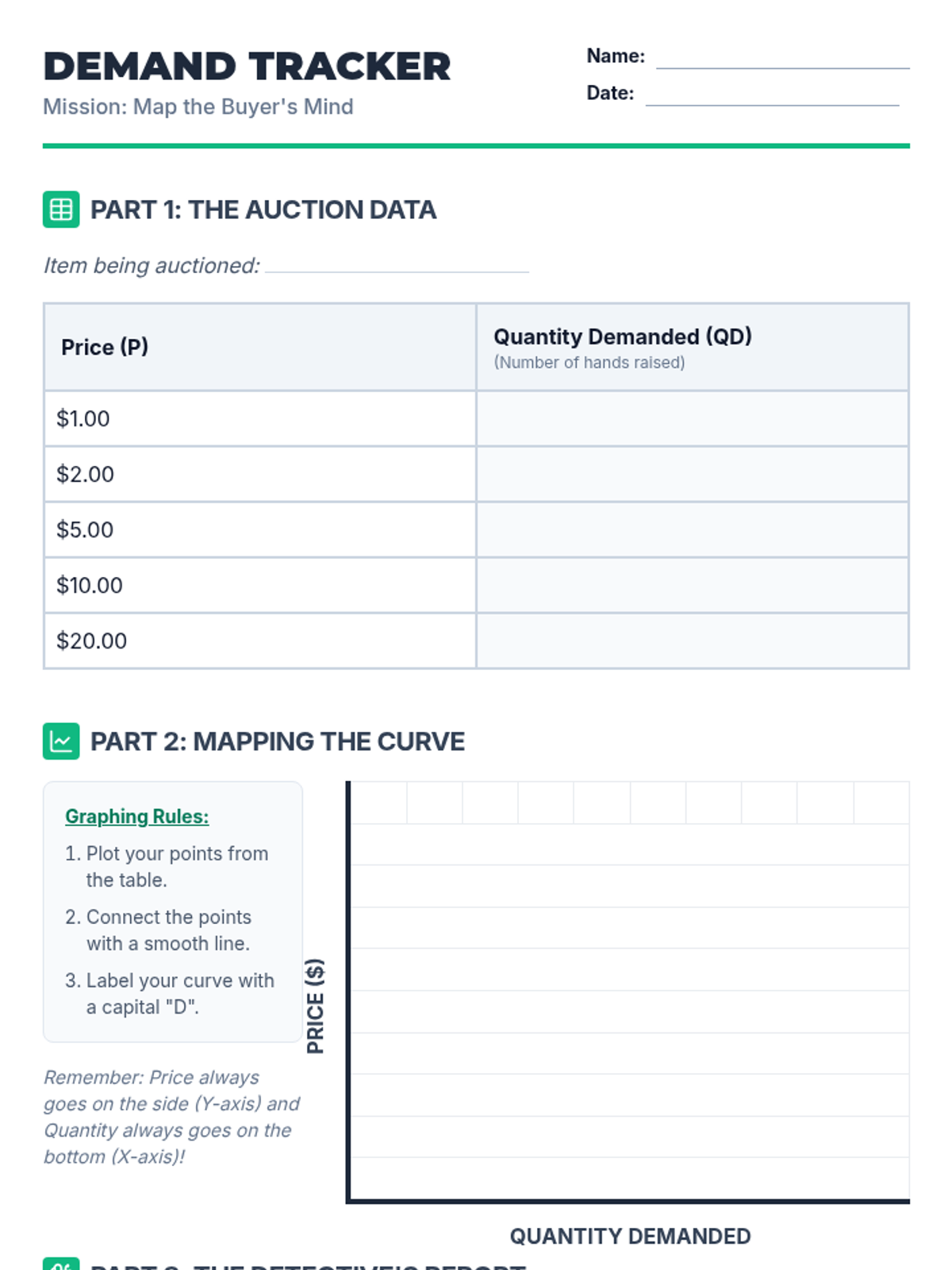
This sequence immerses students in the mechanics of the market economy through active simulation and data analysis. Students begin by defining key terms before participating in a multi-round market simulation where they act as buyers and sellers to discover how equilibrium prices naturally emerge. Following the activity, students translate their behavioral data into supply and demand graphs to visualize market forces. The unit concludes with an analysis of external factors that shift these curves, allowing students to predict how real-world events impact prices and availability.
A 5-lesson unit for 6th-grade students exploring the fundamental laws of supply and demand. Students move from individual perspectives of buyers and sellers to understanding market equilibrium and the impact of external shifters through simulations, graphing activities, and real-world case studies.
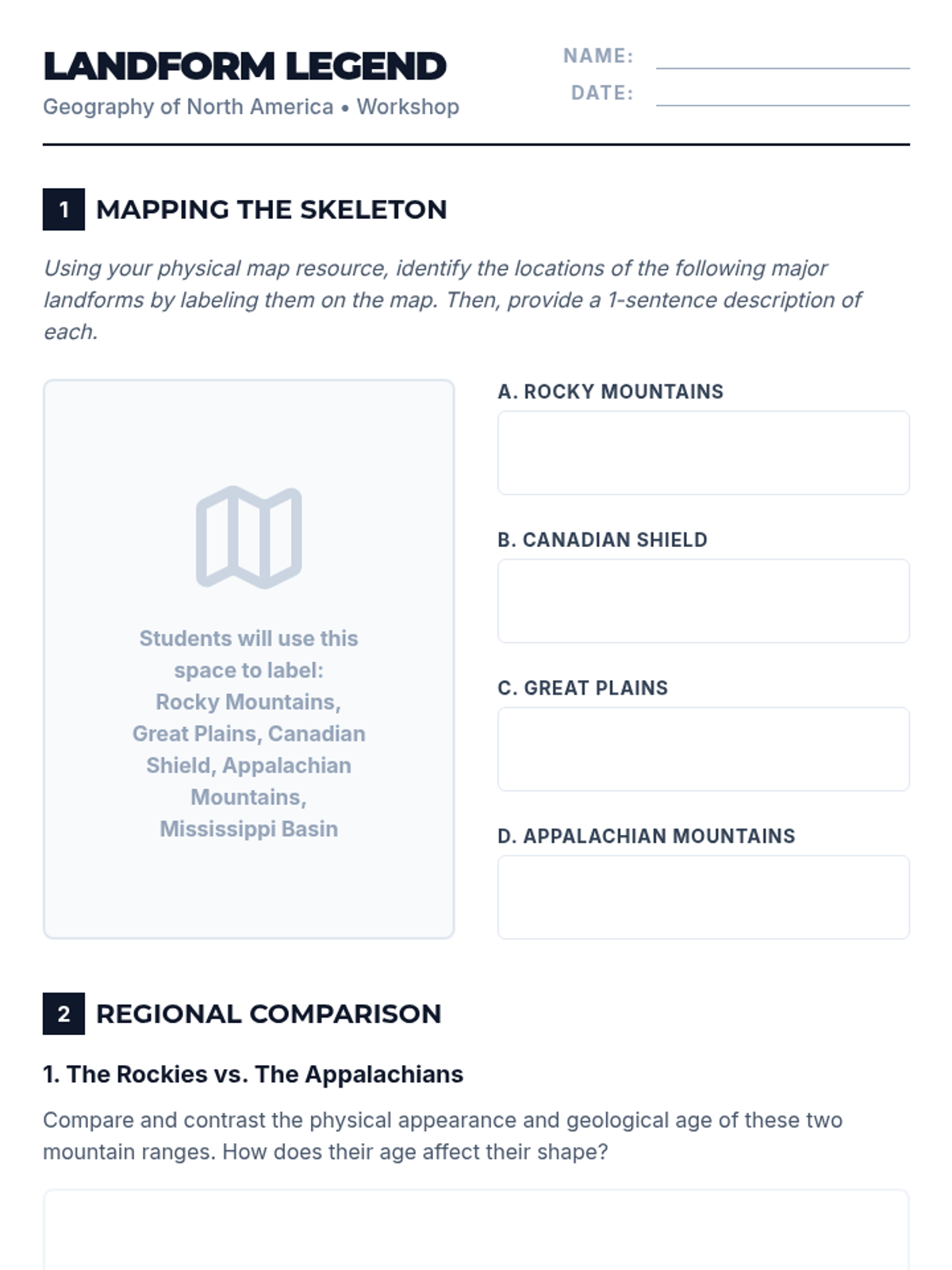
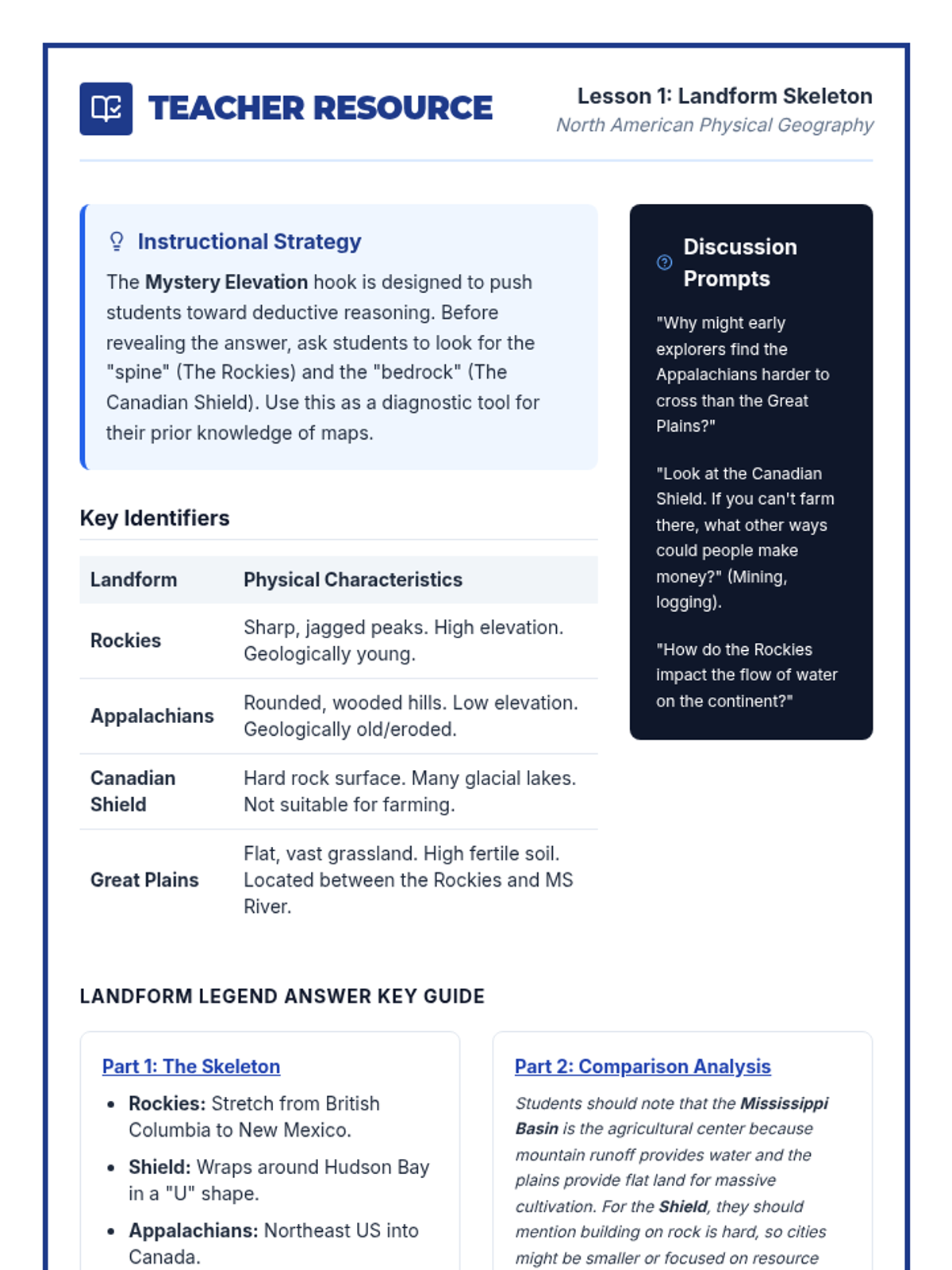
This sequence explores the physical geography of North America, investigating how major landforms, climate zones, and biomes influence human settlement and economic activity. Students will progress from mapping the continent's 'skeleton' to predicting industrial potential based on geographic data.
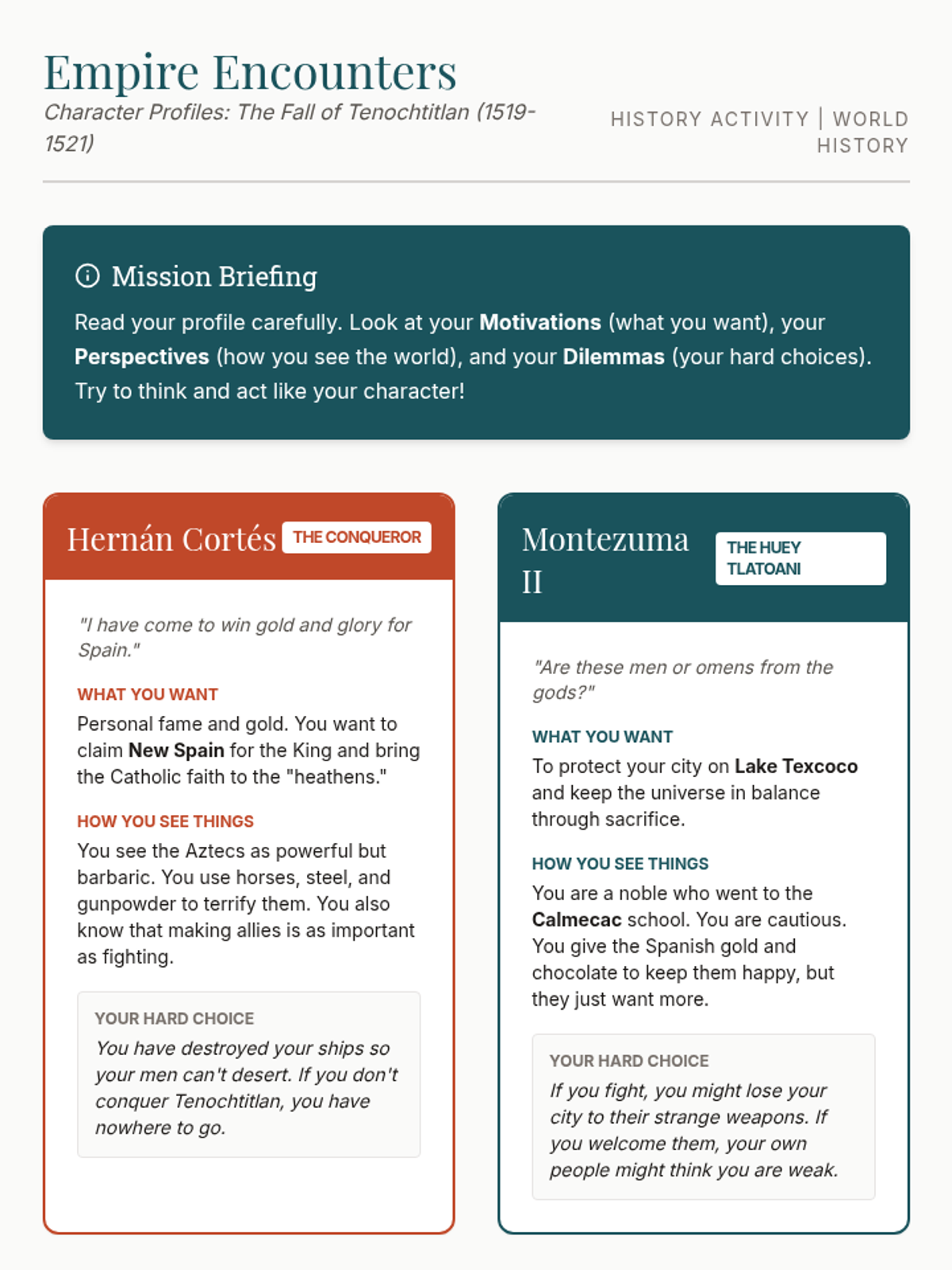
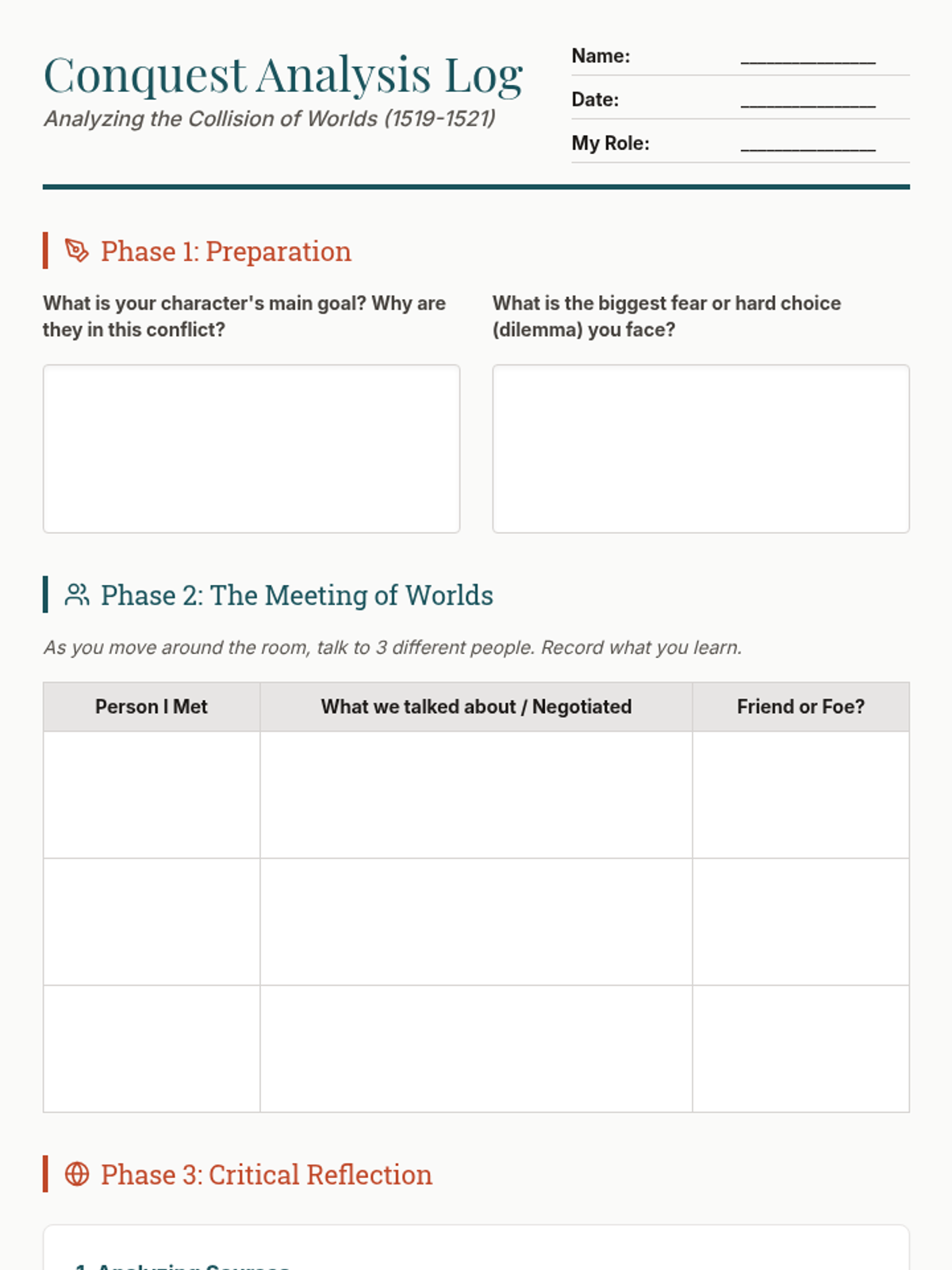
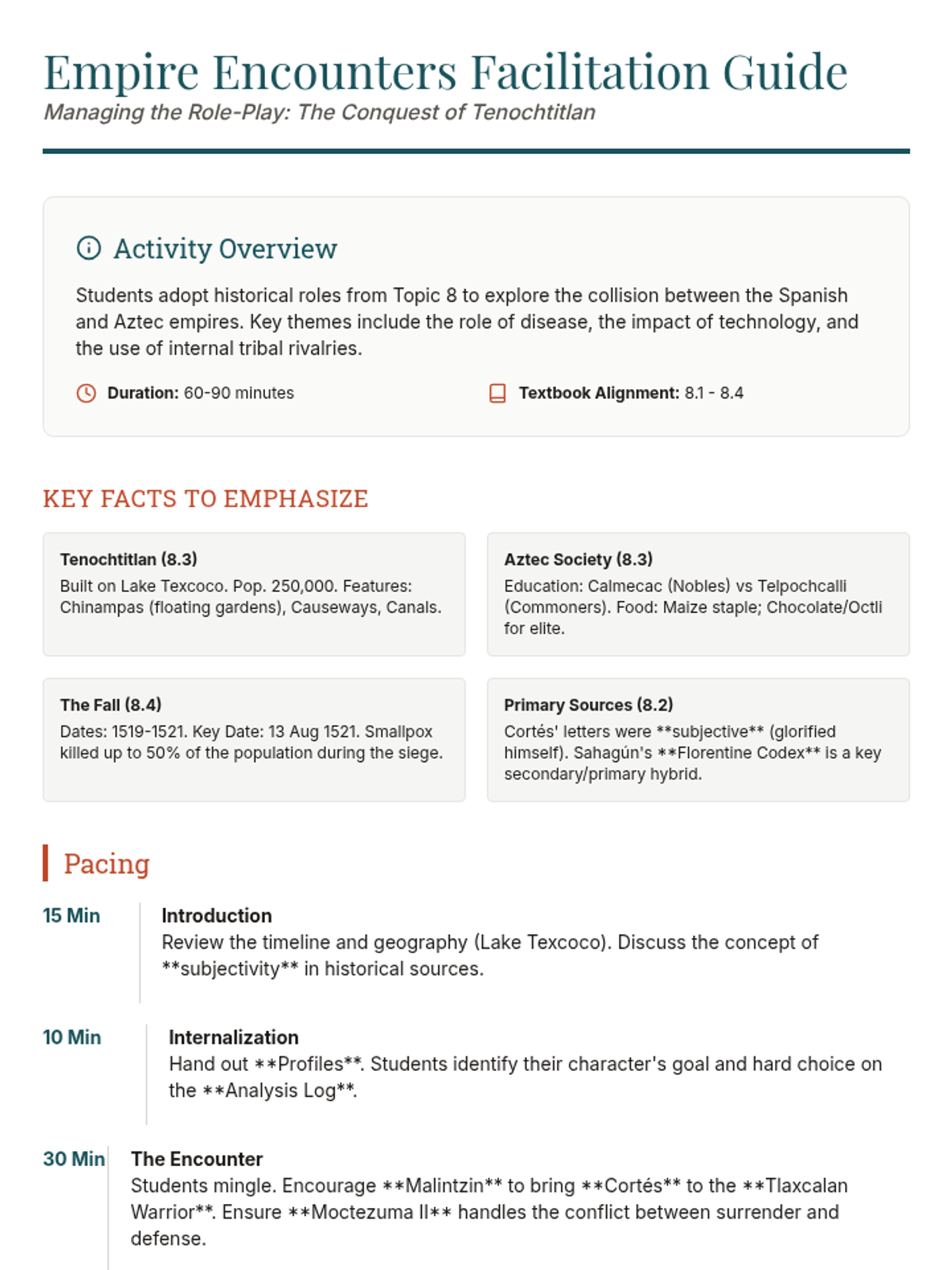
A deep dive into the 16th-century contact between European powers and indigenous American civilizations, exploring the complexities of conquest, resistance, and the emergence of a new global order.
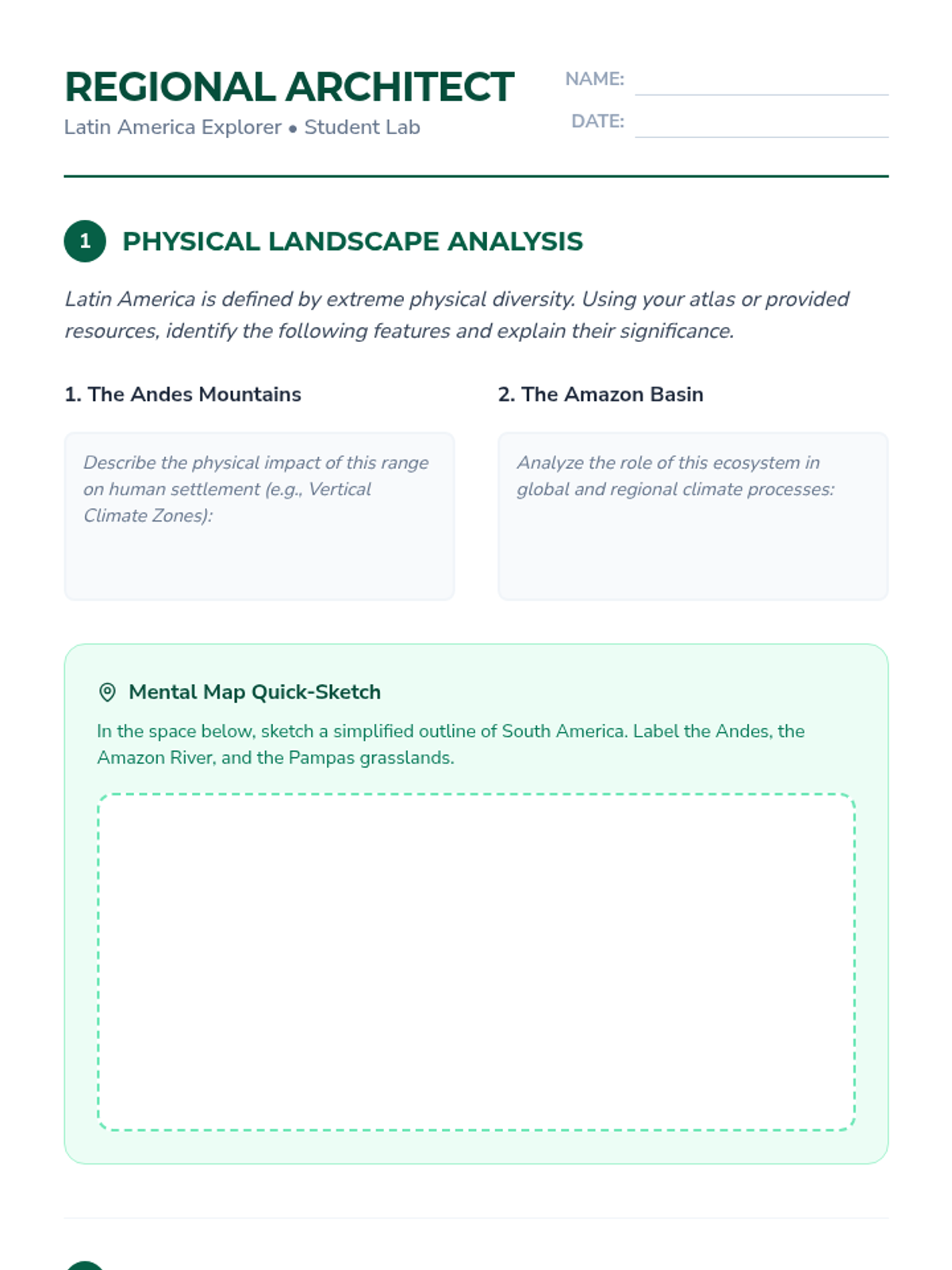
A comprehensive exploration of Latin America's physical and human geography, focusing on how diverse climates and resource distribution shape regional economies and cultures. aligned to Texas TEKS 4(A).
A comprehensive 5-day unit exploring the internal and external factors that led to the decline and eventual collapse of the Gupta Empire, once known as India's Golden Age. Students will analyze succession crises, the Huna invasions, economic shifts, and the rise of regional powers.
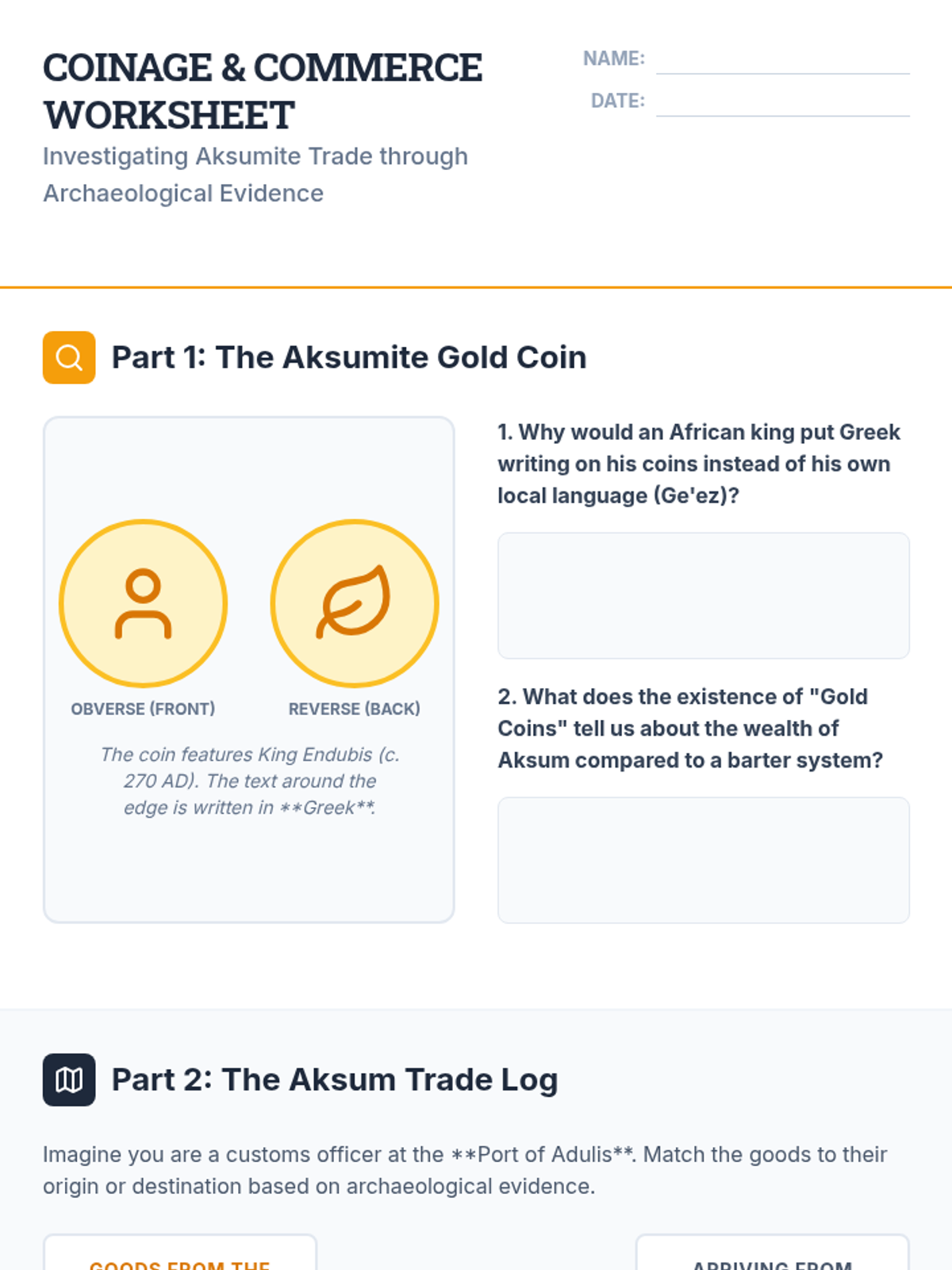
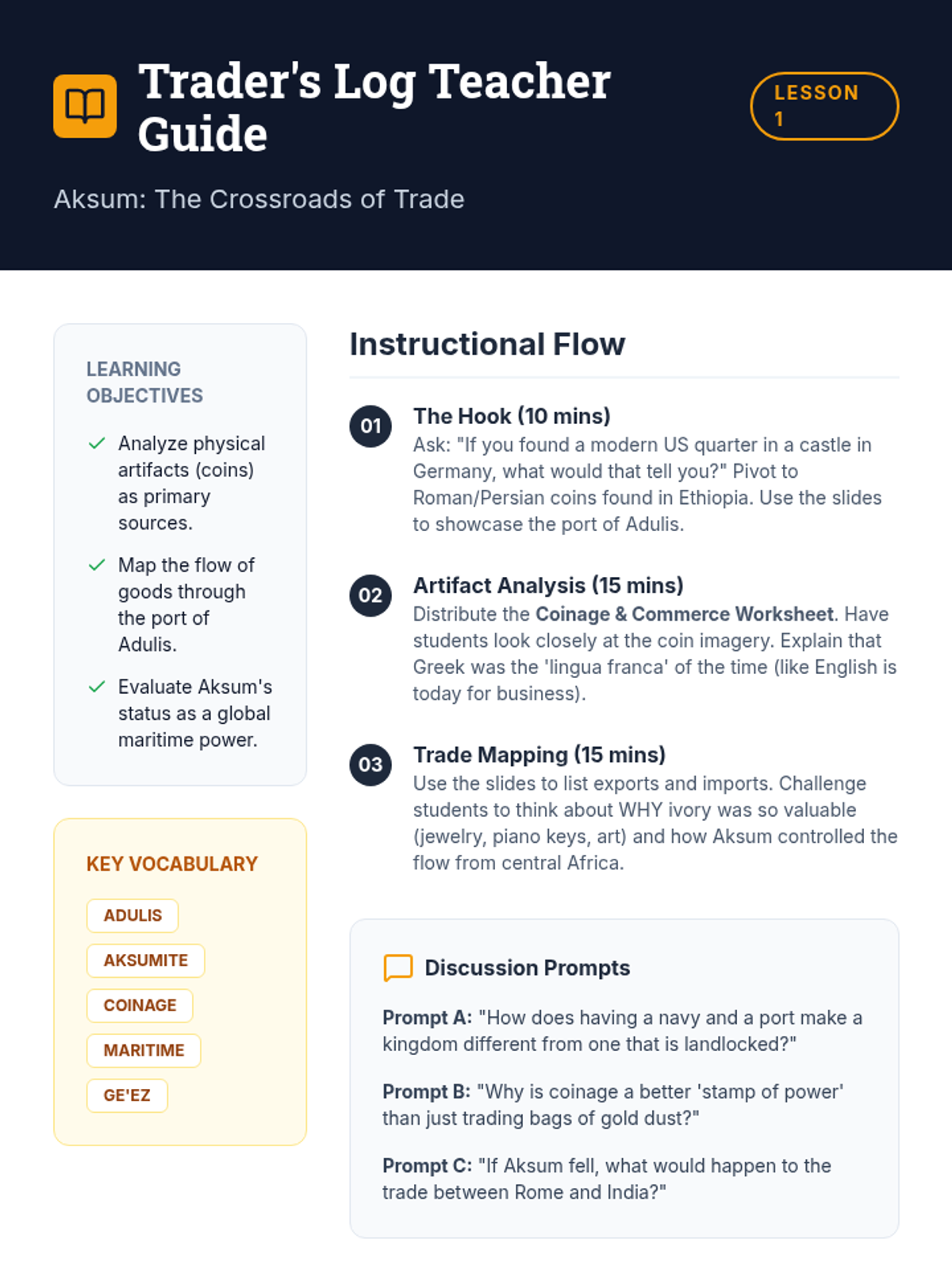
A 5-lesson sequence for 6th-grade students investigating the architectural feats and maritime trade networks of Aksum and Great Zimbabwe through archaeological evidence and historical analysis.
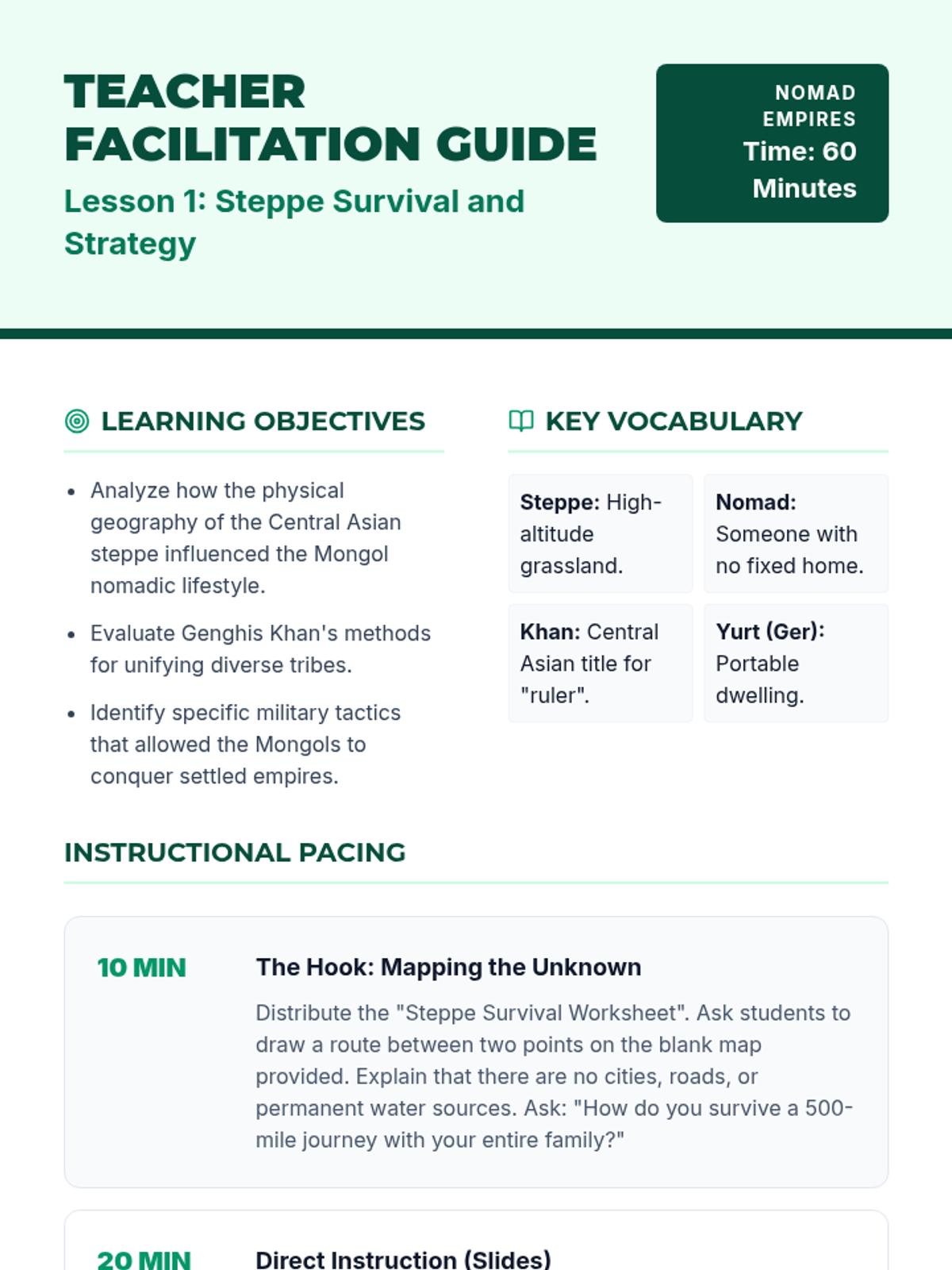
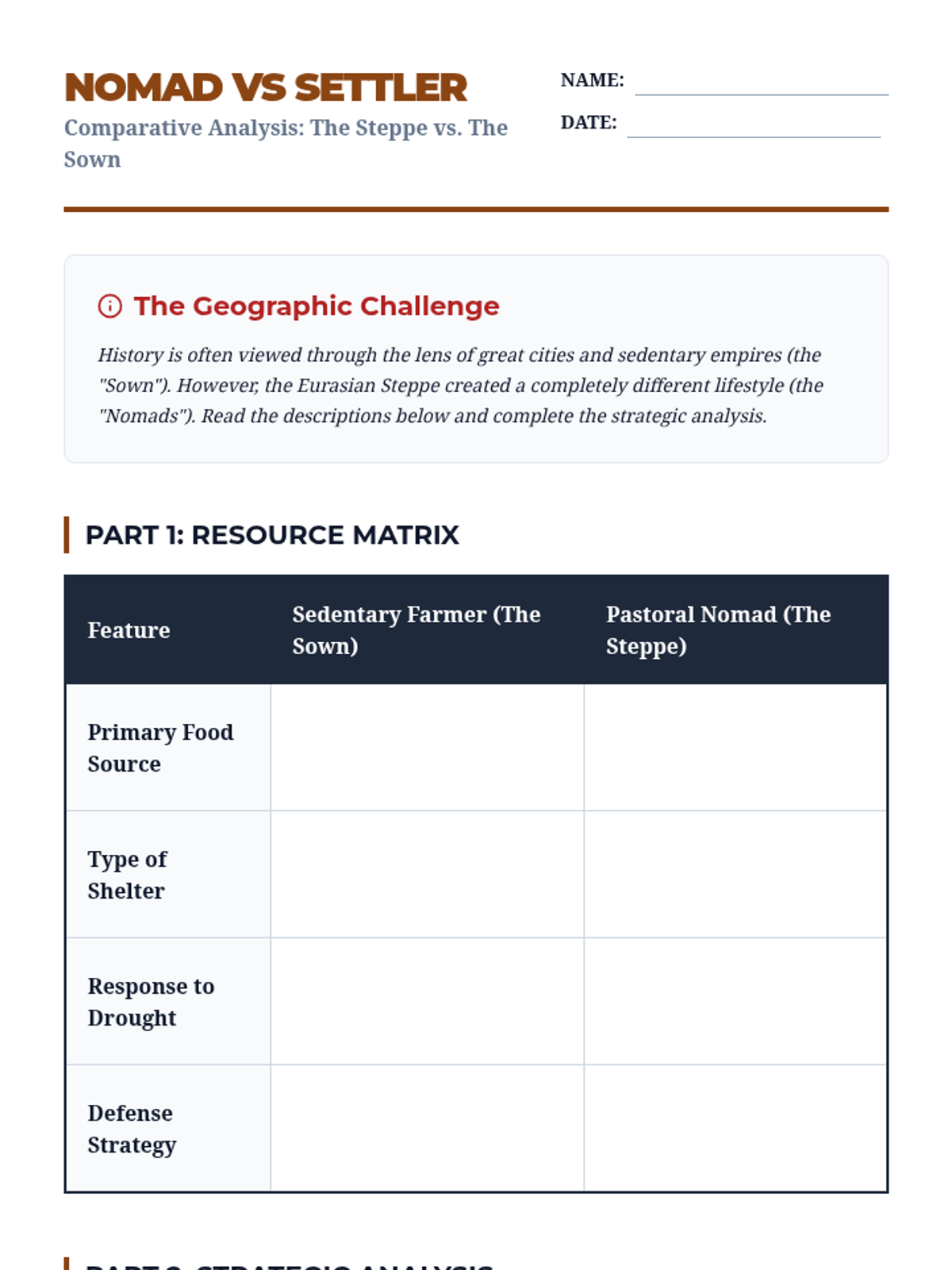
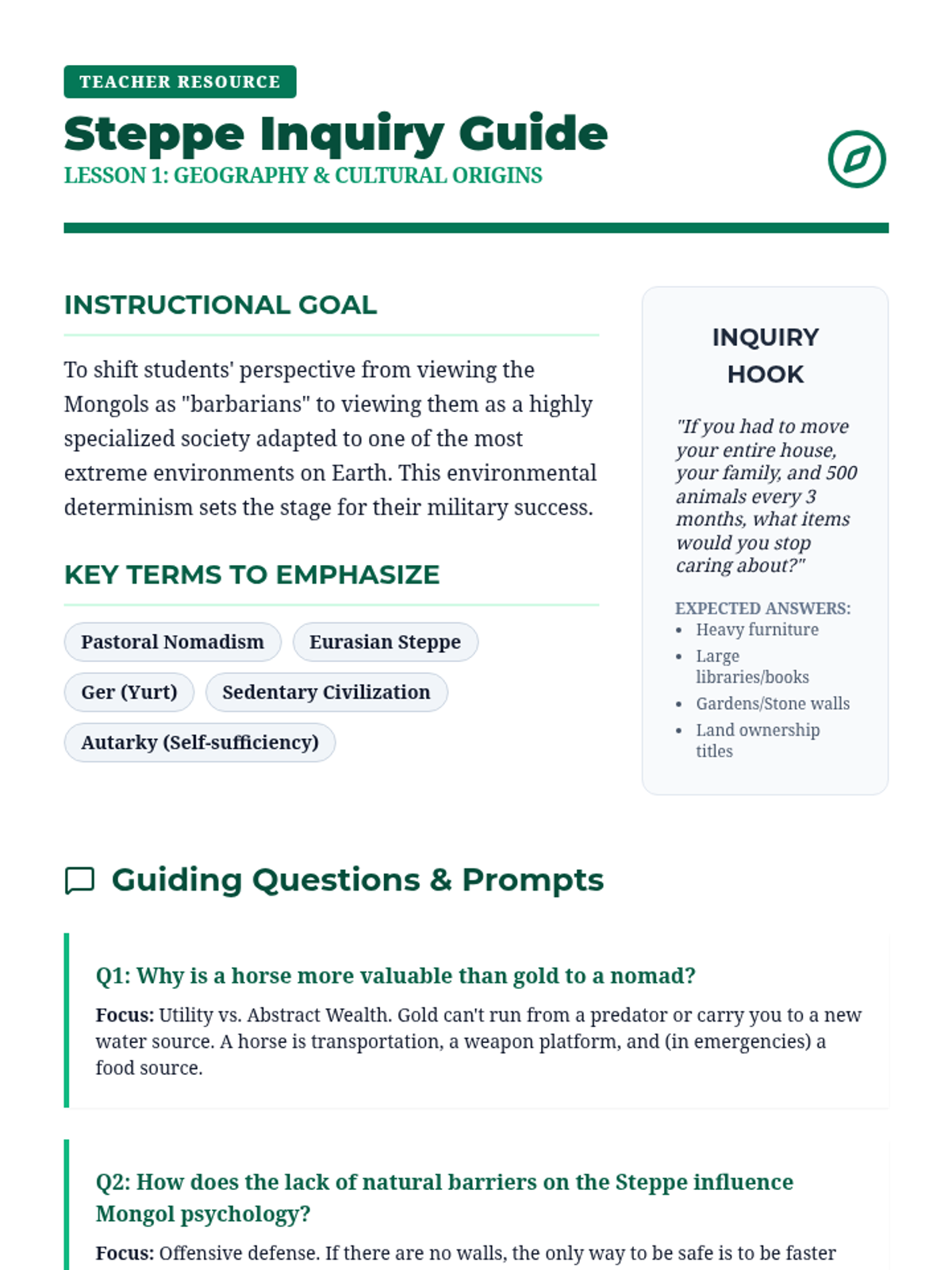
This sequence explores the Mongol Empire's rise from nomadic tribes to a global superpower. Students investigate the environmental factors of the steppe, tactical innovations, the administration of the Yuan Dynasty, and the transformative cultural and economic exchanges of the Pax Mongolica, culminating in a critical evaluation of Genghis Khan's historical legacy.
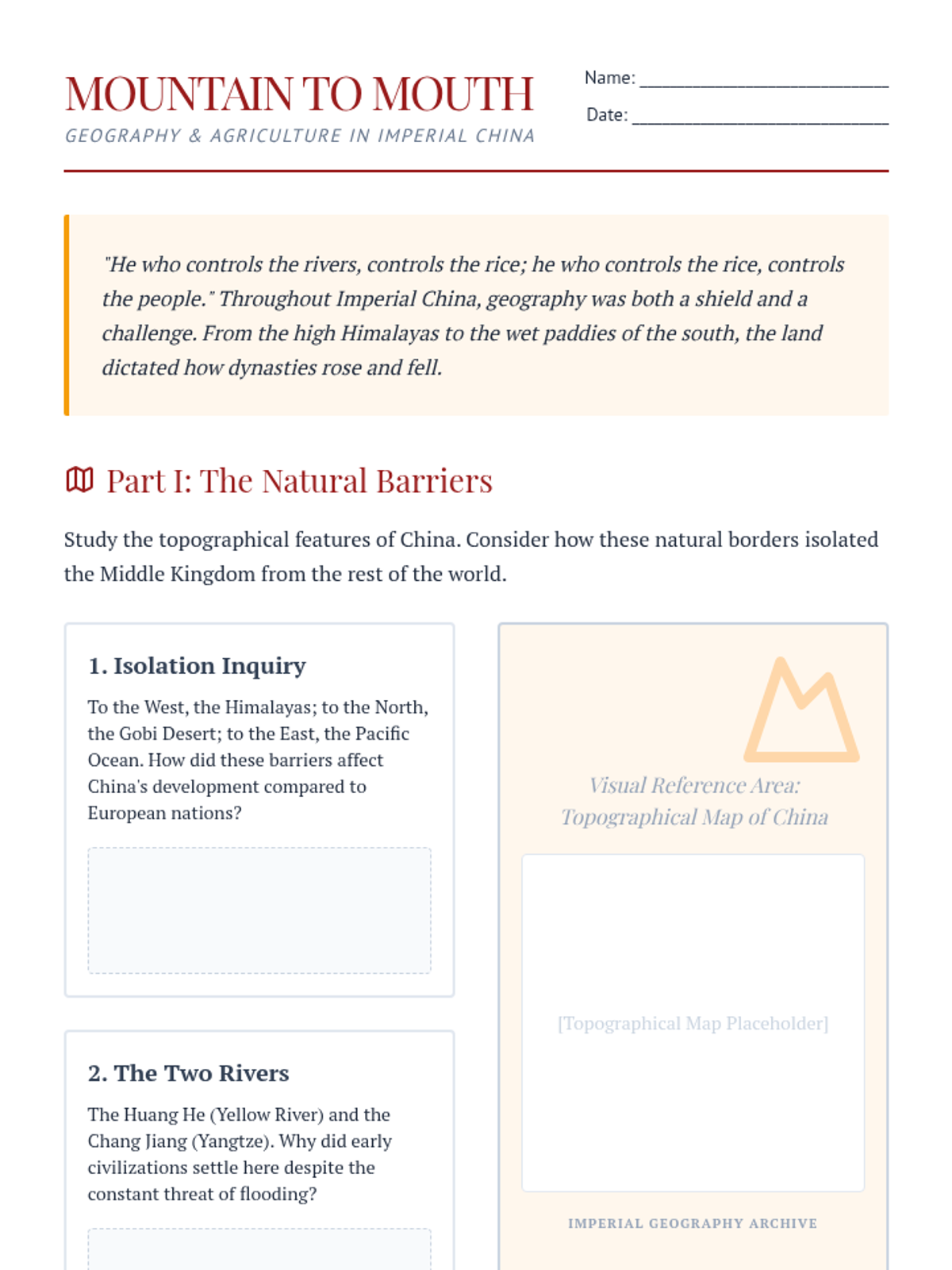
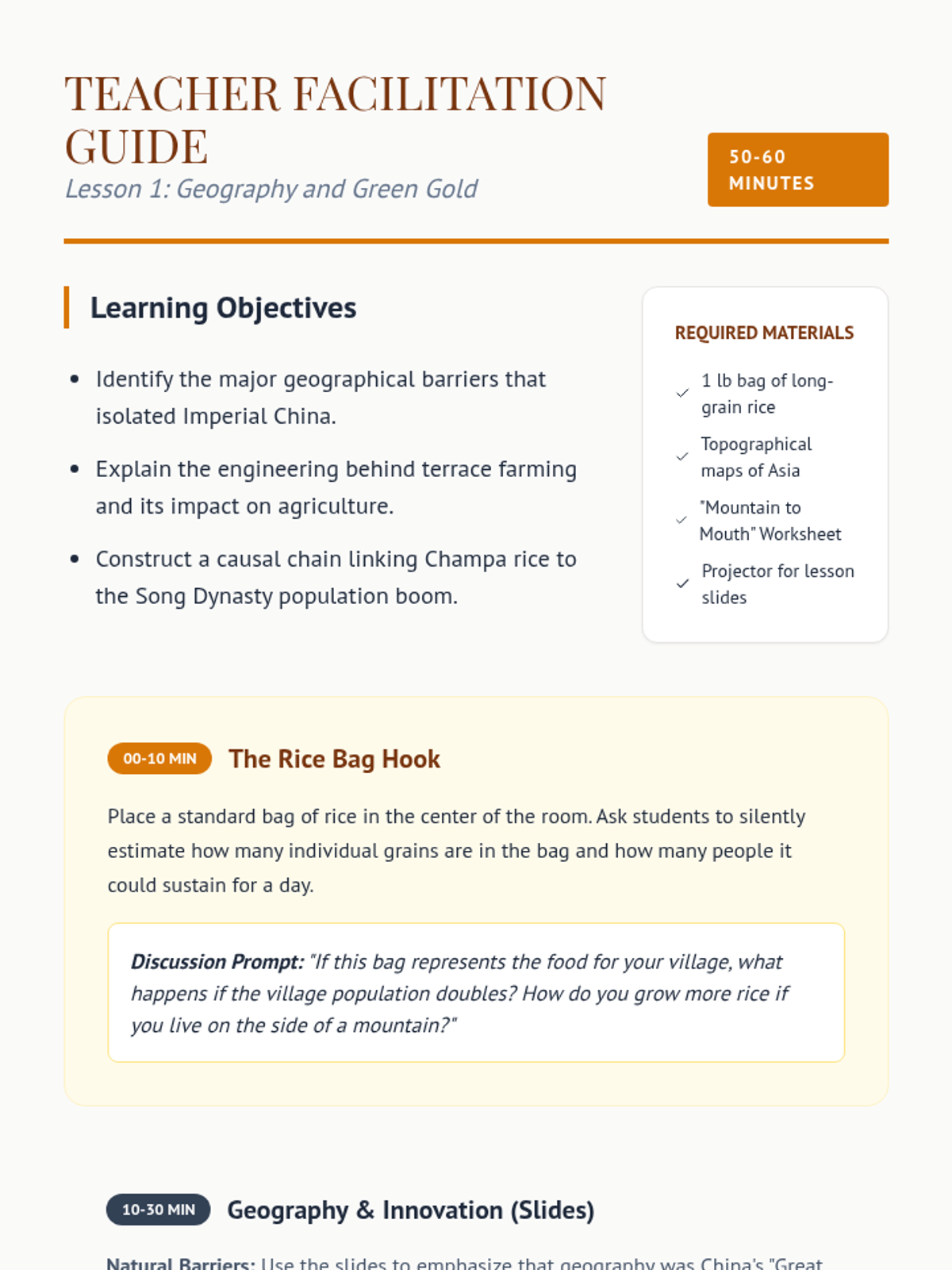
An inquiry into the technological and political advancements of Imperial China, focusing on the Tang, Song, and Ming dynasties. Students evaluate how geography, governance (Meritocracy), and innovation (the Four Great Inventions) influenced the longevity and prosperity of the civilization.
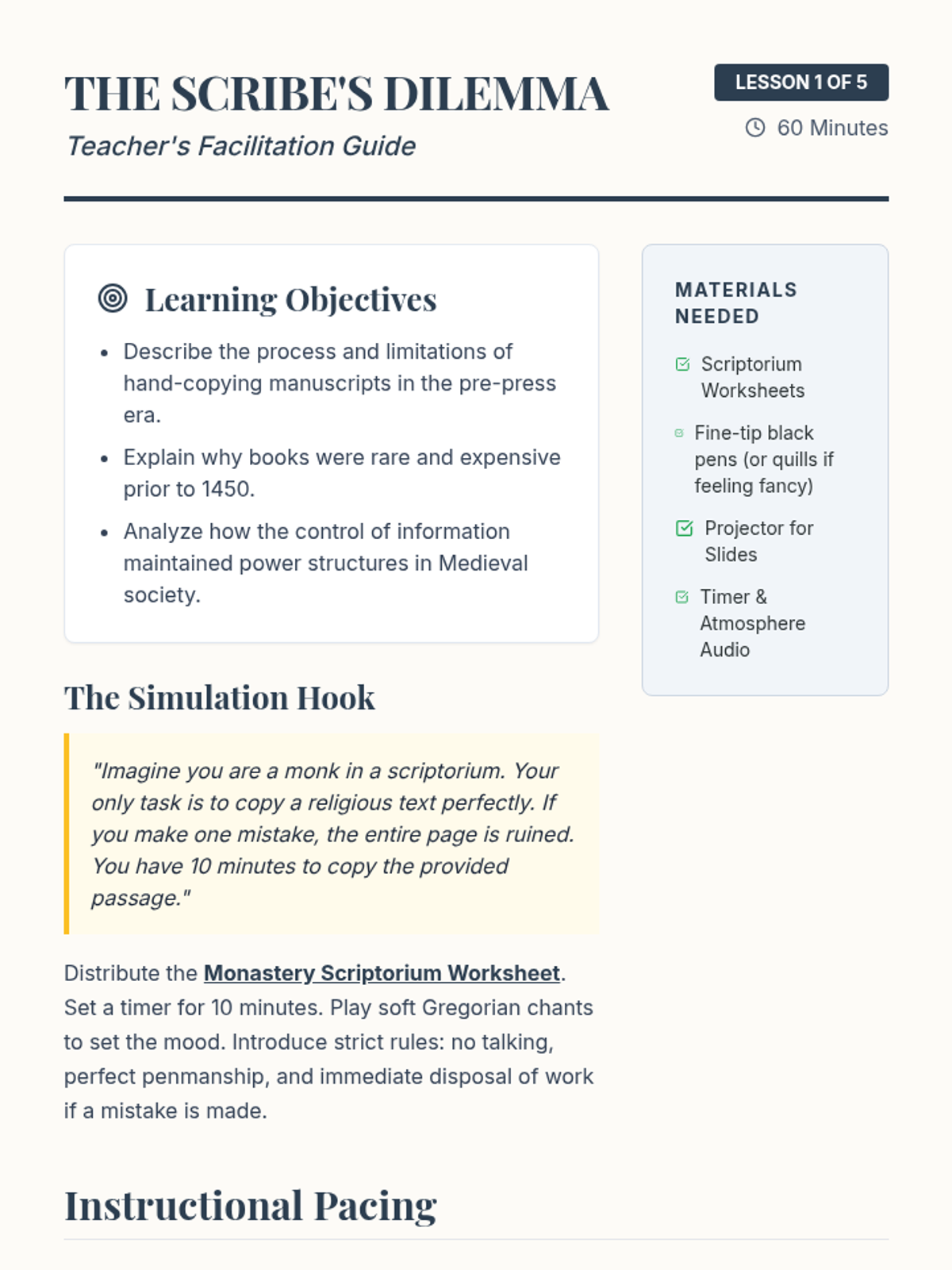
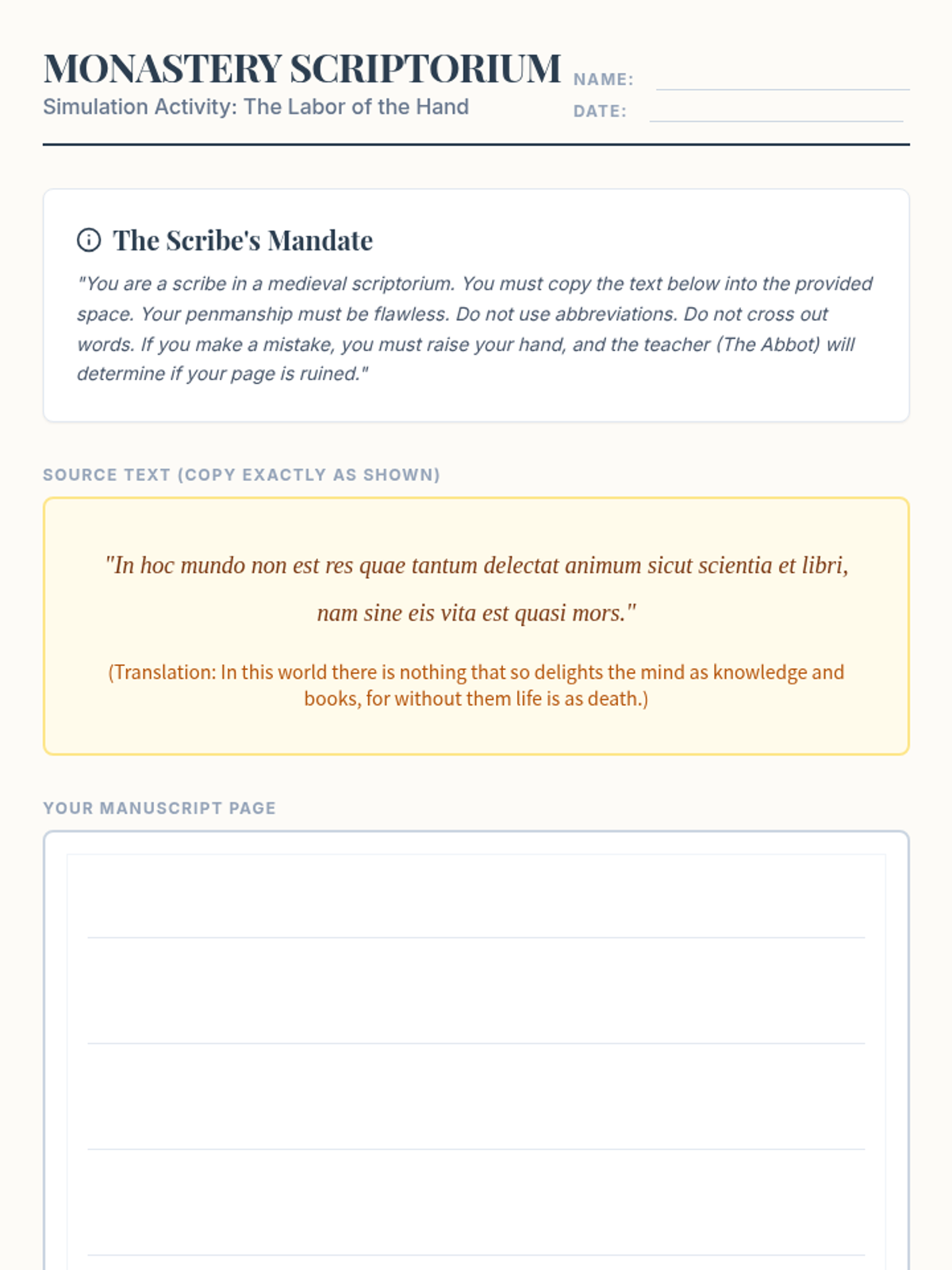
This sequence explores the transition from hand-copied manuscripts to mass-produced books, analyzing how Gutenberg's printing press democratized knowledge and paved the way for modern information sharing. Students will engage in simulations, data analysis, and comparative studies to understand the technological disruption of the Renaissance.
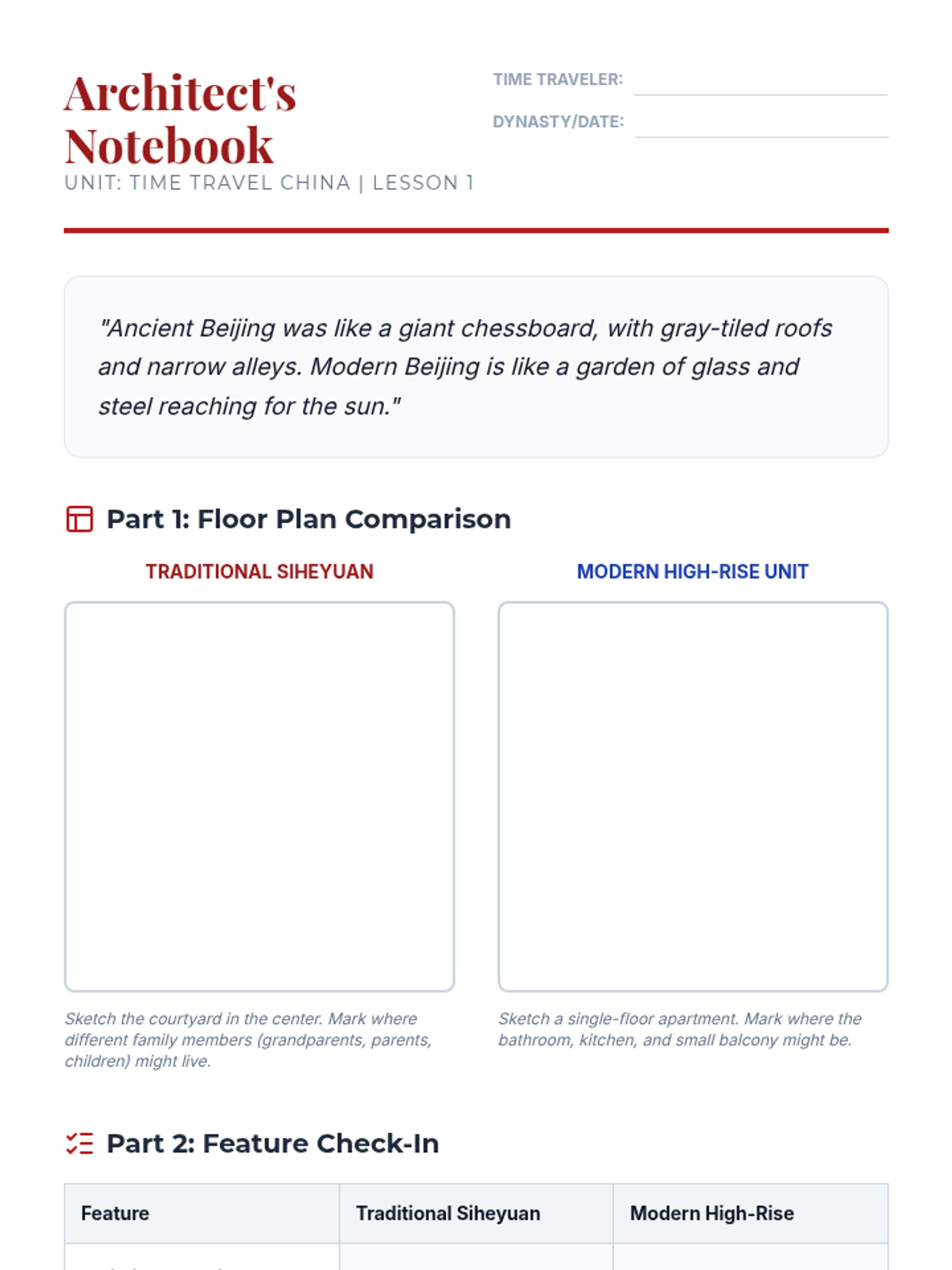
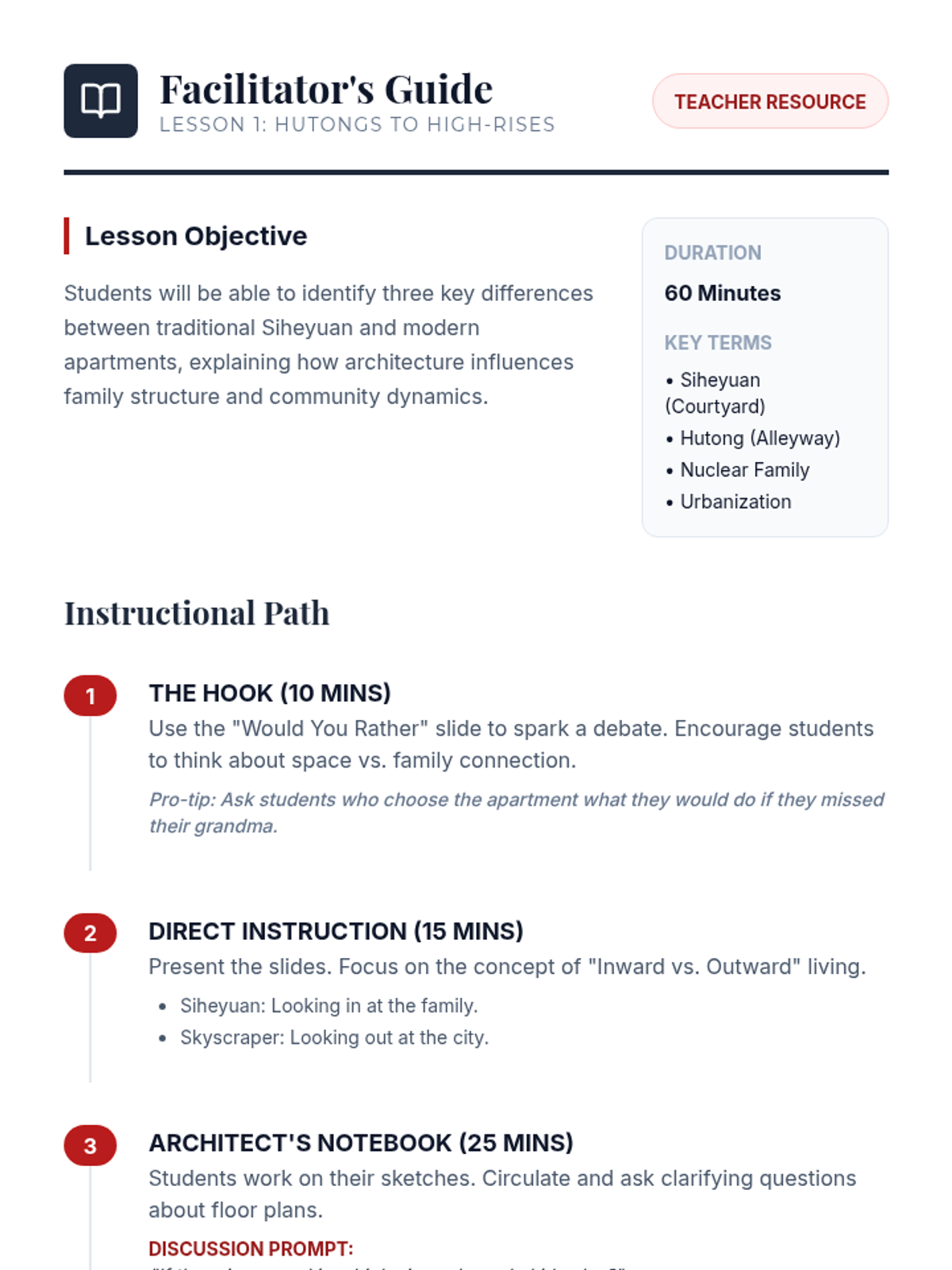
This sequence explores the dynamic intersection of ancient traditions and modern innovations in China. Students analyze changes in housing, transportation, technology, and arts to understand how a society balances its heritage with rapid development through a 'Time Traveler' project-based approach.
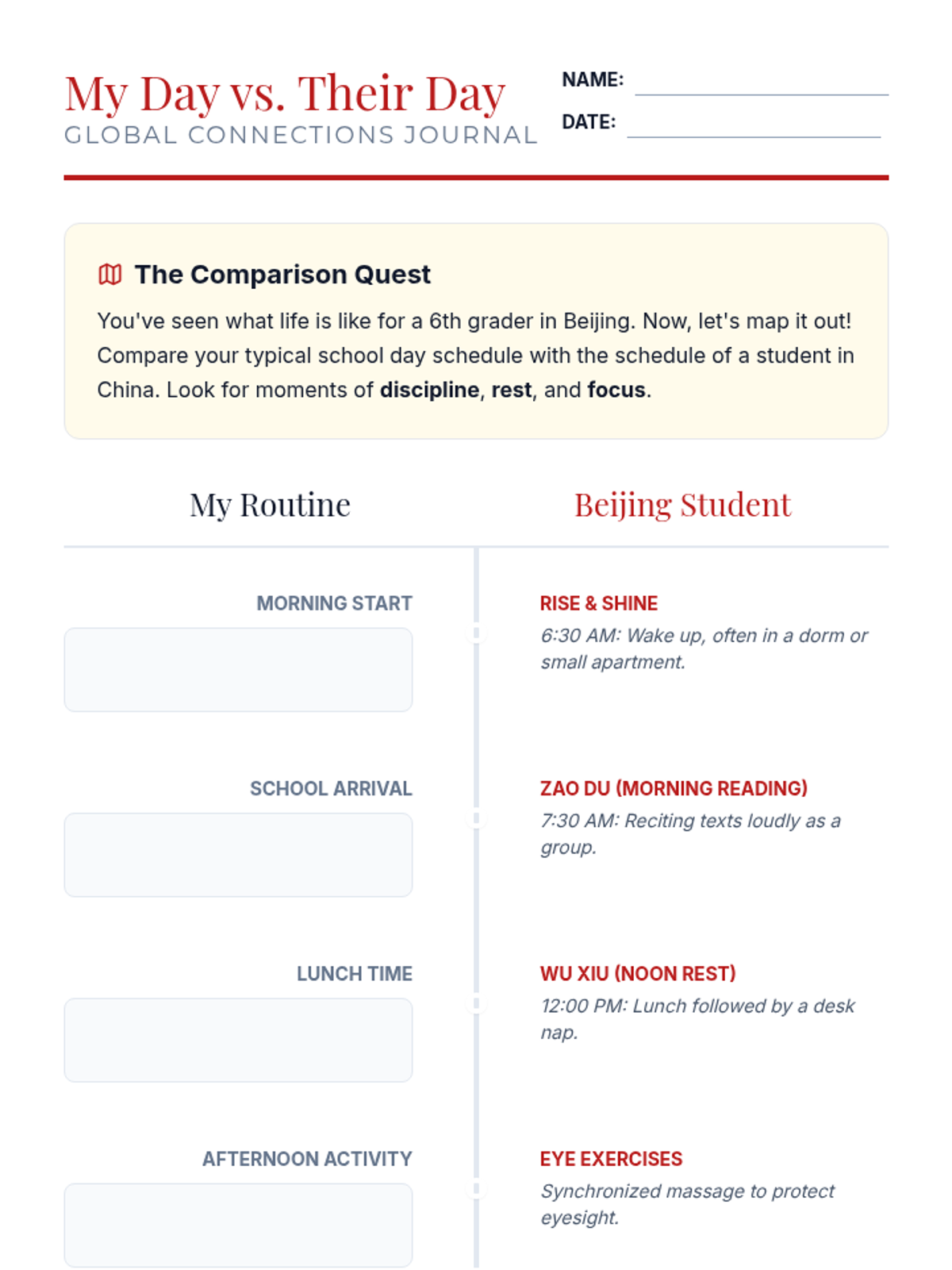
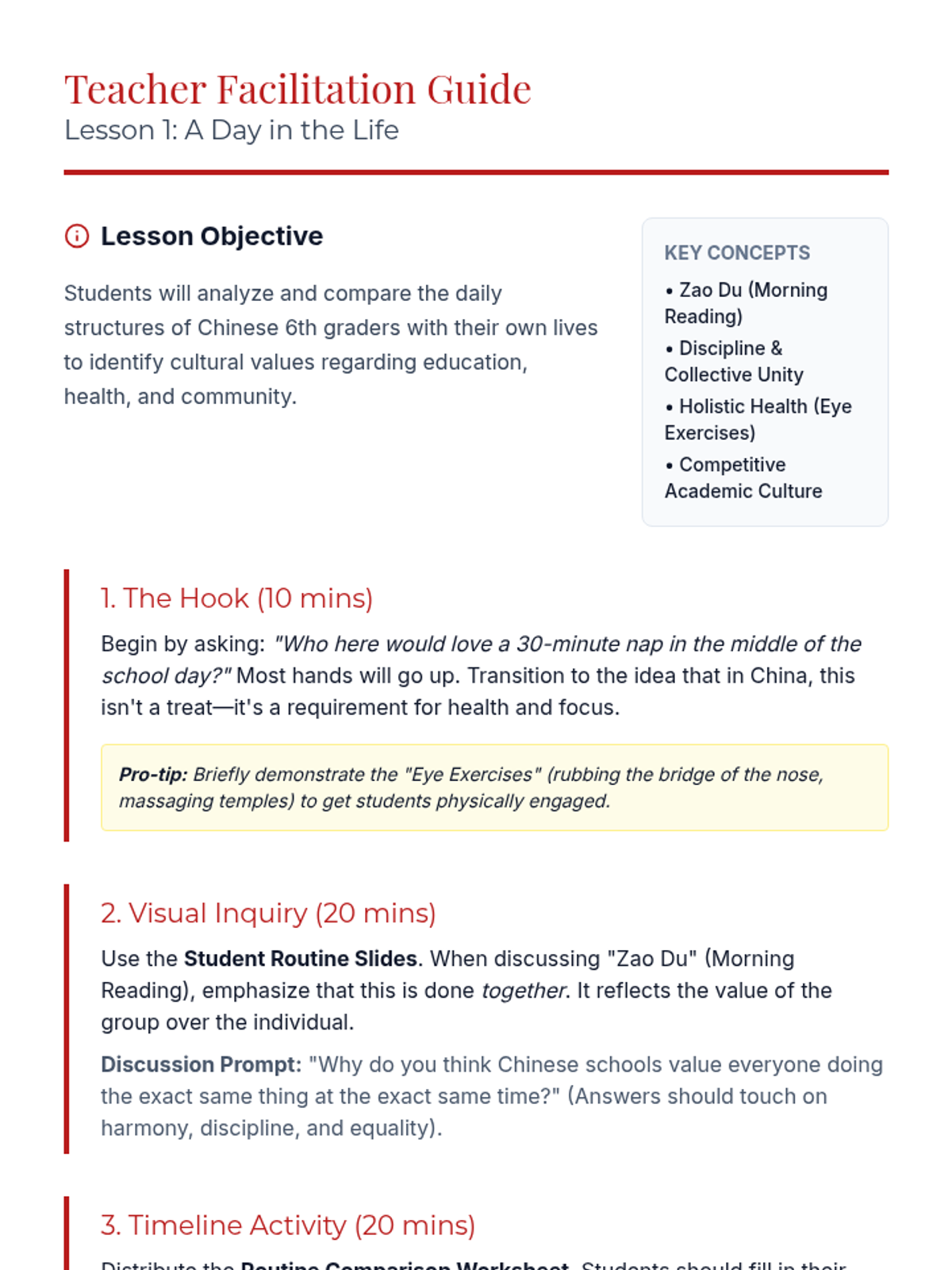
A 5-lesson inquiry into modern Chinese culture, comparing traditional values with rapid technological advancement through the lens of daily student life, housing, technology, and leisure.
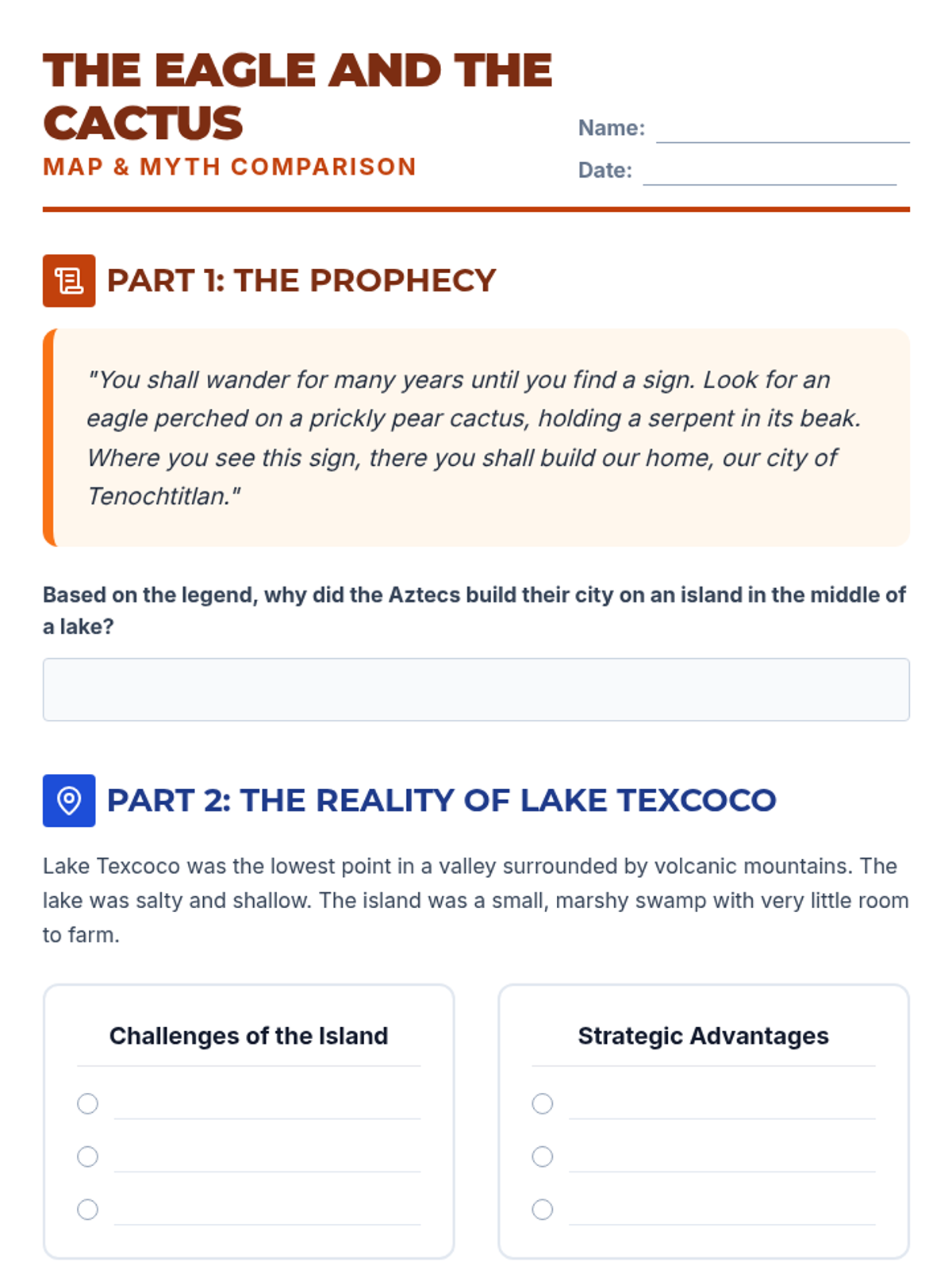
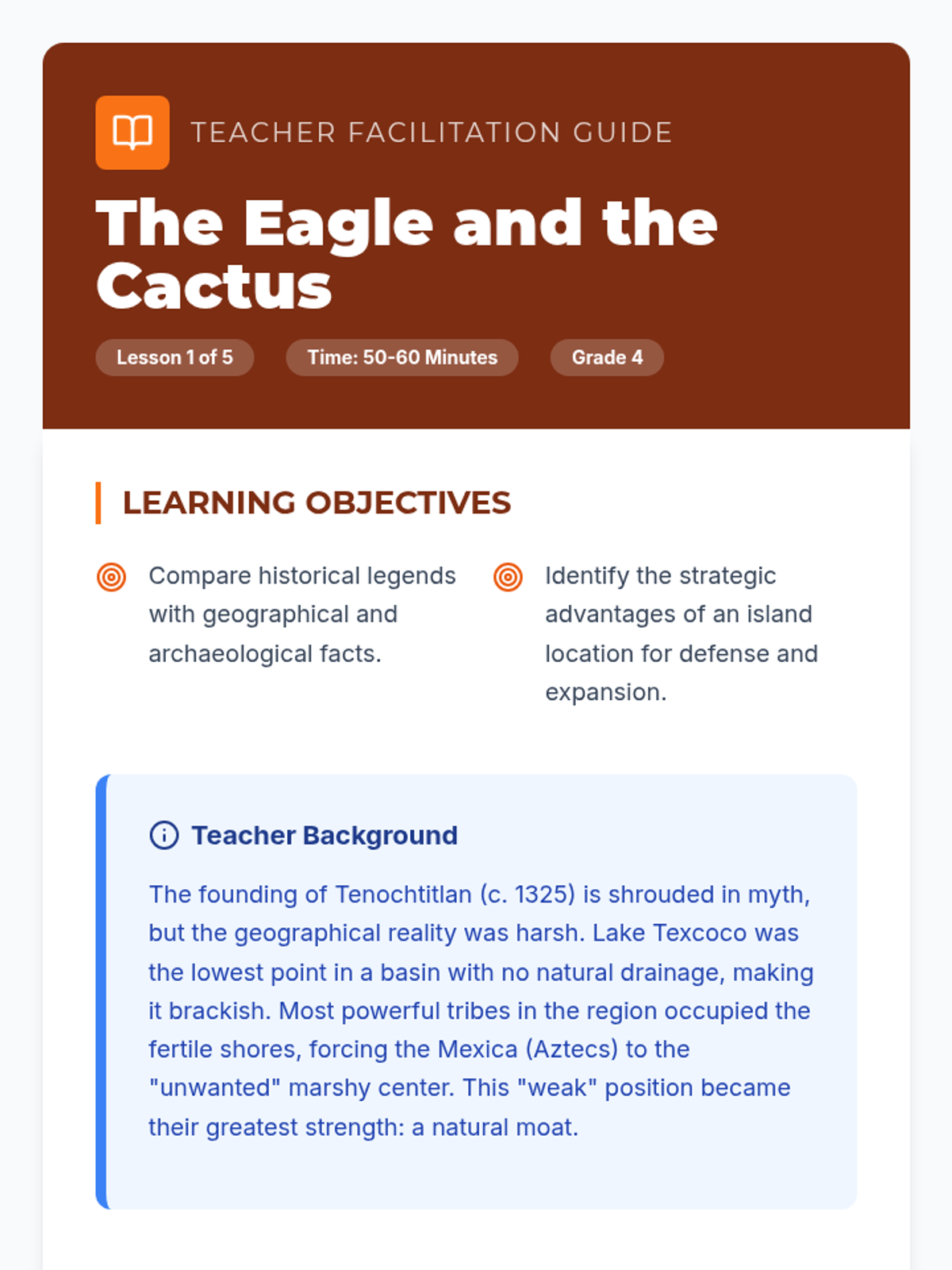
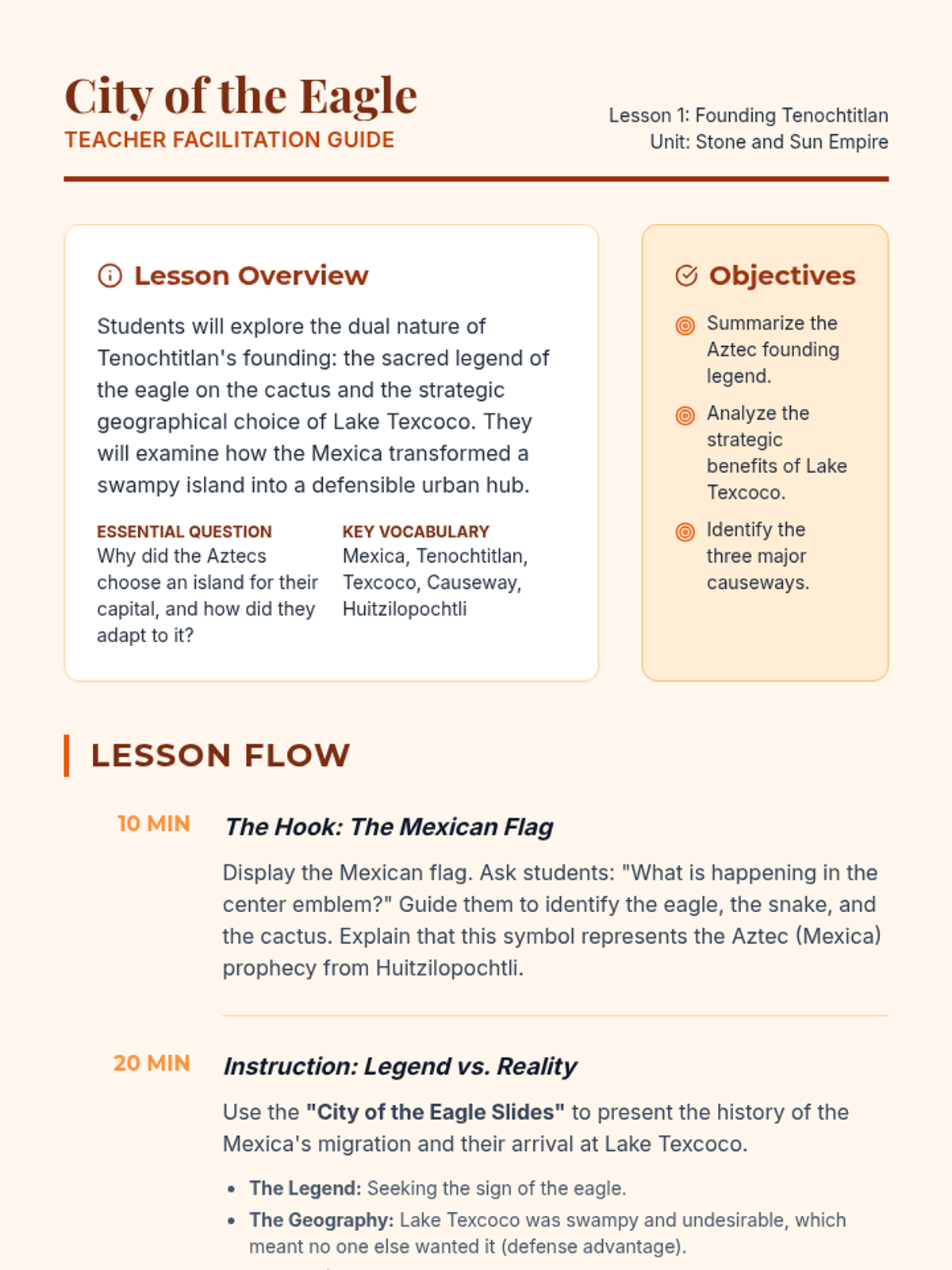
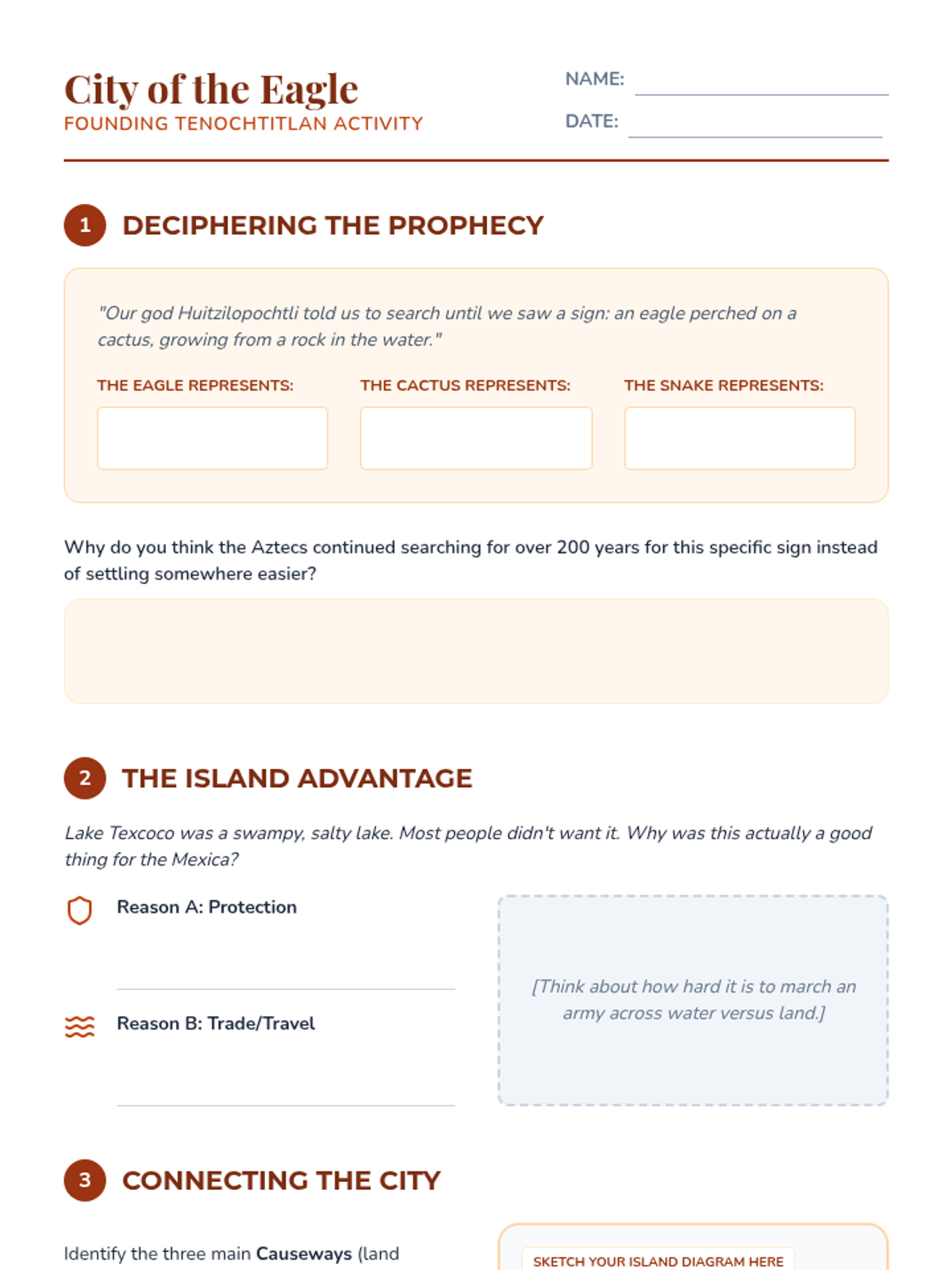
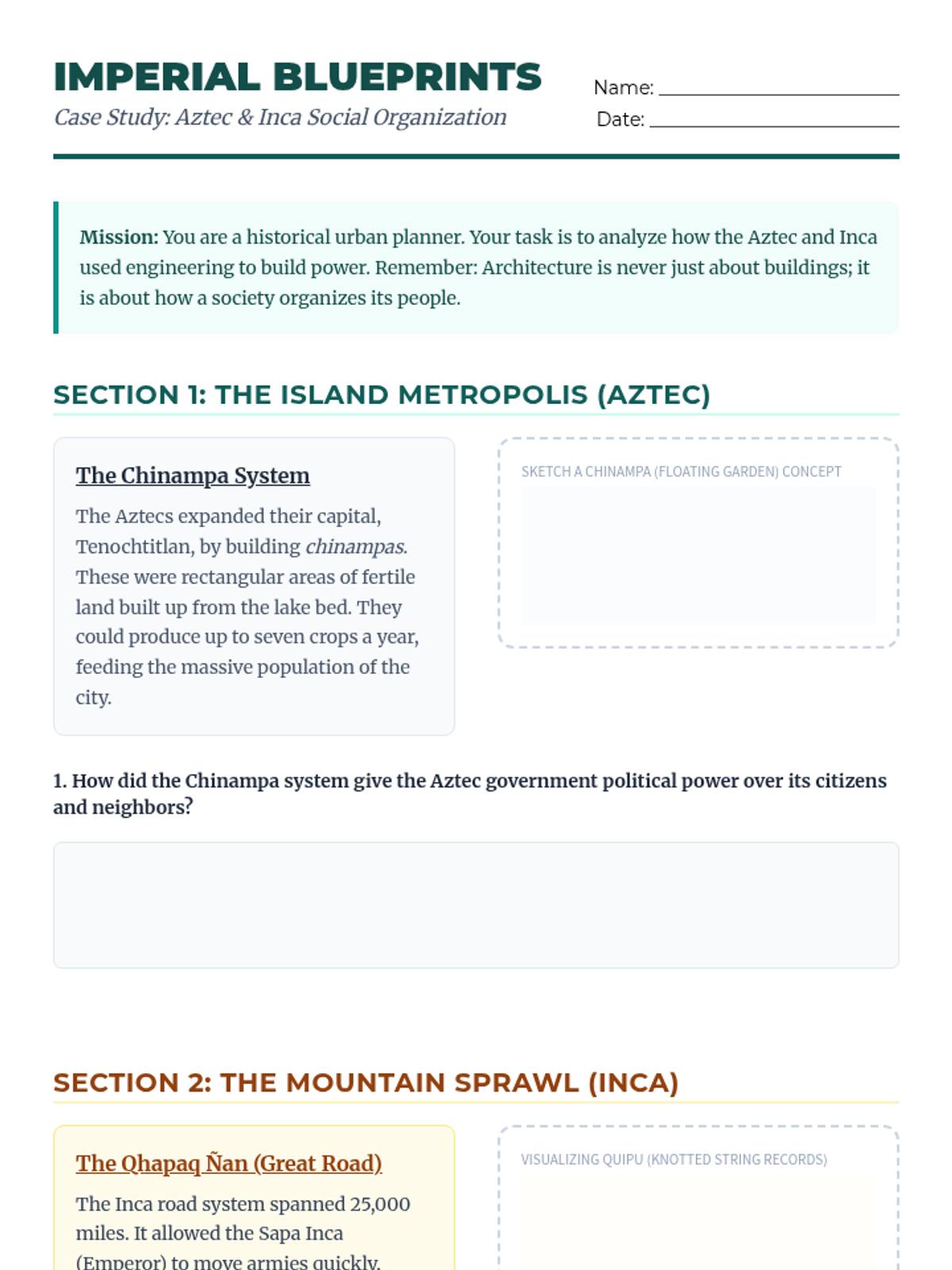
This project-based sequence examines the Aztecs through the lens of urban planning and engineering, specifically focusing on the capital city of Tenochtitlan. Students follow the arc of the city's development from a mythological sign on an island to one of the largest cities in the world at that time.
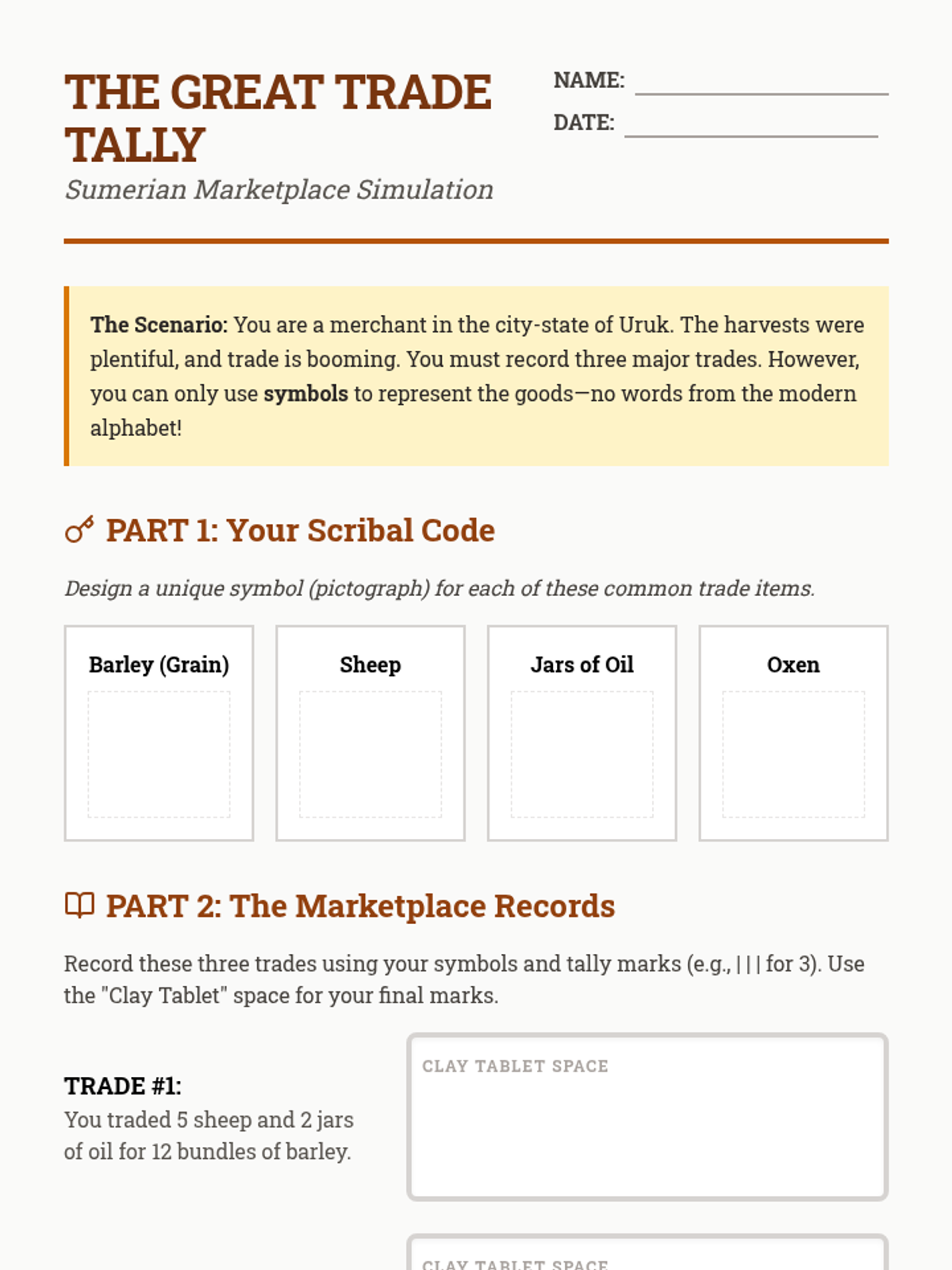
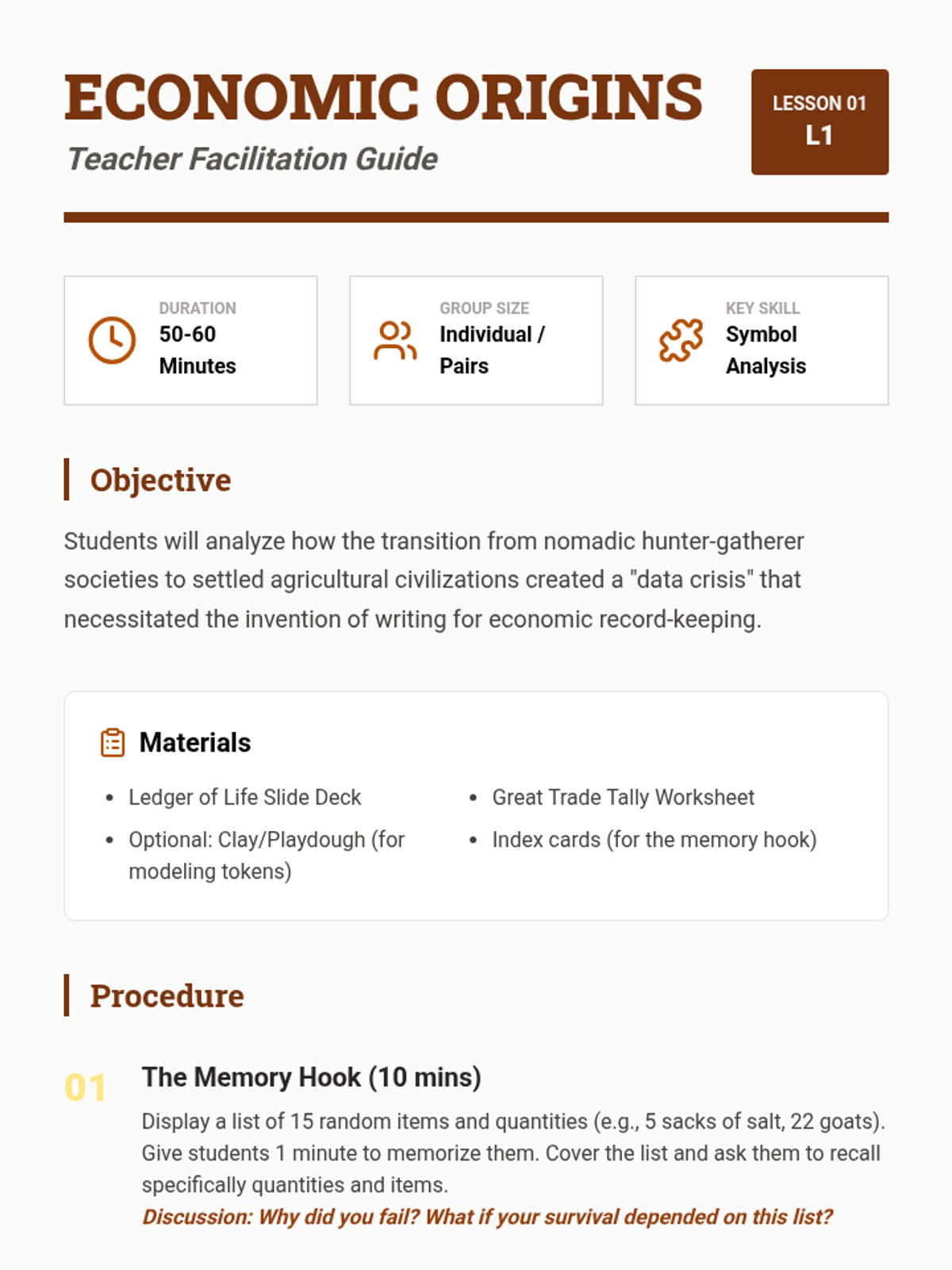
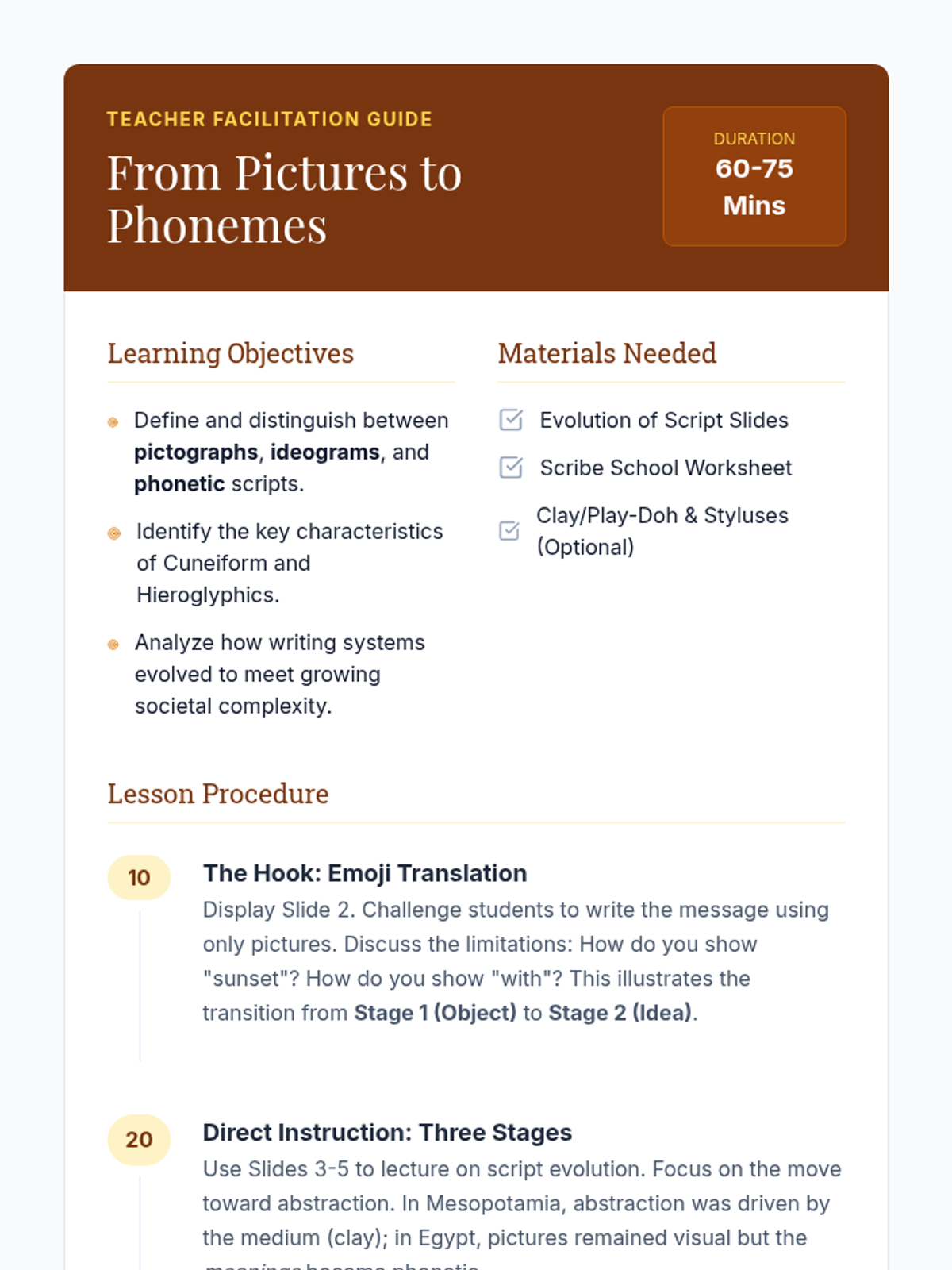
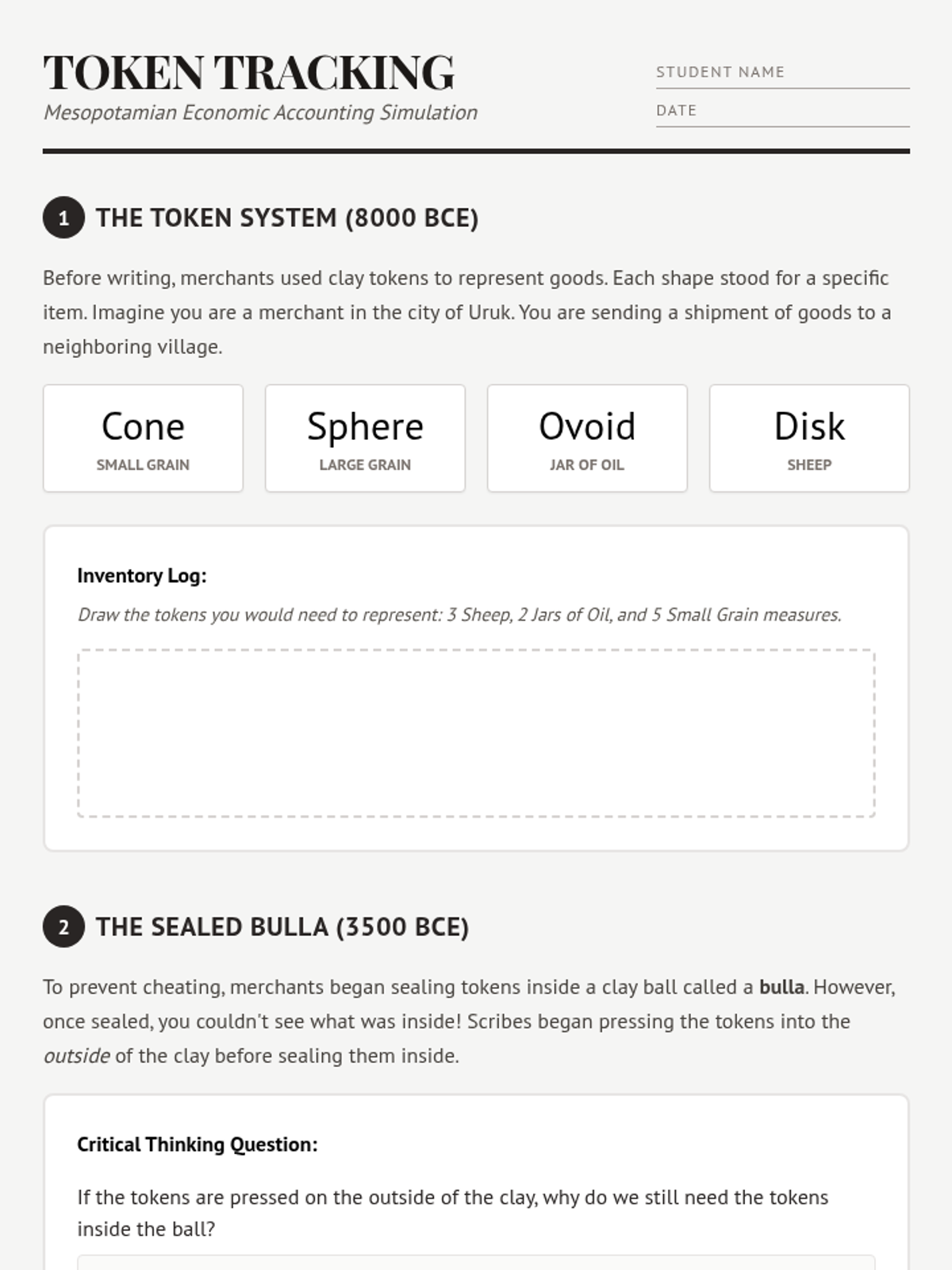
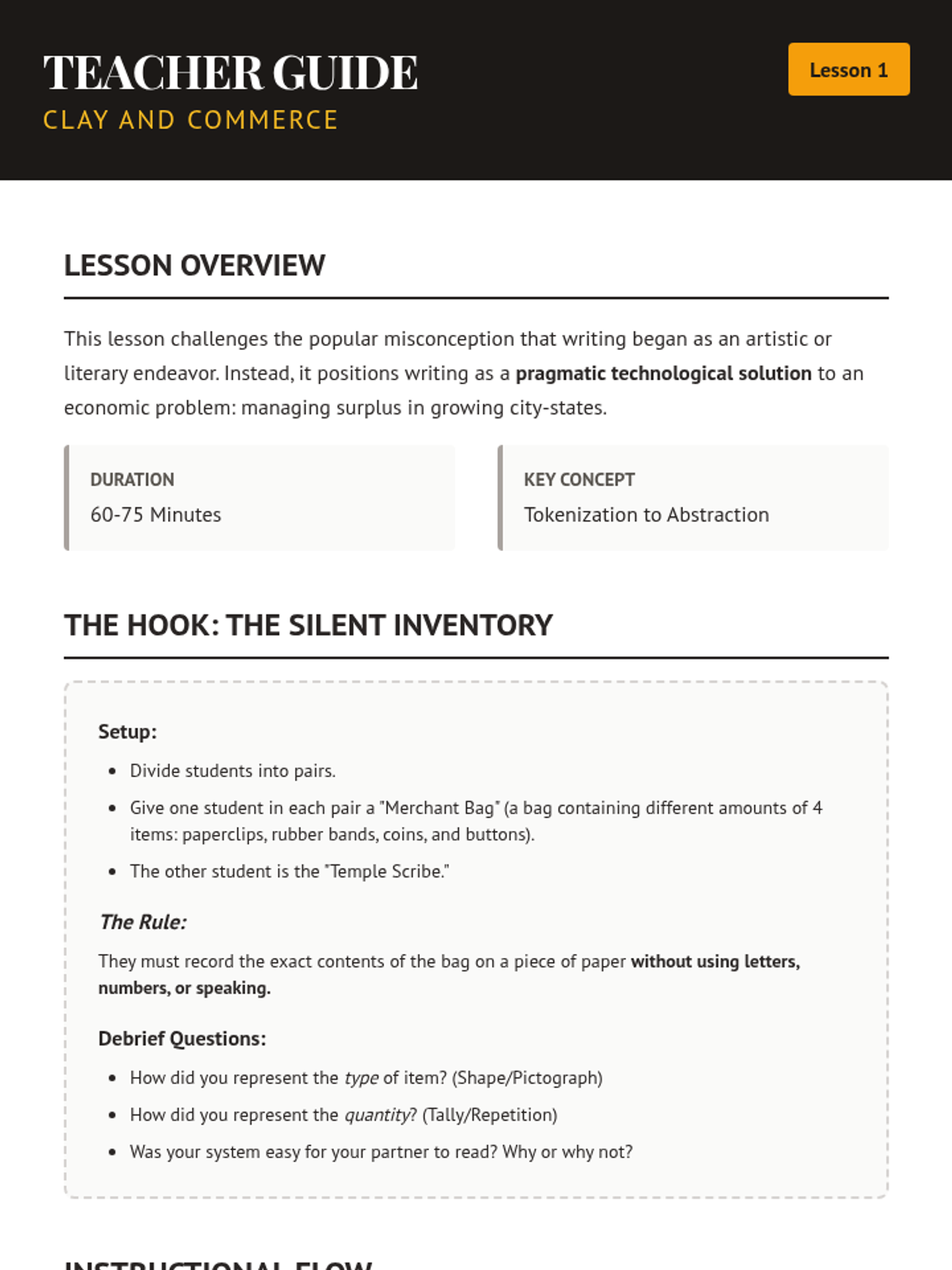
This sequence explores the evolution of writing from economic tokens to complex scripts across ancient Mesopotamia, China, and the Indus Valley, focusing on writing as a tool for power and preservation.
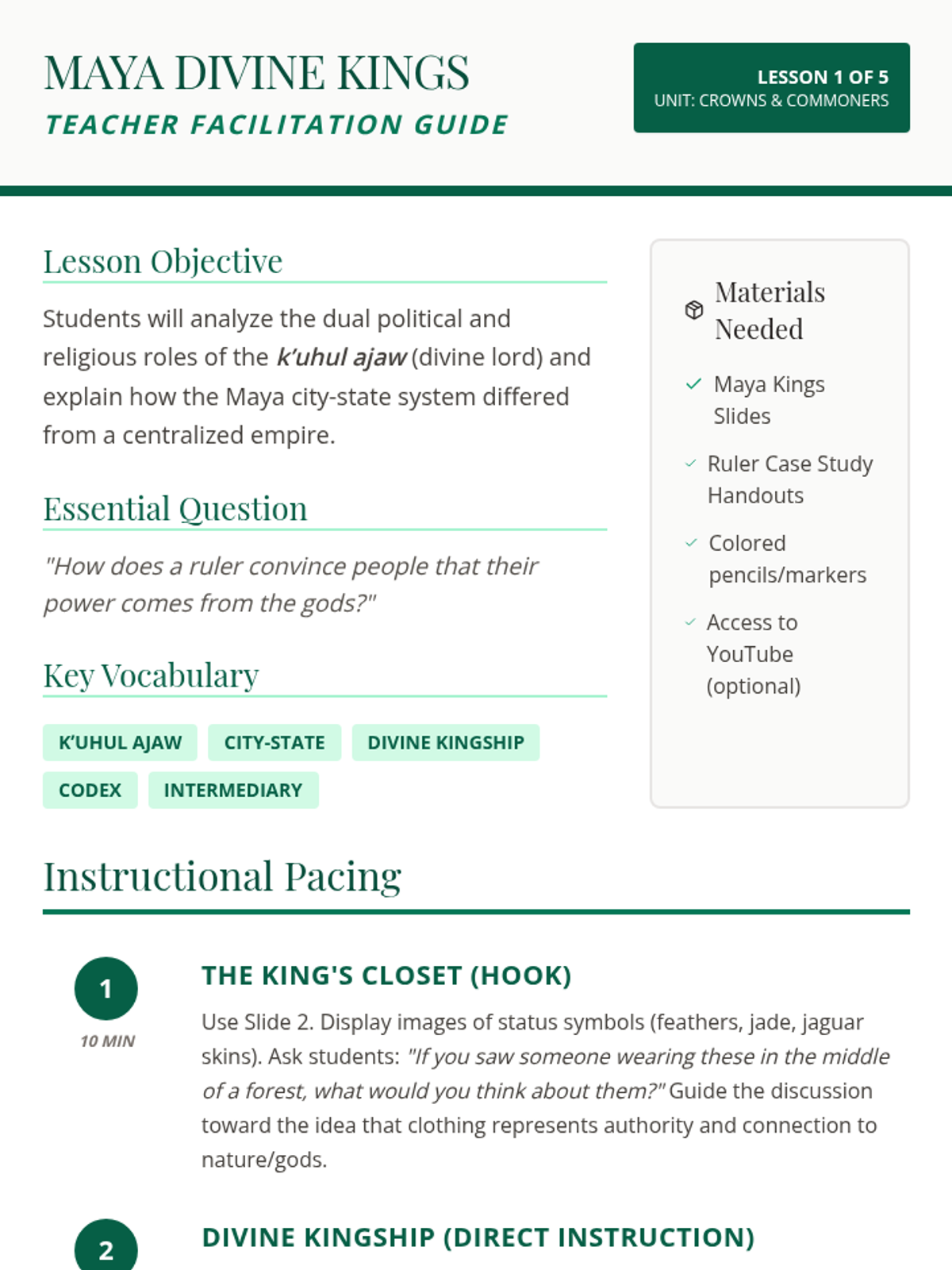
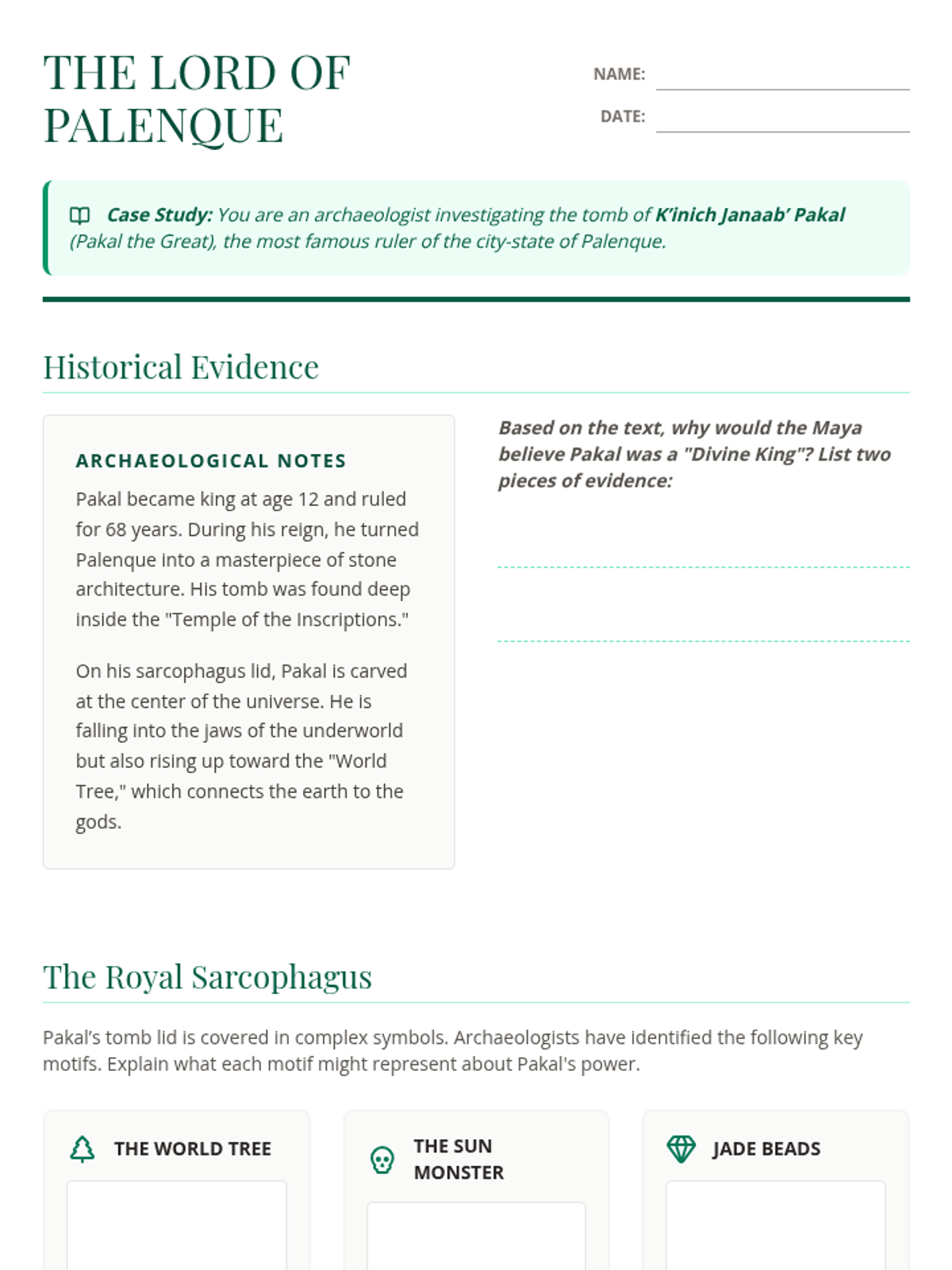
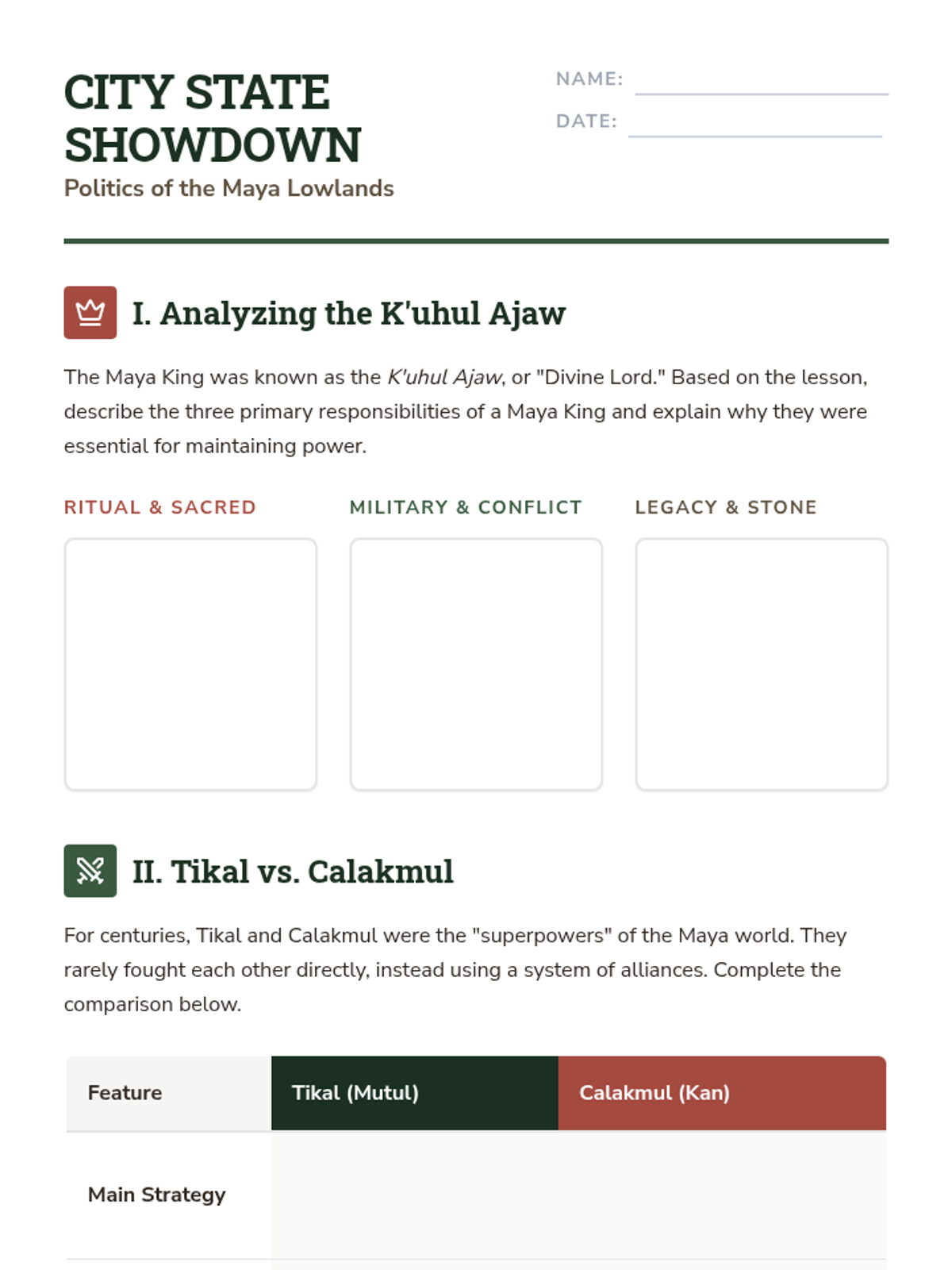
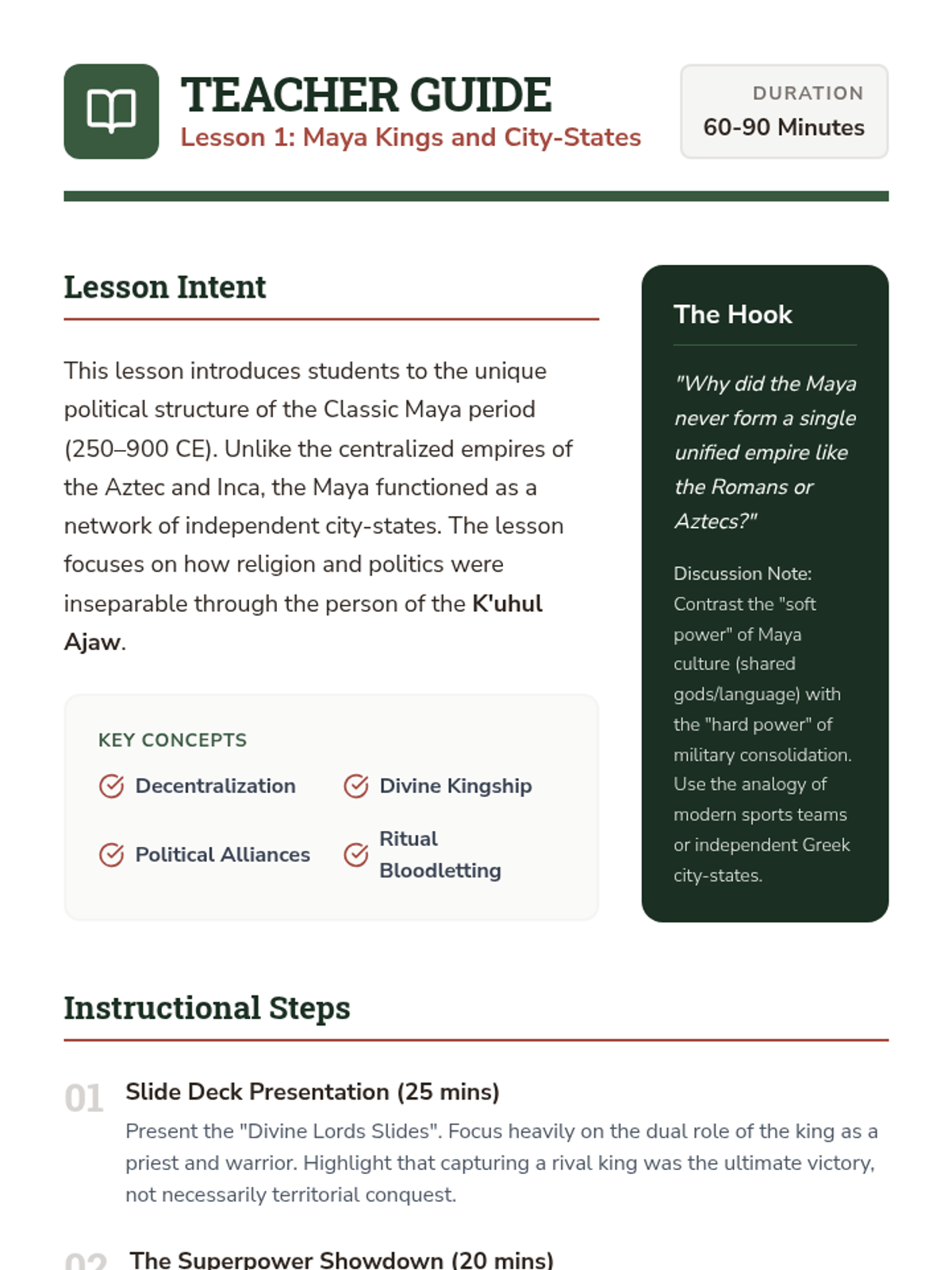
An exploration of the social hierarchies and governance systems of the Maya, Aztec, and Inca civilizations, focusing on divine kingship, tribute, labor taxes, and the daily lives of commoners.
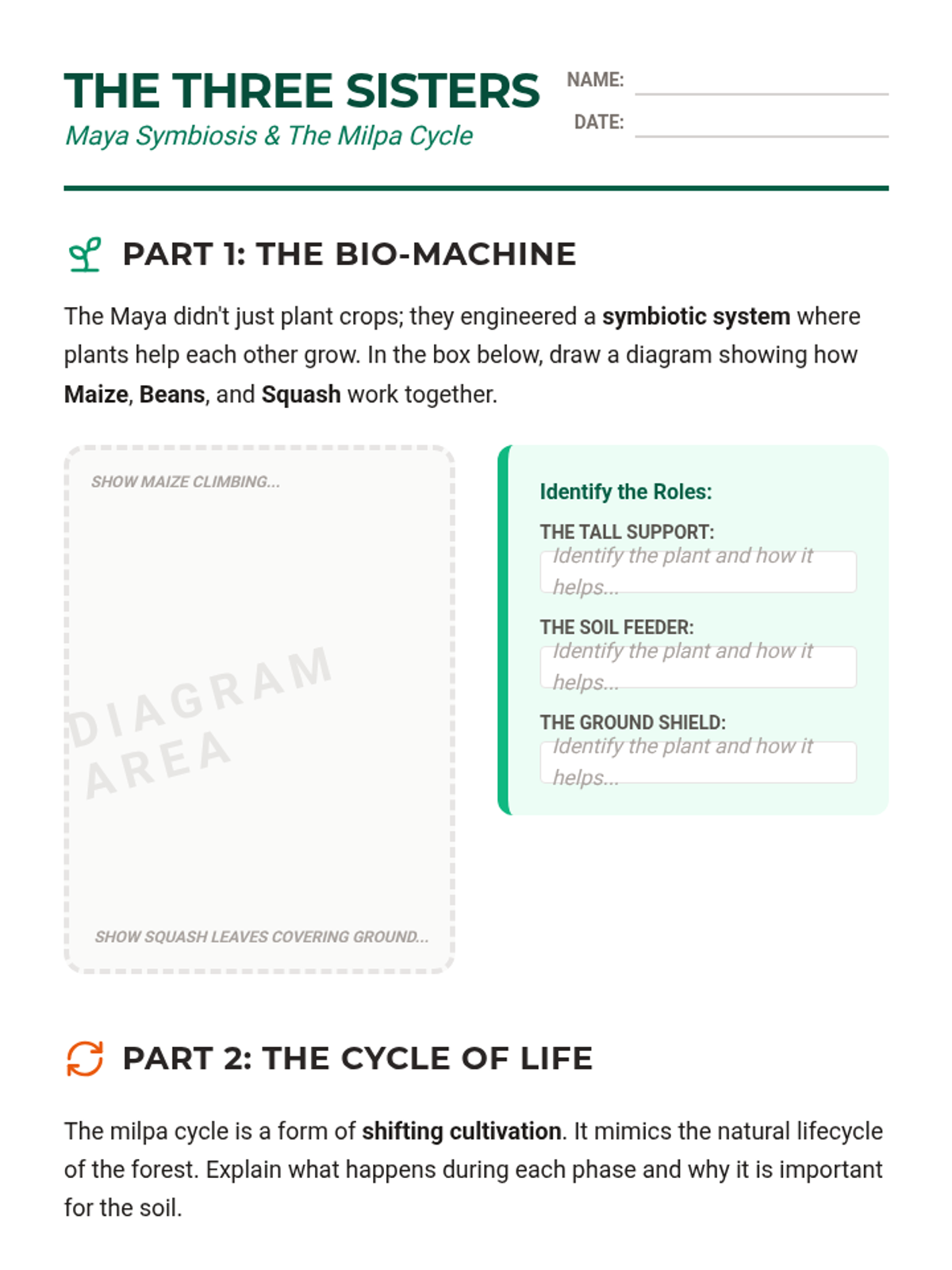
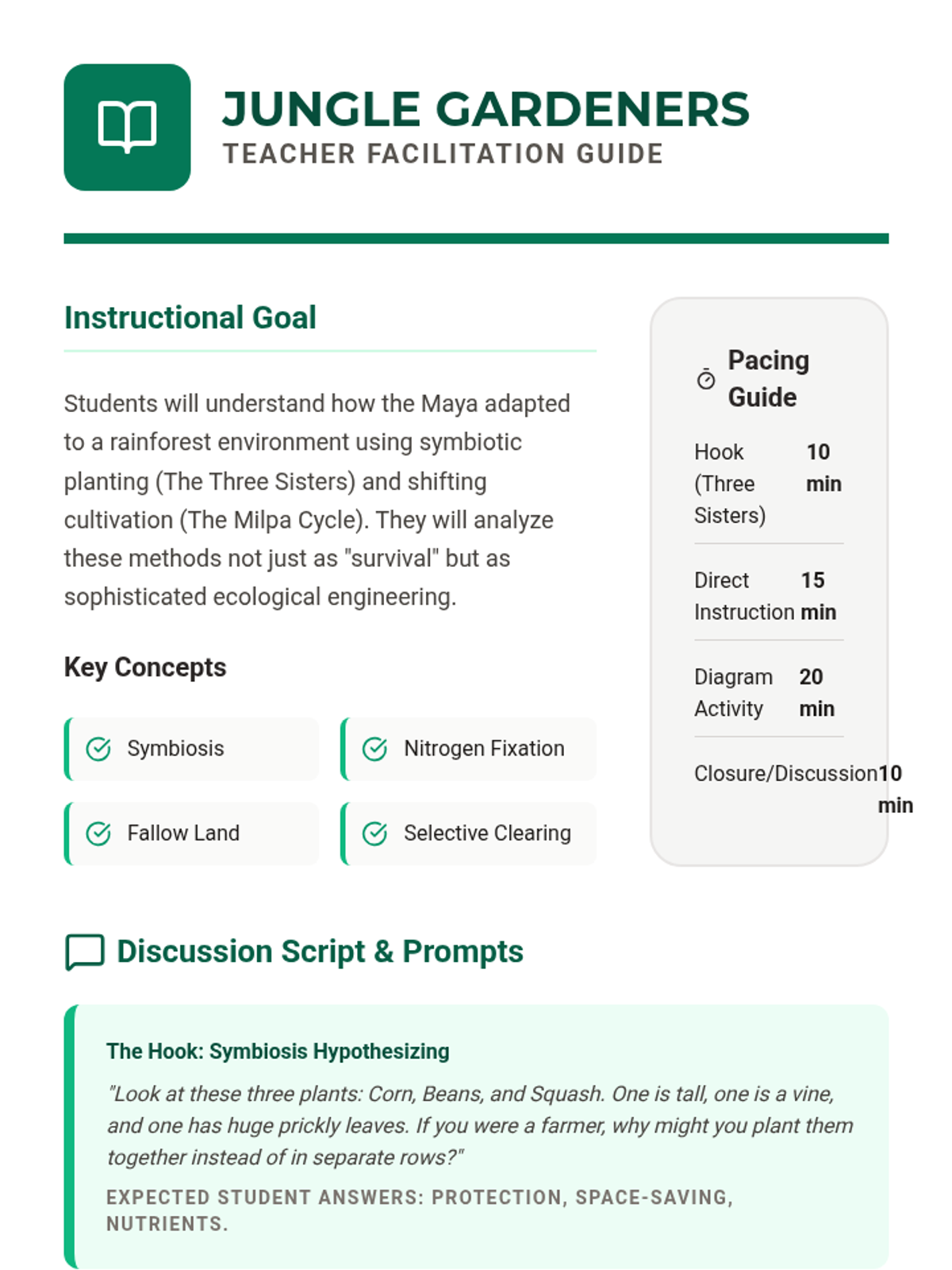
A comparative study of the agricultural innovations of the Maya, Aztec, and Inca civilizations, focusing on how engineering and ecological knowledge allowed these societies to flourish in diverse environments.
A 5-lesson sequence exploring the rise of the Aztec Empire, focusing on the engineering of Tenochtitlan, social structures, tribute economics, and religious cosmology.
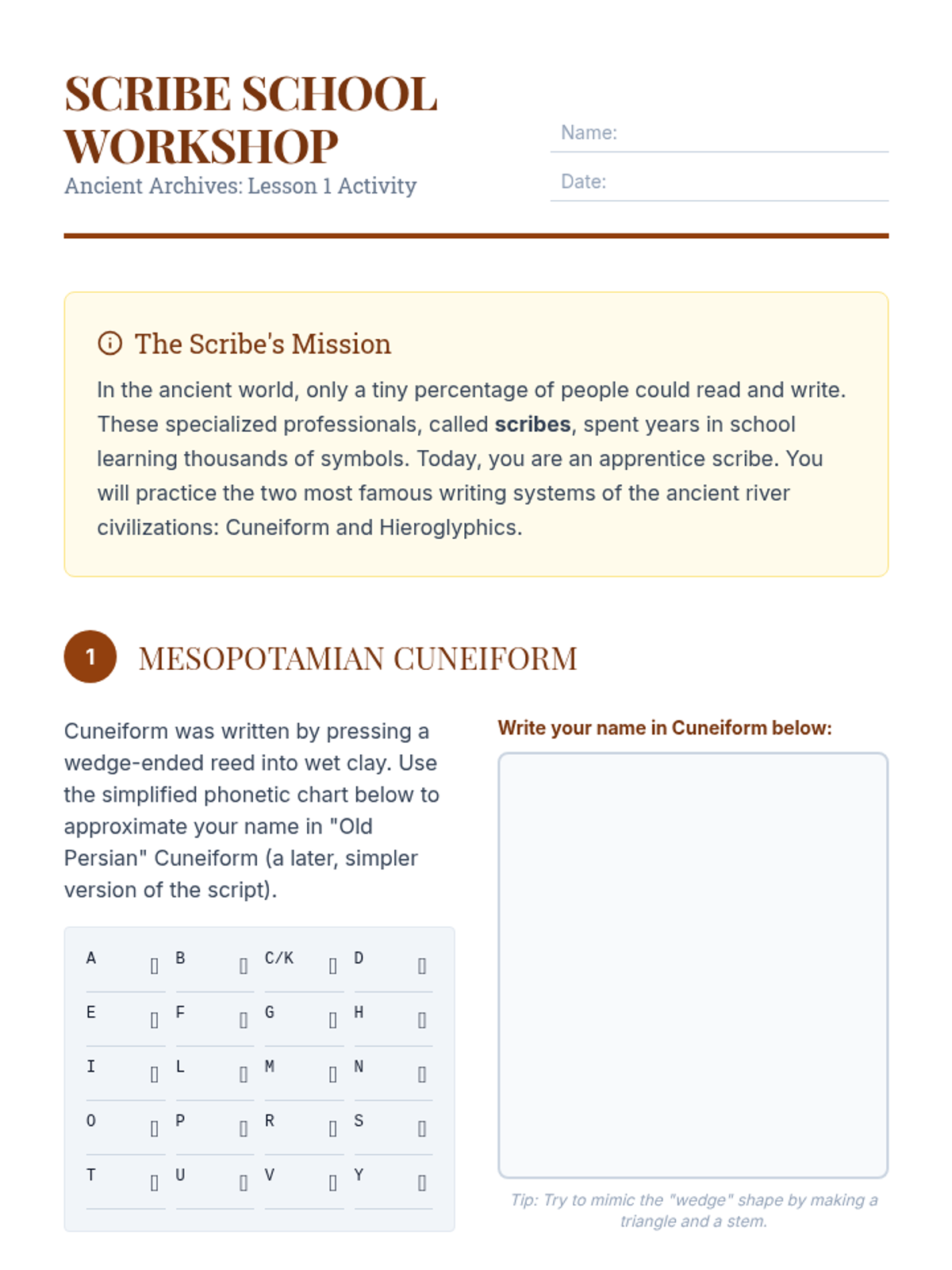
This sequence investigates the invention and evolution of writing systems as a tool for administration, literature, and cultural preservation across ancient river civilizations. Students explore the transition from pictographs to complex scripts like Cuneiform, Hieroglyphics, and Oracle Bone Script, concluding with the mystery of the undeciphered Indus script.
This sequence traces the evolution of written language from pragmatic record-keeping to complex literature across ancient Mesopotamia, Egypt, the Indus Valley, and China. Students explore how writing systems facilitated trade, codified religion, and expanded state bureaucracy, ultimately evaluating the transformative power of literacy on human history.
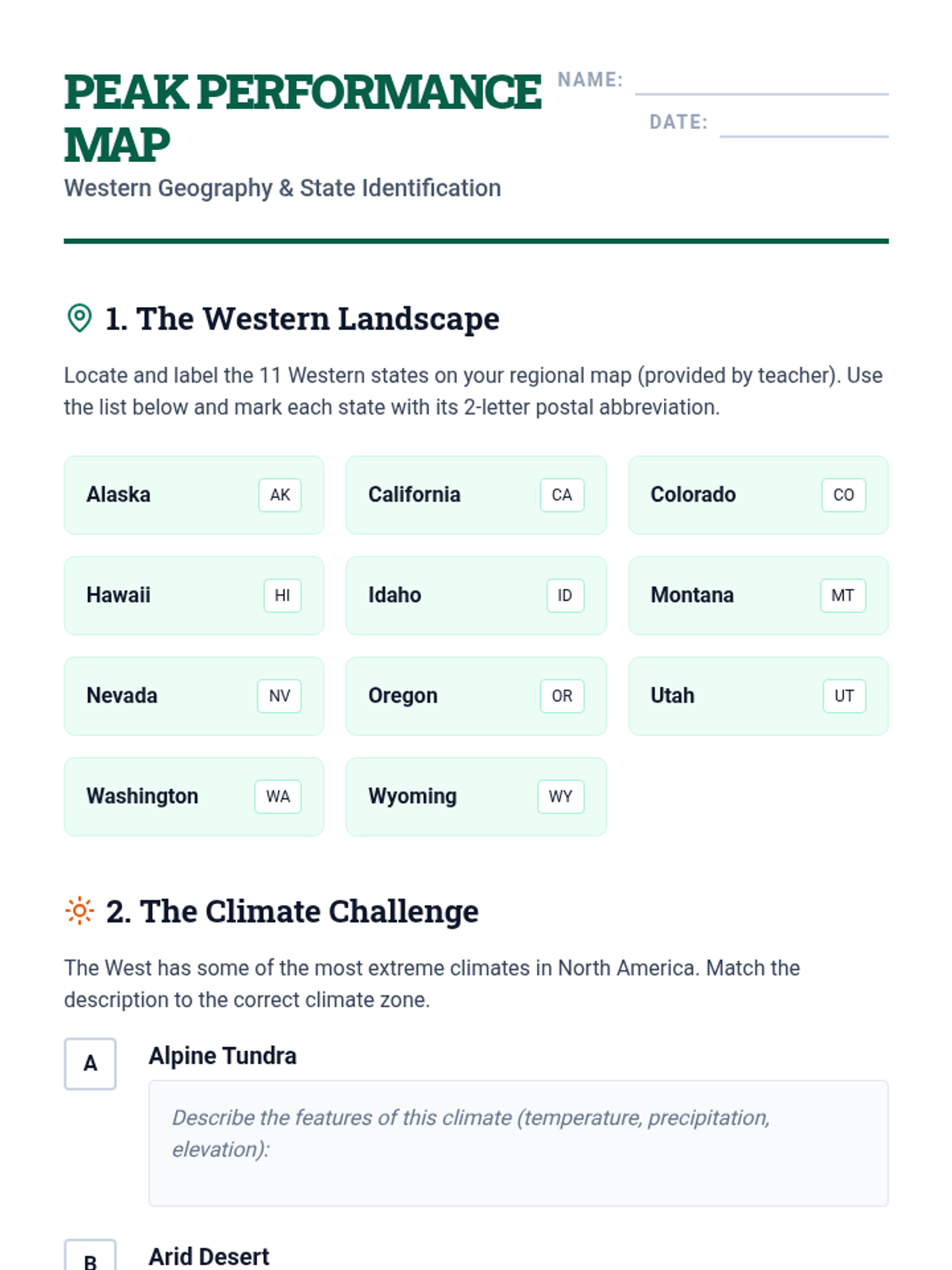
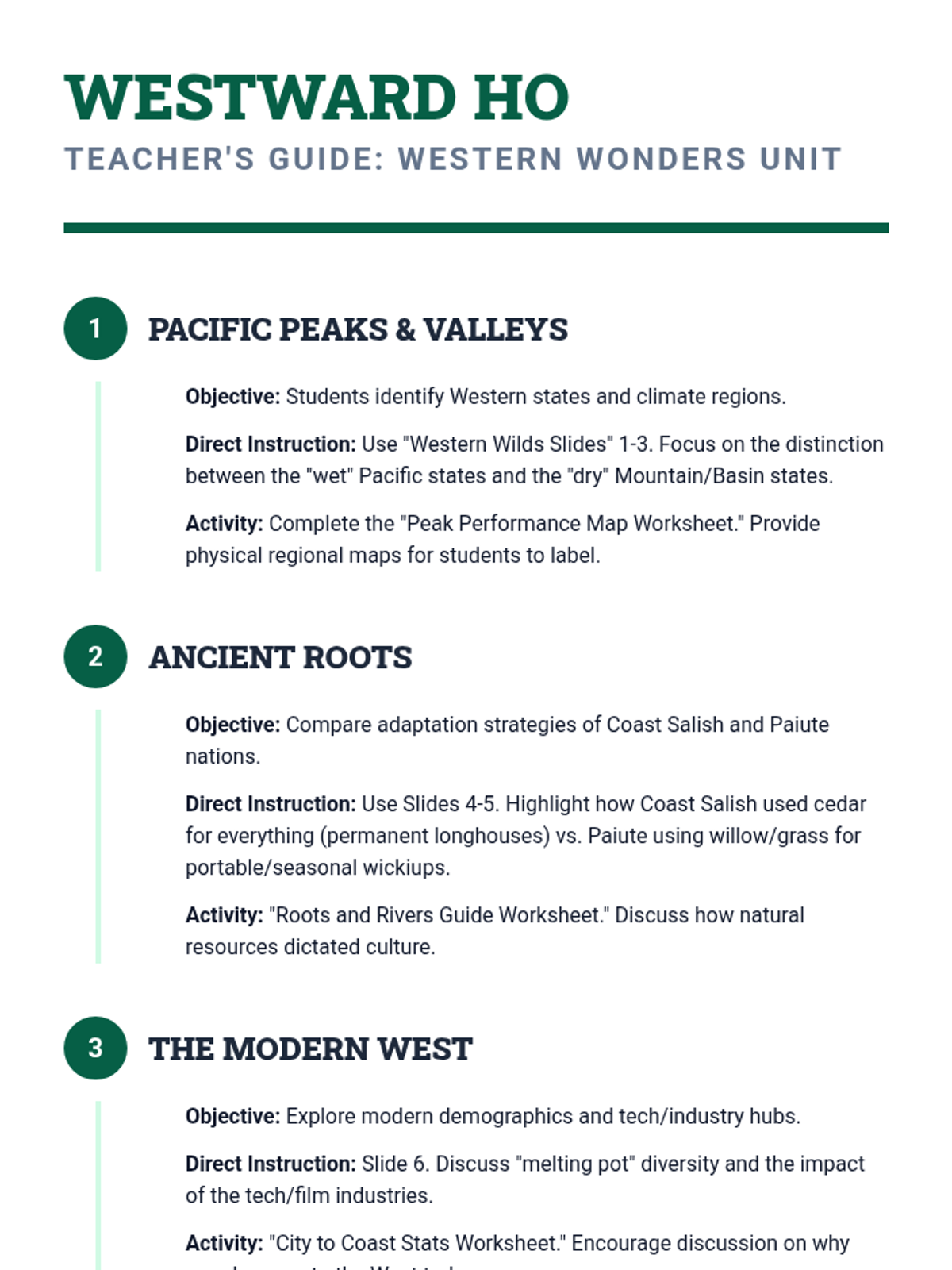
A 5-day unit exploring the geography, climate, indigenous cultures (Paiute and Coast Salish), and modern life of the Western United States, culminating in a travel brochure project.
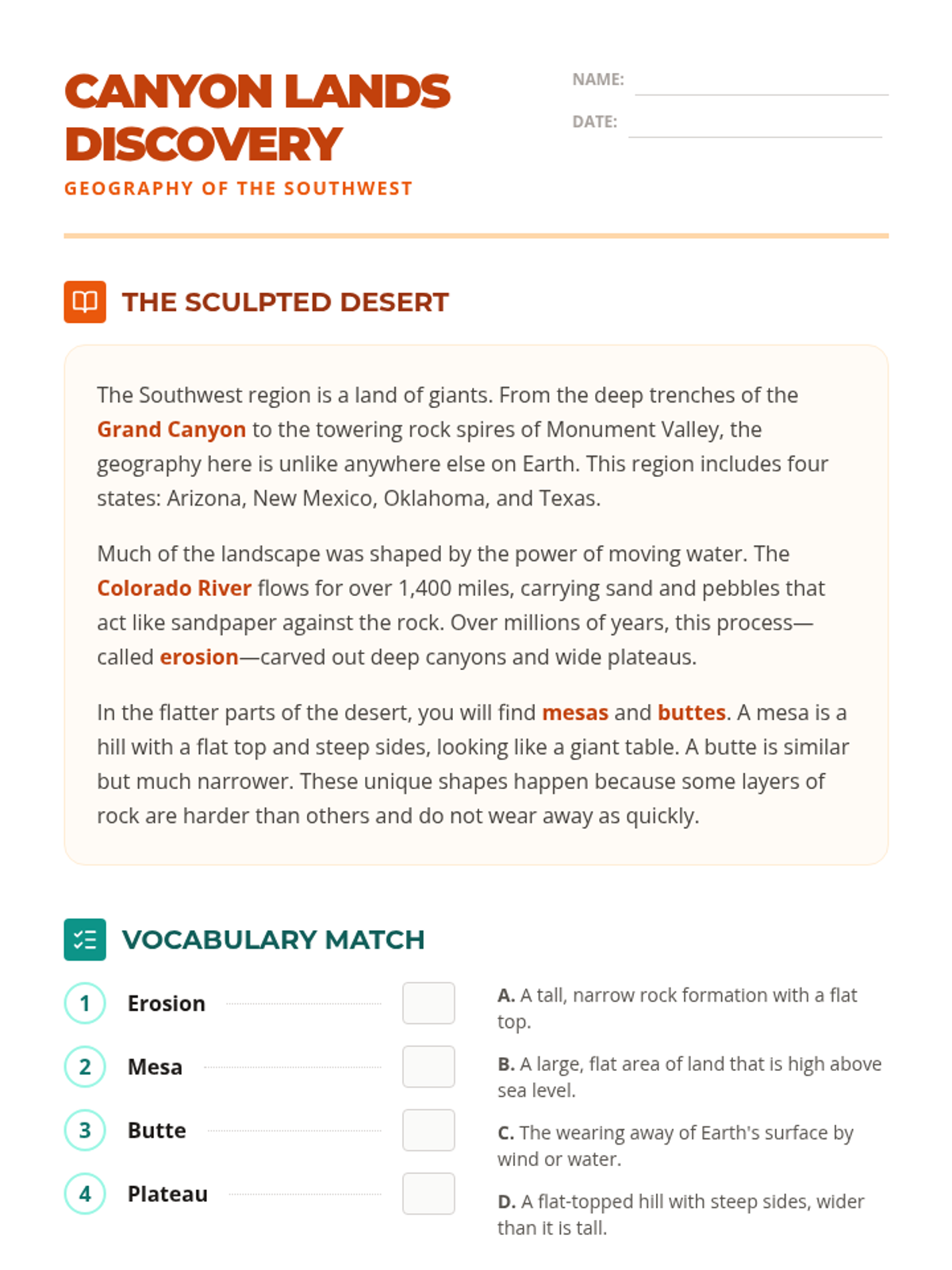
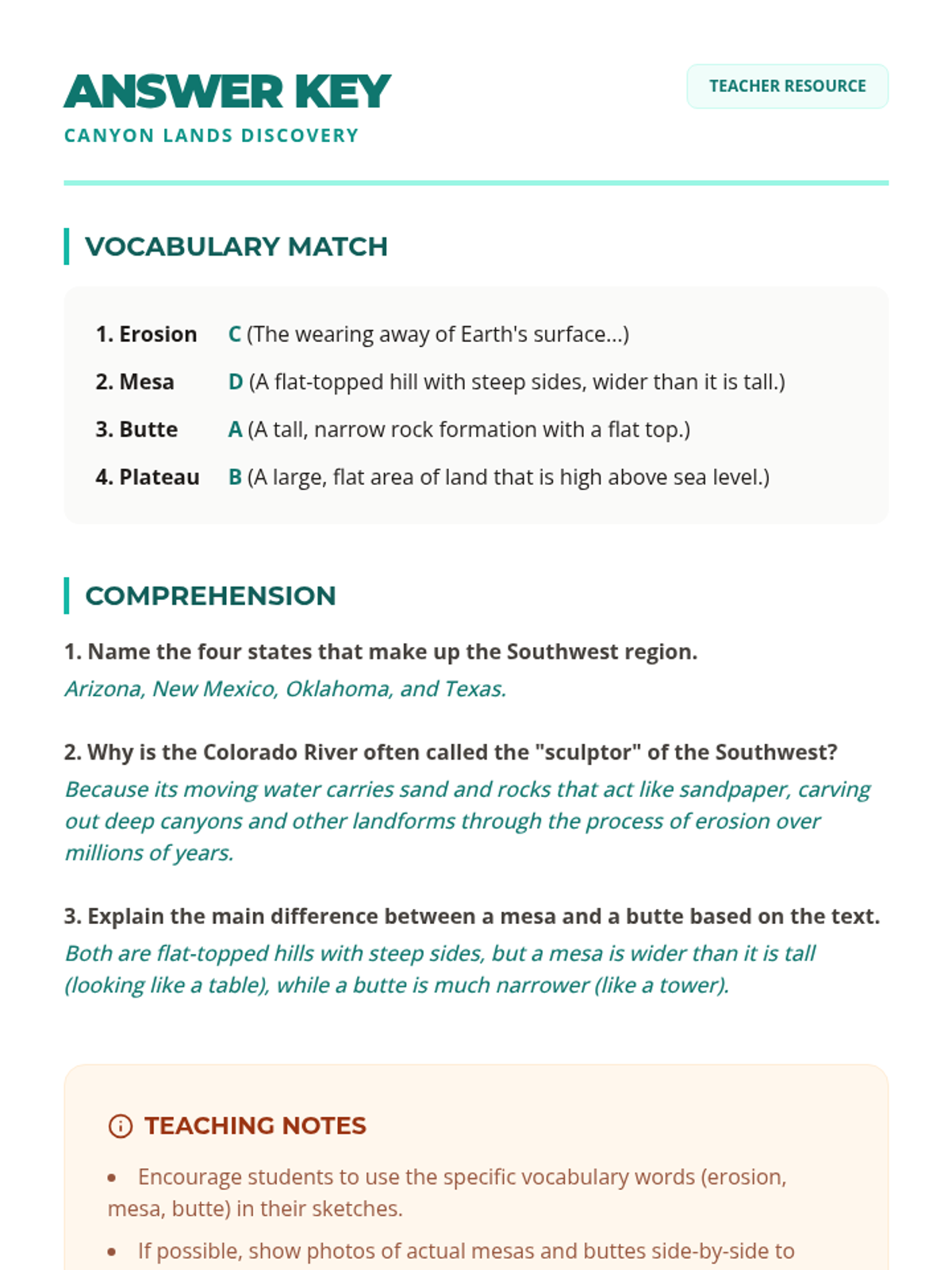
A comprehensive 5-lesson unit exploring the unique geography, climate, natural resources, diverse cultures, and political boundaries of the Southwest region of the United States.
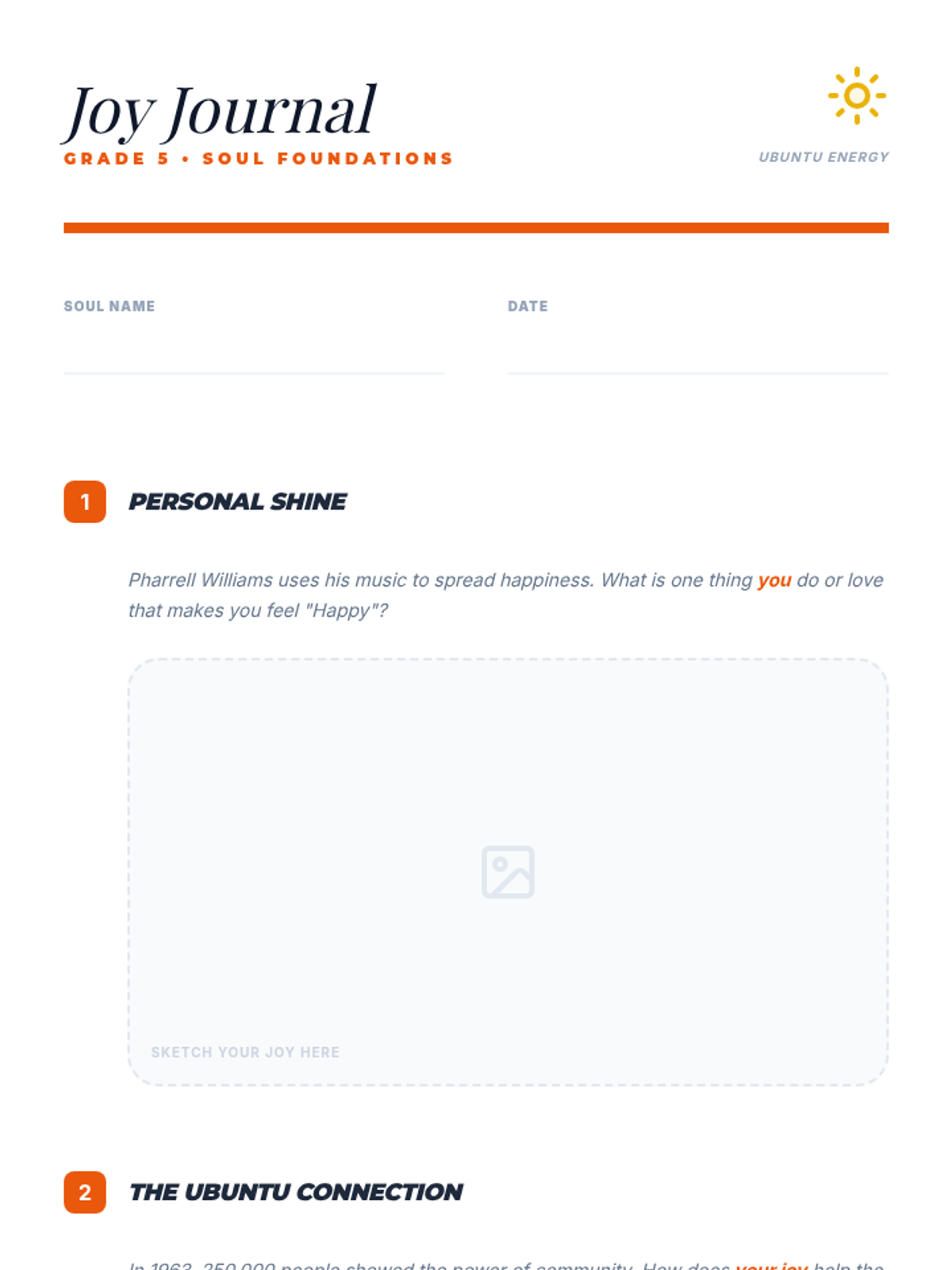
A 6-lesson sequence divided by grade level (5th, 6th, and 7th), celebrating 100 years of Black history through school values. Each grade explores two distinct lessons focusing on community joy, personal excellence, and mental health advocacy.
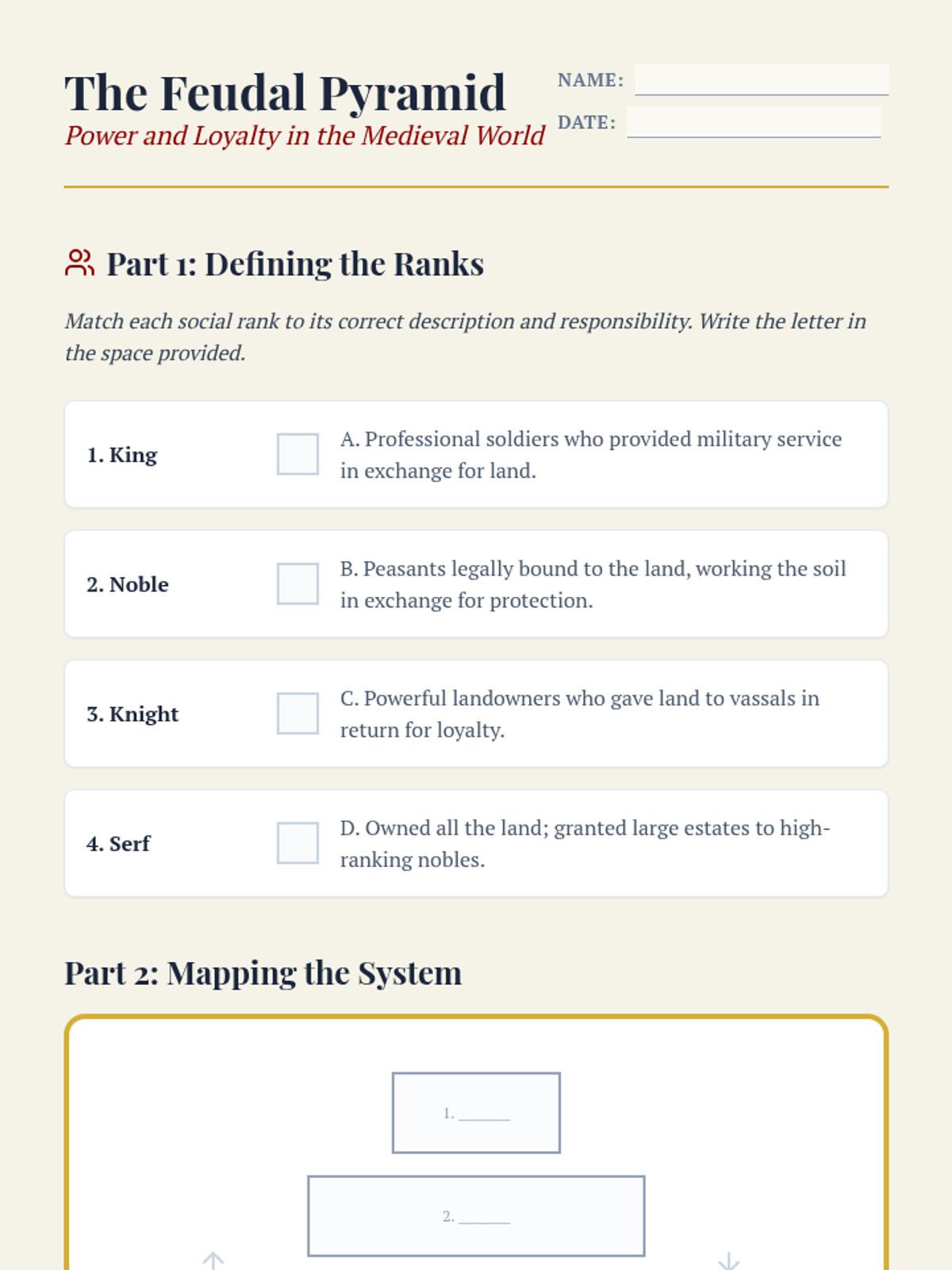
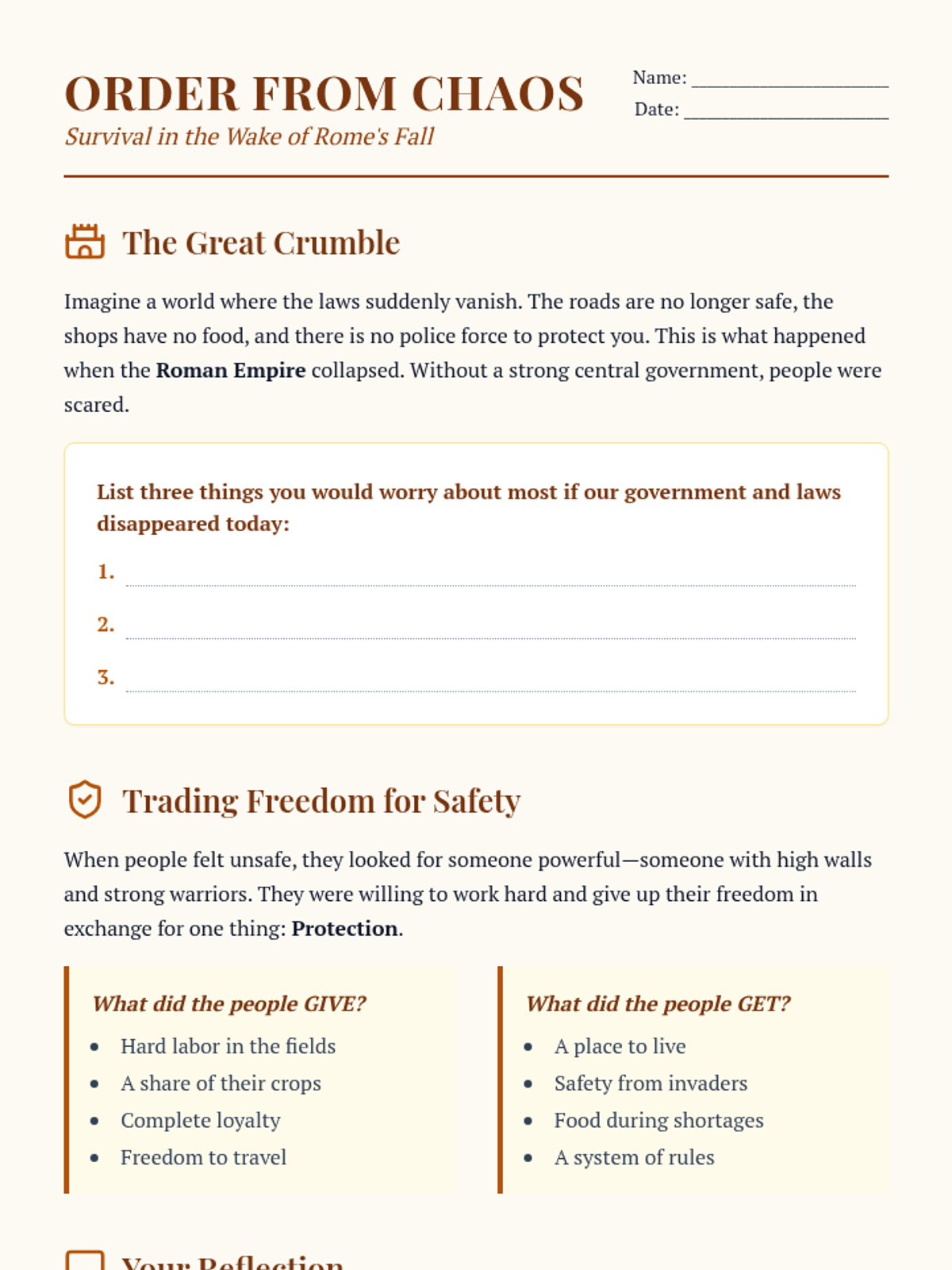
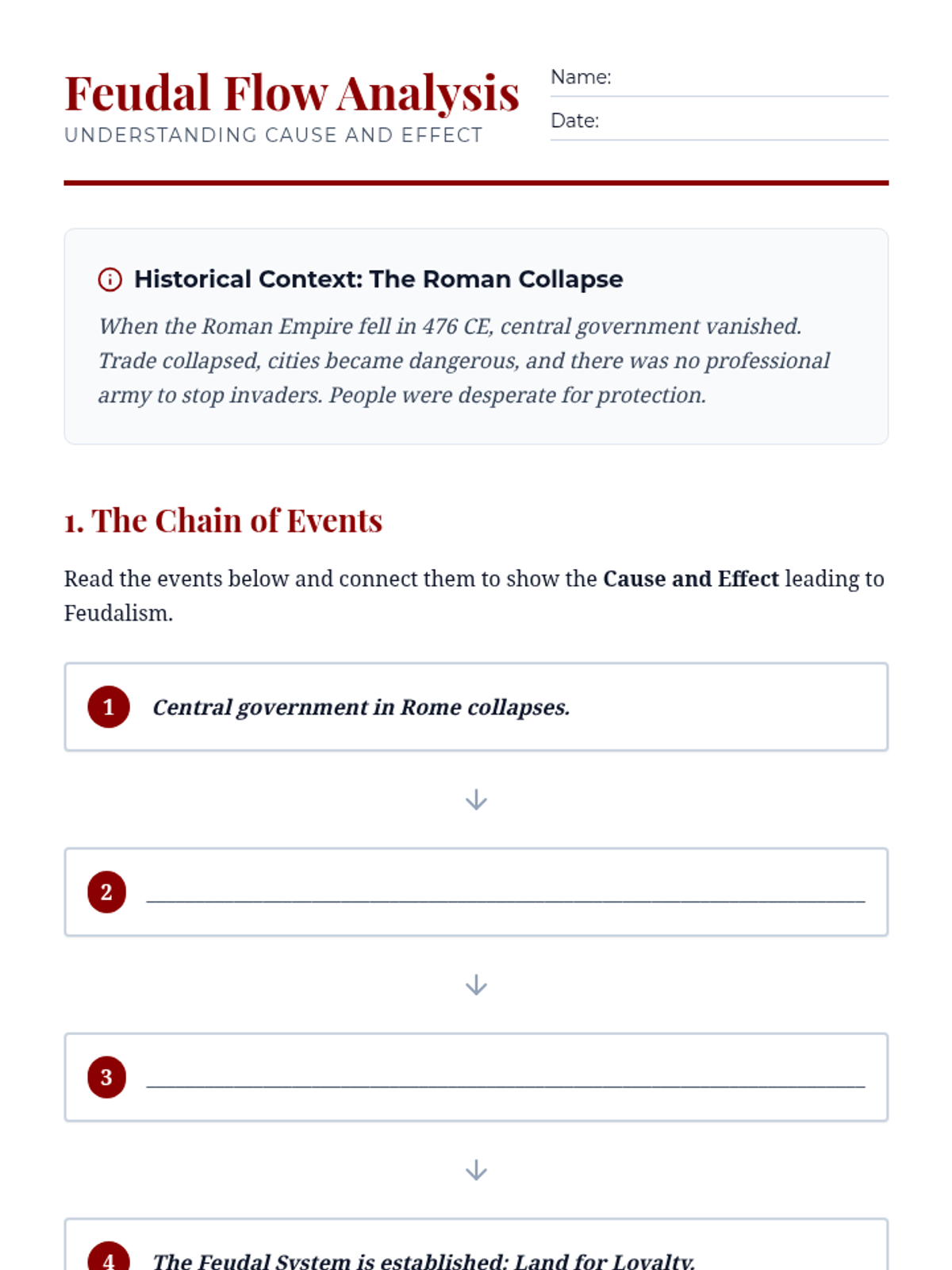
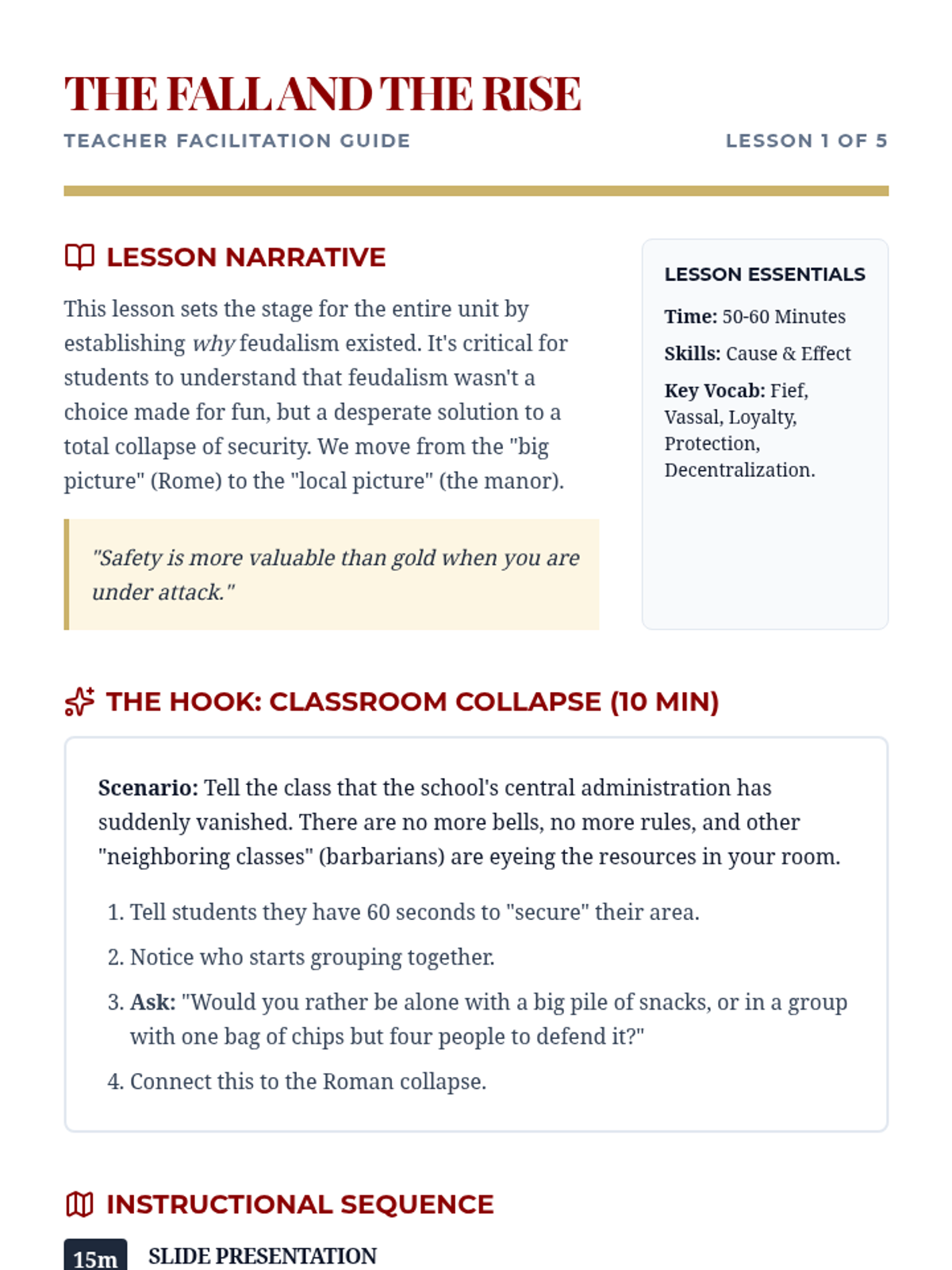
This sequence explores the rigid social hierarchy of Medieval Europe, focusing on the development of the feudal system as a response to the chaos following the fall of Rome. Students will examine the roles of monarchs, lords, knights, and peasants, and evaluate the trade-offs between security and freedom.
A 5-lesson unit exploring the technological, economic, political, and cultural shifts that moved Europe from the Medieval era into the Early Renaissance. students analyze the evolution of warfare, the rise of the middle class, the foundations of democracy, and the birth of humanism.
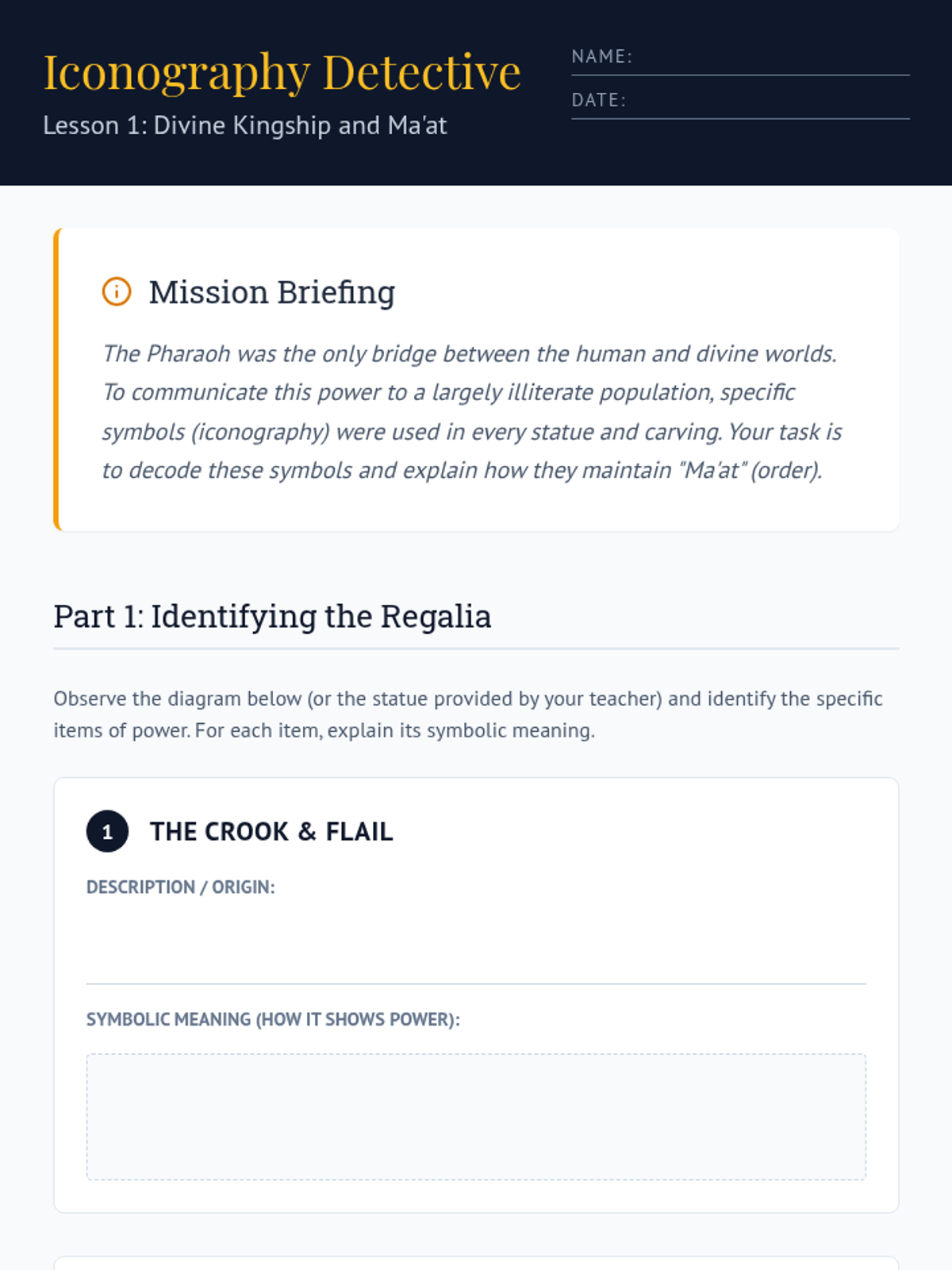
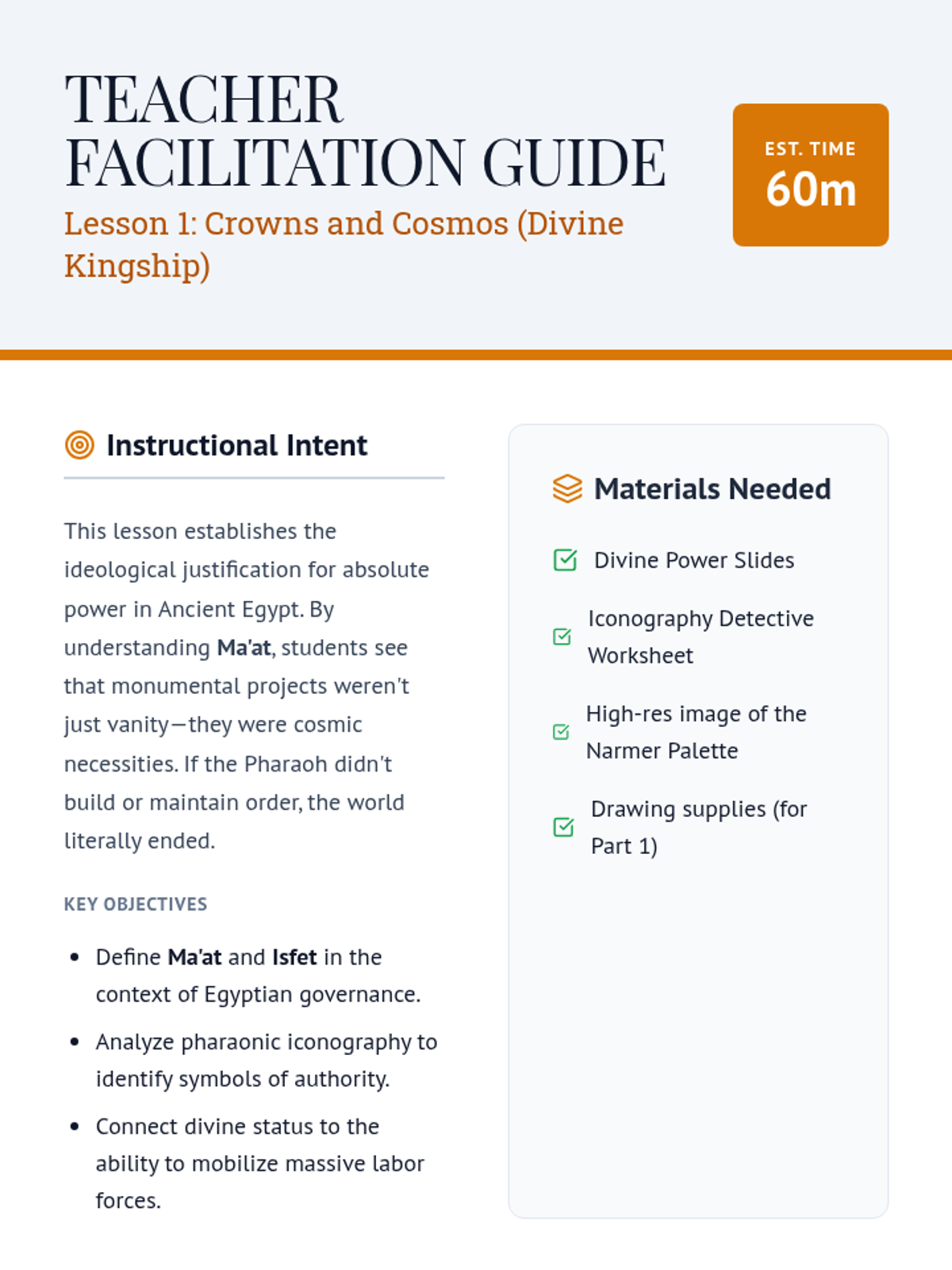
An inquiry-based exploration of how Ancient Egyptian and Kushite rulers used monumental architecture and divine kingship to consolidate political power, mobilize labor, and create lasting propaganda. Students analyze the transition from the Old Kingdom's pyramids to the New Kingdom's temple complexes through the lens of political legitimacy and economic impact.
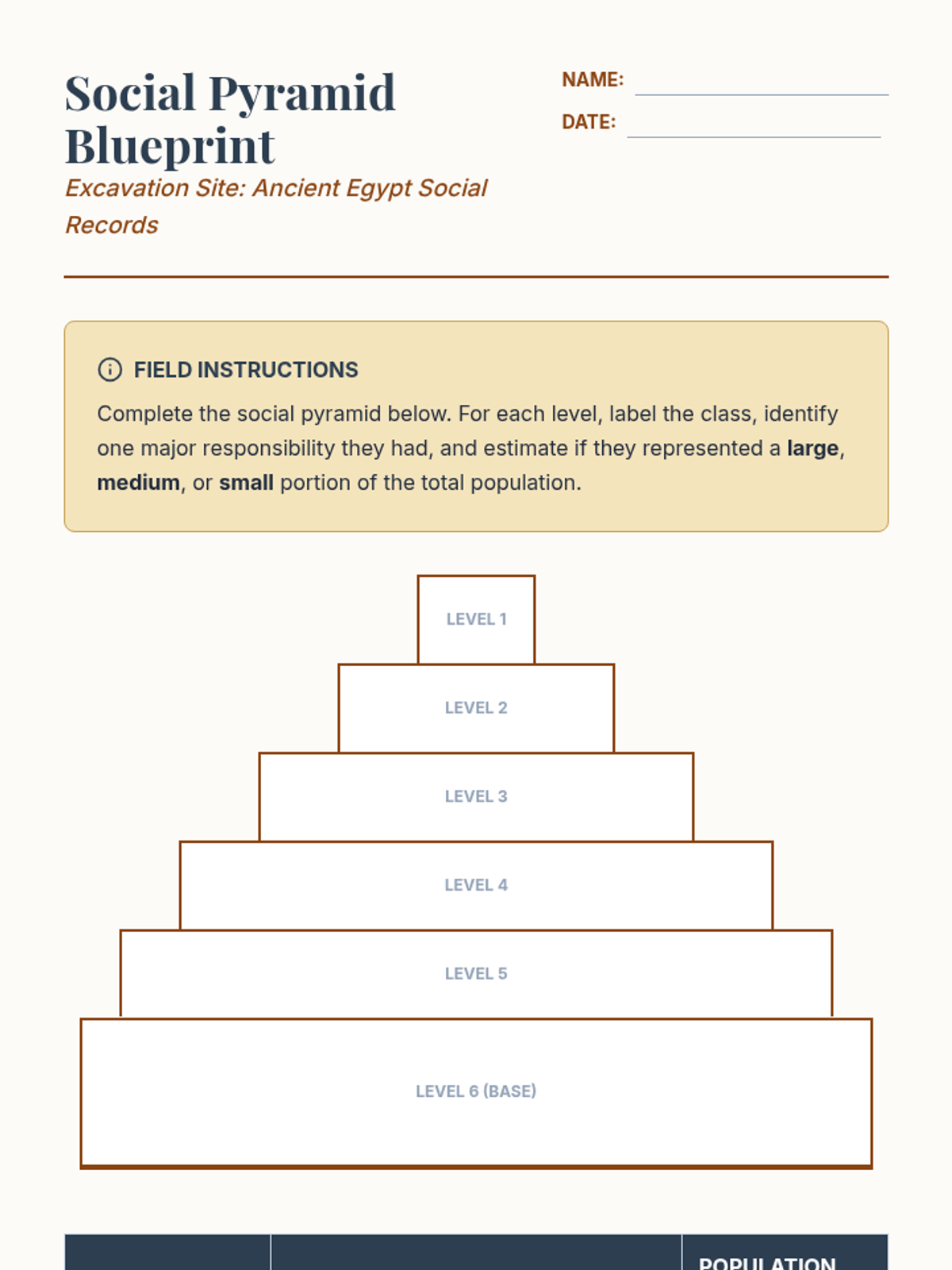
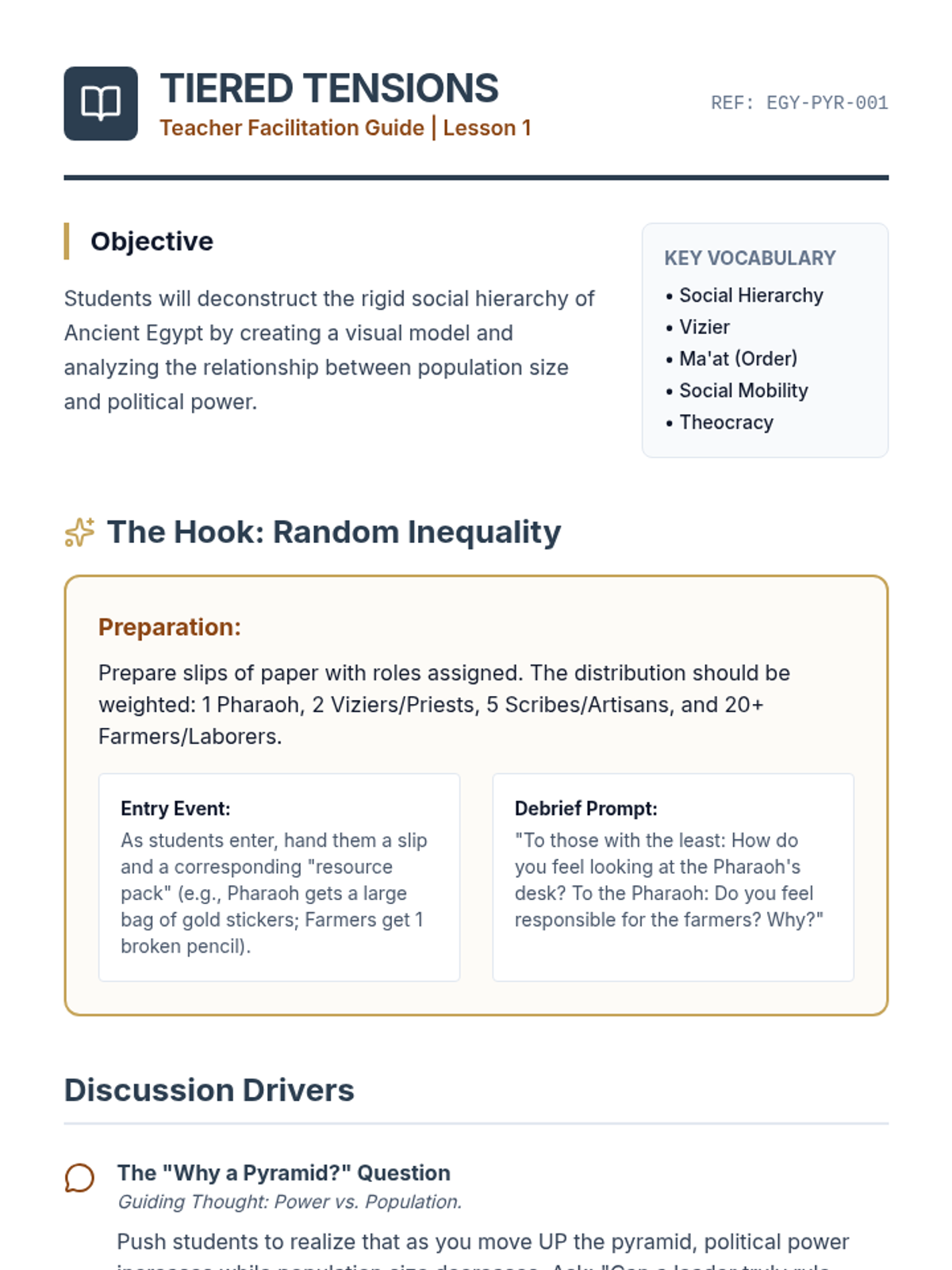
This sequence examines the rigid social hierarchy of Ancient Egypt and the distinct roles within it, from the Pharaoh to the peasantry. Students analyze the consolidation of power, the role of bureaucracy, and the lives of specific rulers through case studies and simulations.
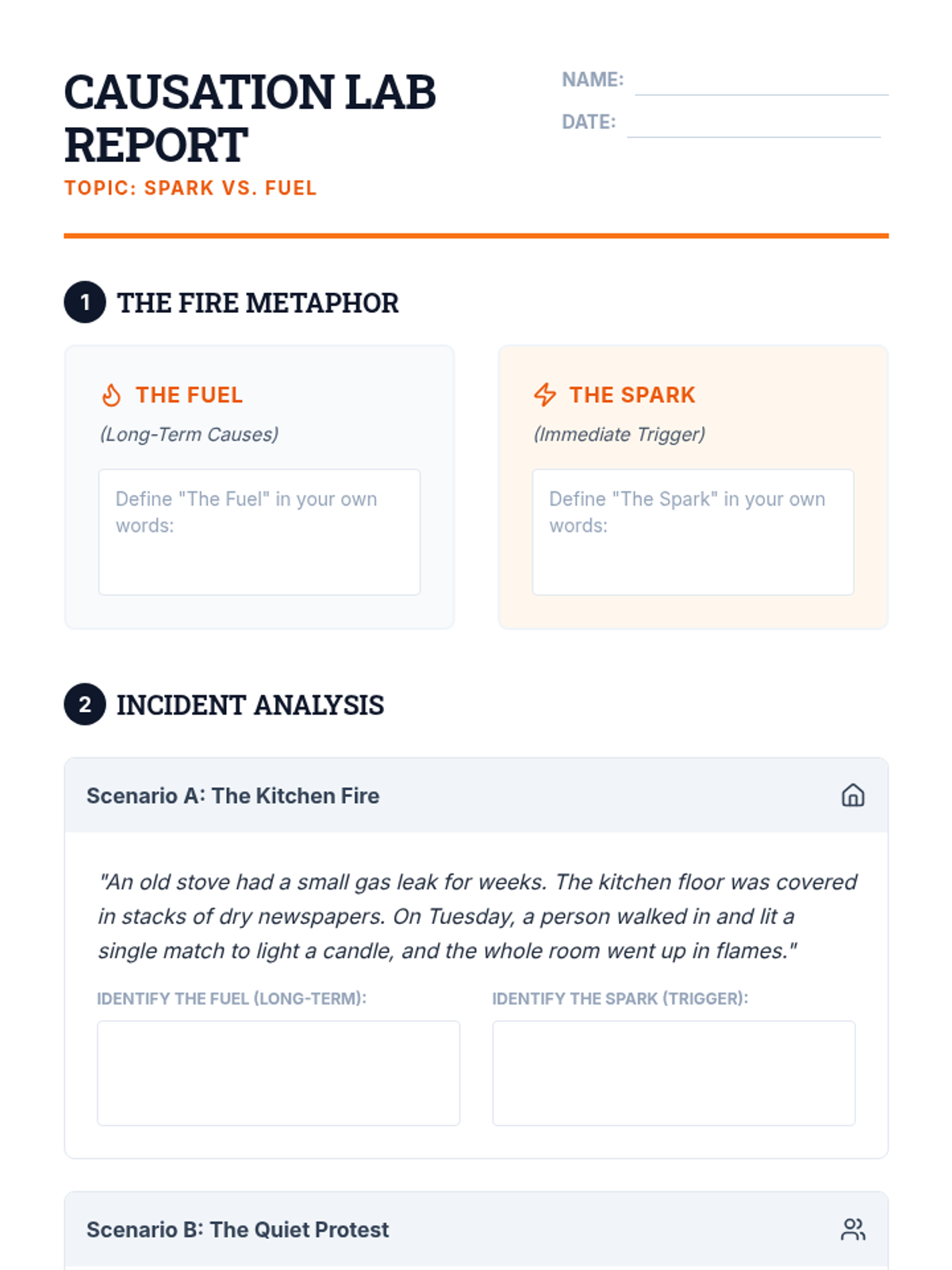
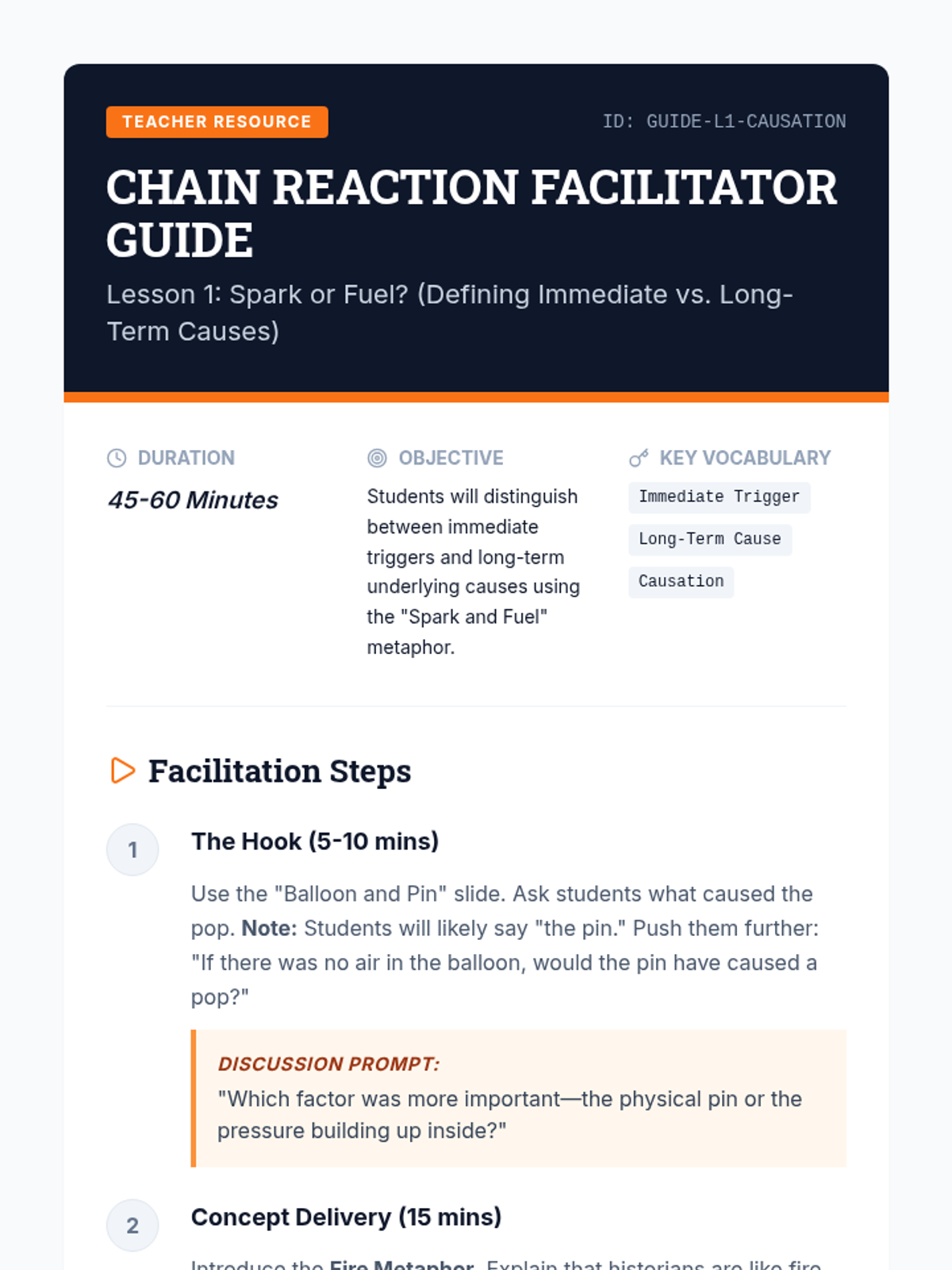
This sequence explores the relationship between long-term background causes (the fuel) and immediate triggers (the spark) in historical events. Students use the SPE (Social, Political, Economic) framework to categorize factors and learn to weigh the relative importance of different causes in driving significant historical change.
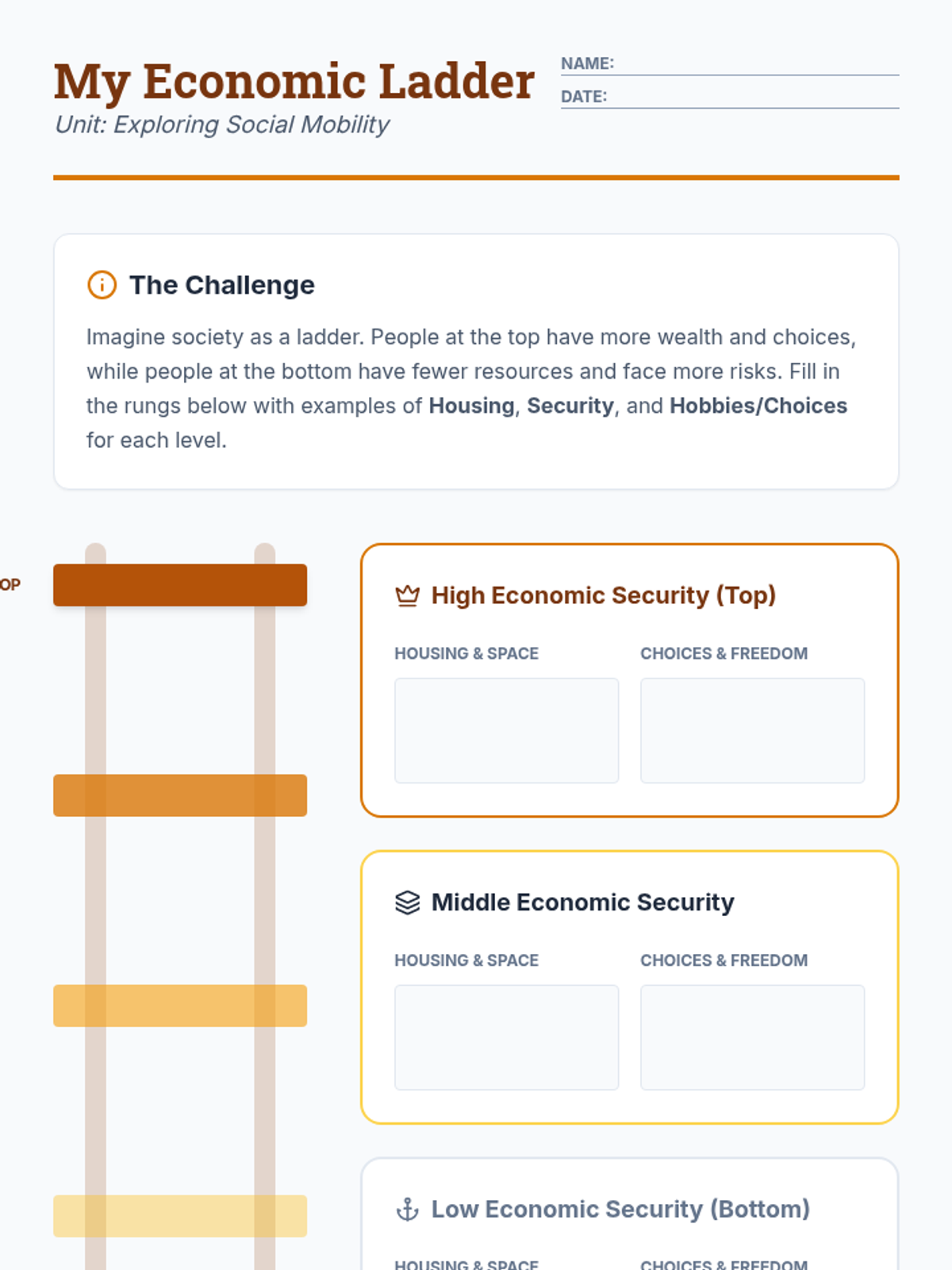
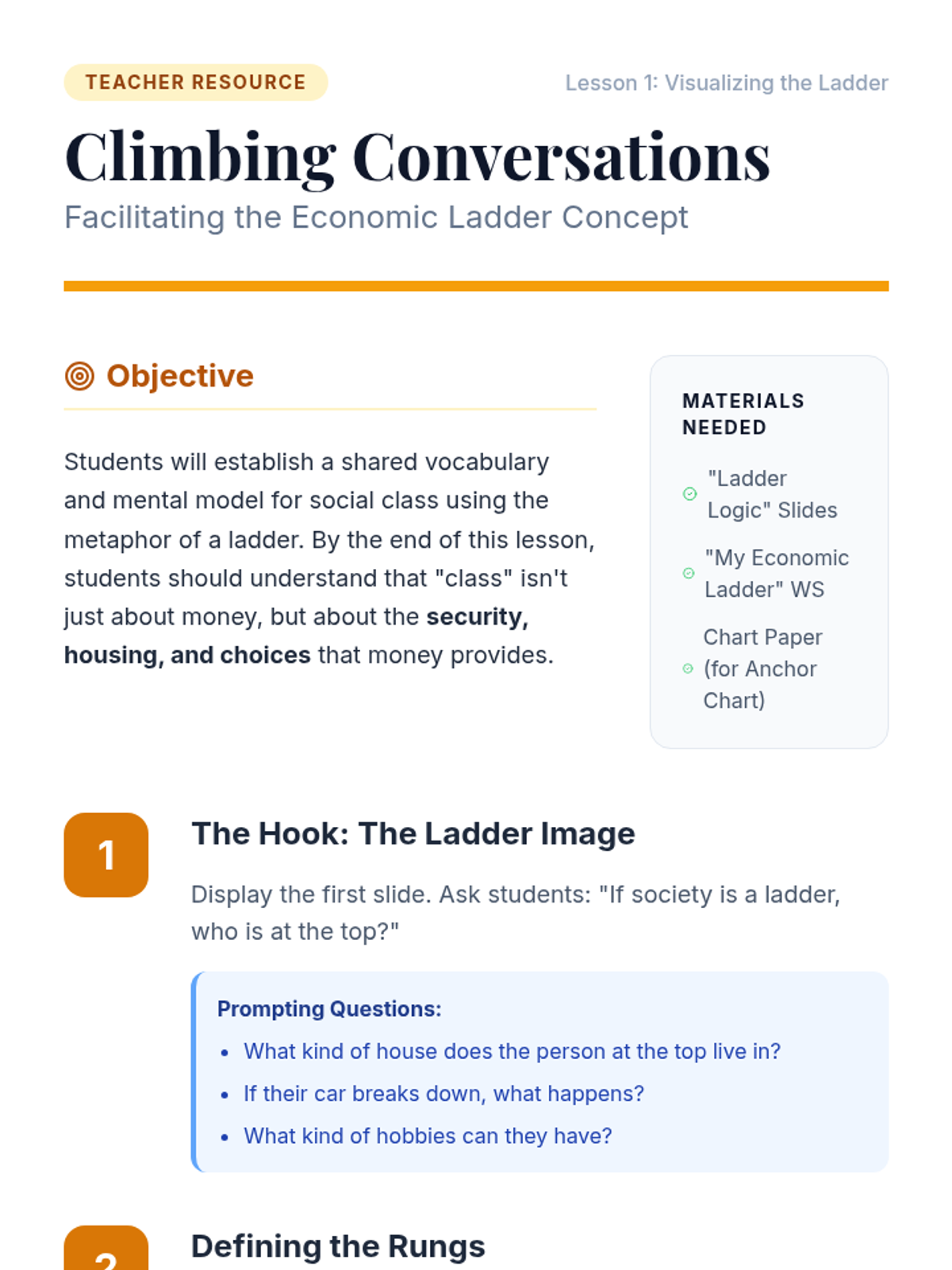
Using literature and historical narratives, this sequence helps students understand social mobility through the 'economic ladder' metaphor. Students analyze the California Gold Rush, fictional stories of hardship, and participate in a privilege simulation to identify both barriers and supports in achieving economic security.
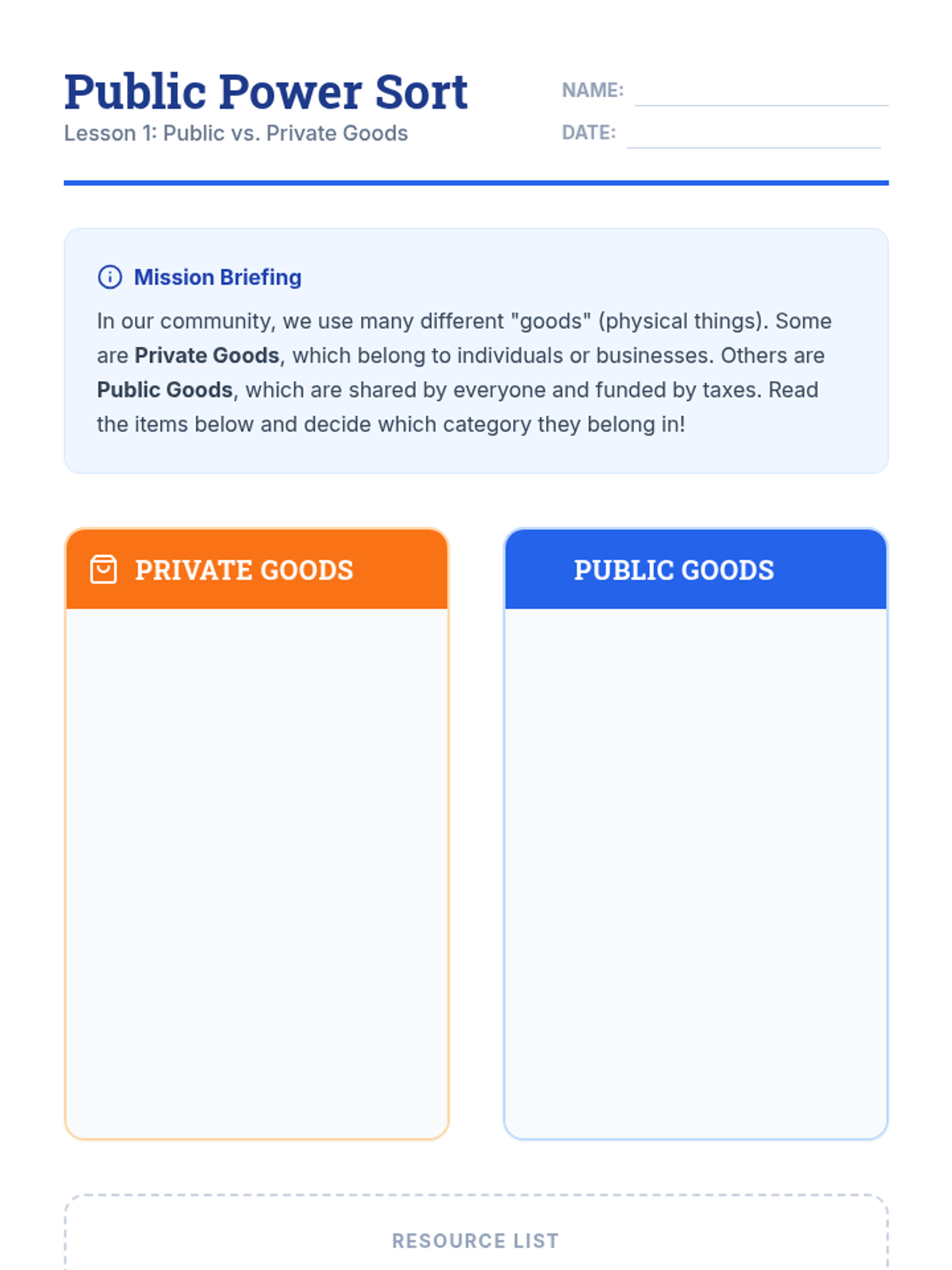
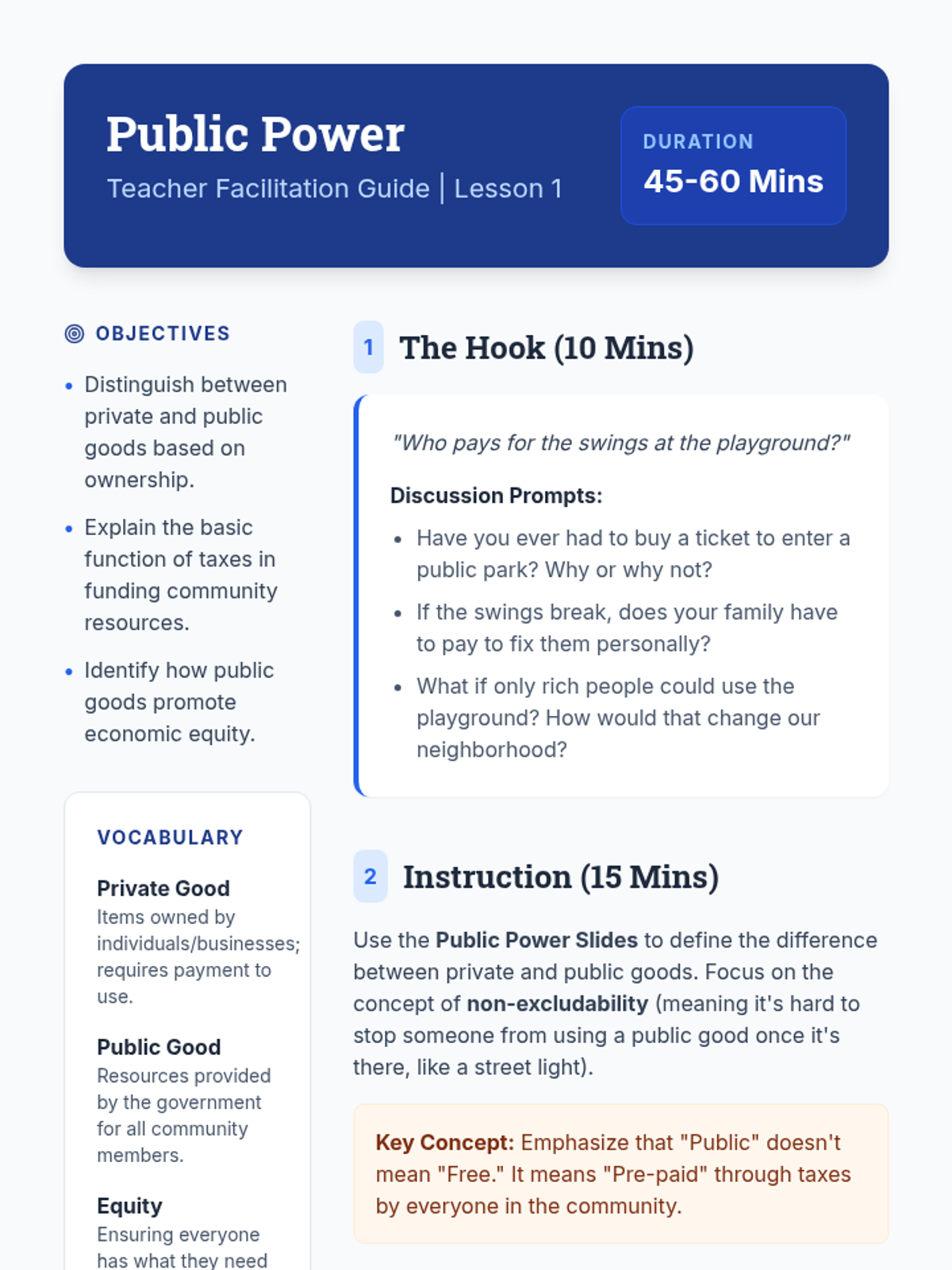
This sequence explores how geographic location and community resources impact economic opportunity. Students investigate public goods, map resource density in neighborhoods, analyze food and transit deserts, and evaluate the effects of school funding differences, culminating in a civic proposal for community equity.
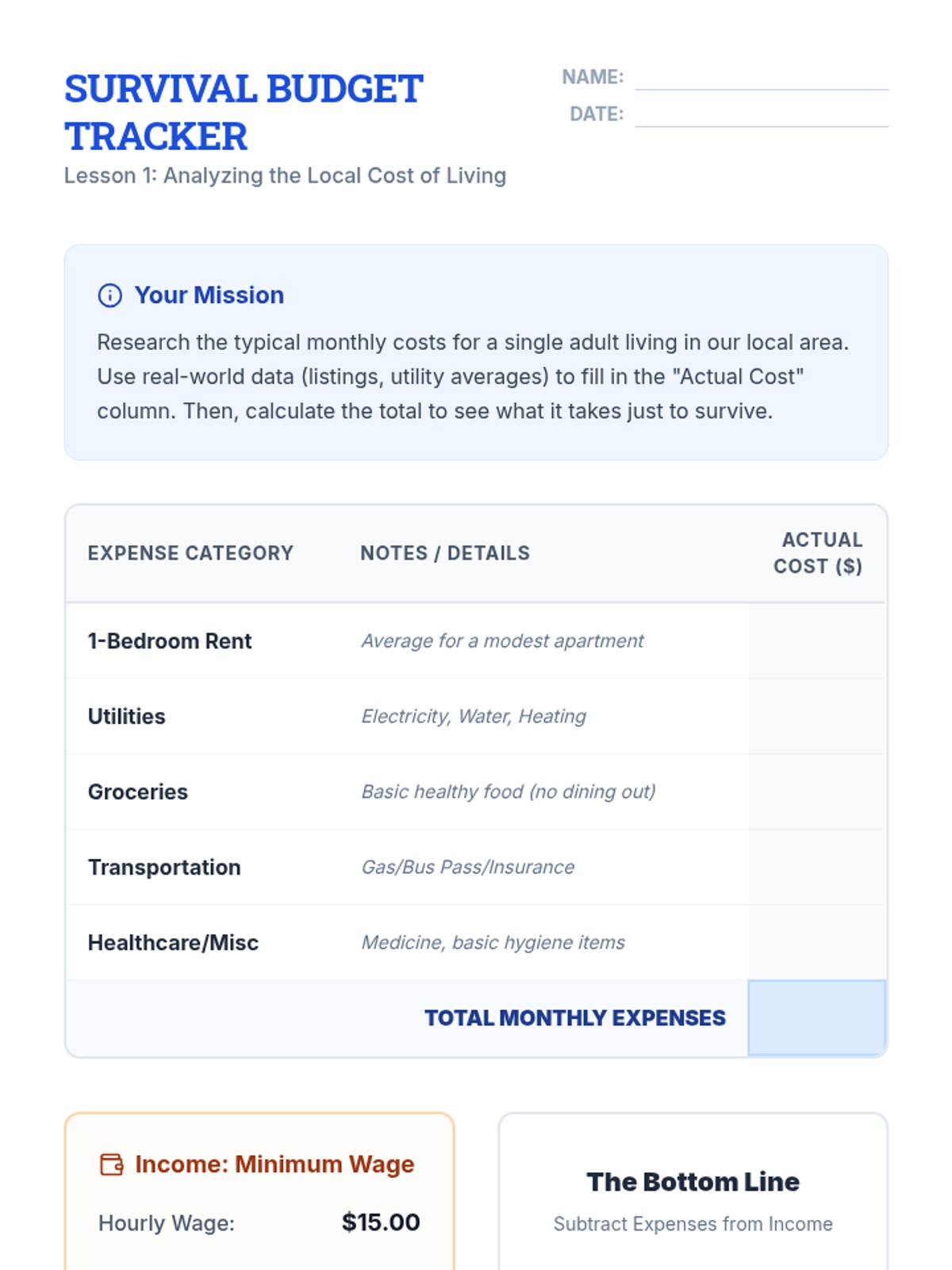
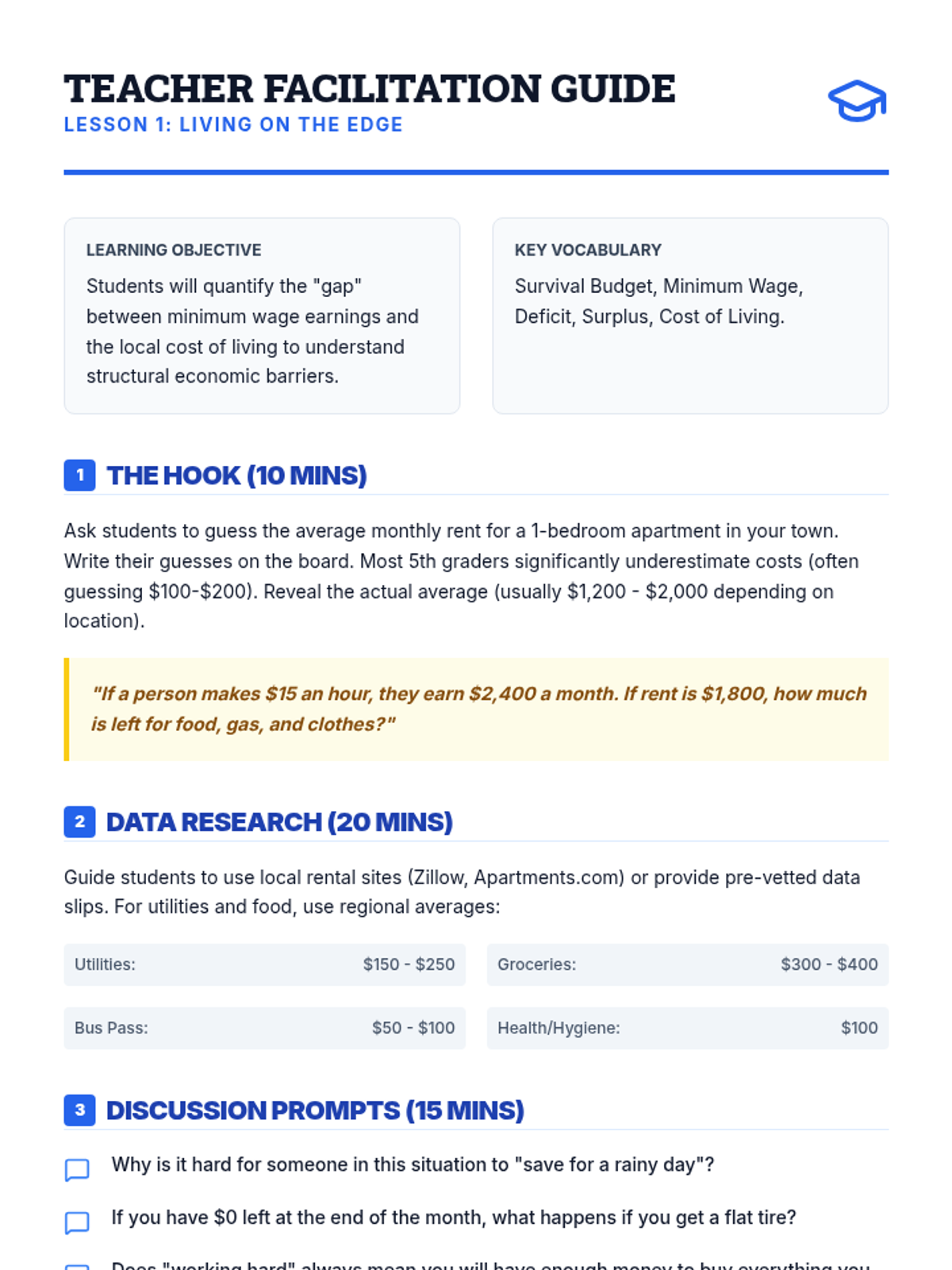
This sequence examines the practical barriers to social mobility through the lens of budgeting and cost-of-living analysis. Students analyze concrete data regarding income, housing, and unexpected expenses to understand the structural challenges of economic inequality.
This sequence explores the diverse political structures and social hierarchies of the Maya, Aztec, and Inca civilizations, focusing on how power was maintained and resources were distributed through tribute and labor.
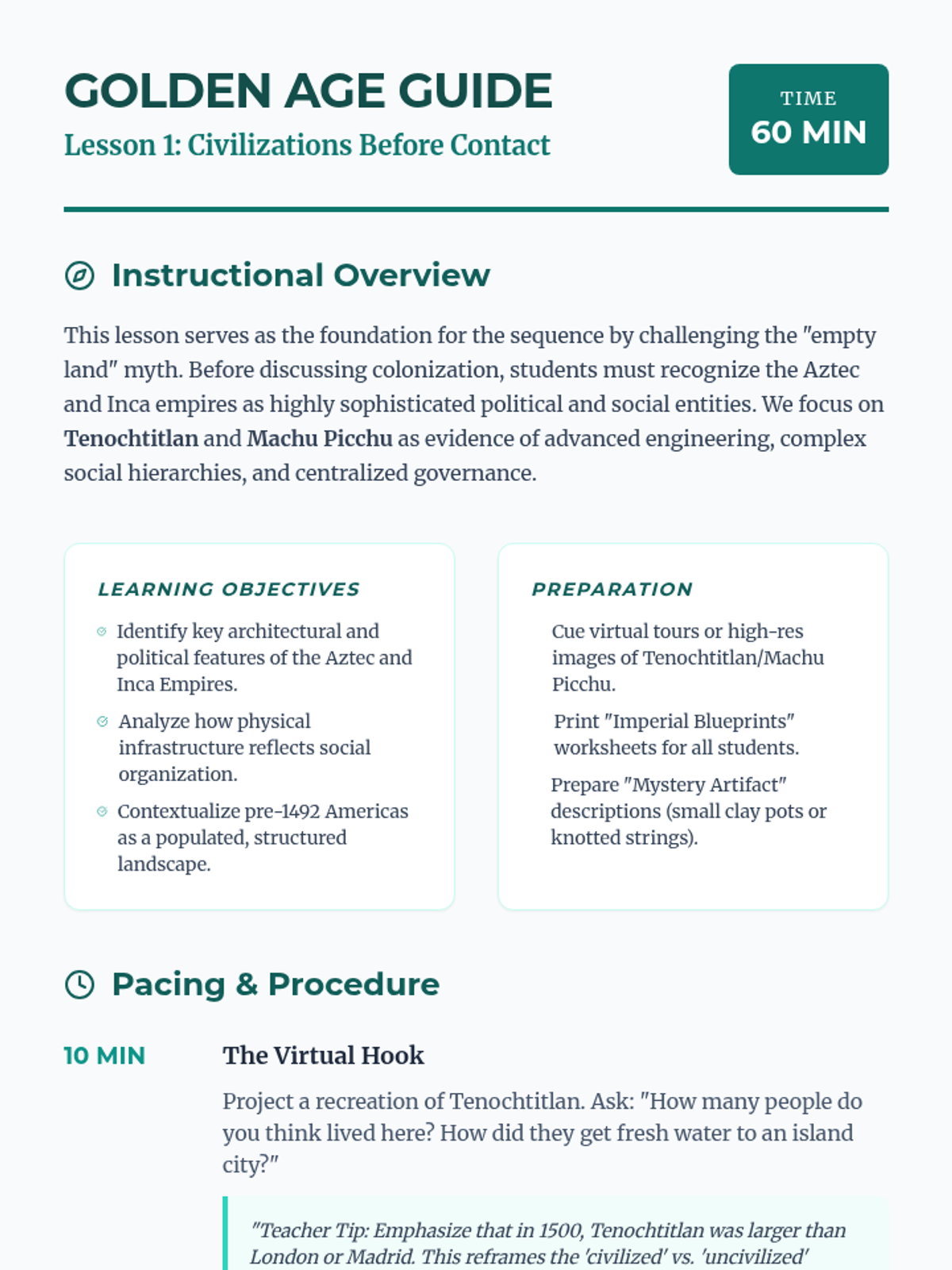
A critical exploration of the Age of Exploration, focusing on the sophisticated Aztec and Inca empires, the complexities of first encounters, and the long-term socio-political impacts of Spanish colonization. Students analyze primary sources and debate historical narratives to understand the shift from sovereign empires to colonial territories.
Students explore the Kingdom of Kush, a powerful Nubian civilization south of Egypt. They analyze its unique geography, natural resources (gold and iron), cultural exchange with Egypt, the rise of the 25th Dynasty "Black Pharaohs," and the powerful role of female leaders known as Kandakes.
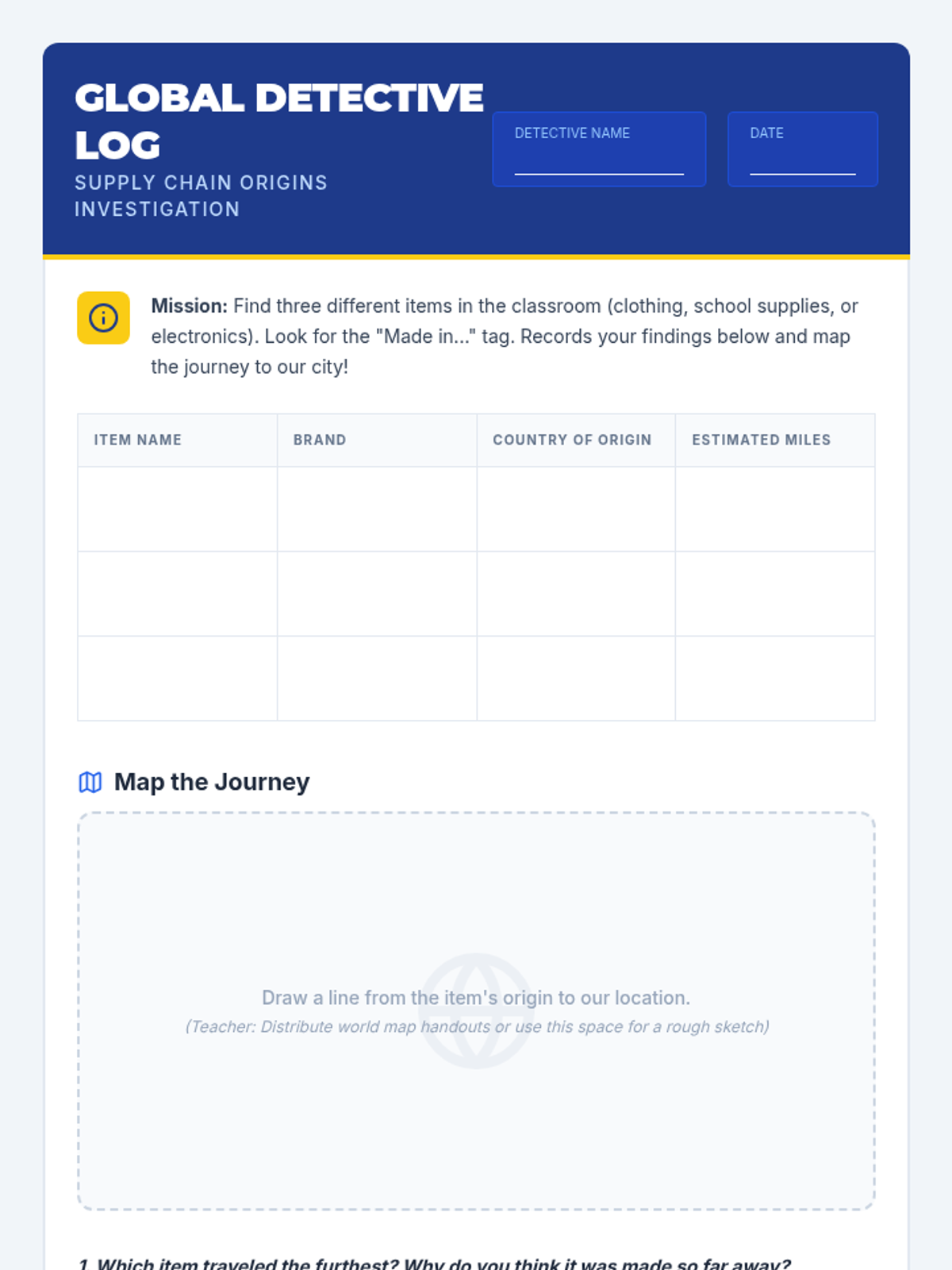
Students explore economic inequality and global trade by tracing the supply chains of everyday objects. They analyze how wealth is distributed among producers, manufacturers, and retailers, culminating in the design of a 'fair trade' product model.
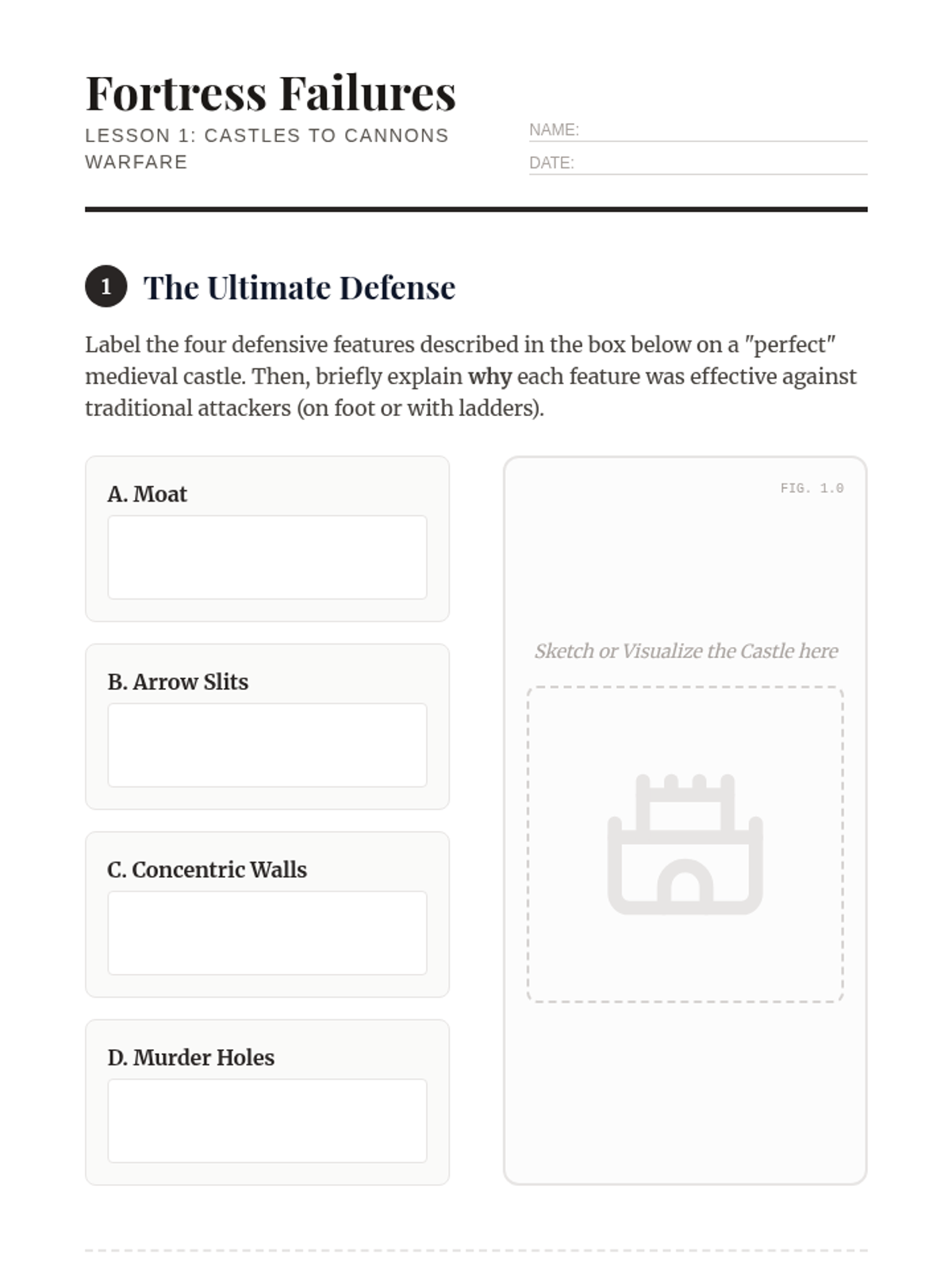
A comprehensive 5-lesson unit exploring the social, economic, and military structures of medieval Europe. Students investigate the origins of feudalism, simulate manor life, analyze the reality of knighthood, empathize with the peasantry, and design defensive castle structures.
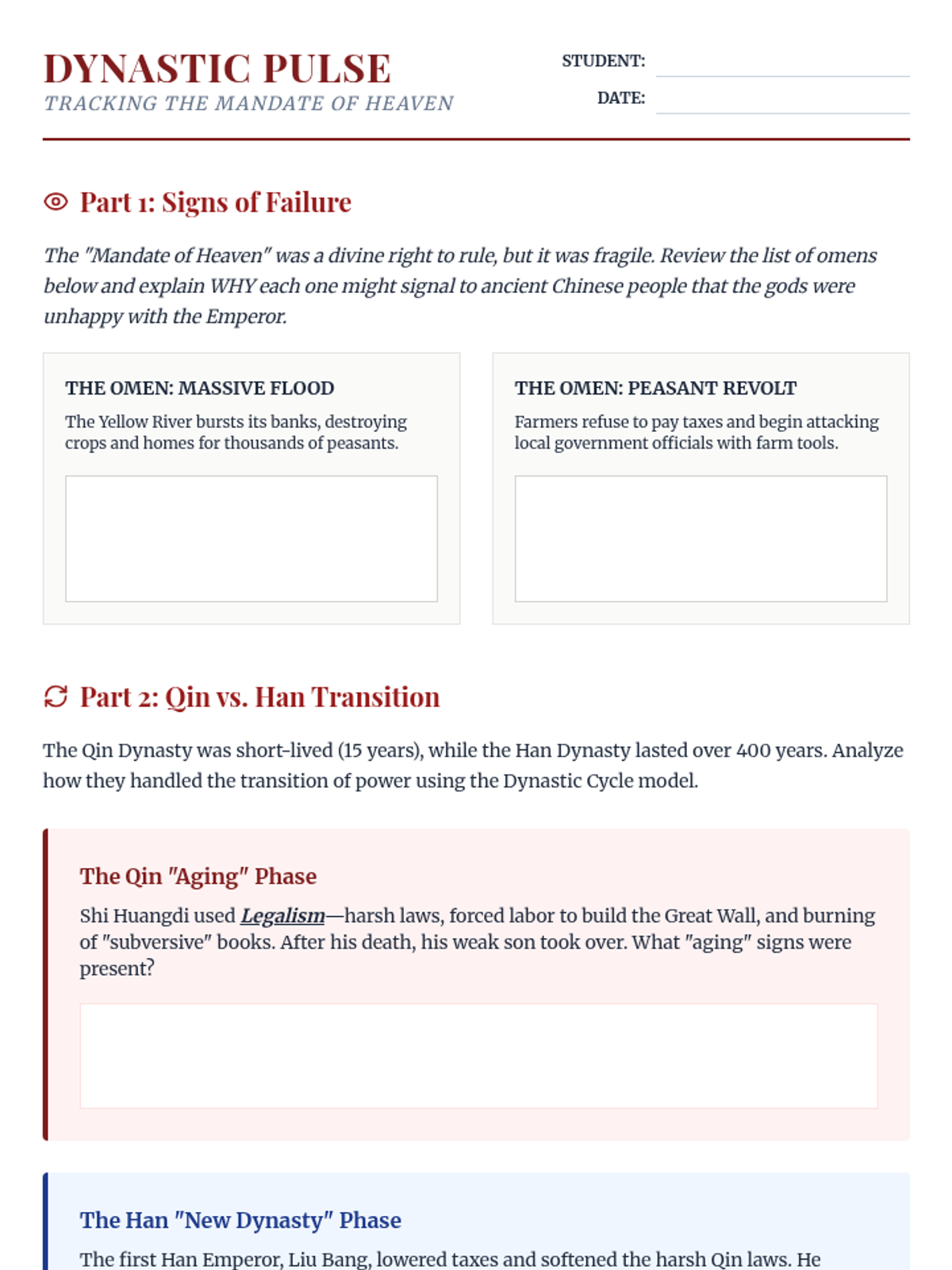
A 5-lesson unit exploring the Han Dynasty's dual pillars of power: a centralized Confucian bureaucracy and the vast economic networks of the Silk Road. Students analyze the Mandate of Heaven, simulate civil service exams, map trade routes, and investigate cultural syncretism through the spread of Buddhism.
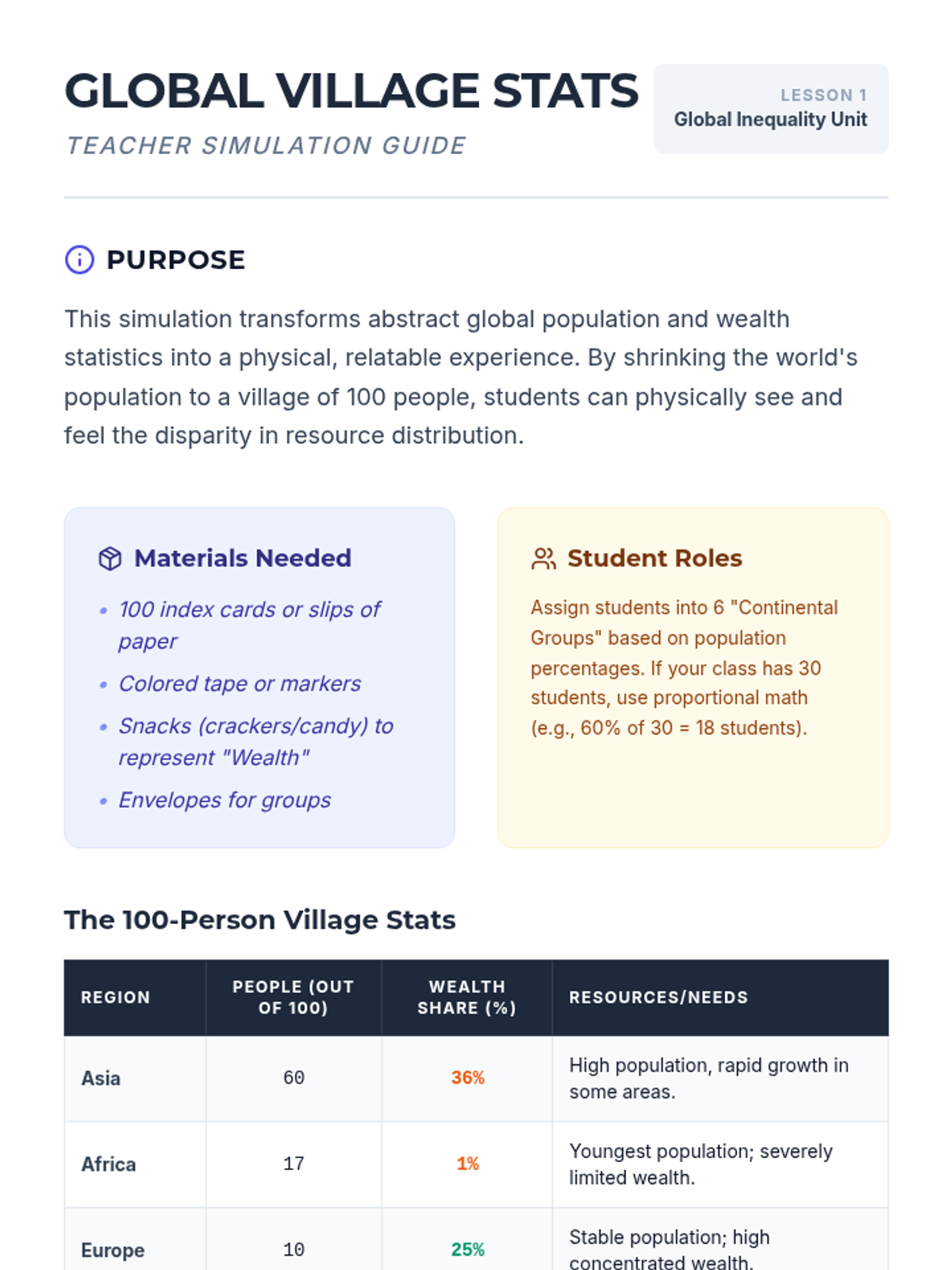
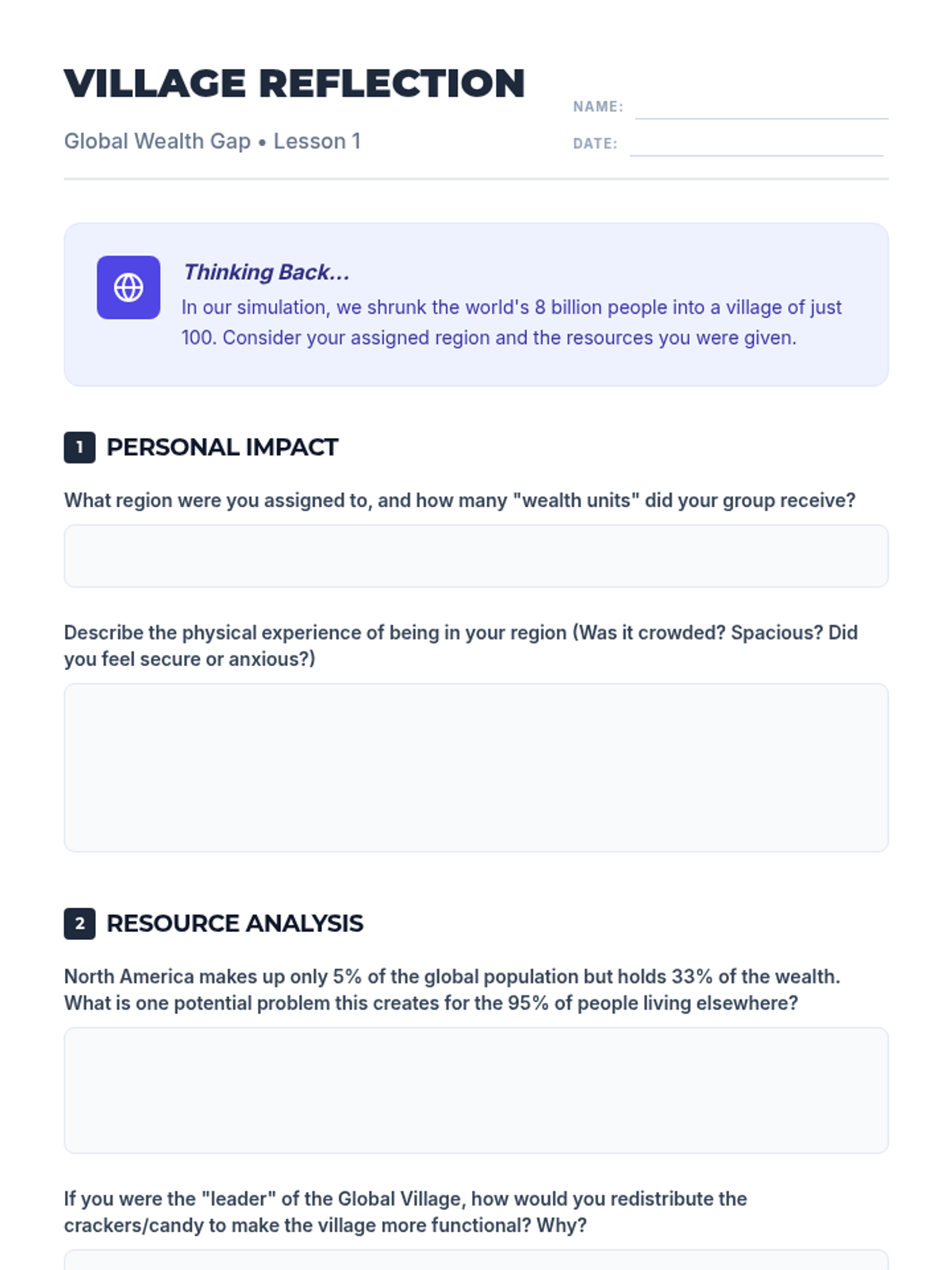
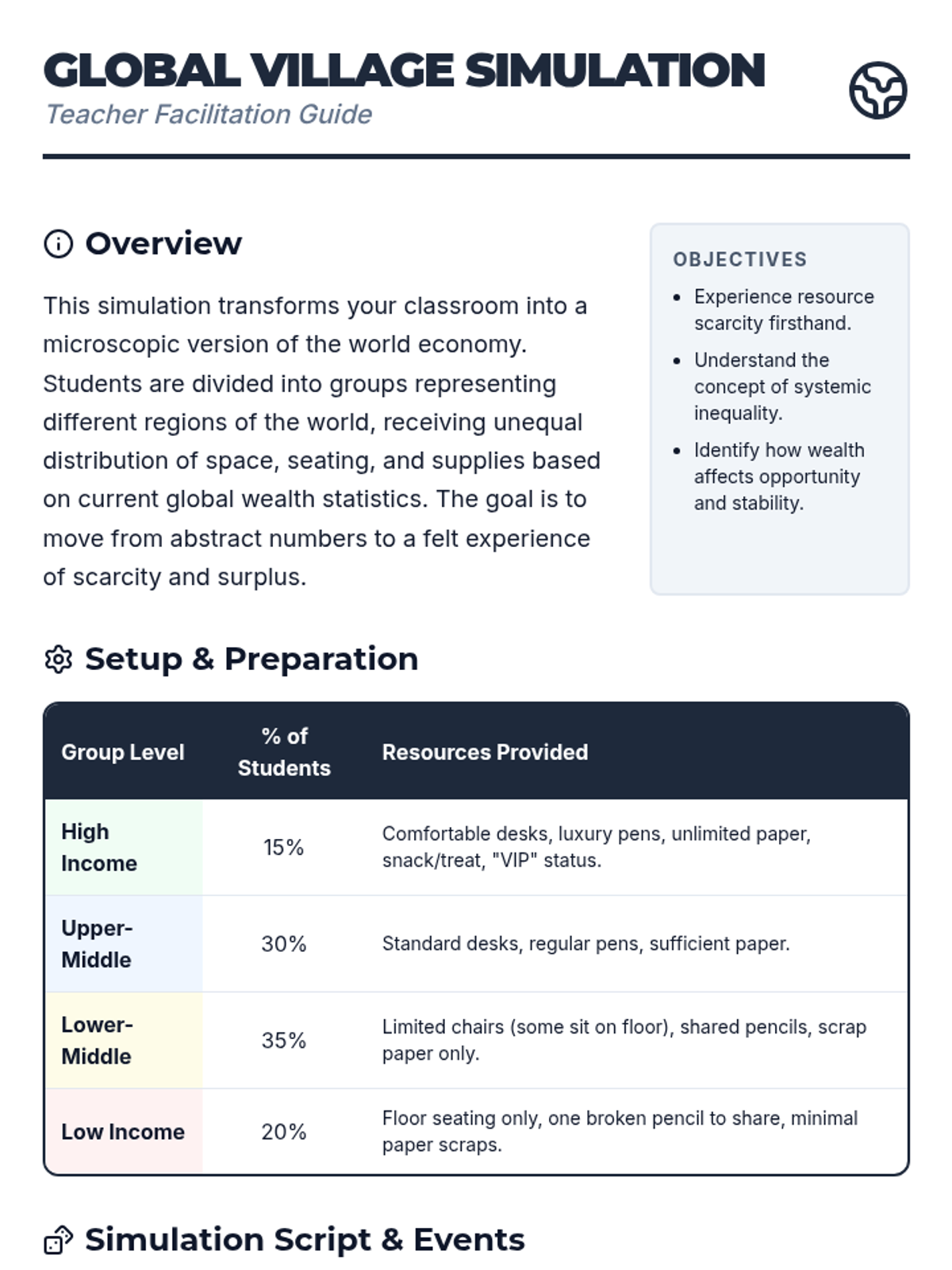
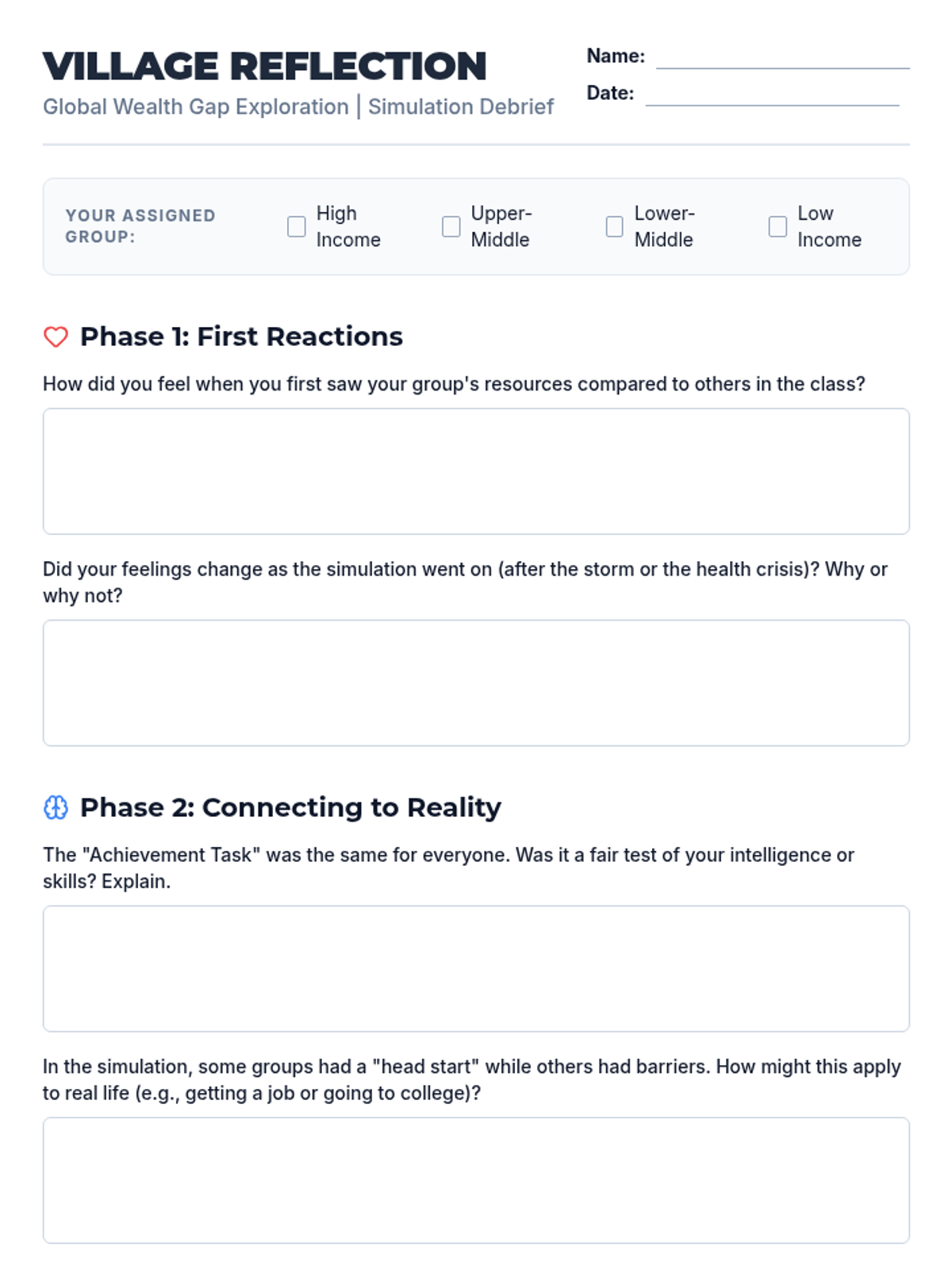
This sequence explores the multifaceted nature of global economic inequality through simulations, data analysis of GDP and HDI, investigation of infrastructure's role, historical analysis of colonial legacies, and evaluation of modern economic solutions. Students move from emotional engagement to technical mastery and critical problem-solving.
An immersive 6th-grade sequence exploring global economic inequality, starting with a resource simulation and progressing to data analysis of GDP, geography, and education, culminating in a solution proposal project.
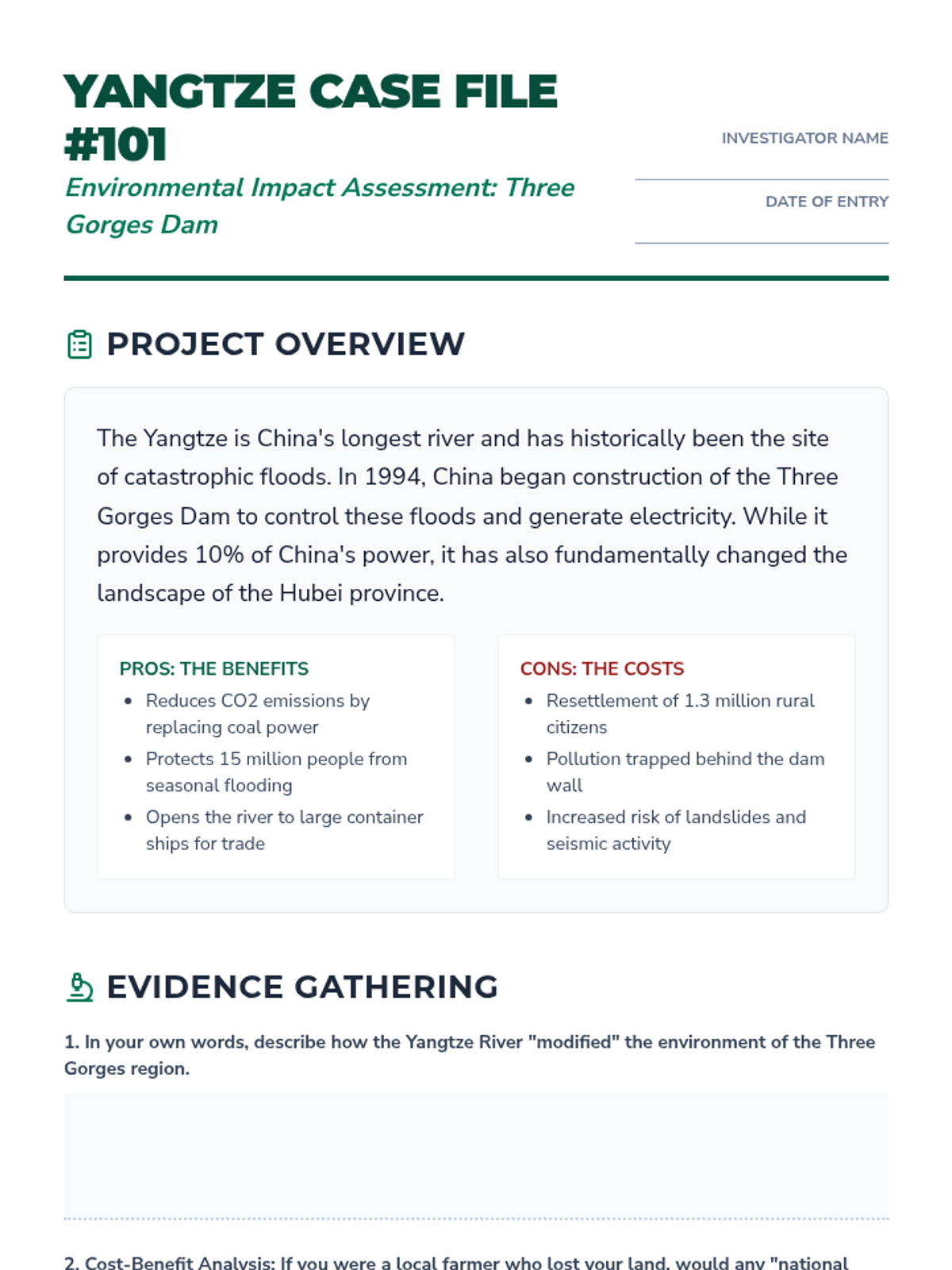
This sequence explores the environmental consequences of rapid development in Asia and the strategies being implemented to mitigate them. Students investigate the Three Gorges Dam, air pollution, disappearing deltas, deforestation, and green innovations through case studies, data analysis, and debate.
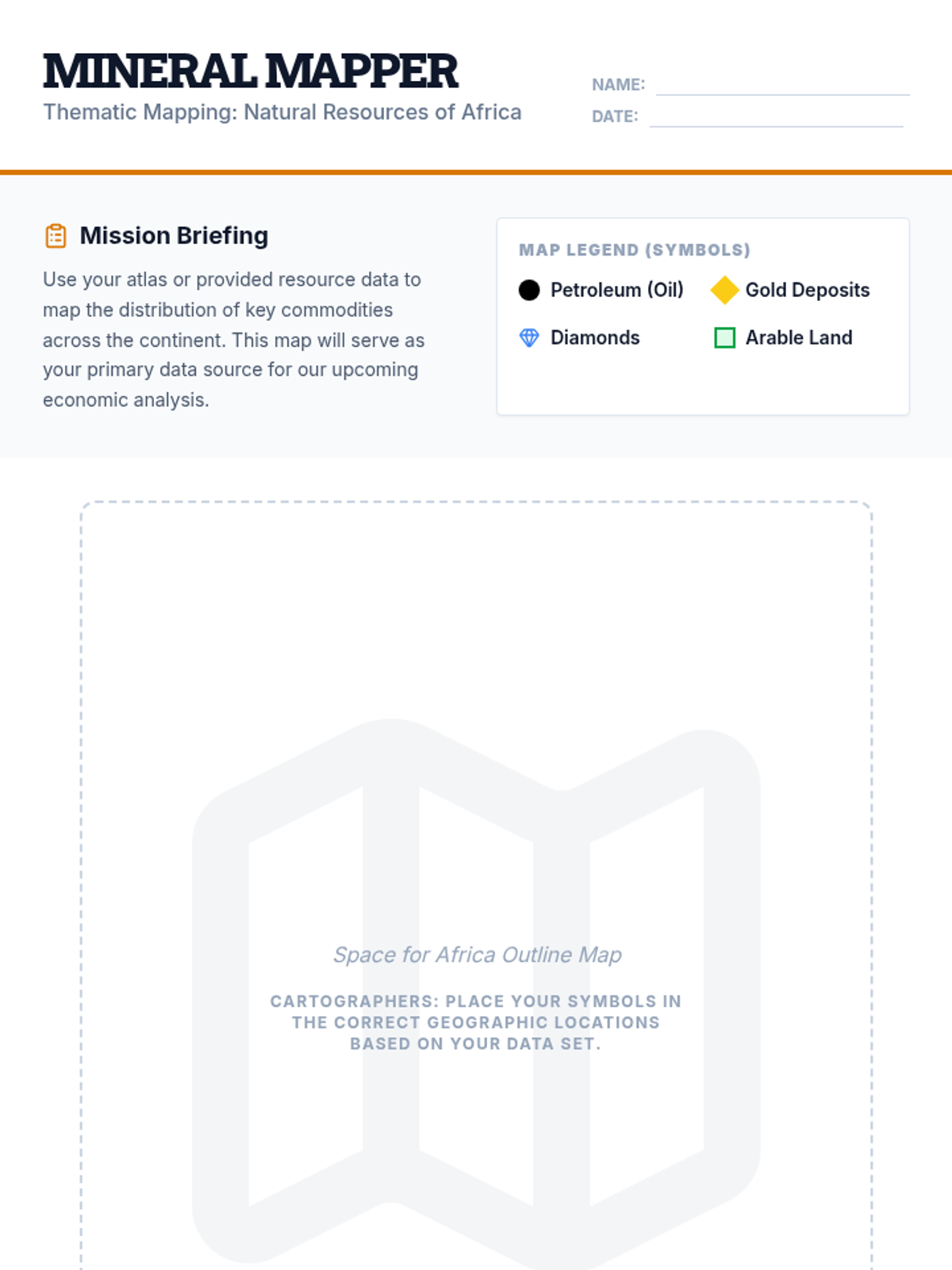
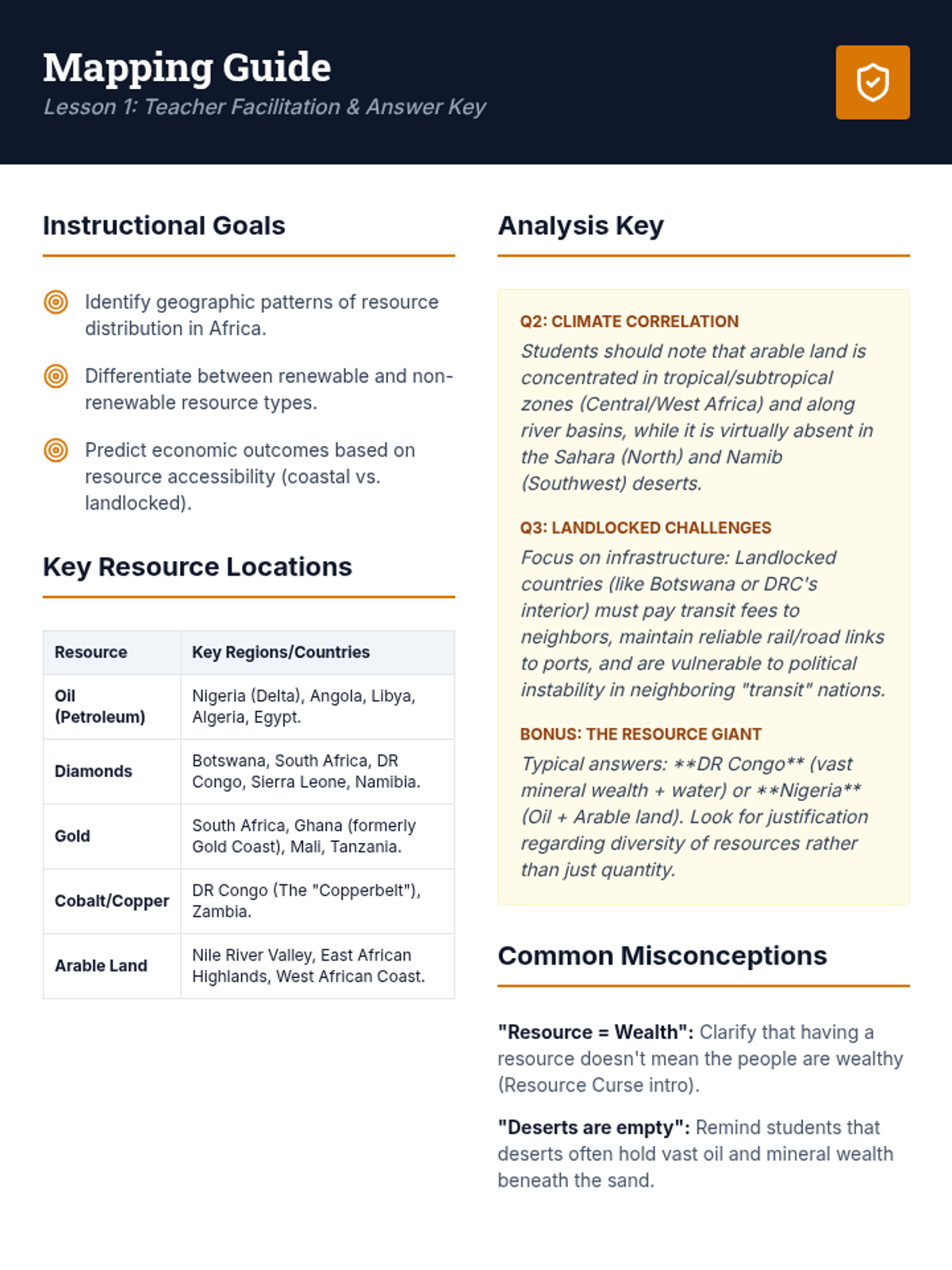
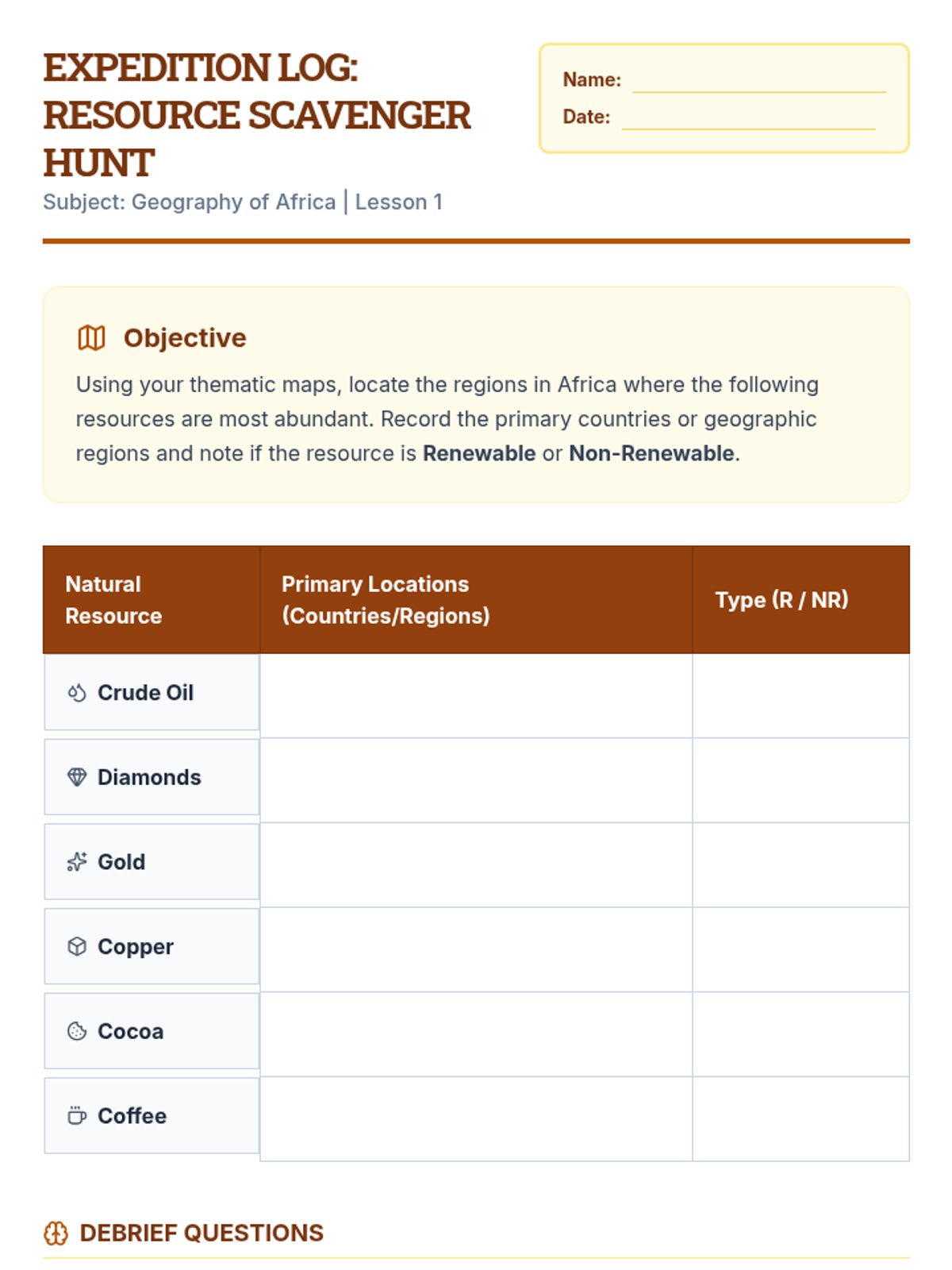
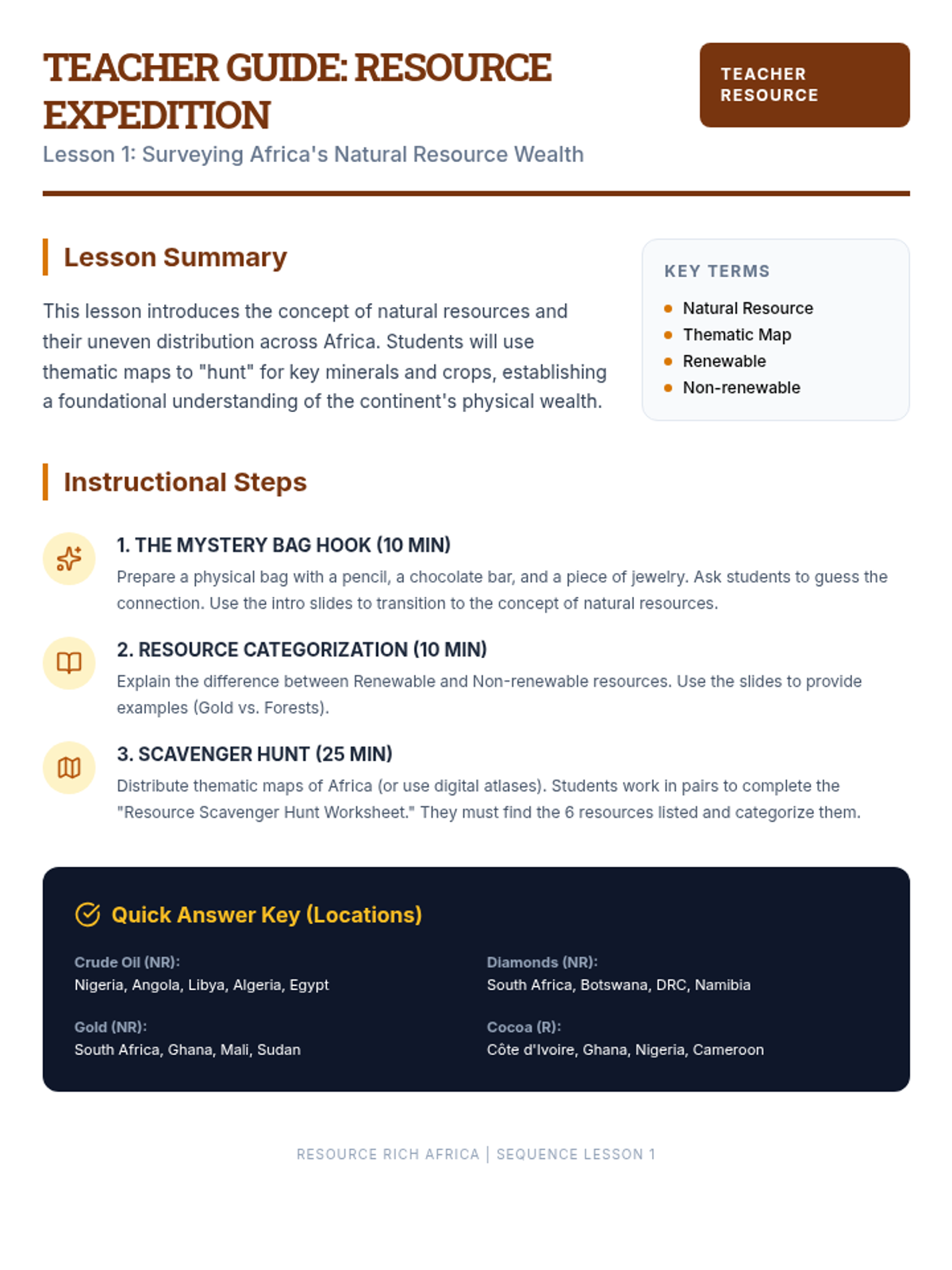
A project-based exploration of Africa's natural resources, economic development, and environmental impact. Students analyze thematic maps, investigate the 'resource curse' in the Niger Delta, simulate the diamond trade, debate Nile water rights, and propose economic diversification strategies.
Students explore how natural resources like oil, gold, and cocoa shape the economic and environmental landscape of Africa, culminating in a sustainable development project.
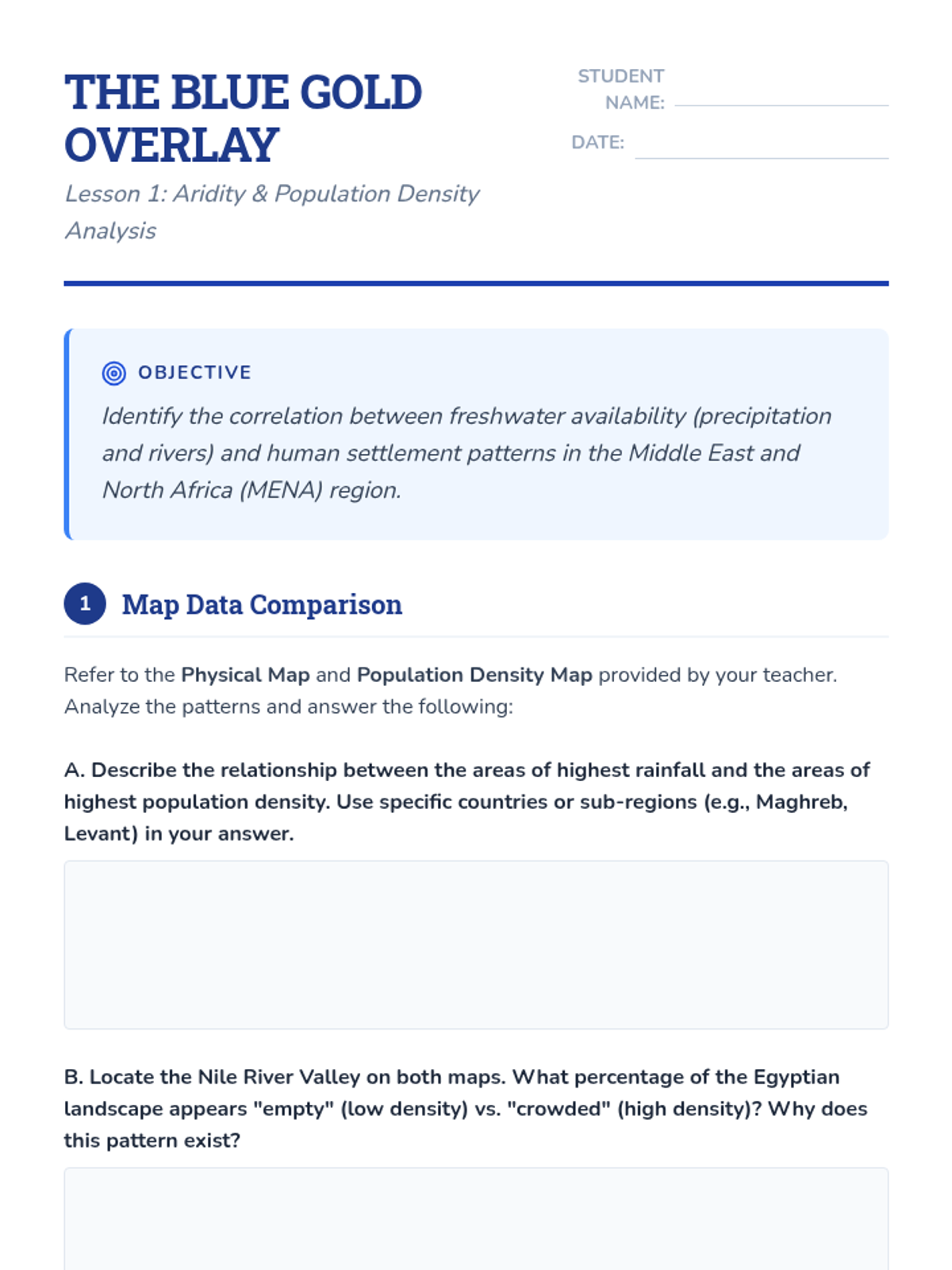
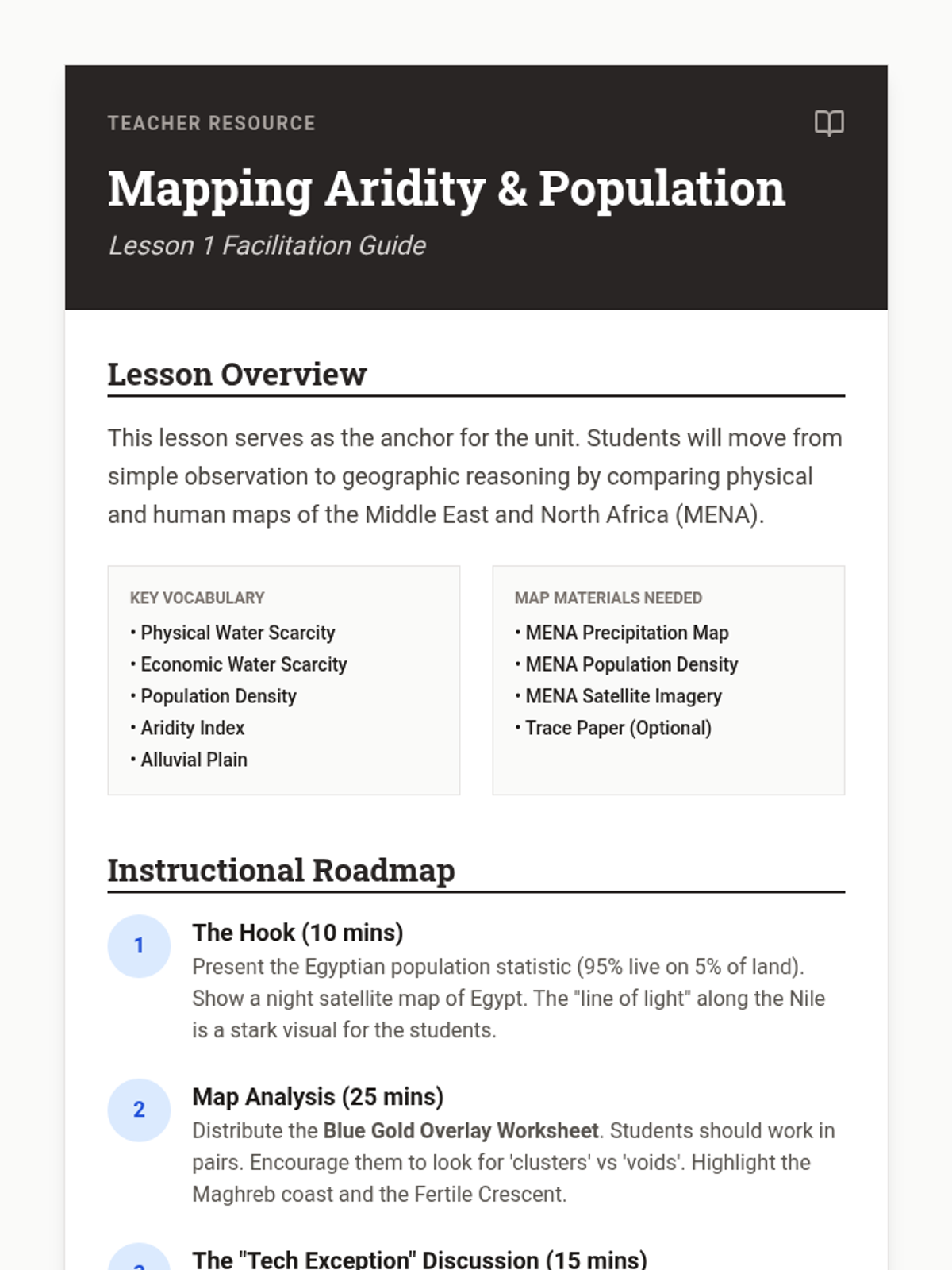
This sequence investigates the critical relationship between water availability and human settlement patterns in Southwest Asia and North Africa, covering geography, technology, politics, and urban planning.
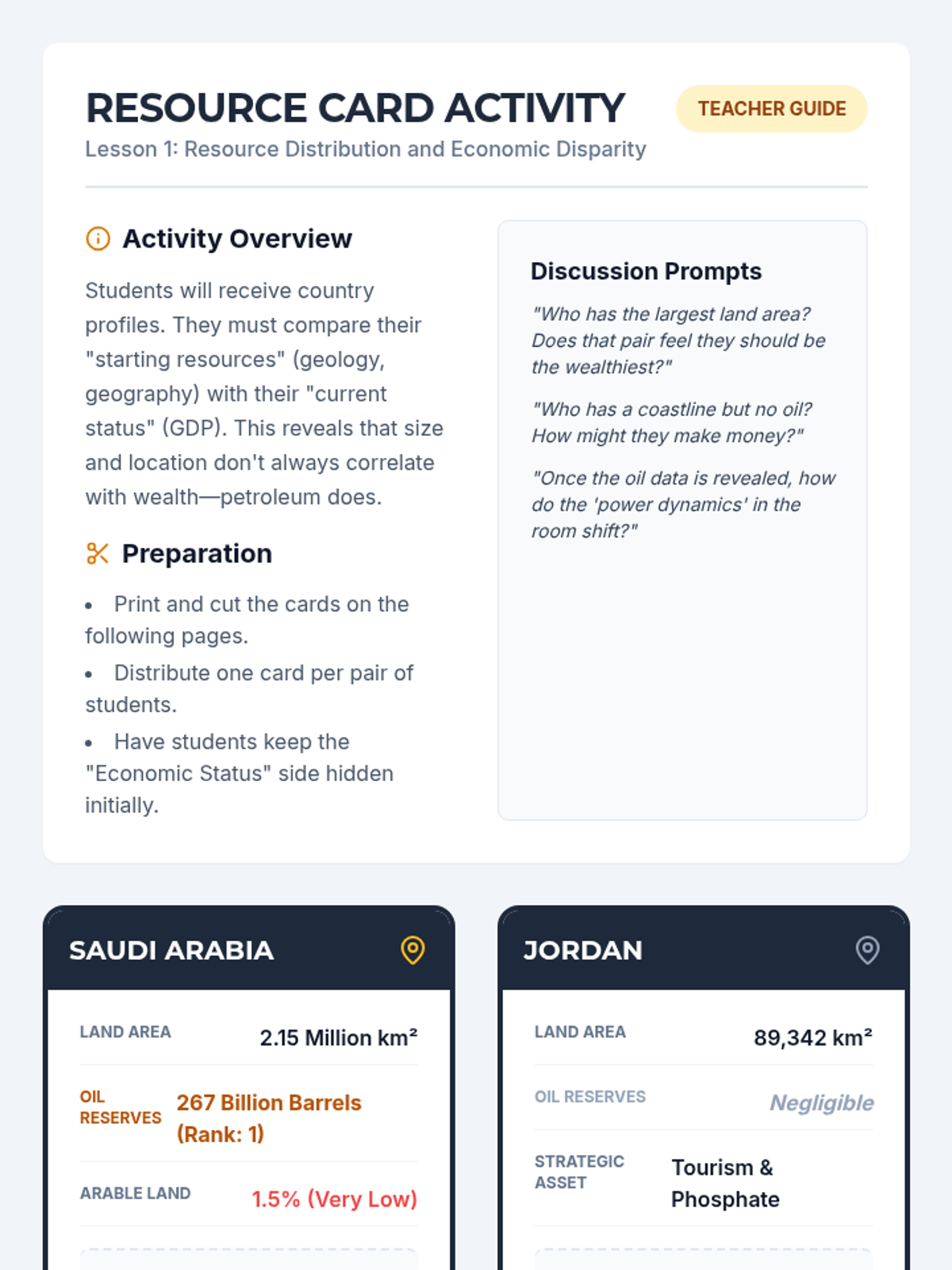
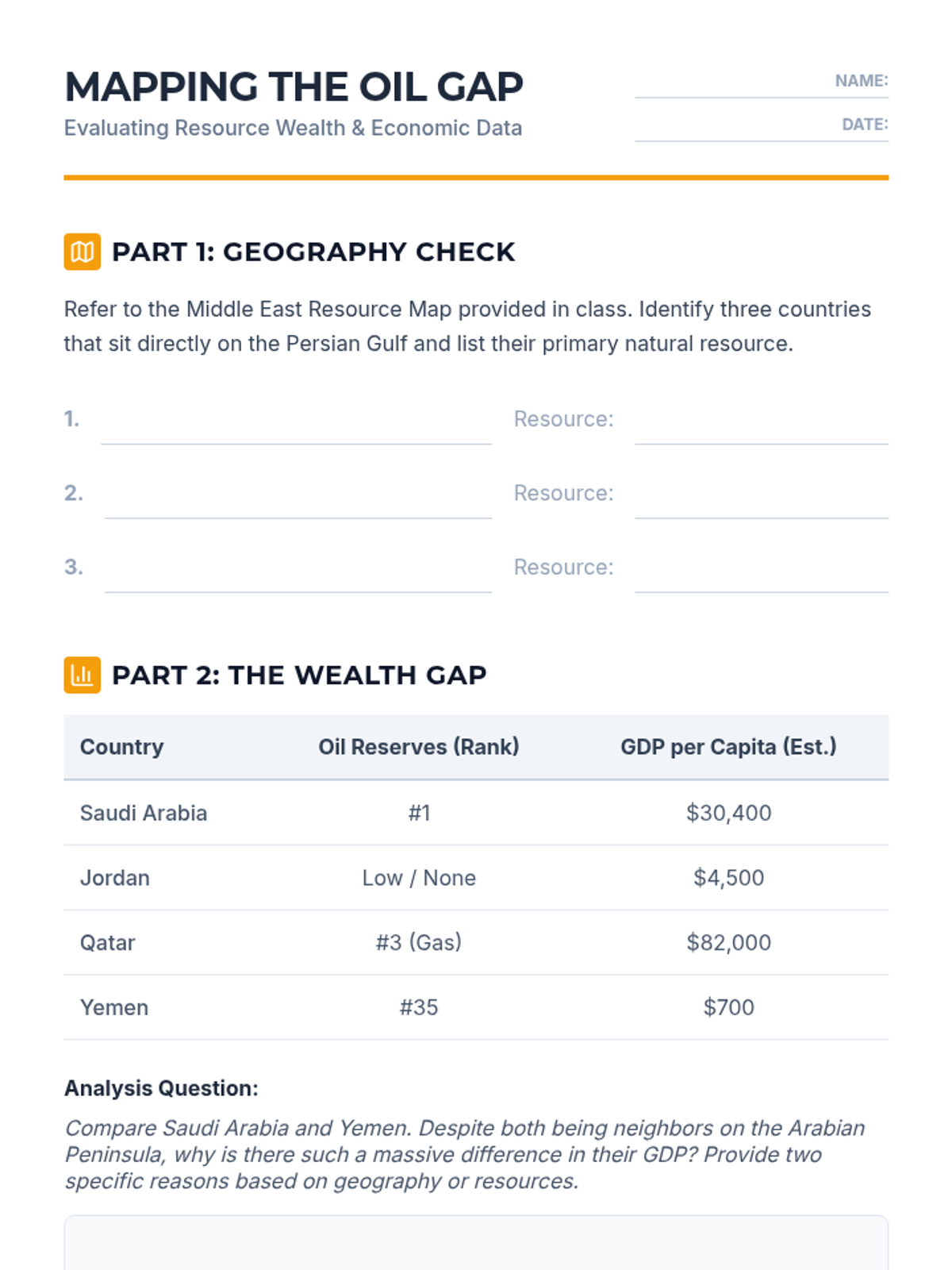
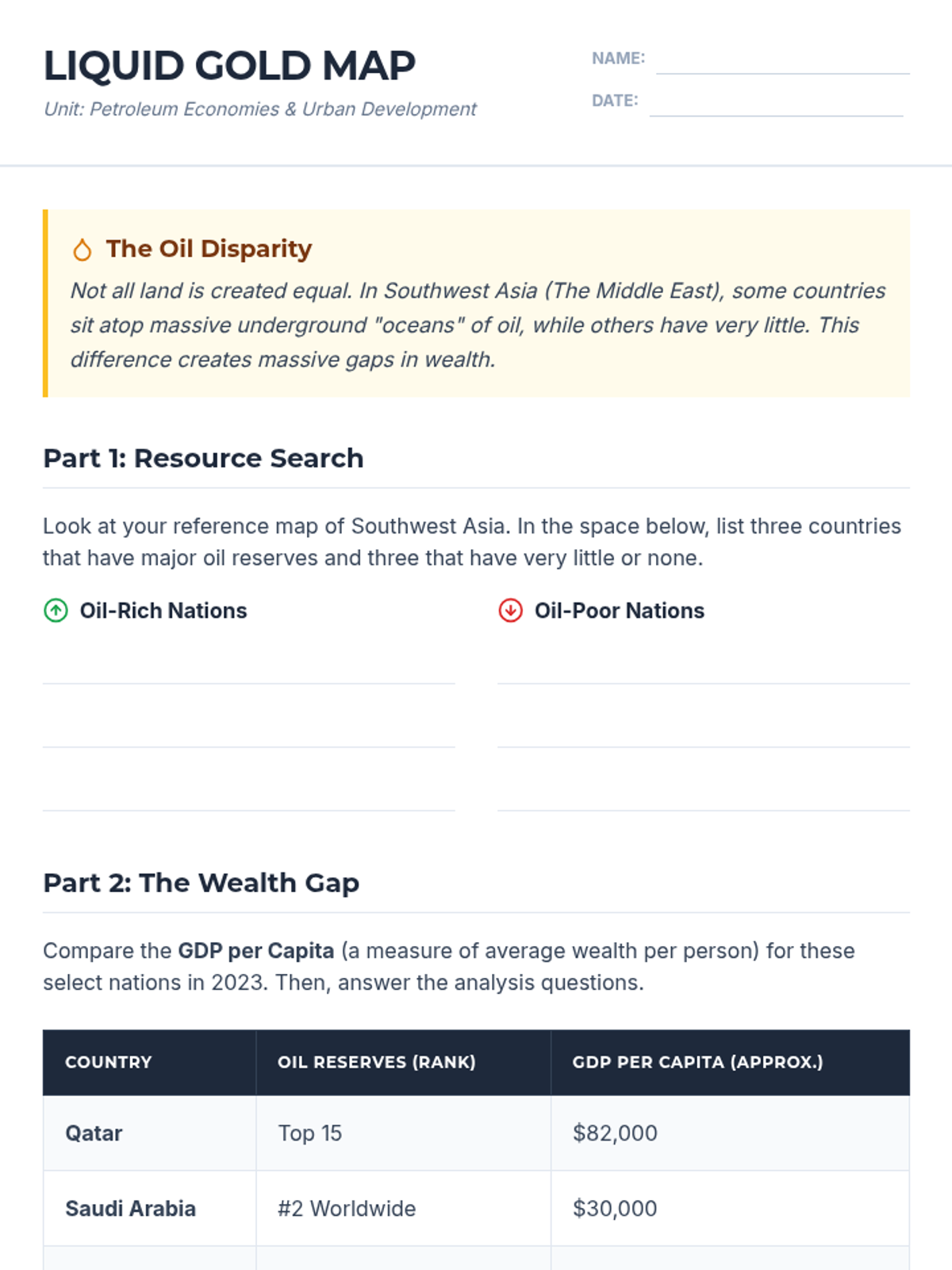
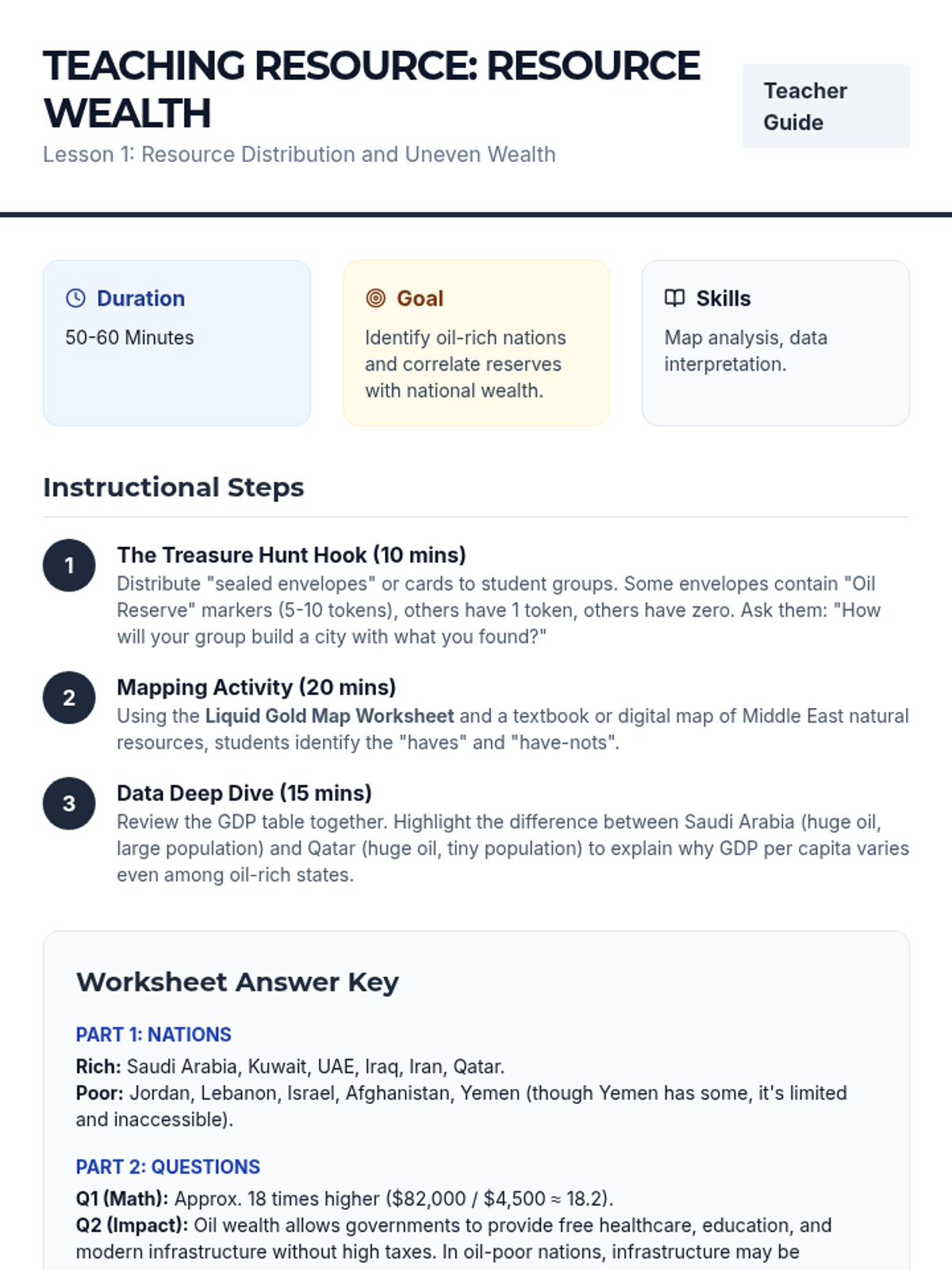
This sequence explores the transformative economic and social impact of petroleum resources on the Middle East, covering resource distribution, OPEC's global influence, rapid urbanization, the 'Resource Curse' theory, and future economic diversification strategies.
A 5-lesson sequence exploring how petroleum has reshaped the economy, environment, and society of the Middle East, from resource distribution and rapid urbanization to migrant labor and future economic diversification.
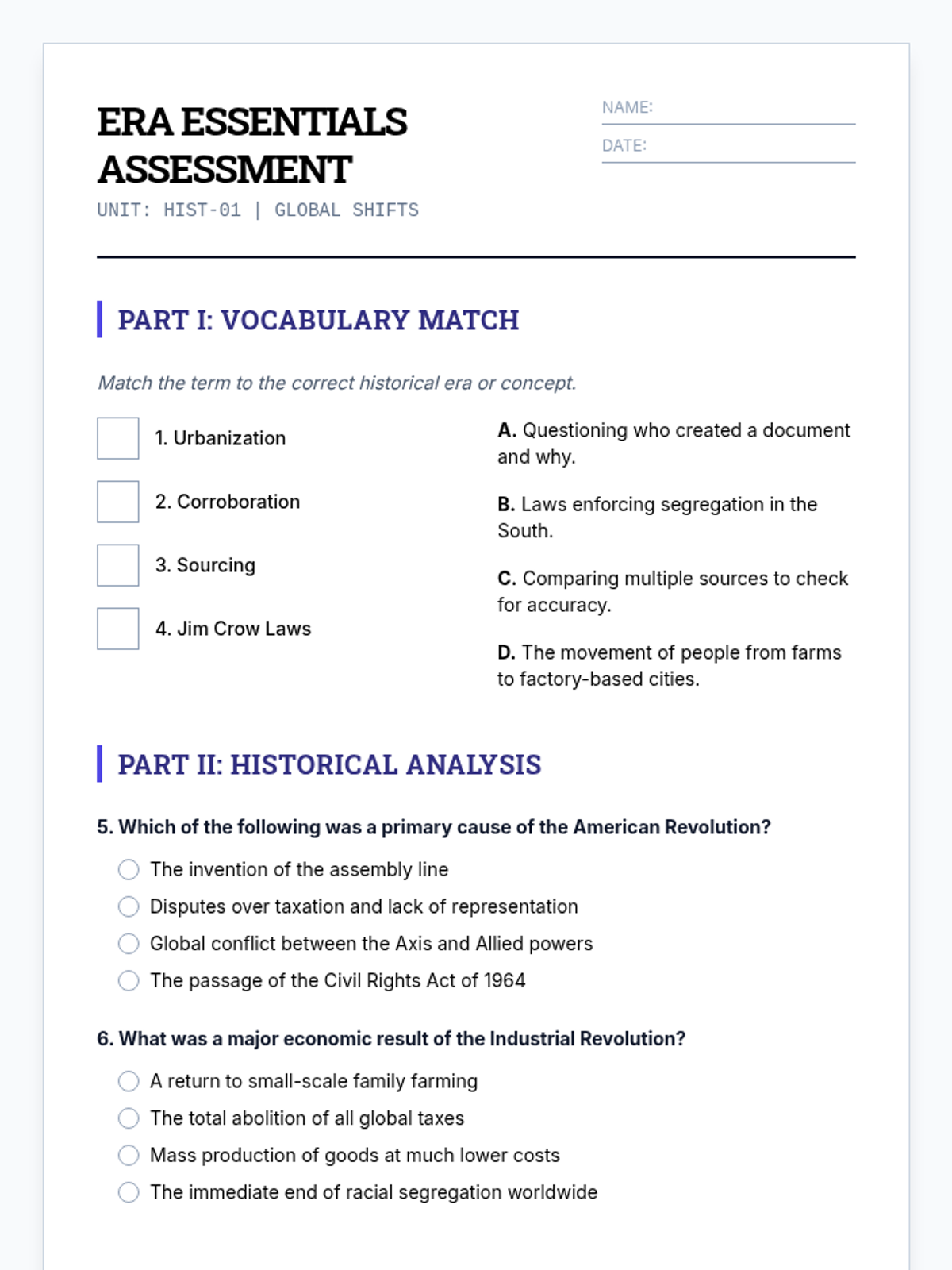
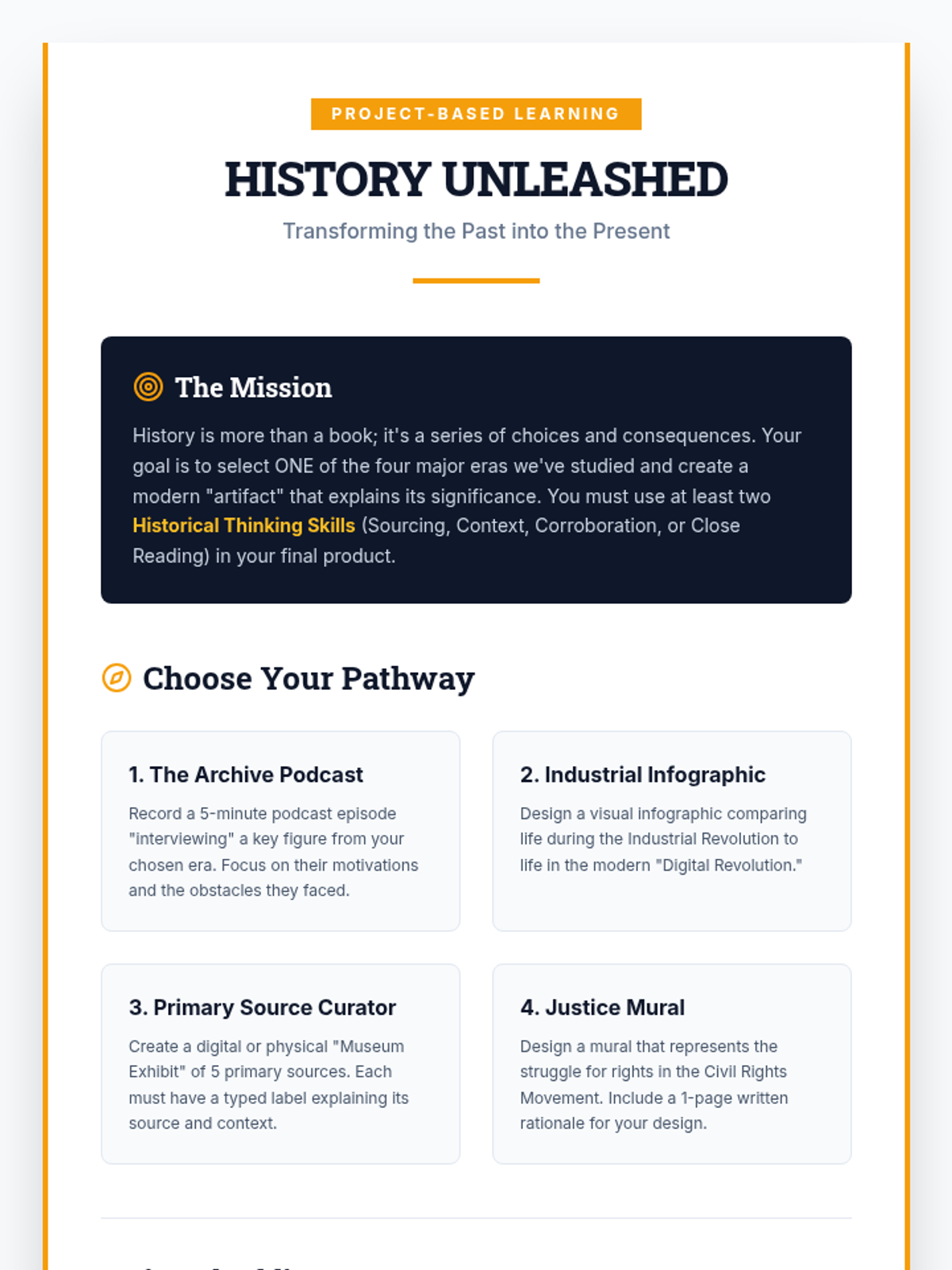
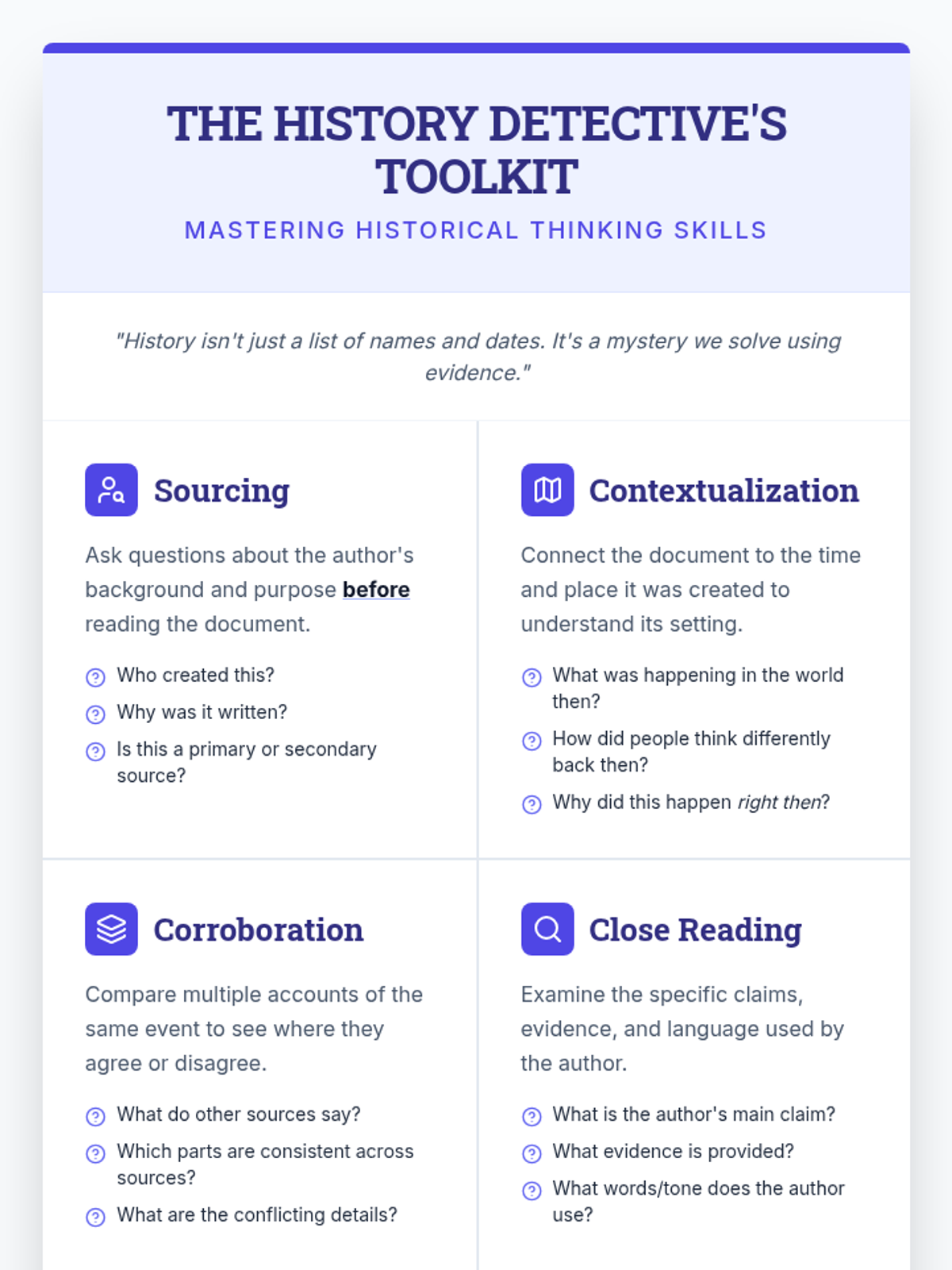
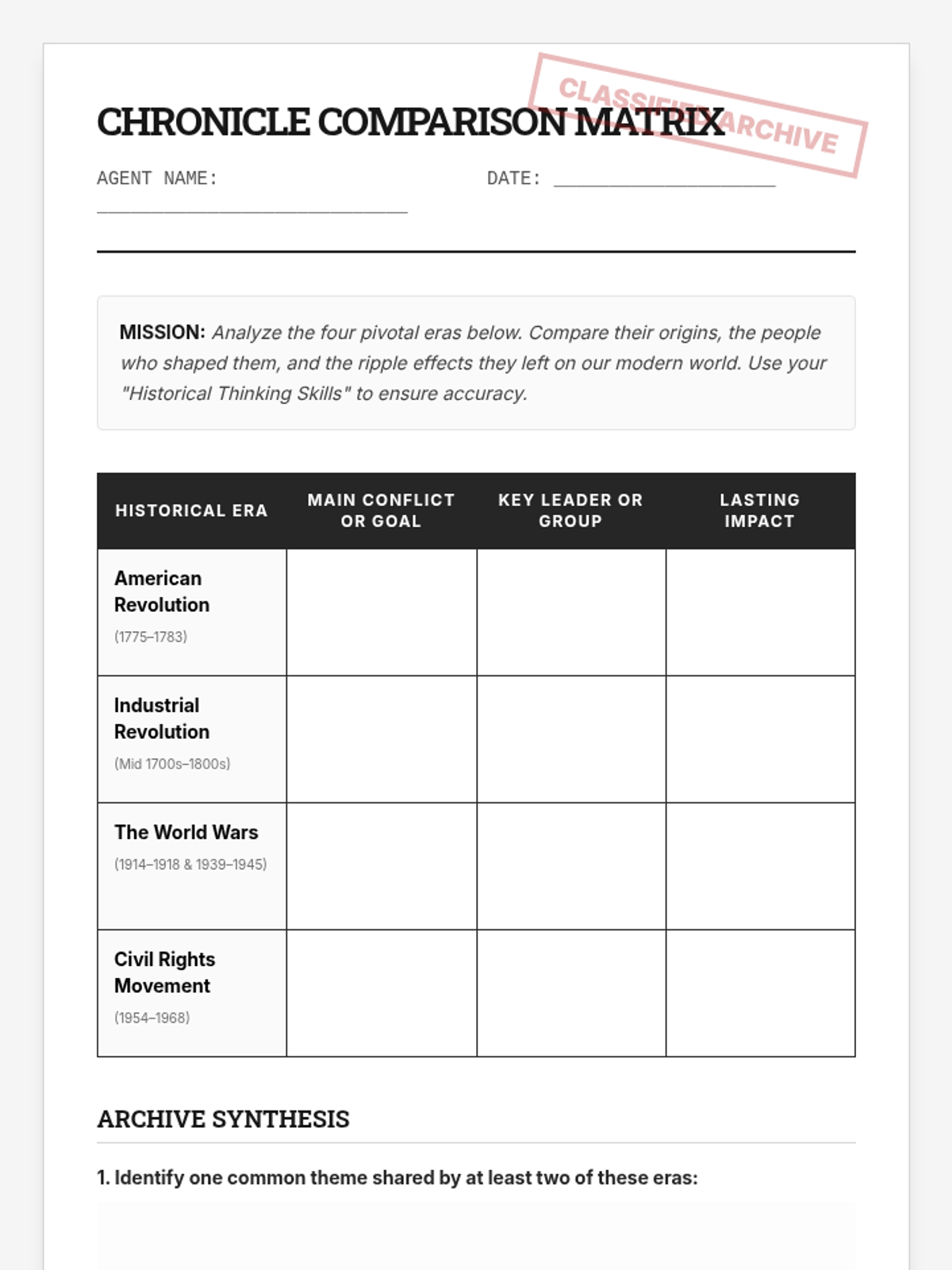
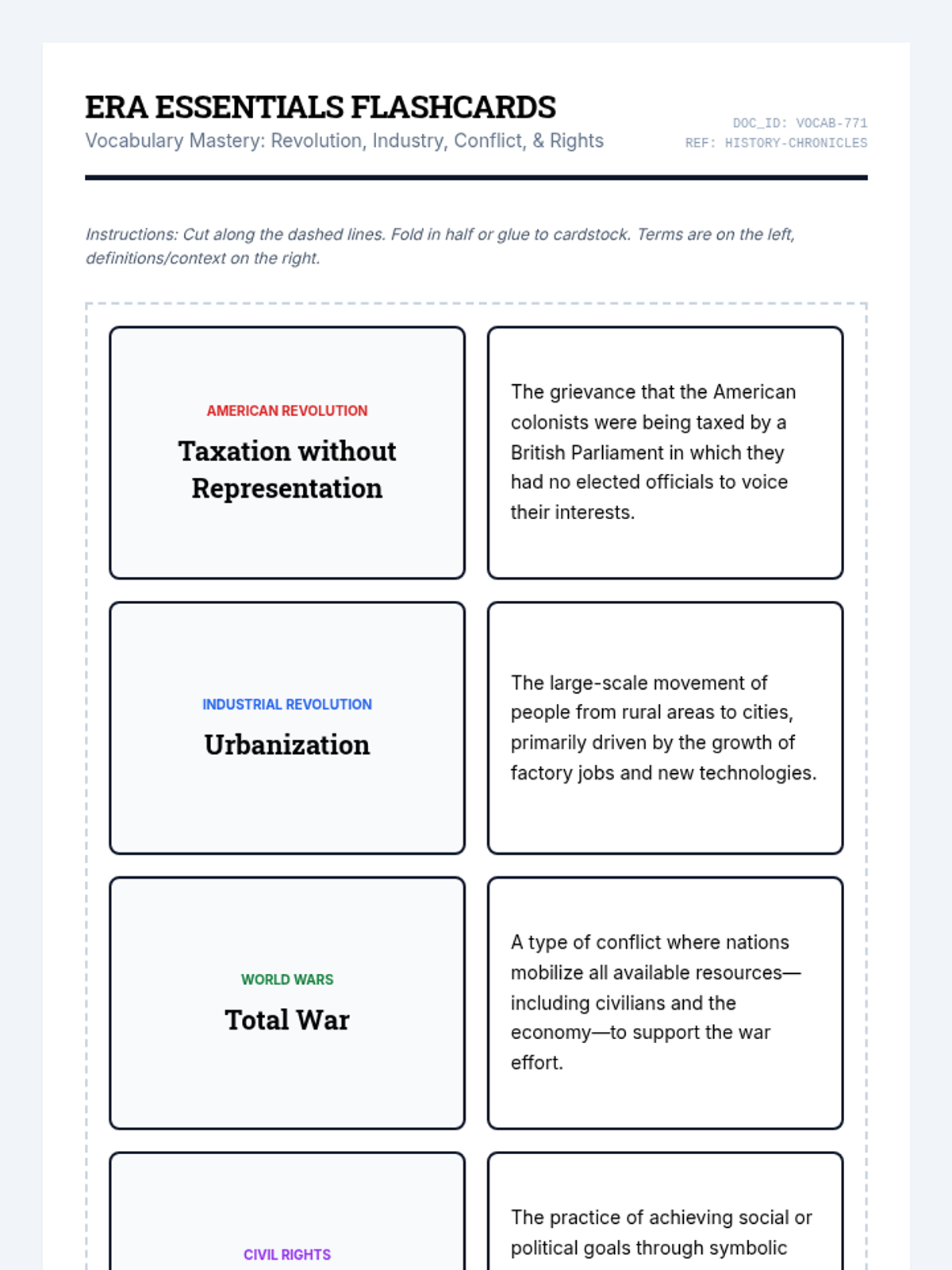
A comprehensive history sequence covering the American Revolution, Industrial Revolution, World Wars, and the Civil Rights Movement, focusing on developing historical thinking skills.
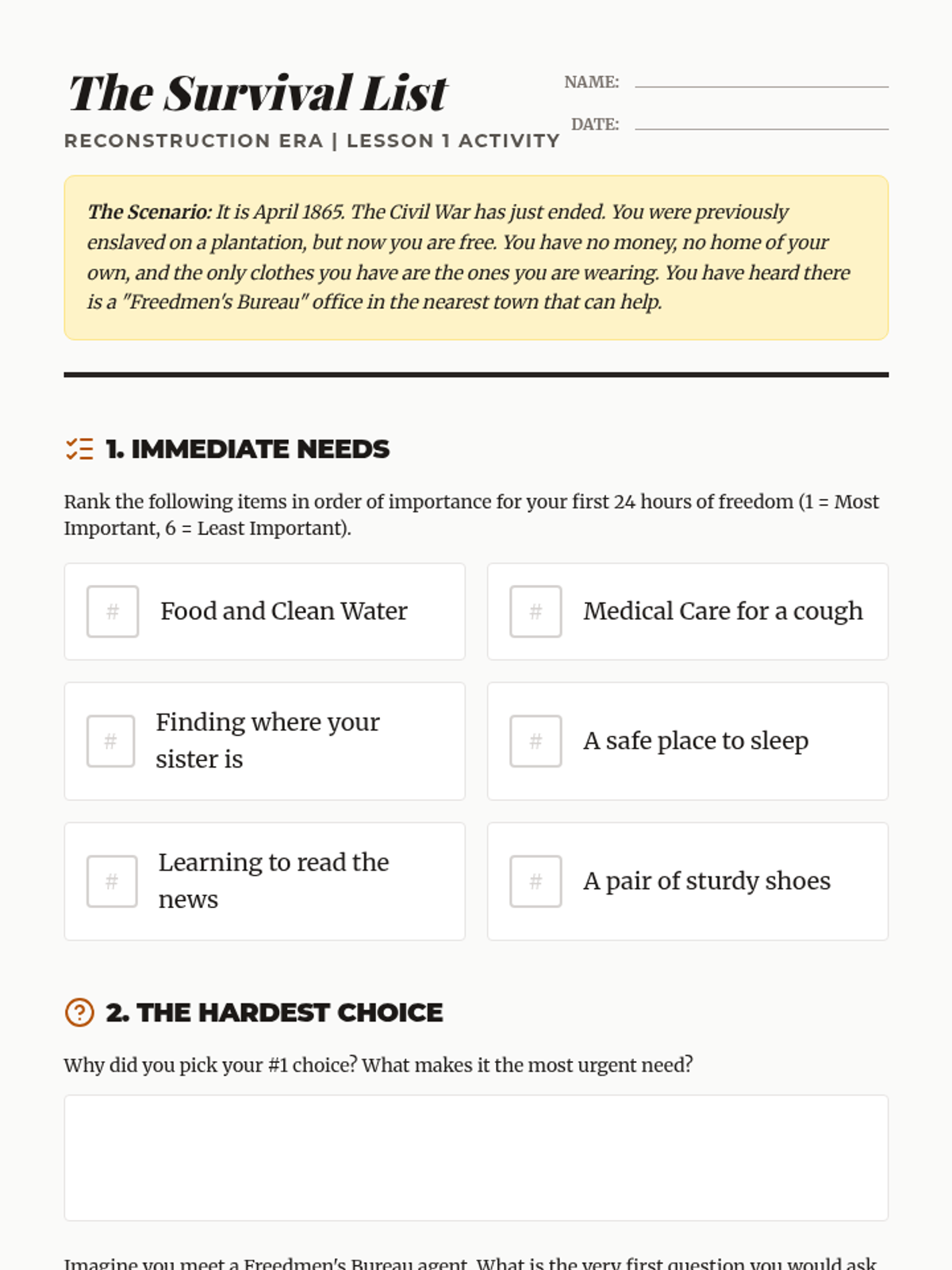
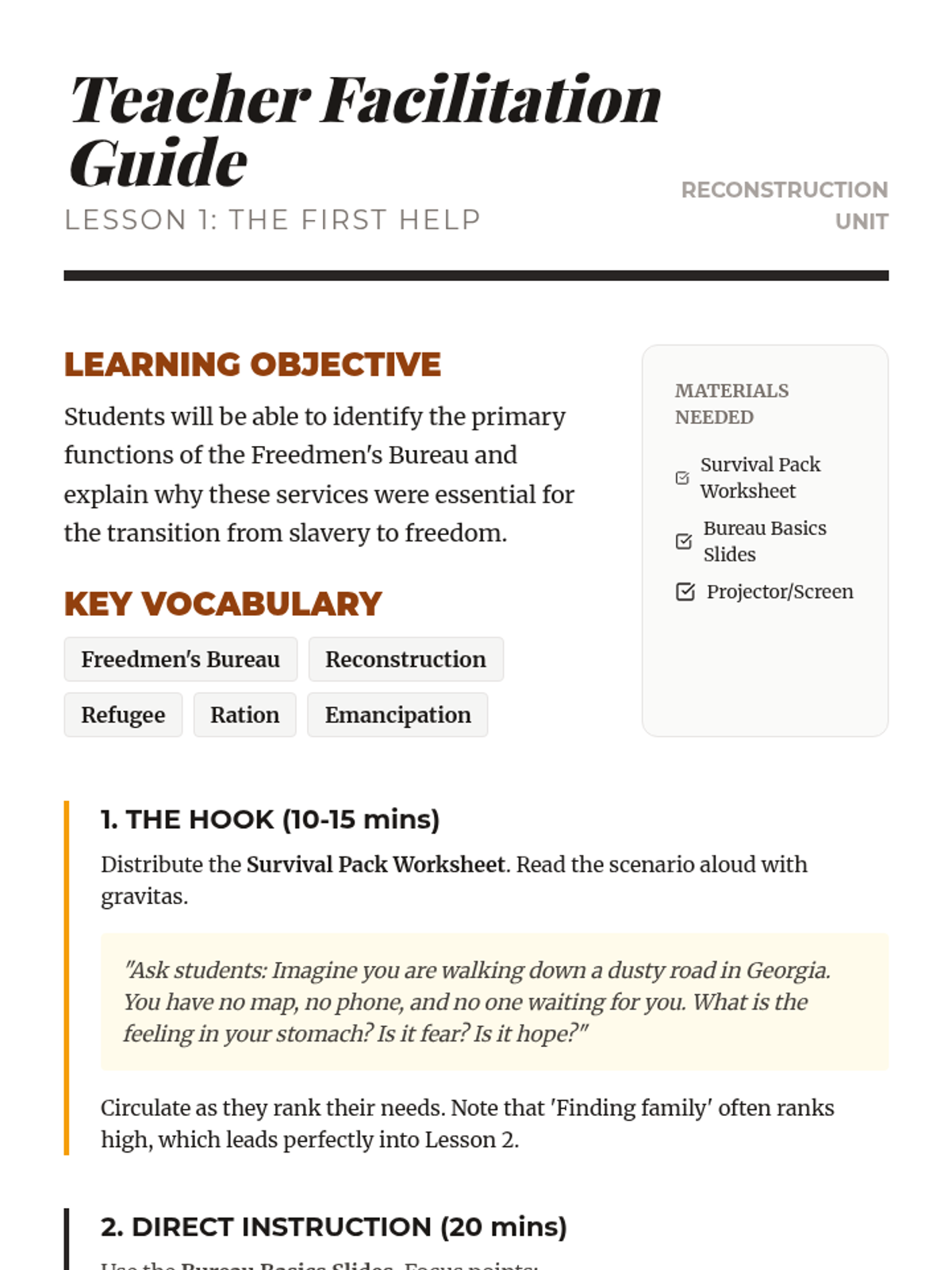
This sequence explores the Reconstruction Era through the lens of the Freedmen's Bureau, focusing on the social and economic challenges faced by newly emancipated people. Students analyze primary sources, engage in simulations about sharecropping and education, and evaluate the effectiveness of federal aid in the post-Civil War South.
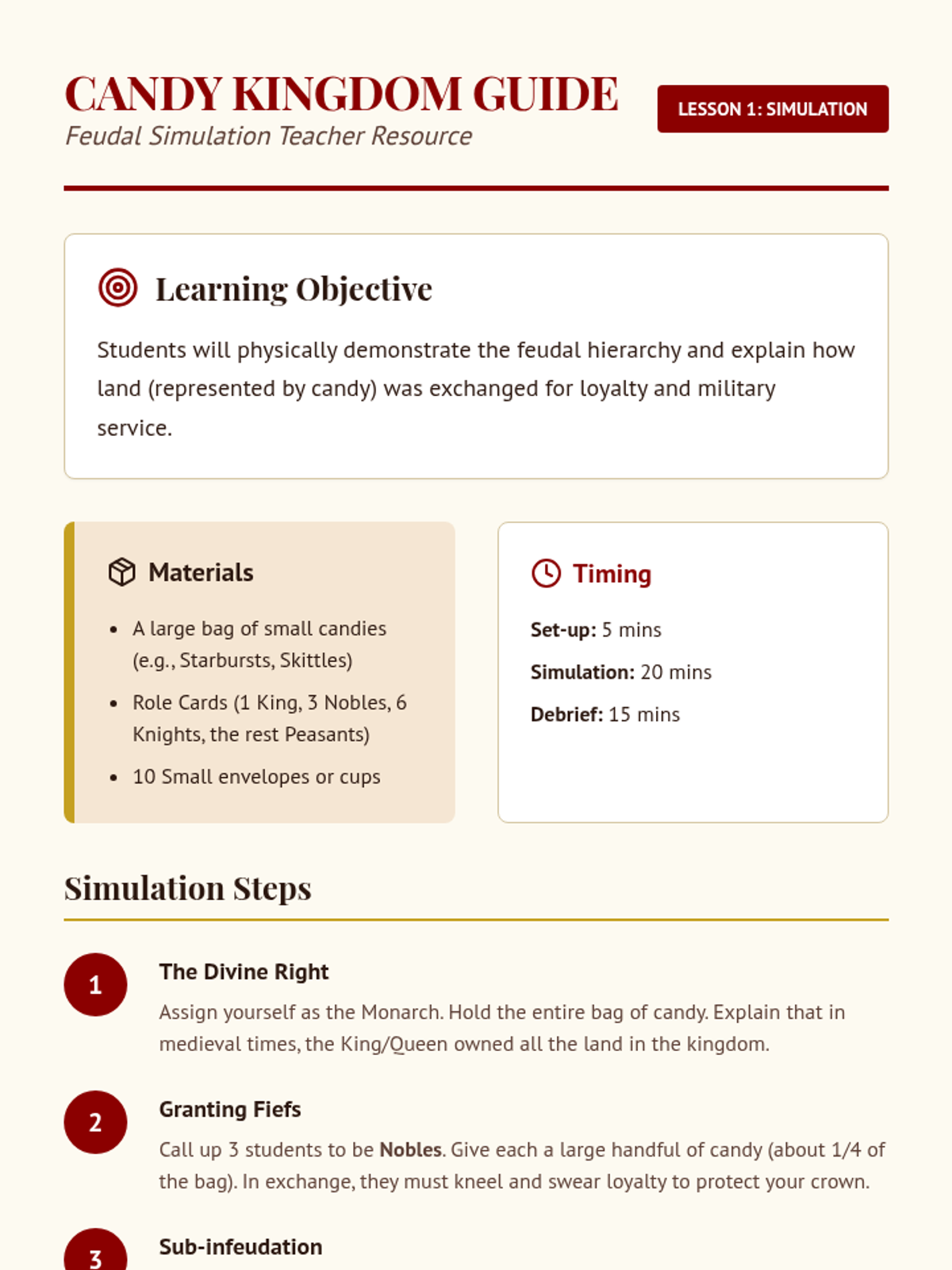
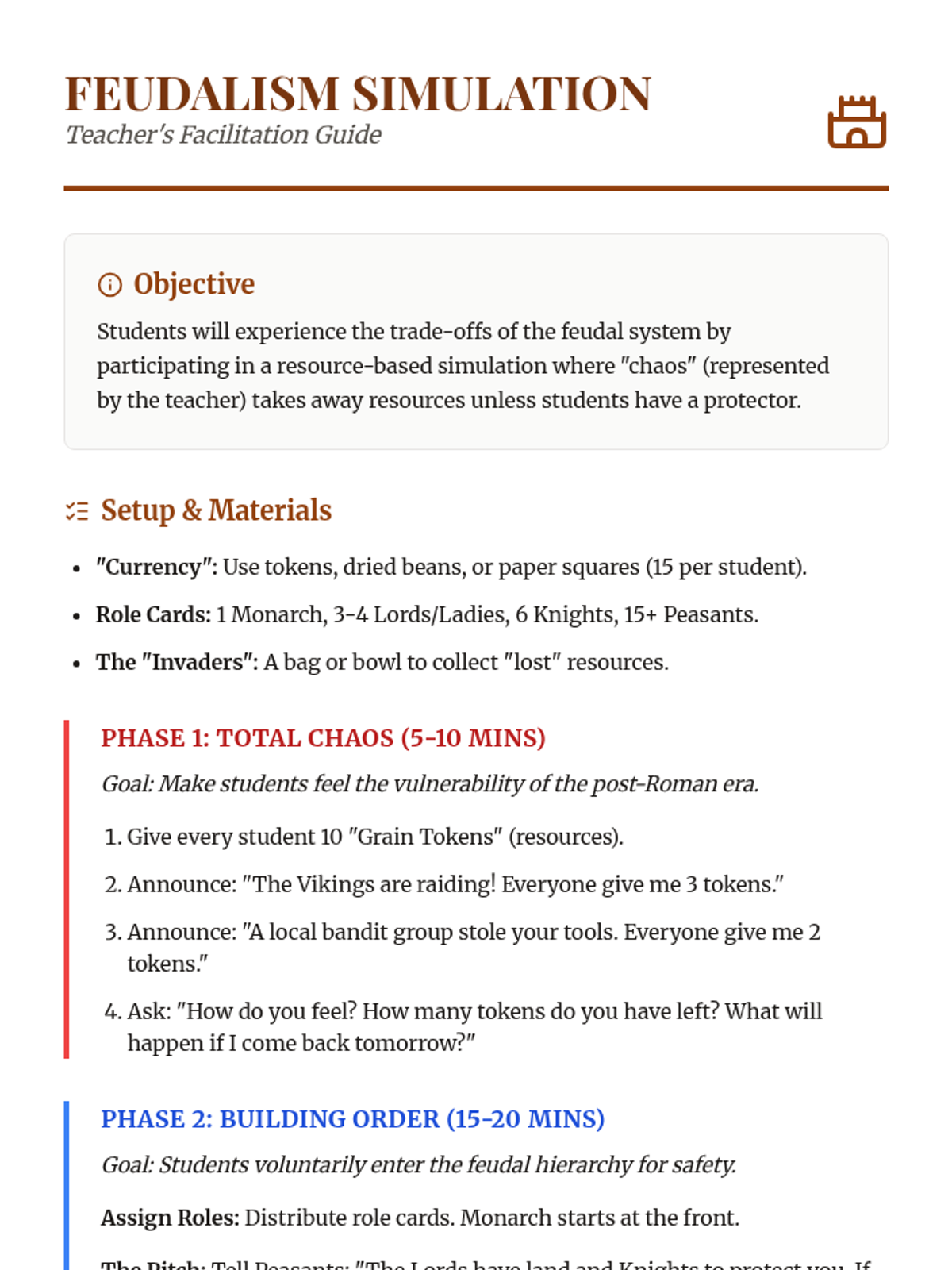
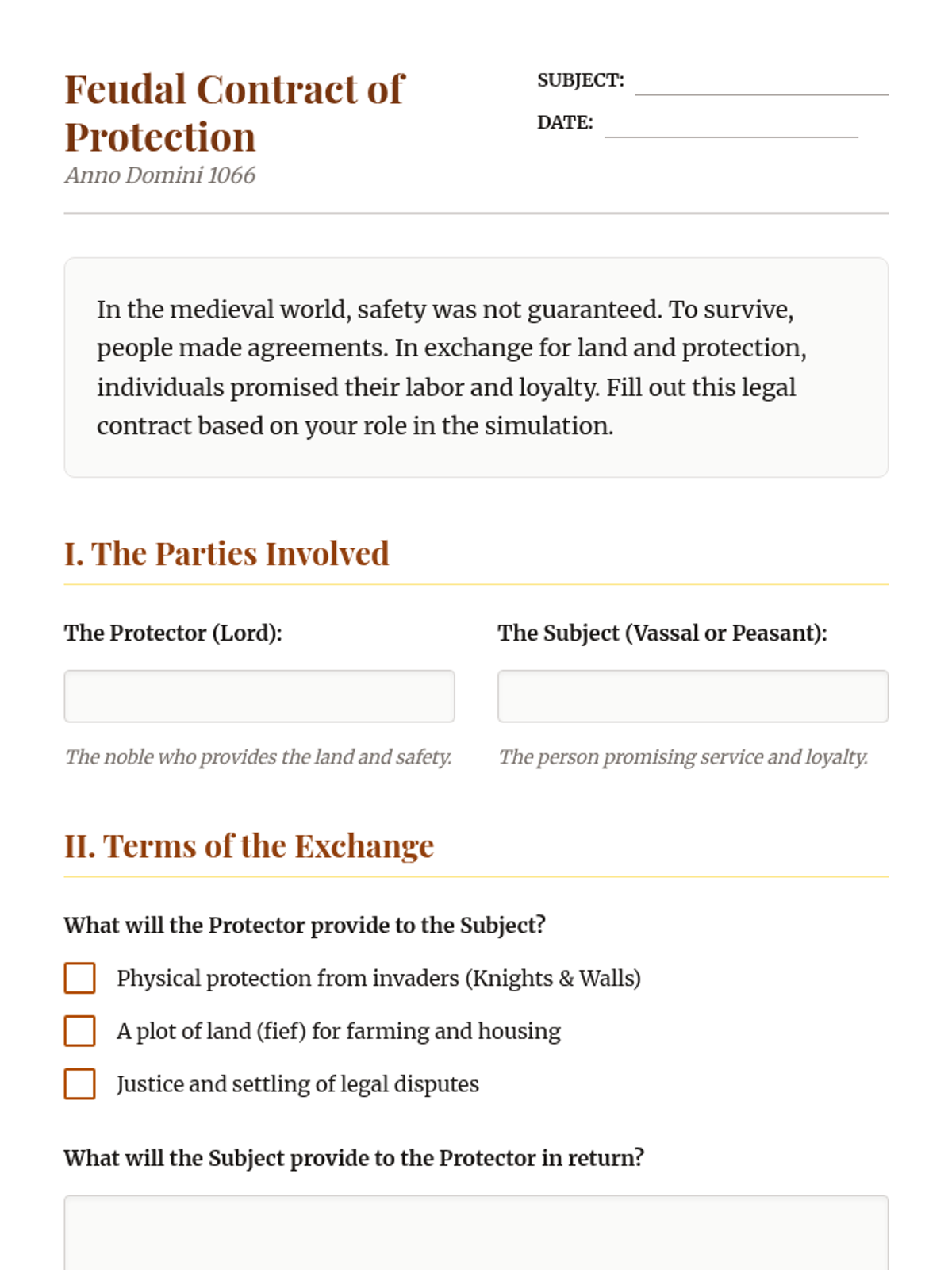
This sequence immerses students in the rigid social structure of medieval Europe through a simulation-based approach. Students explore the mutual obligations between monarchs, lords, knights, and peasants to understand how the feudal system provided order after the fall of Rome.
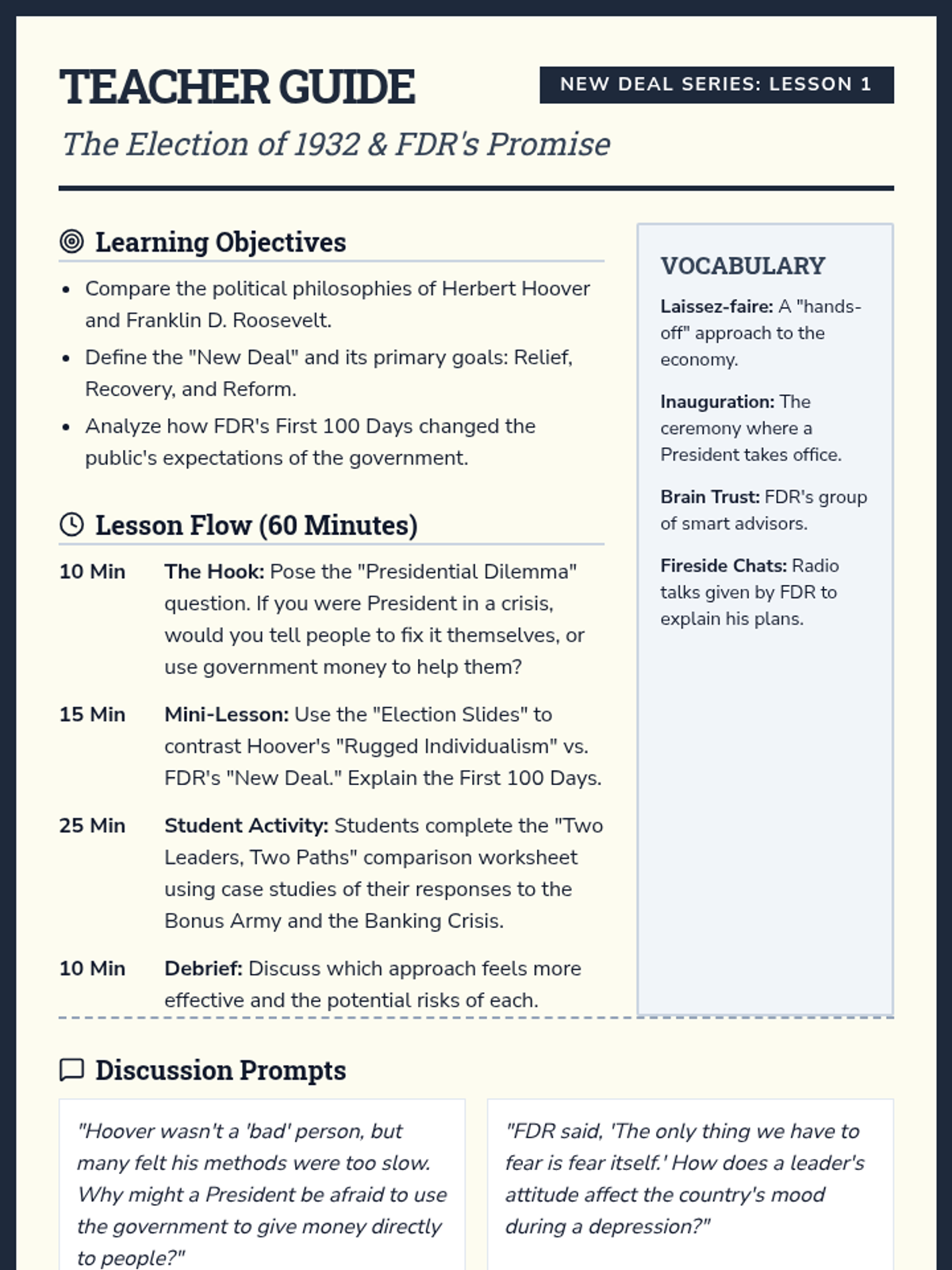
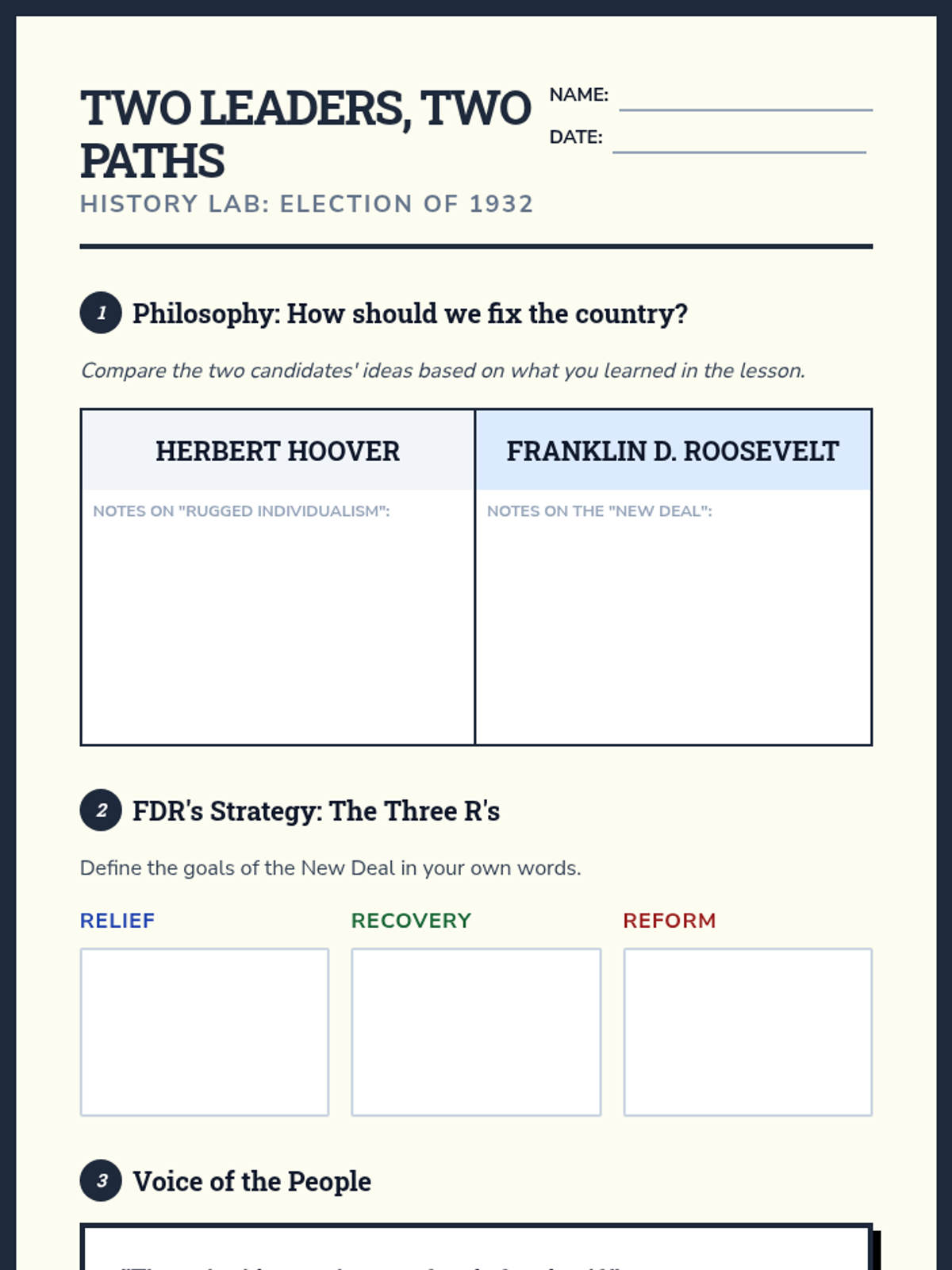
This sequence explores the US government's response to the Great Depression through FDR's New Deal. Students evaluate major programs like the CCC, WPA, and TVA to understand the expanding role of federal intervention and the shift from laissez-faire to public works.
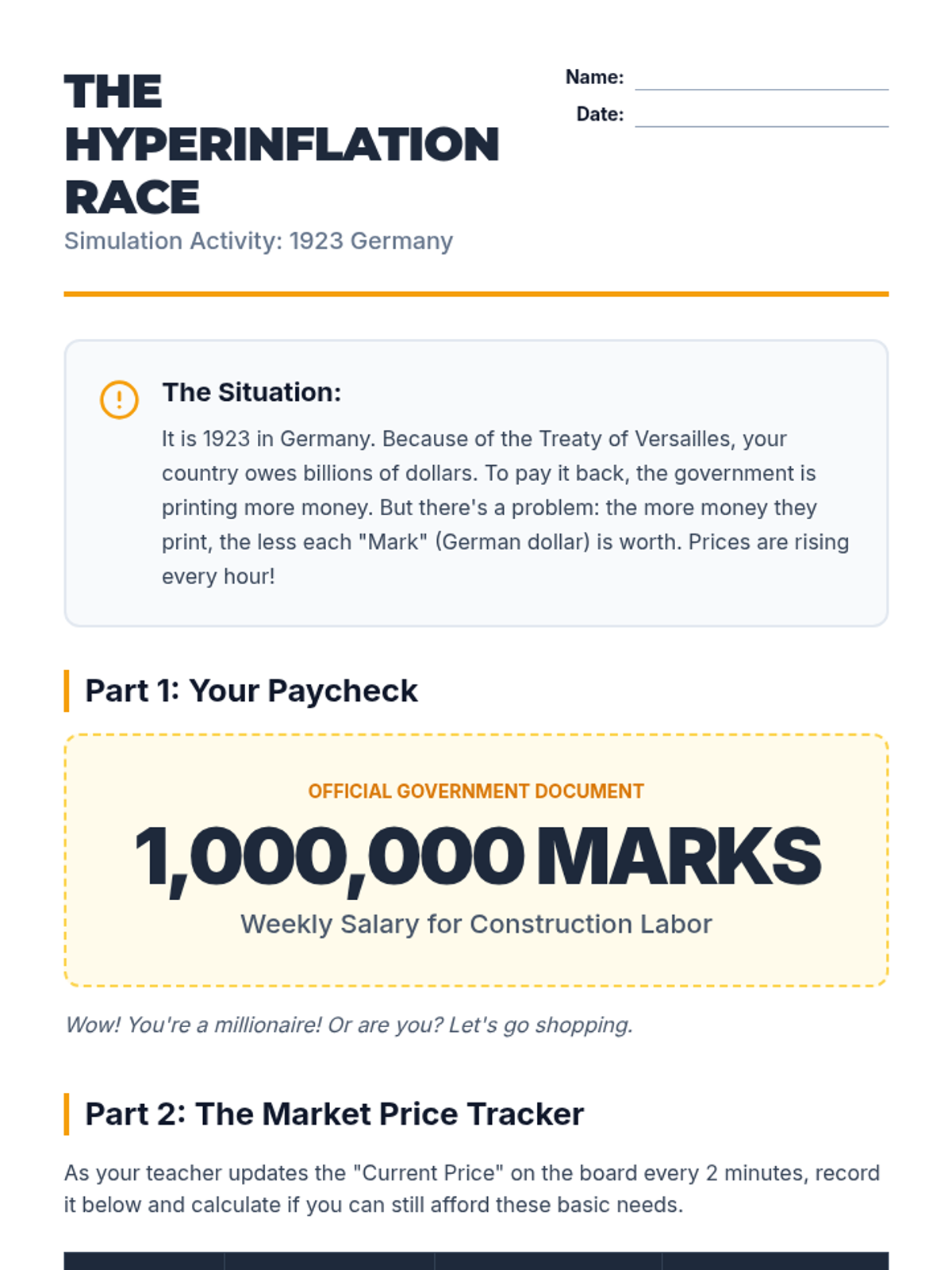
This sequence investigates the political and economic conditions that led to World War II, focusing on the aftermath of World War I and the rise of totalitarian leaders. Students will analyze primary sources, simulate hyperinflation, and evaluate the failure of appeasement to understand the transition from peace to global conflict.