Fundamental principles of supply, demand, and monetary systems alongside micro- and macroeconomic structures. Examines the impact of corporate power, labor market dynamics, and global systems on social mobility and class inequality.
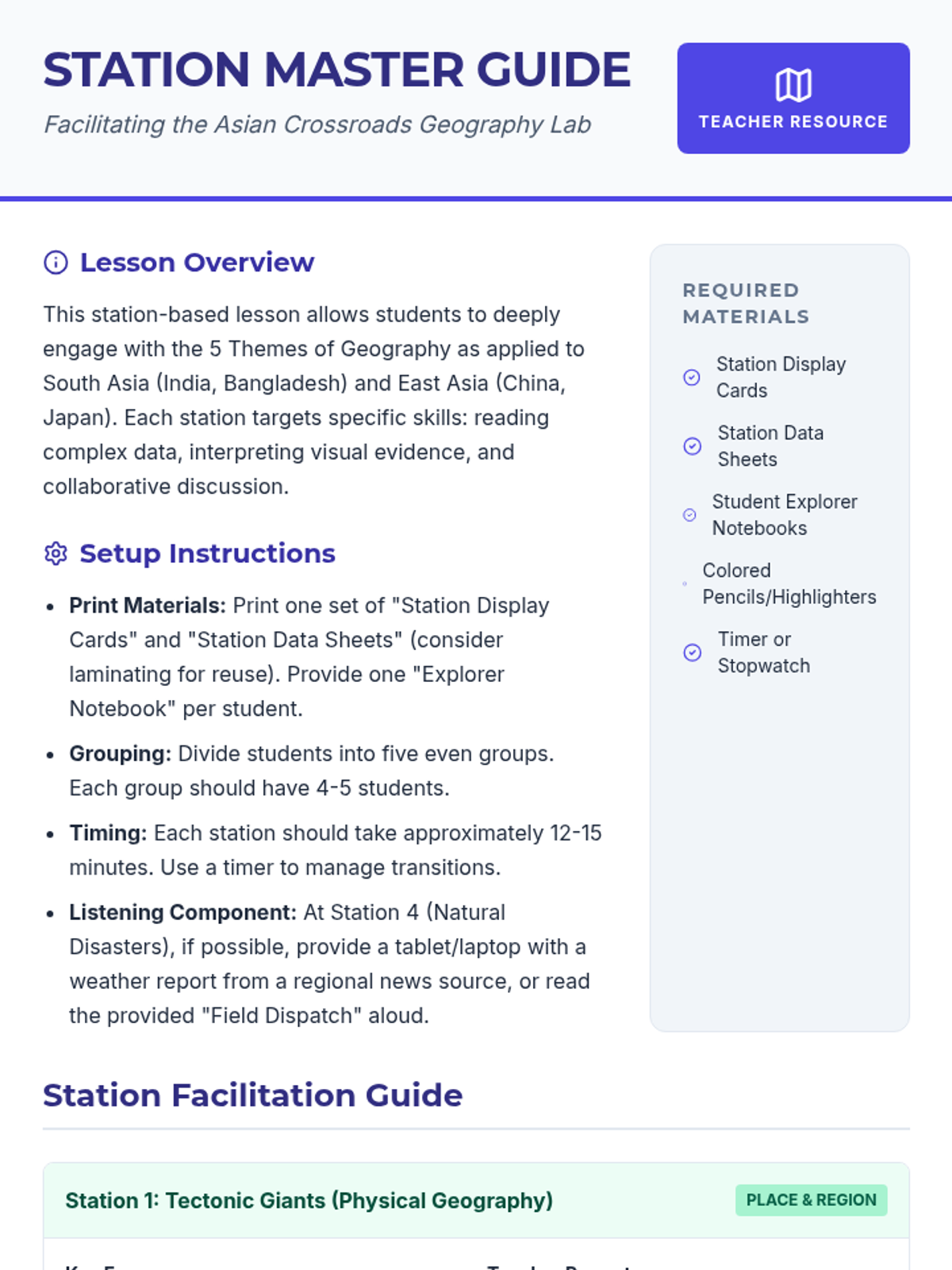
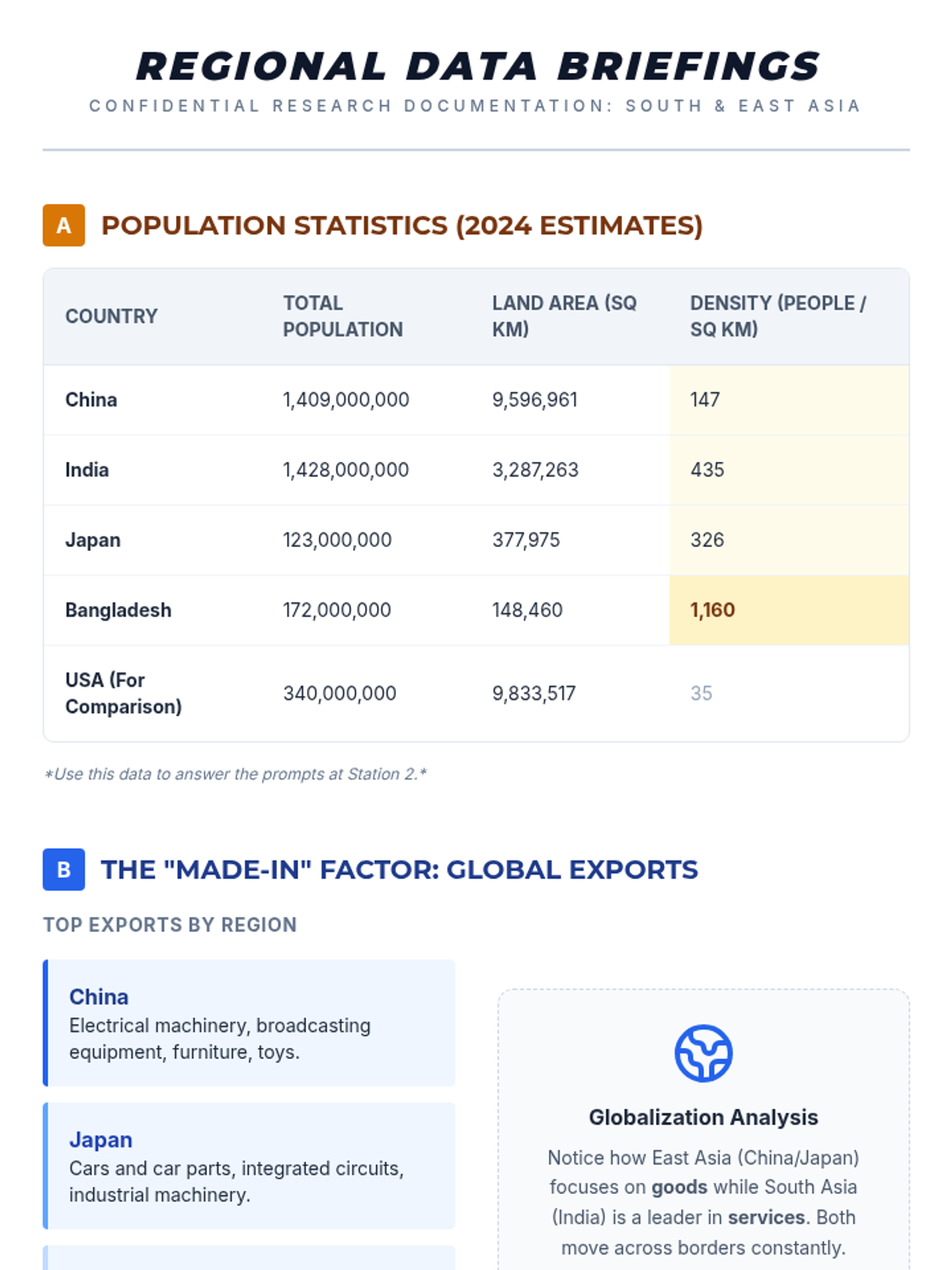
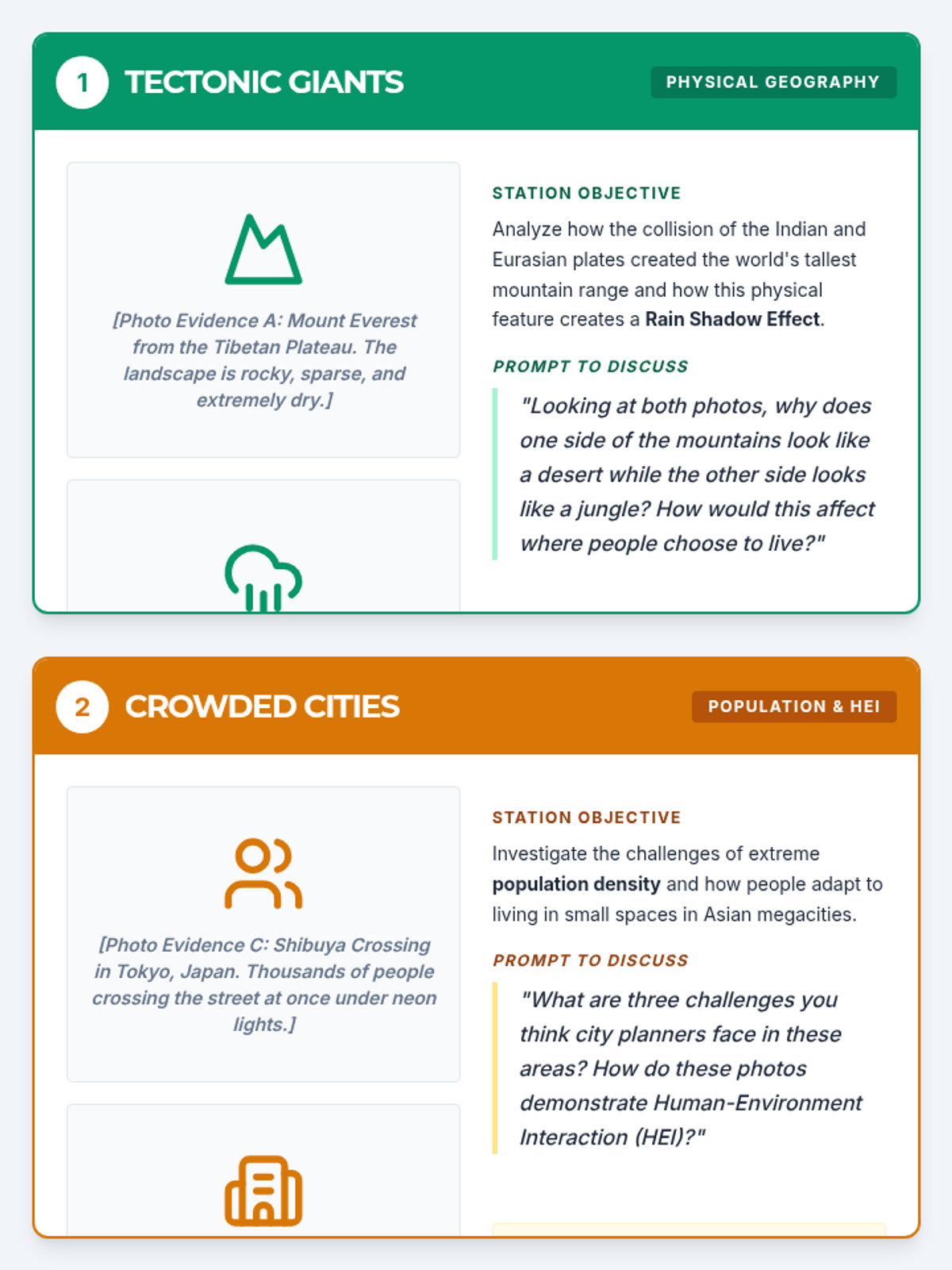
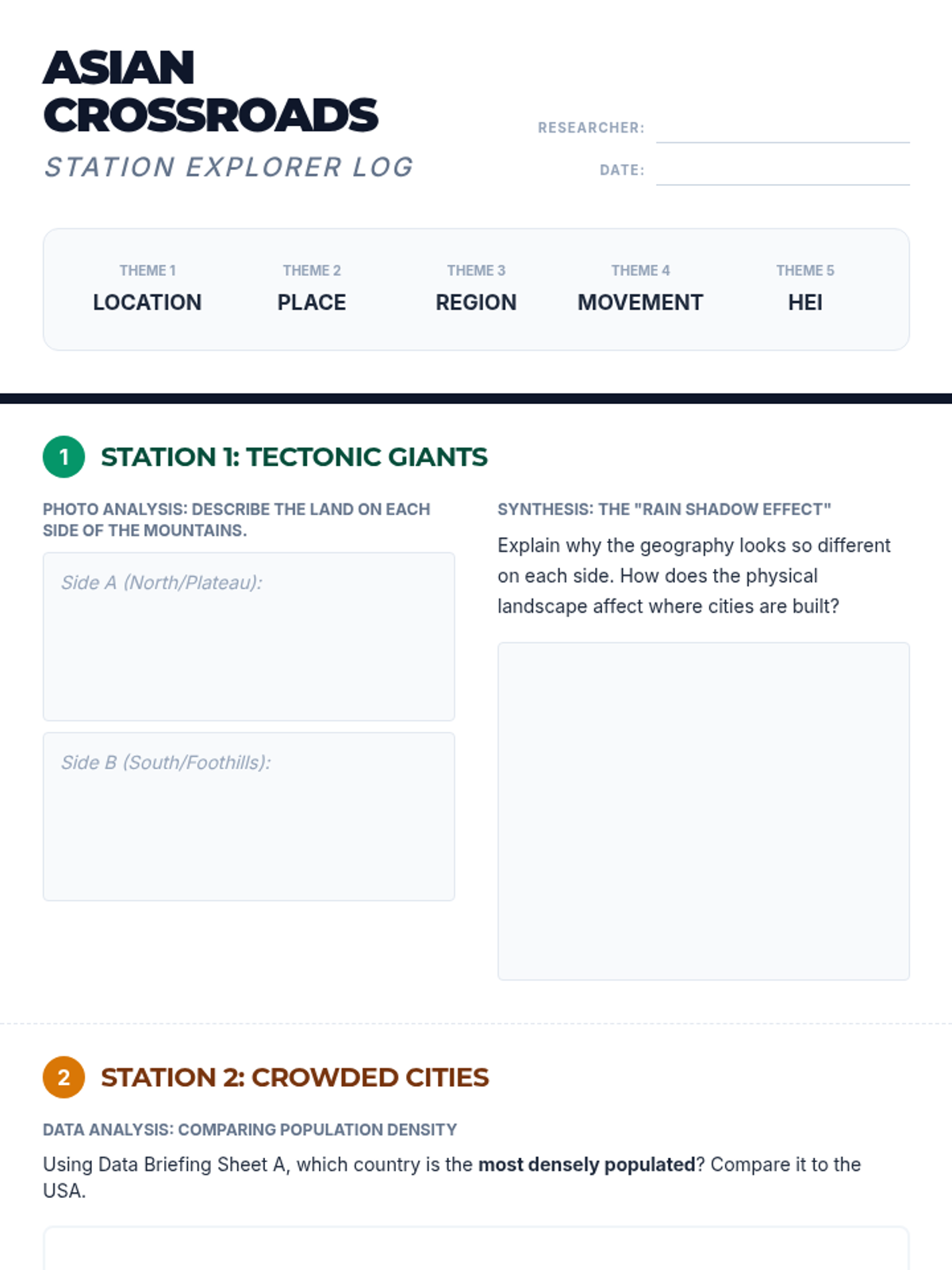
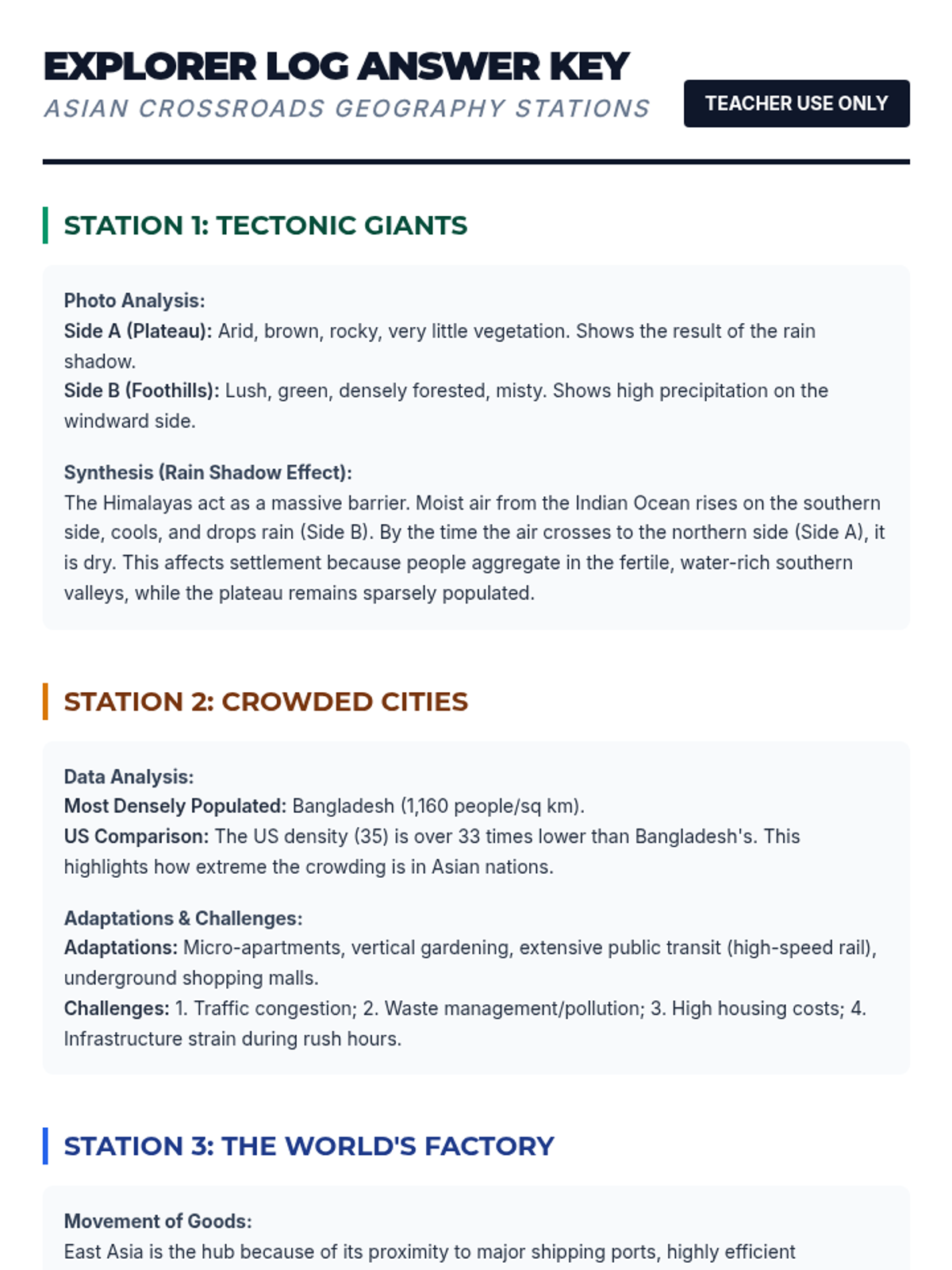
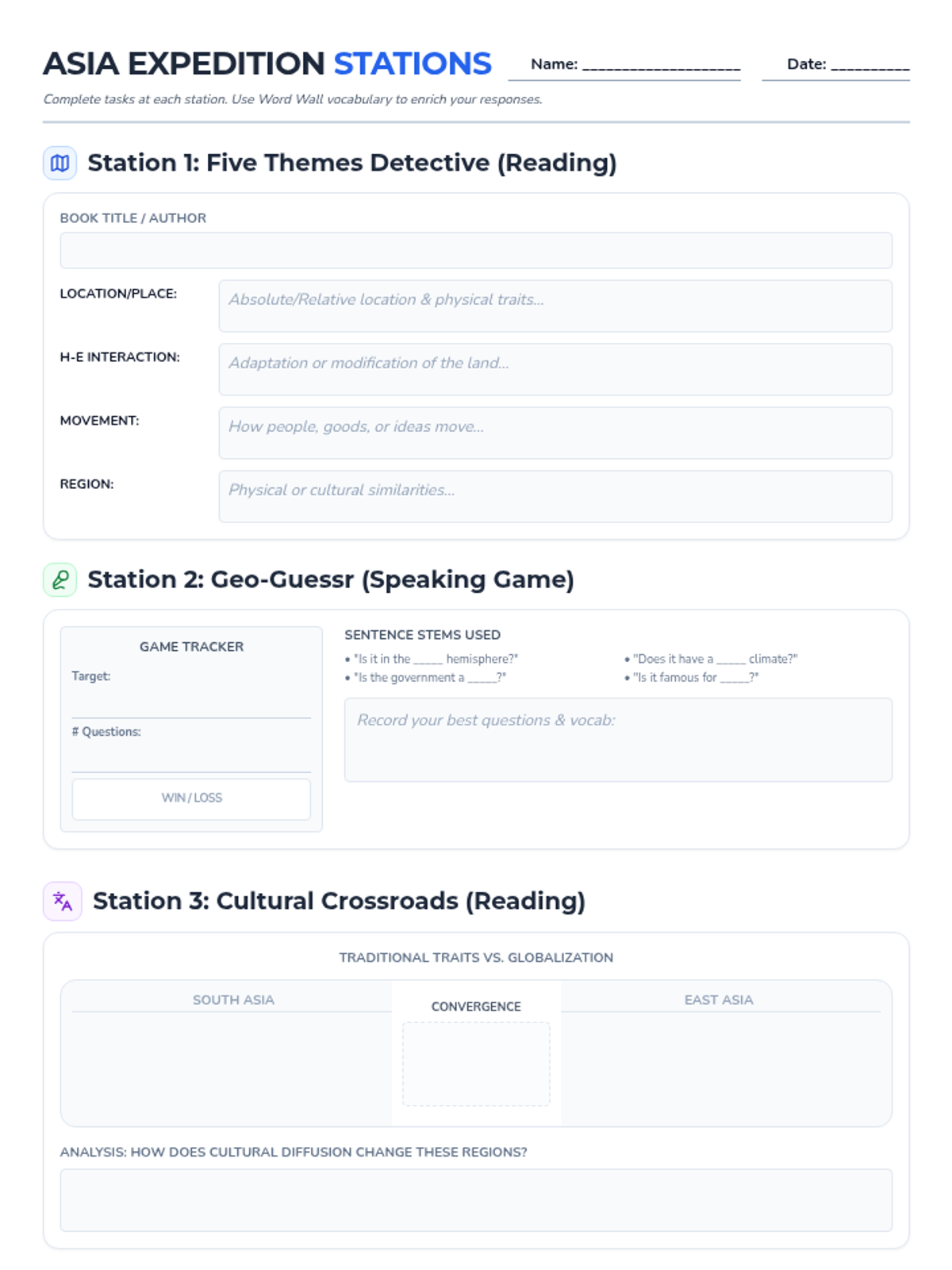
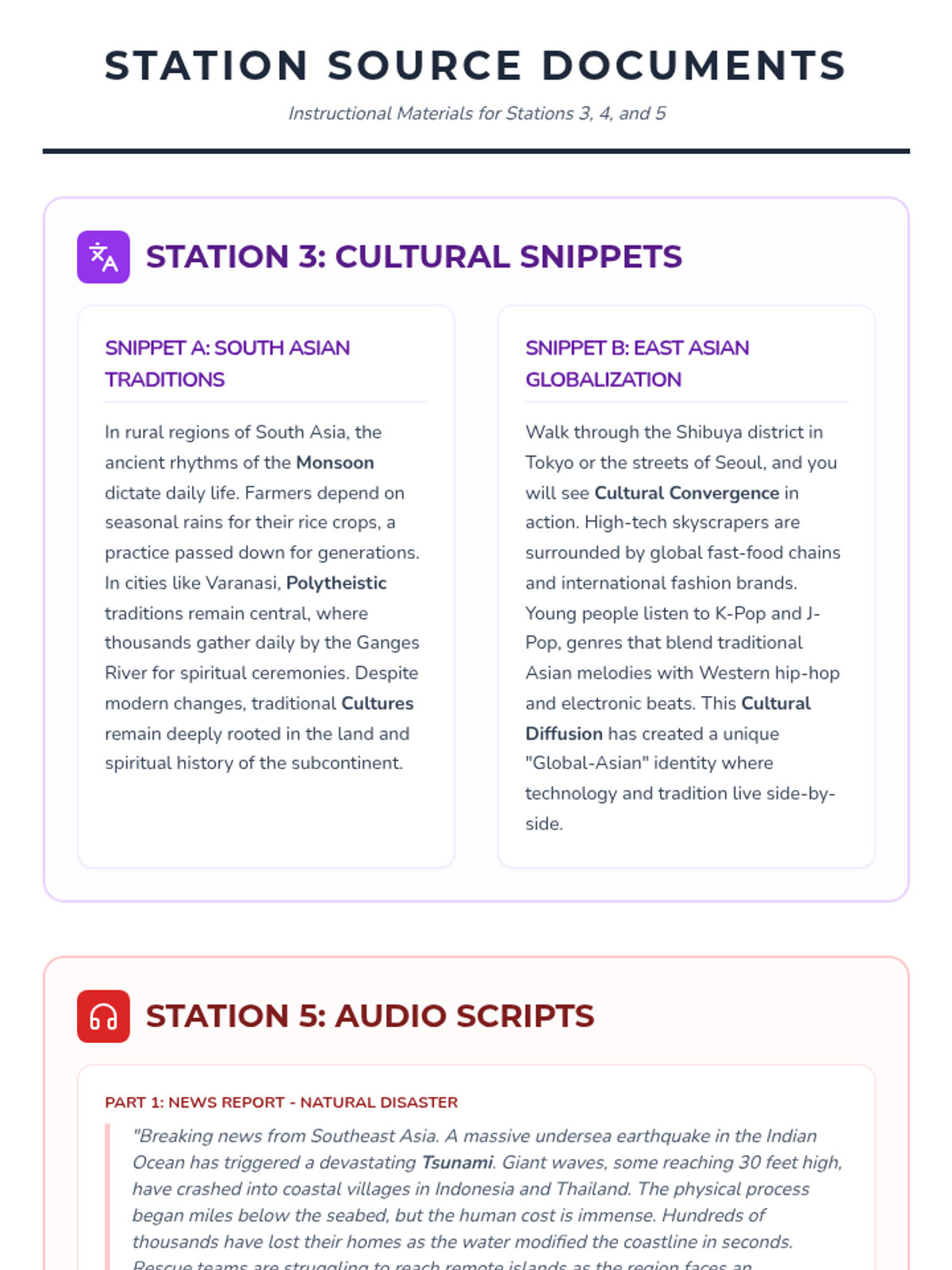
A series of five interactive learning stations where students explore the physical and cultural geography of South and East Asia. Students analyze population trends, globalization impacts, and natural disasters through photo analysis and data interpretation.
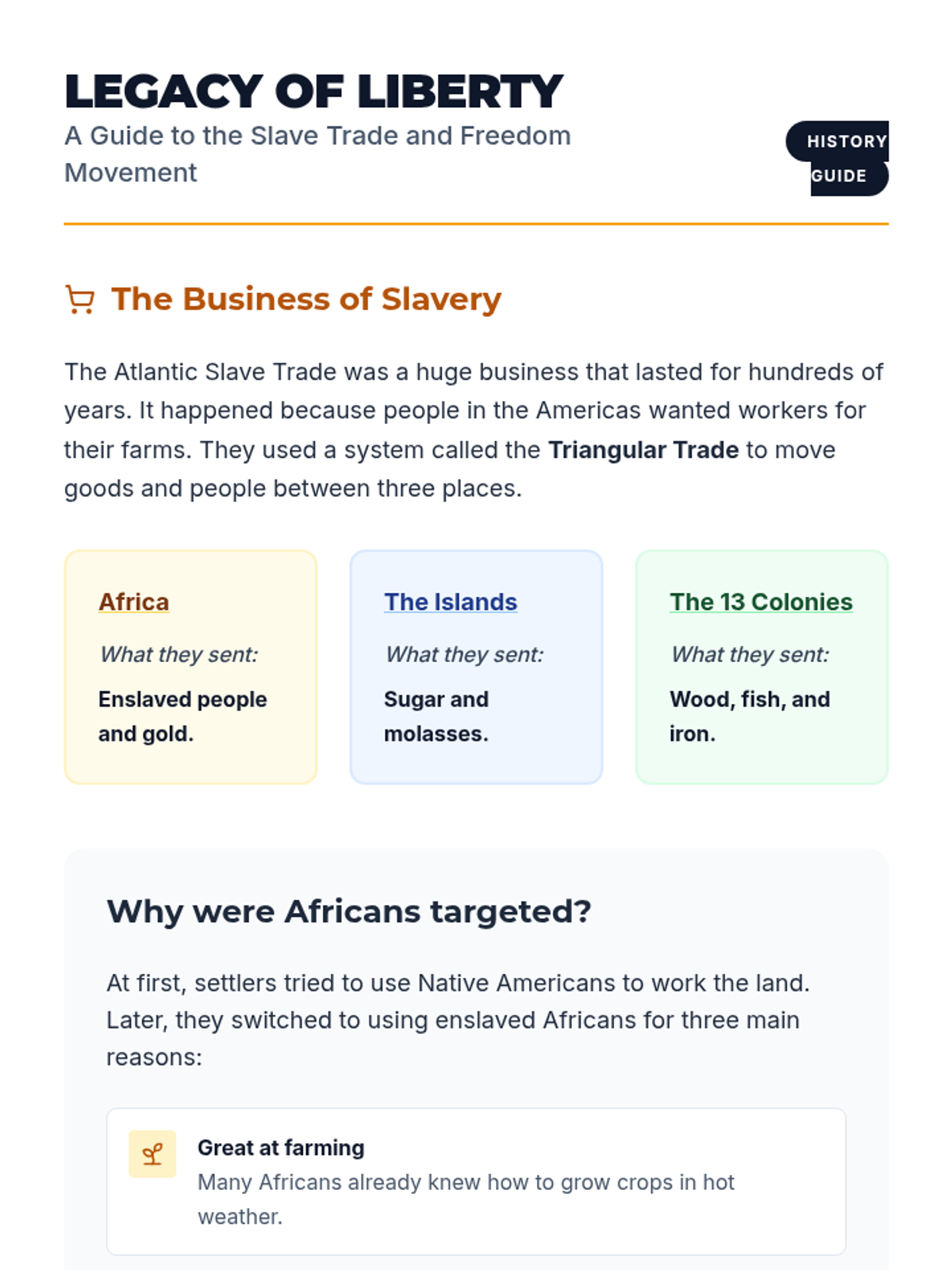
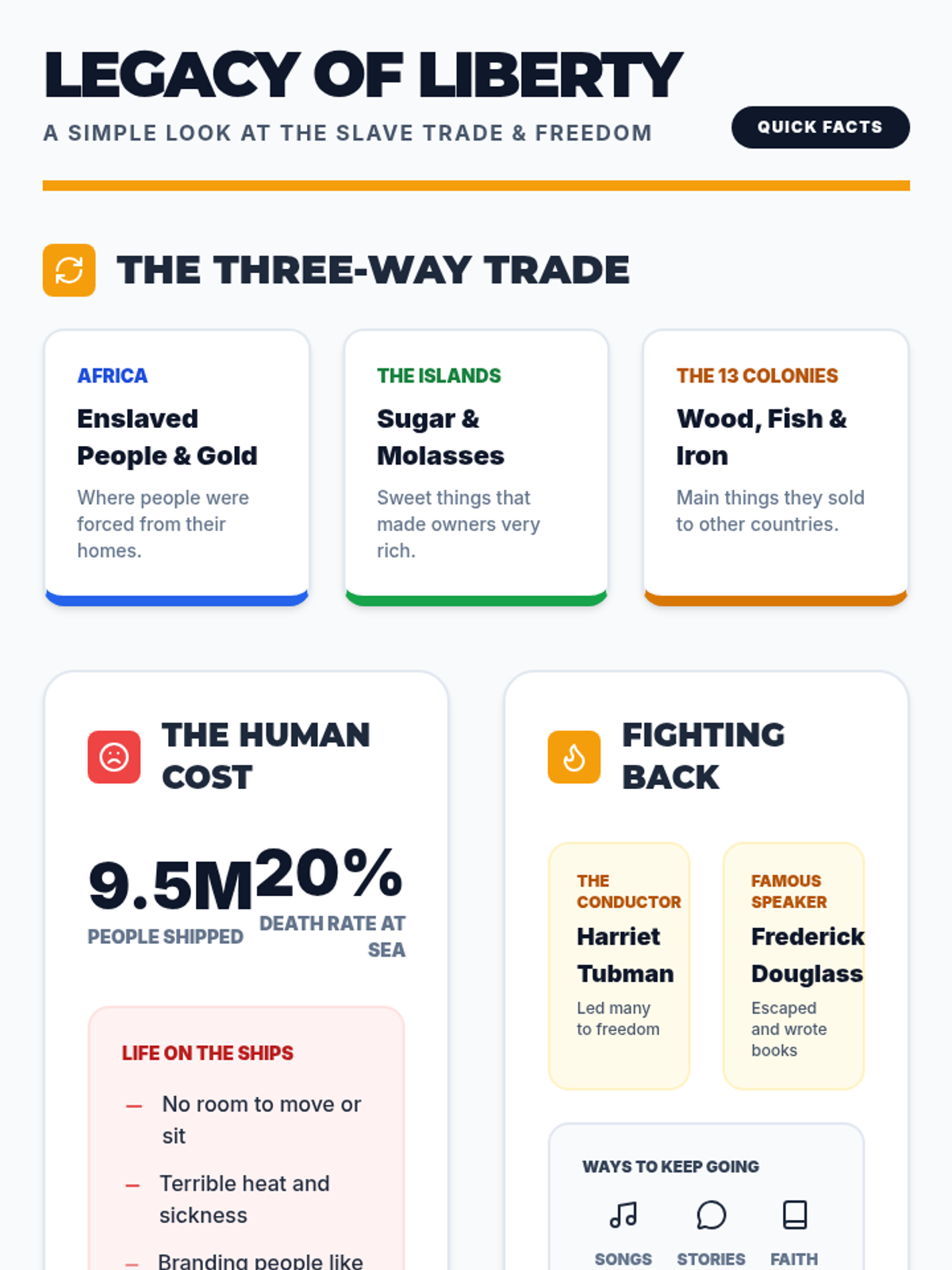
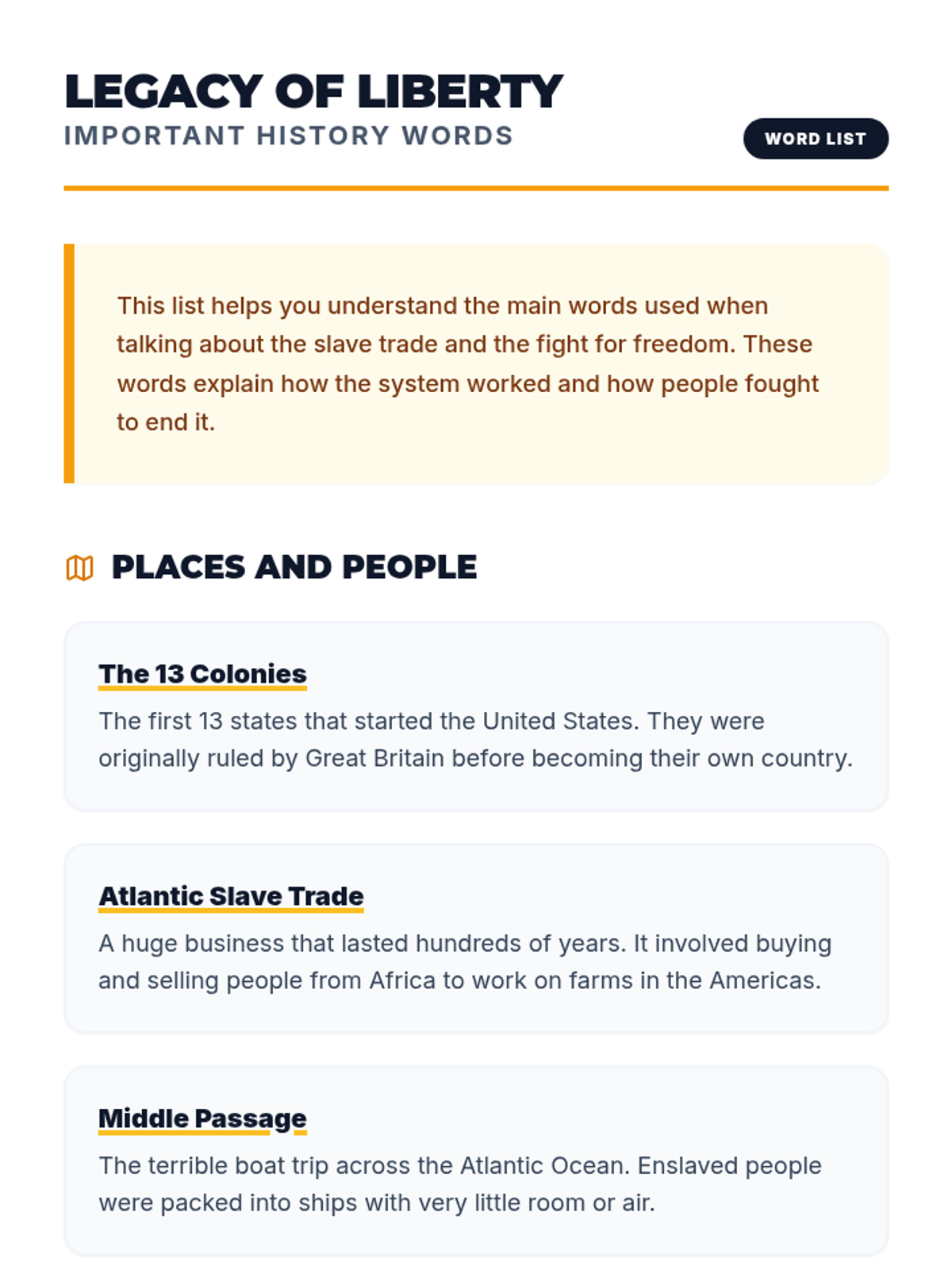
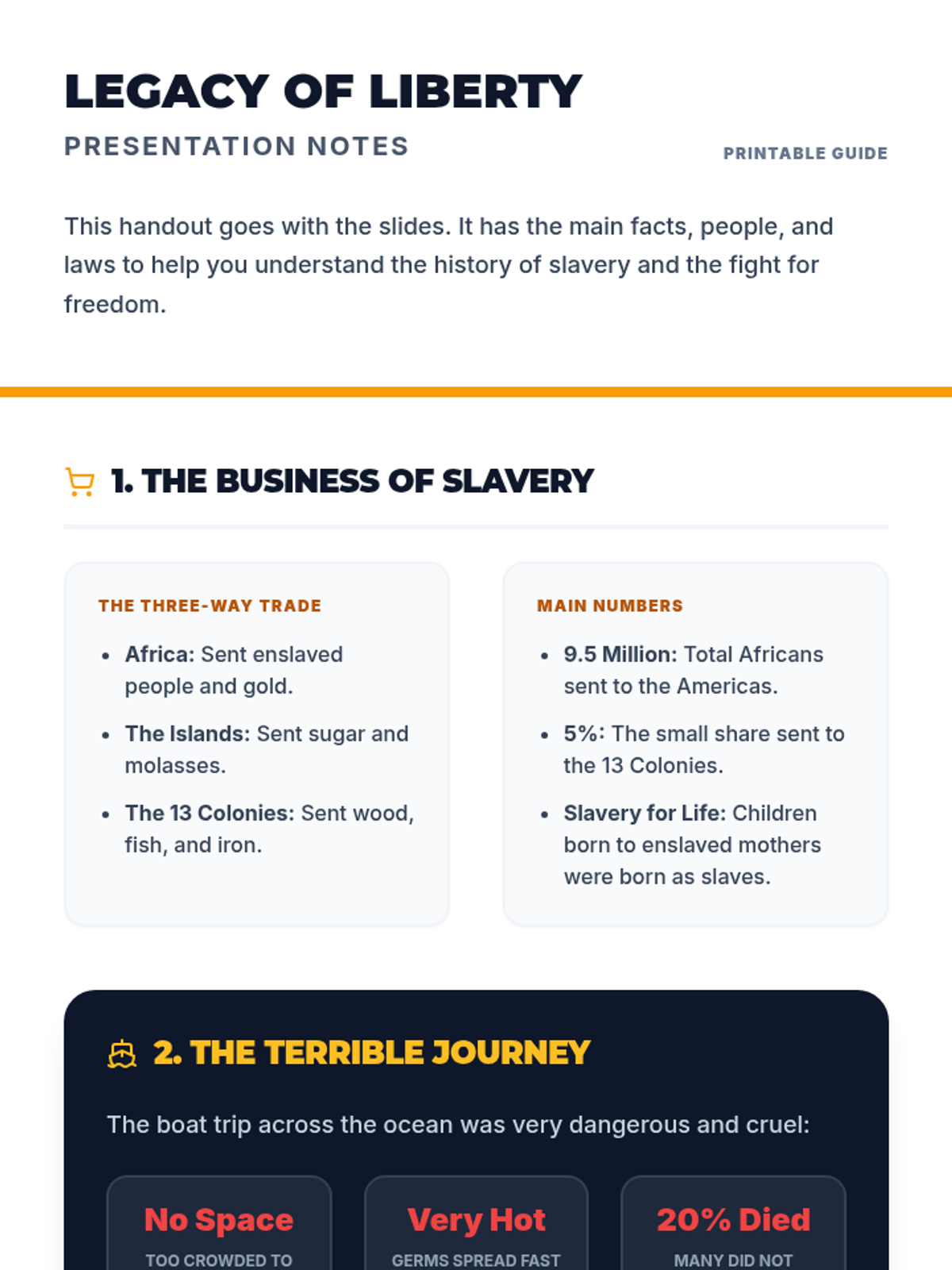
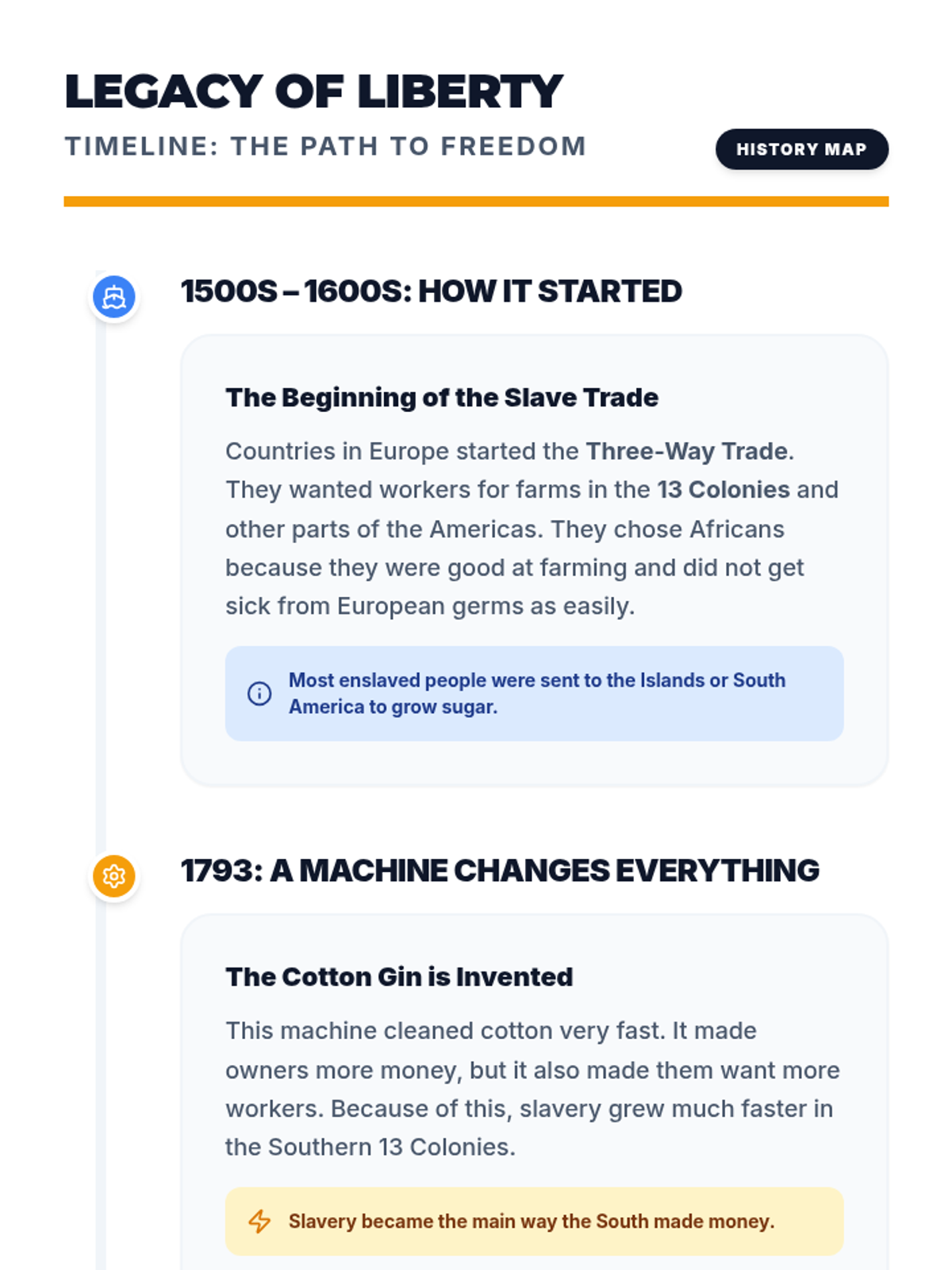
A comprehensive resource bundle for school leaders covering the history of the Atlantic Slave Trade and the Abolitionist Movement, featuring a detailed reference guide and a visual infographic.
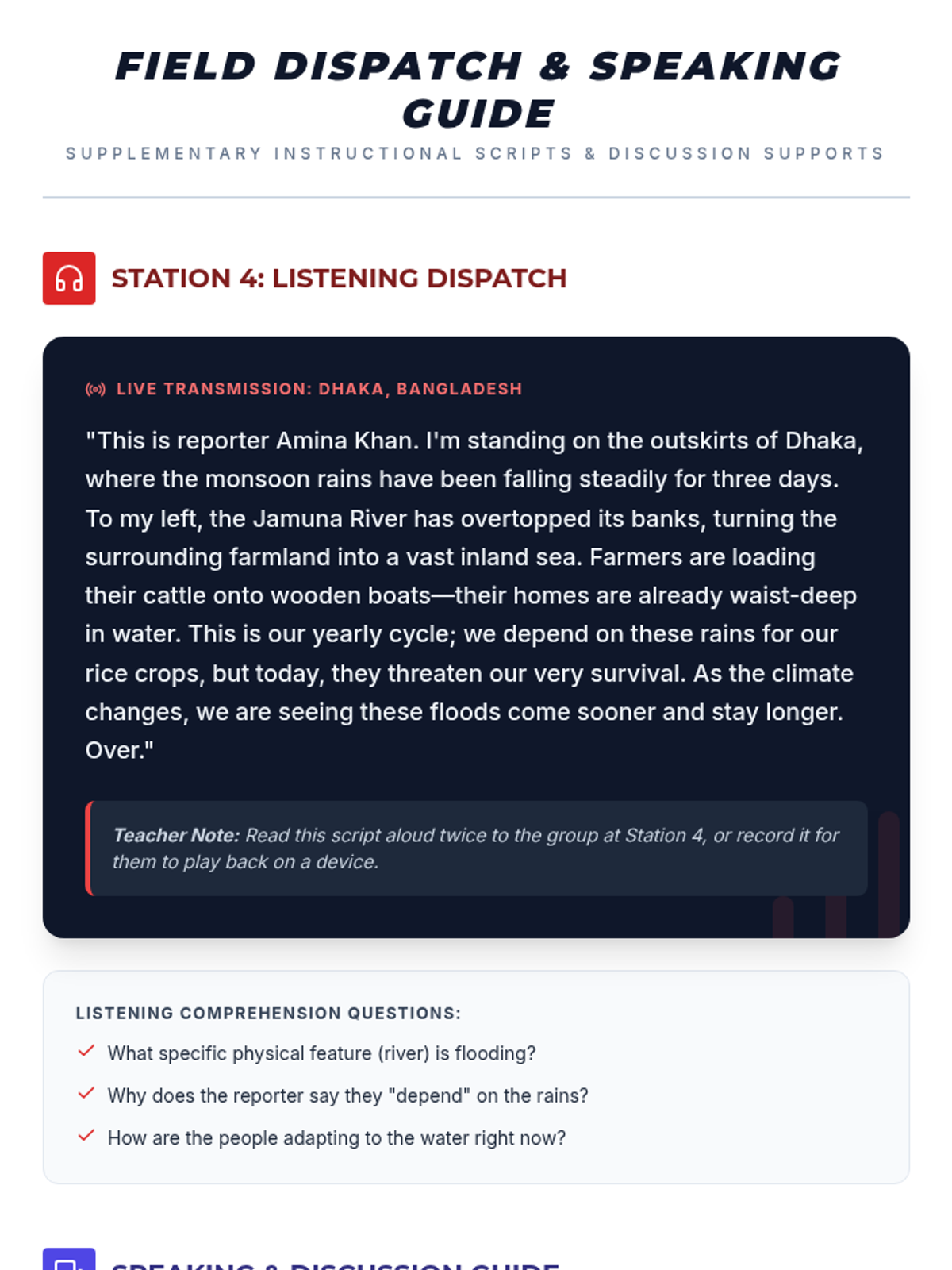
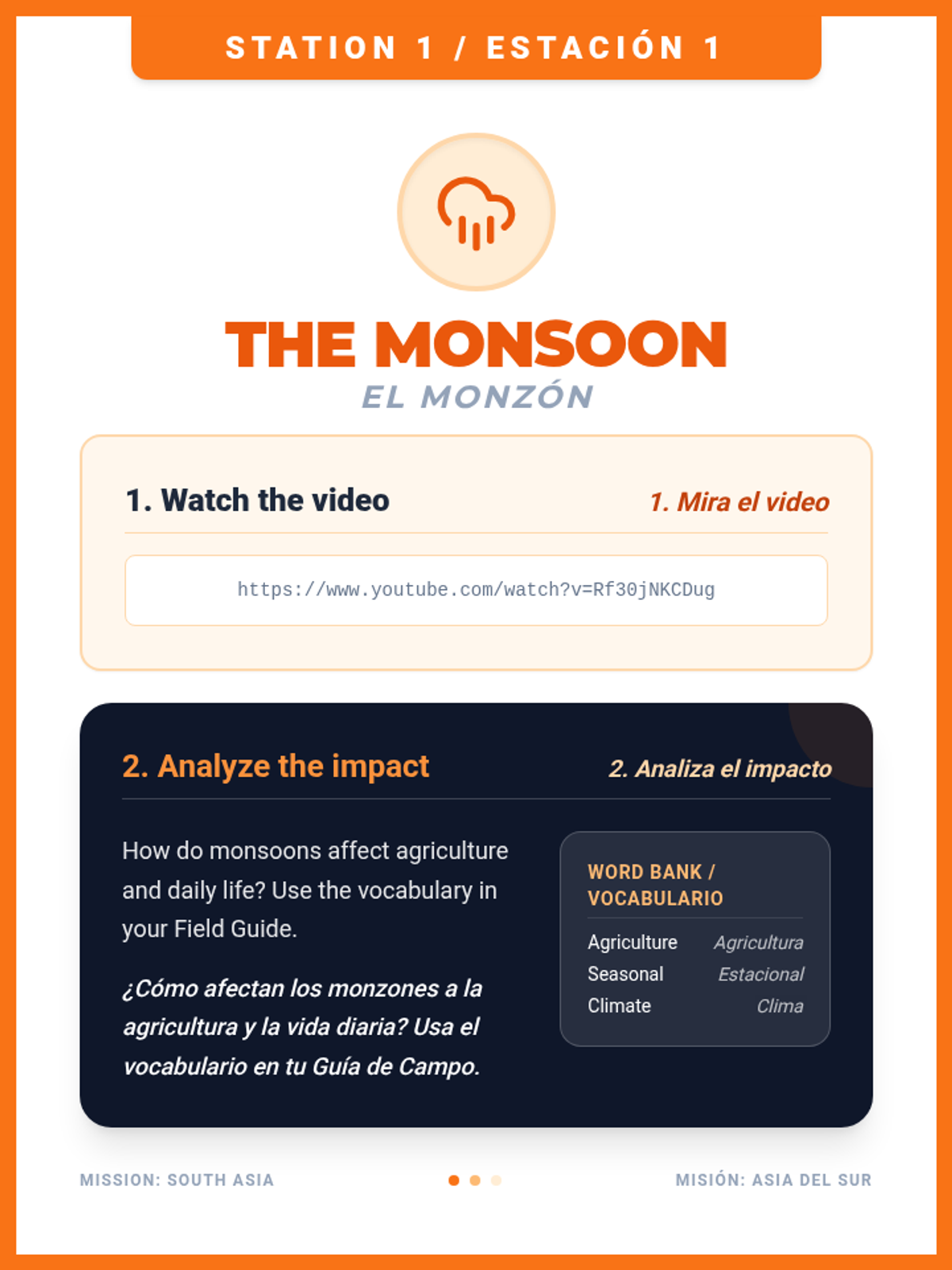
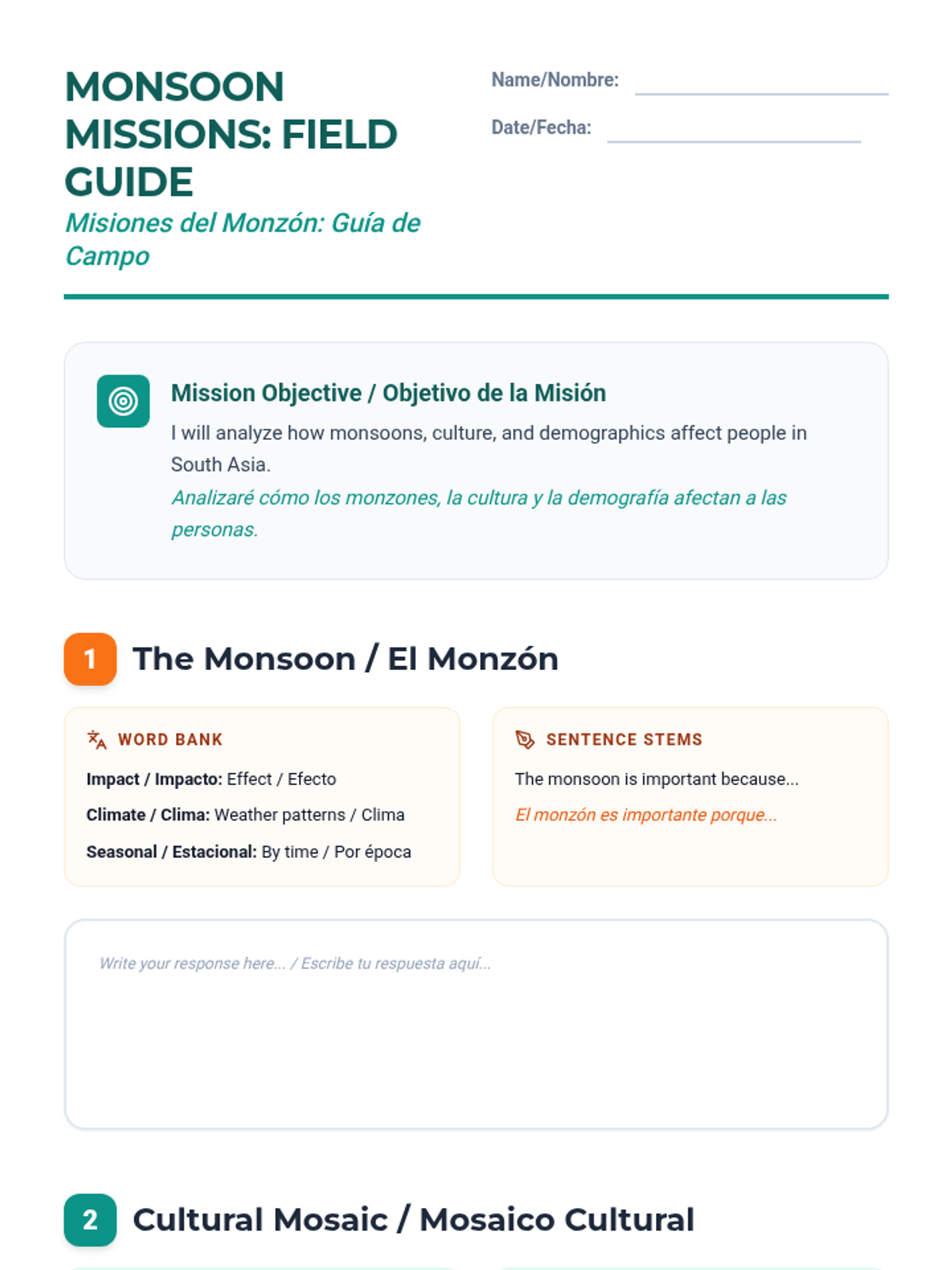
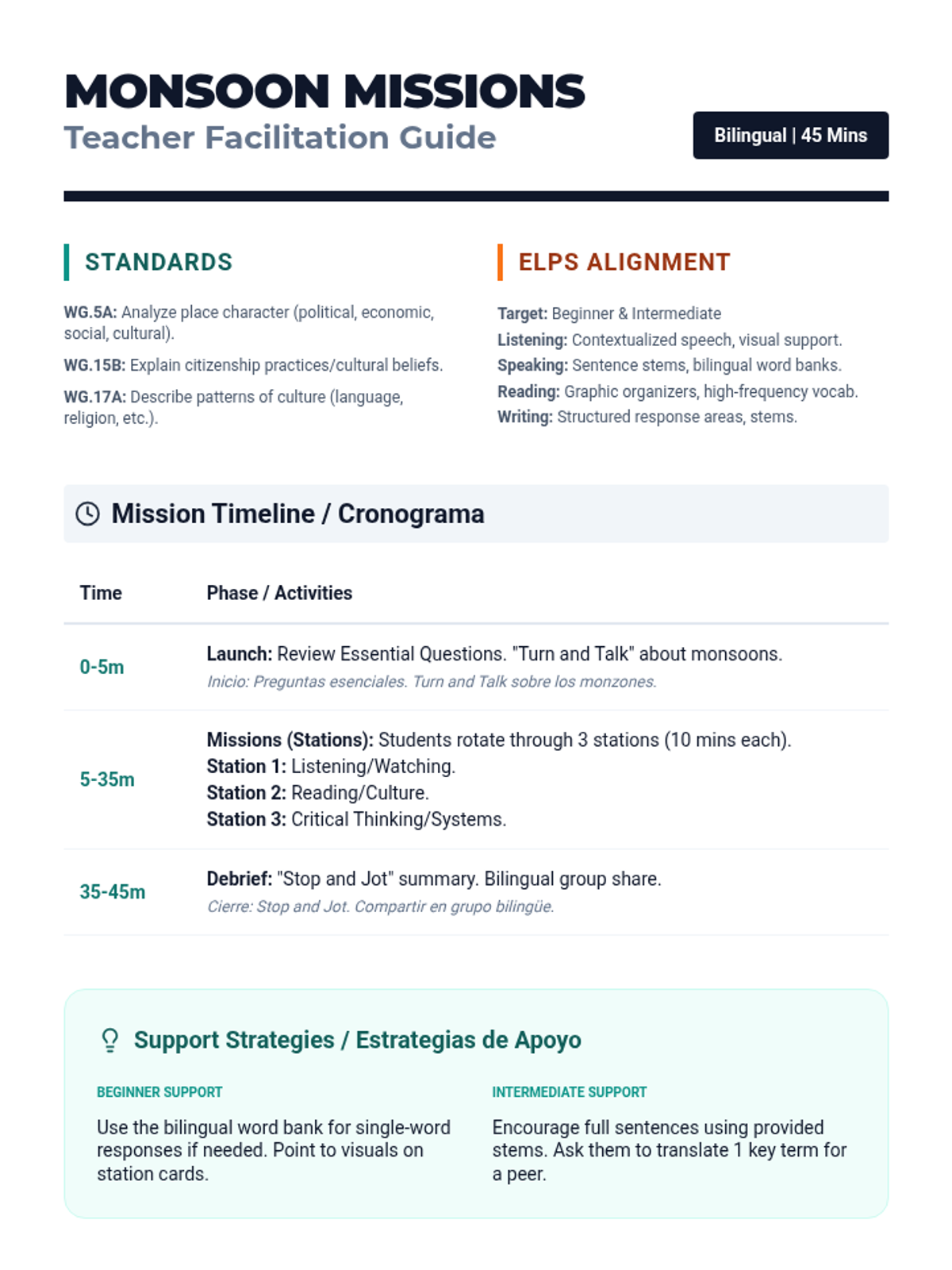
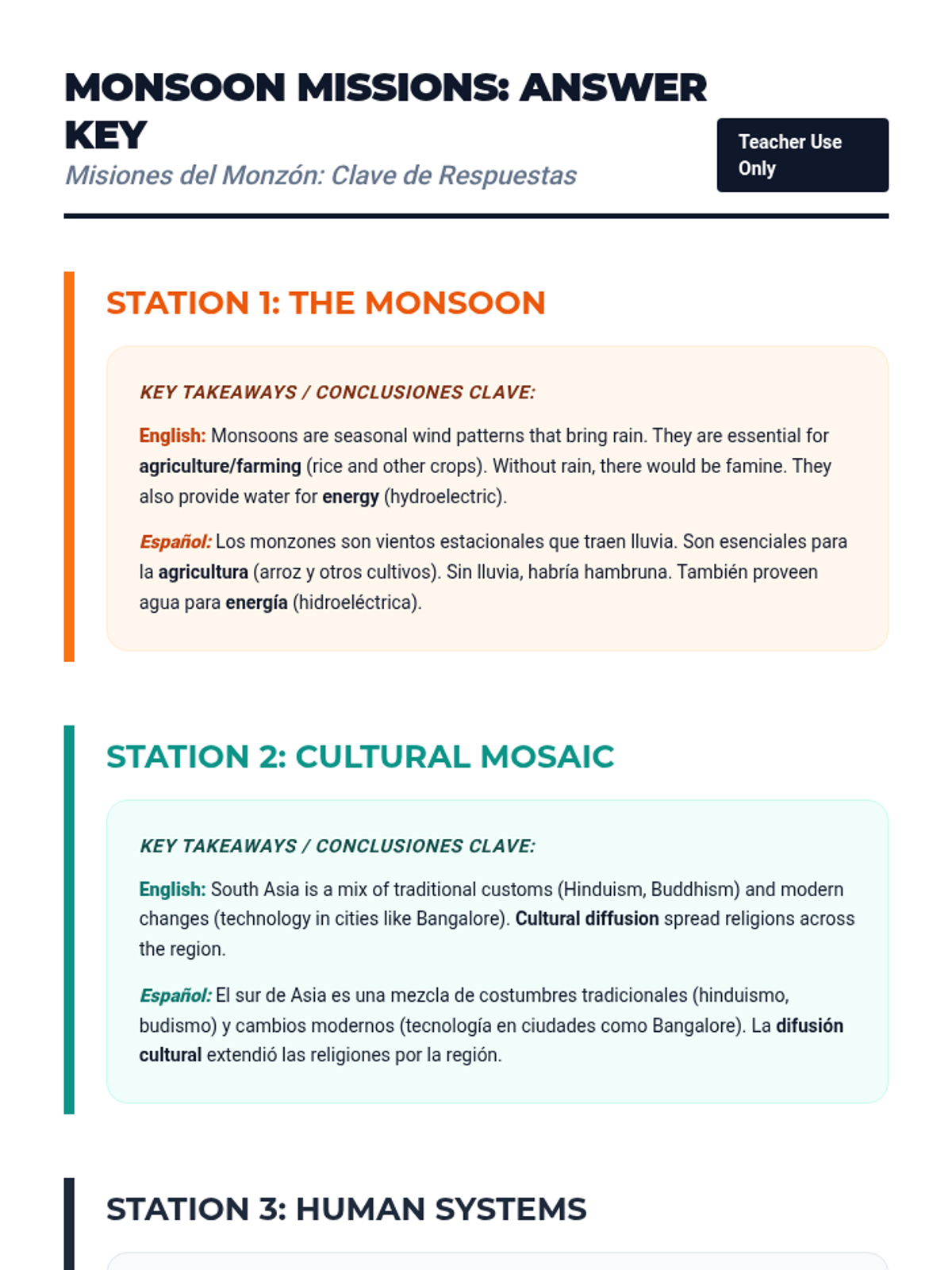
A 45-minute bilingual lesson exploring the physical and human geography of South Asia, focusing on monsoons, cultural patterns, and demographic challenges. Includes stations for listening, reading, writing, and speaking aligned with TELPAS.
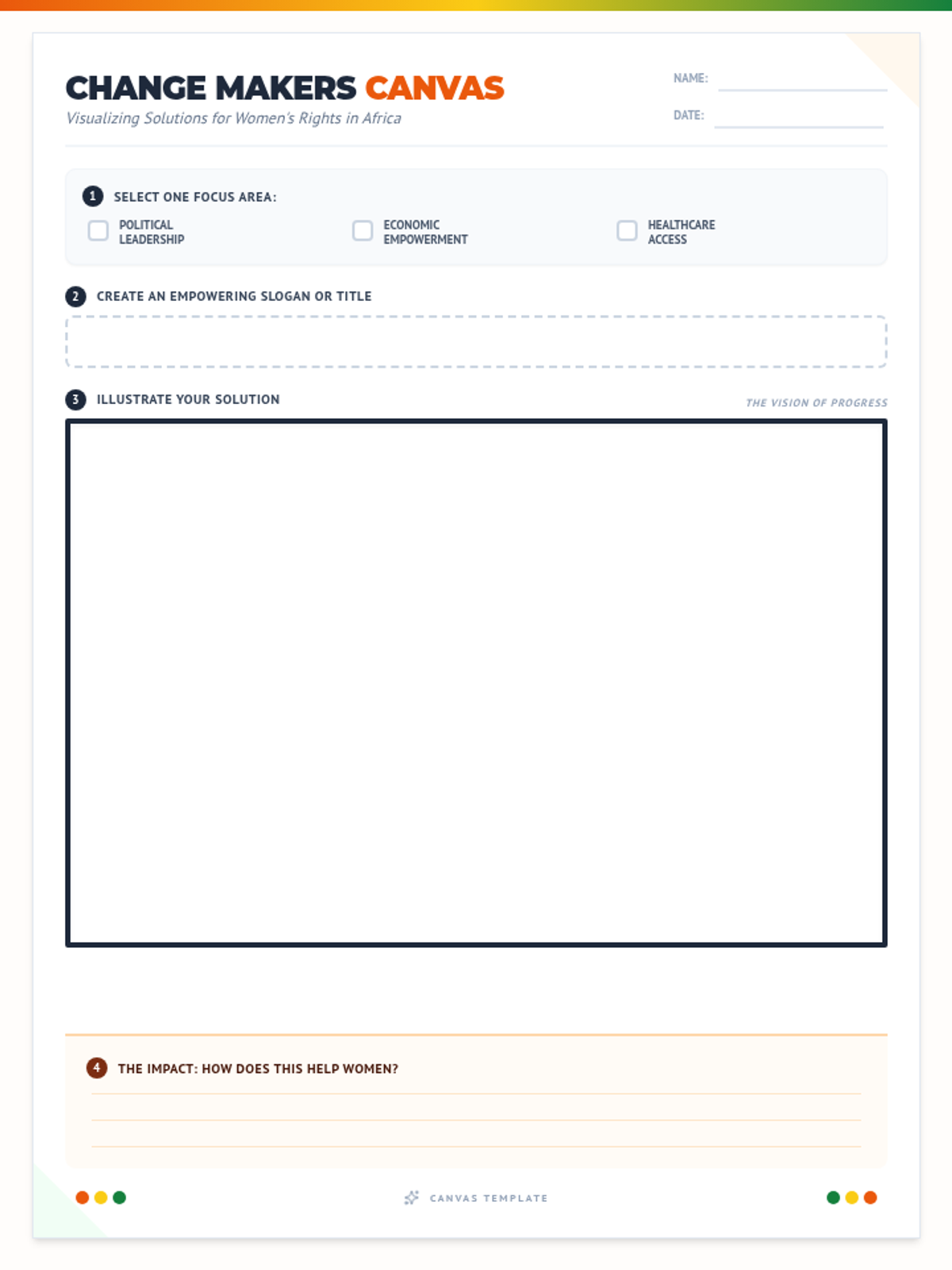
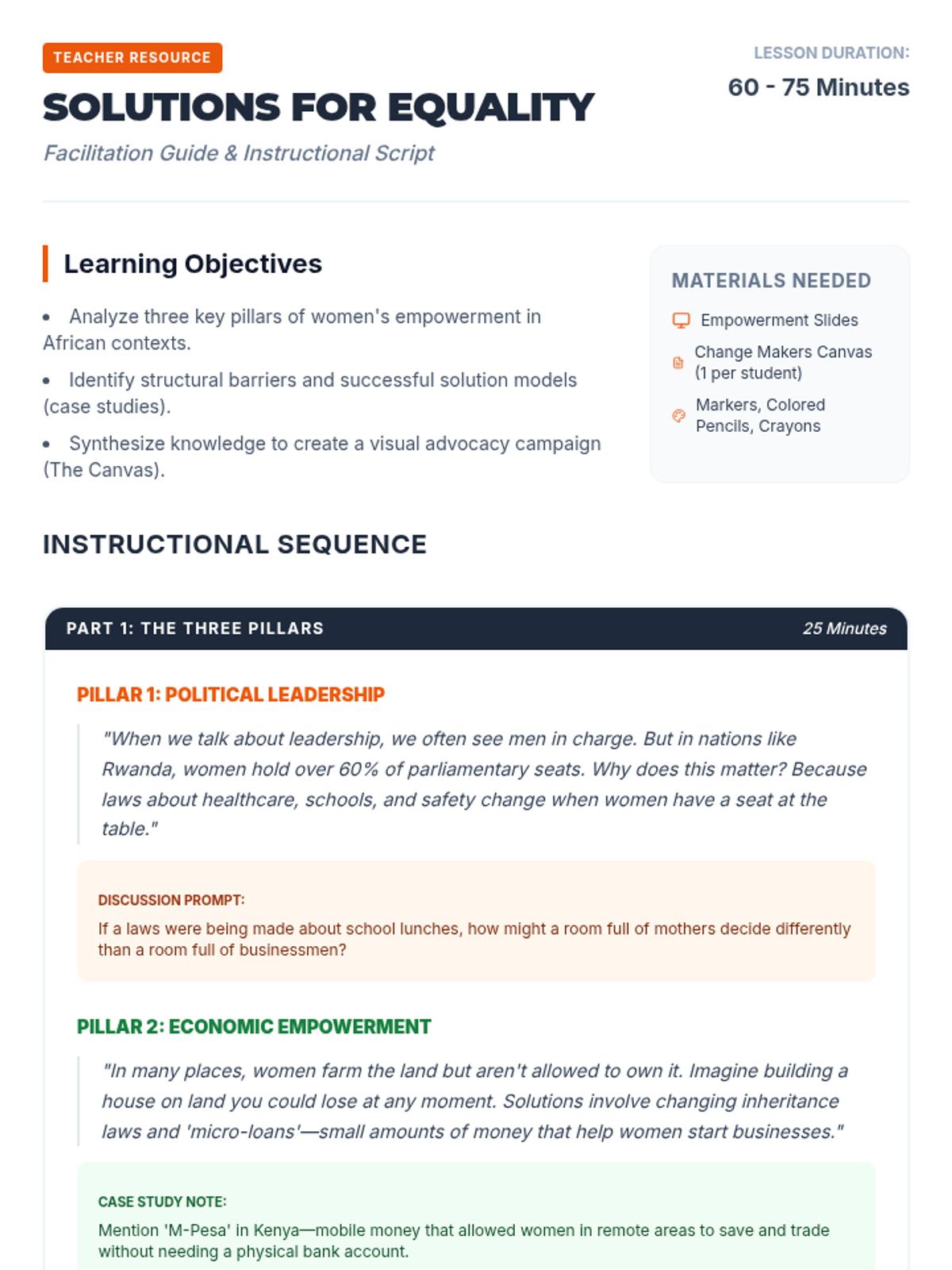
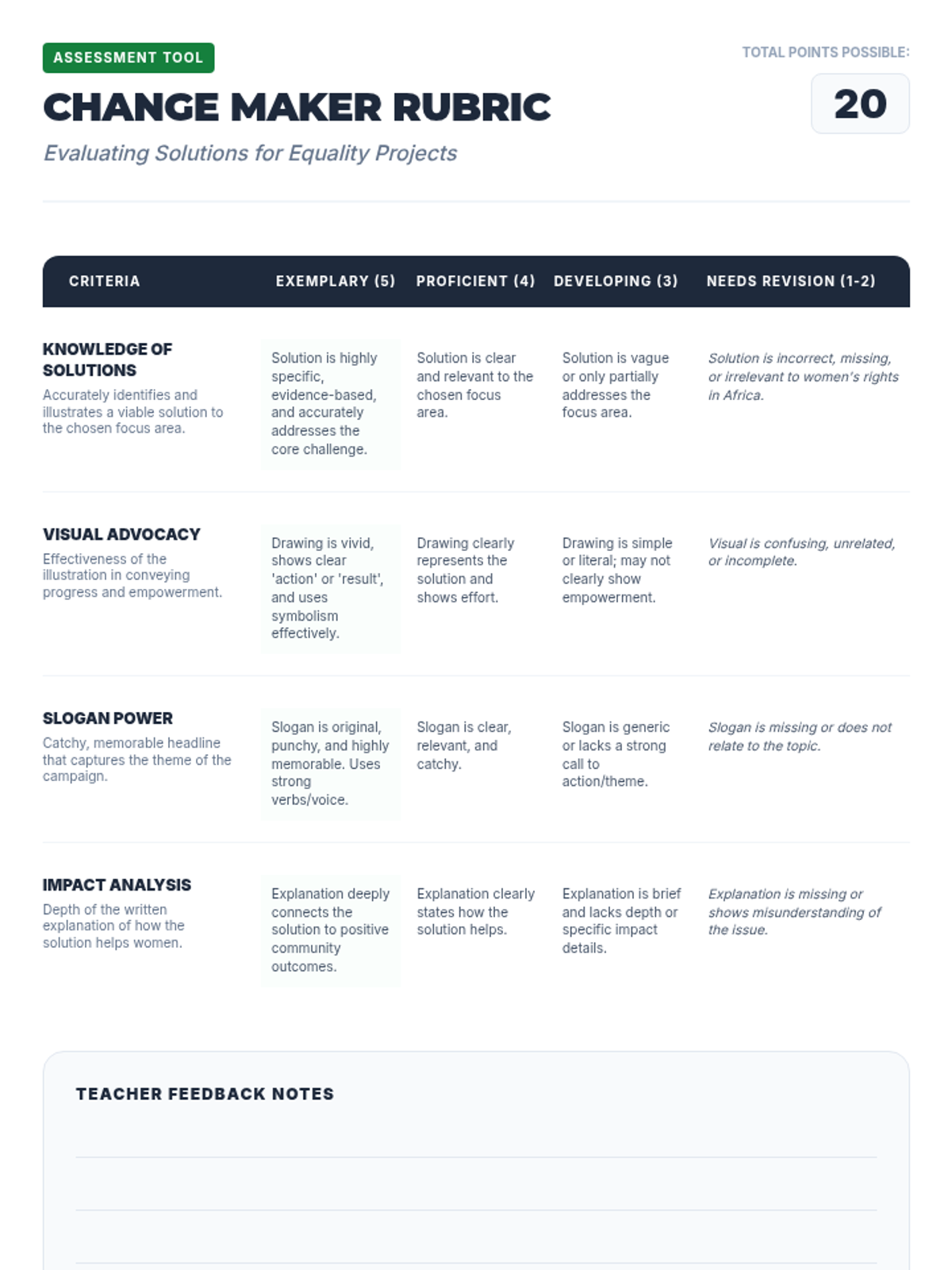
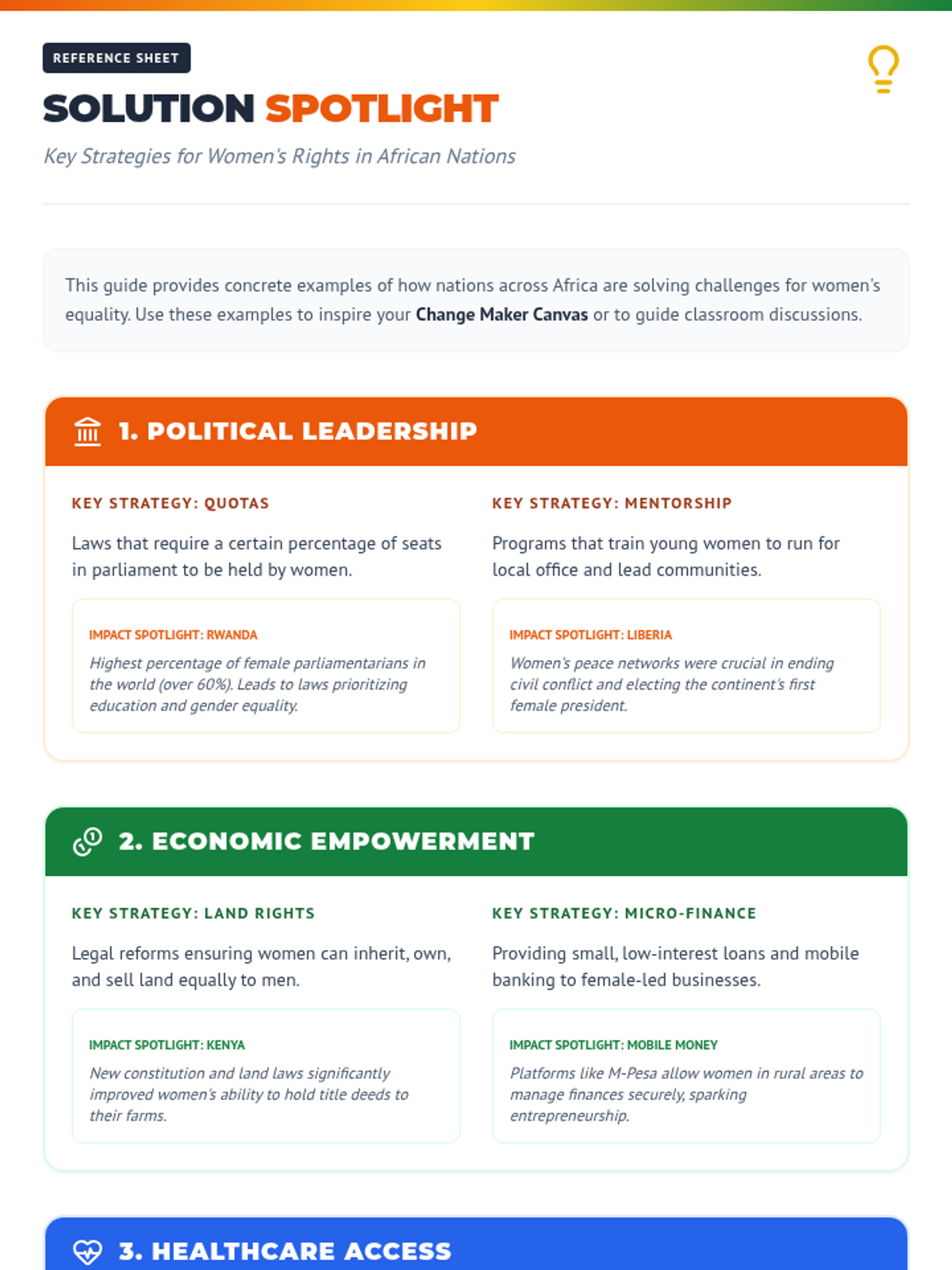
A lesson focused on exploring and illustrating solutions to women's rights challenges in African nations, covering political representation, economic empowerment, and healthcare access. Students analyze case studies and create visual solutions for progress.
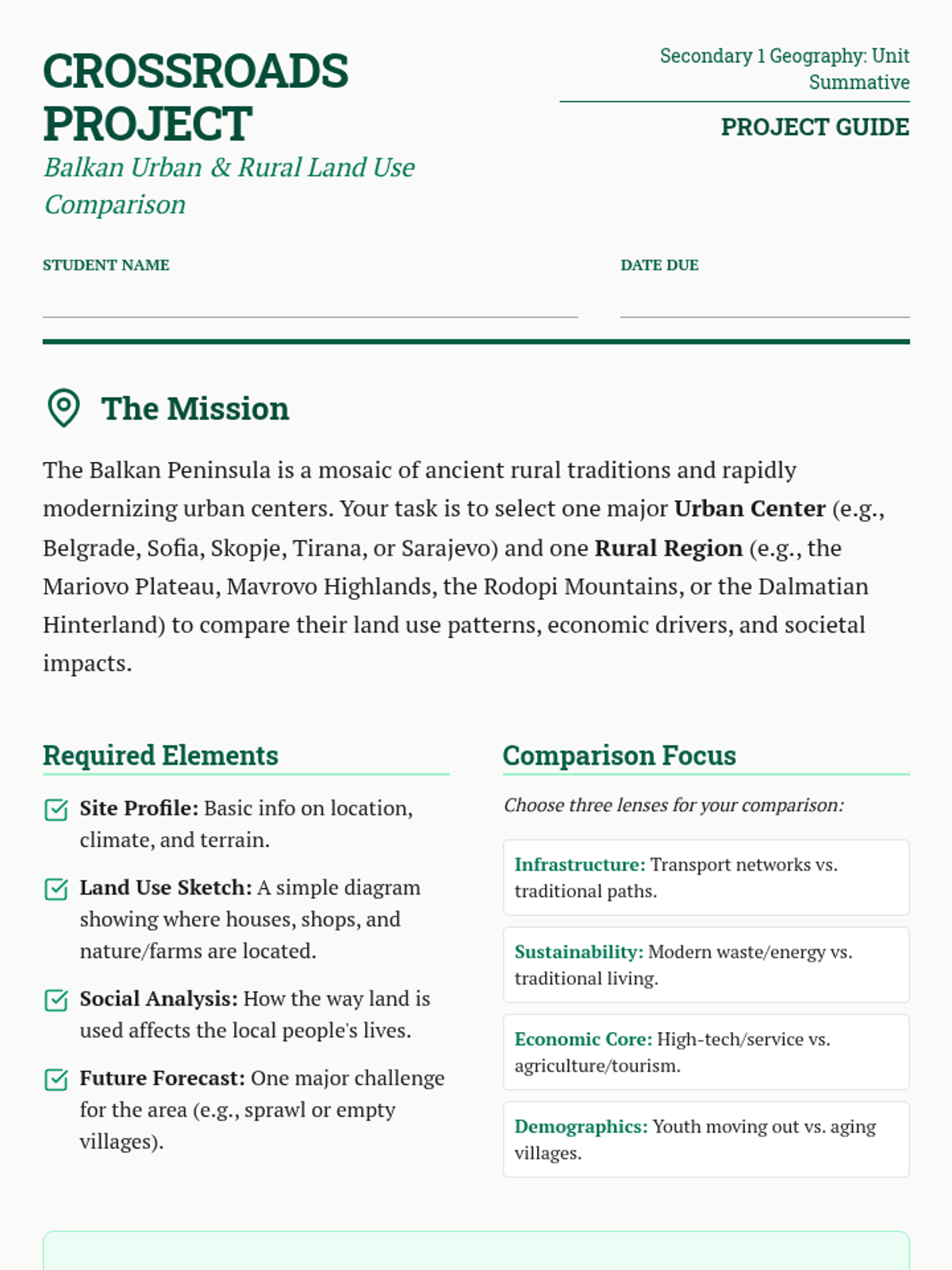
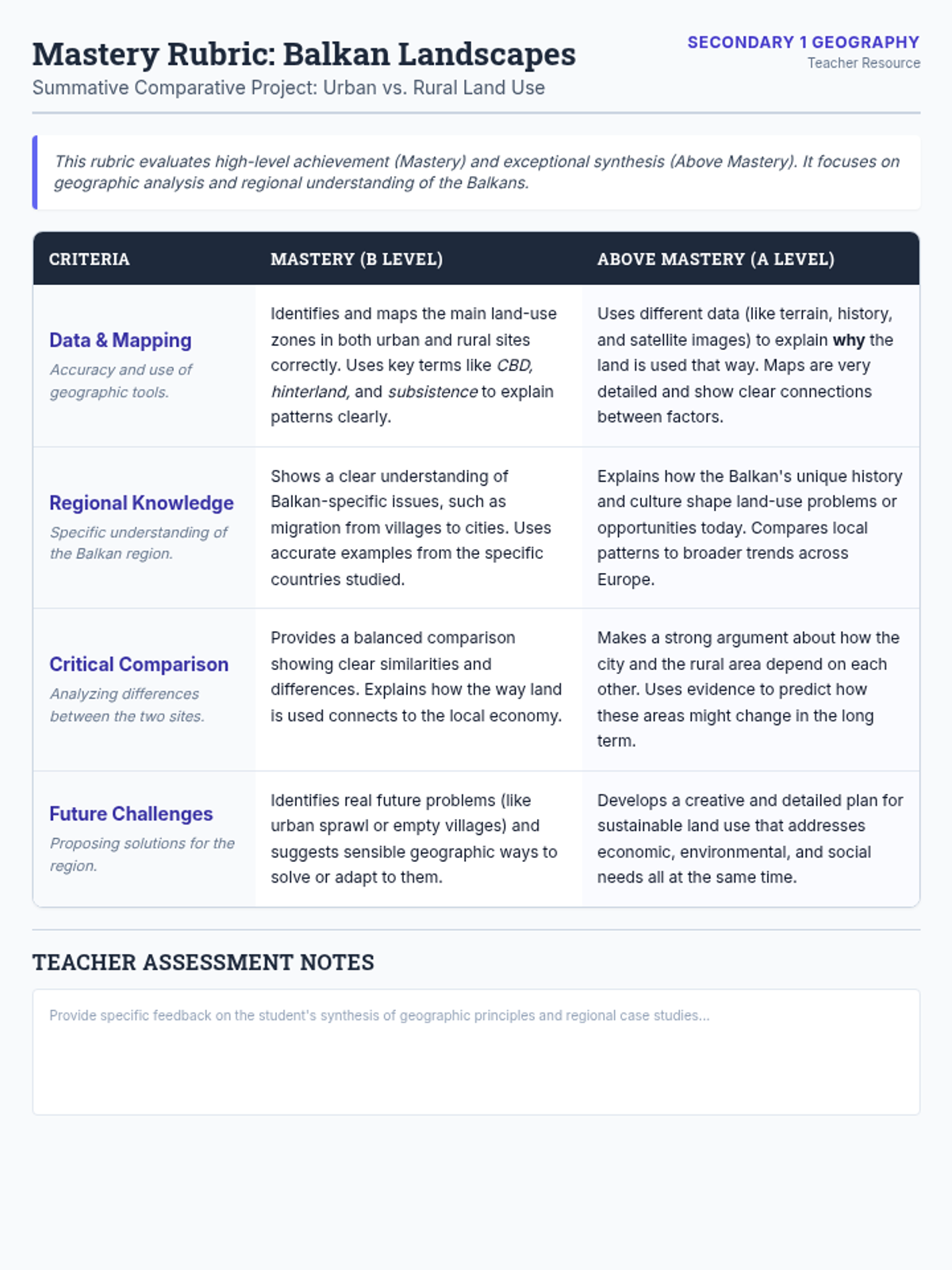
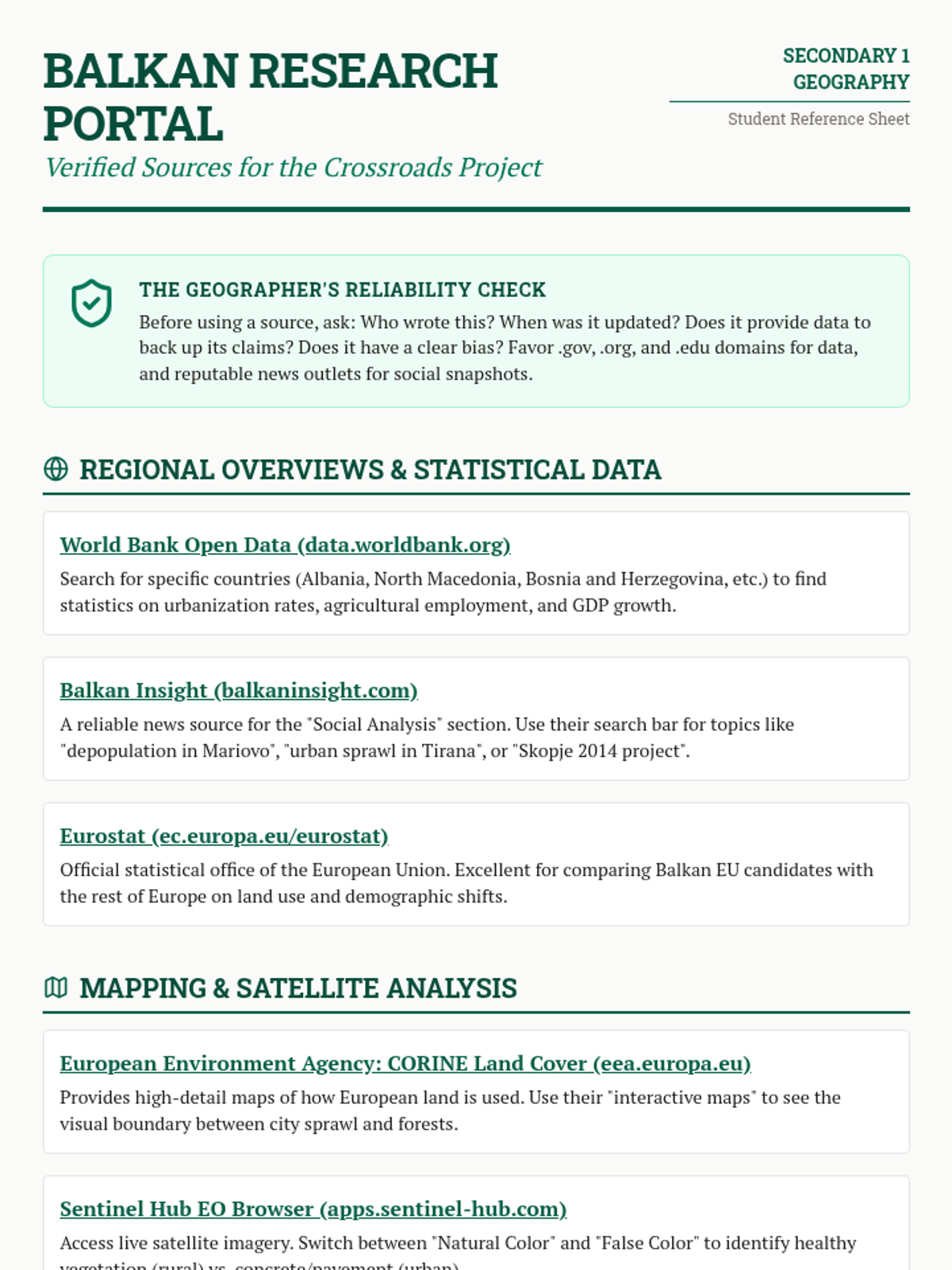
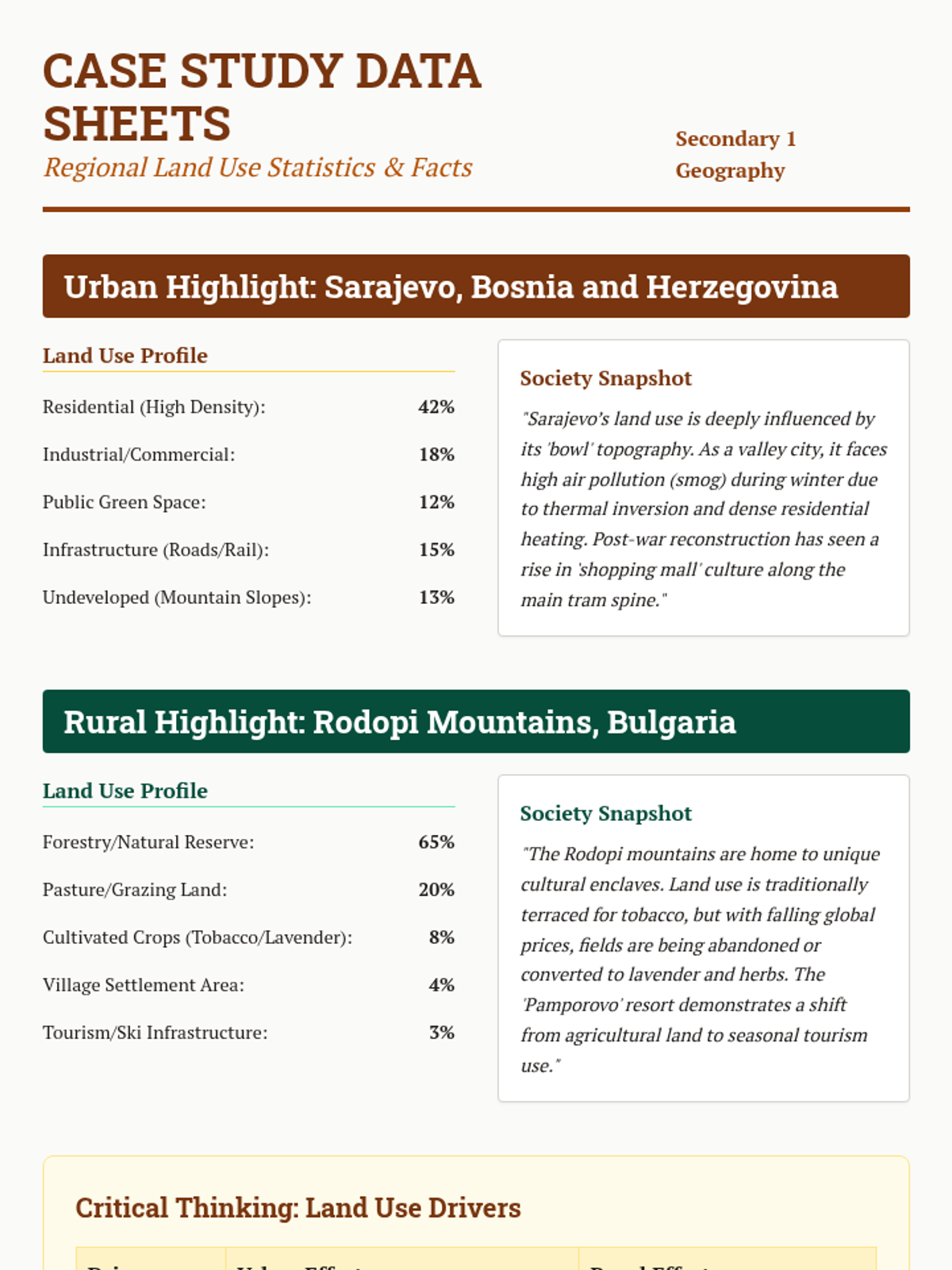
A summative comparative project where students analyze specific urban and rural sites in the Balkans using geographic data and land use models.
Analyzing the rapid urbanization of Balkan capitals versus the traditional agricultural practices and demographic shifts in rural mountain villages.
An introduction to the physical and human geography of the Balkans, focusing on how terrain dictates land use from the Dinaric Alps to the Danubian Plain.
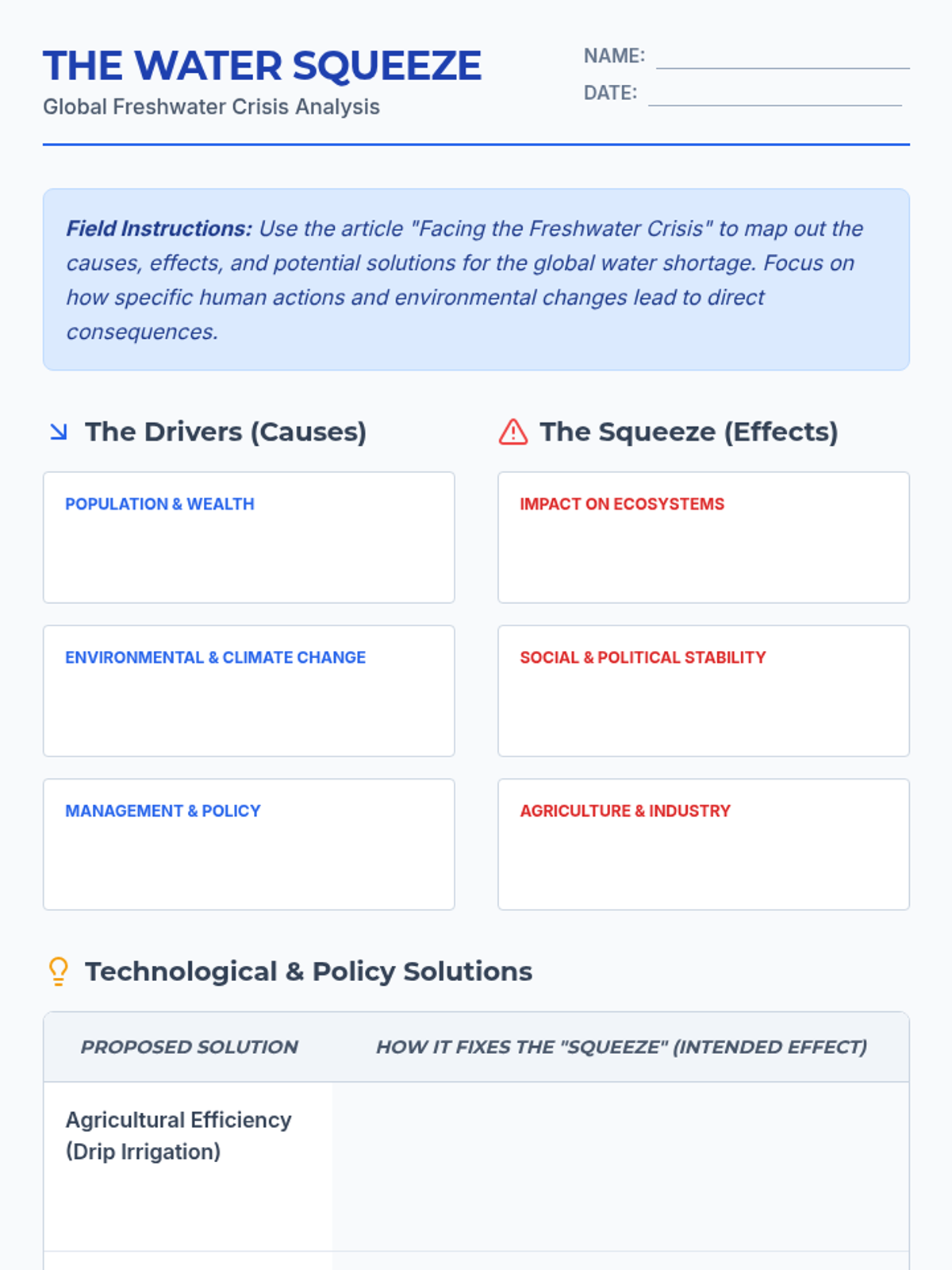
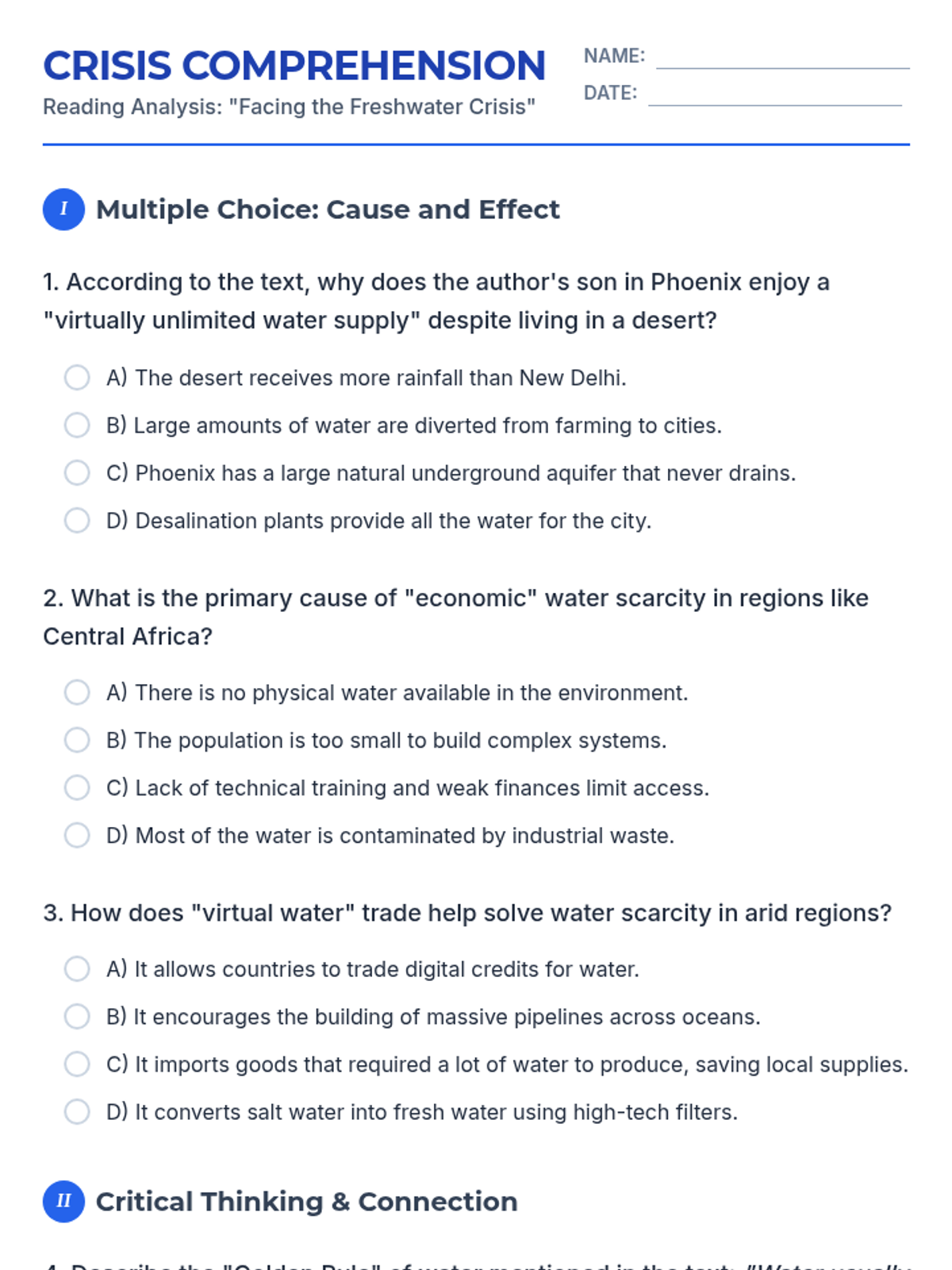
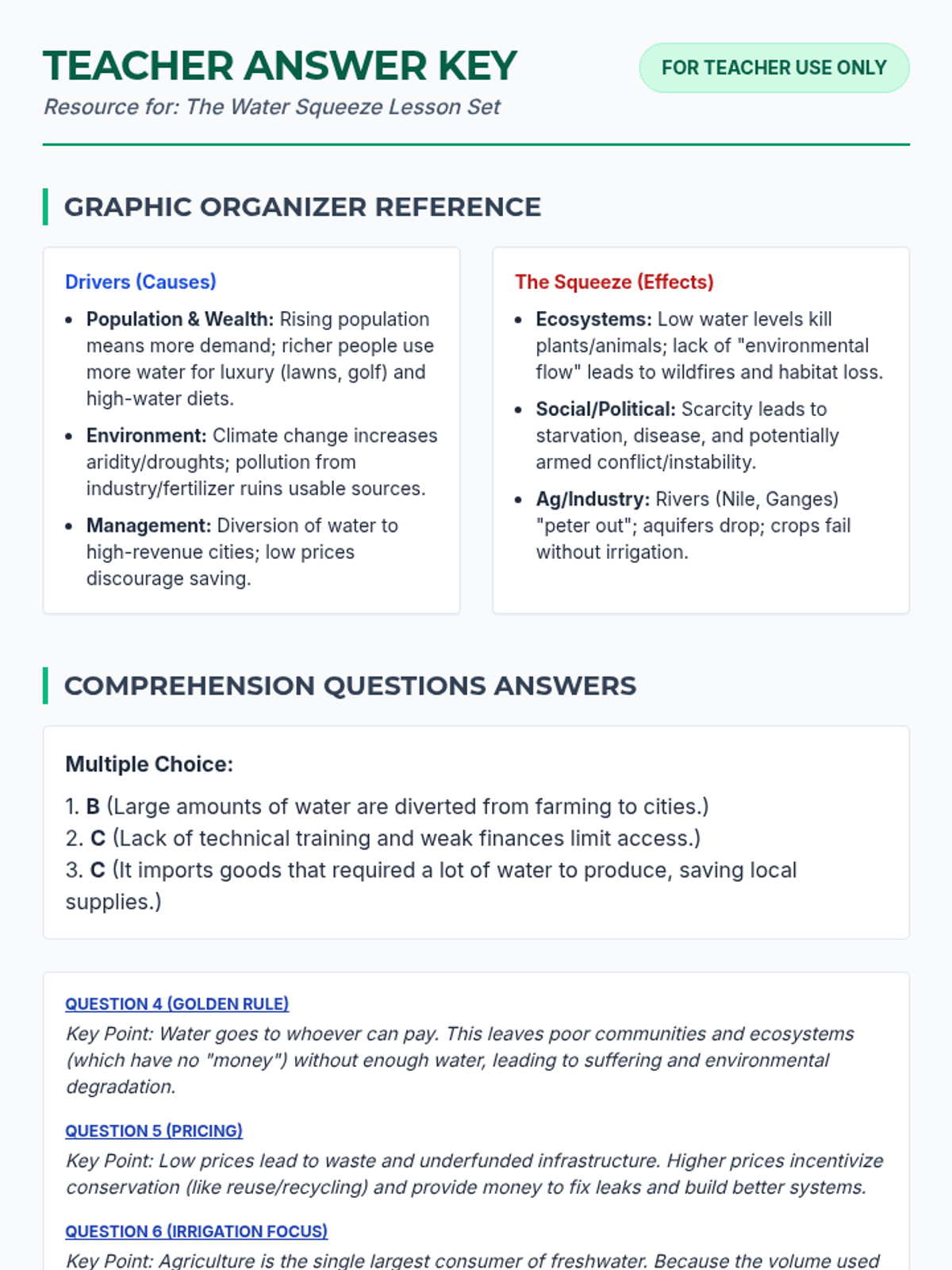
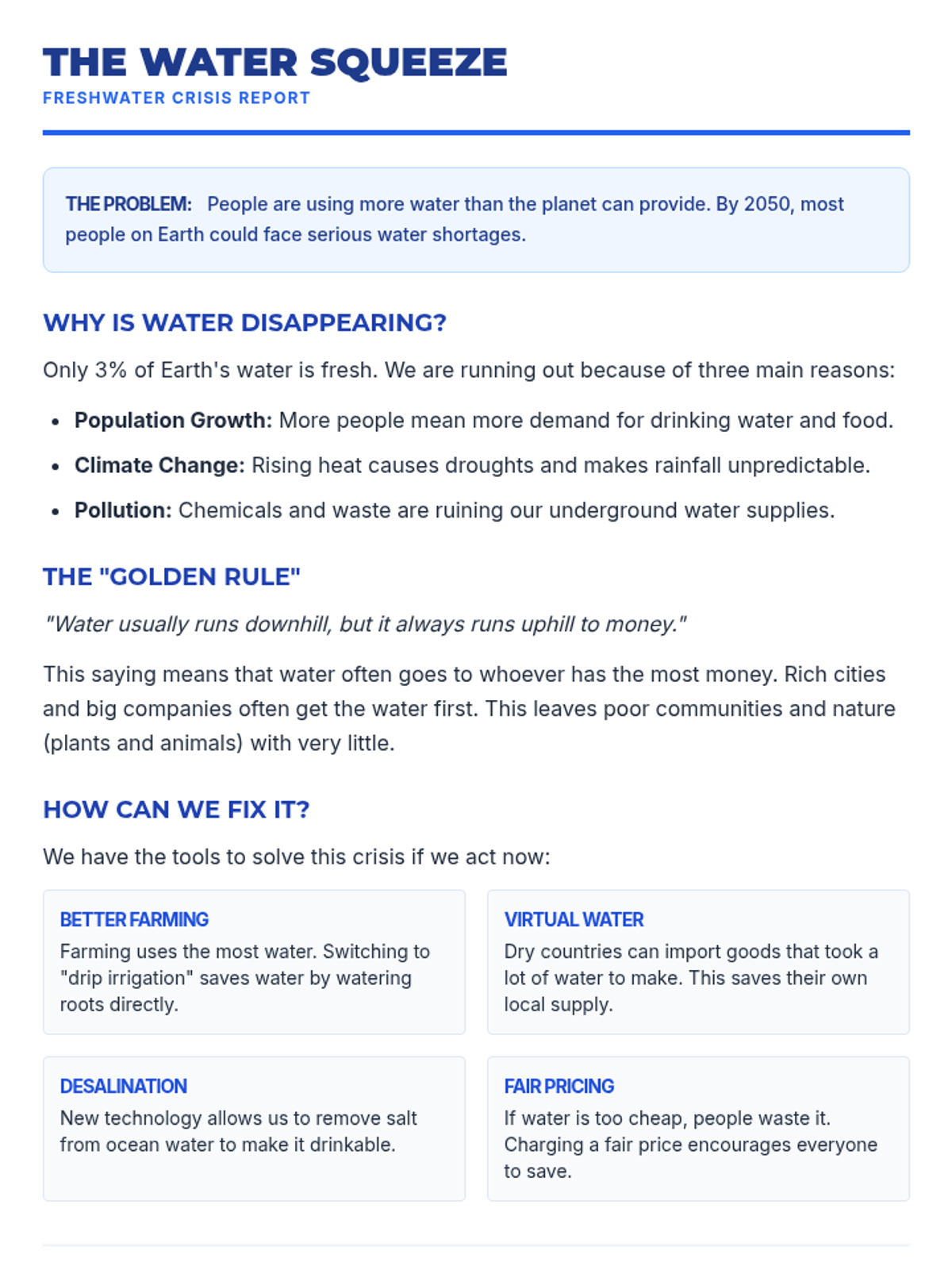
A comprehensive set of materials focusing on the global freshwater crisis, designed to help students identify cause-and-effect relationships within complex environmental systems. Students will analyze the drivers of water scarcity, its global impact, and potential technological and policy solutions.
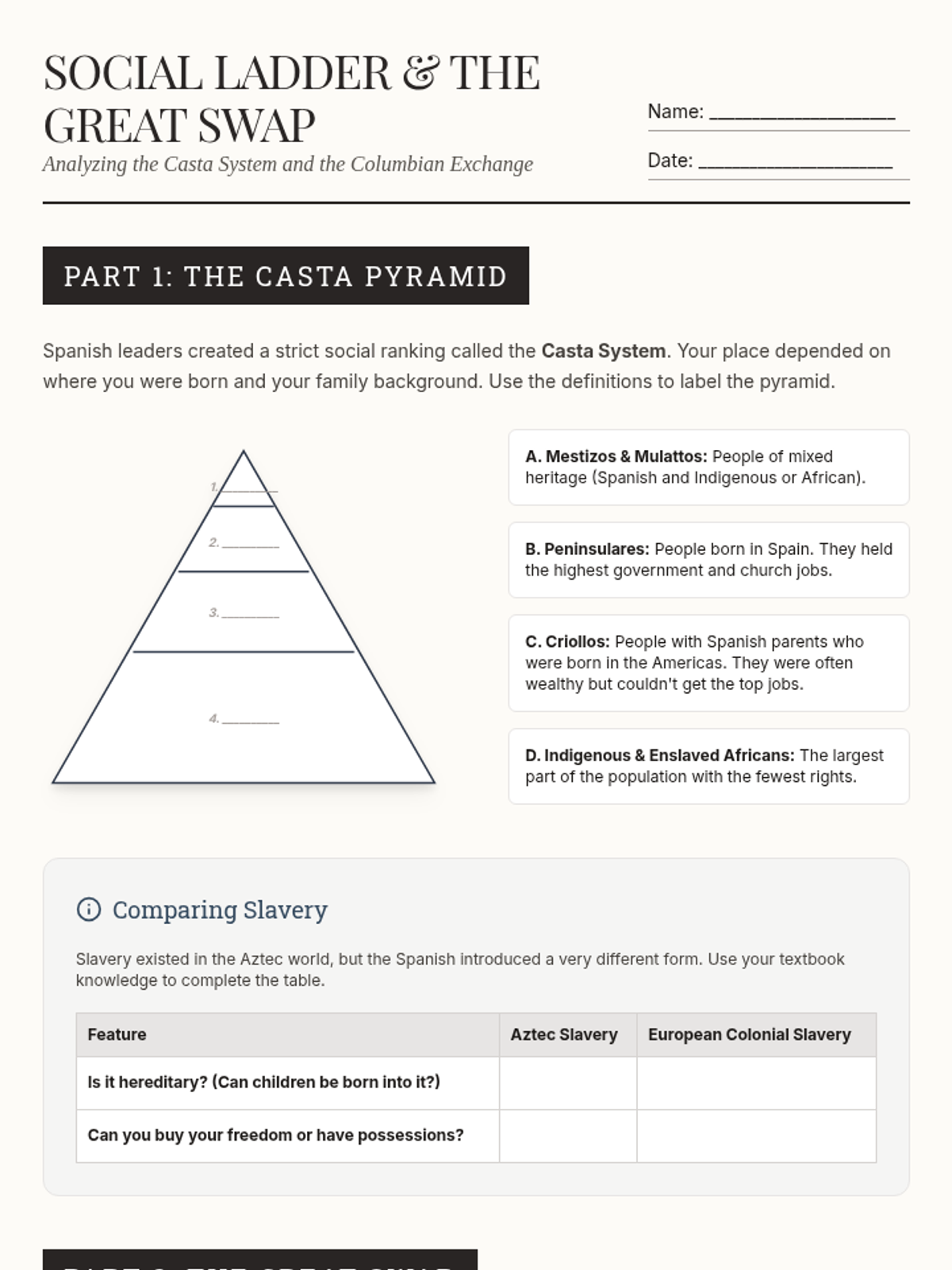
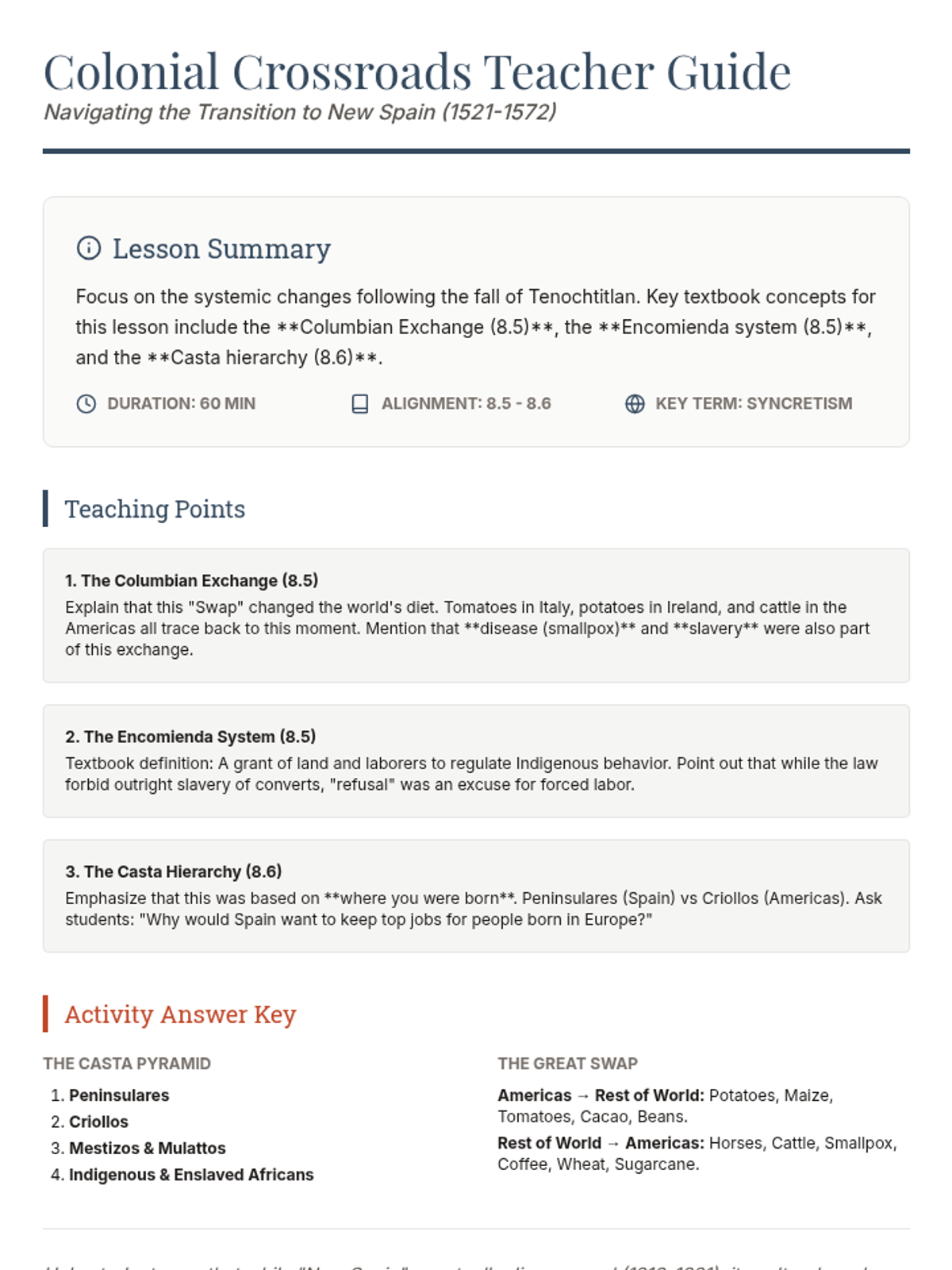
Examine the structural changes in the Americas following the fall of indigenous empires. Students explore the Encomienda system, the Casta hierarchy, and the long-term cultural fusion that shaped modern Latin America.
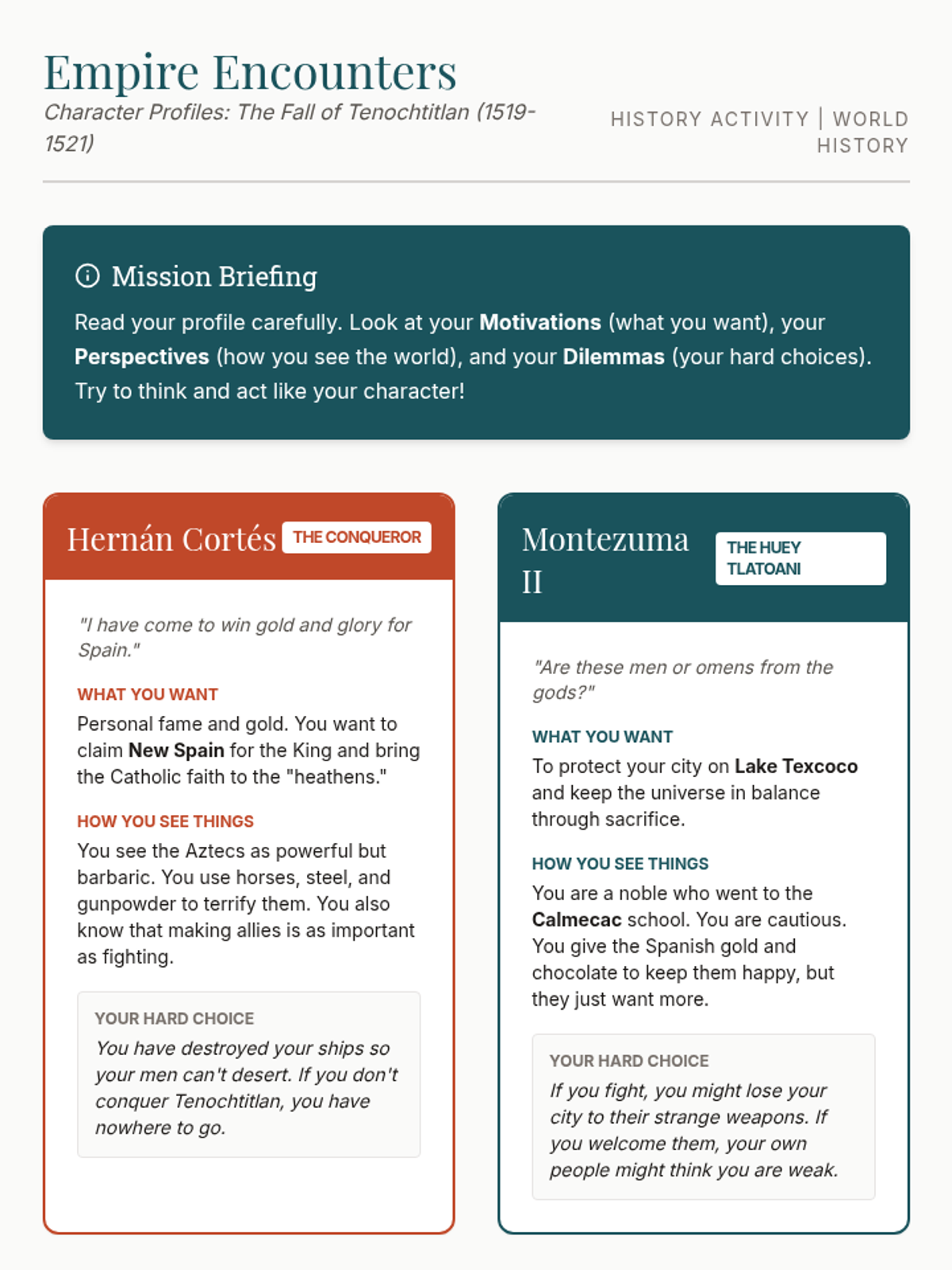
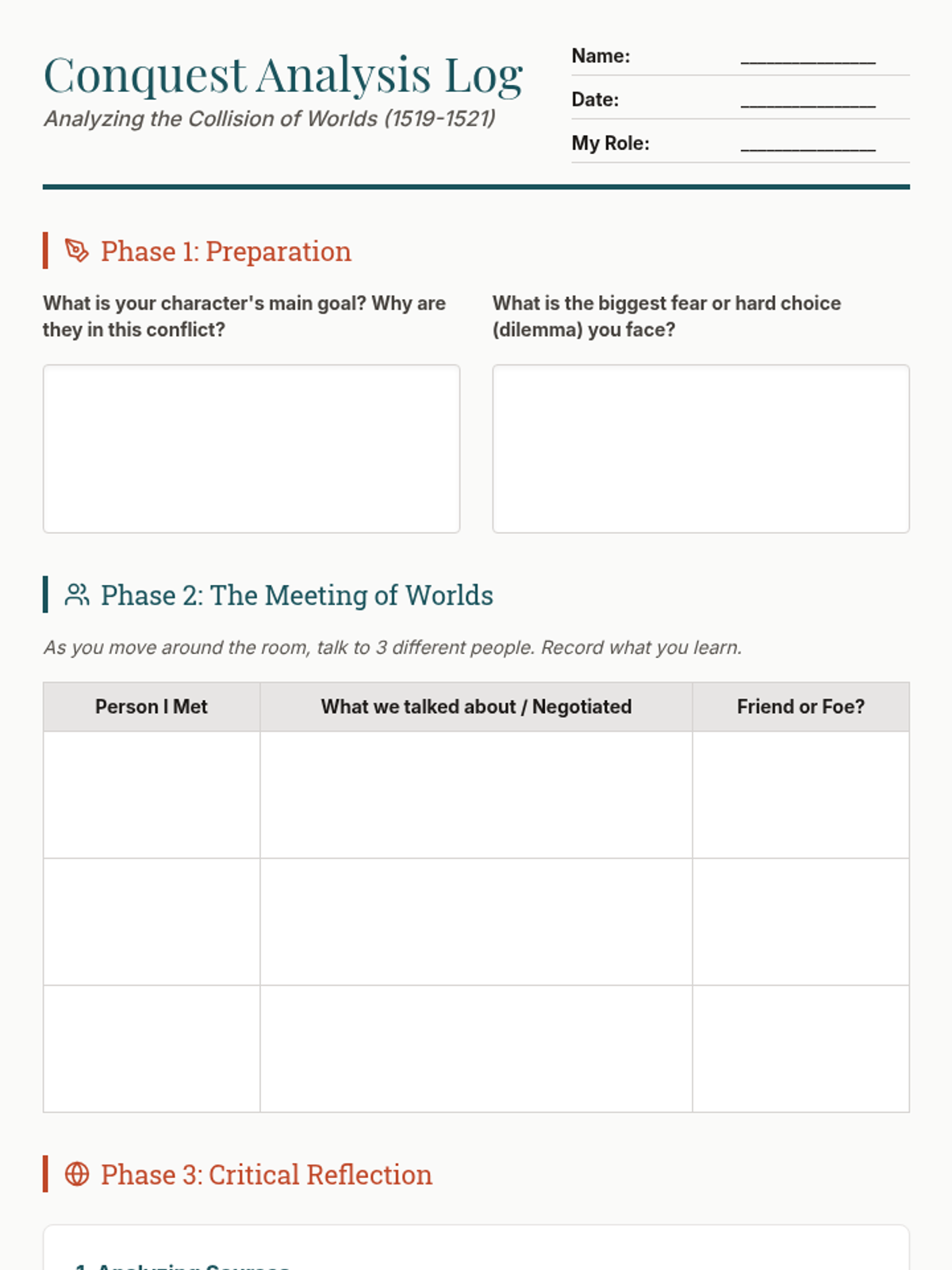
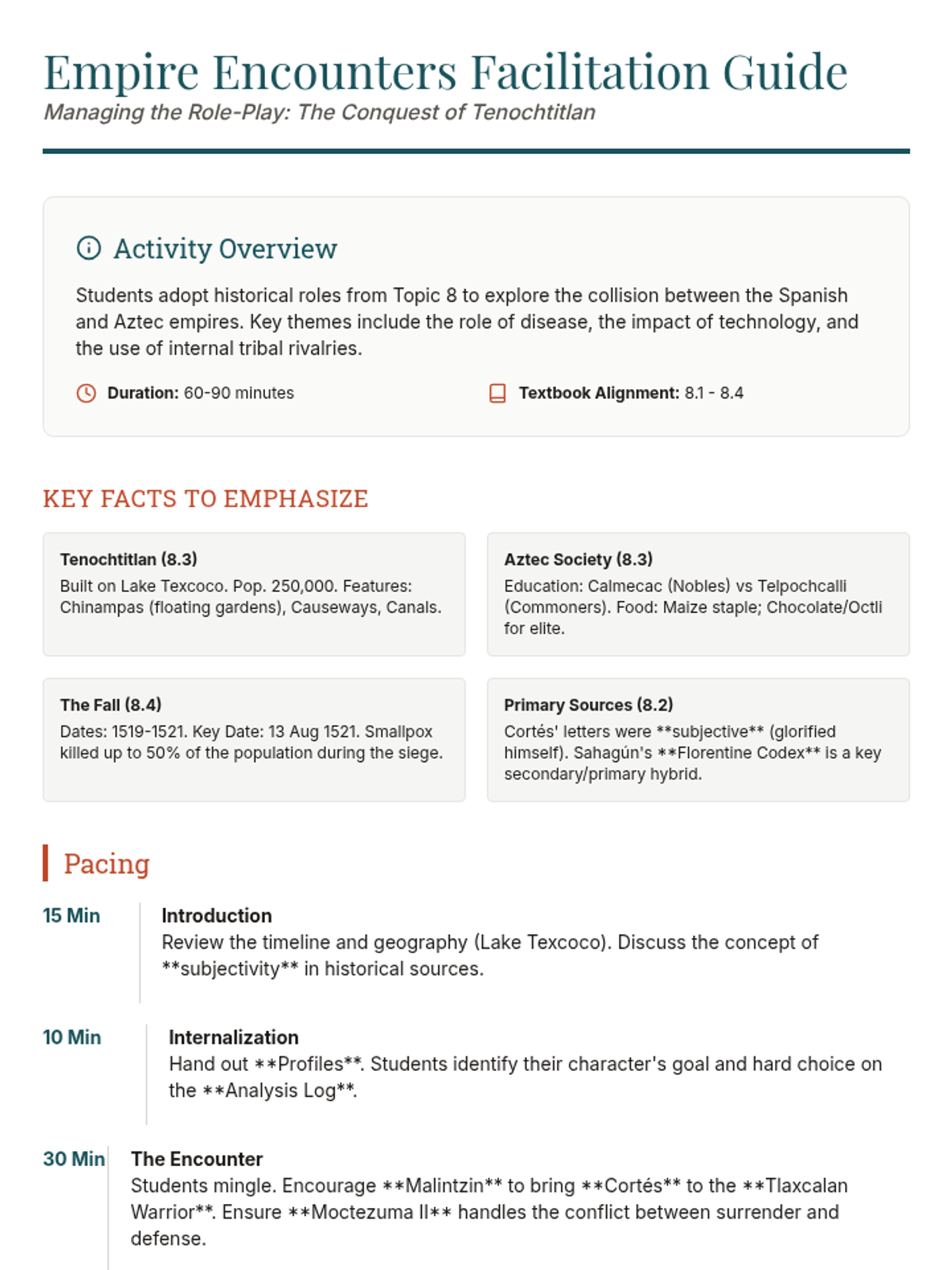
An immersive exploration of the Spanish Conquest of the Americas through role-play and primary source analysis. Students examine the motivations of various groups and the transformative impacts of colonization.
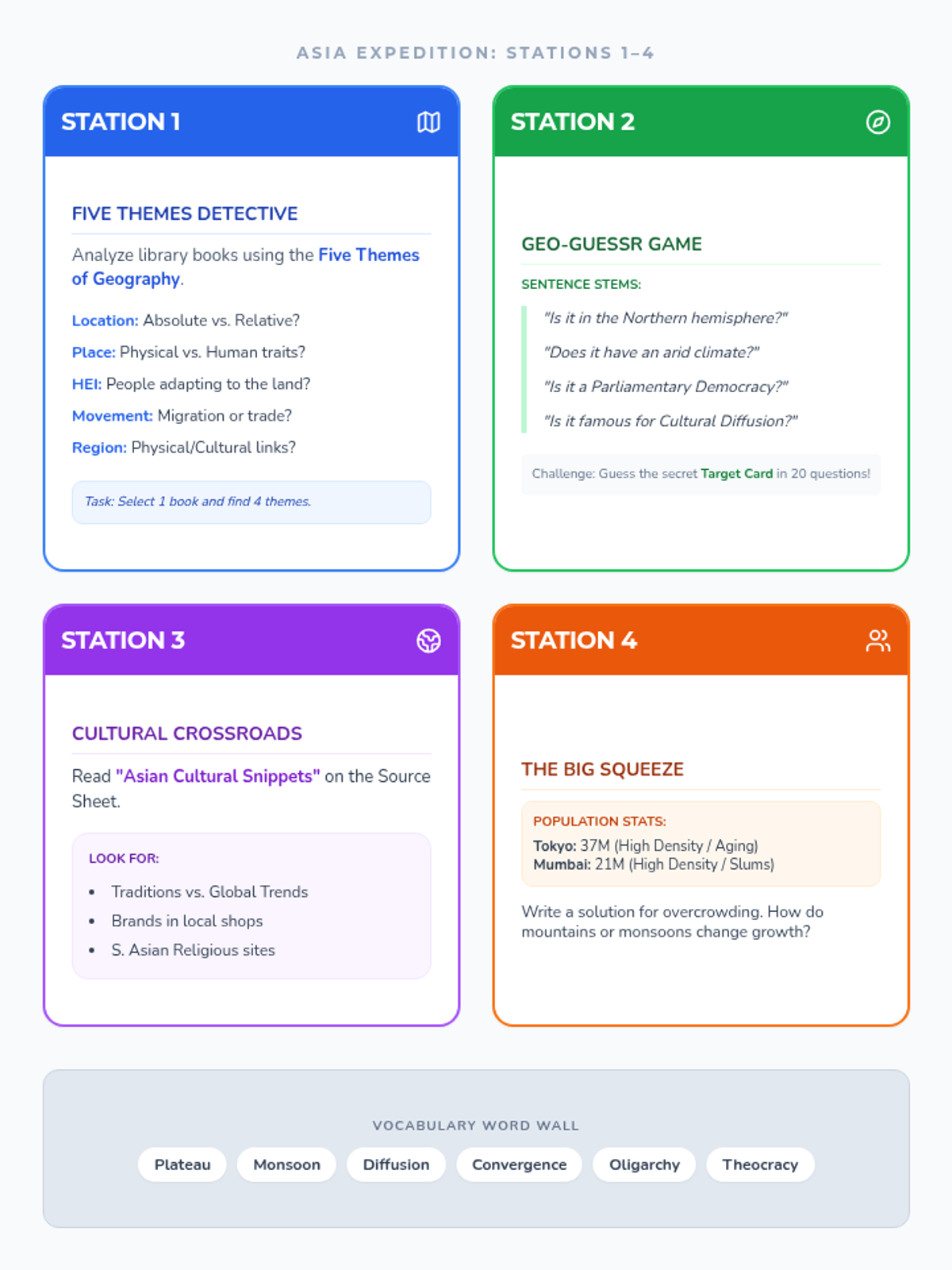
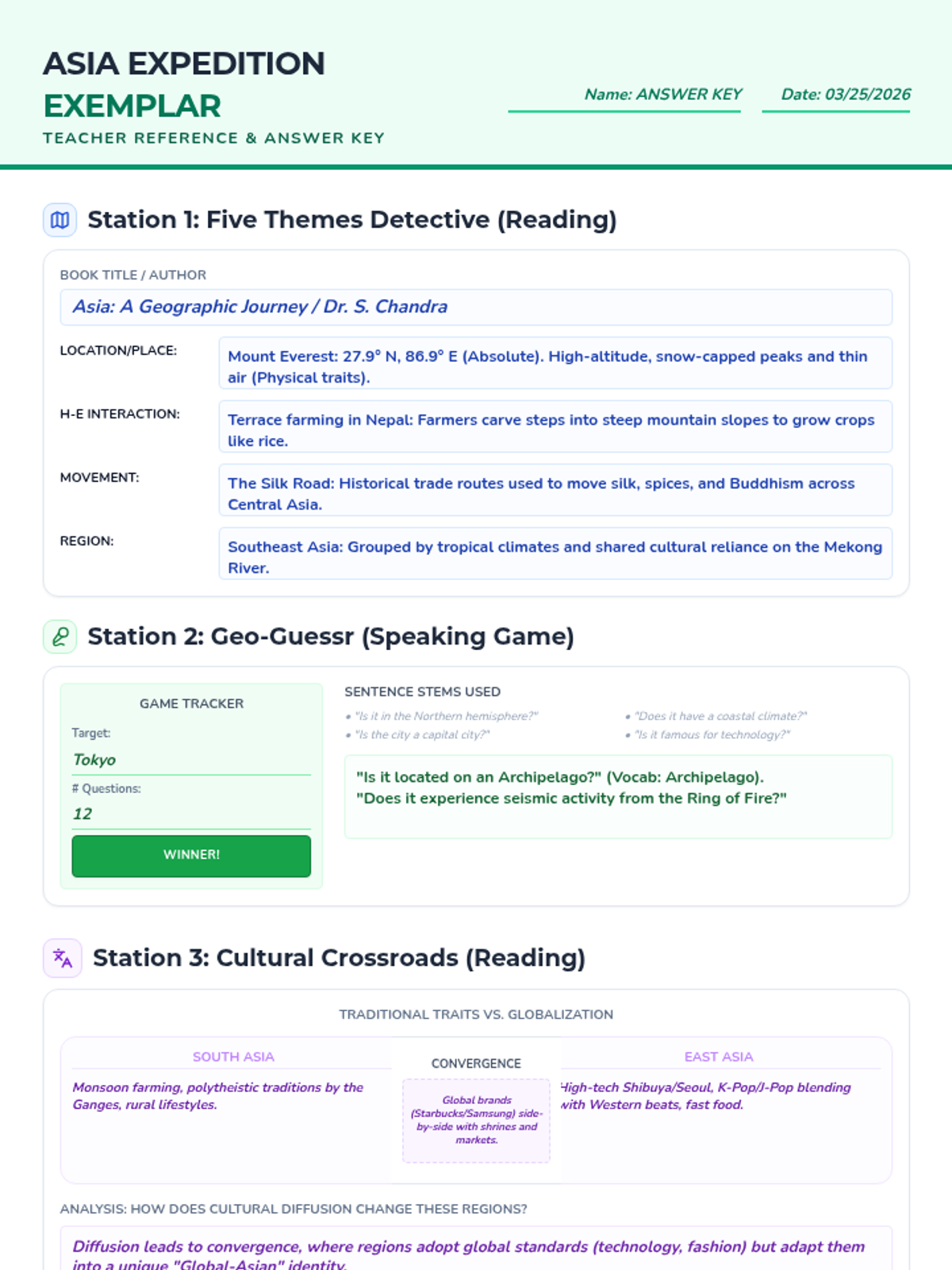
A set of five interactive learning stations focused on the physical and cultural geography of Asia, including population challenges, globalization, and natural disasters. Students practice reading, writing, listening, and speaking skills while analyzing the five themes of geography.
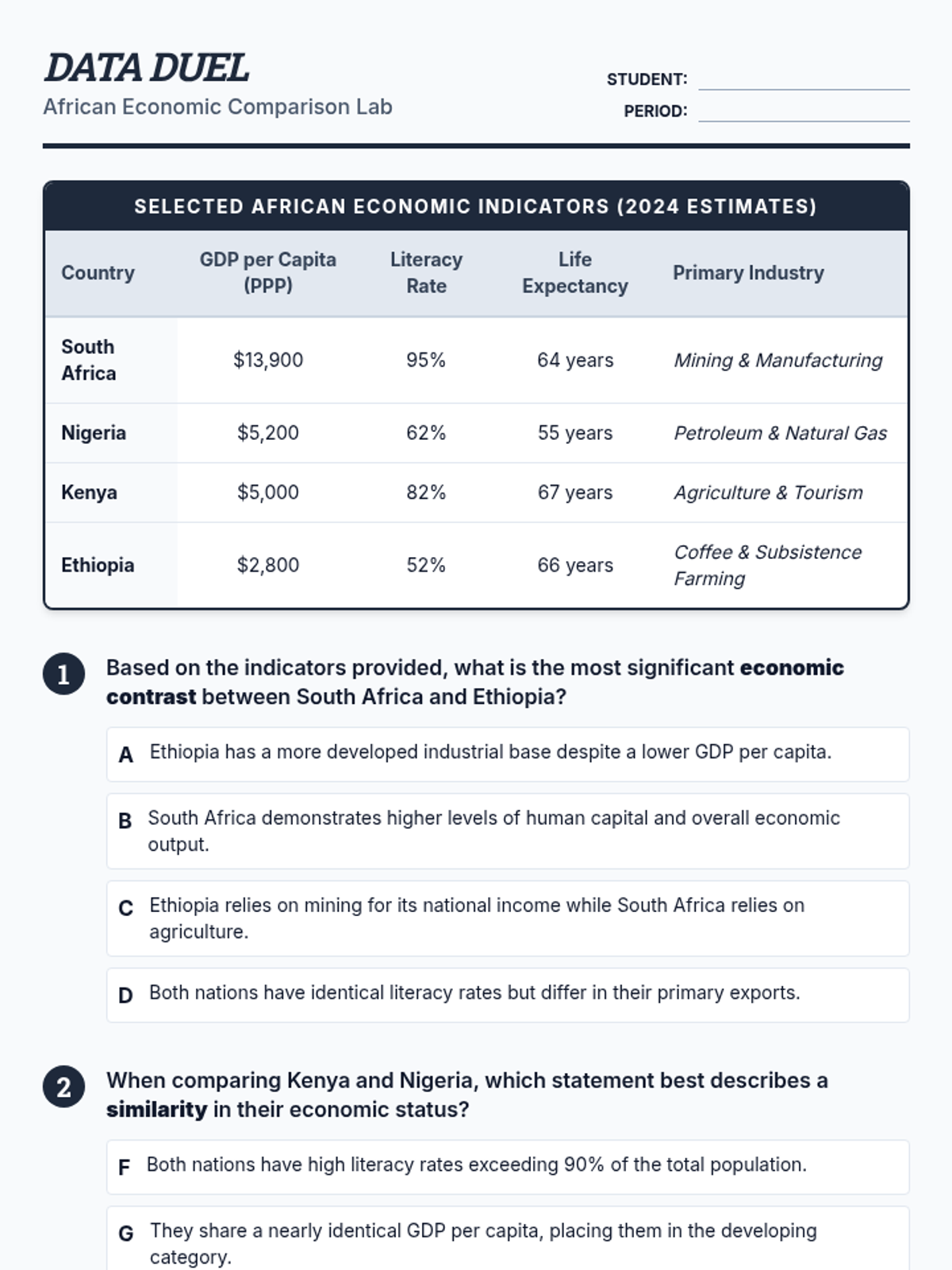
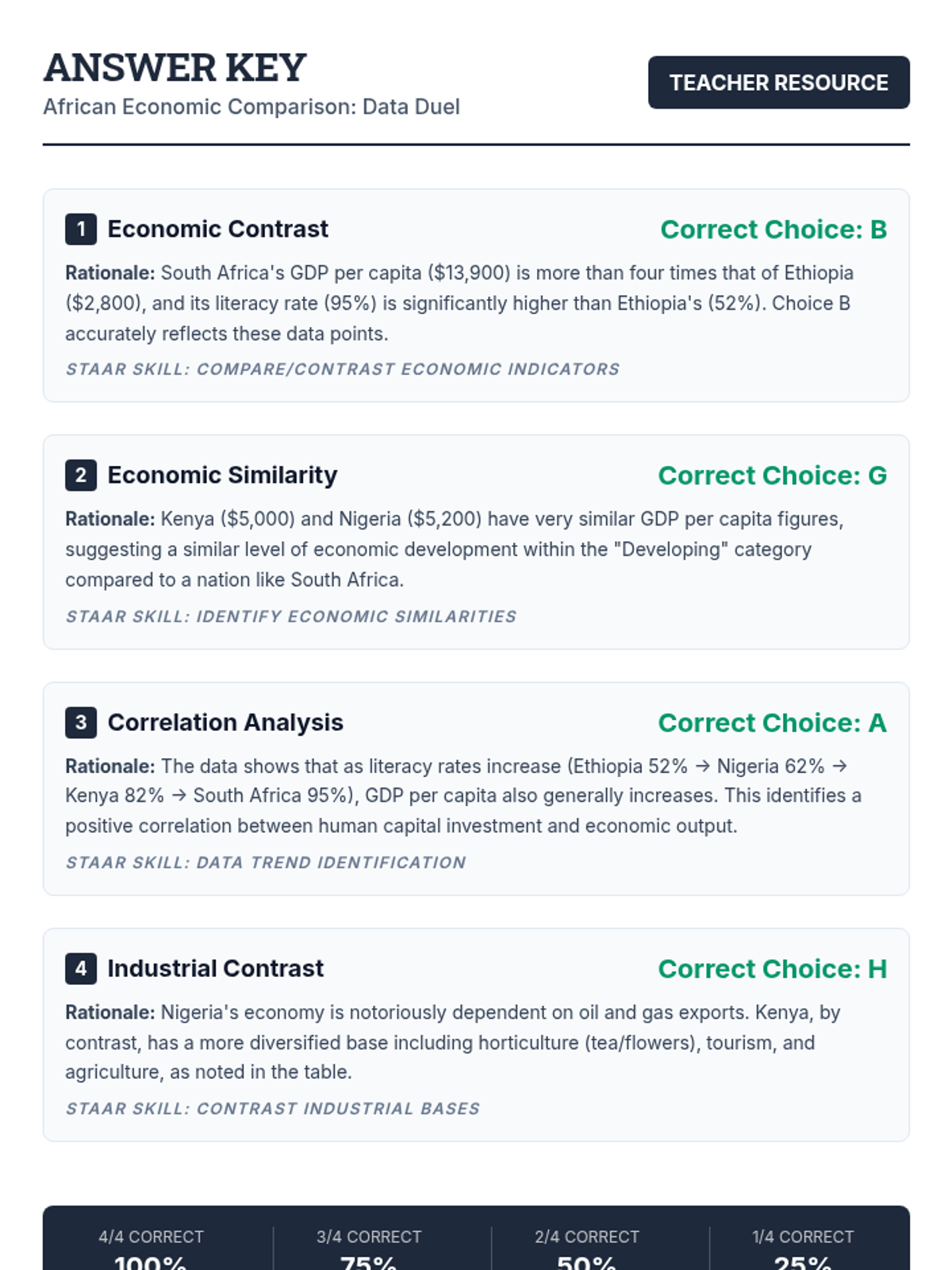
A focused lesson on comparing and contrasting various African nations using economic, demographic, and geographic data to prepare for STAAR-style assessments.
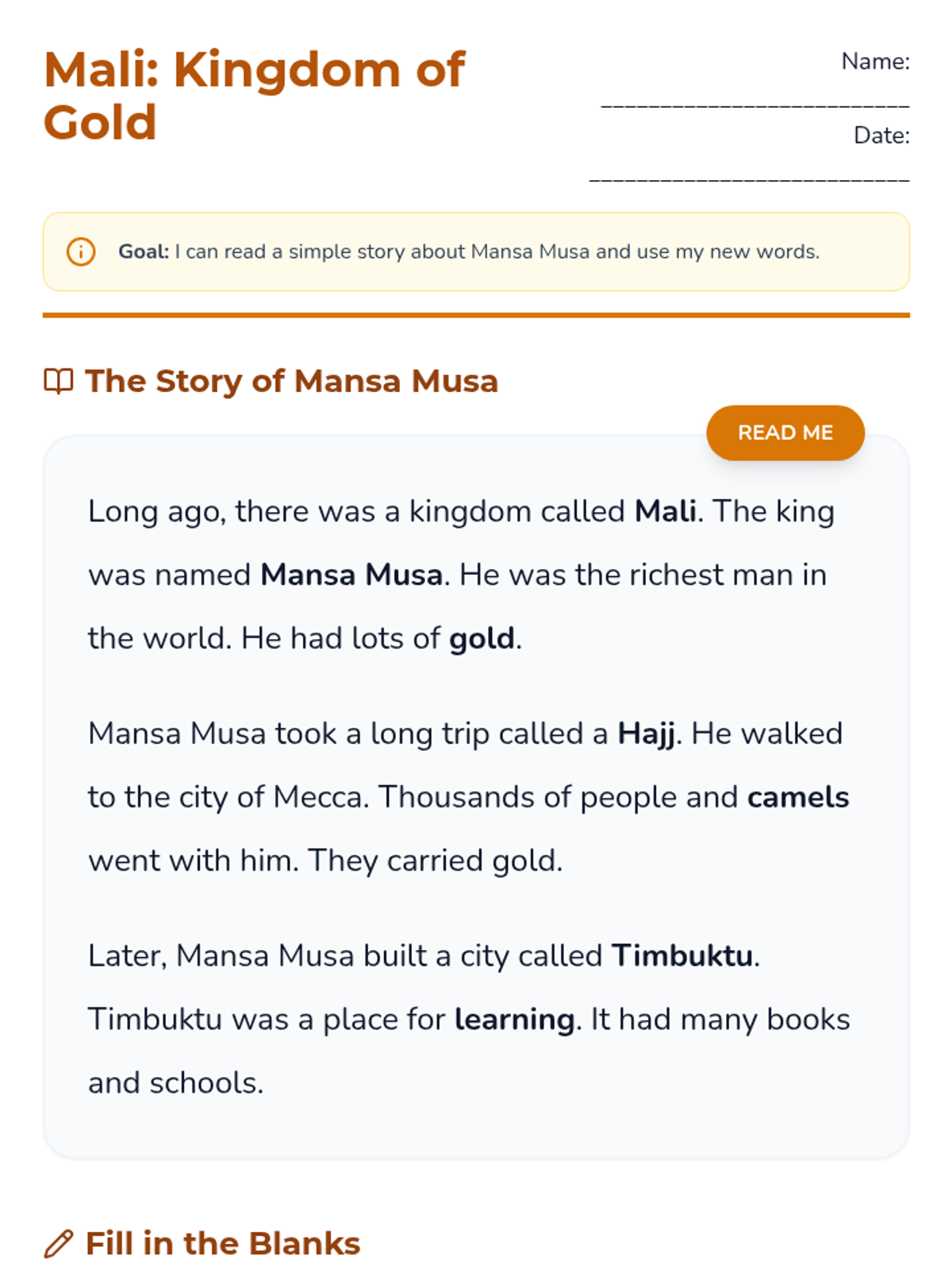
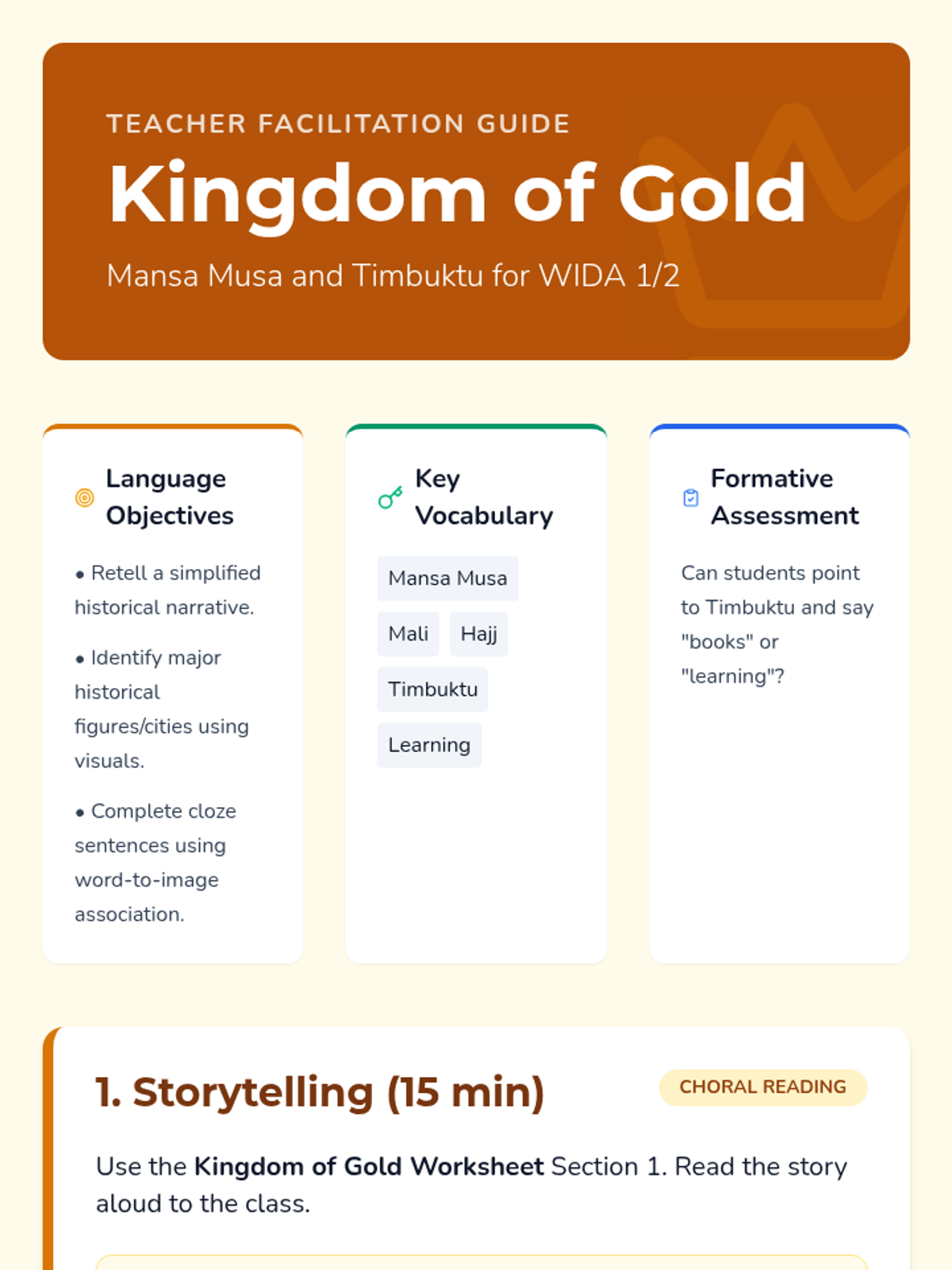
Study of the Kingdom of Mali, Mansa Musa's pilgrimage, and the center of learning in Timbuktu through simplified texts and cloze activities.
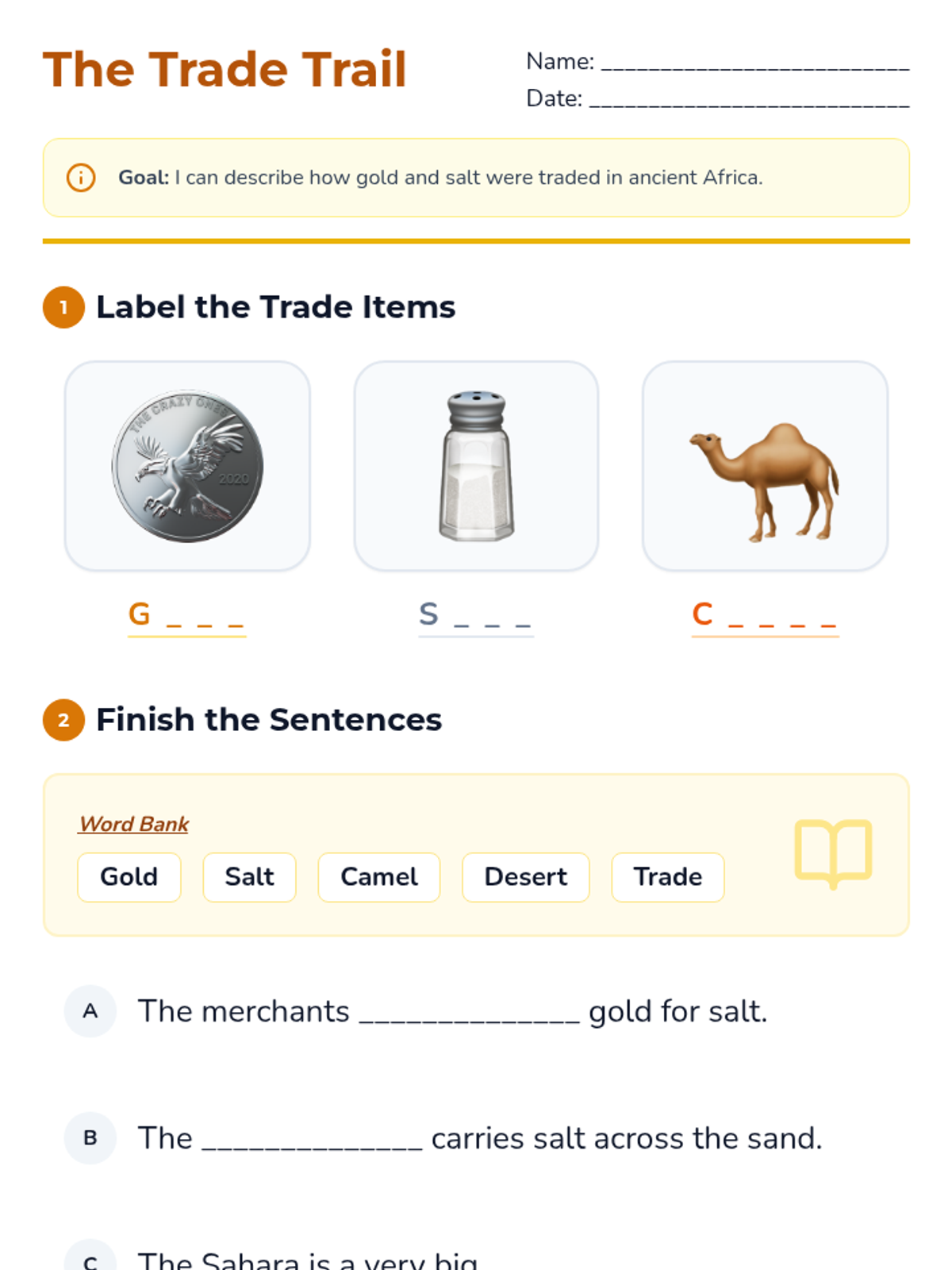
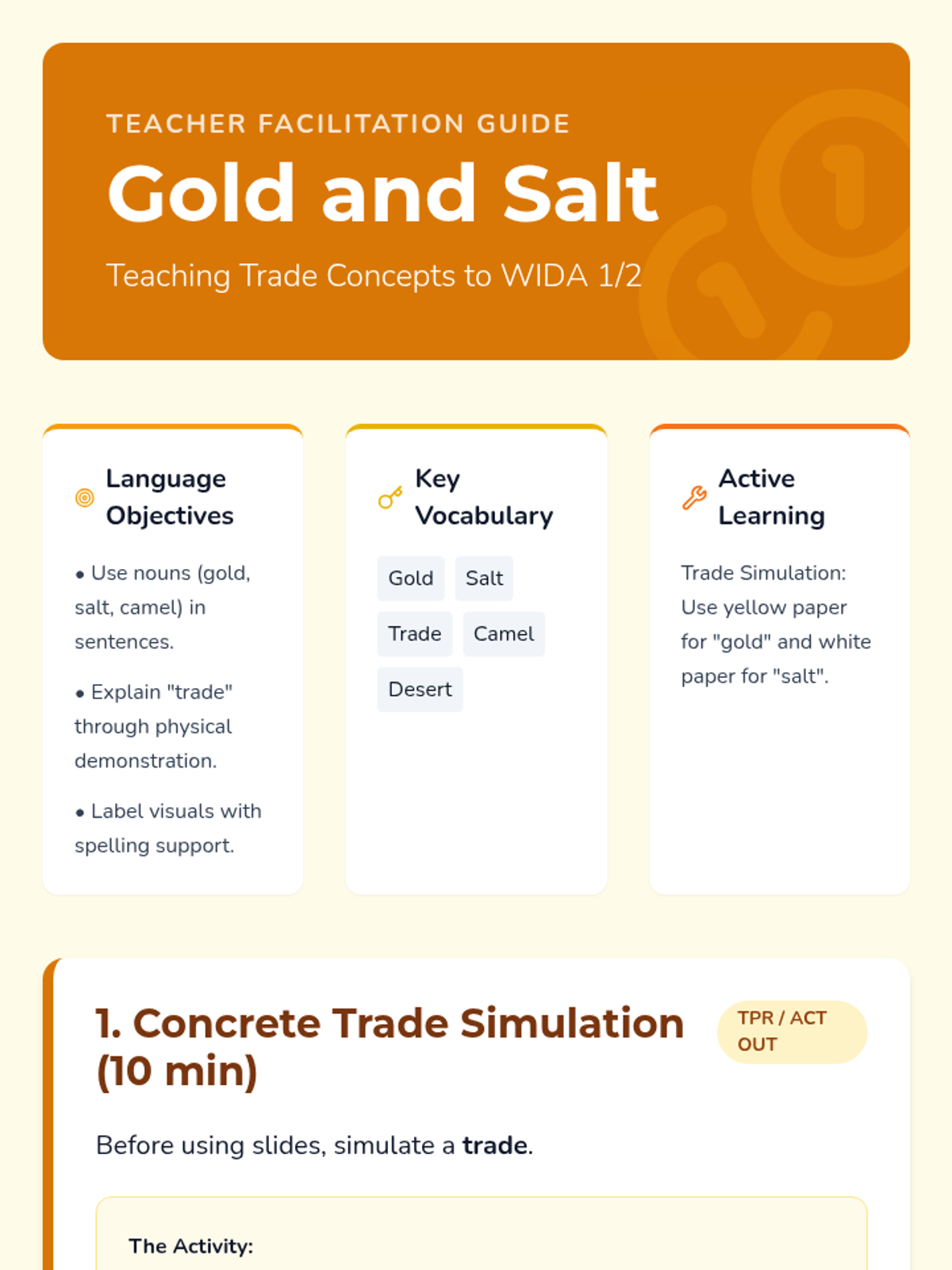
Exploration of the Trans-Saharan trade routes, focusing on the exchange of gold and salt and the importance of camels in crossing the desert.
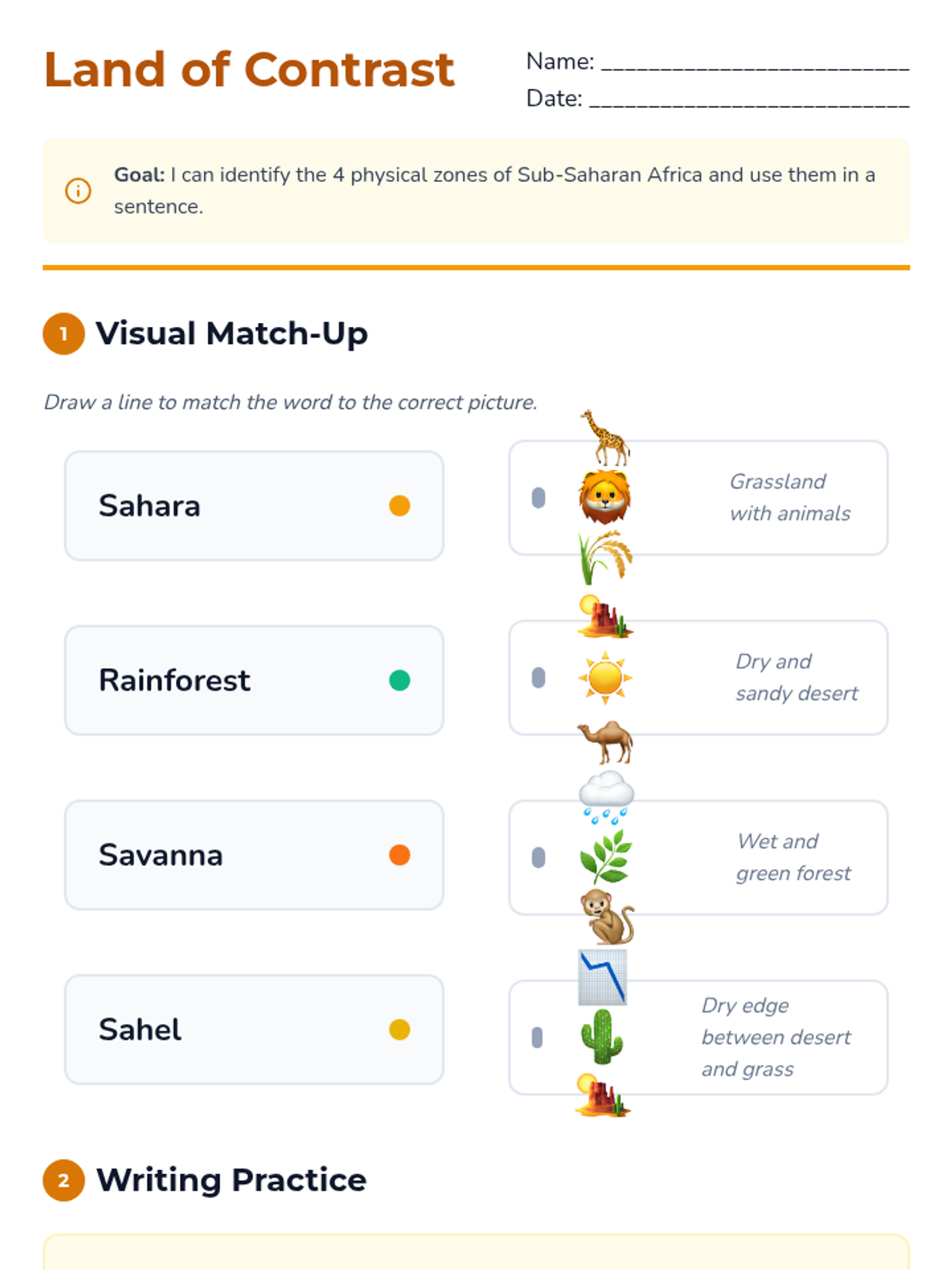
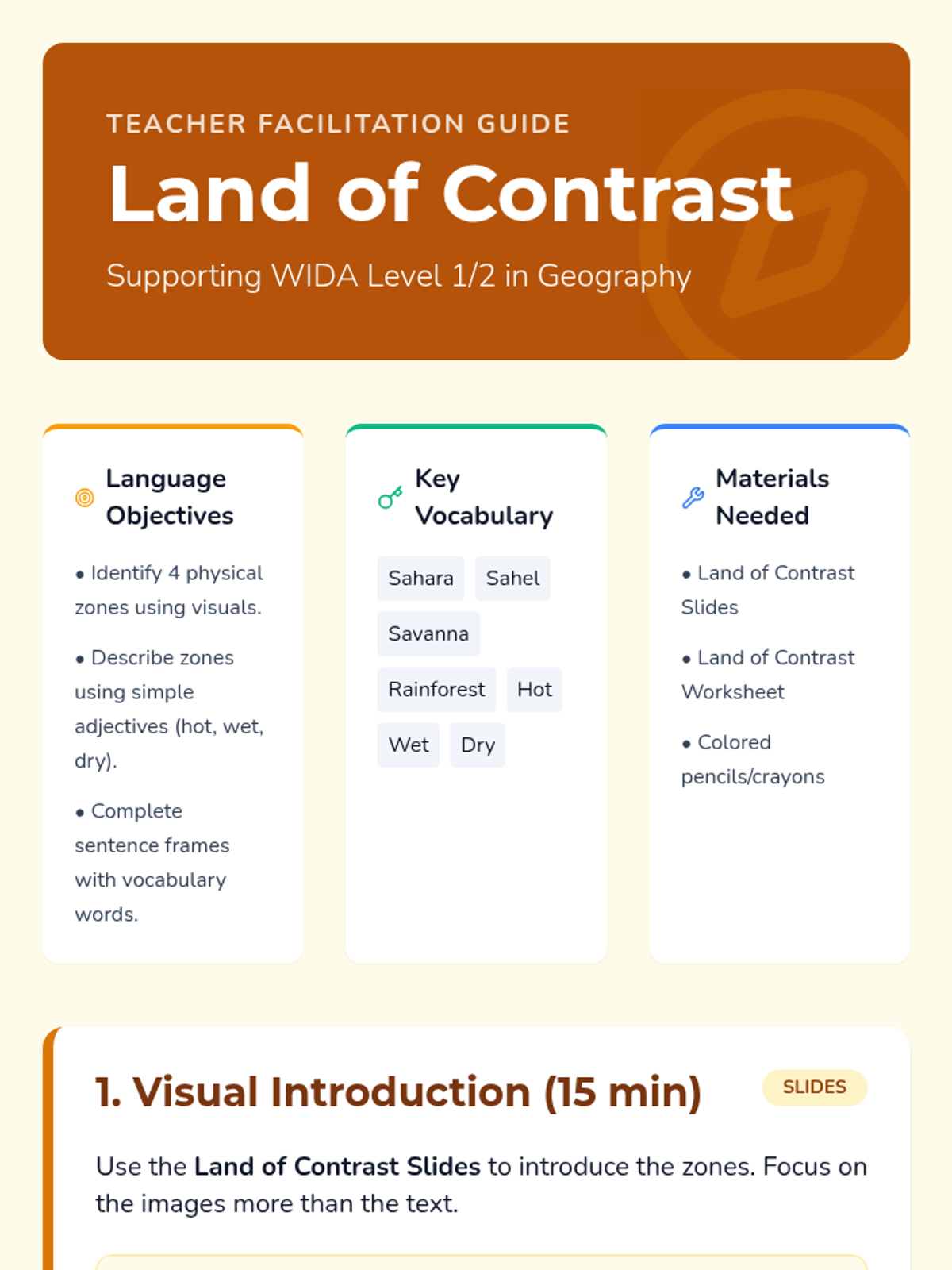
Introduction to the four major physical zones of Sub-Saharan Africa (Sahara, Sahel, Savanna, Rainforest) using visual identification and simple descriptive vocabulary.
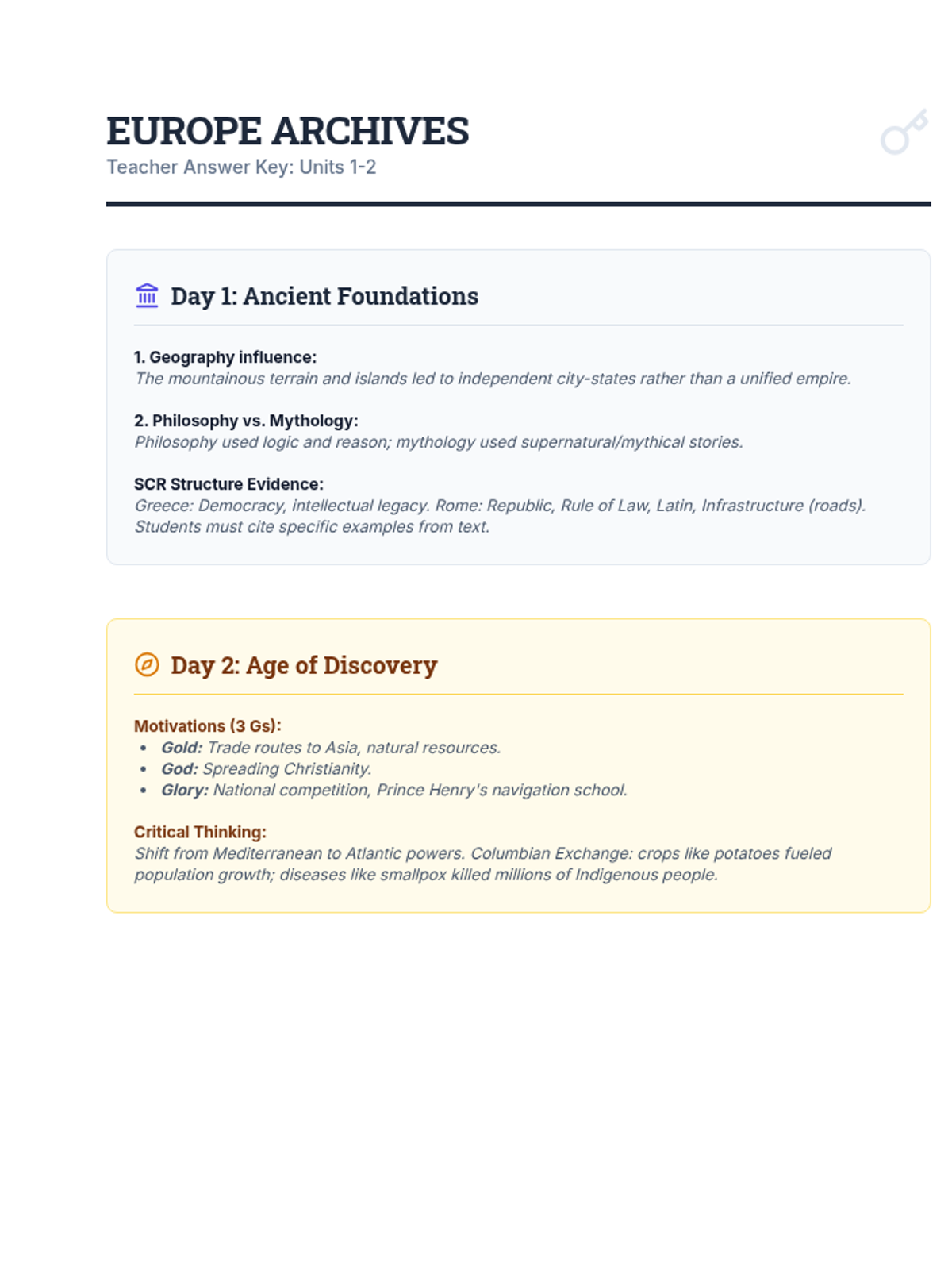
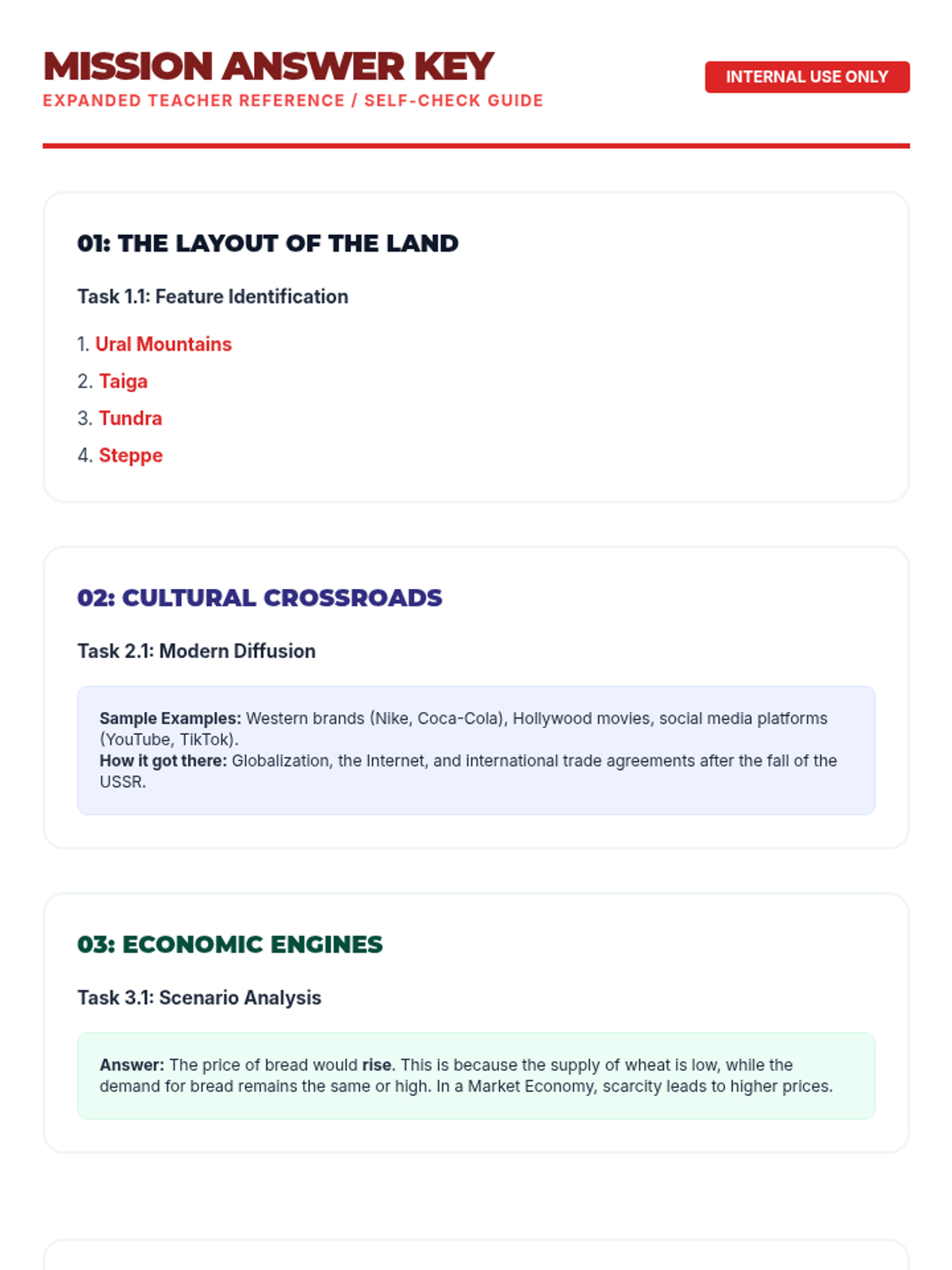
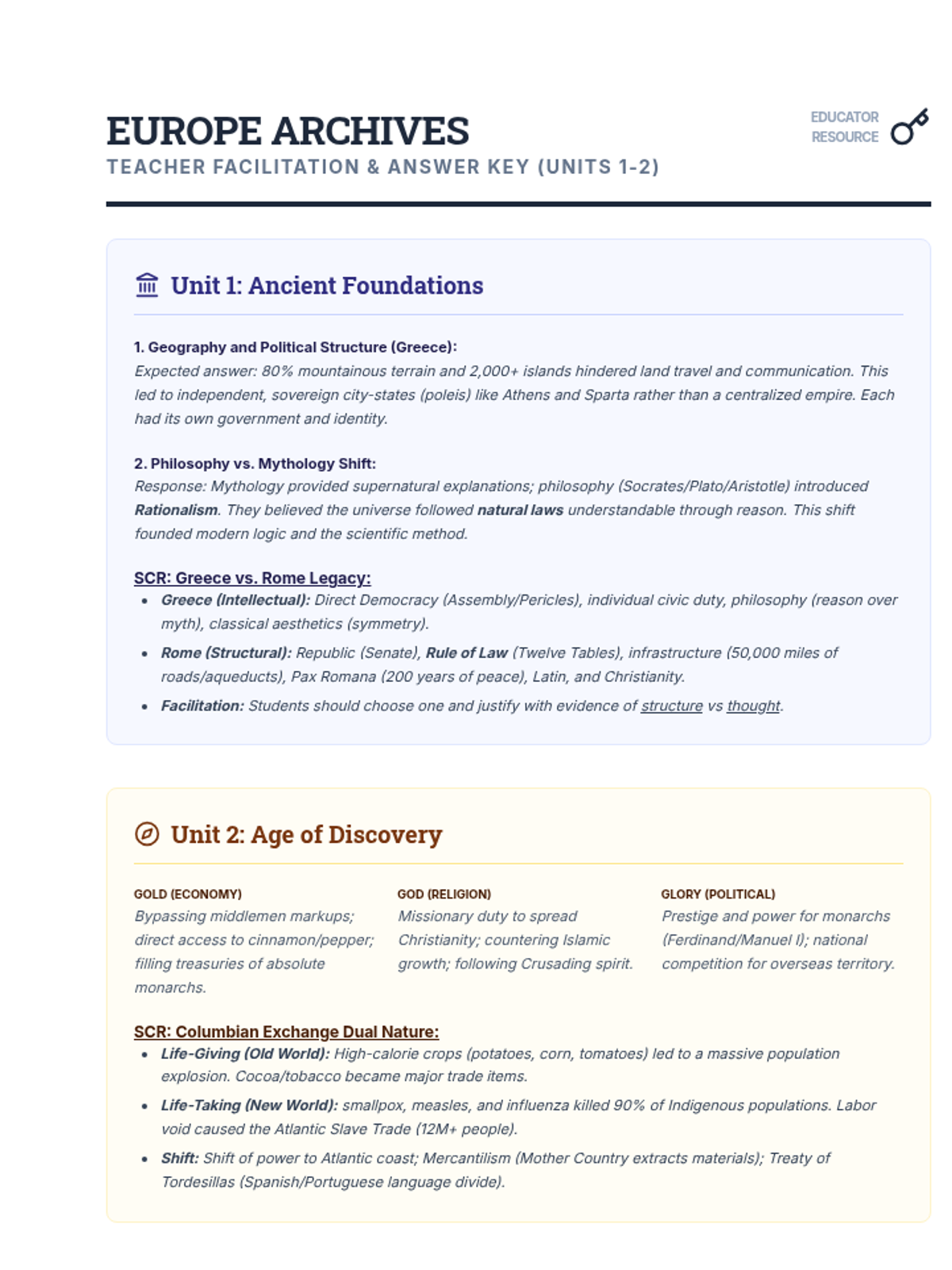
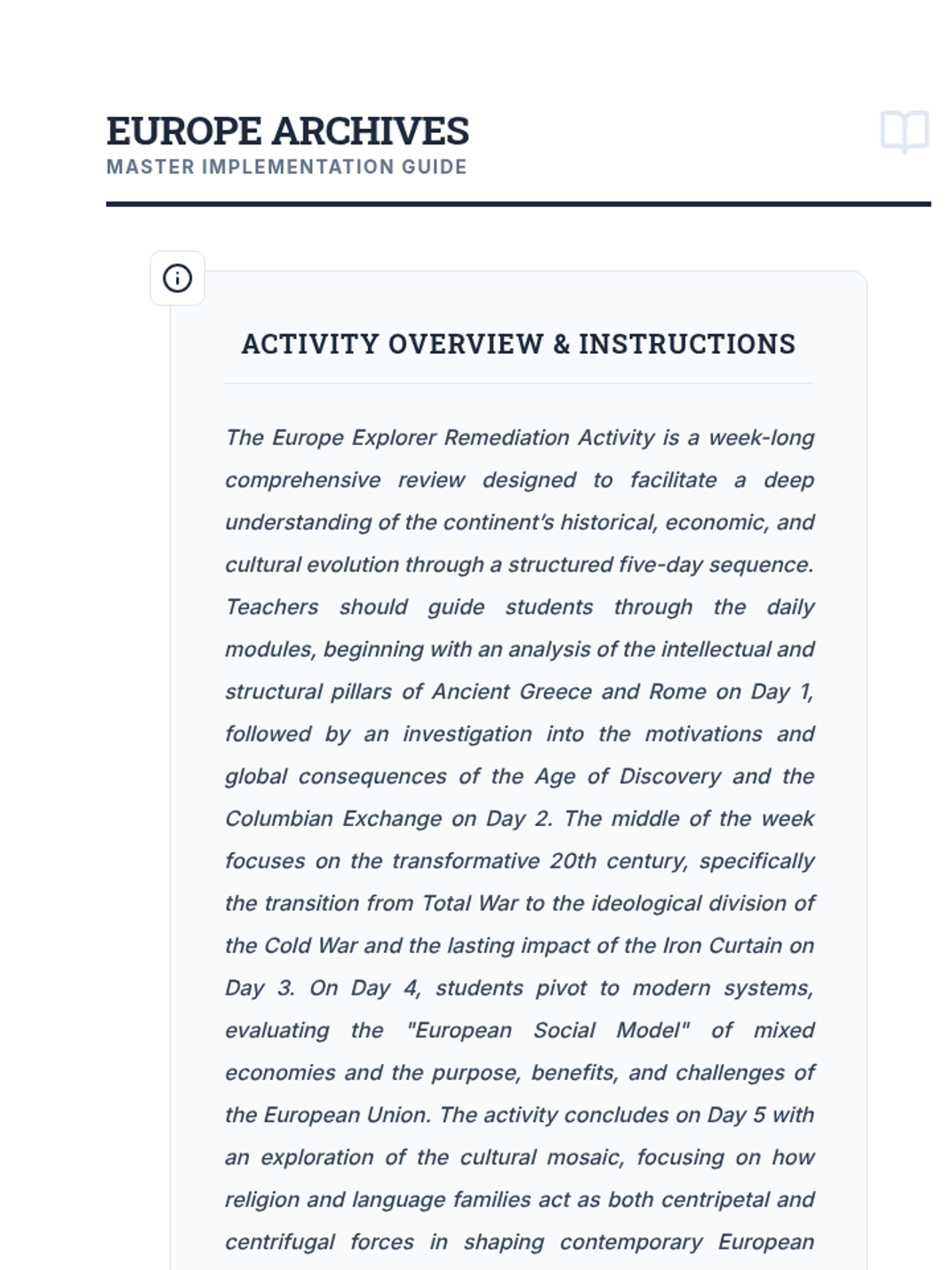
Comprehensive answer keys and teacher facilitation guides for the Europe remediation packet.
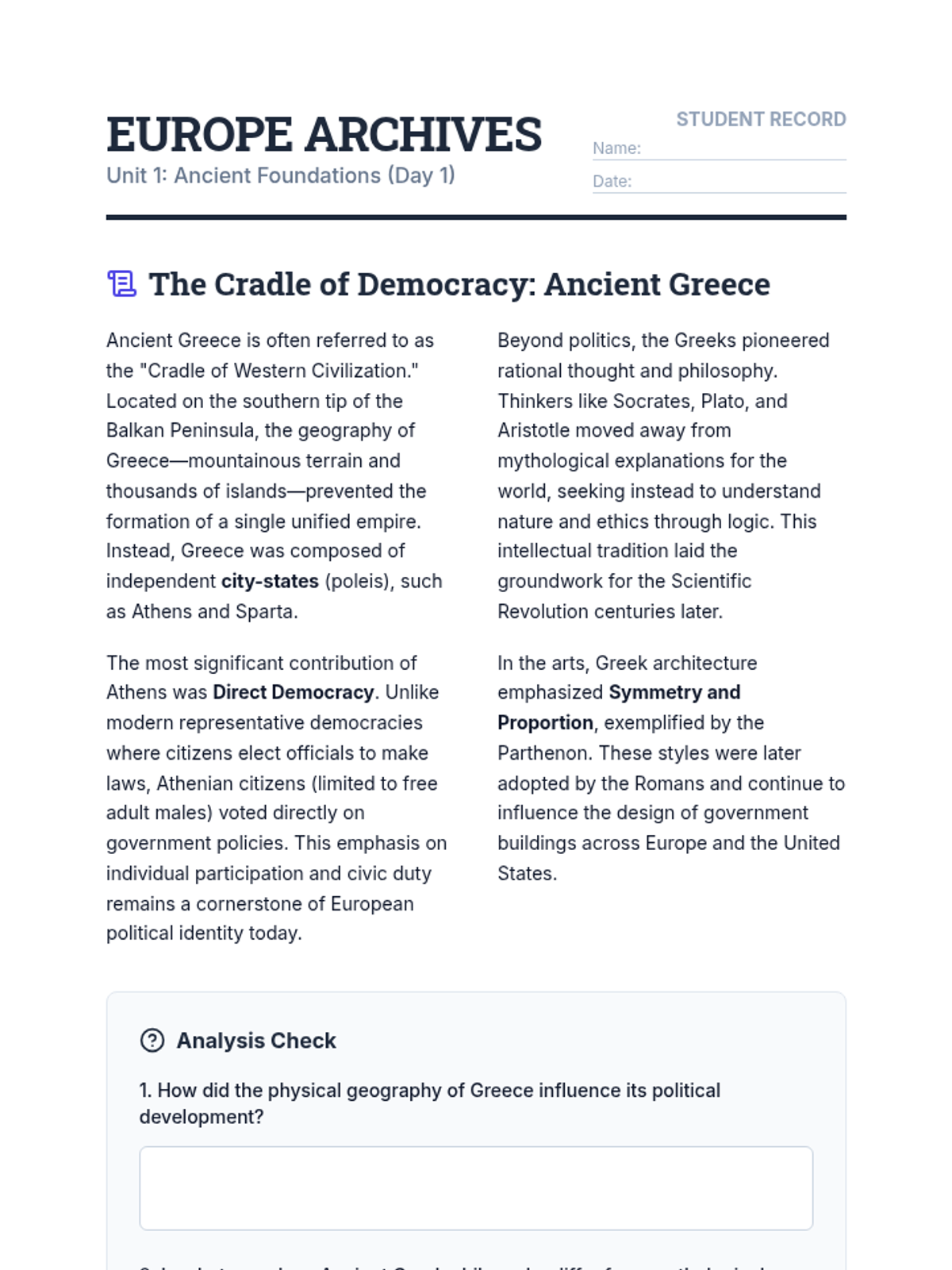
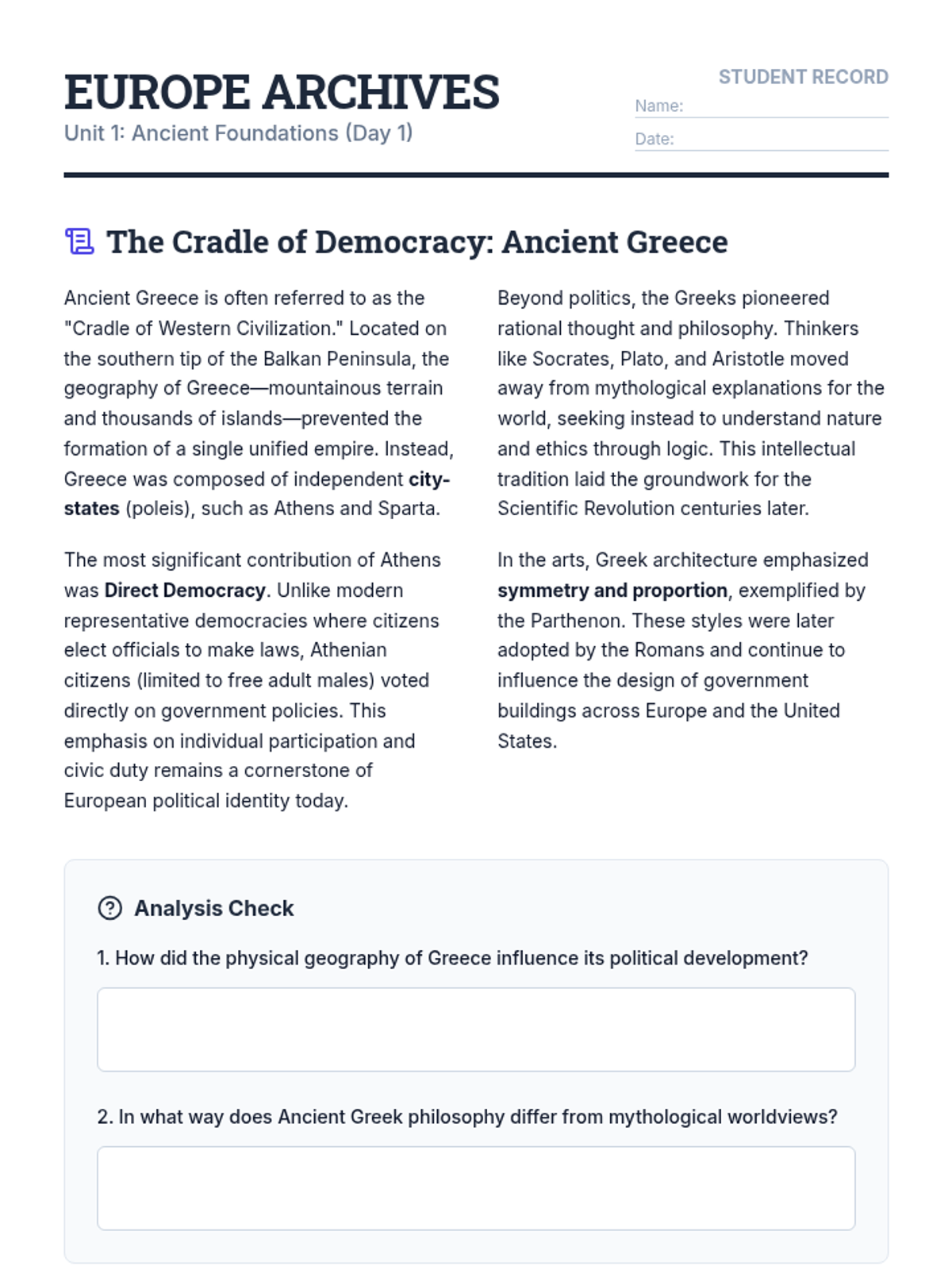
A deep dive into how the philosophies, government structures, and architecture of Ancient Greece and Rome laid the groundwork for modern European society.
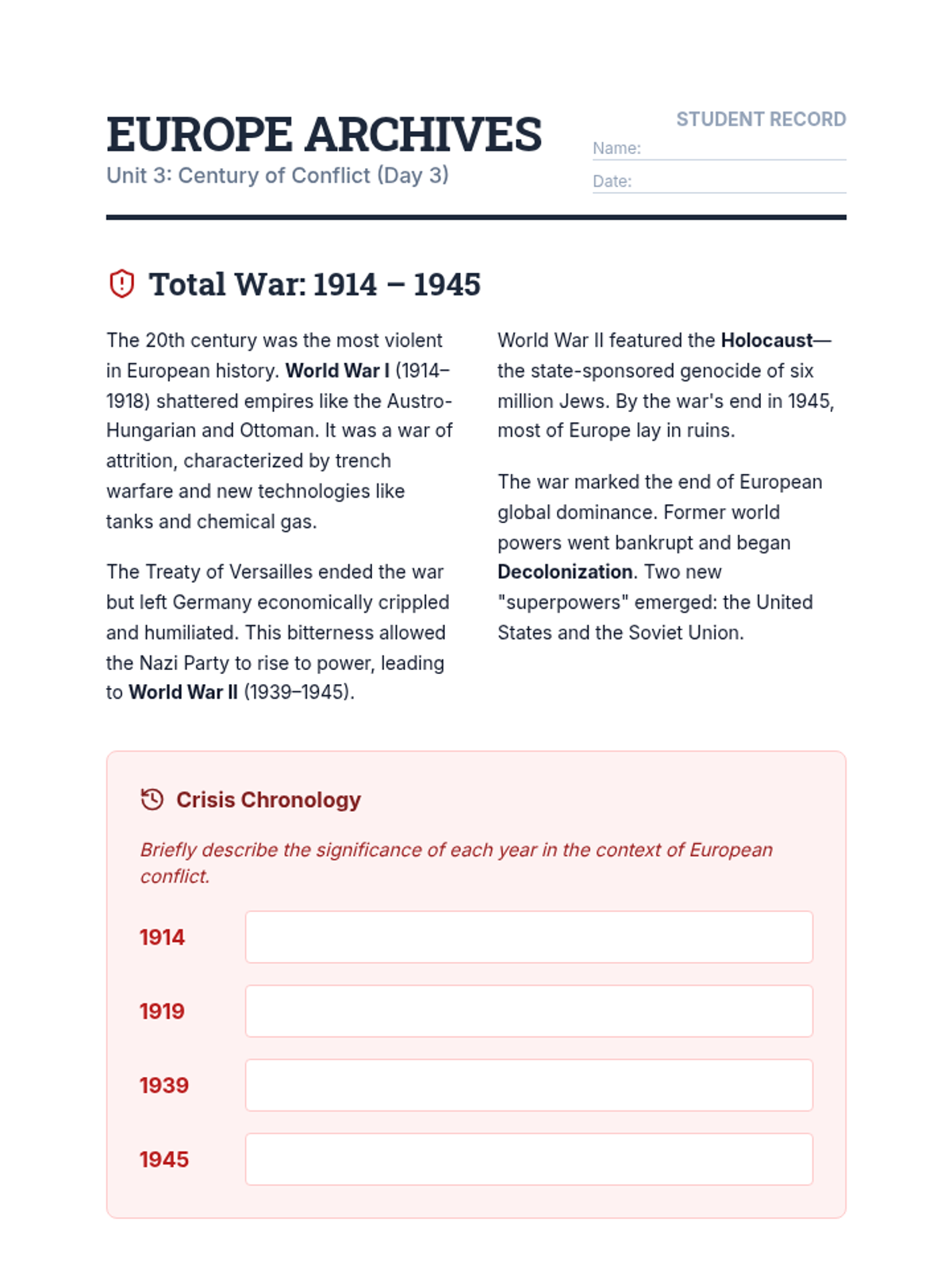
Examines the diverse cultural landscapes of Europe, including religion, language, and the concept of a shared European identity.
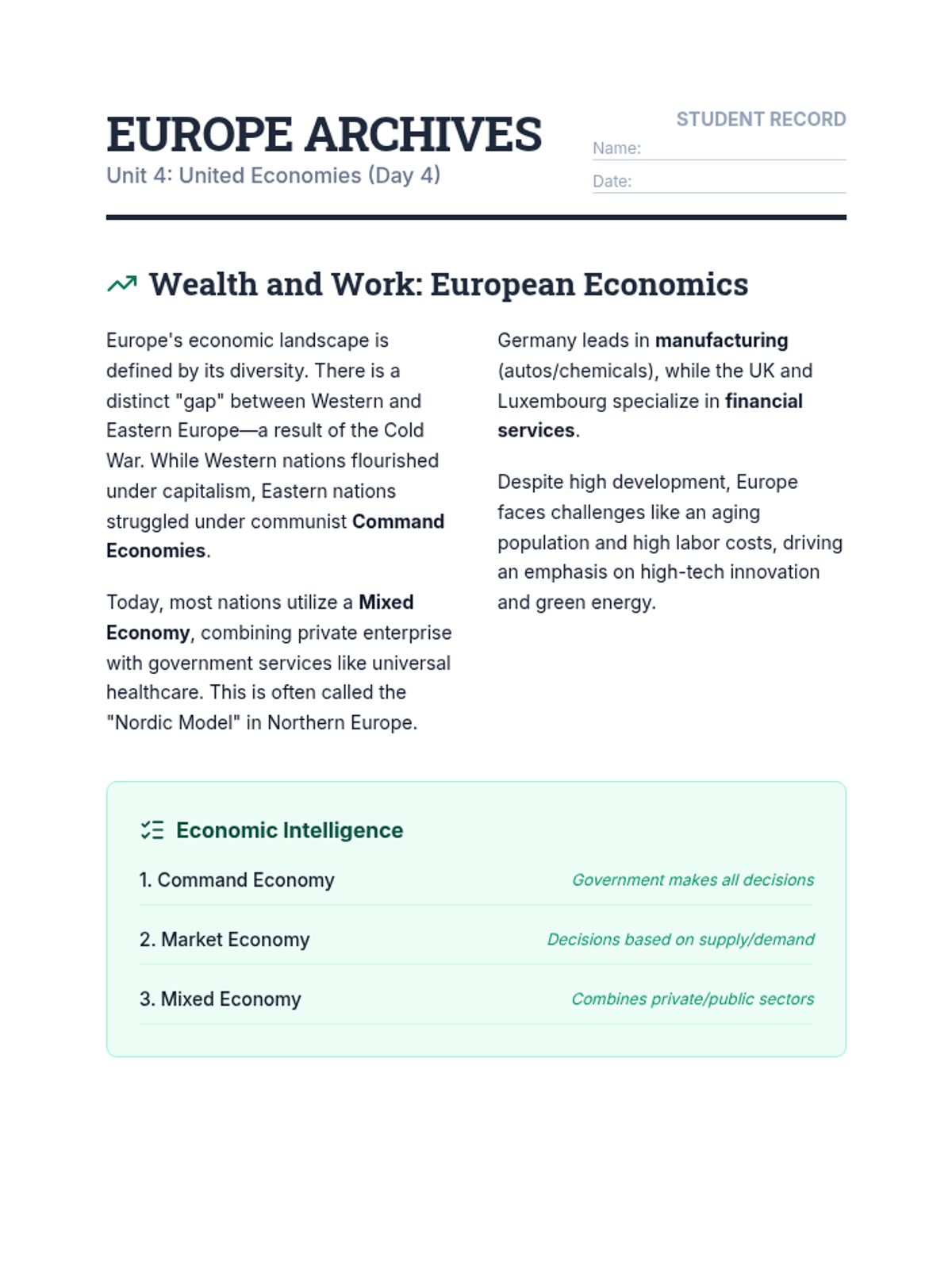
Investigates European economic systems and the formation, purpose, and challenges of the European Union.
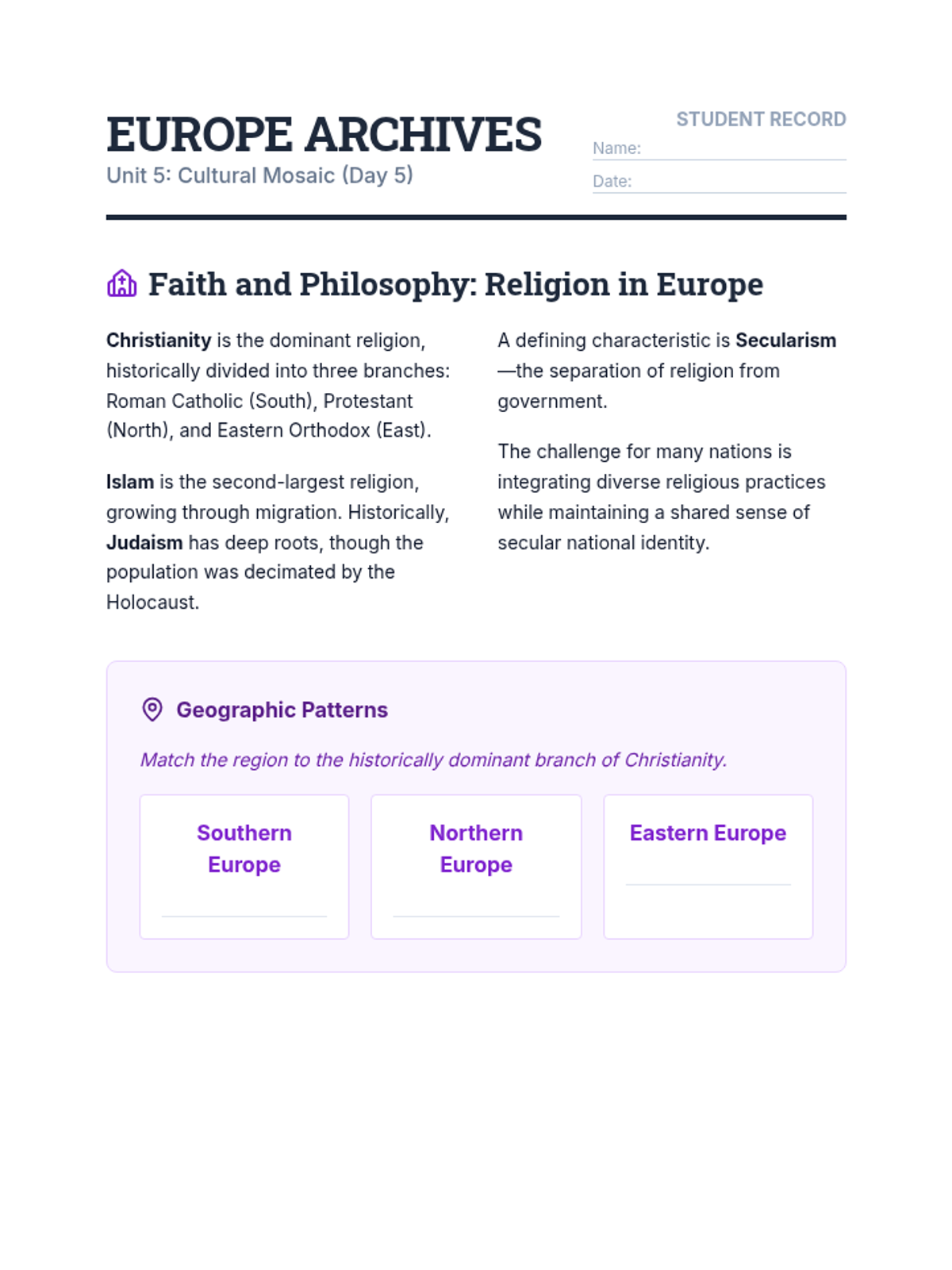
Analyzes the impact of the World Wars and the subsequent Cold War on the political and physical landscape of Europe.
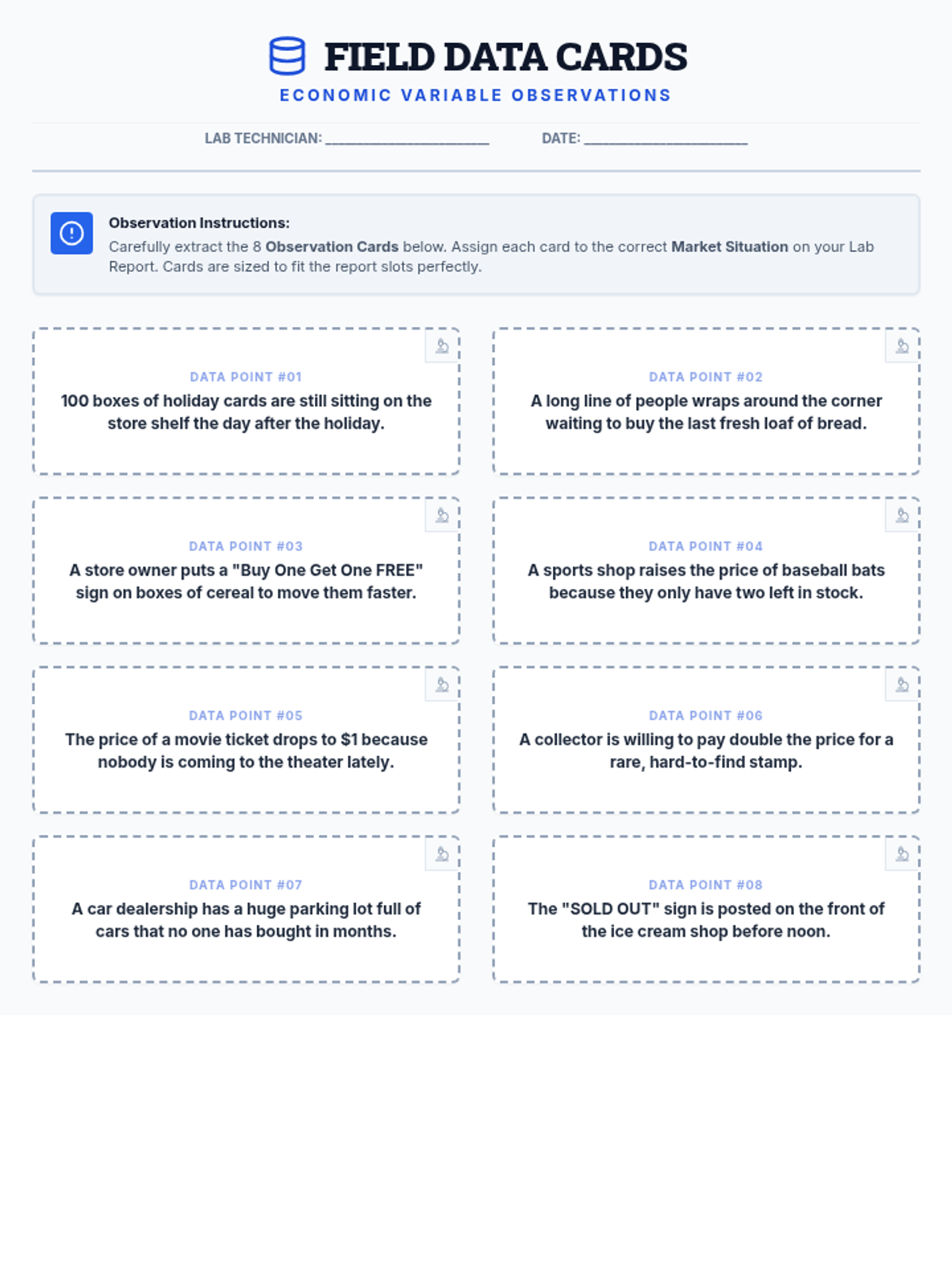
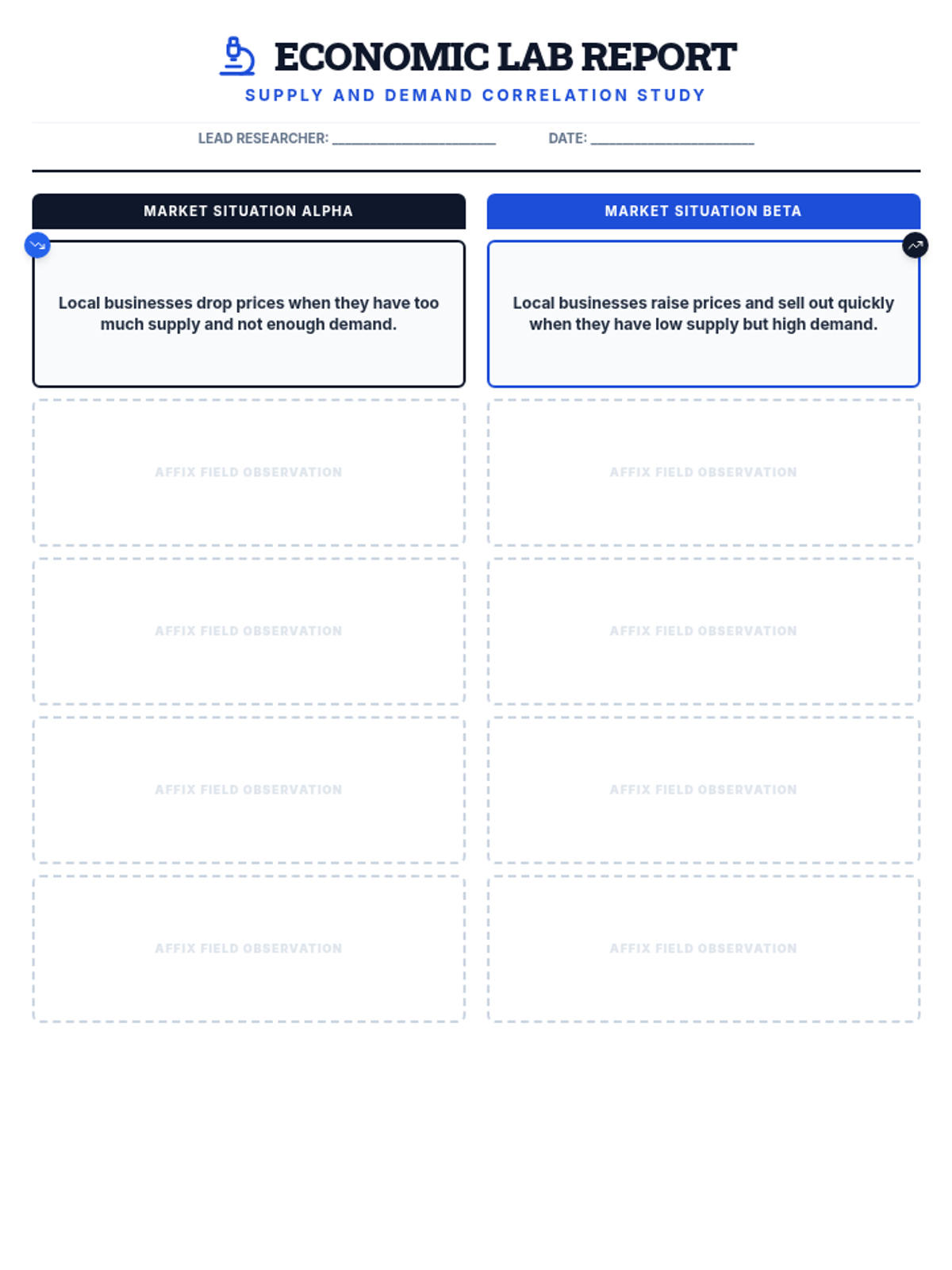
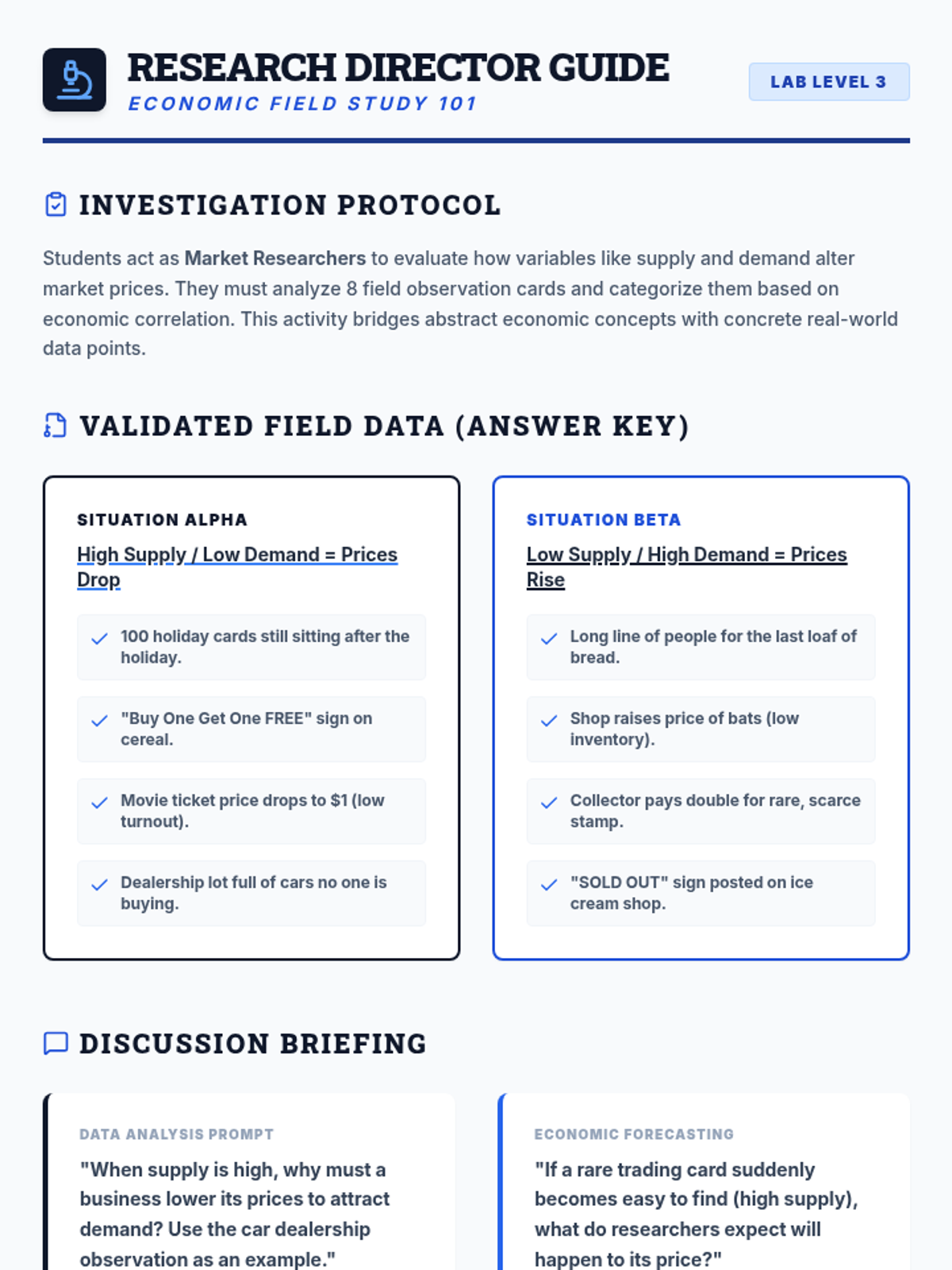
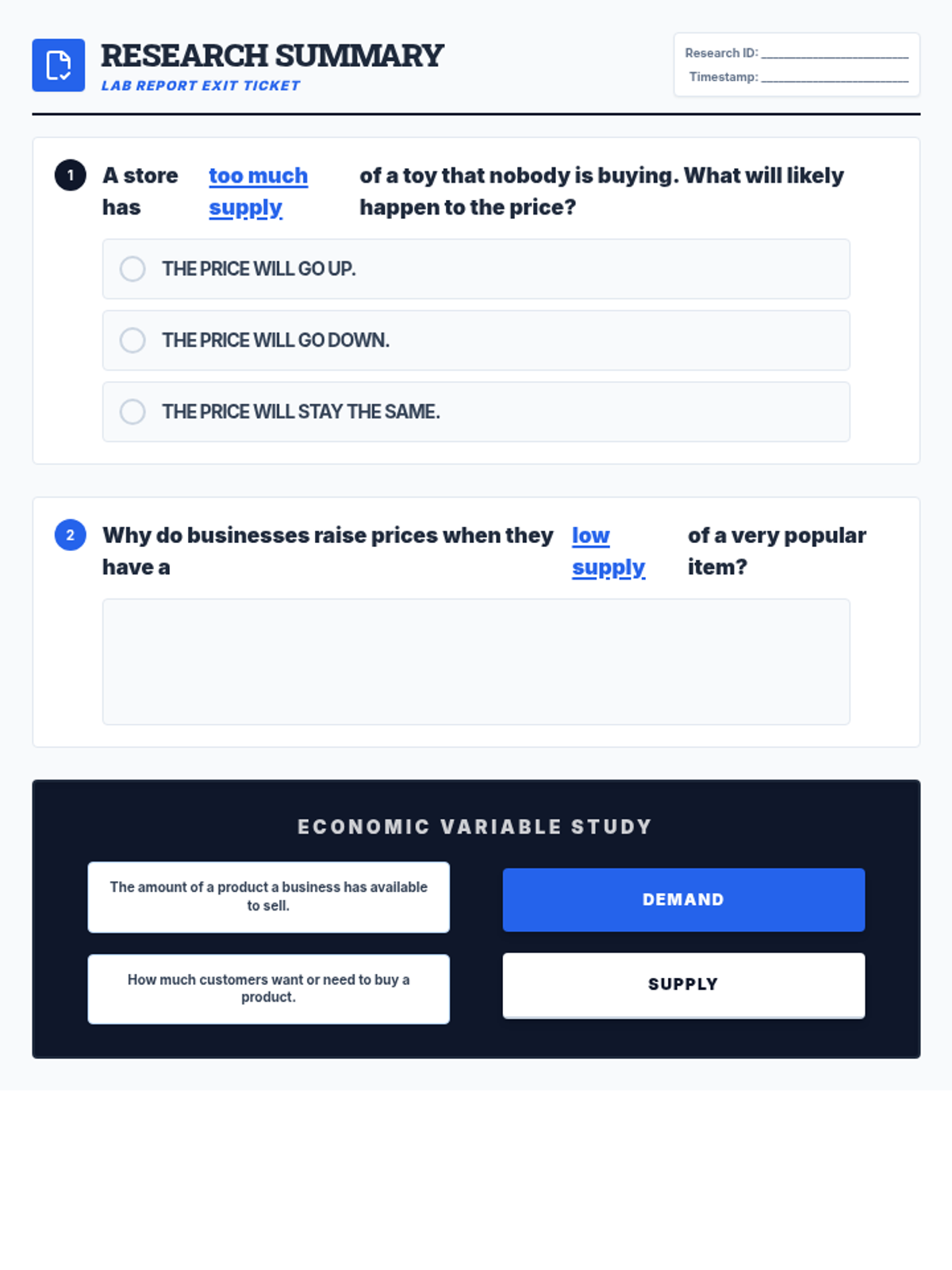
Students act as economic researchers to investigate the relationship between supply, demand, and market prices. They analyze real-world field observations, categorize data, and conclude their research with a summary of market impacts.
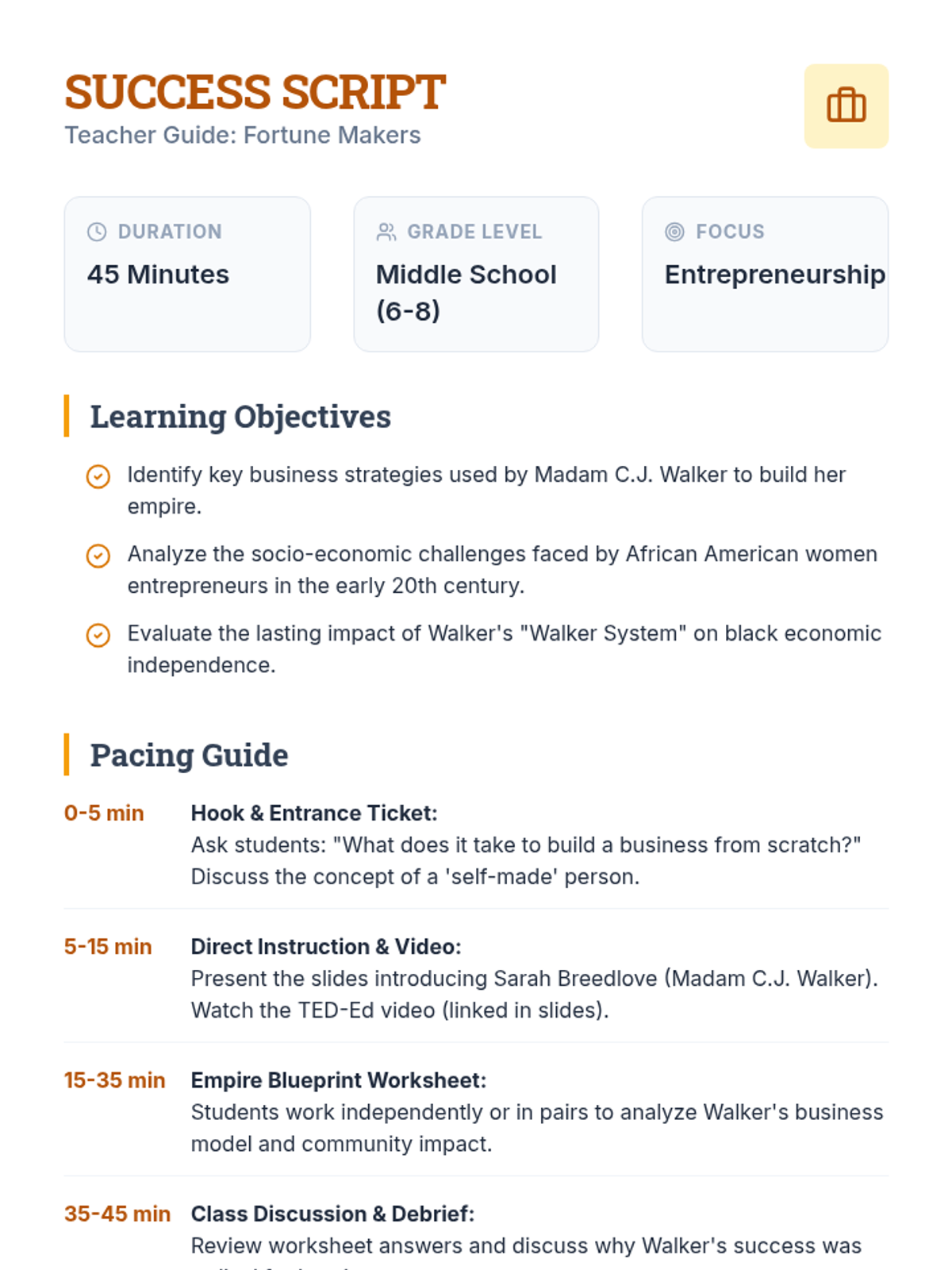
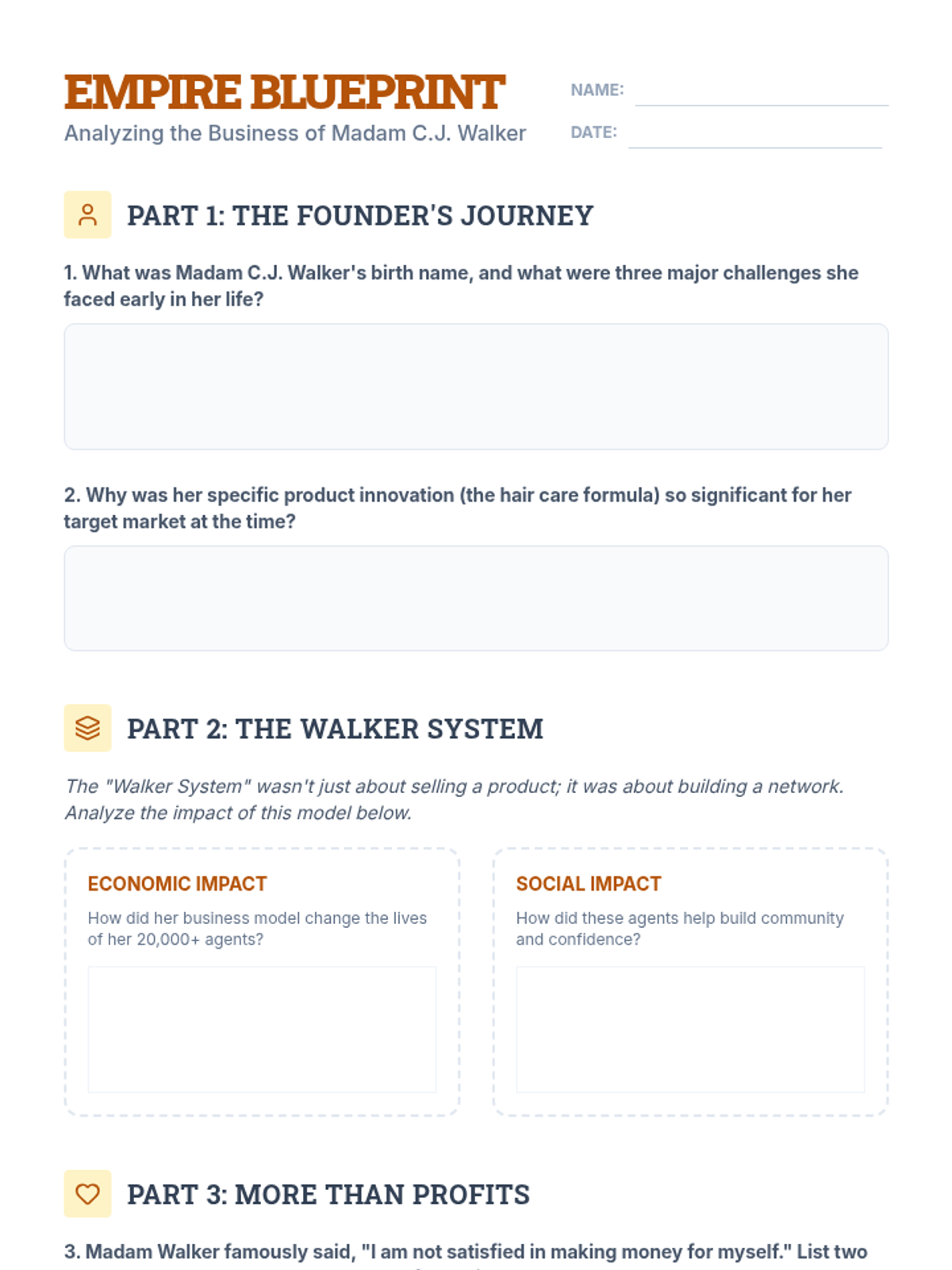
A 45-minute social studies lesson exploring the life and legacy of Madam C.J. Walker and other African American women pioneers in business, focusing on entrepreneurship, perseverance, and community impact.
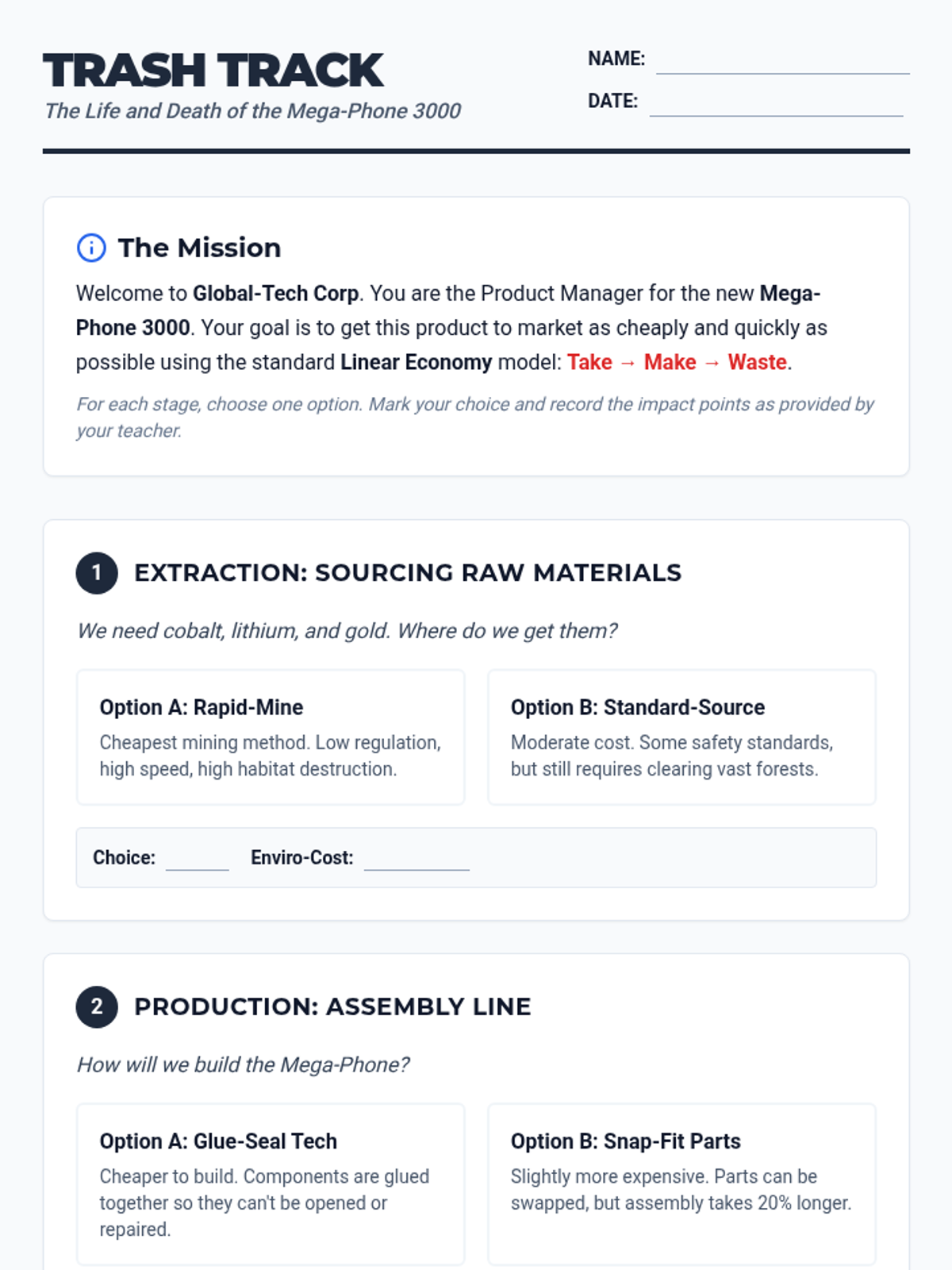
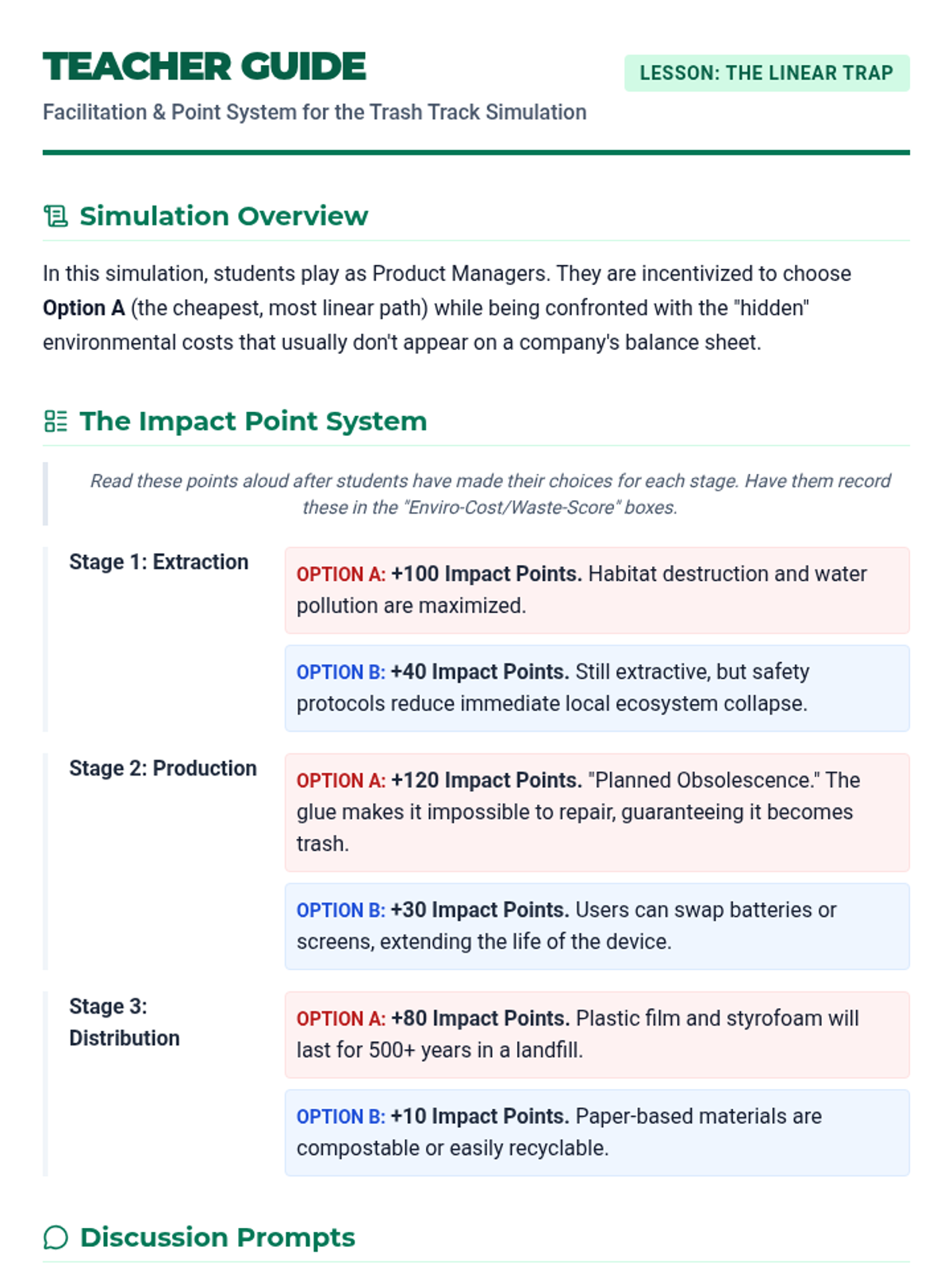
In this simulation-based lesson, students follow the life cycle of a consumer product through a linear economy, making choices that highlight the 'take-make-waste' model. They then analyze the environmental consequences and brainstorm circular alternatives to reduce waste and resource depletion.
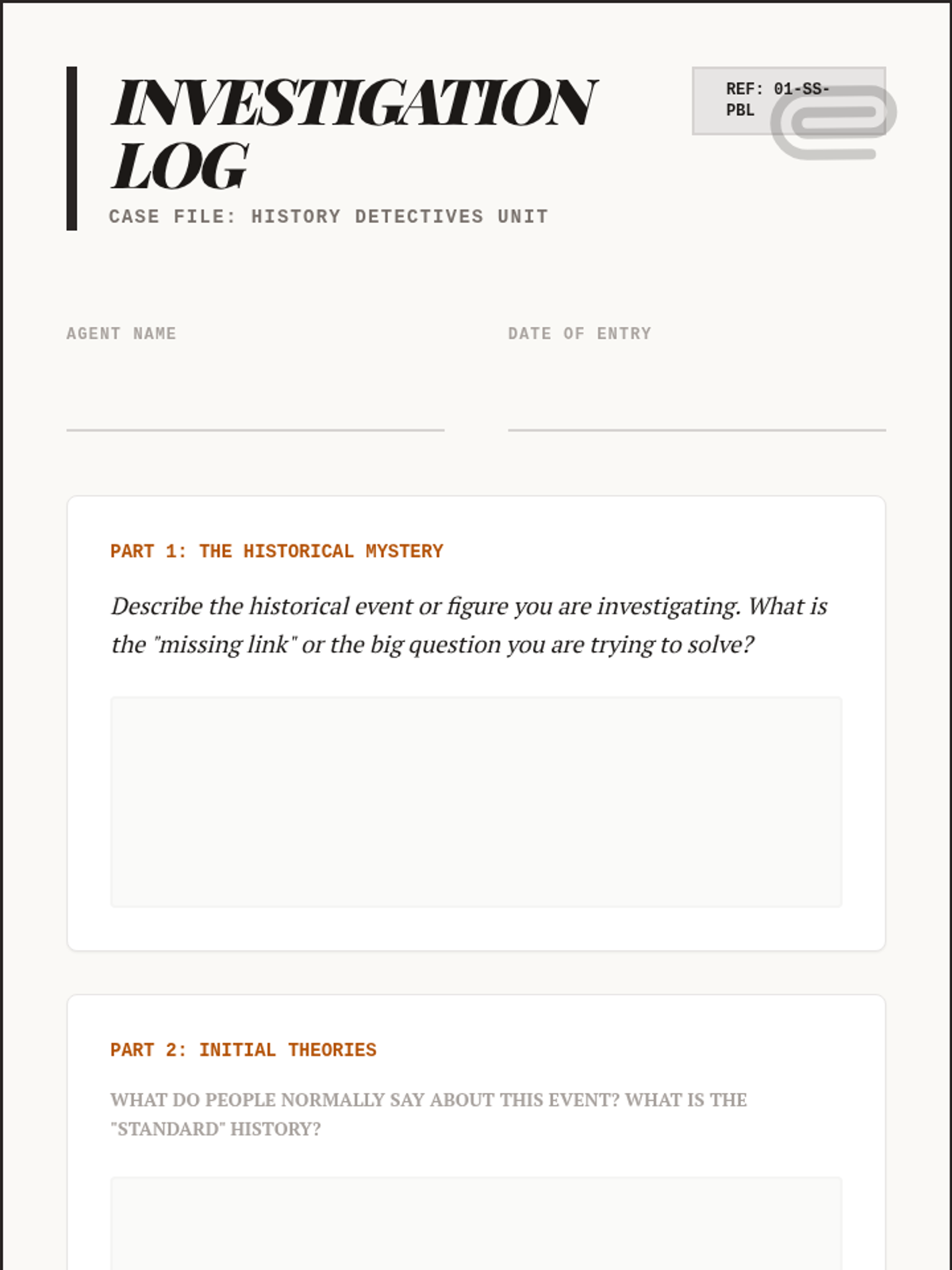
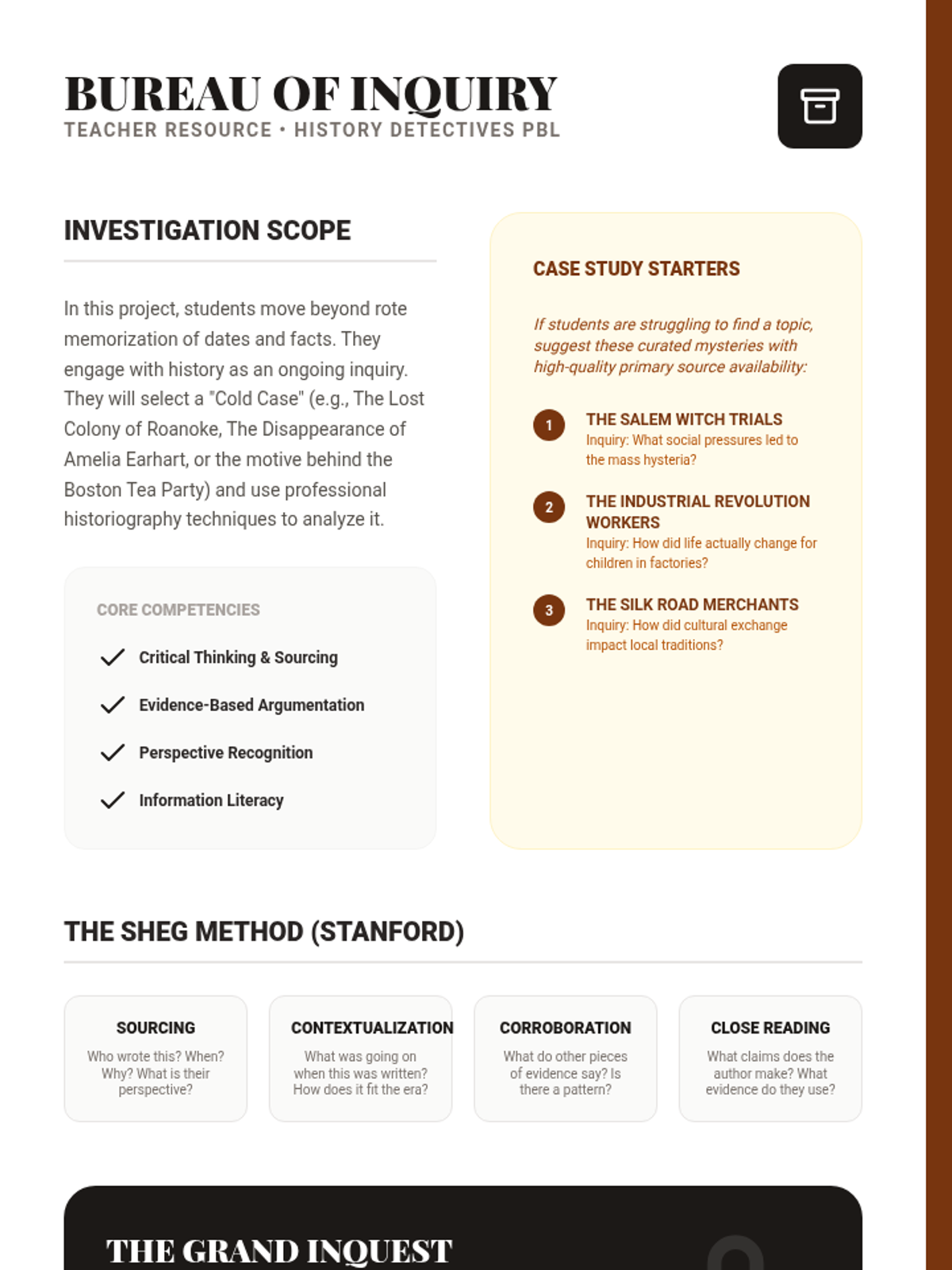
A social studies PBL project for middle schoolers. Students act as historical investigators, using primary and secondary sources to piece together a narrative around a 'mystery' event or figure from the past.
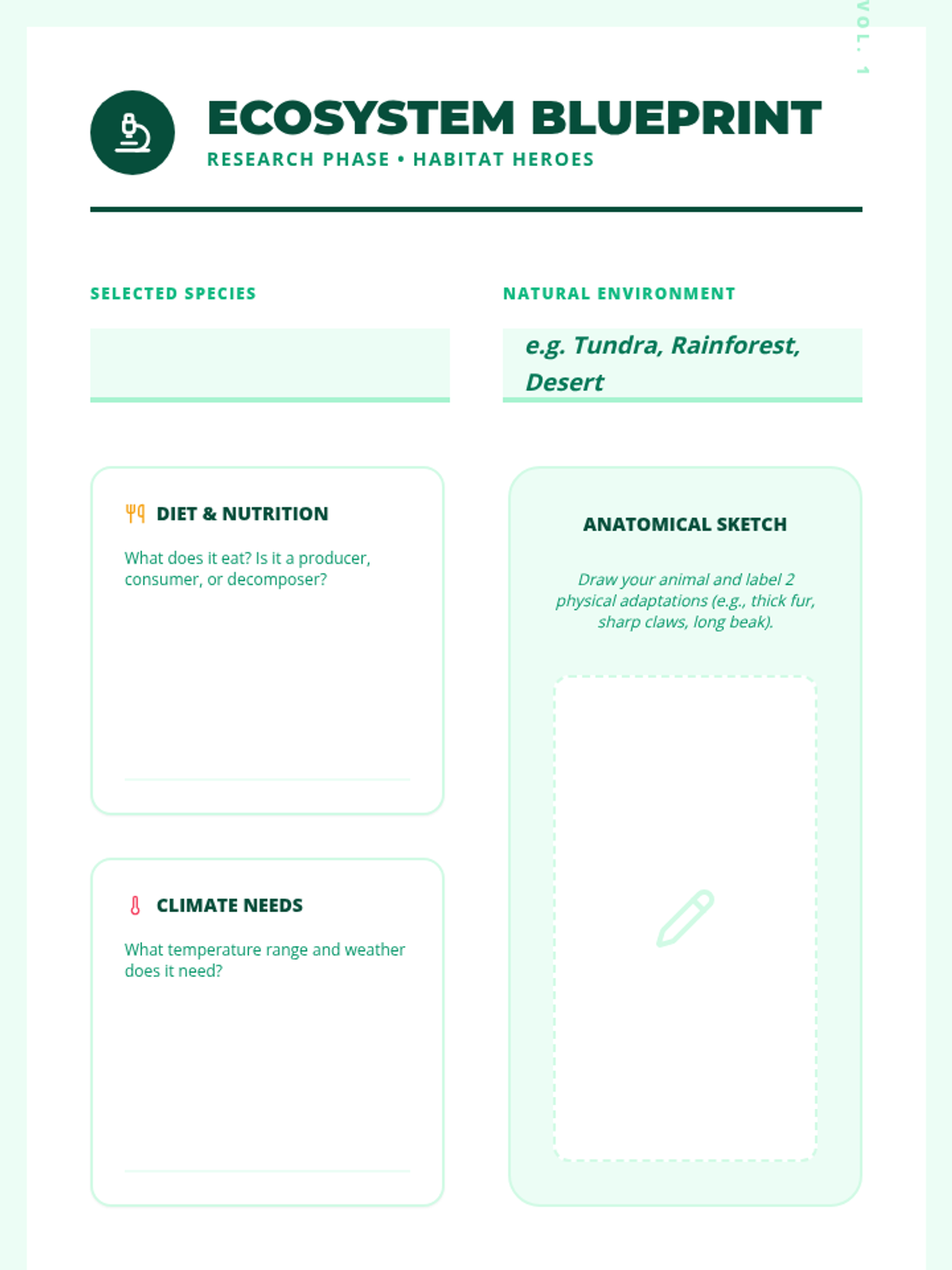
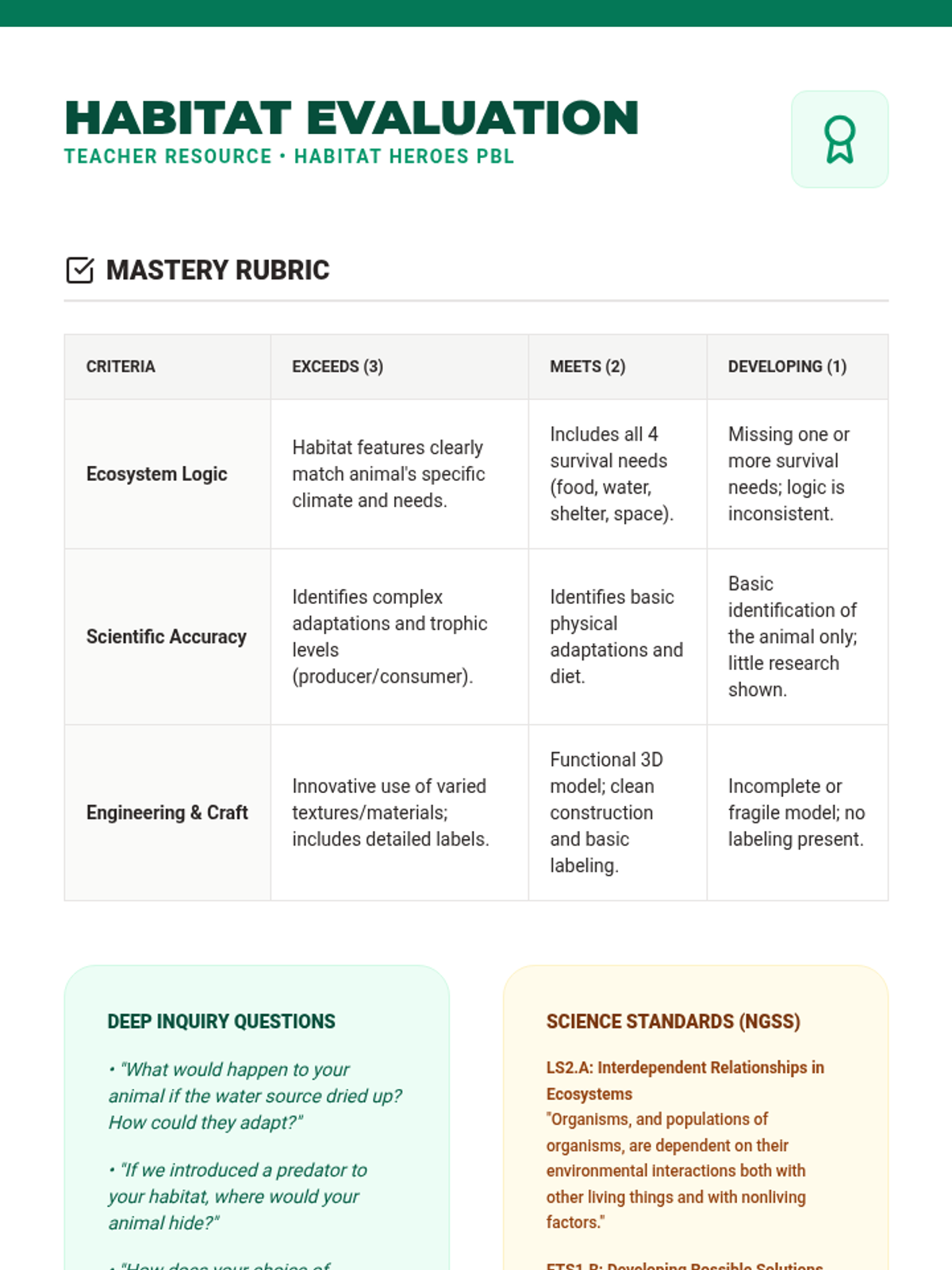
A science-focused PBL project for elementary students. Students research an animal and design a functional 3D habitat model that meets all the animal's survival needs, demonstrating their understanding of ecosystems.
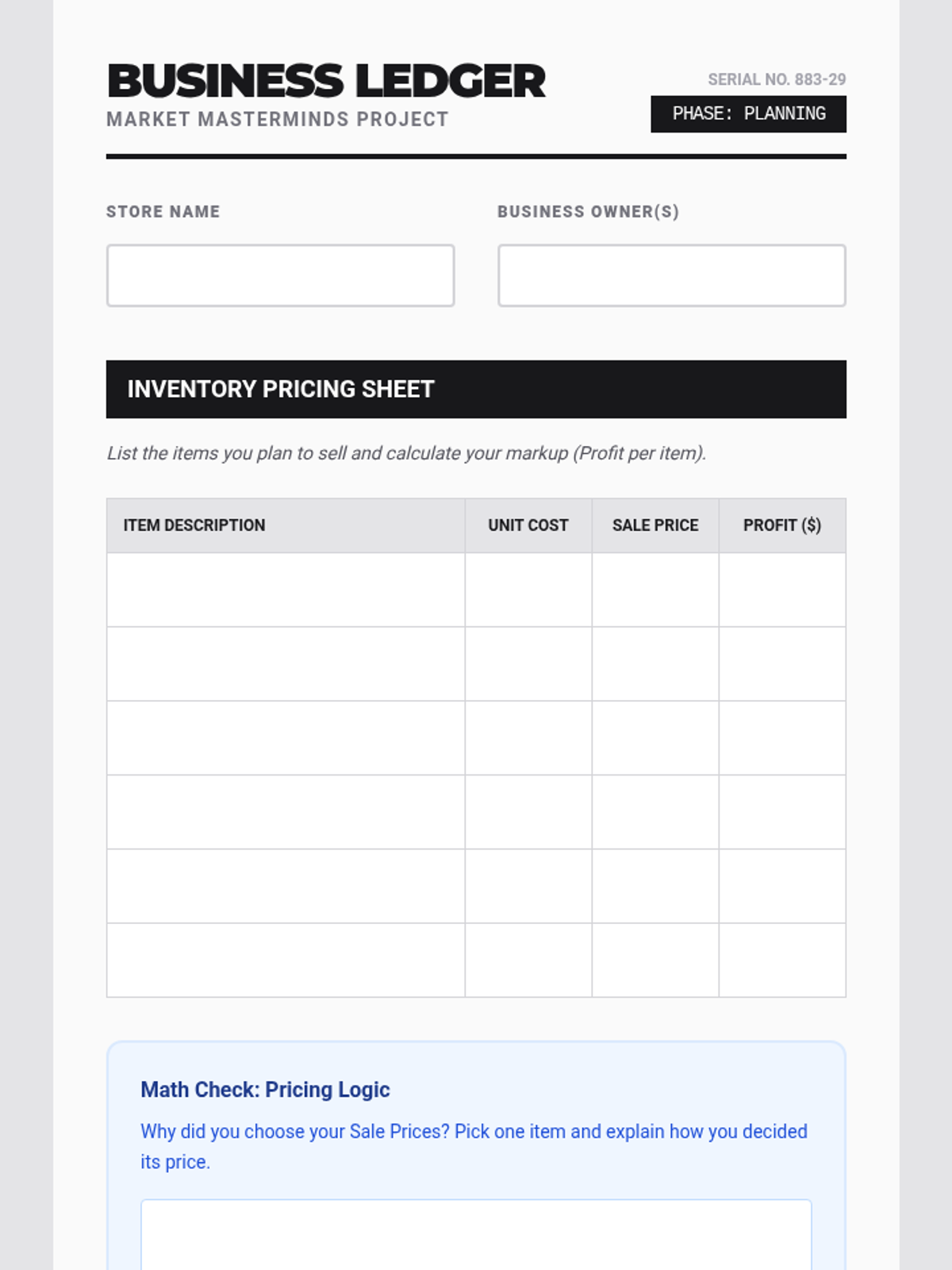
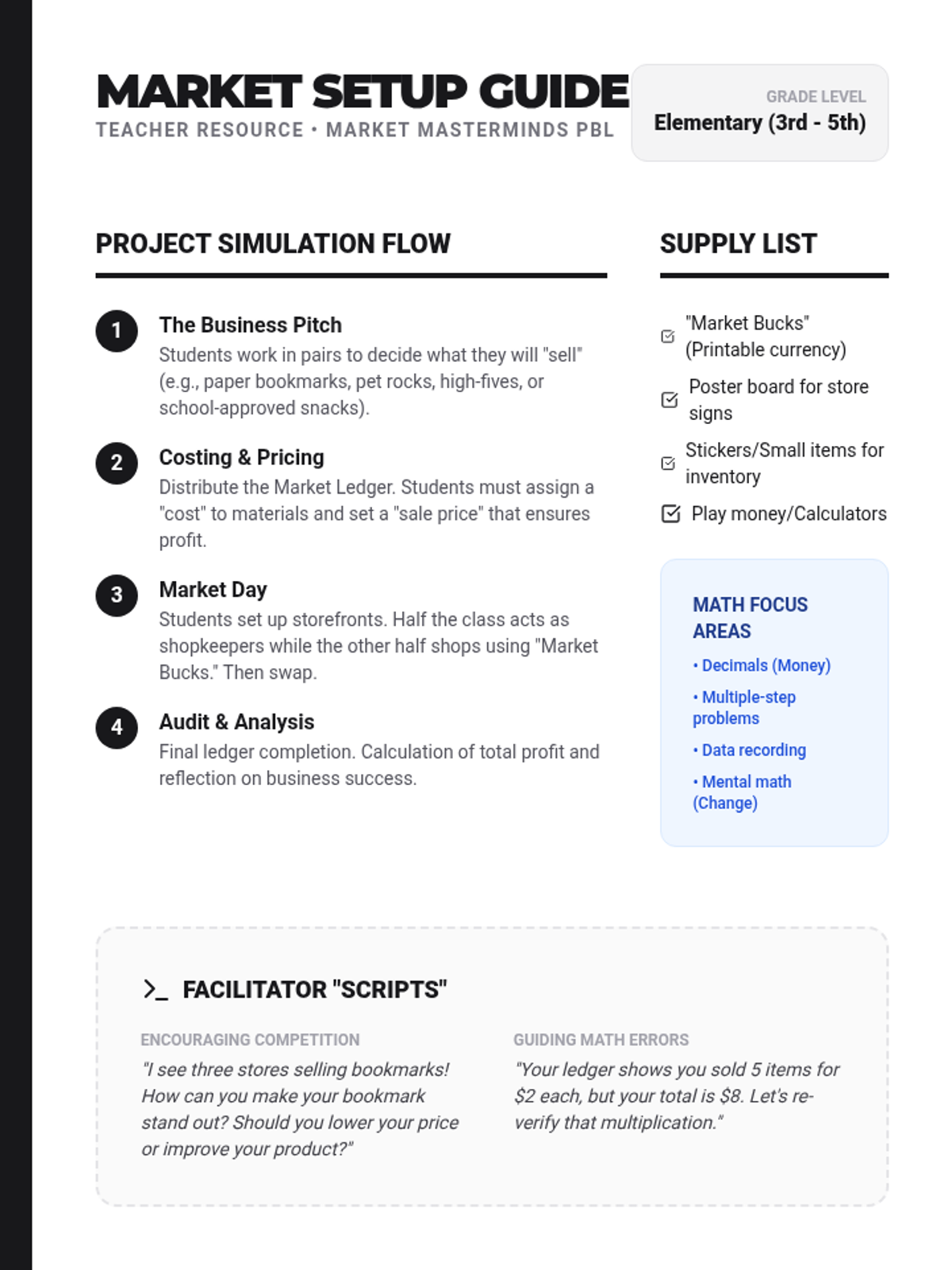
An elementary project where students apply addition, subtraction, and simple multiplication to create and run a classroom marketplace, focusing on financial literacy and operational math.
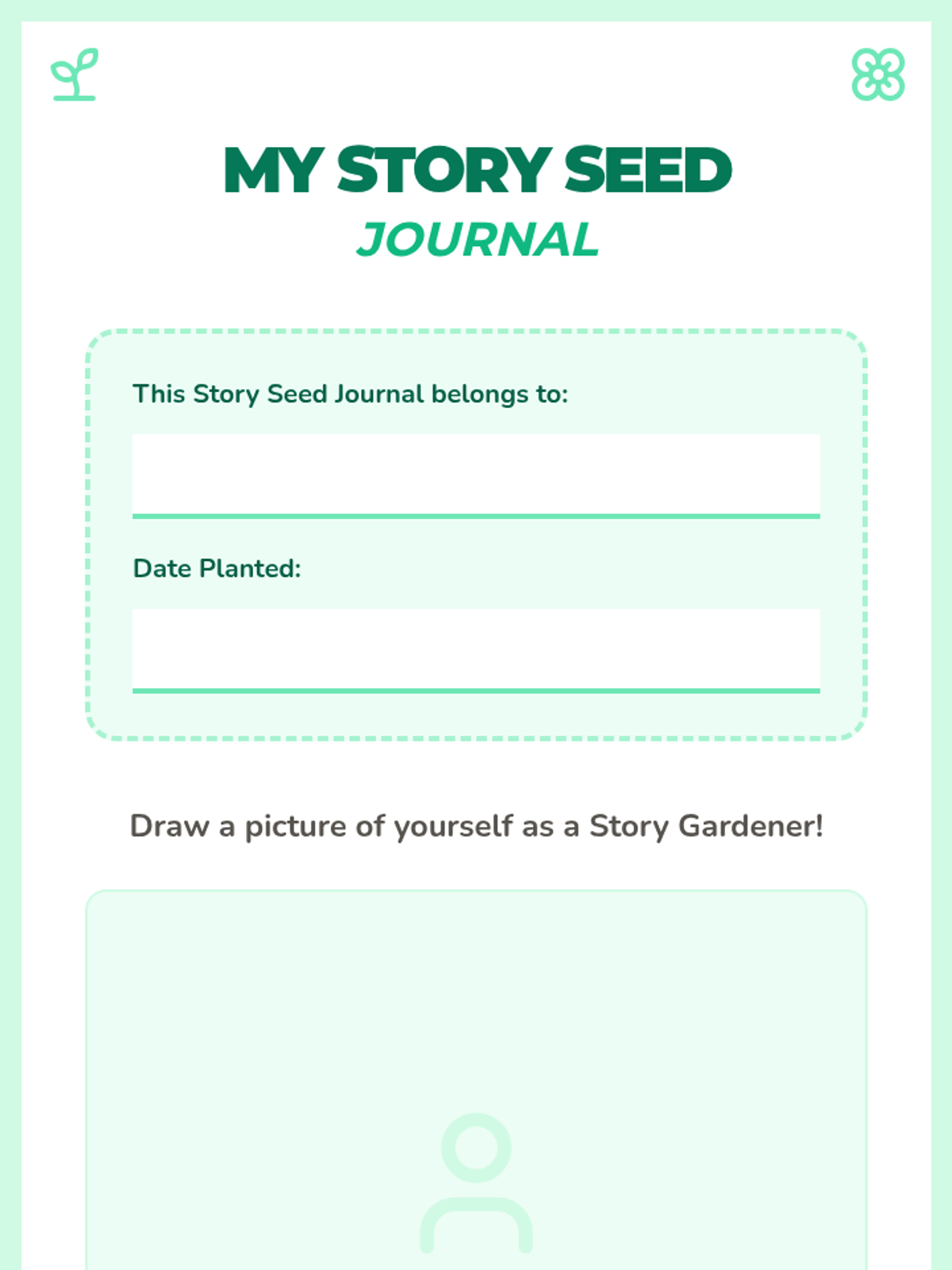
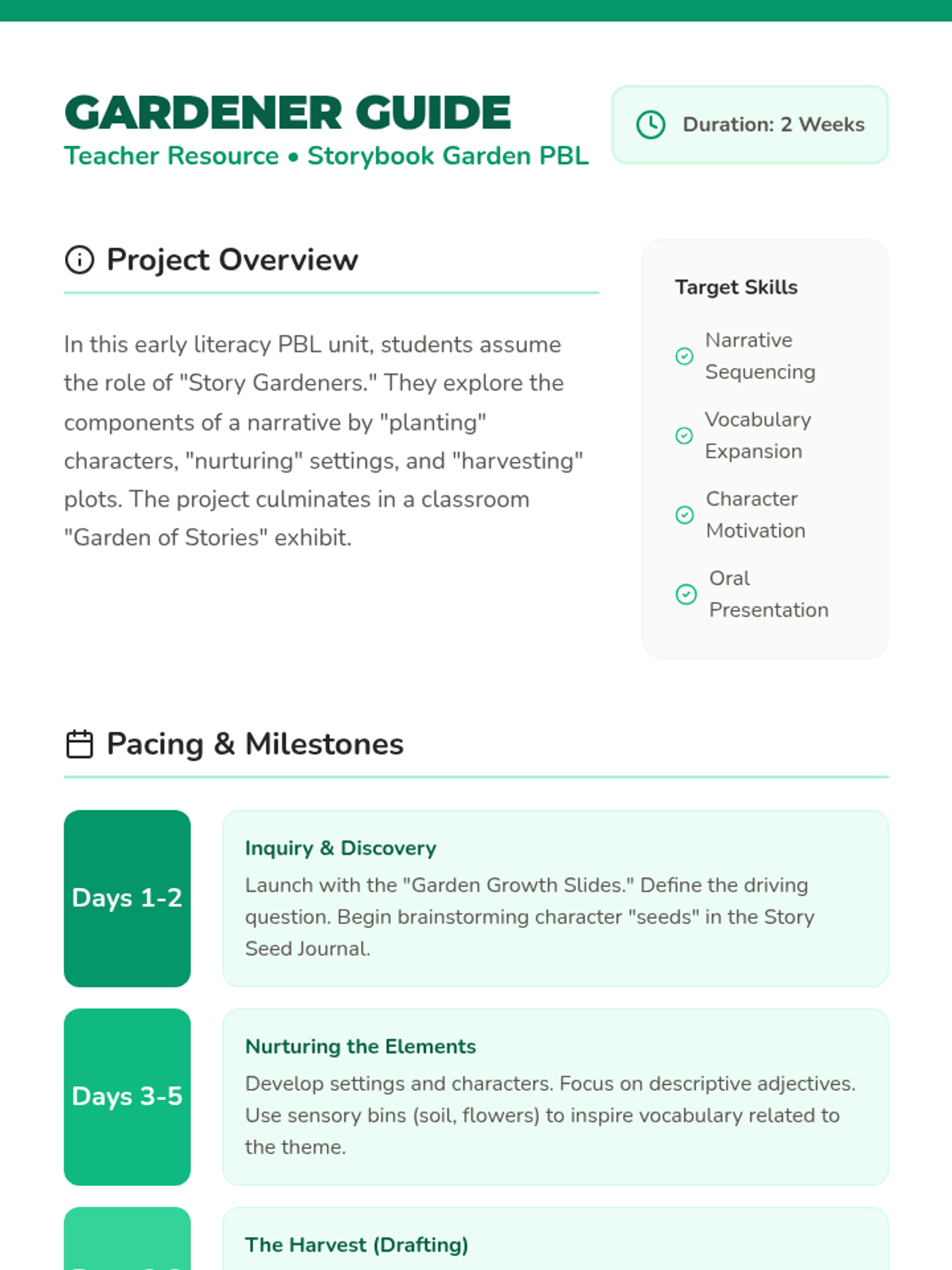
An early childhood project where students grow their literacy skills by 'planting' a story garden, focusing on letter recognition, sequencing, and narrative creation.
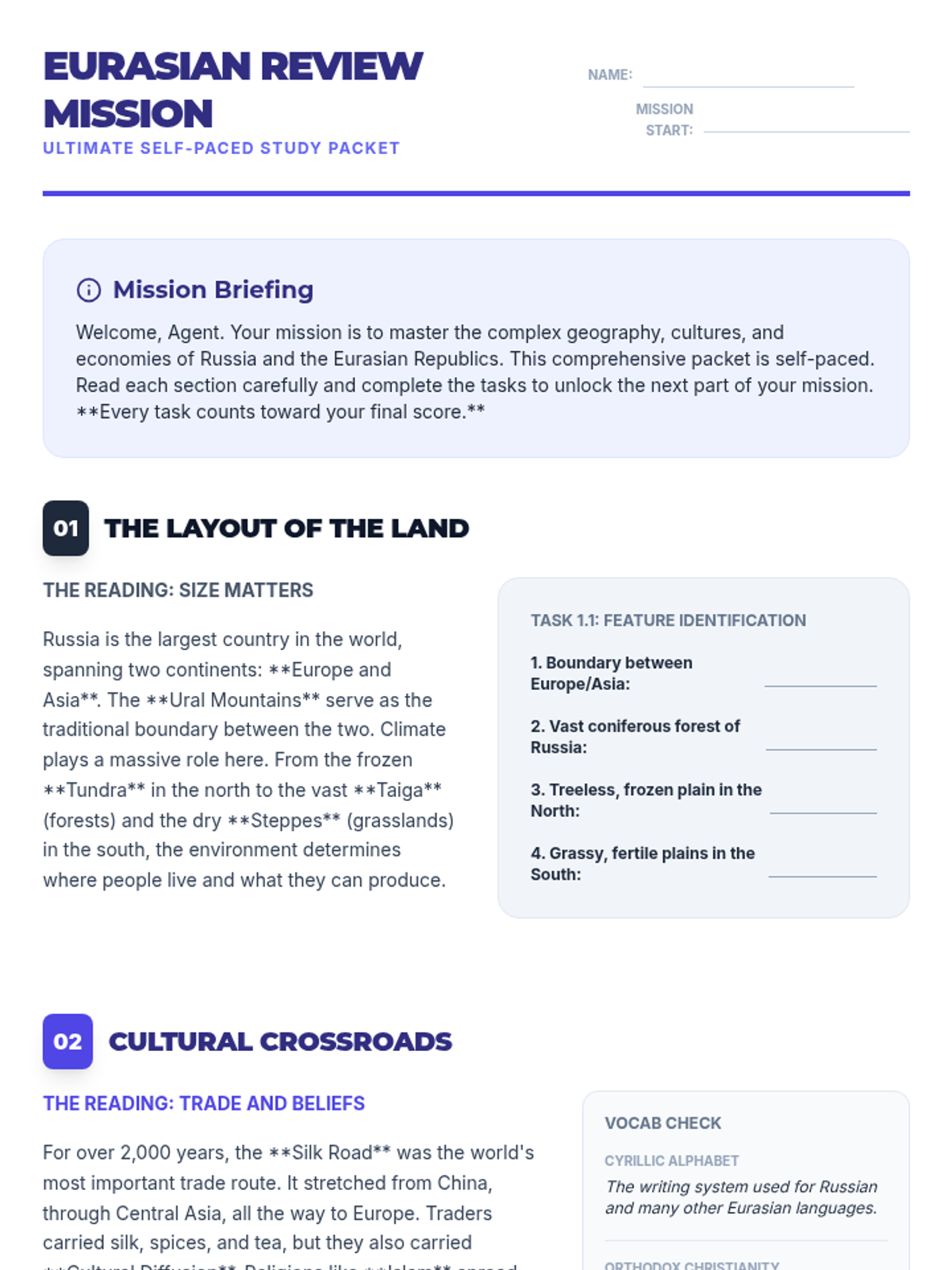
A comprehensive, self-paced review packet for 6th grade students covering the cultural and economic landscape of Russia and the Eurasian Republics, designed for independent study or test preparation.
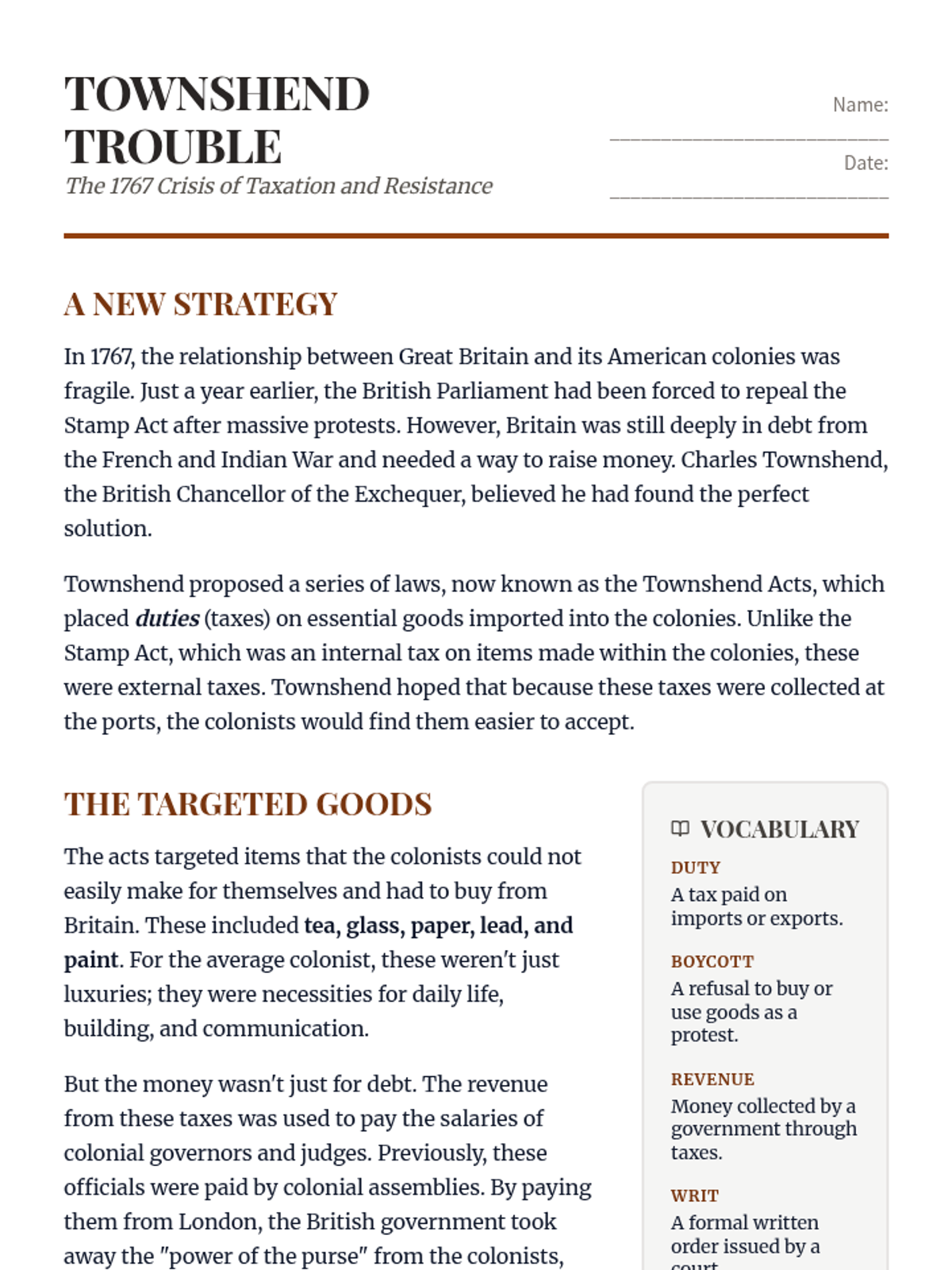
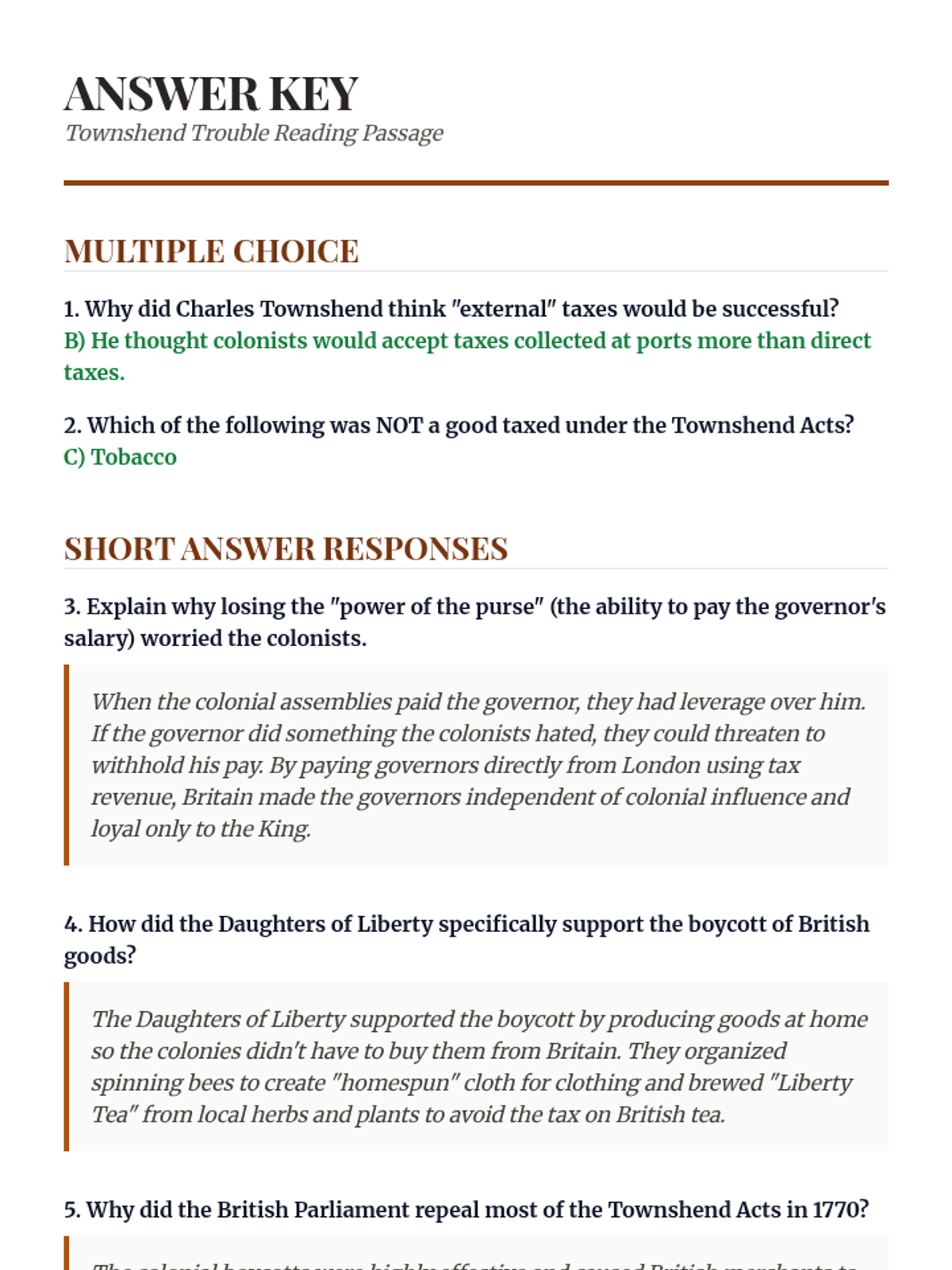
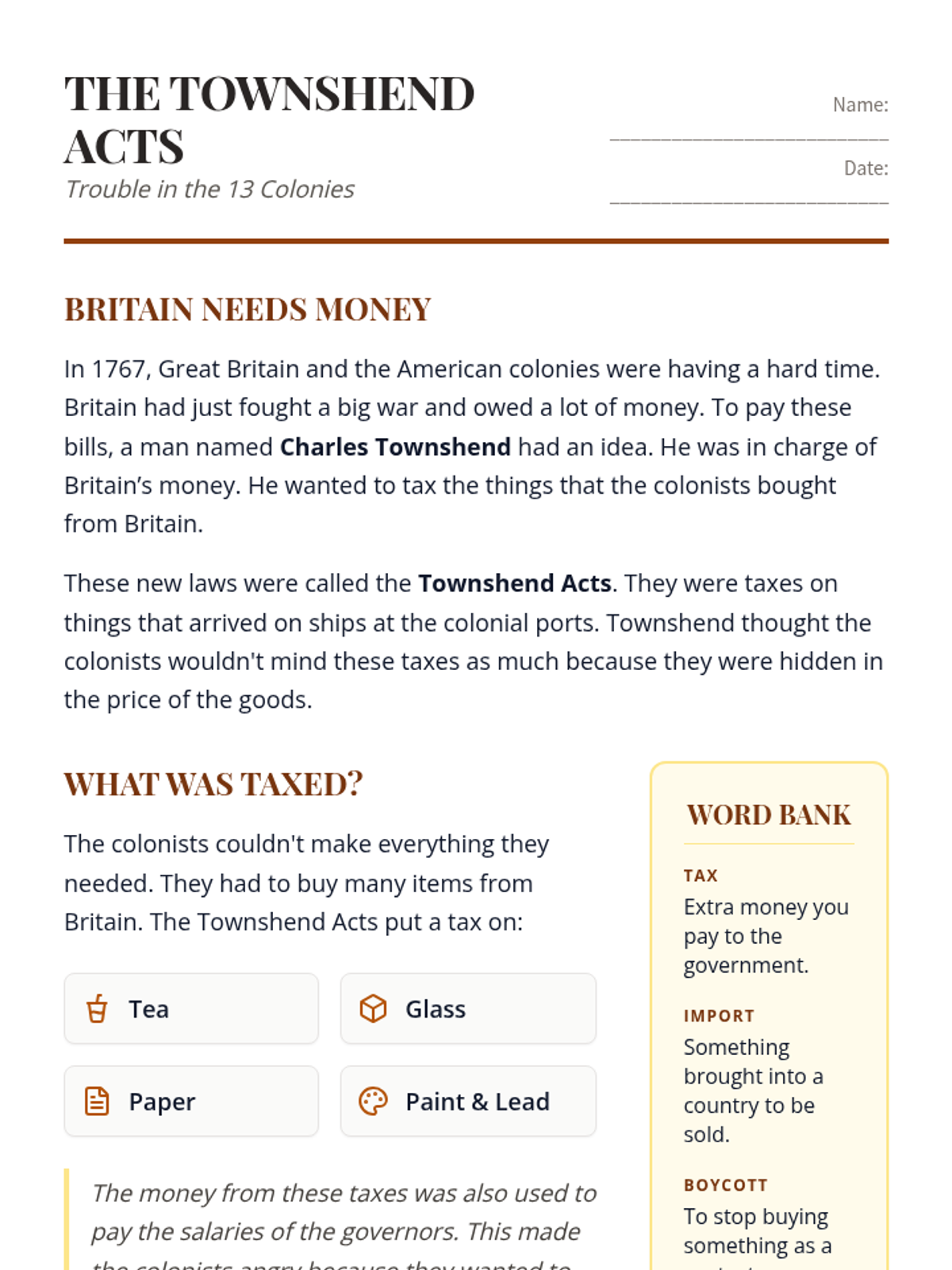
A comprehensive look at the Townshend Acts of 1767, focusing on the British motivation for taxation and the resulting colonial resistance and boycotts.
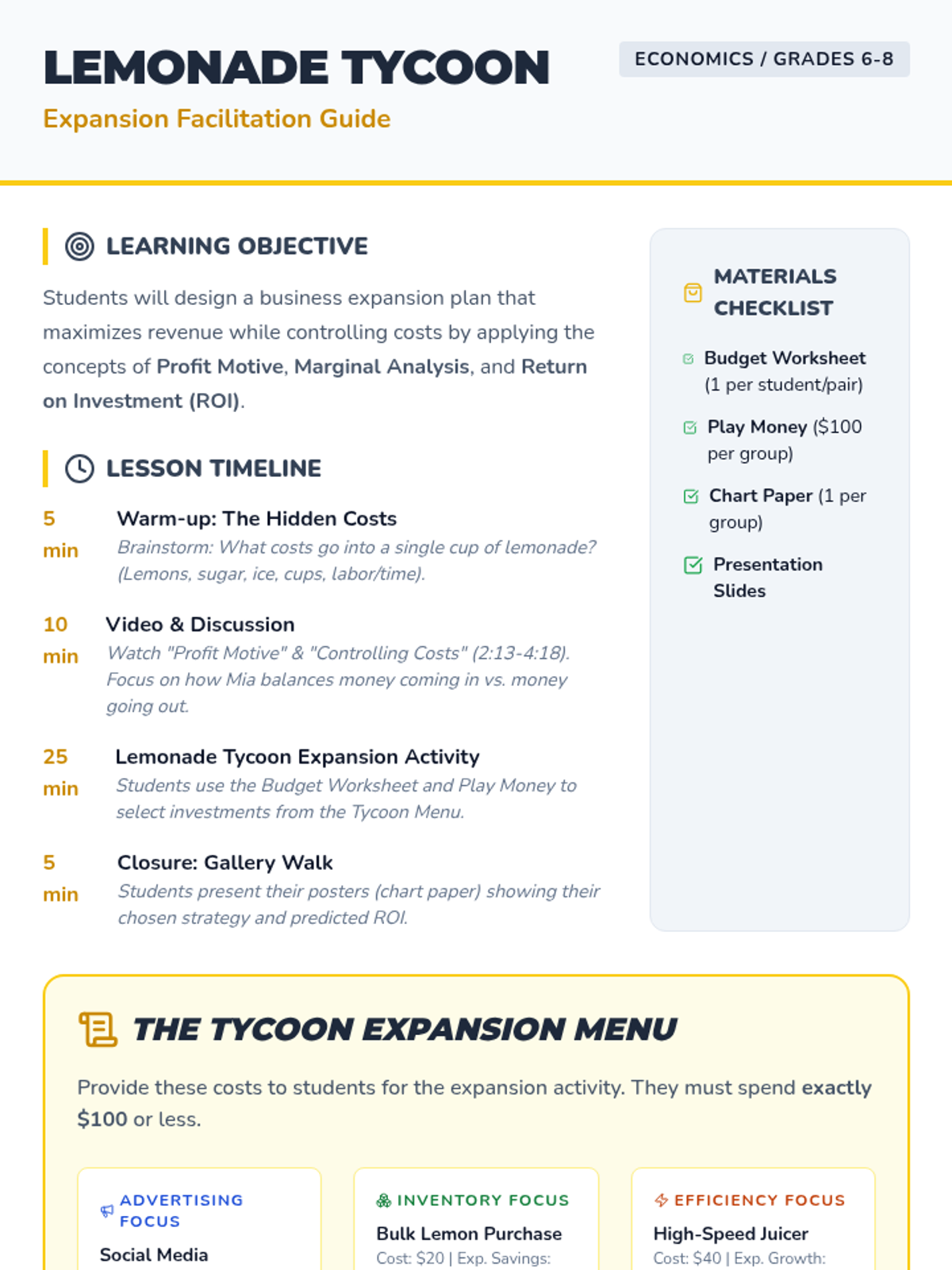
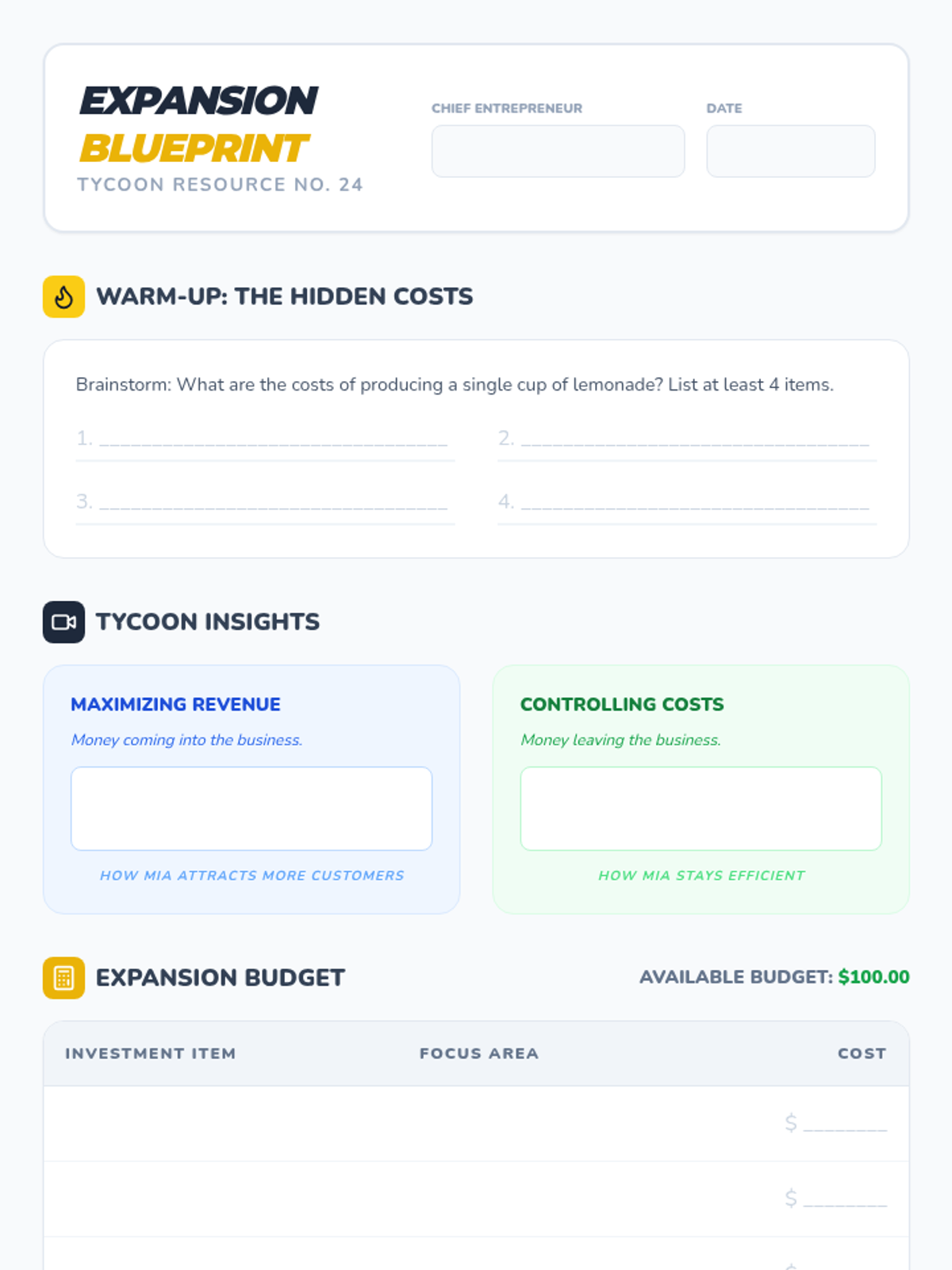
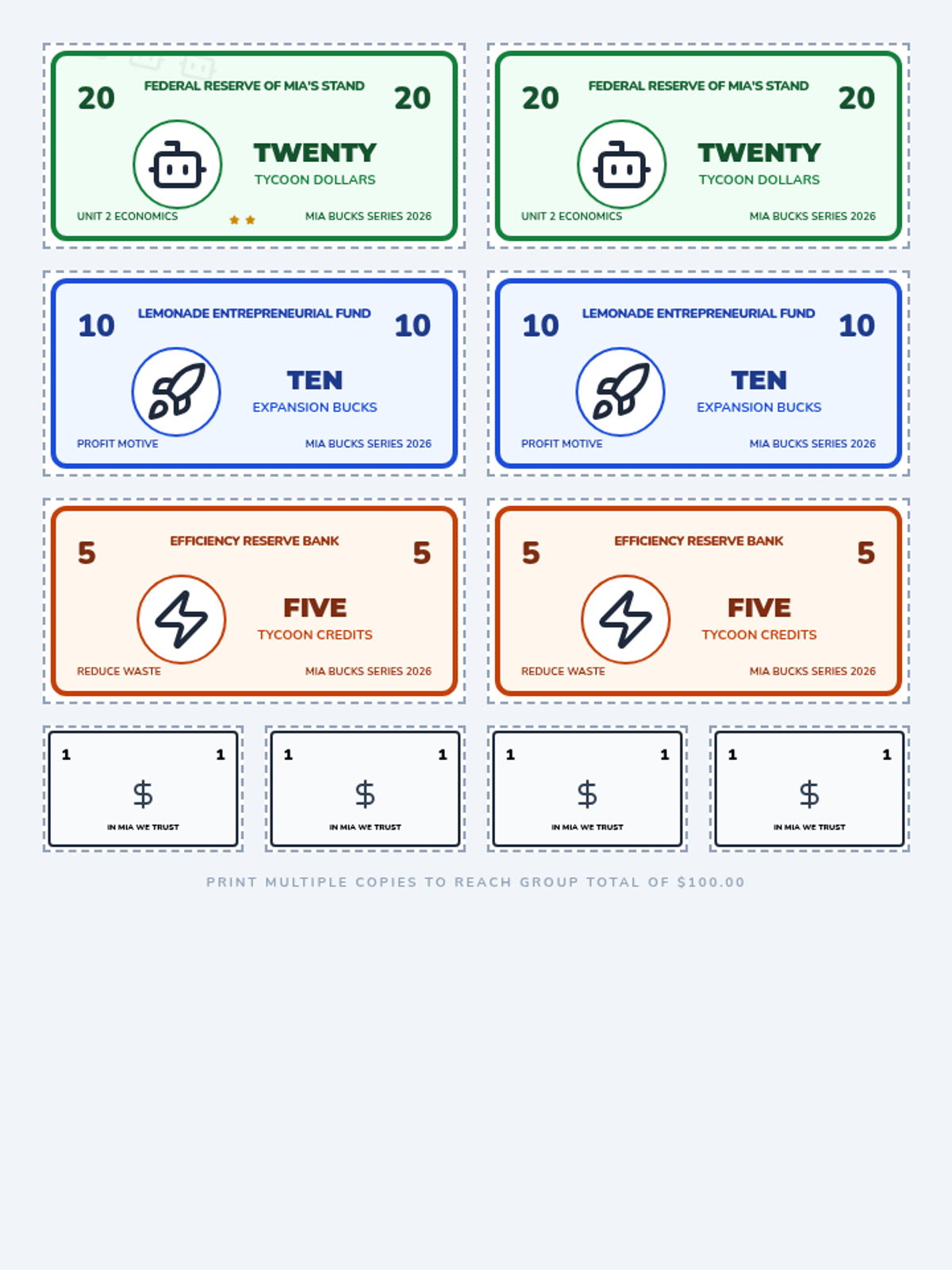
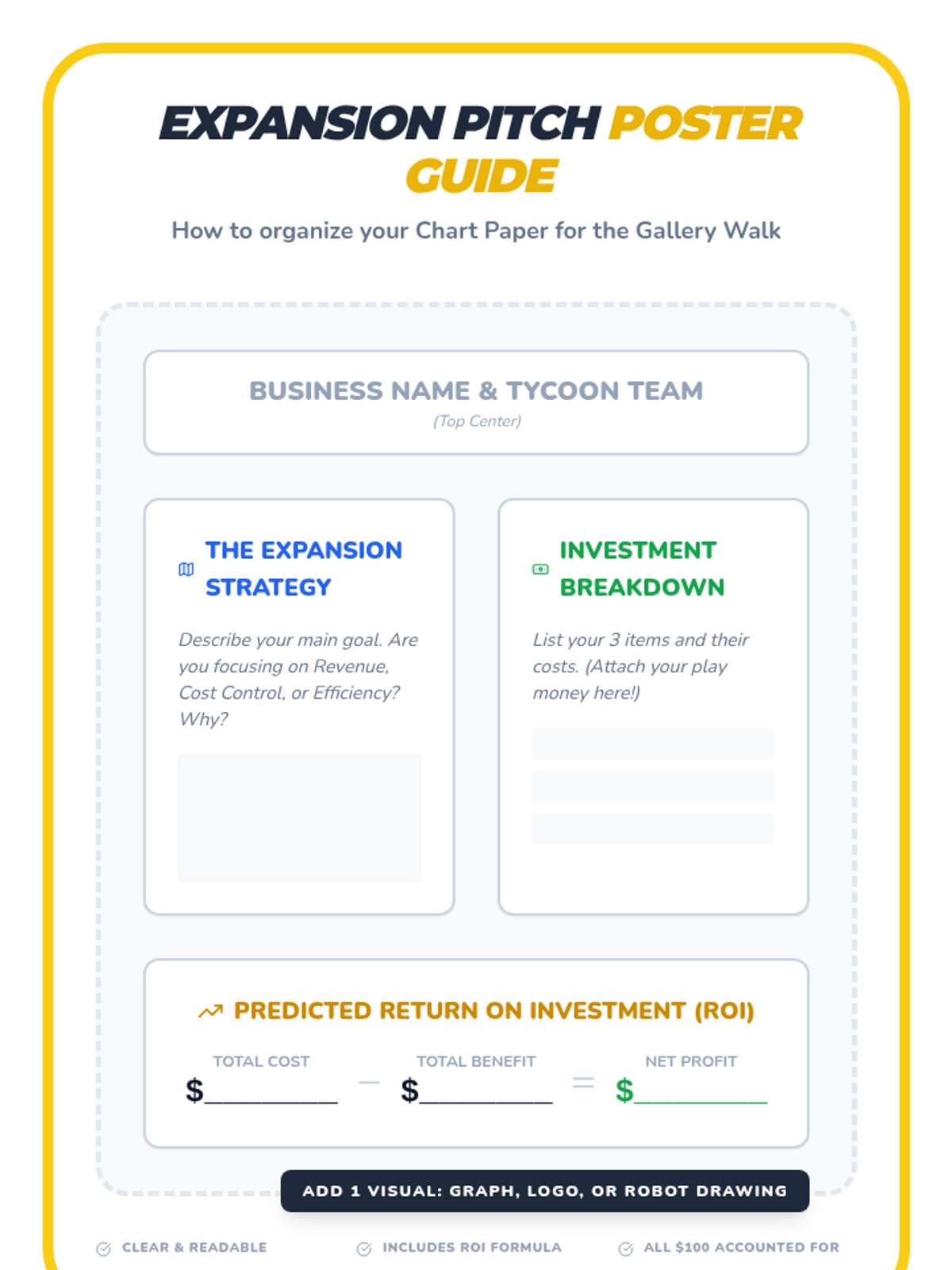
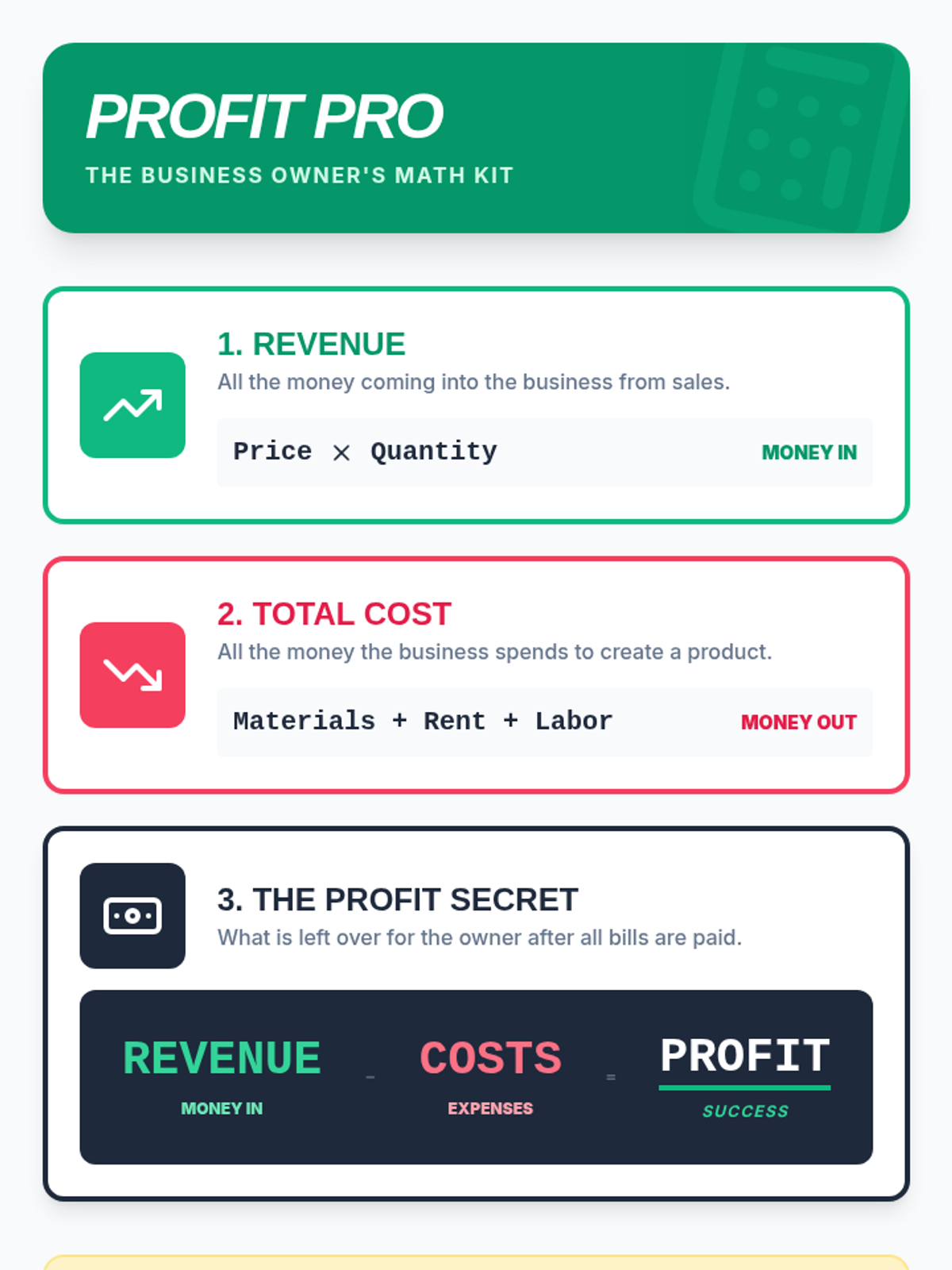
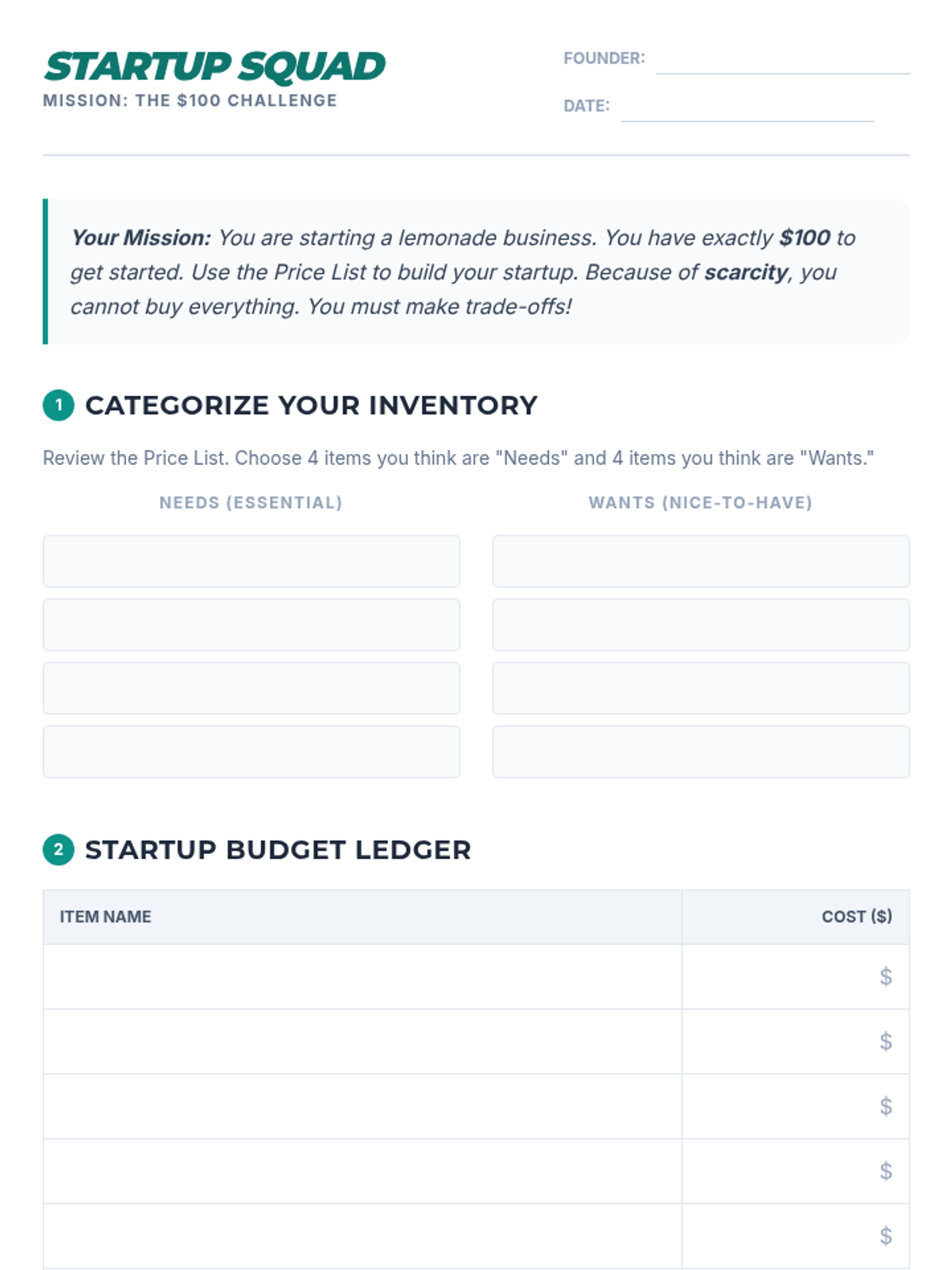
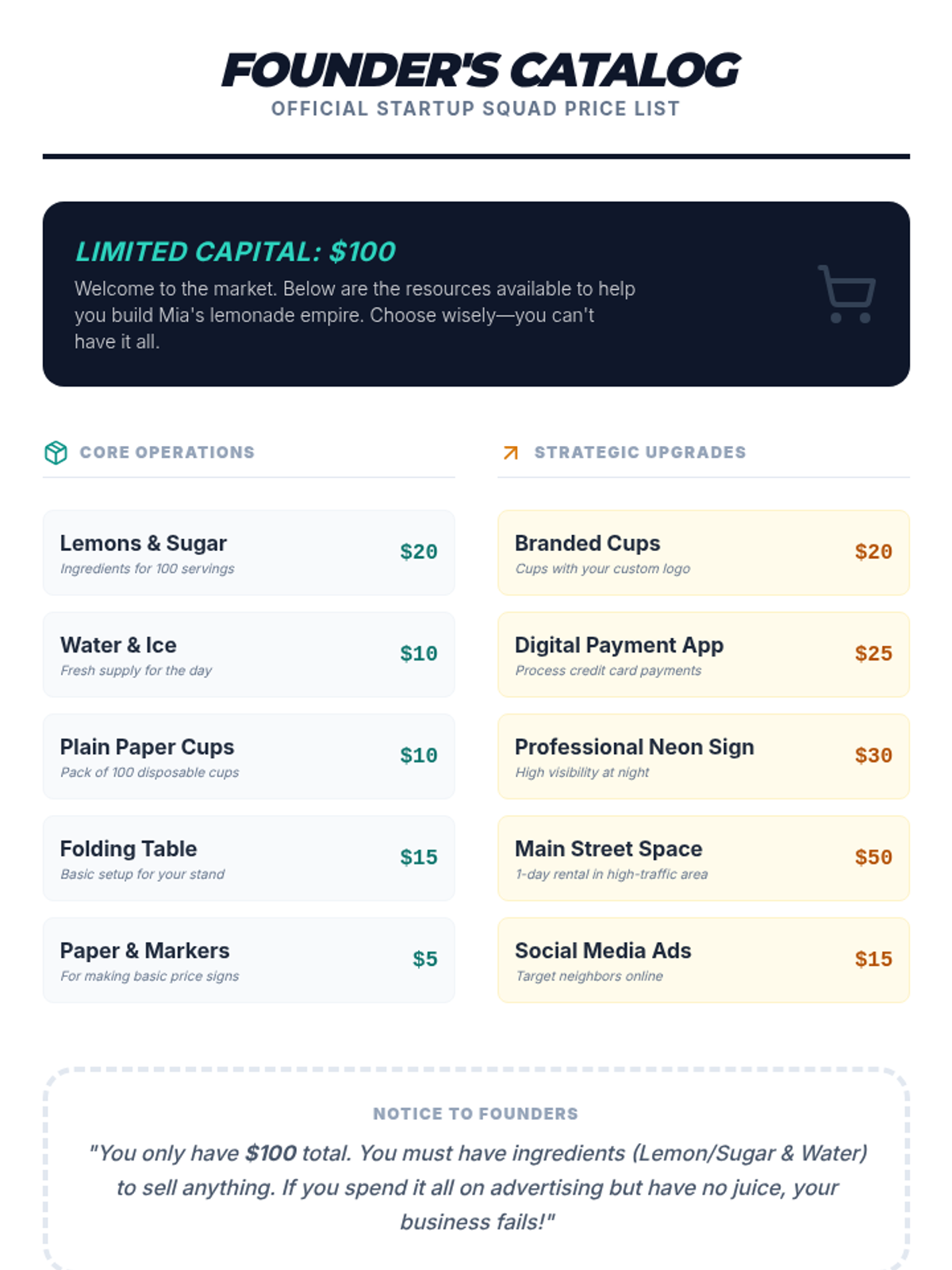
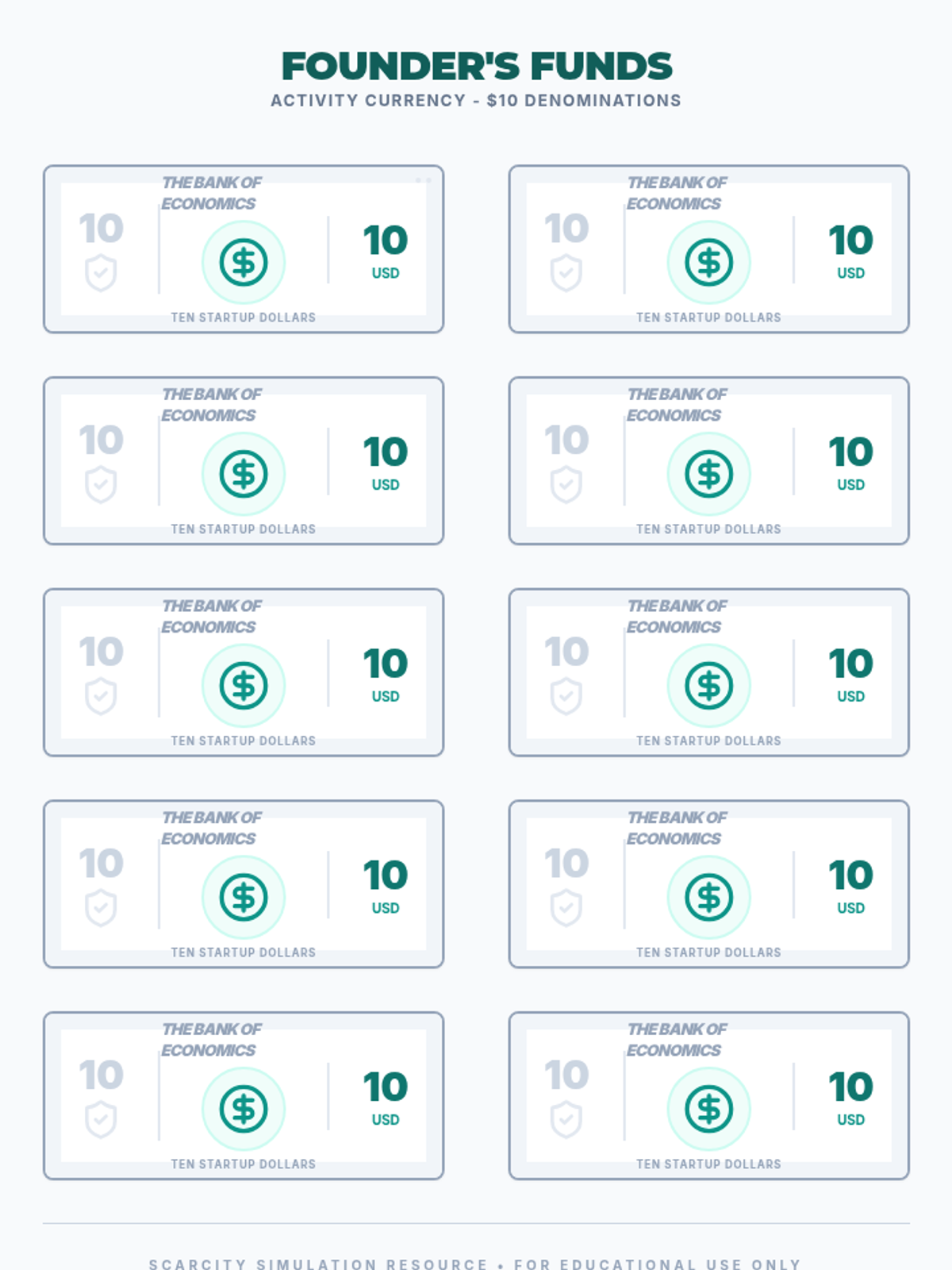
Students step into the role of an entrepreneur to expand Mia the Robot's lemonade business. They will analyze the profit motive, control costs, and make strategic investment decisions using a $100 budget to maximize their return on investment.
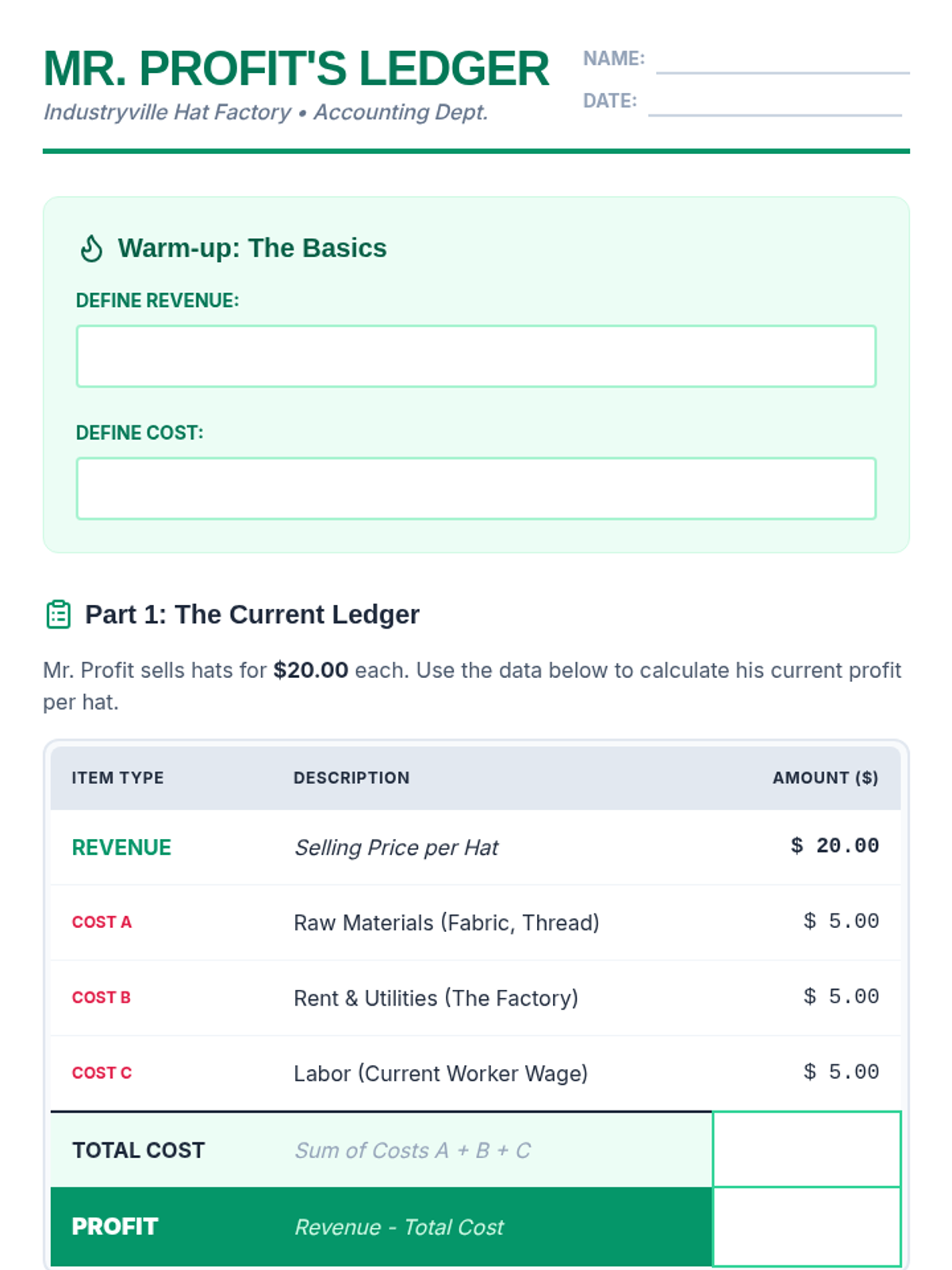
Students will dive into the economics of 'Industryville' to calculate profit margins and explore the trade-offs between worker wages and business sustainability. Using a fictional hat factory, they will analyze how wage increases affect the bottom line and propose strategic solutions.
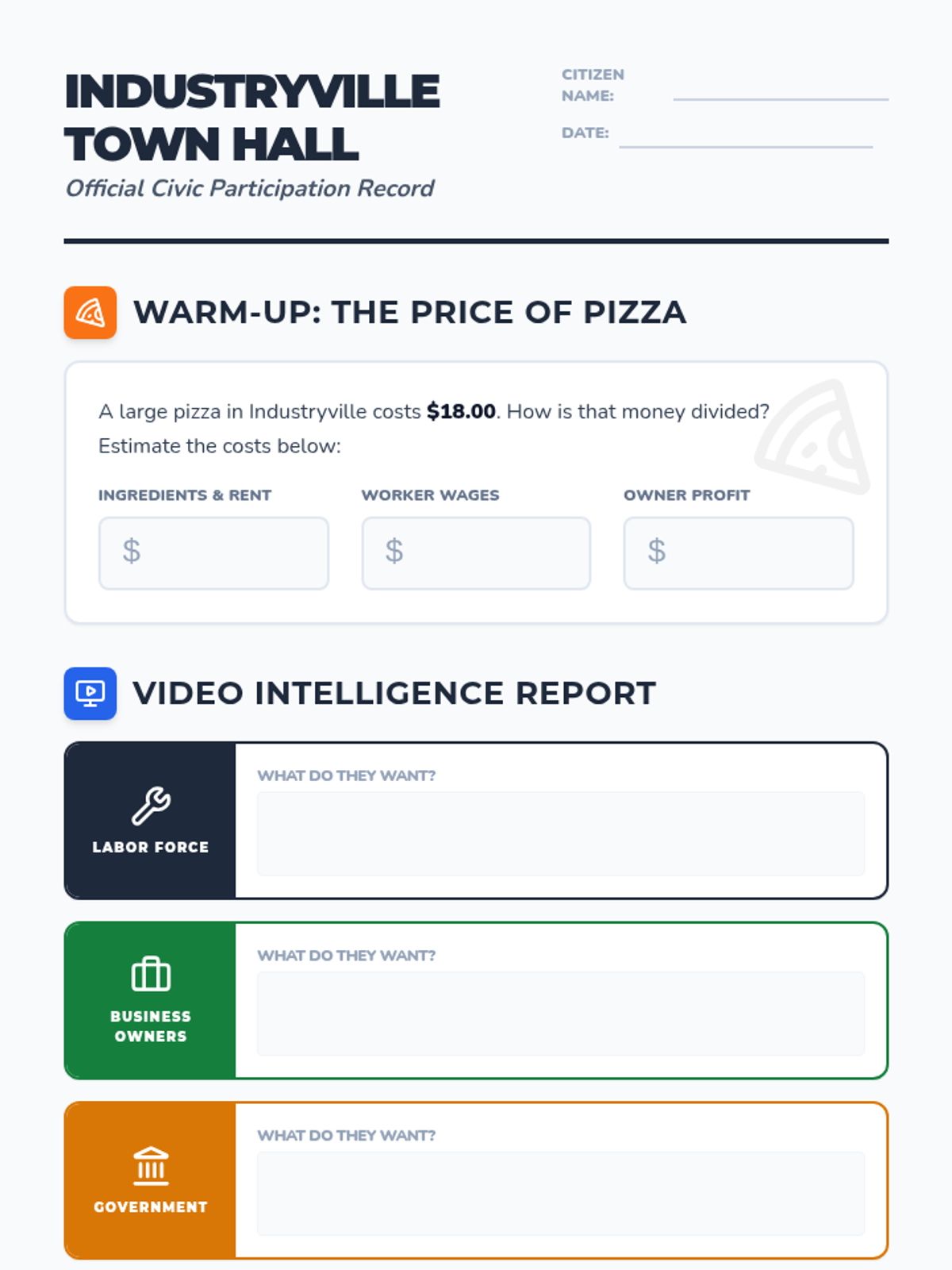
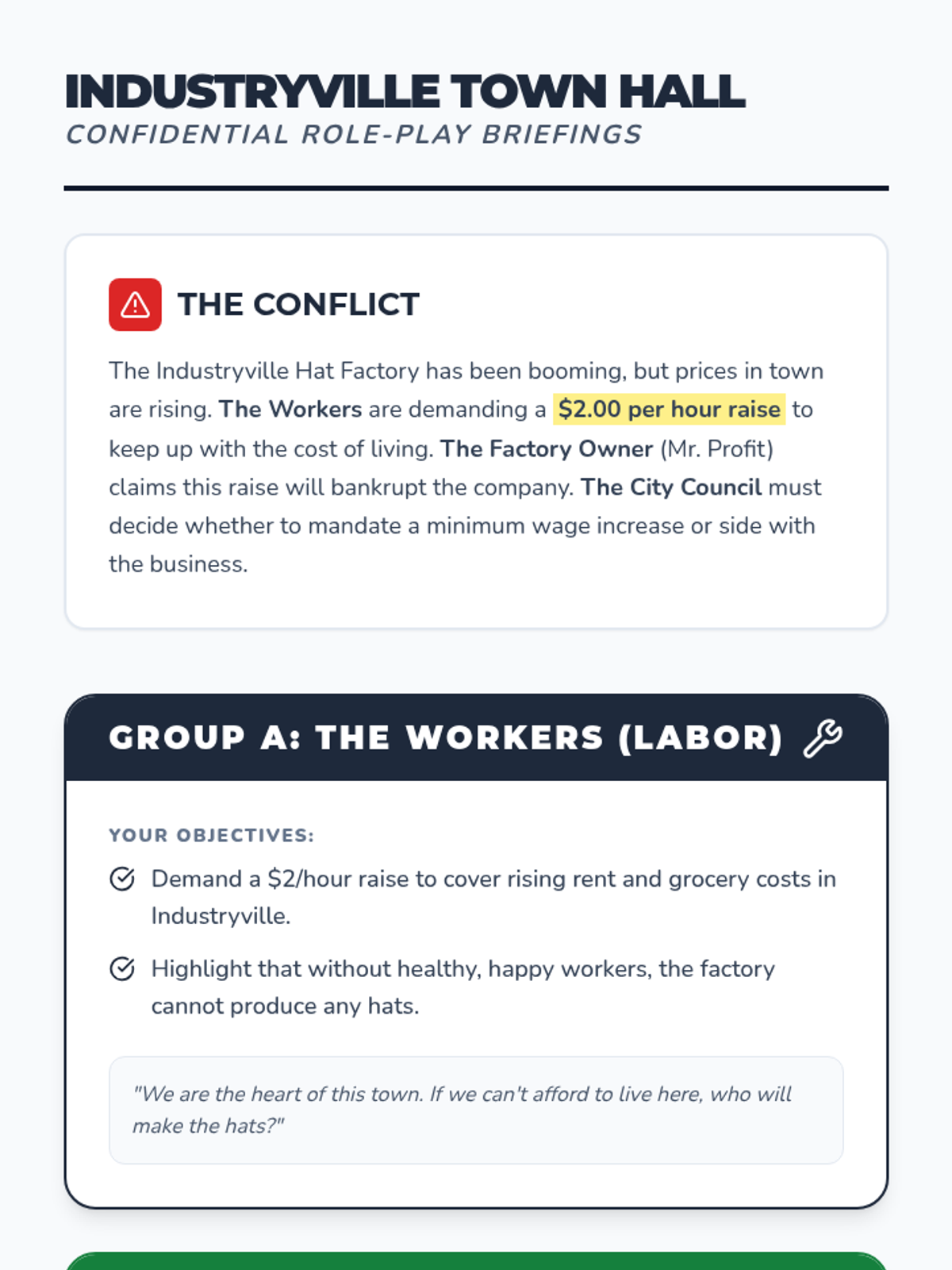
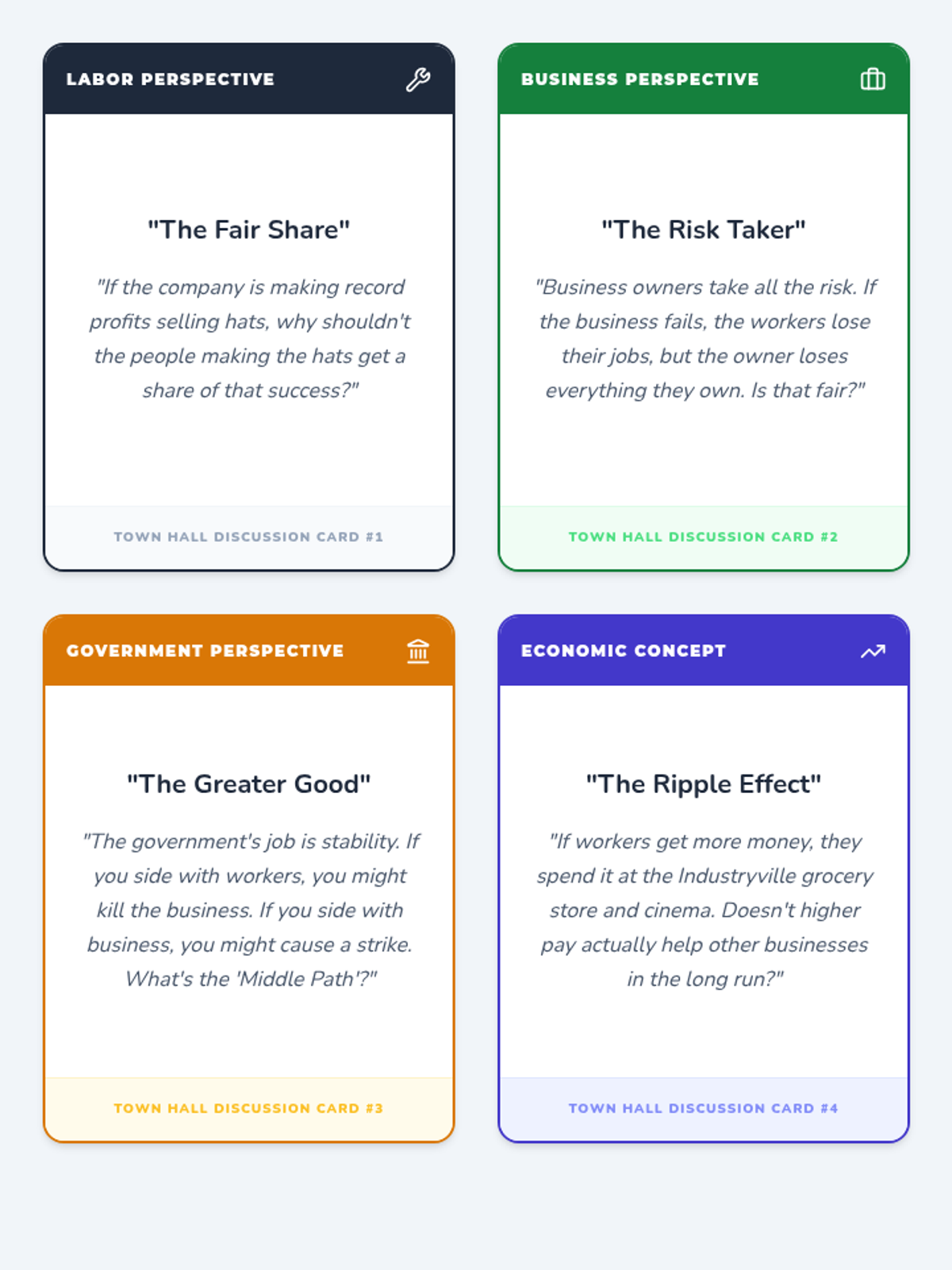
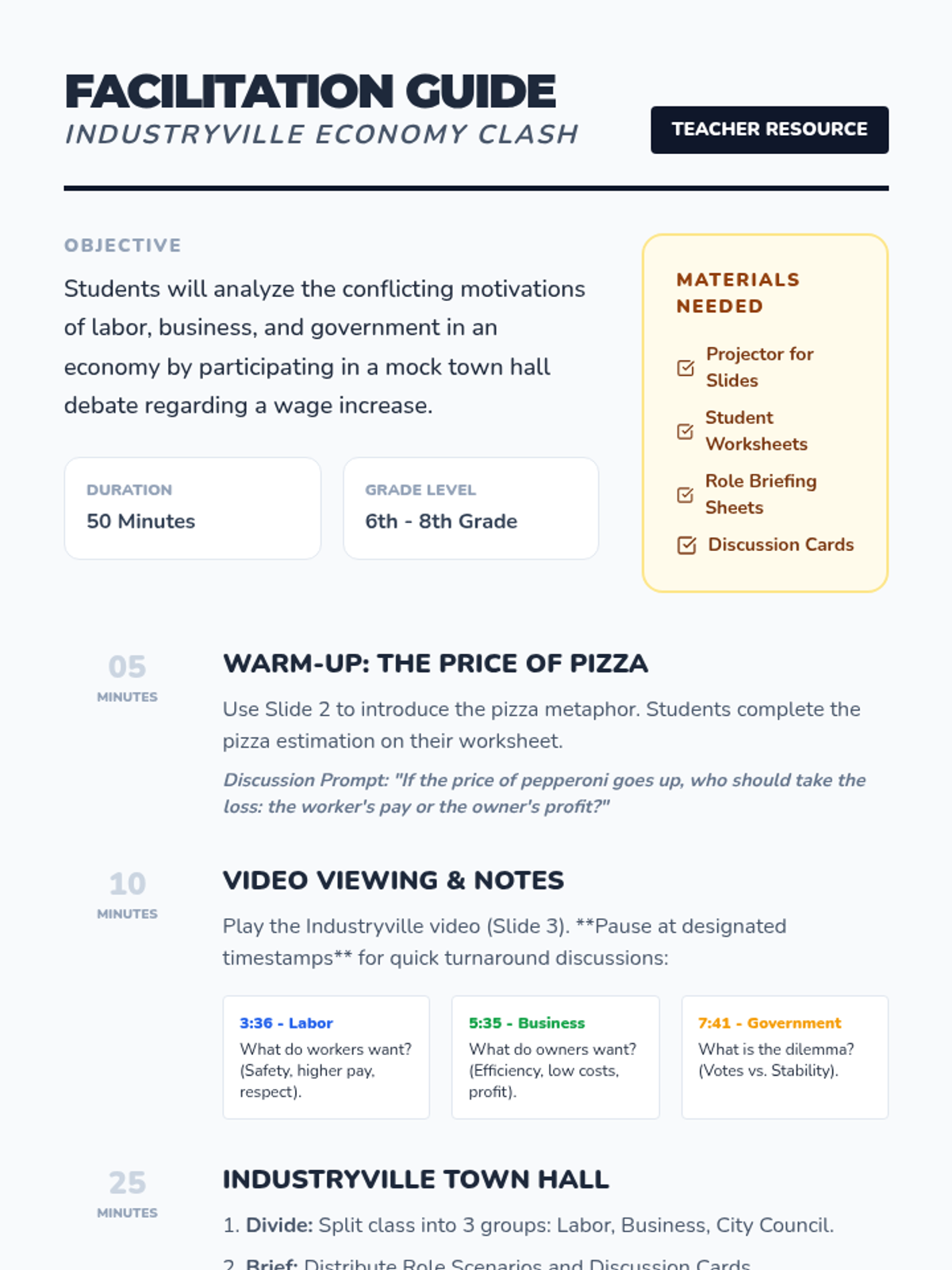
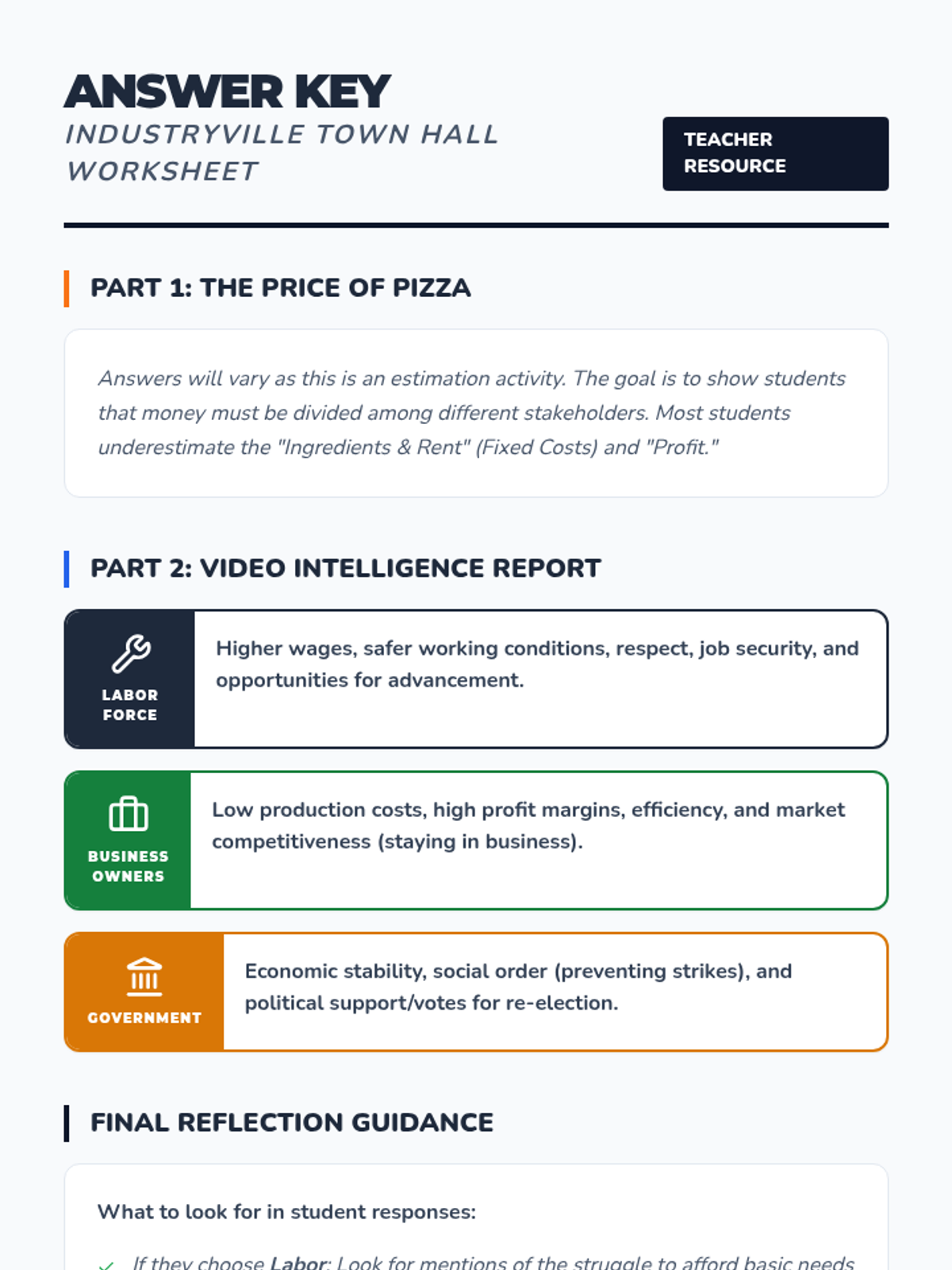
A middle school economics lesson where students analyze the conflicting interests of labor, business, and government through the lens of a fictional town called Industryville. The lesson culminates in a town hall role-play debating a wage increase.
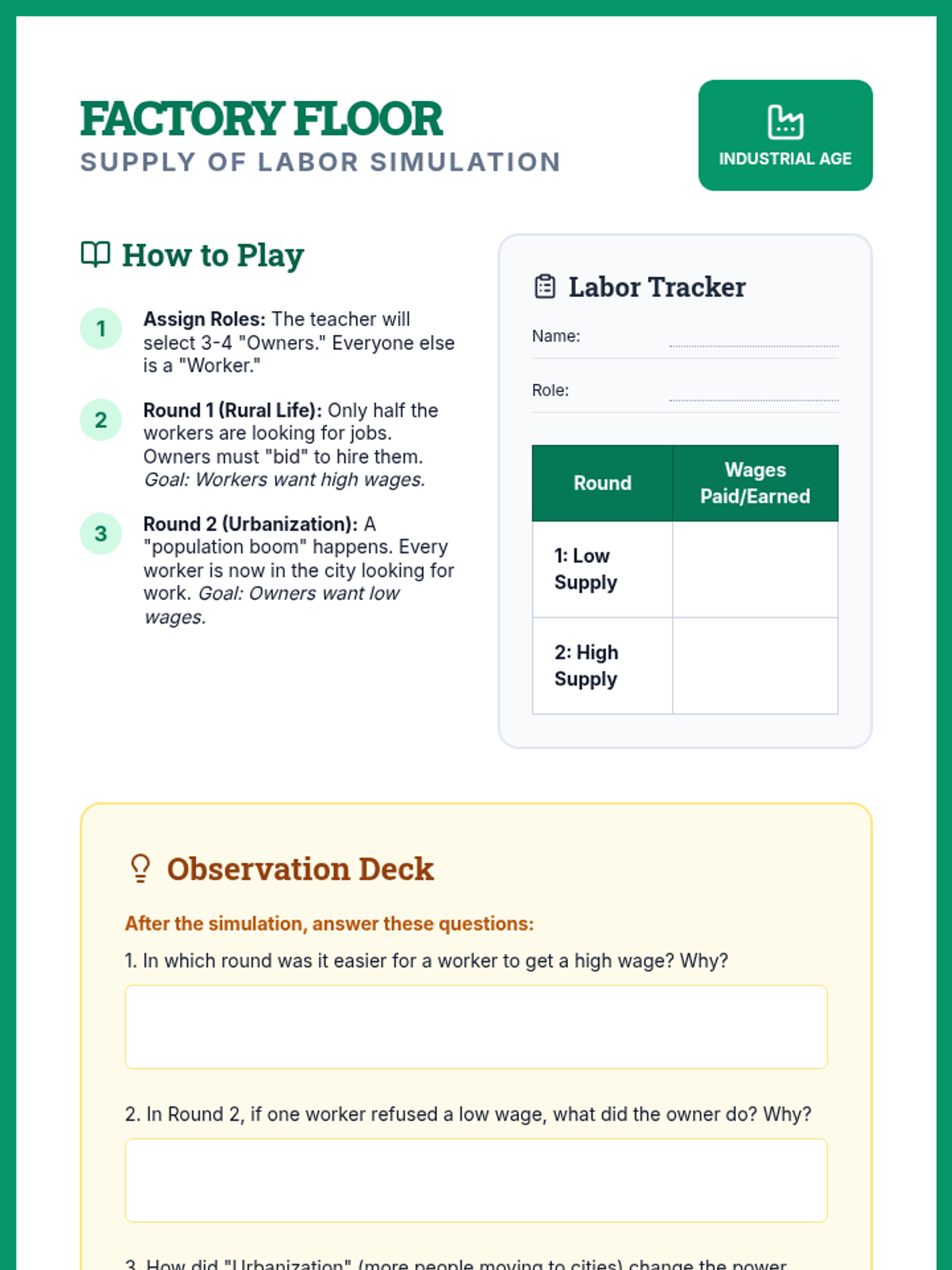
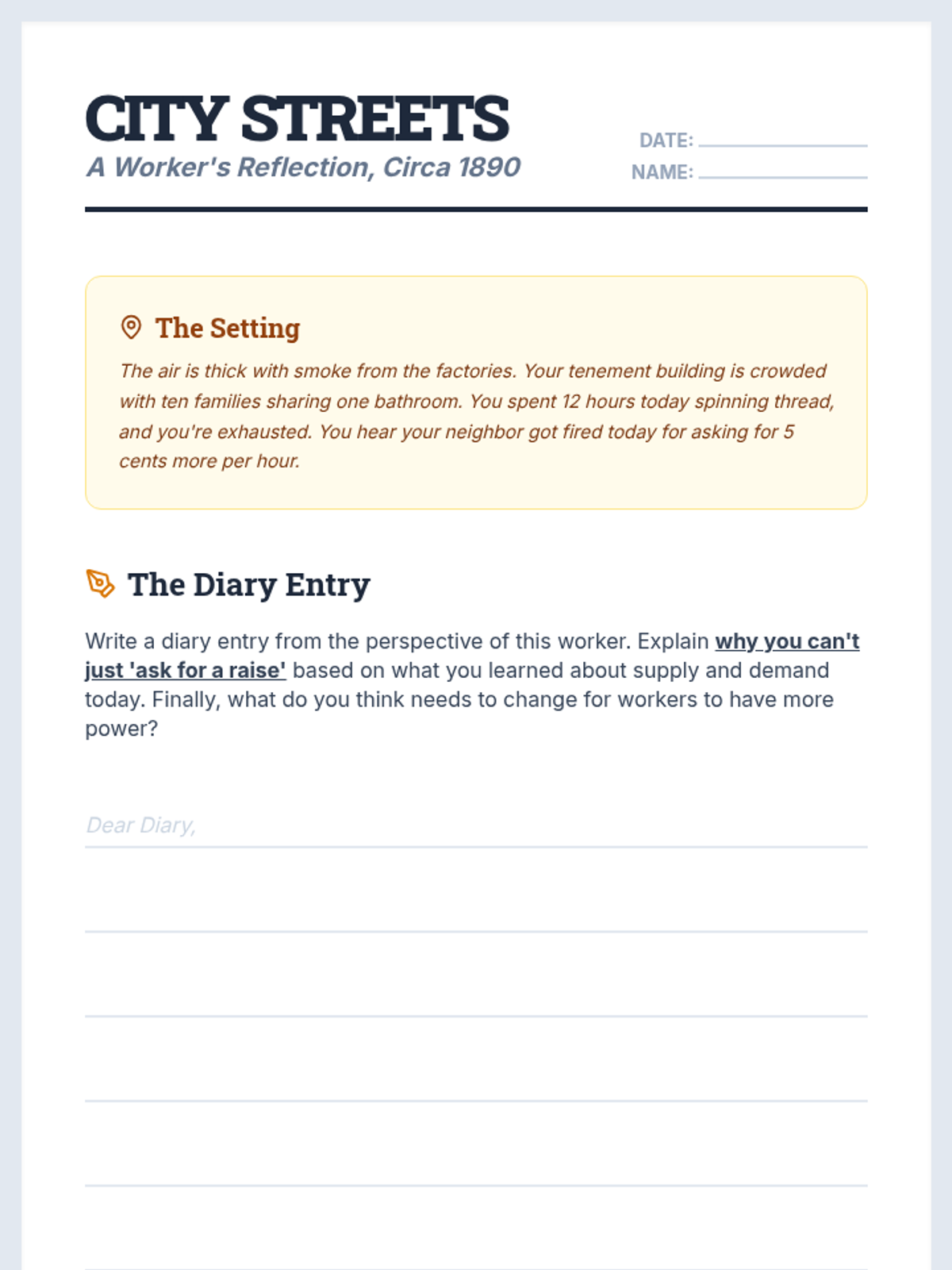
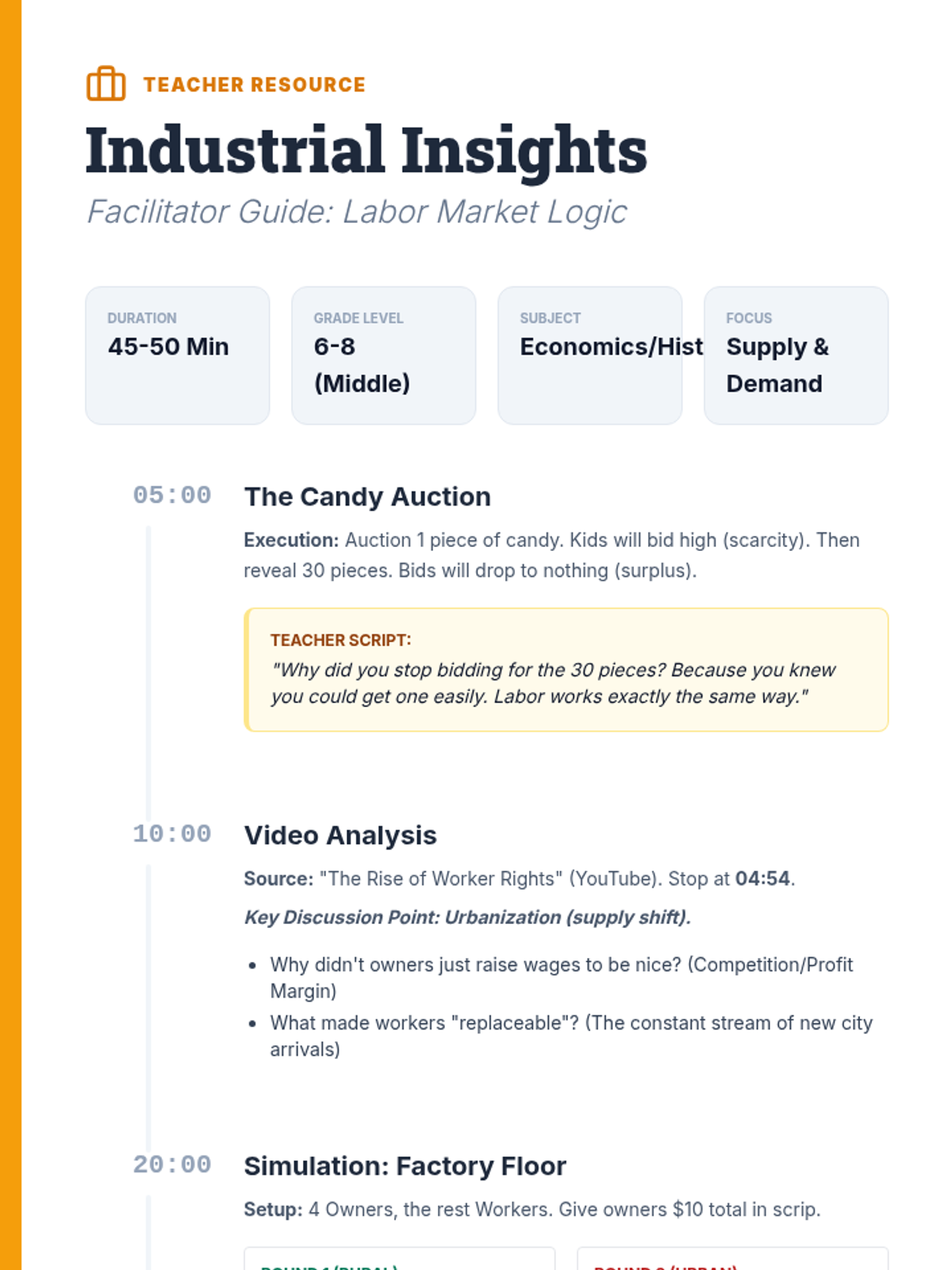
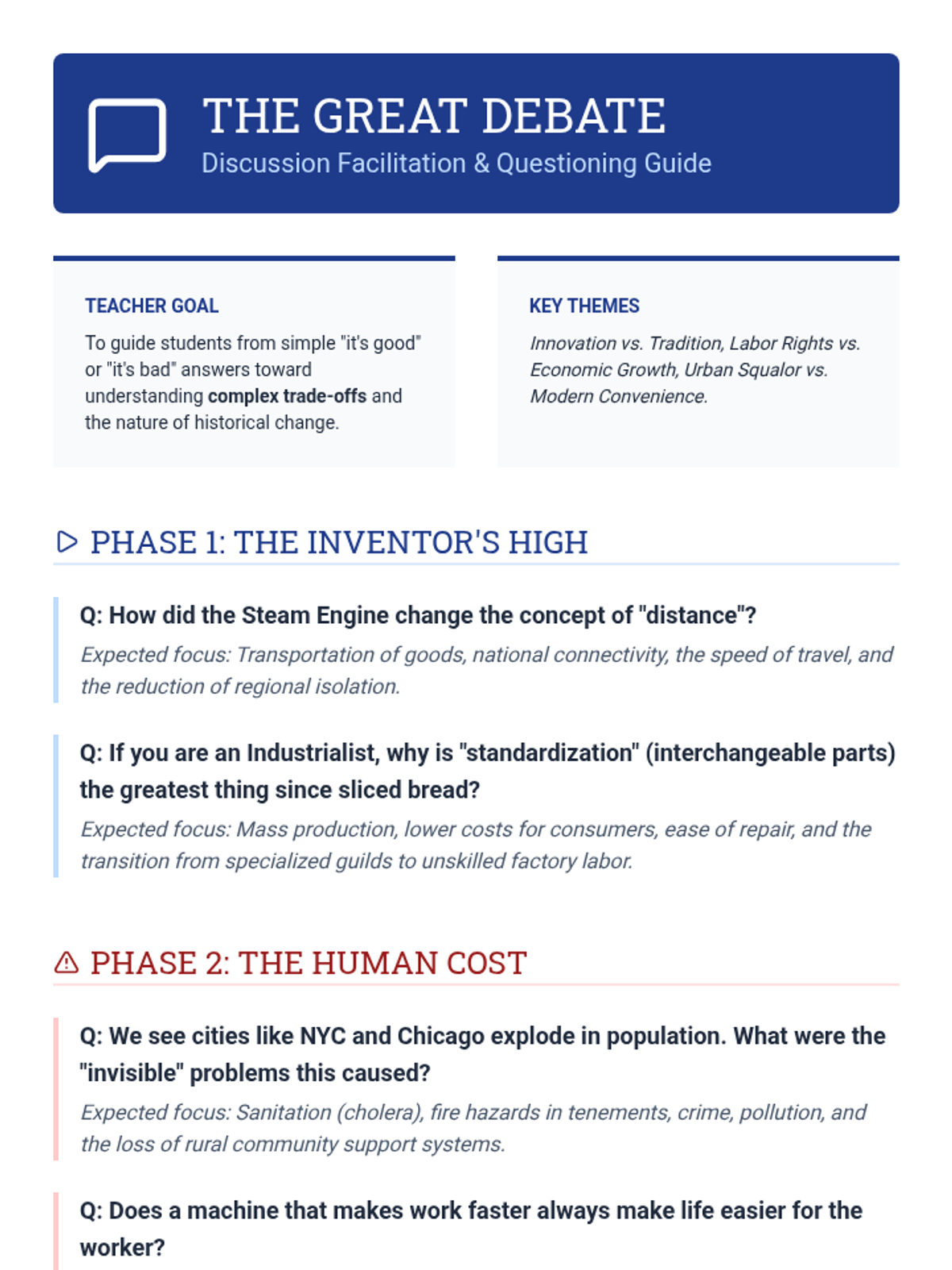
Students explore the economic forces of the Industrial Revolution, specifically how the supply and demand for labor dictated wages and working conditions using simulations and video analysis.
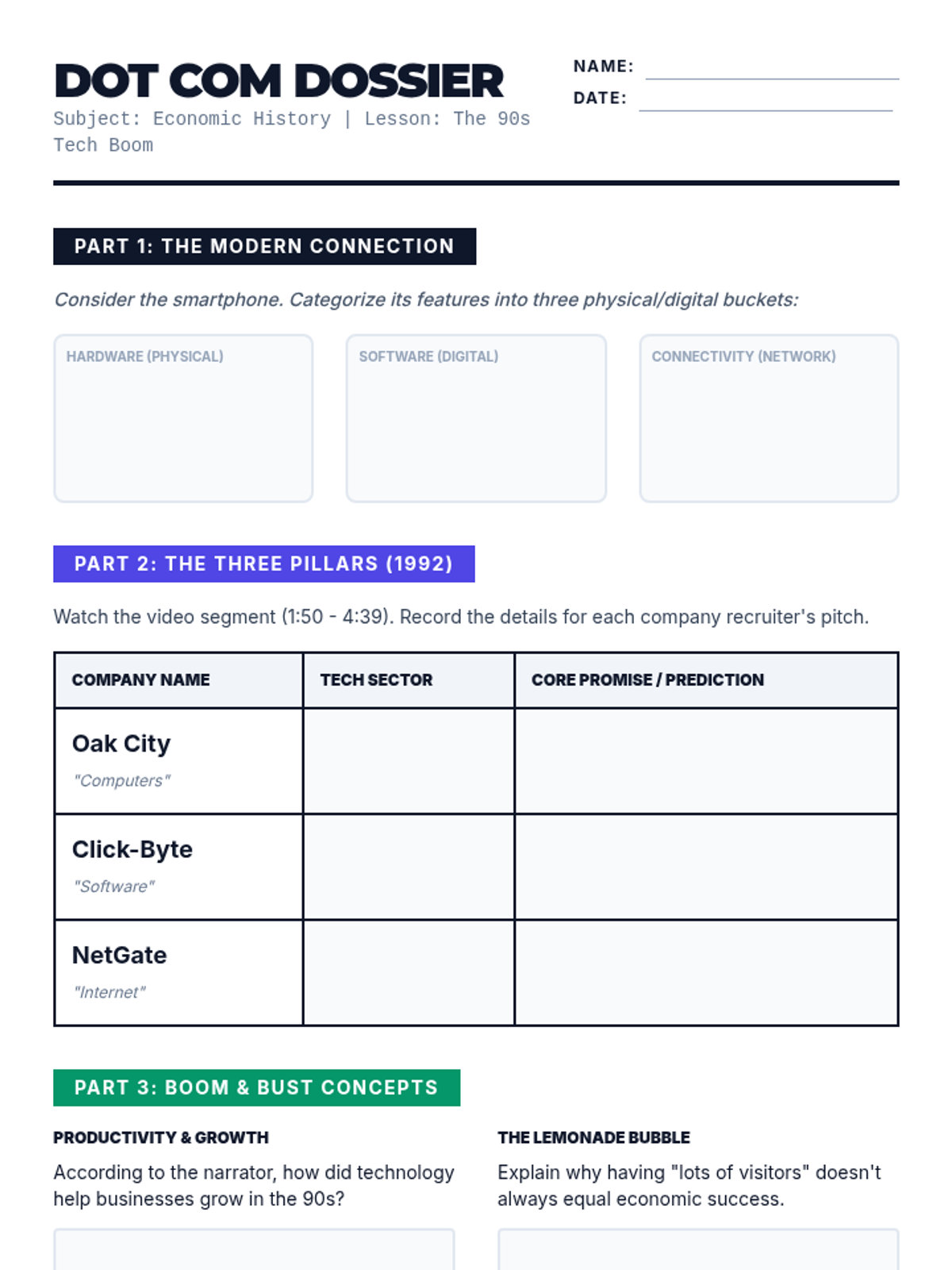
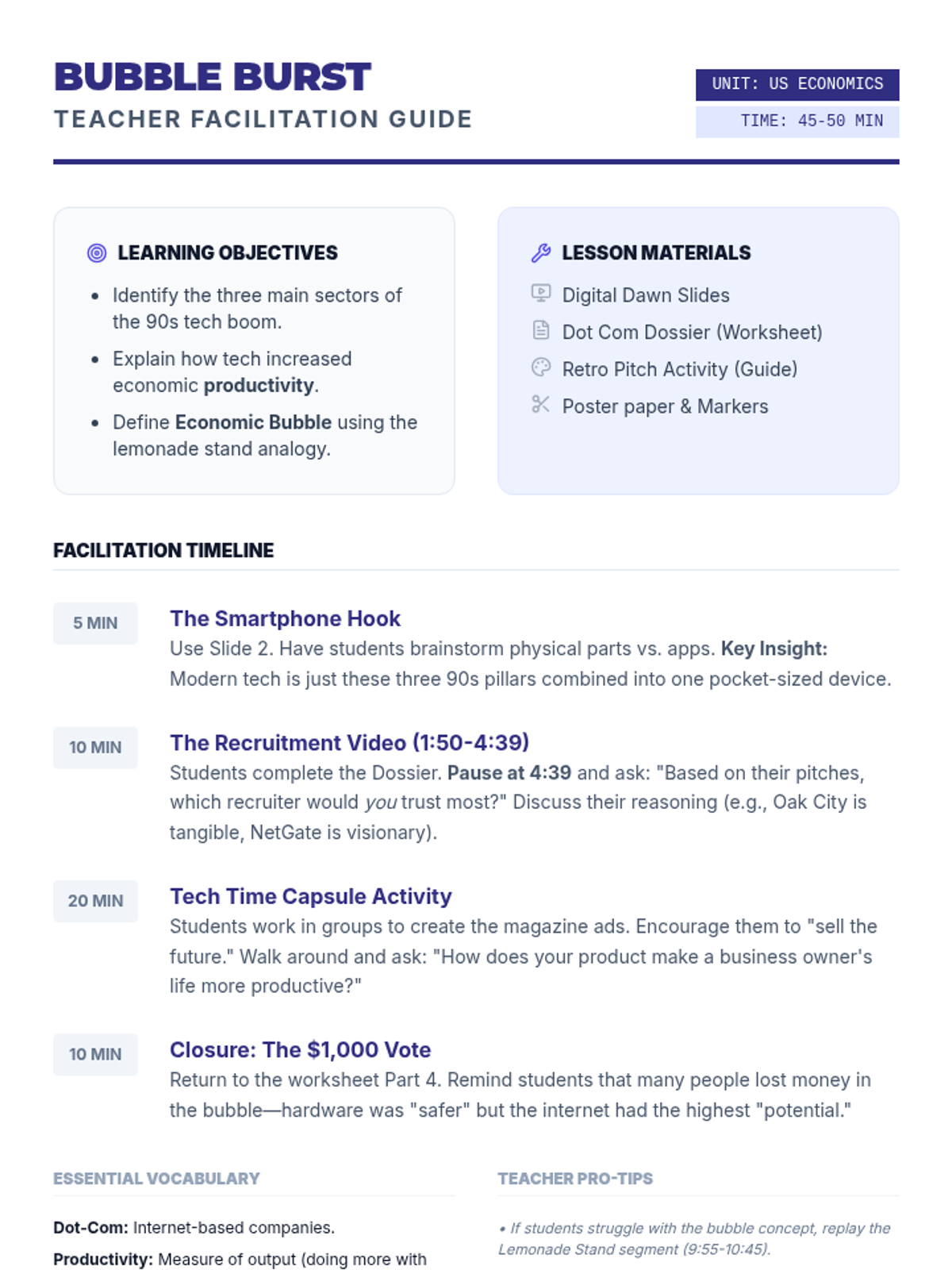
Students investigate the three pillars of the 1990s technology boom—Hardware, Software, and the Internet—analyzing how their synergy transformed the US economy. They will analyze primary source-style recruiters' pitches and design vintage marketing campaigns to understand the rhetoric of the era.
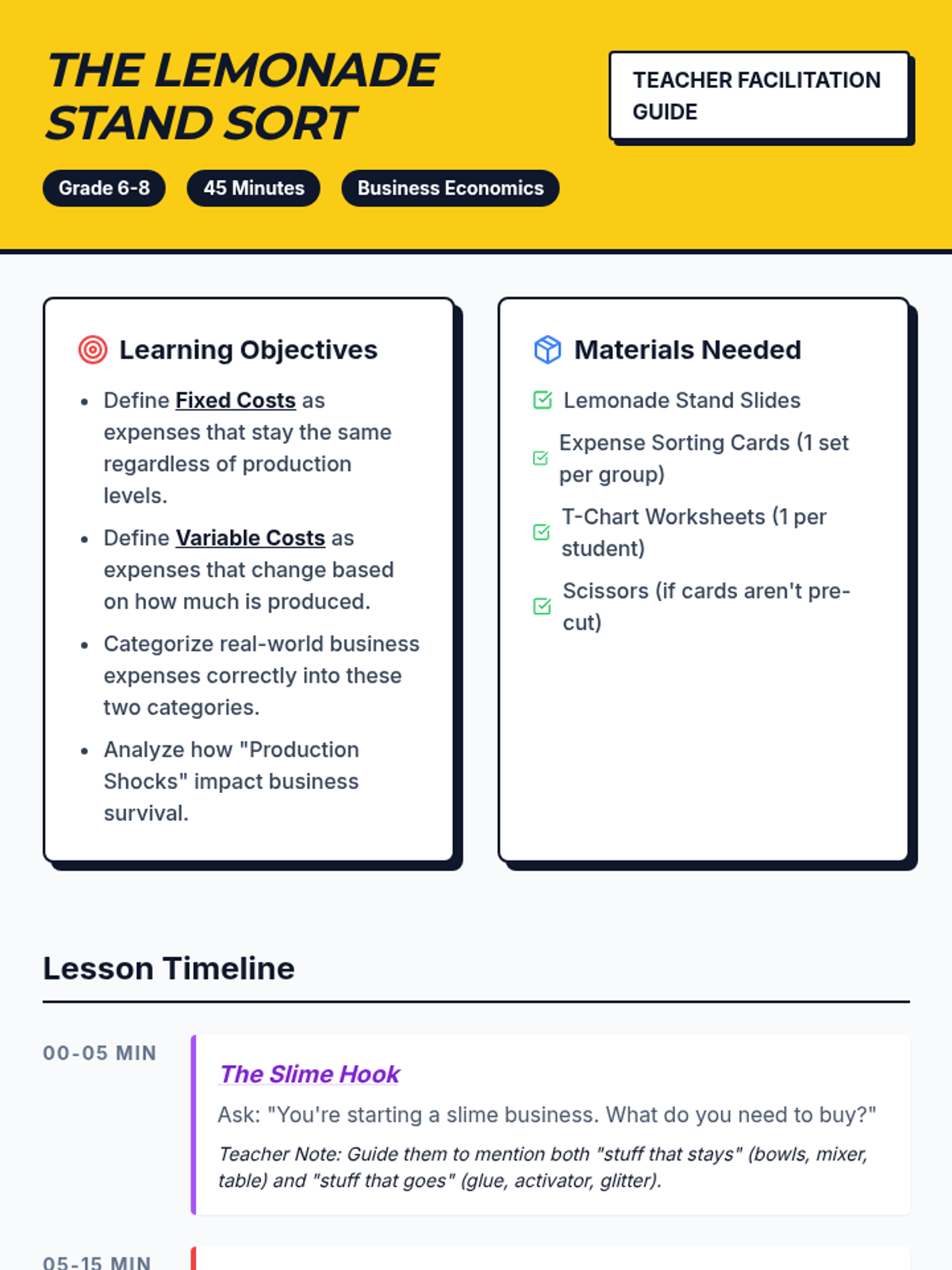
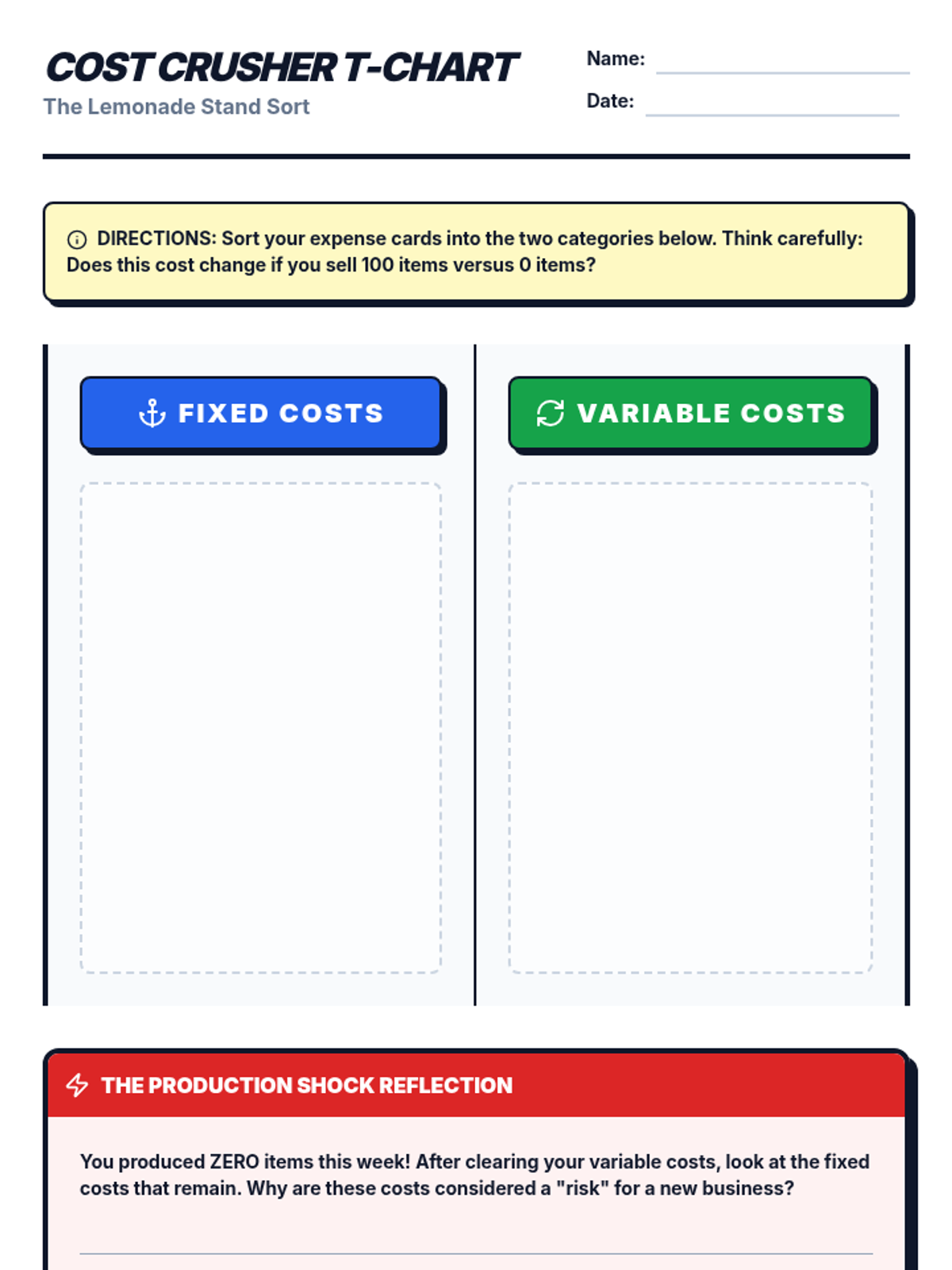
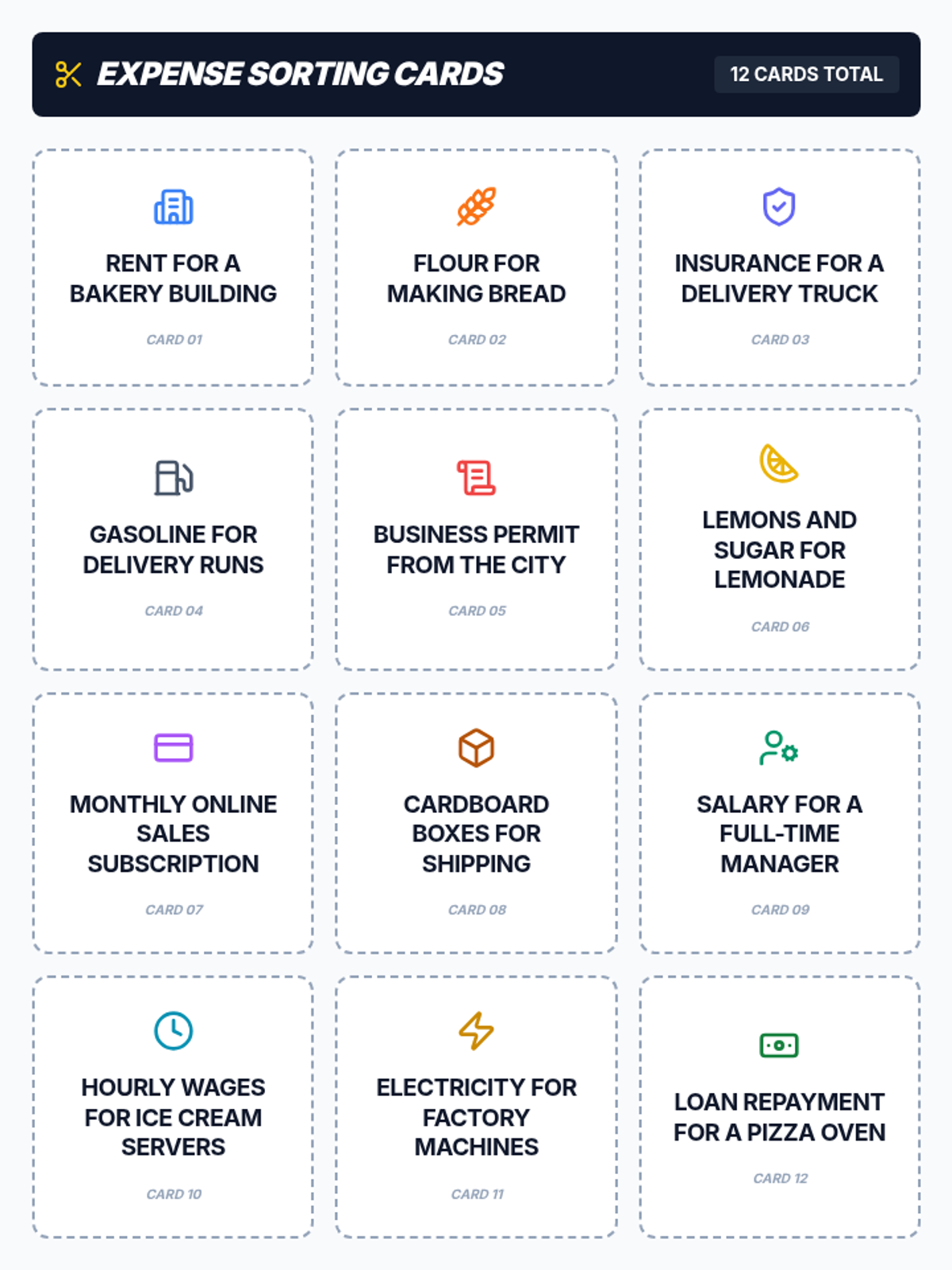
A middle school economics lesson where students categorize business expenses as fixed or variable costs using a lemonade stand theme and a hands-on sorting activity.
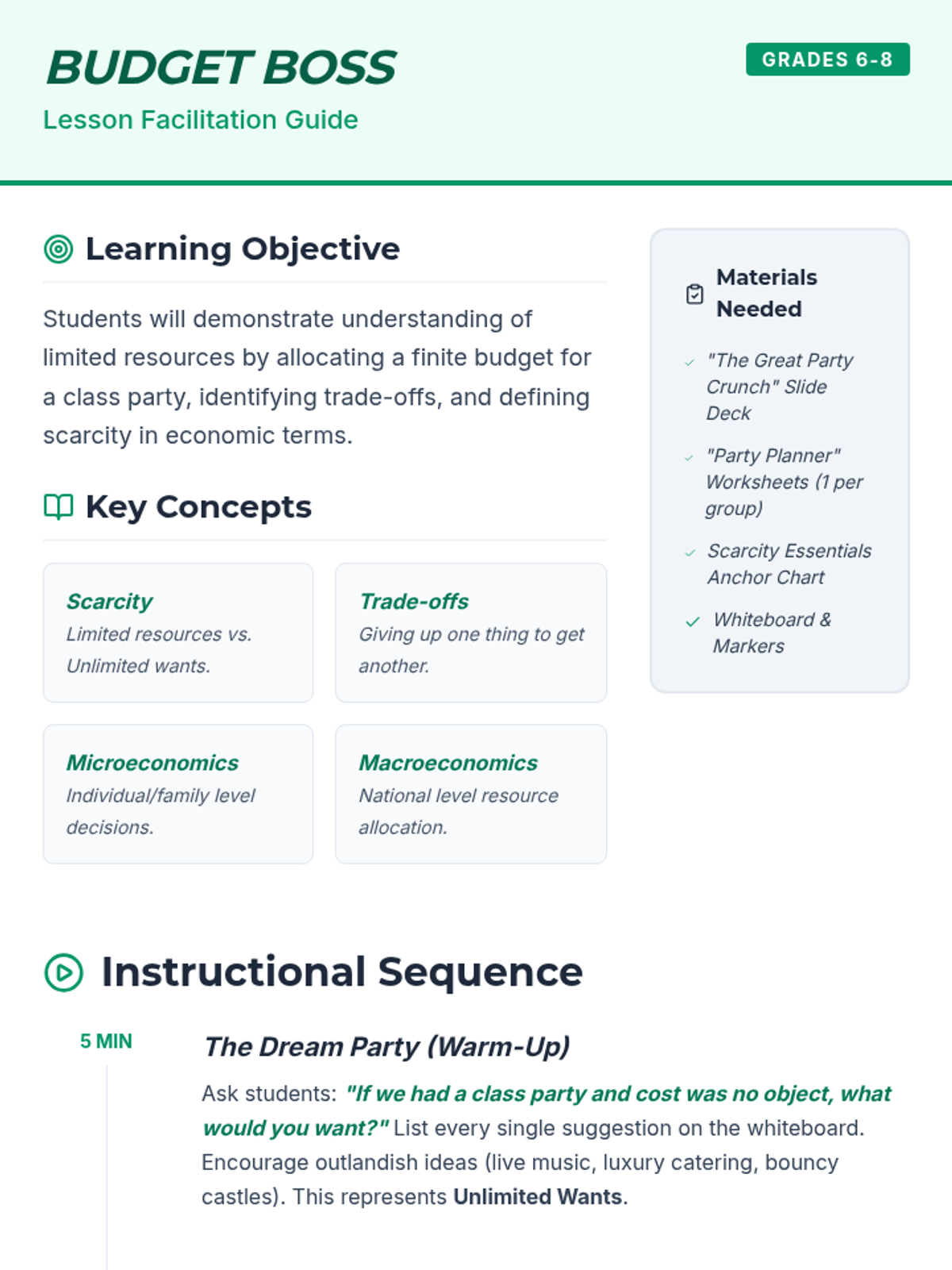
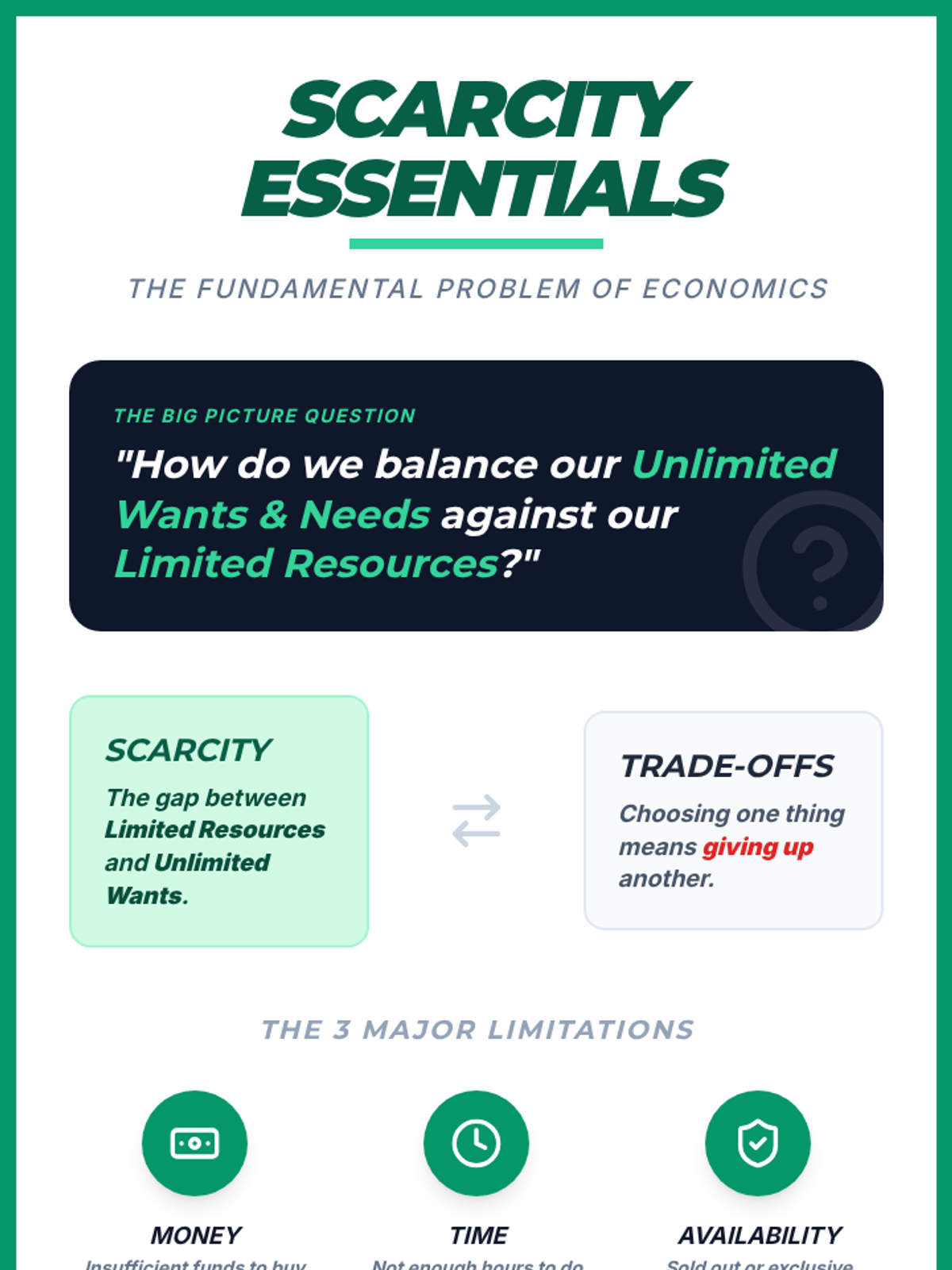
A middle school economics lesson where students explore the concept of scarcity by planning a class party with a limited budget and time. Students move from 'unlimited wants' to 'limited resources' using a real-world scenario and video analysis.
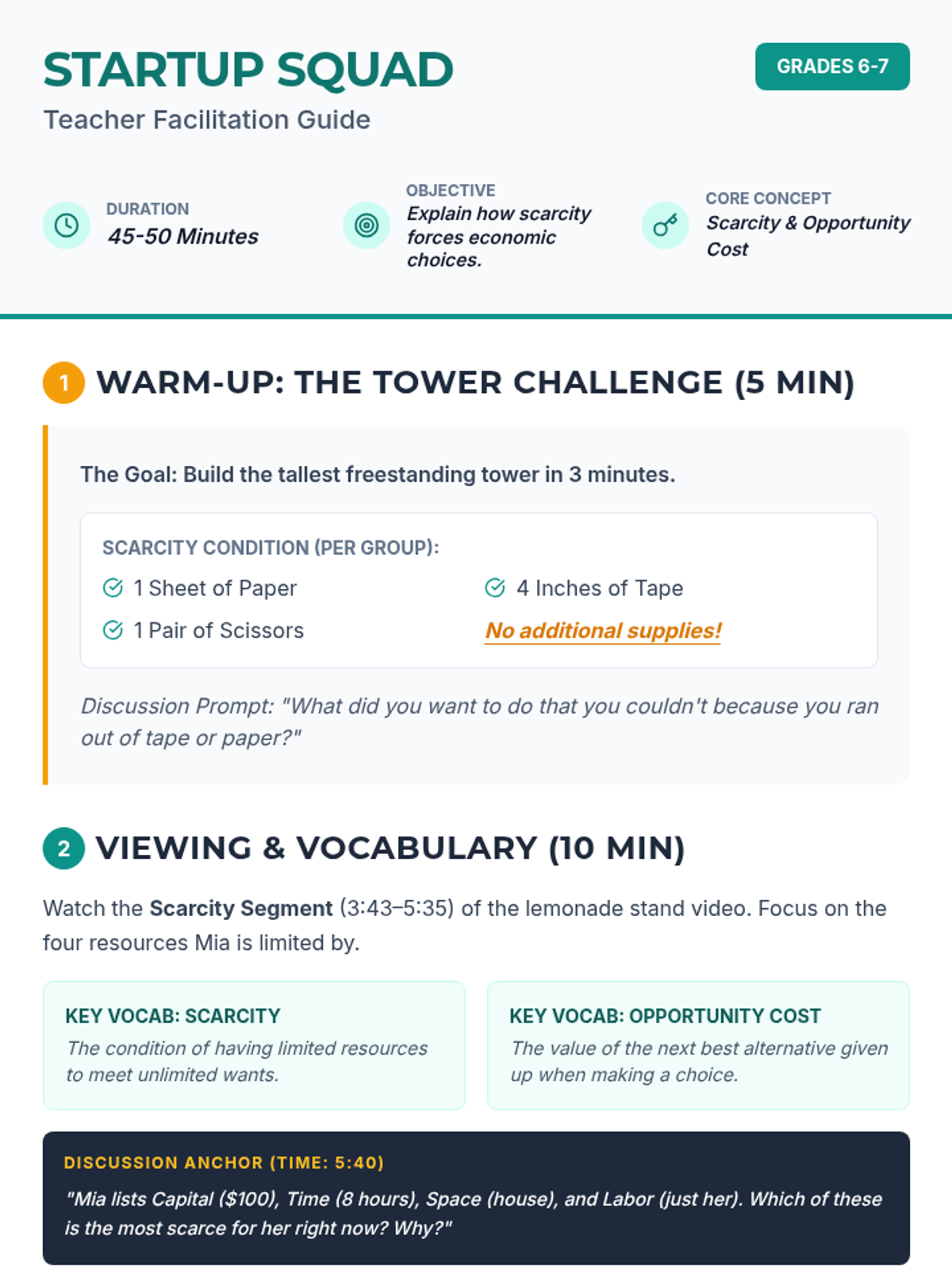
A lesson exploring the economic concept of scarcity and how it forces entrepreneurs to make difficult trade-offs and choices using a startup business simulation.
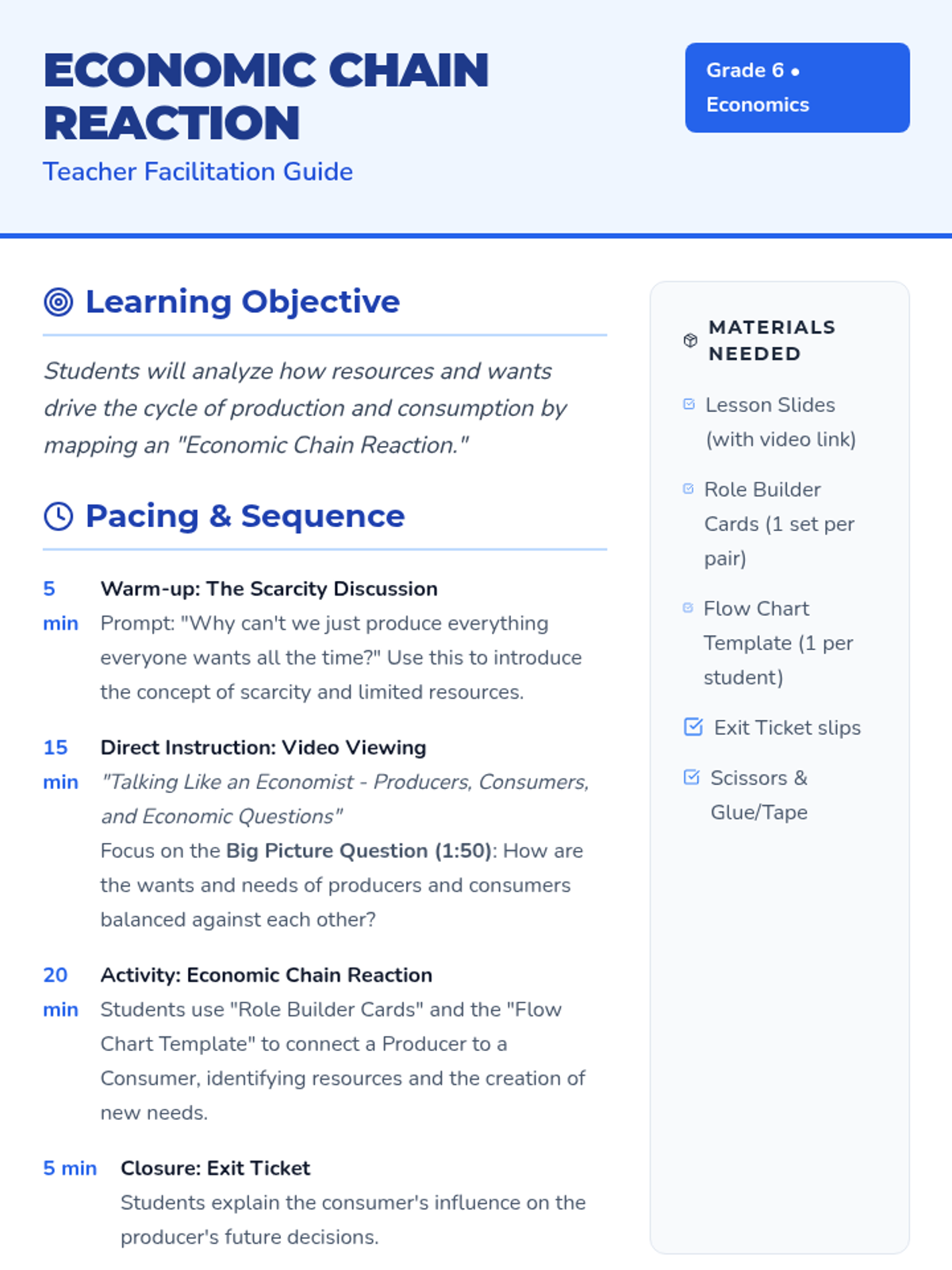
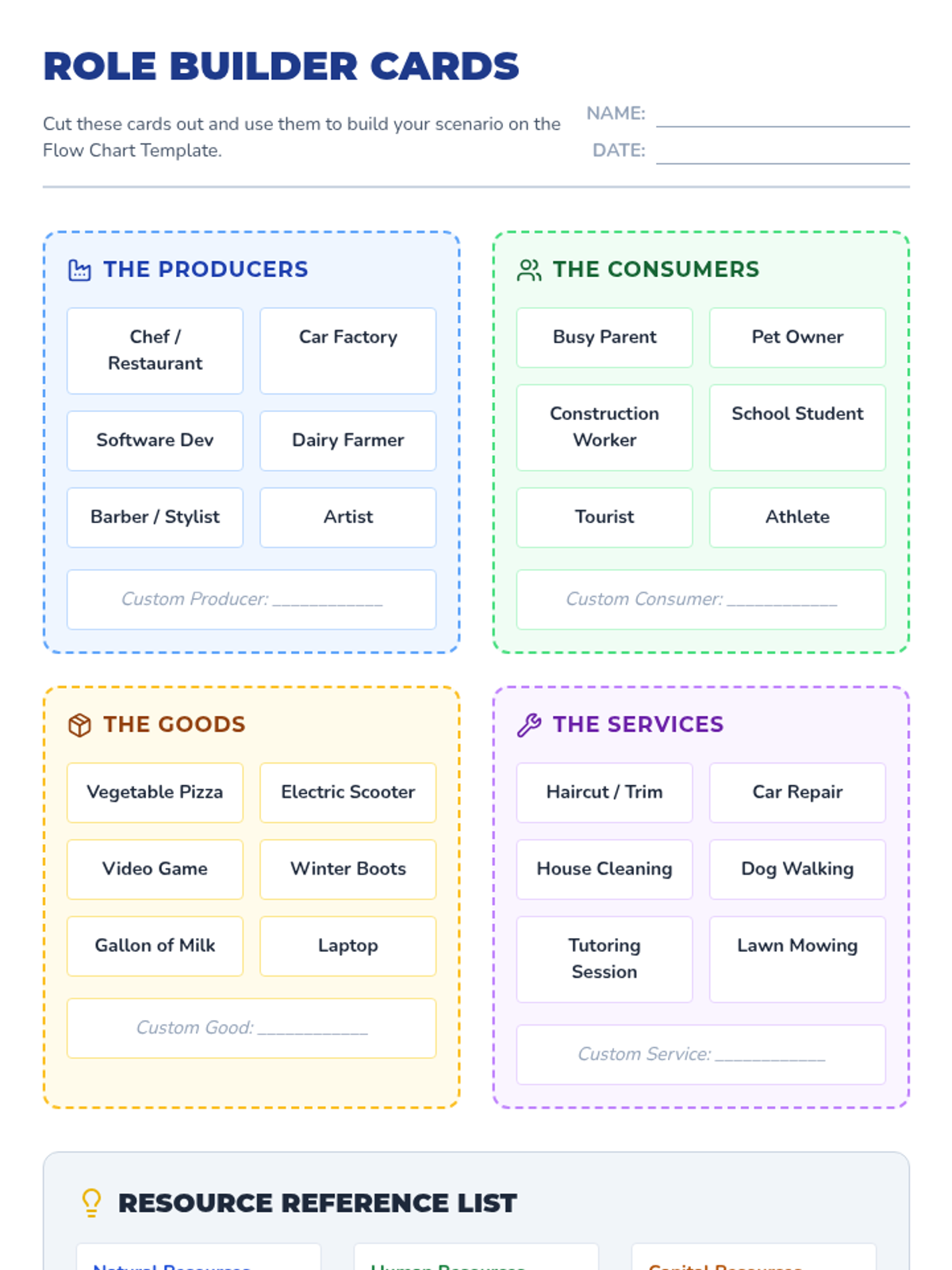
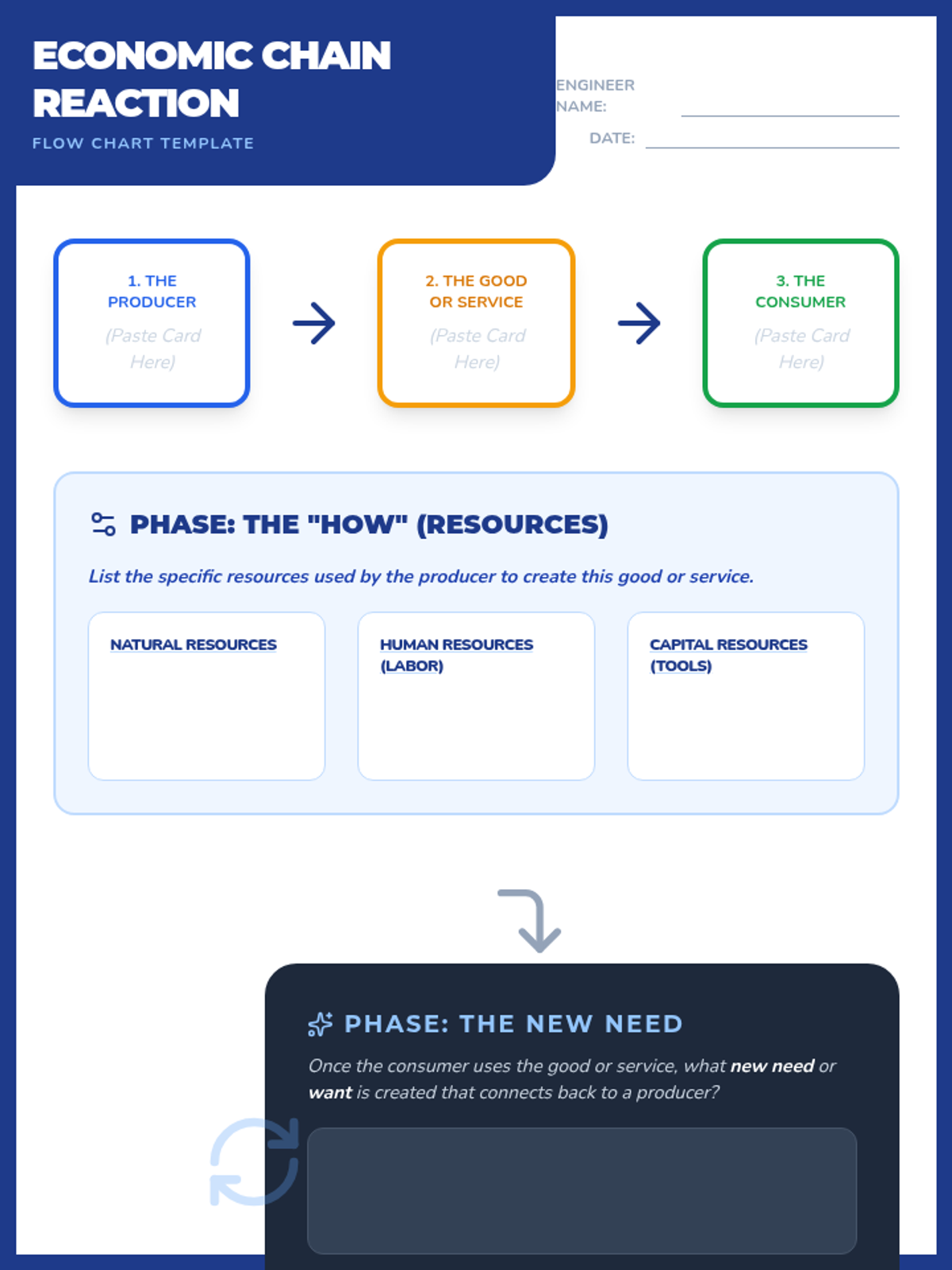
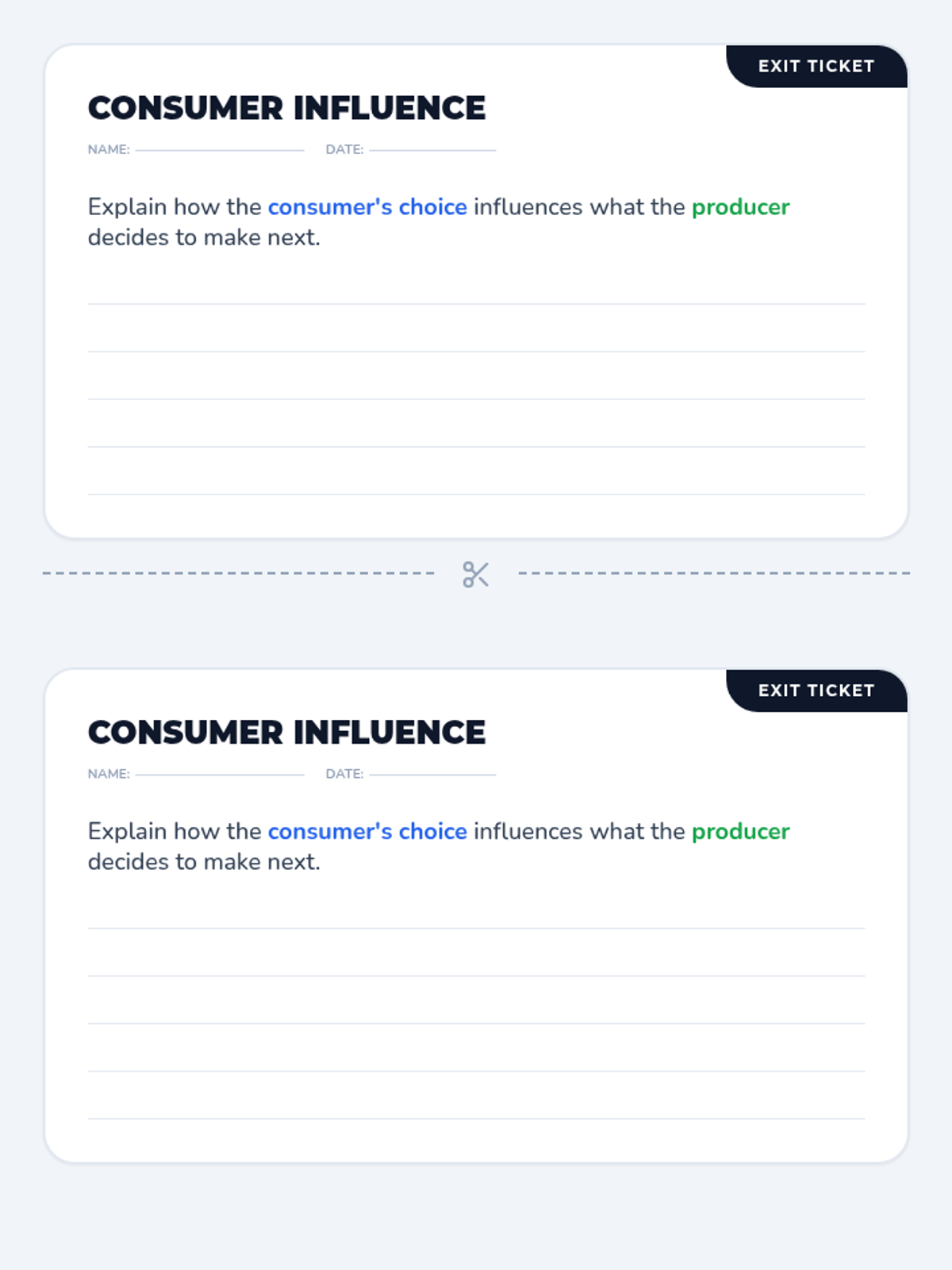
A 6th-grade economics lesson exploring the cycle of production and consumption, featuring the 'Talking Like an Economist' video and a hands-on flow chart activity.
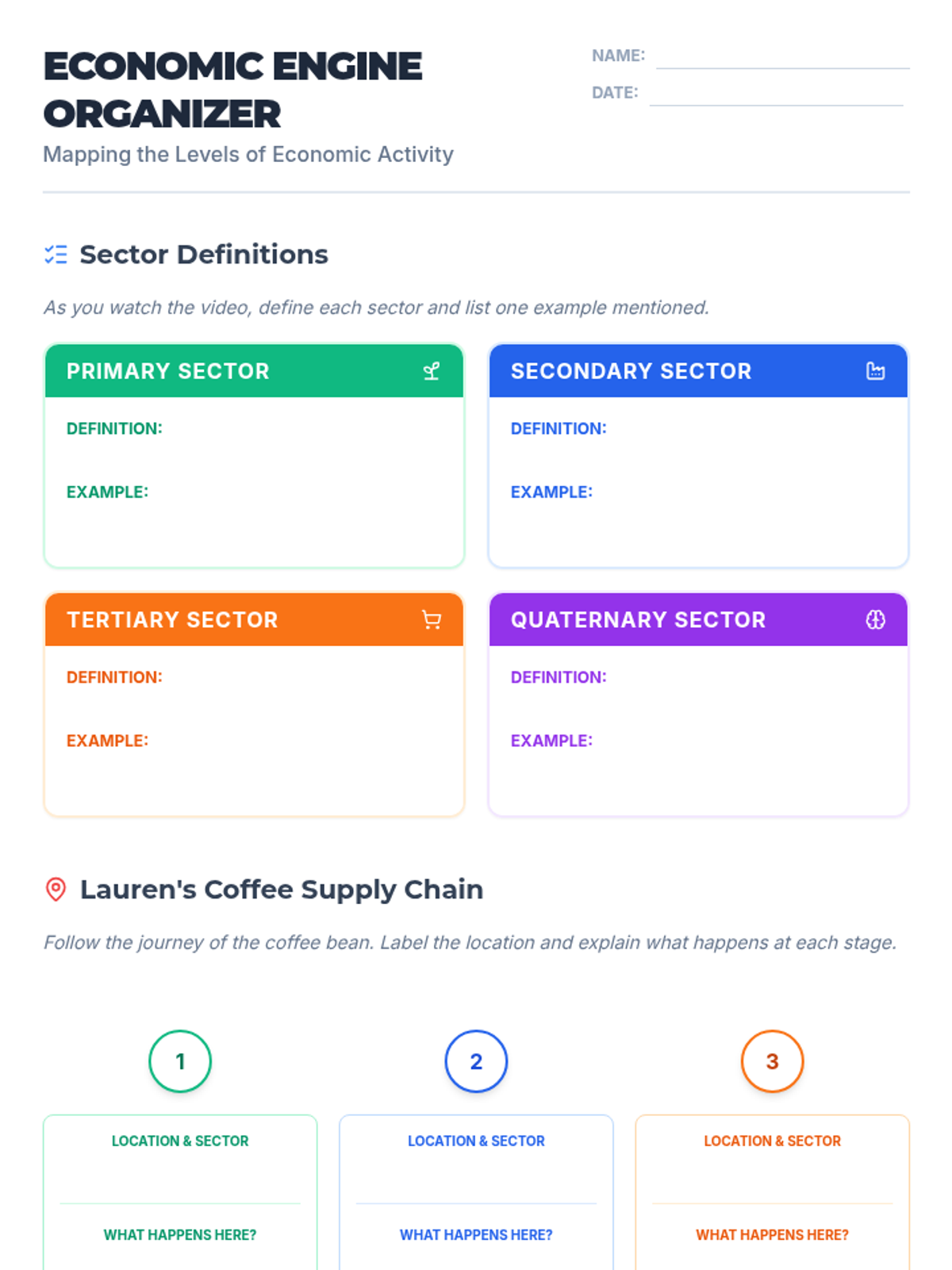
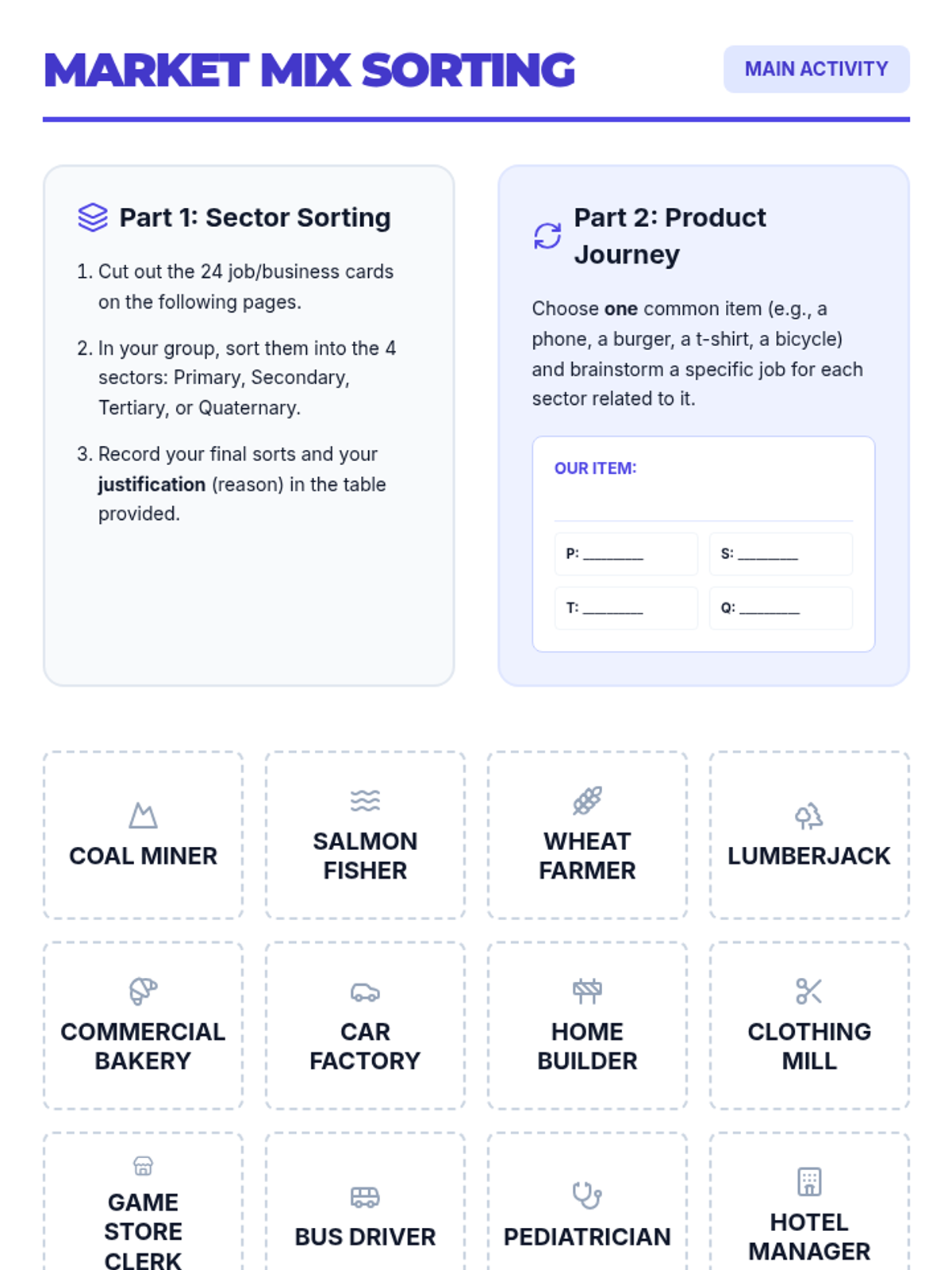
A comprehensive lesson exploring the four sectors of the economy (primary, secondary, tertiary, and quaternary) using a coffee shop case study to understand global supply chains and economic geography.
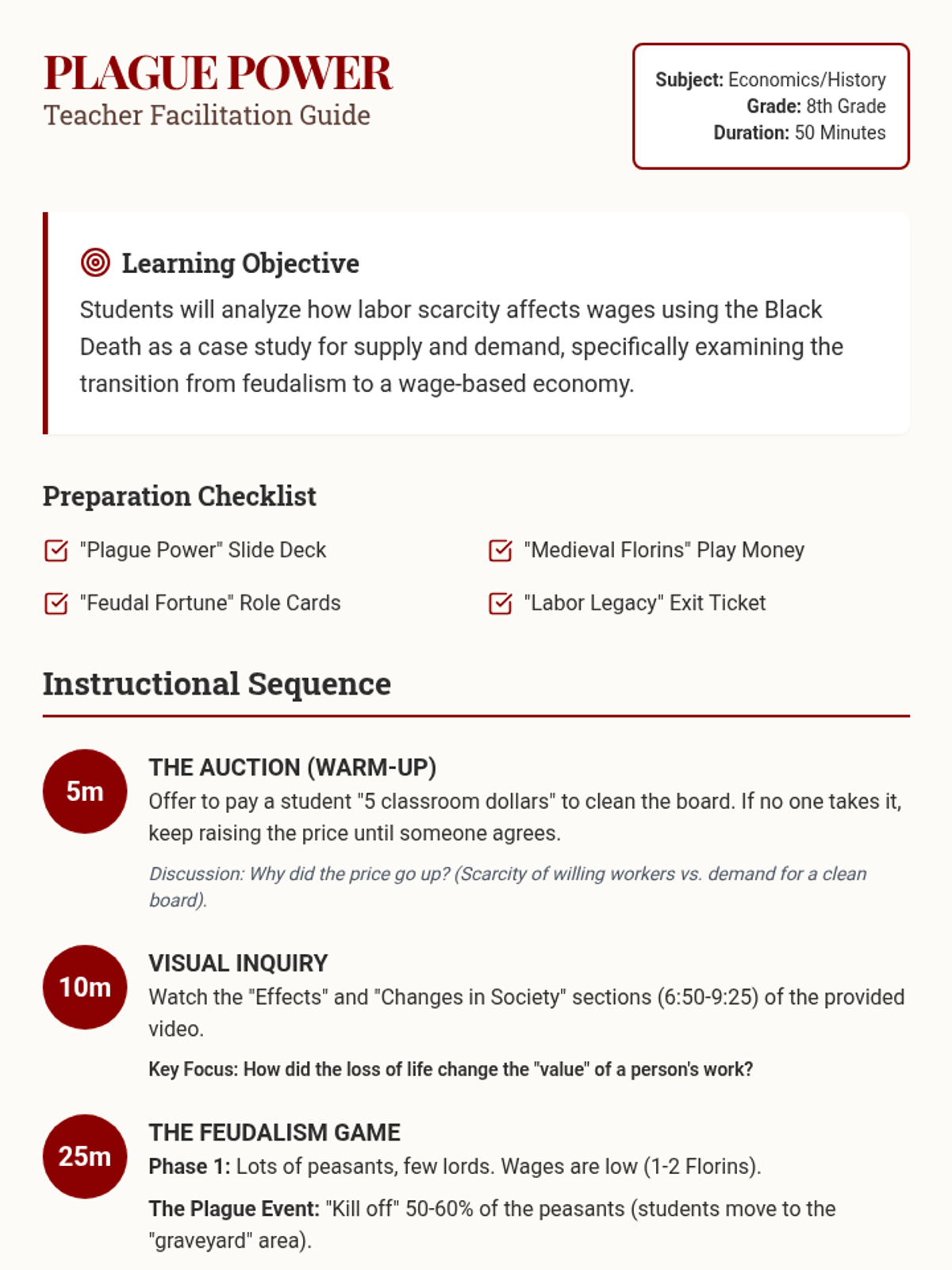
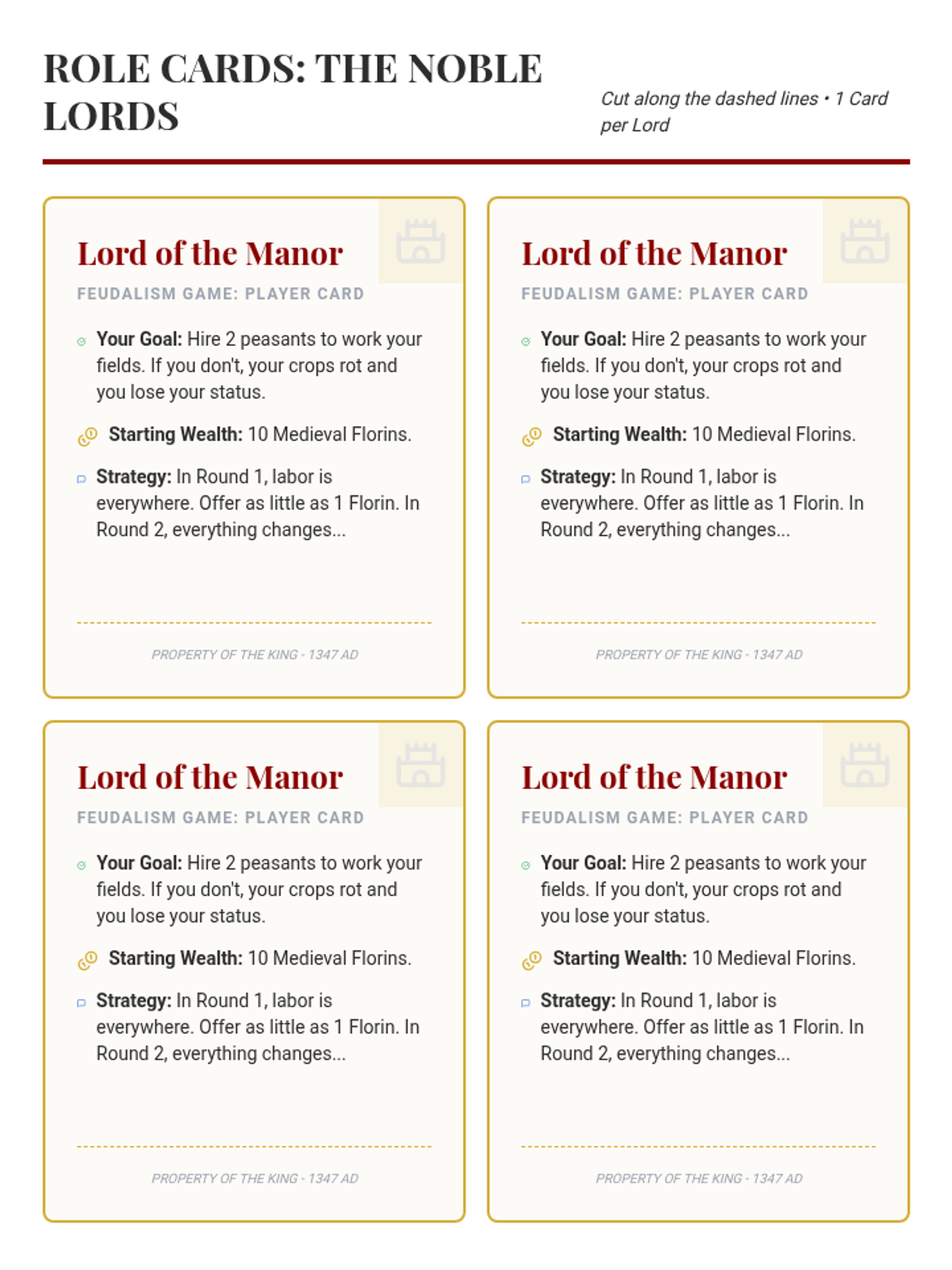
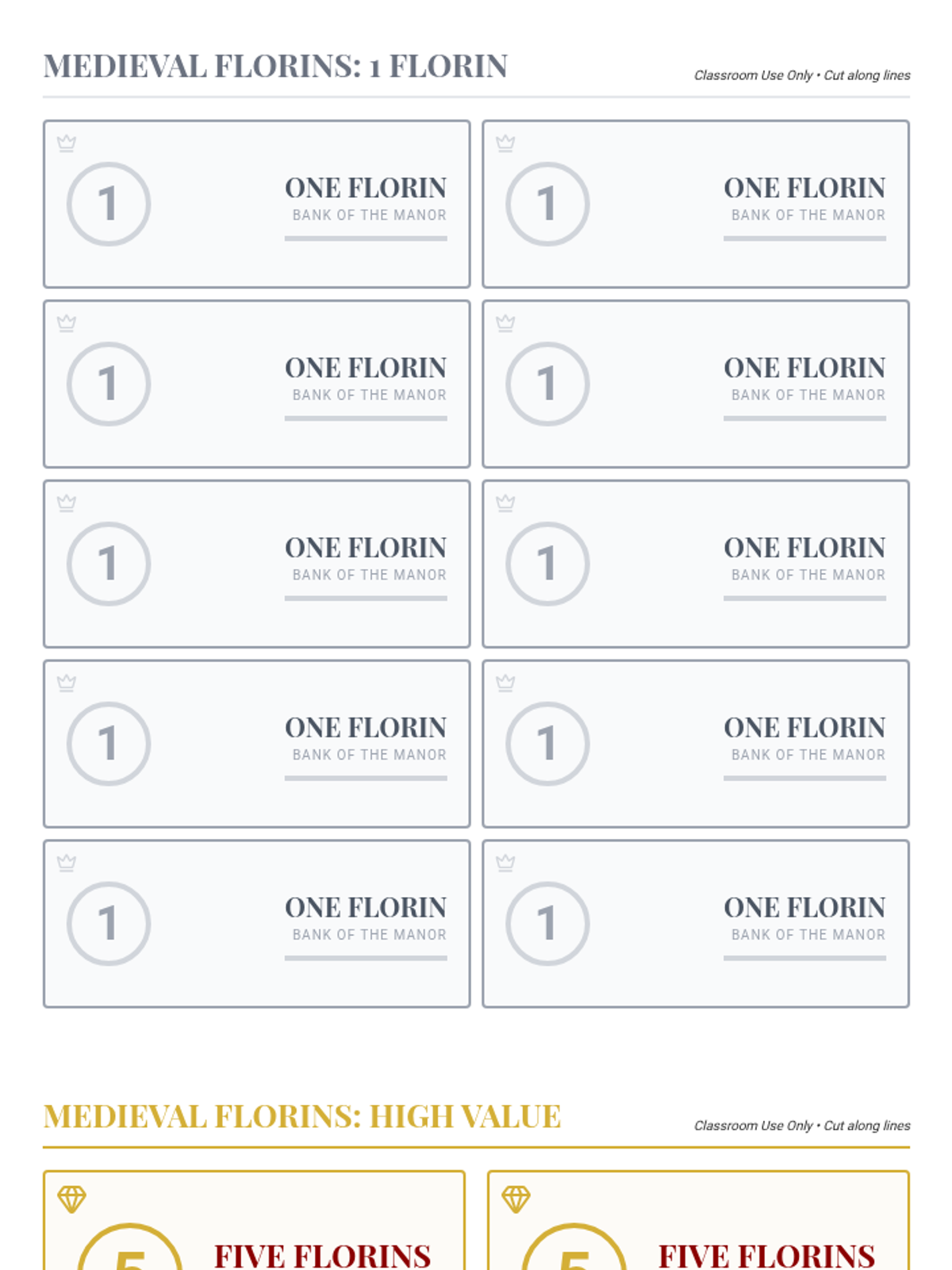
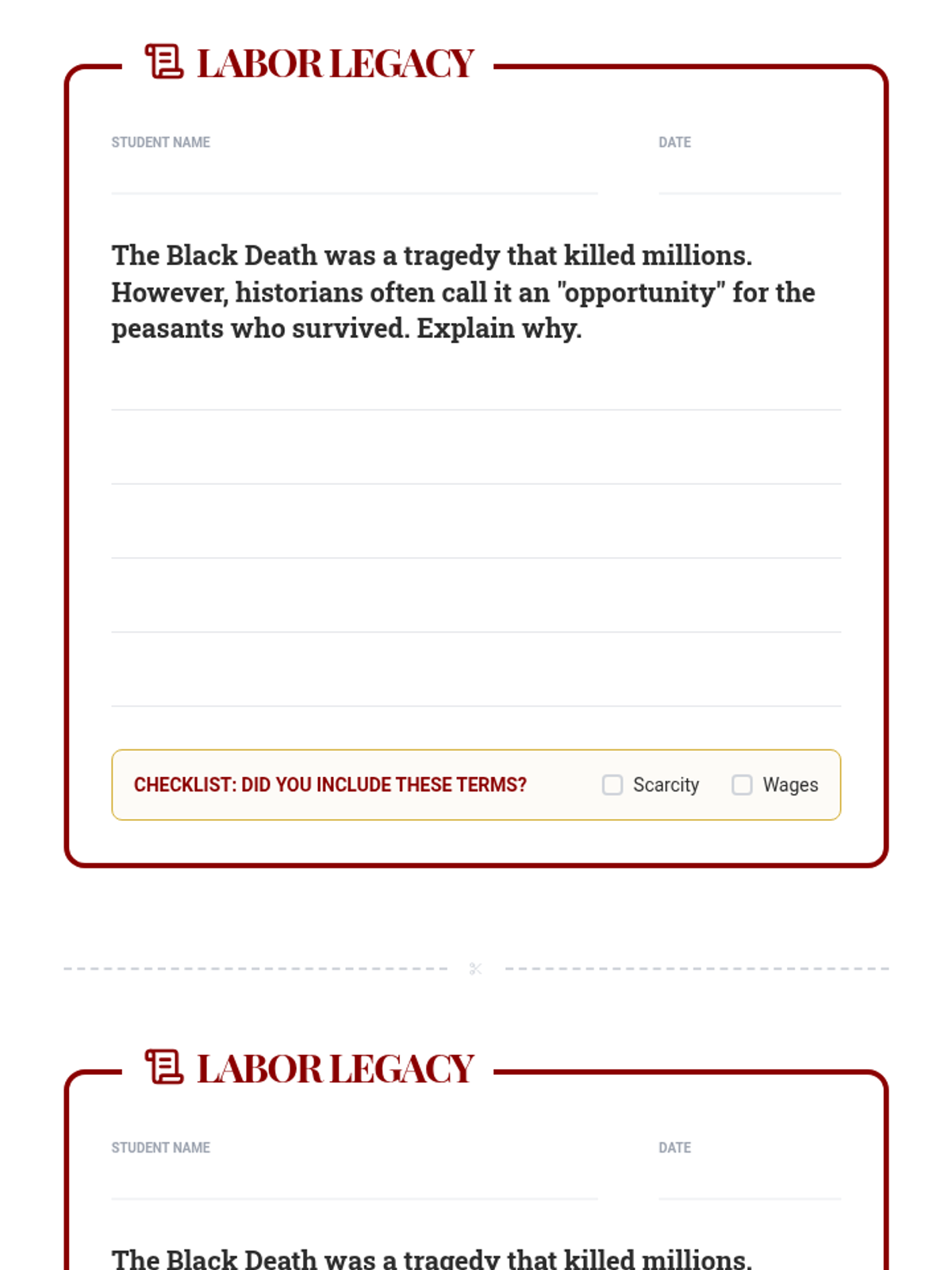
Students explore the economic consequences of the Black Death, specifically how labor scarcity led to the collapse of feudalism and a rise in peasant wages through a hands-on bidding simulation.
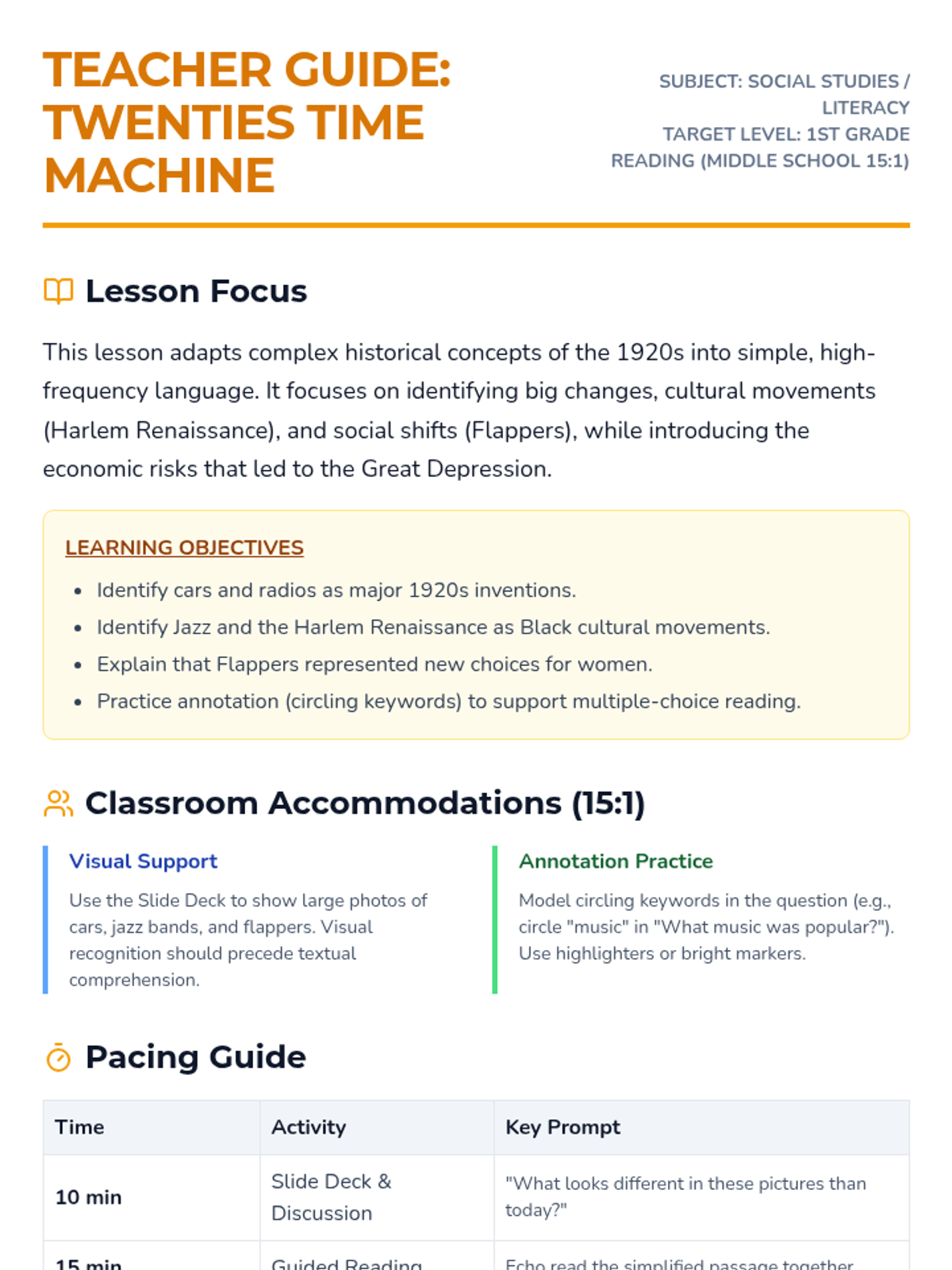
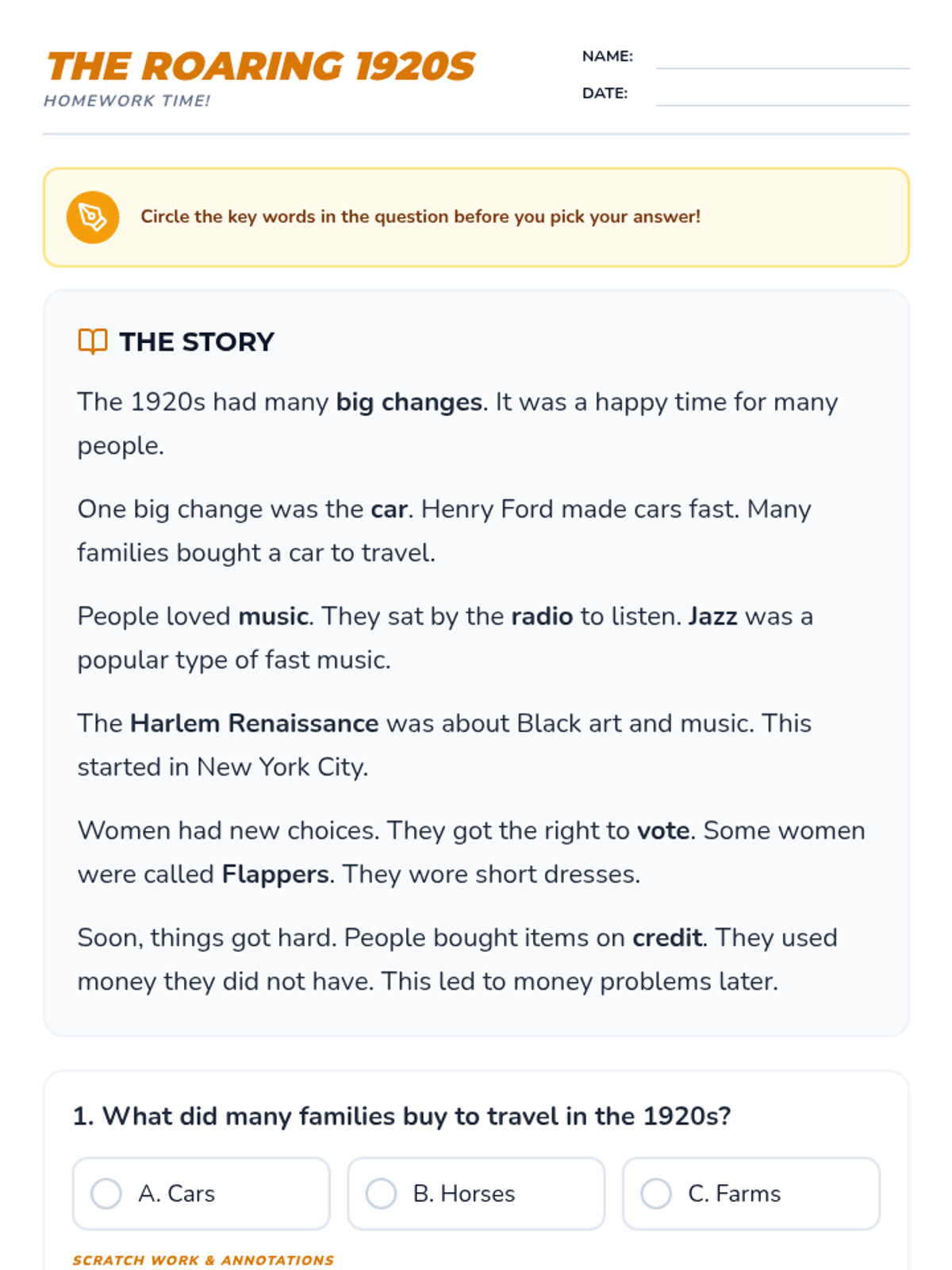
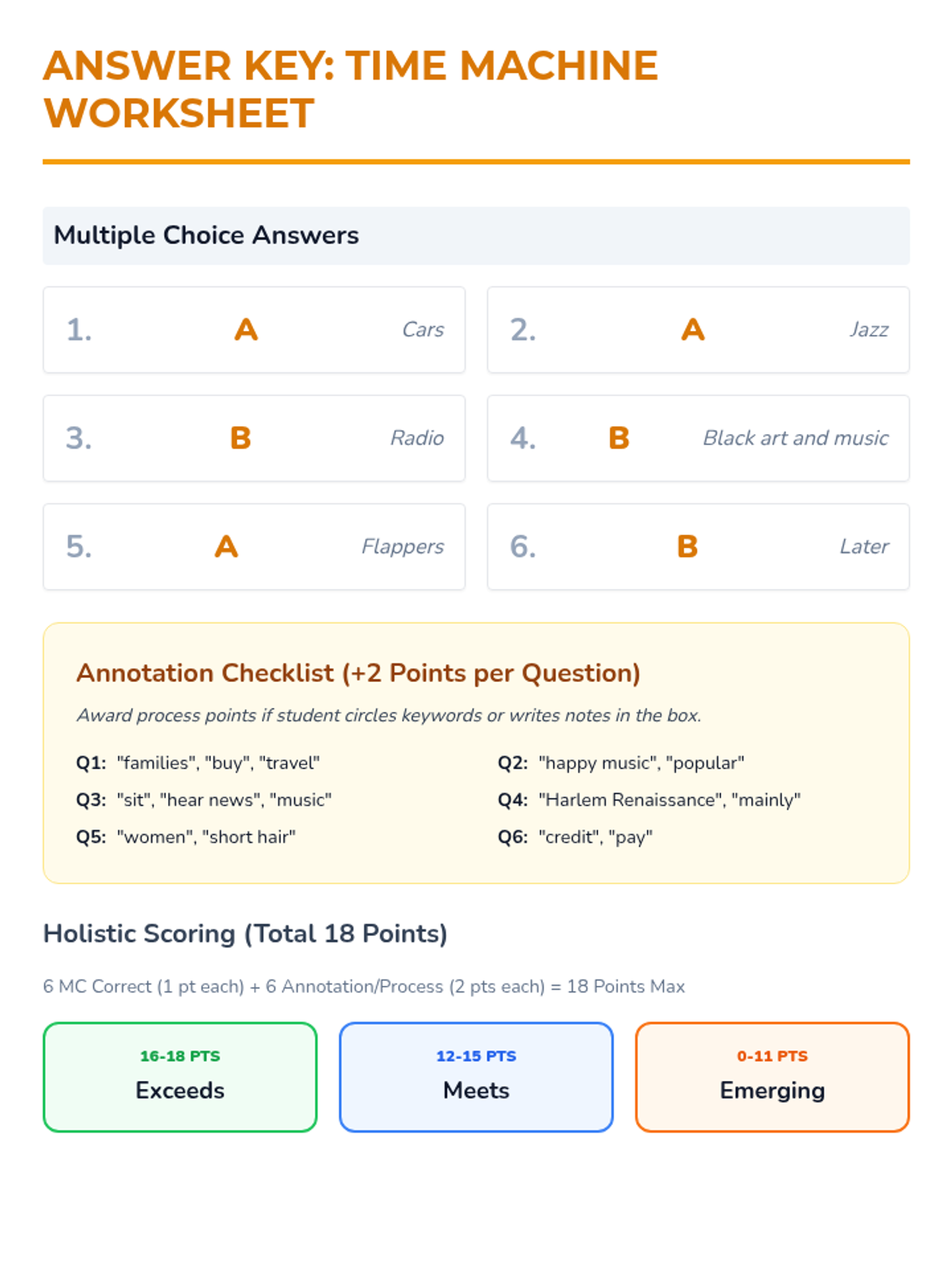
A highly accessible lesson on the Roaring Twenties designed for middle school students reading at a 1st-grade level, focusing on cultural shifts, jazz, and the Harlem Renaissance with scaffolded multiple-choice practice.
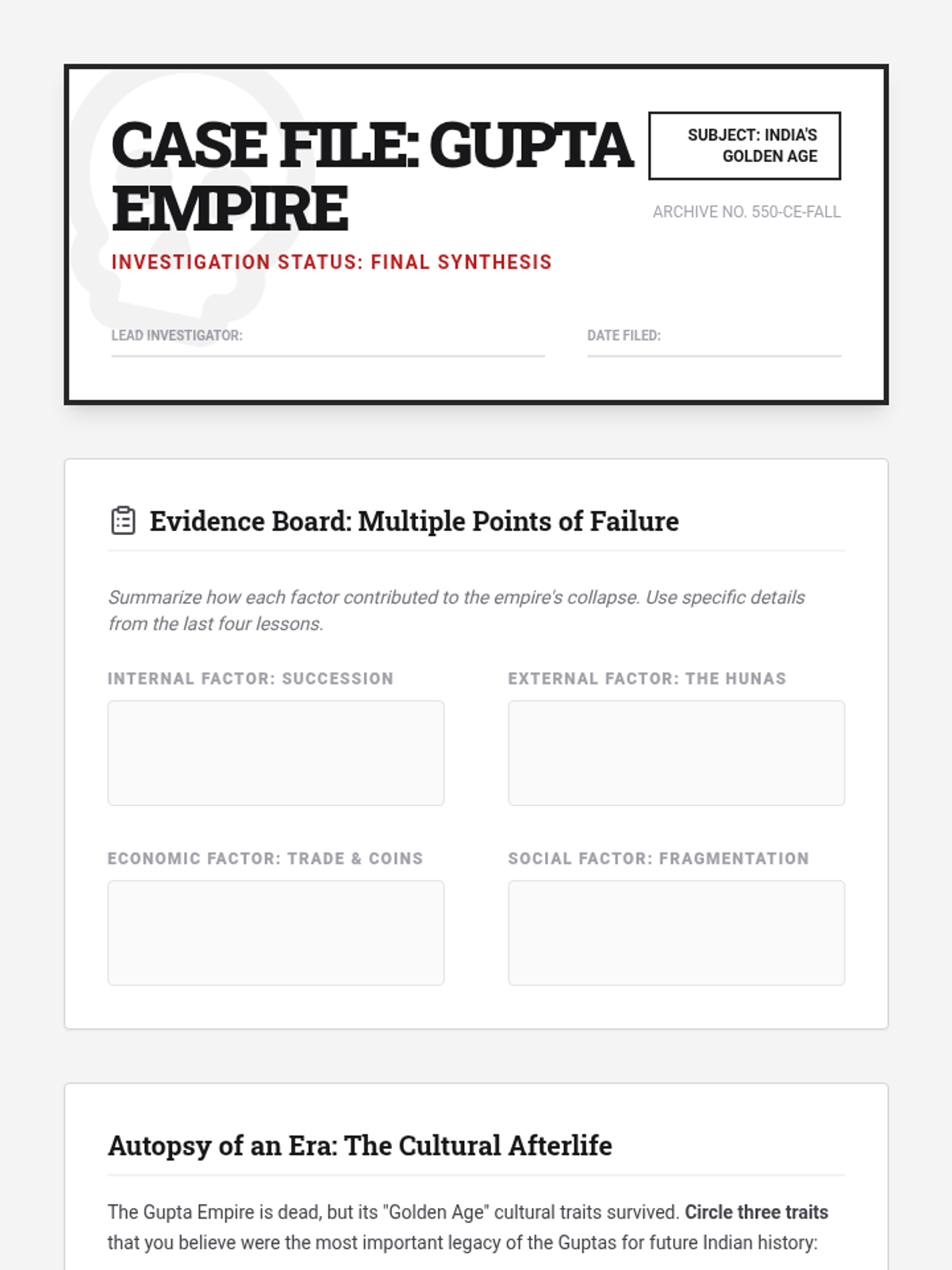
Synthesizes the causes of the final collapse and evaluates the lasting cultural legacy of the Gupta period in South Asia.
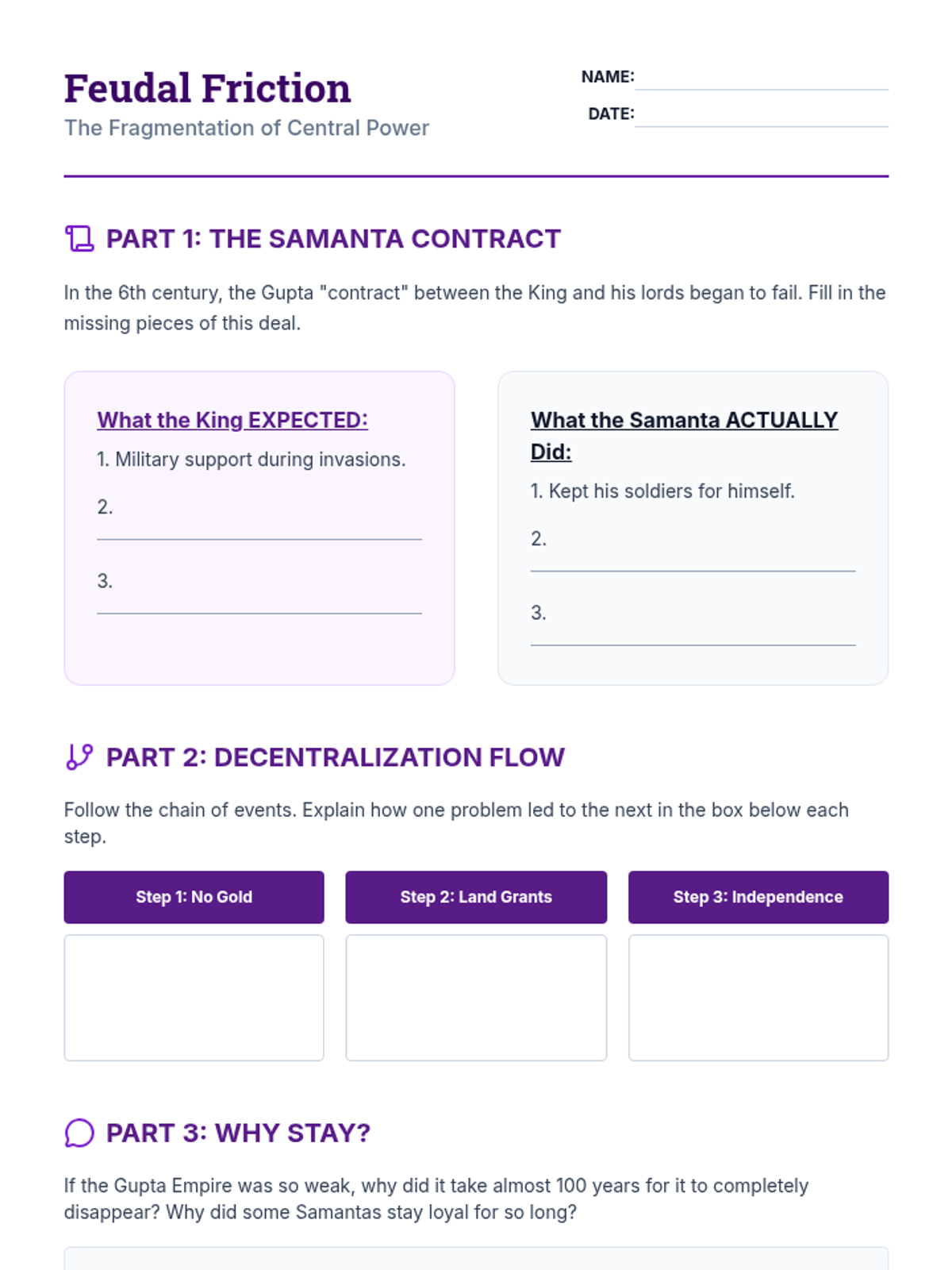
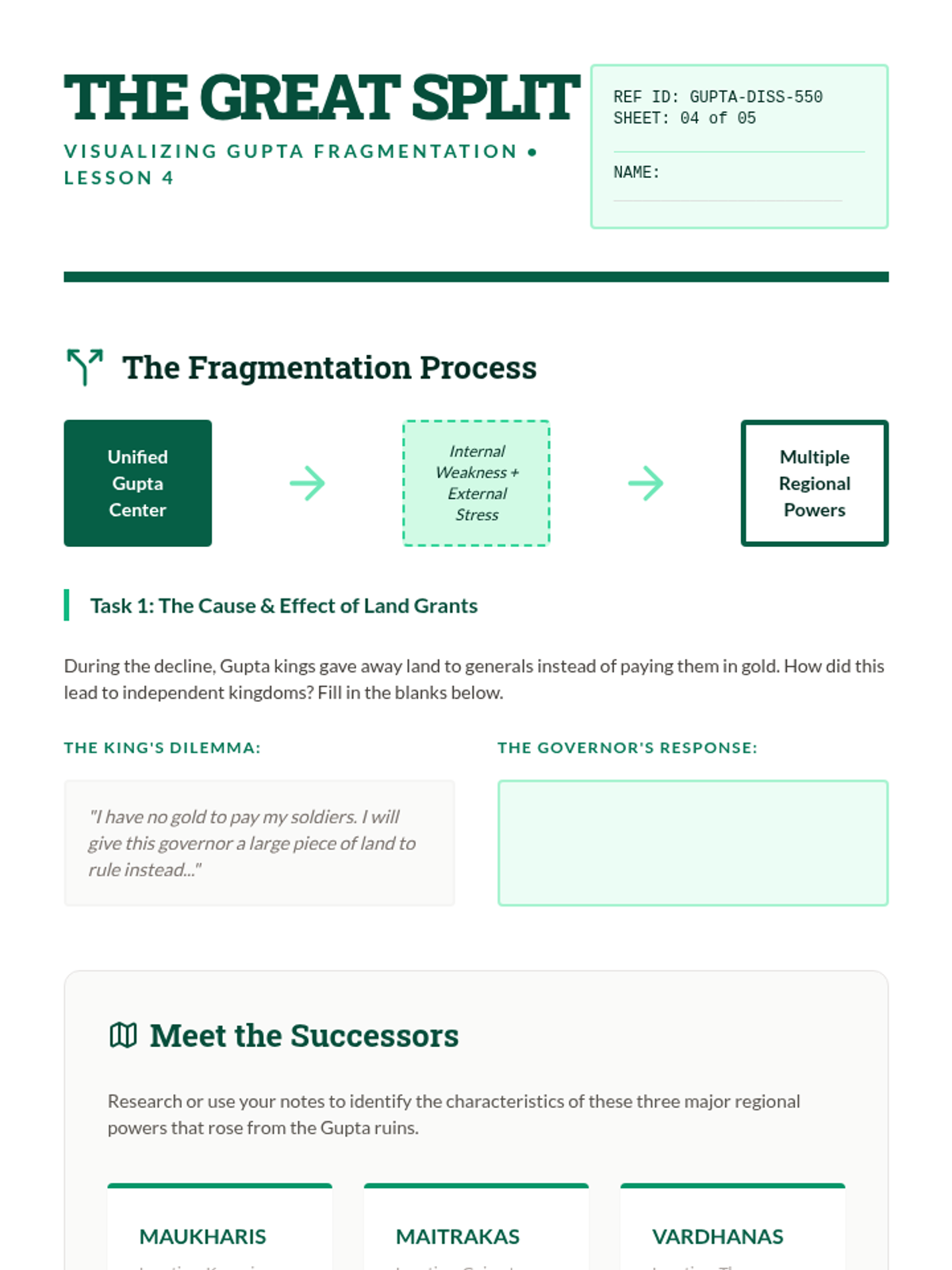
Explores the rise of regional feudal lords (Samantas) and the administrative decentralization that led to political fragmentation.
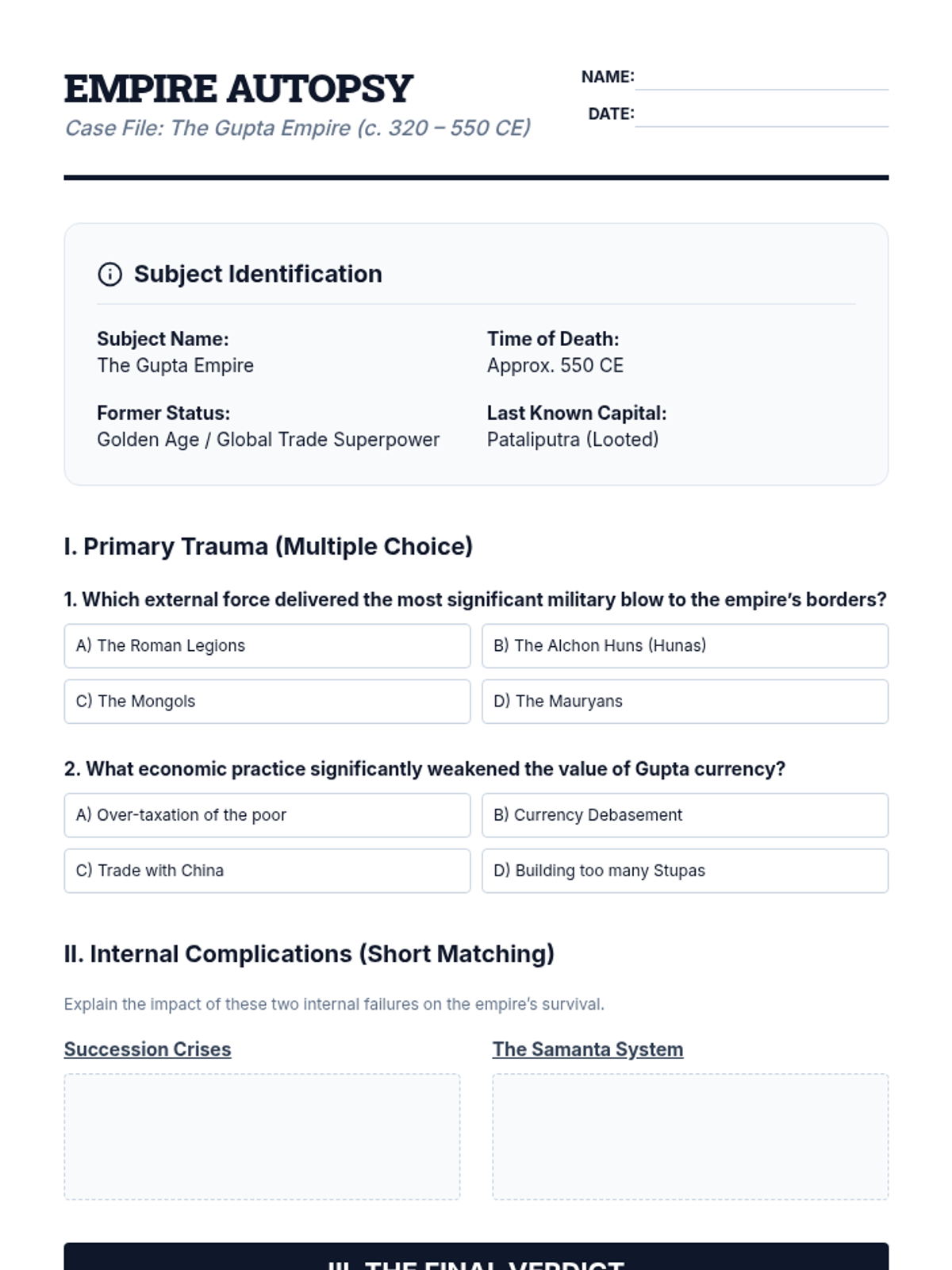
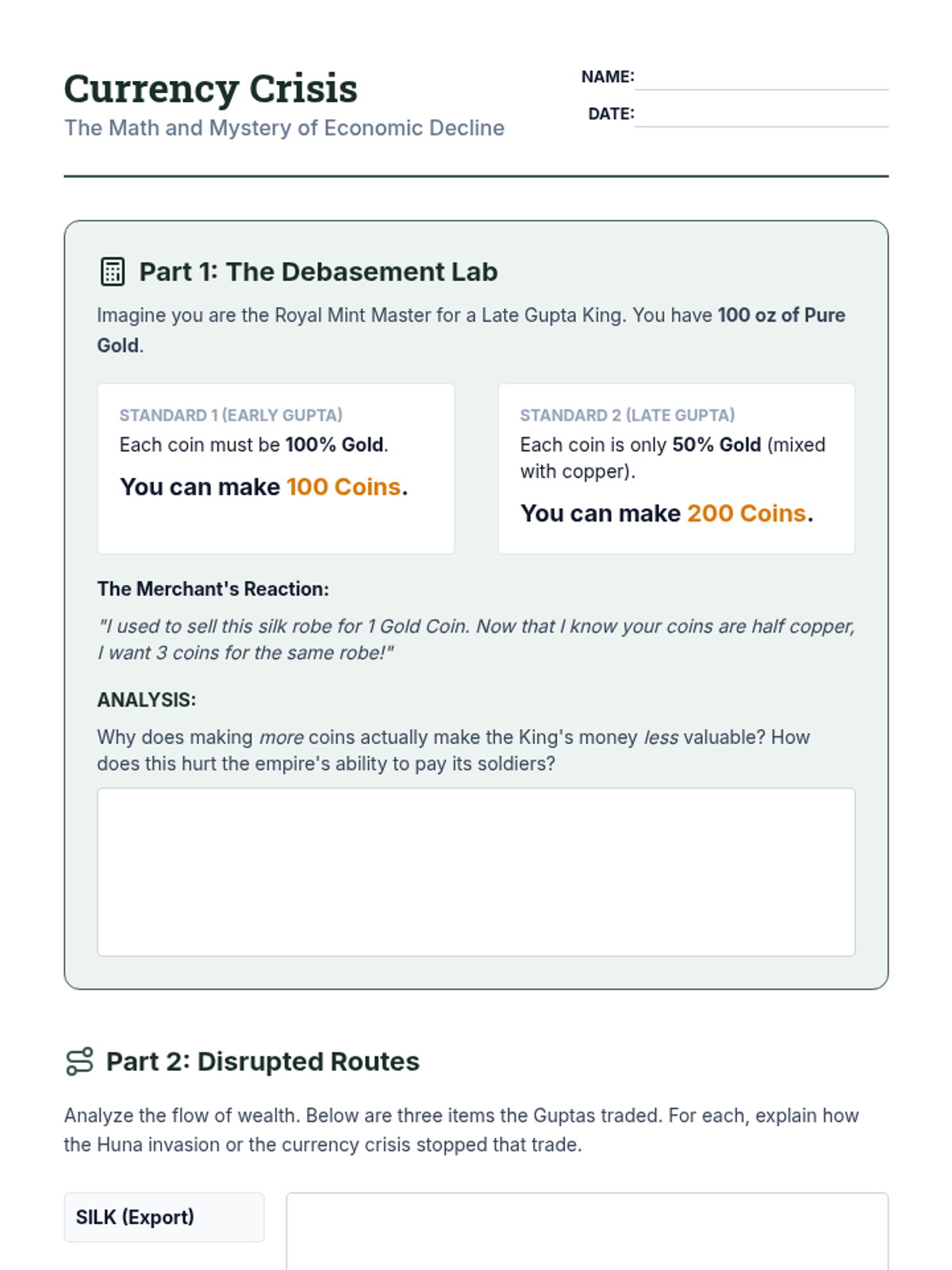
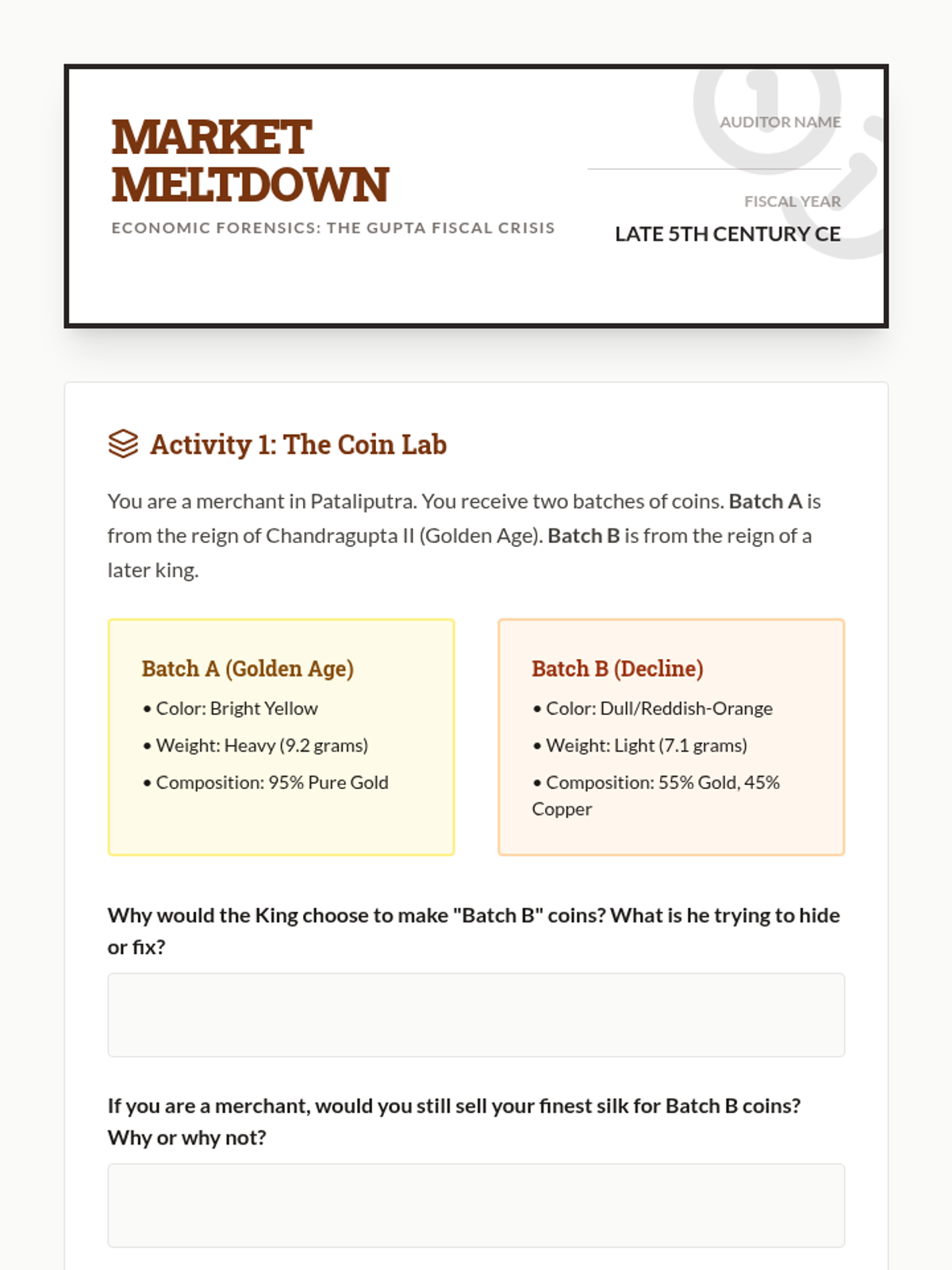
Analyzes the economic factors behind the decline, including the disruption of silk trade routes and currency debasement.
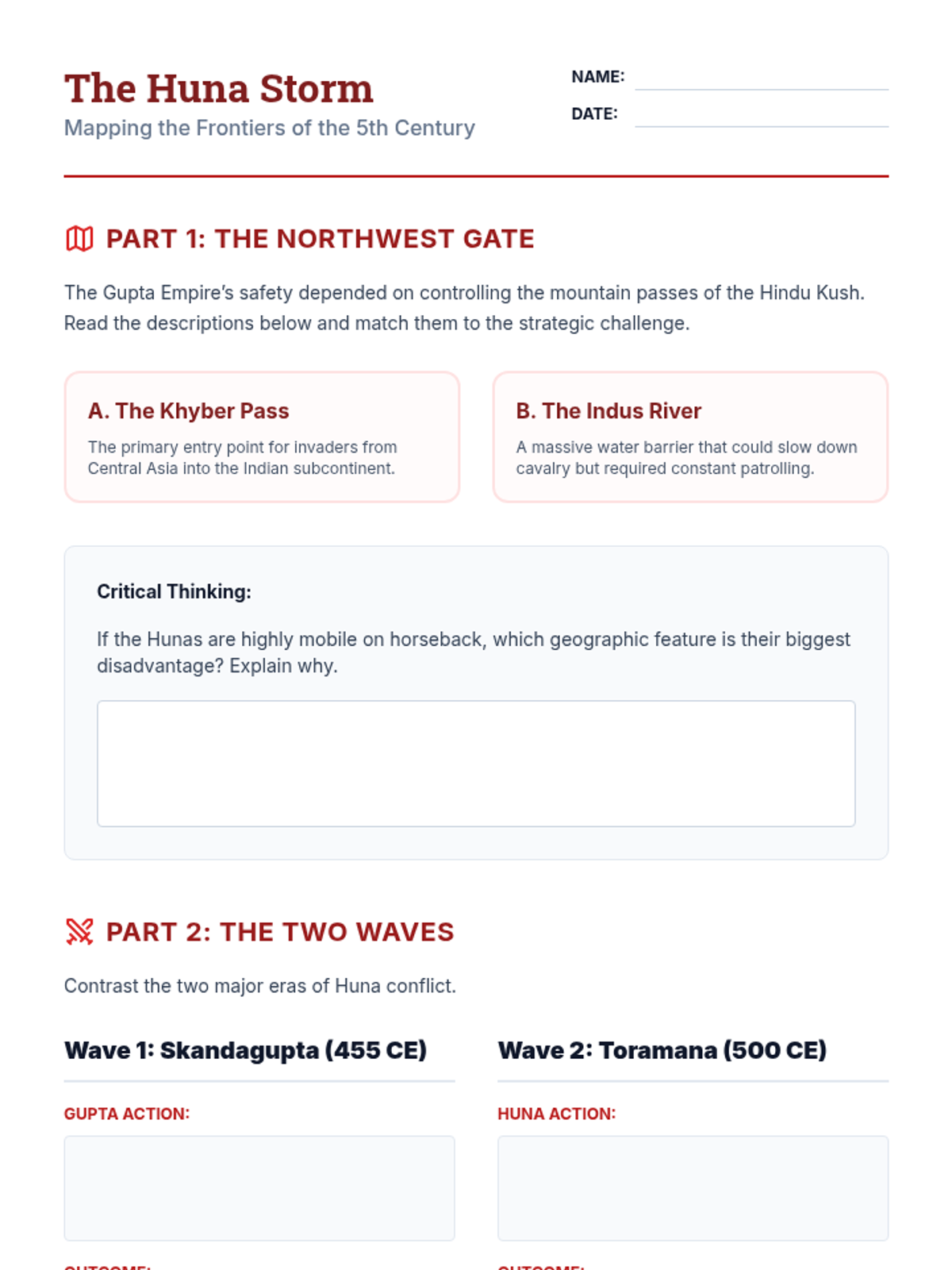
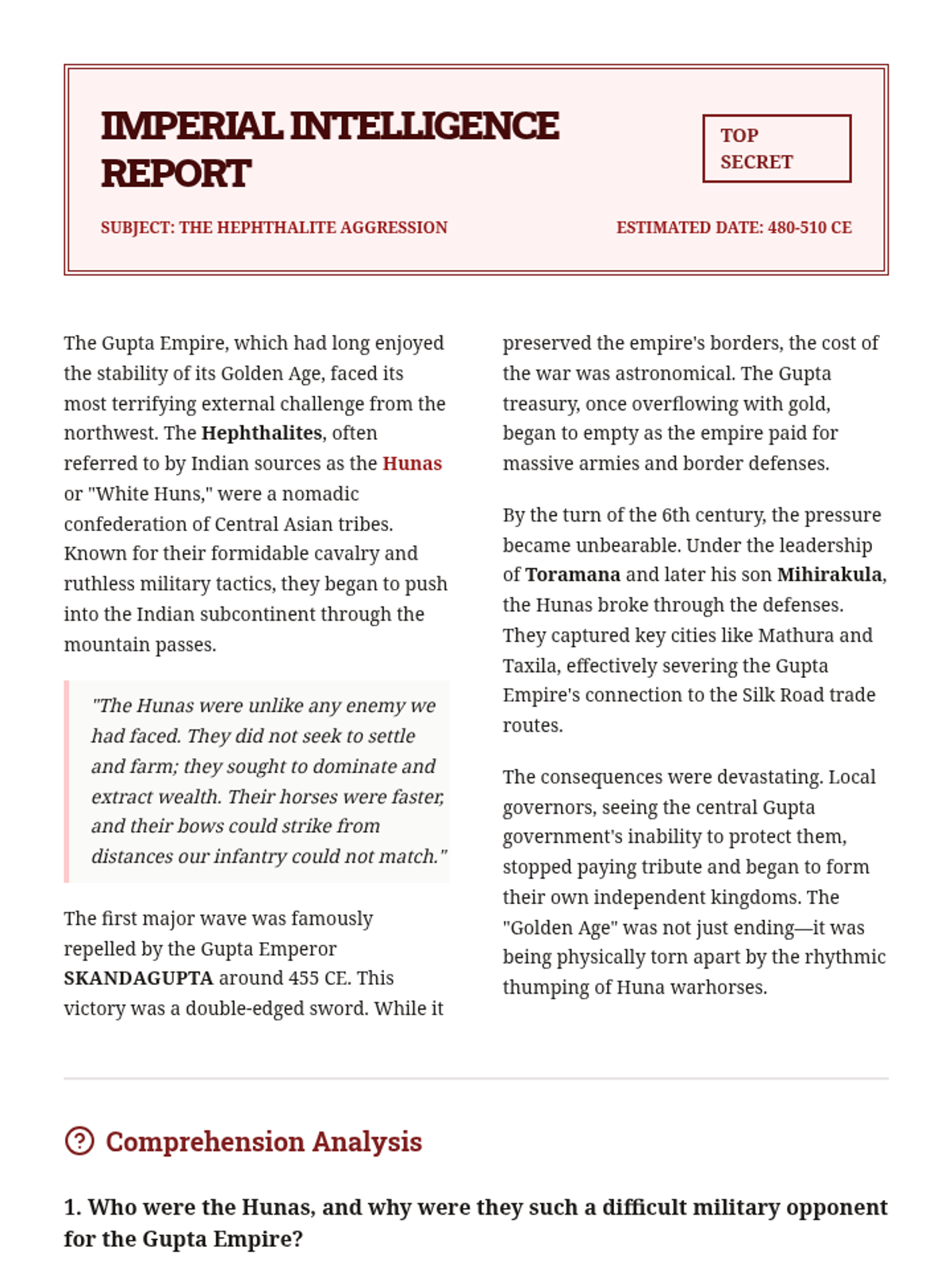
Investigates the Huna invasions, their military impact, and the exhaustion of Gupta resources in defending the frontiers.
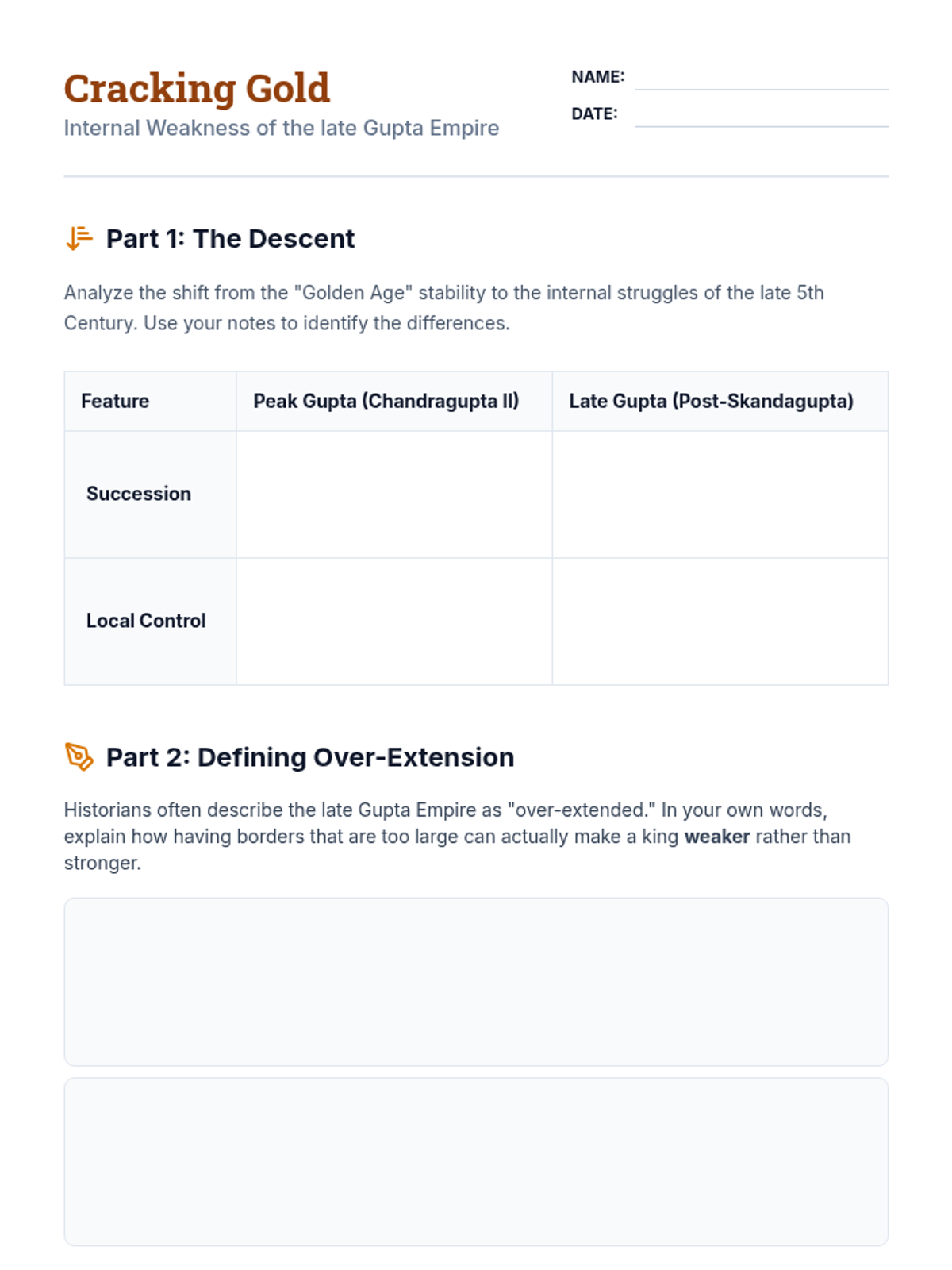
Examines the internal weaknesses of the late Gupta Empire, focusing on succession struggles and the erosion of central authority.
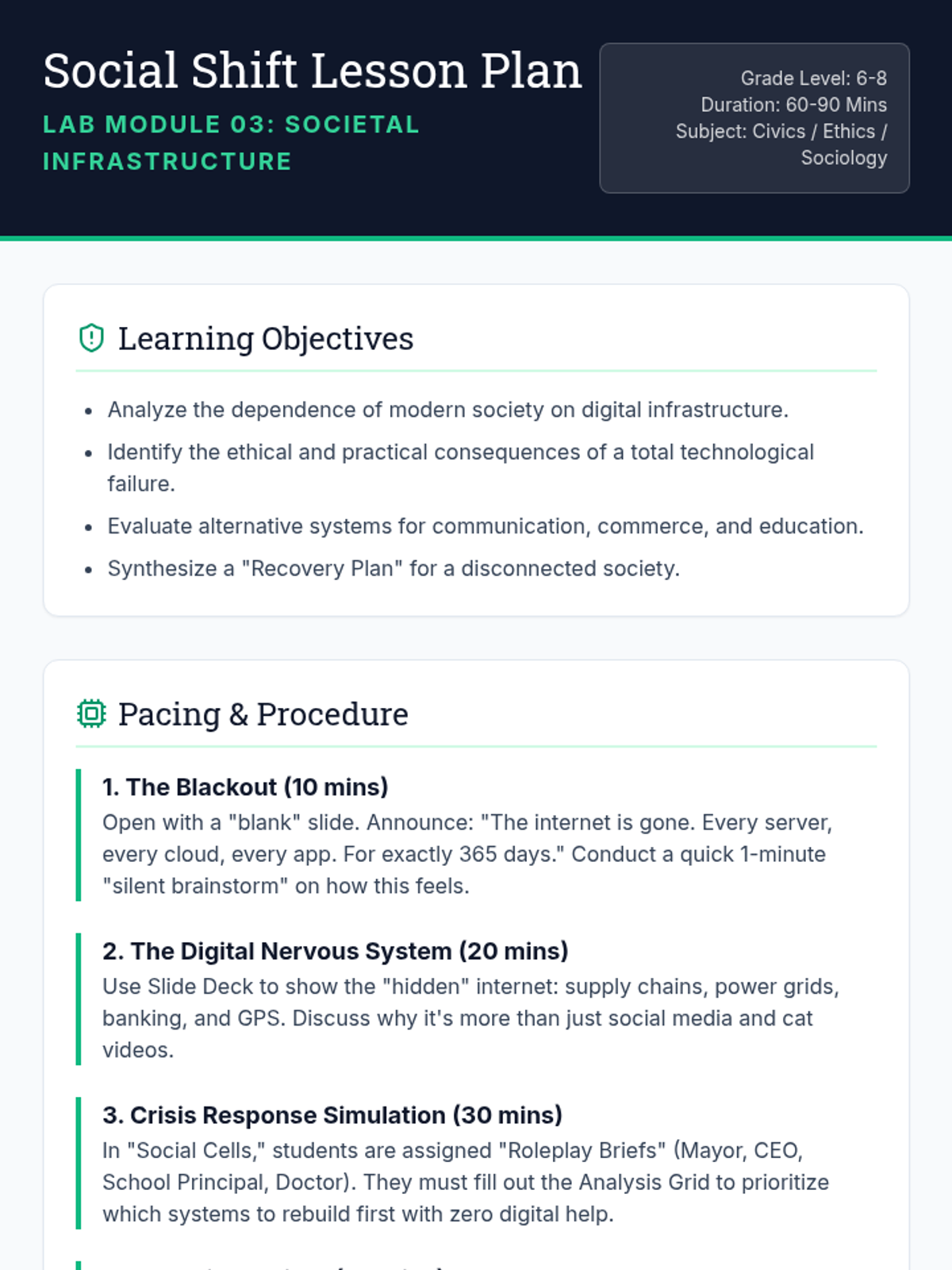
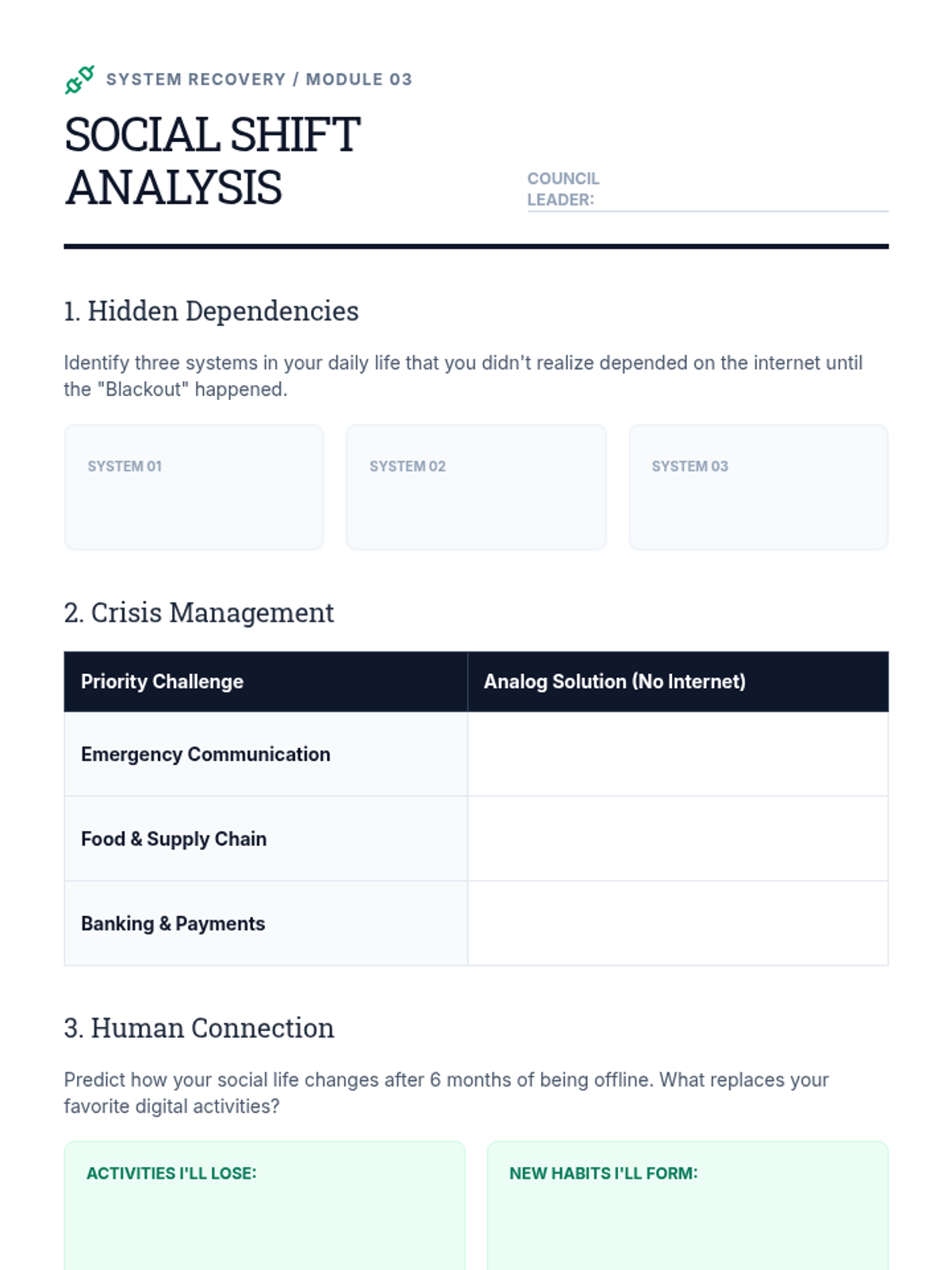
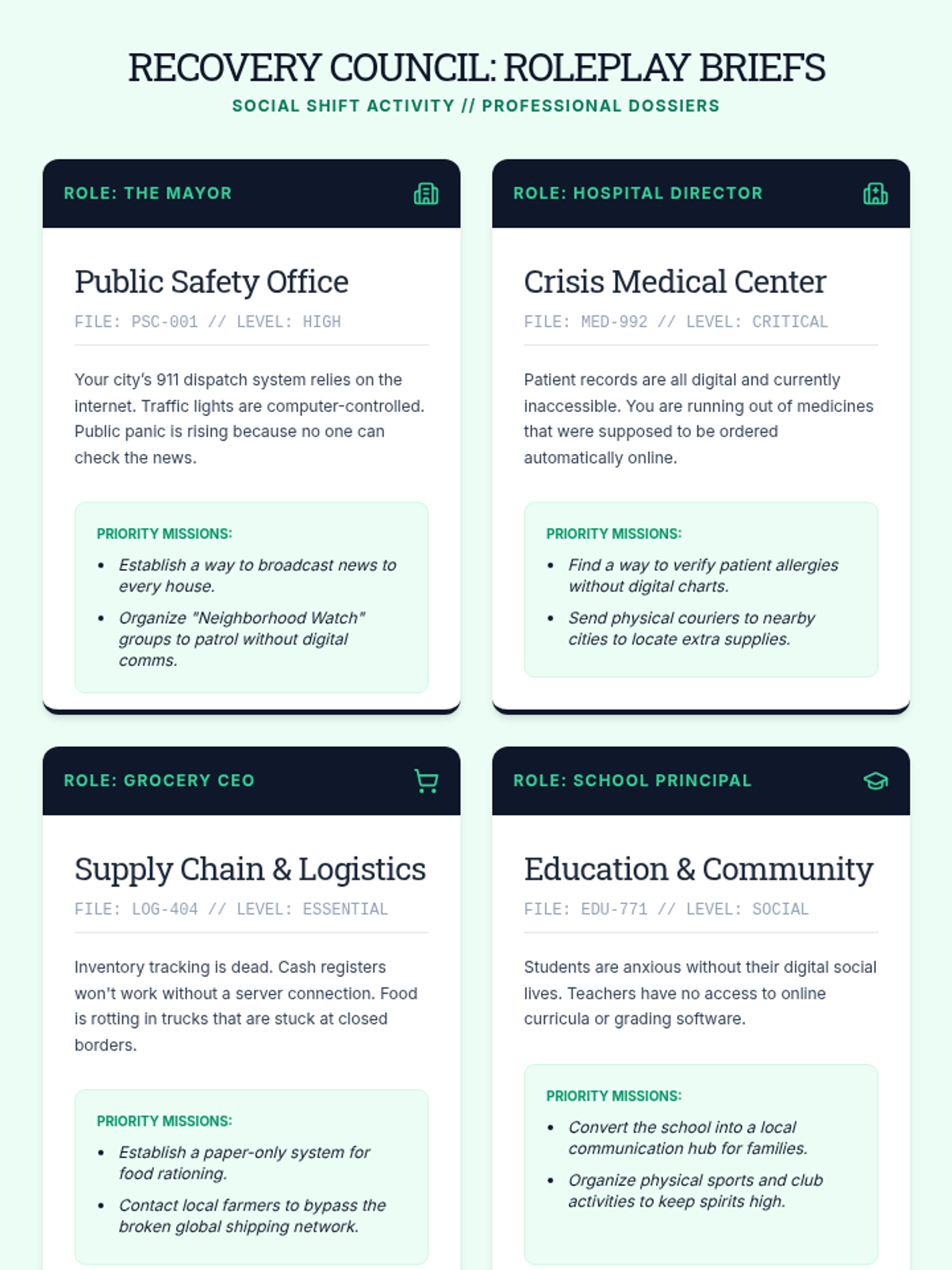
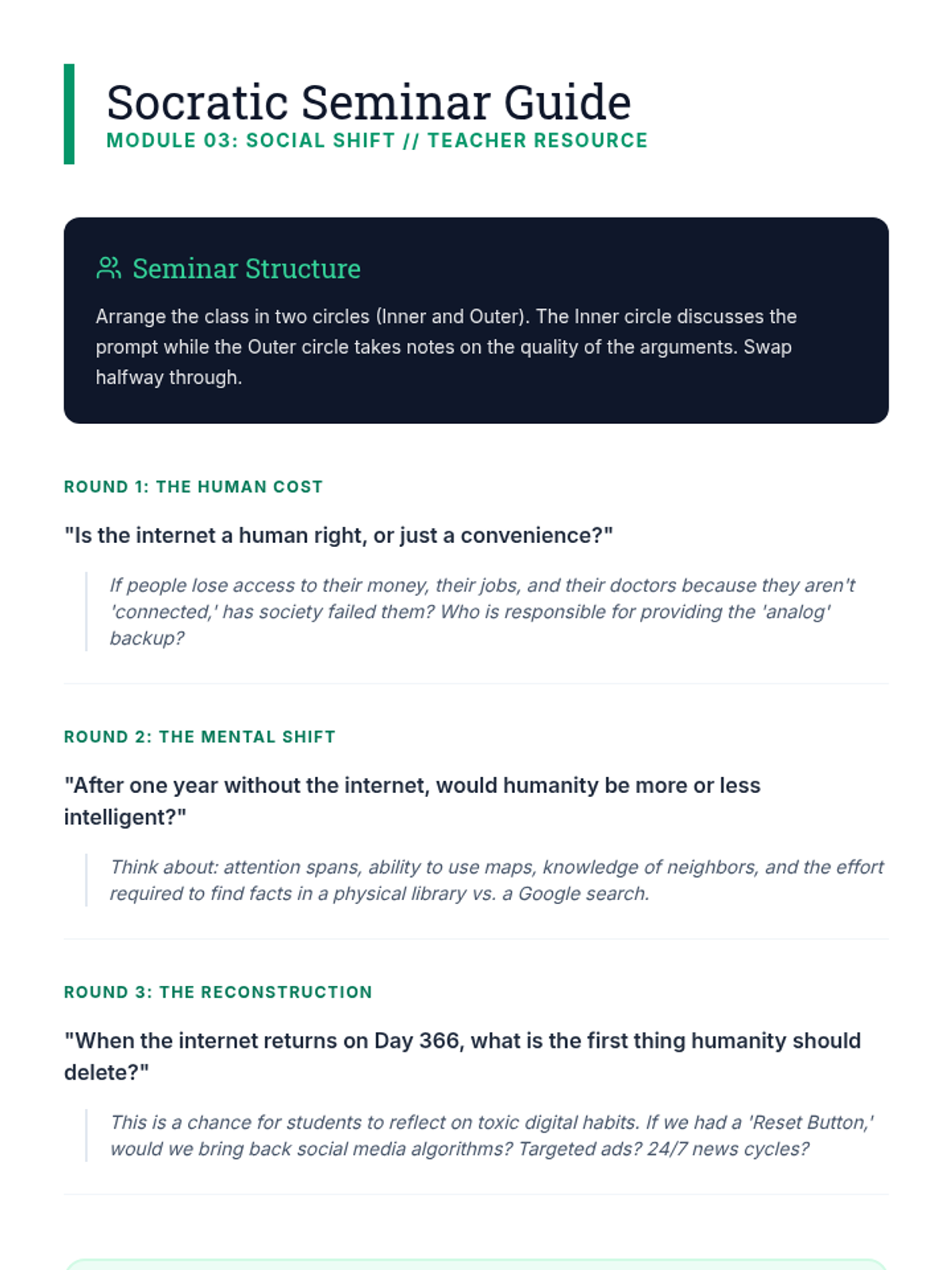
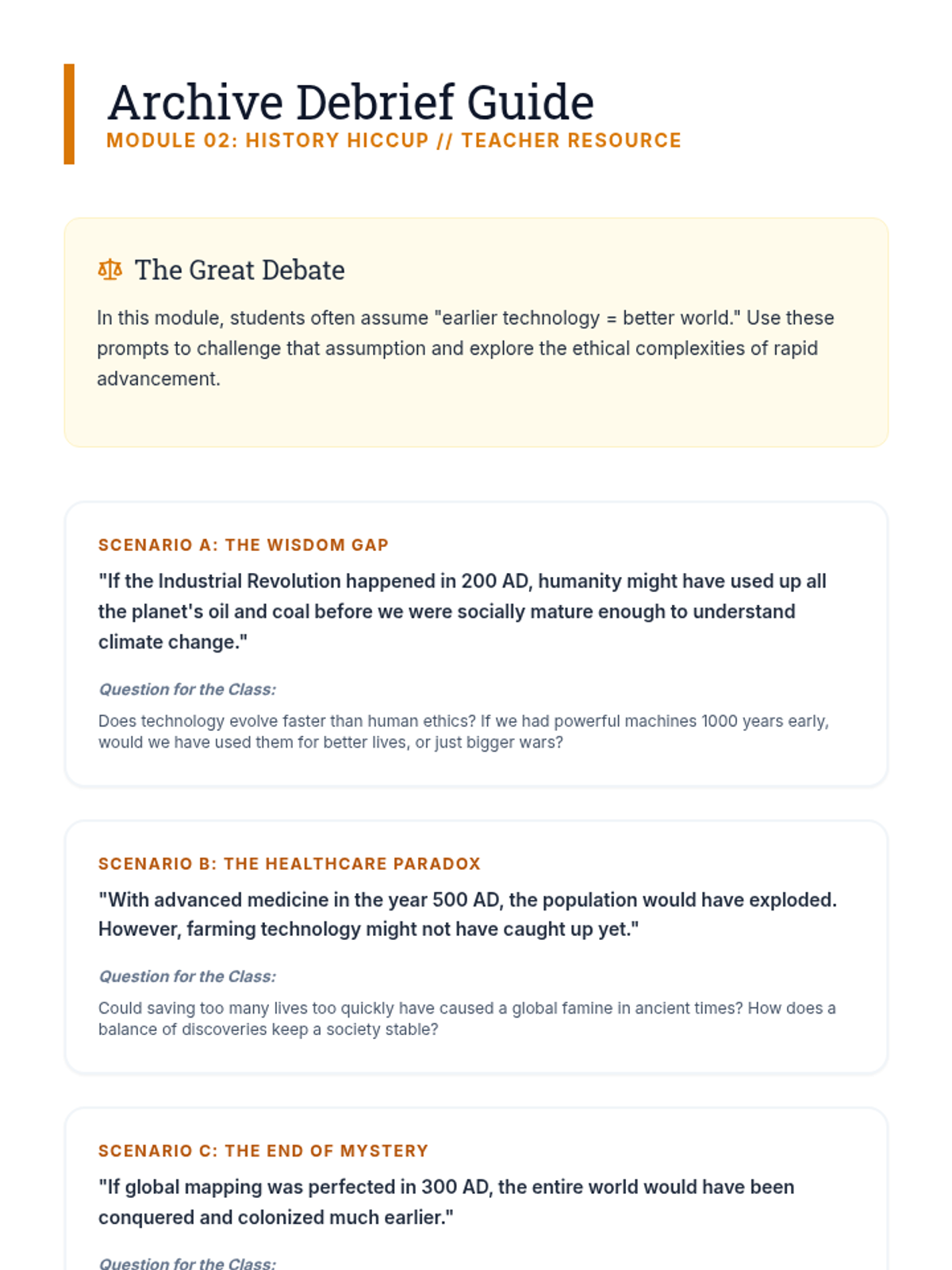
Students analyze the ethical and societal impacts of radical technological shifts, such as the total disappearance of the internet.
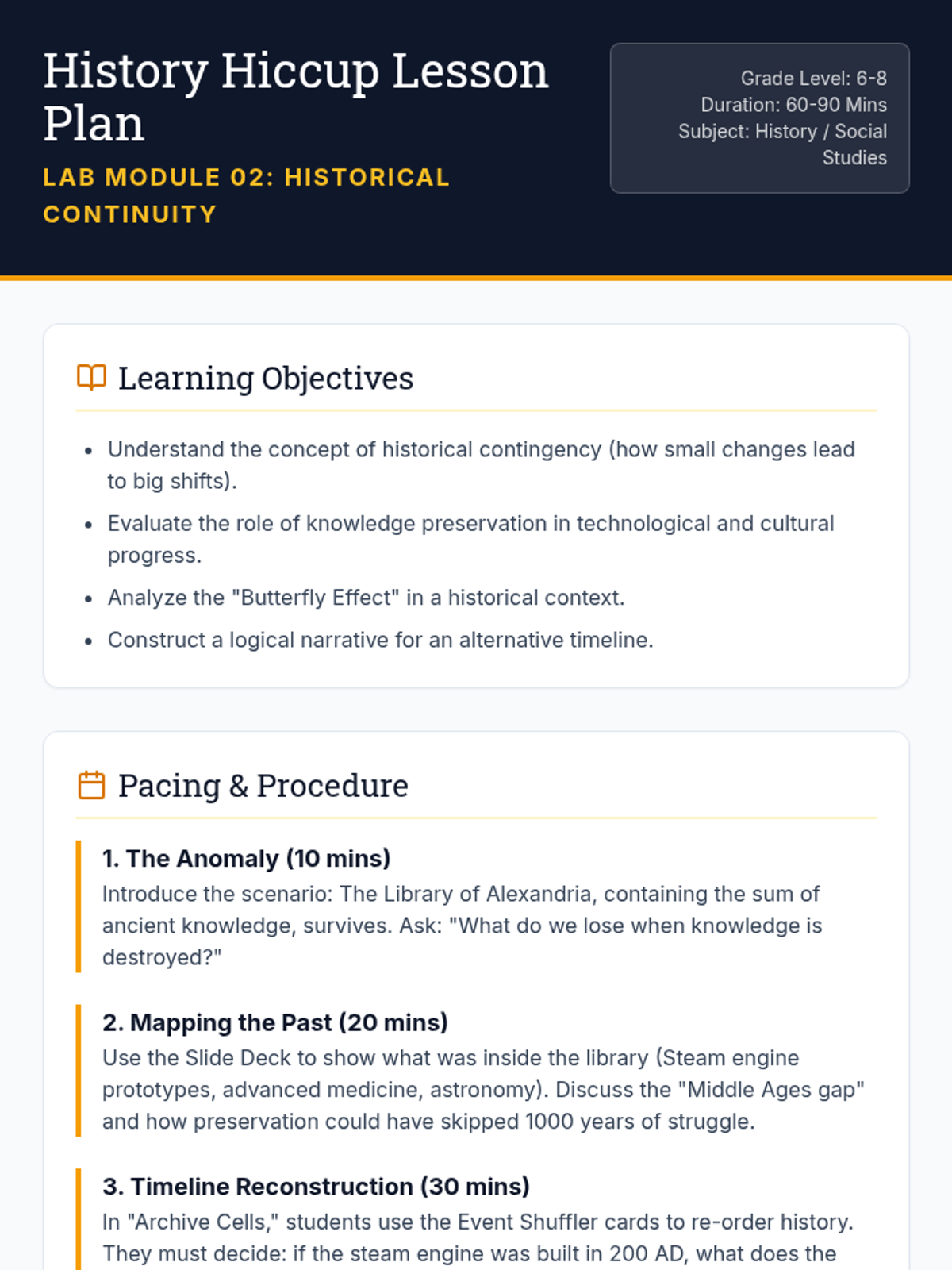
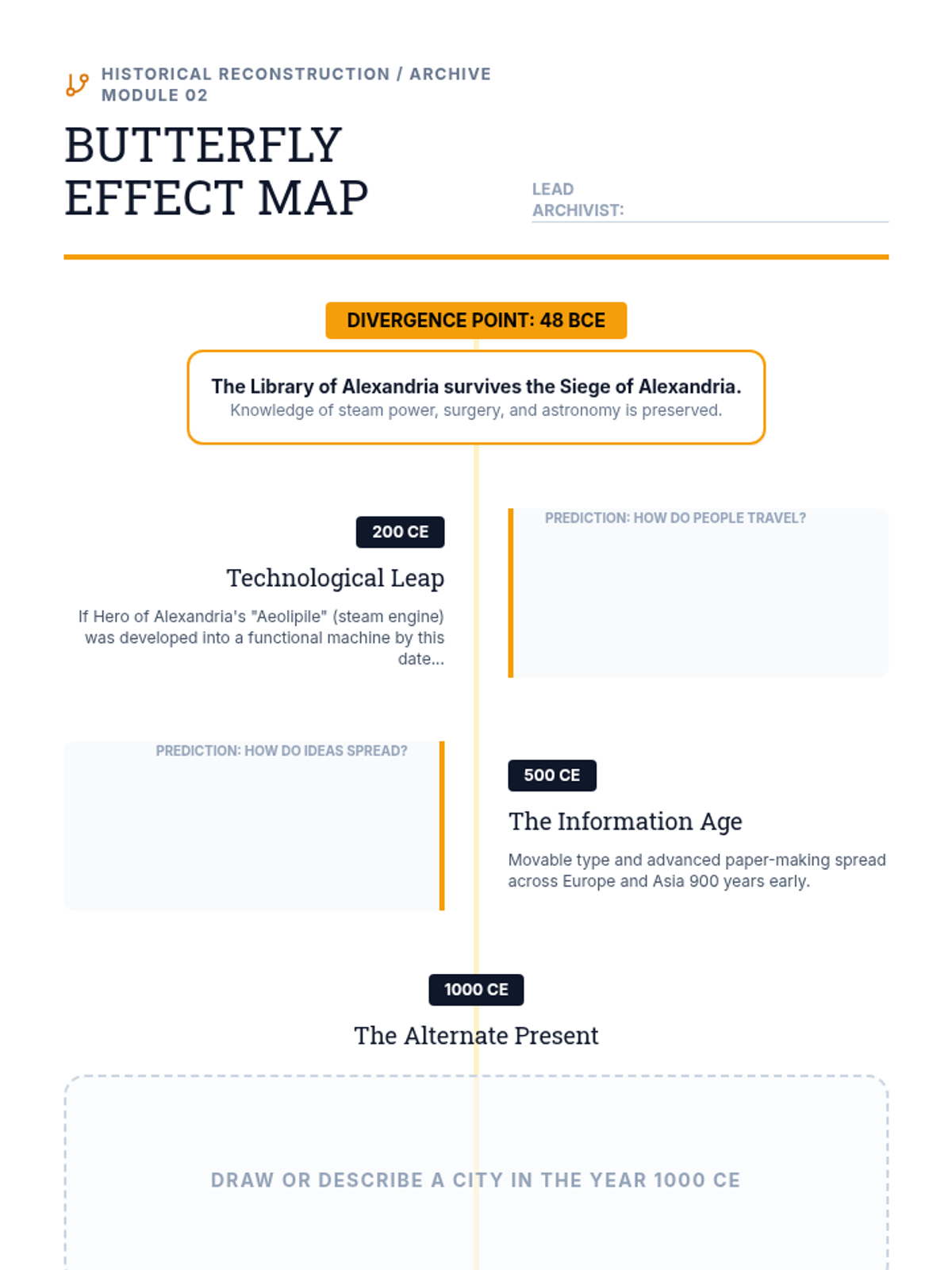
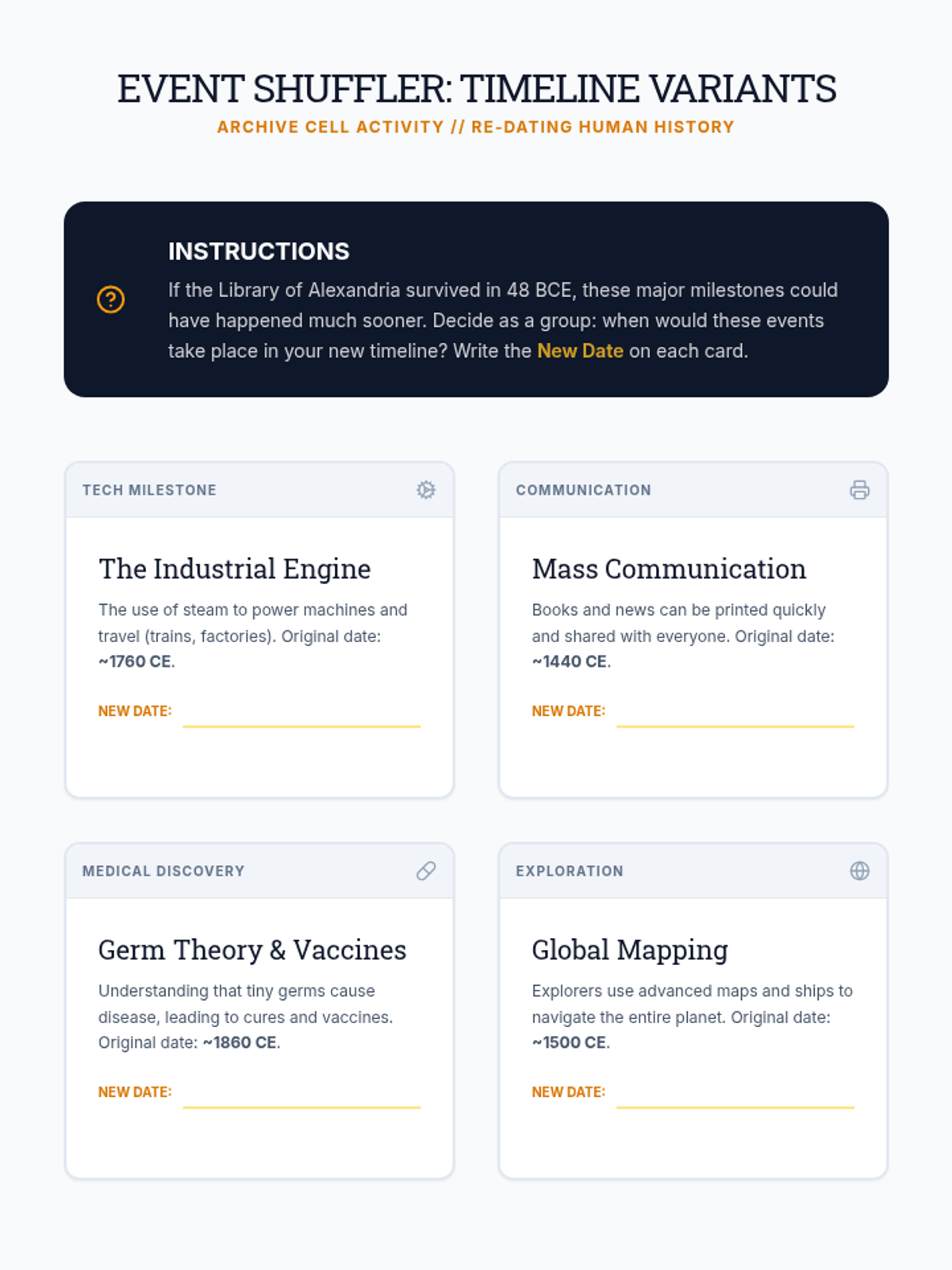
An exploration of how history might have changed if major technological or cultural milestones were altered or erased.
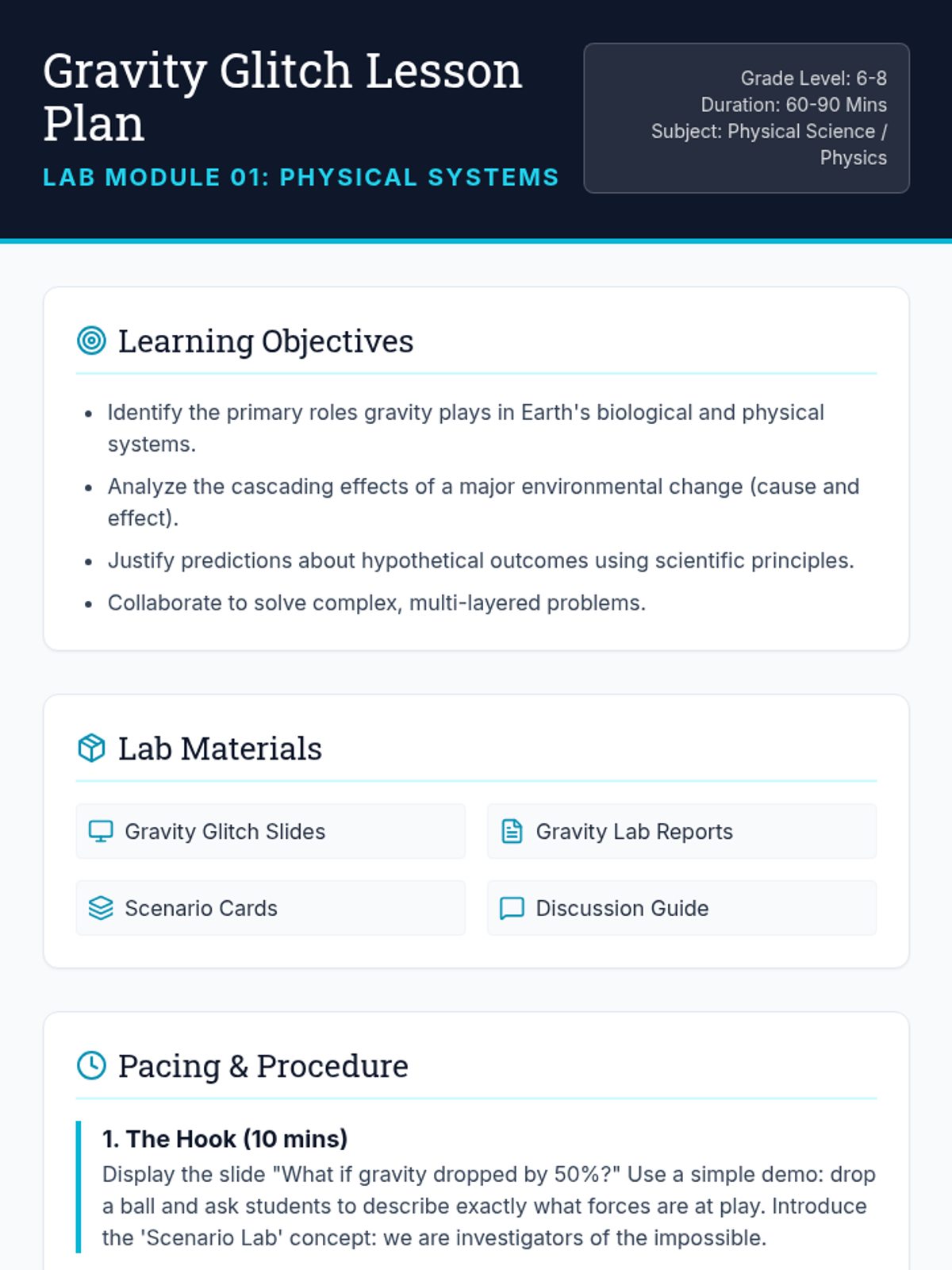
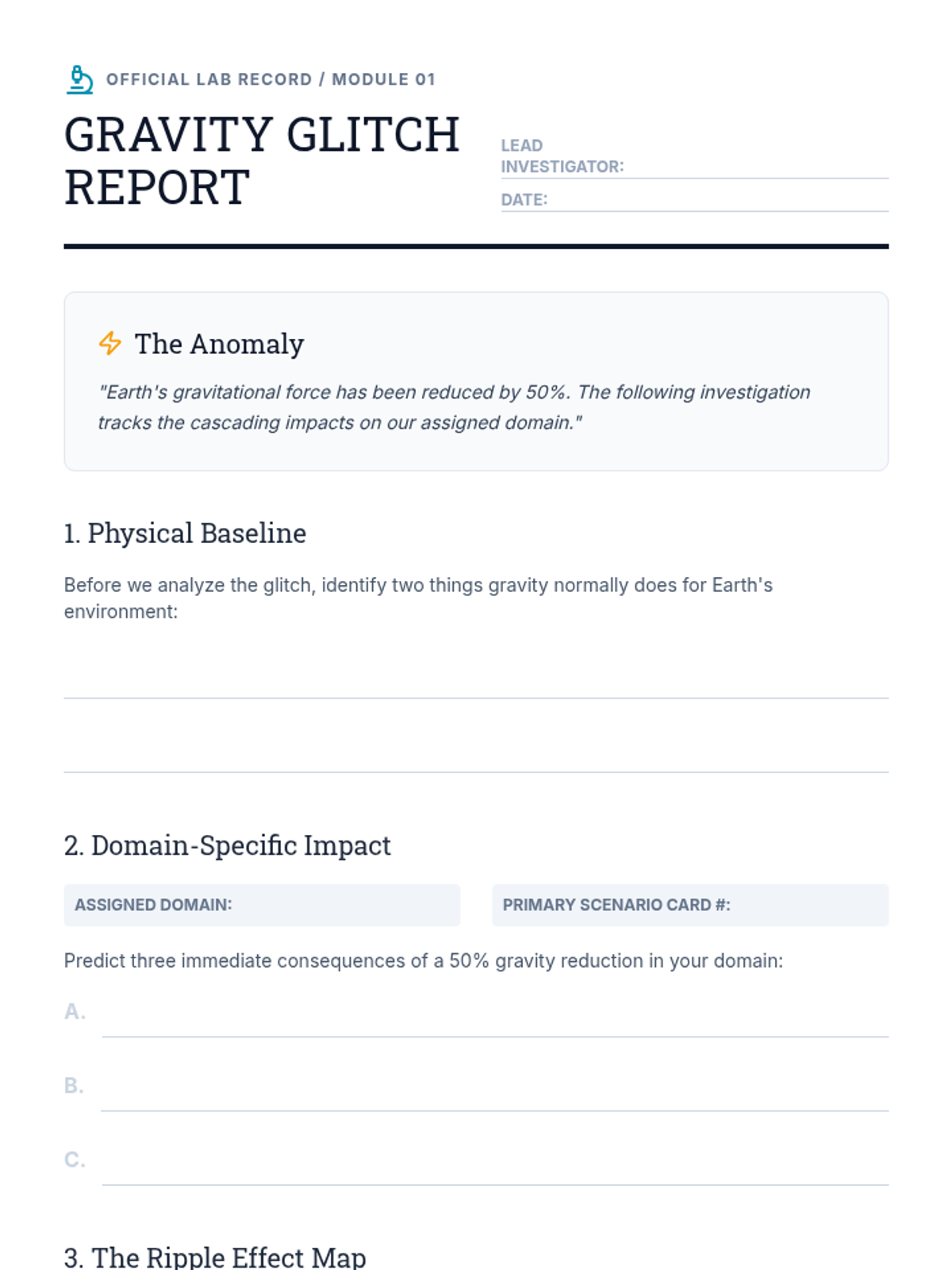
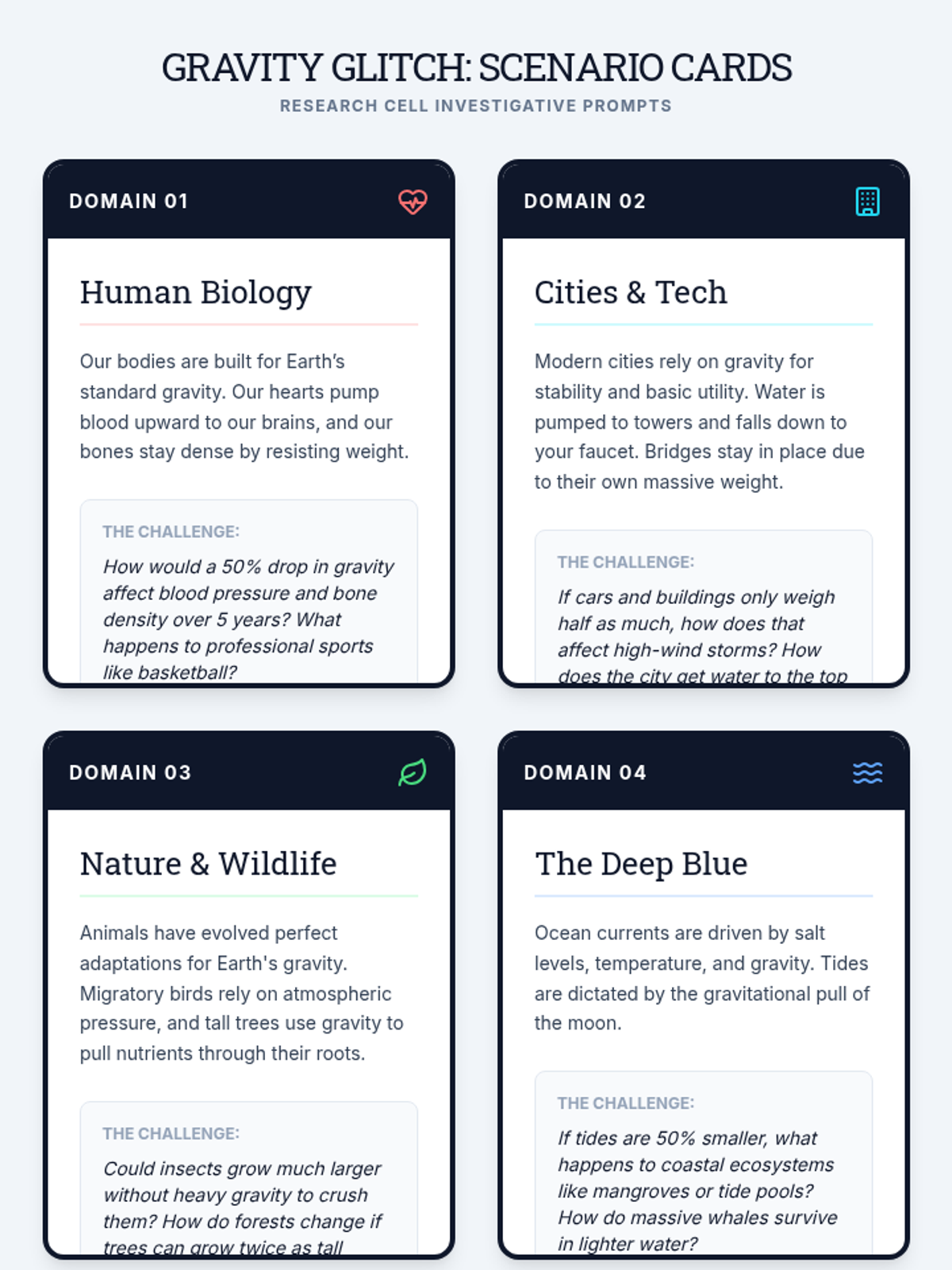
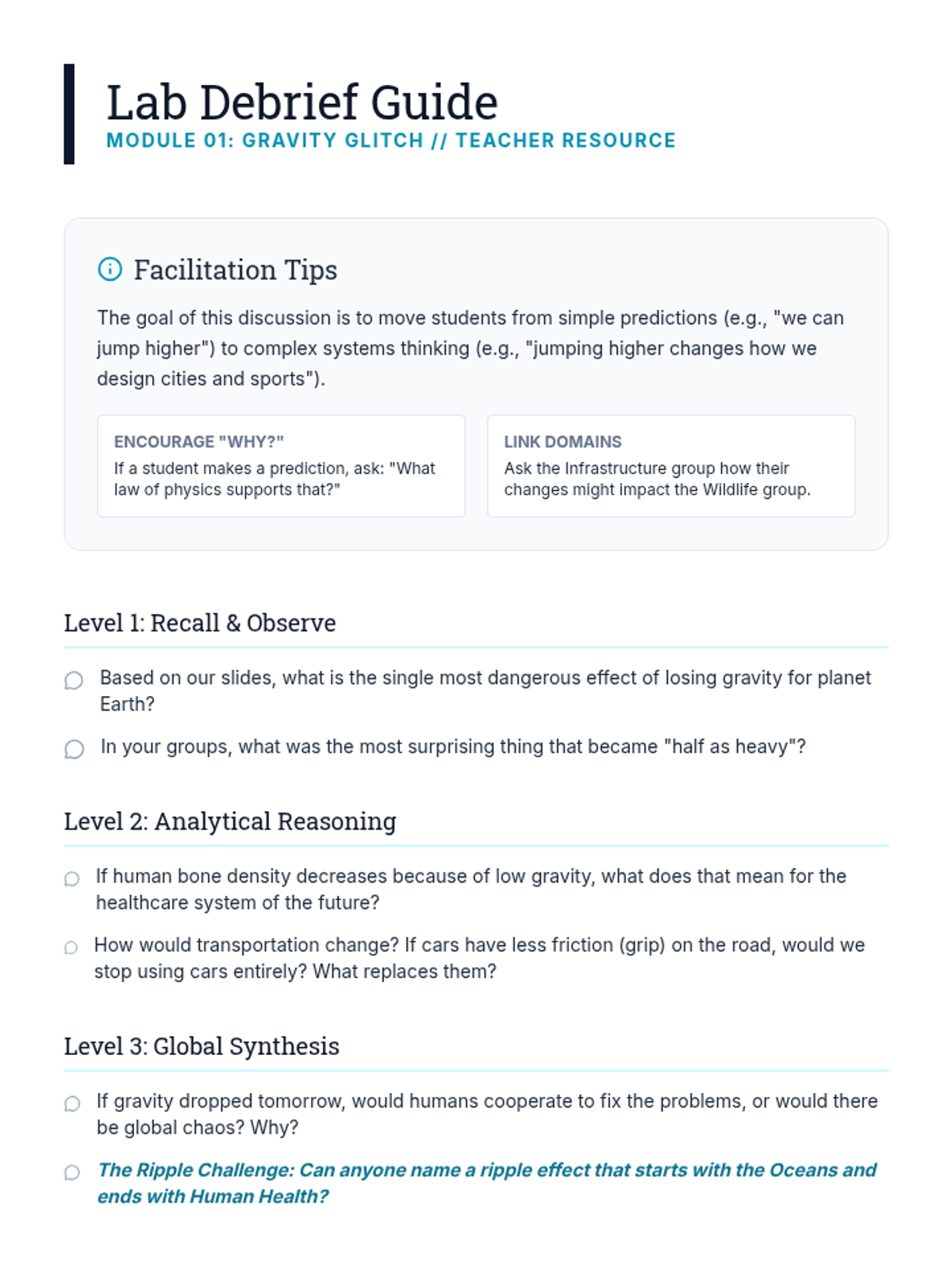
Students investigate the physical and environmental consequences of a sudden, permanent change in Earth's gravity.
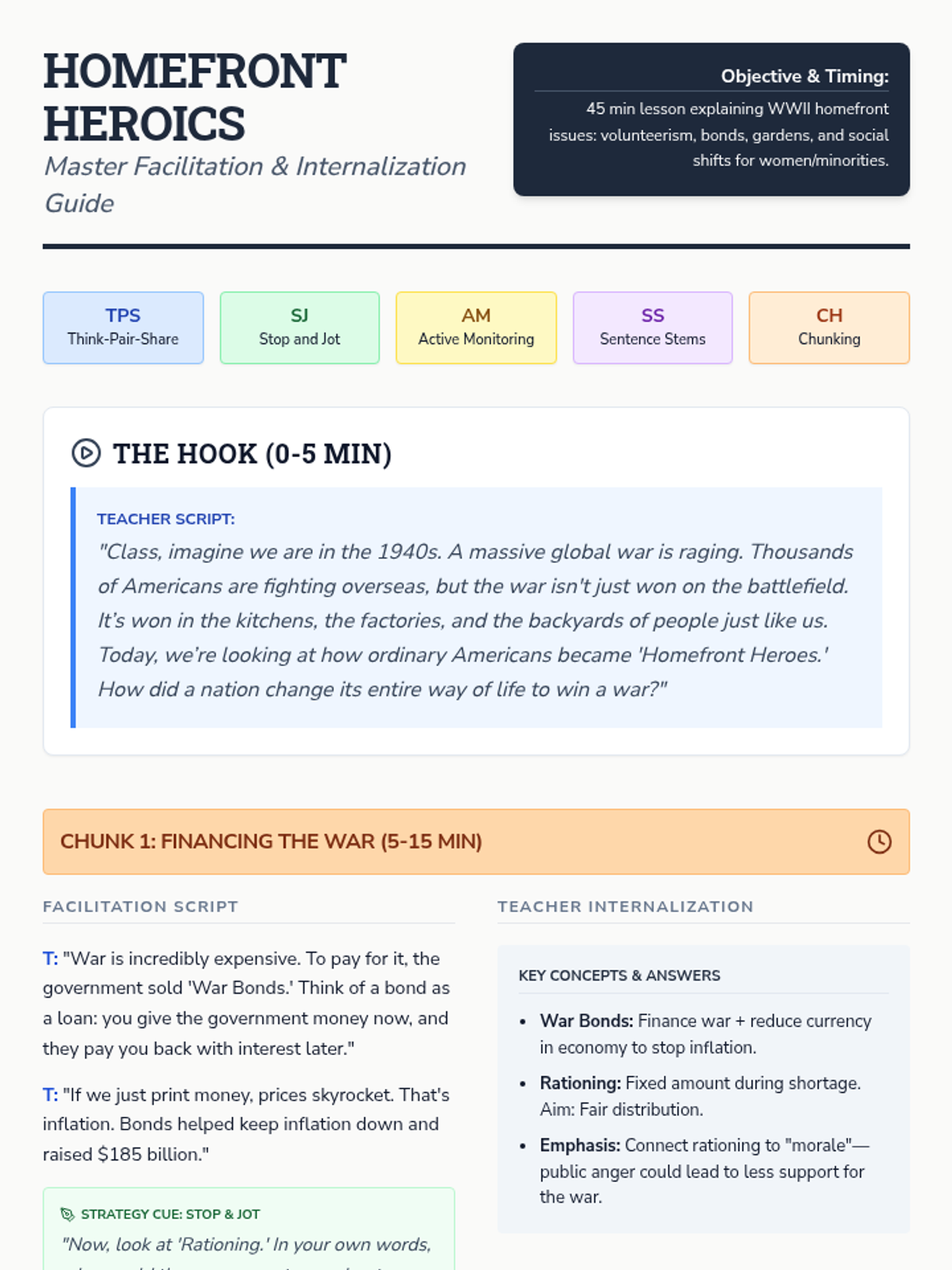
A comprehensive guide for teachers to internalize and deliver a lesson on the American home front during WWII, featuring instructional strategies and annotated content.
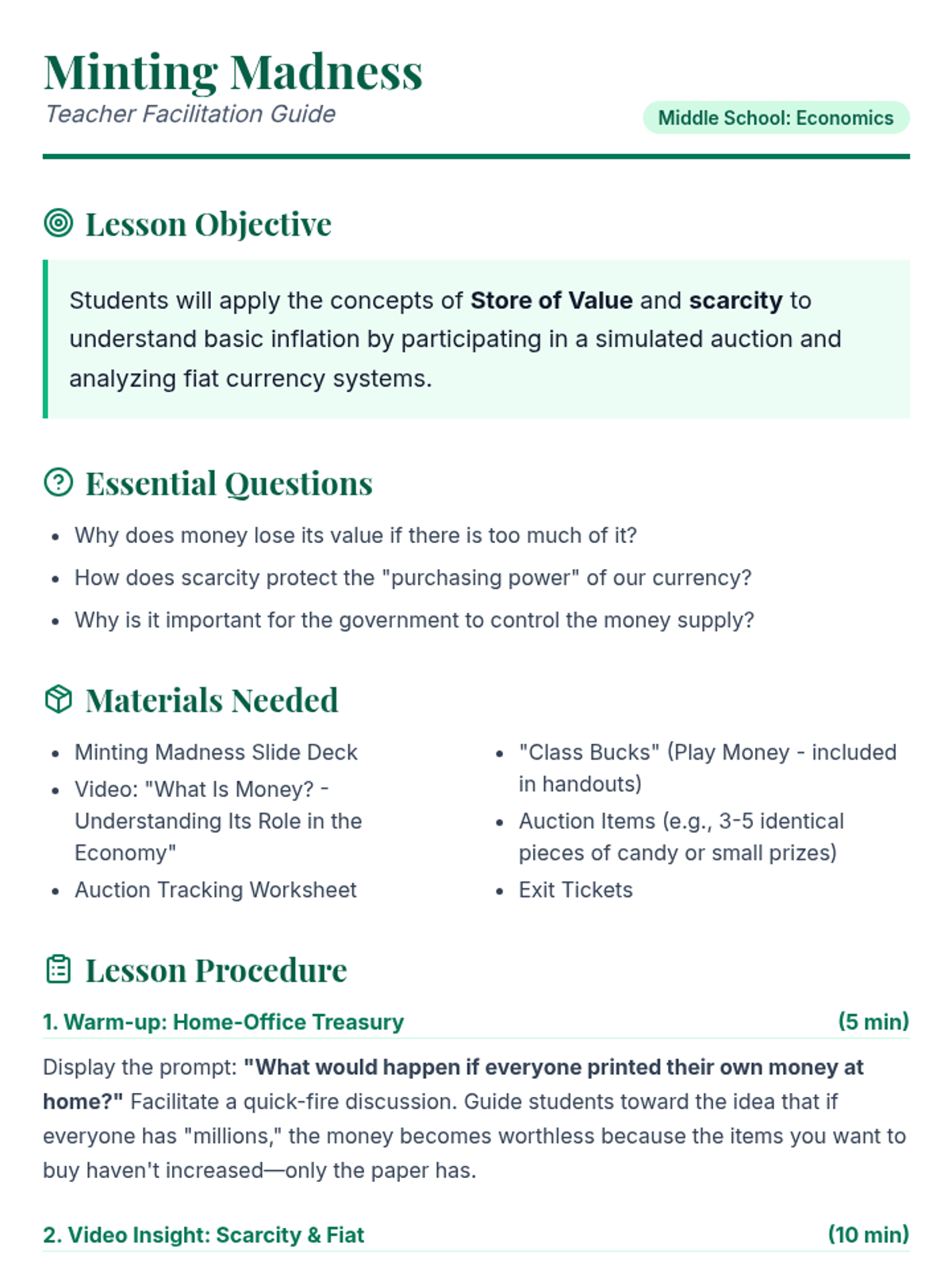
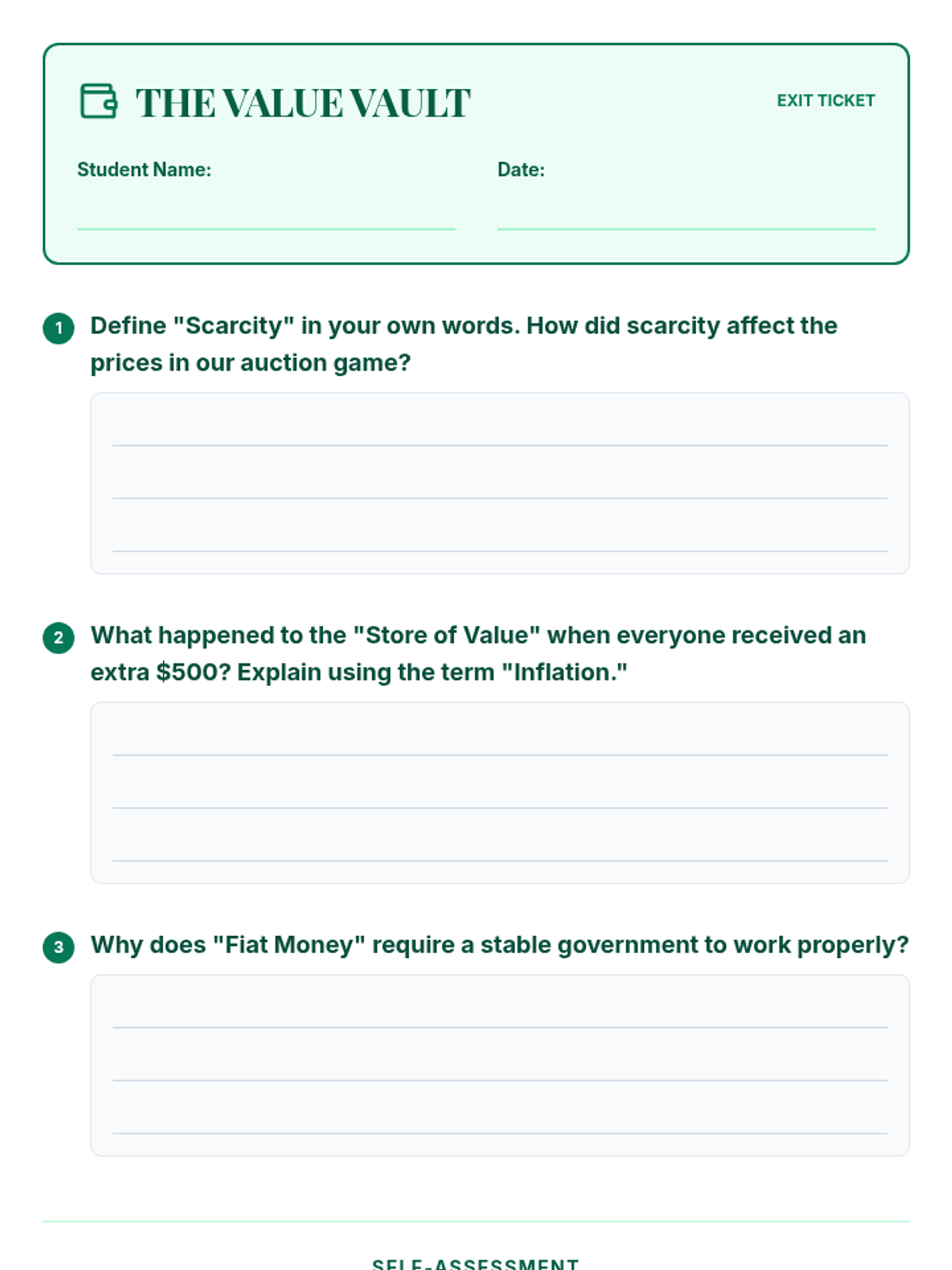
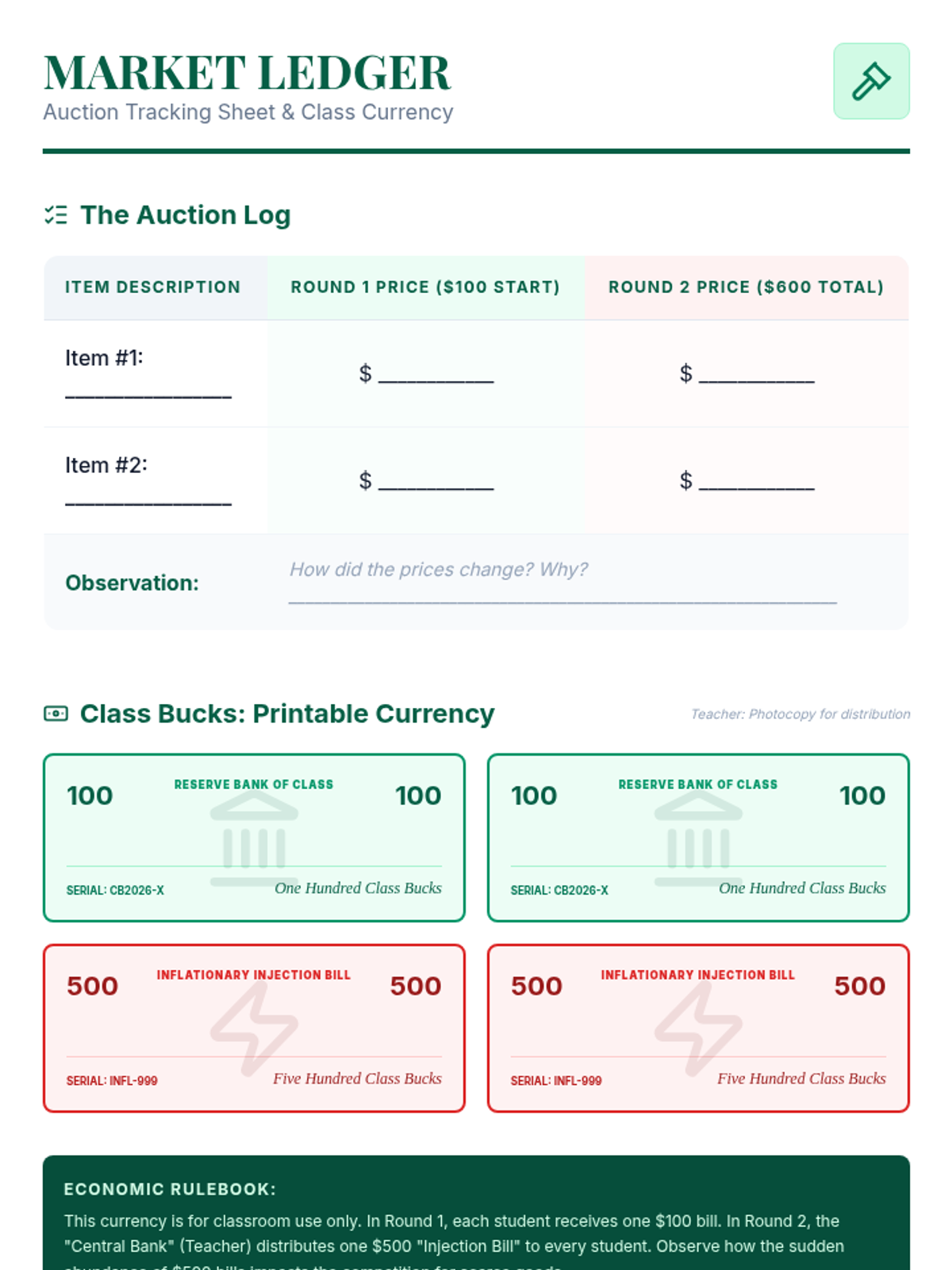
A middle school economics lesson exploring the concepts of scarcity, fiat money, and the mechanics of inflation through an interactive auction simulation and video analysis.
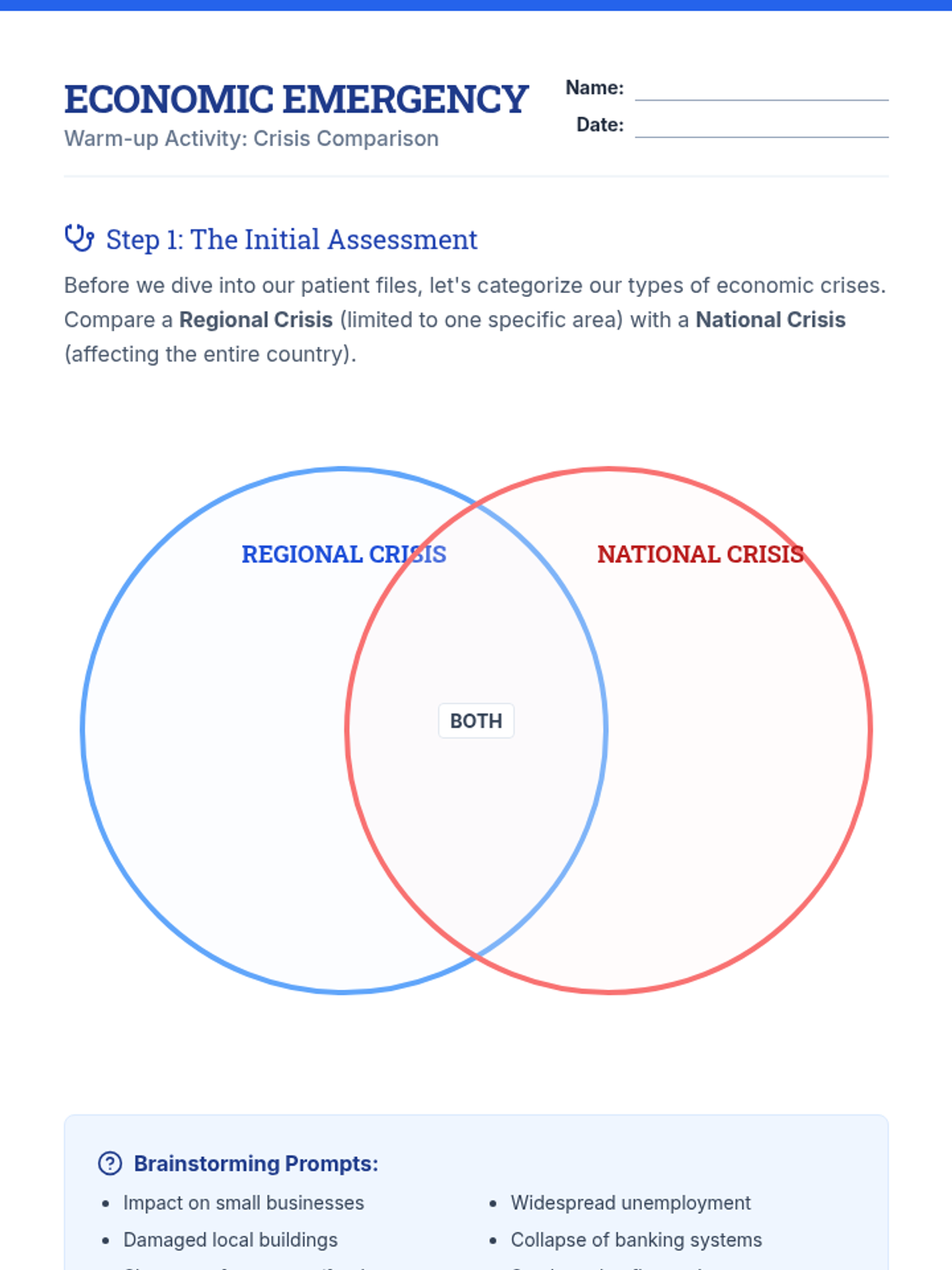
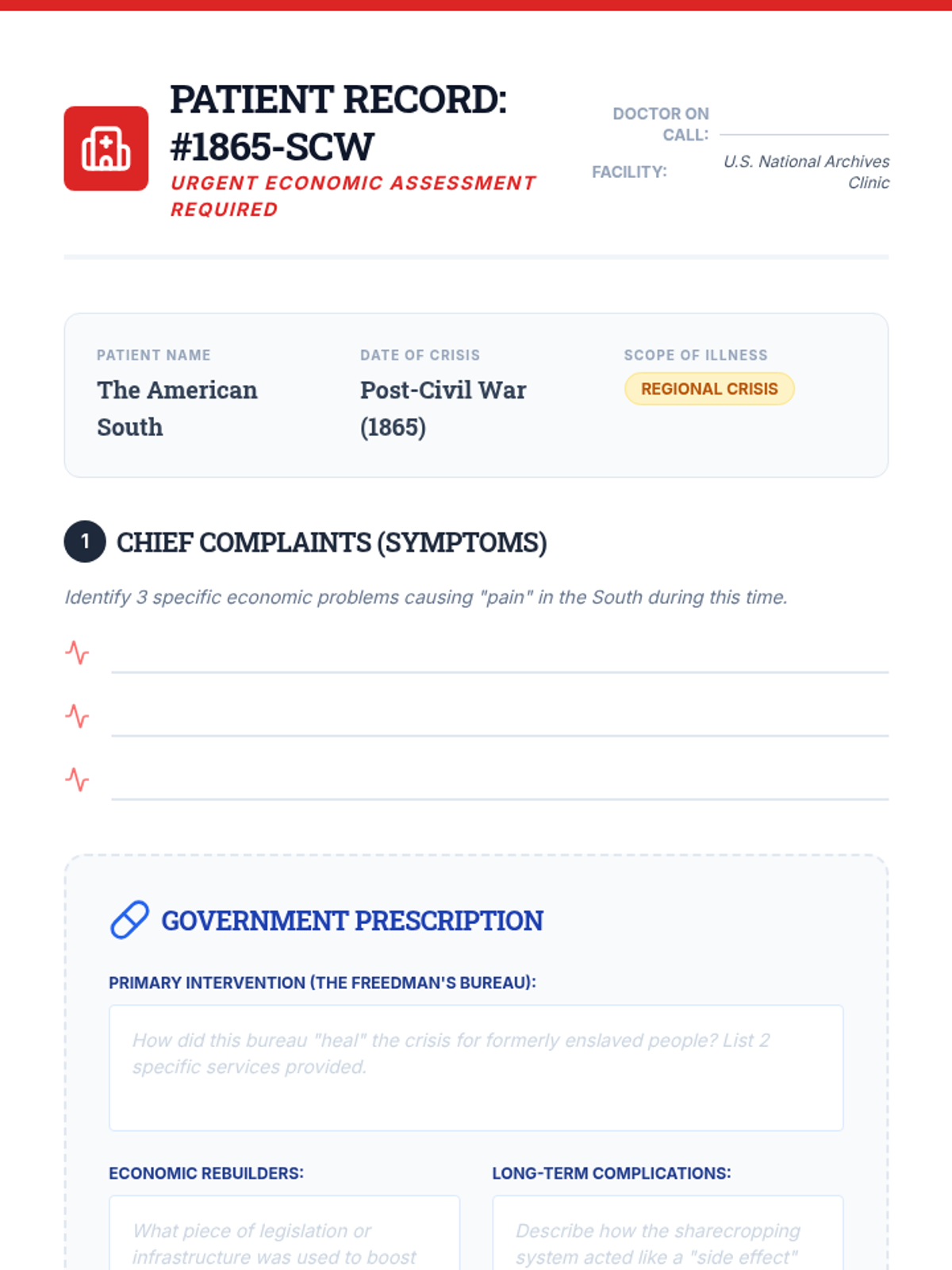
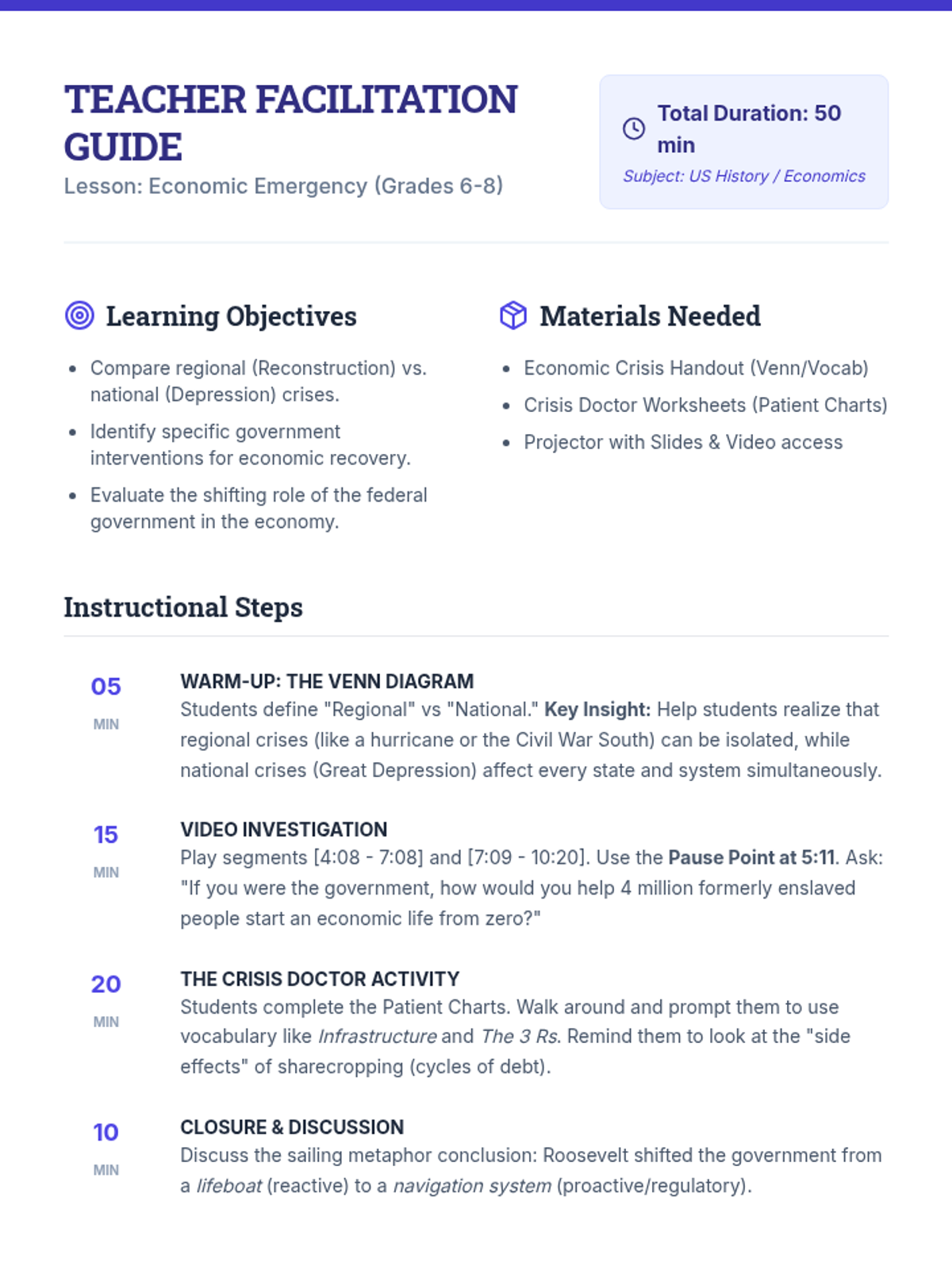
Students act as 'Economic Doctors' to diagnose and treat the US economy during two major crises: the post-Civil War Reconstruction era and the Great Depression. Using a video-based investigation, they compare regional vs. national collapses and evaluate the government's shifting role in economic 'prescriptions.'
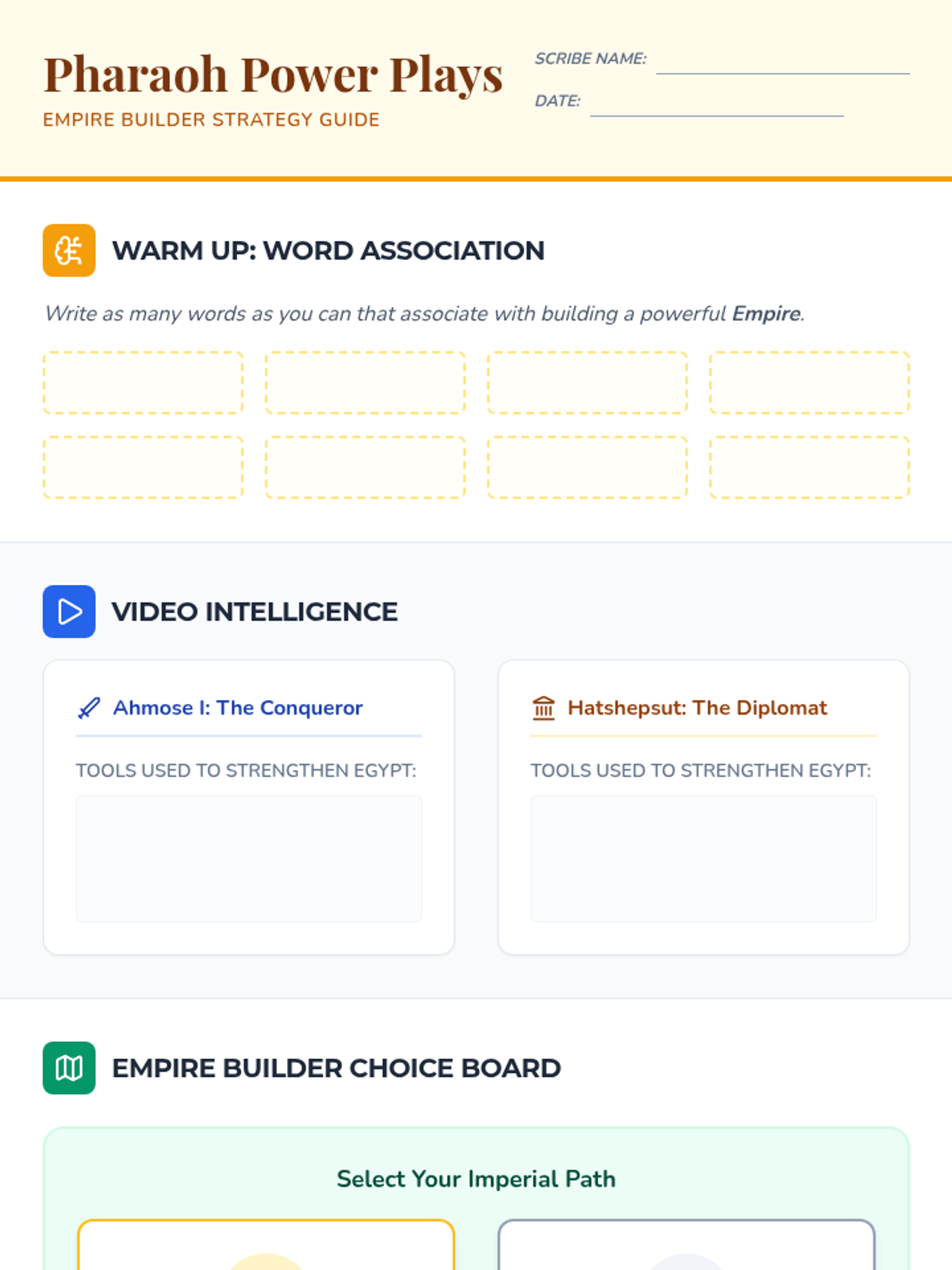
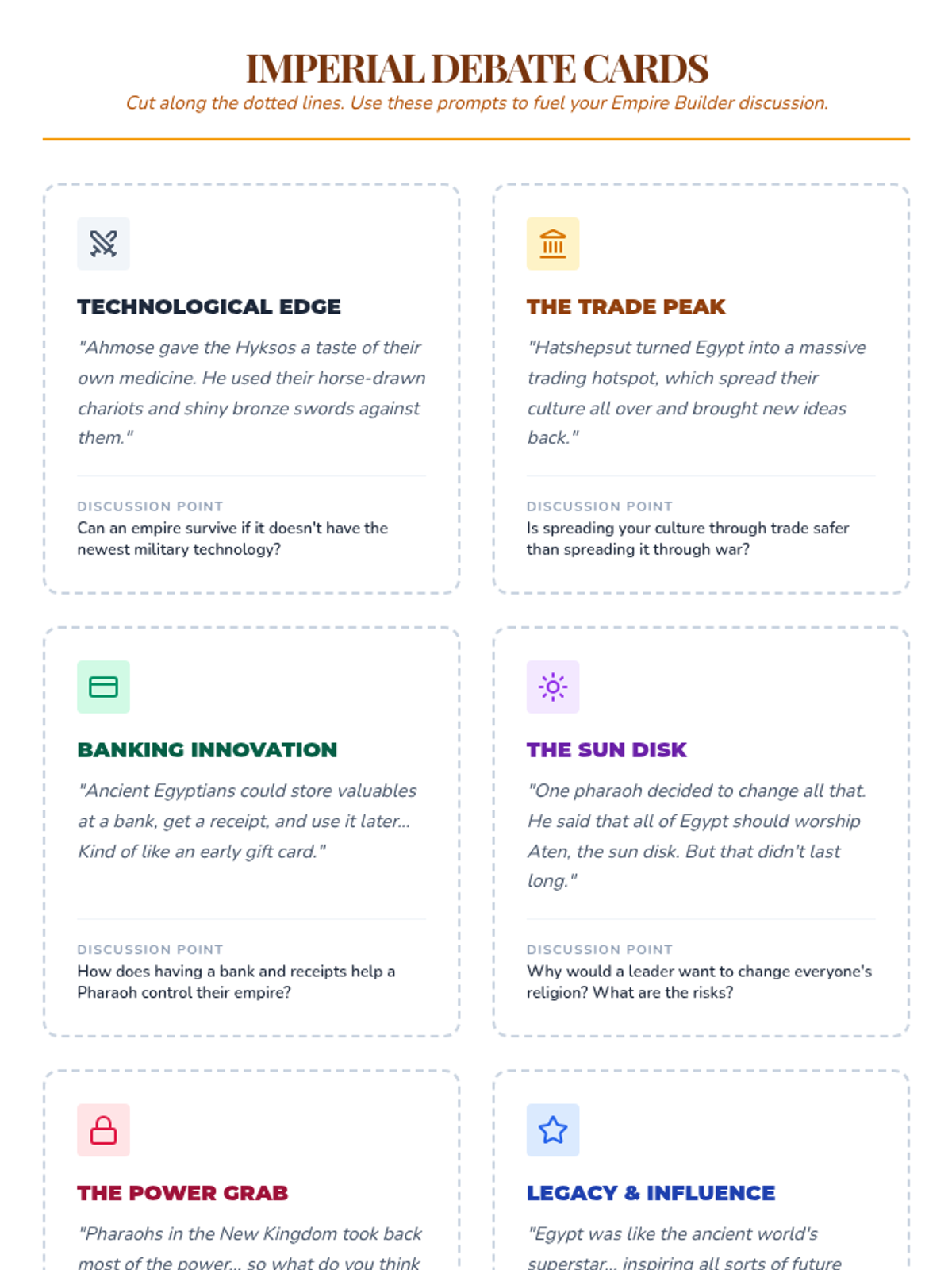
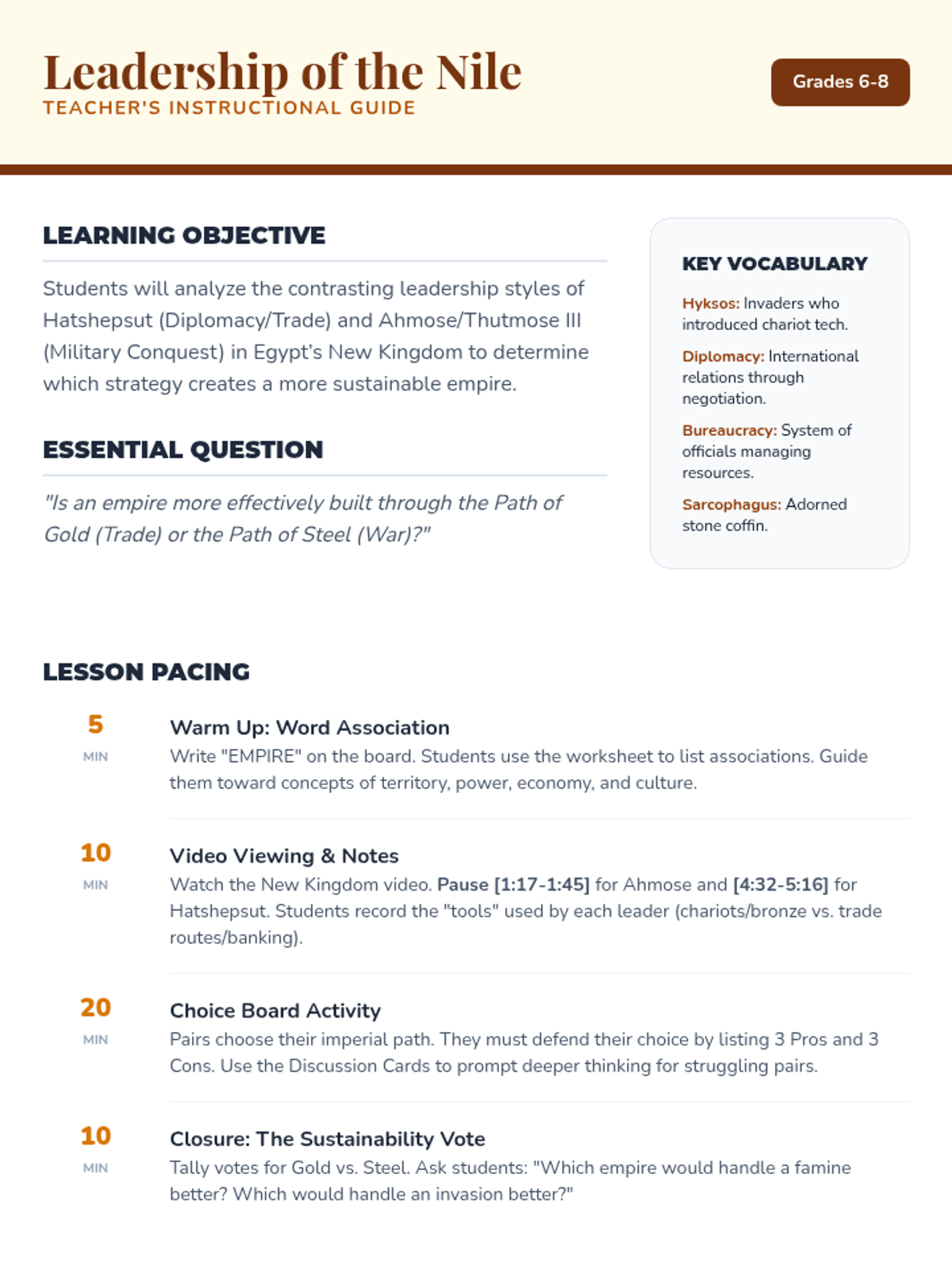
A lesson comparing the leadership styles of Hatshepsut and Ahmose/Thutmose III, focusing on the tension between military conquest and diplomatic trade in building the Egyptian New Kingdom. Students analyze video evidence to build their own empire strategy.
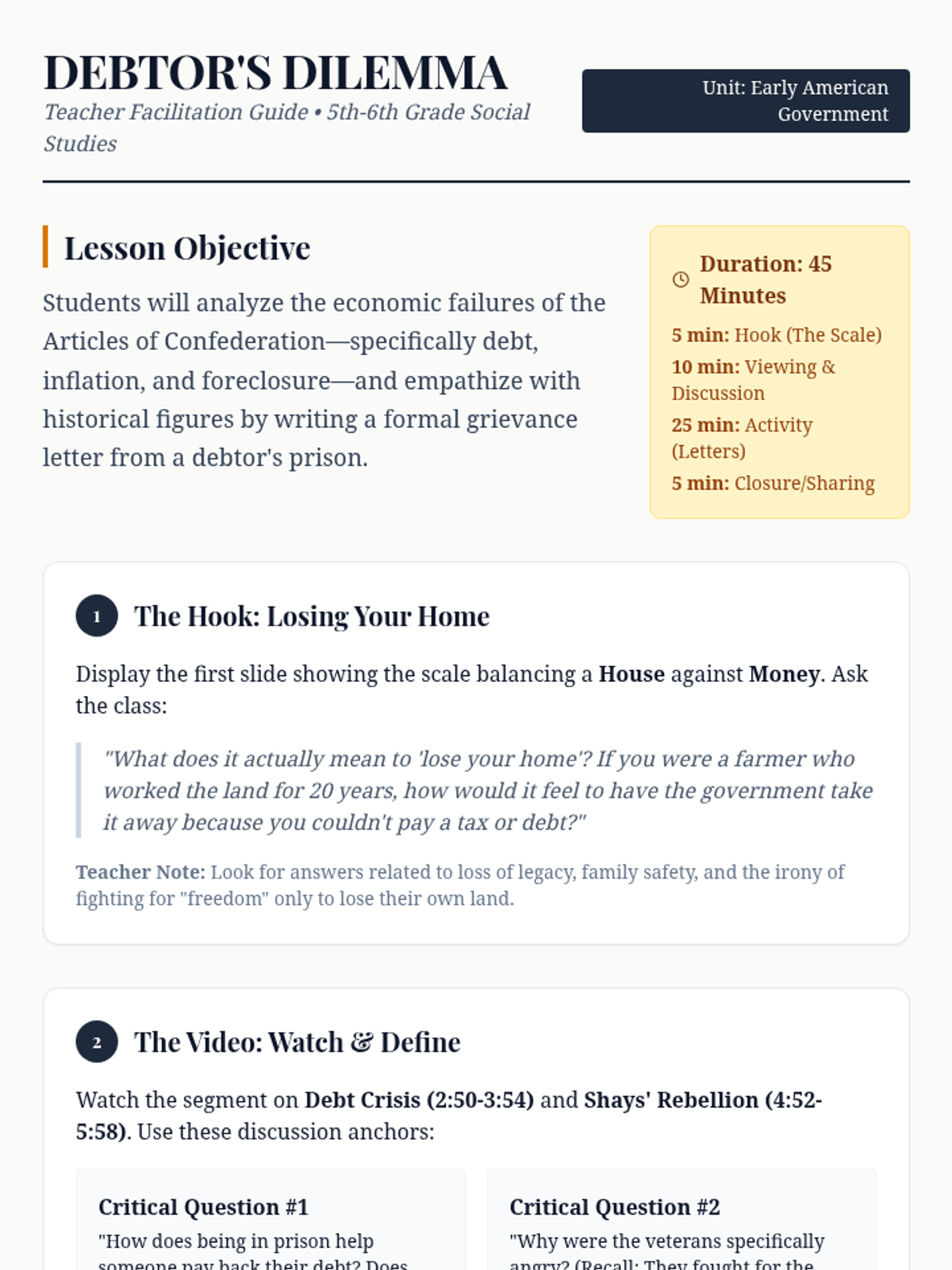
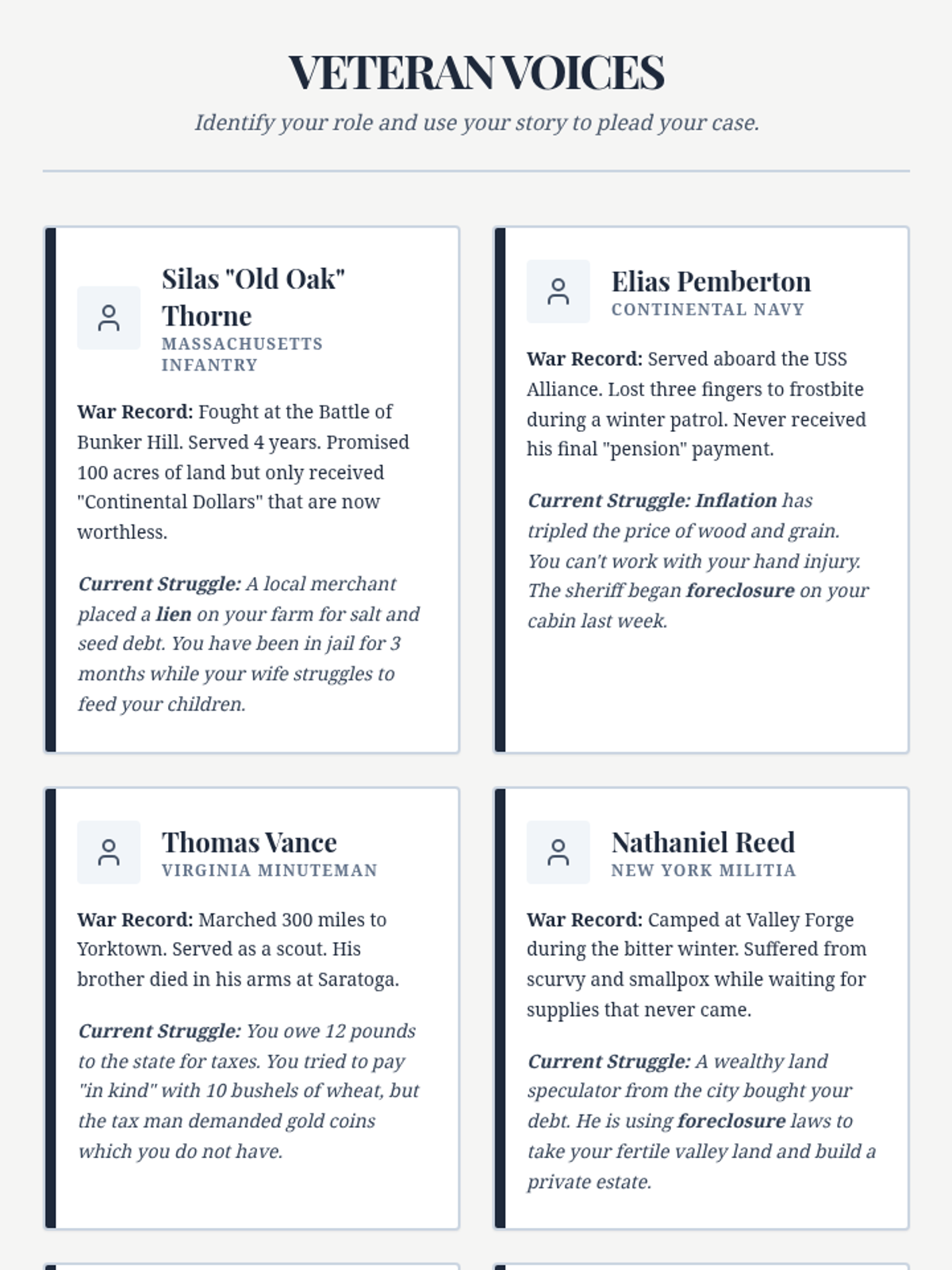
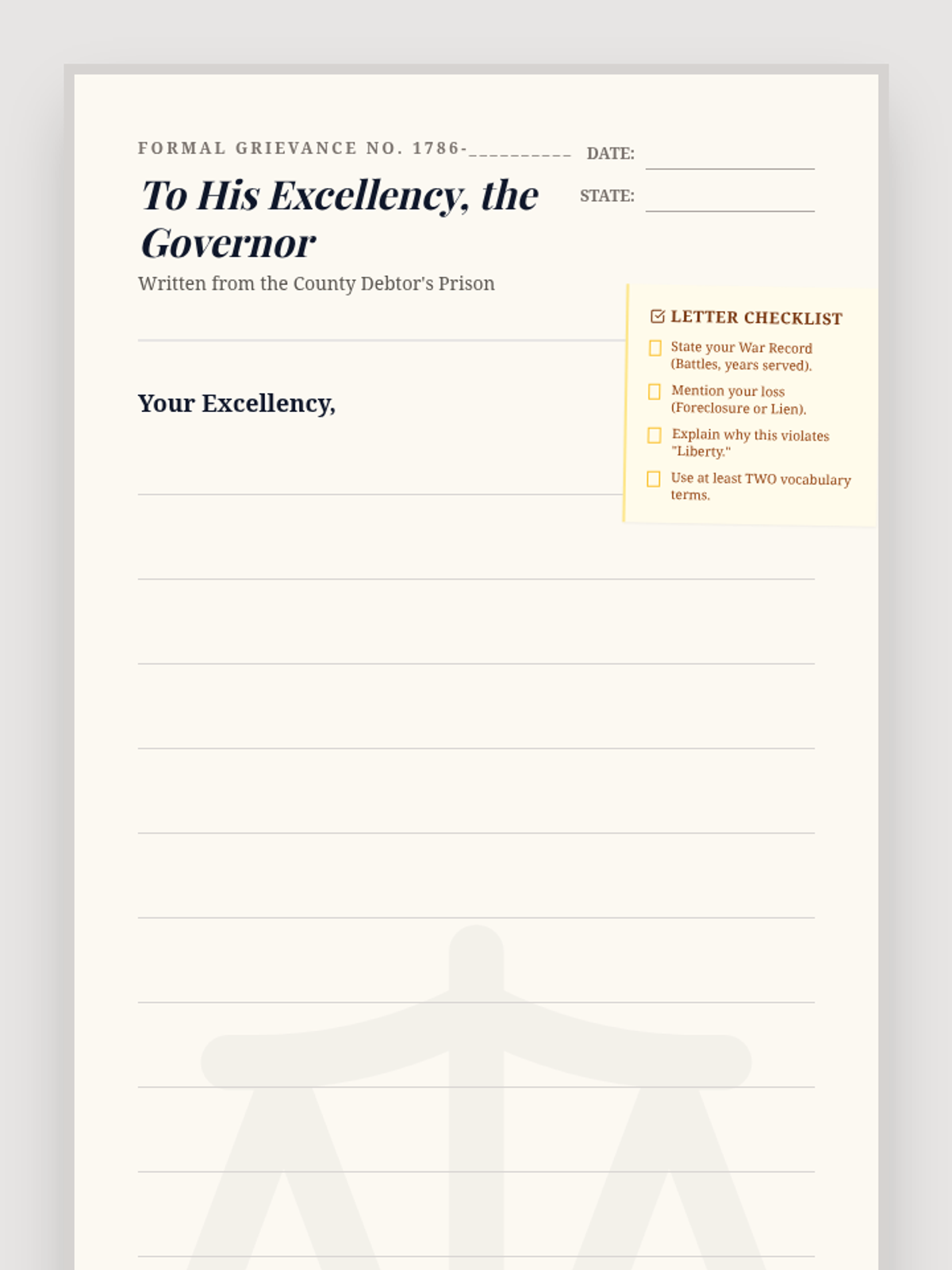
Students explore the economic instability under the Articles of Confederation, specifically focusing on debtor's prisons and Shays' Rebellion, through a creative writing letter-to-the-governor activity.
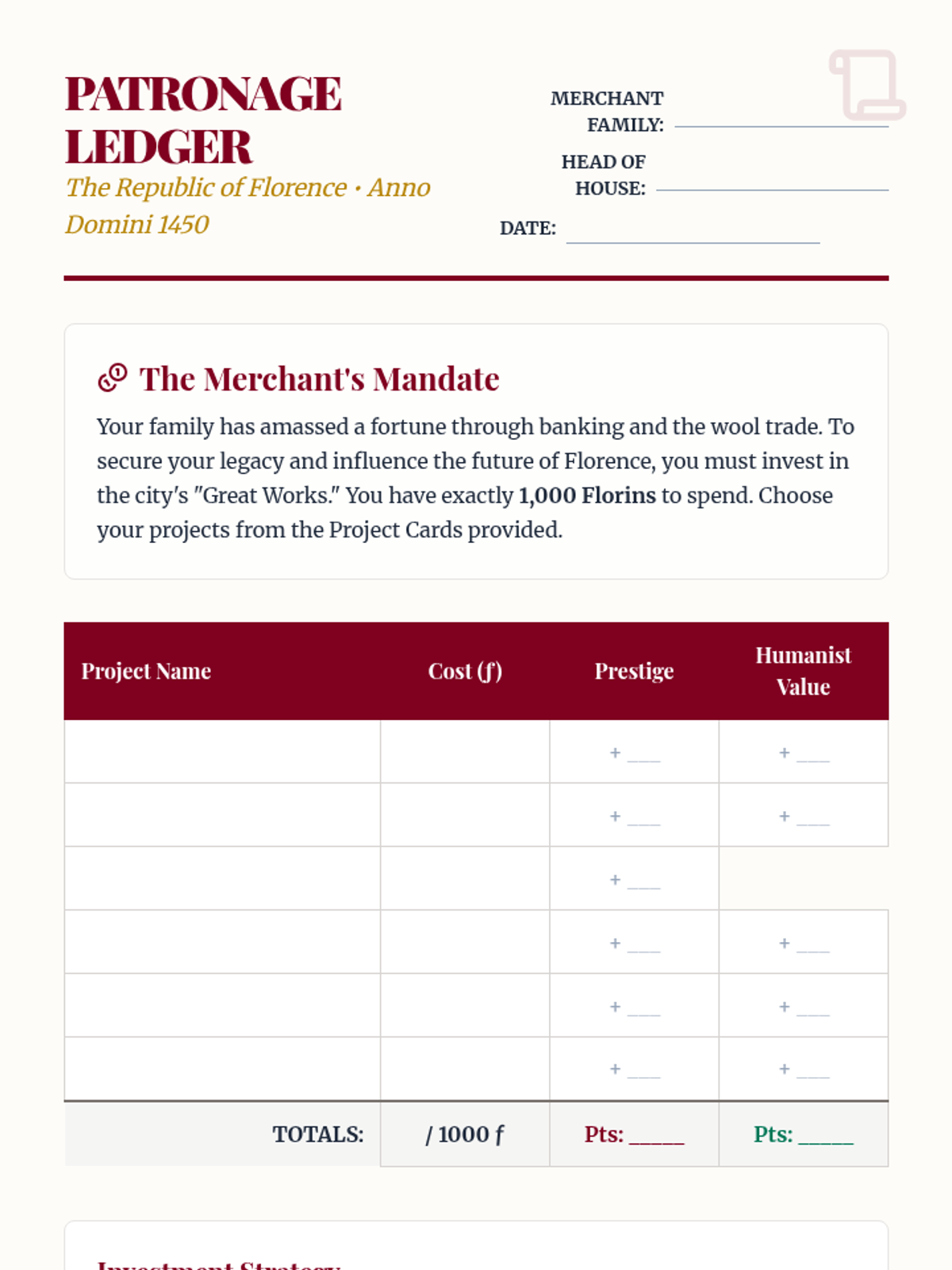
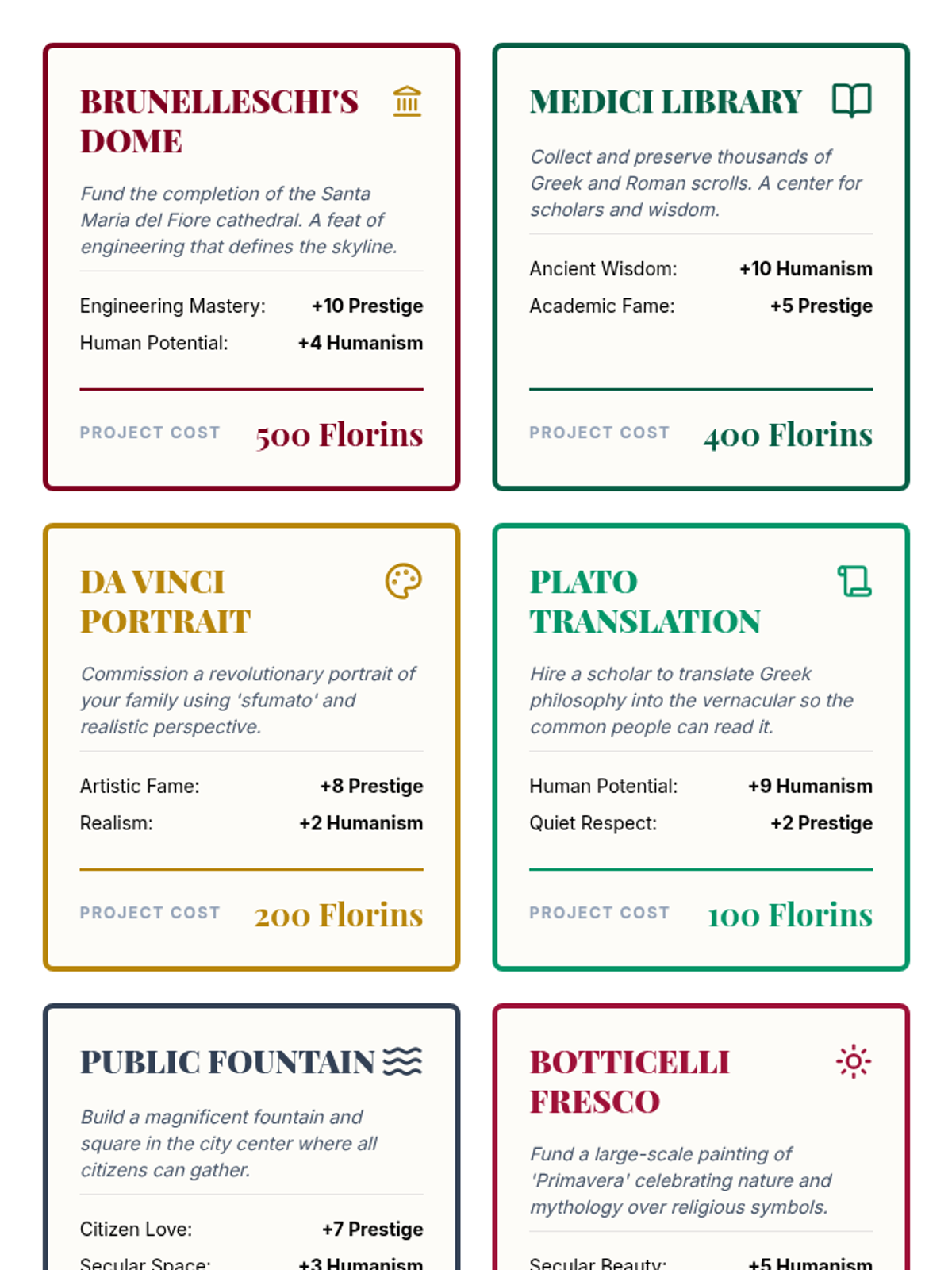
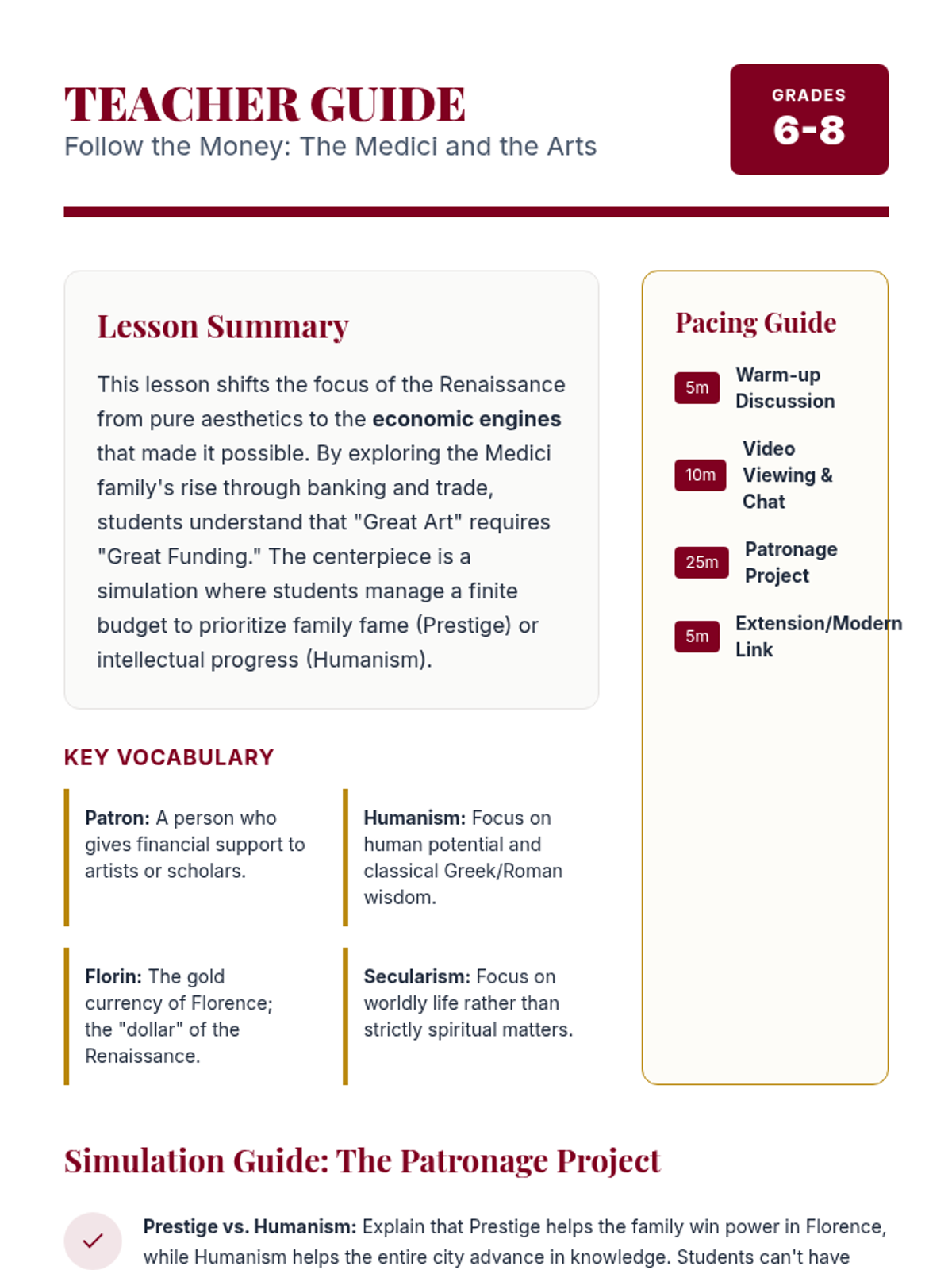
Students explore the economic foundations of the Renaissance, focusing on how the wealth of the Medici family fueled a cultural explosion through patronage. They will manage a 1,000 Florin budget to fund art and scholarship while balancing prestige and humanist values.
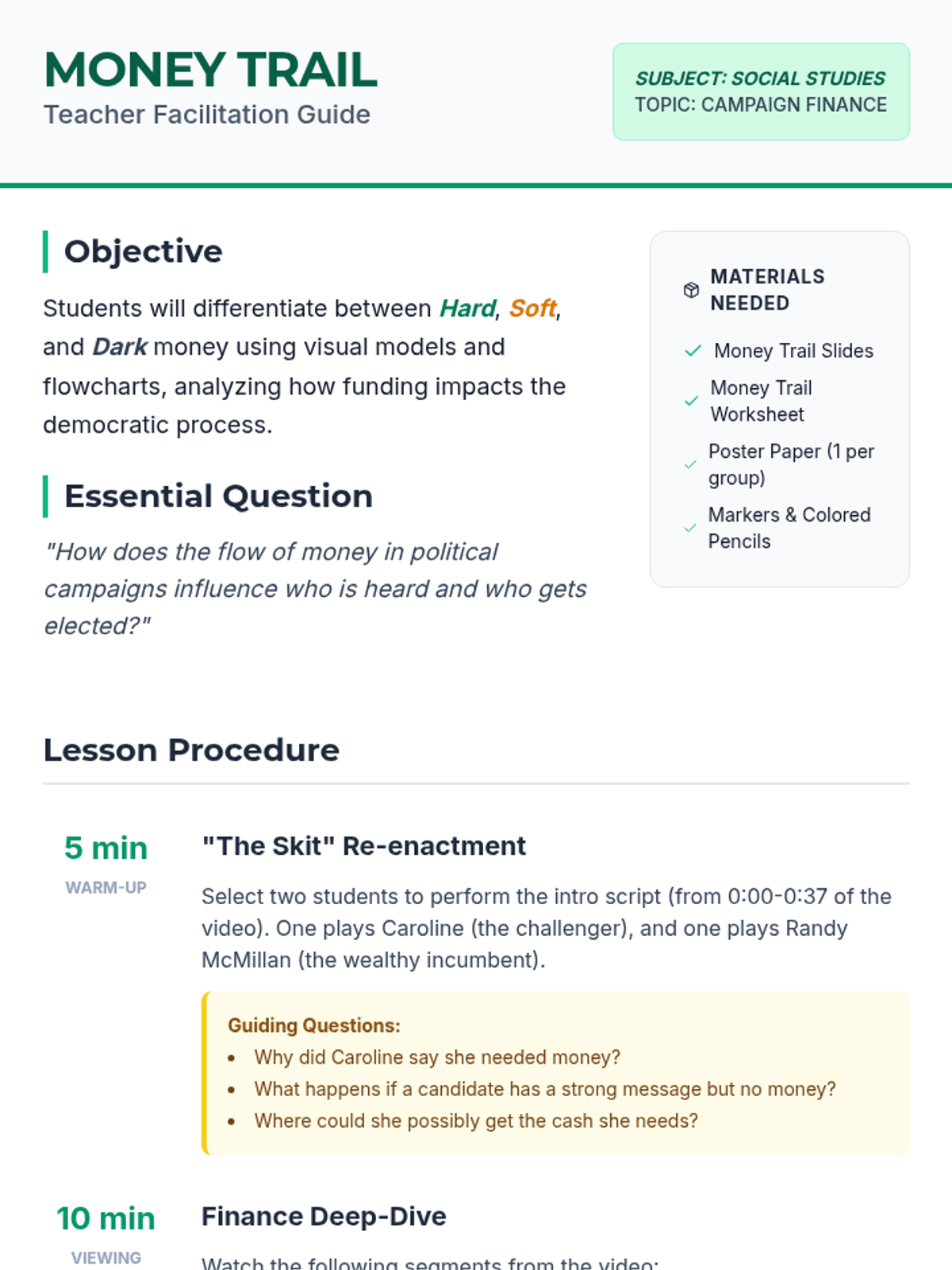
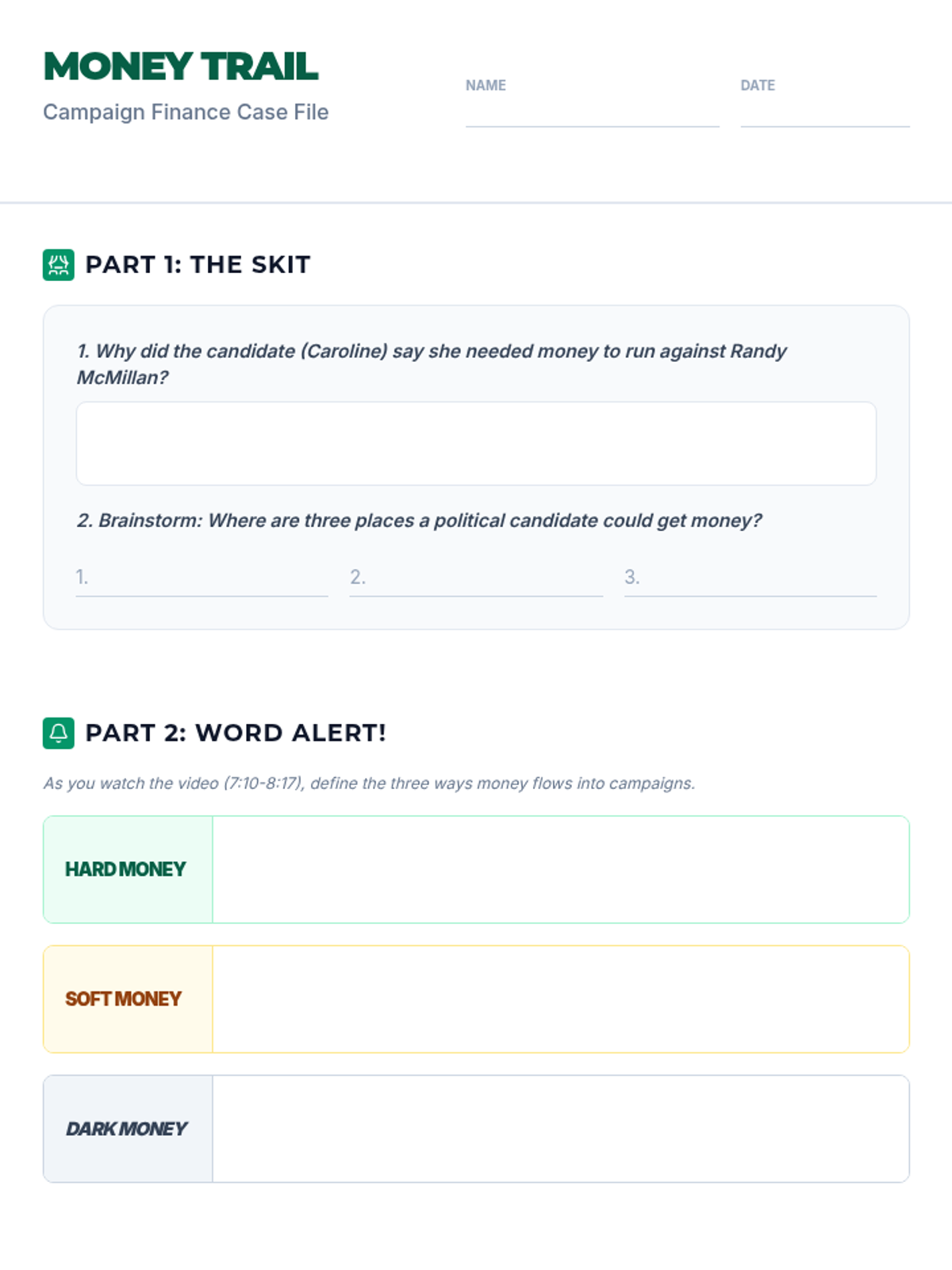
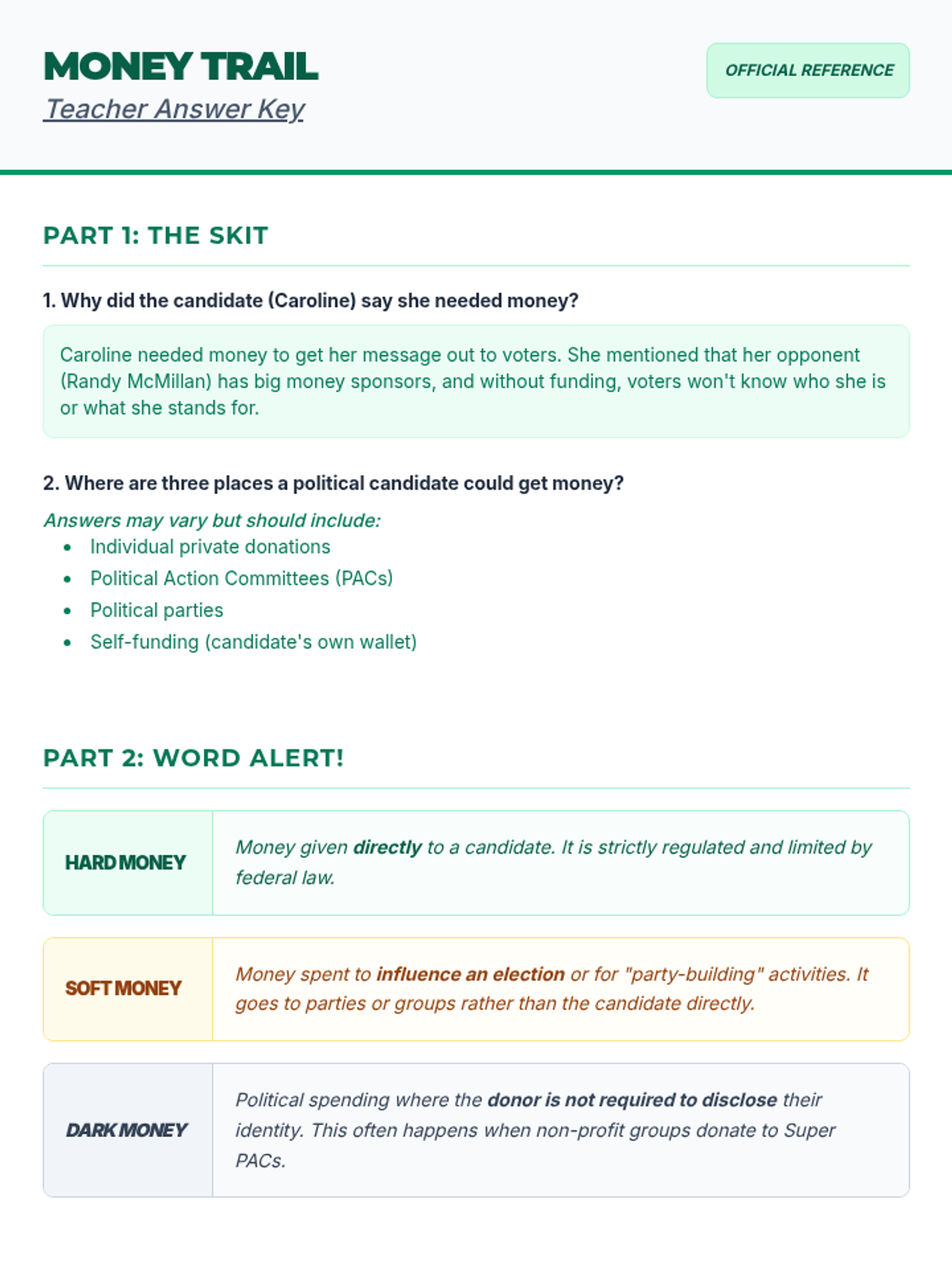
A middle school social studies lesson exploring campaign finance through visual models. Students learn to differentiate between hard, soft, and dark money by analyzing the 'Money Trail' and creating flowcharts of political spending.
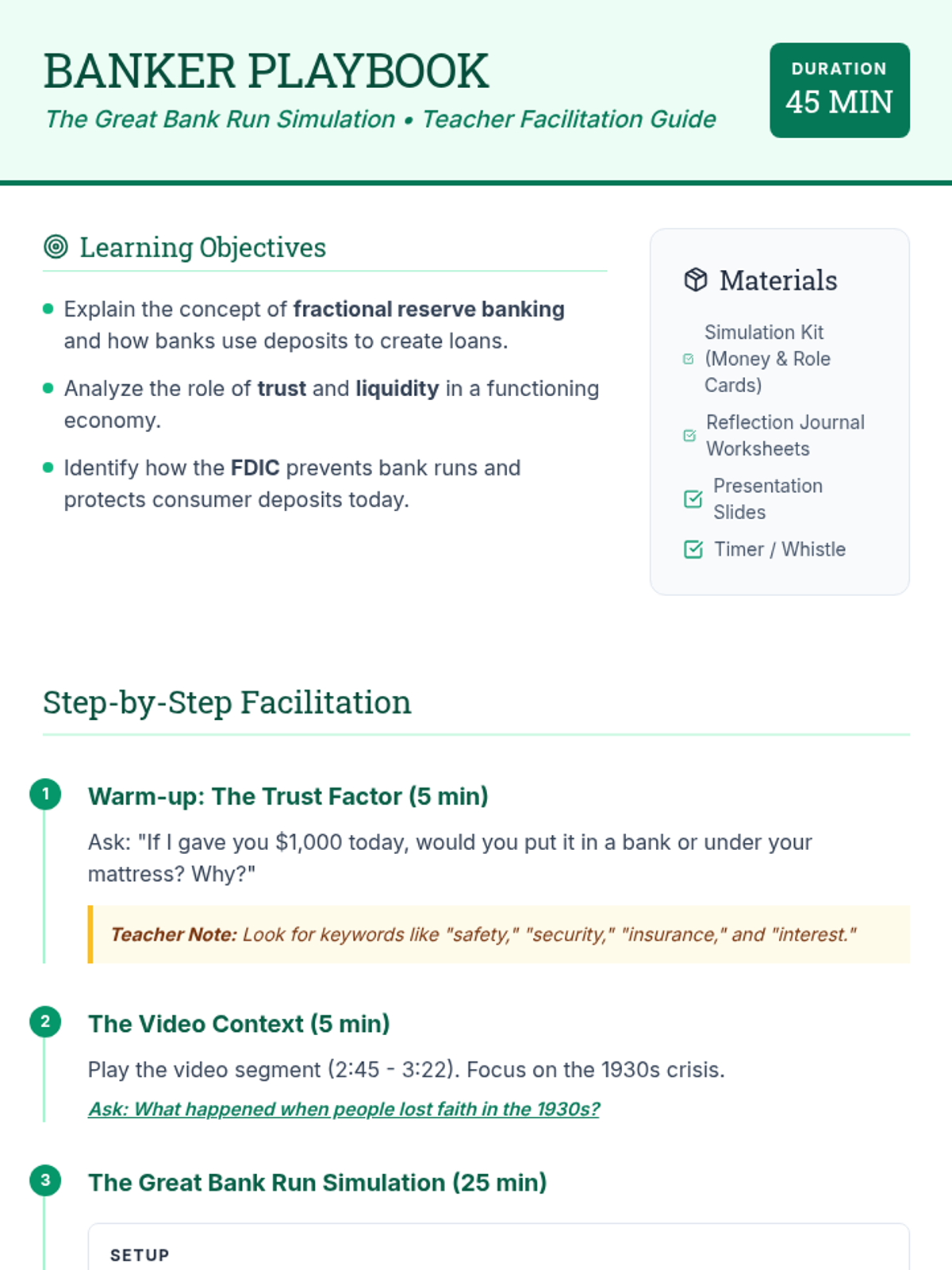
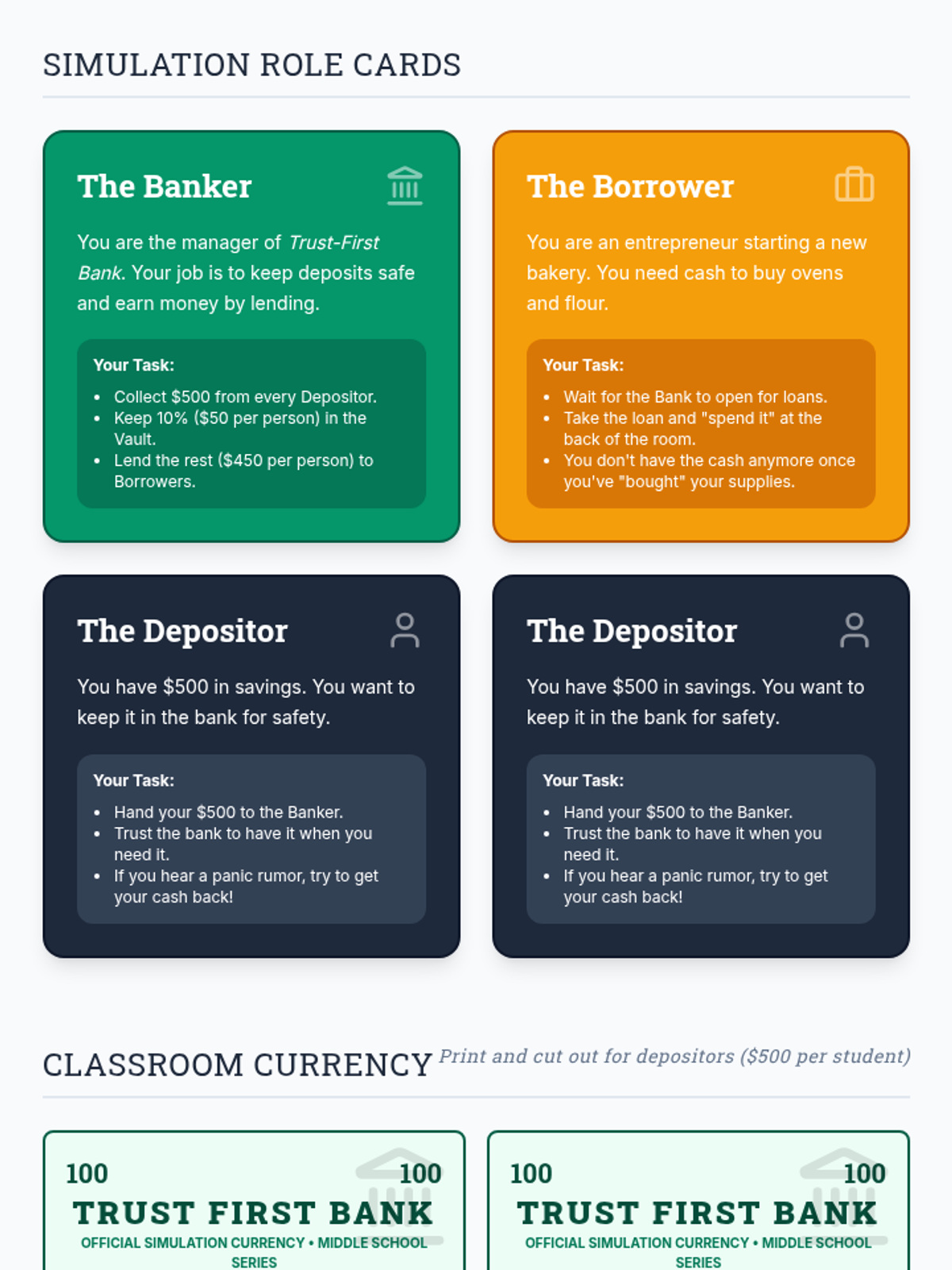
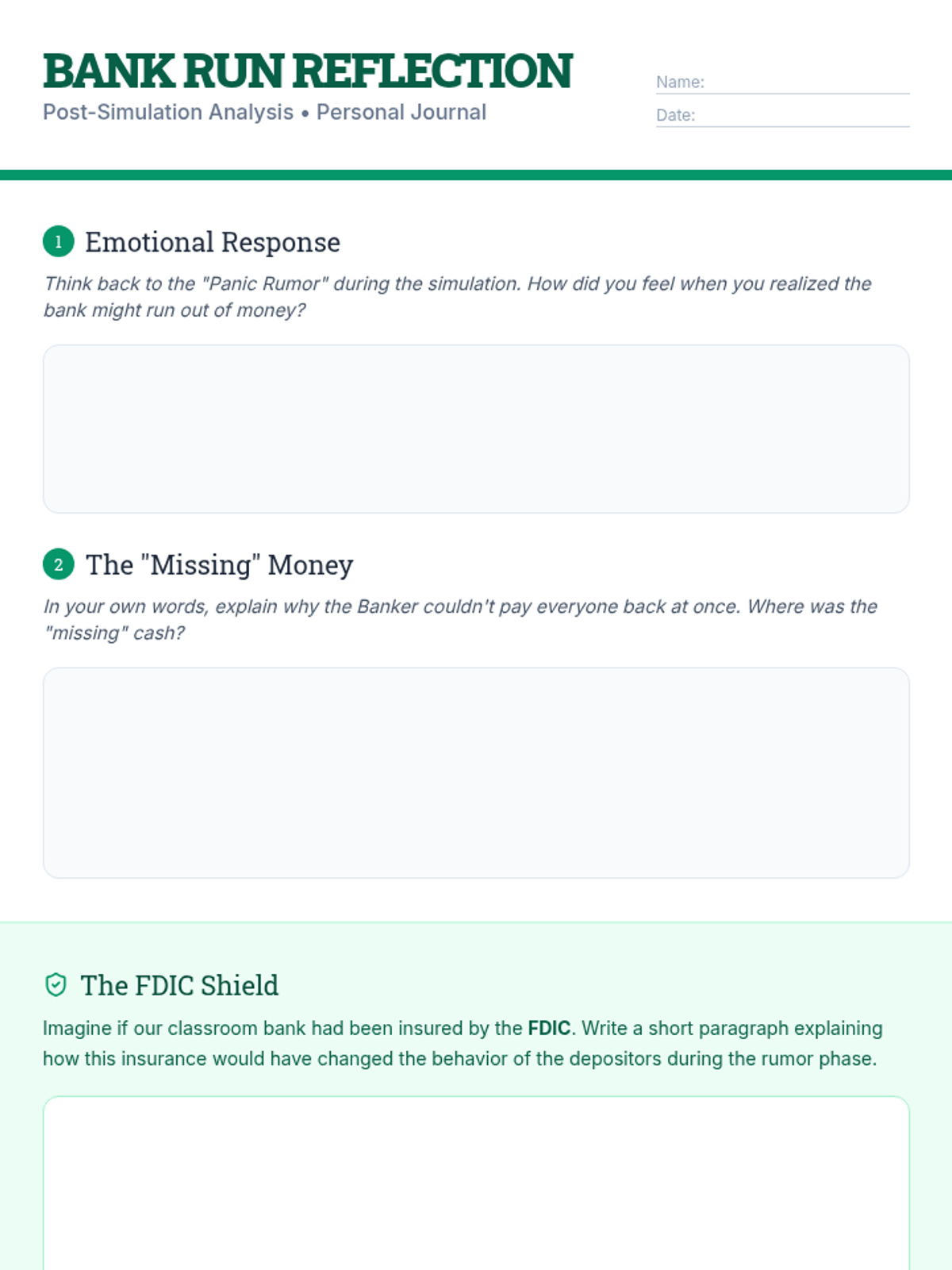
An immersive simulation lesson where students experience fractional reserve banking first-hand to understand why trust is the foundation of the financial system. Students will simulate deposits, lending, and a historical 'bank run' before reflecting on modern protections like the FDIC.
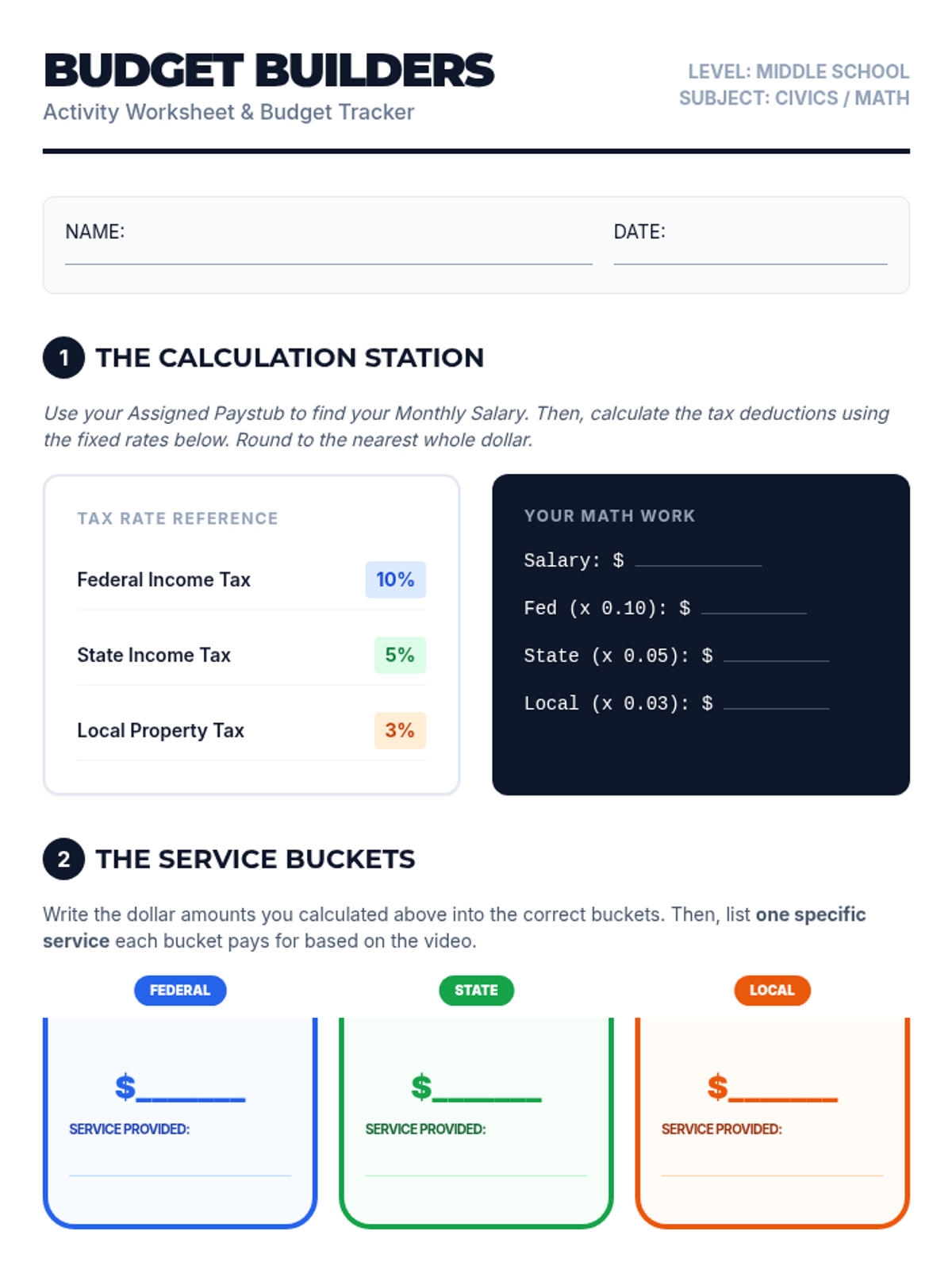
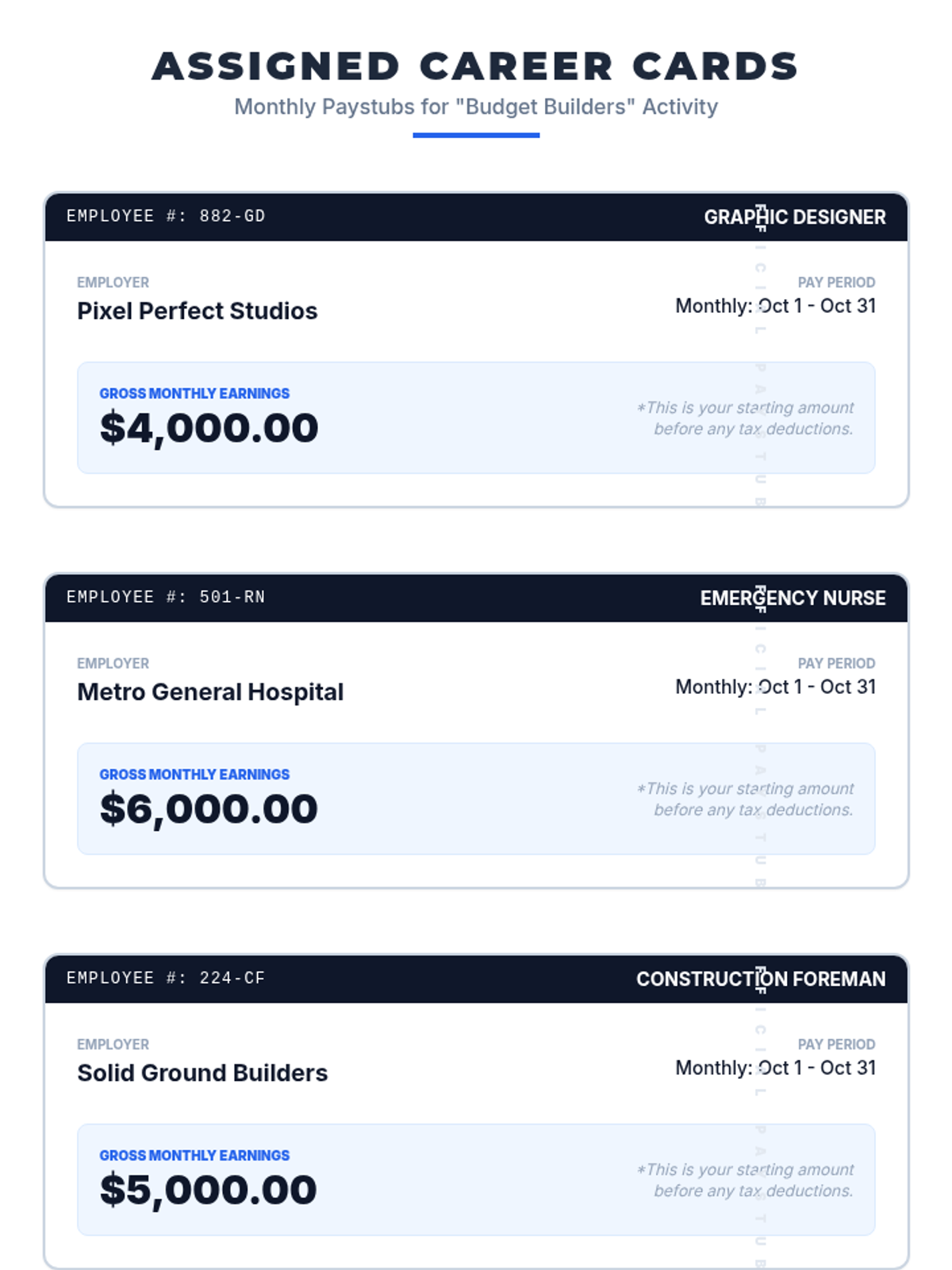
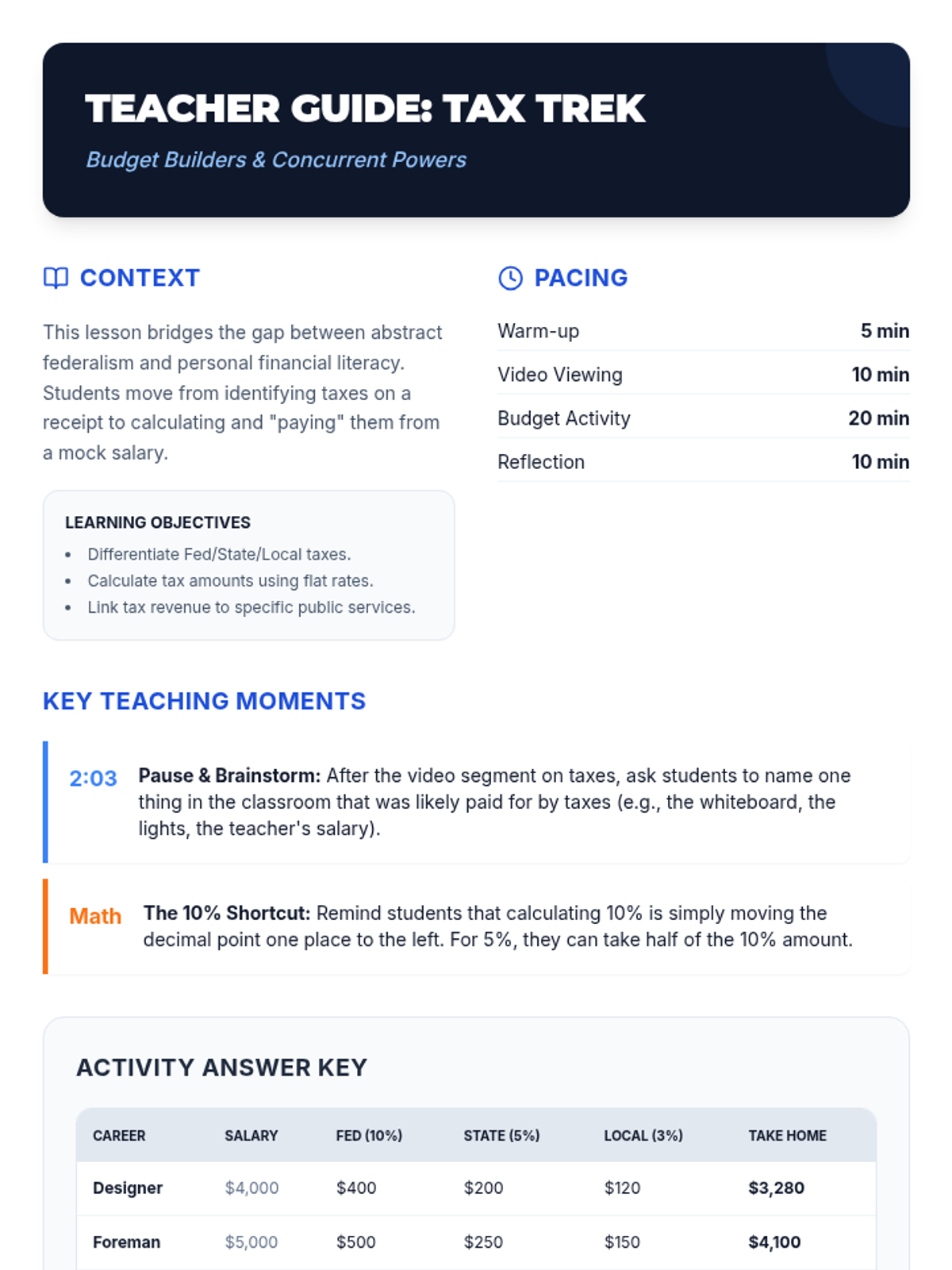
A cross-curricular Math and Civics lesson where students calculate different types of taxes from mock paystubs and allocate those funds to the specific government services they support, such as defense, schools, and public safety.
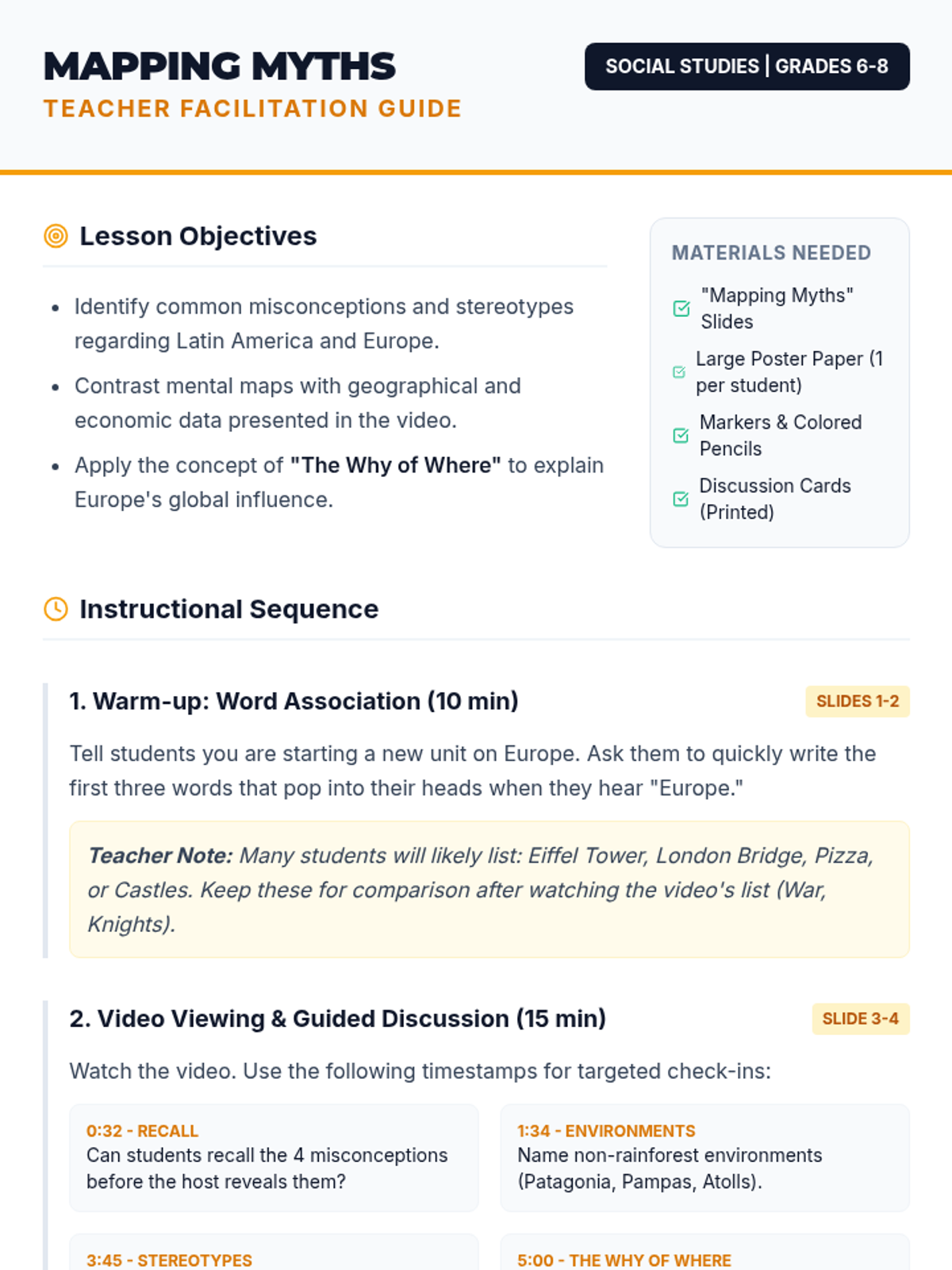
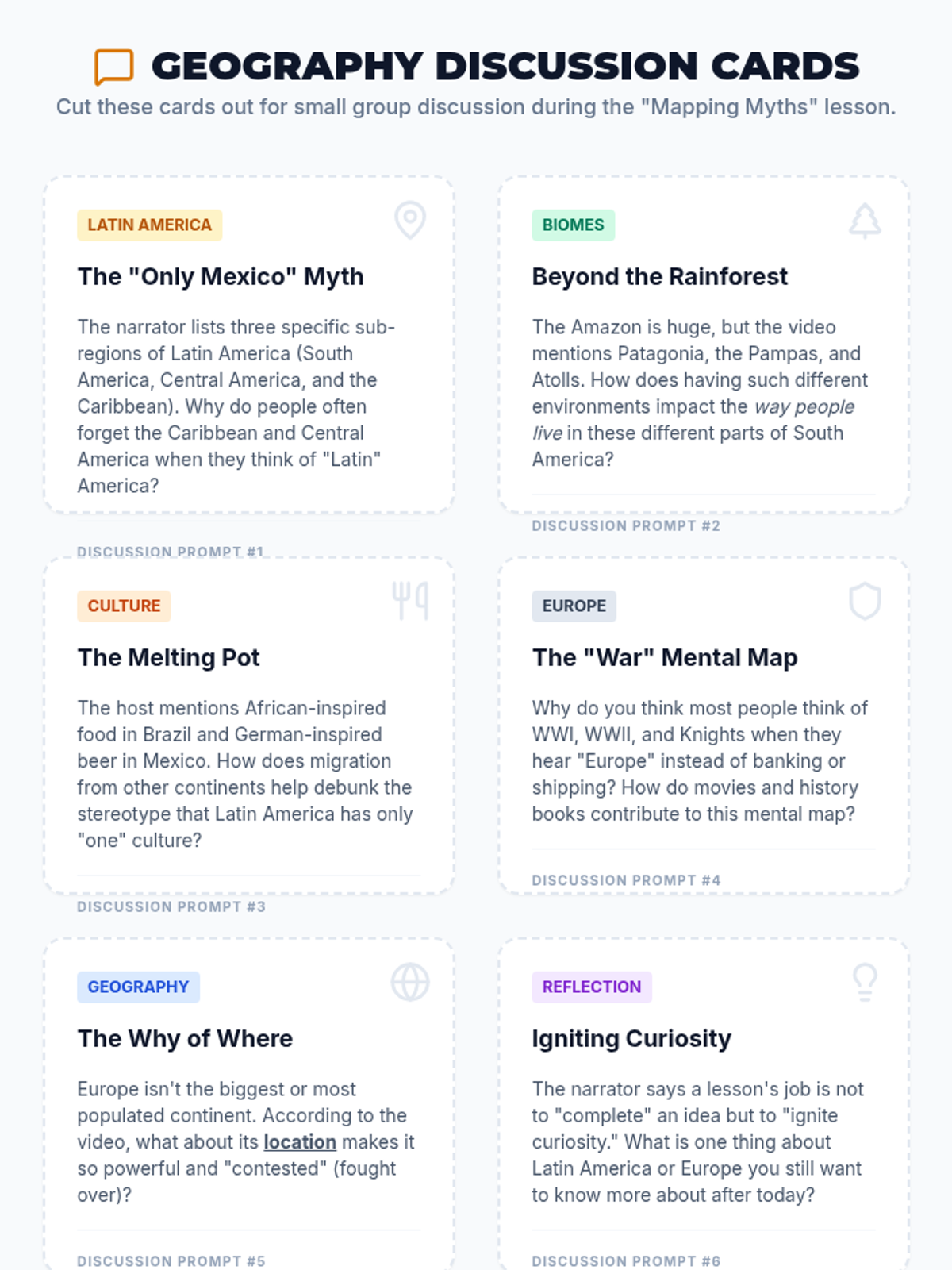
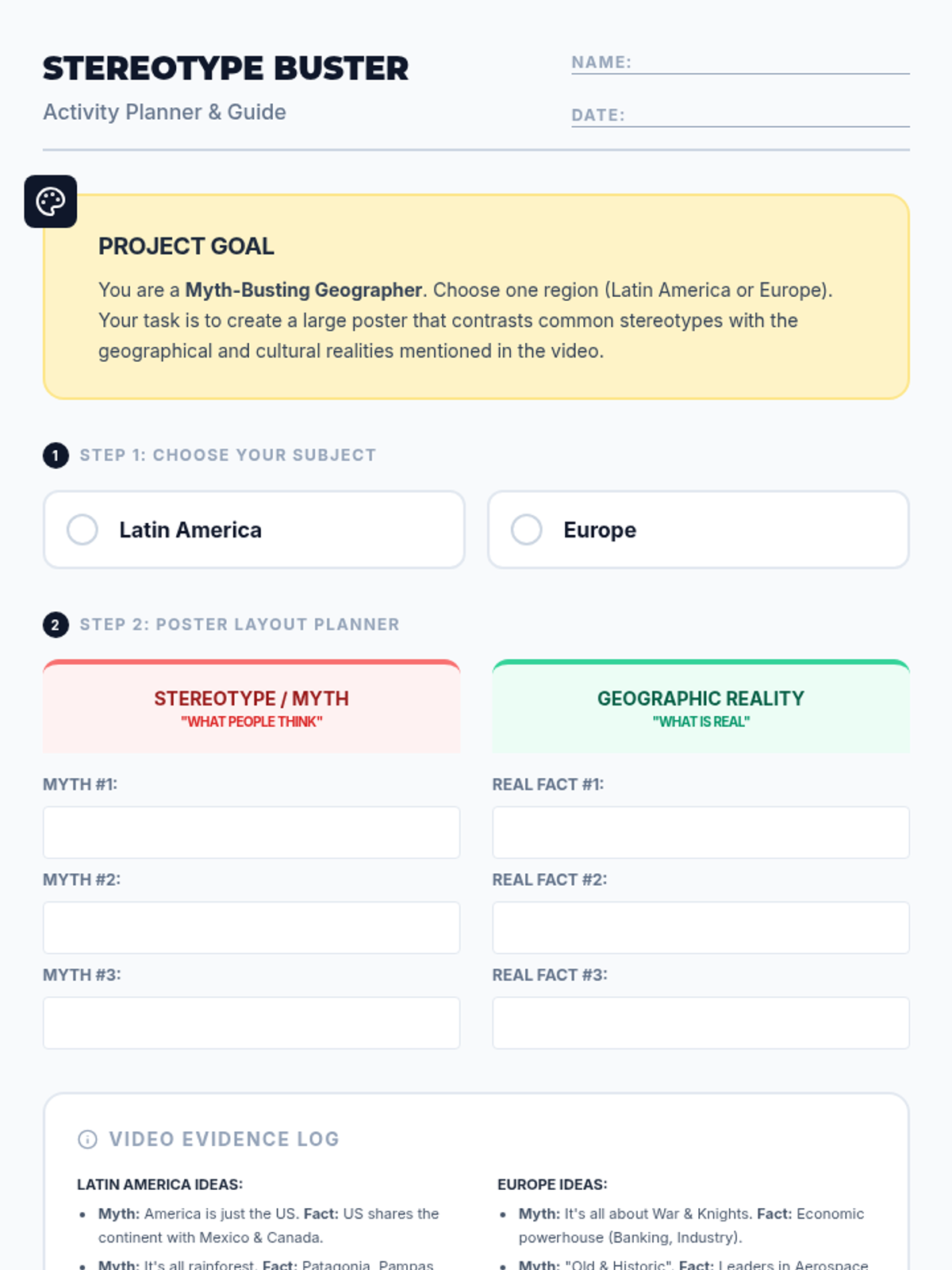
Students explore how mental maps and stereotypes influence our understanding of world regions using a video recap of Latin America and an introduction to Europe. The lesson focuses on 'myth-busting' common misconceptions and understanding the 'Why of Where'.
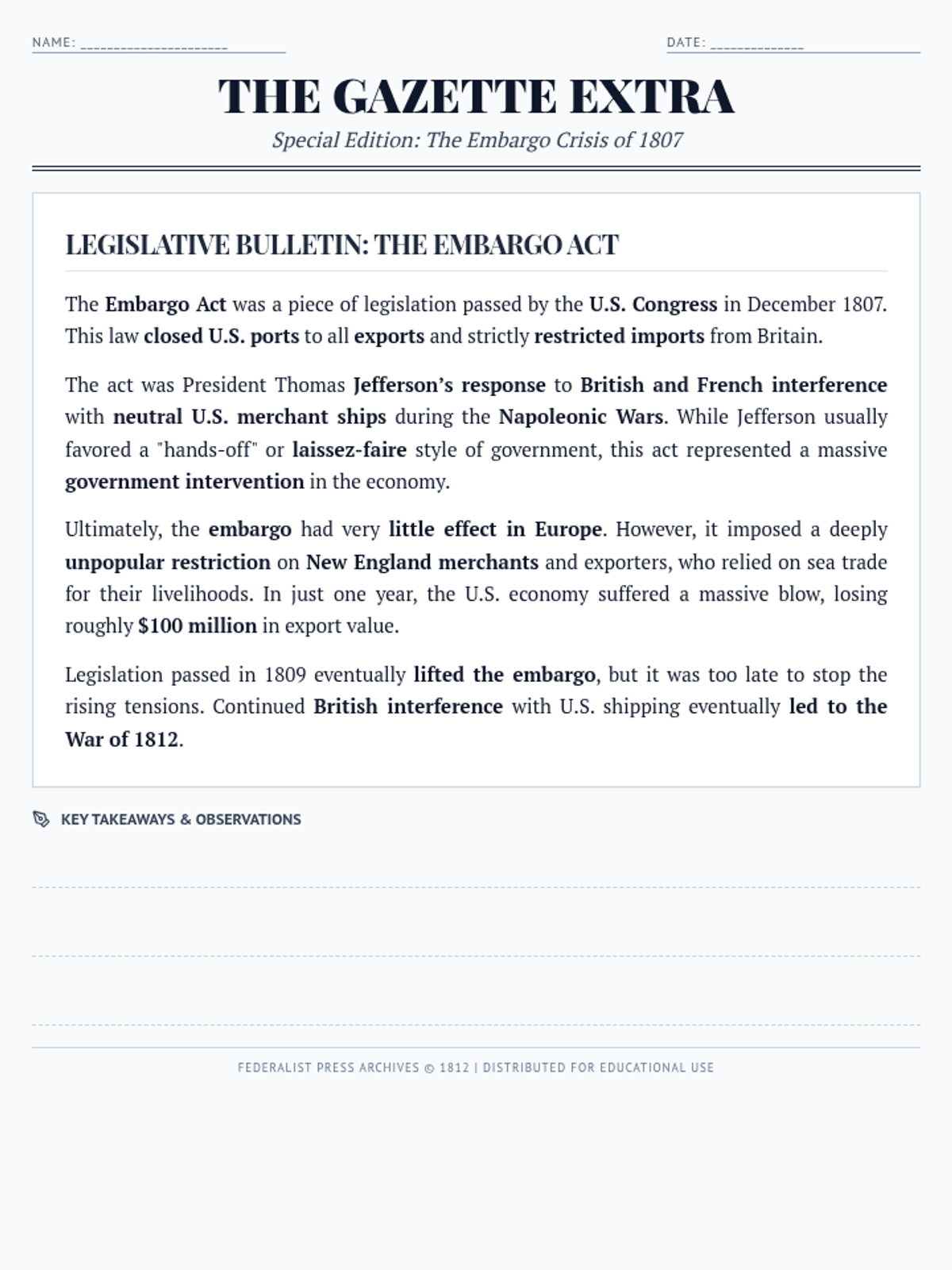
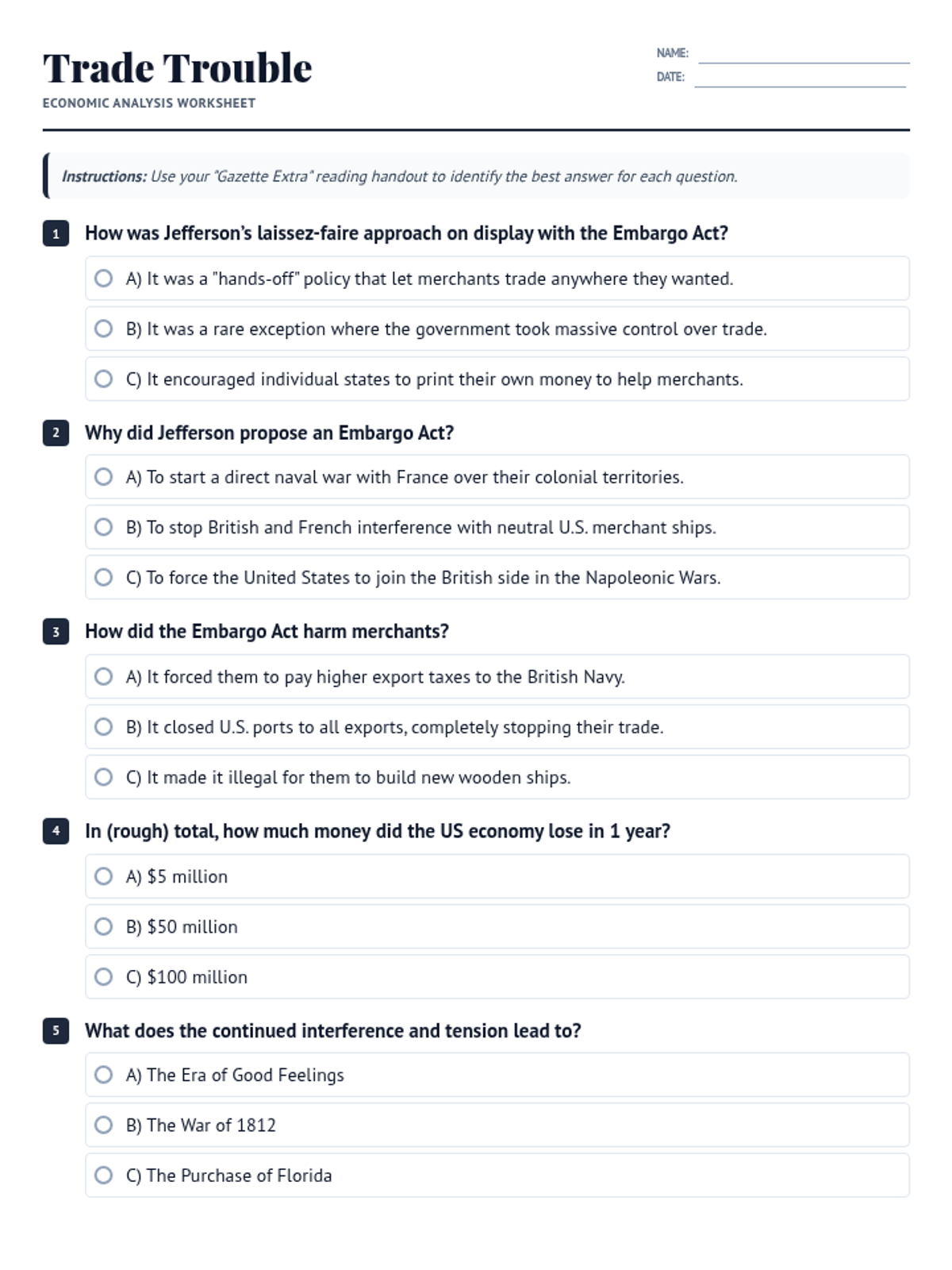
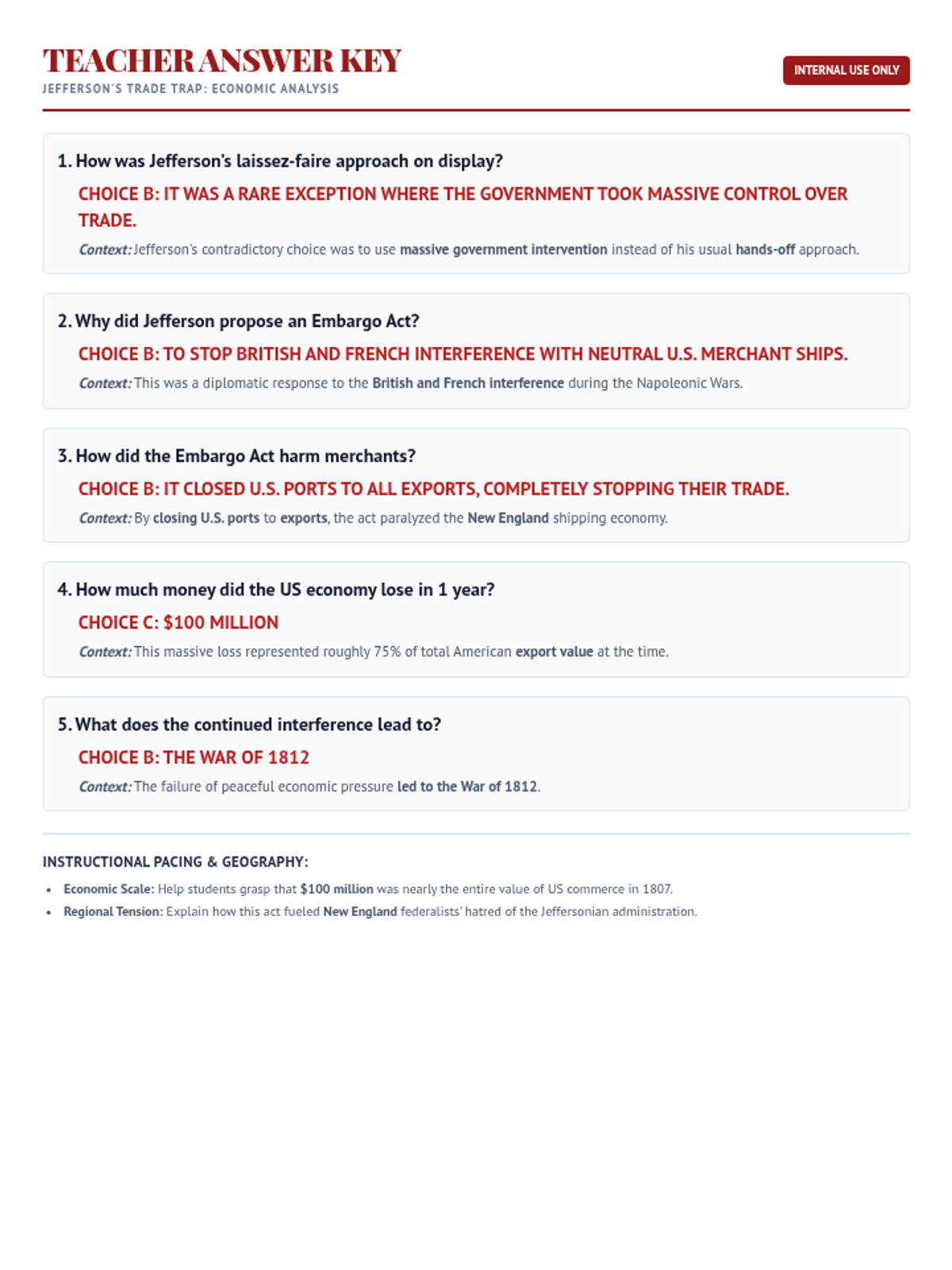
A focused look at Thomas Jefferson's Embargo Act of 1807, exploring its causes, the economic fallout for New England merchants, and its role in leading to the War of 1812.
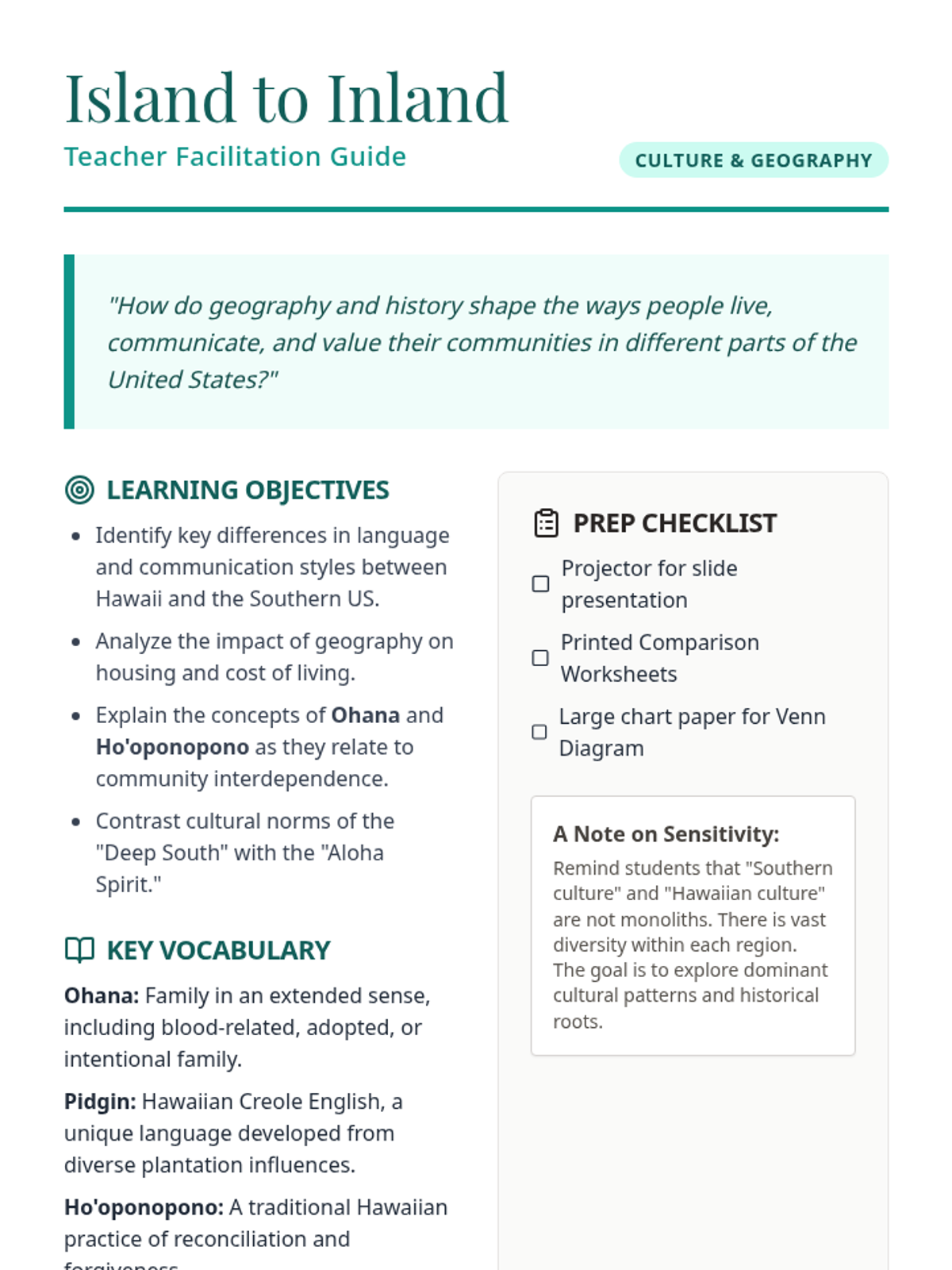
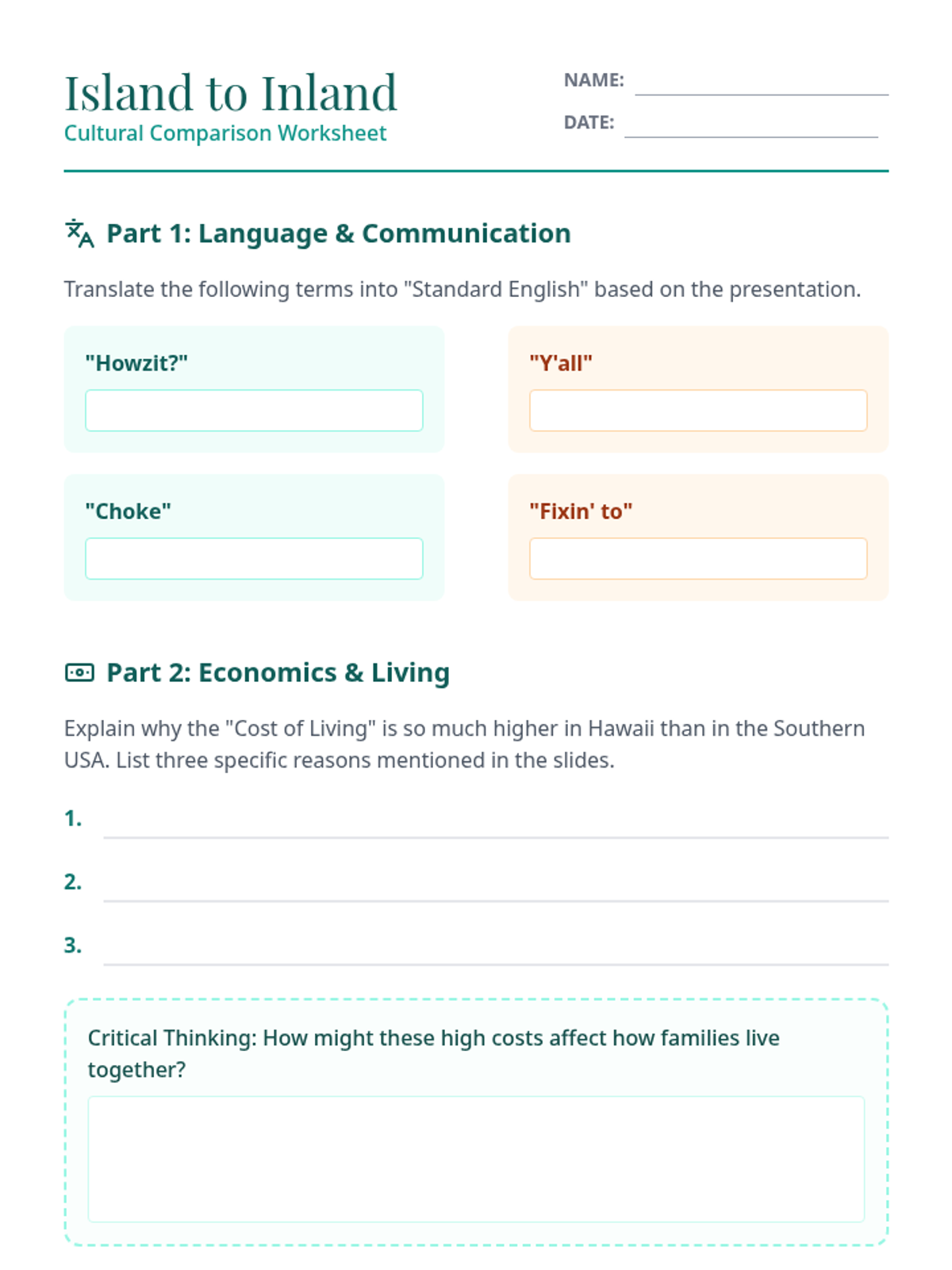
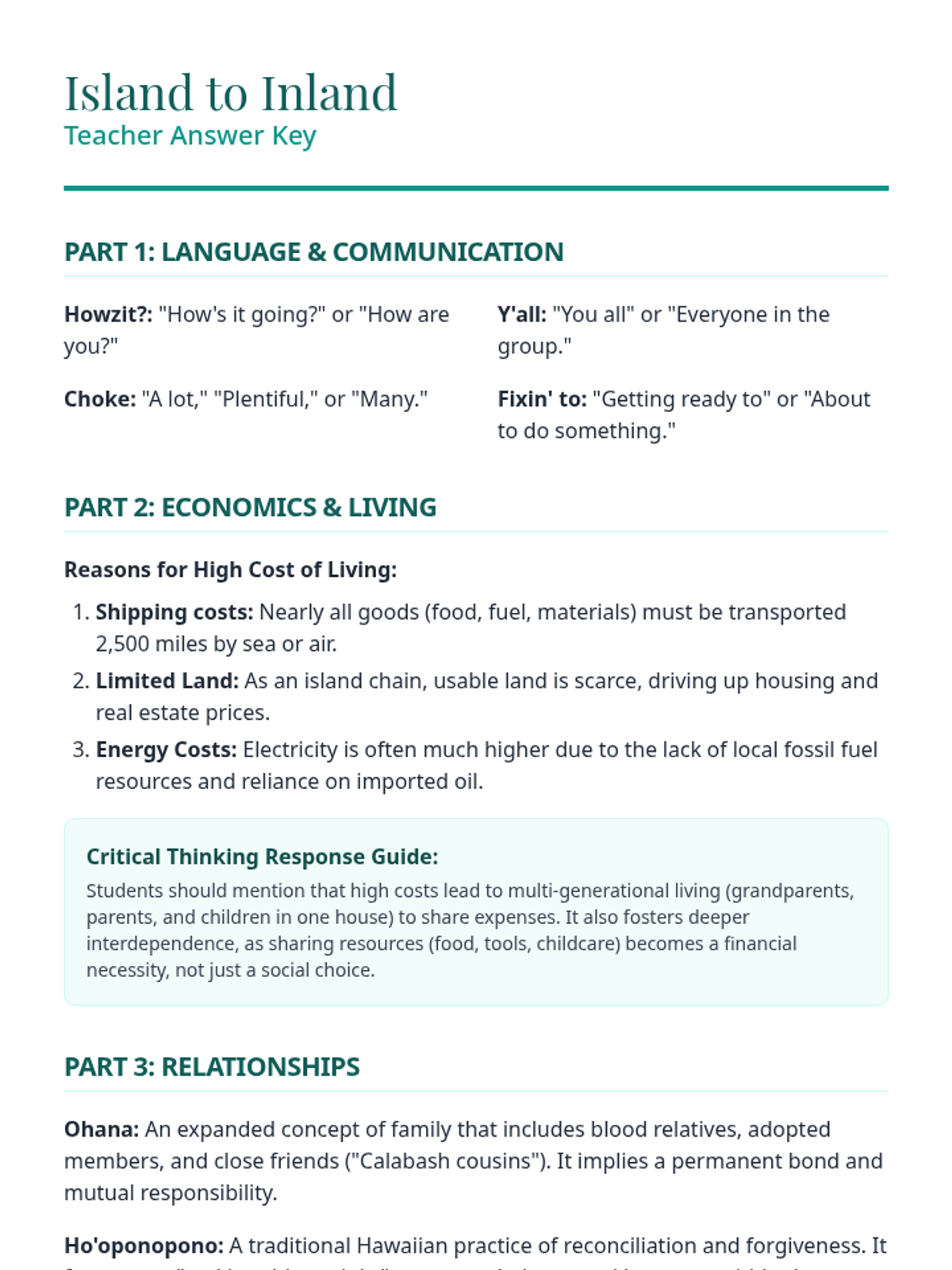
A comparative look at Hawaiian culture and Southern US culture, focusing on language, housing, economics, and deep-rooted family values.
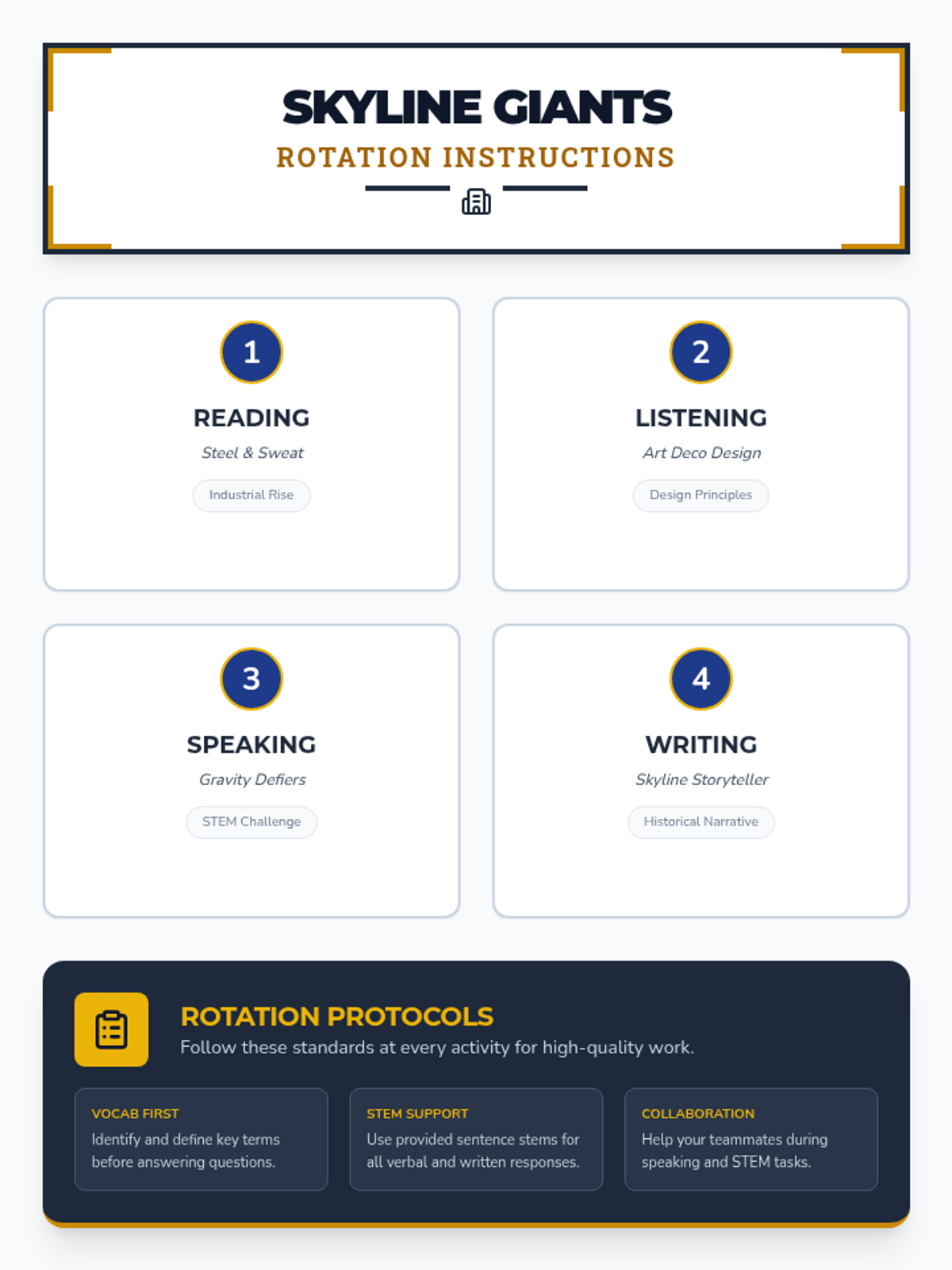
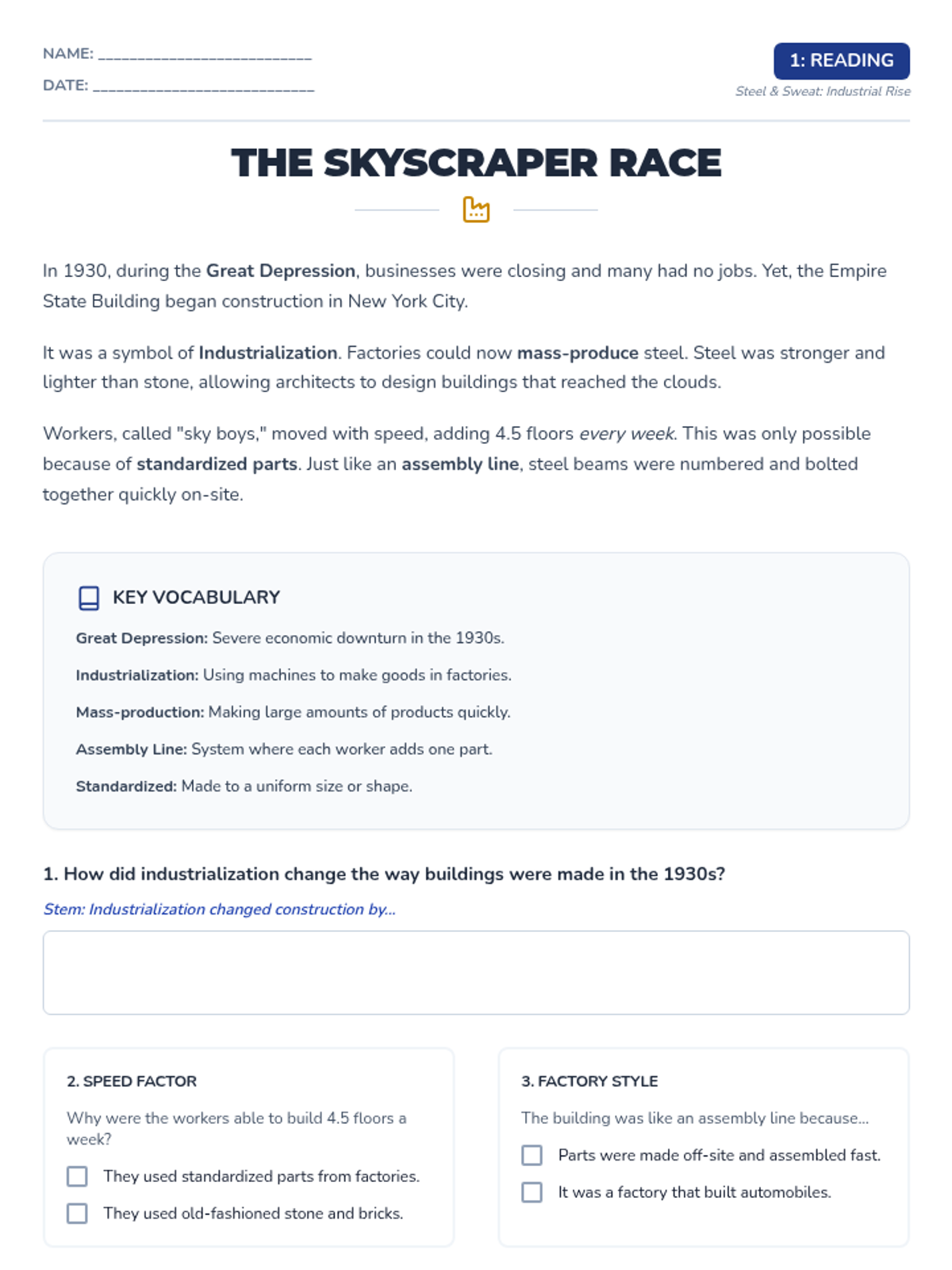
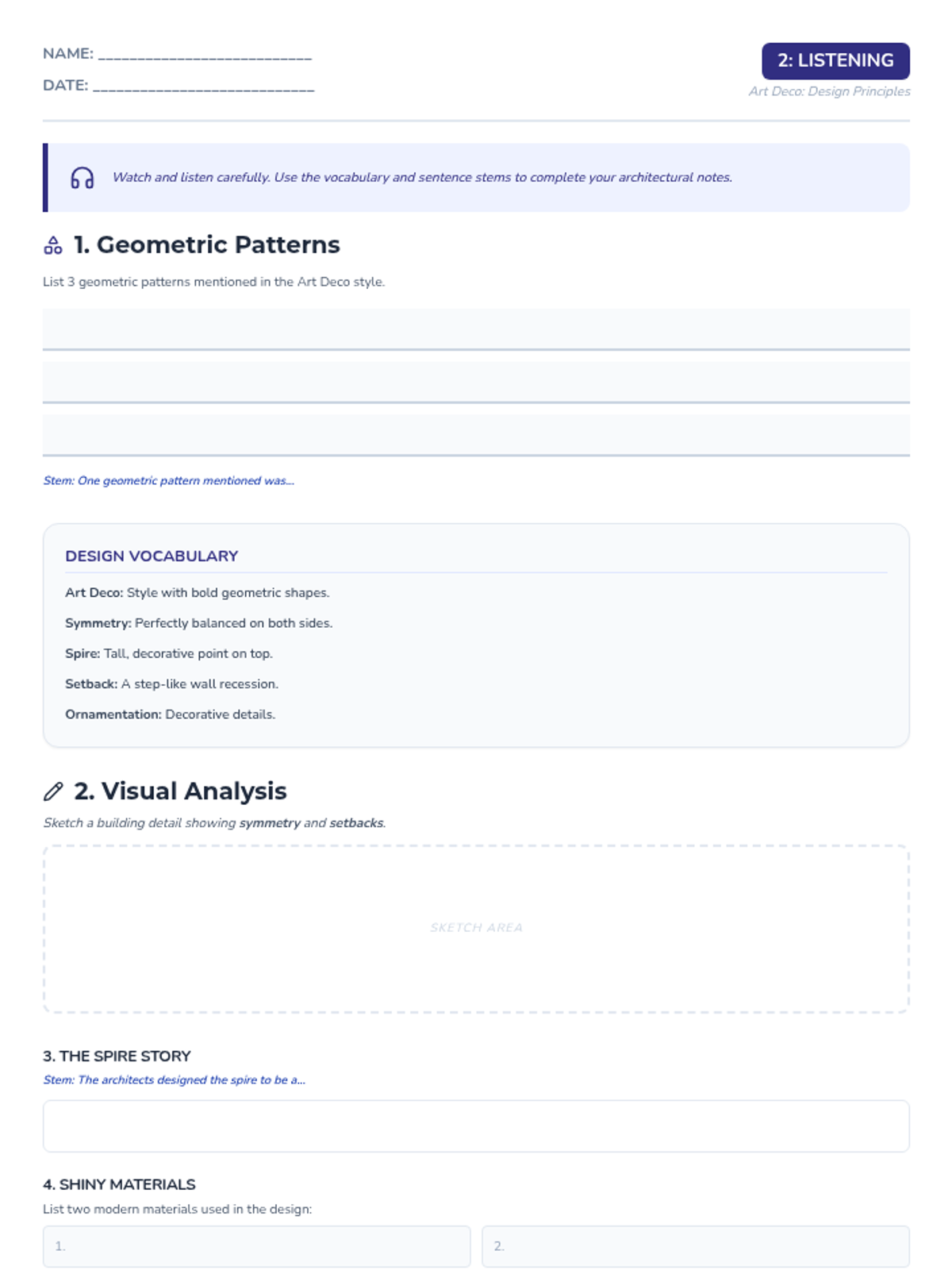
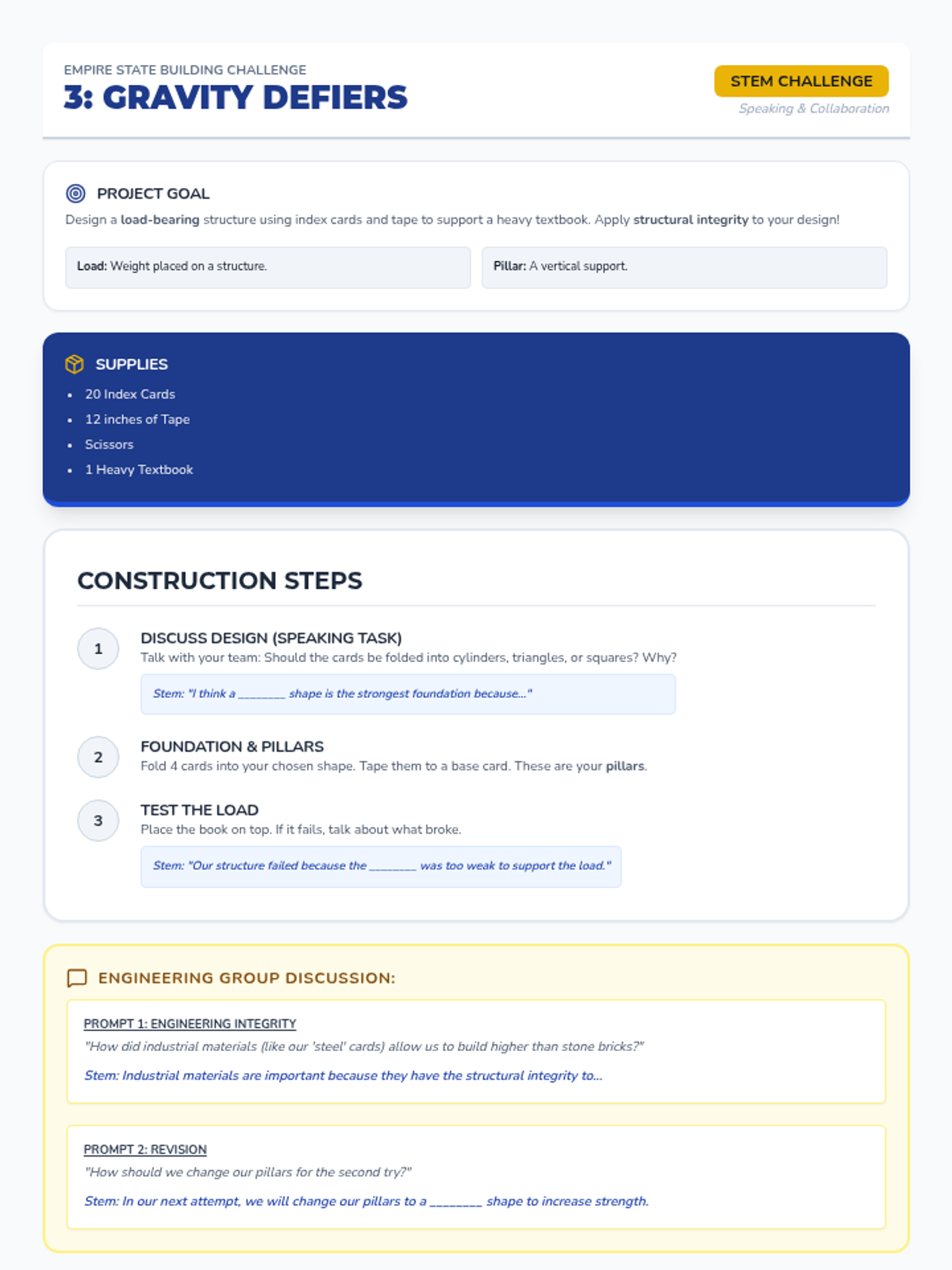
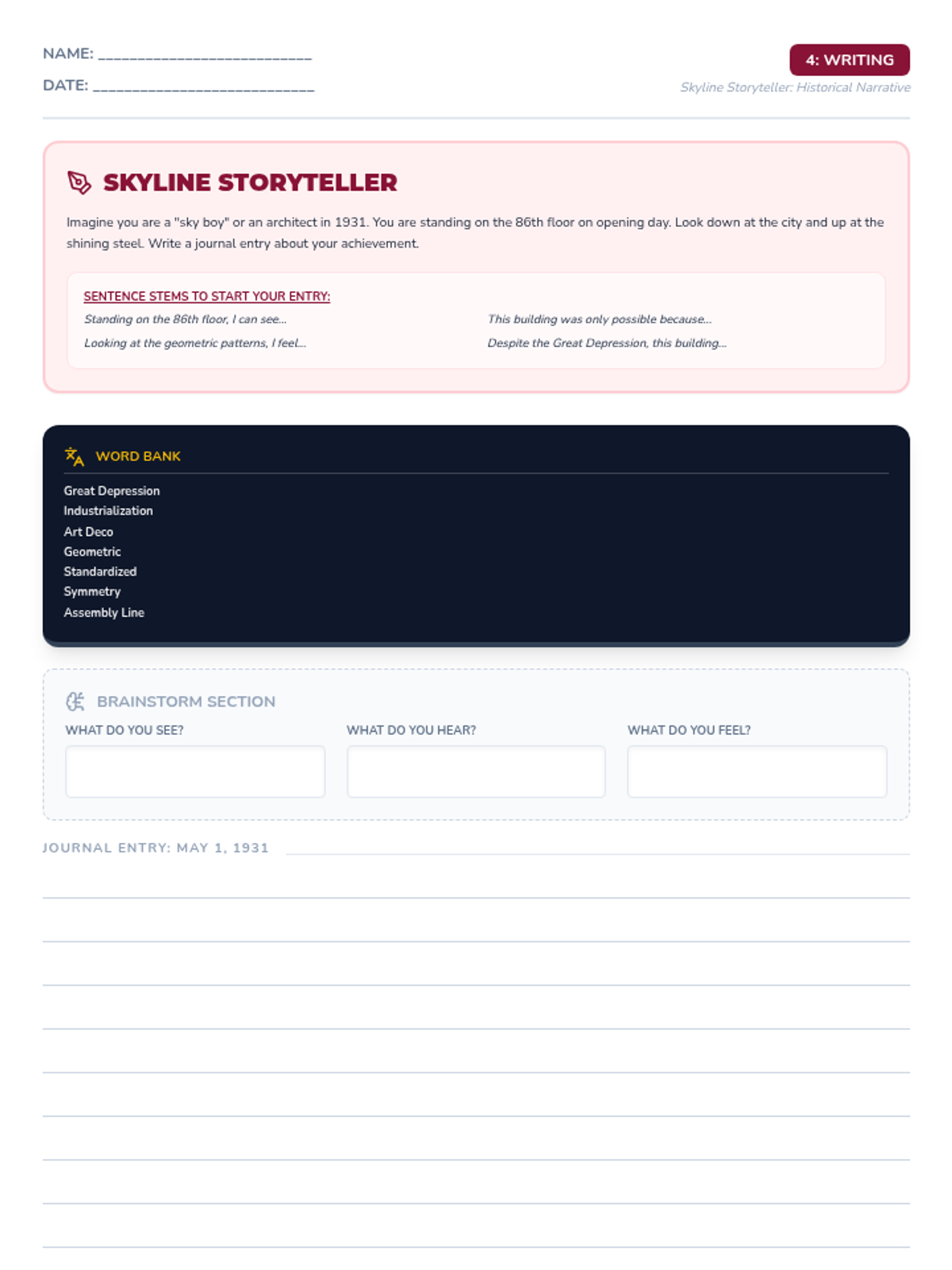
A series of 4 interactive stations exploring the Empire State Building through the lenses of high school architectural design and industrial history, adapted for 6th-grade readability. Students rotate through reading, listening, speaking, and writing tasks, culminating in a hands-on STEM engineering challenge.
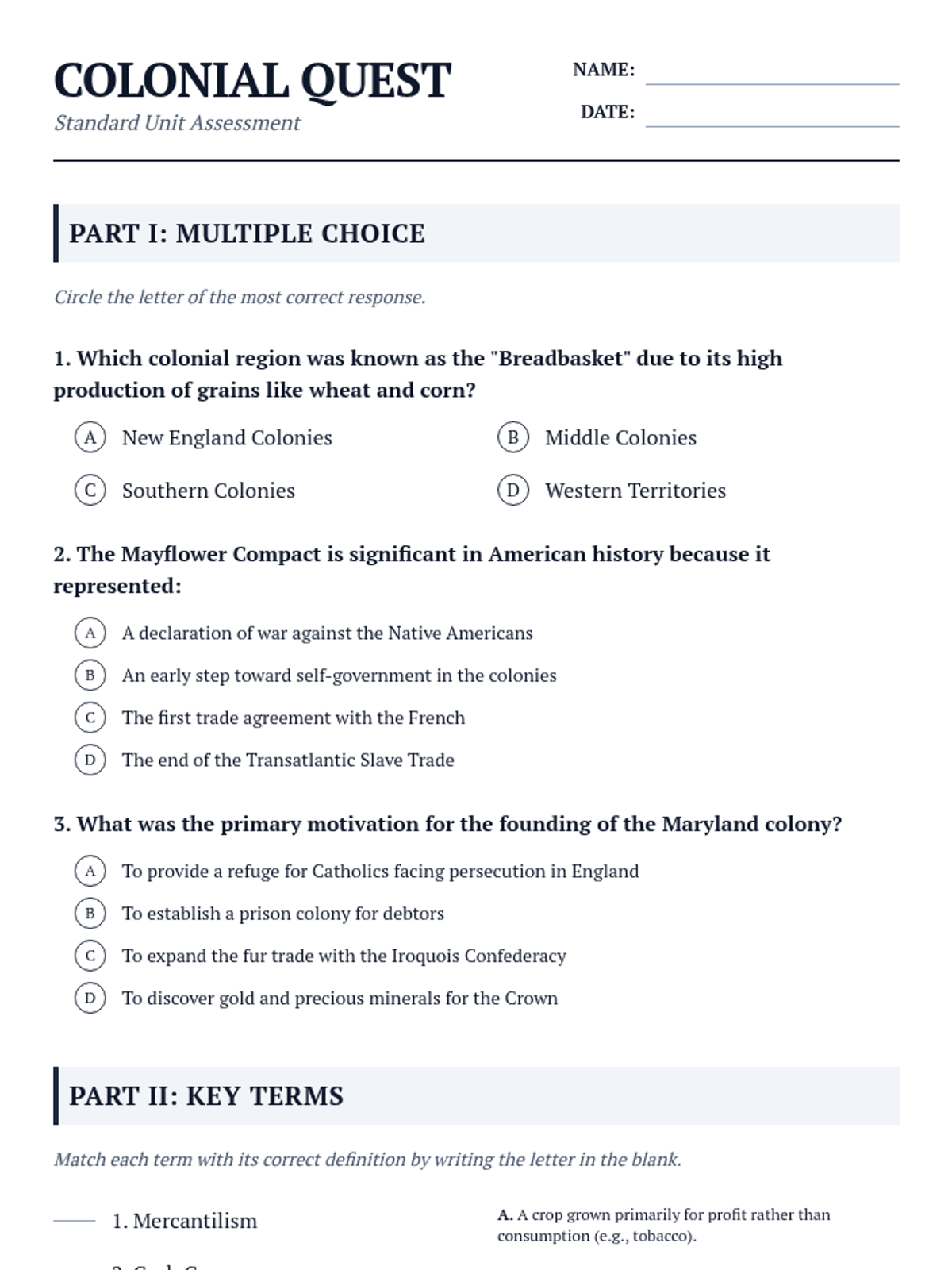
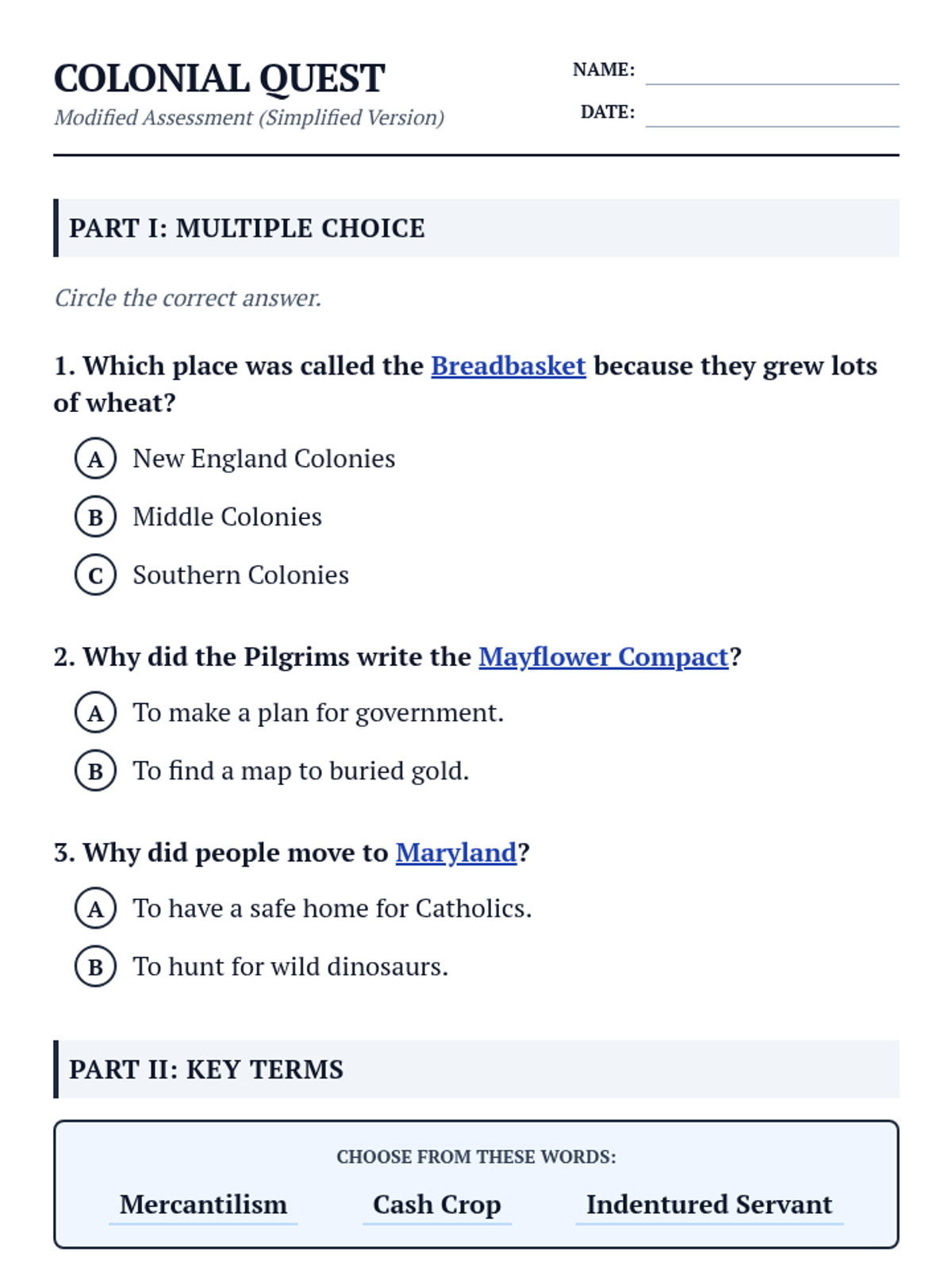
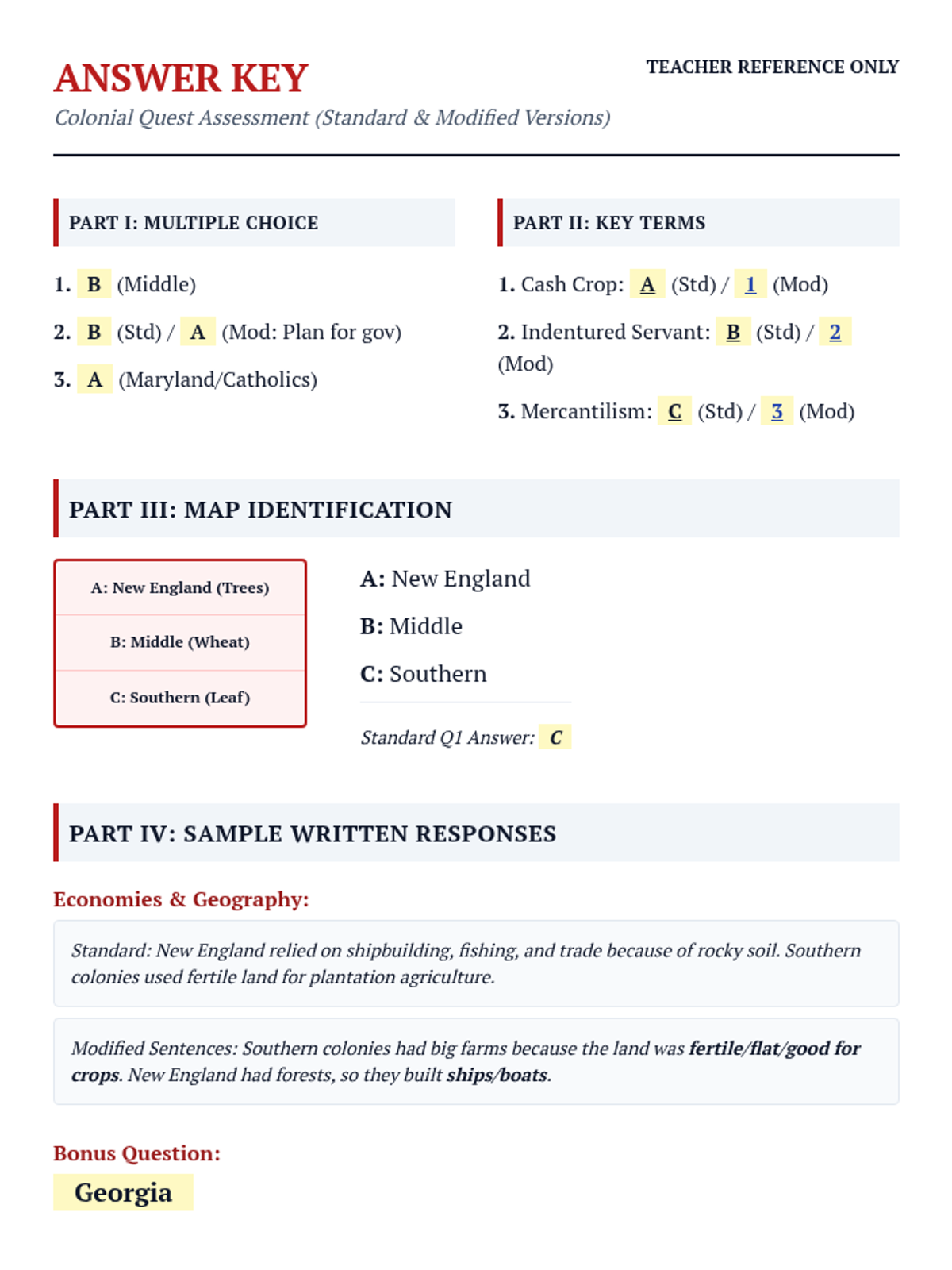
A comprehensive assessment and review for a unit on the Thirteen Colonies, featuring a standard test and a modified version for students with IEP accommodations.
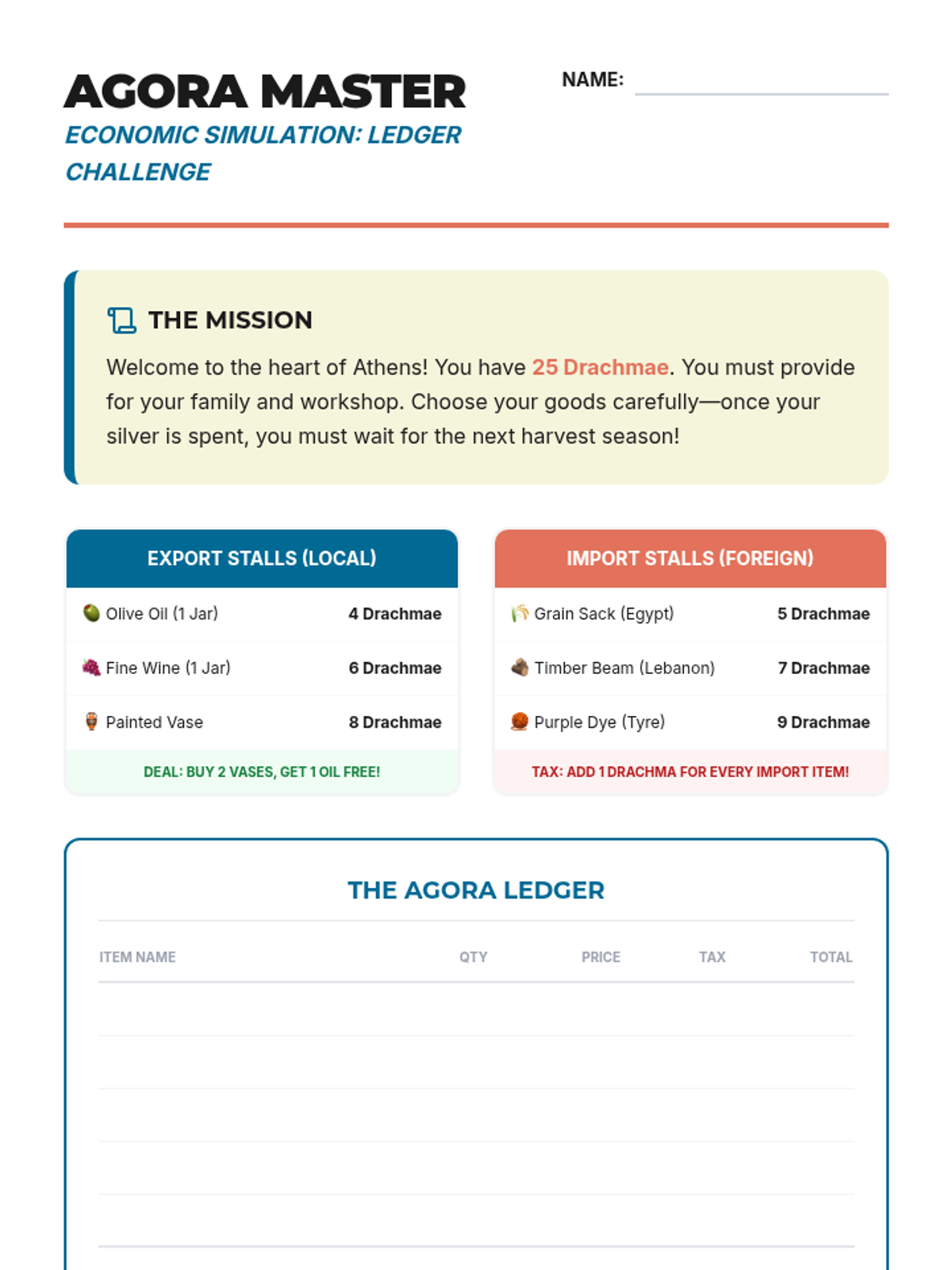
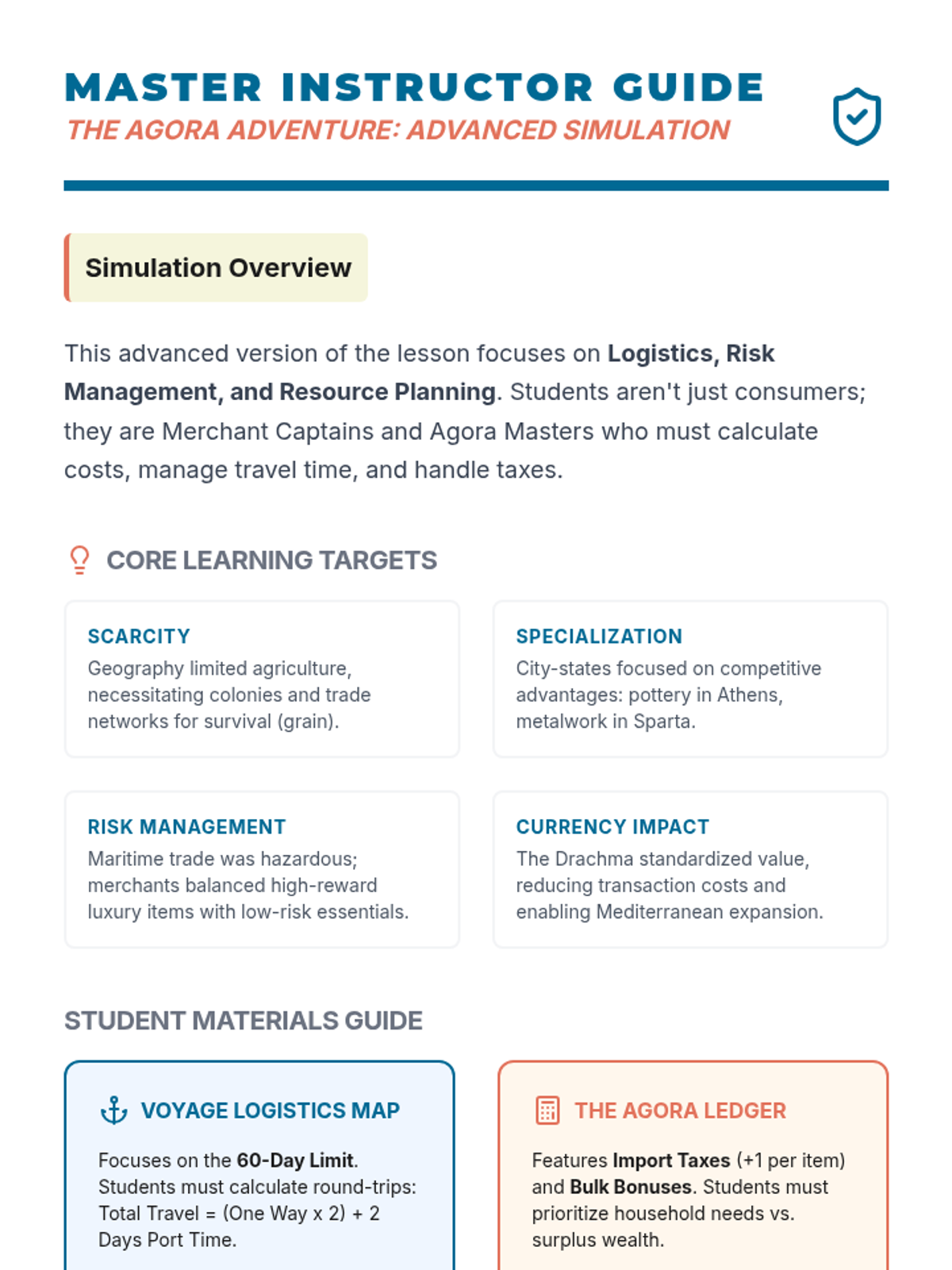
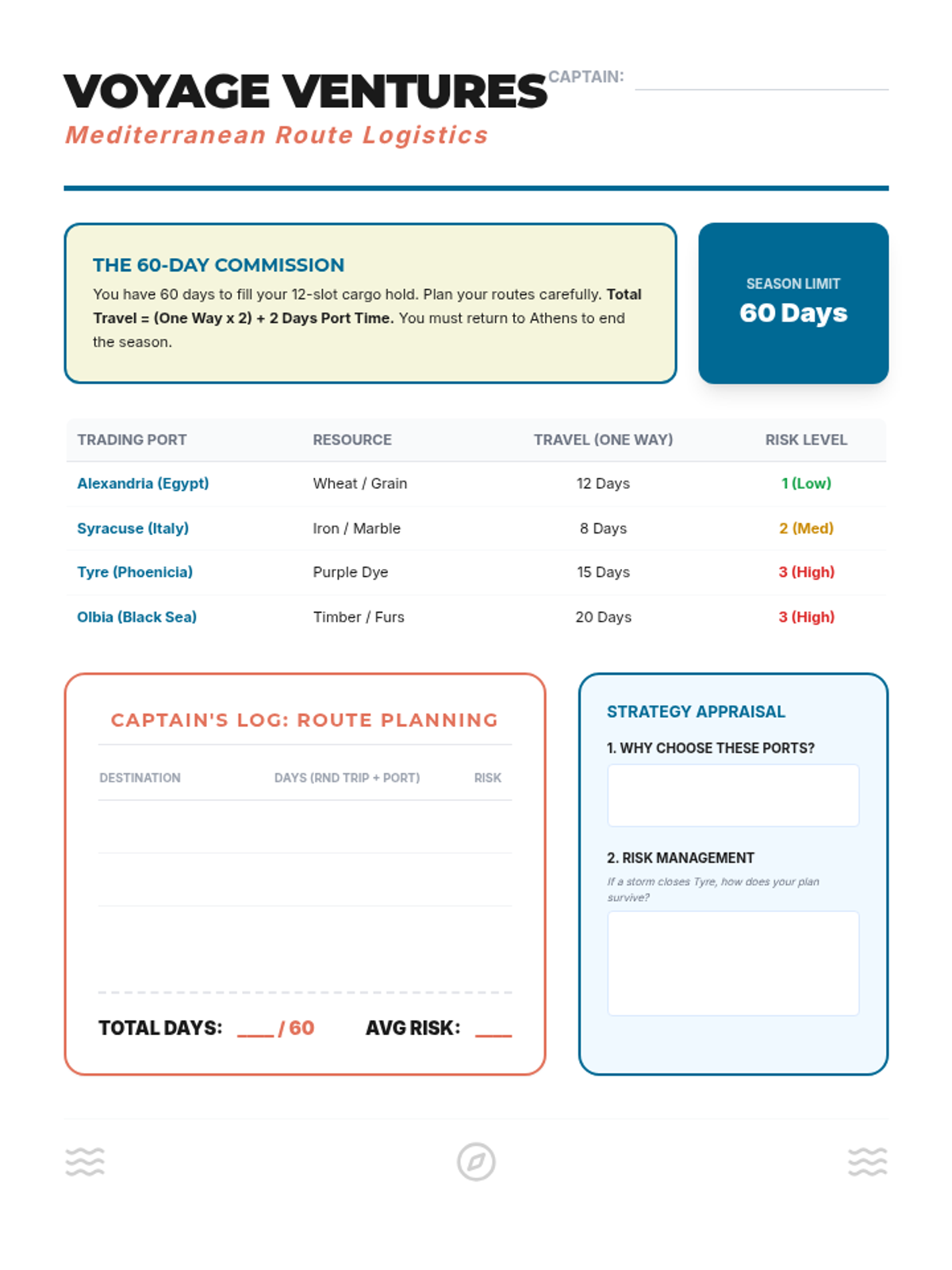
An introductory lesson on the economy of Ancient Greece, focusing on maritime trade, agriculture, specialization, and the use of coinage through a simulated marketplace experience.
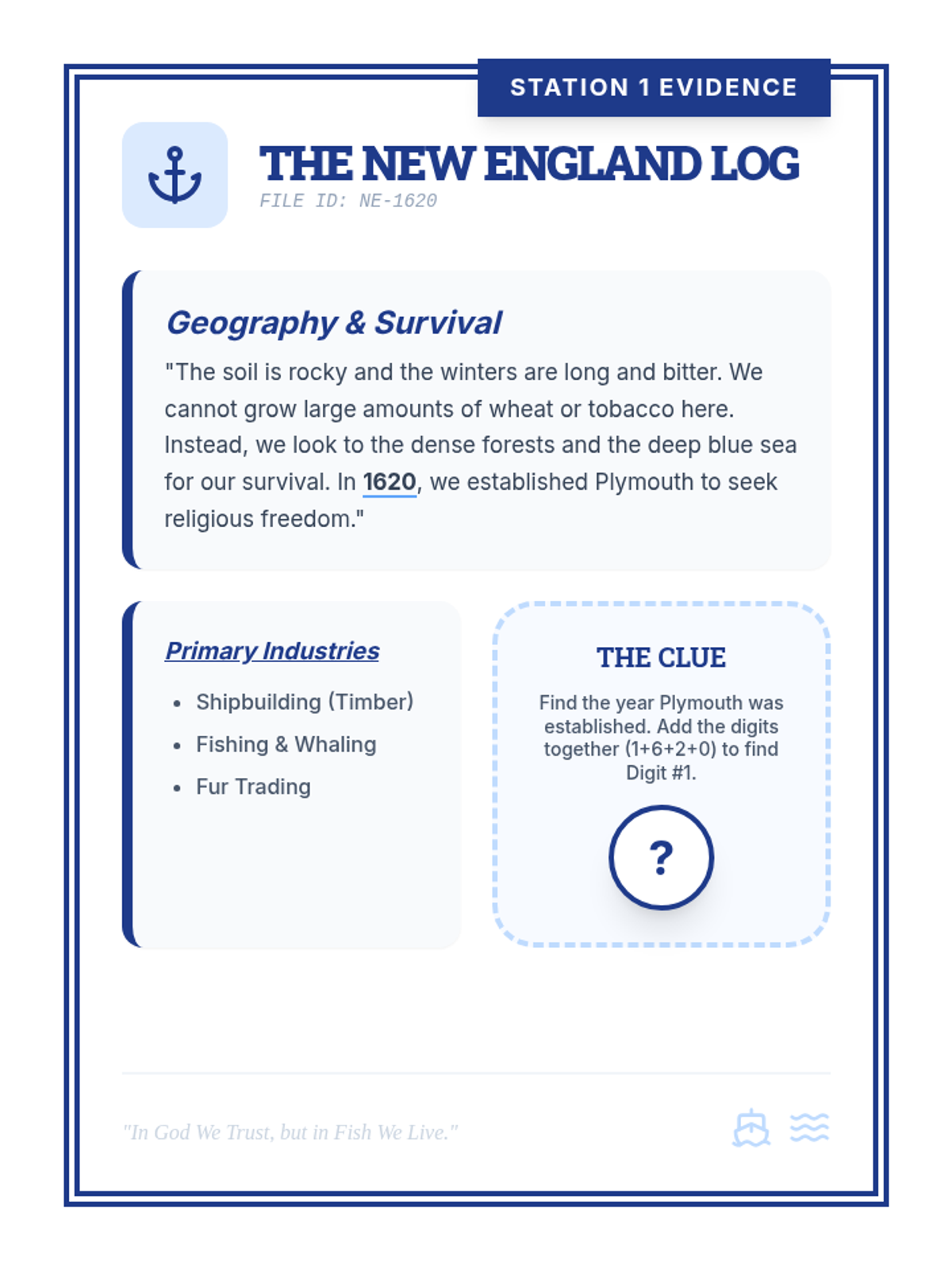
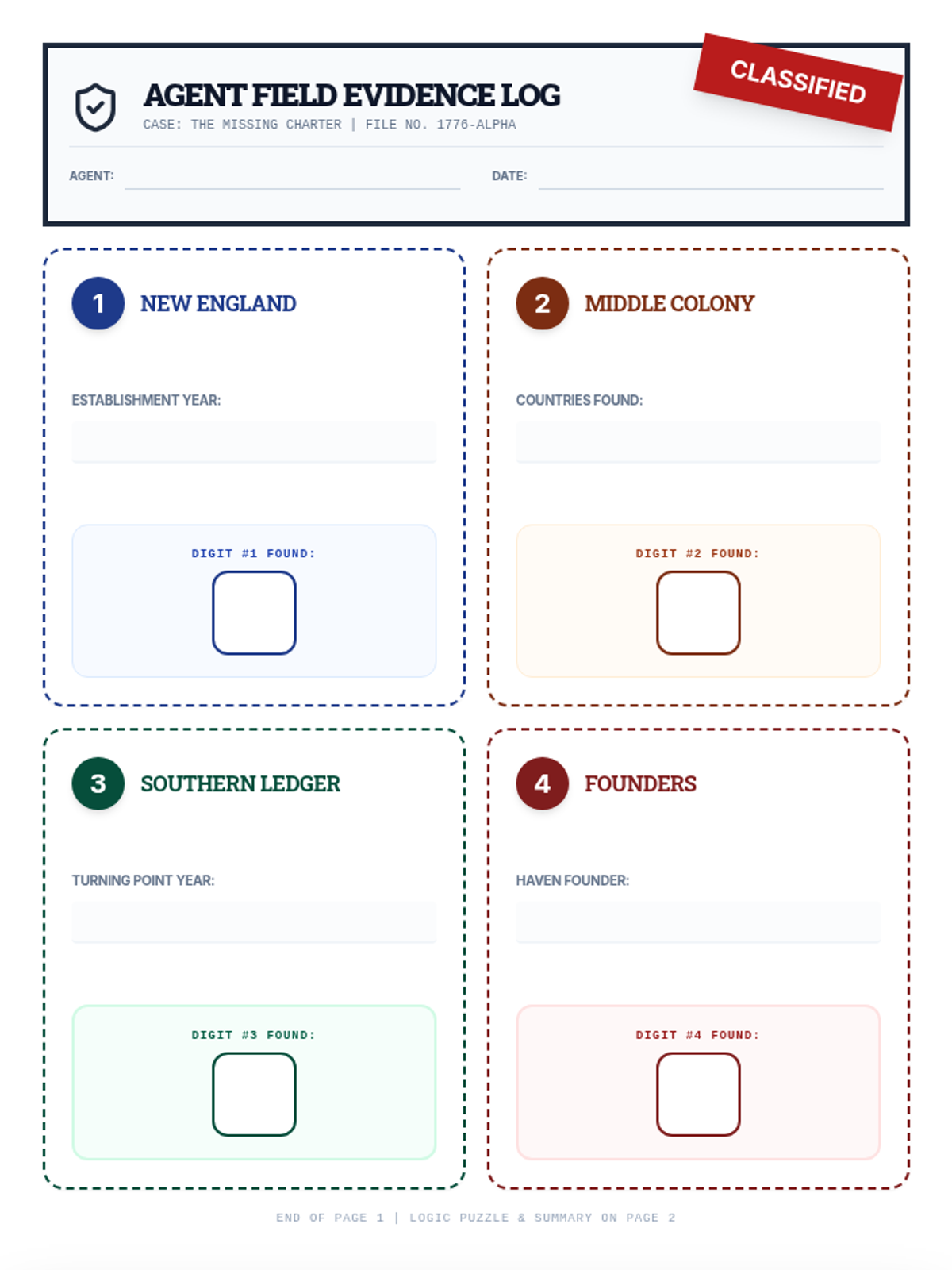
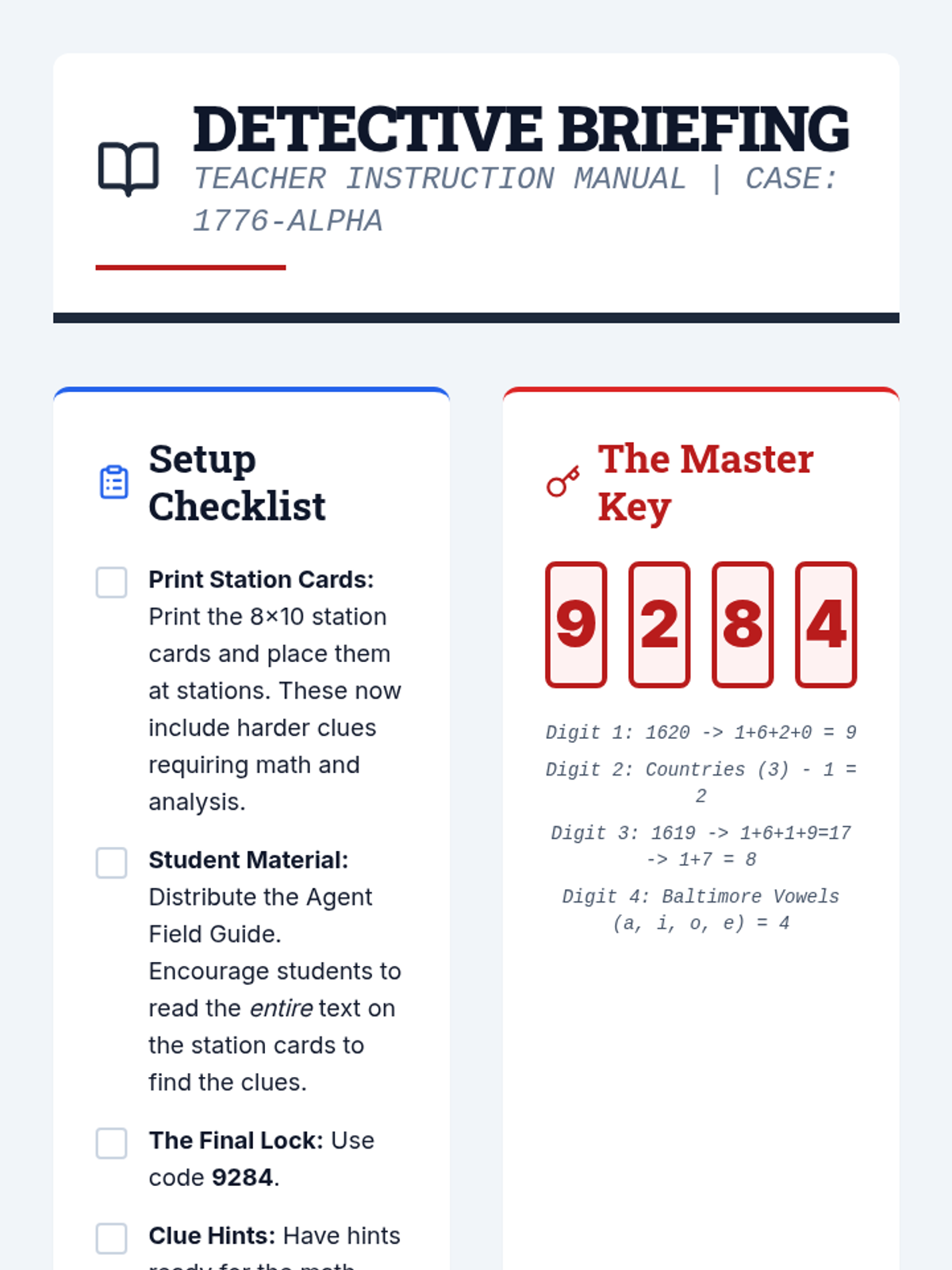
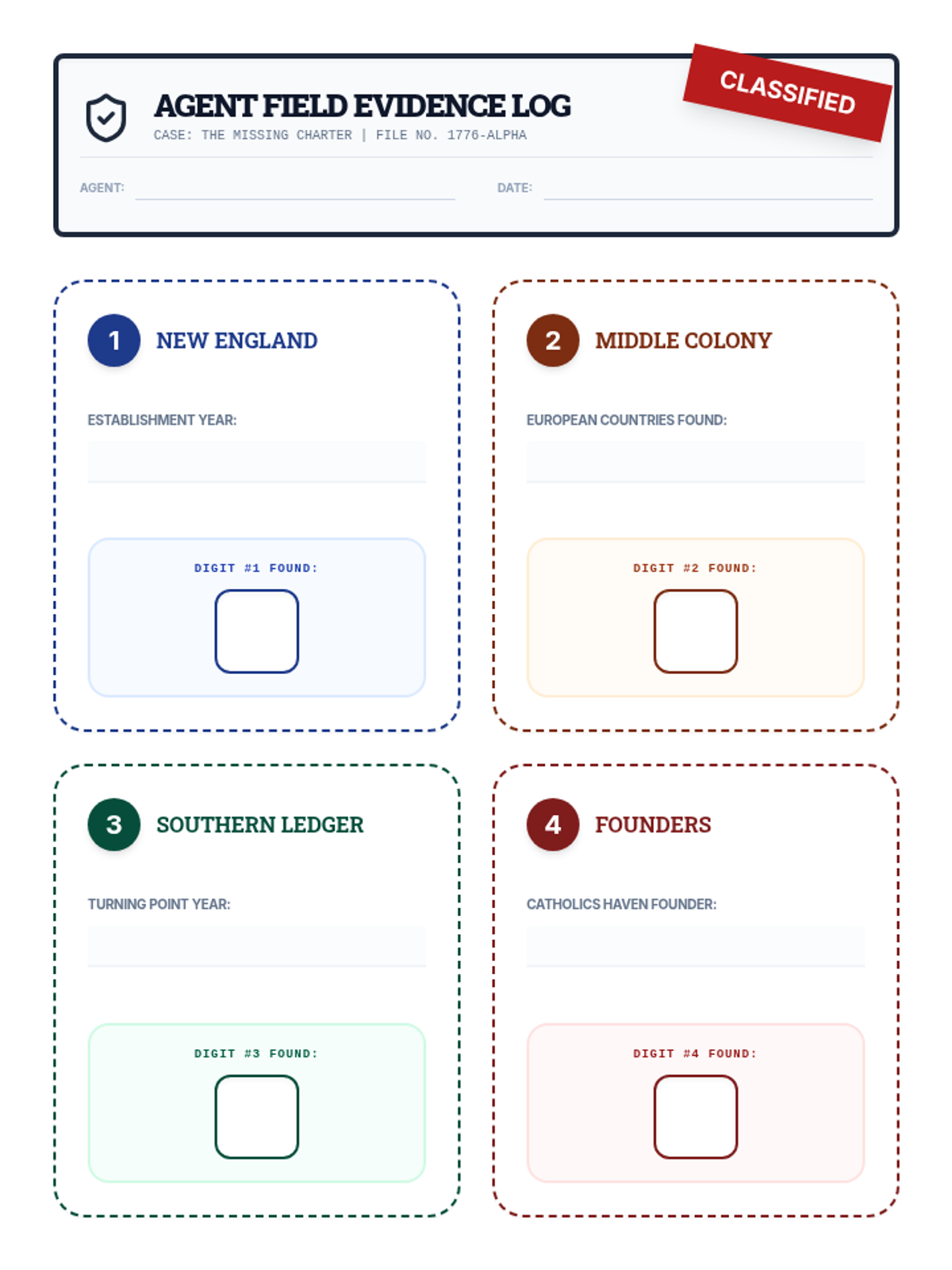
An immersive investigative experience where students solve the 'Case of the Missing Charter' by exploring the regional differences, economy, and daily life of the 13 original colonies.
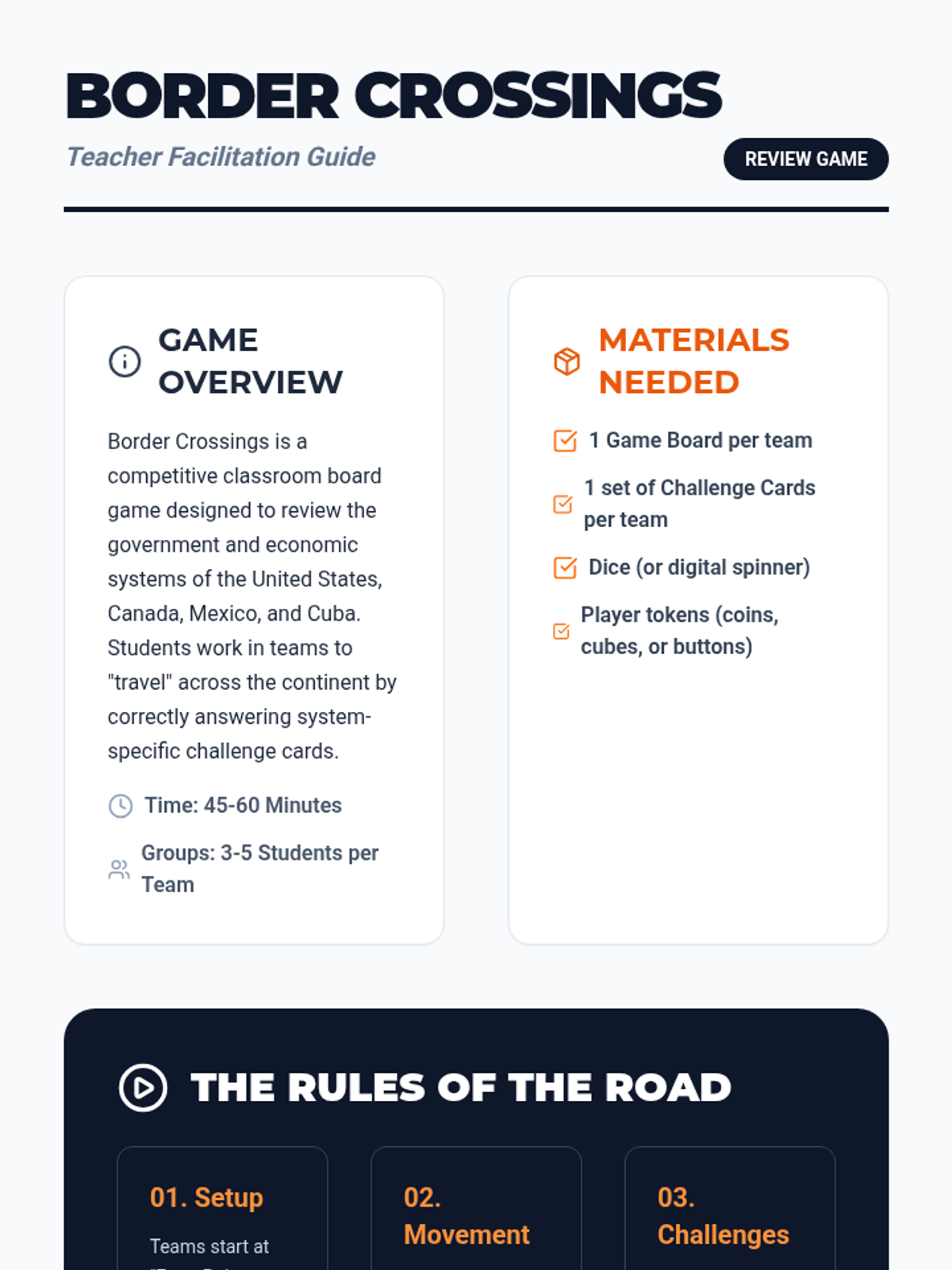
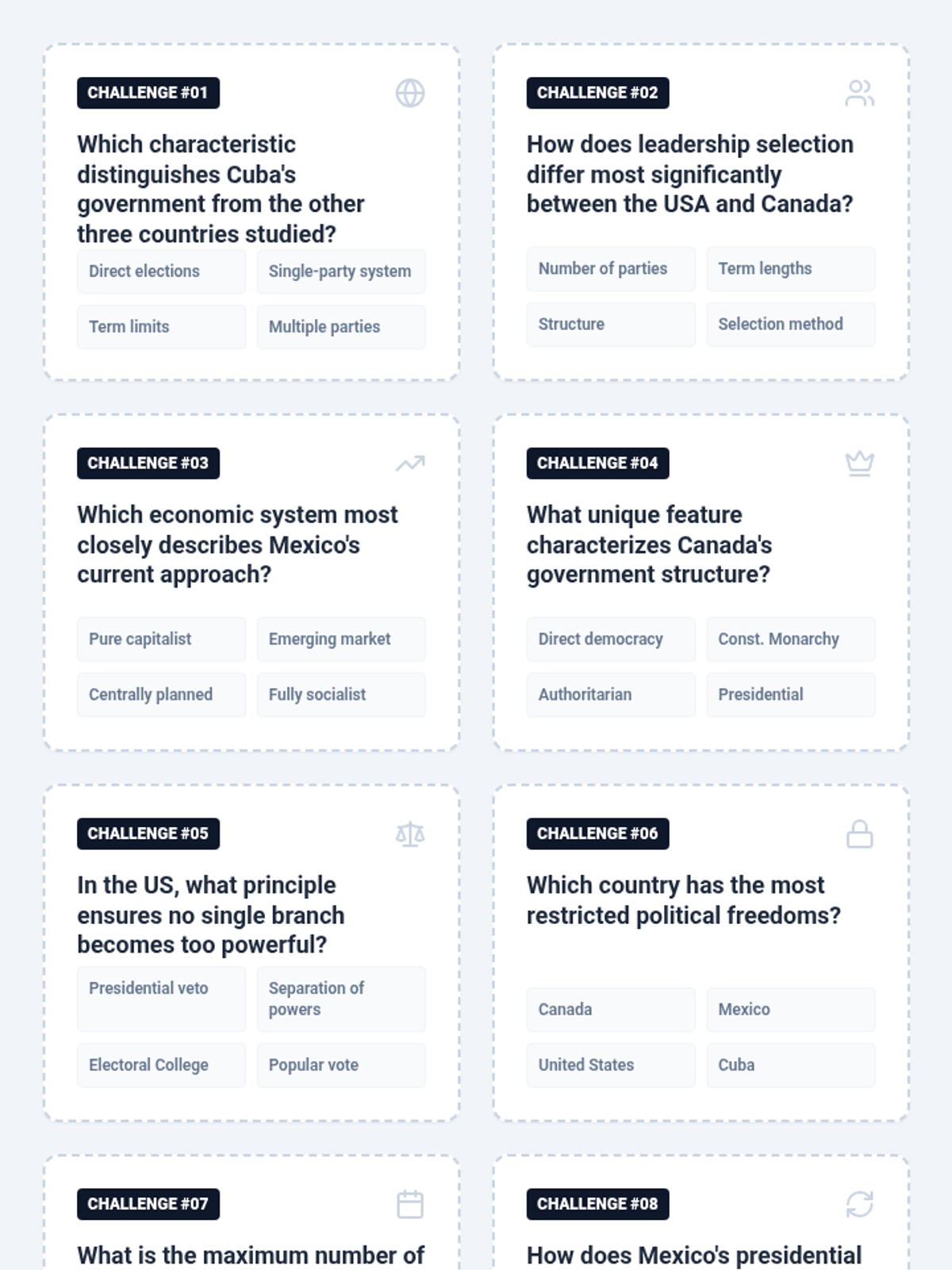
A high-energy review lesson comparing the government and economic systems of the United States, Canada, Mexico, and Cuba through a competitive board game.
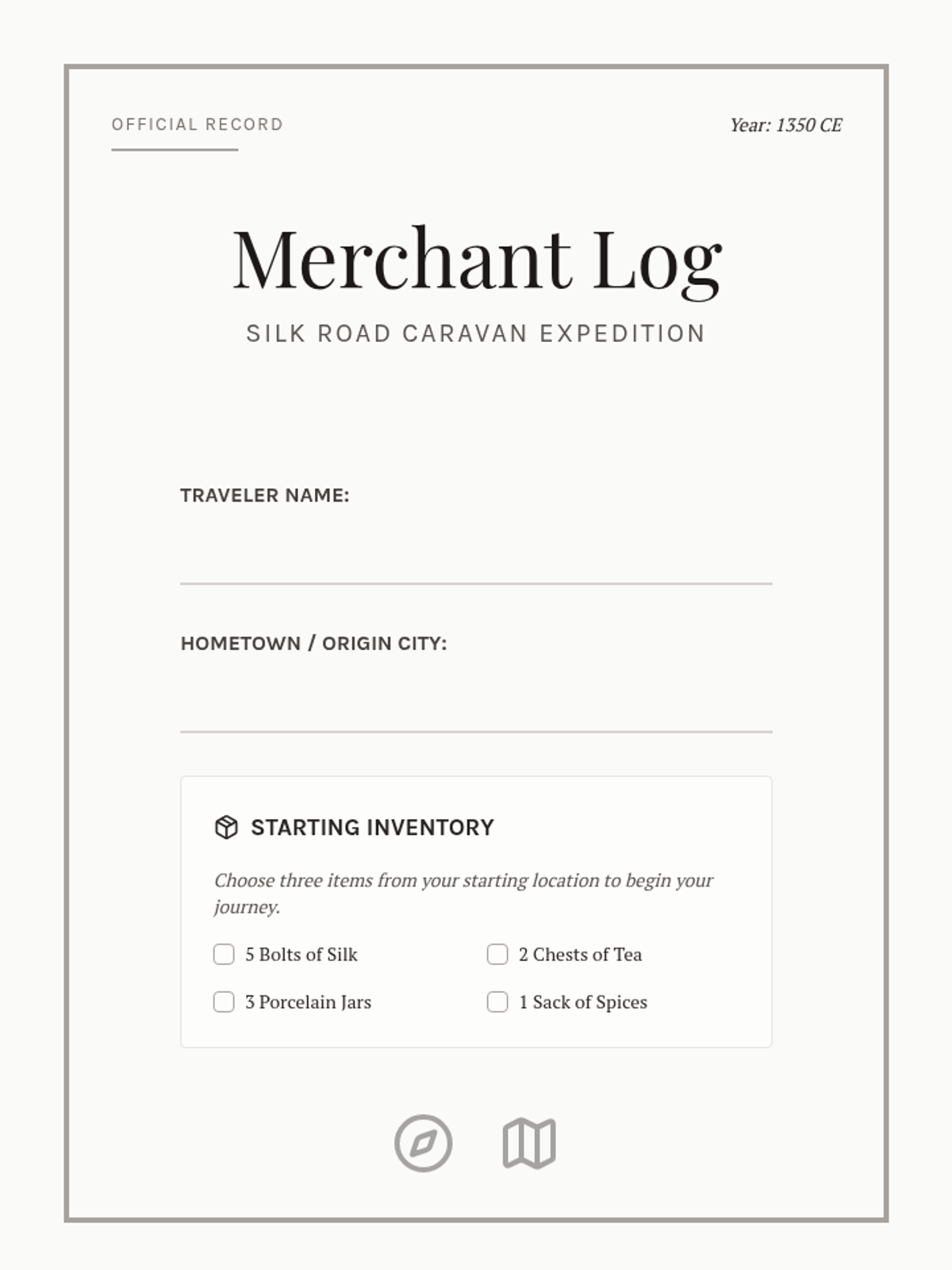
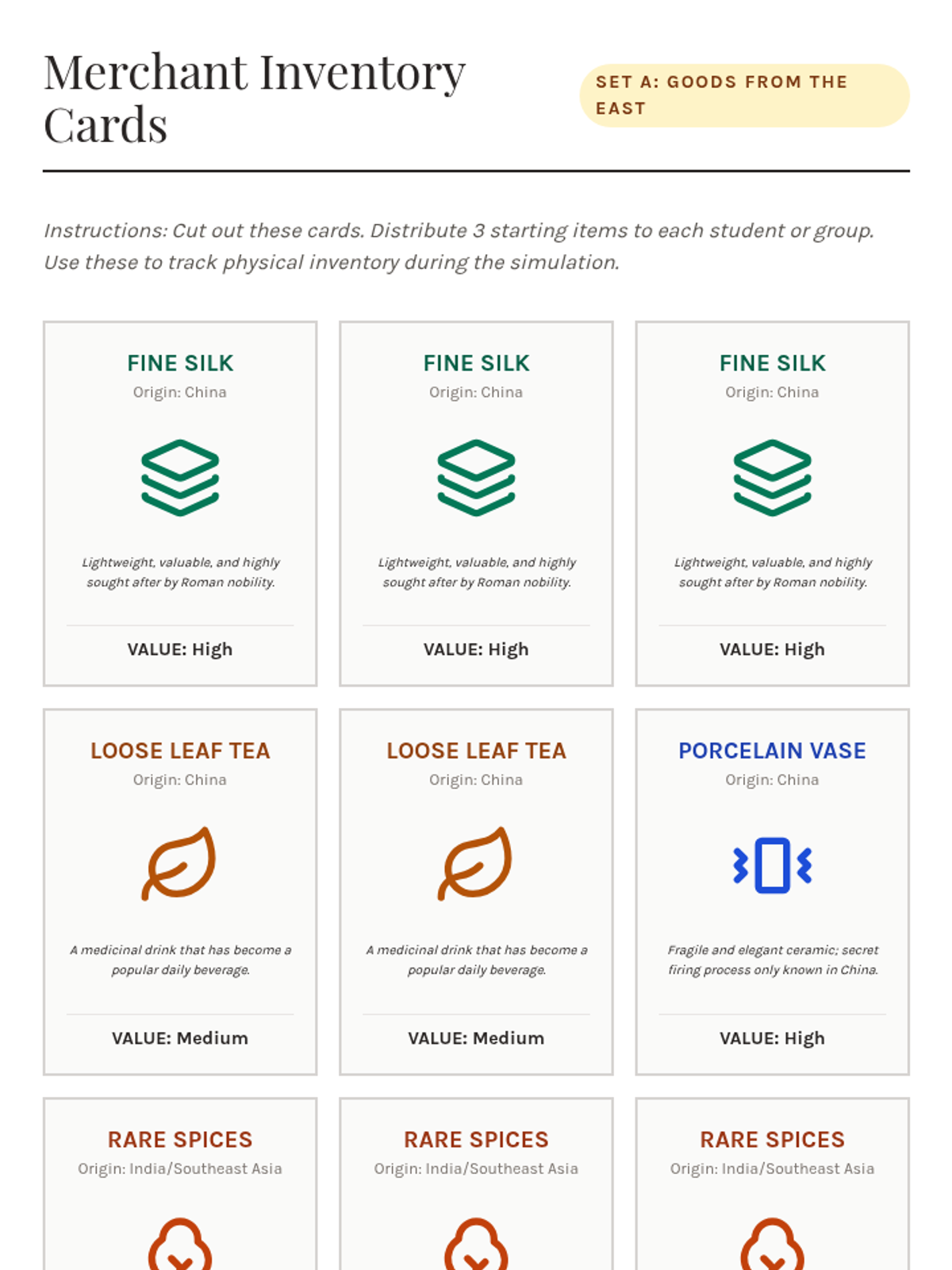
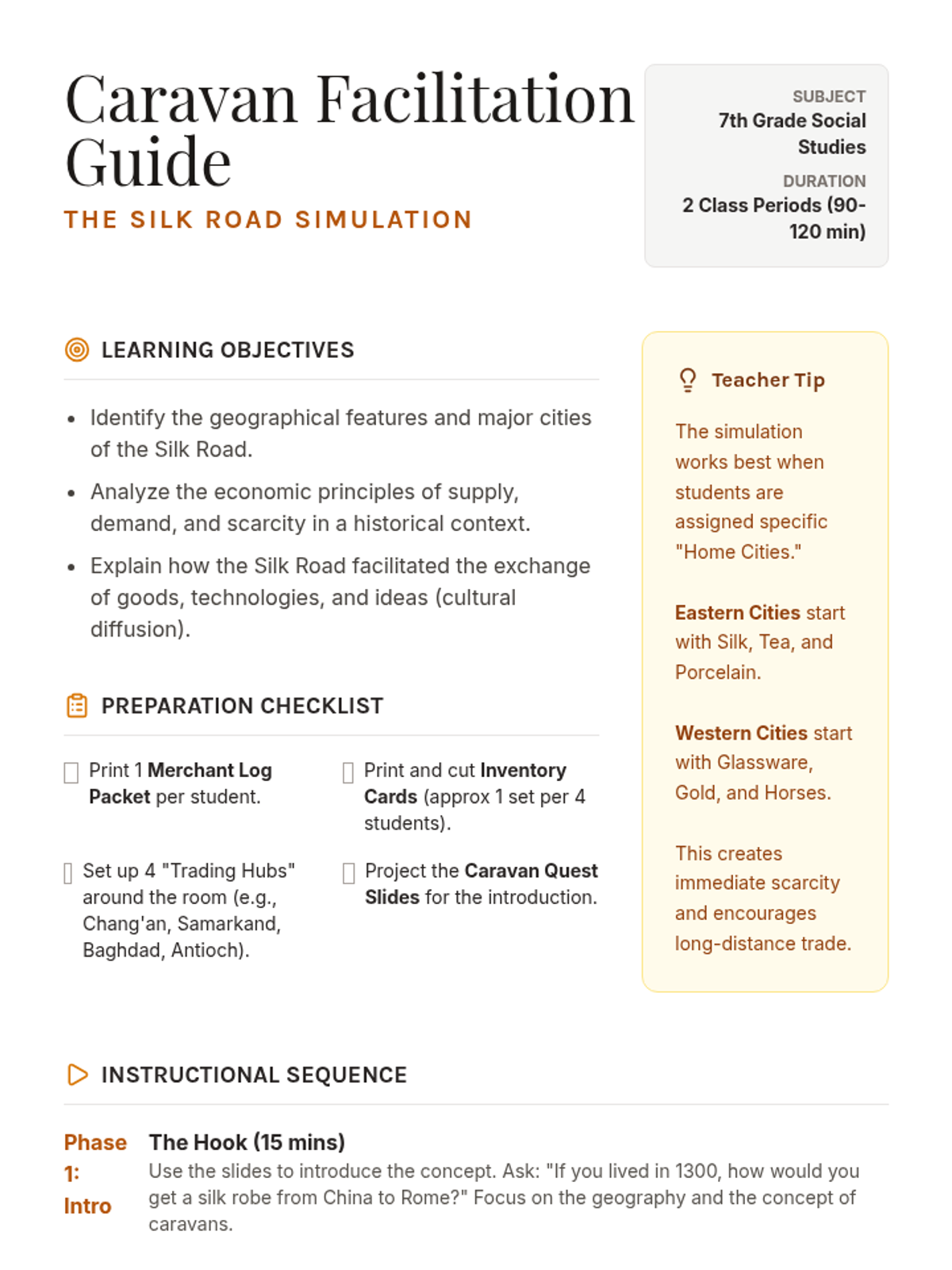
A comprehensive activity-based lesson on the Silk Road, focusing on trade, geography, and cultural exchange through a merchant simulation.
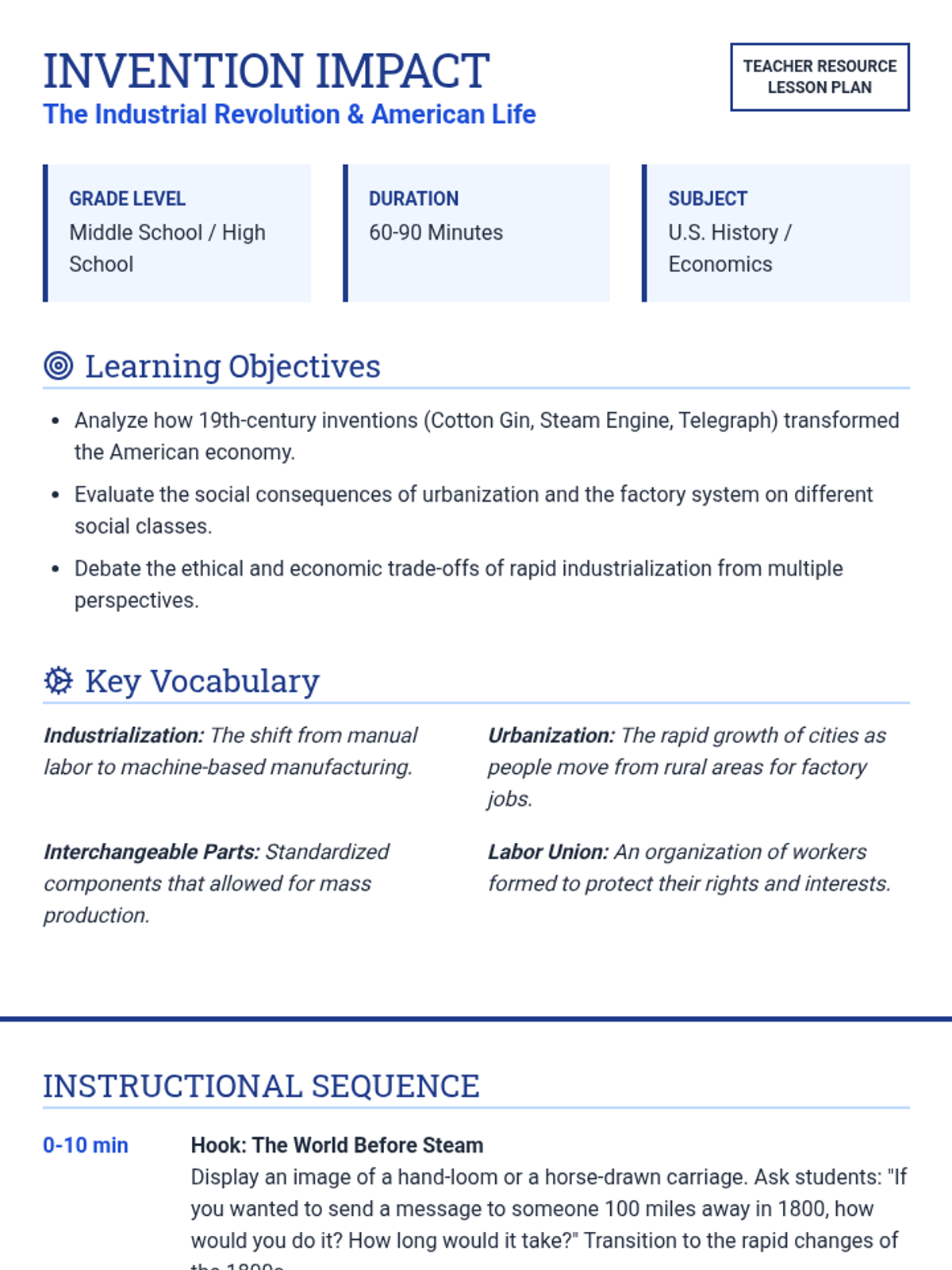
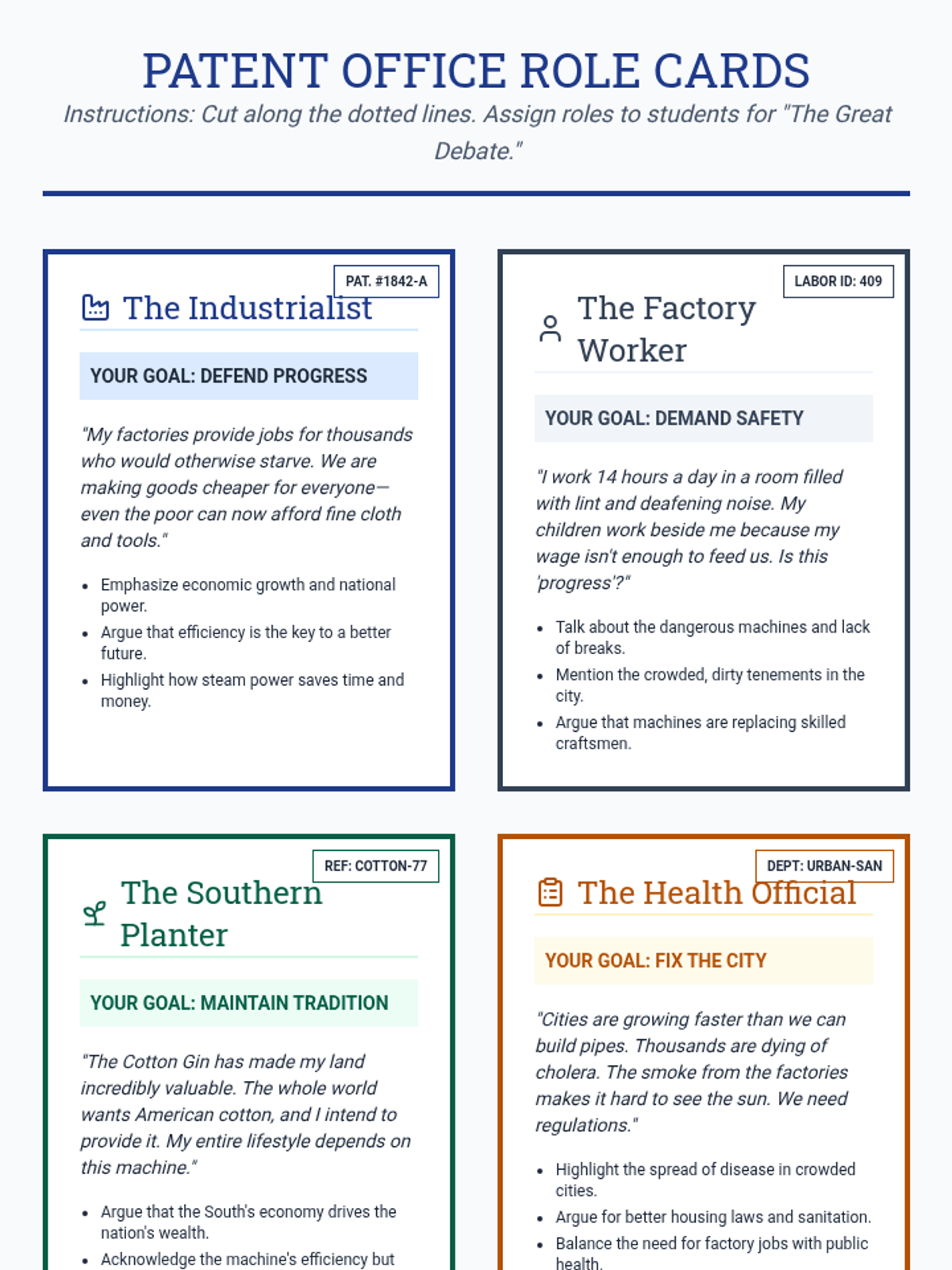
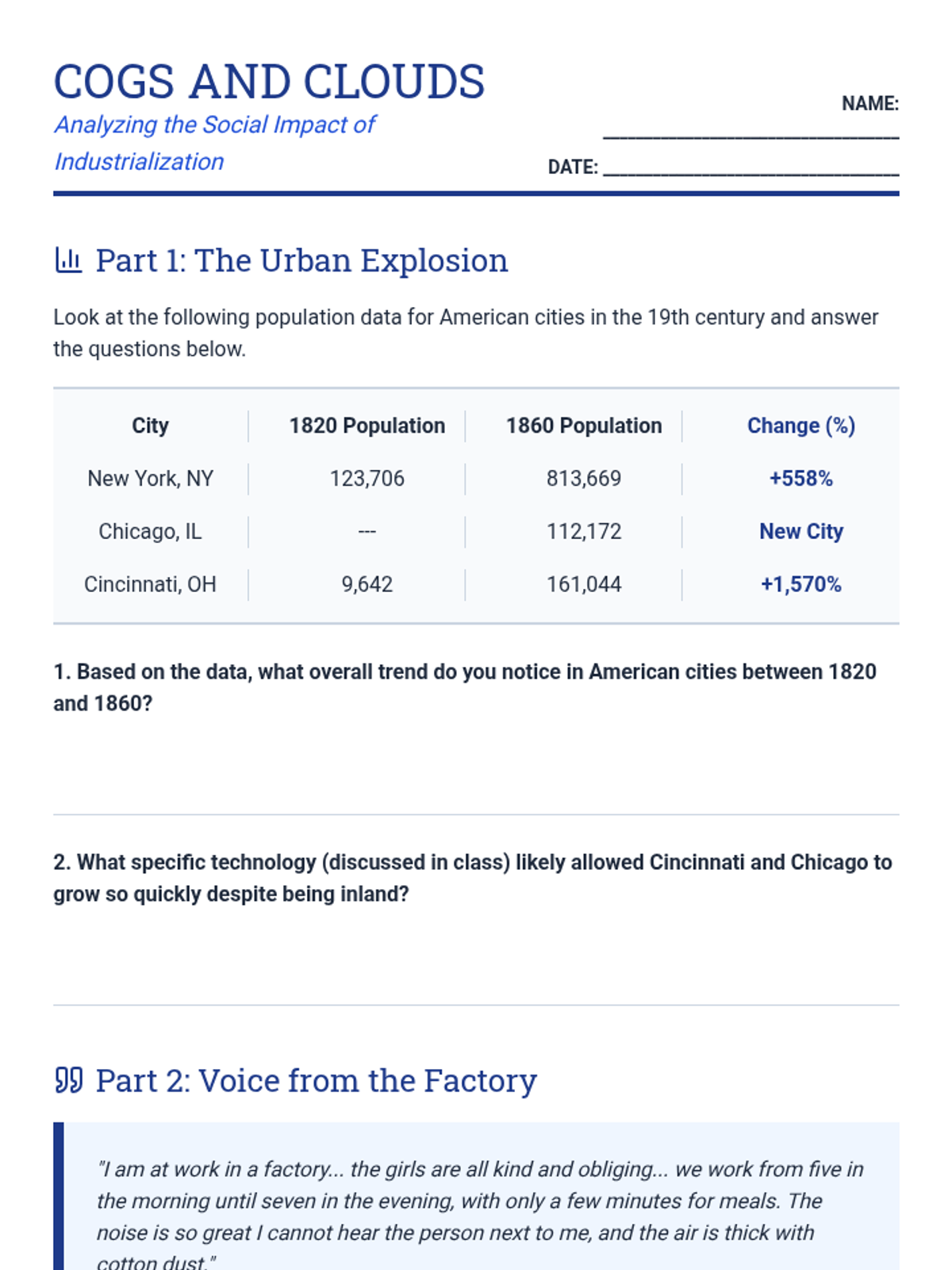
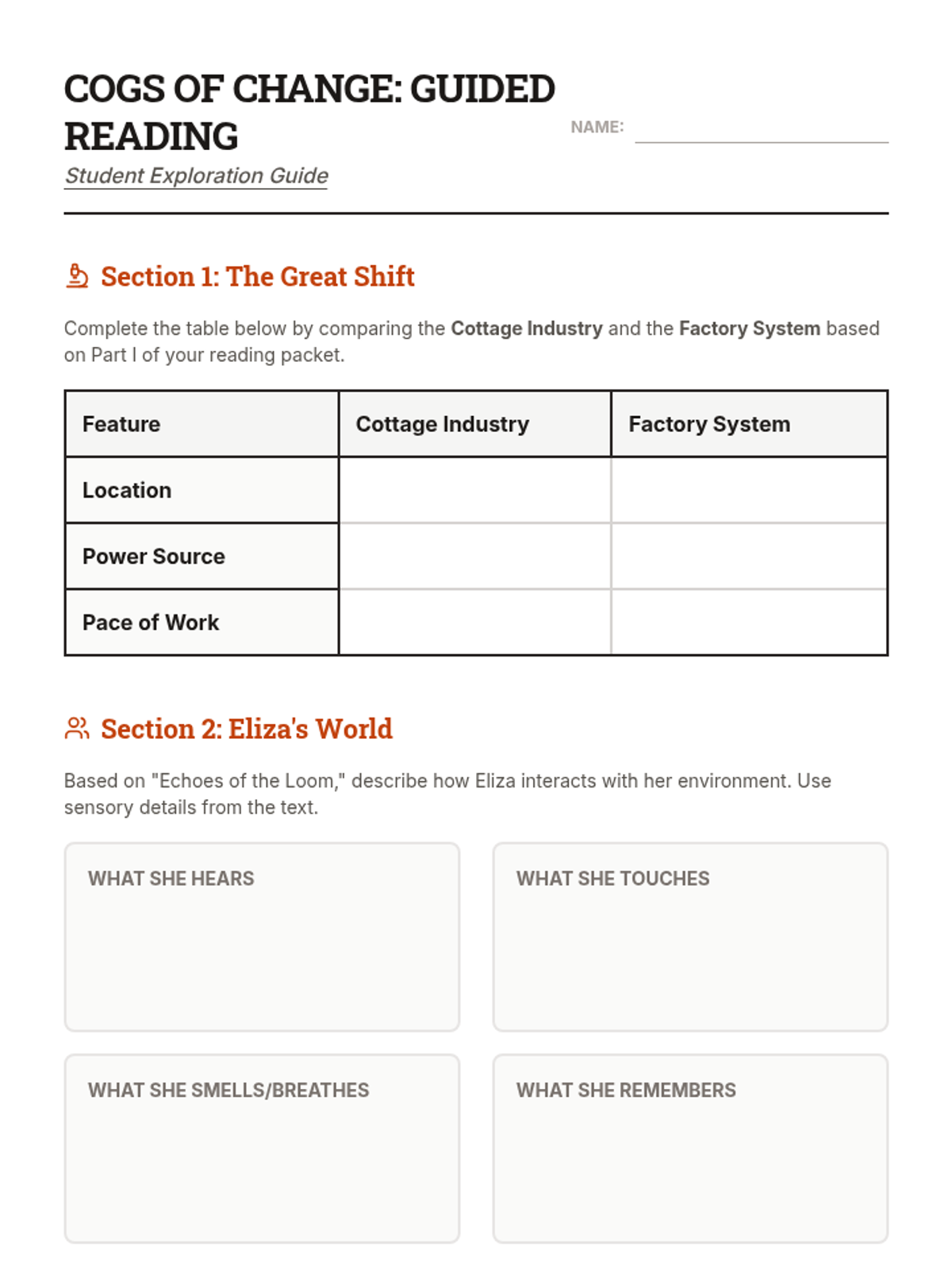
A comprehensive lesson exploring the socio-economic transformations of the 19th-century Industrial Revolution through the lens of innovation, labor, and urbanization. Students engage in role-play to debate the impacts of new technologies.
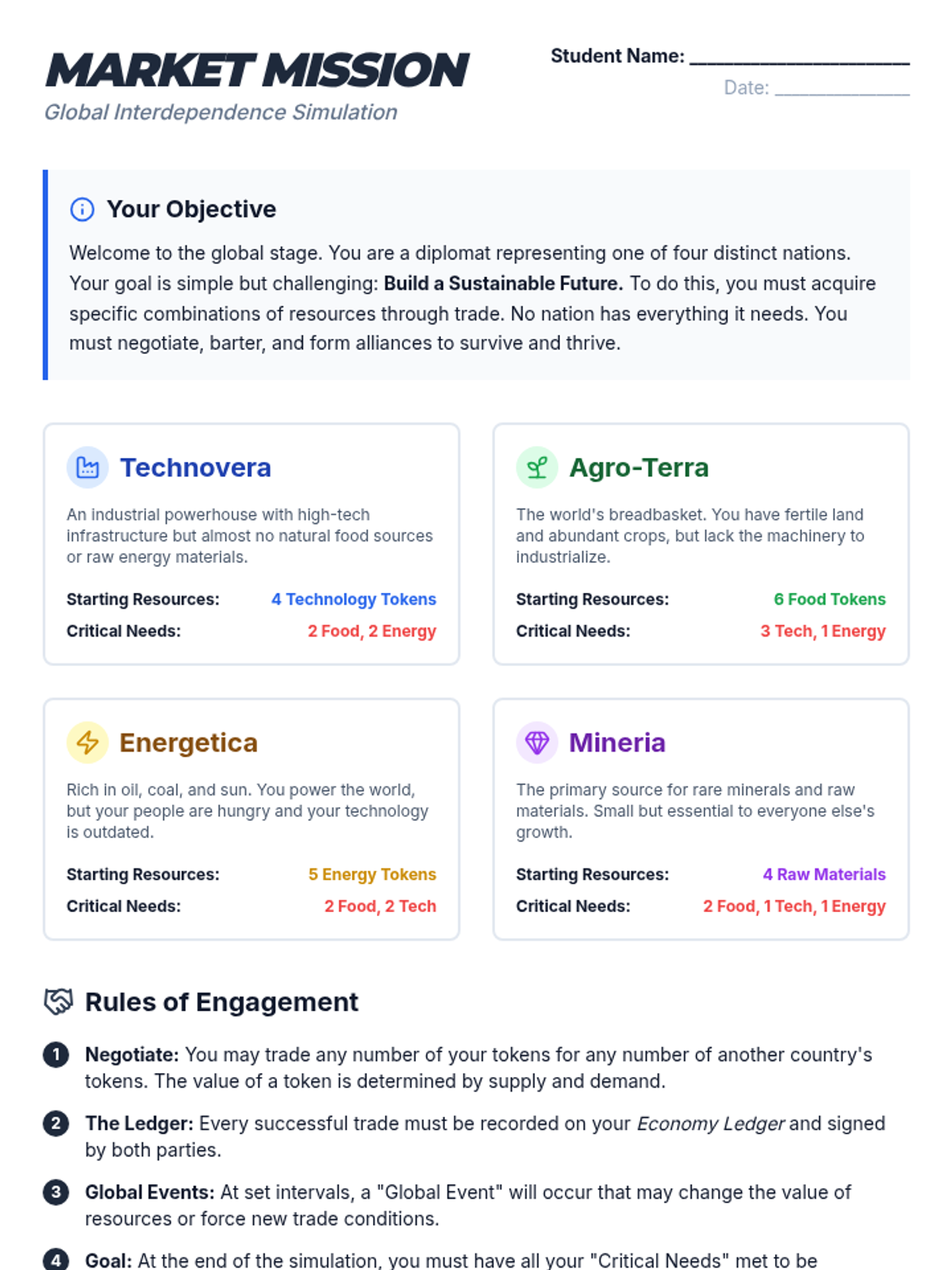
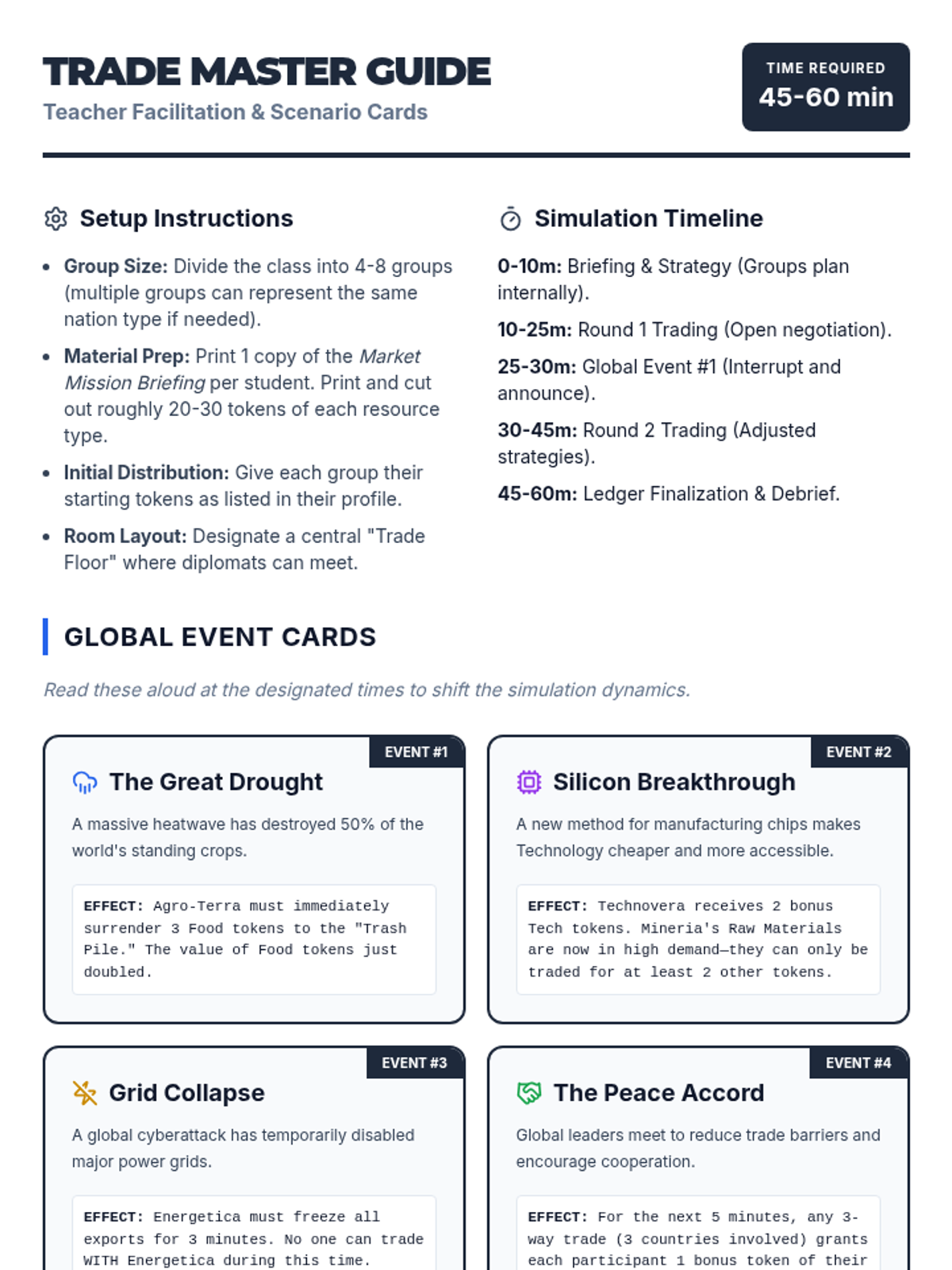
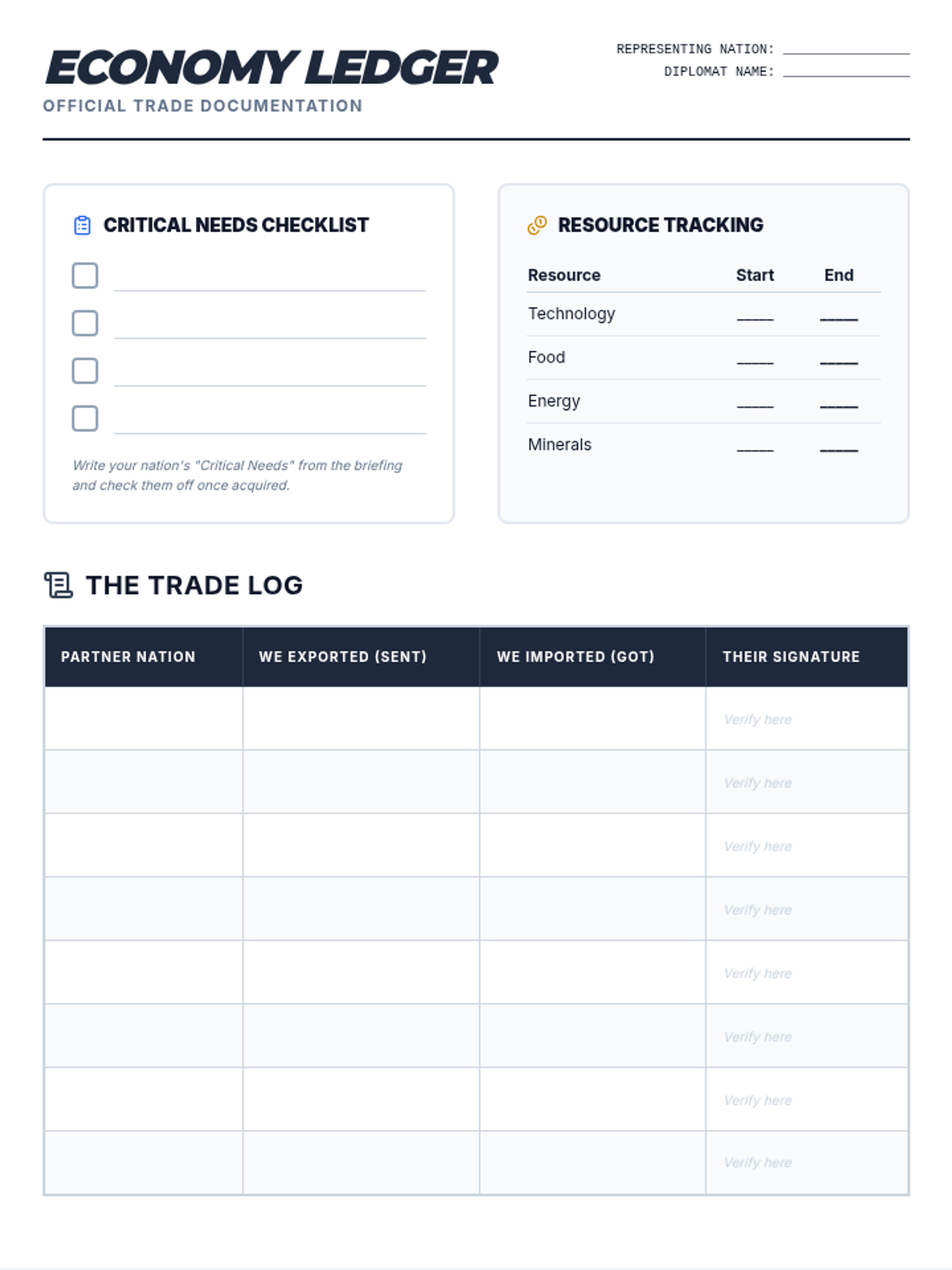
An immersive classroom simulation exploring the complexities of global trade, resource distribution, and economic interdependence. Students represent different nations with unique strengths and needs, negotiating trades to achieve specific development goals.
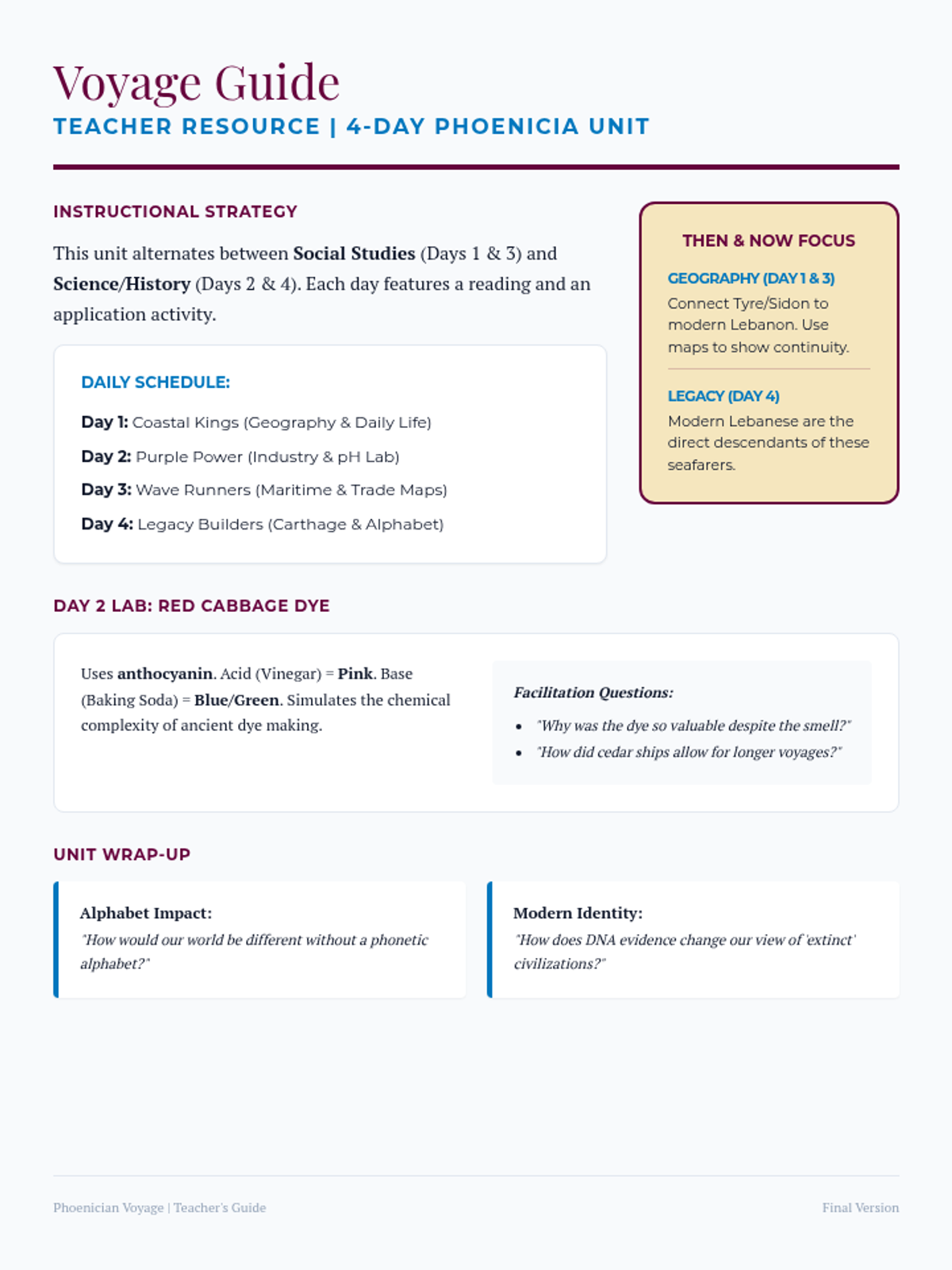
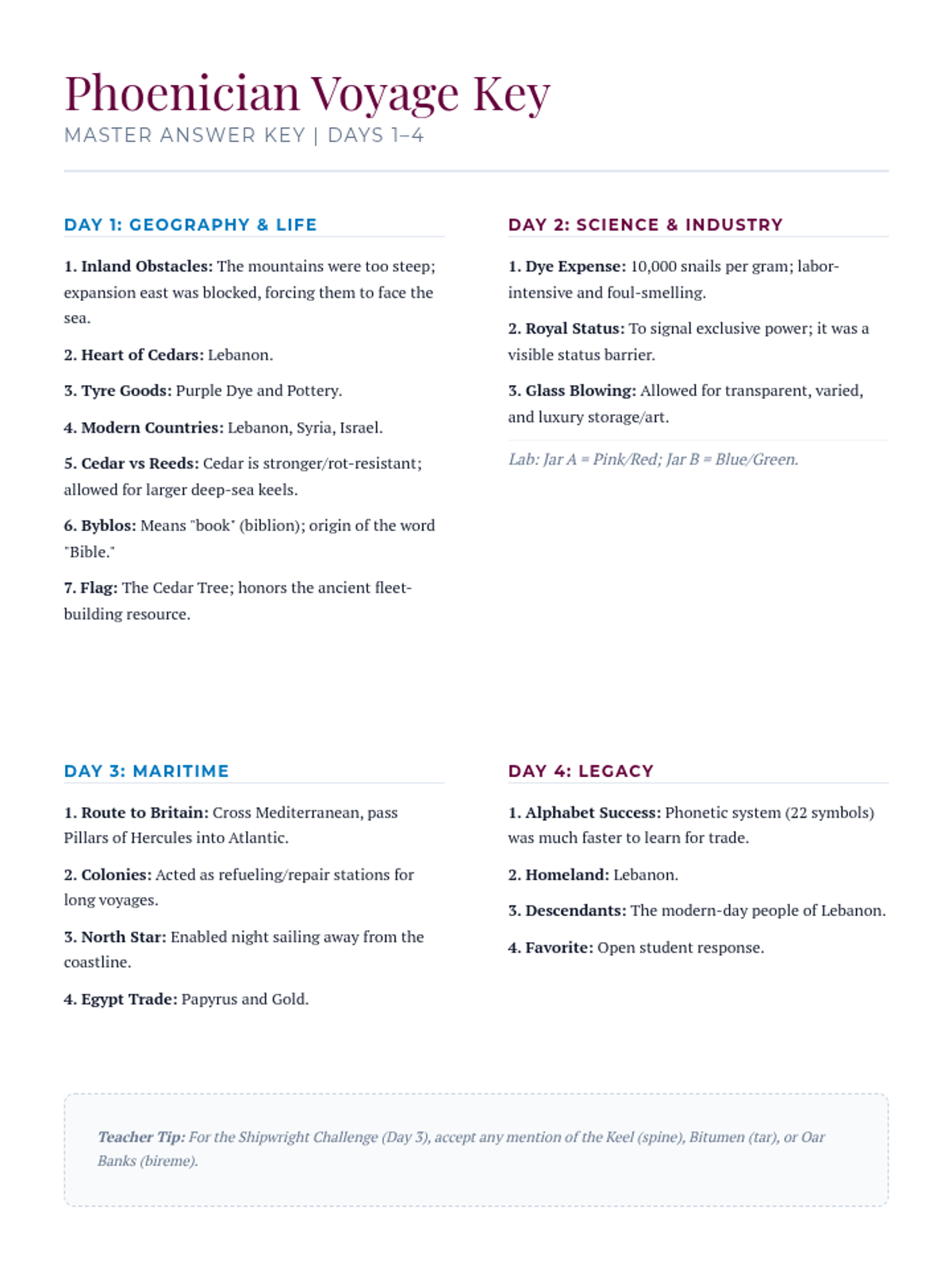
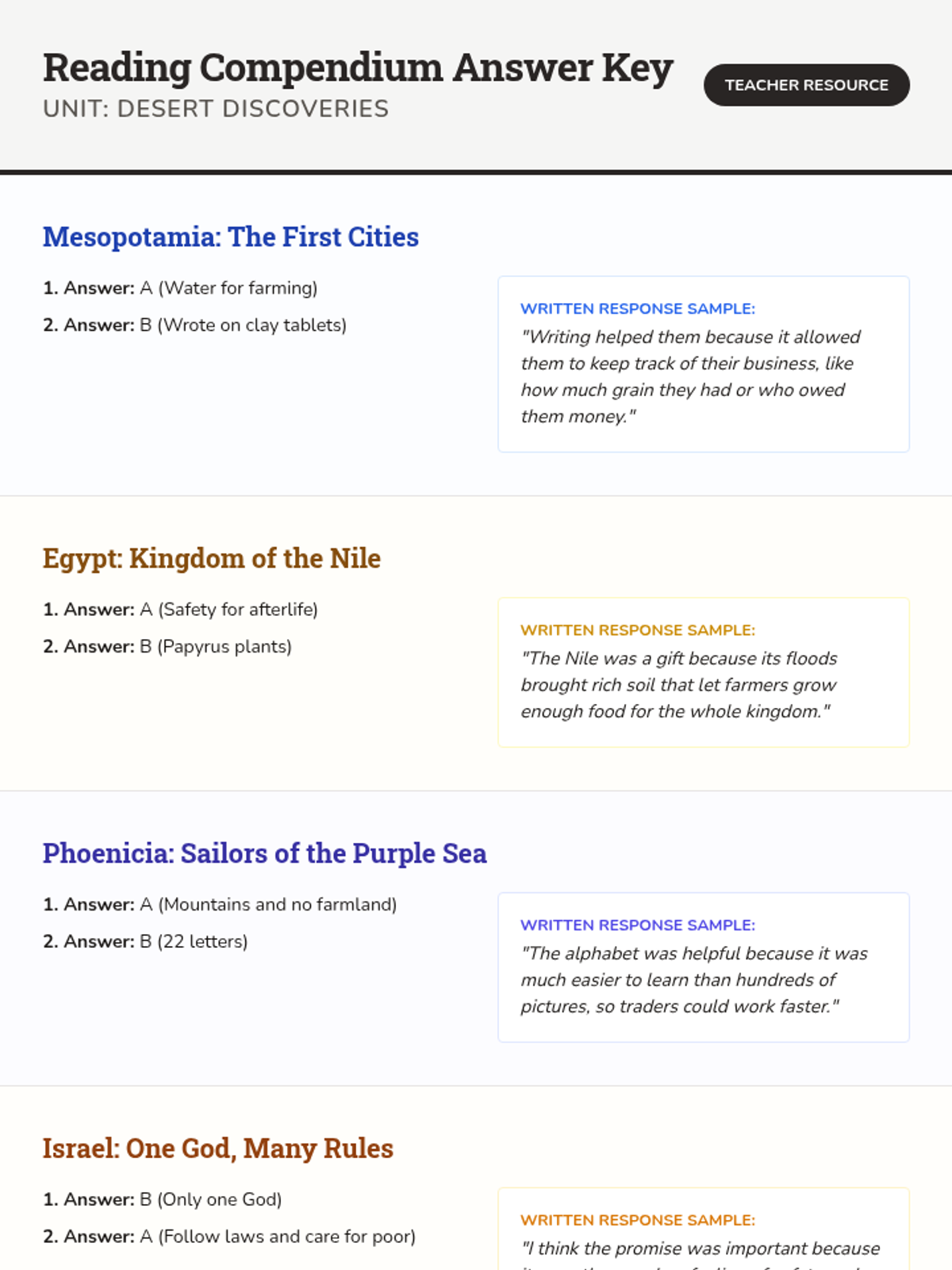
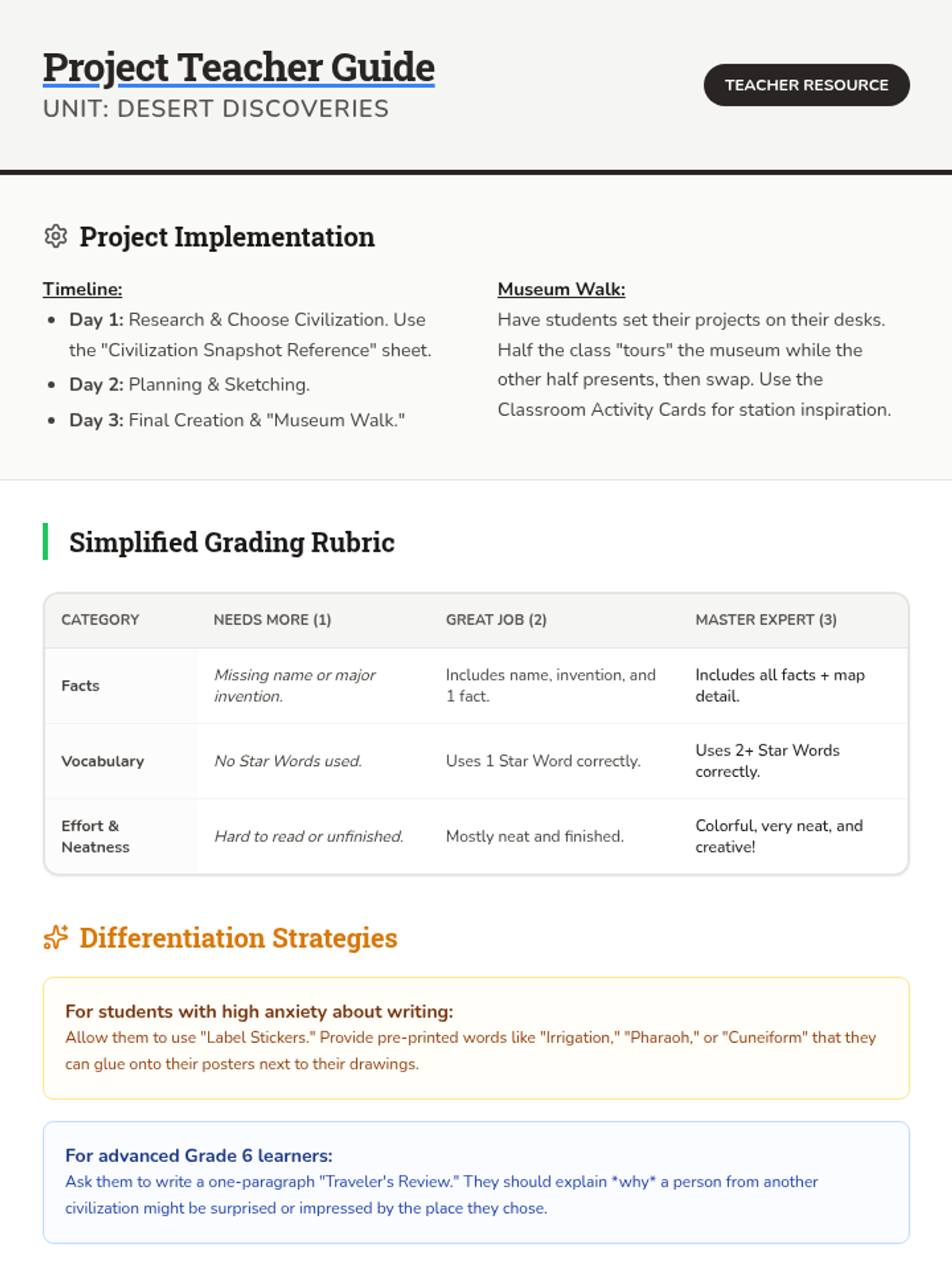
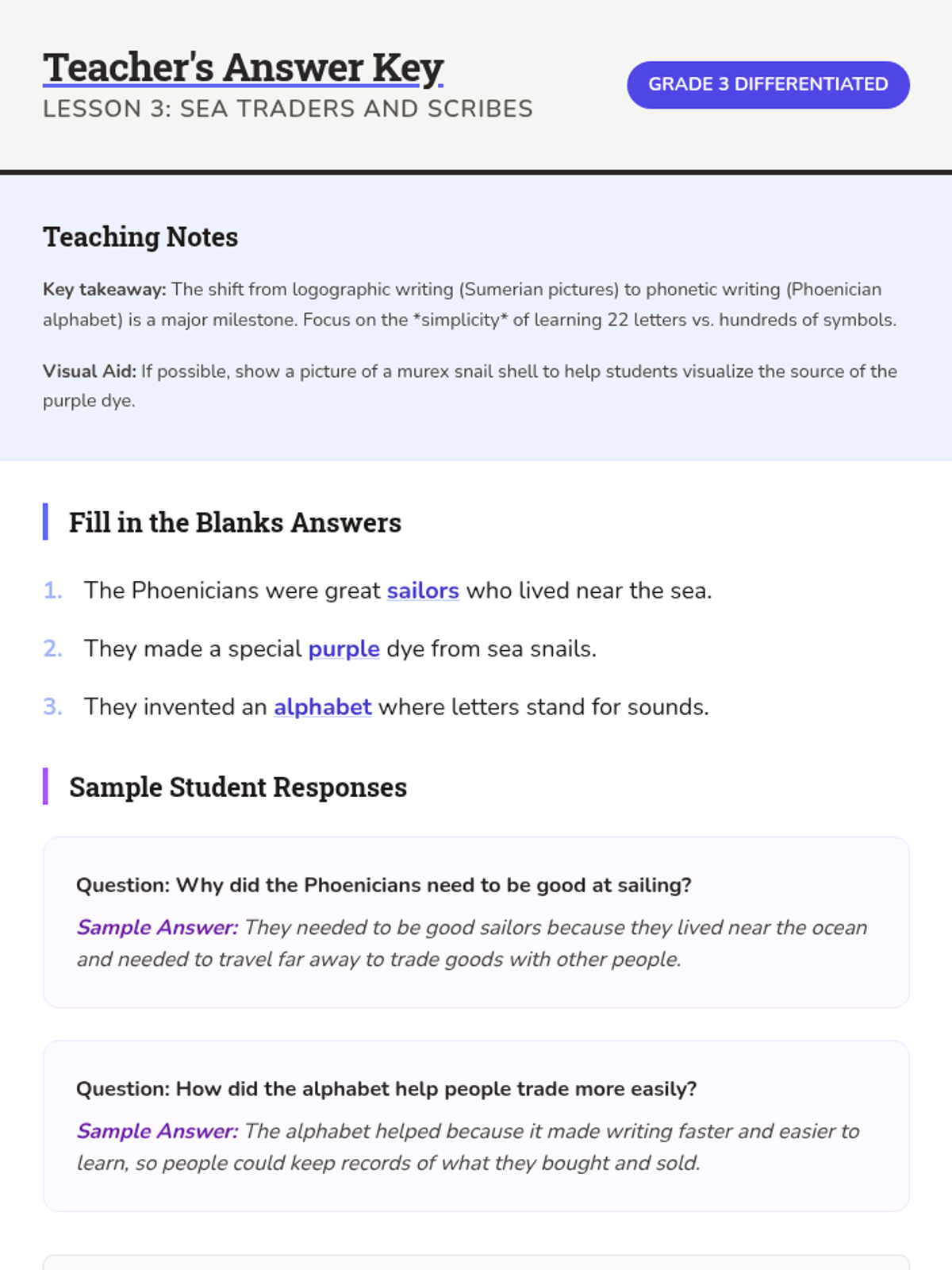
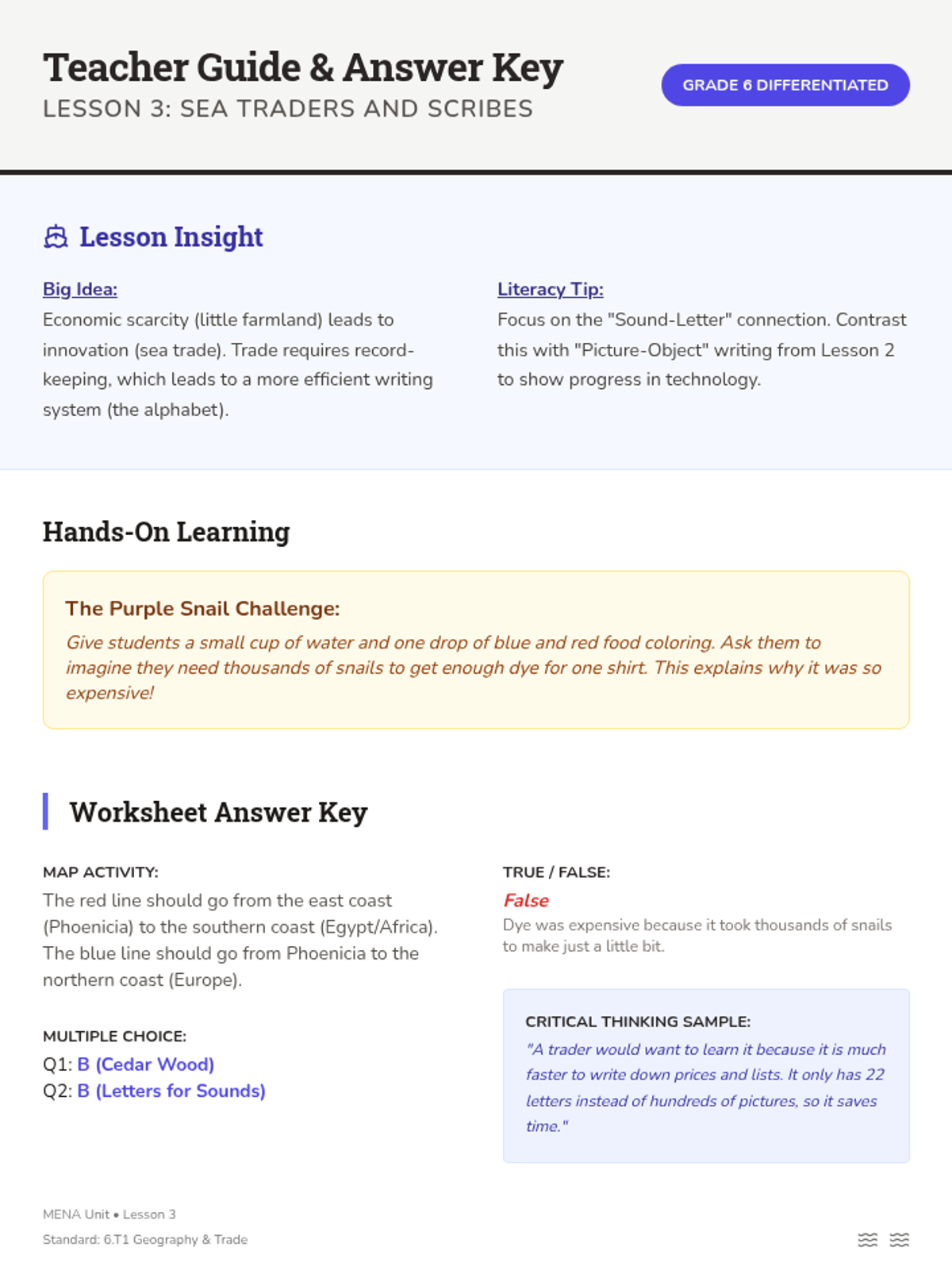
Resources for teachers including planning guides, answer keys, and instructional support for the Phoenician Voyage unit.
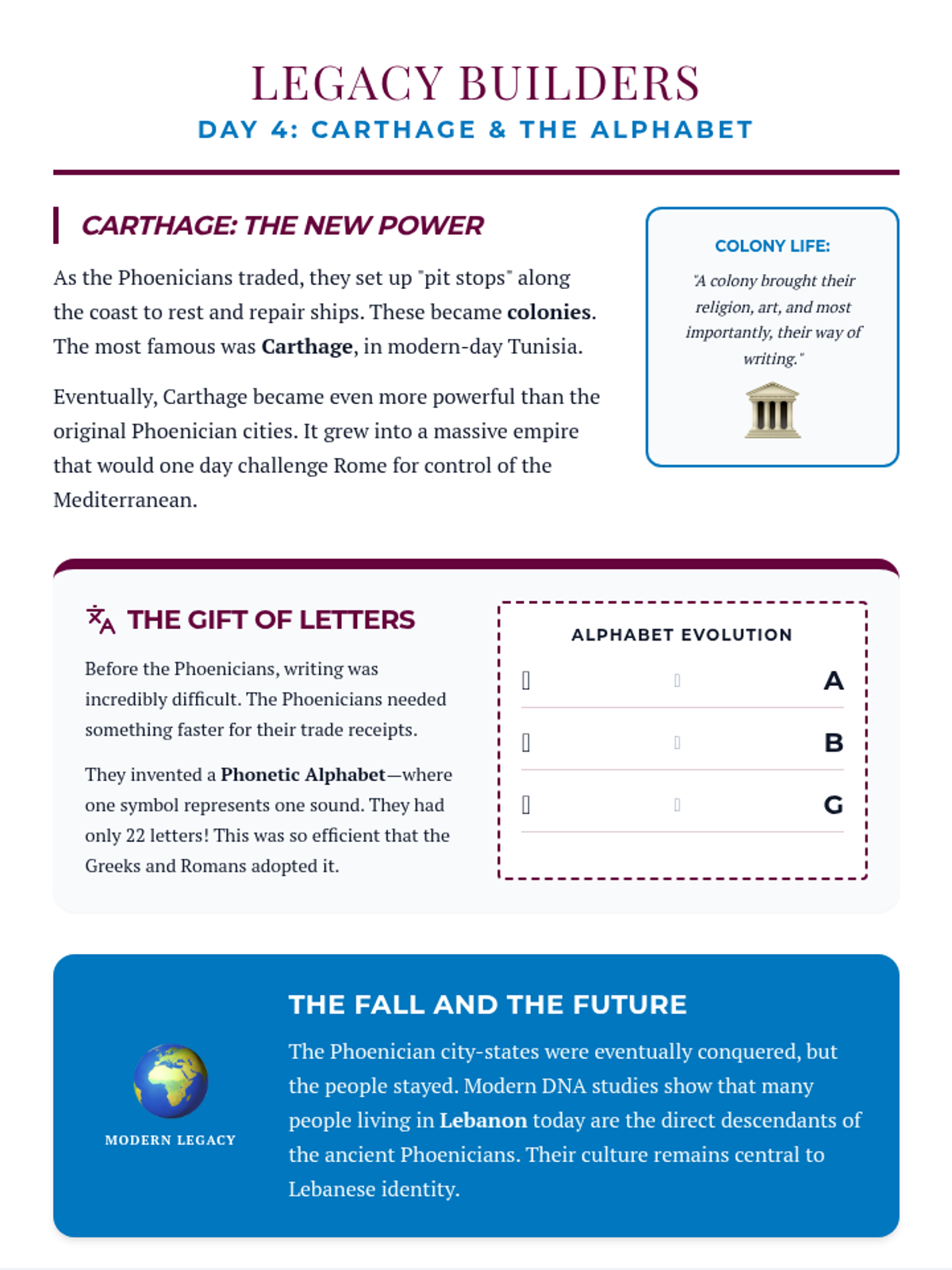
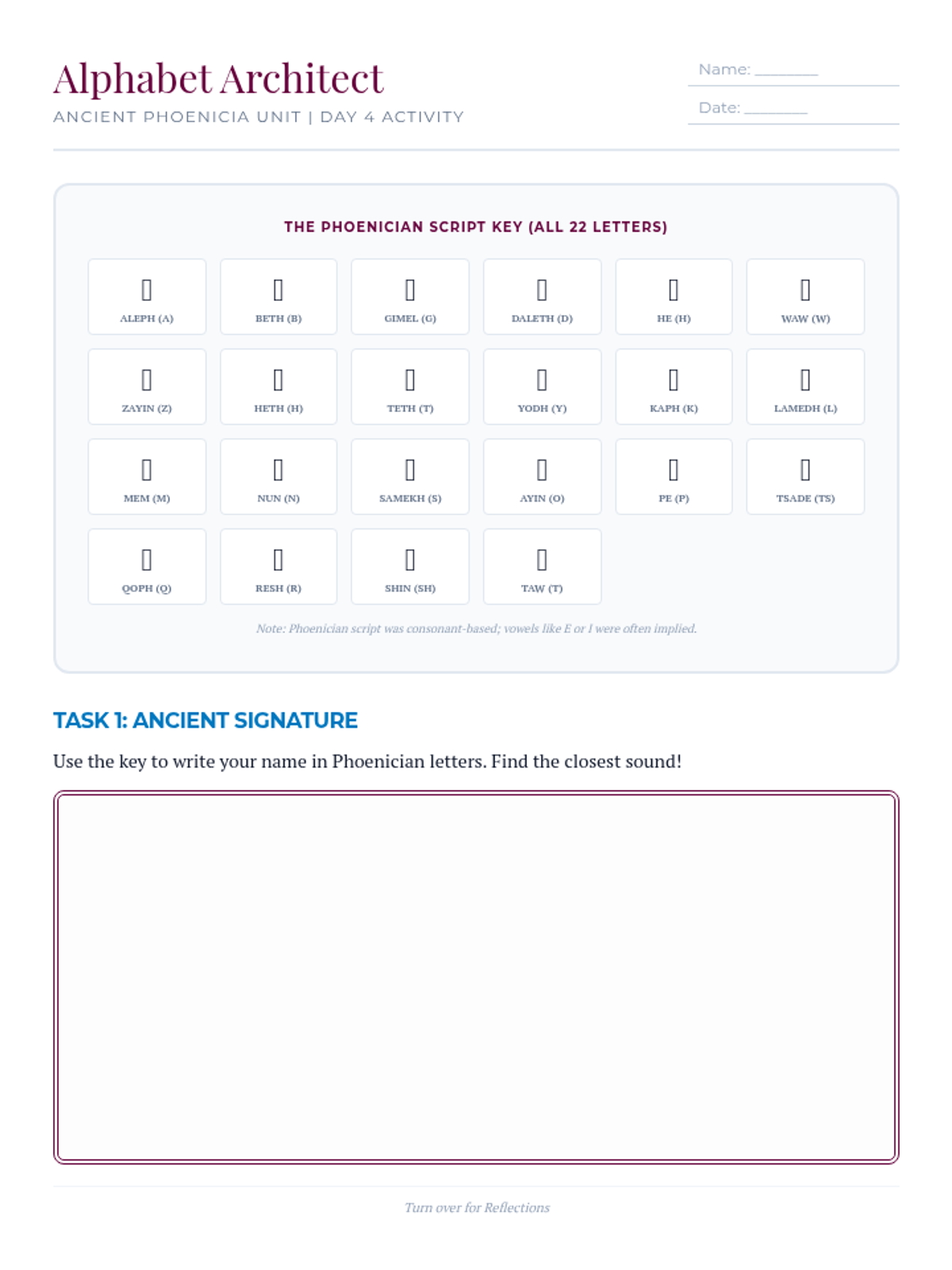
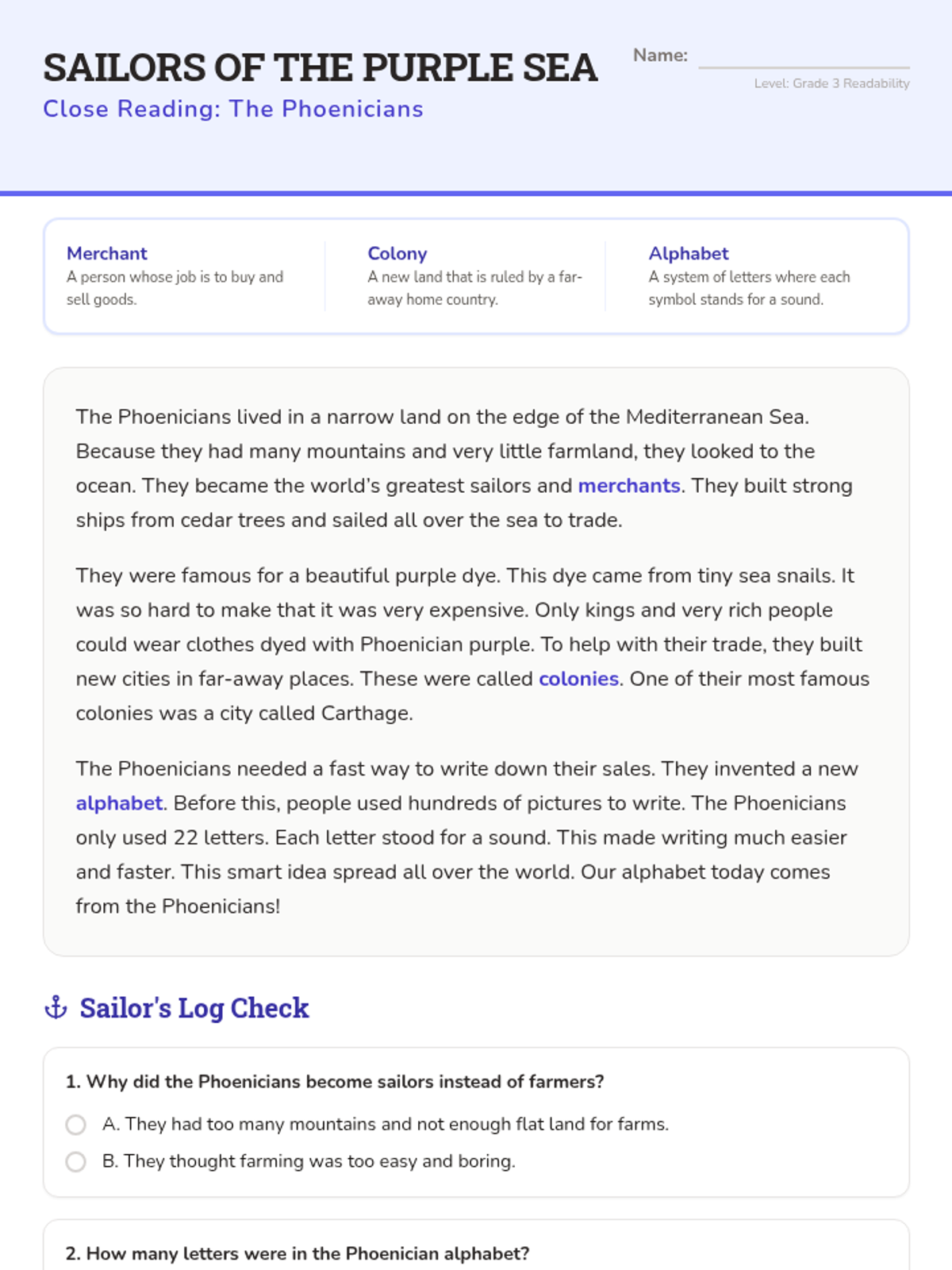
A concluding lesson on the expansion of Phoenician colonies like Carthage and the spread of their phonetic alphabet, which laid the foundation for modern writing.
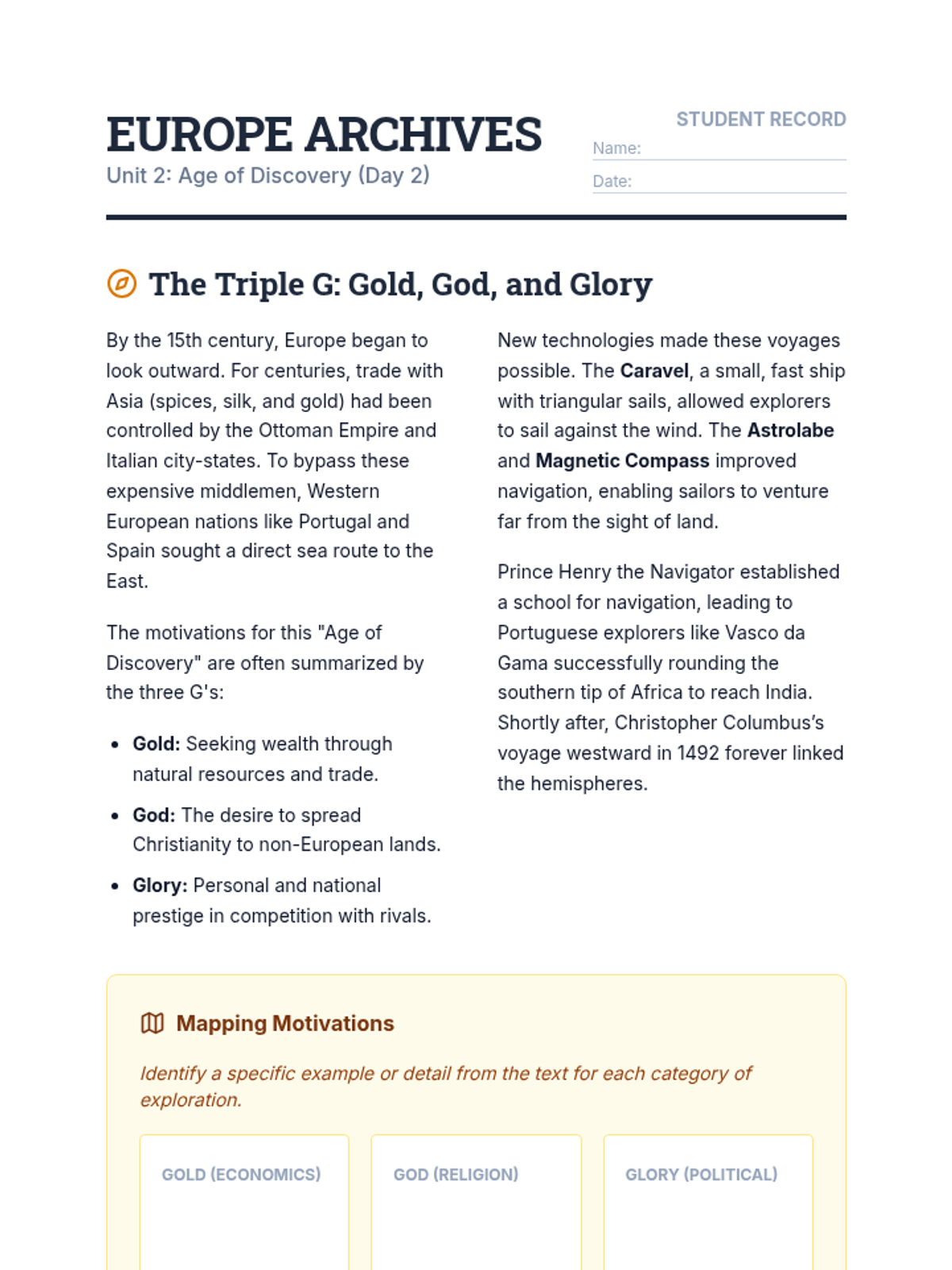
Explores the motivations, key figures, and global consequences of European exploration, focusing on the shift in power and cultural exchange.
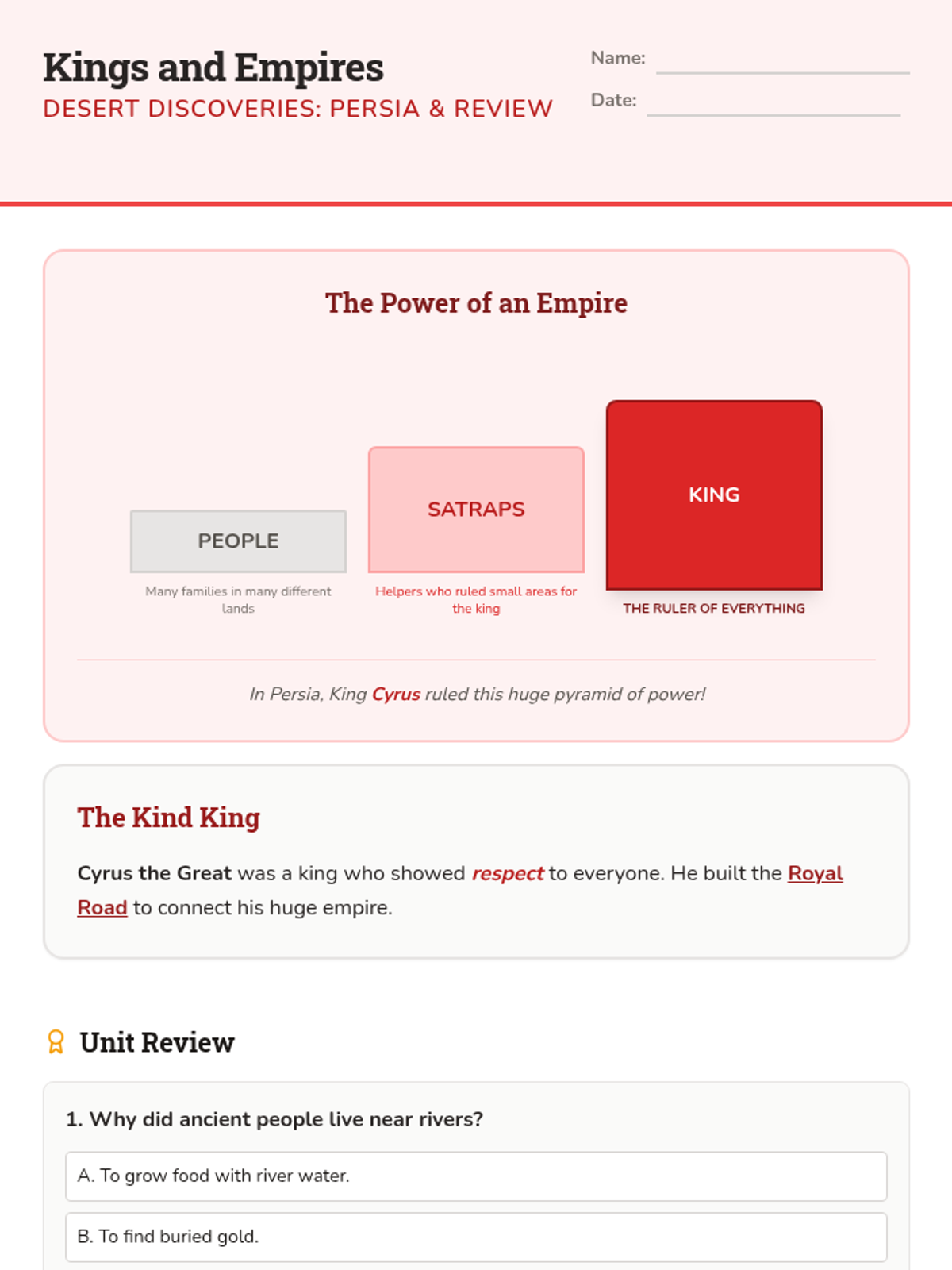
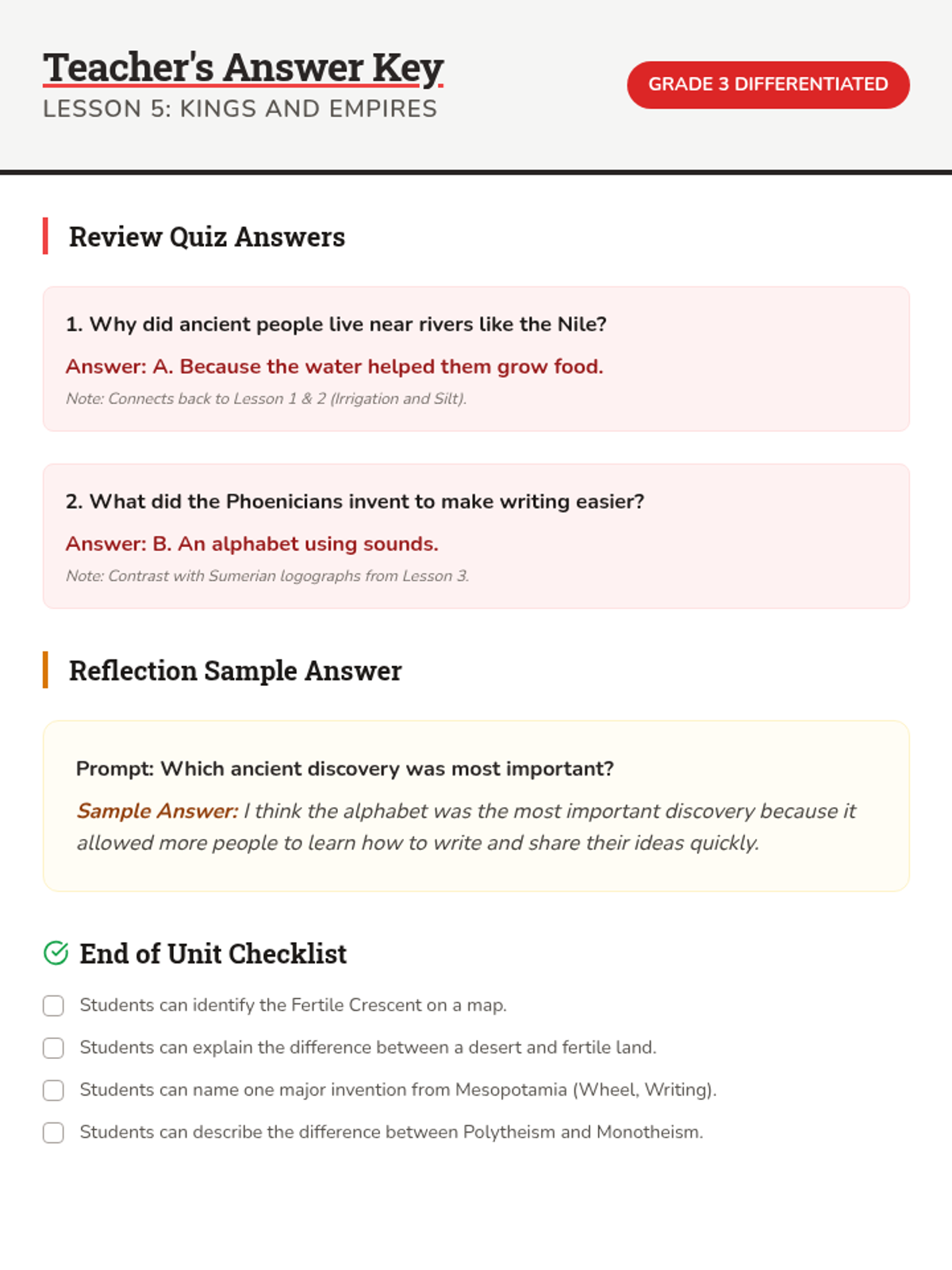
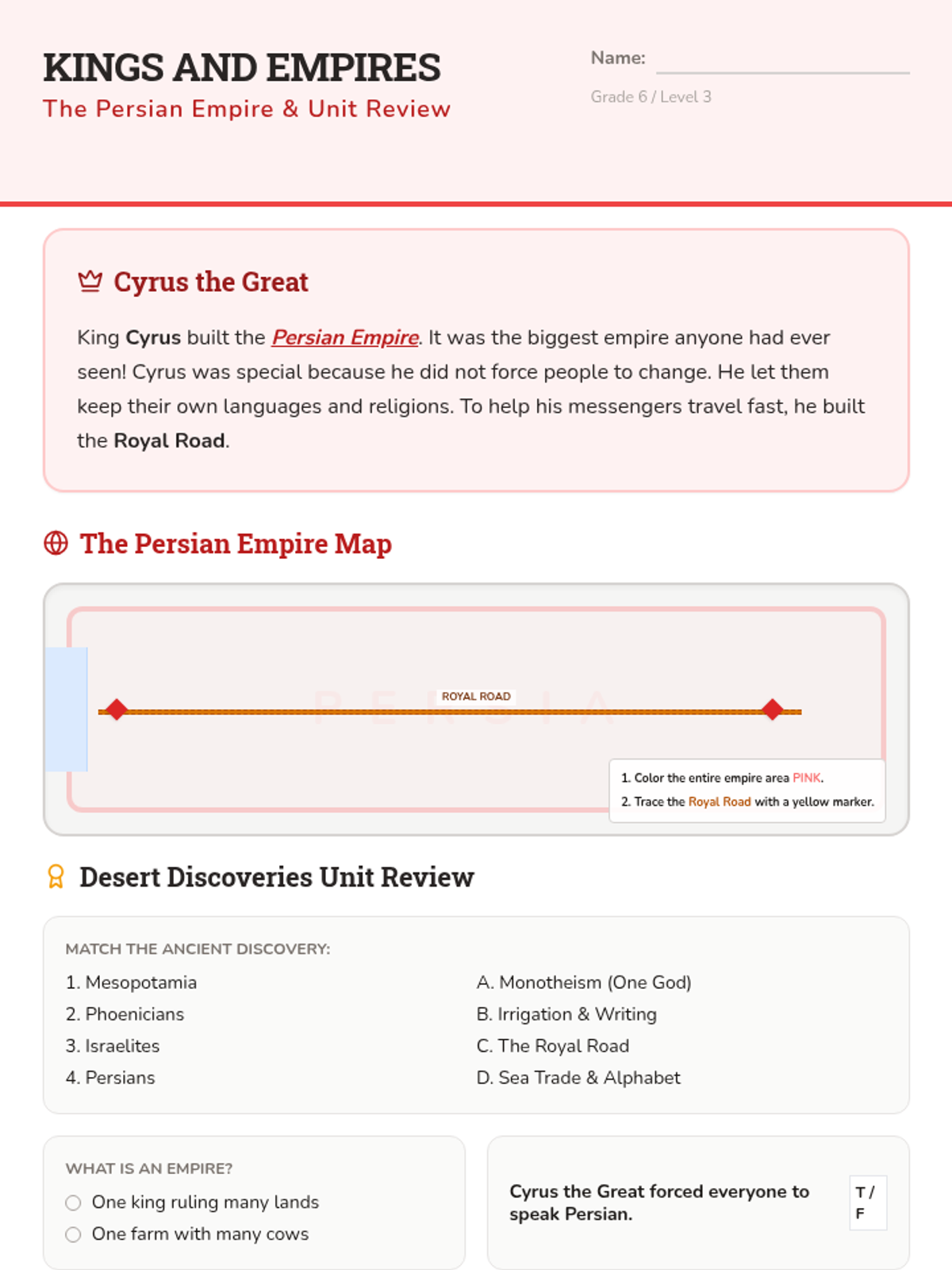
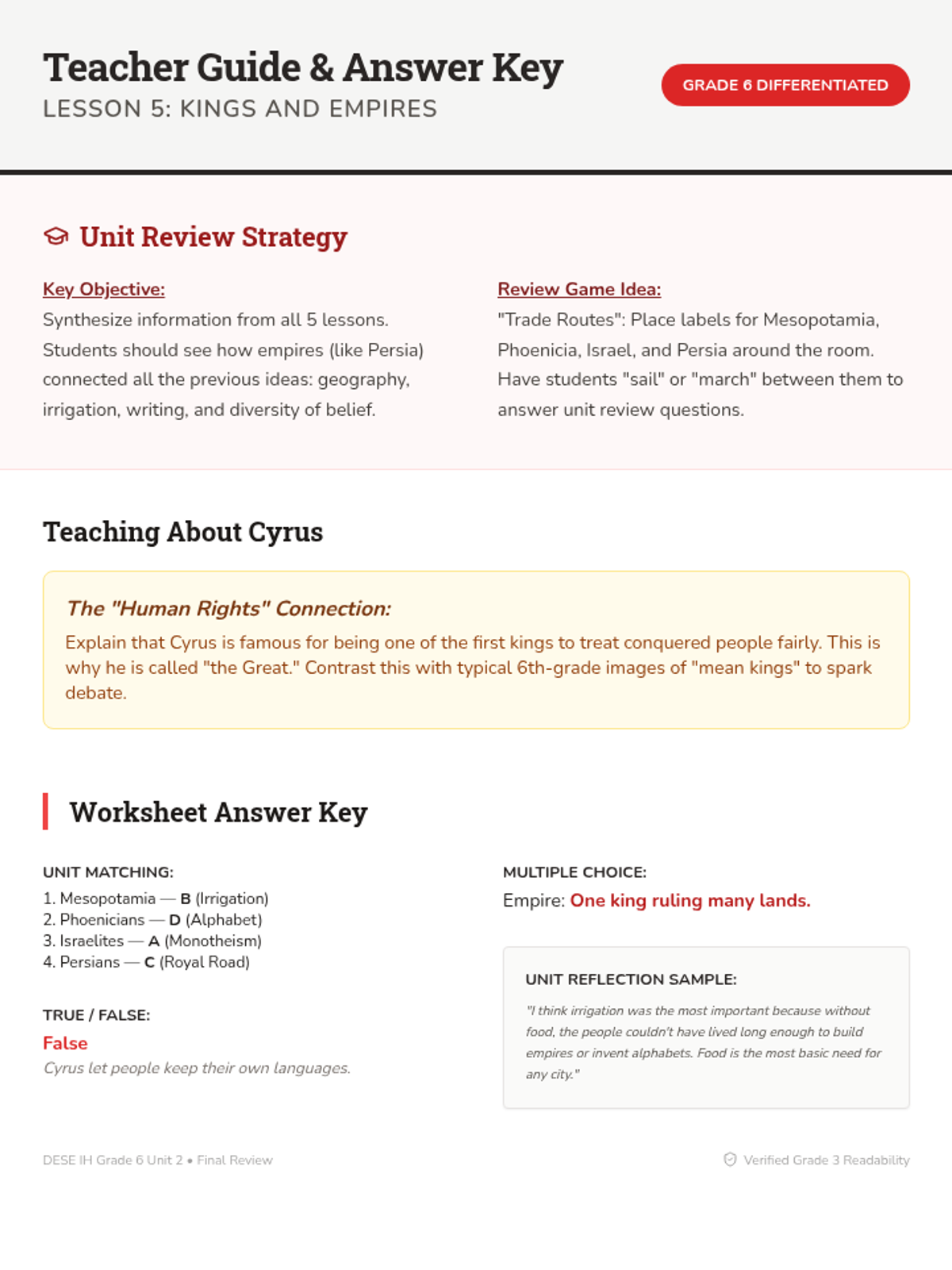
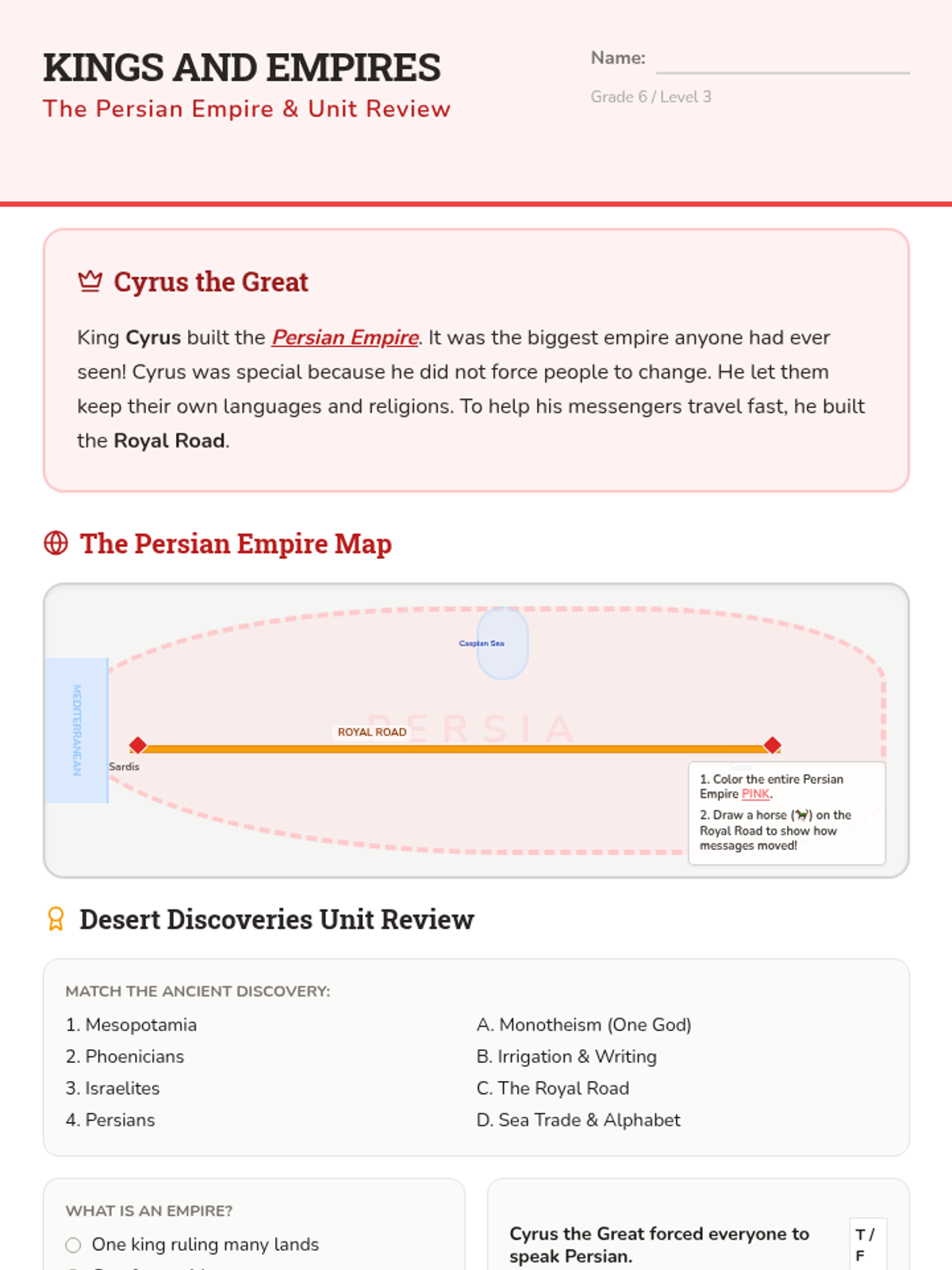
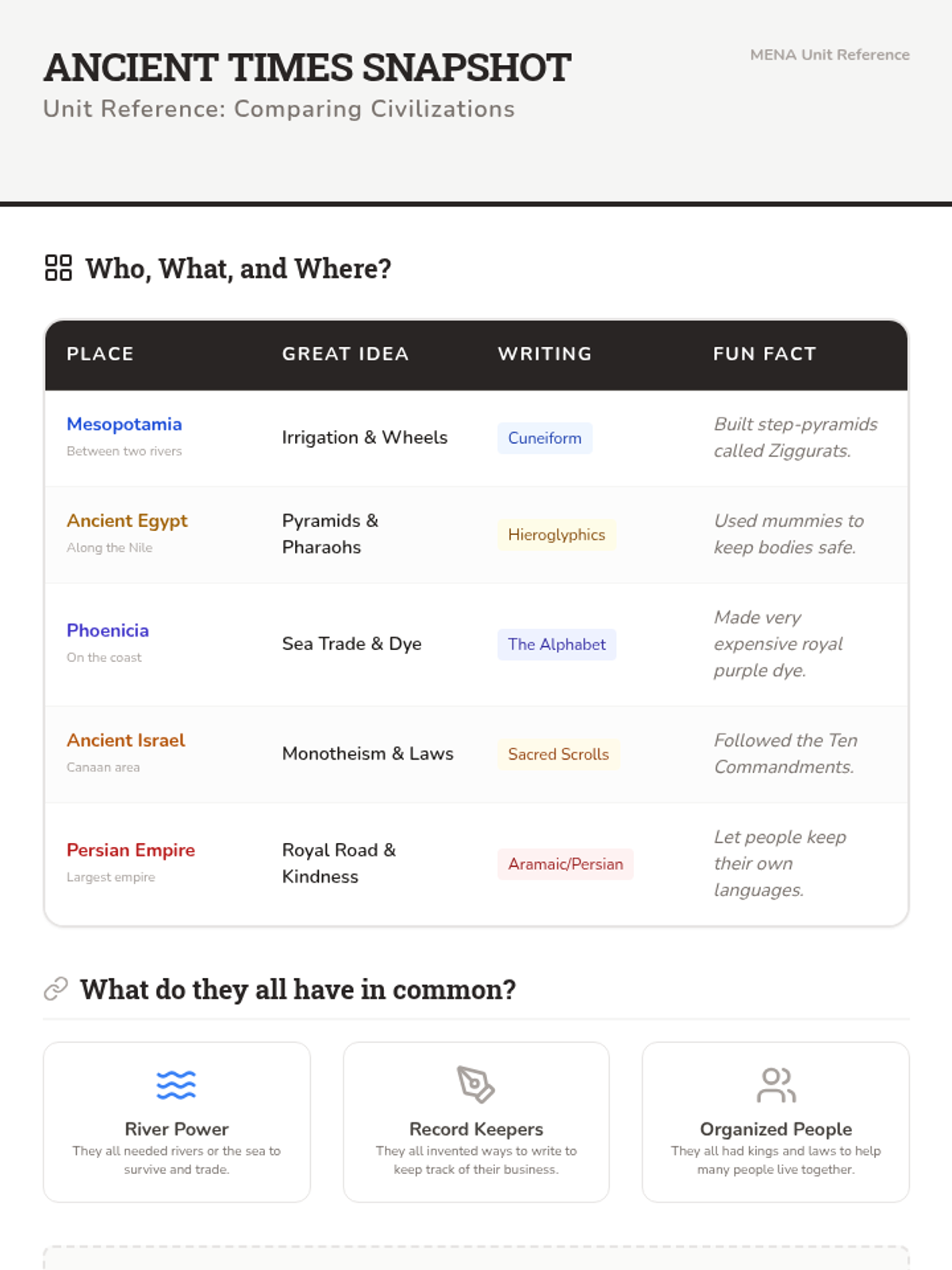
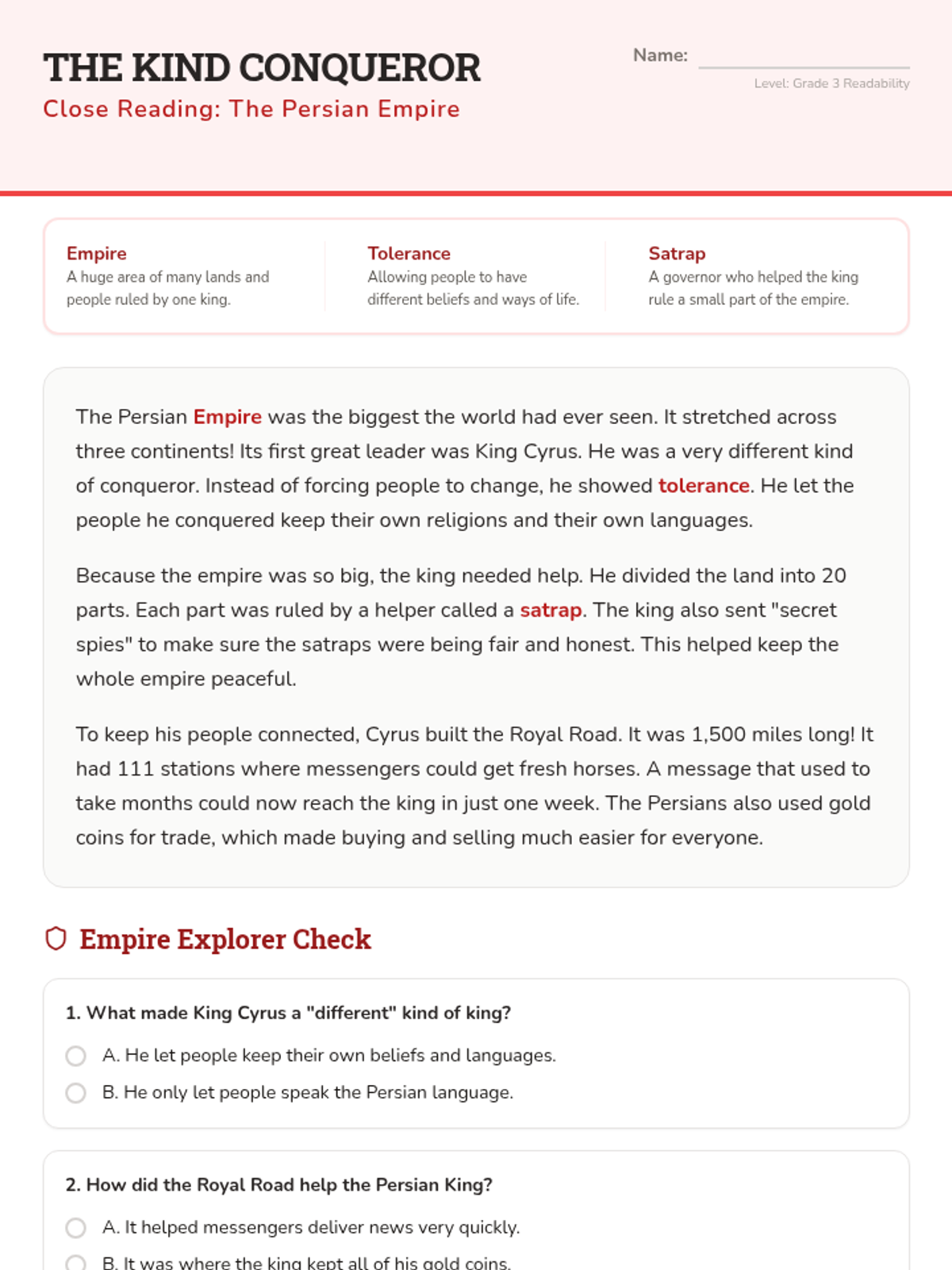
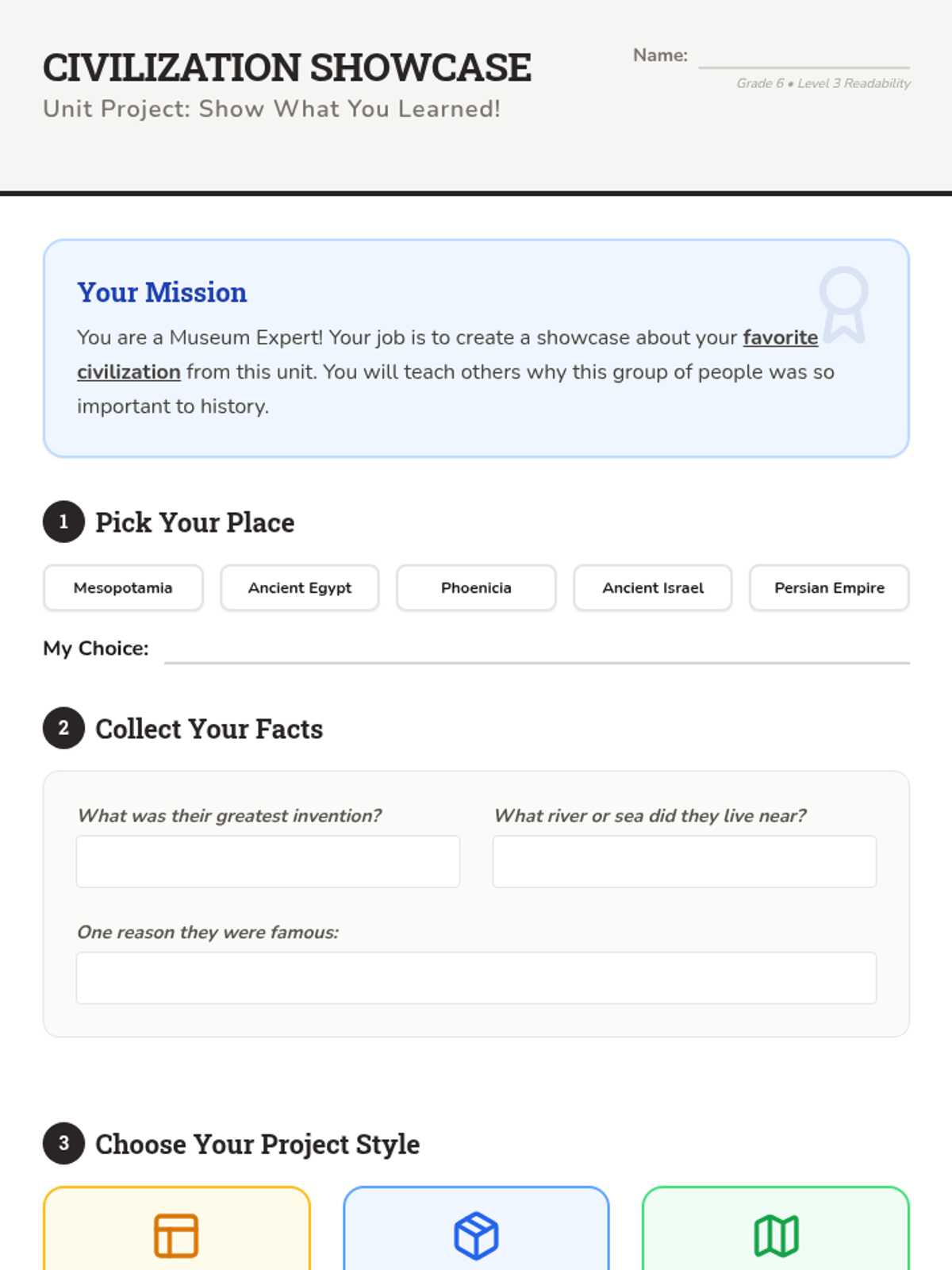
Examines the rise of the Persian Empire and its influence on the region, concluding with a unit review.
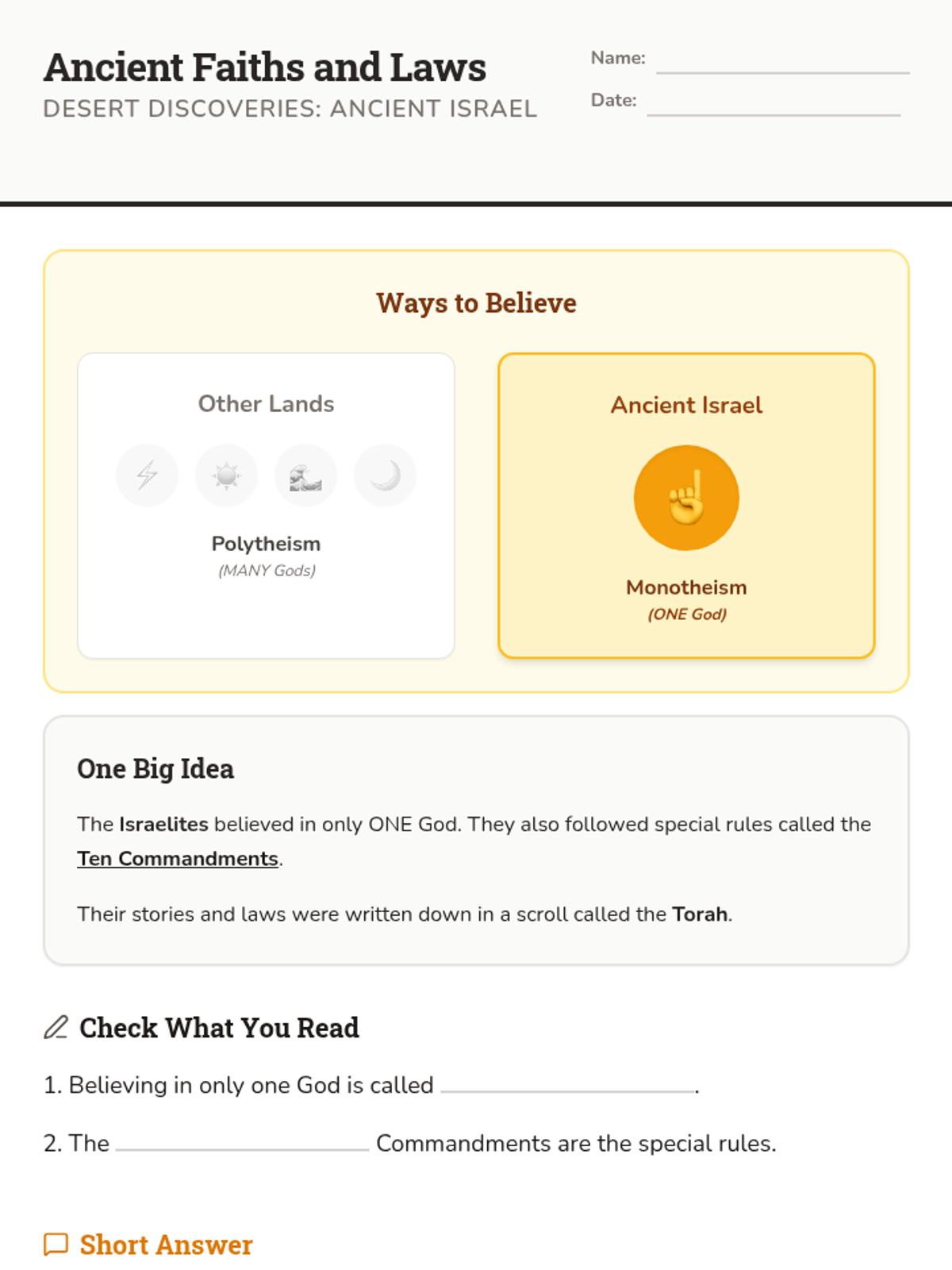
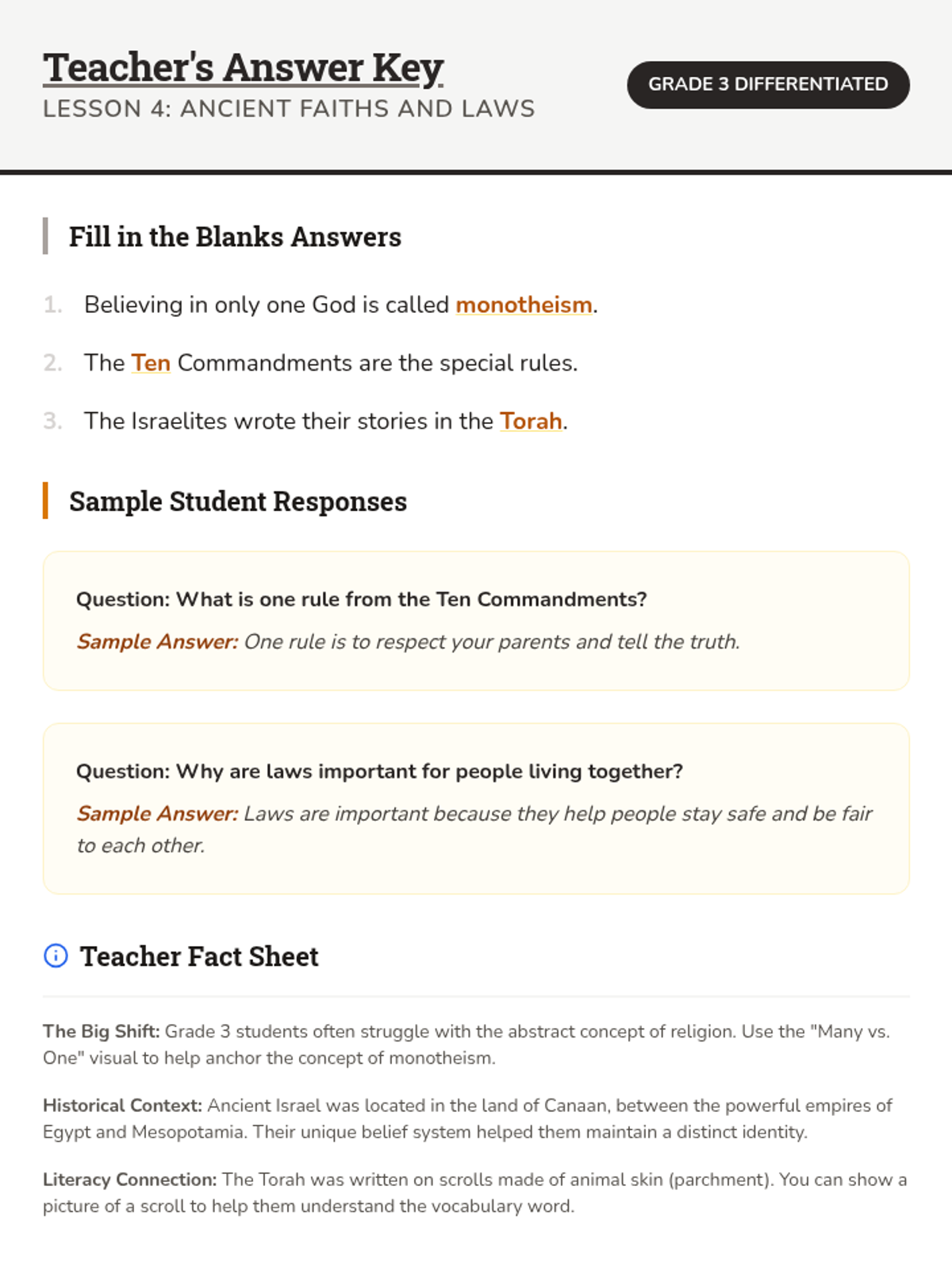
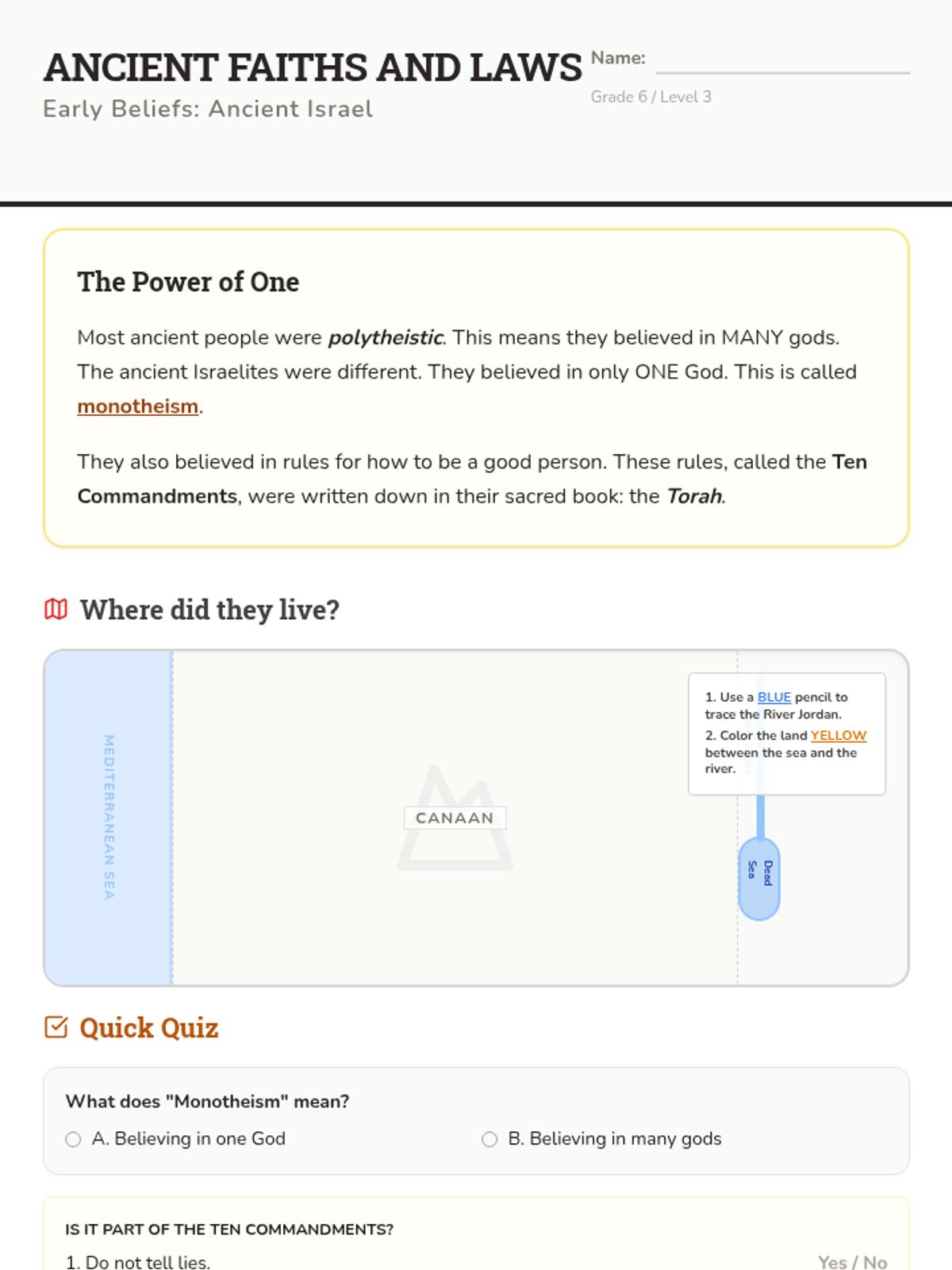
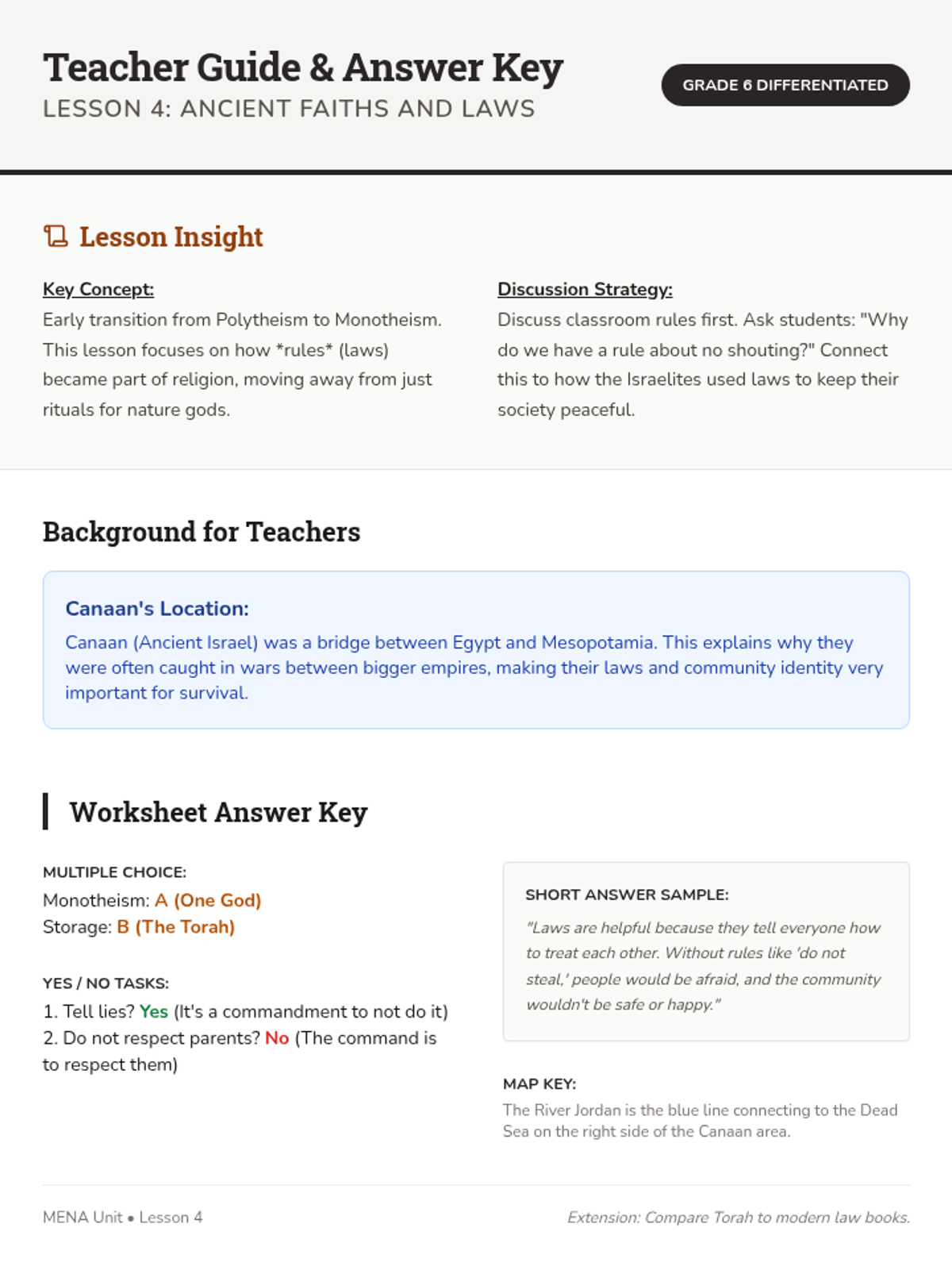
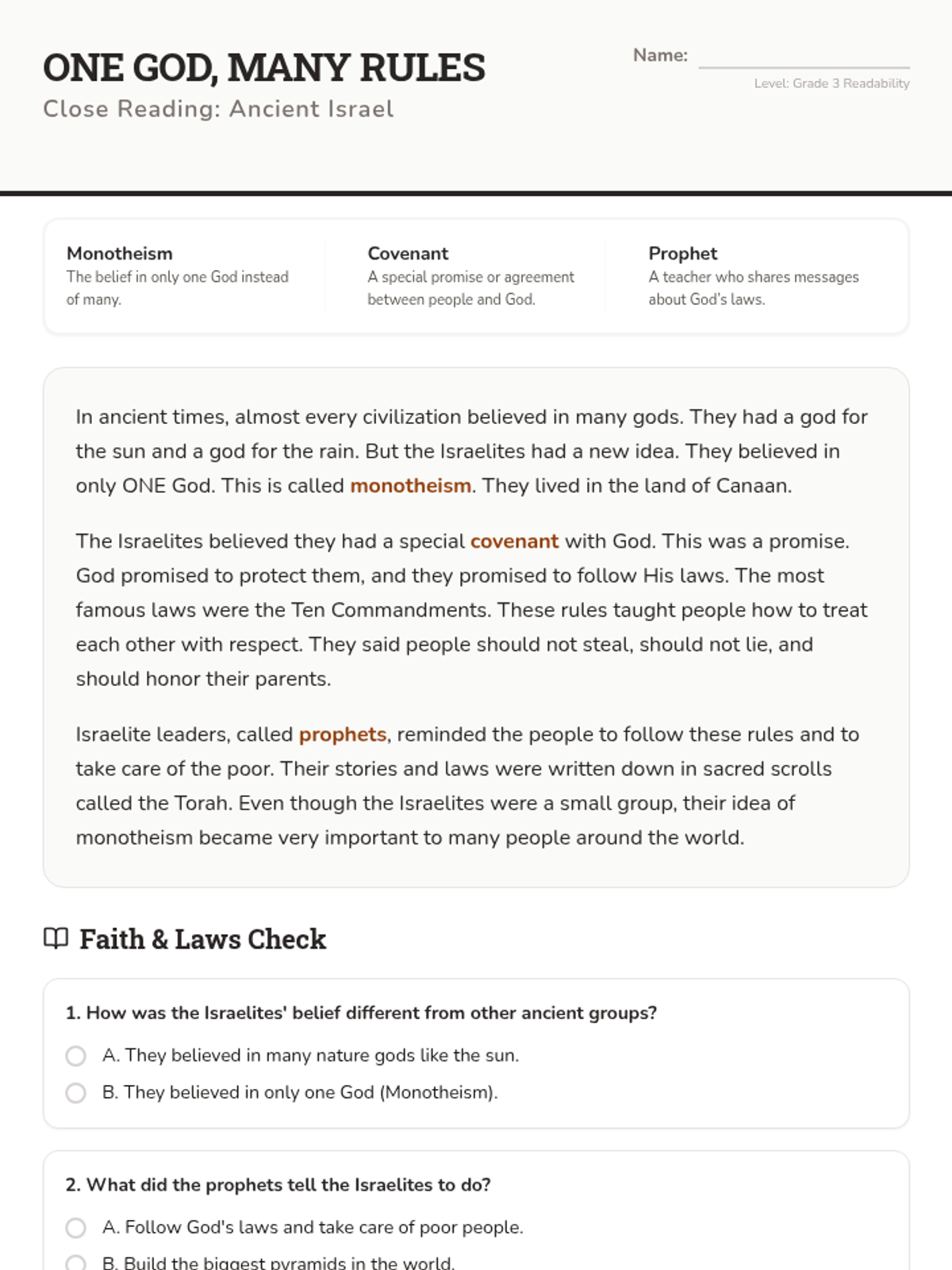
Introduces the ancient Israelites, their beliefs, and the concept of monotheism.
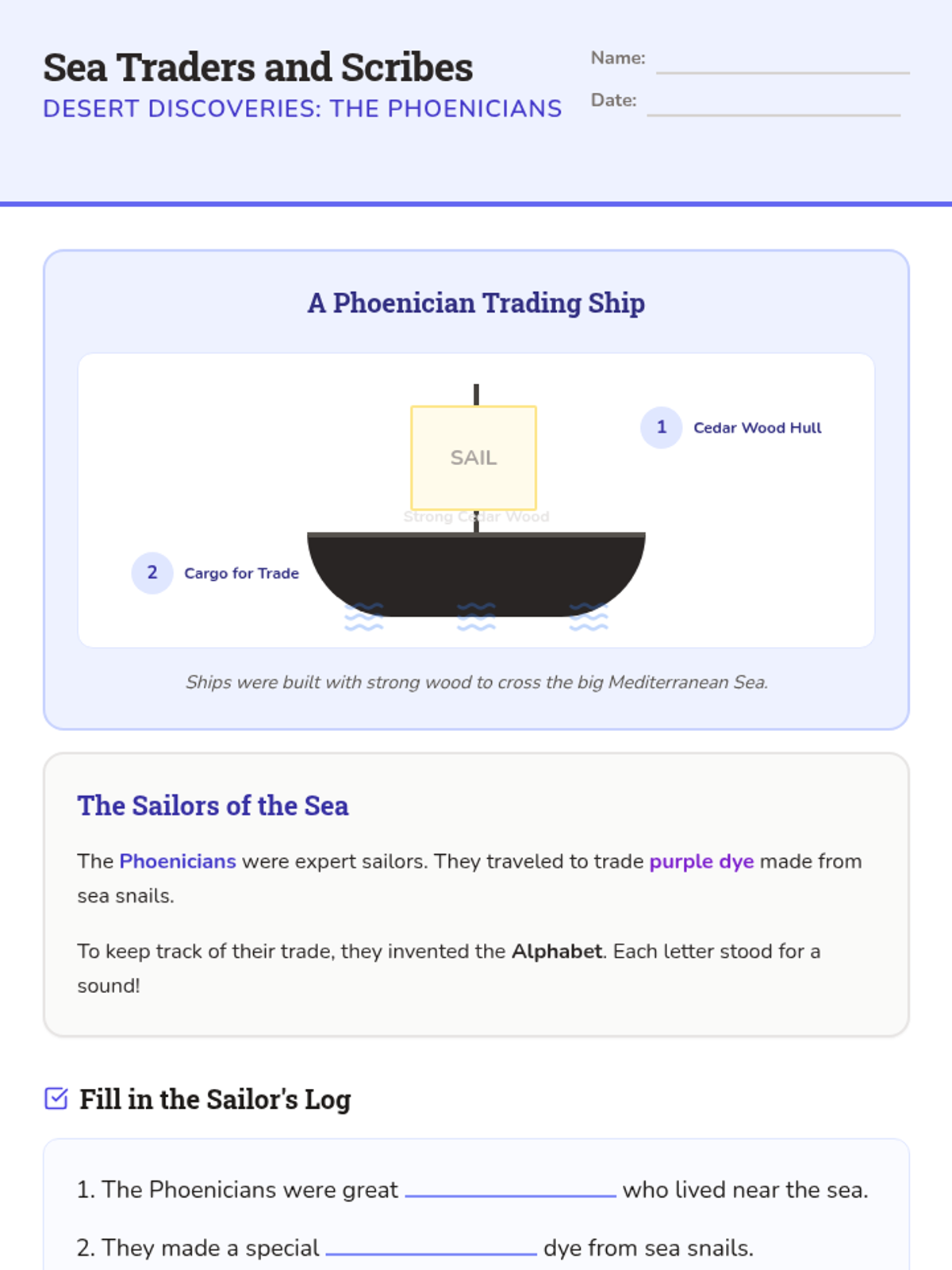
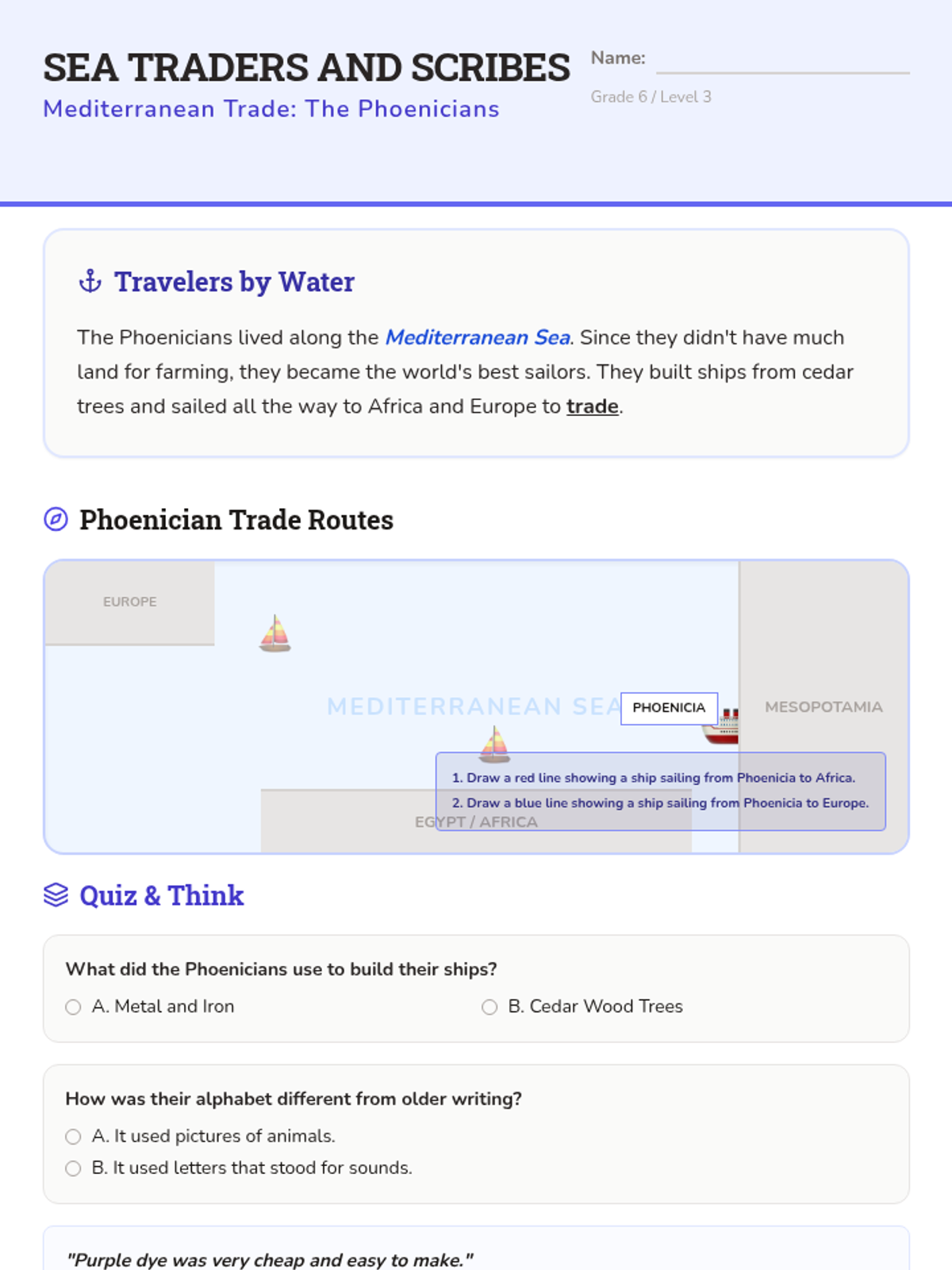
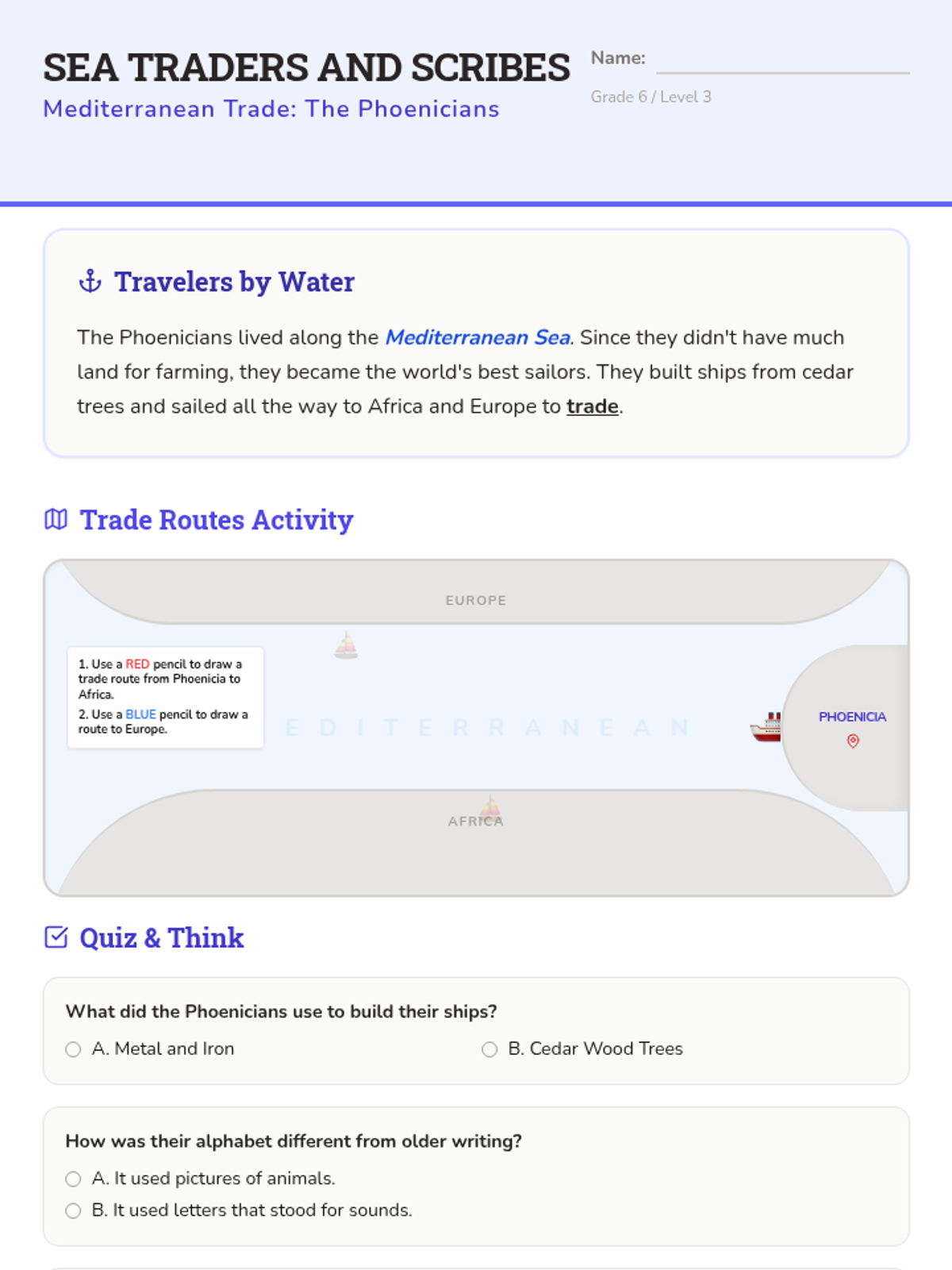
Focuses on the Phoenicians and their contributions to trade and the development of the alphabet.
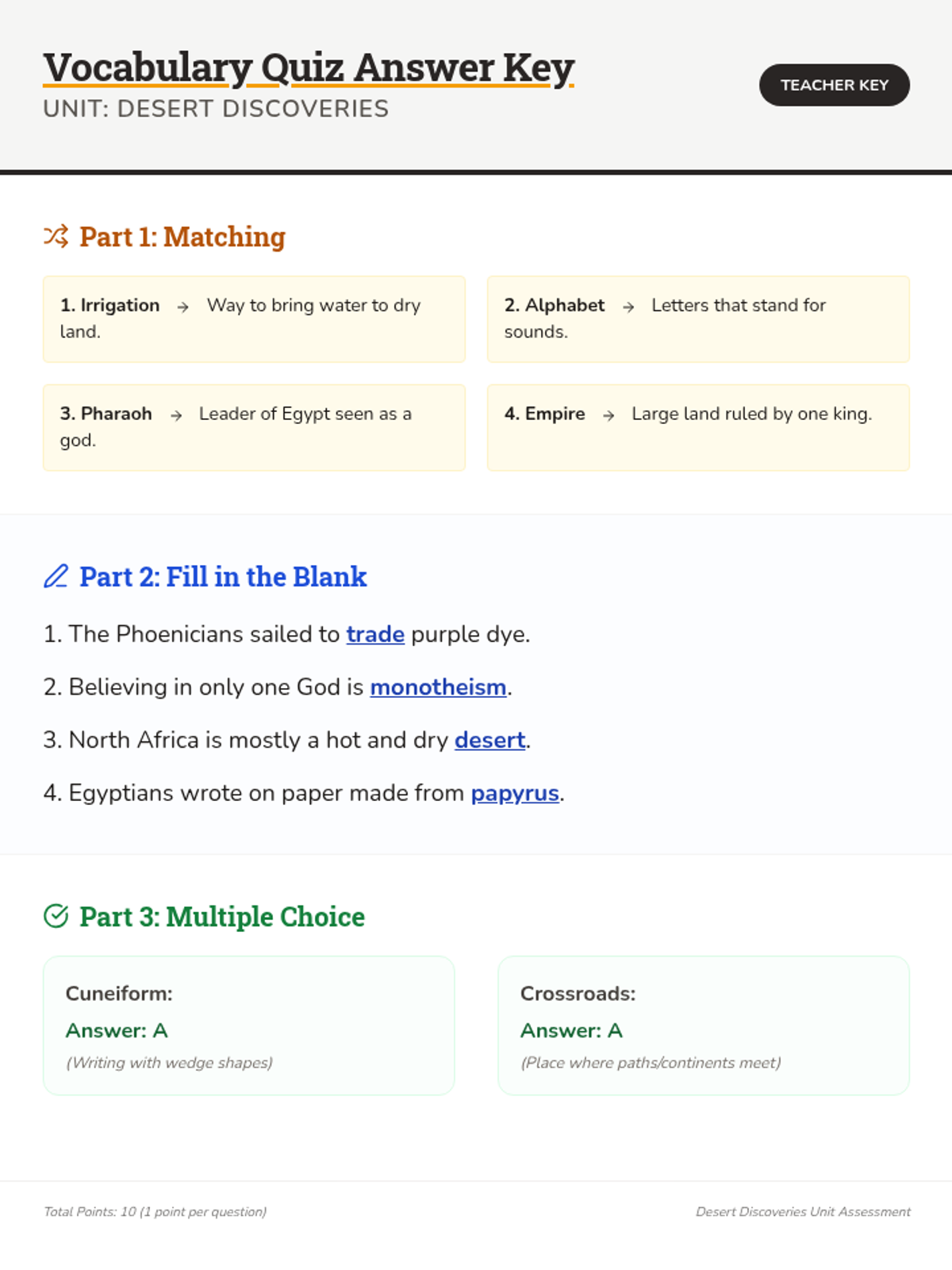
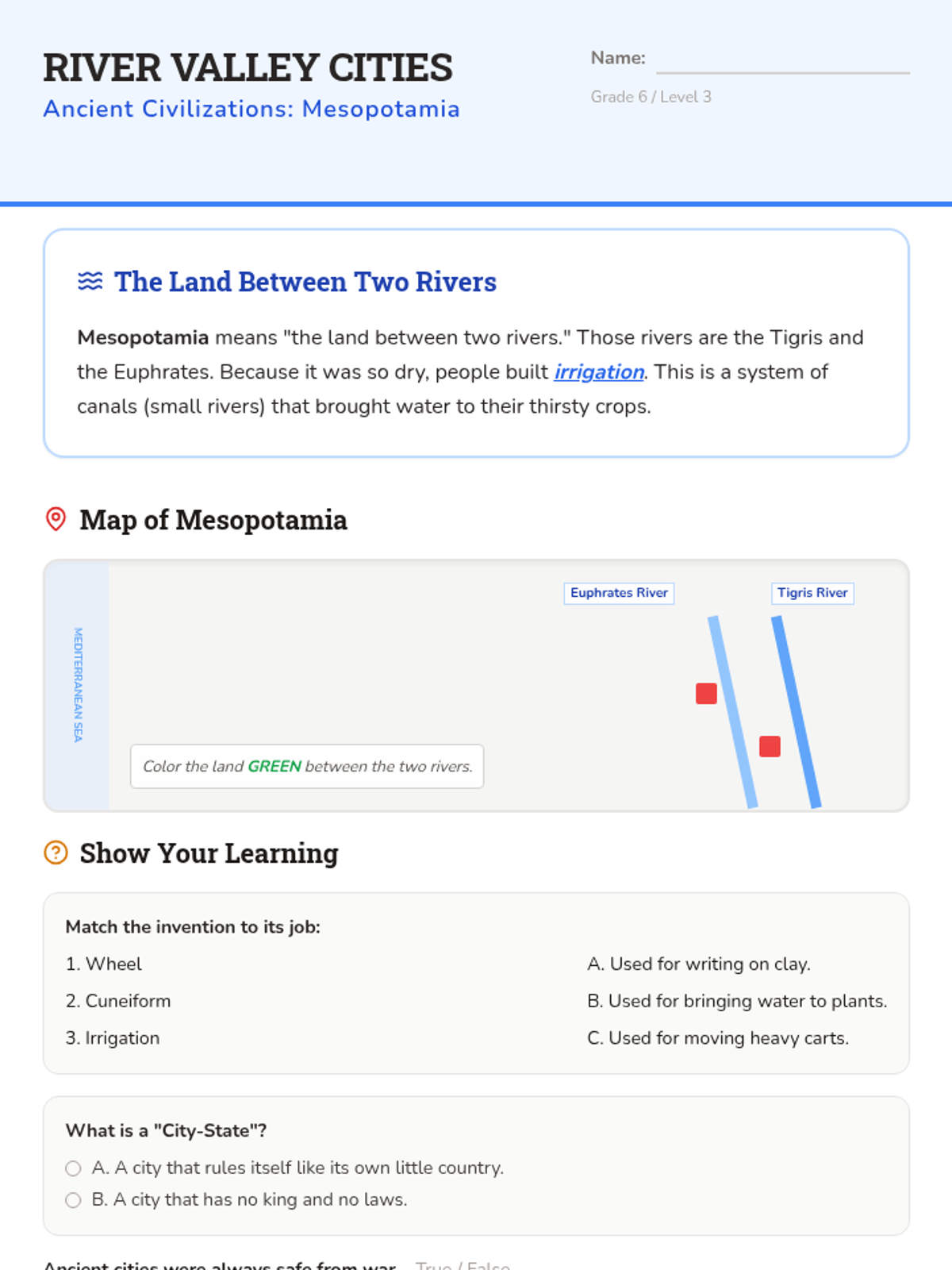
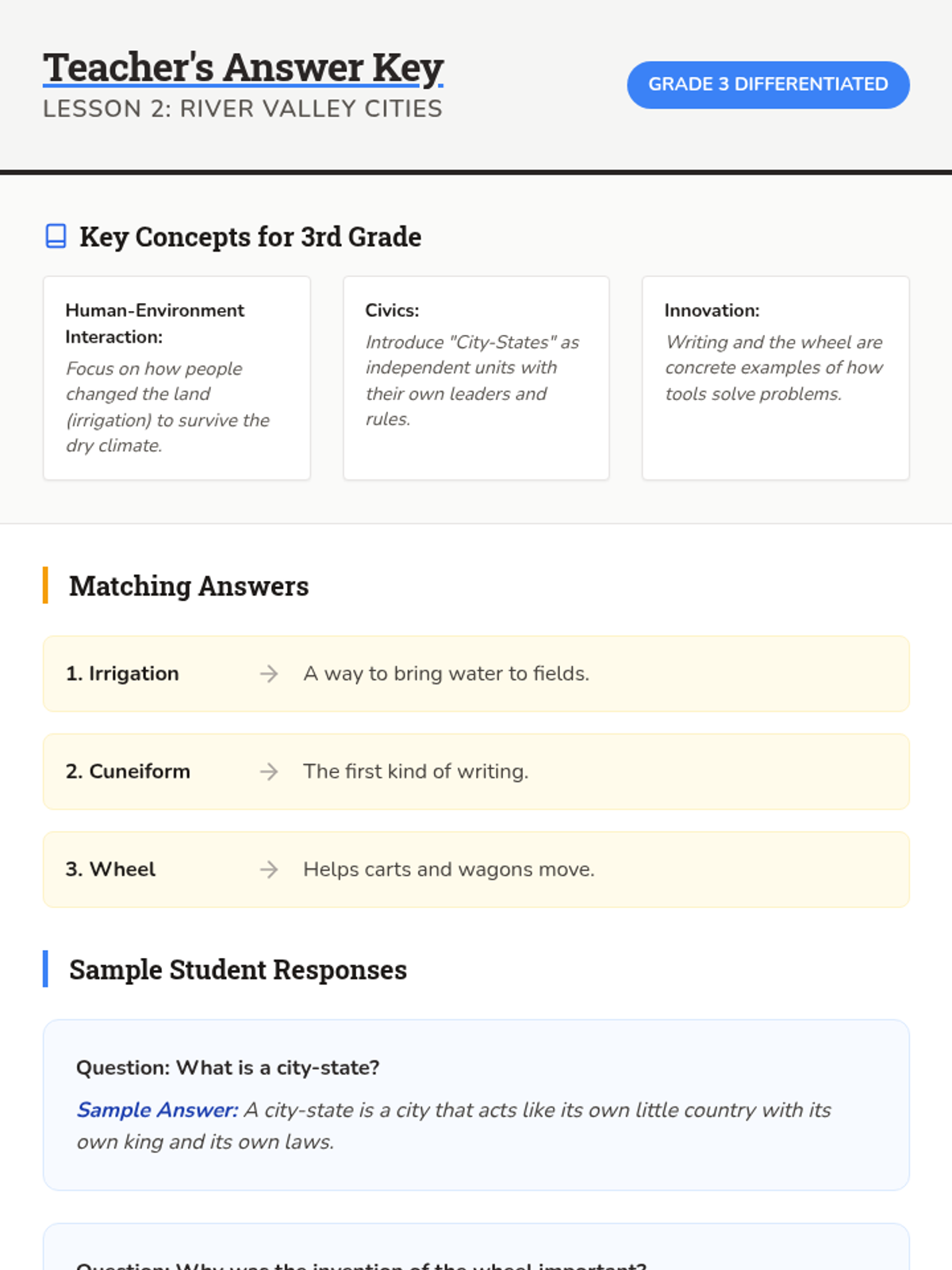
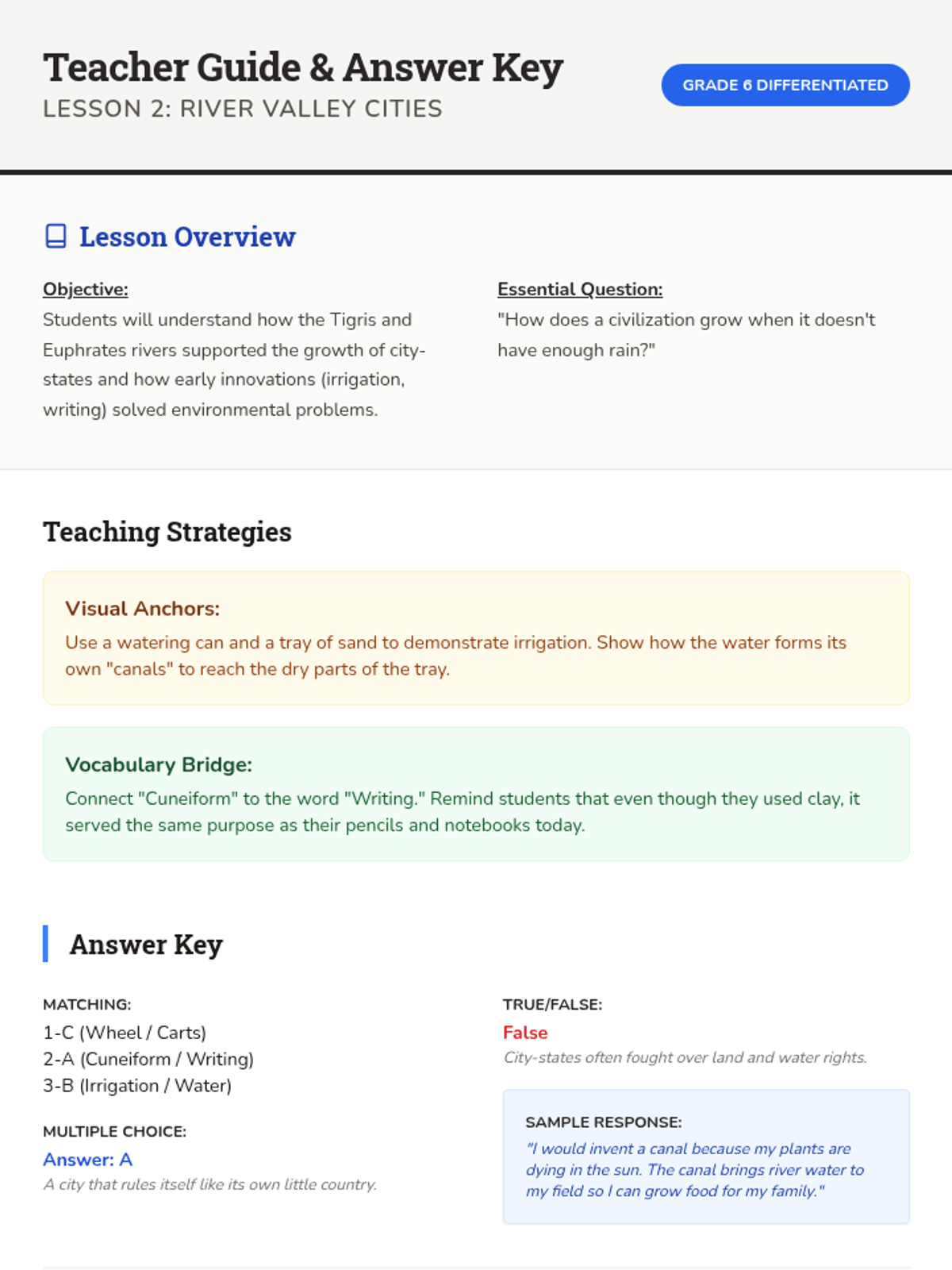
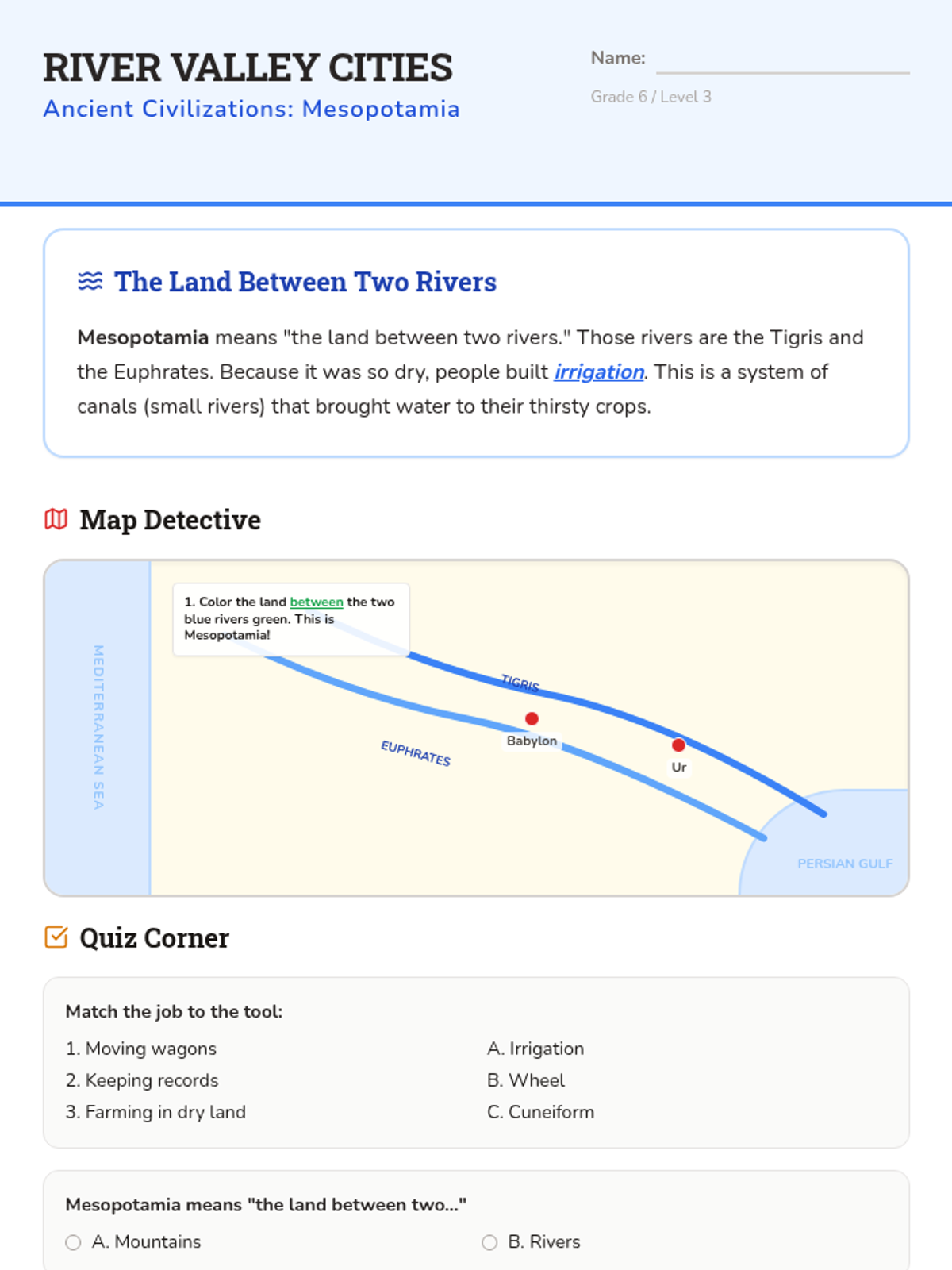
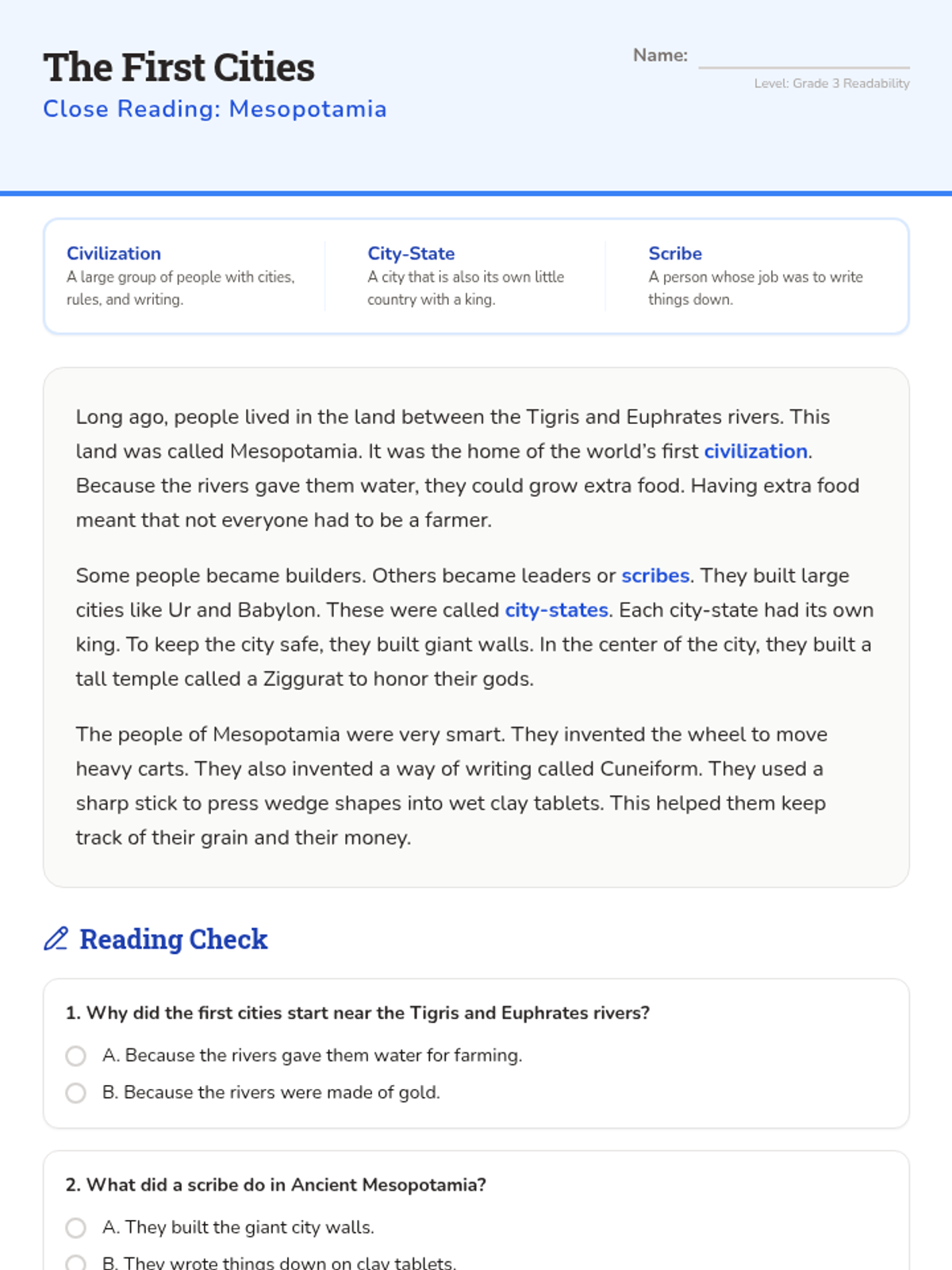
Explores the rise of the first civilizations in Mesopotamia, focusing on irrigation, city-states, and the invention of writing.
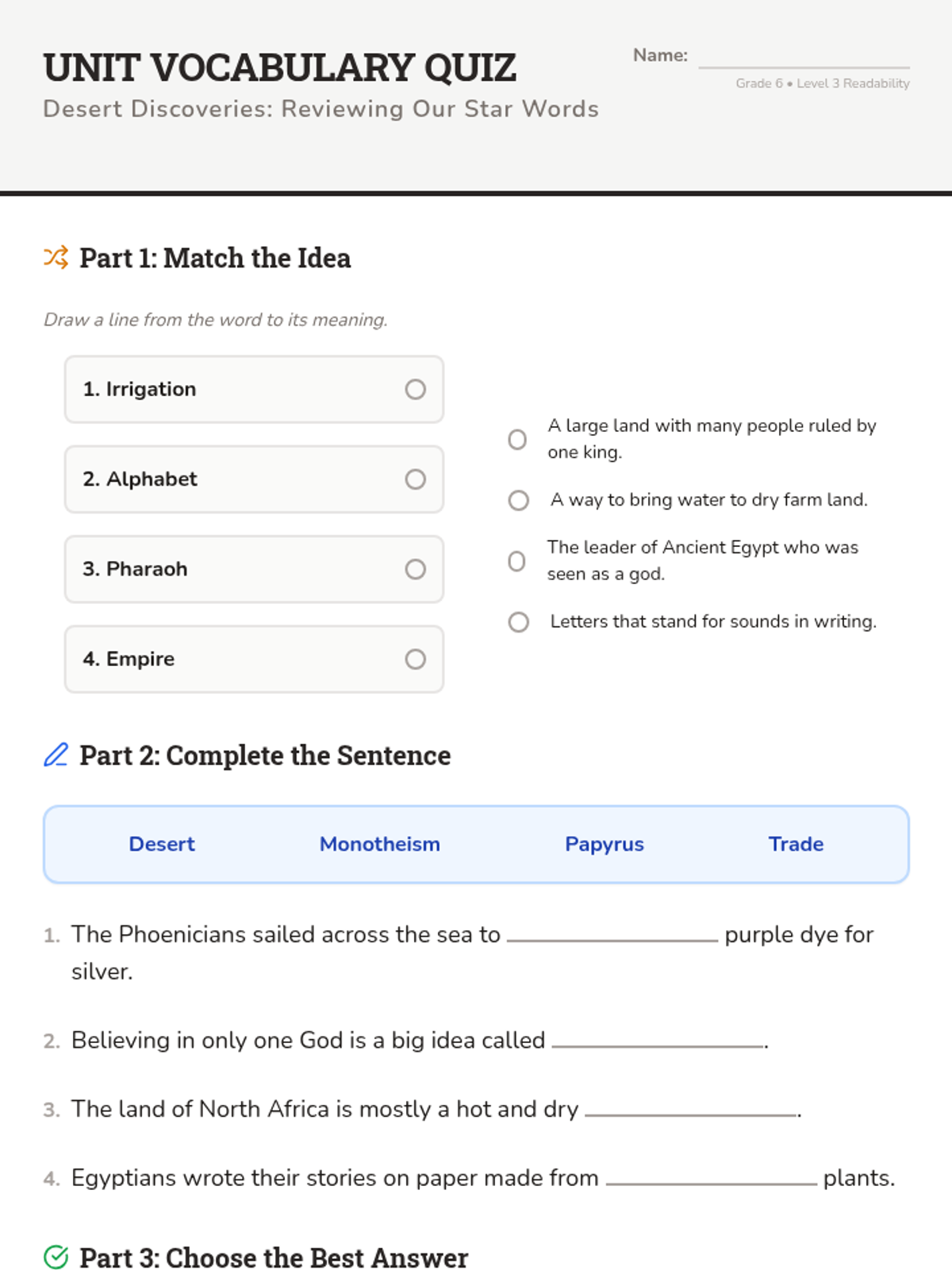
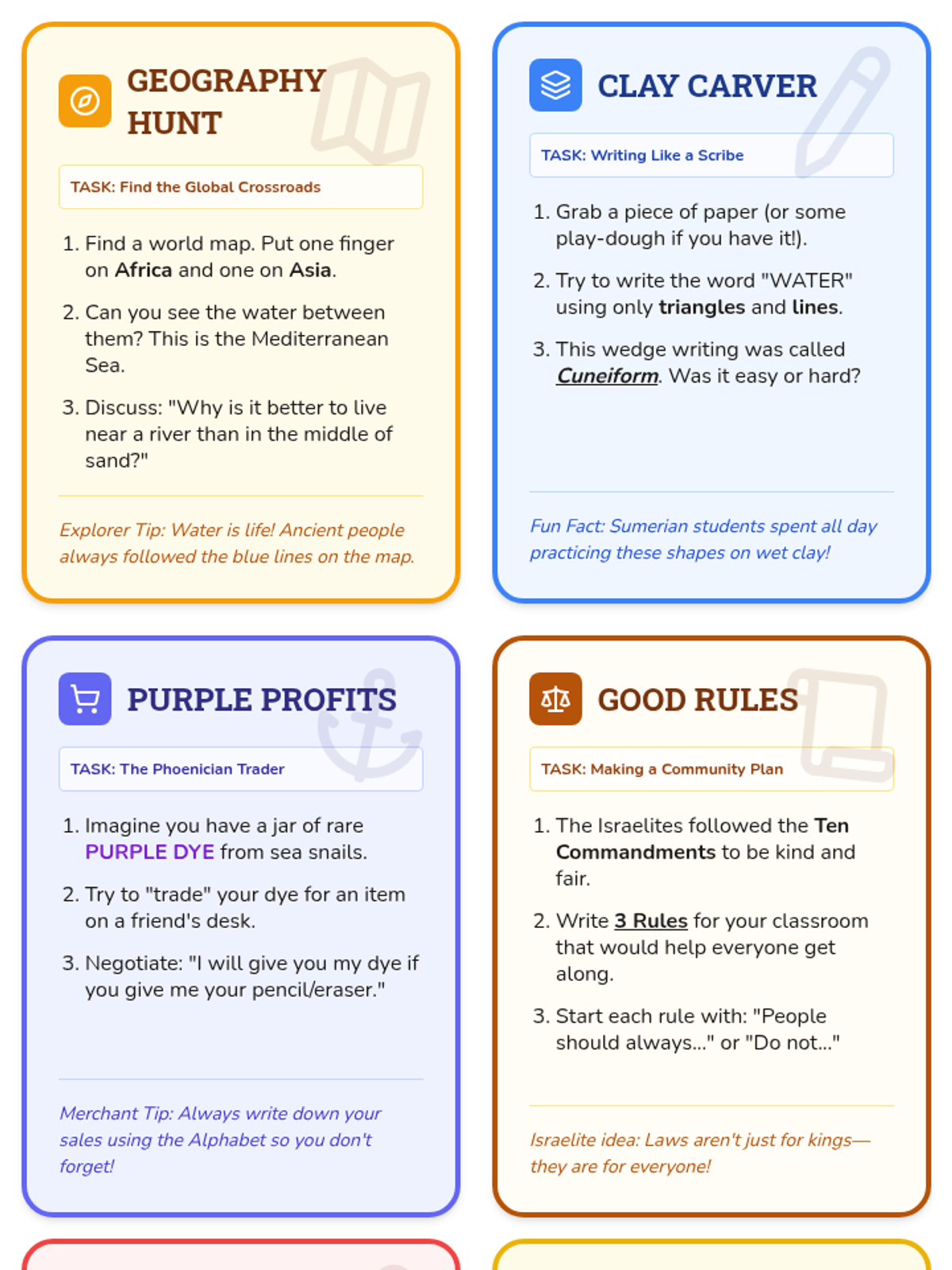
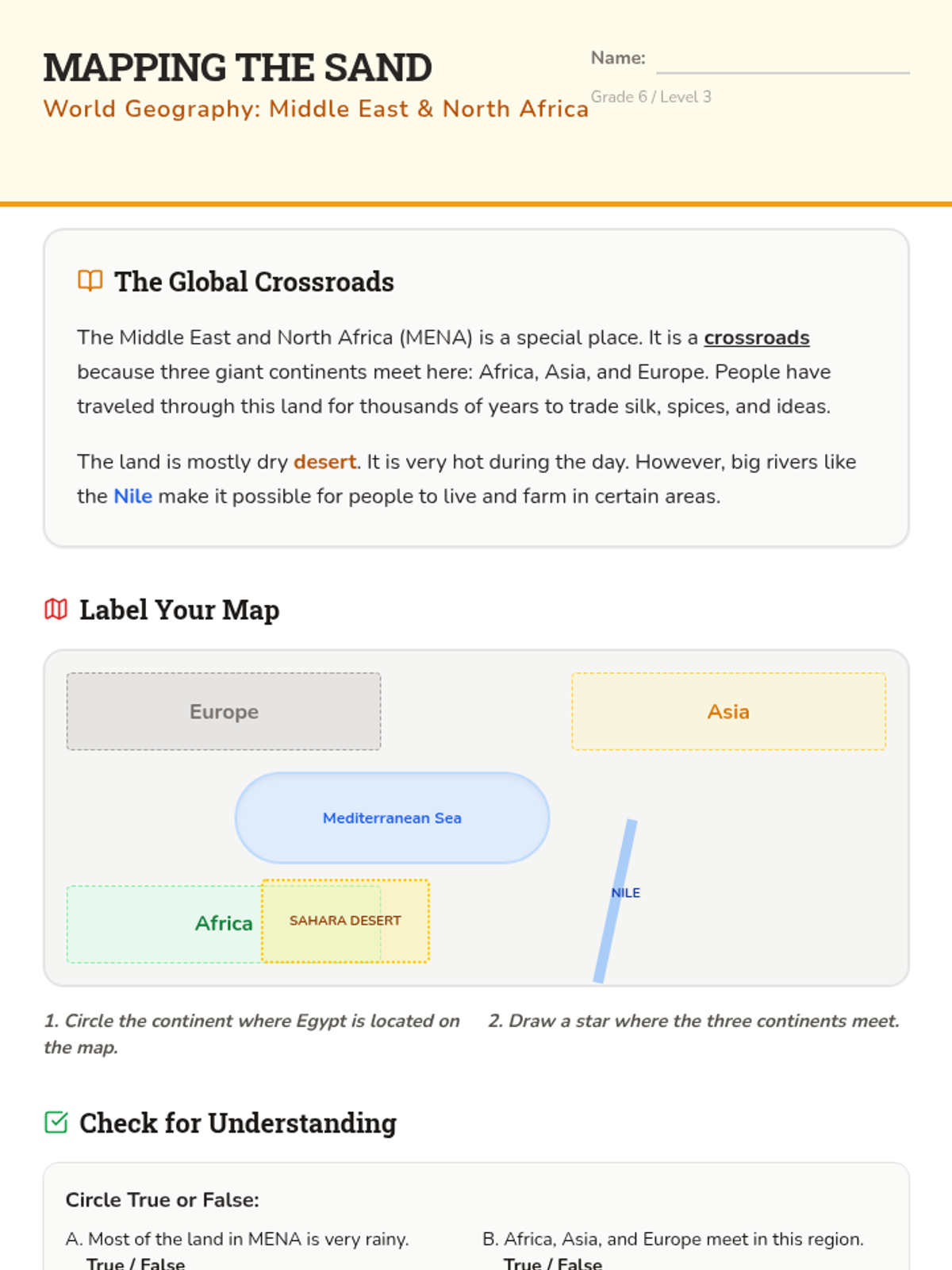
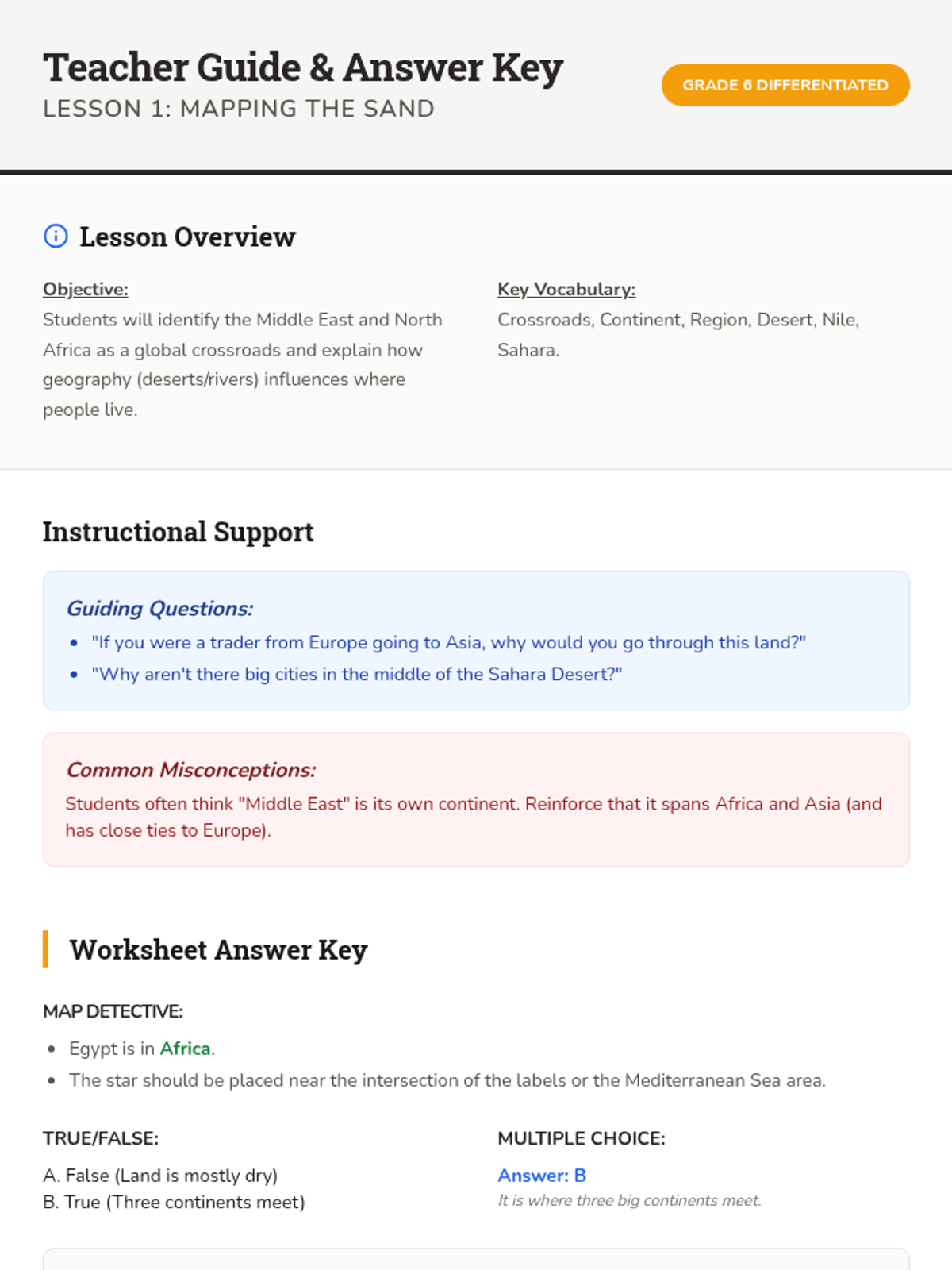
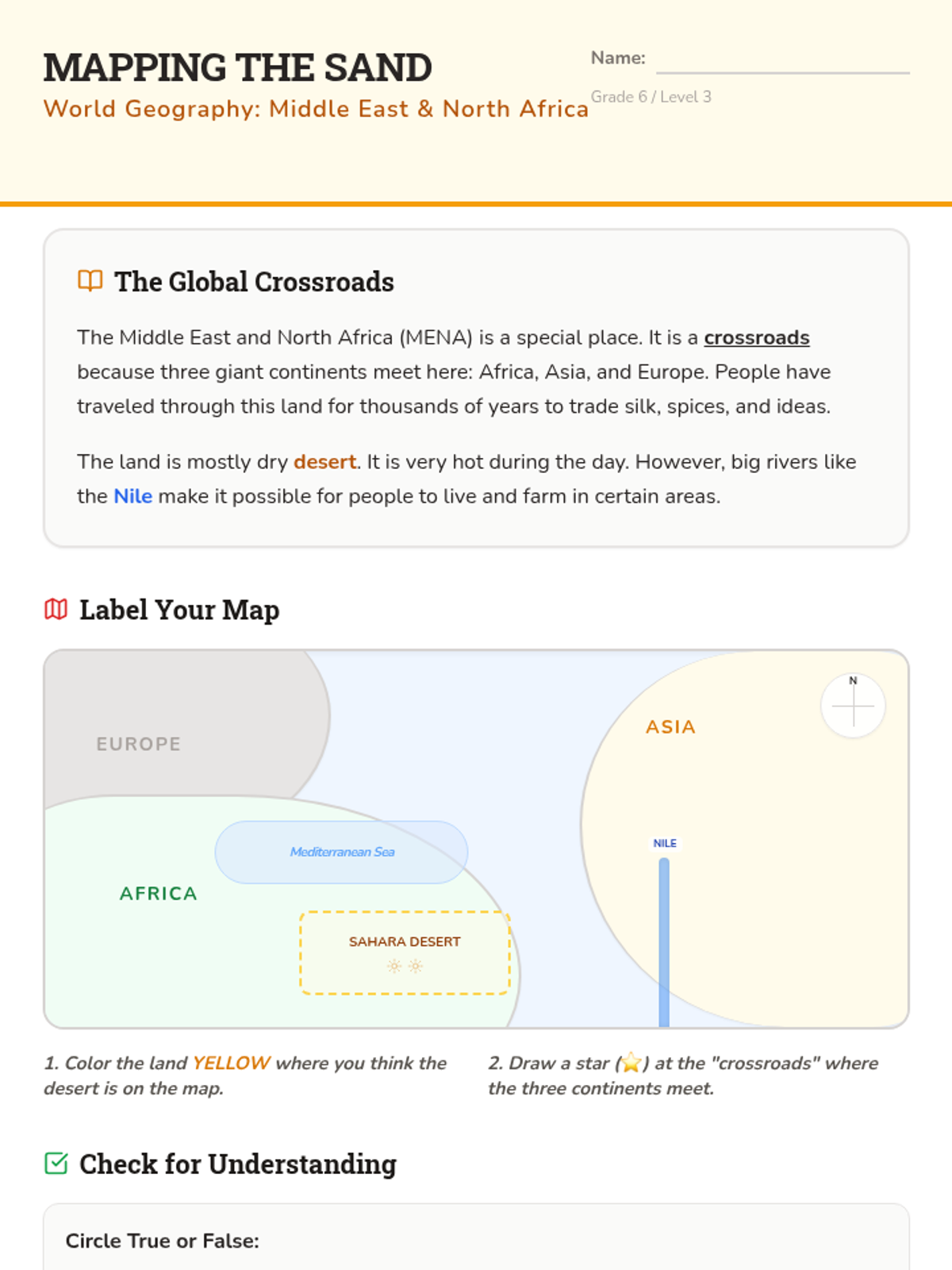
An introduction to the physical geography of the Middle East and North Africa, focusing on the impact of deserts and rivers on human settlement.
Synthesizes all factors of the collapse and reflects on the lasting cultural legacy of the Gupta Empire despite its political end.
Examines the emergence of powerful regional dynasties and the decentralization of the Gupta administration.
Analyzes the decline of international trade with Rome and the resulting economic strain and debasement of currency.
Investigates the impact of the Hephthalite (White Hun) invasions on the empire's borders and military resources.
Focuses on the internal weaknesses that began after the reign of Skandagupta, including succession disputes and the weakening of central authority.
Examine the origins of constitutional government with the Magna Carta, the growth of medieval towns, and the transition toward the Renaissance.
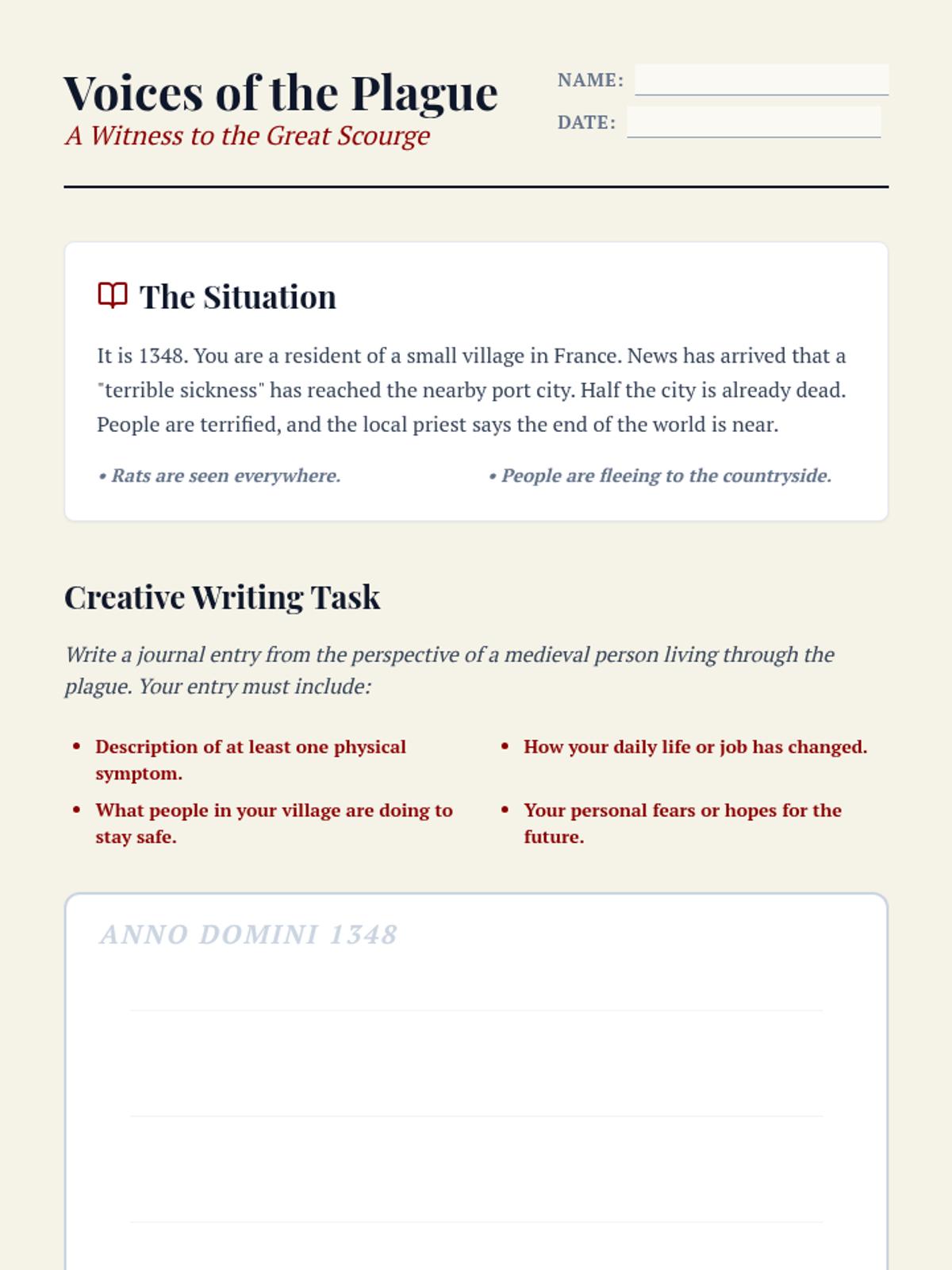
Investigate the origins, symptoms, and catastrophic social and economic consequences of the Bubonic Plague in 14th-century Europe.
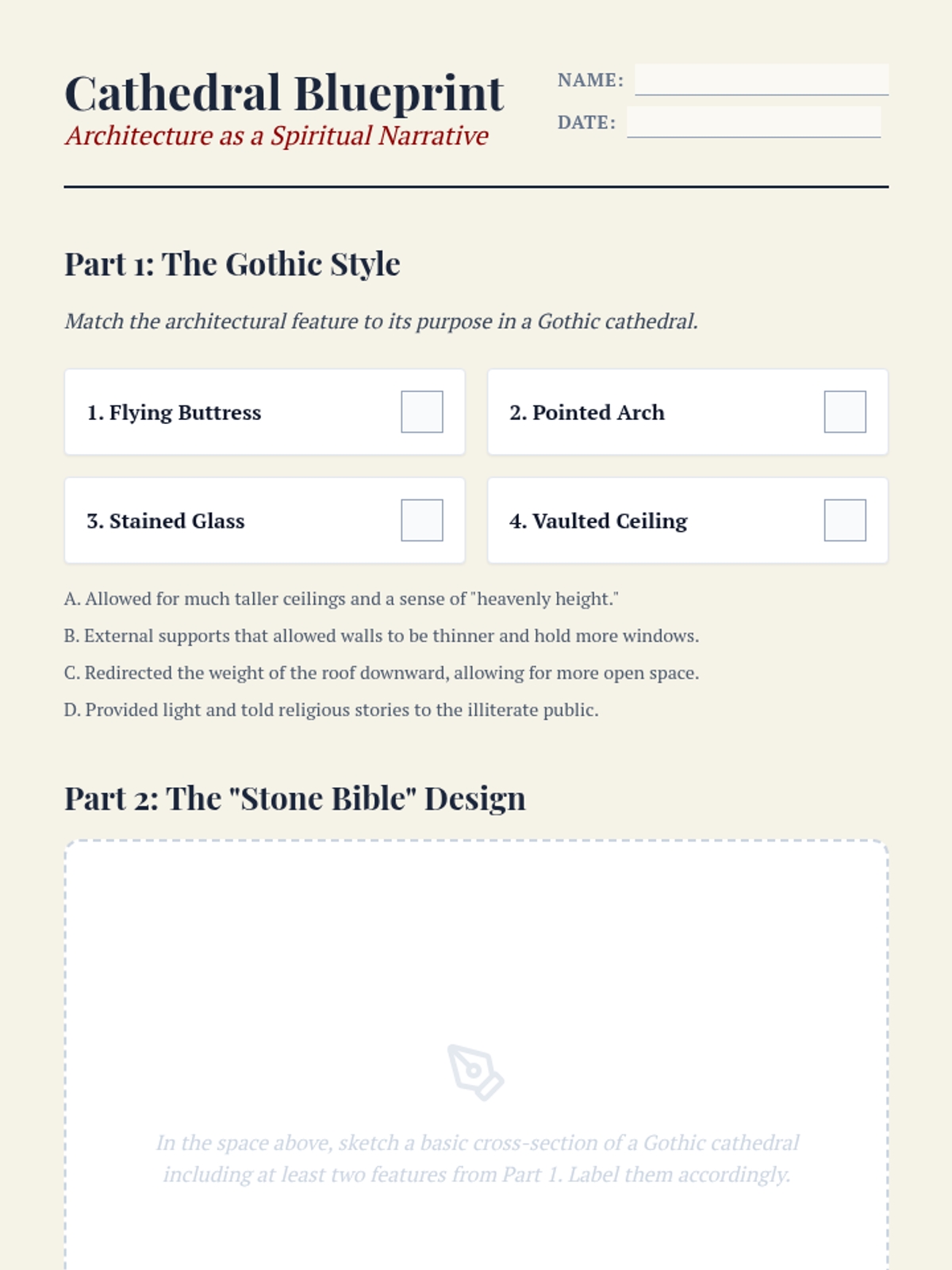
Analyze the immense power and influence of the Catholic Church on daily life, politics, and the cultural landscape of Medieval Europe.
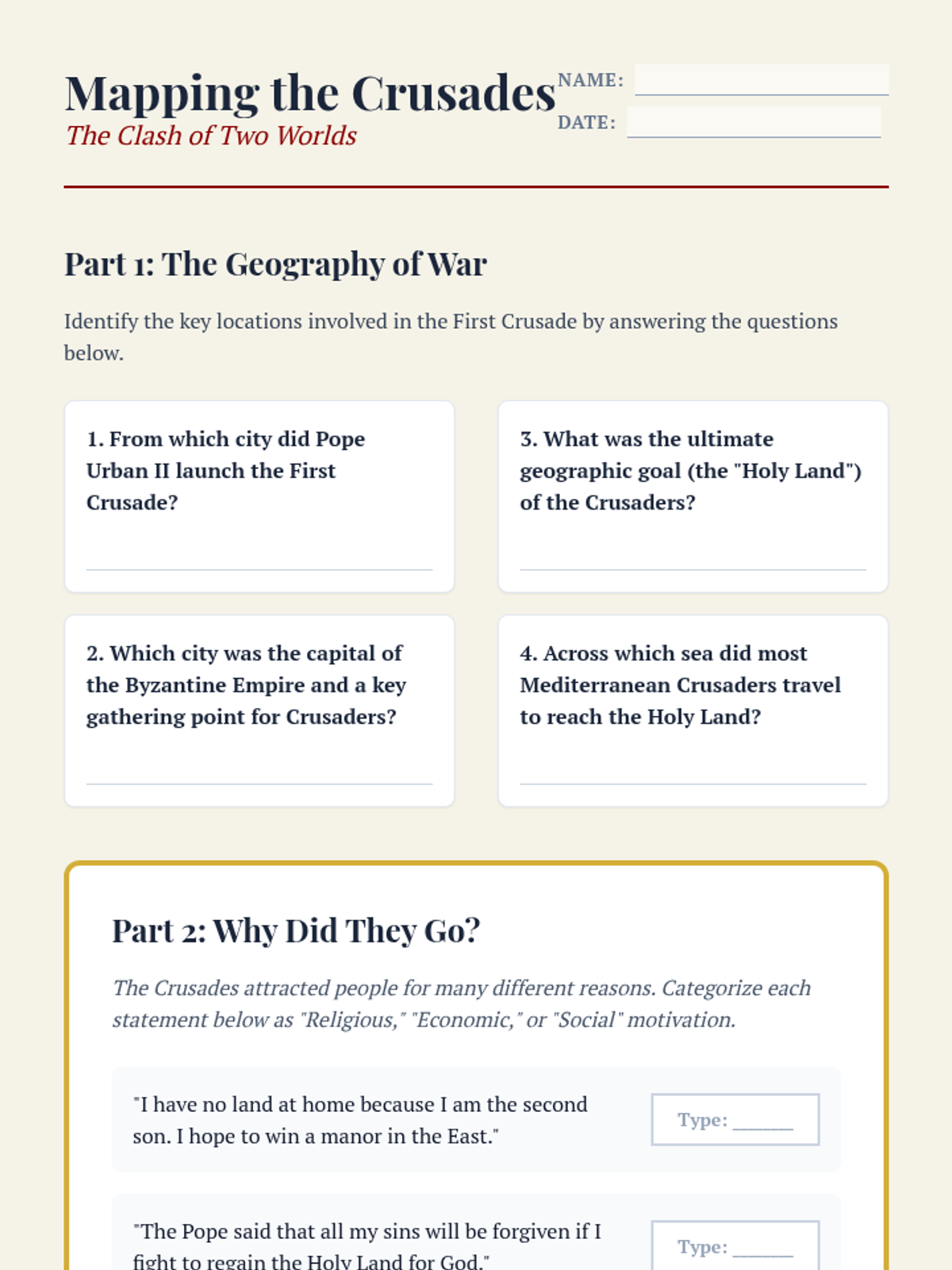
Explore the life of a medieval knight, the code of chivalry, and the religious motivations behind the Crusades.
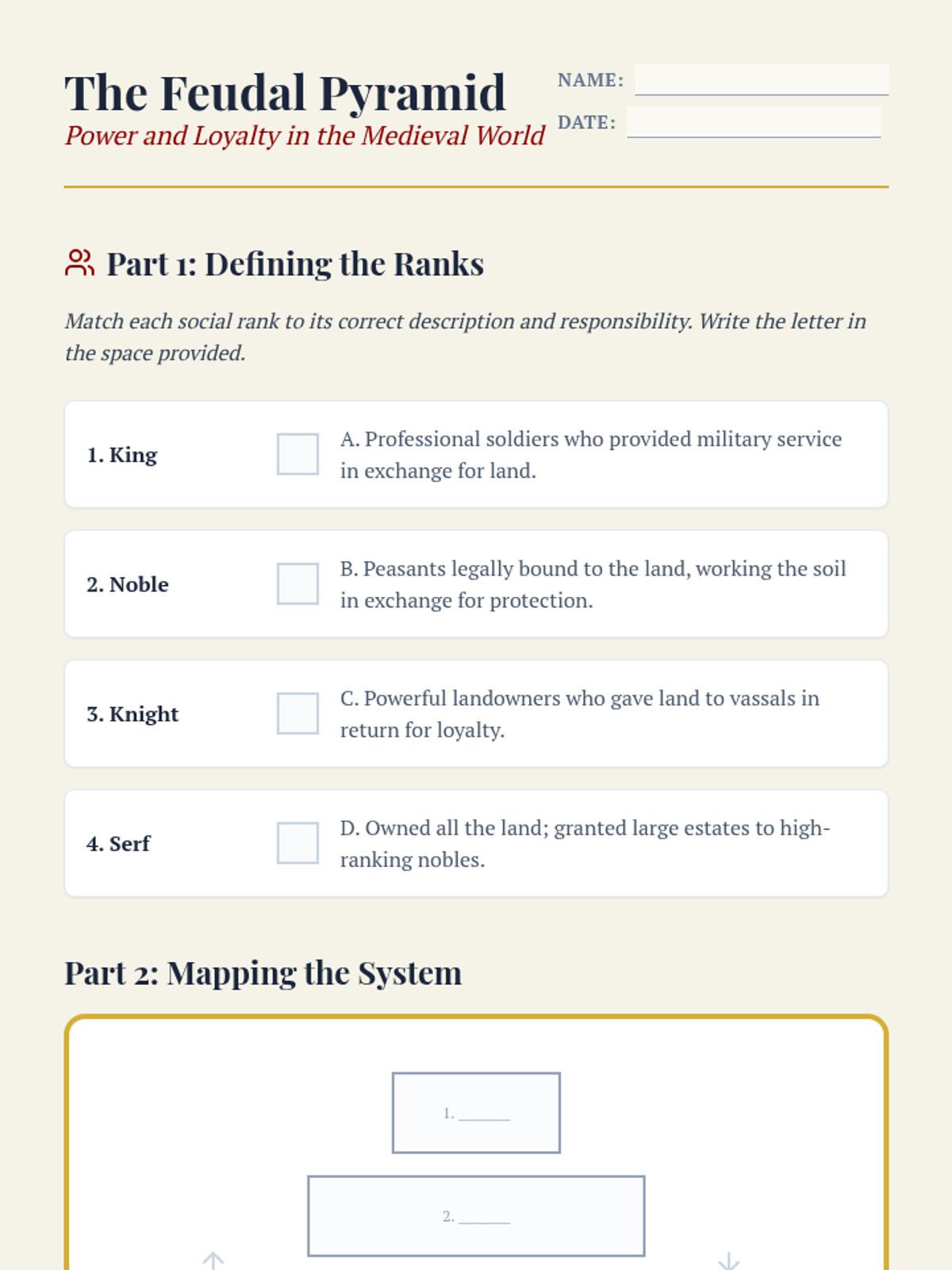
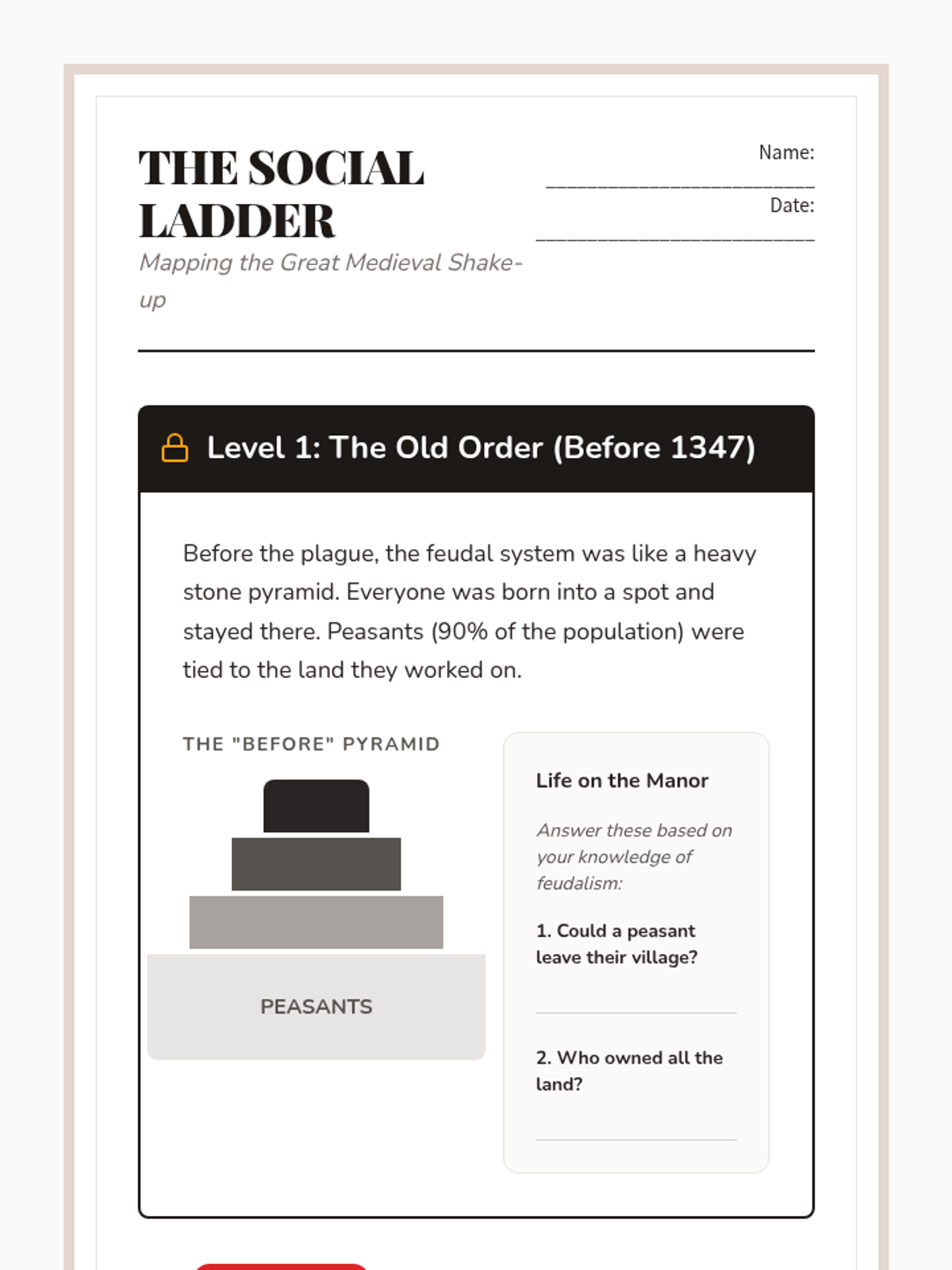
Explore the rigid social structure of feudalism and the economic system of manorialism that defined life in the Middle Ages.
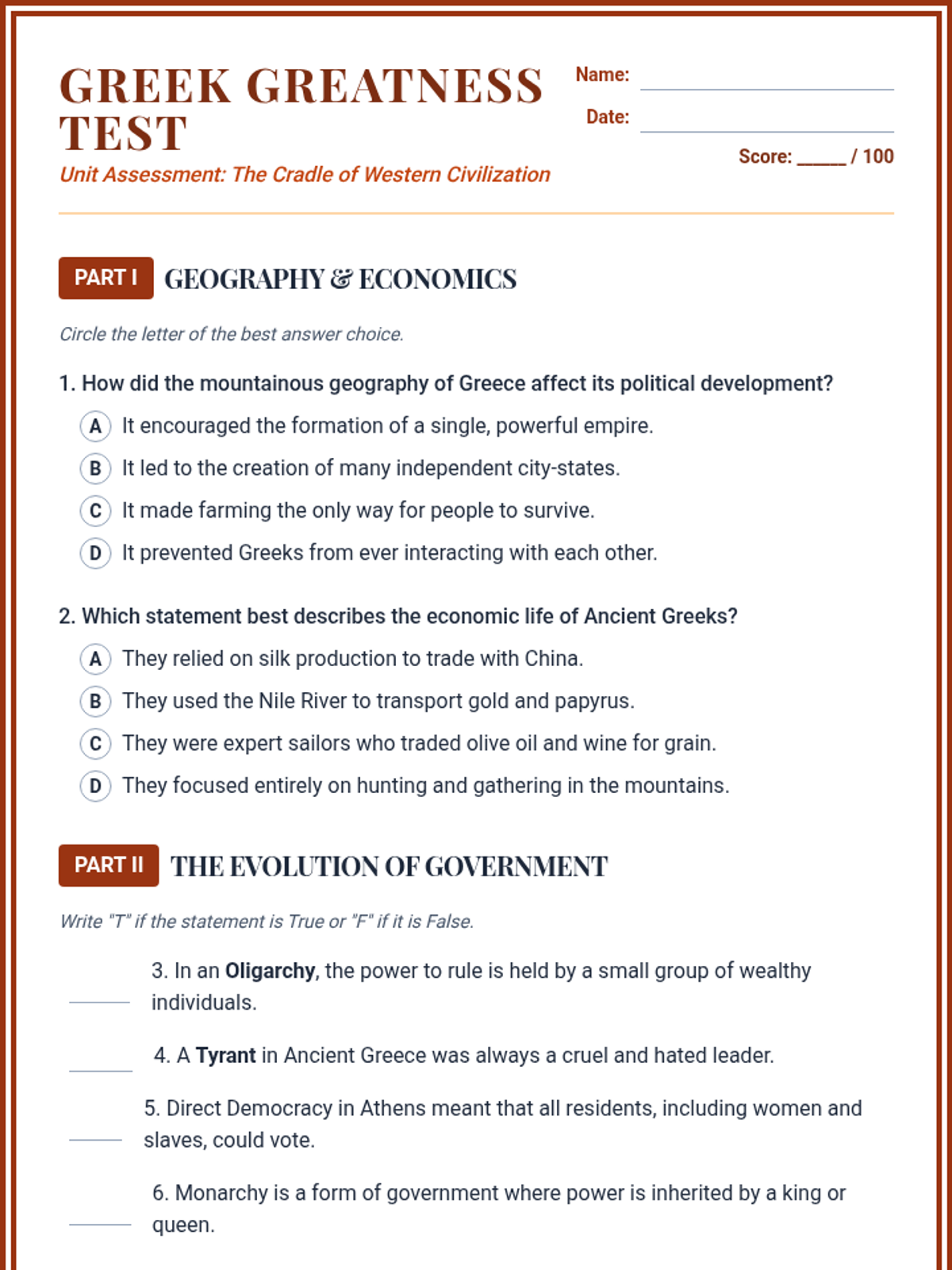
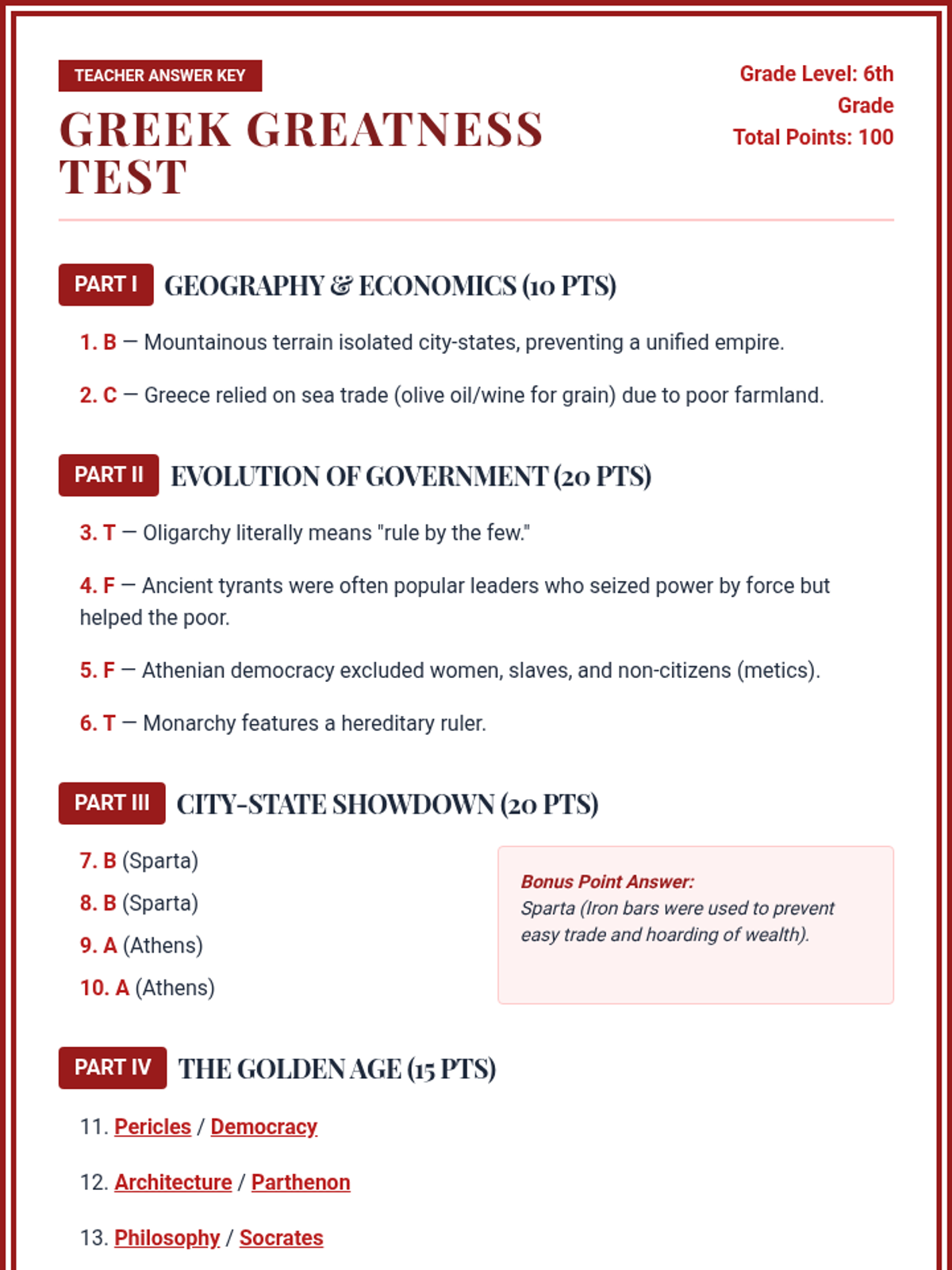
A comprehensive assessment and review package covering the geography, politics, culture, and legacy of Ancient Greece for 6th-grade students.
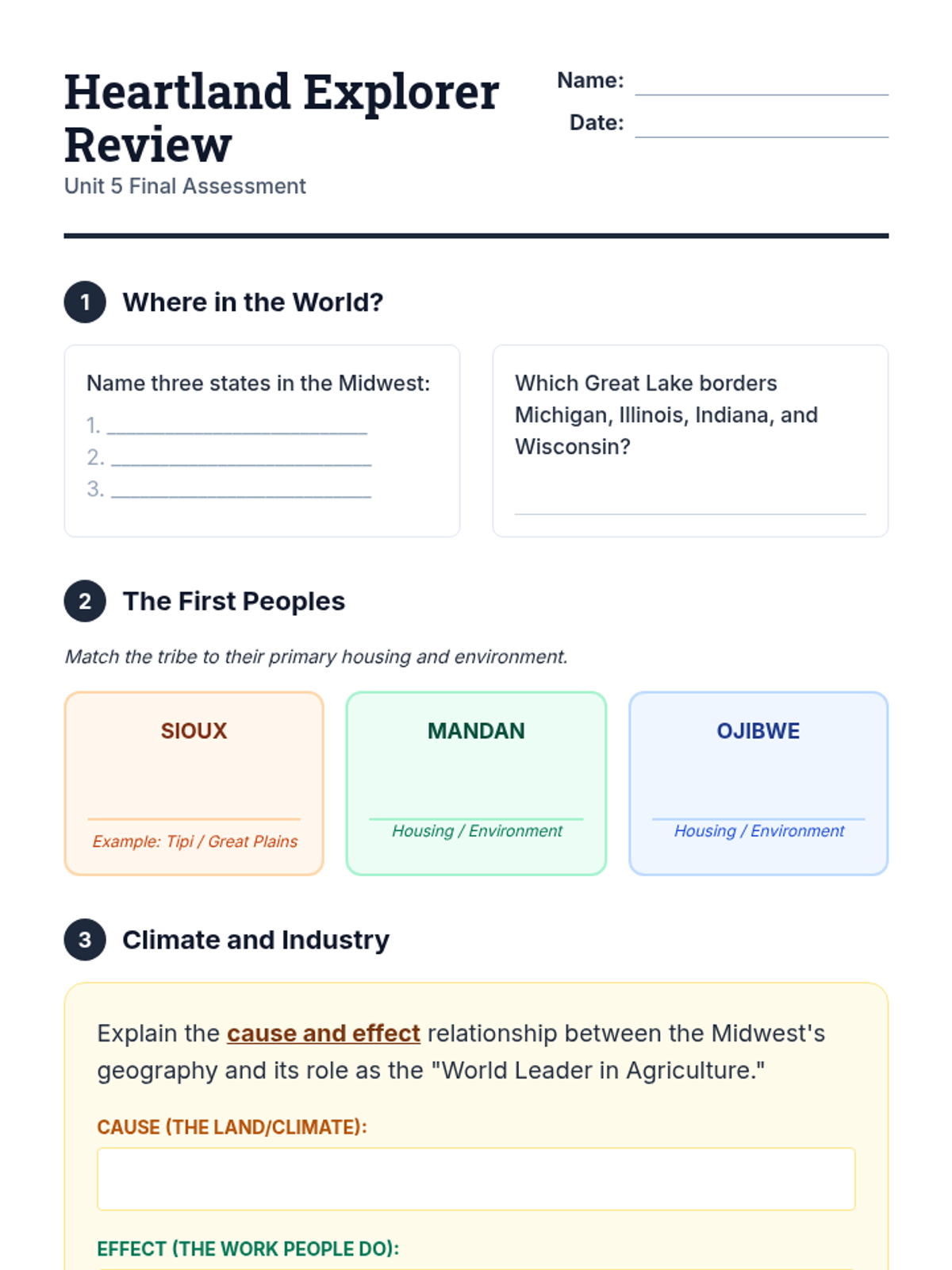
A look at modern life in the Midwest, including major cities, cultural contributions, and a final unit review.
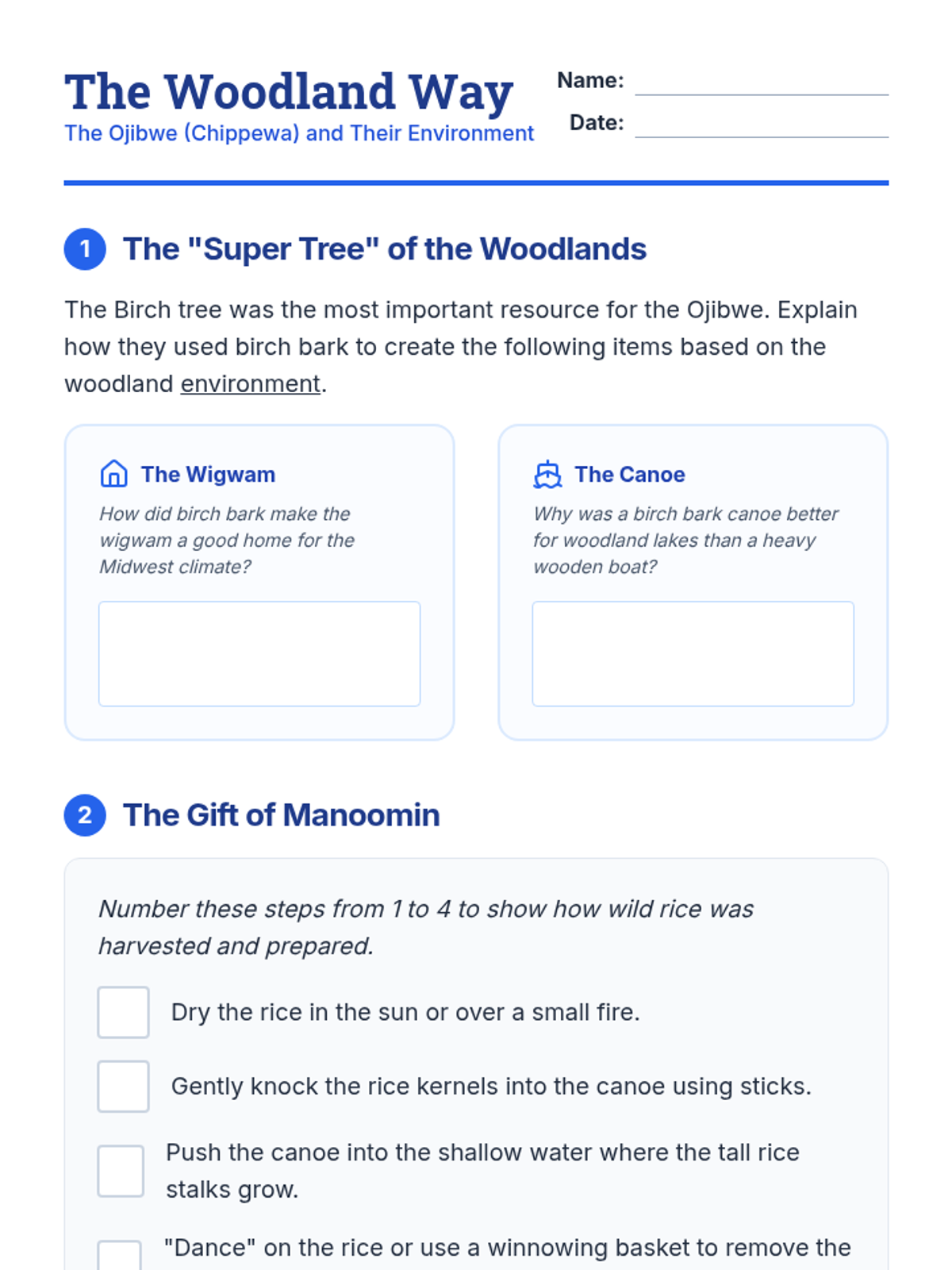
Learning about the Ojibwe (Chippewa) people, their connection to the Great Lakes and woodlands, and their enduring traditions.
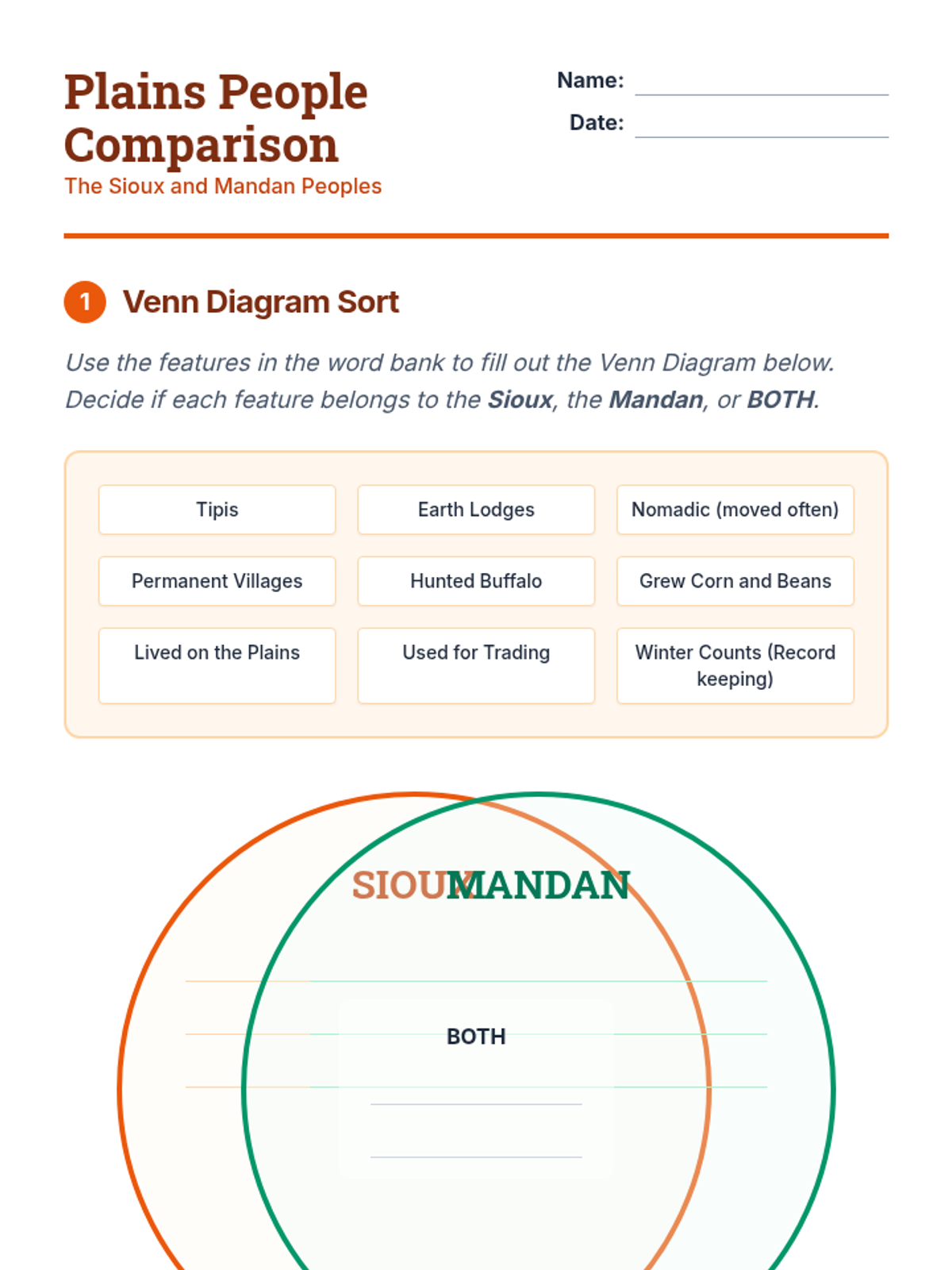
Exploring the history and cultures of the Sioux and Mandan nations, focusing on their adaptation to the Great Plains.
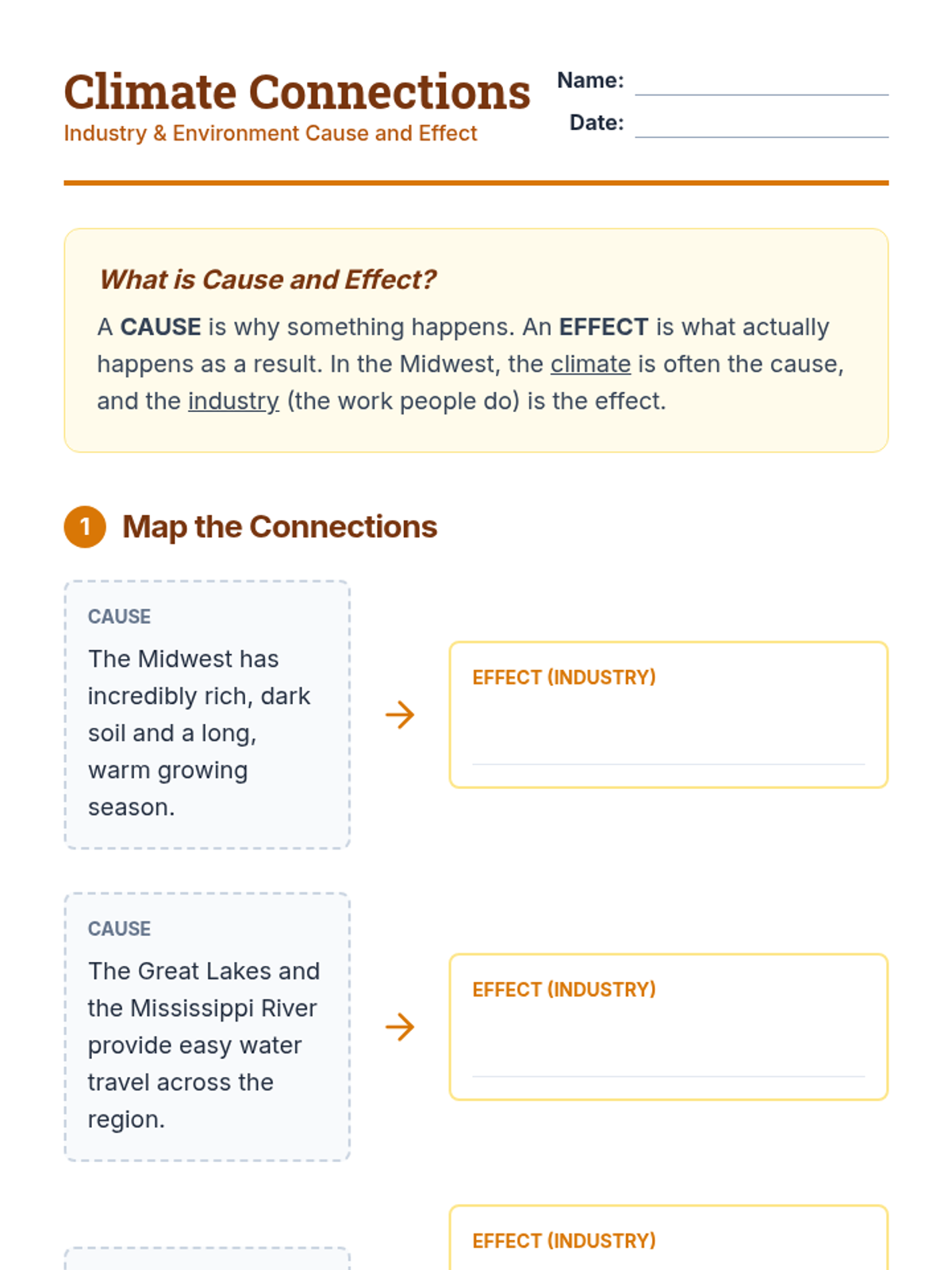
Investigating the climate of the Midwest and how it directly influences major industries like agriculture and manufacturing.
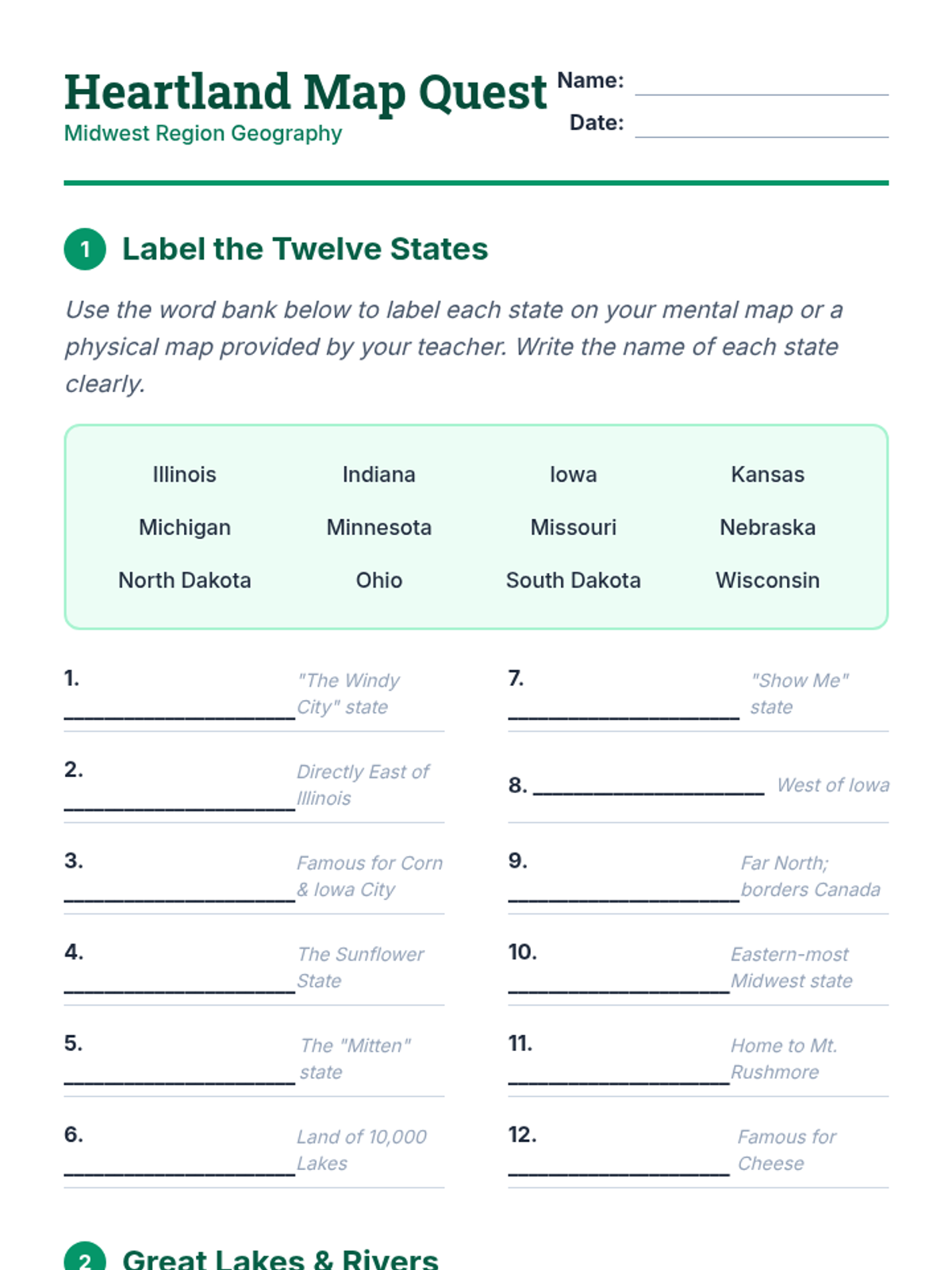
An introduction to the 12 states of the Midwest, their locations, and key geographic features like the Great Lakes and the Great Plains.
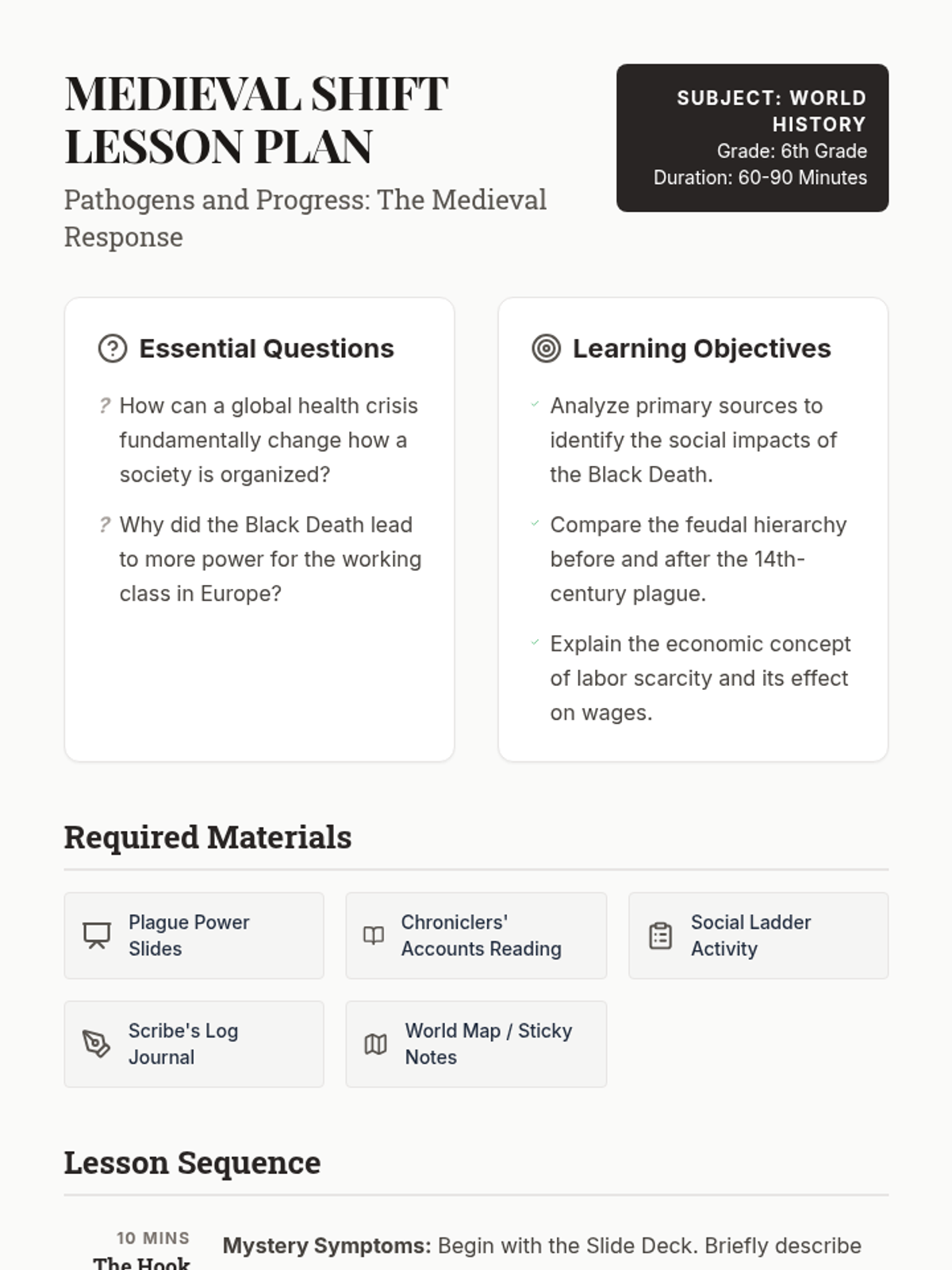
Students investigate the social and economic transformations triggered by the Black Death in Europe and Asia, focusing on how the plague reshaped labor systems and social hierarchies.
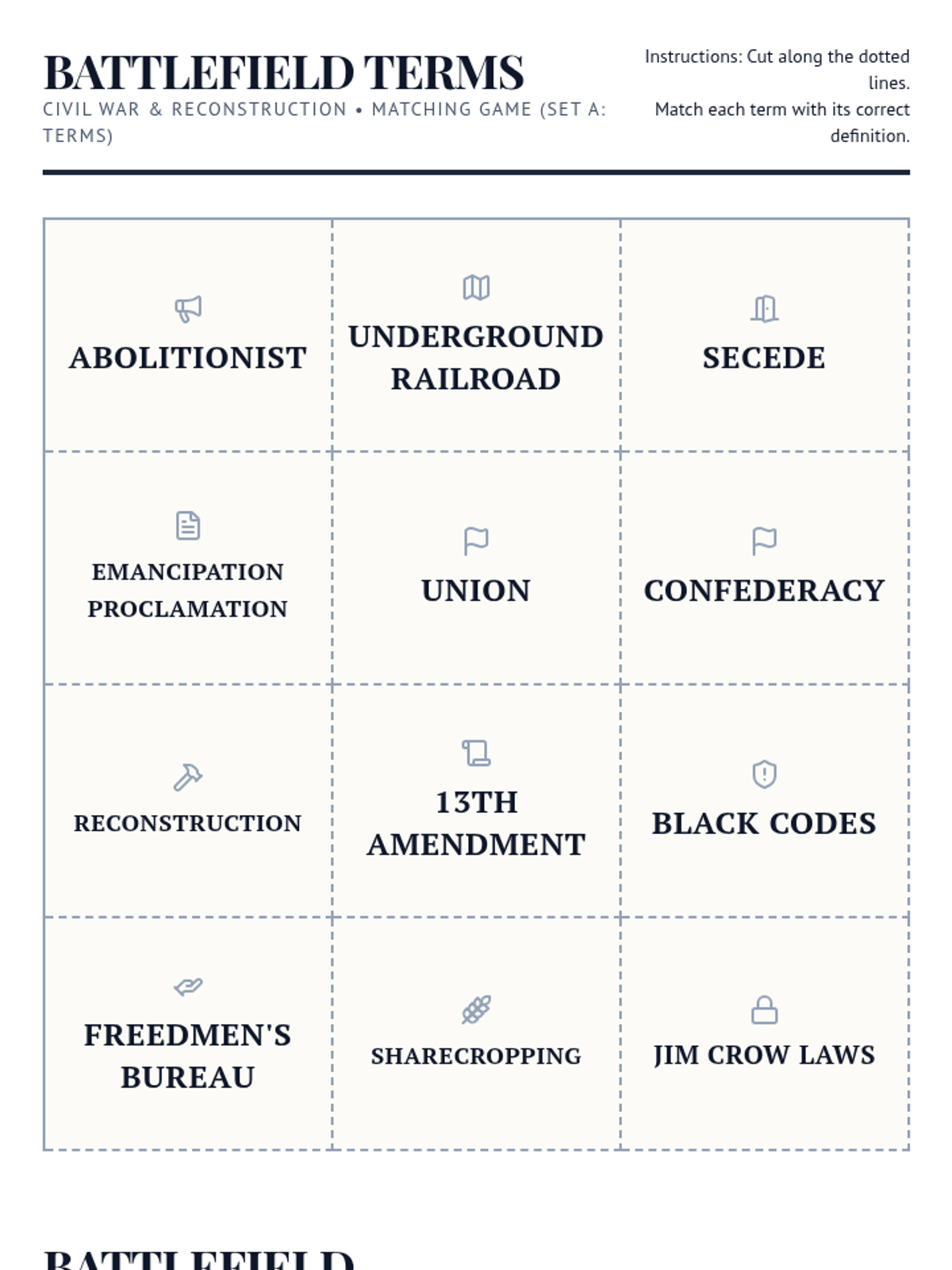
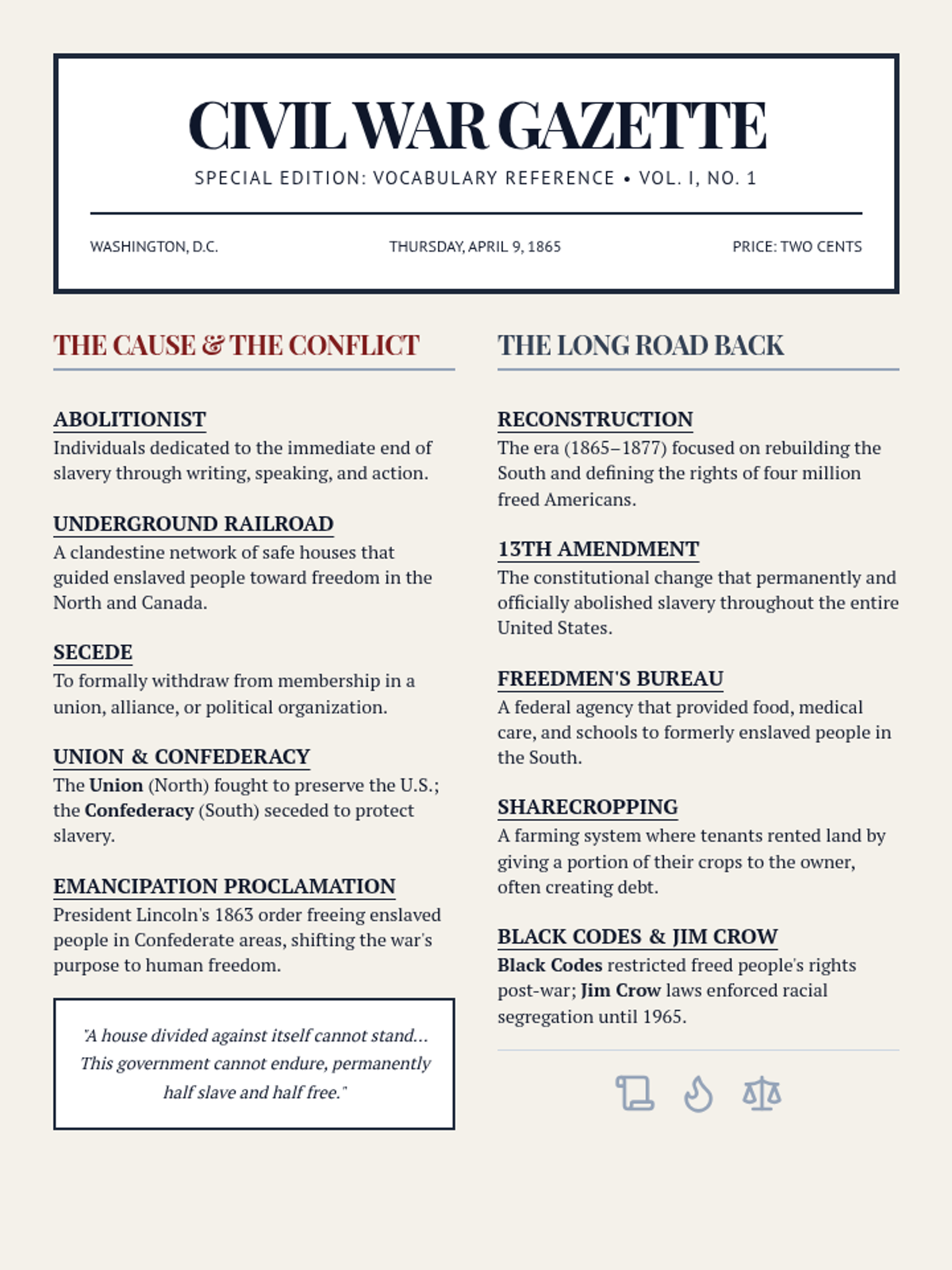
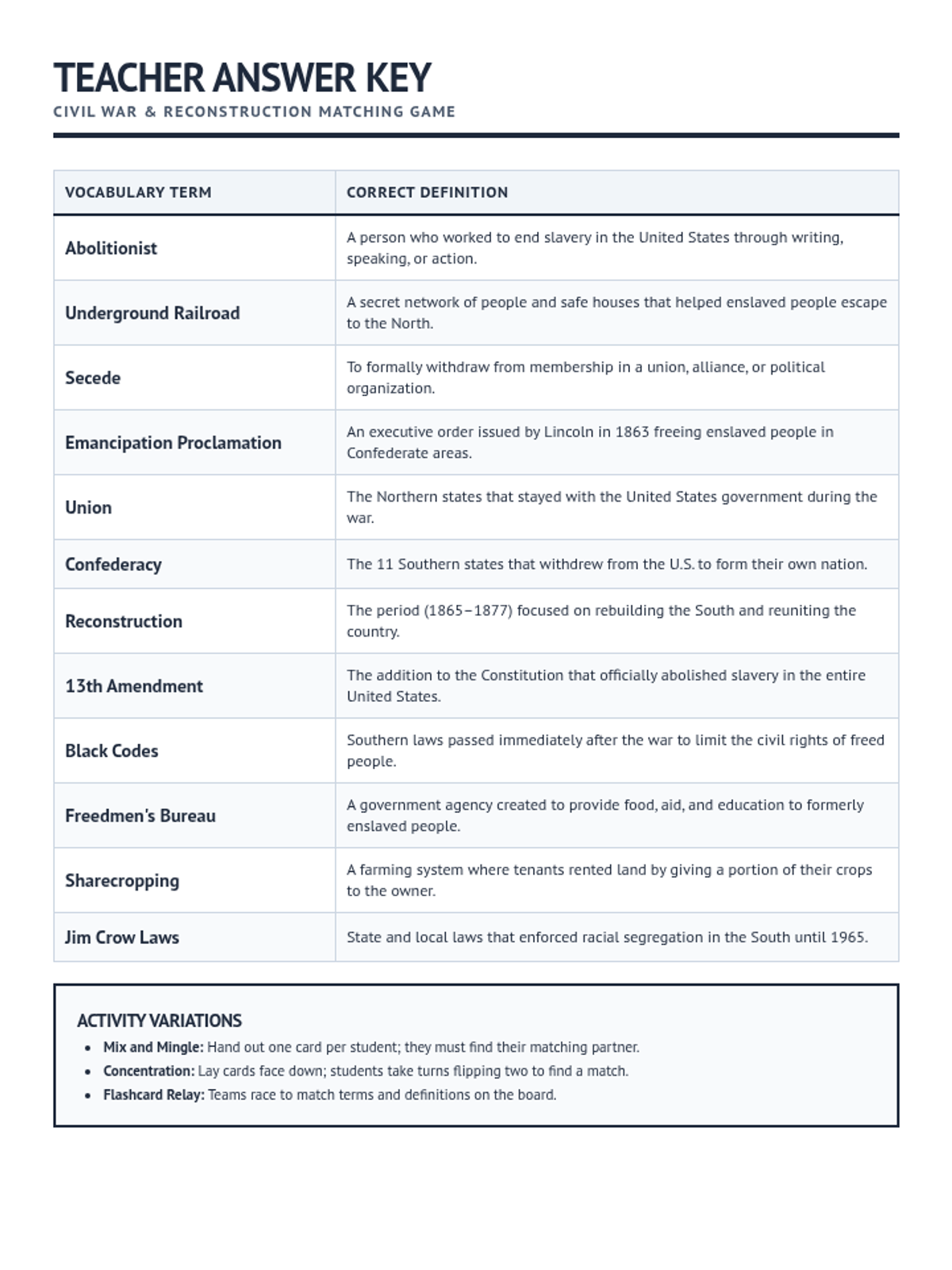
A comprehensive vocabulary lesson covering the essential terminology of the American Civil War, from the causes of slavery and abolitionism to the complexities of Reconstruction.
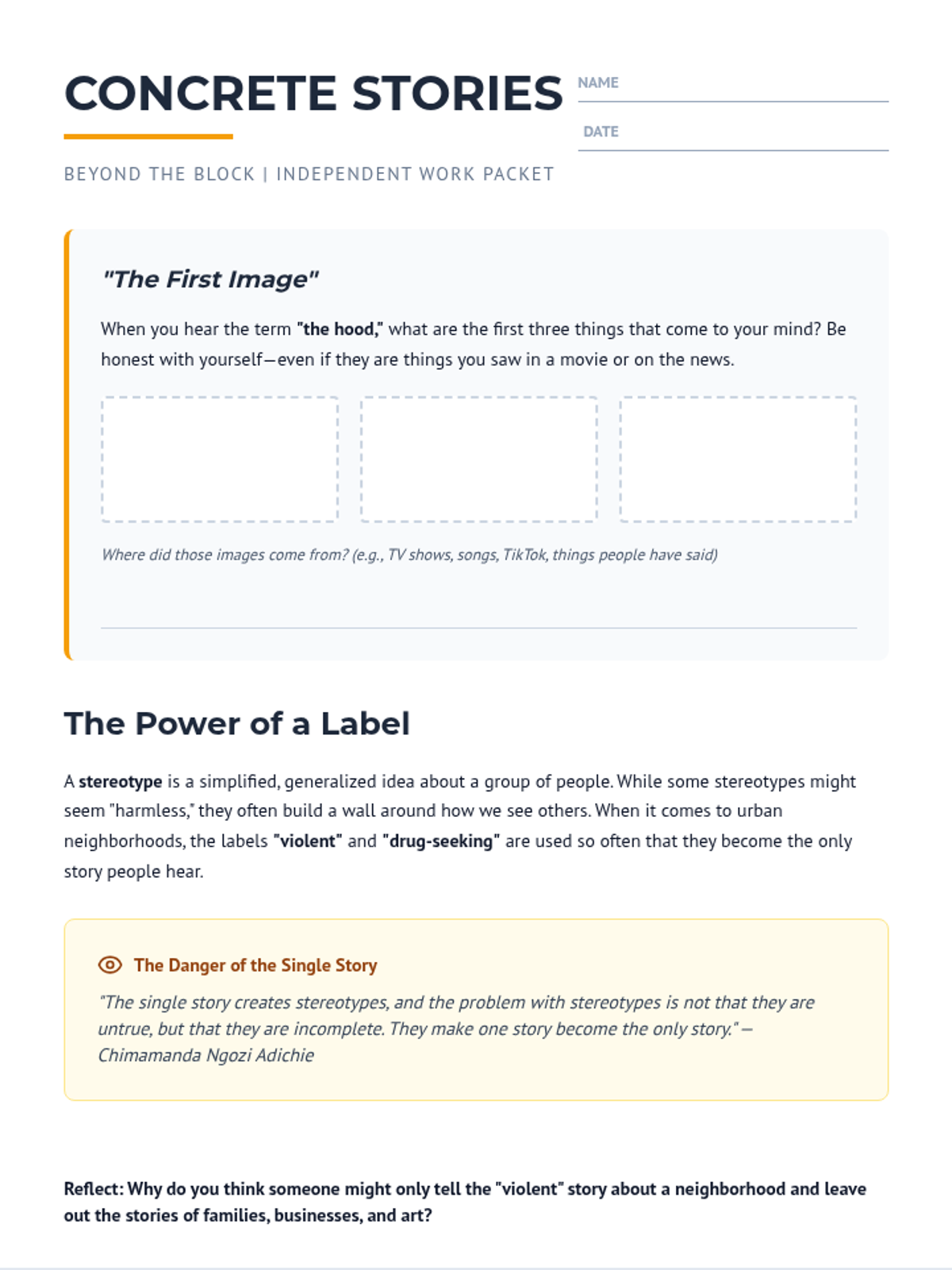
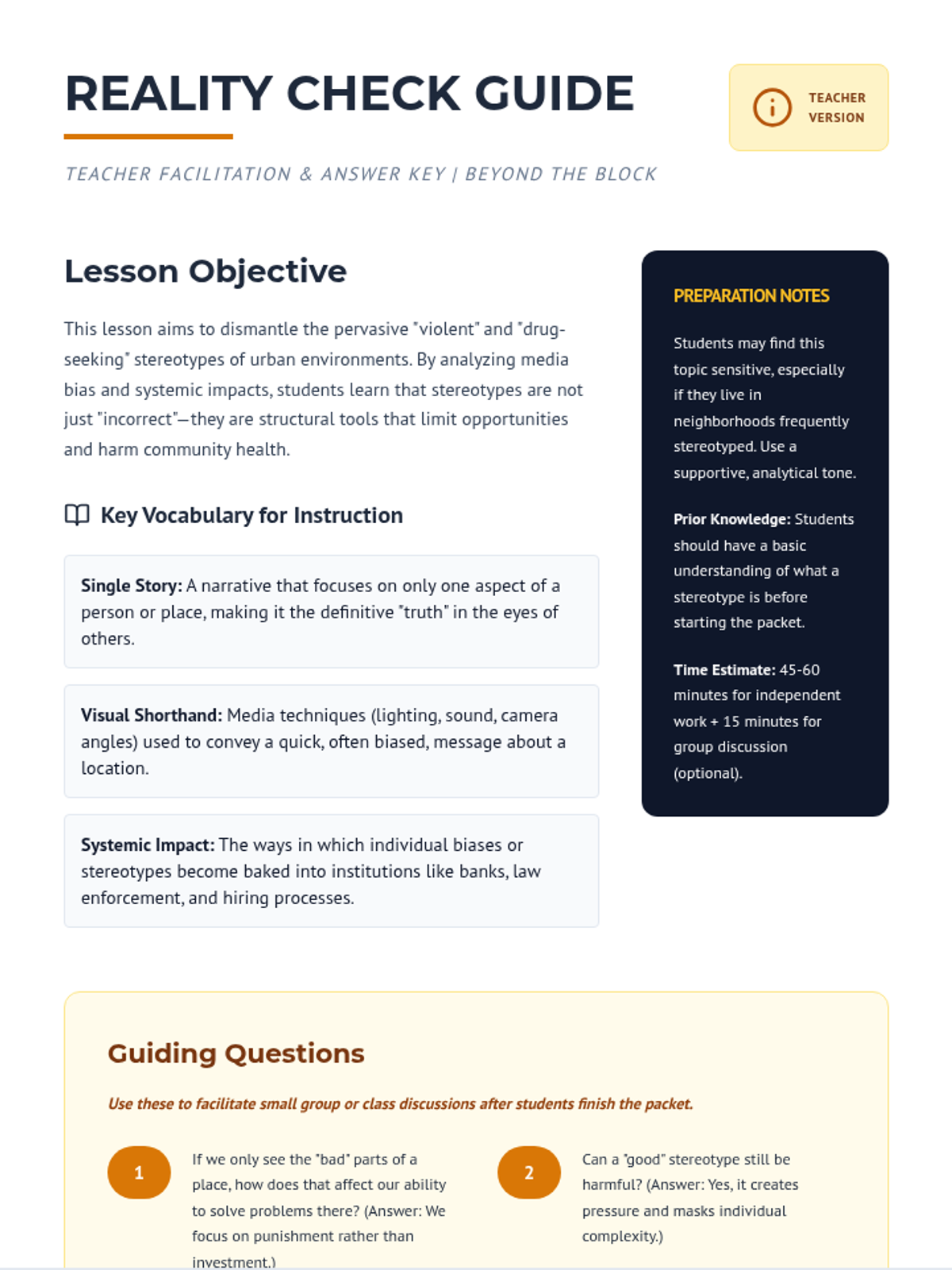
This lesson explores the origins and impacts of urban stereotypes, specifically focusing on the harmful "violent" and "drug-seeking" narratives often applied to marginalized communities. Students will analyze media bias and reflect on the real-world consequences of these single-perspective stories.
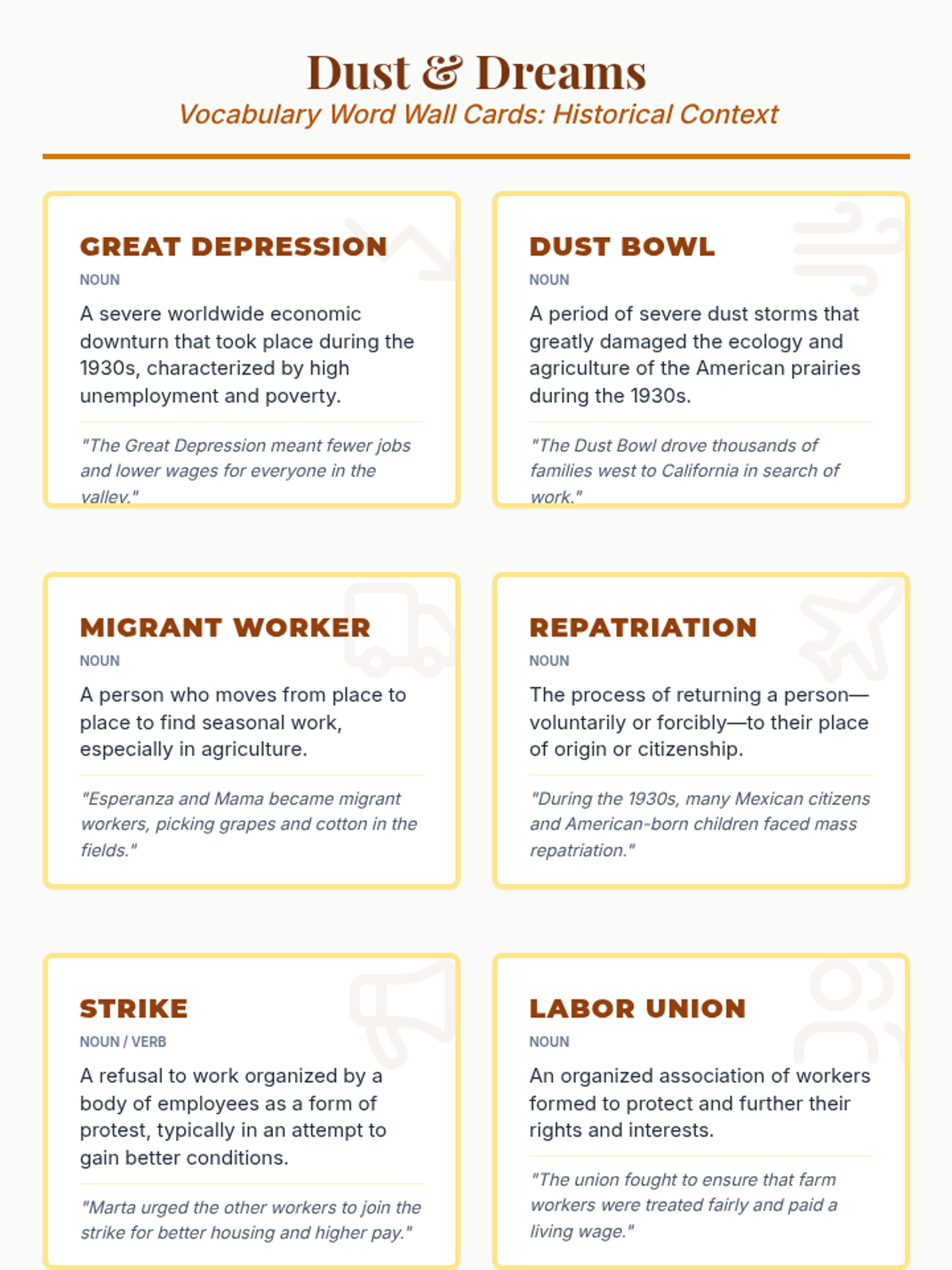
A lesson exploring the historical background of Esperanza Rising, focusing on the Great Depression, the Dust Bowl, and Mexican repatriation.
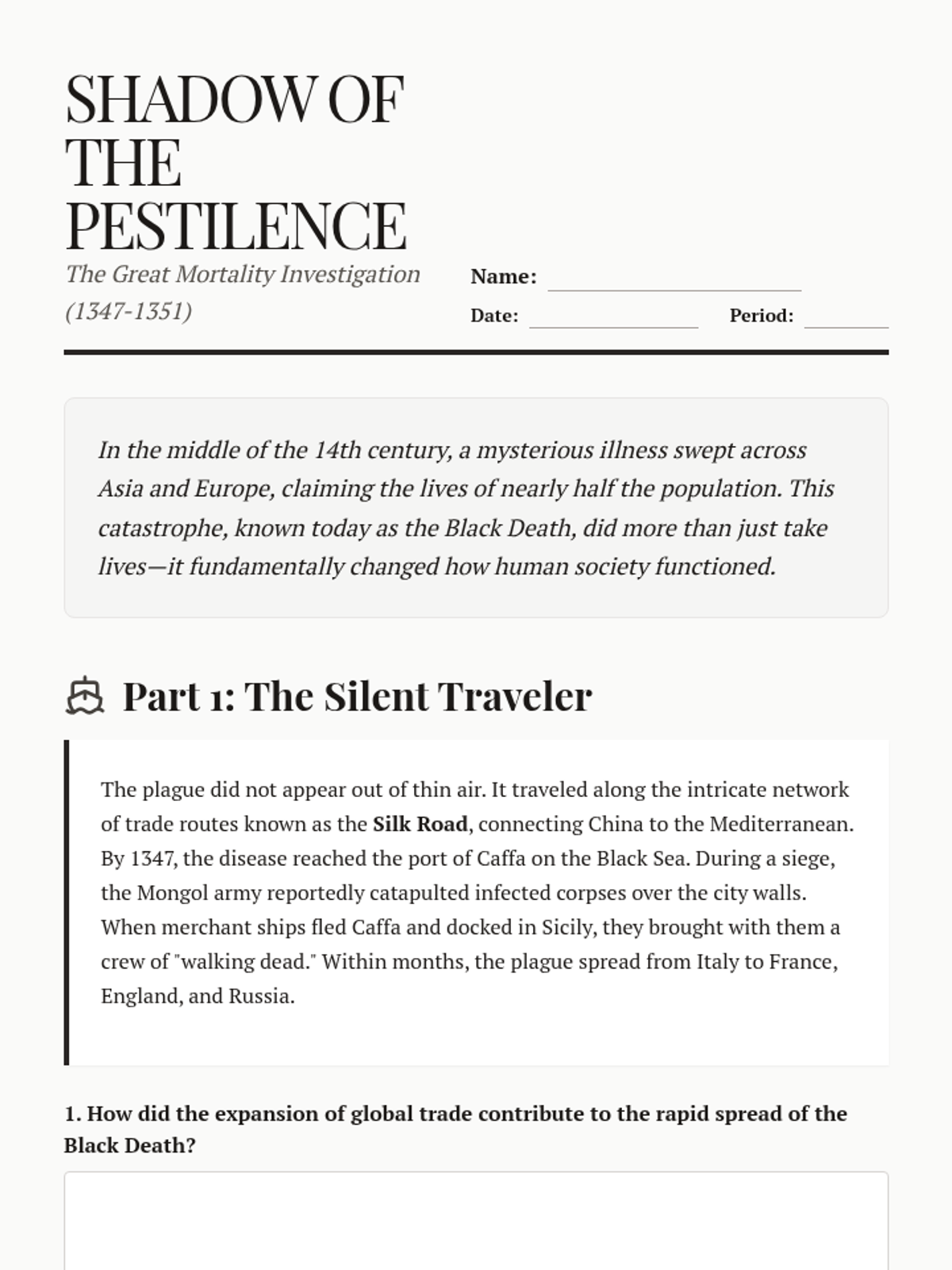
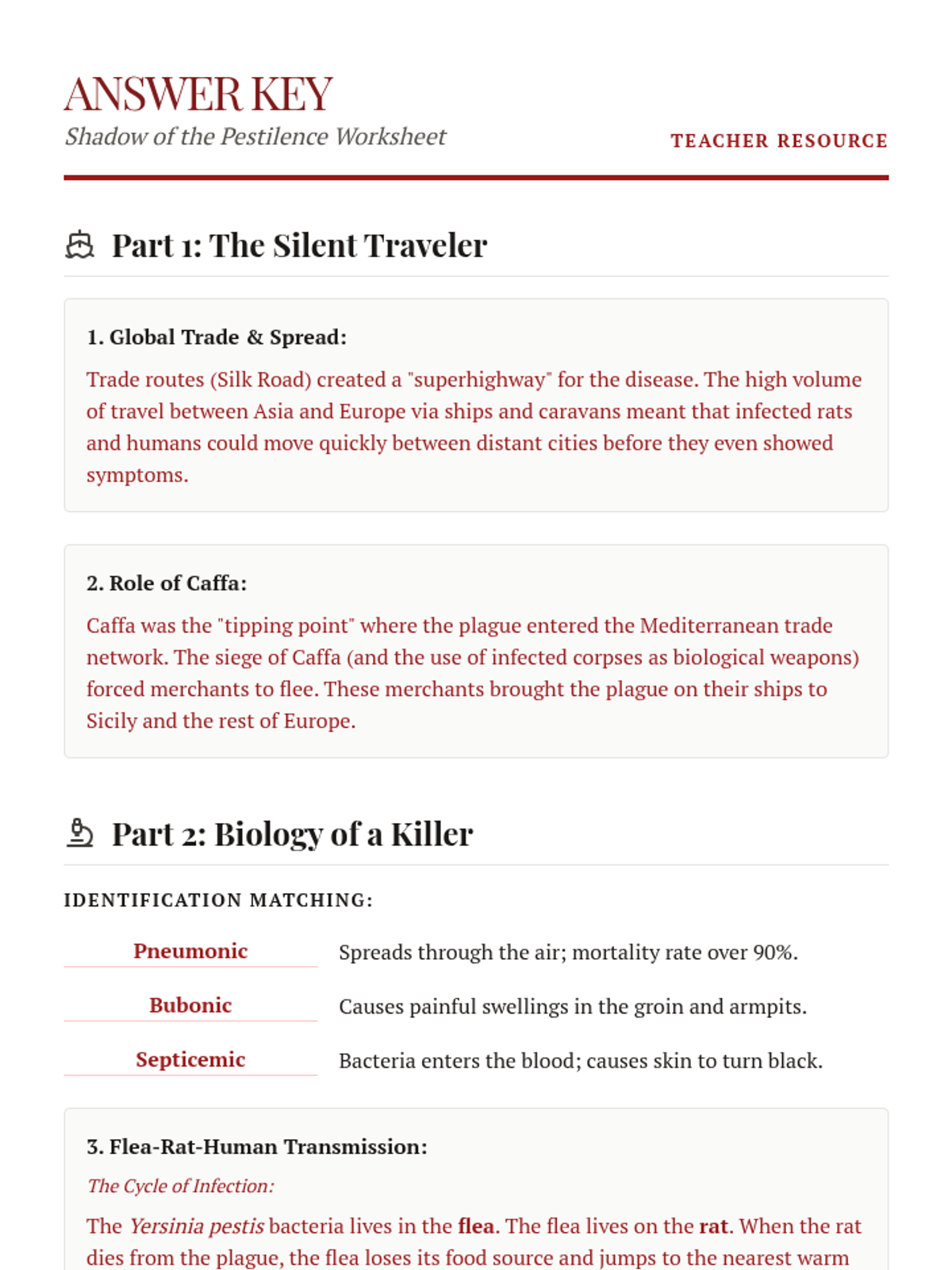
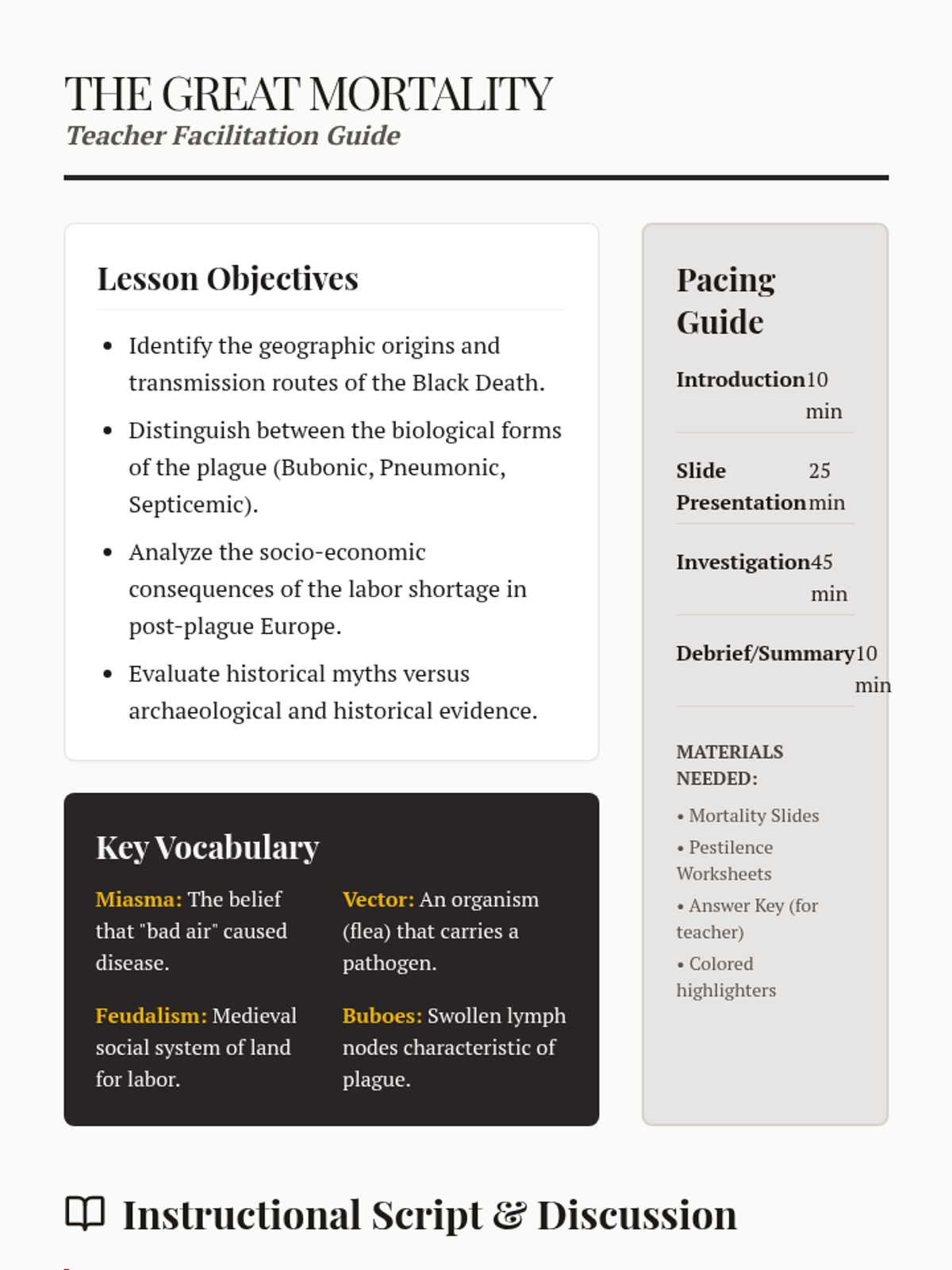
A comprehensive lesson on the Black Death, covering its origins, biological impact, societal shifts, and historical myths through engaging readings and visual aids.
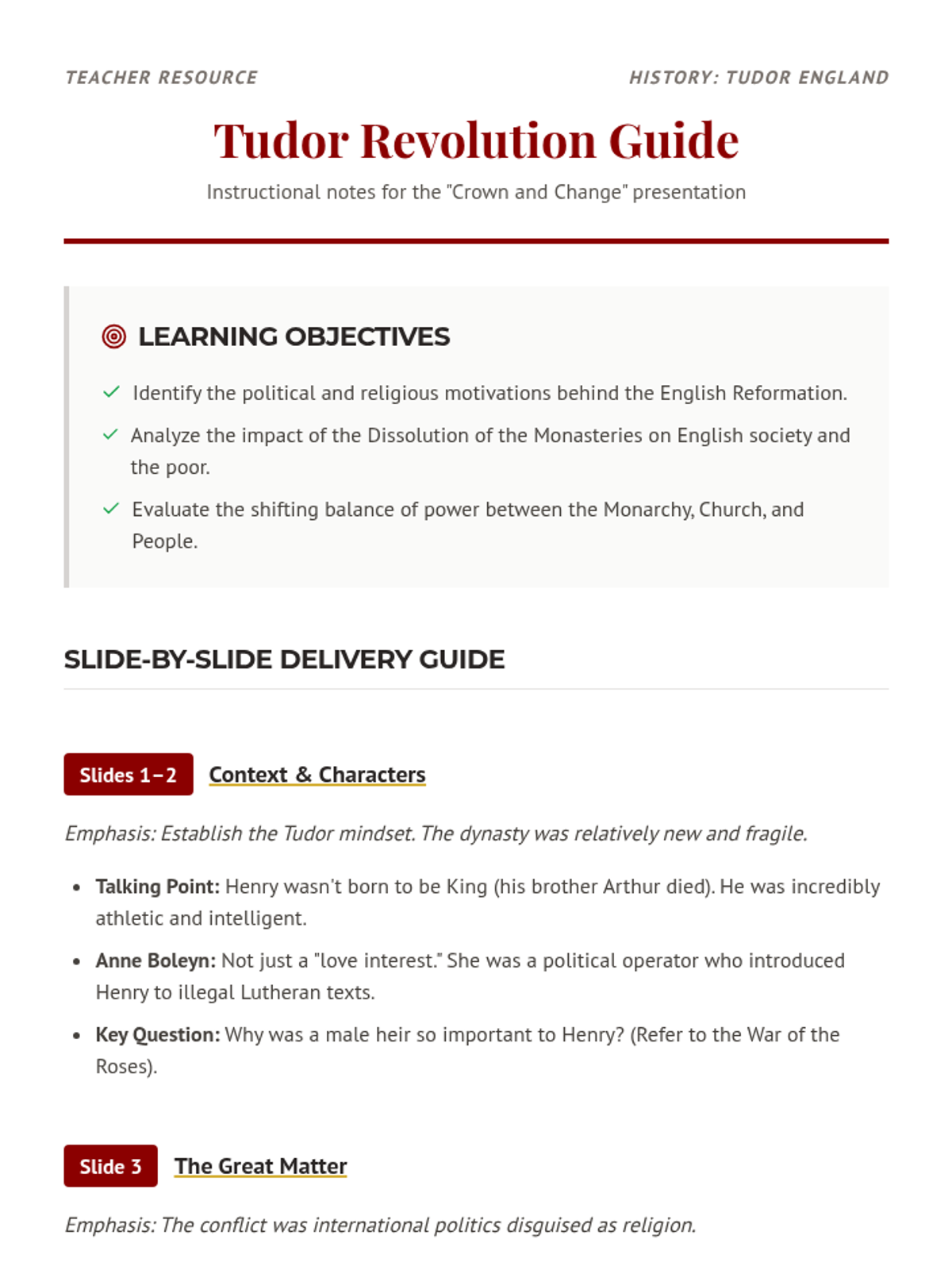
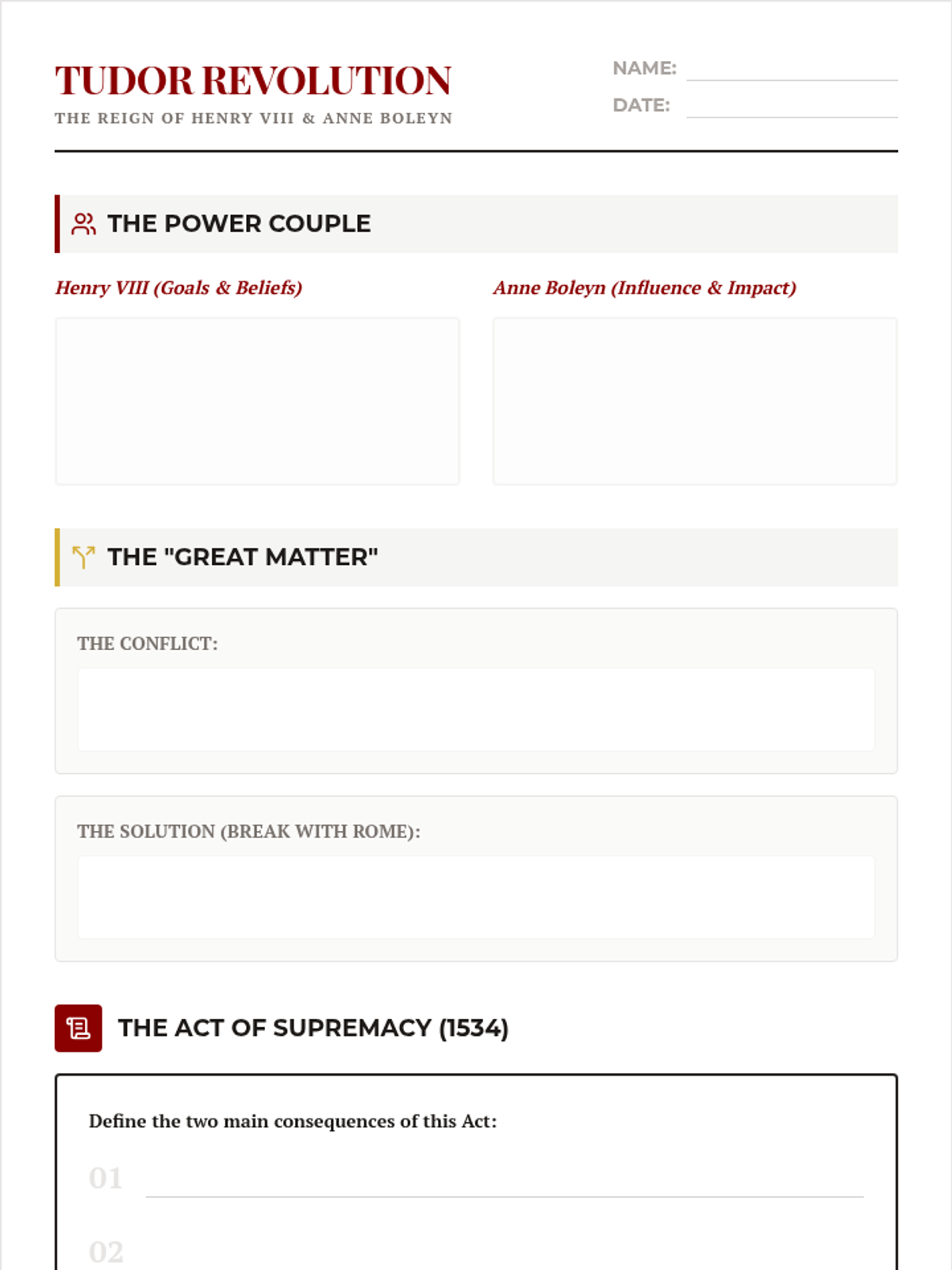
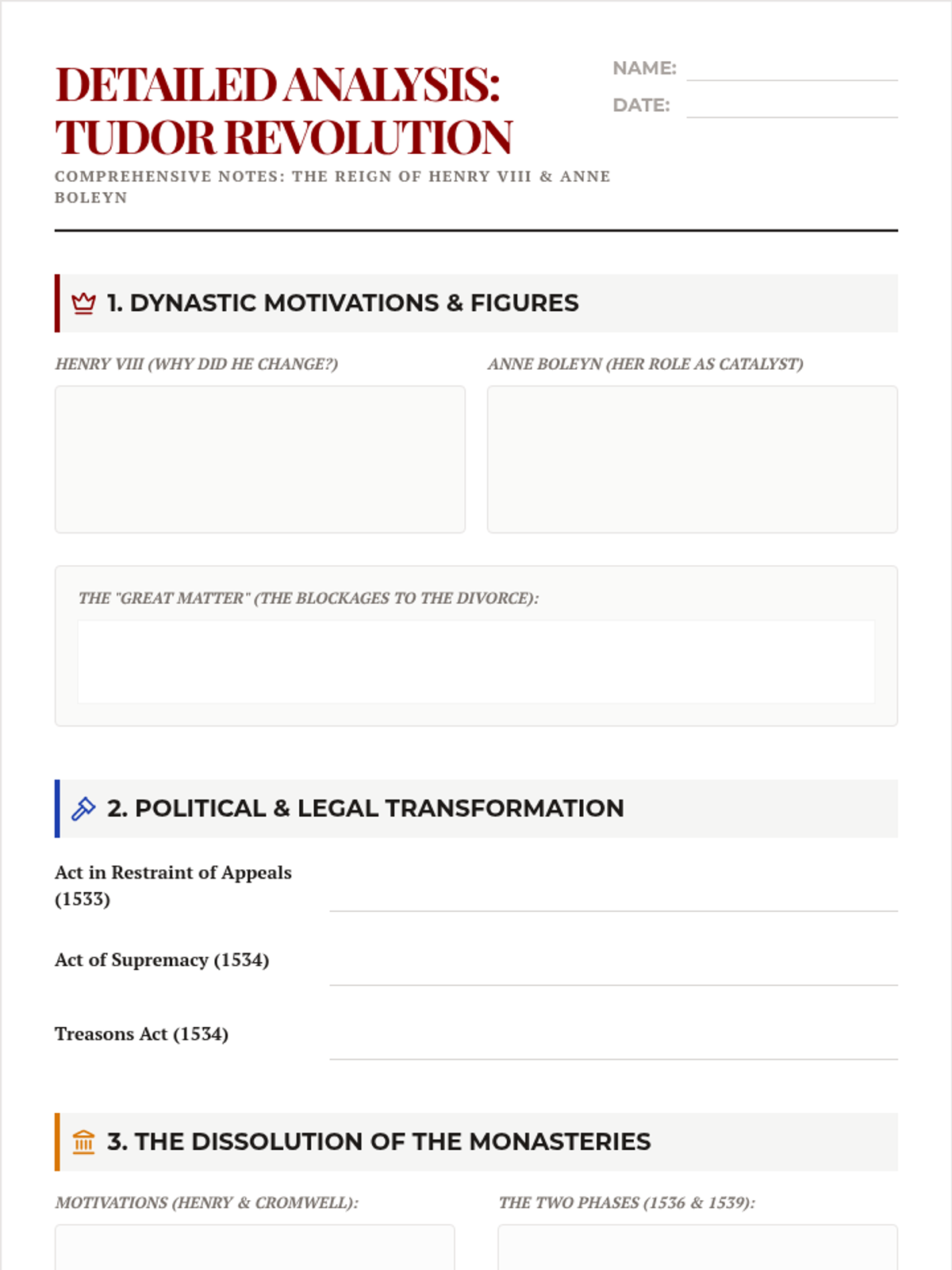
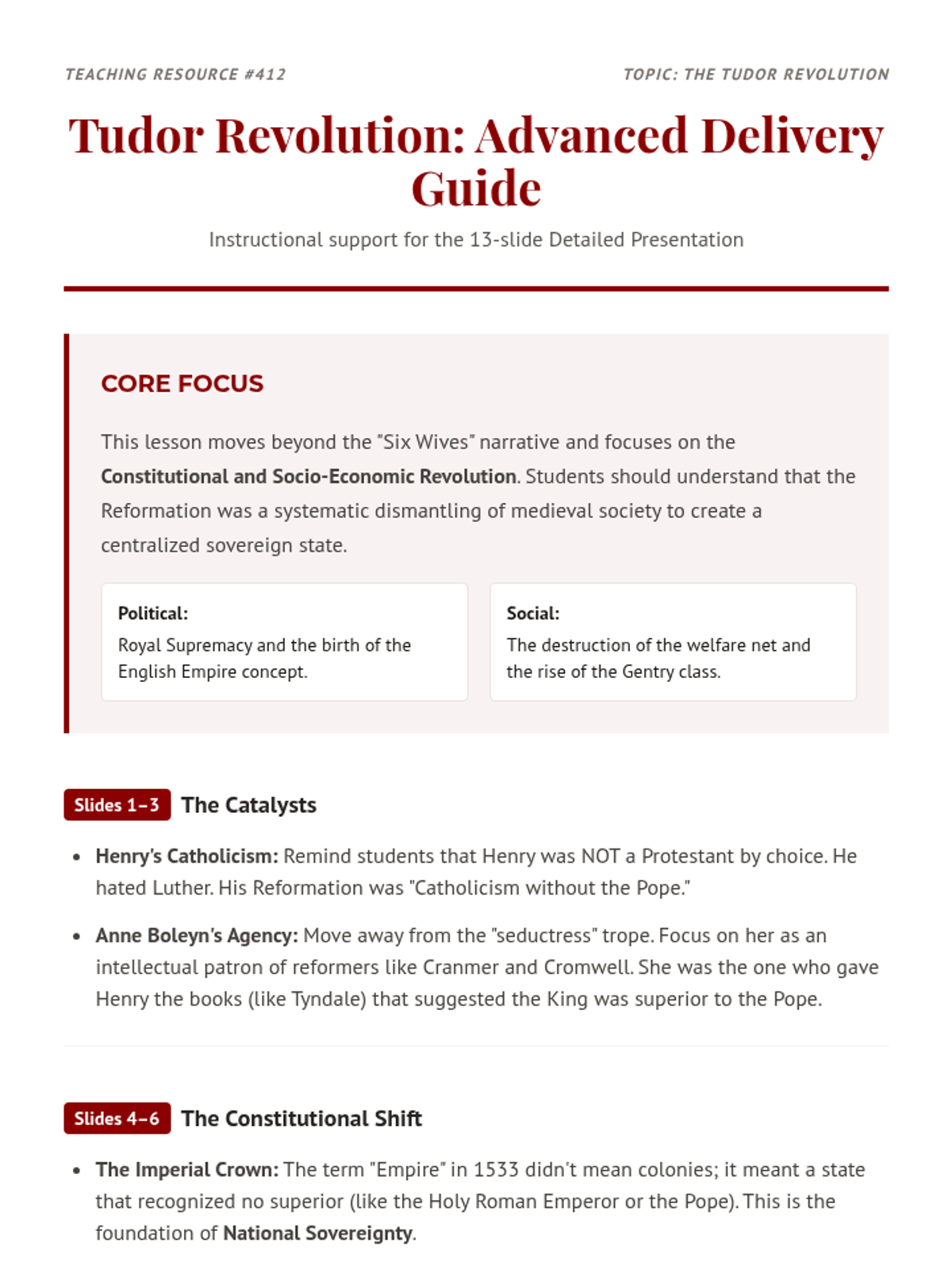
This lesson explores the transformative reign of Henry VIII and Anne Boleyn, focusing on the religious, political, and social upheavals of the English Reformation and its lasting impact on English society.
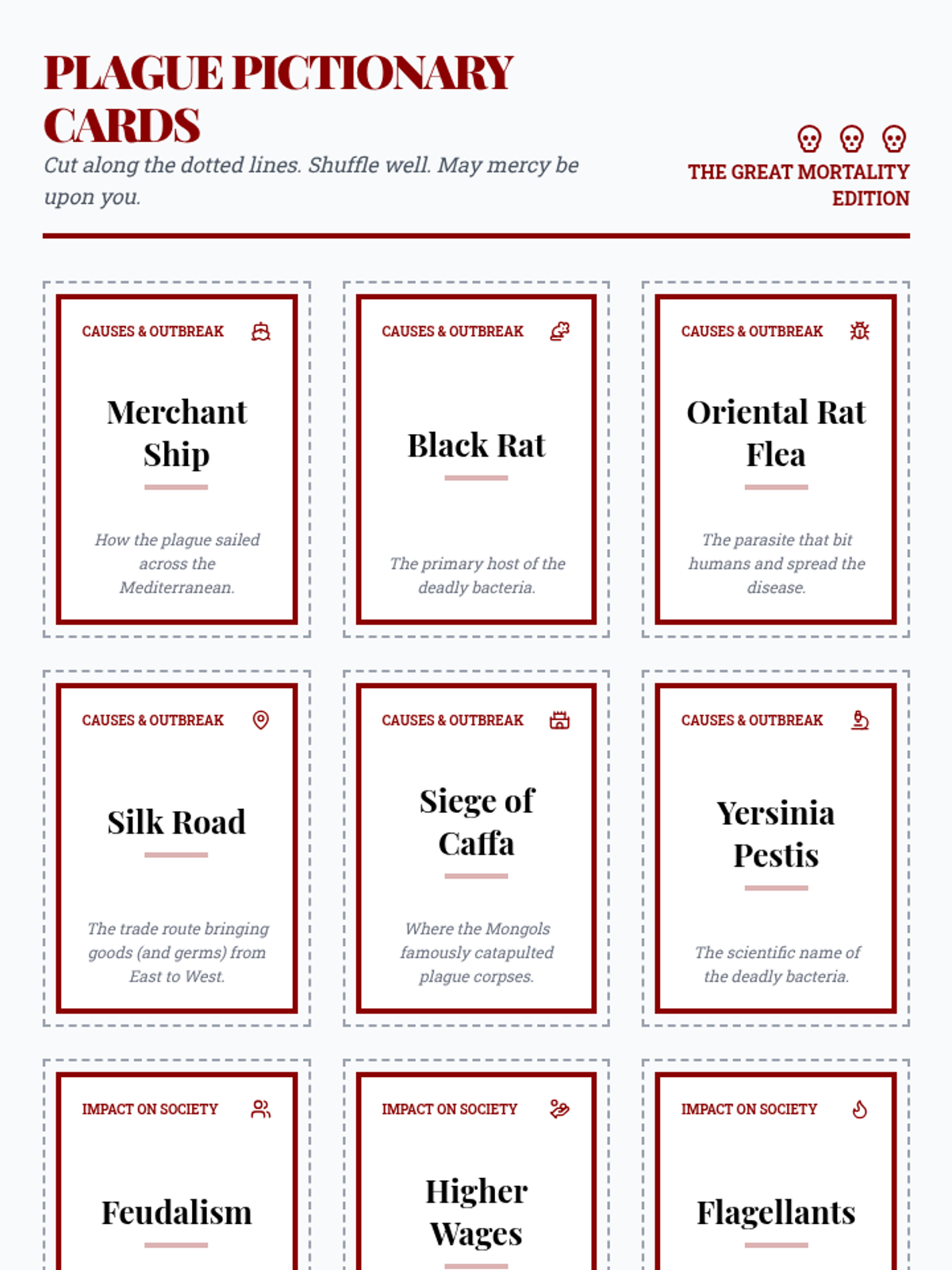
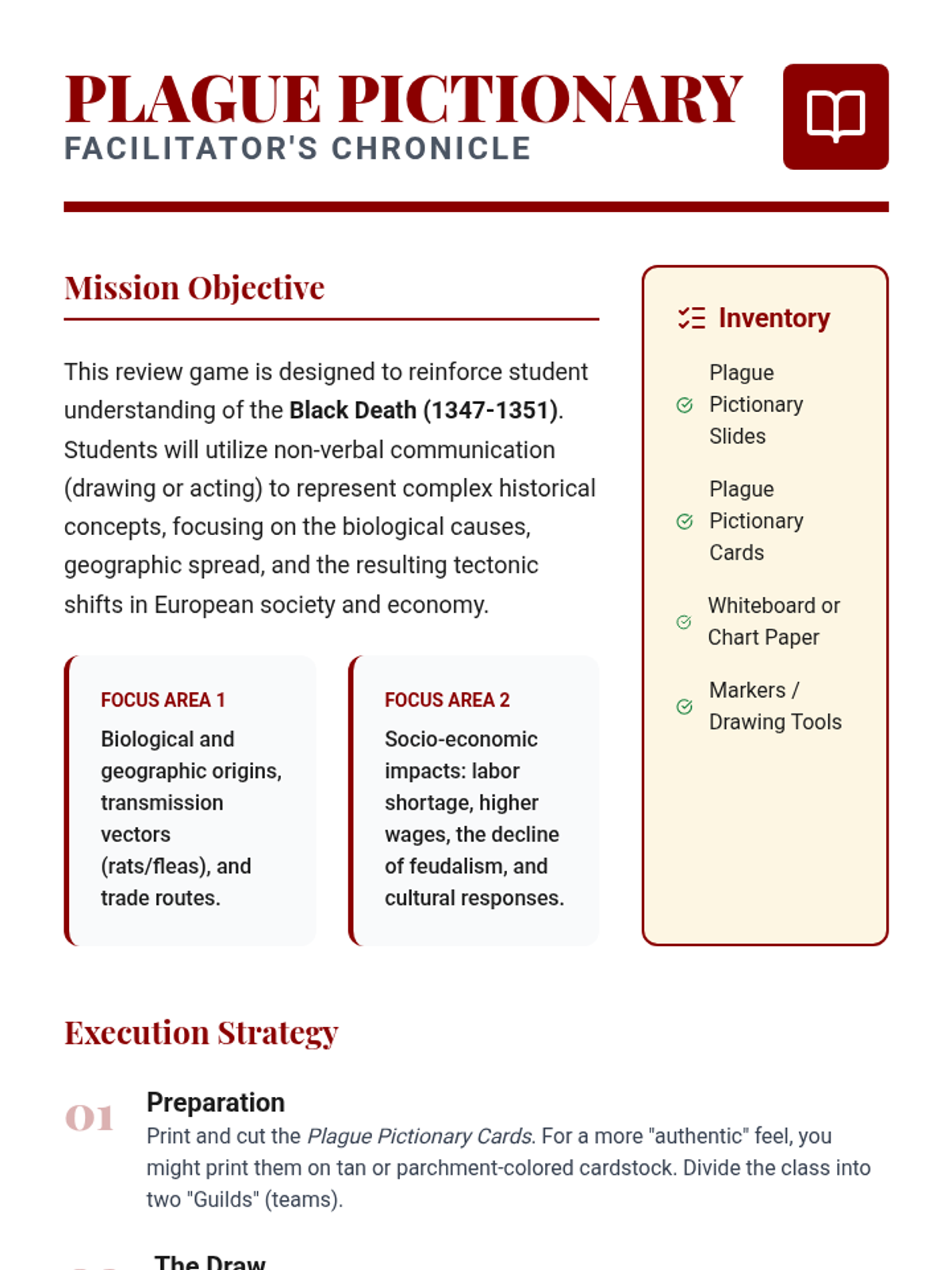
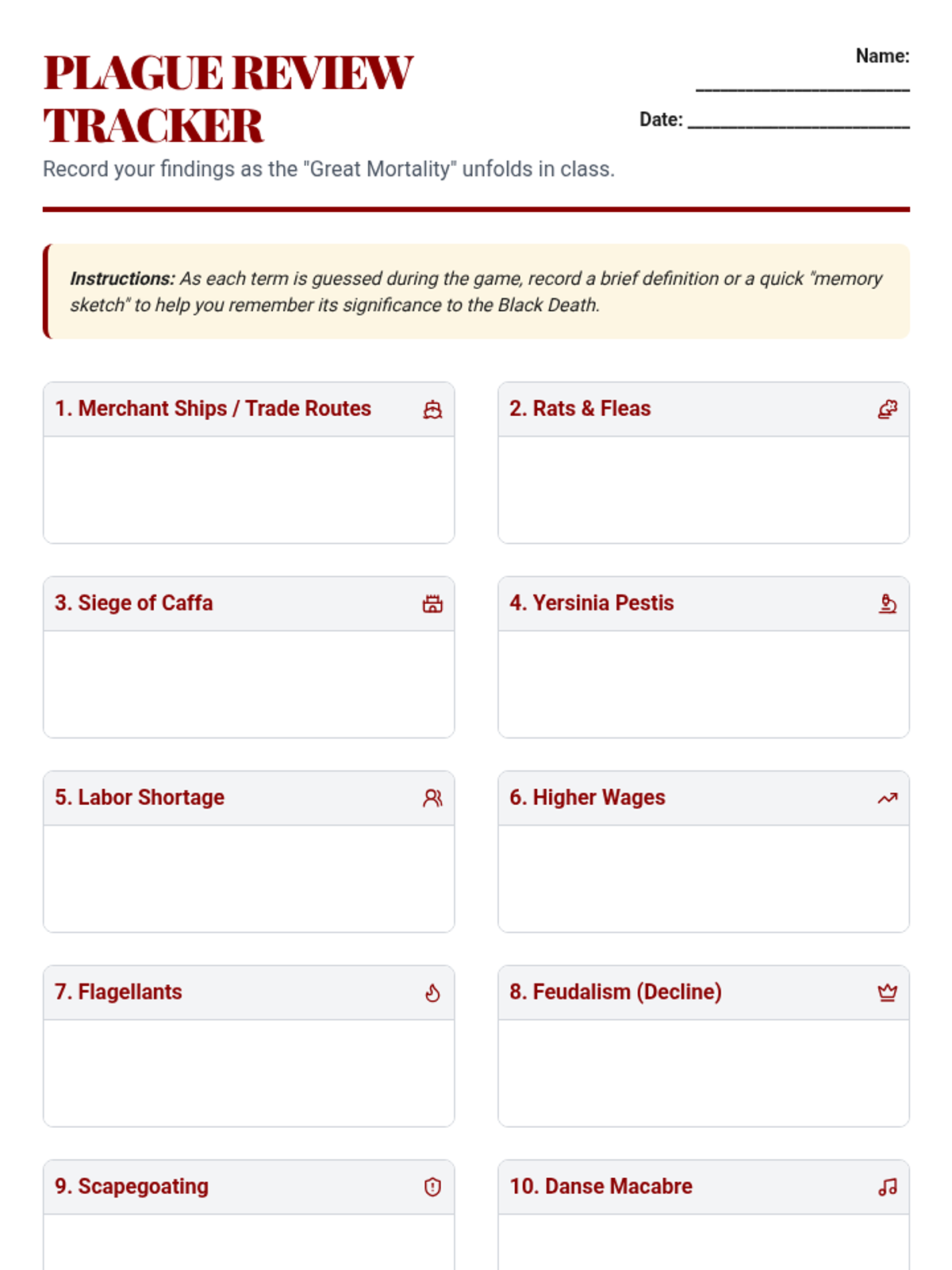
A fast-paced review game lesson focusing on the causes, spread, and societal impacts of the Black Death through drawing and acting.
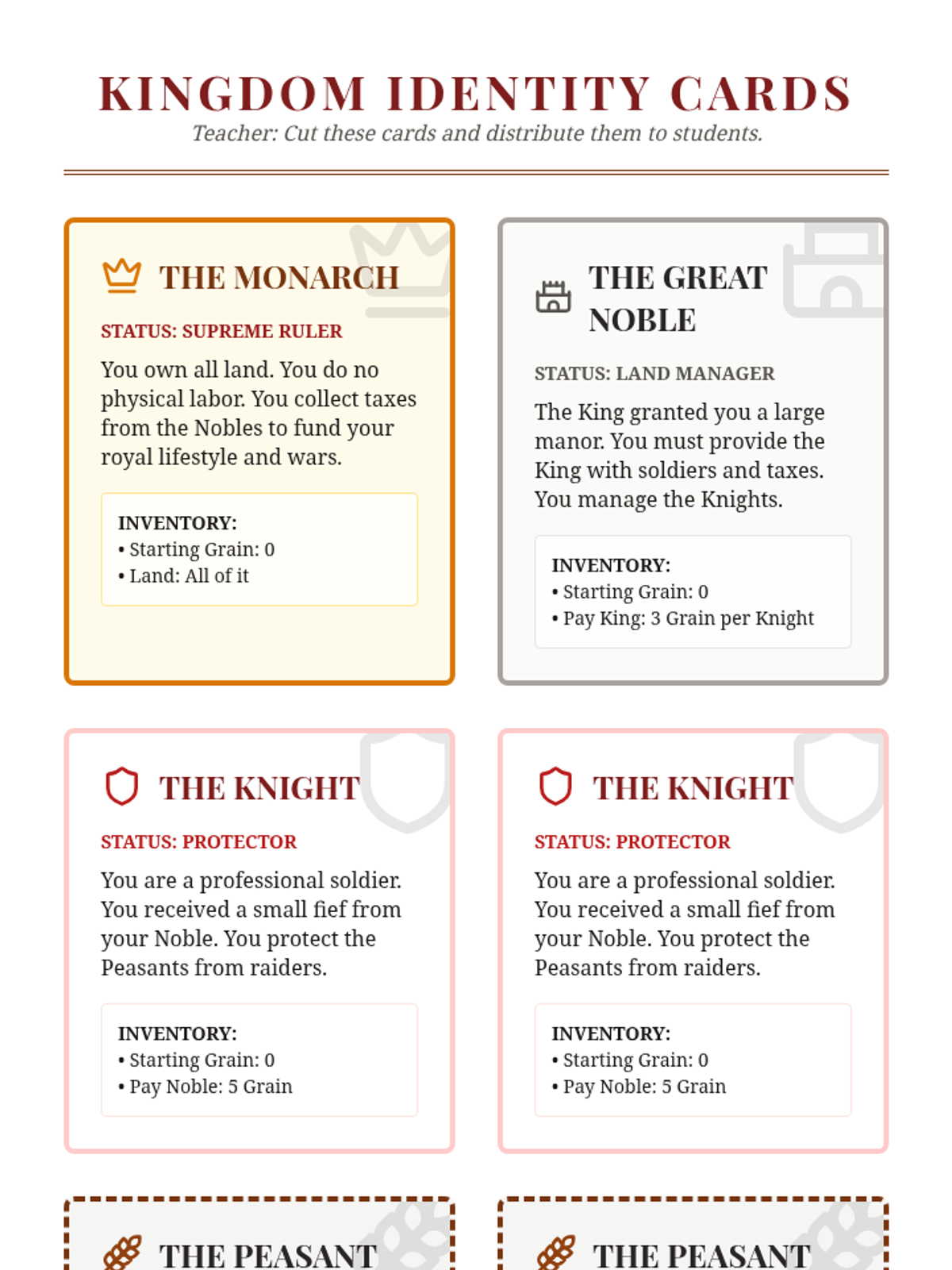
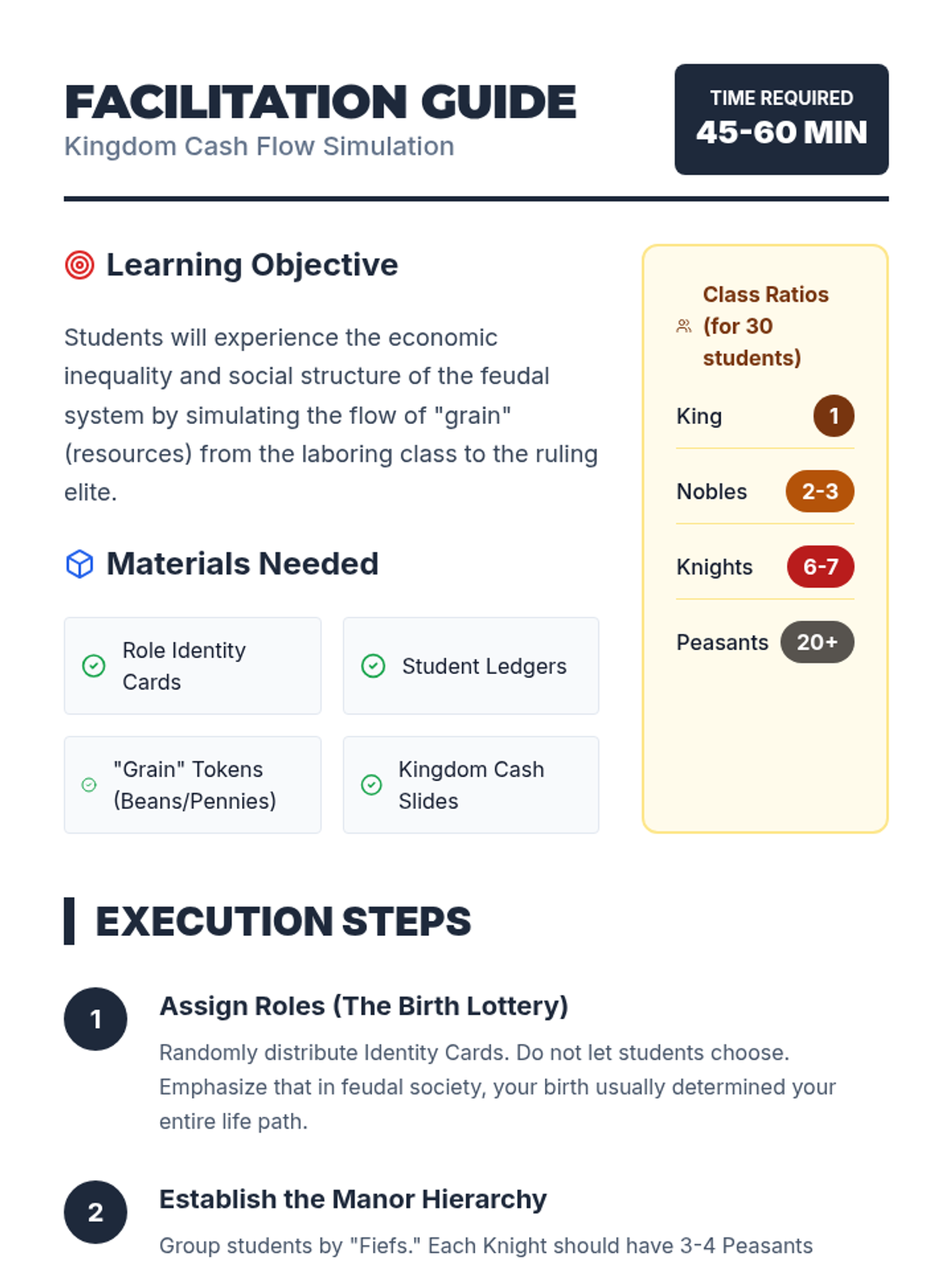
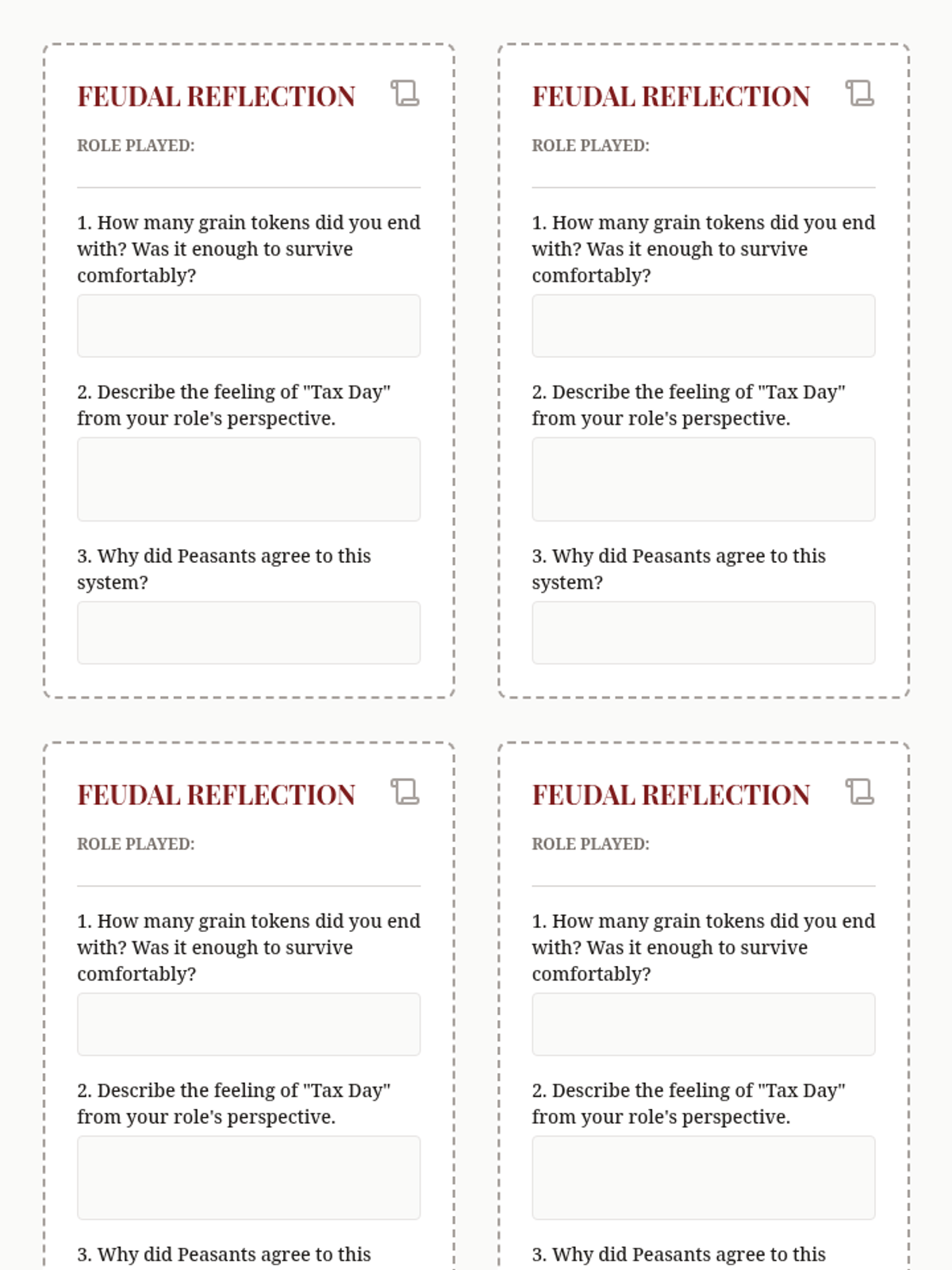
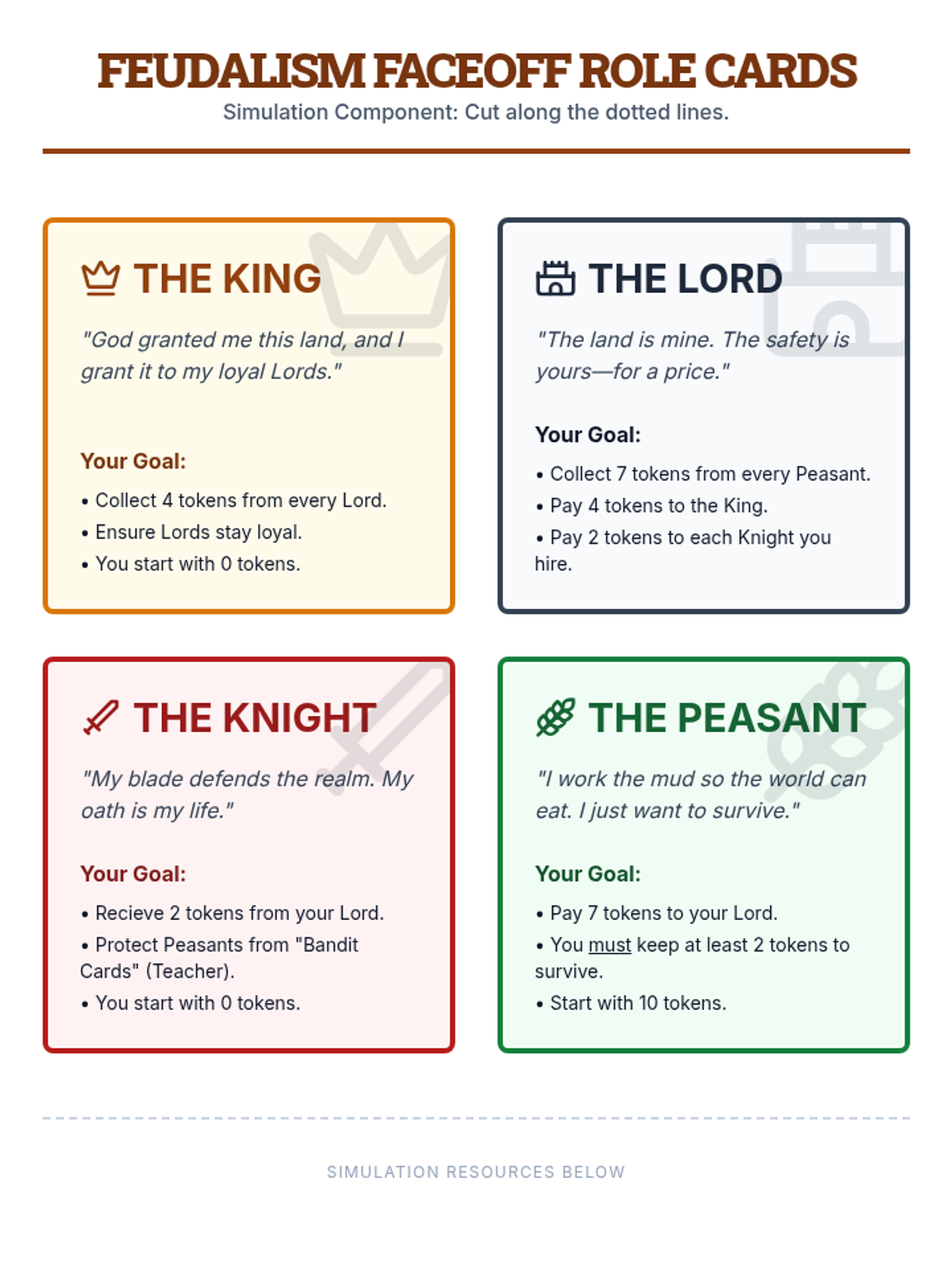
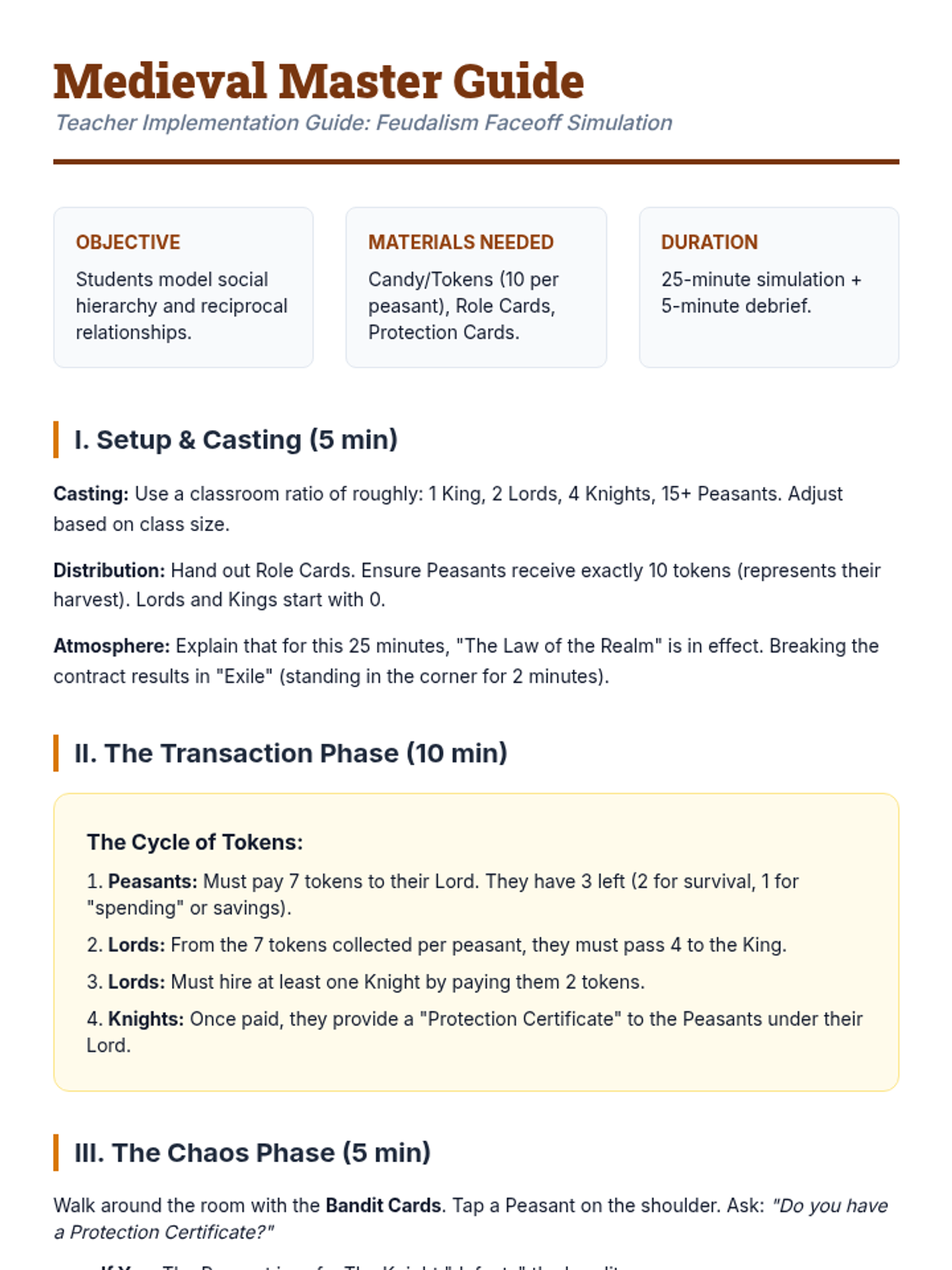
An interactive simulation game where students experience the feudal hierarchy firsthand by distributing resources, paying taxes, and managing land across different social classes.
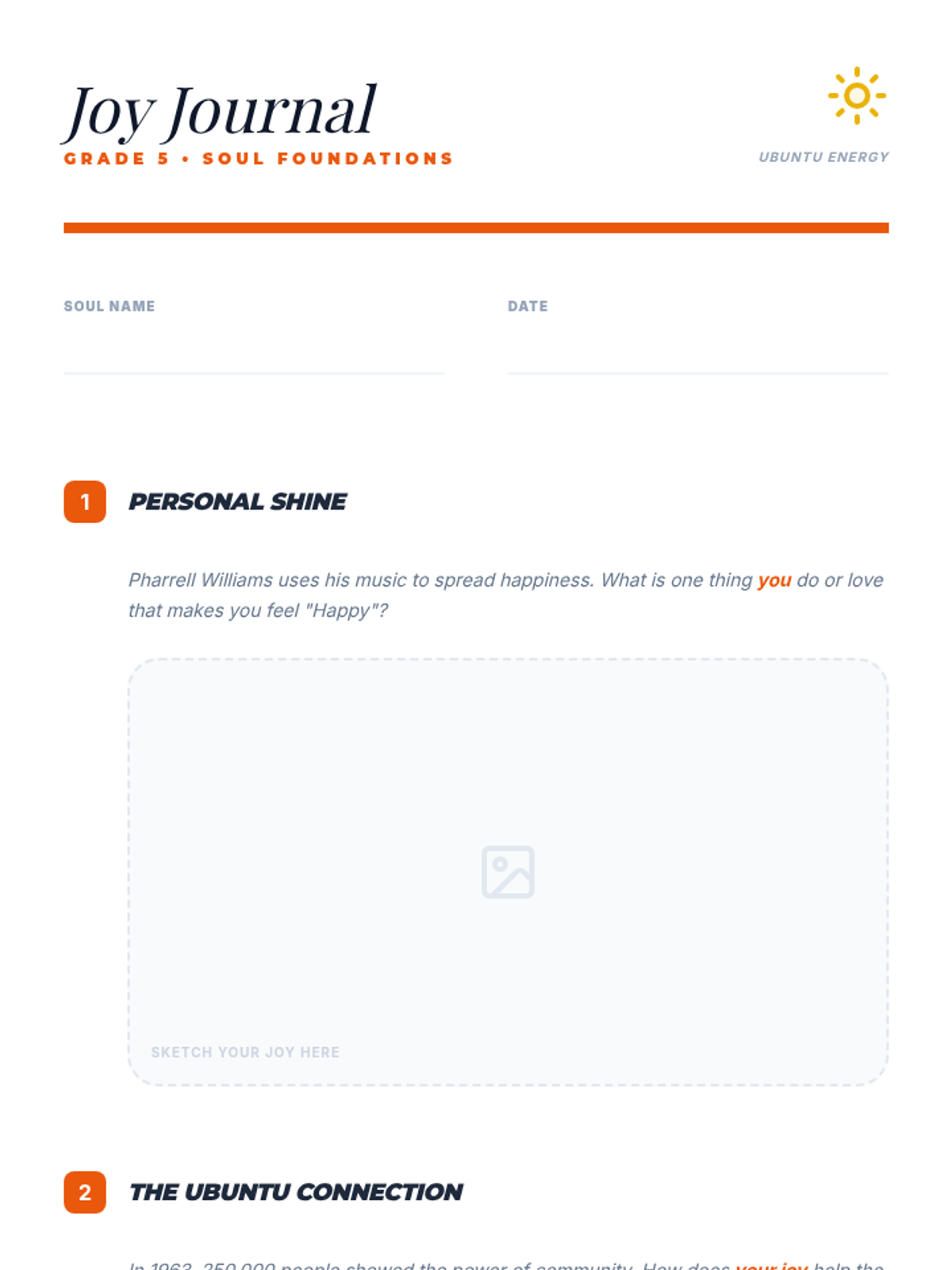
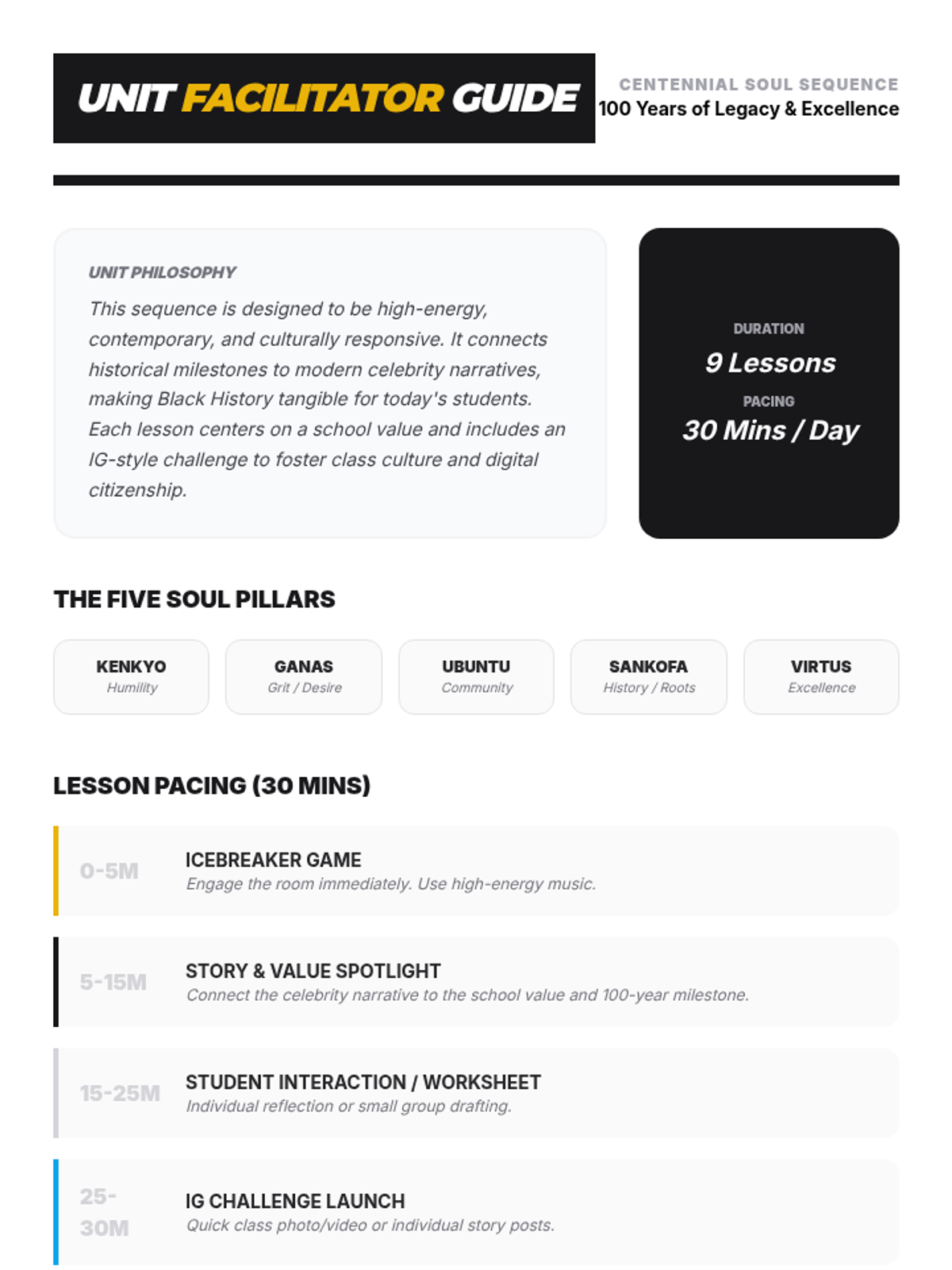
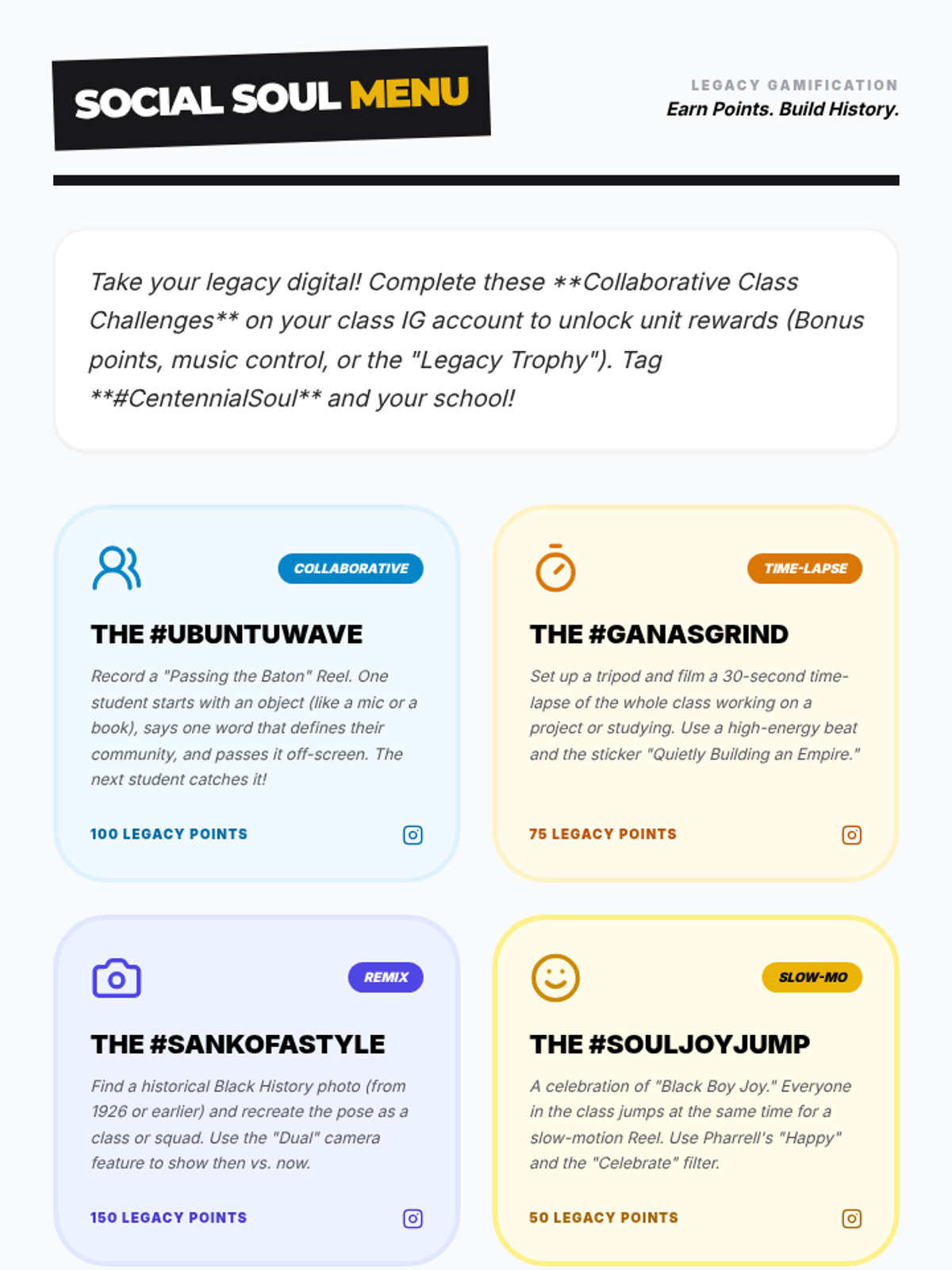
A Grade 5 lesson focusing on the value of Ubuntu, exploring 'Black Boy Joy' through Pharrell Williams and the collective energy of the 1963 March on Washington.
A Grade 6 lesson focusing on Virtus (excellence) and energy, using Simone Biles and the 1968 Olympics to show how personal power can be channeled into advocacy.
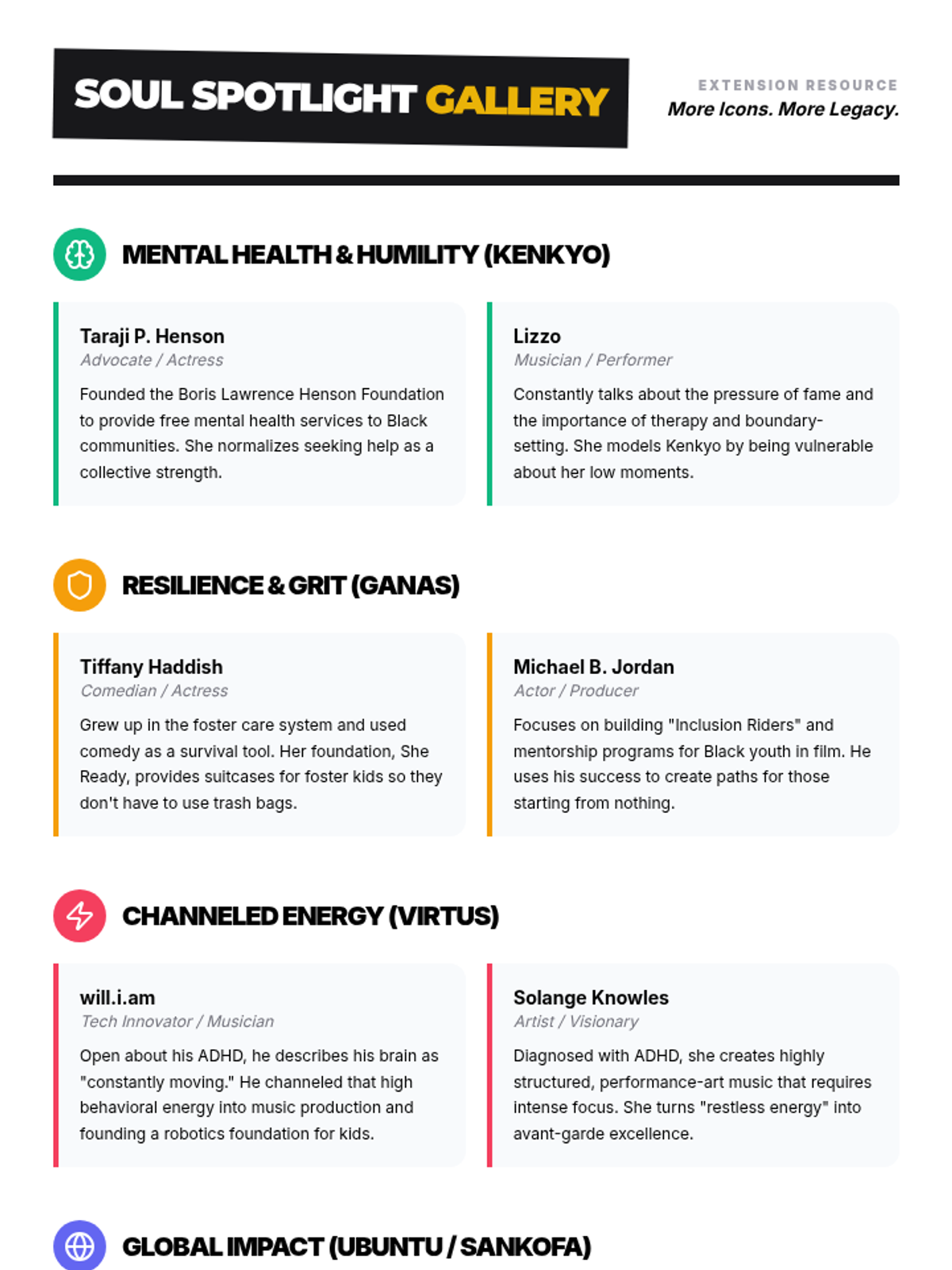
A Grade 7 lesson centered on Kenkyo (humility), focusing on mental health advocacy with Megan Thee Stallion and Kid Cudi to normalize emotional wellness.
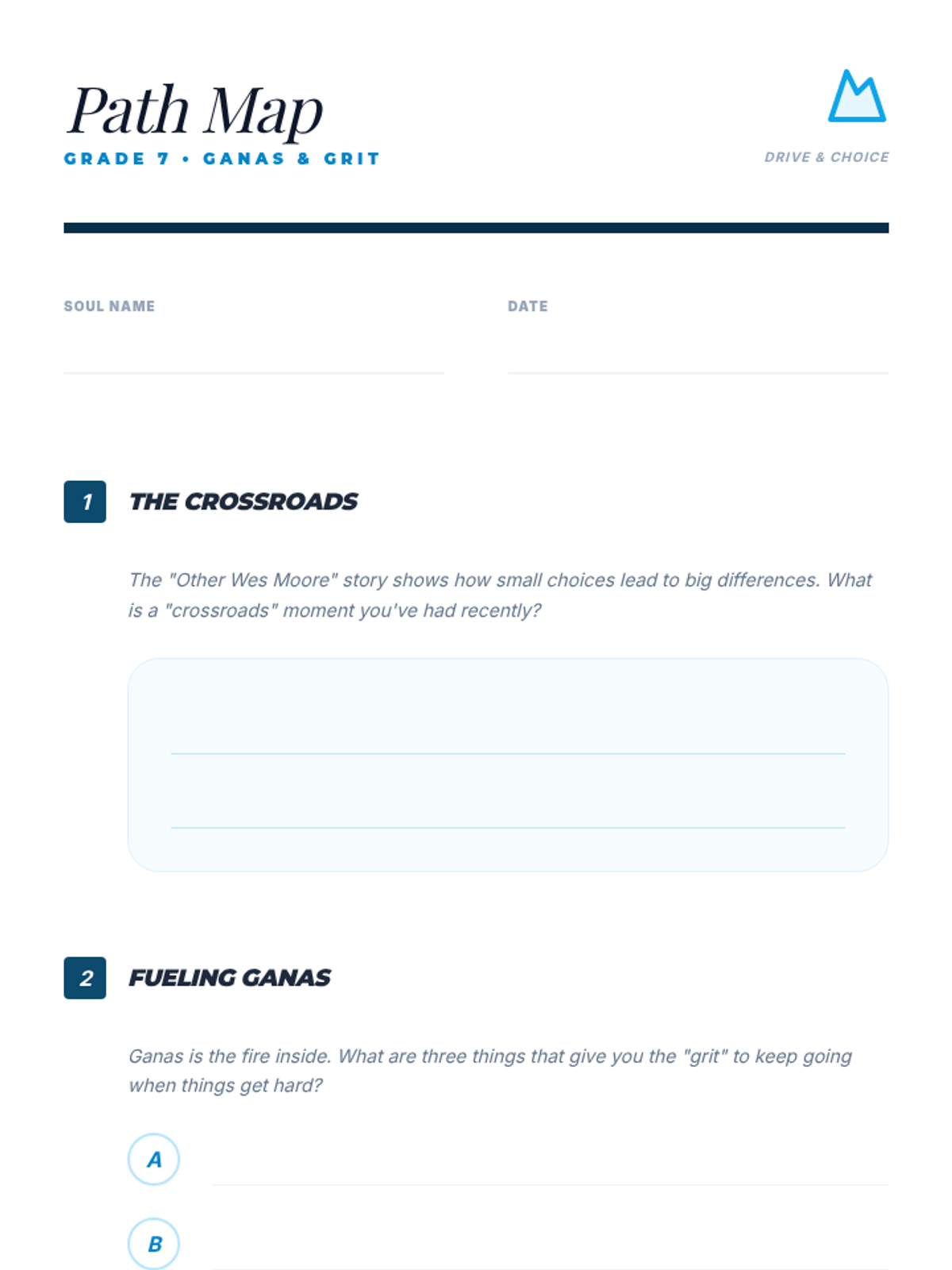
A Grade 7 deep dive into Ganas (grit) and resilience, connecting the narrative of 'The Other Wes Moore' and Jay-Z to the historical excellence of the Harlem Renaissance.
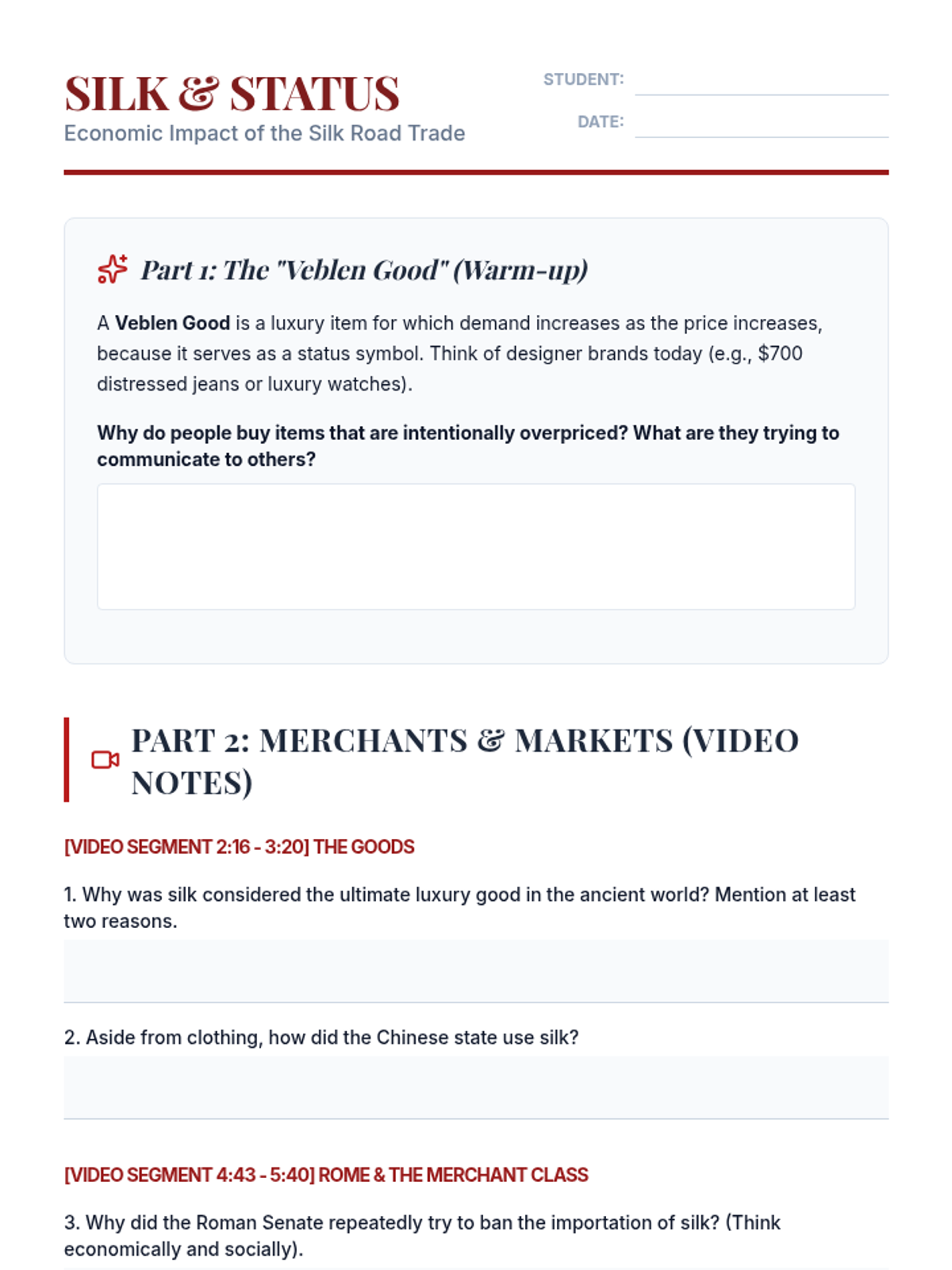
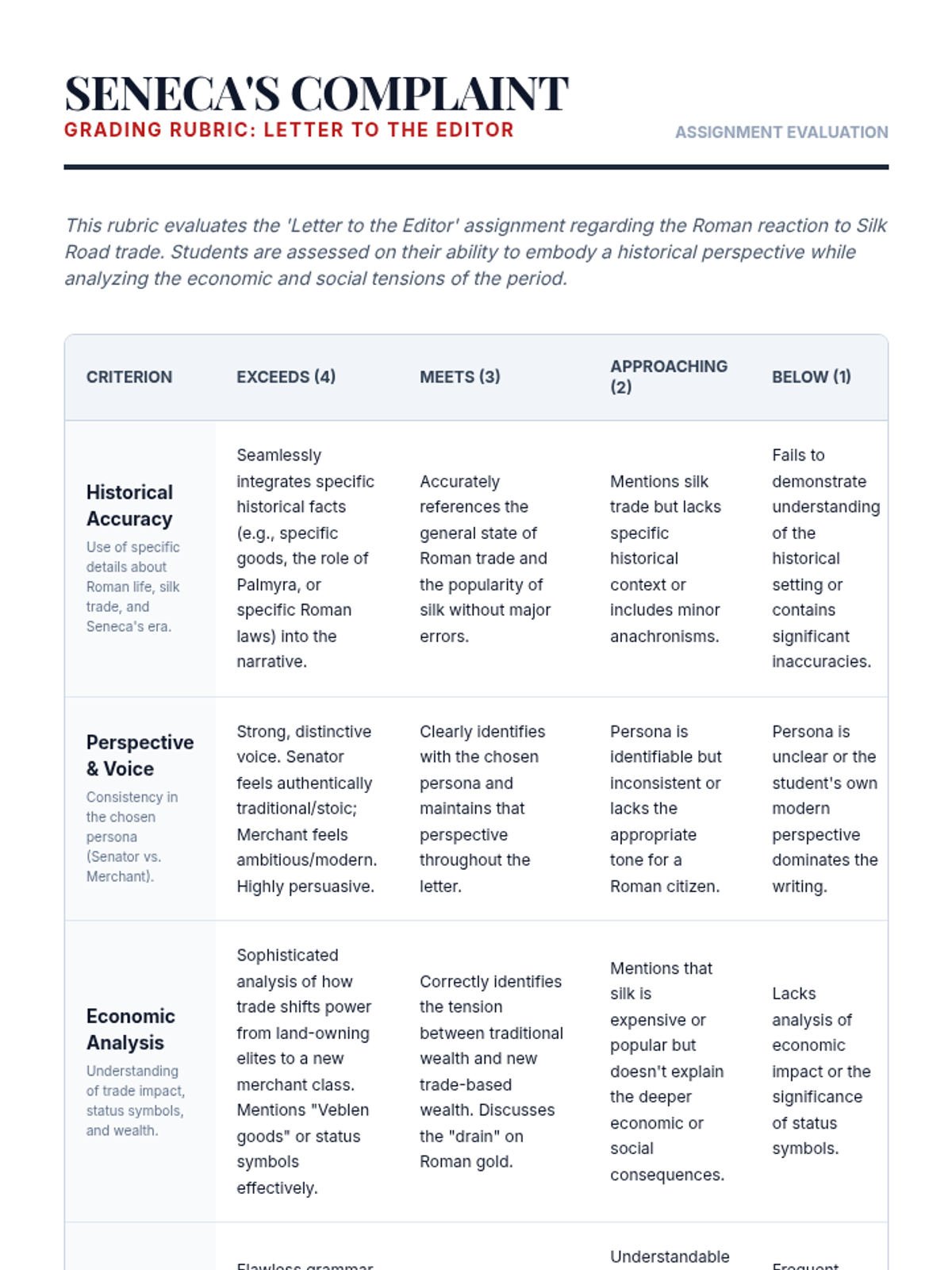
This lesson explores the economic and social consequences of the Silk Road trade, focusing on how luxury goods like silk challenged traditional Roman power structures and gave rise to a wealthy merchant class. Students analyze primary source complaints from Seneca the Younger and write a persuasive 'Letter to the Editor' from the perspective of either a conservative Roman Senator or an ambitious merchant.
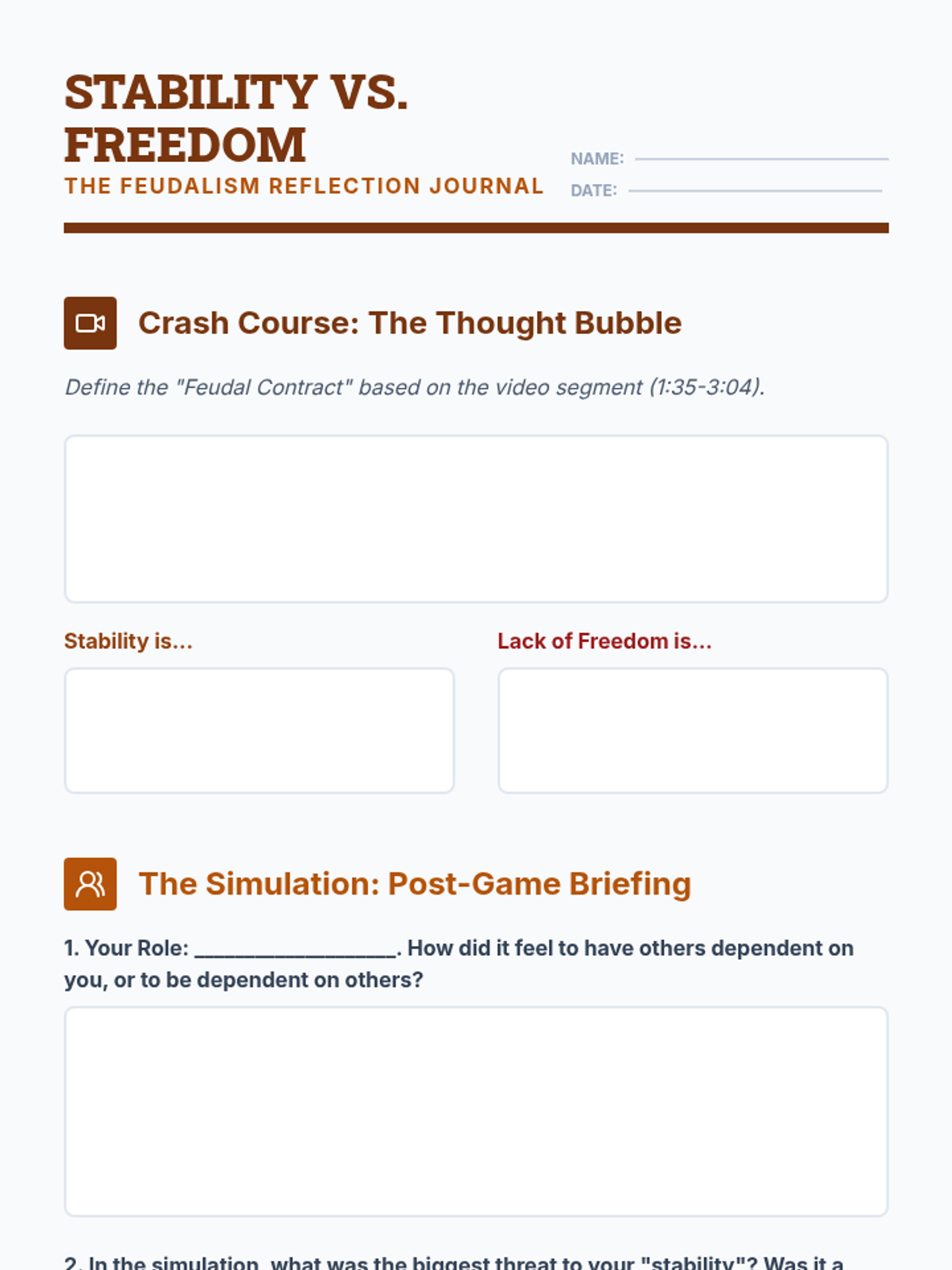
Students explore the reciprocal relationships and social hierarchy of Feudalism through a hands-on simulation and analysis of the Crash Course World History video.
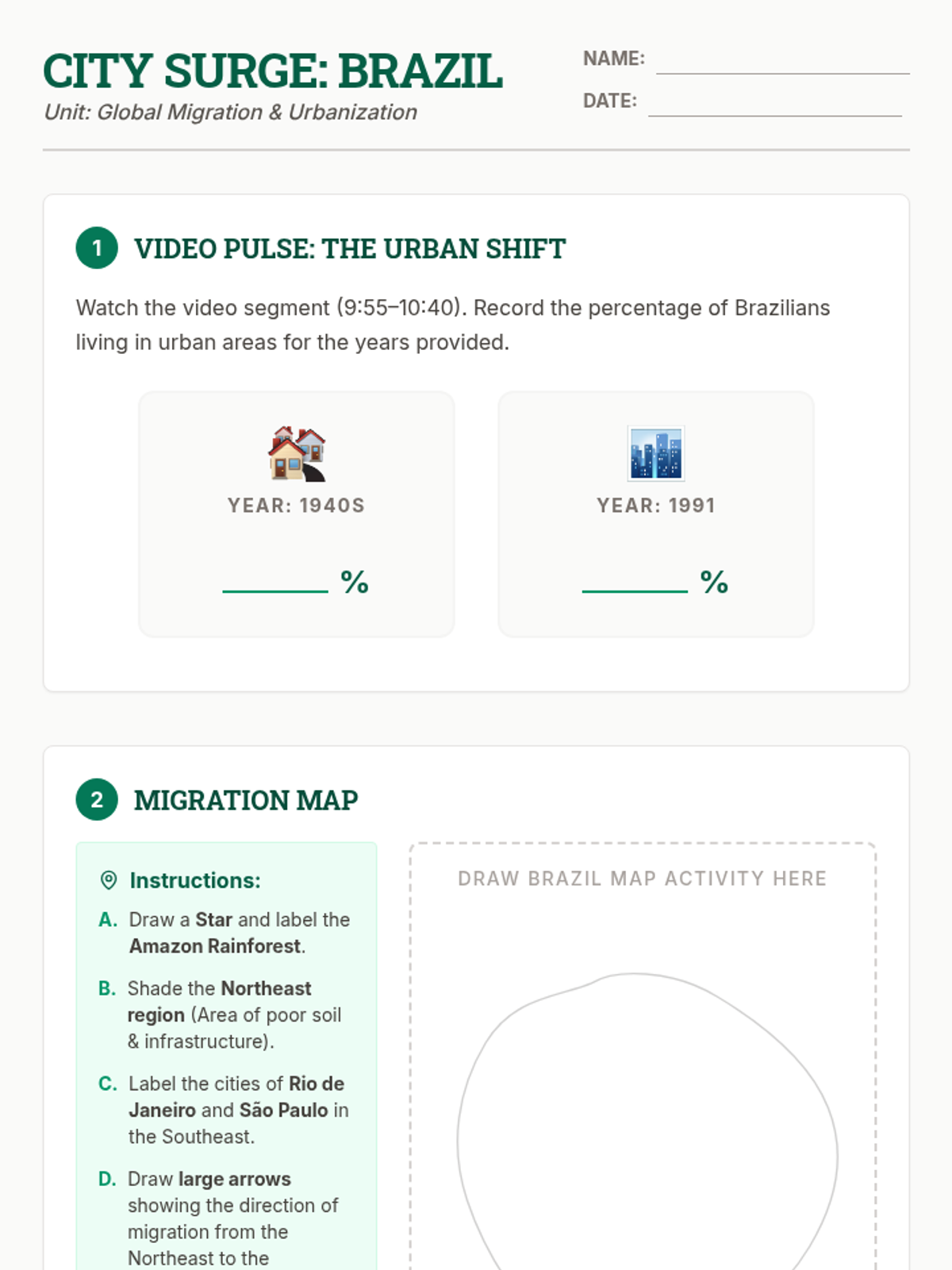
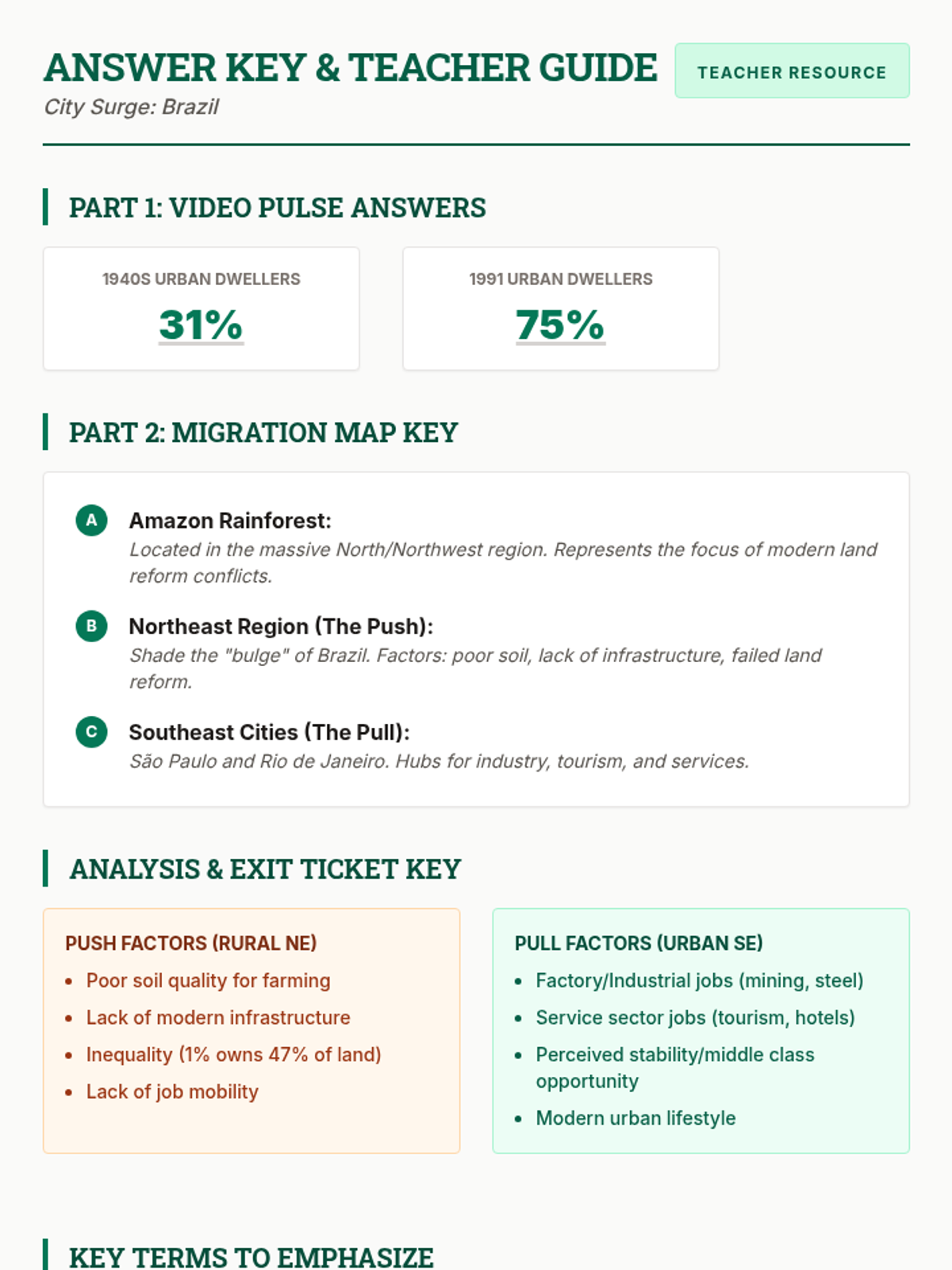
Students explore Brazil's rapid urbanization and migration patterns from 1940 to 1991, identifying the push and pull factors that moved millions from the rural Northeast to the industrial Southeast.
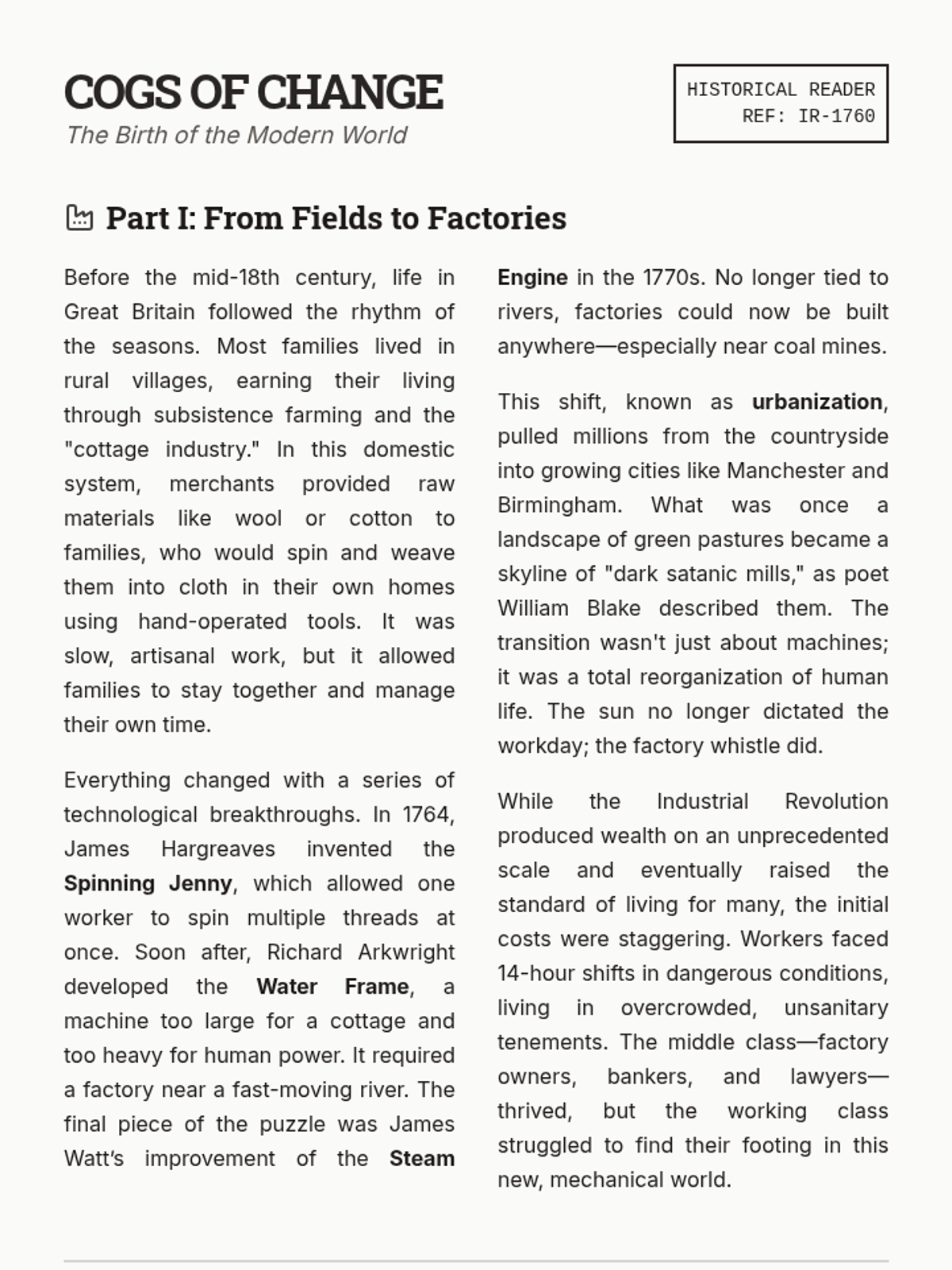
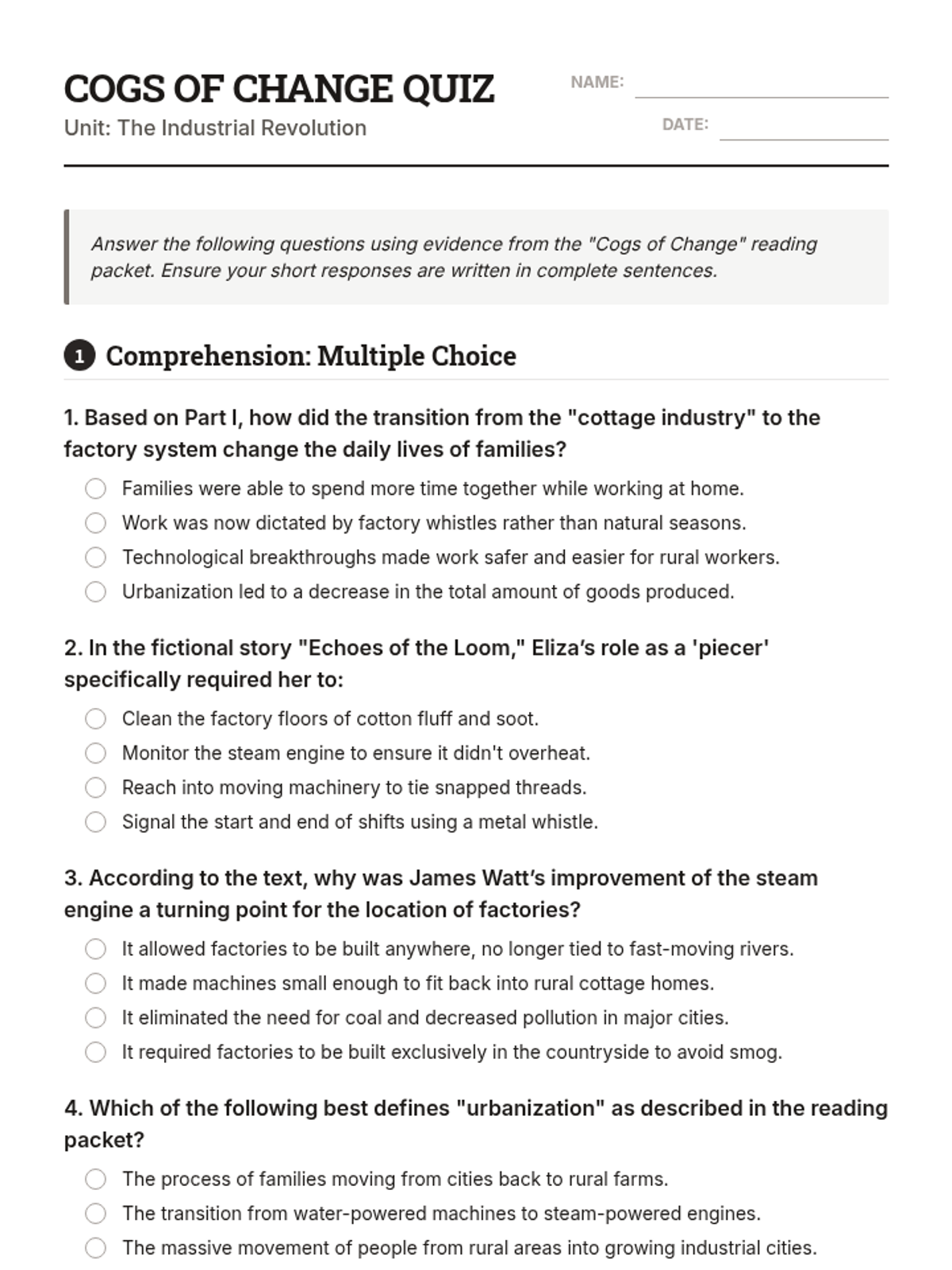
Explore the transformative power of the Industrial Revolution through primary-source inspired fiction and historical nonfiction. Students analyze the shift from rural life to urban factories and the resulting social impacts.
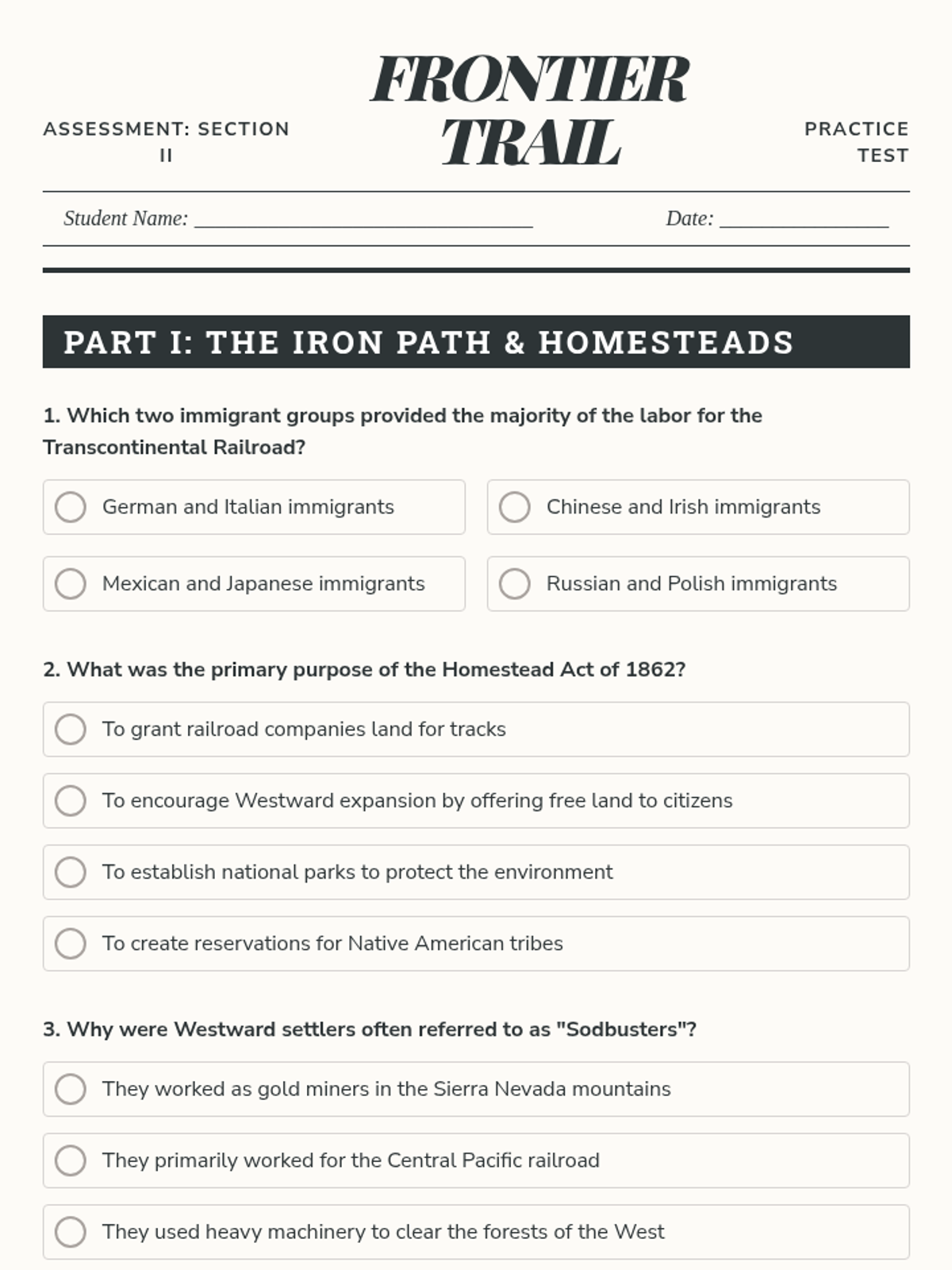
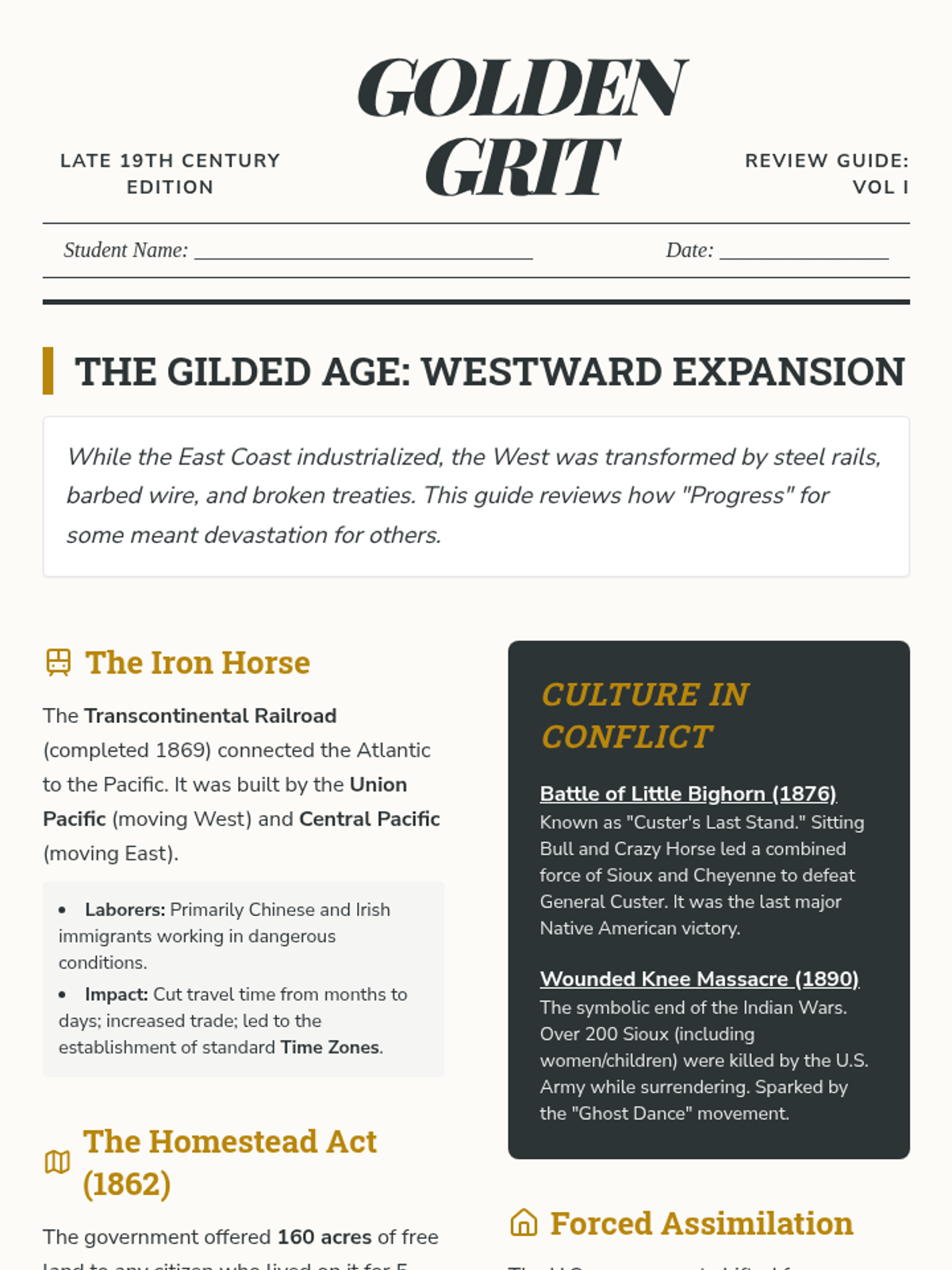
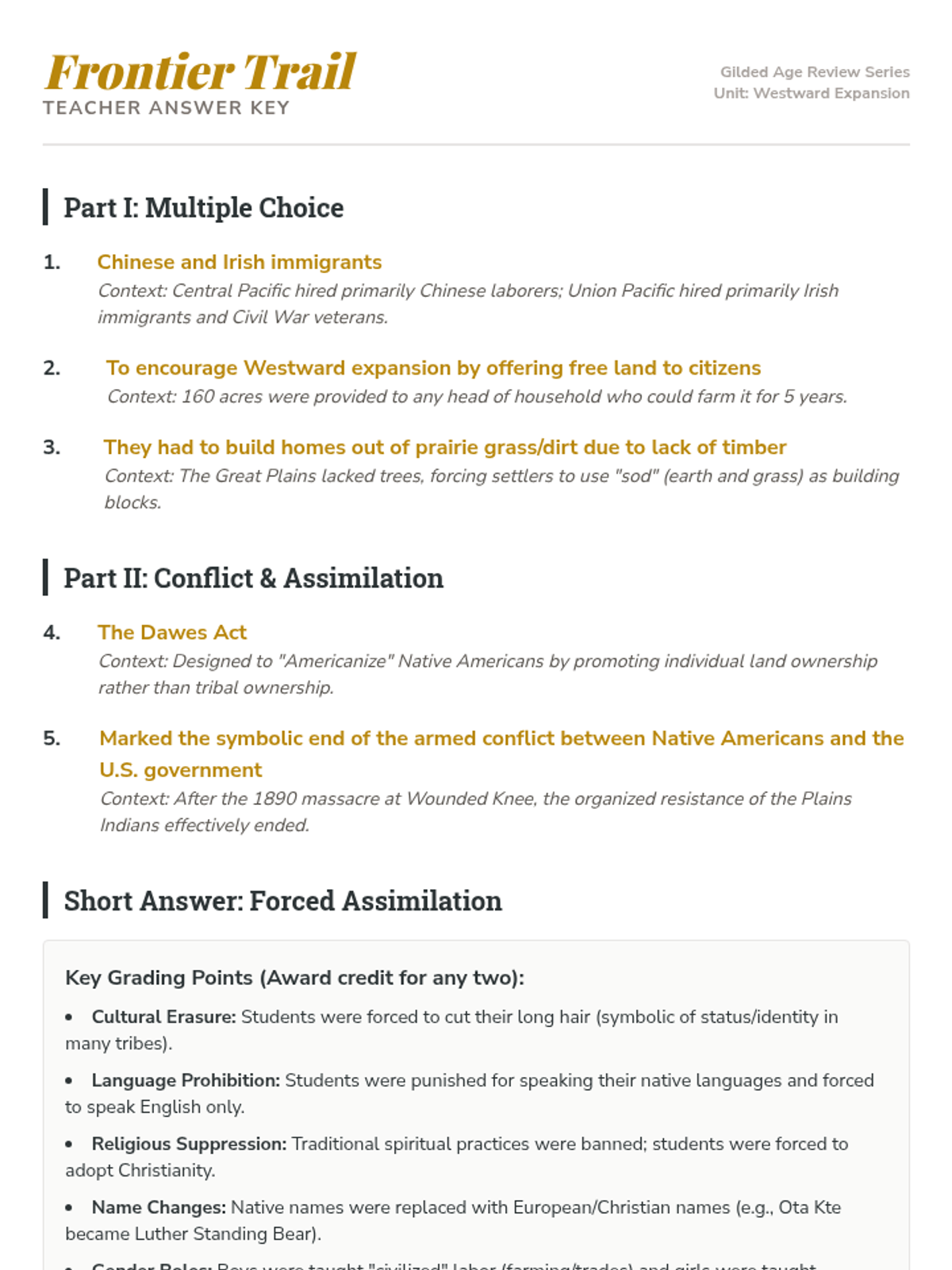
A comprehensive review of the Gilded Age with a deep dive into Westward Expansion, the Transcontinental Railroad, and the systemic impact on Native American nations through land loss and forced assimilation.
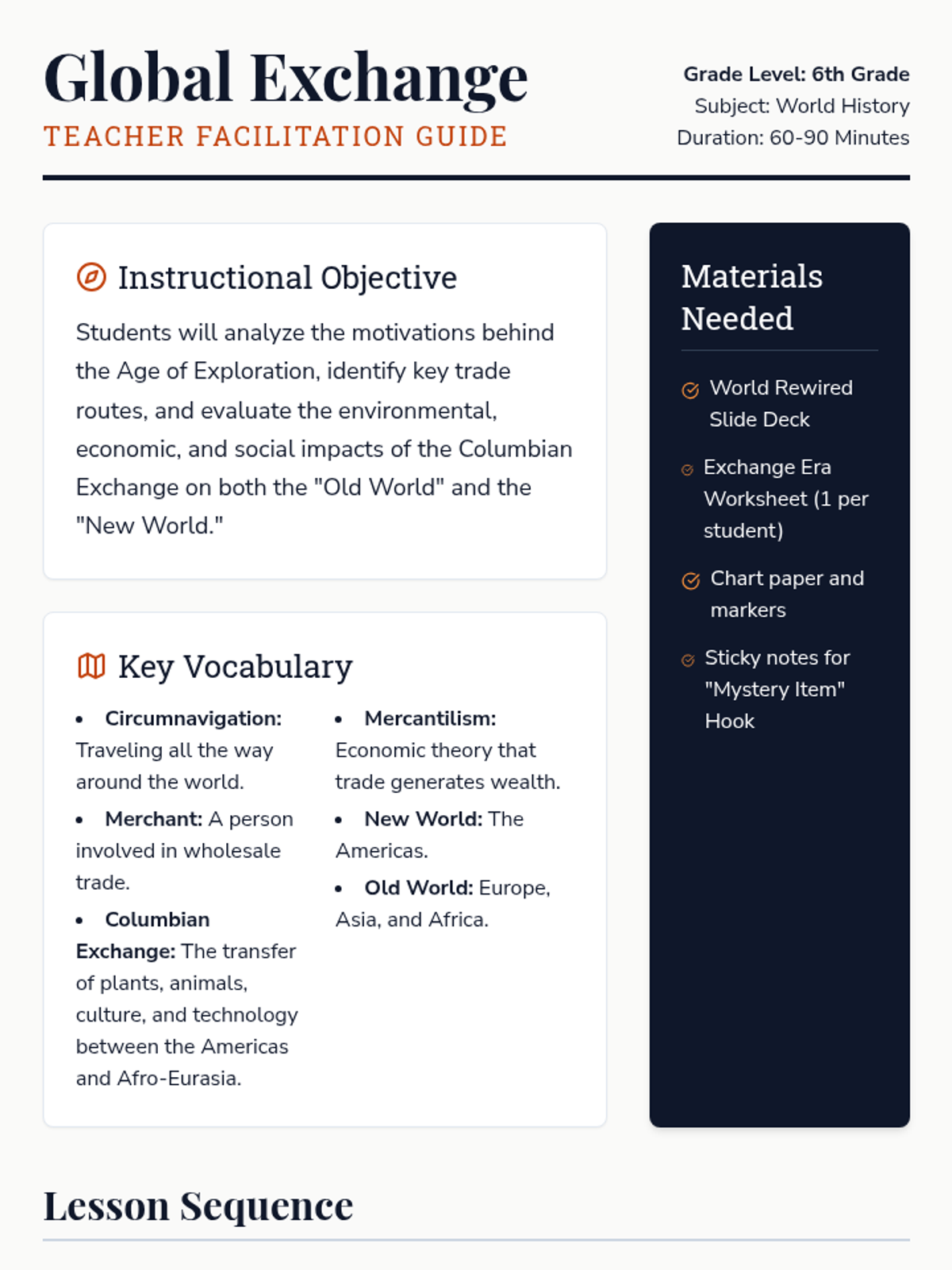
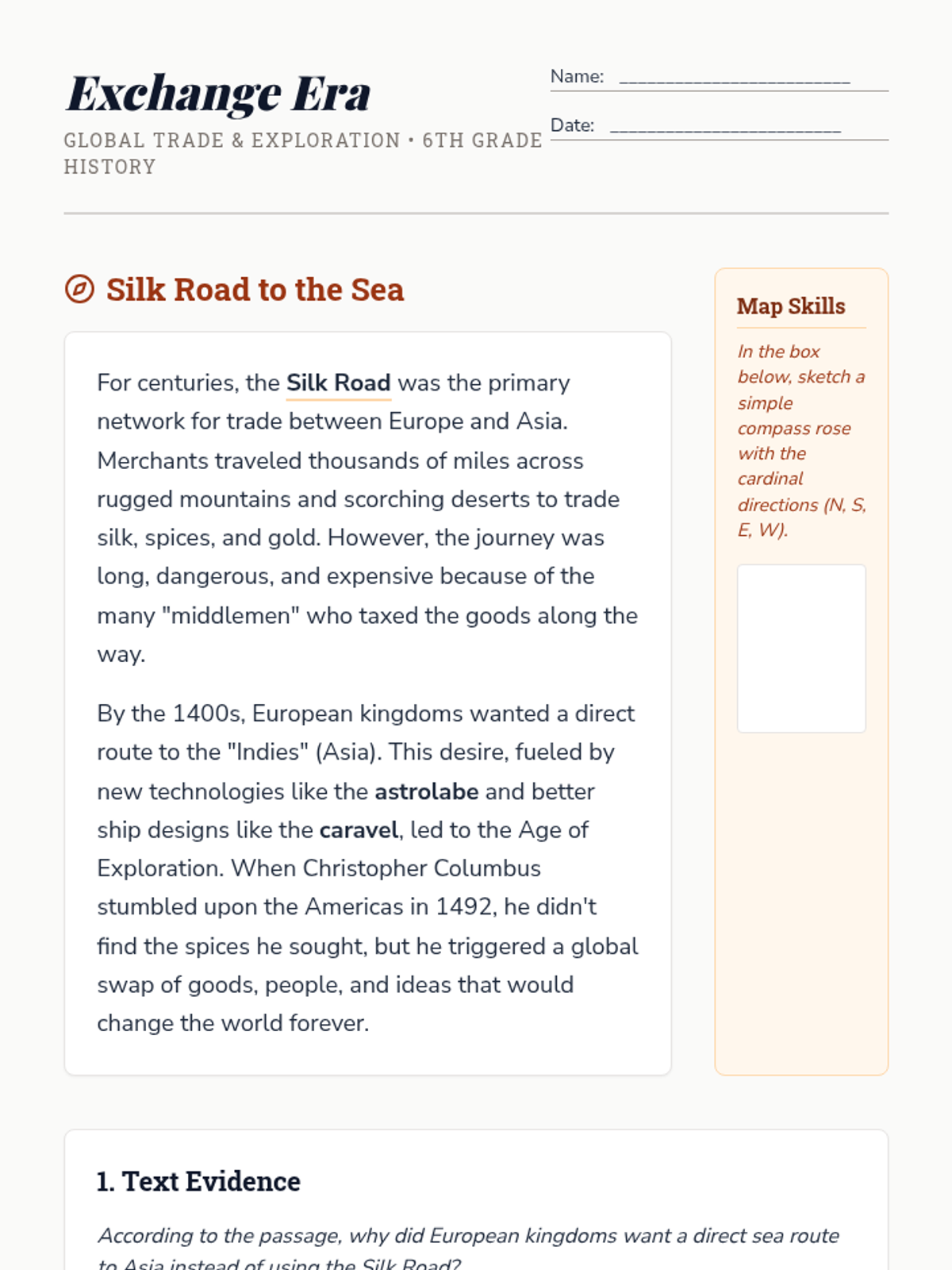
A comprehensive lesson exploring the Age of Exploration with a specific focus on the Columbian Exchange and the transformation of global trade routes. Students will analyze how the movement of goods, ideas, and people reshaped the world.
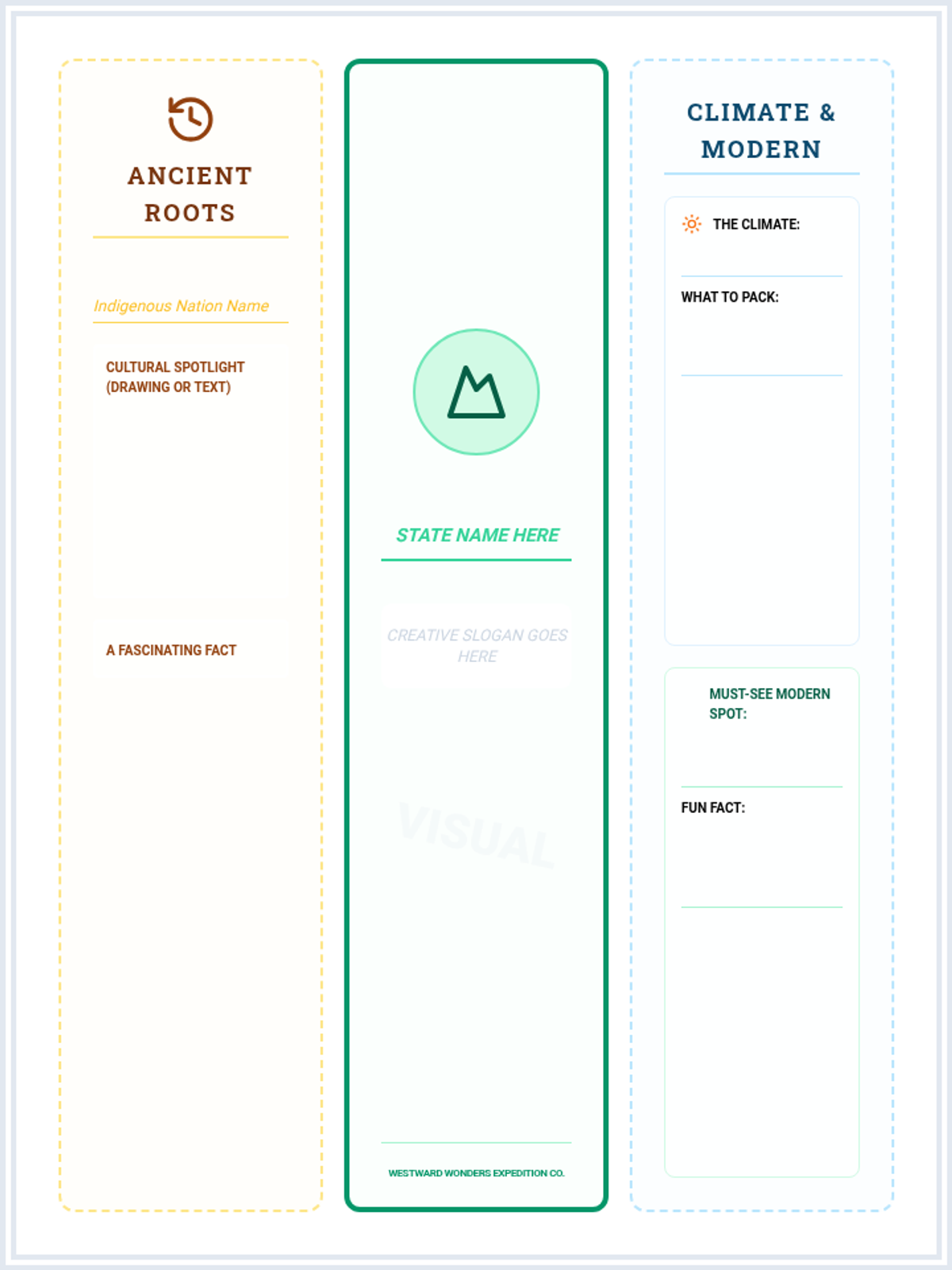
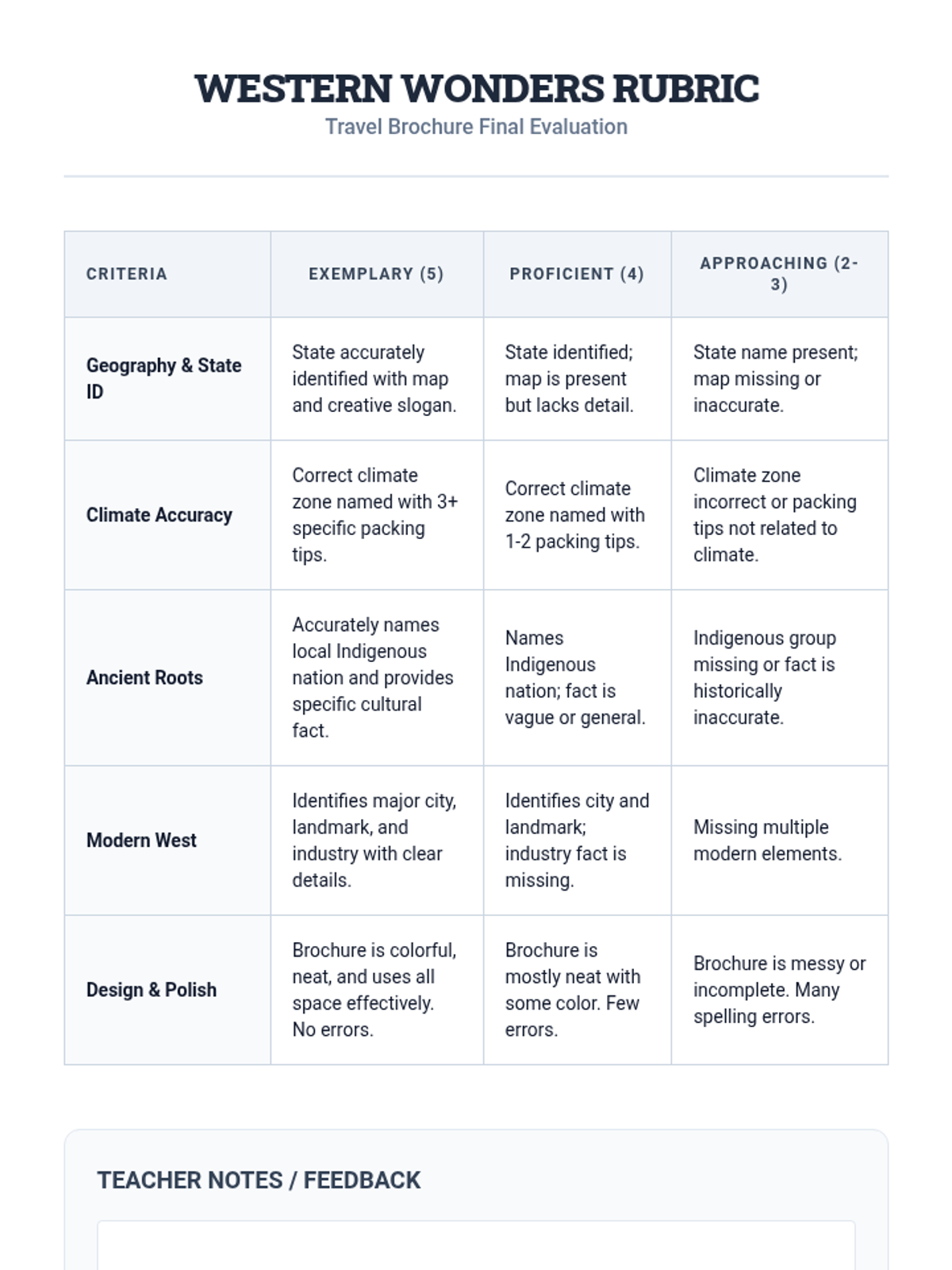
Finalizing the travel brochure and presenting planned trips to the class.
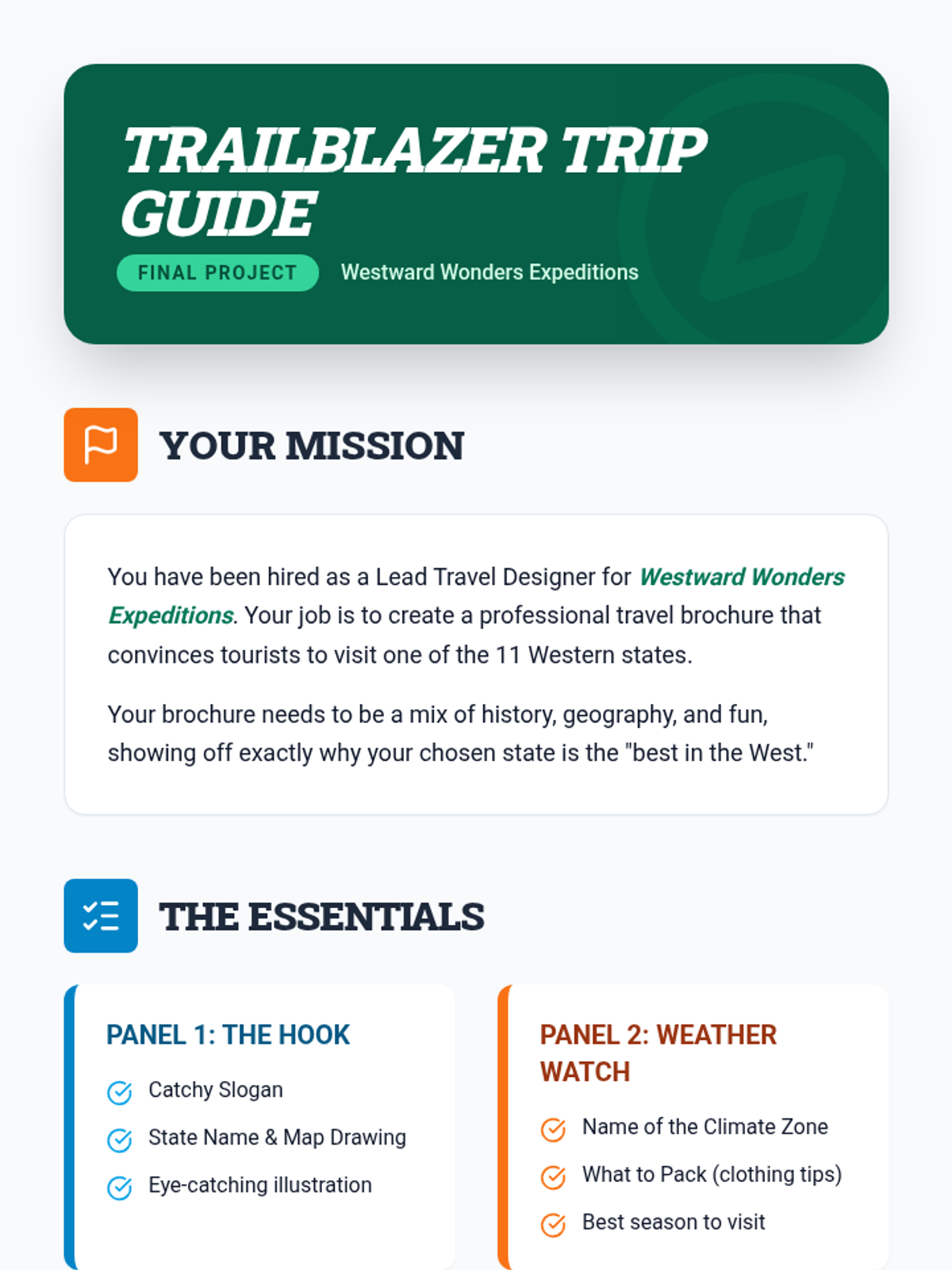
Research and initial drafting for the 'Plan a Trip' travel brochure project.
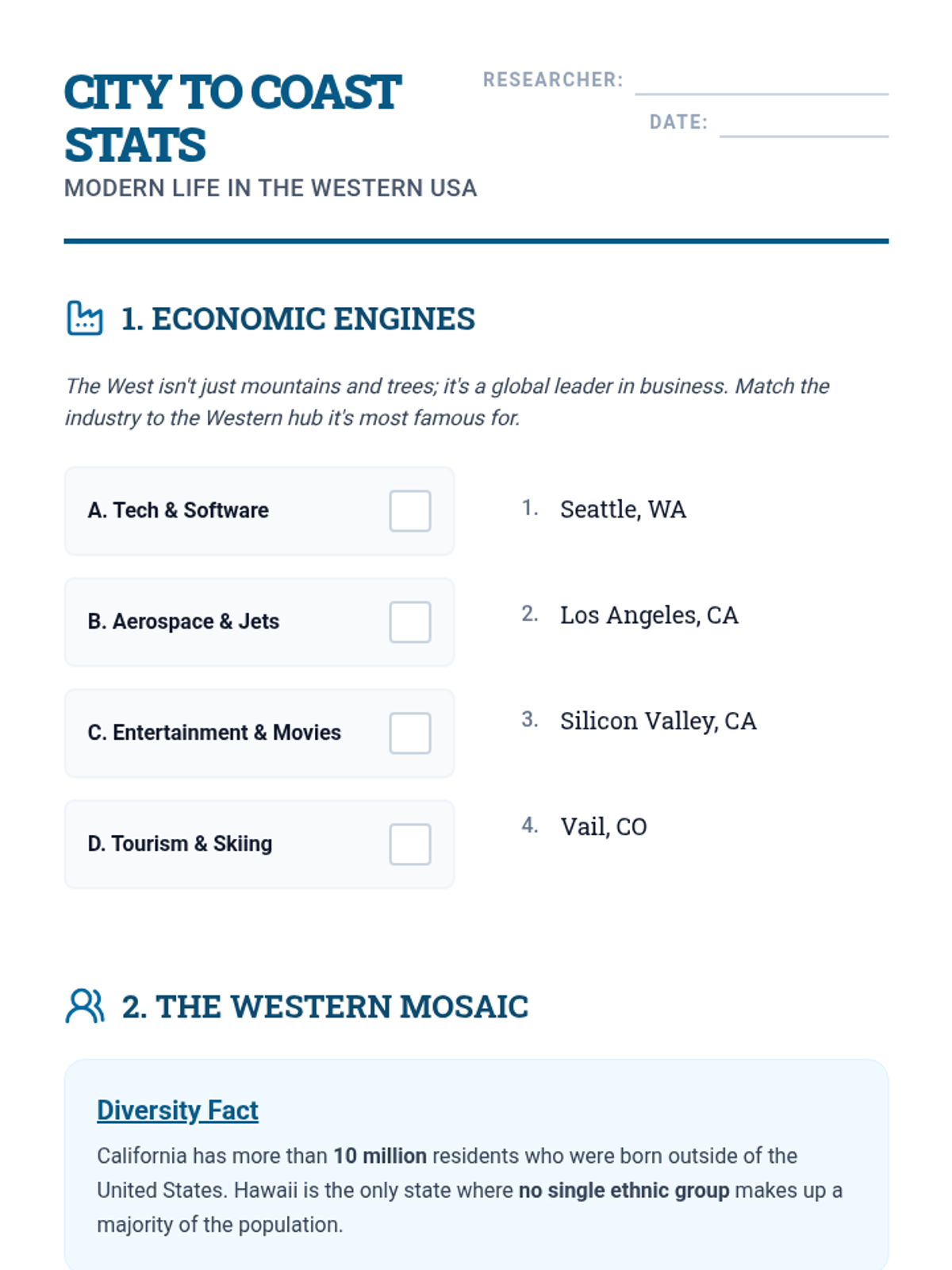
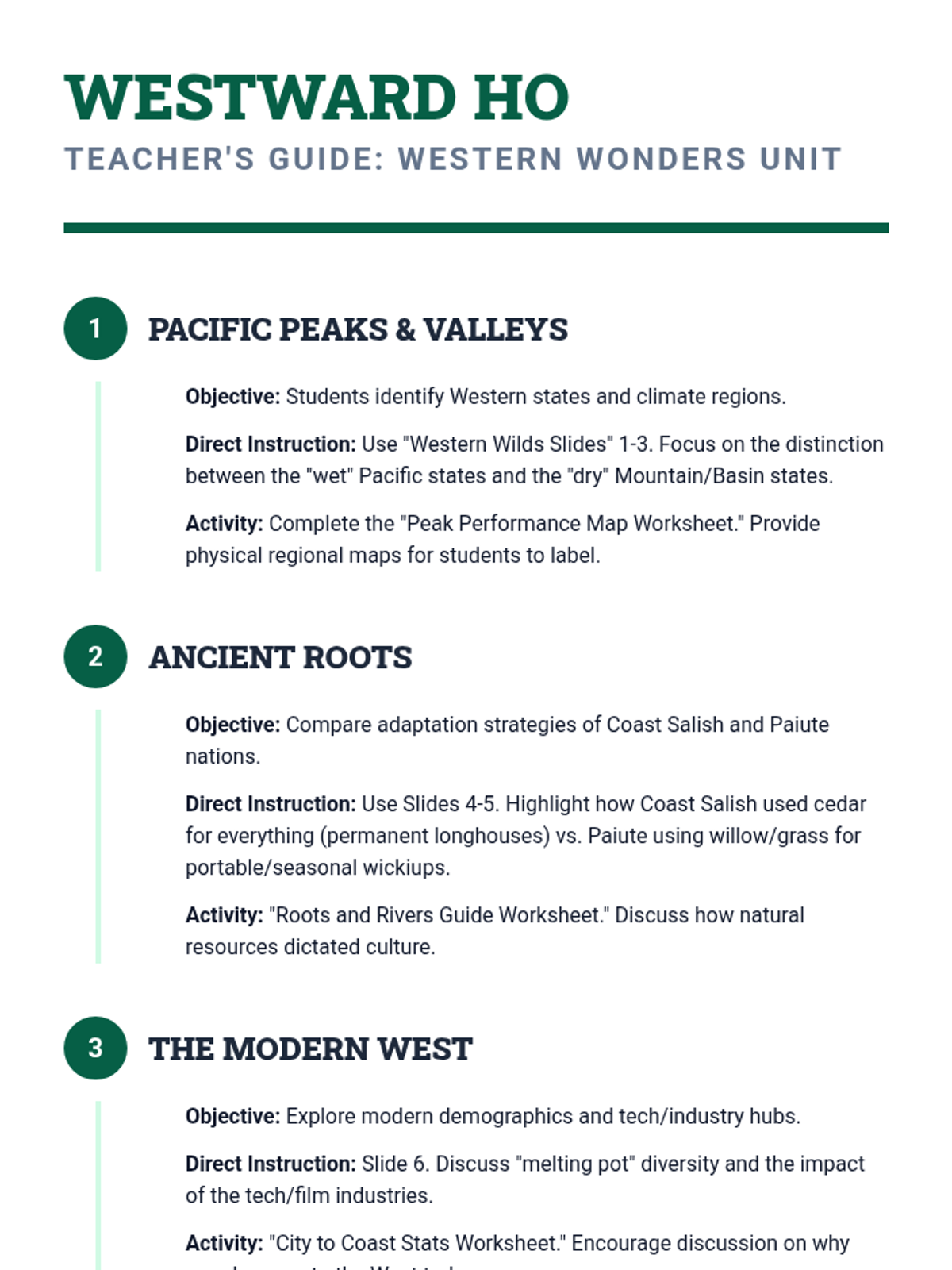
Examination of modern industries, major cities, and the diverse demographics of the West today.
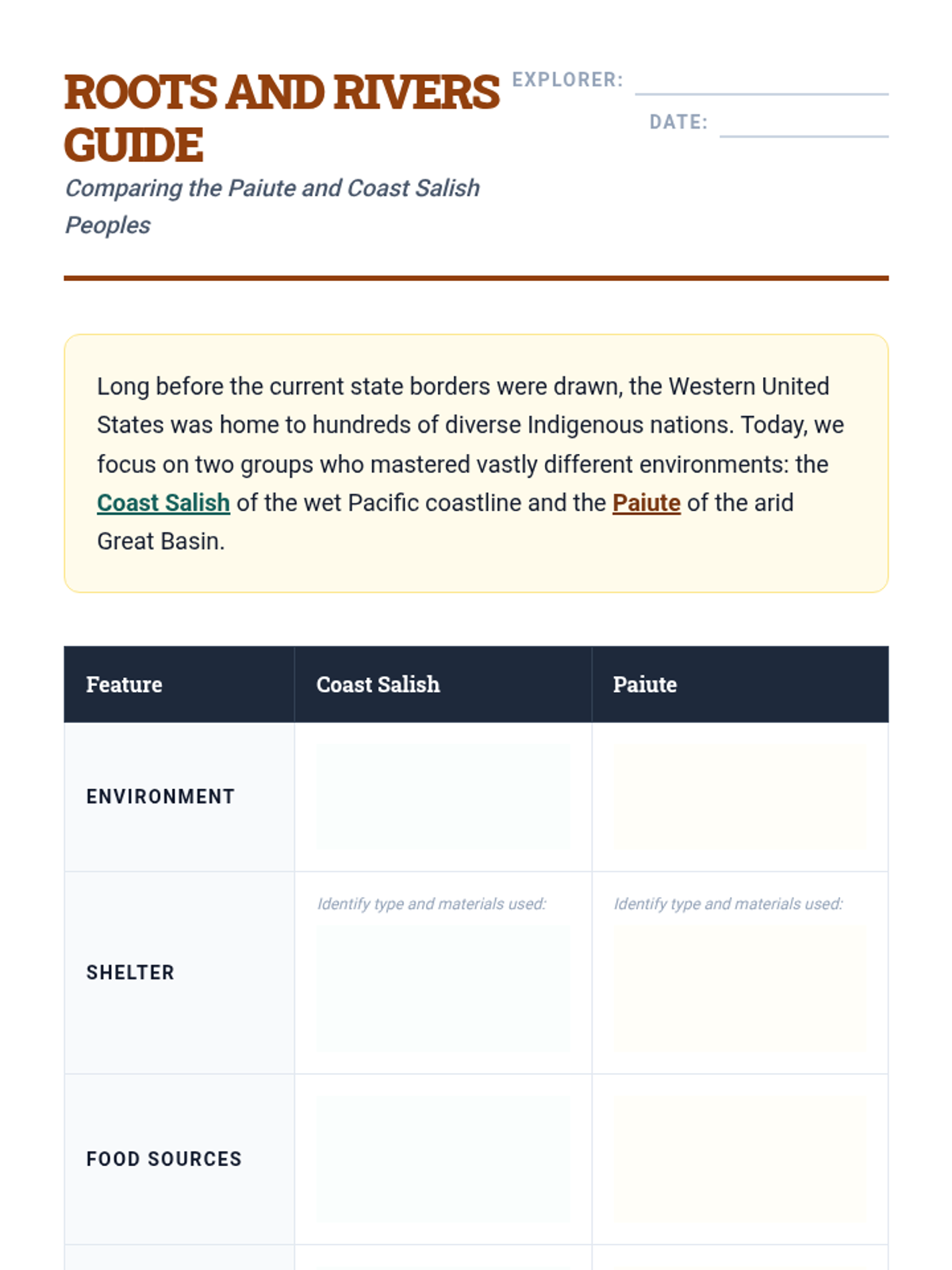
Exploration of the Coast Salish and Paiute peoples, focusing on their adaptation to their environments and traditional cultures.
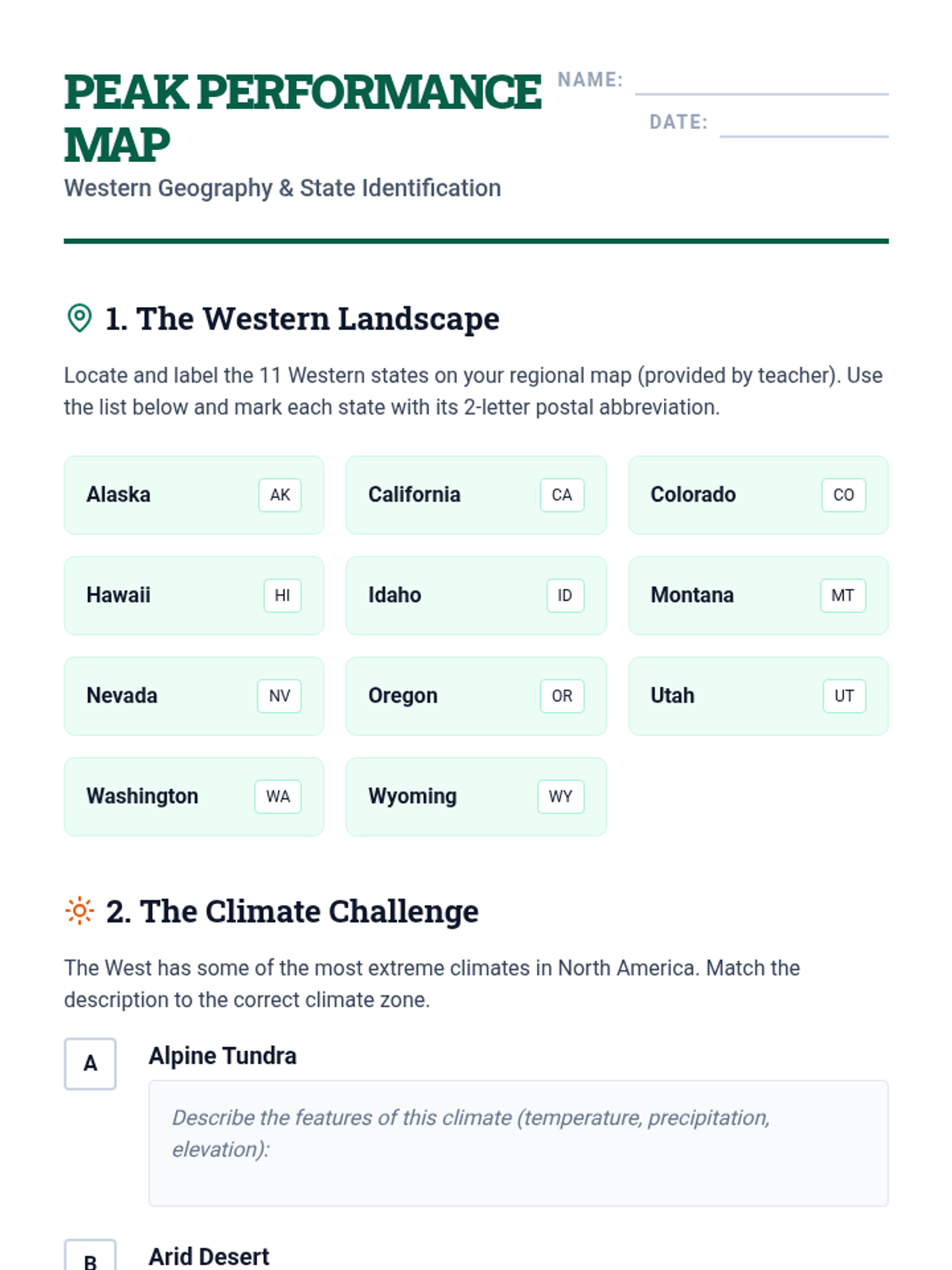
Introduction to the 11 Western states, their geography, and diverse climates ranging from rainforests to deserts.
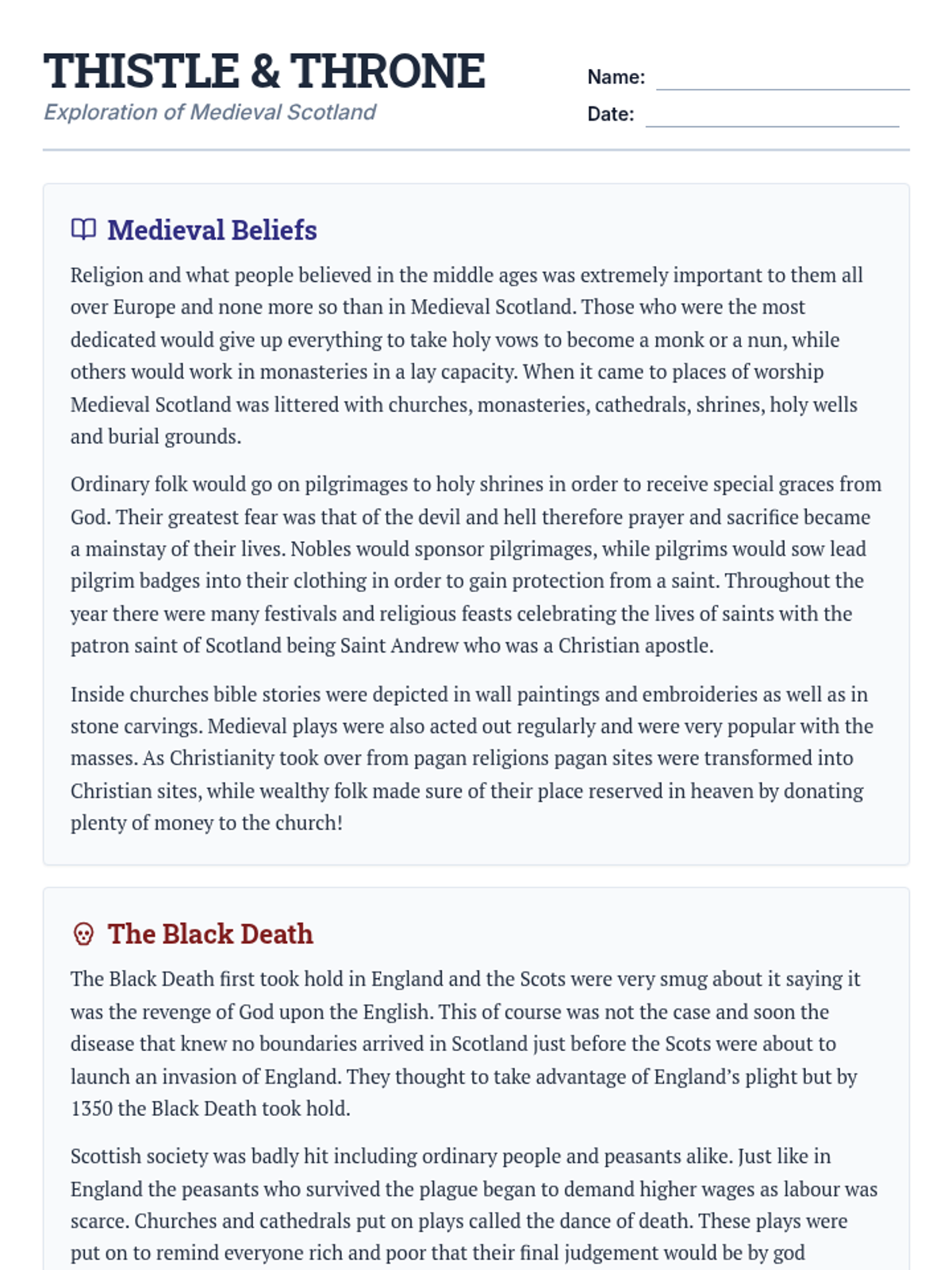
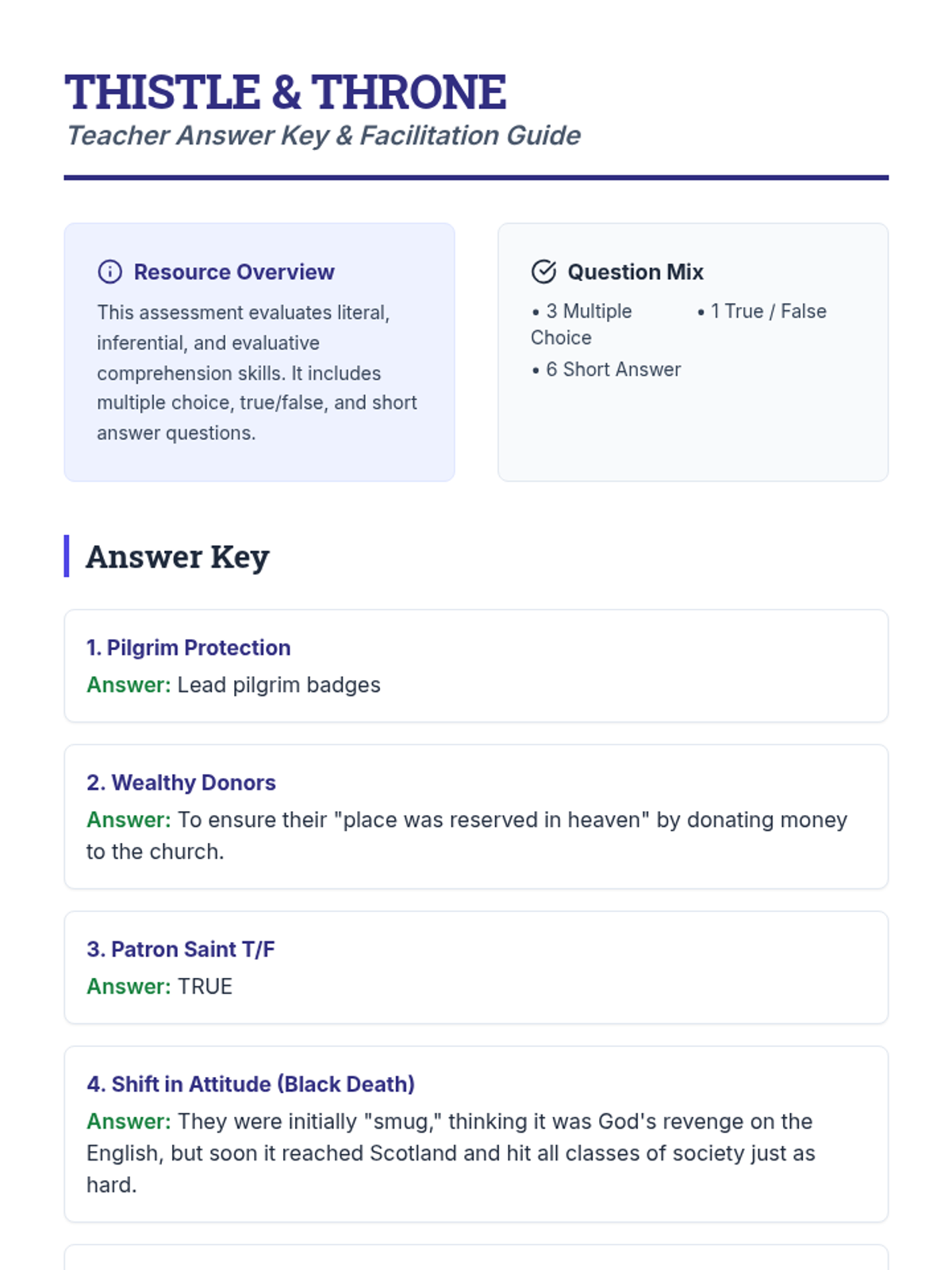
A comprehensive look at medieval Scottish life, covering religious devotion, the impact of the Black Death, the lawless Border Reivers, and the dangerous lives of monarchs.