Daily hygiene, hydration, and sleep routines paired with strategies for disease and injury prevention. Builds skills in health decision-making, body awareness, and self-advocacy to support lifelong well-being.
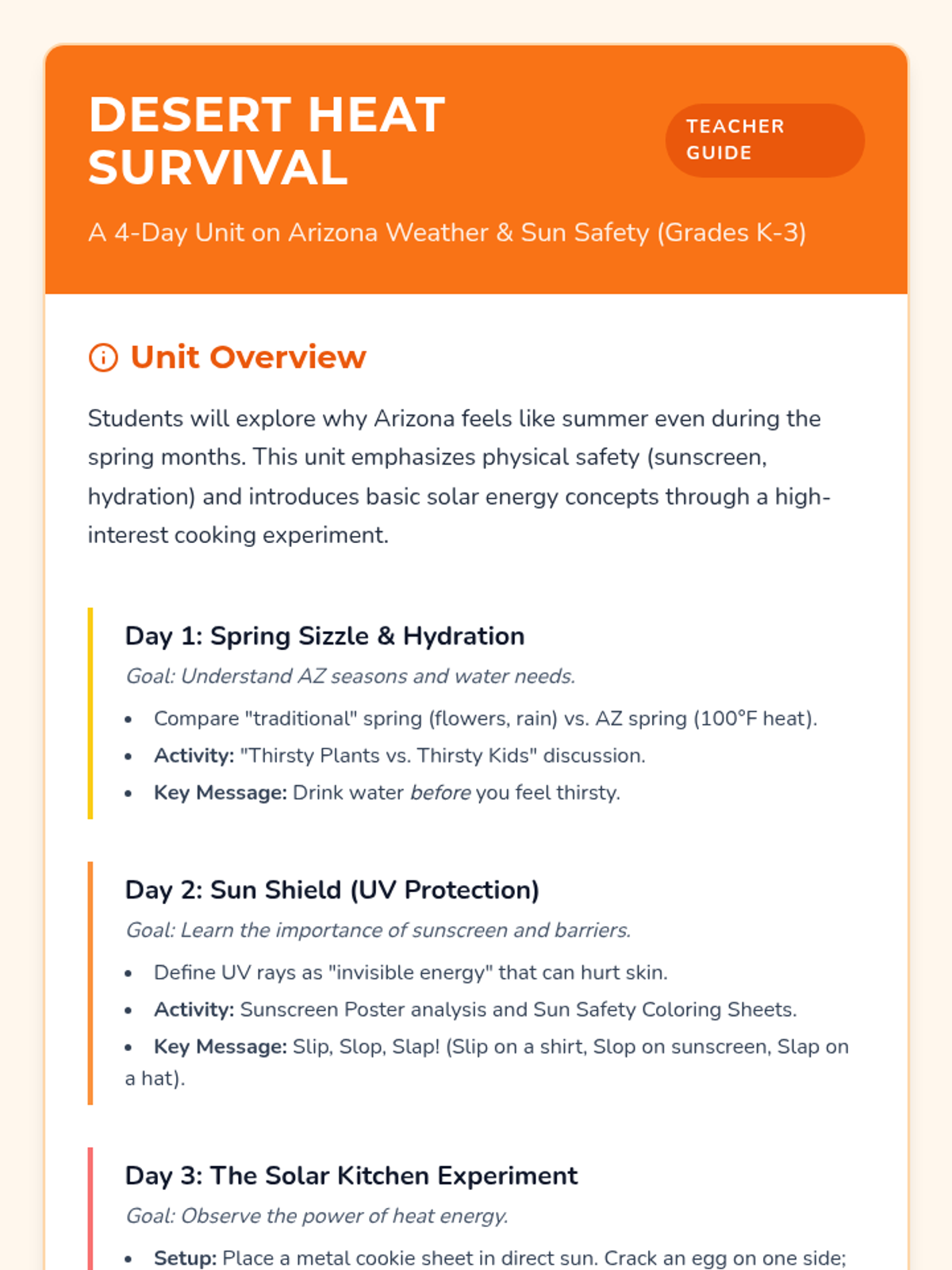
A four-day unit for grades K-3 exploring Arizona's extreme spring heat, sun safety, and the power of solar energy through a cooking experiment.
A comprehensive health and wellness unit focusing on nutrition, physical activity, and mental well-being to empower students to make informed lifestyle choices.
A functional biology curriculum designed for life skills students, focusing on practical knowledge of nutrition, personal hygiene, and environmental stewardship through hands-on activities and visual aids.
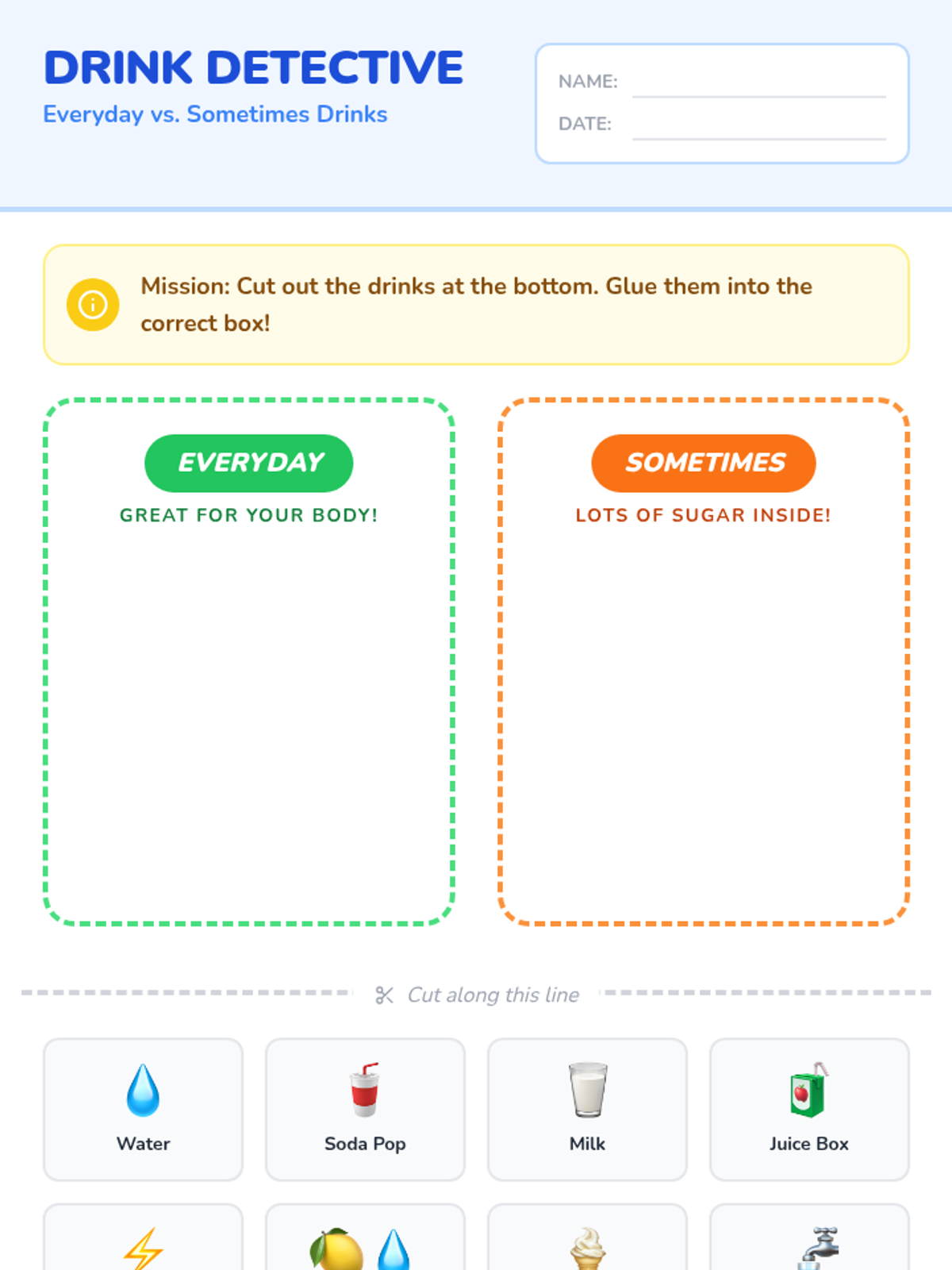
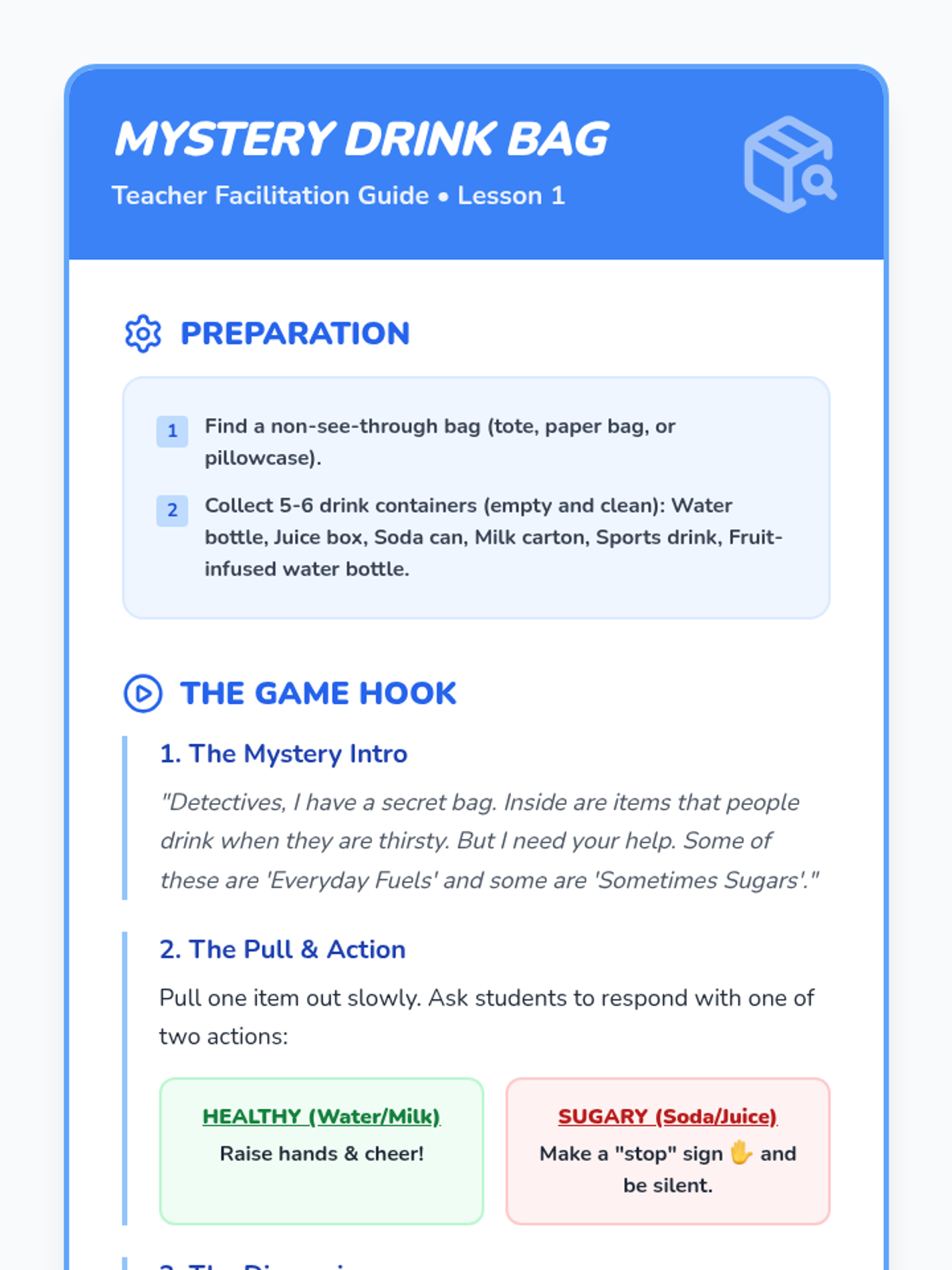
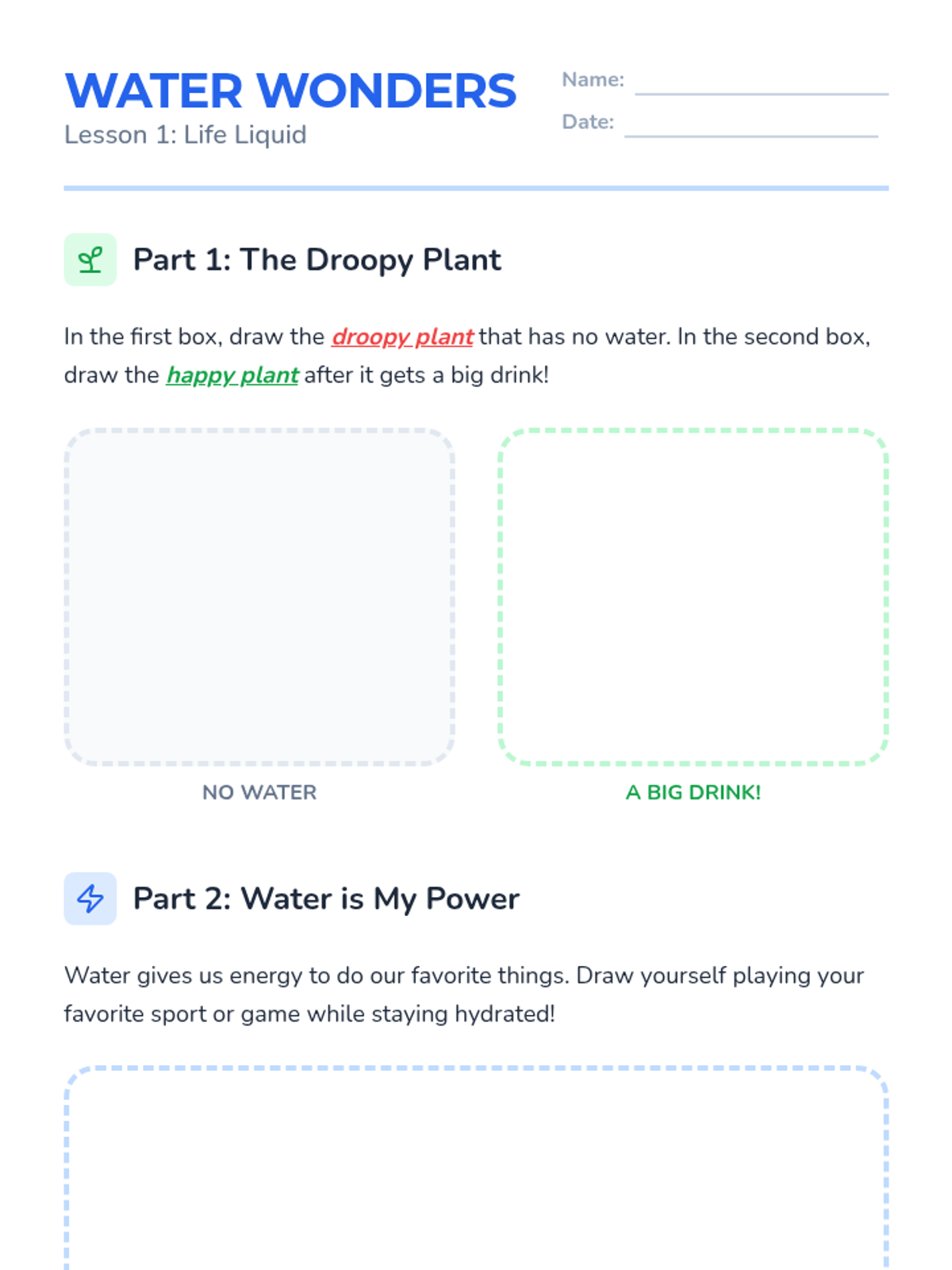
A comprehensive 1st-grade health sequence focused on building healthy hydration habits. Students learn to choose water over sugary drinks, identify optimal times for hydration during activity, adjust intake based on environment, and track their own daily habits.
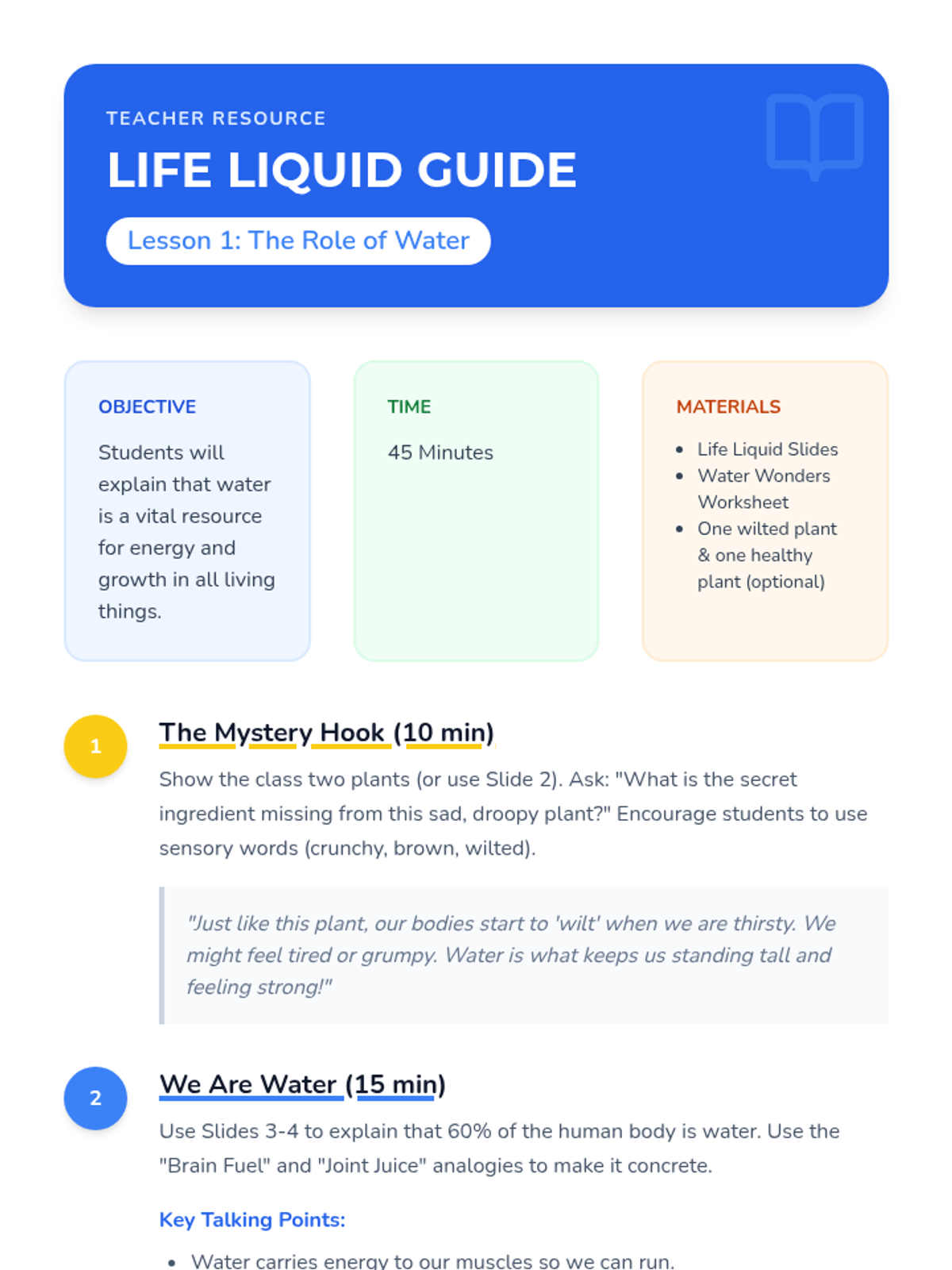
This inquiry-based sequence for first-grade students explores the biological necessity of water. Students learn to recognize physical signs of thirst, understand water loss through sweat, and monitor their hydration levels using urine color as a tool, ultimately connecting hydration to physical energy and mood.
A 1st-grade health sequence that transforms students into 'Body Lab Detectives' to explore how exercise changes the heart, lungs, temperature, and muscles. Through hands-on inquiry, students learn to recognize the signals of physical exertion.
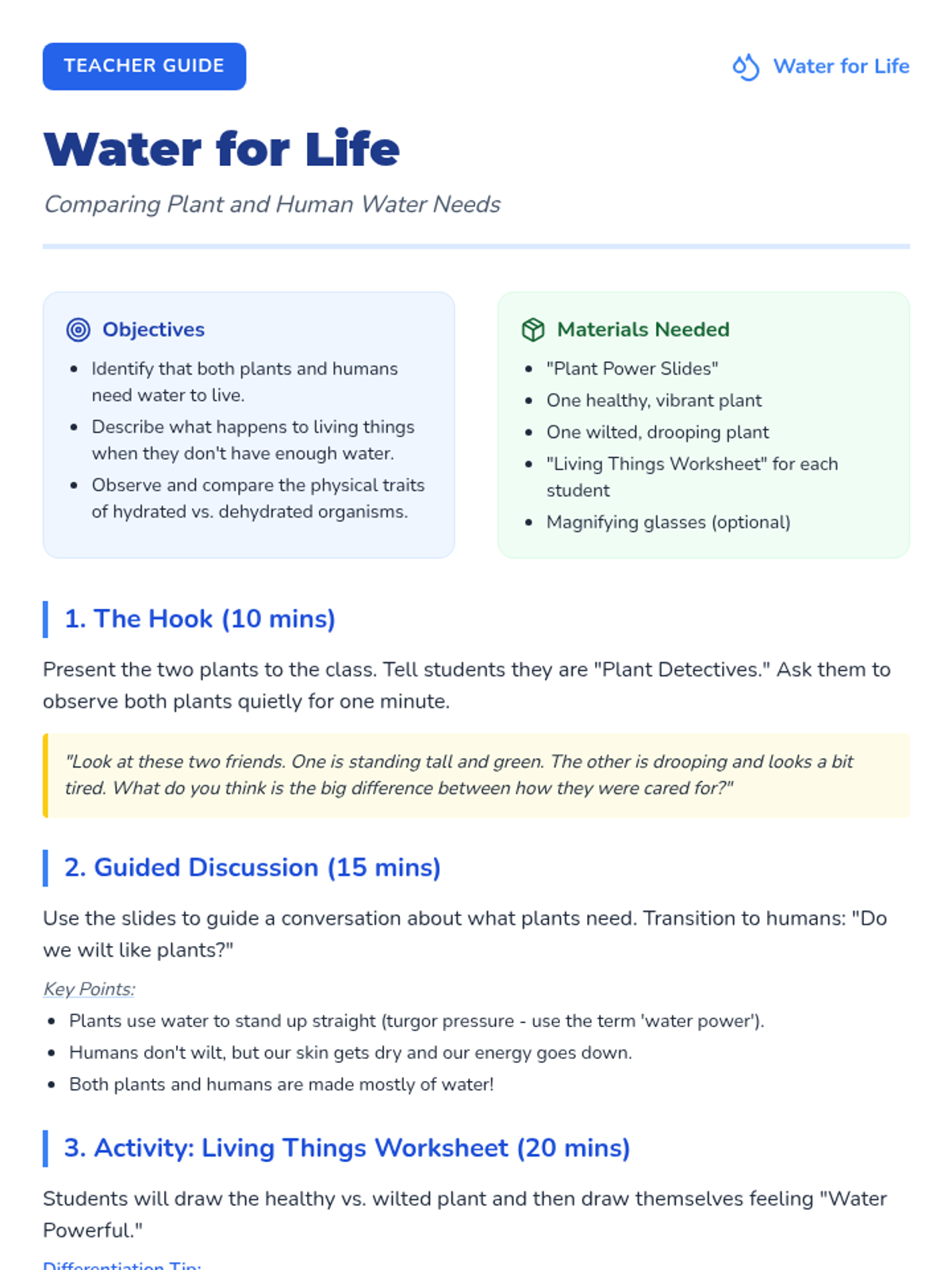
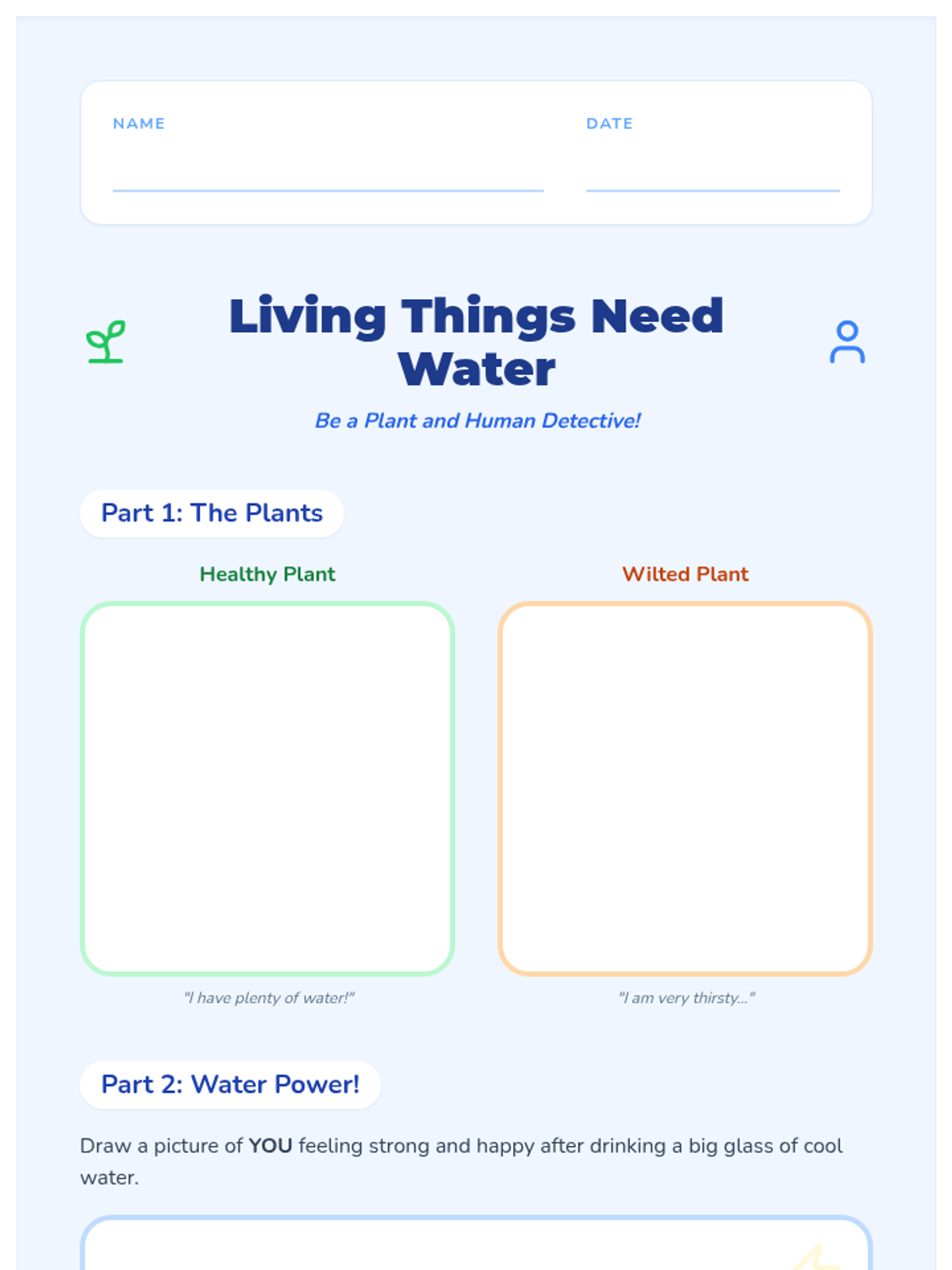
A 5-lesson sequence for 1st graders to understand the importance of water, recognize thirst signals, and develop healthy hydration habits through hands-on activities and visual aids.
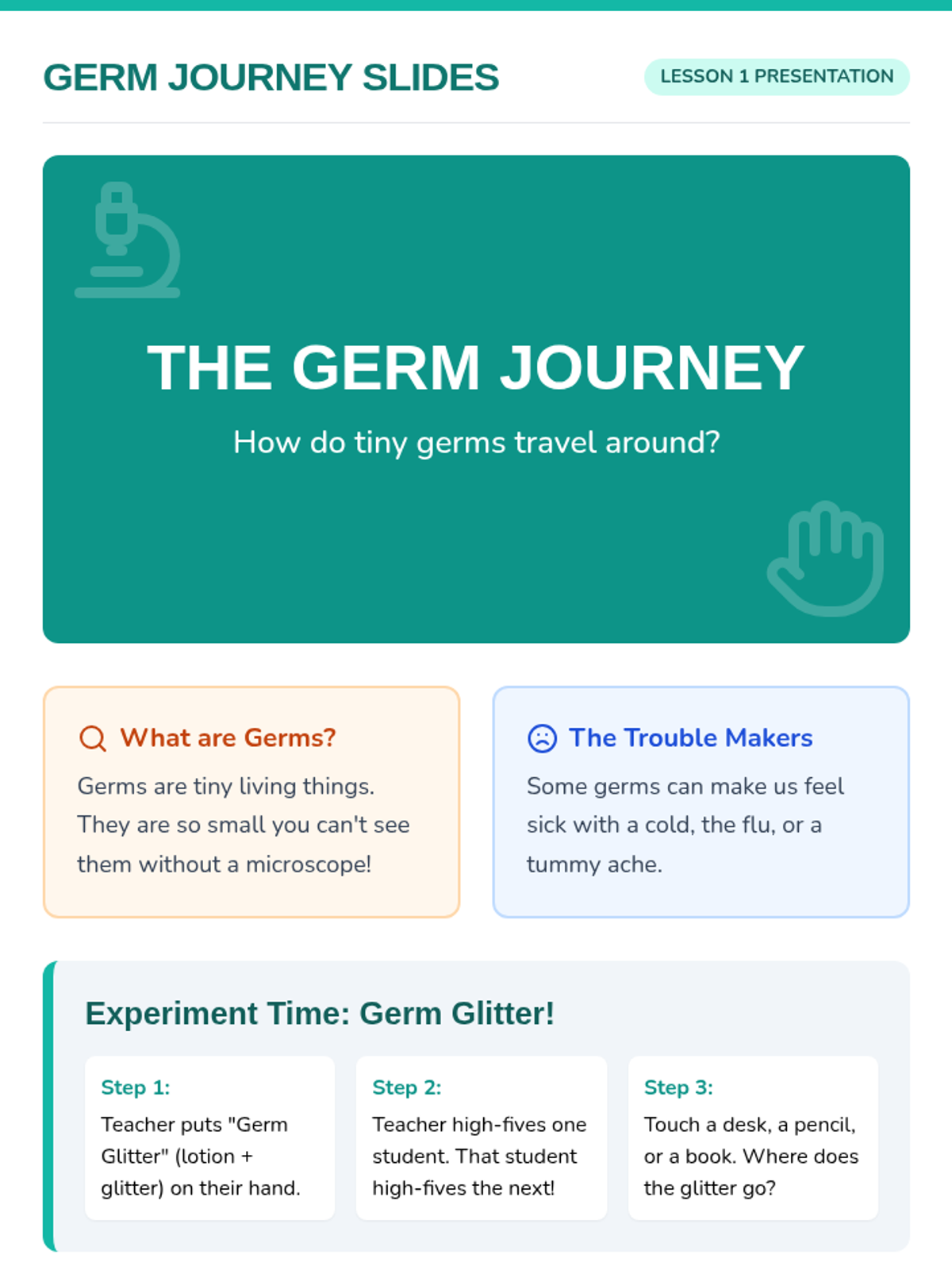
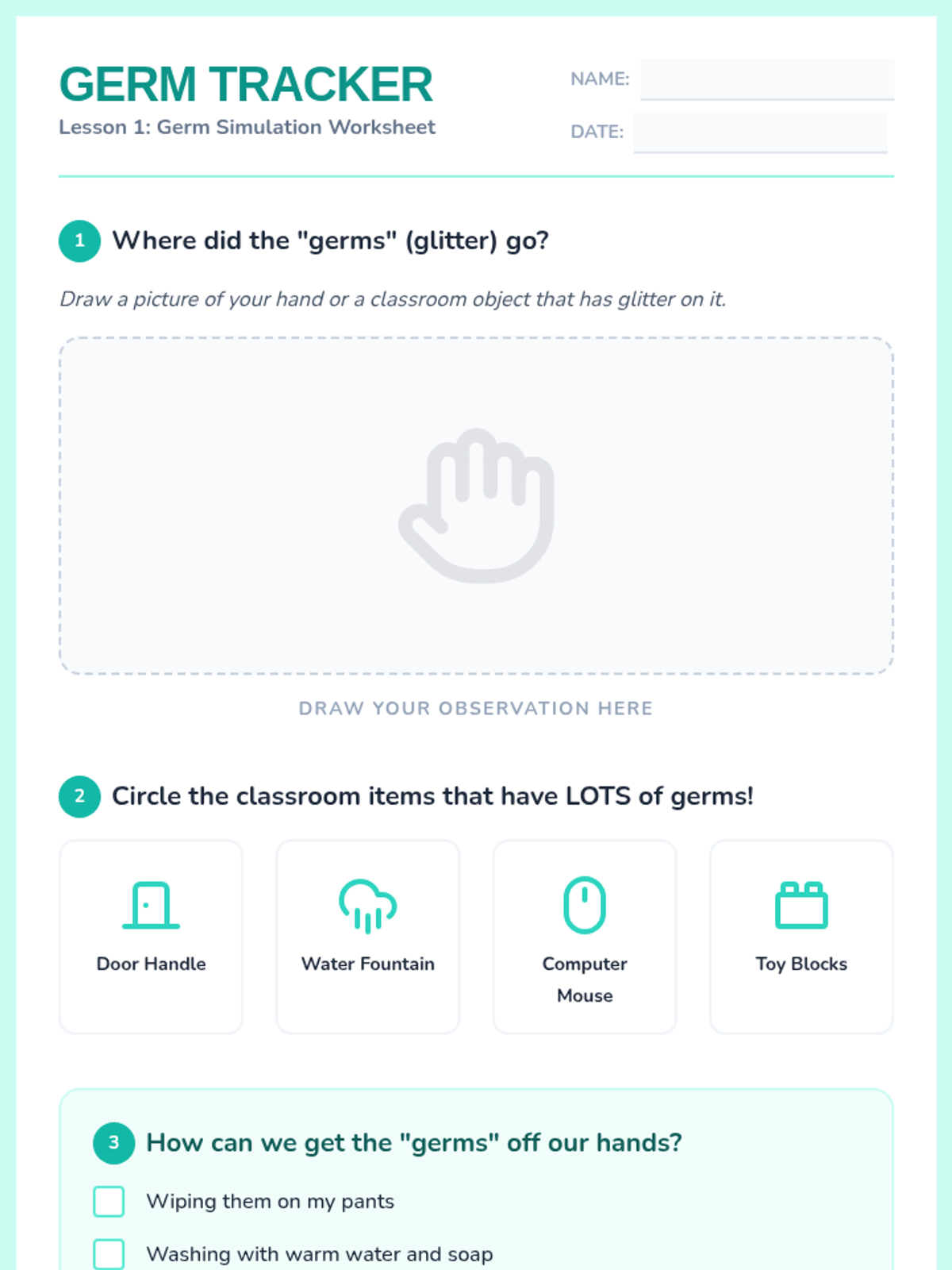
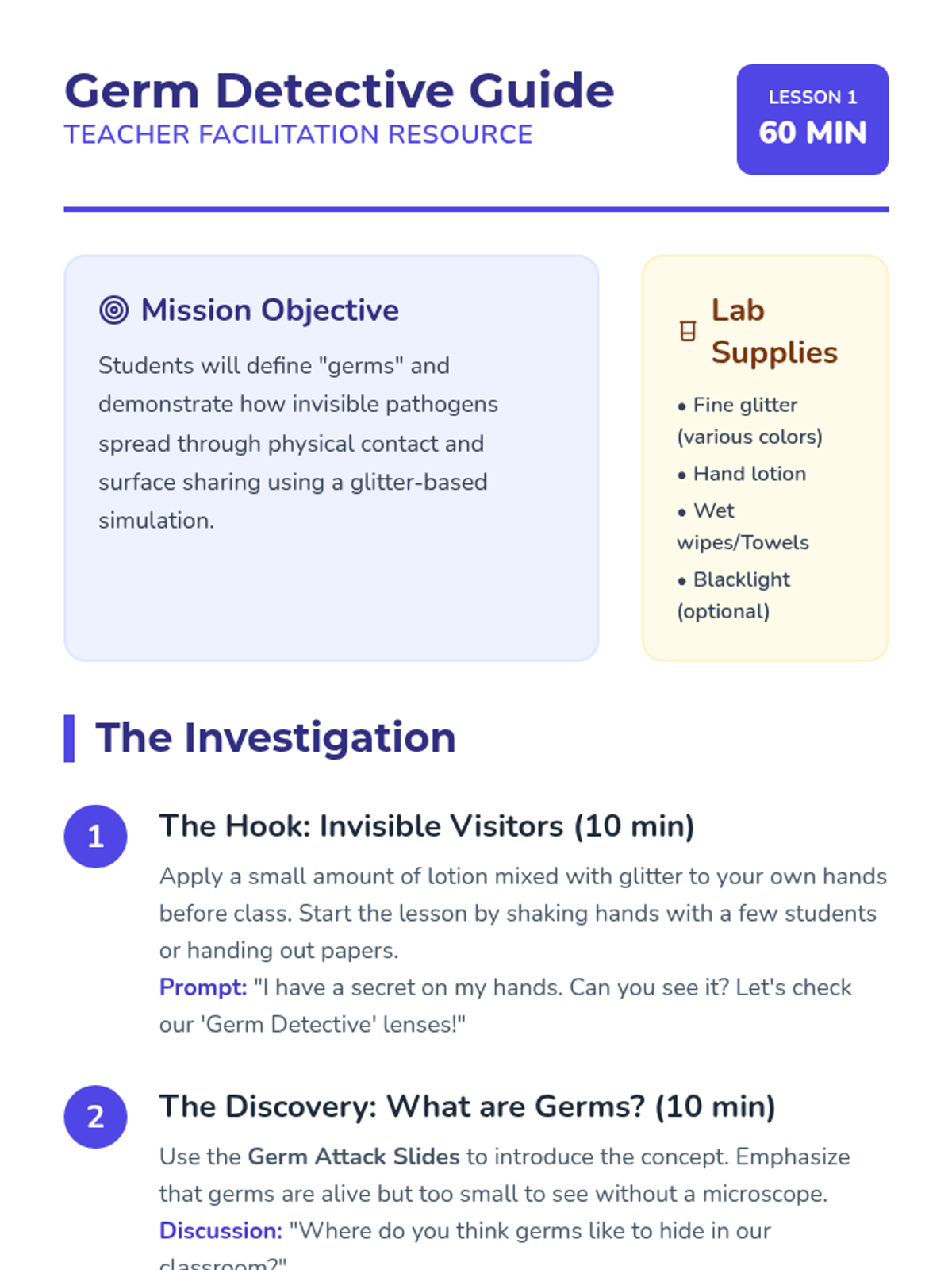
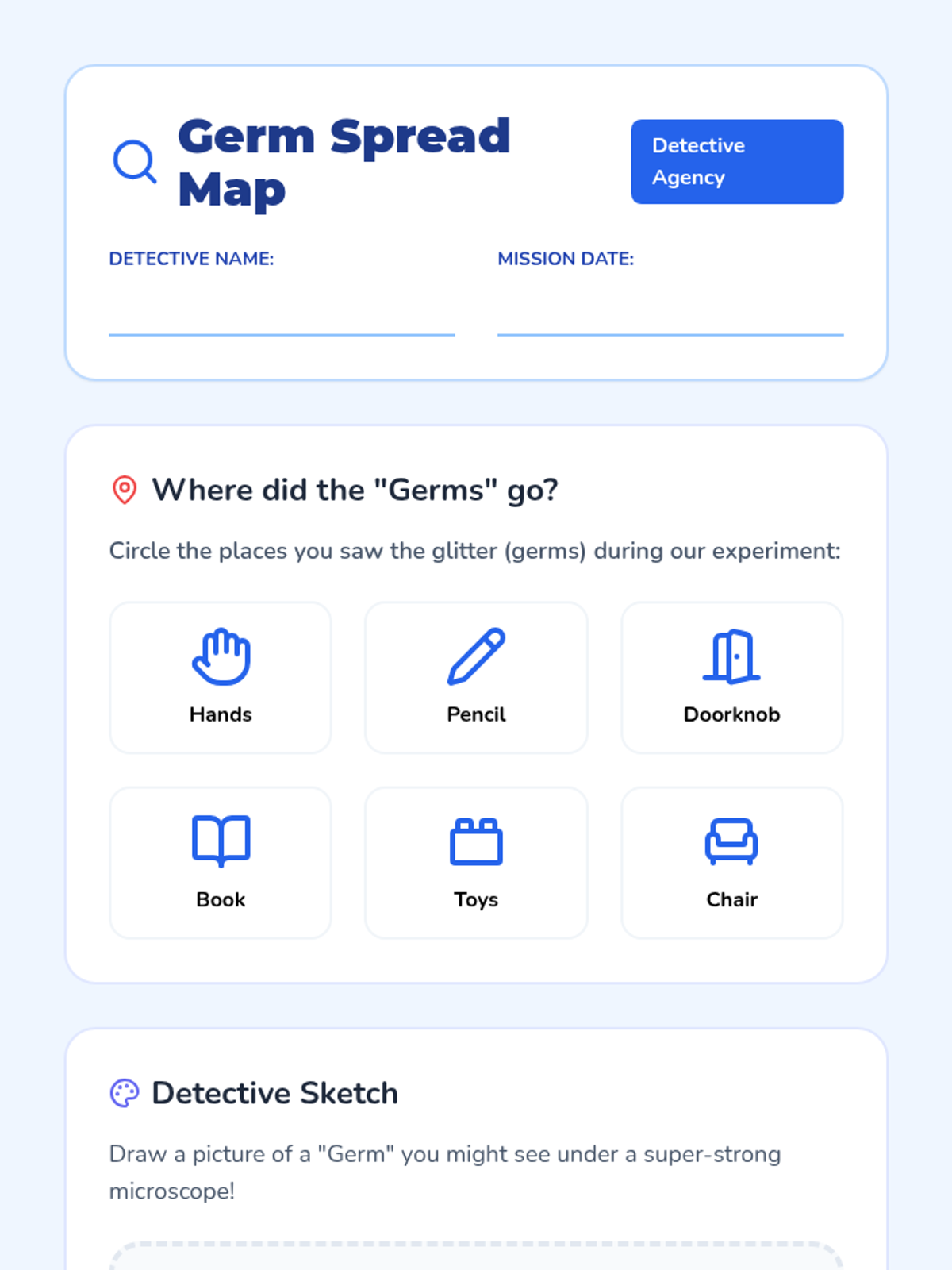
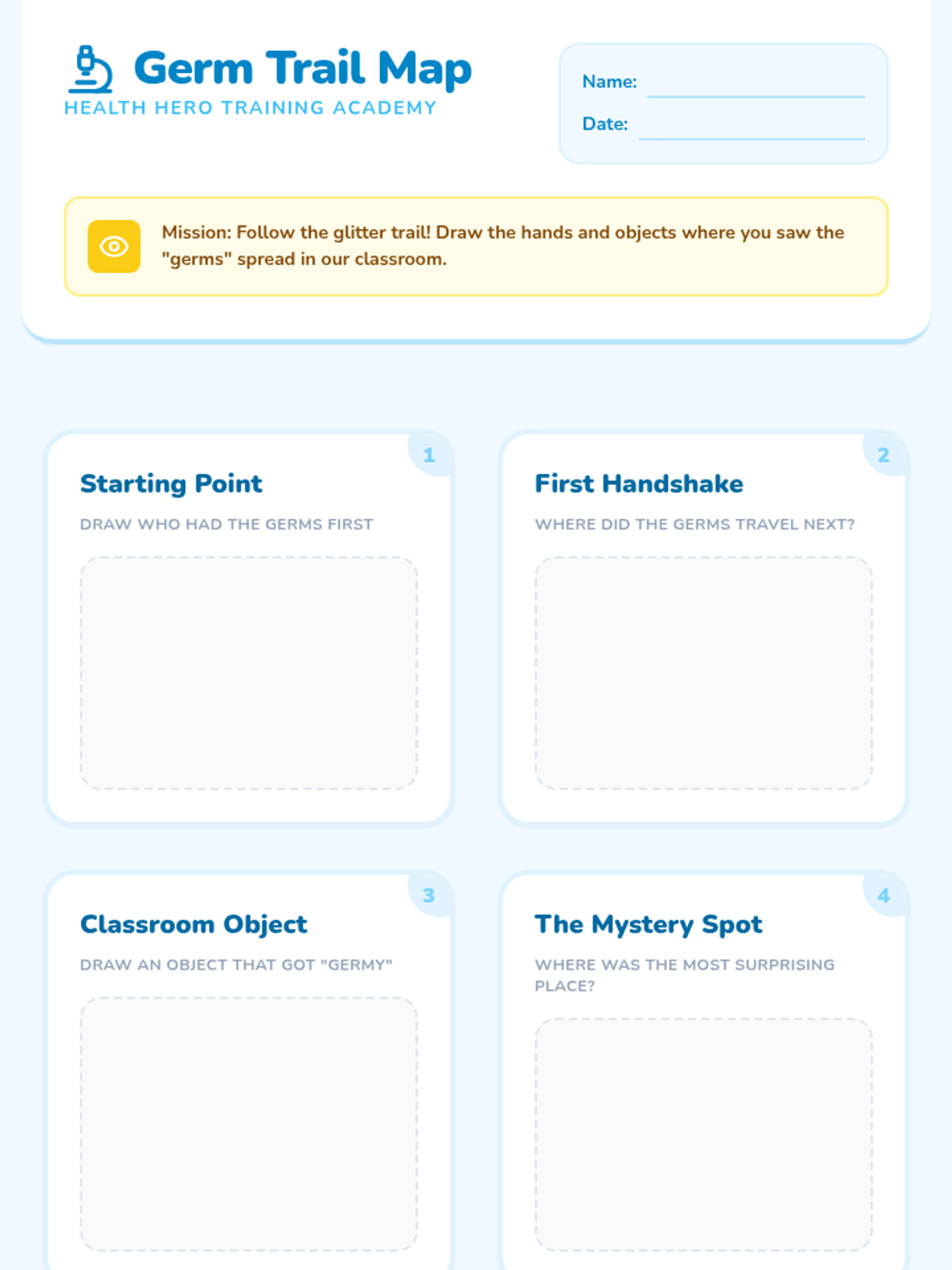
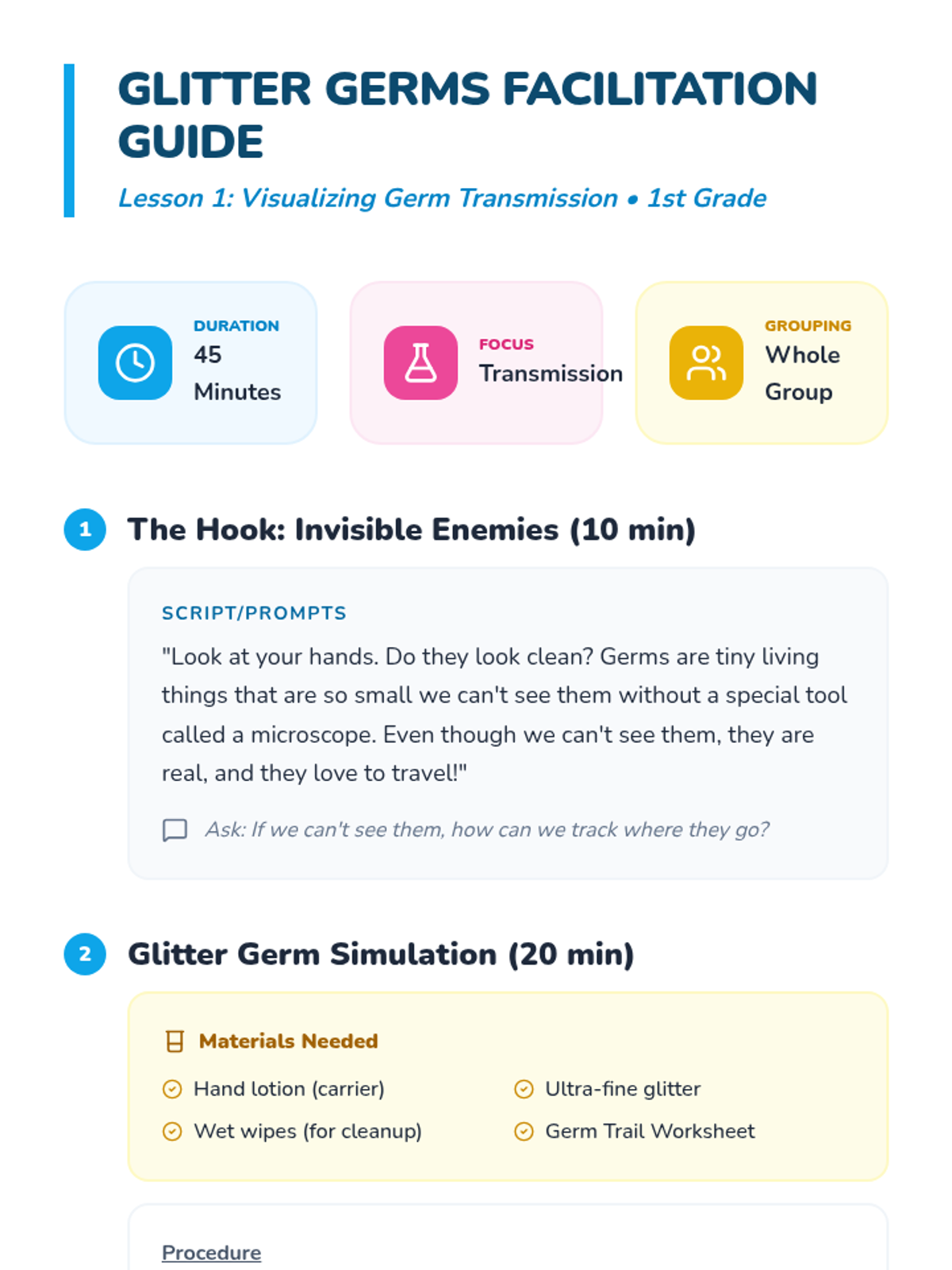
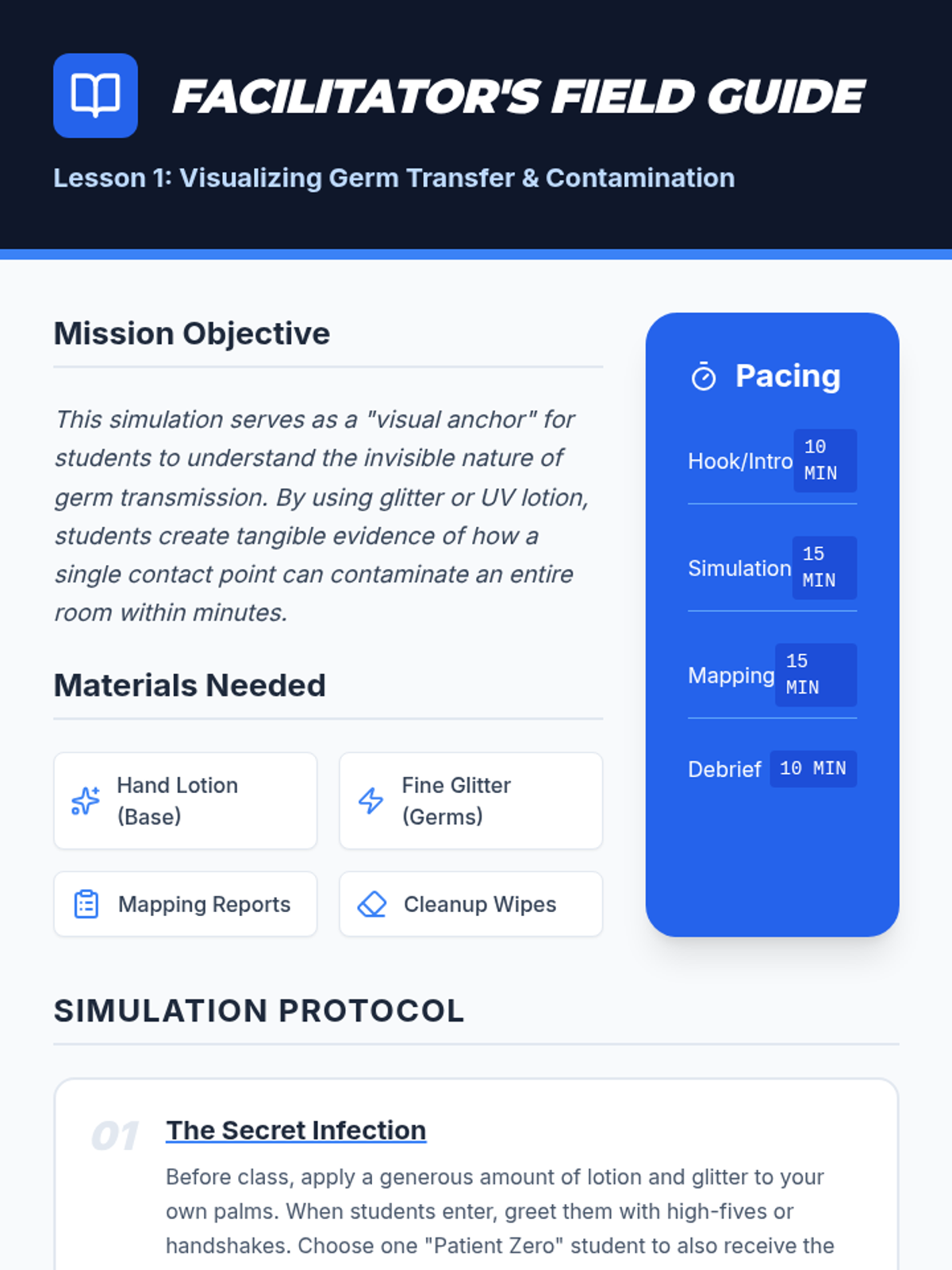
A hands-on health sequence for 1st graders to understand how germs spread and how to stop them through hygiene, respiratory etiquette, and healthy habits. Students participate in simulations, experiments, and creative projects to build a healthy classroom community.
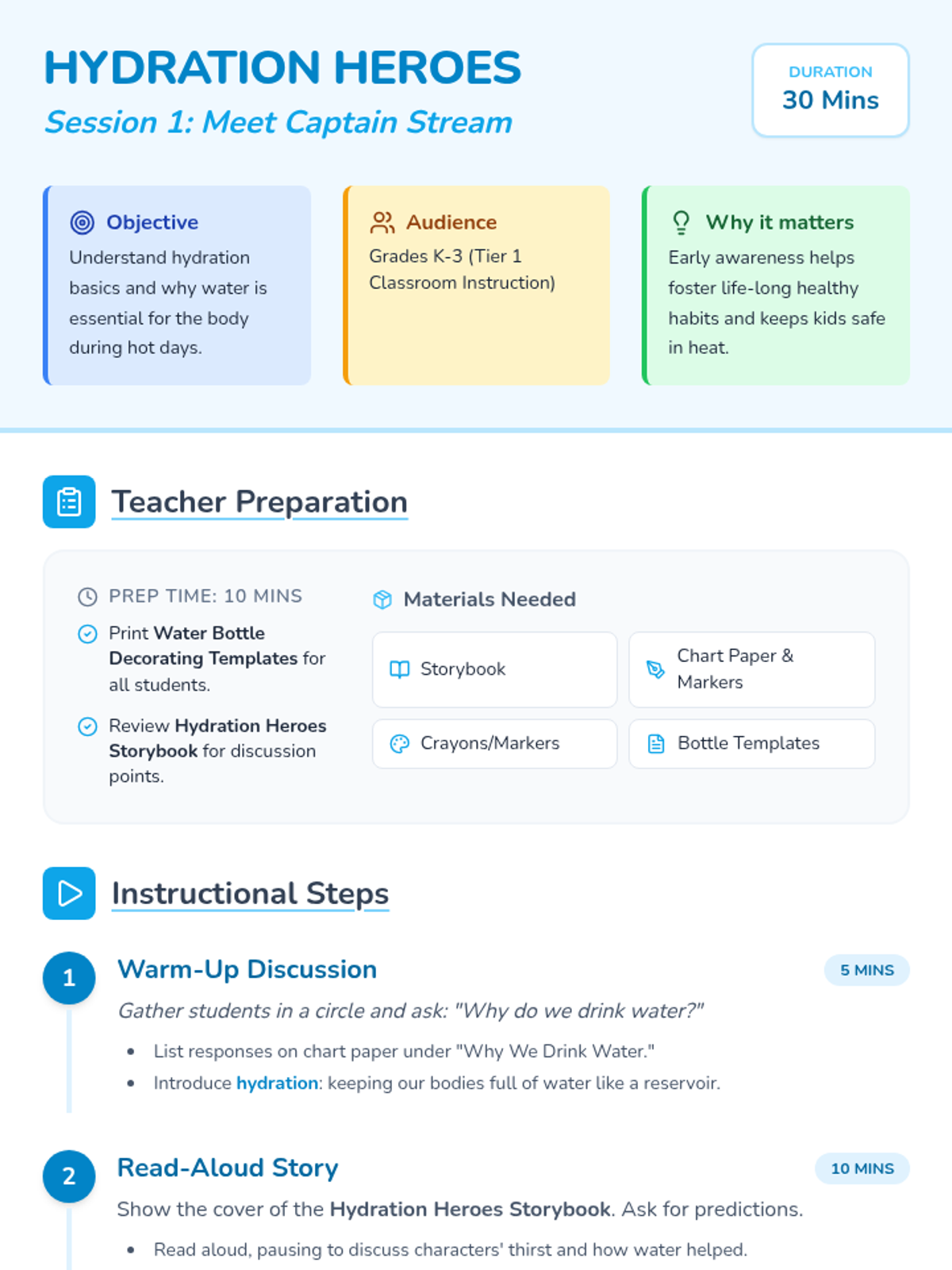
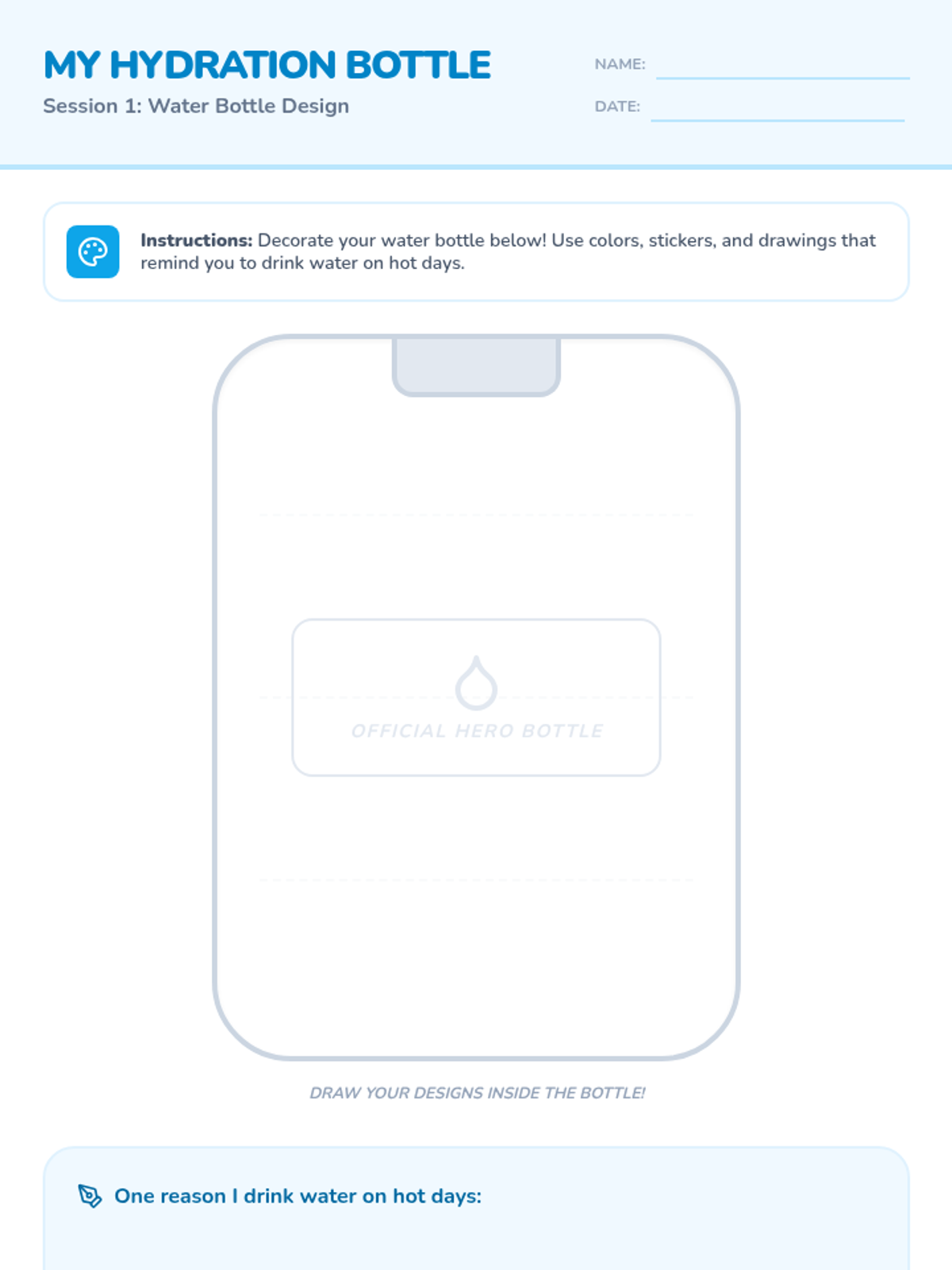
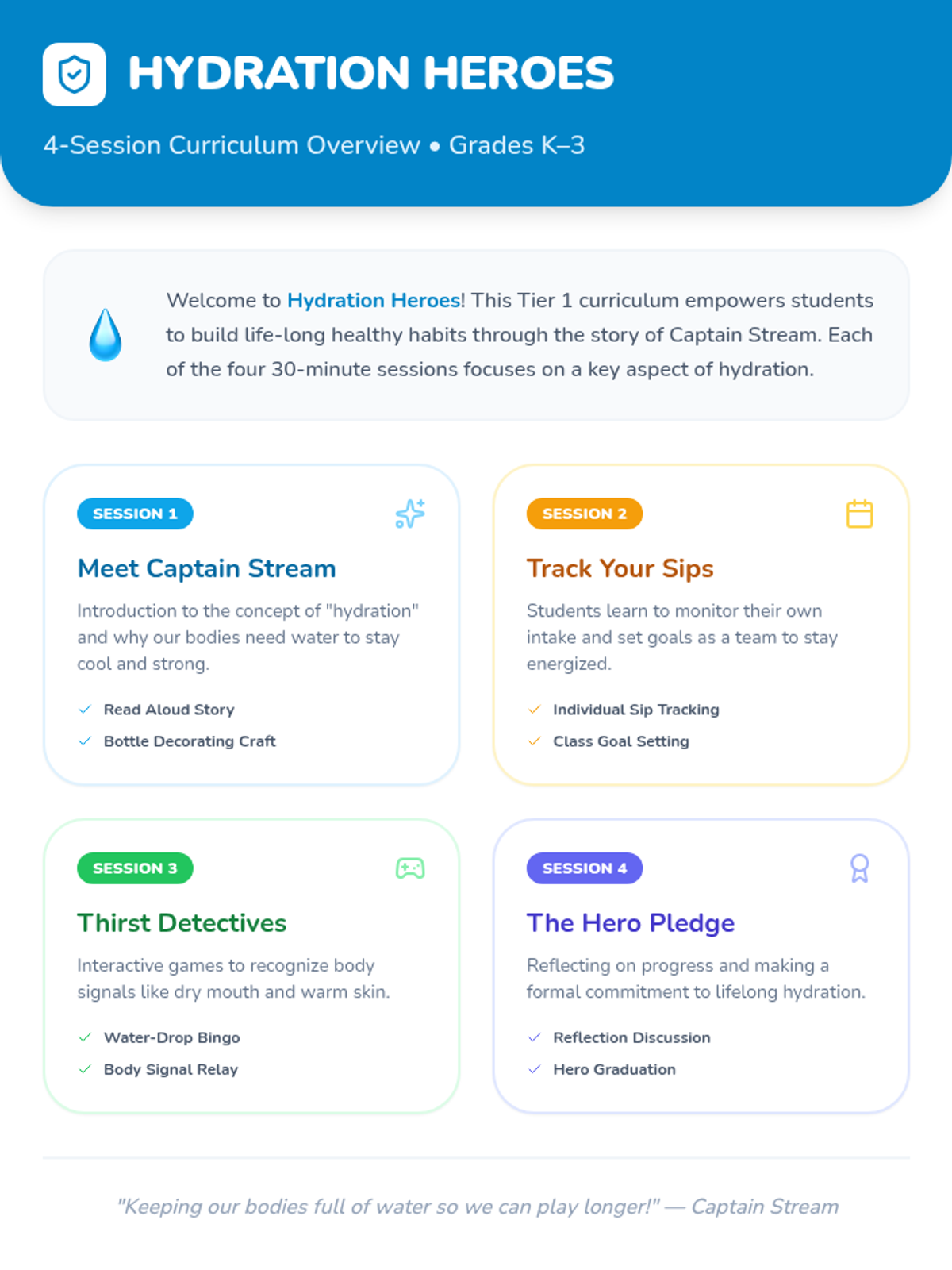
A 4-session K-3 curriculum that teaches students the importance of hydration through the character Captain Stream, interactive tracking, and games. Students develop healthy habits to stay cool and energized during hot weather.
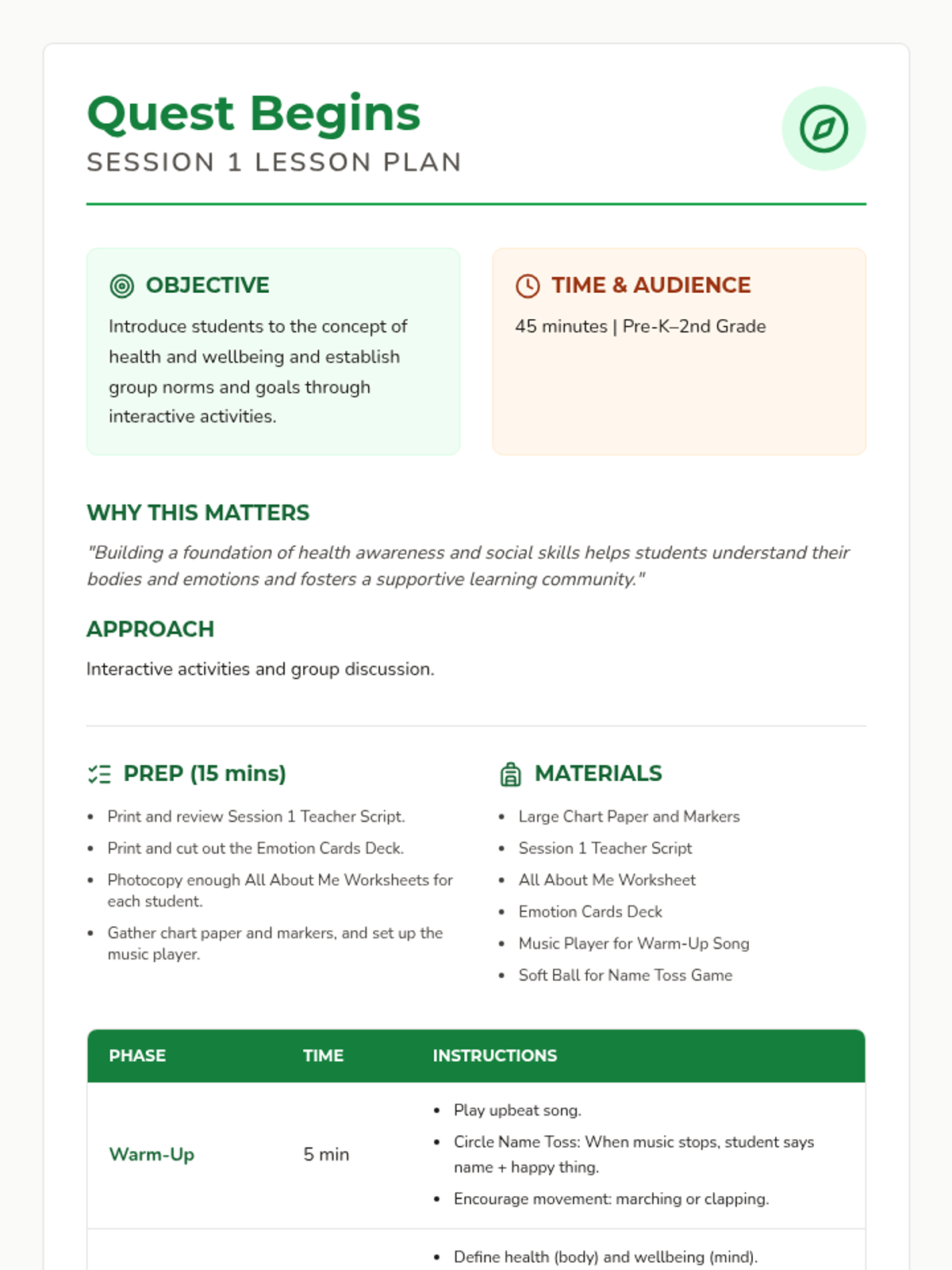
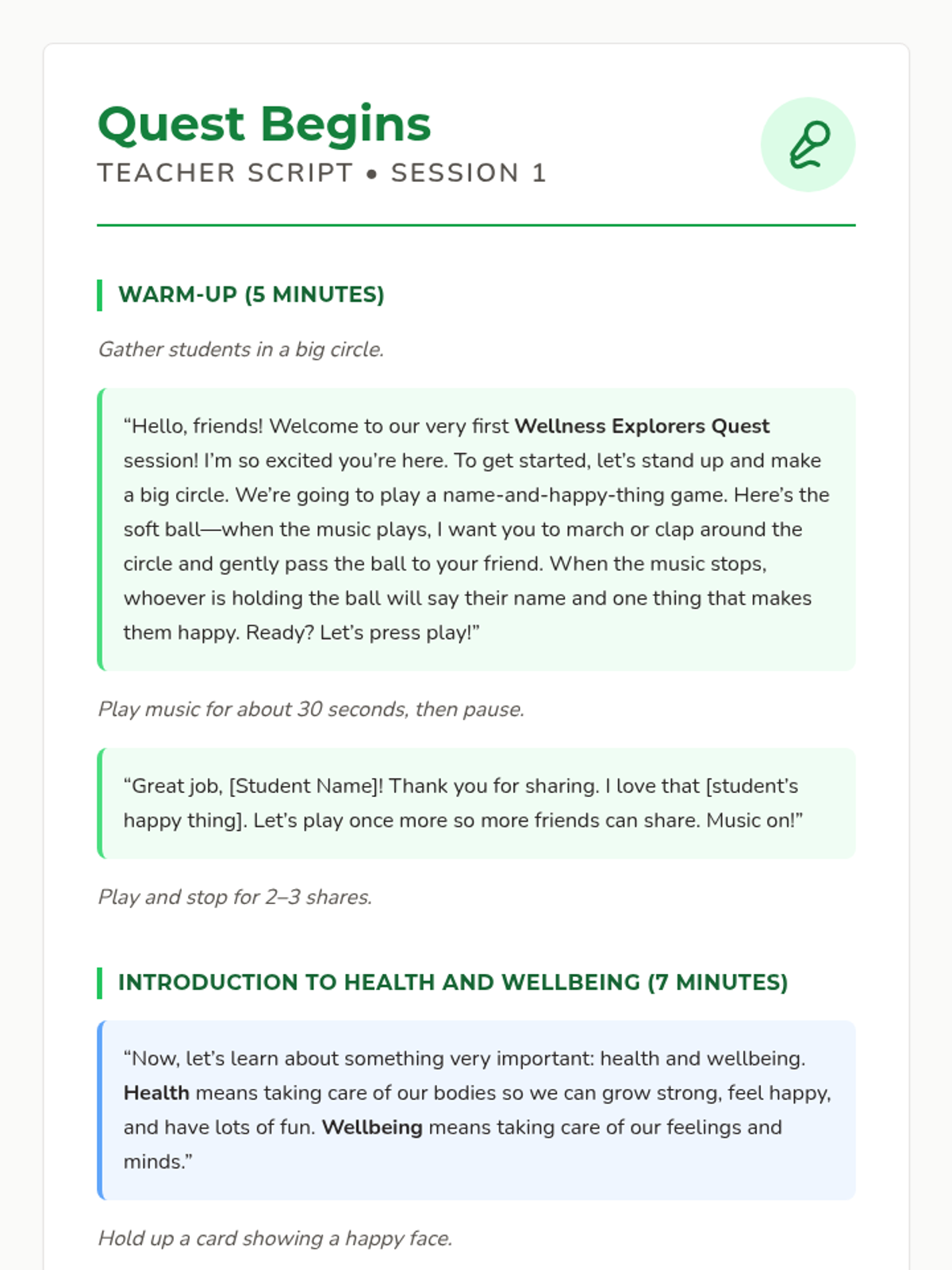
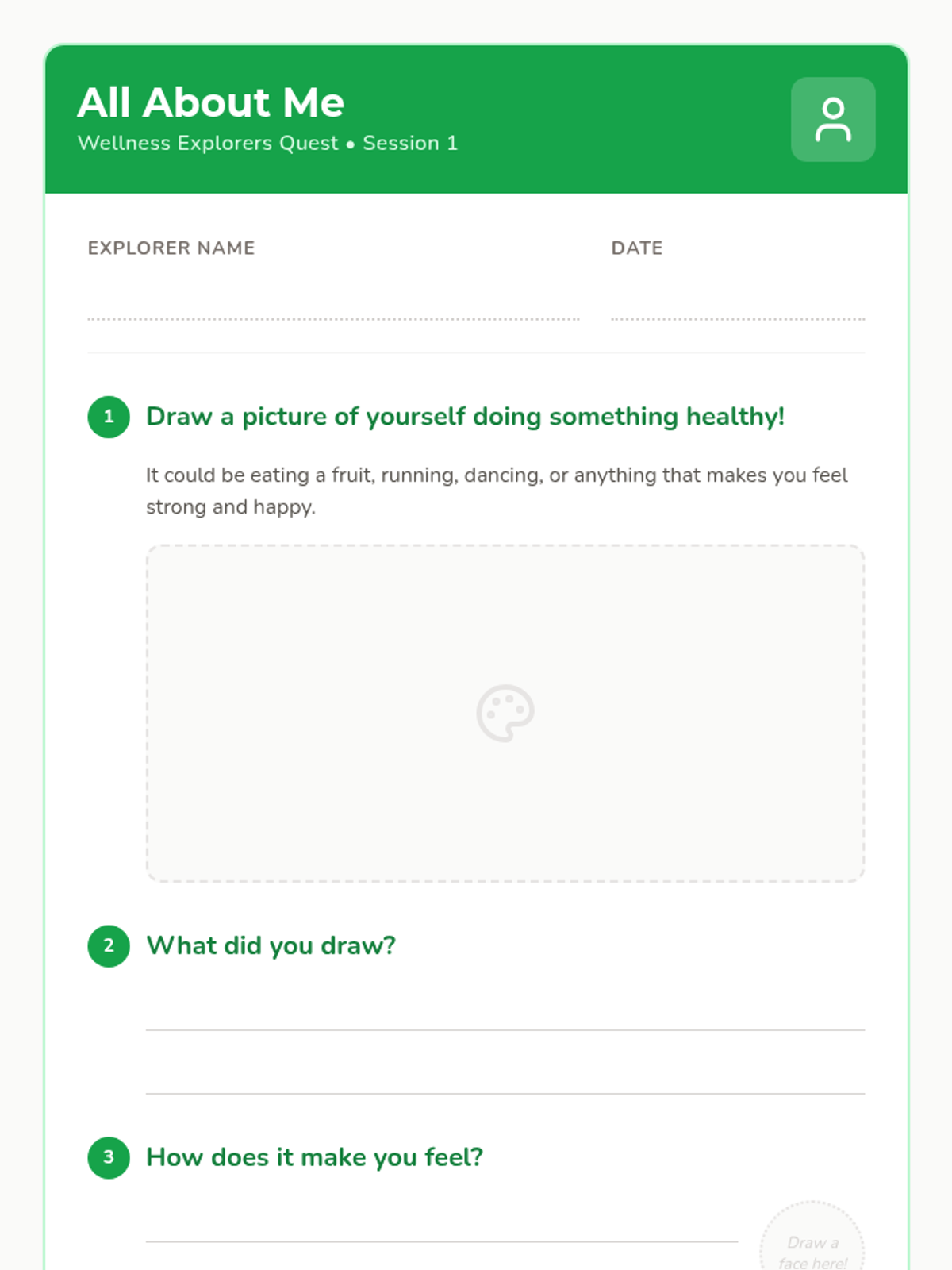
A 12-session group health and wellbeing program for Pre-K–2nd graders exploring functional health, goal-setting, communication, and physical wellness through a 'Quest' theme. This sequence includes the first 8 sessions with complete lesson plans, scripts, and student activities.
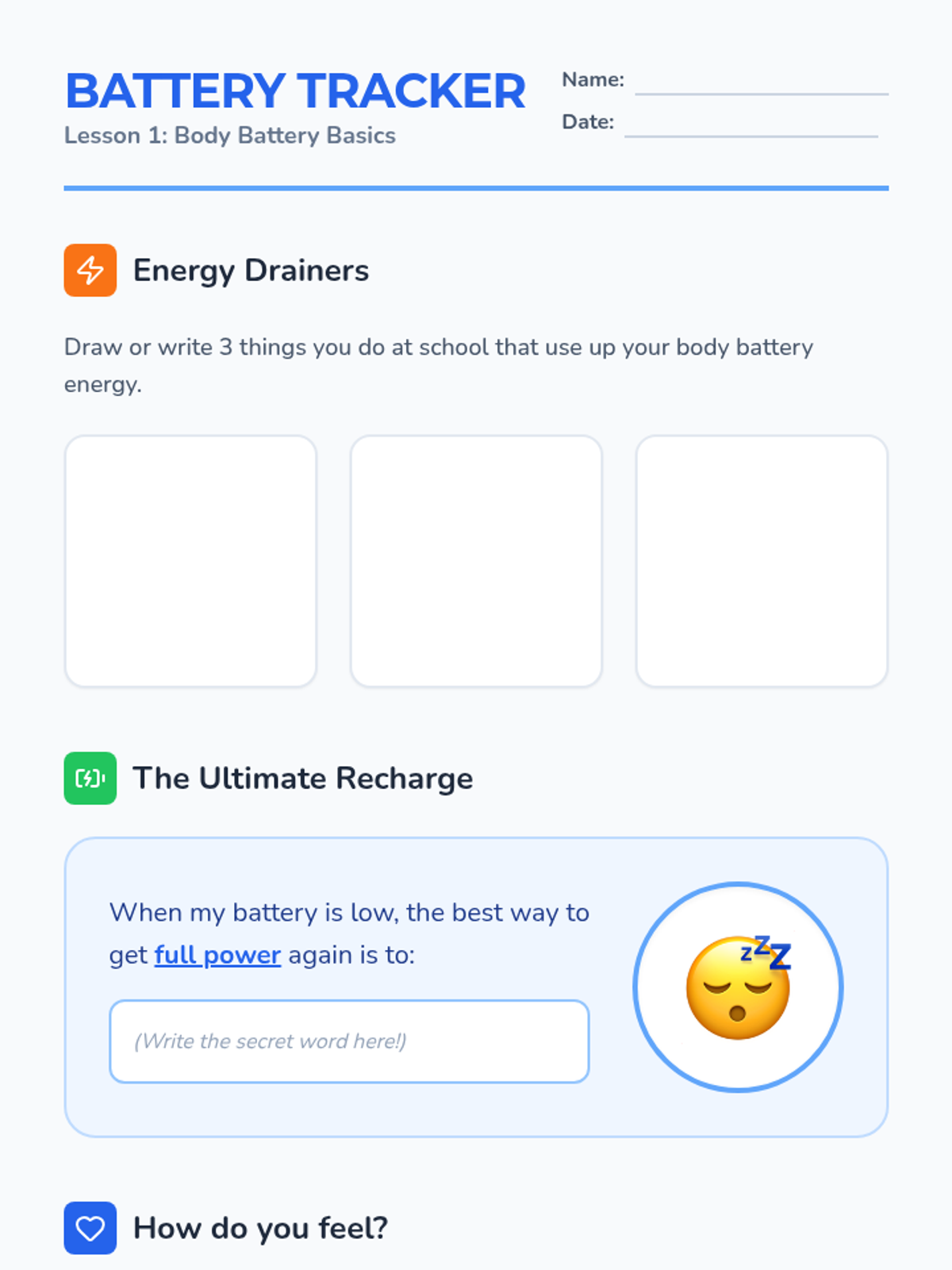
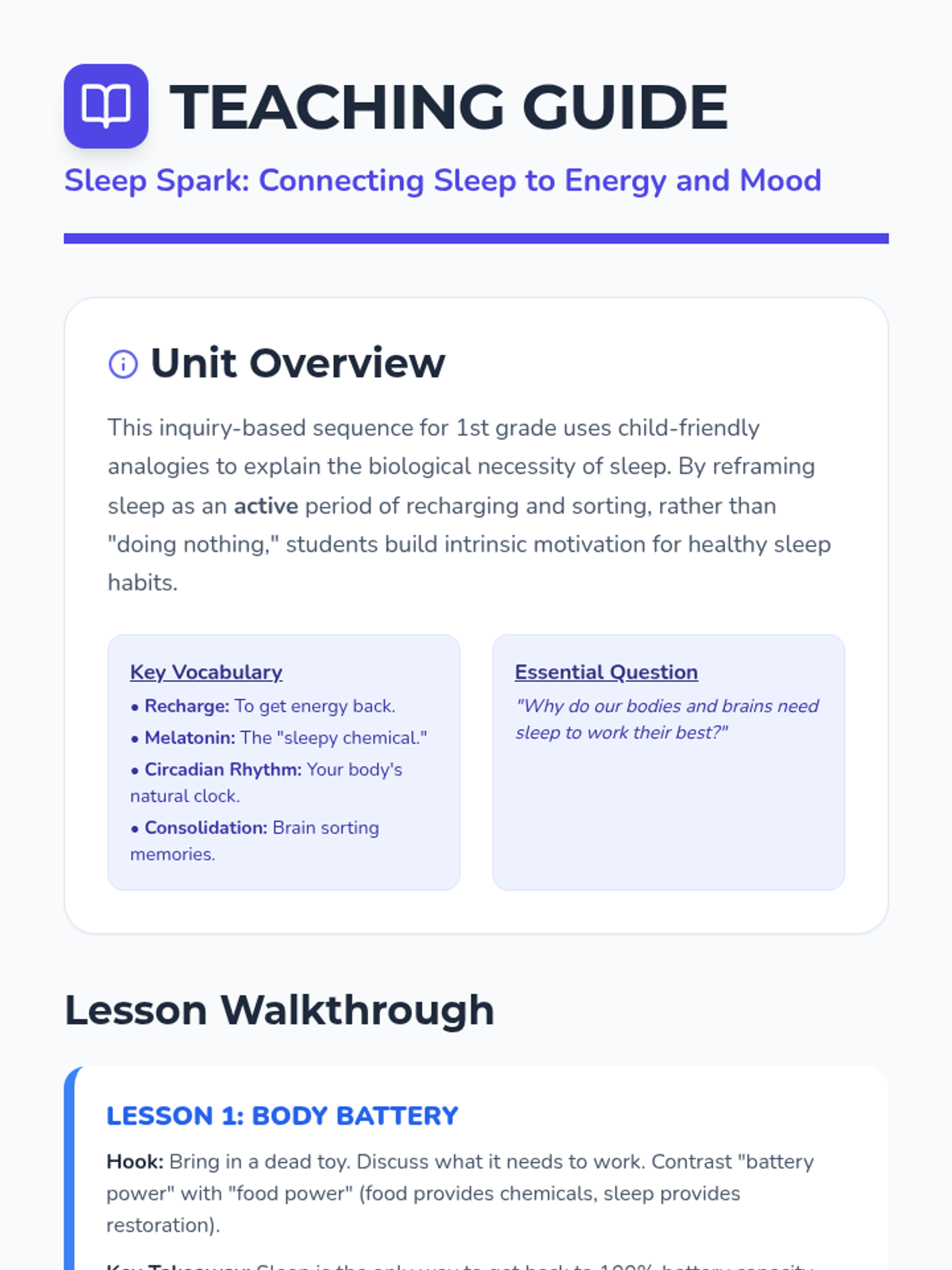
An inquiry-based exploration for 1st graders into why sleep is vital for energy, mood, and brain function. Students use analogies like 'body batteries' and 'mail sorting brains' to understand restoration and growth.
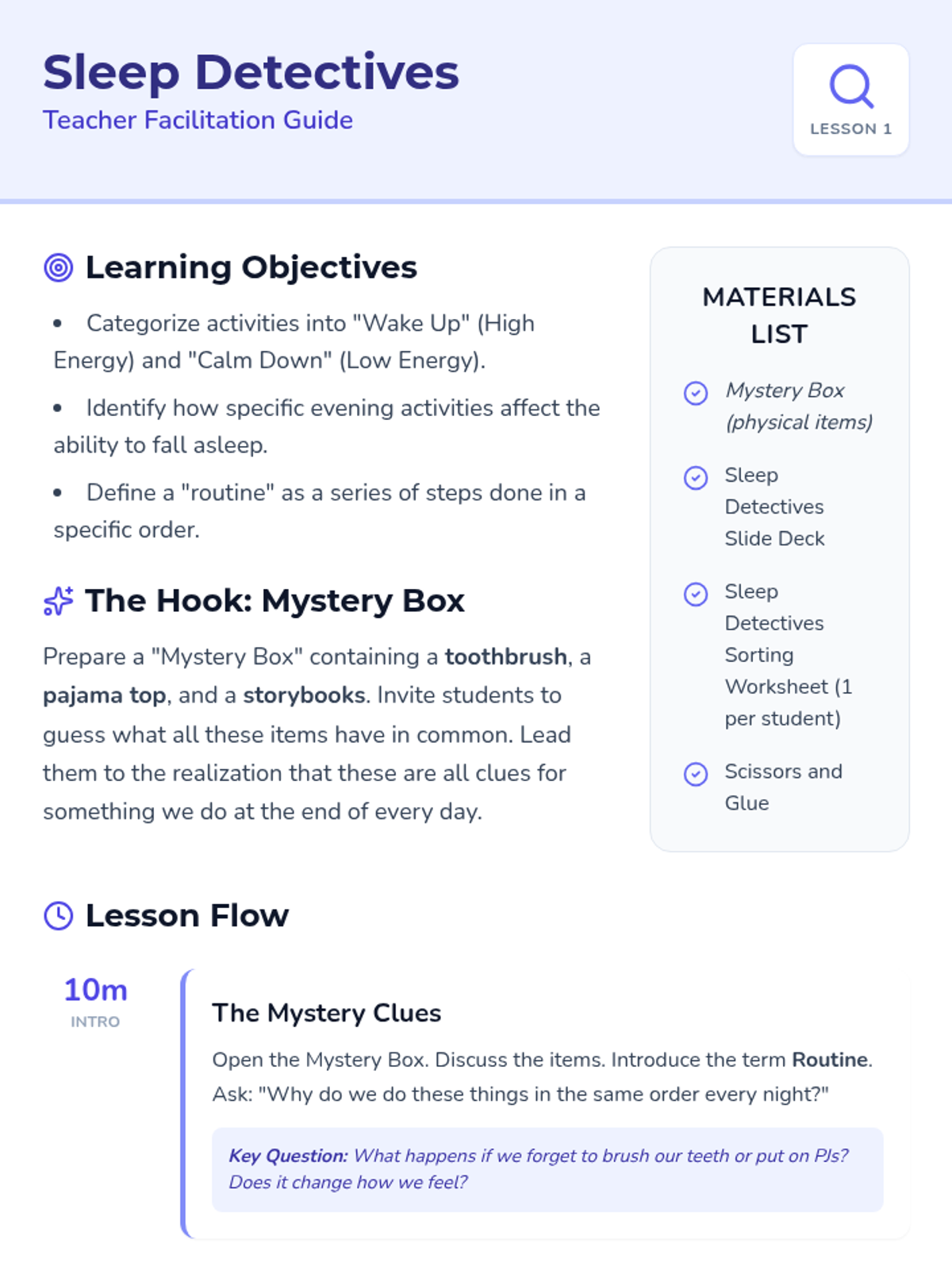
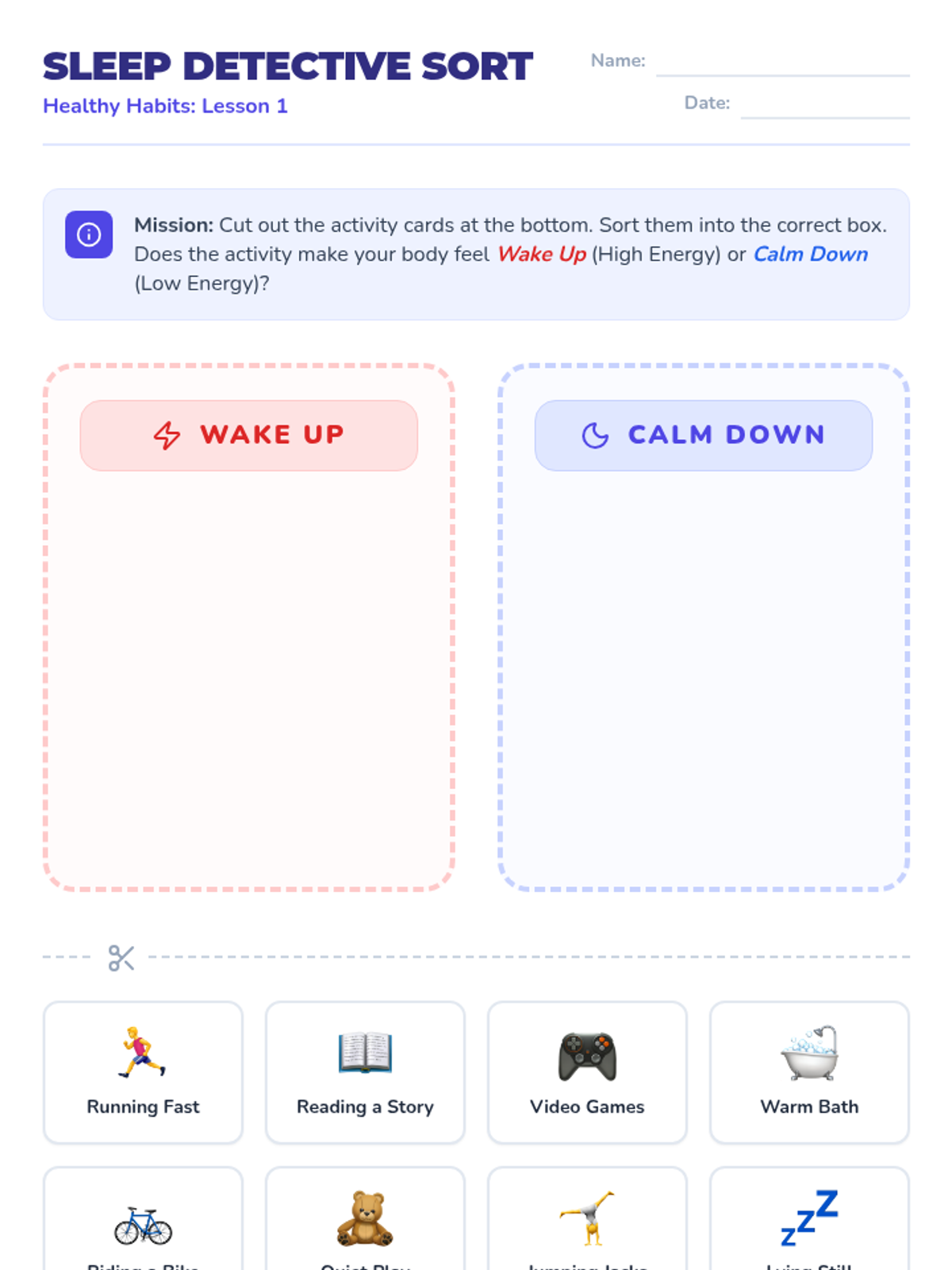
A 5-lesson sequence for 1st graders focusing on the mechanics of a healthy bedtime routine, moving from identifying habits to creating a personalized visual schedule.
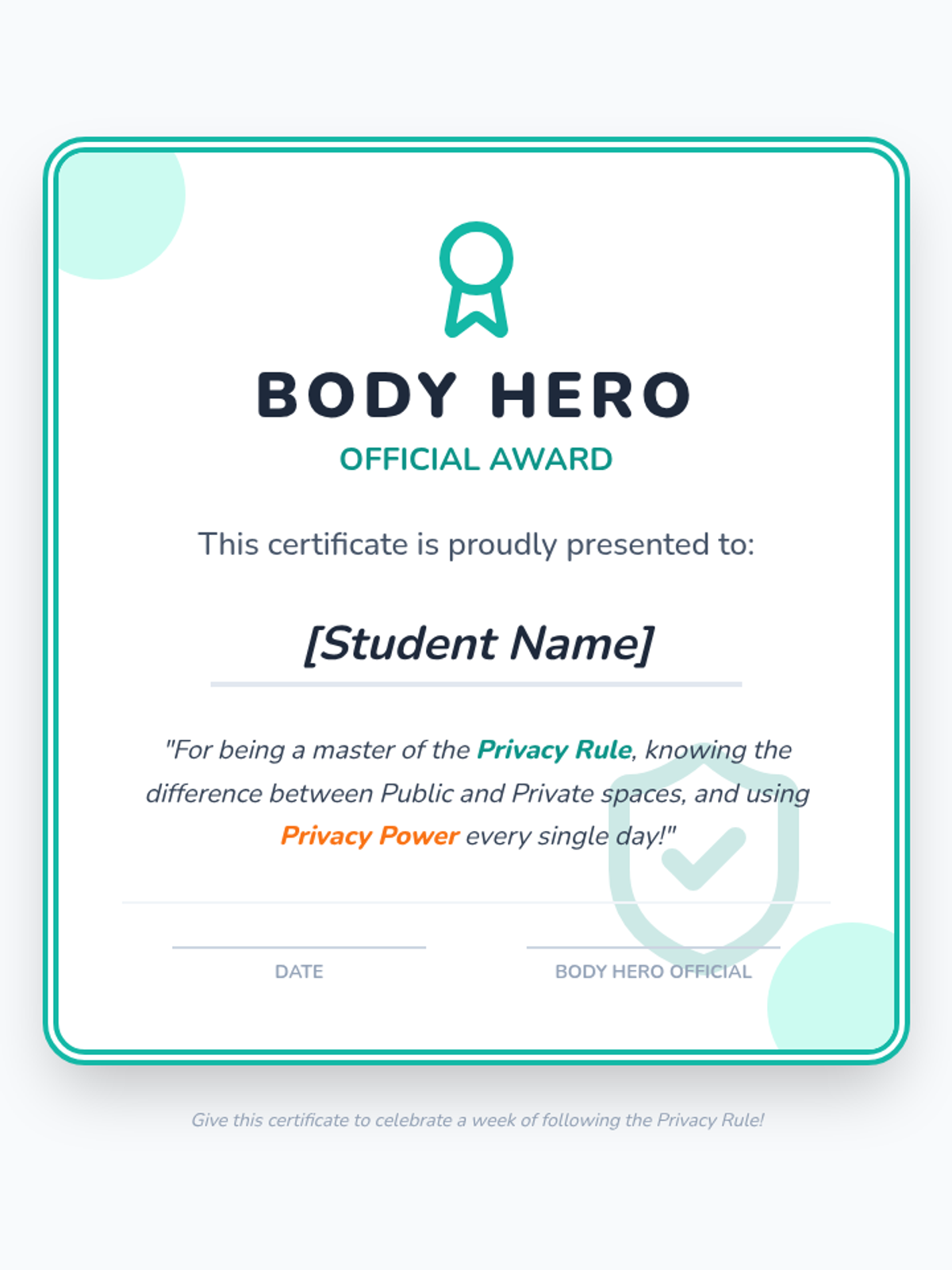
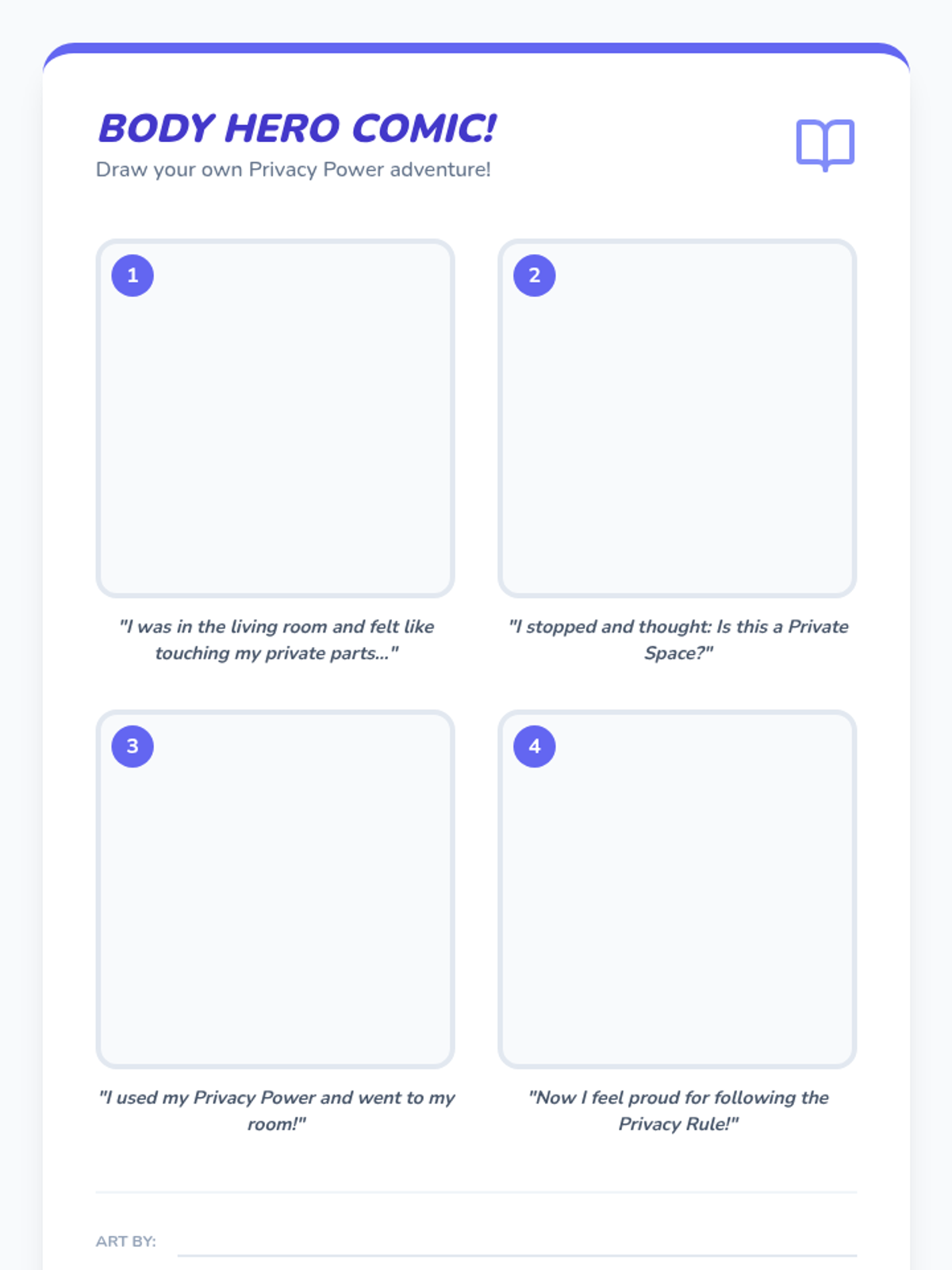
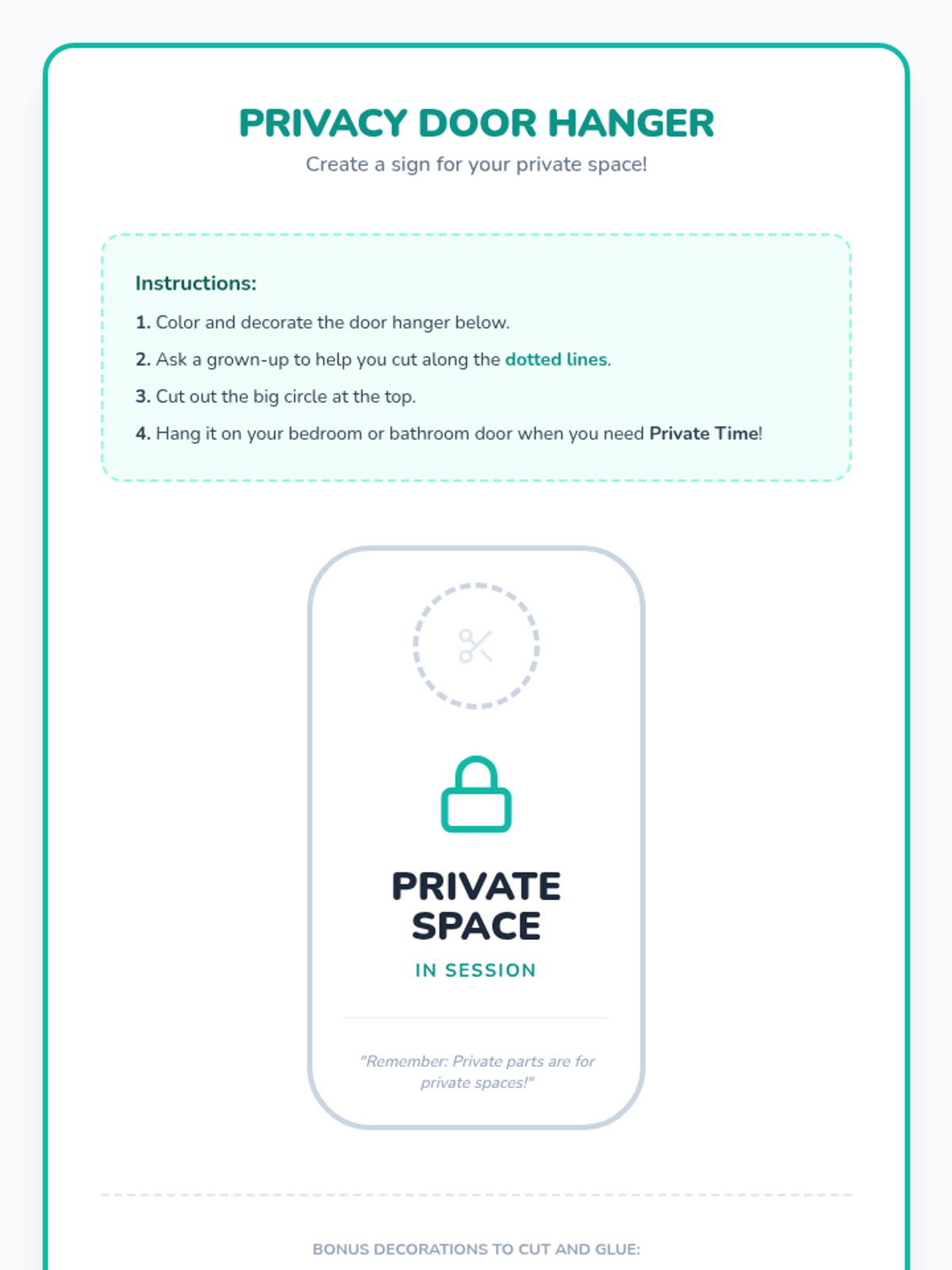
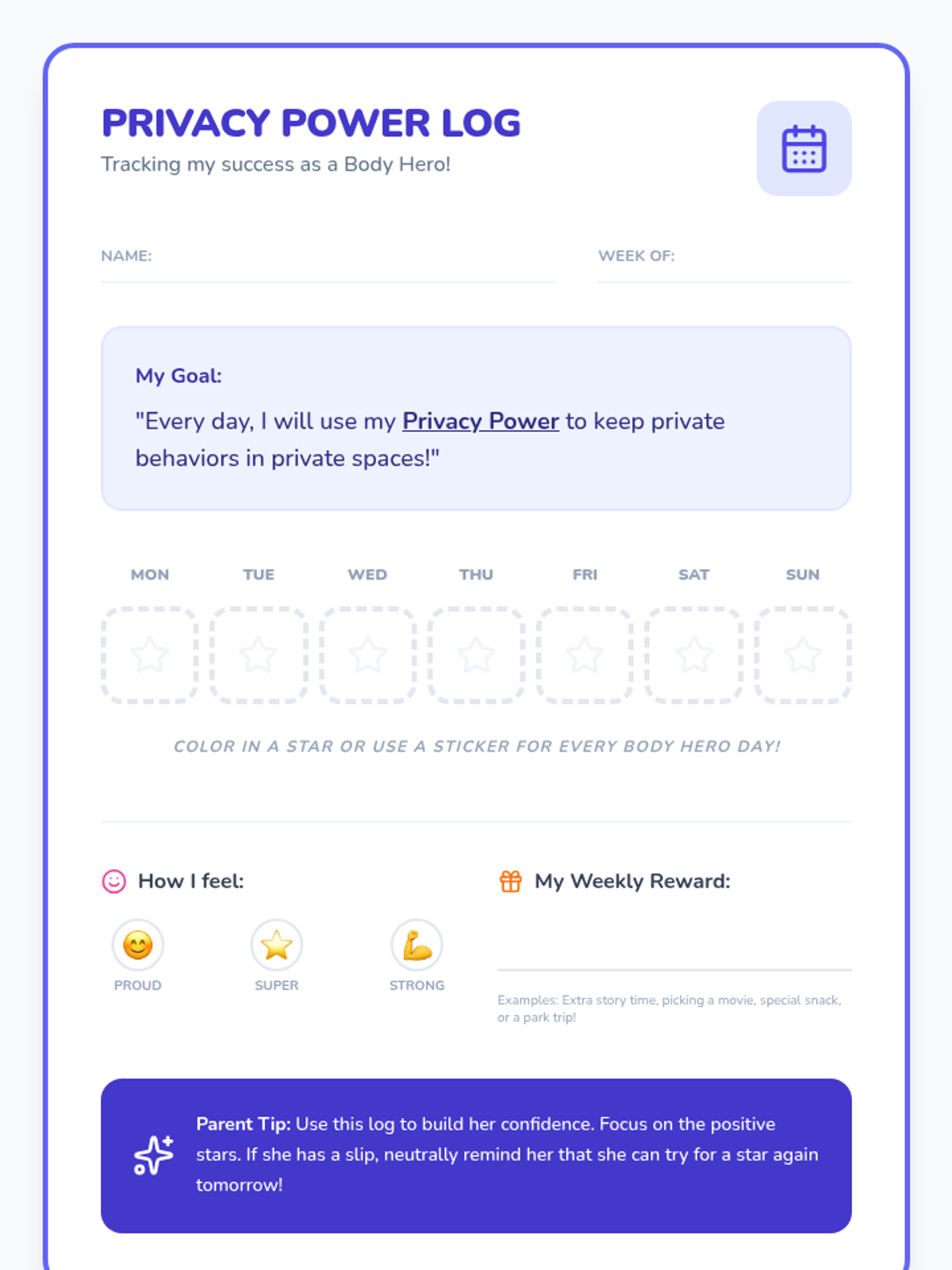
A comprehensive 1st Grade sequence focused on personal hygiene, germs, dental health, sleep, and building daily routines through a 'Body Hero' theme.
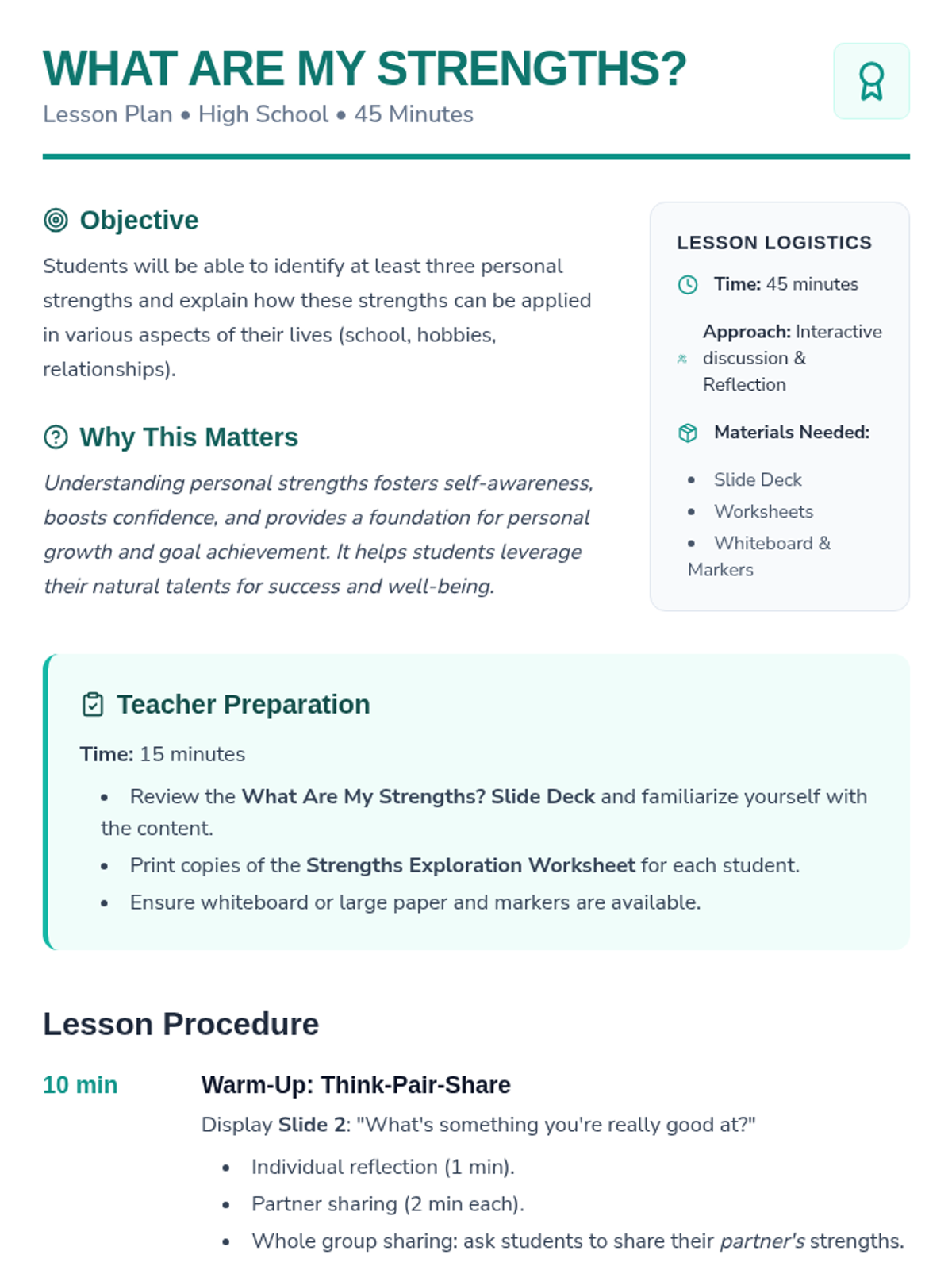
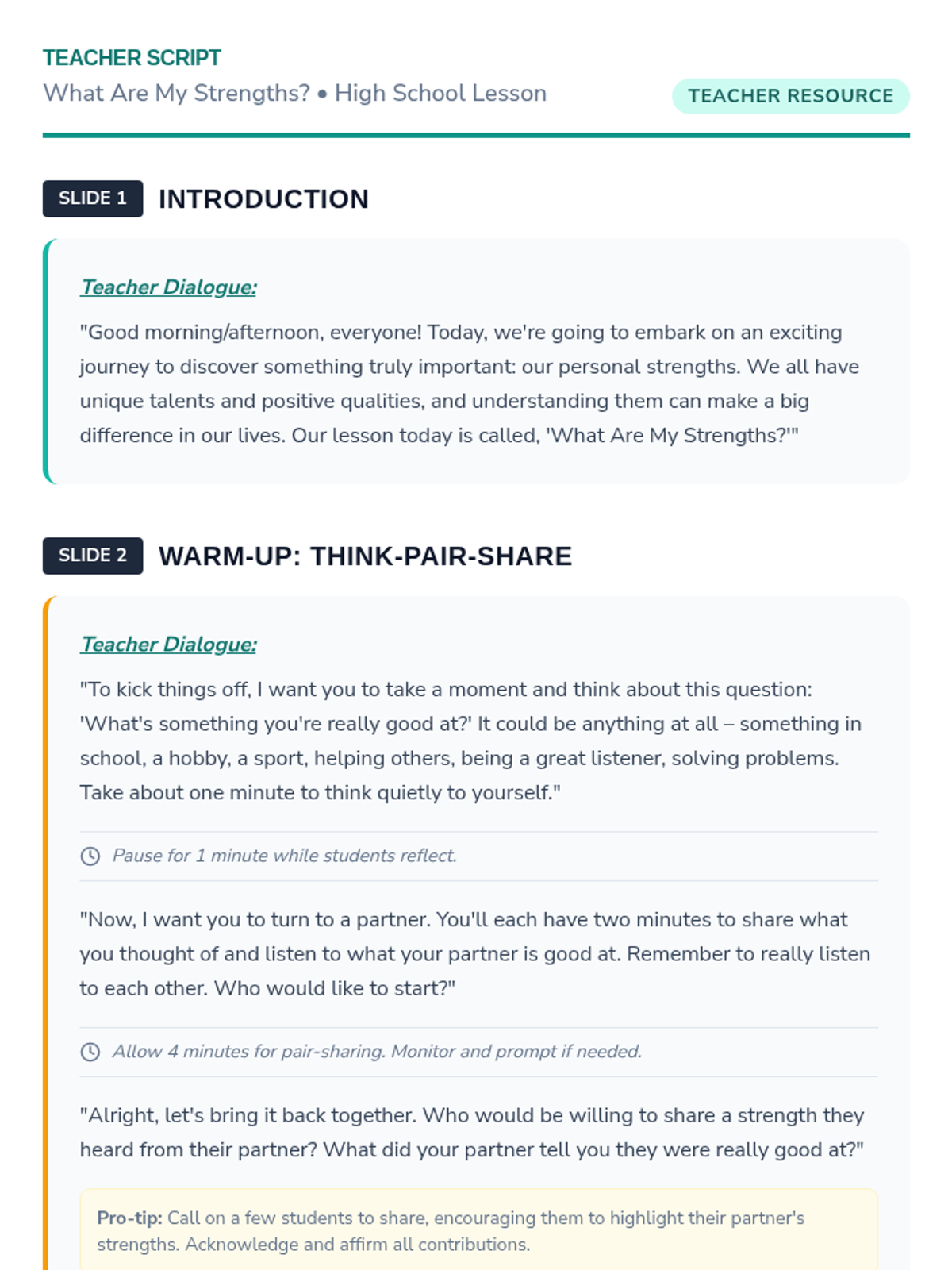
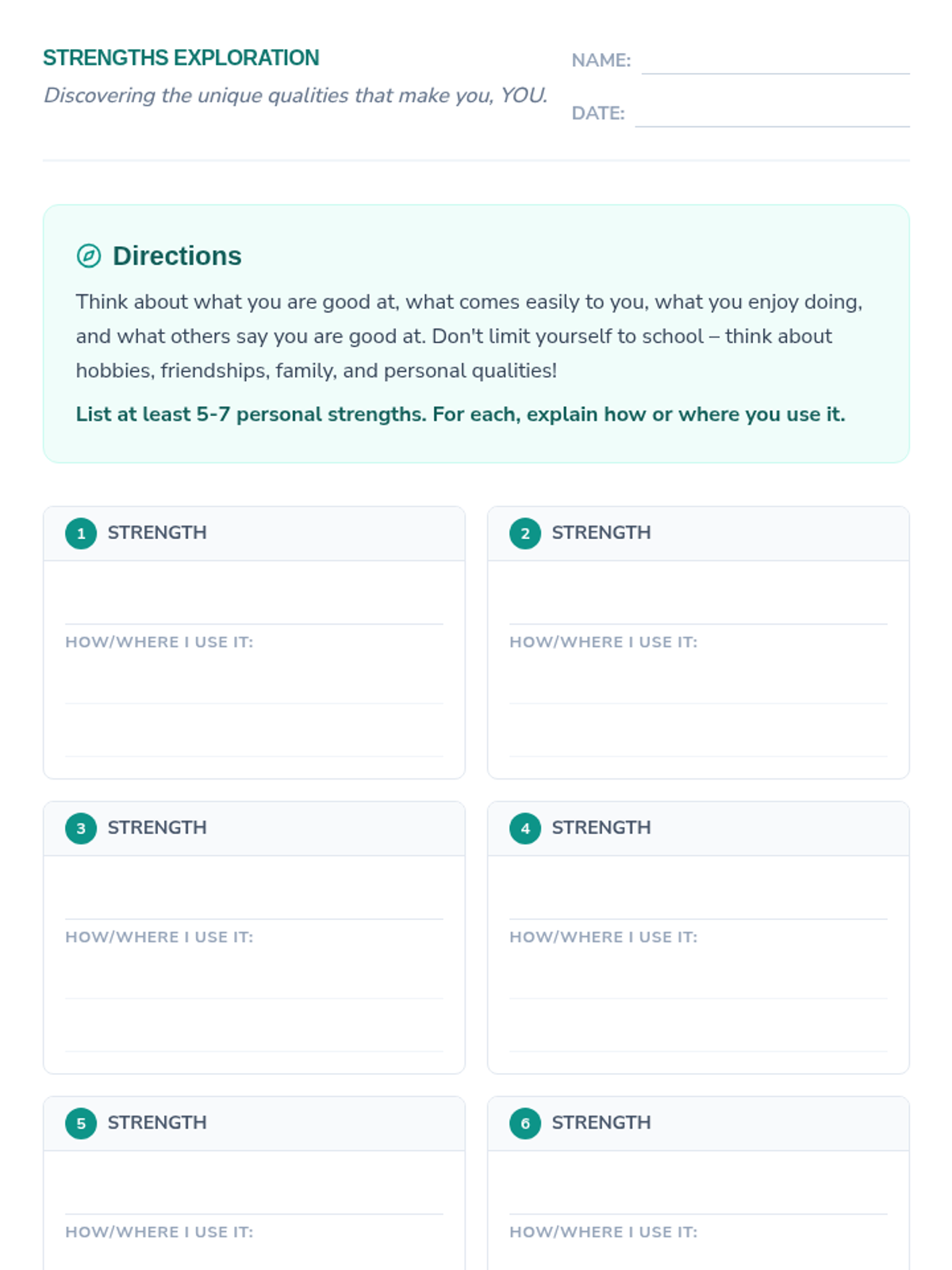
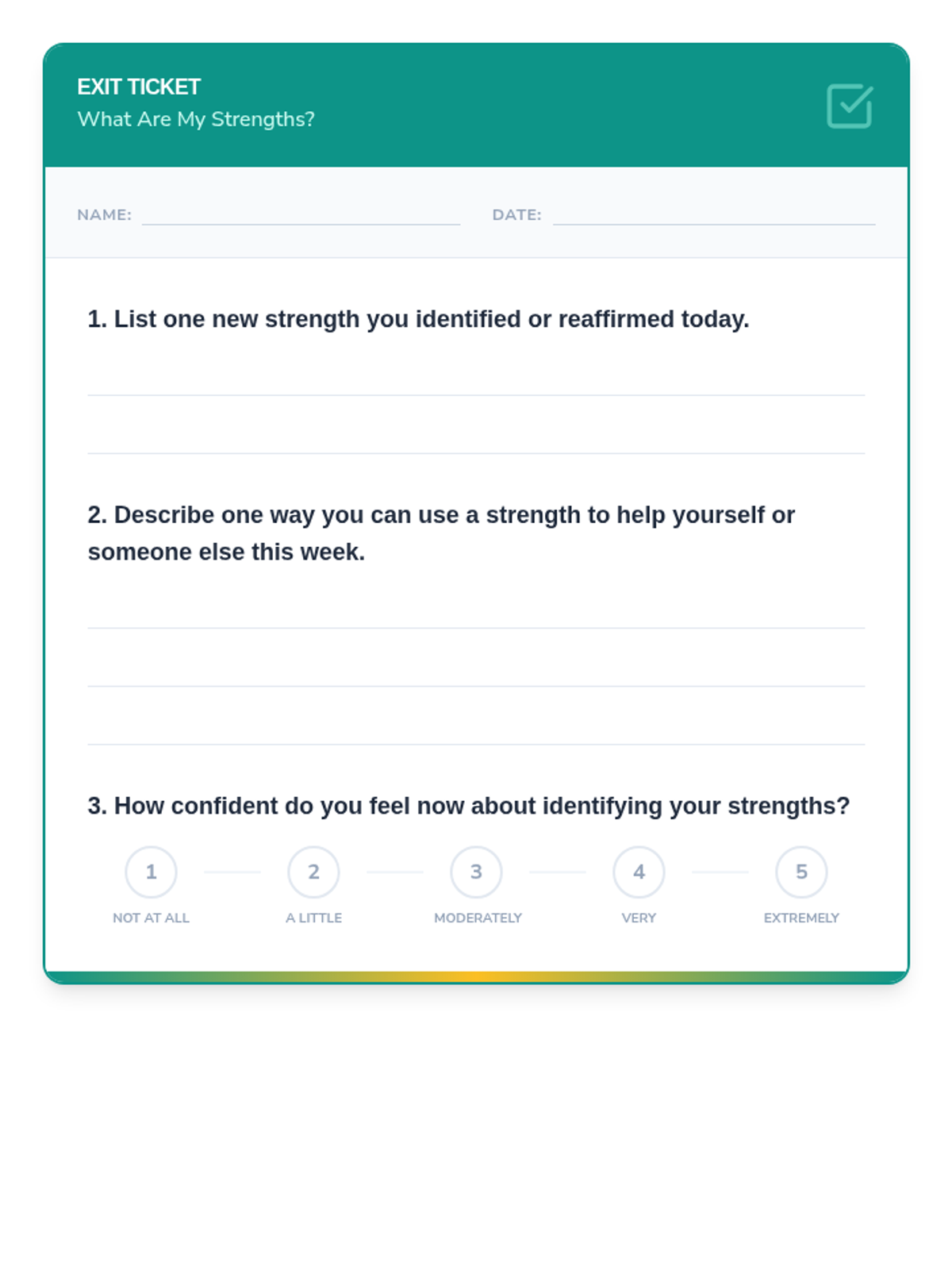
A sequence of lessons focused on self-awareness and healthy habits, ranging from identifying personal strengths to understanding the impact of nutrition on sleep.
A comprehensive unit on personal hygiene and self-care habits for young learners, focusing on daily routines that keep bodies healthy and strong.
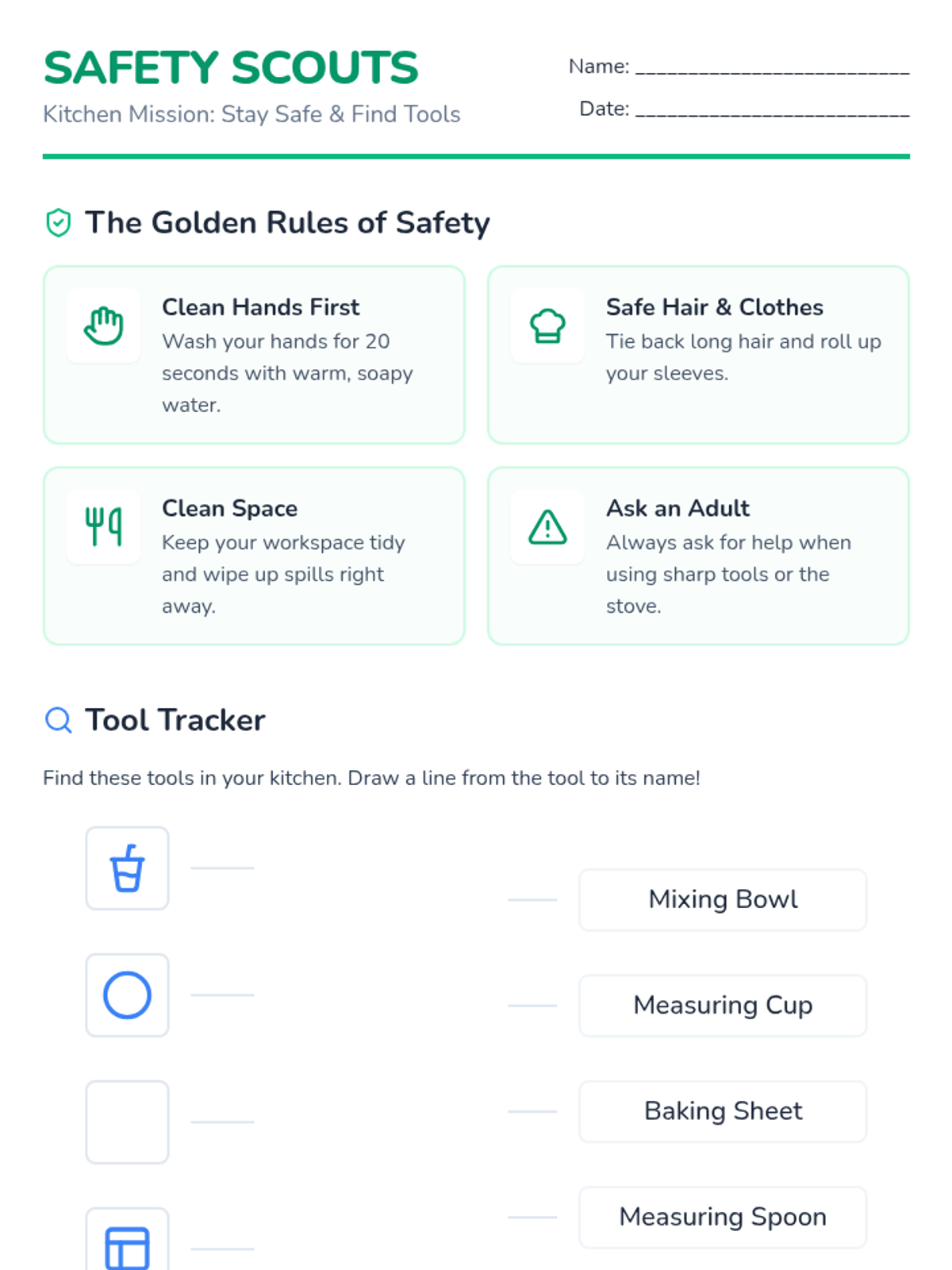
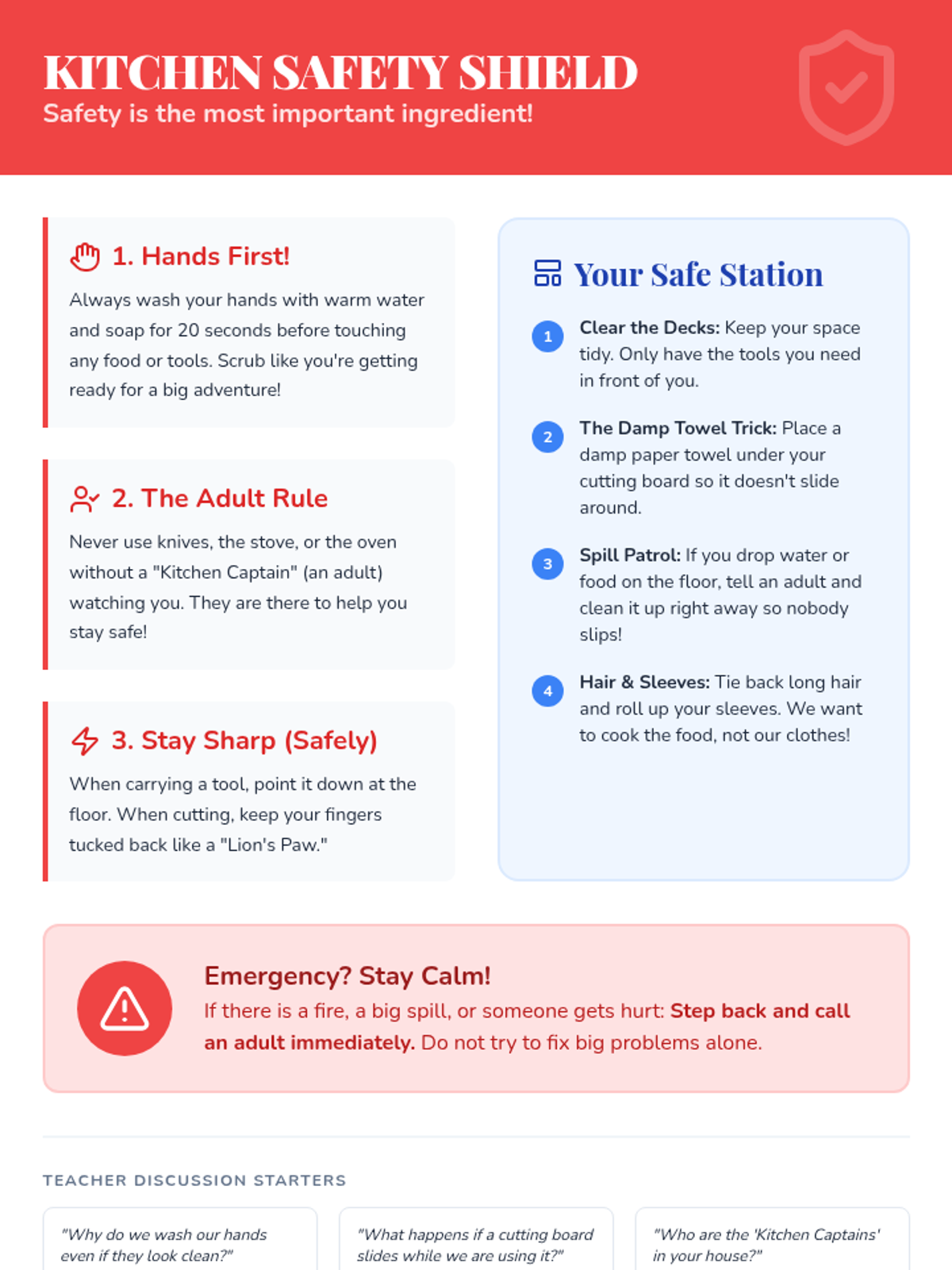
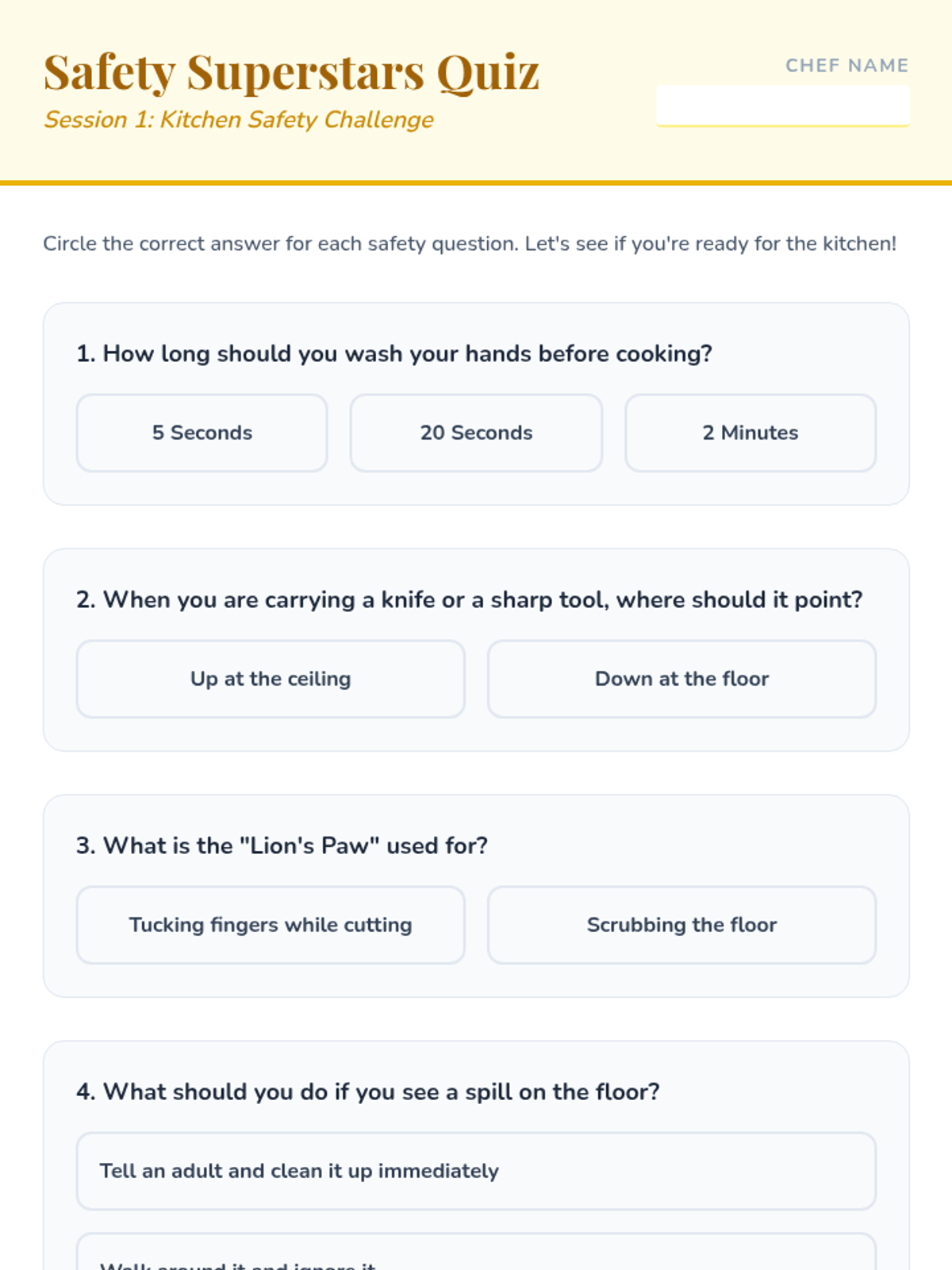
A 2-lesson unit designed to introduce elementary students to kitchen safety, tool identification, and visual recipe following through the creation of no-bake energy bites.
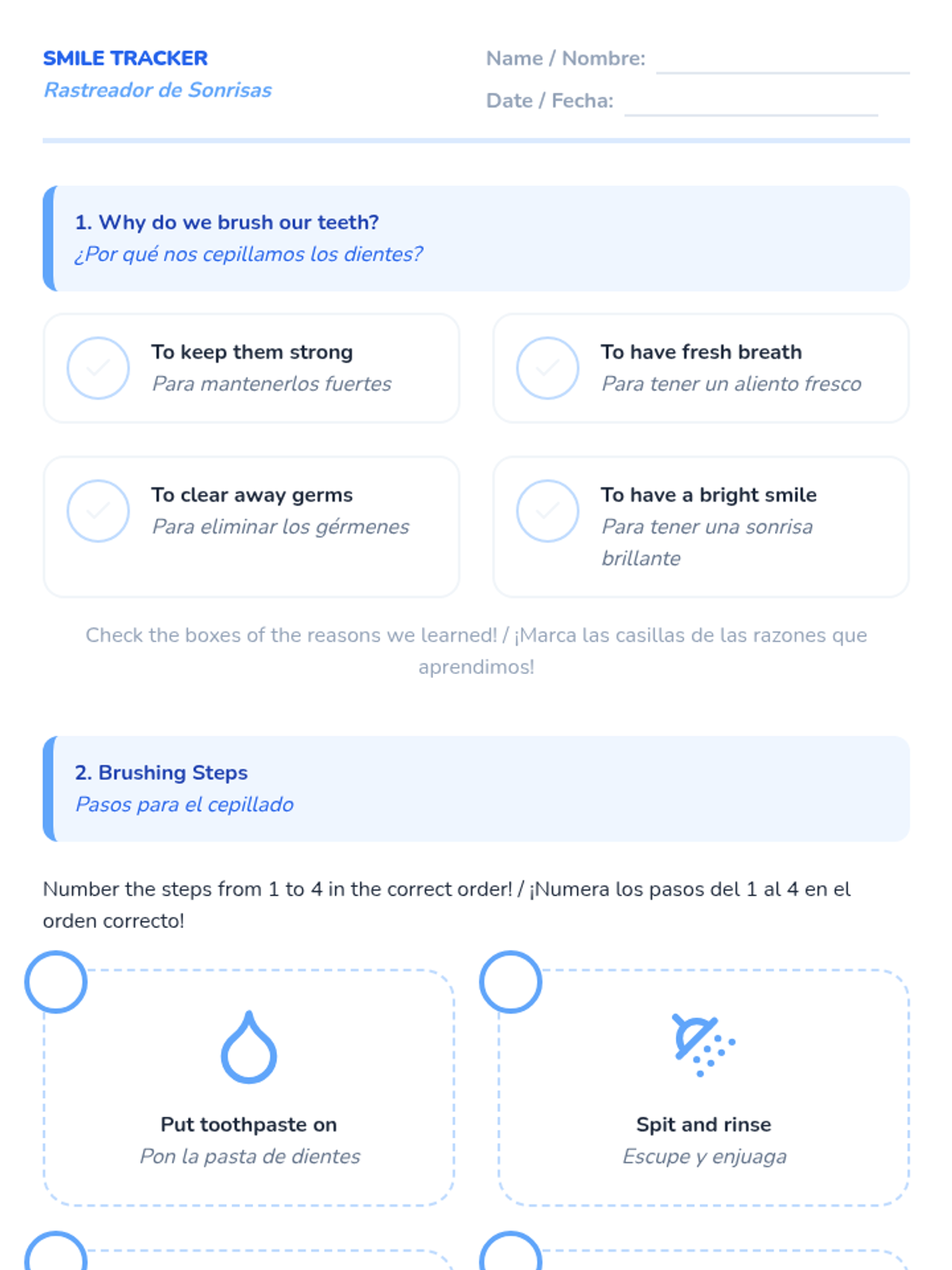
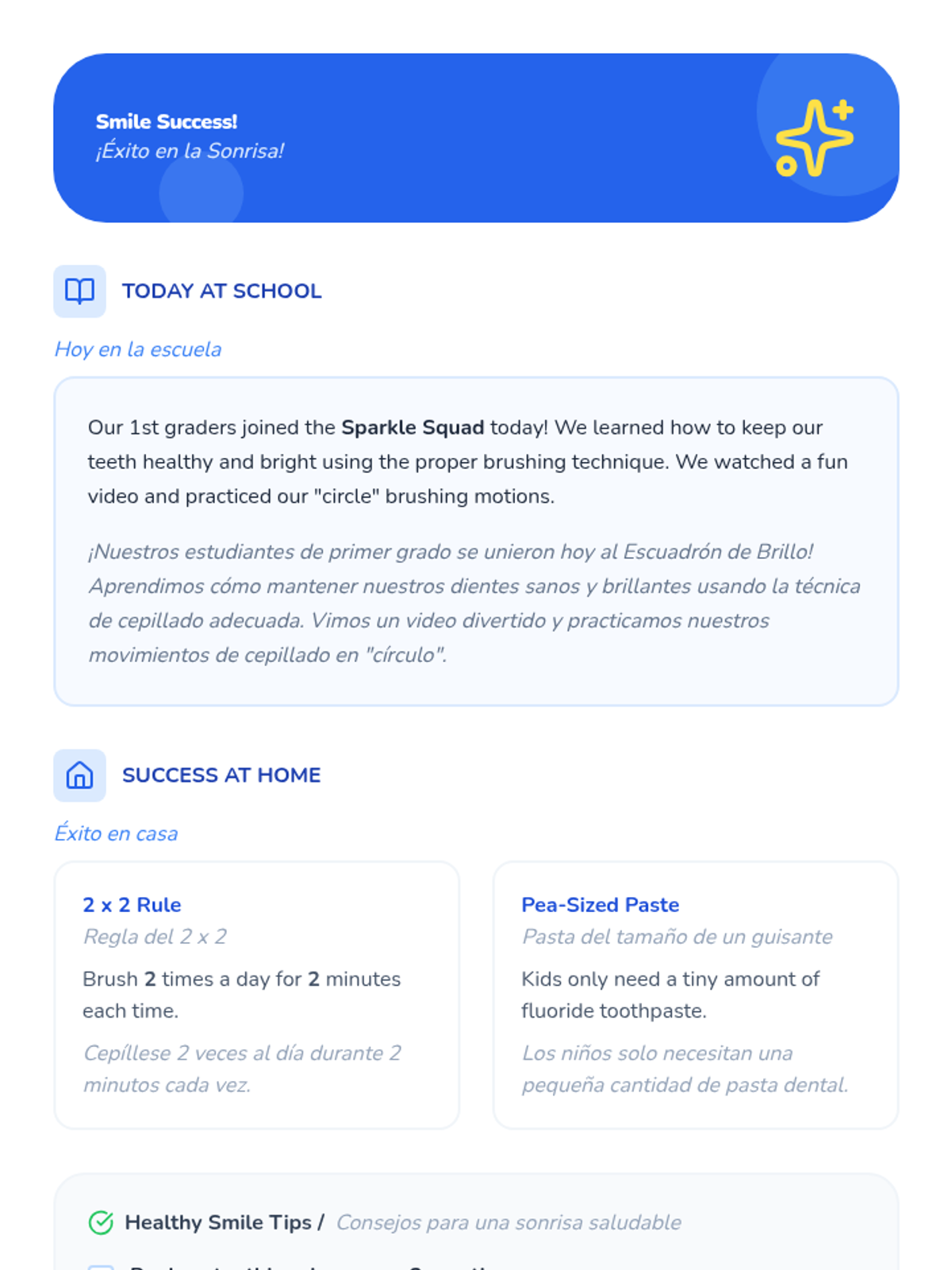
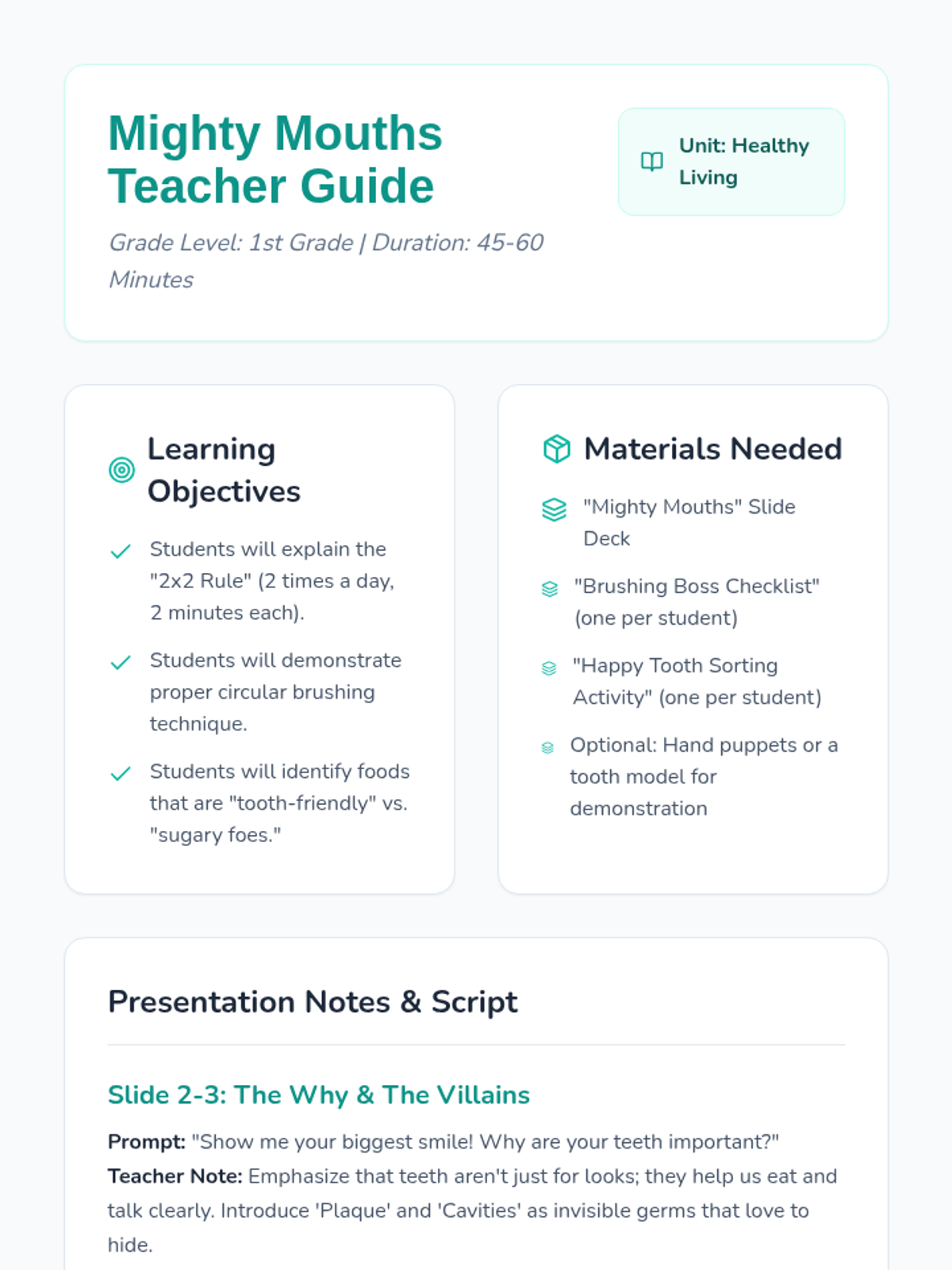
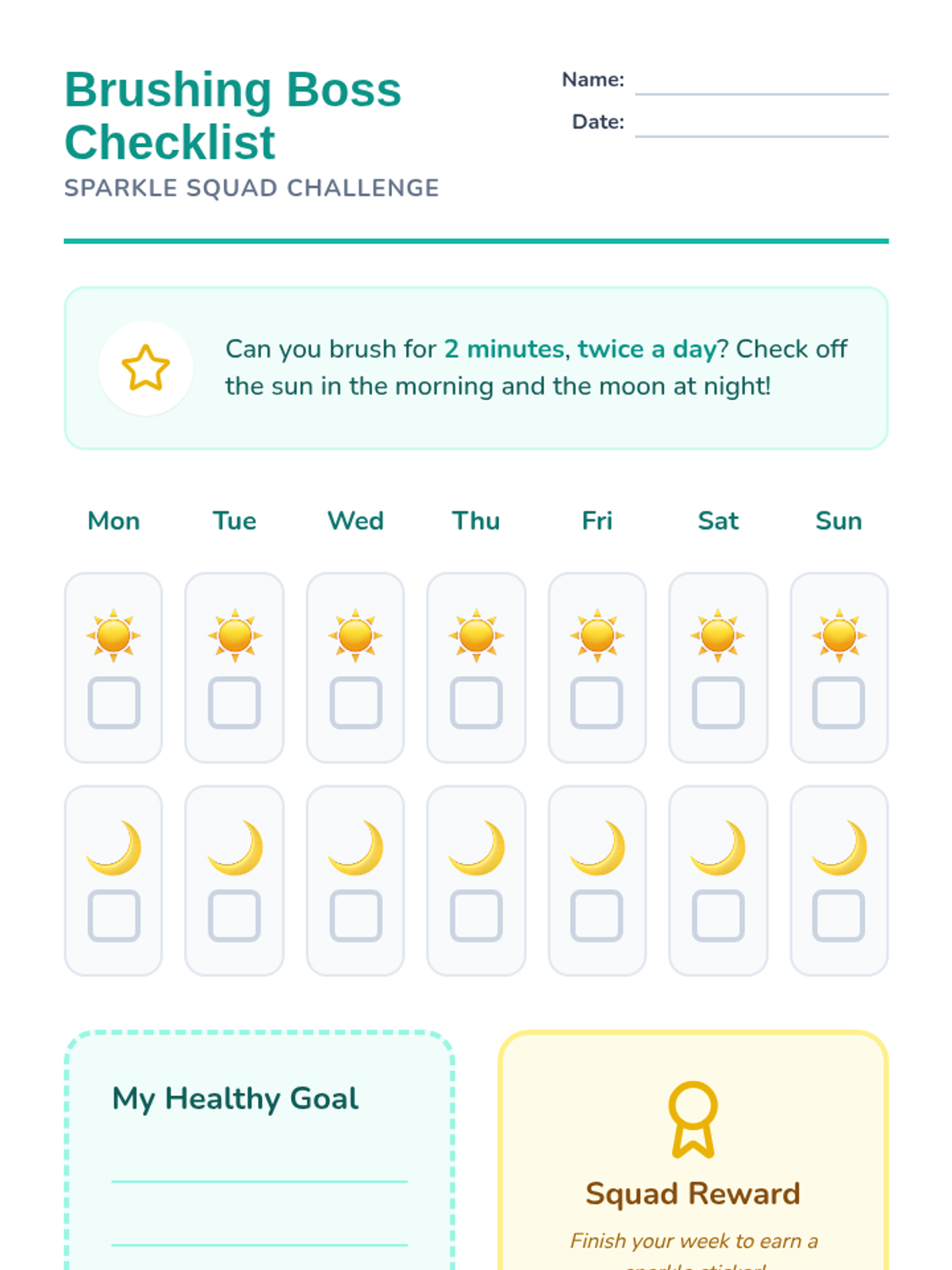
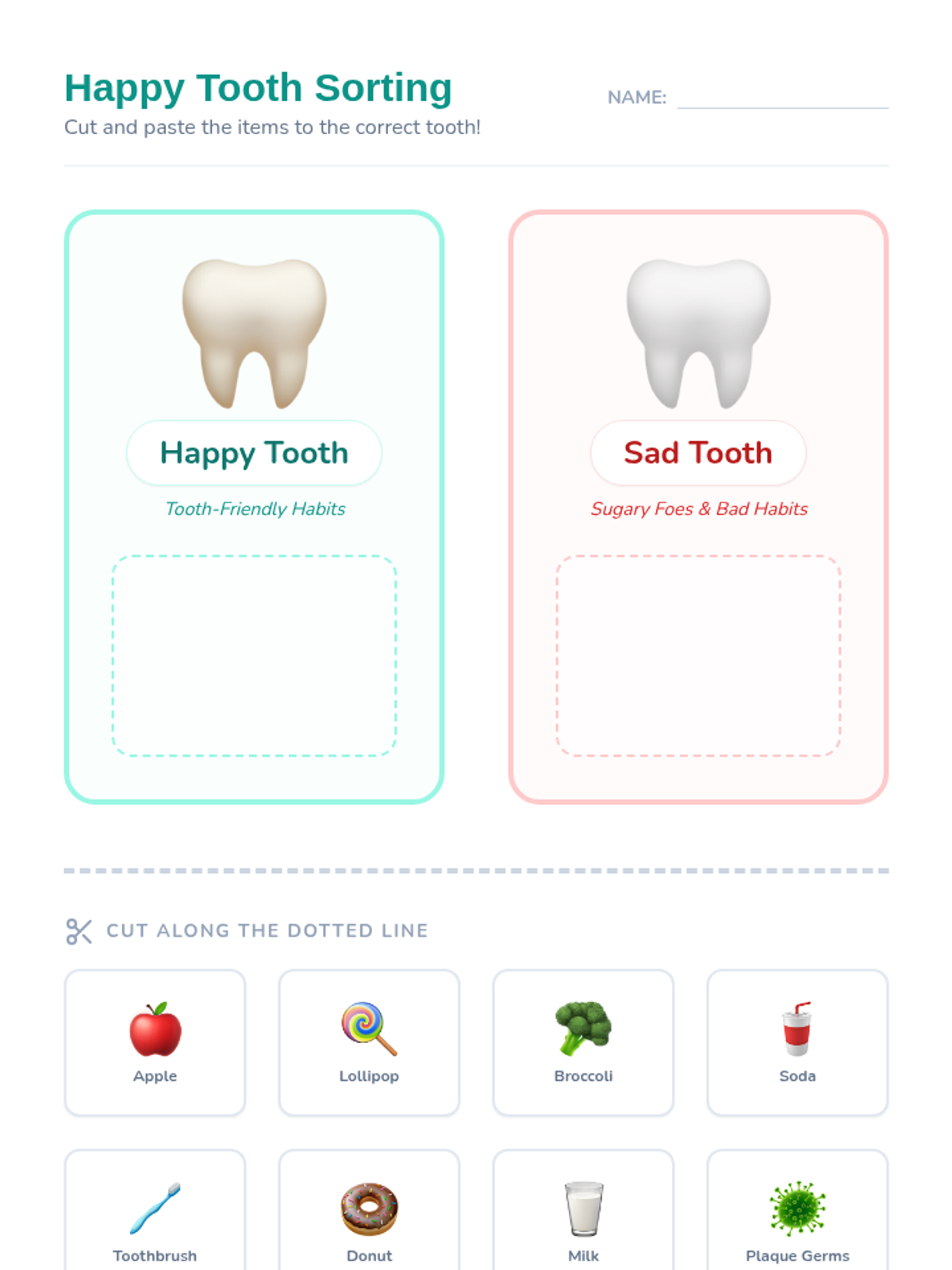
A fun and engaging introduction to oral hygiene for first-grade students, focusing on proper brushing and flossing techniques, healthy habits, and the importance of routine care.
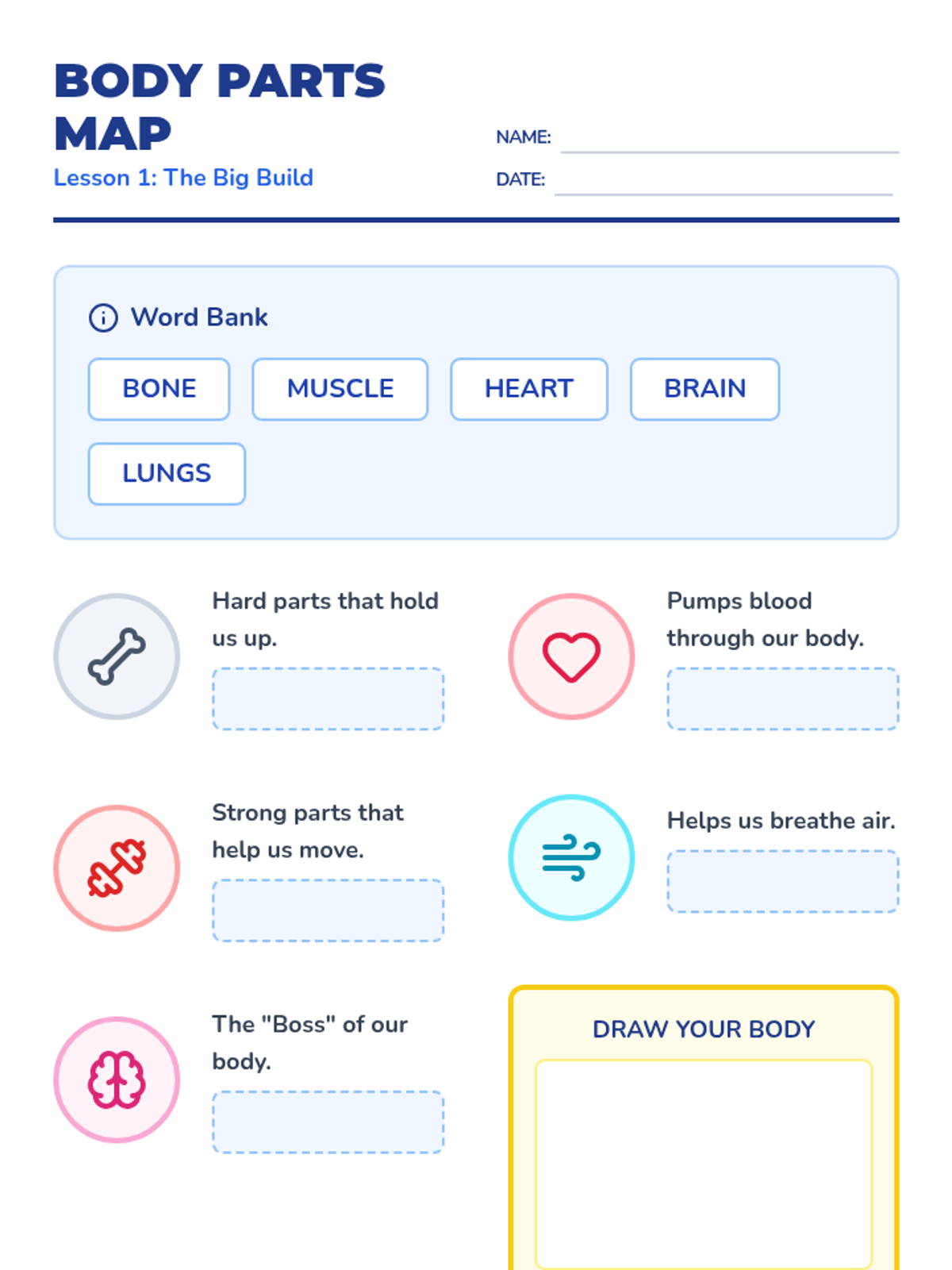
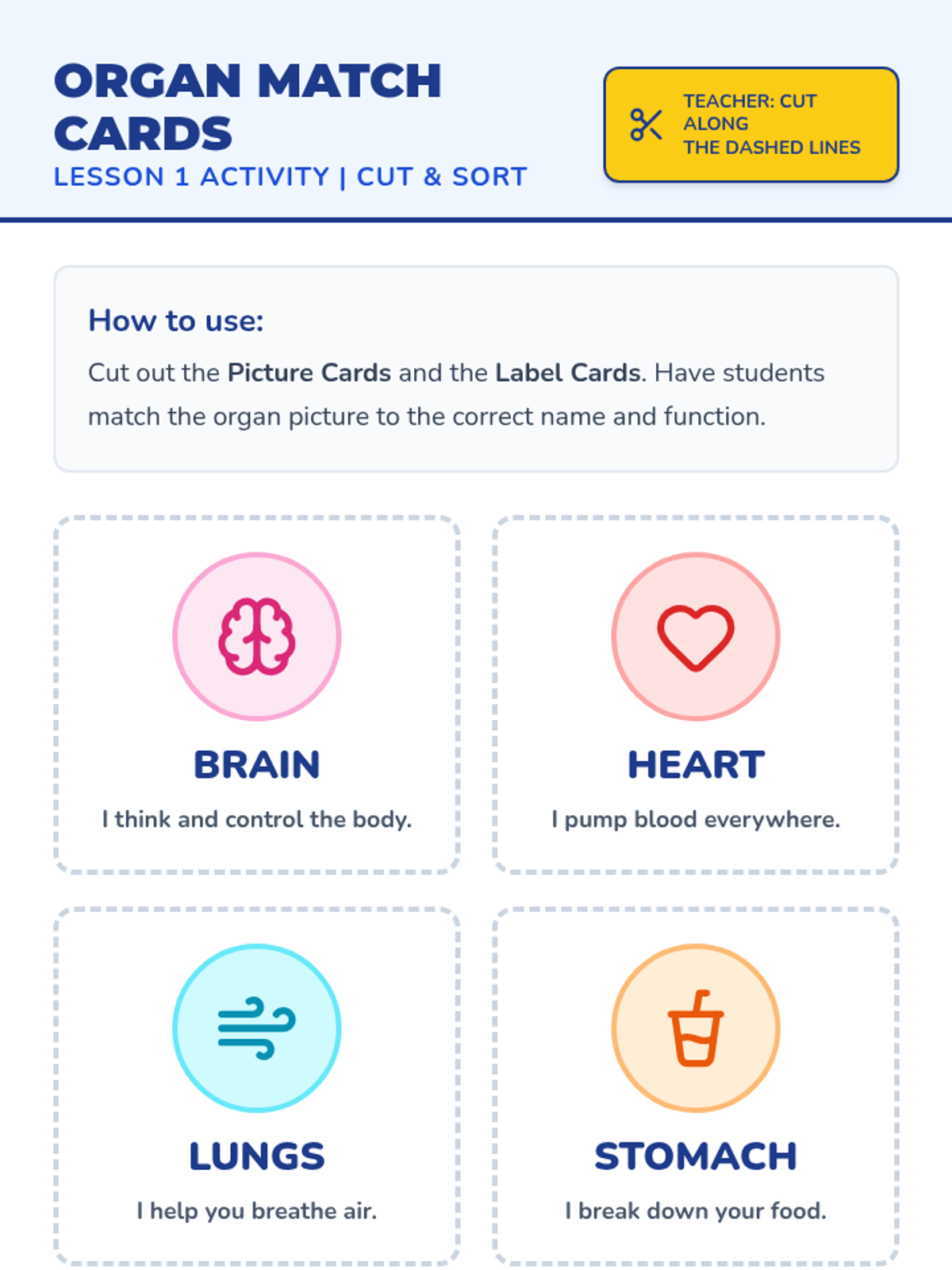
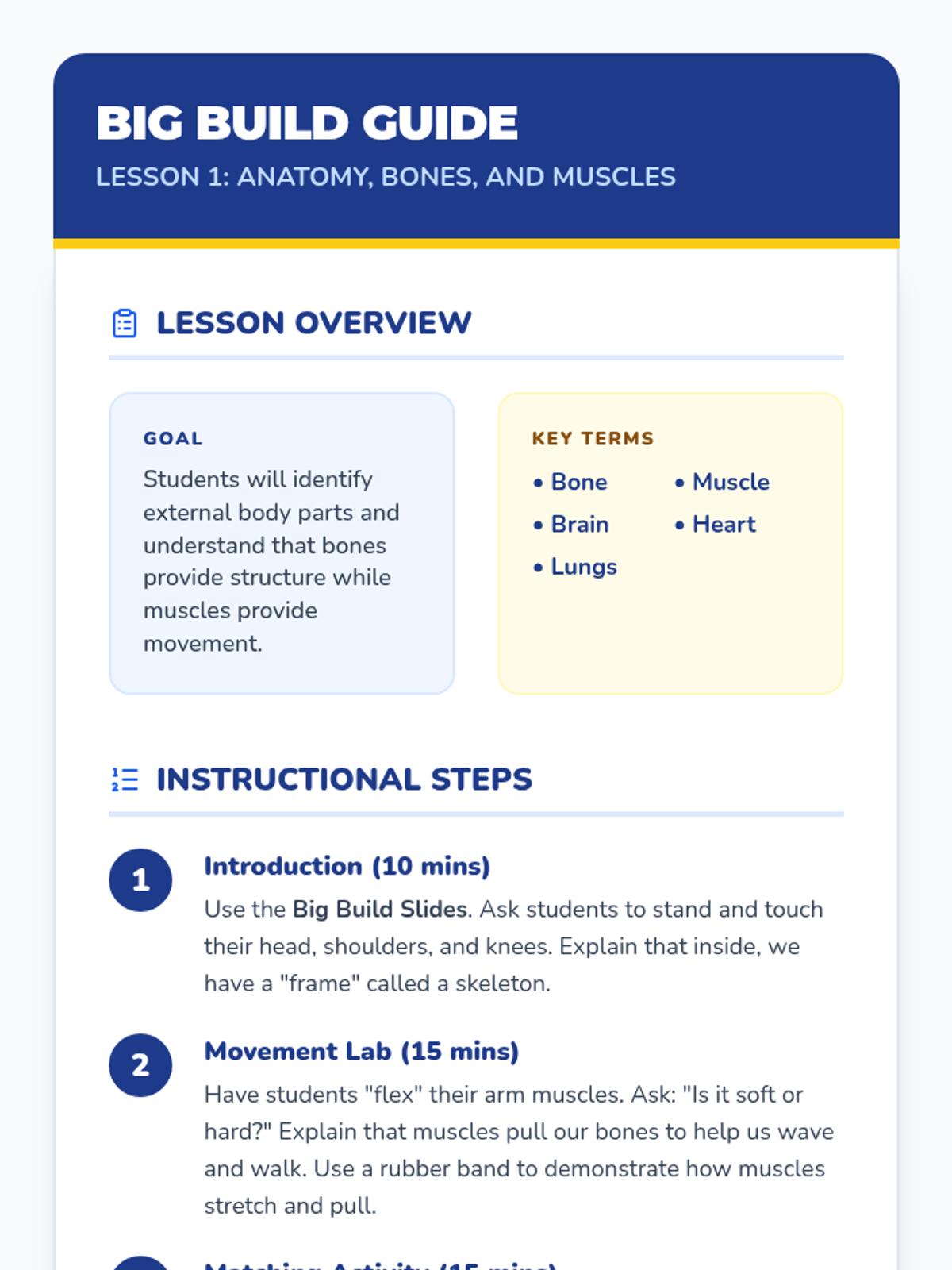
A comprehensive human biology unit designed for life skills students, focusing on functional anatomy, major body systems, sensory awareness, and daily health habits through visual-heavy instruction and practical activities.
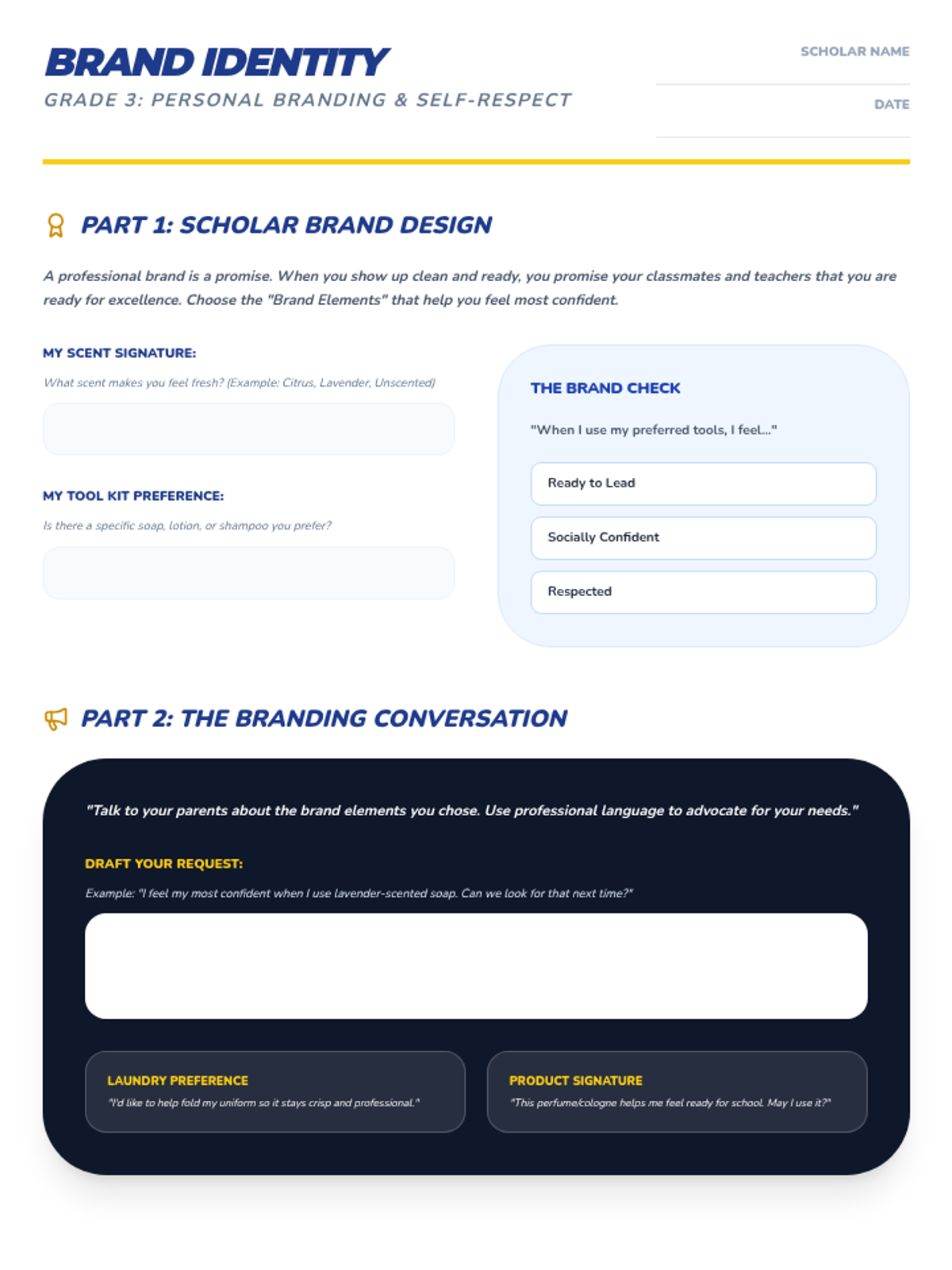
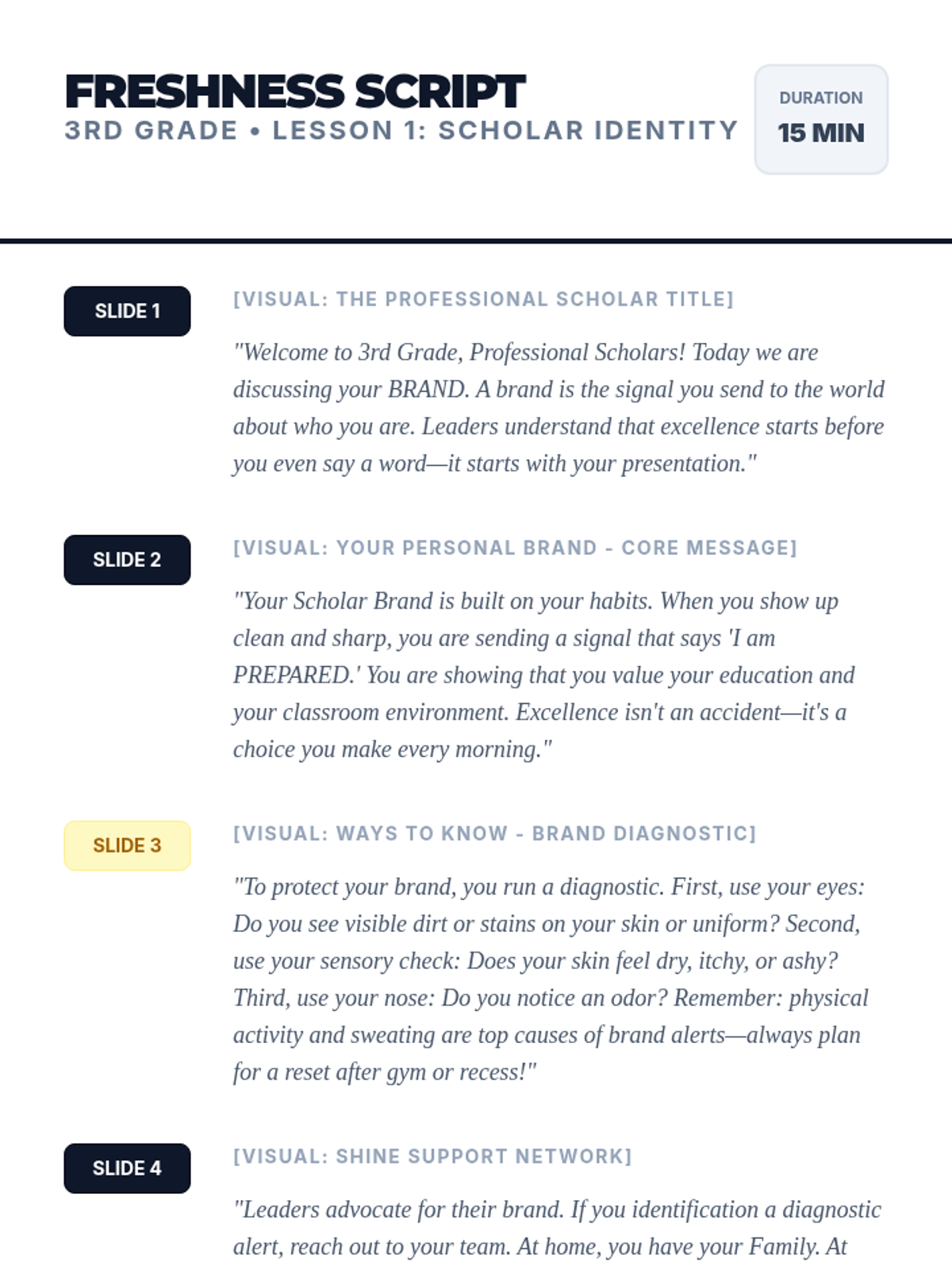
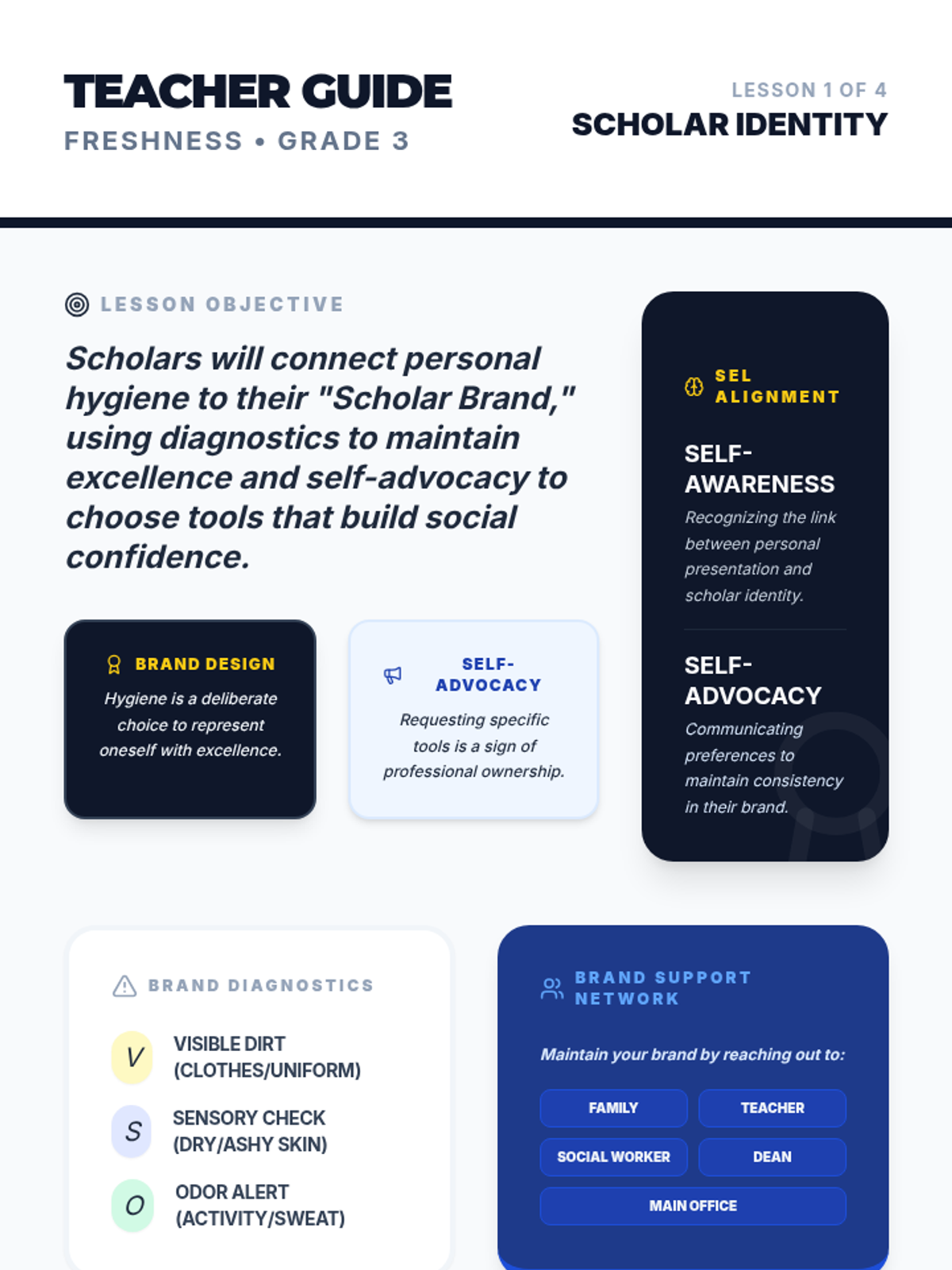
A comprehensive SEL-integrated hygiene curriculum for elementary scholars (K-4), focusing on self-awareness, social impact, and personal responsibility through the lens of a 'Glow Up'.
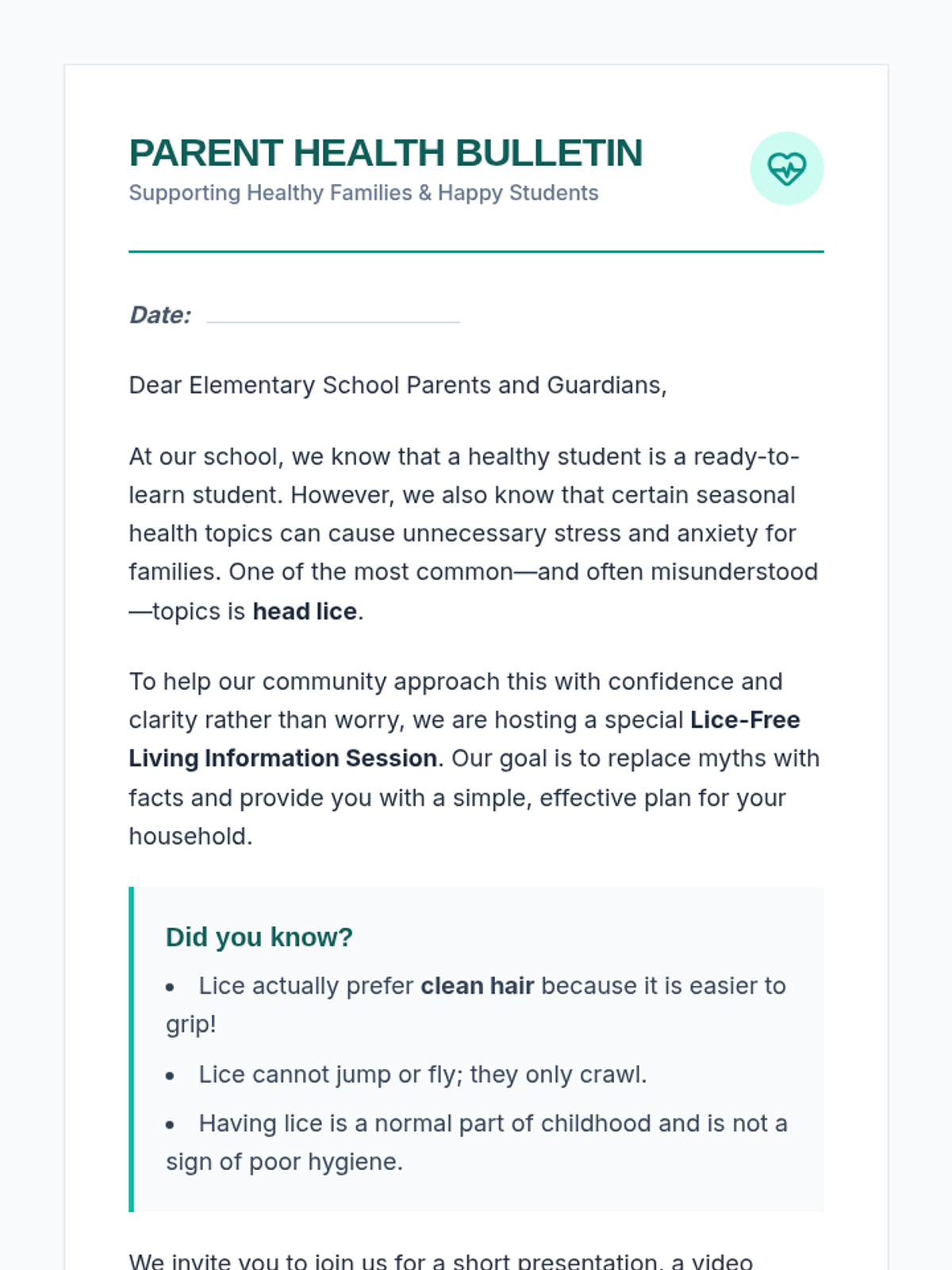
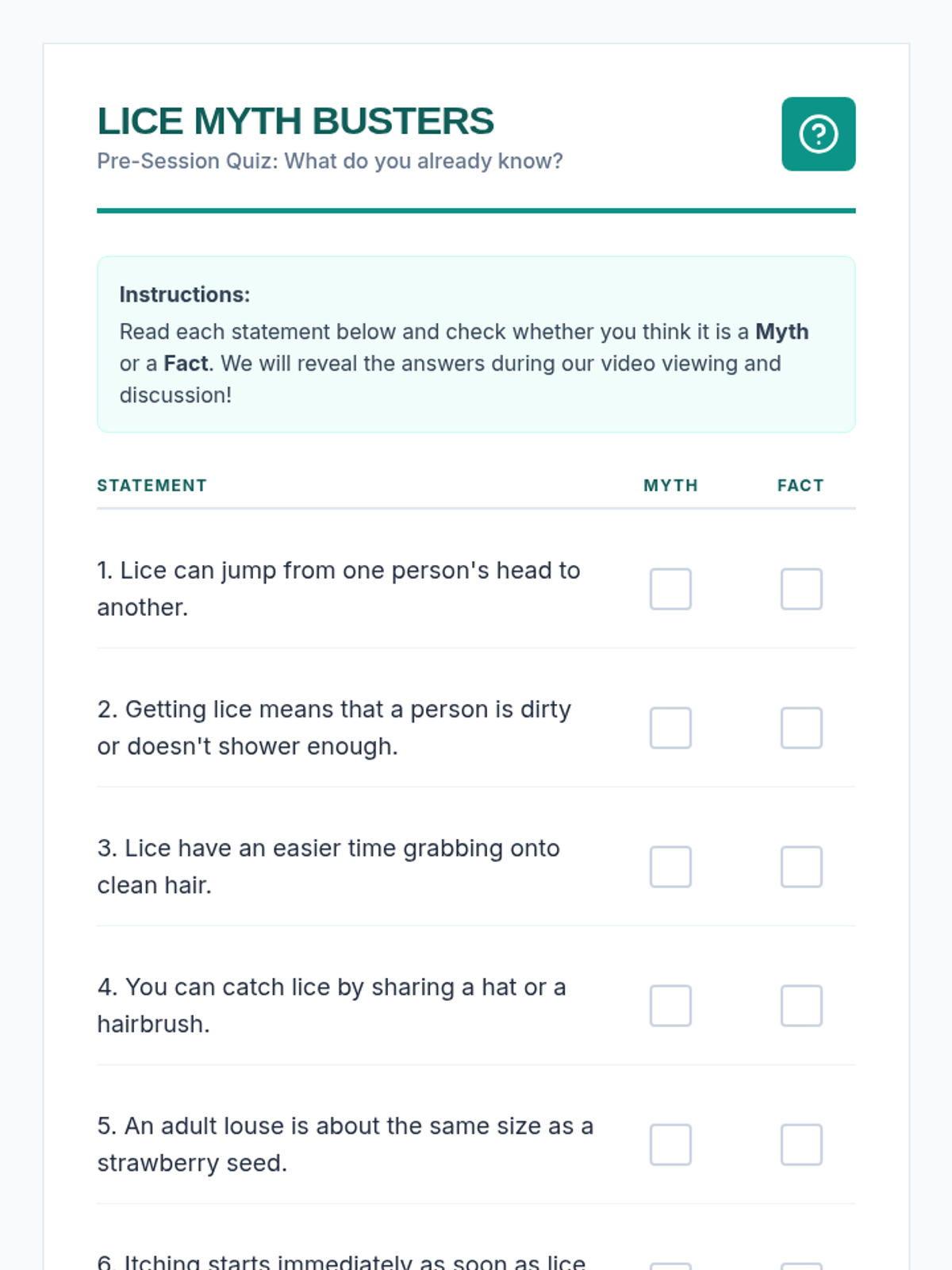
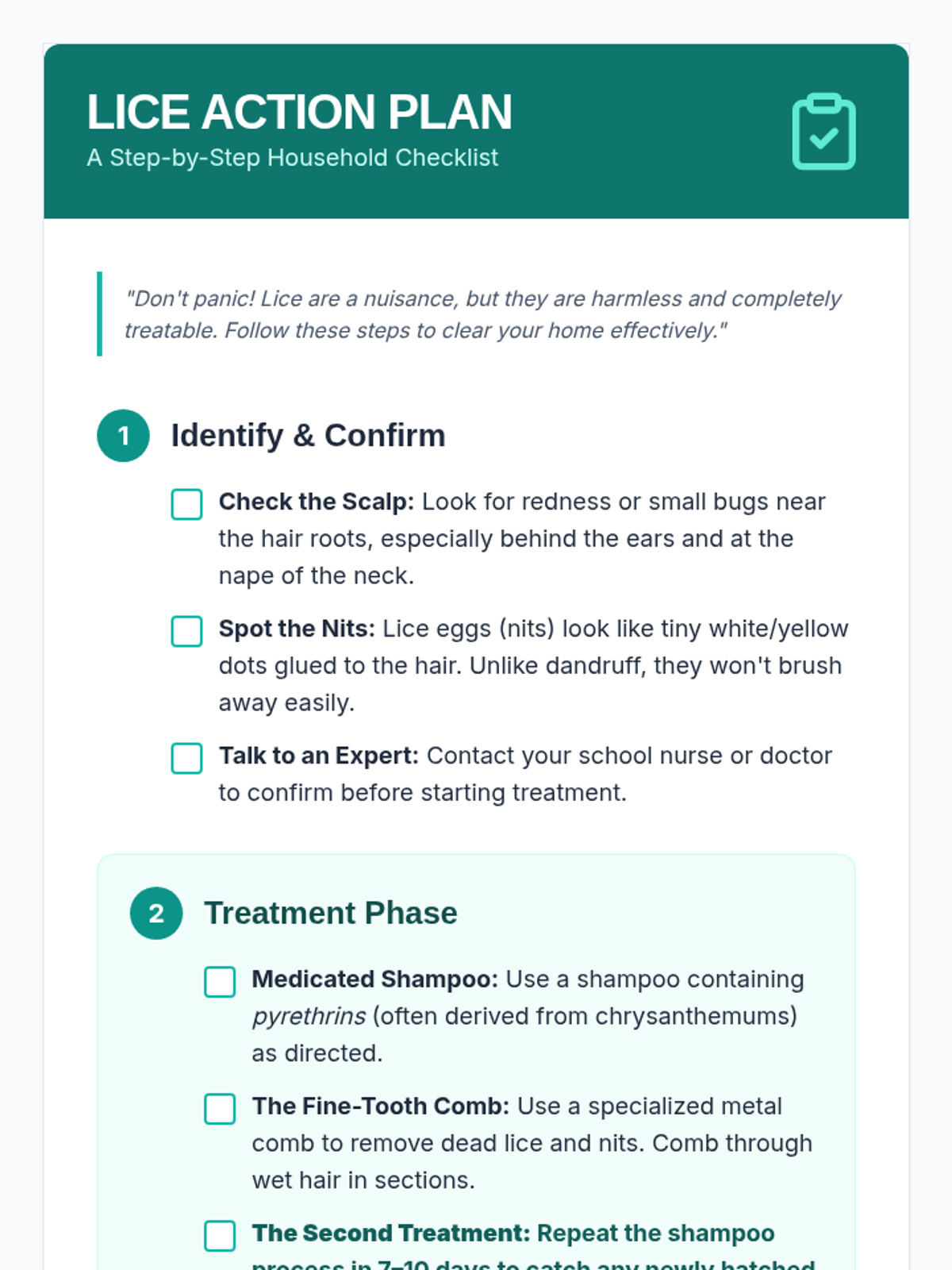
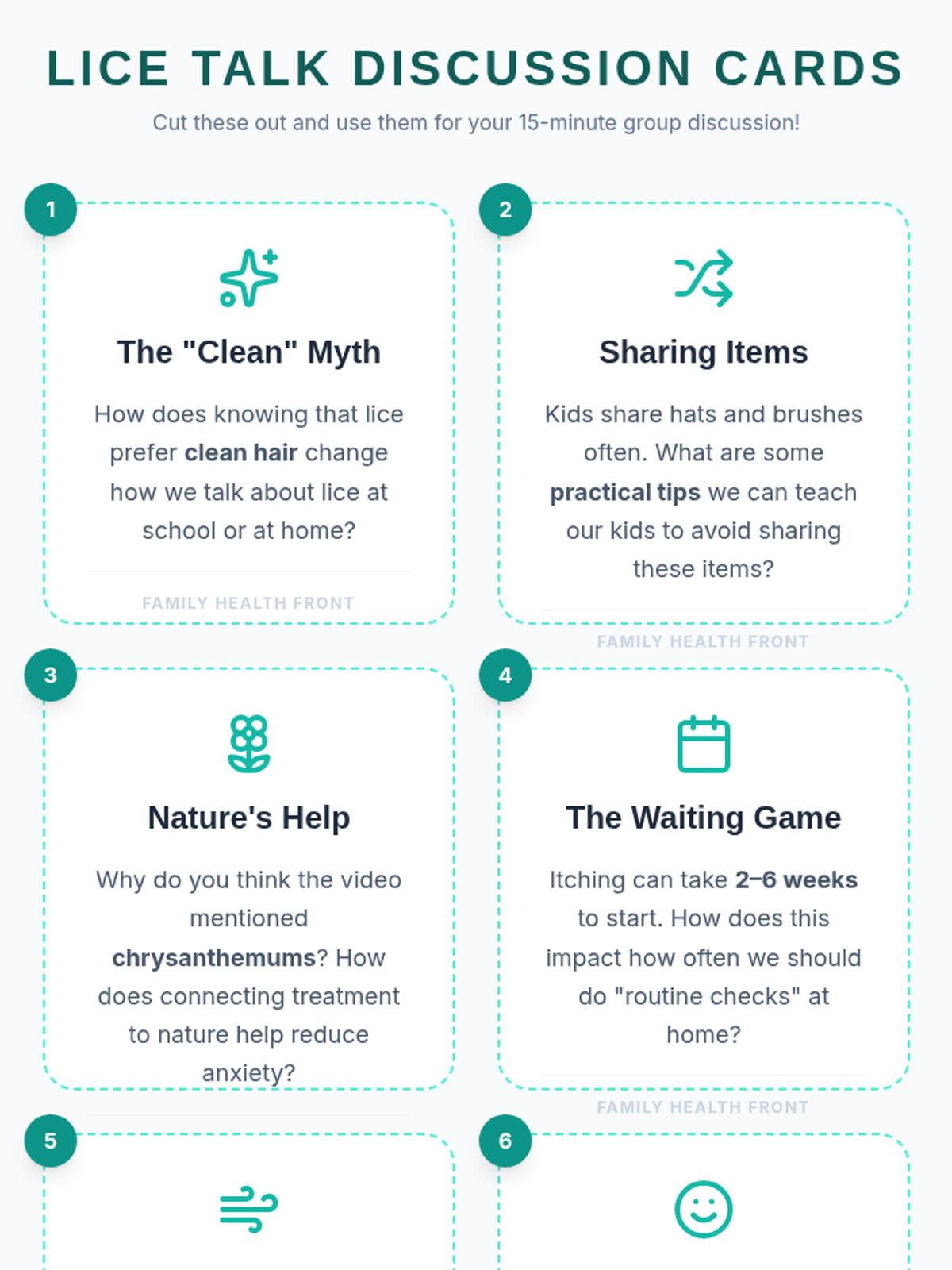
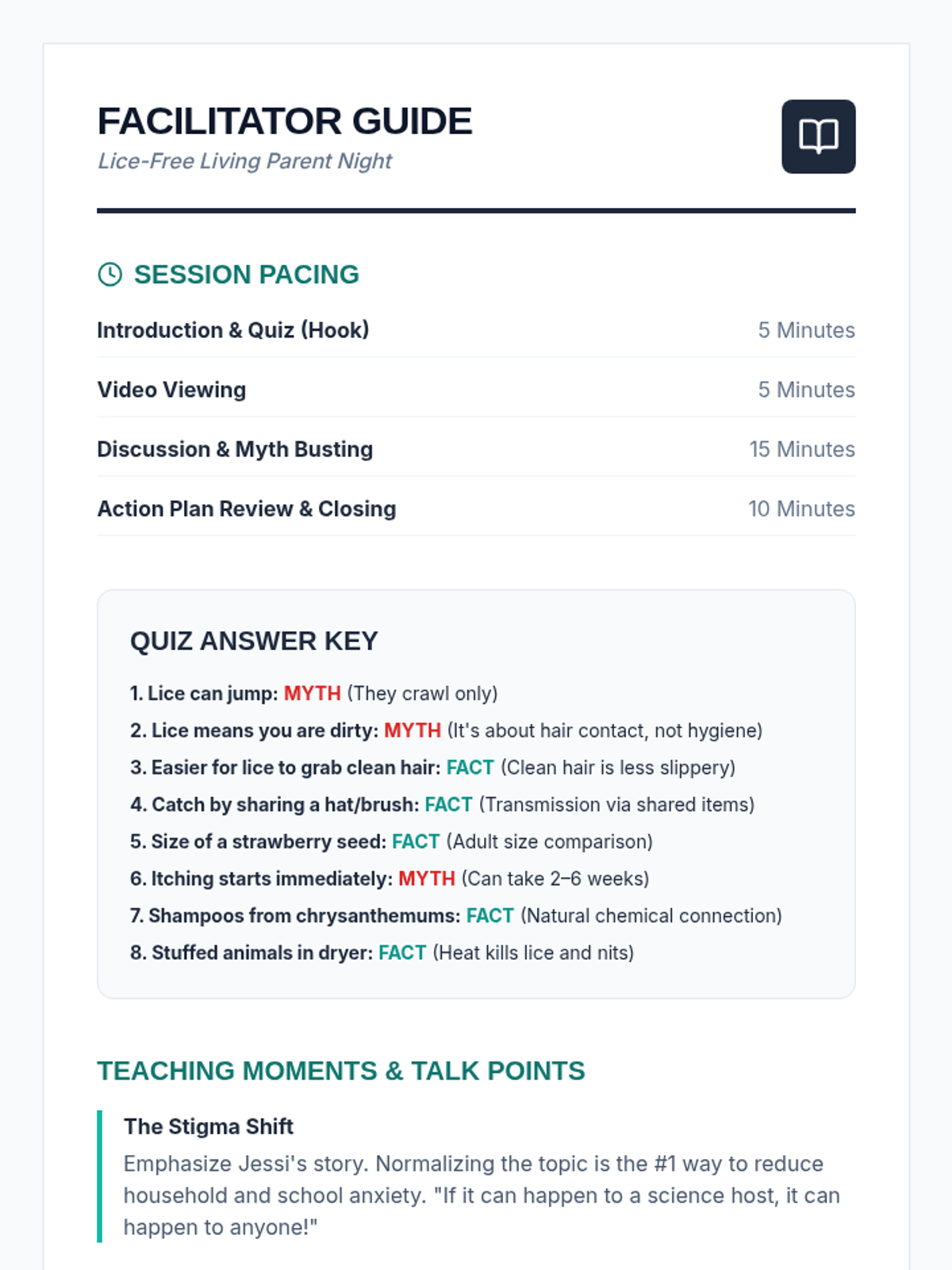
A series of workshops and resources for elementary school parents focusing on common school-related health concerns, starting with head lice management.
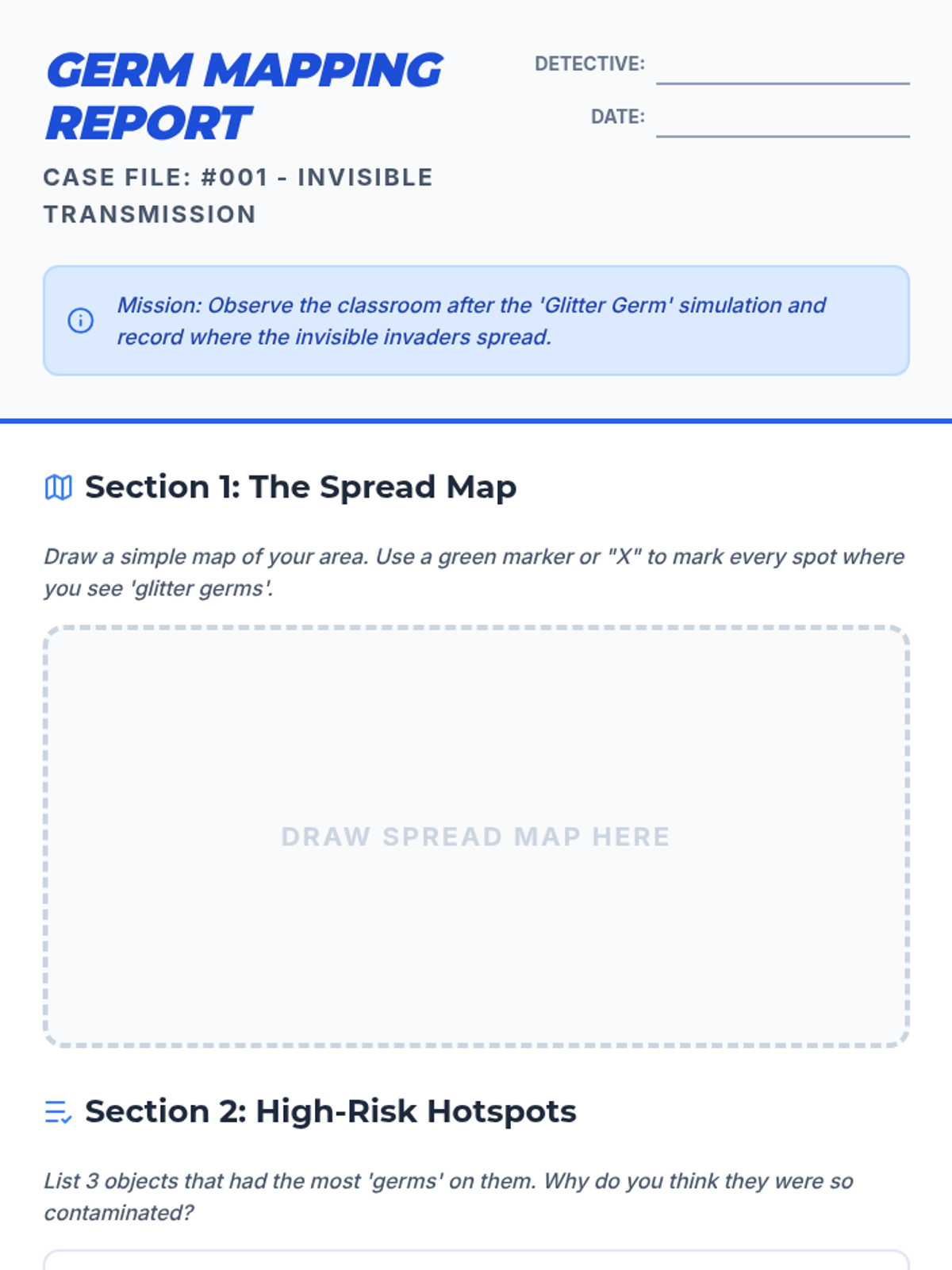
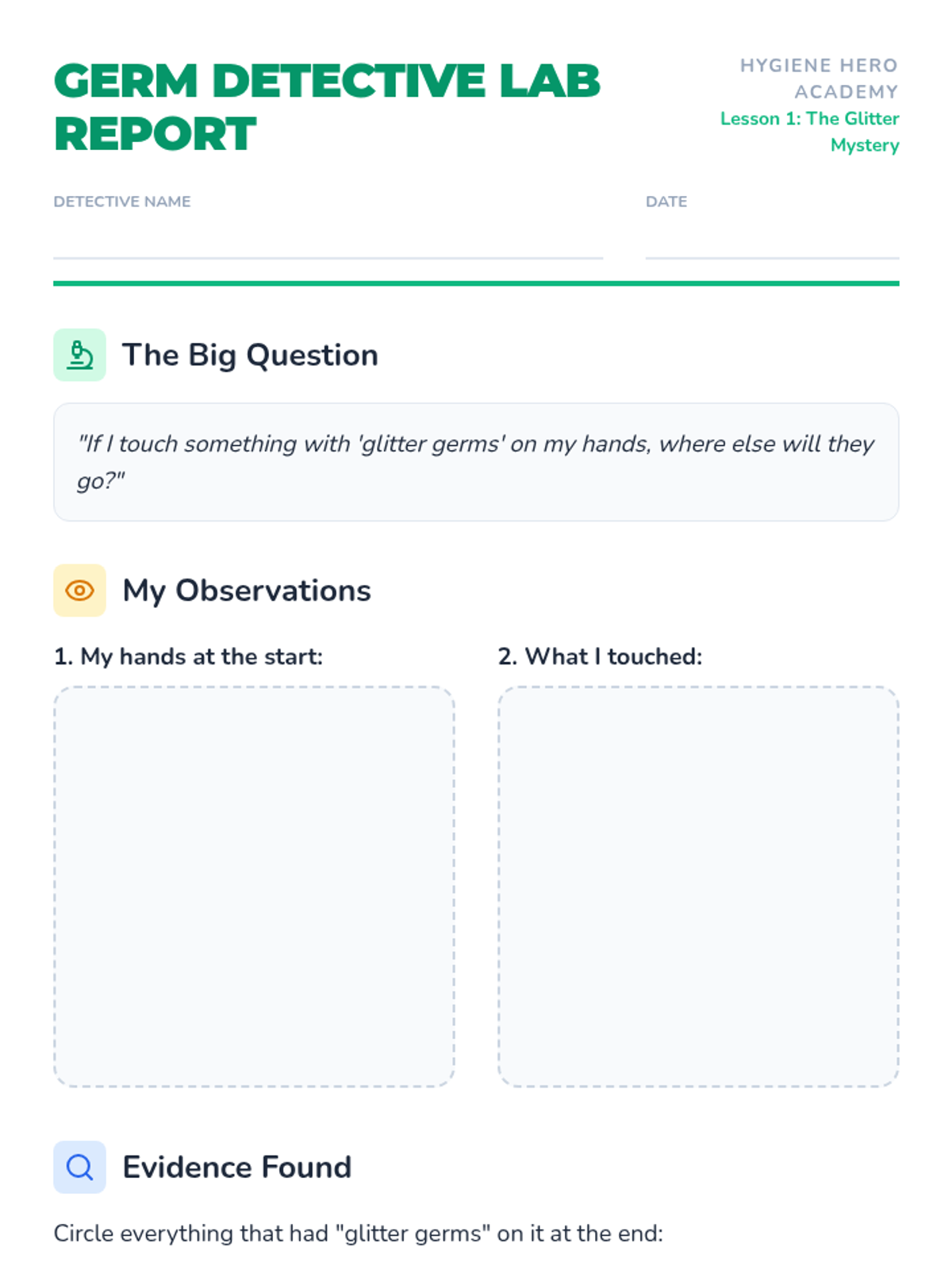
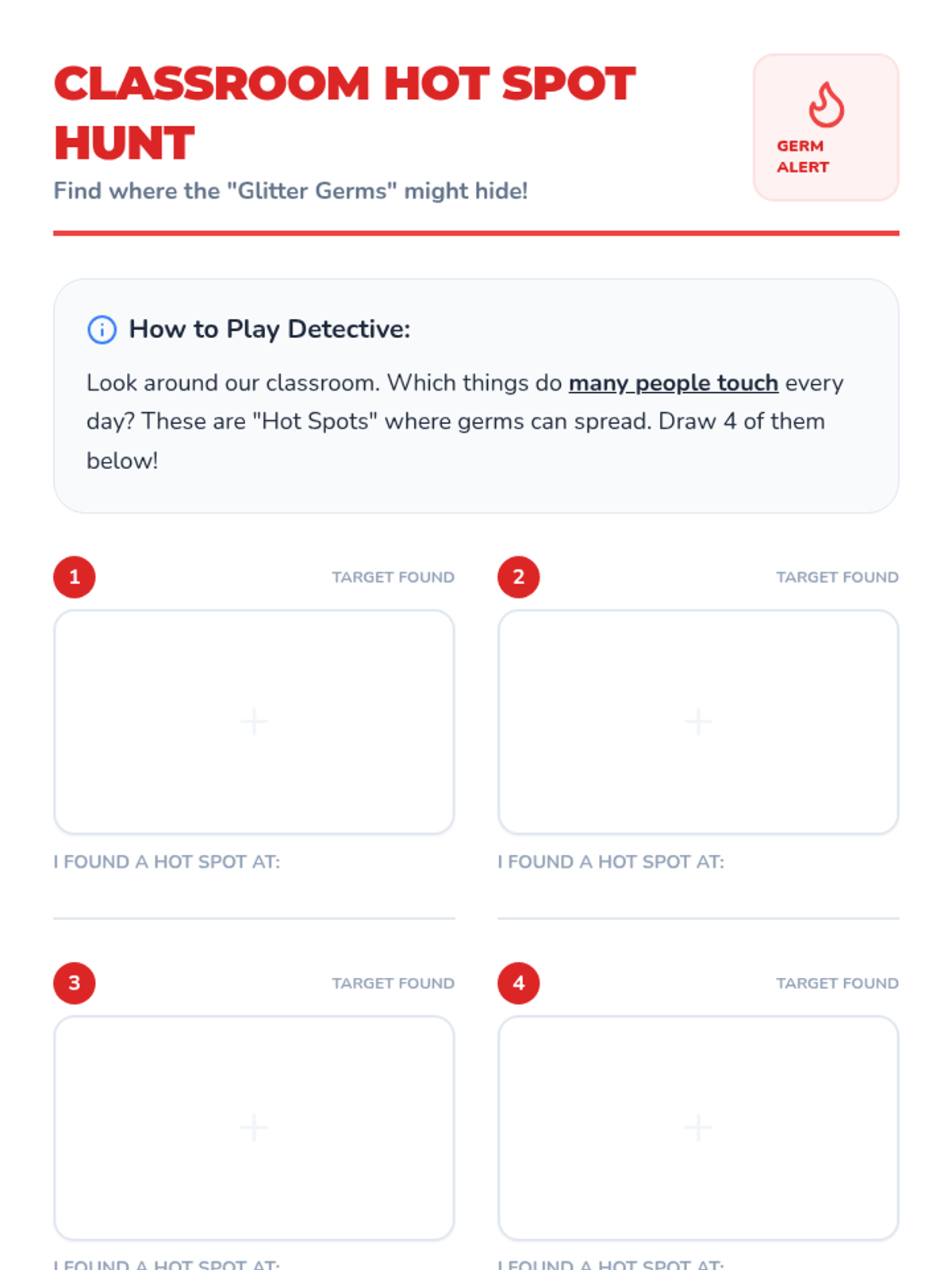
A comprehensive 1st-grade sequence focused on personal hygiene, germ prevention, and dental health through hands-on simulations and skill-building activities. Students learn to visualize germ spread, master handwashing and respiratory etiquette, and develop daily hygiene routines.
Students explore the invisible world of microbes through simulations and experiments to understand illness transmission and personal hygiene. They analyze handwashing effectiveness, practice dental care, investigate respiratory hygiene, and synthesize their learning into a personal wellness routine.
Students explore the invisible world of germs and establish lifelong hygiene habits through experiments, simulations, and routine planning. This hands-on sequence focuses on handwashing, dental care, and respiratory etiquette to empower young learners as 'Hygiene Heroes.'
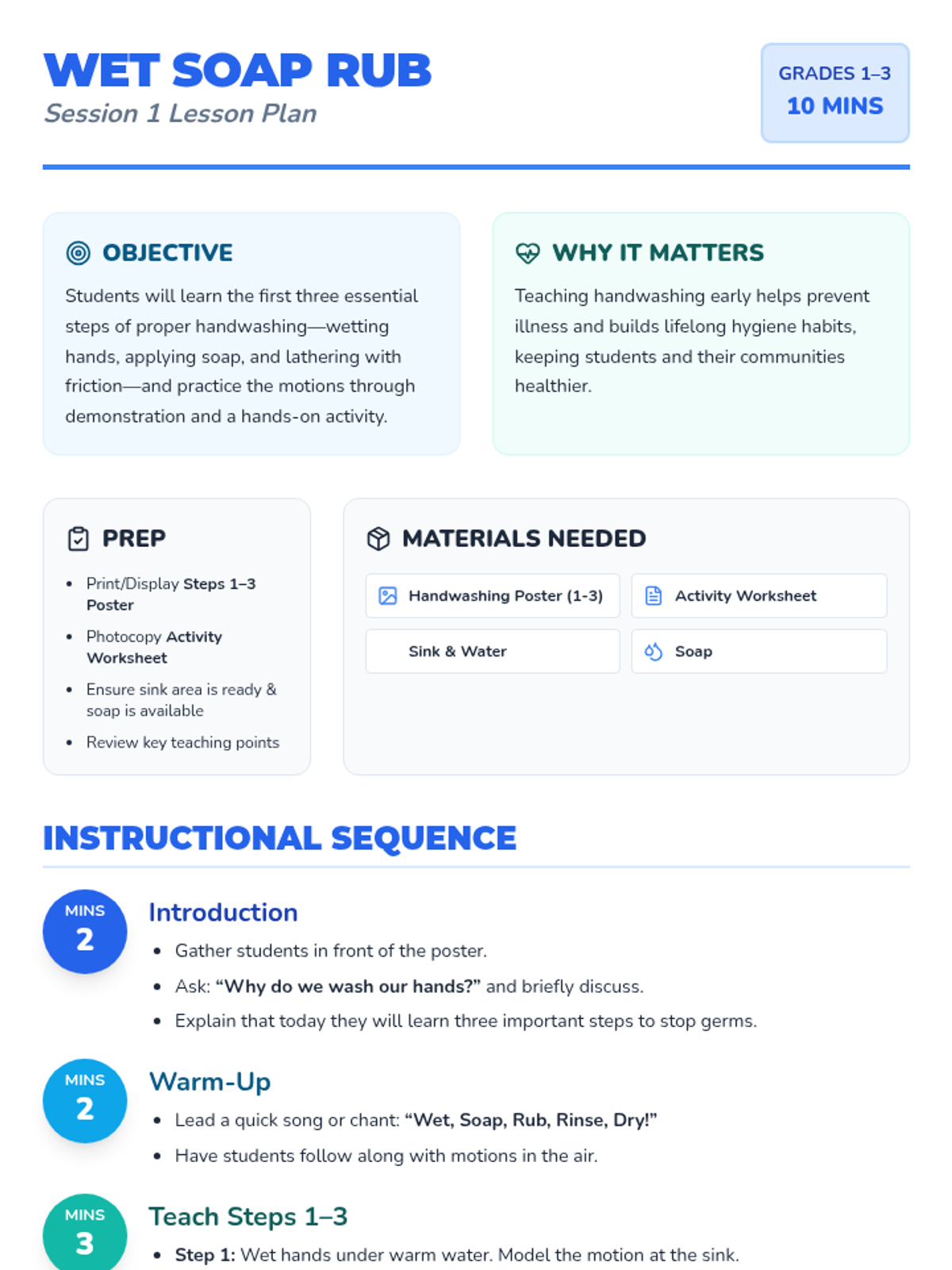
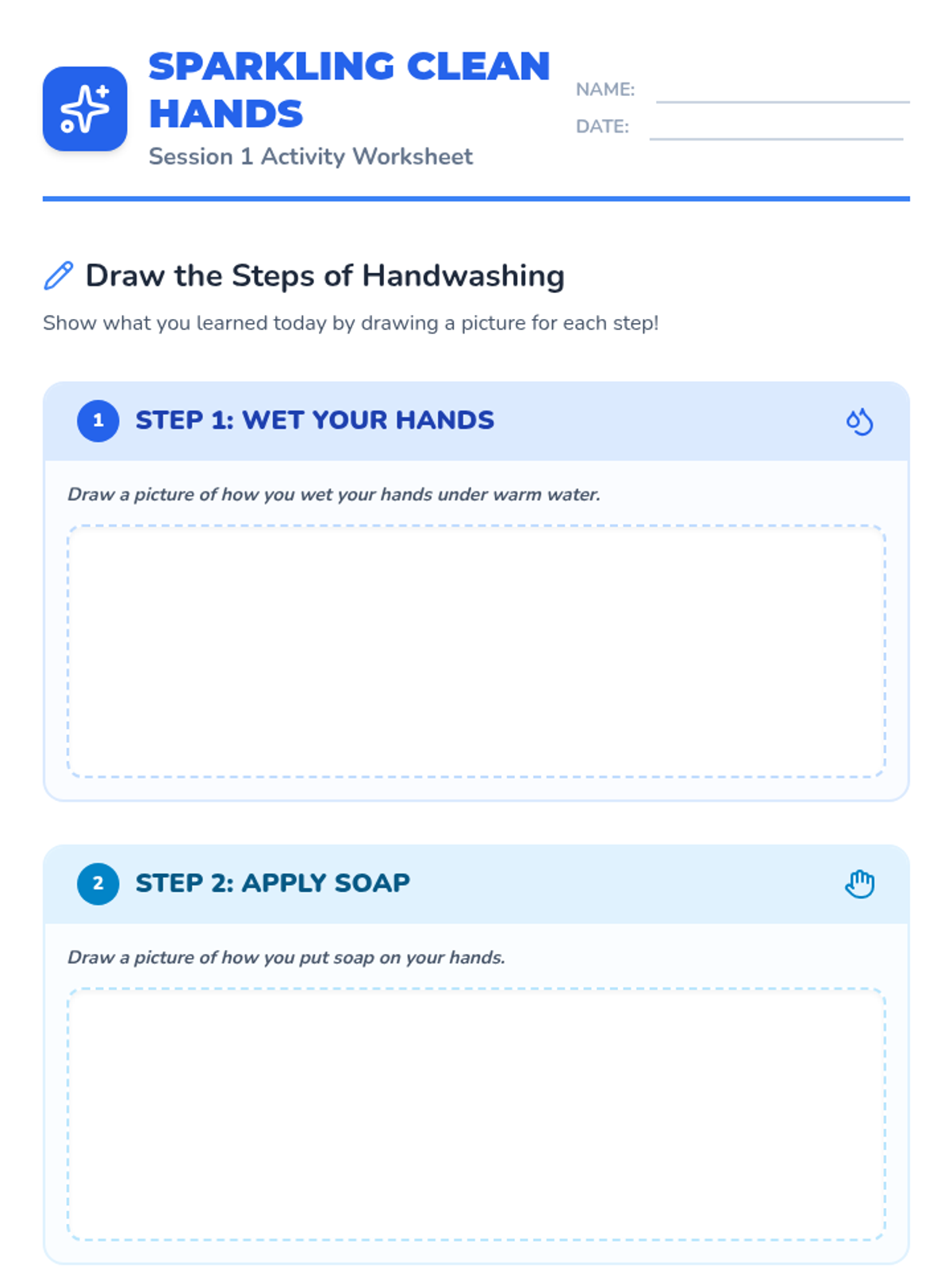
A two-session hygiene unit for grades 1-3 focused on the five essential steps of handwashing. Students learn through demonstration, practice, and interactive activities to build lifelong healthy habits.
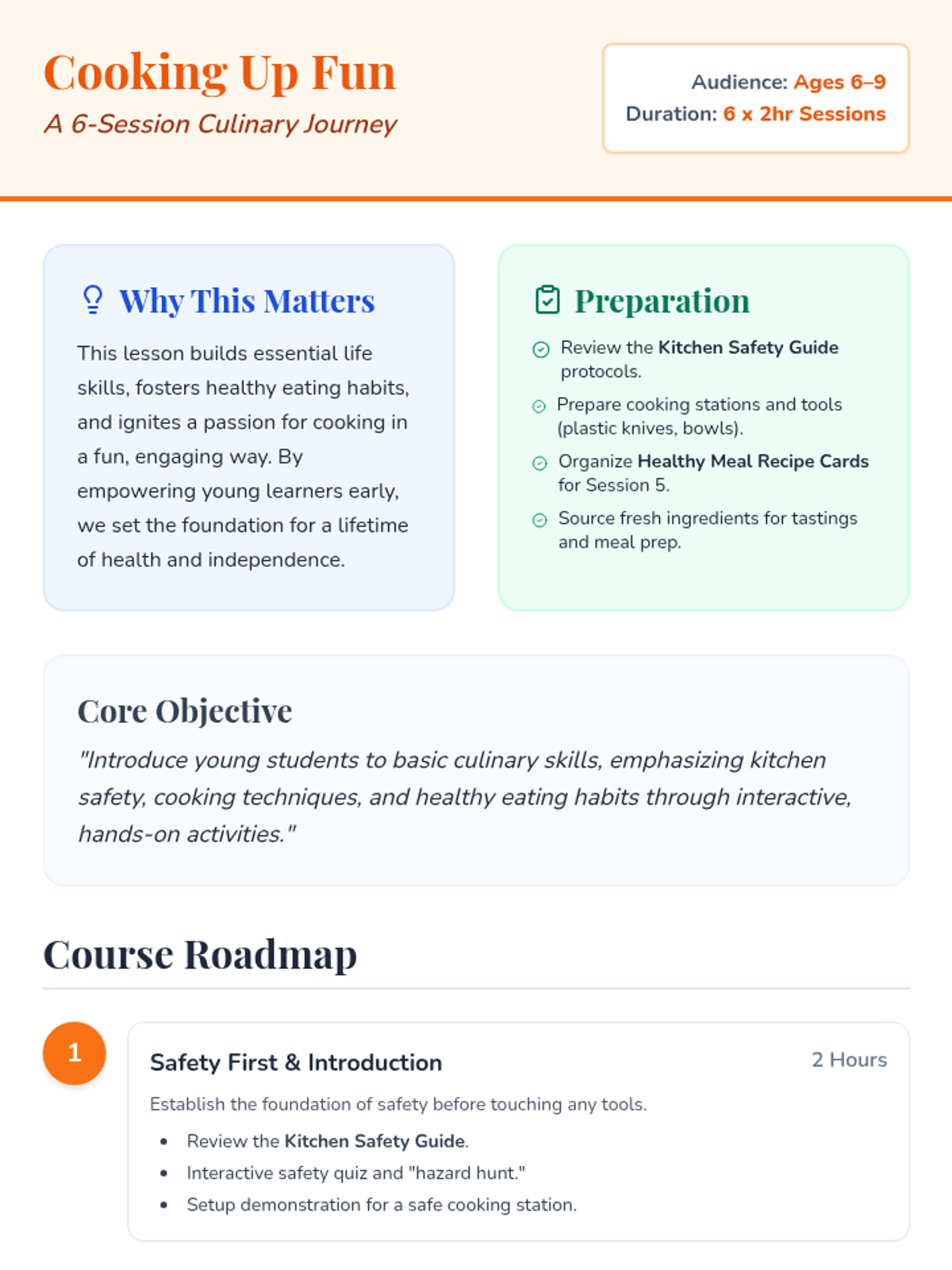
This 6-session culinary education sequence is designed for 6-9 year olds, focusing on basic cooking skills, kitchen safety, and healthy eating habits. Students will progress from safety fundamentals to preparing their own healthy meals and snacks.
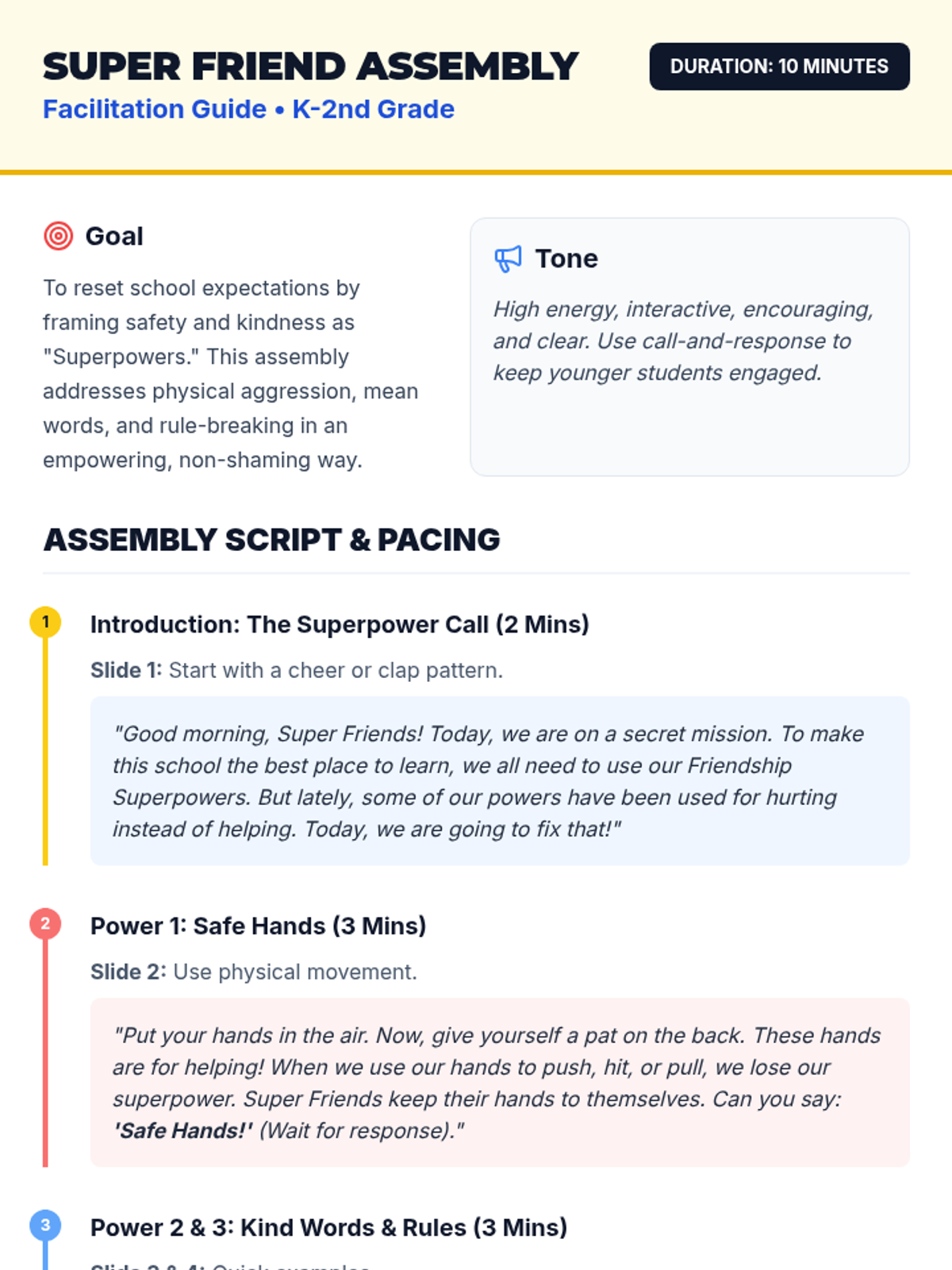
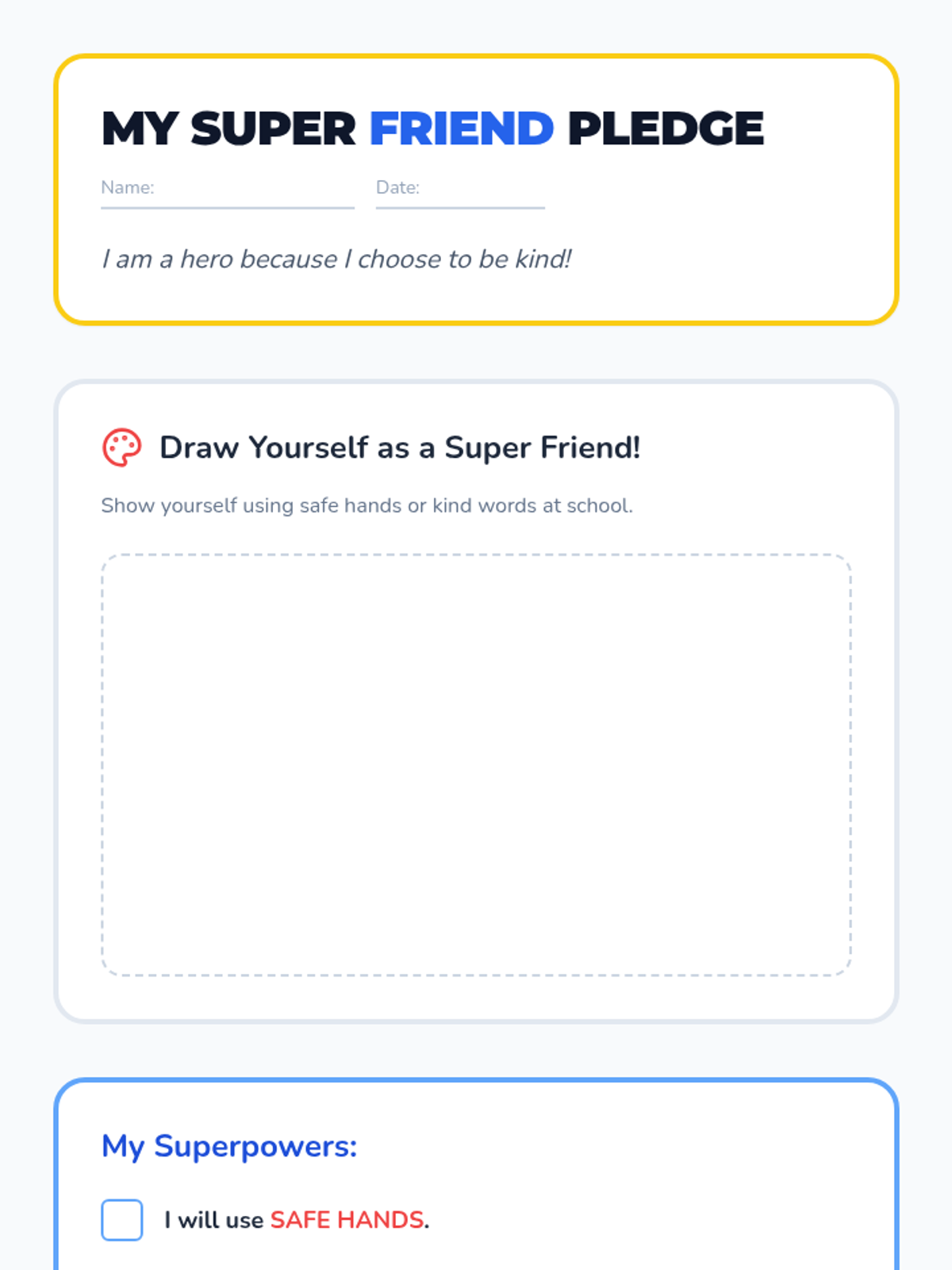
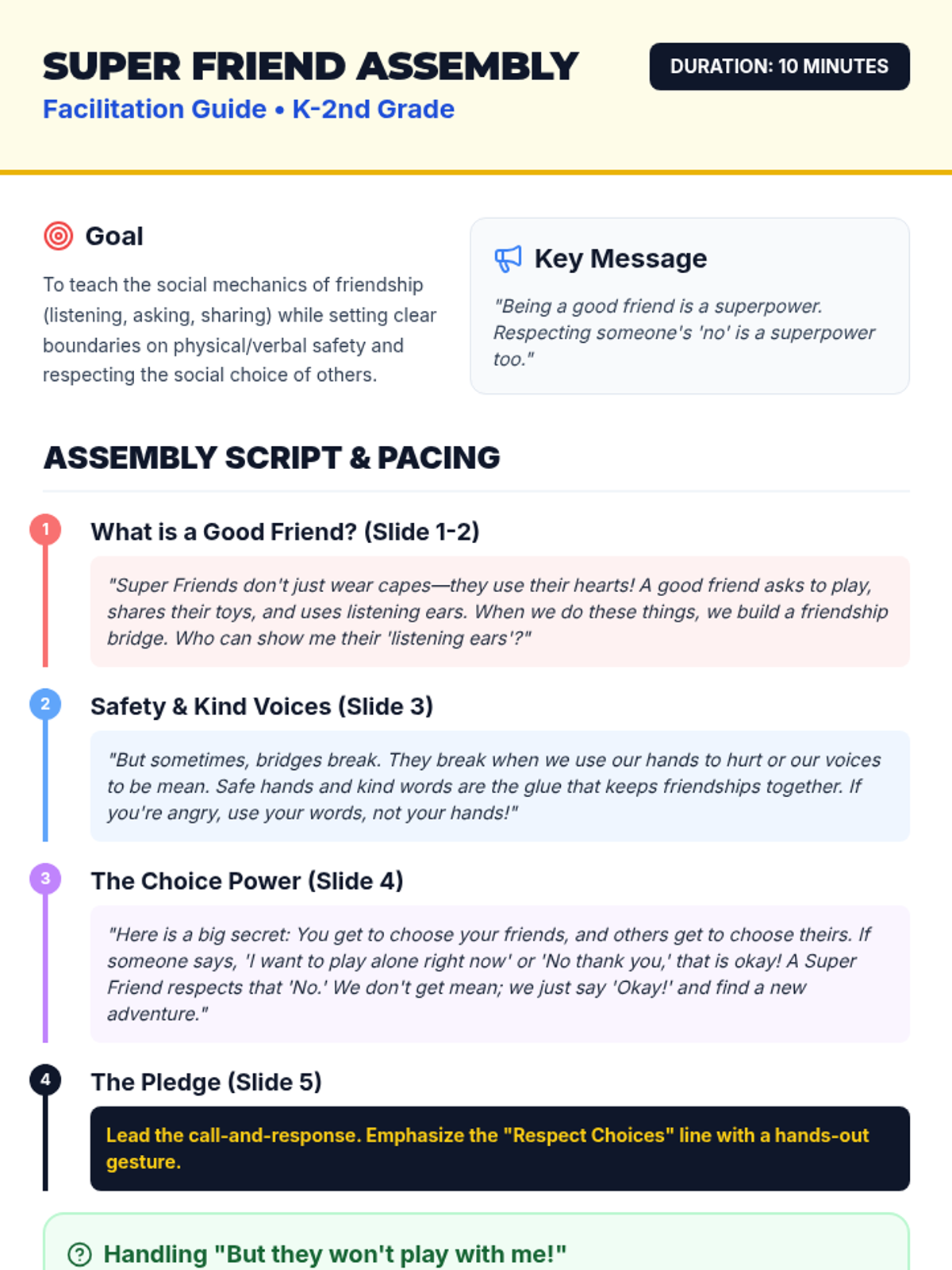
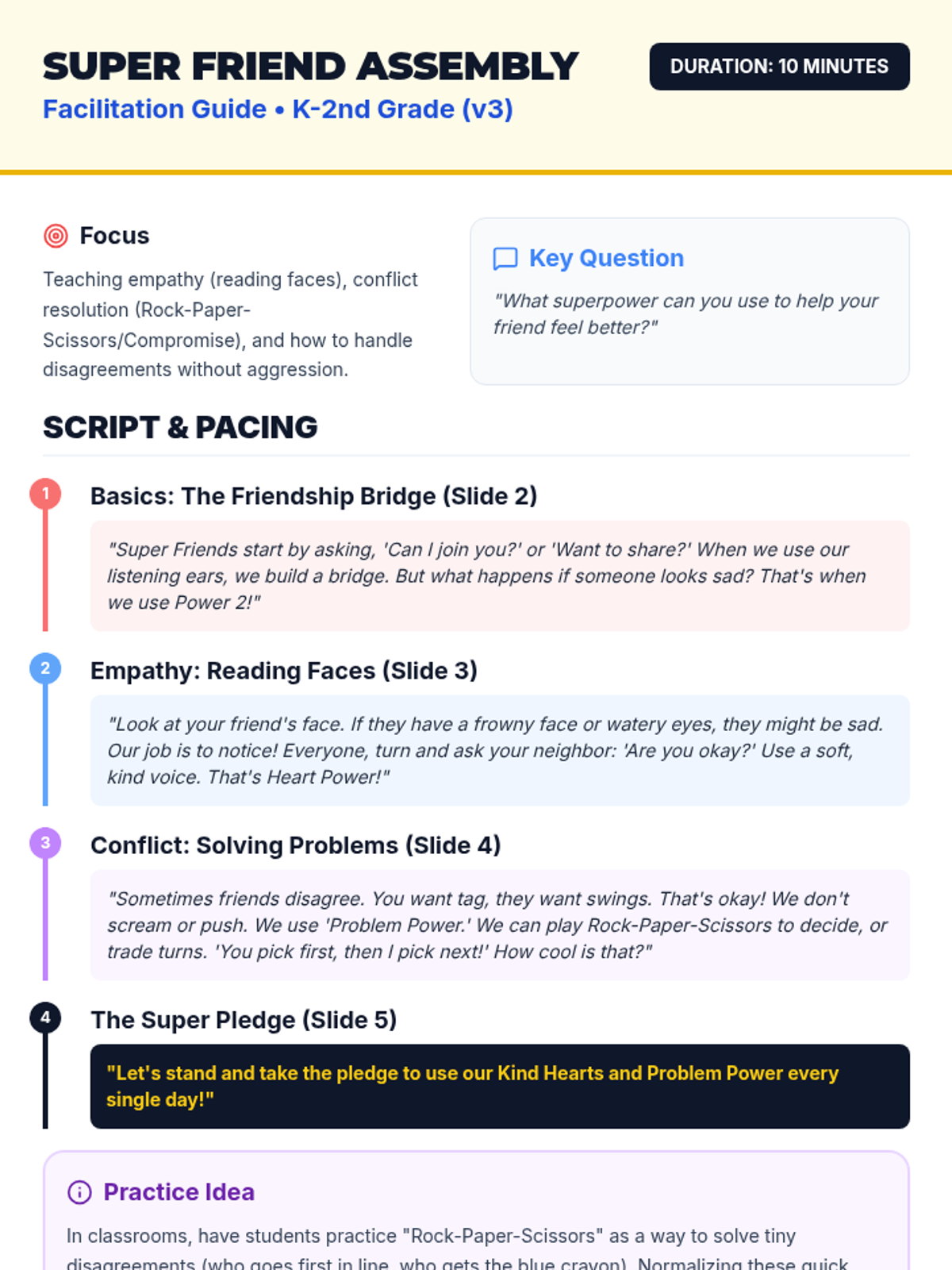
A pair of 10-minute assembly lessons focused on friendship, safety, and community respect for K-2 and 3-5 students, addressing physical and verbal behavior.
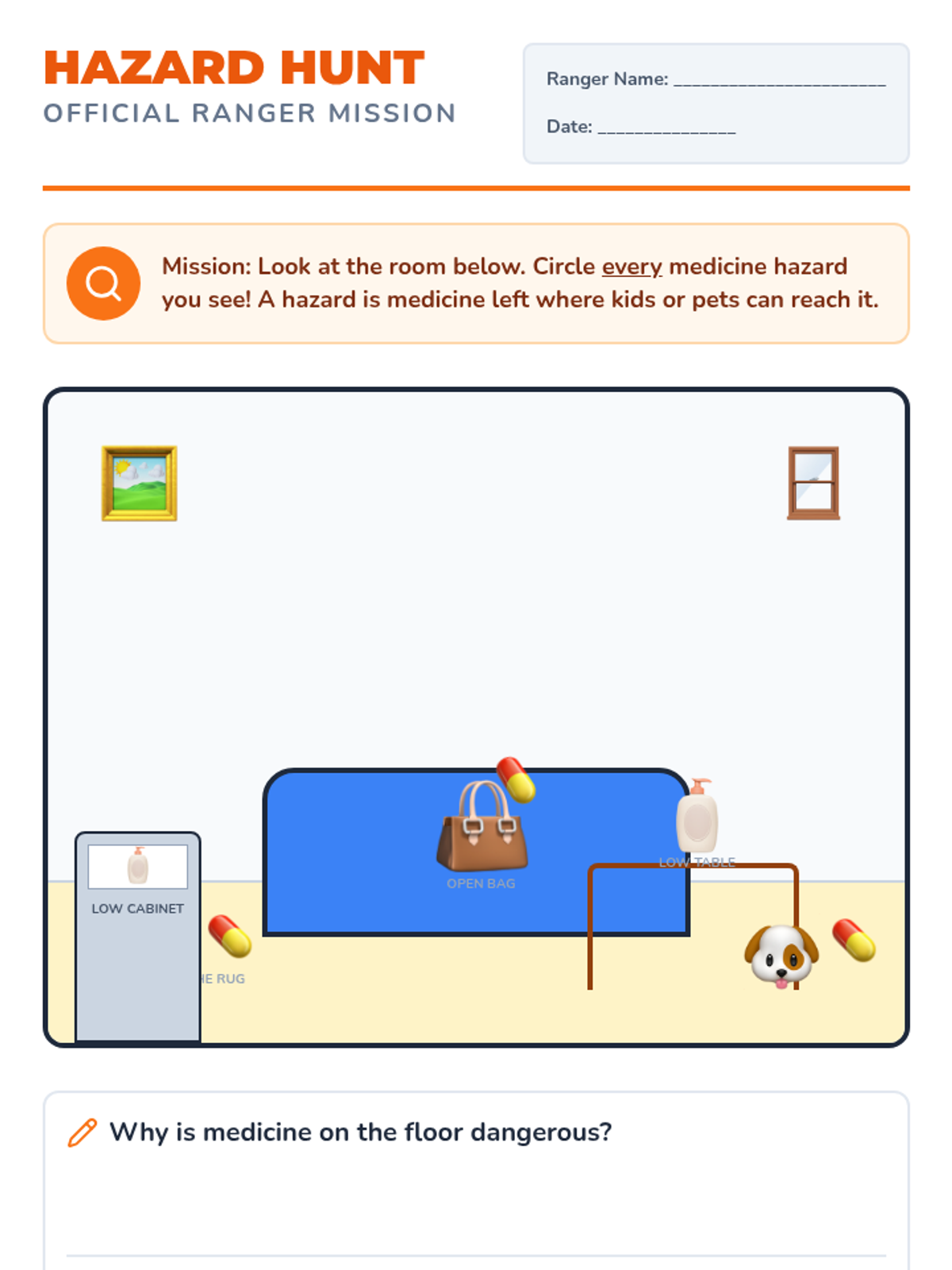
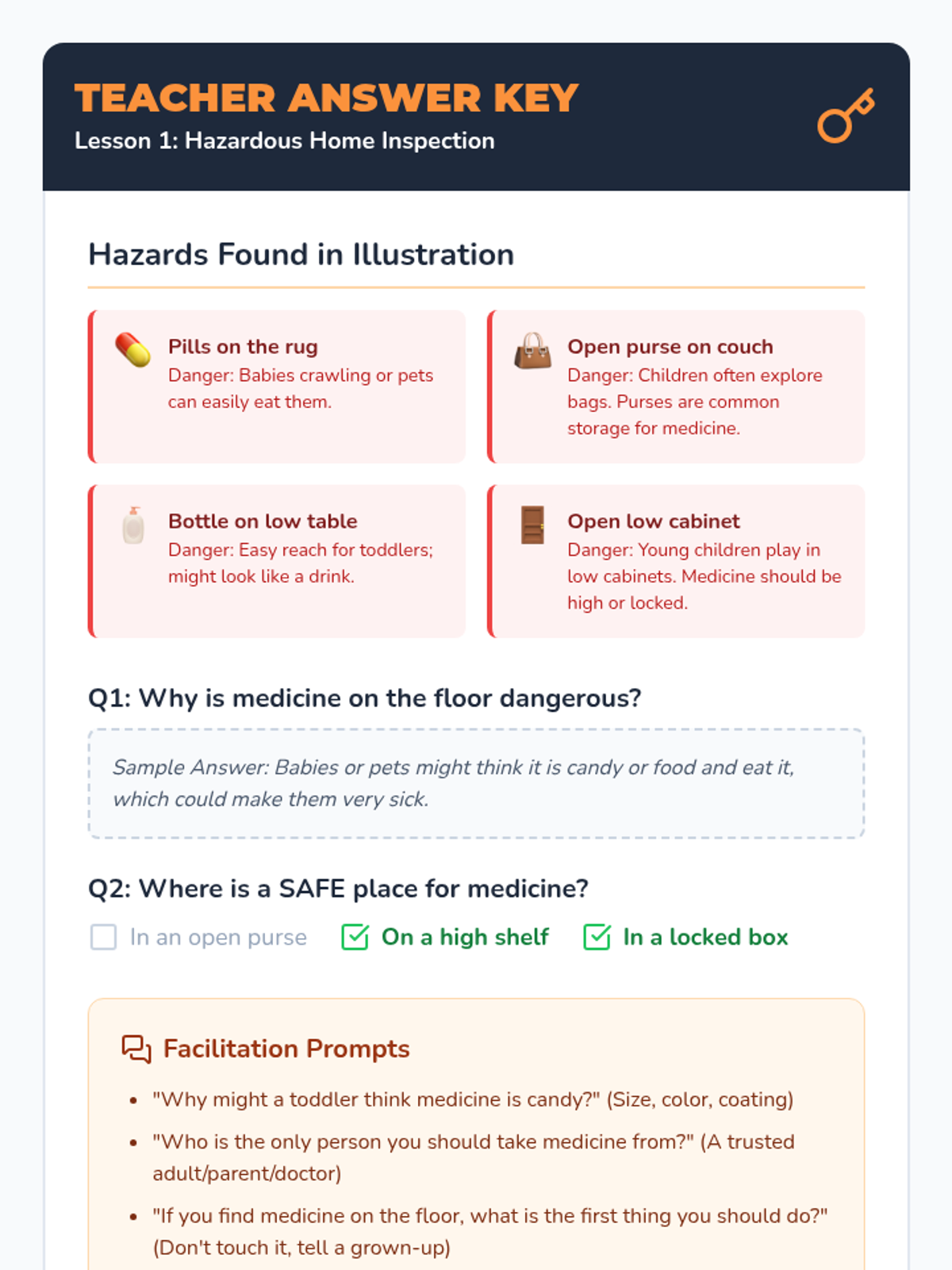
A project-based sequence where 1st Grade students become 'Safety Rangers' to learn about prescription drug safety. They identify hazards, design warning symbols, and learn safe storage practices to protect their homes and communities.
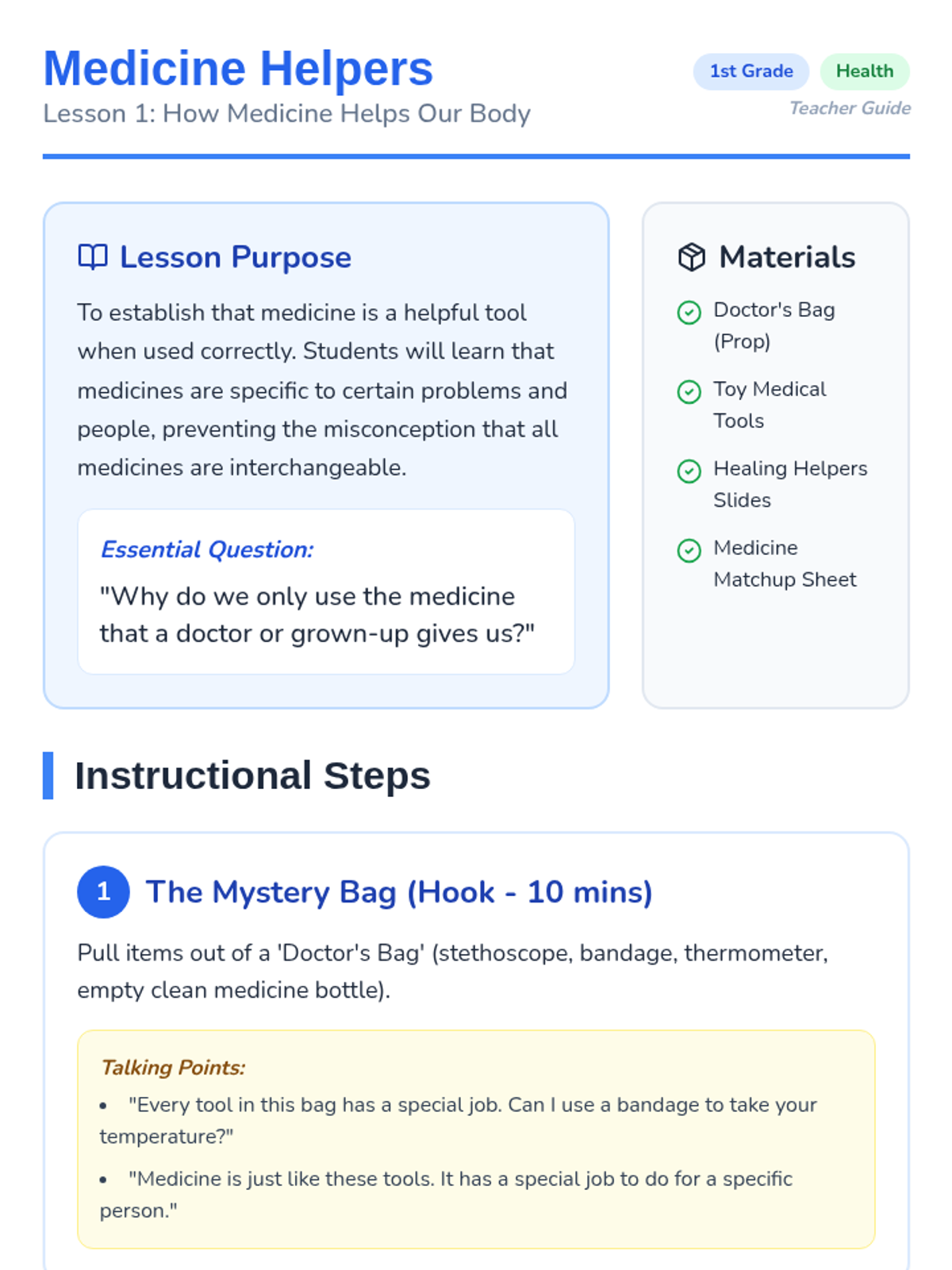
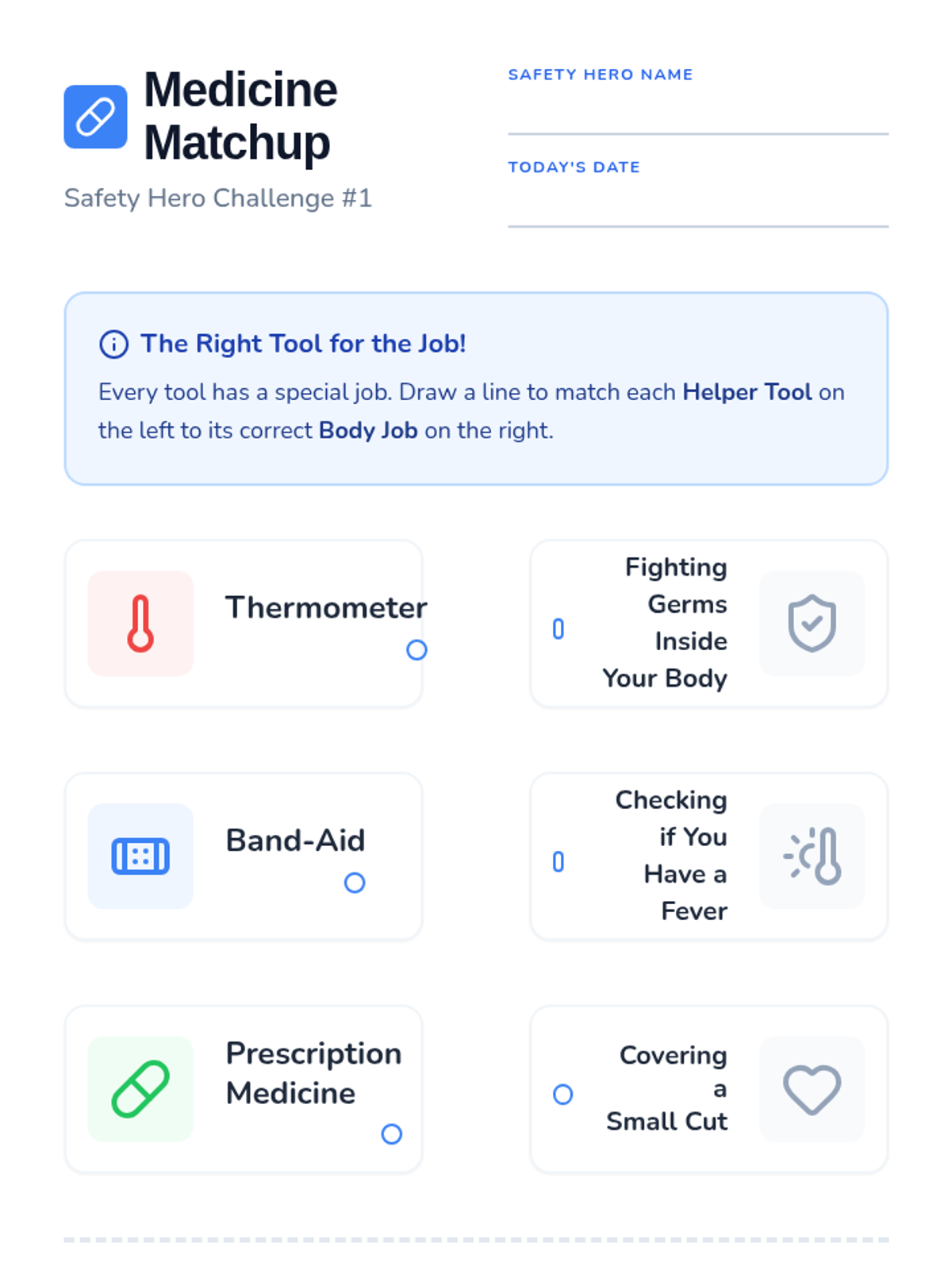
A comprehensive 5-lesson unit for 1st graders on medicine safety, focusing on how medicine helps, the dangers of misuse, and how to respond in emergencies. Students learn that medicine is a tool to be used only as directed by a trusted adult.
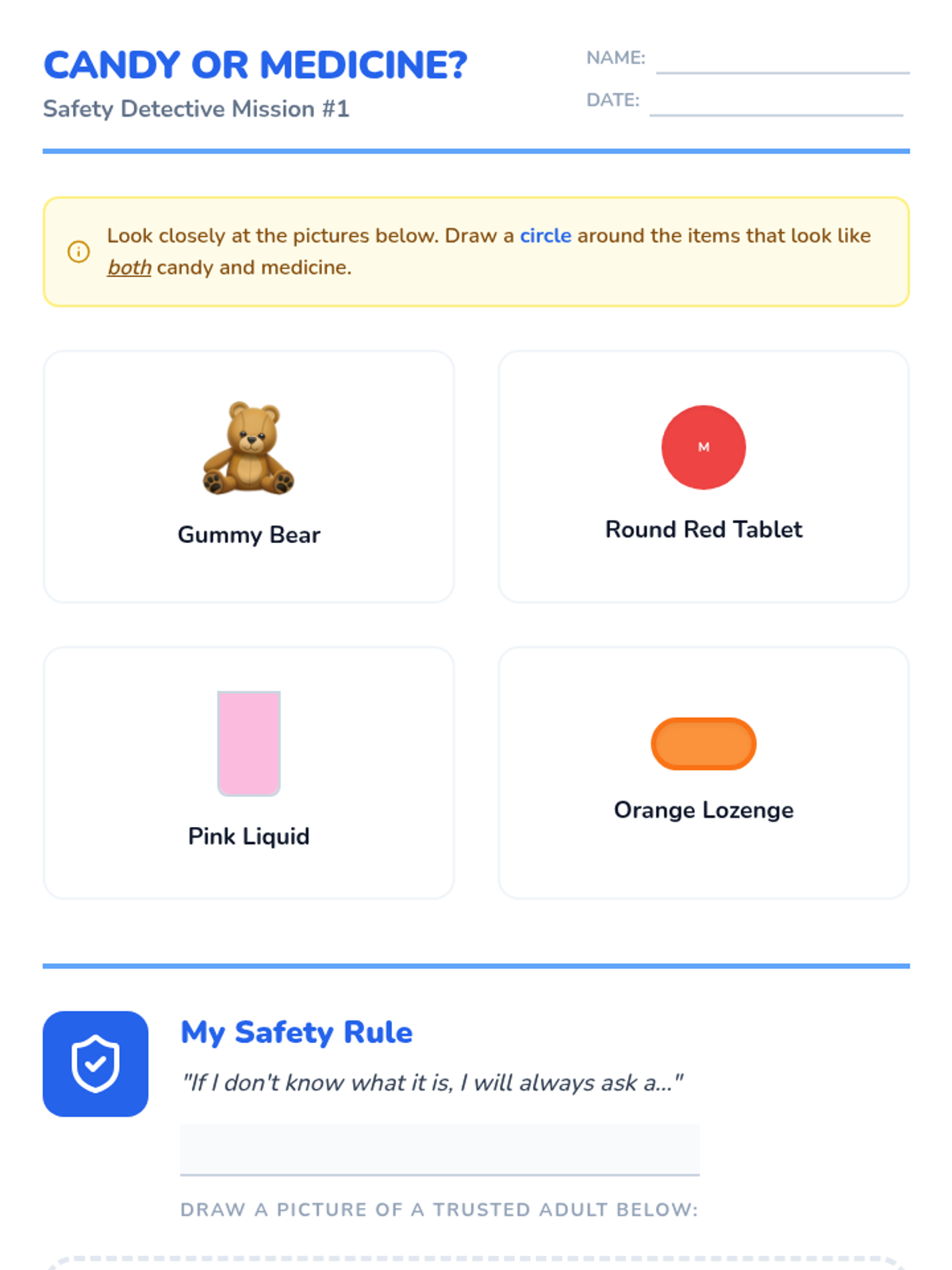
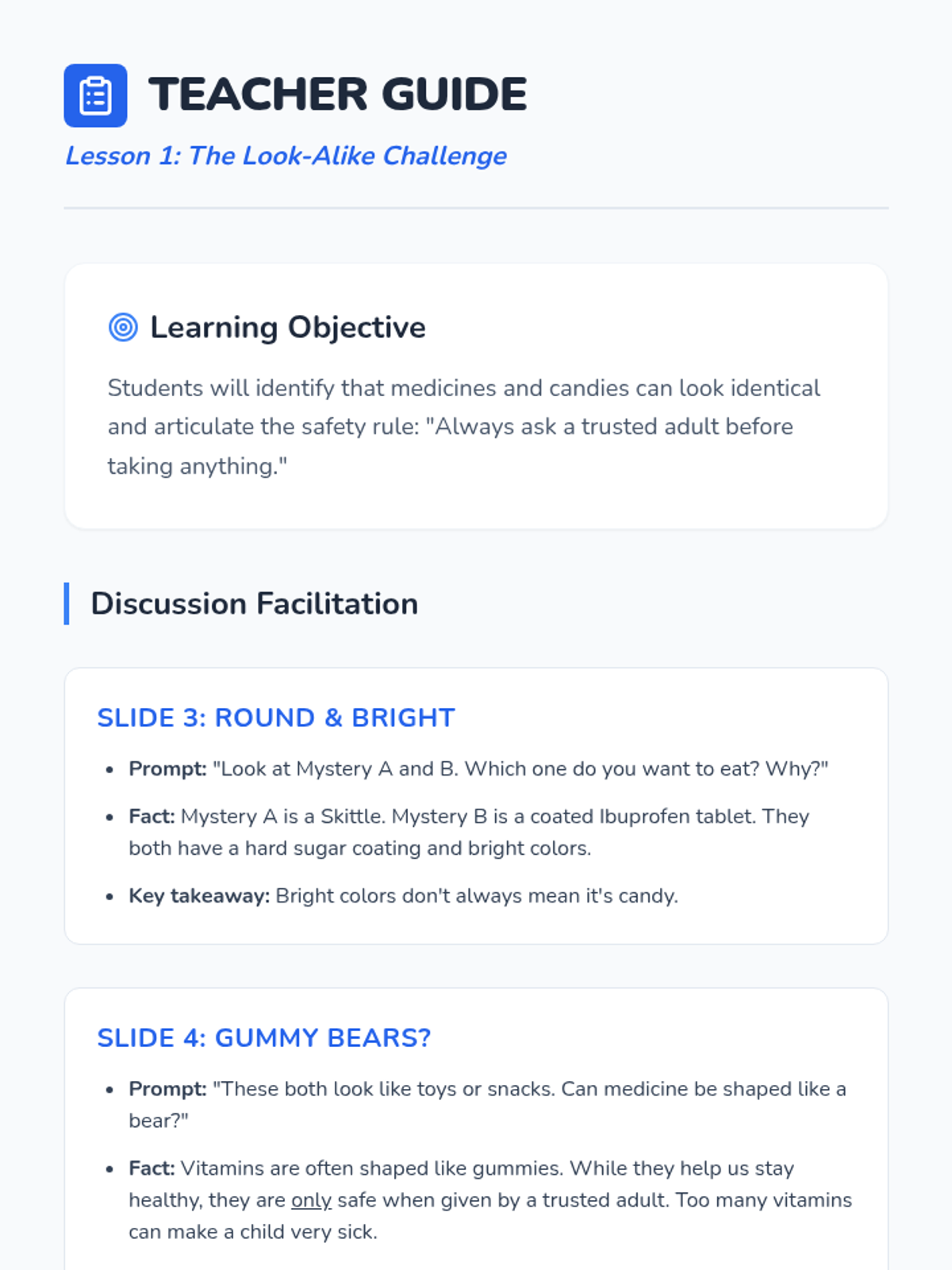
A comprehensive 5-lesson unit for first graders focused on distinguishing candy from medicine, identifying trusted adults, understanding prescription labels, and practicing safe storage. Students become 'Safety Detectives' to learn how to stay safe around medicines.
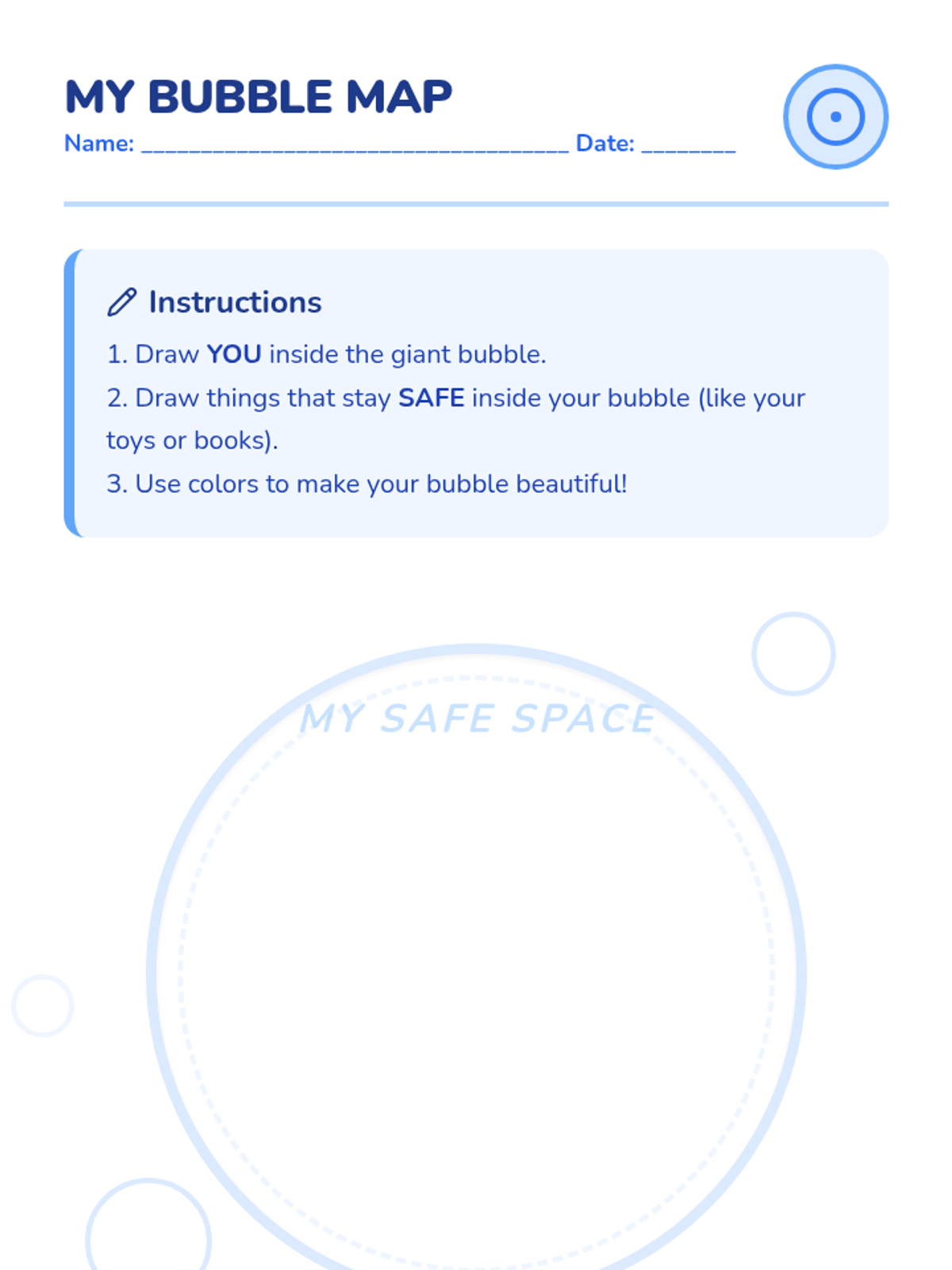
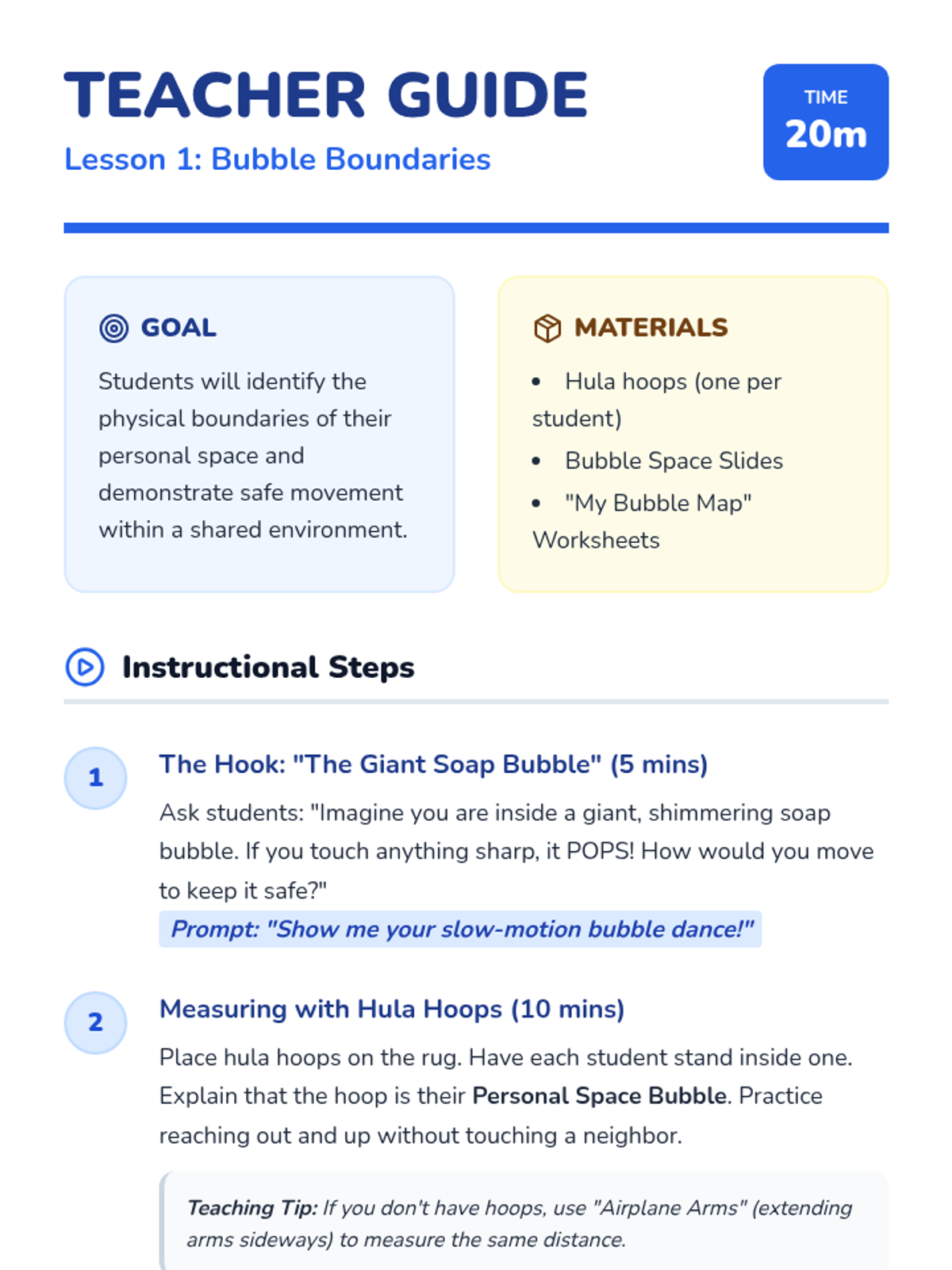
A Kindergarten sequence focused on establishing safe and respectful routines for movement breaks, covering personal space, sensory tool safety, stop/go signals, classroom zones, and social awareness.
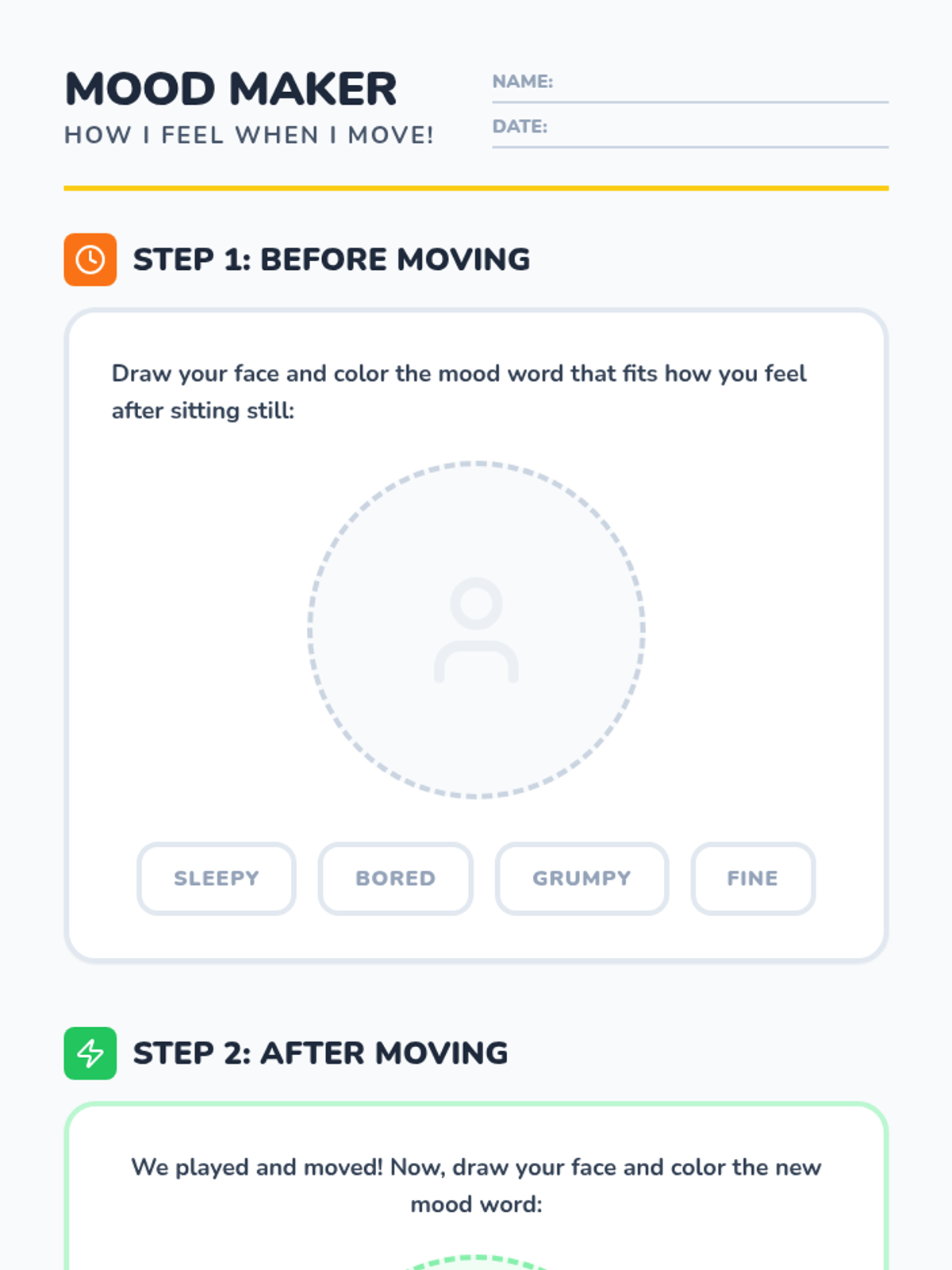
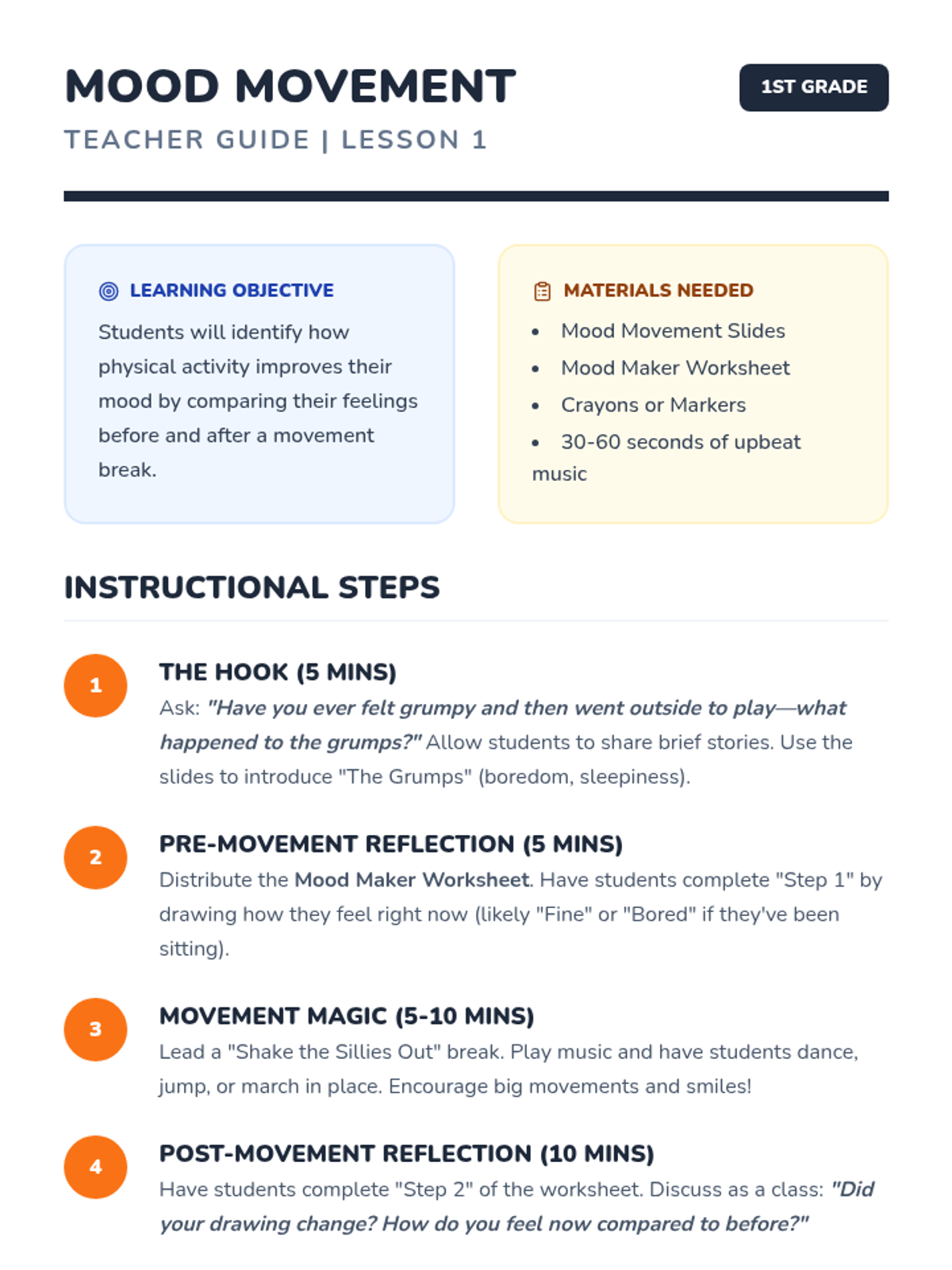
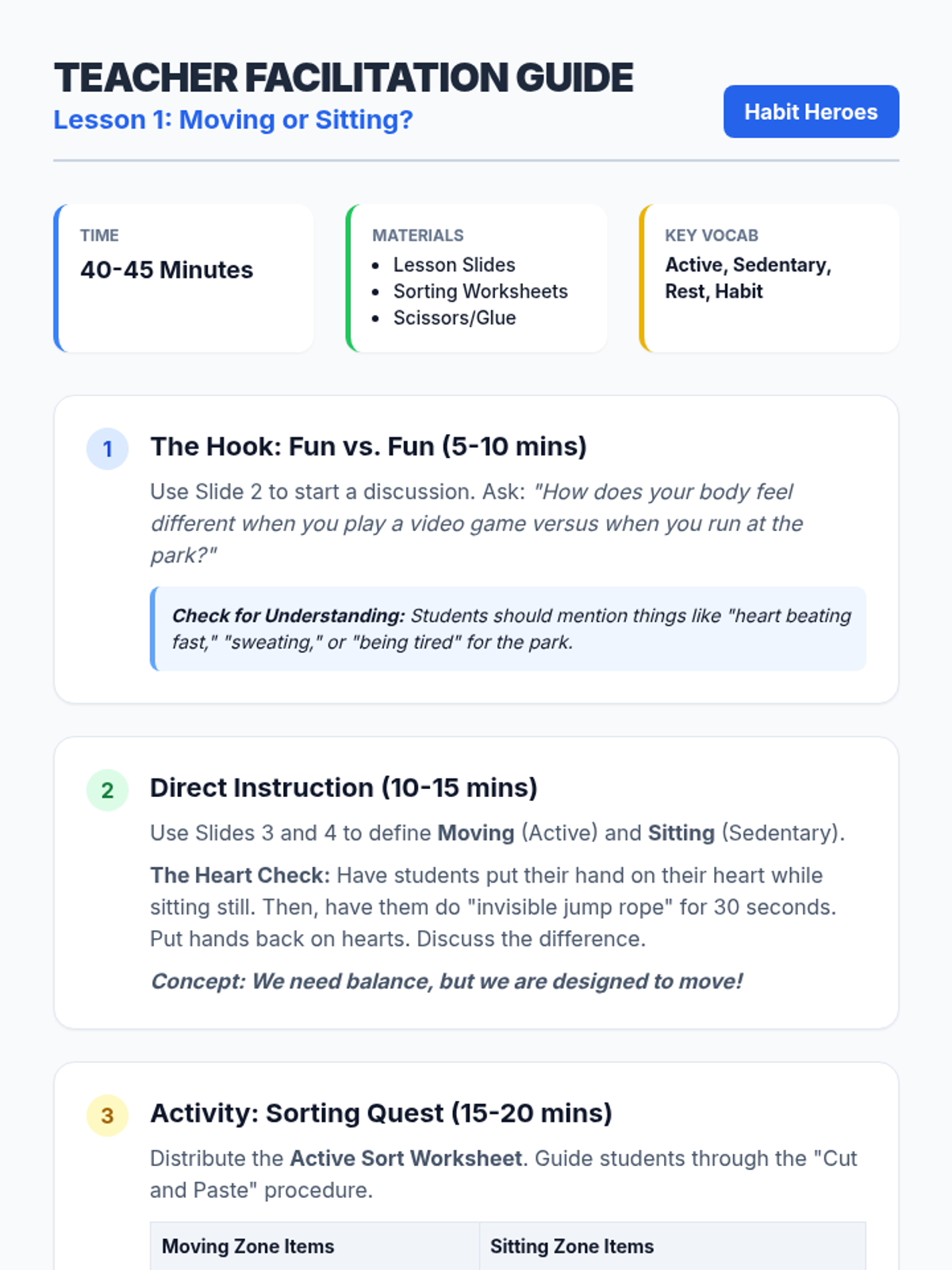
A 1st Grade sequence exploring the emotional, social, and physical benefits of movement. Students learn how physical activity boosts mood, energy, and strength while practicing safety and teamwork.
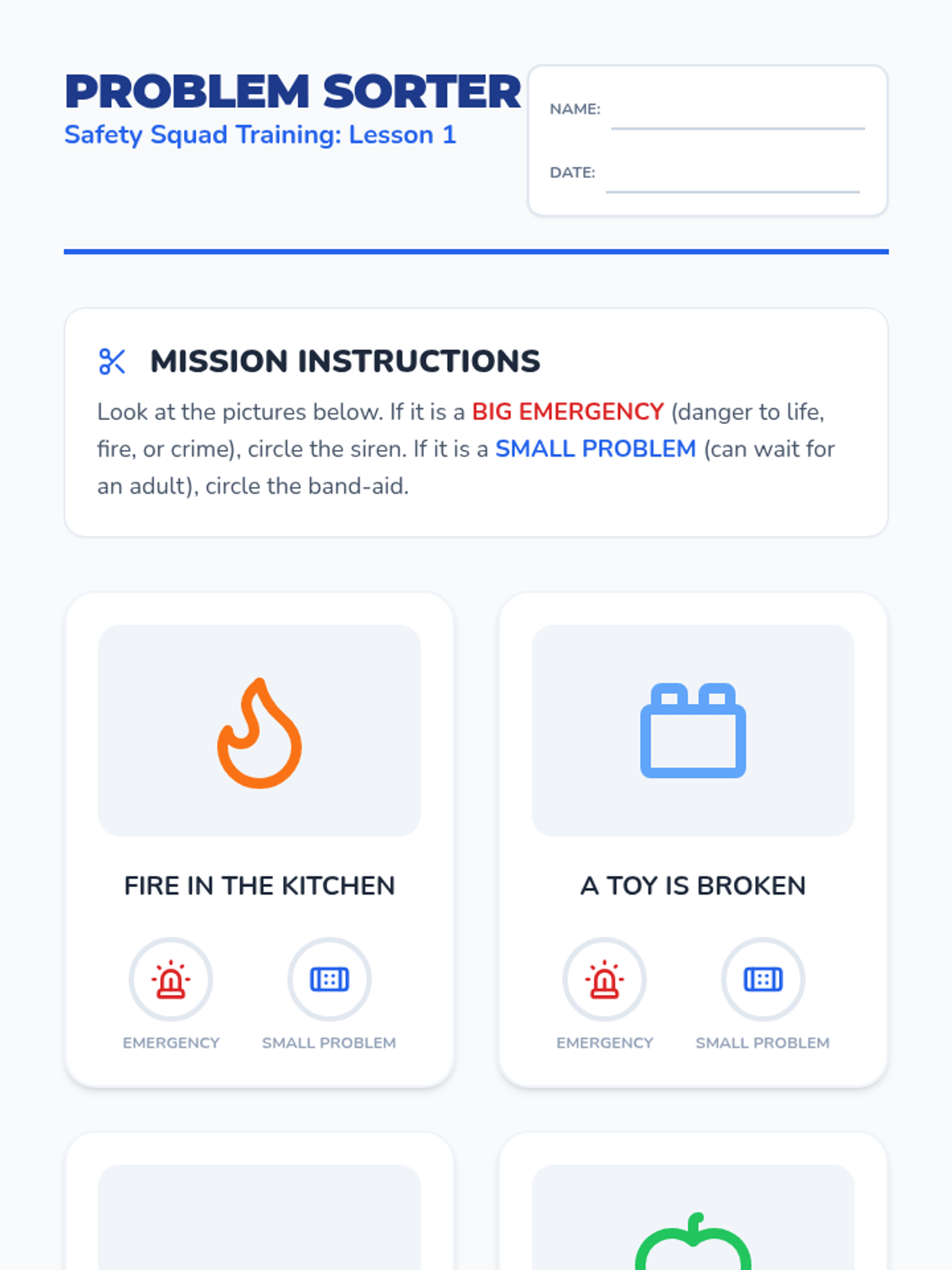
A comprehensive first-grade unit on identifying emergencies, communicating with dispatchers, memorizing personal safety info, and executing physical safety protocols like fire drills.
A comprehensive 1st-grade sequence on personal safety, teaching students to identify safe adults, recognize physical warning signs, and follow the 'Check First' and 'No, Go, Yell, Tell' protocols.
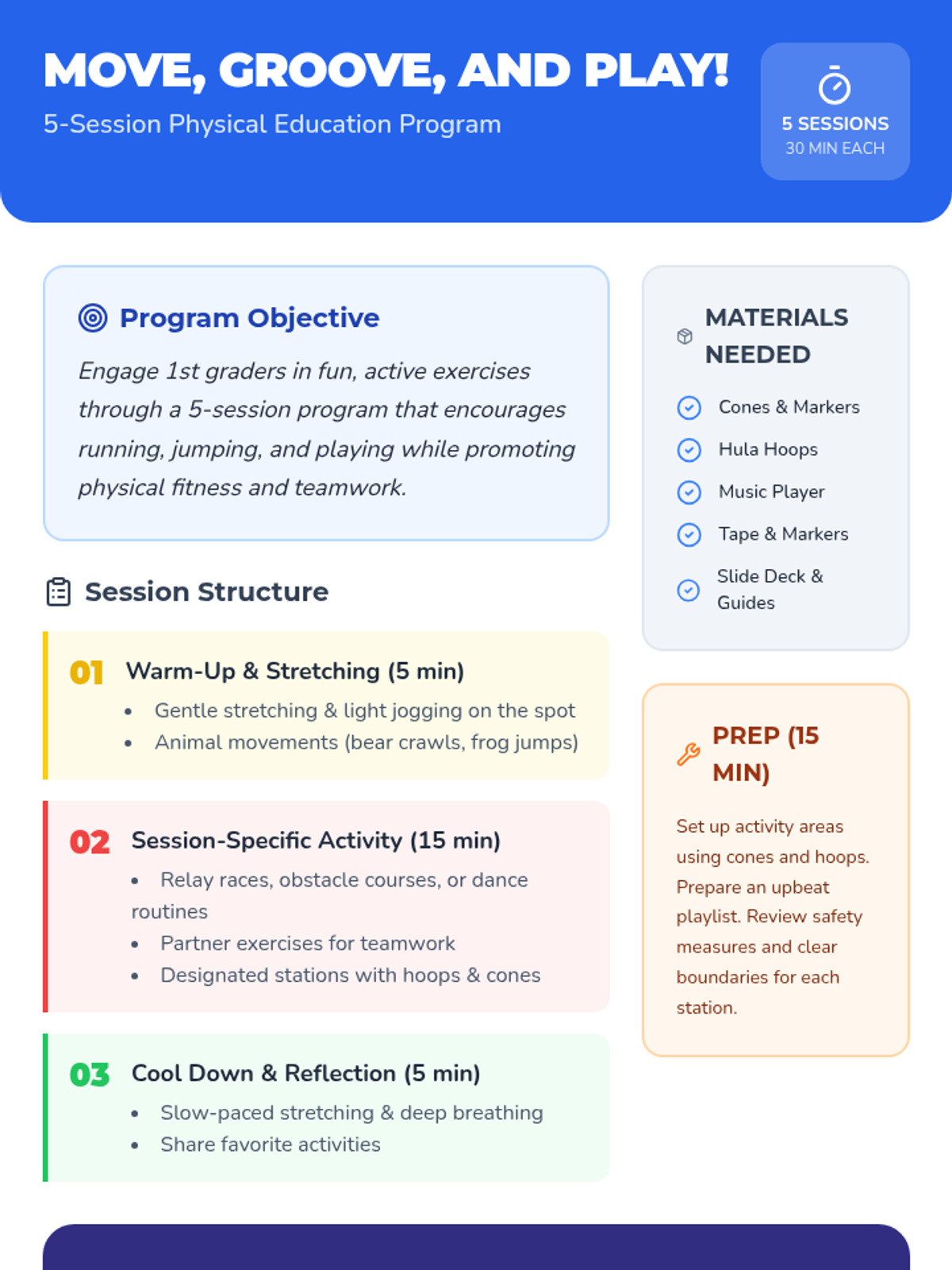
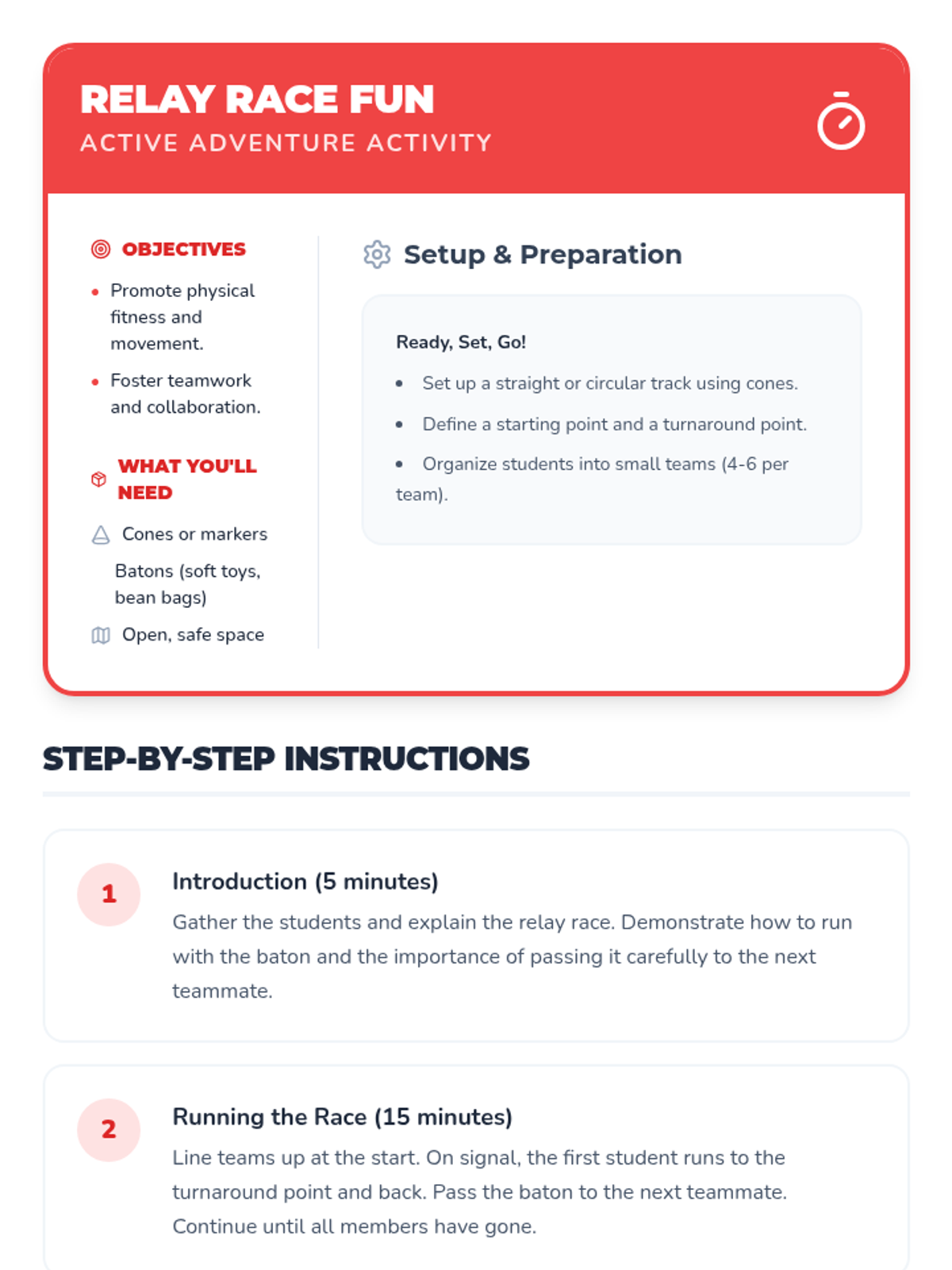
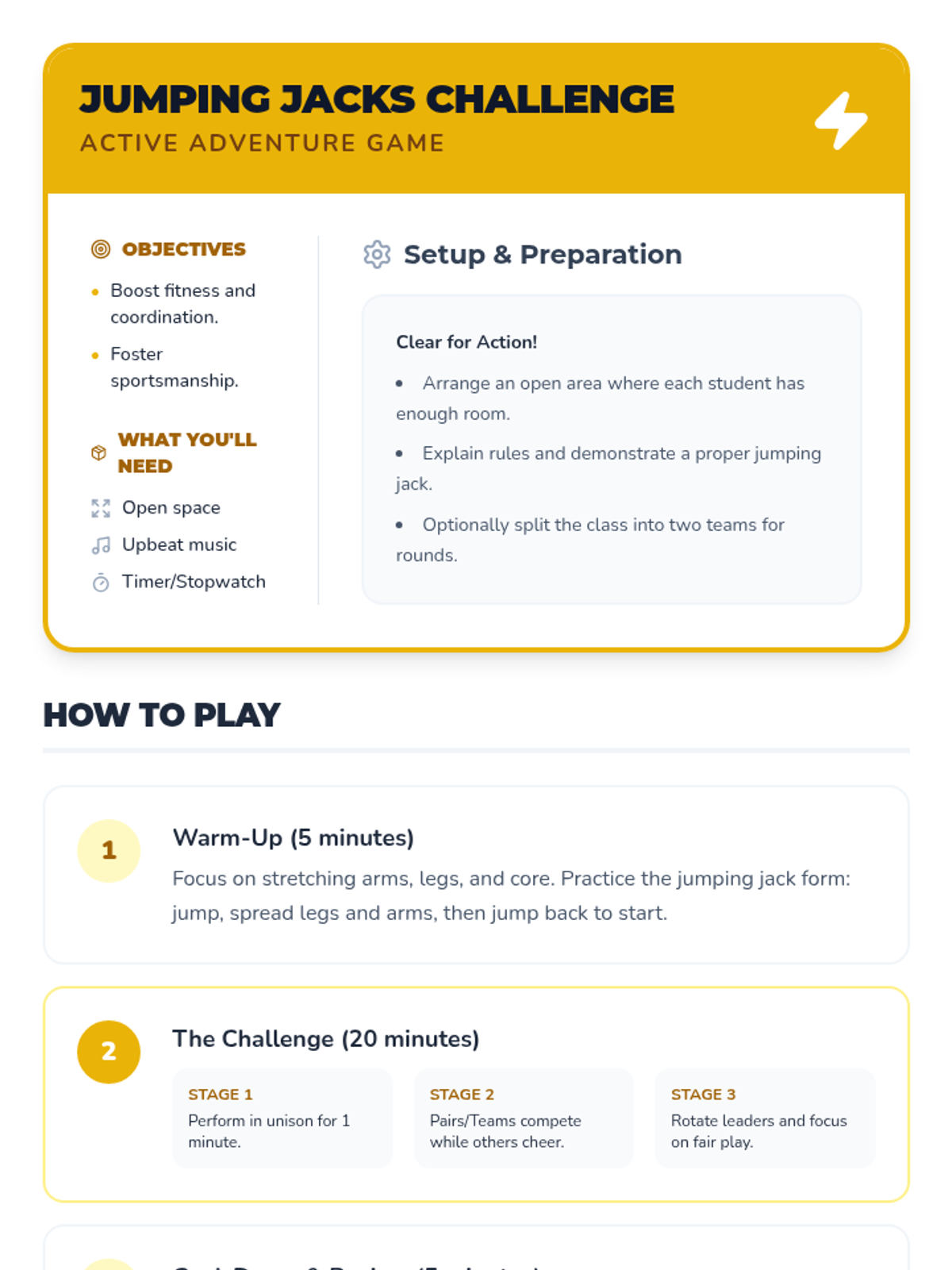
A 5-session physical education program for young learners focused on building healthy habits, motor skills, and teamwork through fun circuit-style exercises and games.
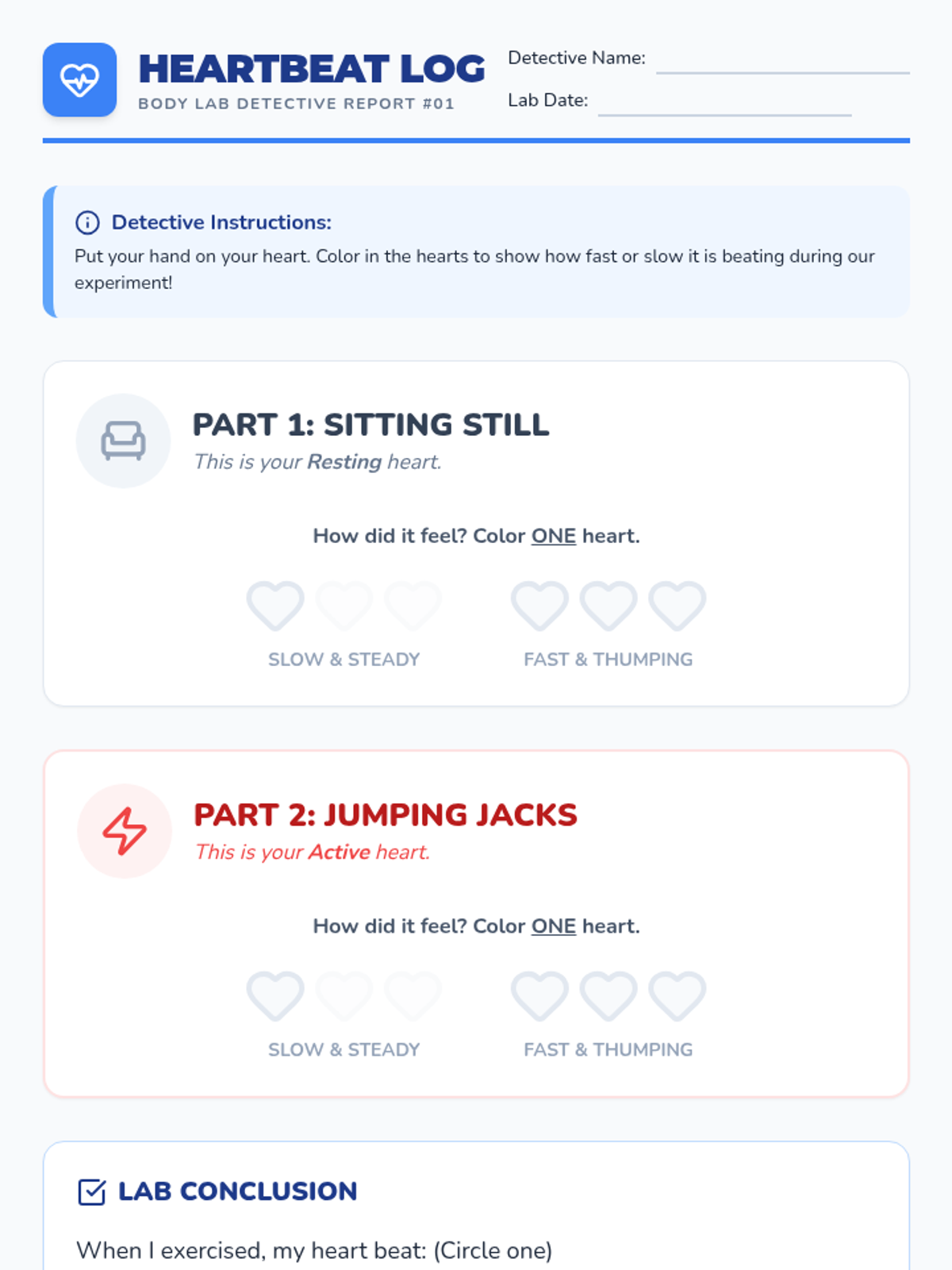
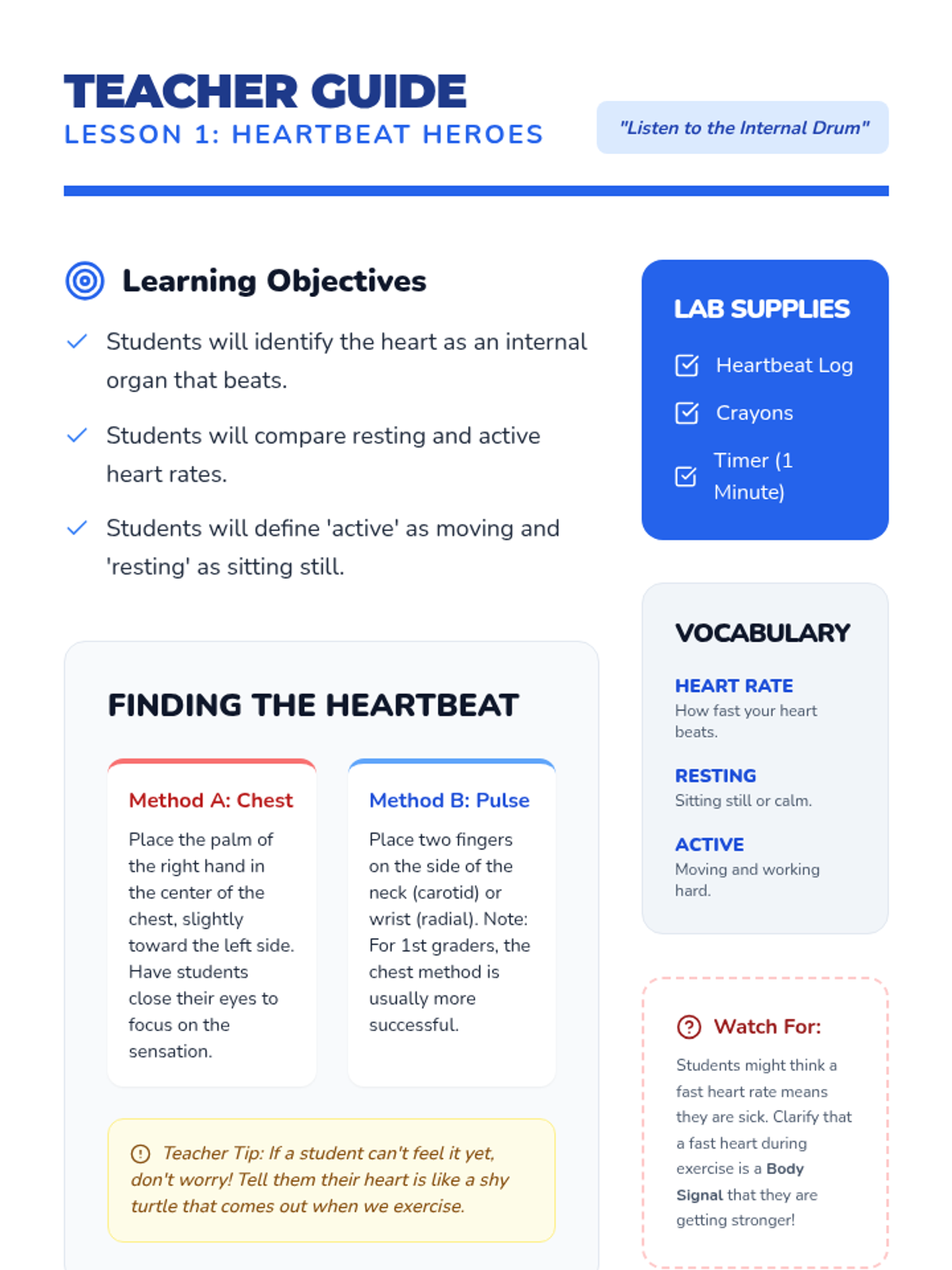
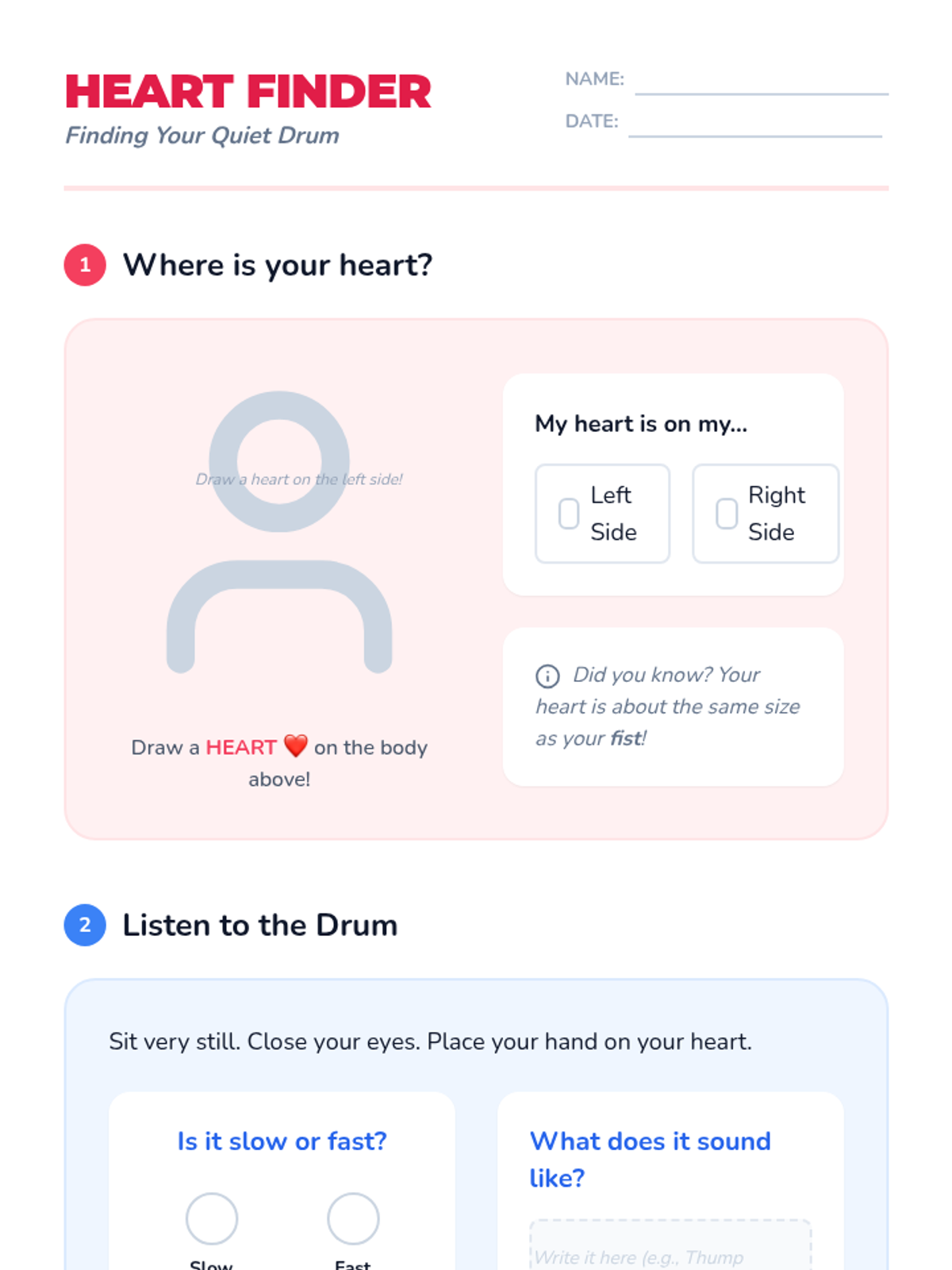
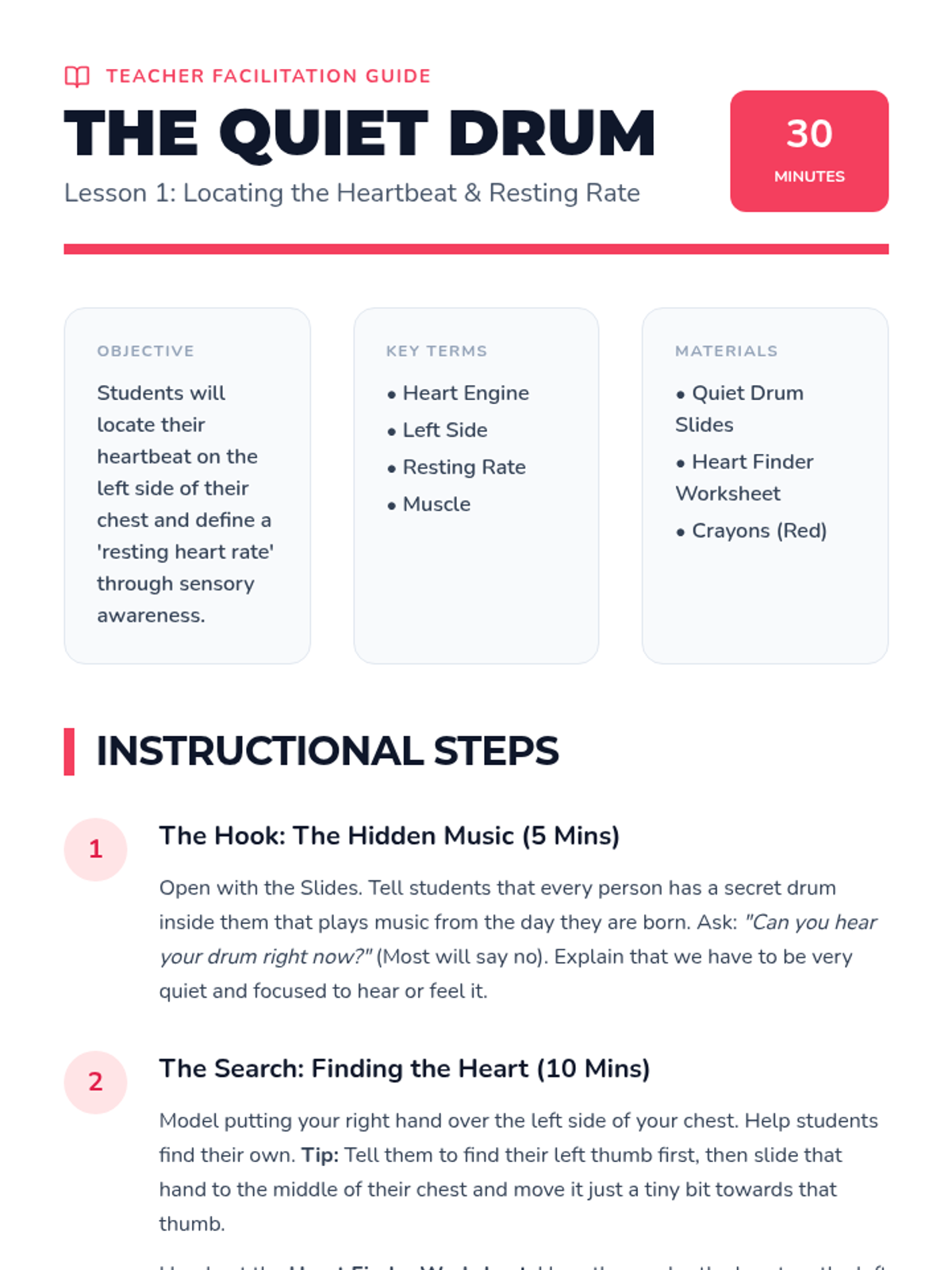
A 5-lesson sequence for 1st graders to understand heart rate changes through movement, sensory exploration, and play. Students learn to locate their heartbeat, compare resting vs. active rates, and identify exercise as a way to make their 'heart engine' stronger.
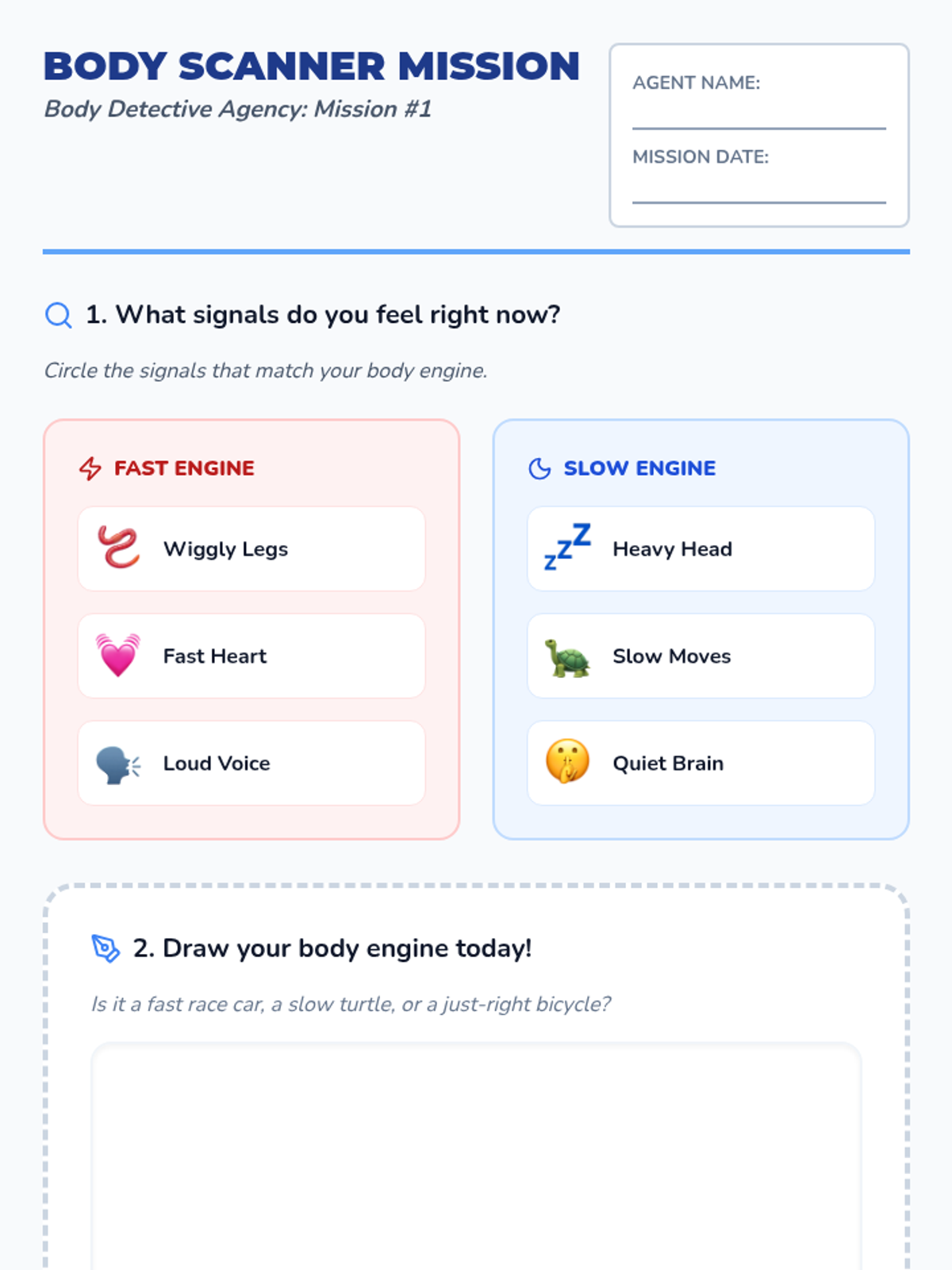
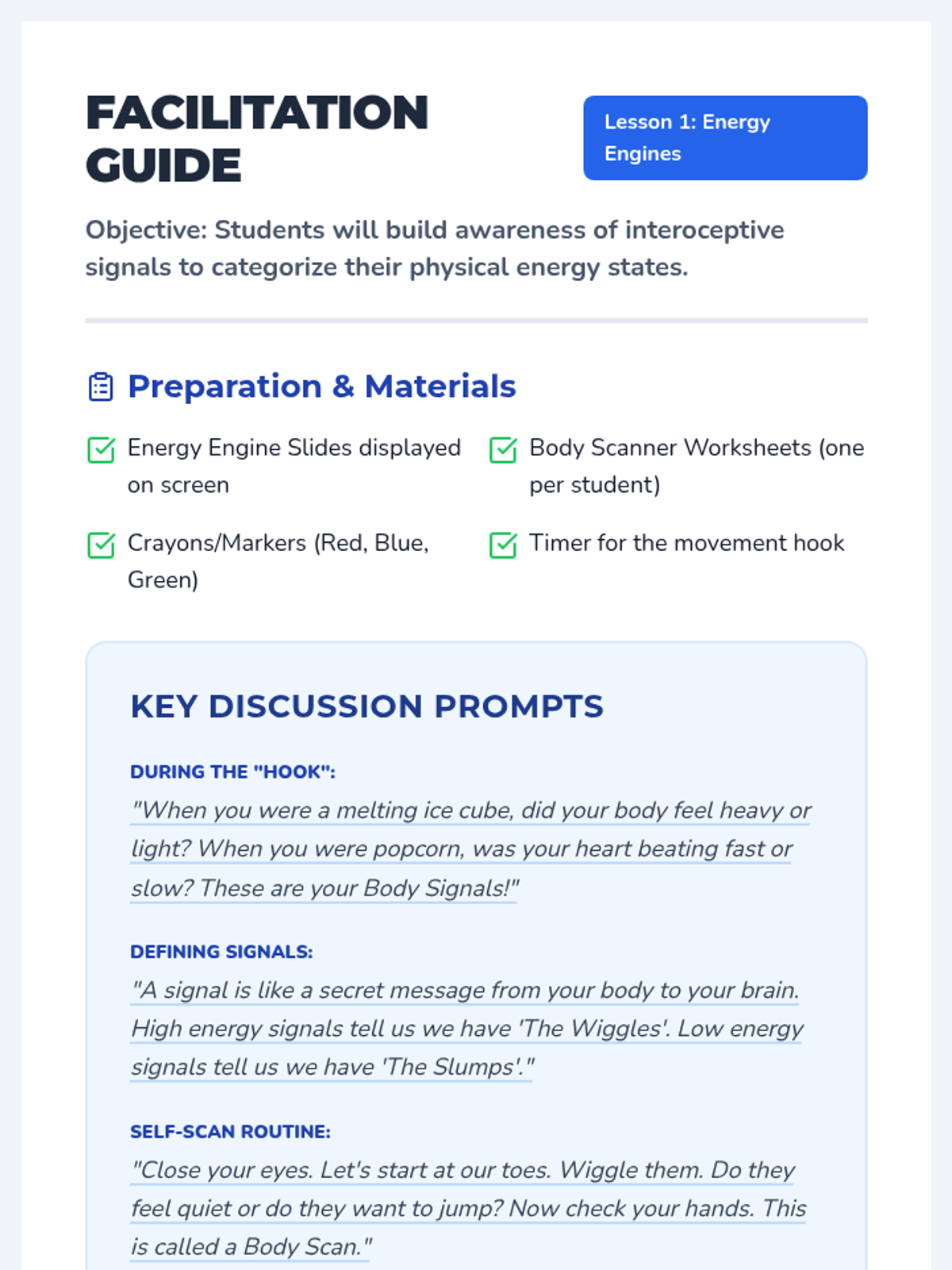
This sequence teaches 1st-grade students to recognize internal body signals (interoception) and match them with appropriate movement breaks. Students learn to differentiate between high energy (the wiggles) and low energy (the slumps) and explore specific calming and alerting movements to regulate their state.
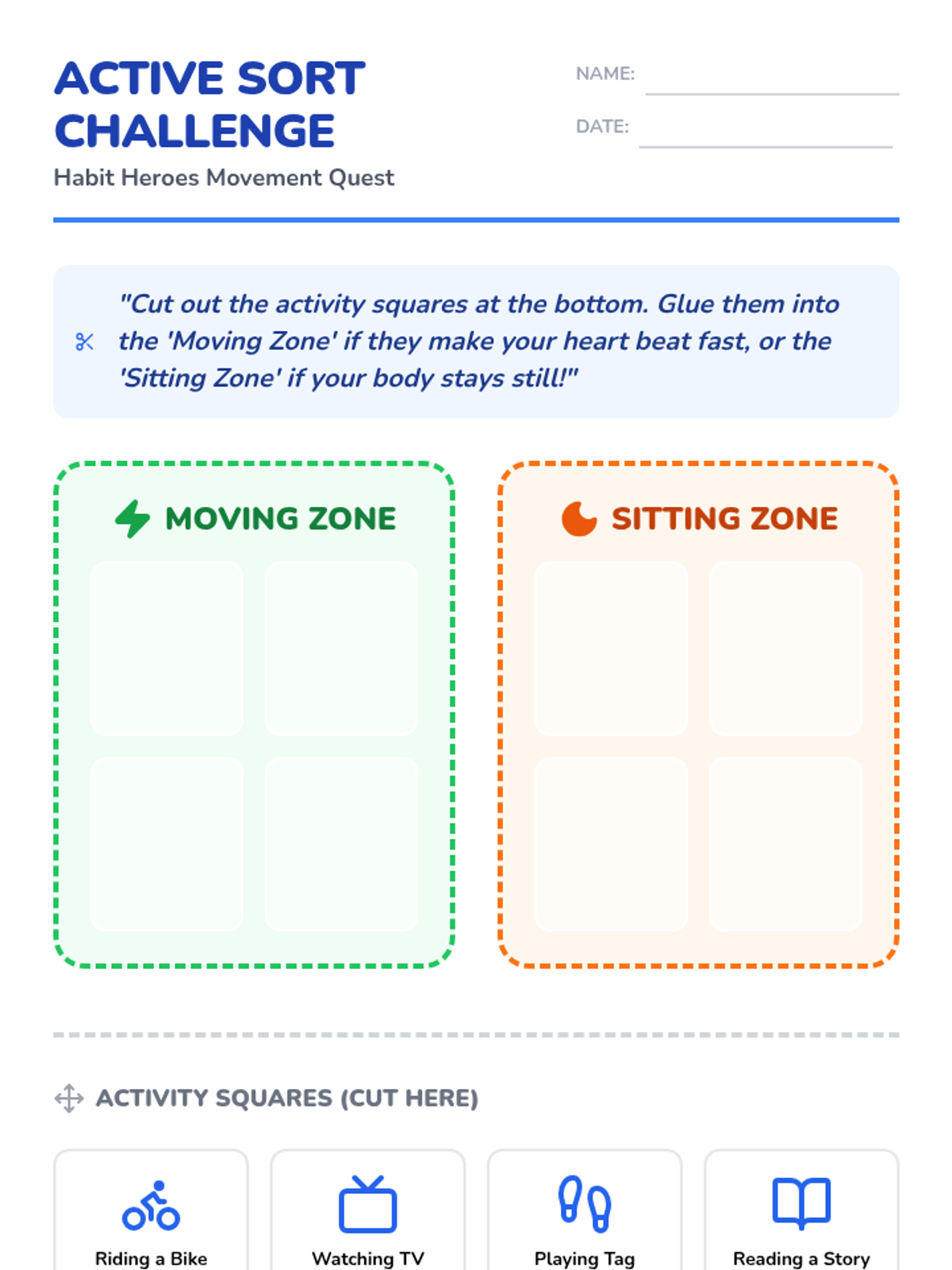
A 5-lesson sequence for 1st graders focused on identifying, planning, and tracking personal physical activity habits to foster a lifelong love for movement.
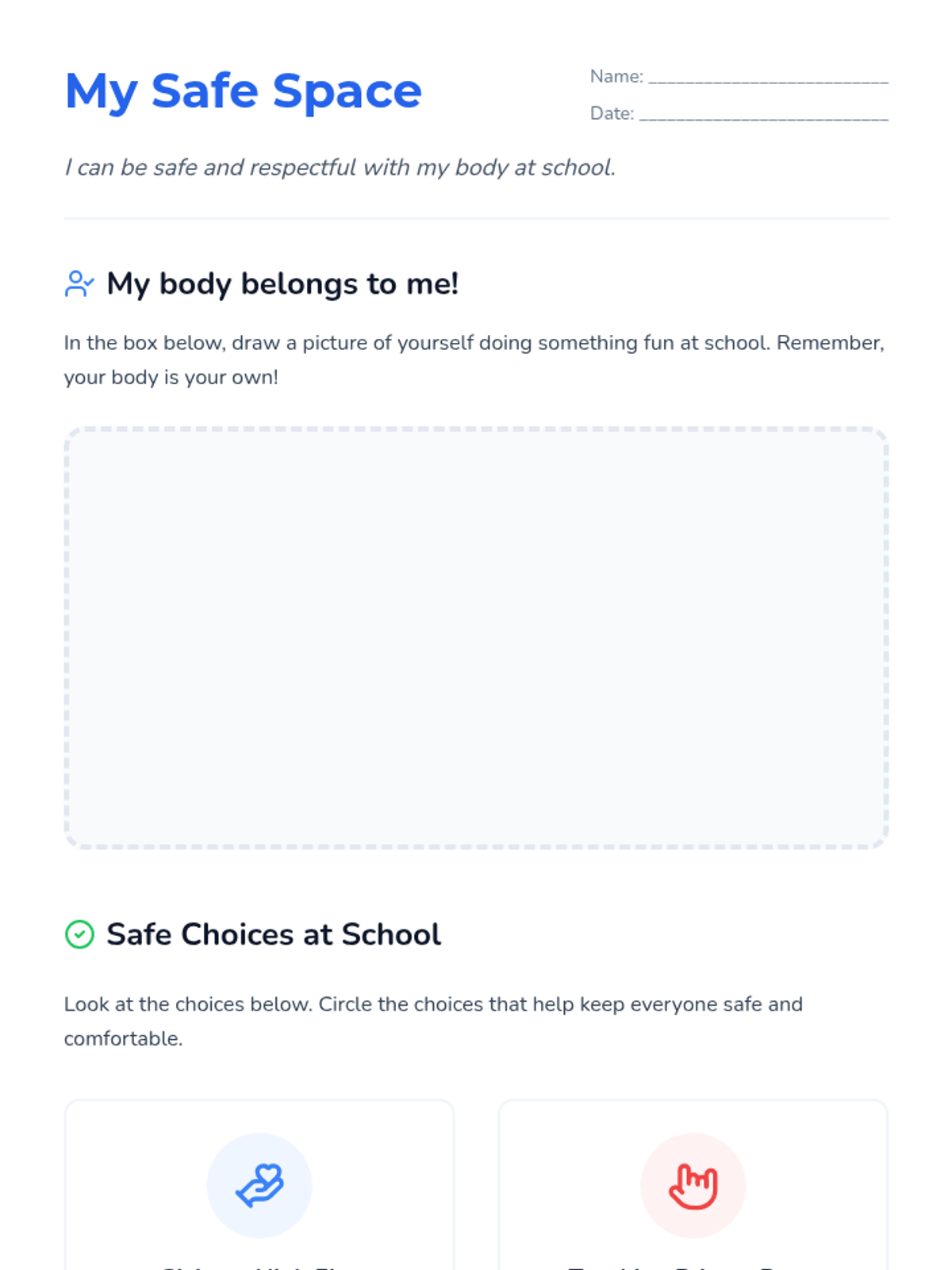
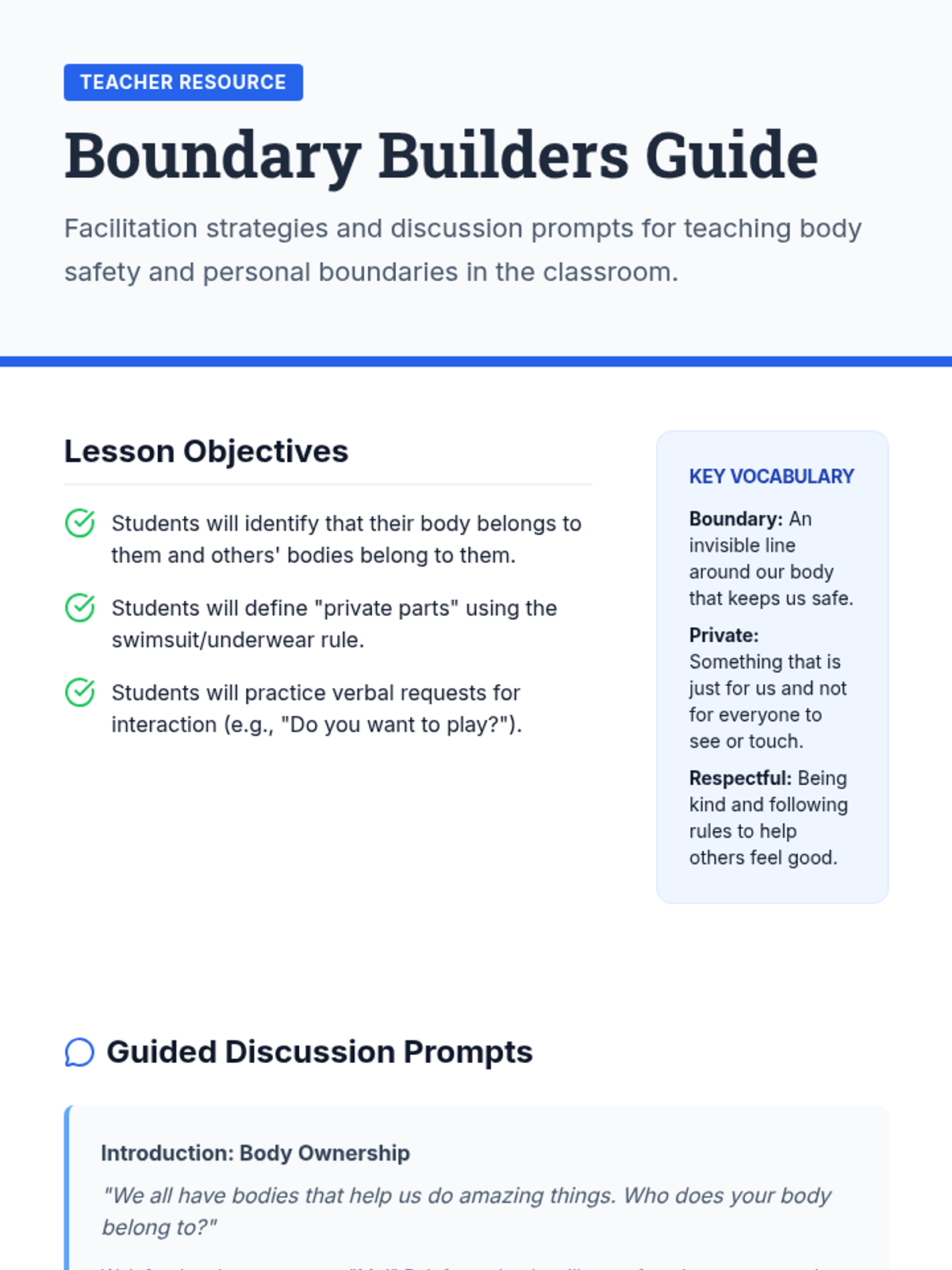
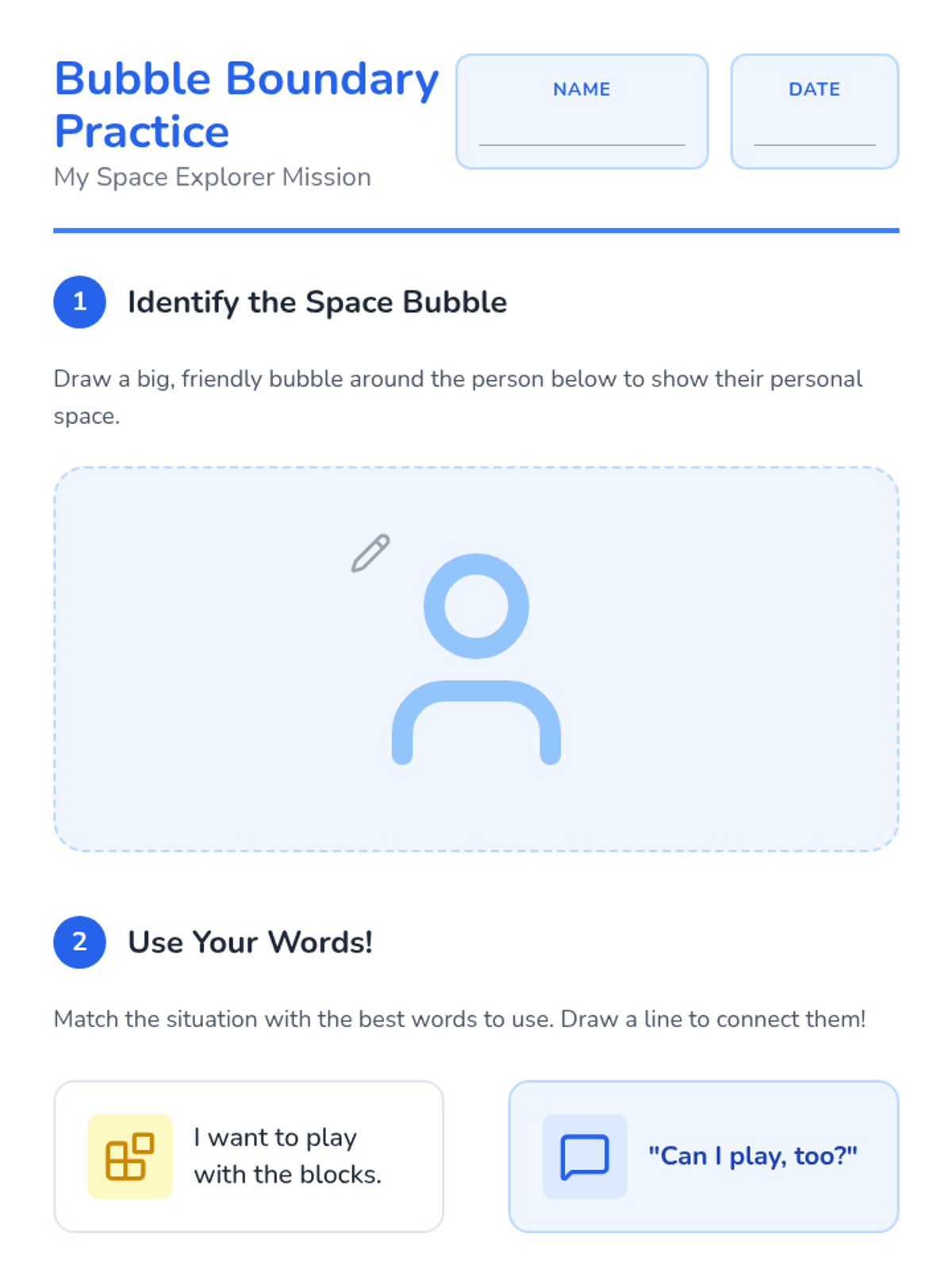
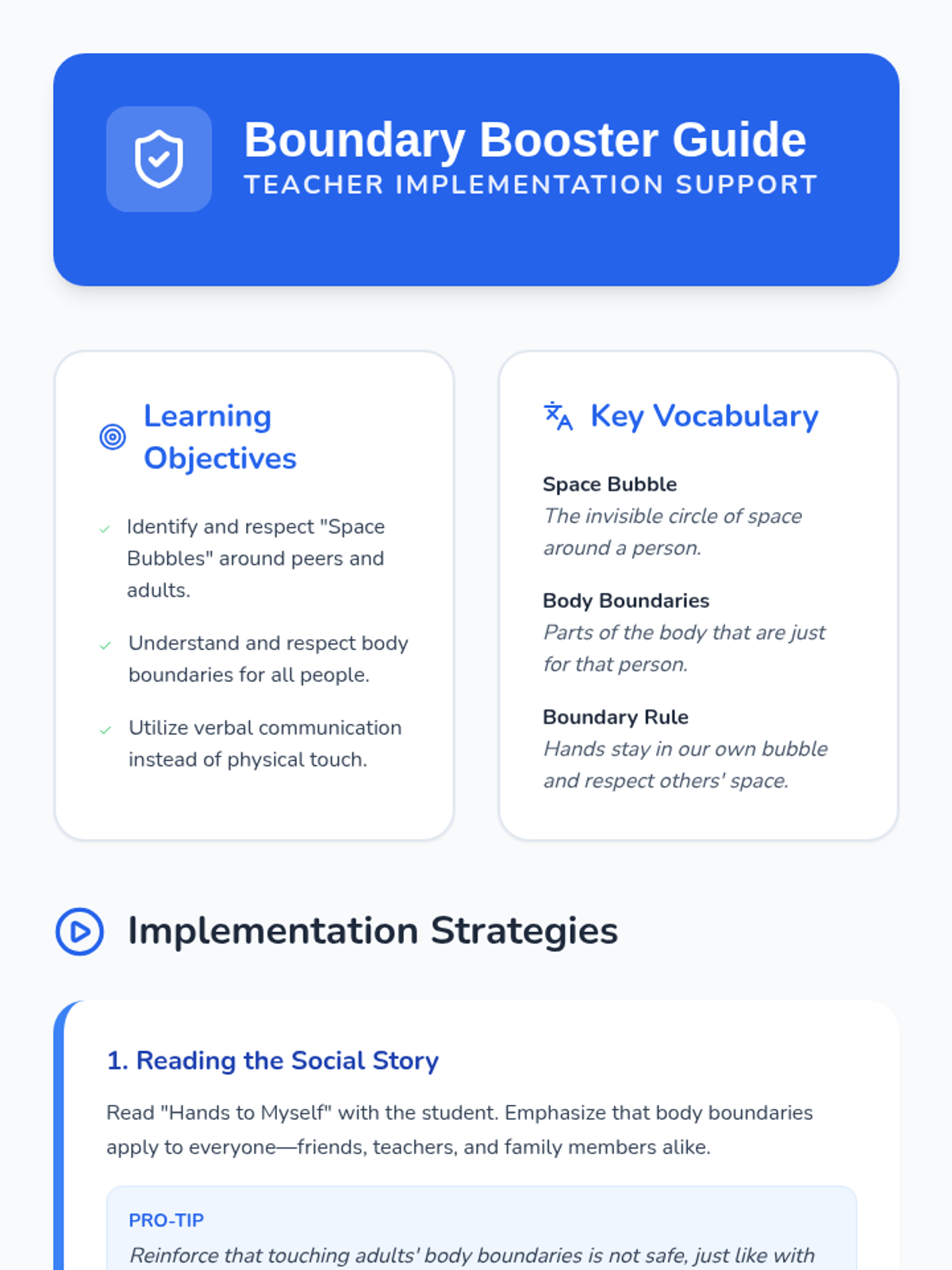
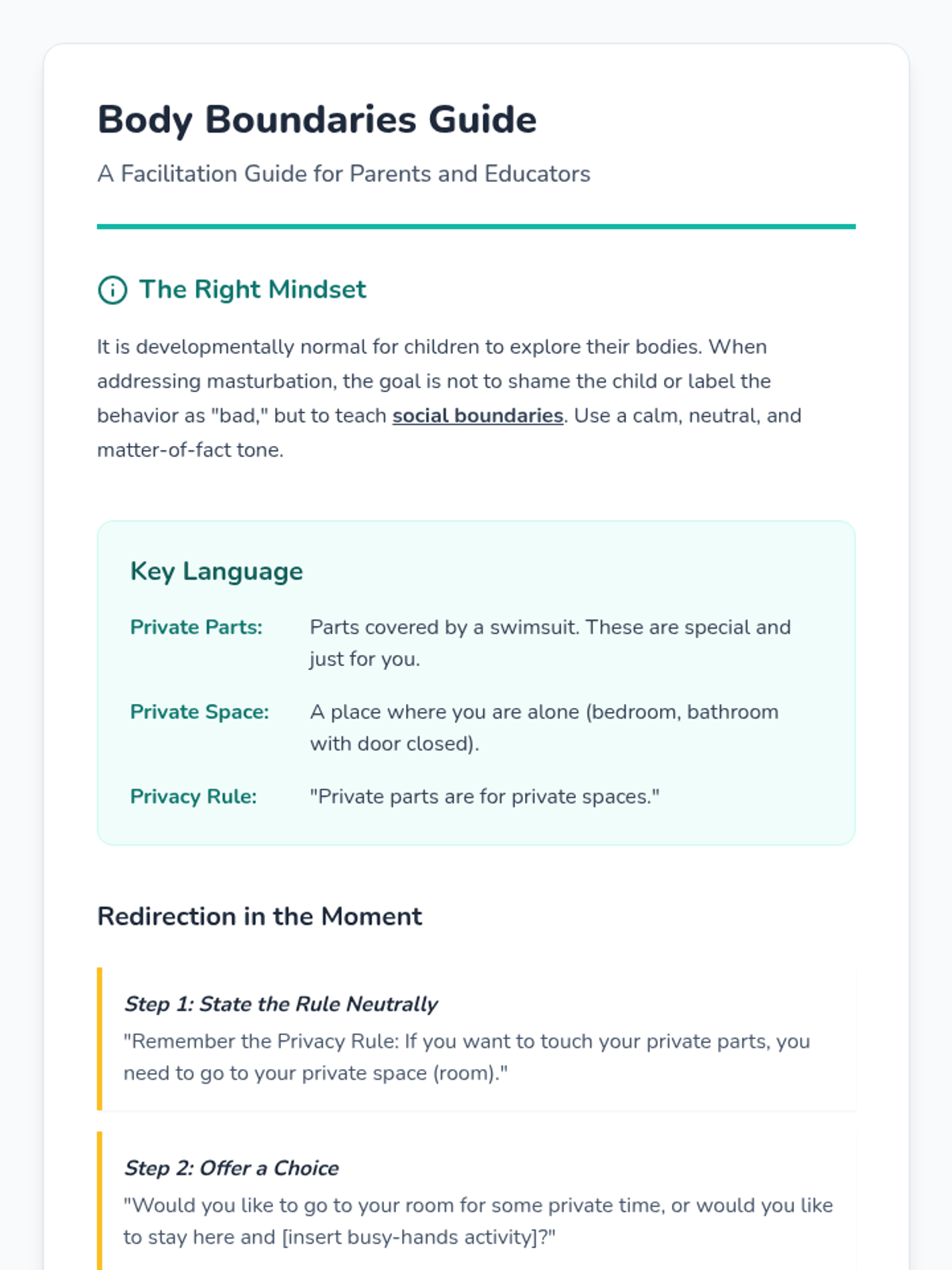
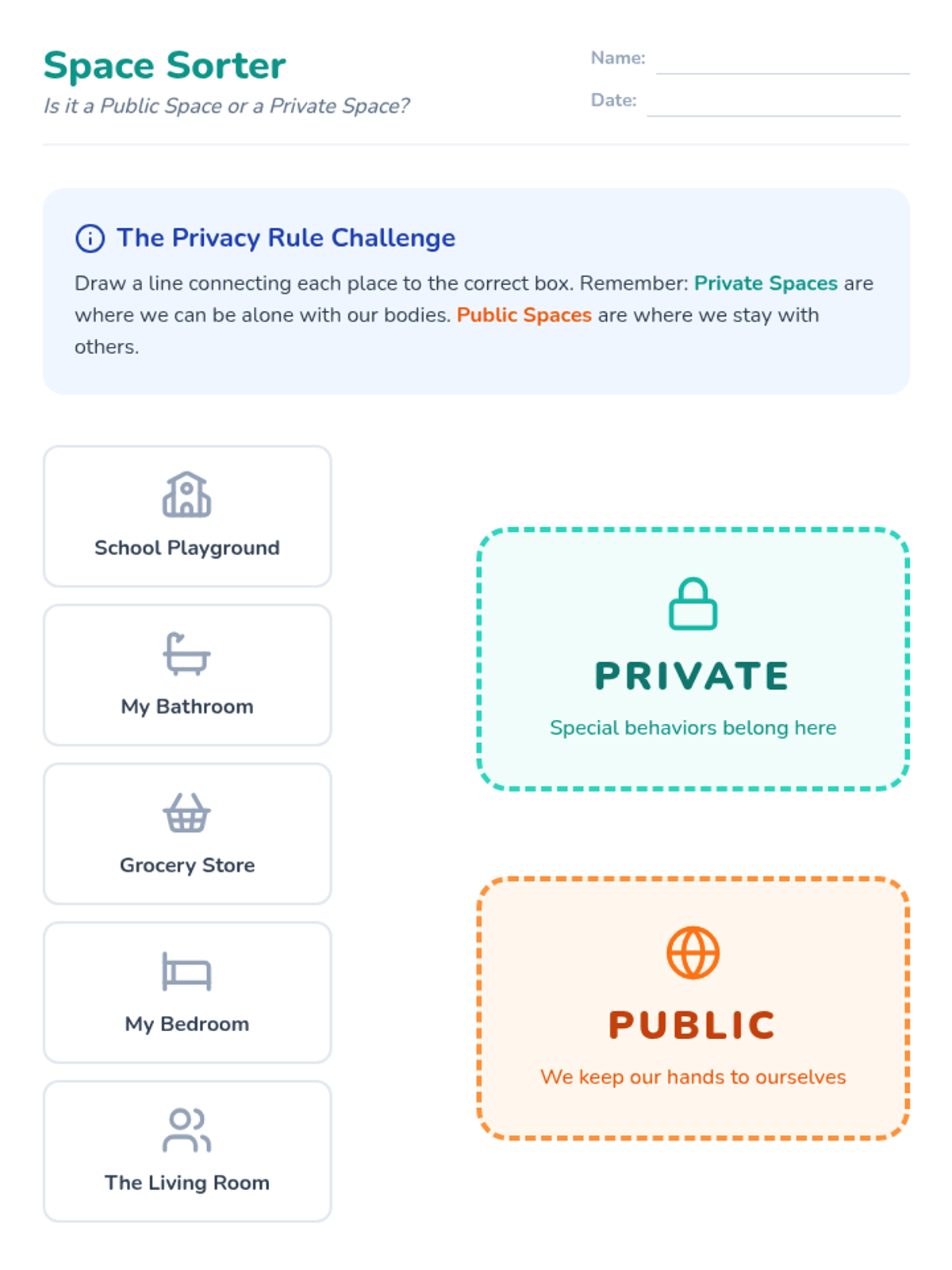
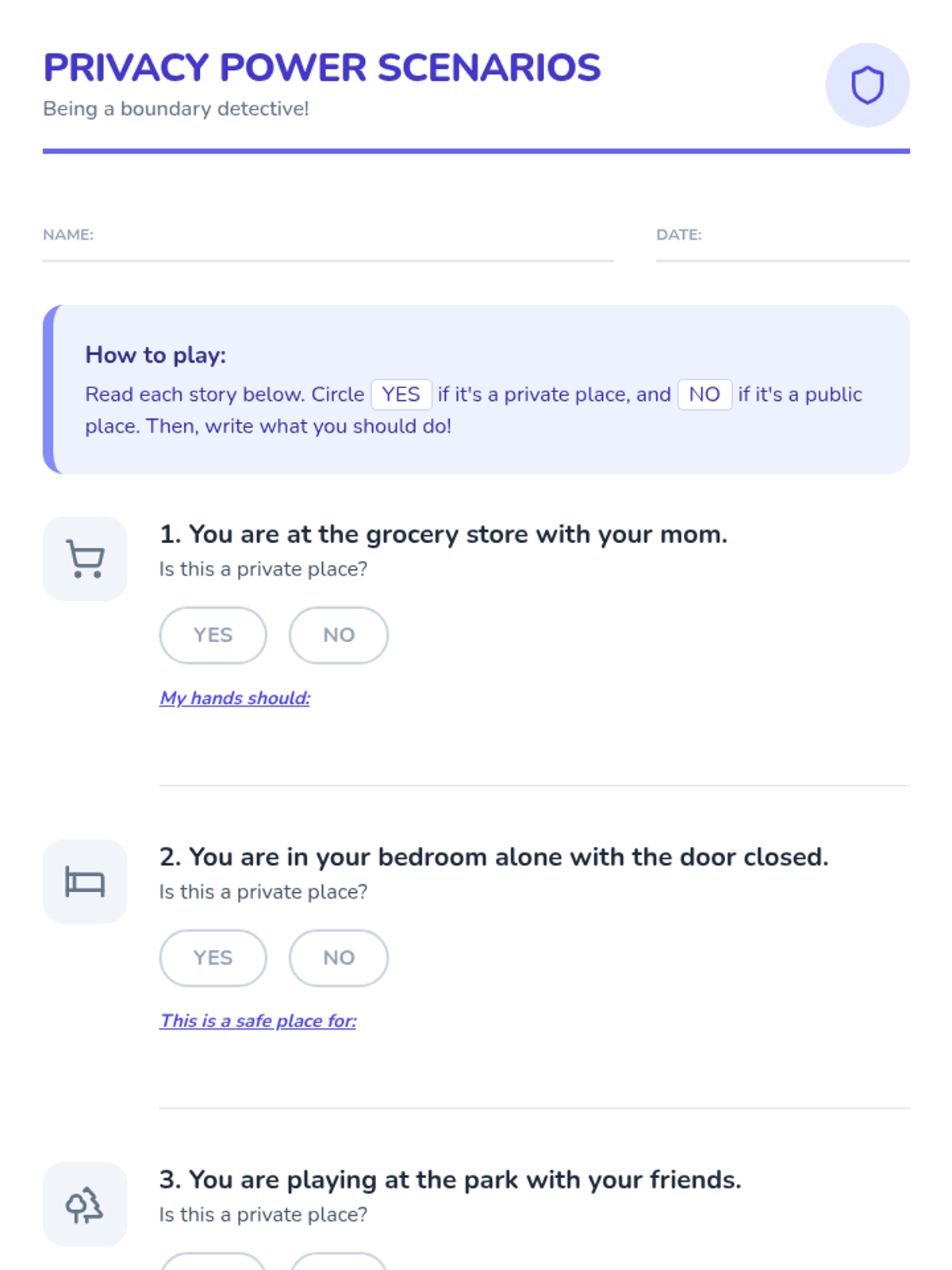
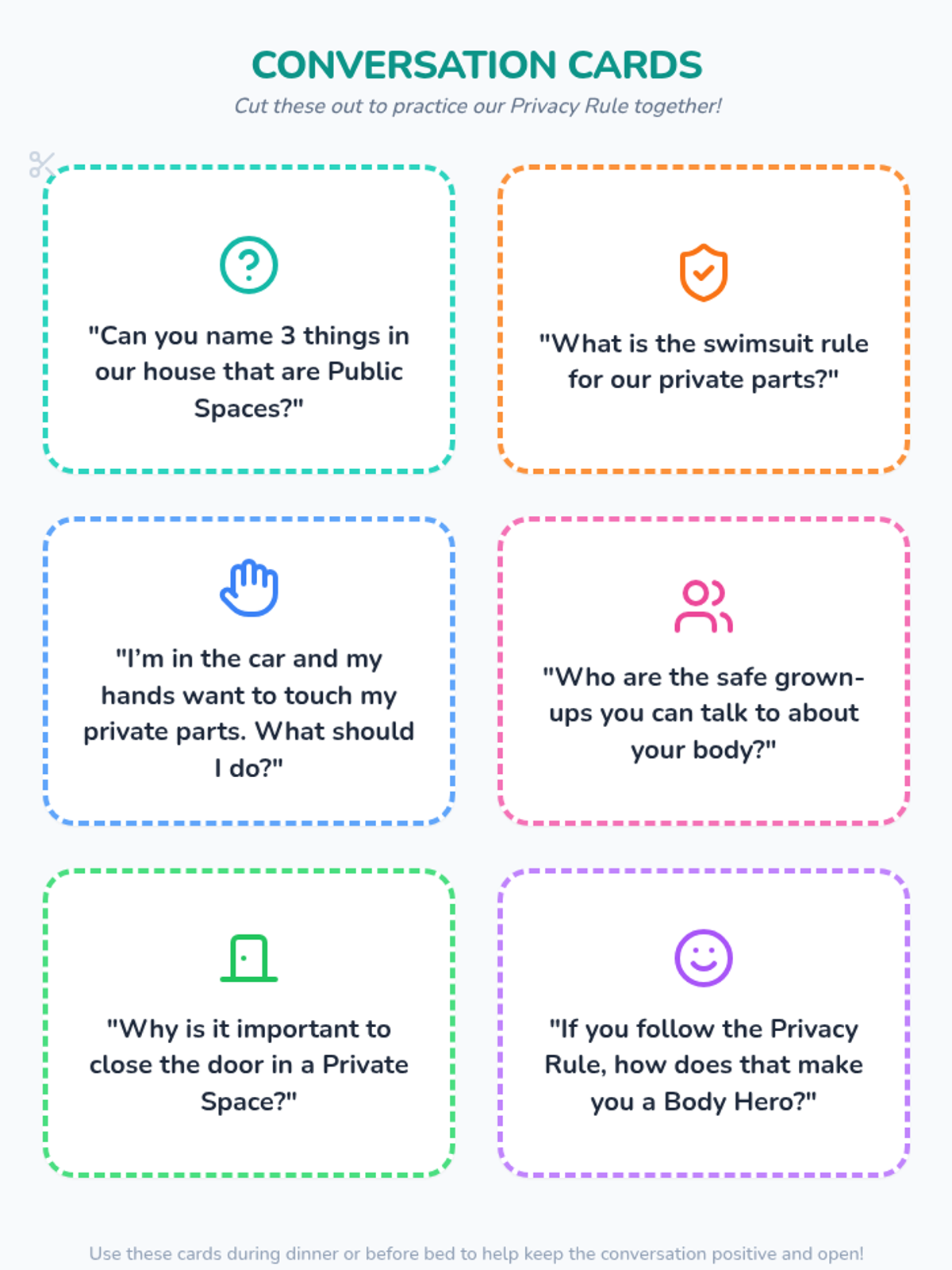
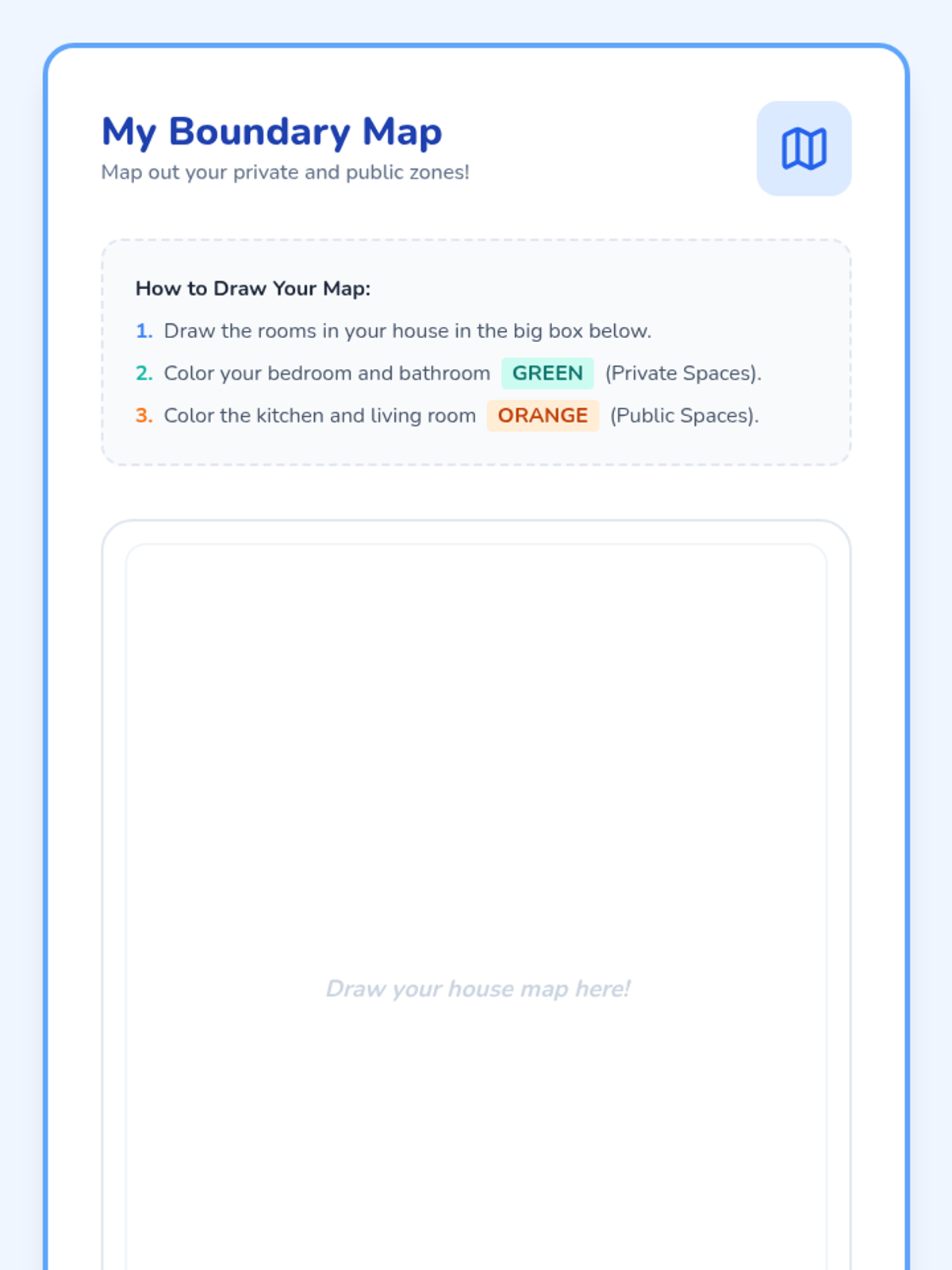
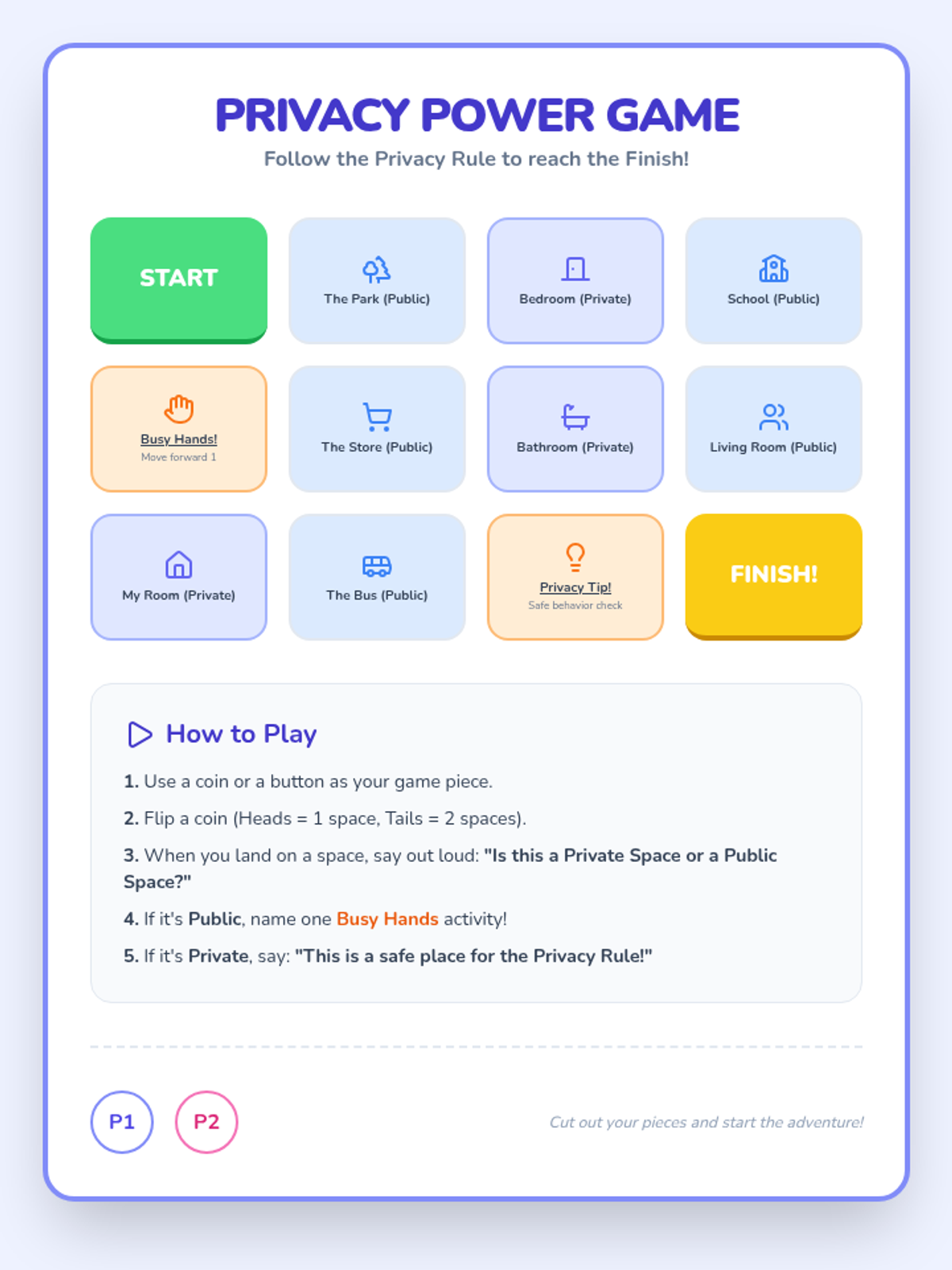
A sequence focused on teaching students about personal boundaries, body safety, and respectful physical interactions in a school environment.
A series of lessons focused on teaching young children about personal boundaries, body autonomy, and appropriate social interactions.
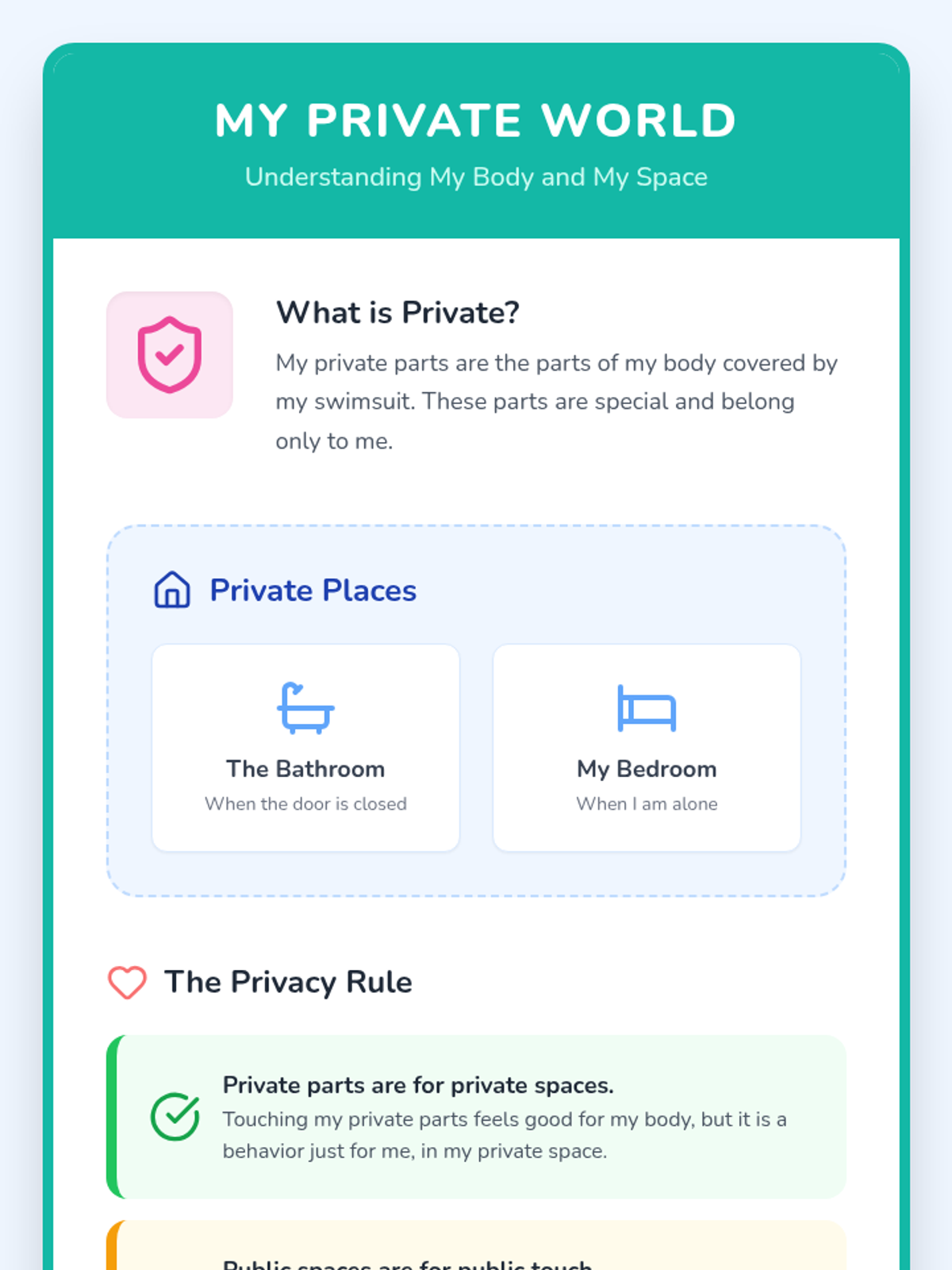
A series of lessons focused on personal safety, body autonomy, and social-emotional development for young children.
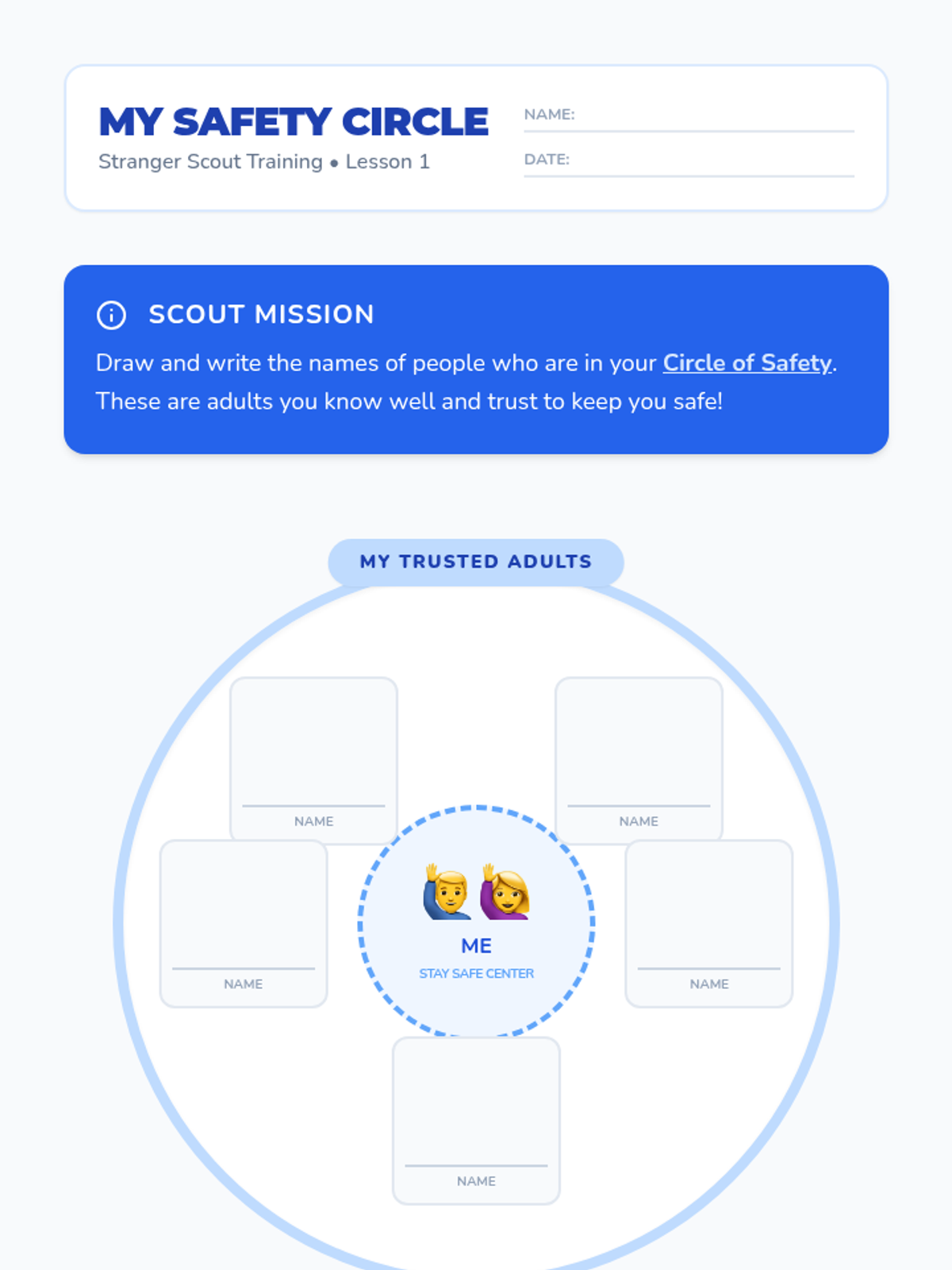
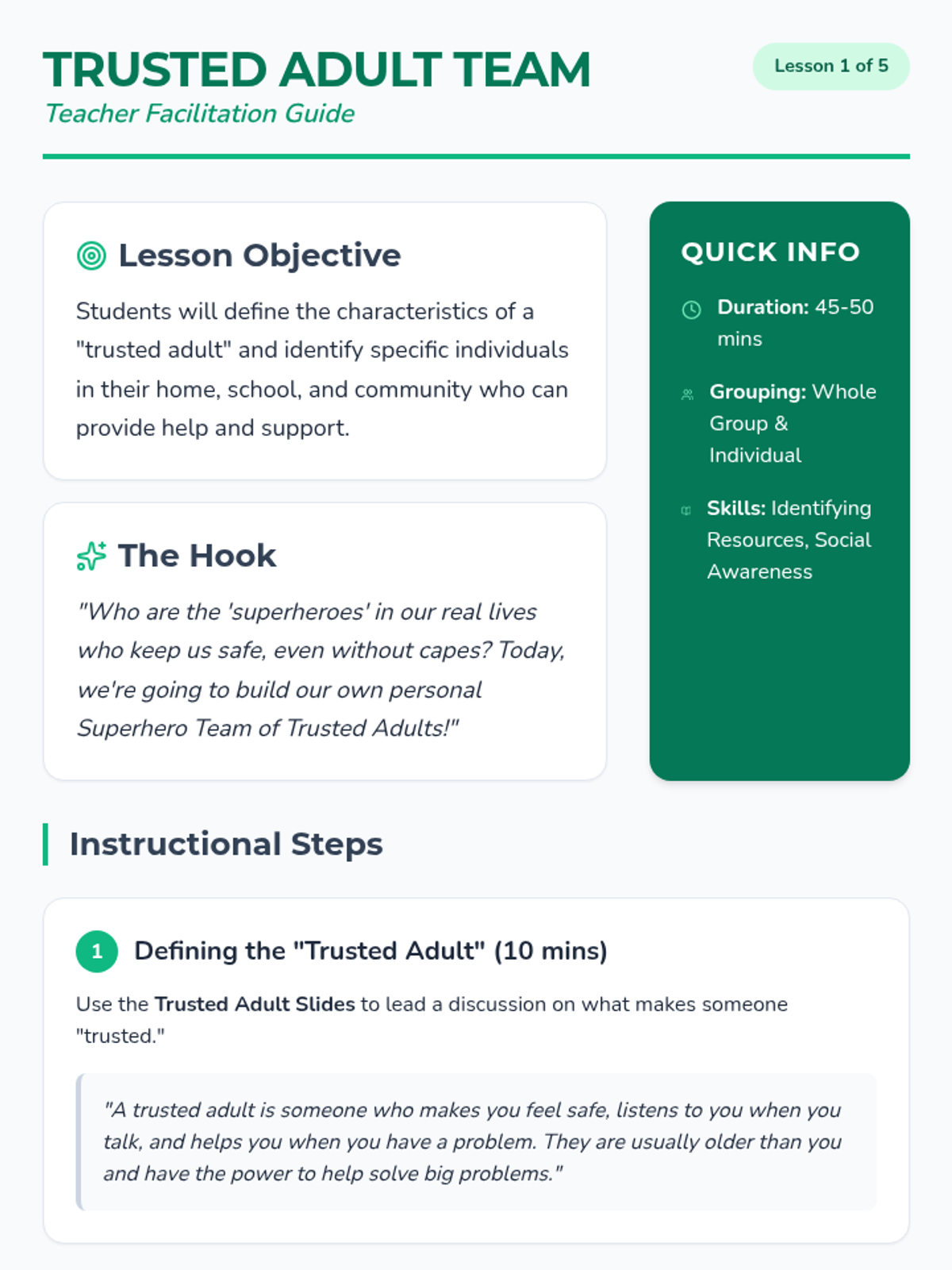
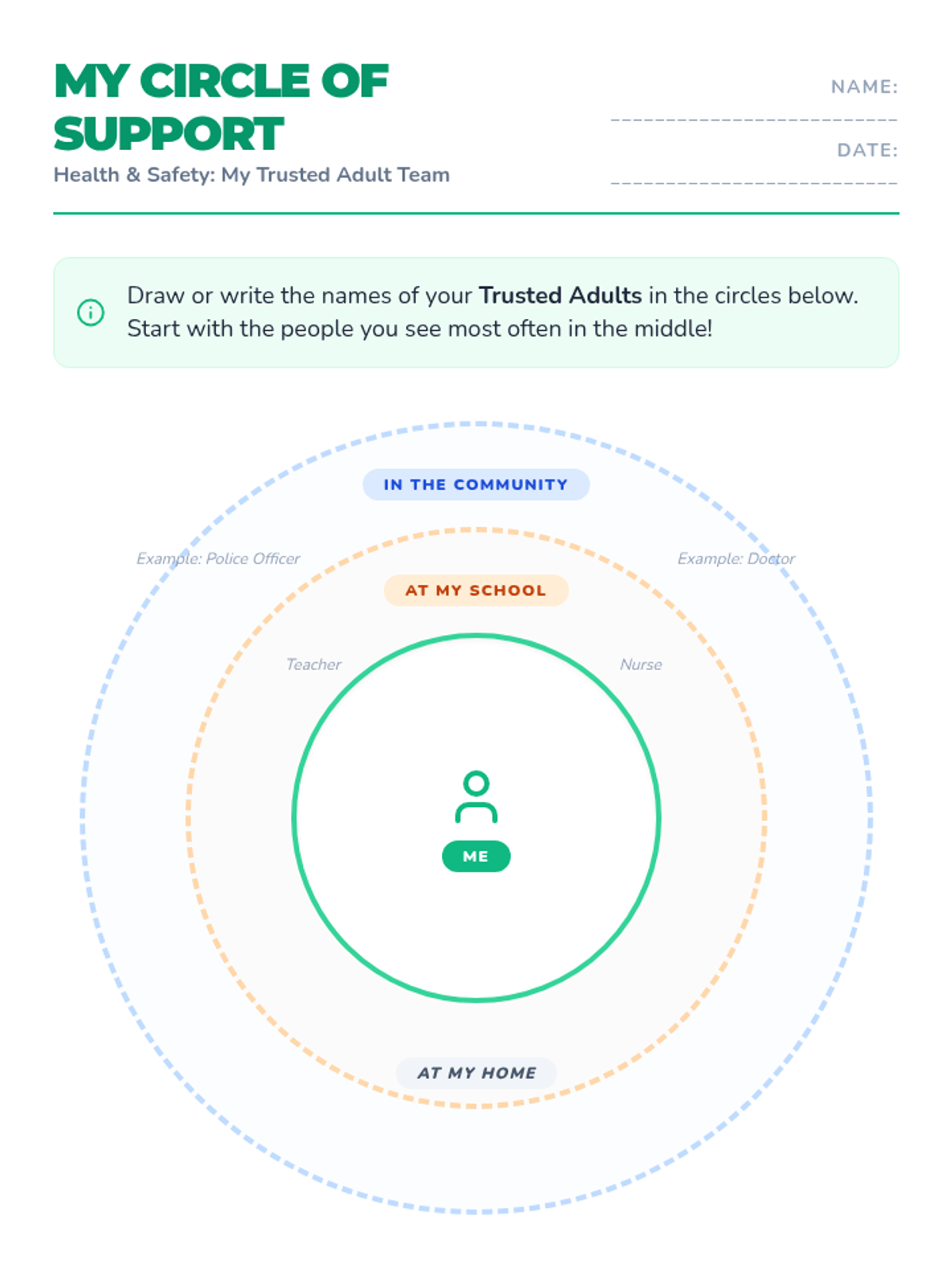
A comprehensive sequence for 1st-grade students focused on identifying trusted adults, recognizing internal safety cues, distinguishing between tattling and reporting, and practicing assertive communication for self-advocacy. Students build a personal safety network and the confidence to seek help in various settings.
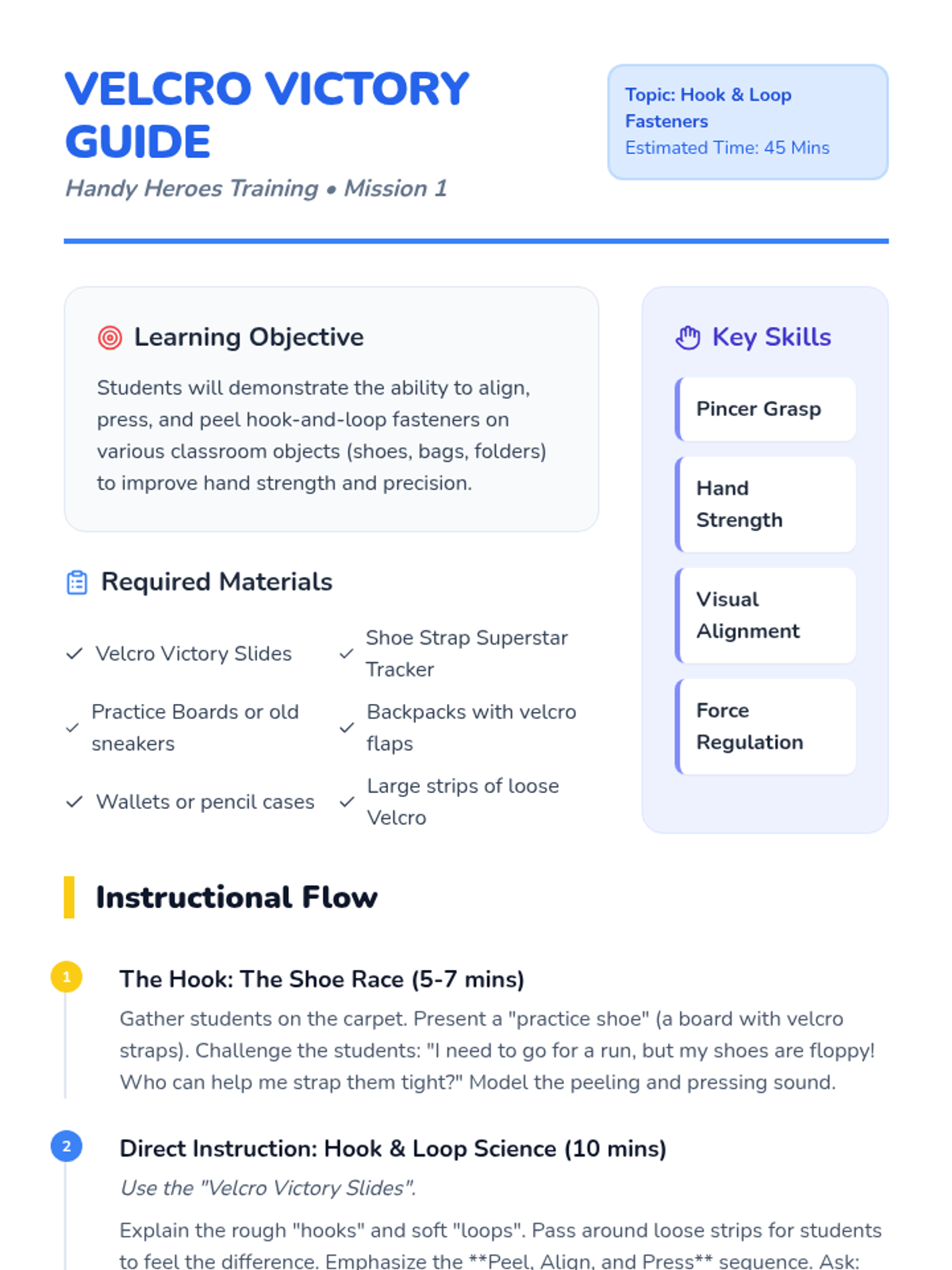
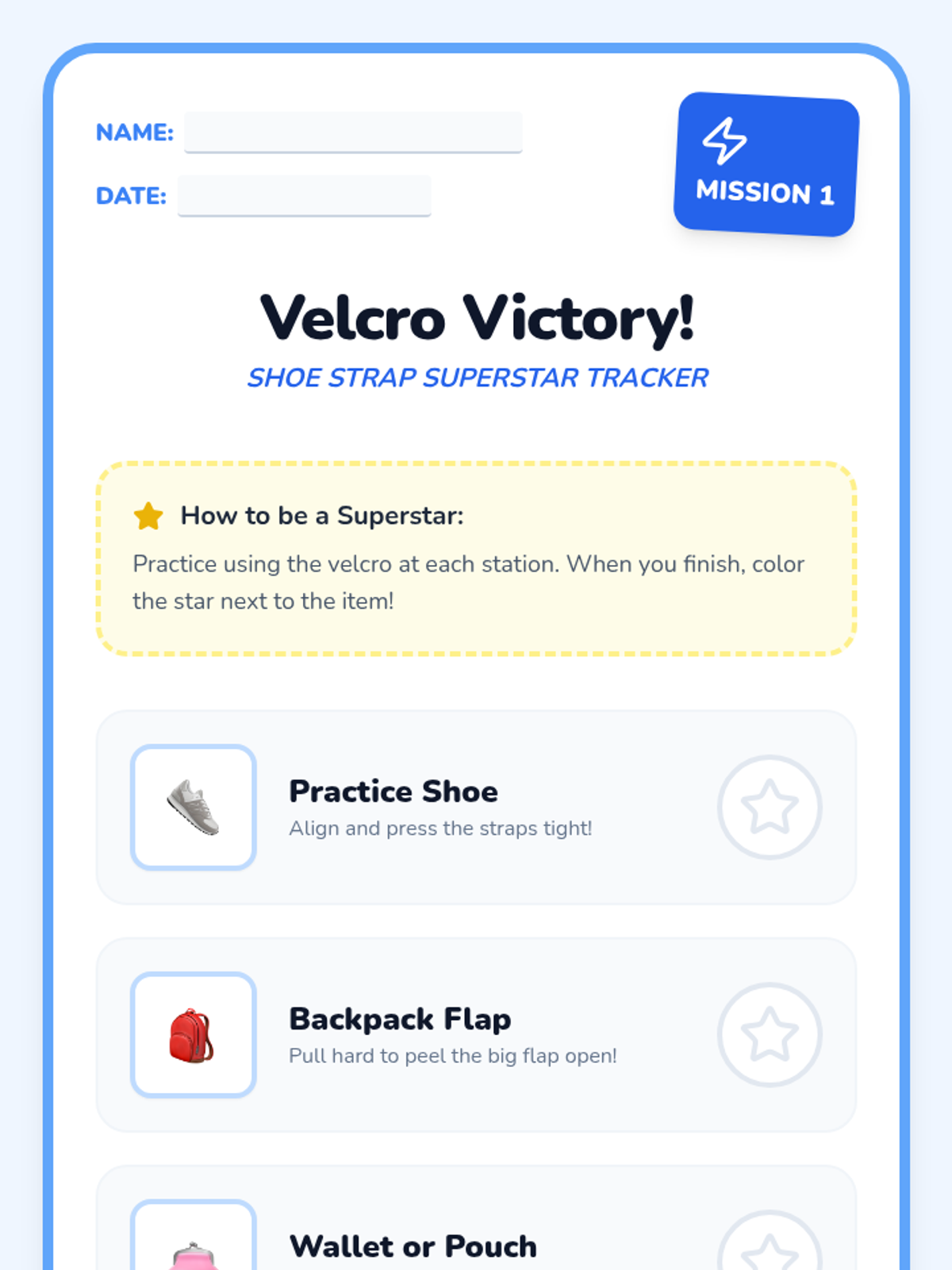
This sequence applies fine motor skills to real-world self-care tasks, fostering independence in the classroom through simulation stations focused on fasteners and containers.
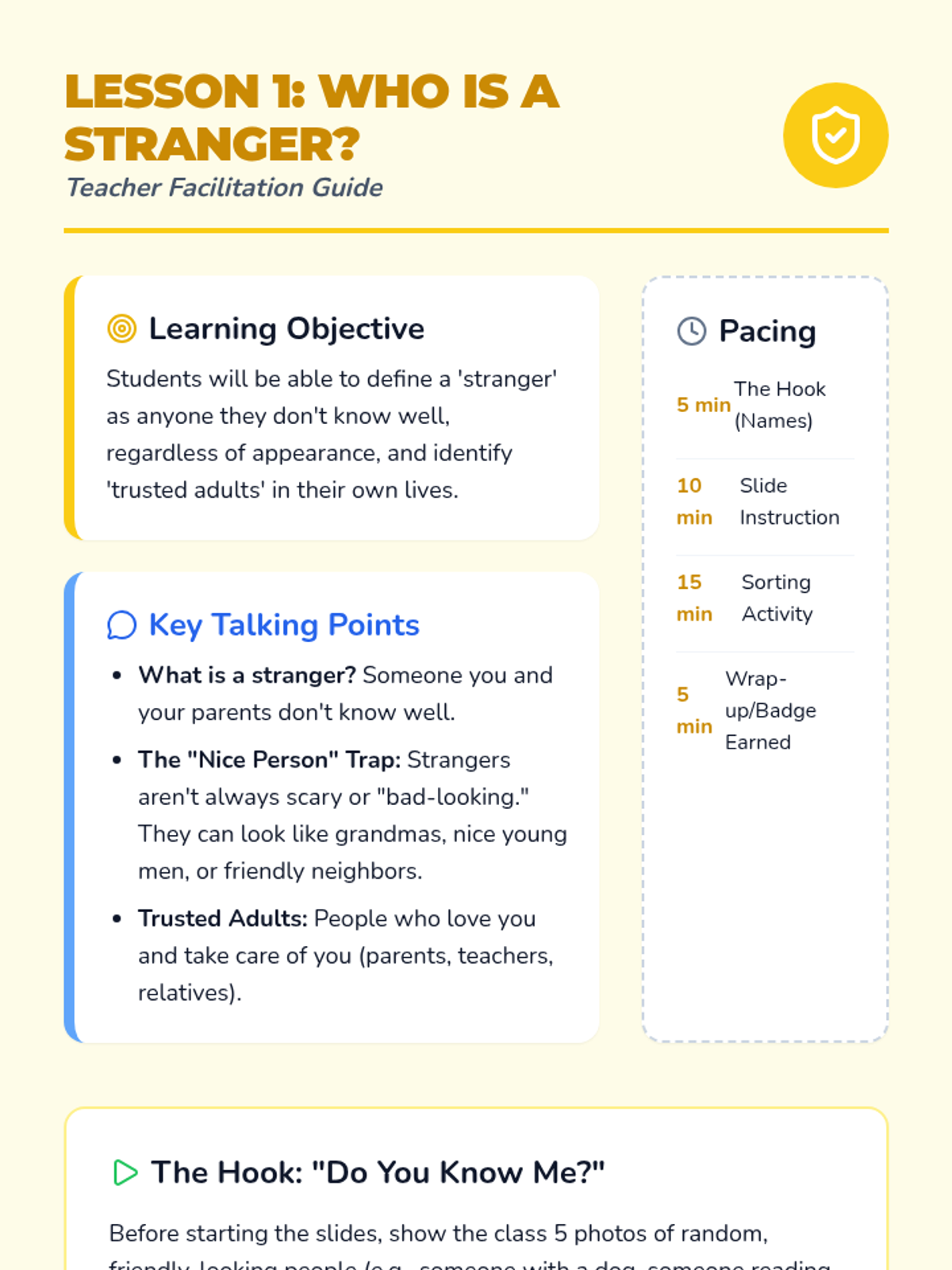
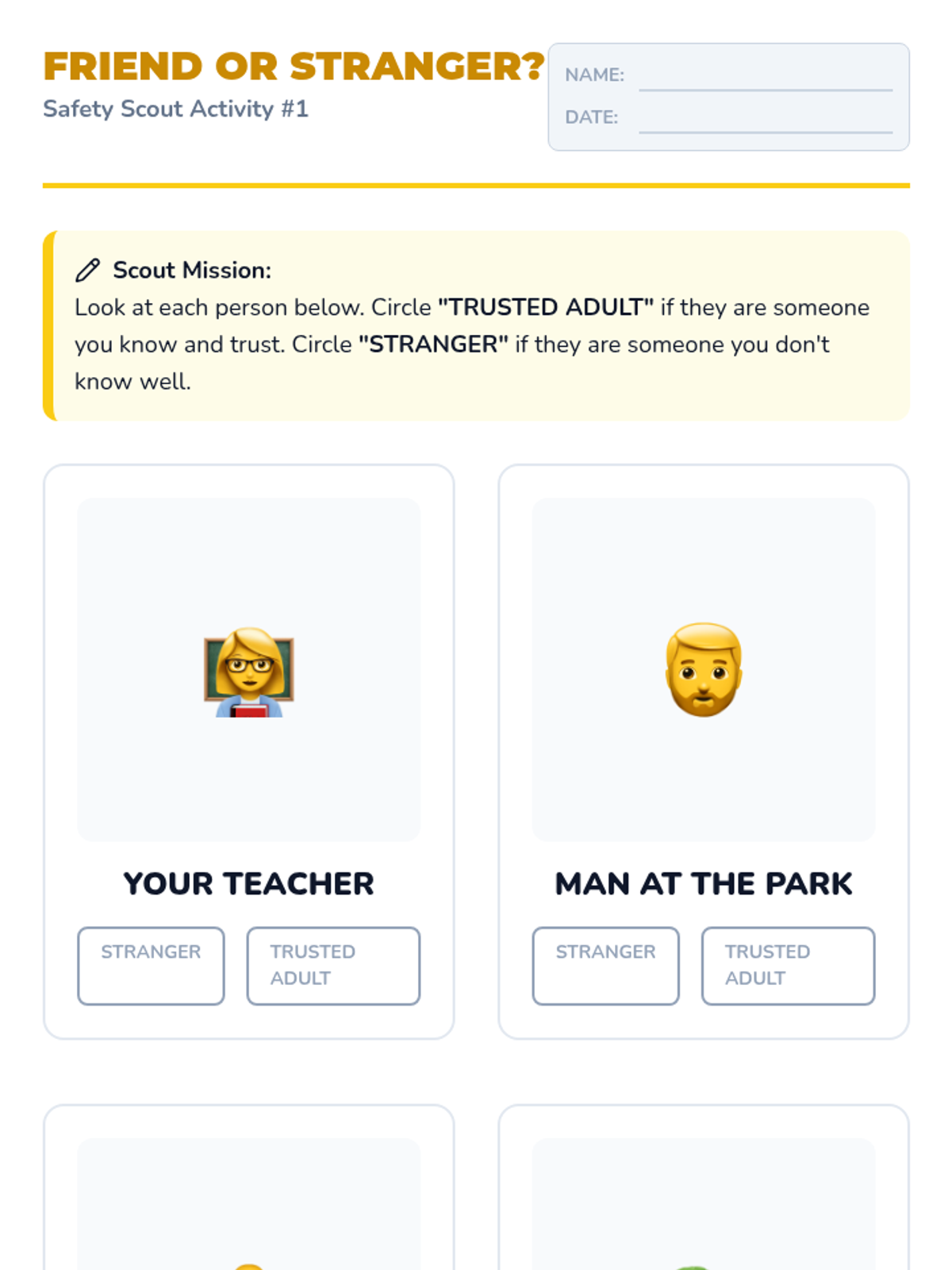
This sequence teaches 1st Grade students how to distinguish between strangers and community helpers, understand trust boundaries, and apply the 'Check-First' safety rule. Students move from basic definitions to situational assessment through interactive discussions and mapping activities.
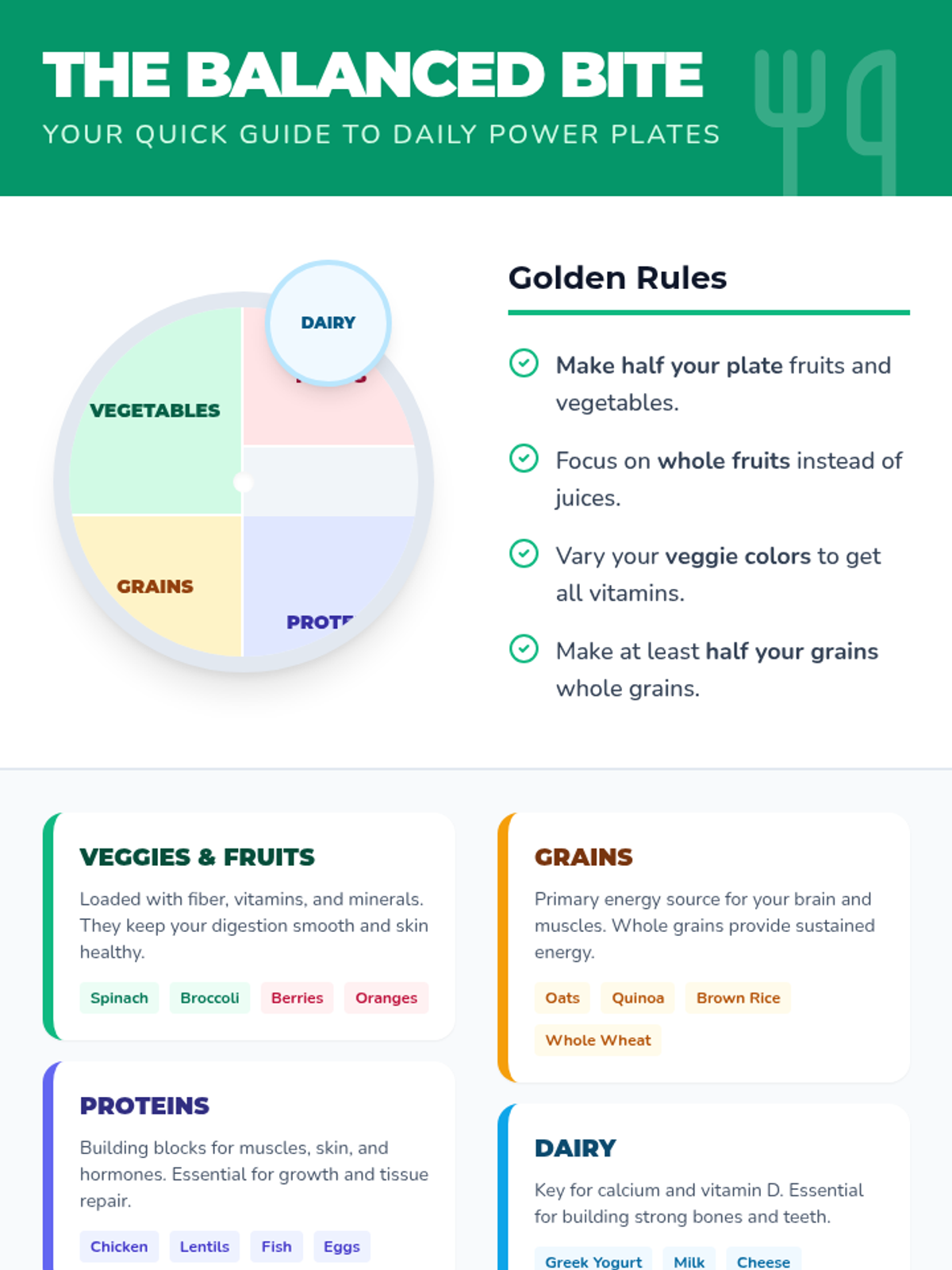
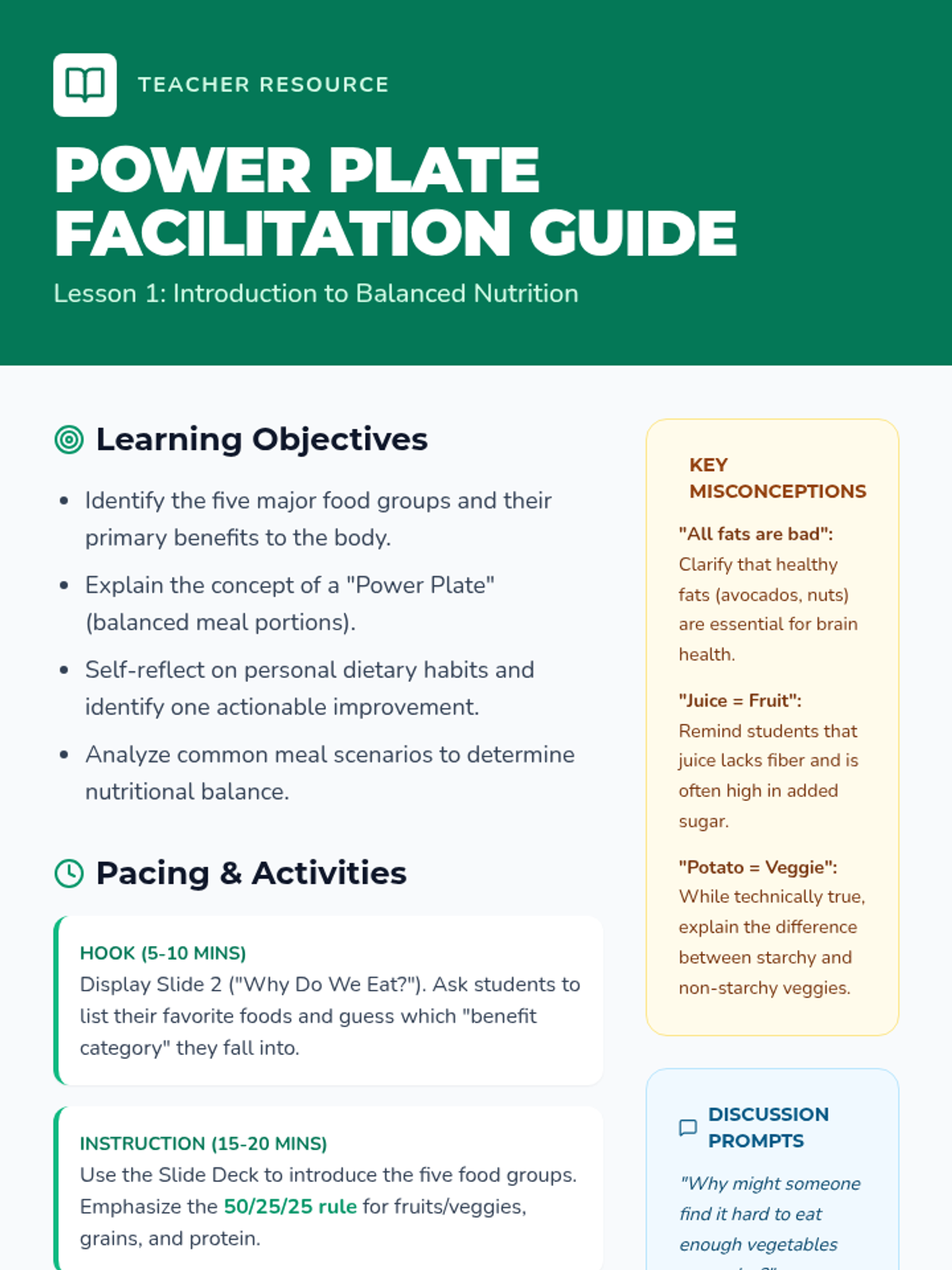
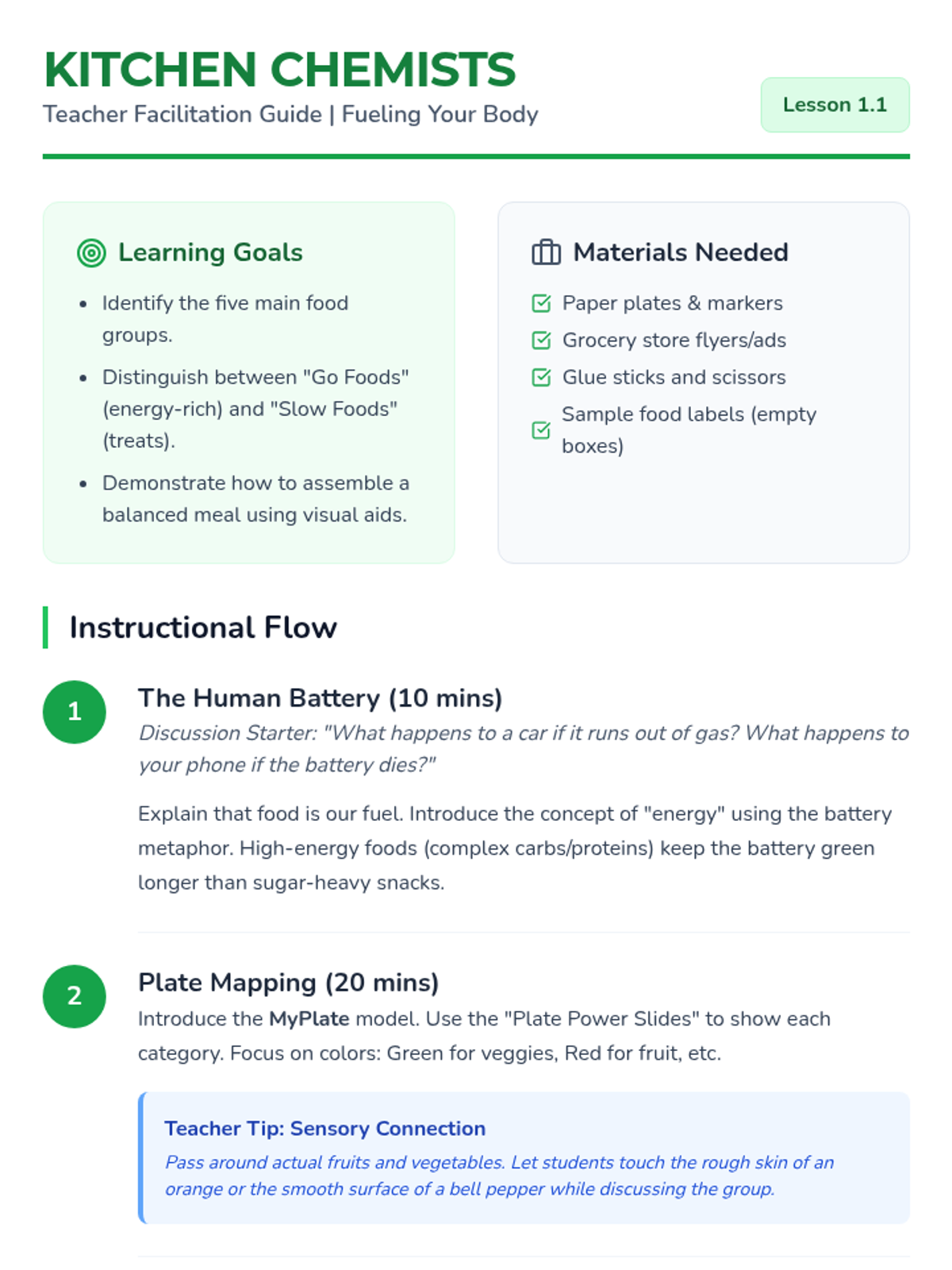
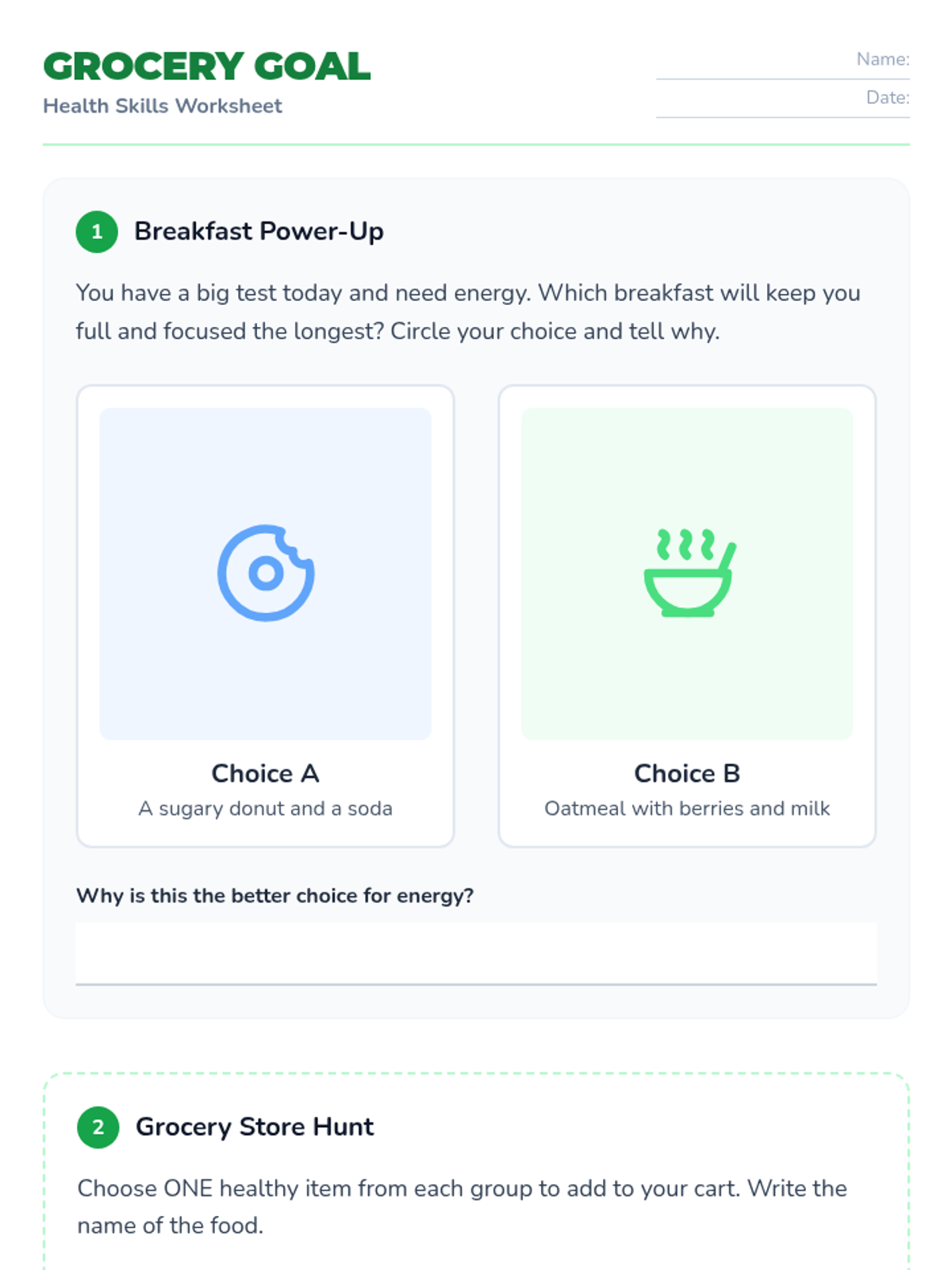
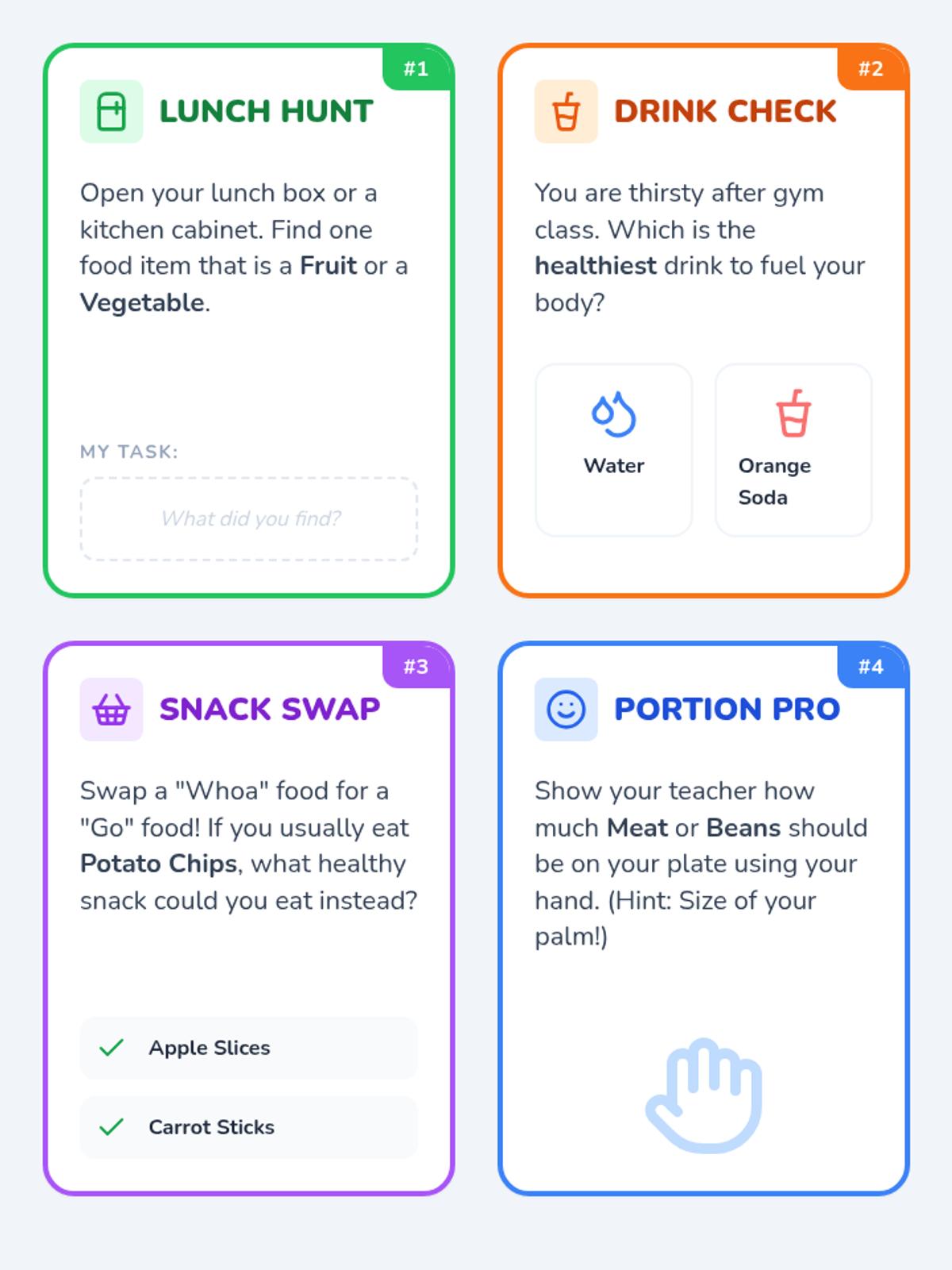
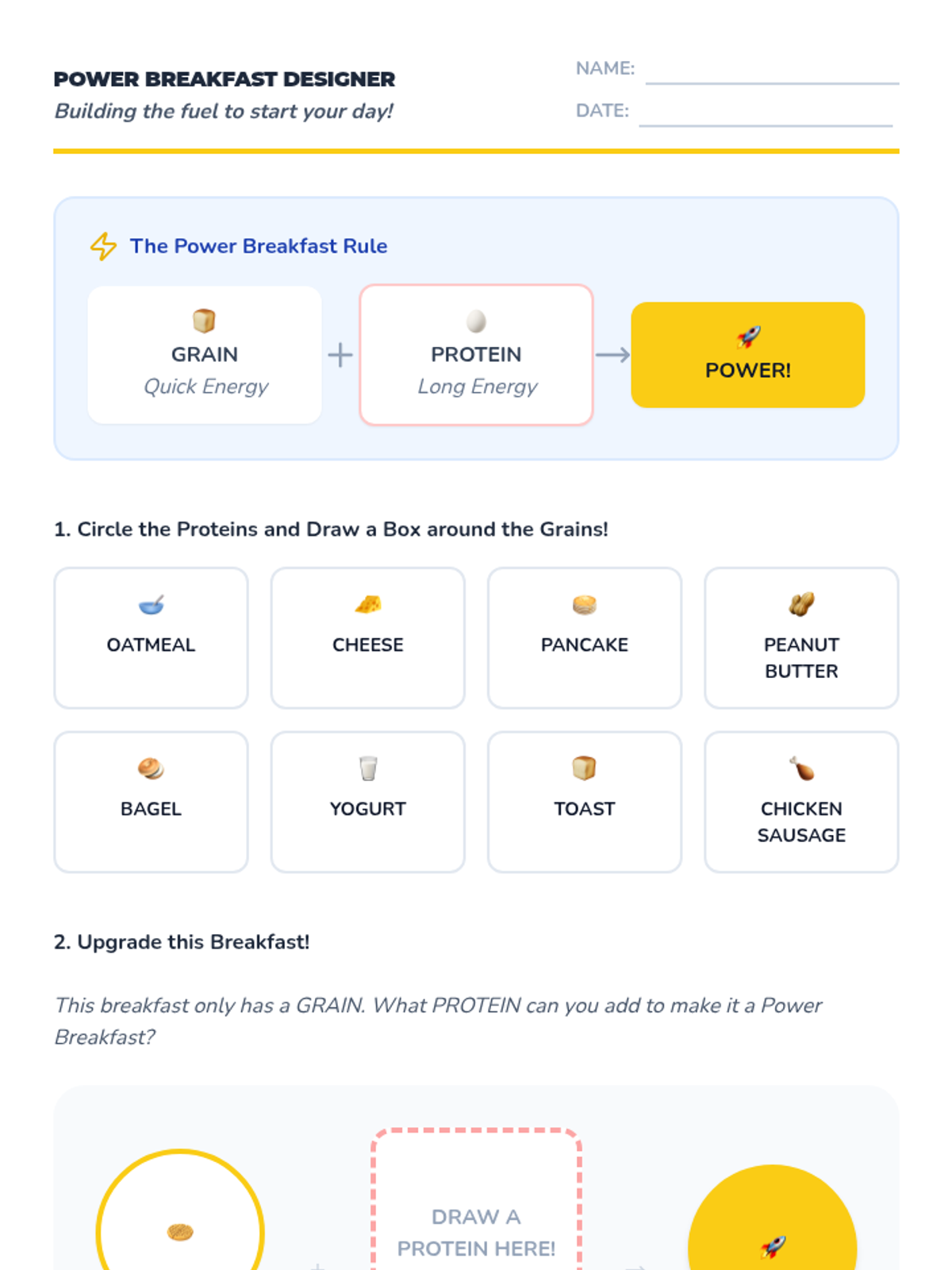
A 5-lesson sequence for 1st-grade students focusing on practical decision-making for healthy eating. Students move from understanding breakfast balance to simulating lunchbox packing, grocery shopping, recognizing body cues, and finally planning a full family menu.