Daily hygiene, hydration, and sleep routines paired with strategies for disease and injury prevention. Builds skills in health decision-making, body awareness, and self-advocacy to support lifelong well-being.
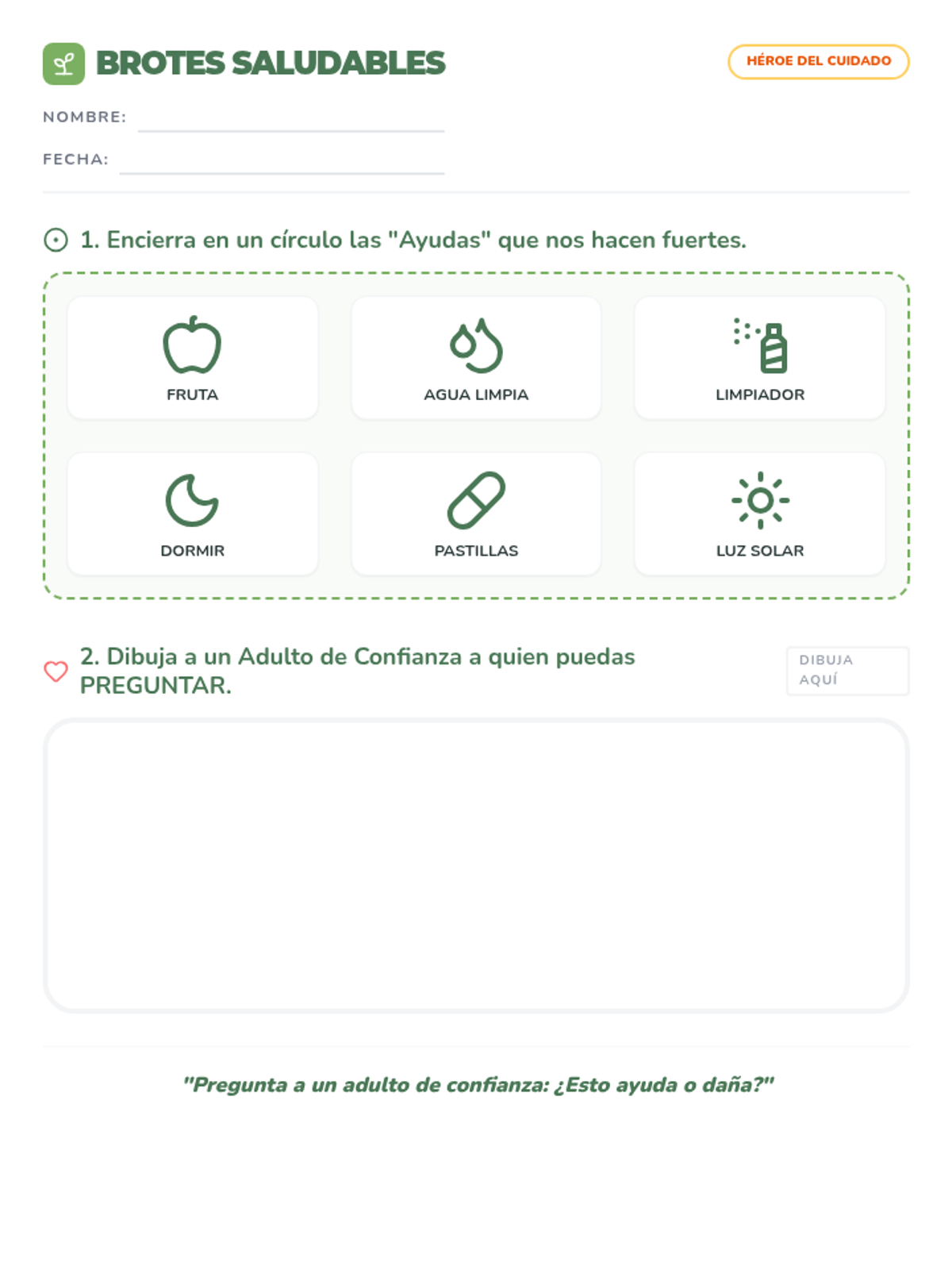
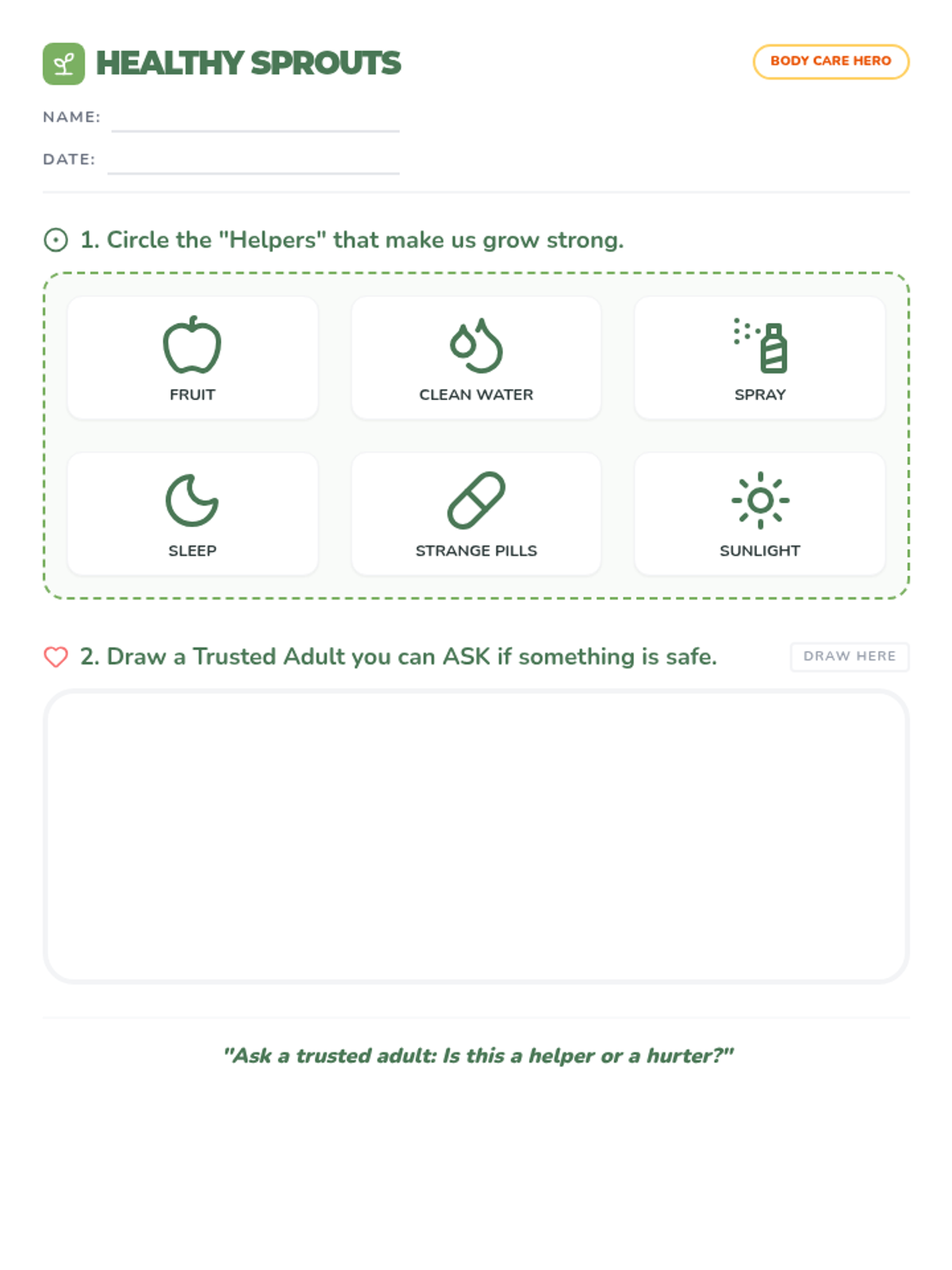
Hoja de actividades revisada para niños de kínder. La clasificación ahora incluye limpiadores y pastillas desconocidas para enfatizar sustancias insalubres, y especifica dibujar a un adulto de confianza para preguntar sobre seguridad.
Presentación revisada para niños de kínder que explica las necesidades de las plantas y la seguridad humana. Ahora incluye "daños" domésticos específicos como atomizadores de limpieza y alcohol, y enfatiza preguntar a un adulto de confianza para verificar si algo es saludable.
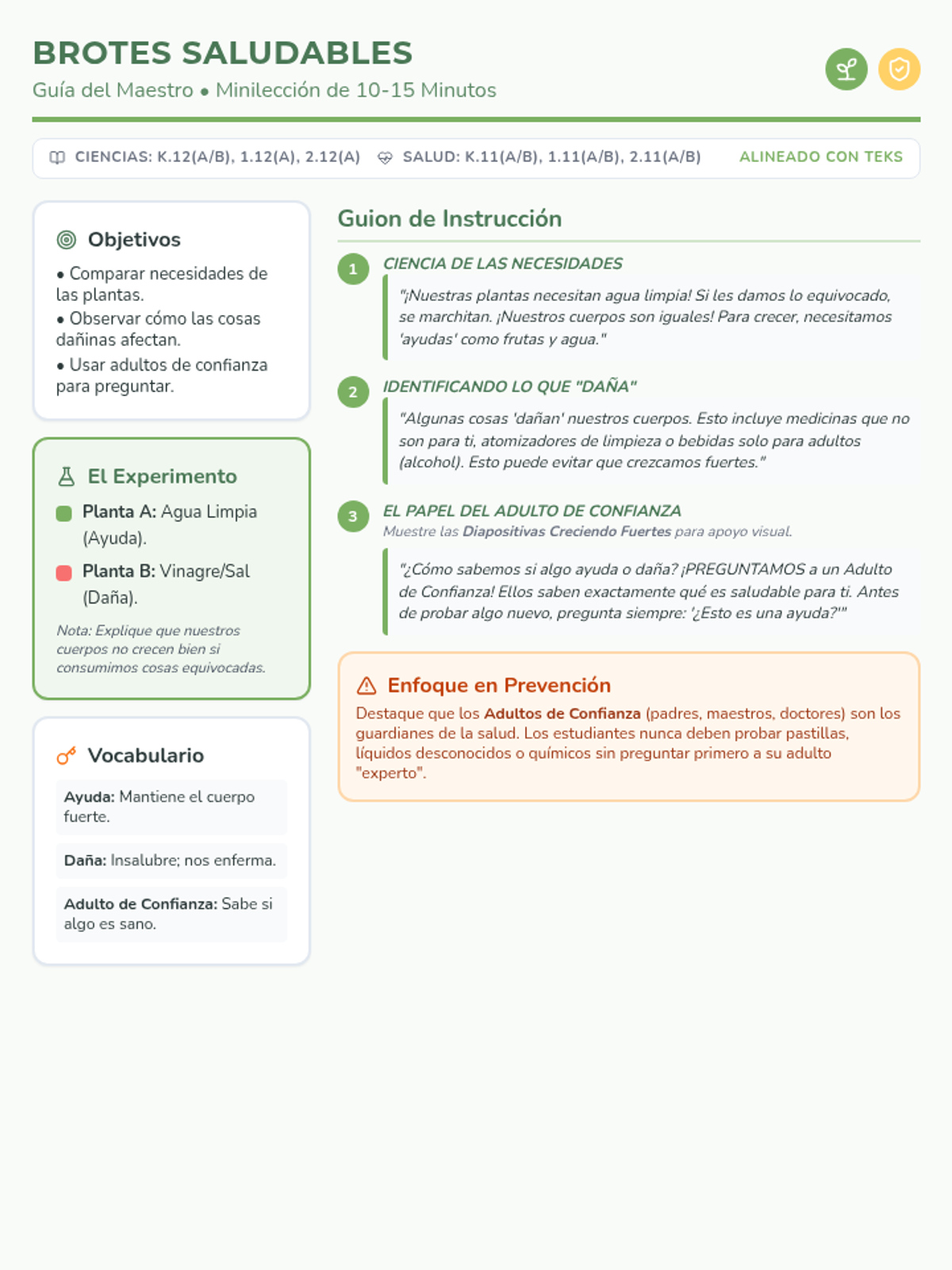
Guía del maestro revisada para la minilección de 10-15 minutos sobre crecimiento de plantas y prevención. Incluye listas ampliadas de sustancias dañinas y enfatiza el uso de adultos de confianza para verificar la salud. Ahora incluye alineación con TEKS de Ciencias y Salud.
Revised activity sheet for Kindergarteners. Sorting activity now includes cleaning sprays and unknown pills to emphasize unhealthy substances, and specifies drawing a trusted adult to ask about safety.
Revised slide deck for Kindergarteners explaining plant needs and human safety. Now includes specific household "hurters" like cleaning sprays and alcohol, and emphasizes asking a trusted adult to verify if something is healthy.
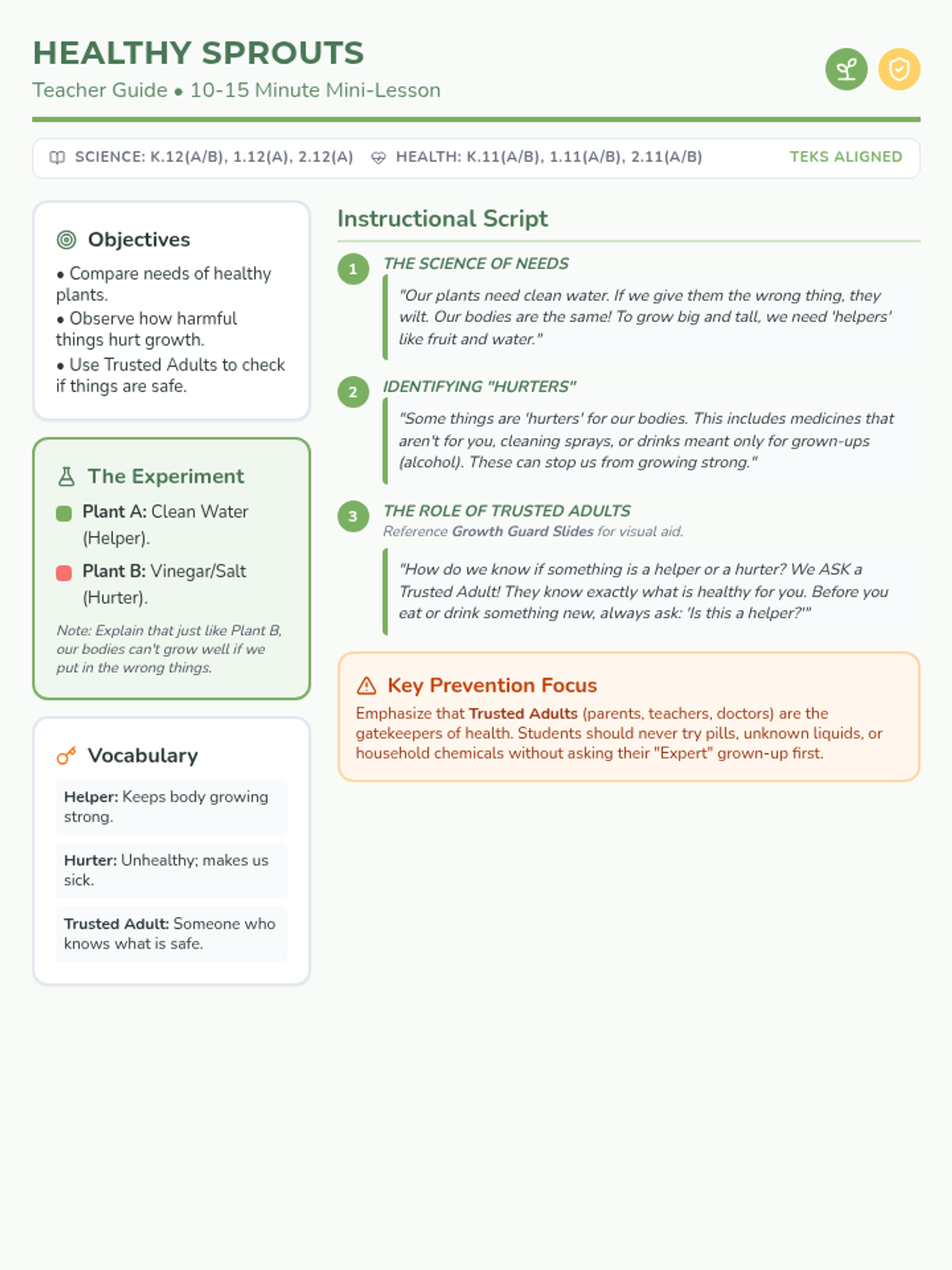
Revised teacher guide for the 10-15 minute mini-lesson on plant growth and substance prevention. Includes expanded lists of unhealthy substances and emphasizes using trusted adults to verify if something is healthy or harmful. Now includes specific Science and Health TEKS alignment.
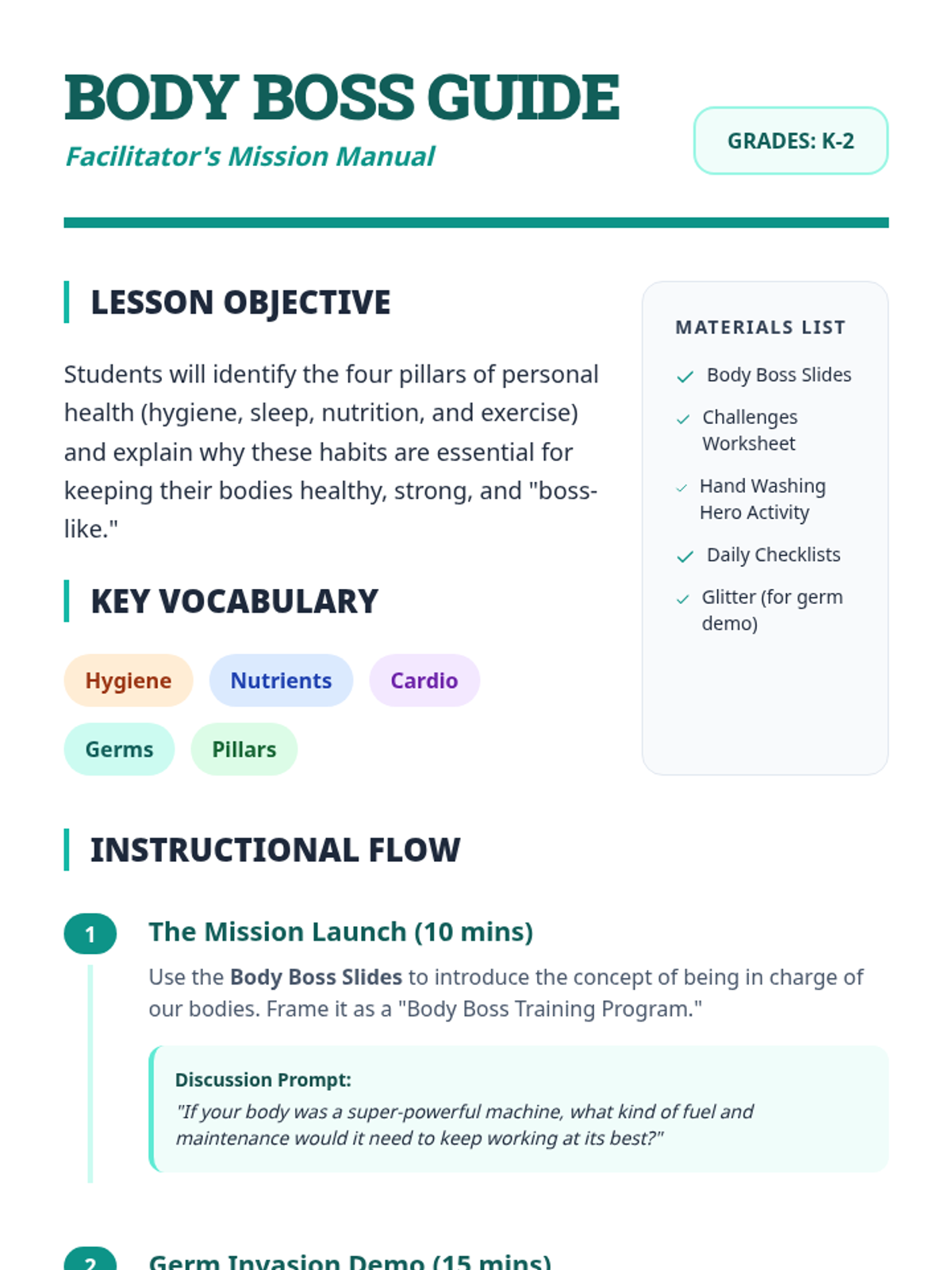
A comprehensive teacher's guide for the Body Boss lesson, featuring lesson objectives, key vocabulary, a step-by-step instructional flow, and differentiation strategies.
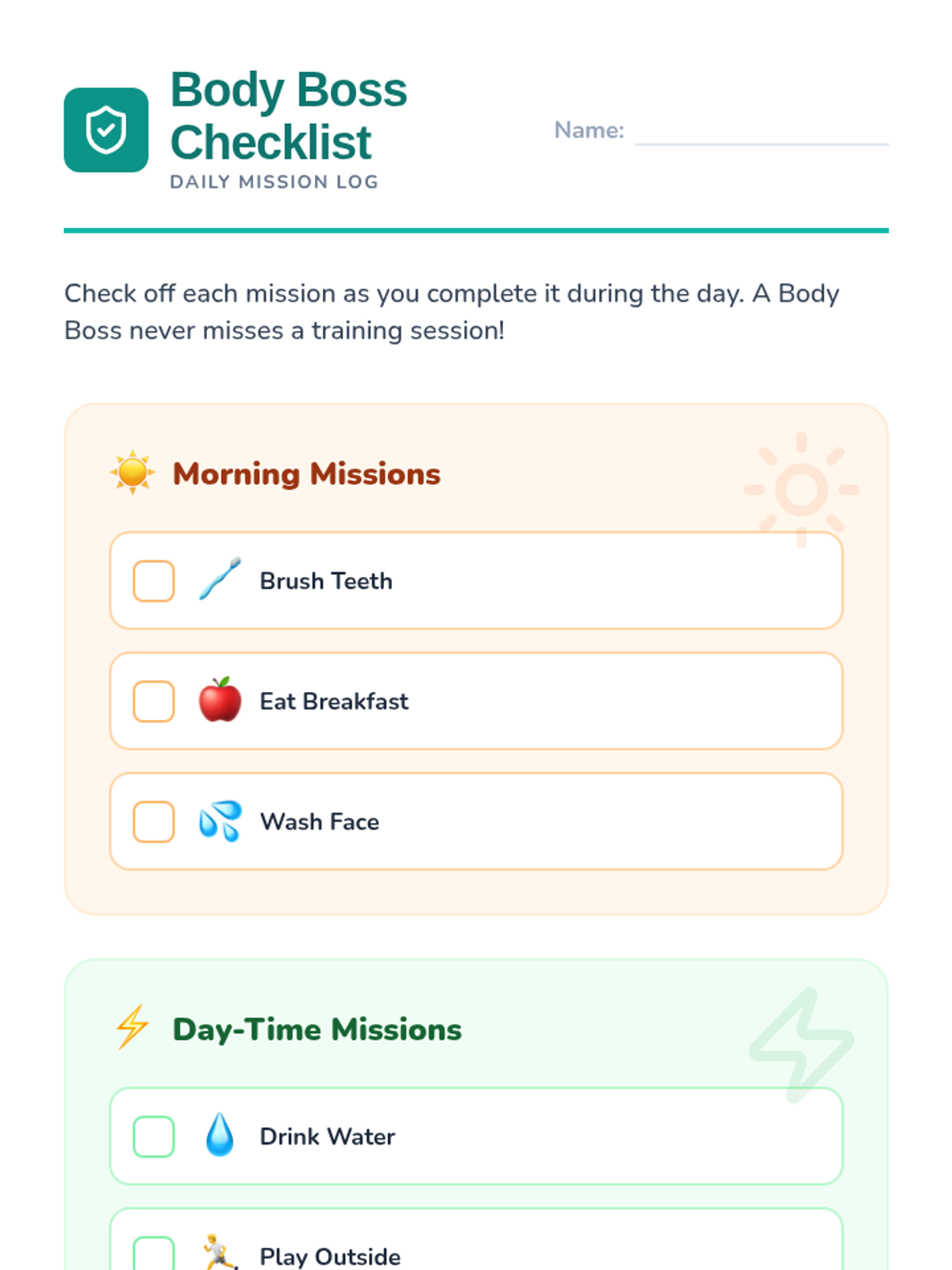
A daily routine checklist for students to track their health habits including hygiene, nutrition, exercise, and sleep. Features visual icons and a clear, motivating design.
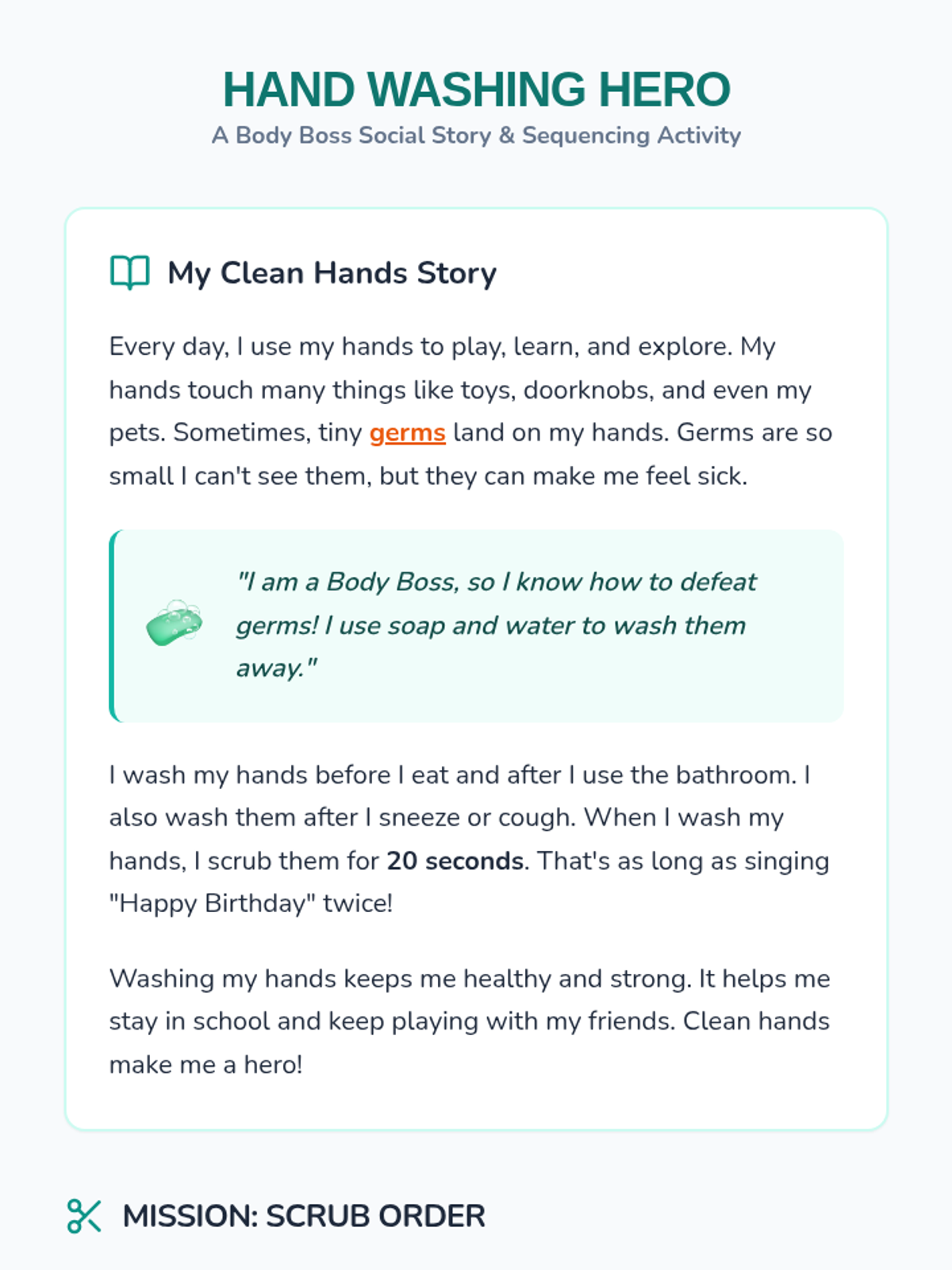
A hand-washing social story followed by a sequencing activity where students cut and paste the steps of washing hands in the correct order.
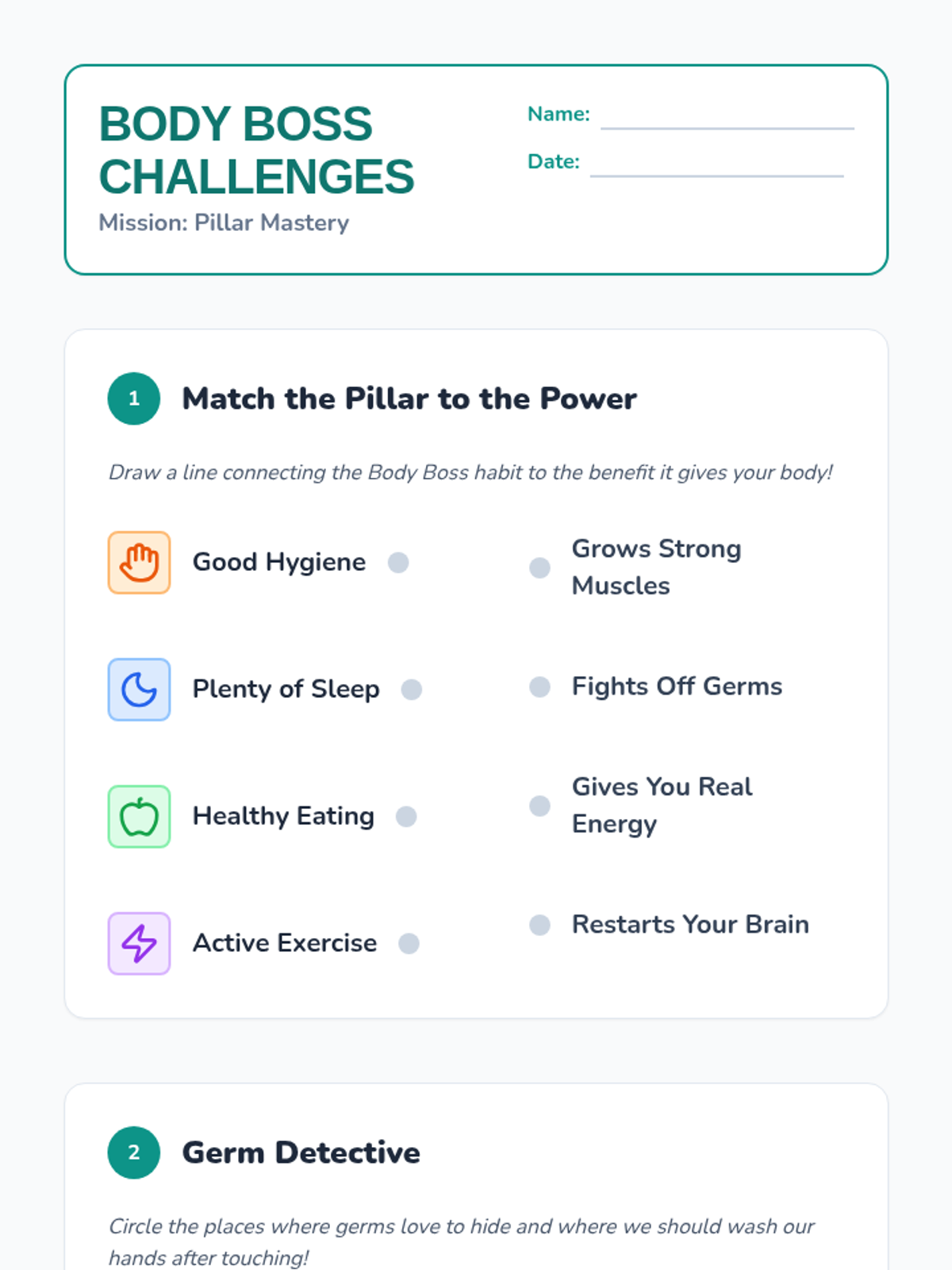
A student worksheet featuring matching activities for health pillars, a germ detection exercise, and a drawing section for a healthy meal.
A vibrant classroom presentation introducing the four pillars of health: hygiene, sleep, nutrition, and exercise. It uses a "Body Boss" mission theme to engage students in taking charge of their health.
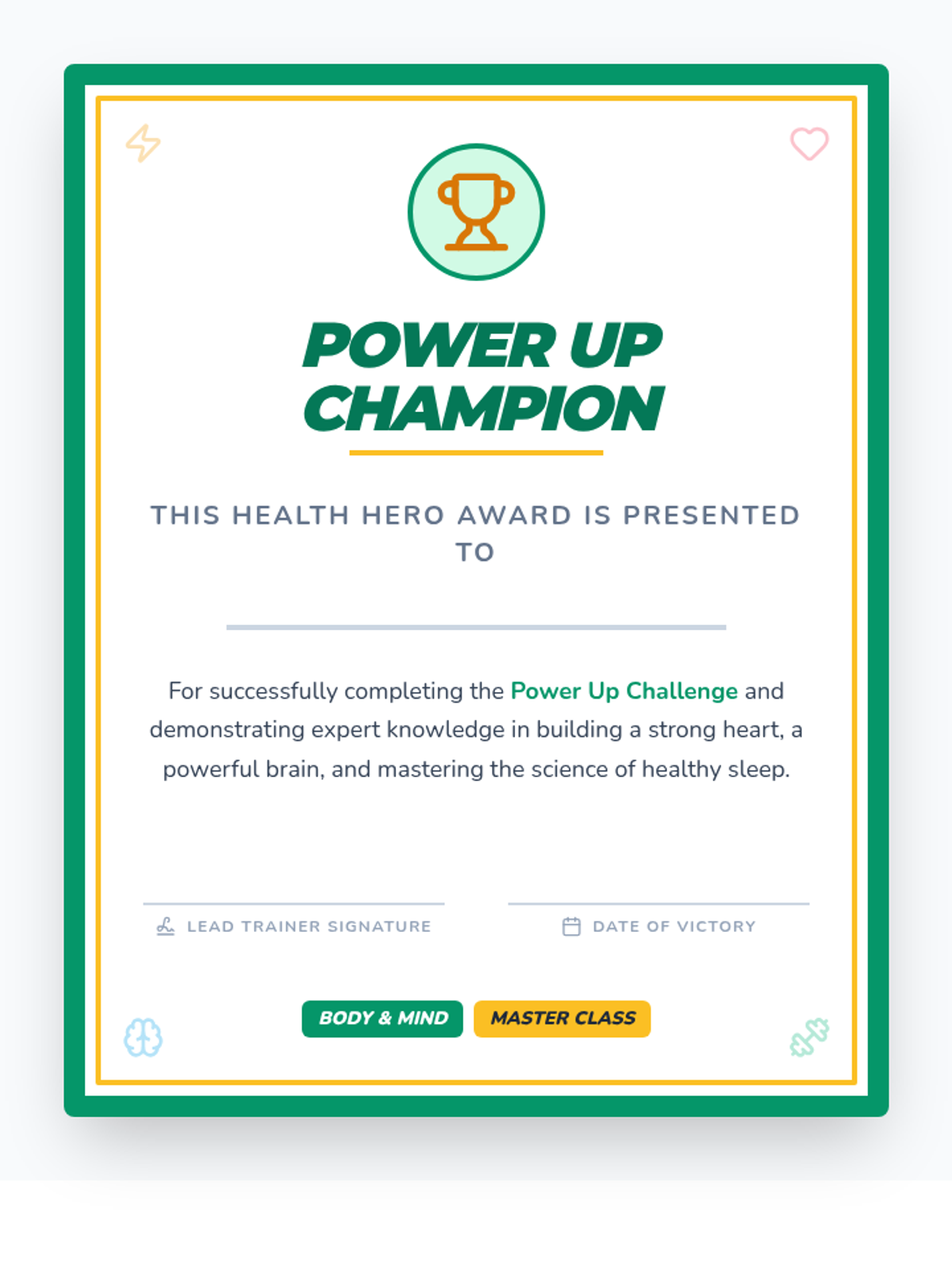
A vibrant, printable award certificate for students who complete the Power Up Challenge, recognizing their knowledge of physical and mental health.
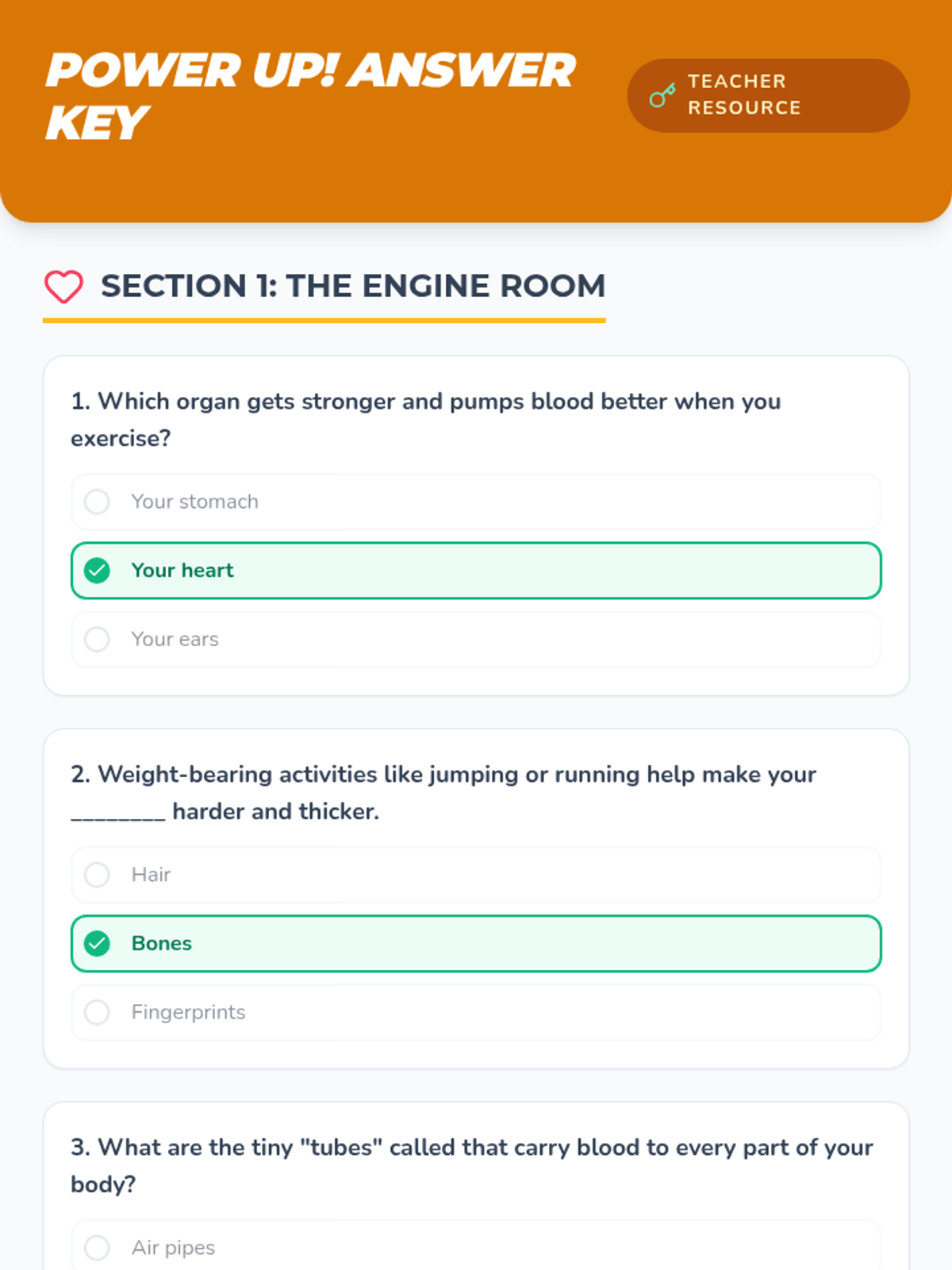
An updated teacher-facing answer key for the Power Up Quiz, including correct answers for the expanded "Engine Room" and sleep science sections.
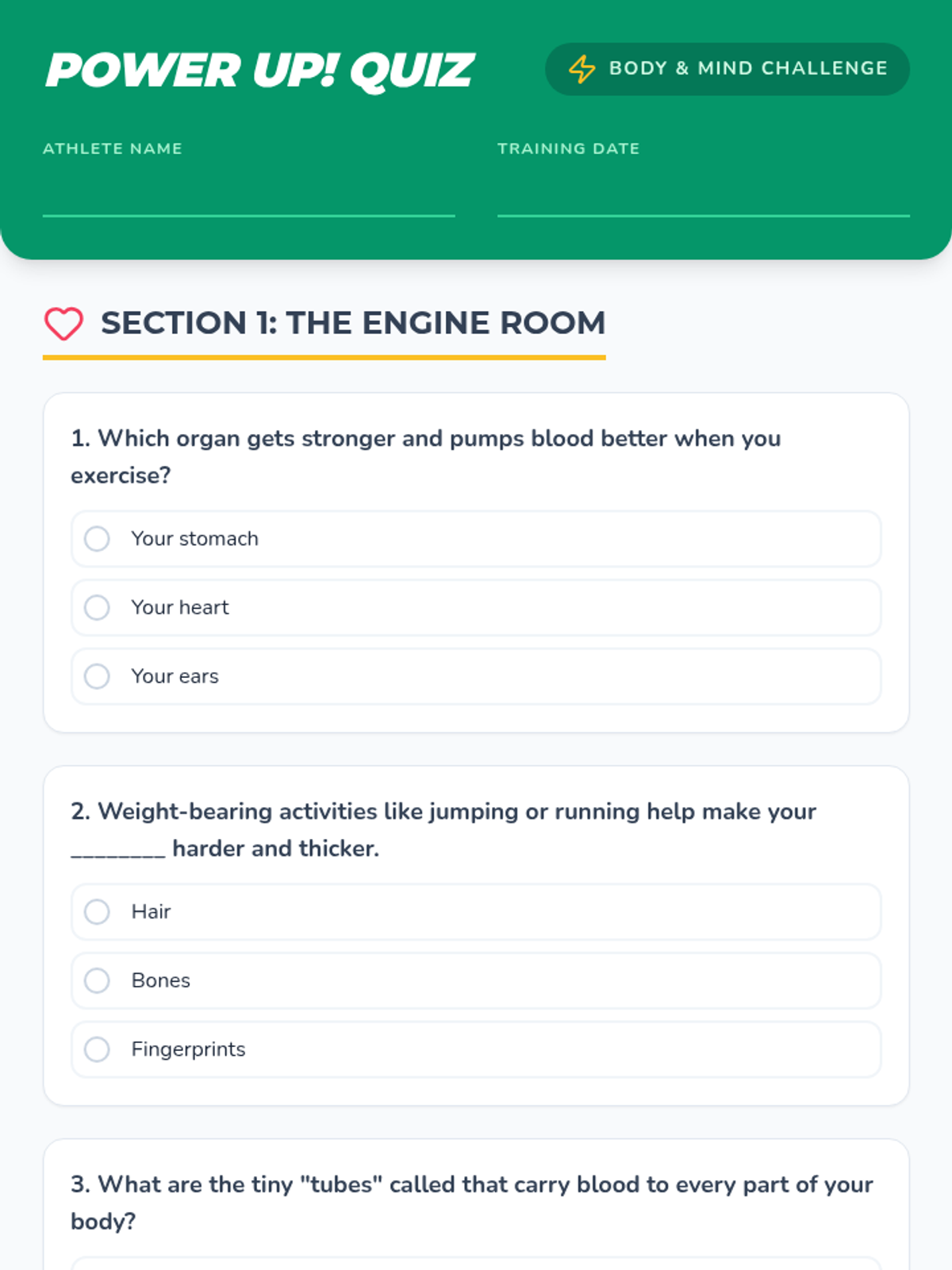
An expanded quiz for students covering the physical and mental benefits of exercise, with an enlarged "Engine Room" section on cardiovascular health and a major focus on sleep science.
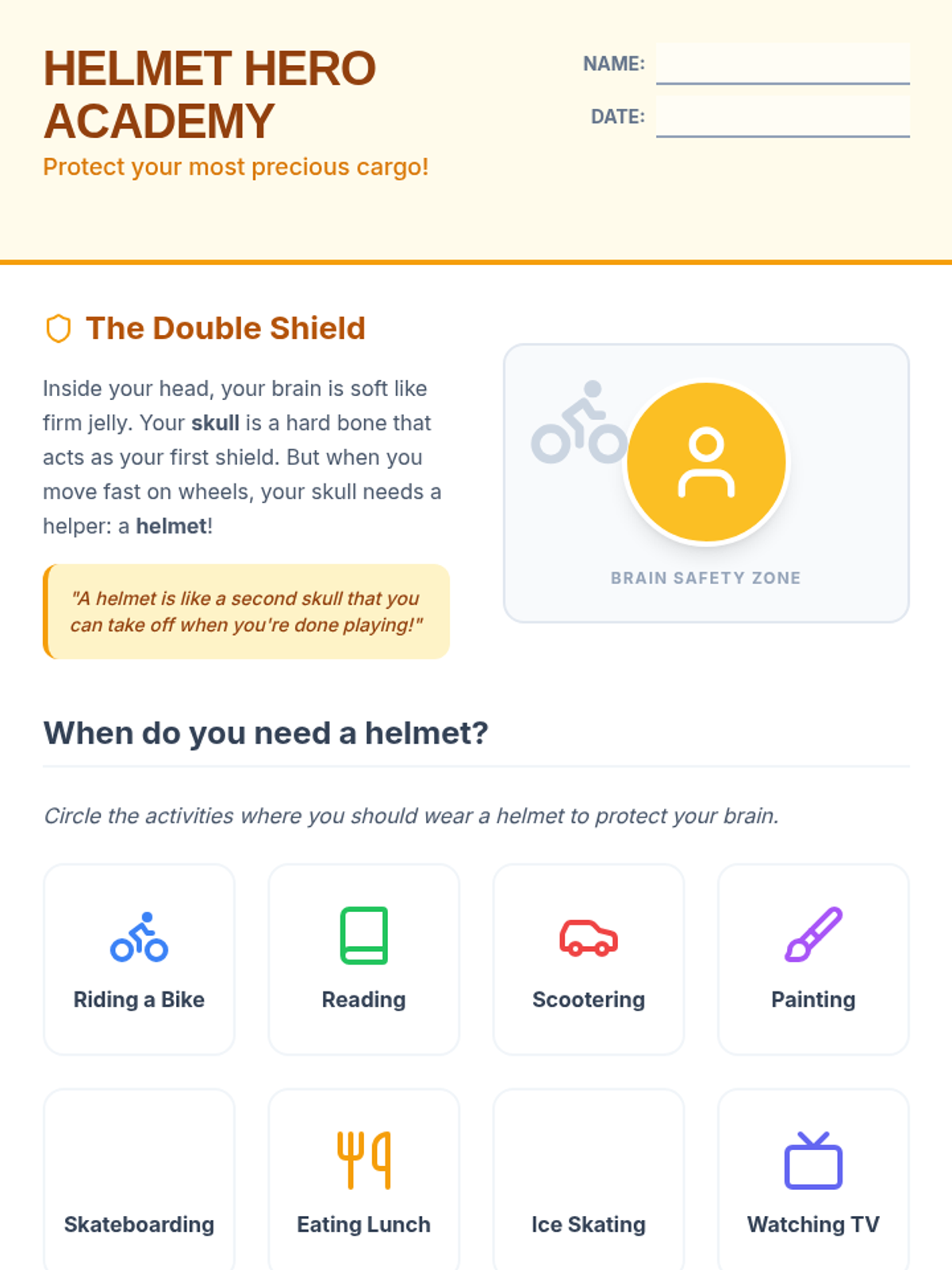
A worksheet focused on physical brain safety, teaching students about the skull's natural protection and the importance of wearing helmets during high-speed activities, including the "2-V-1" helmet fit rule.
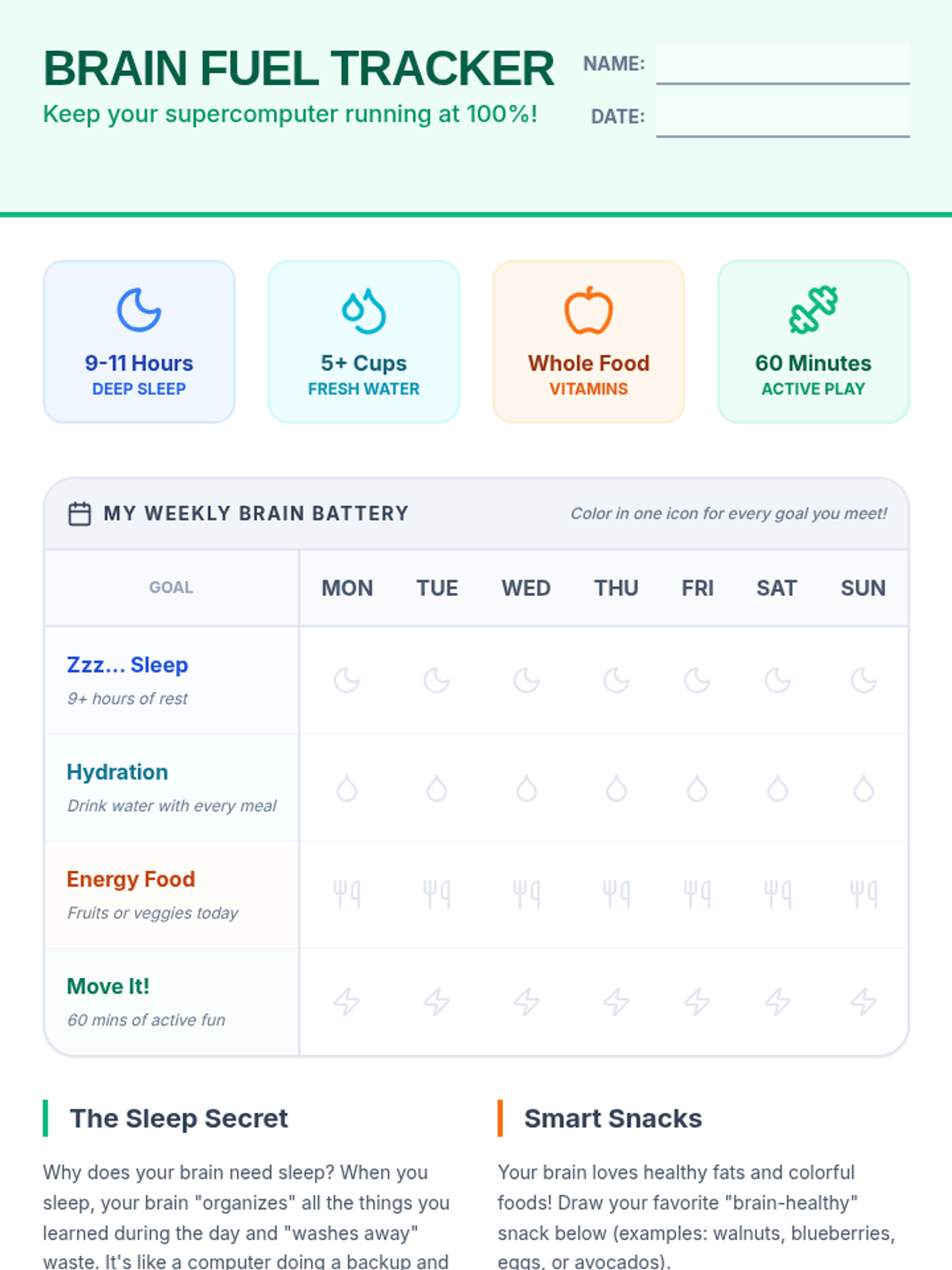
A weekly habit tracker for students to monitor their brain-healthy behaviors, including sleep, hydration, nutrition, and exercise, with brief explanations of why these habits matter.
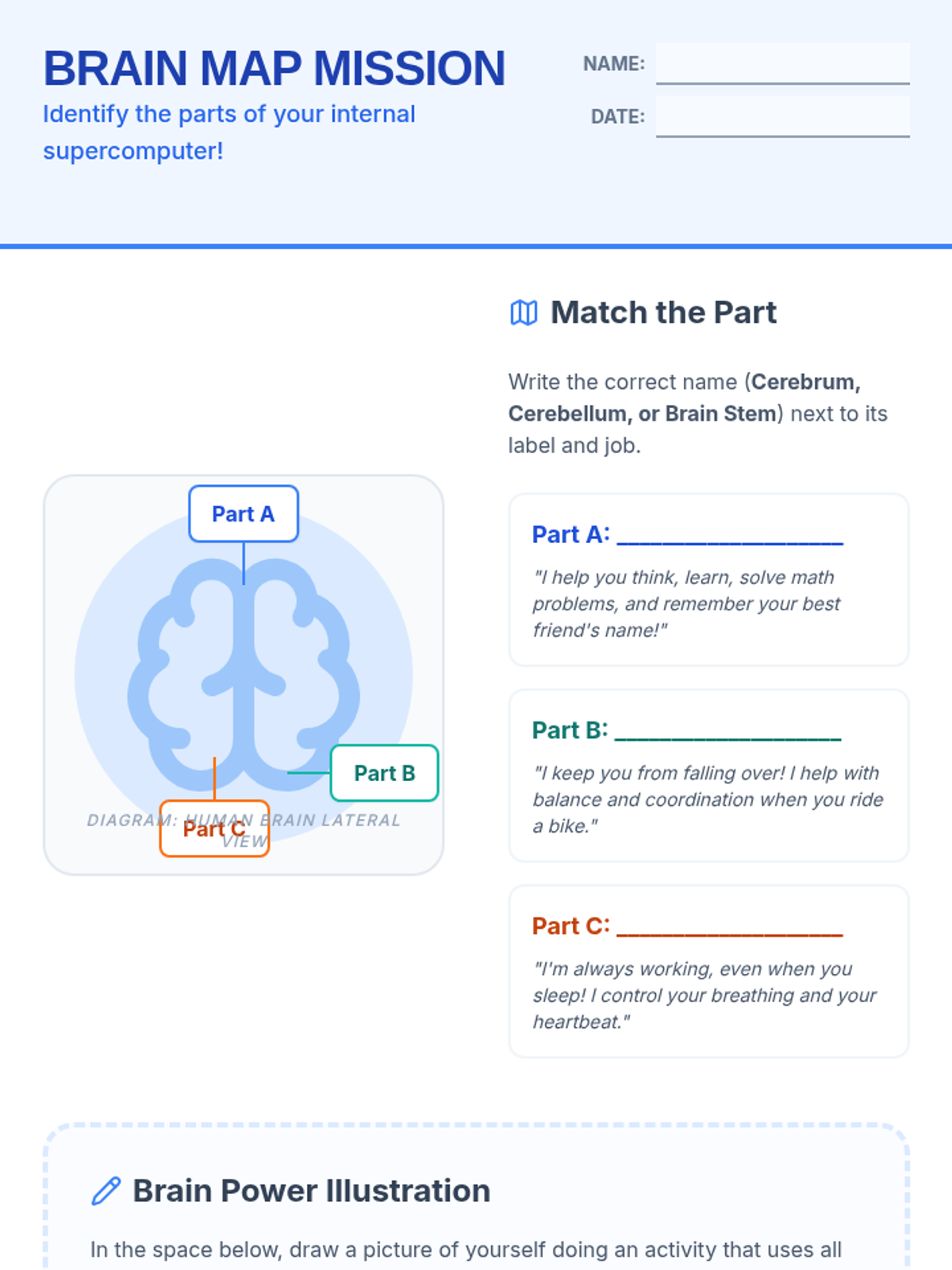
A worksheet for students to identify the three main parts of the brain (cerebrum, cerebellum, and brain stem) and describe their primary functions through a matching activity and a drawing prompt.
An introductory slide deck for elementary students covering basic brain functions, its main parts (cerebrum, cerebellum, brain stem), healthy habits like sleep and nutrition, and the importance of safety equipment like helmets.
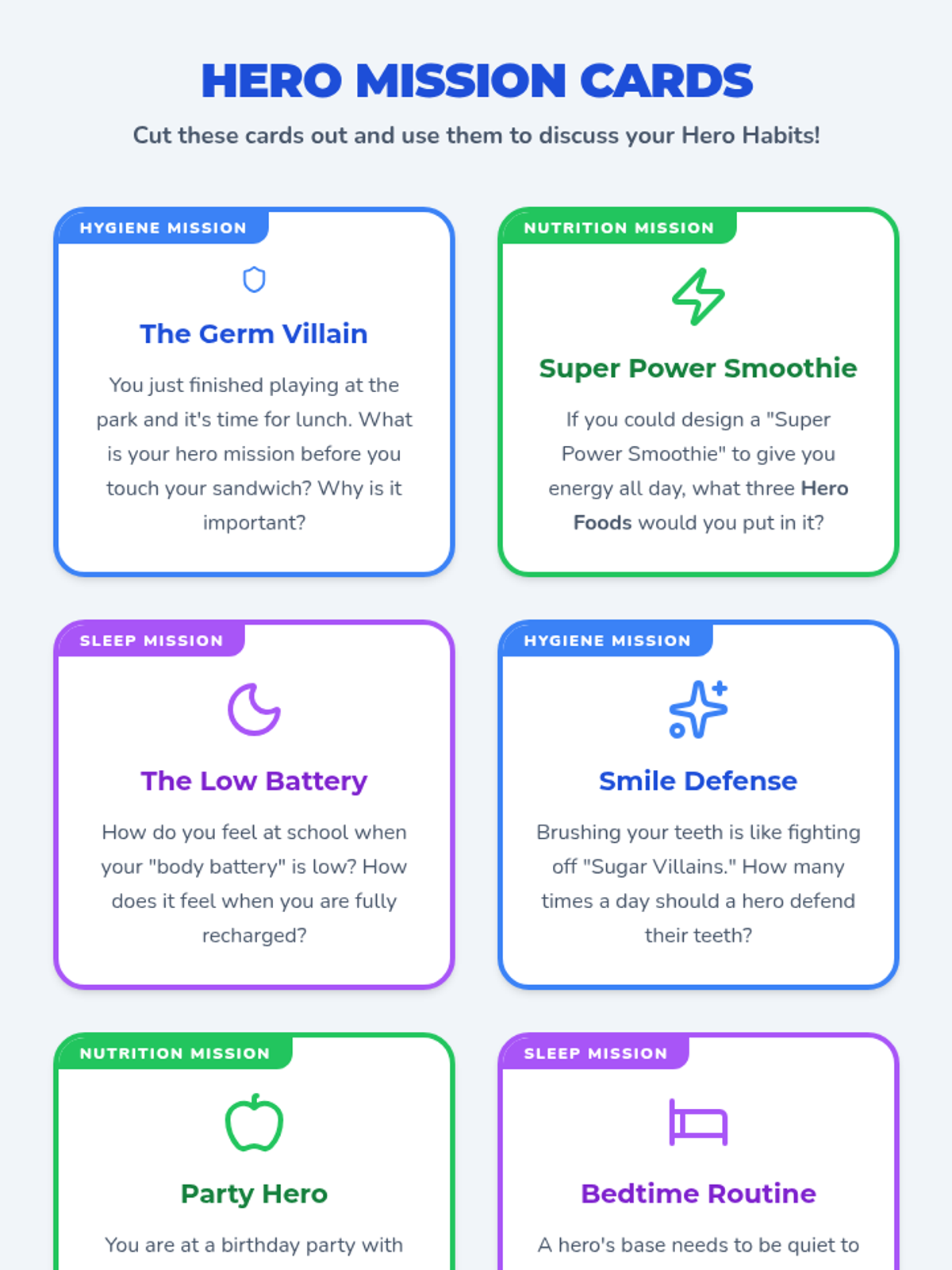
A set of 6 printable discussion cards (Hero Mission Cards) focusing on hygiene, nutrition, and sleep with engaging scenarios for student discussion.
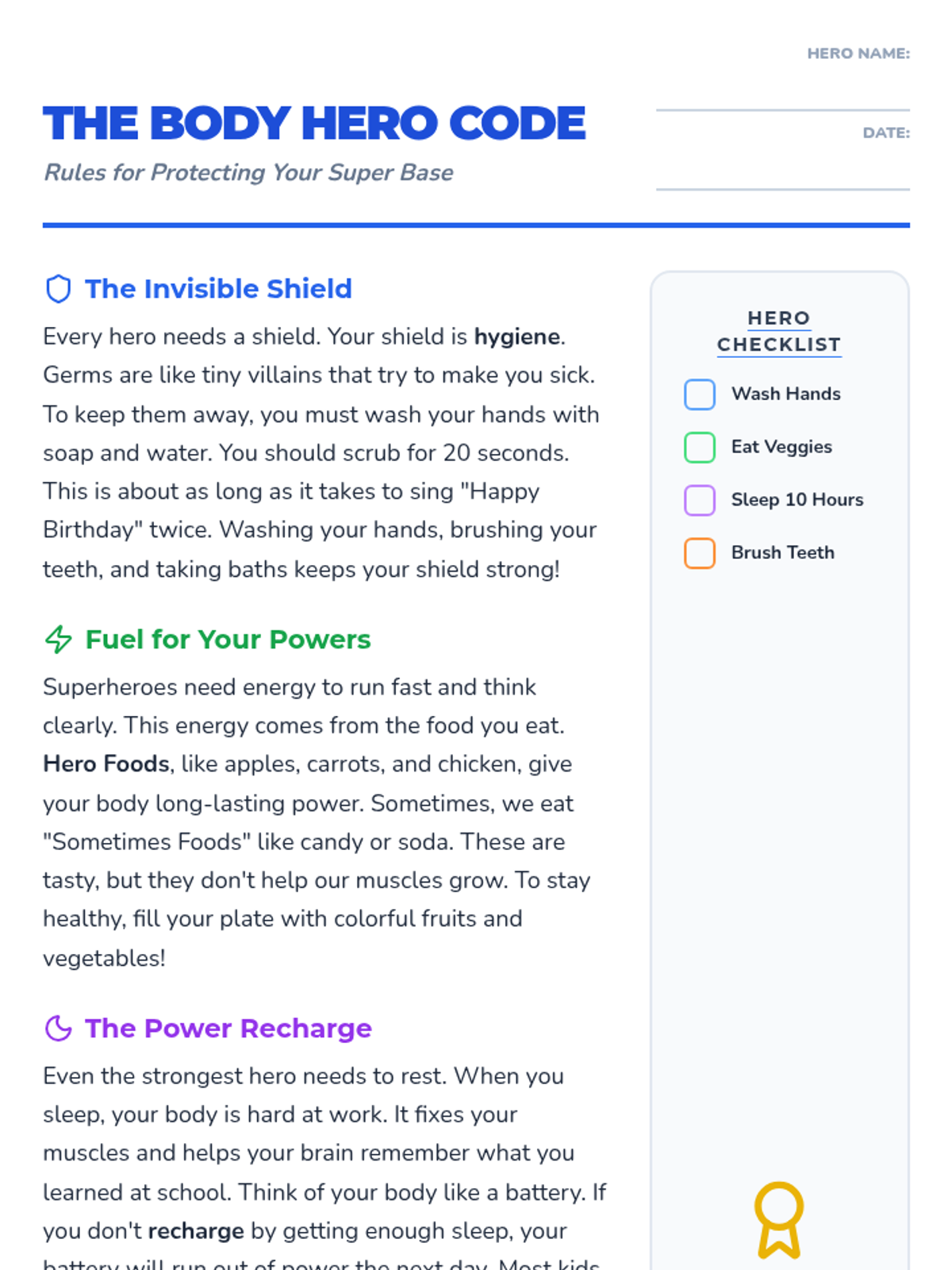
A reading passage titled 'The Body Hero Code' that explains hygiene, nutrition, and sleep using a superhero metaphor, followed by comprehension questions.
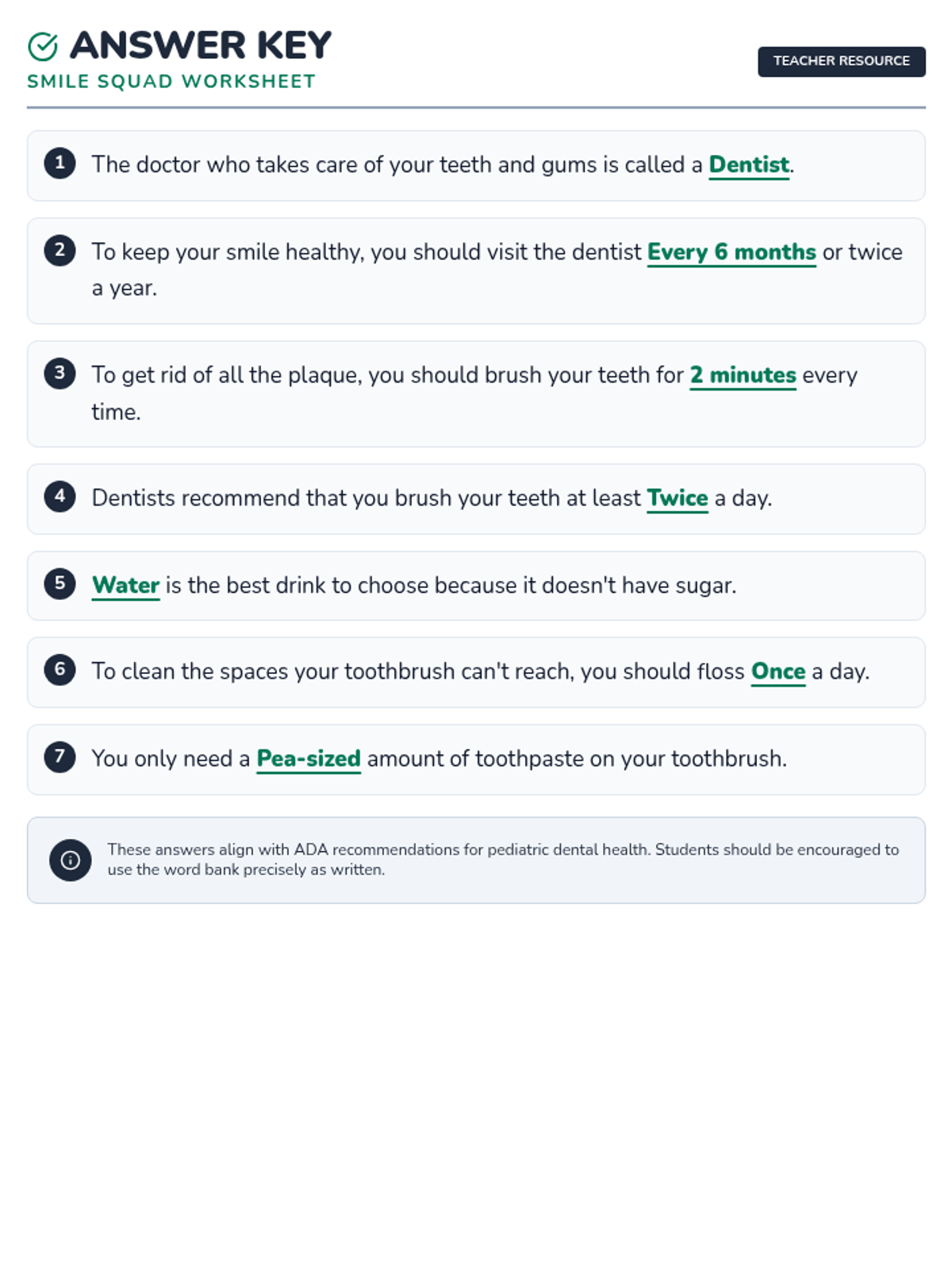
An answer key for the Smile Squad Worksheet, providing the correct fill-in-the-blank responses for teachers. Updated for layout consistency and page fit.
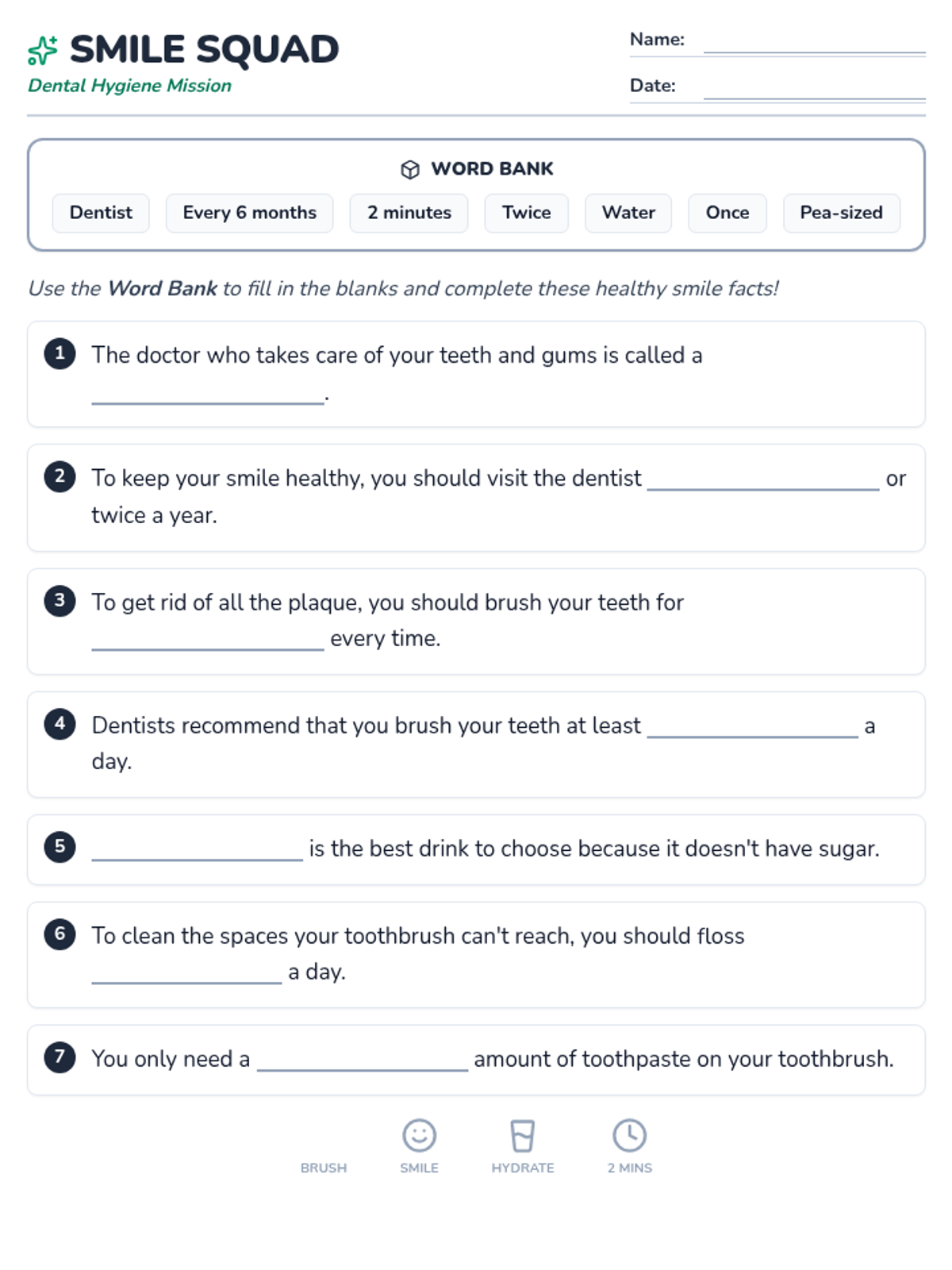
A fill-in-the-blank worksheet for students to identify key dental hygiene facts using a word bank. Optimized for single-page printing and black-and-white photocopy quality. Updated for alignment and flow.
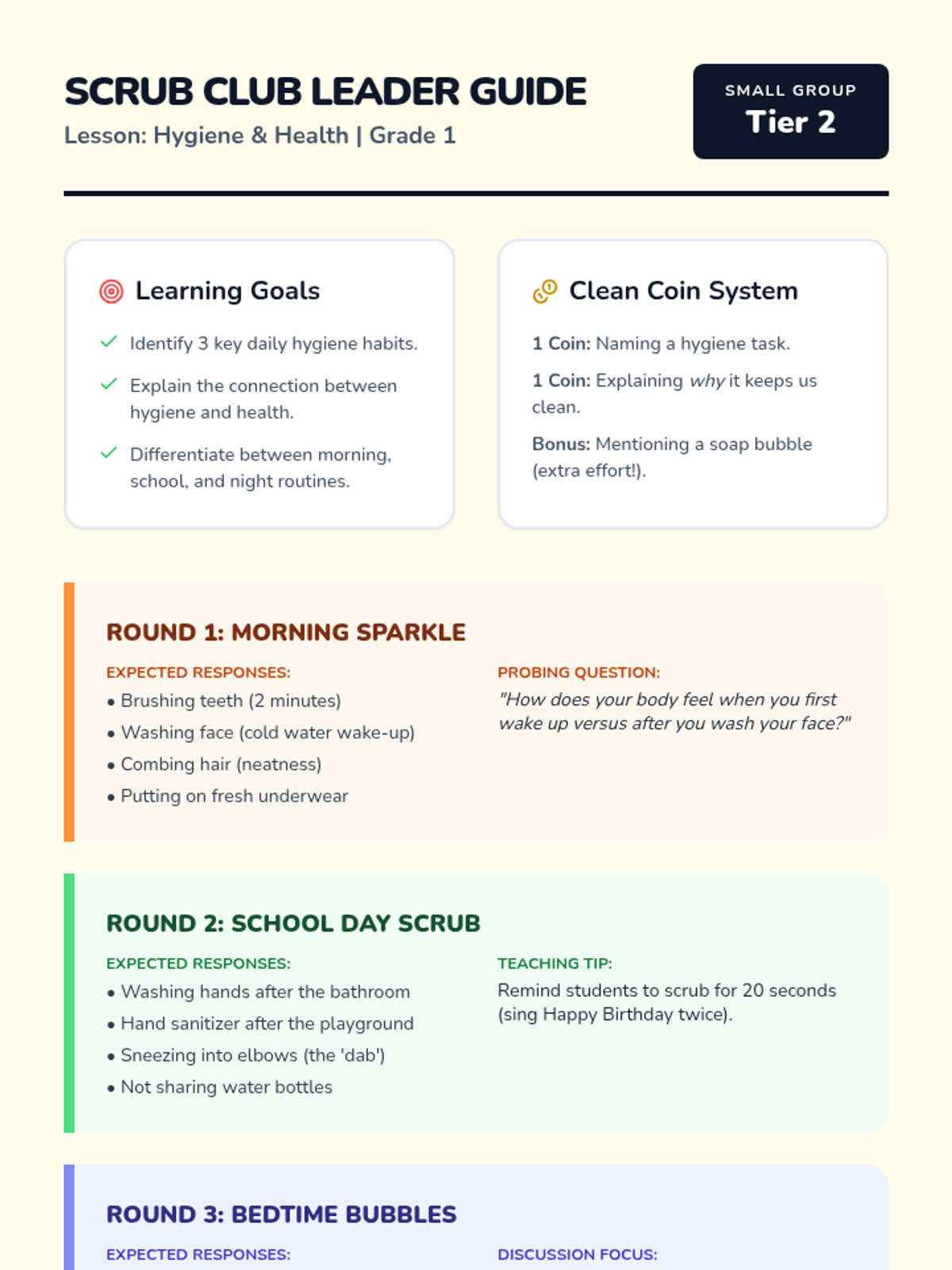
A comprehensive teacher guide for facilitating the 'Scrub Club' challenge, including expected student responses, probing questions, and common hygiene misconceptions.
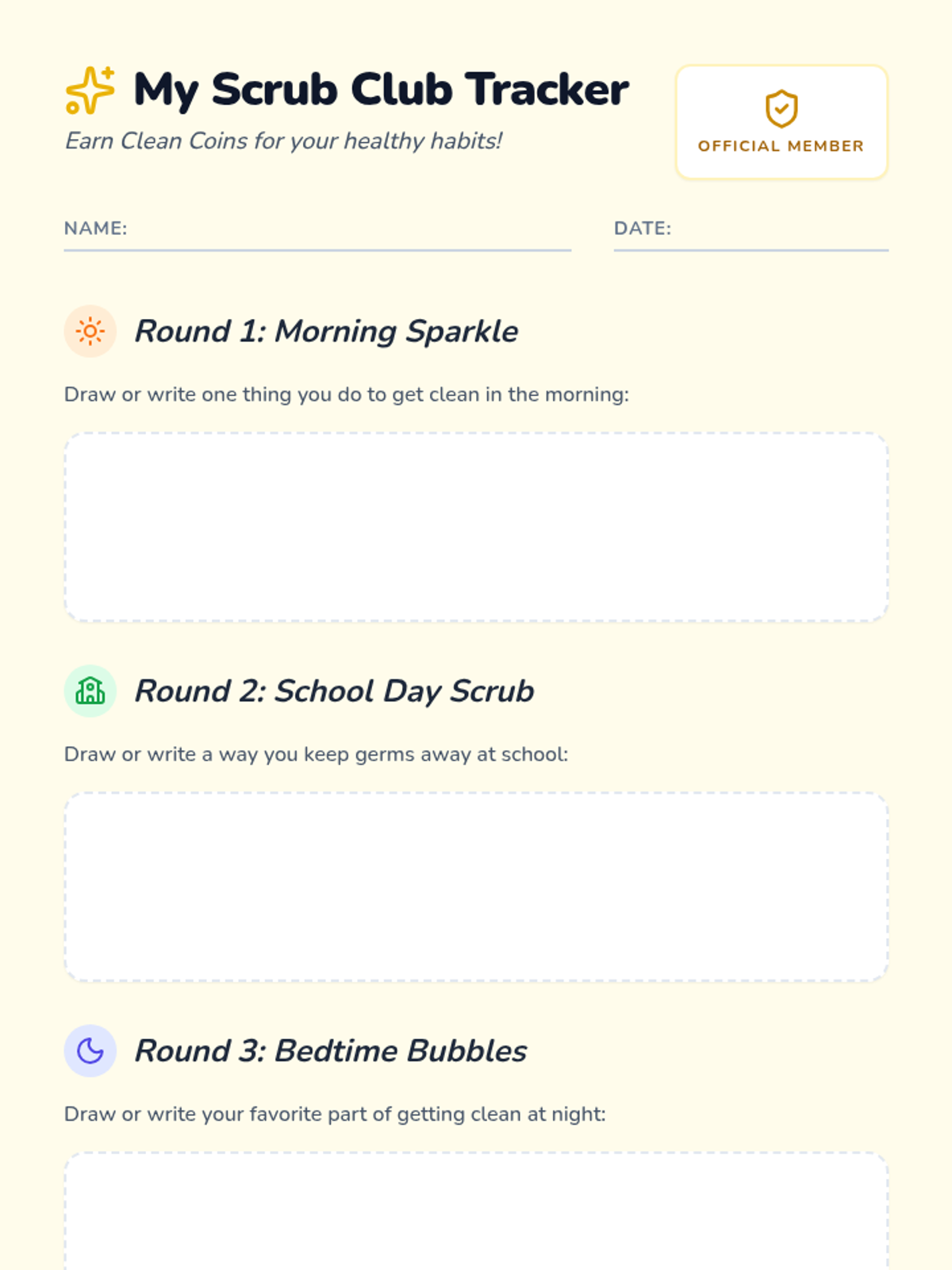
A bubbly student worksheet for tracking hygiene habits. It includes sections for morning, school, and bedtime routines, along with a 'Coin Bank' where students can color in earned coins.
A playful 7-slide presentation designed for small group instruction, introducing the 'Scrub Club' challenge and guiding students through hygiene habits they practice at morning, school, and bedtime.
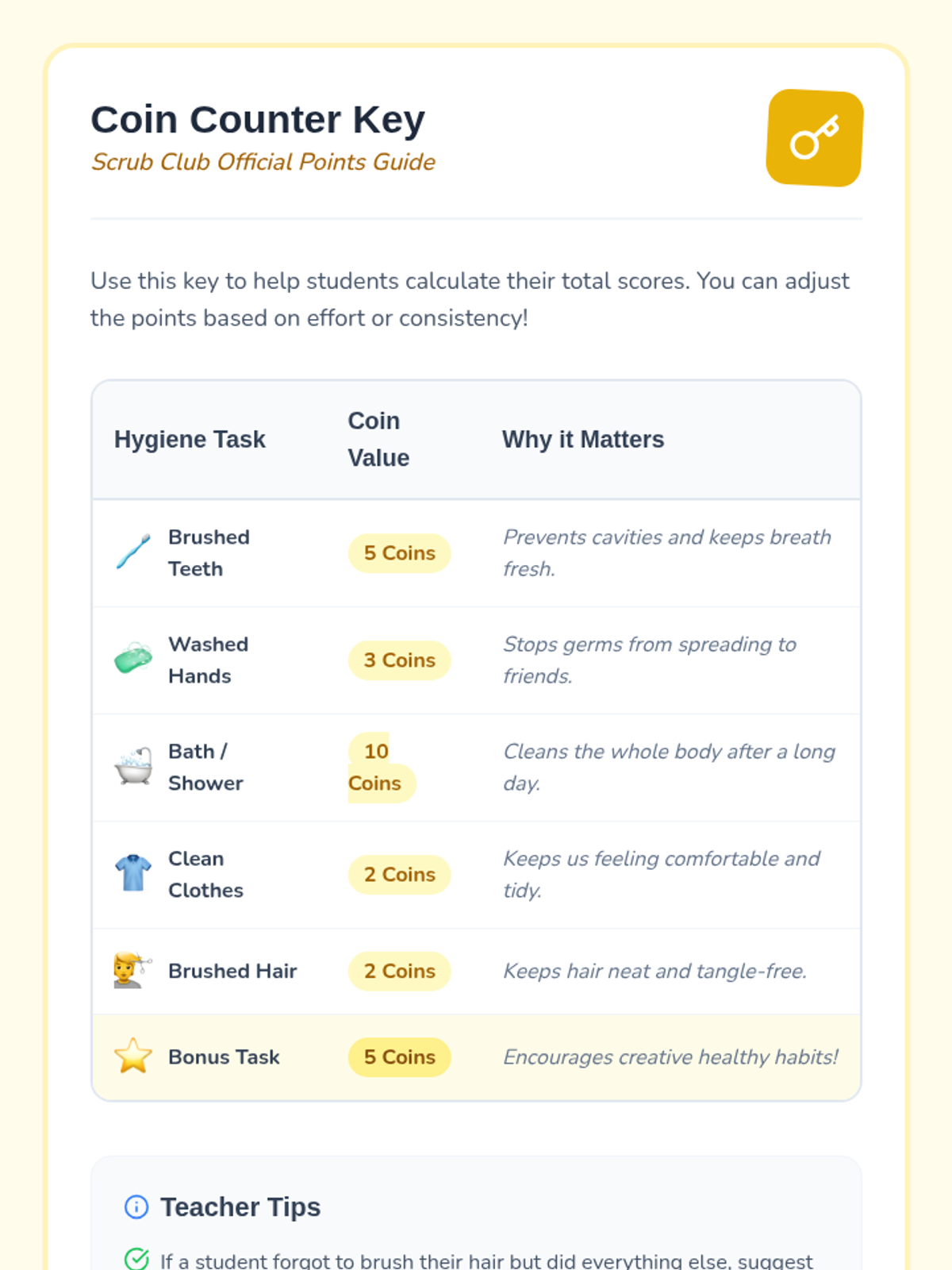
An answer key and point guide for teachers to value hygiene tasks in the 'Scrub Club' game, including point values and rationale for each health habit.
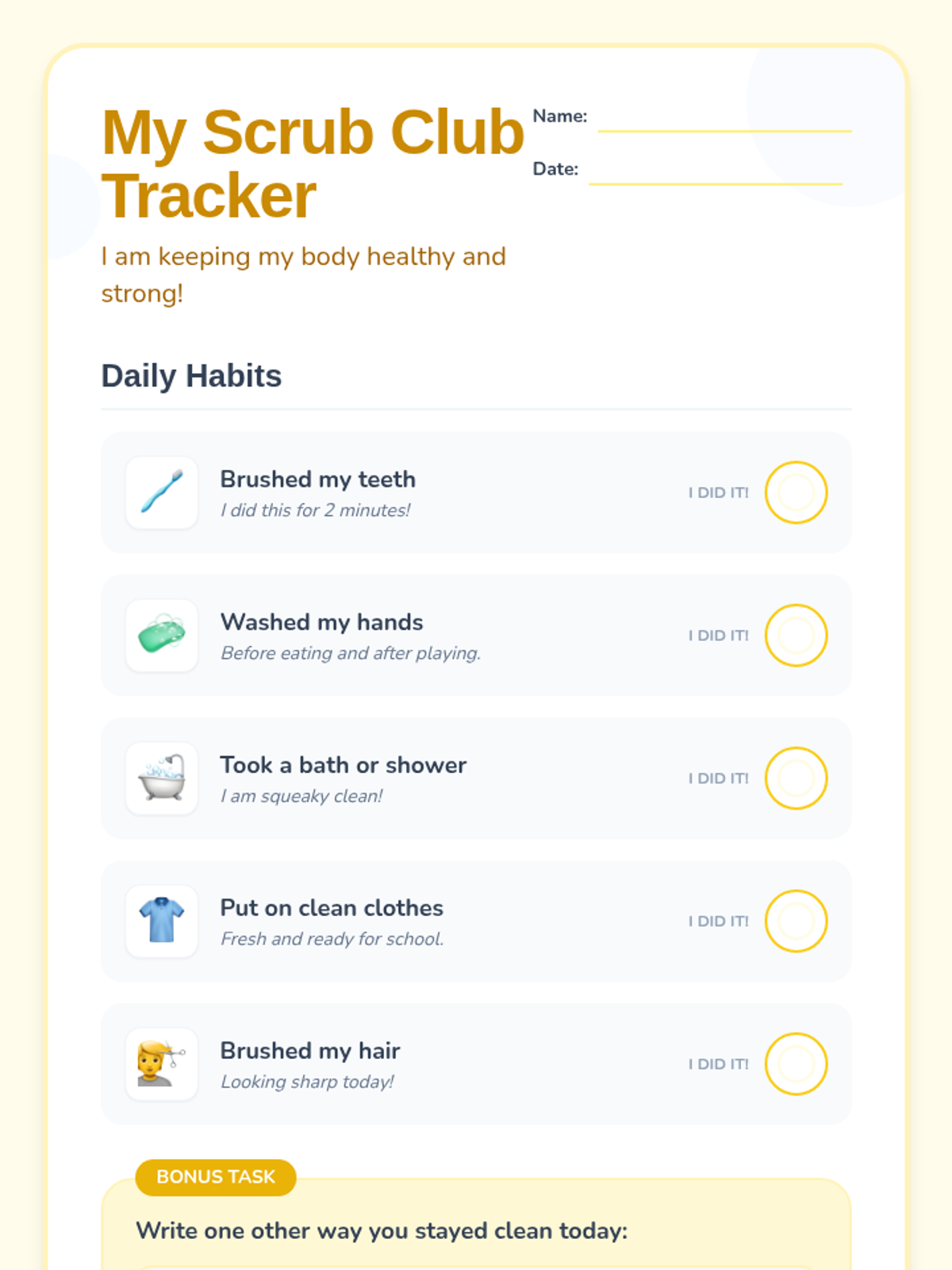
A visually engaging hygiene habit tracker for 1st graders, featuring icons for daily tasks like brushing teeth and washing hands, plus a space to tally 'clean coins'.
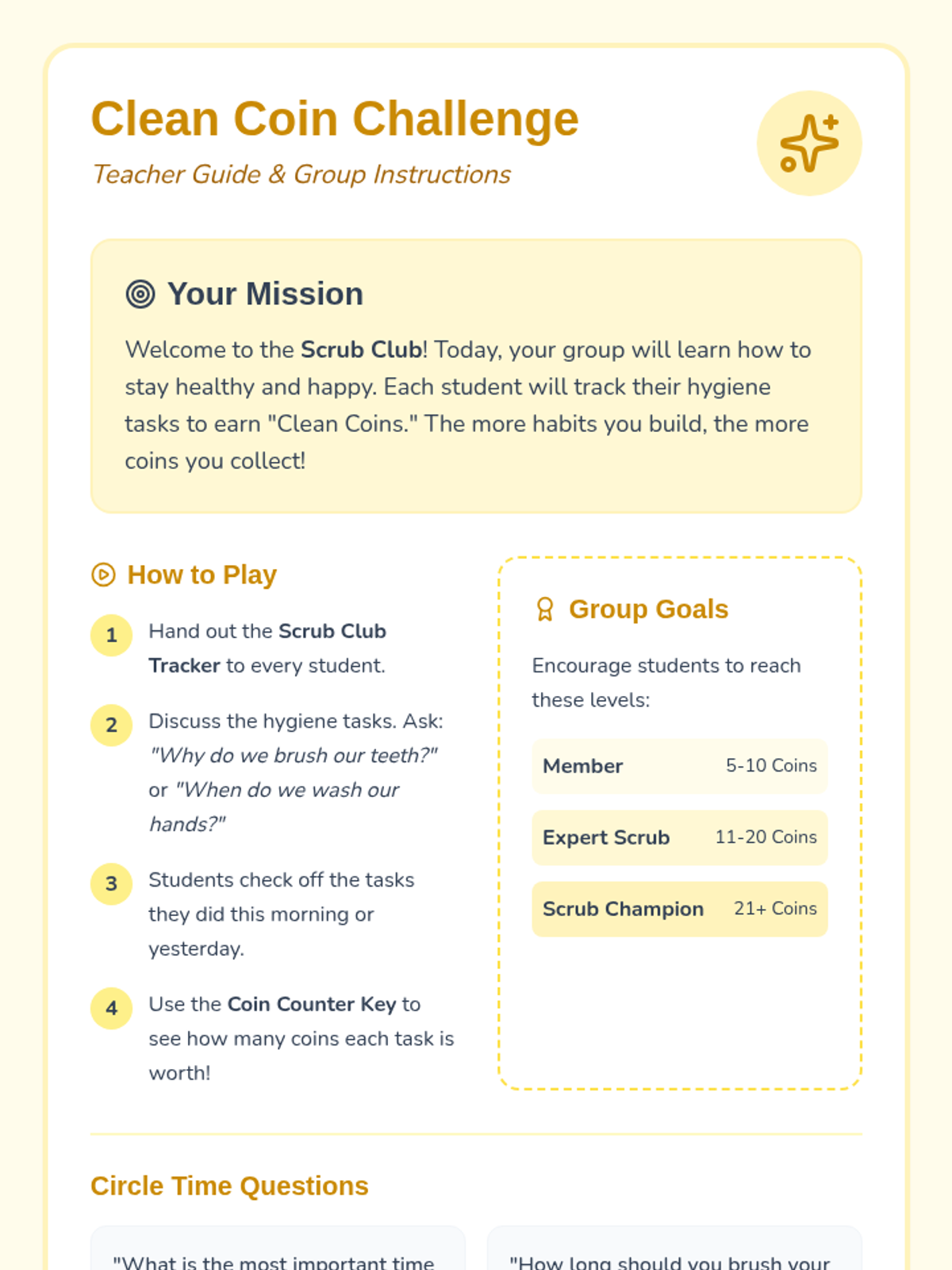
A small-group instruction guide for the 'Clean Coin Challenge', featuring game rules, group goals, and discussion prompts for 1st-grade hygiene lessons.
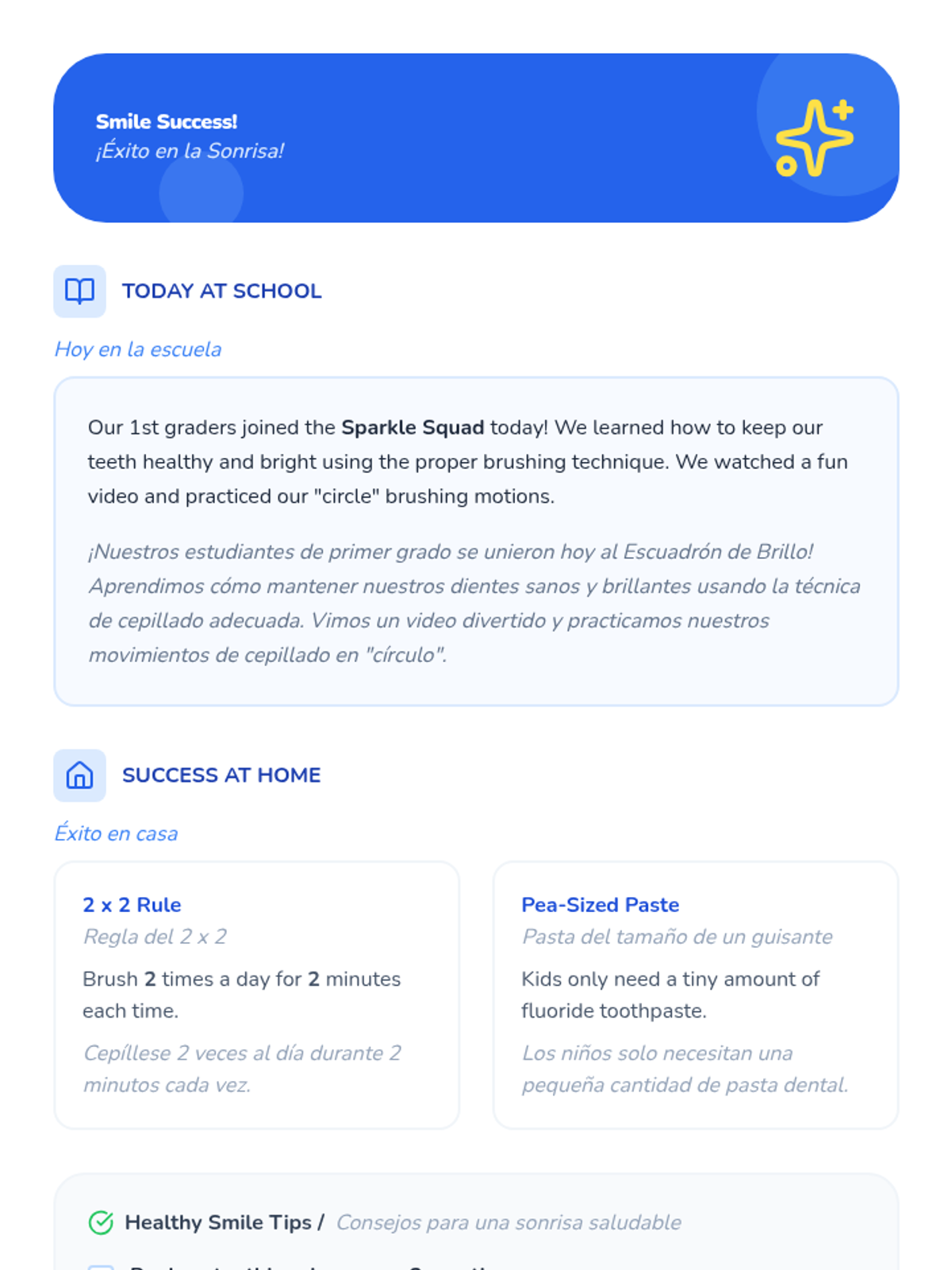
A bilingual English-Spanish parent handout providing tips for home dental hygiene, summarizing the lesson's key points and providing a link to the instructional video.
A bilingual English-Spanish worksheet for 1st graders to practice dental hygiene concepts, including a sequencing activity and a 7-day brushing tracker.
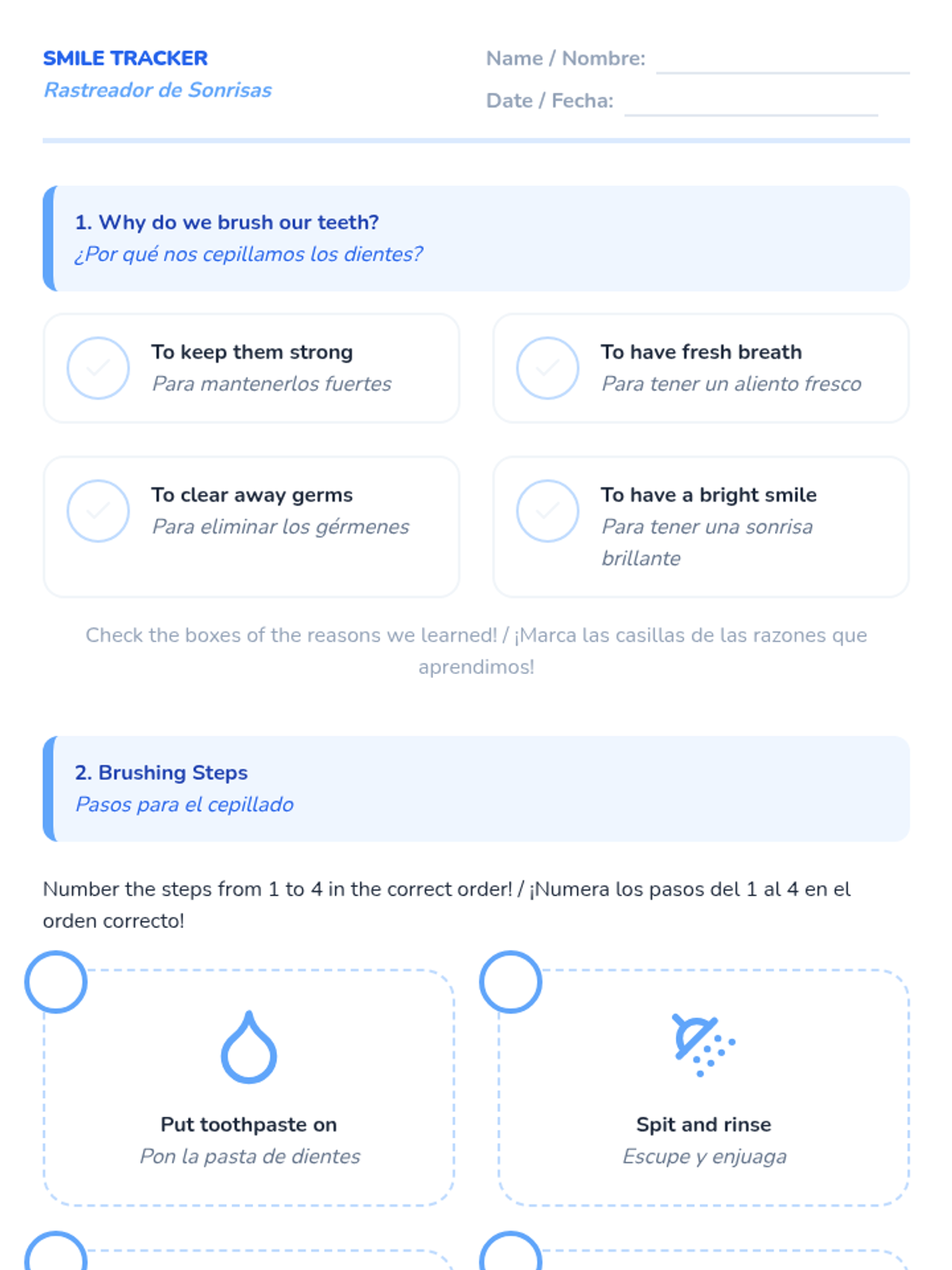
A bilingual English-Spanish slide presentation for 1st graders on dental hygiene, featuring the 'How to Brush Your Teeth' video and step-by-step instructions with friendly, bubbly visuals.
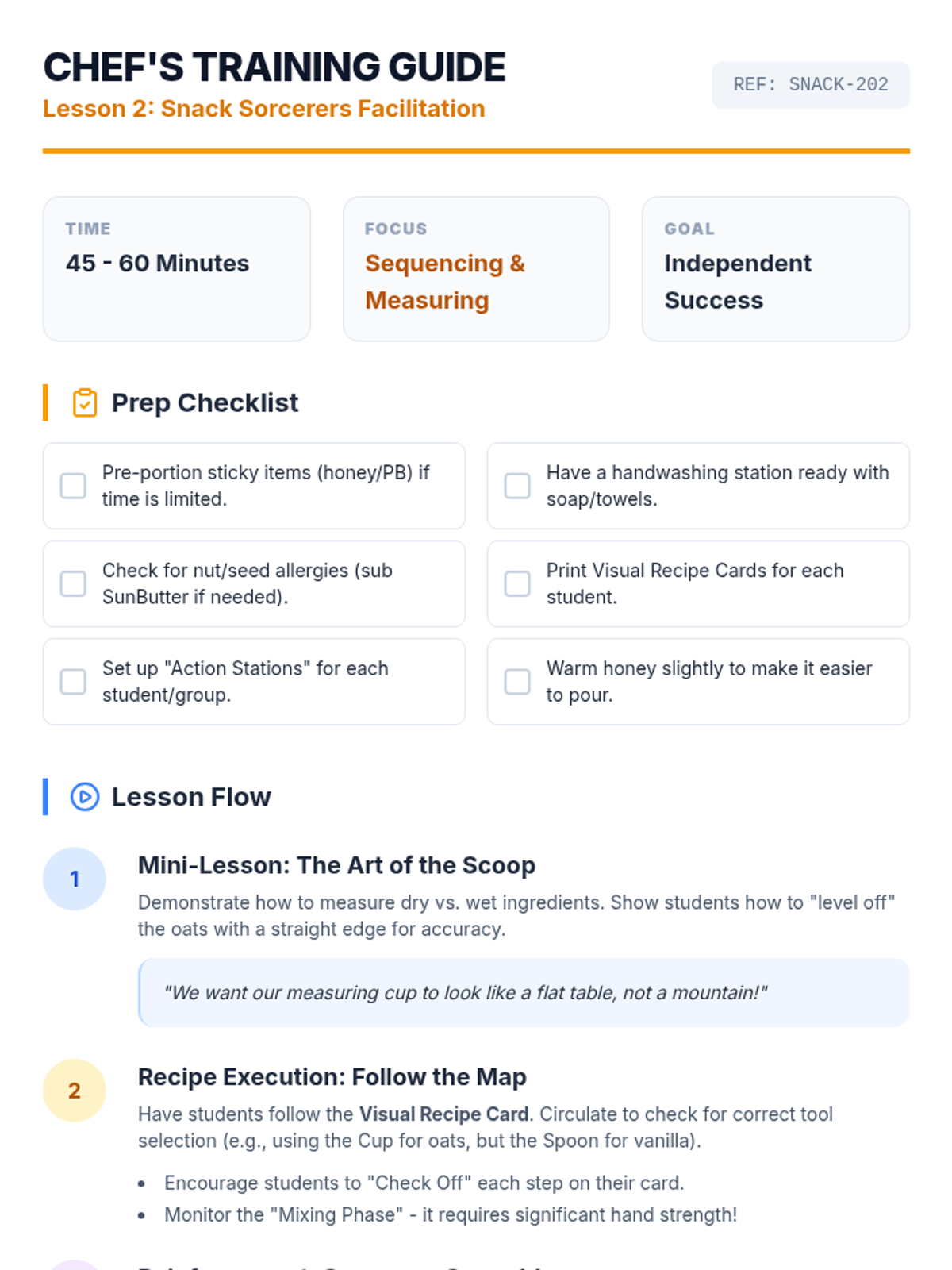
A teacher-facing guide for the Snack Sorcerers lesson. Includes a prep checklist, facilitation steps for the visual recipe, and strategies for differentiation and scaffolding.
A presentation designed to introduce elementary students to the core concepts of kitchen safety, hygiene, and tool identification. Features large text, high-contrast visuals, and simple rules.
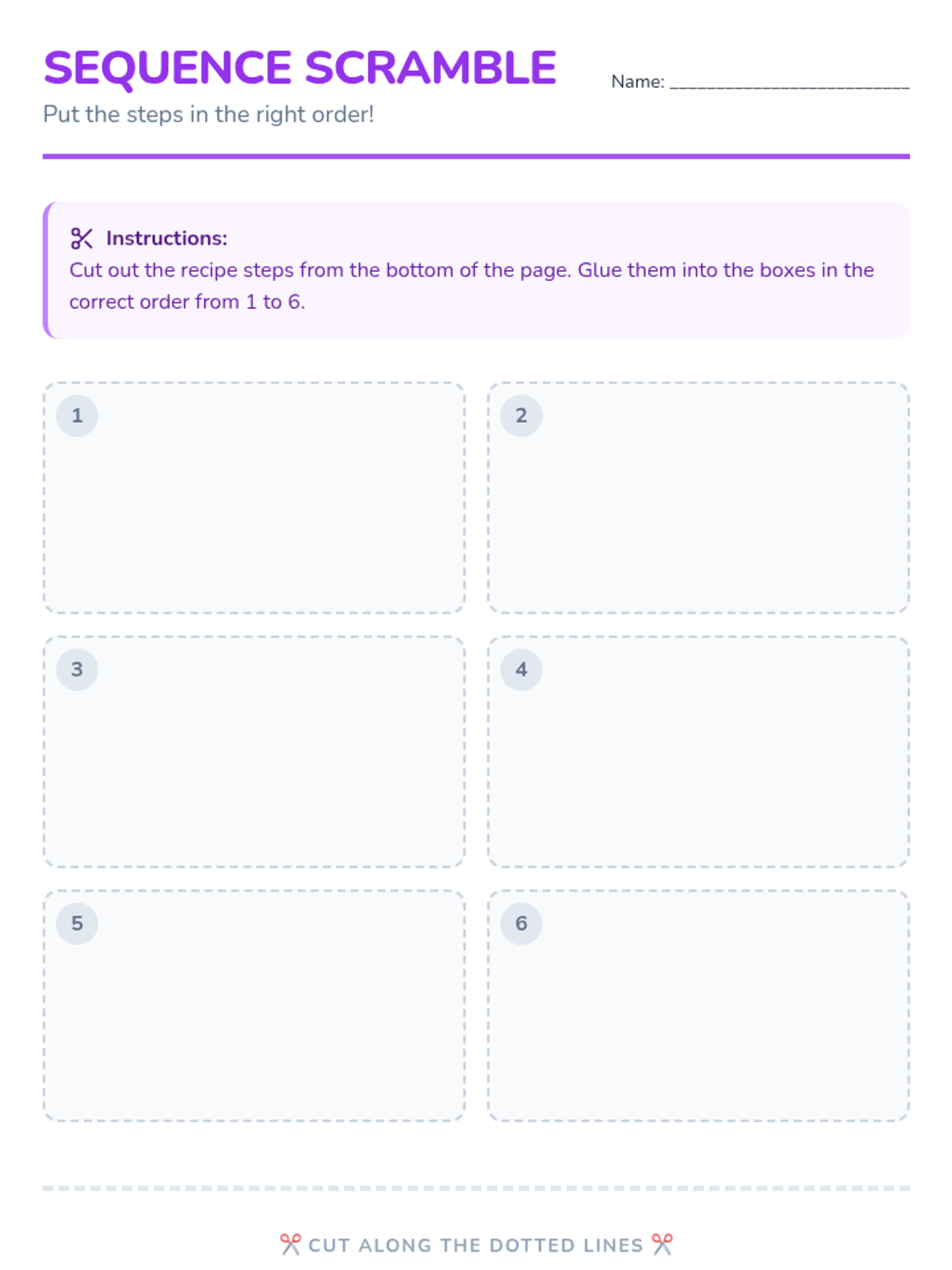
A cut-and-paste sequencing activity where students arrange the steps of the Spark Plug Energy Bites recipe in the correct order. Focuses on sequencing skills and memory recall from the visual recipe.
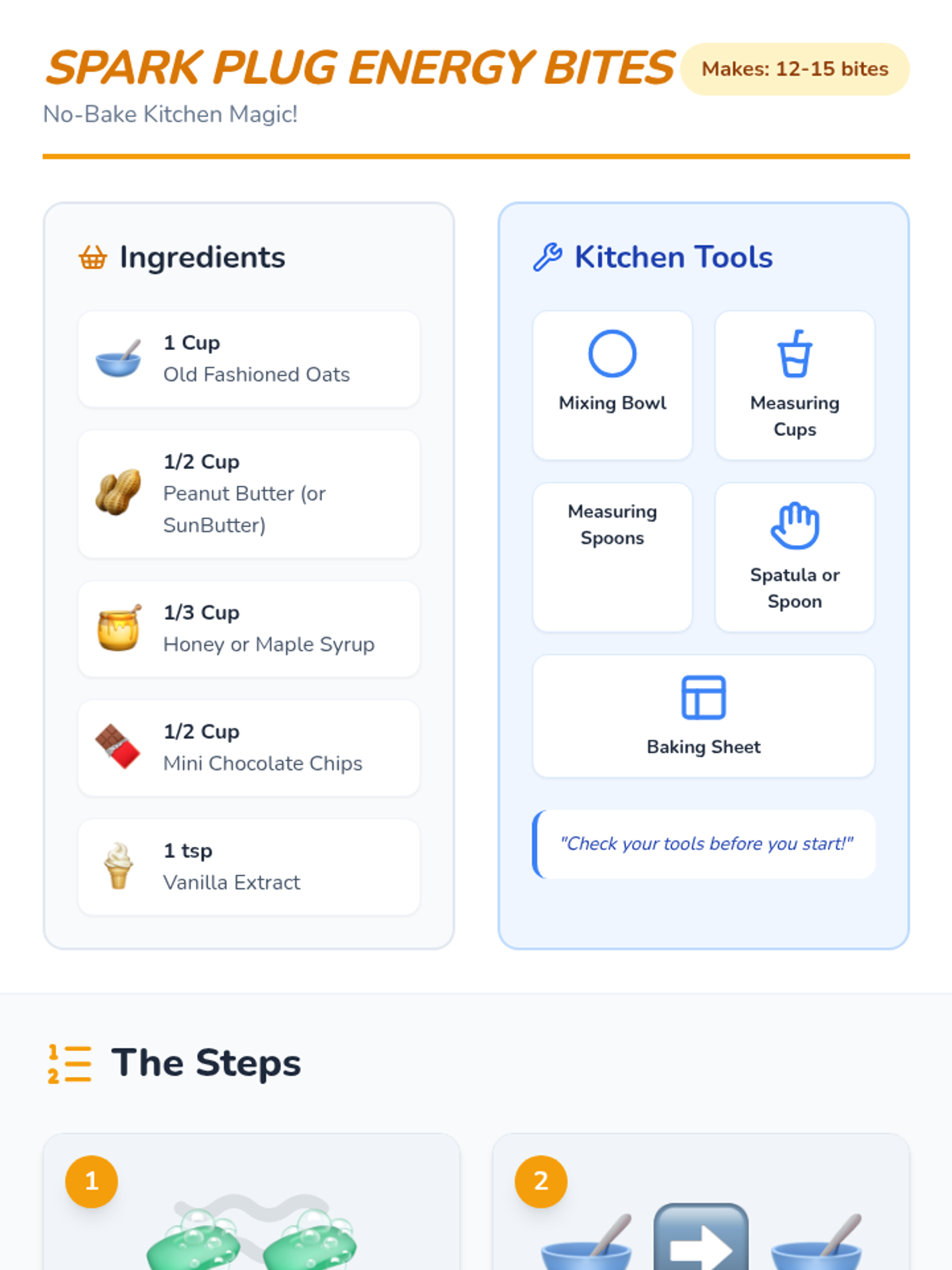
A comprehensive visual recipe for Spark Plug Energy Bites, designed for elementary students. It features clear ingredient lists, tool requirements, and an 8-step visual instruction guide with icons and simplified text.
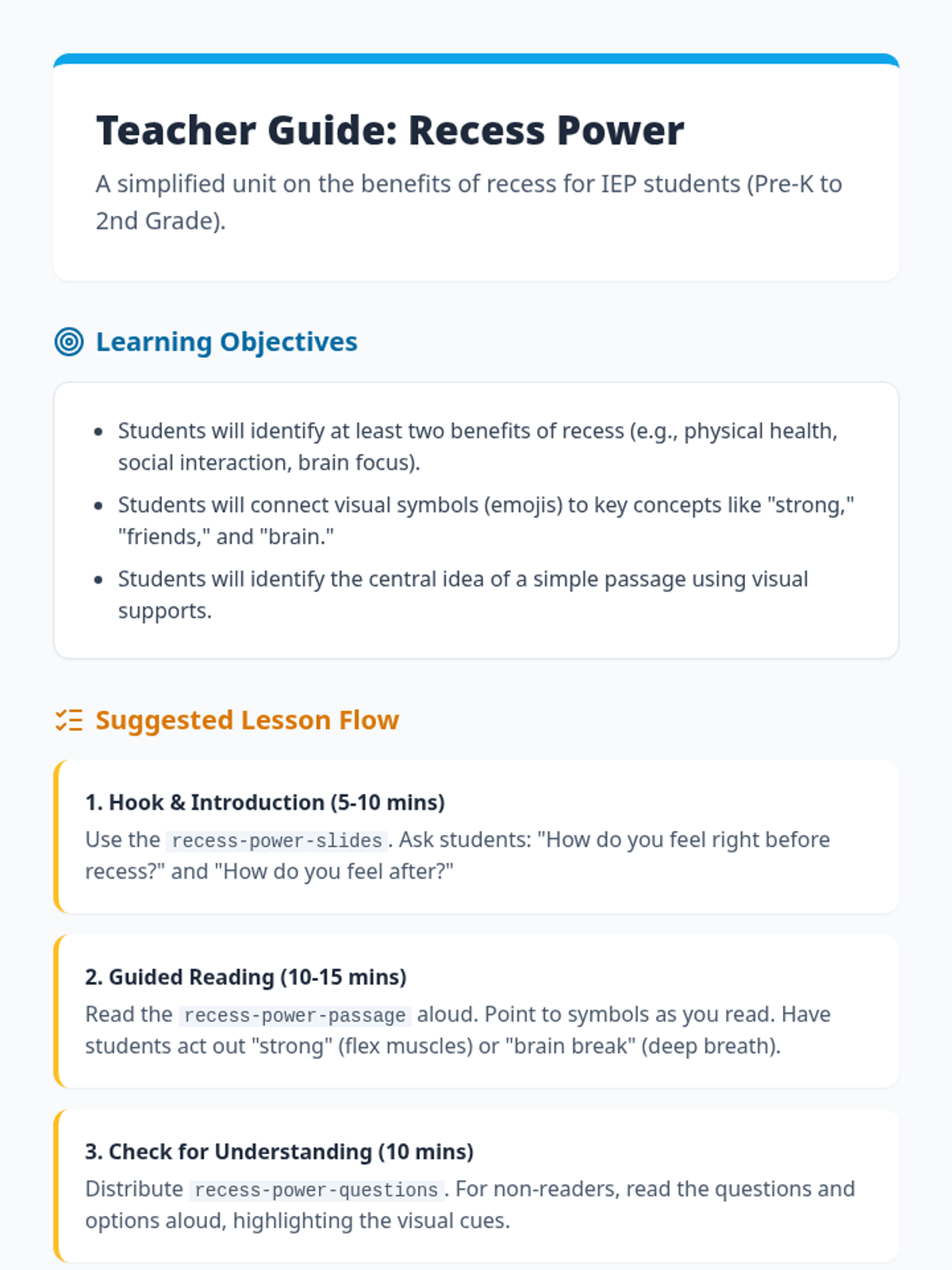
A teacher guide providing learning objectives, lesson sequence, differentiation strategies, and an updated answer key for the Recess Power lesson.
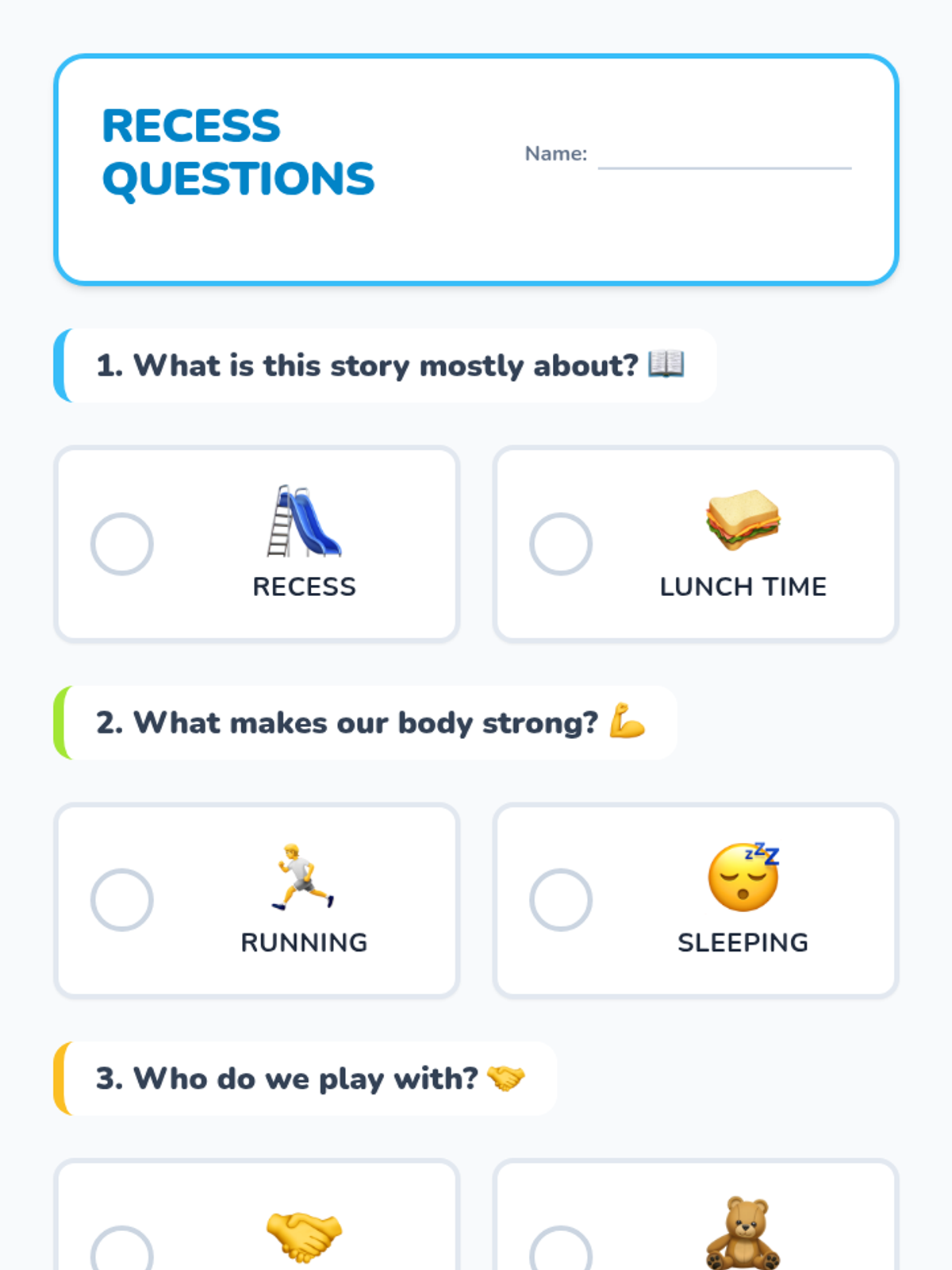
A multiple choice assessment for students with IEPs, featuring visual cues and identical option styling for 1st-2nd grade or Pre-K/K learners. Now includes a question on central idea.
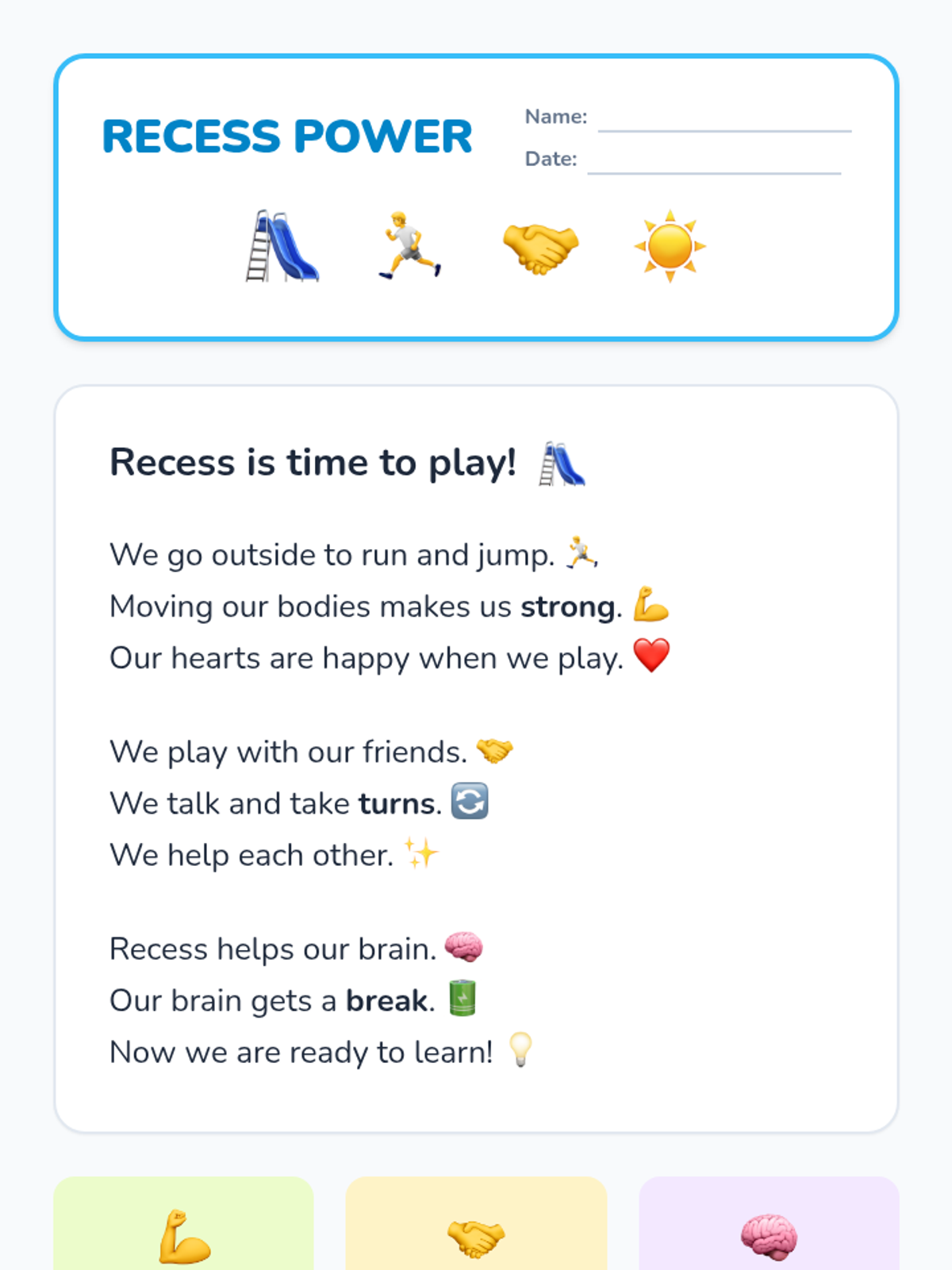
A simplified reading passage for 1st-2nd grade level with visual emoji supports for key concepts like playing, strength, friendship, and brain breaks.
A visual presentation with large text and symbols explaining why recess is important for physical health, social skills, and classroom focus.
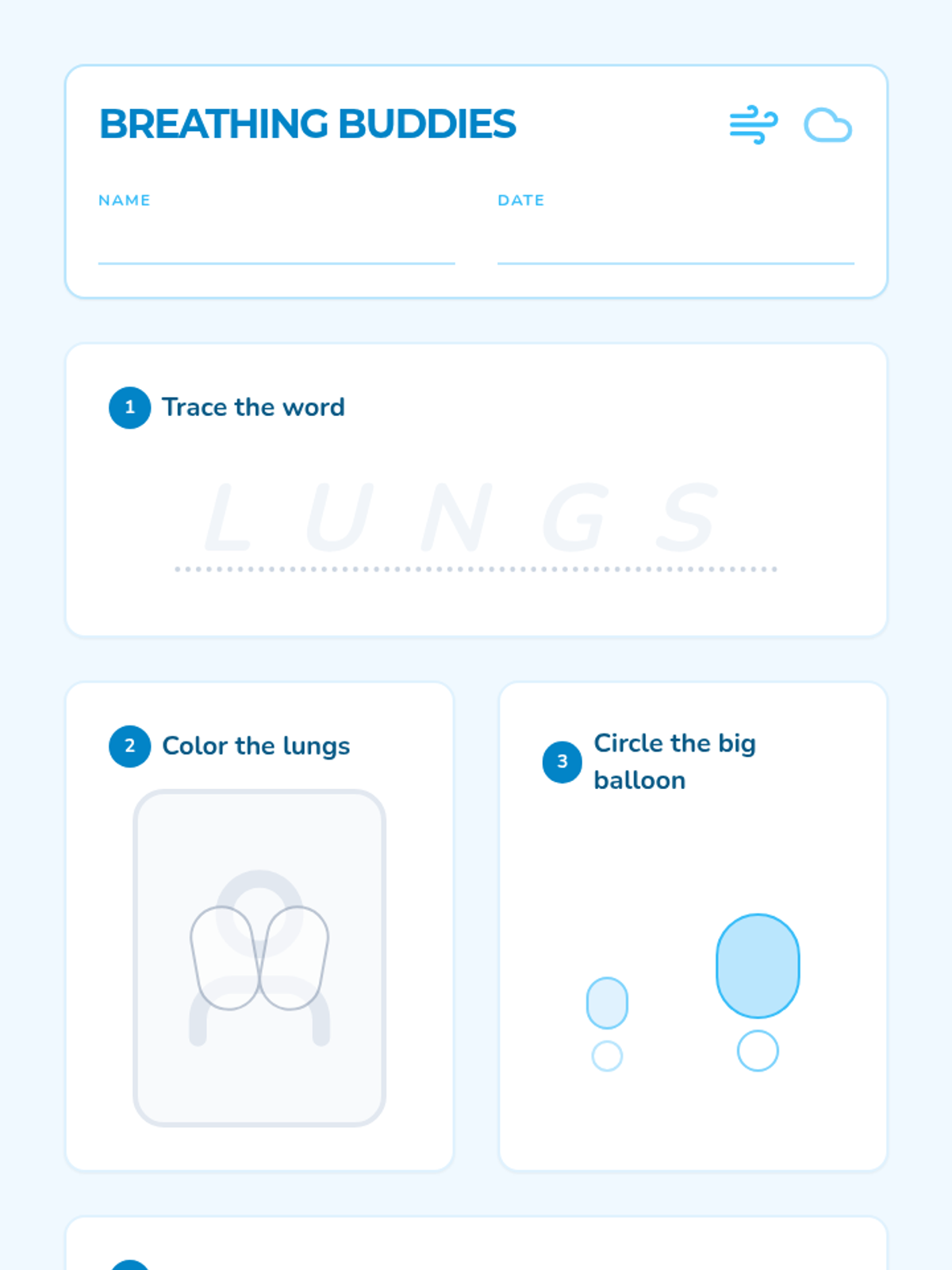
A student worksheet for K-1 students with simplified text instructions for tracing the word 'lungs', coloring lung shapes, and identifying healthy habits.
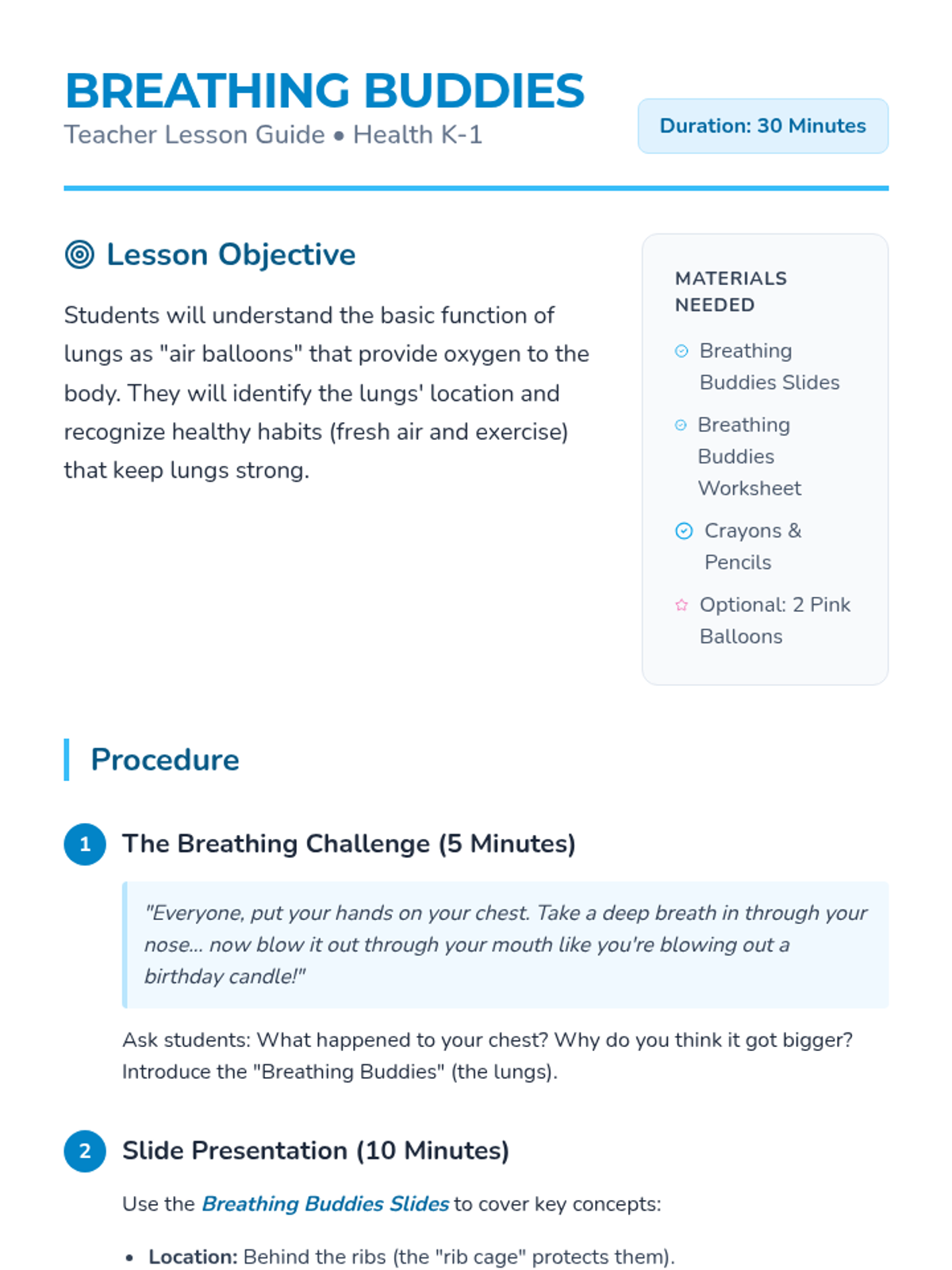
A comprehensive teacher facilitation guide for the Breathing Buddies lesson, including a 30-minute procedure, discussion prompts, and activity instructions.
Visual slide deck for K-1 students explaining the lungs' location, function as 'balloons', and how to keep them healthy through fresh air and exercise.
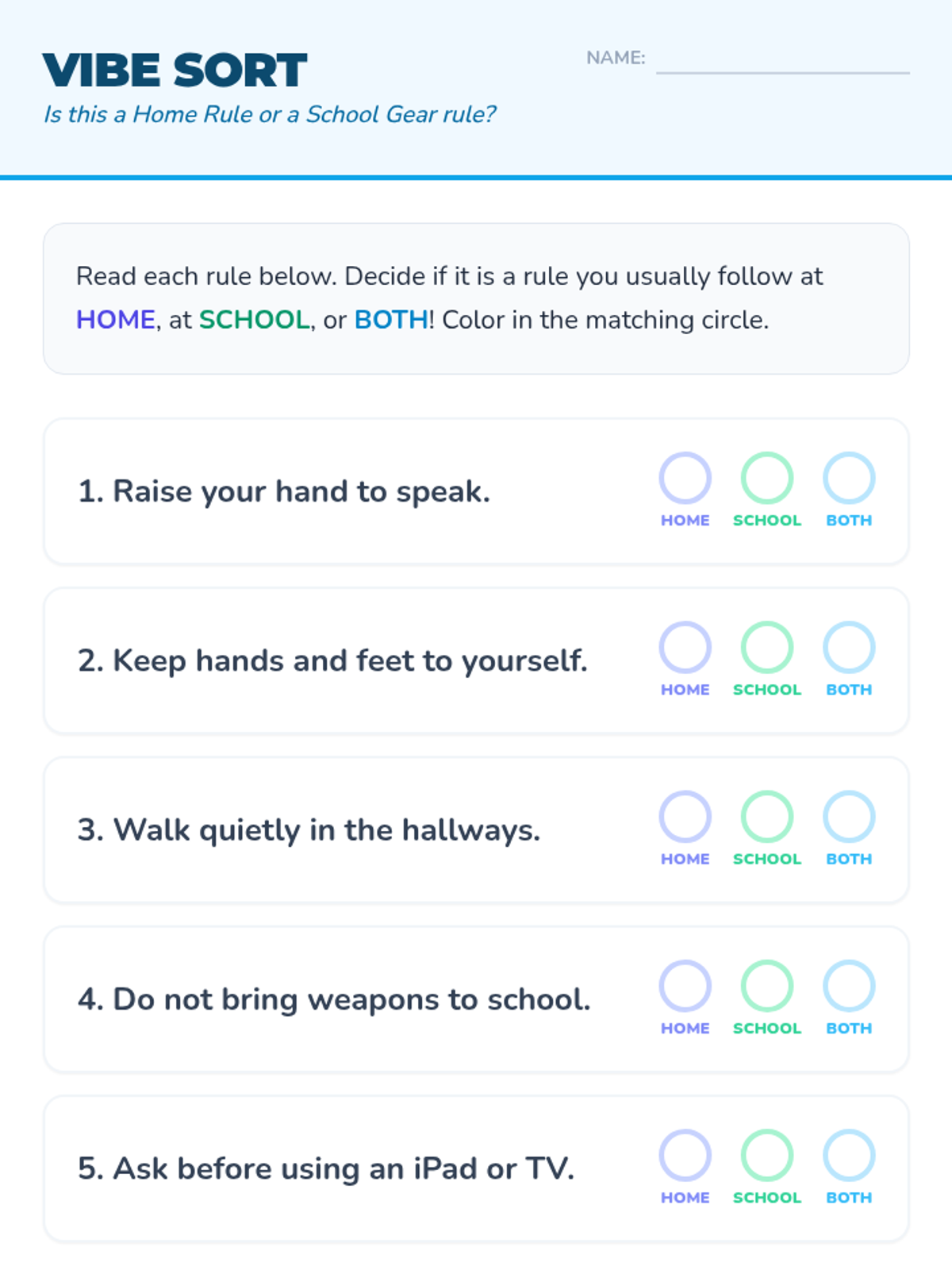
A comparative worksheet where students identify whether common rules belong at home, at school, or both. Updated to include safety-specific rules like keeping hands to oneself and not bringing weapons to school.
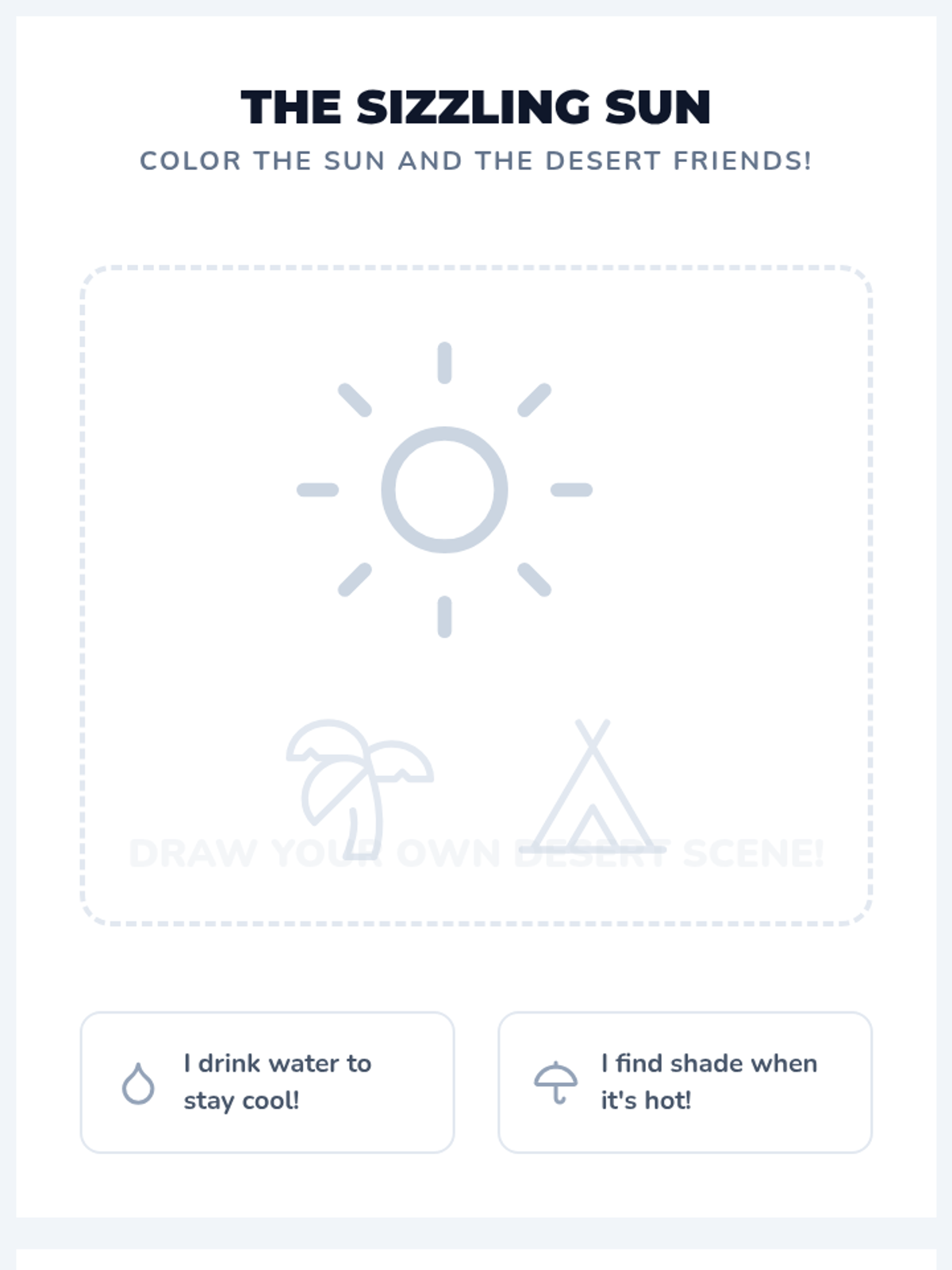
Two sun safety coloring sheets for younger students (K-3) featuring desert scenes, sunscreen tools, and health tips like hydration and seeking shade.
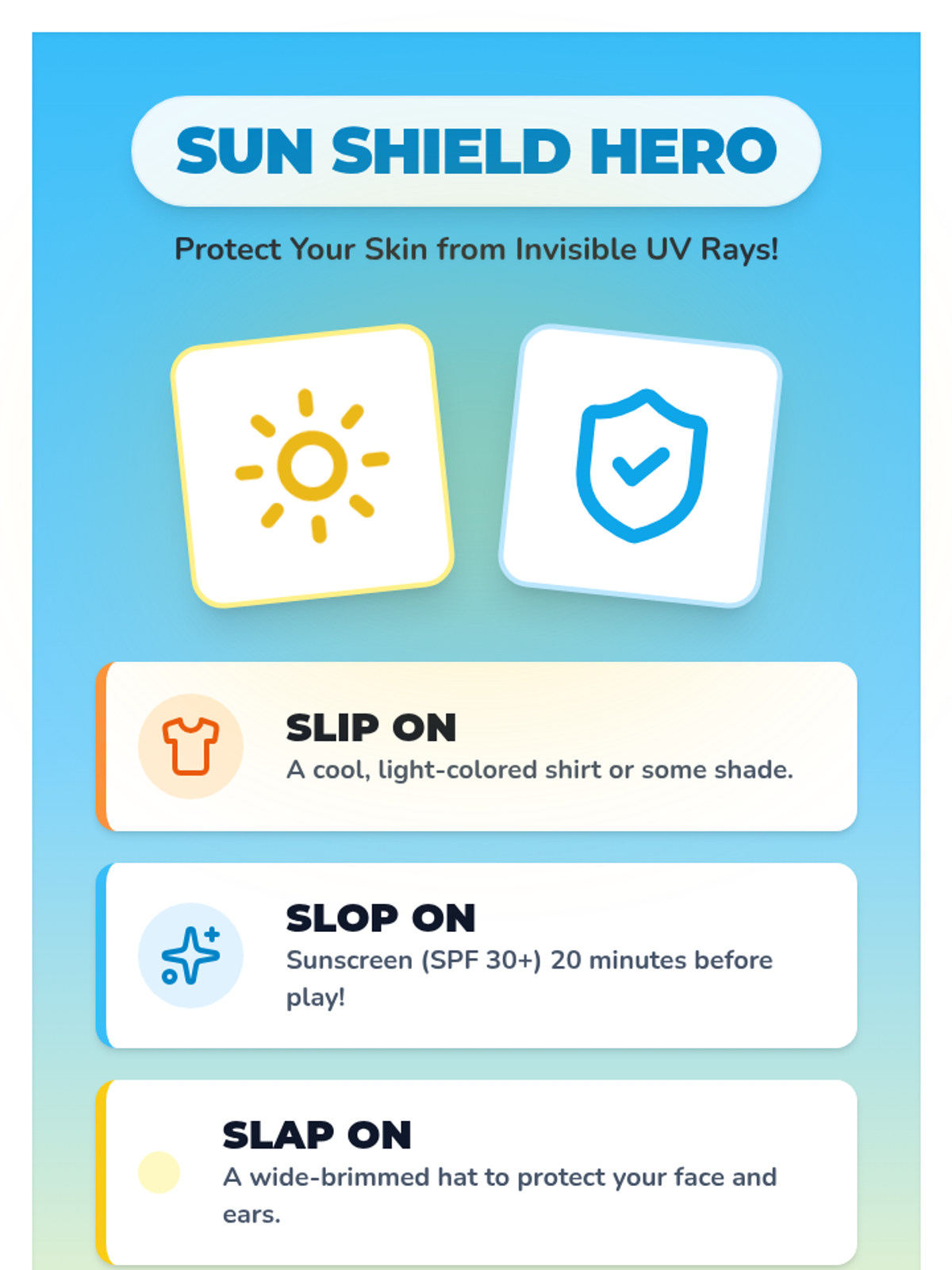
A vibrant, educational poster for the classroom emphasizing the 'Slip, Slop, Slap' rule for sun safety and the importance of sunscreen application.
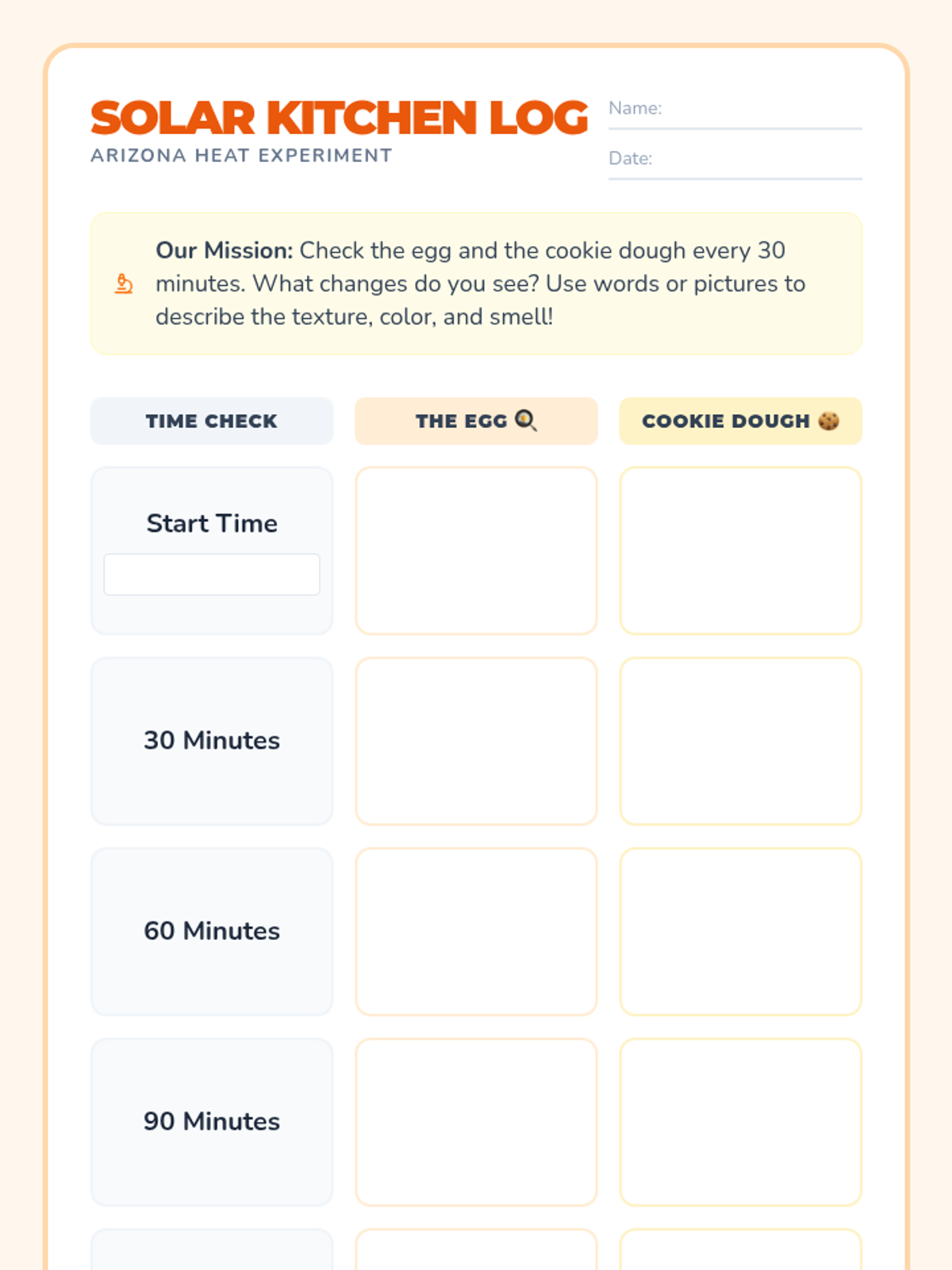
An observation log for the solar kitchen experiment where students chart changes in an egg and cookie dough every 30 minutes for two hours, including space for notes and drawings.
A visually engaging 6-slide presentation covering the 4-day Desert Heat unit, including comparisons of AZ spring weather, hydration tips, sun safety rules, the solar kitchen experiment introduction, and cooling strategies.
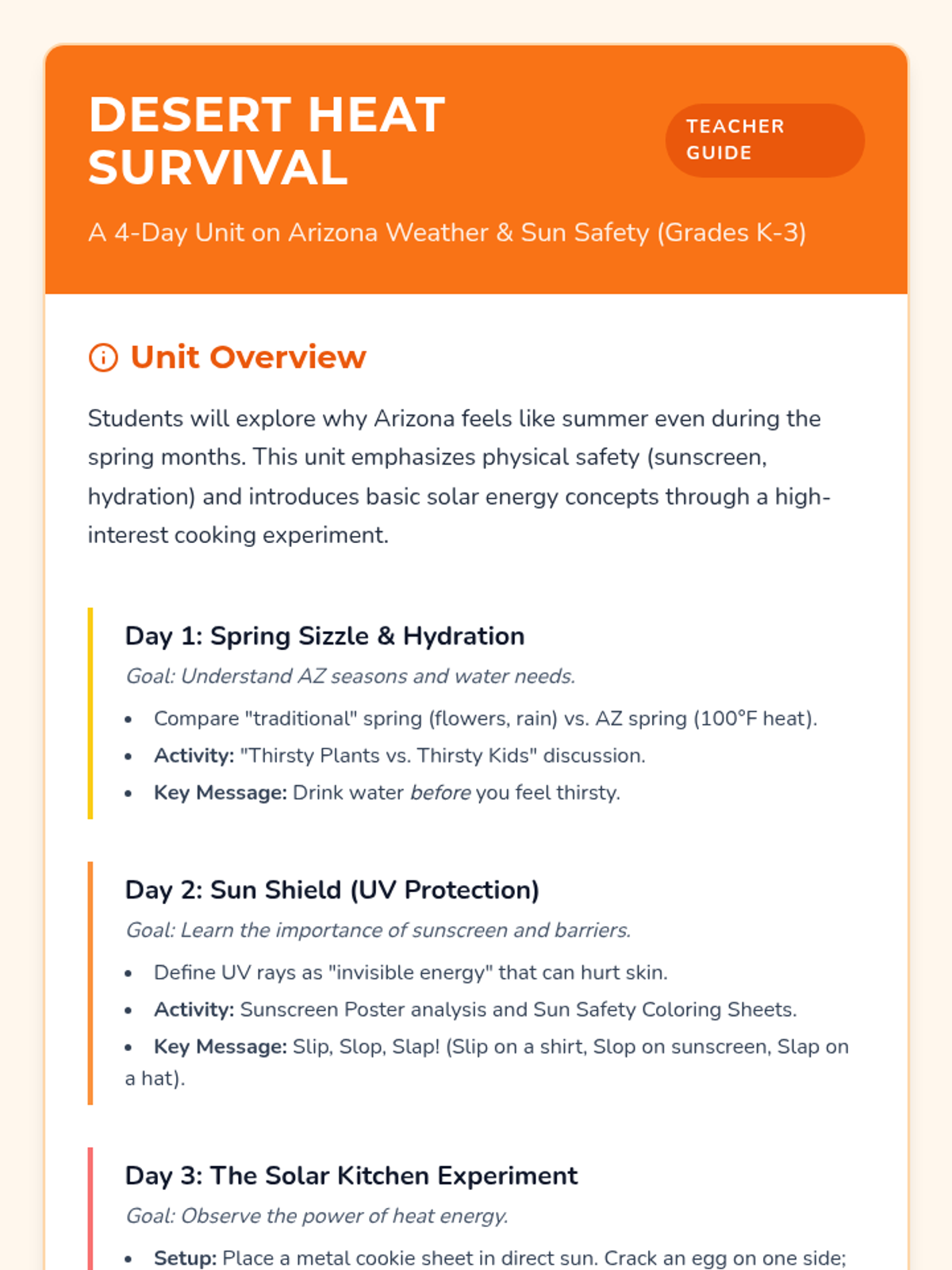
A comprehensive teacher guide outlining the four-day unit on Arizona weather, sun safety, and the solar kitchen experiment, including daily goals and a preparation checklist.
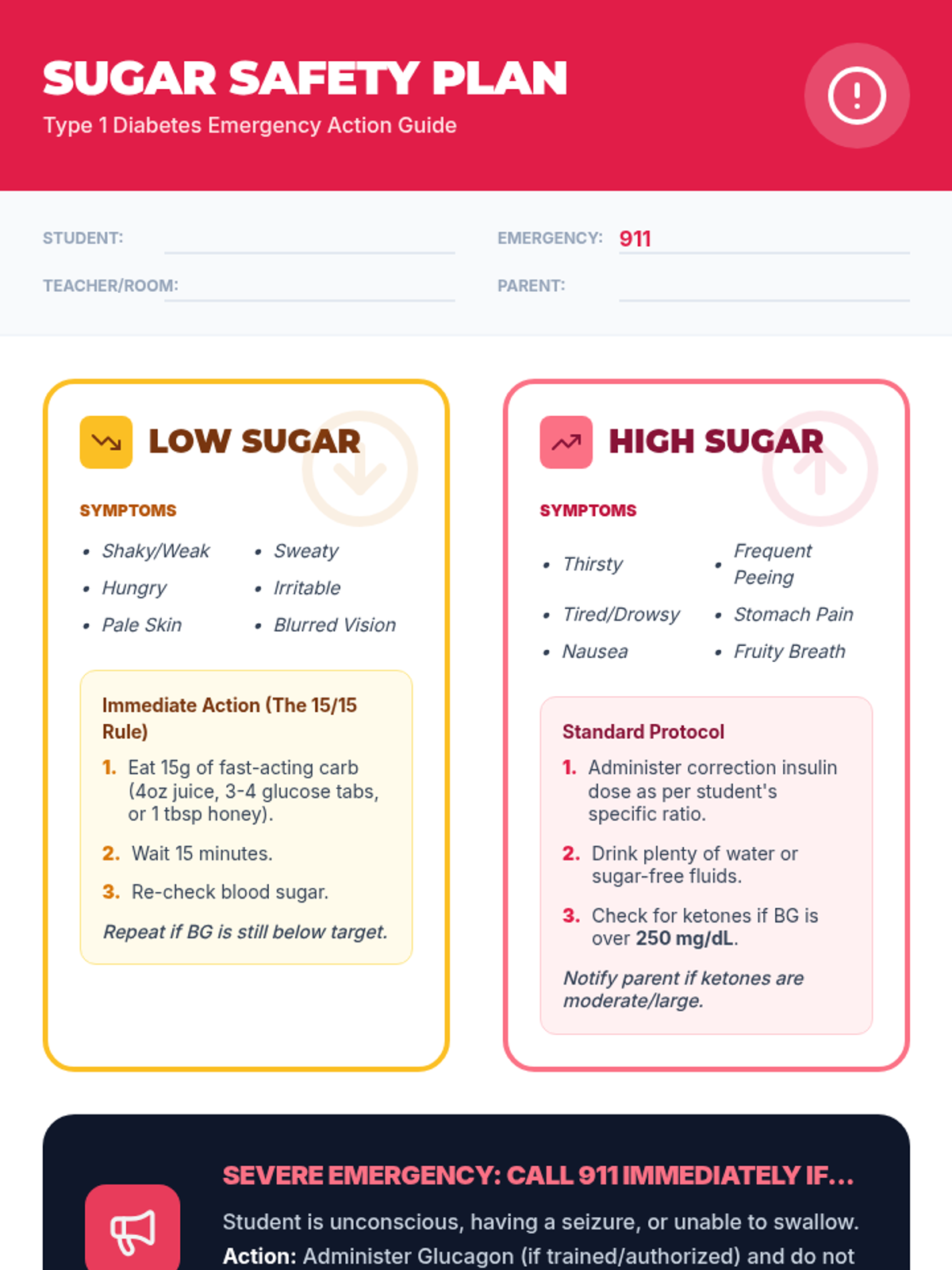
An emergency medical protocol for Type 1 Diabetes, detailing symptoms and immediate actions for hypoglycemia and hyperglycemia, designed for easy reference by school staff and caregivers.
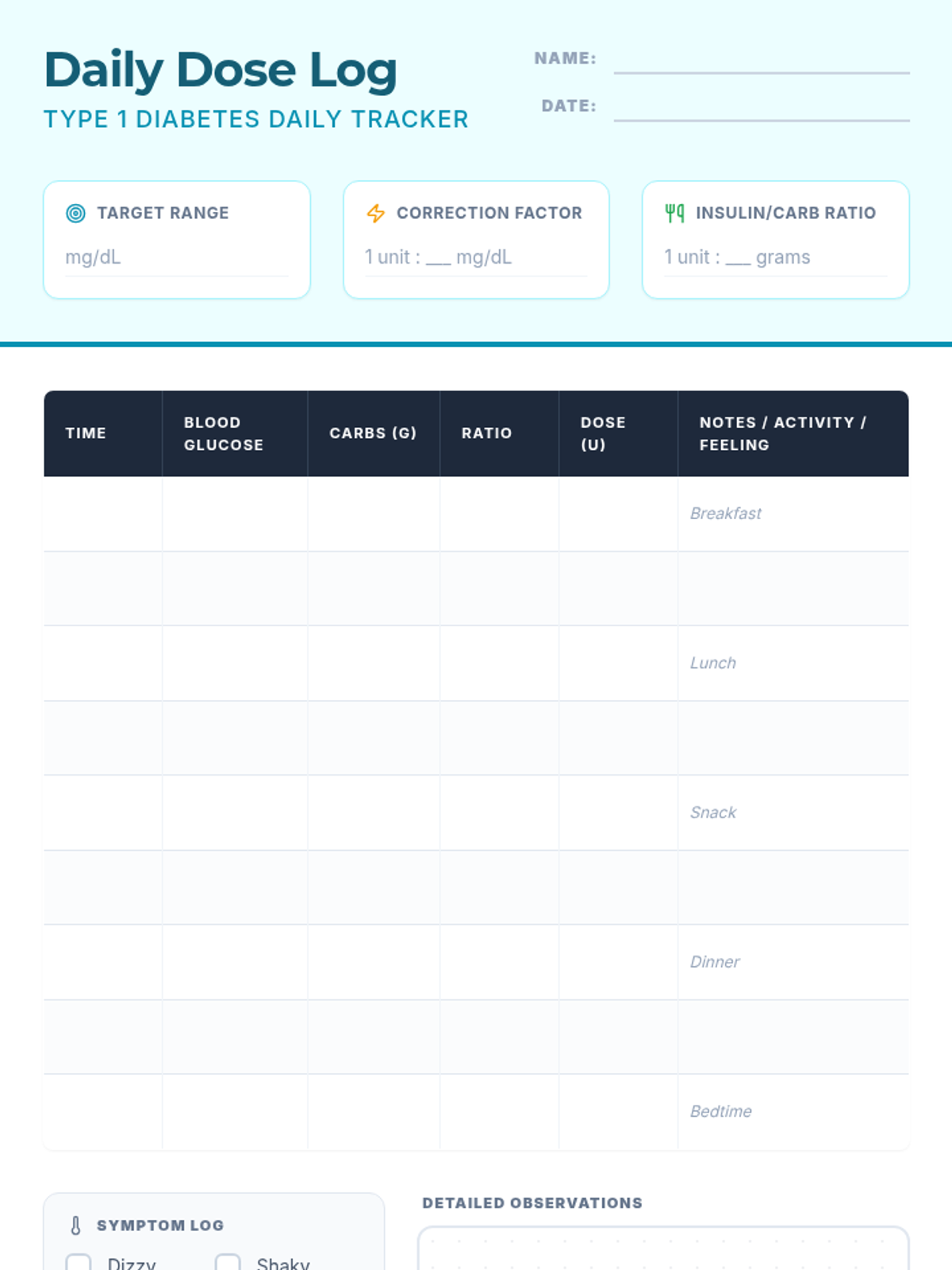
A refined daily documentation sheet for Type 1 Diabetes with expanded row heights for easier handwriting, a dedicated symptom log, and clearly defined tracking for blood glucose, carbs, and insulin.
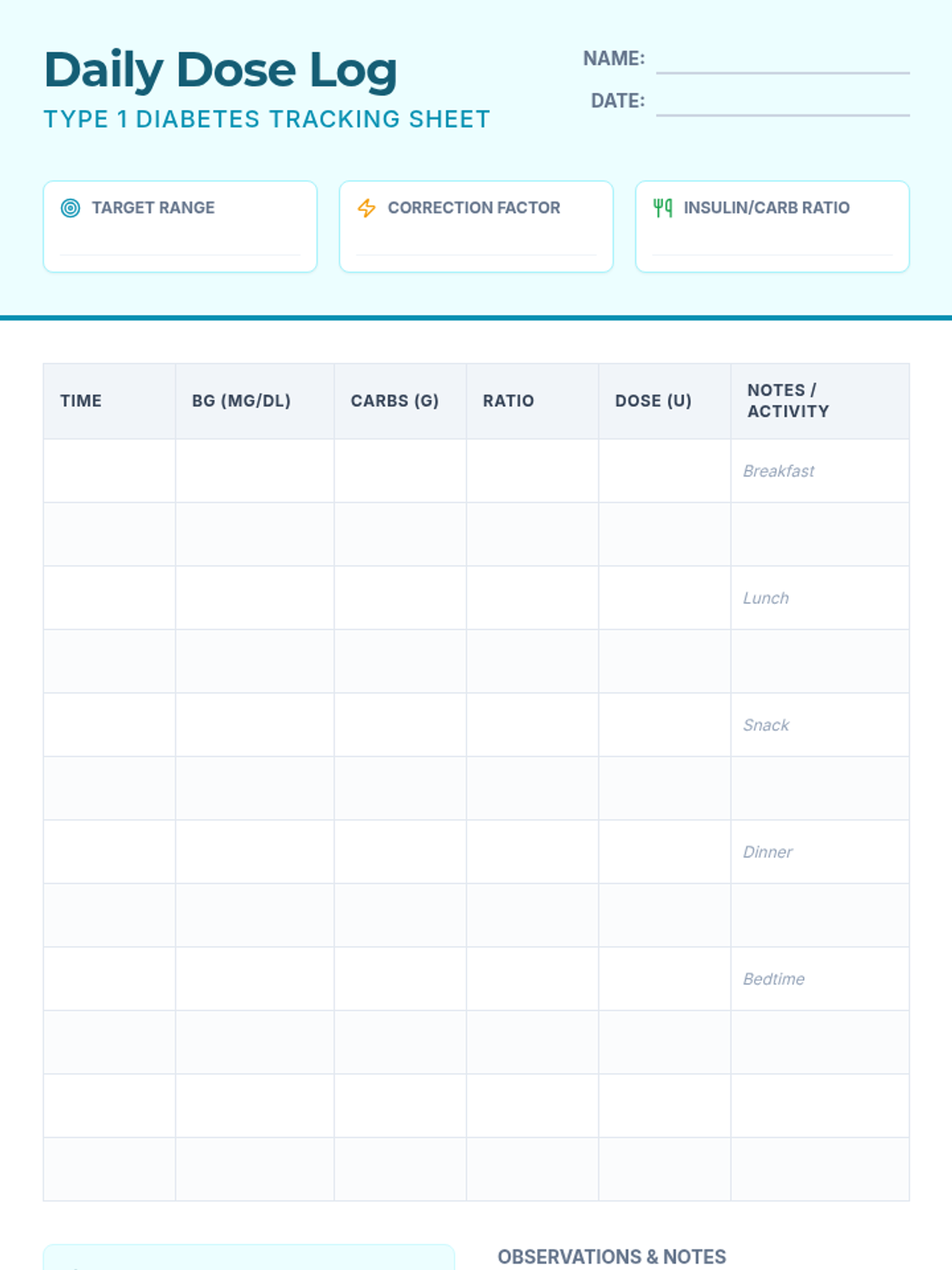
A comprehensive daily documentation sheet for Type 1 Diabetes, featuring columns for time, blood glucose levels, carbohydrate intake, insulin ratios, and dosage, with additional space for notes and symptom tracking.
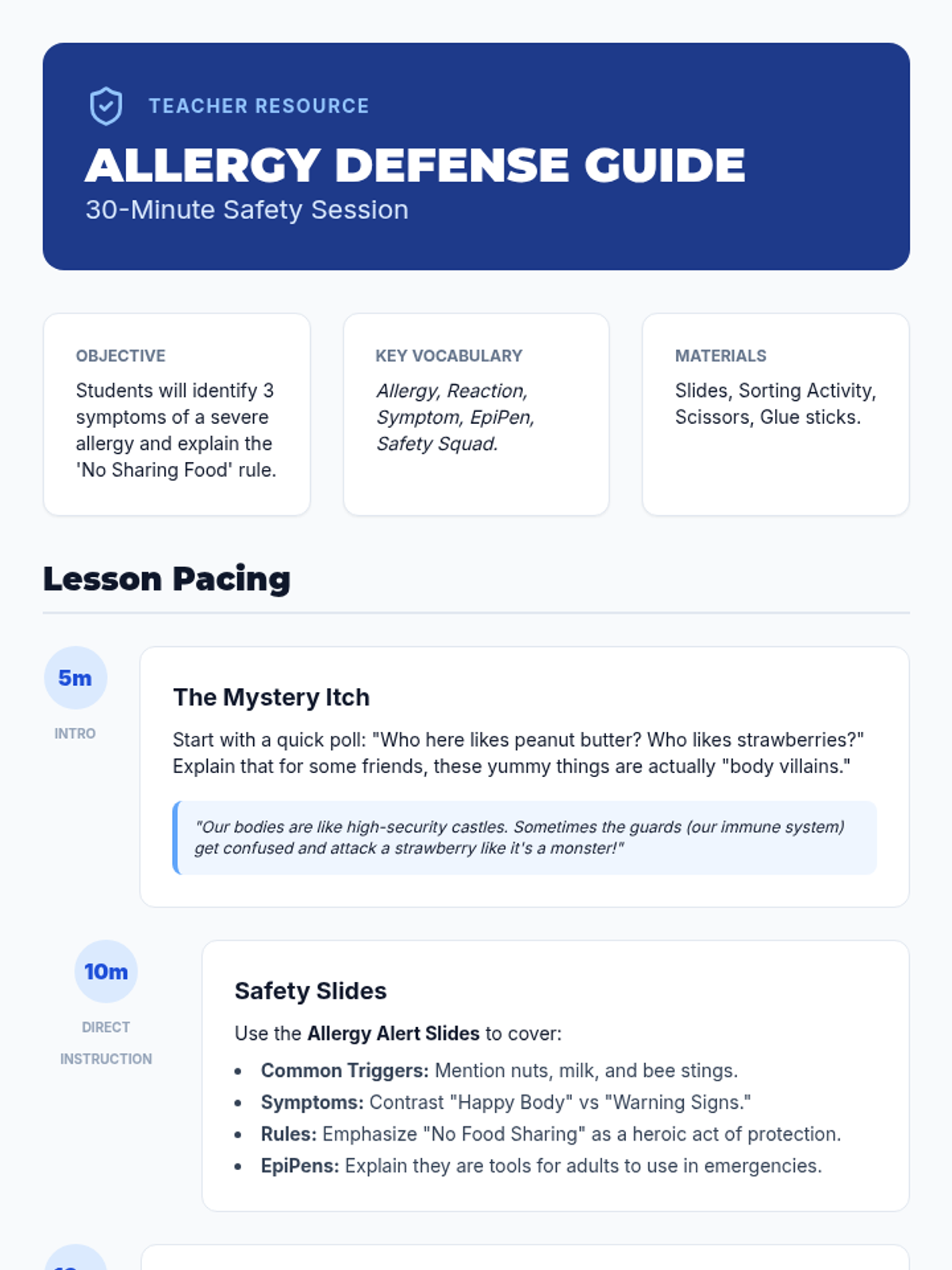
A detailed 30-minute lesson plan for teachers, including pacing, discussion prompts, and key safety takeaways for an allergy awareness lesson.
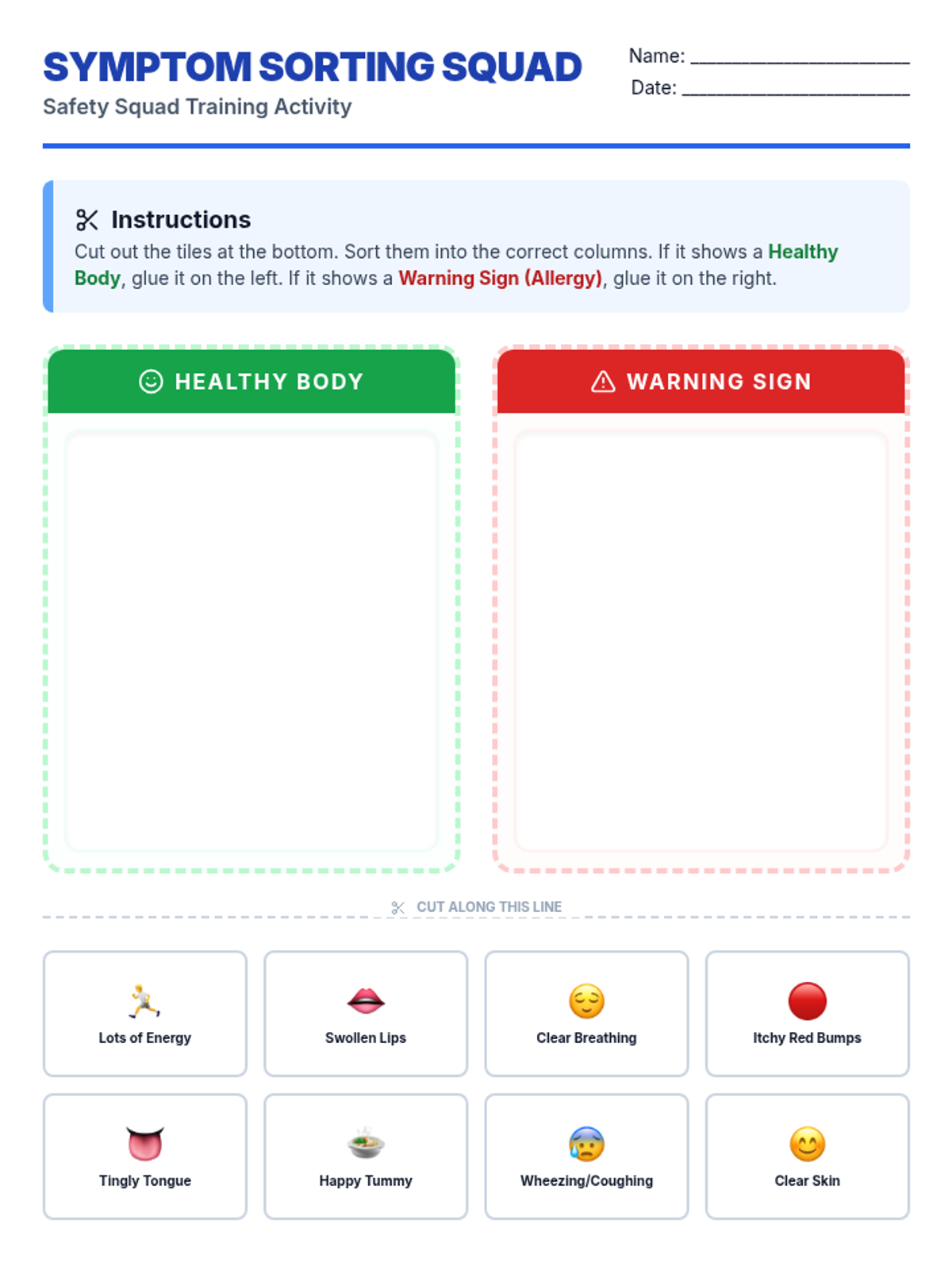
A cut-and-paste sorting activity where students distinguish between healthy body signals and allergy warning signs.
A colorful and clear instructional slide deck for students about allergy basics, symptoms, safety rules (not sharing food), and EpiPen awareness.
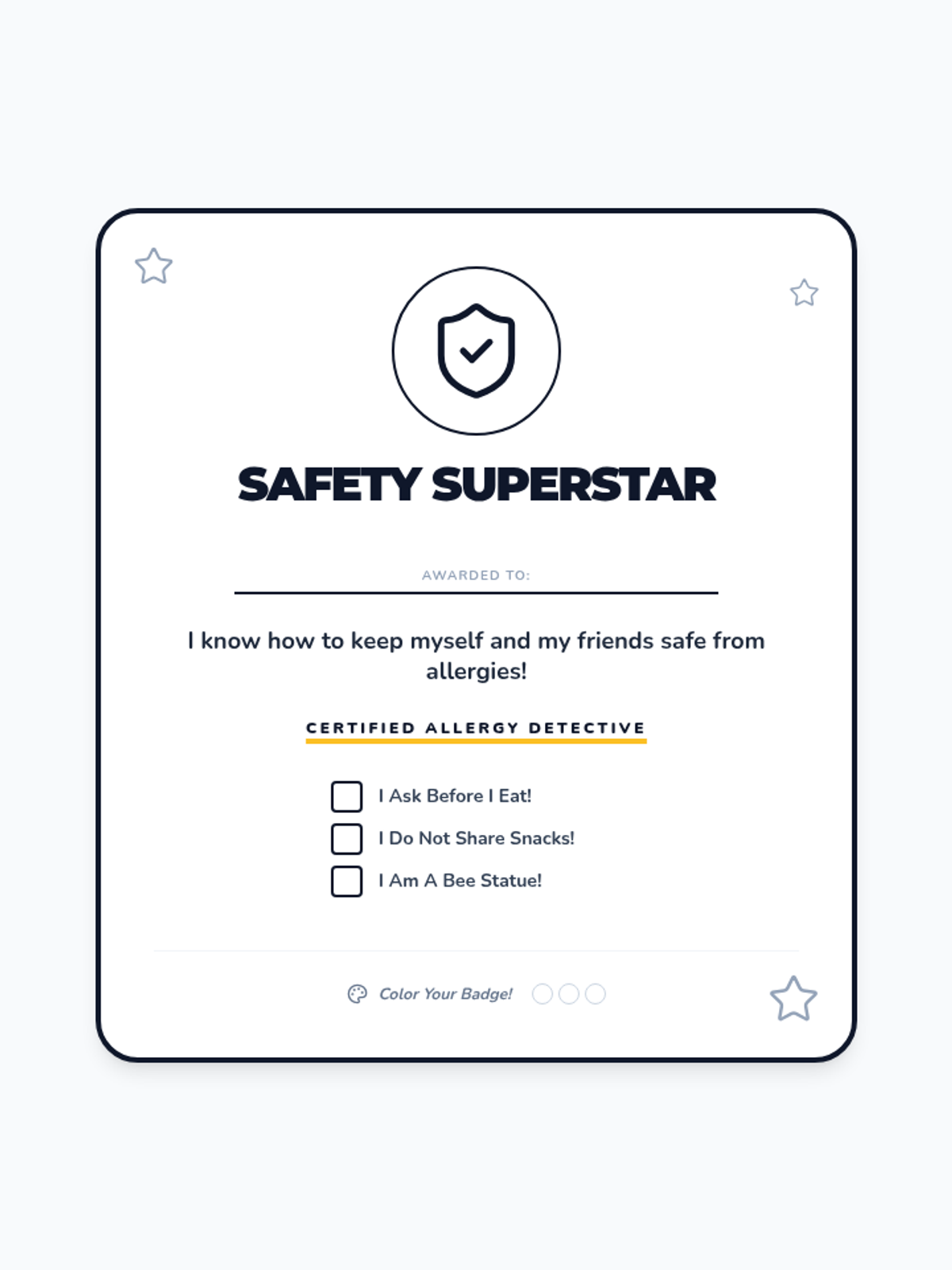
A printable award certificate for students to color and take home after completing the allergy safety lesson. Includes a checklist of key safety behaviors.
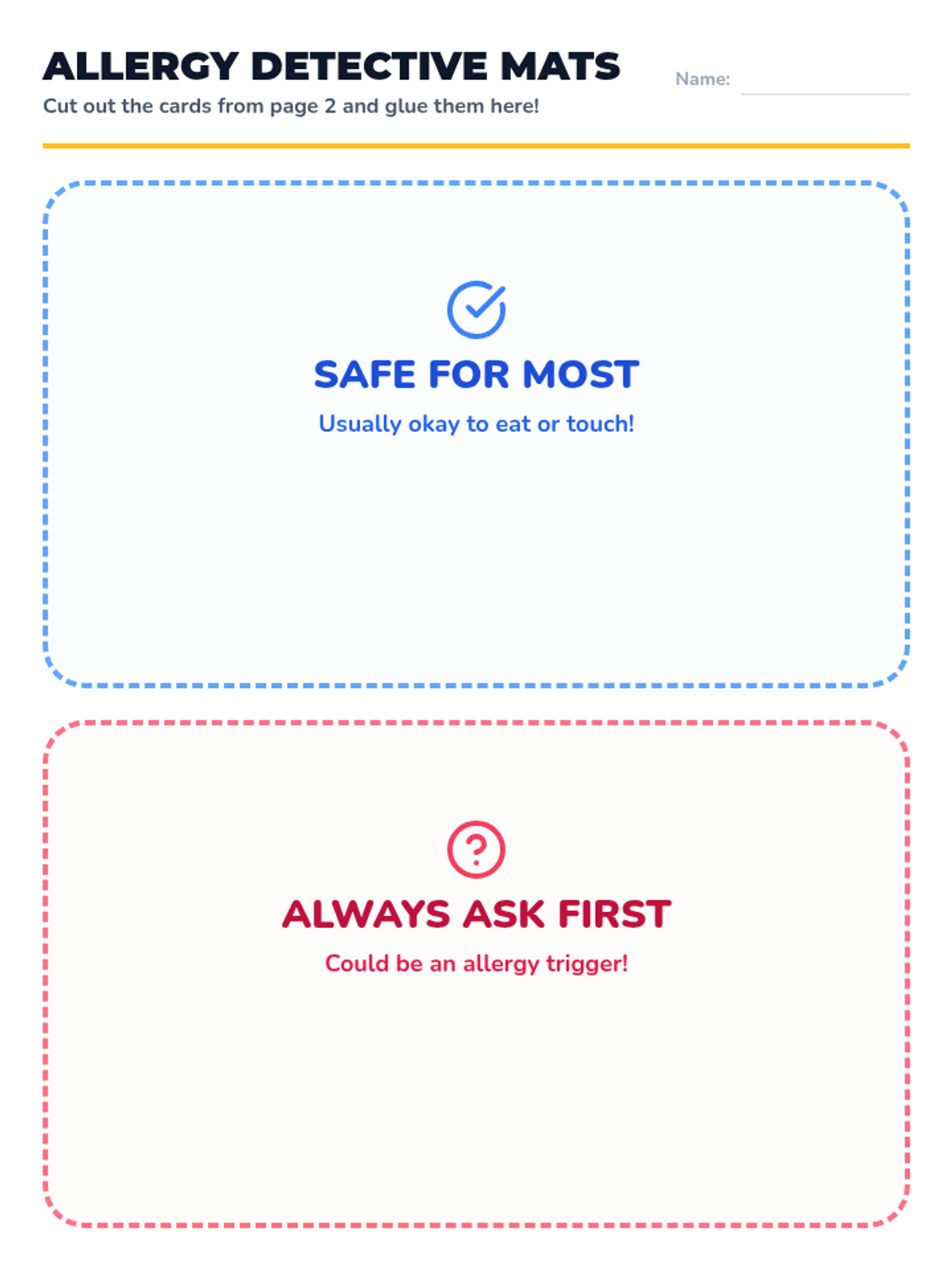
A printable sorting activity for students to identify common allergens and safe items. Encourages hands-on learning through cutting and categorizing.
An engaging presentation for kindergarteners using visual icons and simple text to teach about food allergens, bee safety, and the 'Ask Before You Eat' rule.
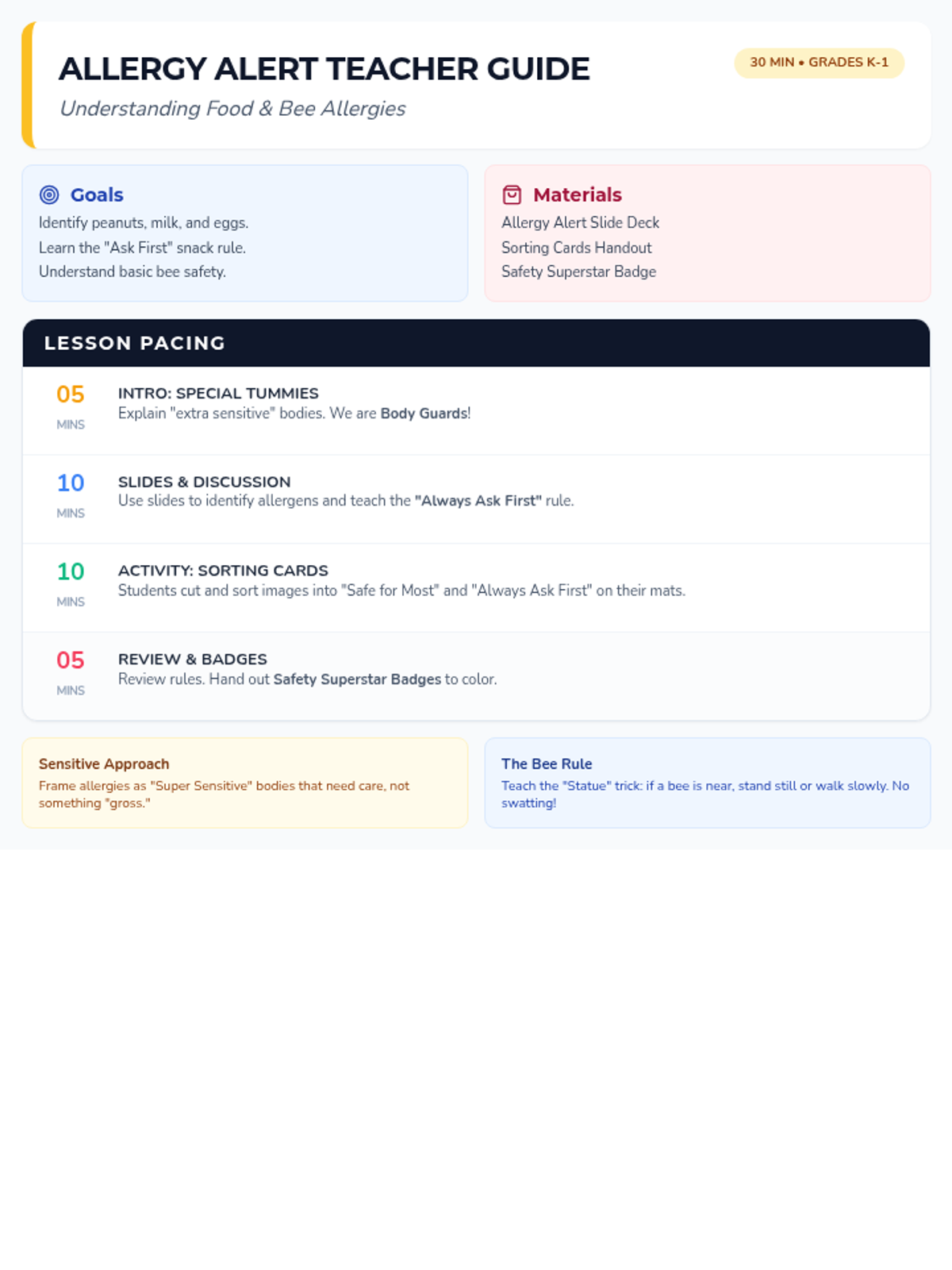
A comprehensive lesson plan for teachers, detailing objectives, materials, and a 30-minute pacing guide for teaching kindergarteners about allergies.
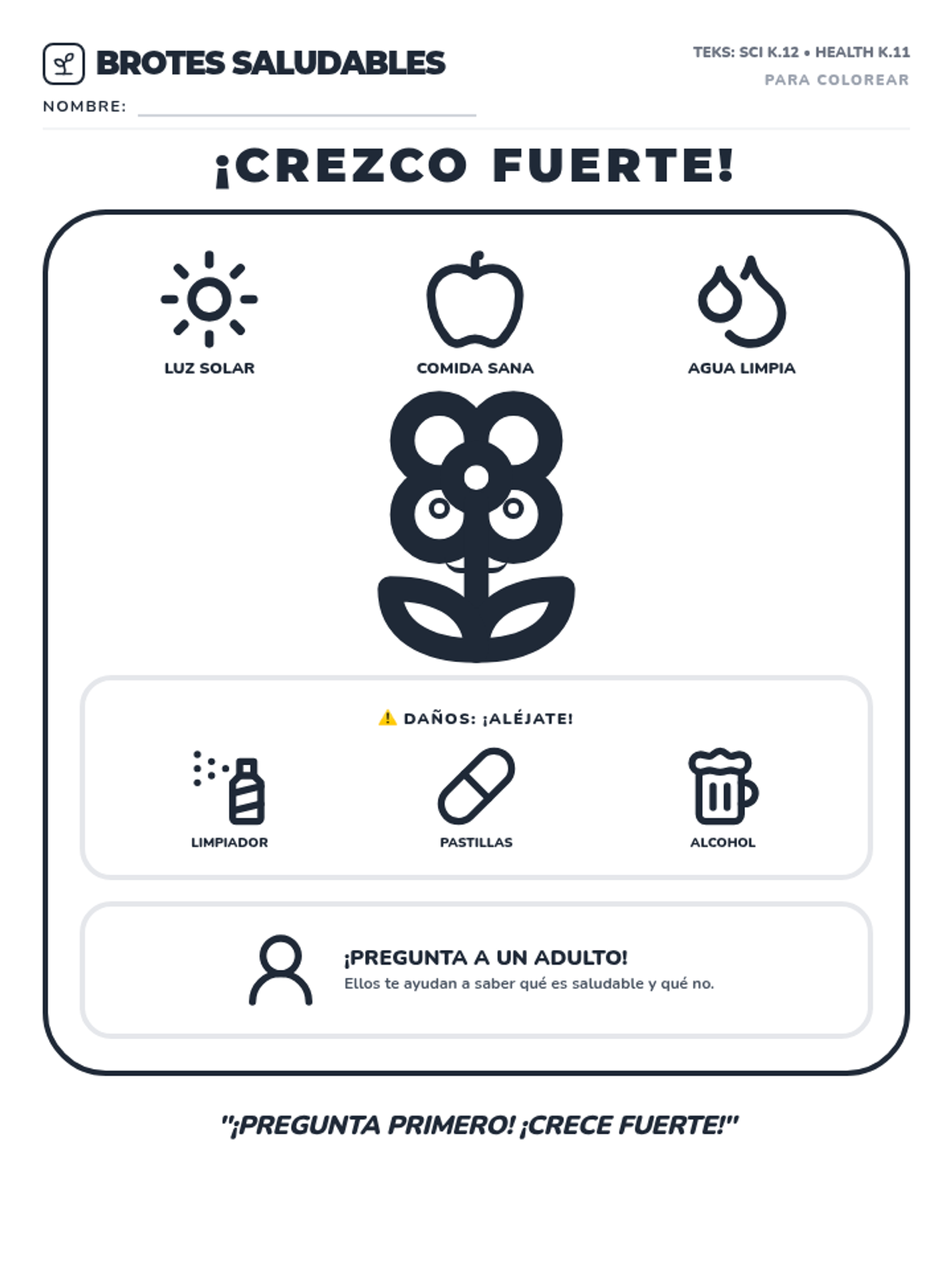
Revised Spanish coloring sheet for Kindergartners. Features helper/hurter categorization, including cleaning sprays and pills. Emphasizes asking a trusted adult to identify safe substances. Includes TEKS alignment.
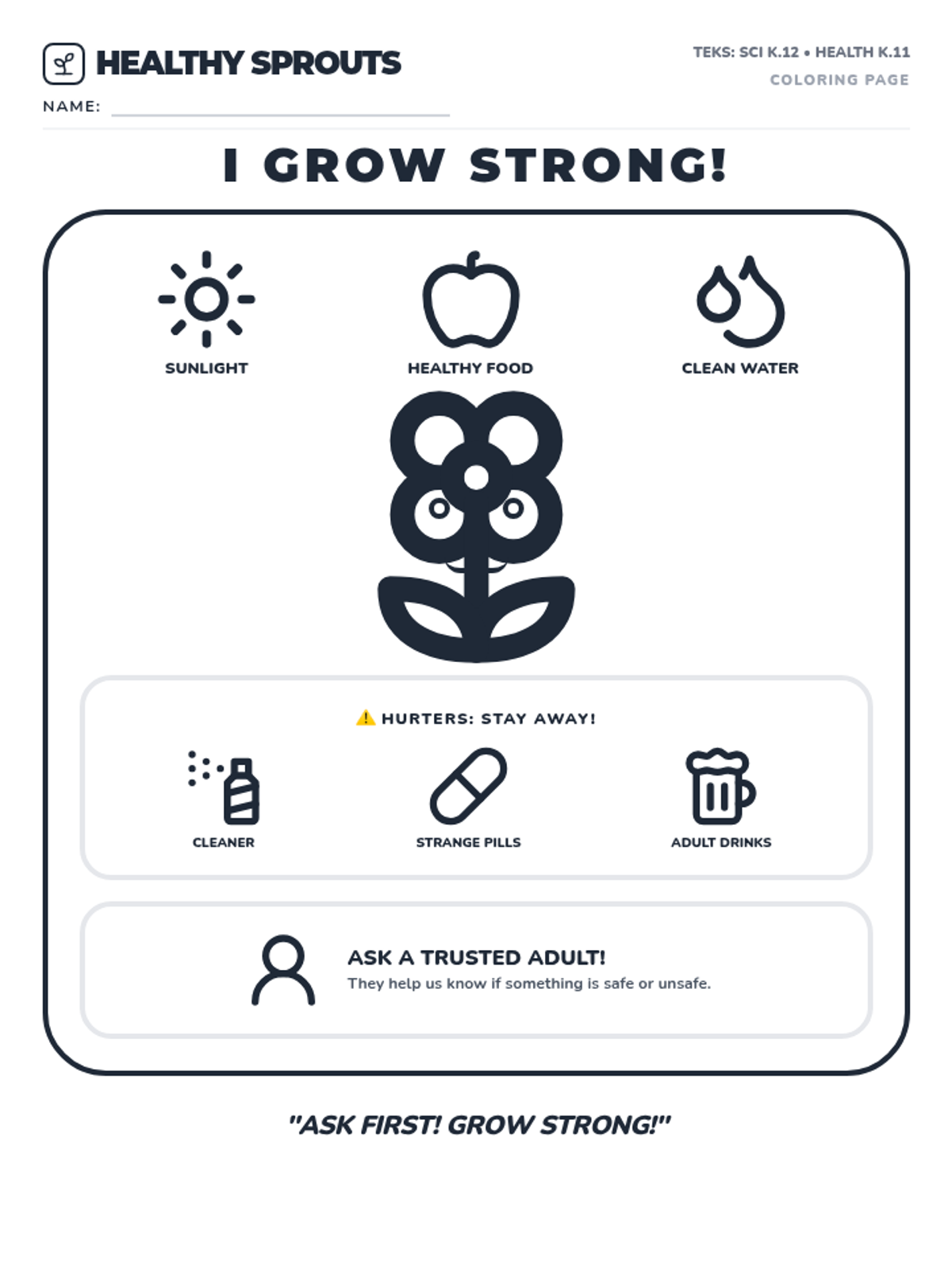
Revised coloring sheet for Kindergartners. Features helper/hurter categorization, including cleaning sprays and pills. Emphasizes asking a trusted adult to identify safe substances. Includes TEKS alignment.
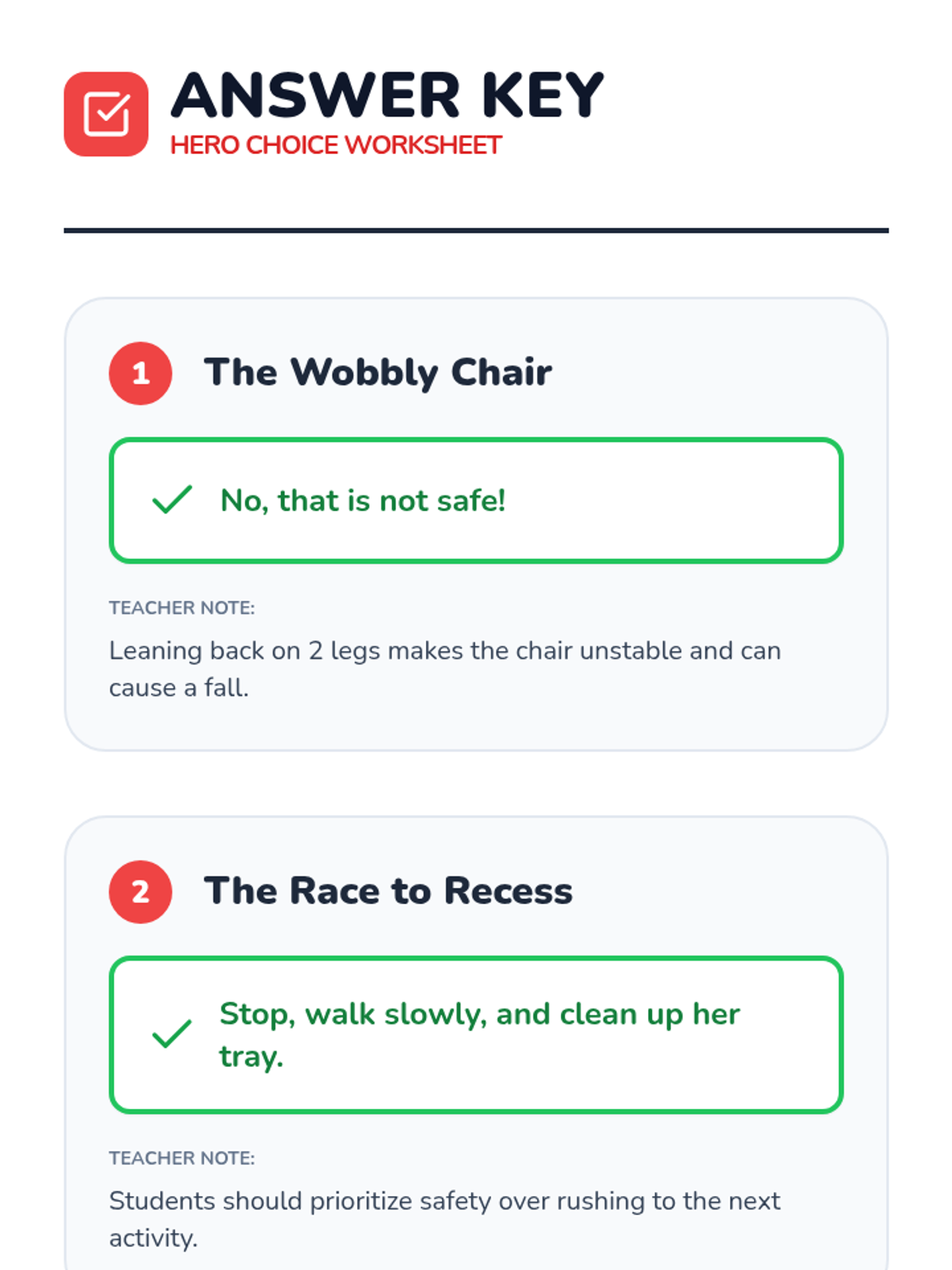
An answer key for the Hero Choice Worksheet, providing the correct responses for the cafeteria safety scenarios and guidance for evaluating student drawings.
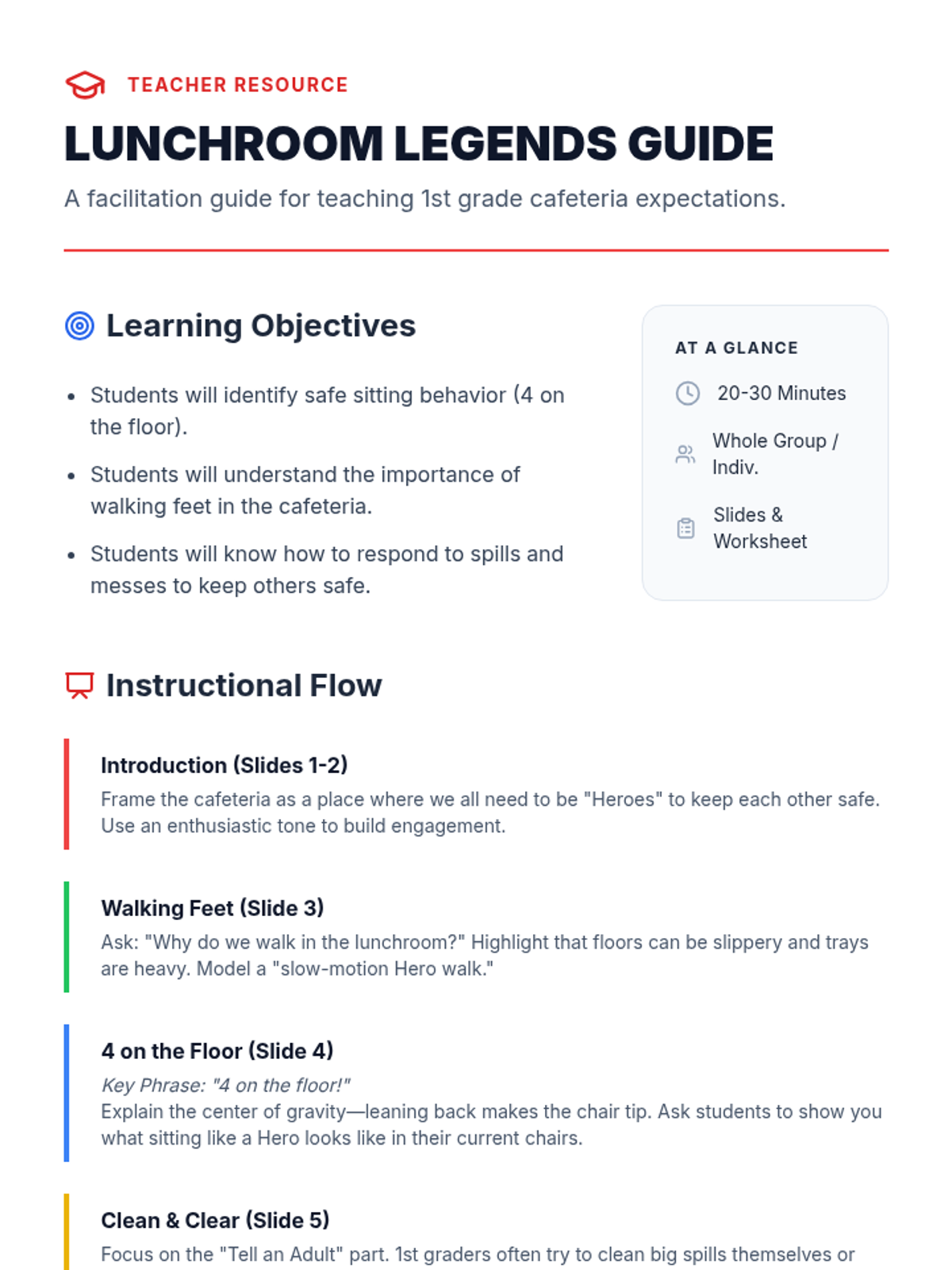
A teacher guide for the Lunchroom Legends lesson, providing talk tracks for slides, learning objectives, and differentiation strategies for first grade students.
A visual slide deck to introduce first graders to cafeteria expectations. It covers walking safety, proper sitting techniques (4 on the floor), and cleaning up spills to become a Lunchroom Hero.
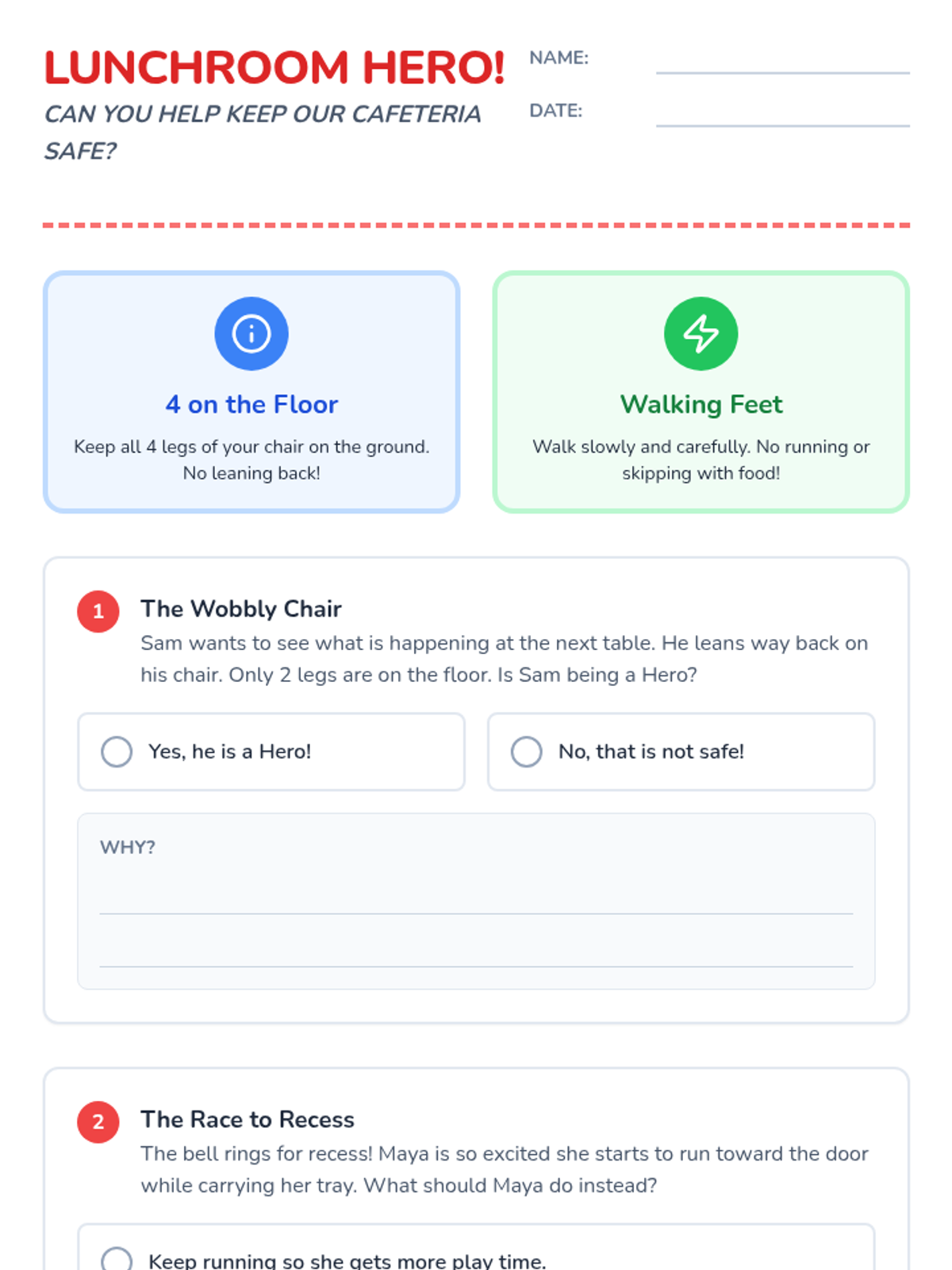
A 1st grade worksheet featuring lunchroom safety scenarios. Students identify safe behaviors related to sitting properly and walking in the cafeteria through multiple-choice questions and a drawing prompt.
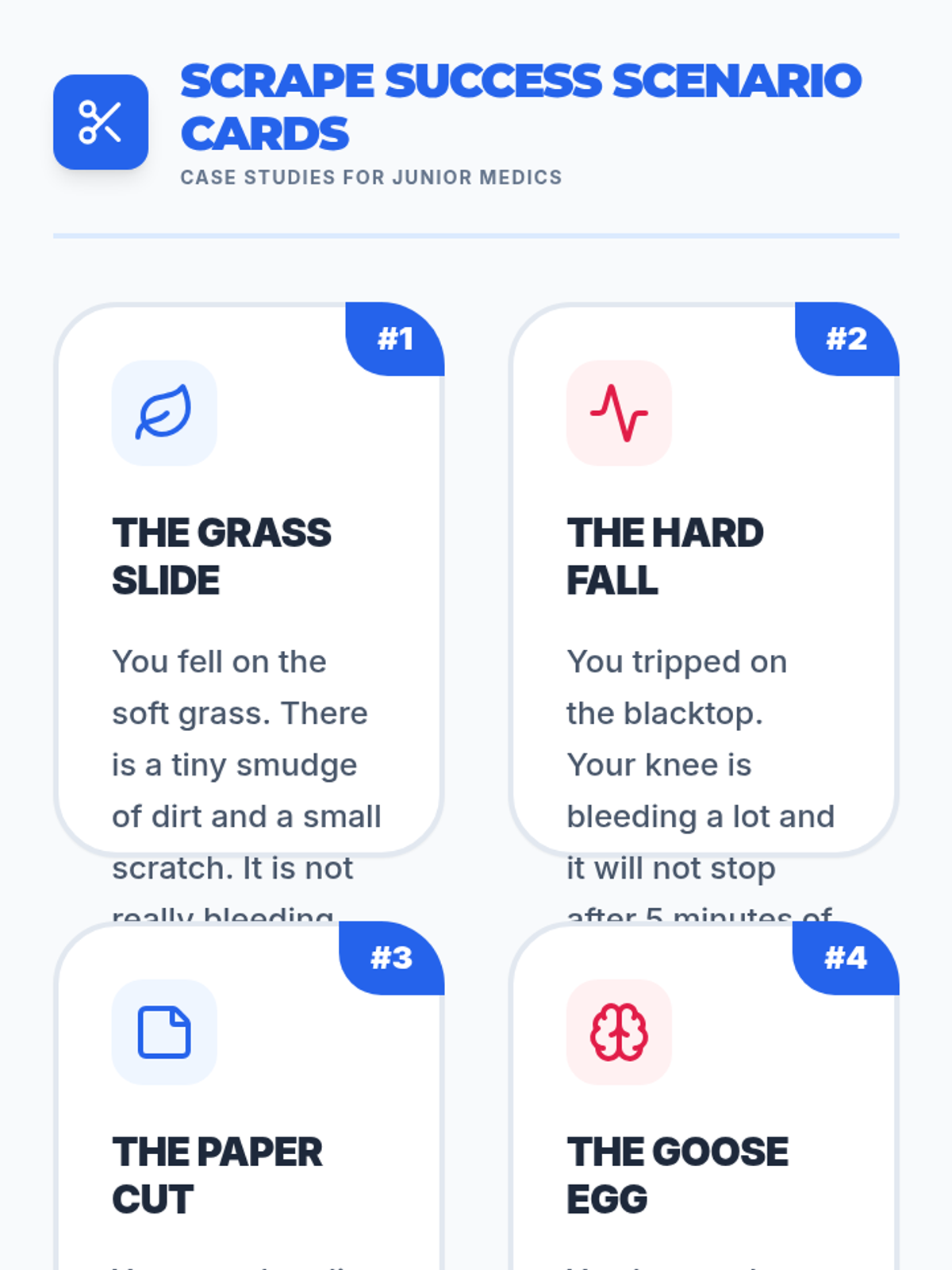
A set of scenario-based task cards designed for small group activities. Students evaluate various injury situations and determine whether they require self-care or a visit to the school nurse. Includes a teacher answer key.
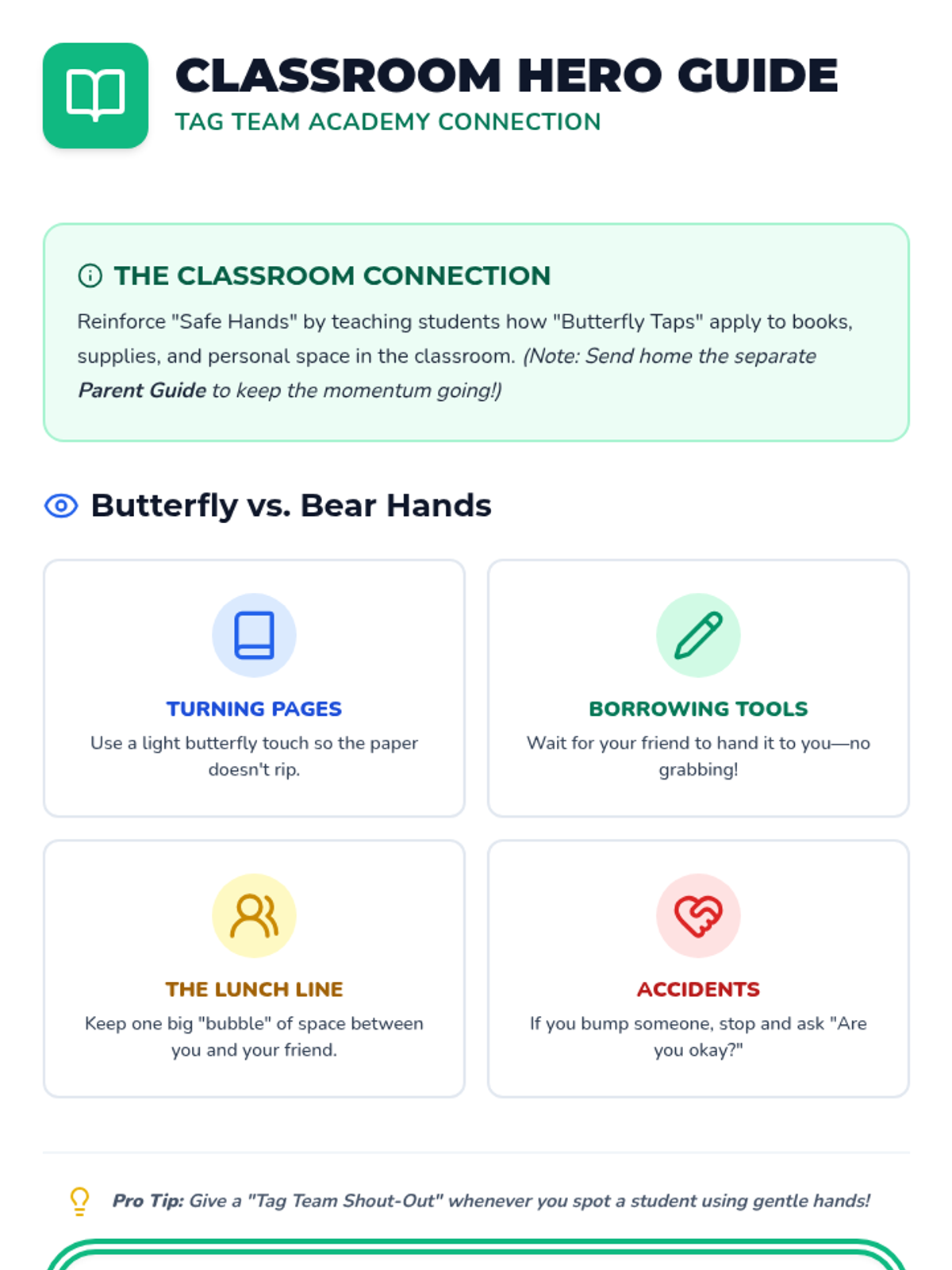
A teacher-facing resource to bridge the PE lesson into the classroom. It includes discussion scenarios for 'Butterfly vs. Bear' hands, tips for classroom reinforcement, and a 'Safe Hands Pledge' certificate for the class to sign and display.
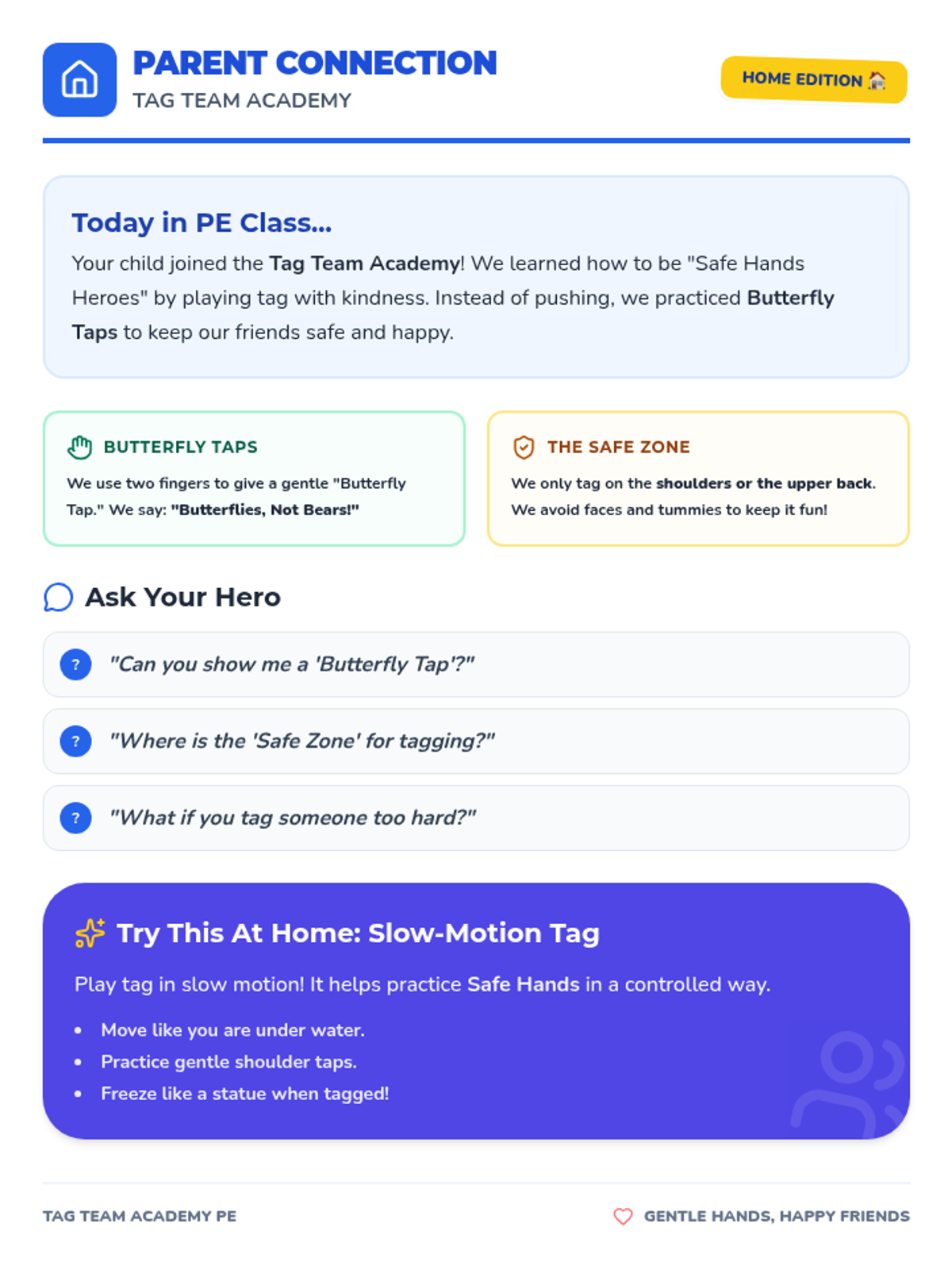
A parent-facing guide to reinforce the 'Safe Hands' lesson at home. It explains the core concepts of Butterfly Taps and Safe Zones, provides conversation starters, and suggests a slow-motion tag activity for families.
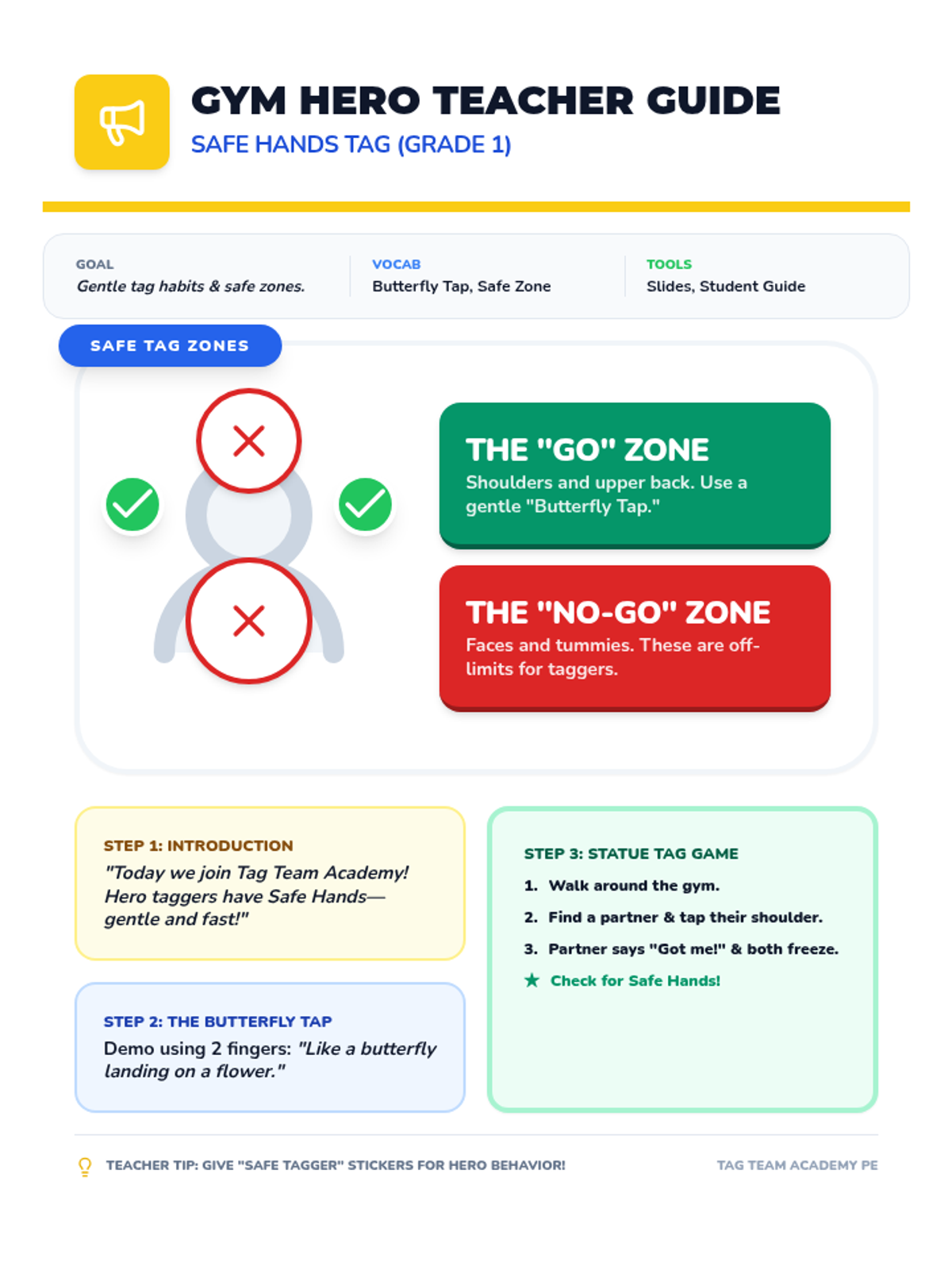
A detailed teacher guide for delivering the 'Safe Hands' tag lesson. Includes an anatomical 'Tag Zones' silhouette for instructional support, step-by-step teaching sequence, and a practice game called 'Statue Tag'.
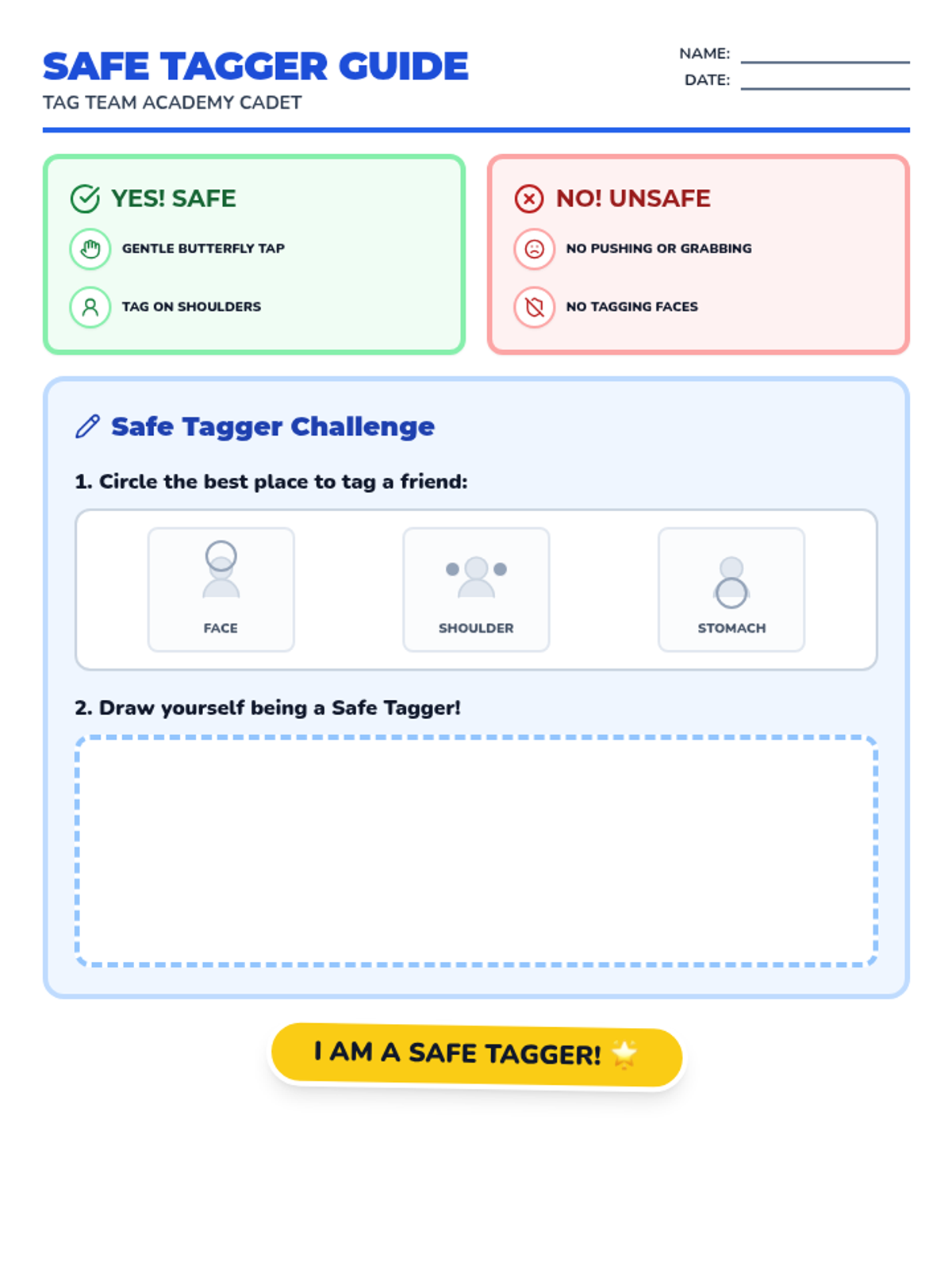
A student-facing worksheet and visual aid for 1st graders to reinforce safe tagging habits. It includes clear 'Yes/No' visual guides and a drawing challenge for students to visualize themselves as safe players.
An engaging slide deck designed for 1st graders that teaches 'safe hands' techniques for tag. It features visual comparisons of safe versus unsafe play, an anatomical silhouette for identifying safe tag zones, and a three-step guide on what to do if an accident occurs.
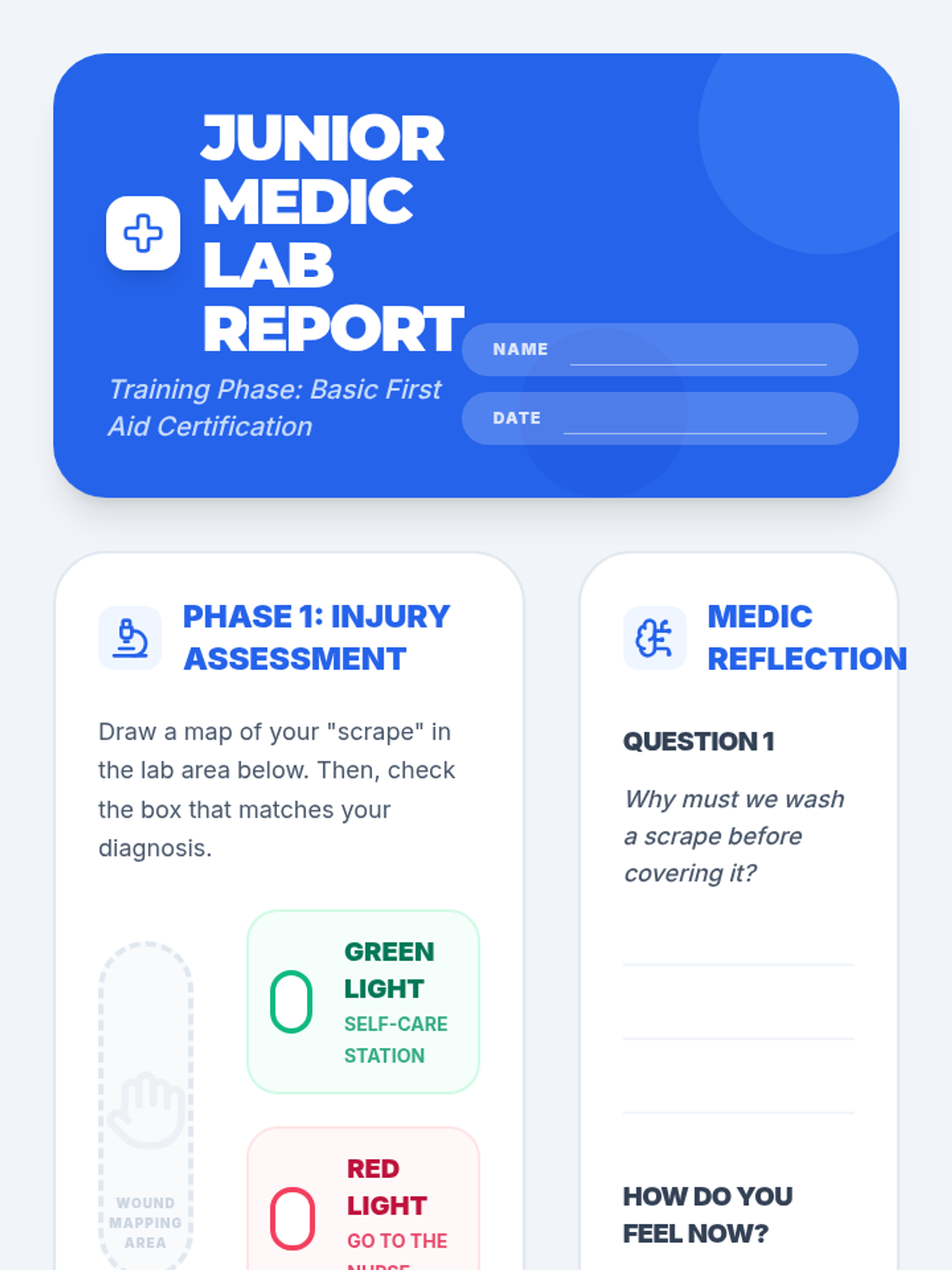
A student lab report where students document their injury assessment, follow a step-by-step procedure checklist for cleaning and bandaging, and reflect on their confidence as a Junior Medic. Includes space for drawing and writing.
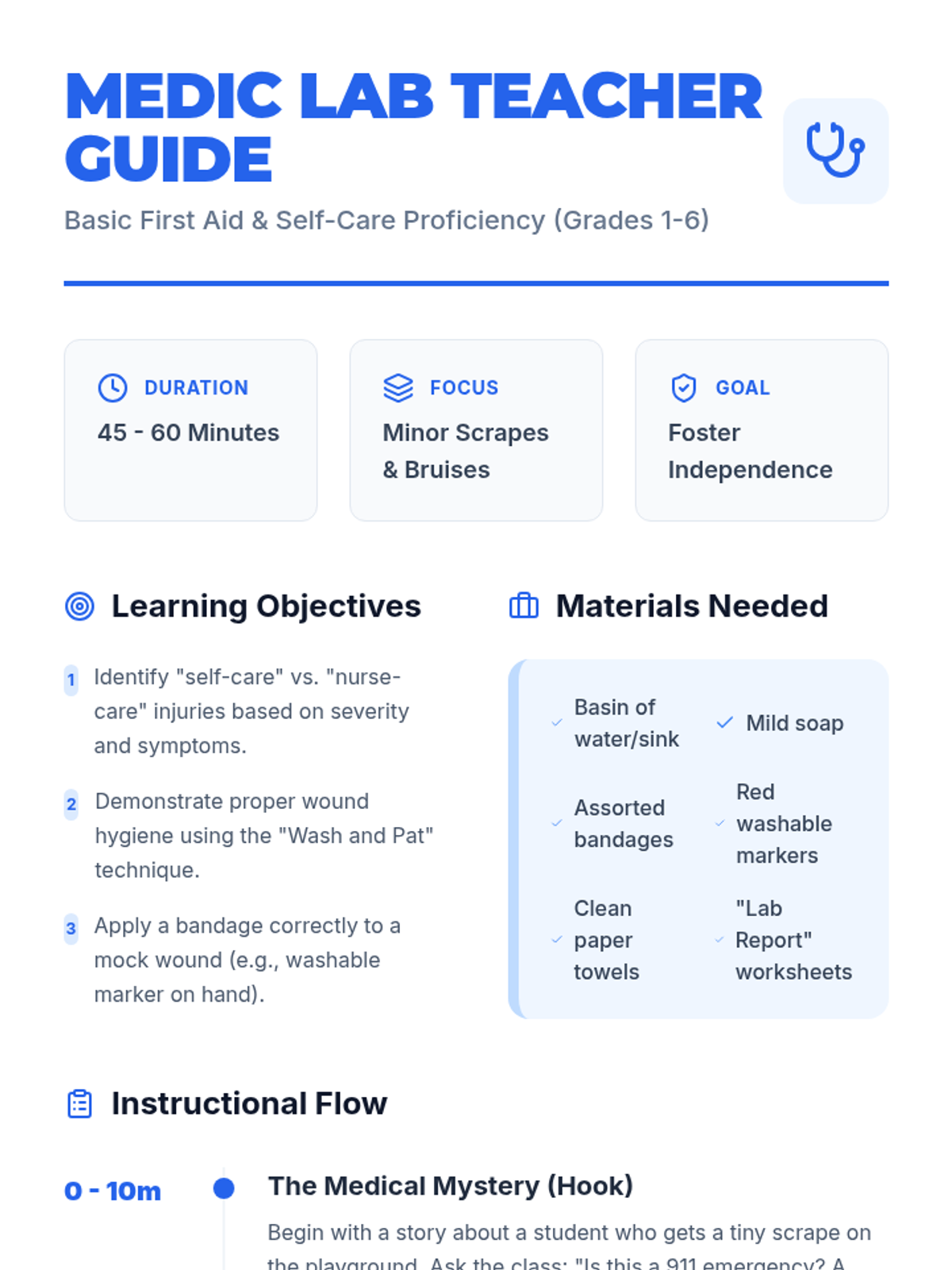
A comprehensive teacher guide for the Junior Medic Lab, including learning objectives, a detailed timeline, materials list, and tiered differentiation strategies for elementary grade levels.
An engaging slide deck designed to teach elementary students the basics of identifying minor injuries and performing self-care cleaning and bandaging. Features a 'Lab' theme with high-contrast visuals and clear, large-font instructions for classroom presentation.