Comprehensive French language instruction spanning basic literacy to advanced oral and written communication. Strengthens grammar, vocabulary, and cultural understanding through targeted exercises in listening, reading, and composition.
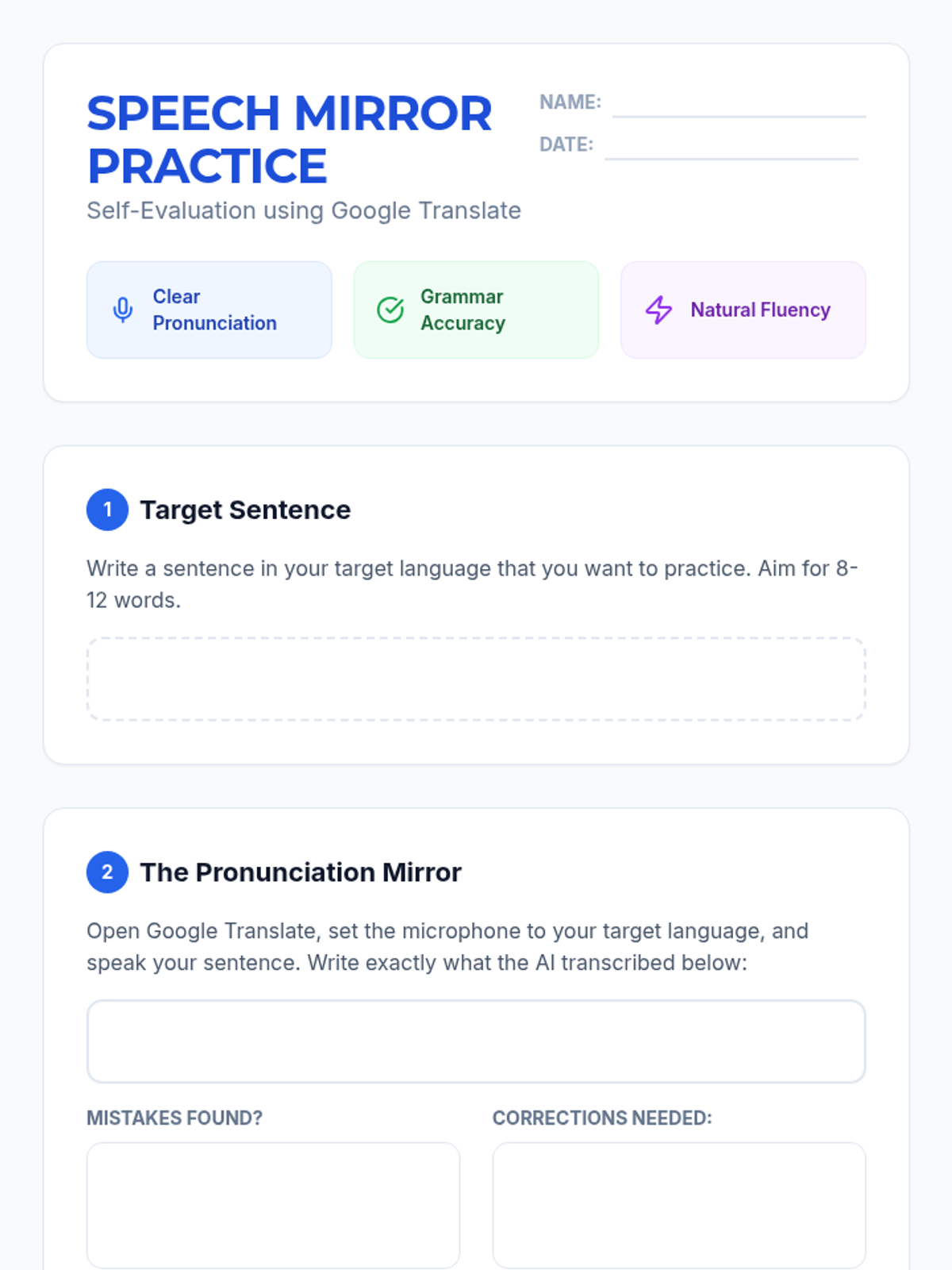
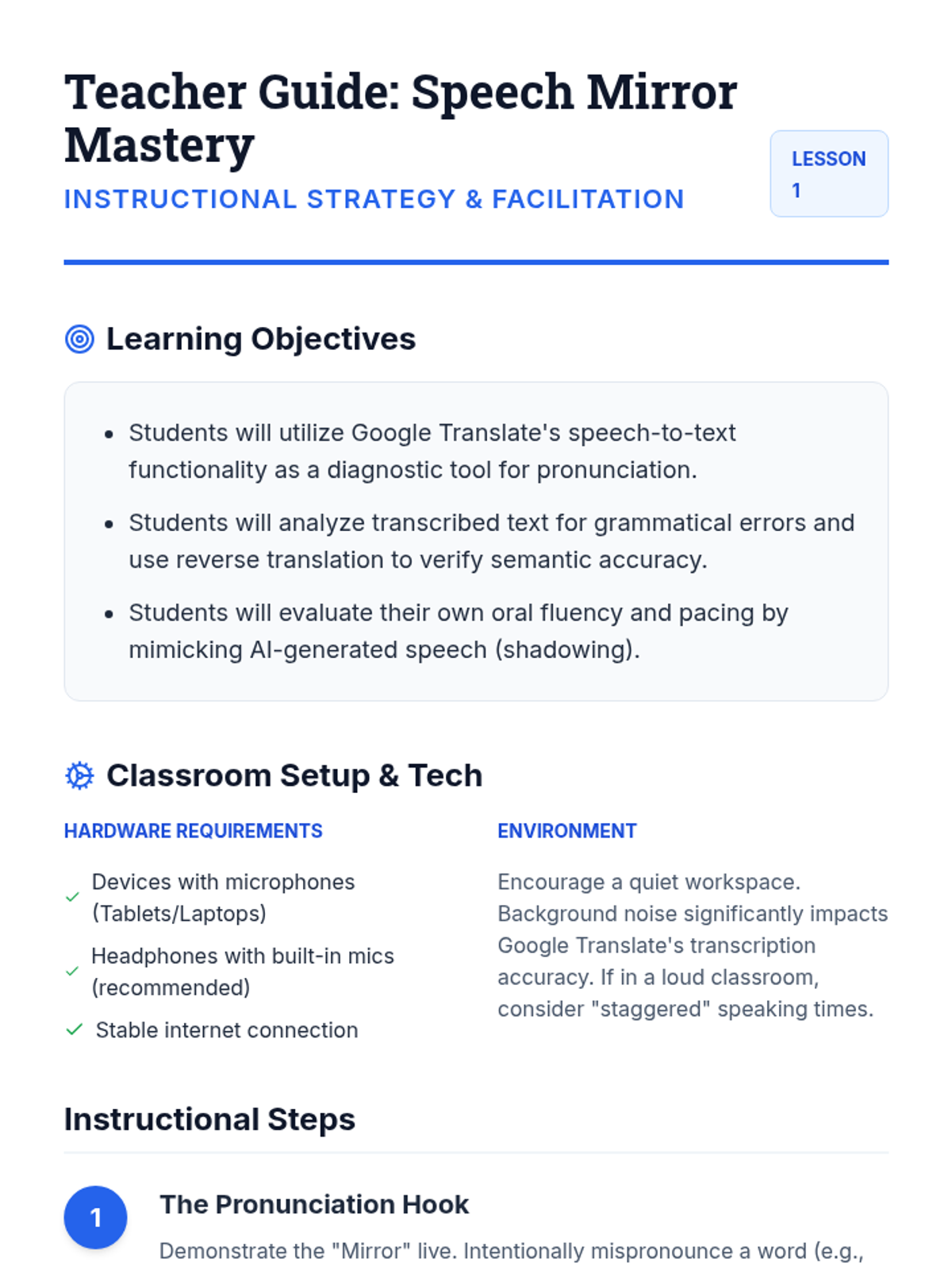
A sequence focused on leveraging digital translation tools for language self-assessment and speech improvement. Students learn to use Google Translate not just for translation, but as a 'mirror' for their own pronunciation, grammar, and fluency.
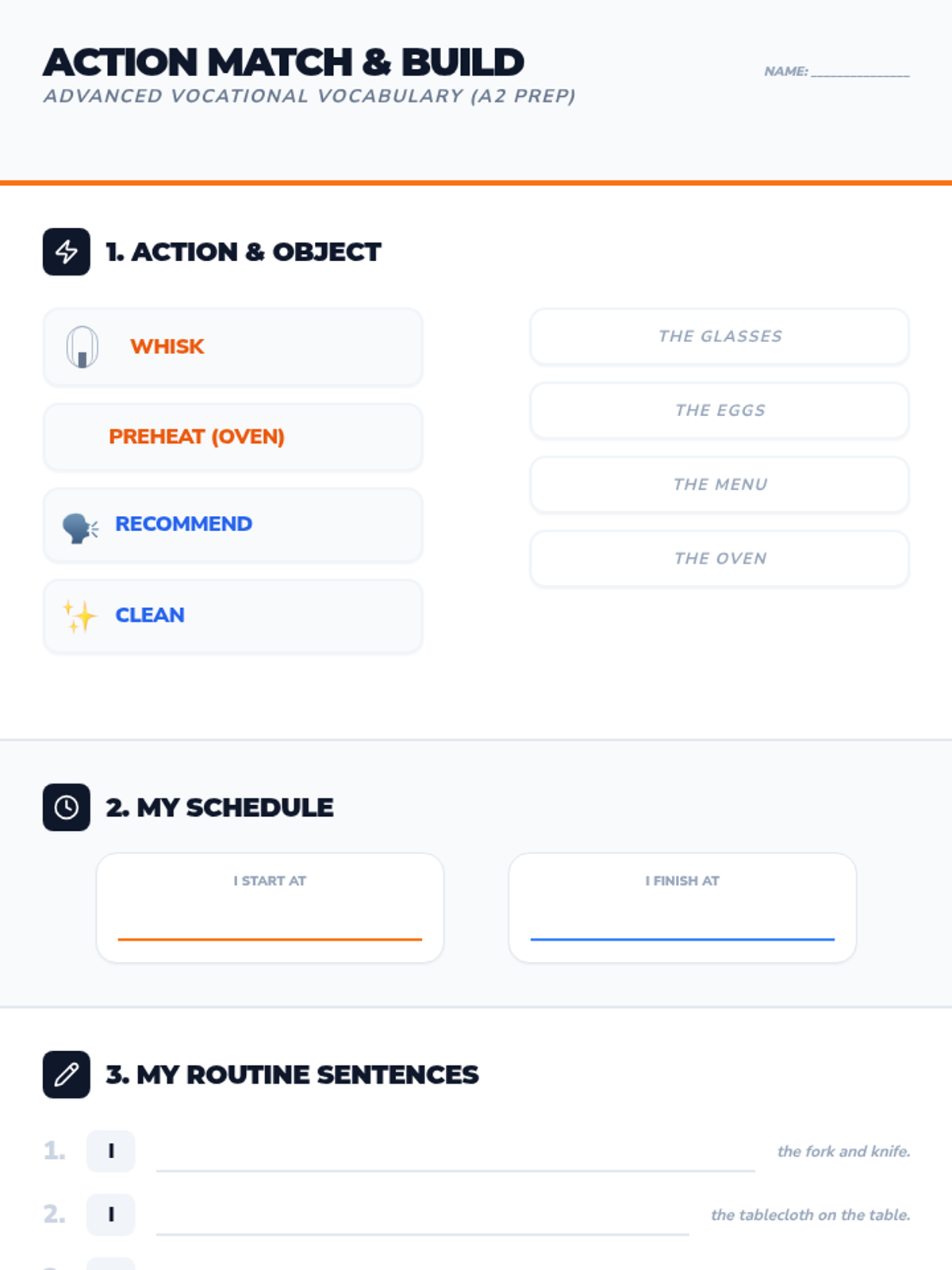
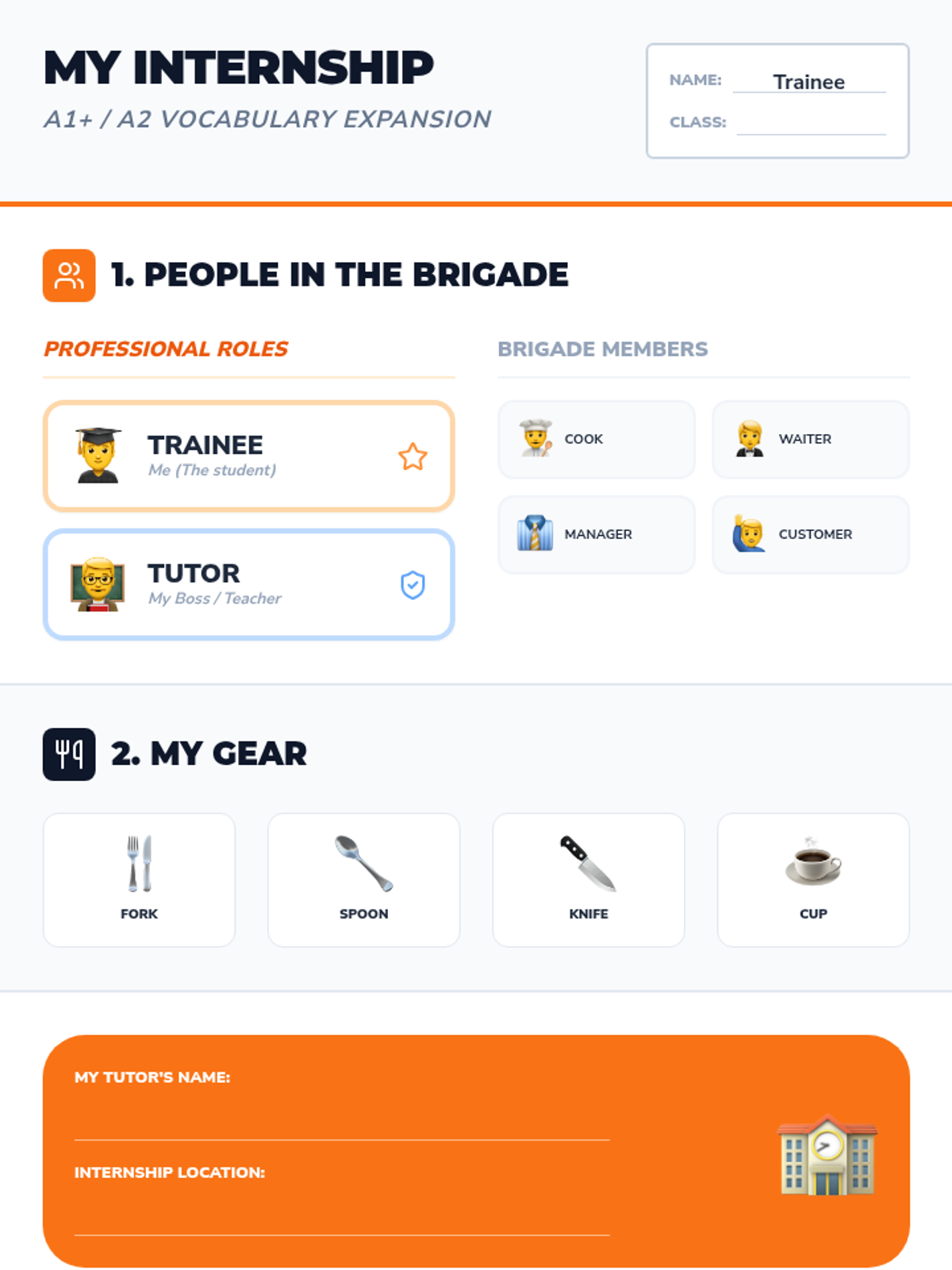
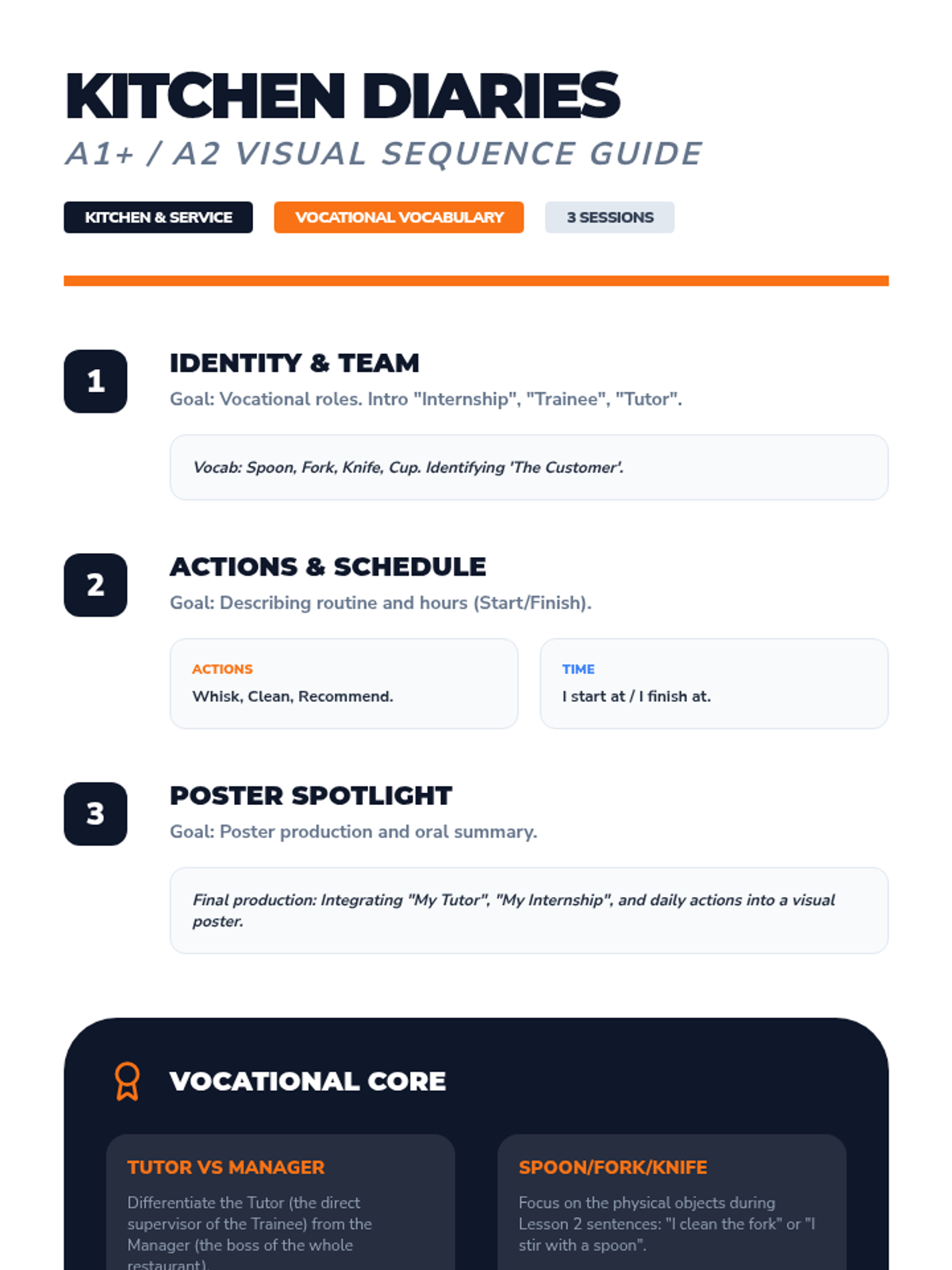
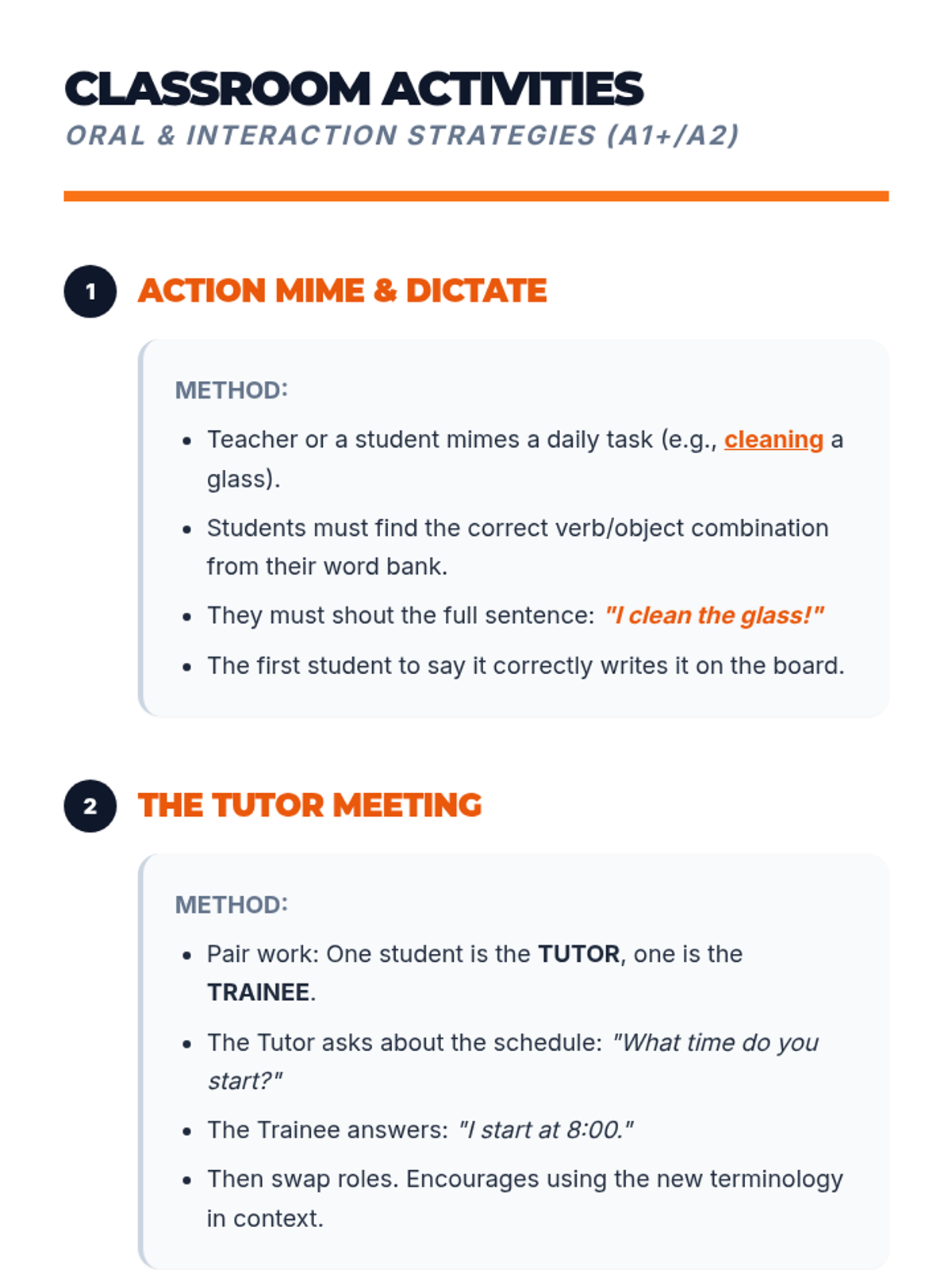
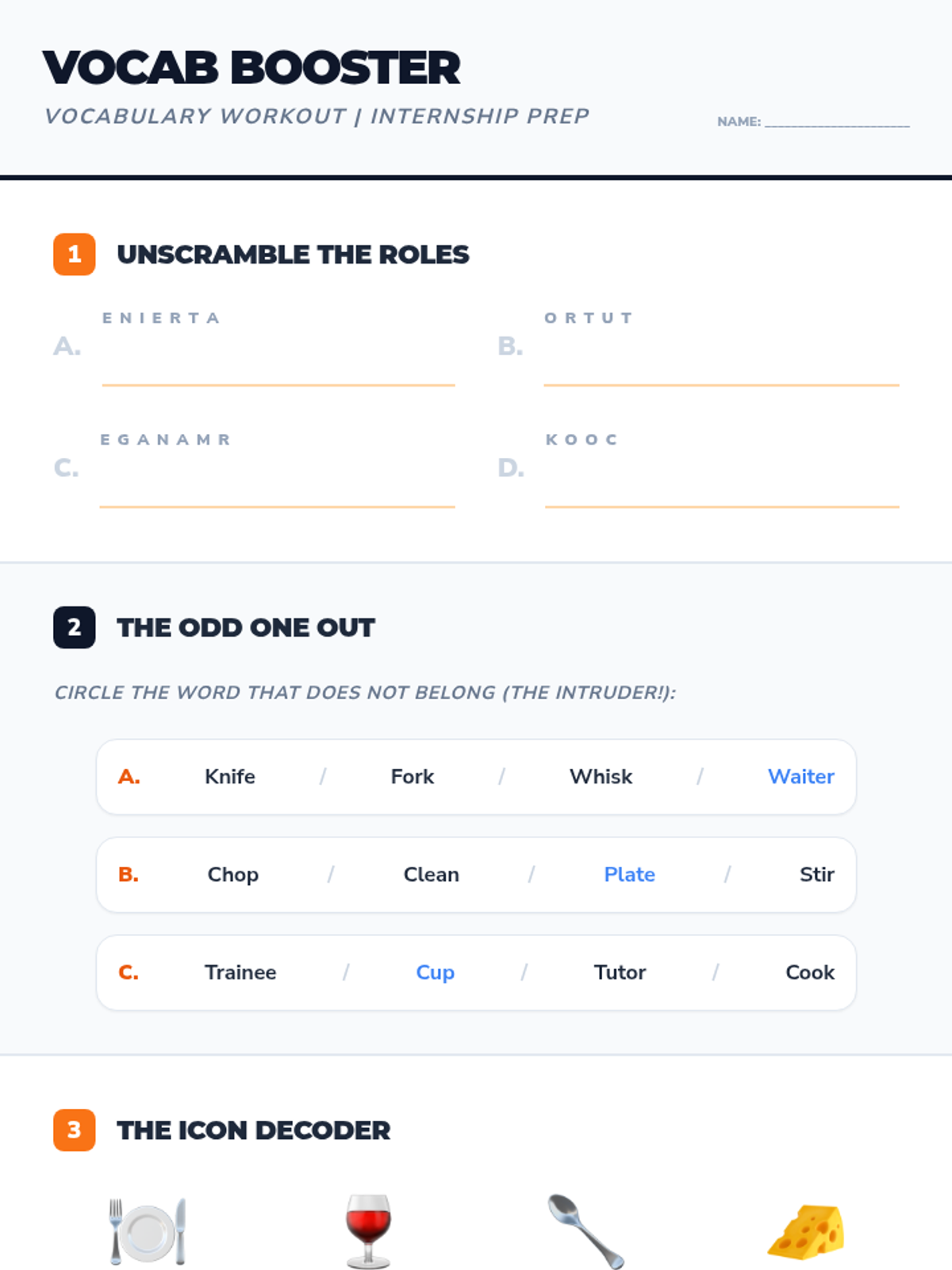
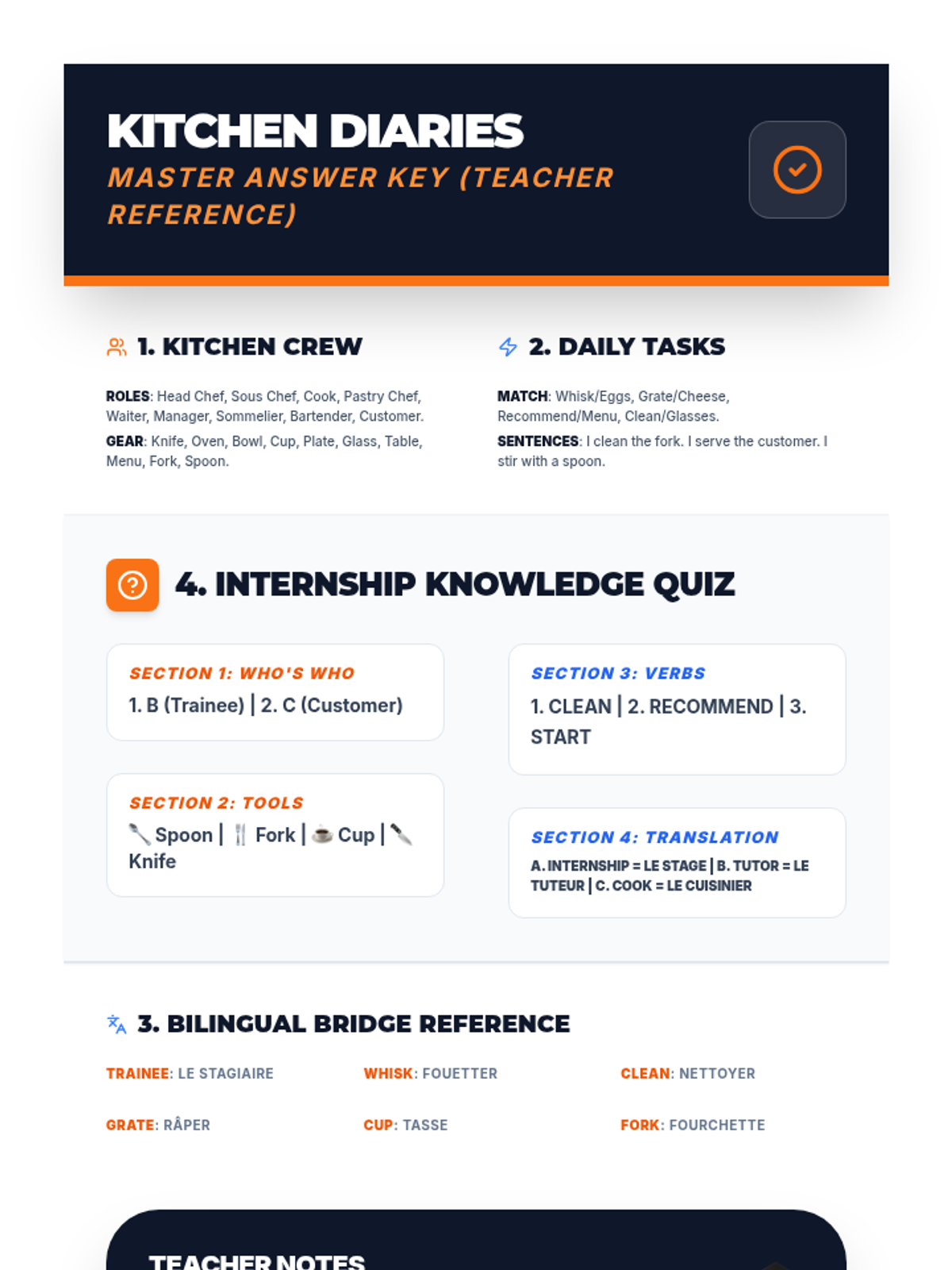
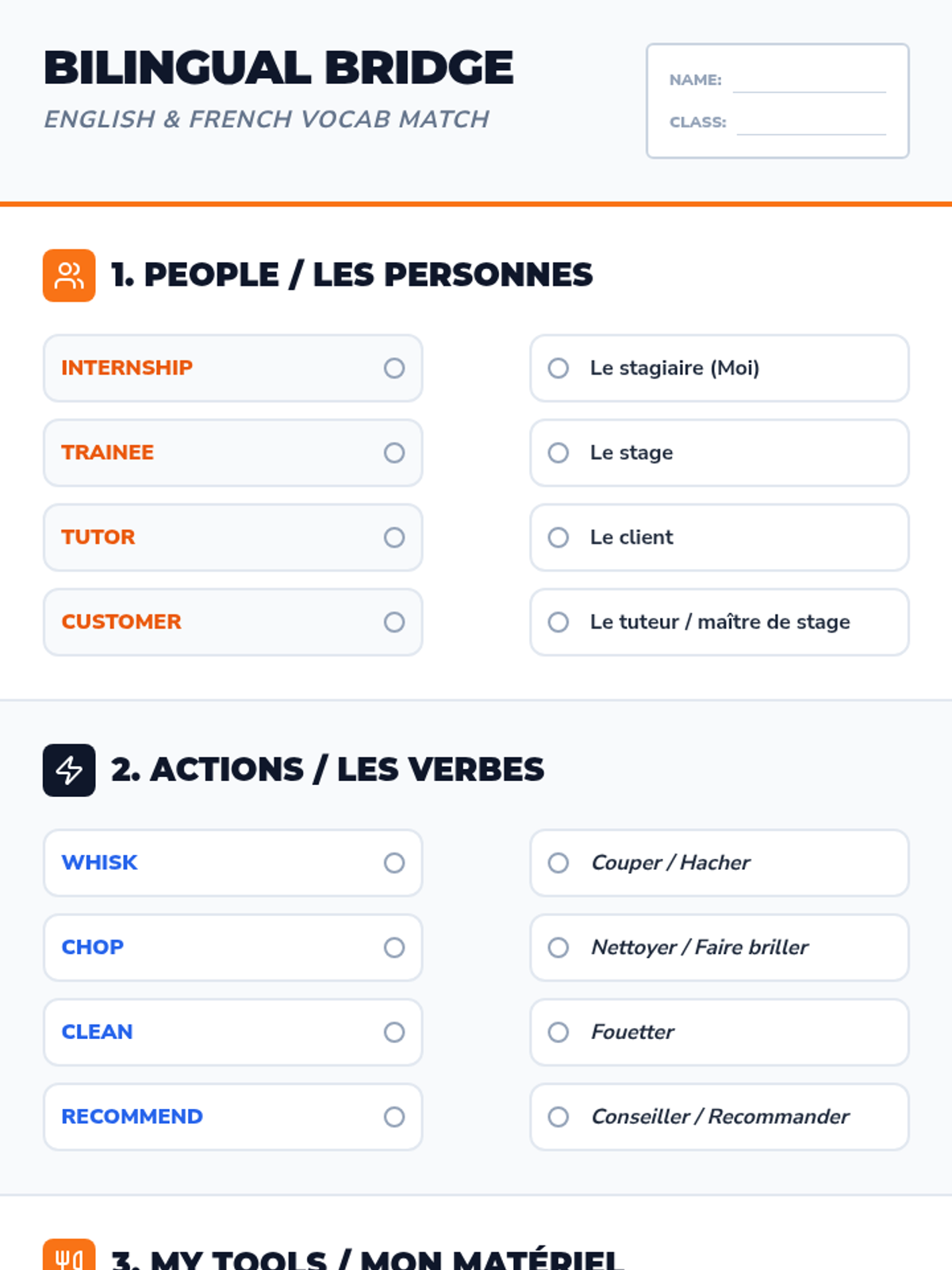
A 3-session English sequence for CAP Cuisine/Restaurant students returning from their internship, focusing on describing roles and daily tasks in a professional kitchen or dining room.
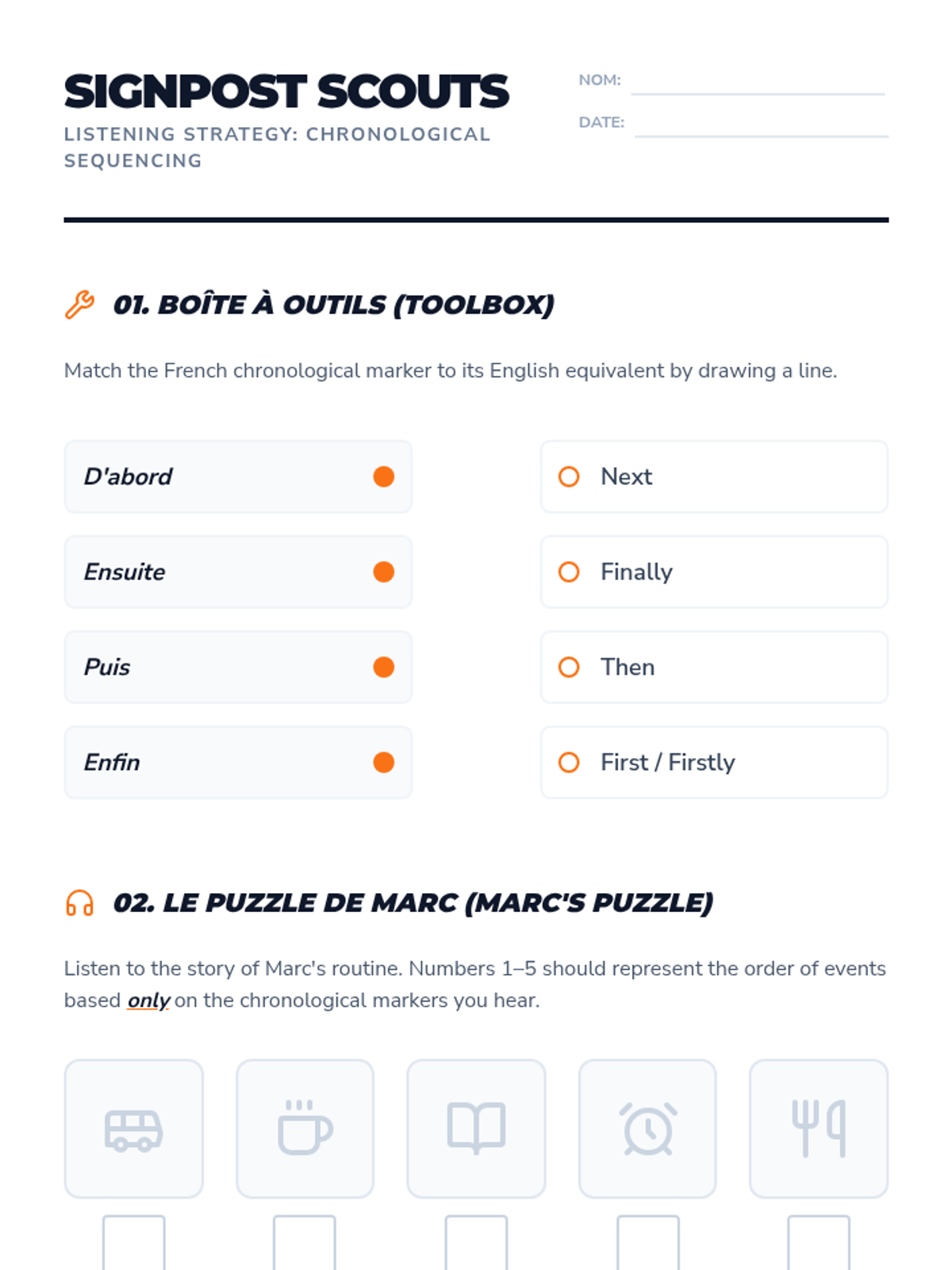
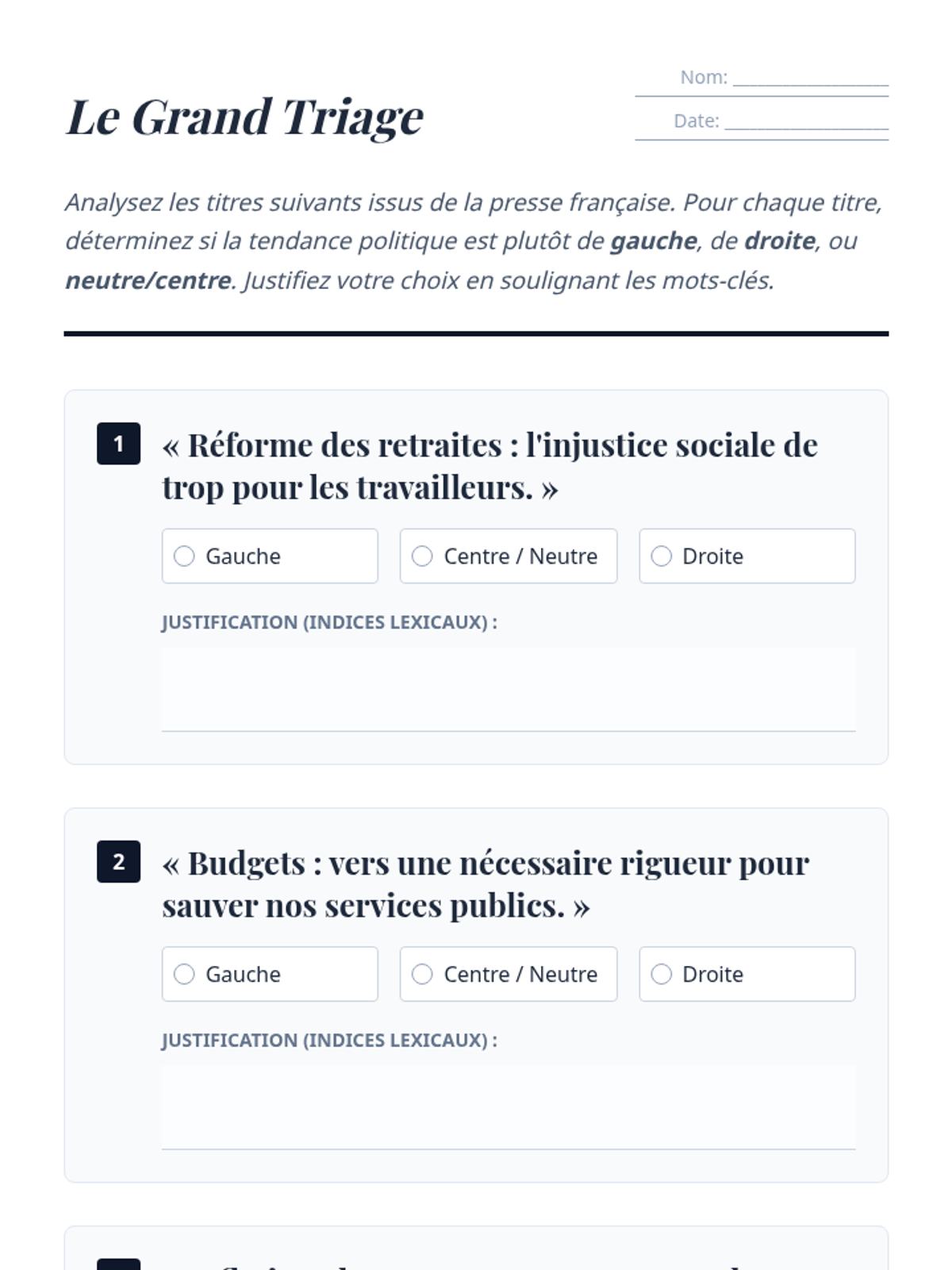
A project-based sequence for beginner French students focused on decoding media through narrative structures, logical connectors, and 'gist' listening strategies. Students move from identifying chronological signposts to analyzing news segments, street interviews, and cultural advertisements, culminating in a media analysis project.
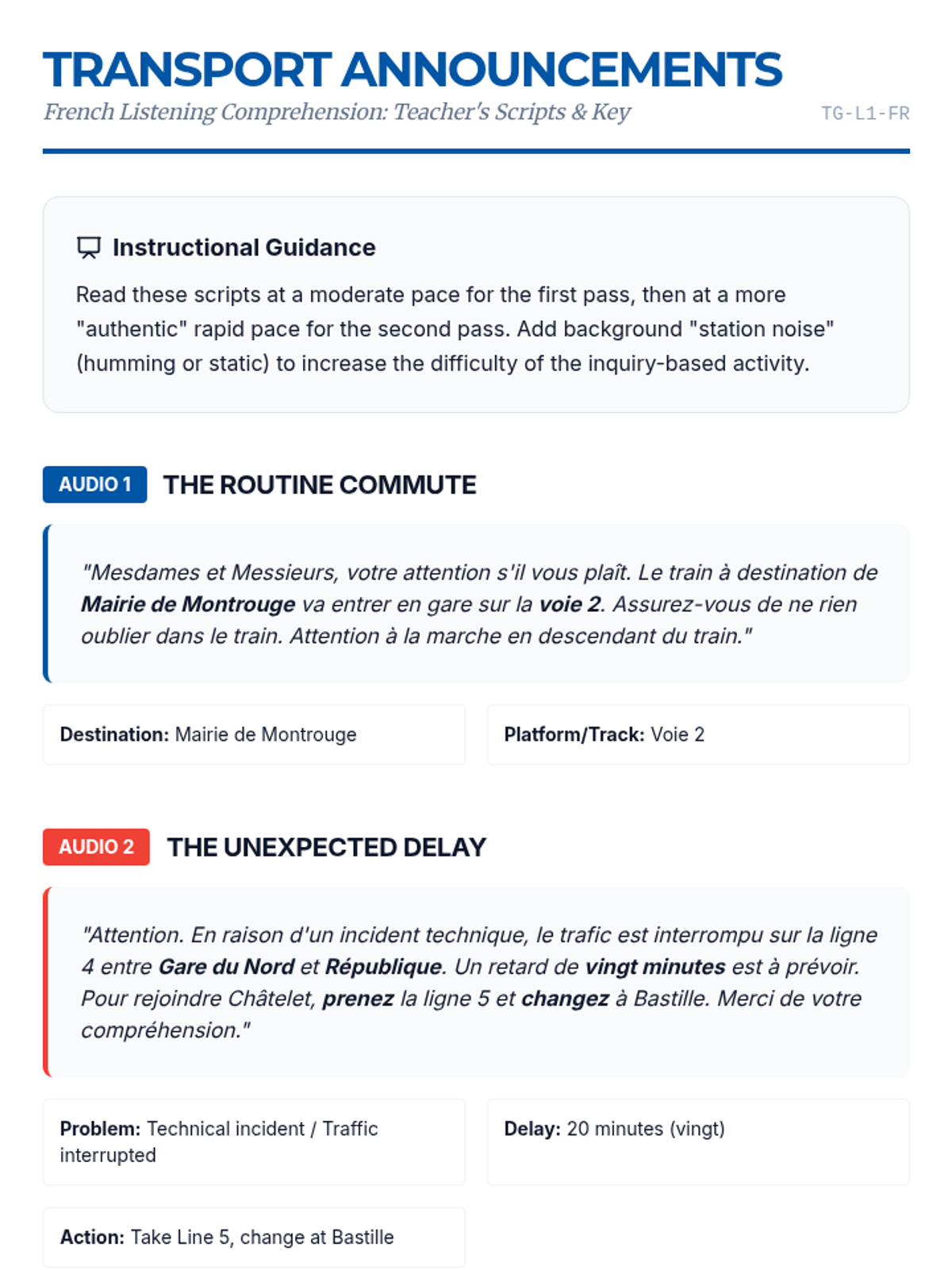
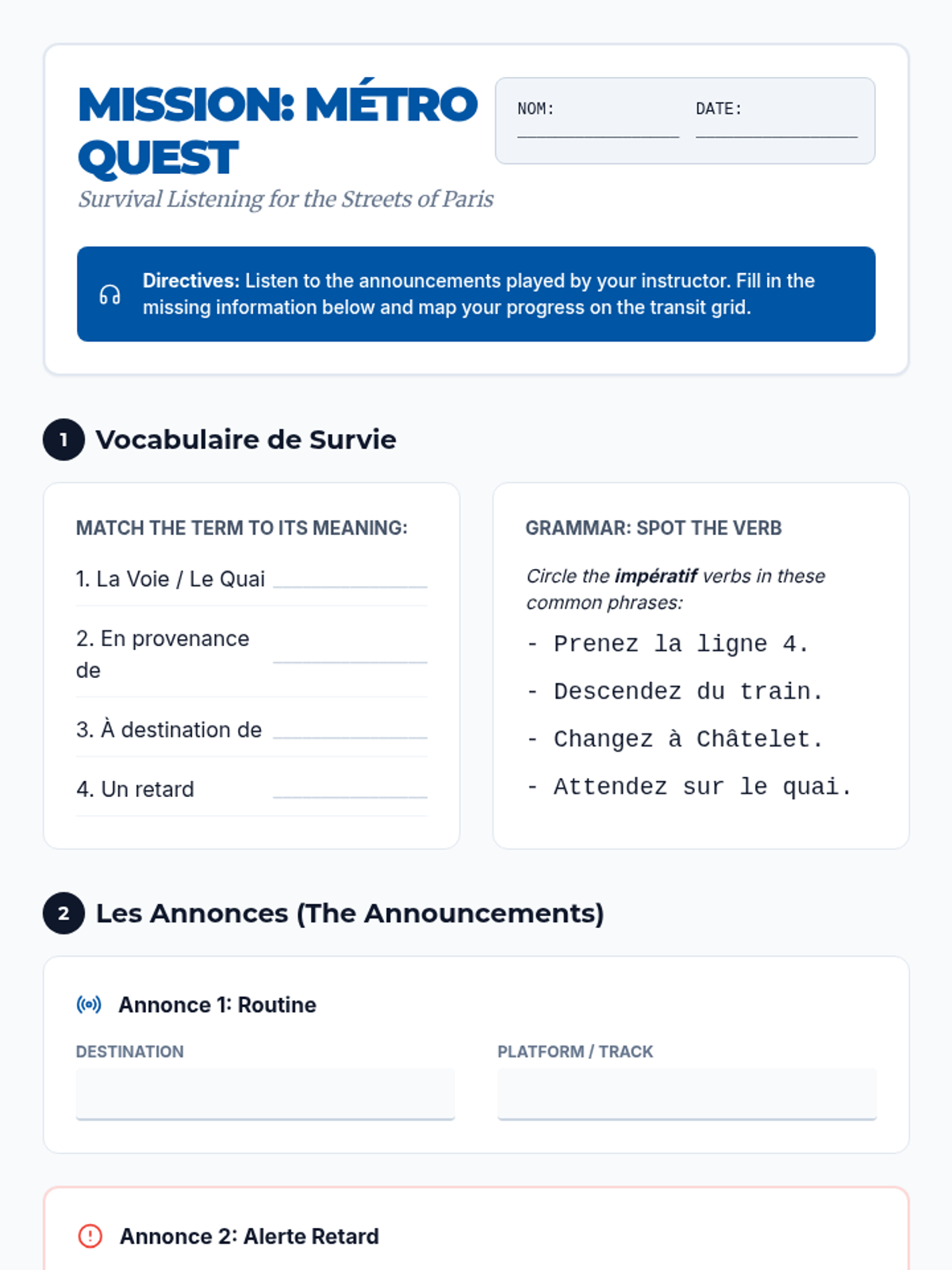
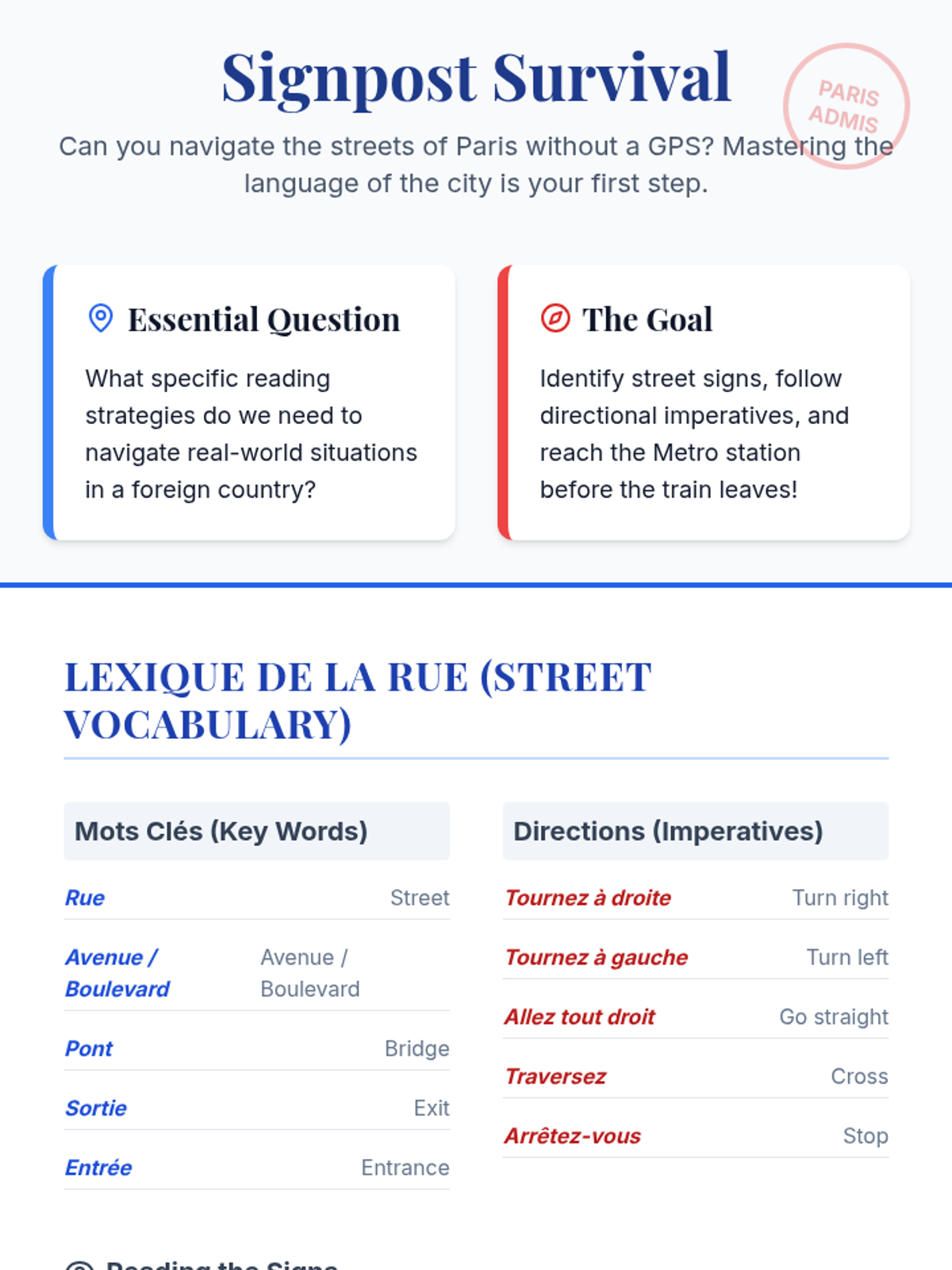
An inquiry-based French listening sequence for beginners focusing on functional navigation of public spaces in Francophone cities. Students learn to filter essential information from ambient noise in transport, weather, street directions, retail, and emergency contexts.
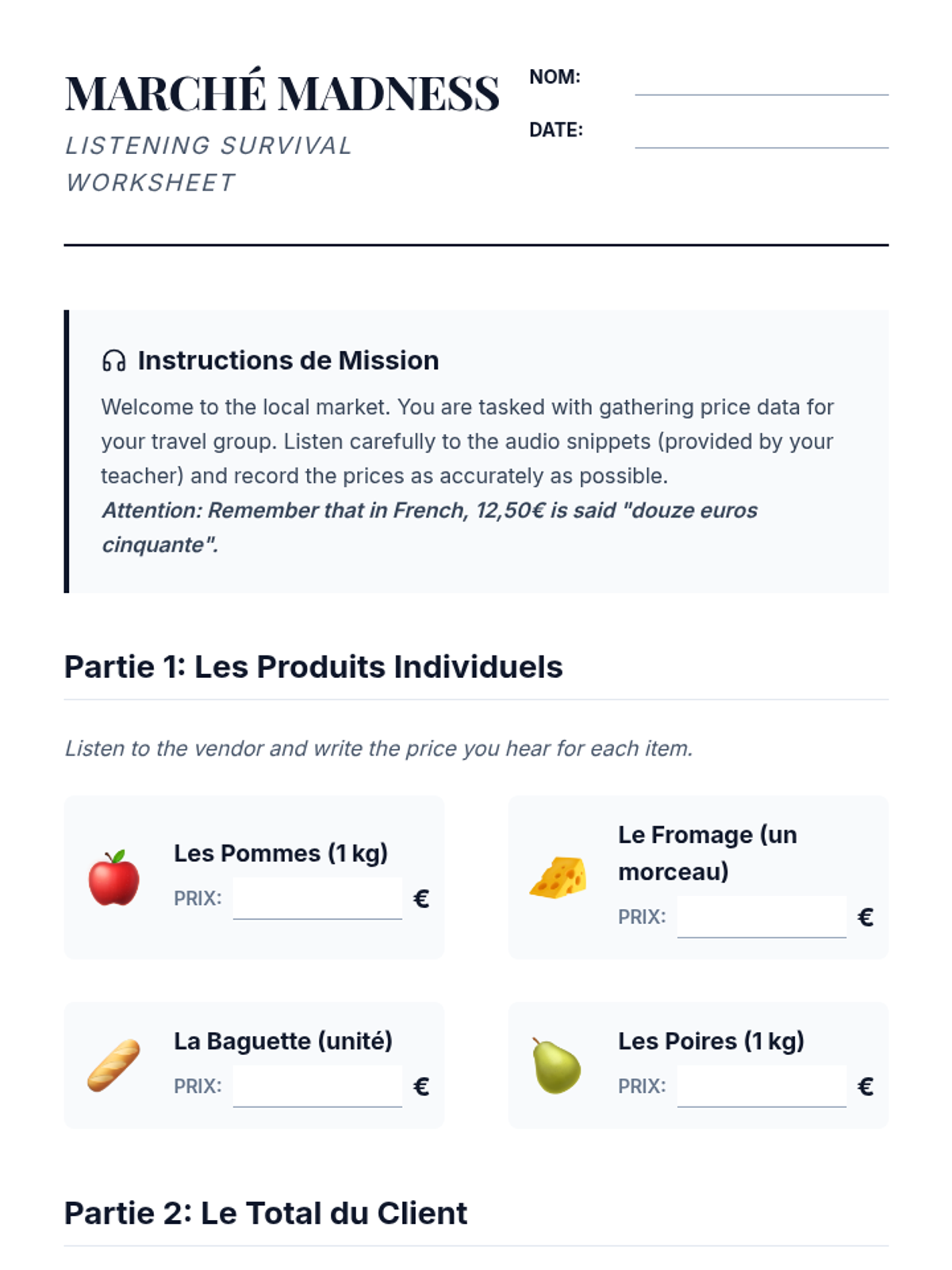
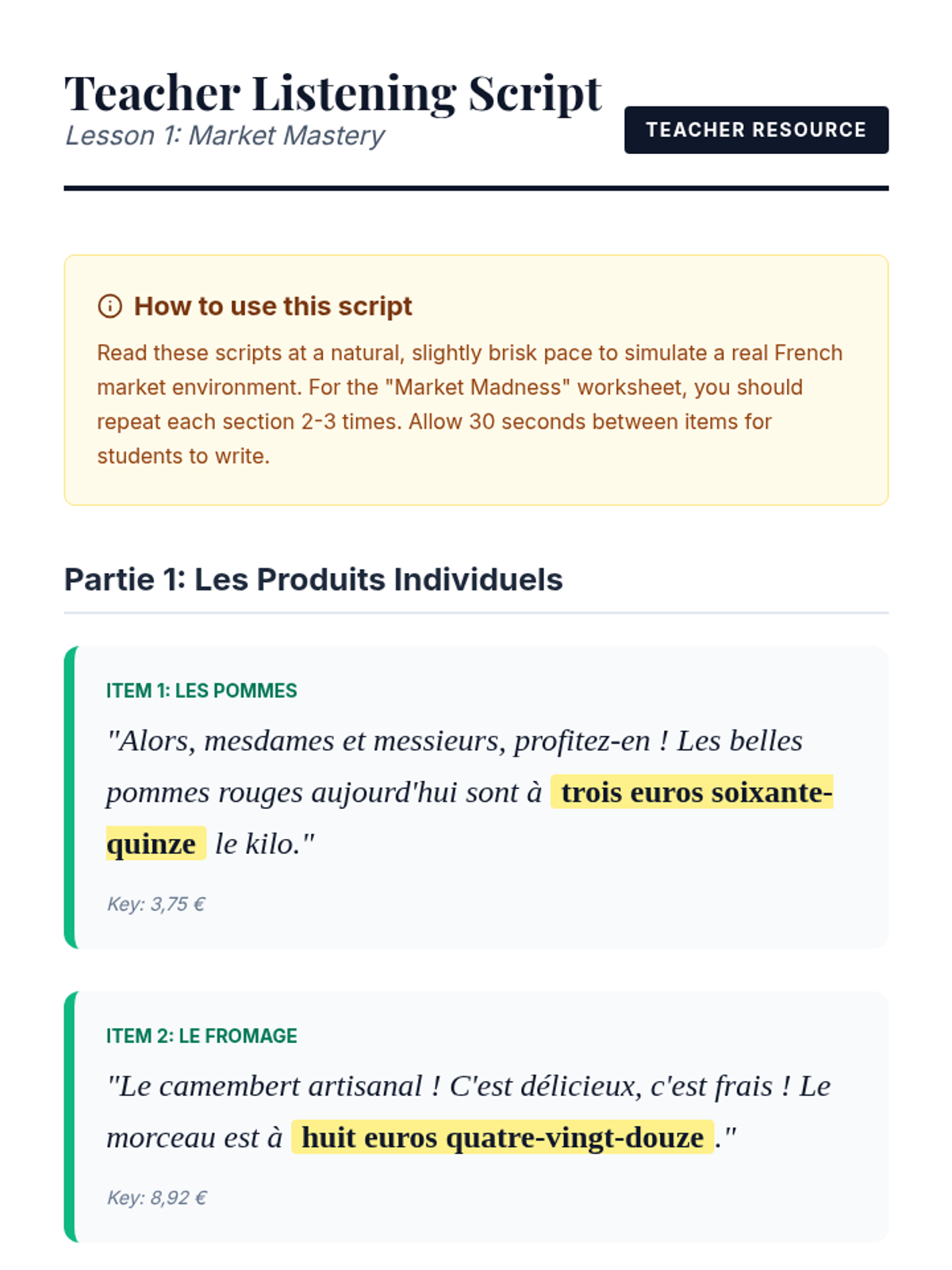
A high-stakes travel simulation building French listening proficiency in logistics: numbers, time, prices, and directions. Students navigate virtual 'survival' scenarios where accurate information processing is the key to a successful journey.
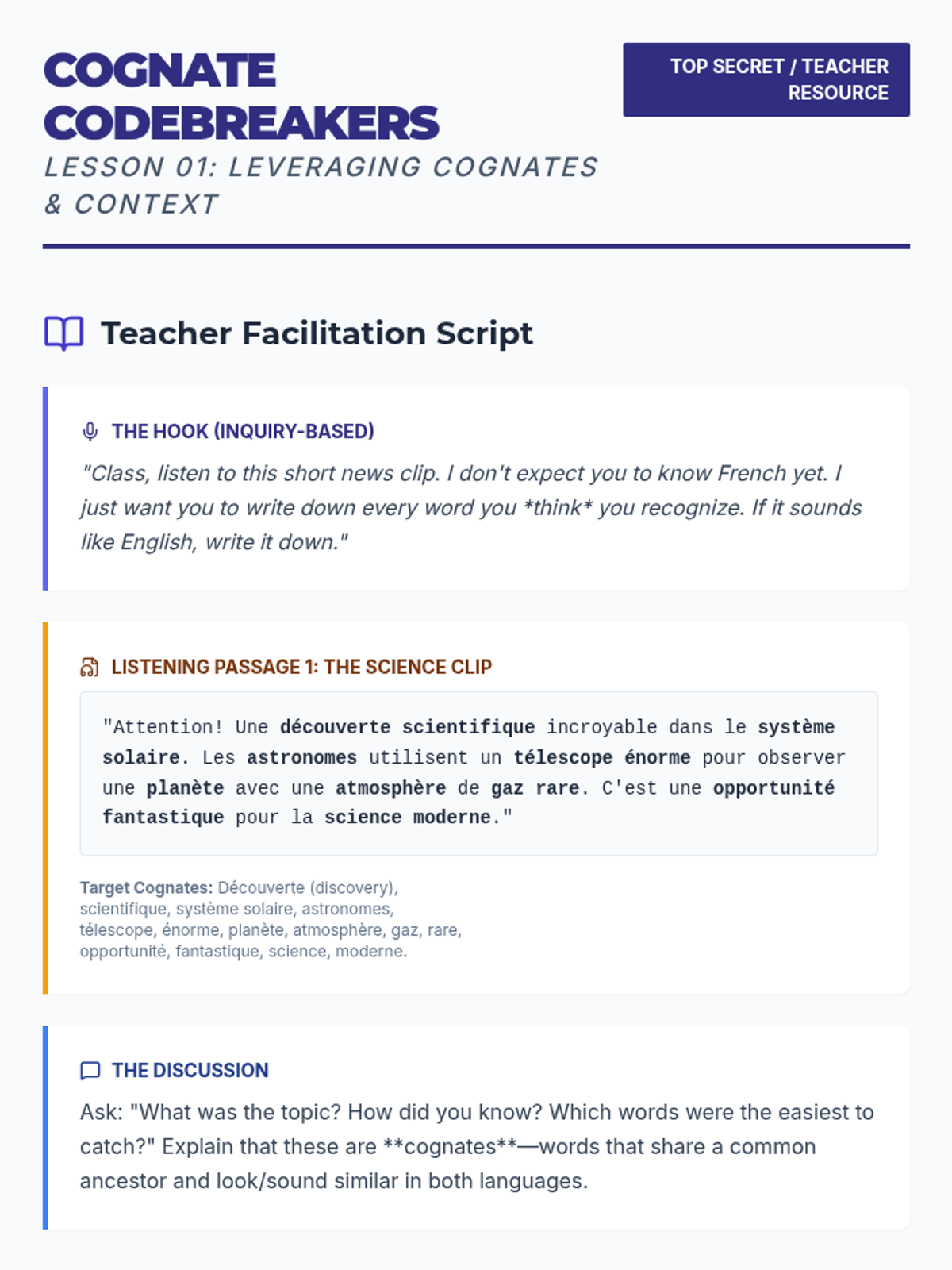
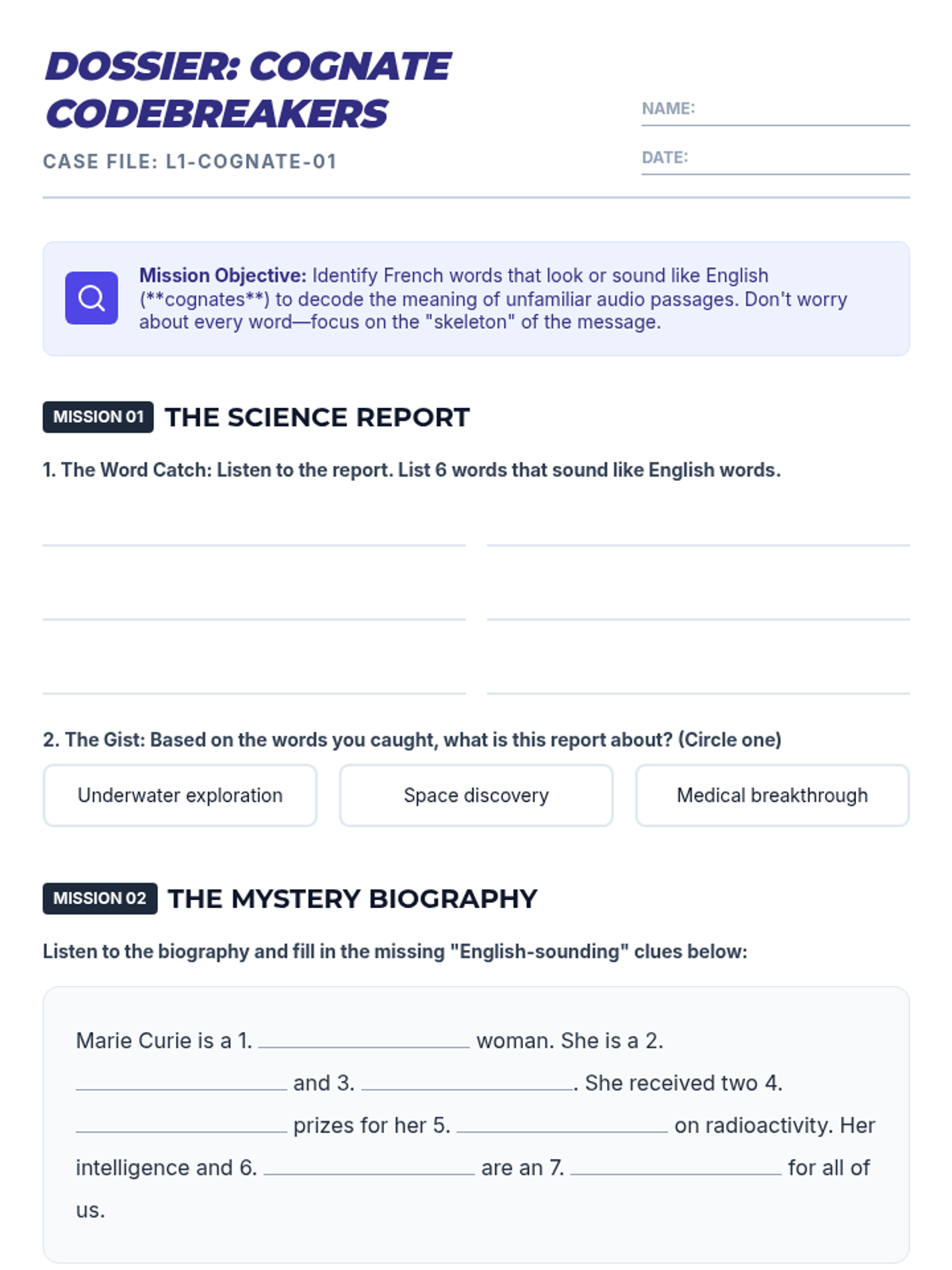
This sequence guides 9th-grade French beginners through the art of listening for meaning rather than just words. Students learn to use cognates, context, social registers, and emotional tone to interpret narratives and dialogues, culminating in the ability to summarize global meaning.
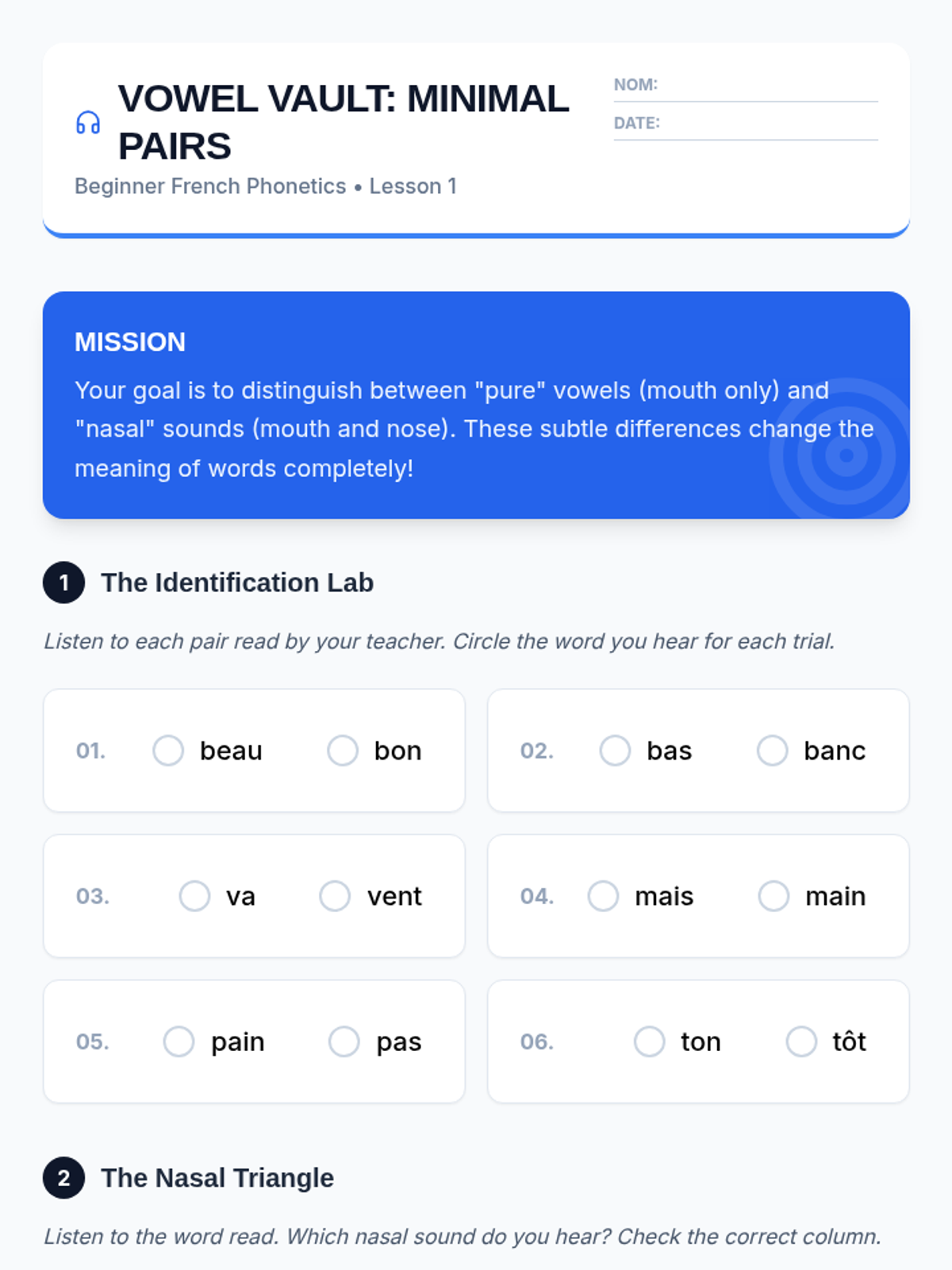
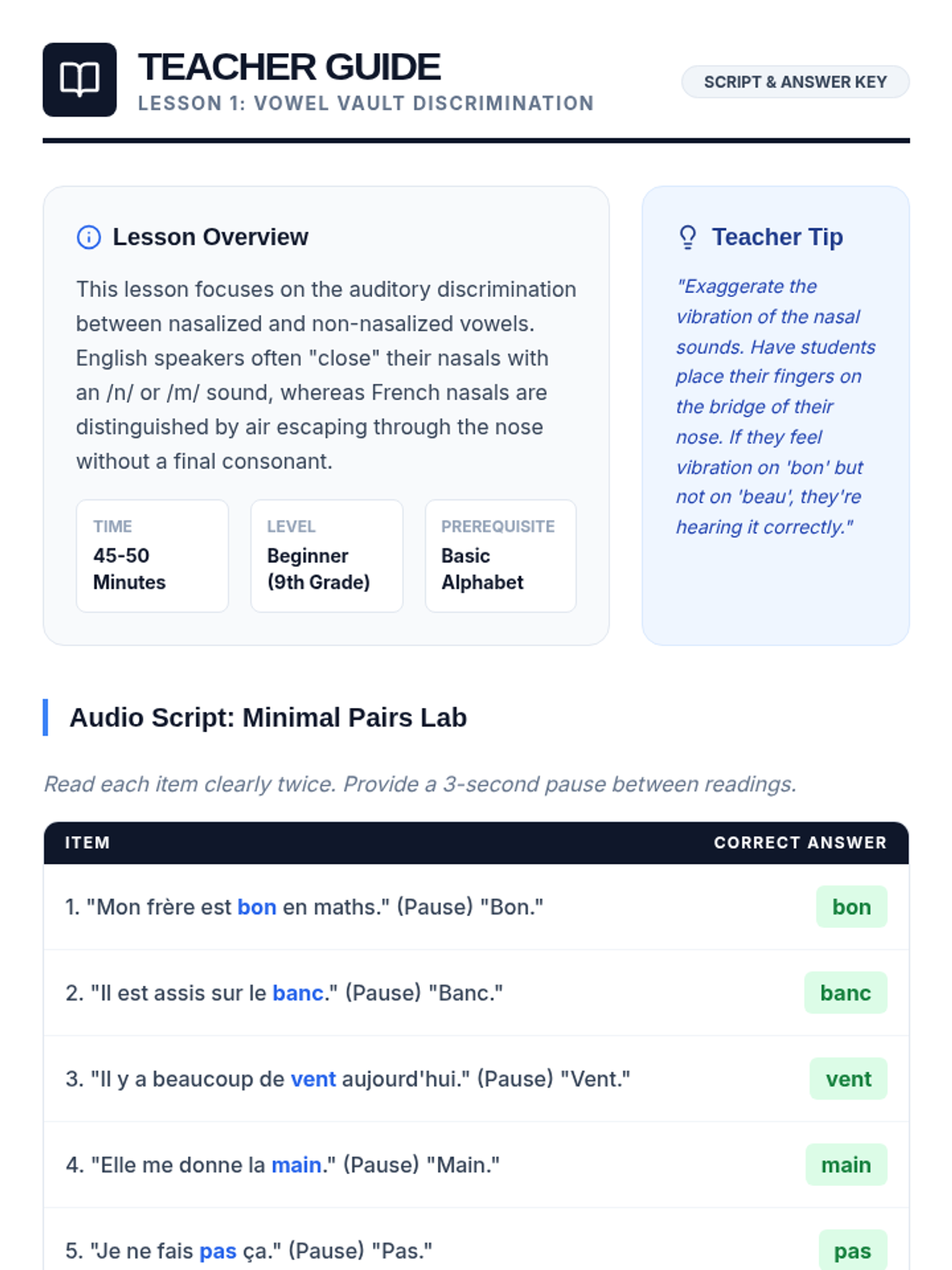
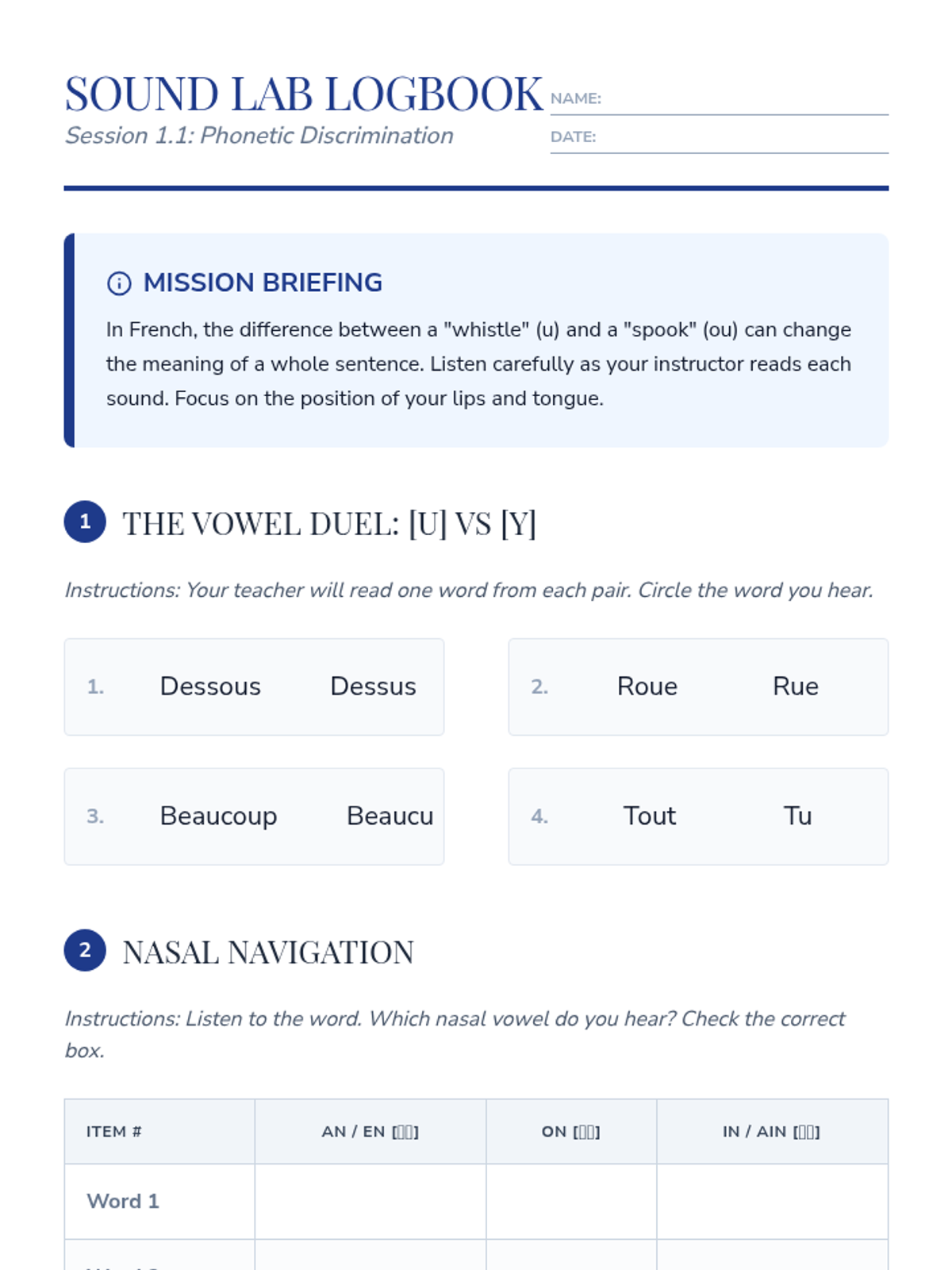
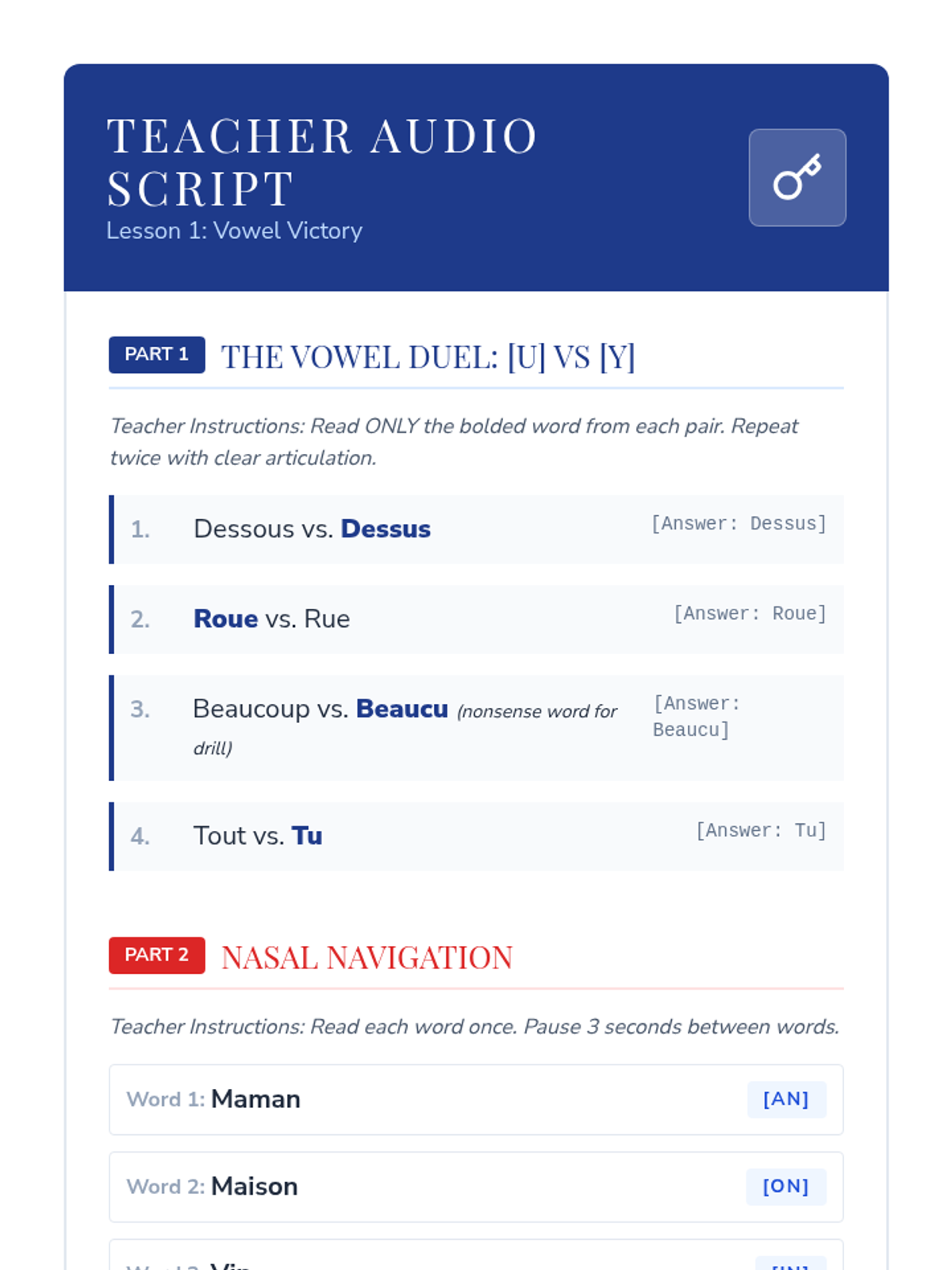
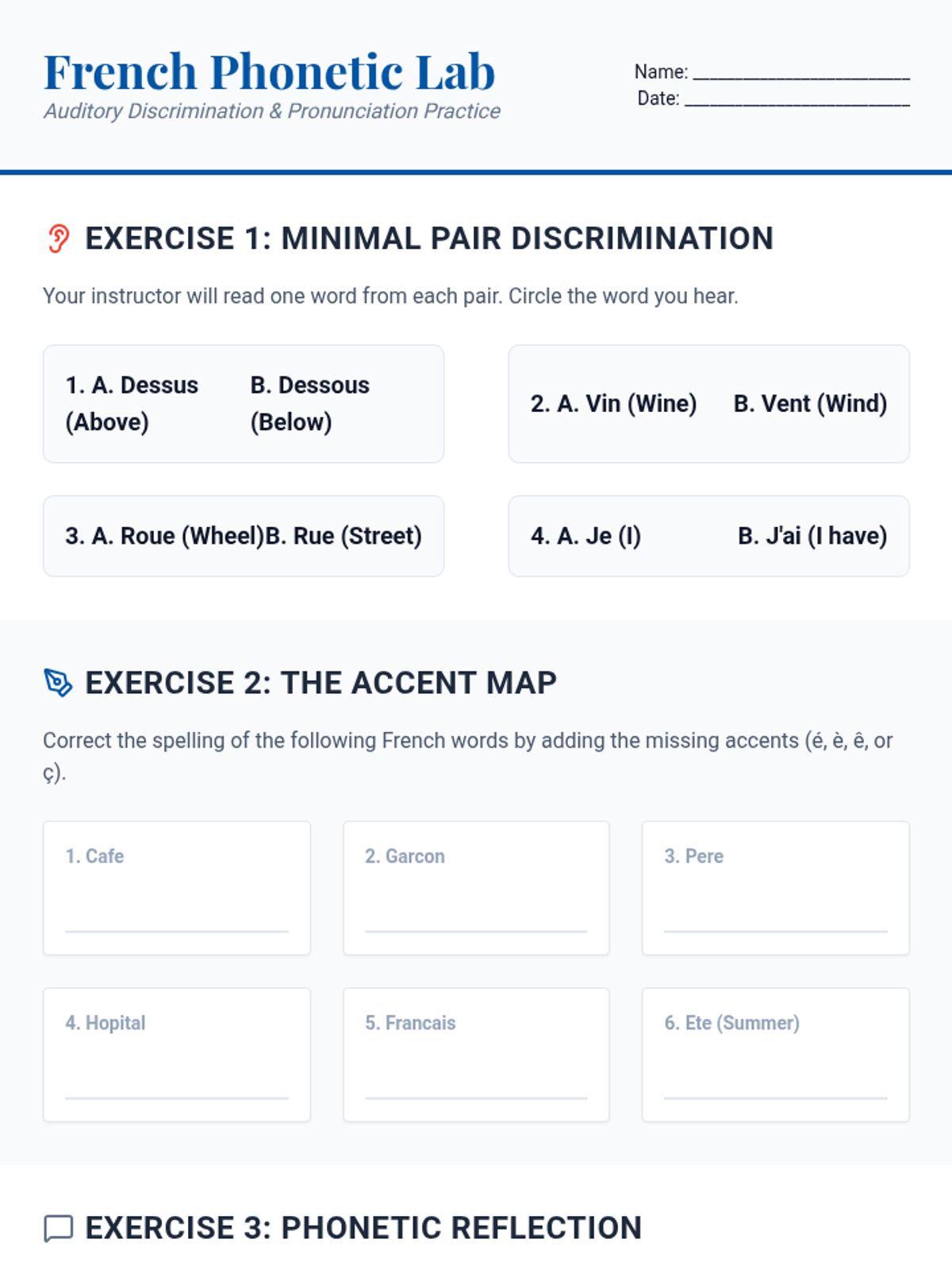
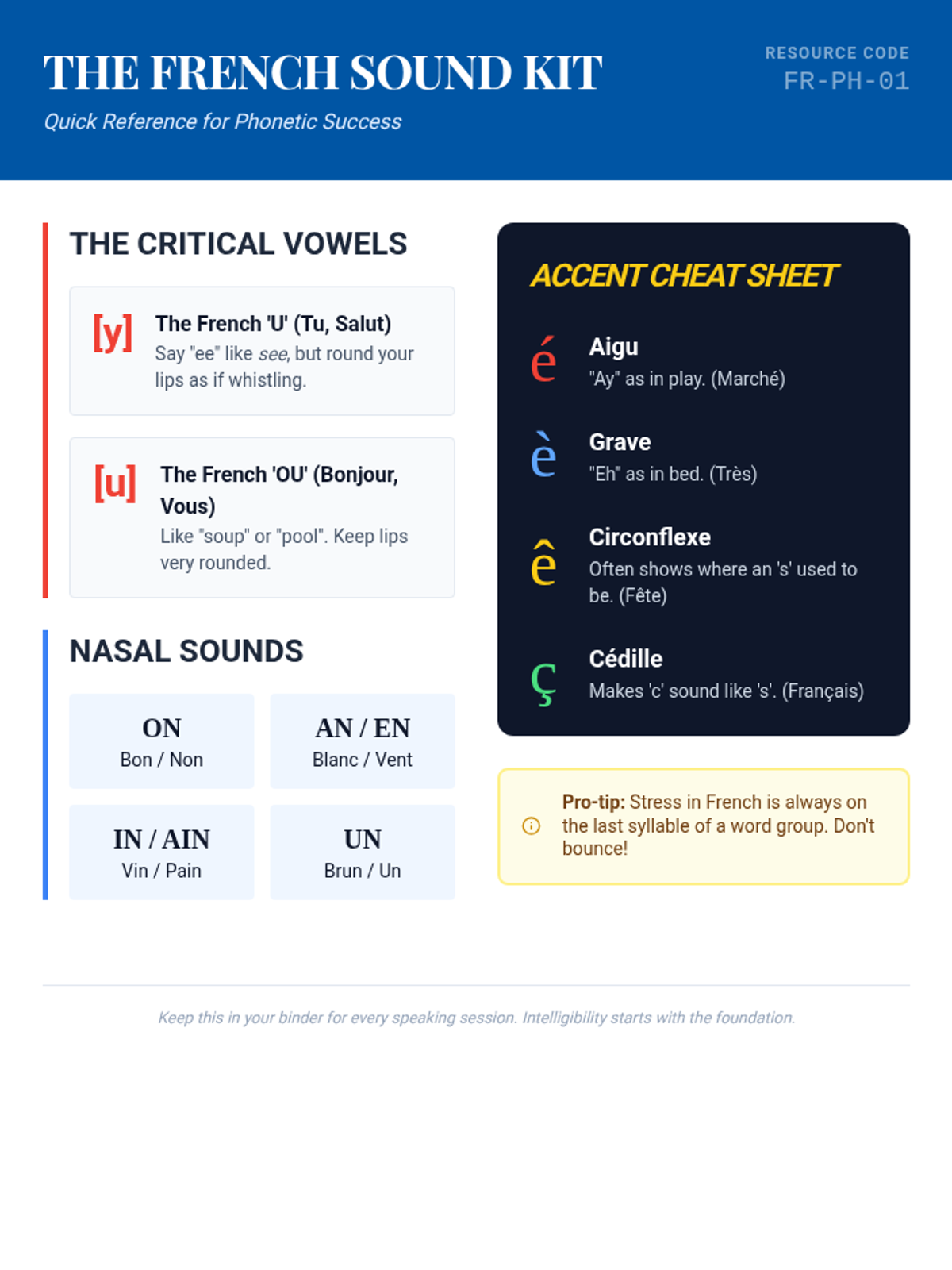
A foundational sequence for beginner French students focusing on phonetics, nasal sounds, liaisons, and intonation to improve listening comprehension and transcription skills.
A beginner French listening sequence for 10th graders focused on navigating real-world travel scenarios. Students develop auditory comprehension through simulated interactions in cafes, train stations, boutiques, and emergency situations.
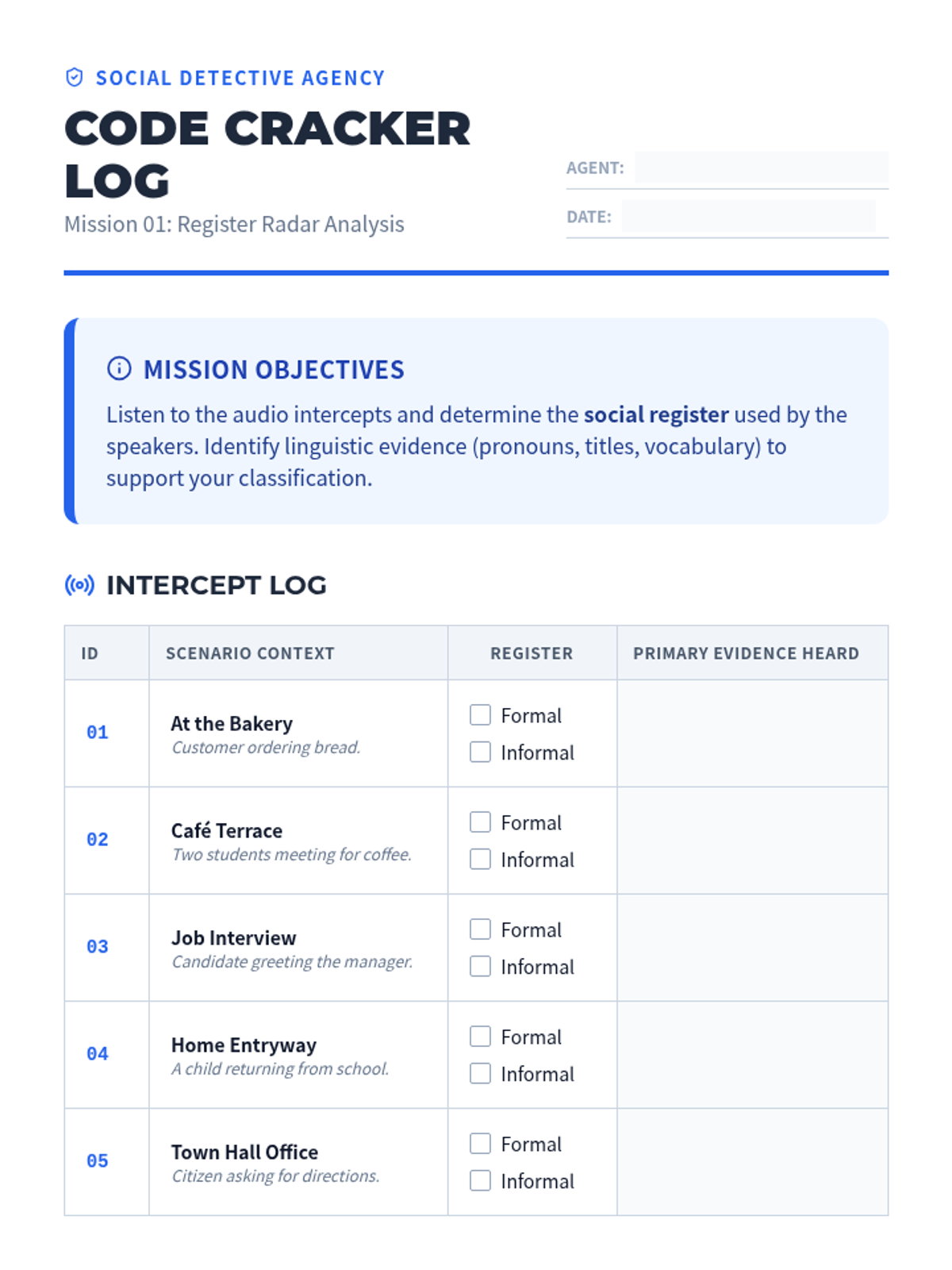
A beginner French listening sequence where students act as social observers, analyzing registers, personal details, family structures, and preferences through auditory scripts.
This sequence builds foundational auditory skills for beginner French learners, focusing on phonetic discrimination, number recognition, and parsing sentence boundaries to develop comprehension.
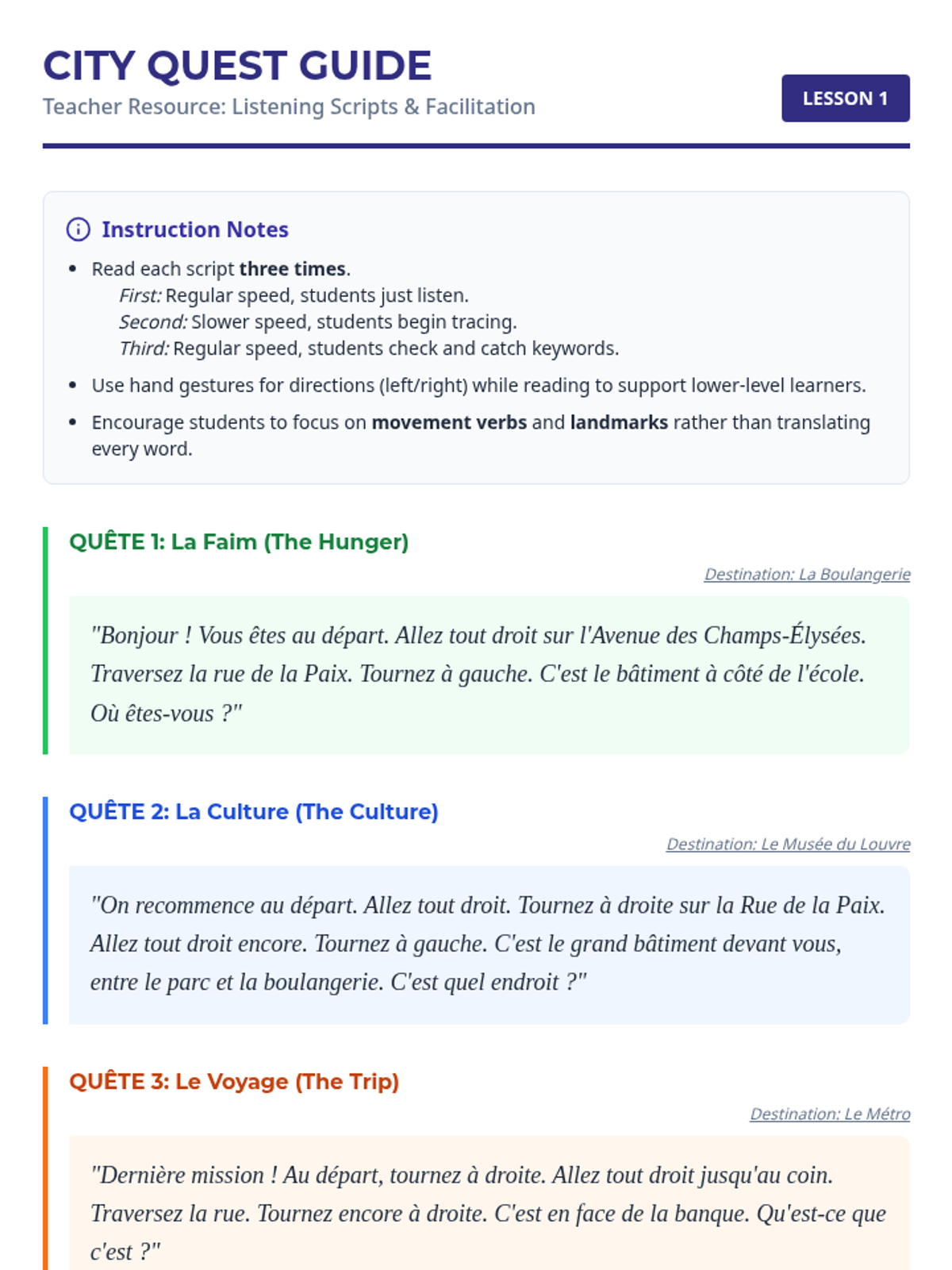
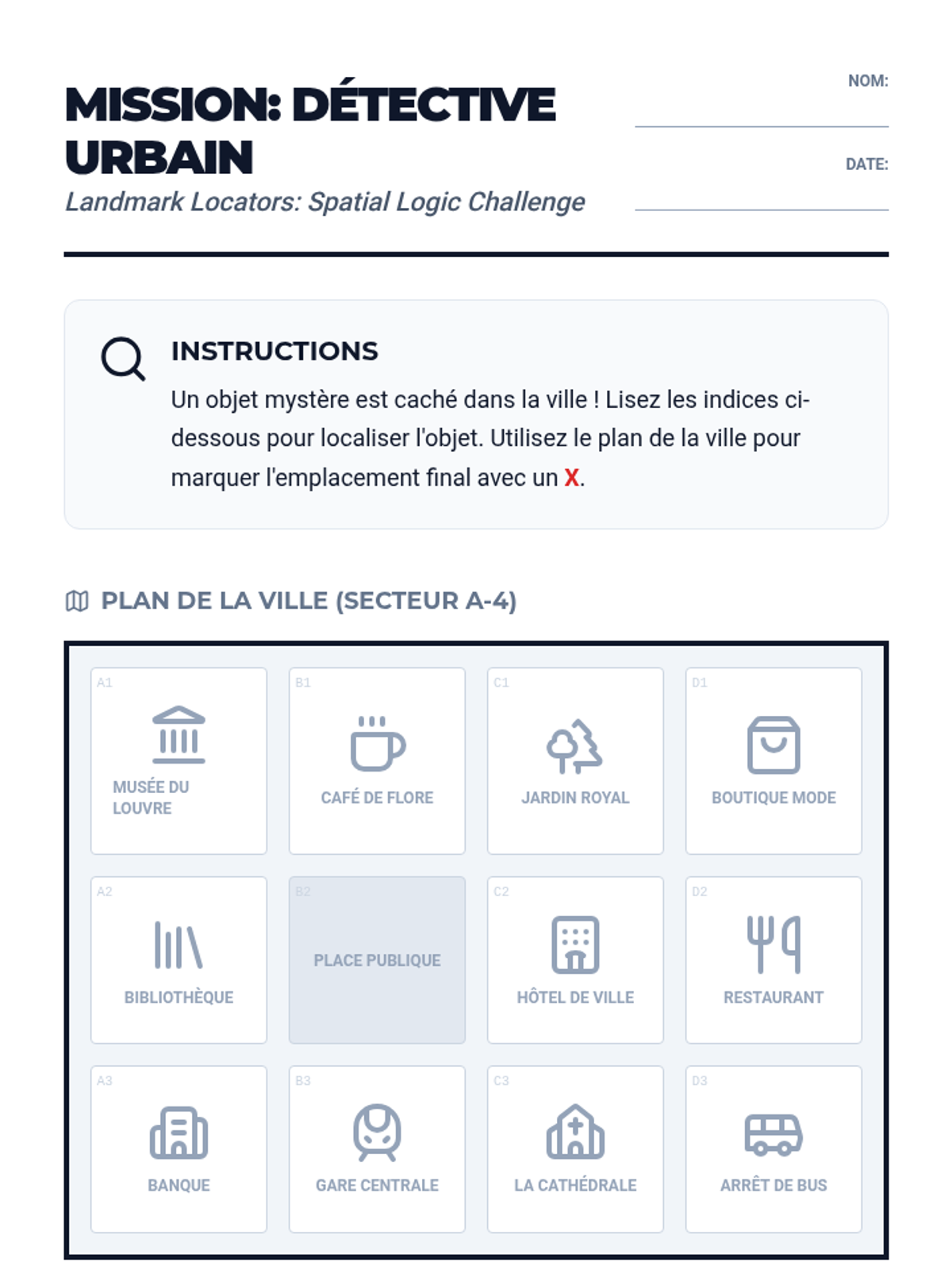
An inquiry-based exploration of French communities where students learn to identify landmarks, use spatial prepositions, and provide directions. Students develop practical communication skills while virtually navigating Francophone cities.
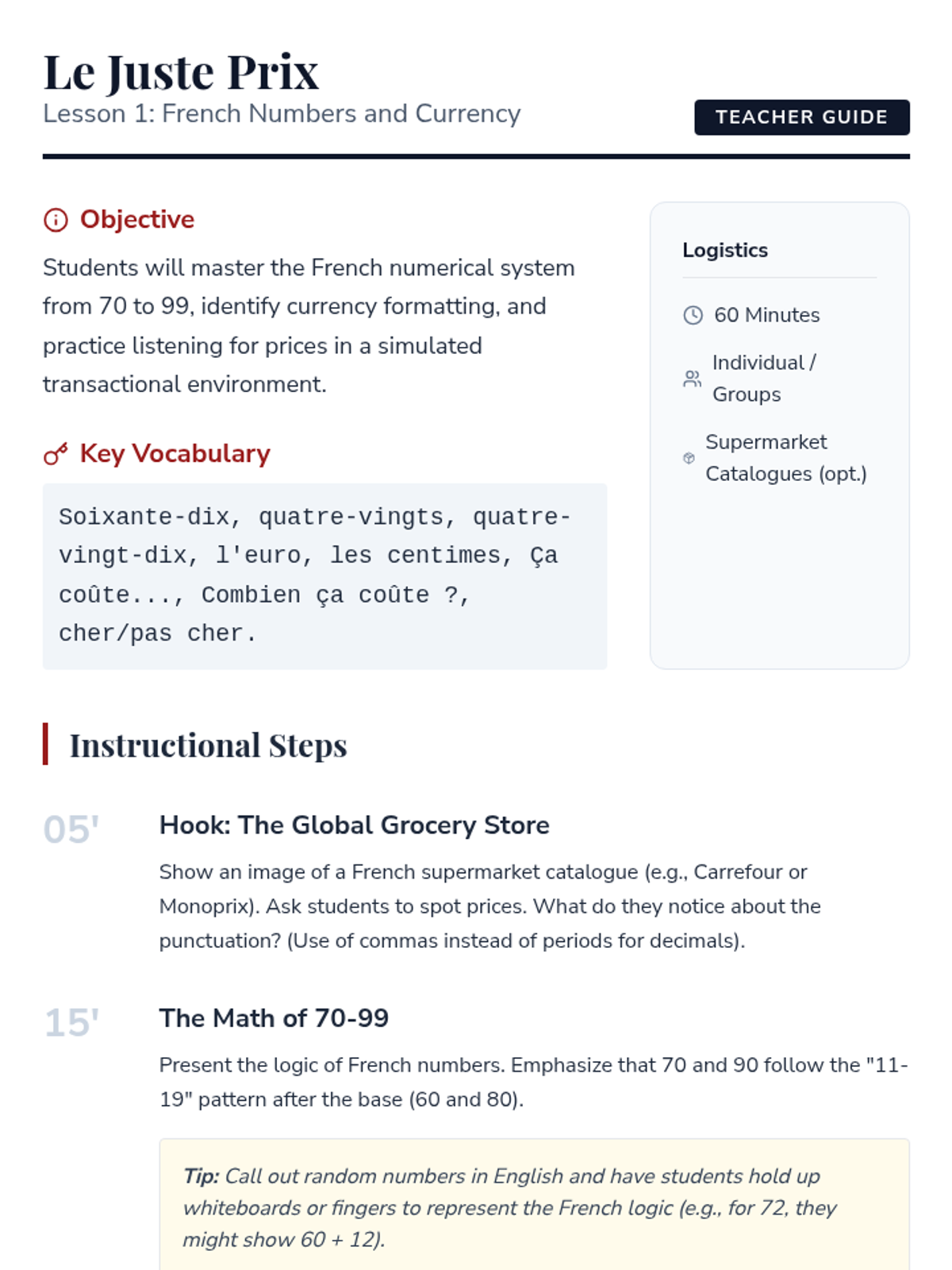
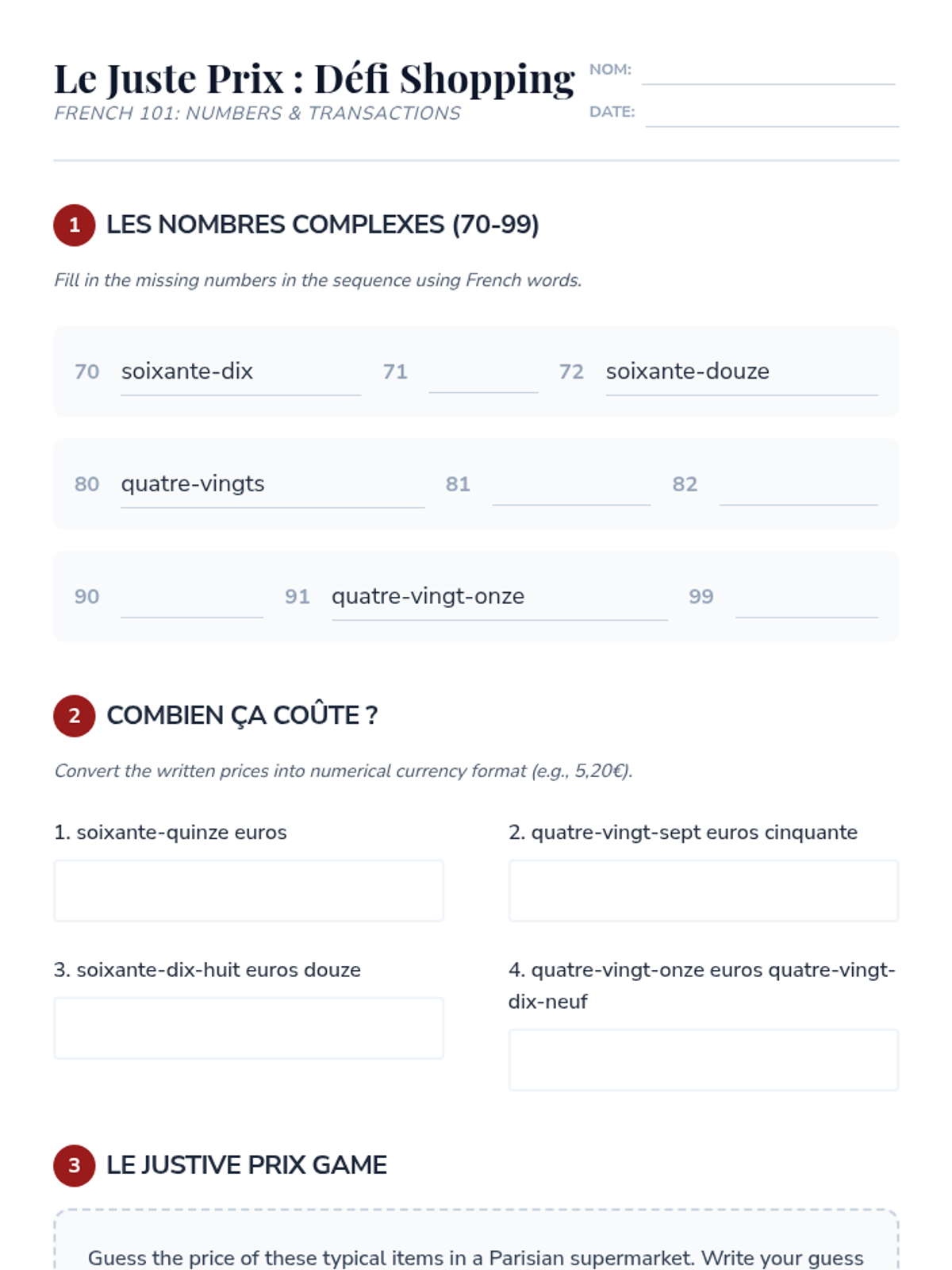
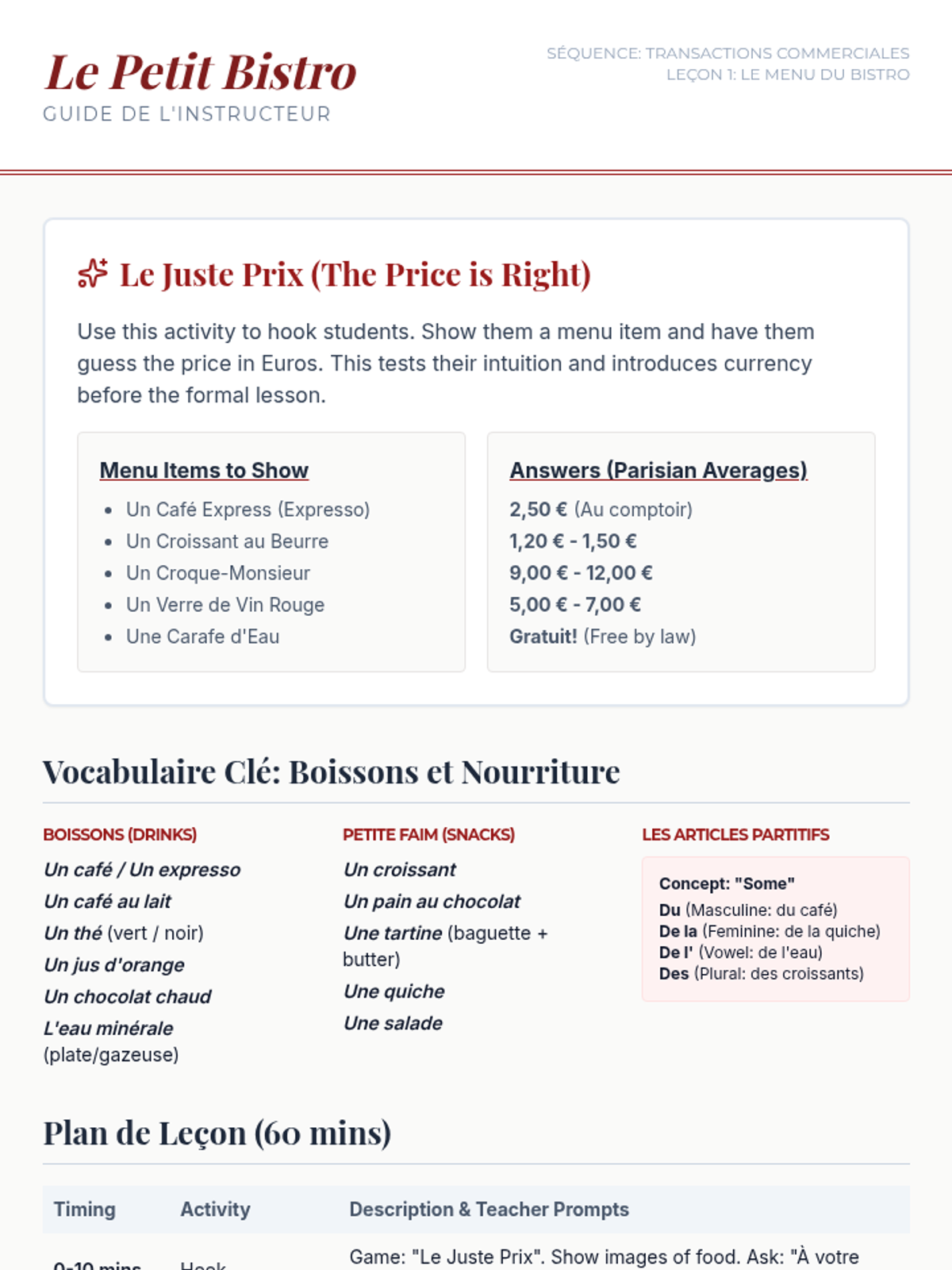
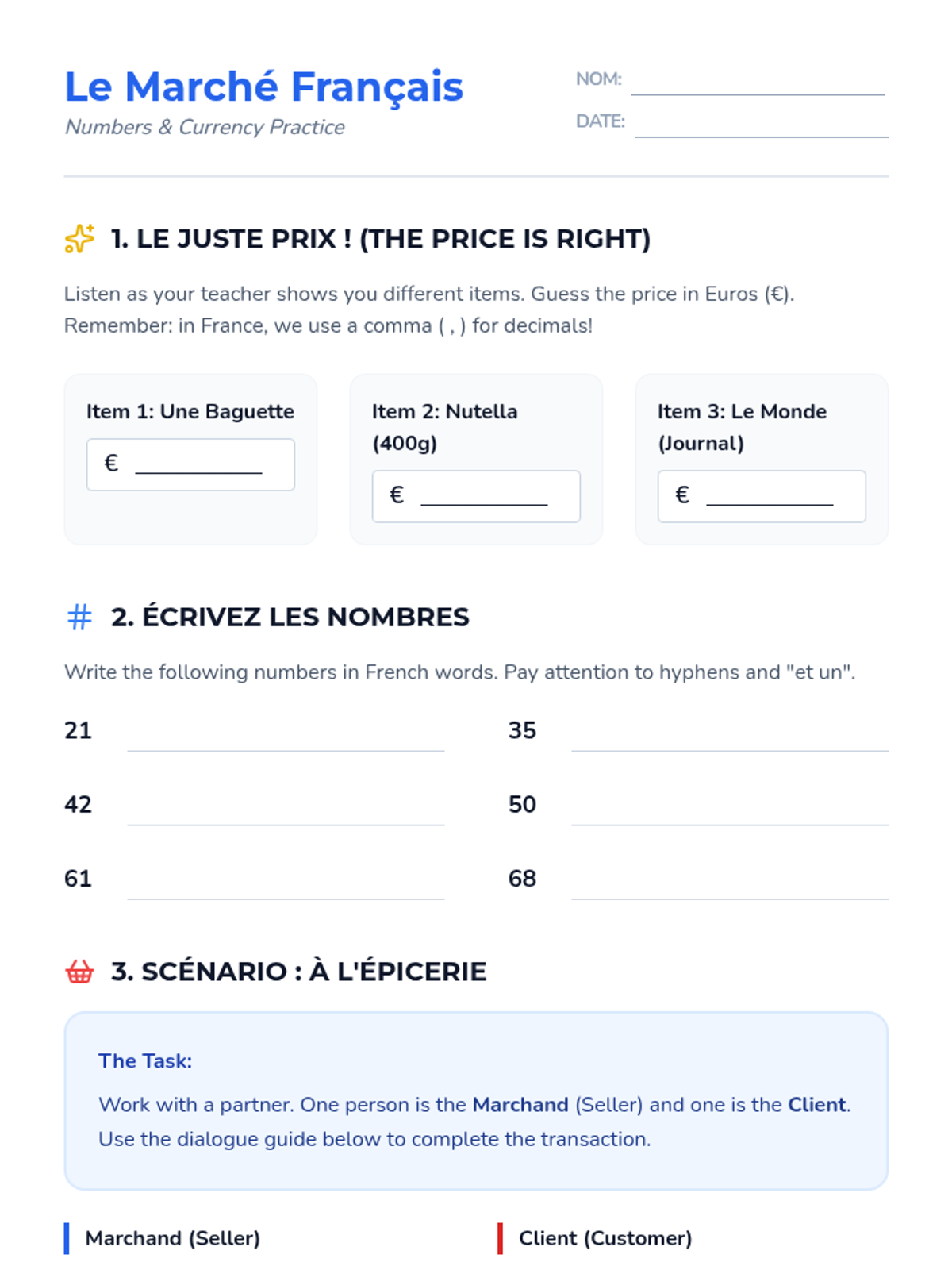
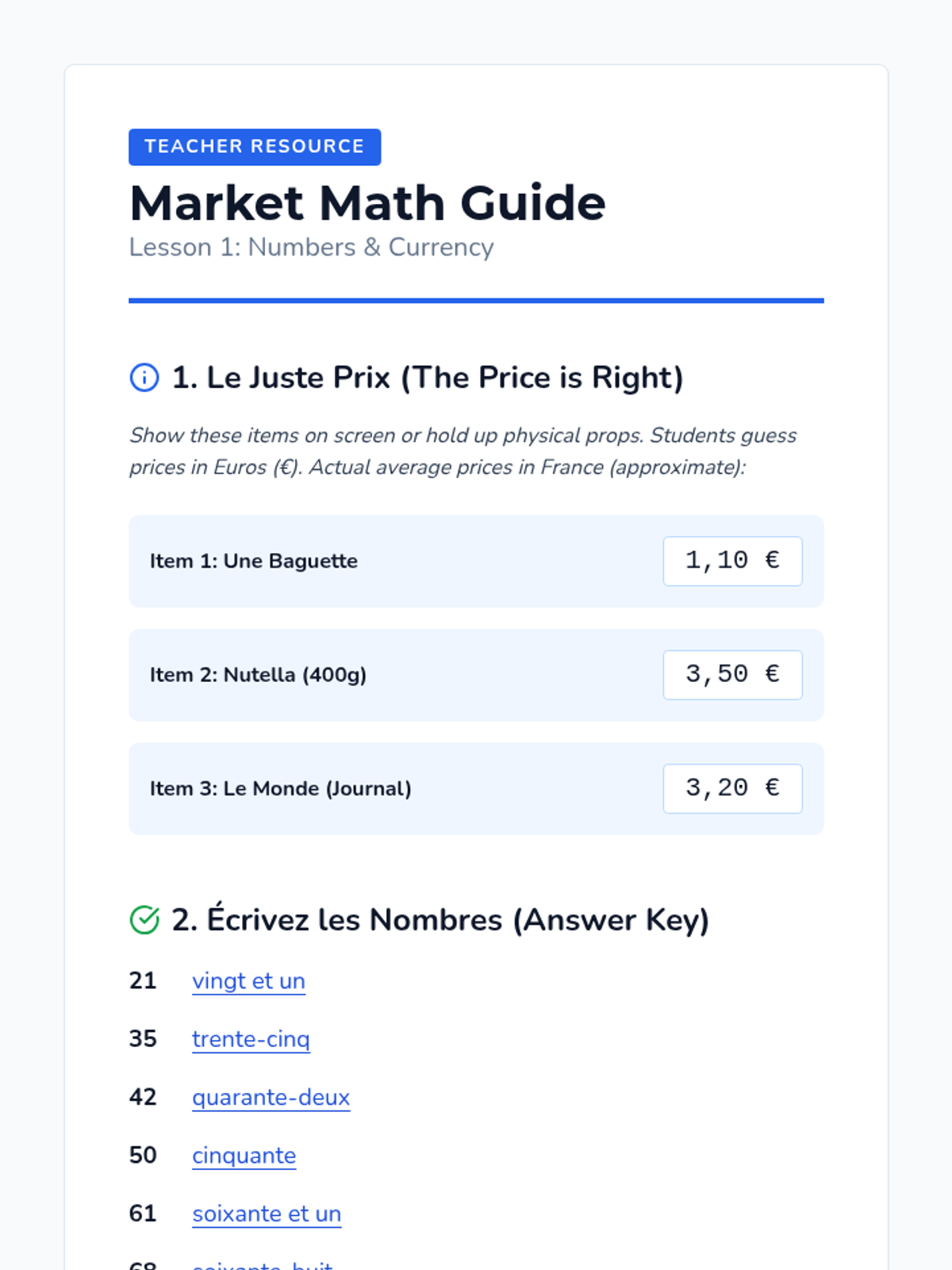
A comprehensive unit on French transactional communication, focusing on numbers, politeness, menu navigation, and preferences within dining and shopping contexts.
This sequence establishes the phonetic and sociolinguistic foundations for French communication. Students master pronunciation, navigate the formal/informal divide, and learn greeting protocols for professional and social settings.
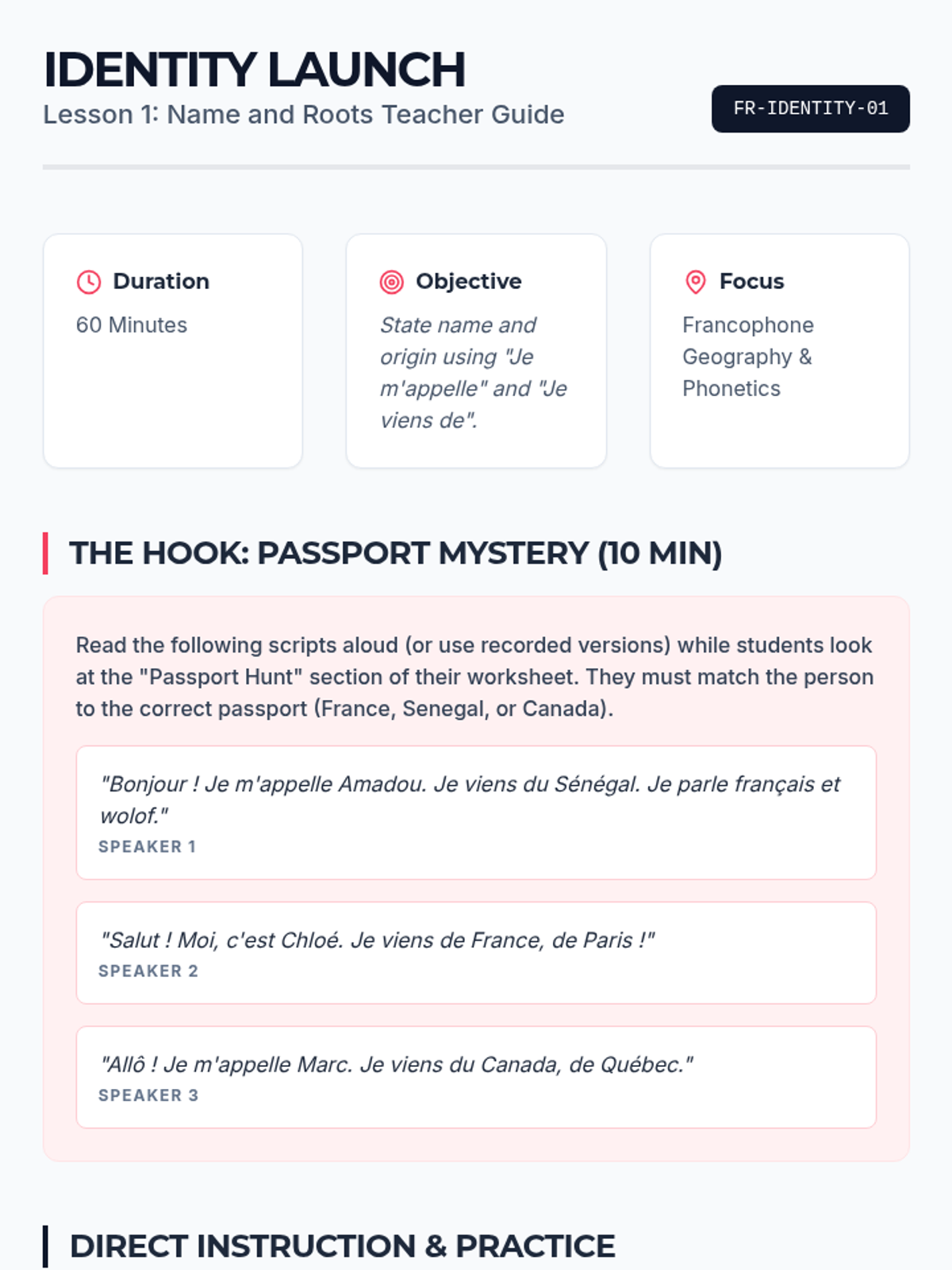
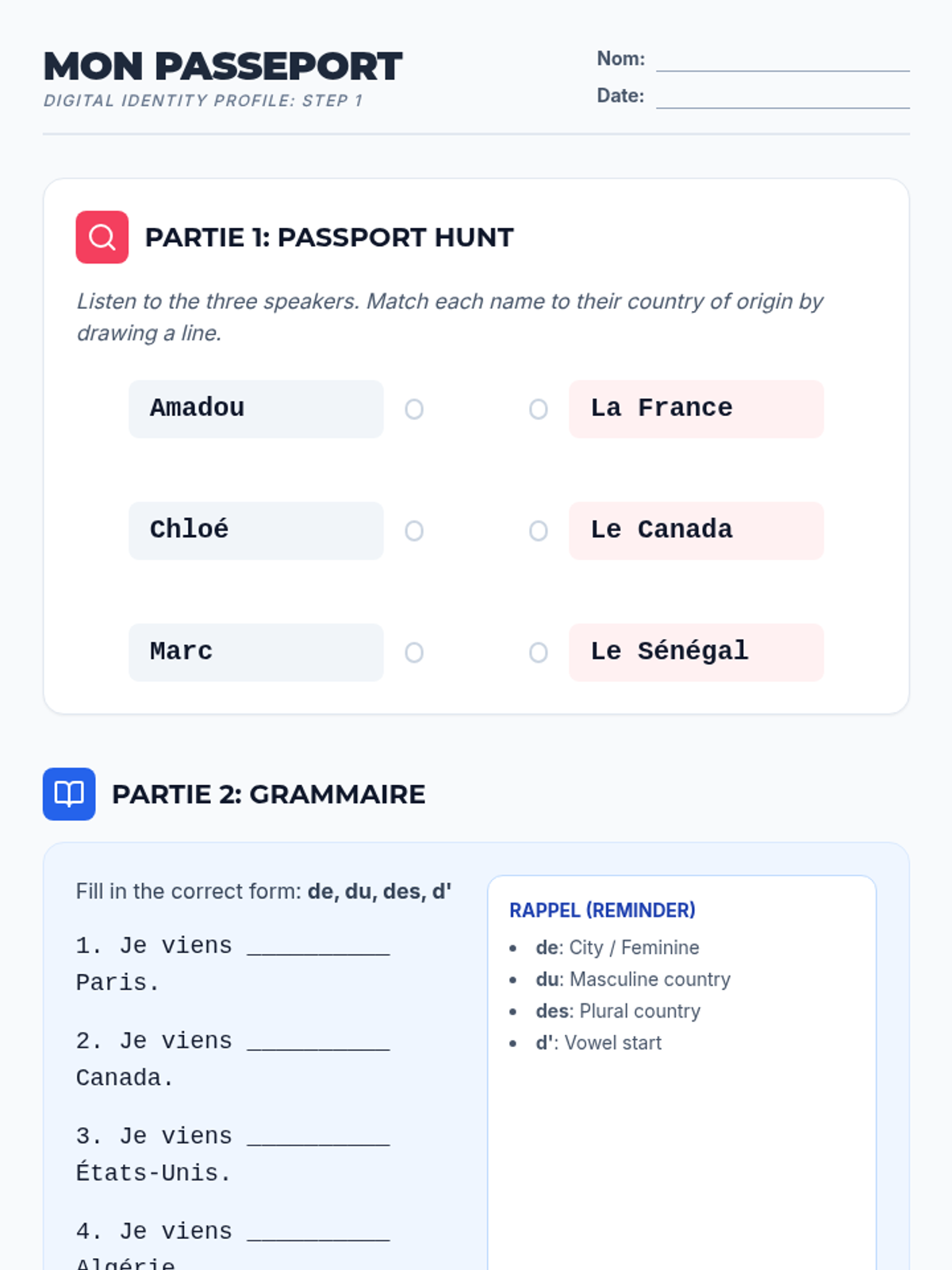
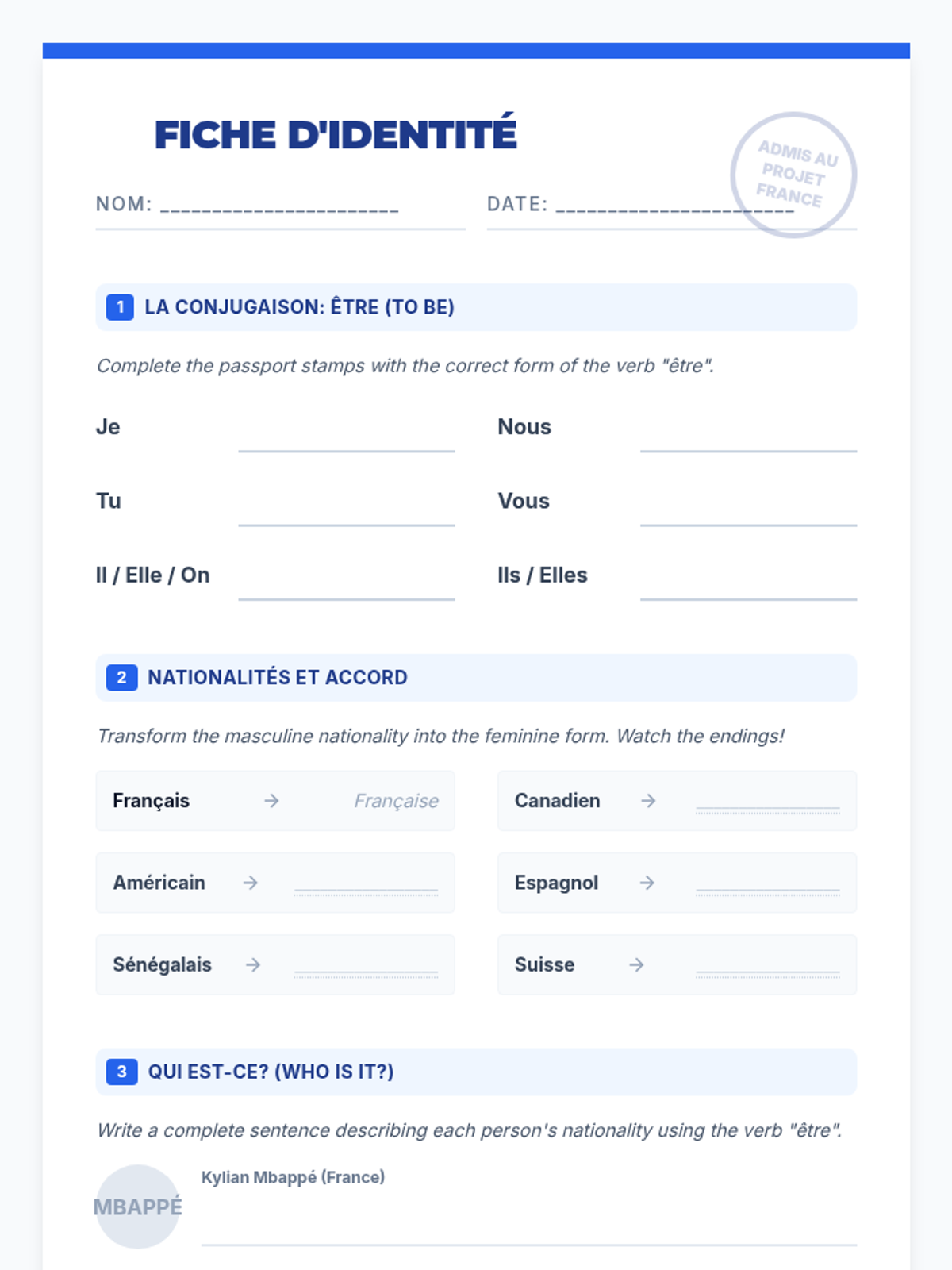
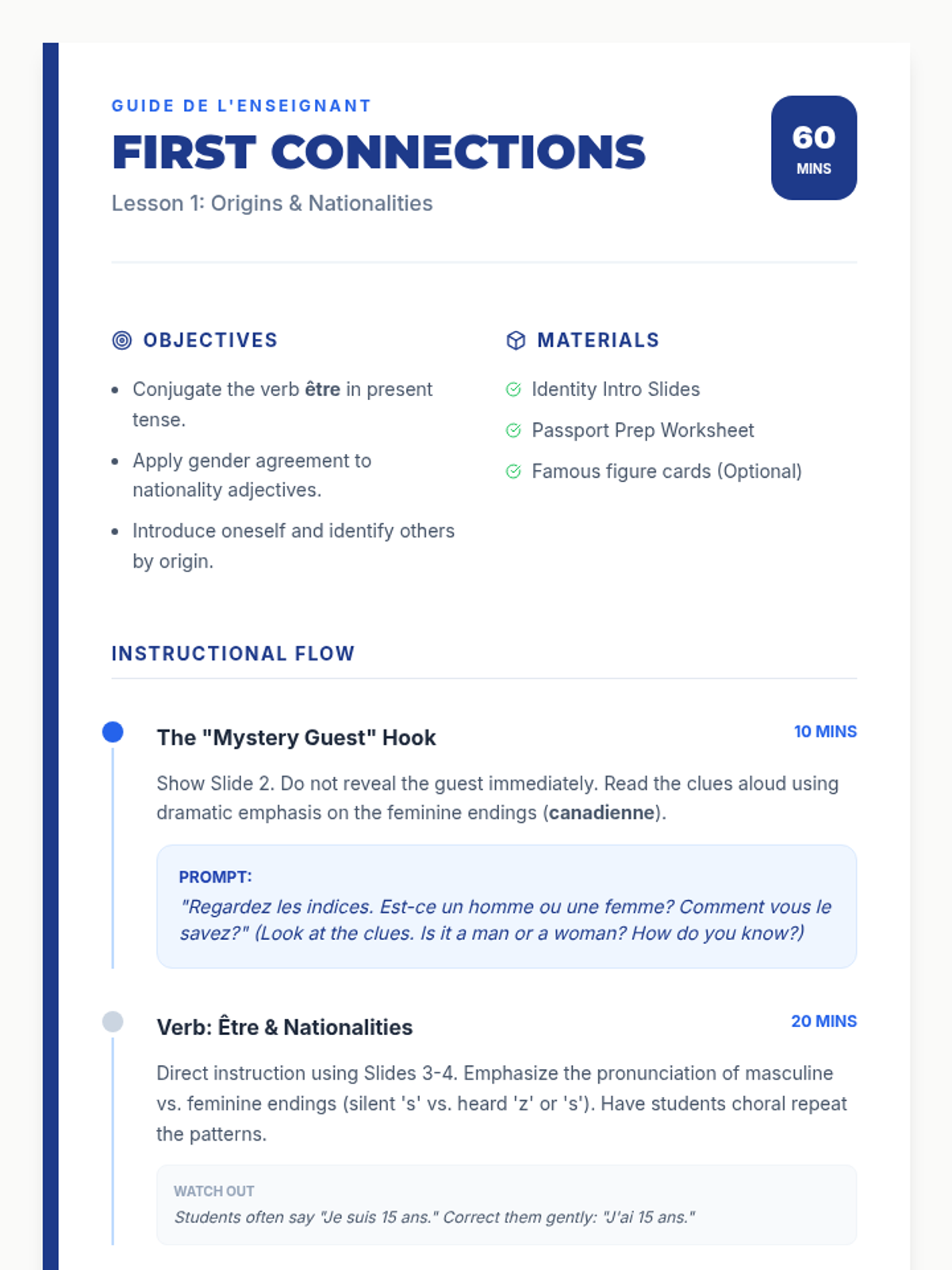
Students move from generic greetings to constructing a personal identity in French through a project-based approach. The sequence culminates in a 'Digital Identity Profile' suitable for a student exchange program, focusing on essential grammar like 'être' and 'avoir' in context.
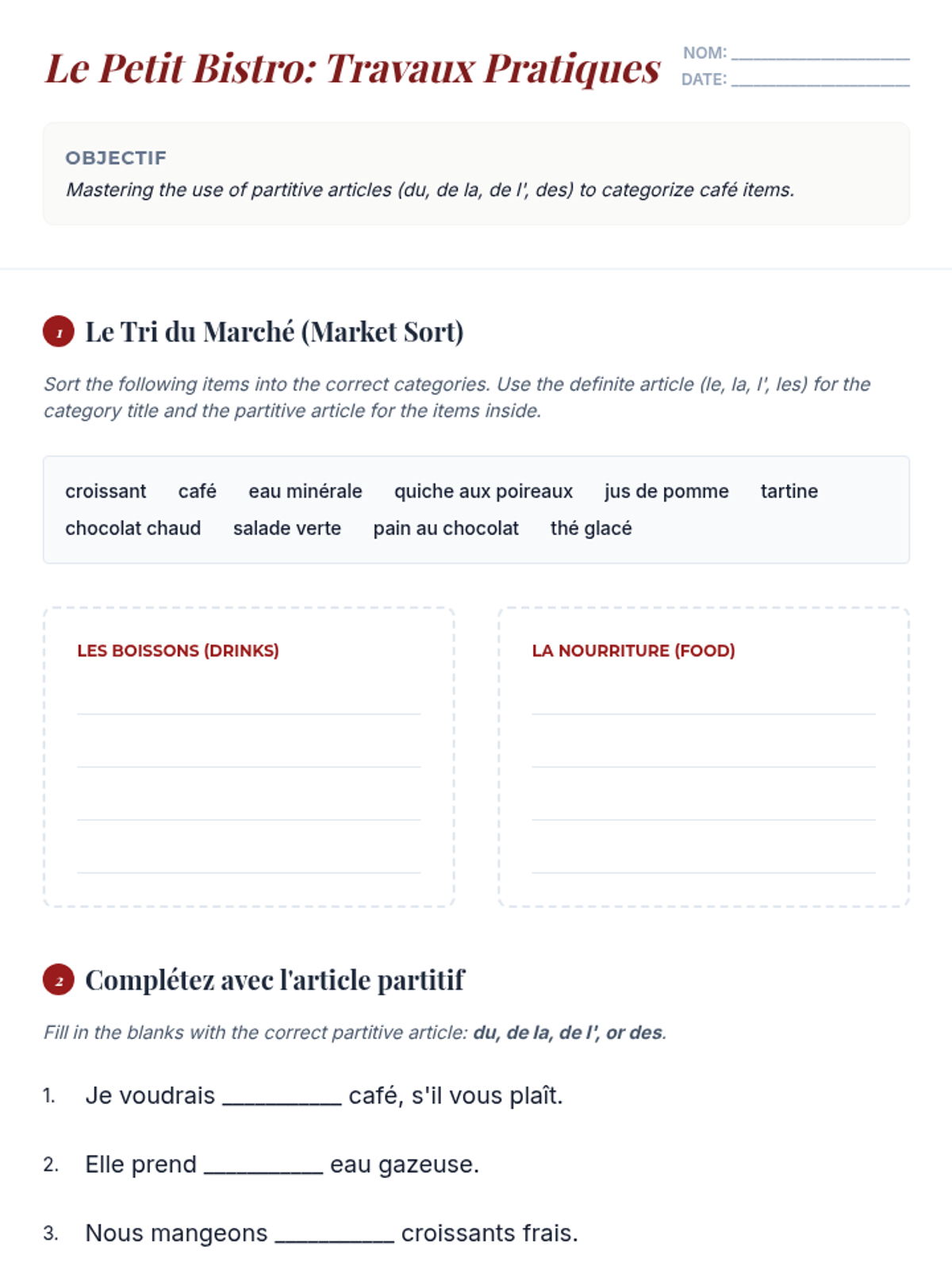
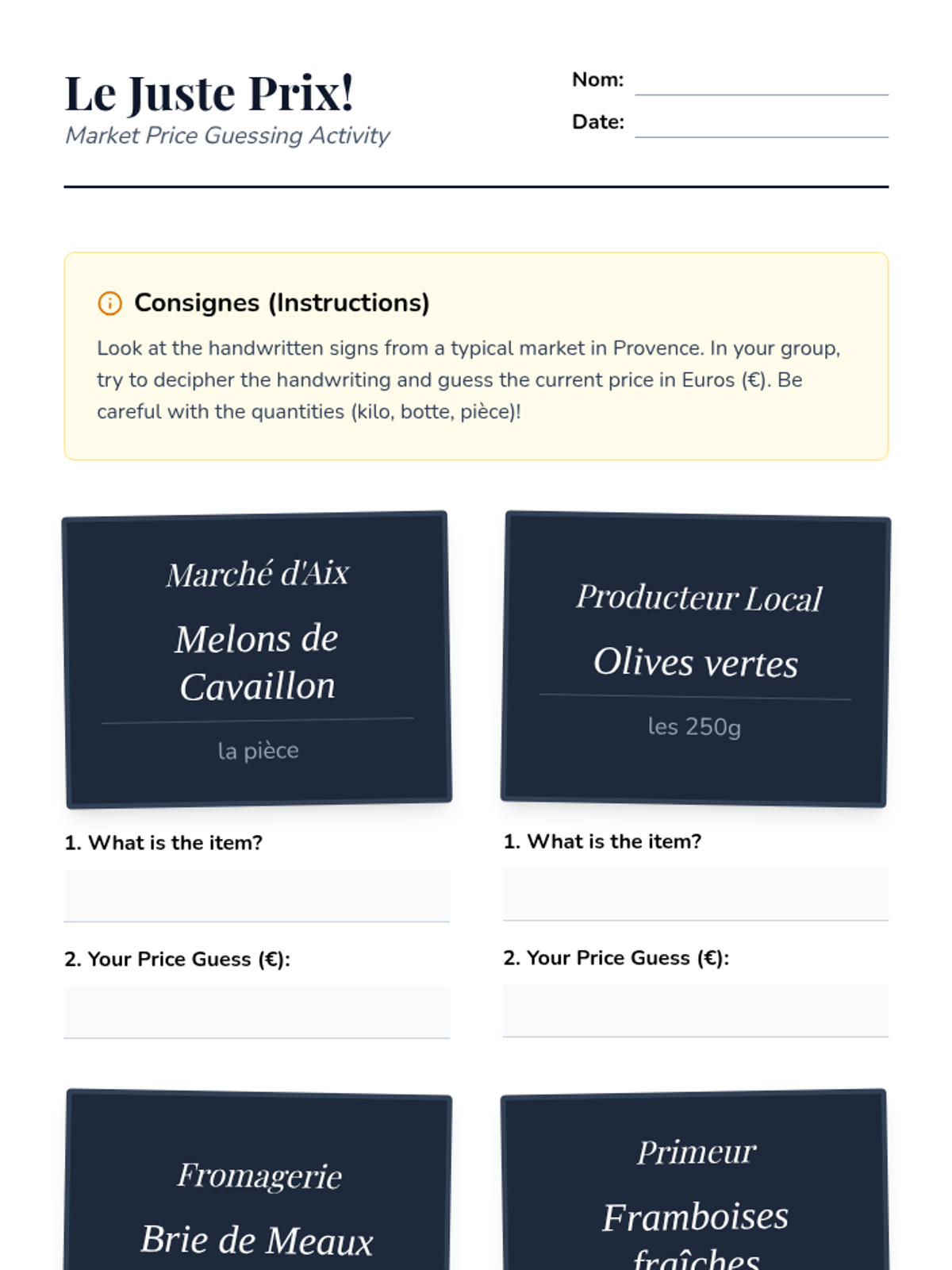
This sequence guides beginner French students through the pragmatic language of commerce, focusing on café and market interactions. Students progress from vocabulary and grammar basics to complex role-plays involving cultural politeness scripts and problem-solving.
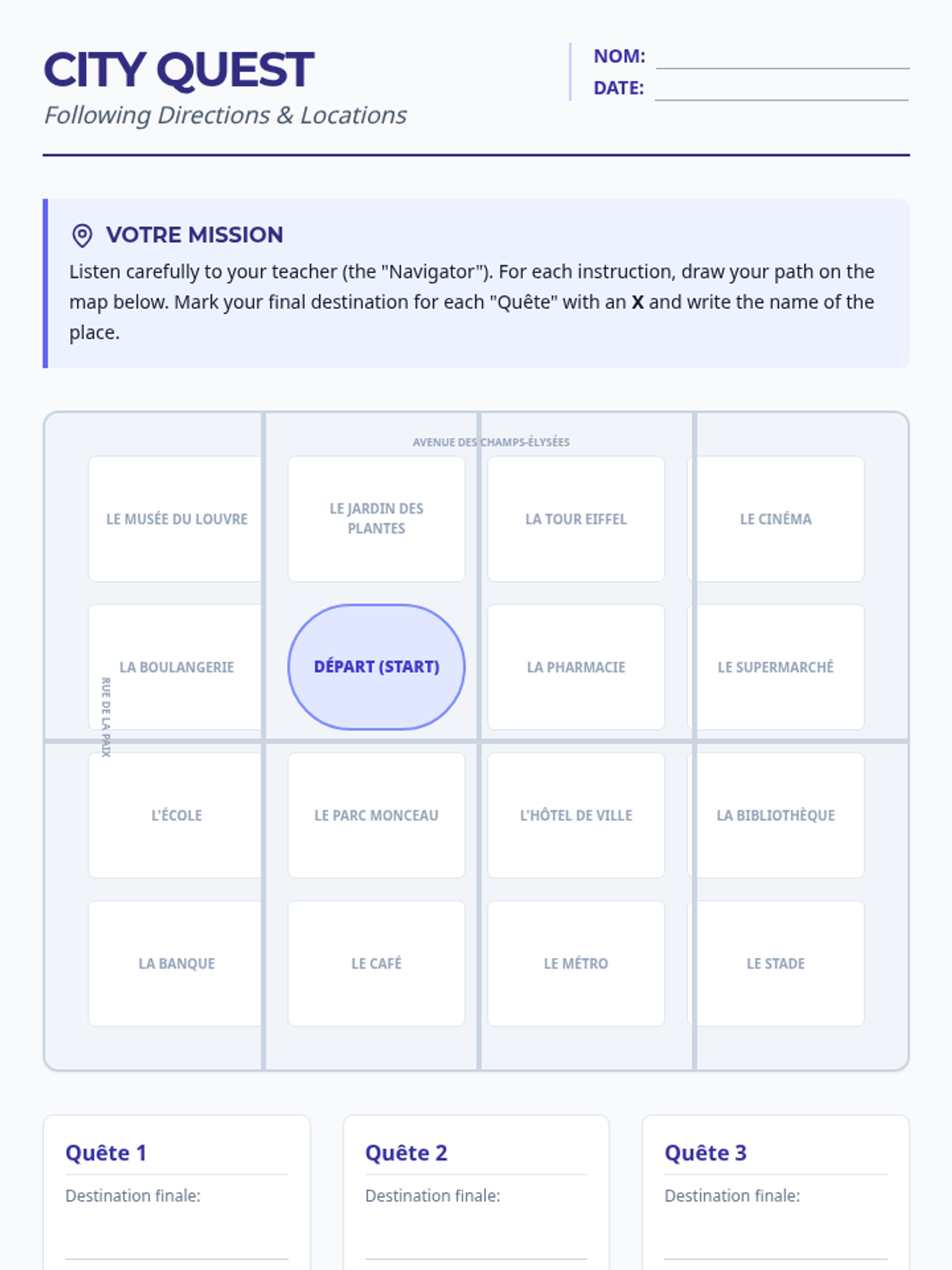
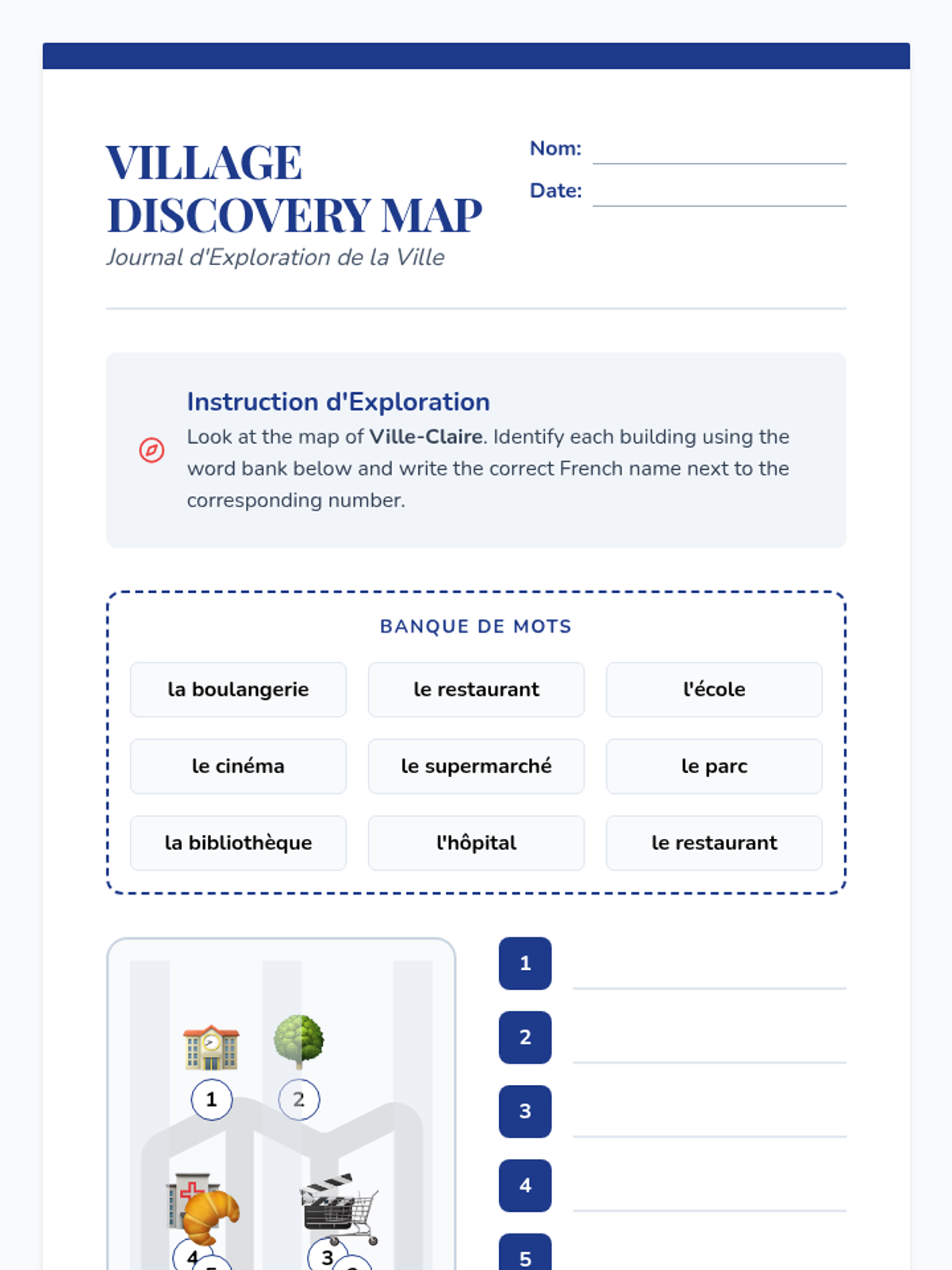
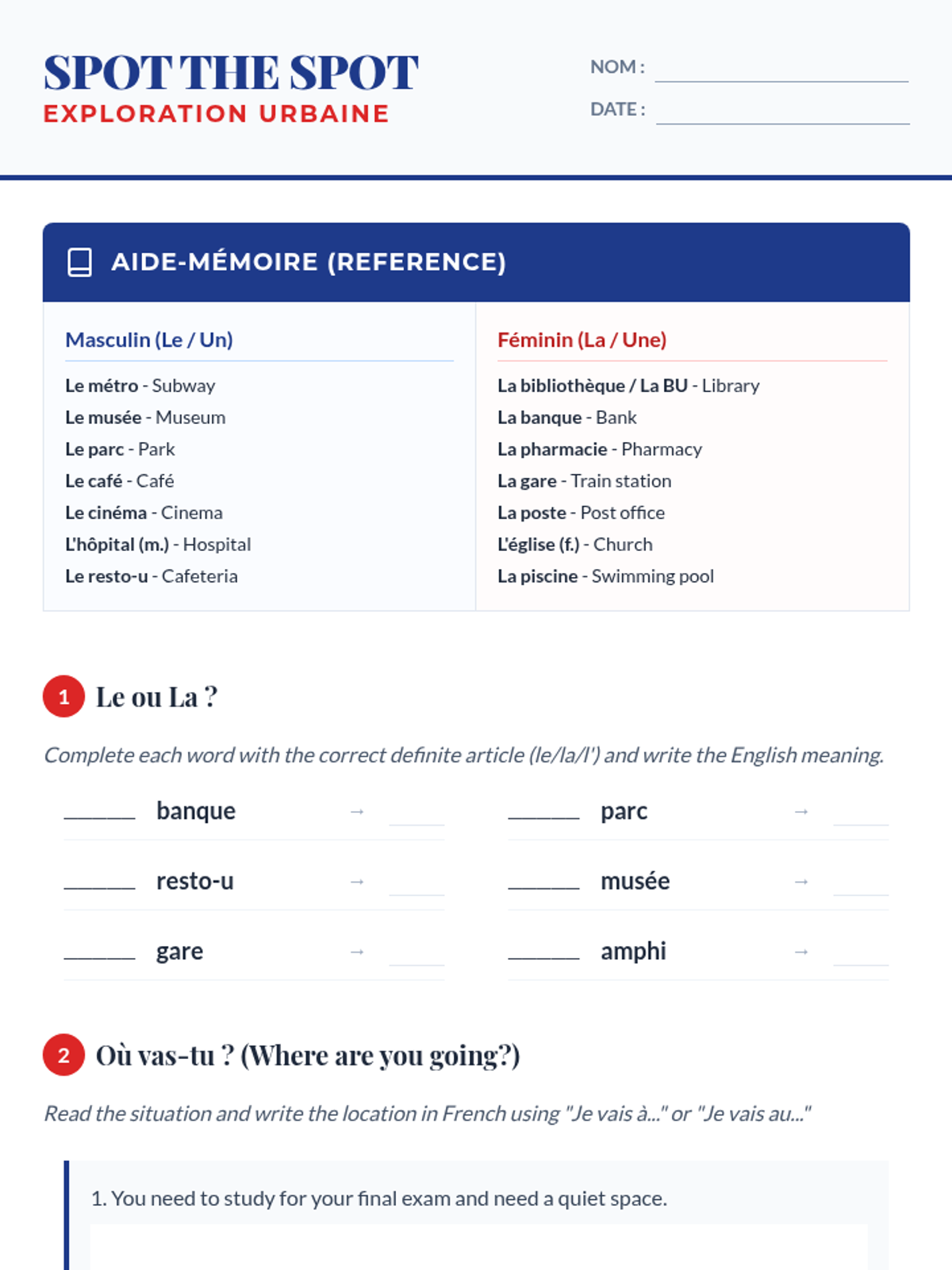
A comprehensive French speaking sequence for beginners focused on navigating urban and campus environments. Students will master vocabulary for locations, prepositions of place, interrogative forms, and the imperative mood through immersive simulations and map-based activities.
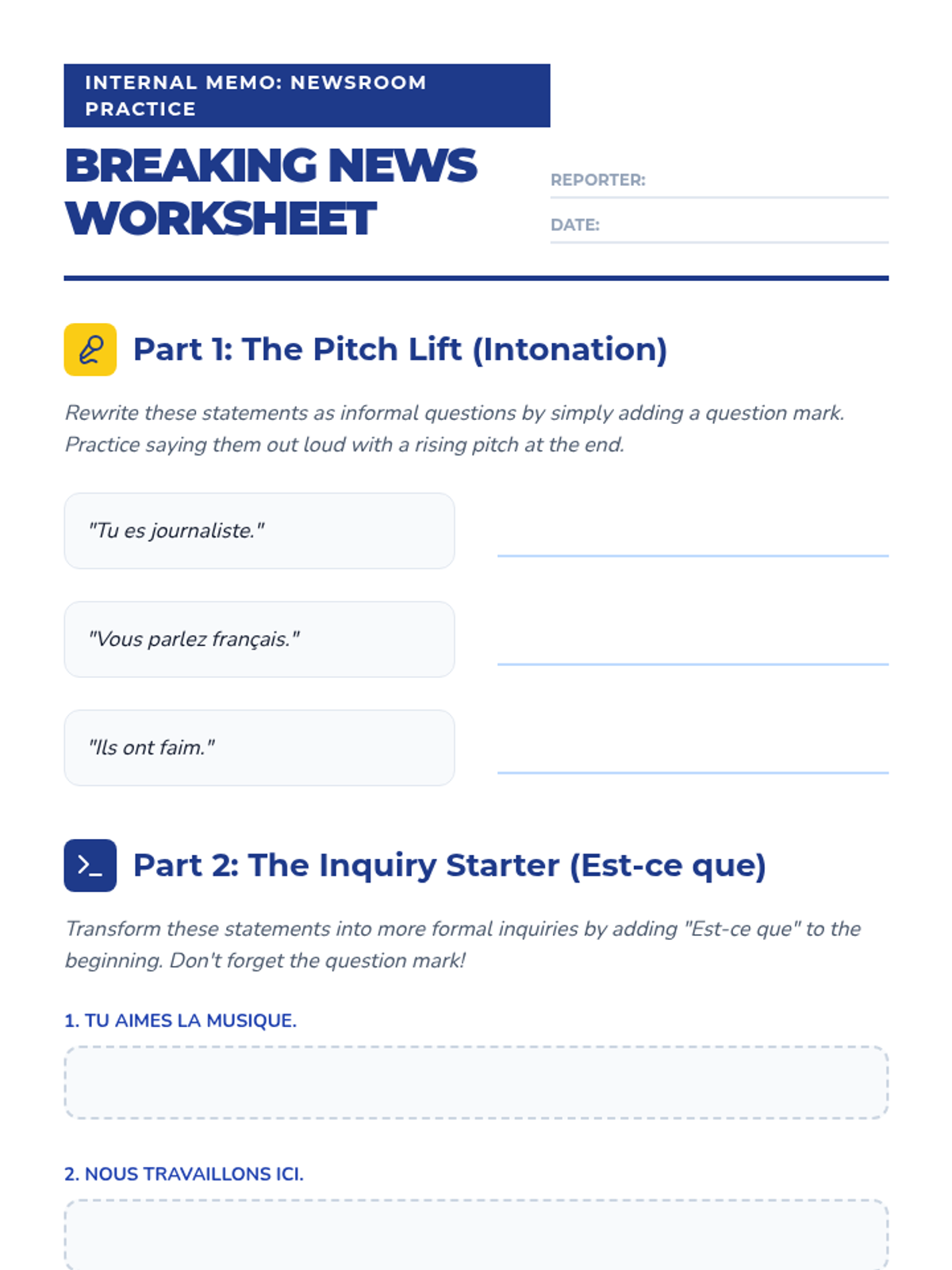
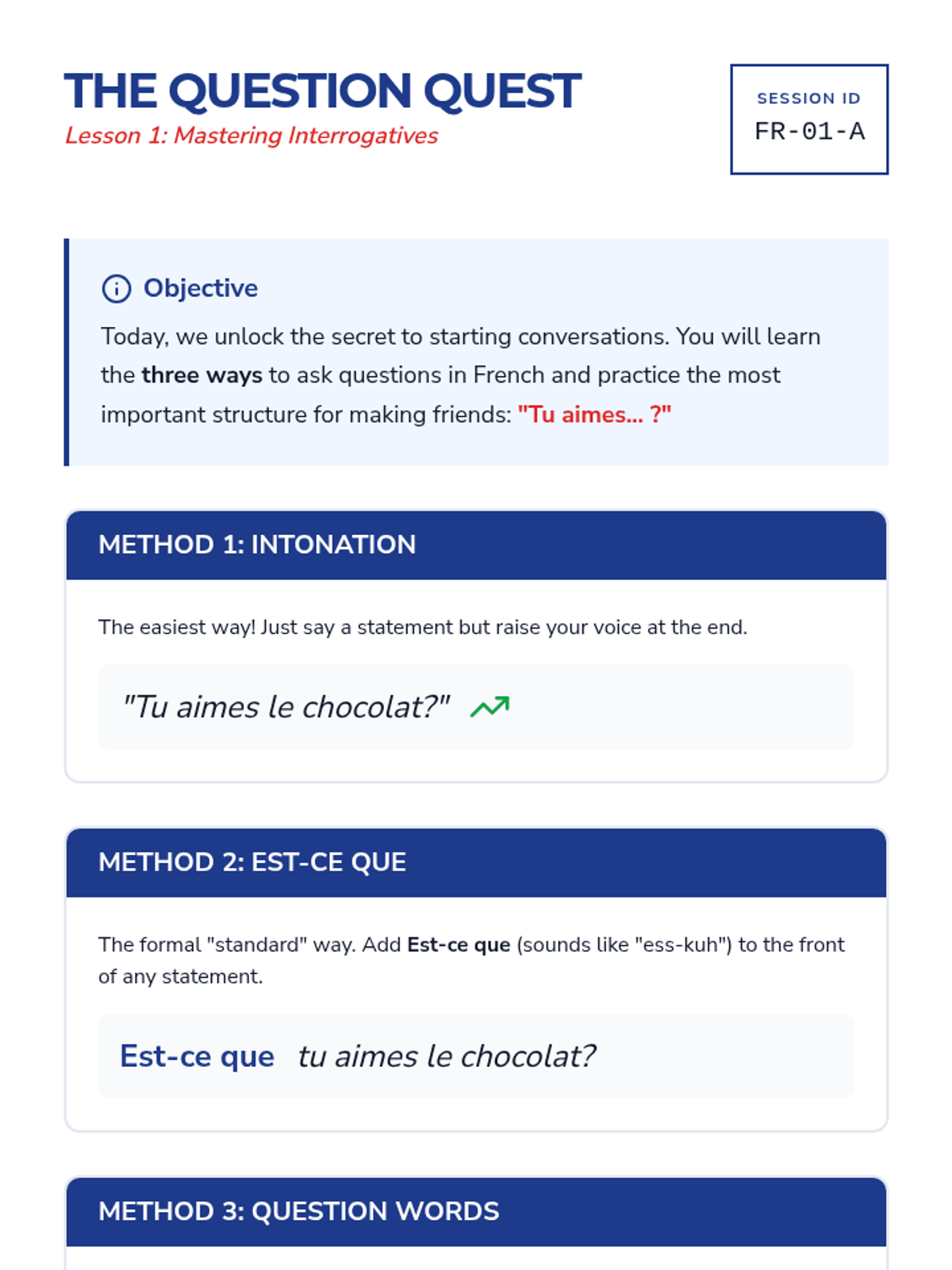
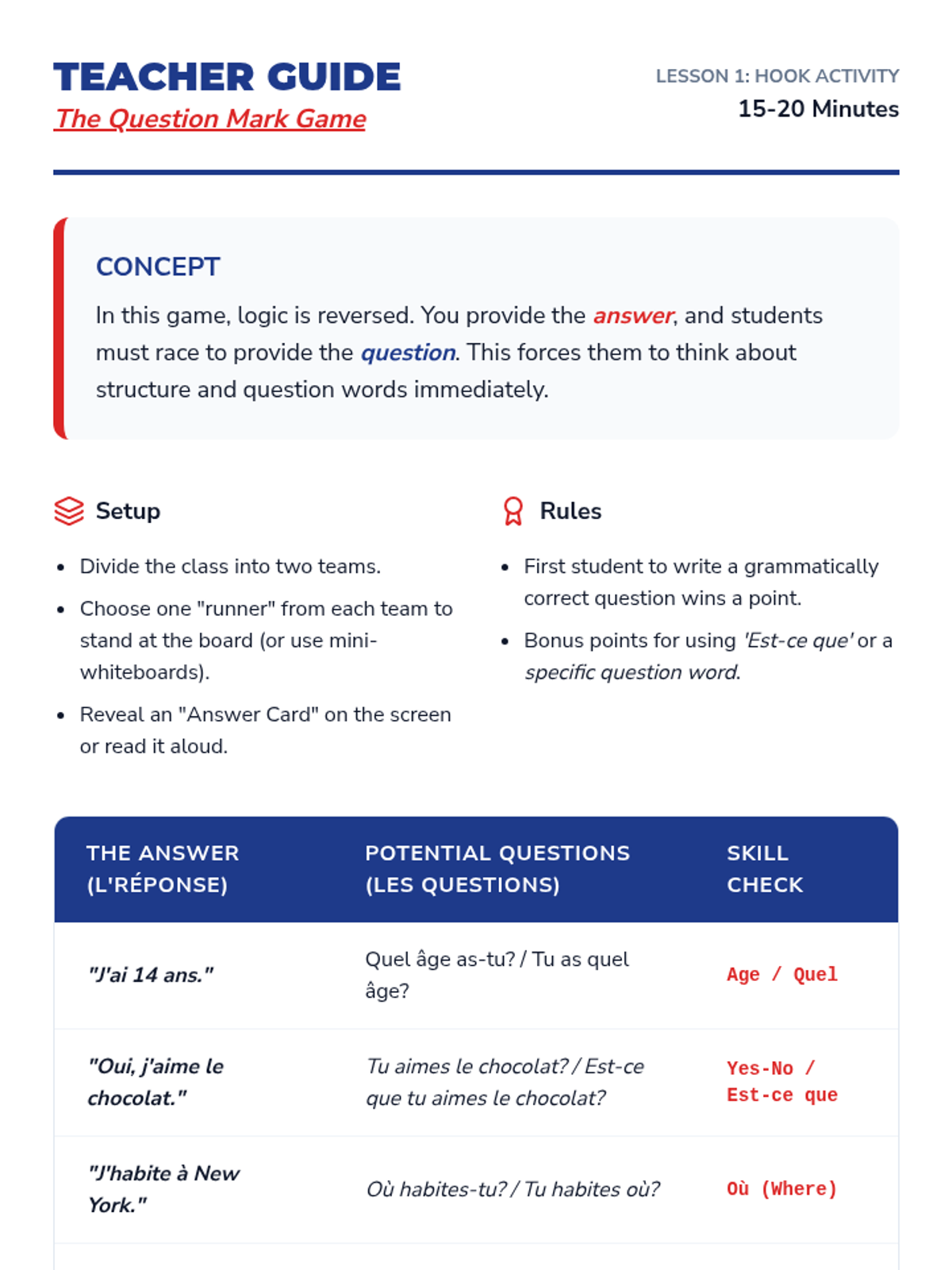
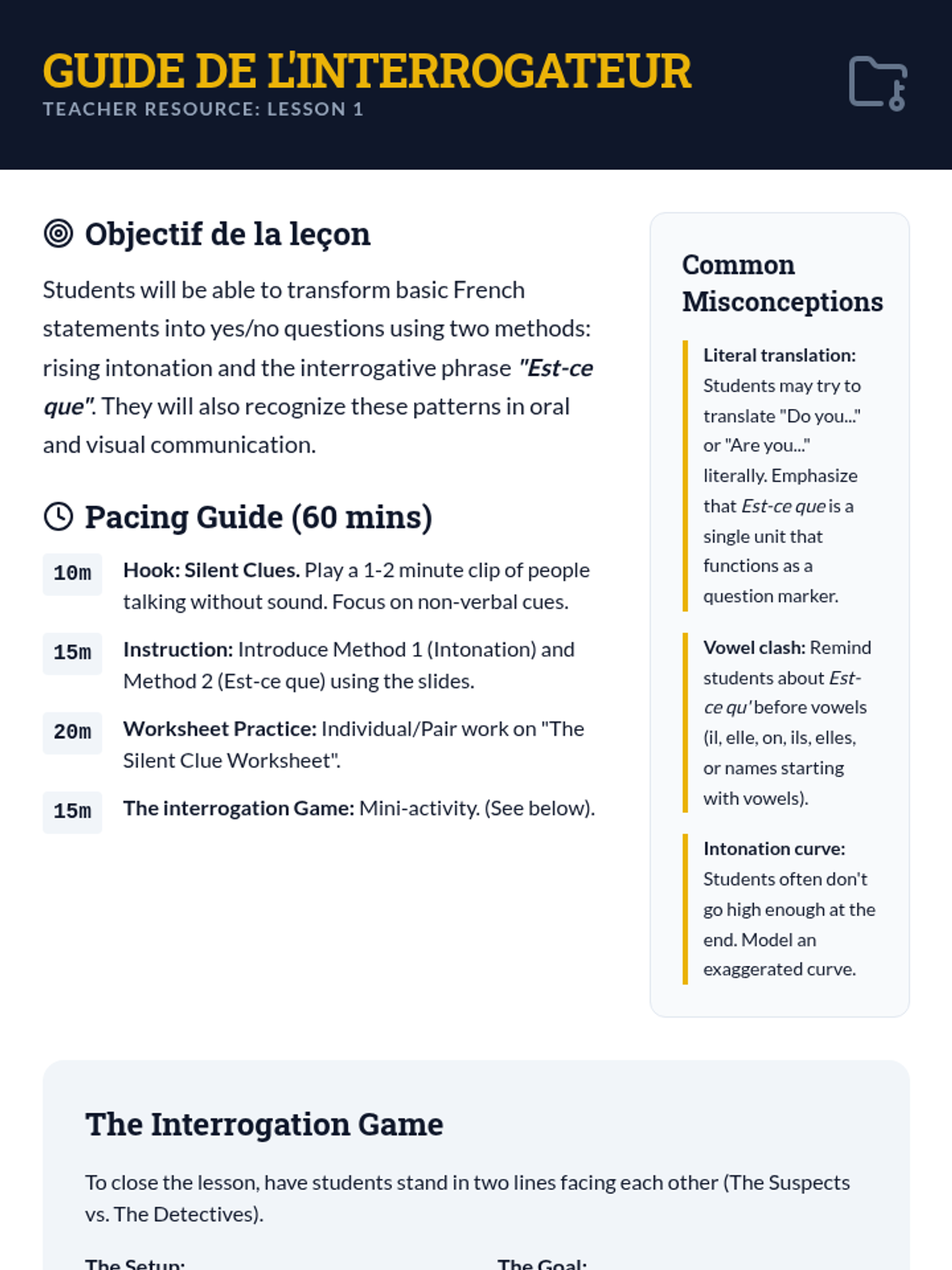
Students master the art of the French interview, progressing from simple intonation and 'est-ce que' to complex question words and formal inversion, culminating in a celebrity talk-show simulation.
This sequence transforms 8th-grade French students from passive listeners into active conversationalists by mastering question structures, preferences, and reaction phrases. Students progress from basic interrogatives to sustaining a full interview simulation, emphasizing real-world communication skills and cultural engagement.
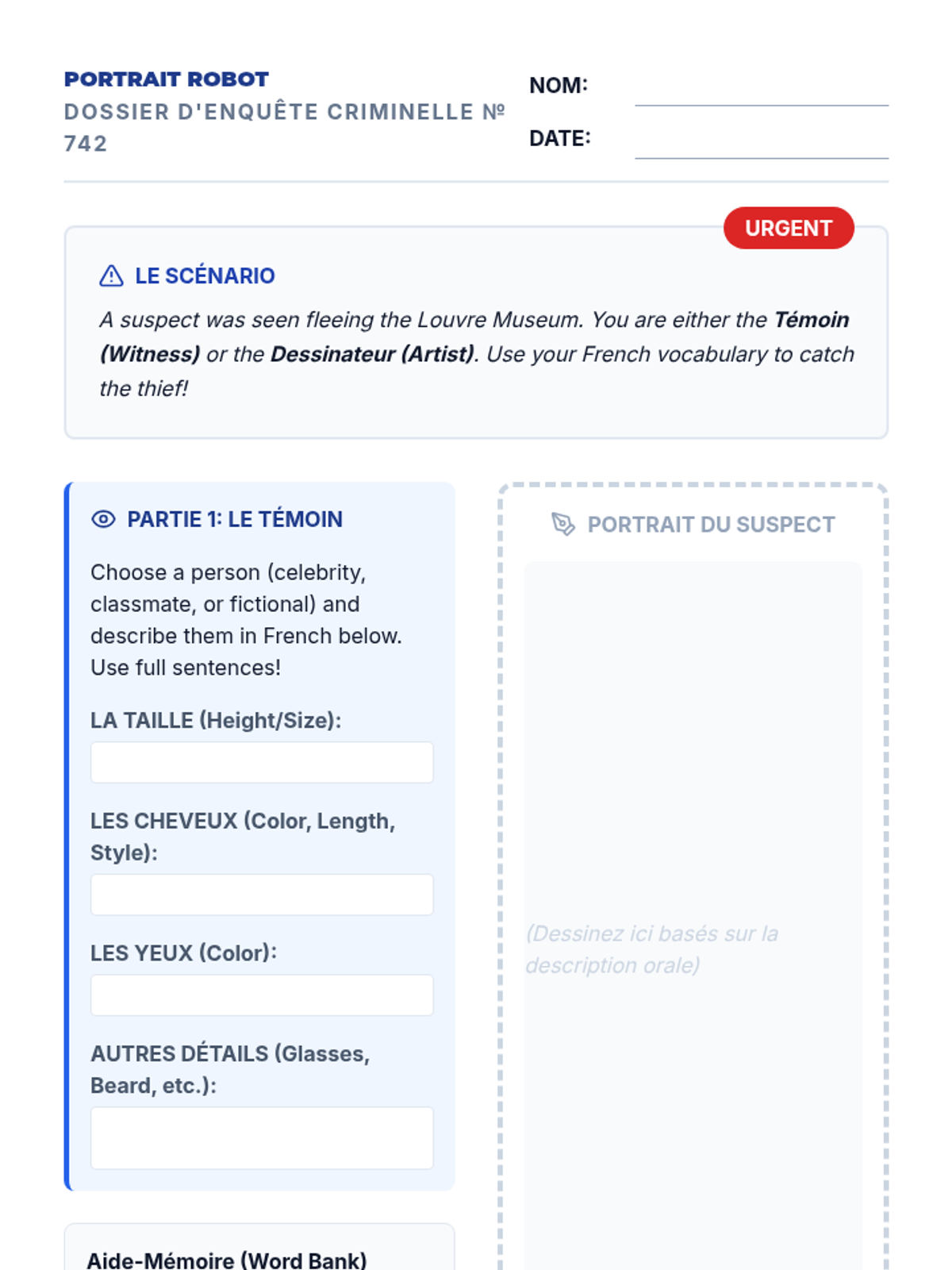
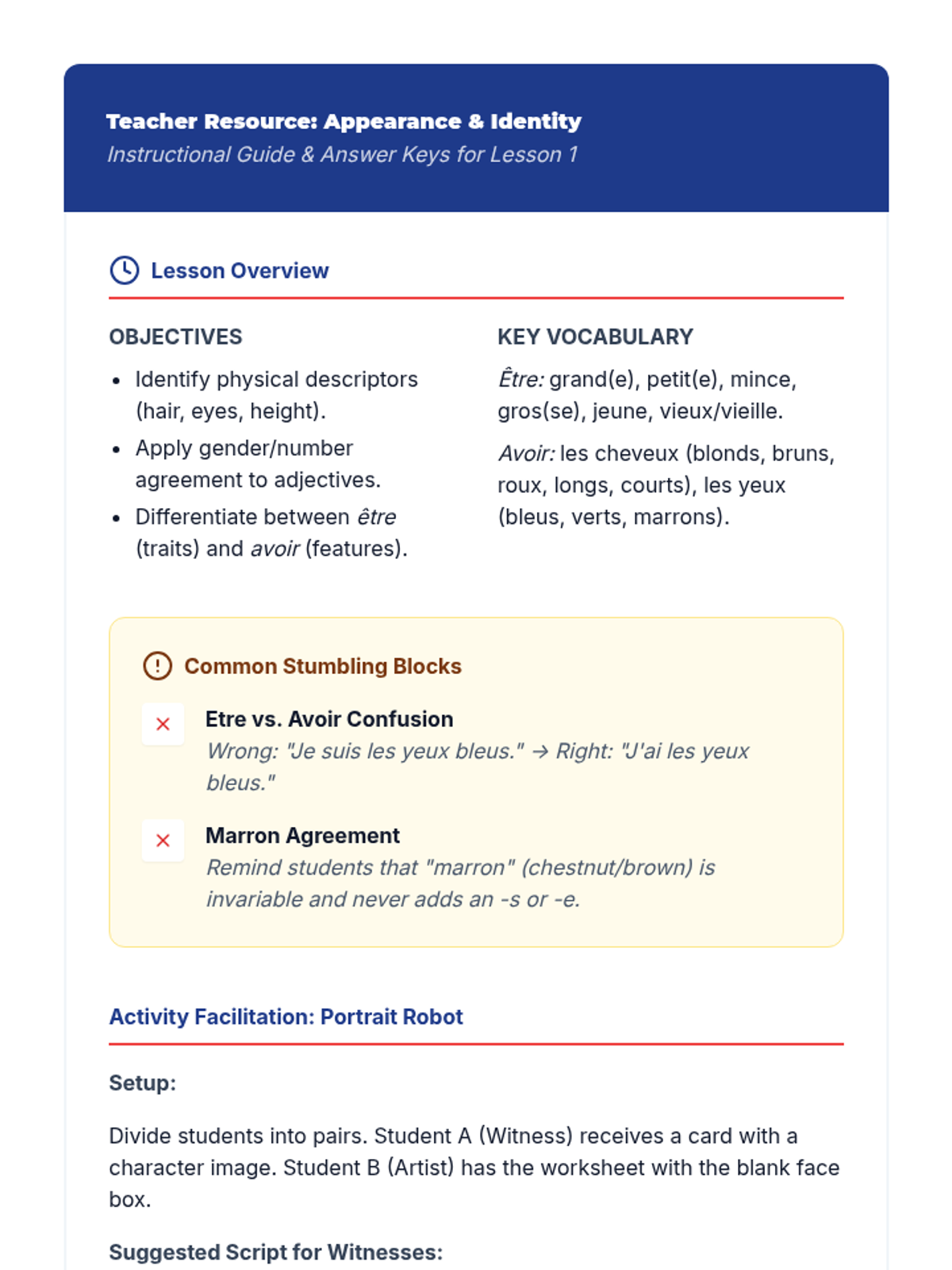
A comprehensive French unit for beginners focused on personal identity, physical traits, personality, family, and origins. Students master adjective agreement and possessive adjectives while building a 'Carnet d'Identité' that culminates in a presentational speaking project.
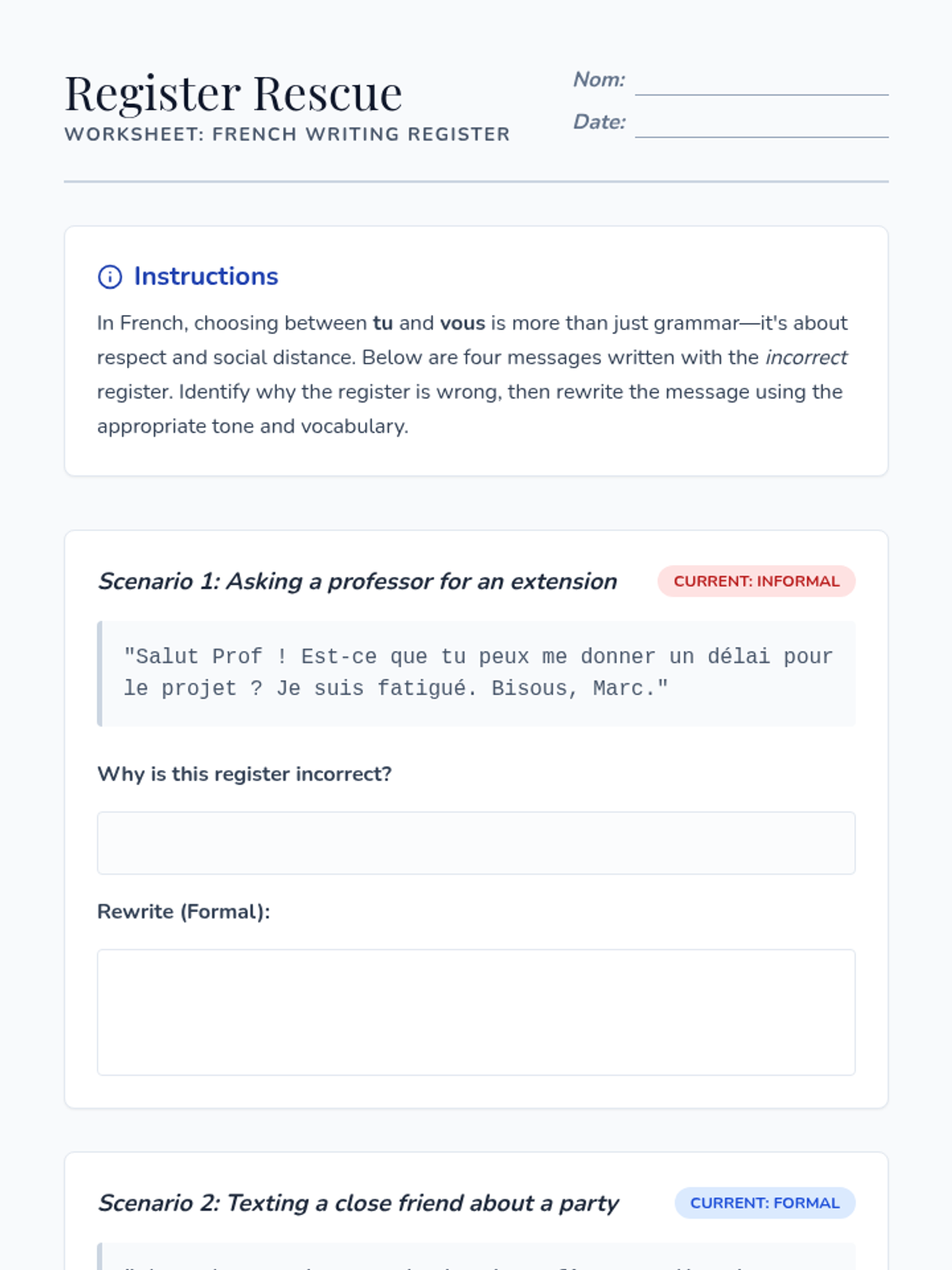
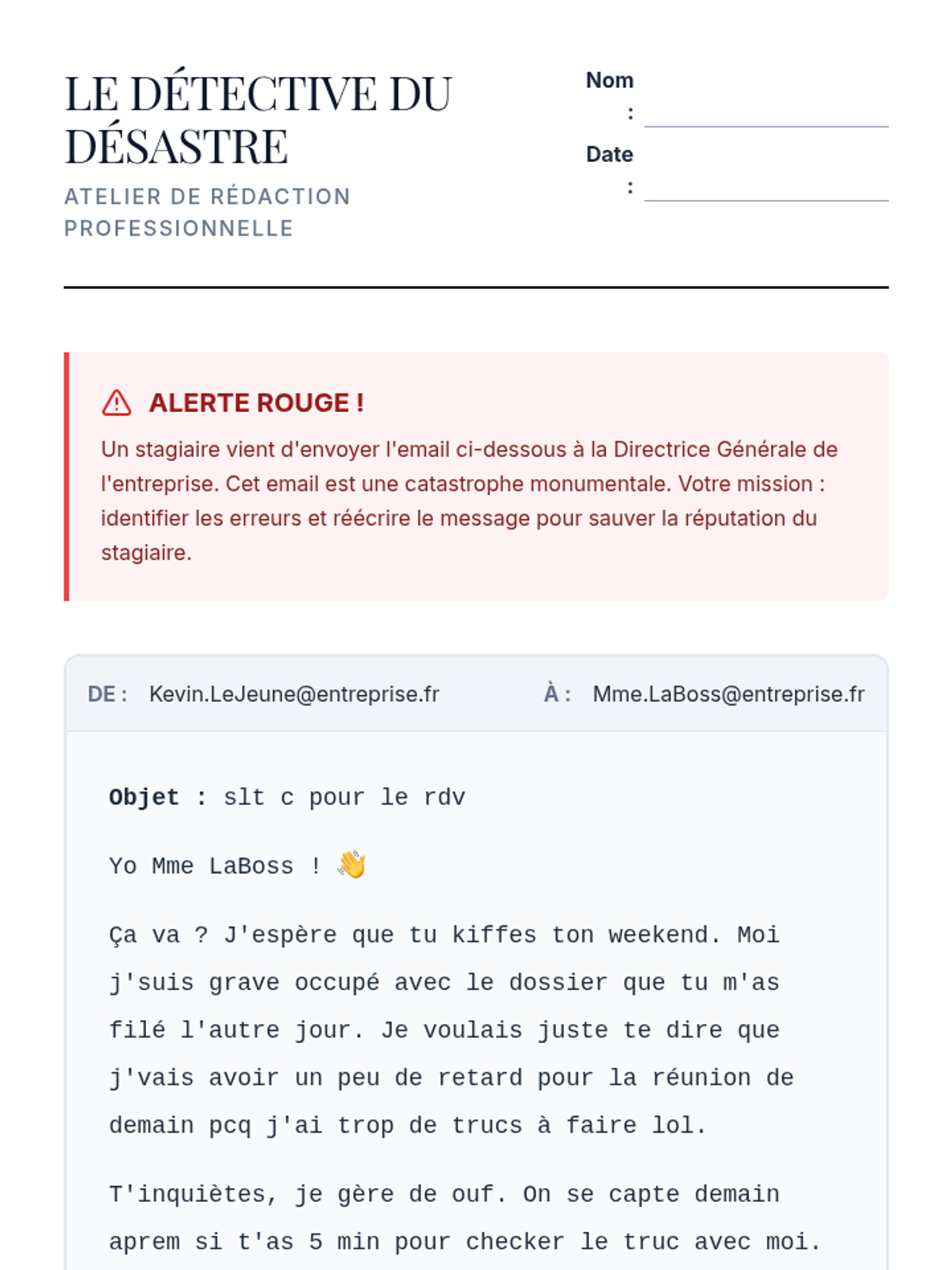
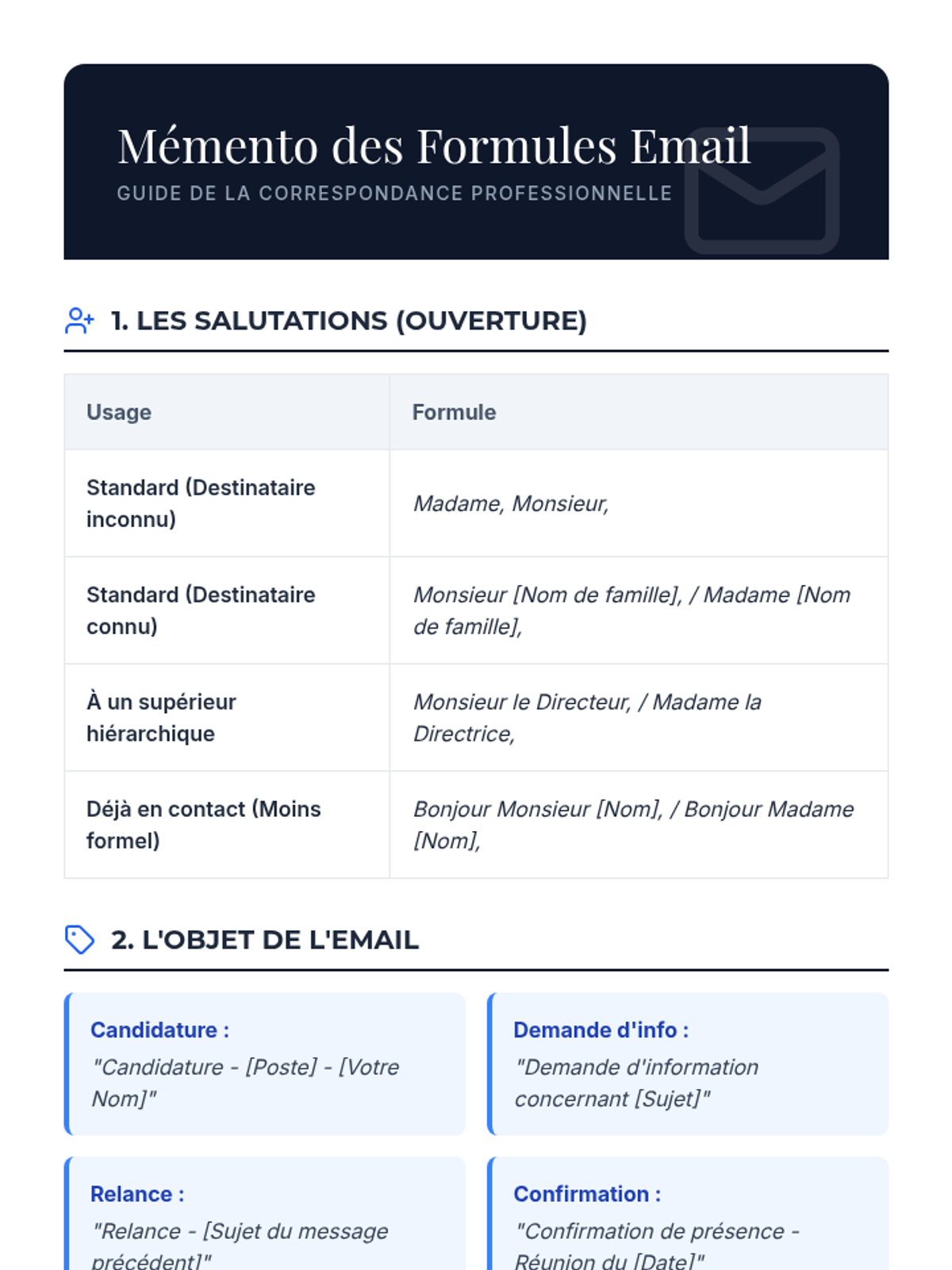
A comprehensive sequence for beginner French students focusing on the nuances of written communication, from formal professional inquiries to informal social media slang. Students develop sociolinguistic competence by navigating register, formatting correspondence, and expressing opinions in real-world simulations.
A comprehensive immersion into formal French social and professional etiquette, designed for high school upperclassmen. Students transition from understanding basic pronoun registers to navigating complex professional introductions and networking scenarios.
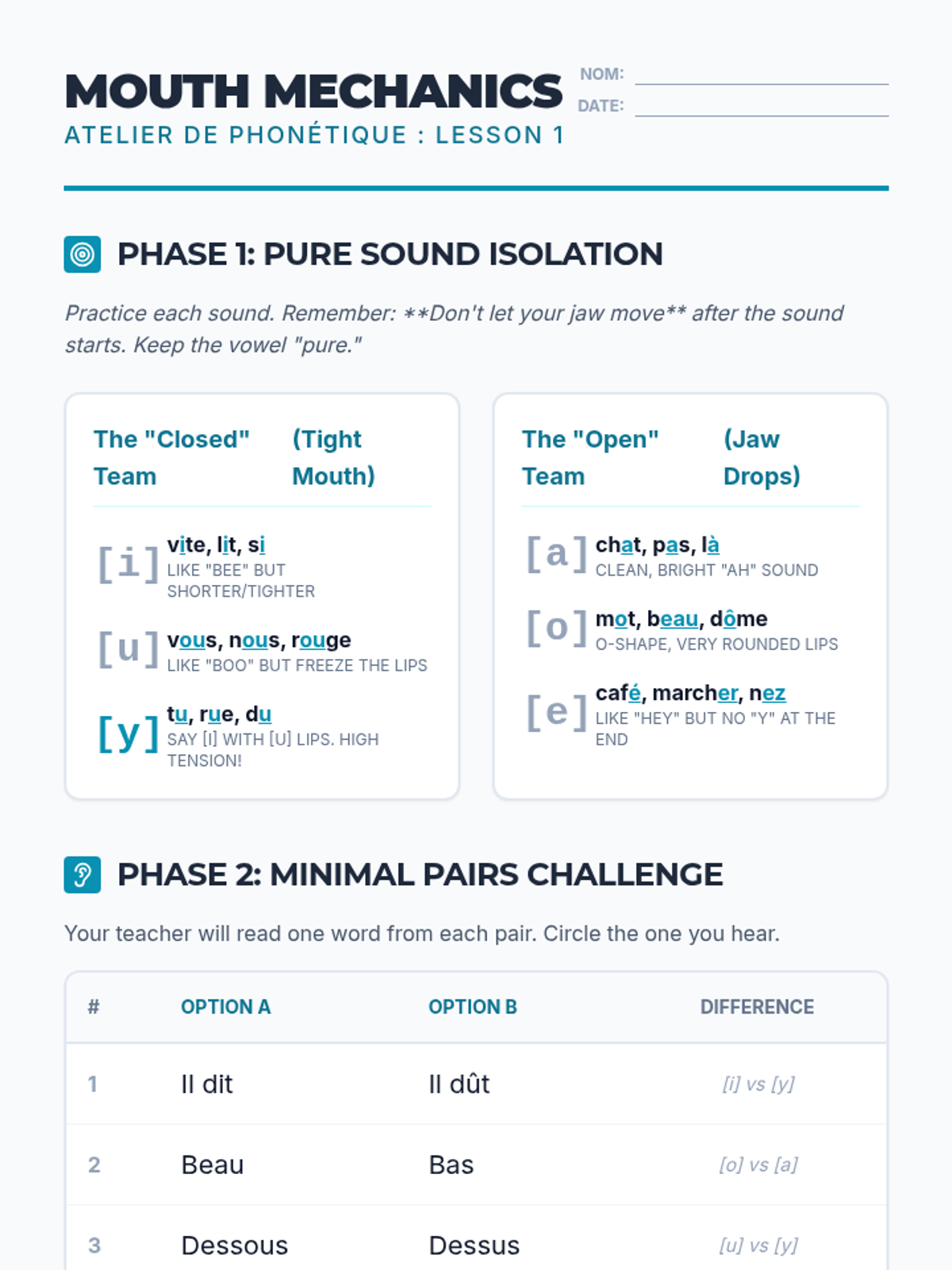
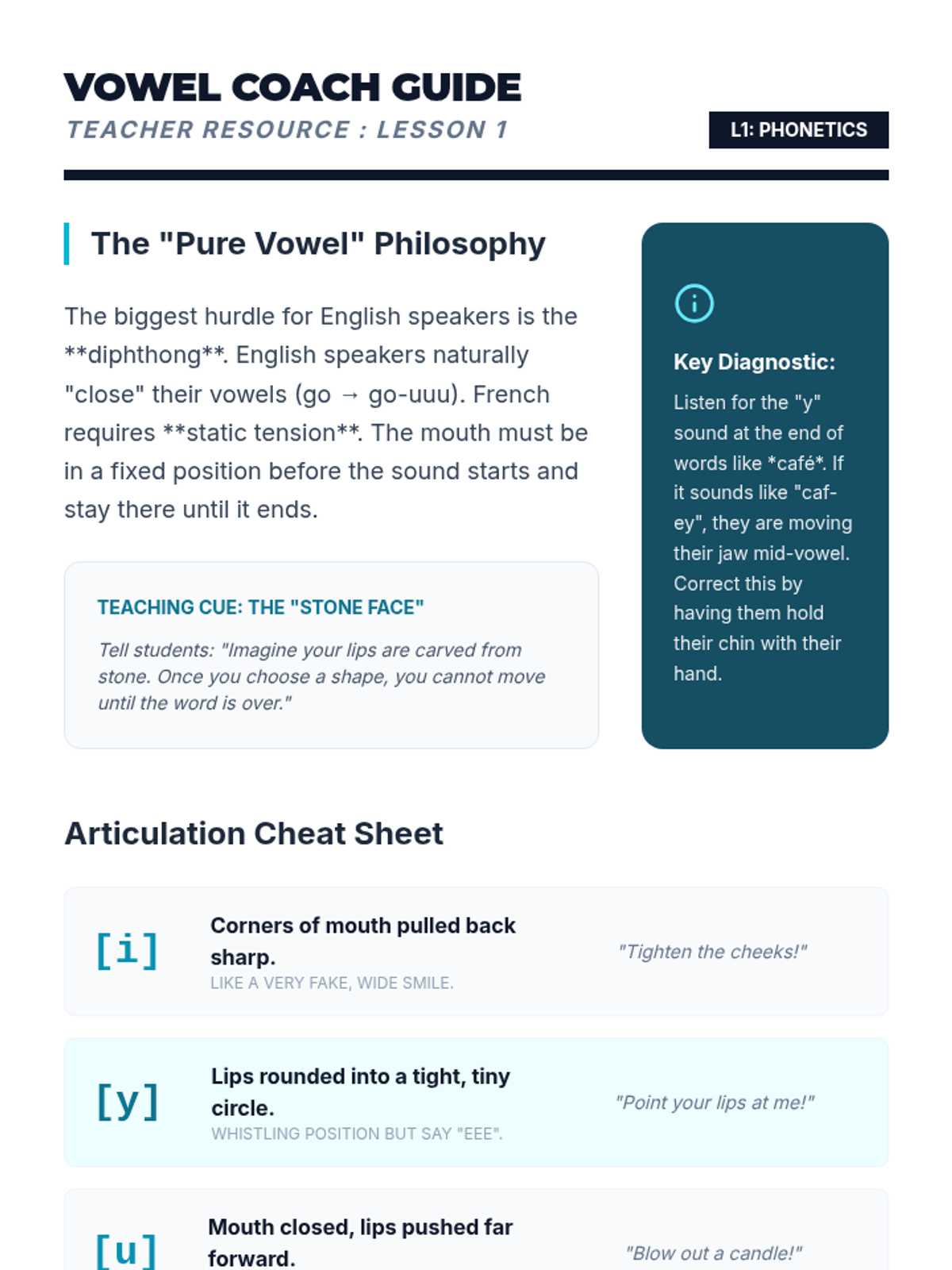
A specialized workshop sequence for 10th-grade beginner French students focusing on phonetics, mouth positioning, and the rhythms of spoken French to build confidence and intelligibility.
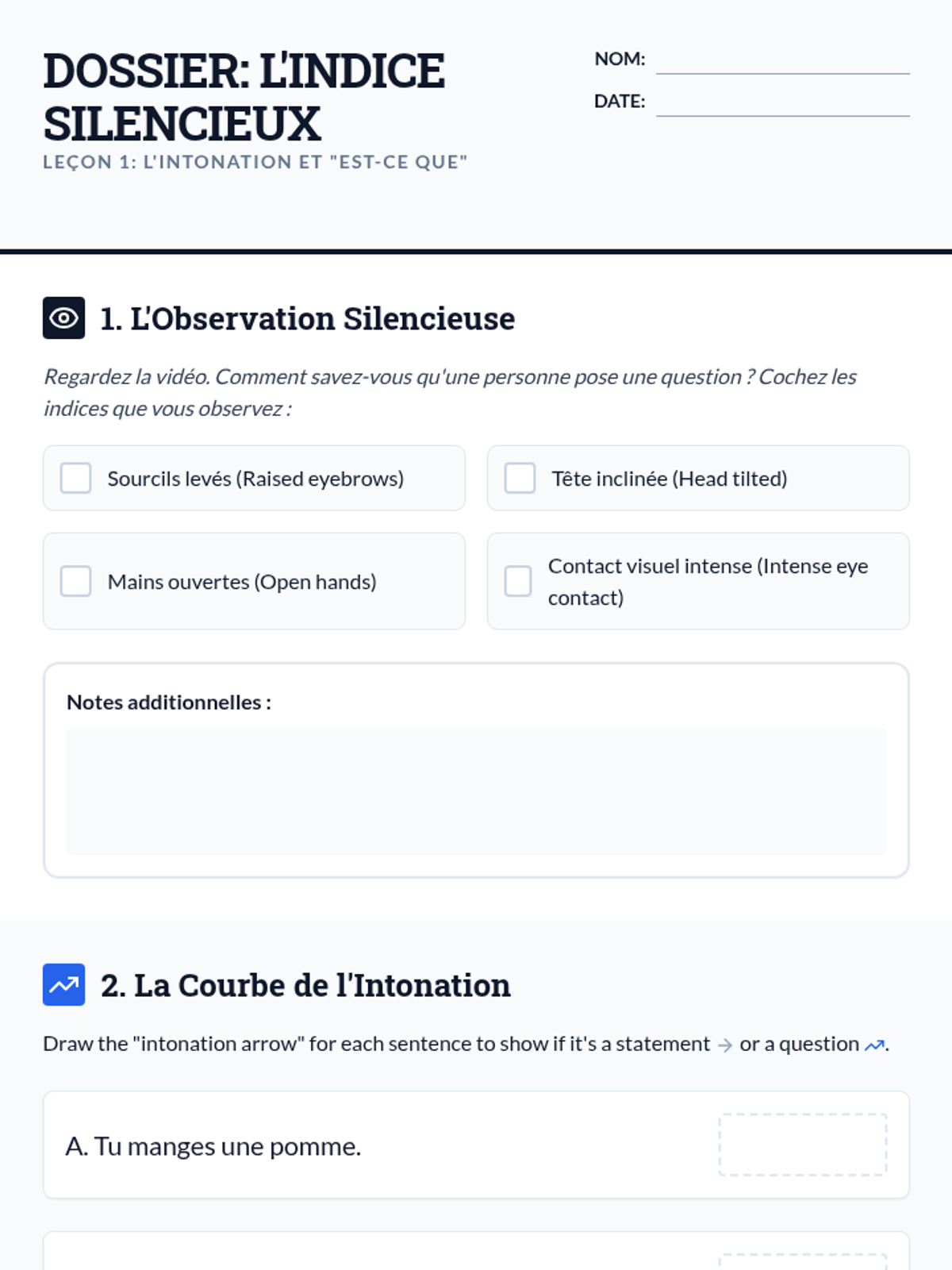
A 10th-grade beginner French sequence focused on the mechanics and social nuances of asking questions. Students progress from basic intonation to formal inversion, culminating in a series of communicative games and interviews.
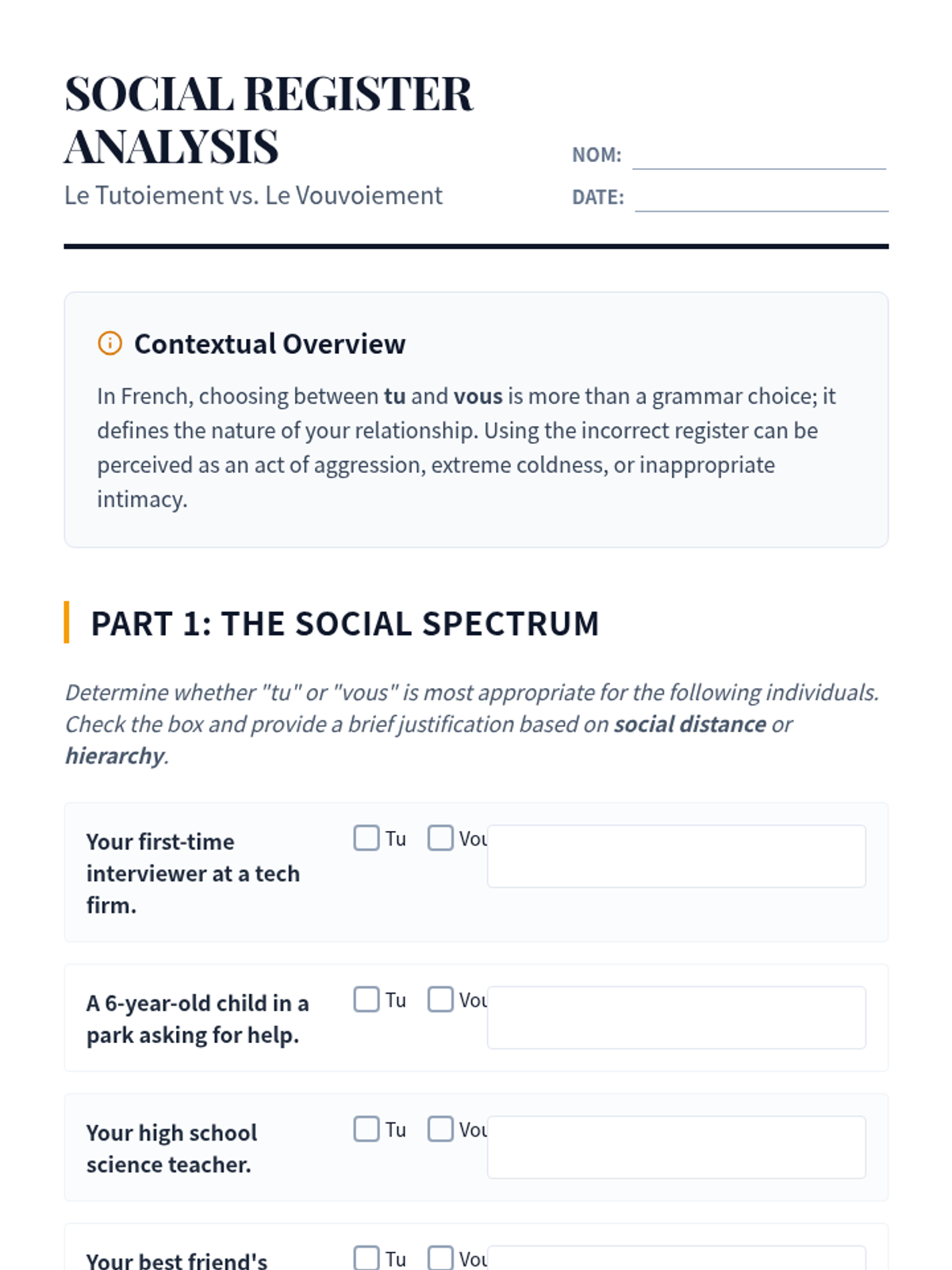
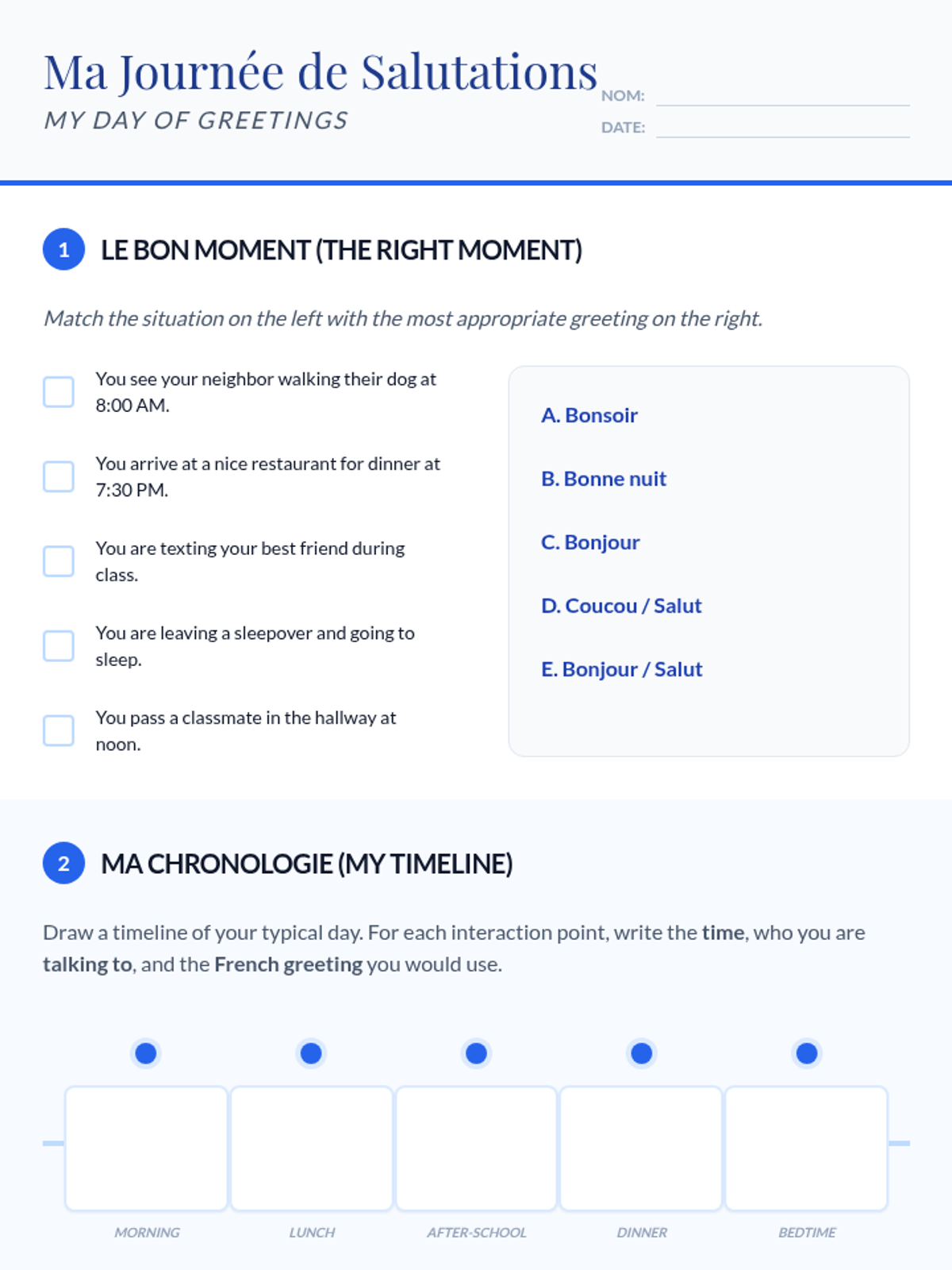
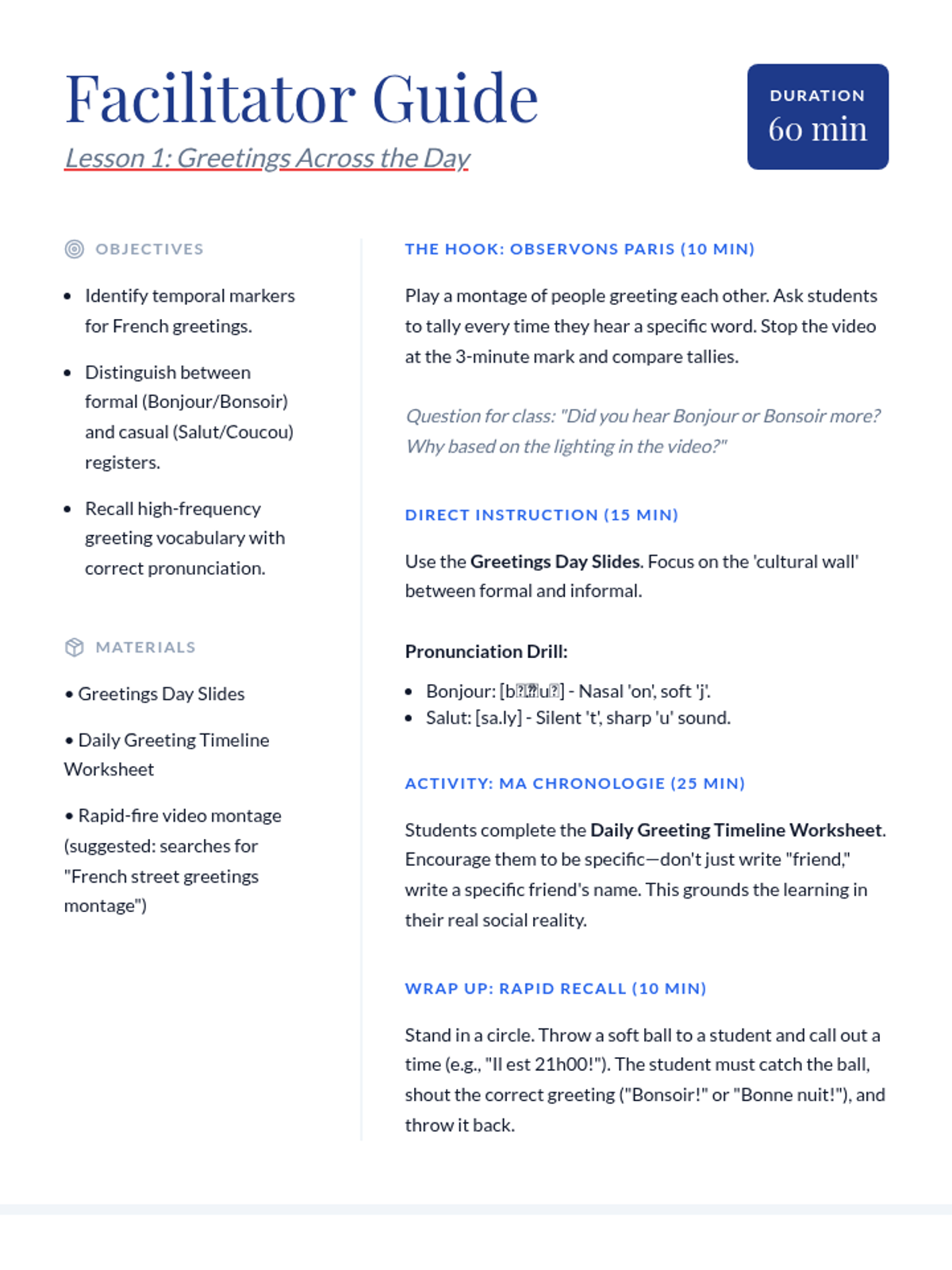
This beginner French sequence guides students through the nuances of formal and informal greetings, temporal context, and the cultural practice of 'la bise'. Students will master the 'tu' vs. 'vous' distinction and build confidence in real-world introduction scenarios.
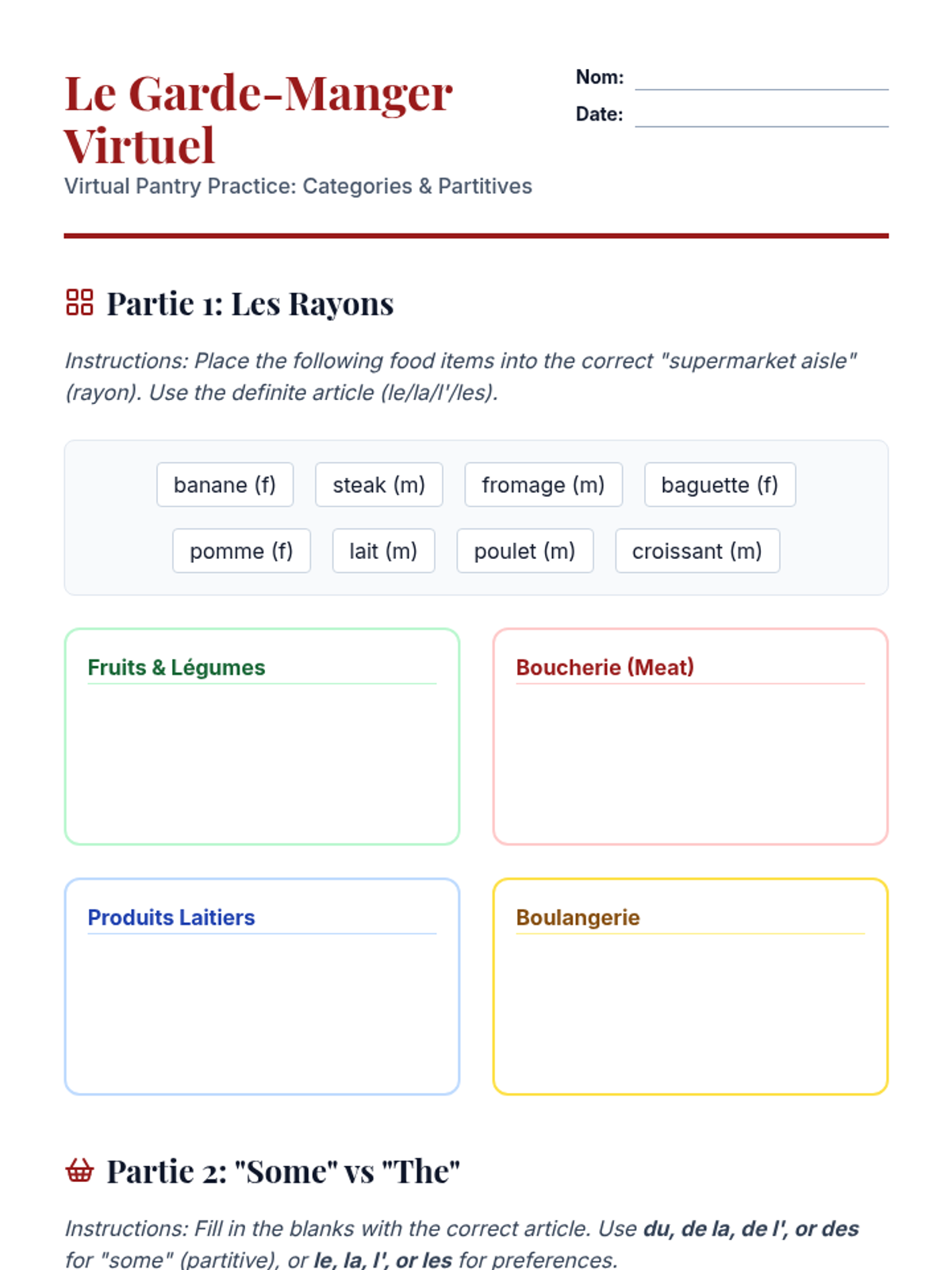
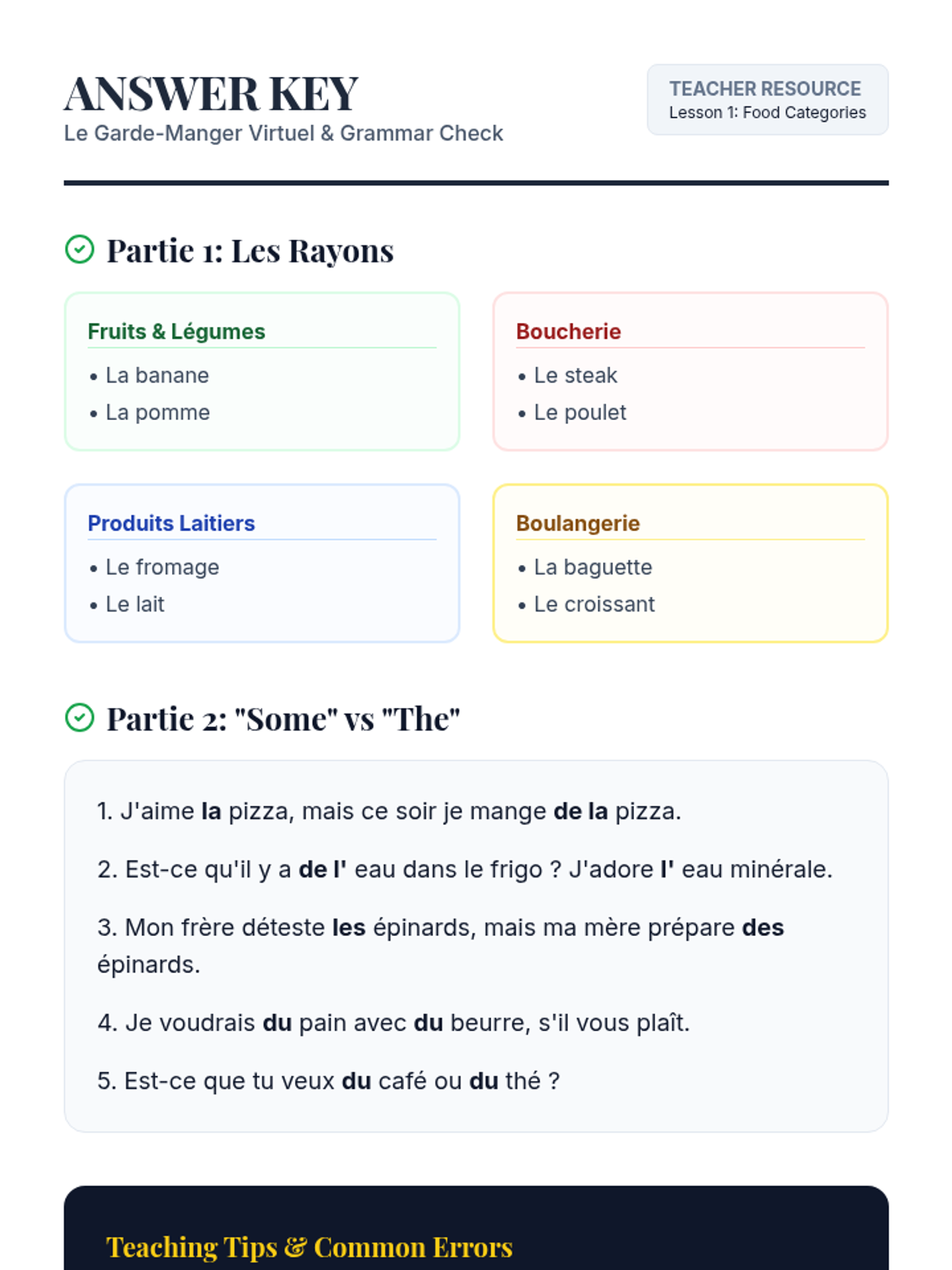
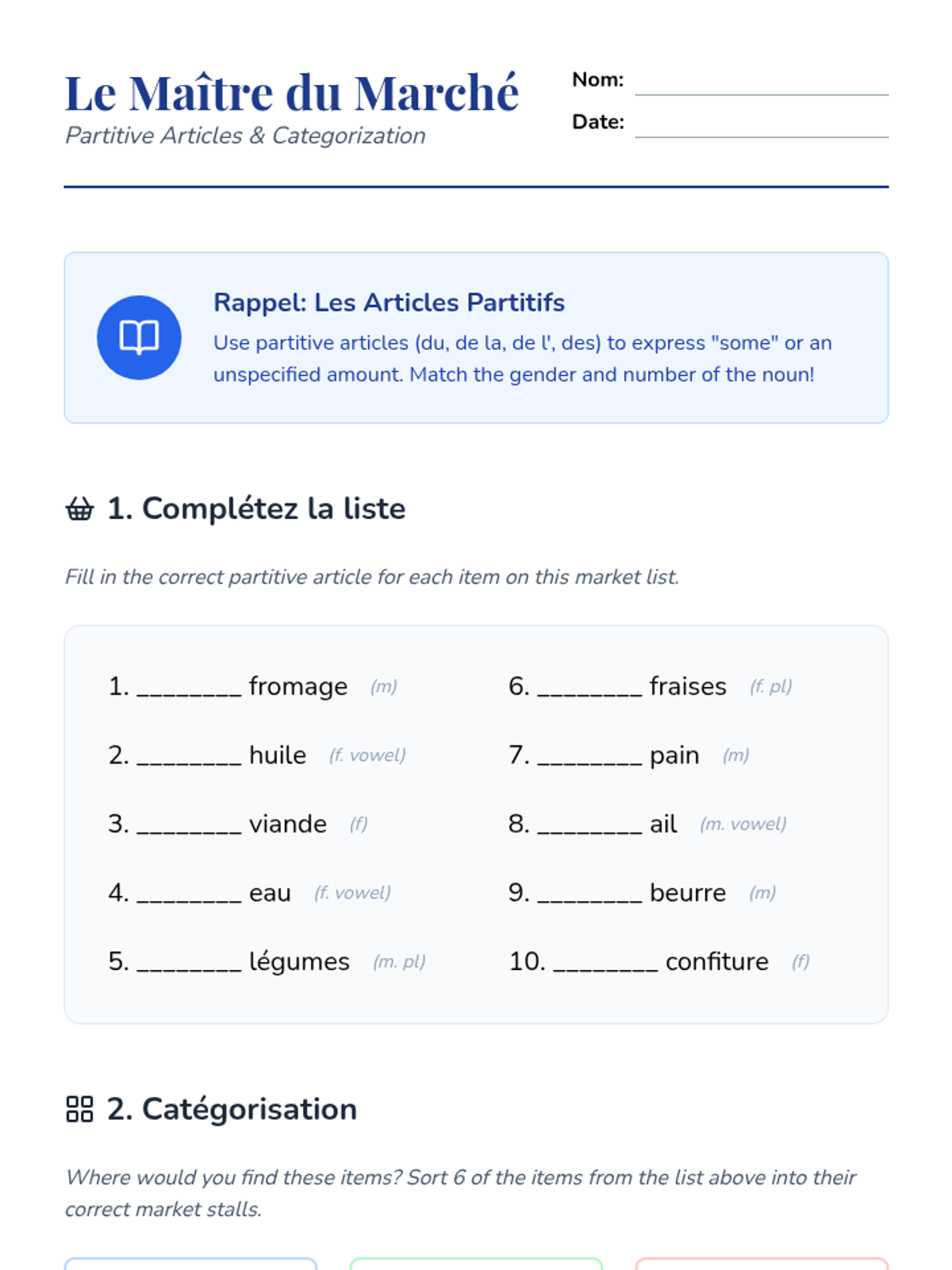
A beginner French reading sequence focused on culinary culture, market navigation, and dining etiquette. Students learn to categorize food, use partitive articles, read authentic menus, and write restaurant critiques.
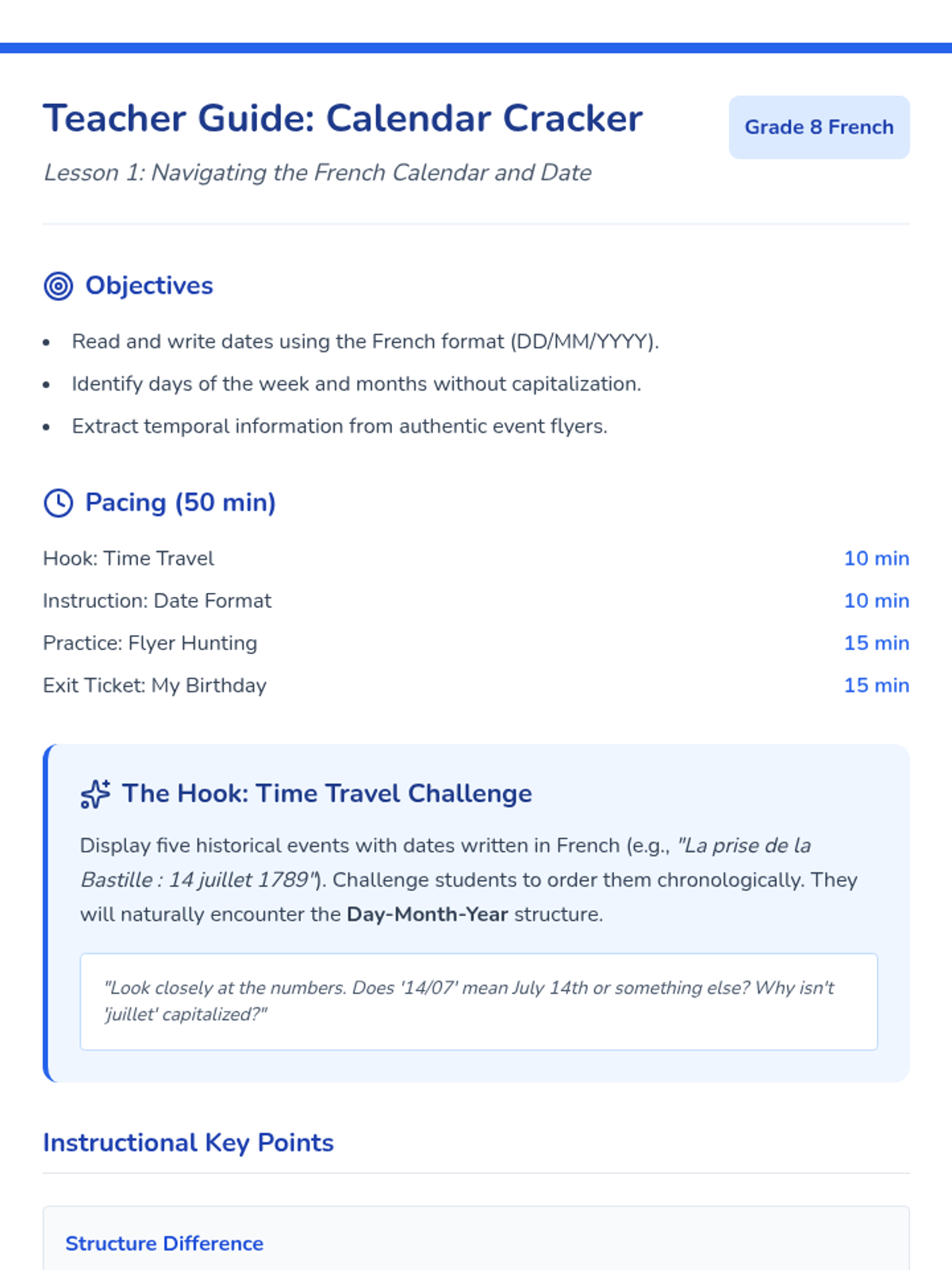
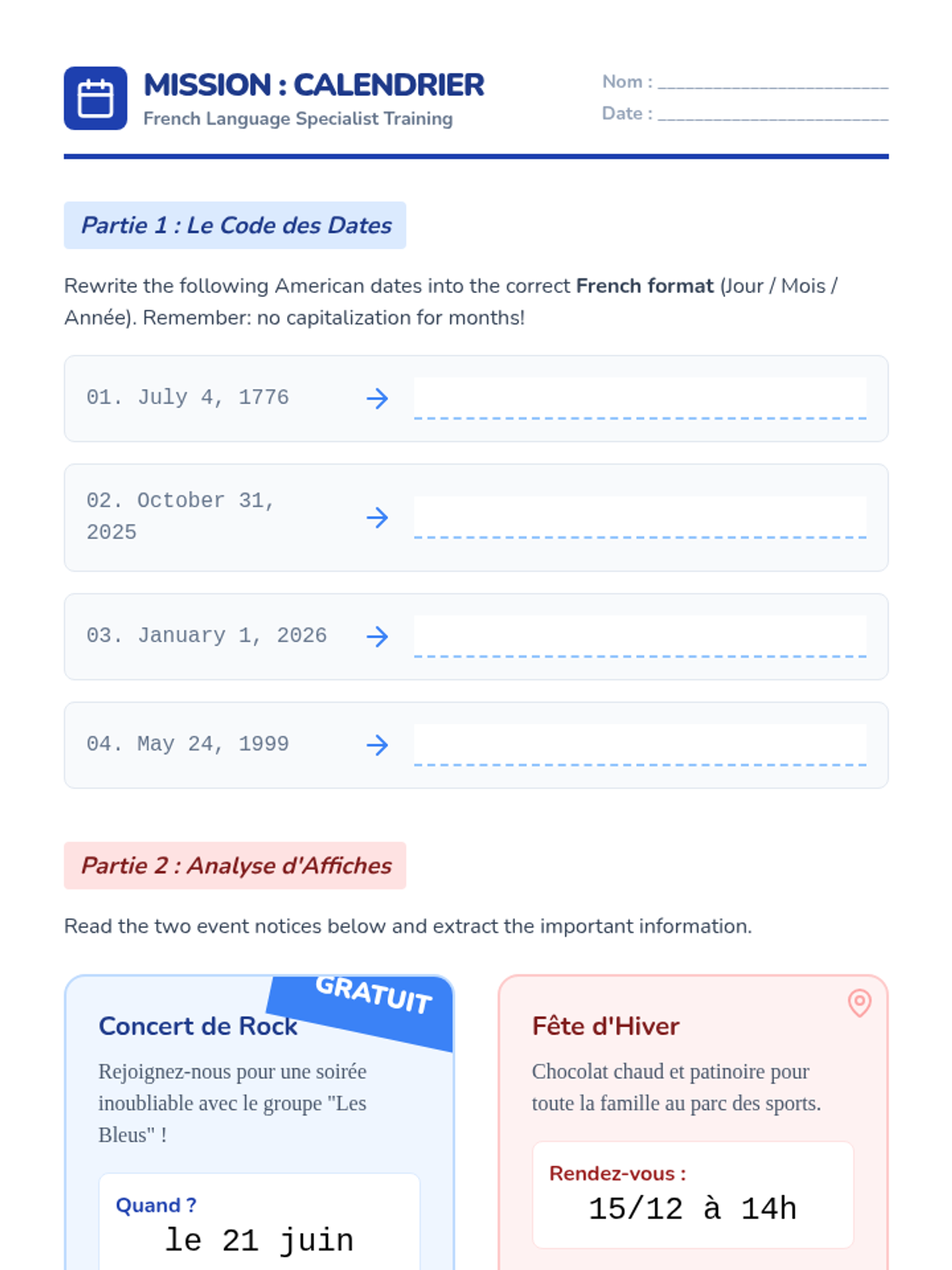
A beginner French sequence for 10th graders focusing on essential 'survival' skills: numbers, currency, dates, weather, and polite social interactions. Students build toward a real-world simulation of negotiating plans with a friend.
A project-based French sequence for beginners focused on building identity-based vocabulary, grammar, and speaking skills. Students progress from basic personal descriptors to expressing complex preferences and family structures, culminating in a synthesized video profile for a hypothetical exchange program.
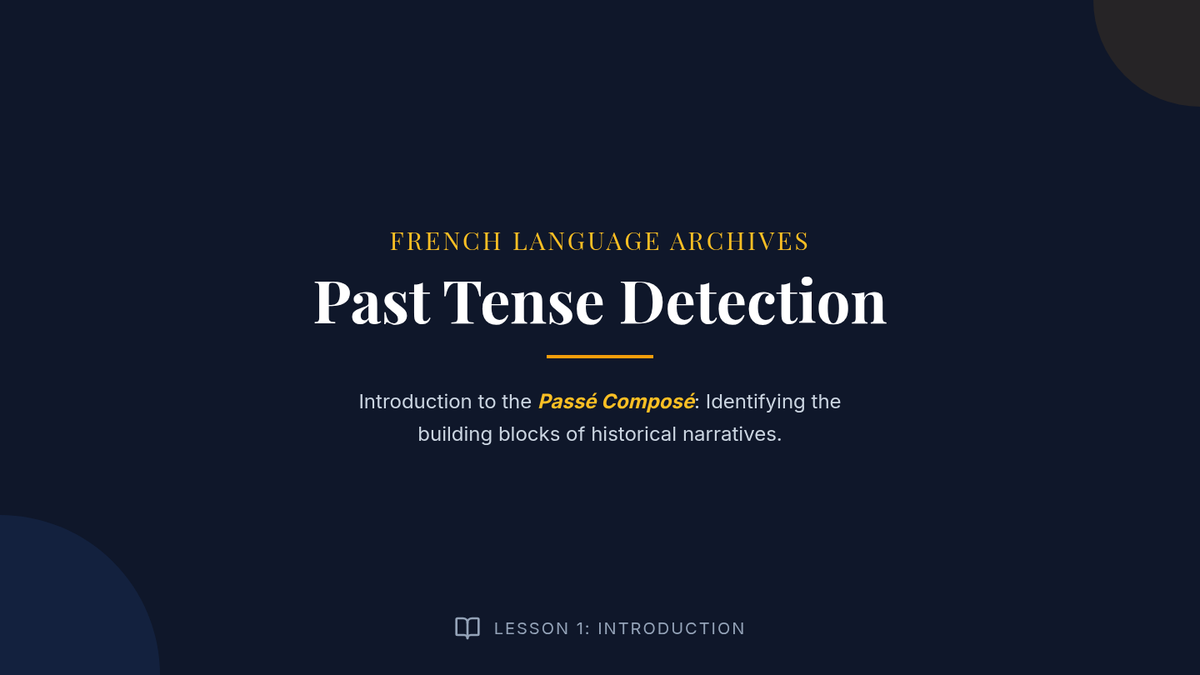
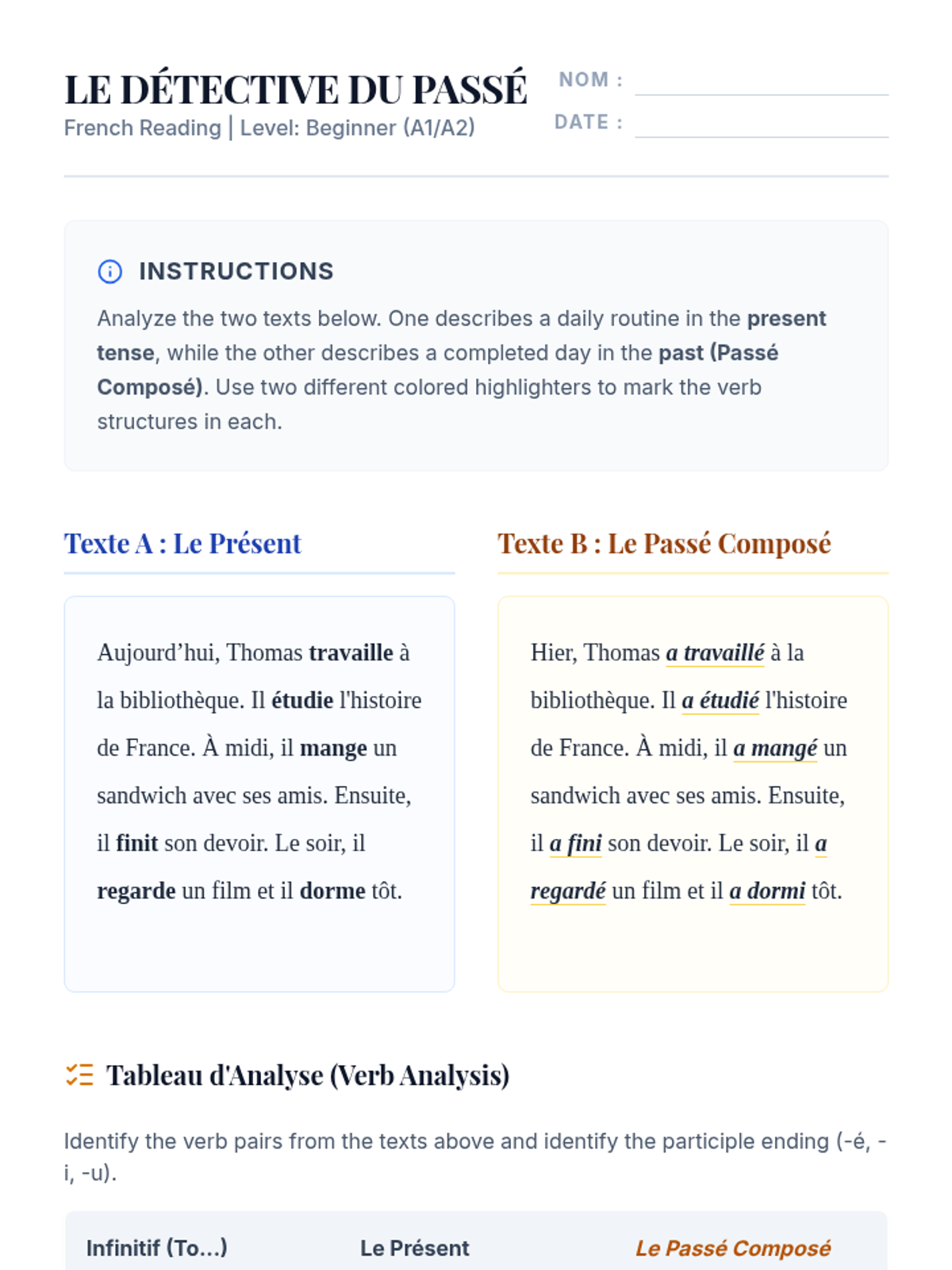
This sequence guides beginner French students through the transition from present-tense descriptions to past-tense narrative comprehension, focusing on the Passé Composé, temporal connectors, and biographical analysis.
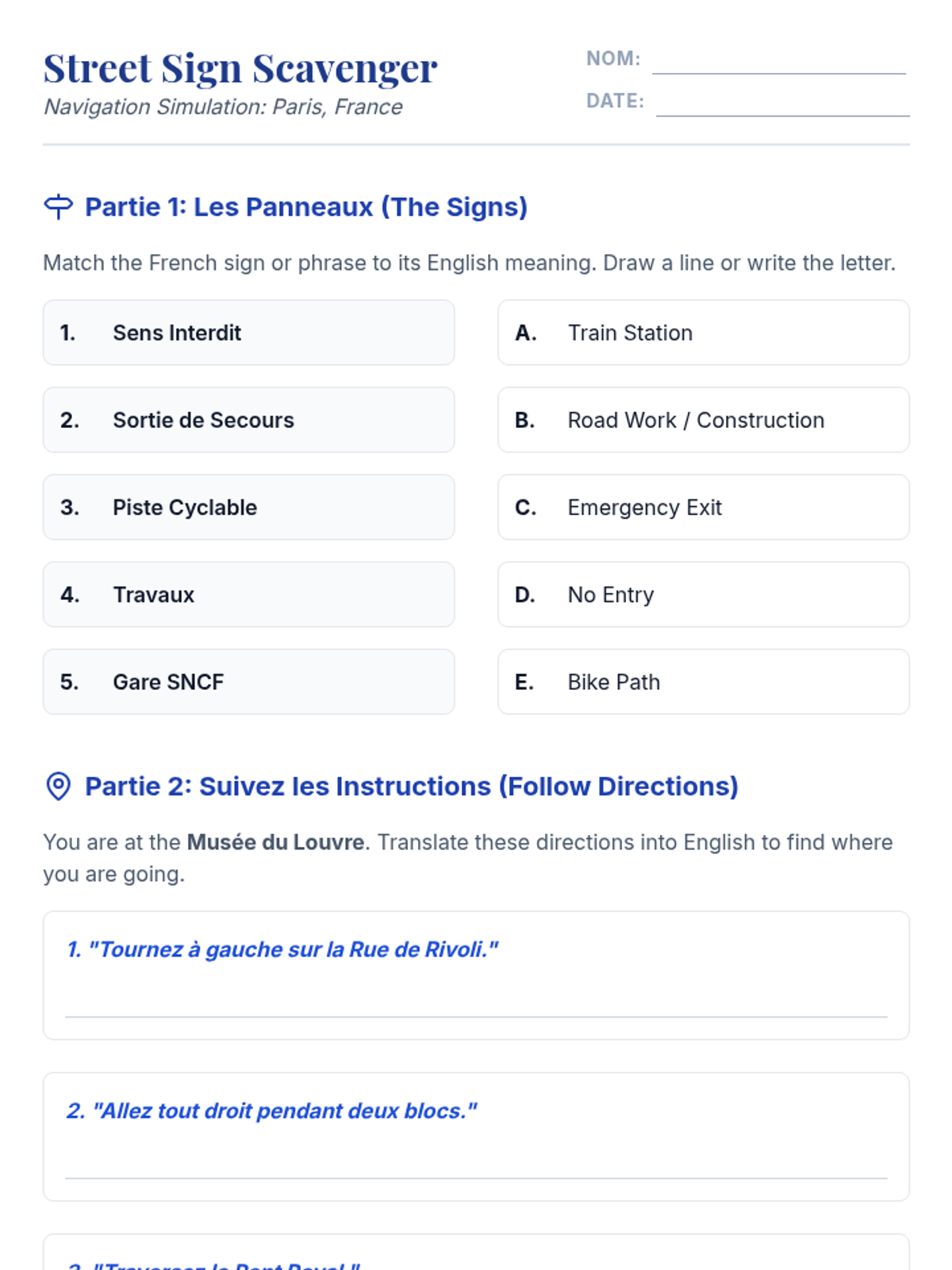
A functional French reading sequence for beginners focused on navigating a French-speaking city through authentic travel materials, maps, and schedules.
A cultural literacy sequence for beginner French students focusing on navigating the culinary world of France through text, from market lists to restaurant reviews. Students develop reading skills while exploring cultural norms around food and dining.
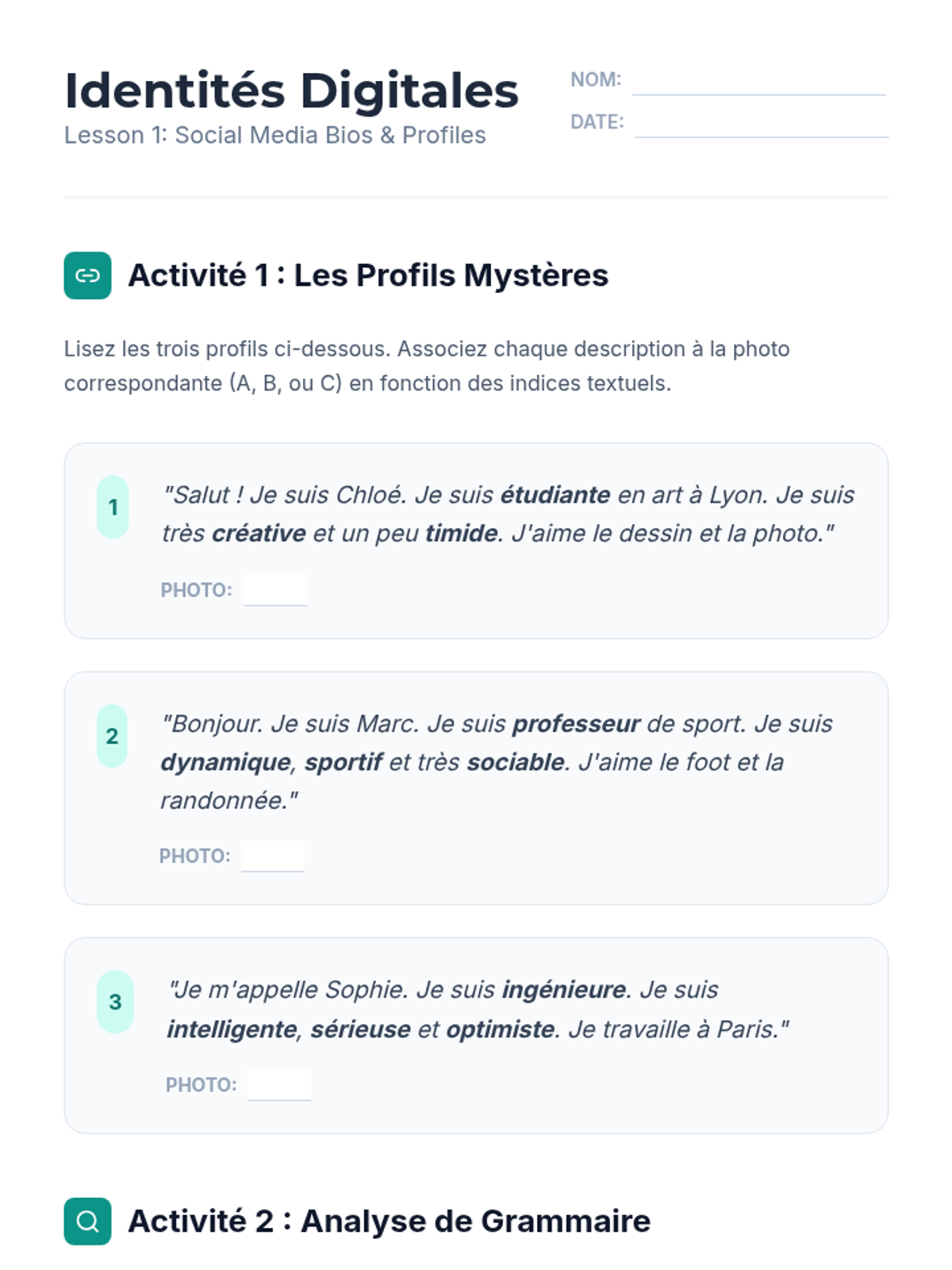
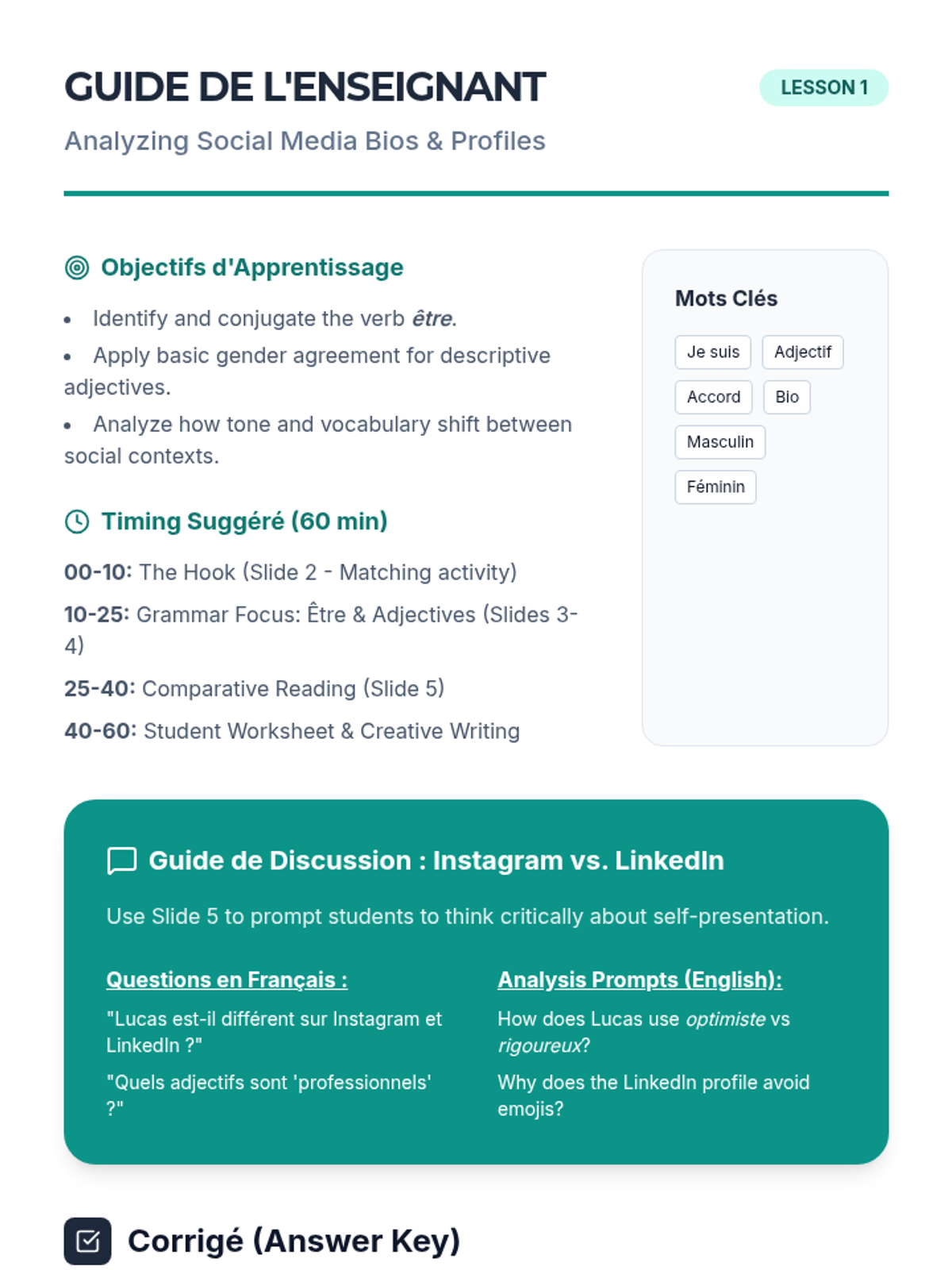
A comprehensive sequence for beginner French students focusing on identity, physical descriptions, and personality through various reading formats from social media to biographies.
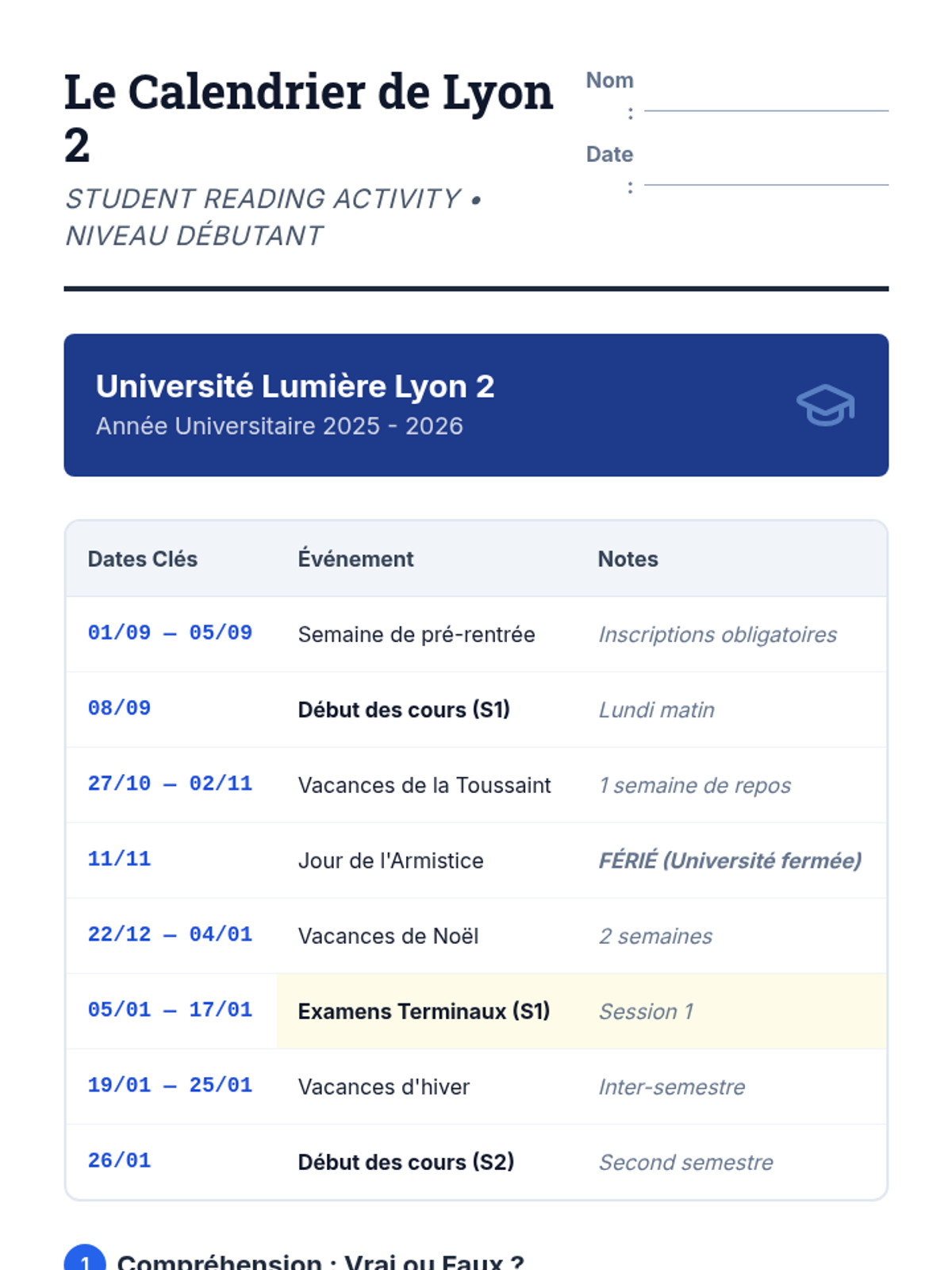
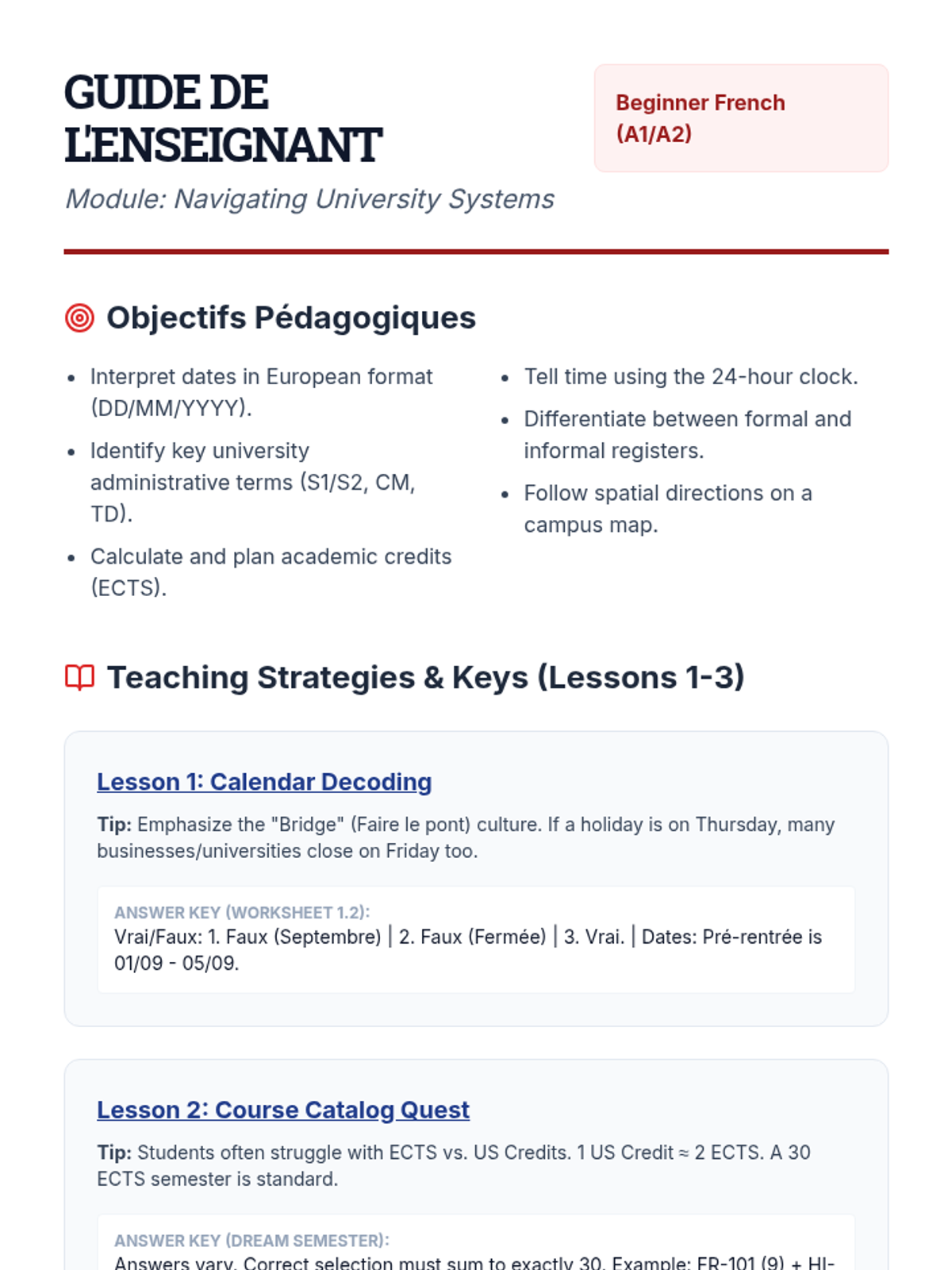
A comprehensive module for beginner French learners to navigate the administrative and academic landscape of a Francophone university, covering dates, schedules, course catalogs, and formal communication.
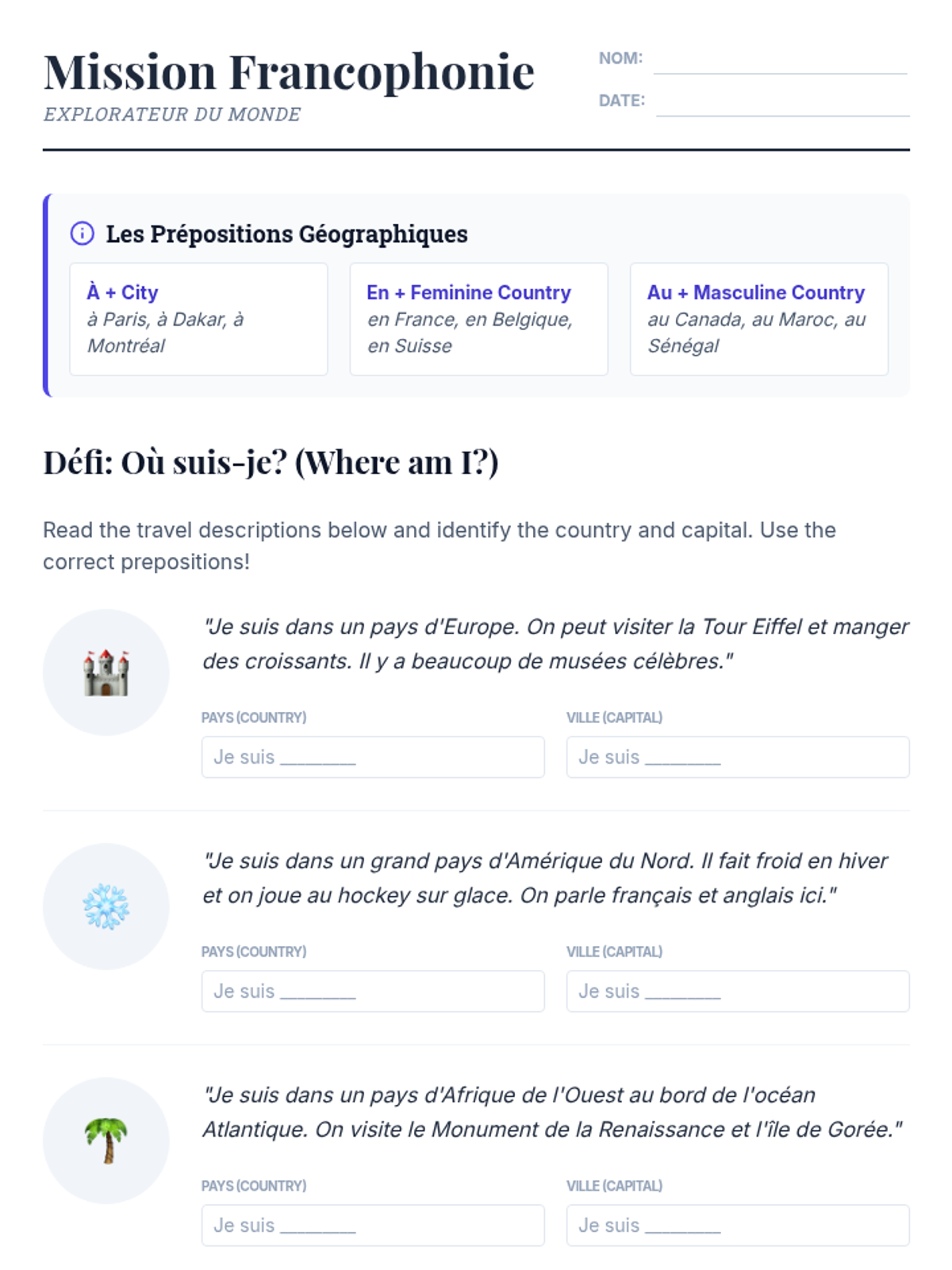
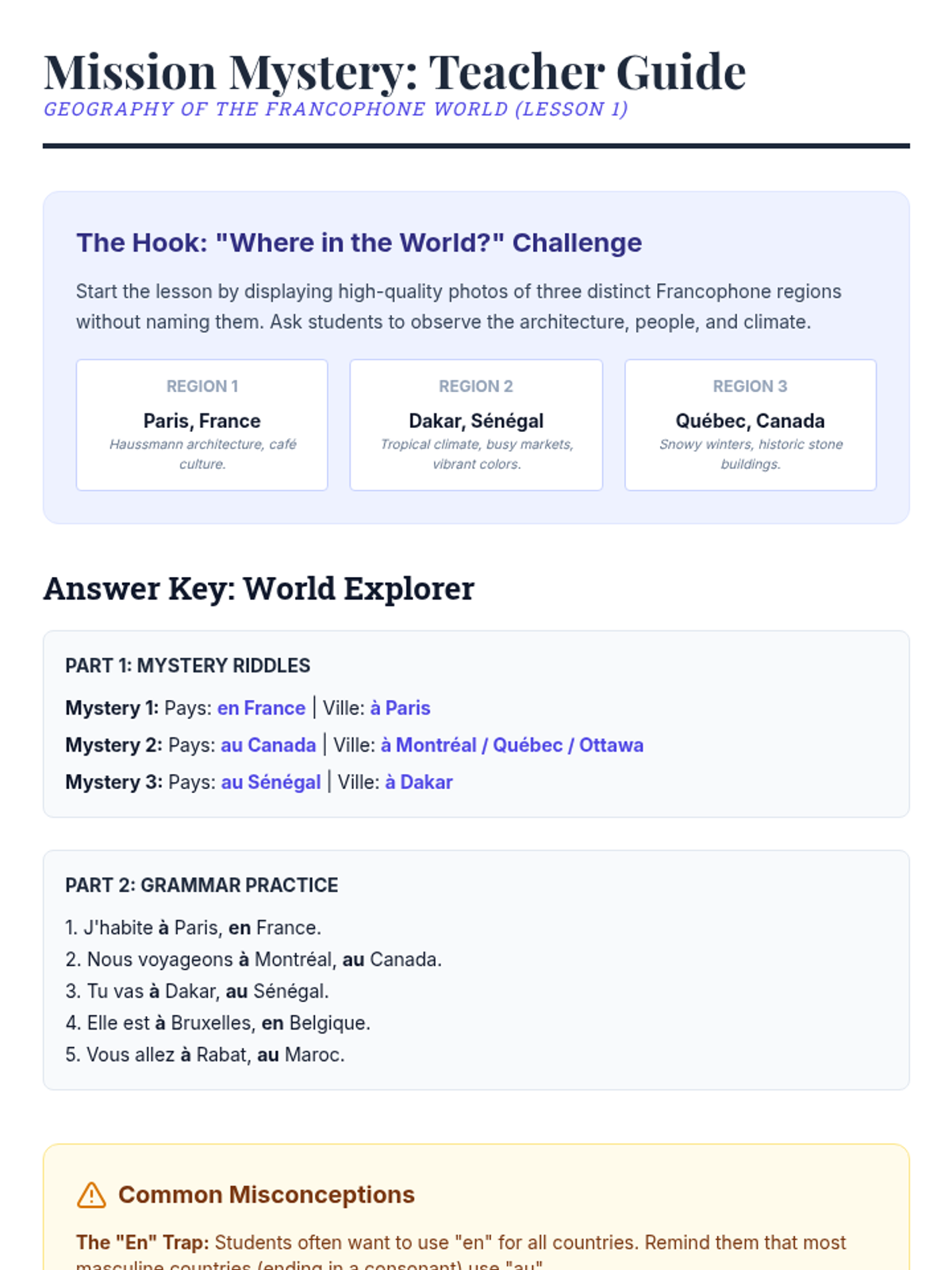
A comprehensive 5-lesson unit designed to equip beginner French students with the reading and linguistic skills needed to navigate travel in the Francophone world. Students explore geography, decode transportation documents, master urban navigation, interpret weather forecasts, and ultimately design their own 3-day travel itinerary using the near future tense.
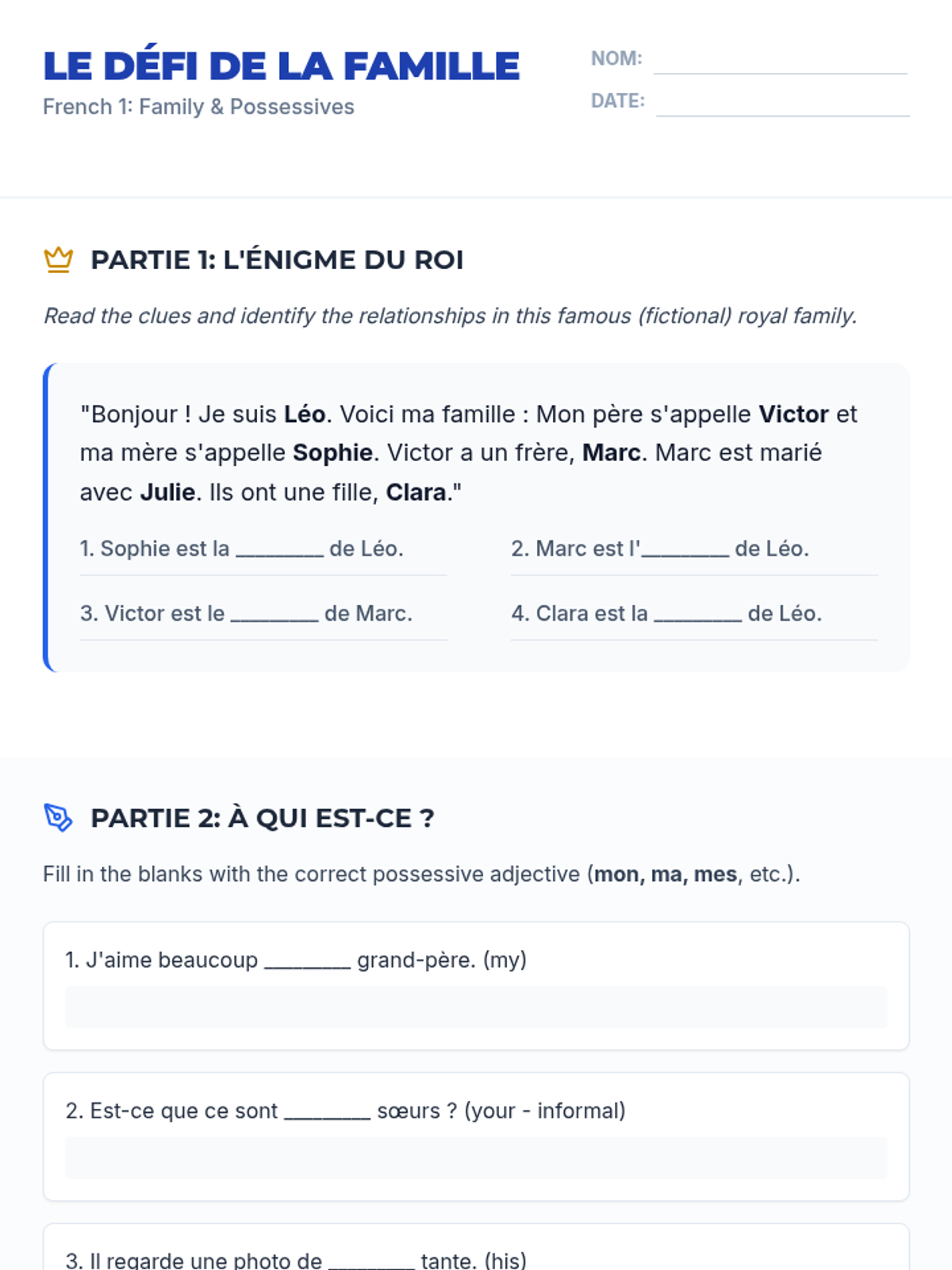
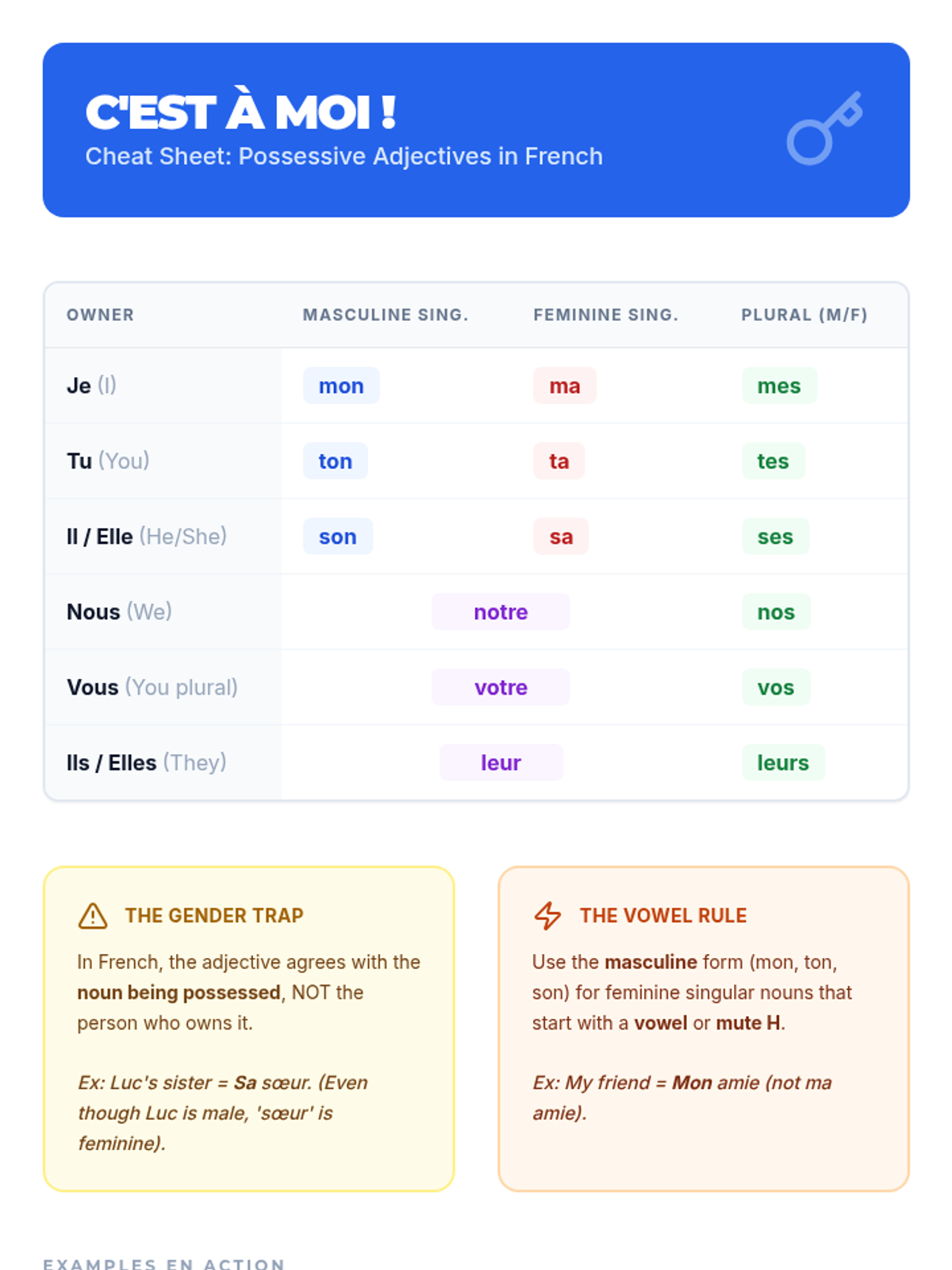
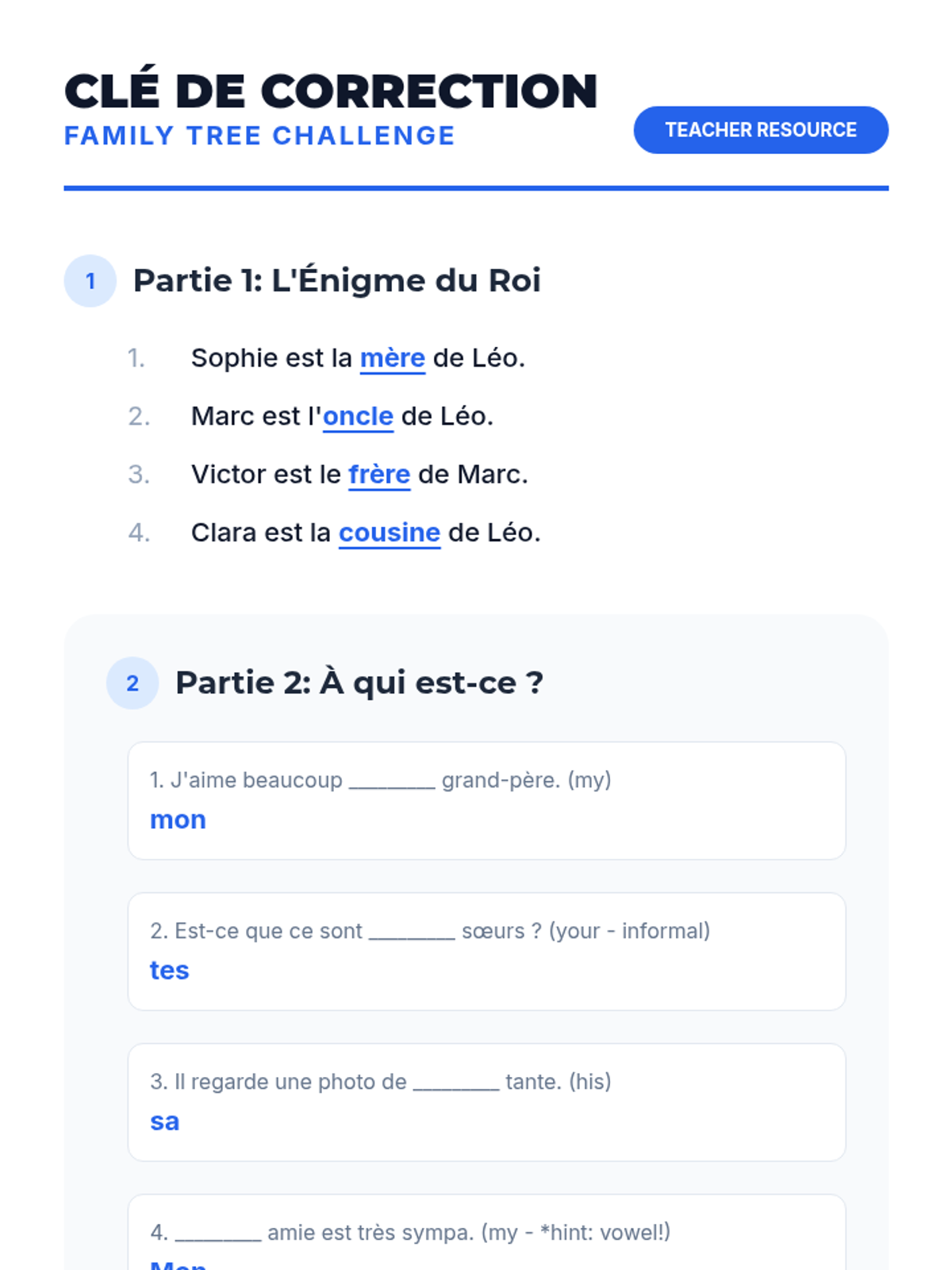
A comprehensive unit exploring French family structures, possessive adjectives, and community roles. Students progress from identifying family members to designing an ideal community, using authentic-feeling French texts and interactive simulations.
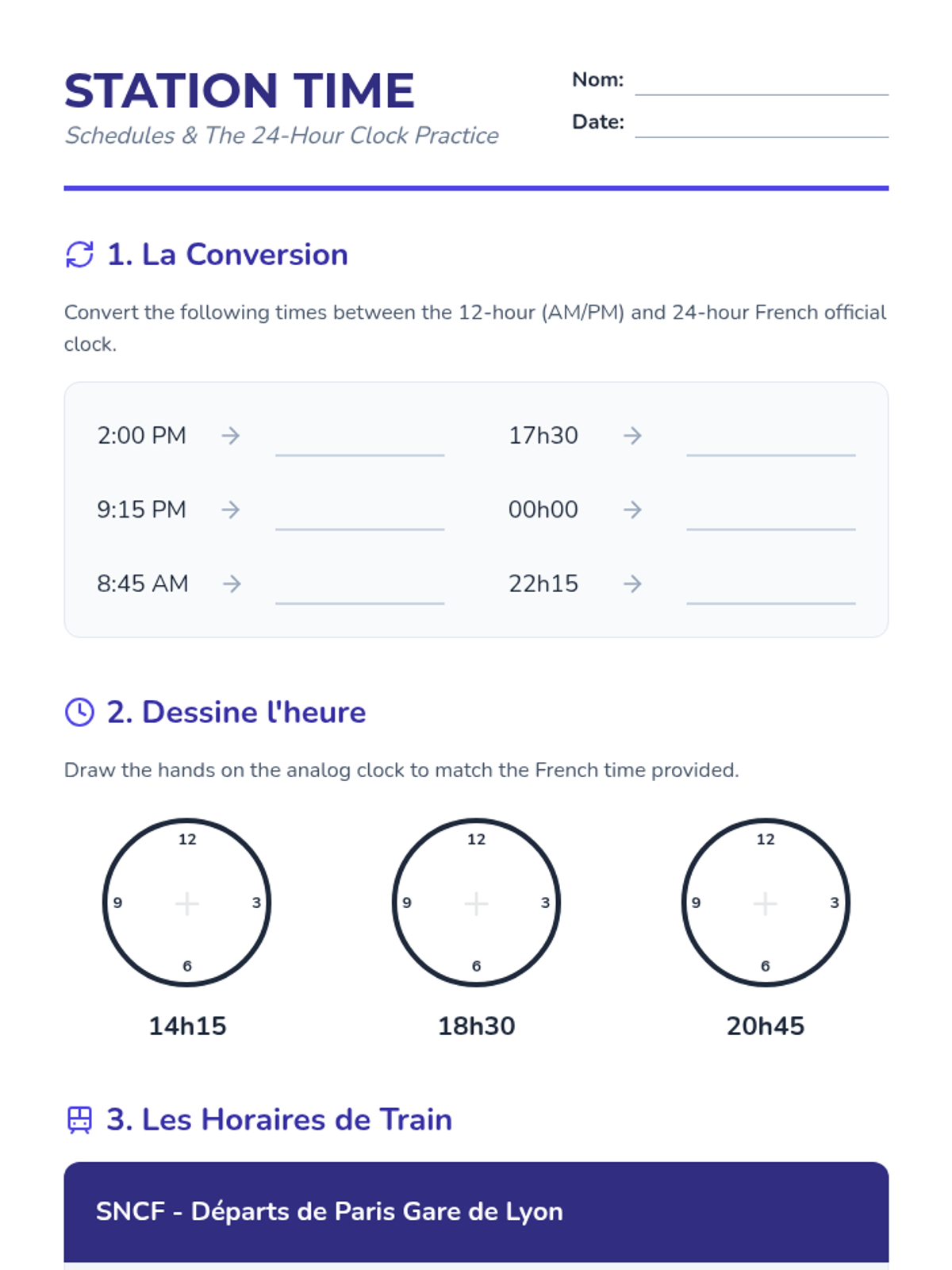
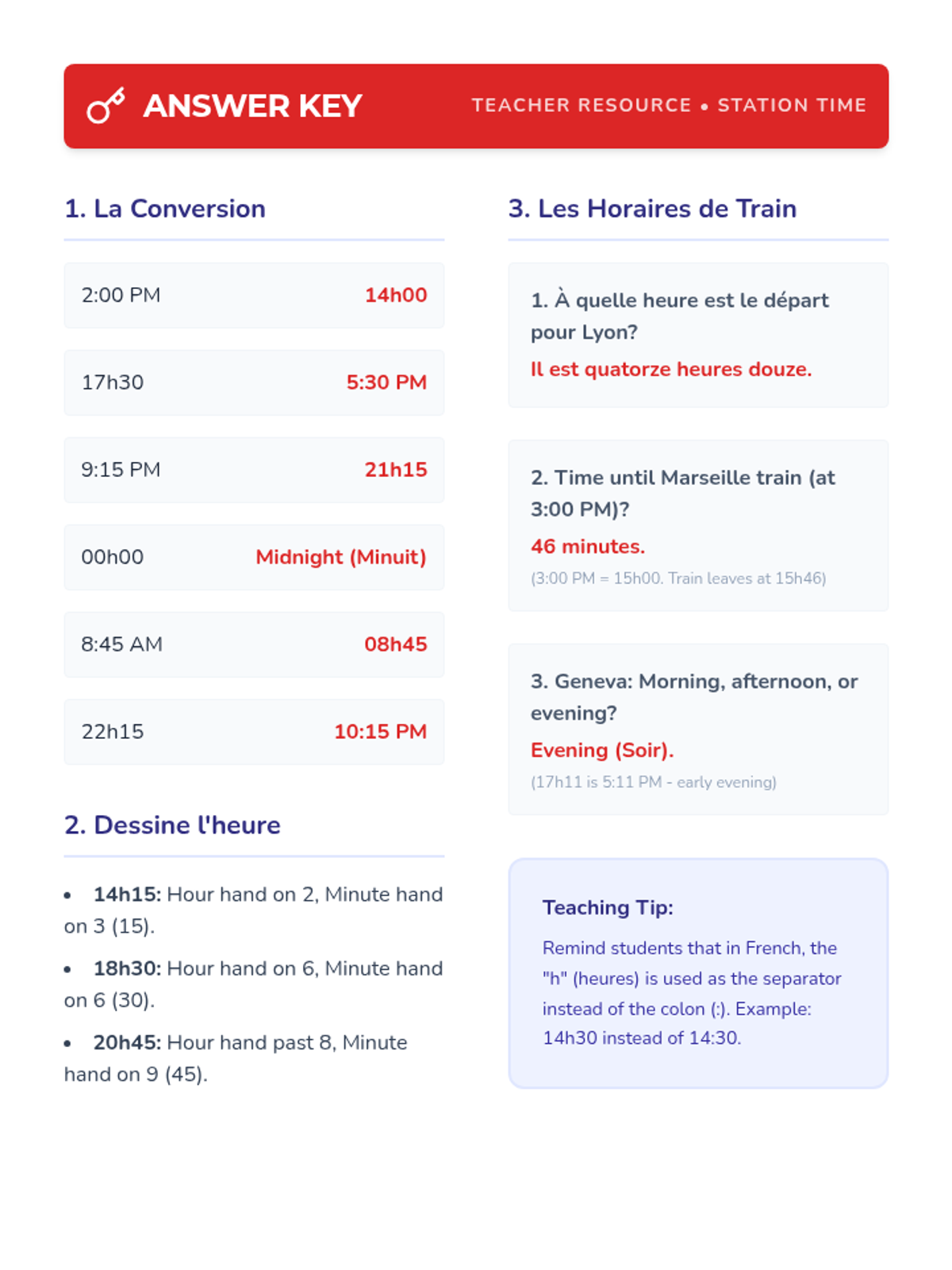
This sequence immerses 10th-grade French students in the daily rhythm of Francophone life, covering time-telling, school systems, and daily routines. Students compare French and American lifestyles while mastering the 24-hour clock and reflexive verbs.
A comprehensive unit for 8th-grade French students focused on reading and interpreting authentic materials related to school life. Students compare French and American education systems through calendars, schedules, supplies, and personal opinions.
An immersive travel-themed sequence where students develop functional French literacy by interpreting authentic signs, menus, schedules, and brochures to navigate a francophone city.
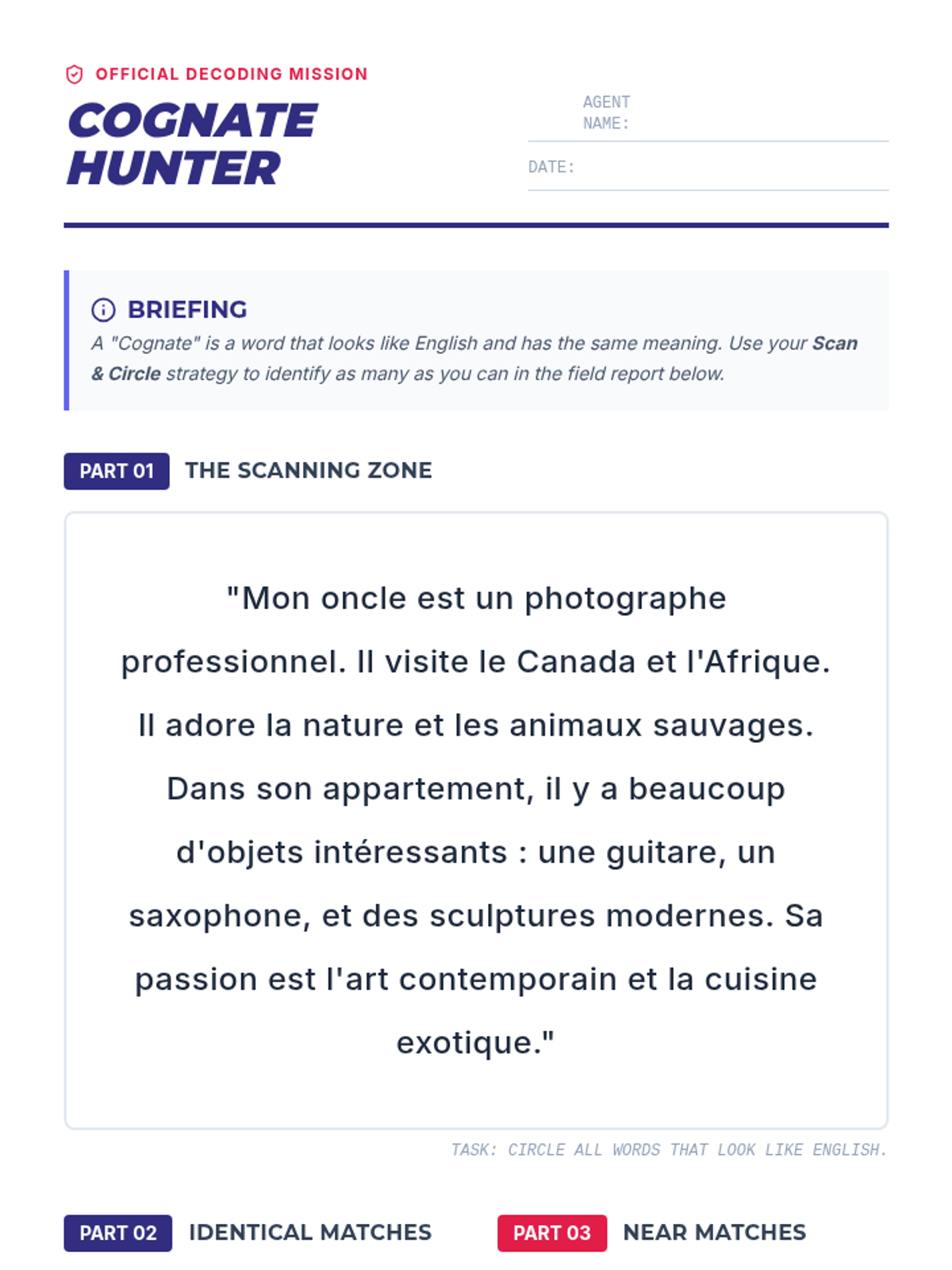
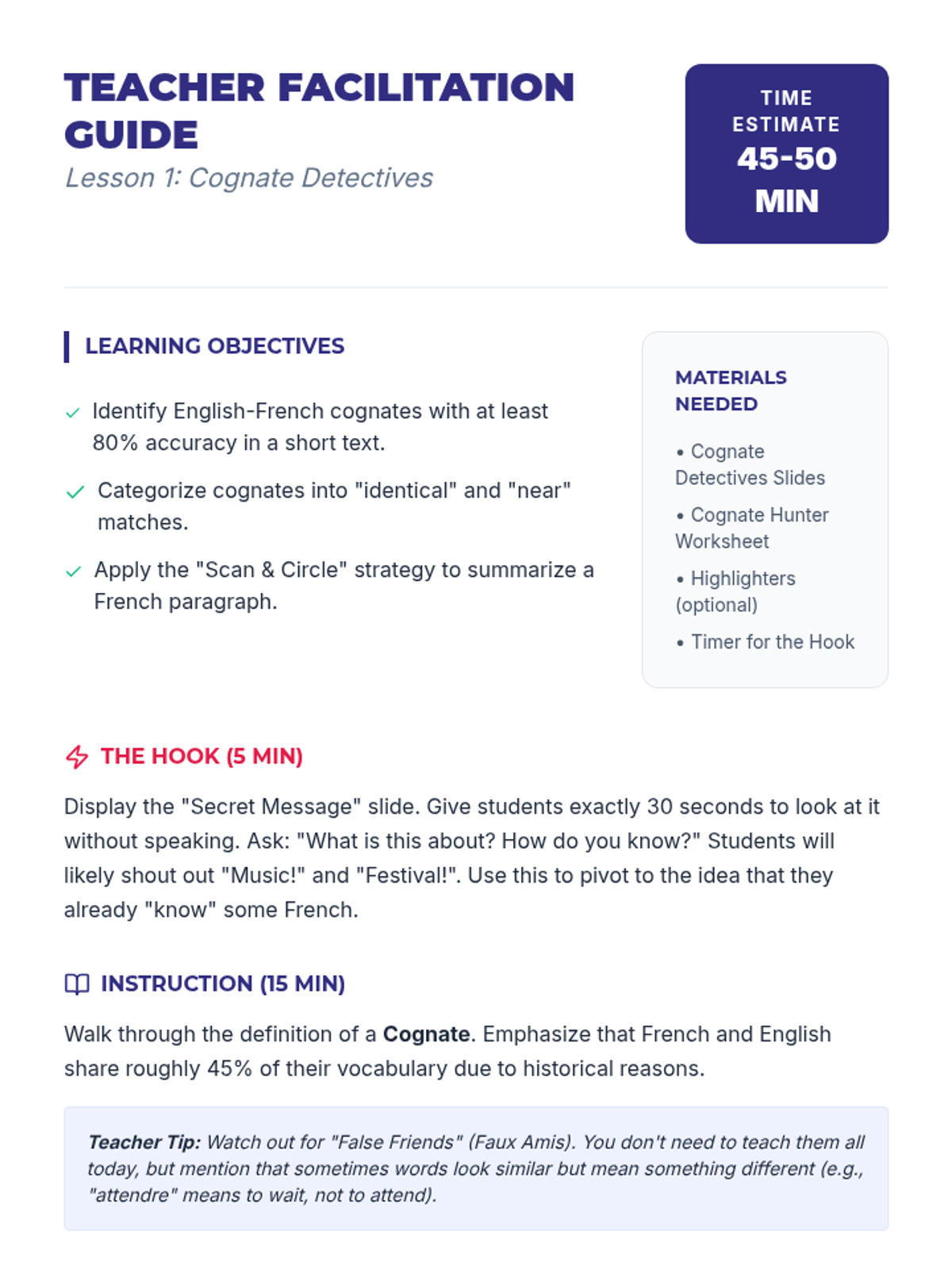
A 5-lesson sequence for 6th-grade French students focusing on reading strategies like cognate recognition, context clues, and basic syntax to build confidence in decoding French texts.
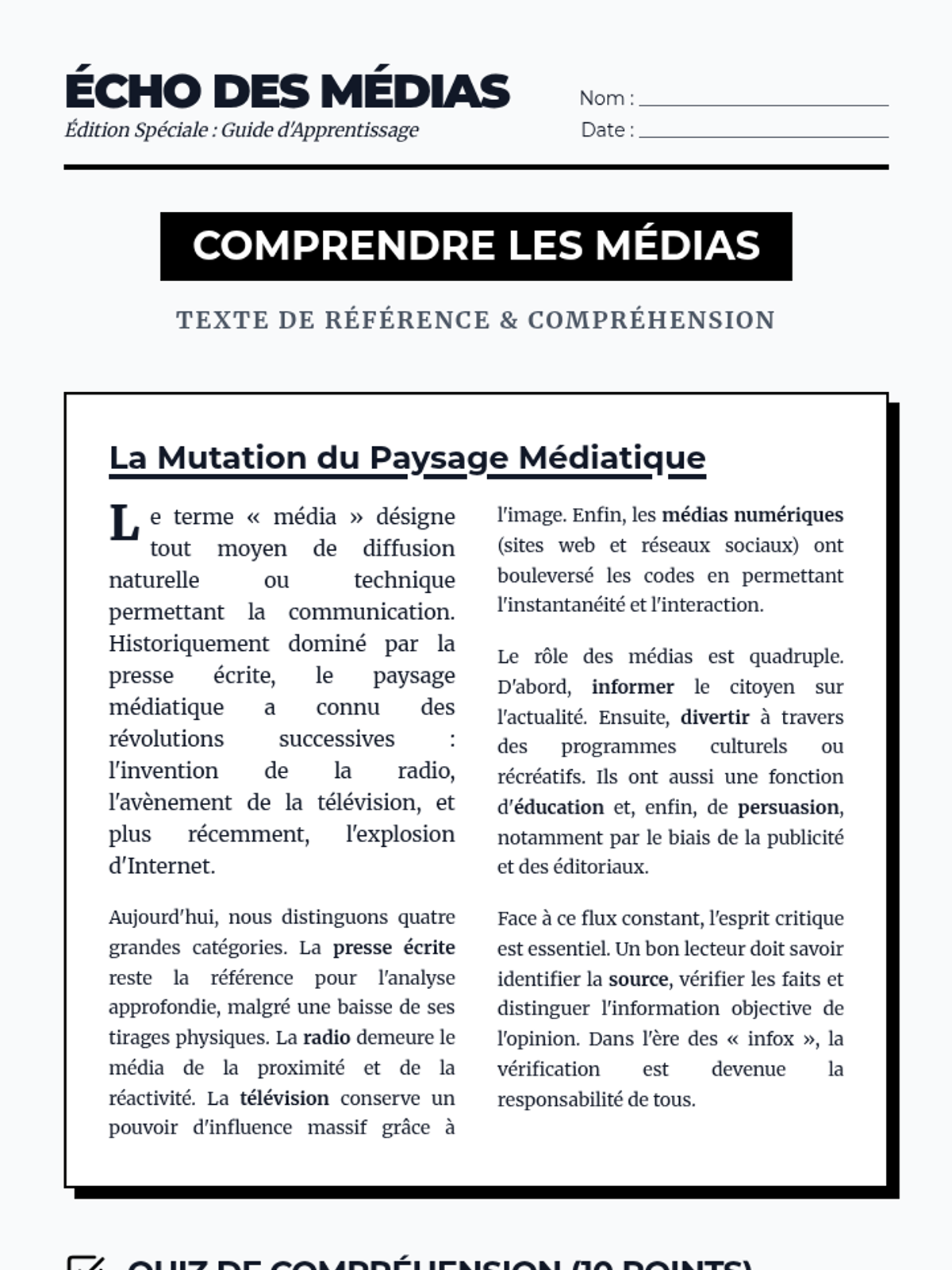
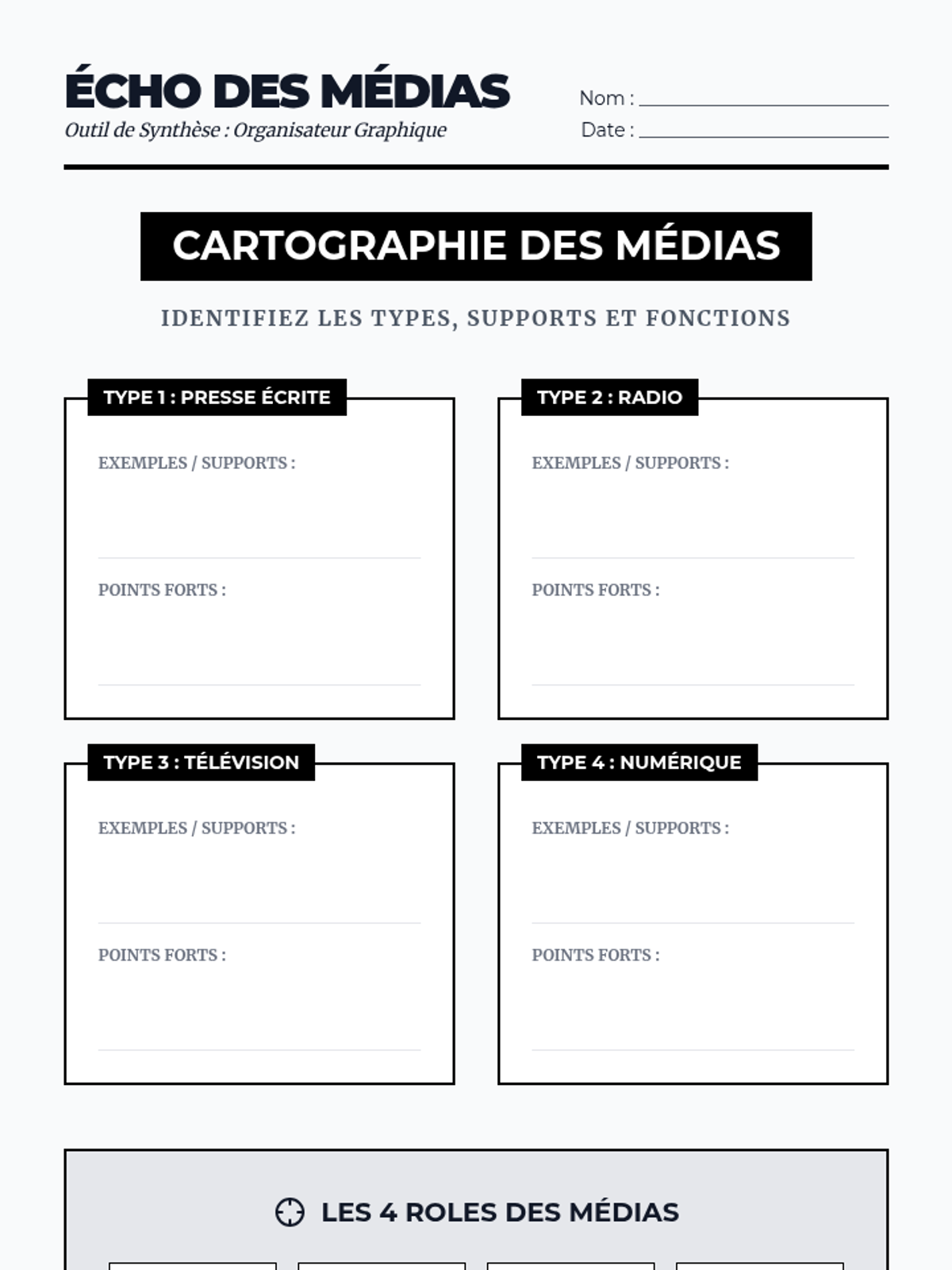
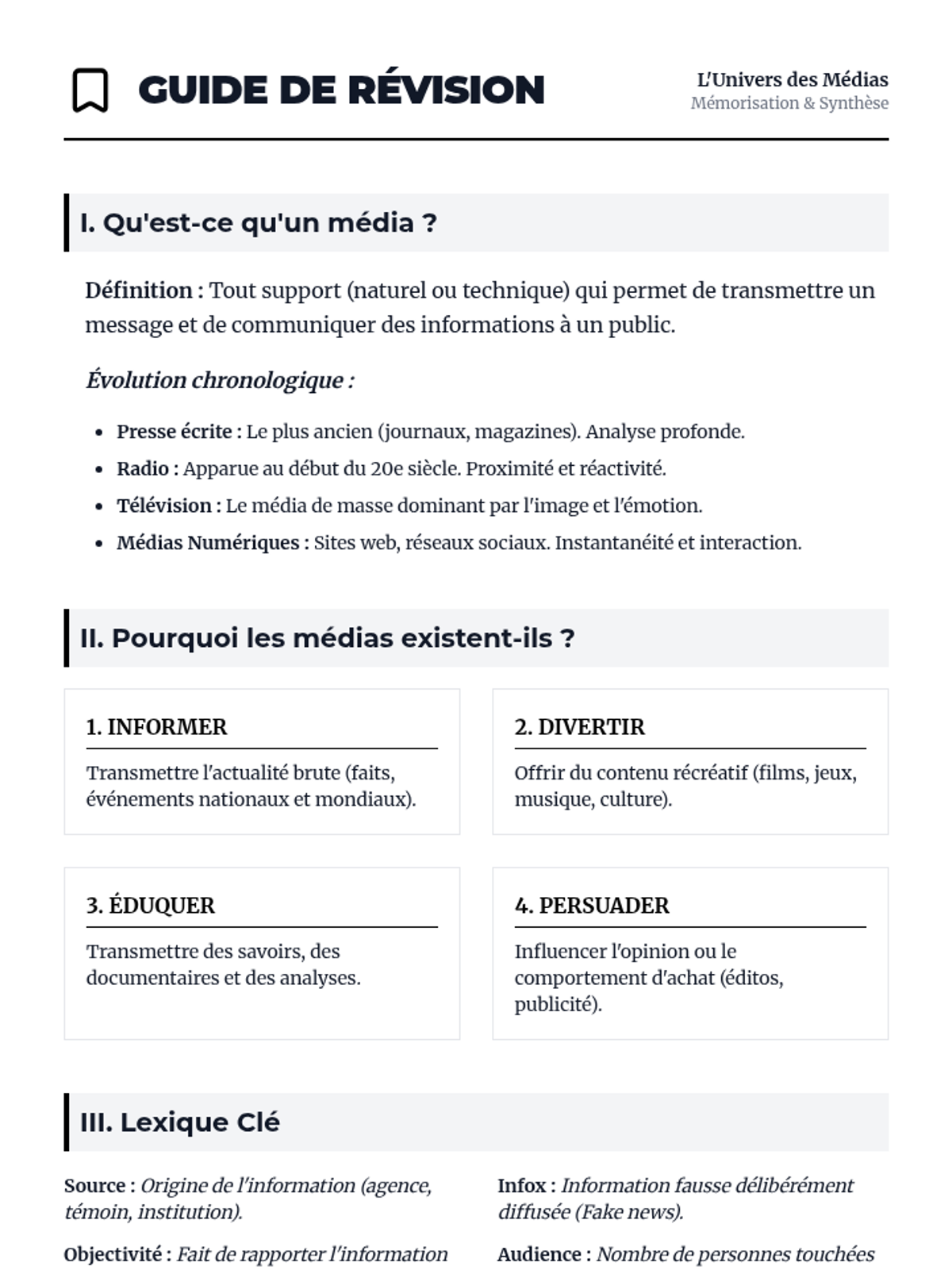
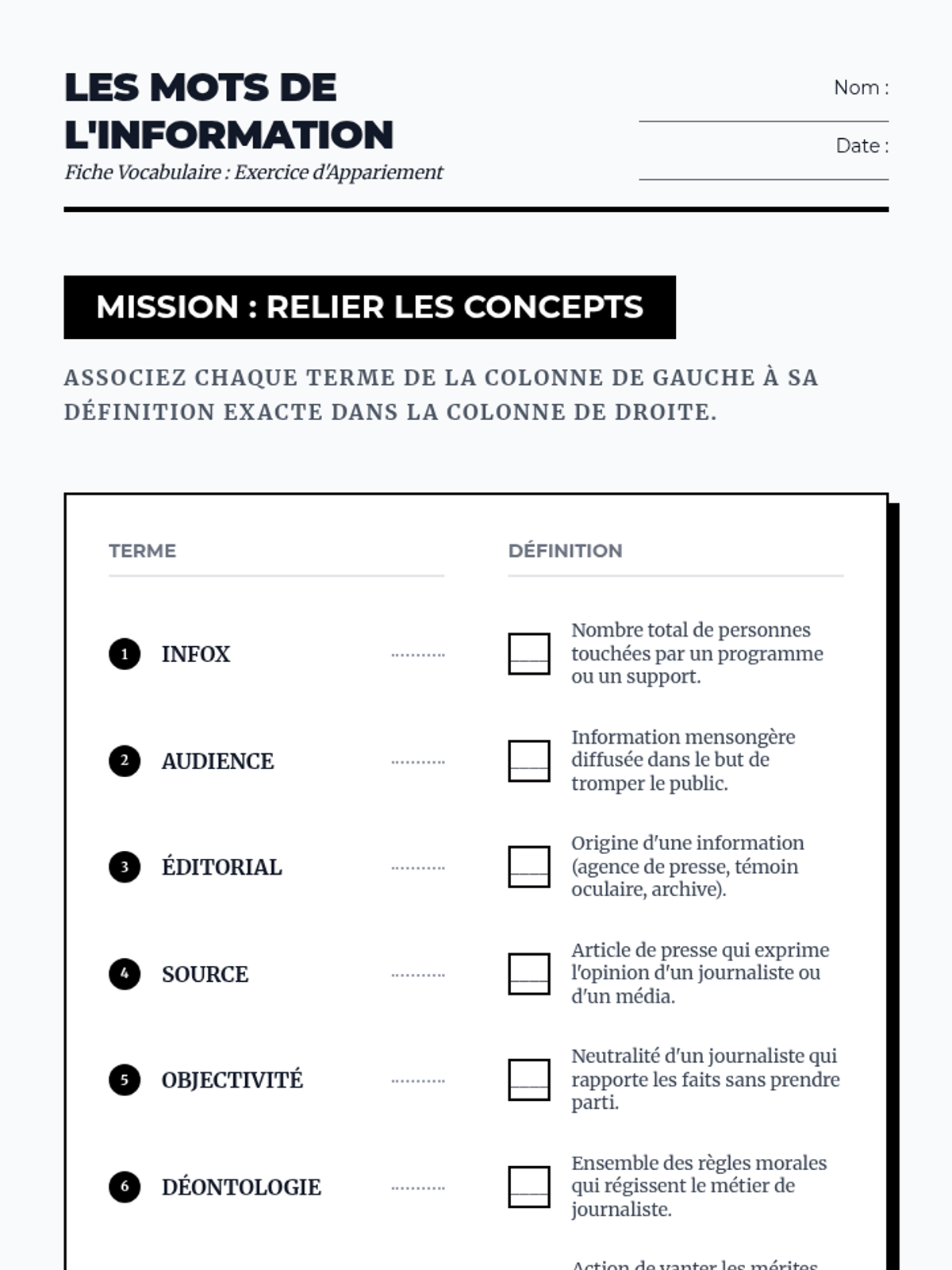
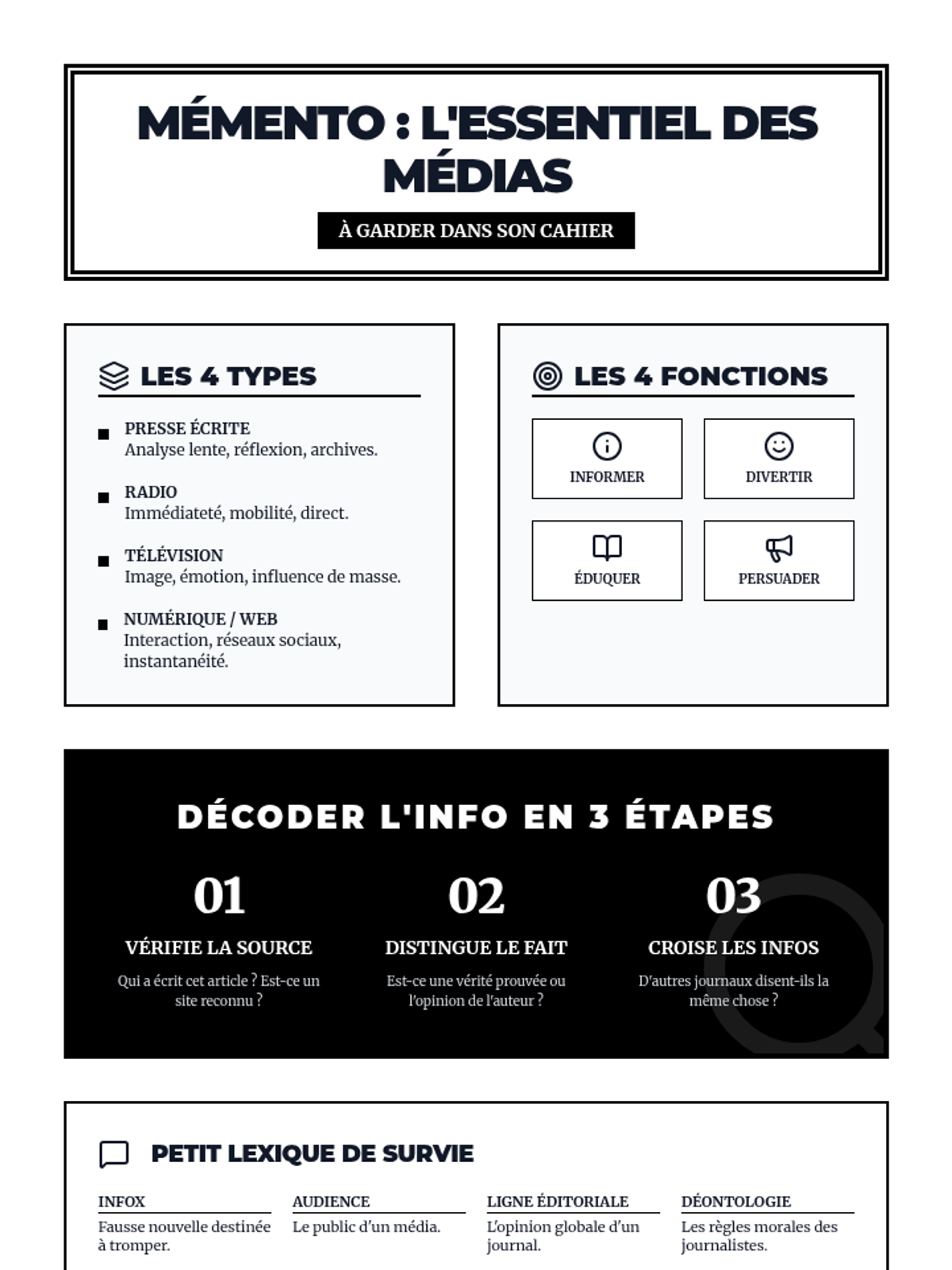
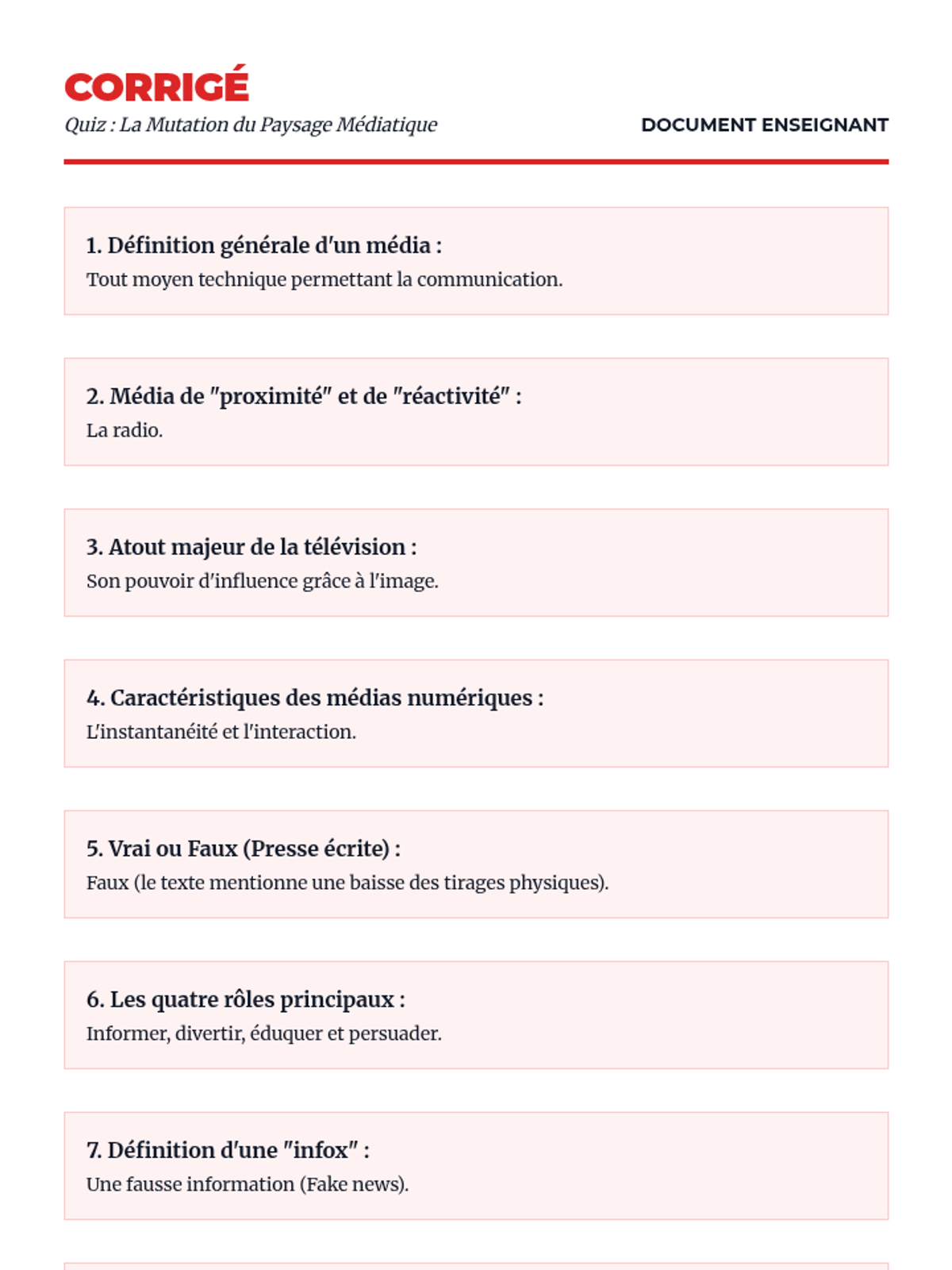
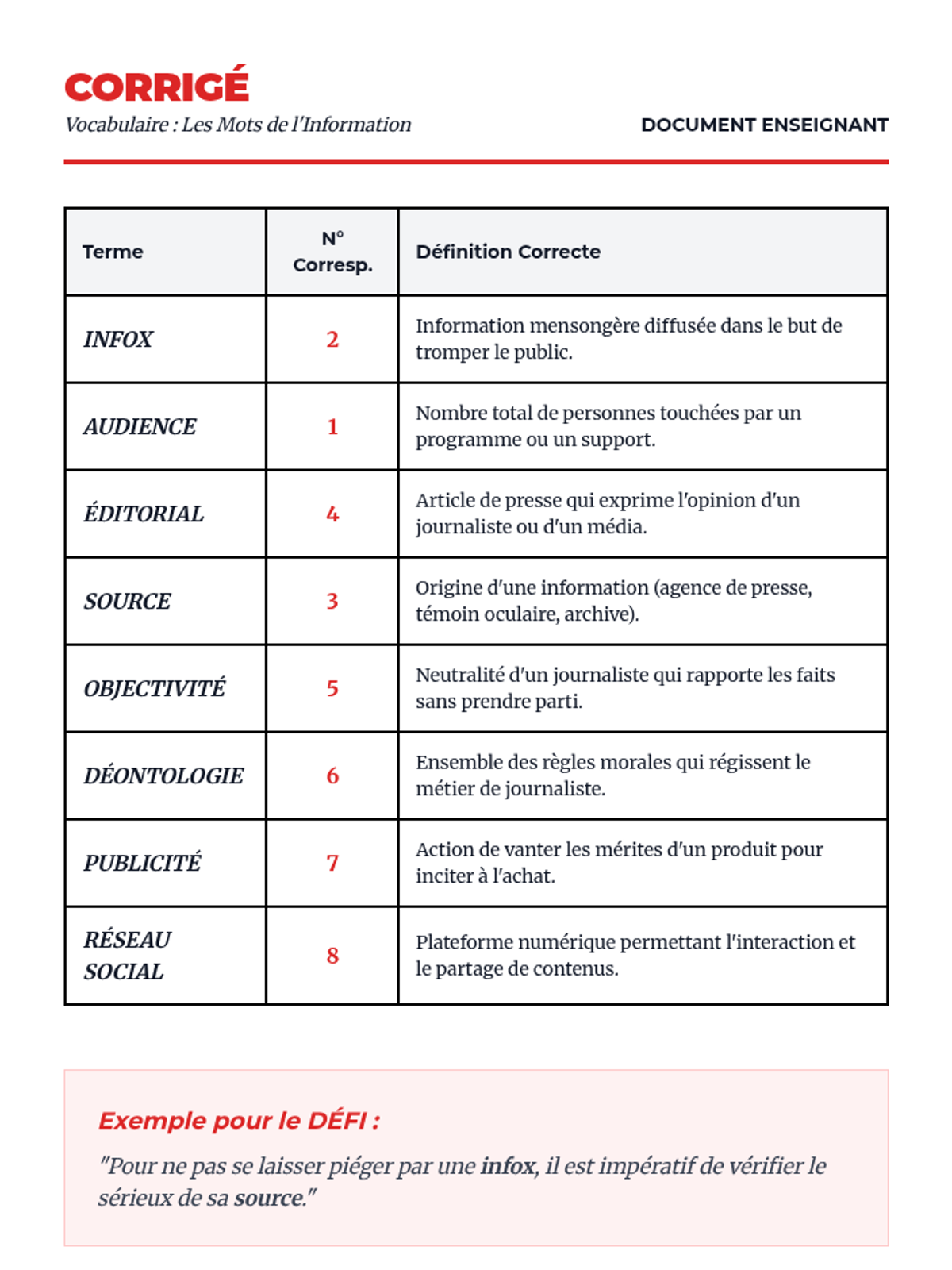
Une séquence pédagogique complète sur les différents types de médias, leurs fonctions et le vocabulaire journalistique. Elle comprend des supports visuels, des outils d'organisation et des évaluations.
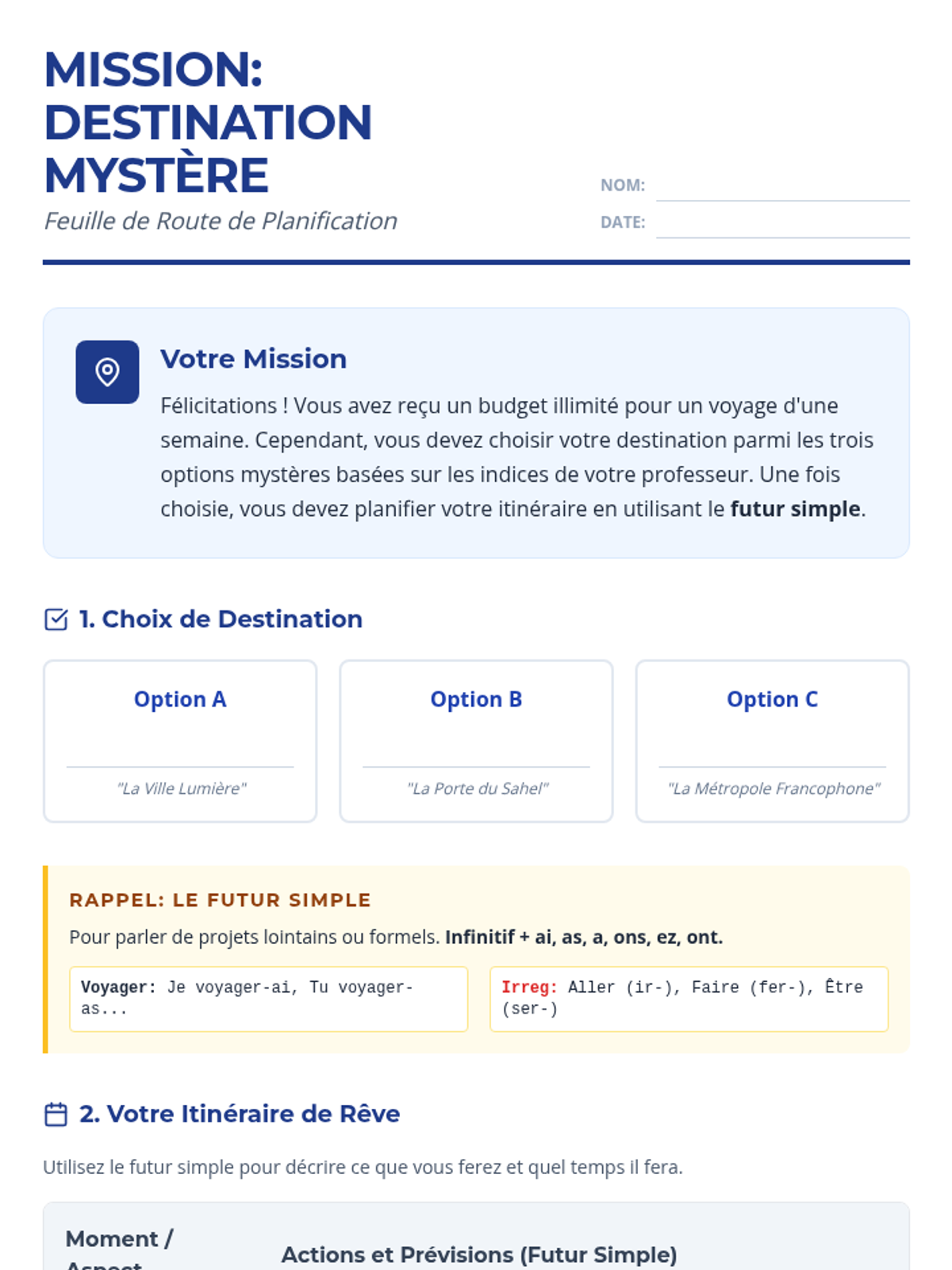
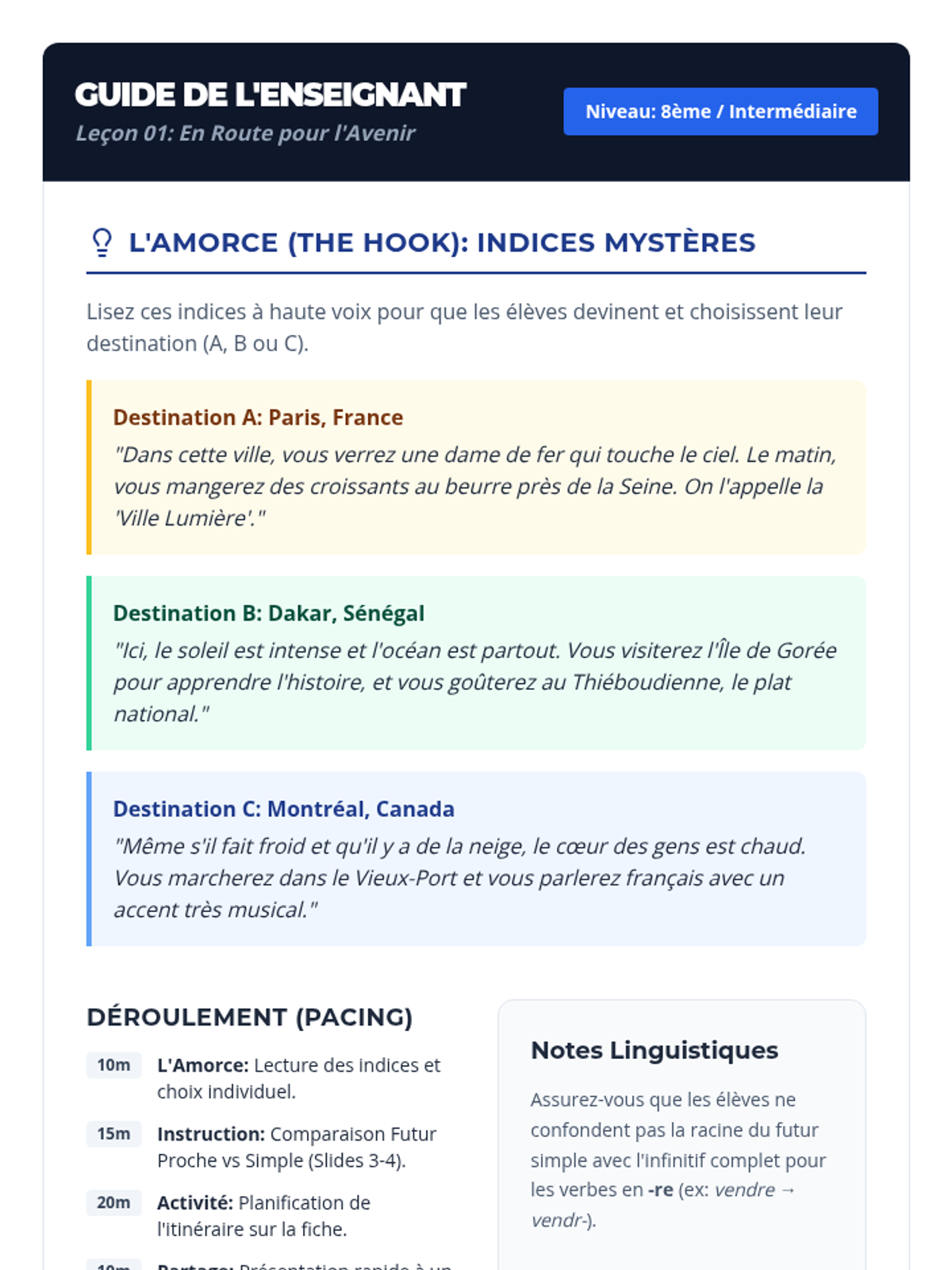
An immersive intermediate French sequence where students navigate travel scenarios in Paris, Dakar, and Montreal, mastering future, past, and conditional tenses through simulated real-world interactions.
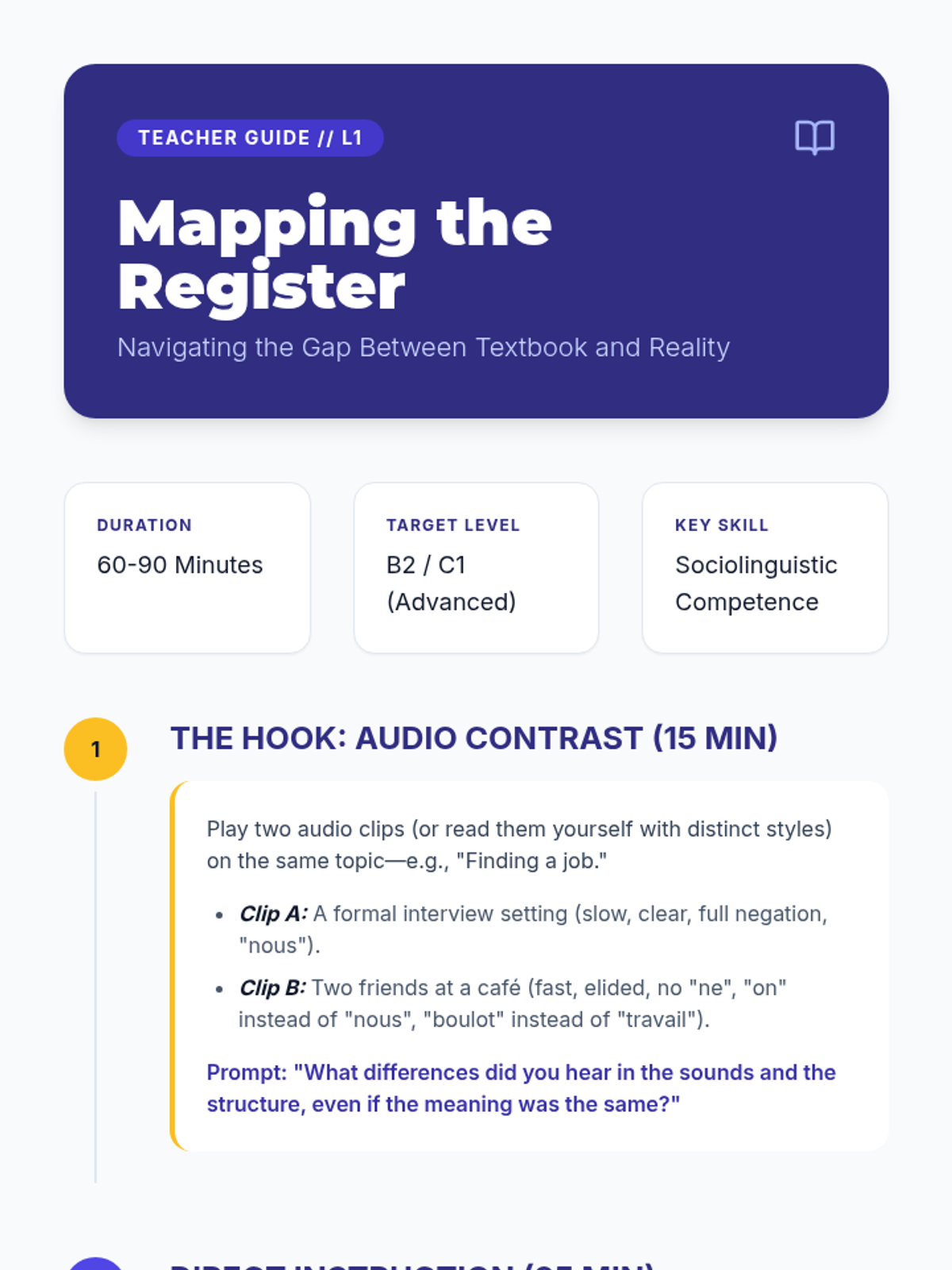
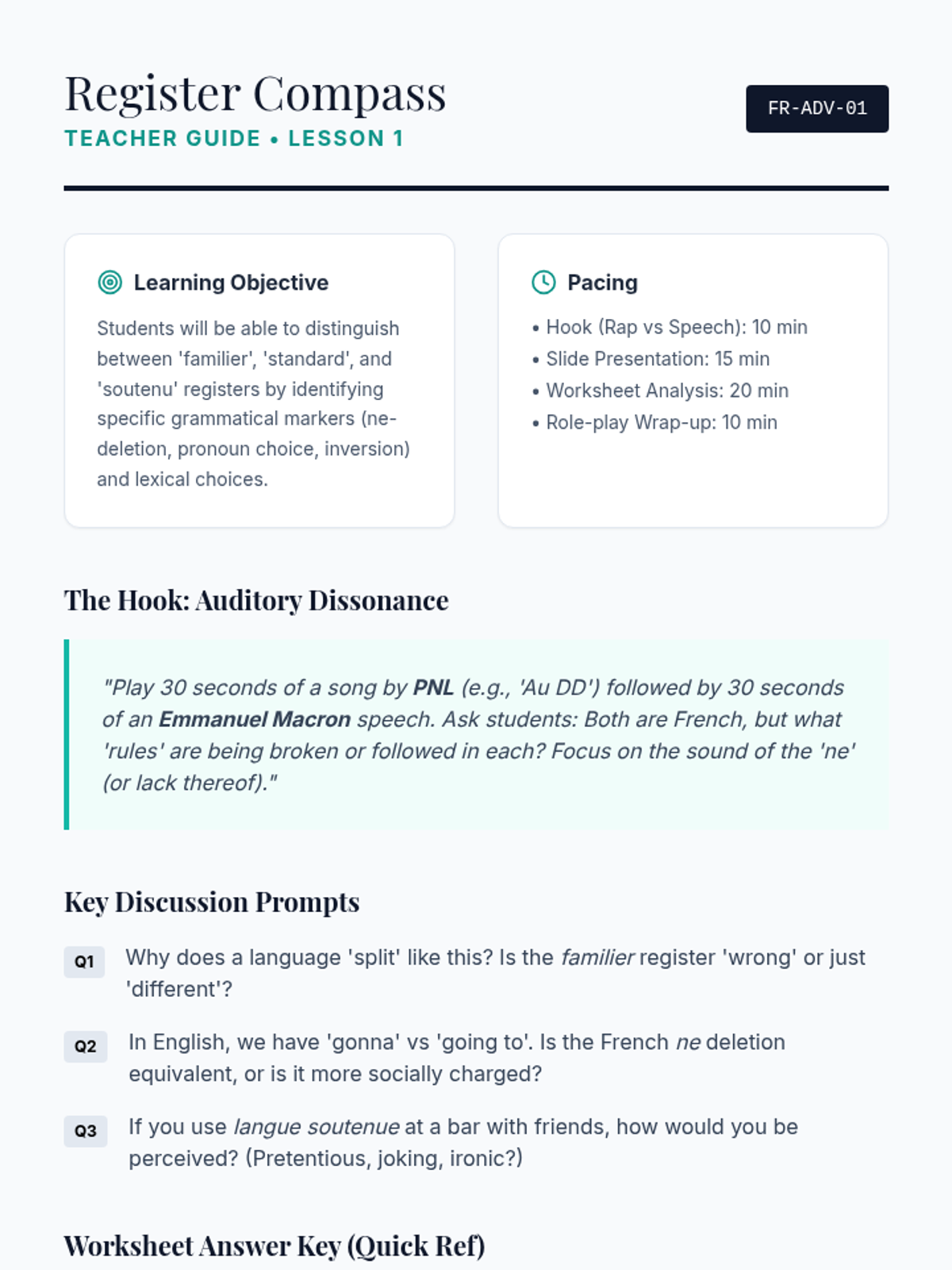
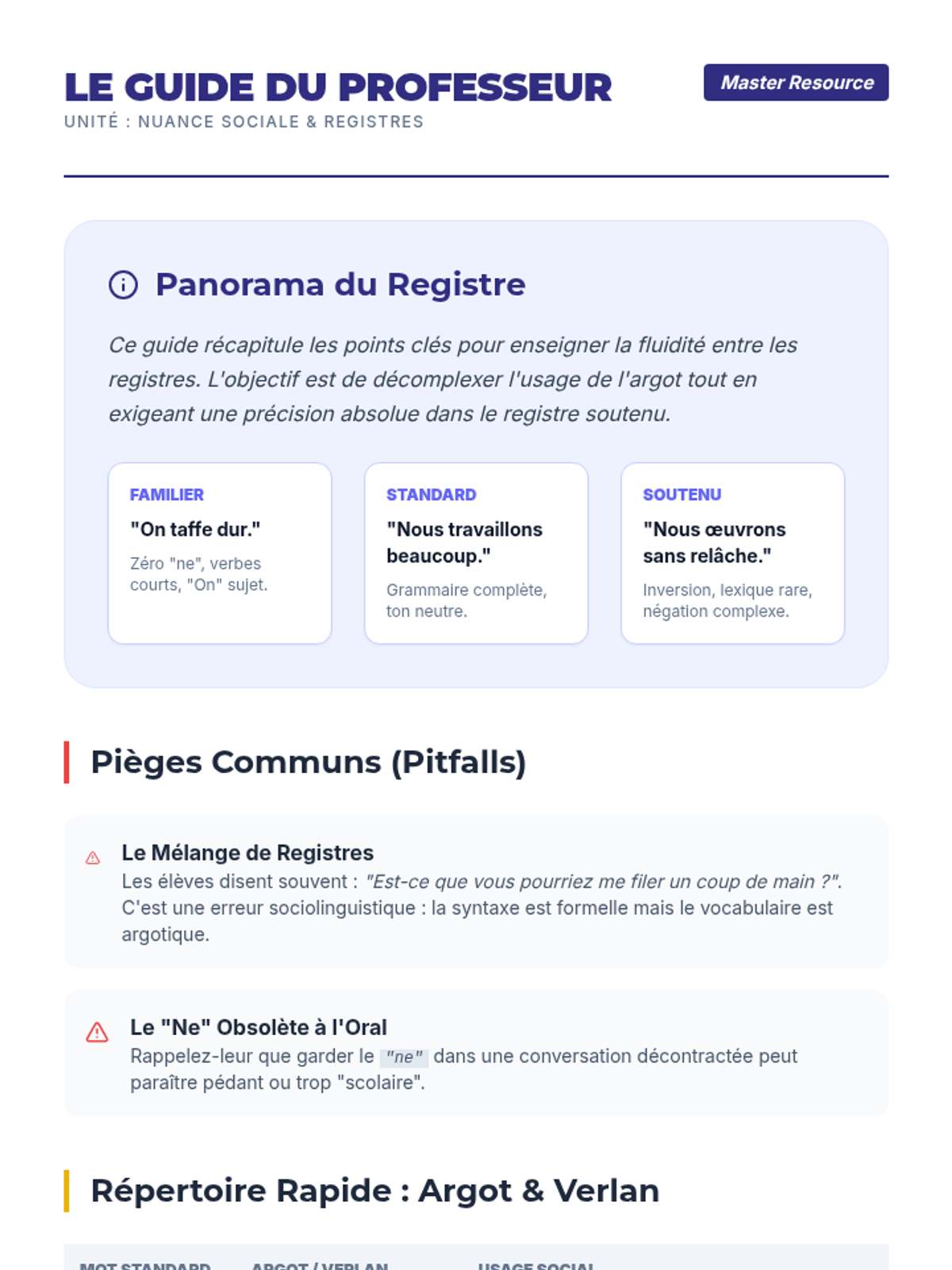
This advanced French sequence explores the sociolinguistic layers of the French language, from slang and Verlan to formal 'soutenu' register. Students develop the ability to navigate social contexts through grammatical precision and vocabulary choice, mastering the art of code-switching.
A comprehensive sequence for advanced French students focused on the sociolinguistic nuances of register, slang (argot), Verlan, and regionalisms. Students move beyond textbook grammar to achieve authentic cultural fluency by mastering the art of code-switching.
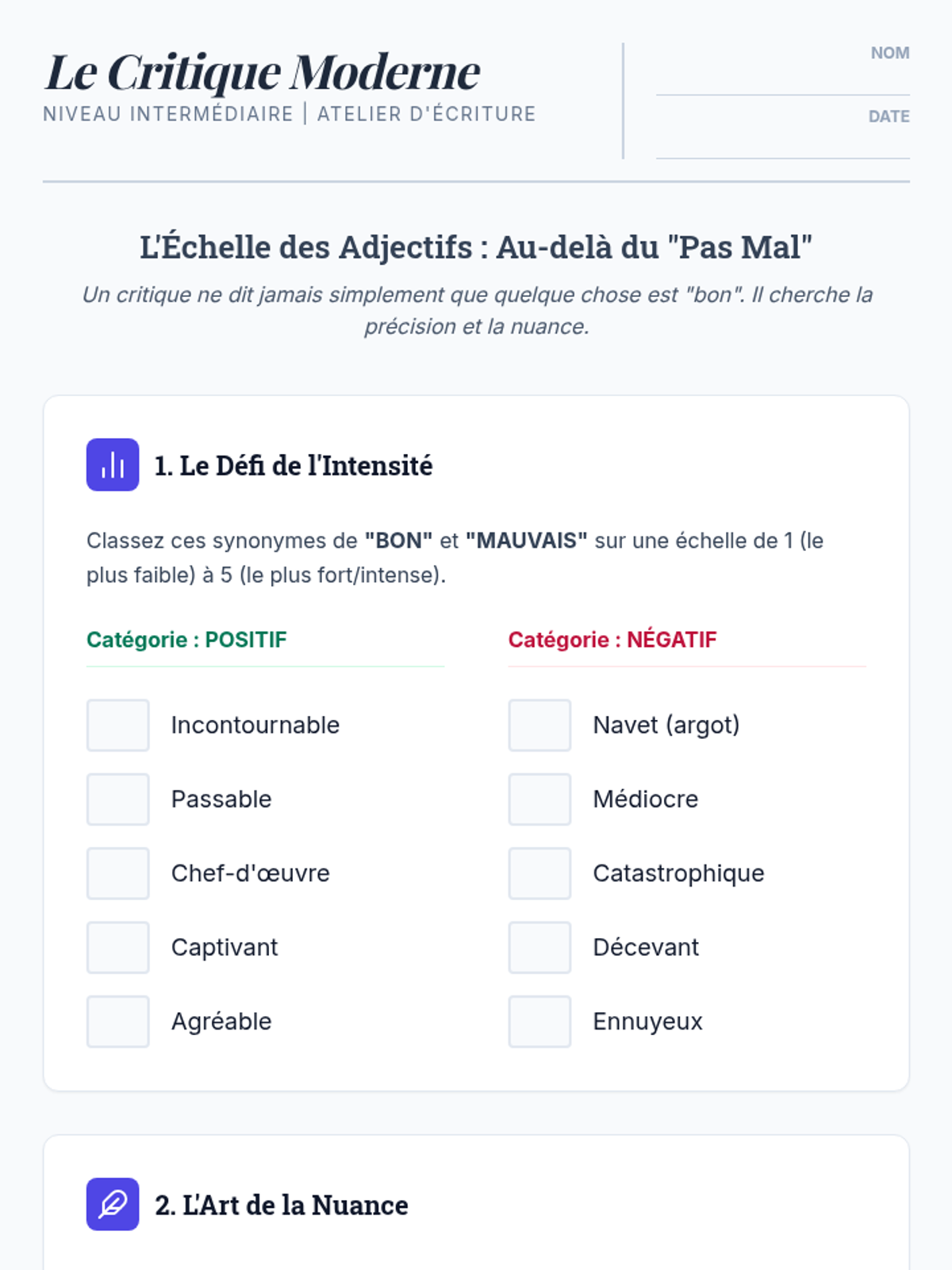
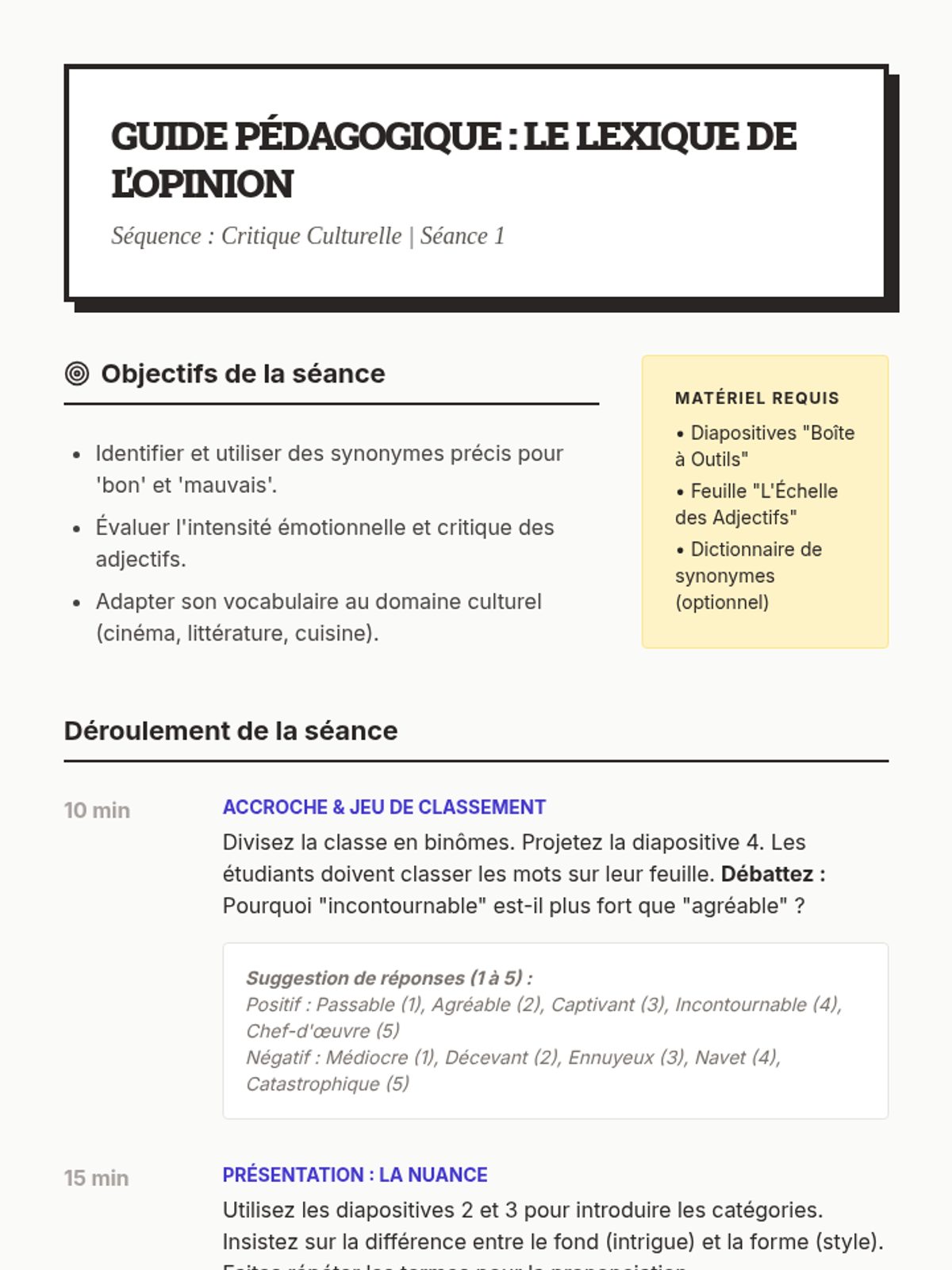
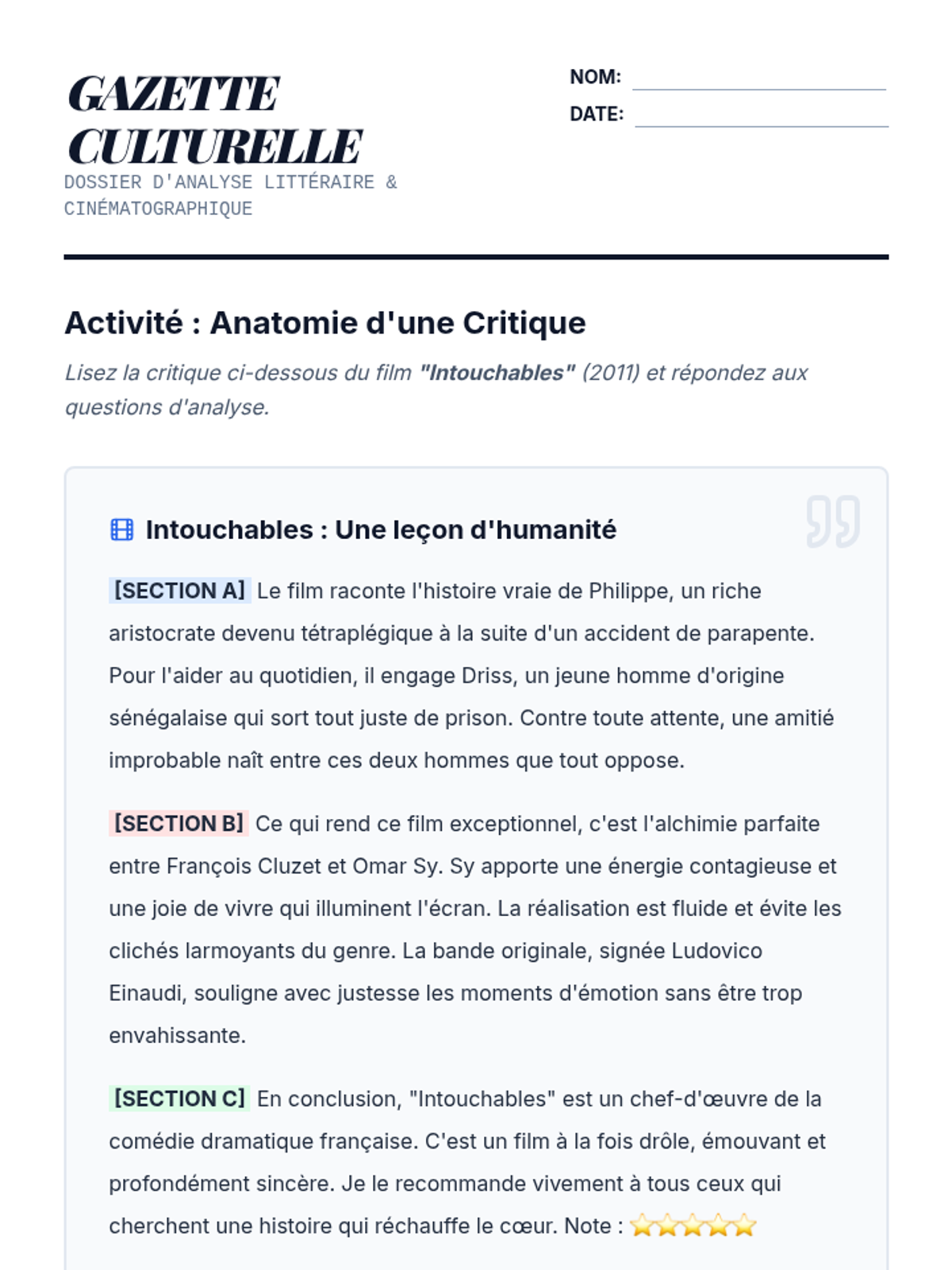
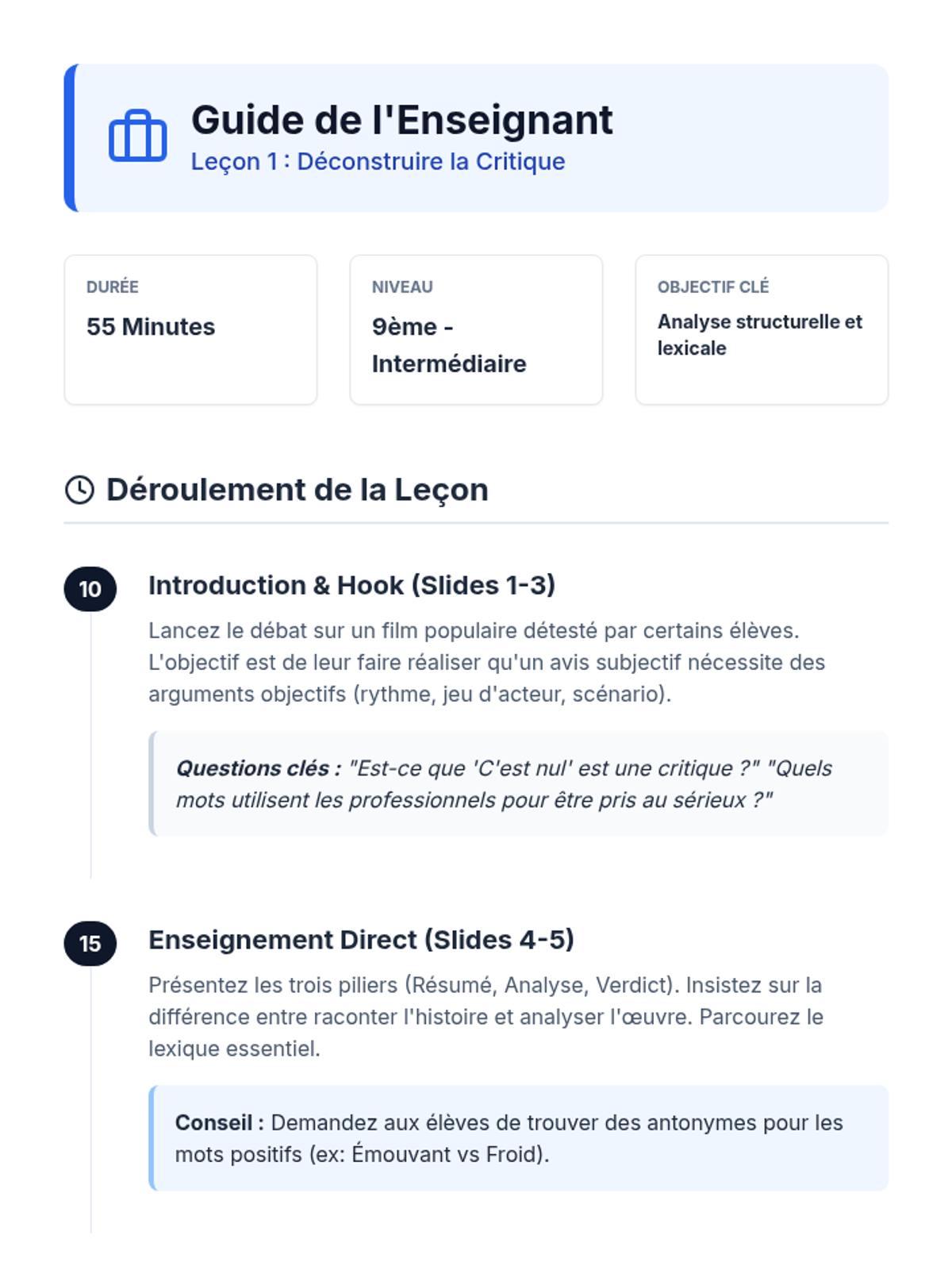
A sequence for intermediate French students focusing on the art of cultural criticism. Students develop advanced vocabulary and rhetorical skills to write professional-style reviews of books, movies, and restaurants.
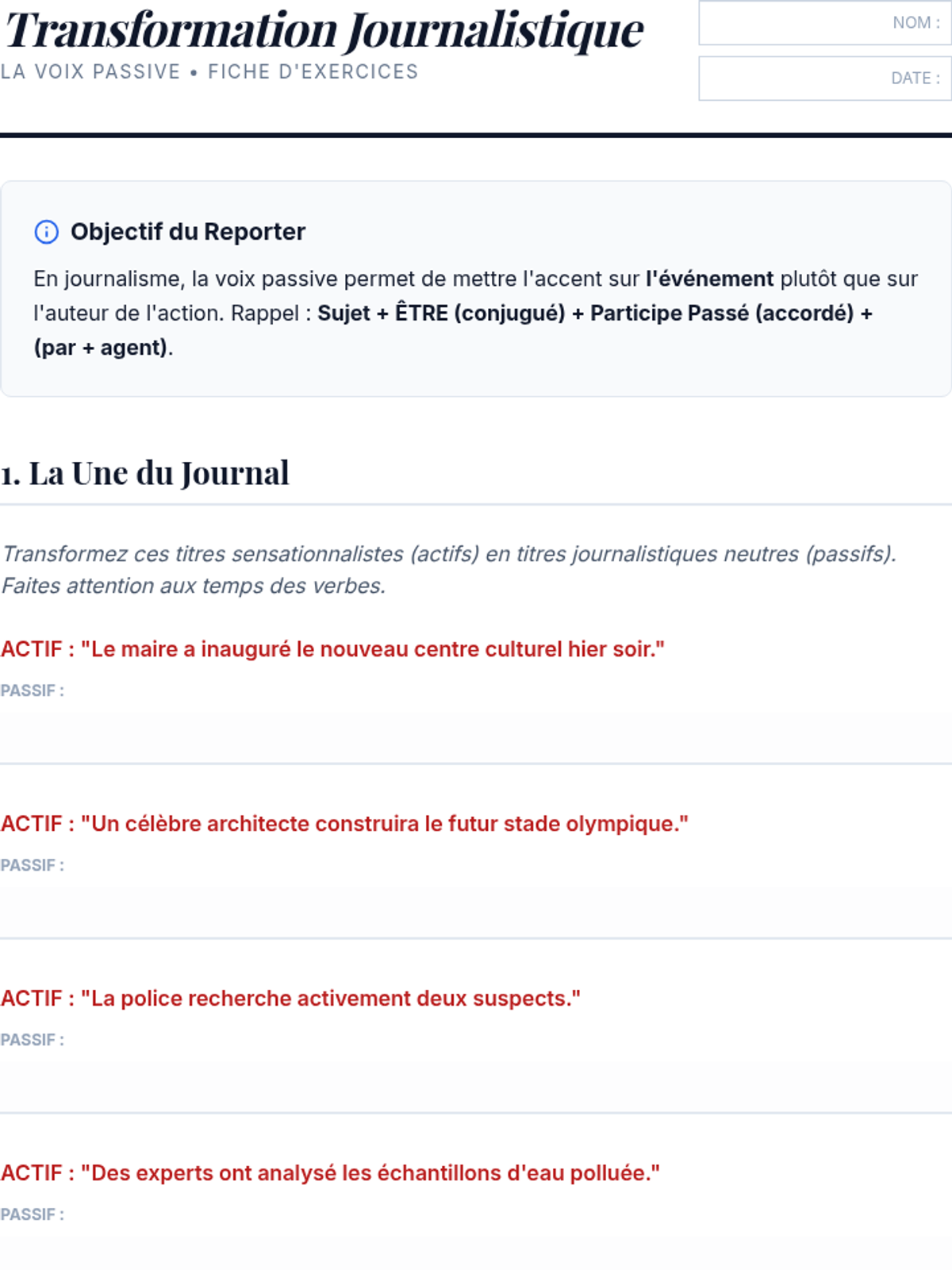
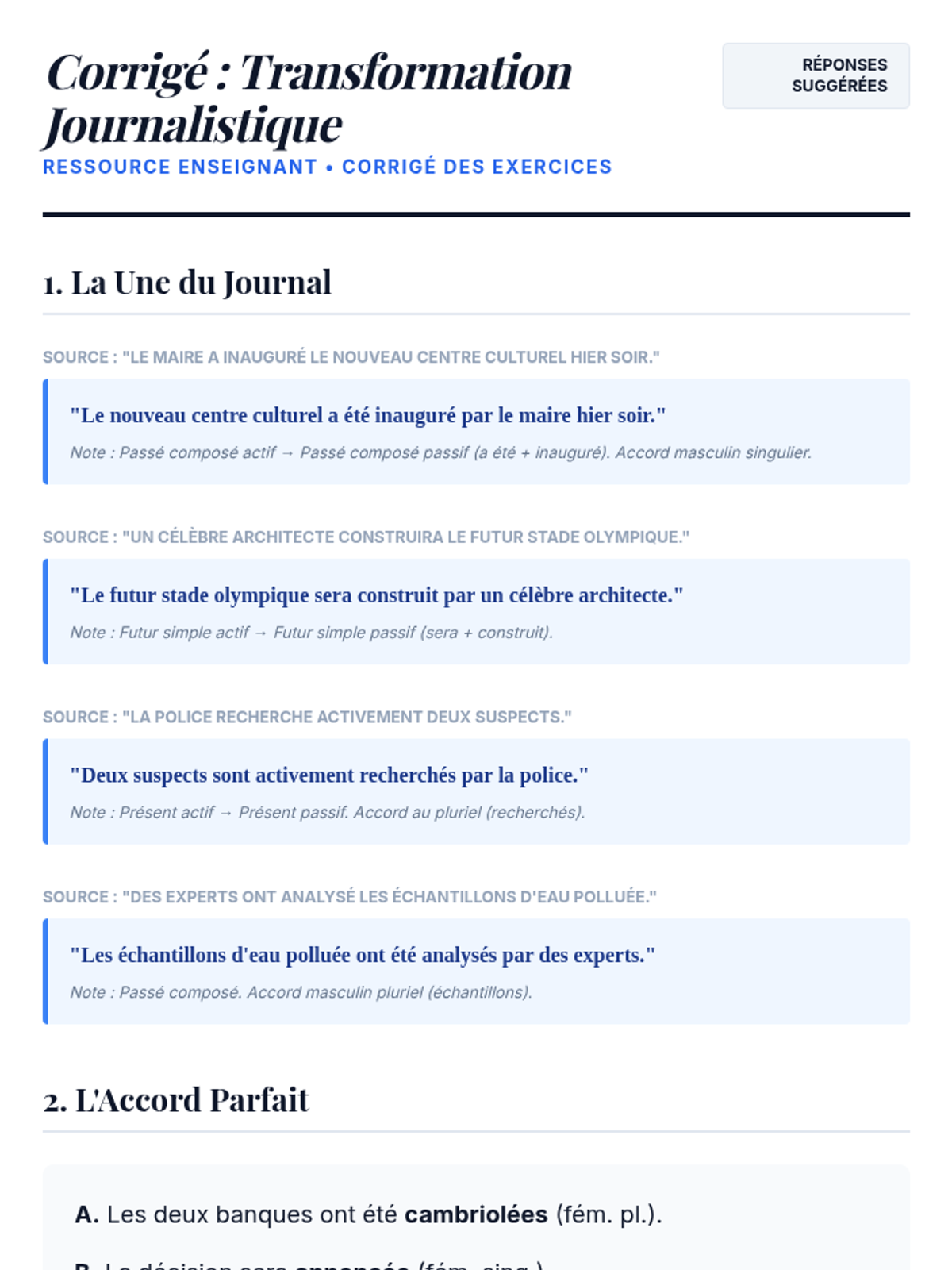
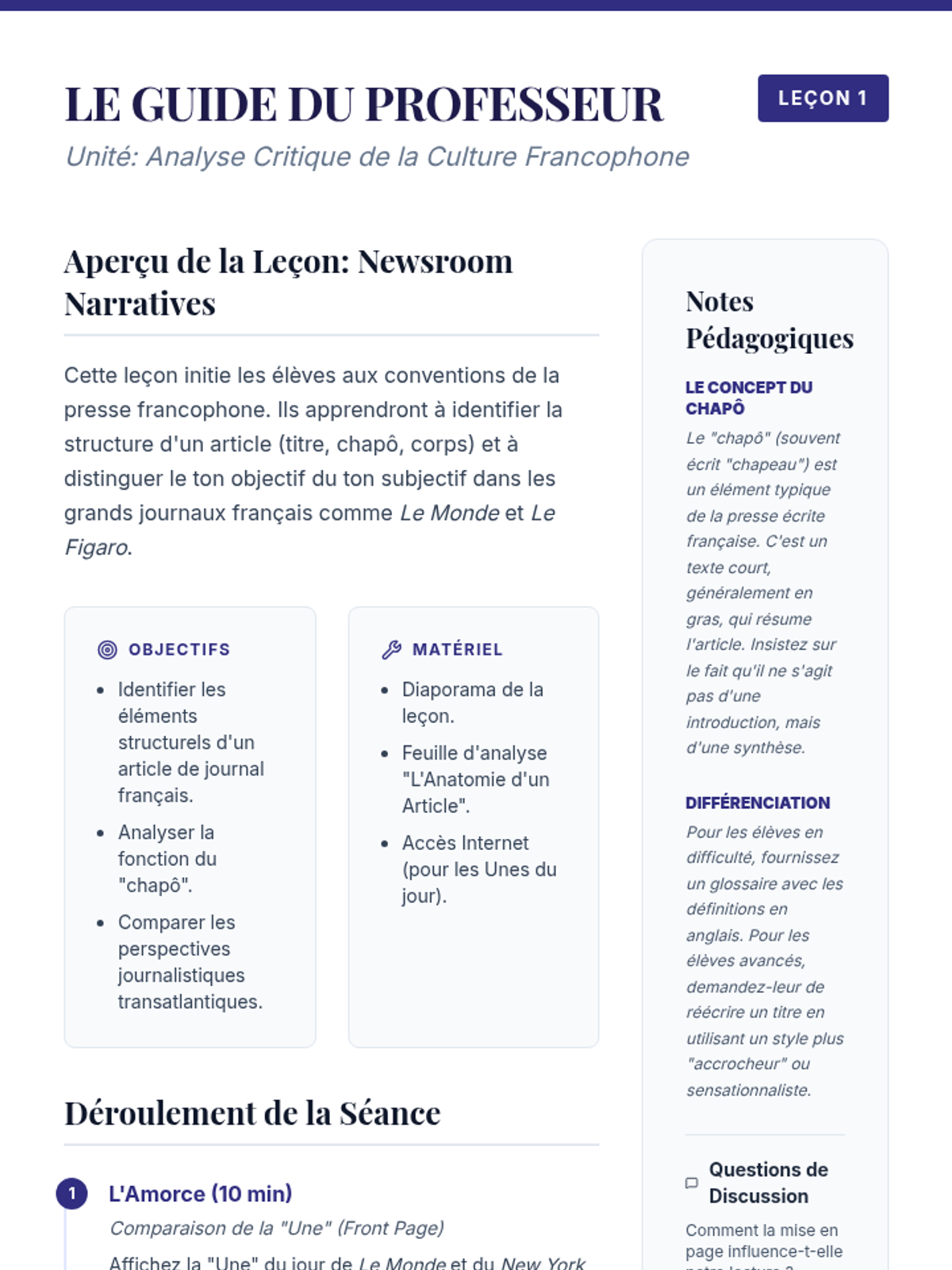
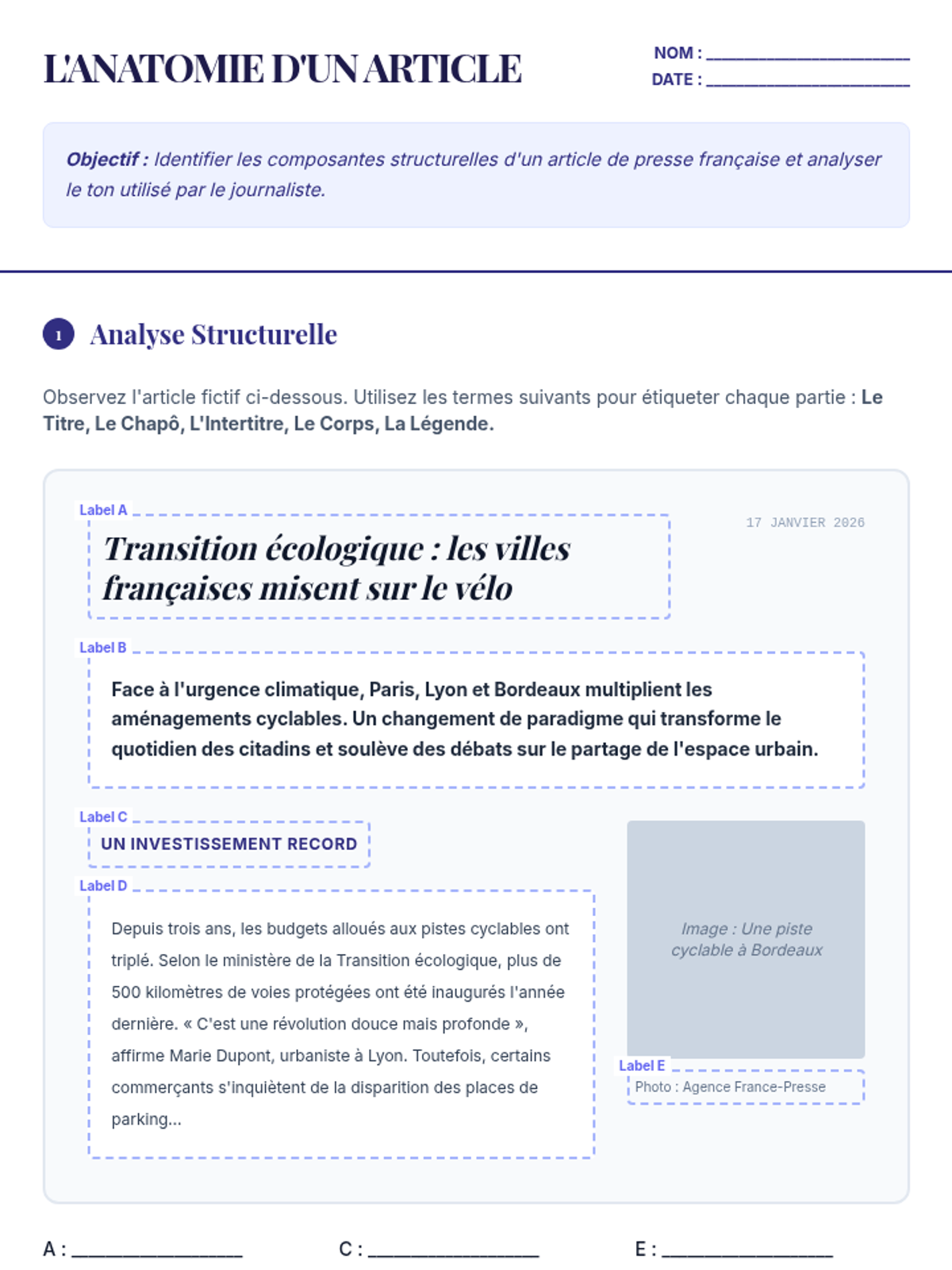
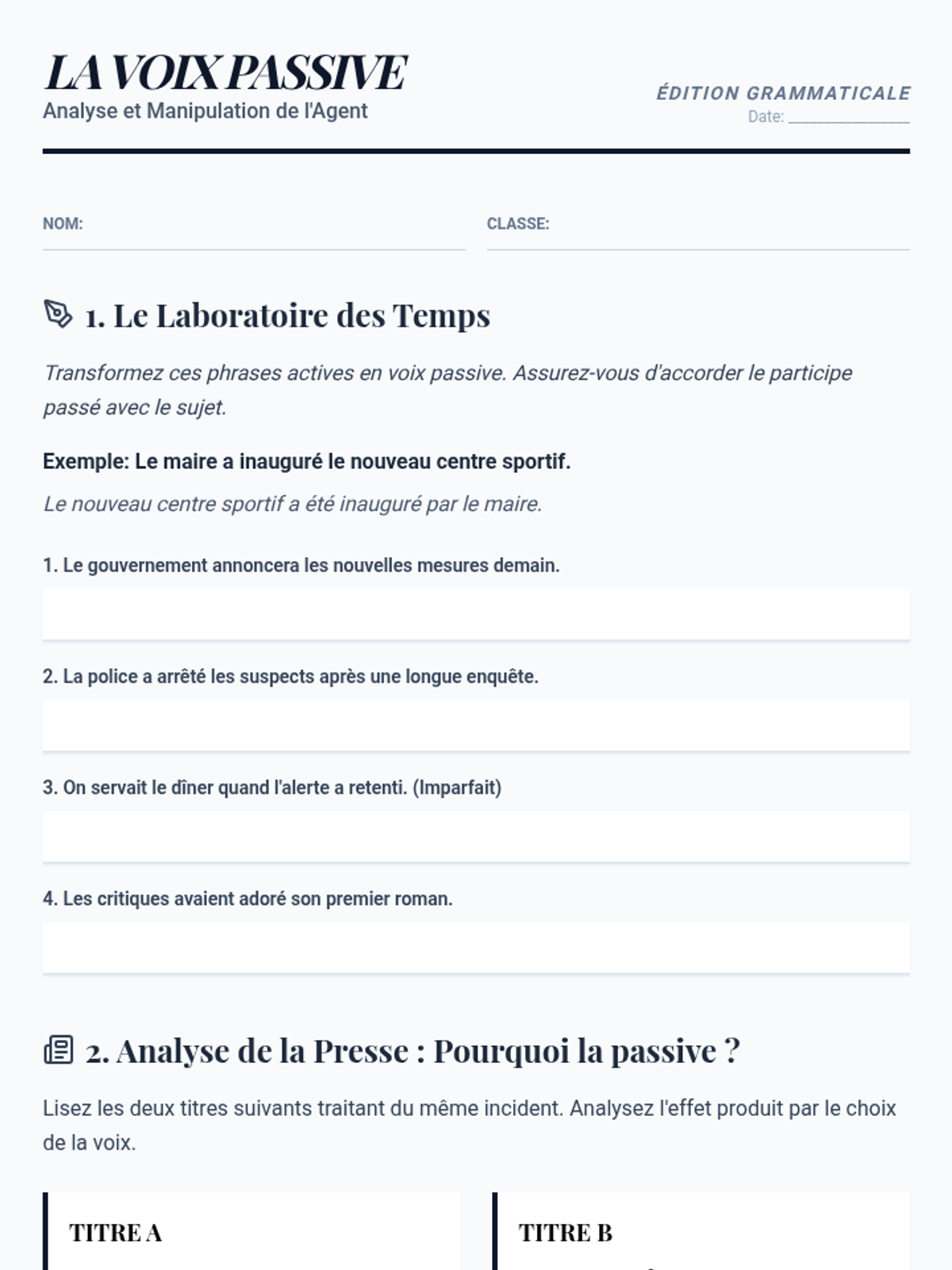
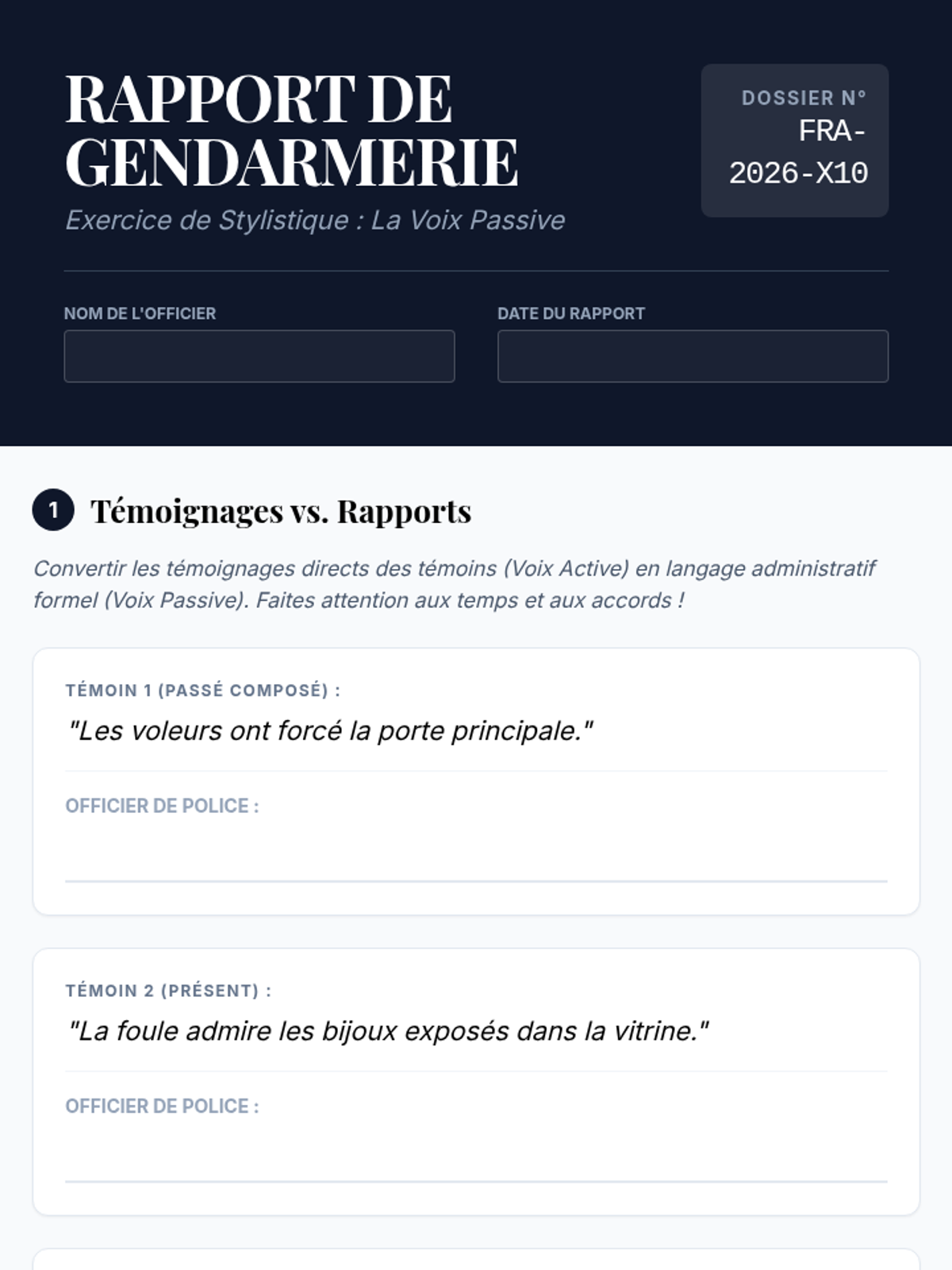
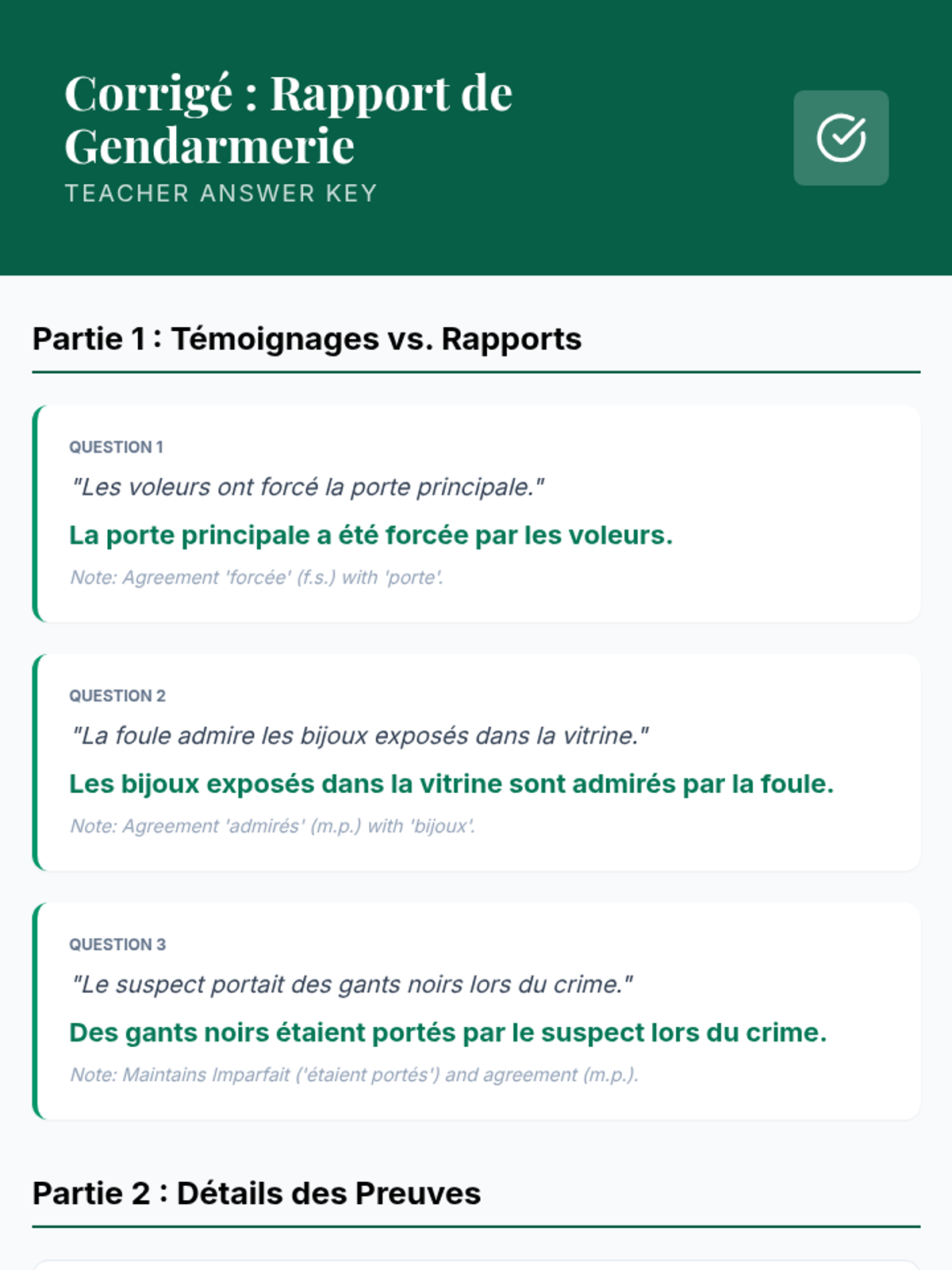
A comprehensive sequence for intermediate French students focused on the mechanics of journalistic writing, including the passive voice, indirect discourse, and objective synthesis. Students assume the role of reporters to master formal, fact-based communication.
This sequence prepares intermediate French students for the professional world by mastering the nuances of Francophone business etiquette. Students will transition from informal language to high-register formal writing, culminating in a professional application portfolio.
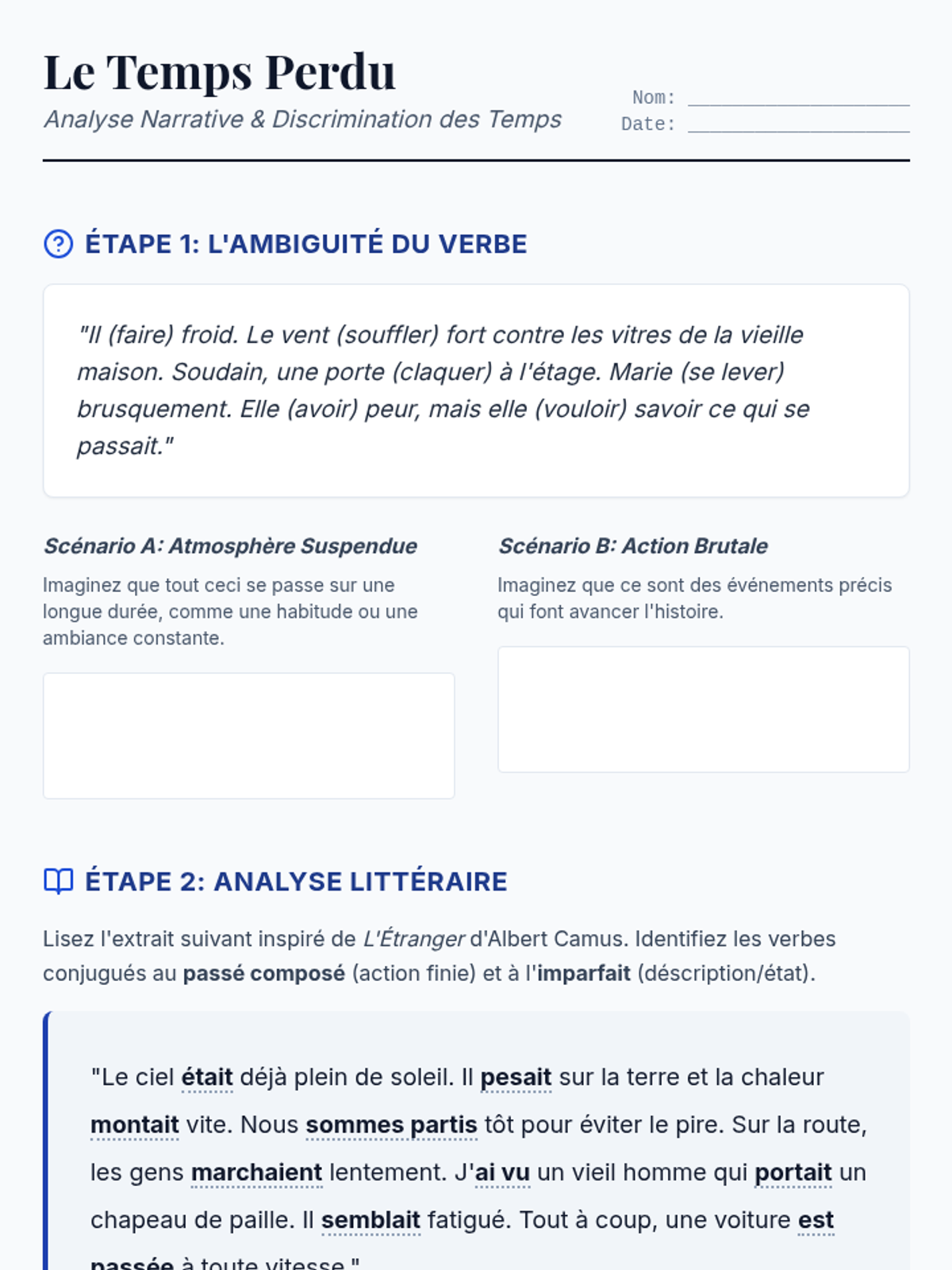
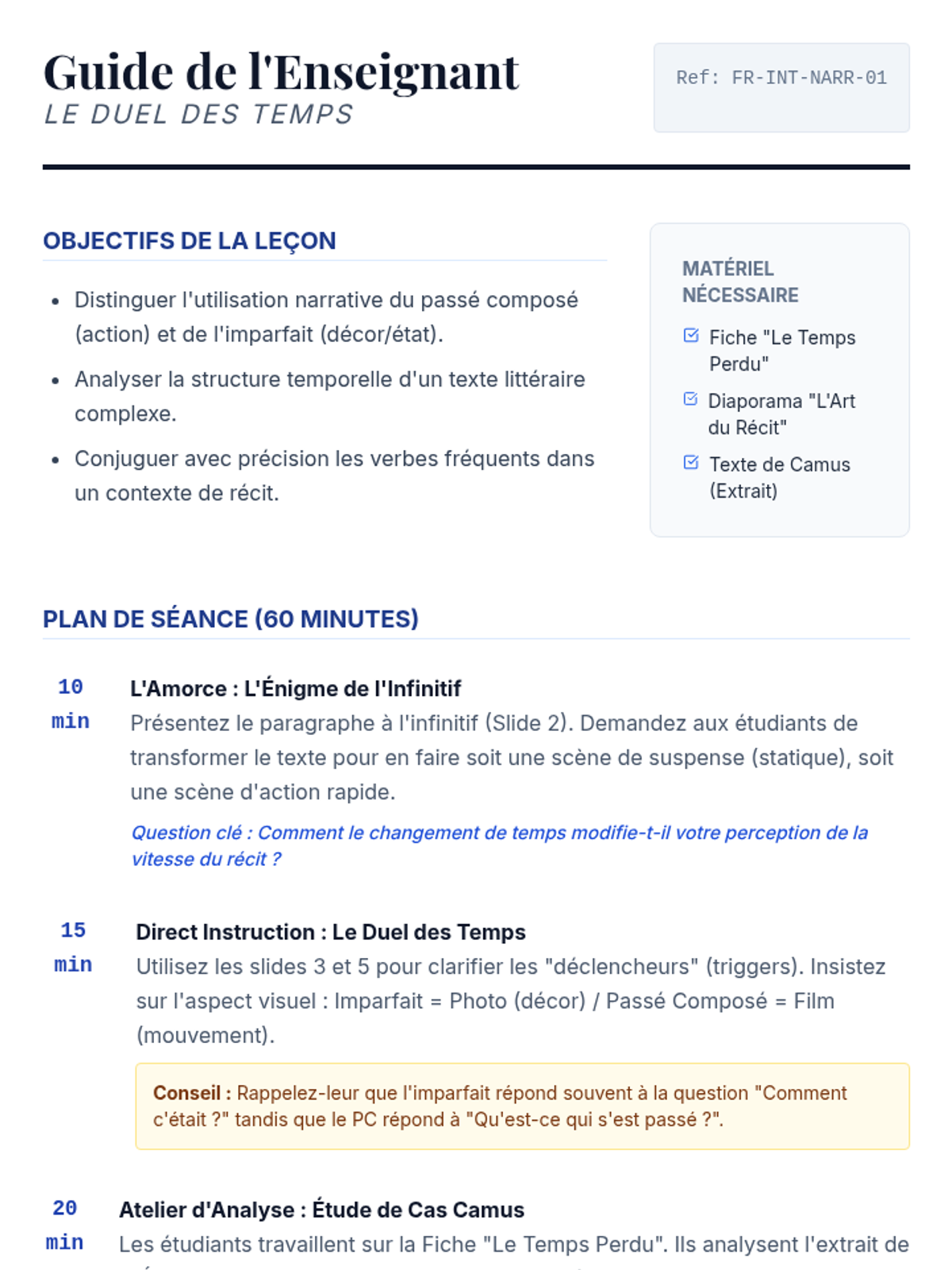
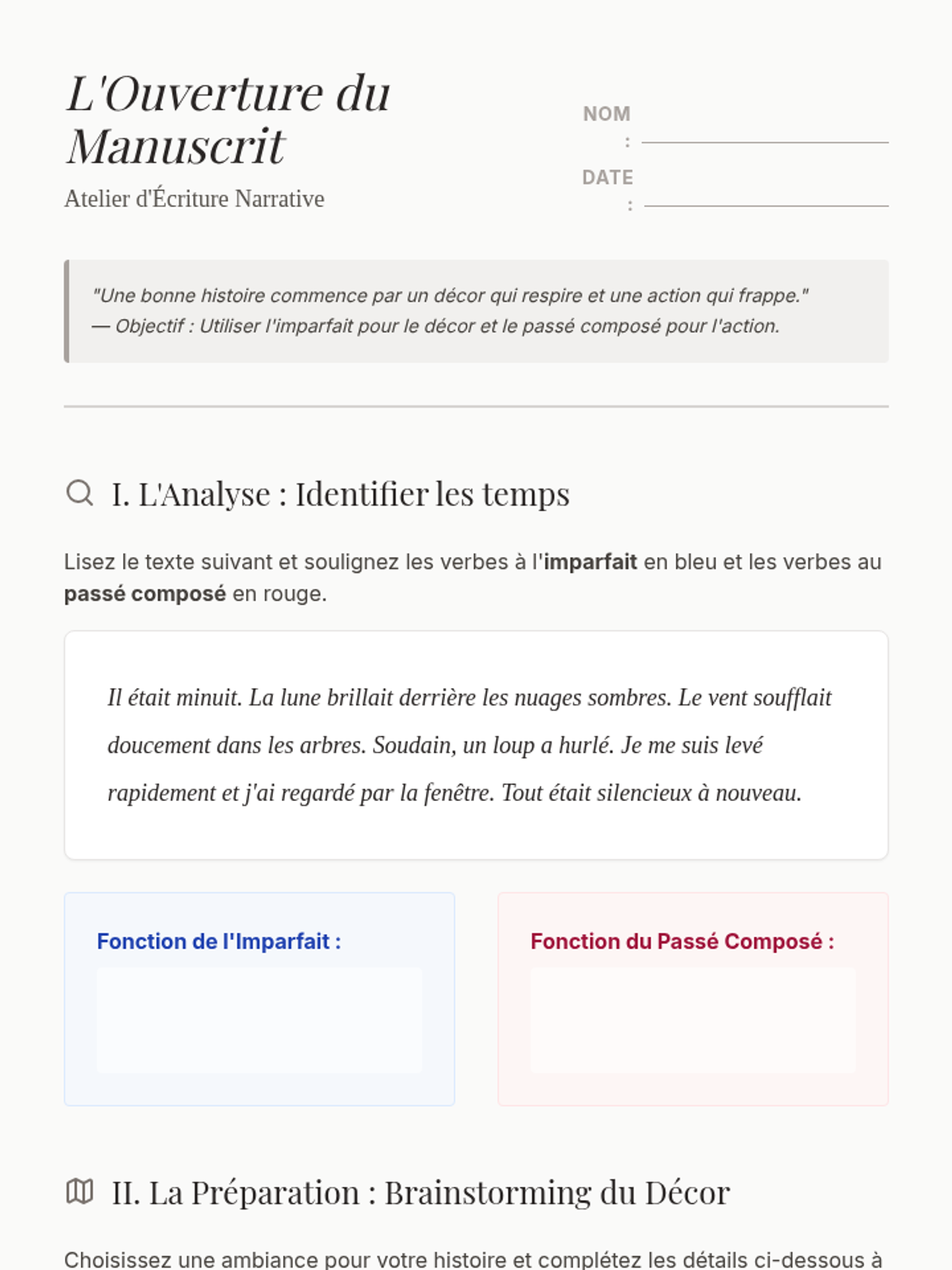
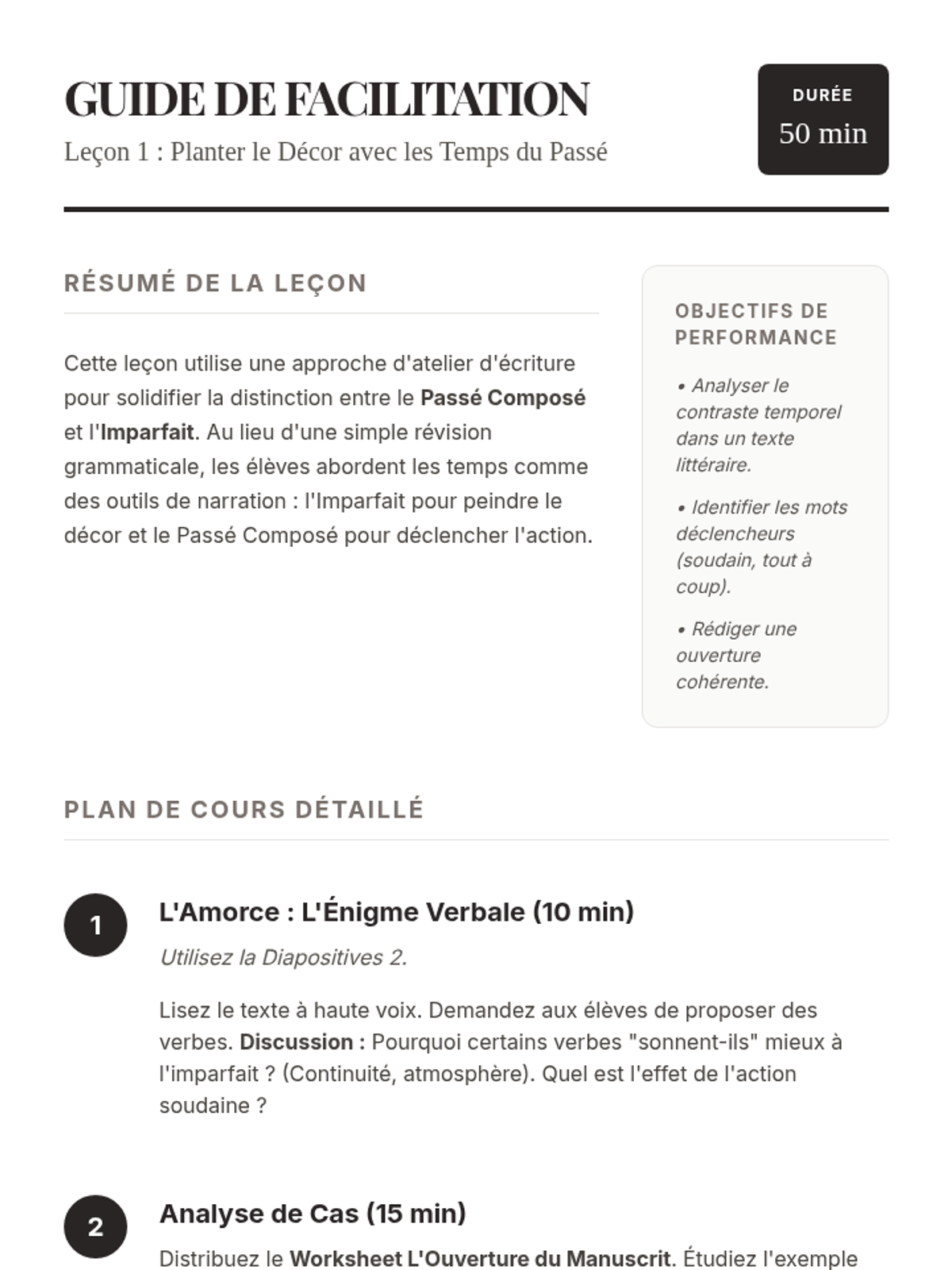
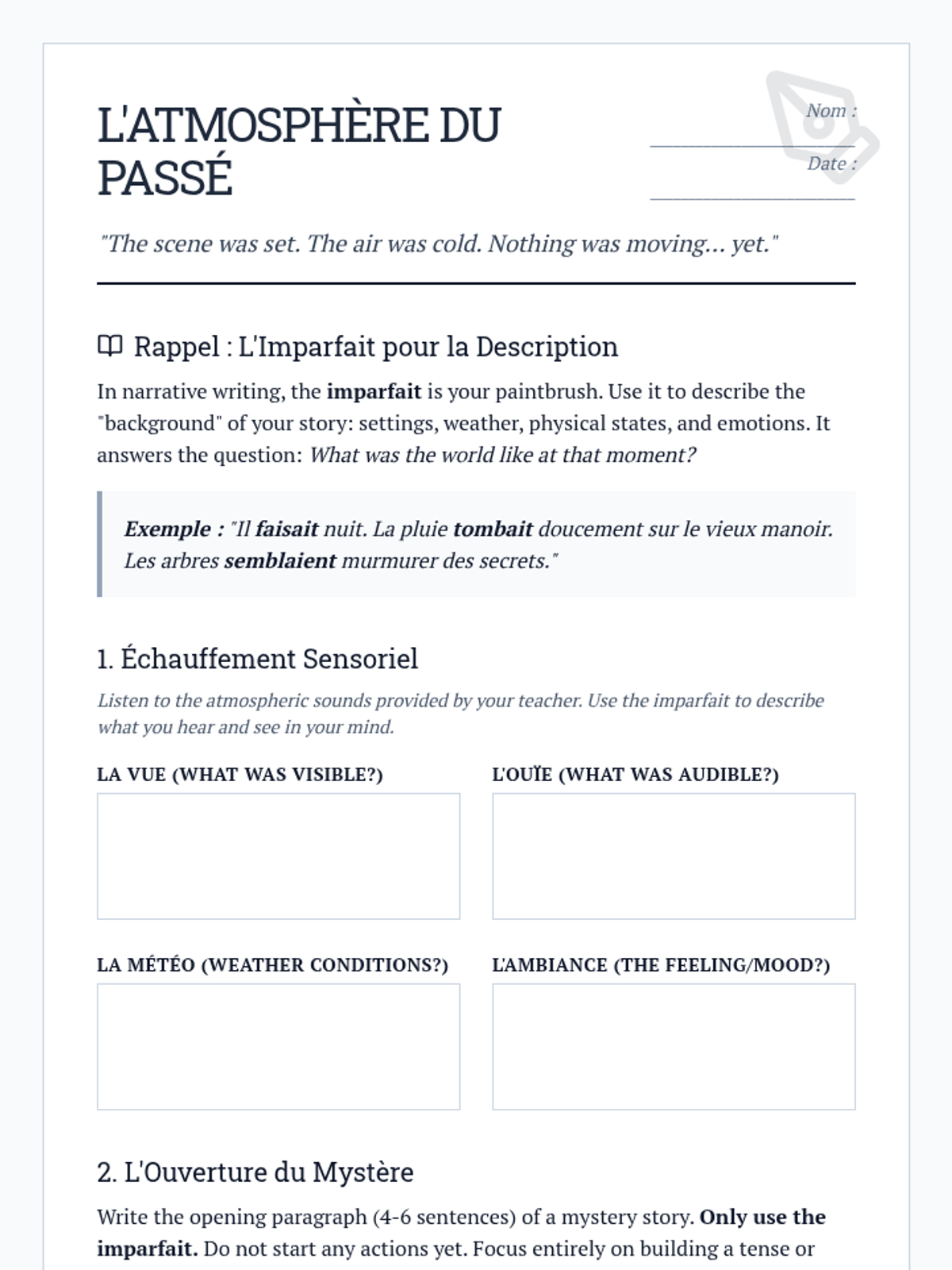
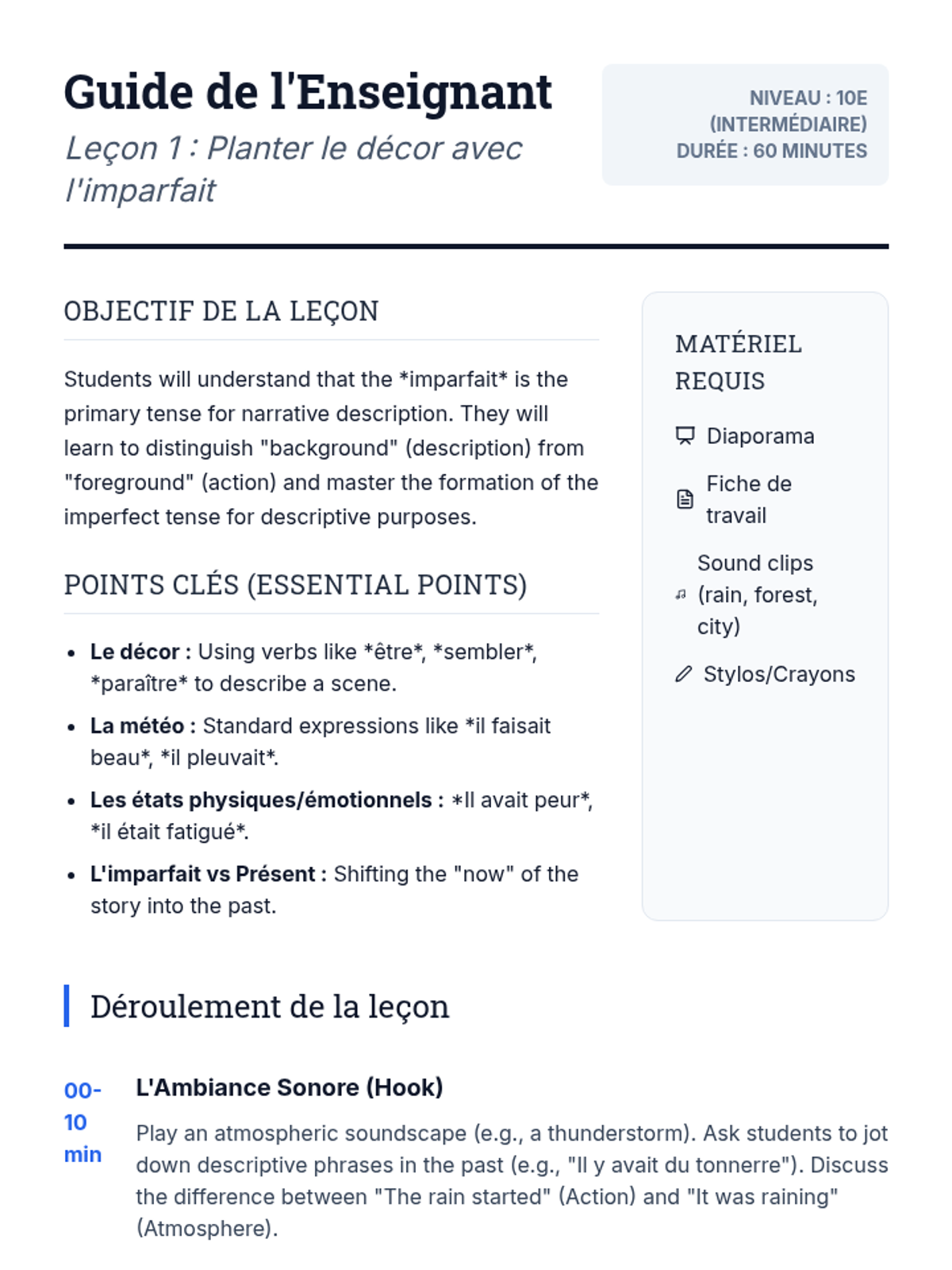
A comprehensive sequence for intermediate French students focused on mastering narrative tenses (passé composé and imparfait) and descriptive writing techniques in French literature. Students progress from tense discrimination to crafting a full original short story.
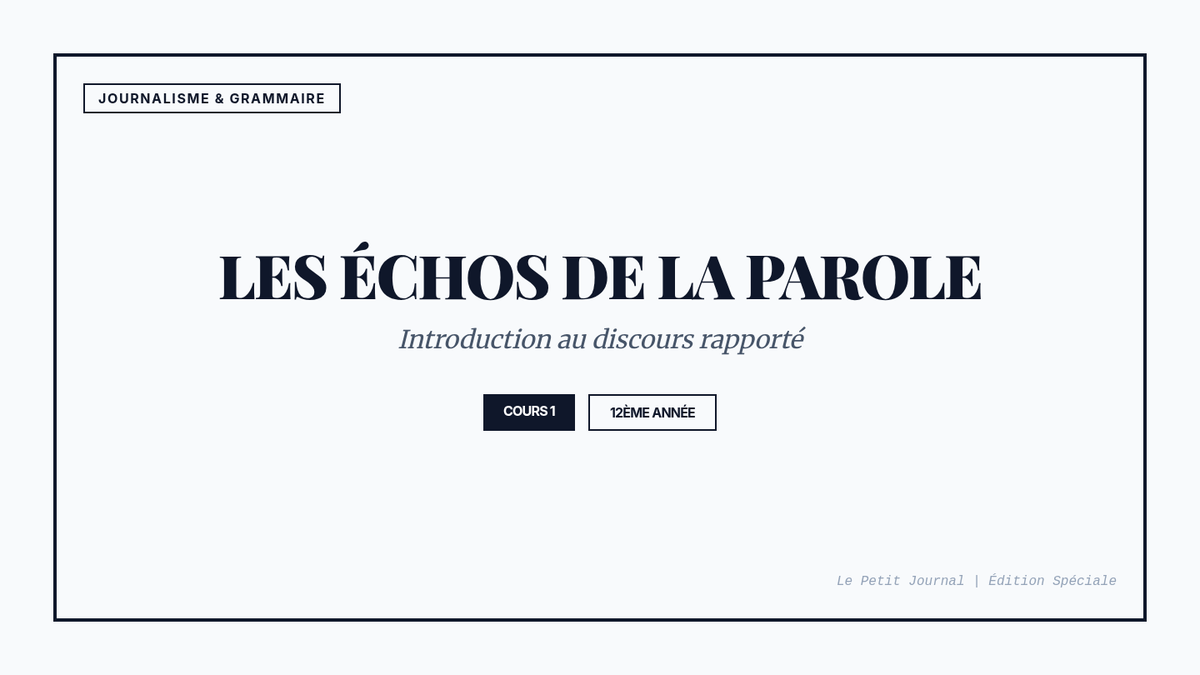
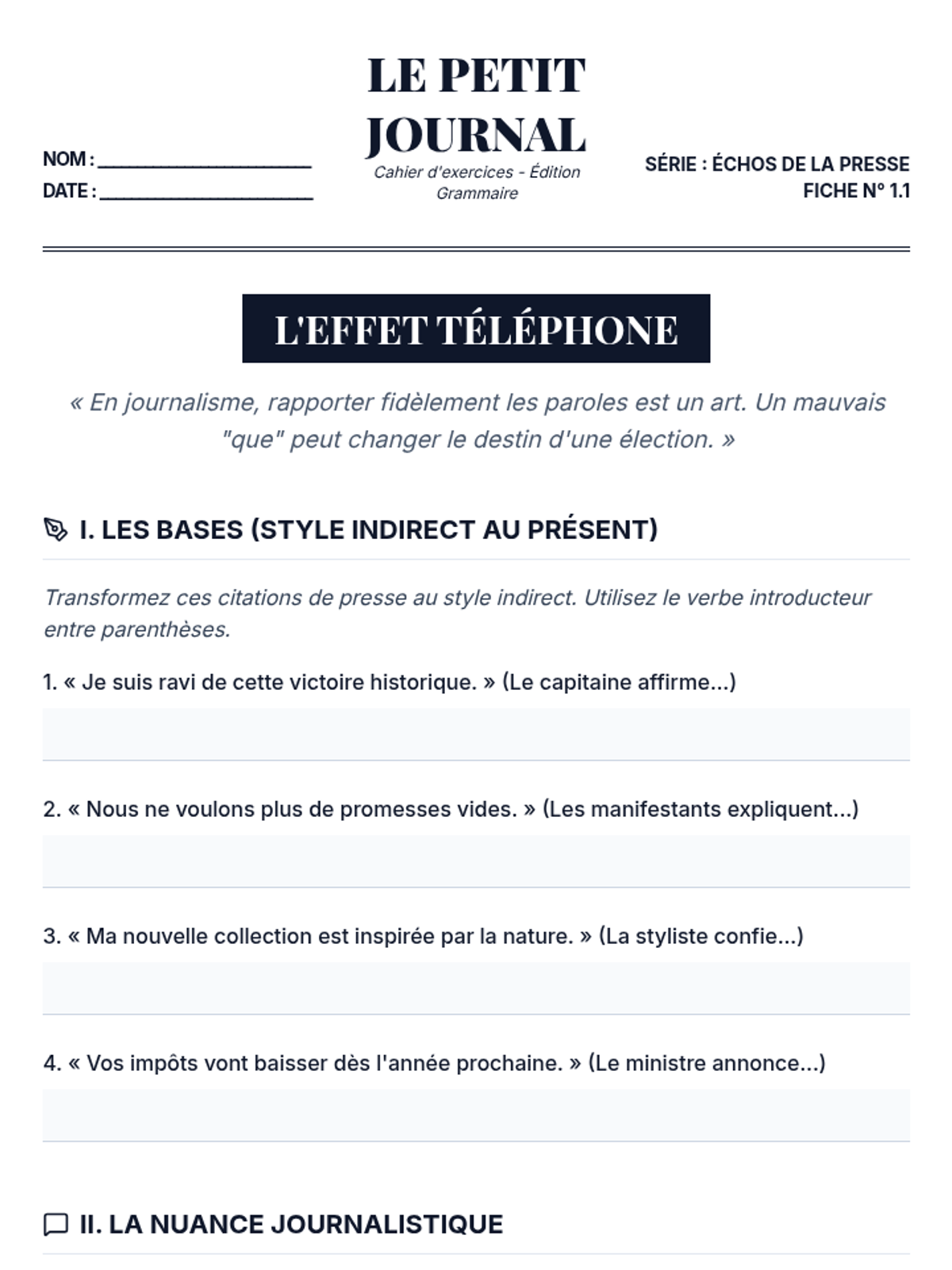
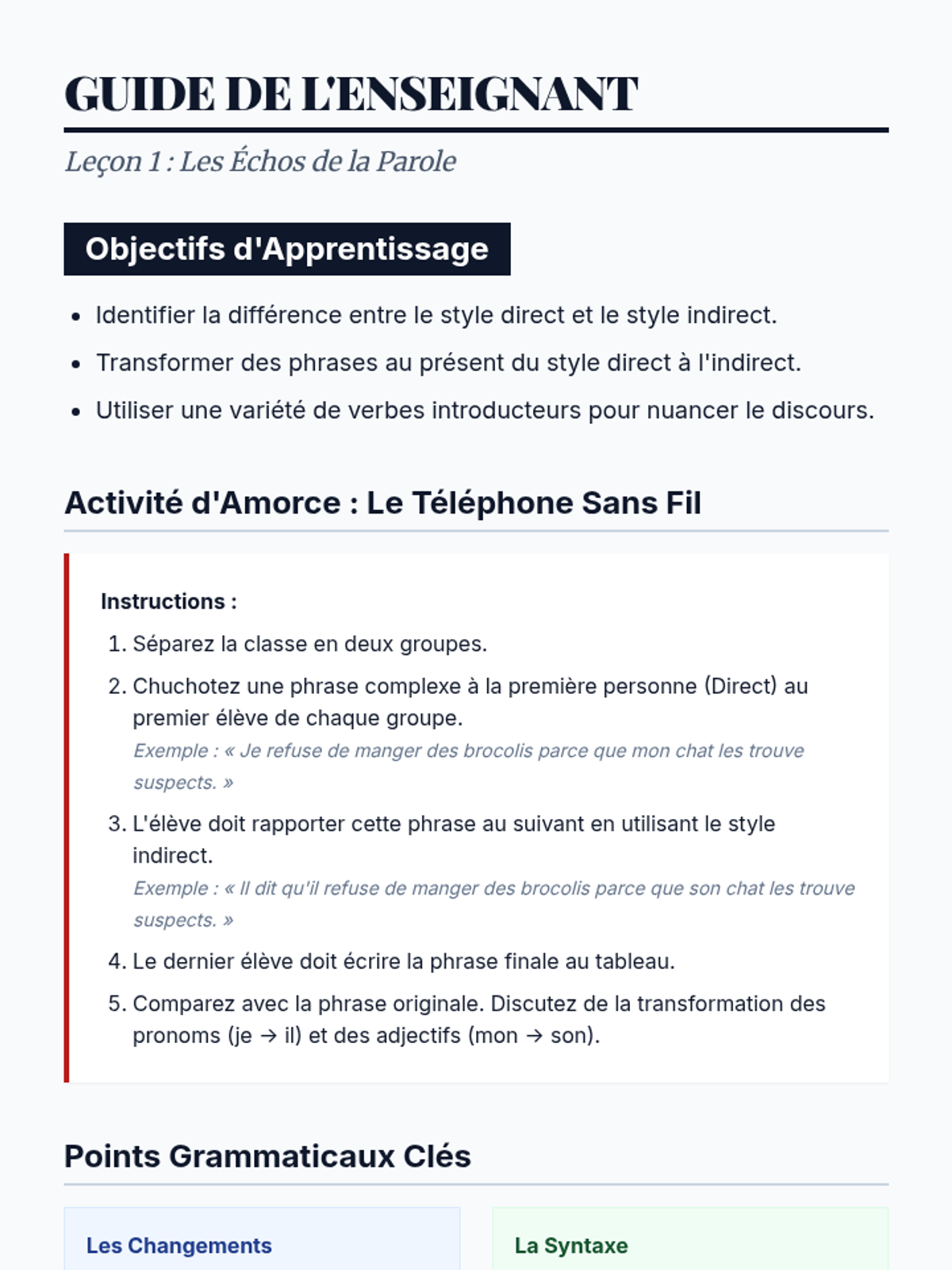
This sequence bridges grammar and media literacy by focusing on Reported Speech (discours rapporté) within the context of journalism. Students learn how to relay information, interviews, and events accurately, managing the complex tense changes required in French indirect speech.
A high-level intermediate French writing unit focused on media literacy, cultural synthesis, and persuasive writing. Students analyze journalistic styles from the Francophone world to develop their own critical voices in French.
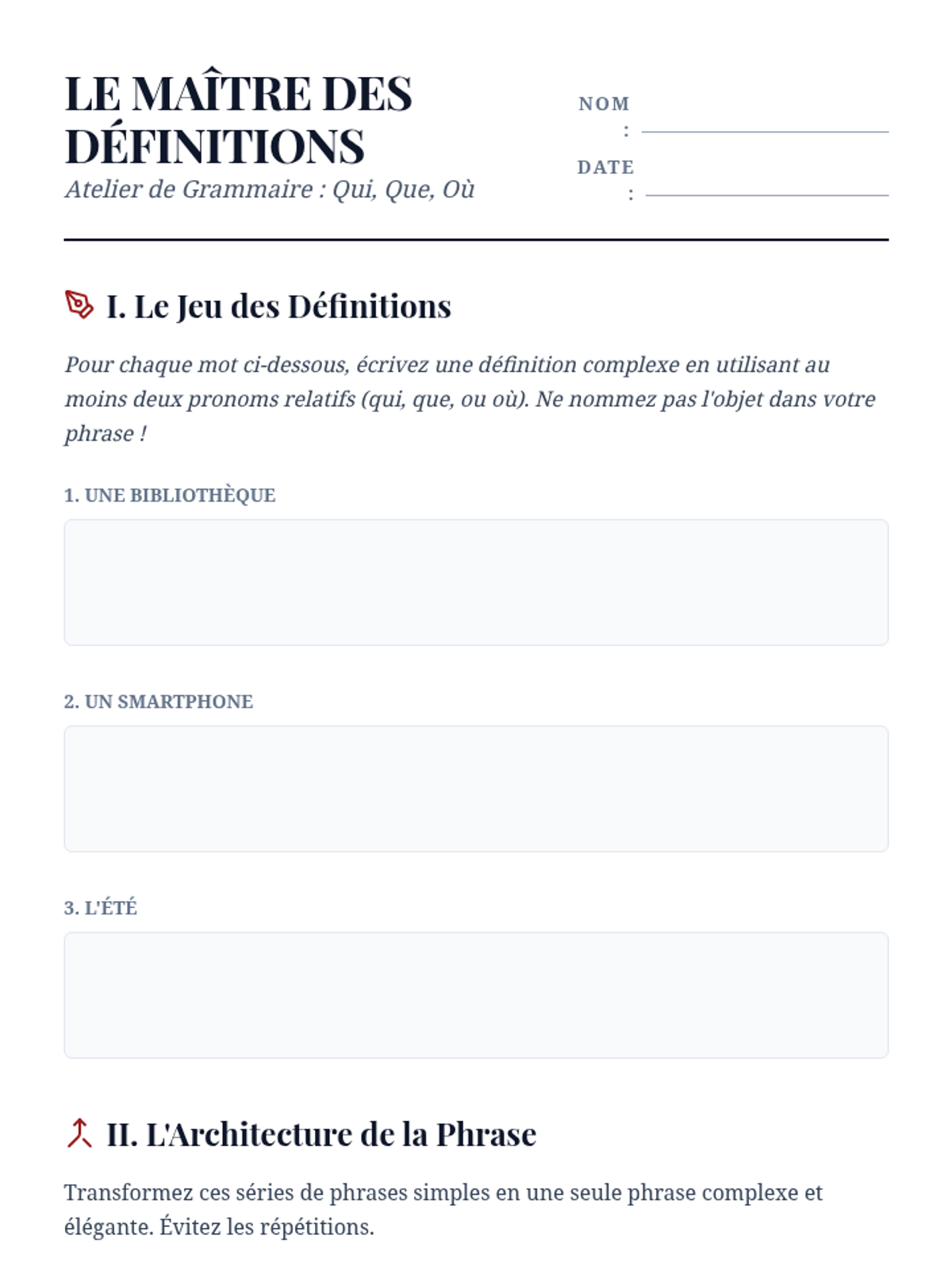
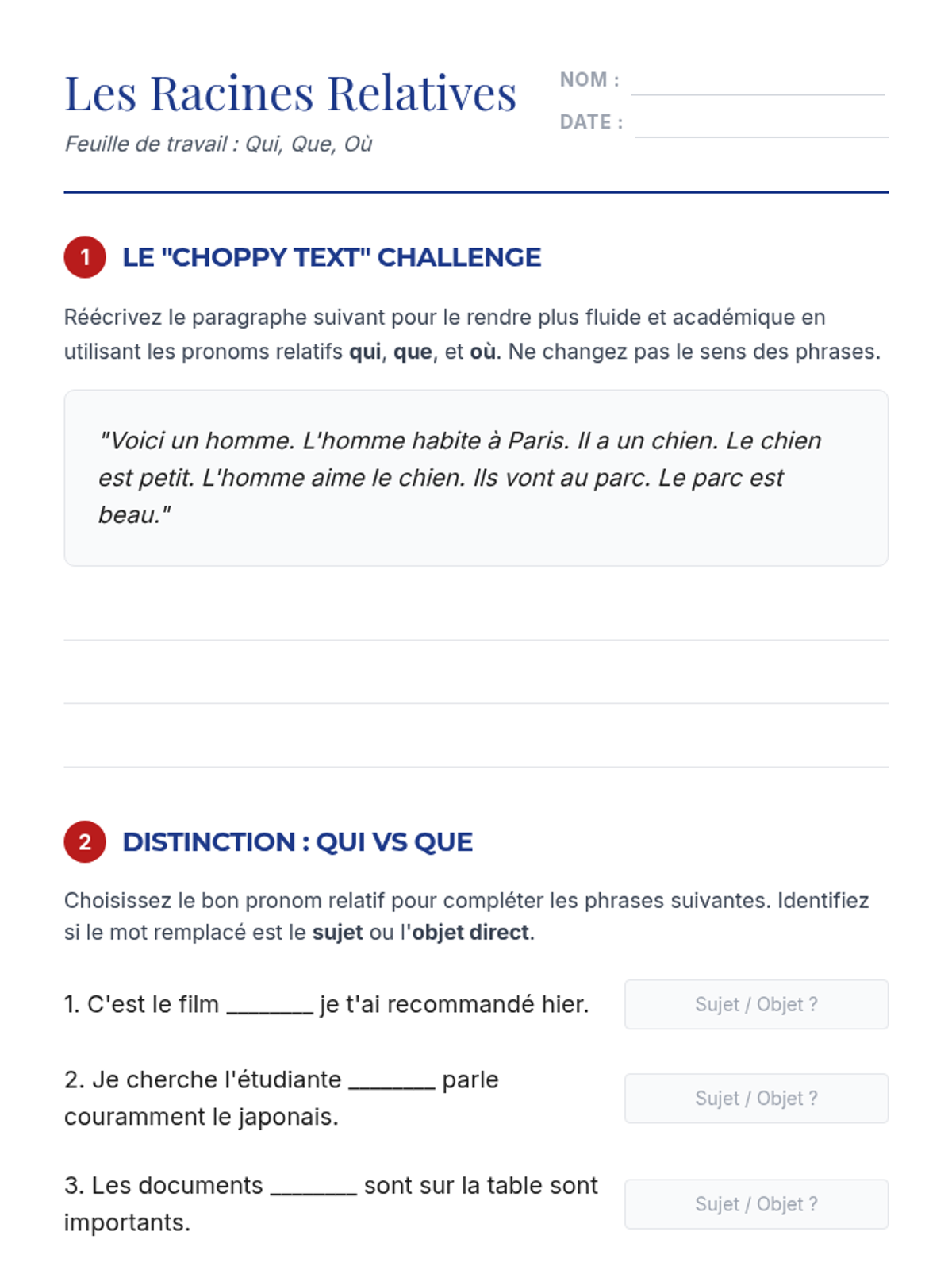
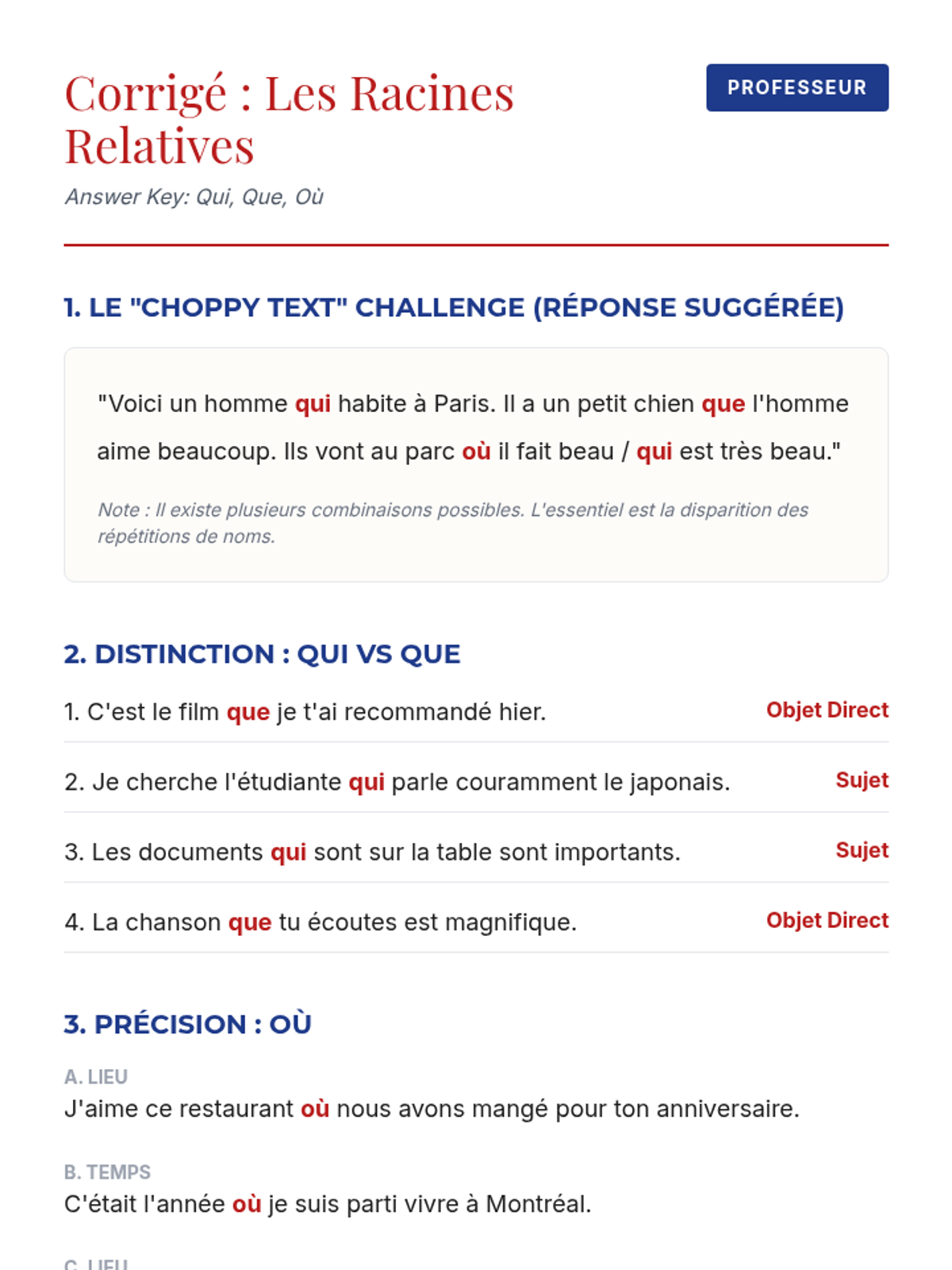
A comprehensive French writing sequence for 10th graders focusing on complex syntax (relative pronouns) and vivid descriptive techniques to move beyond basic sentence structures.
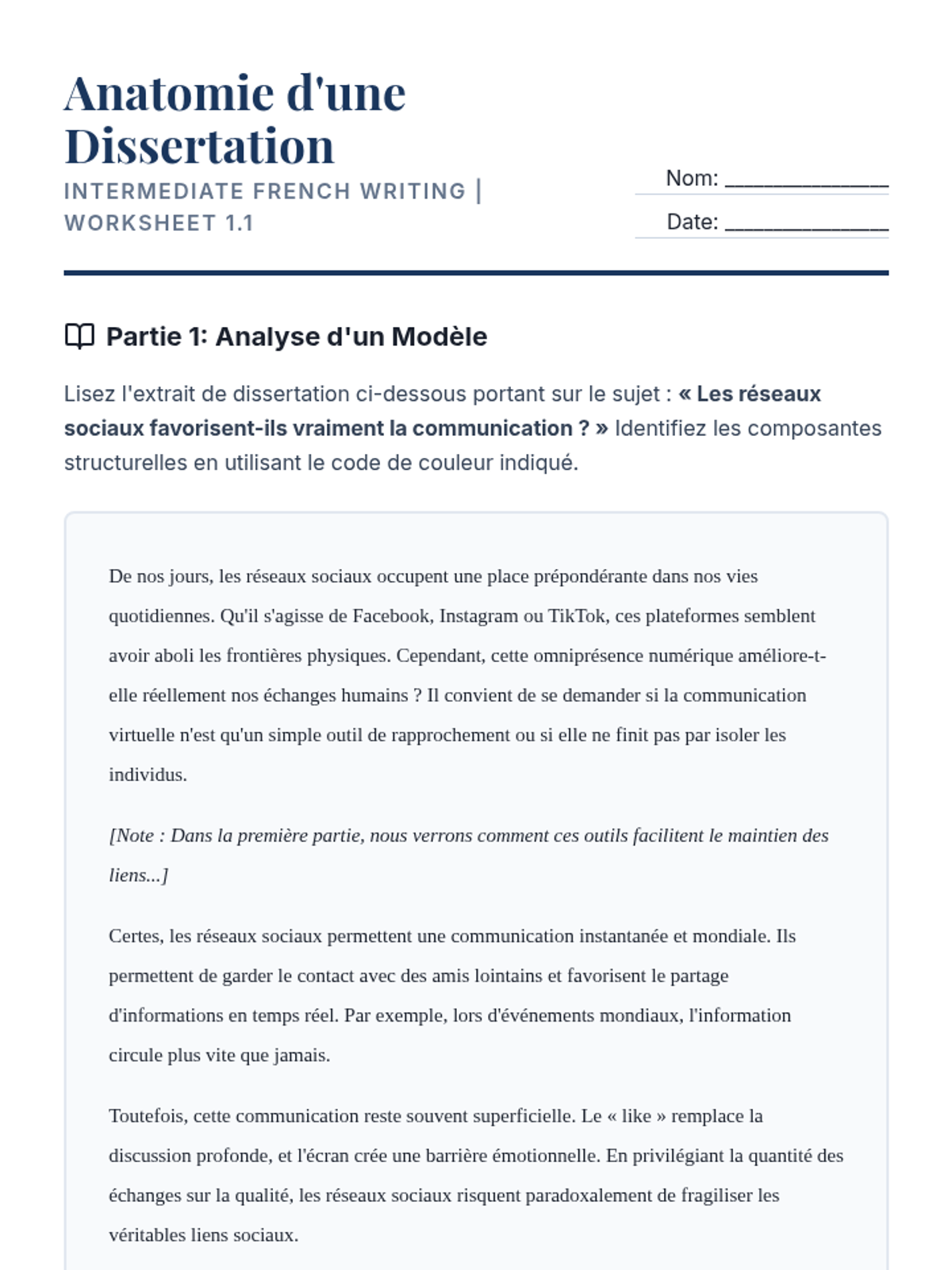
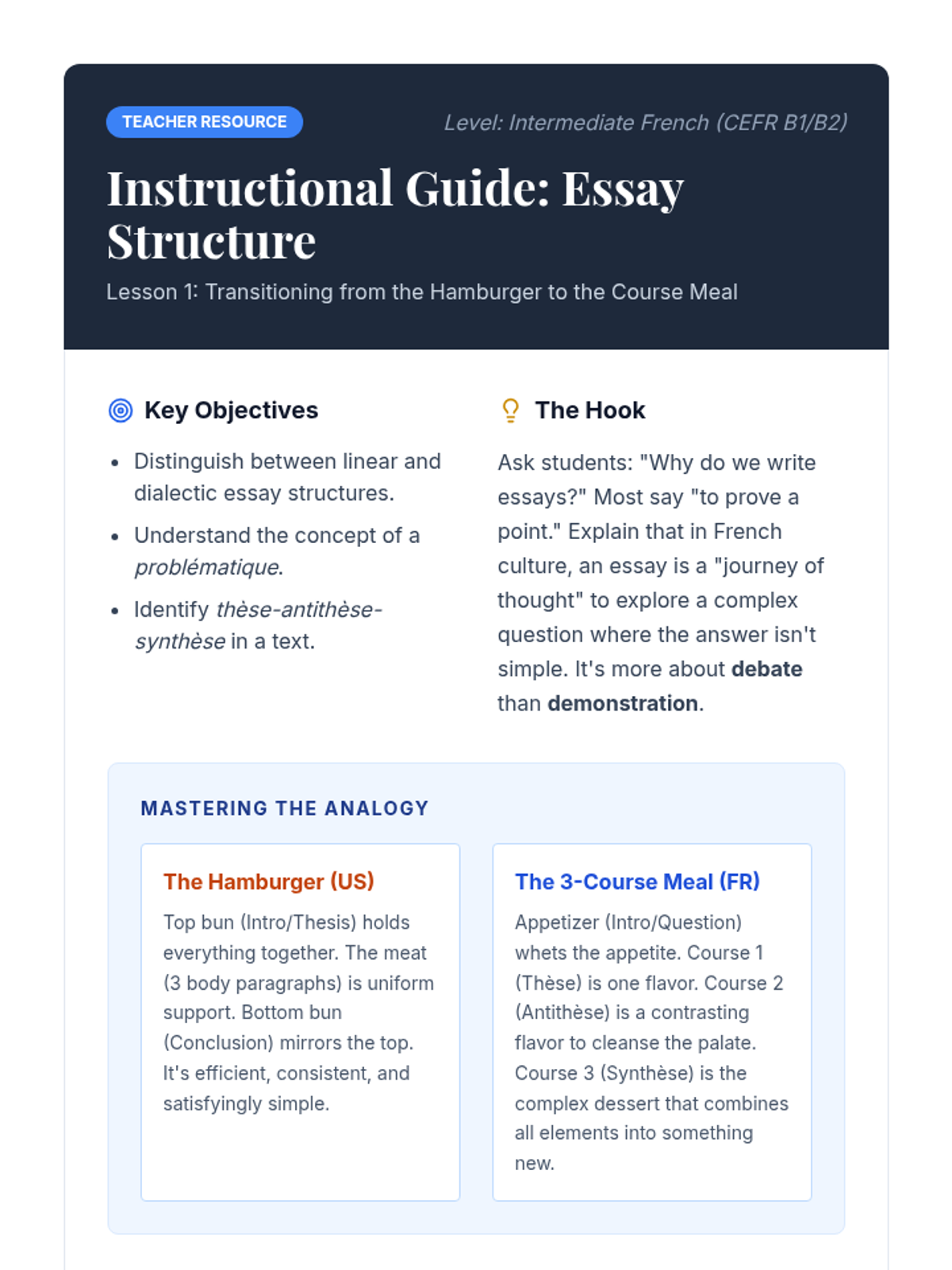
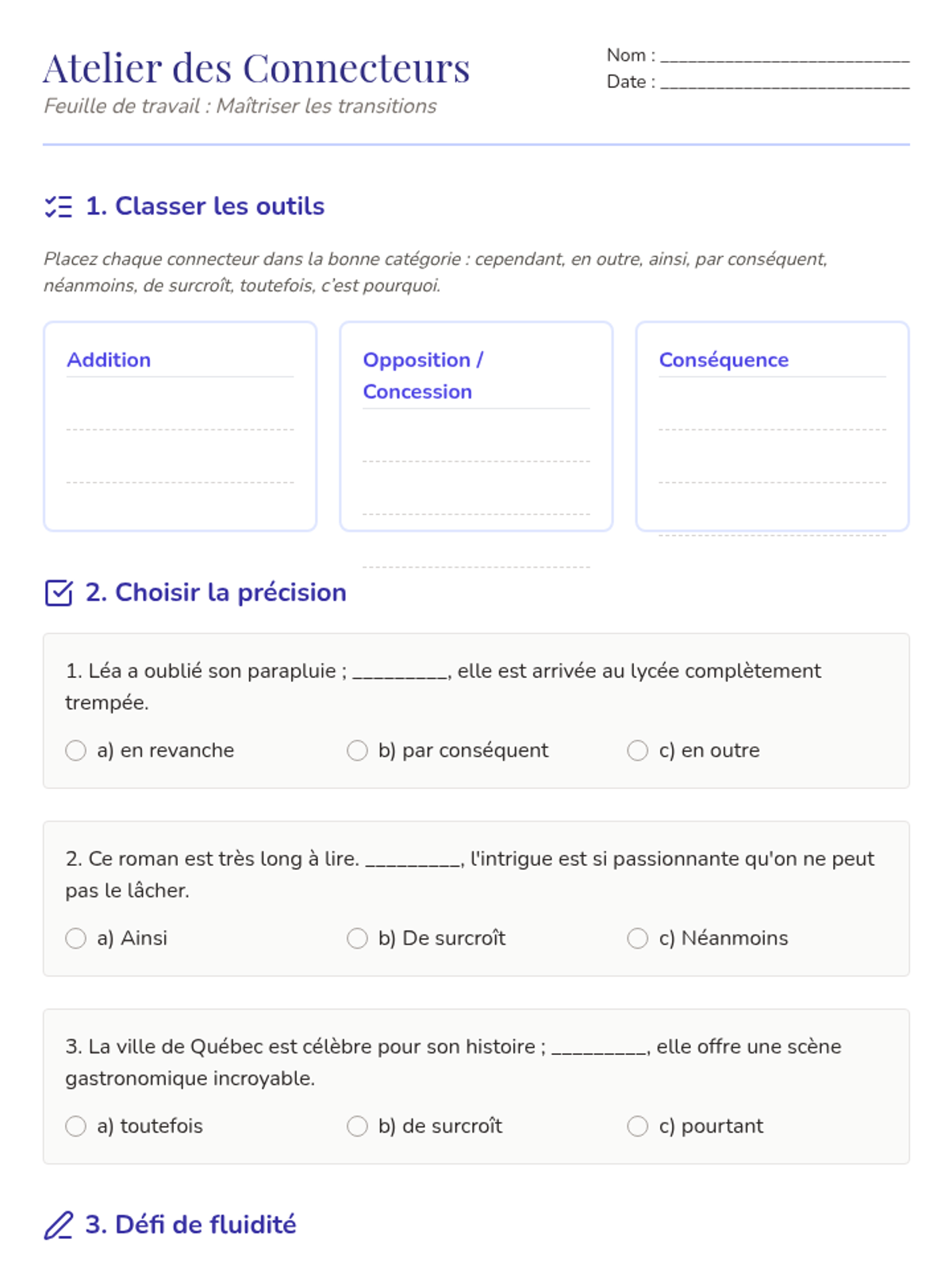
A comprehensive unit for 10th-grade French students on the art of the argumentative essay (*la dissertation*), focusing on Cartesian logic, structural balance (Thèse-Antithèse-Synthèse), and the sophisticated use of logical connectors.
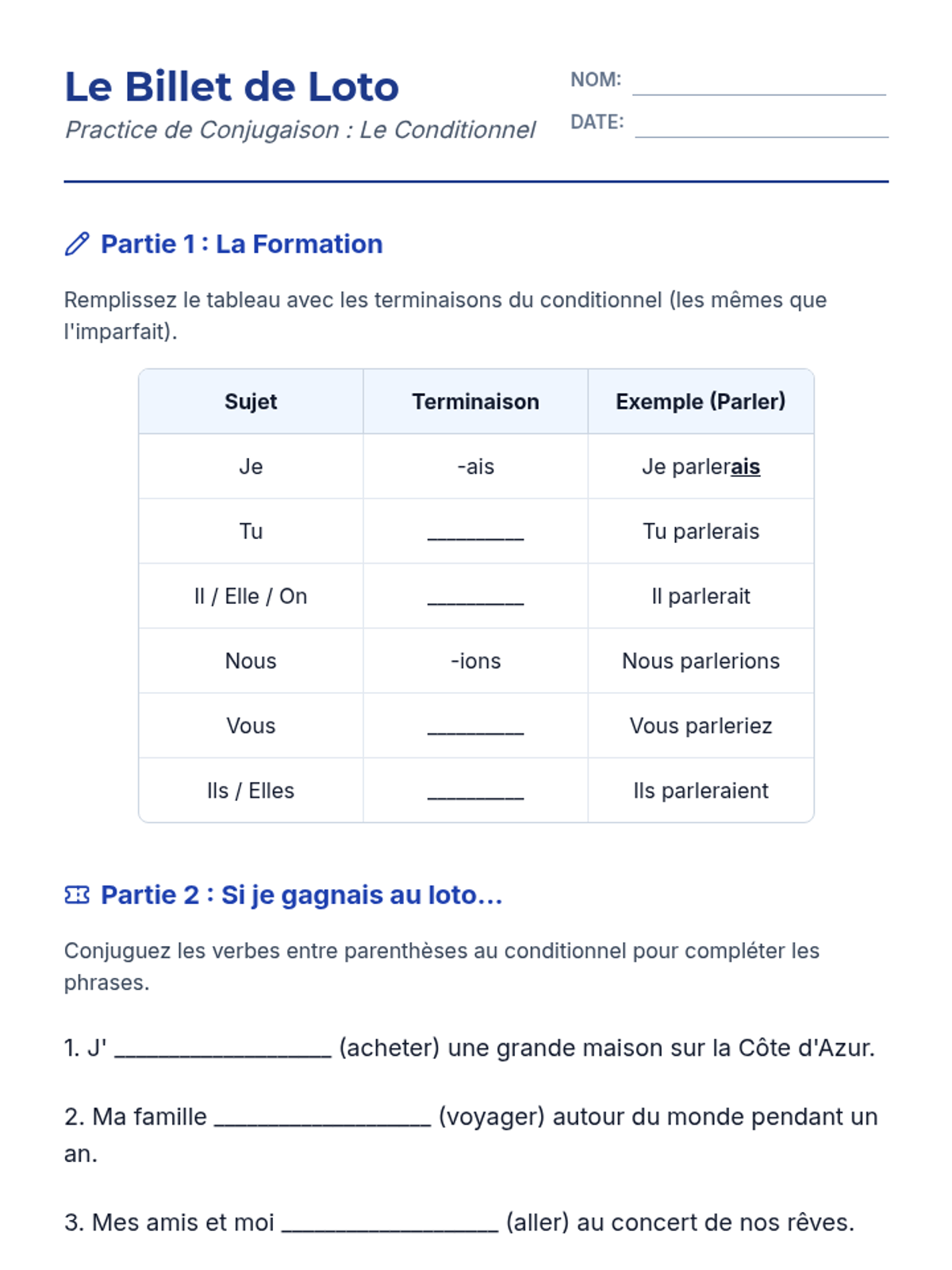
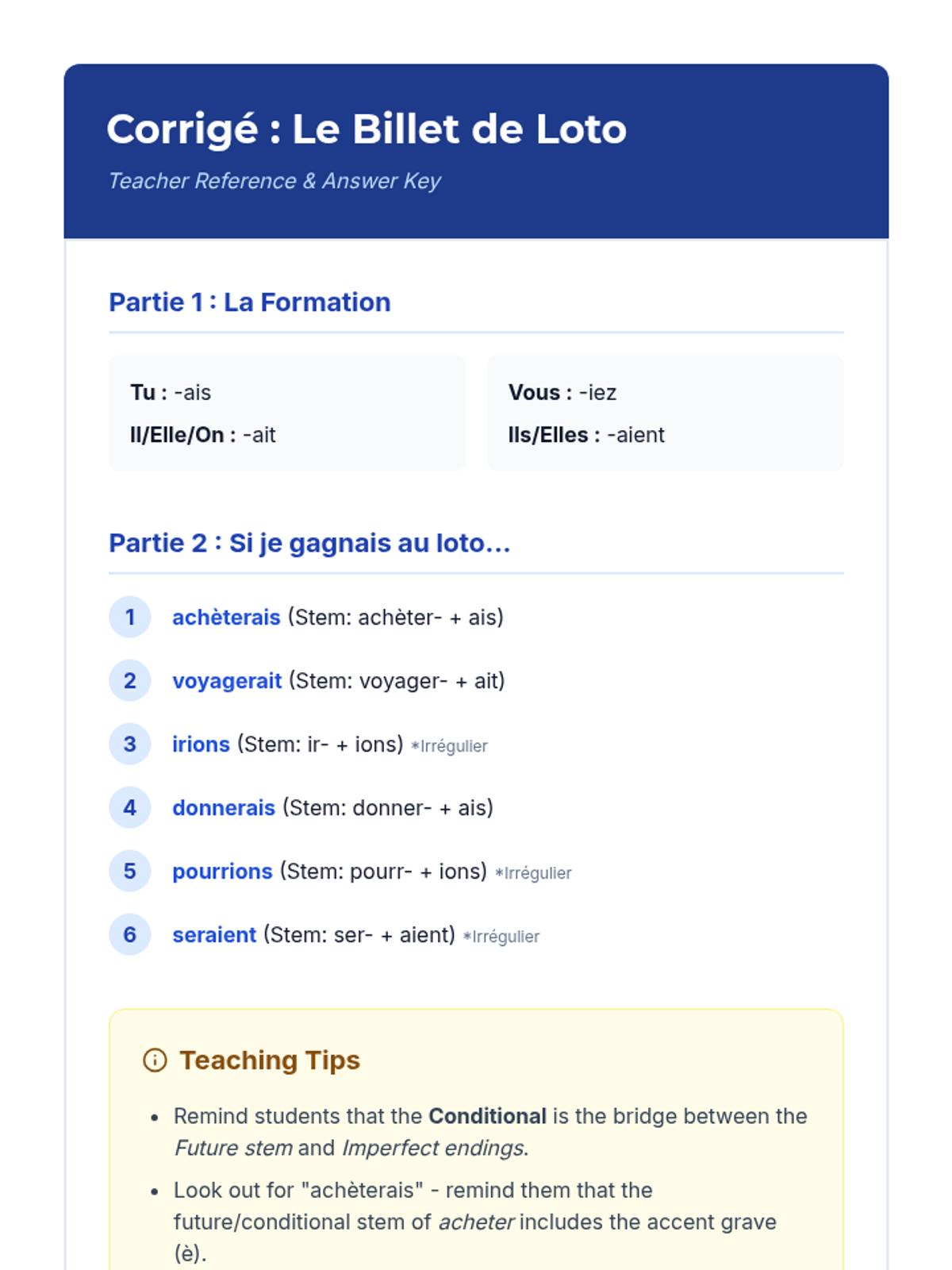
A French writing sequence for 10th-grade students focused on the conditional mood and hypothetical *si* clauses. Students design a utopian society to practice articulating possibilities and reimagining reality.
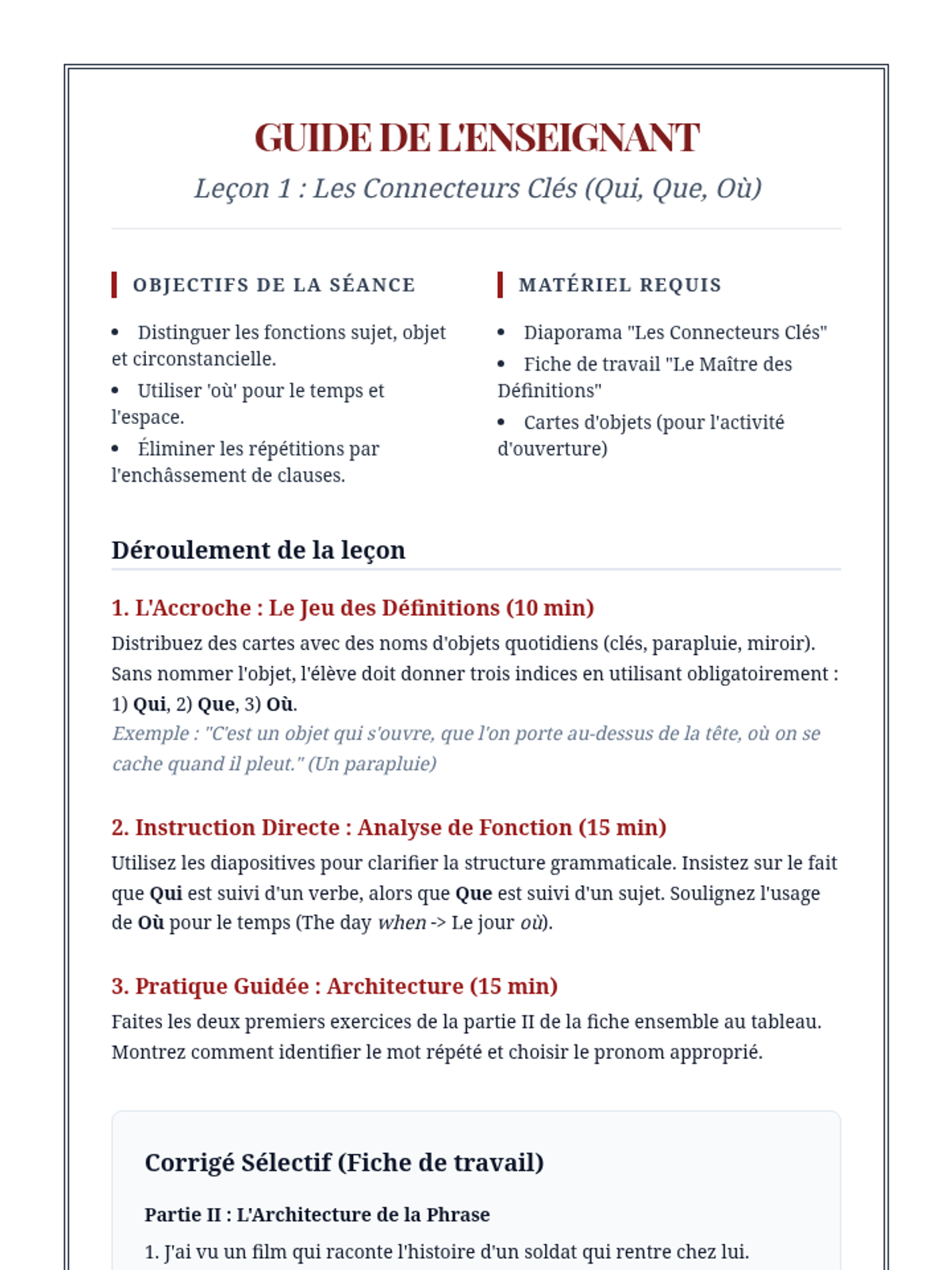
This sequence refines intermediate French students' ability to write sophisticated reviews of cultural products. By mastering relative pronouns (qui, que, dont, où) and comparative structures, students move beyond simple sentence patterns to create mature, professional-style critiques for a school blog or magazine.
A comprehensive sequence for intermediate French students focused on narrative writing and the conditional mood. Students learn to set scenes using past tenses and then expand their creative horizons using hypothetical 'Si' clauses and conditional outcomes.
Students analyze the French media landscape to identify bias, rhetorical structures, and cultural nuances in journalism, culminating in writing their own editorial in French.
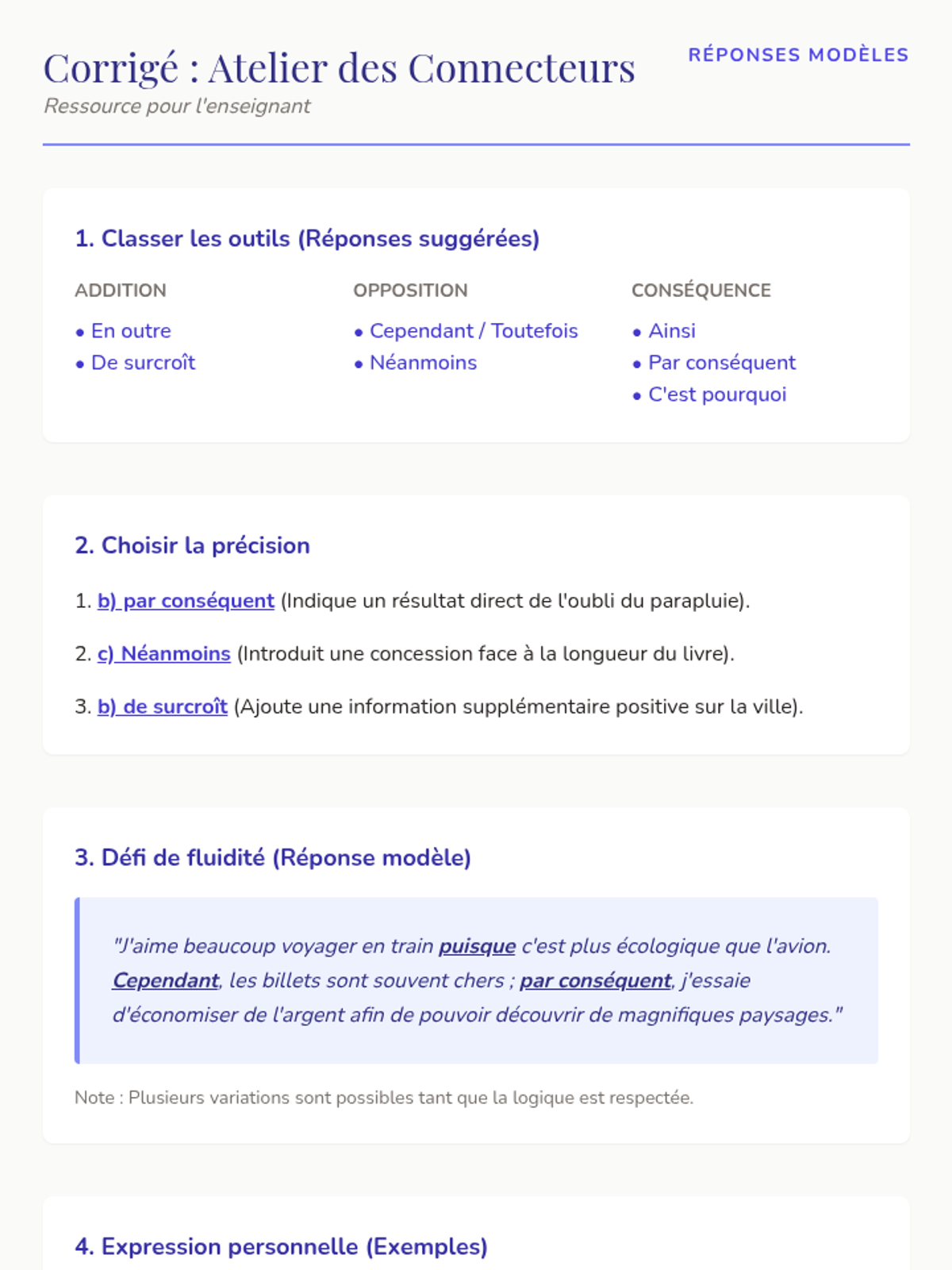
A 10th Grade Intermediate French sequence focusing on improving writing fluency and sophistication through advanced logical connectors, precise synonyms, relative pronouns, and paragraph structure. Students move from 'choppy' basic sentences to cohesive, elegant French prose.
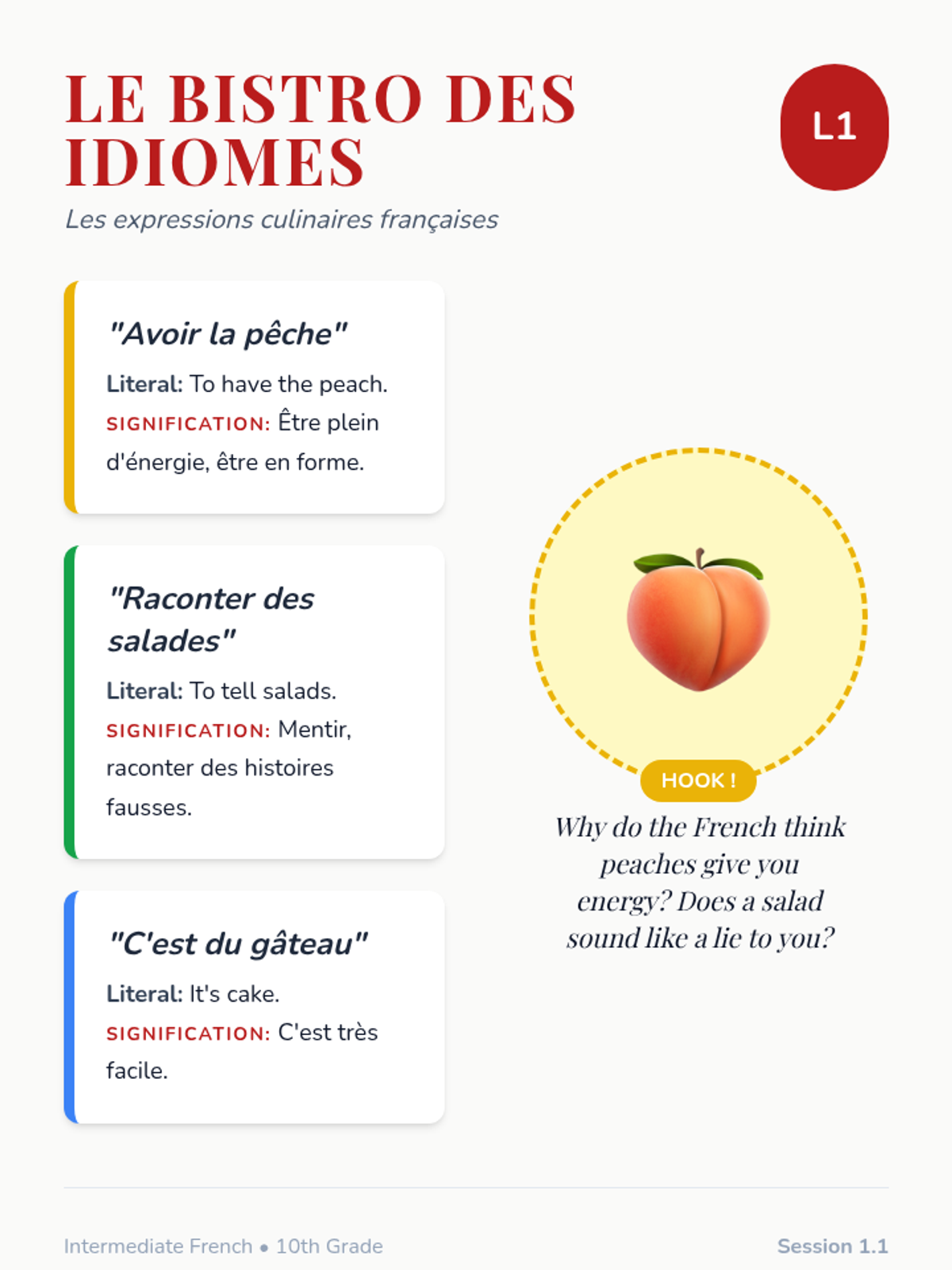
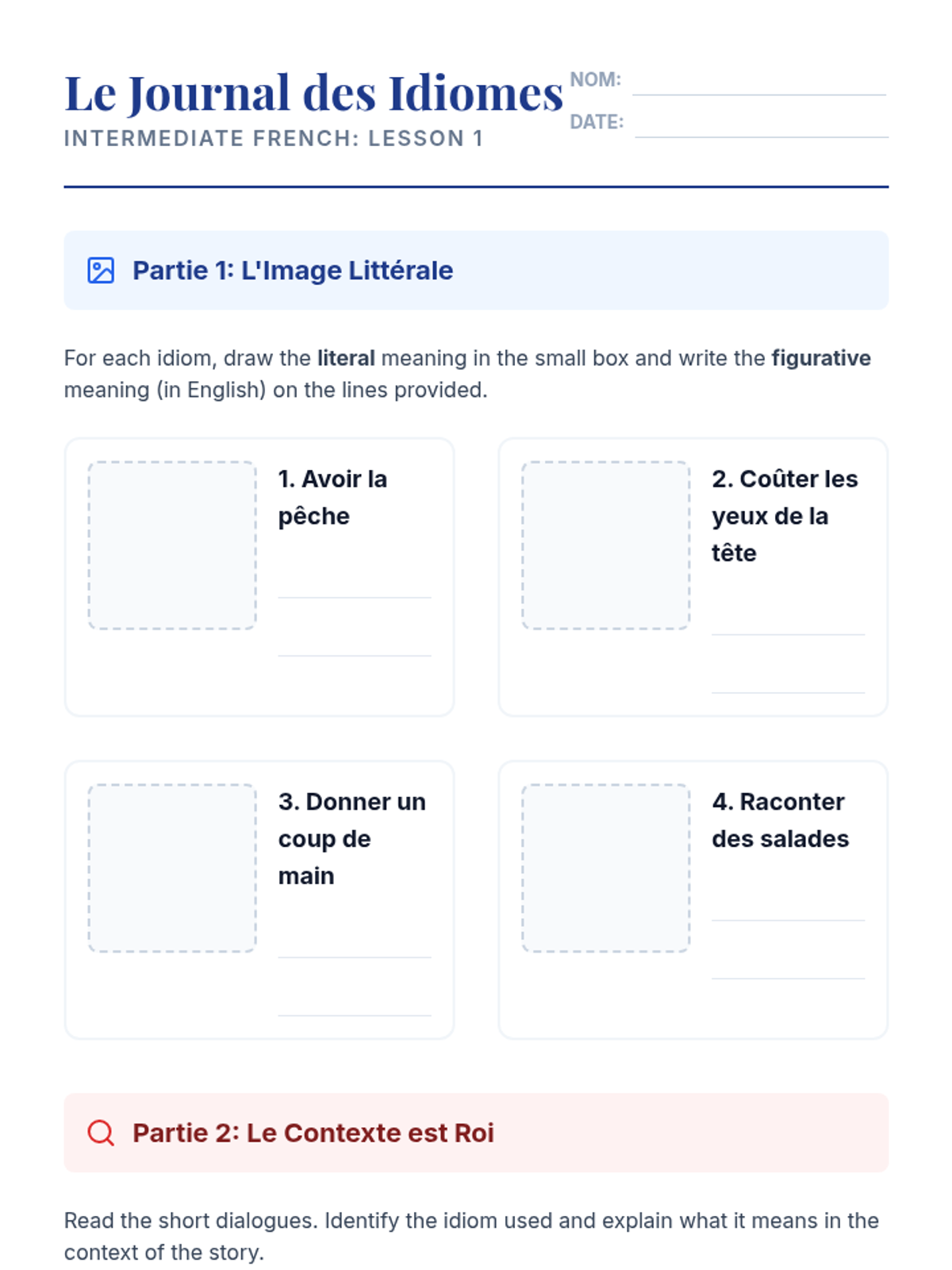
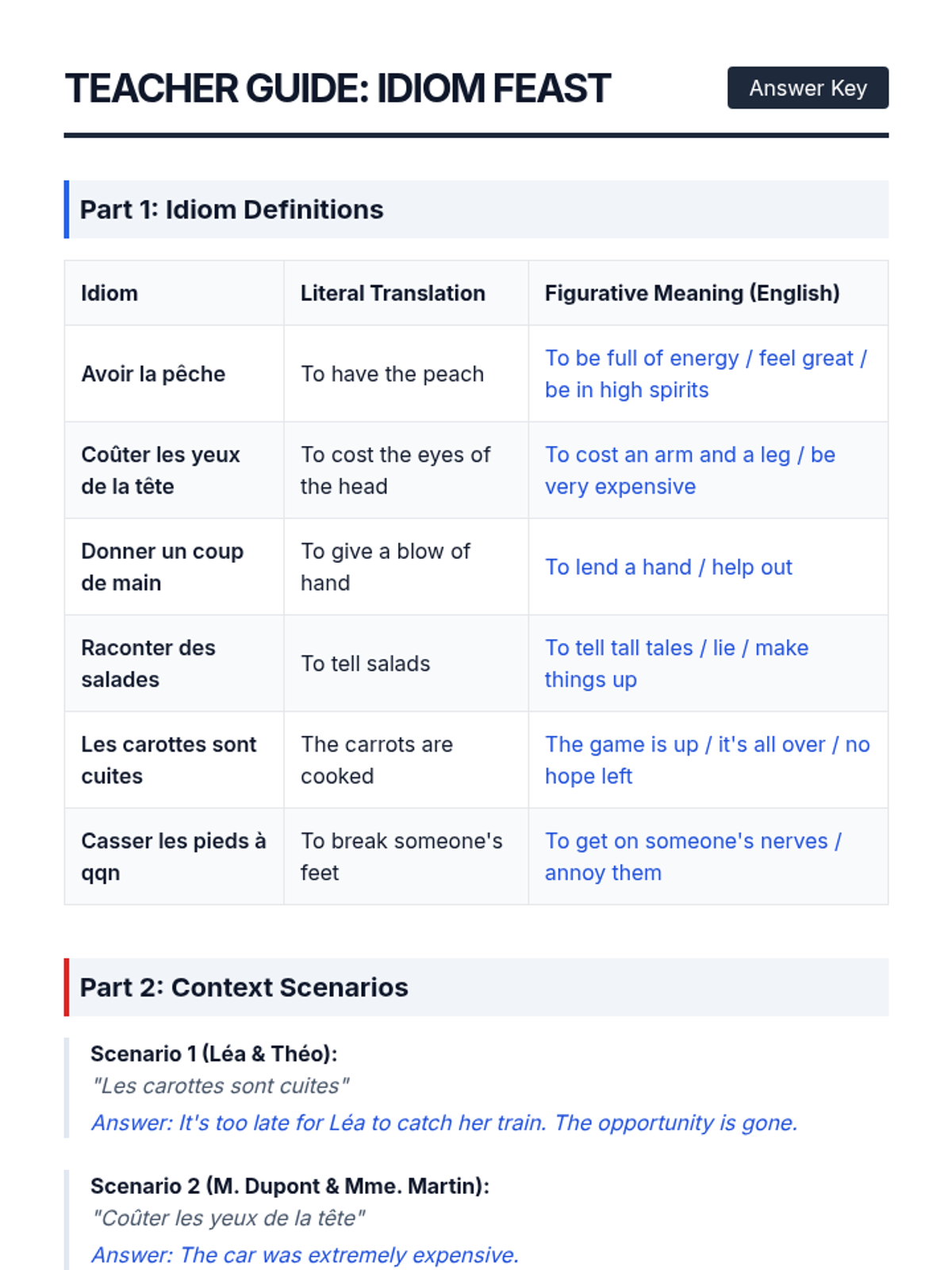
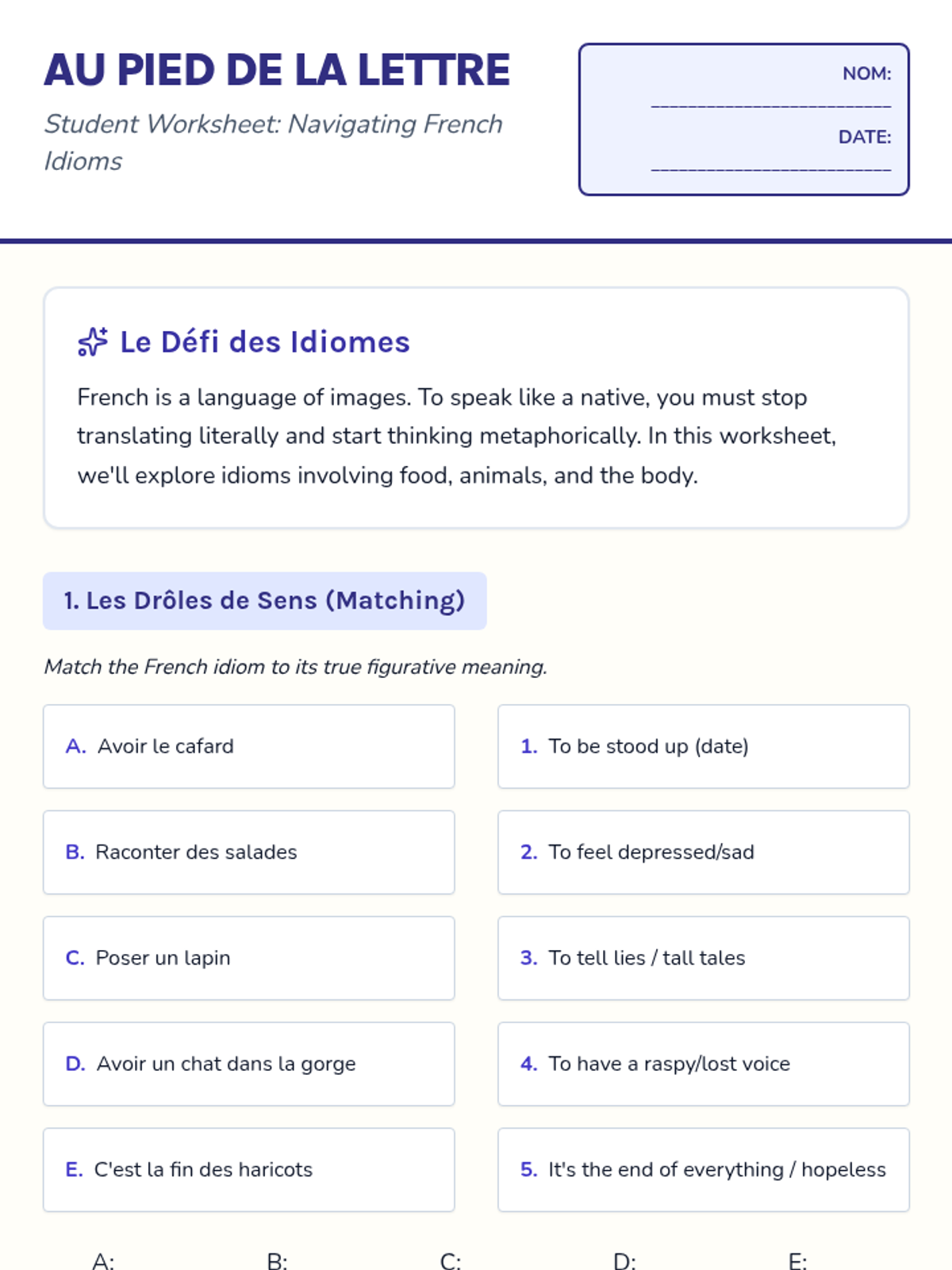
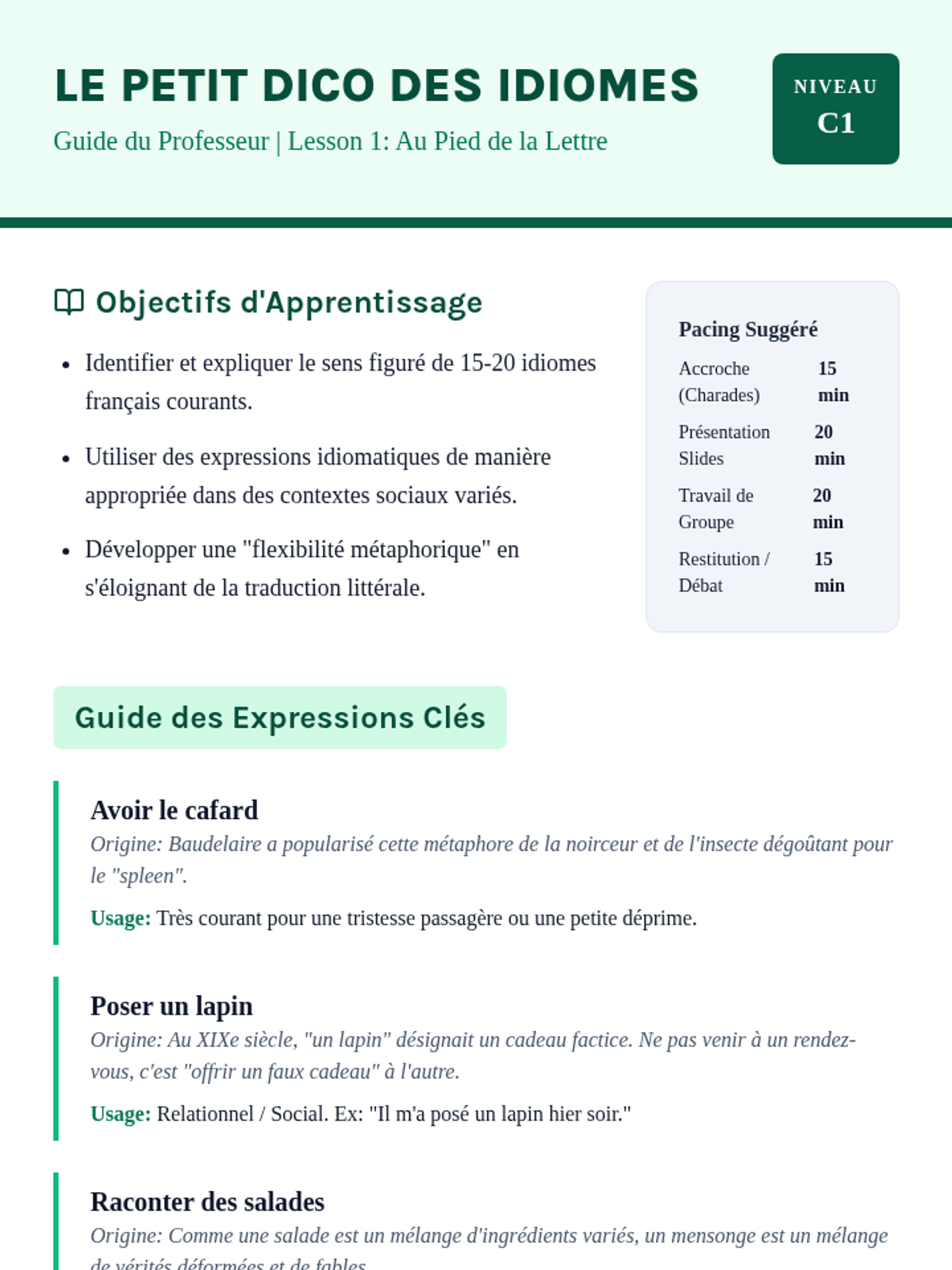
A 10th-grade intermediate French sequence exploring idiomatic expressions, culinary metaphors, somatic idioms, registers (argot/verlan), and false friends to bridge the gap between textbook learning and authentic cultural speech.
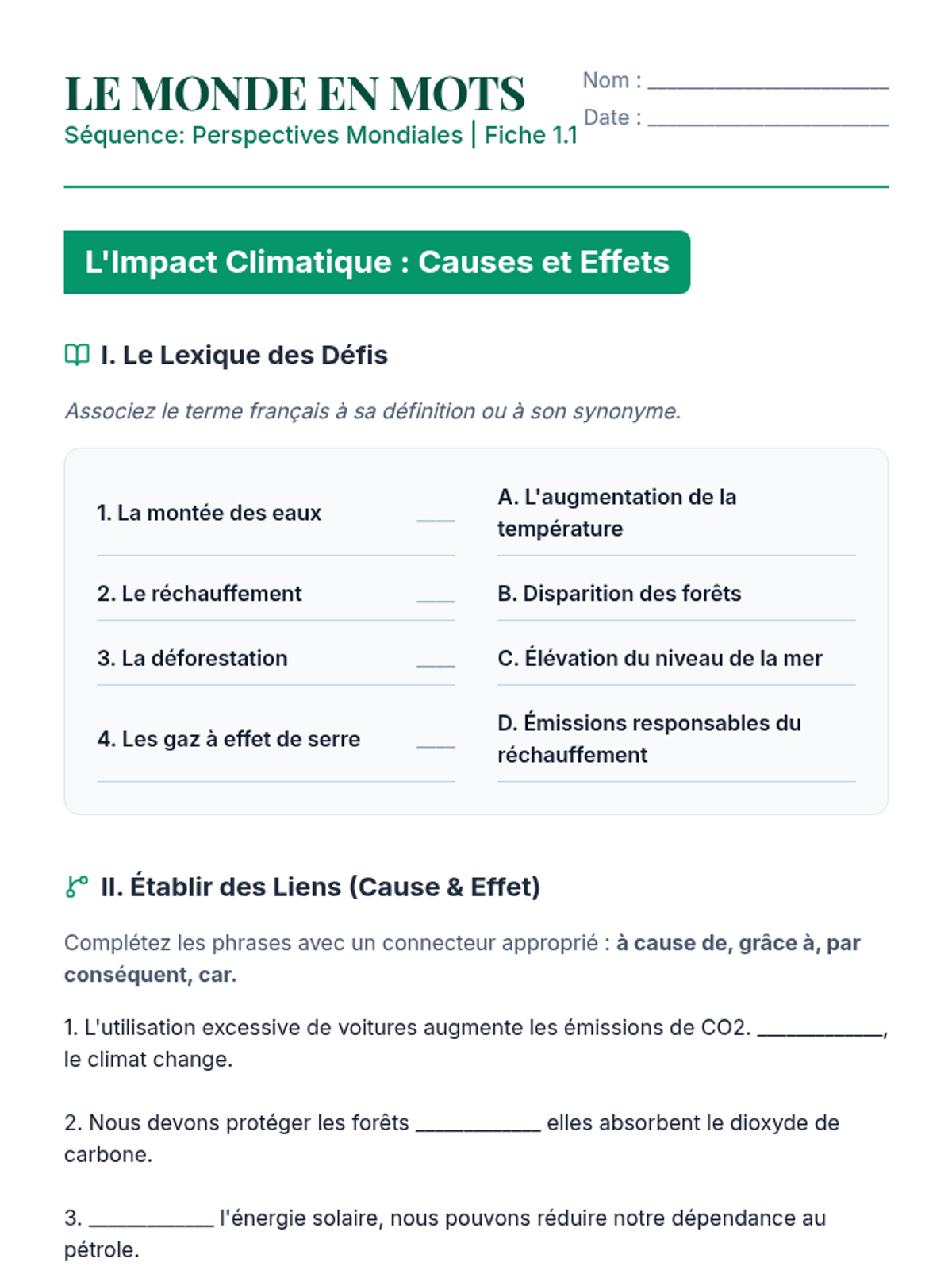
A 10th-grade Intermediate French sequence focused on environmental, technological, and social issues, equipping students with the vocabulary and grammatical structures (like the subjunctive) needed for advanced discussion and debate.
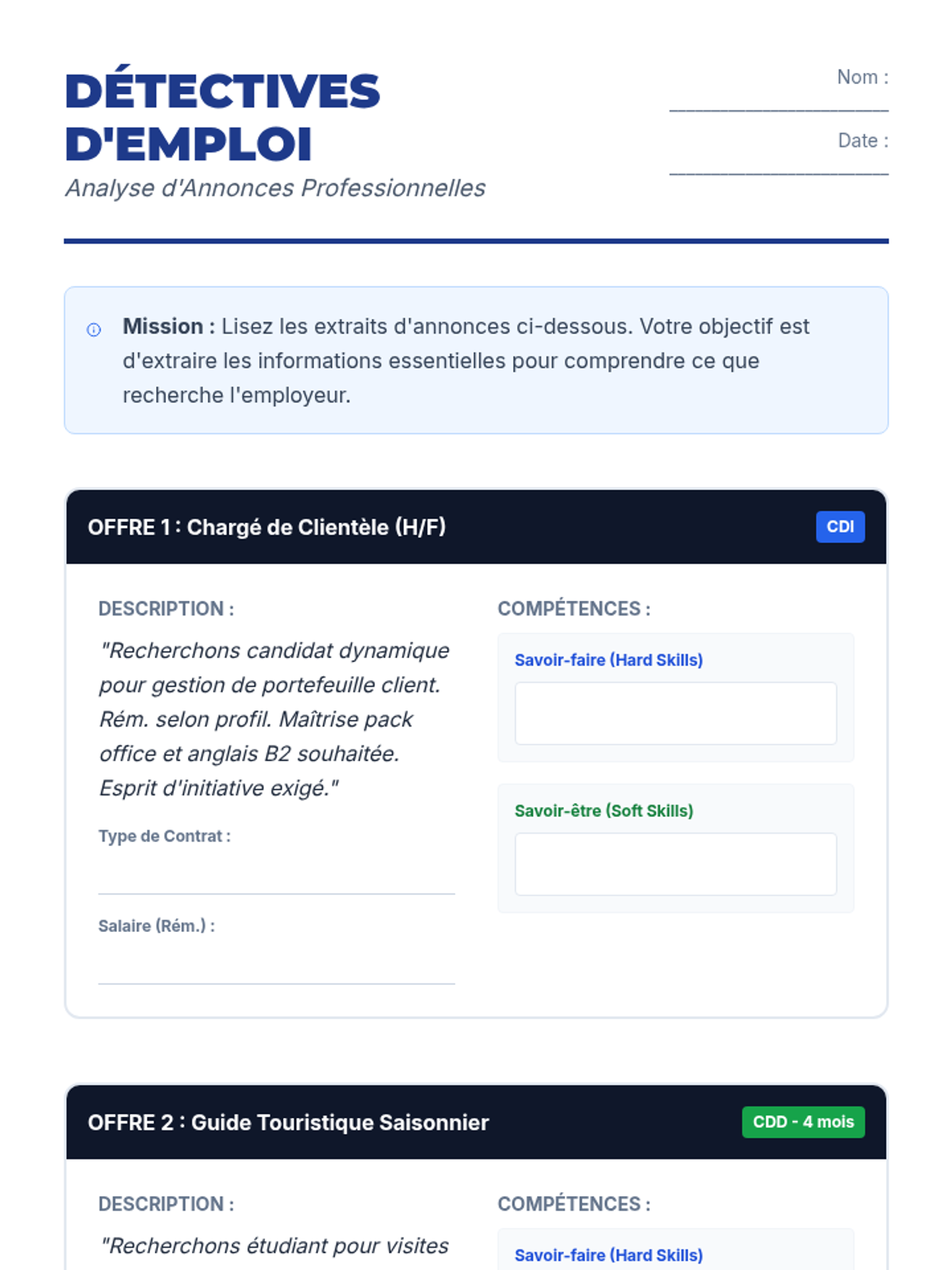
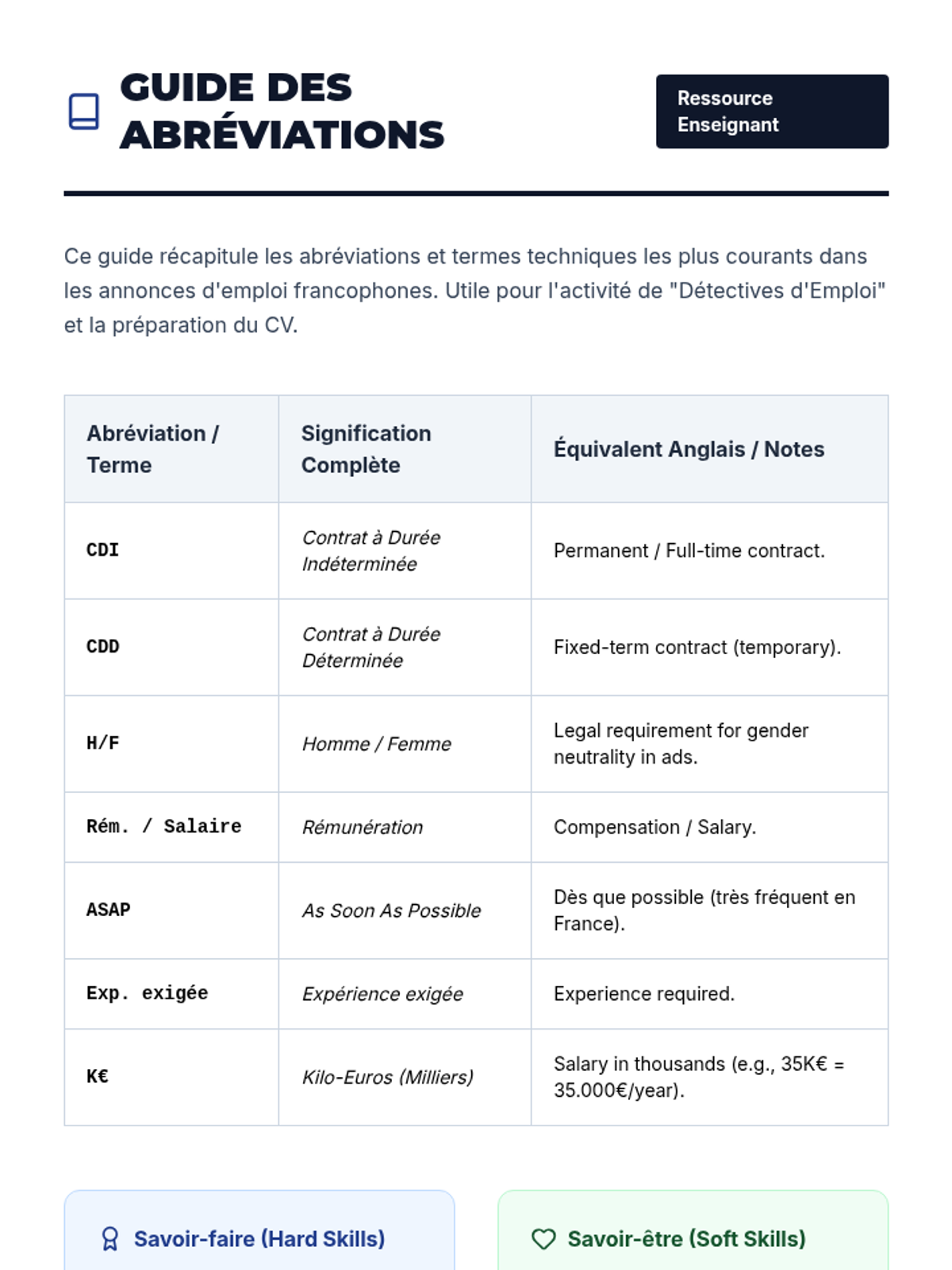
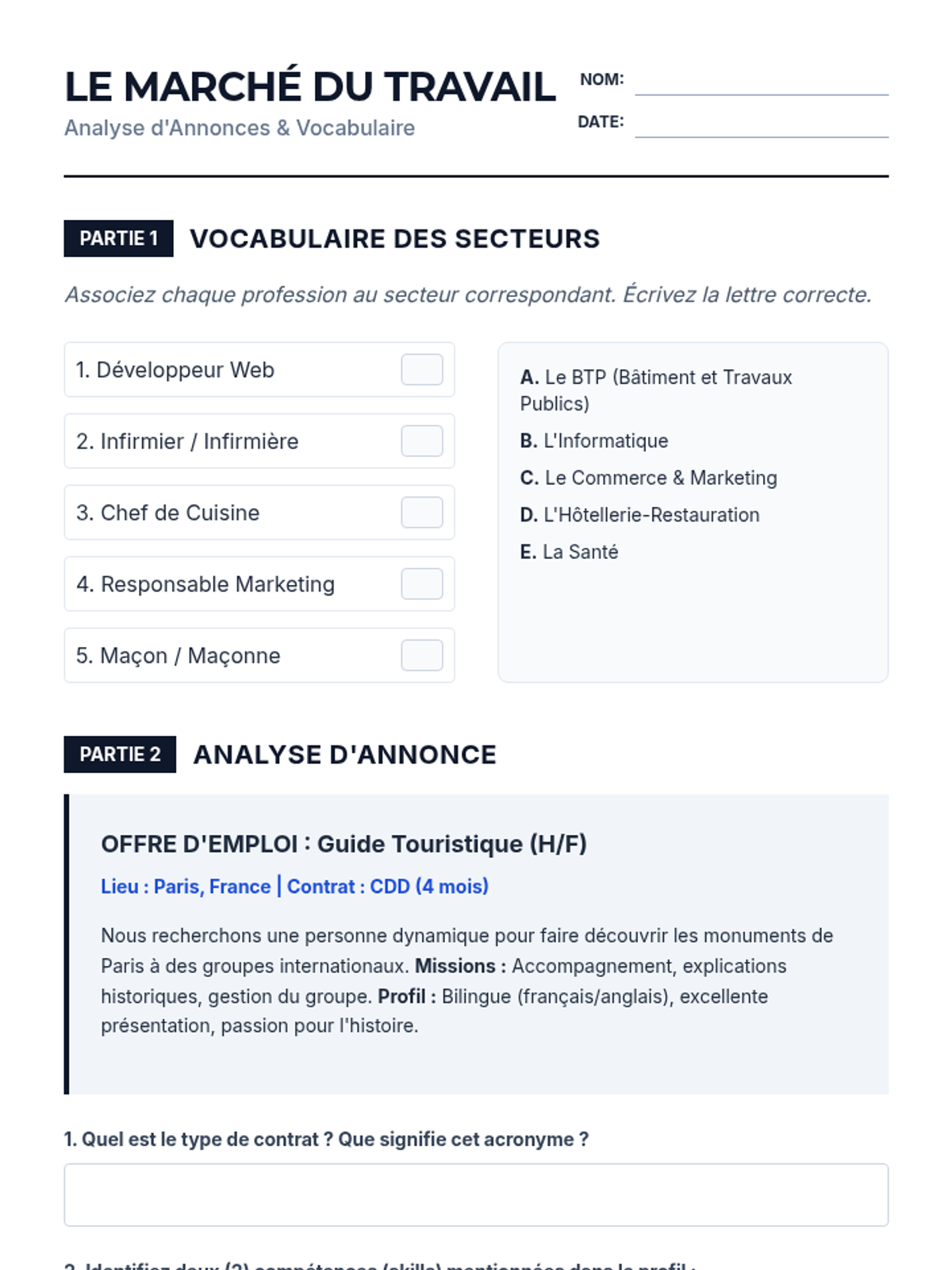
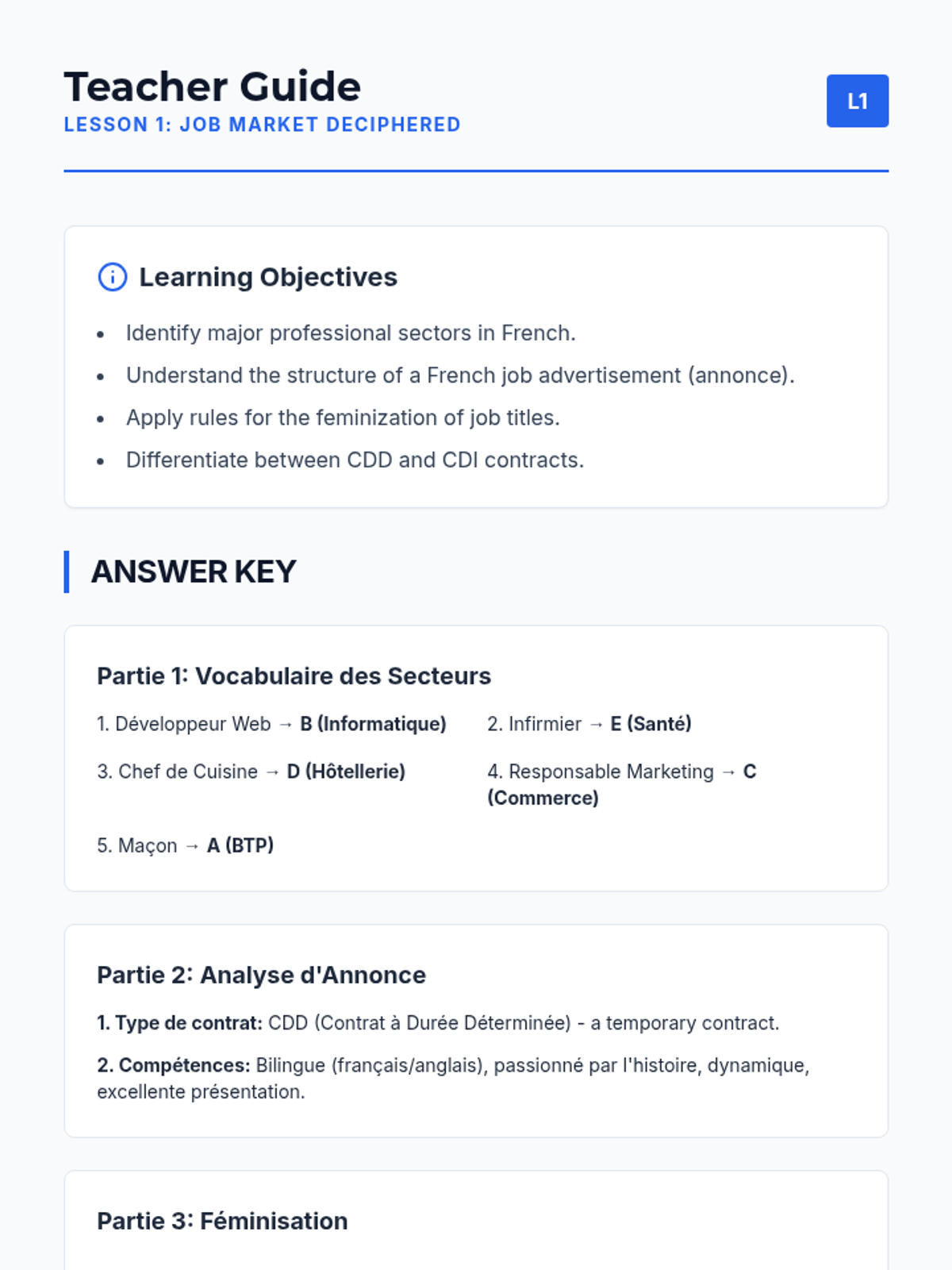
This sequence immerses intermediate French students in the professional world, covering everything from analyzing job advertisements to conducting mock interviews. Students will develop industry-specific vocabulary, master formal writing etiquette, and practice cultural norms required for workplace success in Francophone cultures.
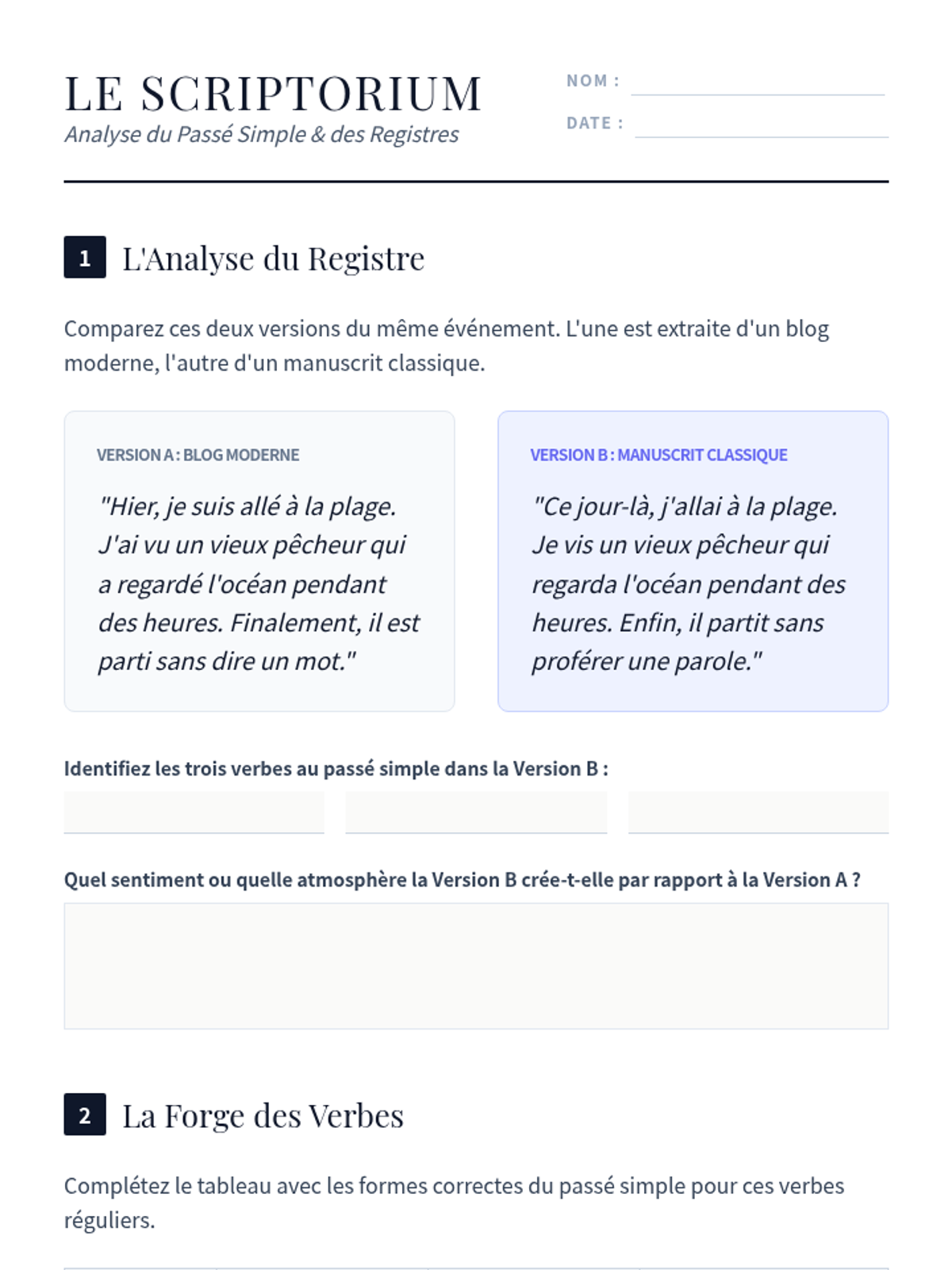
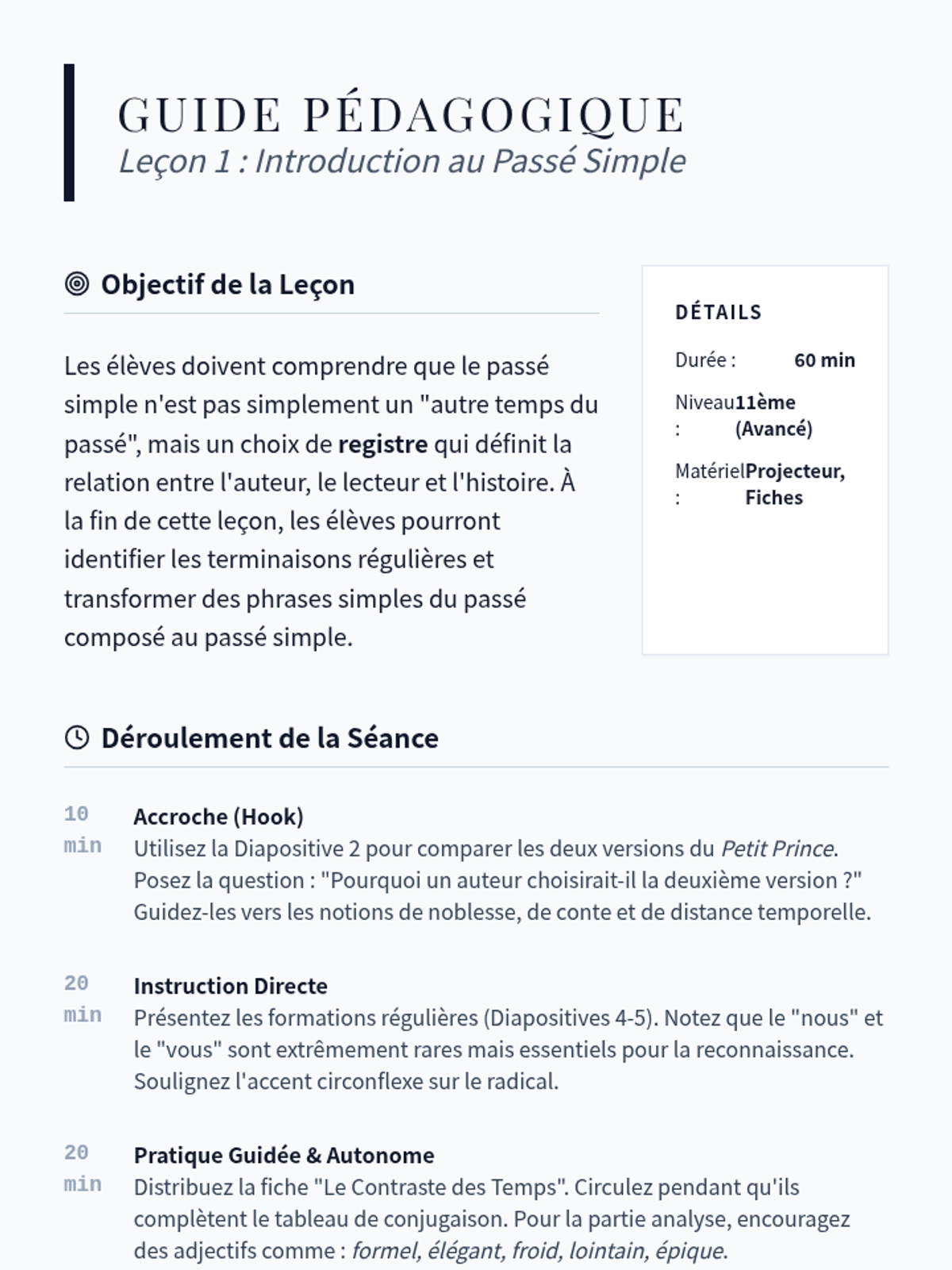
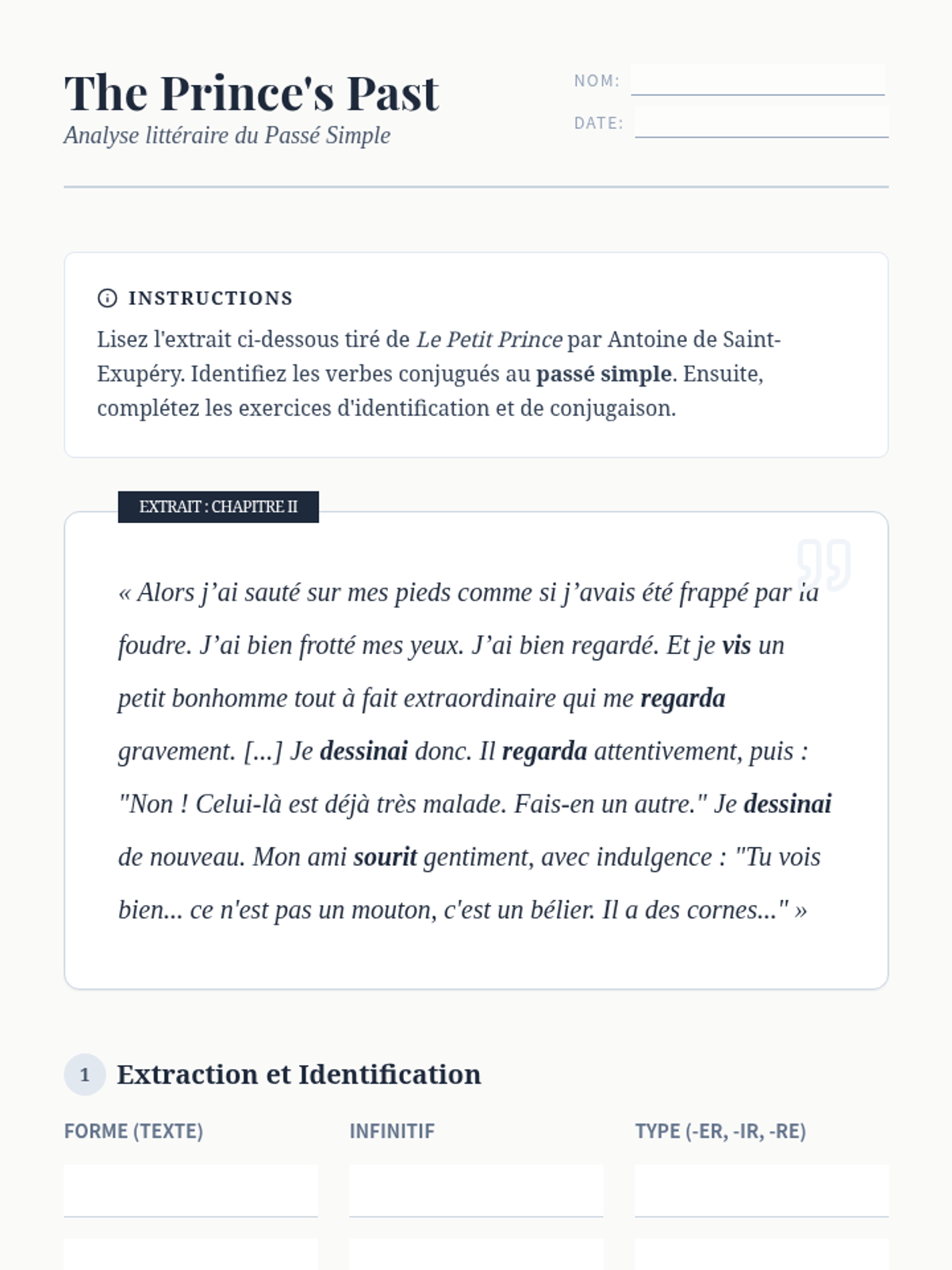
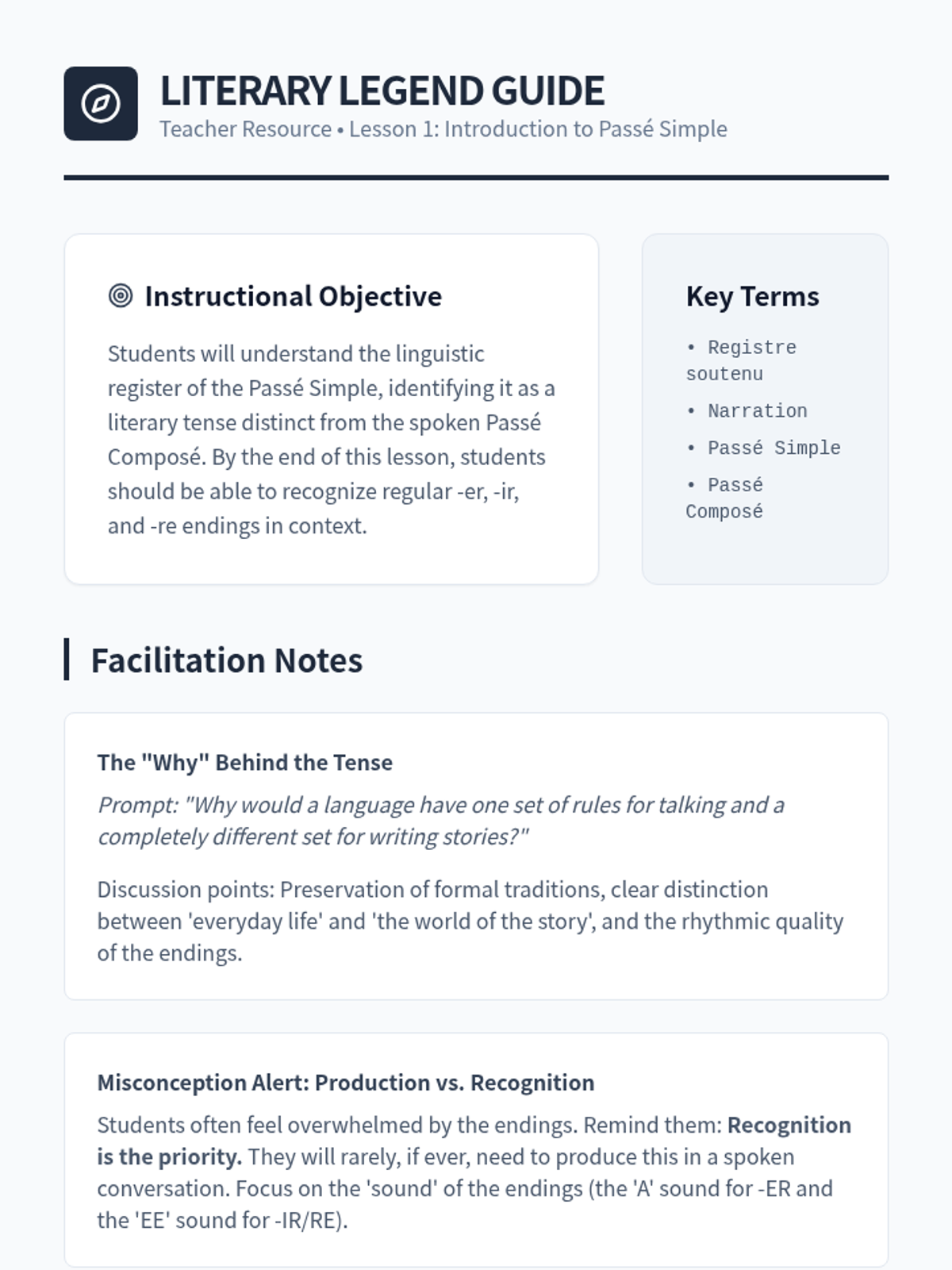
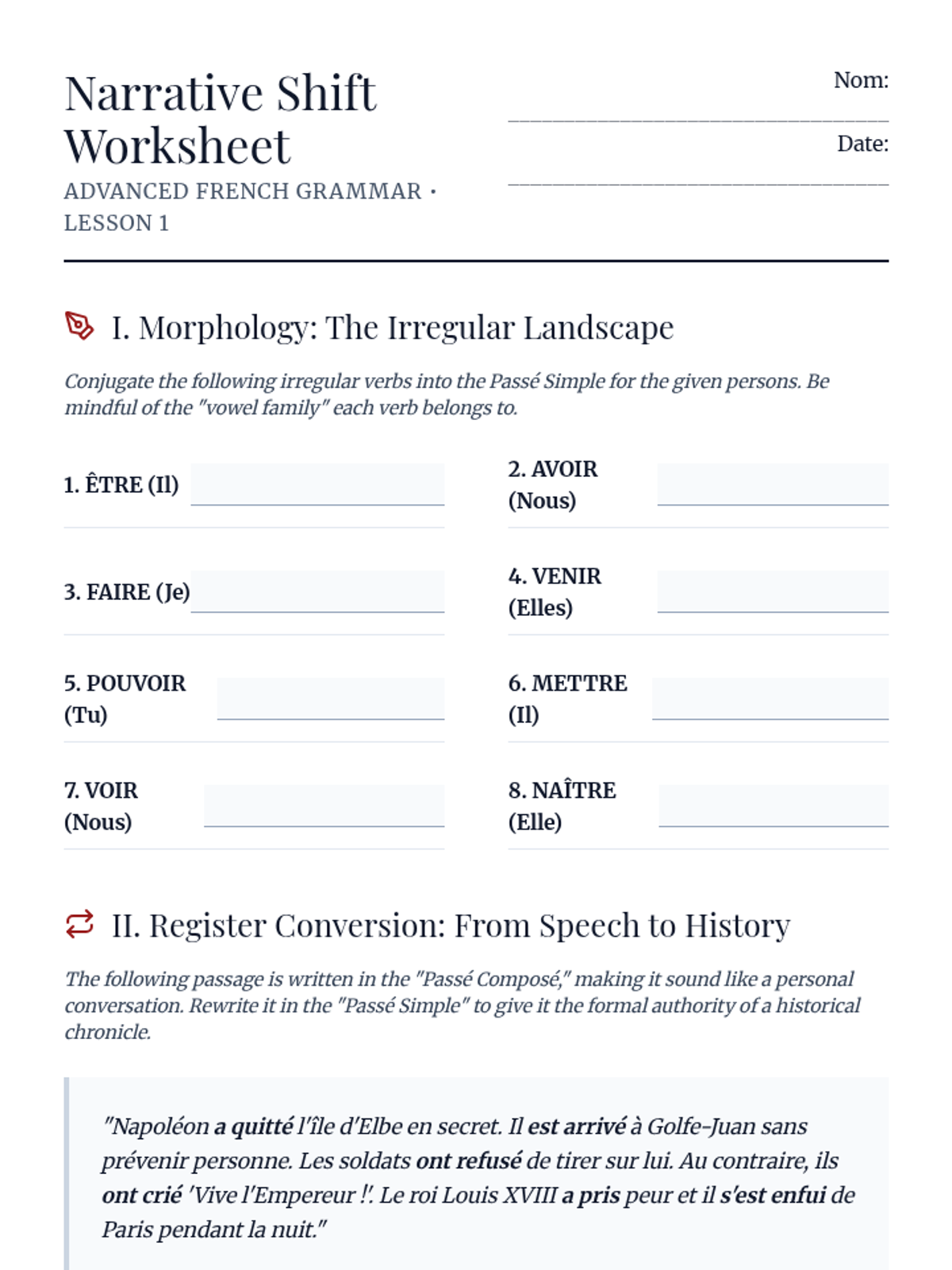
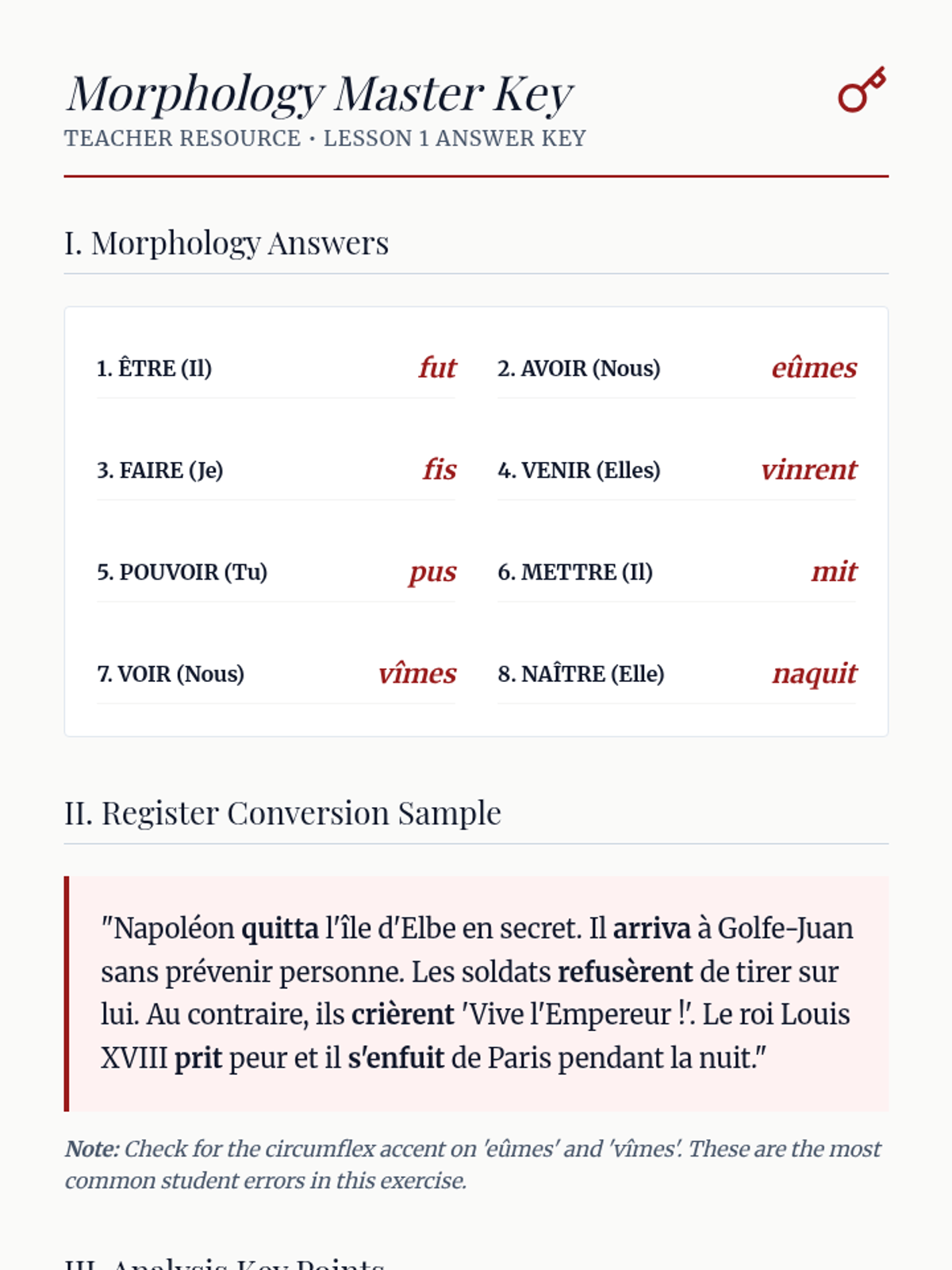
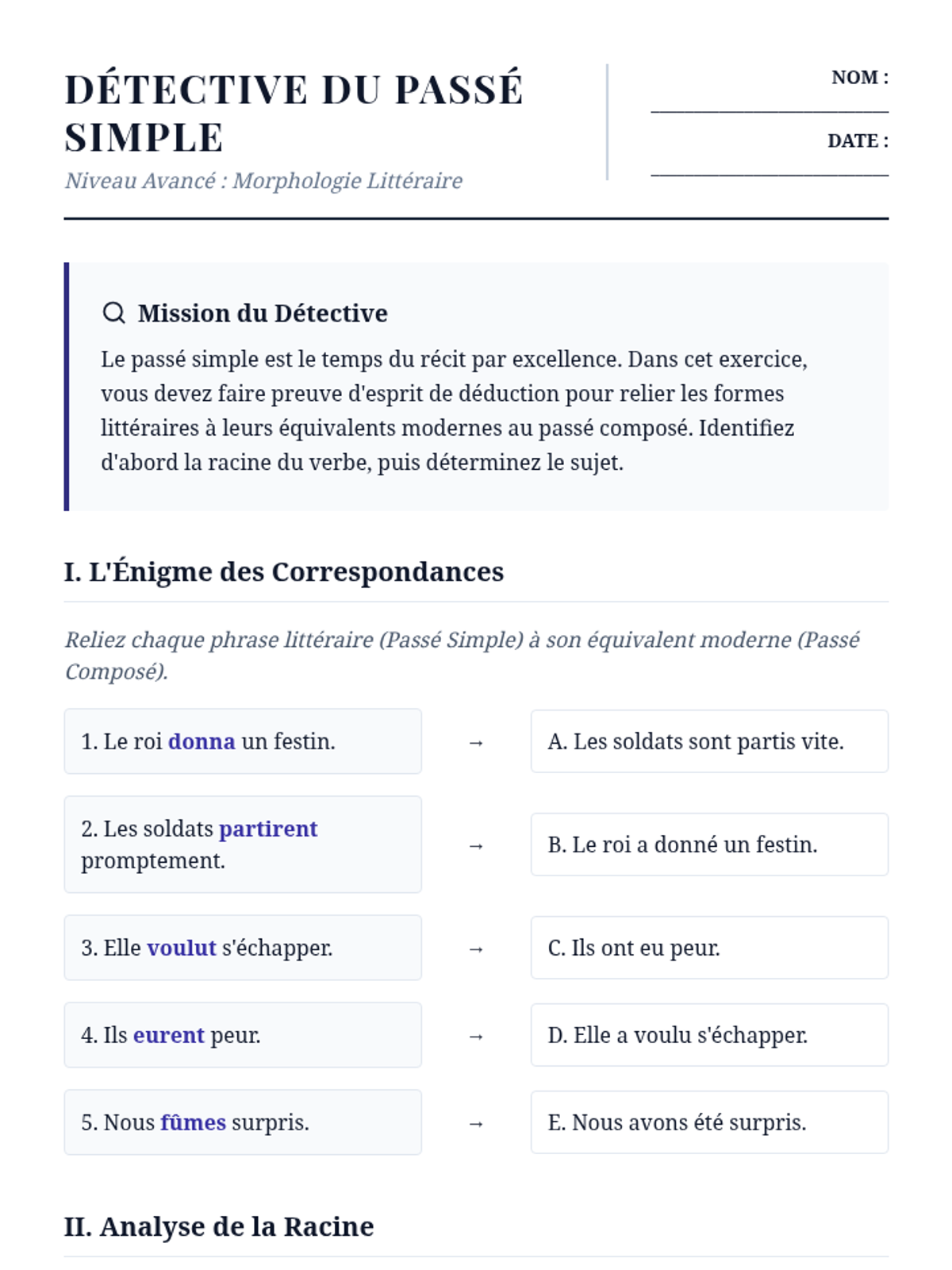
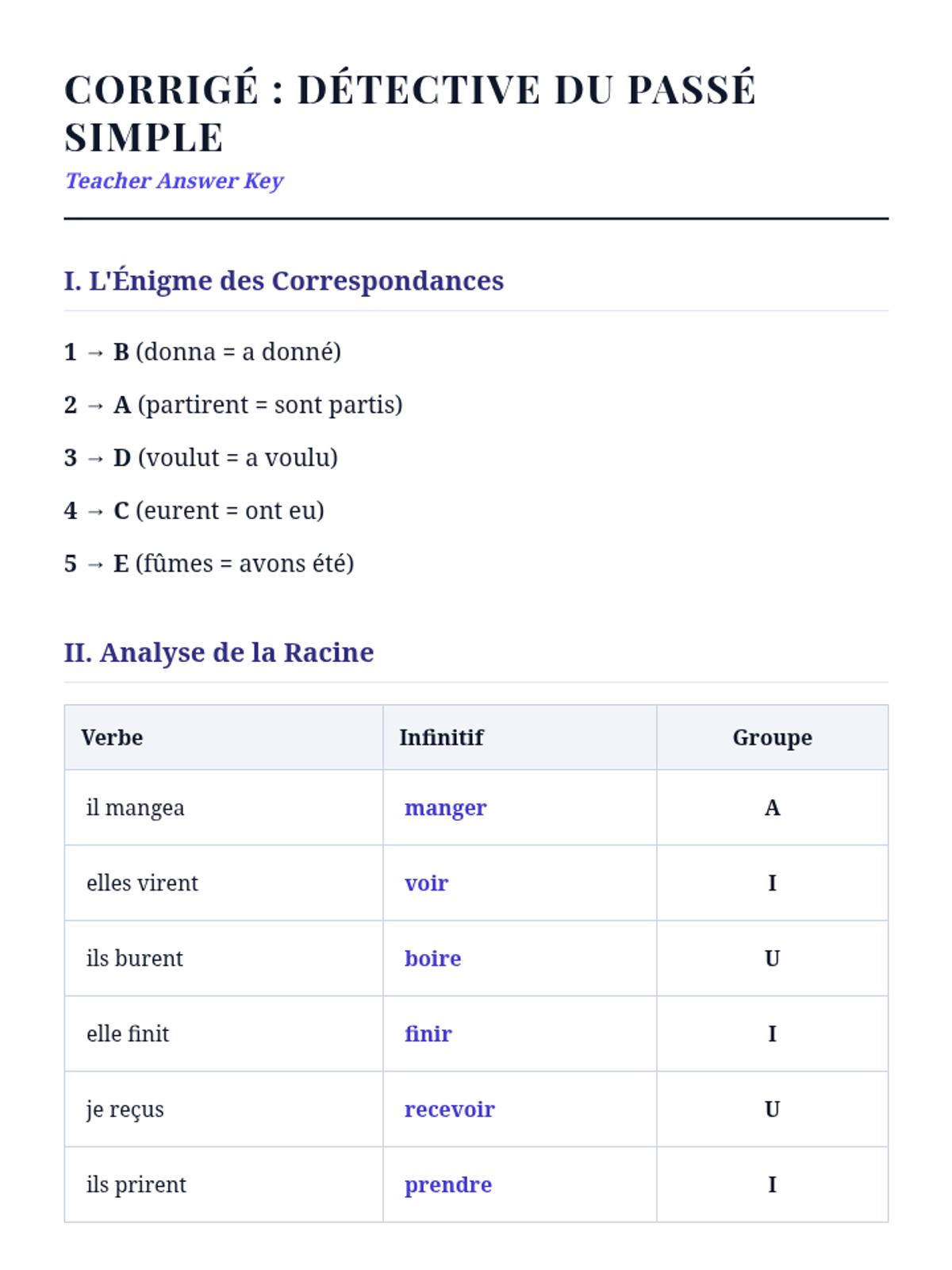
A comprehensive exploration of the French passé simple, focusing on its role in classical literature, its relationship with other past tenses, and its stylistic impact on narrative voice. Students move from recognition to creative application through analysis of fairy tales and modern transformations.
A comprehensive unit for advanced French students focused on recognizing and analyzing literary tenses (Passé Simple and Passé Antérieur) to understand narrative pacing and linguistic register in classic literature.
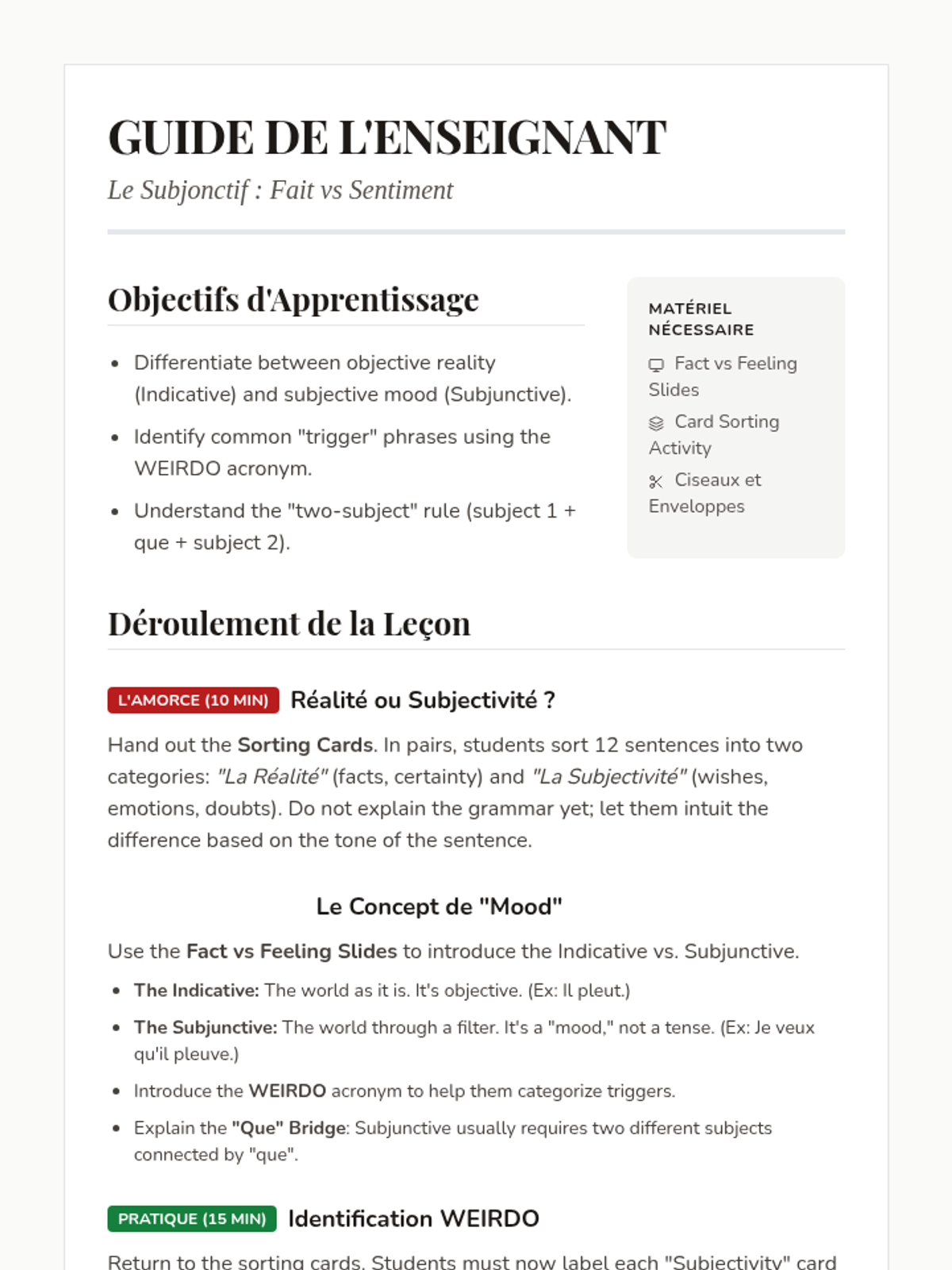
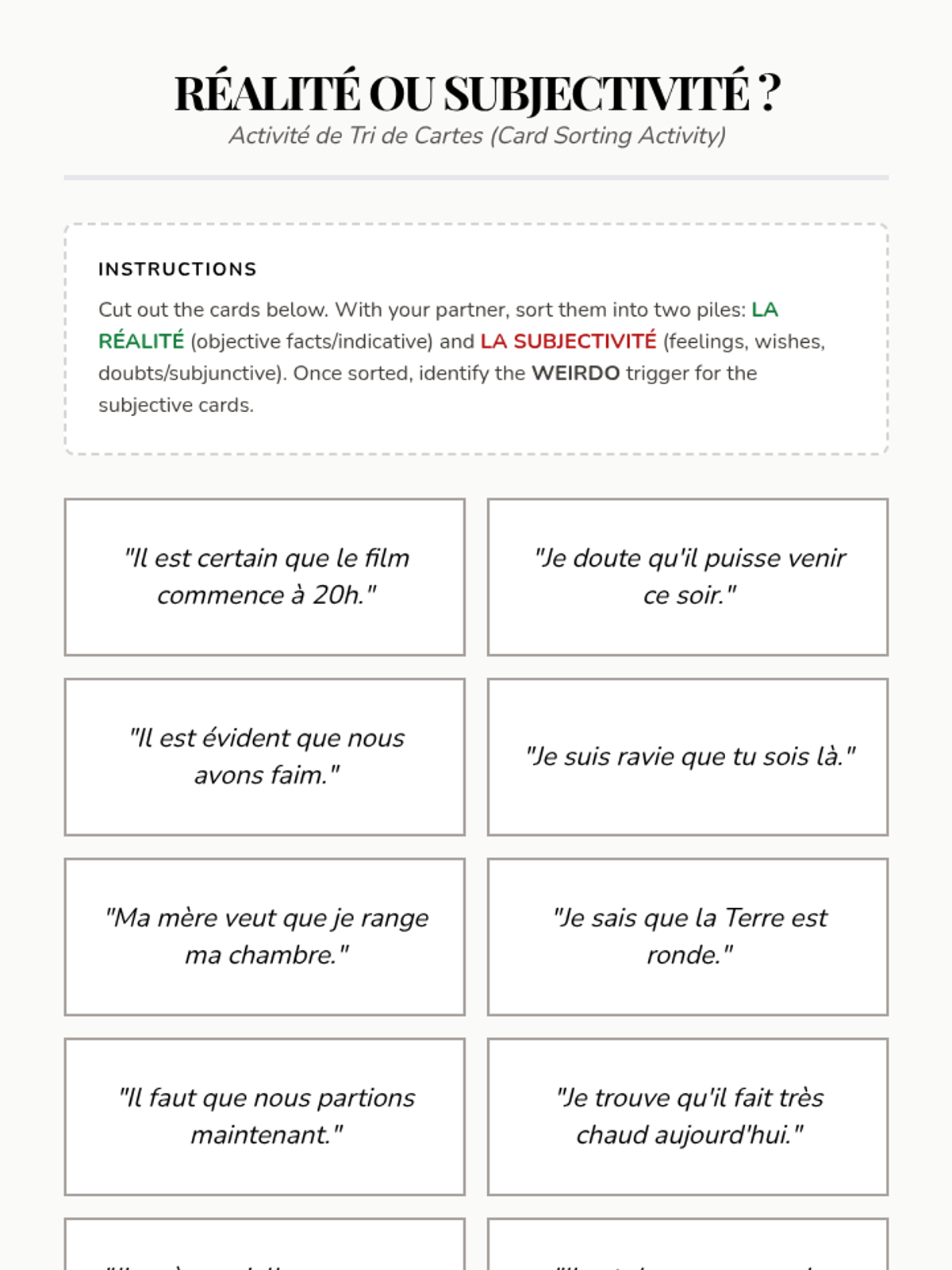
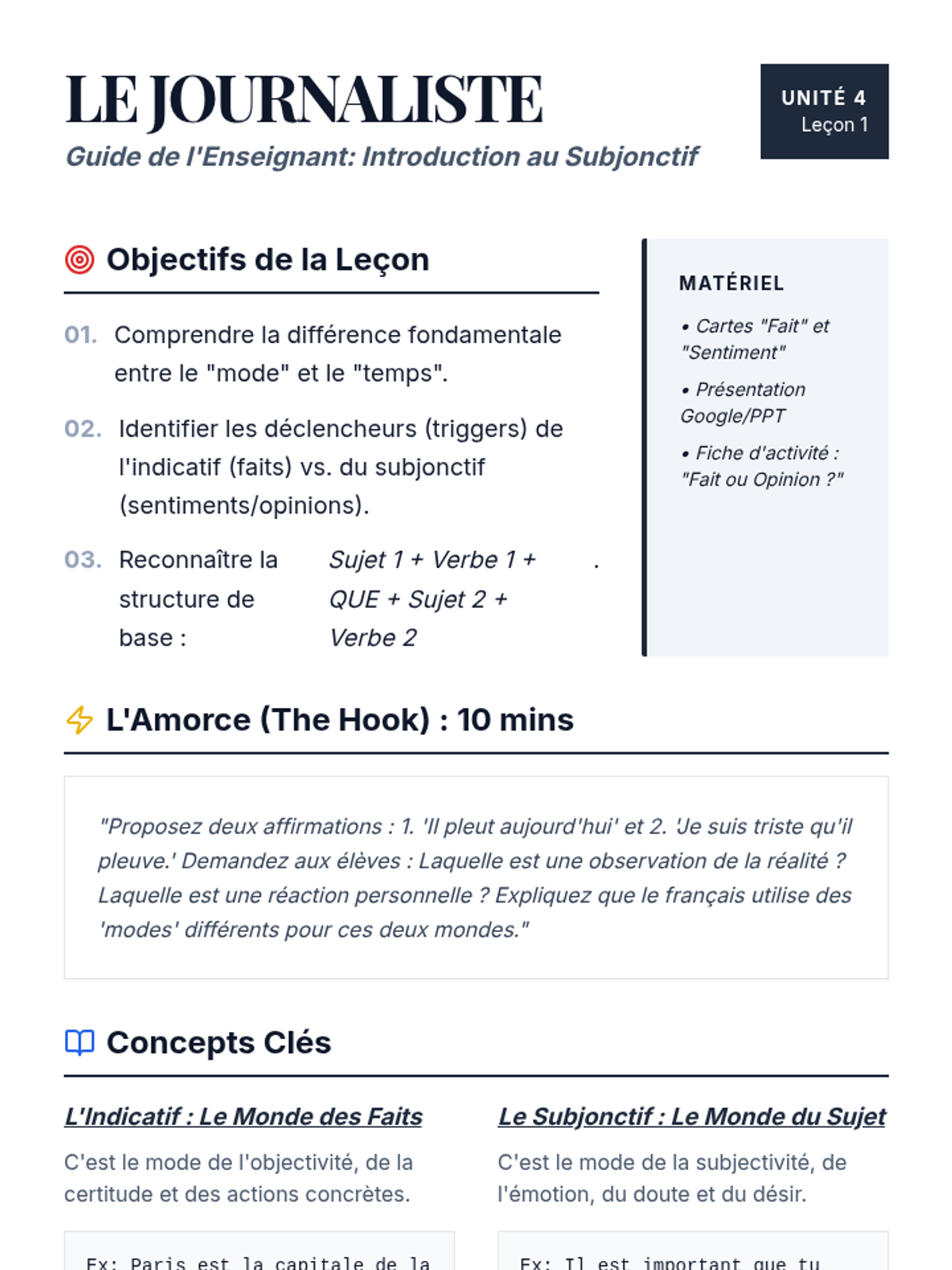
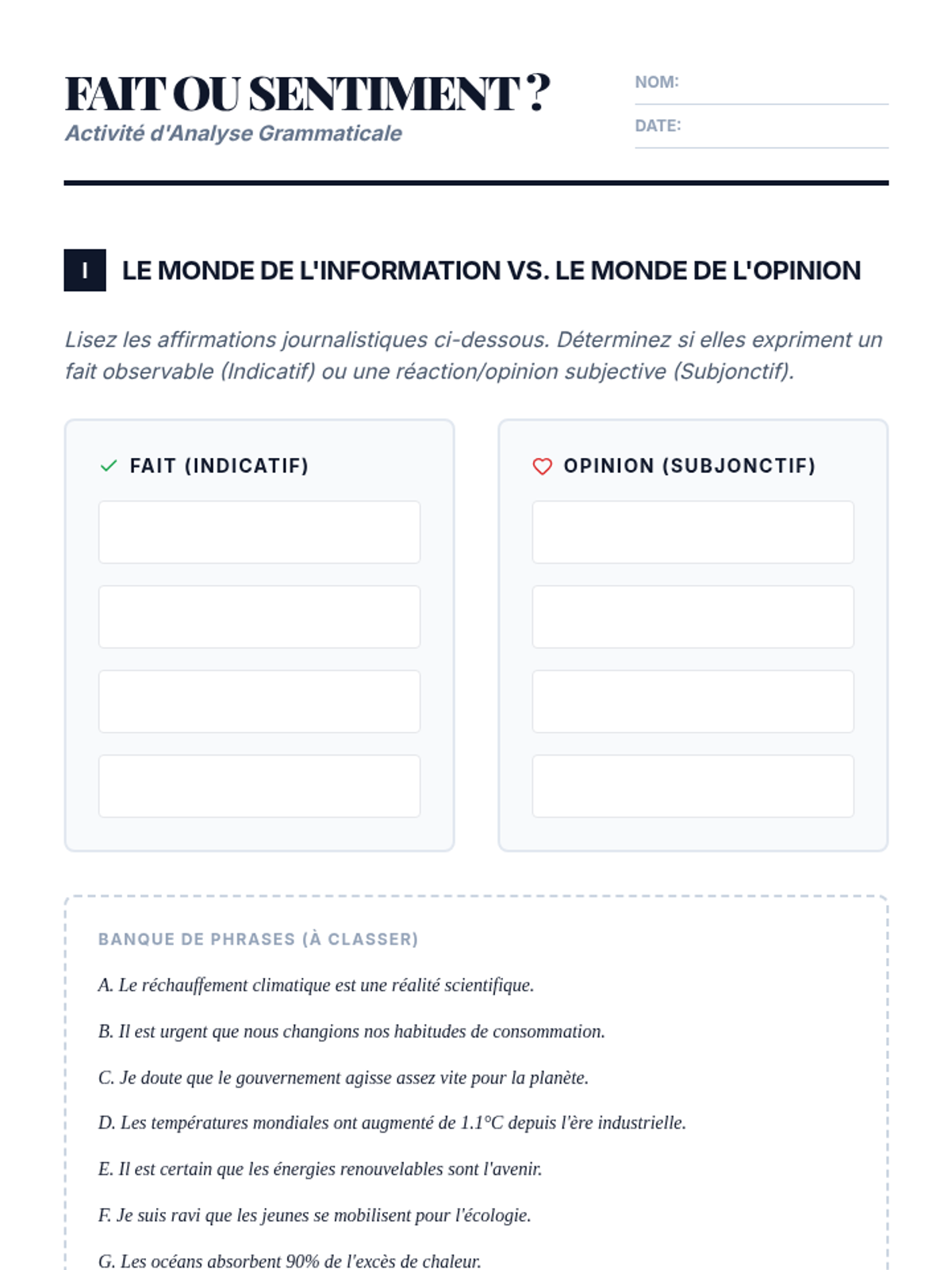
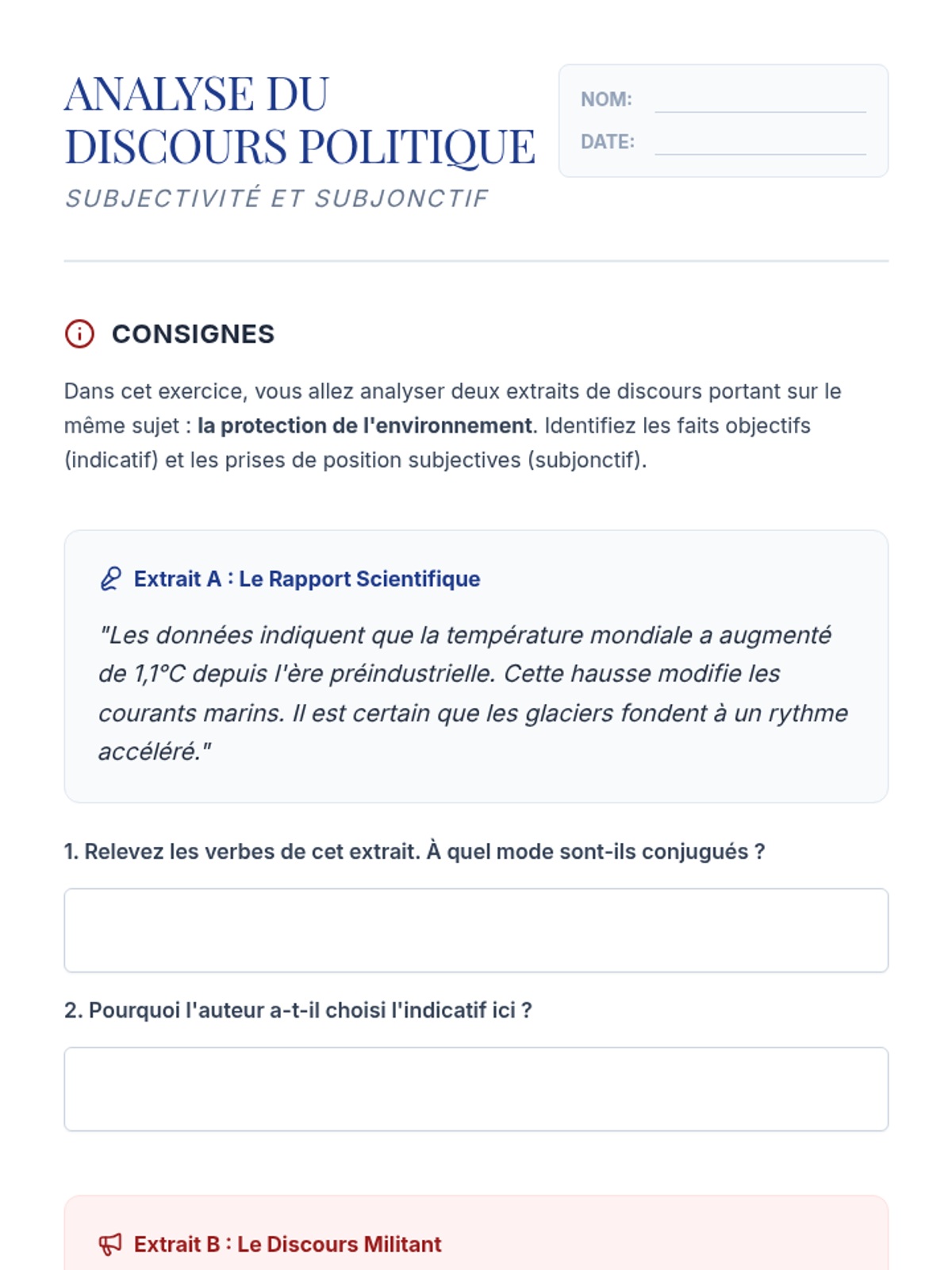
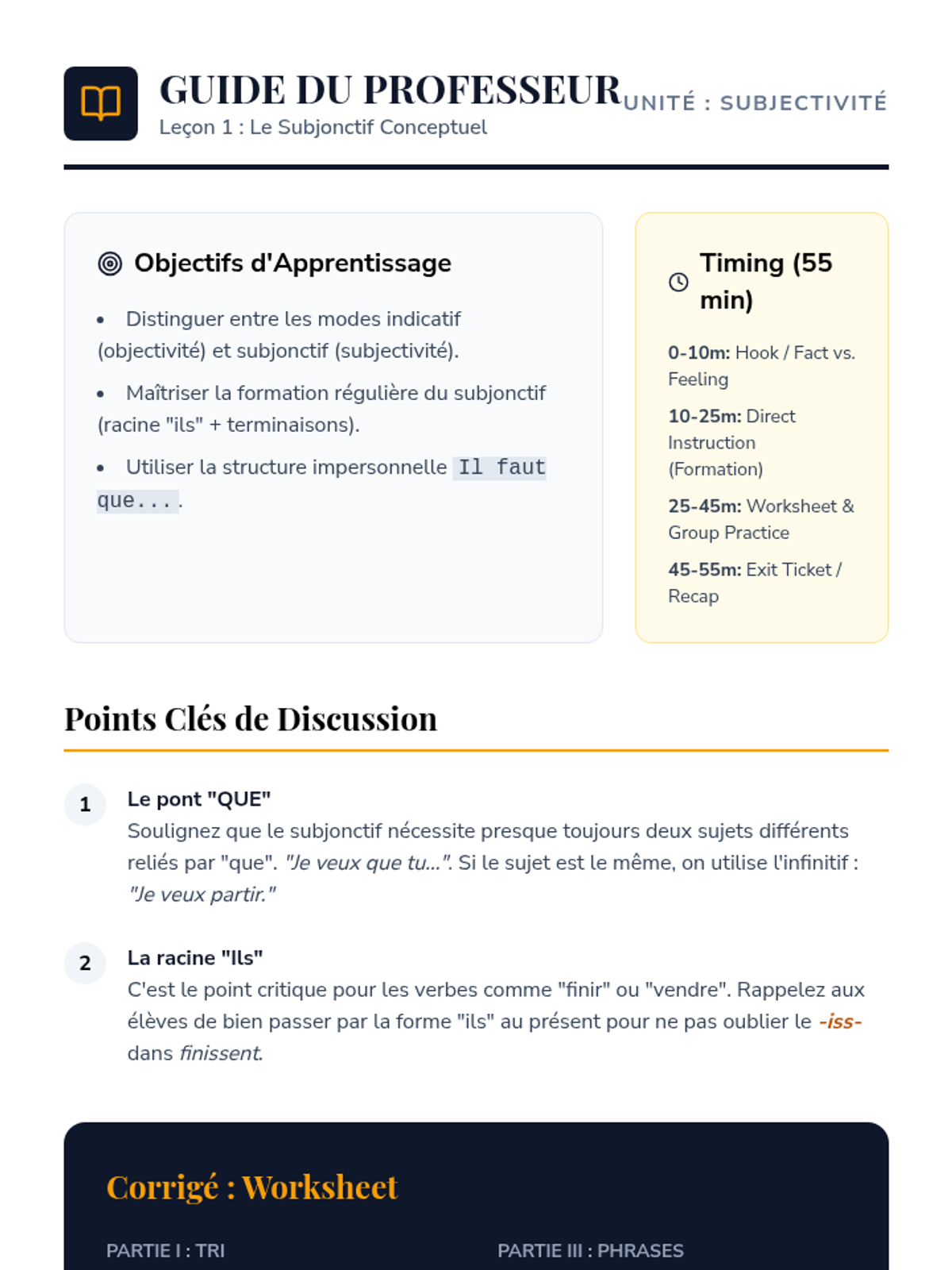
This intermediate French sequence guides 10th-grade students through the subjunctive mood using an inquiry-based approach. Students move from distinguishing objective facts to expressing doubt, necessity, and emotion, culminating in a creative advice column writing project.
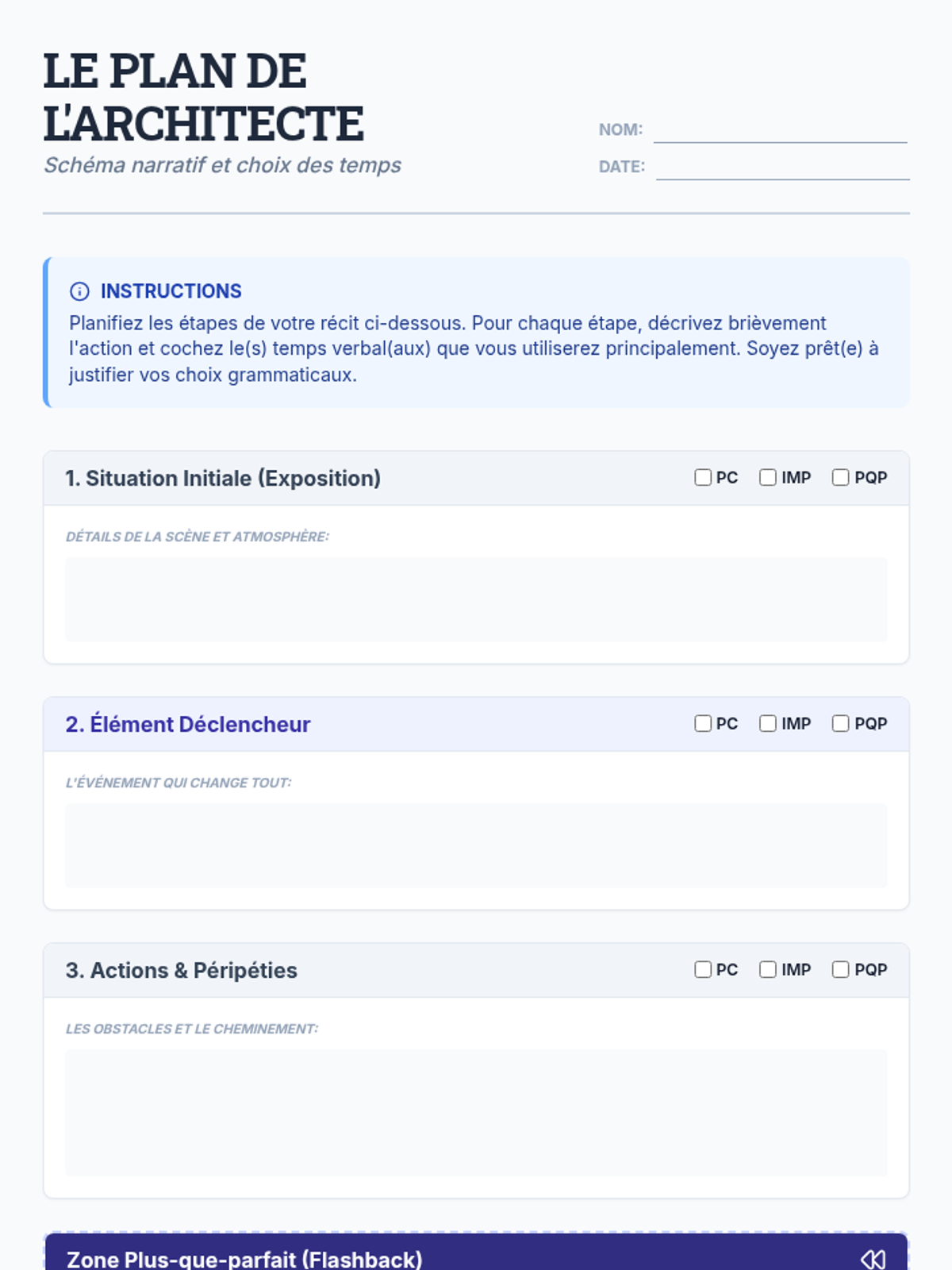
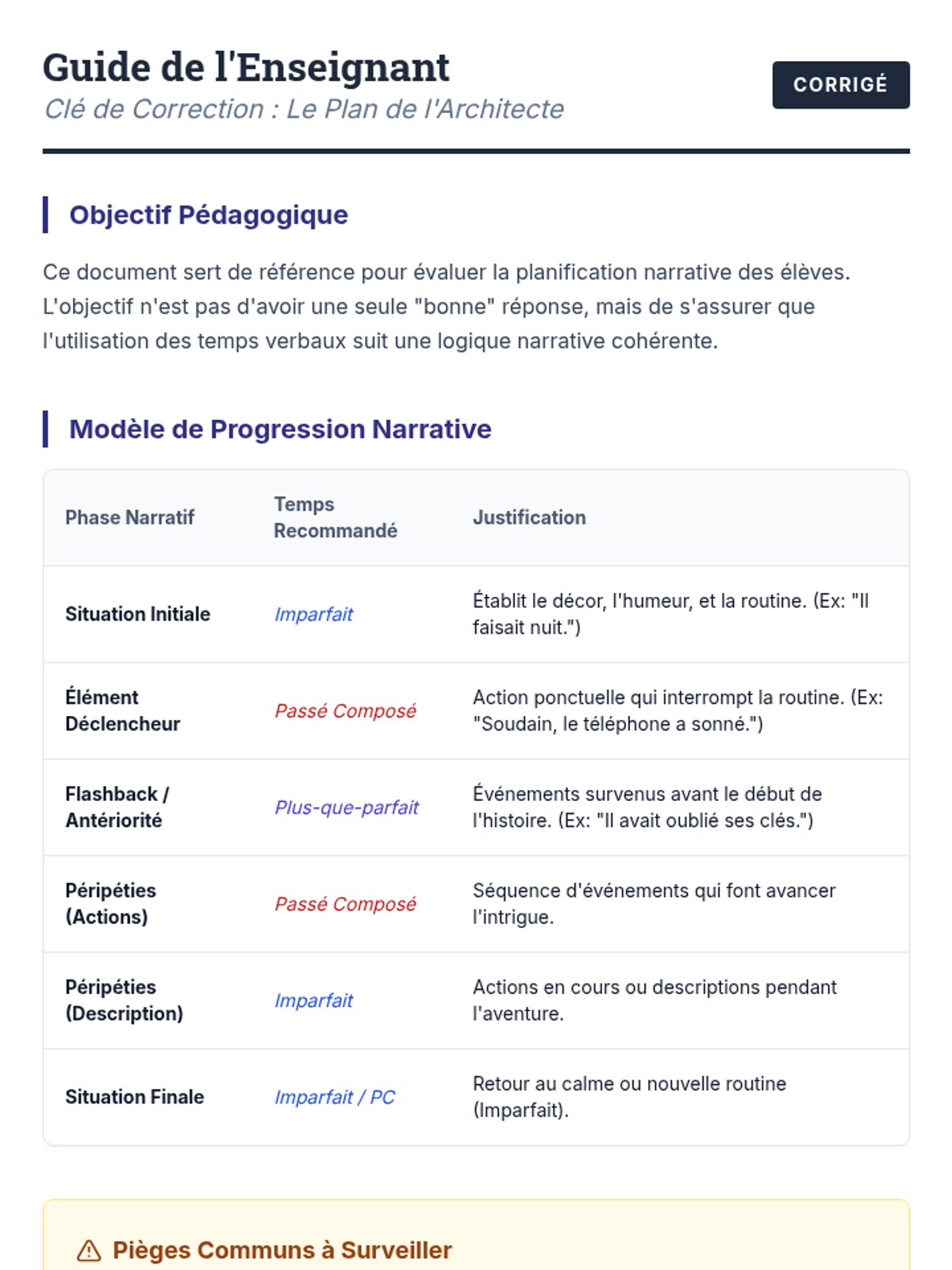
A comprehensive writing sequence for 10th-grade French students focusing on the nuanced use of past tenses (imparfait, passé composé, and plus-que-parfait) within narrative storytelling. Students transition from descriptive scene-setting to complex narrative structures involving flashbacks and dialogue.
A comprehensive sequence for 9th-grade French students to master the subjunctive mood through the lens of persuasive writing and editorial journalism. Students move from basic concept differentiation to constructing sophisticated arguments.
A comprehensive sequence for intermediate French students focused on navigating the professional world. Students will learn job-related vocabulary, document formatting (CVs and letters), and formal communication skills through authentic simulations and cultural comparisons.
A comprehensive 5-lesson unit for 8th-grade French students focused on moving beyond literal translation. Students explore idiomatic expressions, precise synonyms, register and slang (Verlan), and common 'faux amis' to achieve a more natural and nuanced level of communication.
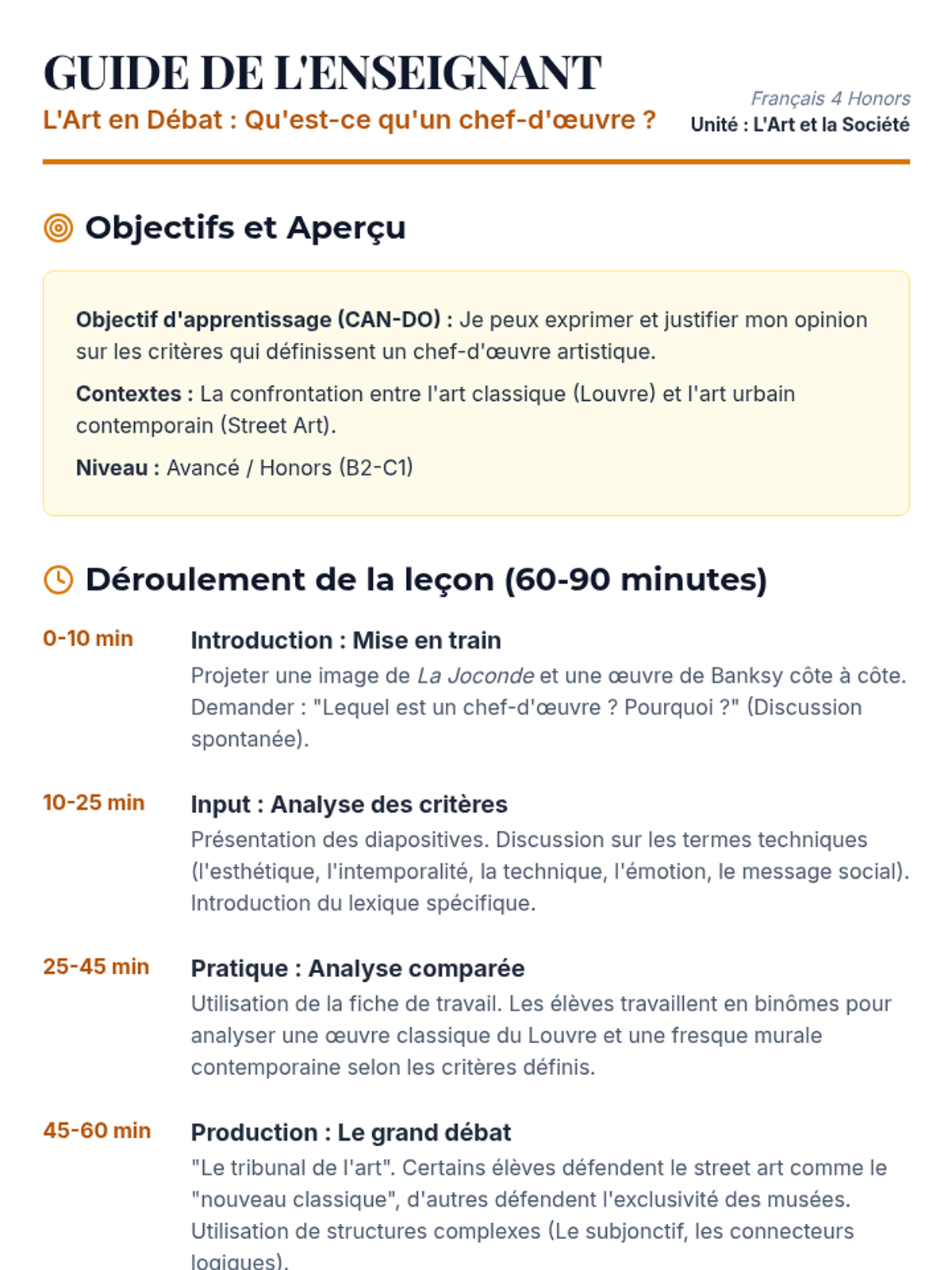
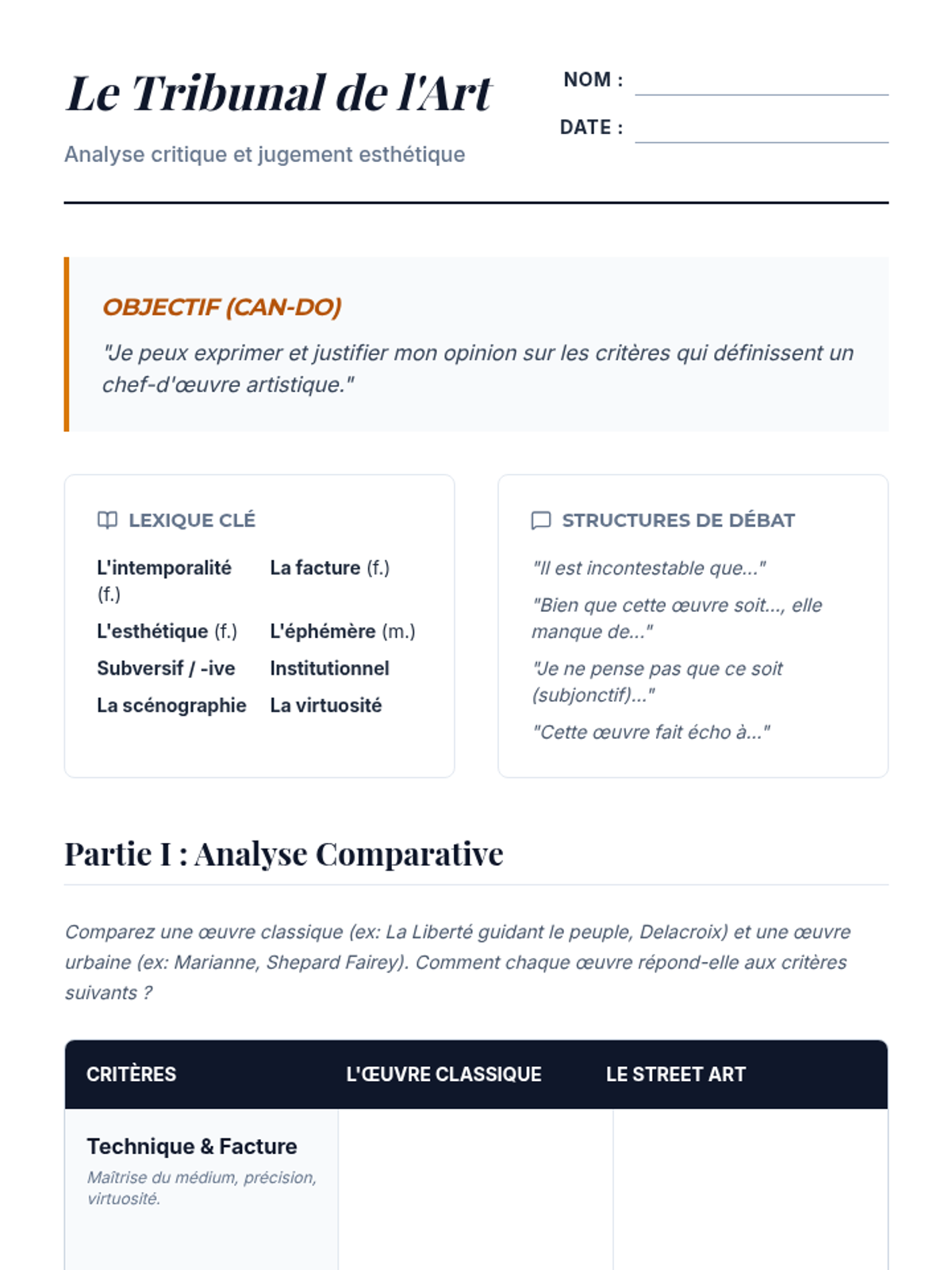
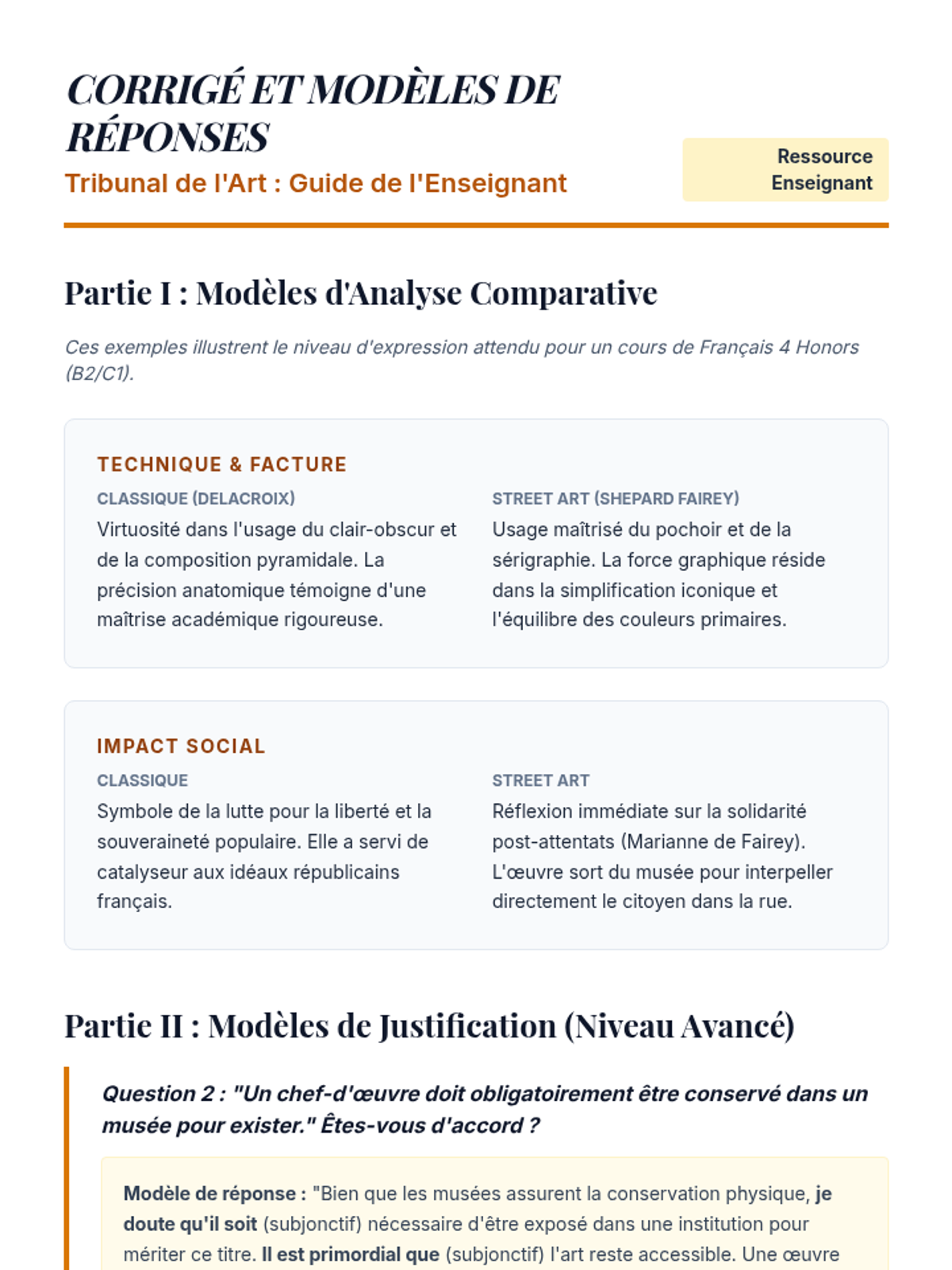
A unit exploring the intersection of art, culture, and society in the French-speaking world, focusing on aesthetic judgment and historical context.
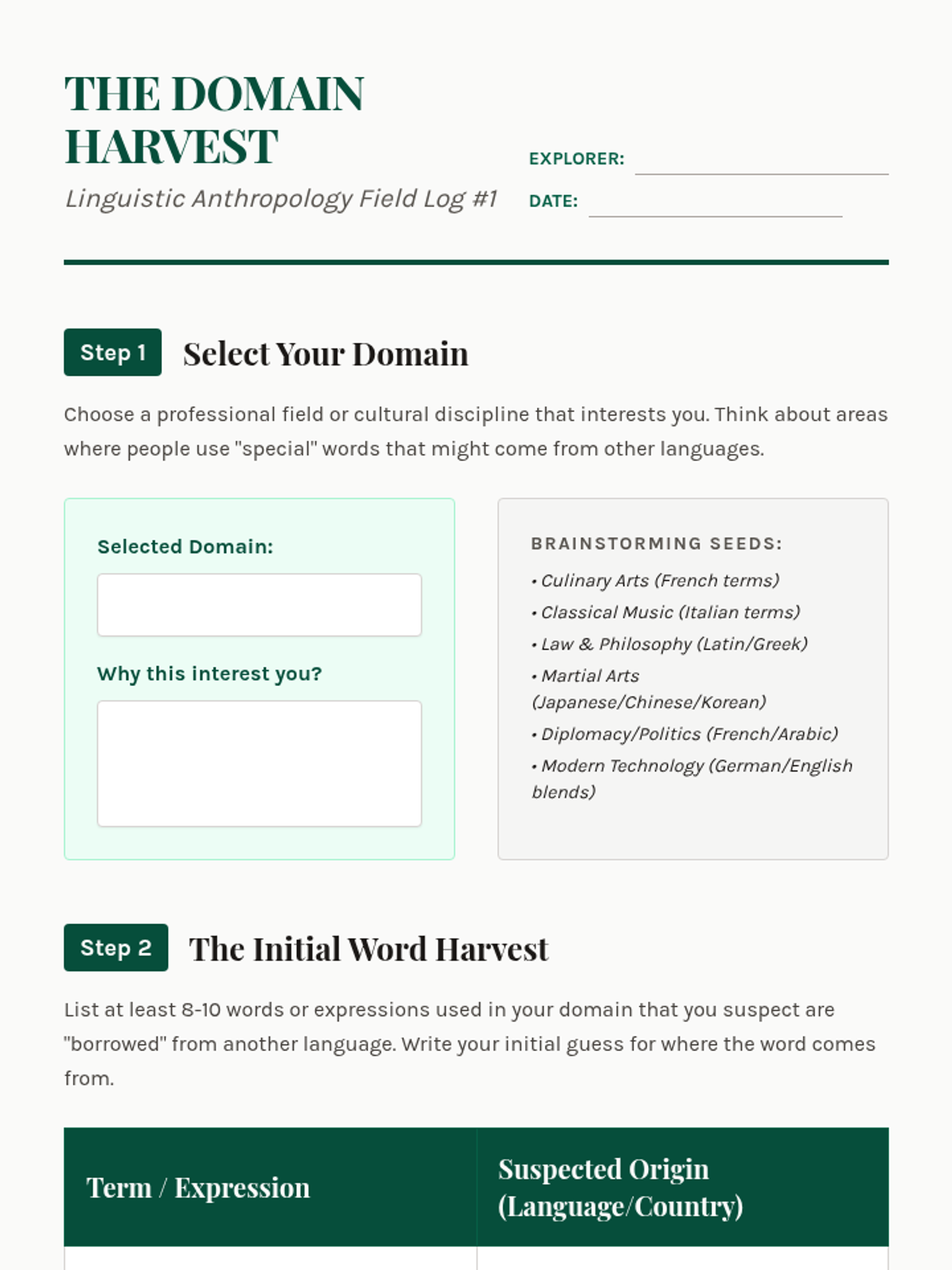
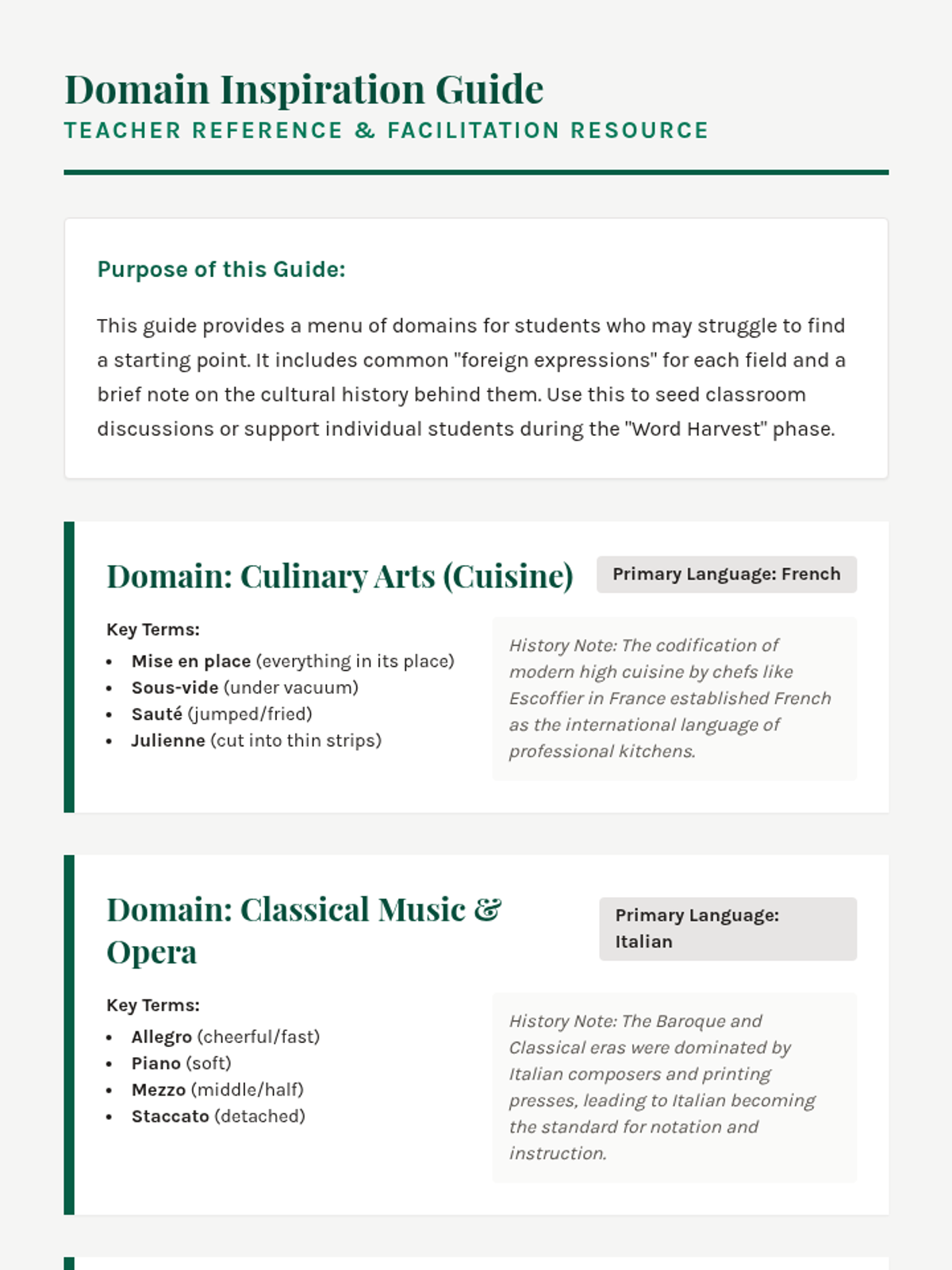
Students act as linguistic anthropologists creating a specialized 'Field Guide to Foreign Expressions' for a chosen professional or cultural domain. They investigate the etymology, usage, and visual representation of foreign terminology to explain their chosen field's linguistic history to a lay audience.
A comprehensive exploration of advanced French hypothetical structures, moving from standard 'si' clauses to mixed conditionals and sophisticated alternatives. Students master the logic of regret, possibility, and consequence through simulations and analytical exercises.
This advanced French sequence explores the nuance of the subjunctive mood through the lens of formal argumentation and debate. Students progress from identifying subjective triggers to spontaneously using complex grammatical structures to express doubt, emotion, and necessity in persuasive contexts.
A culminating French sequence where students master advanced grammar through narrative storytelling. Students integrate complex tenses, moods, and syntax to draft, edit, and present original short stories.
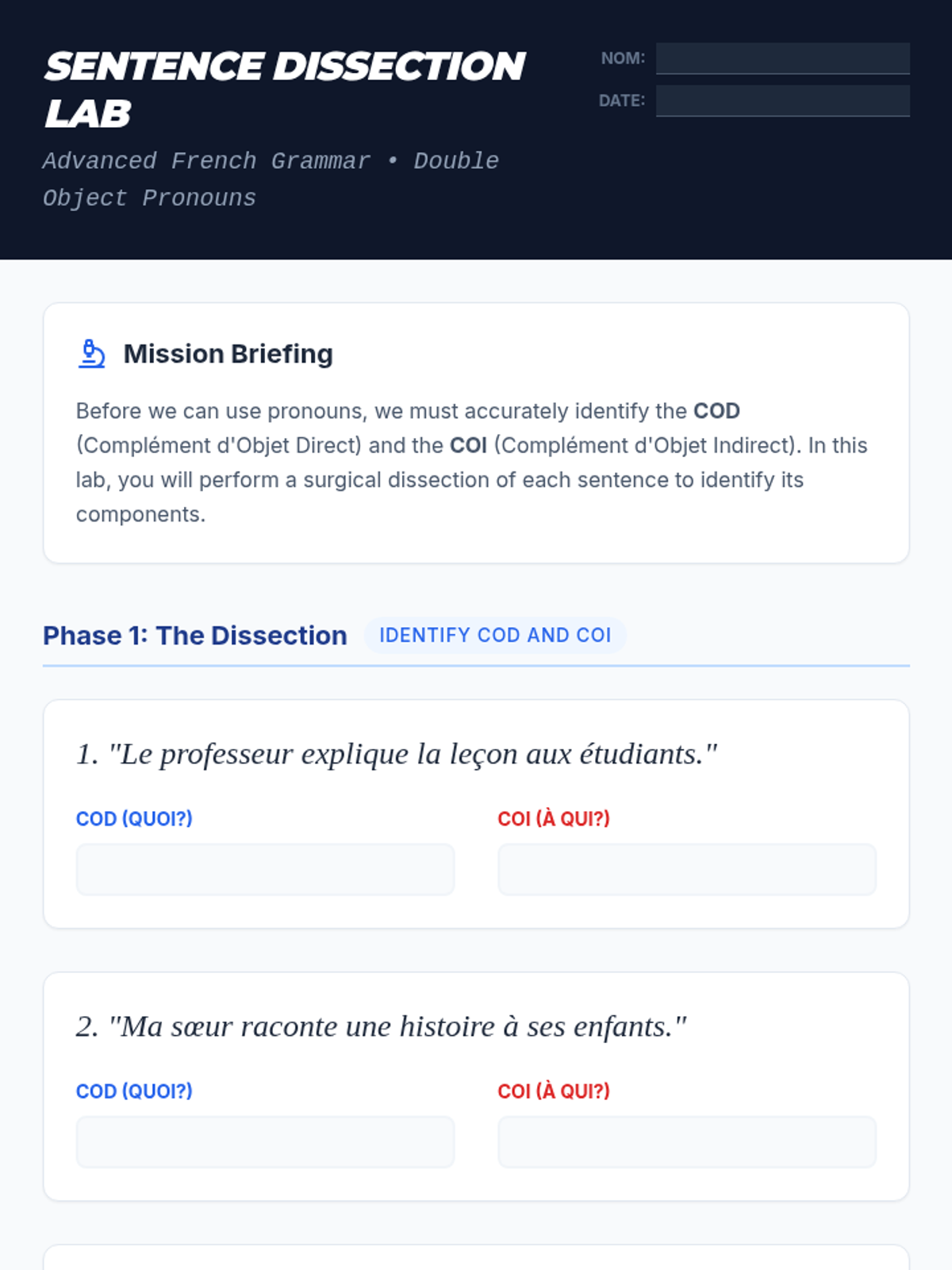
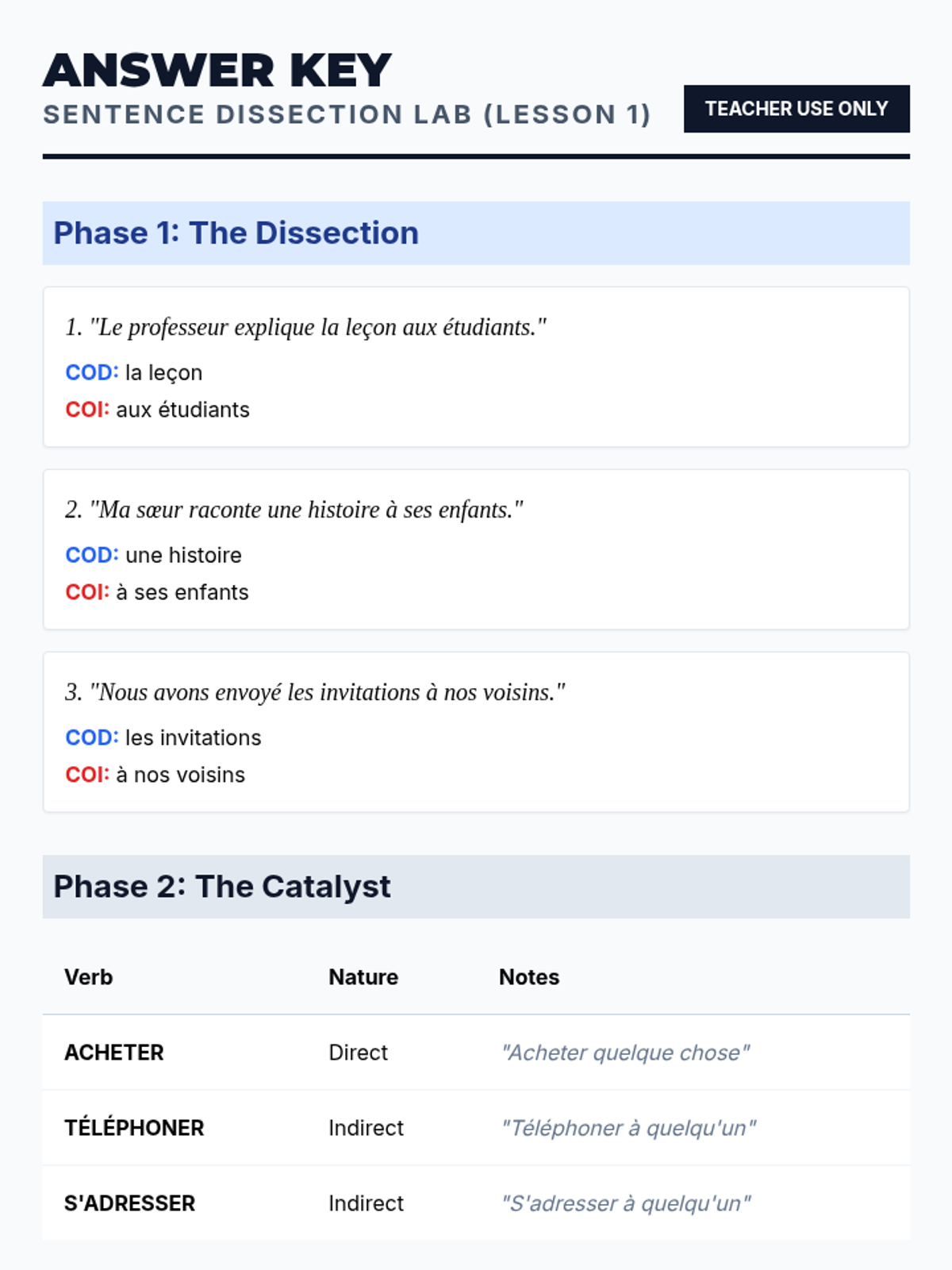
A comprehensive unit for 10th-grade French students to master the complex hierarchy and placement of double object pronouns, including adverbial pronouns 'y' and 'en' and imperative mood exceptions.
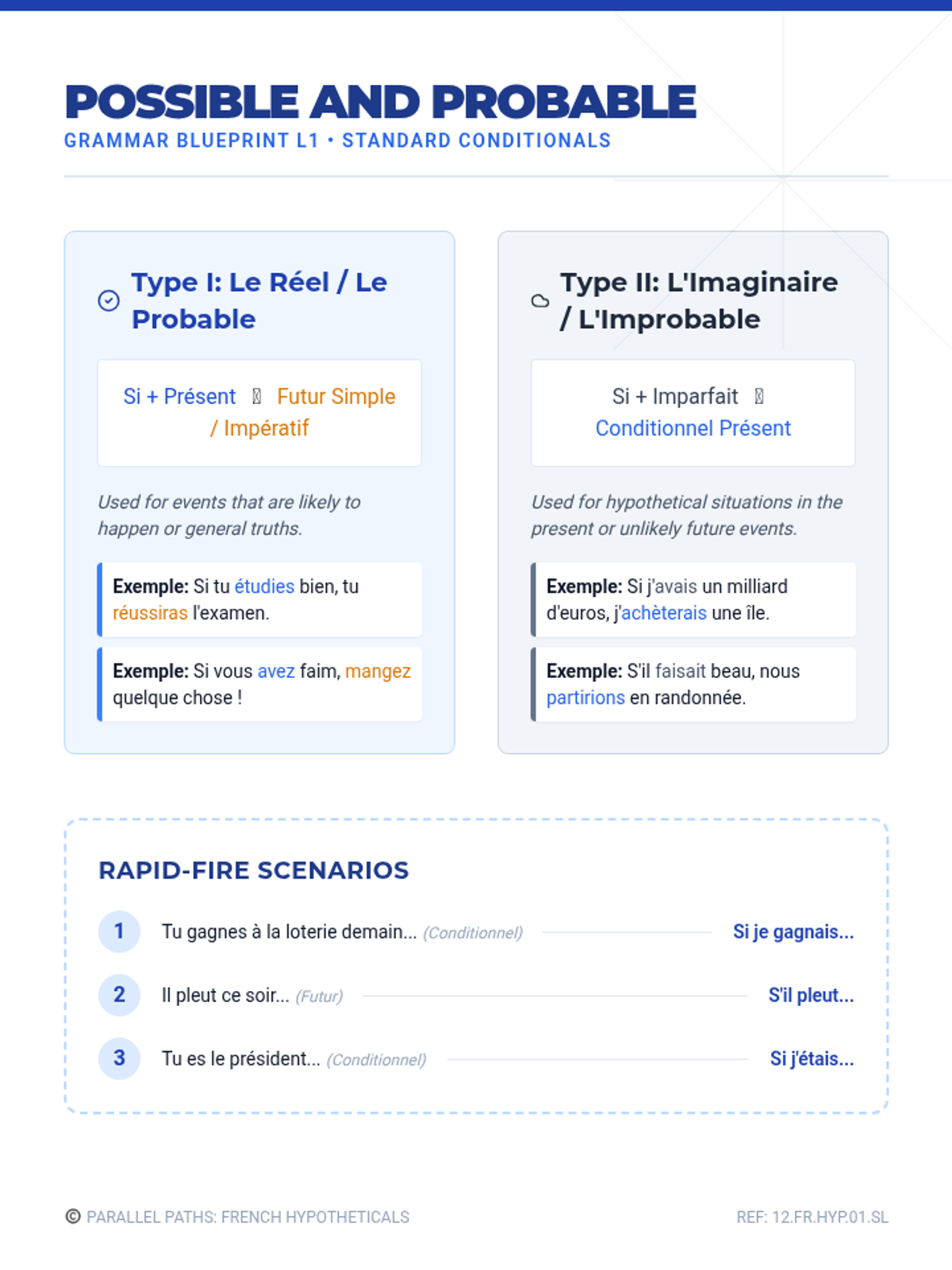
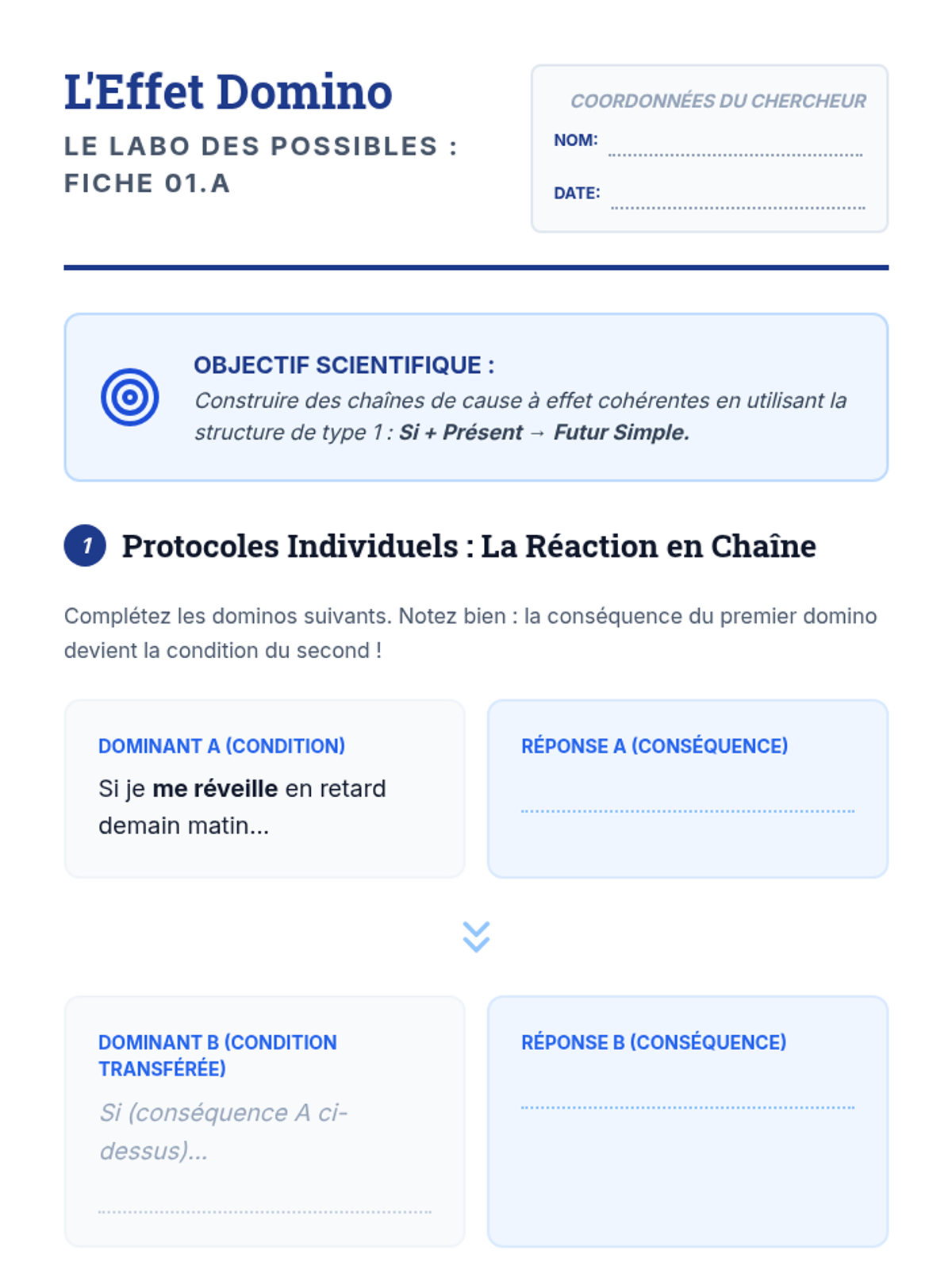
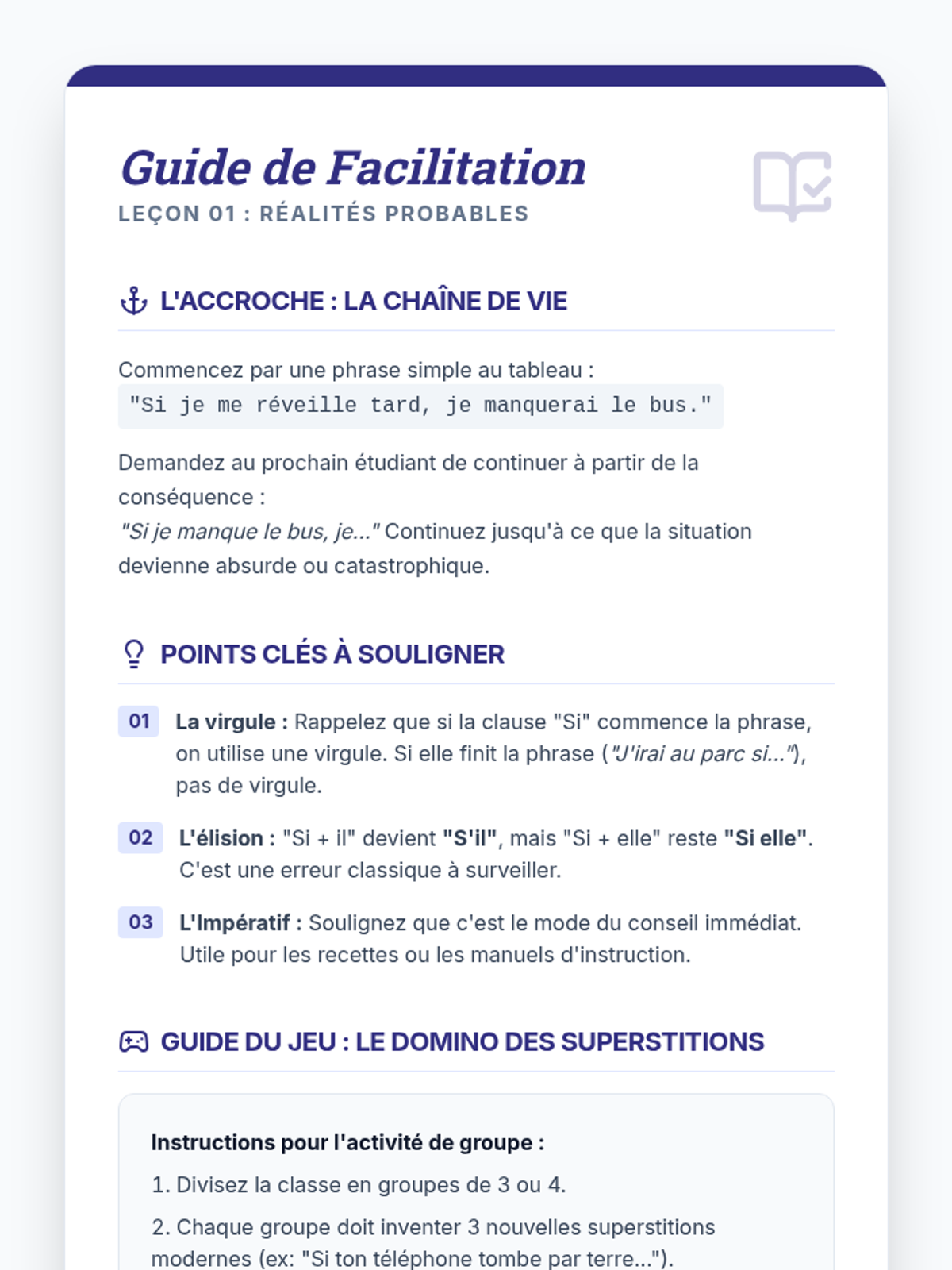
This advanced French grammar sequence explores the three types of 'Si' clauses (hypothetical statements) through the lens of a "Laboratory of Possibilities." Students progress from likely future outcomes to unlikely present scenarios and impossible past regrets, culminating in a creative rewriting project.
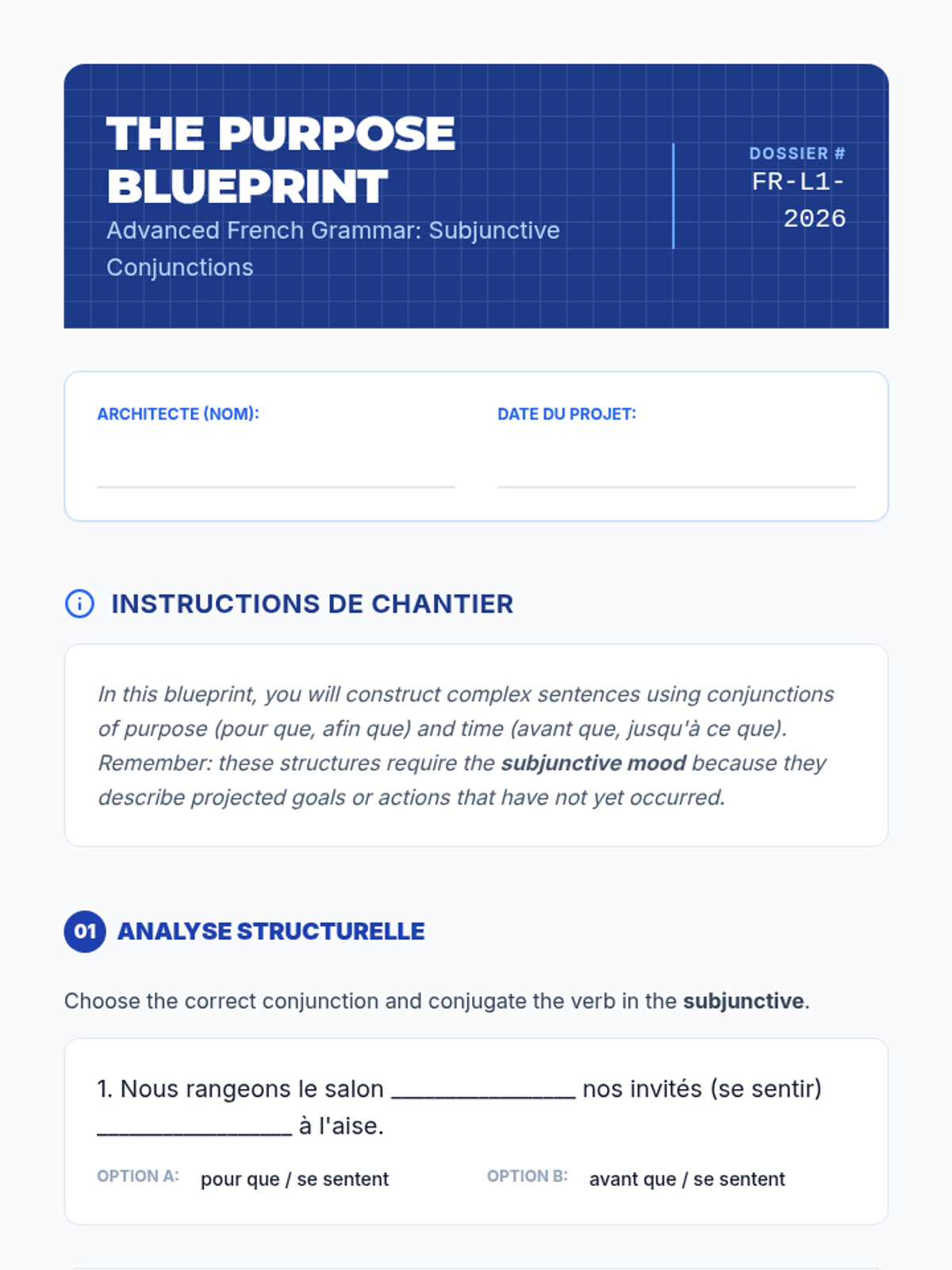
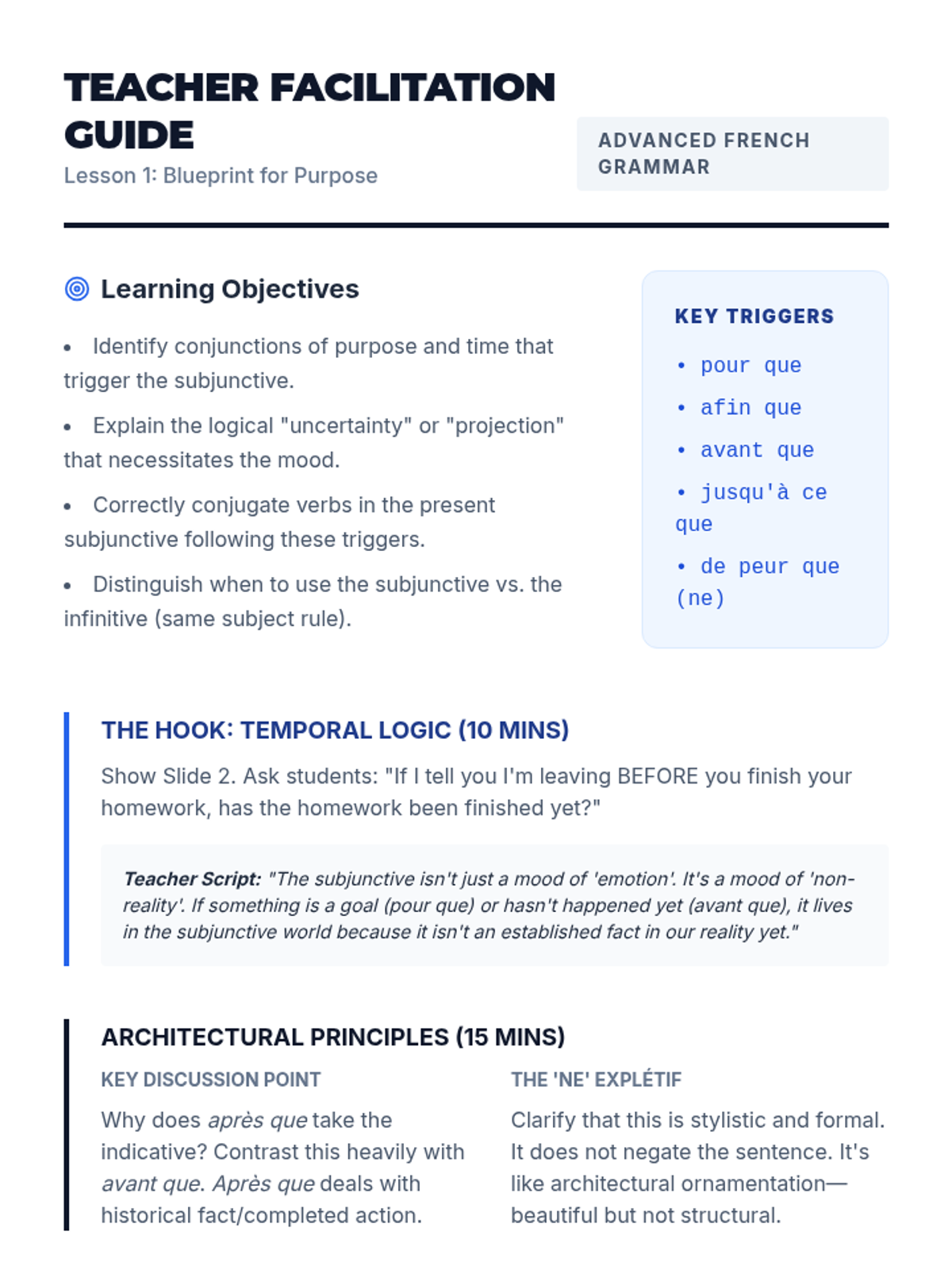
This advanced French grammar sequence guides 10th-grade students through the complexities of the subjunctive mood, focusing on conjunctions of purpose, time, concession, and condition, as well as the nuances of doubt in negation and interrogation. The unit culminates in a formal debate where students must architect their arguments using these sophisticated structures.
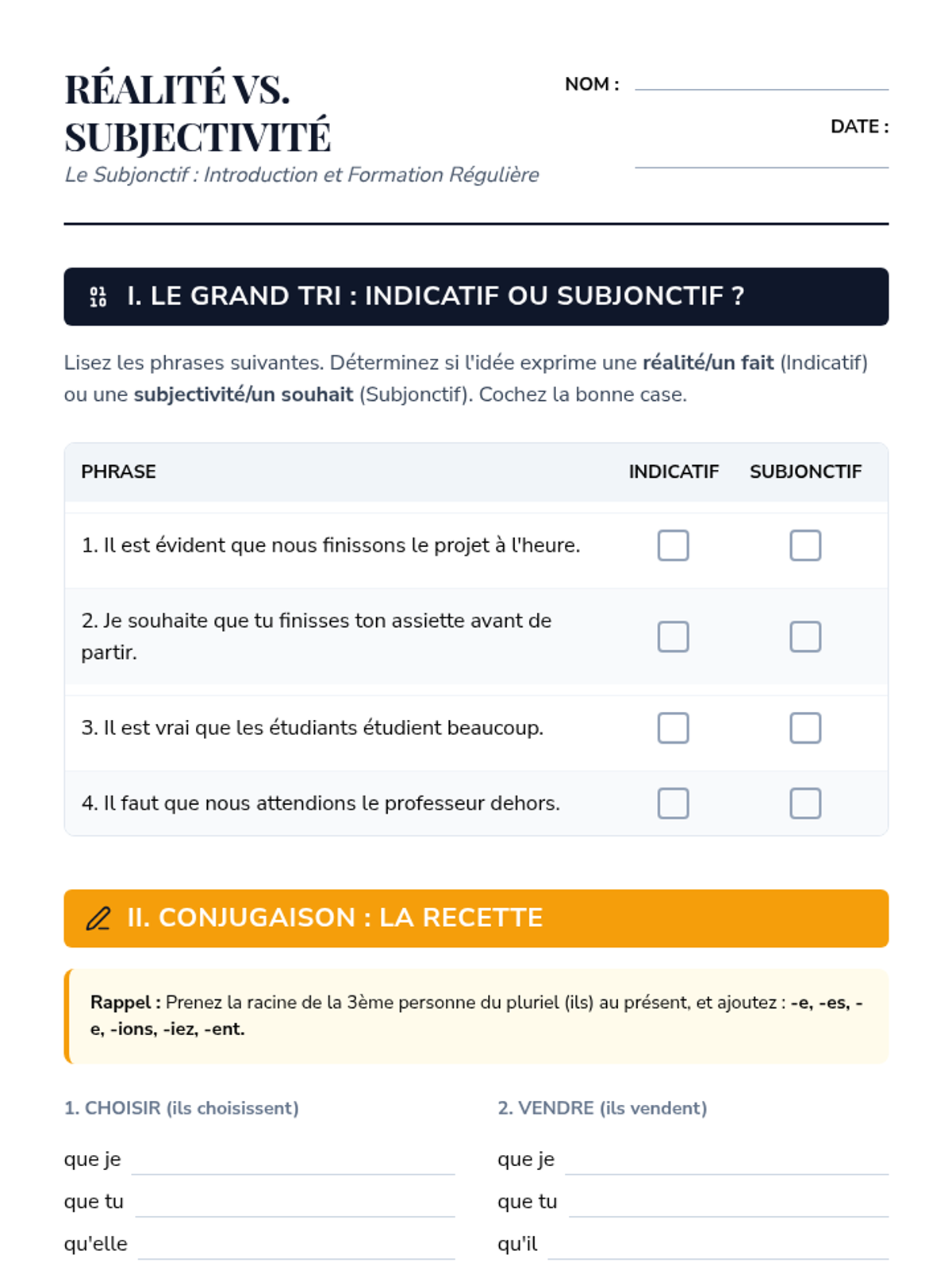
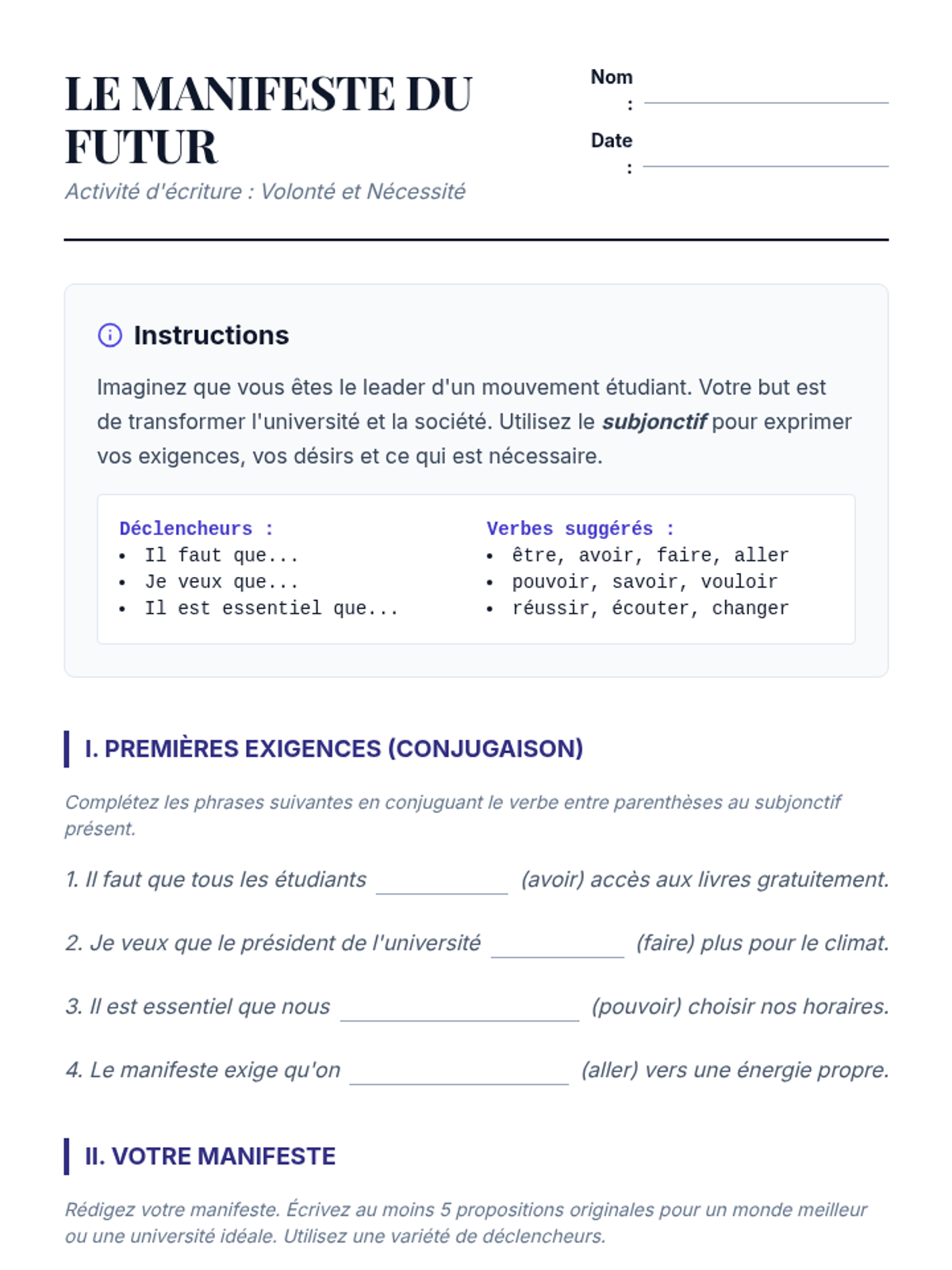
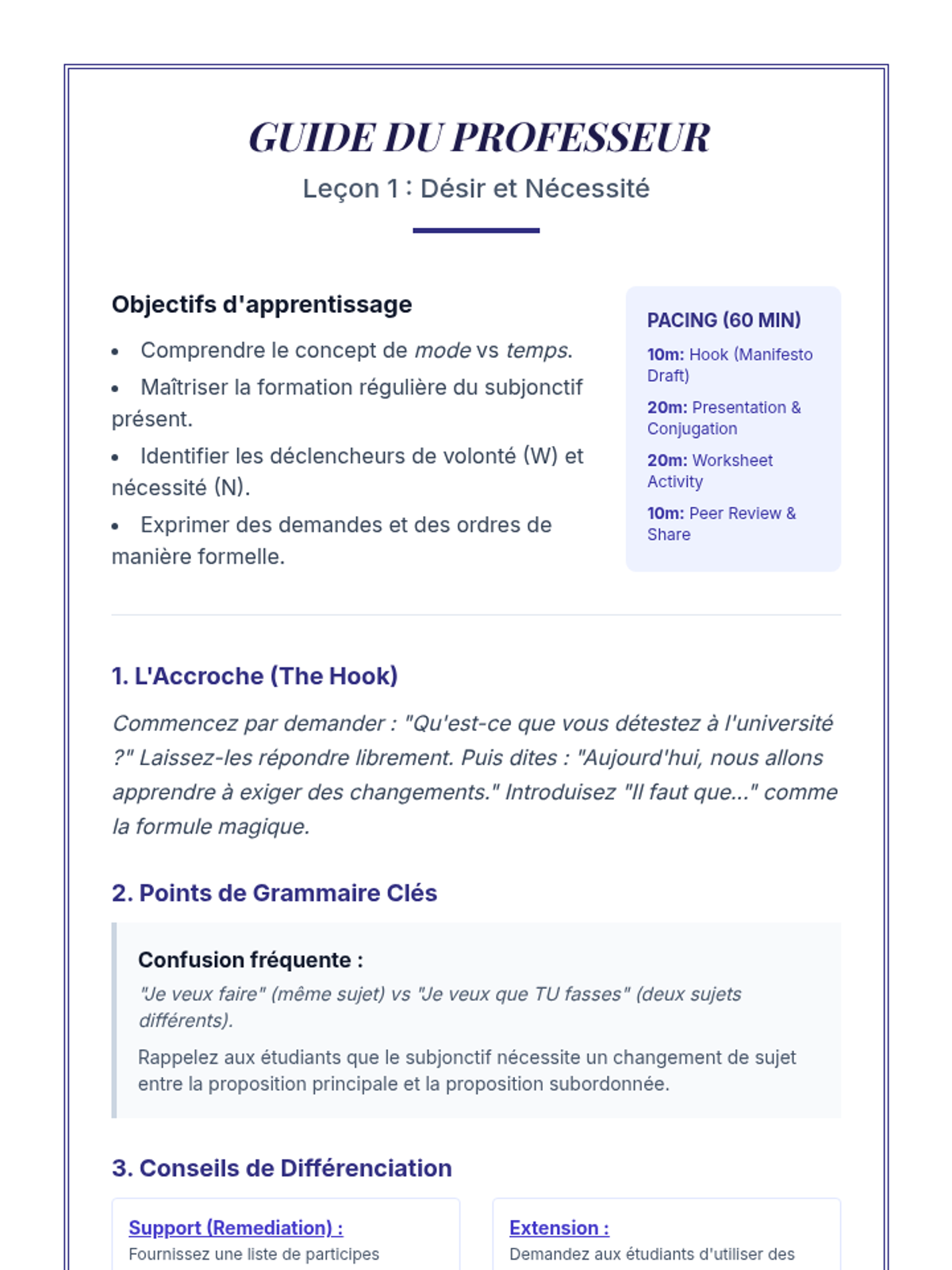
A comprehensive unit for 10th Grade French students exploring the subjunctive mood. Students transition from the indicative 'reality' to the subjunctive 'subjectivity' through the lenses of will, emotion, necessity, and doubt, culminating in a persuasive writing assessment.
This advanced French sequence transforms students from 'textbook speakers' into natural conversationalists by mastering the idioms, slang, and cultural metaphors that define native speech. Through game-based activities, students explore register shifting, rapid-fire retorts, and the nuances of 'faux amis' to build authentic fluency.
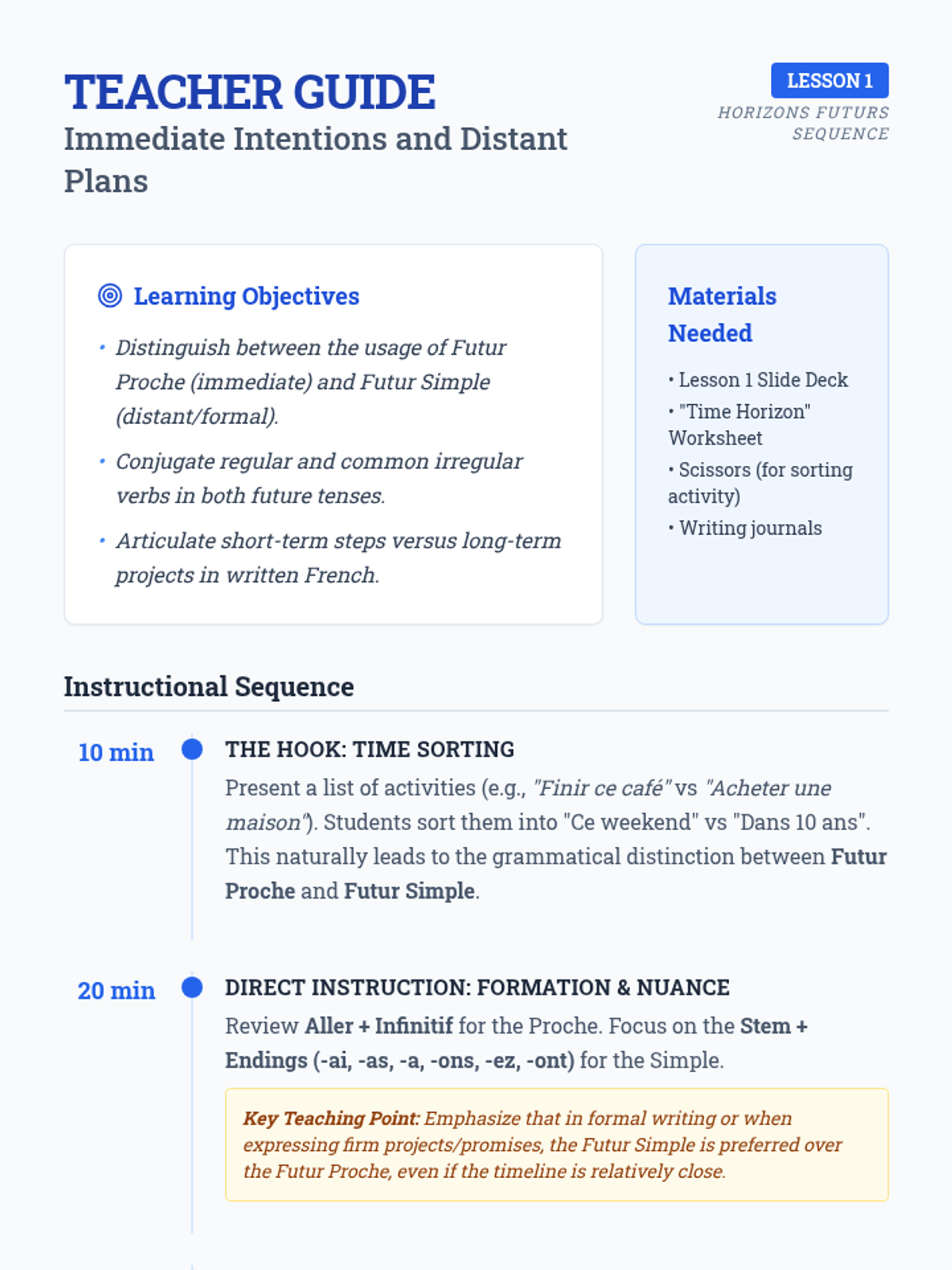
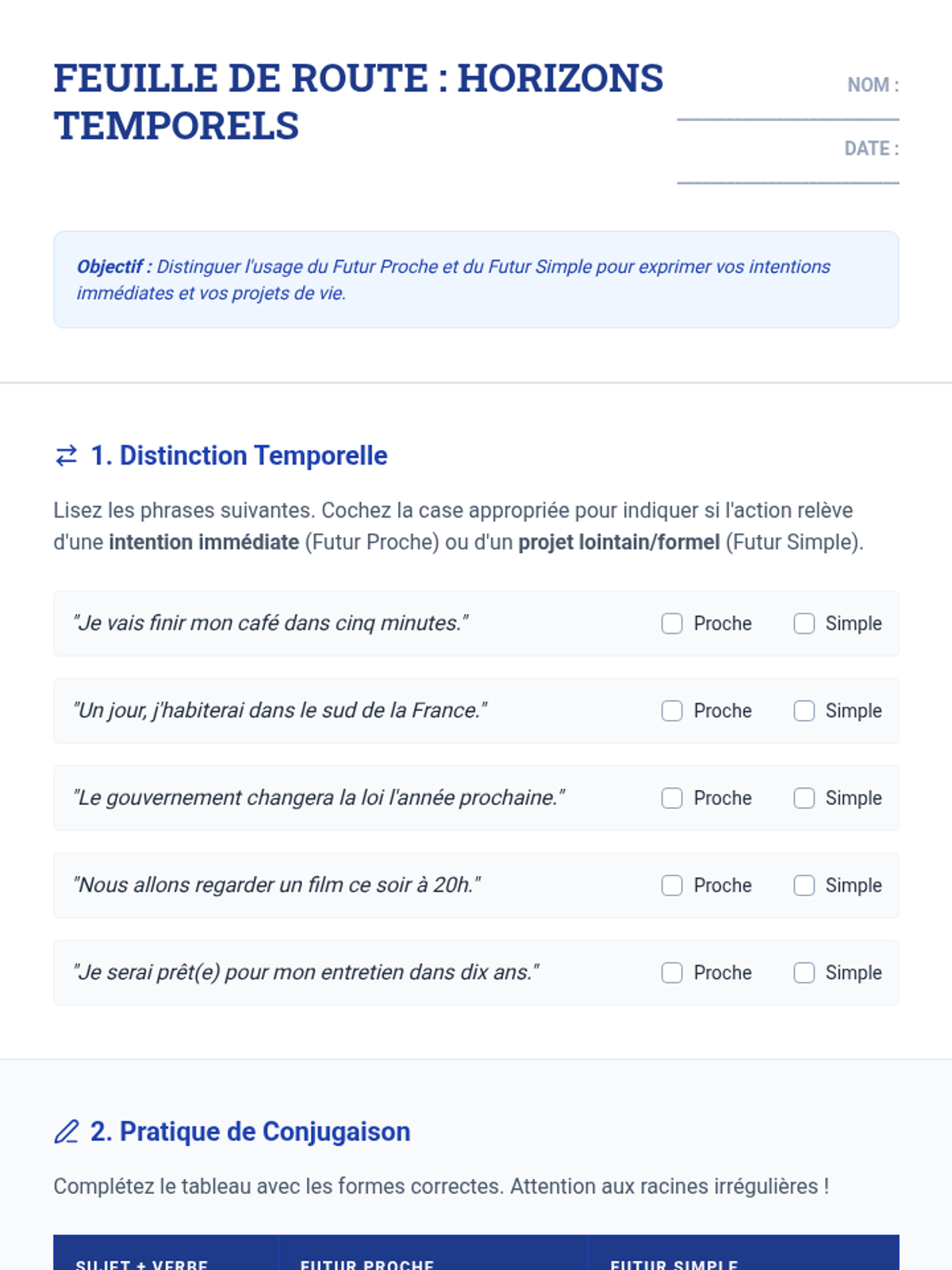
This intermediate French sequence focuses on mastering future tenses to articulate long-term goals. Students explore the nuances between Futur Proche, Futur Simple, and Futur Antérieur, while applying temporal conjunctions to build complex narratives about their professional and personal aspirations.
This sequence explores the subjunctive mood in French for intermediate learners, focusing on the conceptual triggers of subjectivity, doubt, emotion, and necessity. Students will move from basic conjugation to writing complex opinion pieces and editorials.
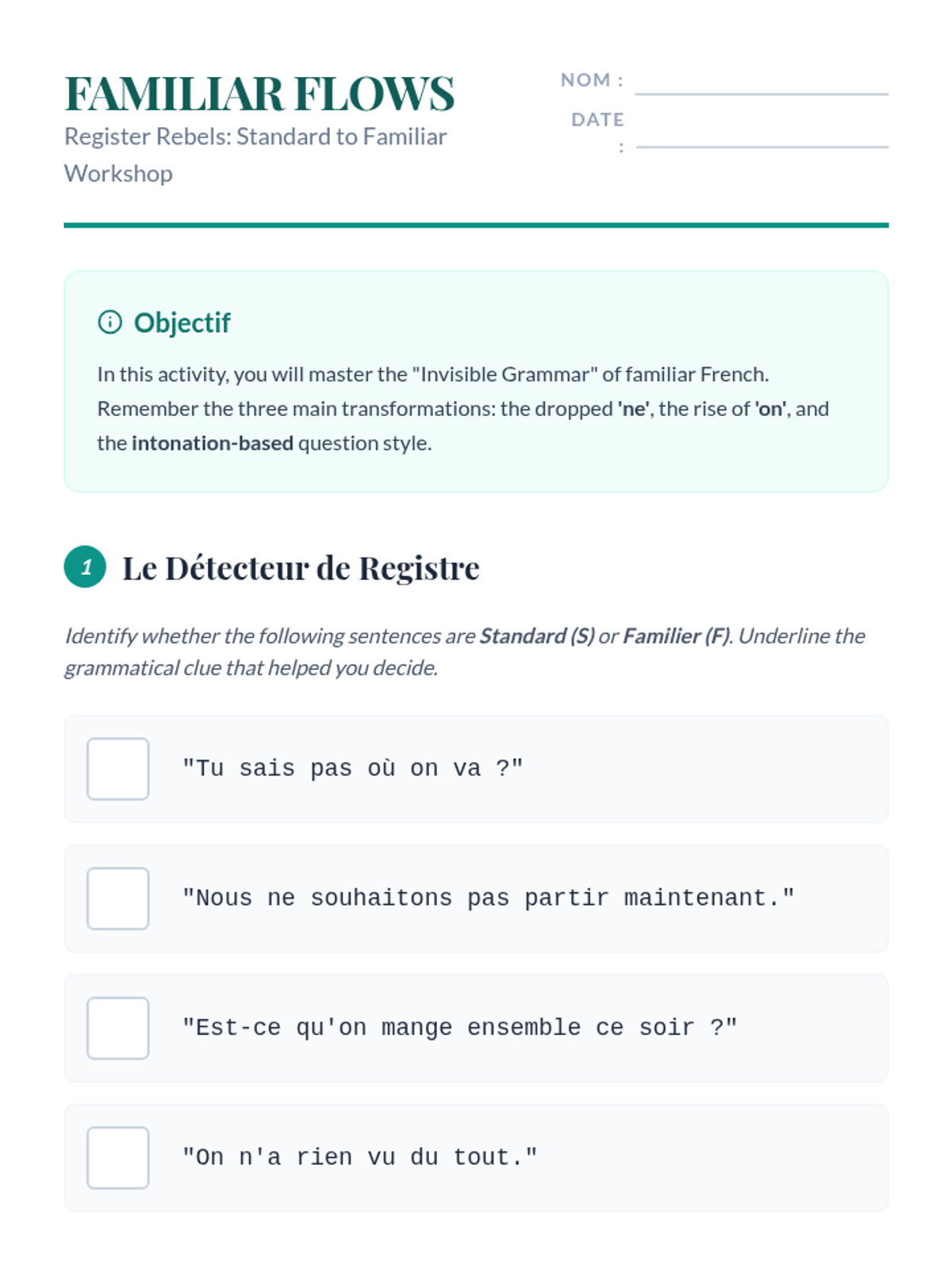
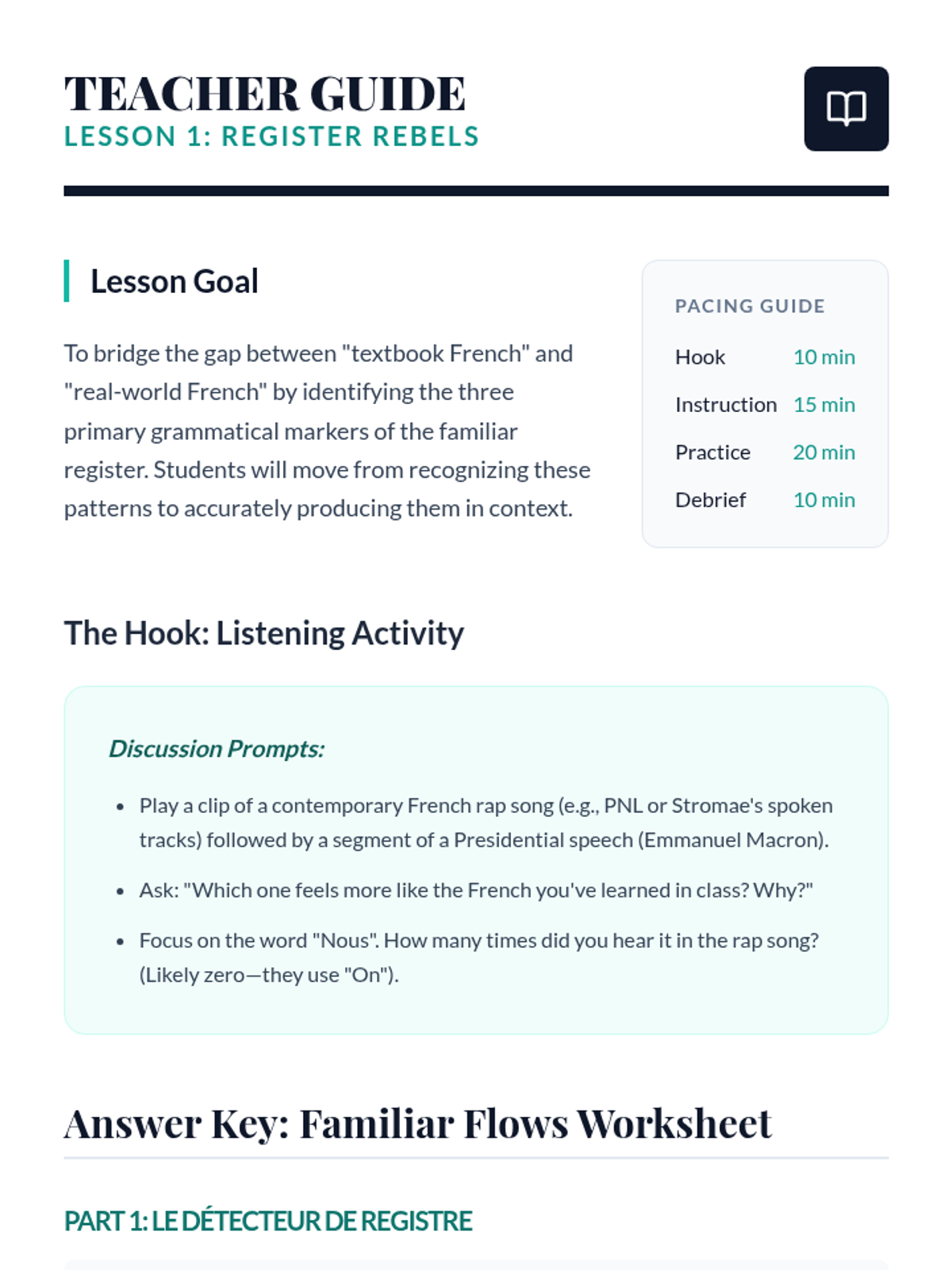
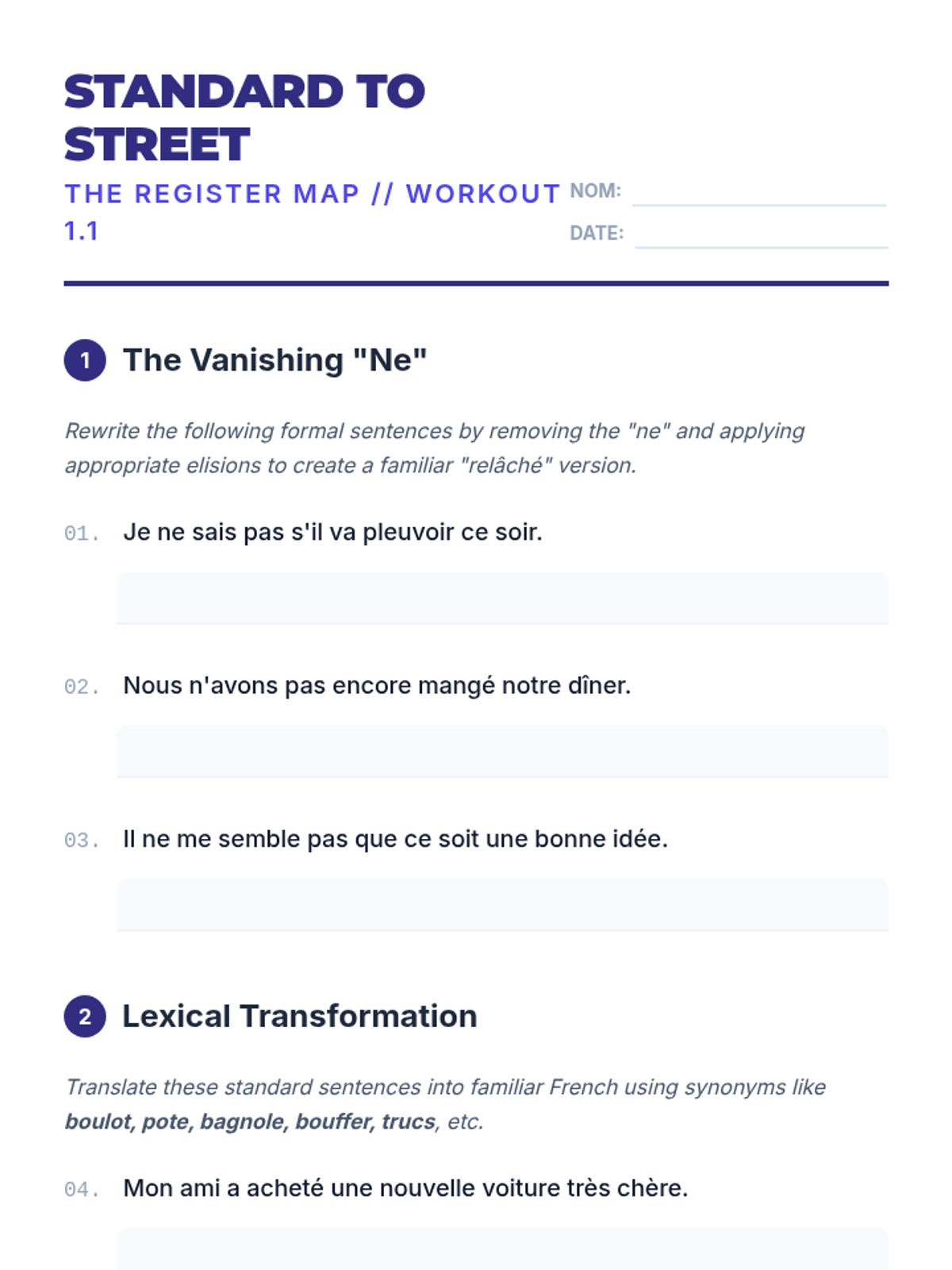
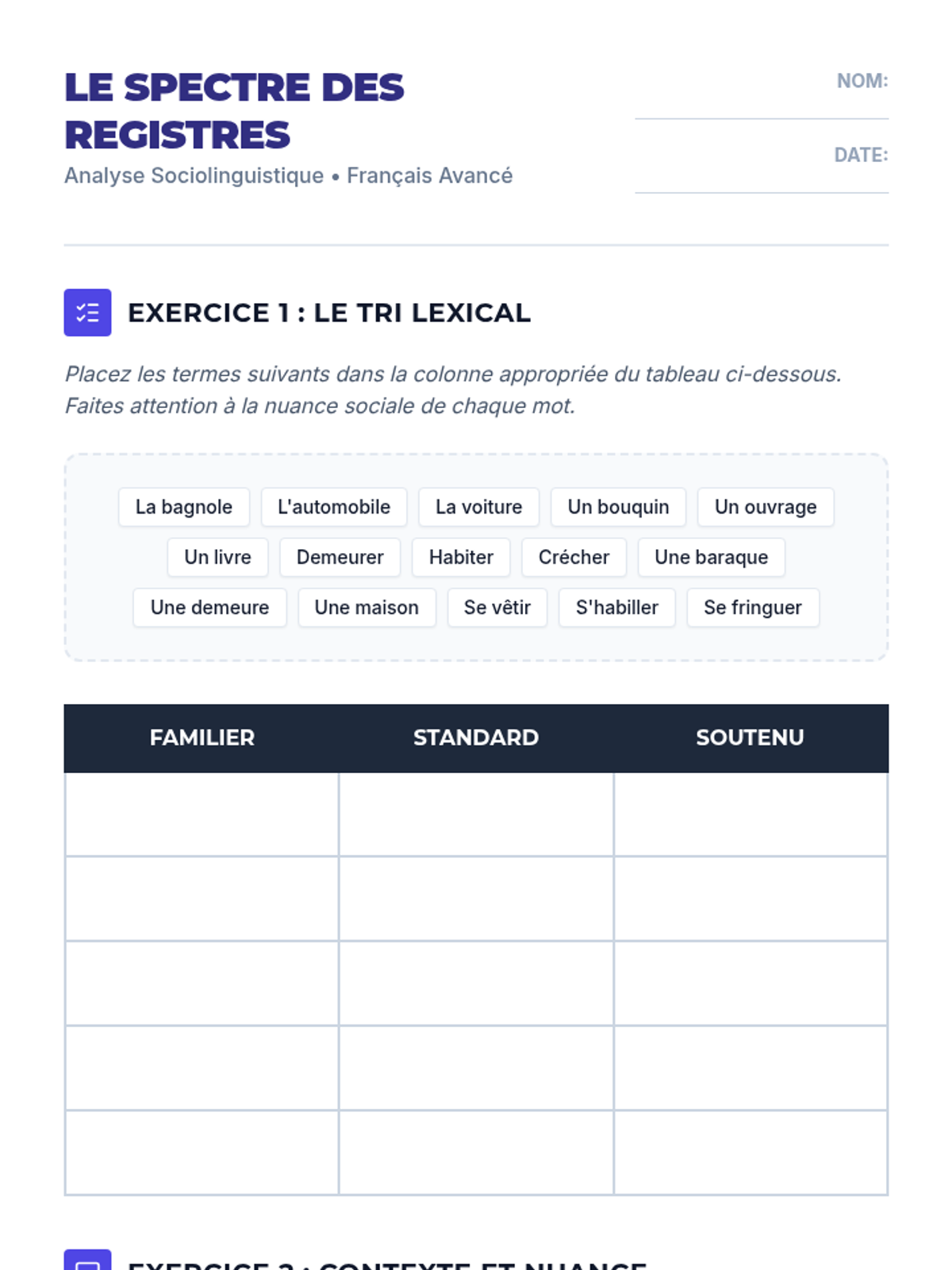
This advanced French sequence explores the sociolinguistic dimensions of grammar, focusing on how language shifts between 'langue populaire', 'langue standard', and 'langue soutenue'. Students develop the ability to navigate different social contexts by mastering register-specific grammatical structures, from slang reductions to formal inversions.
An advanced French grammar sequence focused on voice manipulation in media. Students explore the passive voice, pronominal verbs, and the indefinite subject 'on' to understand how agent suppression impacts objectivity and responsibility in journalistic and political contexts.
A comprehensive module for advanced French students focused on the morphology, function, and stylistic impact of literary tenses (passé simple, passé antérieur, and imperfect subjunctive) in formal narrative. Students transition from passive recognition to active analysis and formal composition.
This sequence guides advanced French students through the recognition and analysis of literary tenses (passé simple and imparfait du subjonctif) in classic literature, culminating in a creative stylistic imitation project.
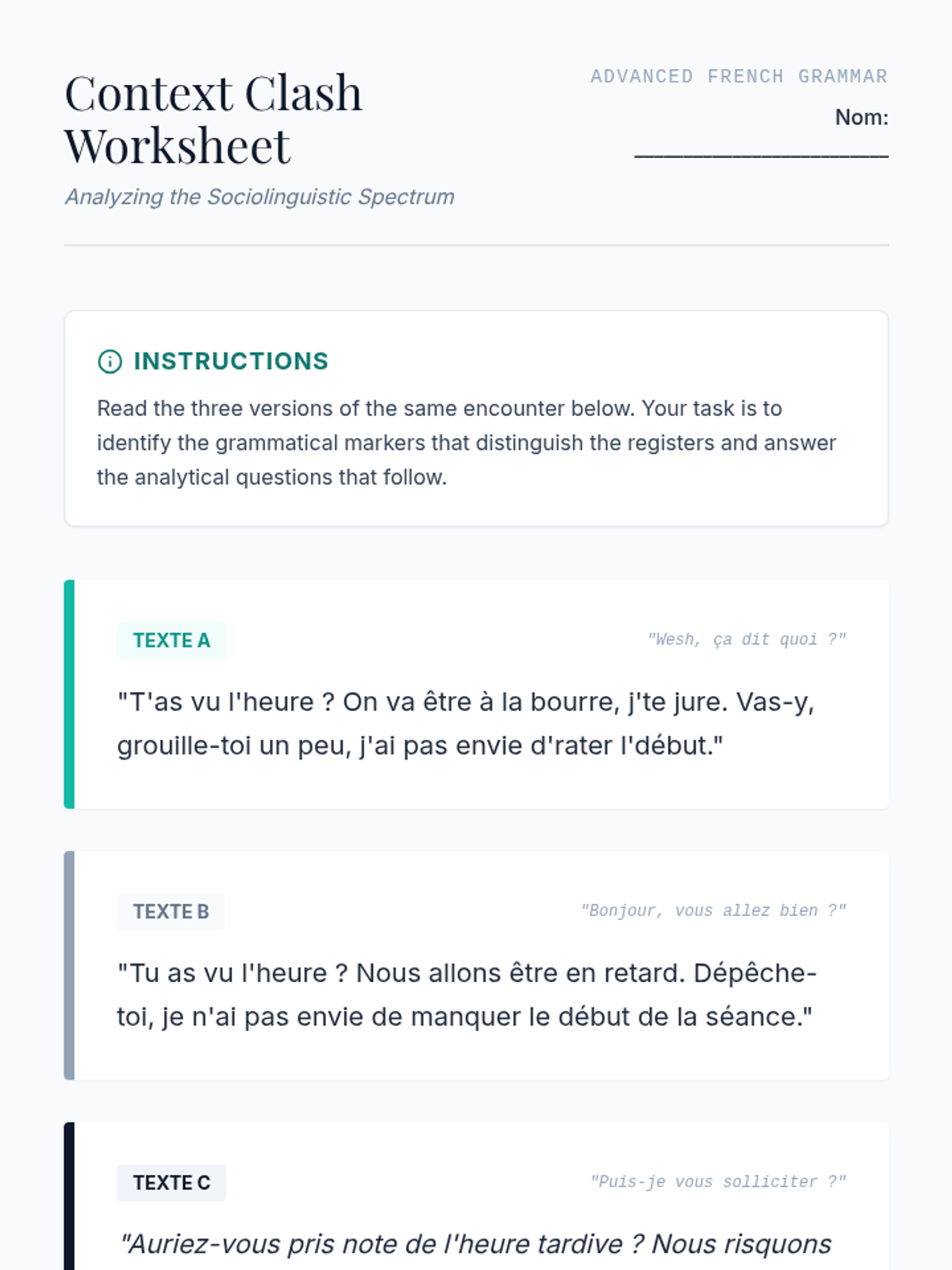
An advanced French grammar unit focusing on sociolinguistic competence. Students learn to navigate the spectrum of French registers, from formal inversion to Verlan slang, culminating in a performance-based assessment of their code-switching abilities.
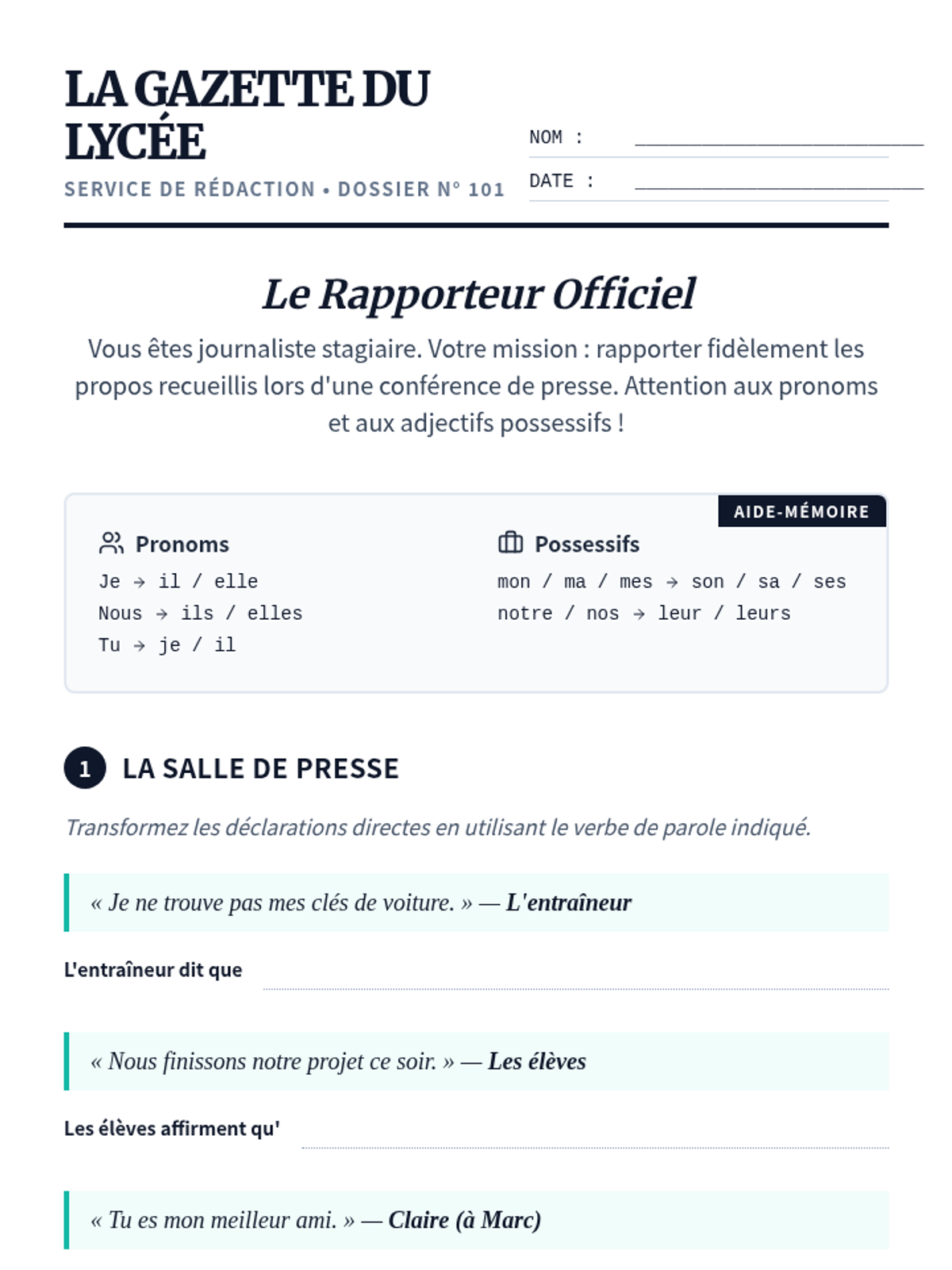
This advanced French grammar sequence focuses on 'discours indirect' (reported speech) and the 'concordance des temps'. Students master pronoun shifts, tense backshifting, and temporal/spatial adjustments through a journalism-inspired curriculum, culminating in a formal interview profile.
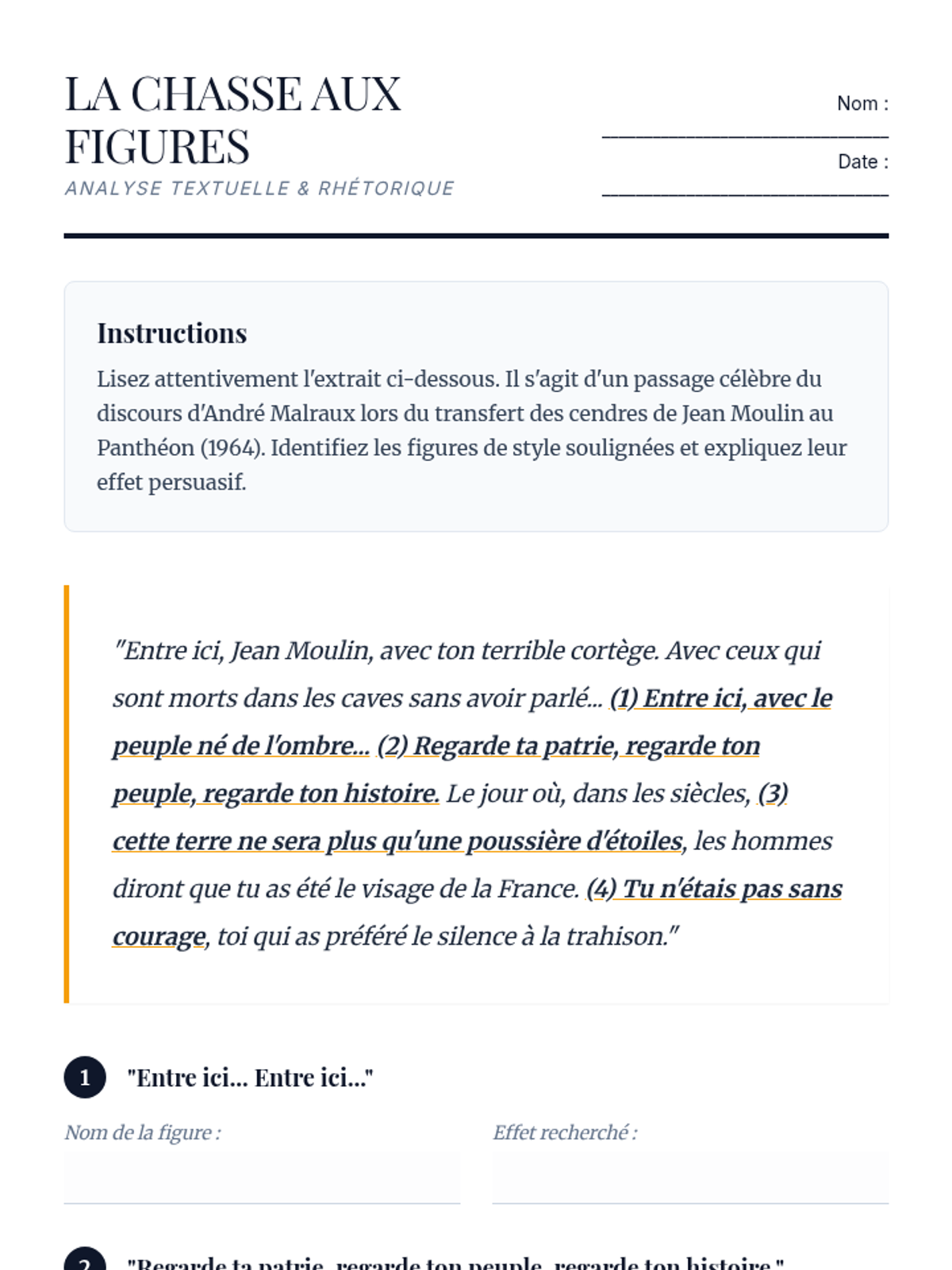
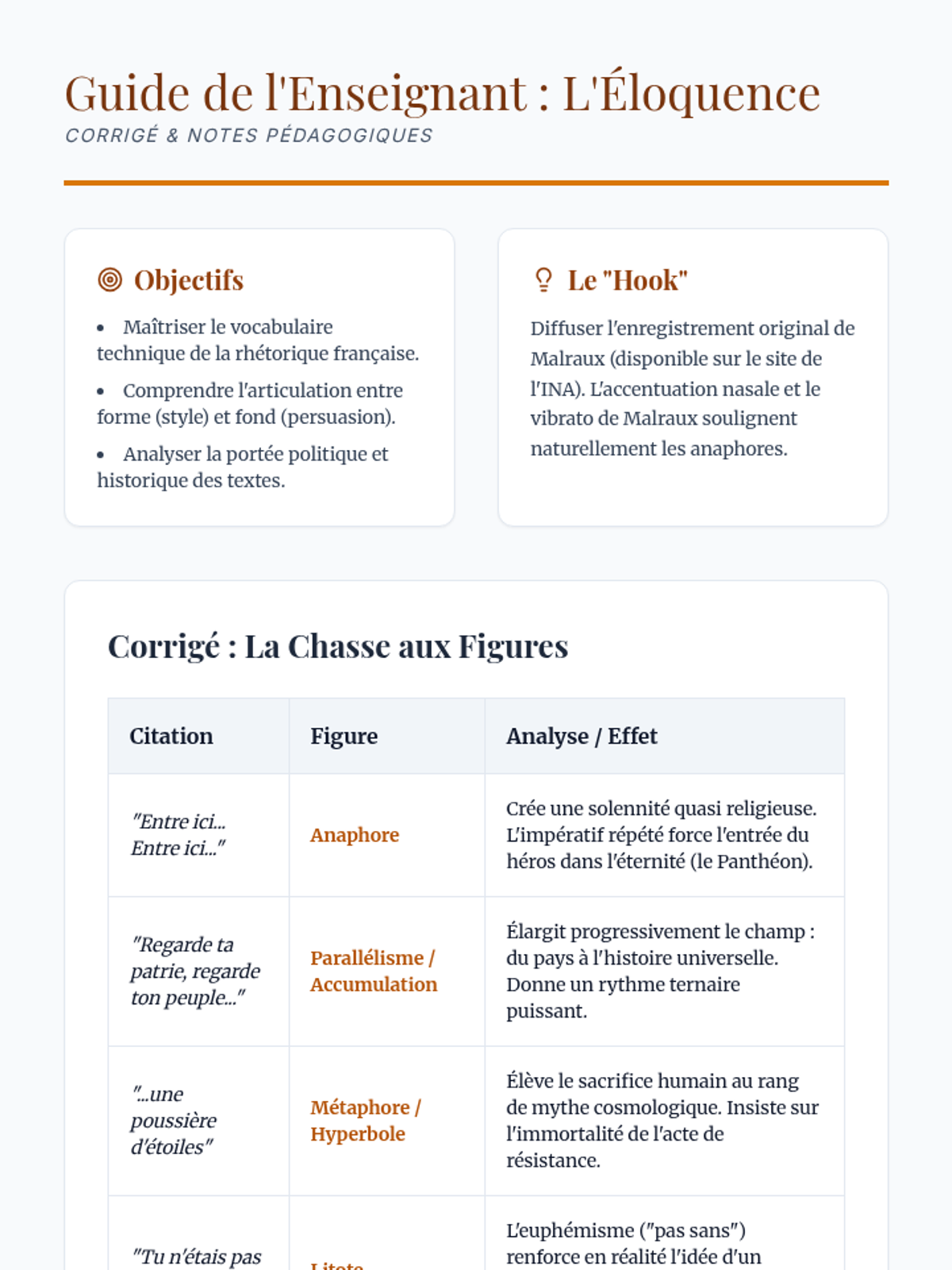
Students explore the art of persuasion by analyzing and emulating French rhetorical traditions. The sequence covers figures of speech, tonal shifts, and the construction of compelling arguments used in op-eds and speeches. By the end, students will craft a manifesto or persuasive speech that utilizes rhetorical devices to move an audience.
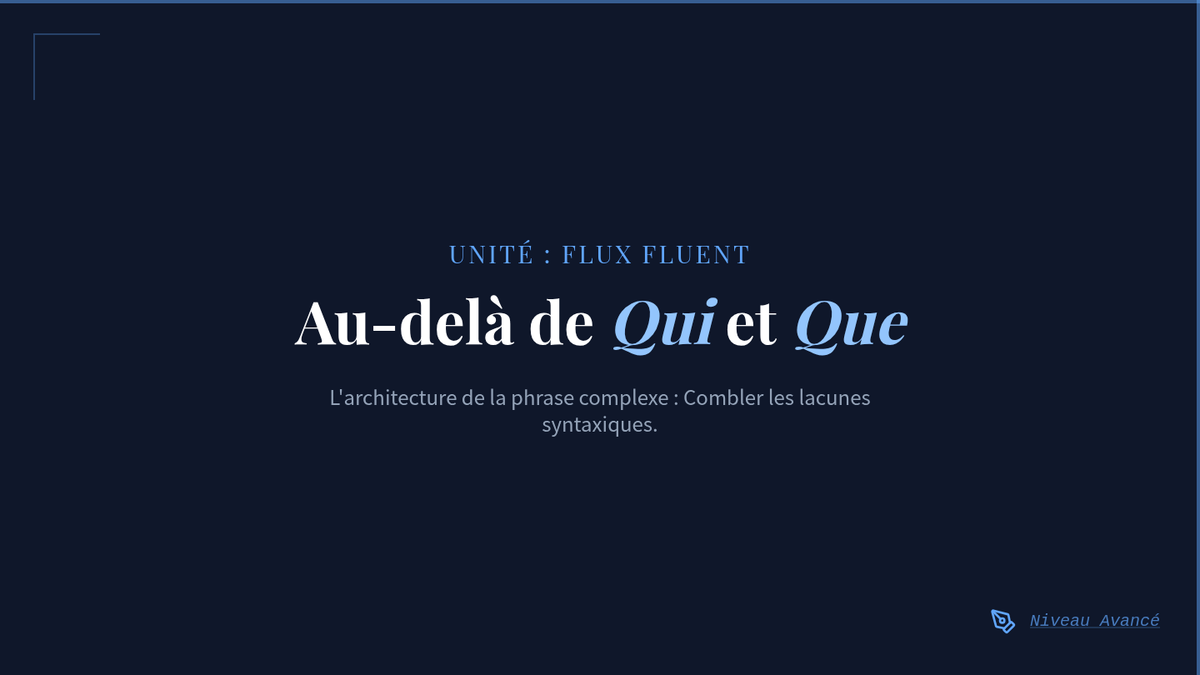
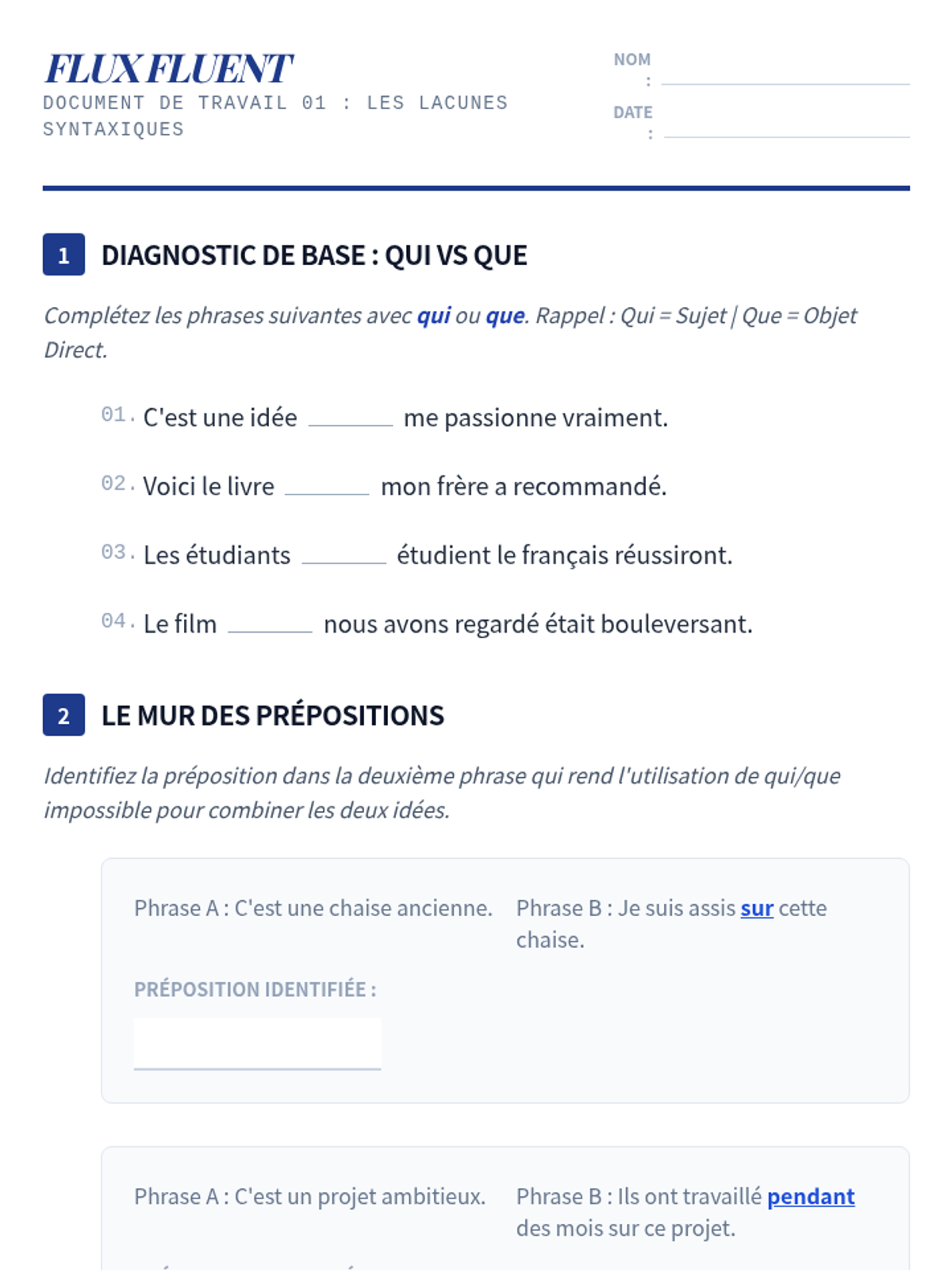
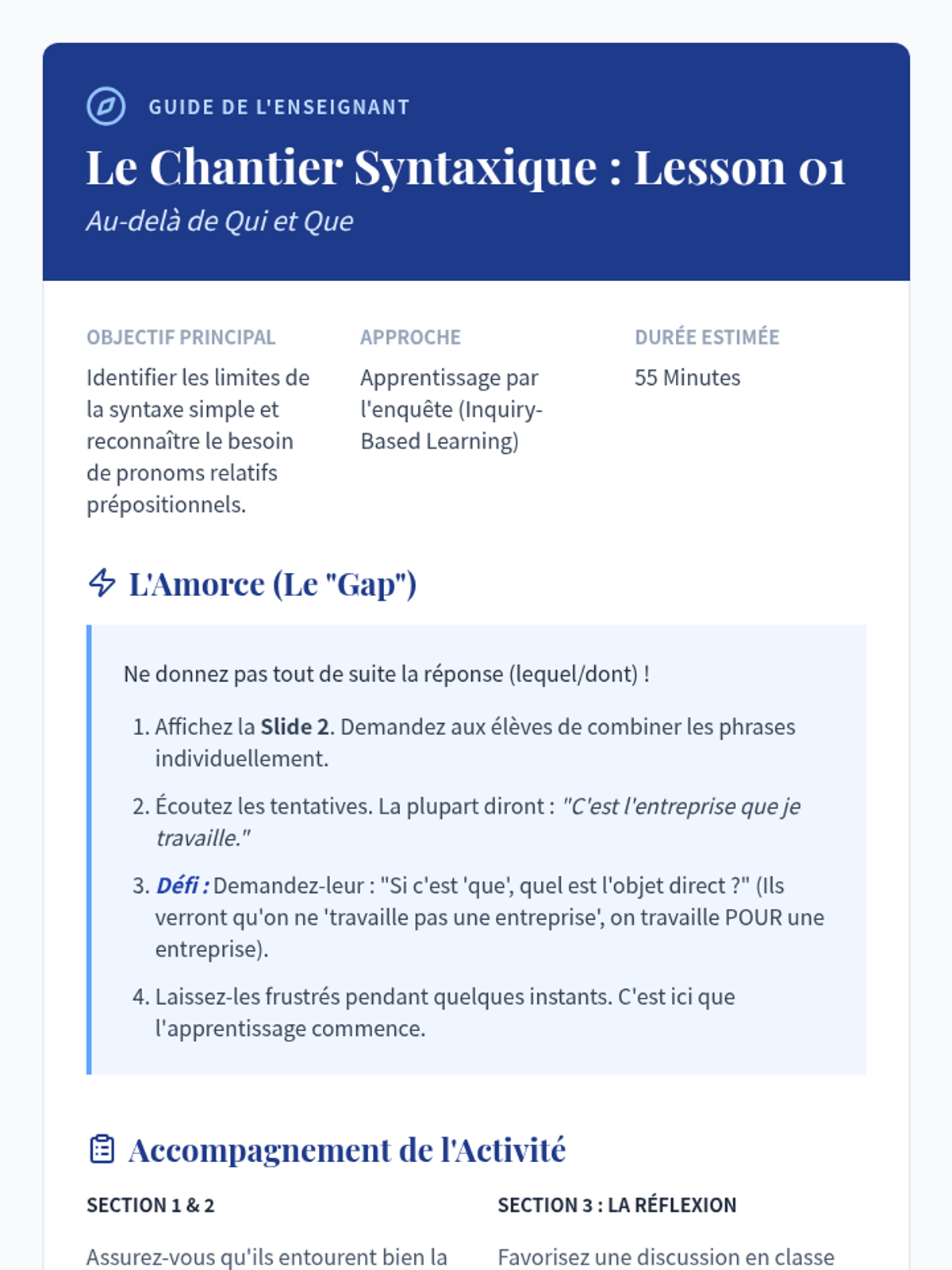
A comprehensive sequence for advanced French students to master complex relative pronouns (dont, lequel, ce dont) to create more cohesive and sophisticated writing. Students progress from identifying gaps in basic syntax to 'upgrading' their own prose with advanced connectors.
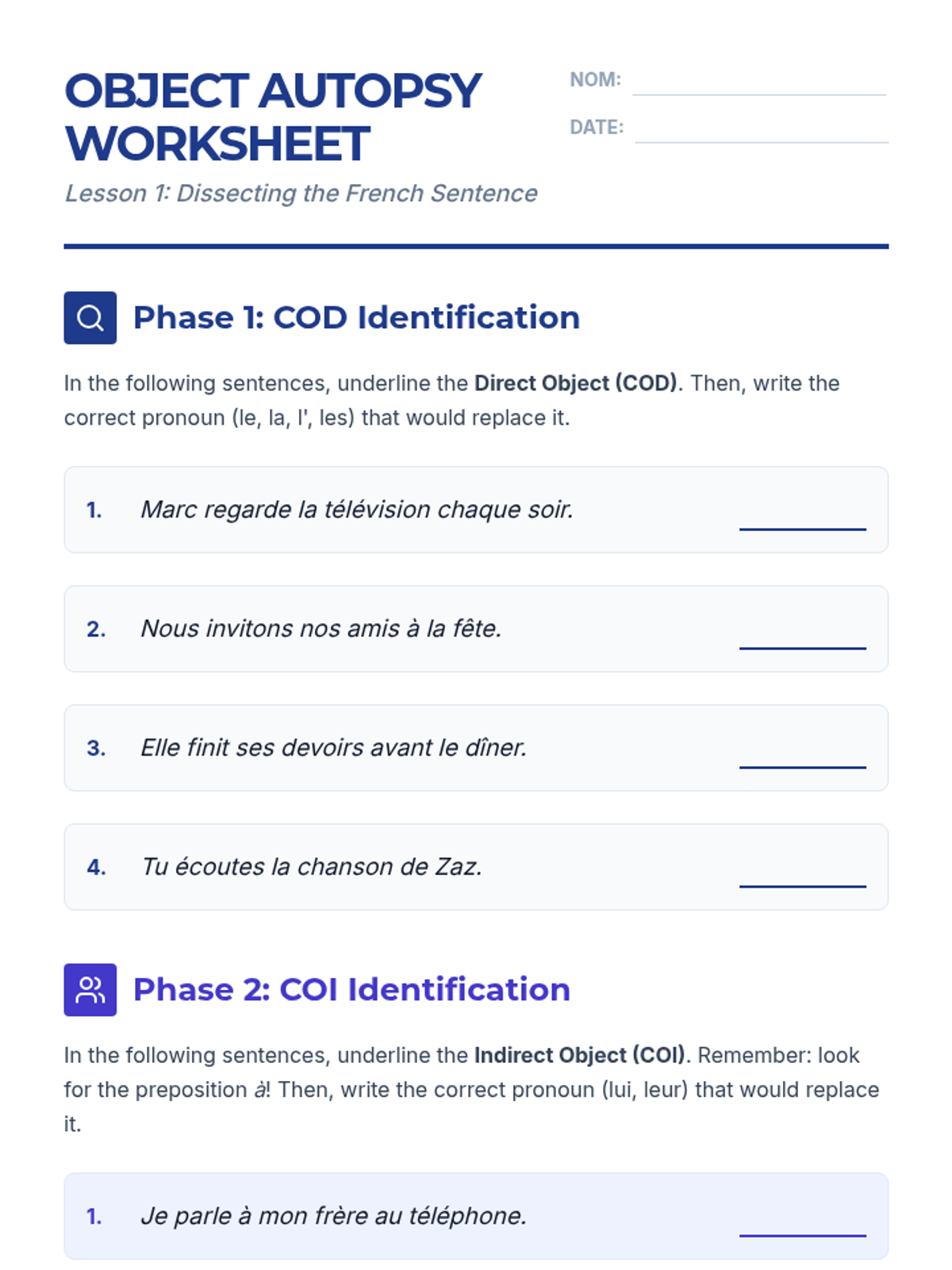
A comprehensive advanced French grammar unit focusing on the syntax and placement of double object pronouns. Students move from basic identification to automating complex sentences in various tenses and moods.
An advanced French grammar sequence focusing on the nuances of agency through the passive voice and the causative 'faire'. Students move from mechanical transformation to stylistic analysis in journalism and natural phrasing using 'on'.
A comprehensive advanced French grammar sequence for 10th-grade students focused on mastering simple and complex relative pronouns to enhance sentence variety and writing sophistication. Students progress from basic functions to complex prepositional structures and indefinite relatives, culminating in a descriptive writing workshop.
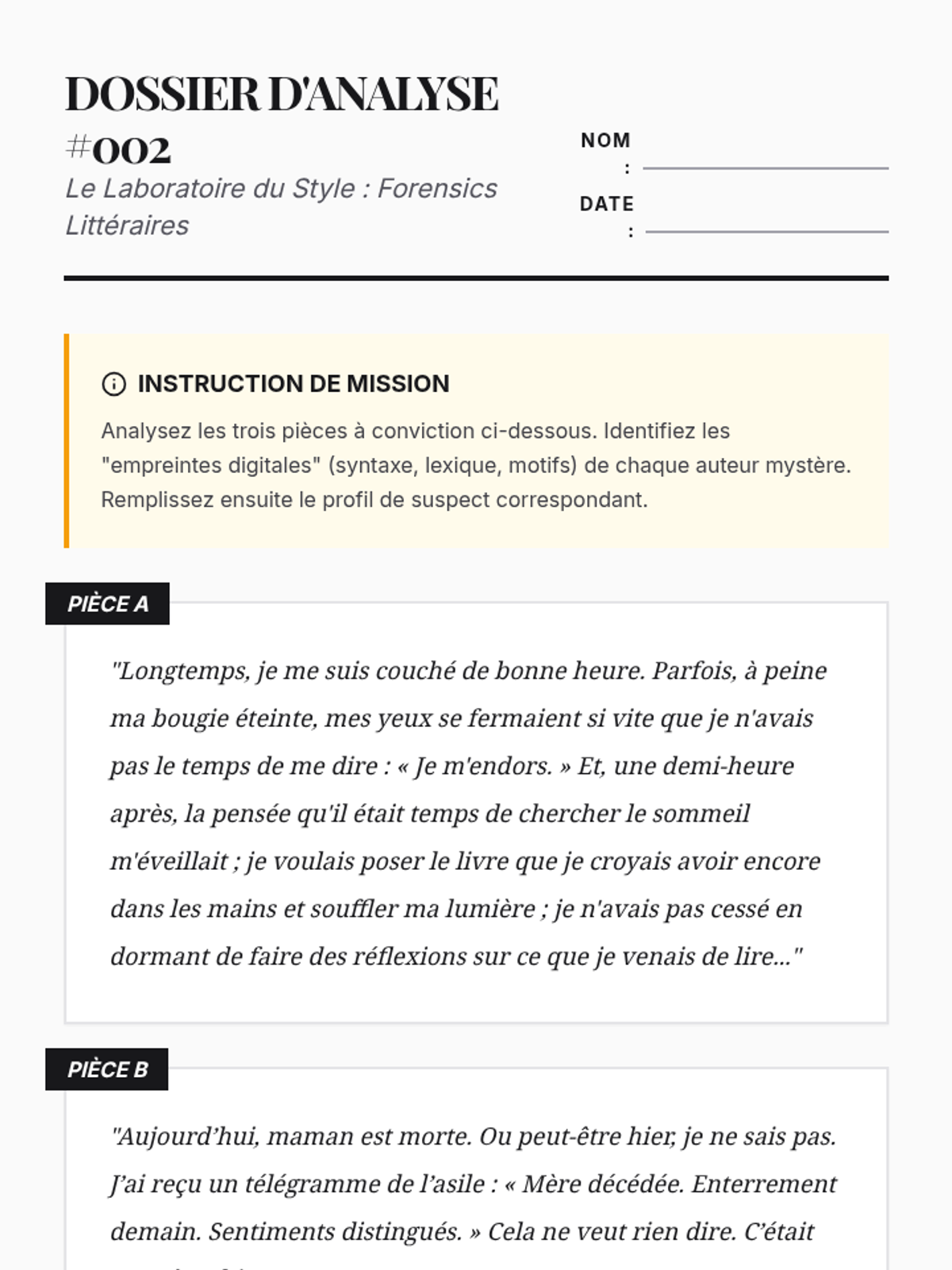
This advanced French writing sequence explores the art of pastiche, challenging students to analyze and imitate the unique stylistic 'fingerprints' of major Francophone authors like Proust, Camus, and Duras. Through forensic analysis and creative application, students master complex syntax and develop a deeper appreciation for literary voice.
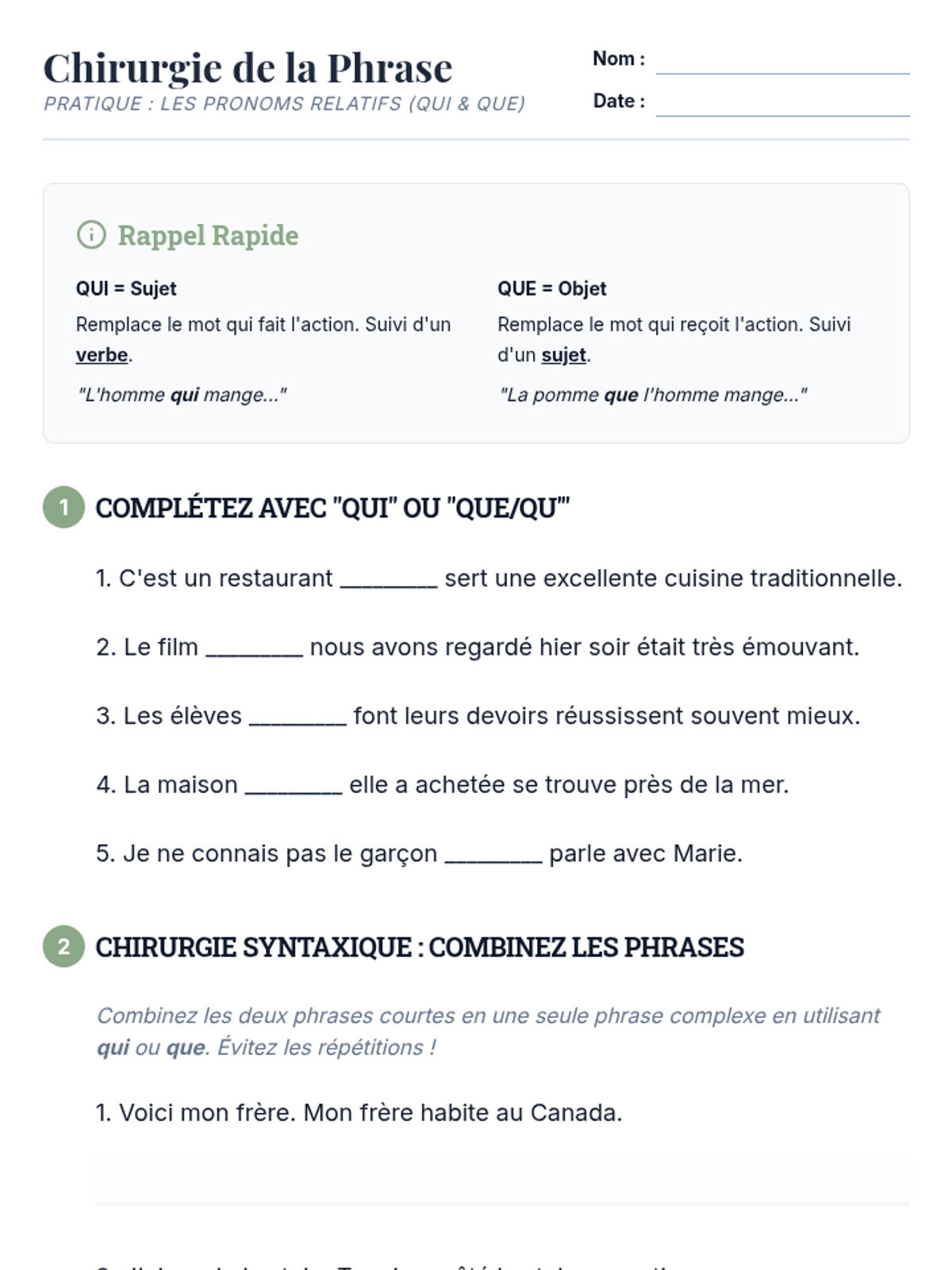
A comprehensive sequence for intermediate French students focused on moving from simple, choppy sentences to sophisticated, multi-clause academic writing using relative pronouns. Students master the mechanics of qui, que, où, dont, lequel, and indefinite relative pronouns through interactive workshops and stylistic editing.