Vocabulary, grammar, and cultural contexts for Spanish language acquisition across all proficiency levels. Develops skills in reading, writing, speaking, and listening through structured linguistic analysis and practice.
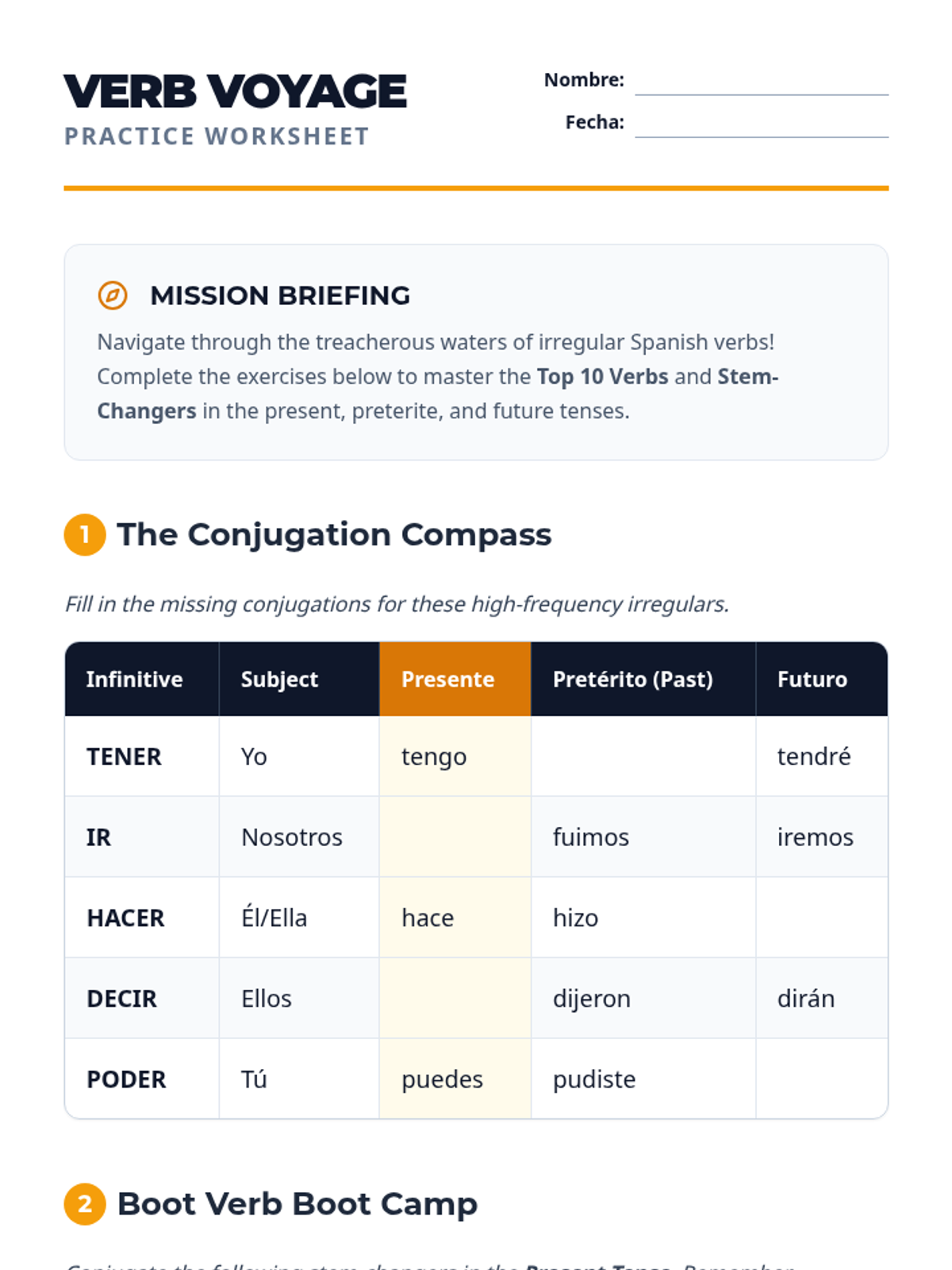
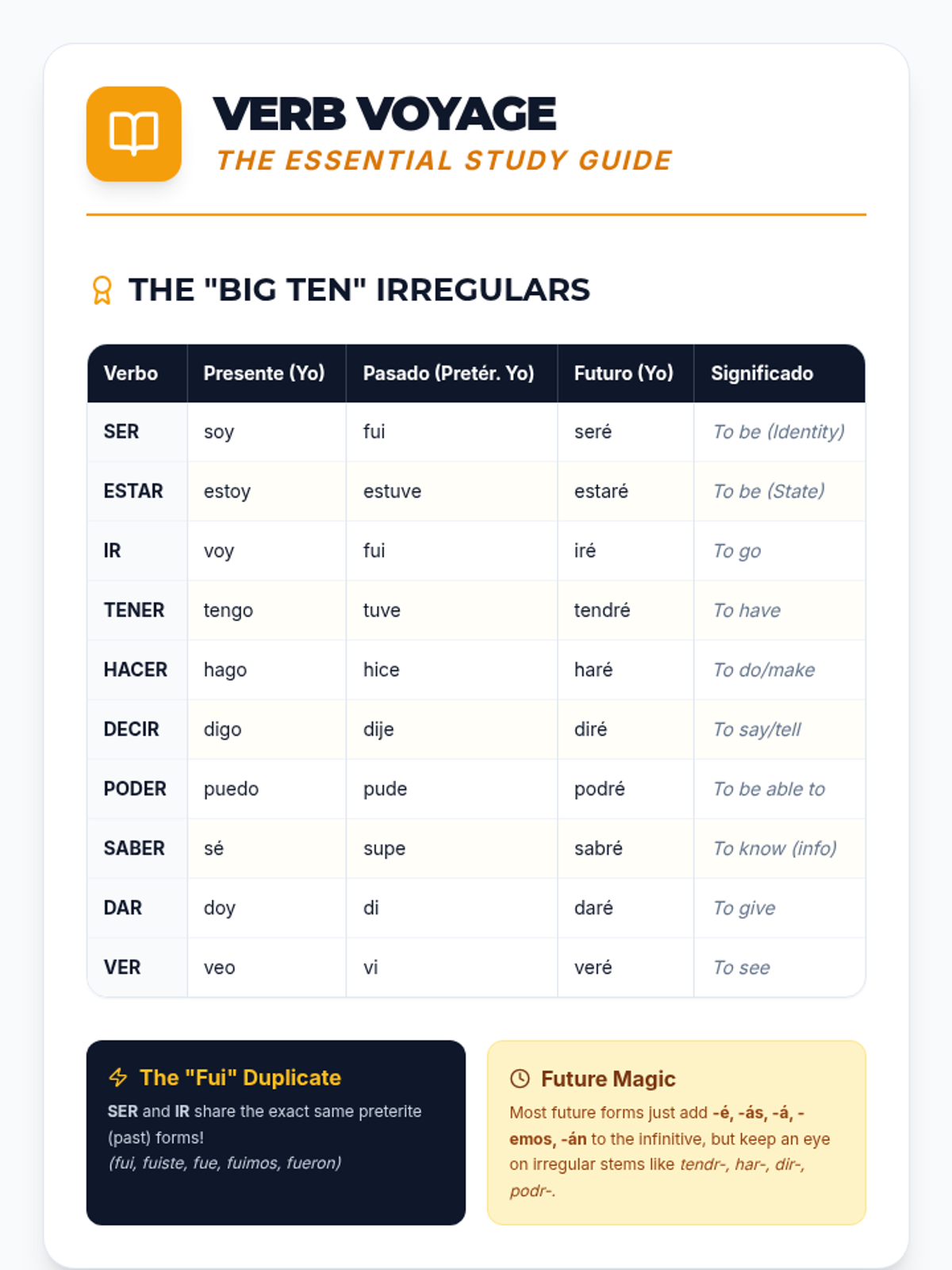
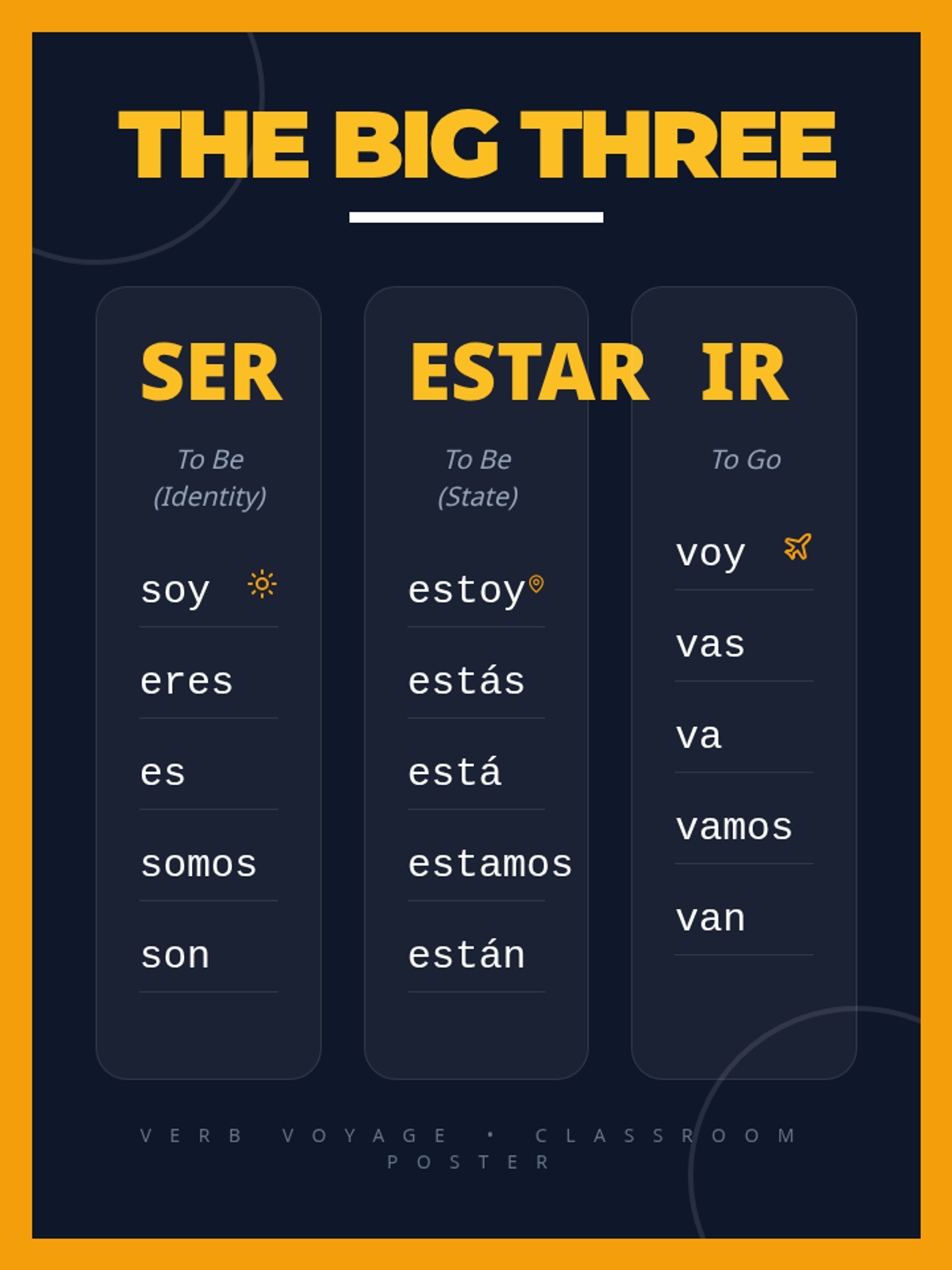
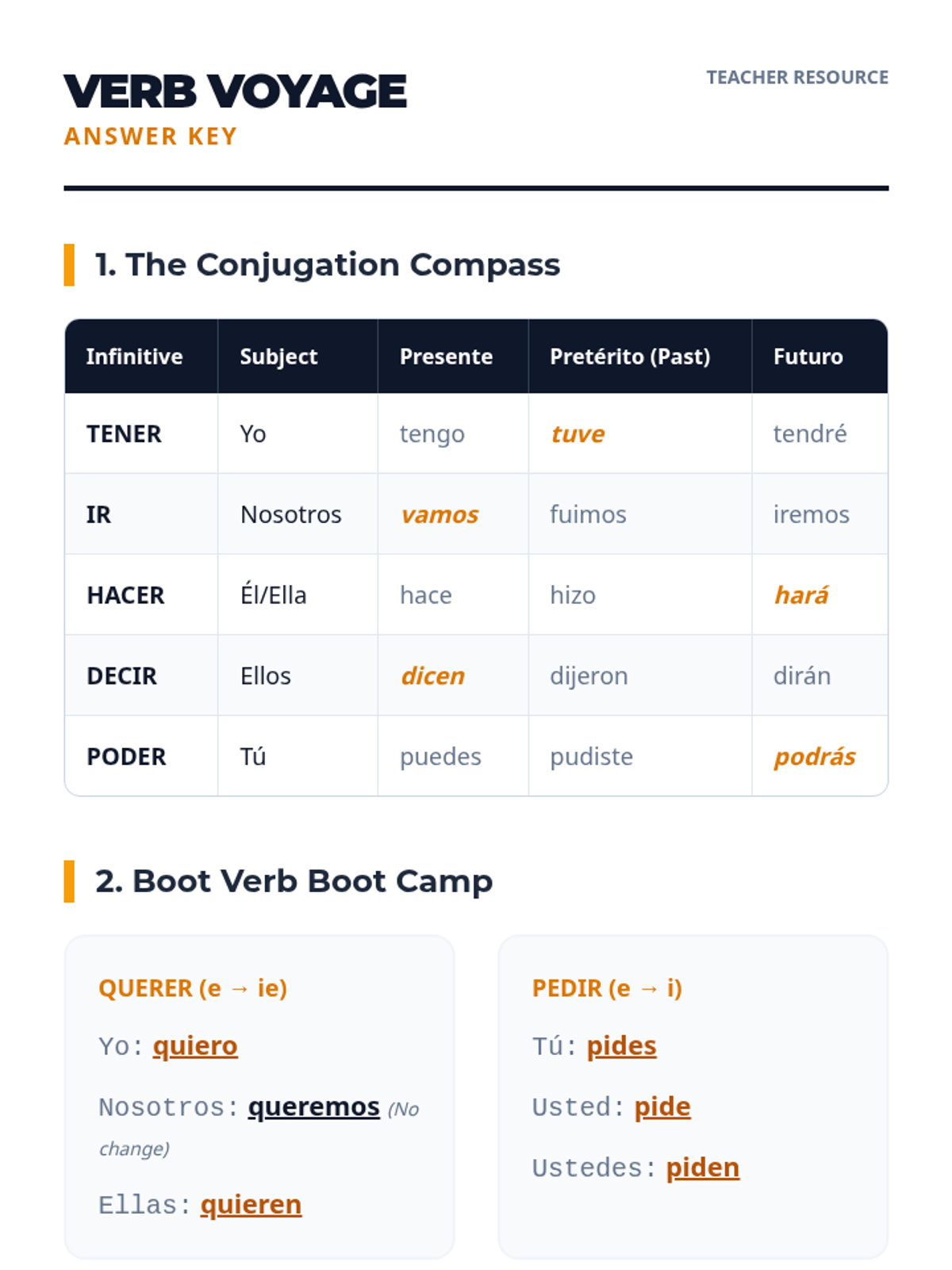
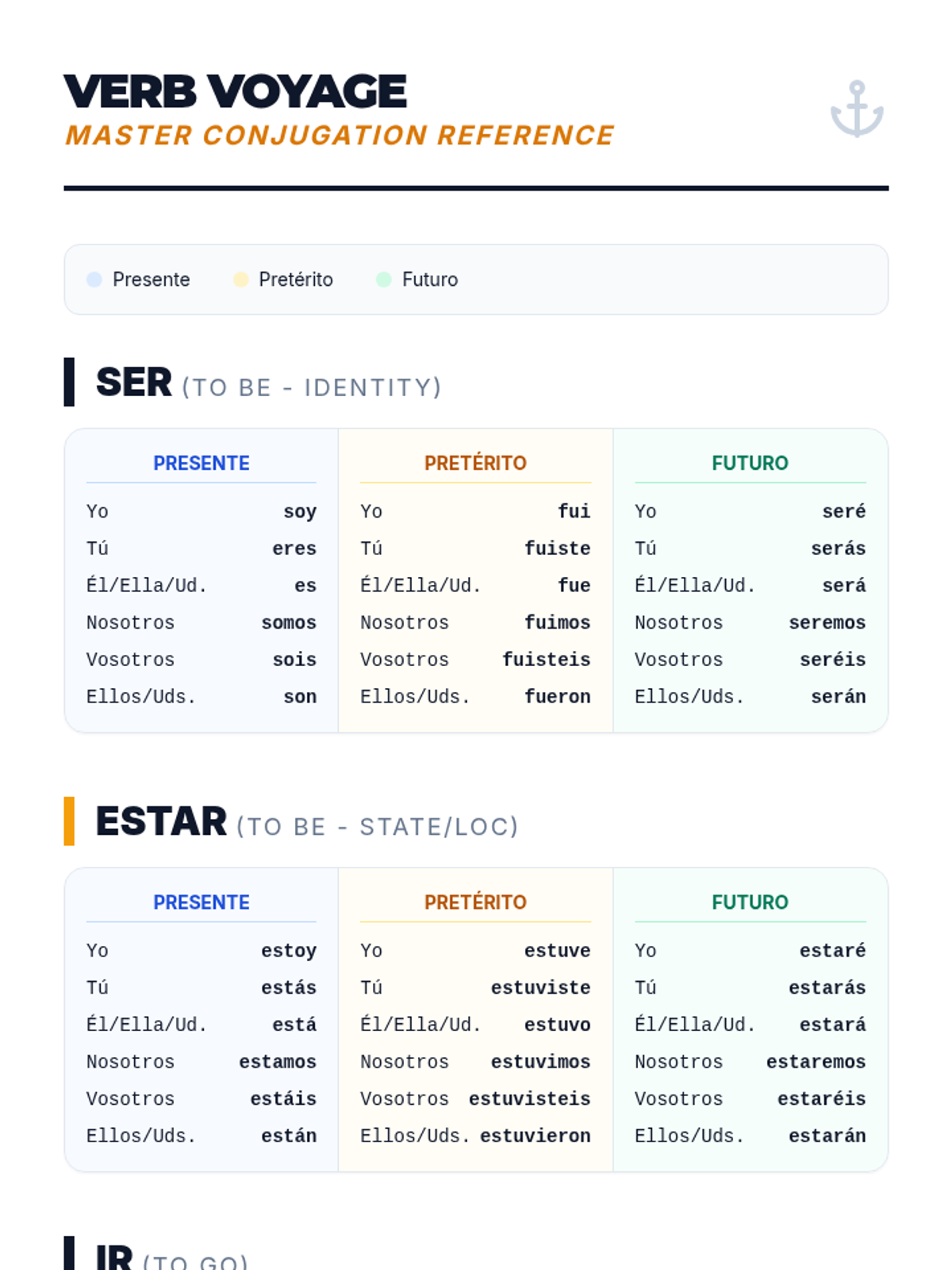
A series of lessons focused on mastering high-frequency irregular Spanish verbs to build foundational communication skills.
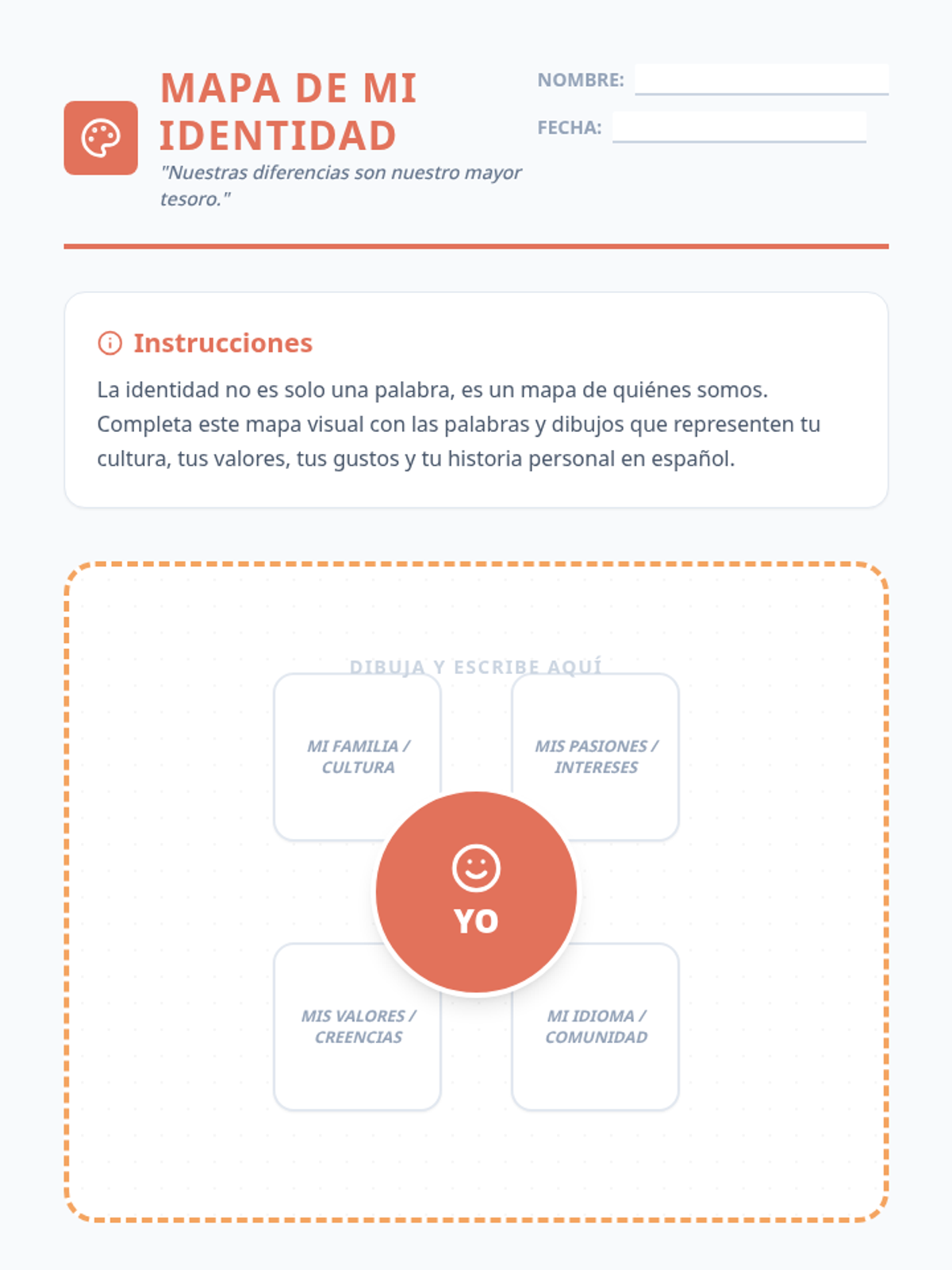
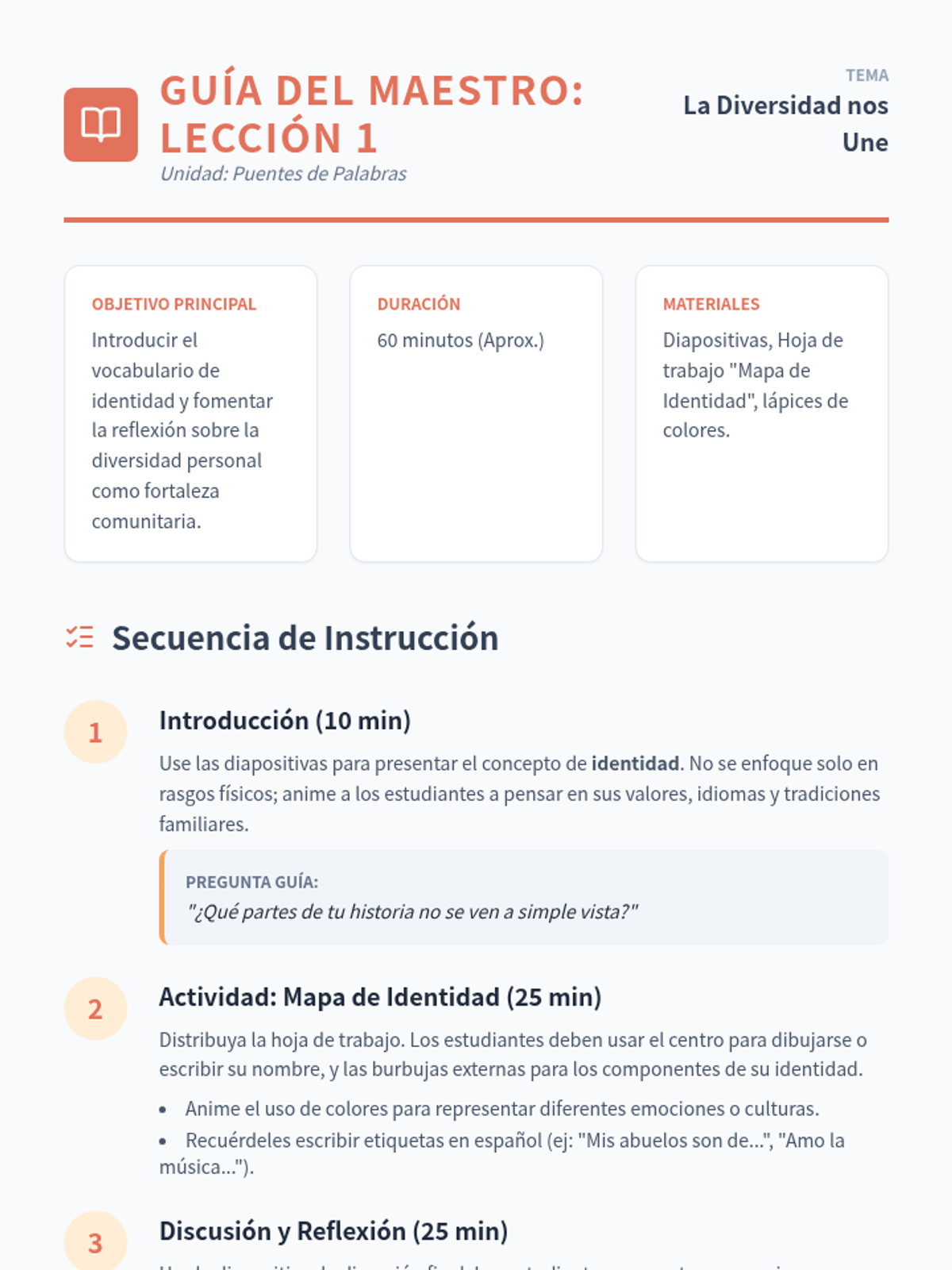
A two-lesson sequence for Spanish class exploring themes of diversity, social tolerance, and empathy through language and cultural connection. Students develop vocabulary to describe identity and practice perspective-taking to build inclusive communities.
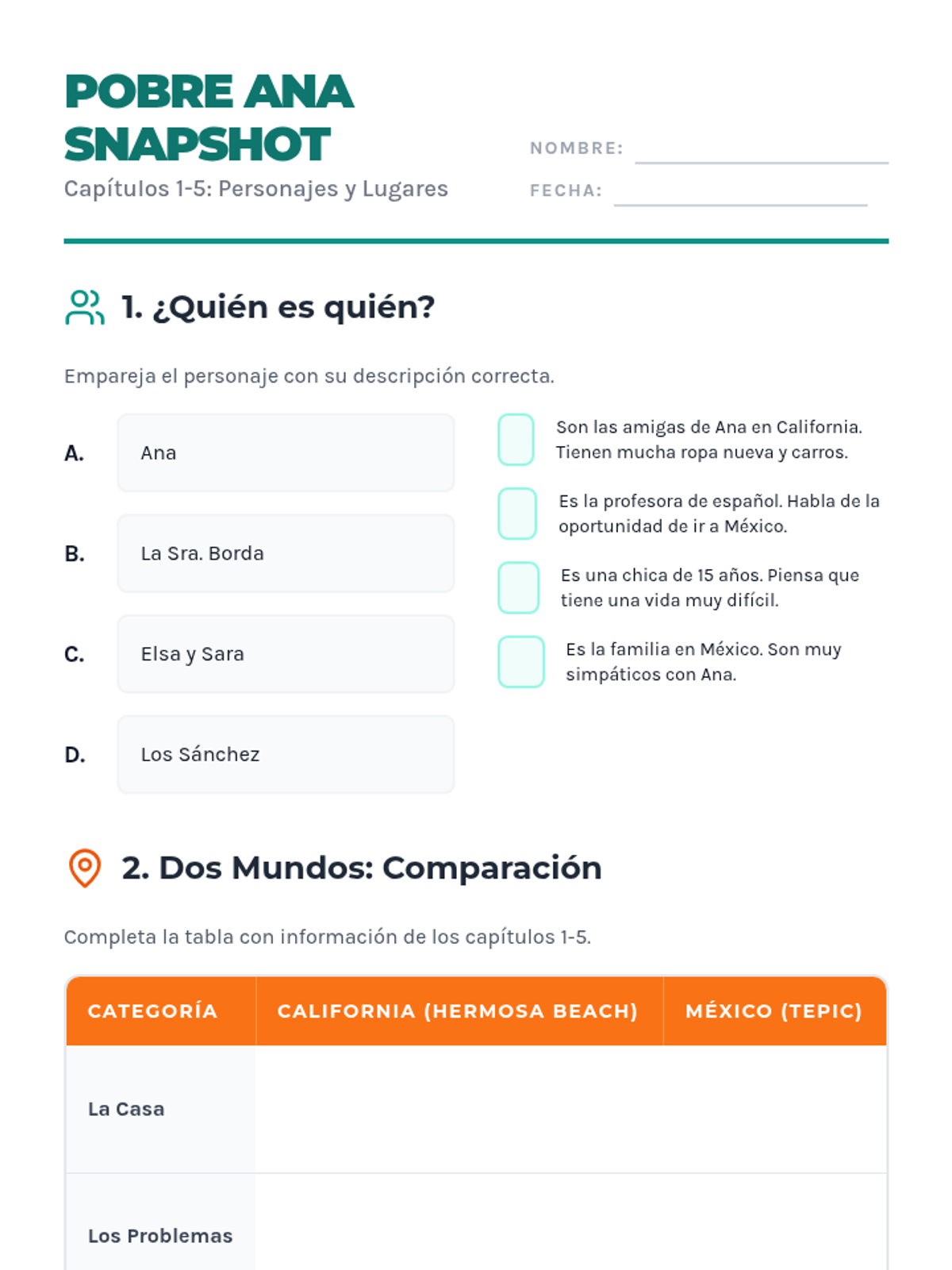
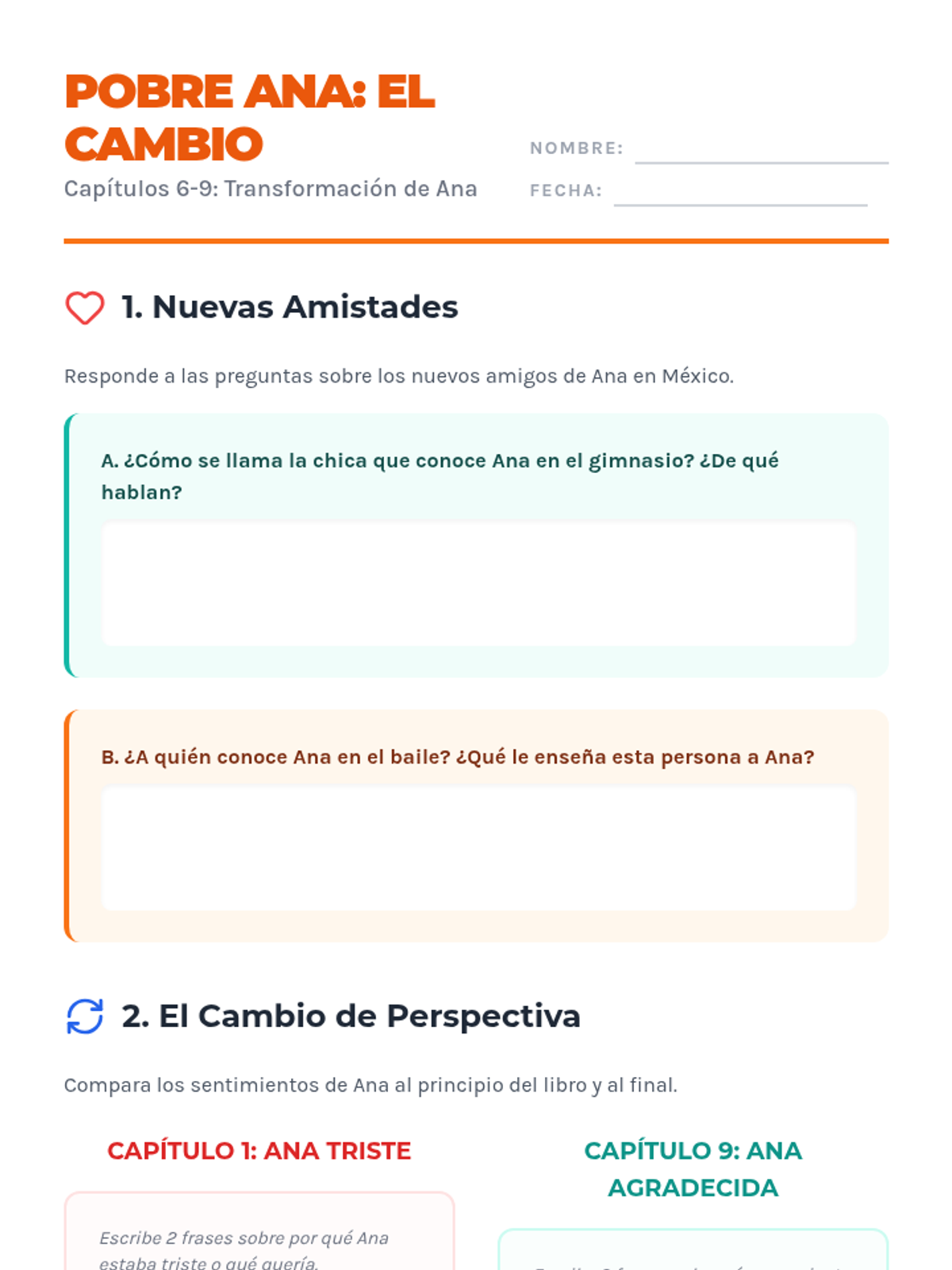
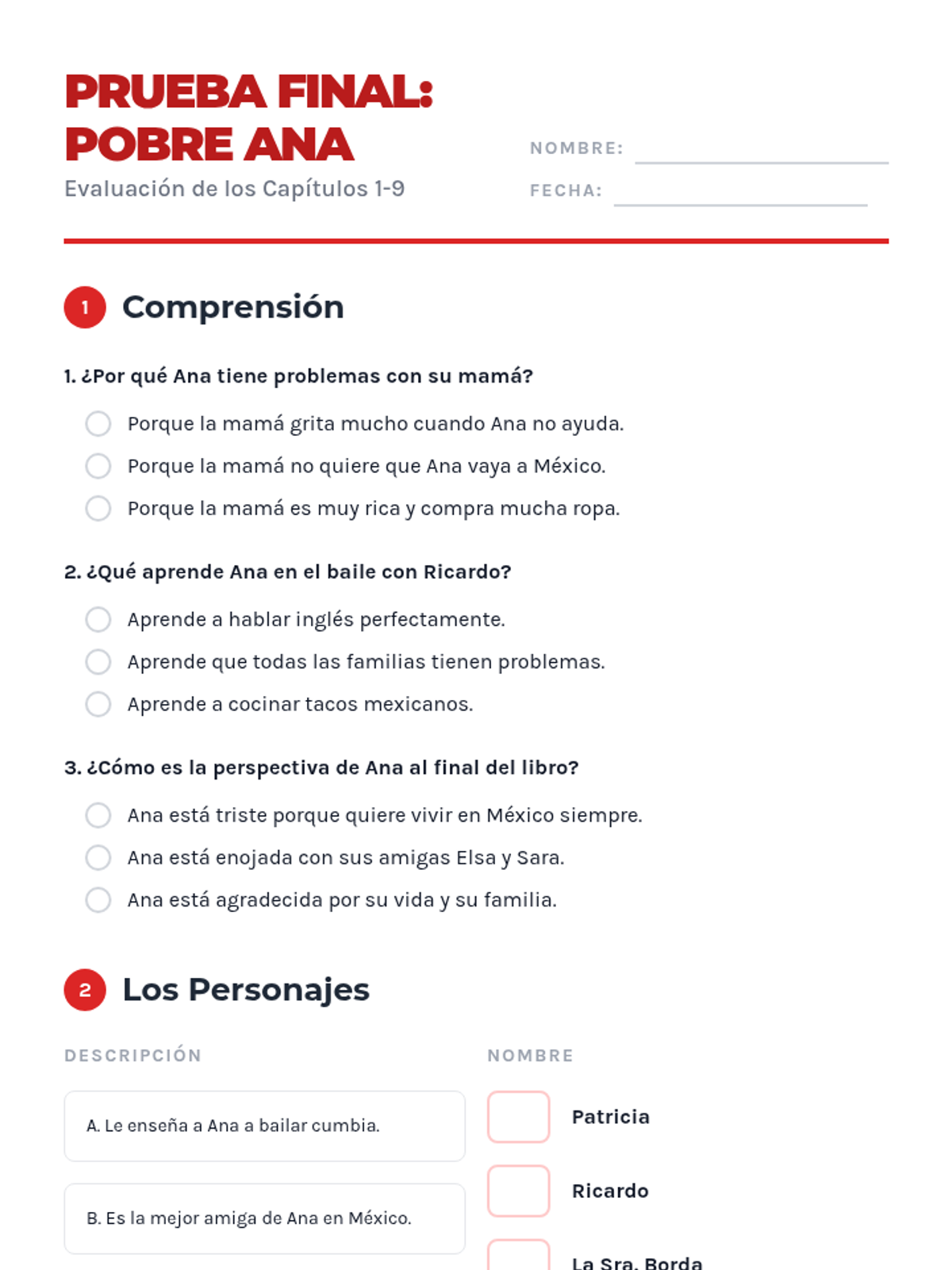
A comprehensive unit for the novel Pobre Ana, exploring character development, cultural comparisons, and narrative comprehension for Spanish 1 students.
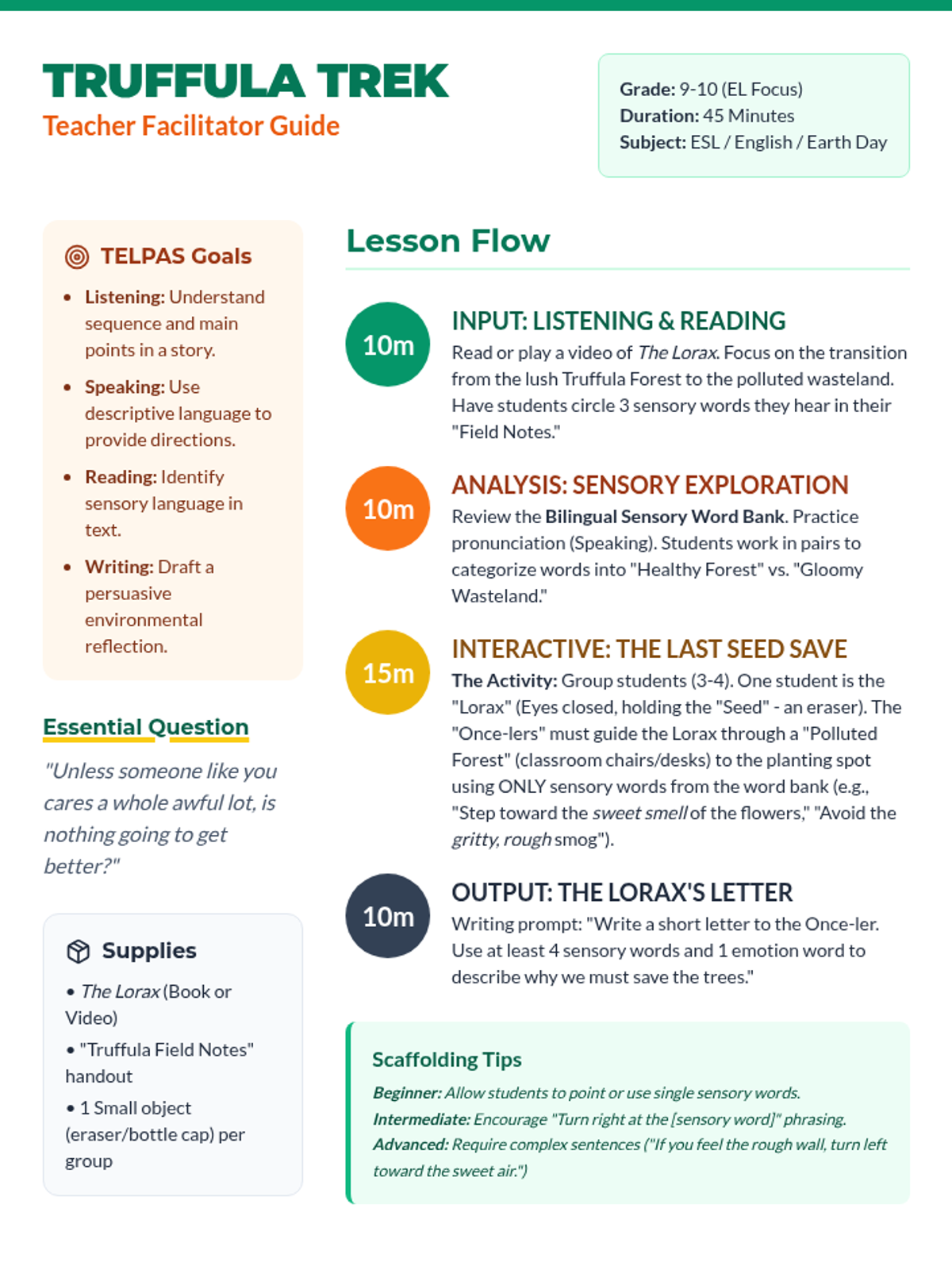
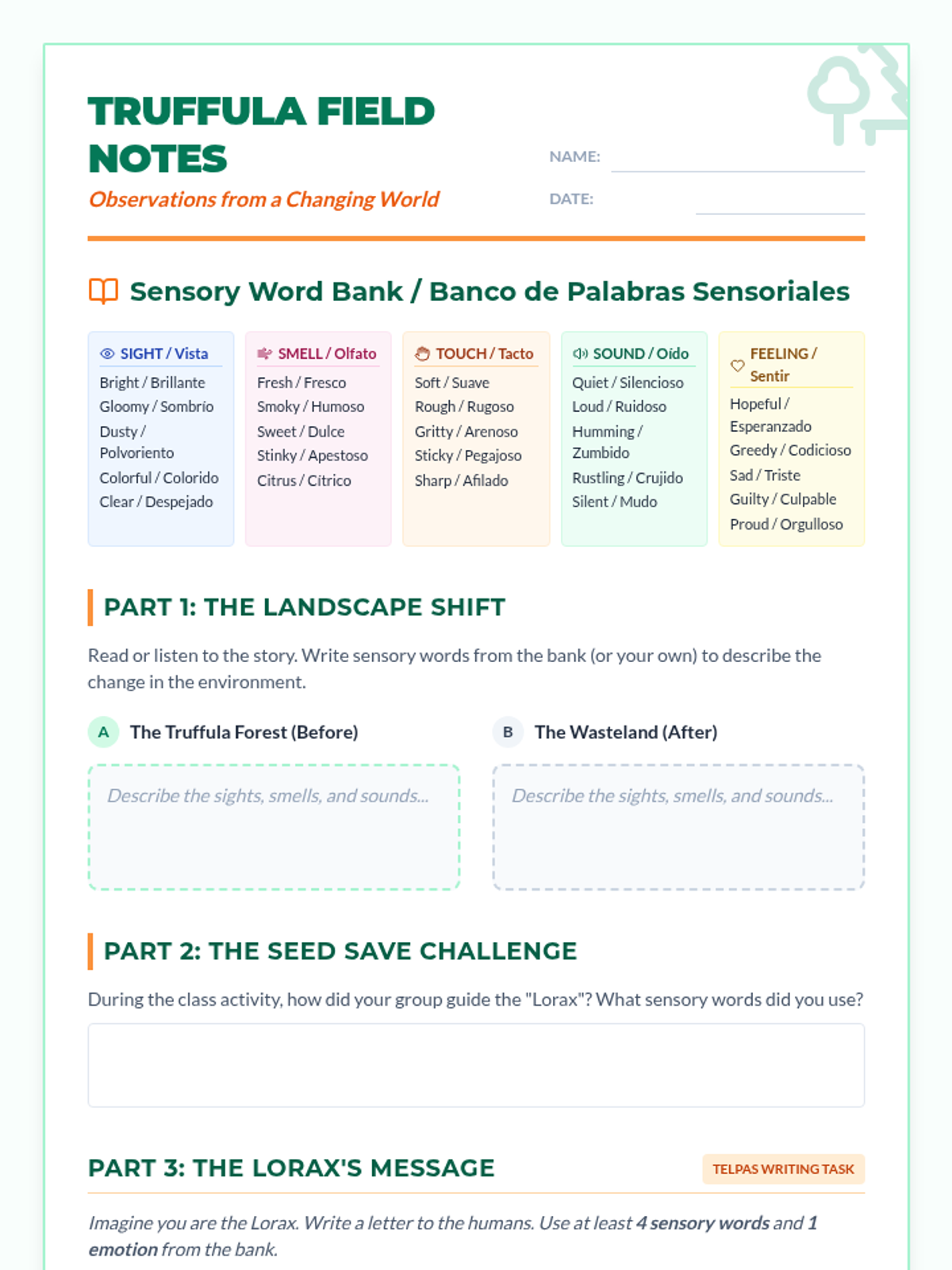
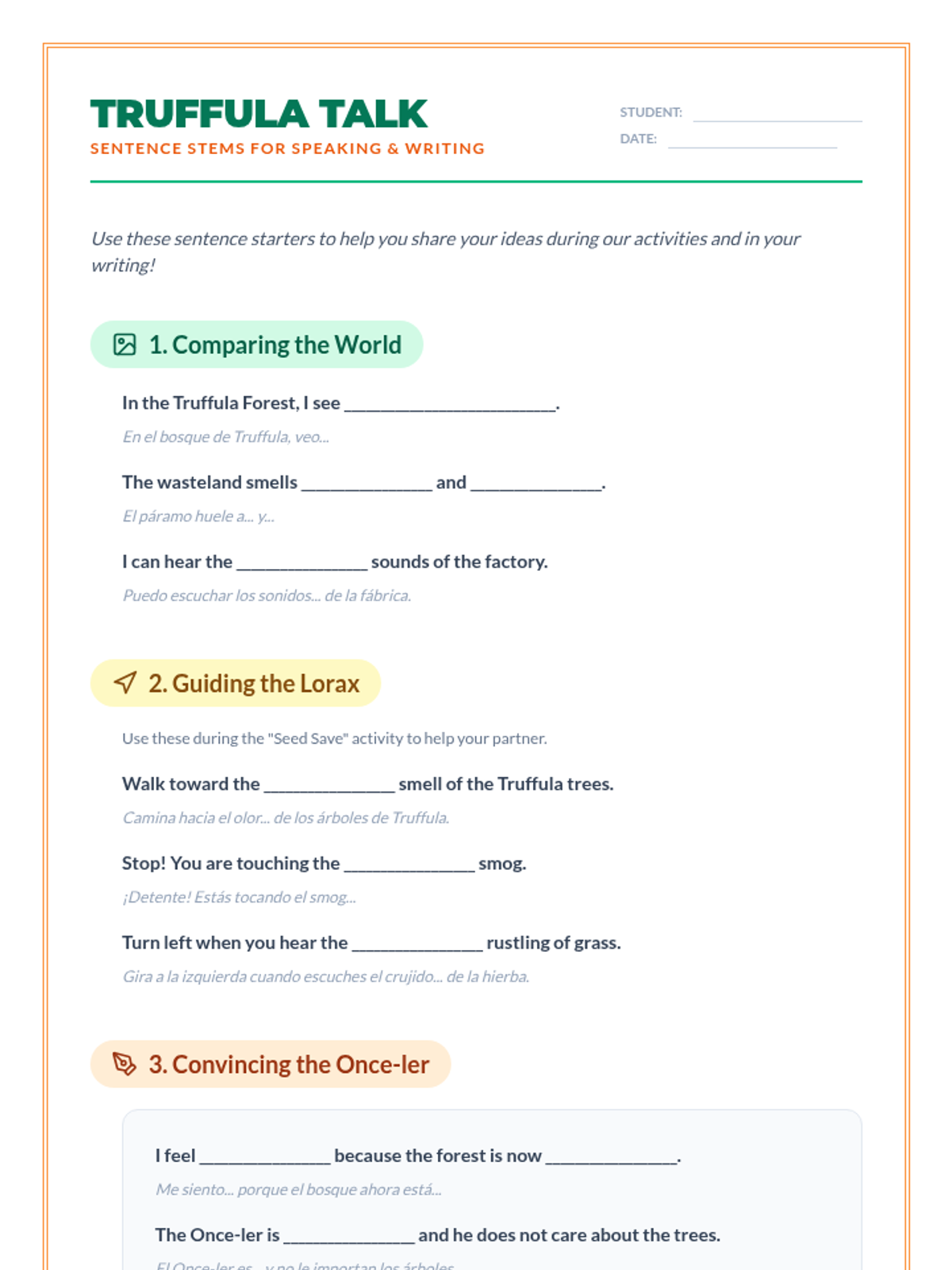
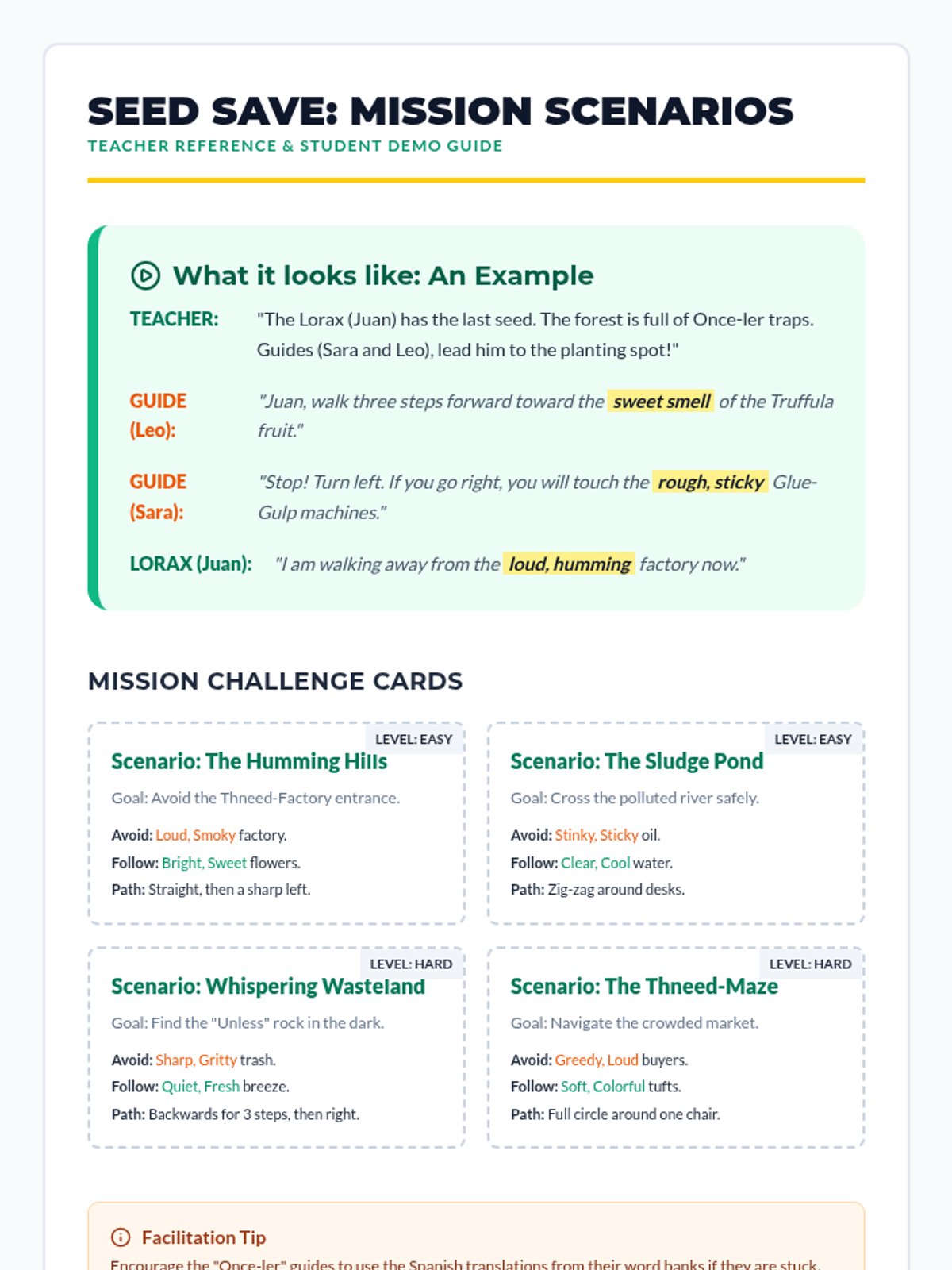
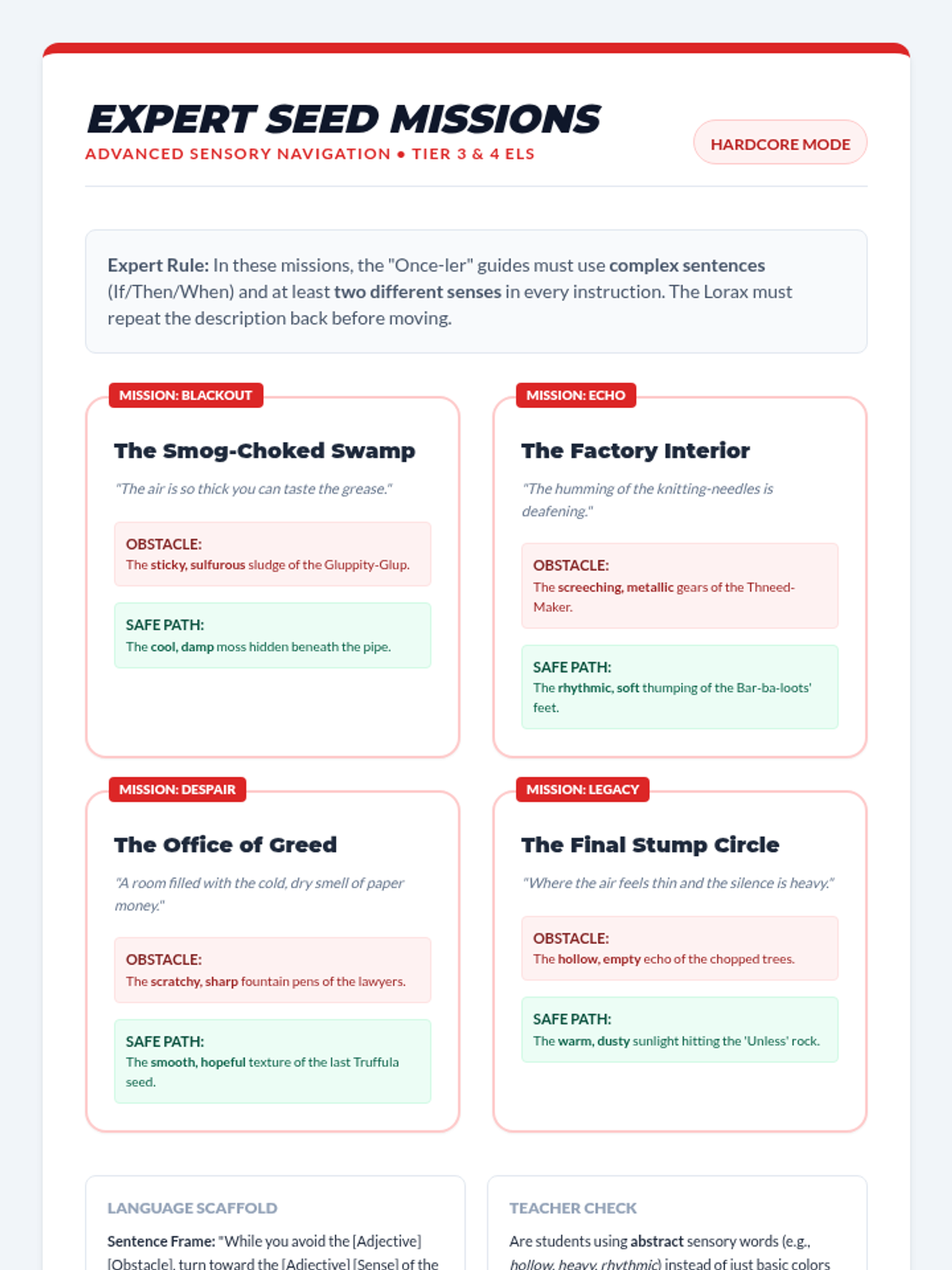
A comprehensive Earth Day lesson for 9th-10th grade ELs based on The Lorax, focusing on TELPAS domains: listening, speaking, reading, and writing through sensory language.
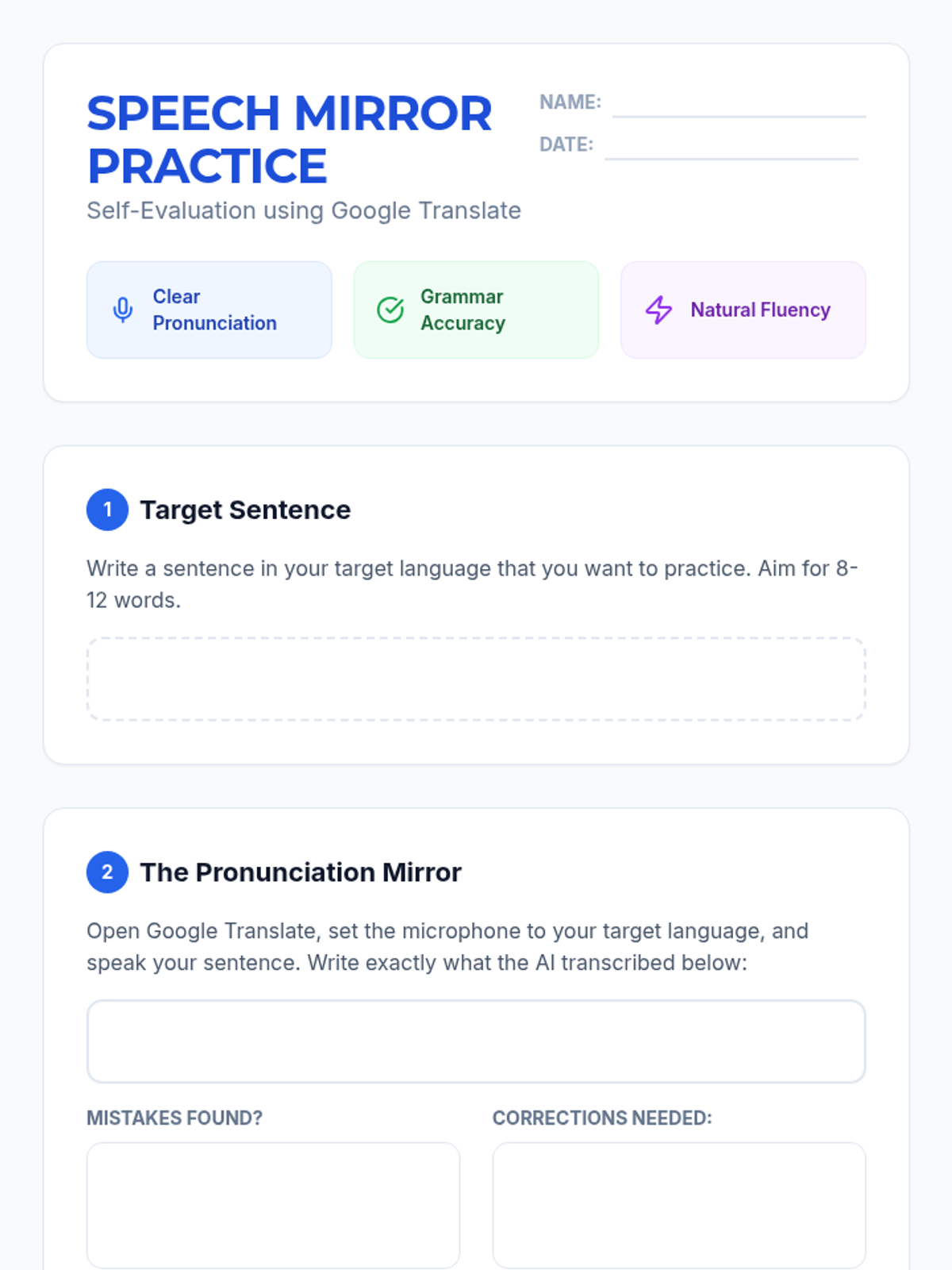
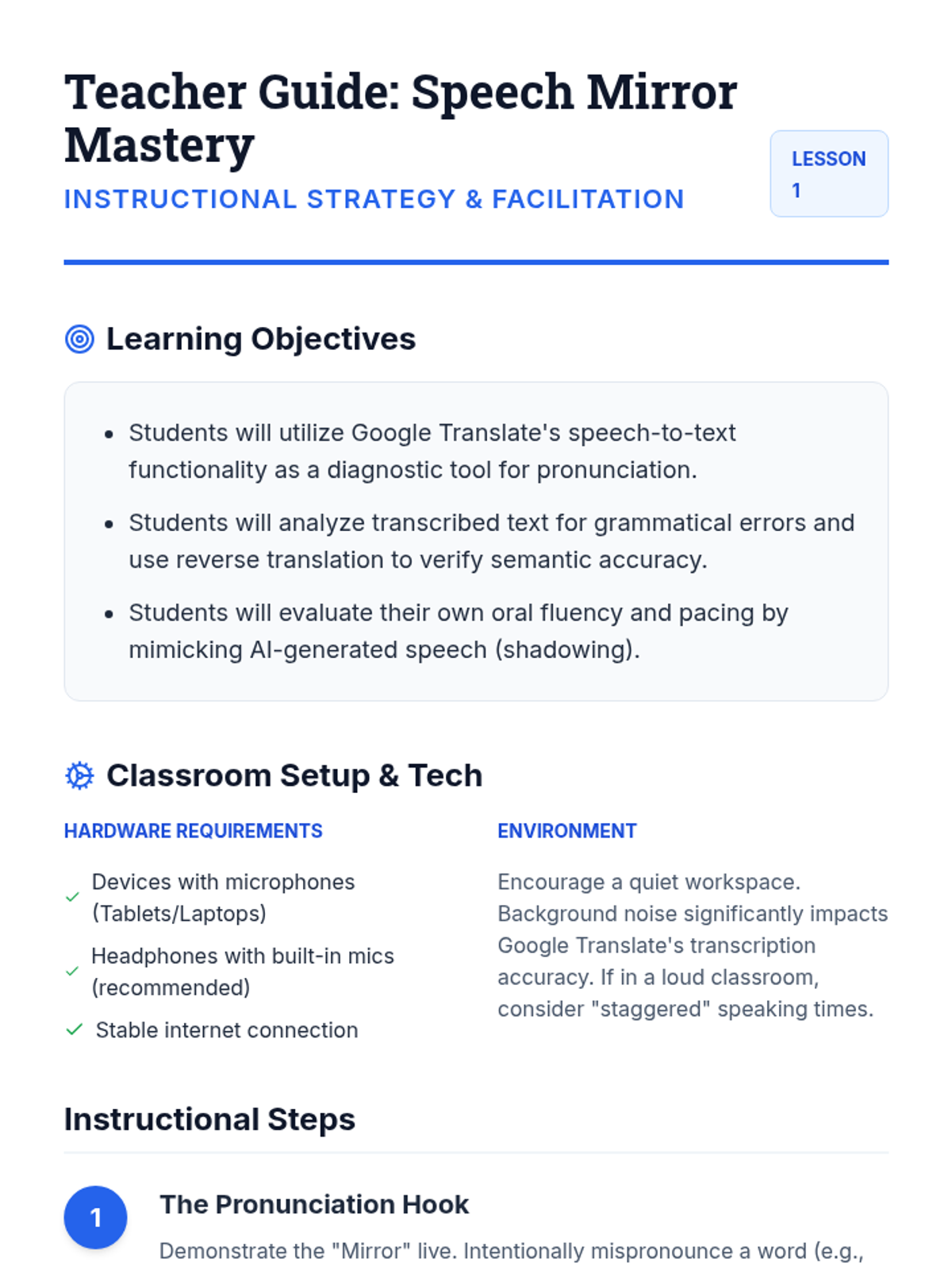
A sequence focused on leveraging digital translation tools for language self-assessment and speech improvement. Students learn to use Google Translate not just for translation, but as a 'mirror' for their own pronunciation, grammar, and fluency.
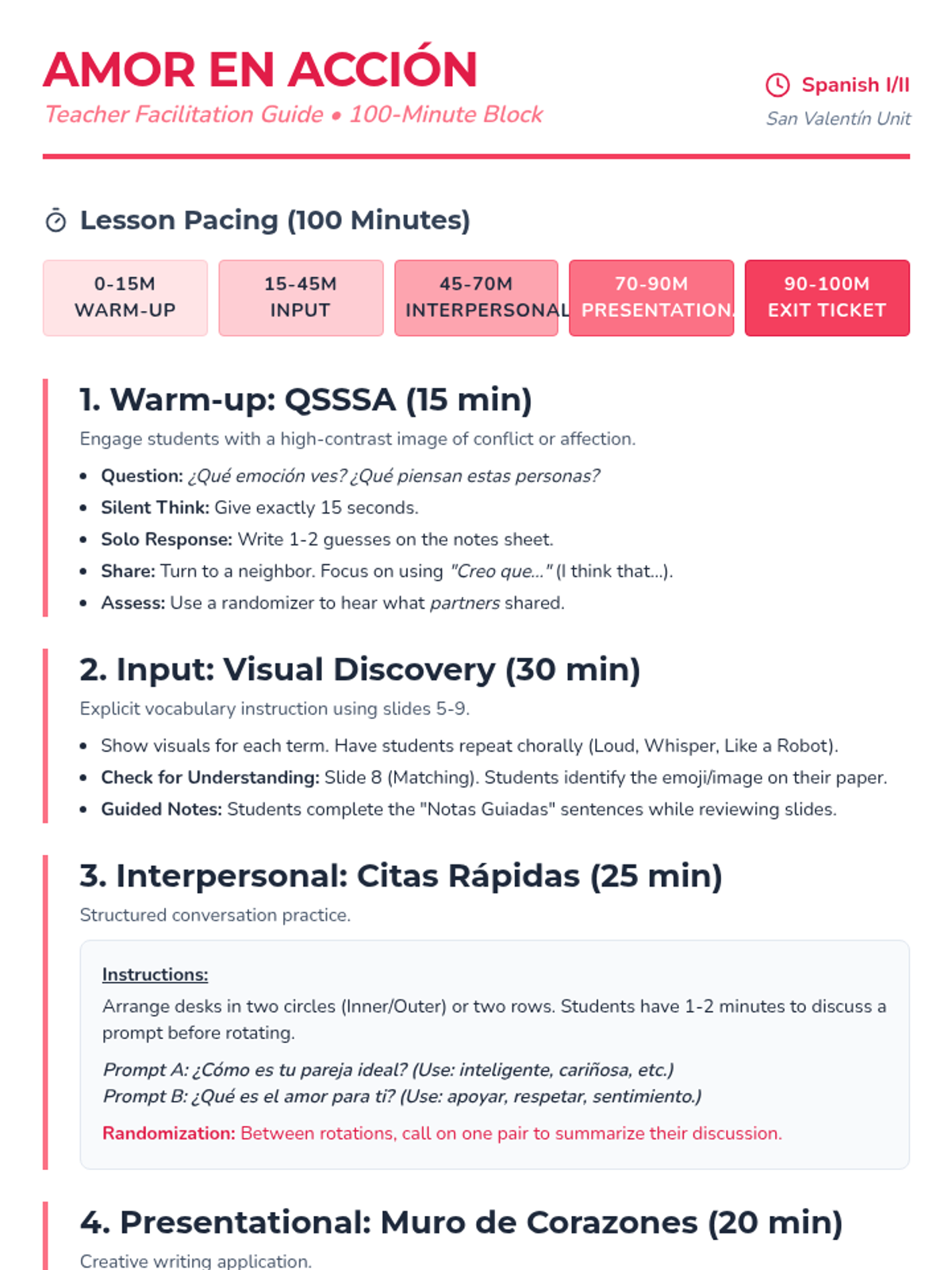
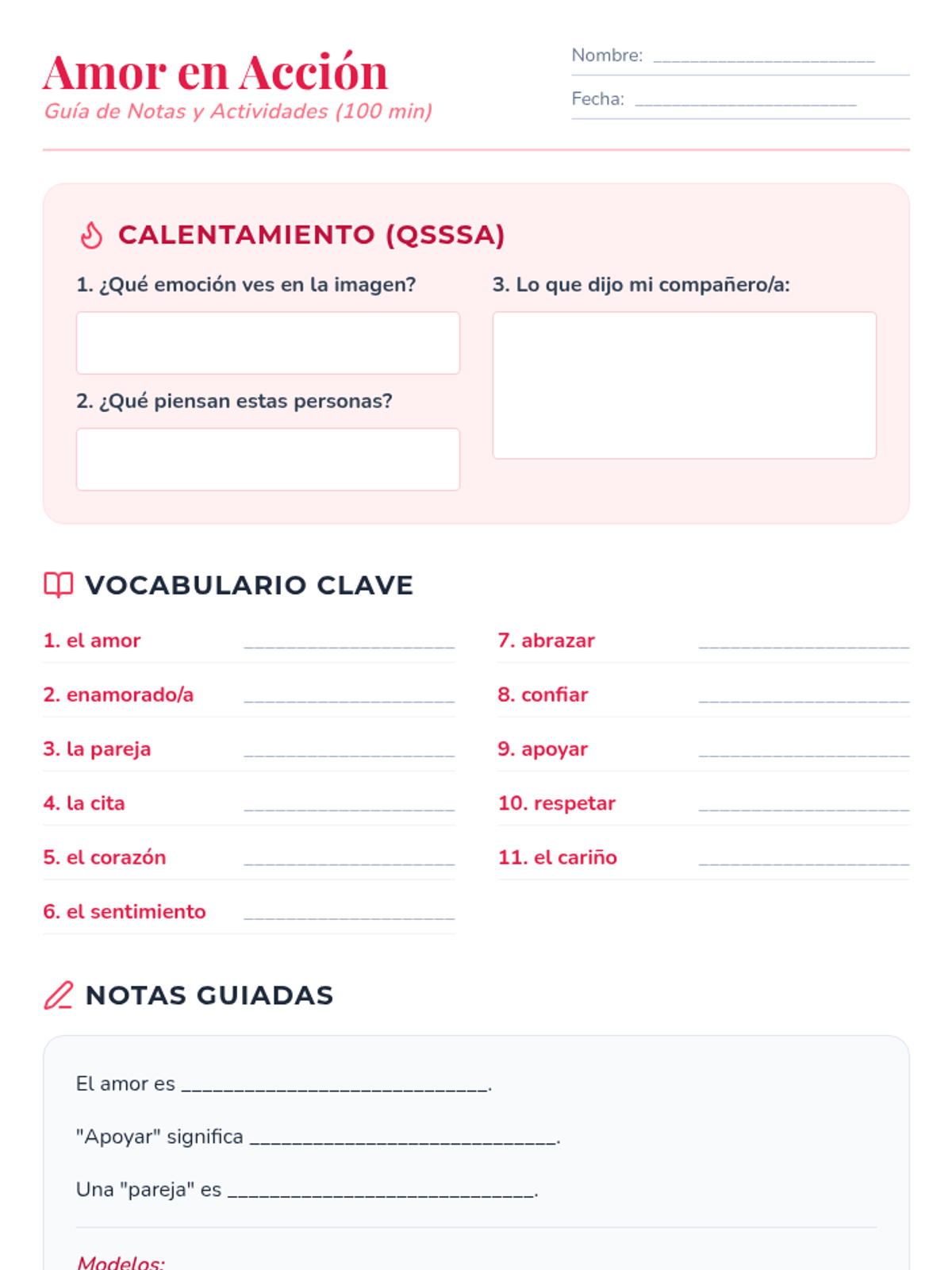
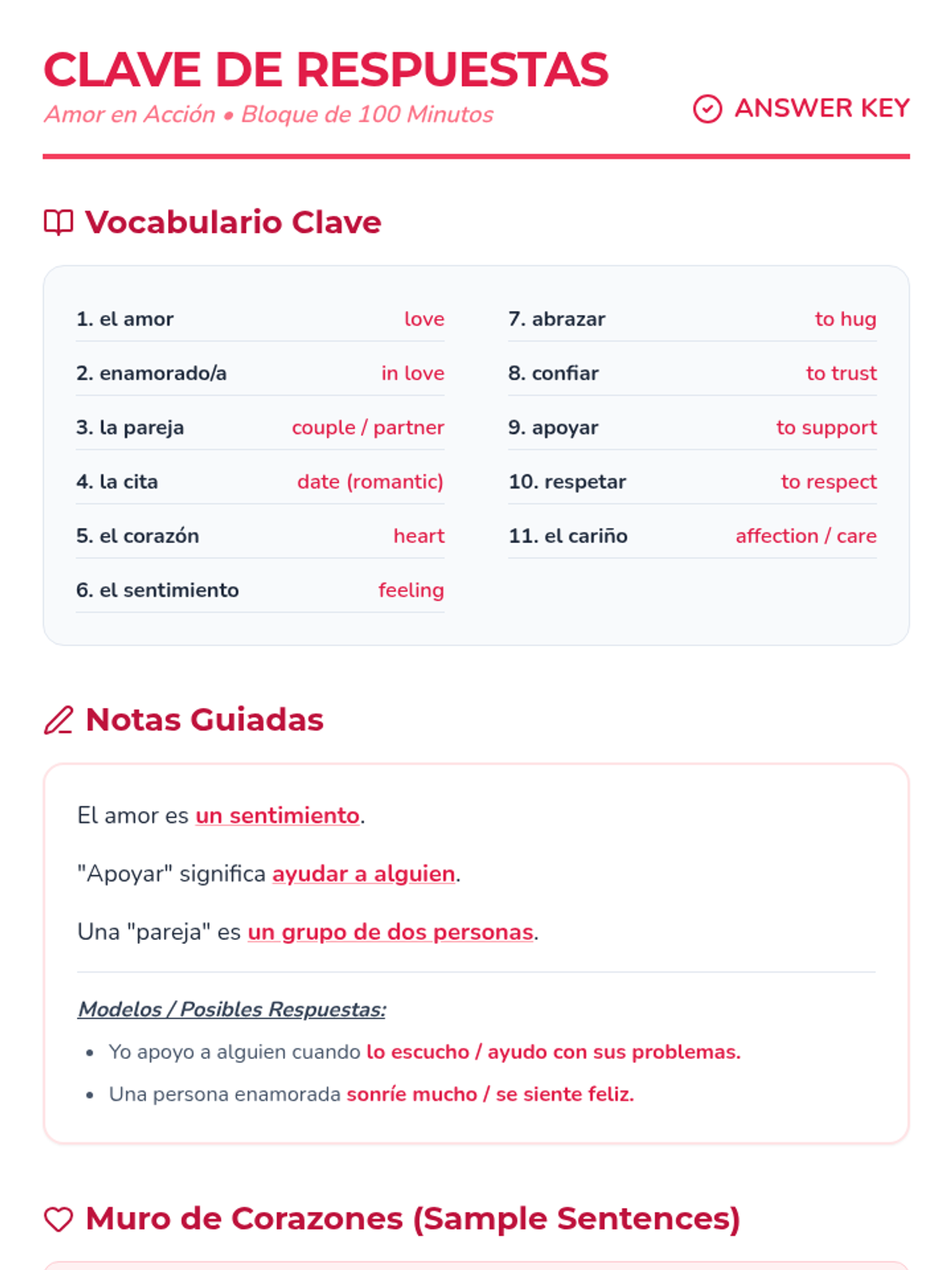
A Spanish I/II unit focused on Valentine's Day, covering vocabulary related to love, relationships, and emotions through interactive activities and communicative practice.
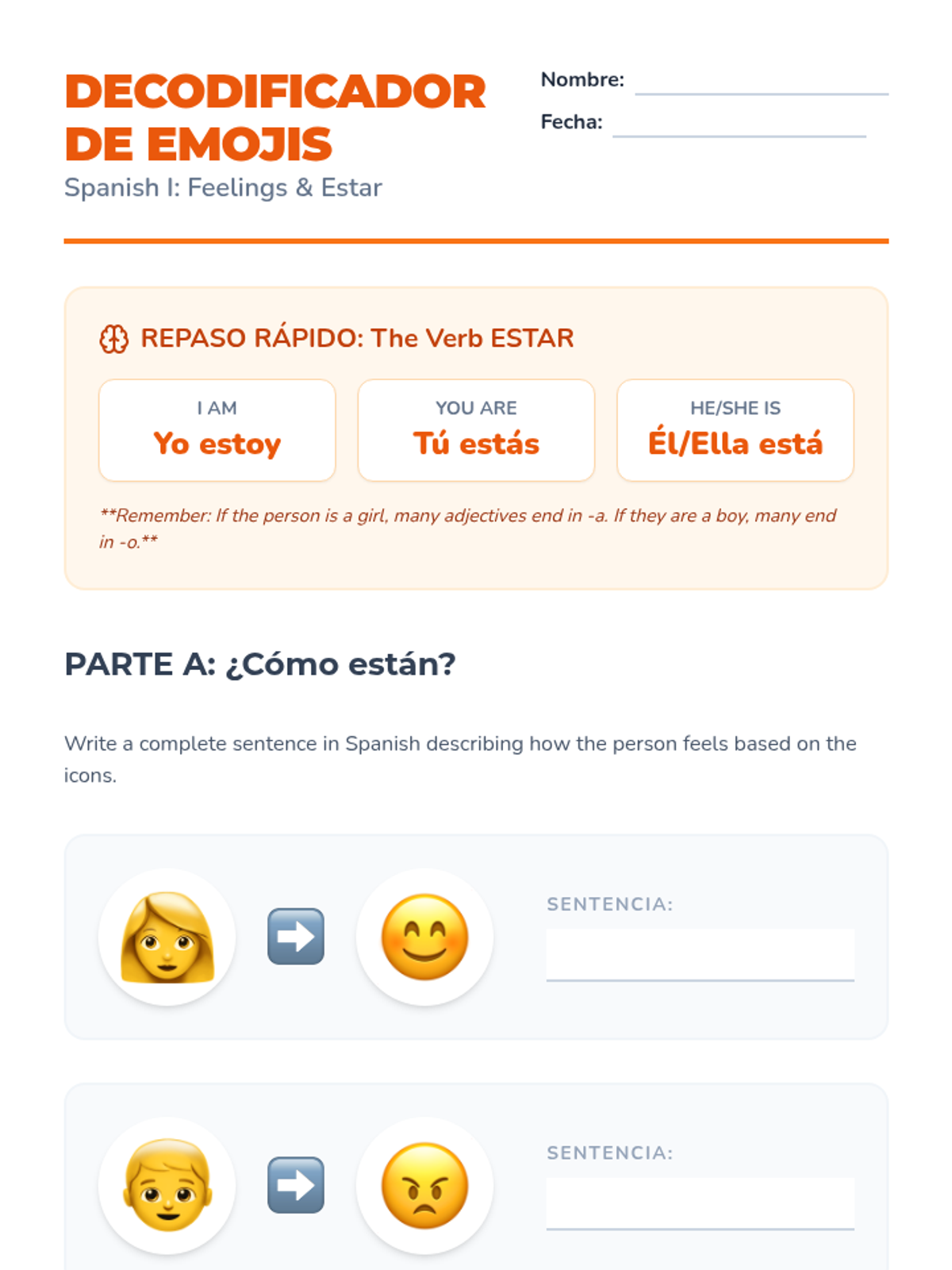
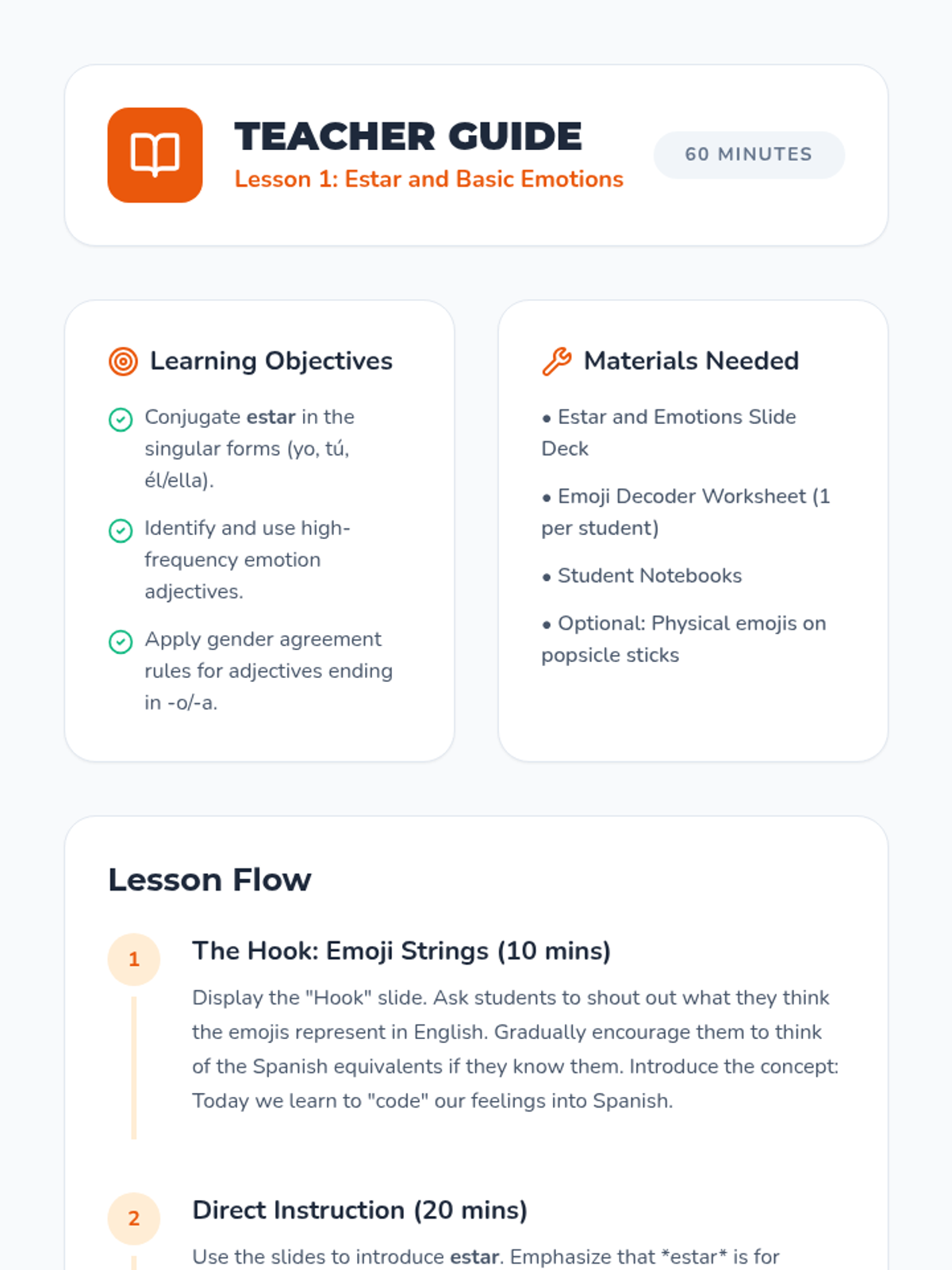
A comprehensive unit for beginner Spanish students to master the verb 'estar' and 'tener' idioms for expressing emotions, physical states, and needs. Through interactive games, role-plays, and data collection, students learn to articulate their internal feelings and conduct wellness checks on others.
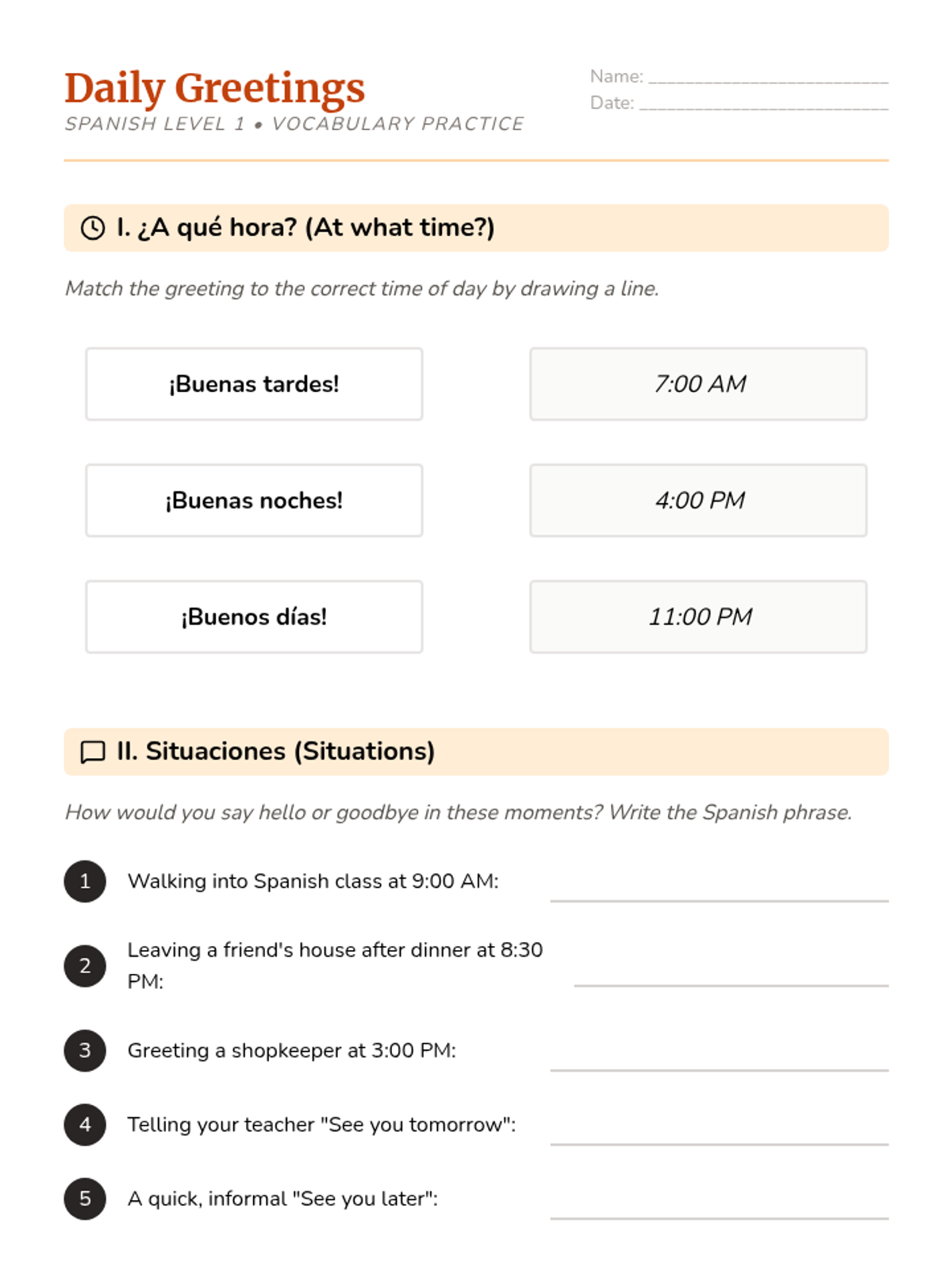
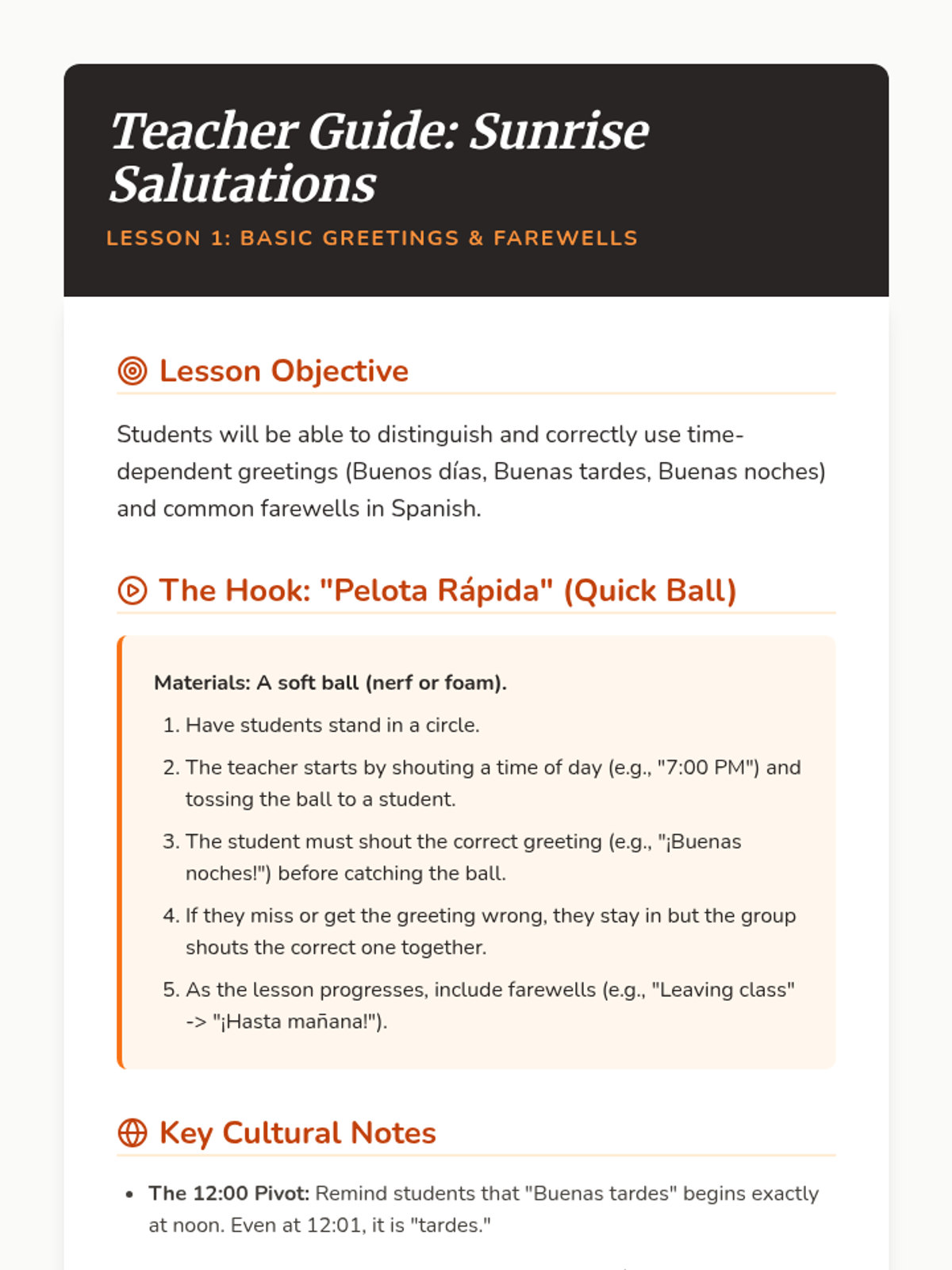
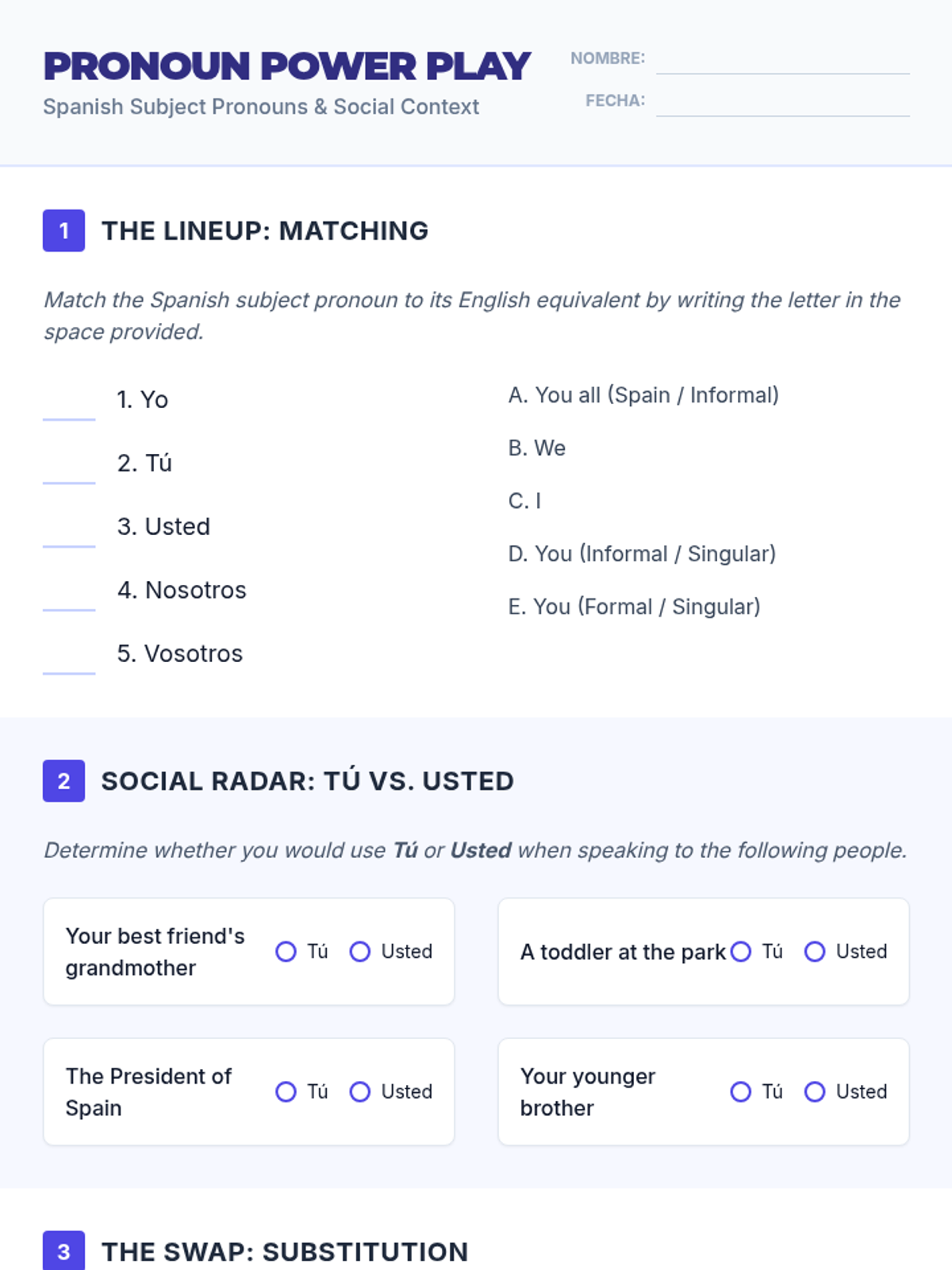
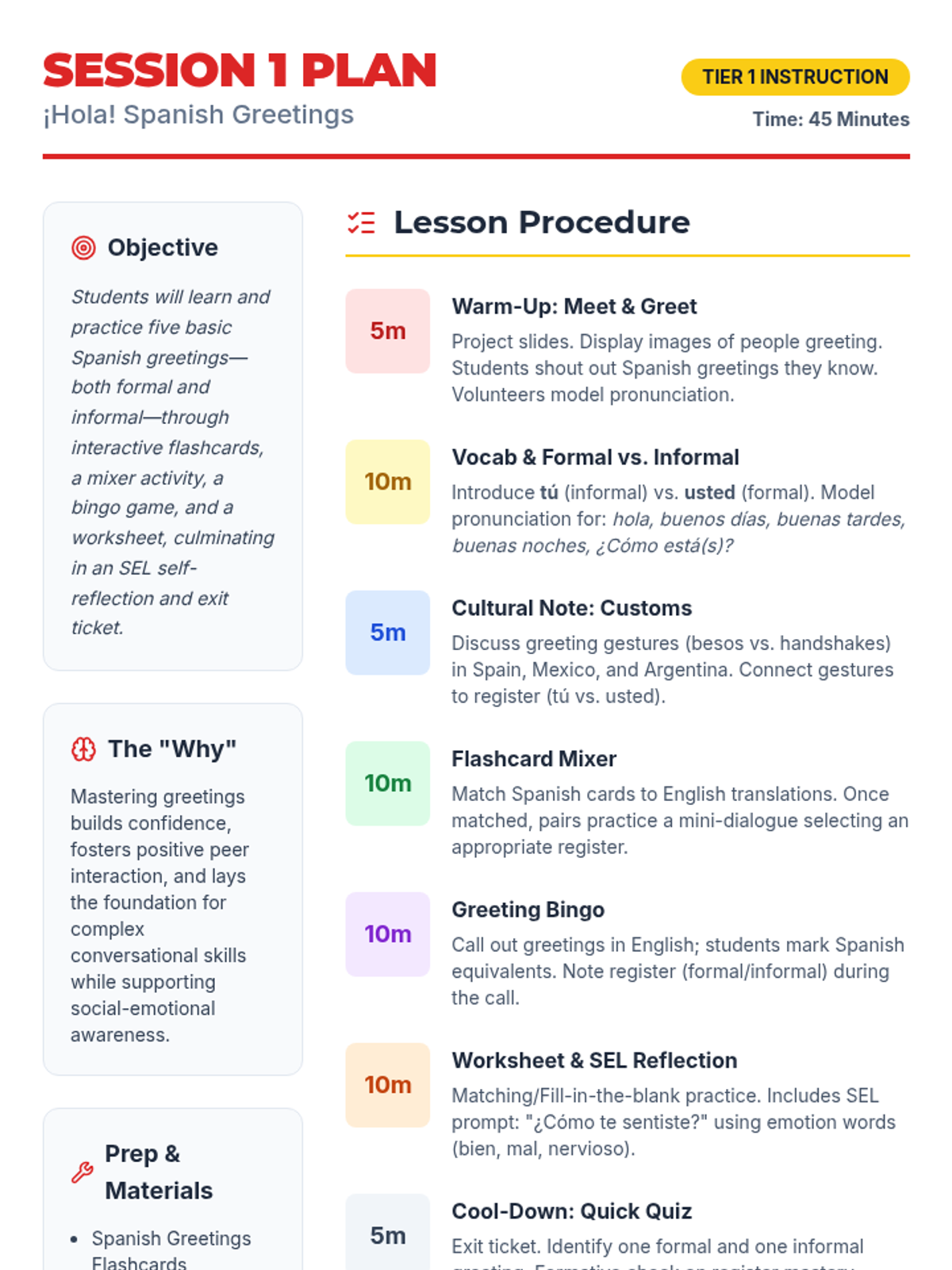
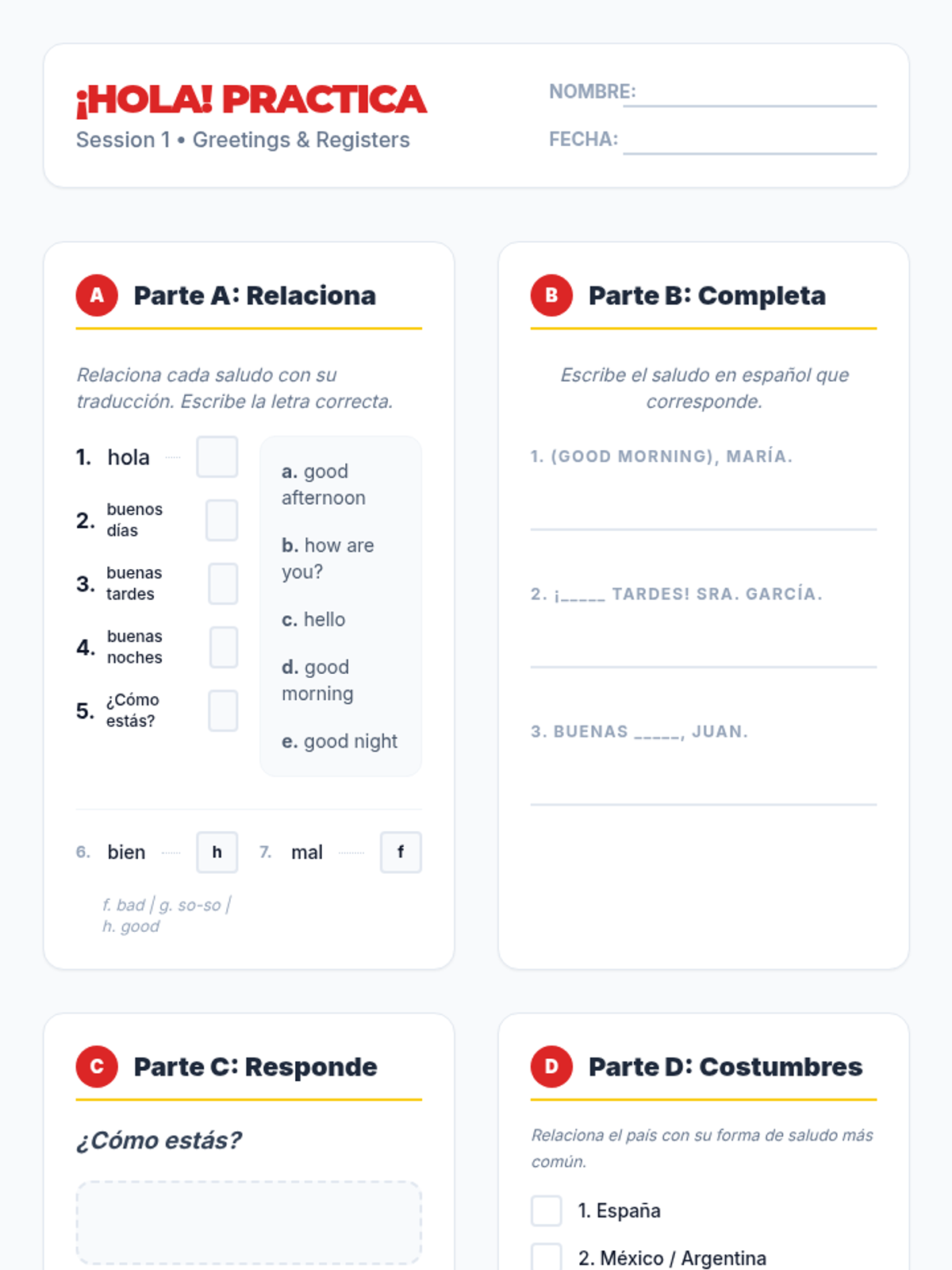
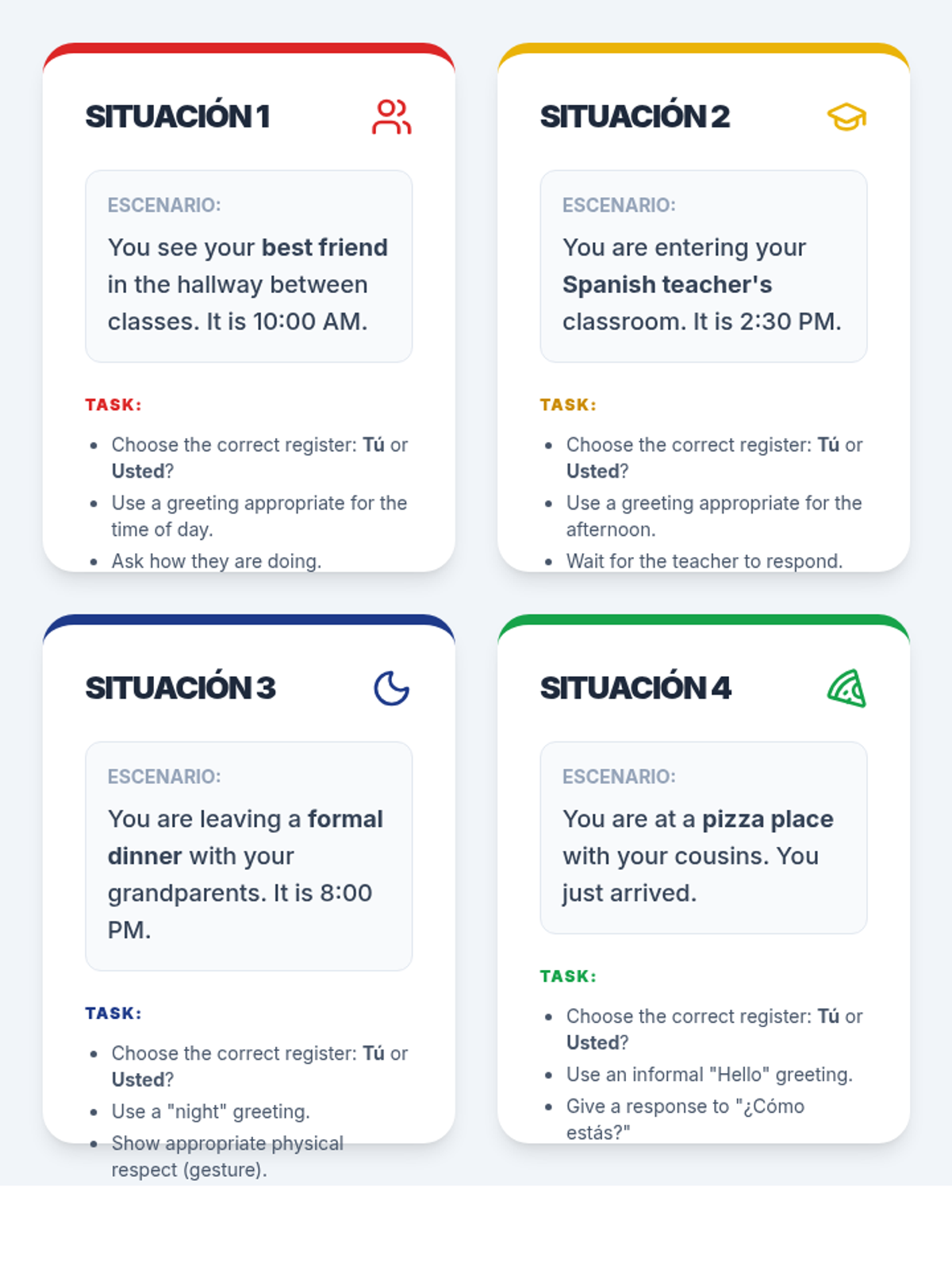
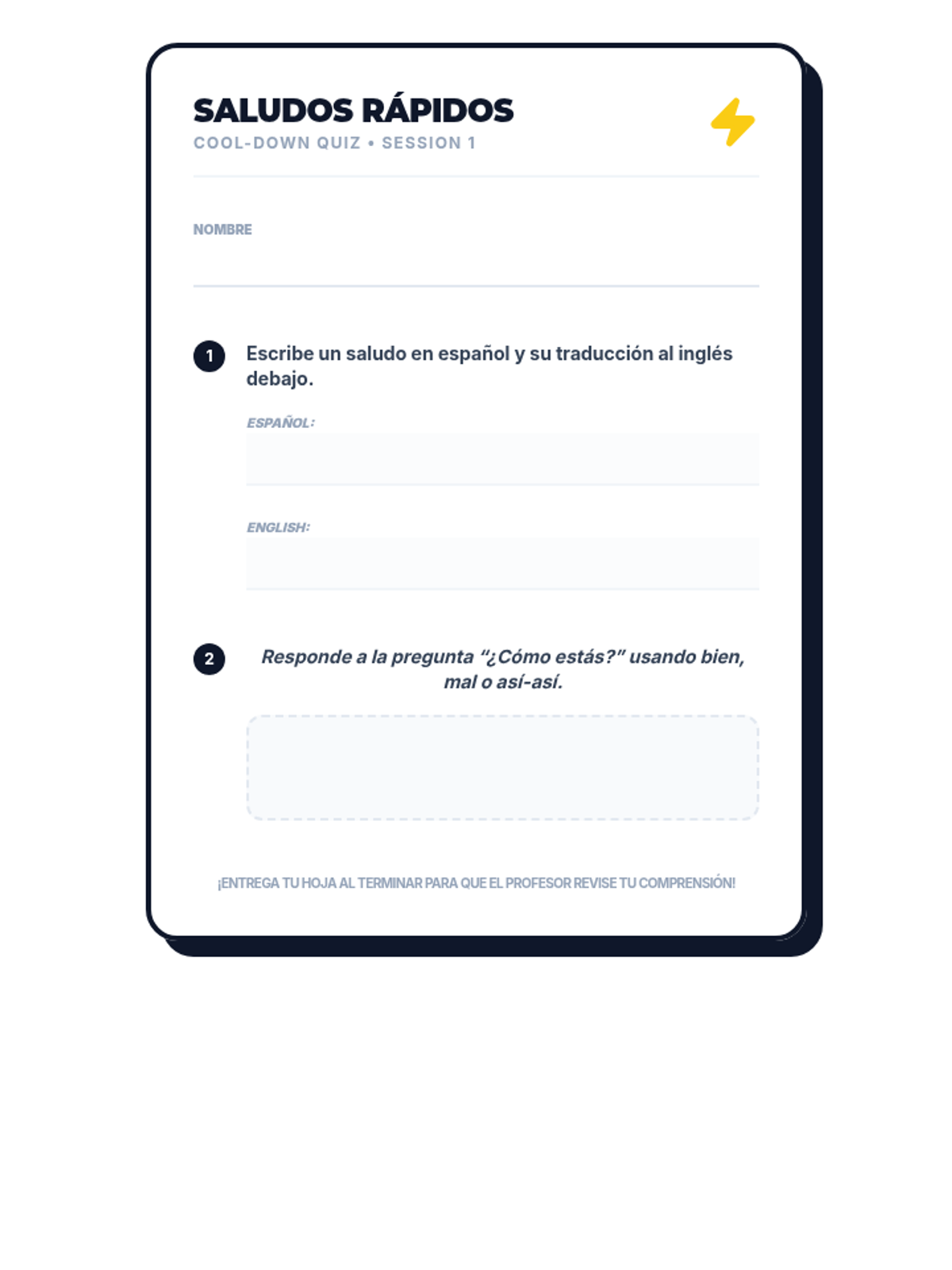
A 5-lesson sequence for 7th-grade students to master Spanish greetings, introductions, and the cultural nuances of formal vs. informal address (tú vs. usted). Students move from basic vocabulary to complex social simulations.
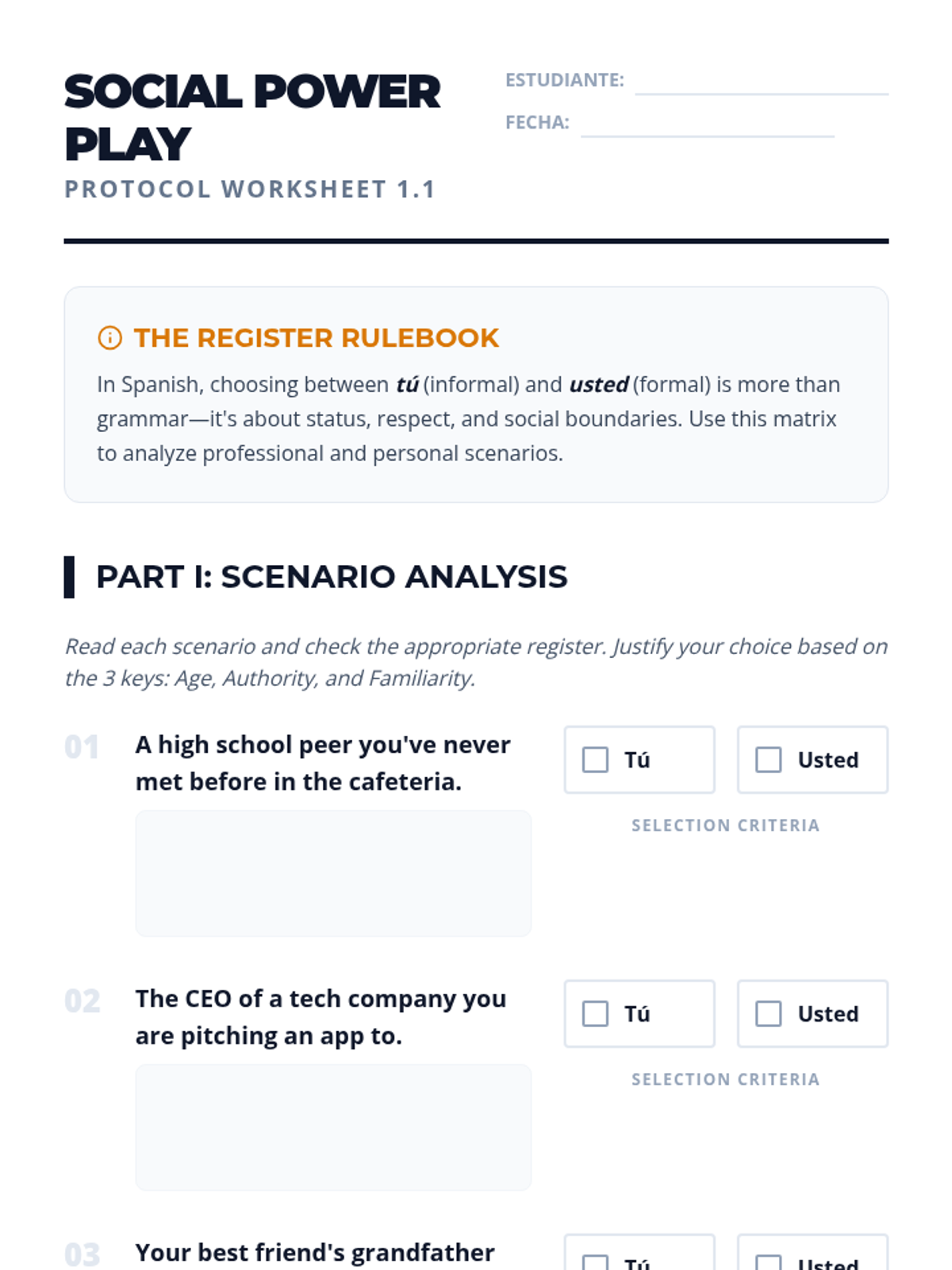
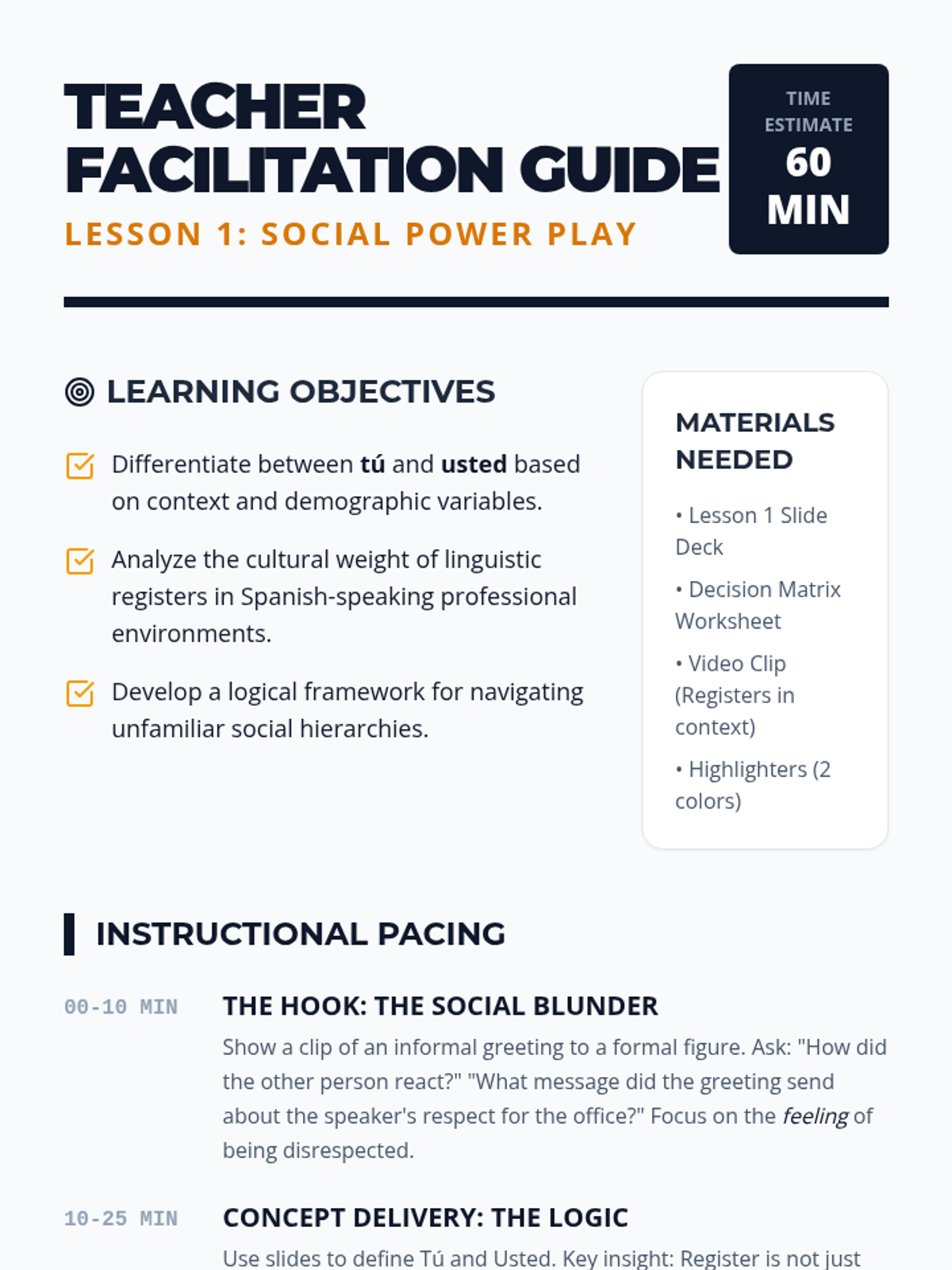
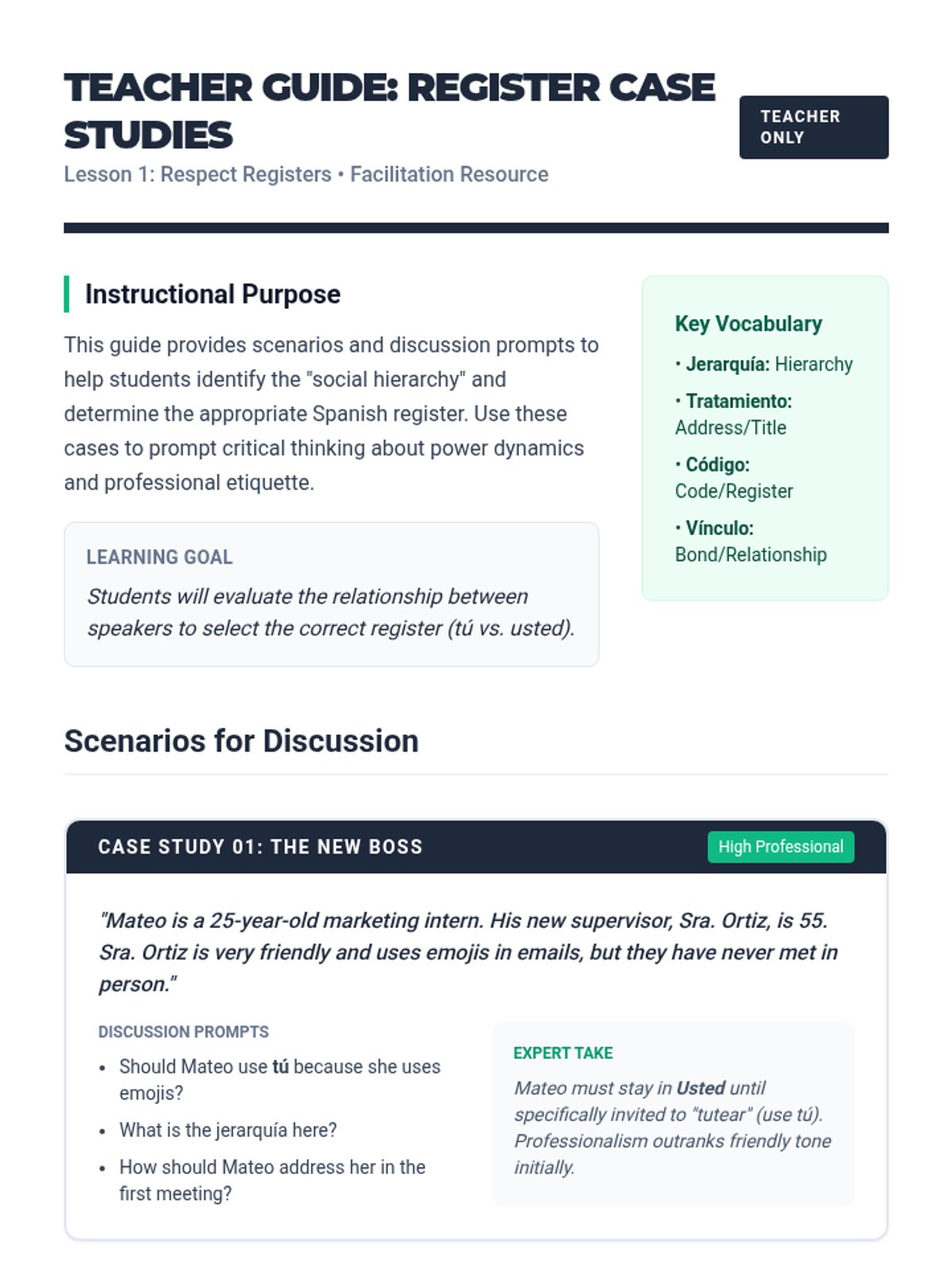
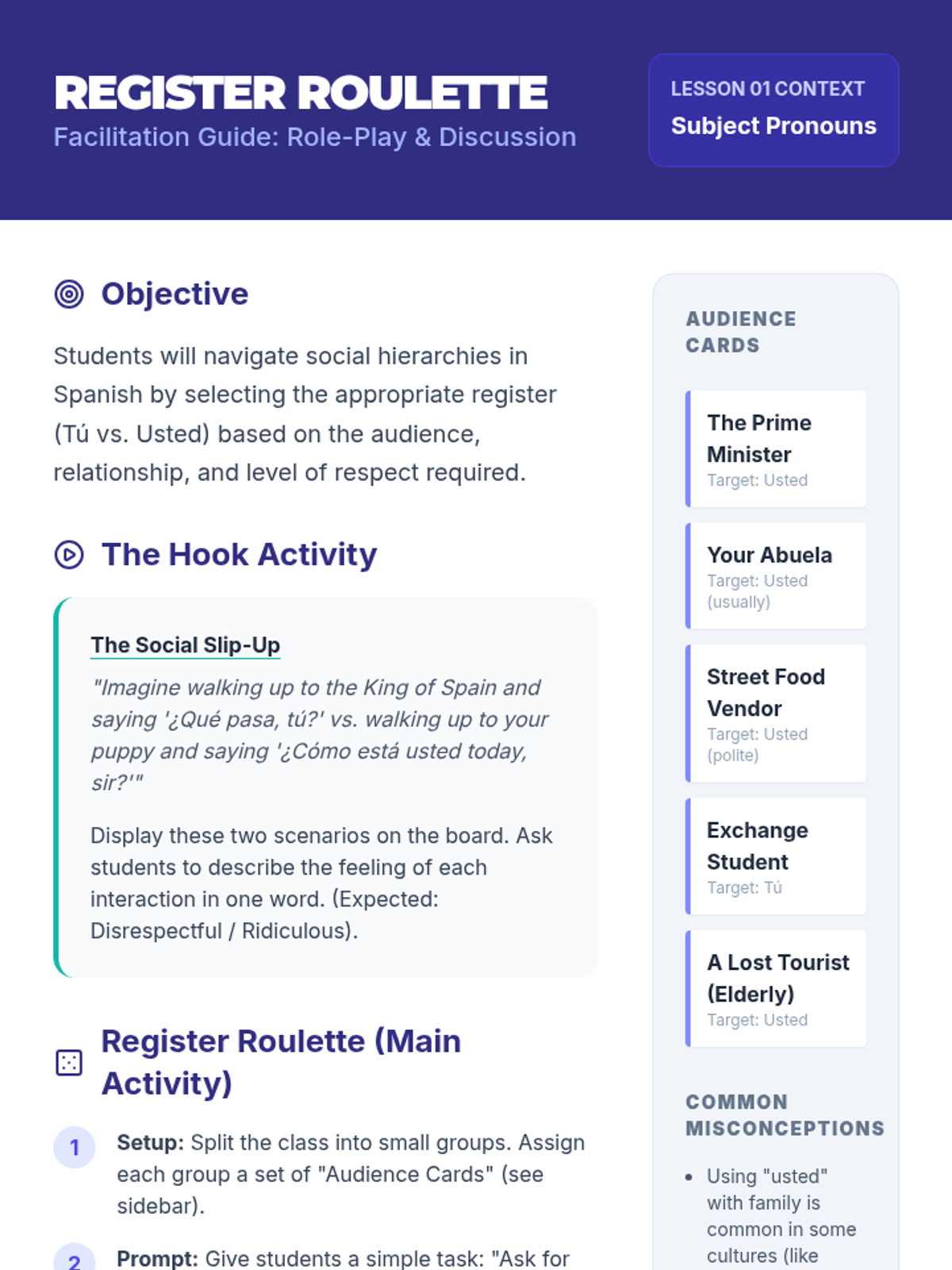
A professional development-style Spanish sequence for high schoolers, focusing on the nuances of formal vs. informal registers (tú vs. usted) and the cultural etiquette of business and academic introductions. Students move from basic sociolinguistic analysis to a high-stakes simulated international summit.
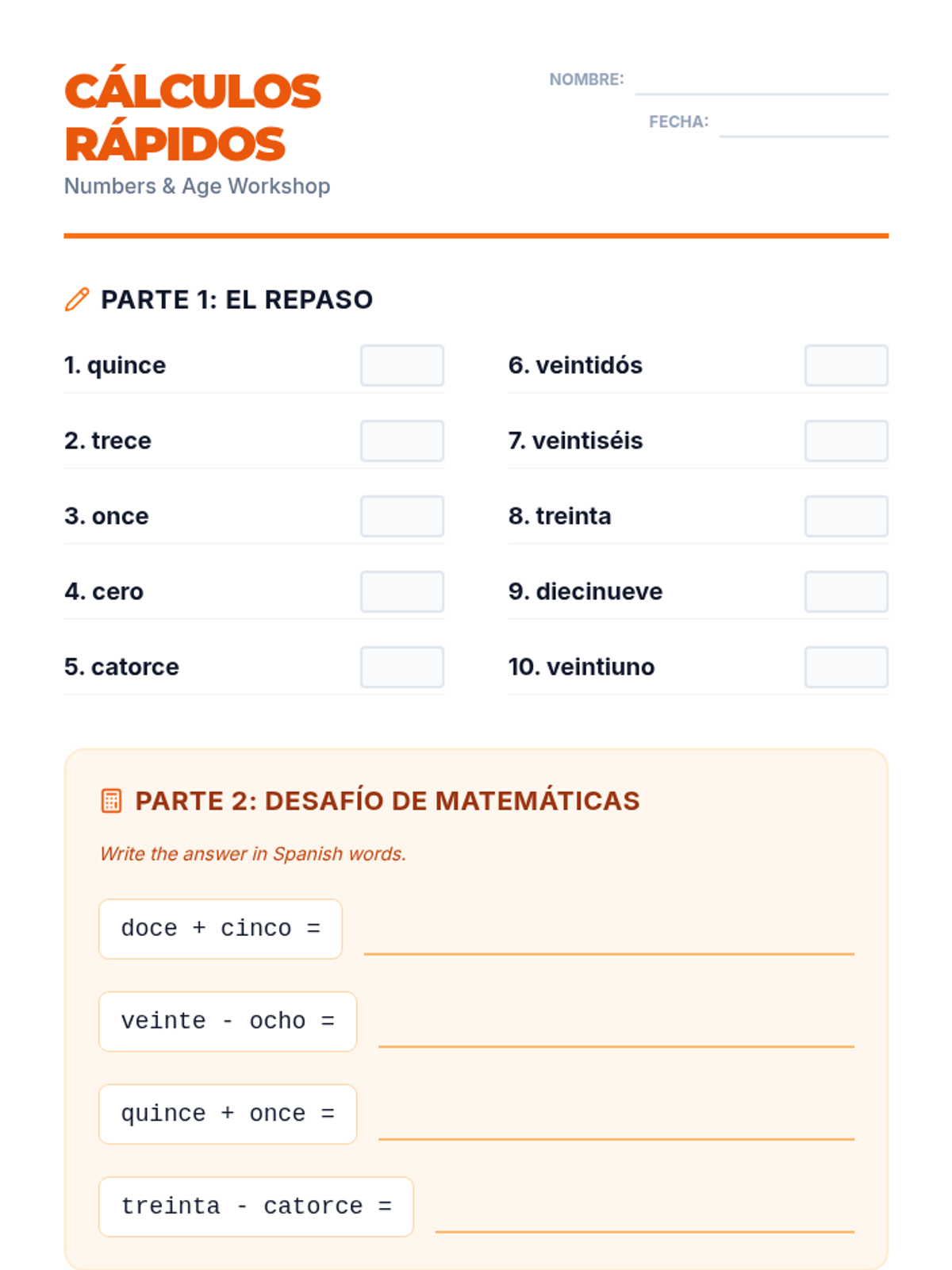
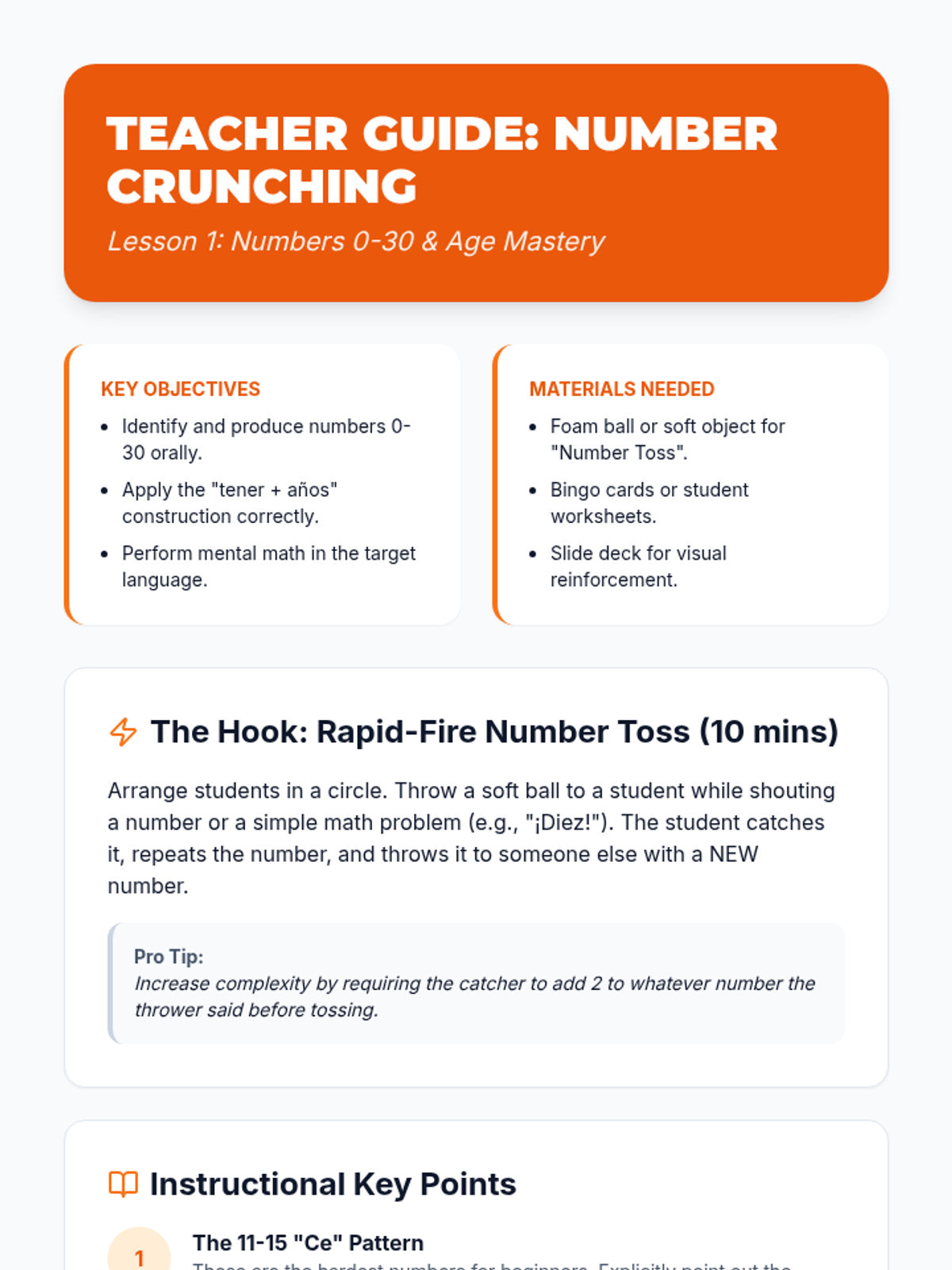
A functional Spanish speaking sequence for 10th graders focusing on numbers, survival phrases, preferences, and basic questioning to navigate a Spanish-only environment.
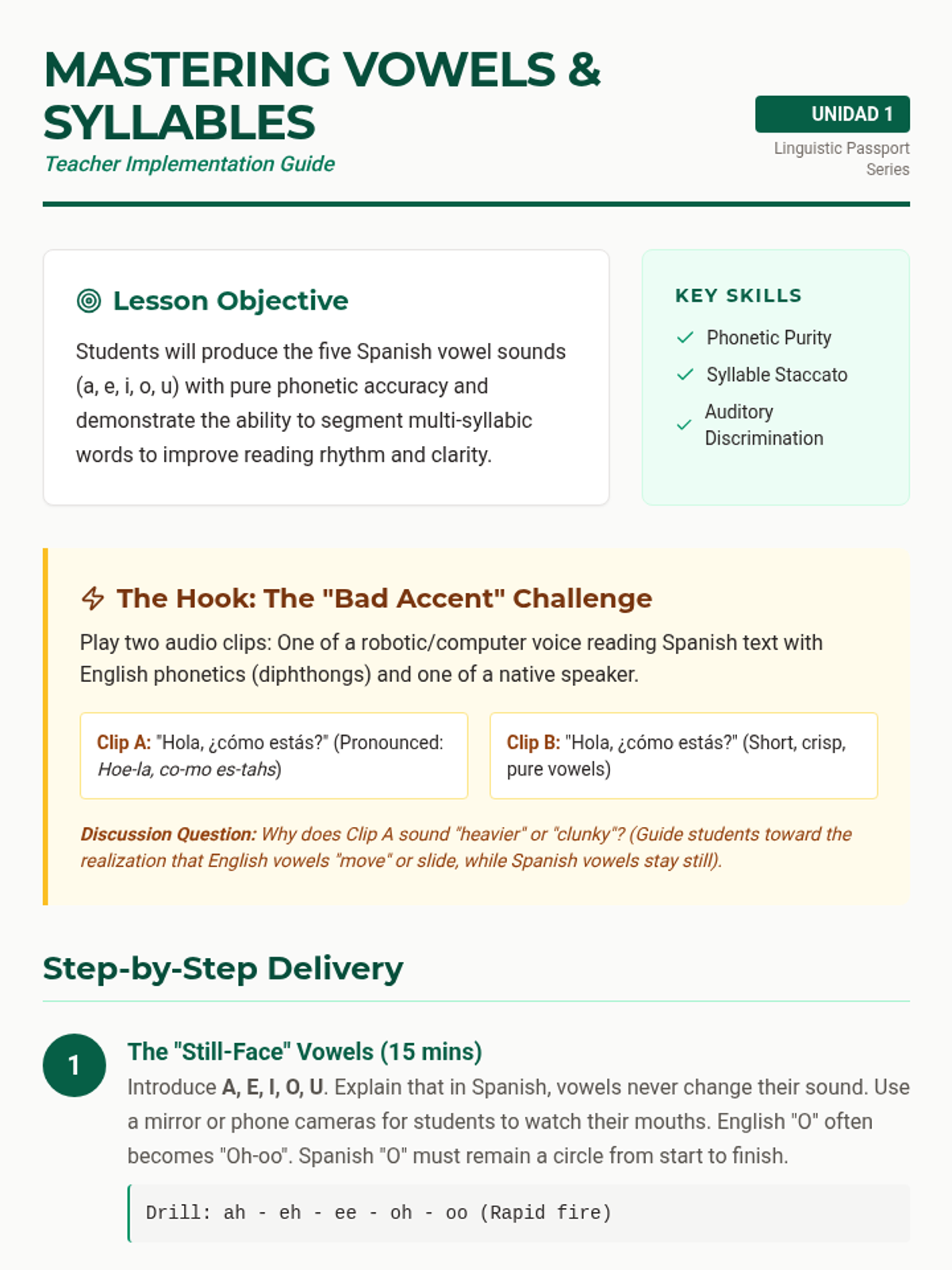
This sequence builds foundational Spanish pronunciation and social introduction skills. Students progress from mastering the five pure vowels and unique consonants to navigating the cultural nuances of formal and informal address, culminating in a fluent introductory dialogue.
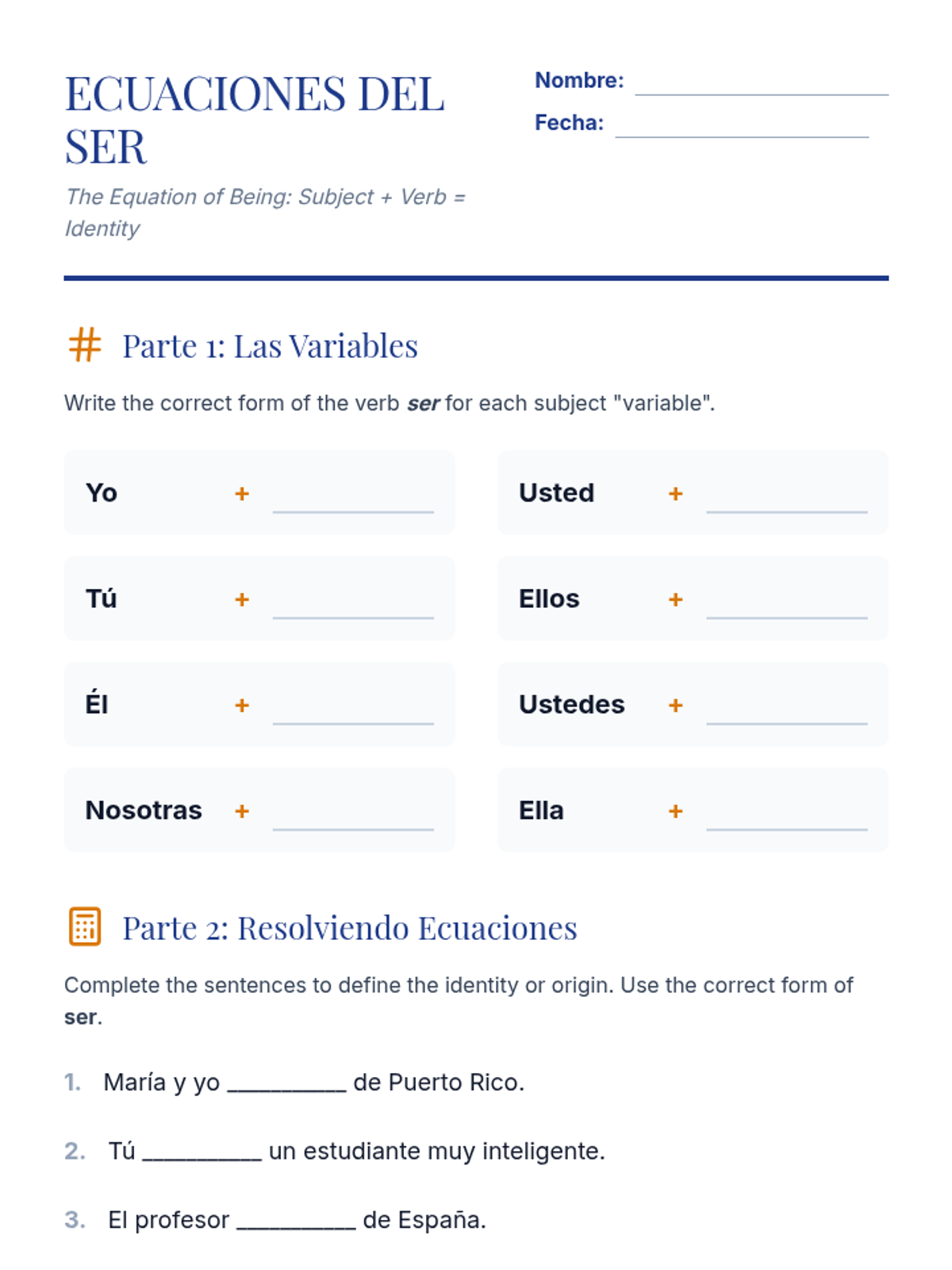
A comprehensive Spanish sequence for 10th Grade beginners focused on the verb 'ser', adjective agreement, and personal descriptions. Students develop the skills to describe themselves and others, culminating in a multimedia identity profile project.
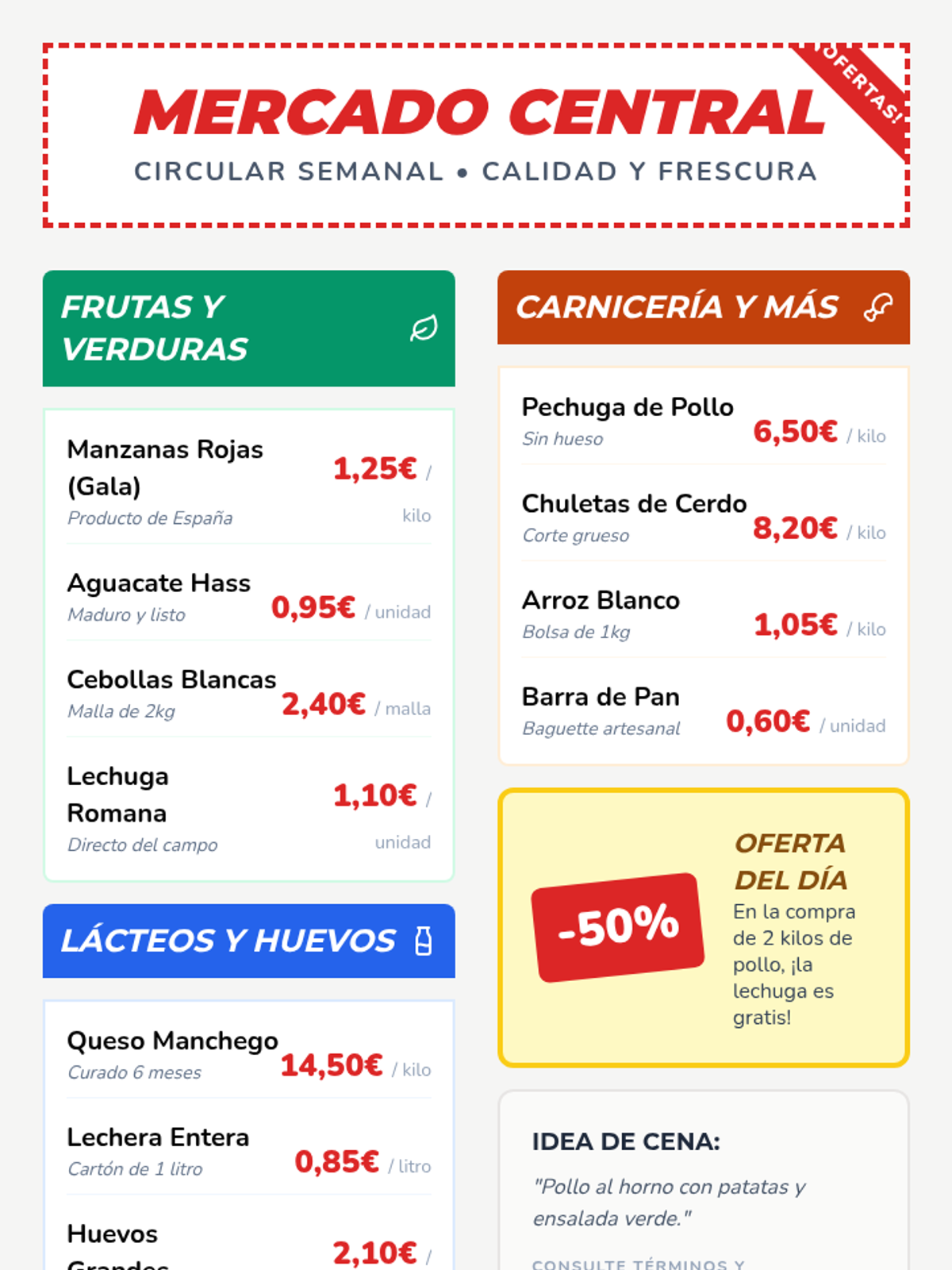
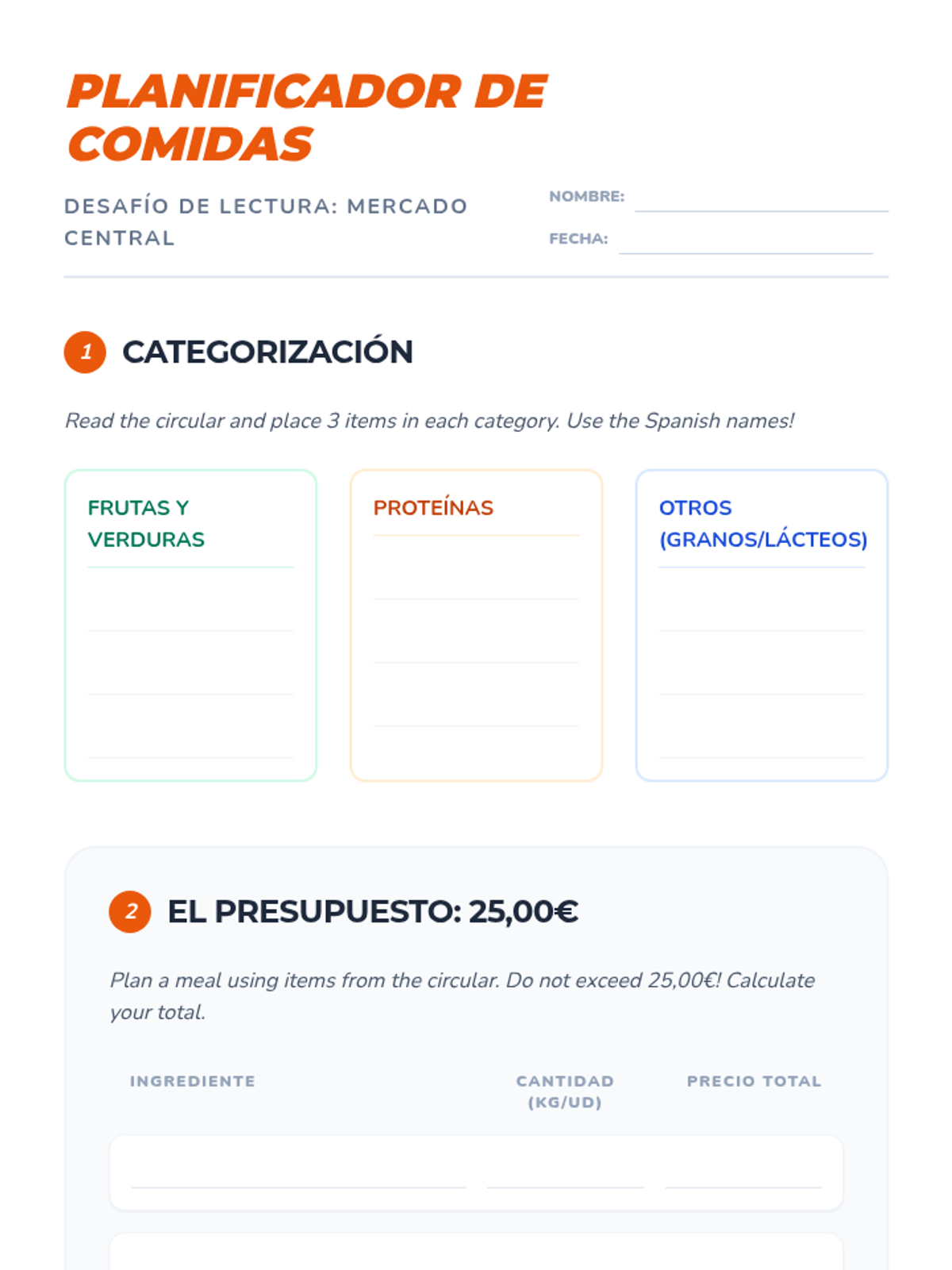
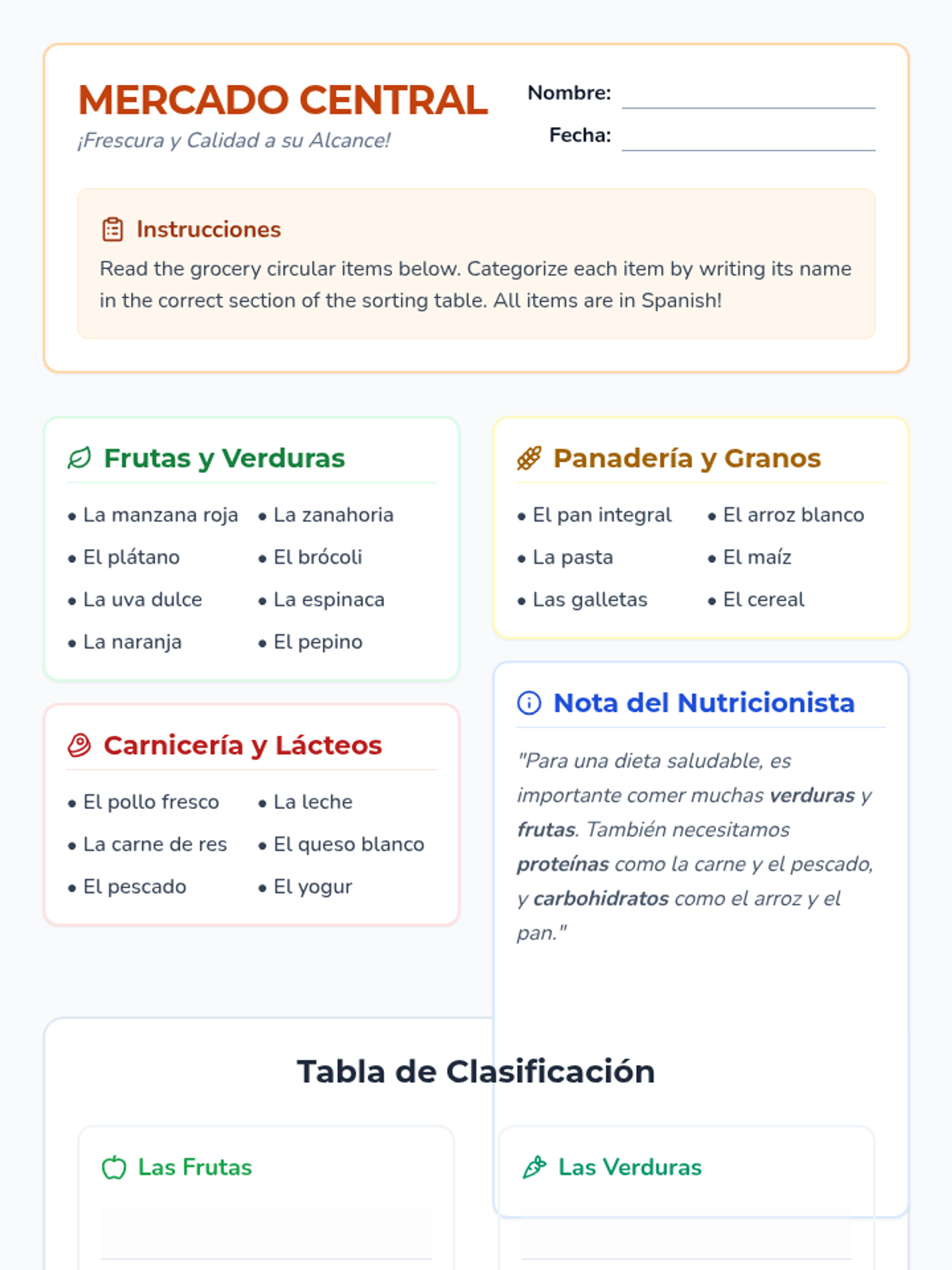
This sequence guides 8th-grade Spanish learners through functional literacy in culinary contexts. Students progress from reading grocery circulars and menus to interpreting dialogue and recipes, culminating in analyzing restaurant reviews.
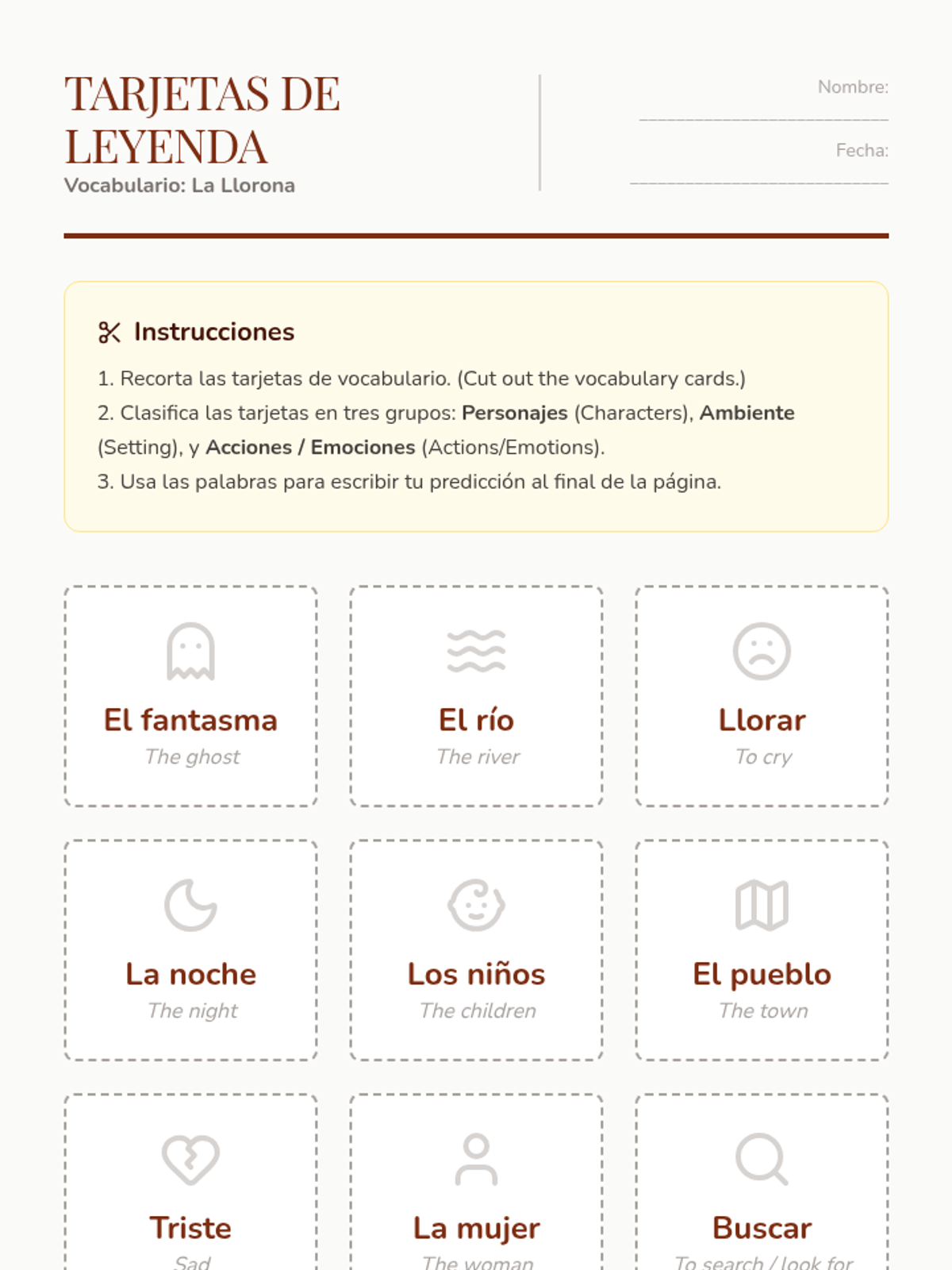
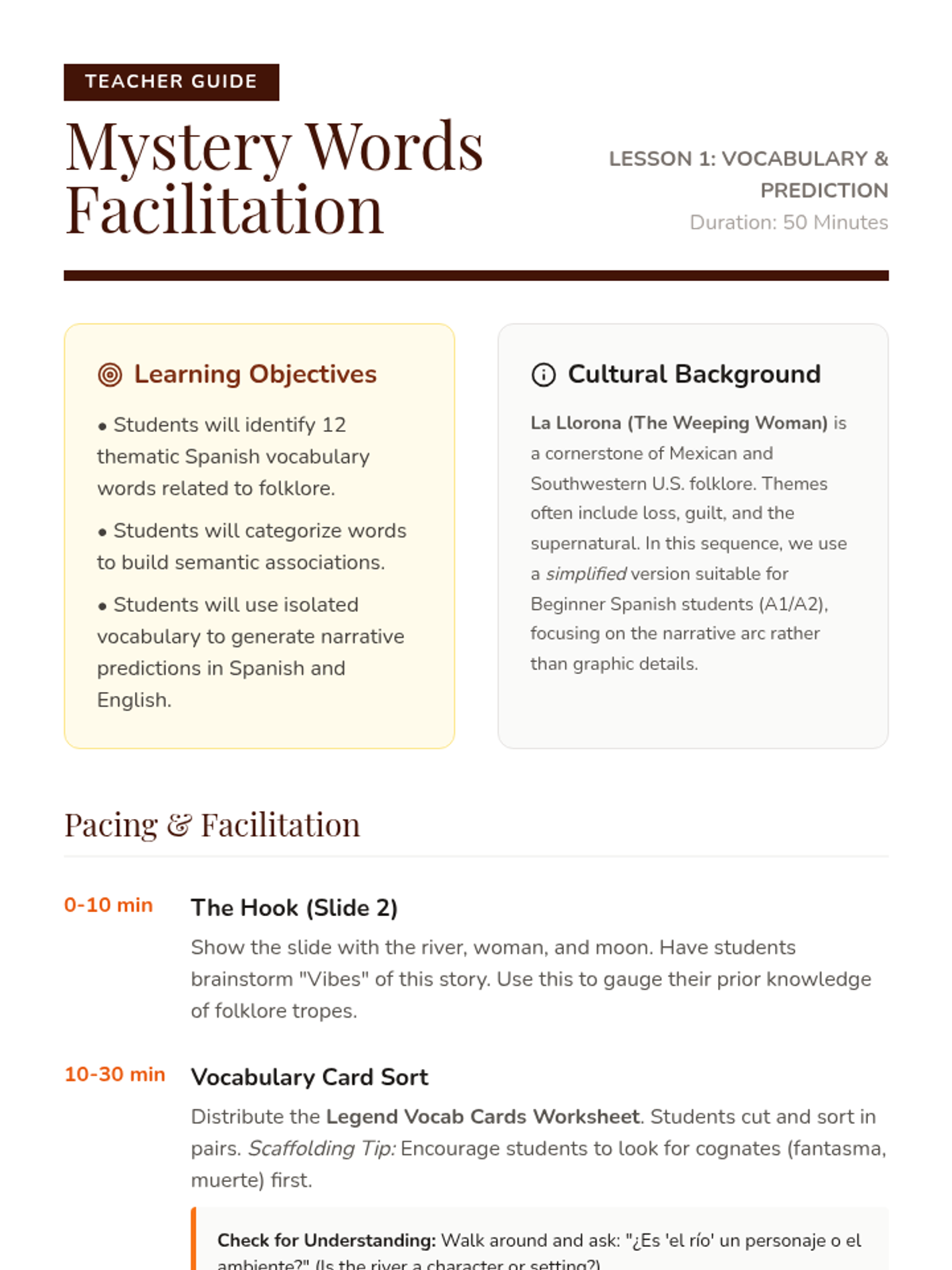
This sequence introduces 10th-grade Spanish students to the cultural legend of La Llorona through simplified reading, collaborative analysis, and creative retelling. Students build vocabulary, practice jigsaw reading, and explore the cultural significance of folklore.
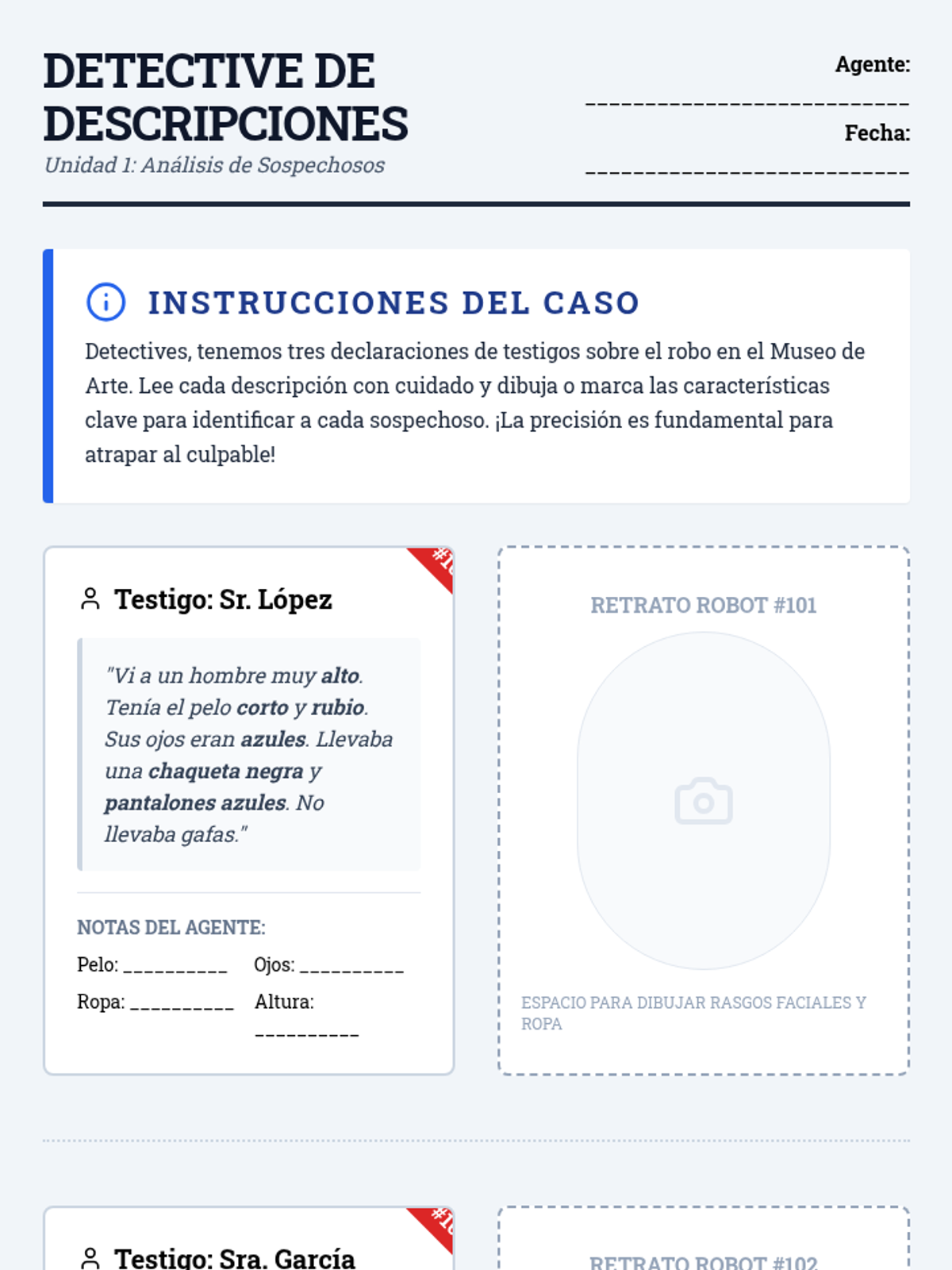
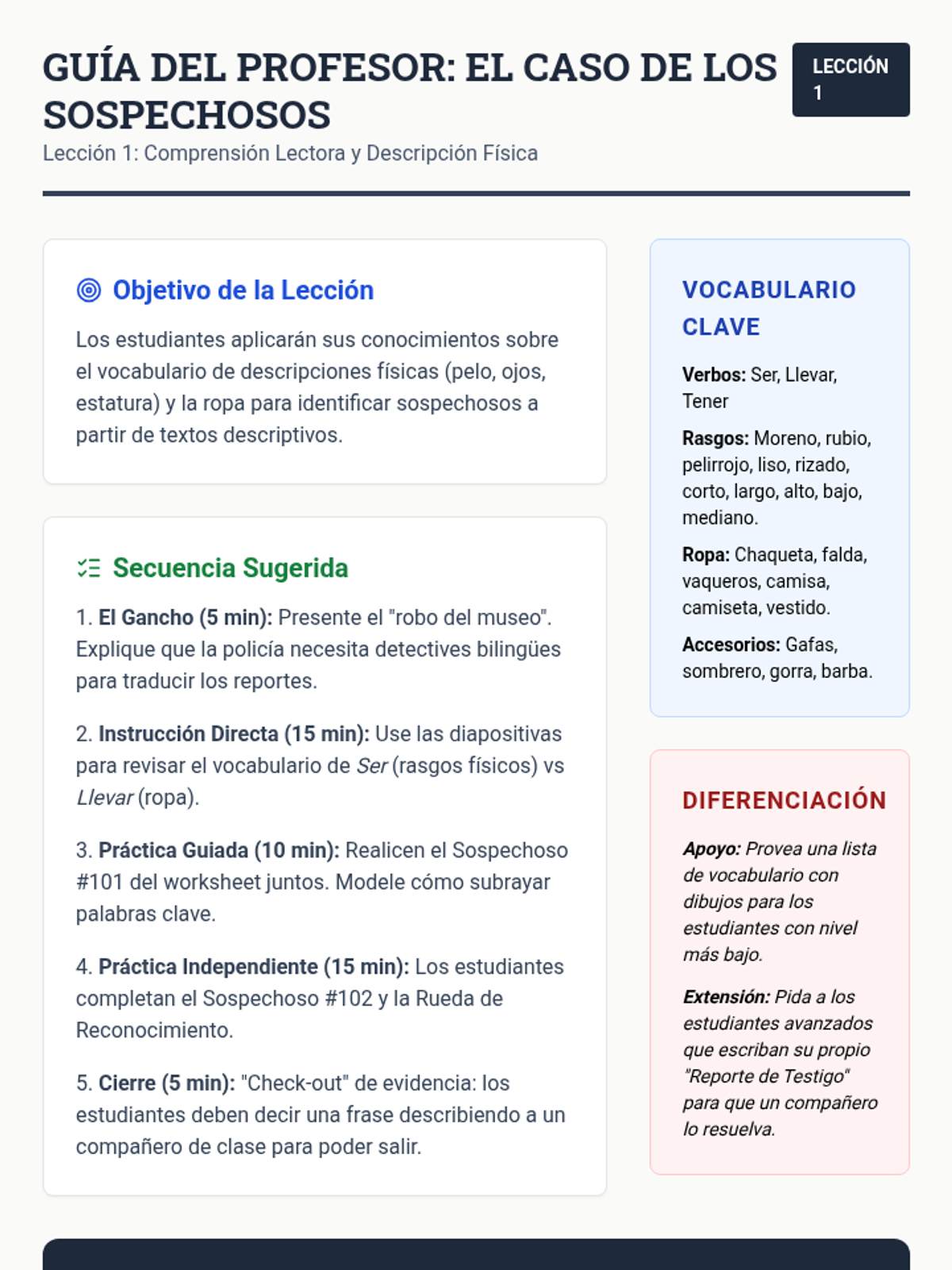
A Spanish reading sequence where students act as detectives, using physical descriptions, prepositions of place, and temporal logic to solve mysteries and puzzles.
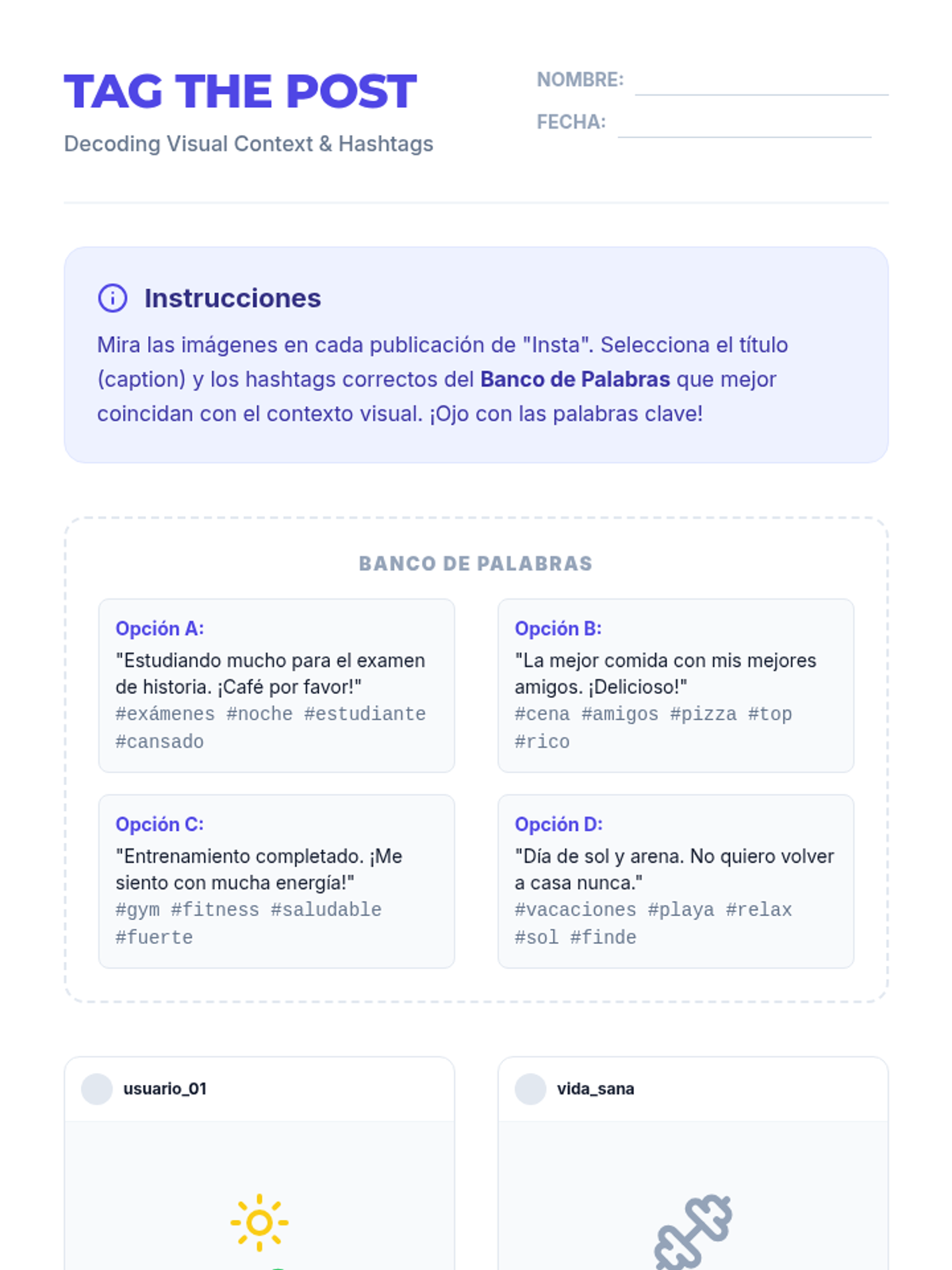
A 10th-grade Spanish reading sequence that uses social media formats like bios, hashtags, and memes to build proficiency in modern digital communication. Students progress from decoding short tags to analyzing full profiles and sentiment in online communities.
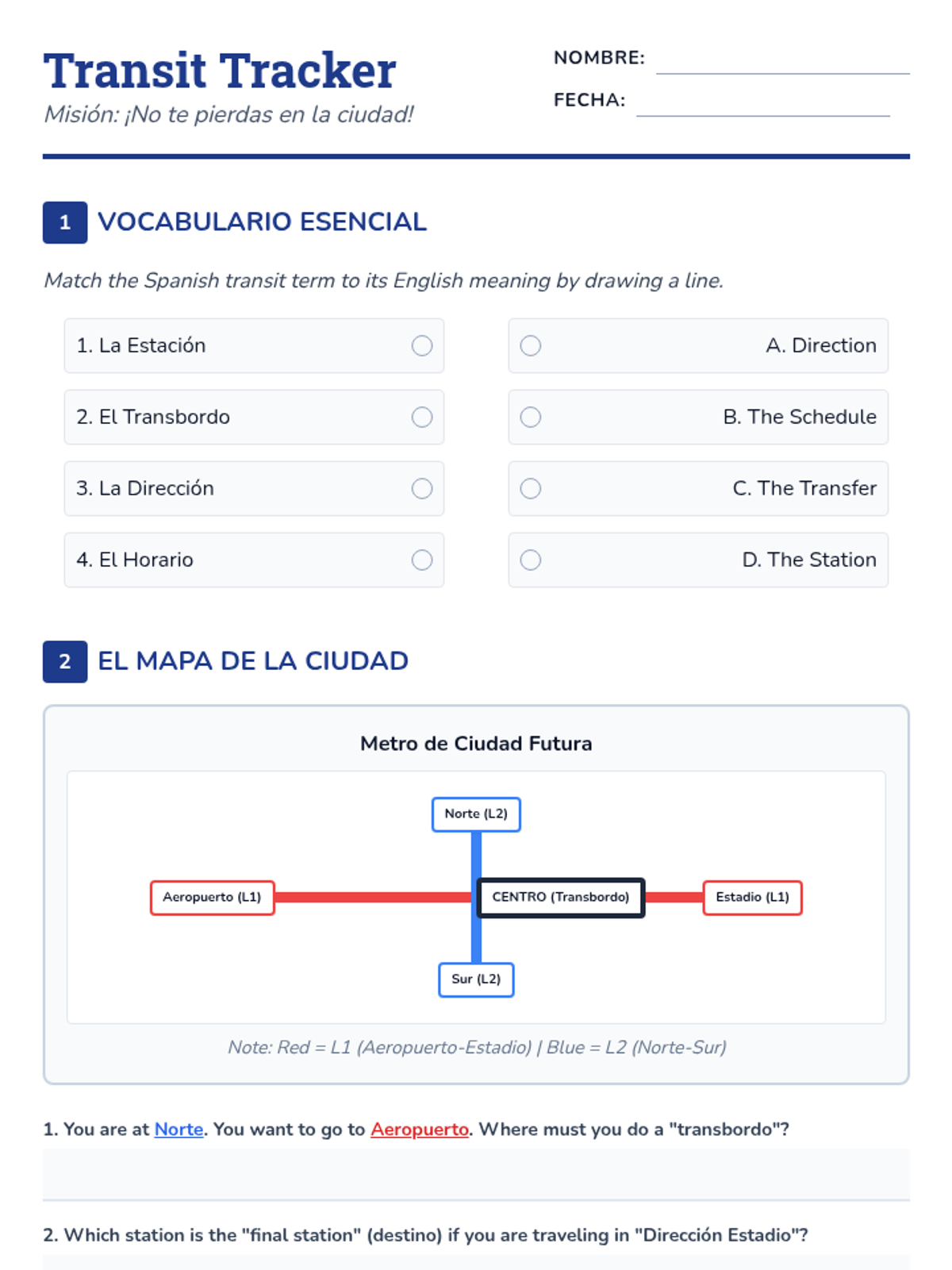
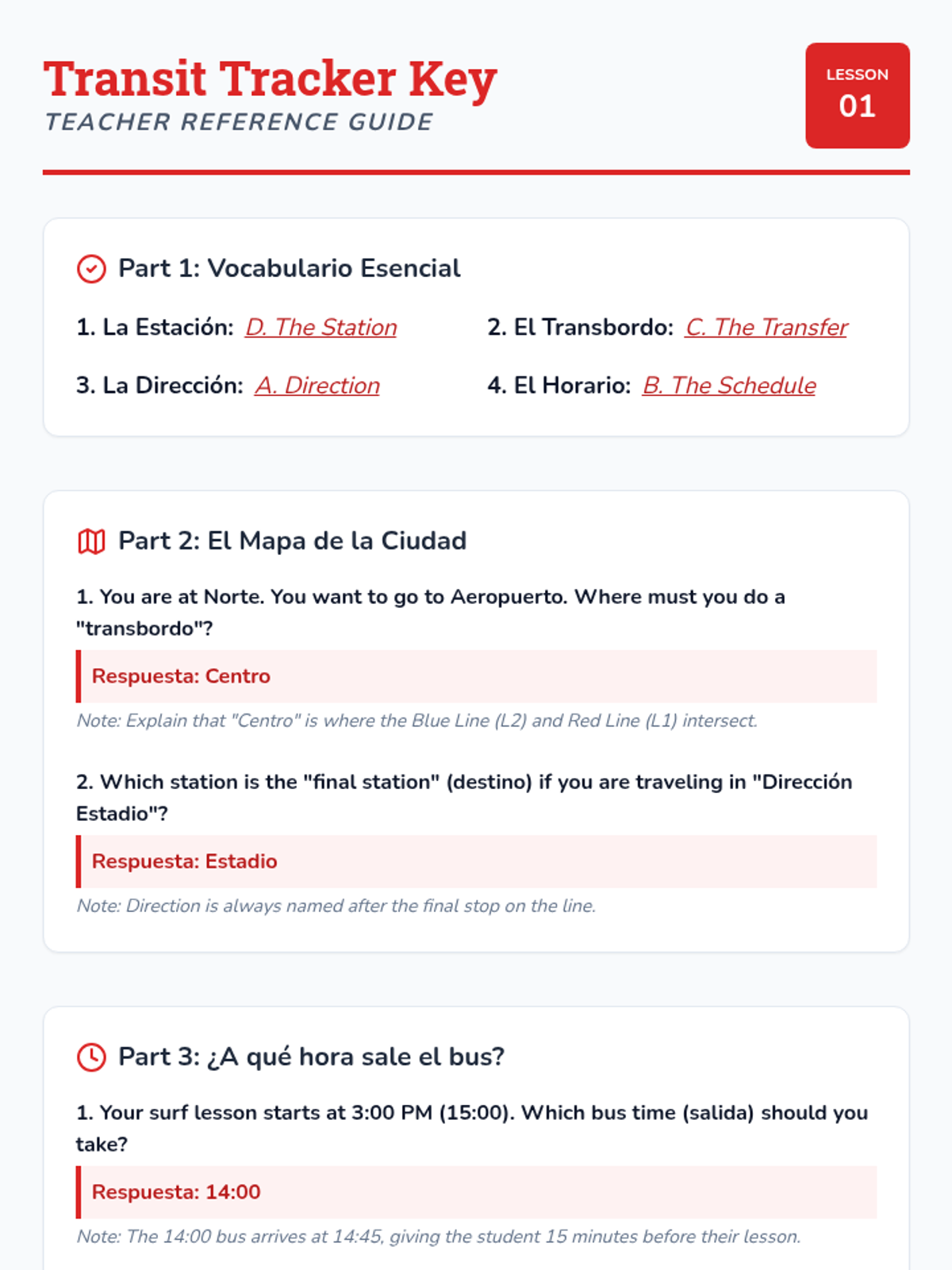
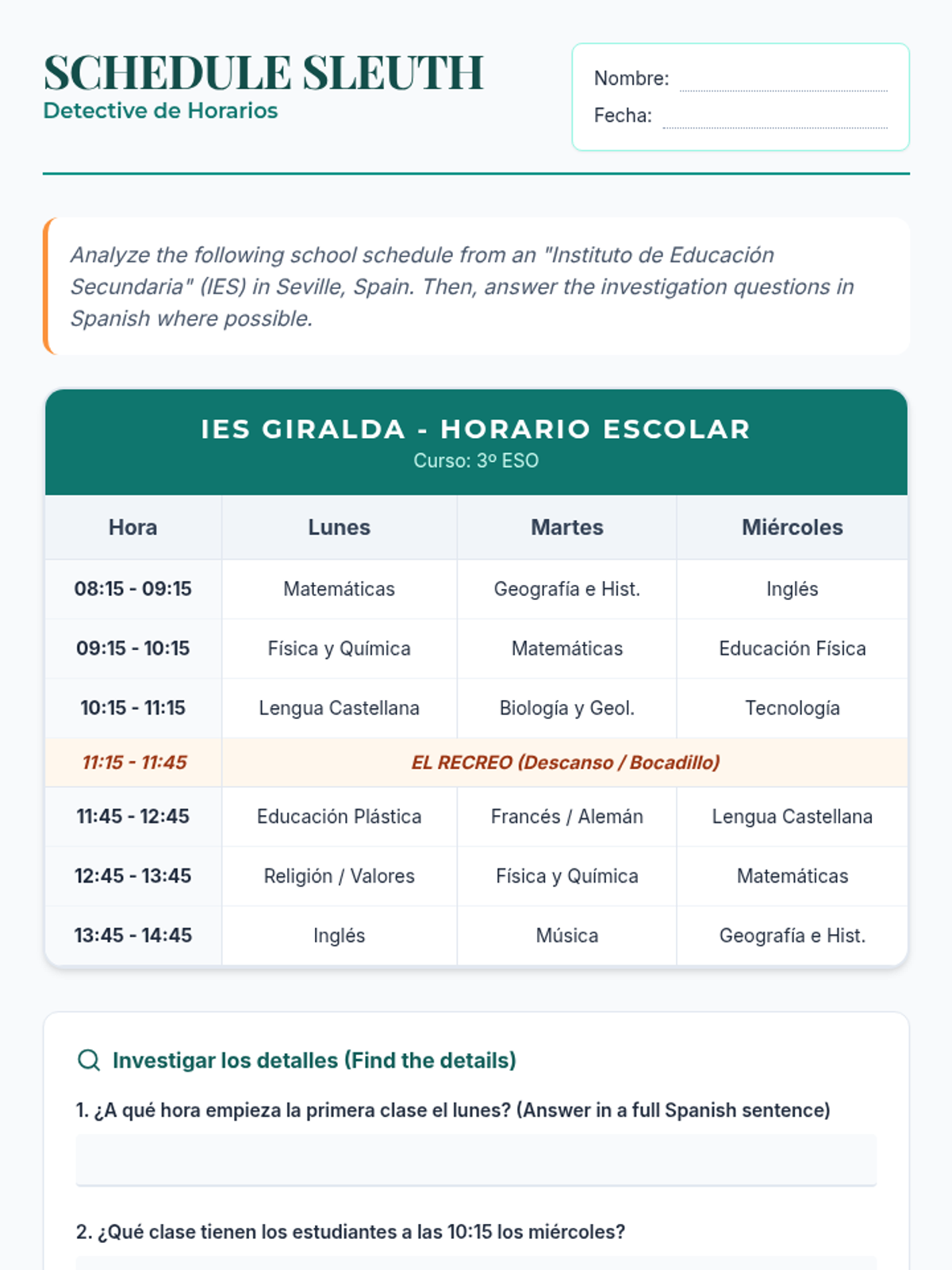
This sequence focuses on functional literacy for beginner Spanish students, teaching them to navigate real-world informational texts like transit maps, menus, and school schedules. Students move from simple scanning for data to synthesizing information across multiple sources in a travel simulation.
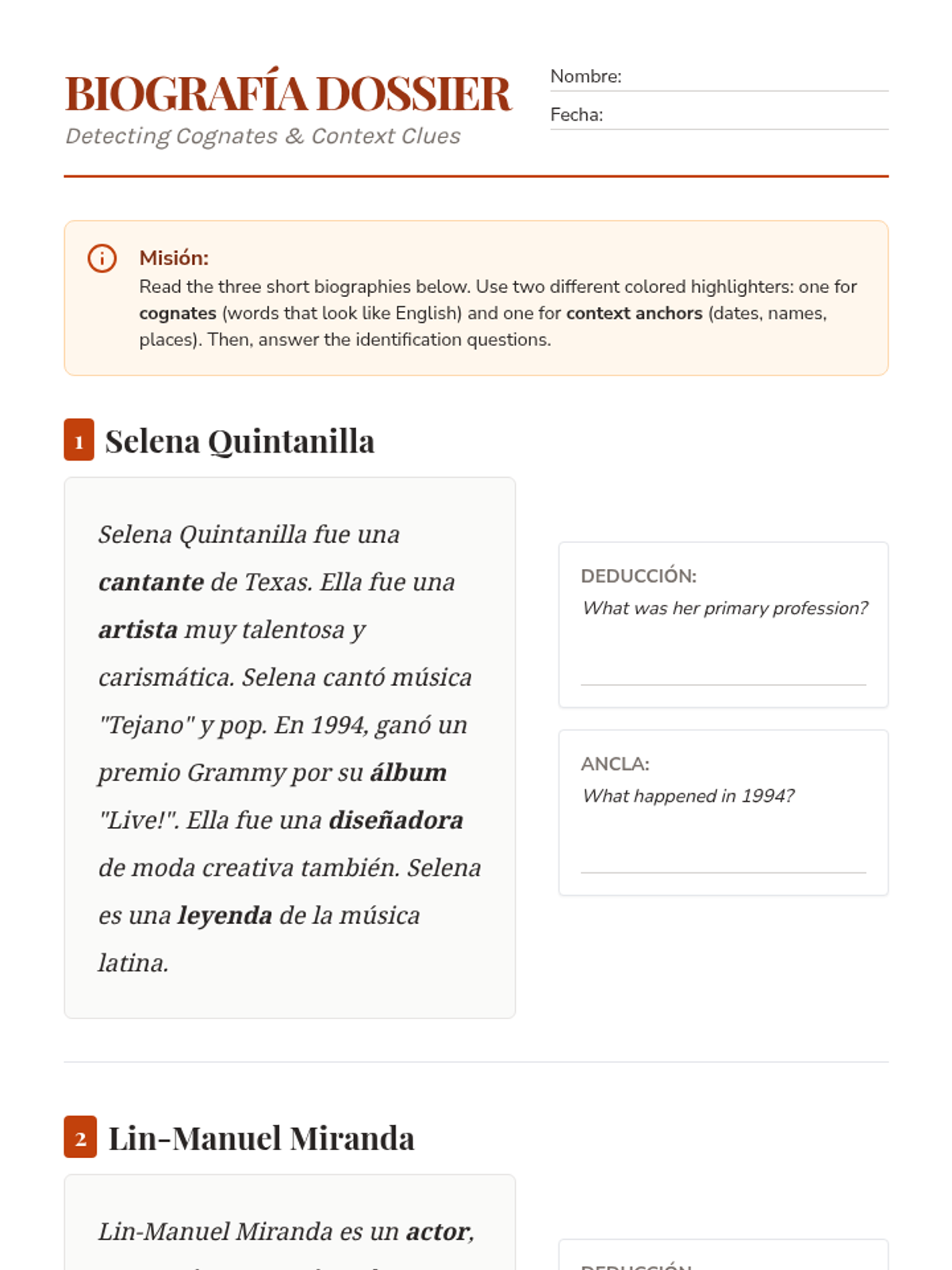
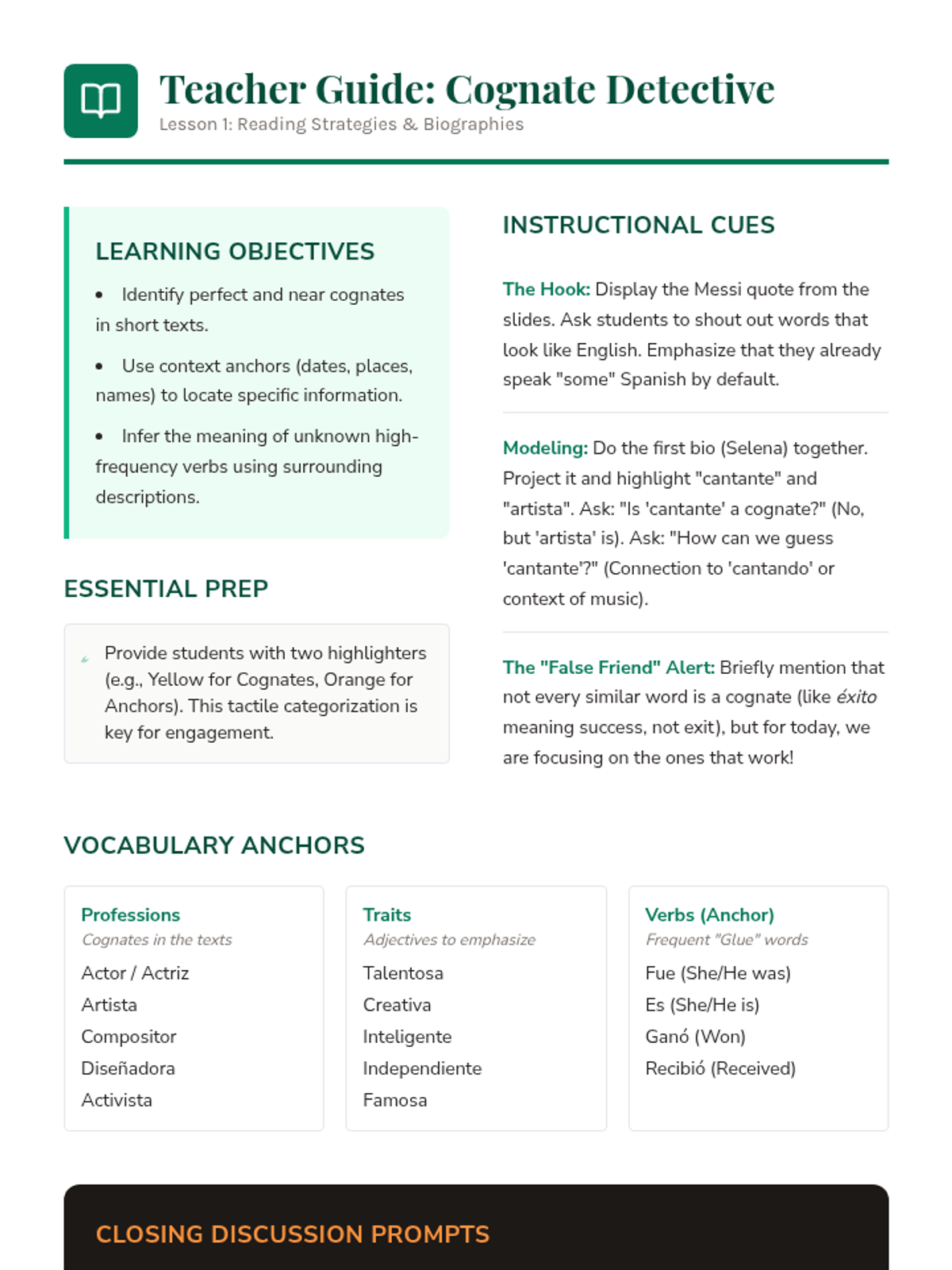
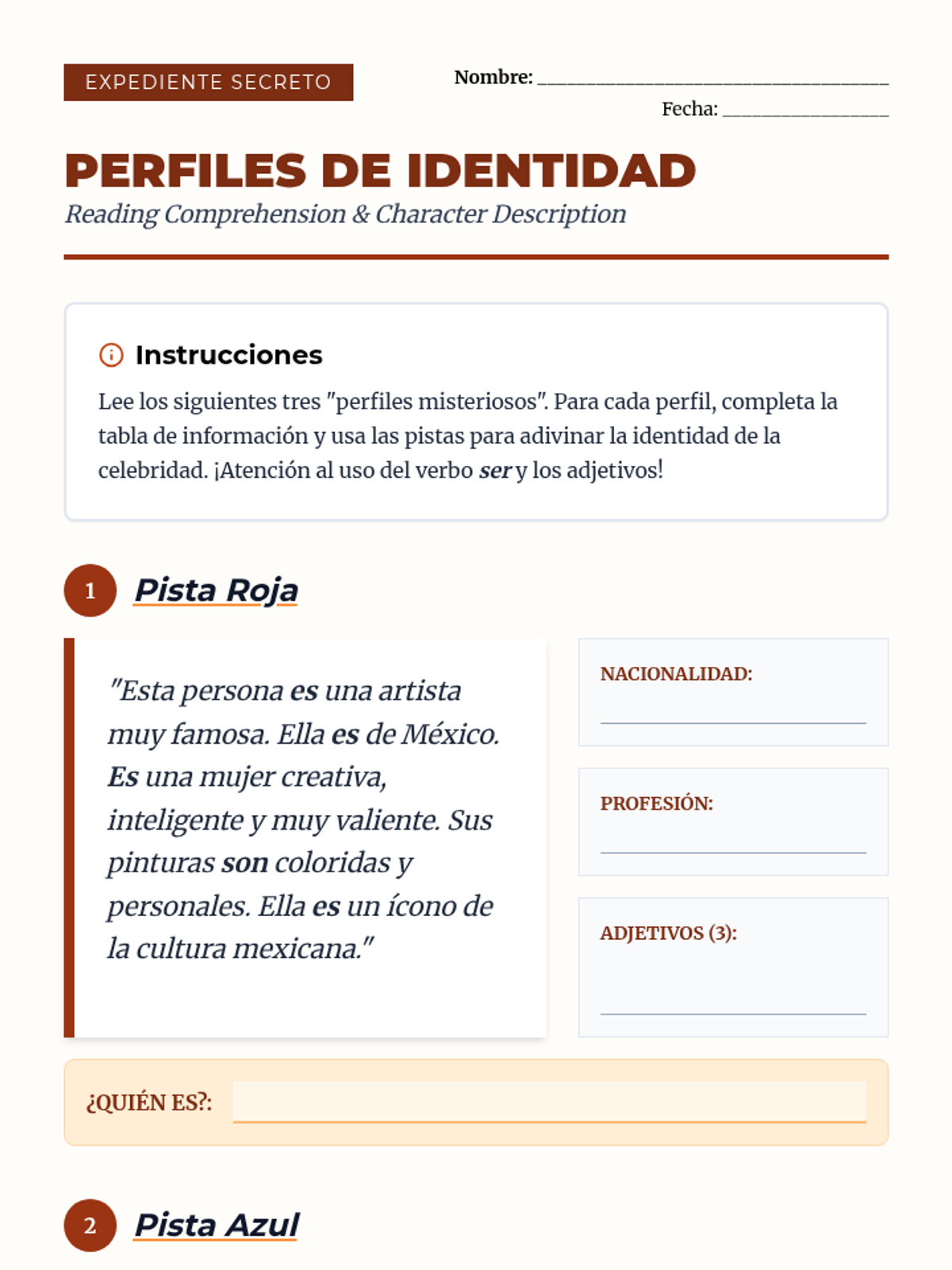
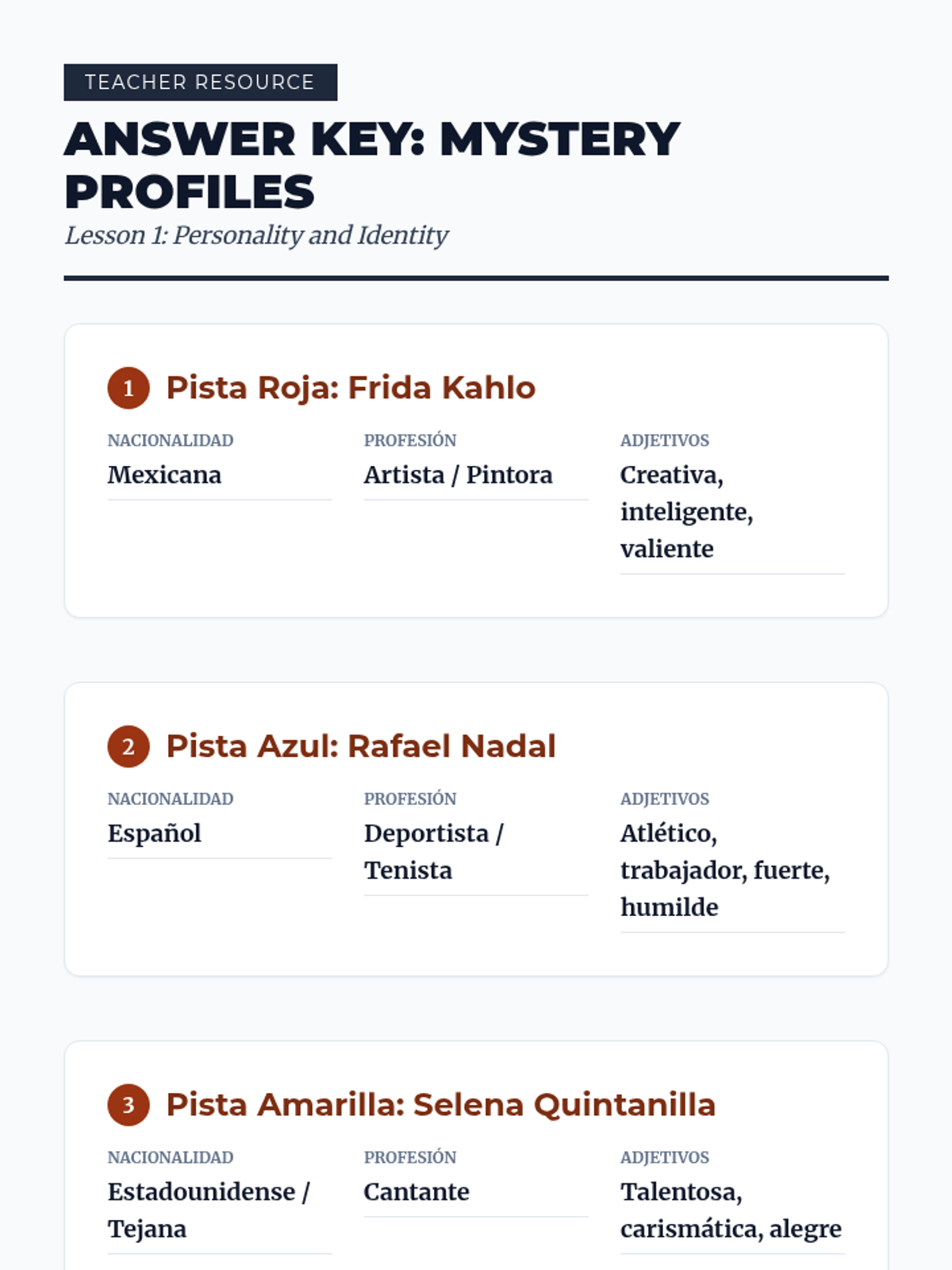
This 10th Grade Spanish sequence focuses on building reading comprehension through personal narratives, celebrity biographies, and daily routine descriptions. Students learn to identify cognates, decode personality traits, sequence events, and compare family structures using high-frequency present tense verbs.
A beginner Spanish reading sequence that uses biographical narratives of historical and contemporary figures to teach grammar (ser/estar, reflexives, possessives) and cultural competence. Students progress from describing identity to analyzing life events and comparing cultural impacts.
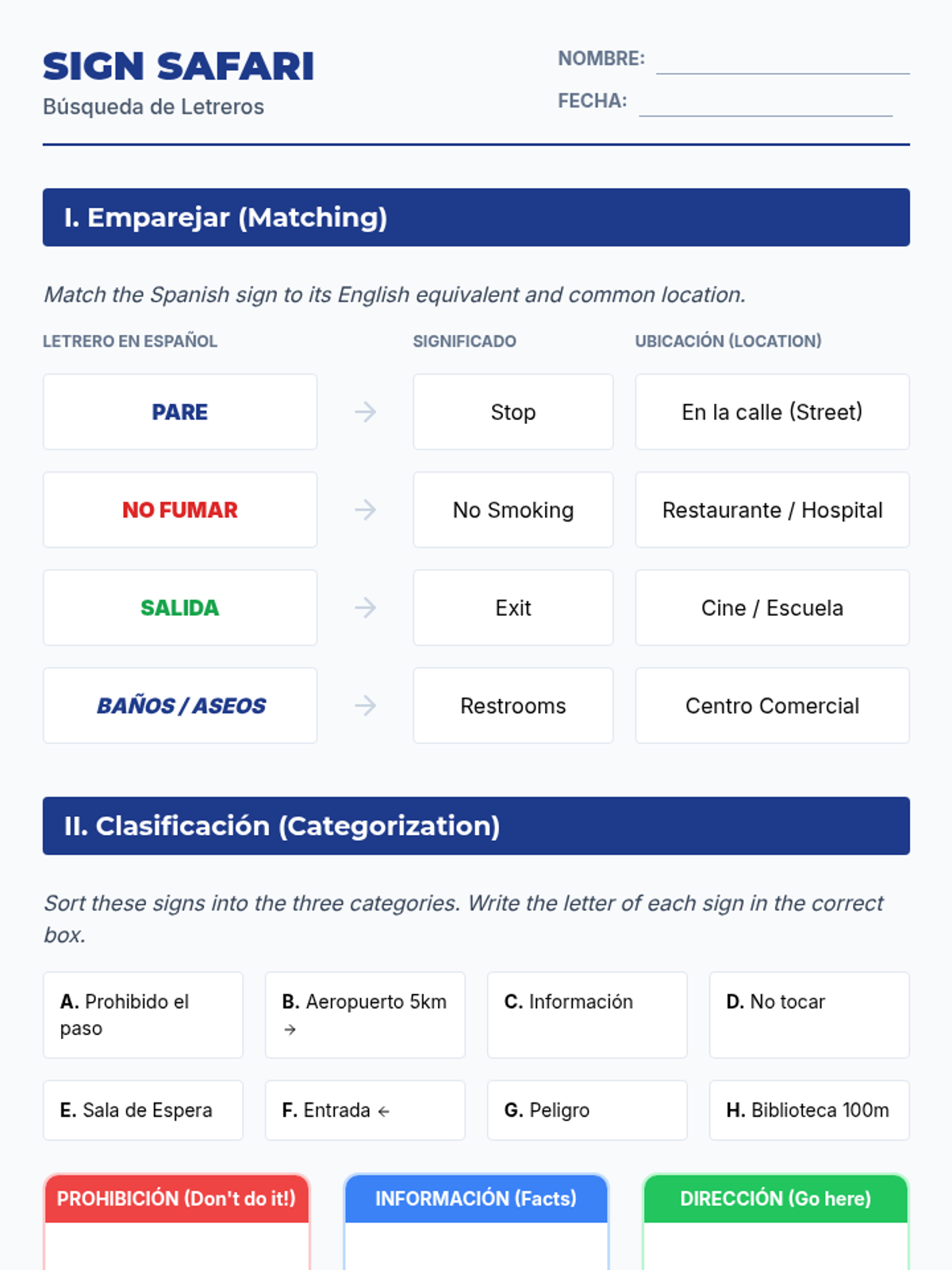
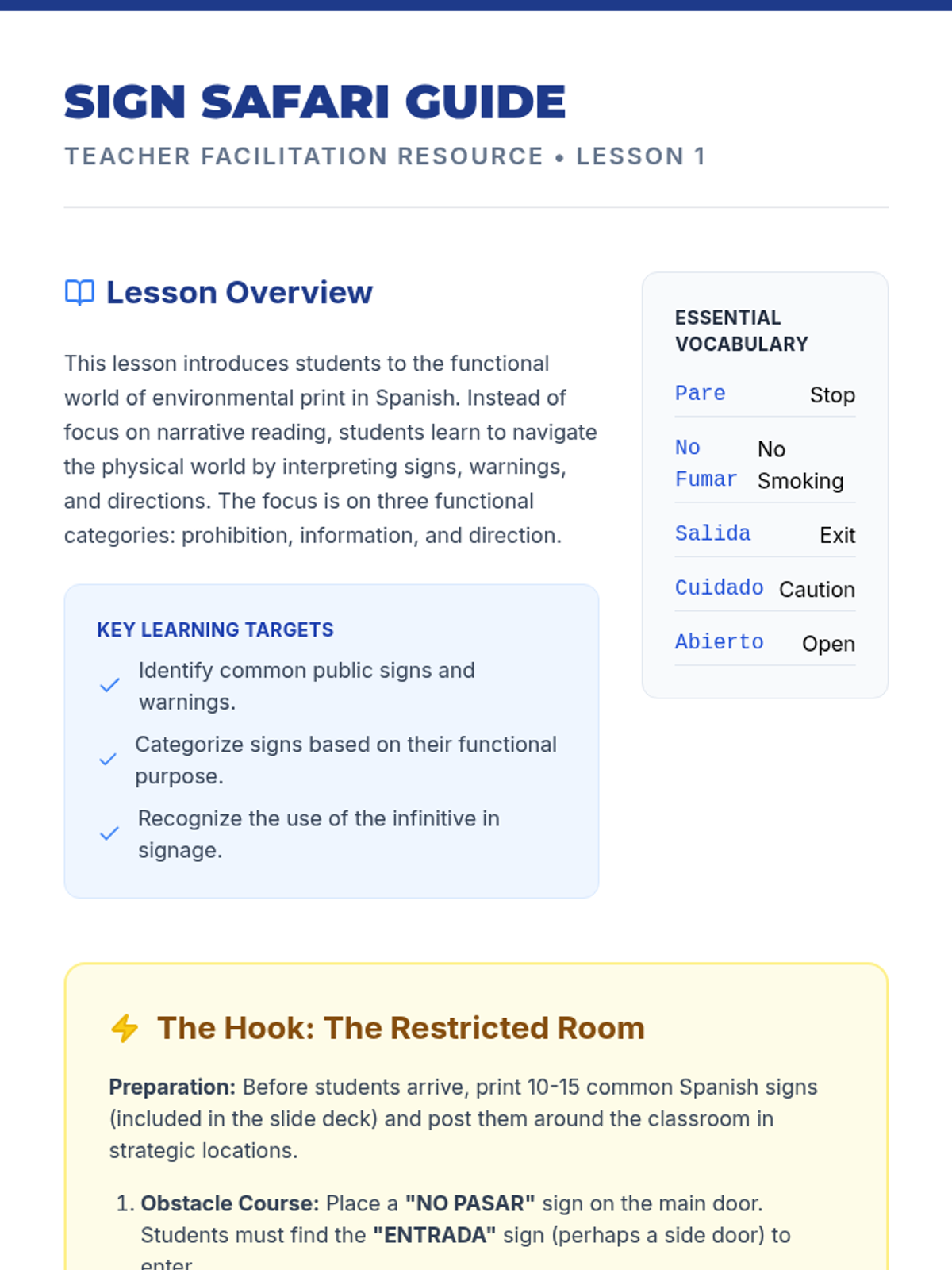
This simulation-based sequence helps 9th-grade Spanish students develop functional literacy by navigating public signs, transportation schedules, menus, and tourist brochures. Students apply their reading skills to real-world scenarios, culminating in a 'Traveler's Challenge' simulation.
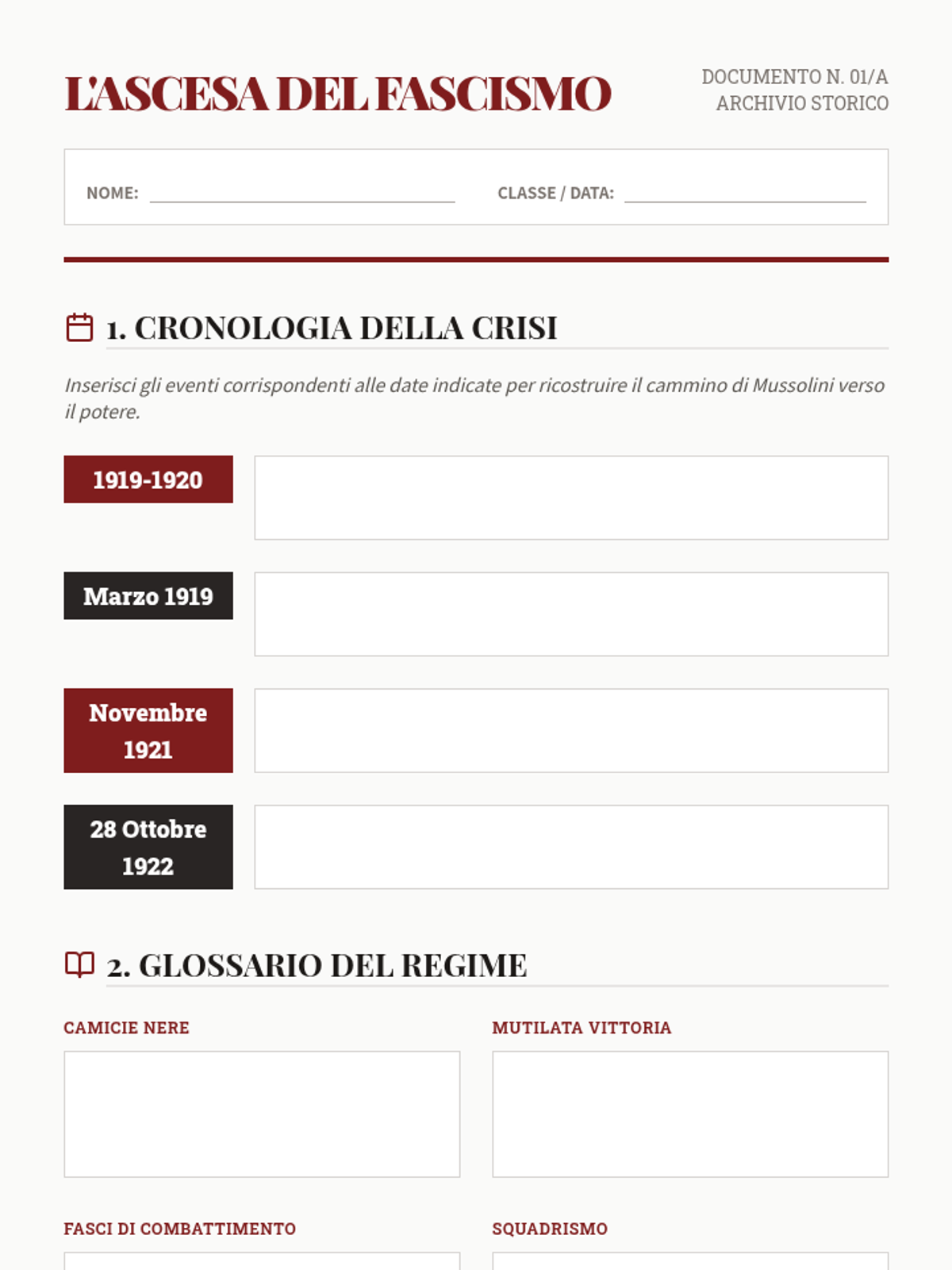
Une séquence pédagogique de 5 séances explorant l'ascension, le régime et la chute du fascisme en Italie, adaptée pour une classe de 1ère LV2. La séquence analyse les mécanismes de pouvoir, la propagande, les lois raciales et la résistance.
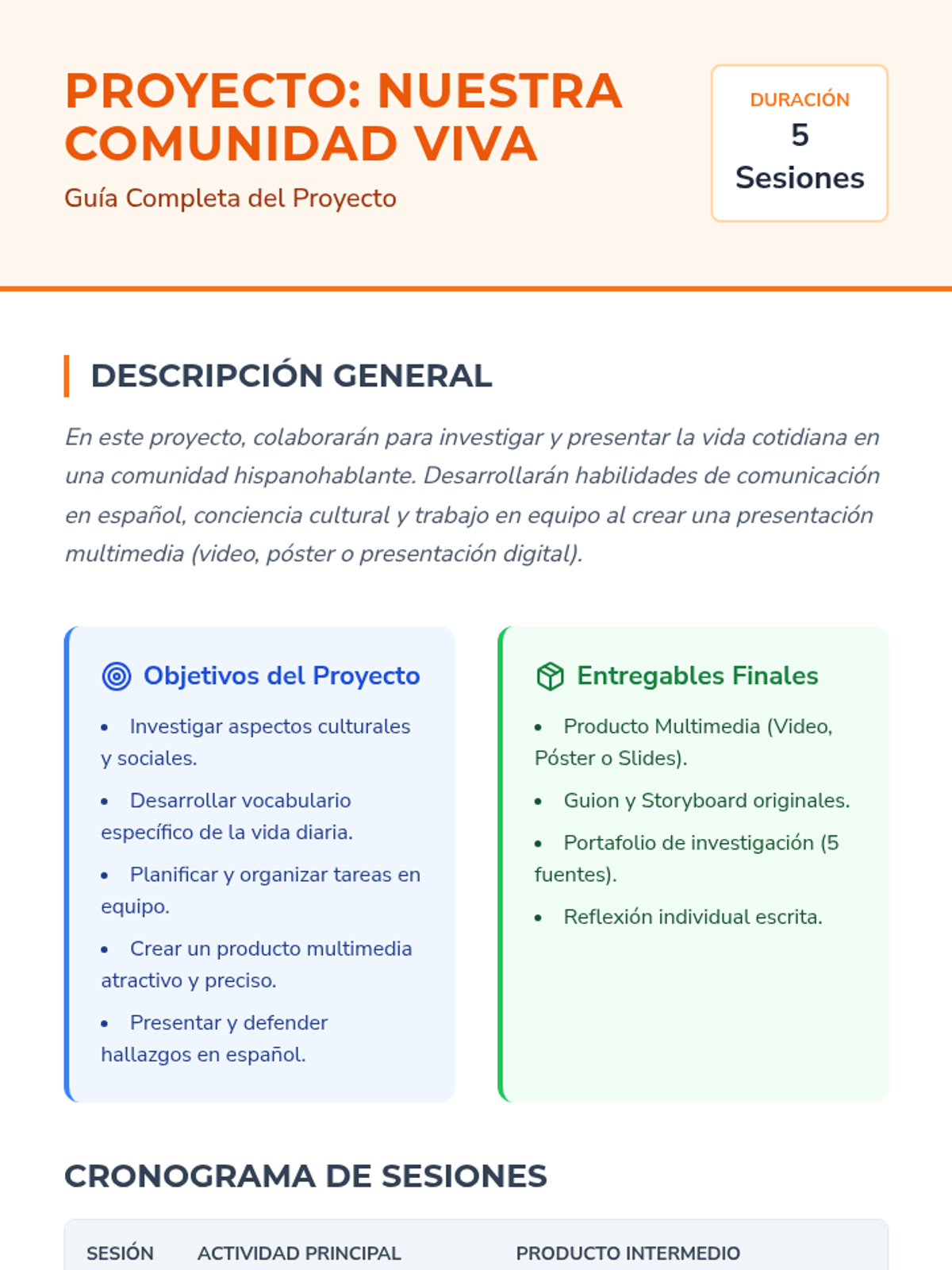
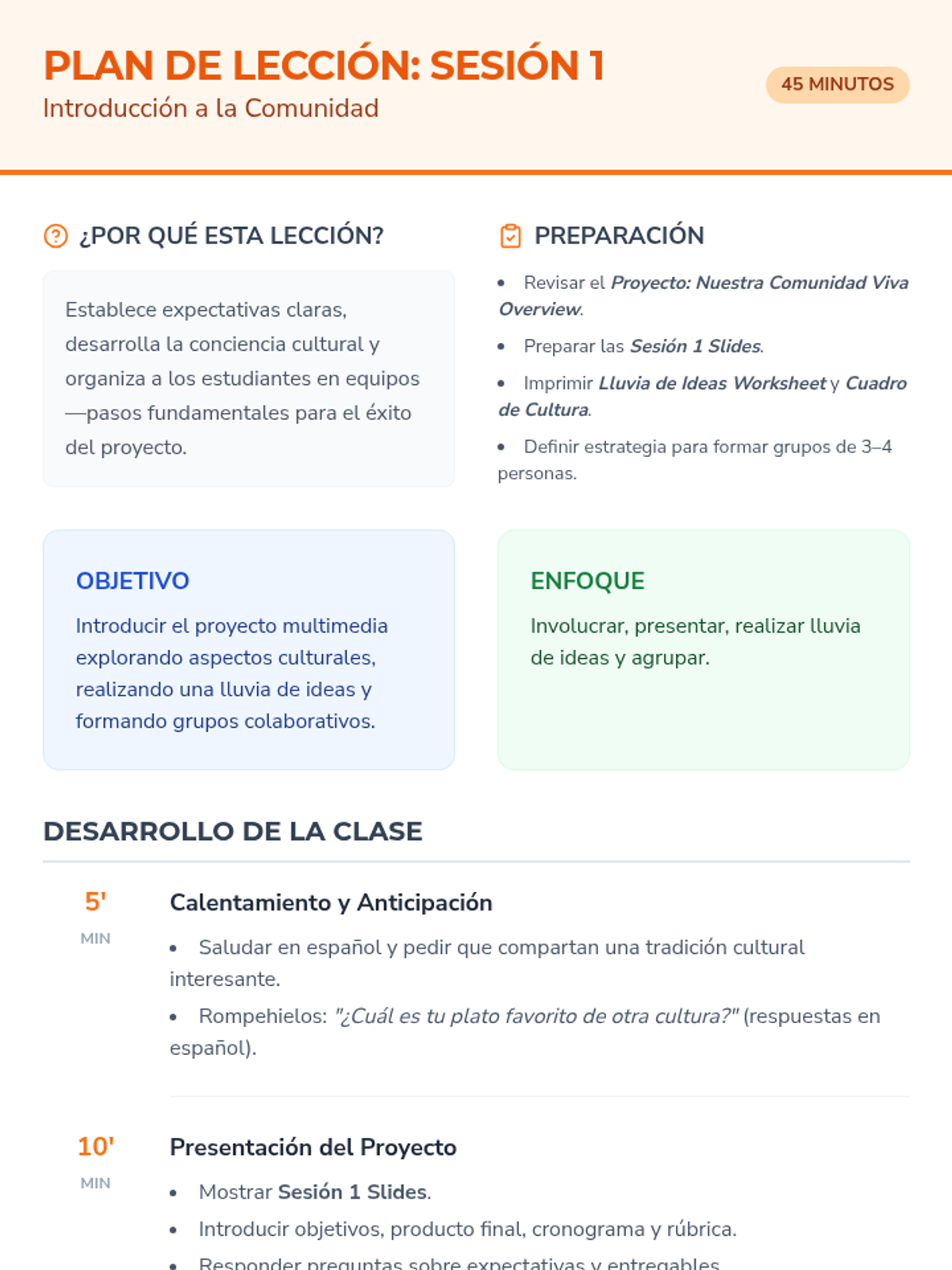
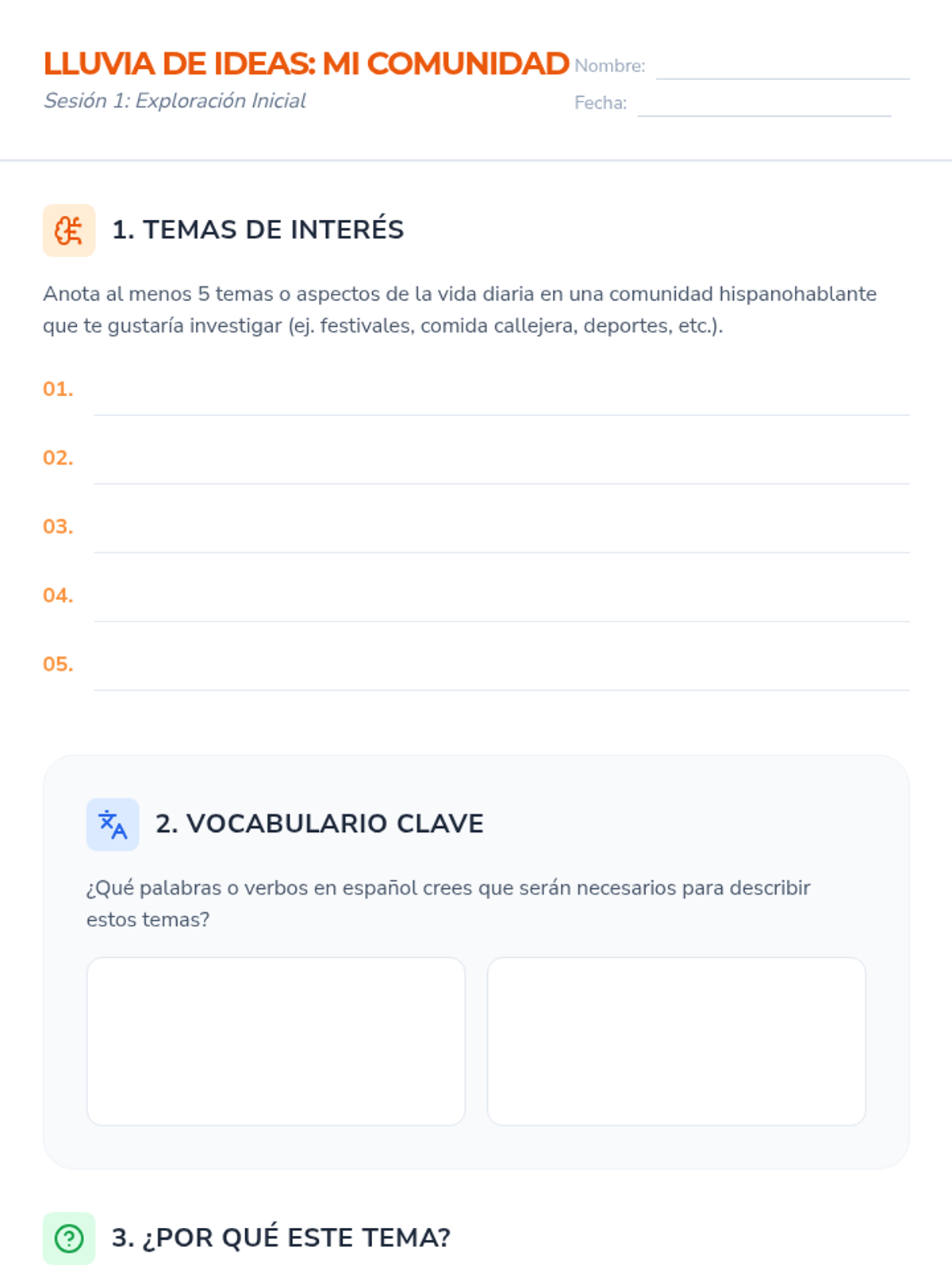
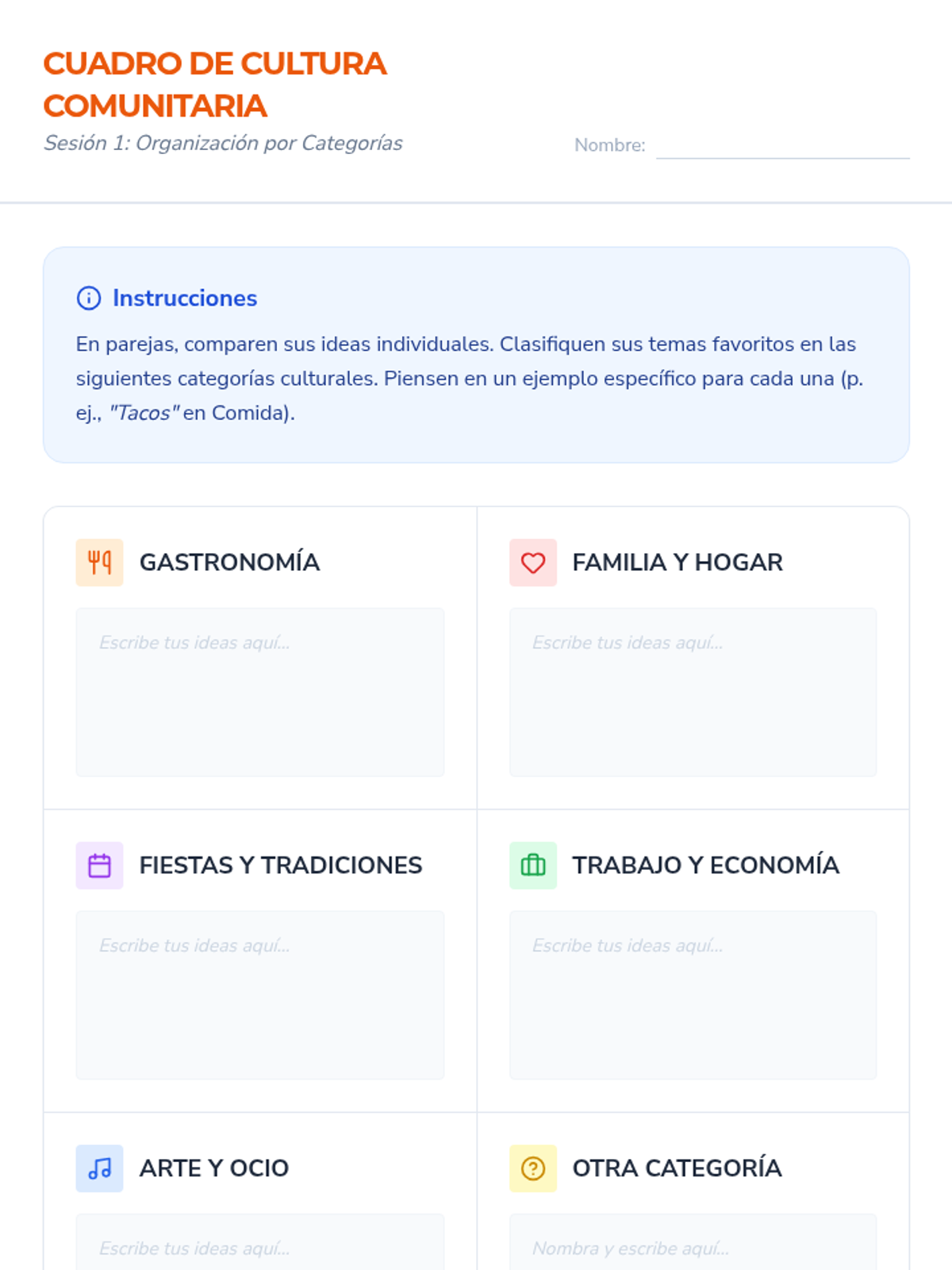
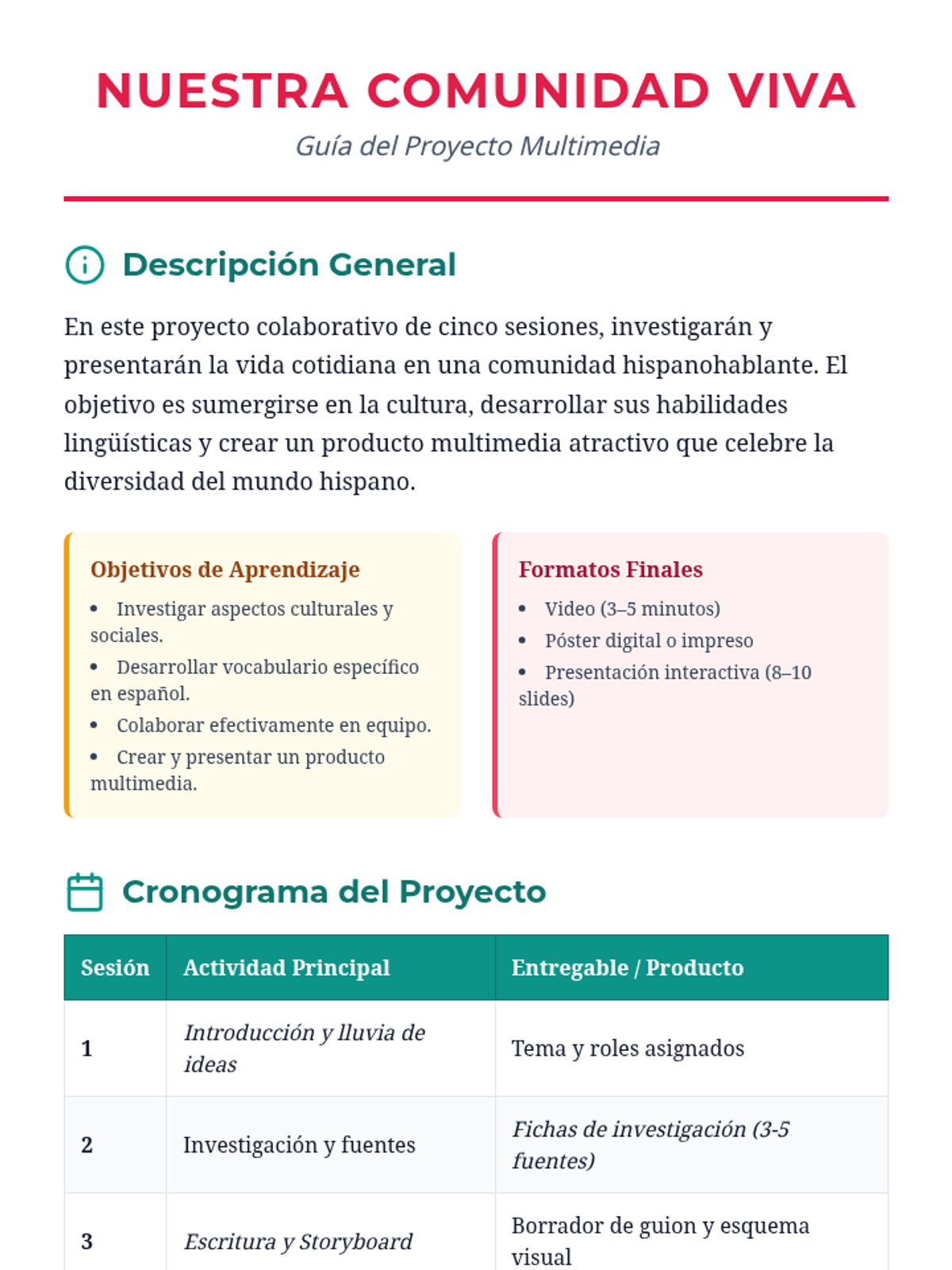
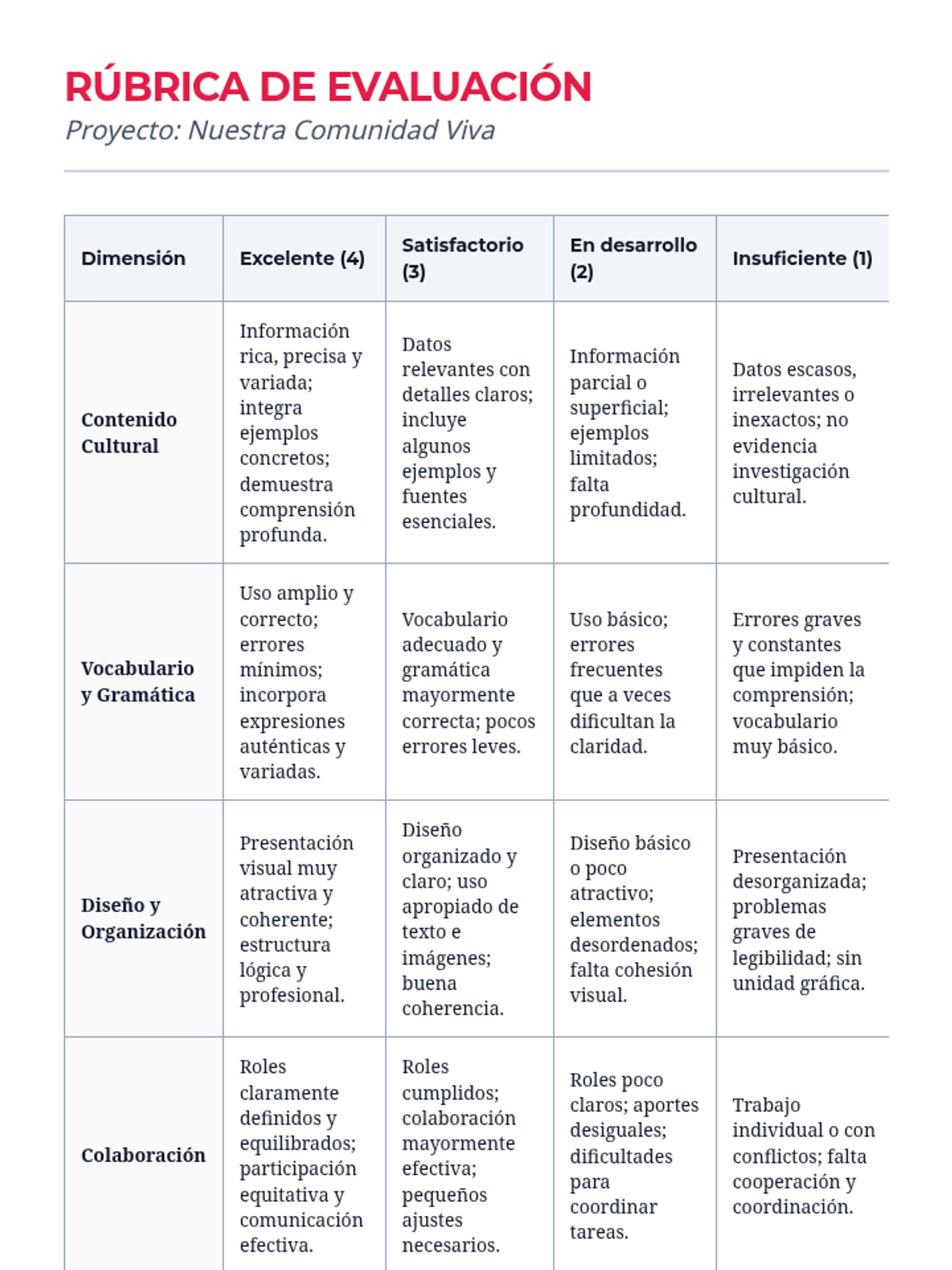
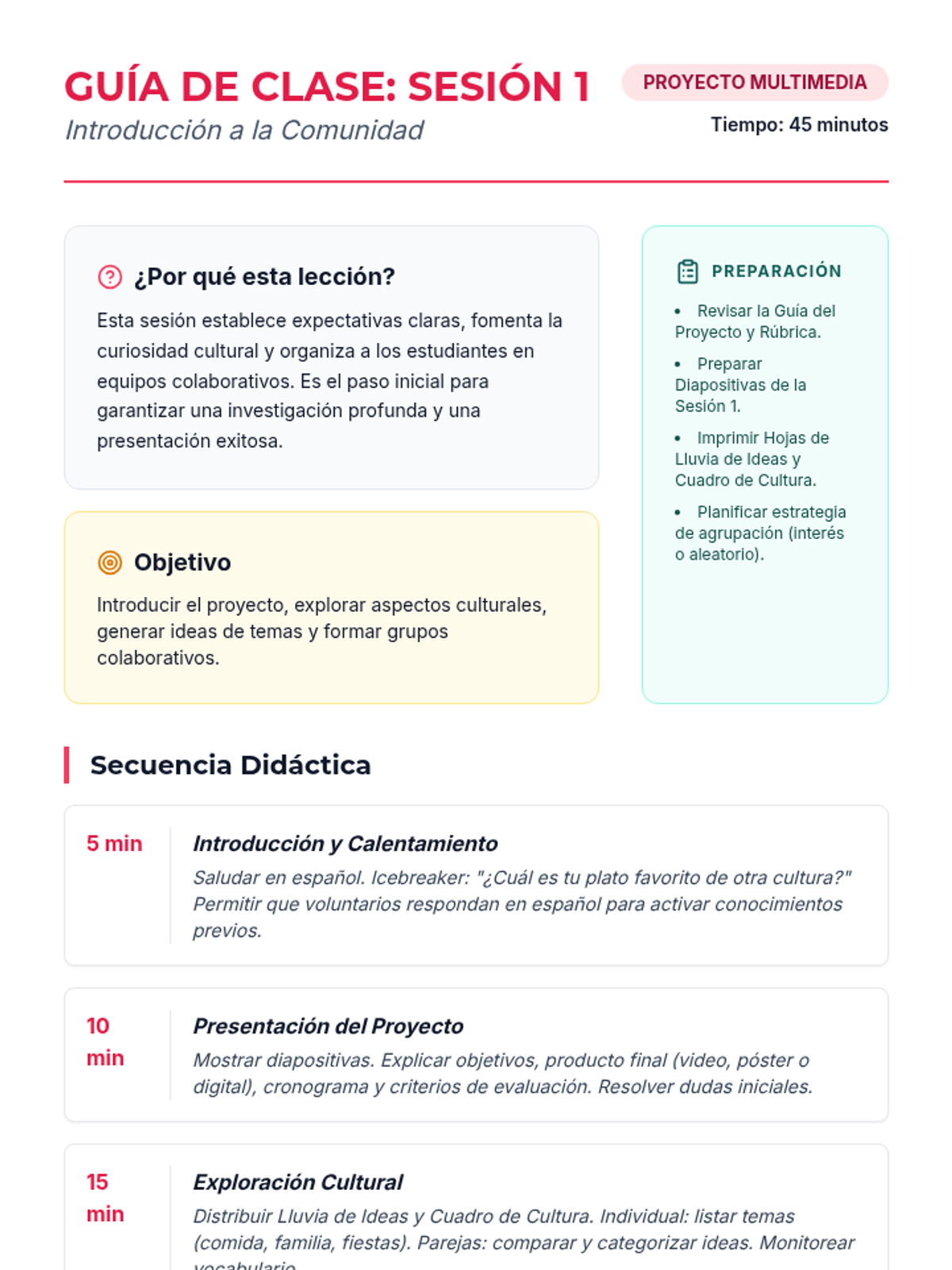
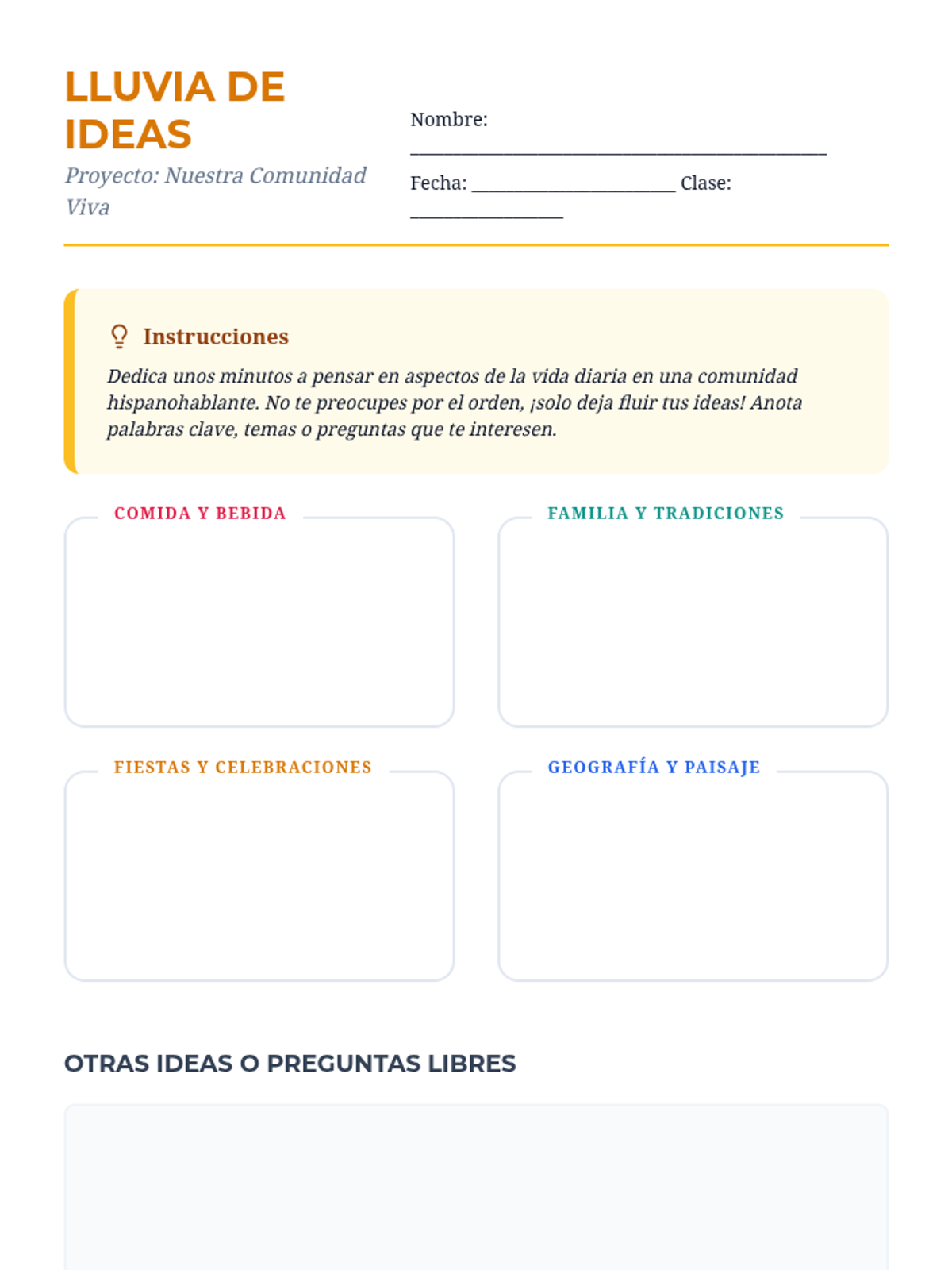
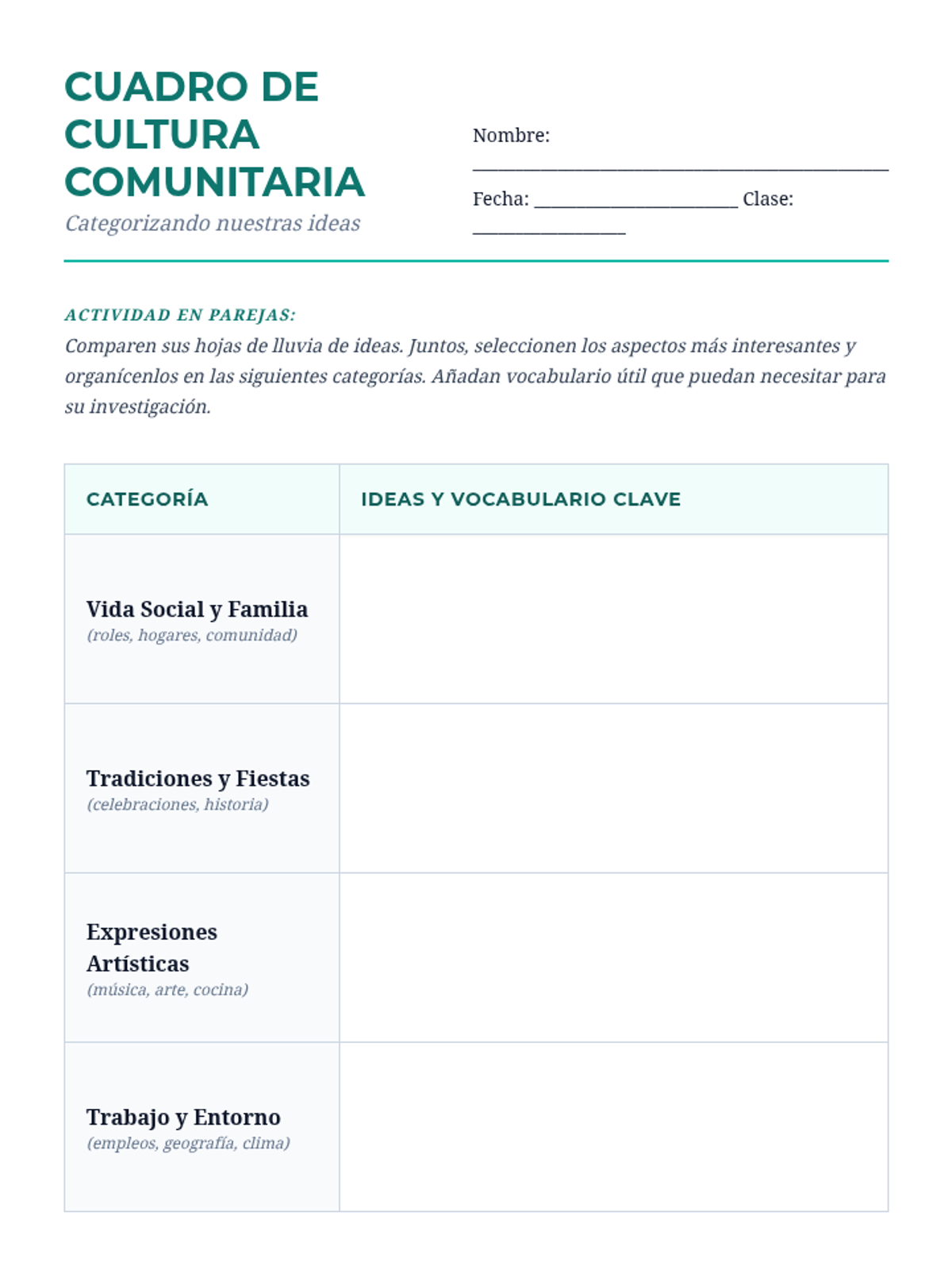
A 5-session high school Spanish project where students research, design, and present a multimedia project about daily life in a Spanish-speaking community, fostering cultural awareness and communication skills.
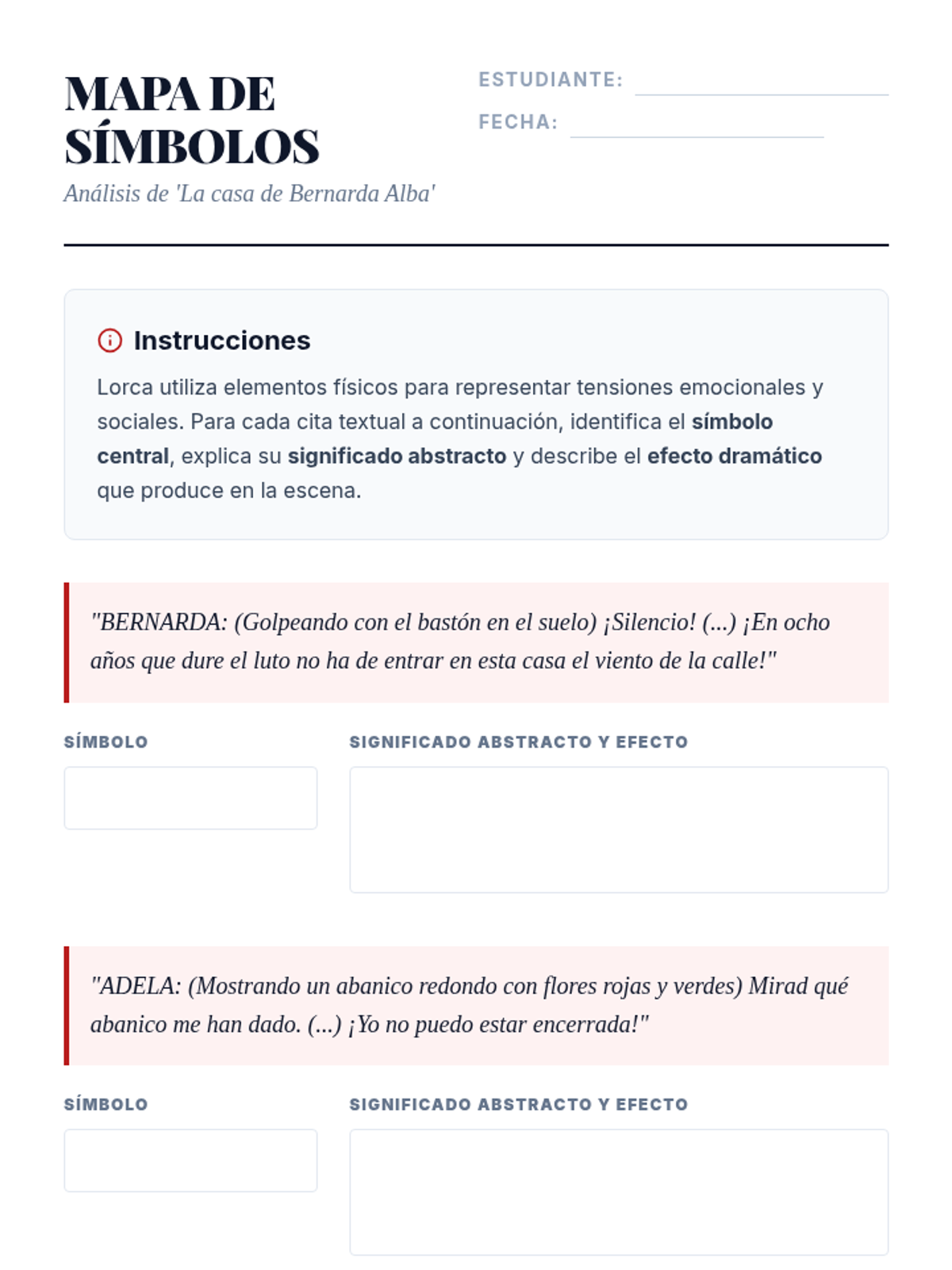
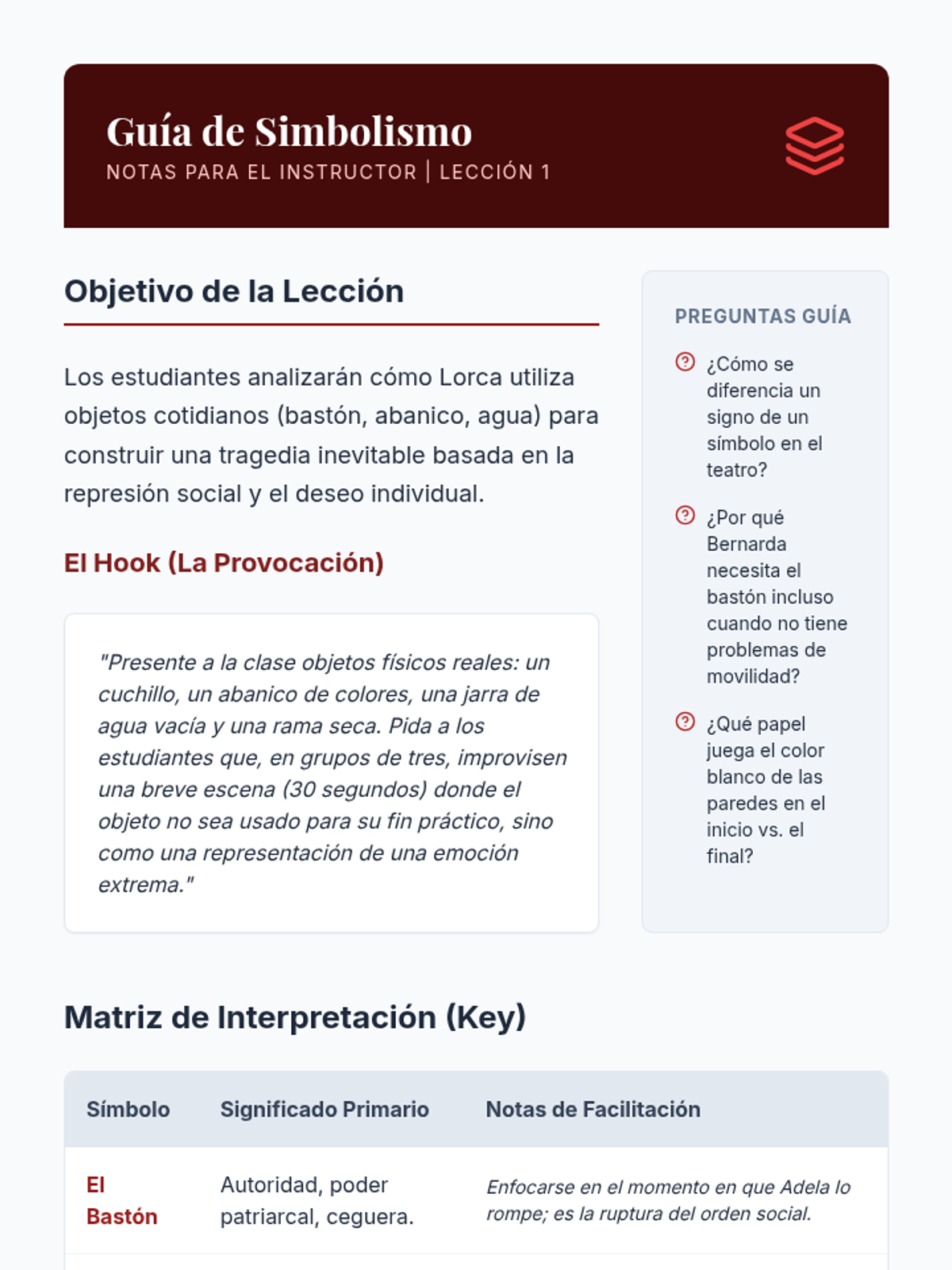
An advanced Spanish reading sequence exploring dramatic texts from Federico García Lorca to modern playwrights, focusing on symbolism, subtext, and the sociopolitical critique of Spanish society. Students analyze the transition from classical tragedy to contemporary drama through the lens of performance and directorial interpretation.
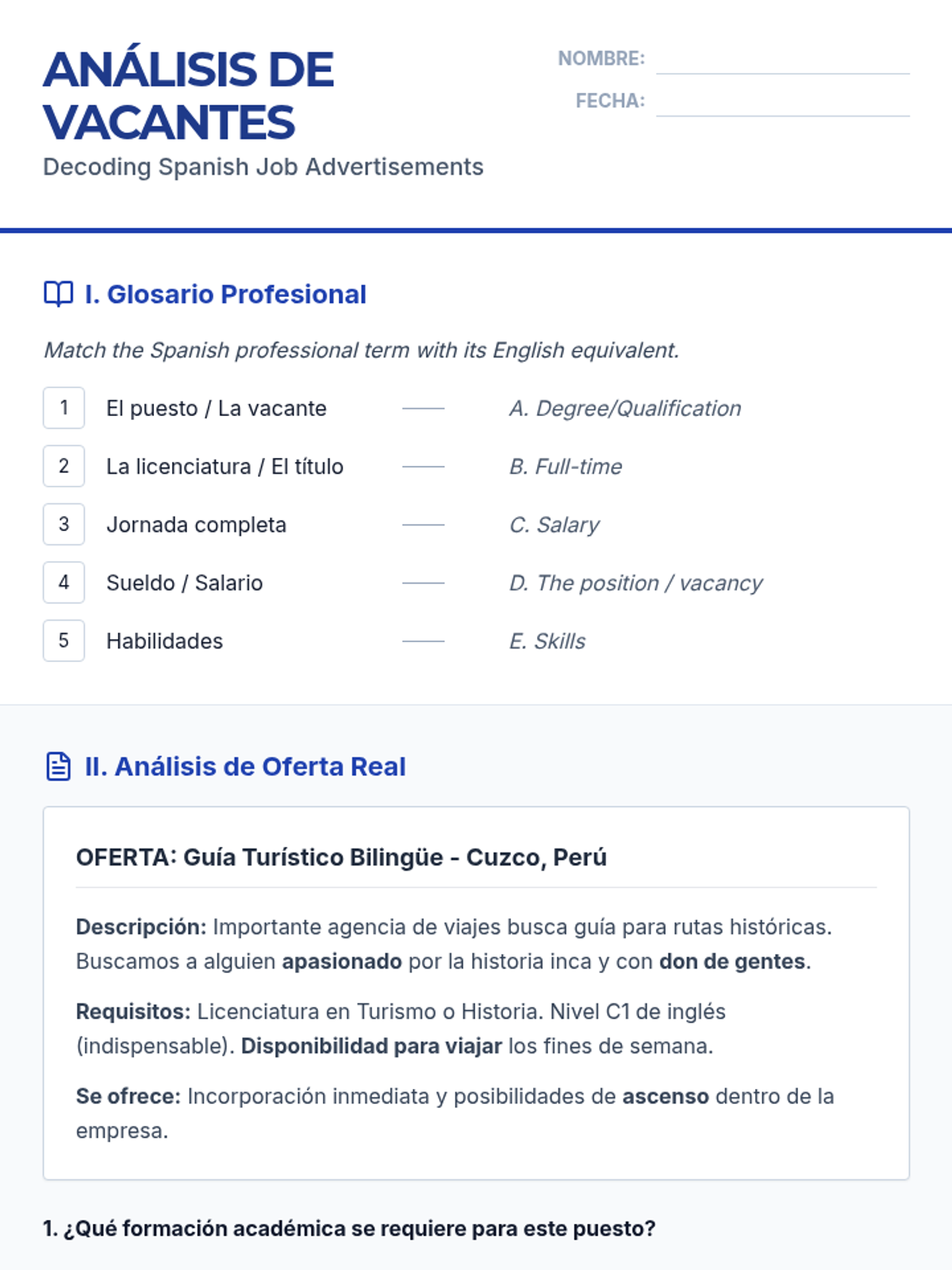
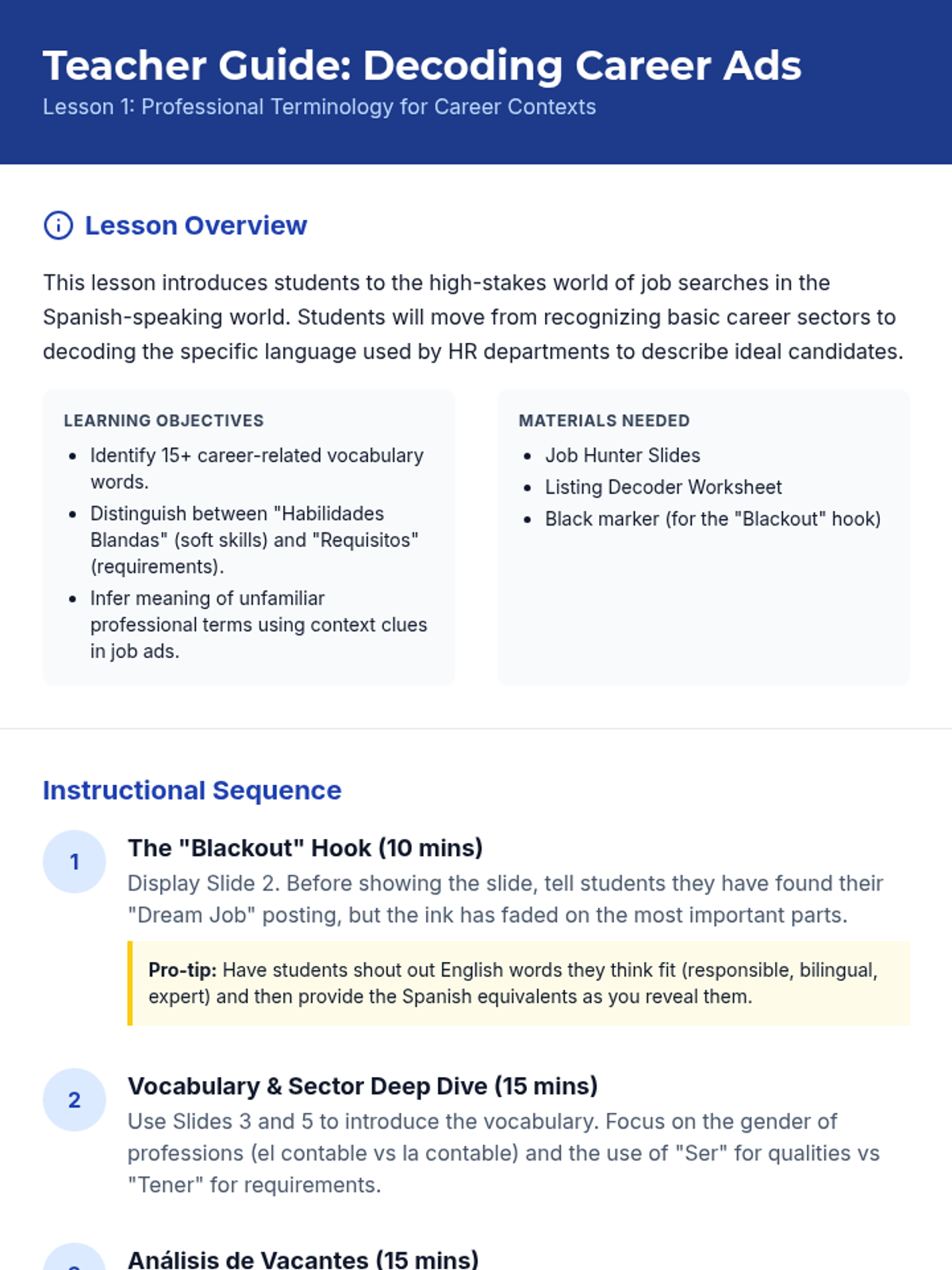
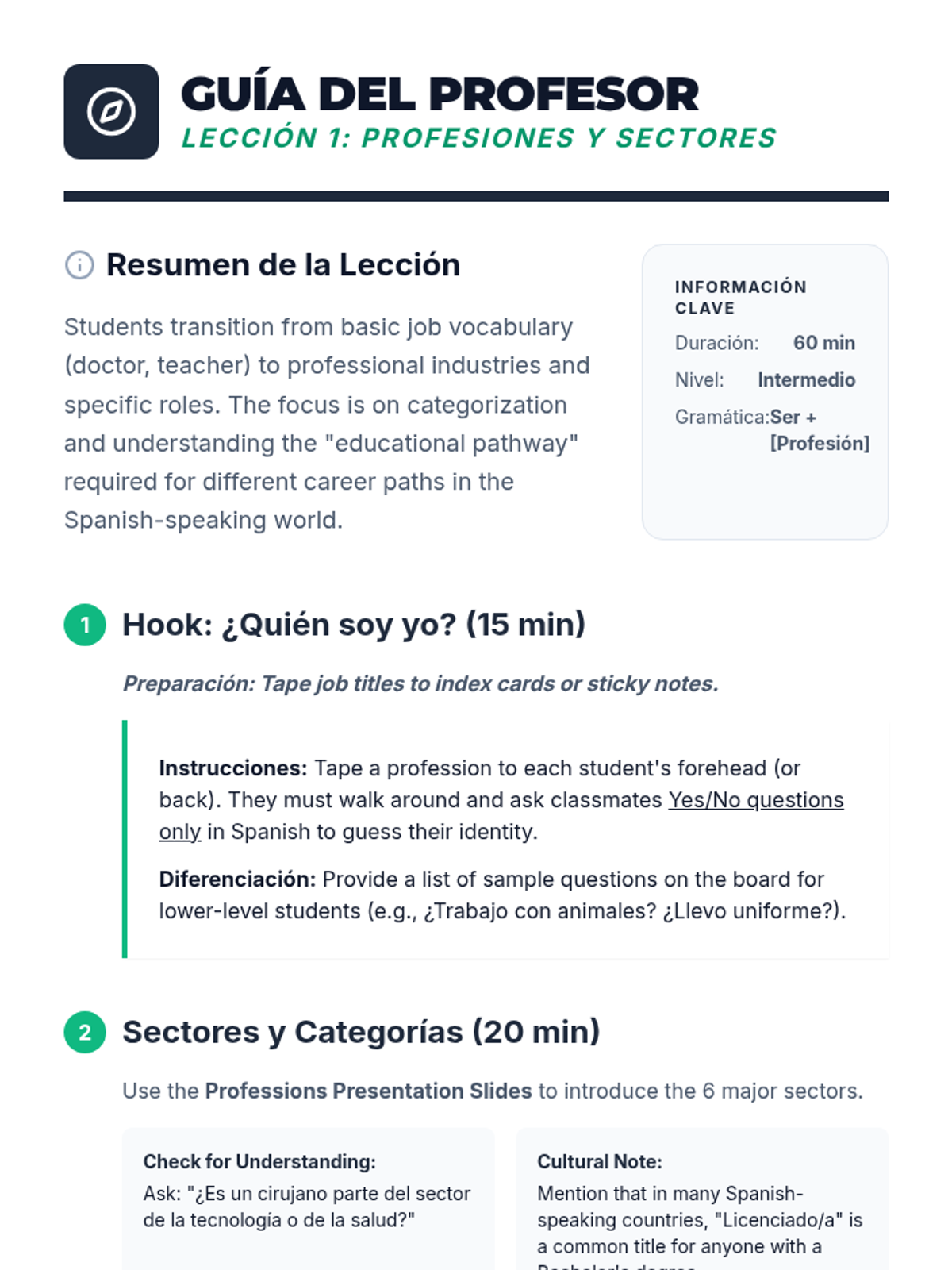
A comprehensive unit for 10th-grade Intermediate Spanish students to master professional terminology, formal registers, and career-related communication skills. Students move from analyzing job listings to participating in full mock interview simulations.
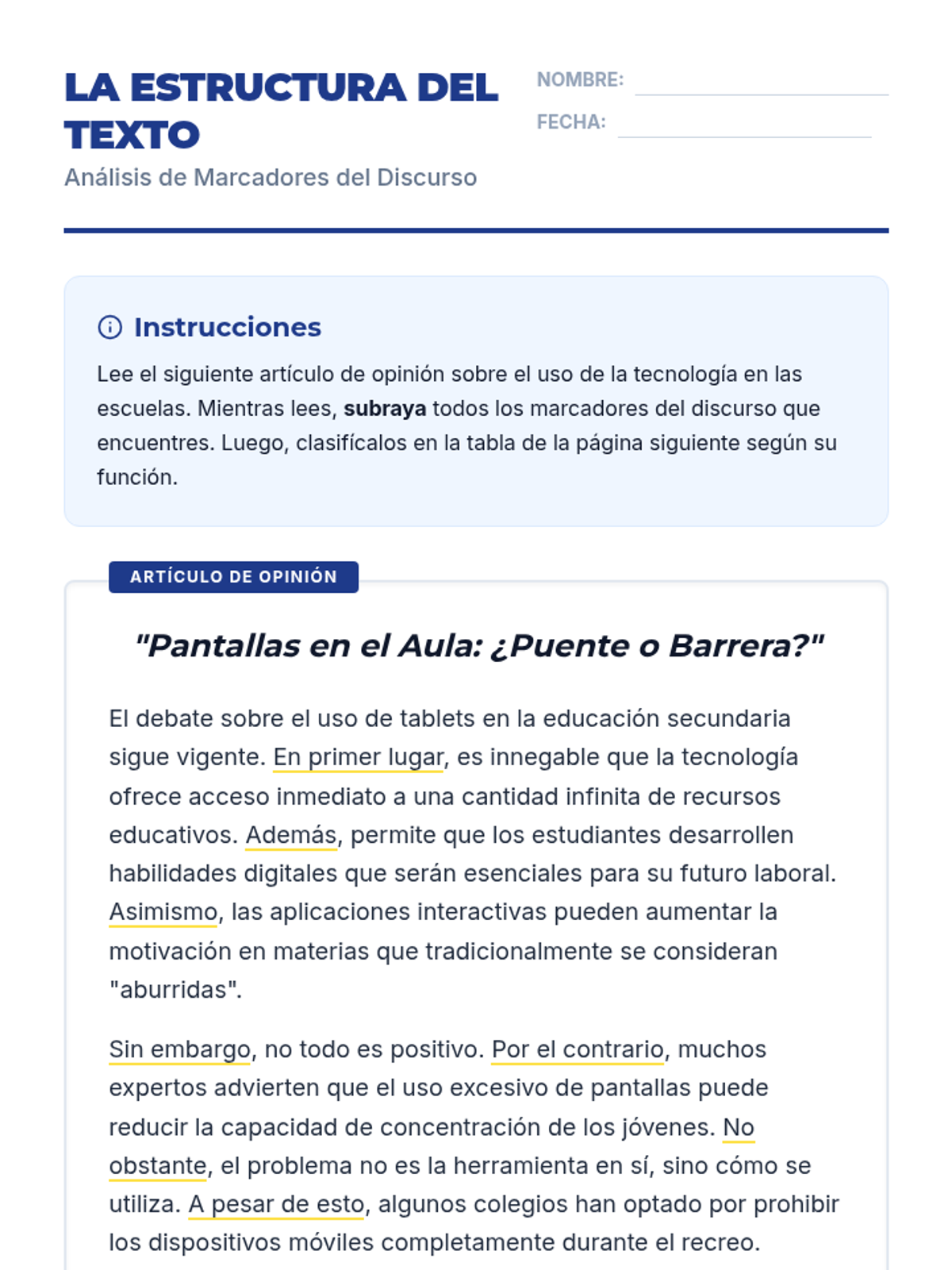
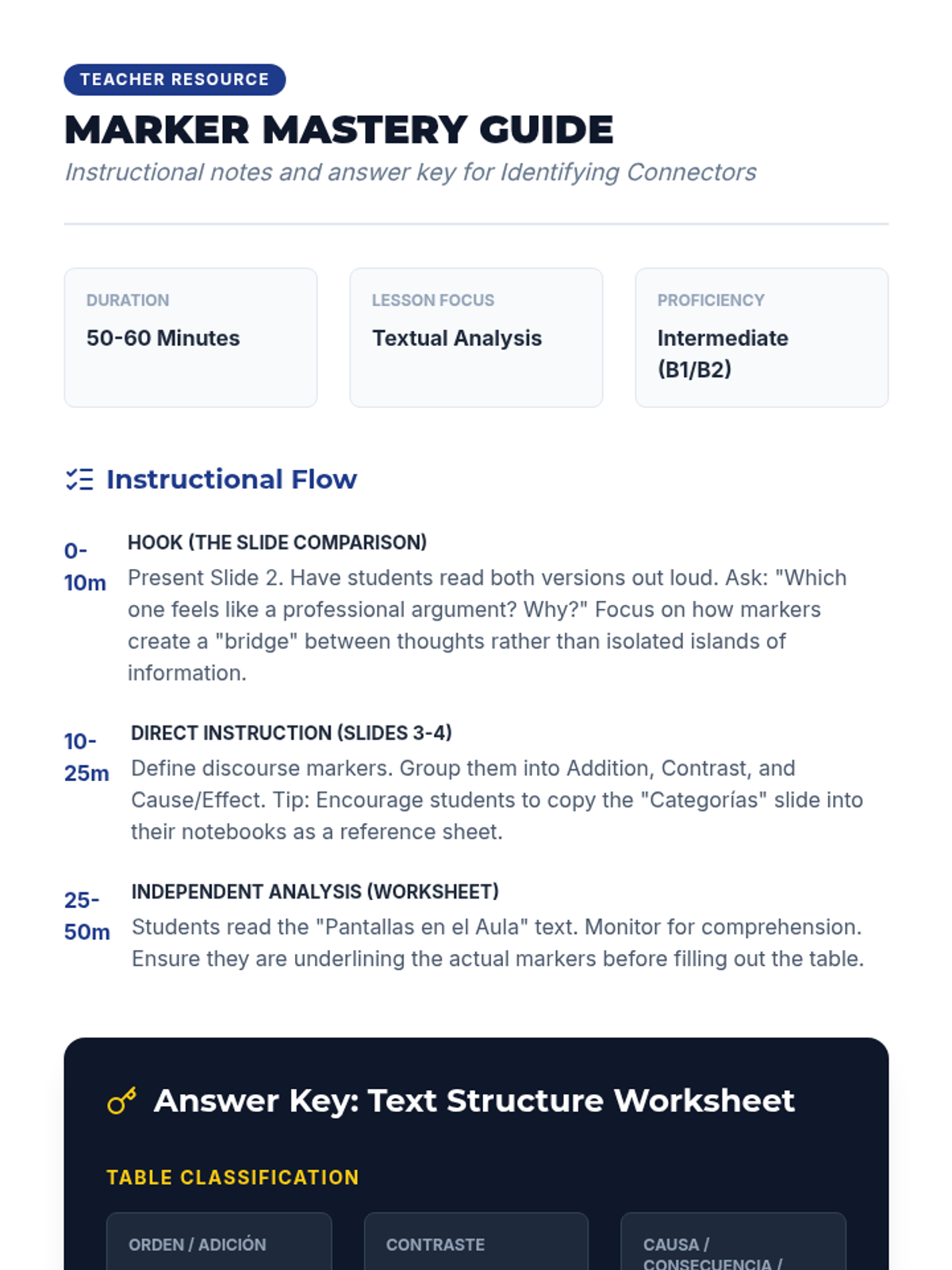
A comprehensive sequence designed for 10th-grade Intermediate Spanish students to master discourse markers and logical connectors. Students progress from identifying connectors in text to using them for contrast, sequencing narratives, and expressing cause and effect, culminating in a formal debate where they apply these skills to build persuasive, cohesive arguments.
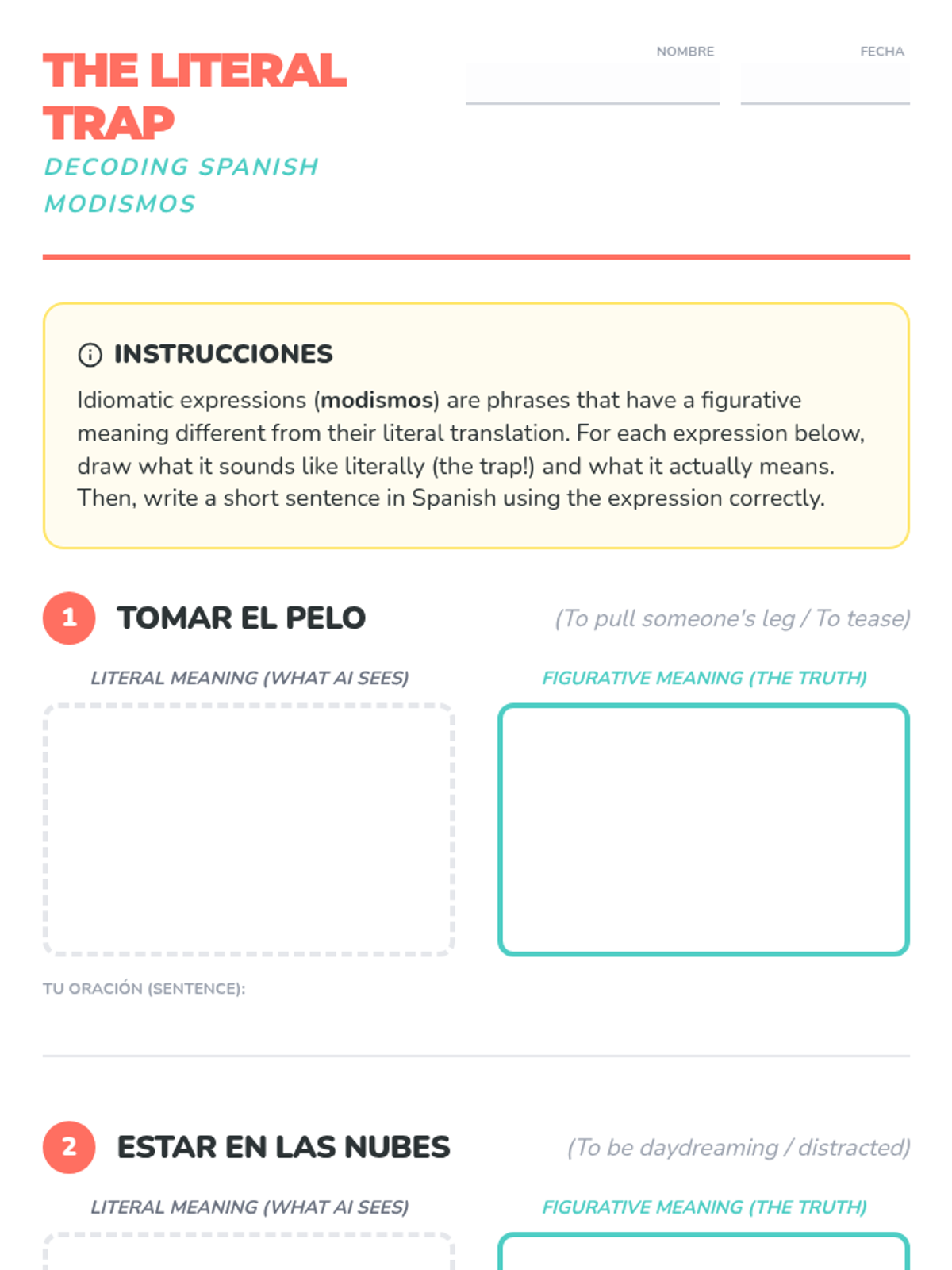
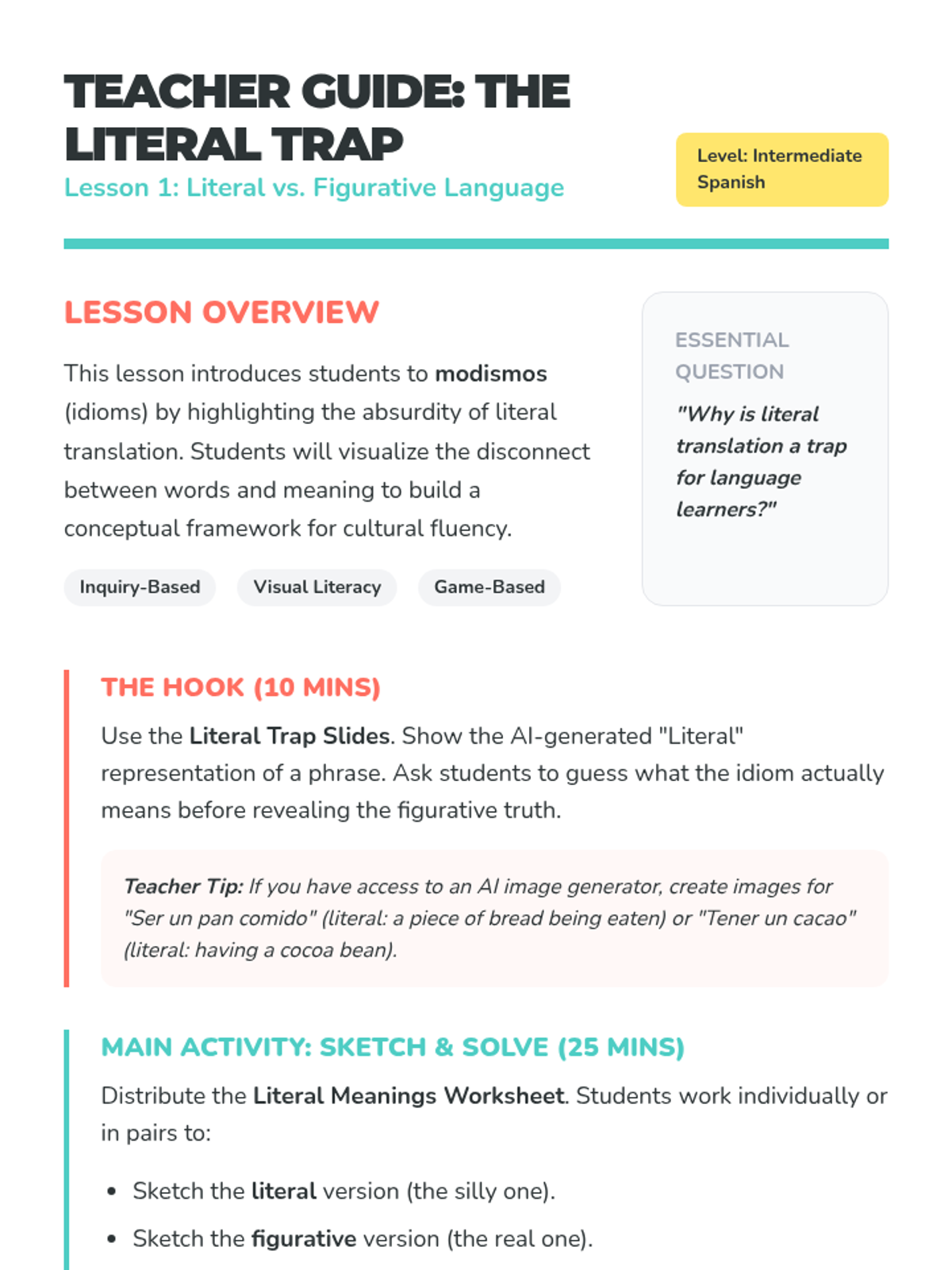
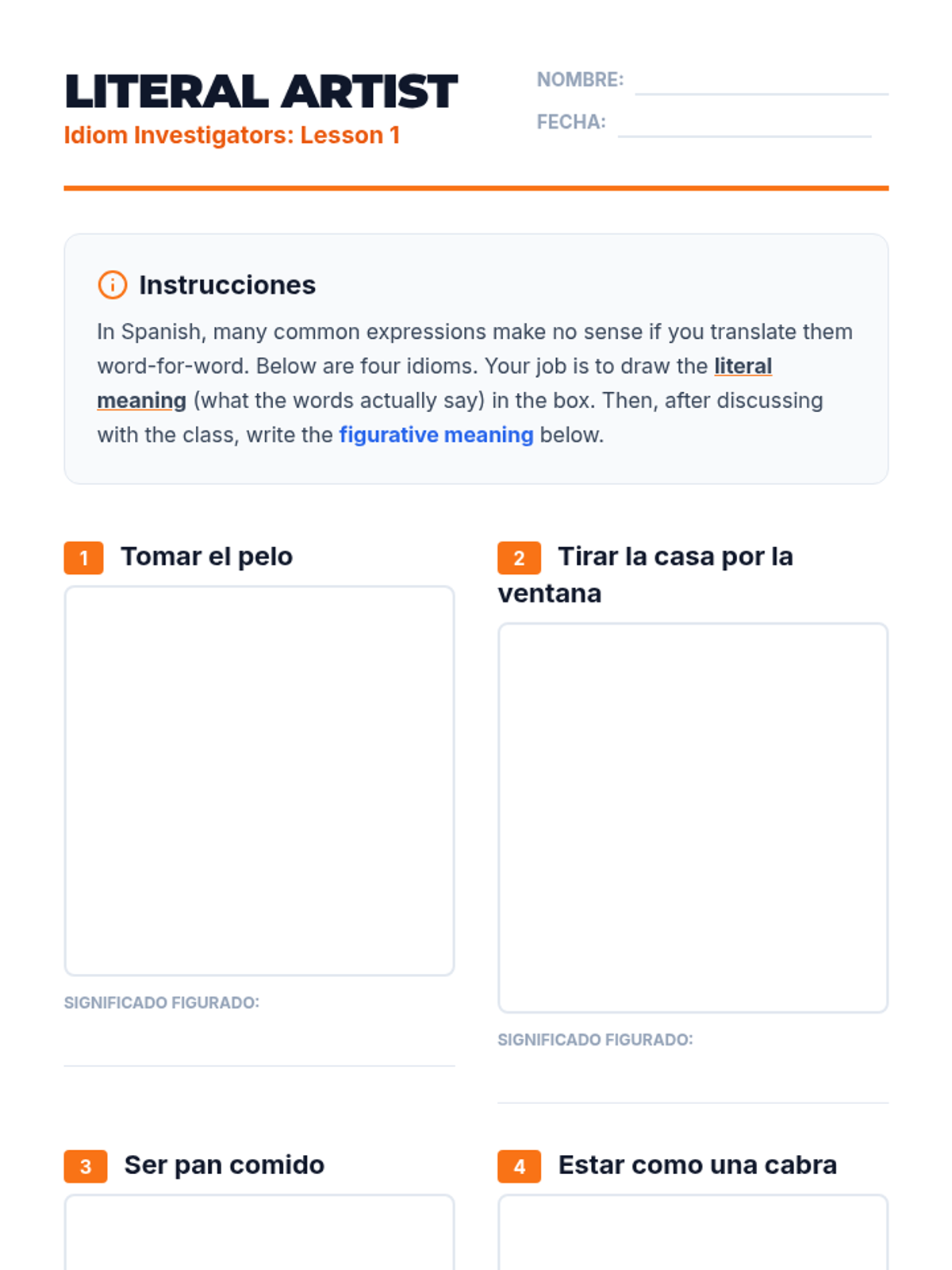
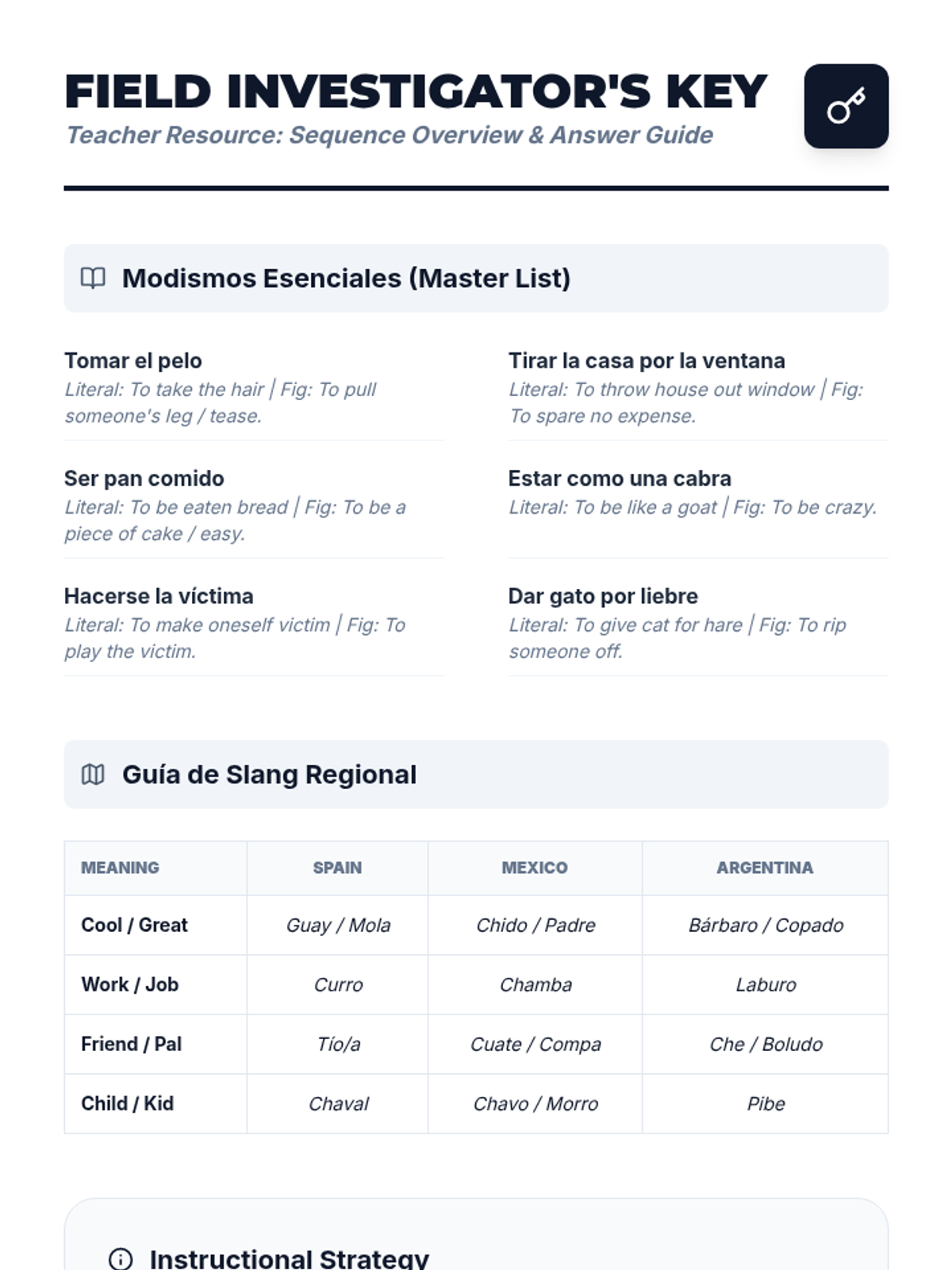
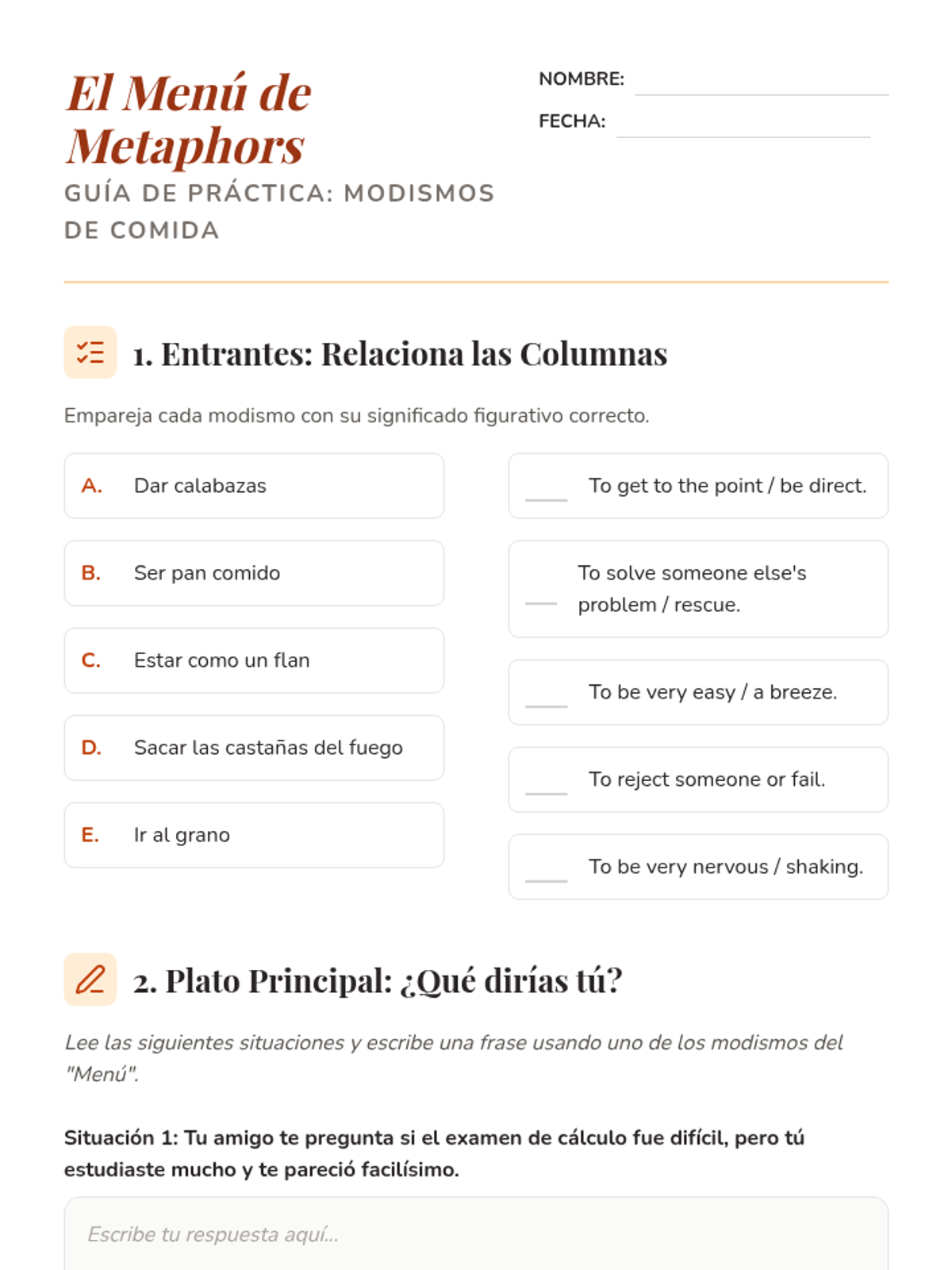
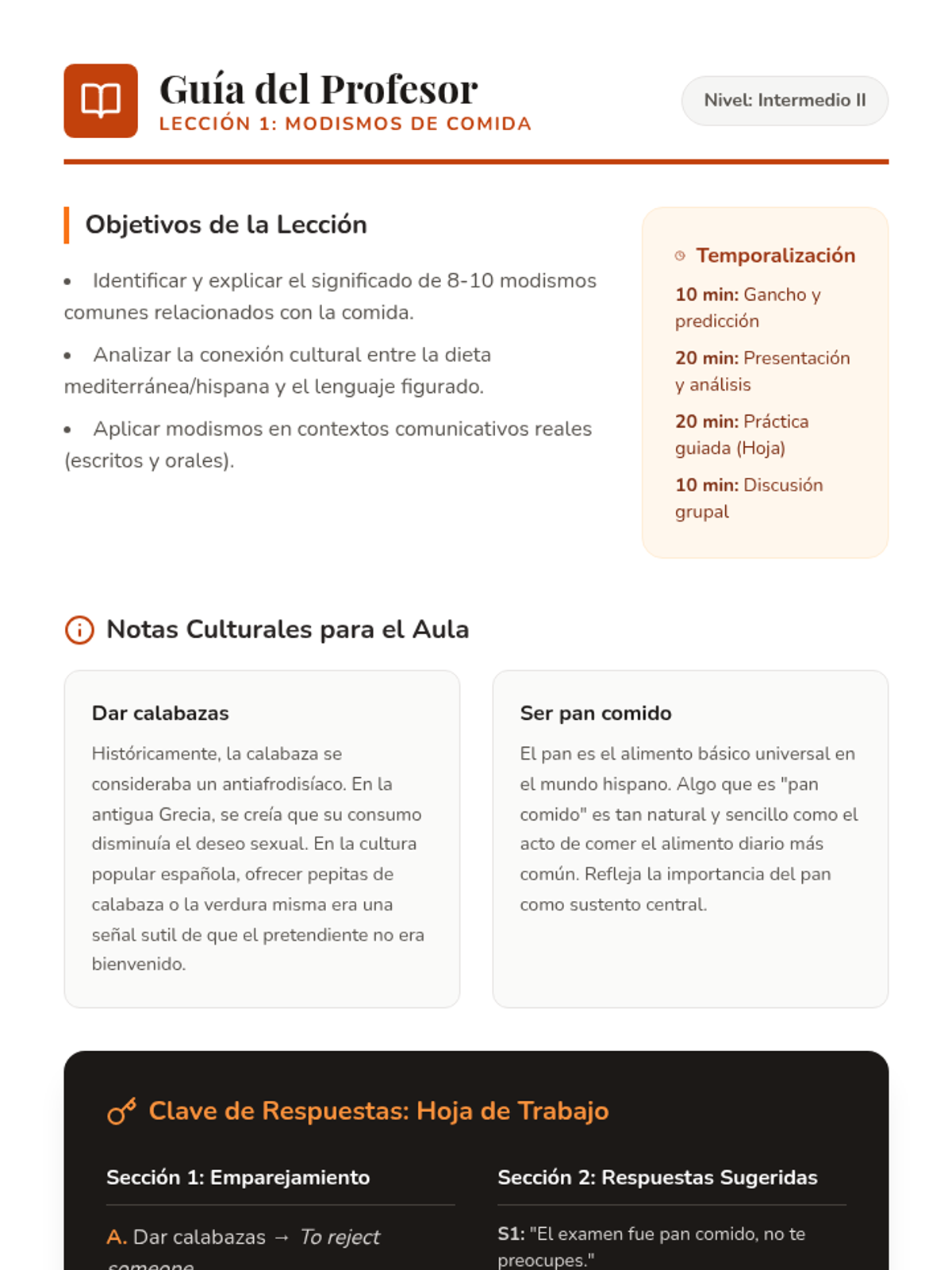
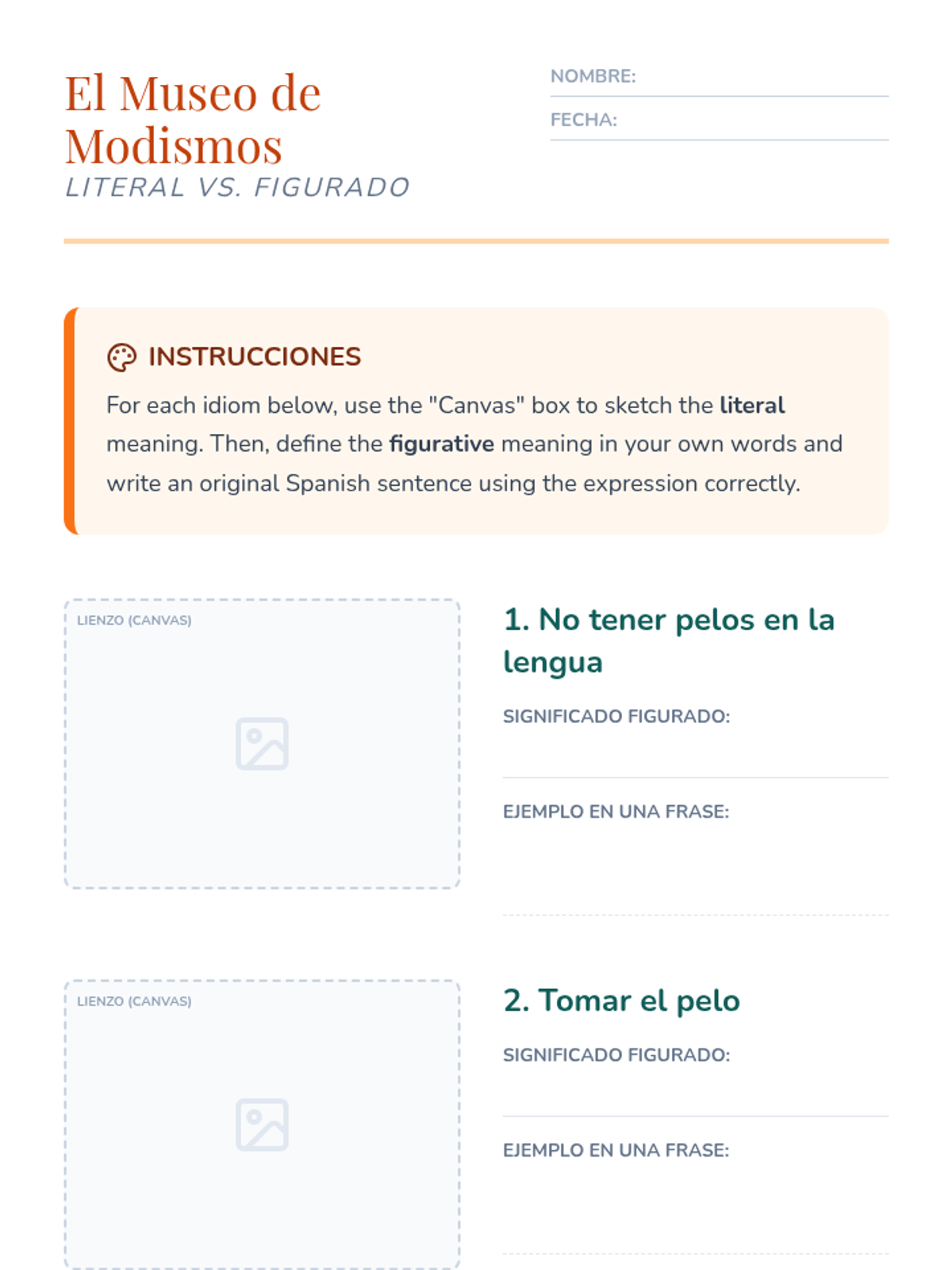
An intermediate Spanish sequence for 8th graders focused on decoding and using idiomatic expressions (modismos) to achieve cultural fluency. Students progress from distinguishing literal vs. figurative meanings to creating original narratives using culturally authentic language.
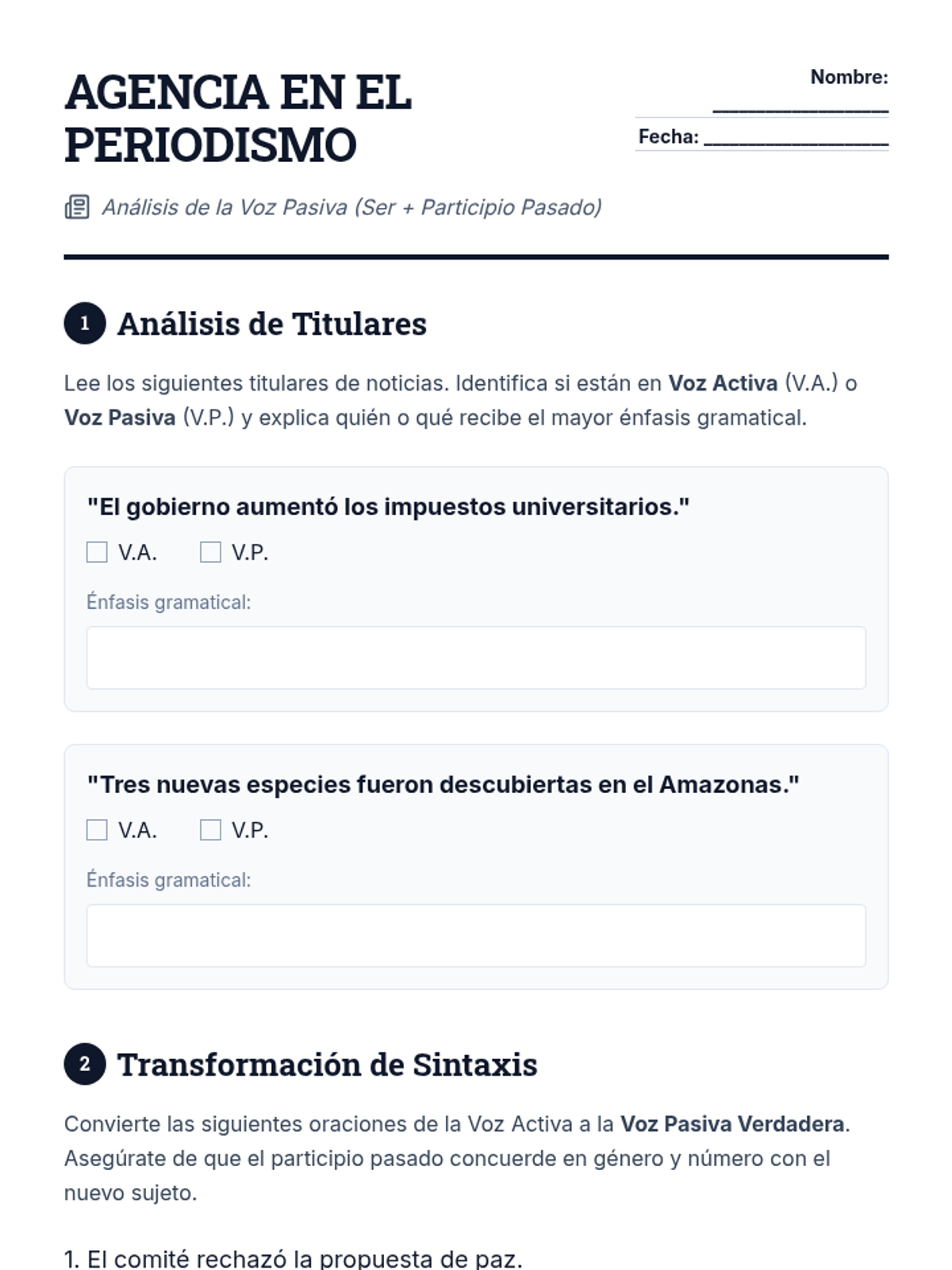
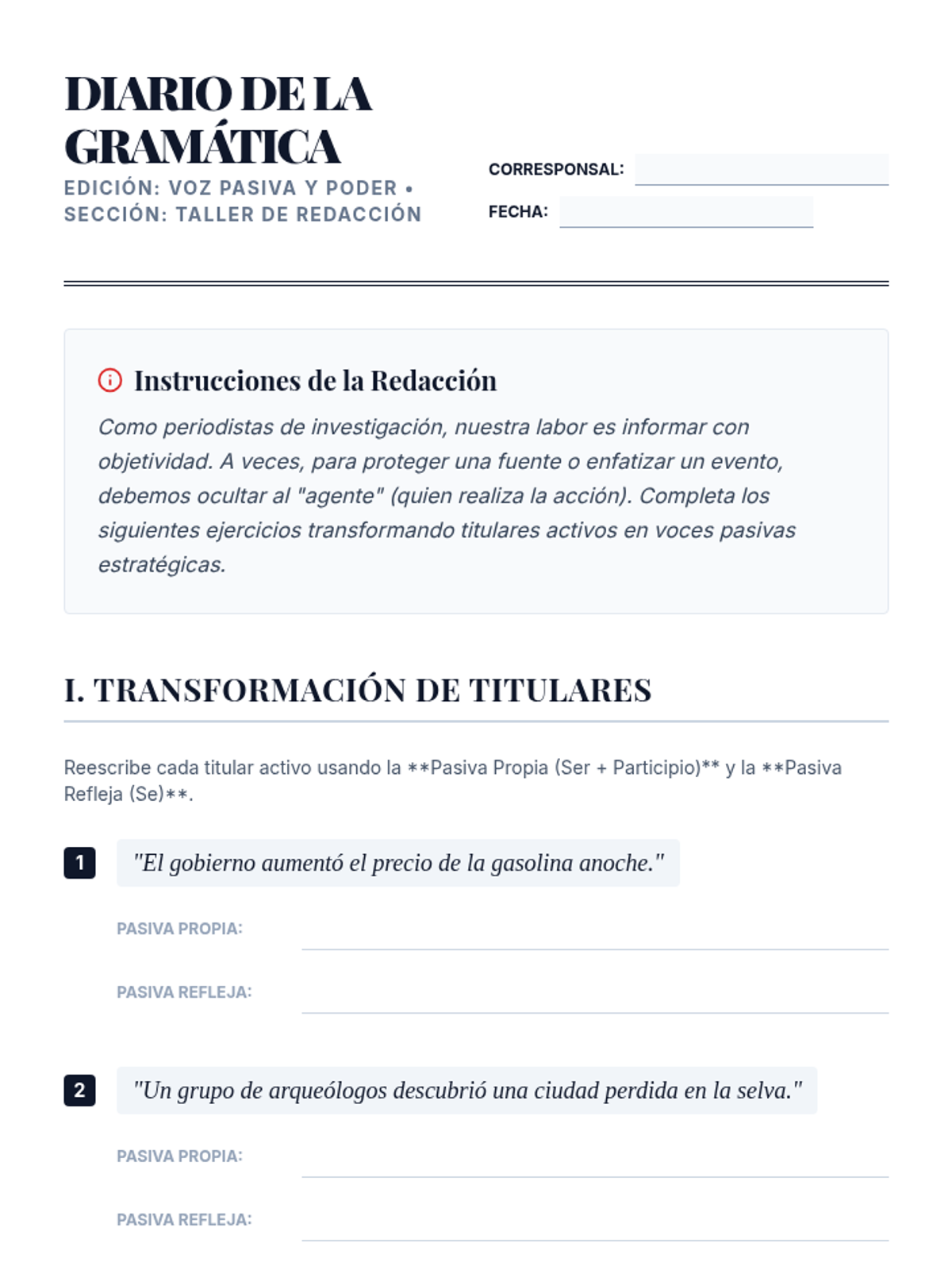
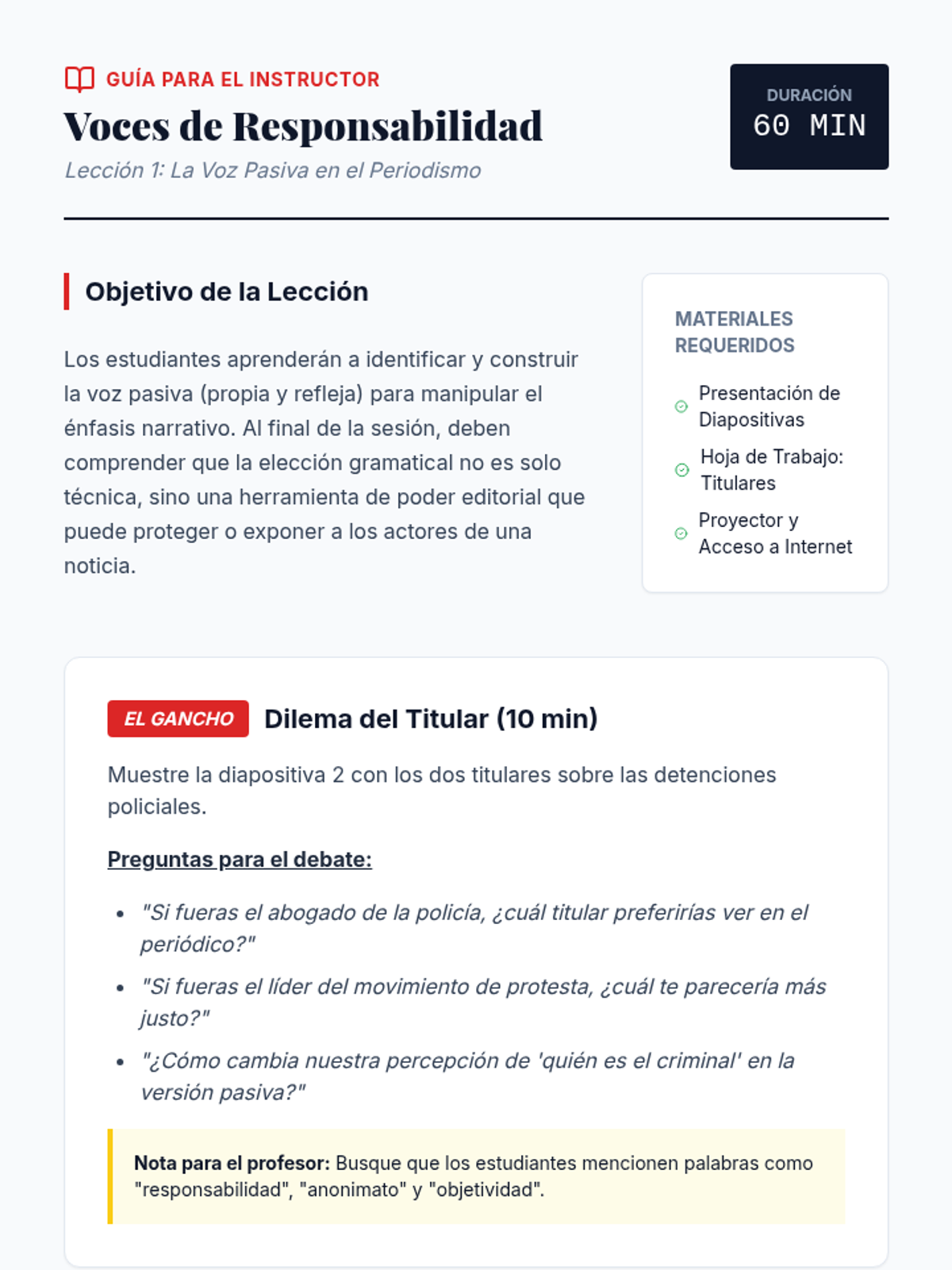
A 9th-grade advanced Spanish sequence focused on the nuances of agency and voice. Students explore the True Passive, Passive Se, and Accidental Se to understand how syntax influences tone and objectivity in formal writing and journalism.
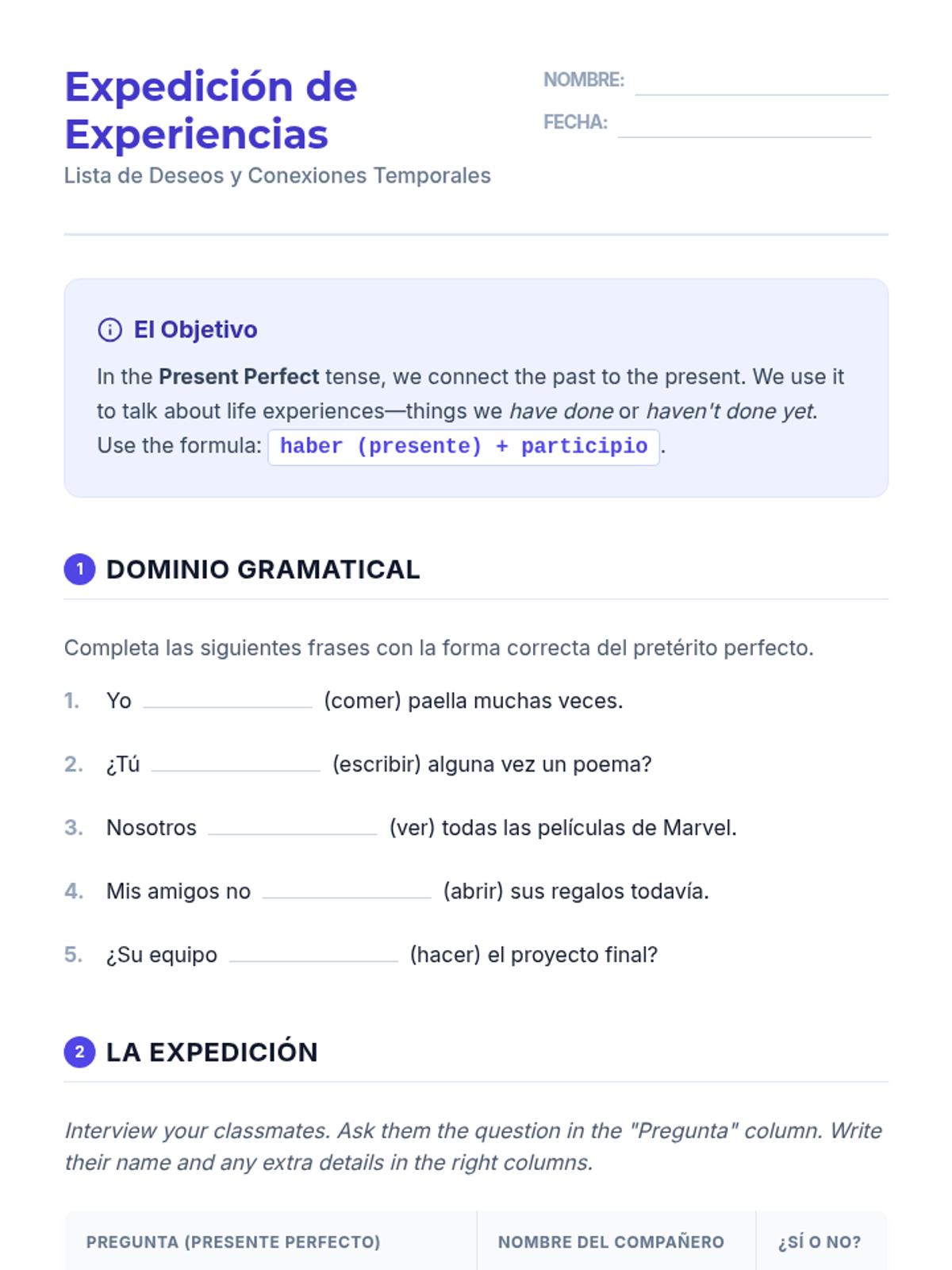
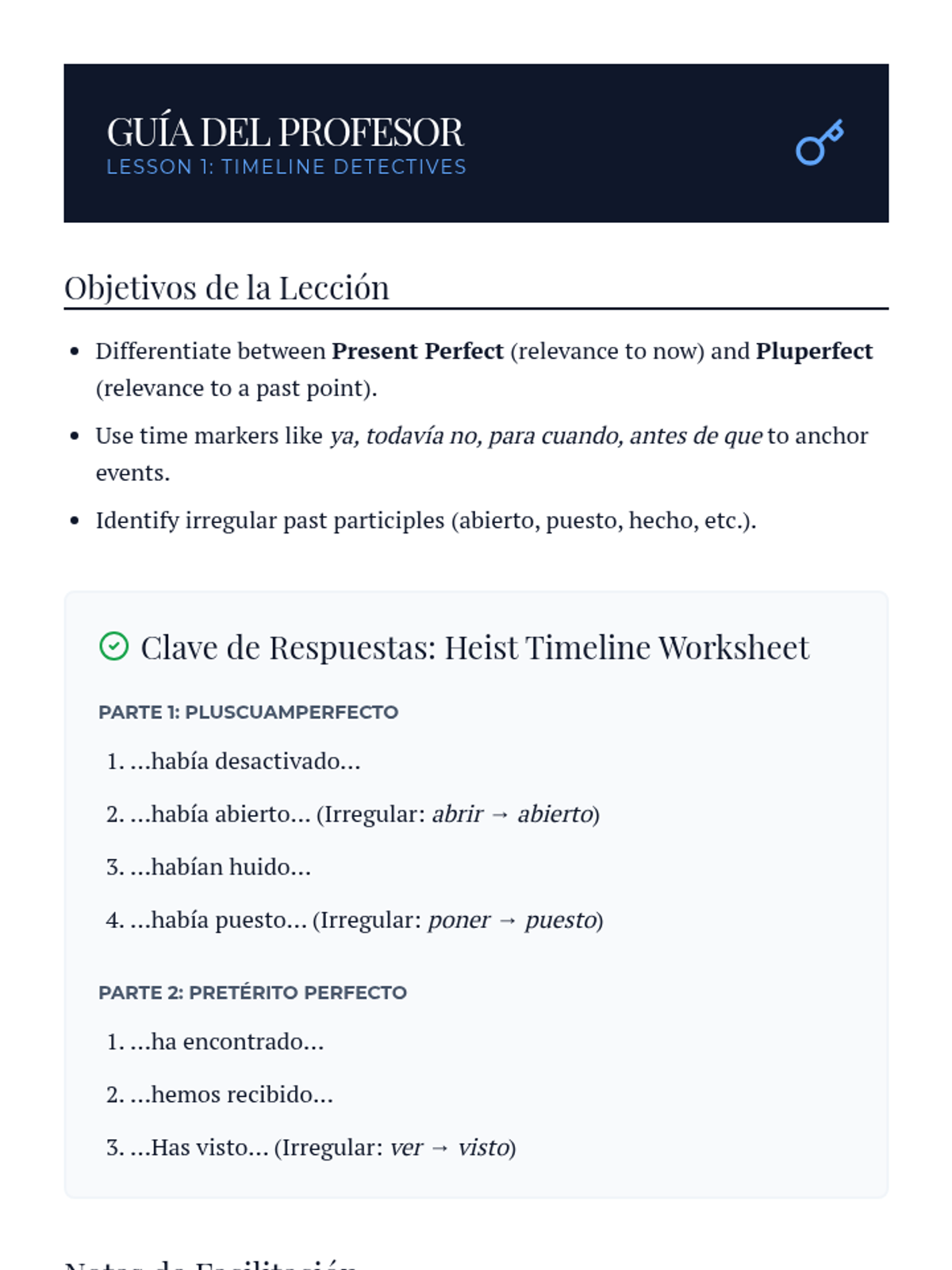
This project-based workshop guides advanced Spanish students through compound tenses by constructing a multi-layered narrative. Students master the present perfect, pluperfect, conditional perfect, and future perfect to articulate complex temporal relationships.
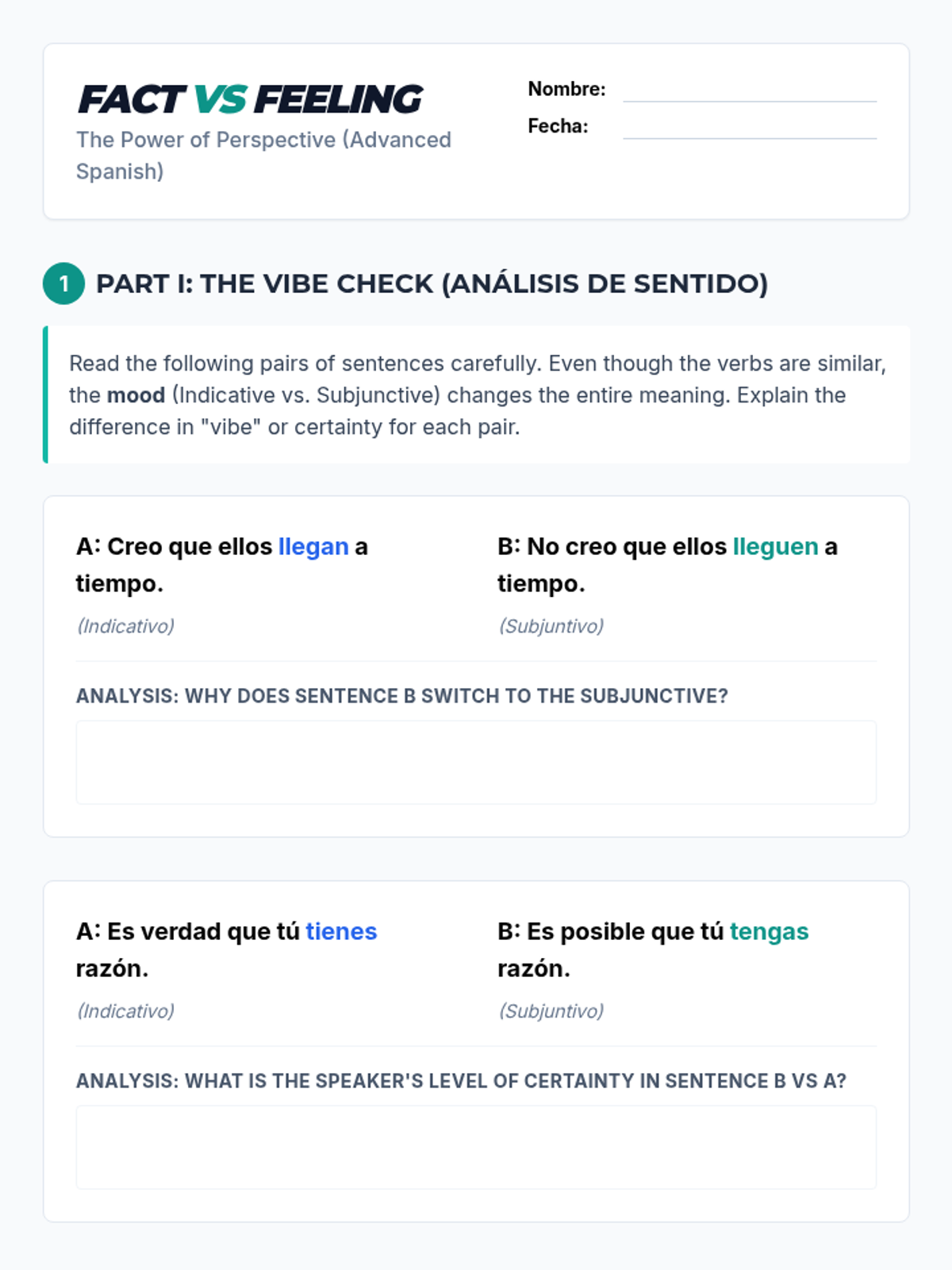
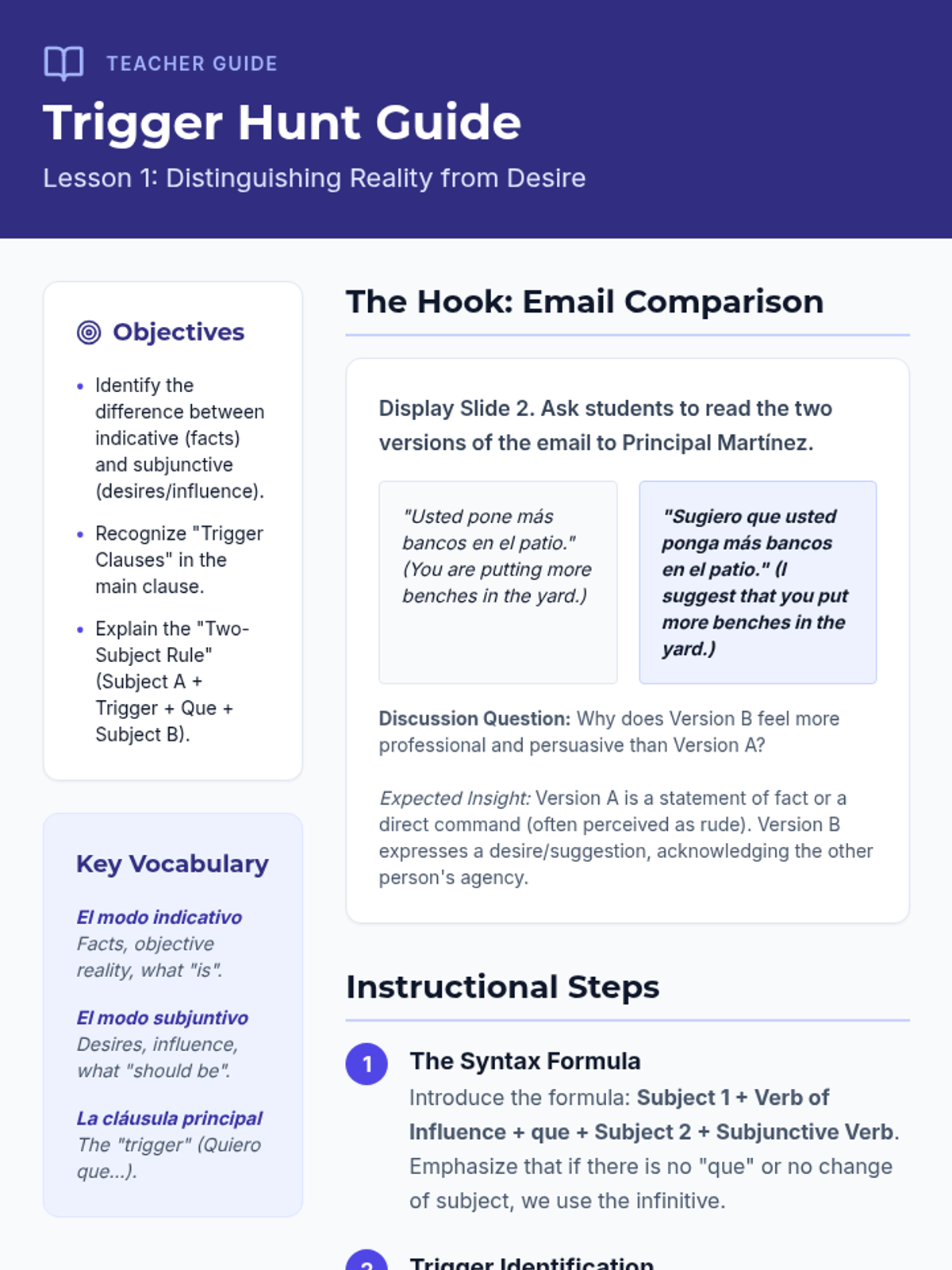
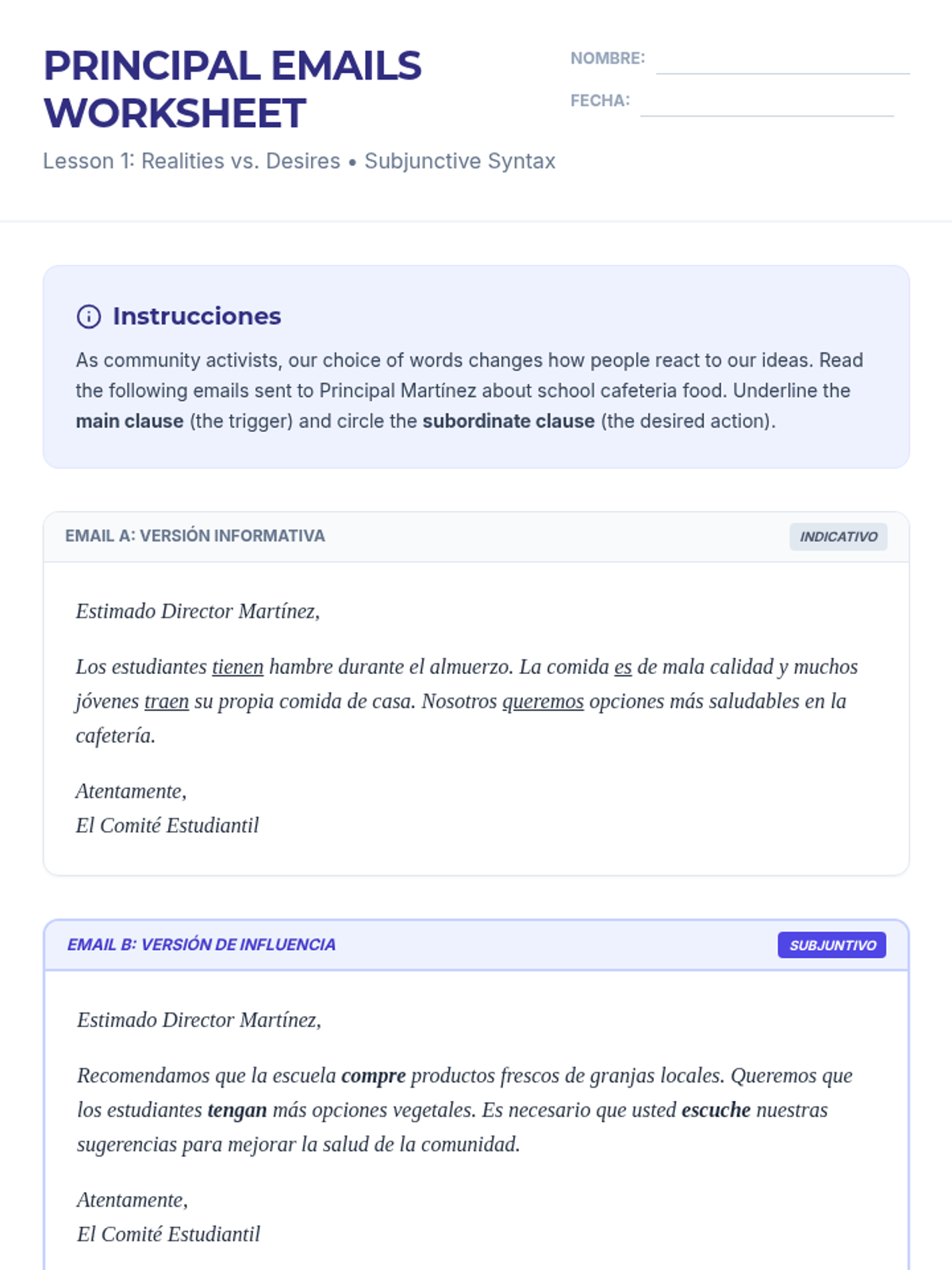
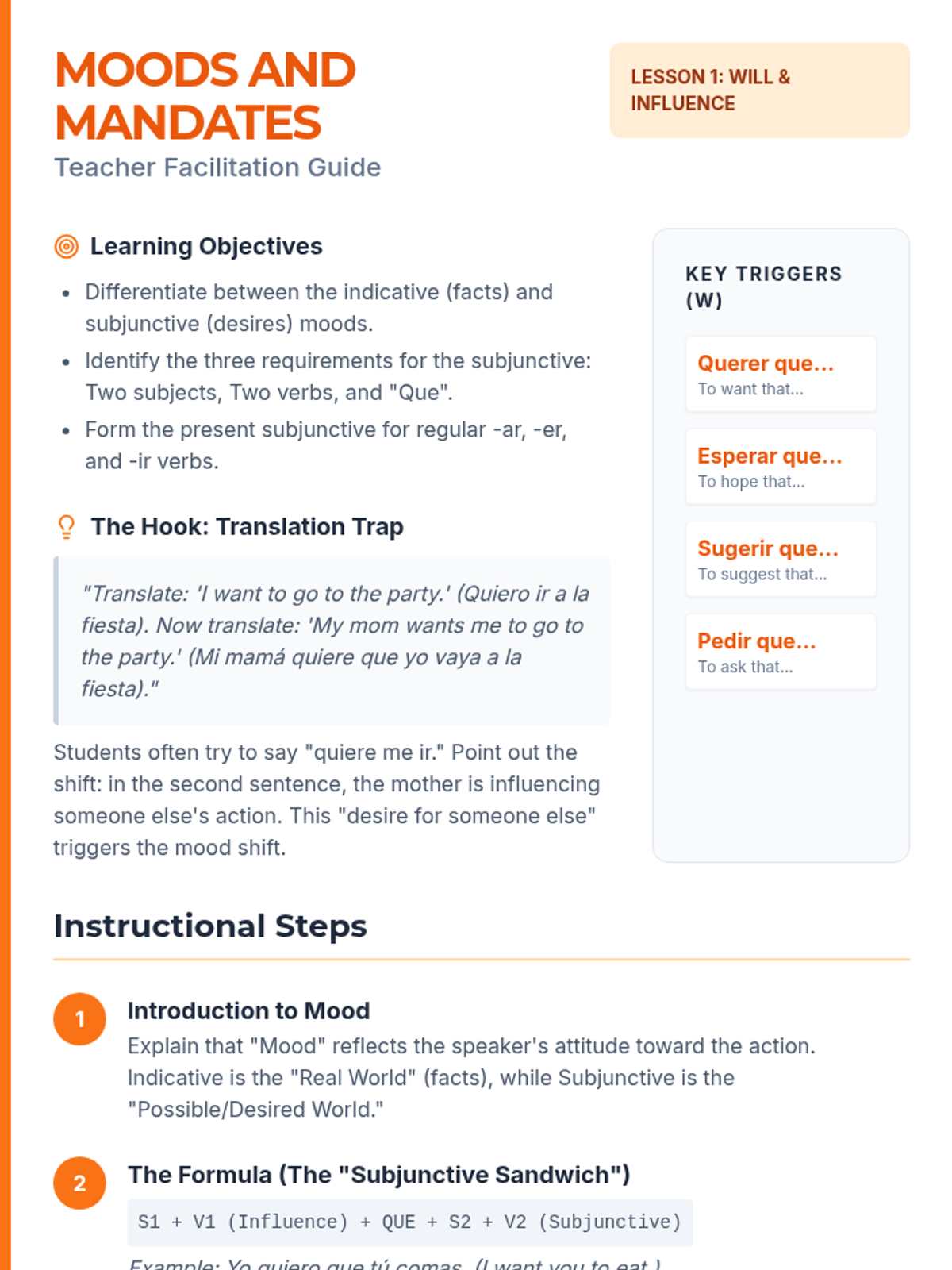
A comprehensive 10th-grade Spanish unit that moves students from basic subjunctive mechanics to advanced semantic nuances. Through simulation-based learning—including an advice column and a town hall debate—students explore how the subjunctive mood expresses influence, doubt, emotion, and uncertainty in high-stakes communication.
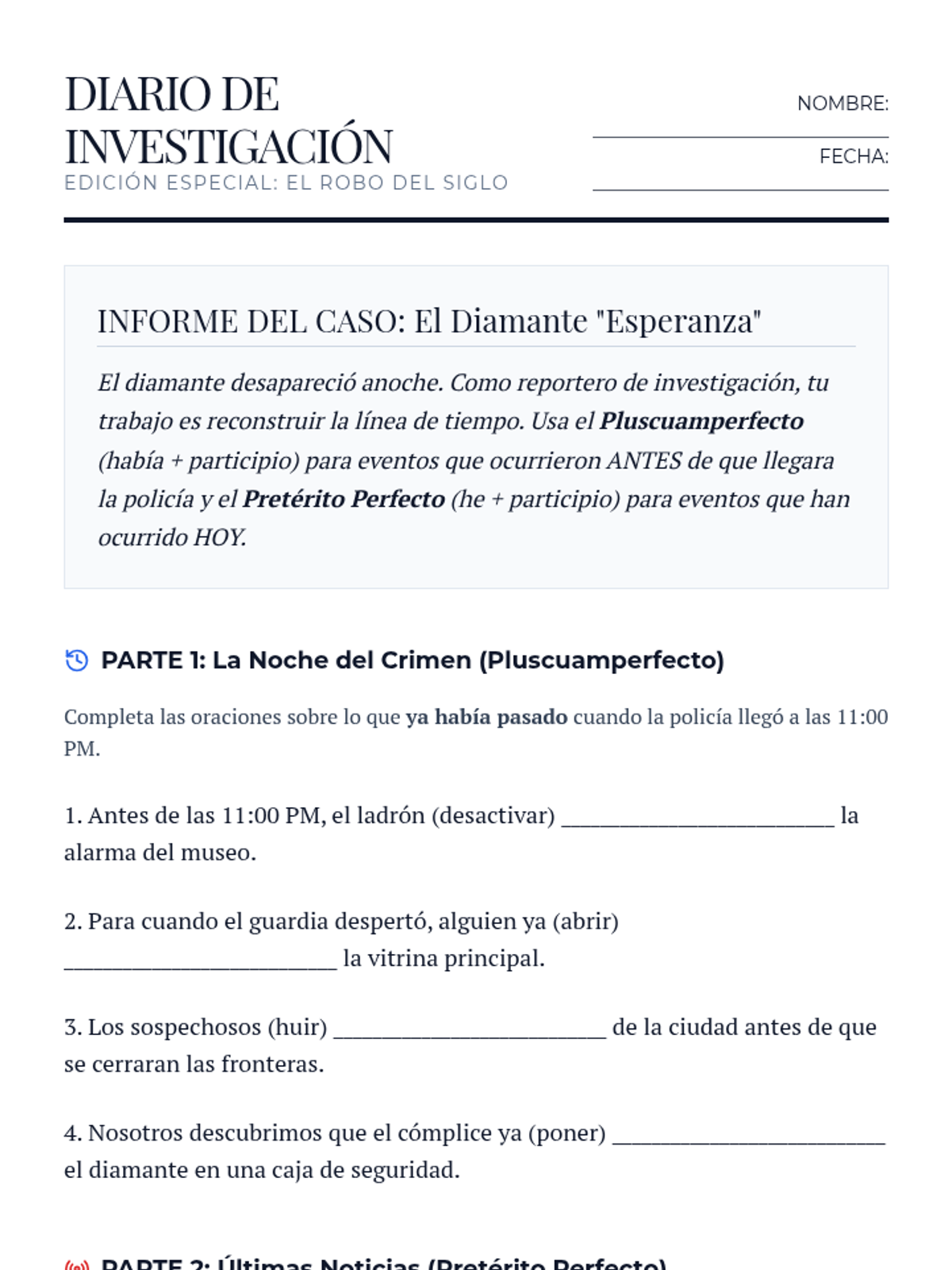
This advanced Spanish grammar unit empowers 10th-grade students to master compound tenses and the passive voice through a journalistic lens. Students assume the role of investigative reporters, learning to sequence complex events and shift narrative focus to achieve objectivity and precision in formal writing.
A high-level Spanish grammar sequence for 10th-grade students, focusing on the rhetorical power of verb forms in journalistic writing. Students act as investigative reporters, mastering the passive voice, compound tenses, and the subjunctive mood to produce sophisticated editorial pieces.
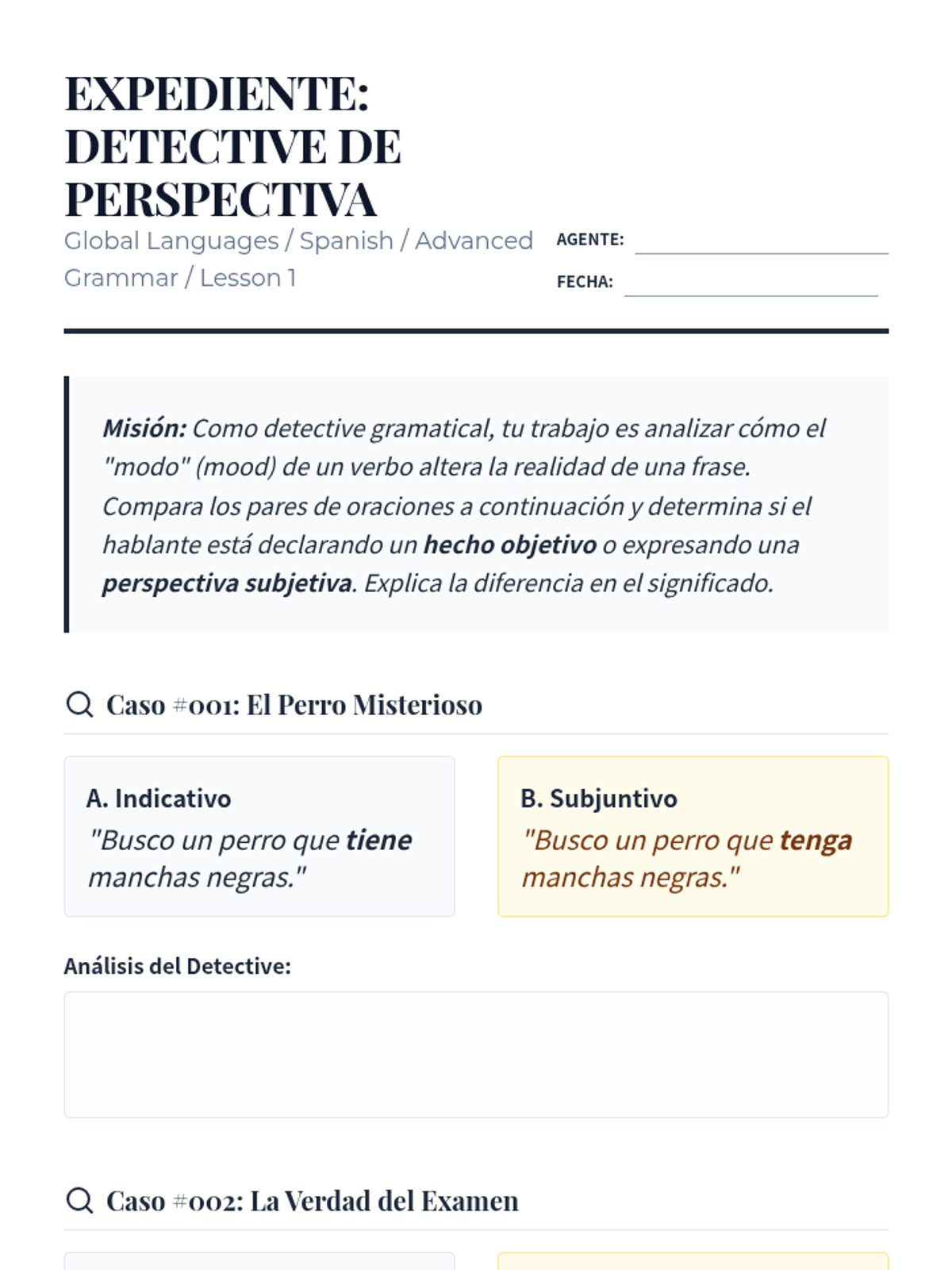
A comprehensive immersion into the Spanish subjunctive mood, focusing on how speaker attitude and perspective shift grammatical choices. Students progress from distinguishing certainty from uncertainty to advocating for community change using complex persuasive syntax.
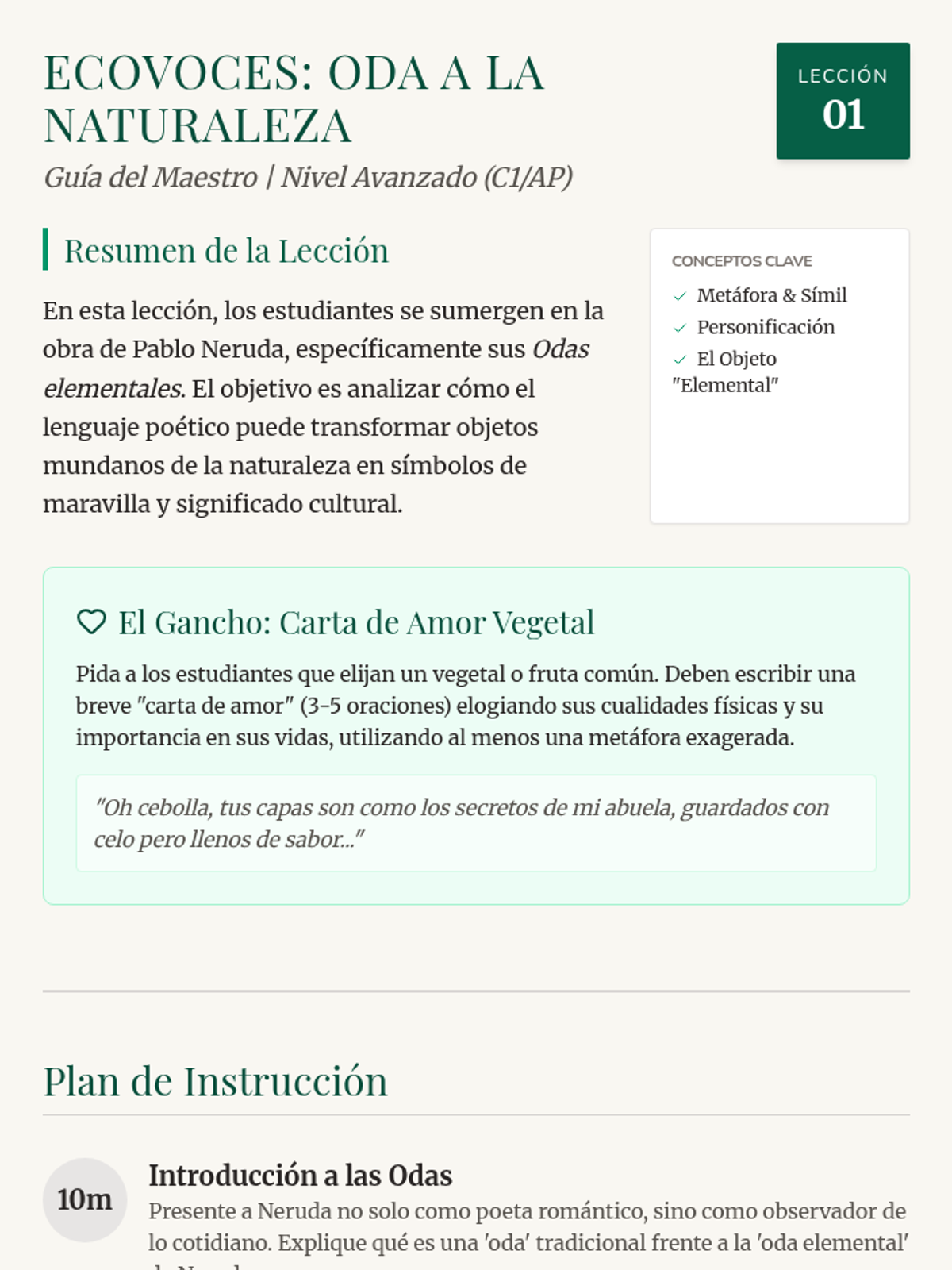
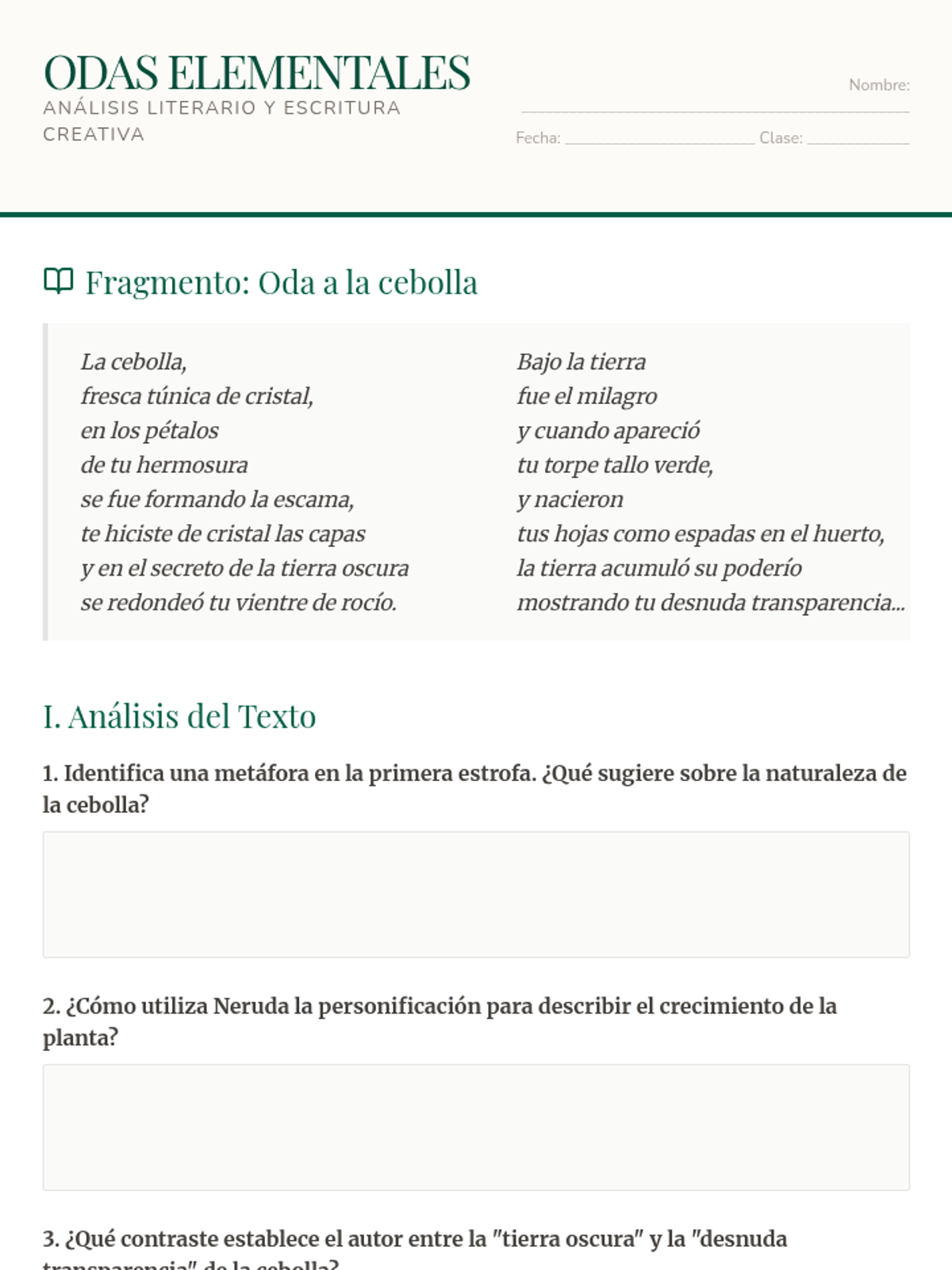
A high-level Advanced Spanish sequence exploring the intersection of literature and science through the lens of Latin American environmental issues. Students analyze poetic metaphors, naturalist prose, and technical scientific reports to understand diverse perspectives on the natural world.
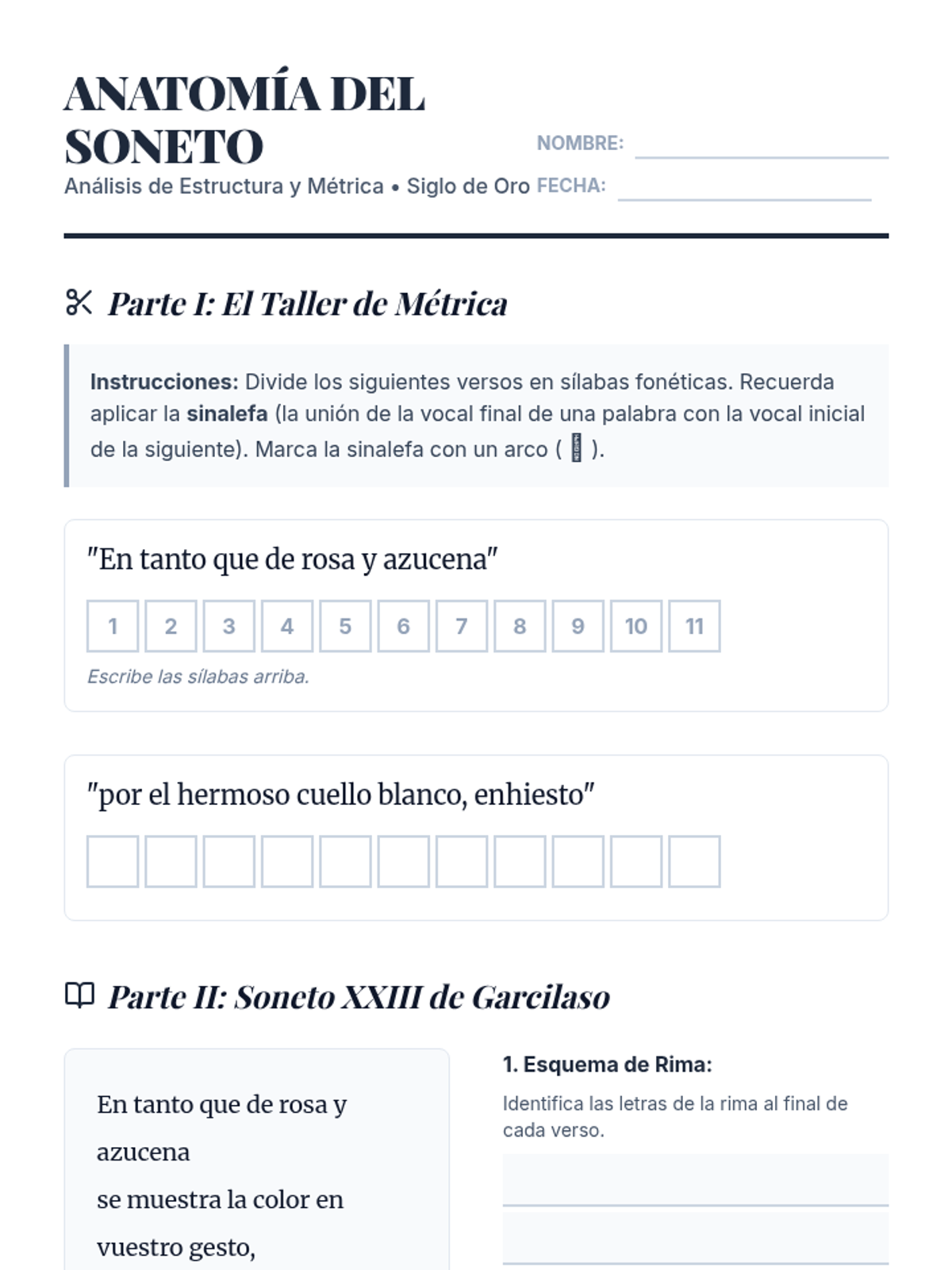
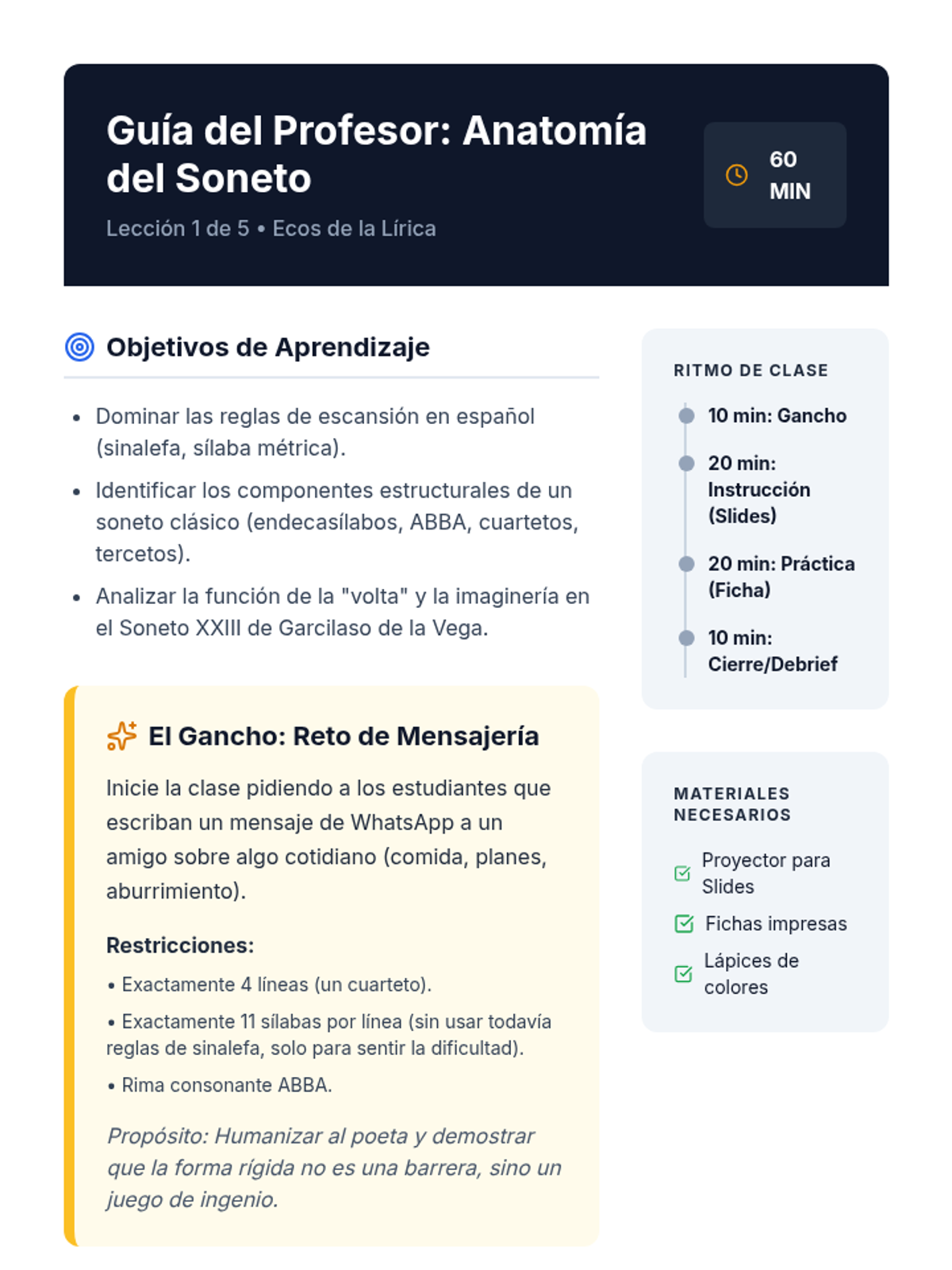
This advanced Spanish reading sequence explores the evolution of poetic voice from the Spanish Golden Age to the modern era, focusing on the sonnet structure, Baroque rivalries, and the shift from 'Carpe Diem' to modern expressions of time.
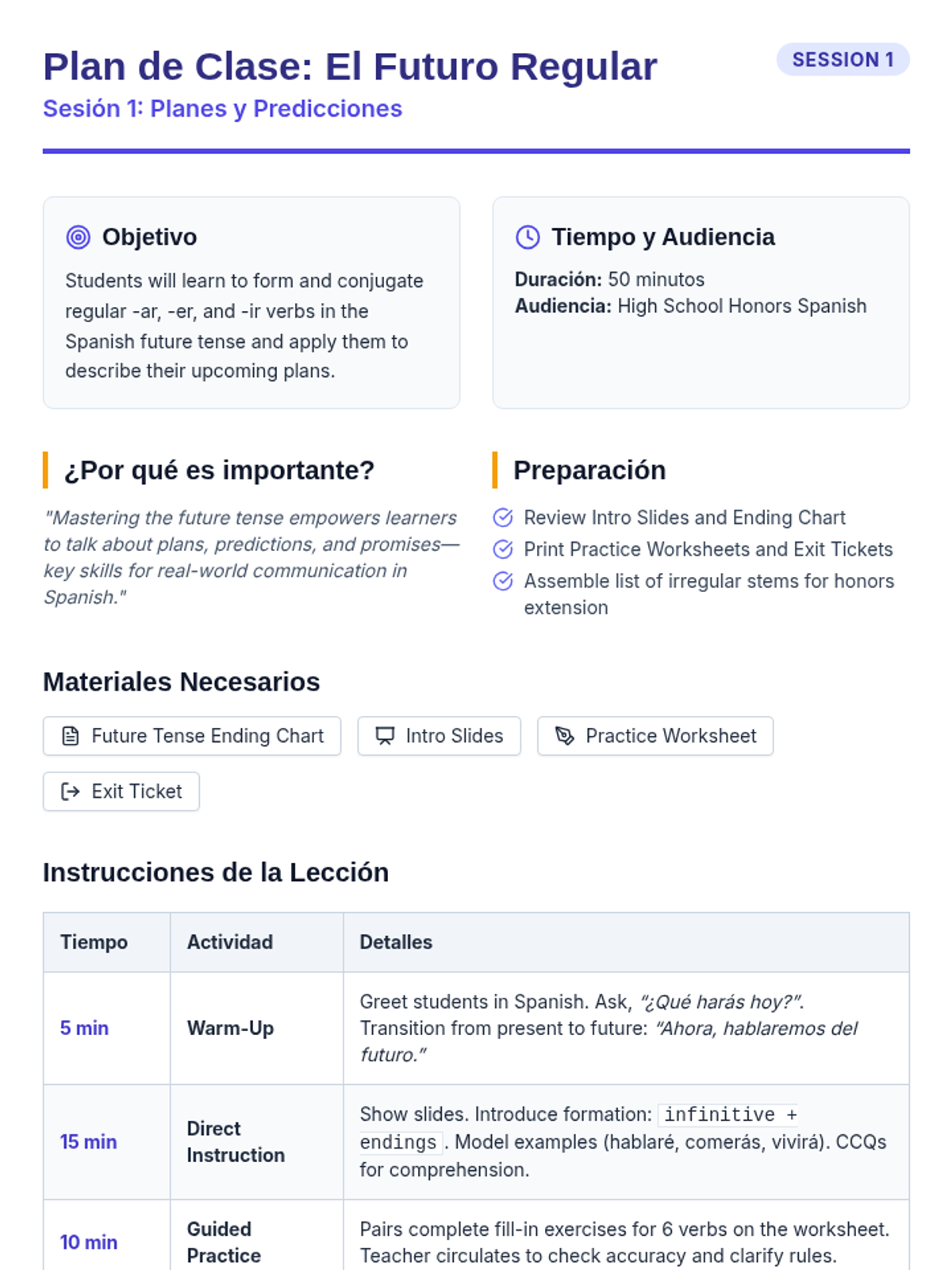
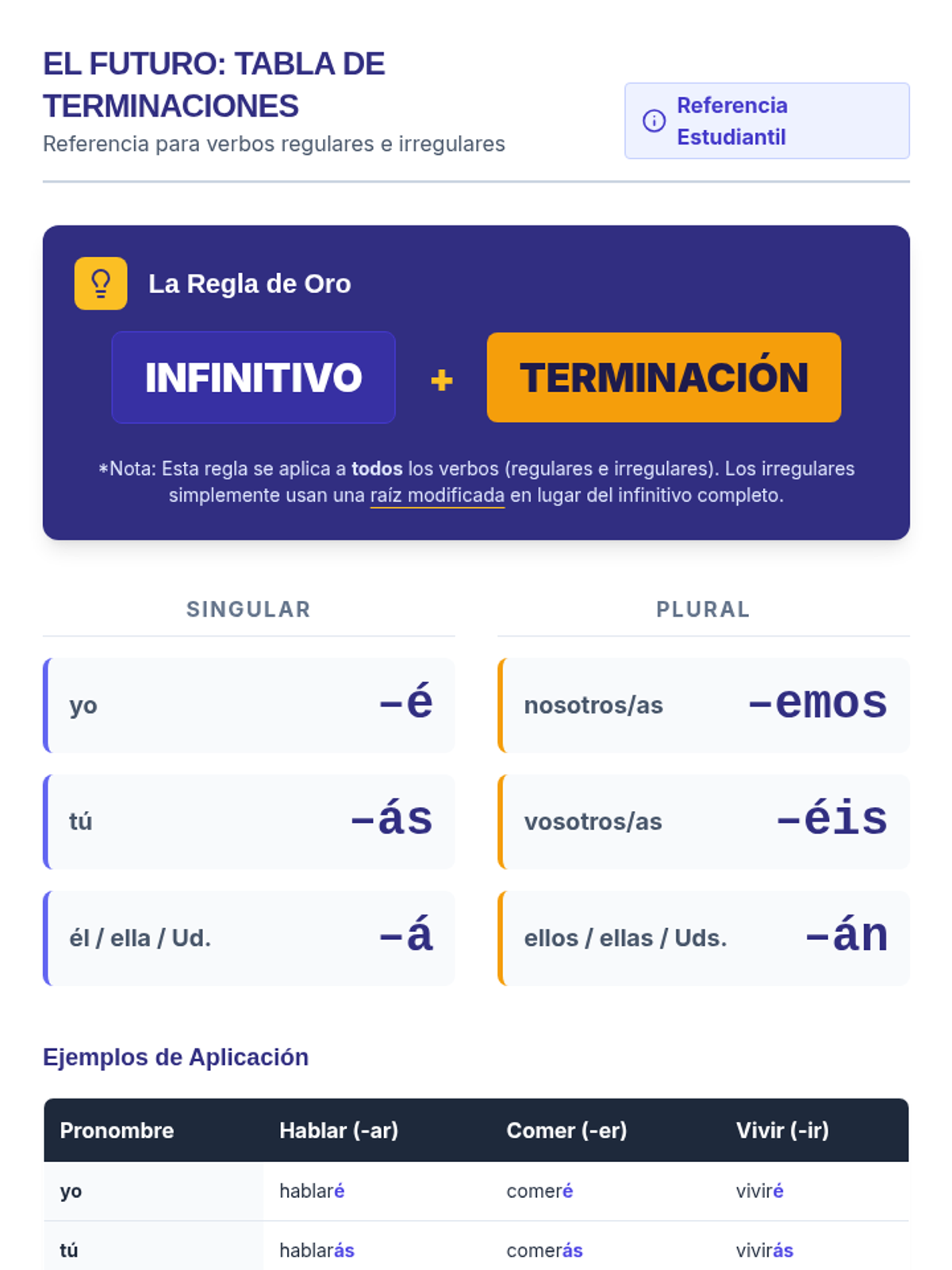
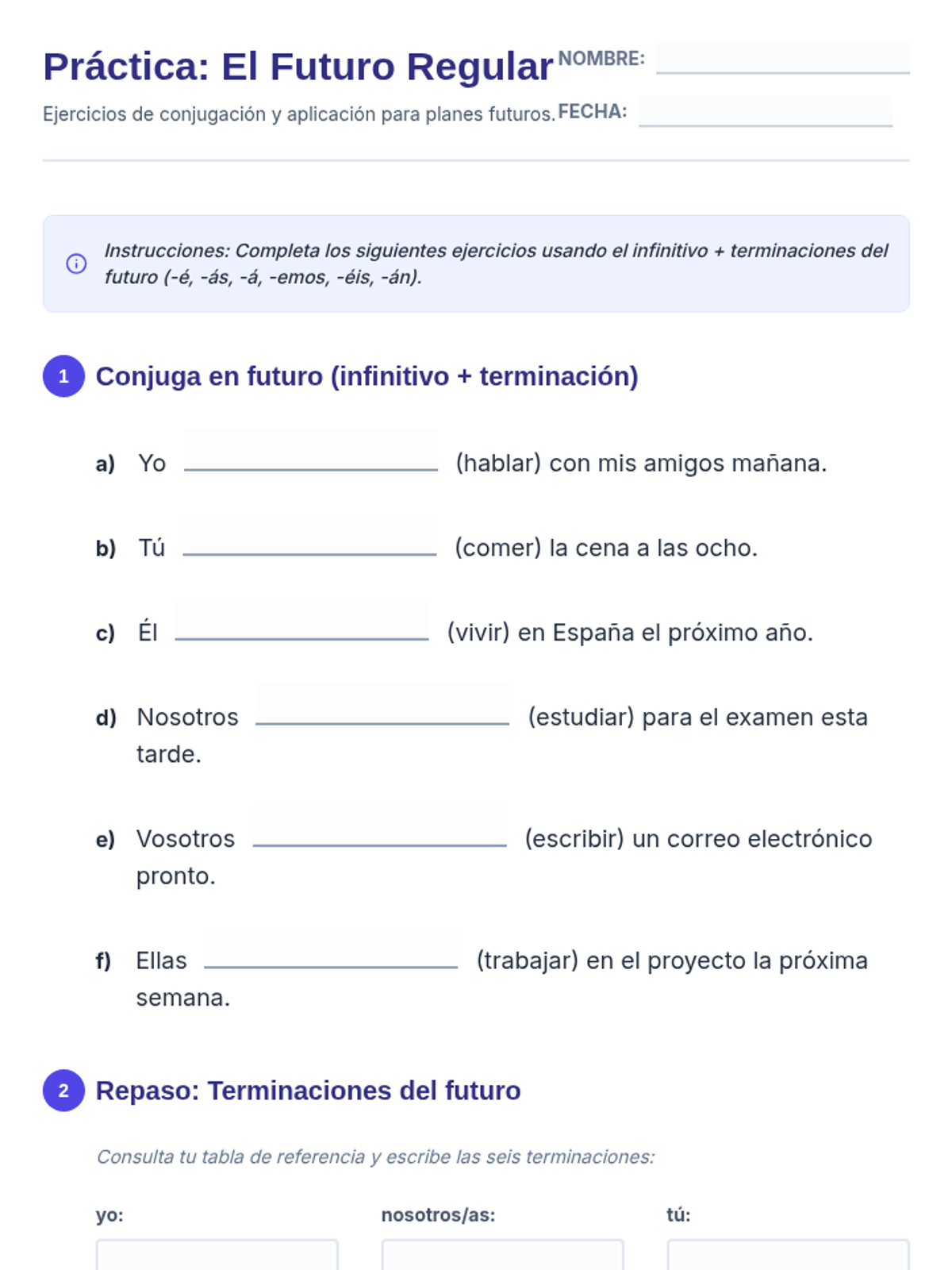
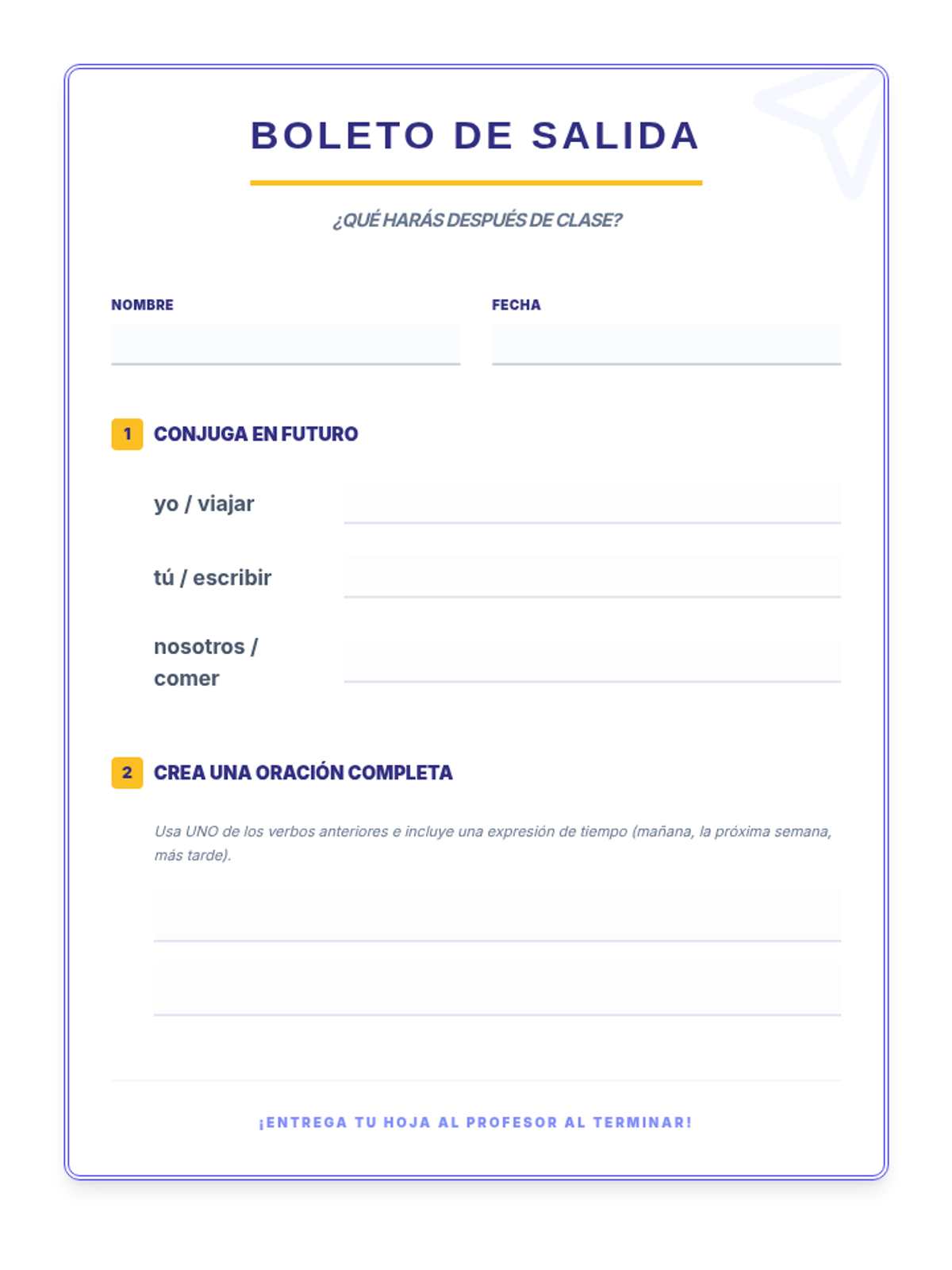
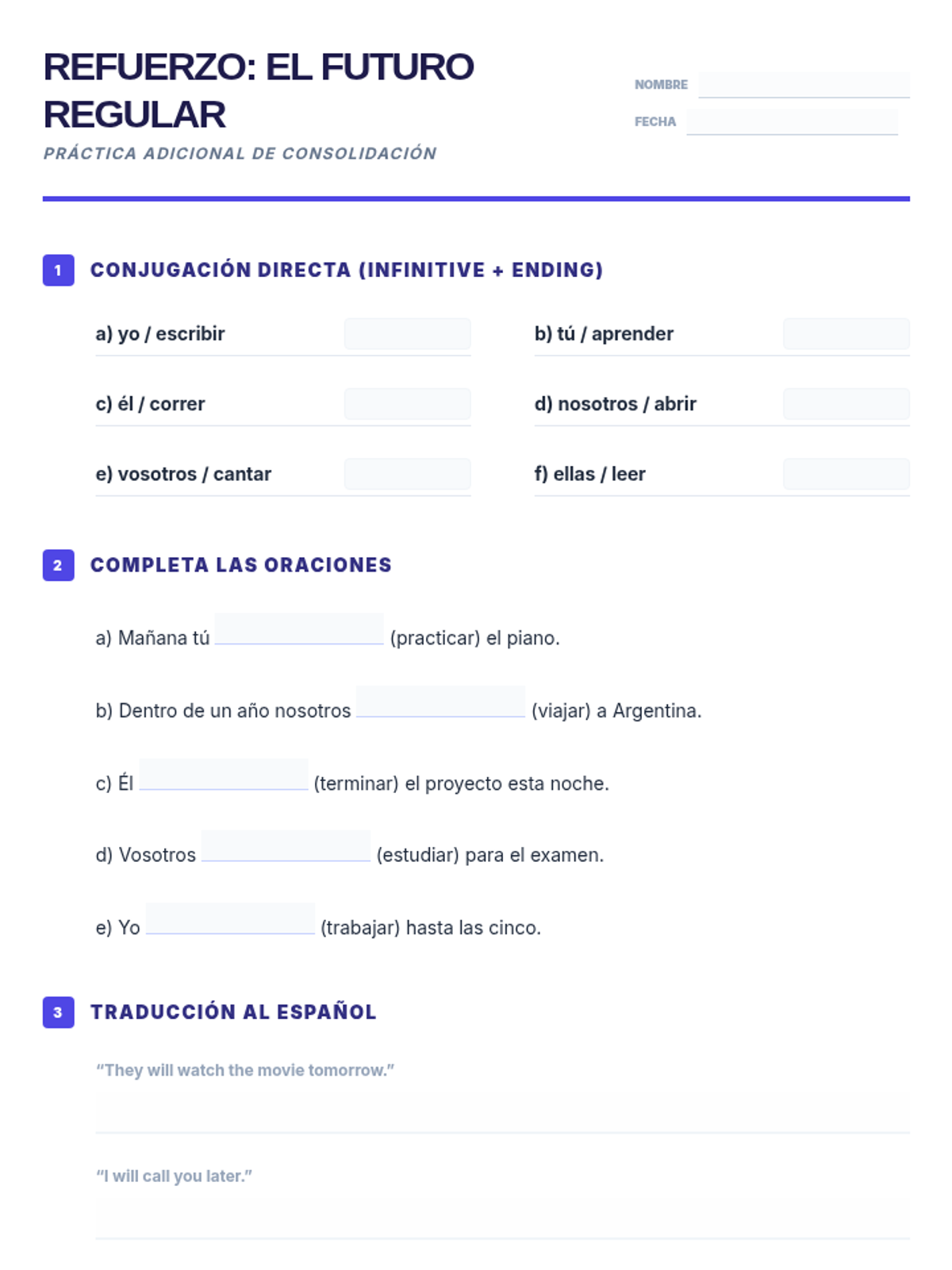
A three-session Spanish unit for honors high school students focusing on regular and irregular future tense formation, predictions, and creative narrative writing.
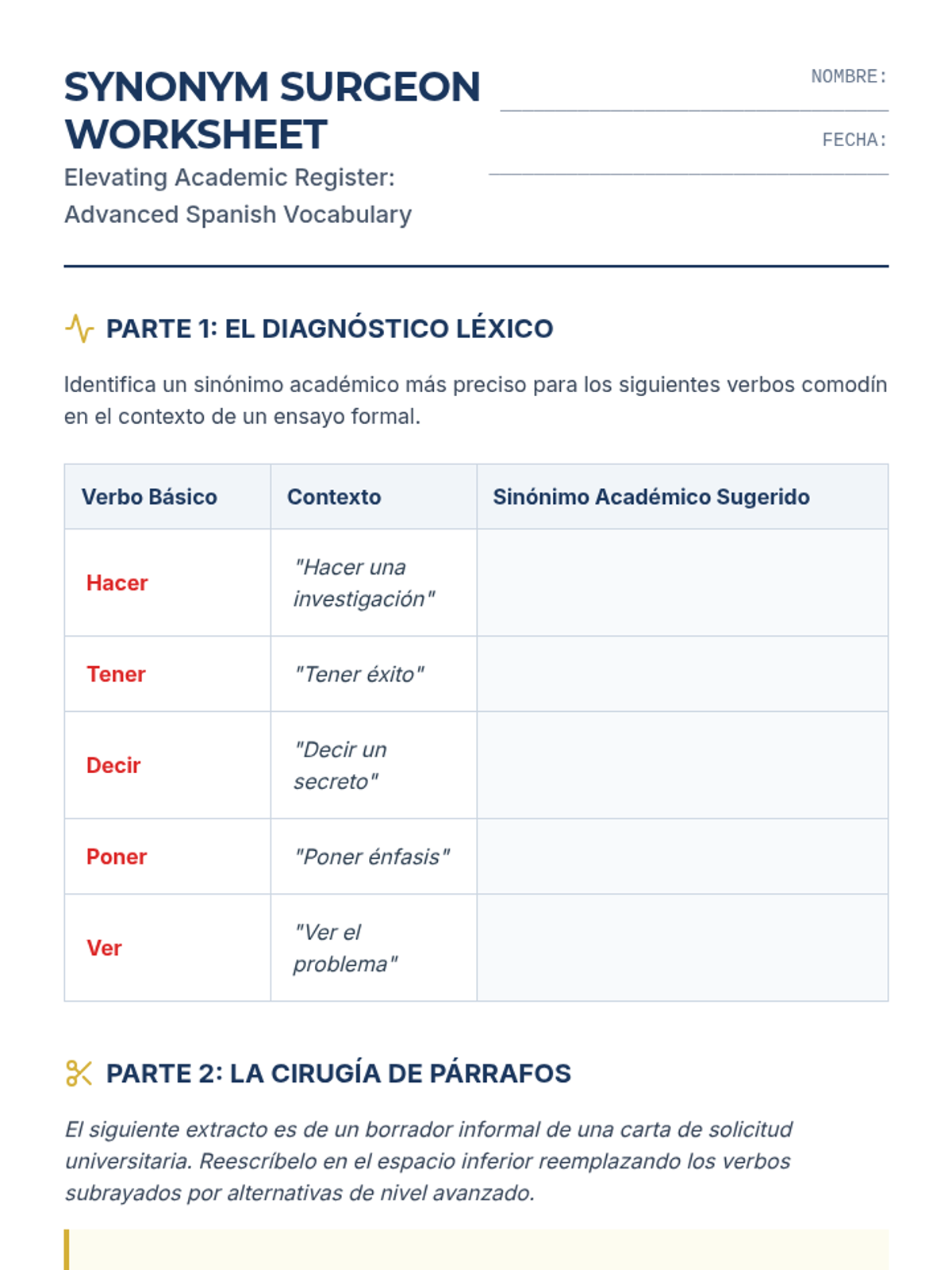
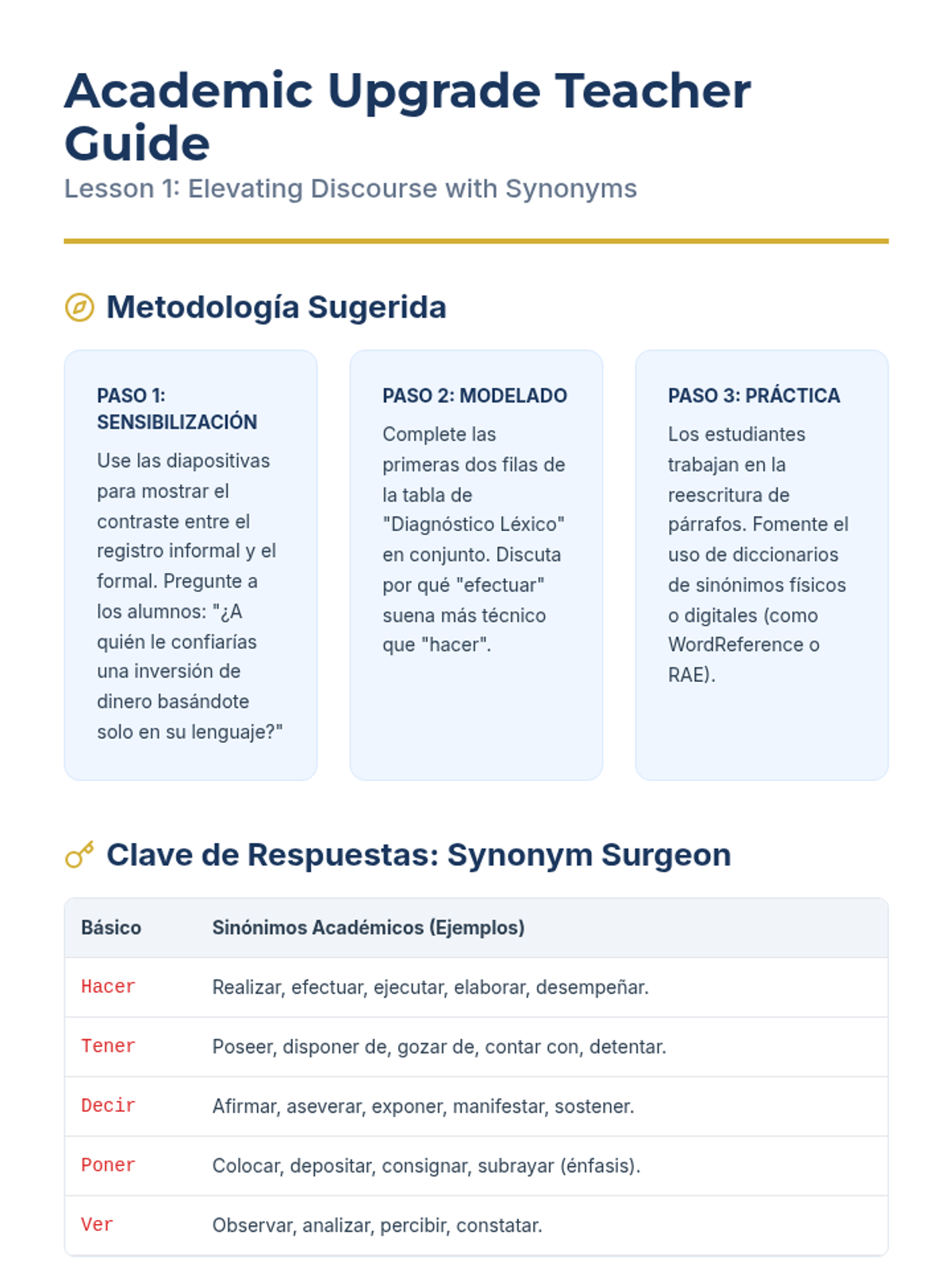
This advanced Spanish sequence transitions 9th-grade students from intermediate proficiency to professional linguistic precision. It focuses on academic register, workplace vocabulary, logical connectors, and sociolinguistic etiquette through authentic simulations and analysis.
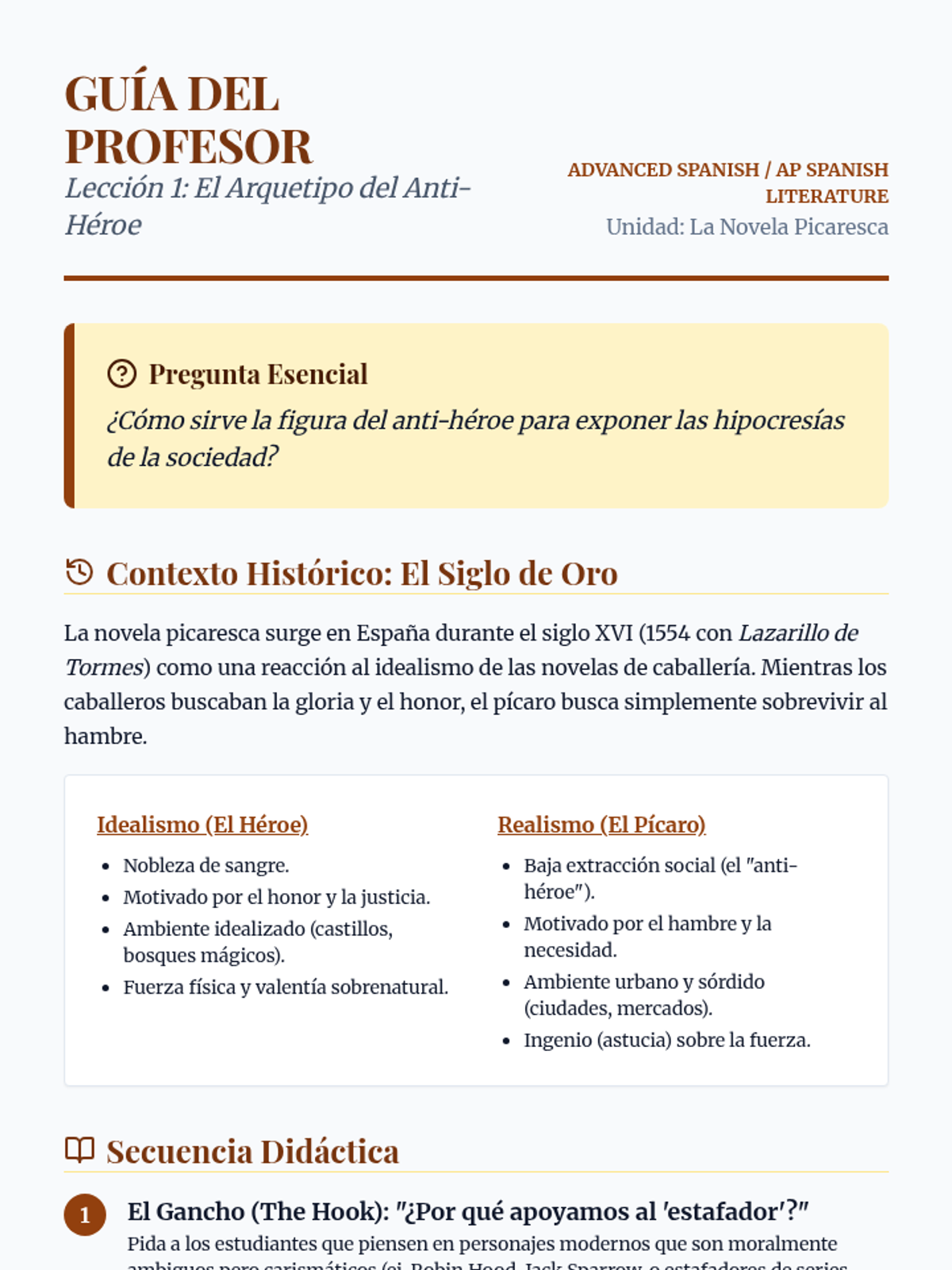
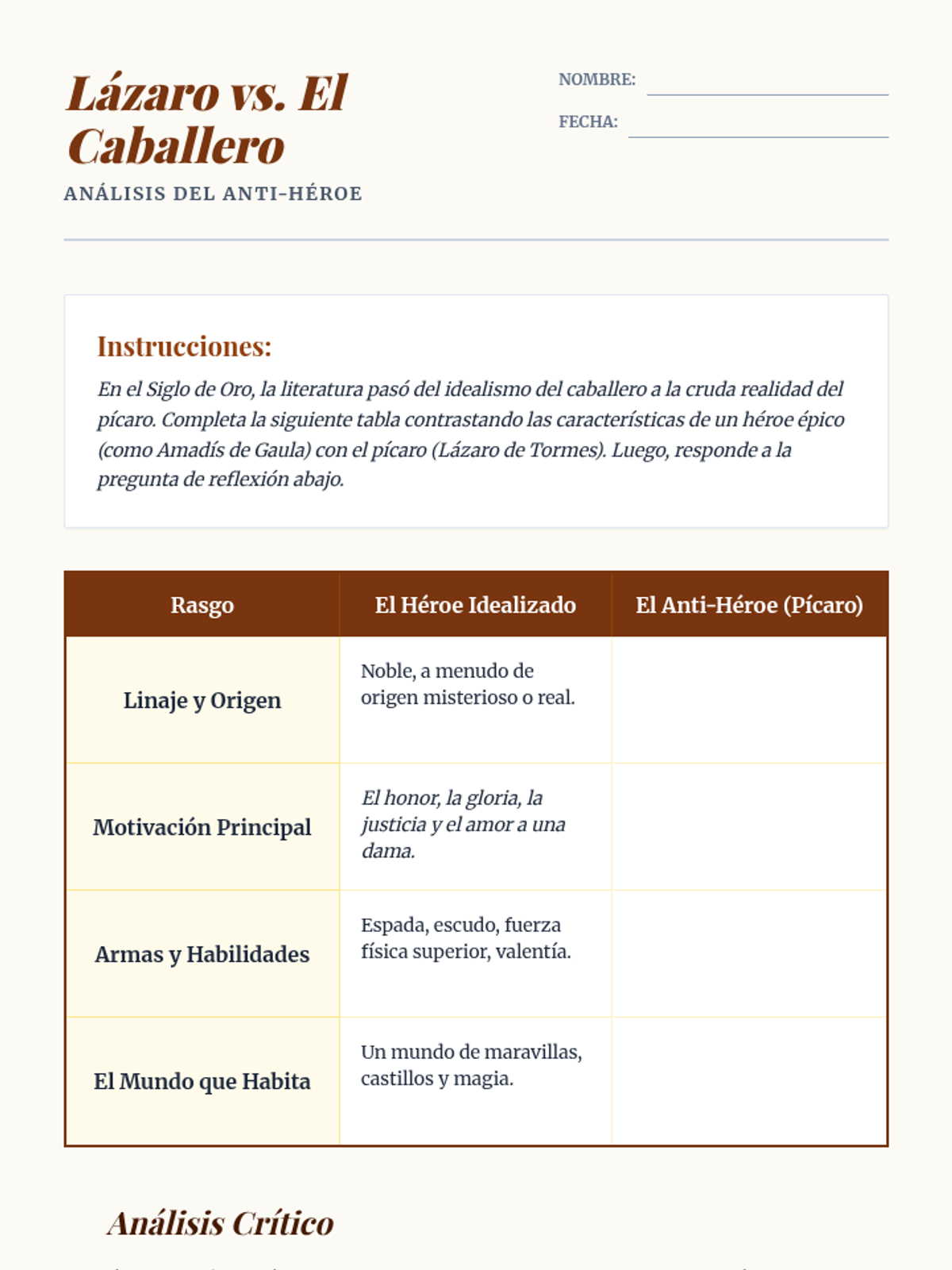
This advanced Spanish sequence explores the Picaresque genre from its 16th-century origins in *Lazarillo de Tormes* to modern-day adaptations. Students analyze the evolution of the anti-hero, the use of satire to critique social institutions, and the narrative techniques that define this enduring literary tradition.
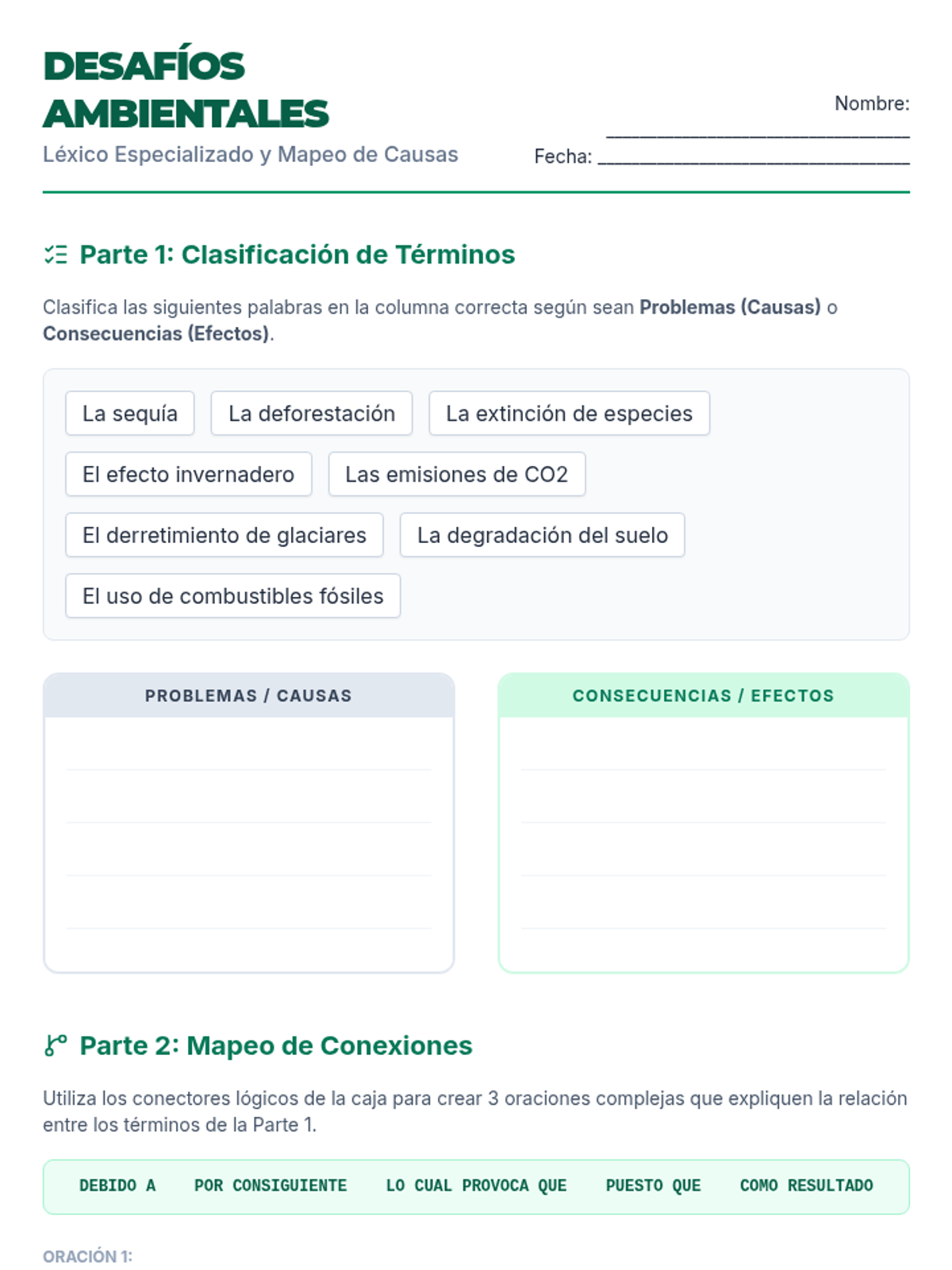
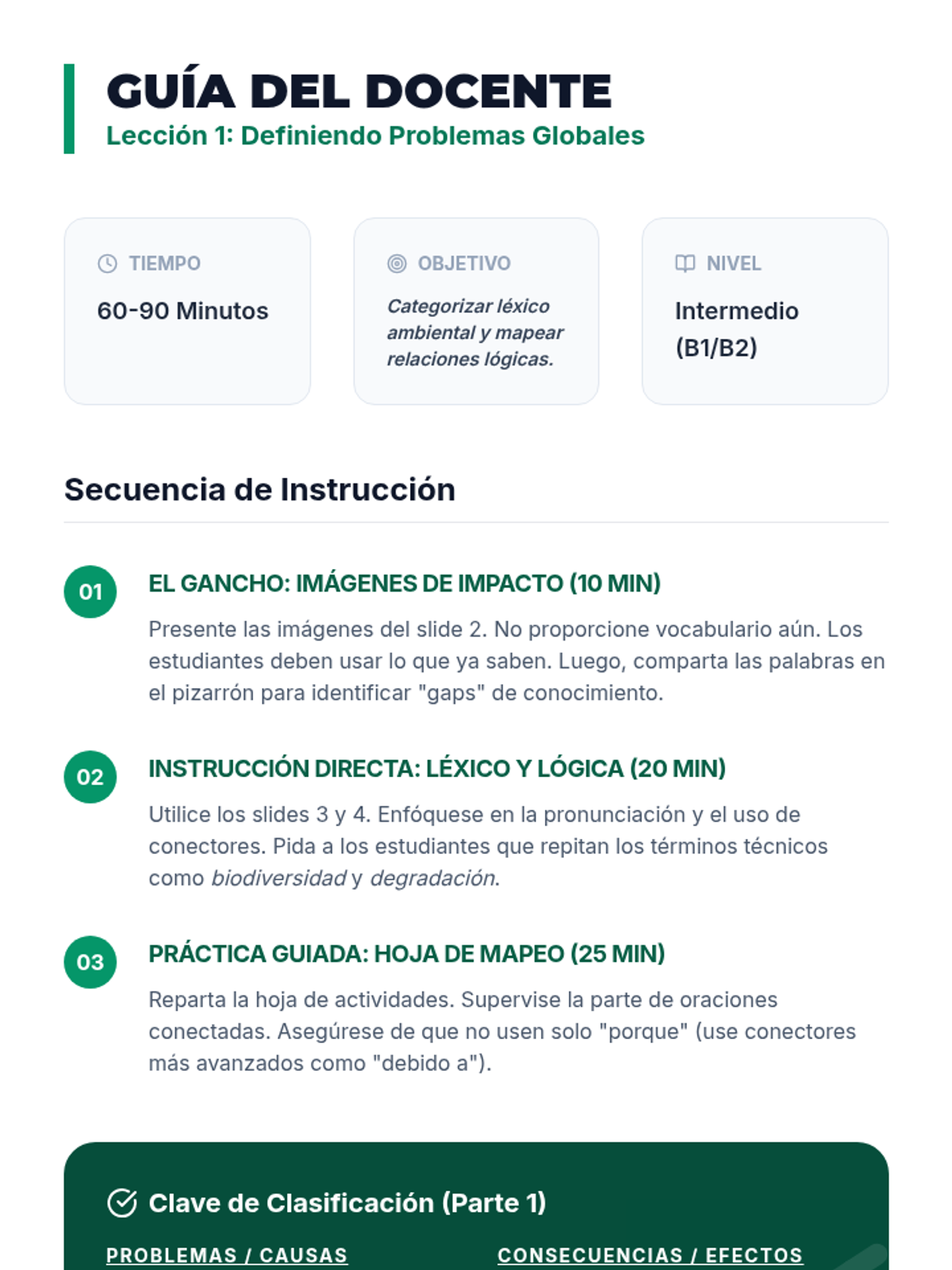
A high-school Spanish sequence focusing on specialized vocabulary for global challenges, covering environmental issues, sustainability, technology ethics, and precise linguistic expression. Students transition from basic descriptions to academic terminology to propose concrete solutions to complex problems.
A simulation-based sequence where 9th-grade students act as community leaders to master the subjunctive mood in Spanish. Students move from identifying reality versus desire to persuading and debating in a mock town hall, focusing on influence, doubt, and emotion.
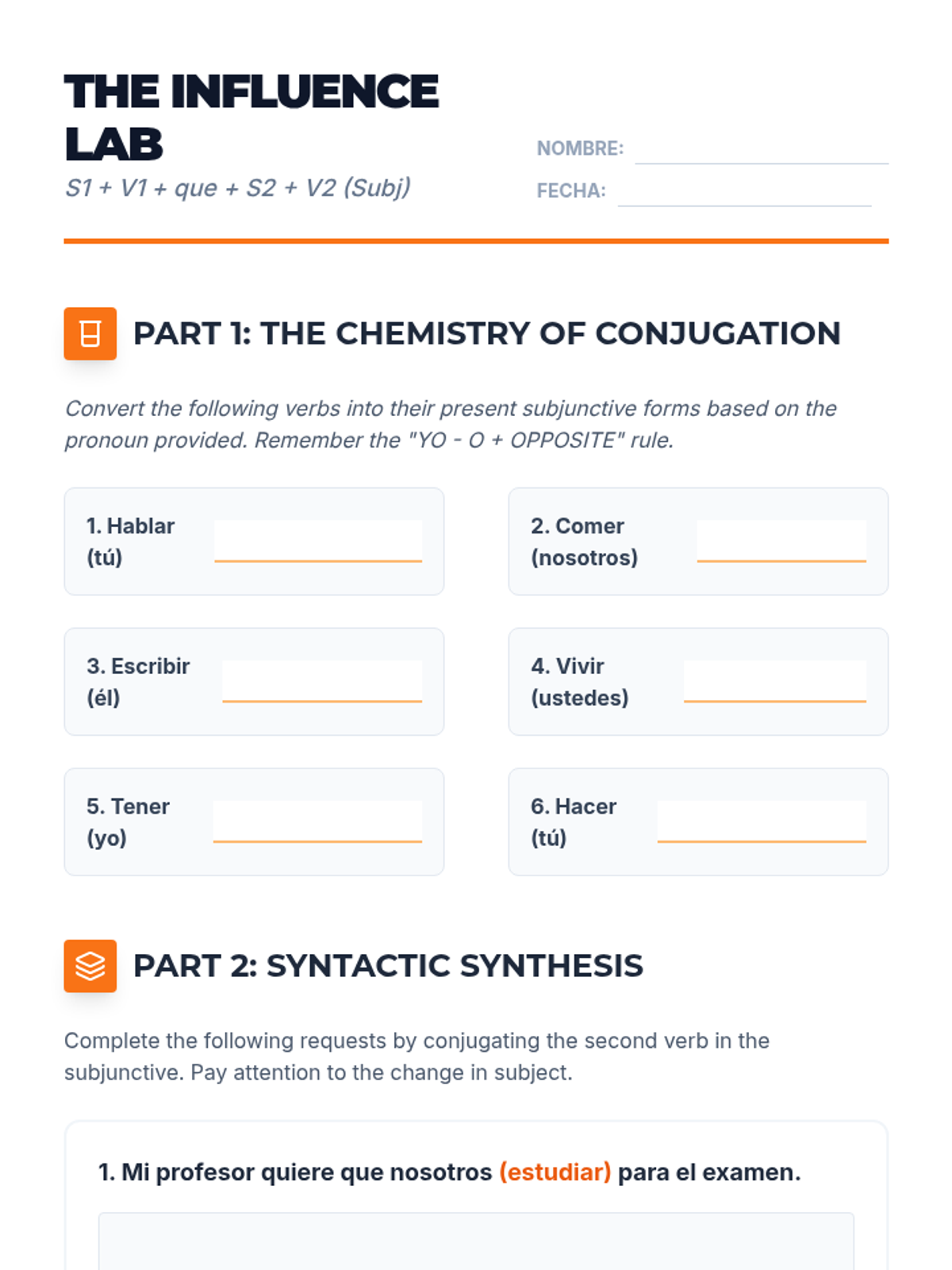
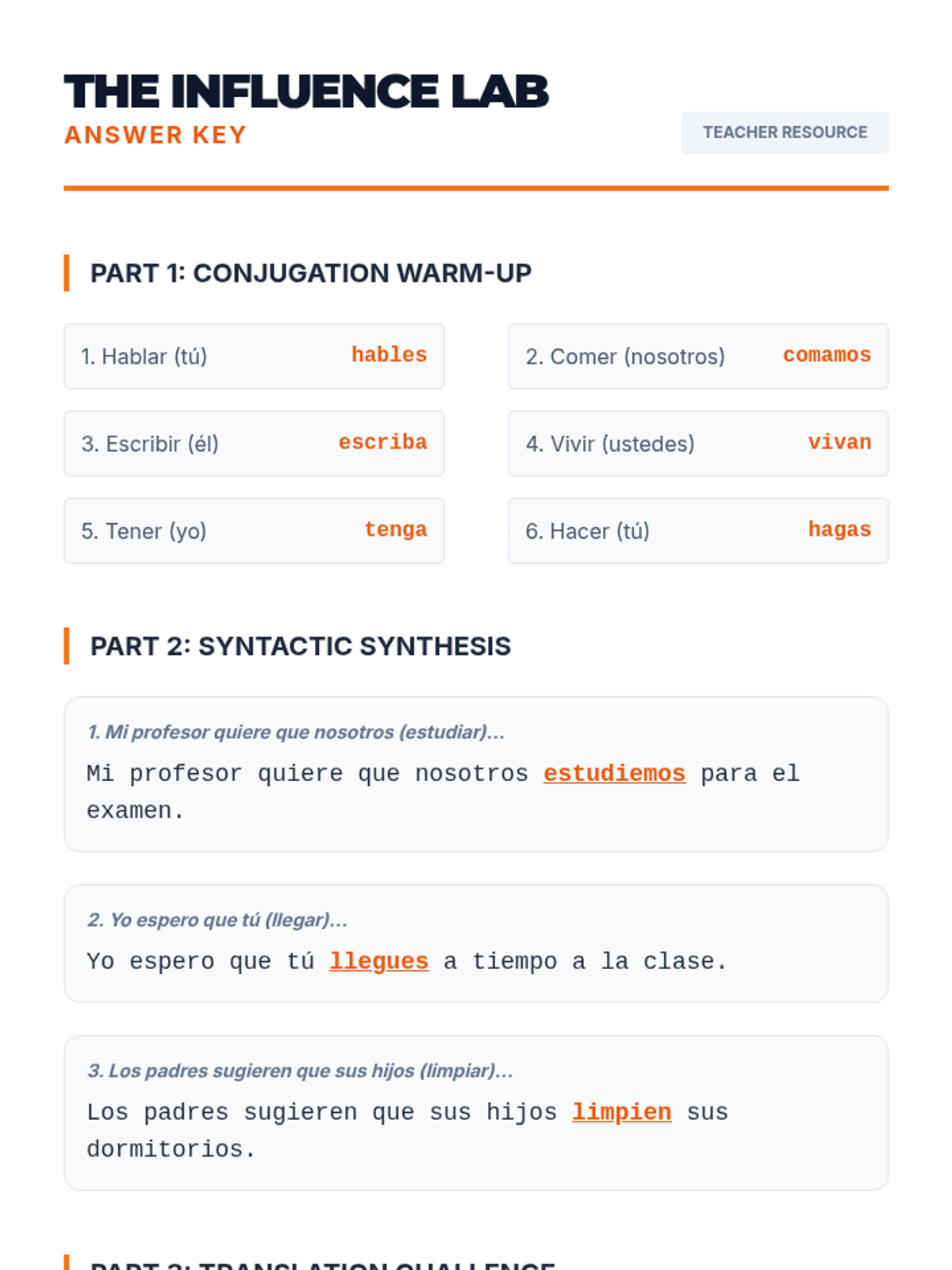
A comprehensive 8th-grade Spanish sequence introducing the subjunctive mood. Students progress from basic conjugation and verbs of influence to expressing emotions, doubt, and impersonal opinions, culminating in a persuasive 'Manifesto for Change'.
A comprehensive exploration of modern technology and media influence for intermediate Spanish students. This sequence covers technical vocabulary, social media interactions, digital citizenship, future innovations, and the psychological impact of connectivity.
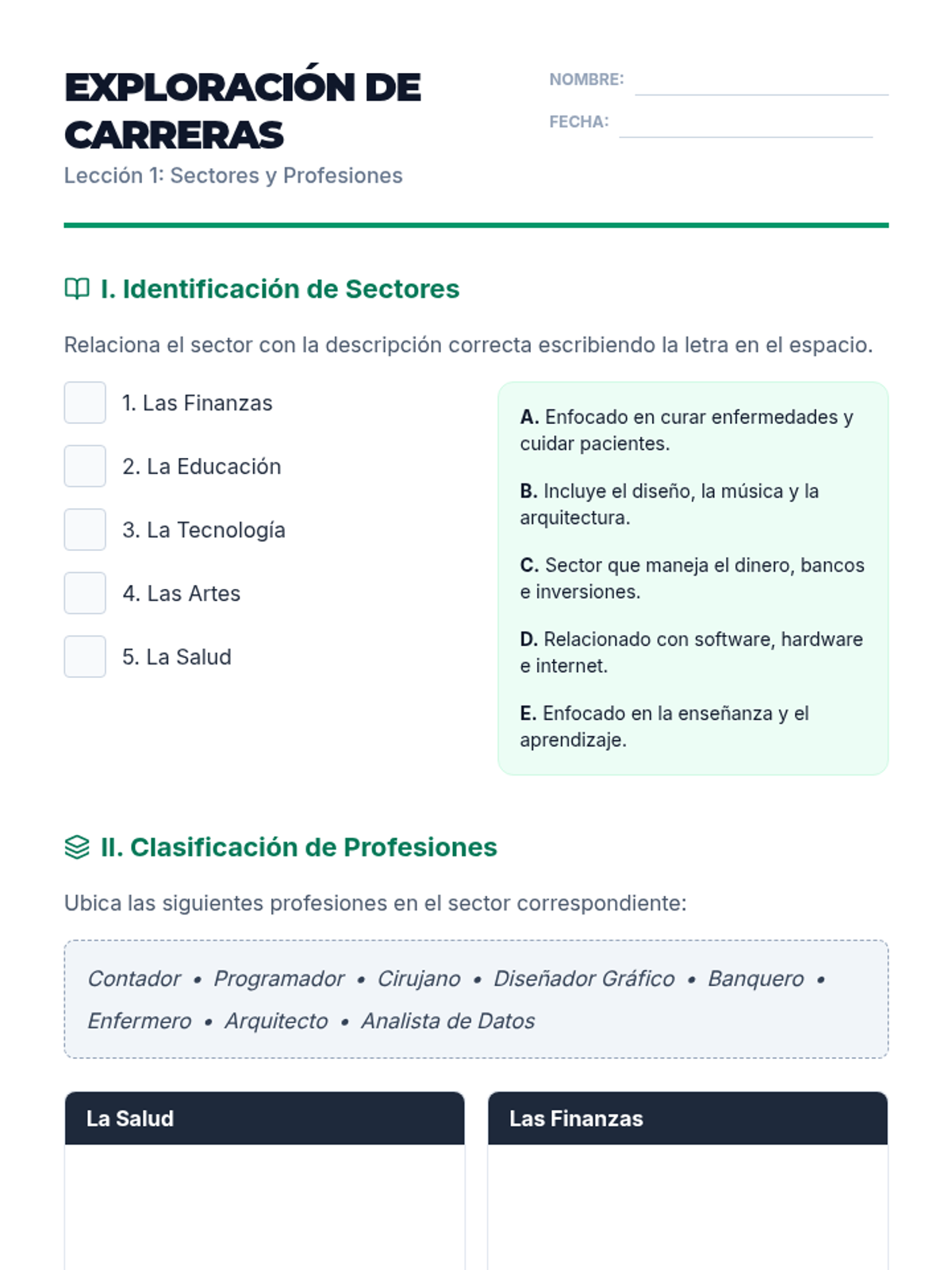
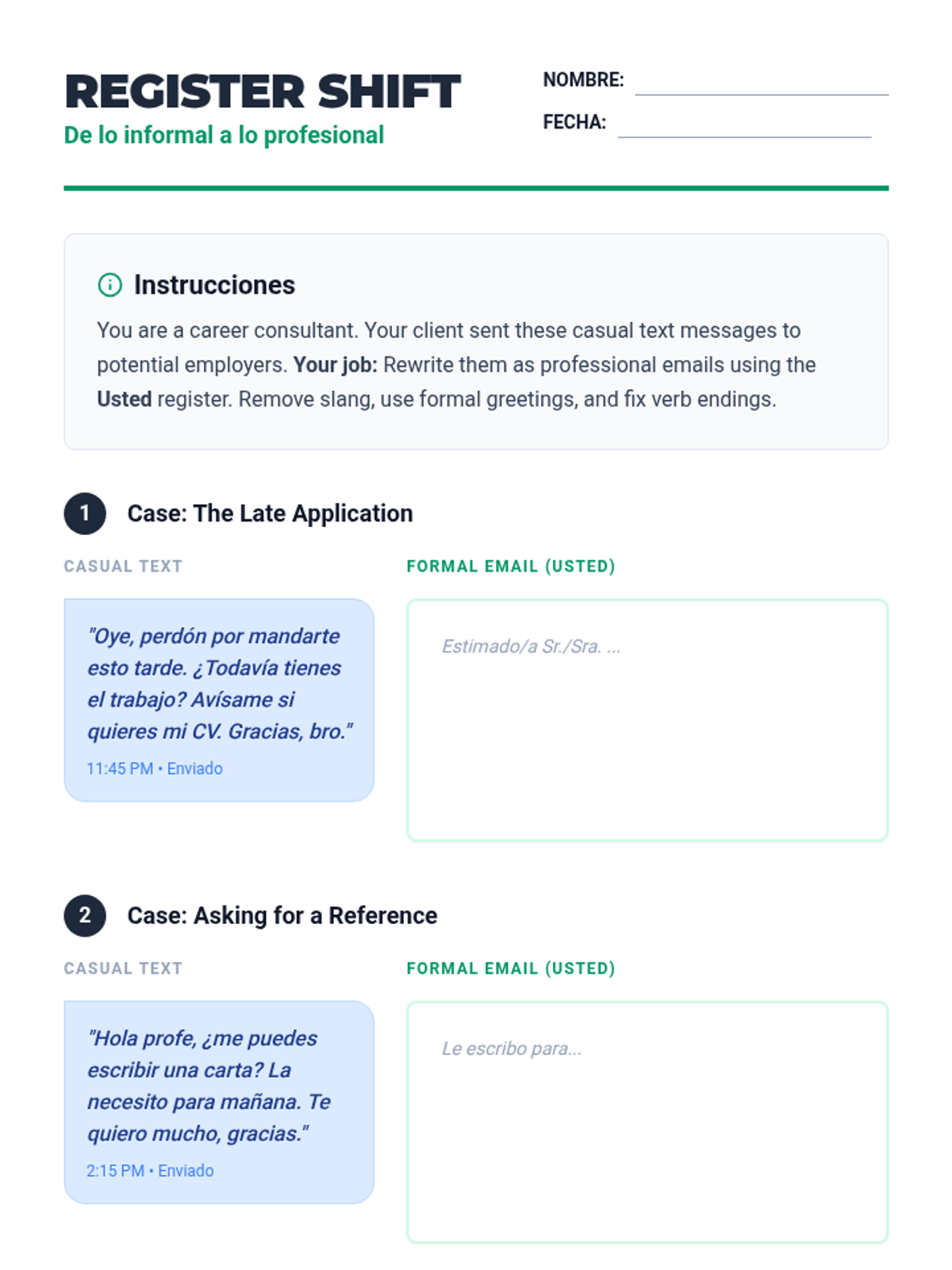
This sequence bridges the gap between academic Spanish and the professional world, focusing on vocabulary needed for careers, interviews, and formal correspondence. Students explore vocabulary related to professions, personal qualities, and professional etiquette, moving away from casual slang toward the formal register ('usted').
This sequence prepares 8th-grade Spanish students for professional environments by teaching formal registers, career-specific vocabulary, and job-seeking skills like resume writing and interviewing. Students move from understanding the 'tú' vs. 'usted' distinction to executing a full mock interview simulation.
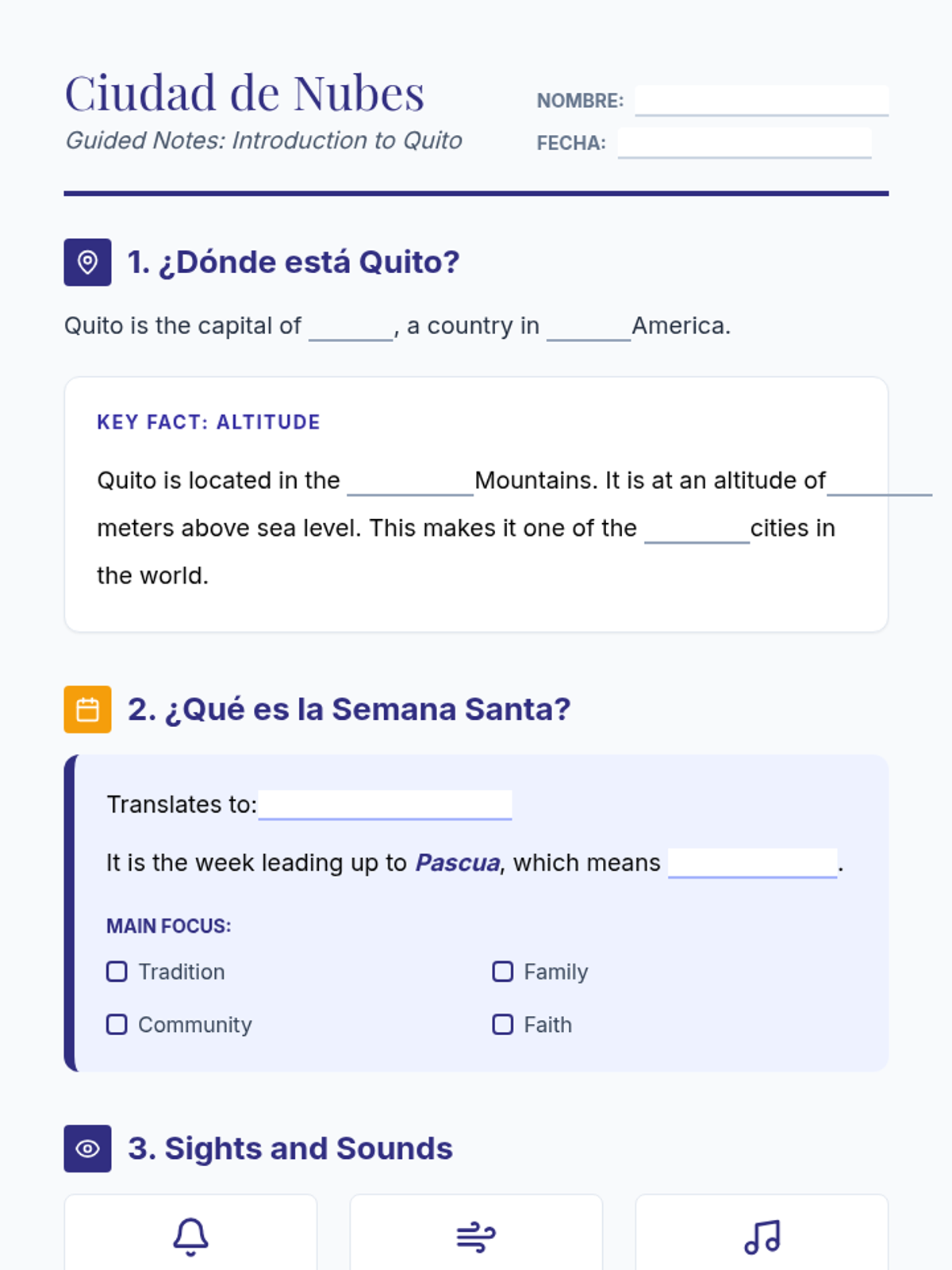
A 3-day cultural immersion unit for Spanish 1 students exploring the unique Semana Santa traditions in Quito, Ecuador, focusing on the Jesús del Gran Poder procession and community culinary traditions.
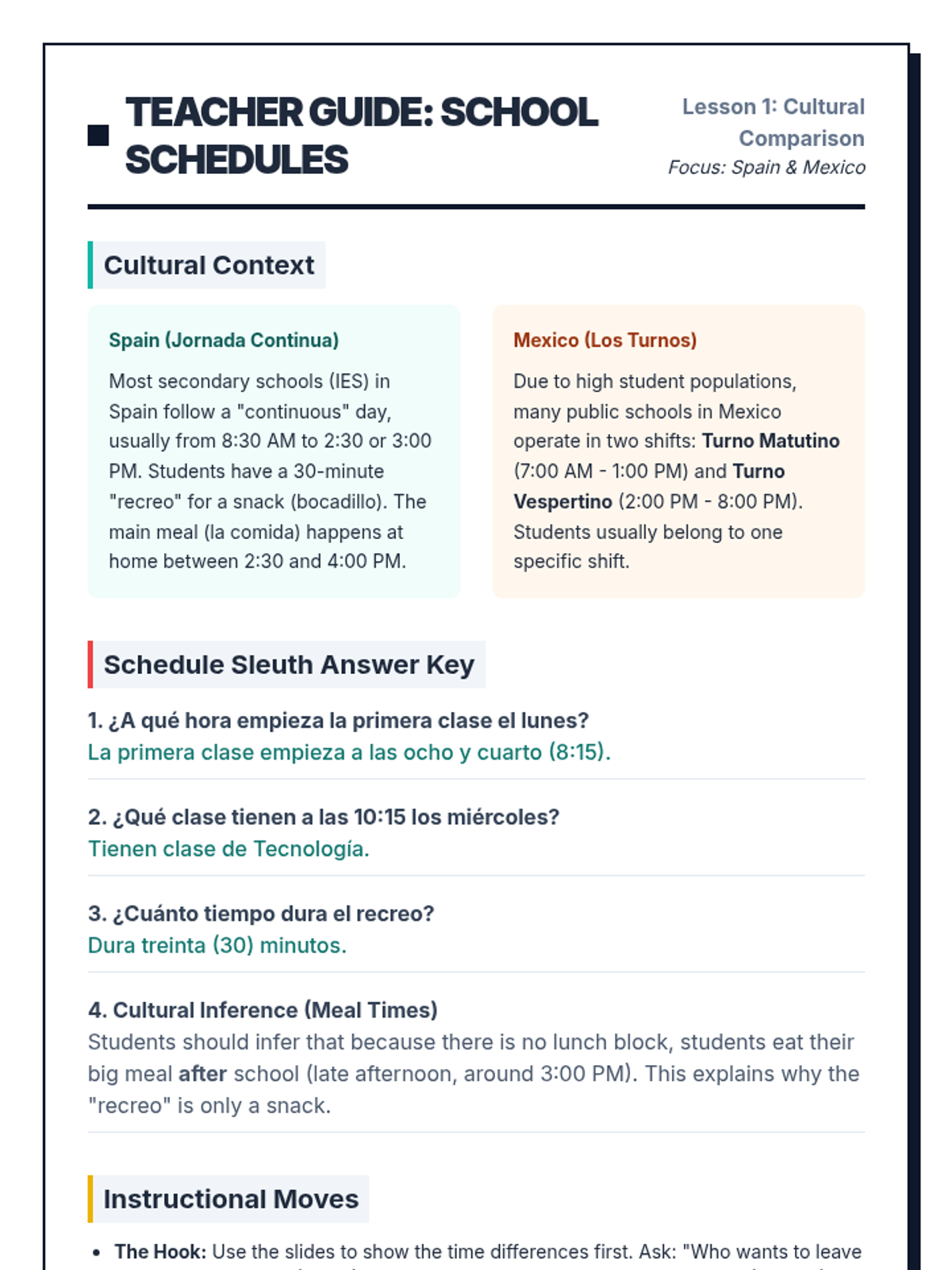
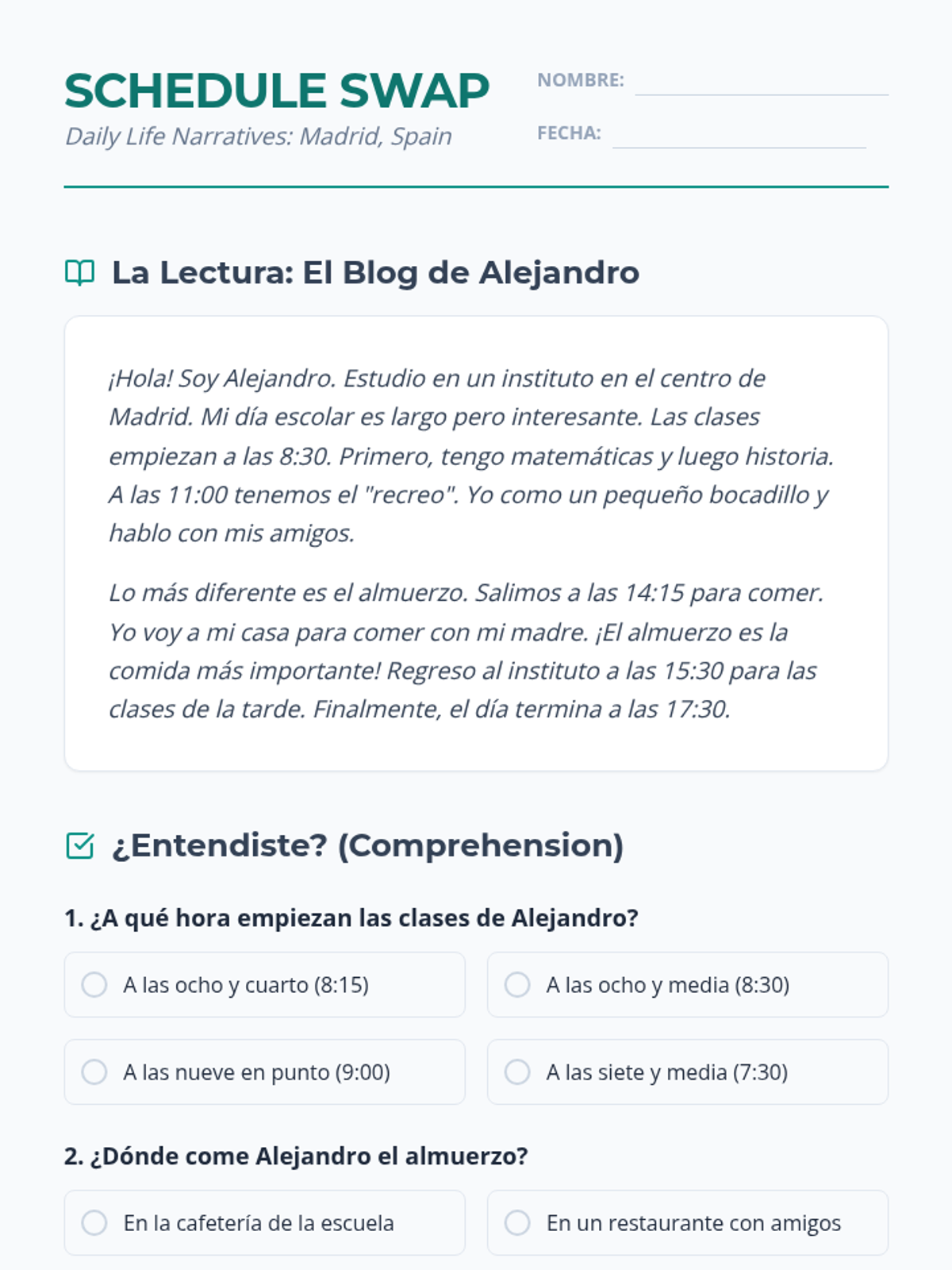
A comprehensive unit for beginner Spanish students focused on reading and interpreting daily routines, school schedules, and cultural narratives from Spanish-speaking countries. Students build vocabulary and cultural literacy through authentic-style texts and comparative analysis.
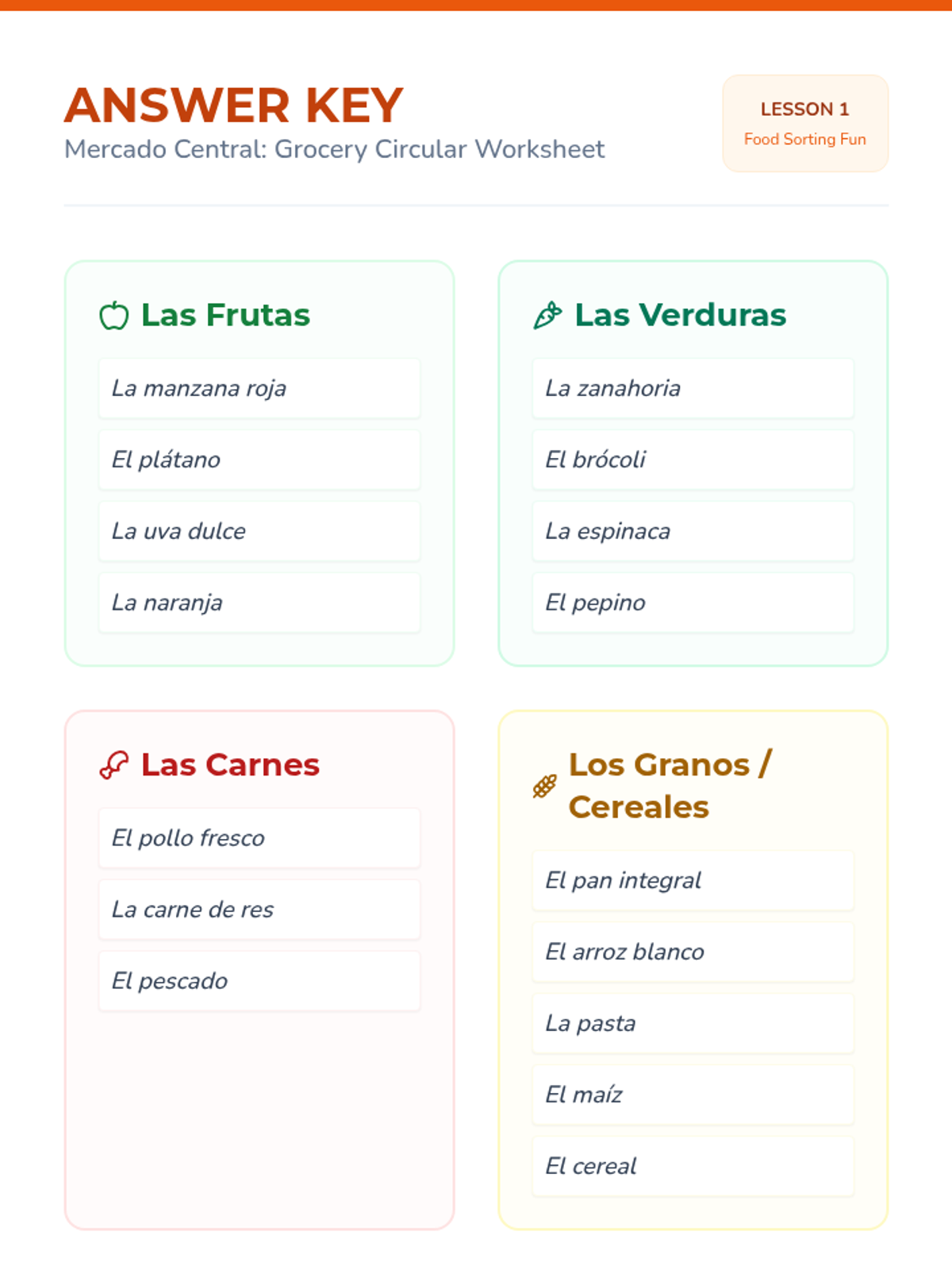
A comprehensive unit for high school Spanish beginners focusing on culinary literacy. Students move from basic food categorization to analyzing complex restaurant reviews, mastering vocabulary and the verb 'gustar' through authentic texts.
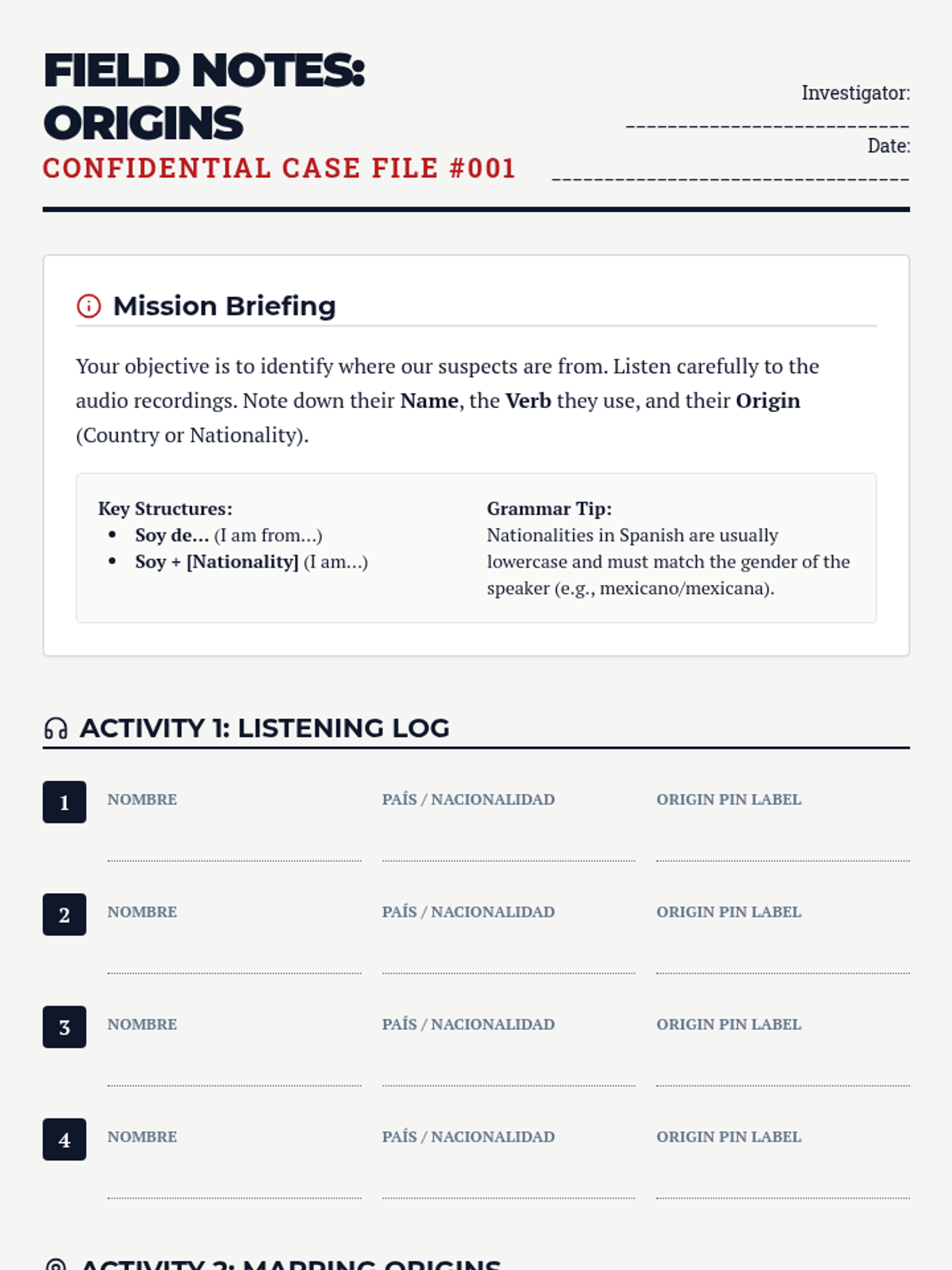
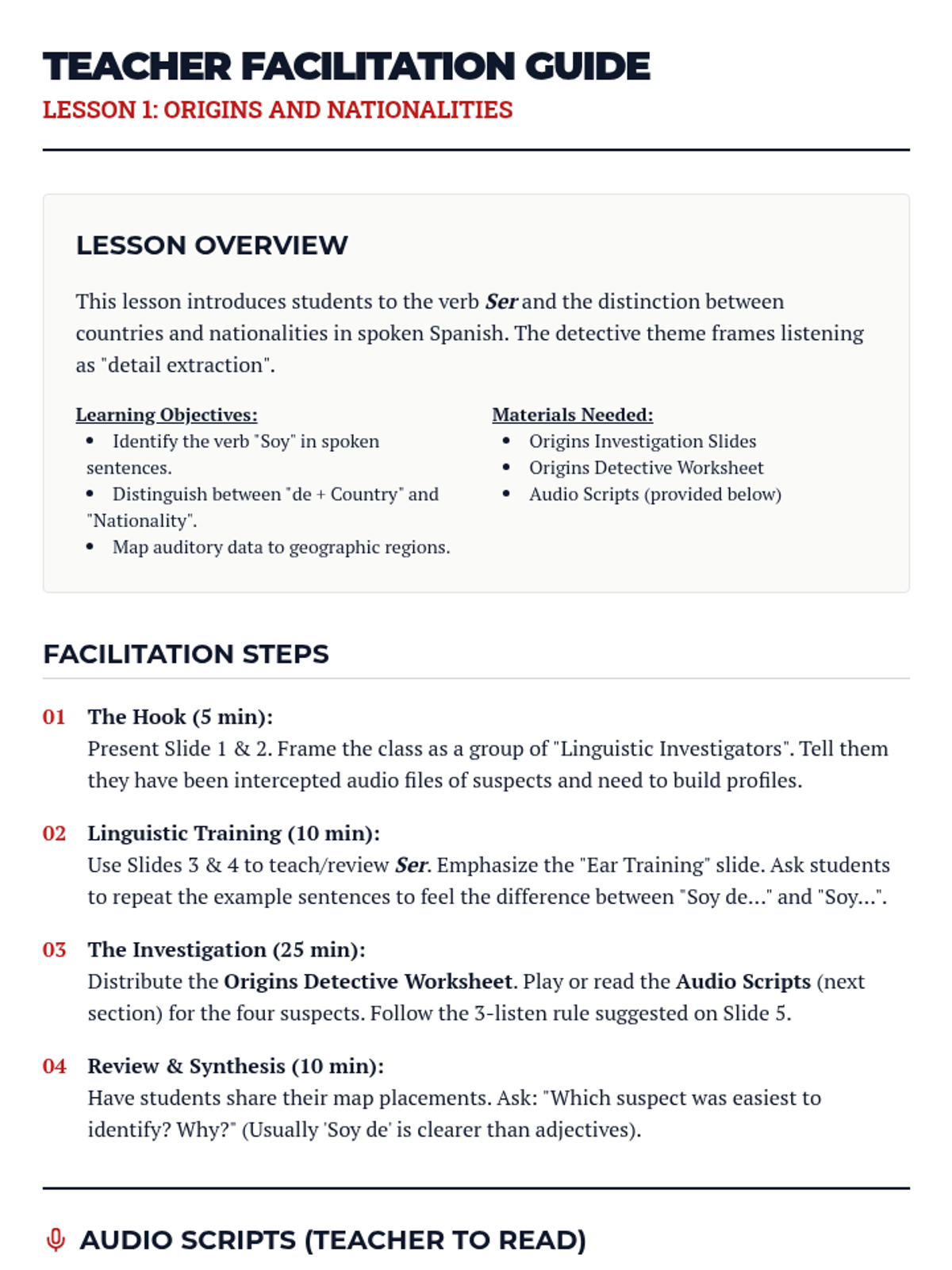
A case-study approach to Spanish listening where students act as investigators to build profiles of individuals based on spoken narratives, focusing on 'Ser', 'Tener', and personal vocabulary.
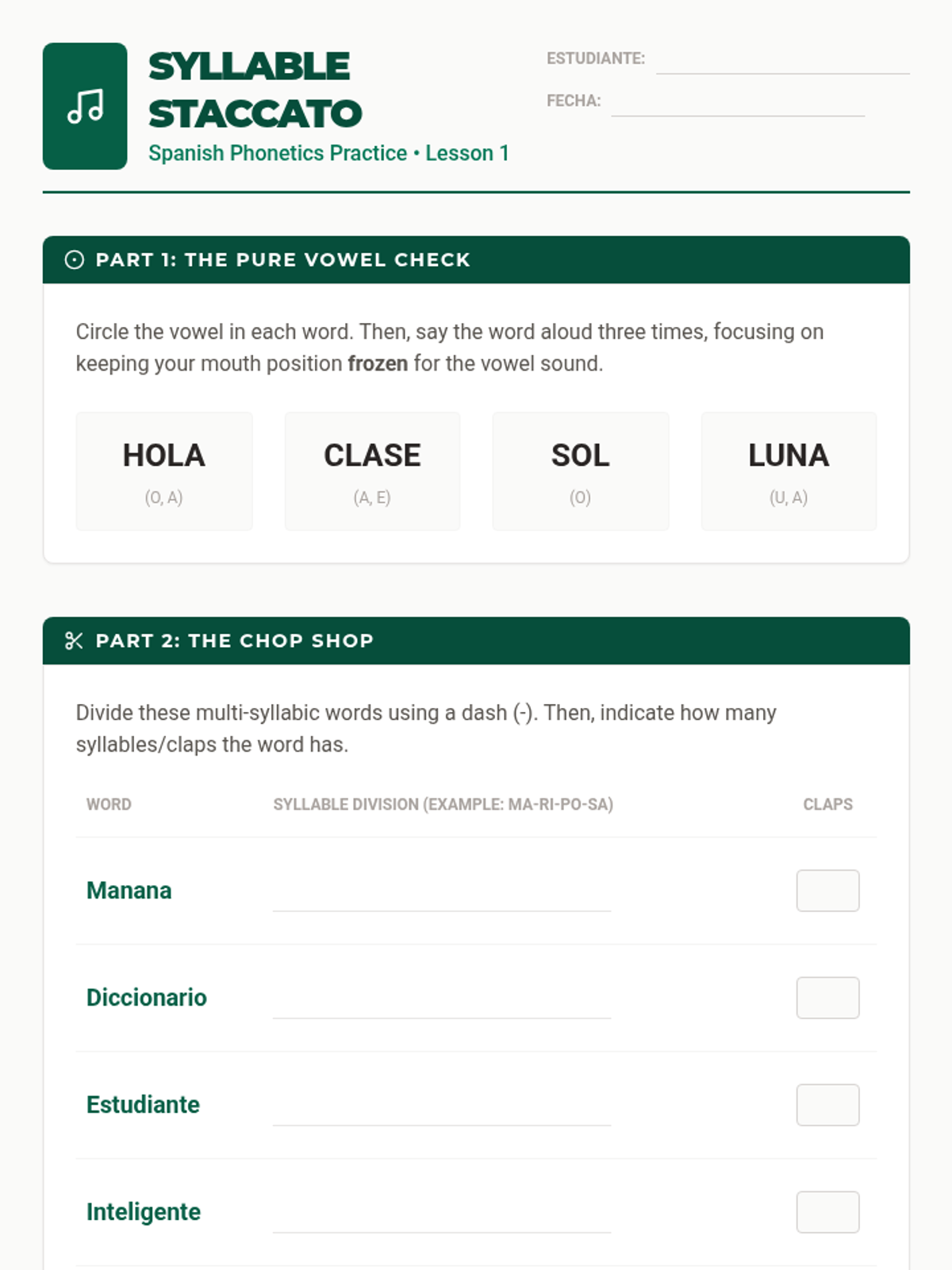
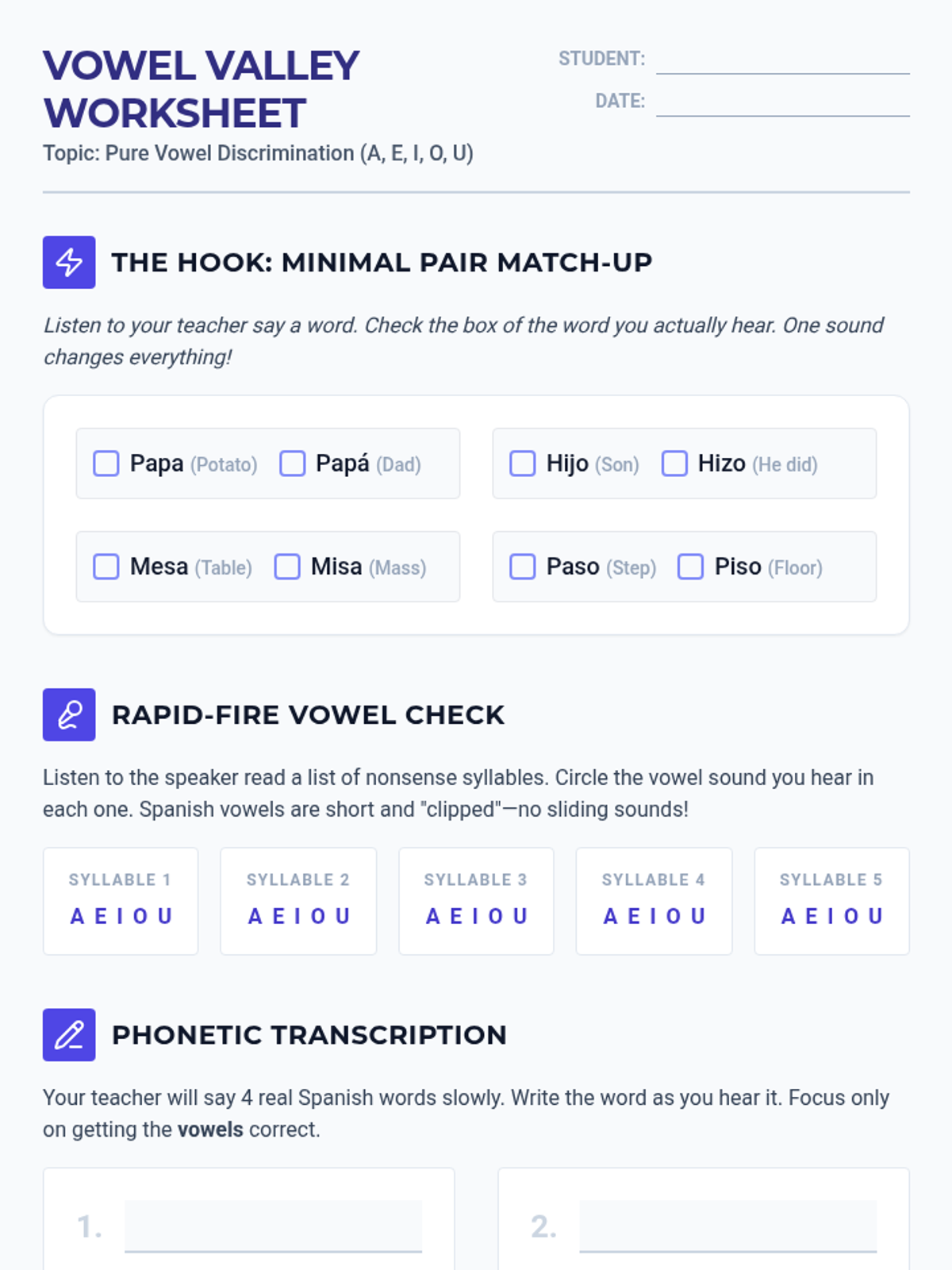
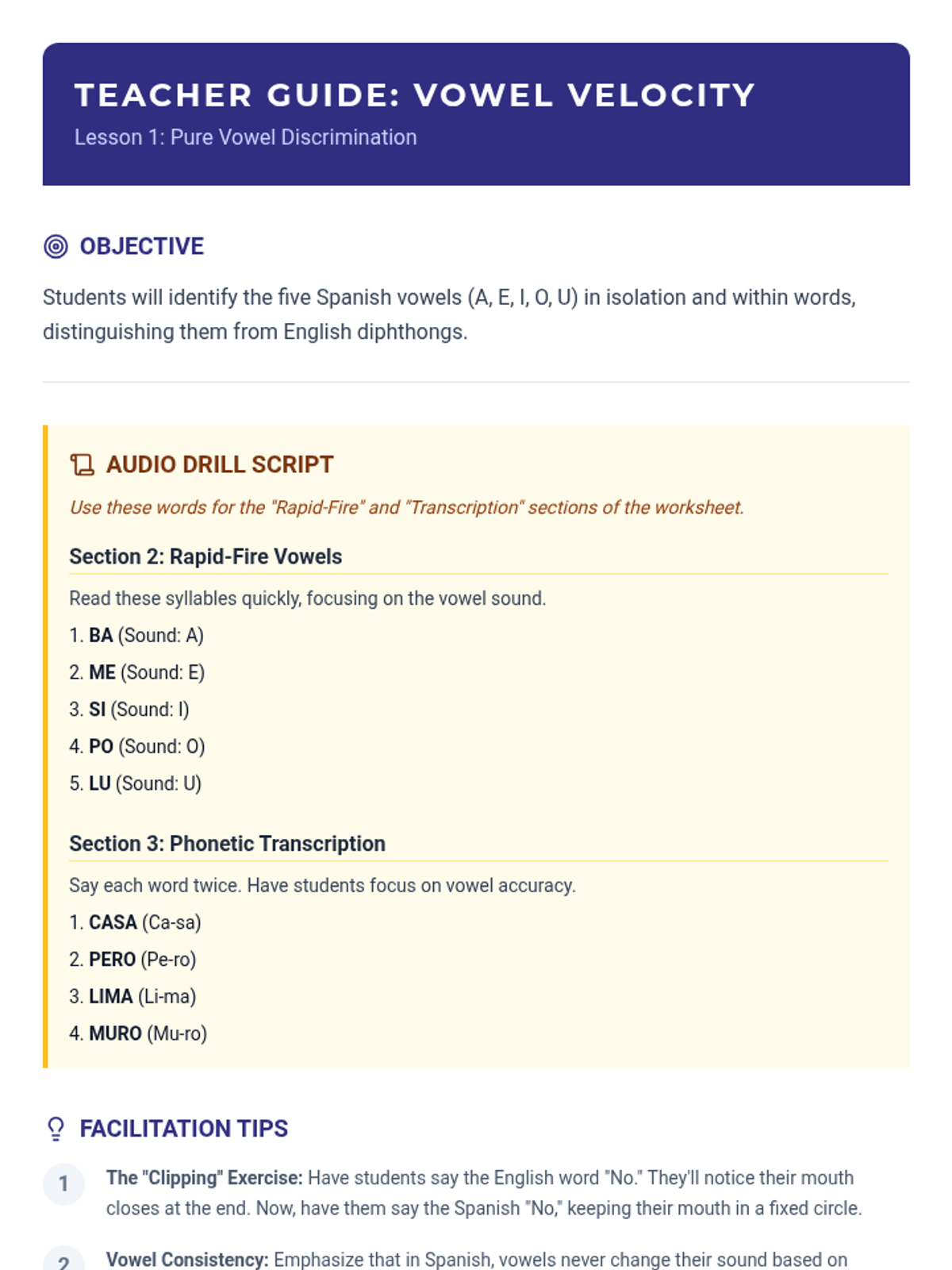
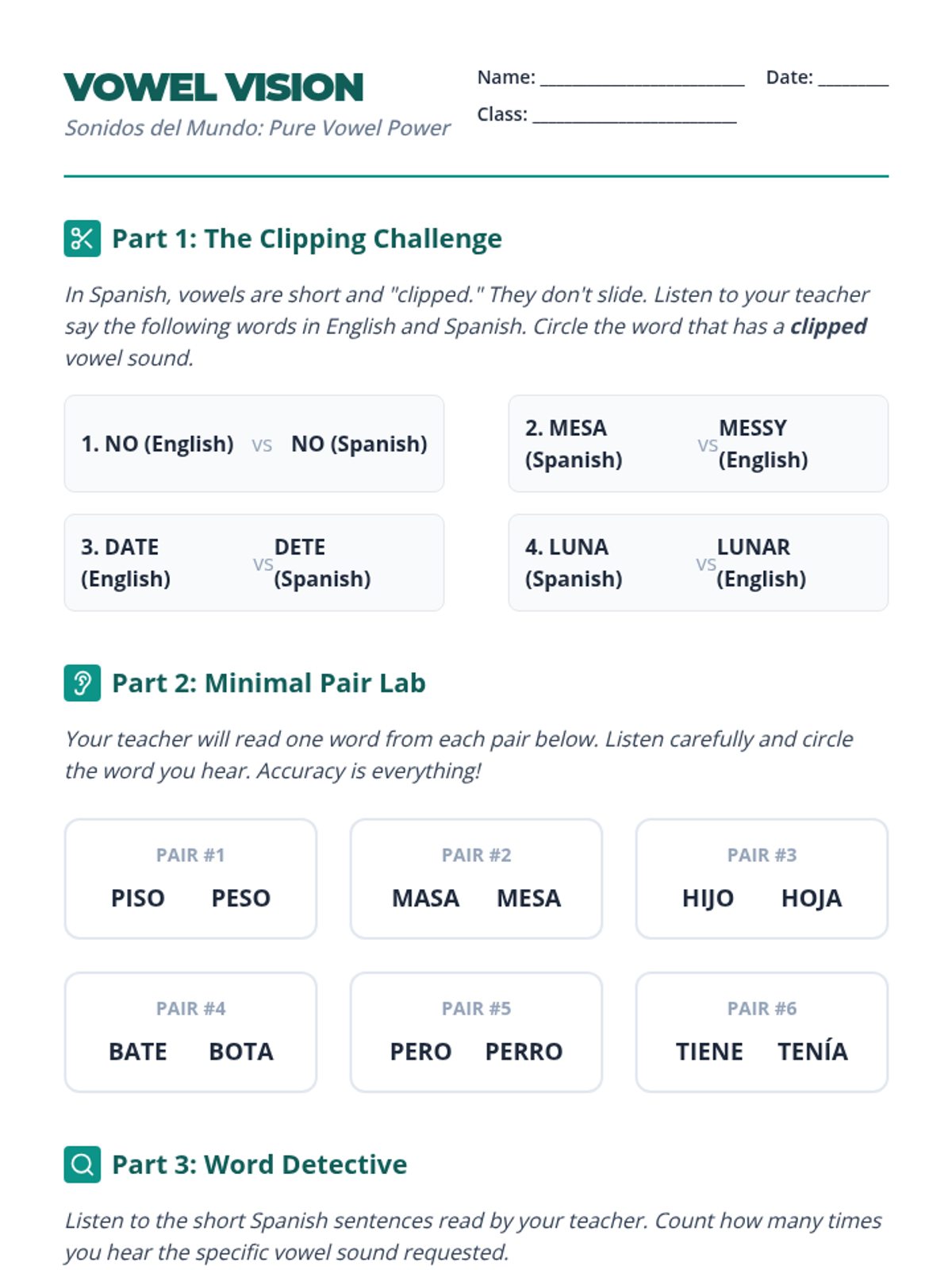
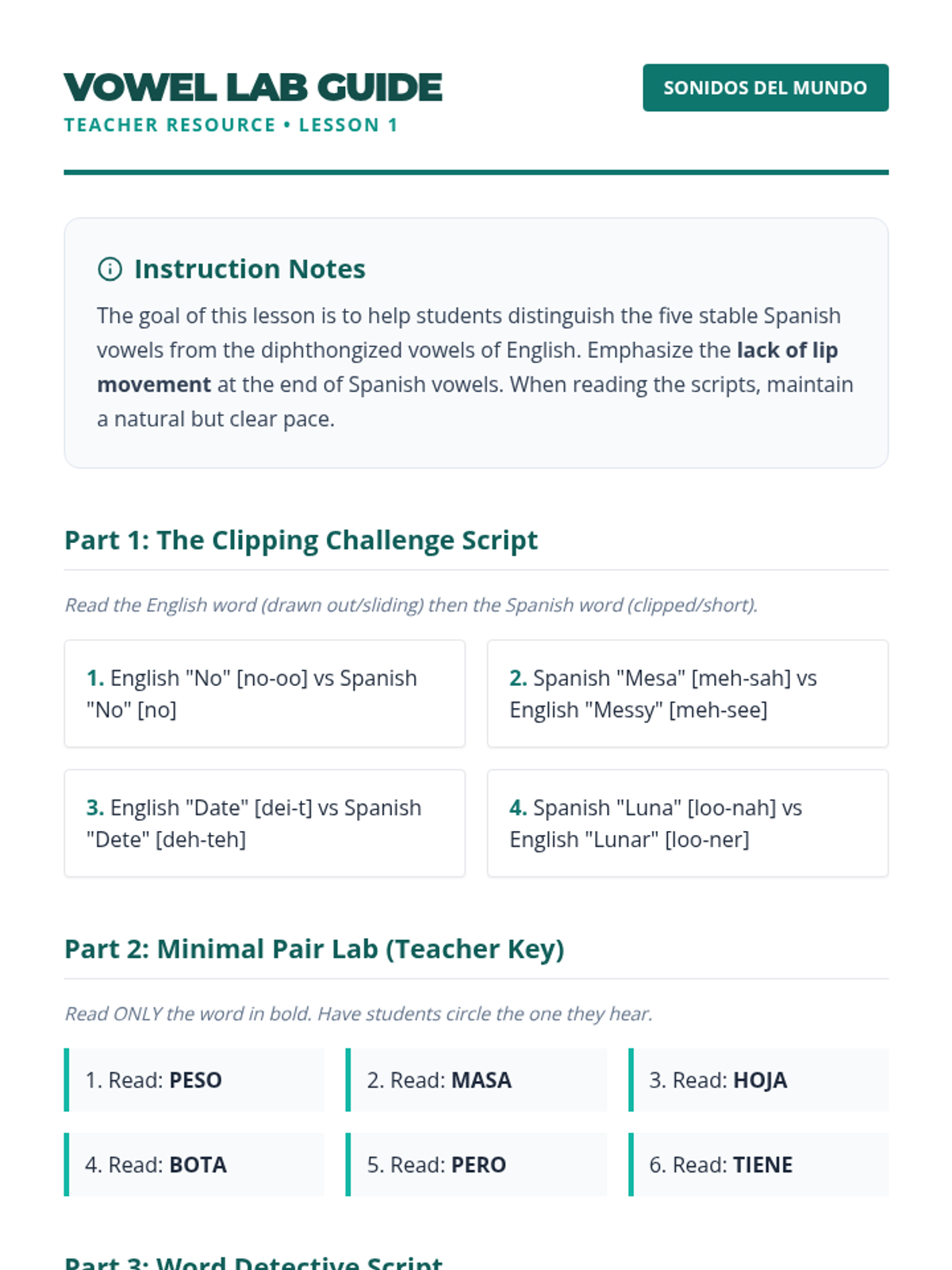
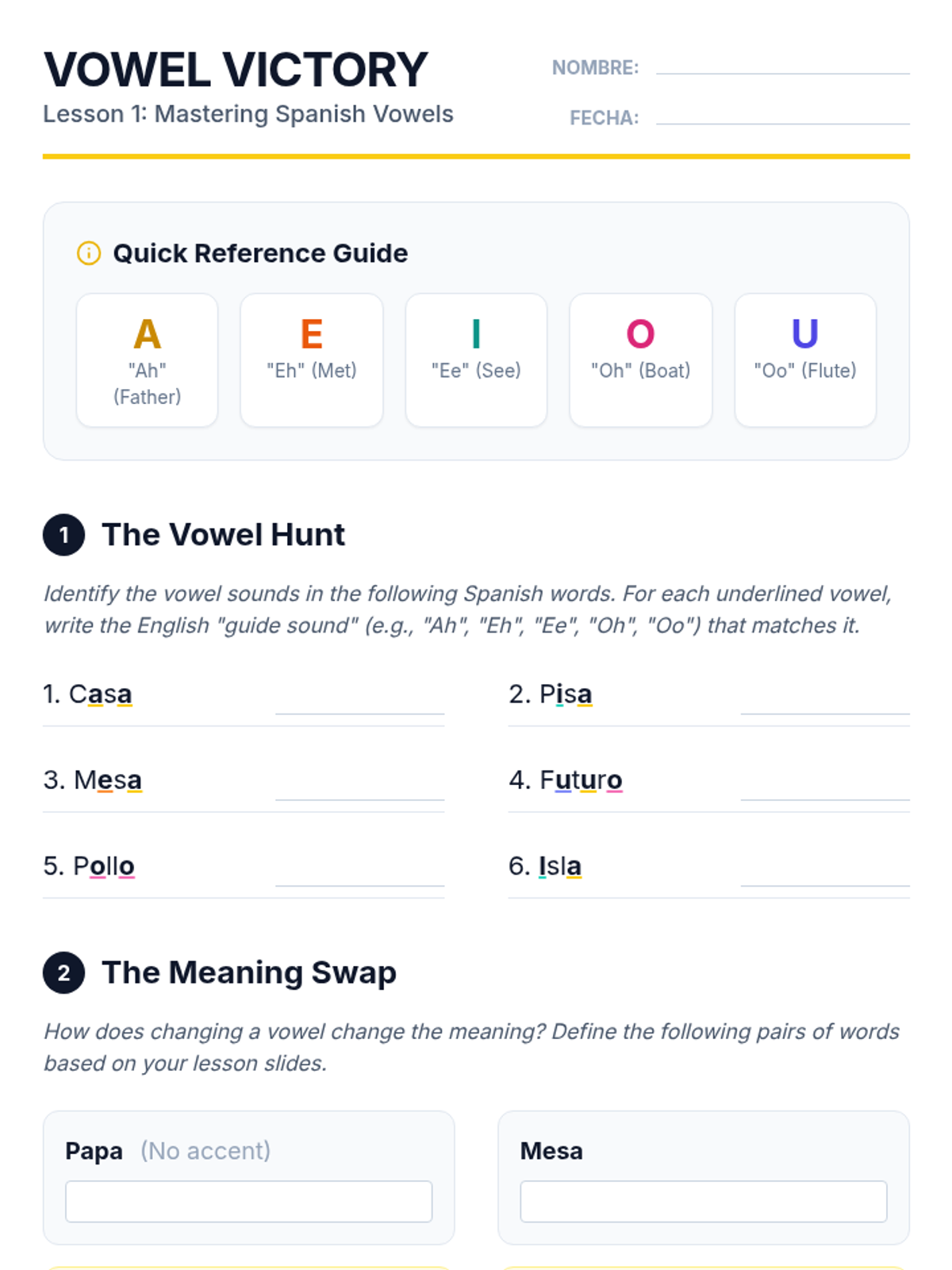
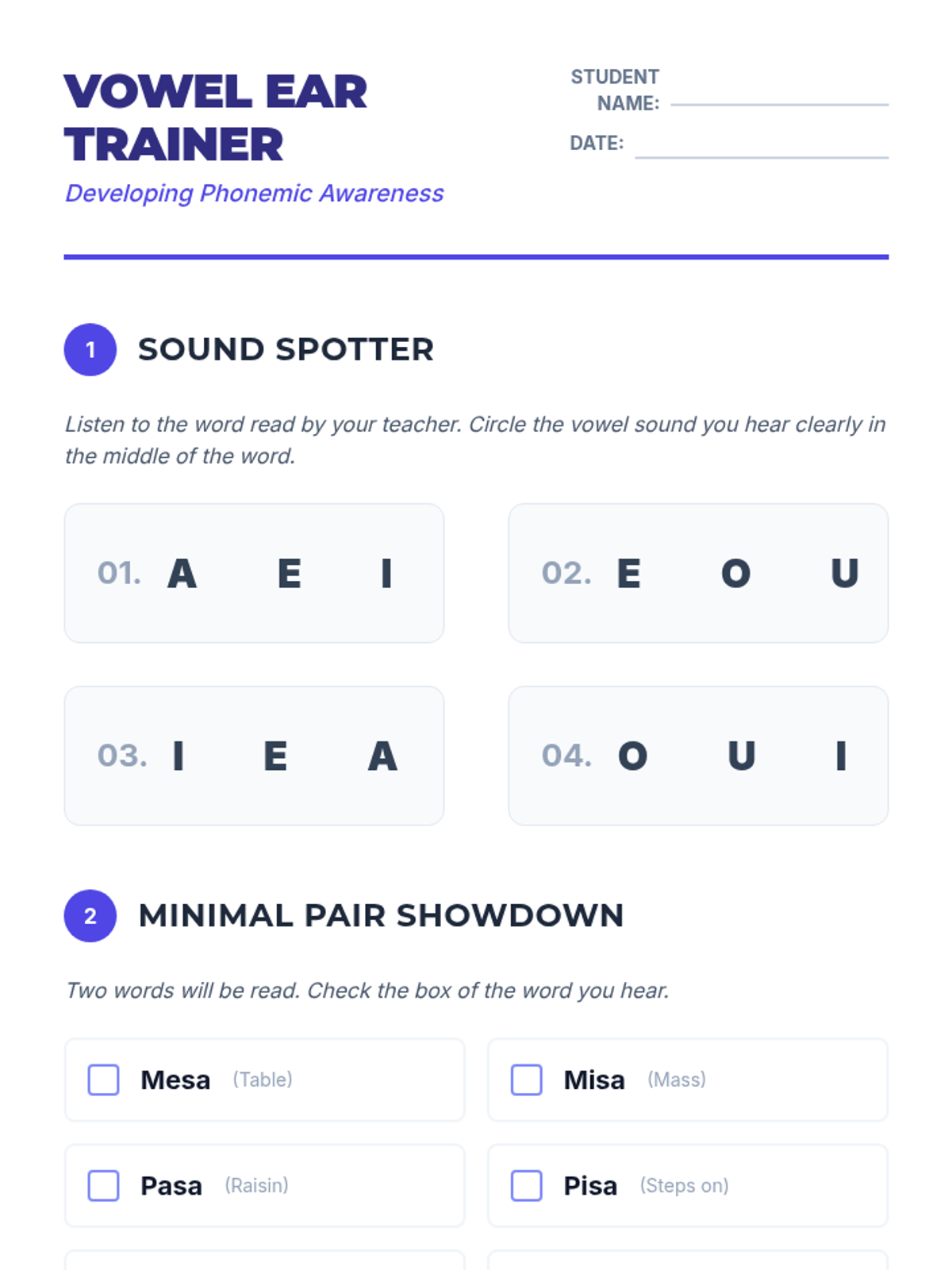
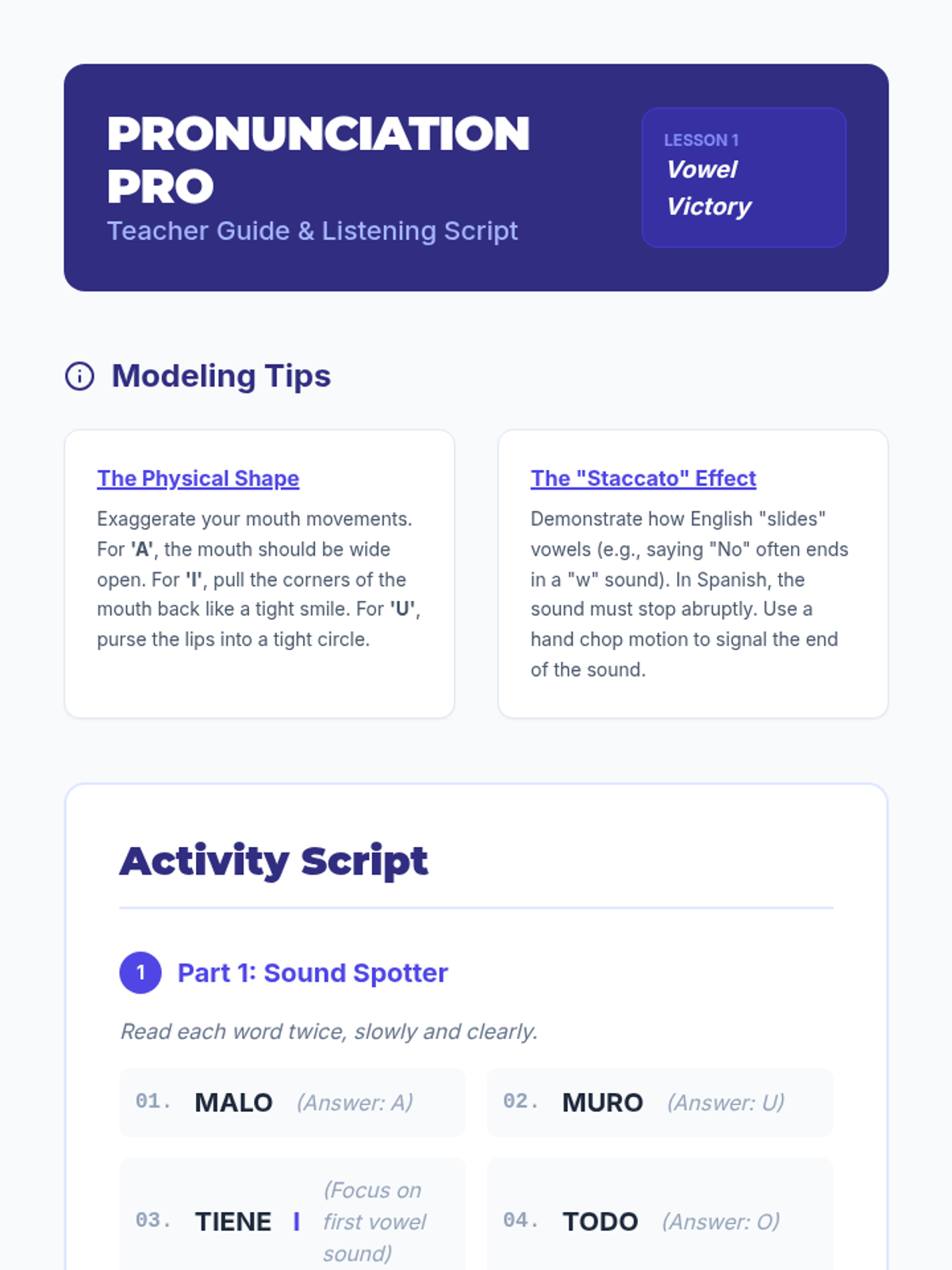
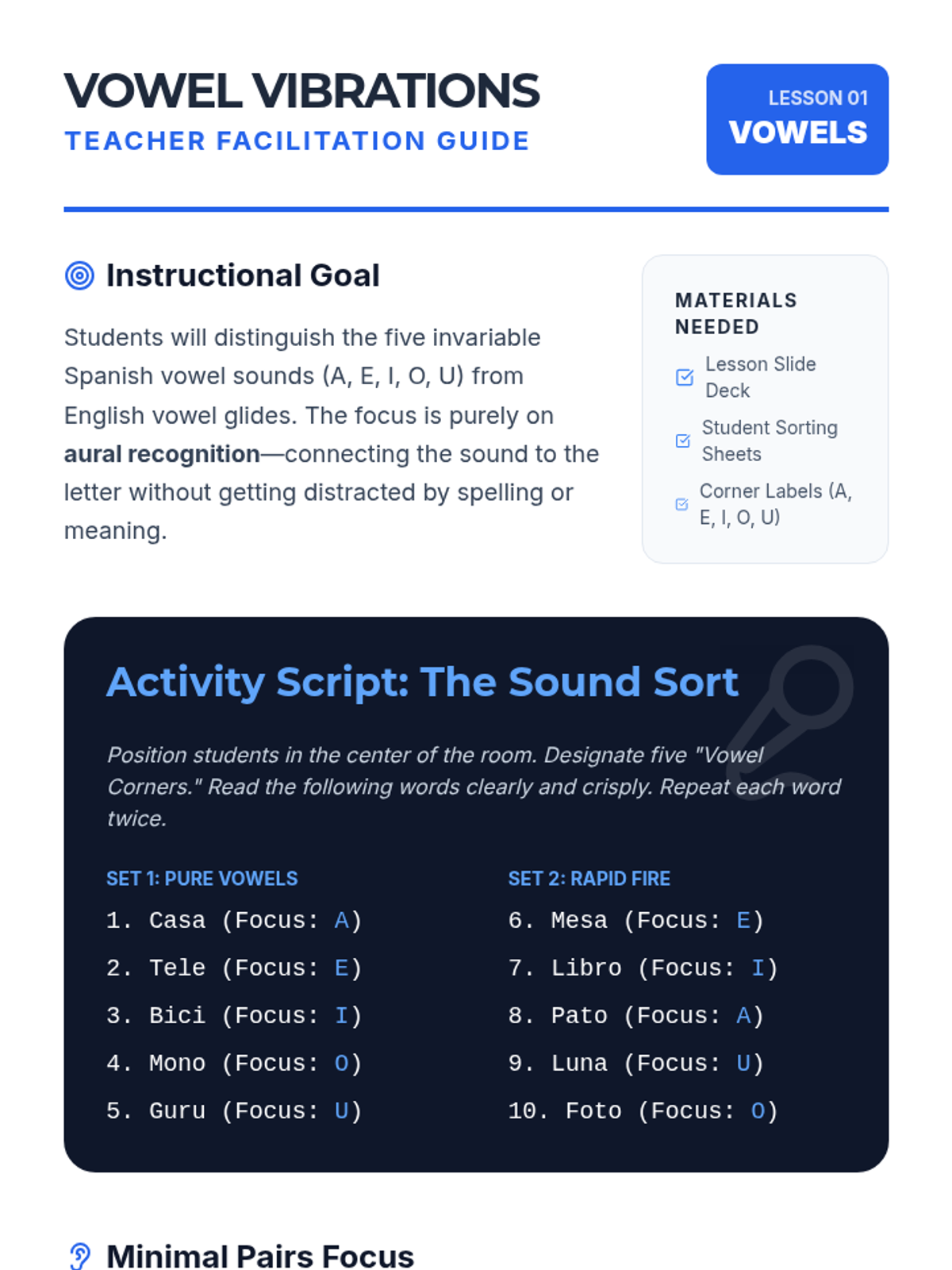
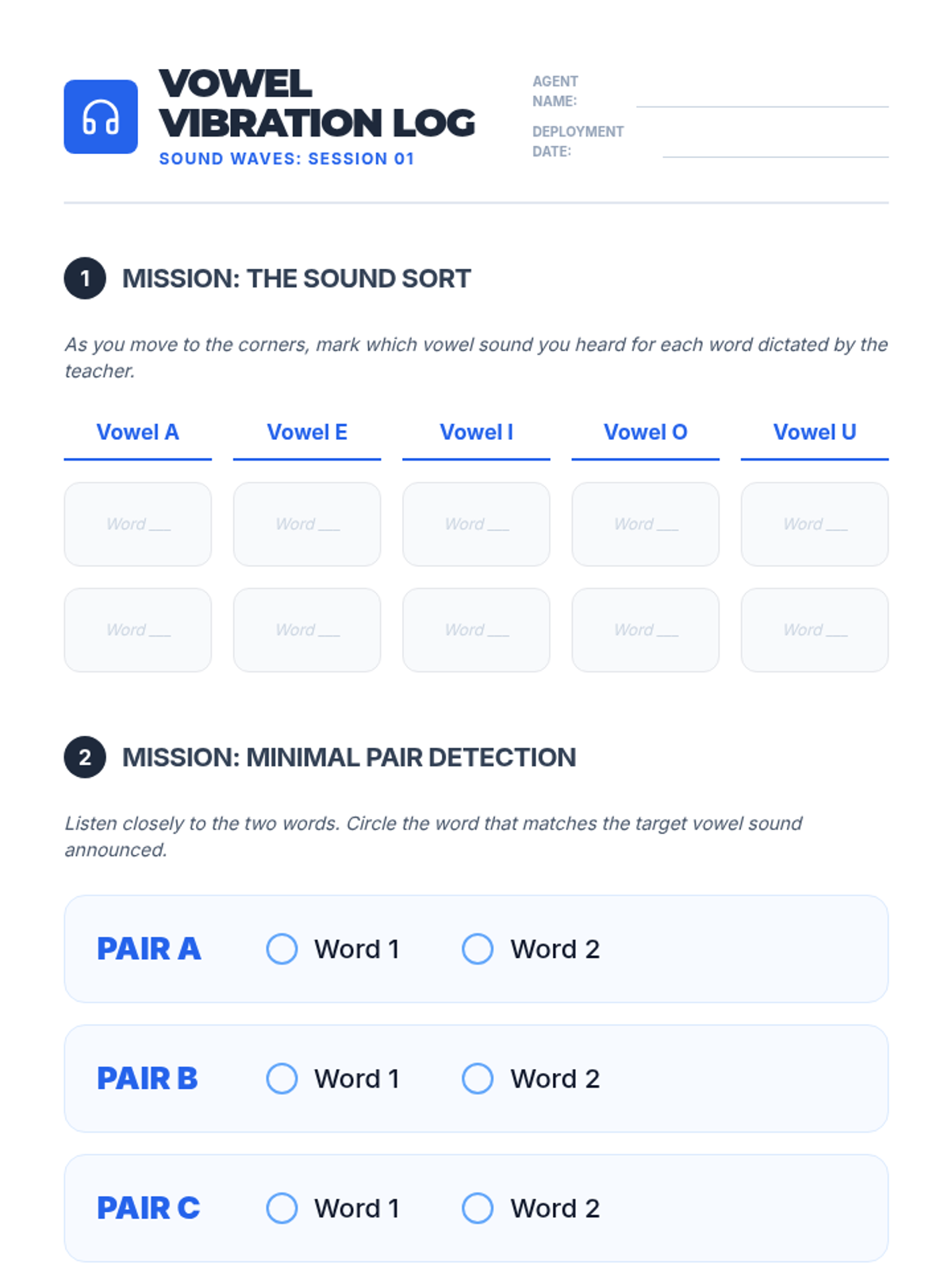
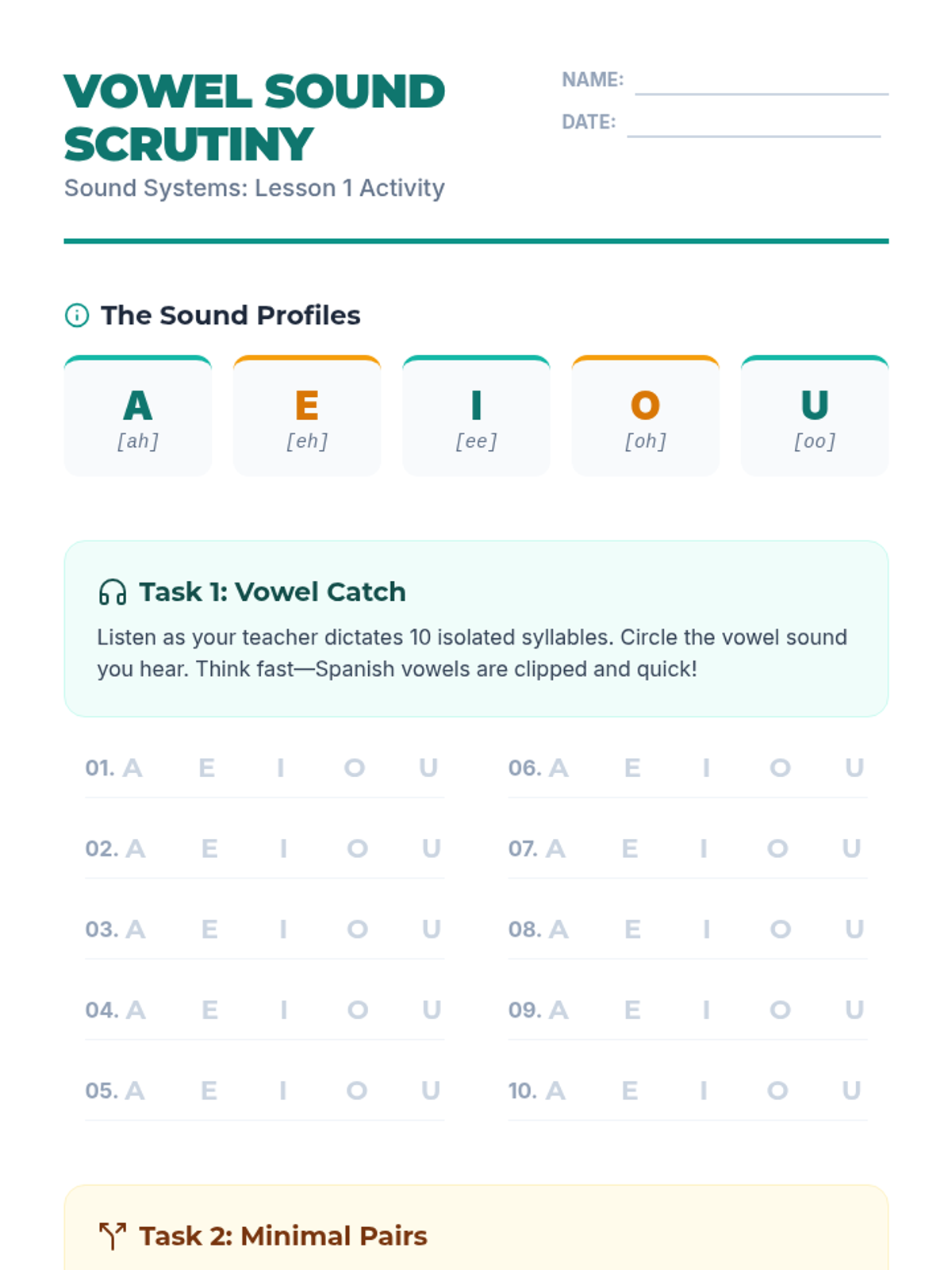
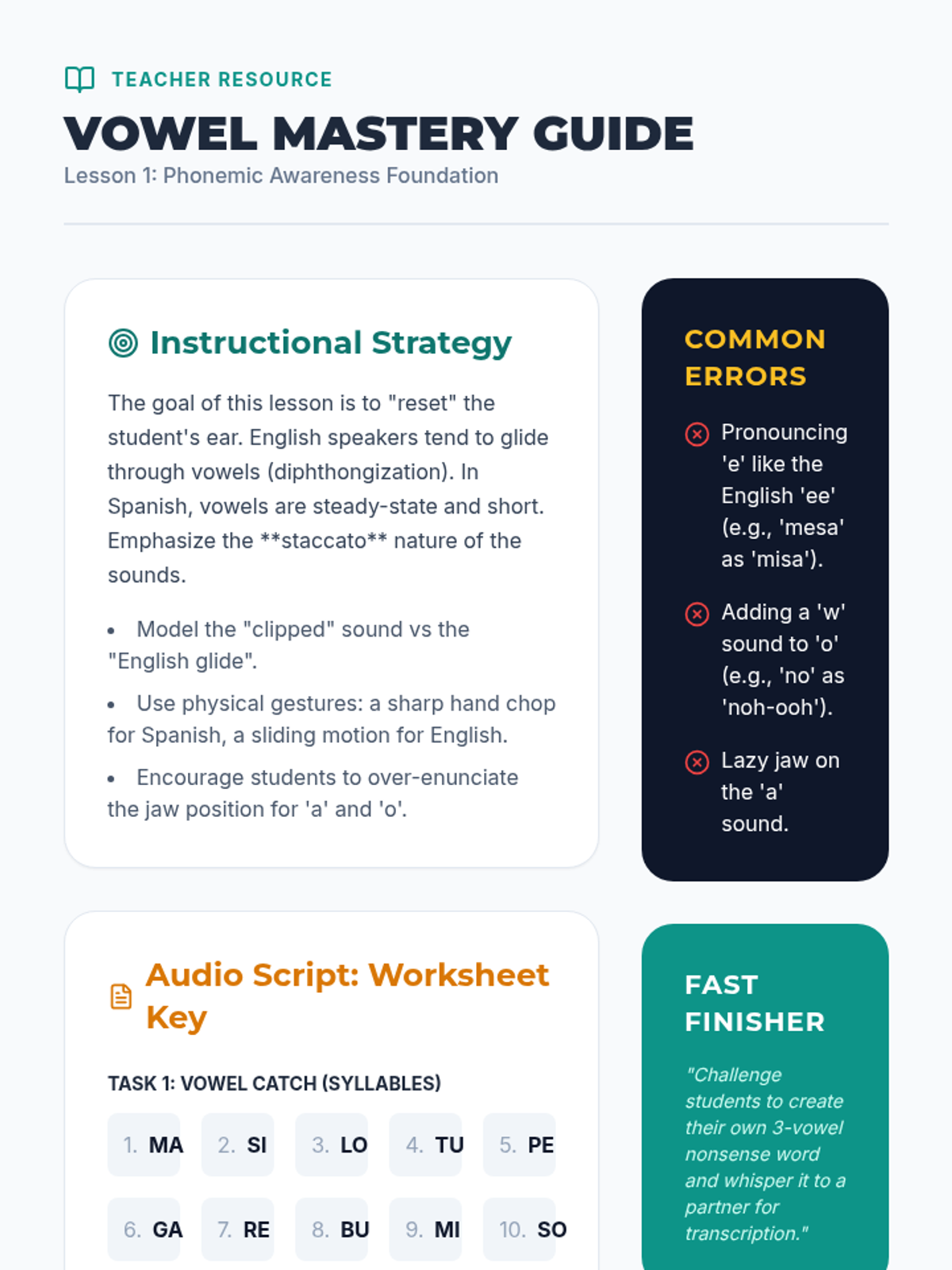
This sequence immerses students in the fundamental sound systems of the Spanish language, focusing on auditory discrimination of pure vowels, tricky consonants, syllable stress, and connected speech. Through guided workshops and dictation exercises, learners develop the ability to distinguish similar-sounding words and transcribe spoken phonemes, moving from isolated sounds to fluid communication.
Students explore cultural perspectives by reading first-person narratives from teenagers across the Spanish-speaking world. They compare daily routines, school, and family life to their own experiences while building beginner-level reading and vocabulary skills in Spanish.
A comprehensive 9th-grade Spanish sequence focused on mastering phonetic accuracy through listening. Students progress from isolating vowels to transcribing connected speech, learning to navigate tricky consonants, syllable stress, and natural linking (sinalefa) to improve both comprehension and pronunciation.
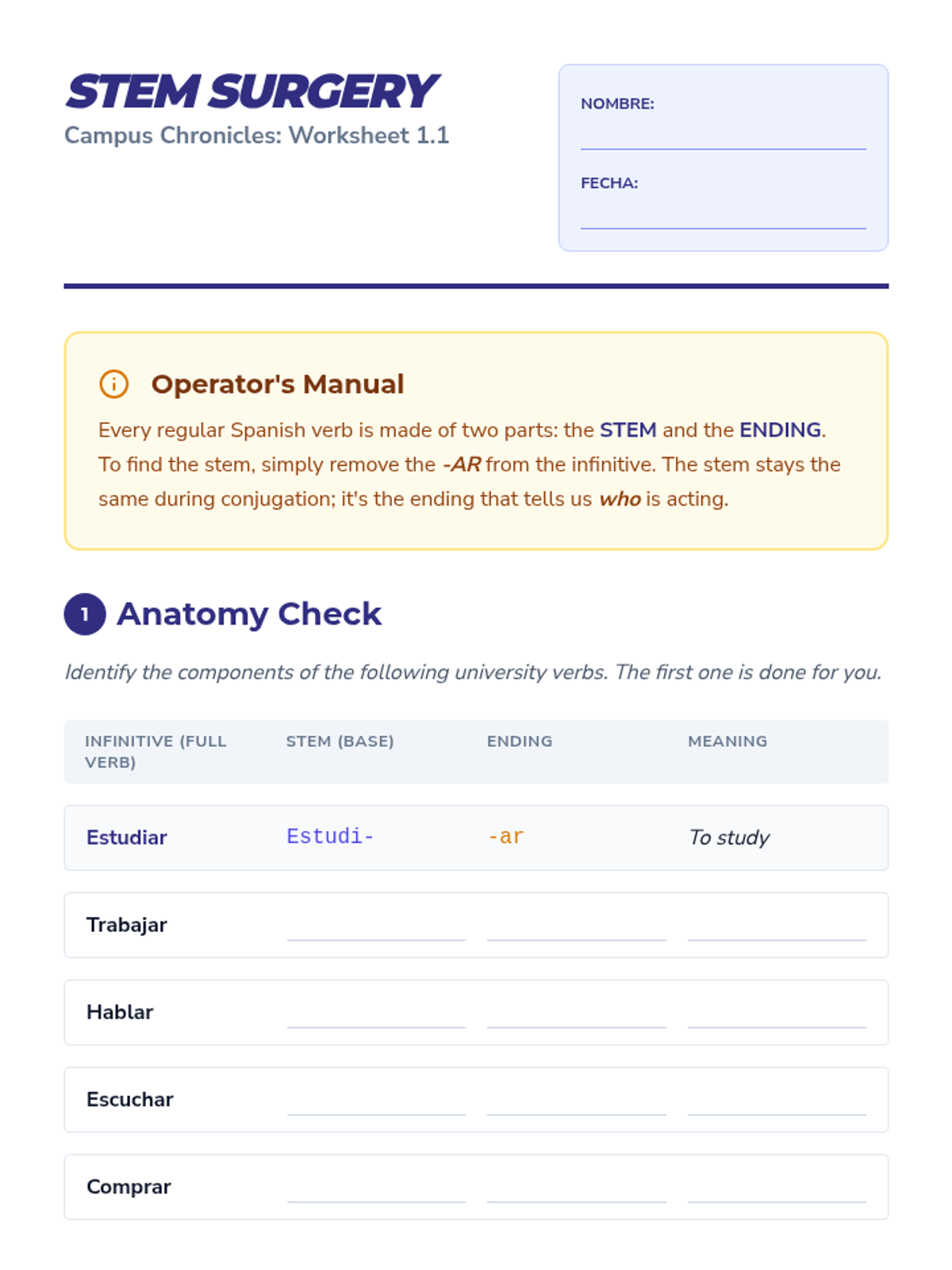
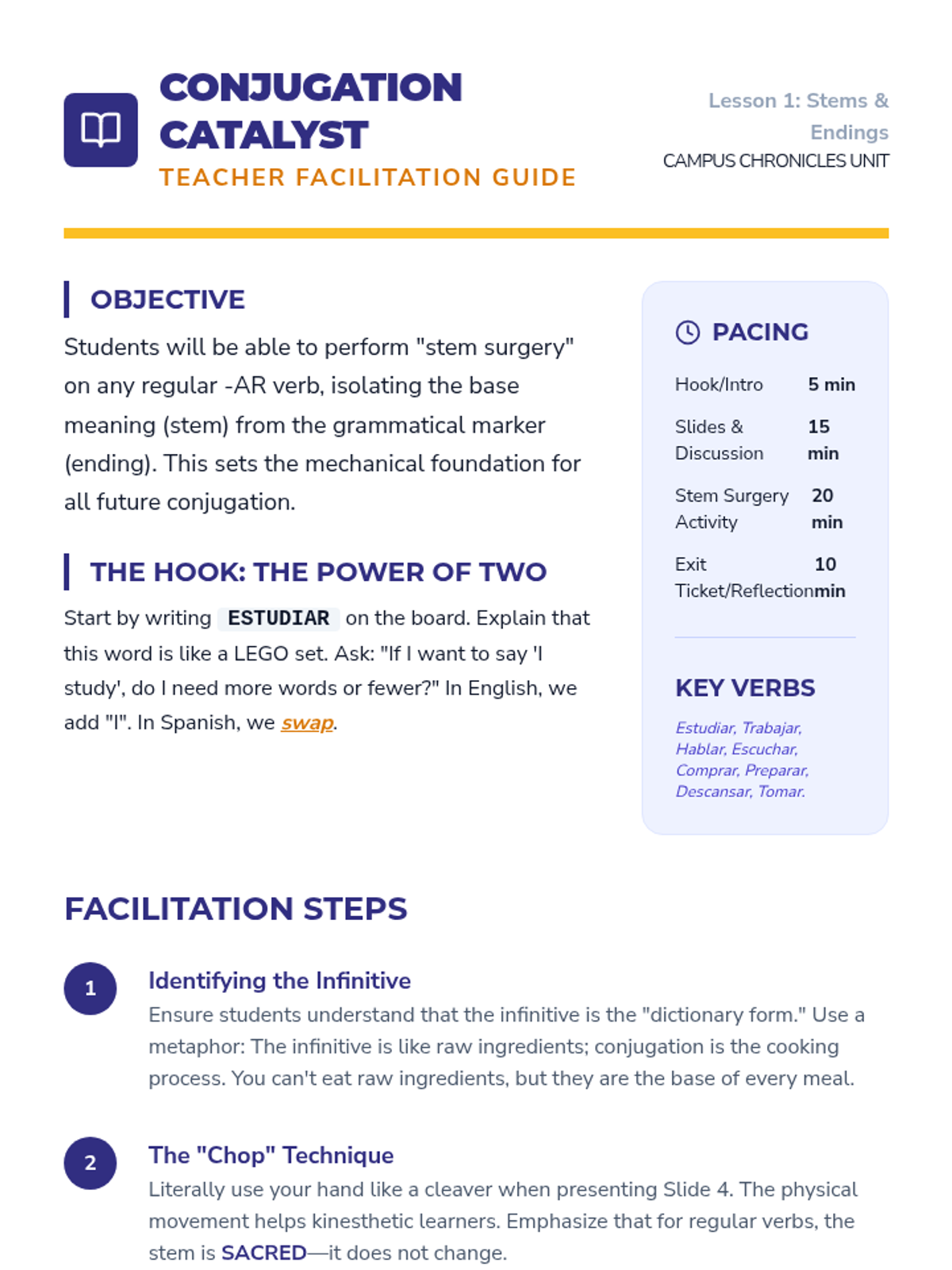
A comprehensive introduction to regular -AR verb conjugation in Spanish, set within the context of university life. Students progress from morphological analysis of stems and endings to full sentence construction, negation, and a final role-play simulation.
This sequence explores regular Spanish verb conjugation in the present tense, moving from subject pronouns to full sentence construction and narration of daily habits.
This sequence establishes foundational auditory and oral skills for Spanish fluency, focusing on vowel sounds, difficult consonants like 'rr' and 'ñ', and rules of stress and accentuation. Students transition from sound production to reading syllables and full words with accuracy.
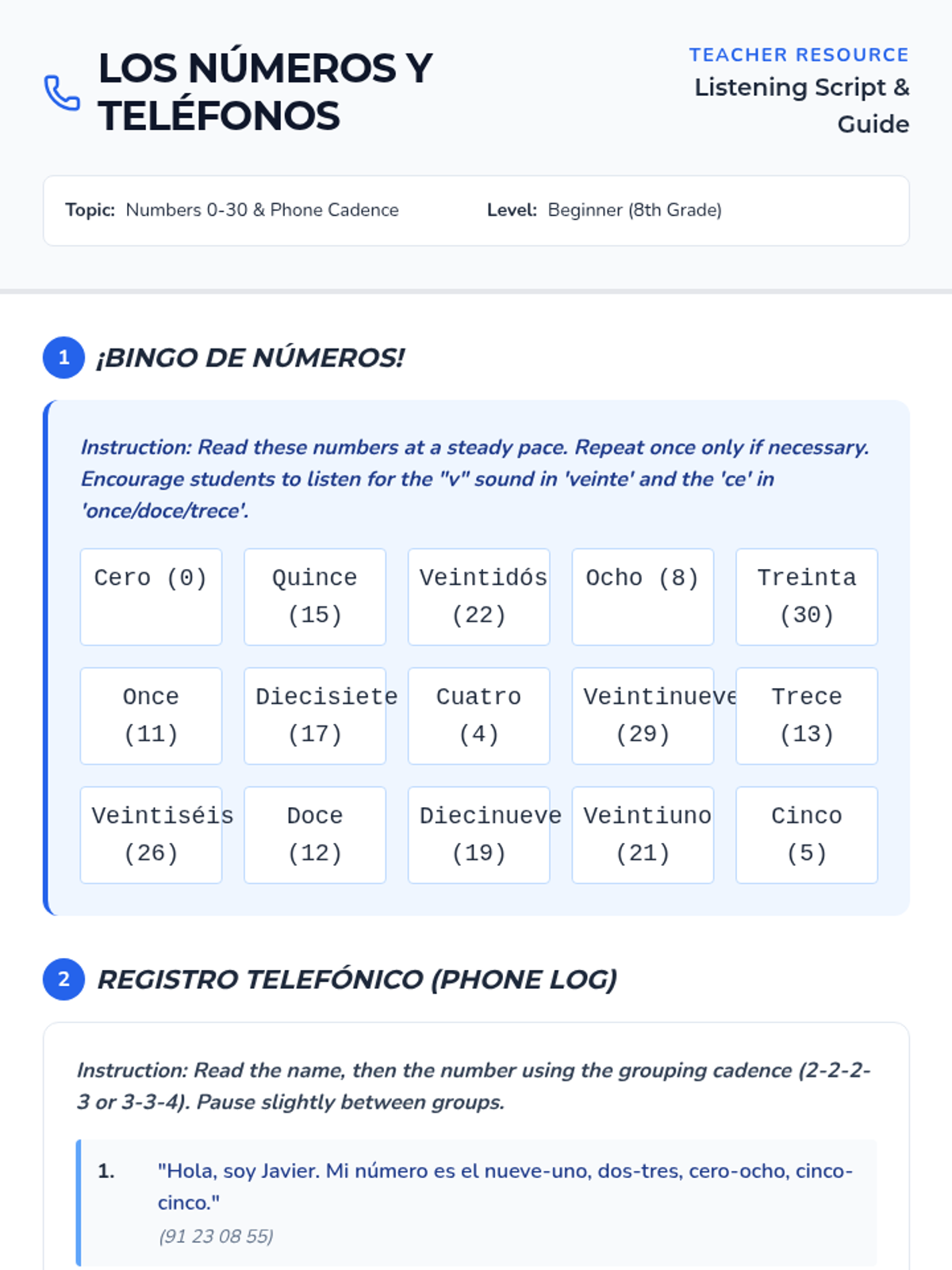
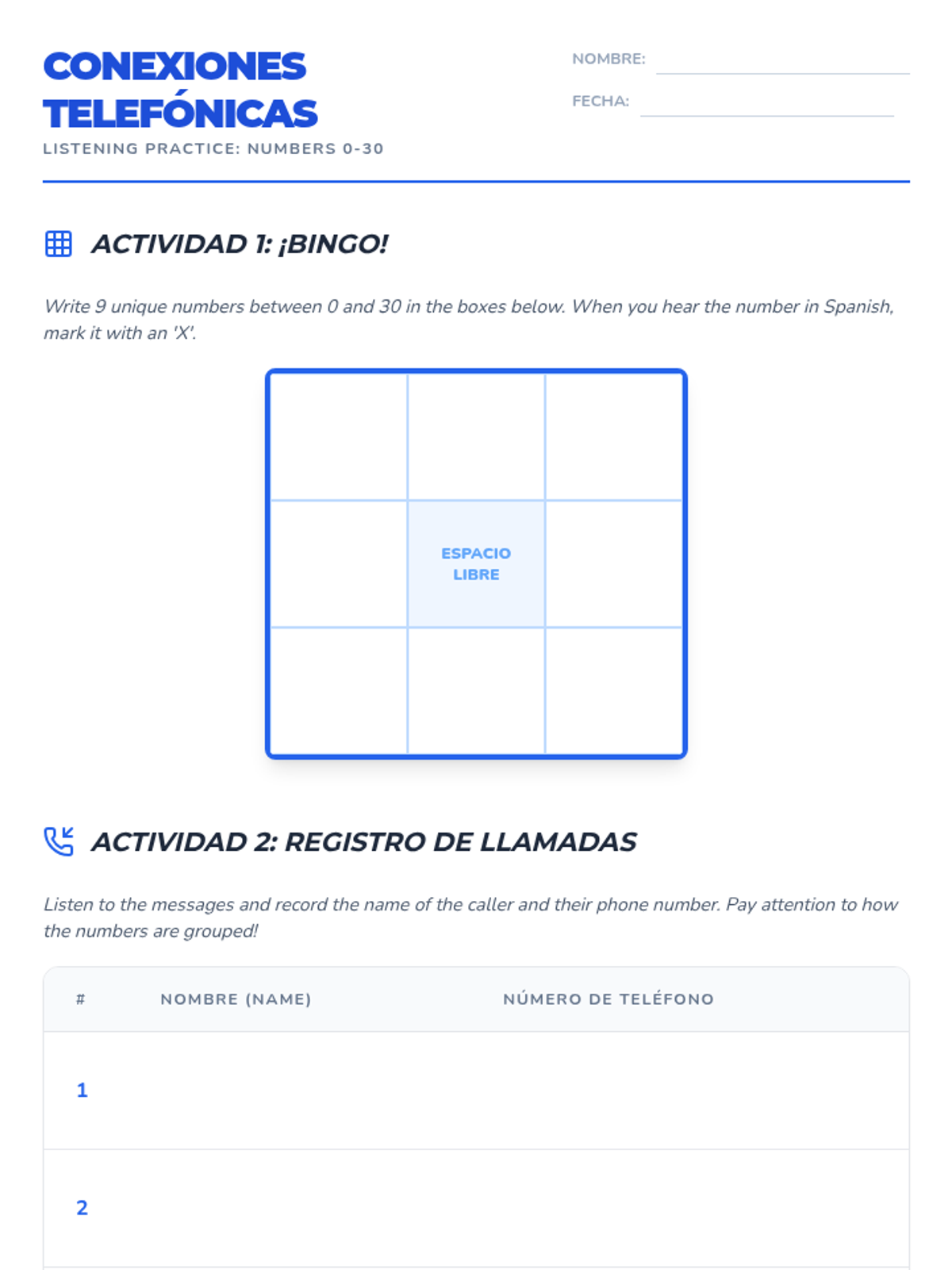
A comprehensive sequence focused on developing beginner Spanish listening skills through the lens of numerical and temporal data. Students progress from basic number recognition to synthesizing complex travel itineraries, emphasizing real-world applications like scheduling, budgeting, and transportation.
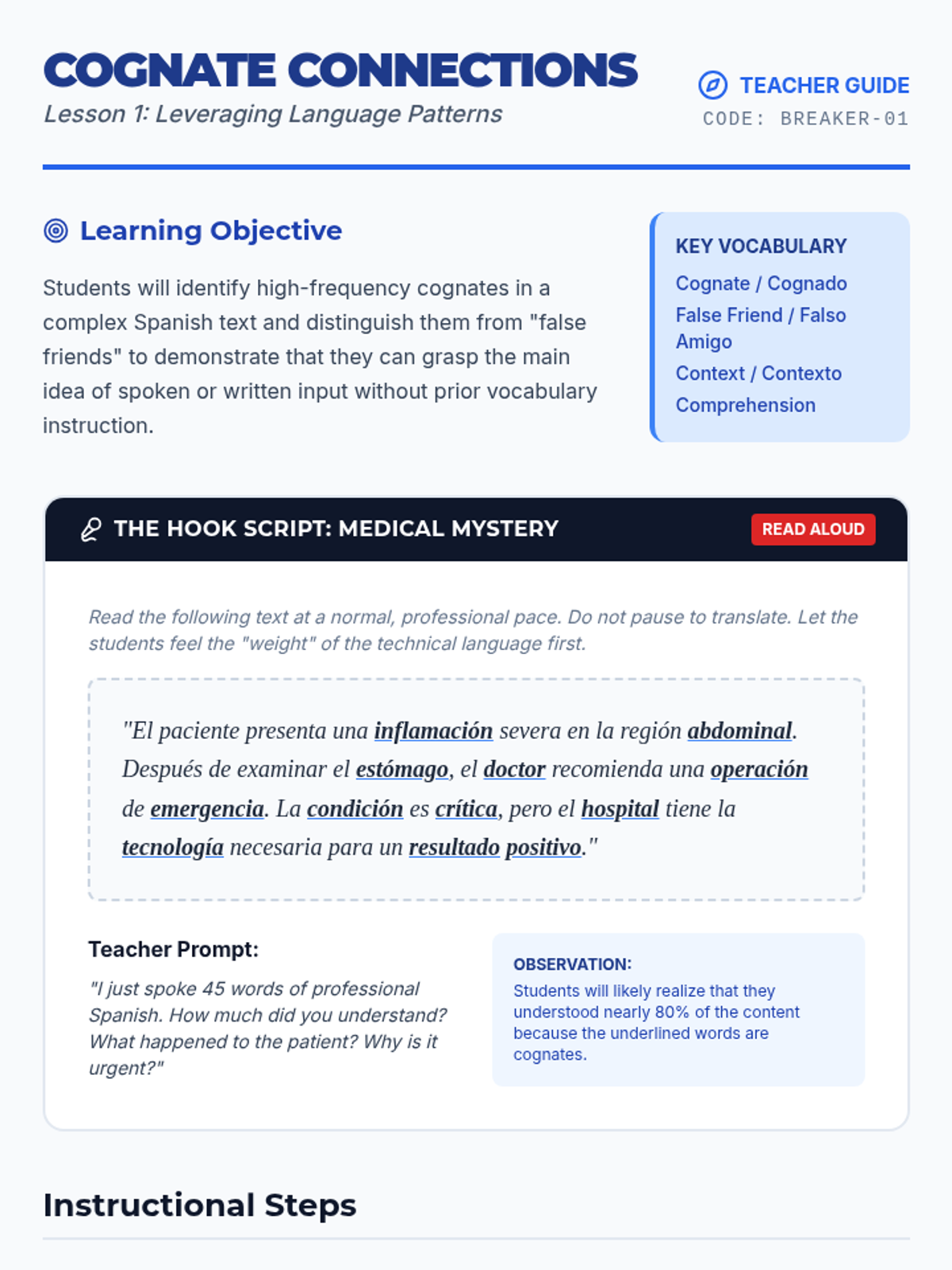
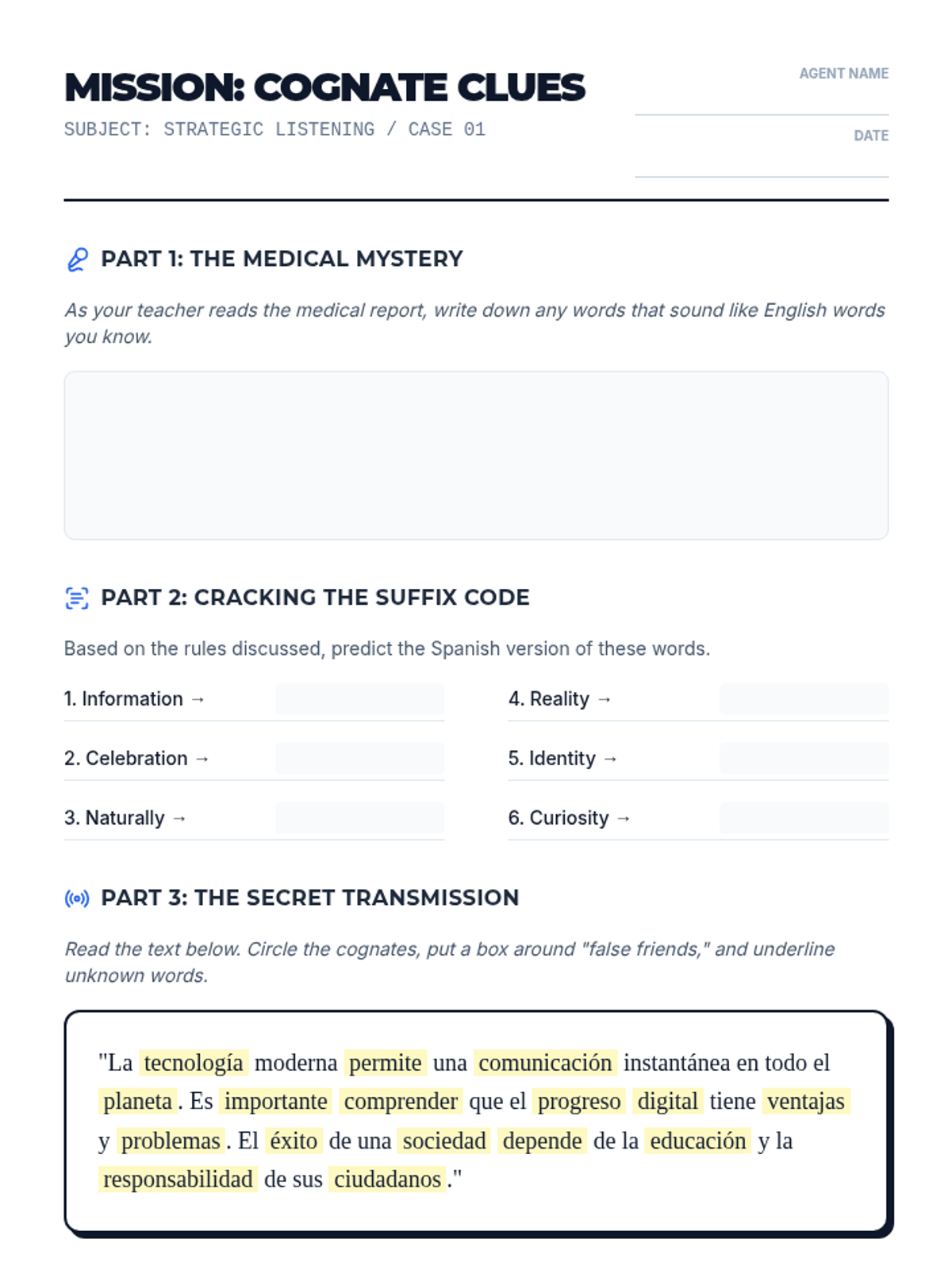
This sequence focuses on the foundational auditory skills required to distinguish unique Spanish sounds from English sounds. Students move from isolating basic vowel sounds to mastering difficult consonants, stress patterns, and identifying cognates in context.
This sequence immerses 6th-grade students in the fundamental sounds of Spanish, focusing on vowels, unique consonants, the rolled 'r', and intonation patterns to build strong auditory discrimination skills.
This sequence teaches 10th-grade Spanish students high-level listening strategies using context clues, cognates, and emotional cues to understand the 'gist' of spoken language without needing word-for-word translation.
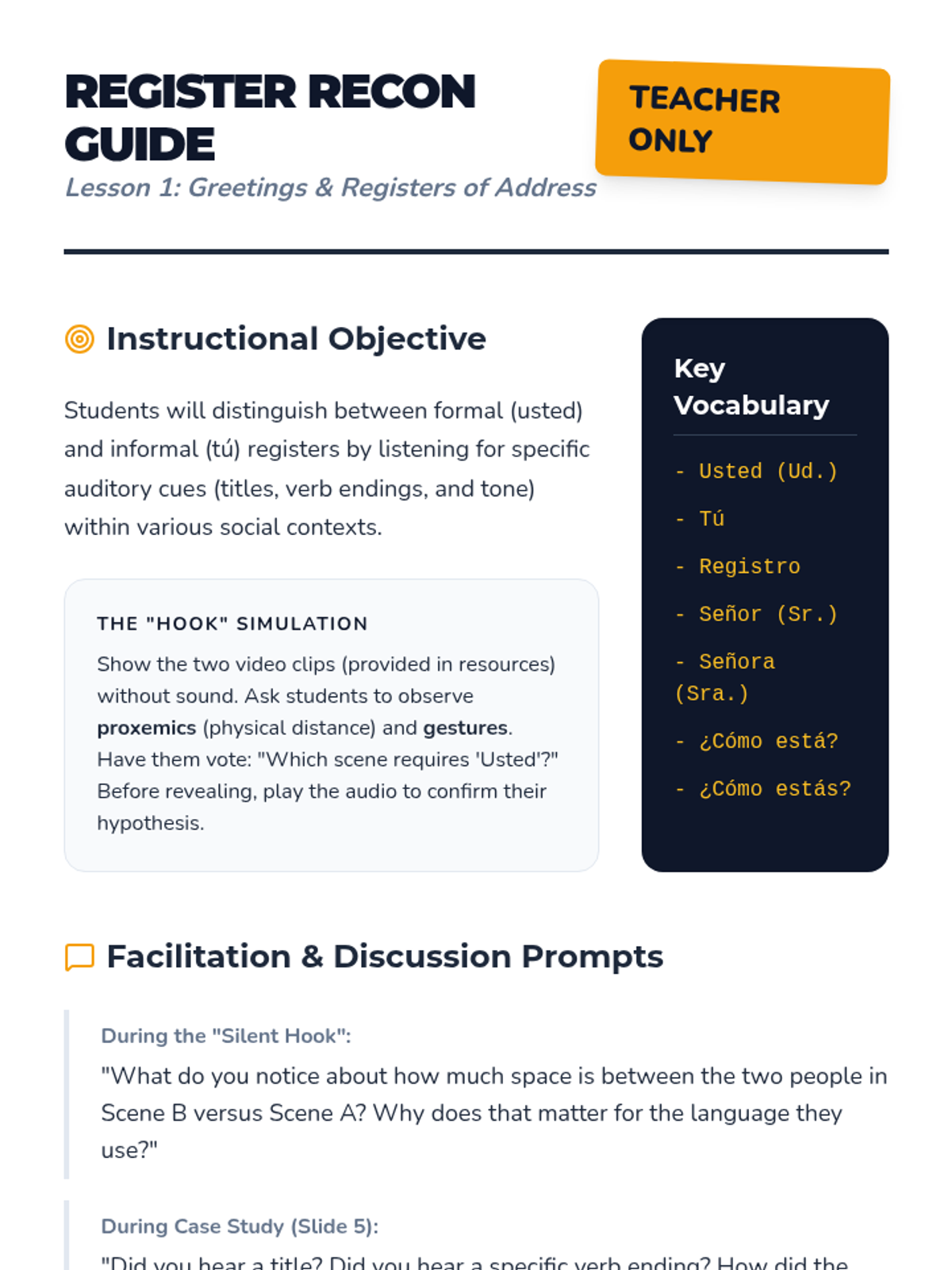
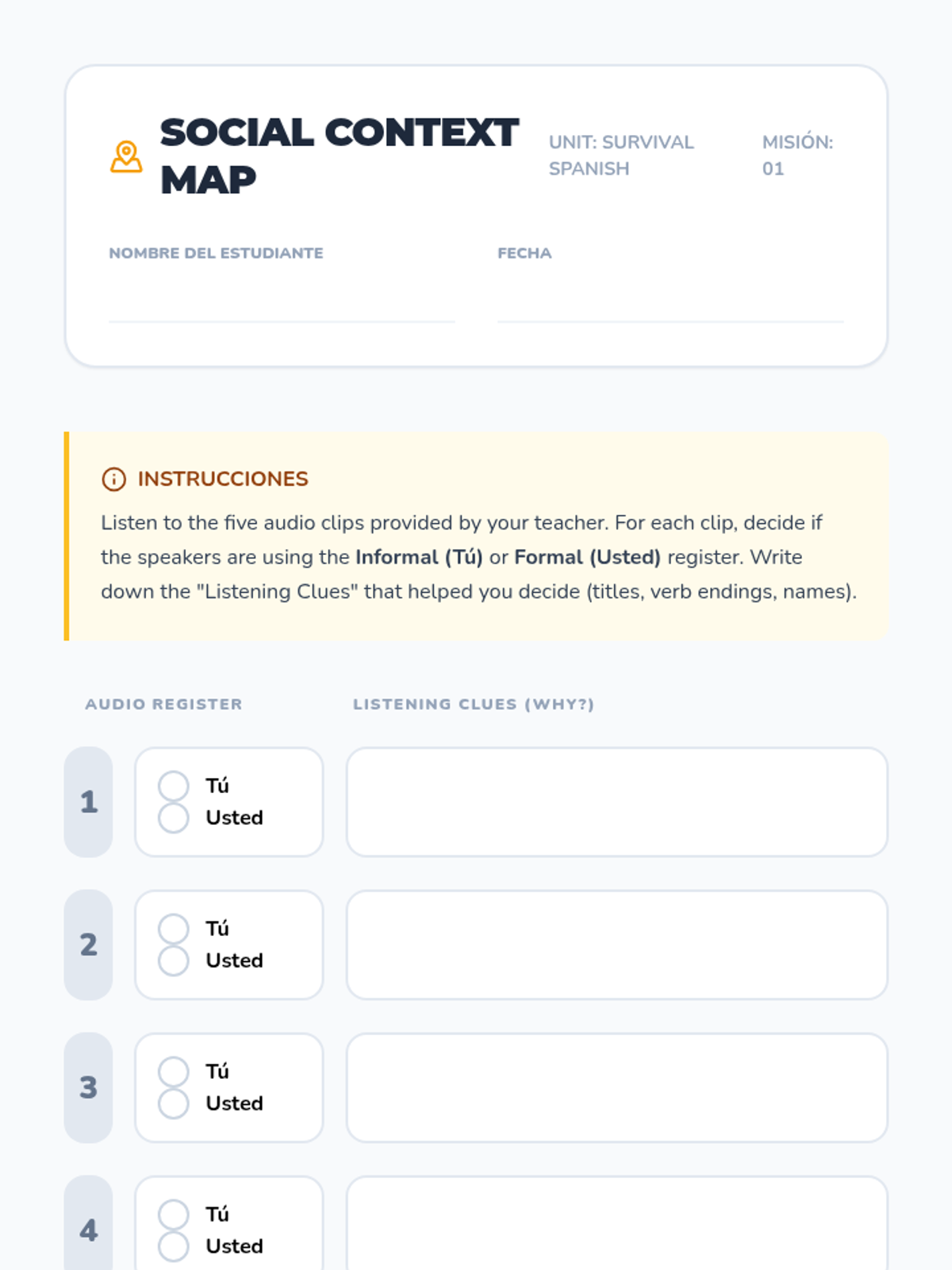
An immersive simulation guiding 10th-grade Spanish beginners through functional listening skills for social interactions and classroom survival, moving from registers of address to real-world navigation.
This sequence focuses on the fundamental mechanics of Spanish pronunciation and listening discrimination, from the five fixed vowels to rapid speech linking and phonetic dictation.
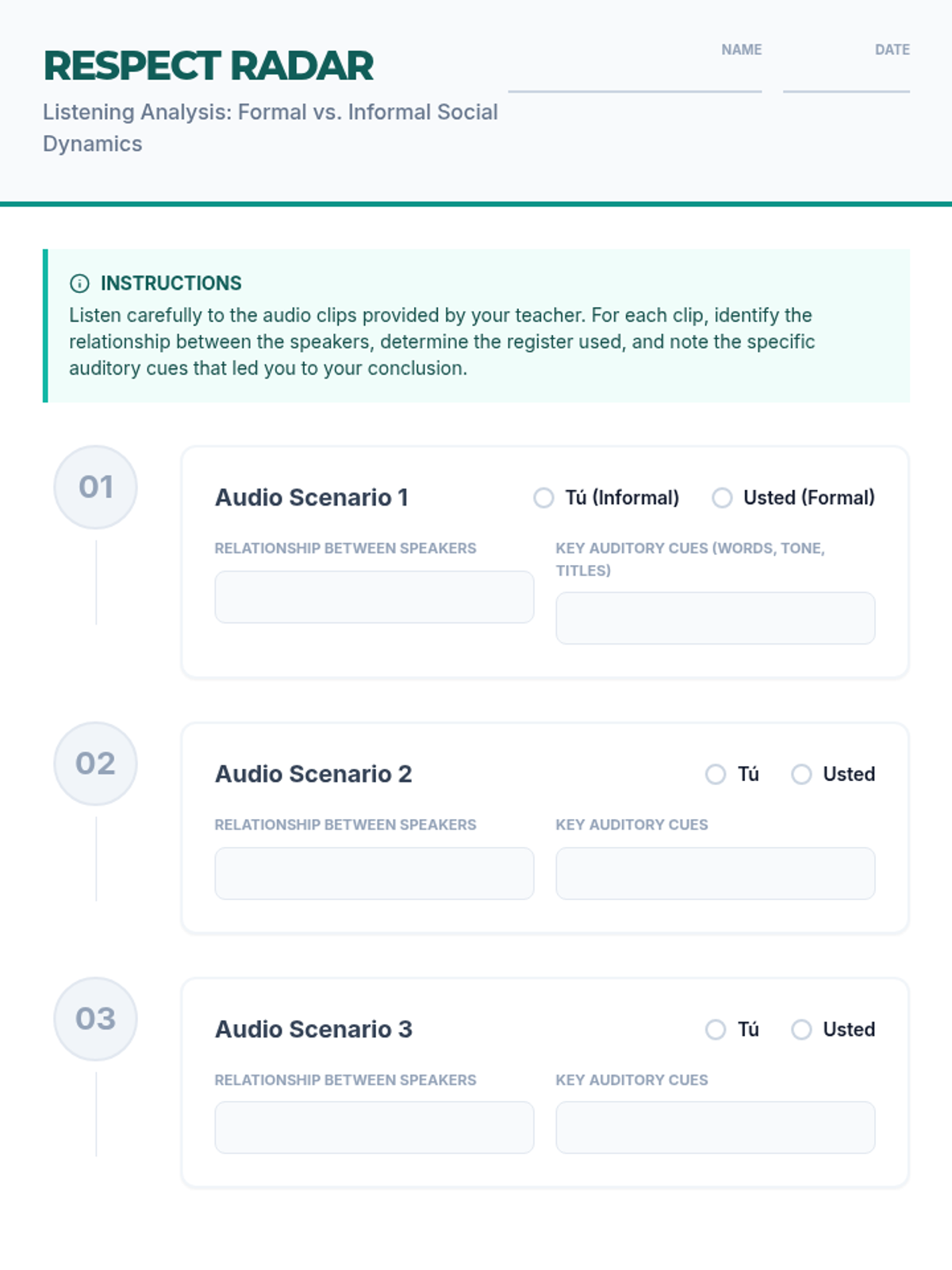
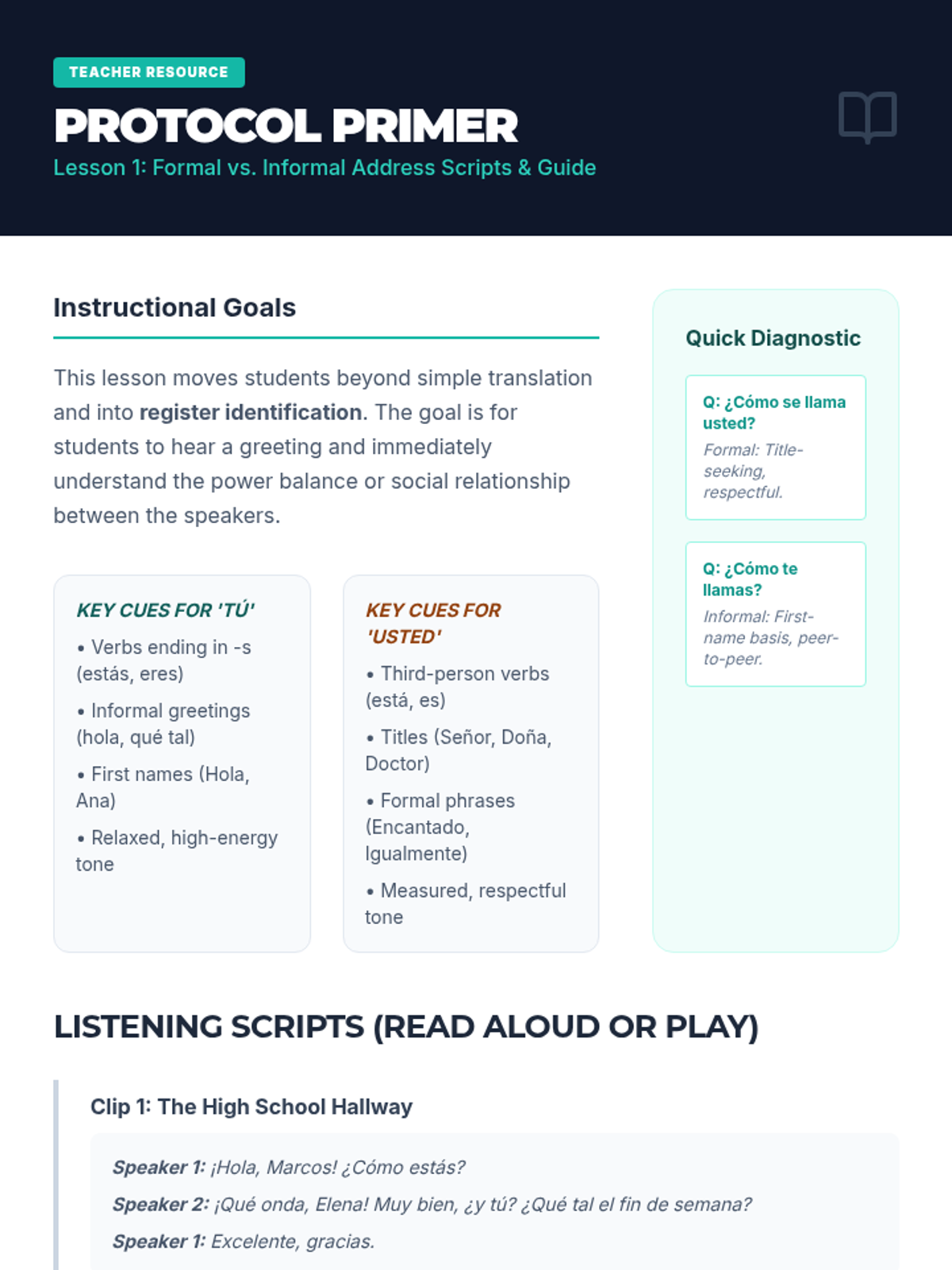
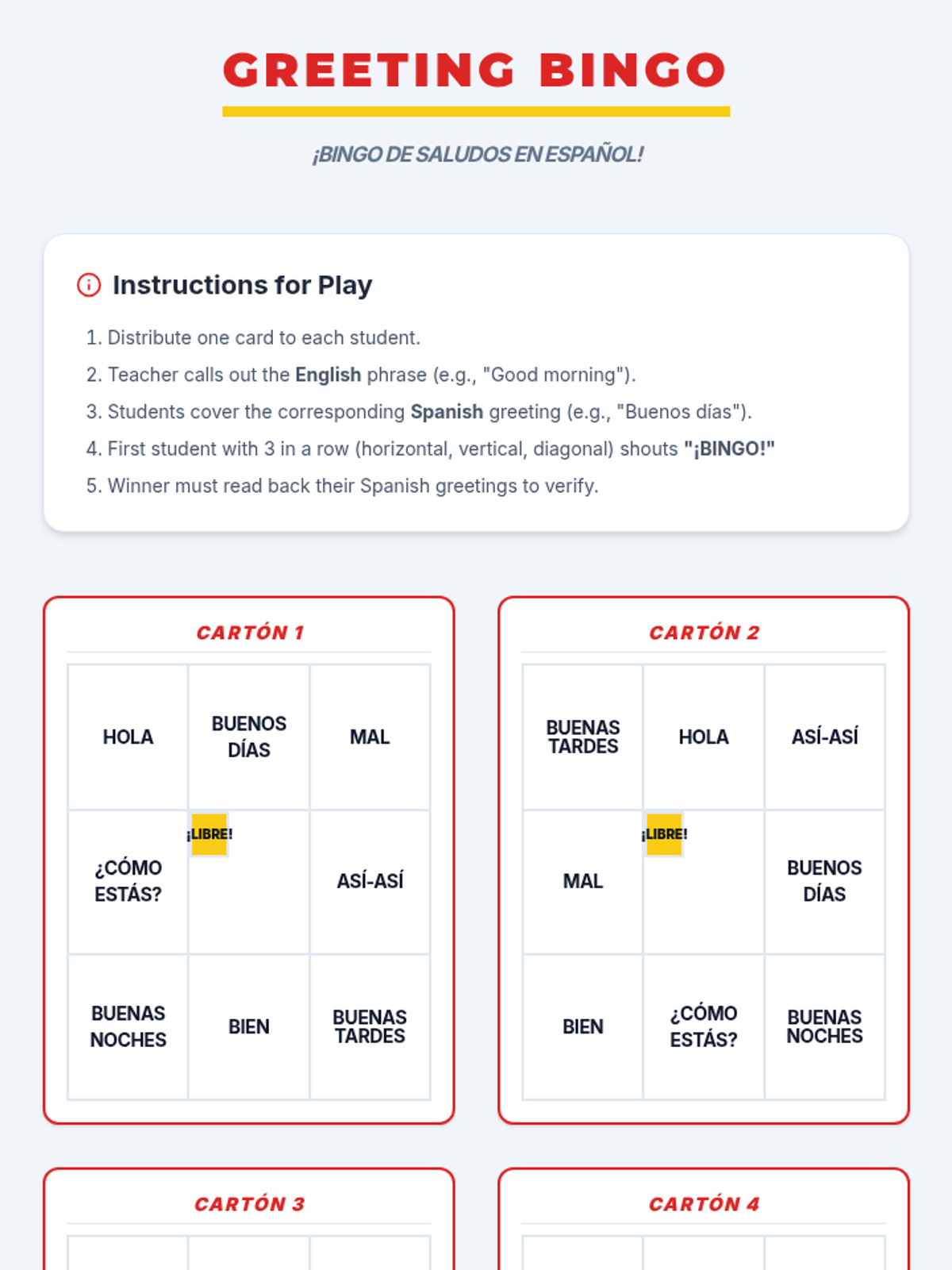
A comprehensive immersion into Spanish greetings and introductions, focusing on the cultural nuances of formal and informal address through listening analysis and simulation.
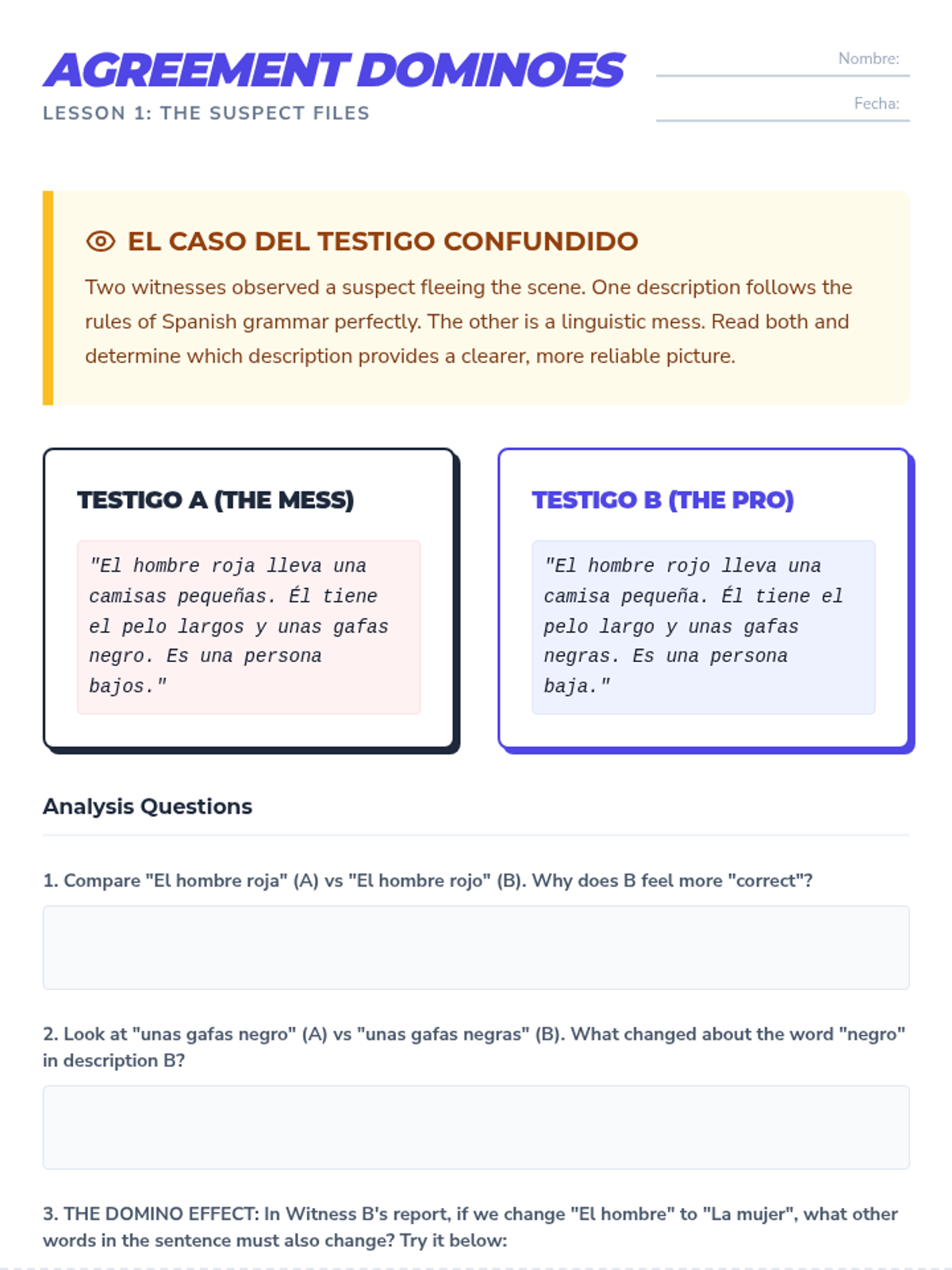
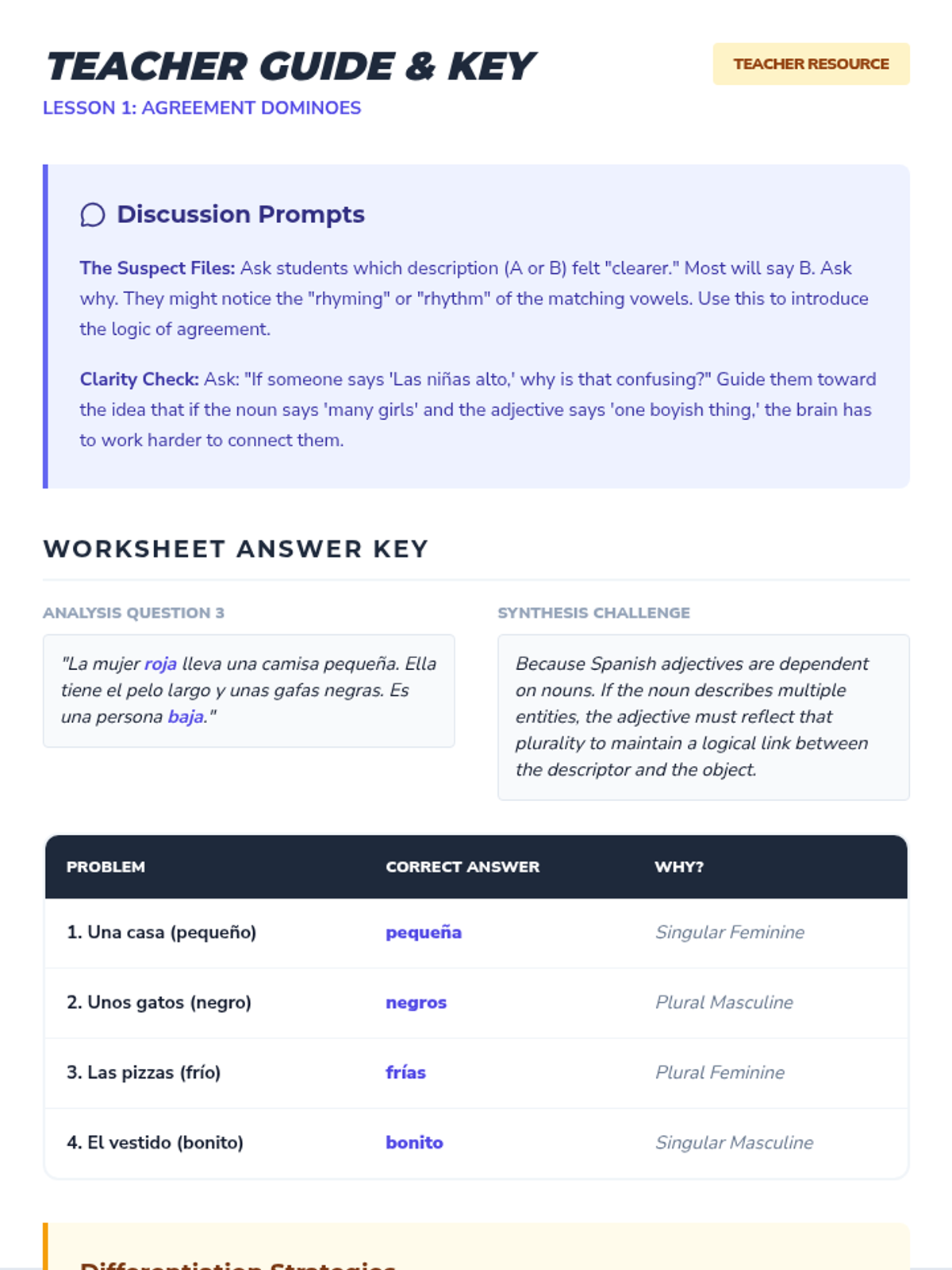
This sequence explores the mechanics of noun-adjective agreement in Spanish, focusing on gender, number, and placement rules. Students progress from inquiry-based discovery to practical application in describing people and correcting errors.
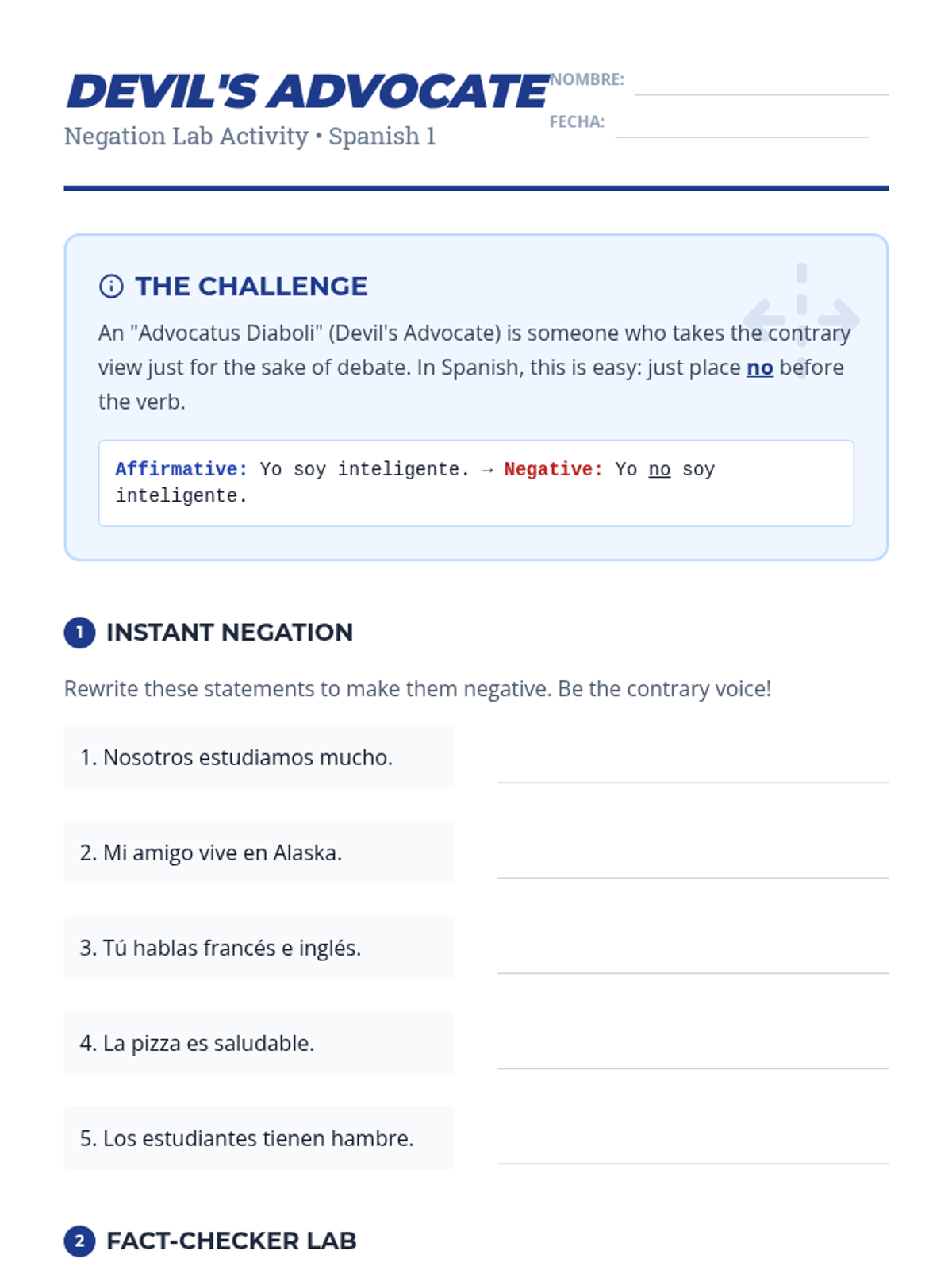
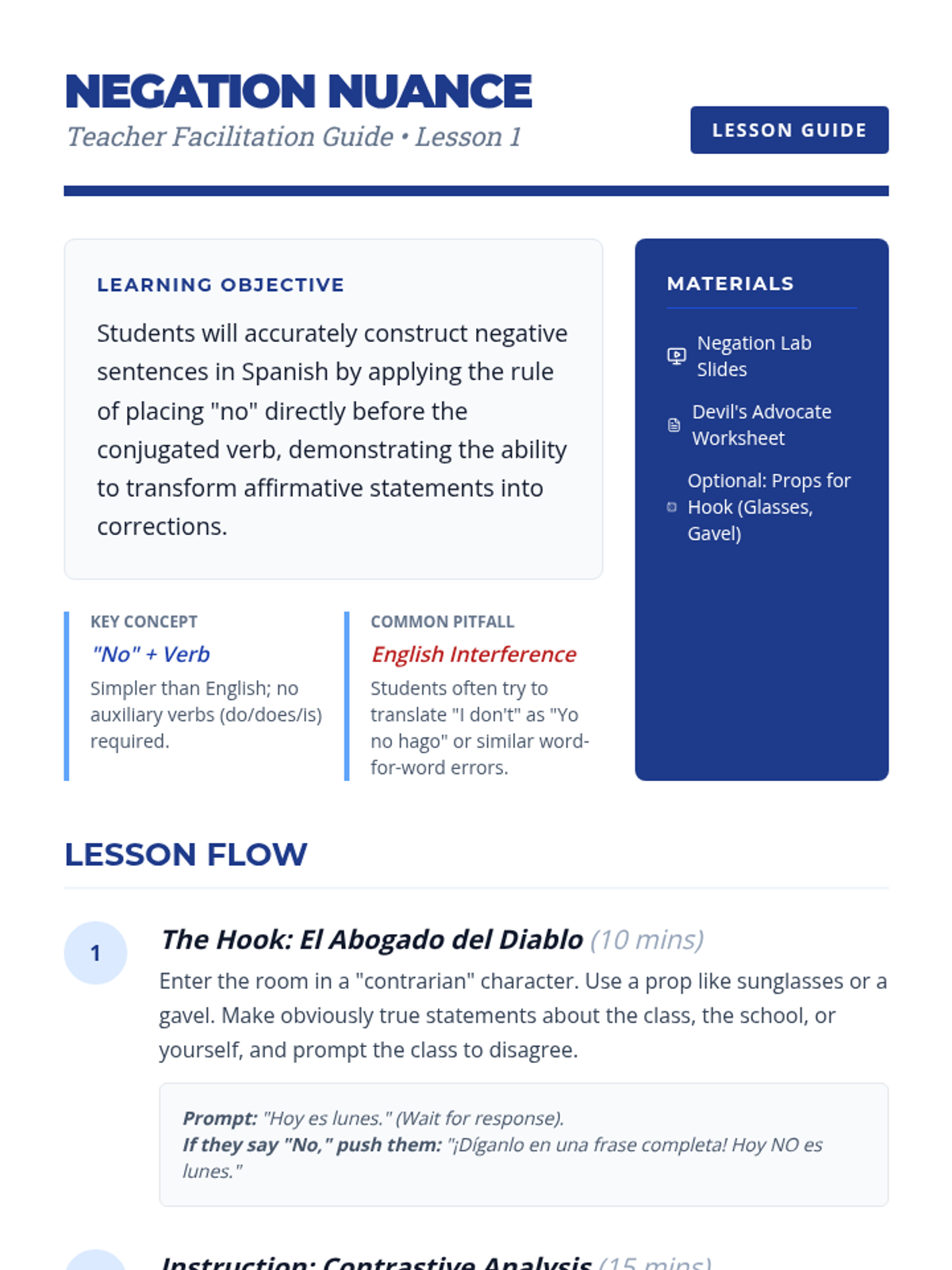
A comprehensive 9th-grade Spanish unit focusing on sentence structure, negation, interrogatives, and conjunctions. This sequence guides students from basic negation to complex sentence construction and creative dialogue synthesis.
Students explore Spanish idioms and colloquialisms through a 'Traveler's Field Guide' lens, learning to interpret non-literal meanings and regional variations across Spain, Mexico, Argentina, and the Caribbean. The sequence culminates in a creative performance demonstrating linguistic and cultural mastery.
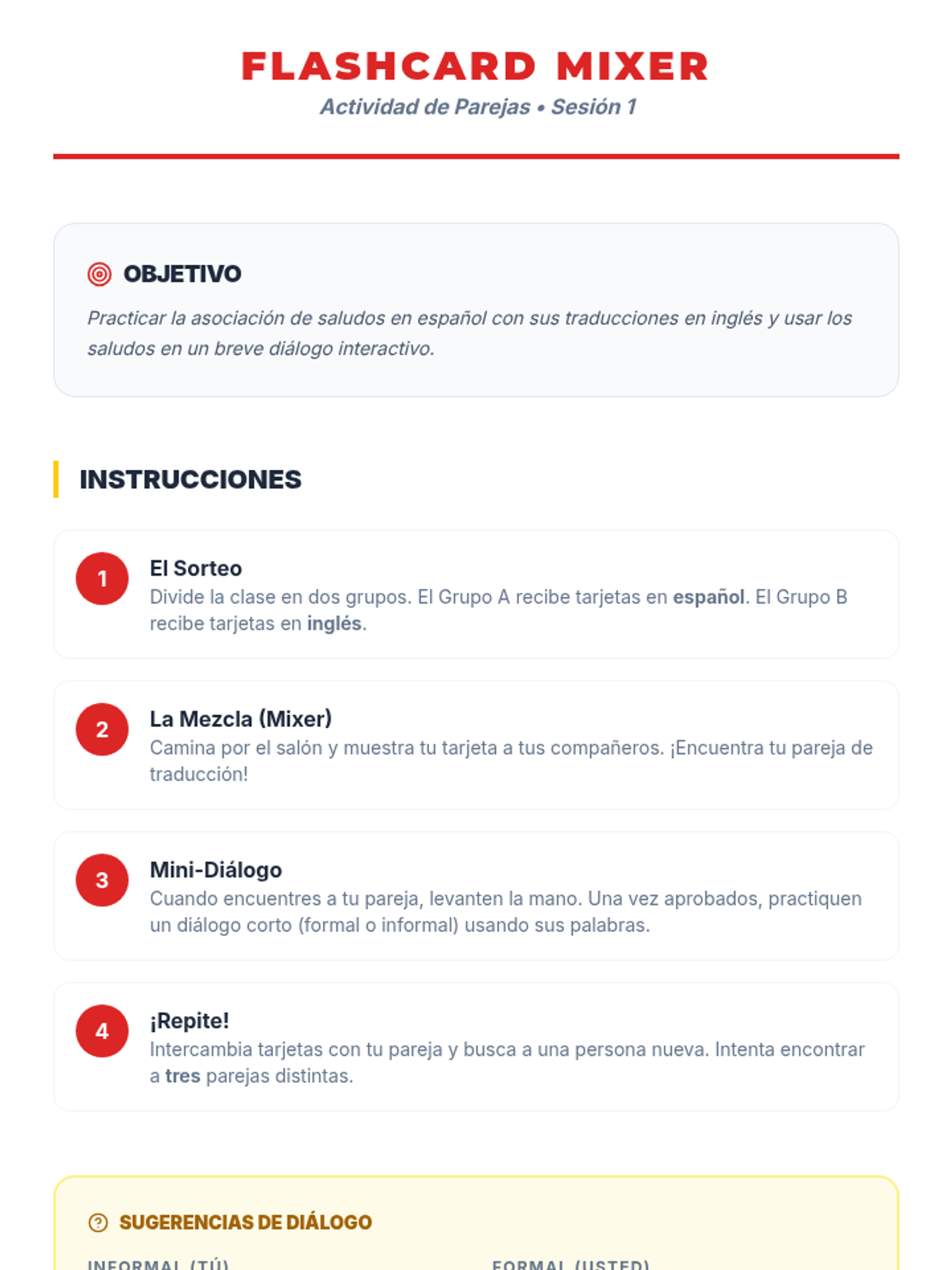
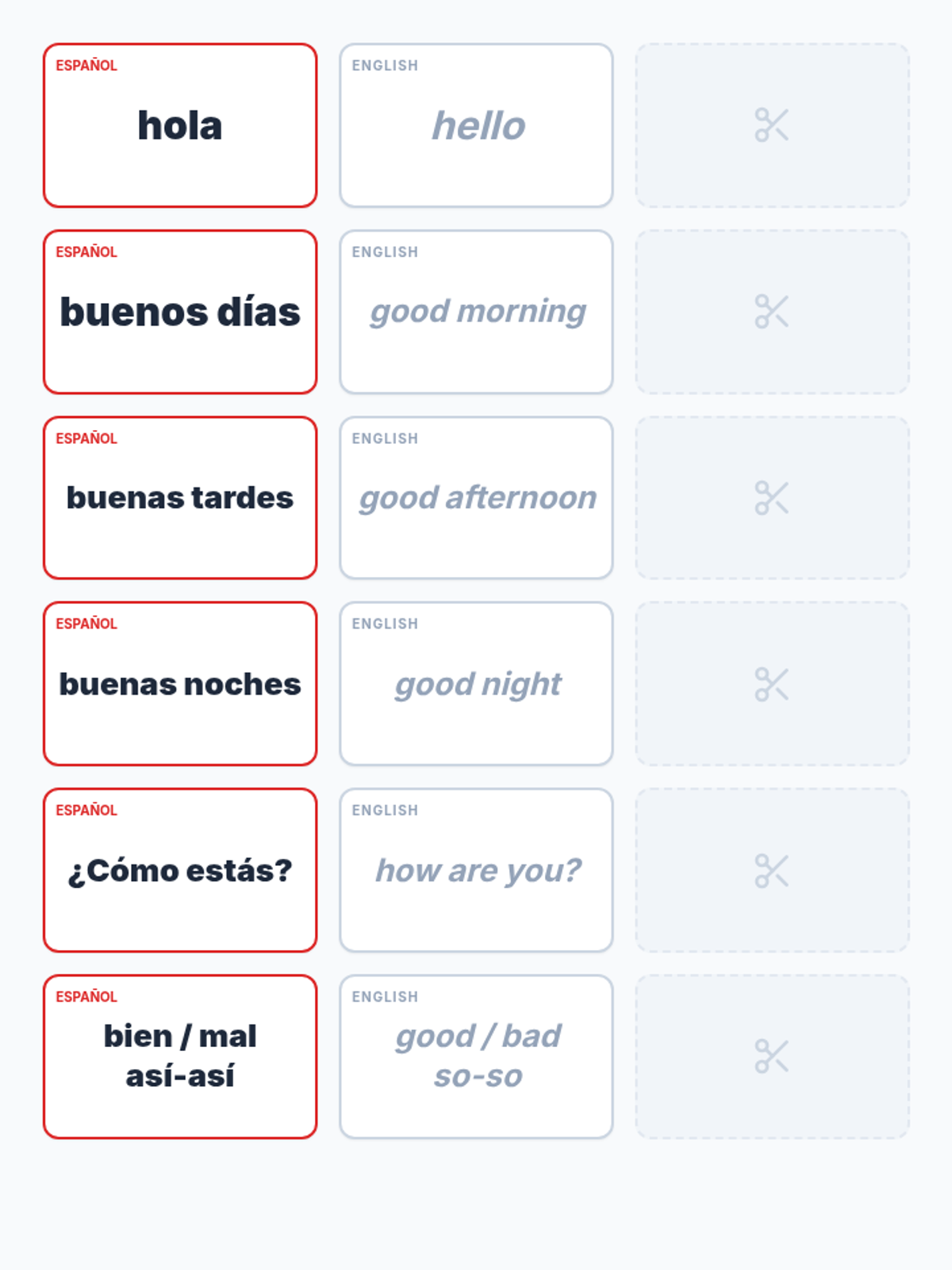
A 5-session introductory Spanish unit for high schoolers focusing on essential greetings, formal vs. informal registers, and cultural customs. Students develop foundational communication skills through interactive games, role-plays, and reflective practice.
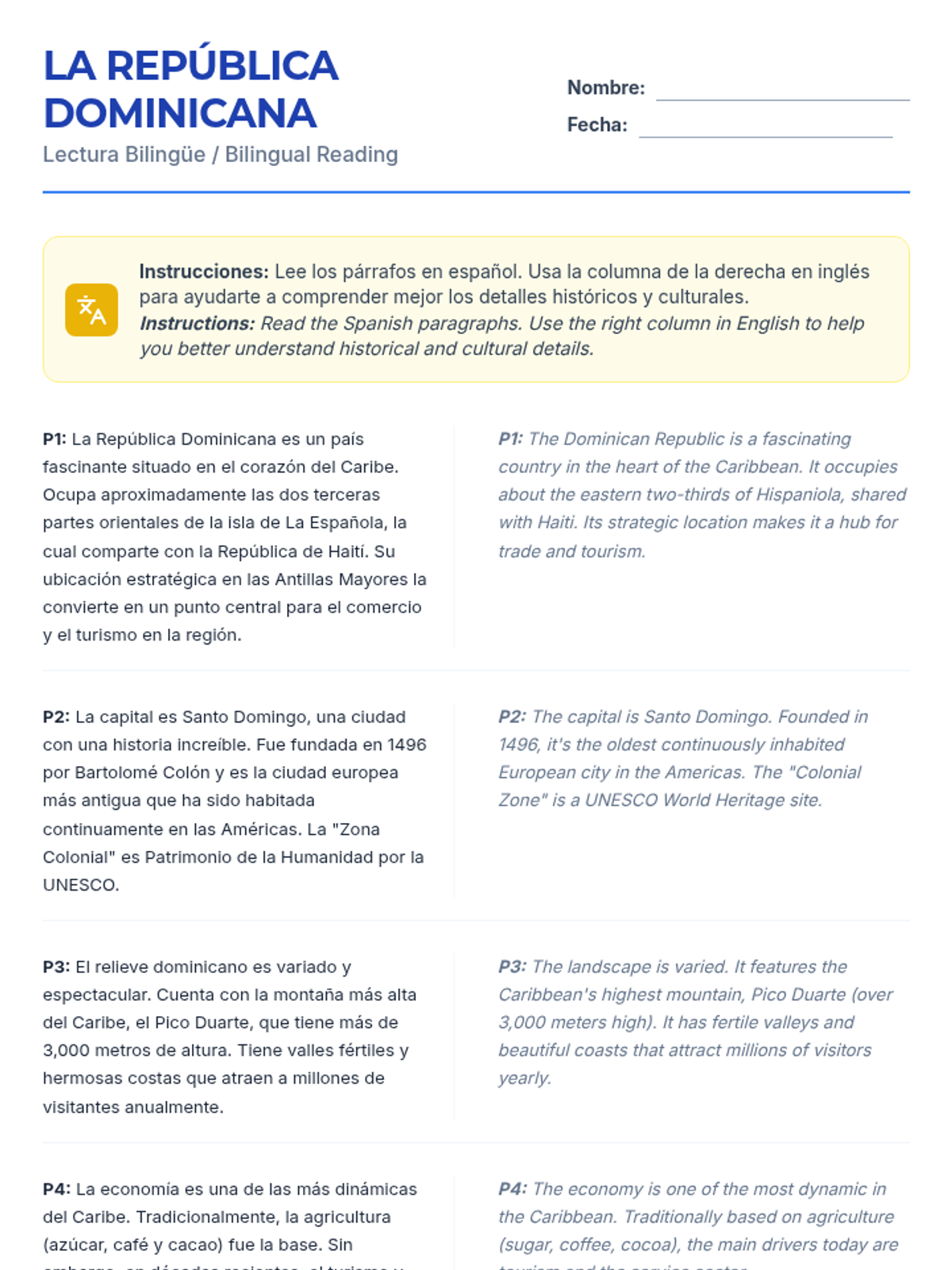
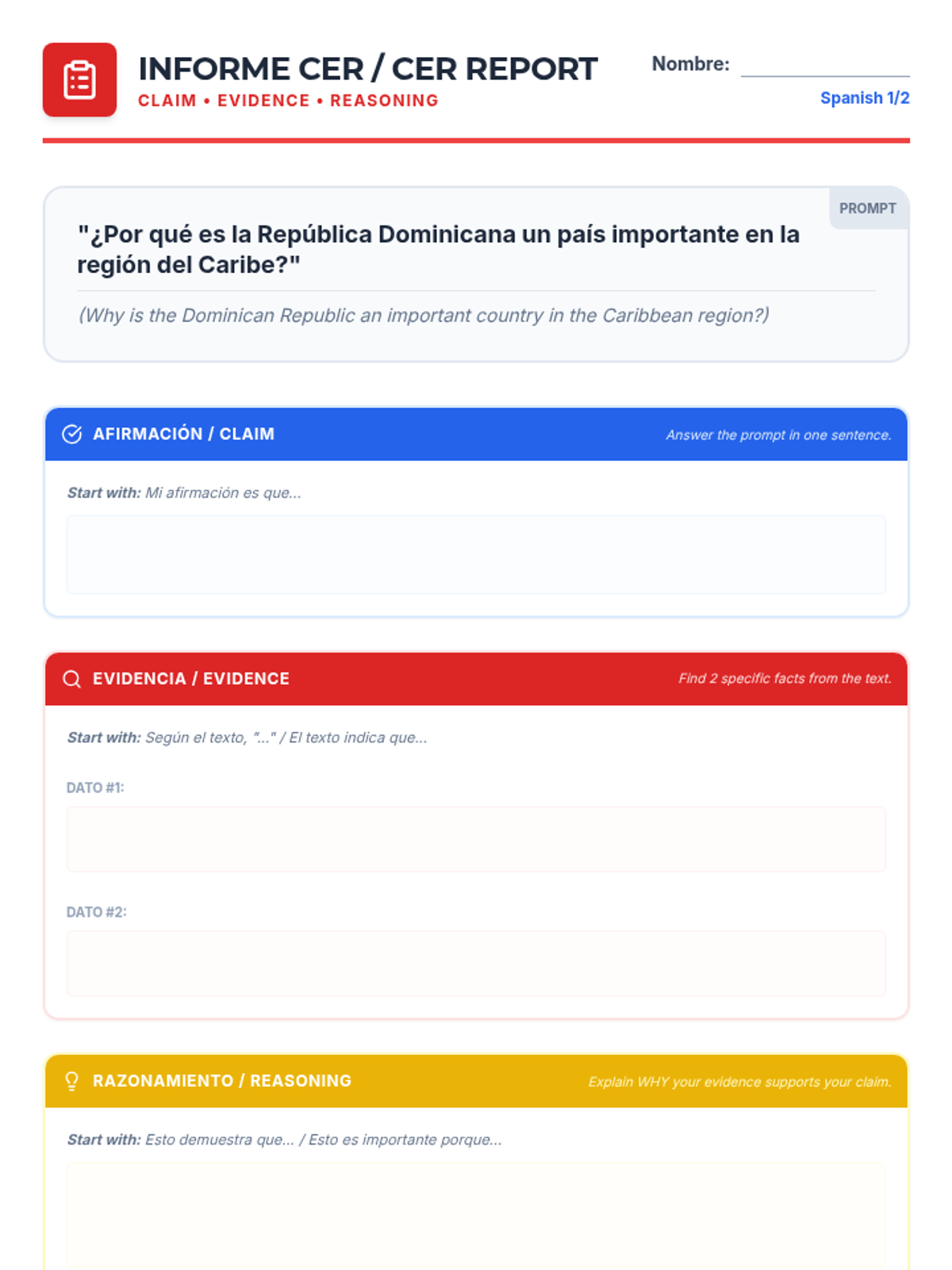
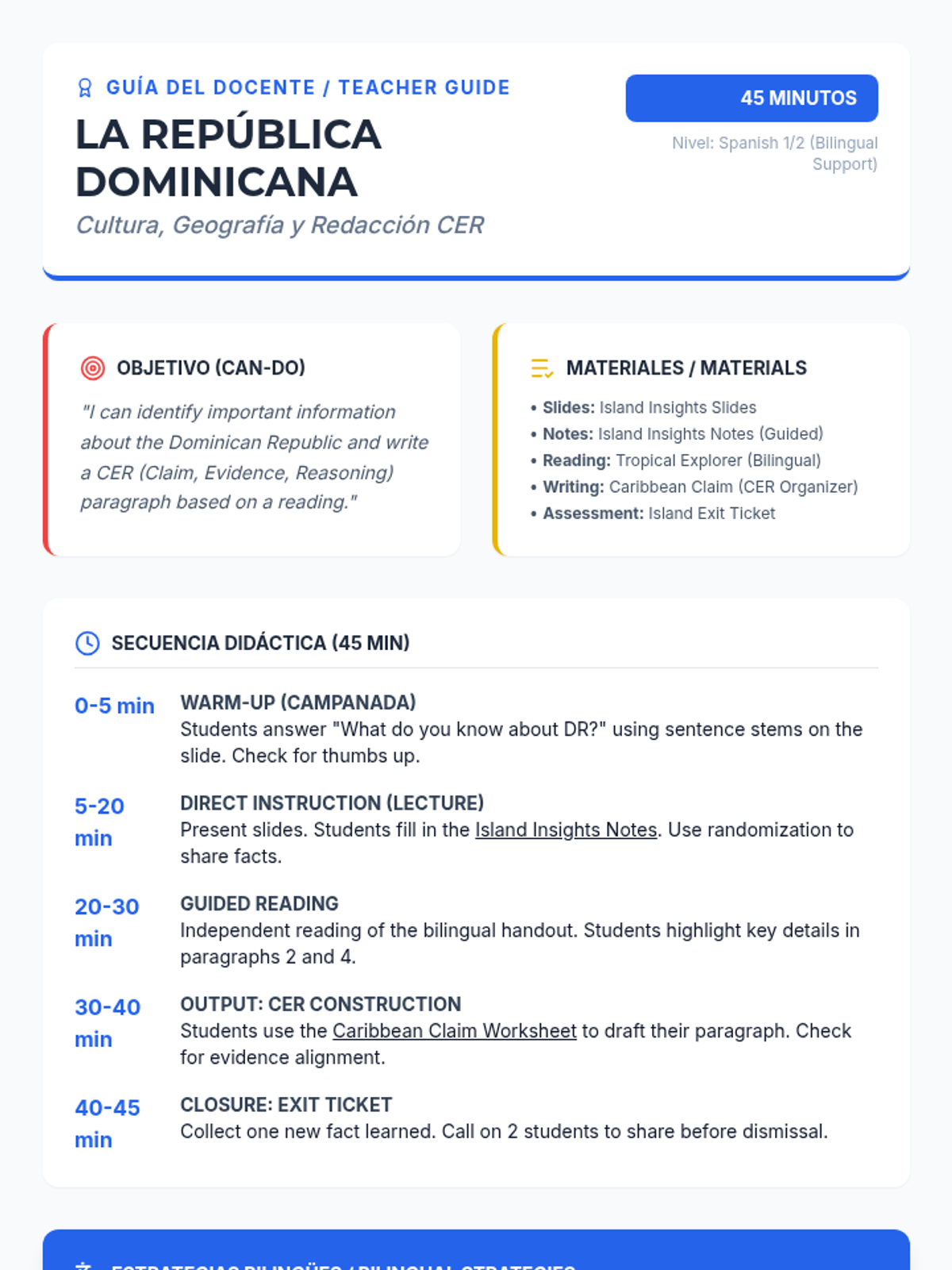
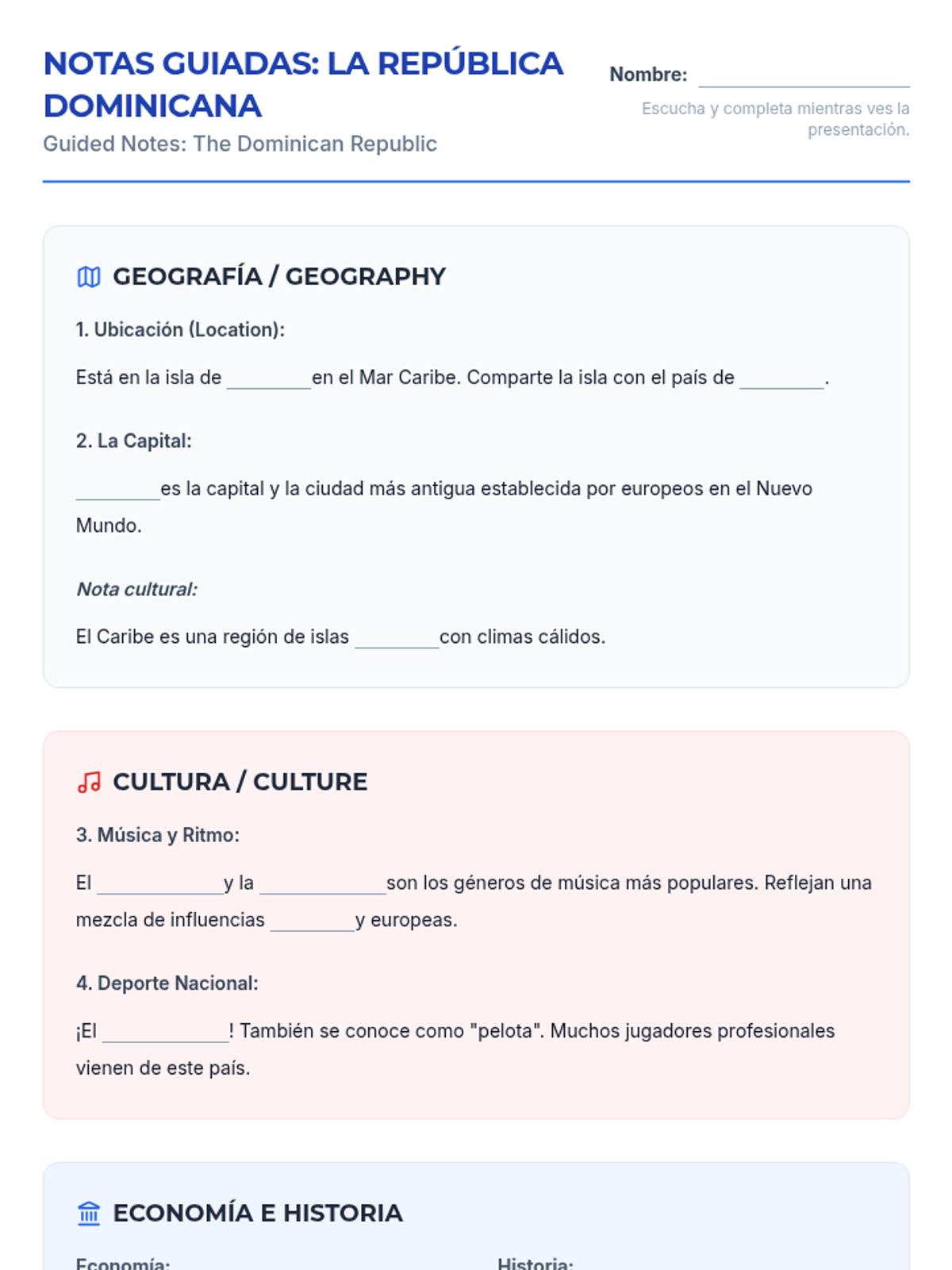
A cultural exploration of the Dominican Republic, focusing on geography, history, and traditions while developing CER writing skills in Spanish.
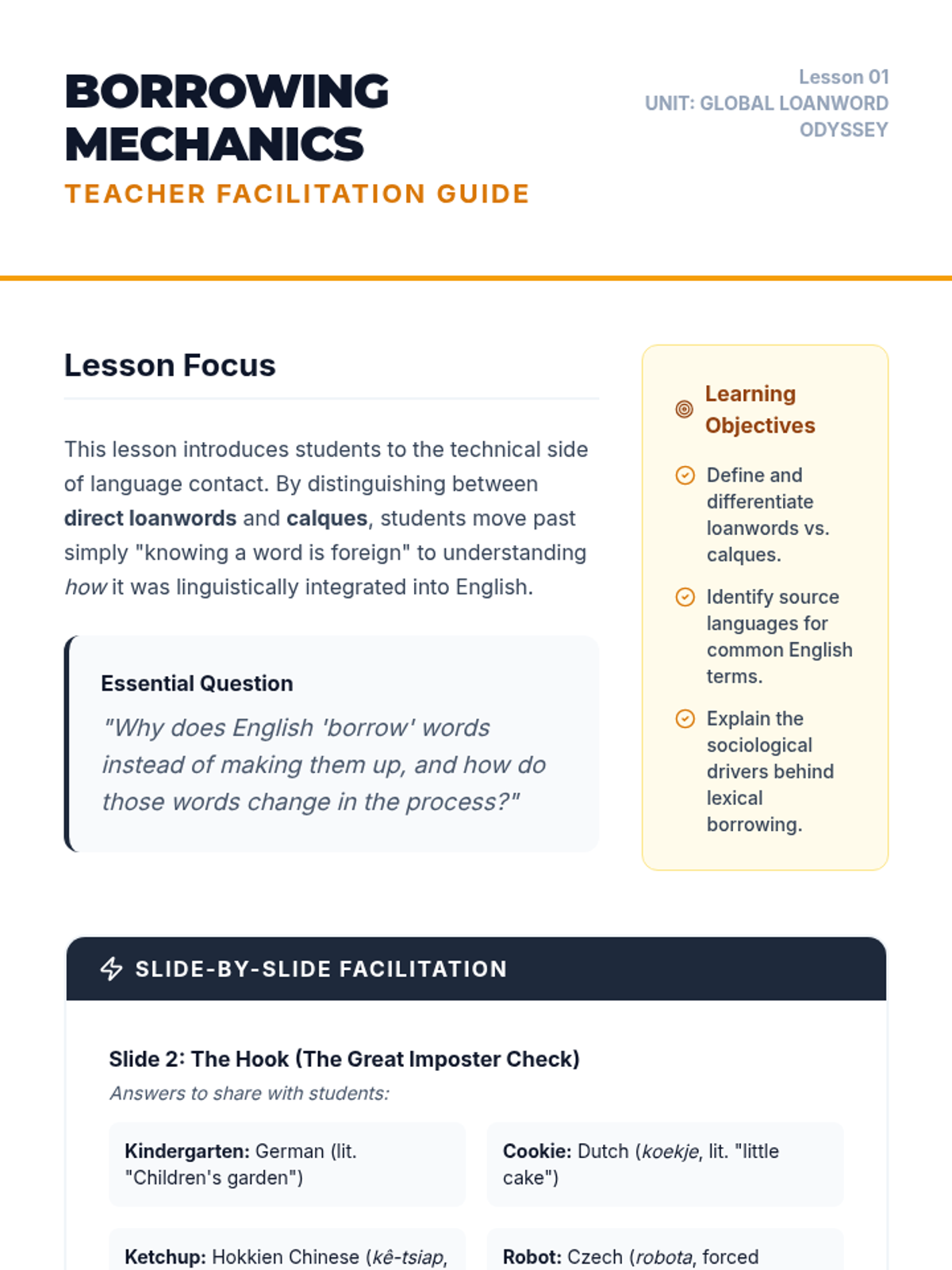
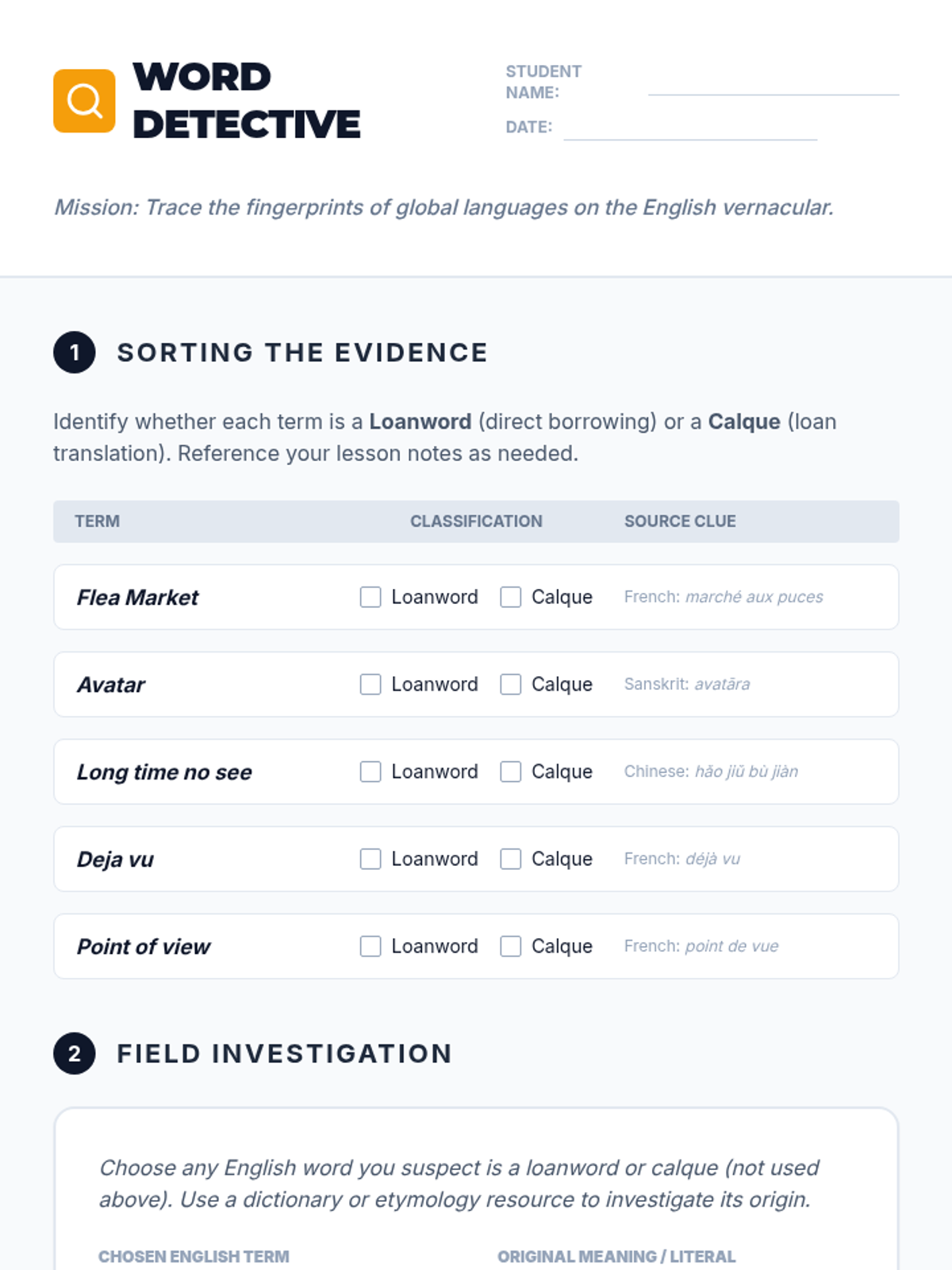
A linguistic and sociological exploration of how English absorbs and adapts words from diverse global sources, focusing on etymology, cultural exchange, and the evolution of language.
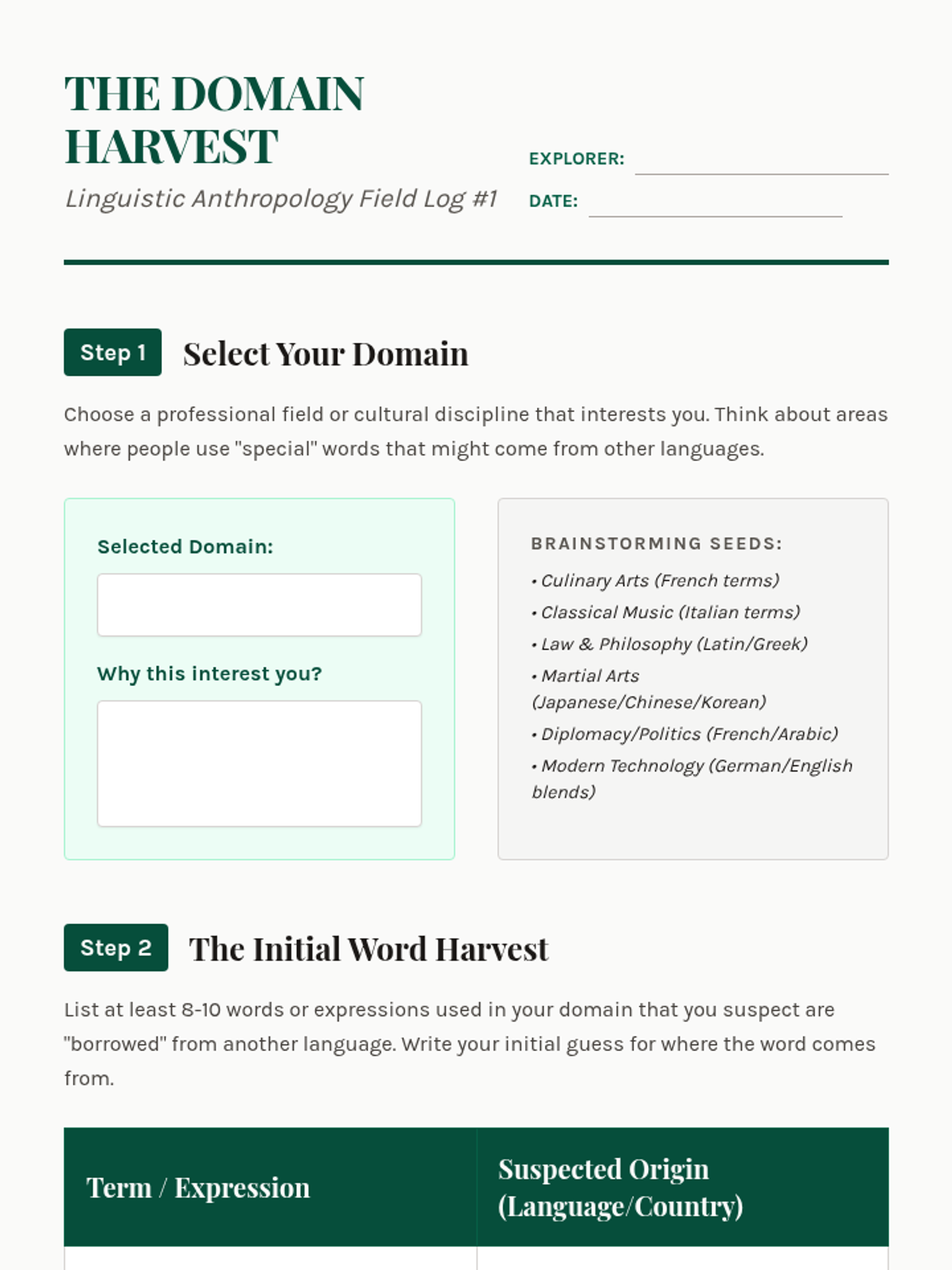
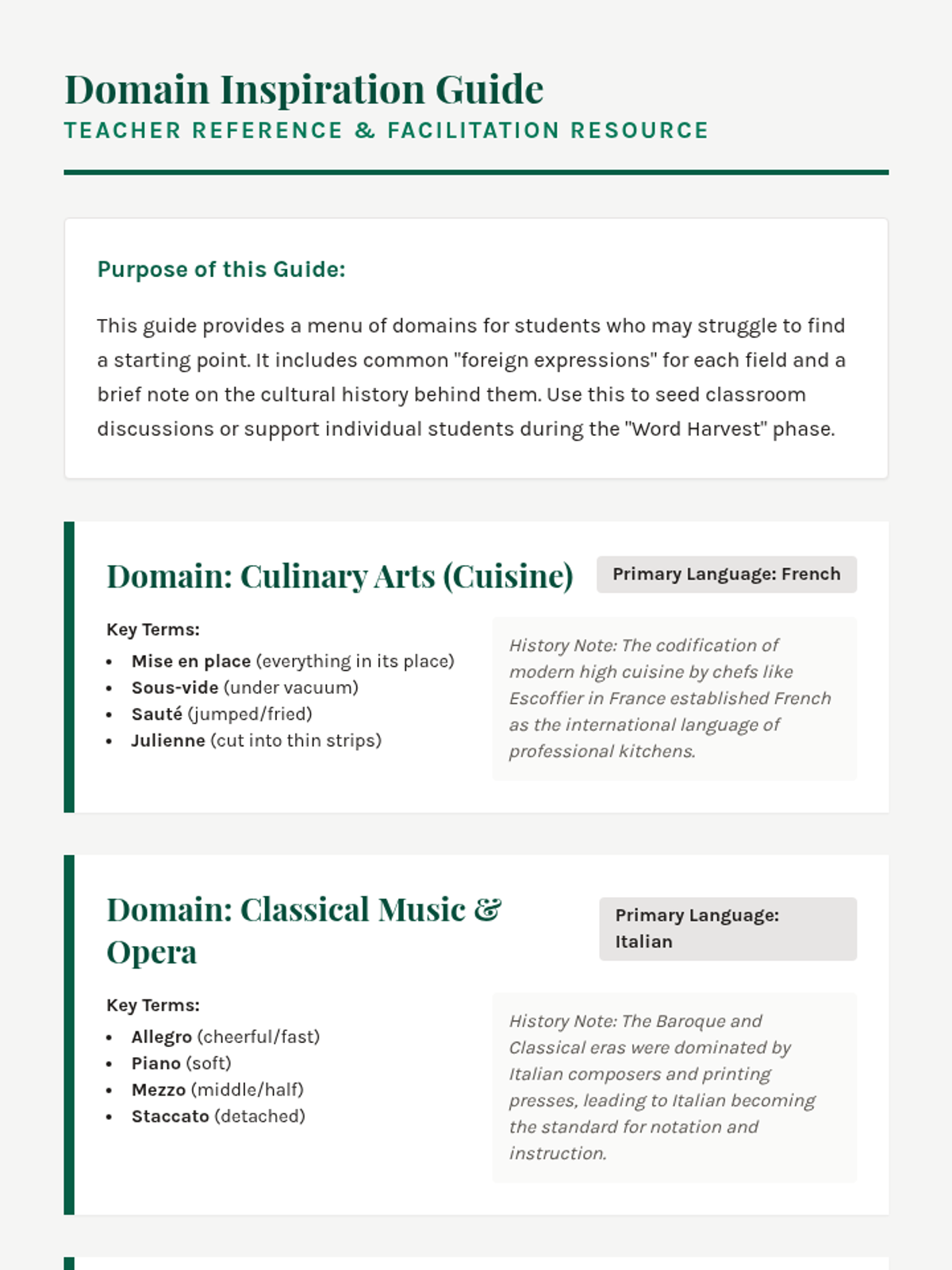
Students act as linguistic anthropologists creating a specialized 'Field Guide to Foreign Expressions' for a chosen professional or cultural domain. They investigate the etymology, usage, and visual representation of foreign terminology to explain their chosen field's linguistic history to a lay audience.
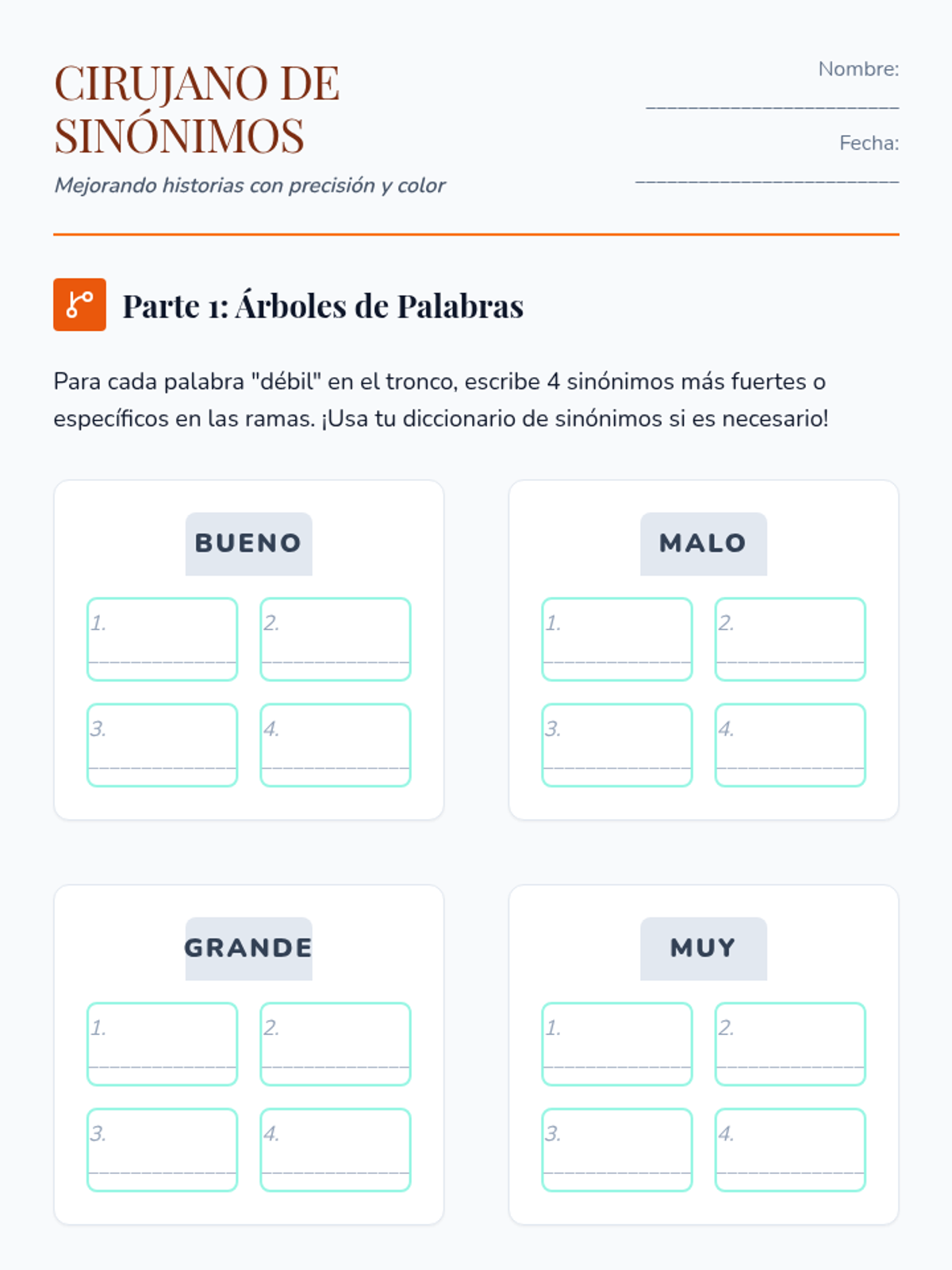
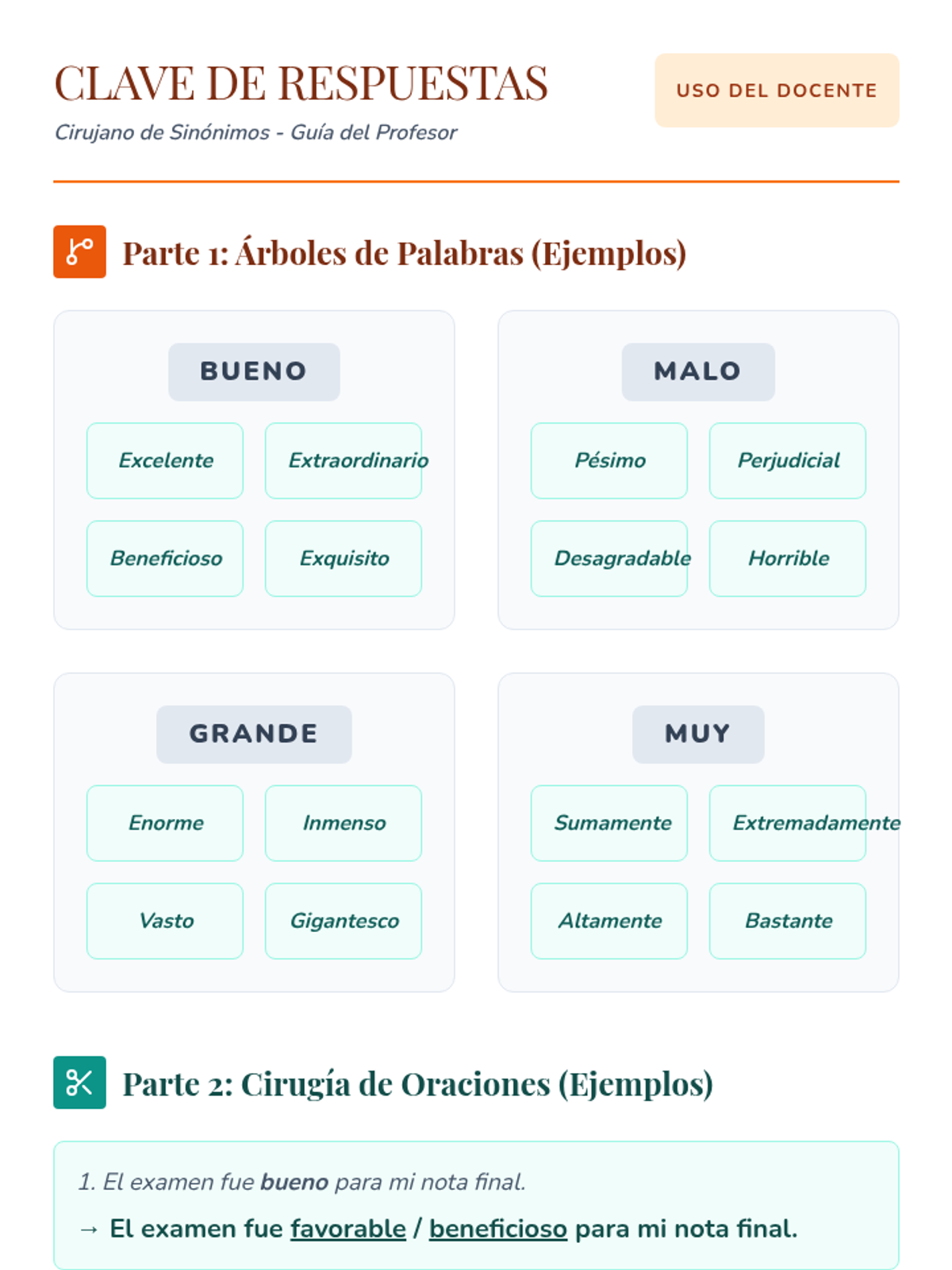
This intermediate Spanish sequence focuses on enriching storytelling through advanced synonyms and idiomatic expressions. Students move beyond basic vocabulary to master nuanced descriptors and culturally rich idioms, culminating in a creative storytelling slam.
A 5-session multimedia project for high school Spanish students to explore and present on the daily life and culture of Spanish-speaking communities.
A comprehensive sequence for intermediate Spanish students exploring idiomatic expressions, regional slang, and cultural metaphors to achieve high-level conversational fluency.
This sequence explores the rich world of Spanish idiomatic expressions and regional colloquiums to deepen cultural literacy. Students move beyond literal translations to understand how figurative language reflects cultural values, history, and geography across different Spanish-speaking regions.