Phonetic foundations through Pinyin and tones, character recognition, and essential grammar for all proficiency levels. Integrates cultural context with advanced reading, writing, and communicative strategies.
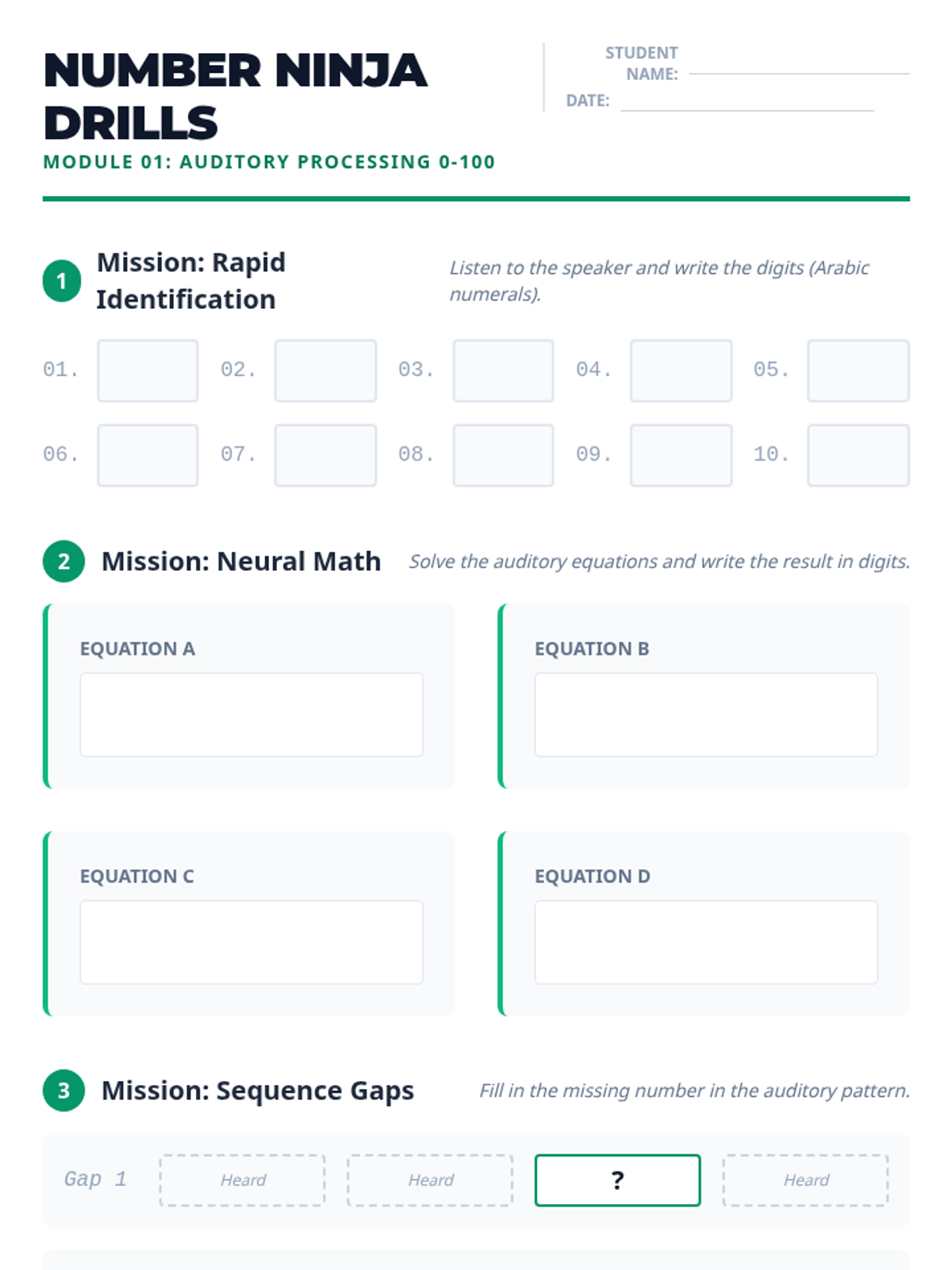
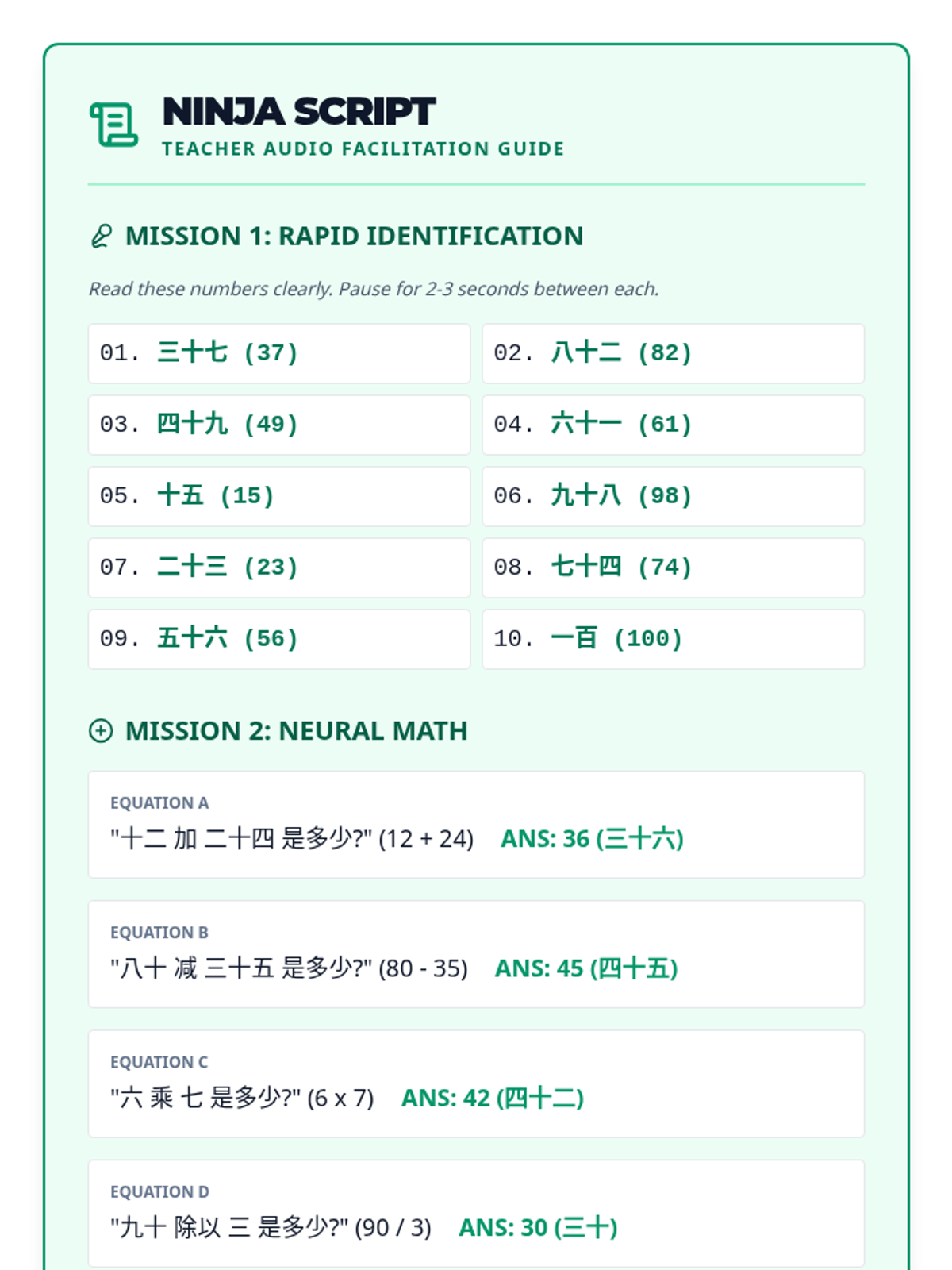
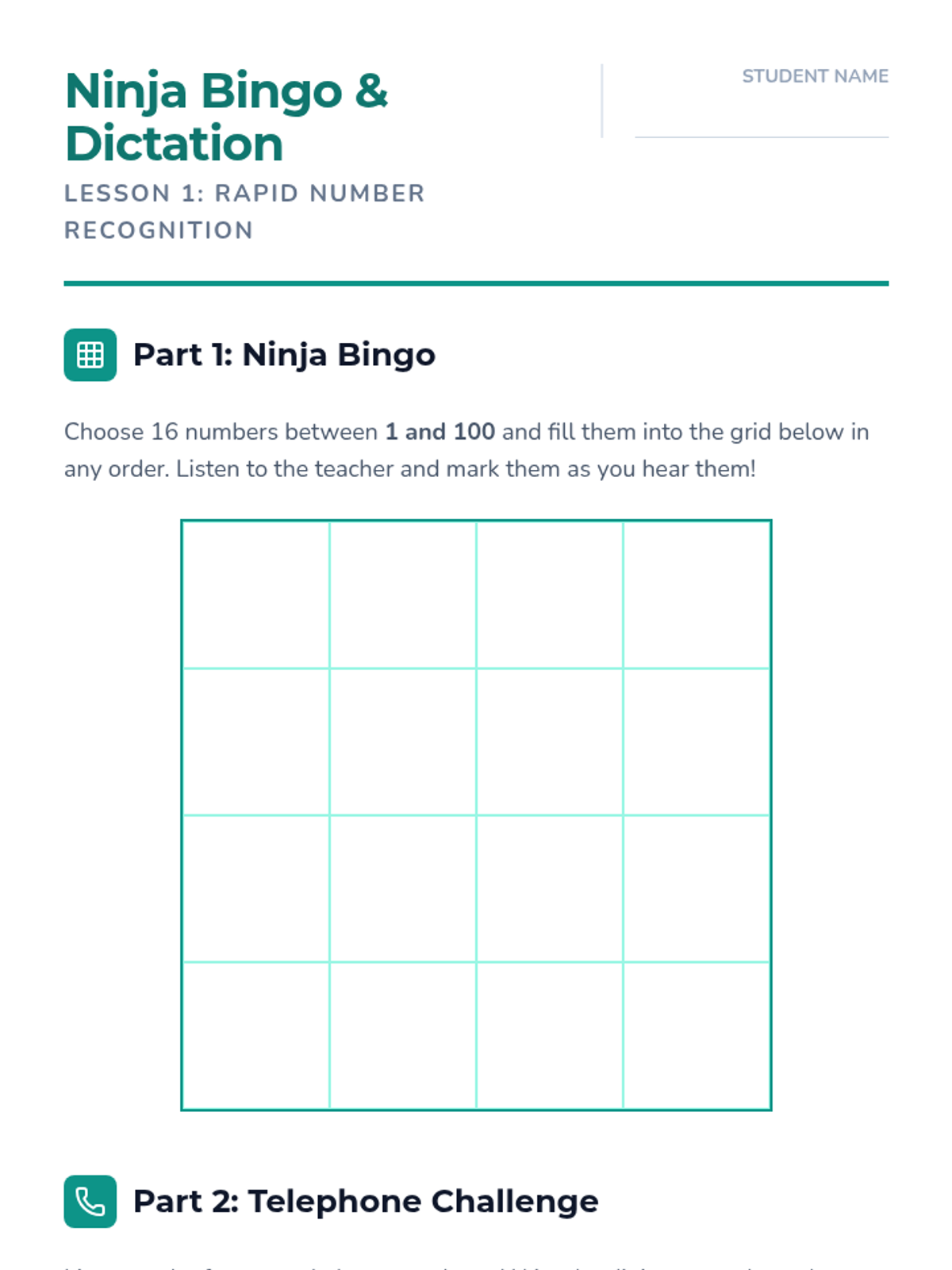
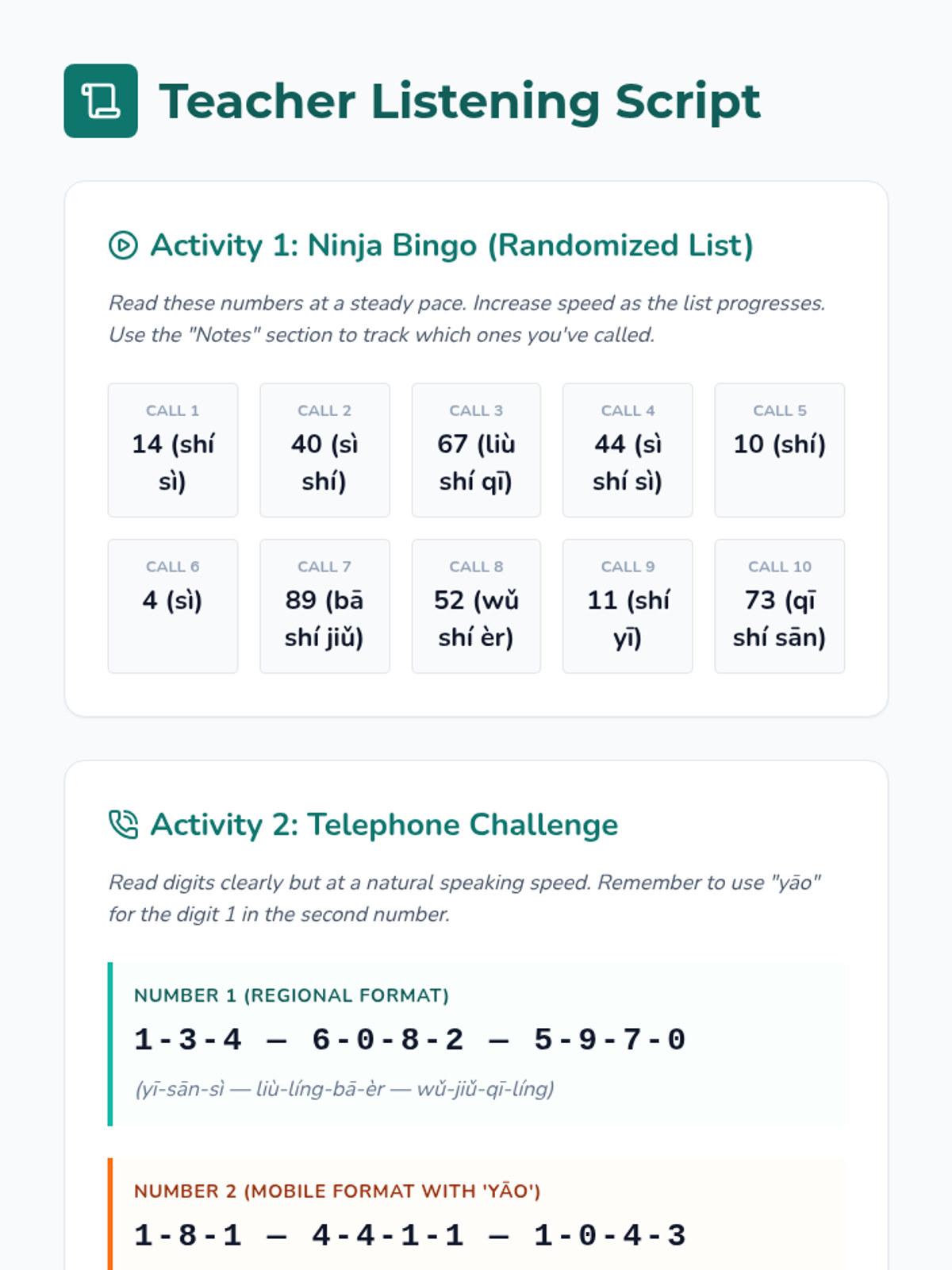
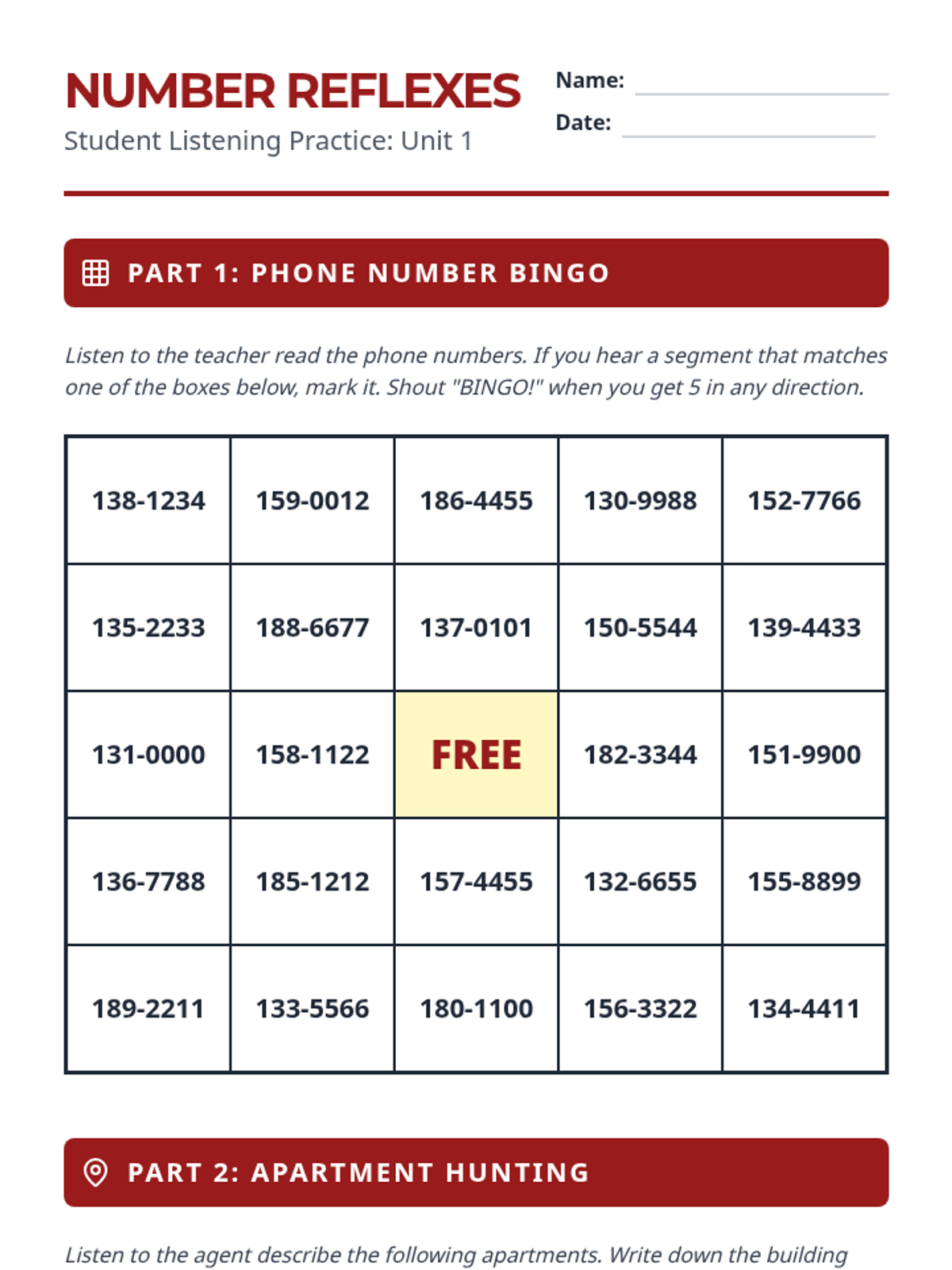
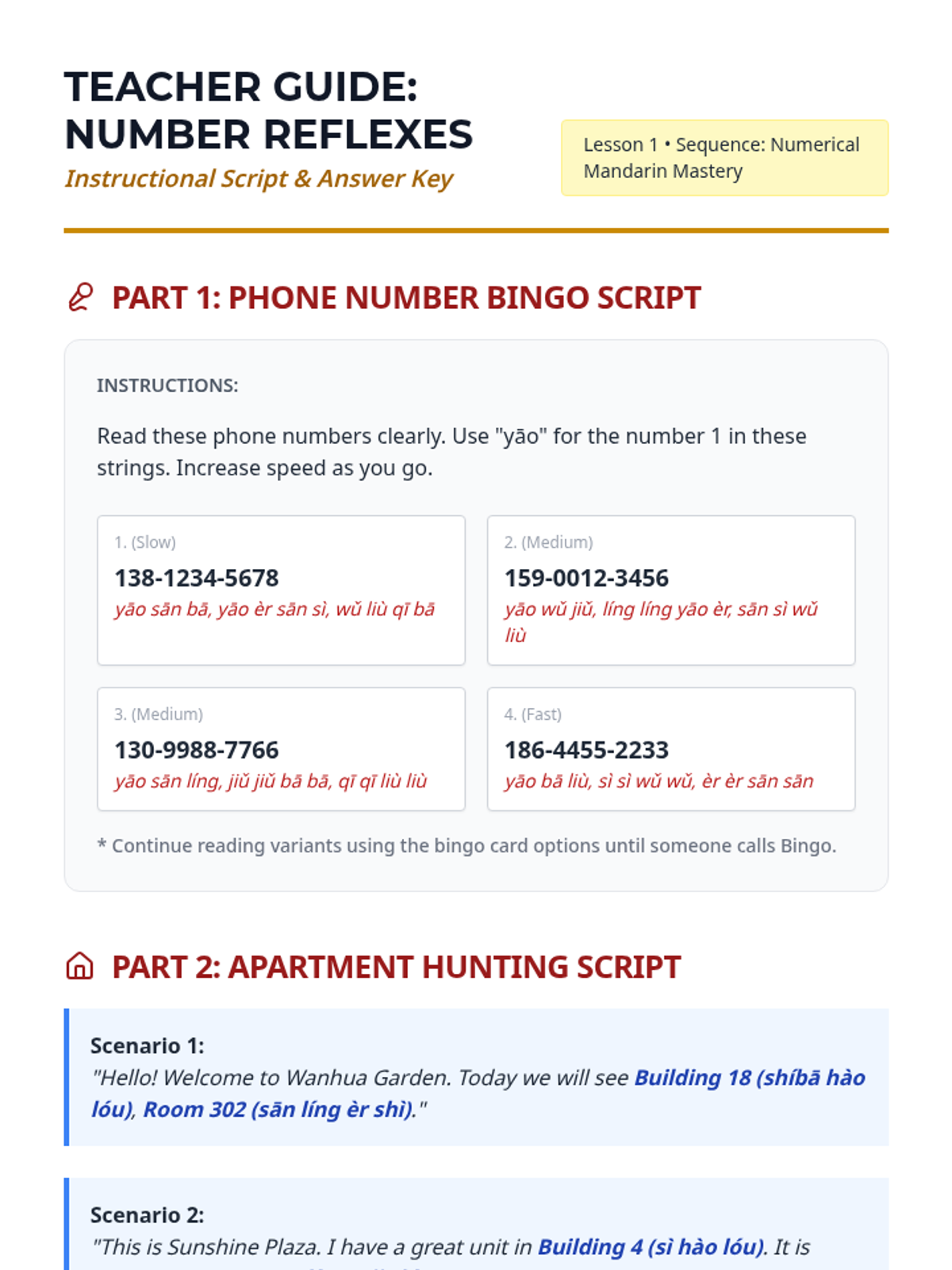
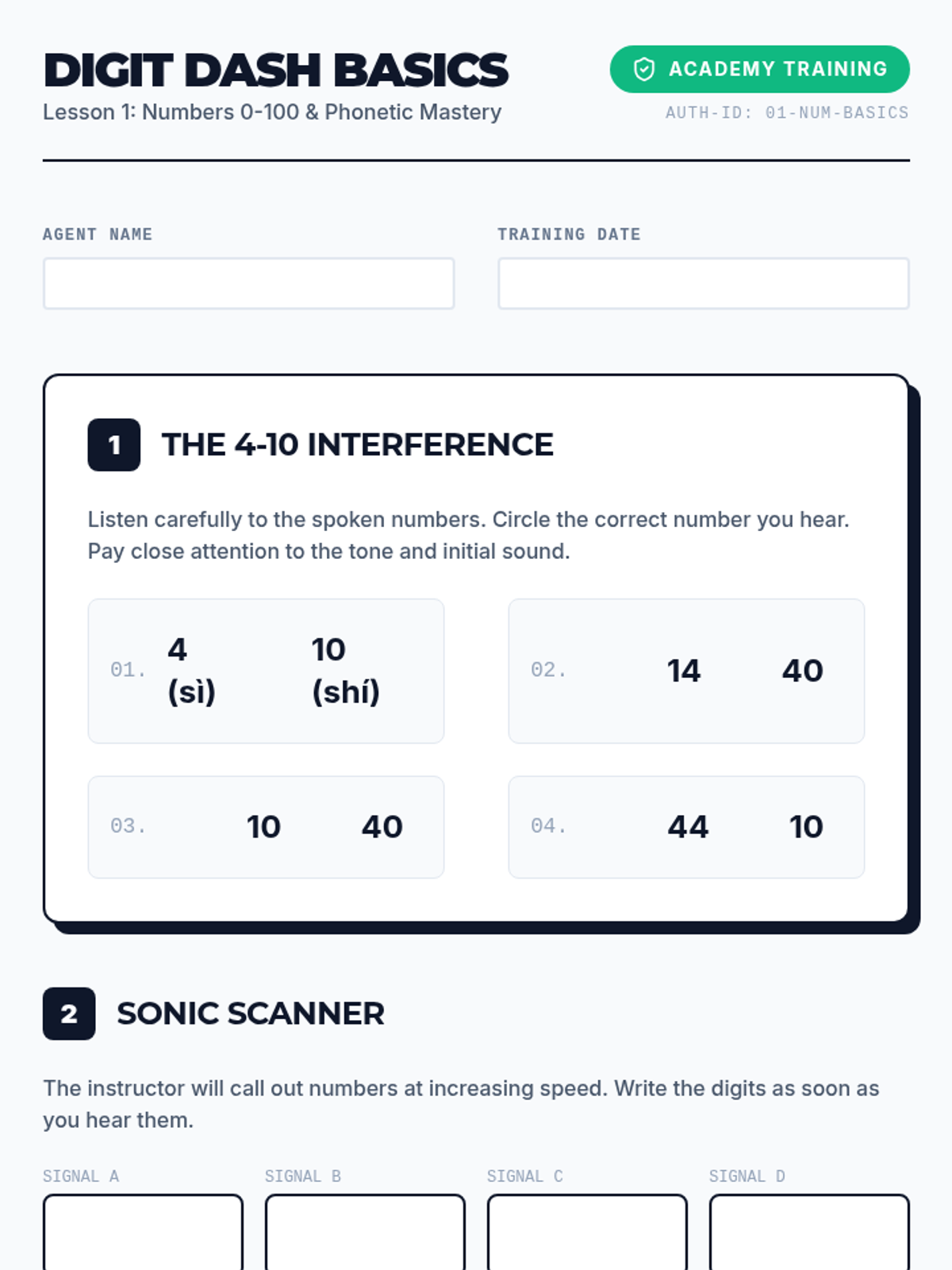
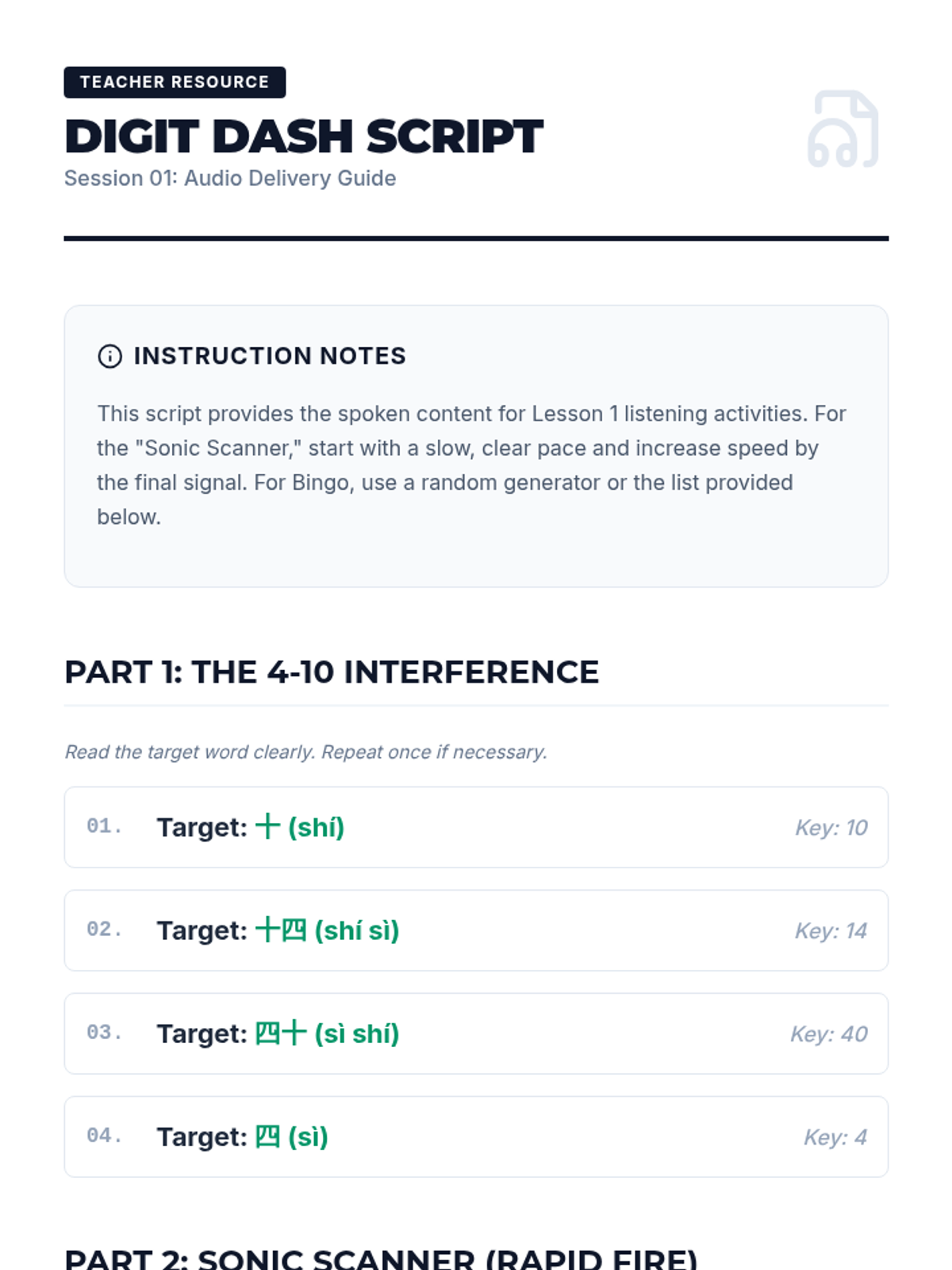
This sequence focuses on the cognitive processing of numerical data in Mandarin Chinese, moving from basic digits to complex phone numbers, calendar dates, clock times, and marketplace currency. Students will develop rapid auditory recognition through gamified scenarios like emergency dispatch, time travel, and transit scheduling.
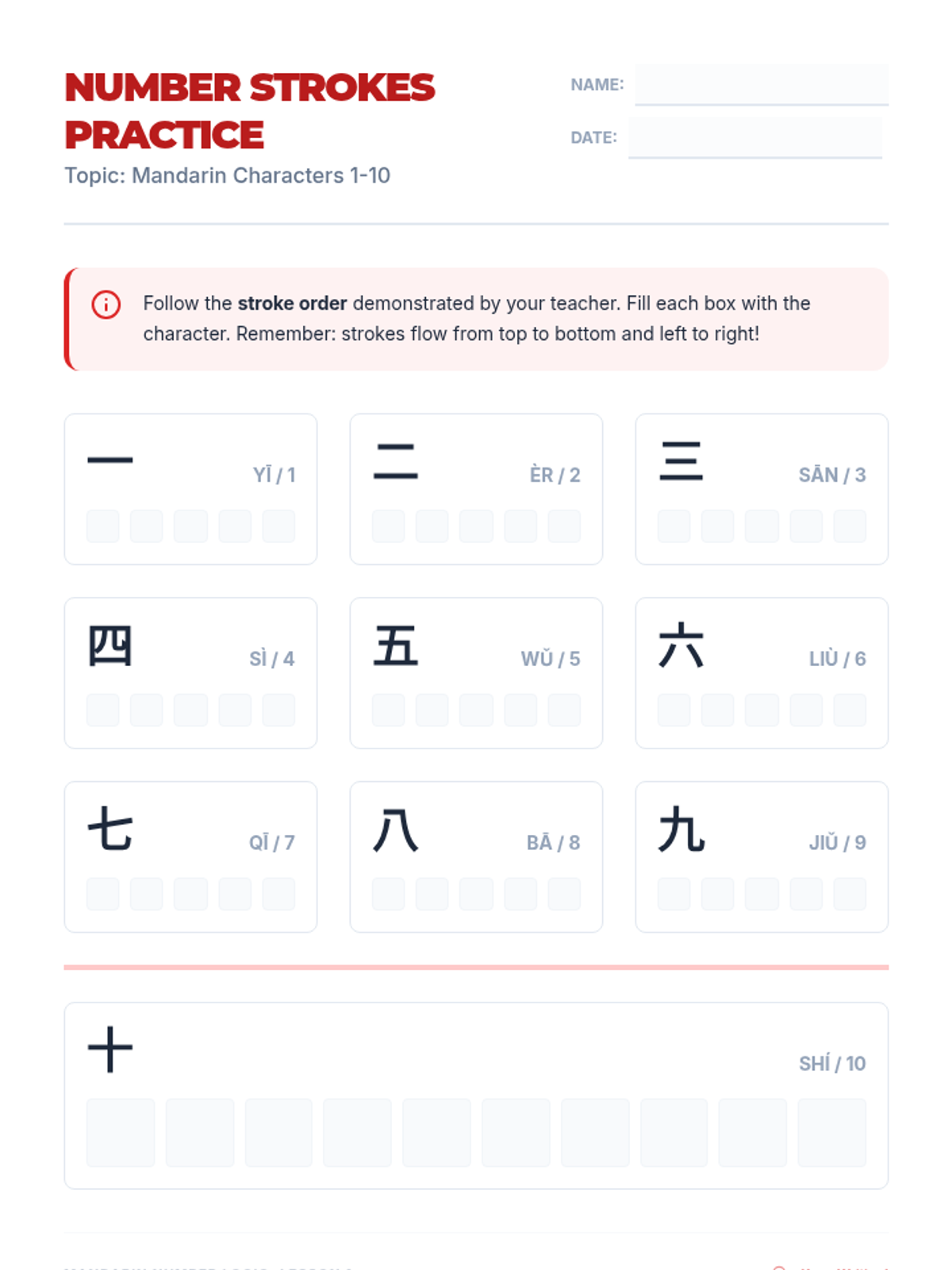
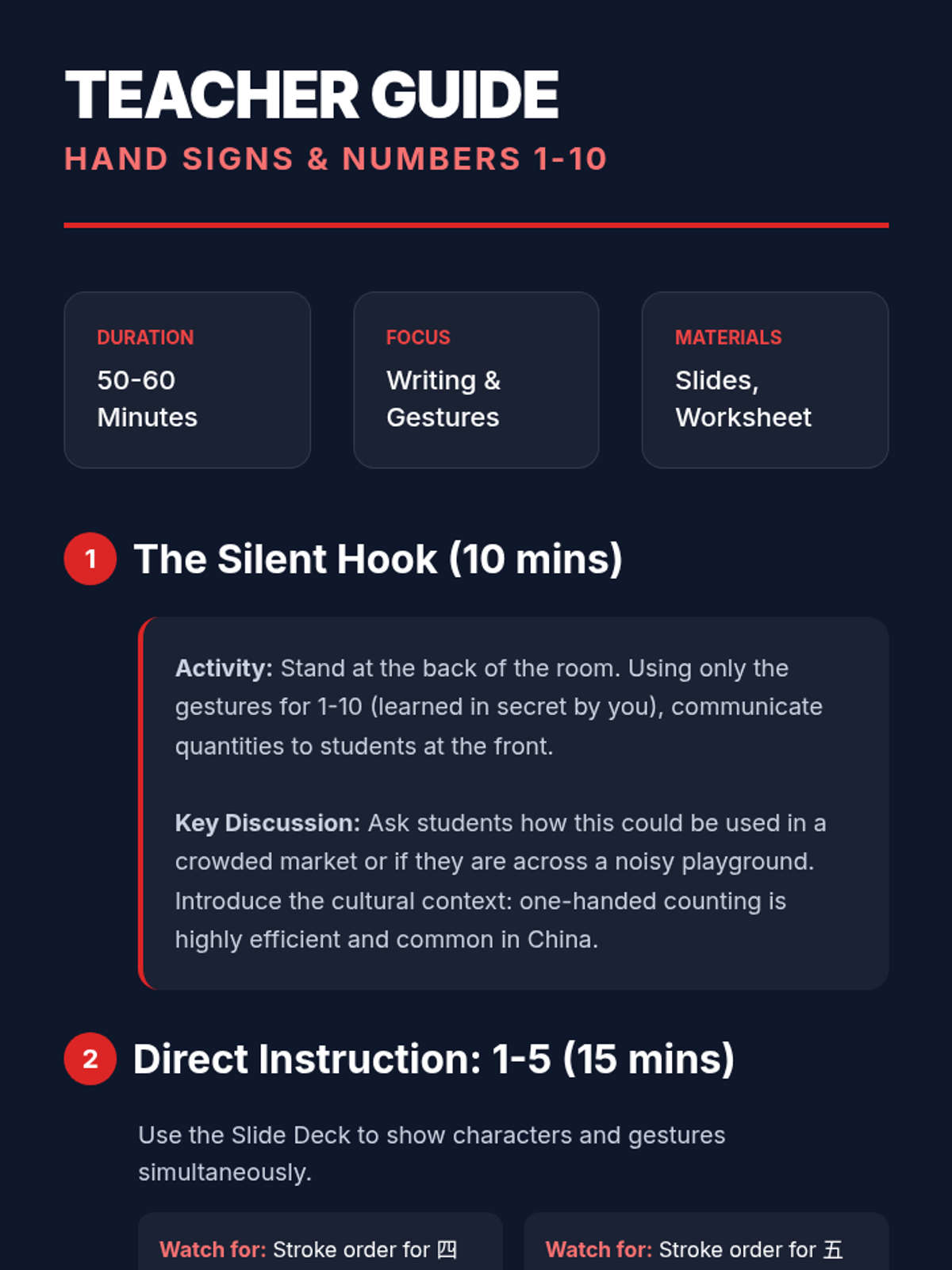
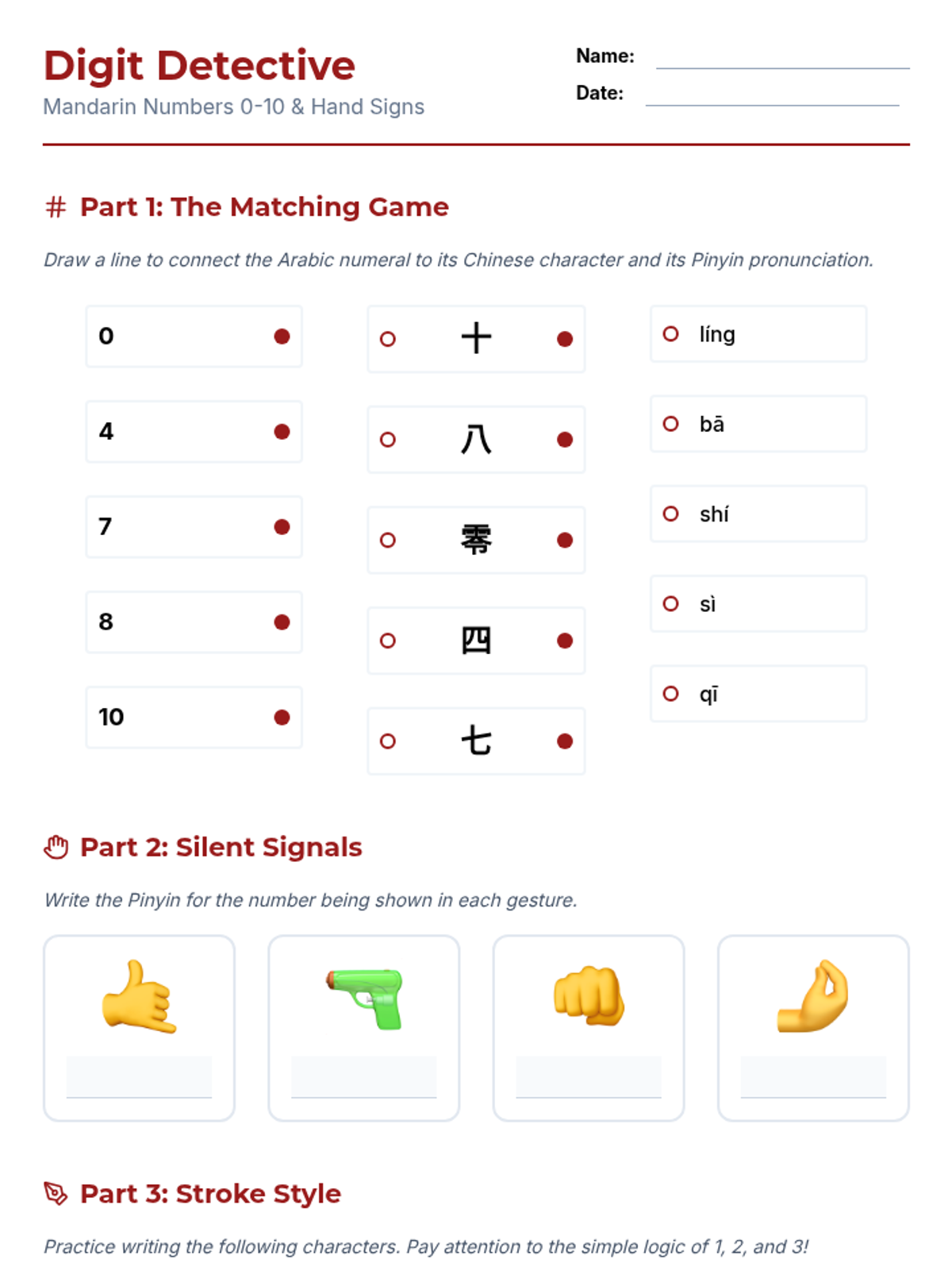
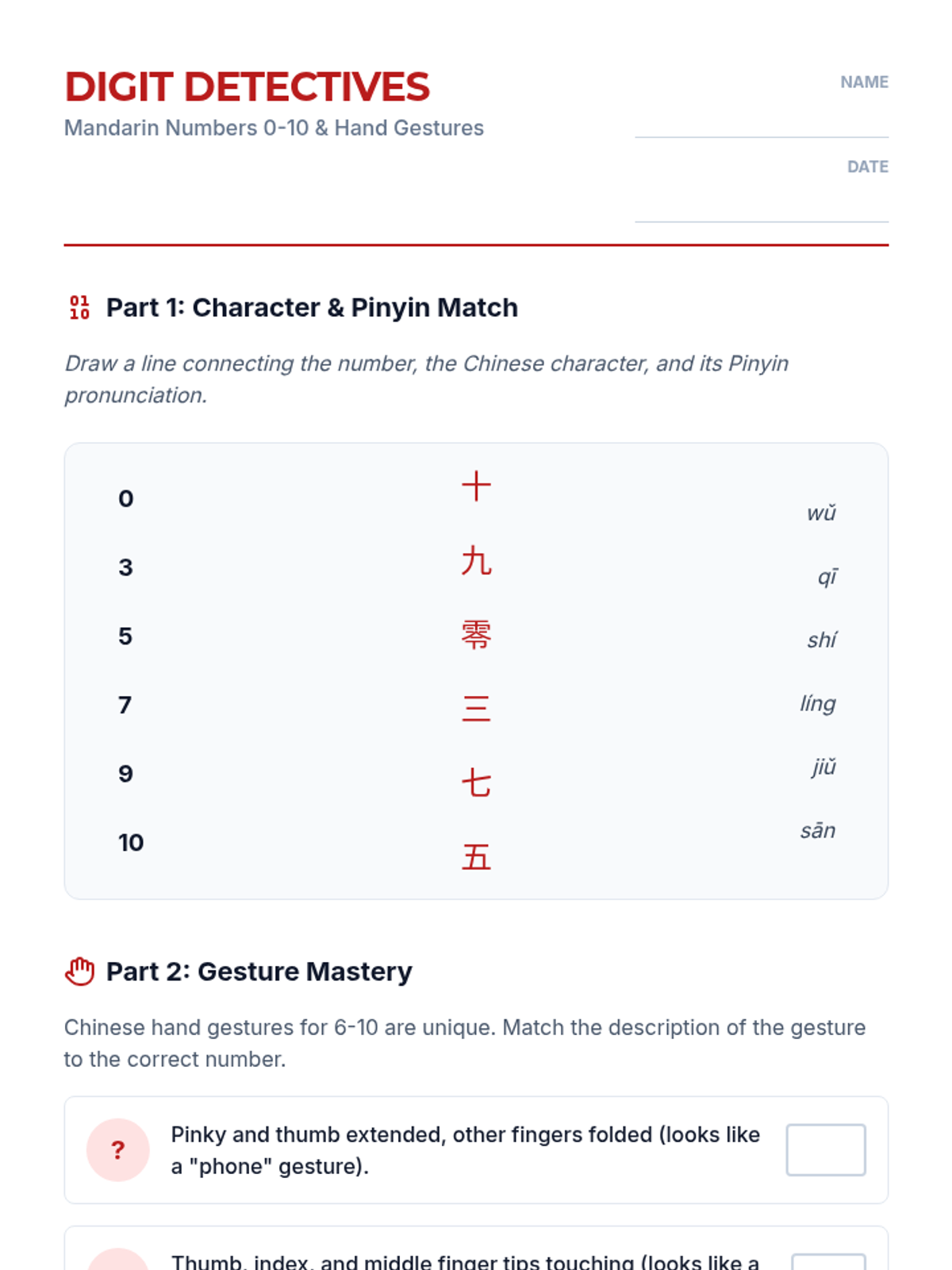
A 6th-grade Mandarin Chinese unit exploring the logical, mathematical structure of Chinese numbers, days of the week, and calendar dates. Students progress from writing basic characters and learning hand gestures to building complex numbers and creating functional calendars.
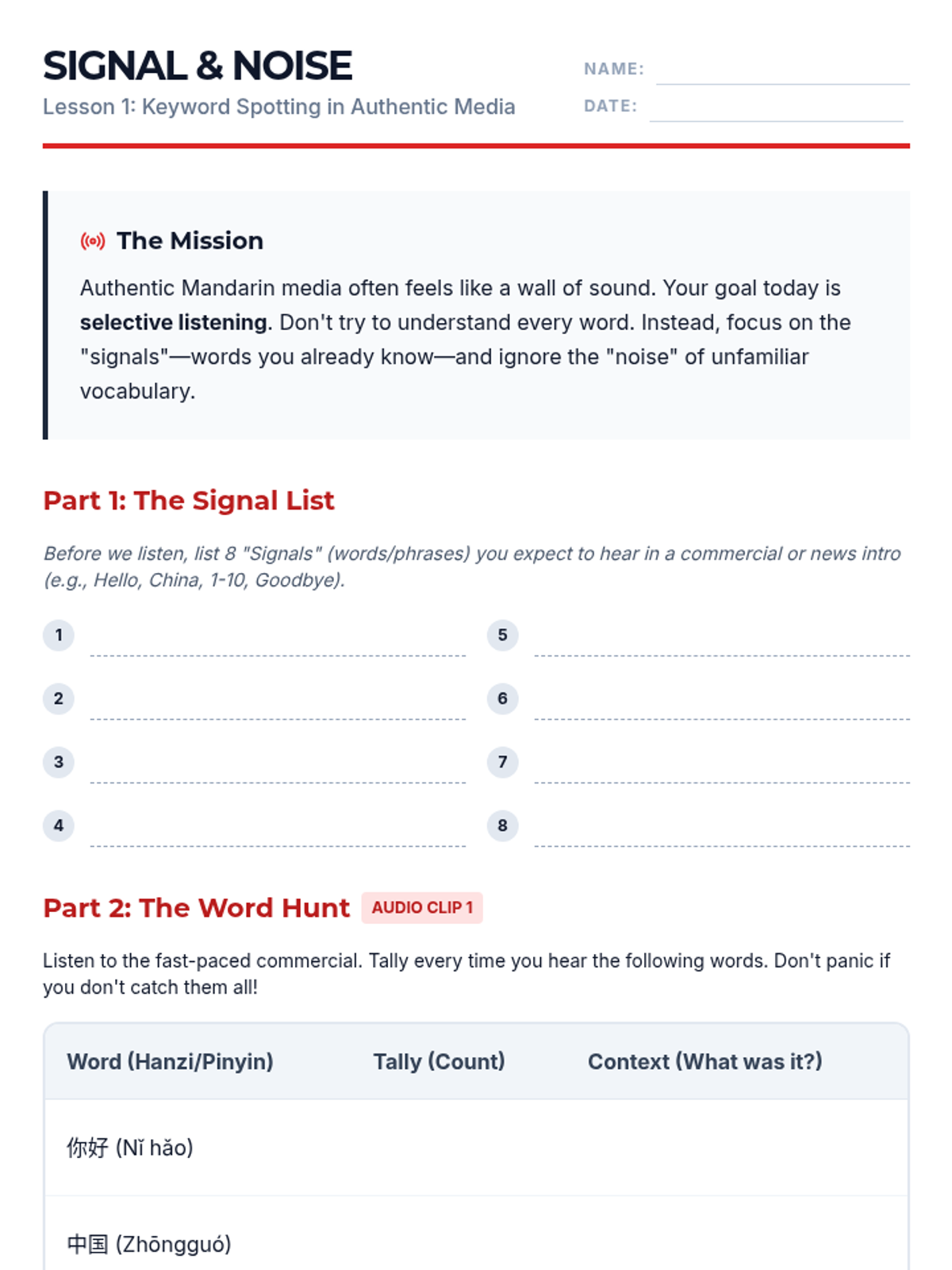
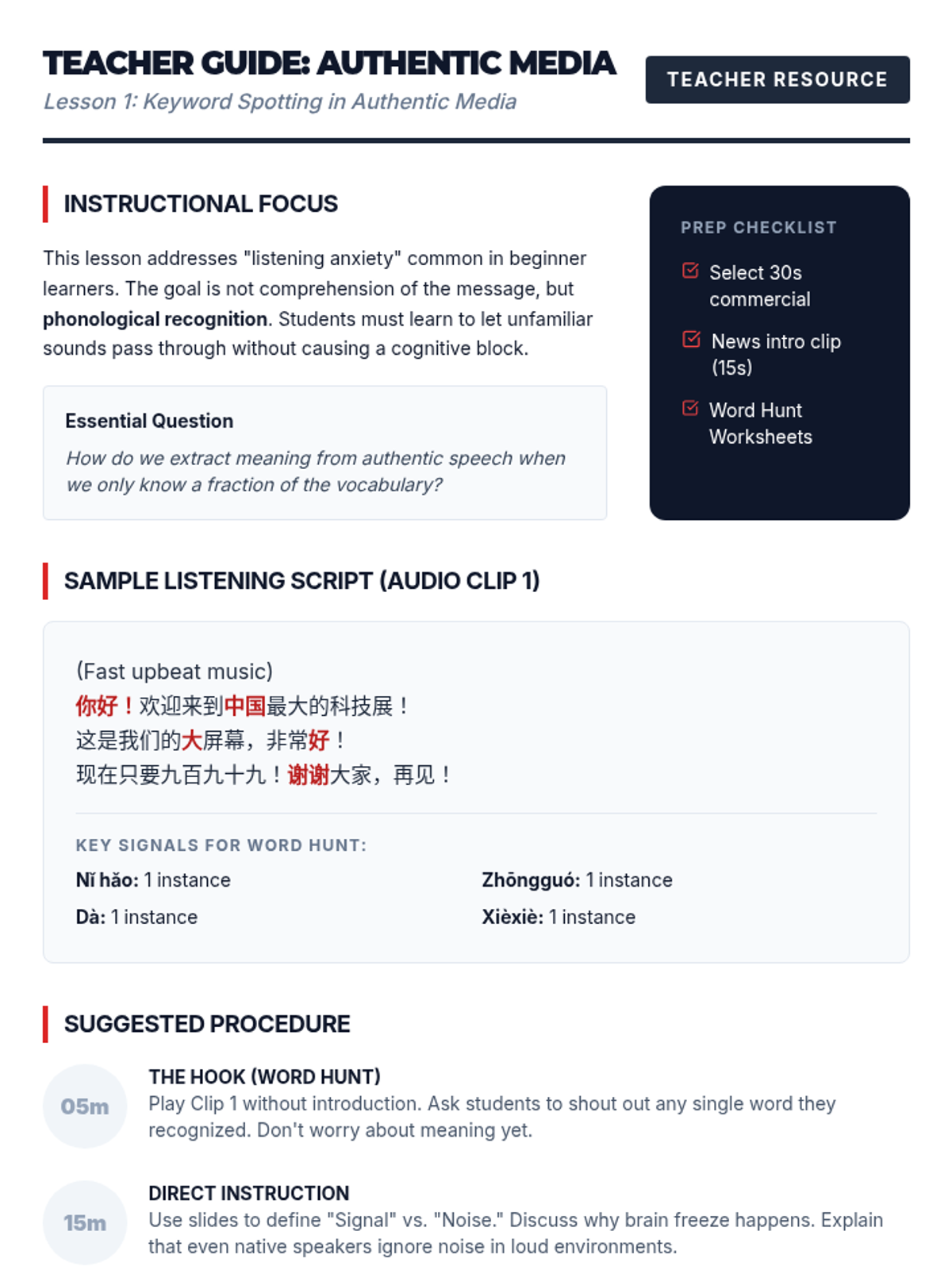
This sequence guides beginner Mandarin learners through 'bottom-up' listening strategies using authentic media. Students will learn to filter out 'noise' to identify keywords in weather reports, pop songs, and food vlogs, building their tolerance for ambiguity and real-world comprehension skills.
A comprehensive sequence for beginner Mandarin learners focusing on processing numerical data, dates, time, and currency through rapid-response listening activities and gamified simulations.
This sequence focuses on the auditory comprehension of Mandarin numerical systems, from basic counting to complex financial and temporal data. Students will develop rapid-response listening skills through gamified simulations and real-world scenarios like shopping, travel, and data analysis.
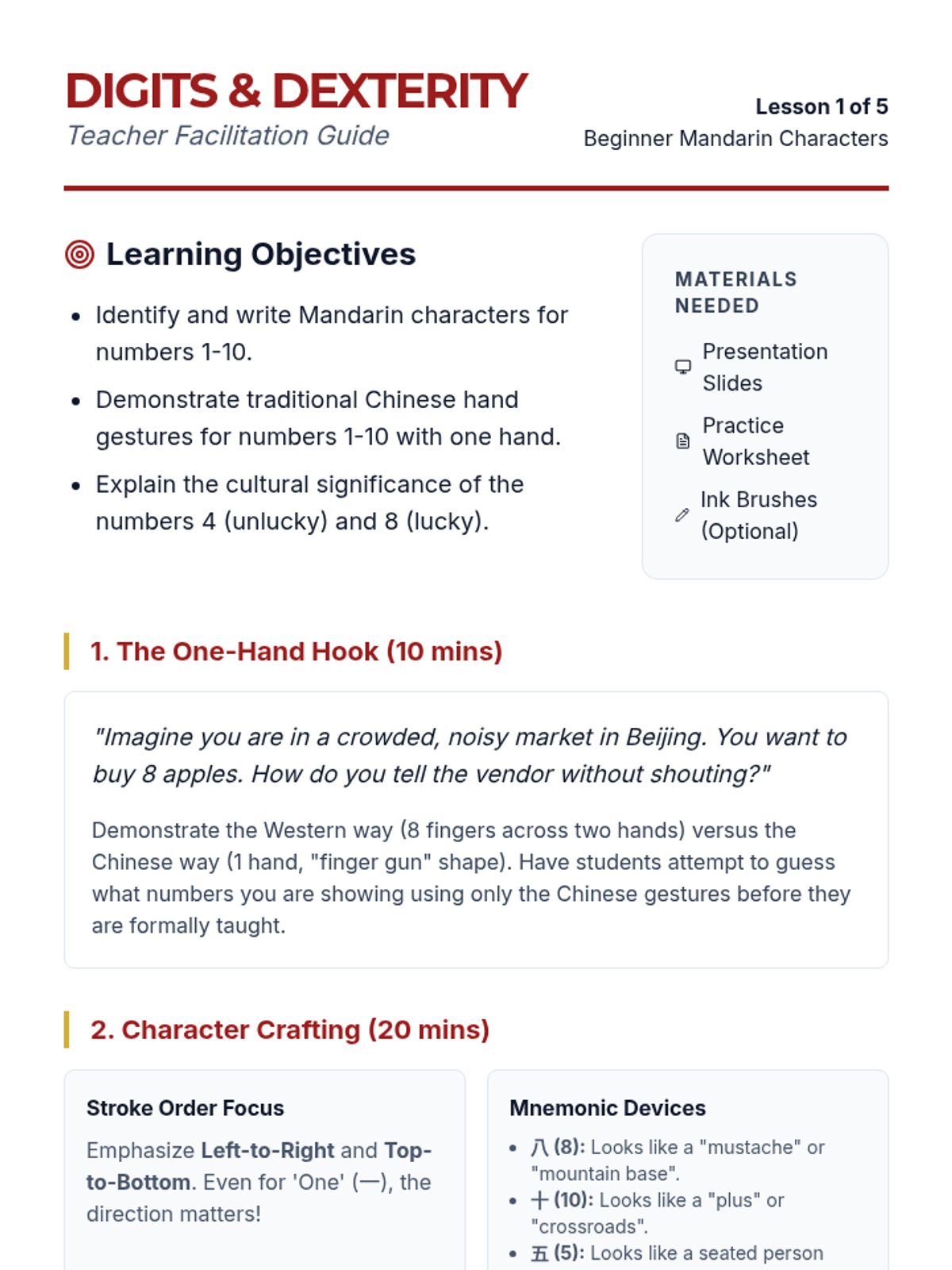
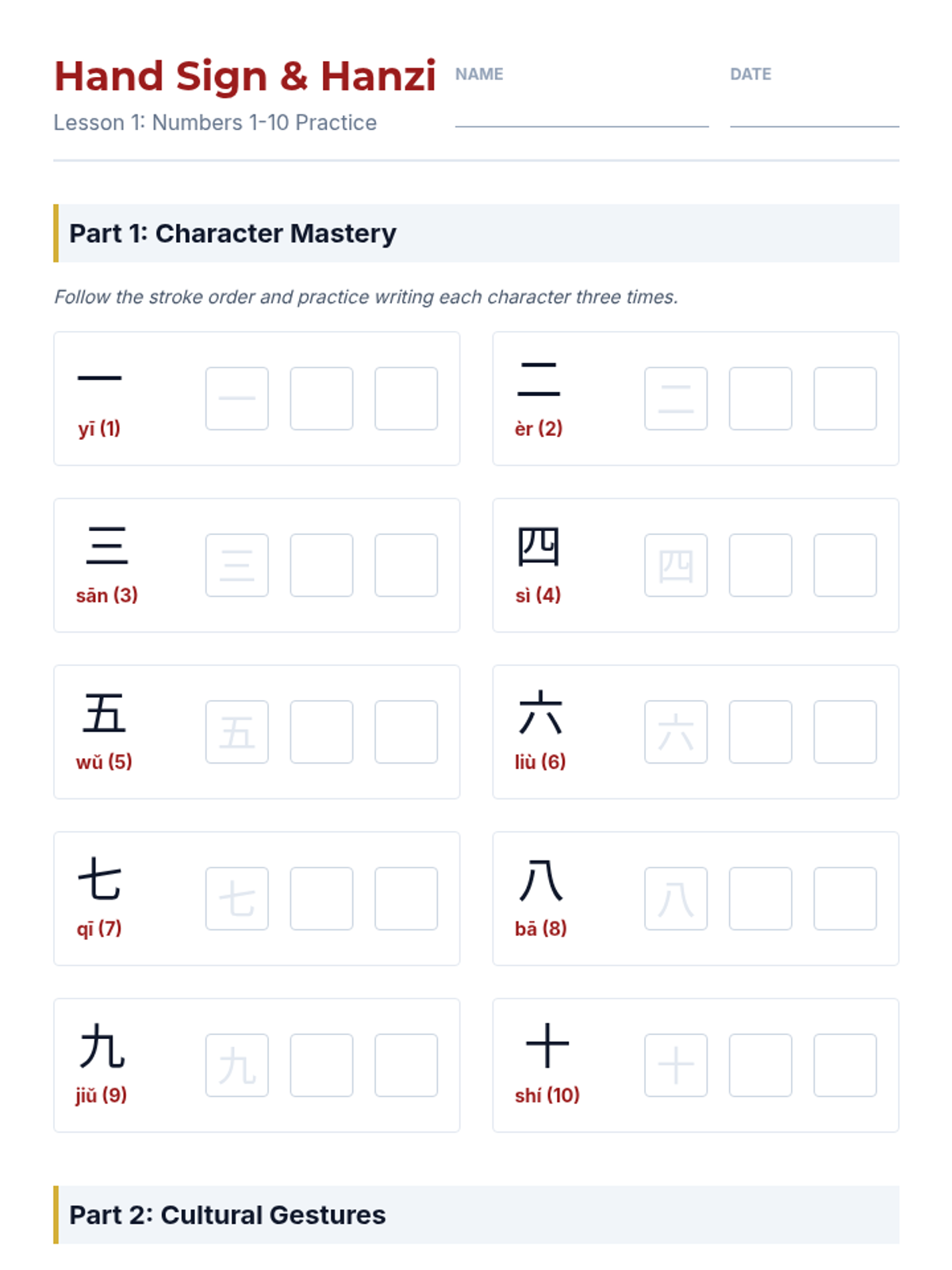
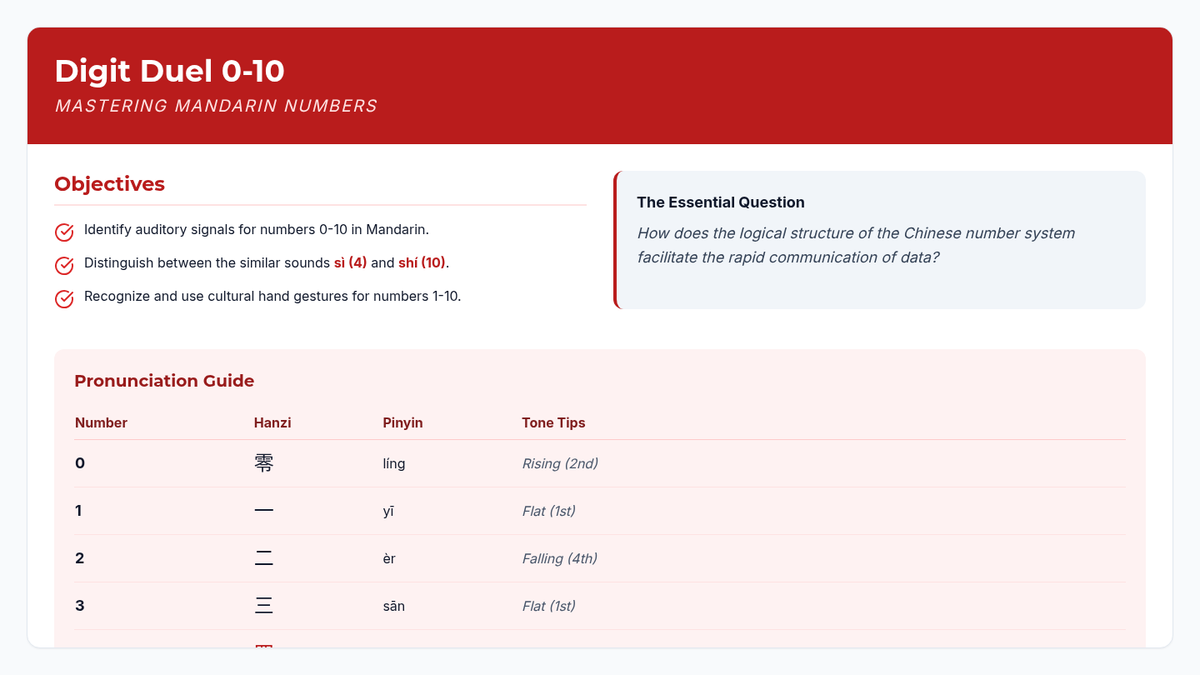
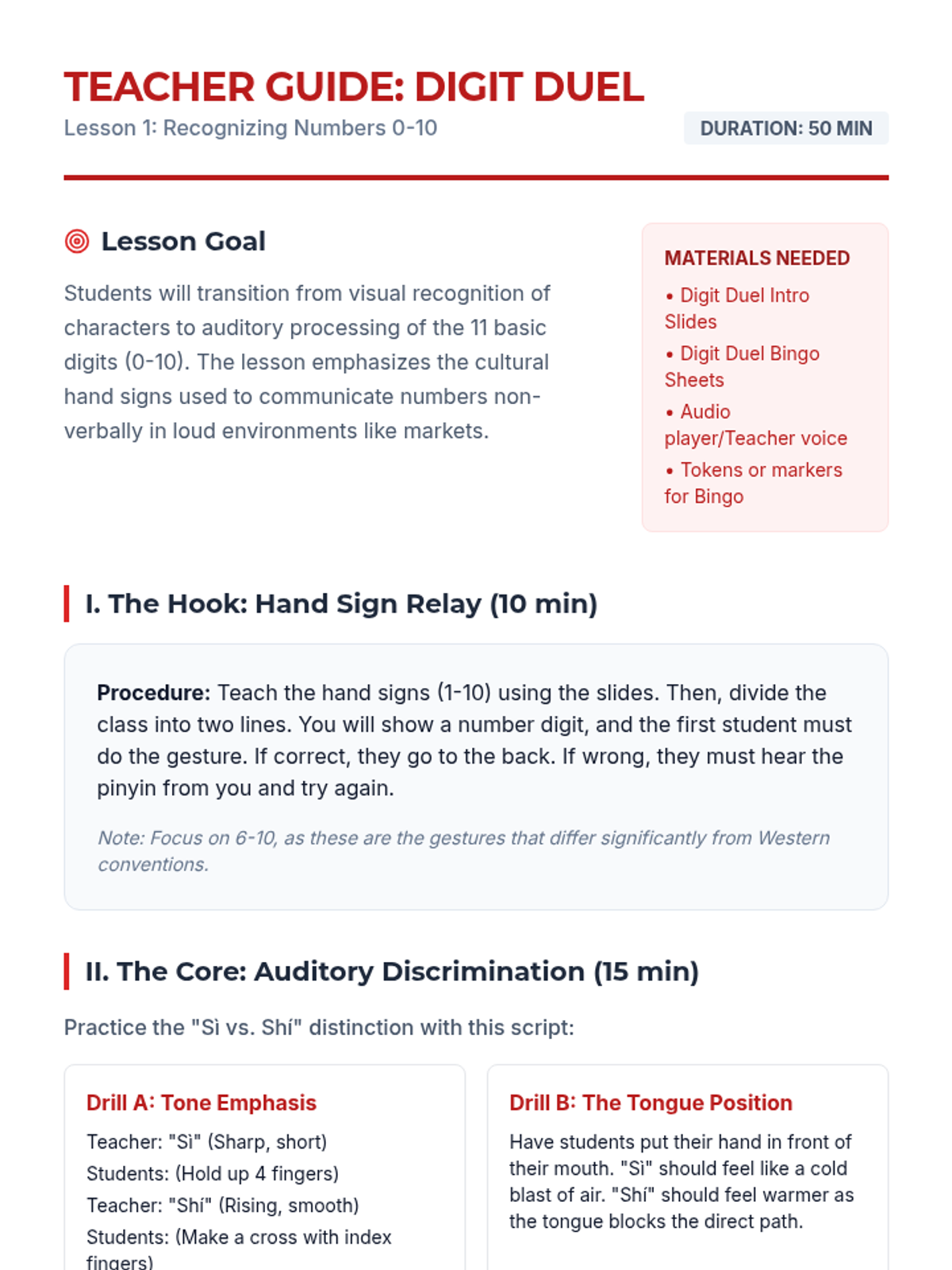
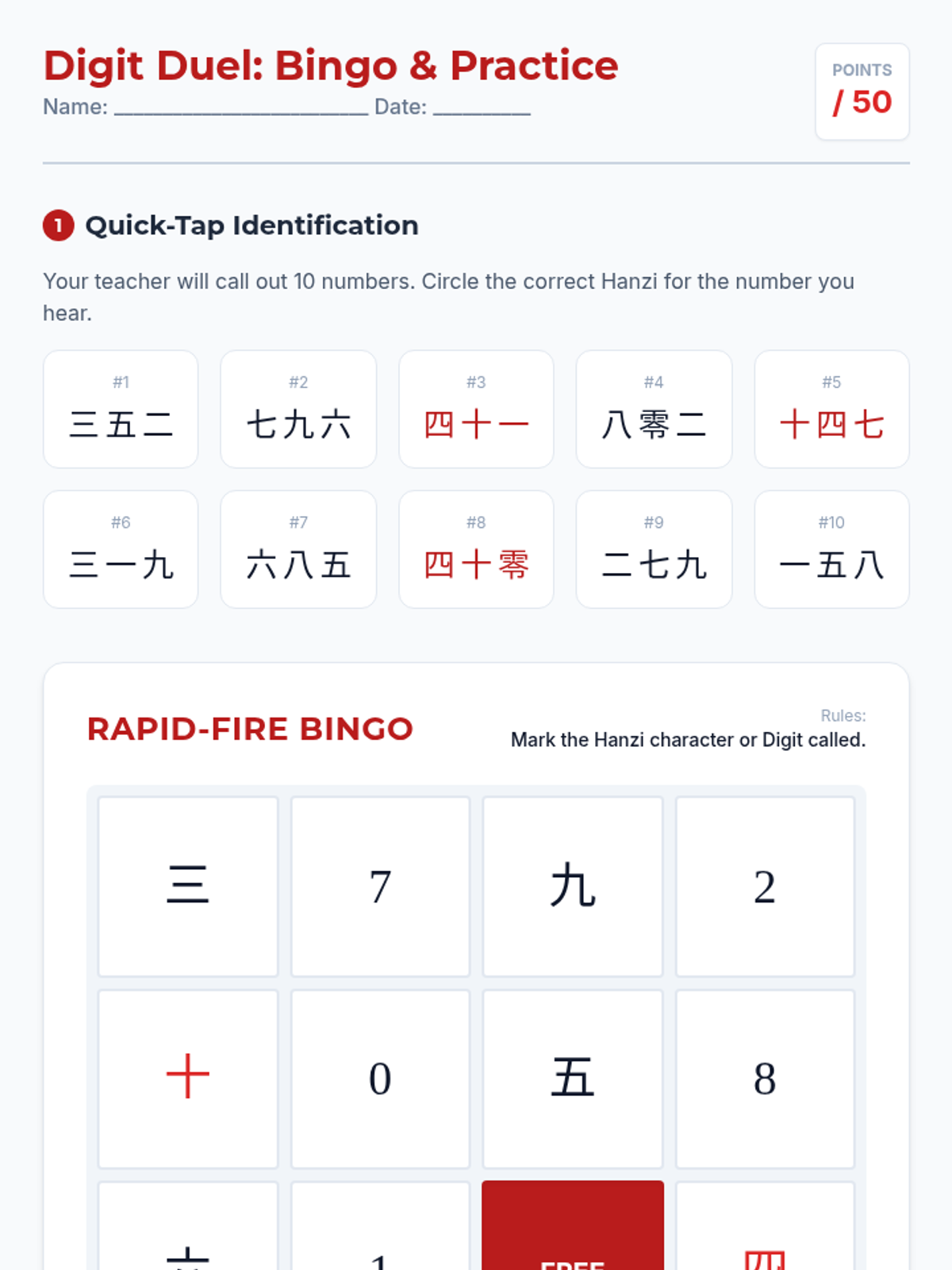
A comprehensive sequence for 8th-grade beginners to master Mandarin Chinese numbers, dates, and time through logical character construction and cultural hand signs.
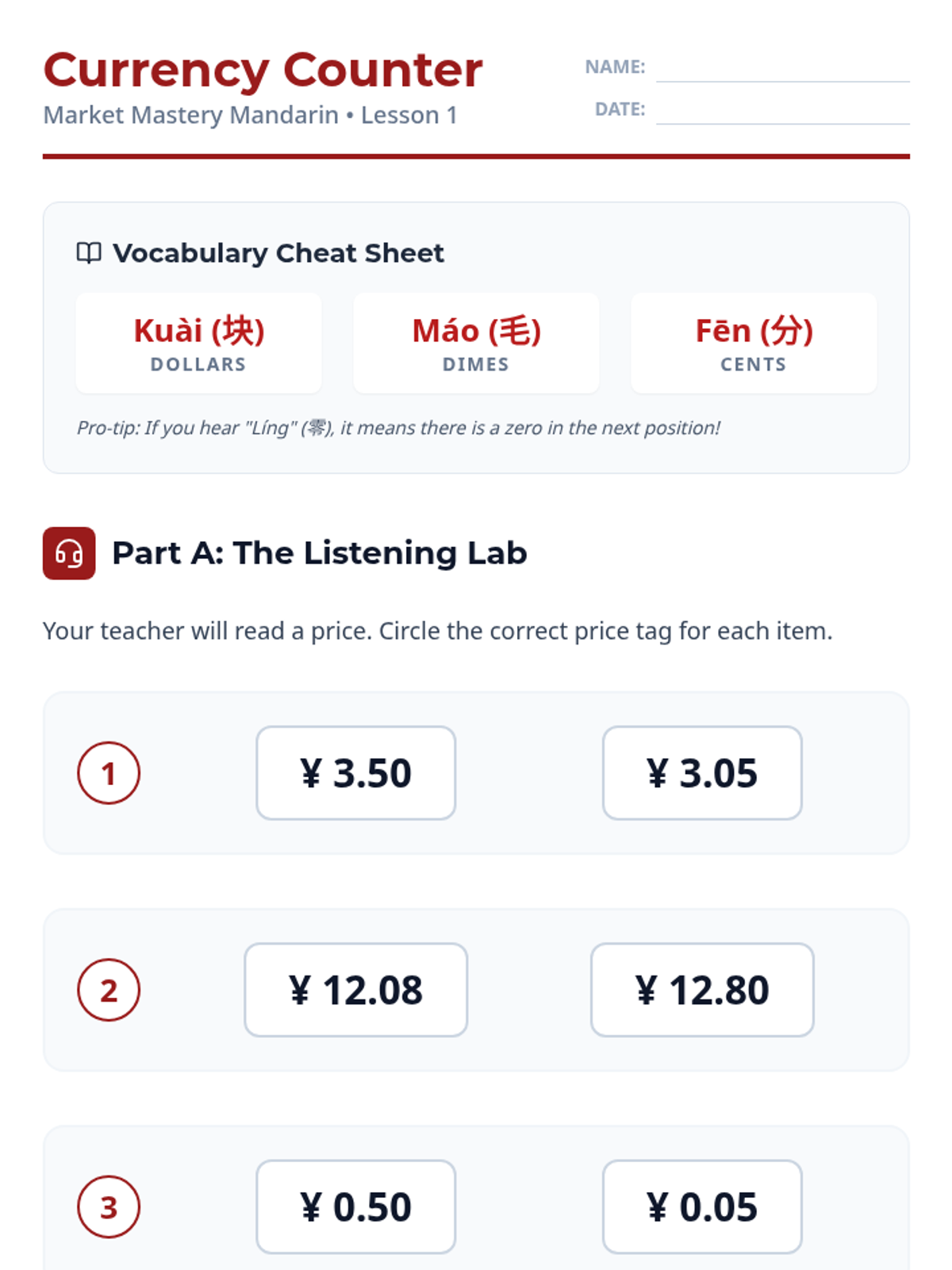
A project-based sequence for 10th-grade Mandarin students focusing on listening comprehension within the context of shopping, currency, and negotiation. Students build from basic price recognition to navigating a simulated night market.
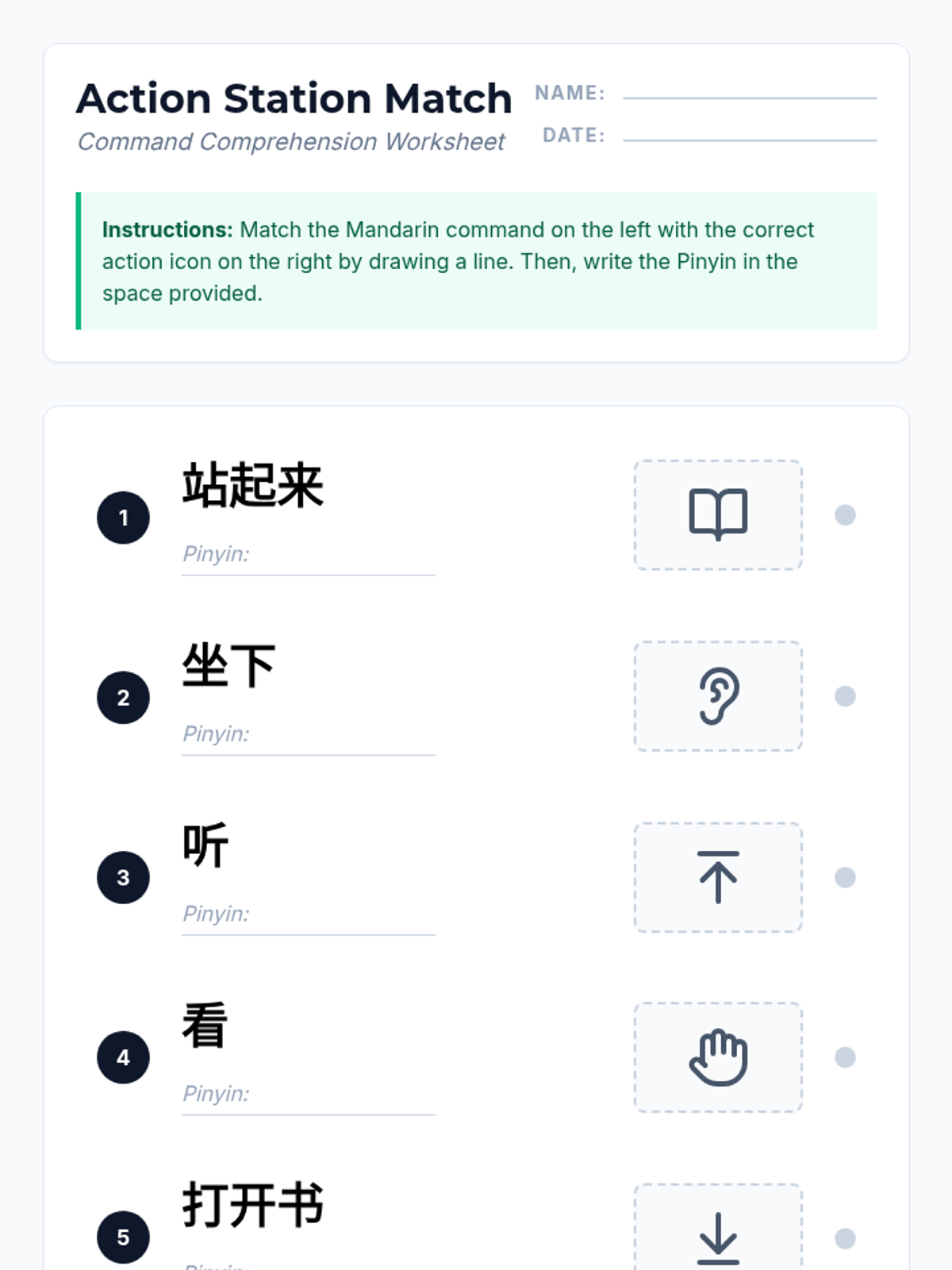
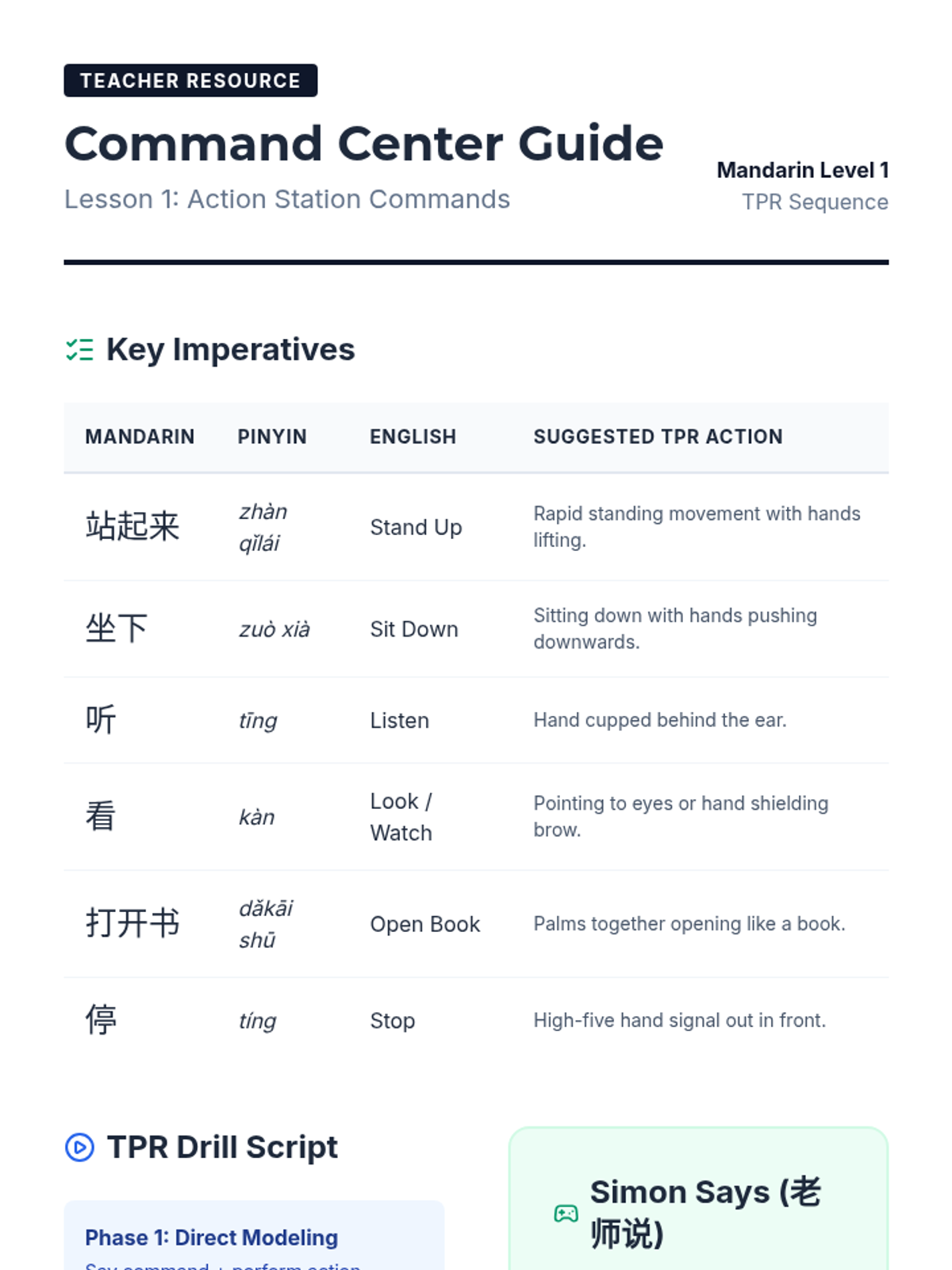
A TPR-based introductory course for 10th-grade Mandarin students focusing on immediate physical response to classroom imperatives and spatial directions. Students build direct comprehension between auditory Mandarin cues and physical actions, bypassing the need for translation.
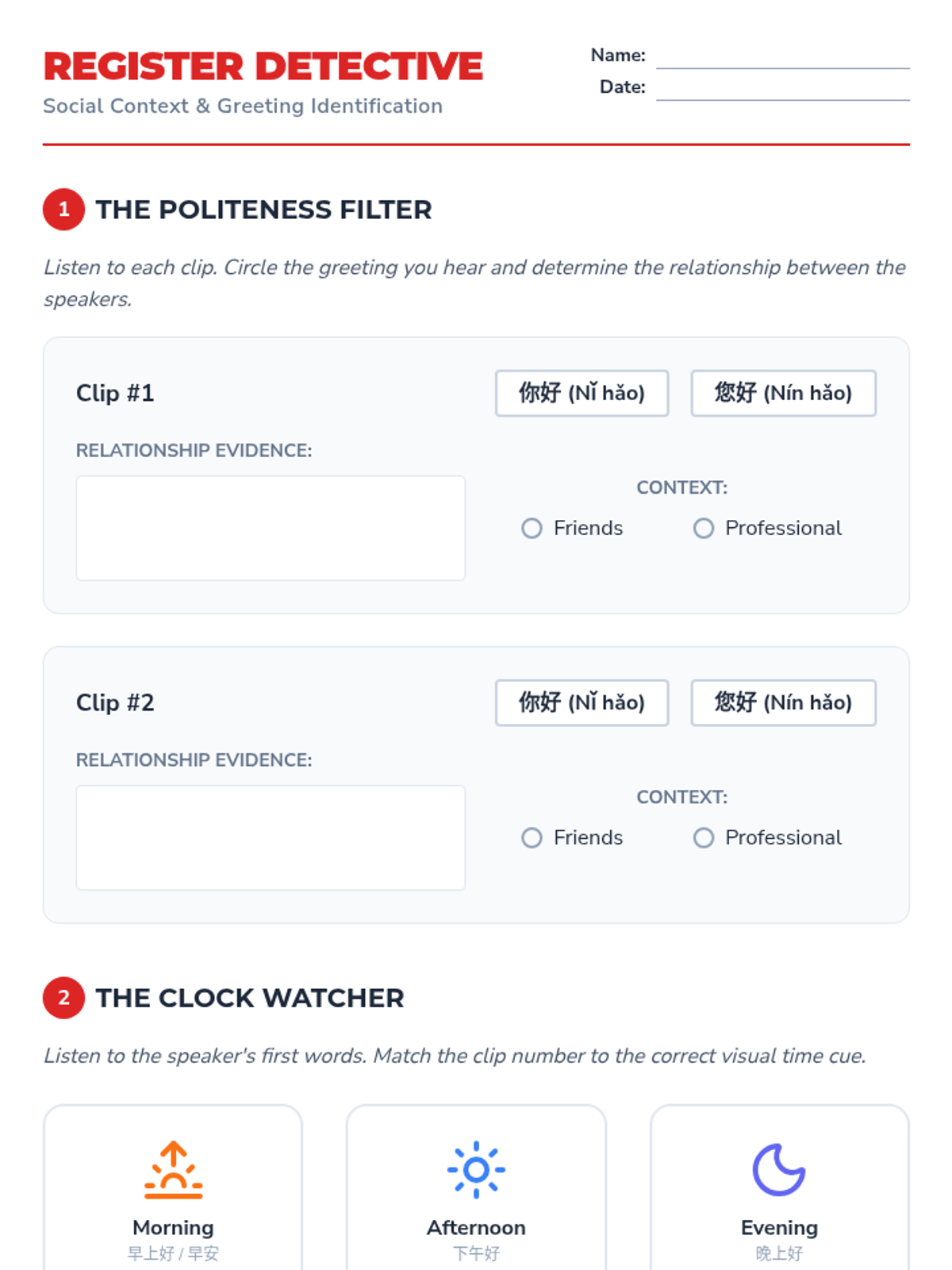
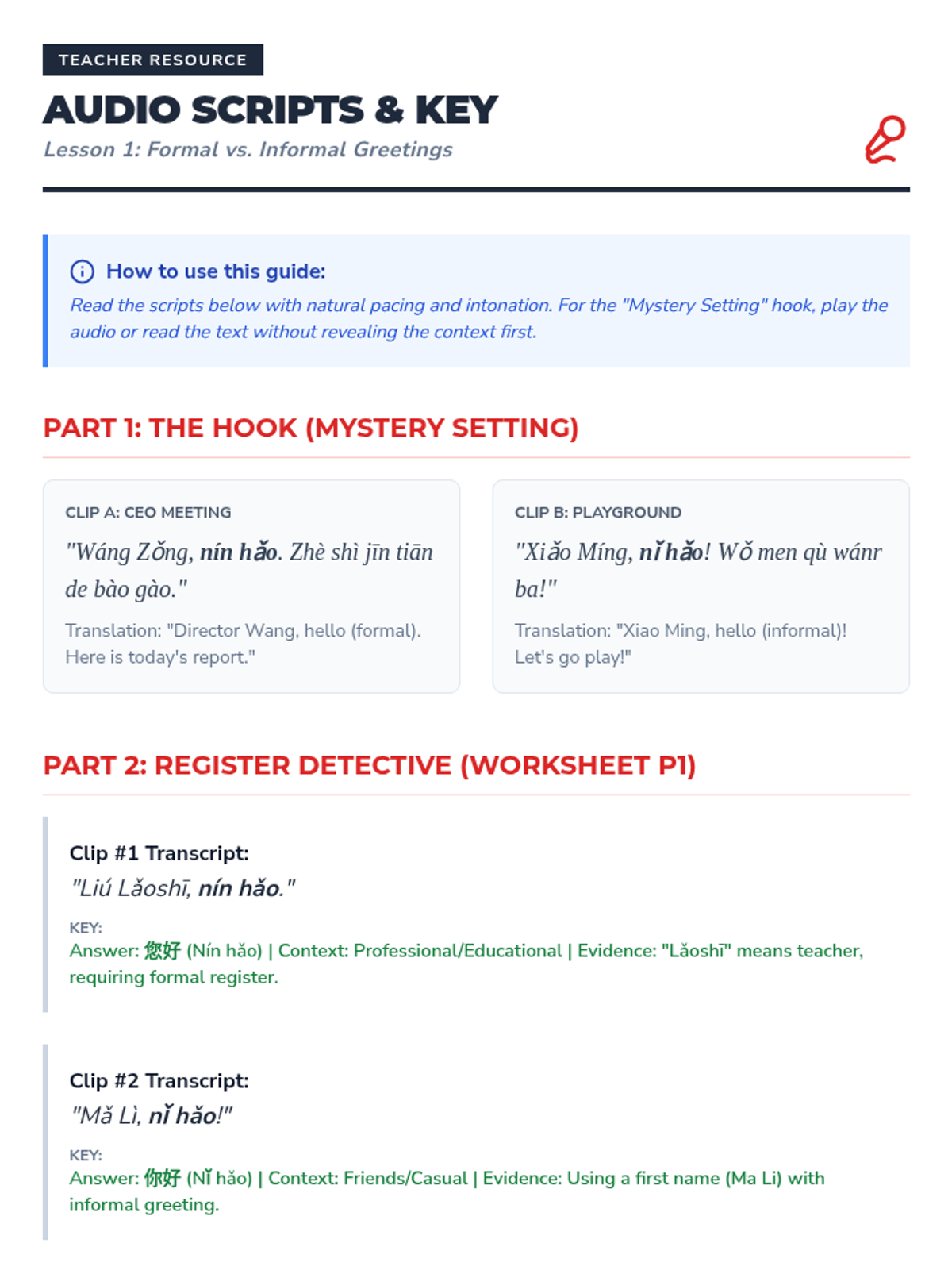
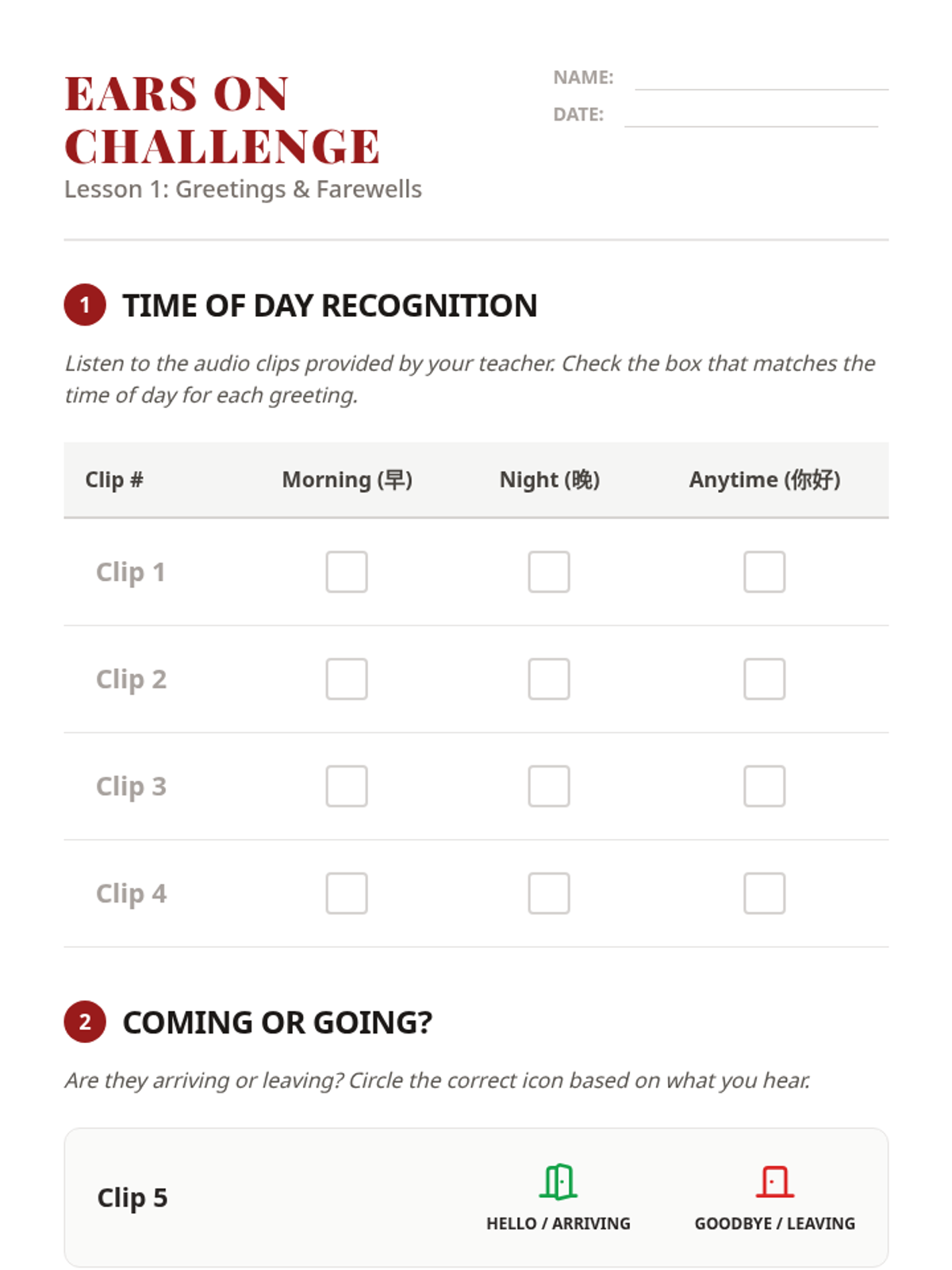
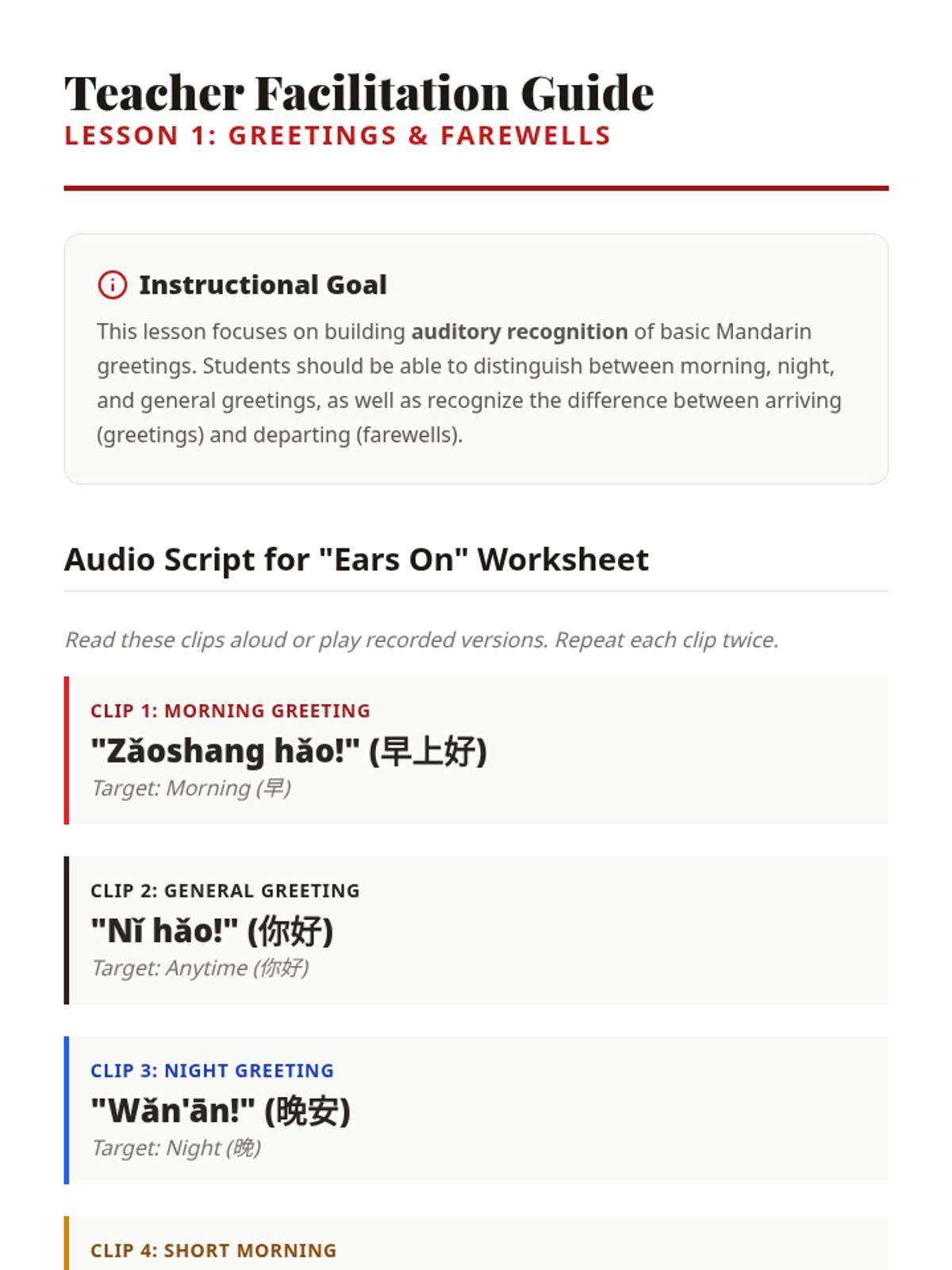
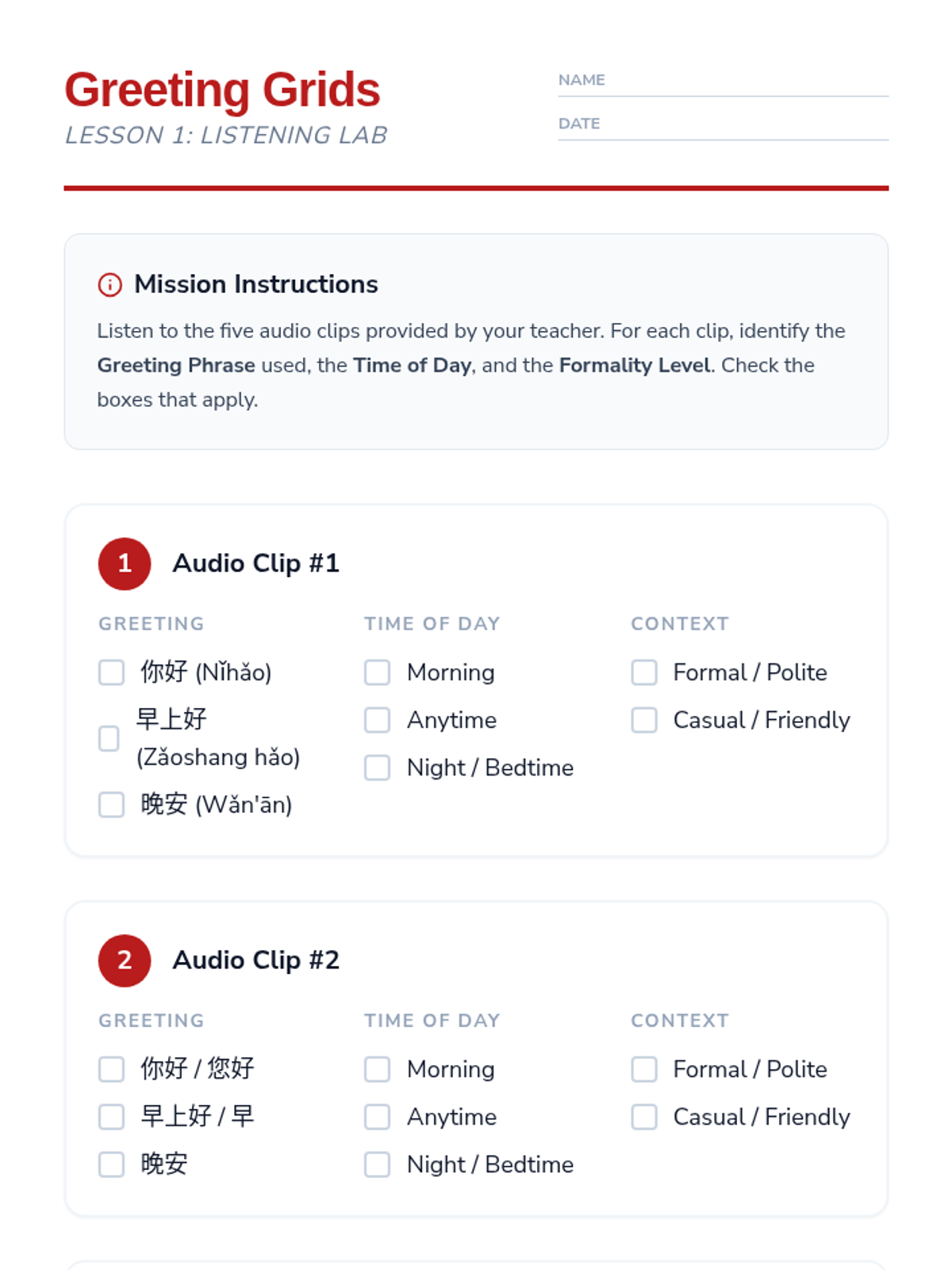
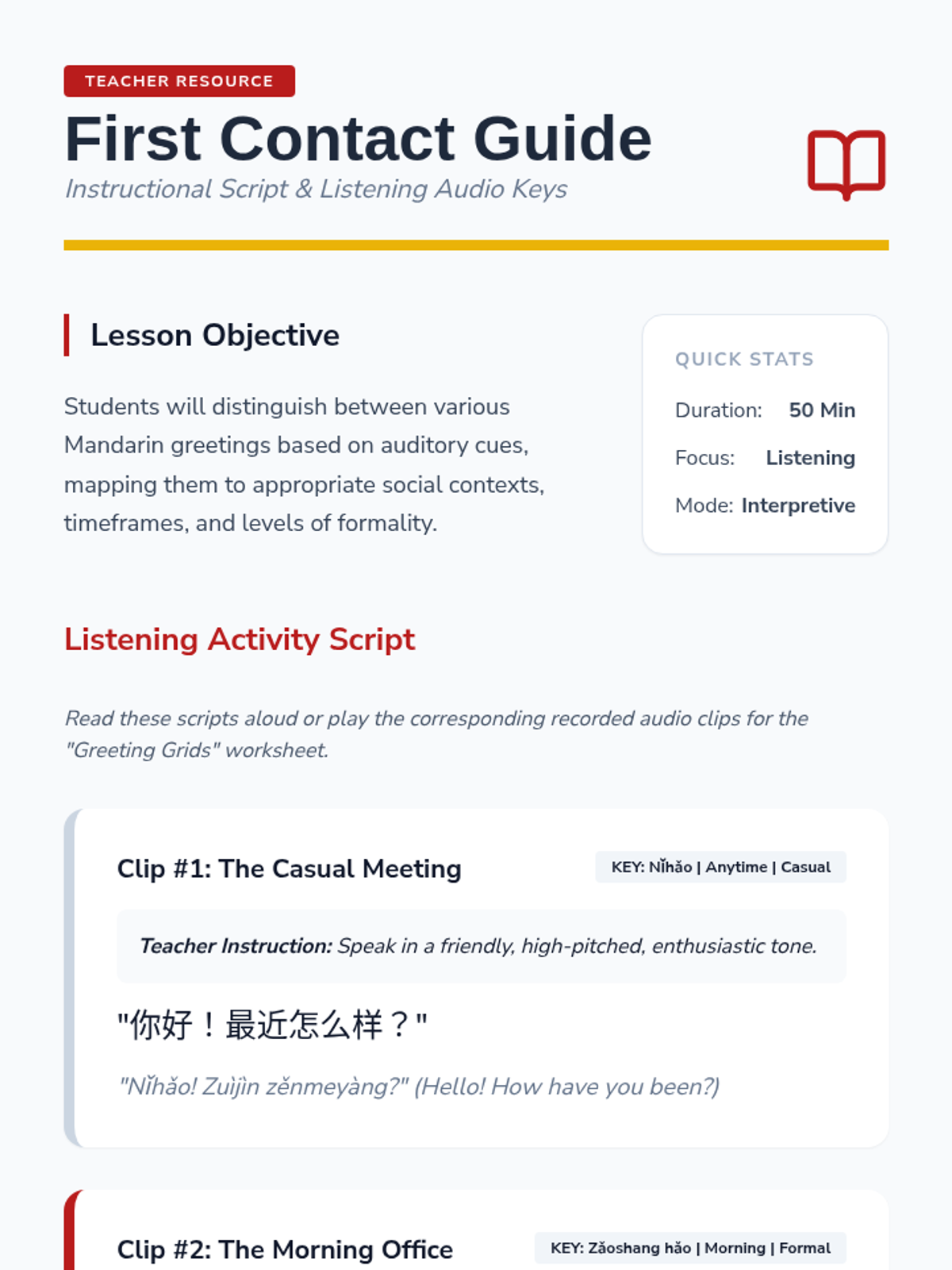
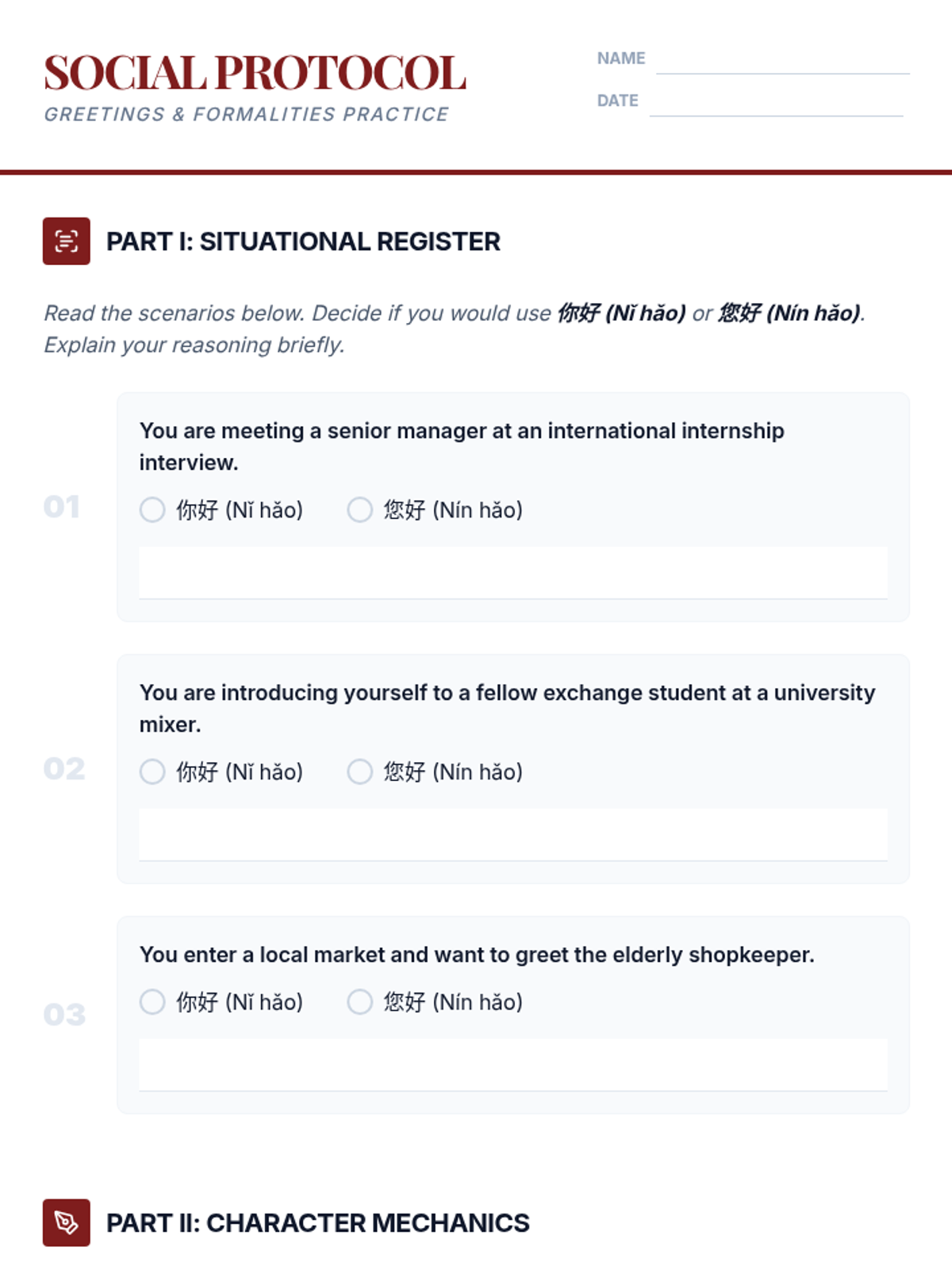
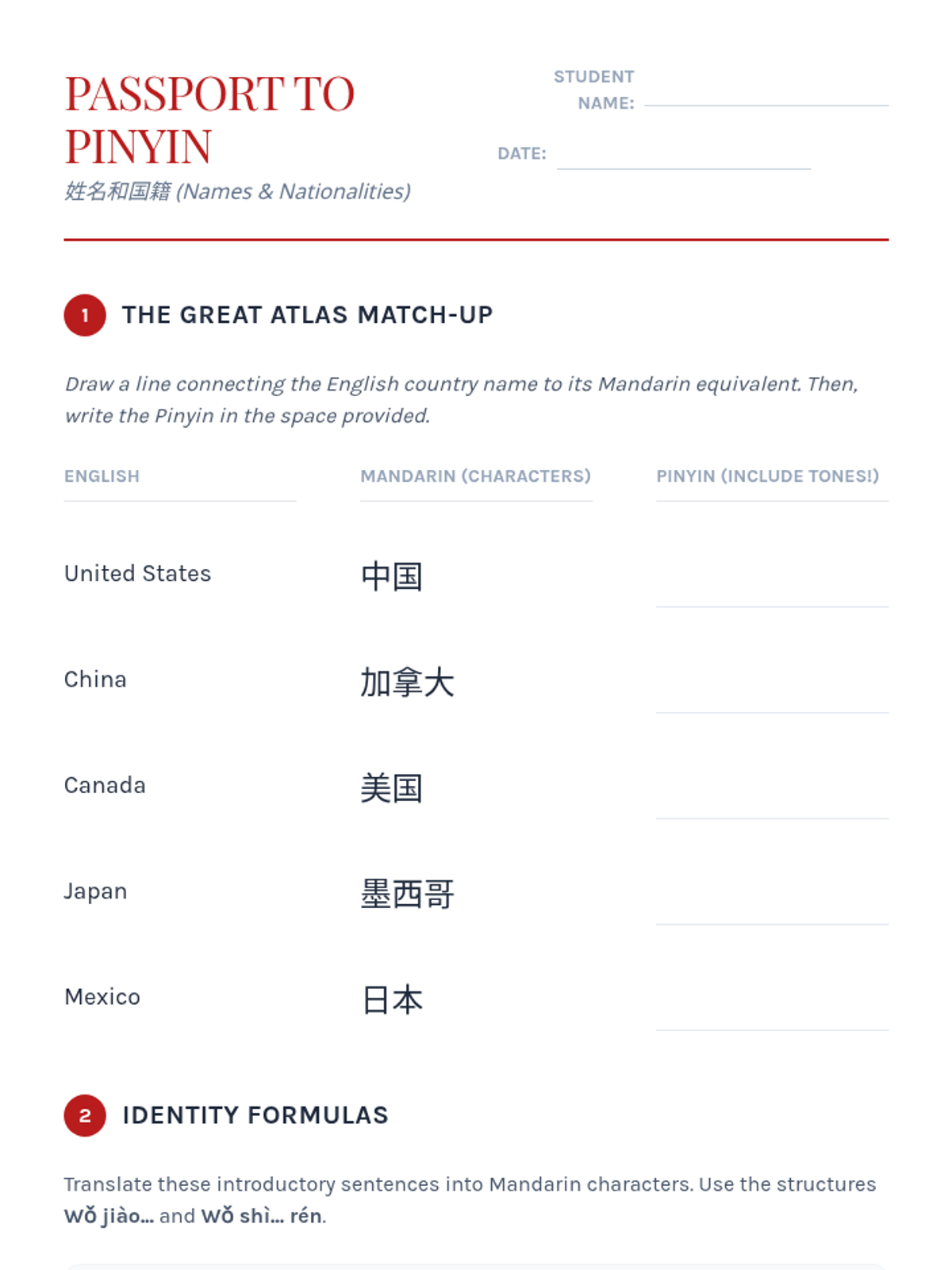
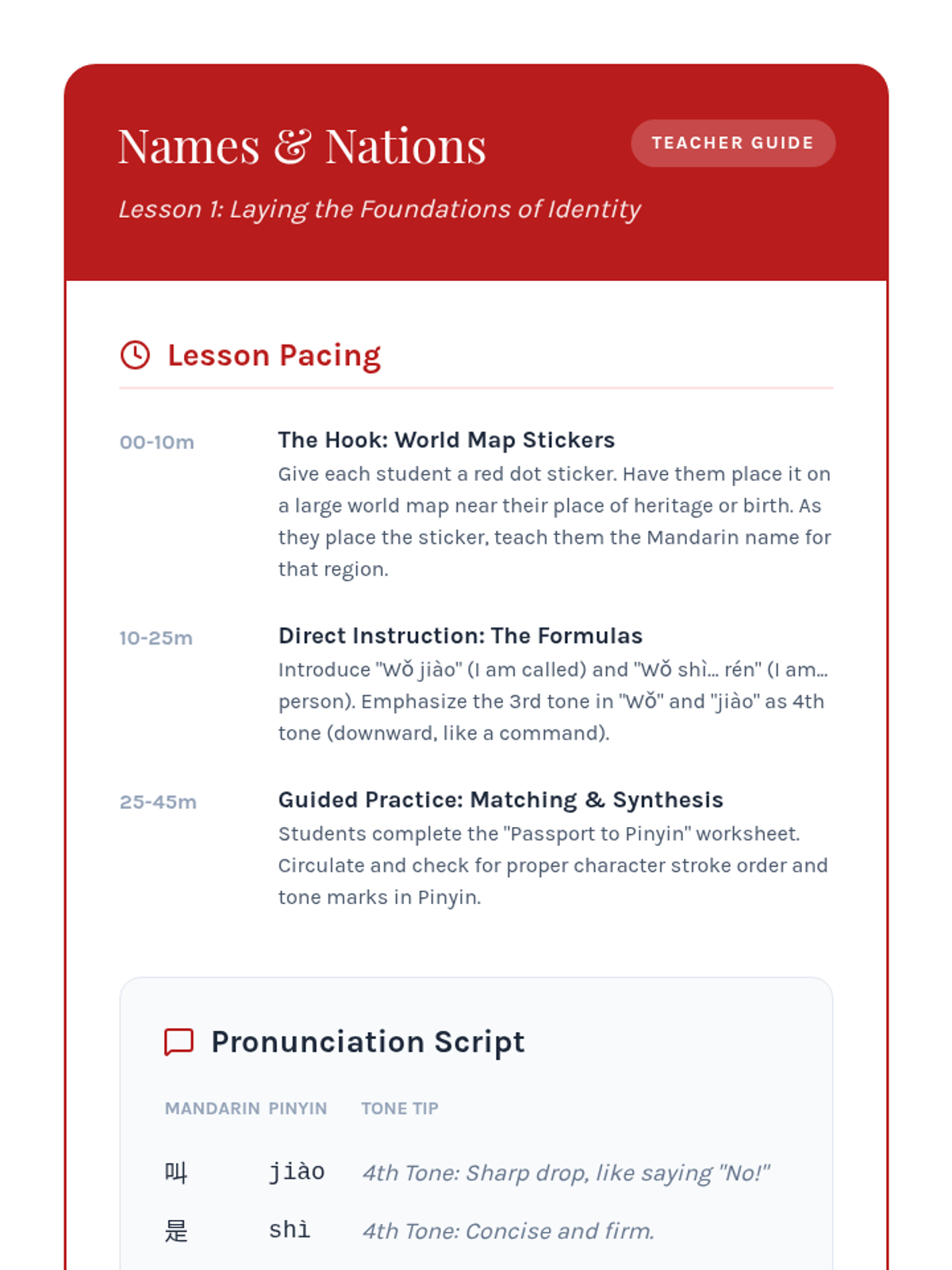
This 5-lesson sequence focuses on beginner Mandarin Chinese listening skills, specifically identifying greetings, names, nationalities, and family relationships. Students progress from distinguishing social registers to synthesizing complex personal introductions.
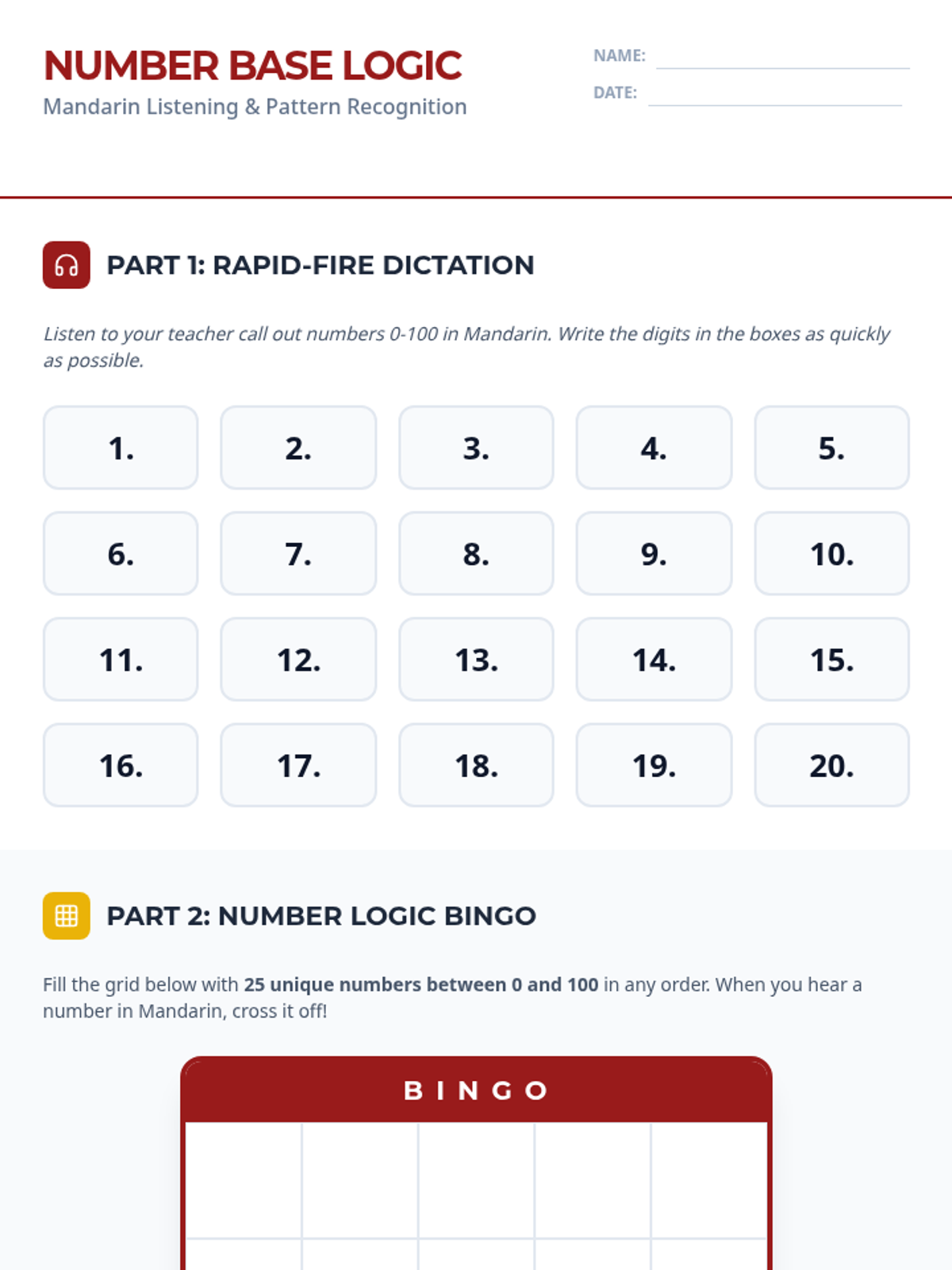
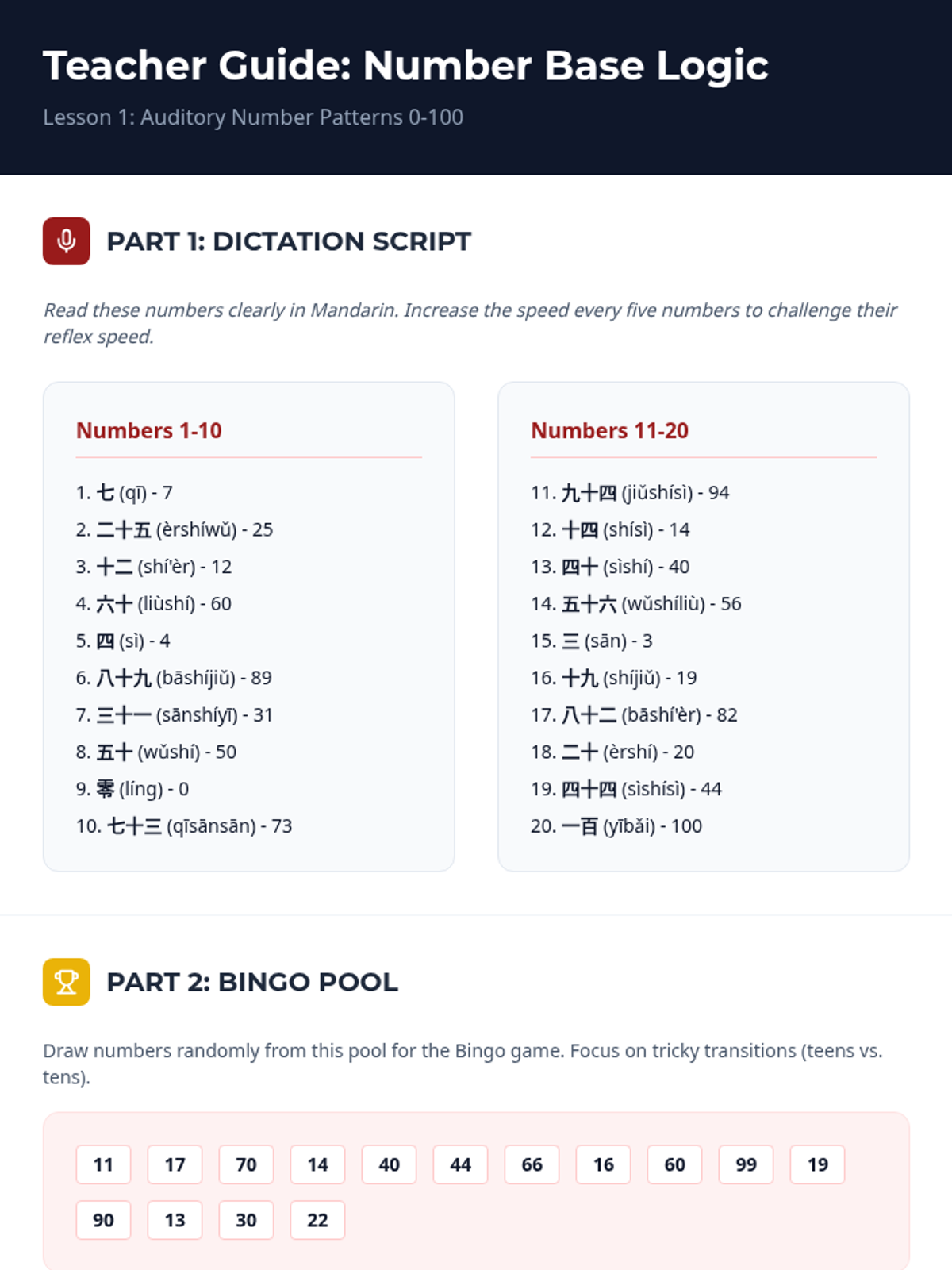
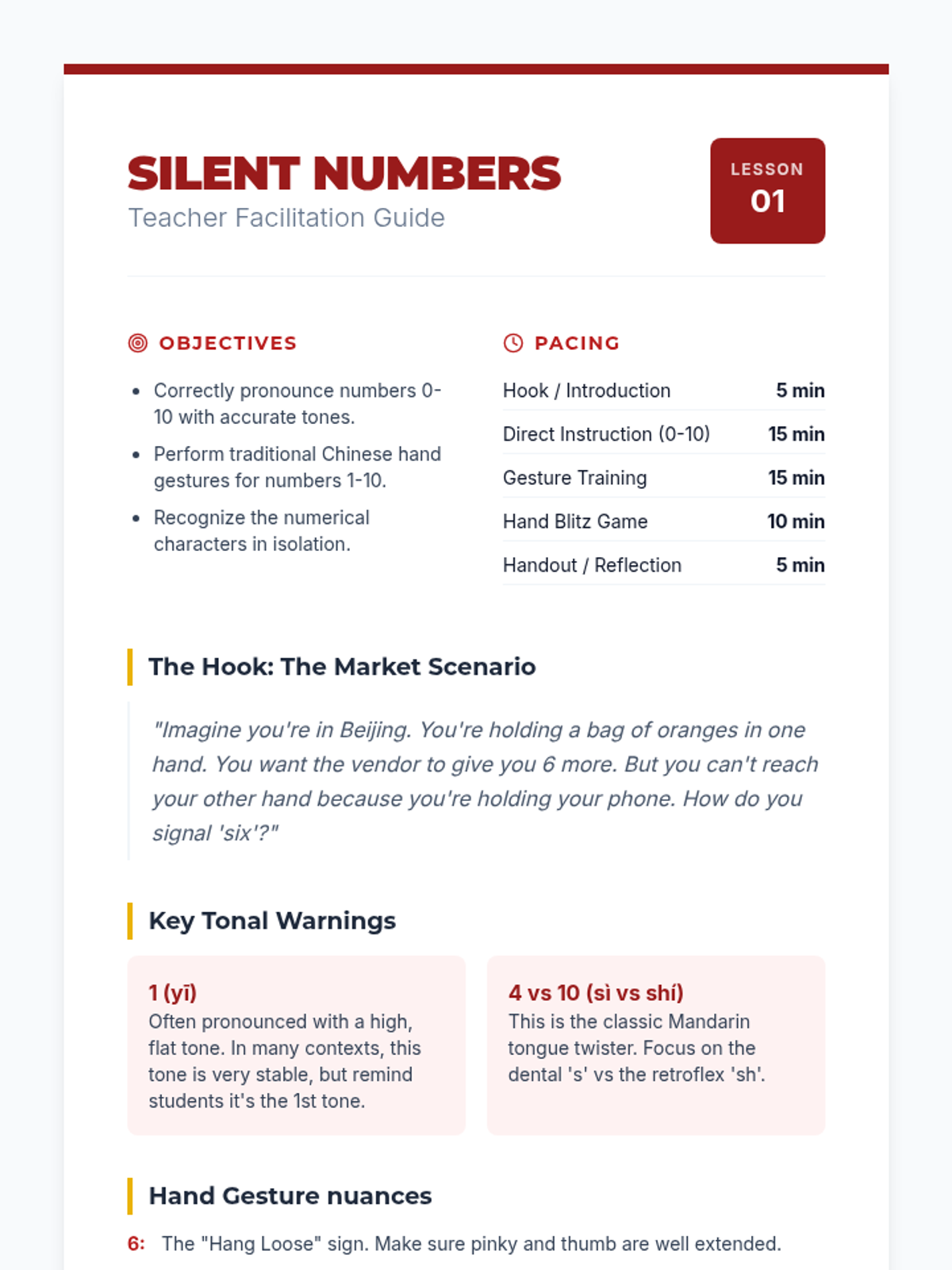
This sequence focuses on the auditory recognition of numerical patterns in Mandarin Chinese, essential for understanding prices, phone numbers, dates, and time. Students leverage the logical structure of Mandarin counting to progress from basic digits to complex date and time formatting.
A high-energy Mandarin listening sequence focused on rapid numerical processing, from basic digits to complex schedules and prices. Students take on the role of trainees at Signal Cipher Academy, mastering the 'codes' of daily life.
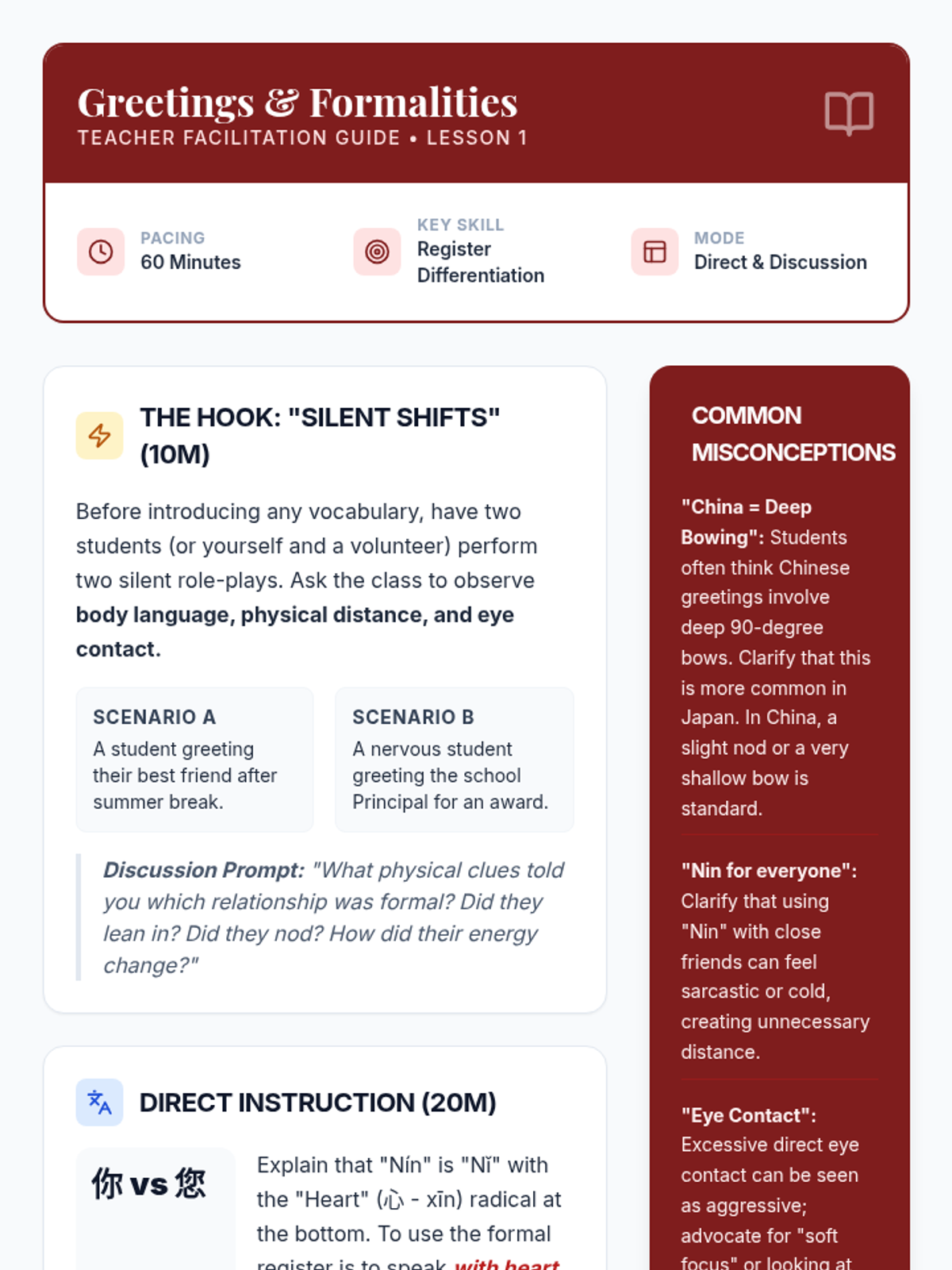
This sequence immerses students in common social scenarios to build comprehension of greetings, introductions, and basic etiquette in Mandarin Chinese. Through listening tasks and simulations, students learn to distinguish between formal and informal registers, identify names and titles, and recognize nationalities.
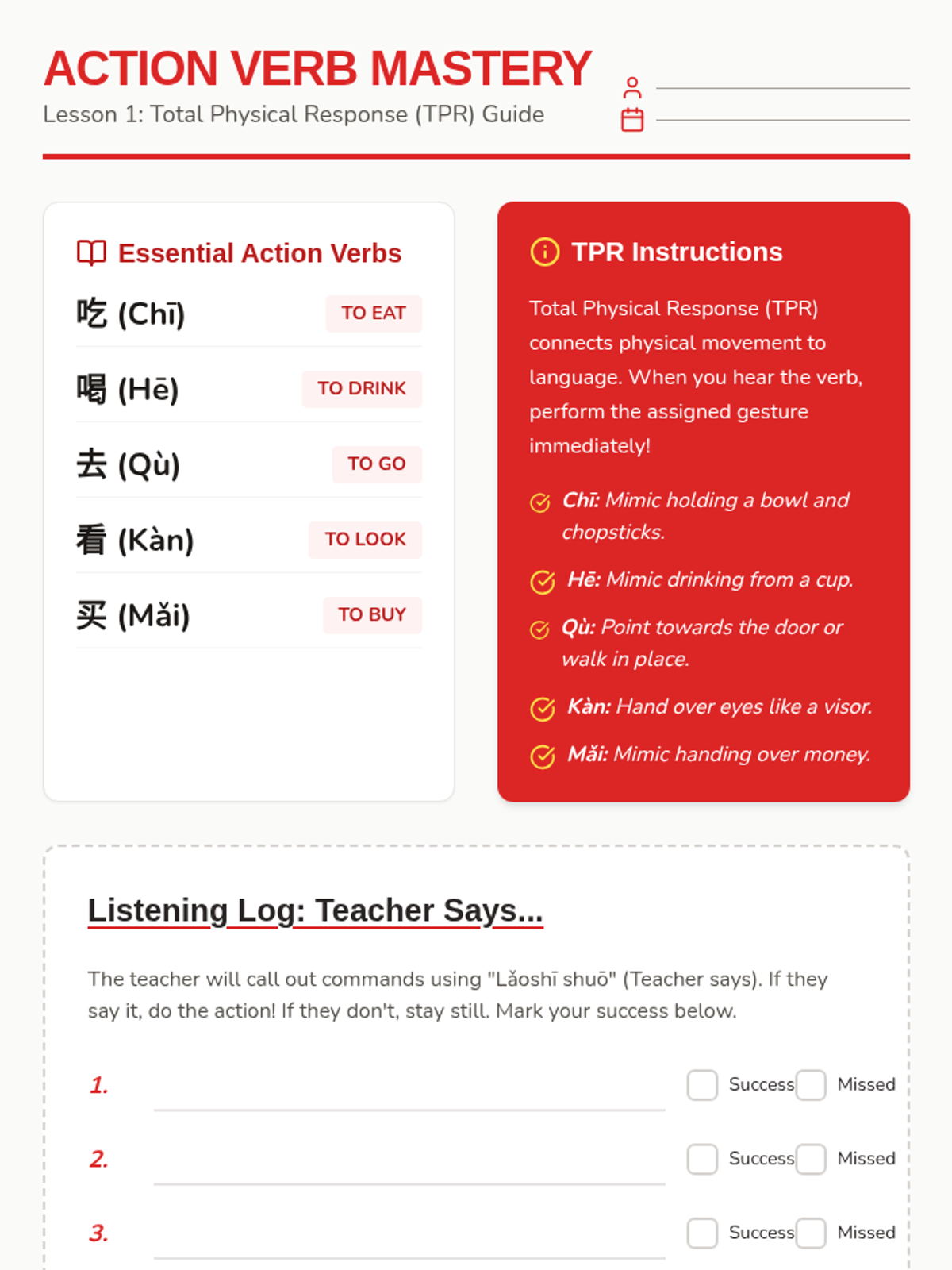
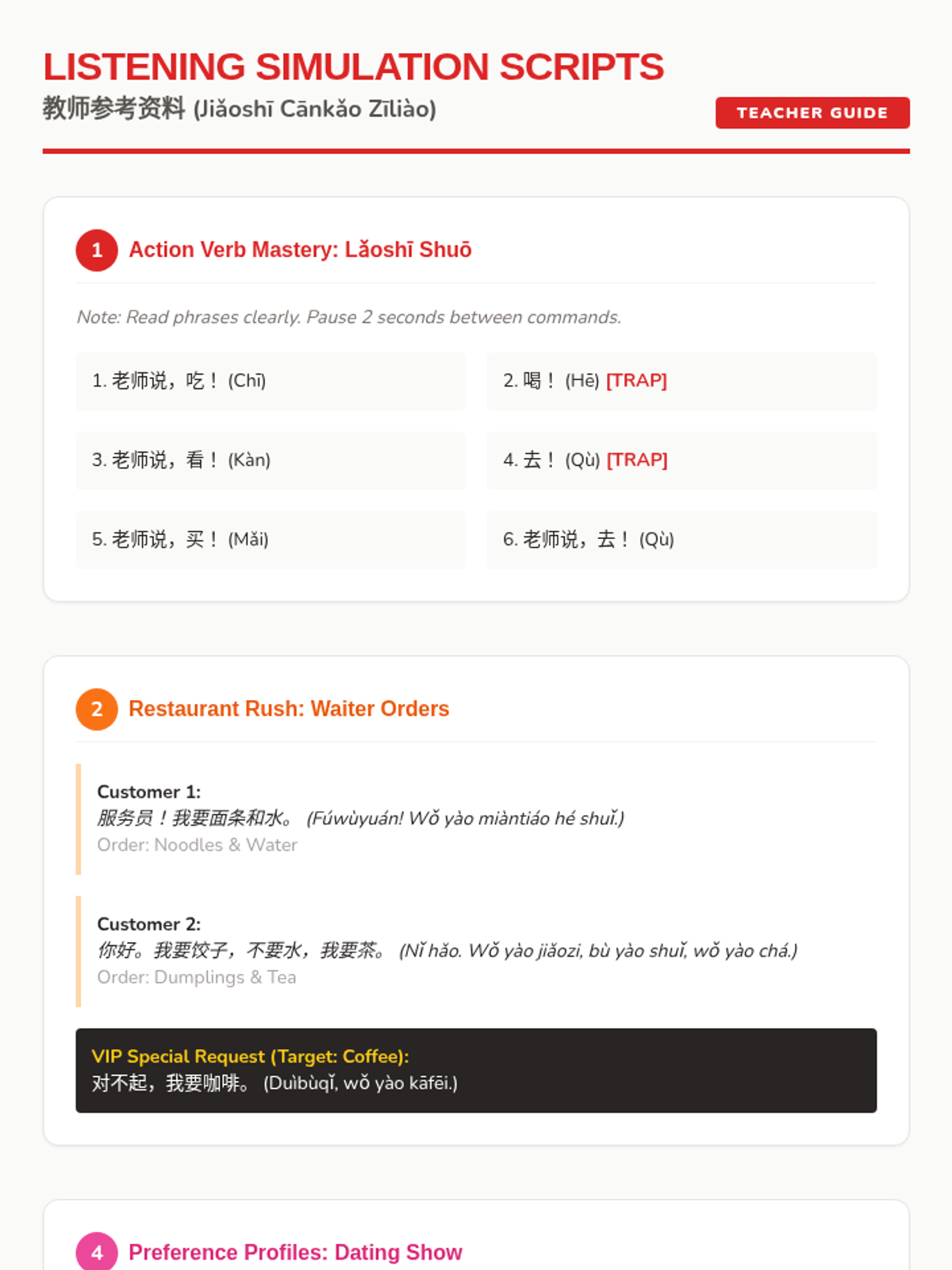
A beginner-level Mandarin sequence focused on functional listening skills for real-world scenarios. Students move from basic action verbs to navigating restaurants, directions, and markets through immersive simulations.
A 9th-grade Mandarin Chinese listening sequence focused on identifying and processing numerical data, from basic digits to complex schedules and marketplace negotiations. Students master the logical structure of Chinese numbers through game-based and immersive listening challenges.
A 9th-grade Mandarin Chinese listening sequence focused on greetings, name structures, nationalities, and social protocols through a social mixer simulation. Students progress from basic recognition to deconstructing full introductory dialogues.
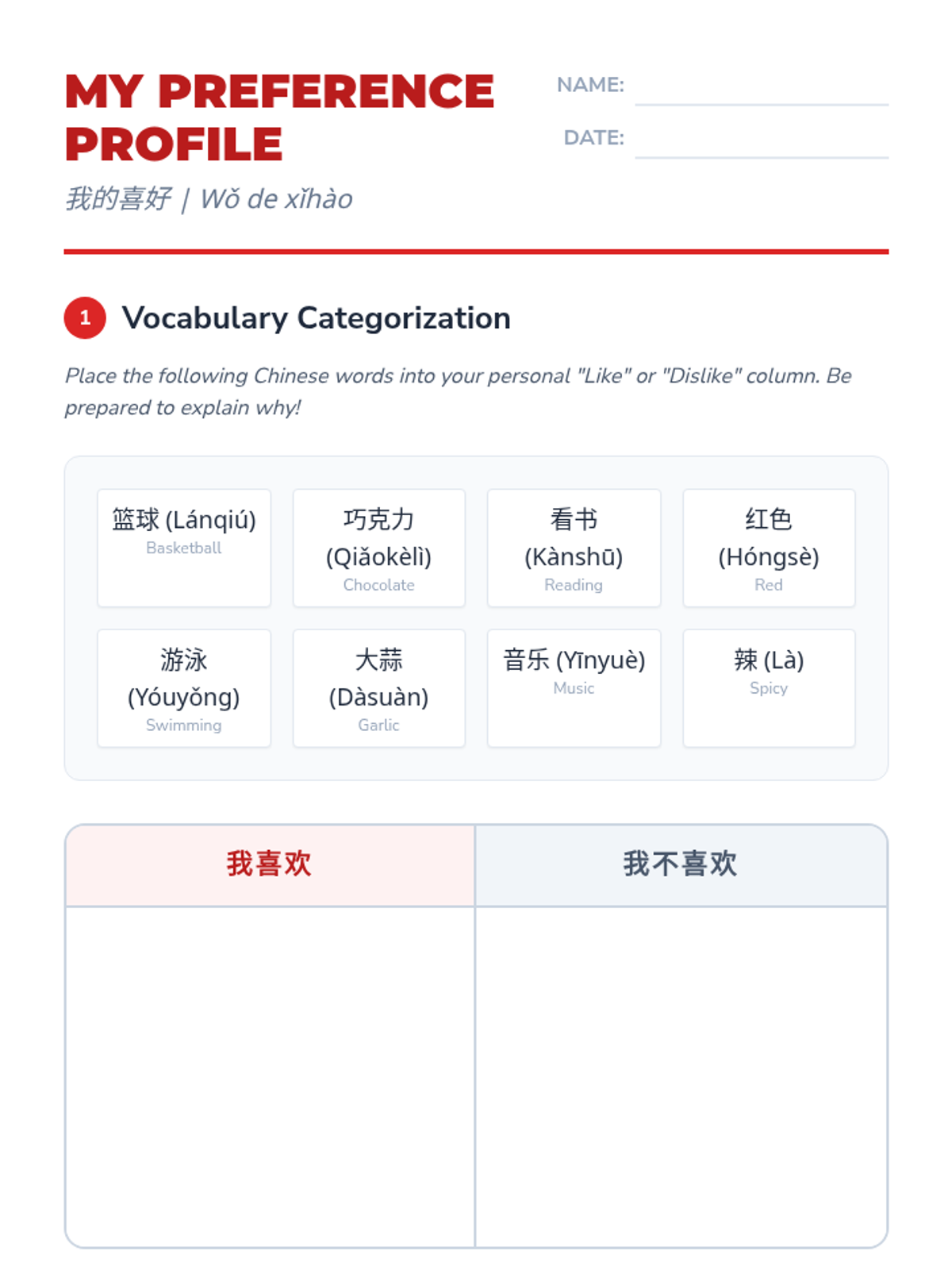
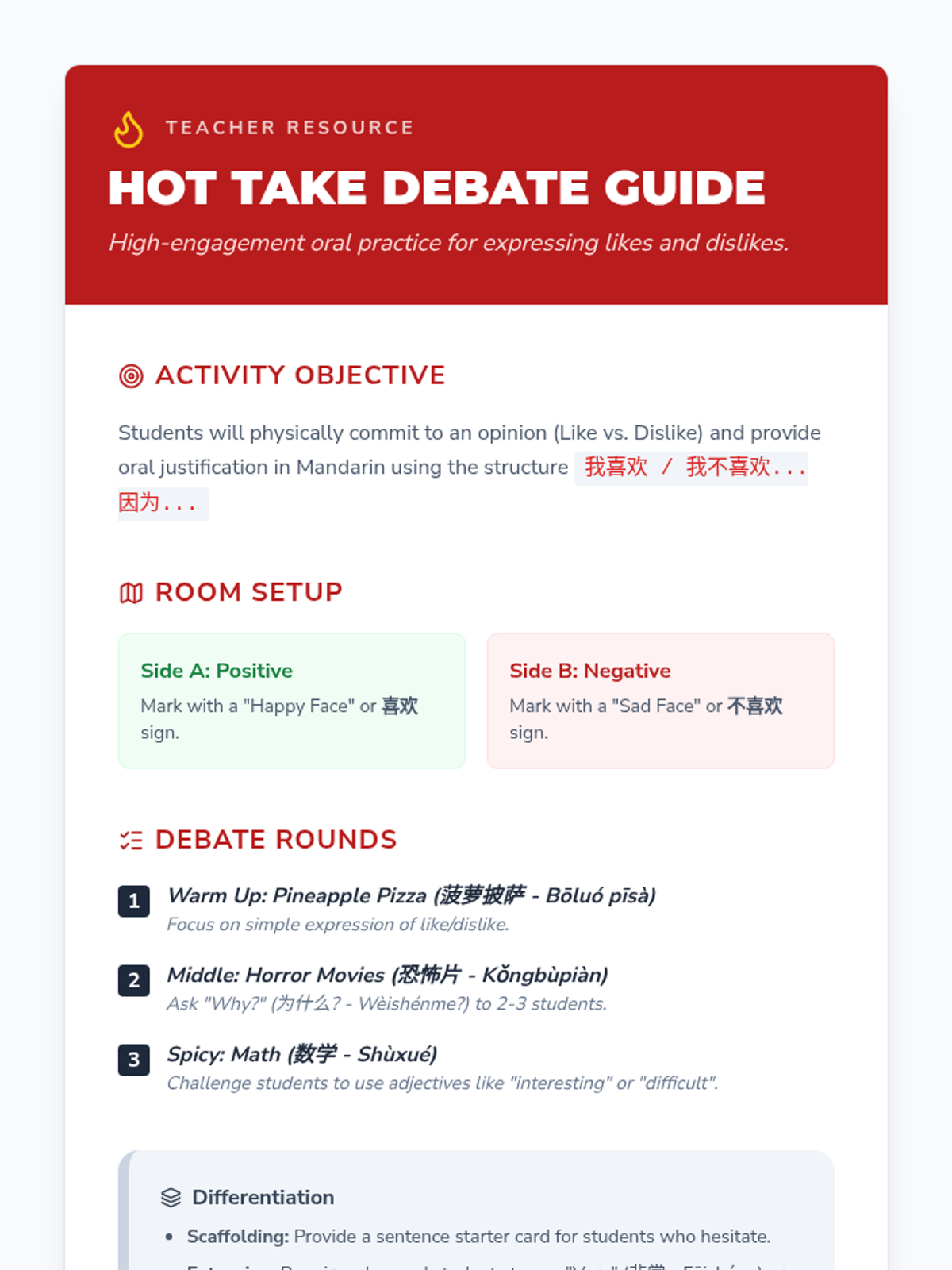
A high-school level Mandarin Chinese unit focusing on practical communicative competence. Students move from basic vocabulary to expressing complex personal preferences, ordering food, making social plans, and navigating communication breakdowns.
A high school sequence focusing on the pragmatics of Mandarin Chinese introductions. Students learn to navigate professional and social hierarchies through formal and casual greetings, name structures, nationalities, and question particles, culminating in a networking simulation.
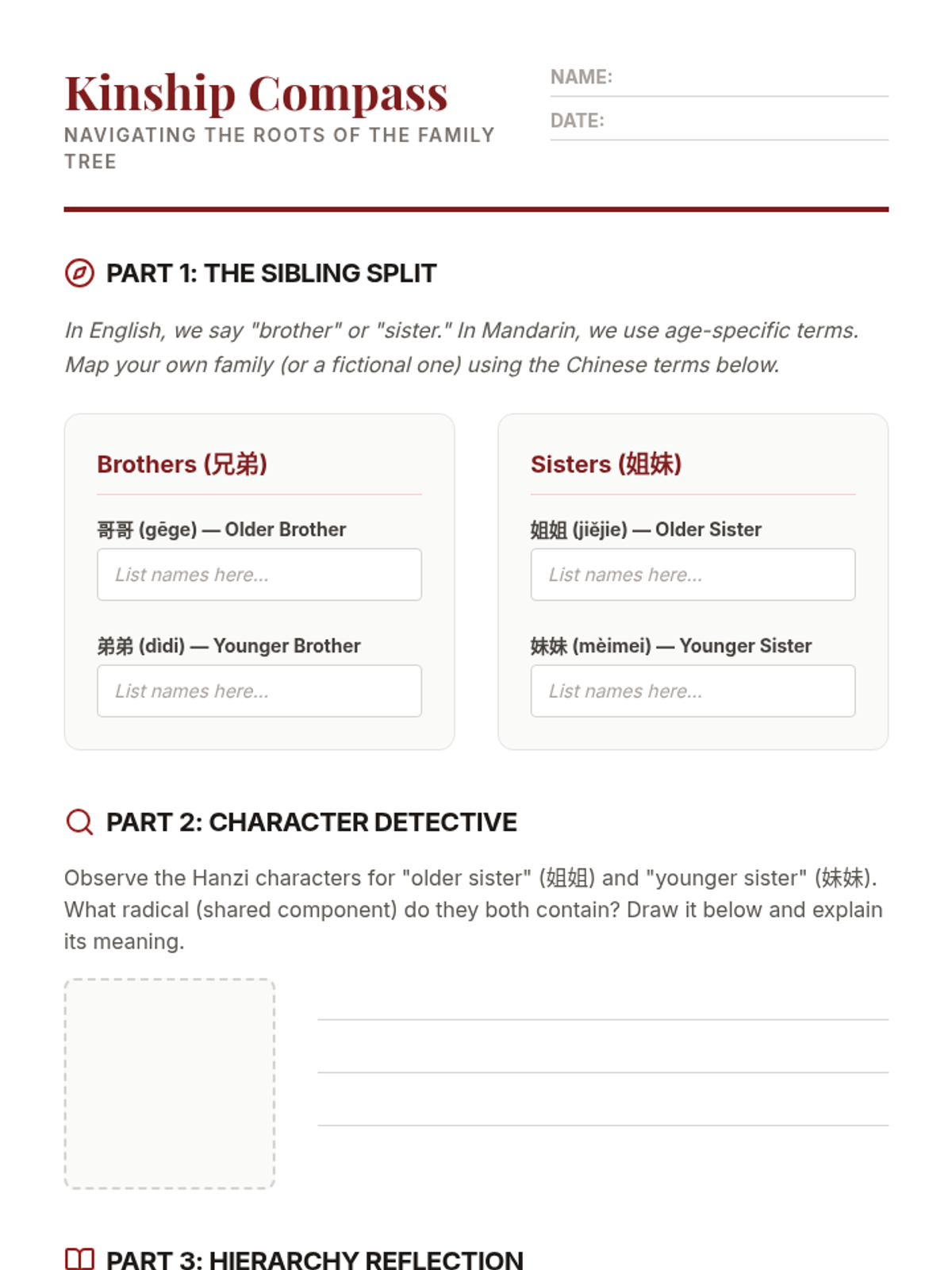
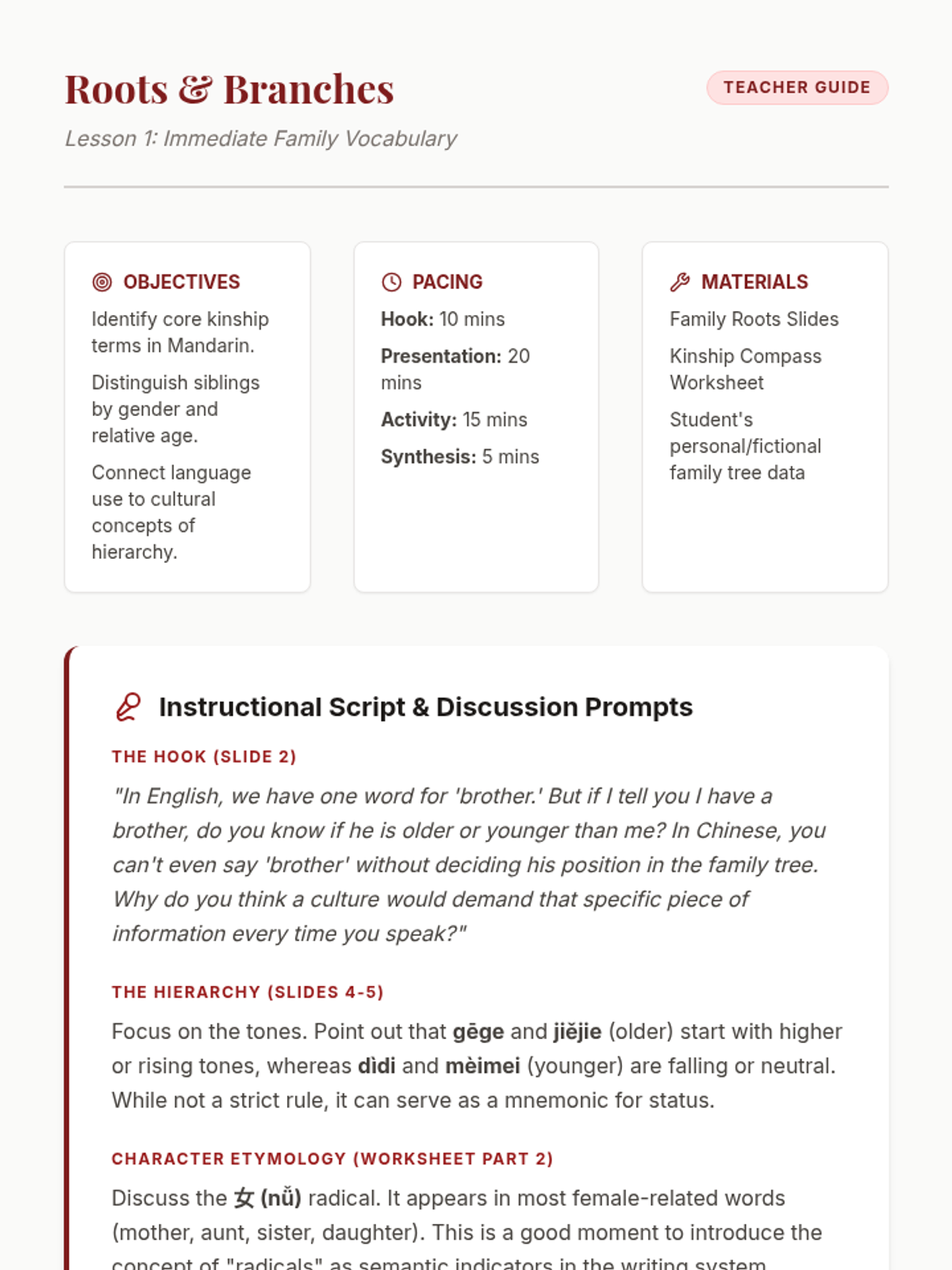
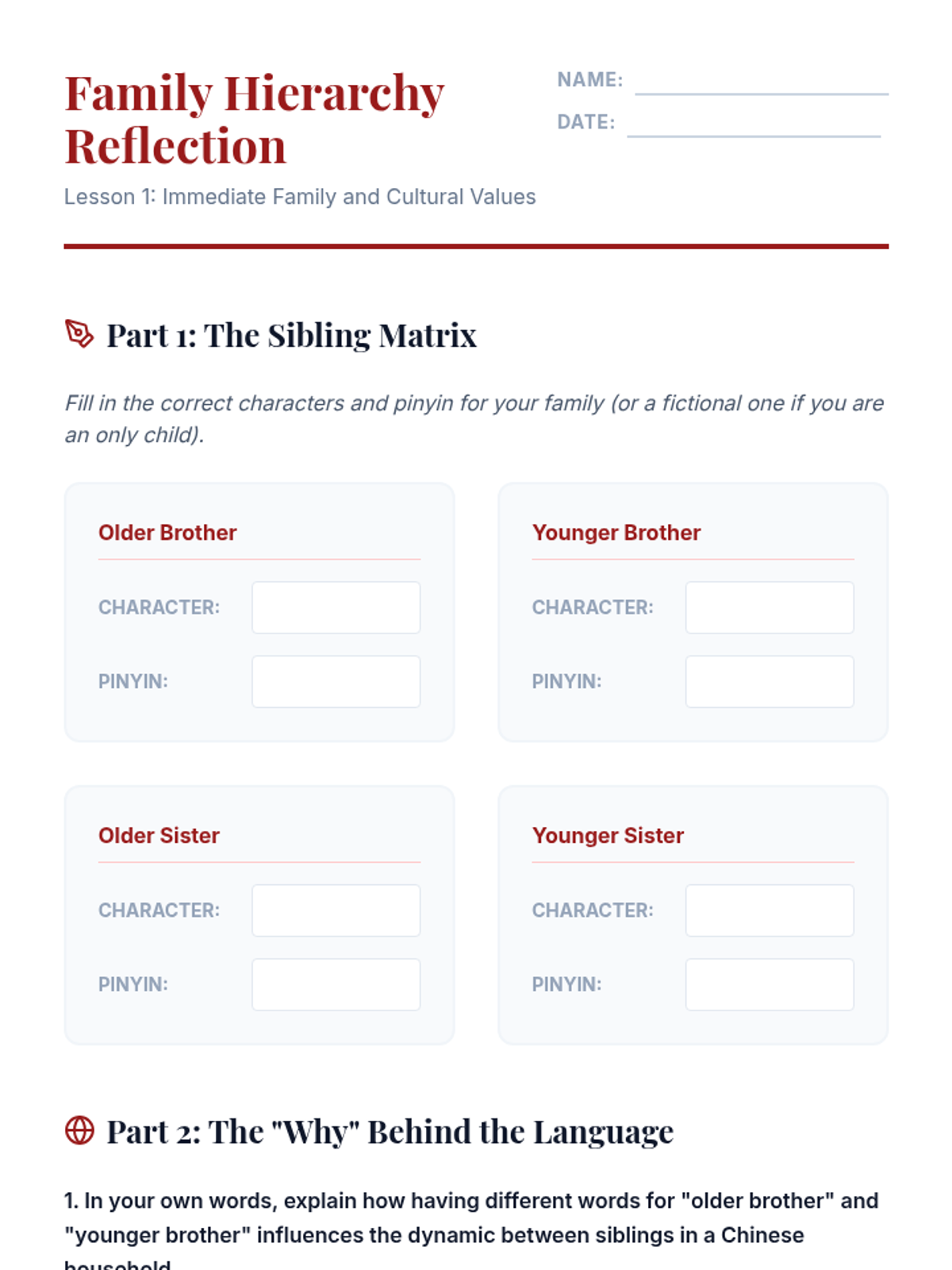
This sequence introduces Mandarin Chinese kinship terms and the grammar of possession ('de') and existence ('yǒu'). Students will explore how language reflects cultural values of hierarchy and family structure, culminating in a presentation of their own family tree.
A comprehensive unit for high school Mandarin learners focusing on kinship terms, possessive grammar, and the cultural significance of family hierarchy and lineage in Chinese society. Students progress from immediate family to complex extended relationships, culminating in a creative family tree presentation.
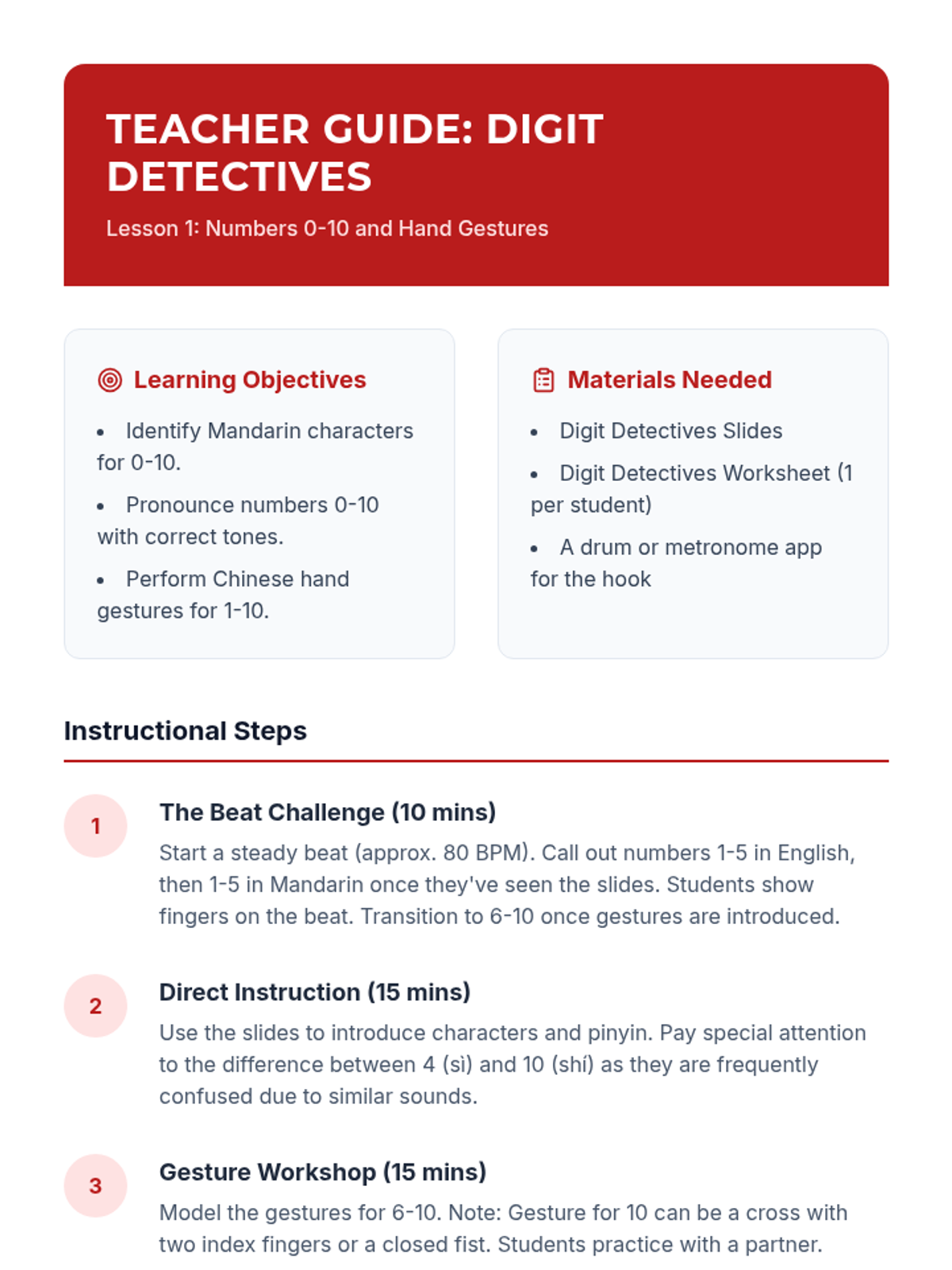
This sequence explores the logical structure of Mandarin Chinese numbers 0-99 and their practical applications in daily life, including dates, age, and telephone numbers. Students move from basic counting and hand gestures to managing complex logistical data.
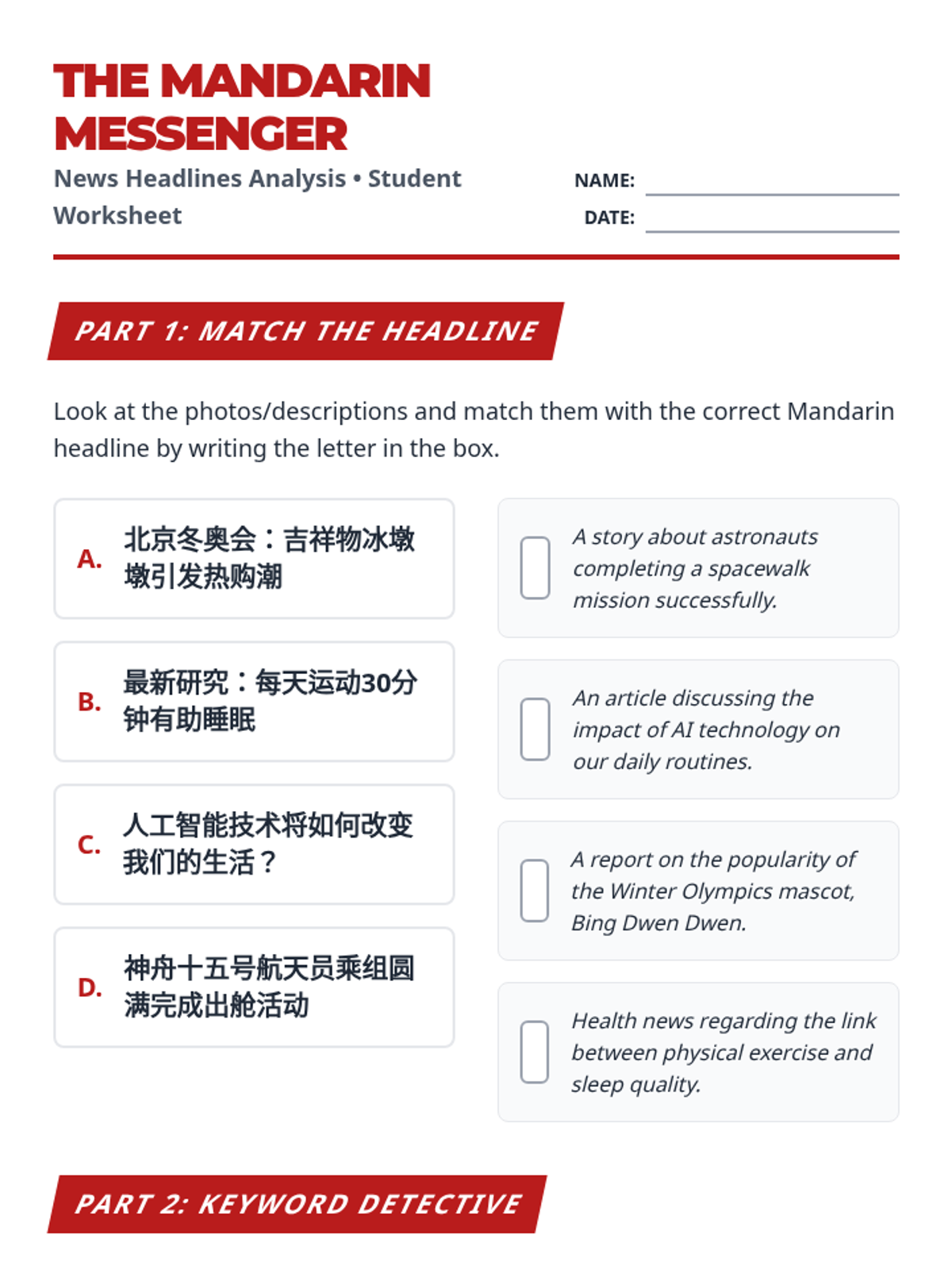
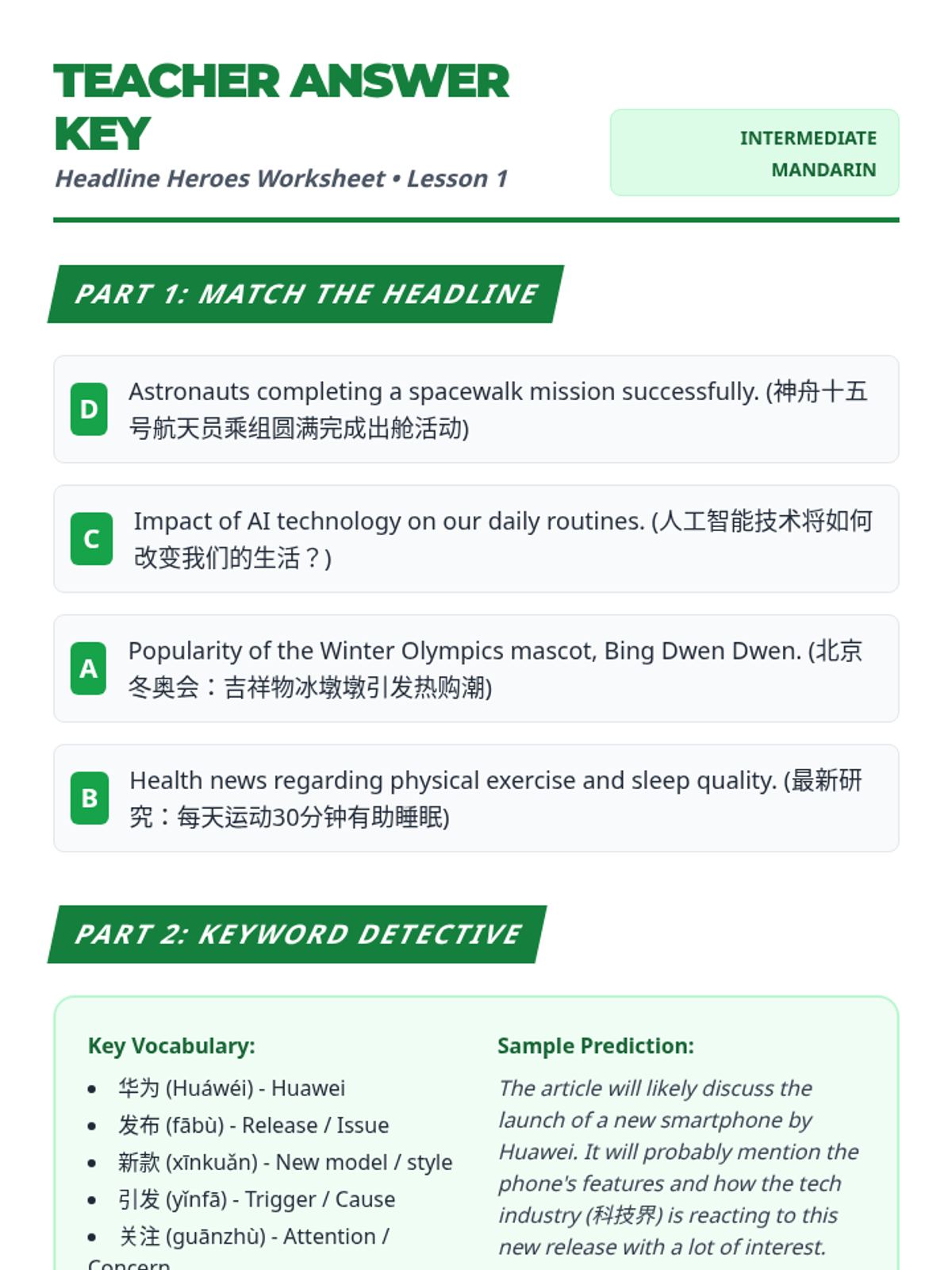
A 5-lesson sequence for 8th Grade Intermediate Mandarin students focused on navigating simplified news, technology vocabulary, and informational text structures in modern Chinese media.
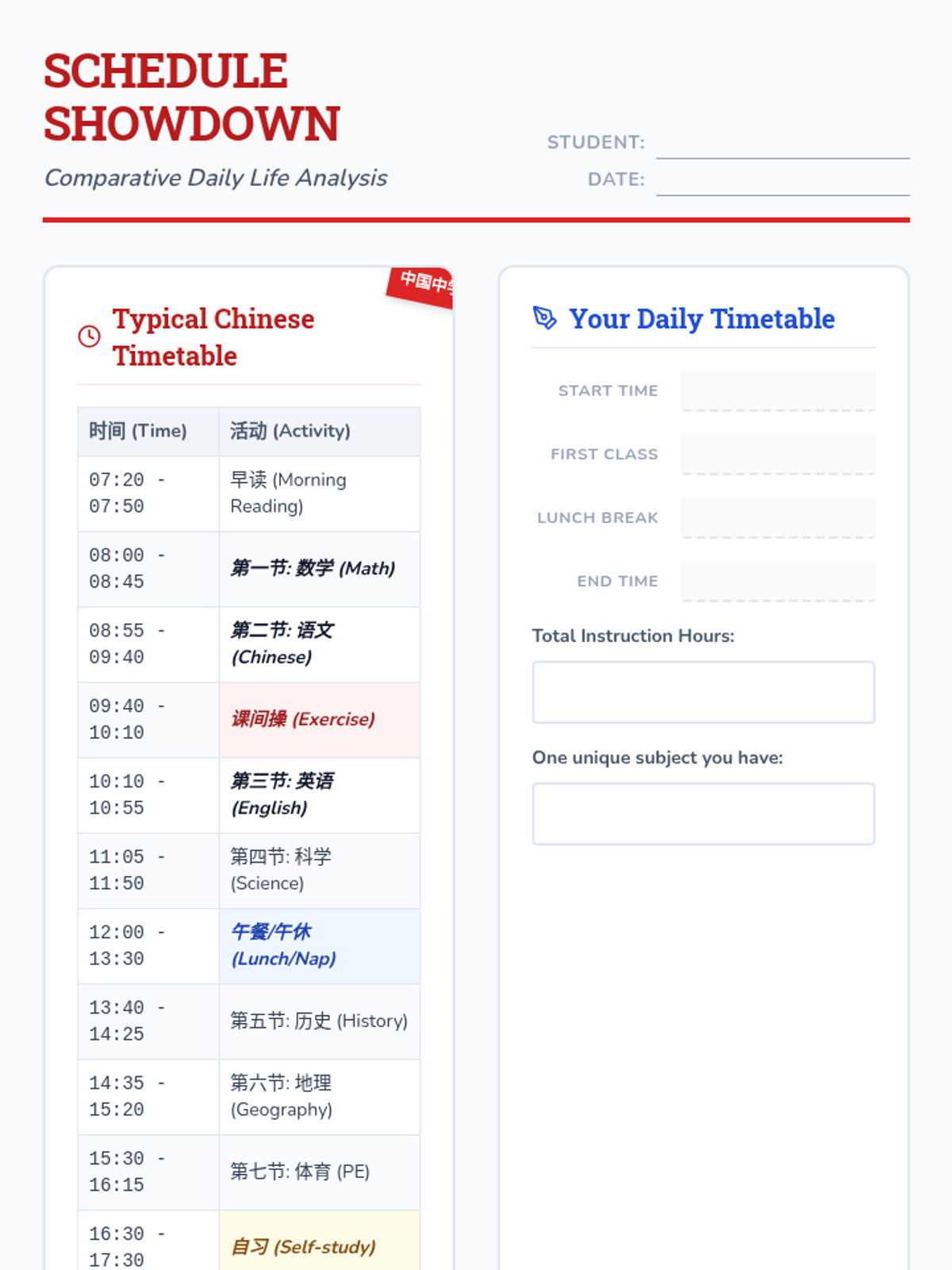
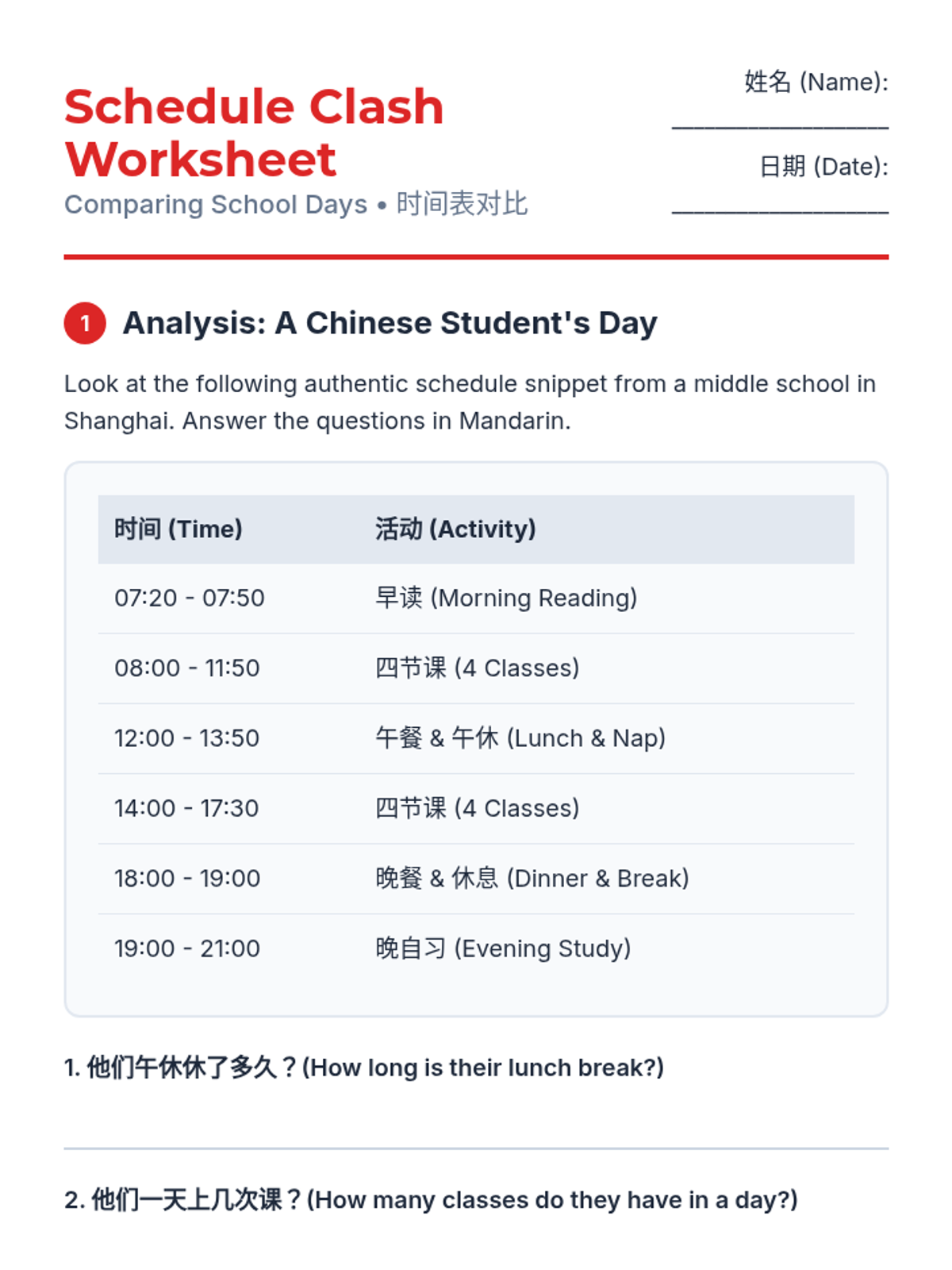
A comprehensive 5-lesson sequence for intermediate Mandarin students to compare the daily lives and educational systems of Chinese and American middle schoolers through authentic-style reading materials.
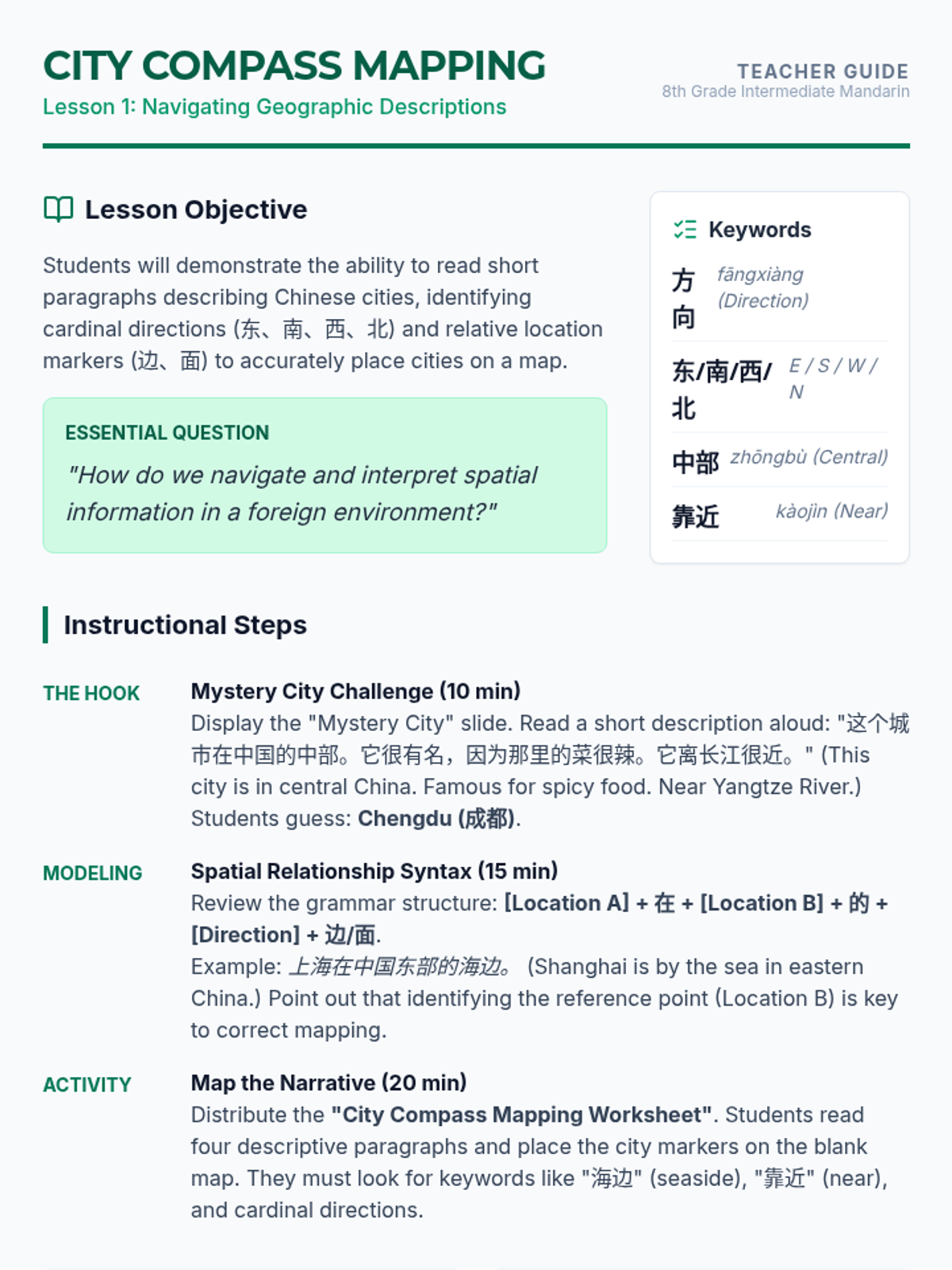
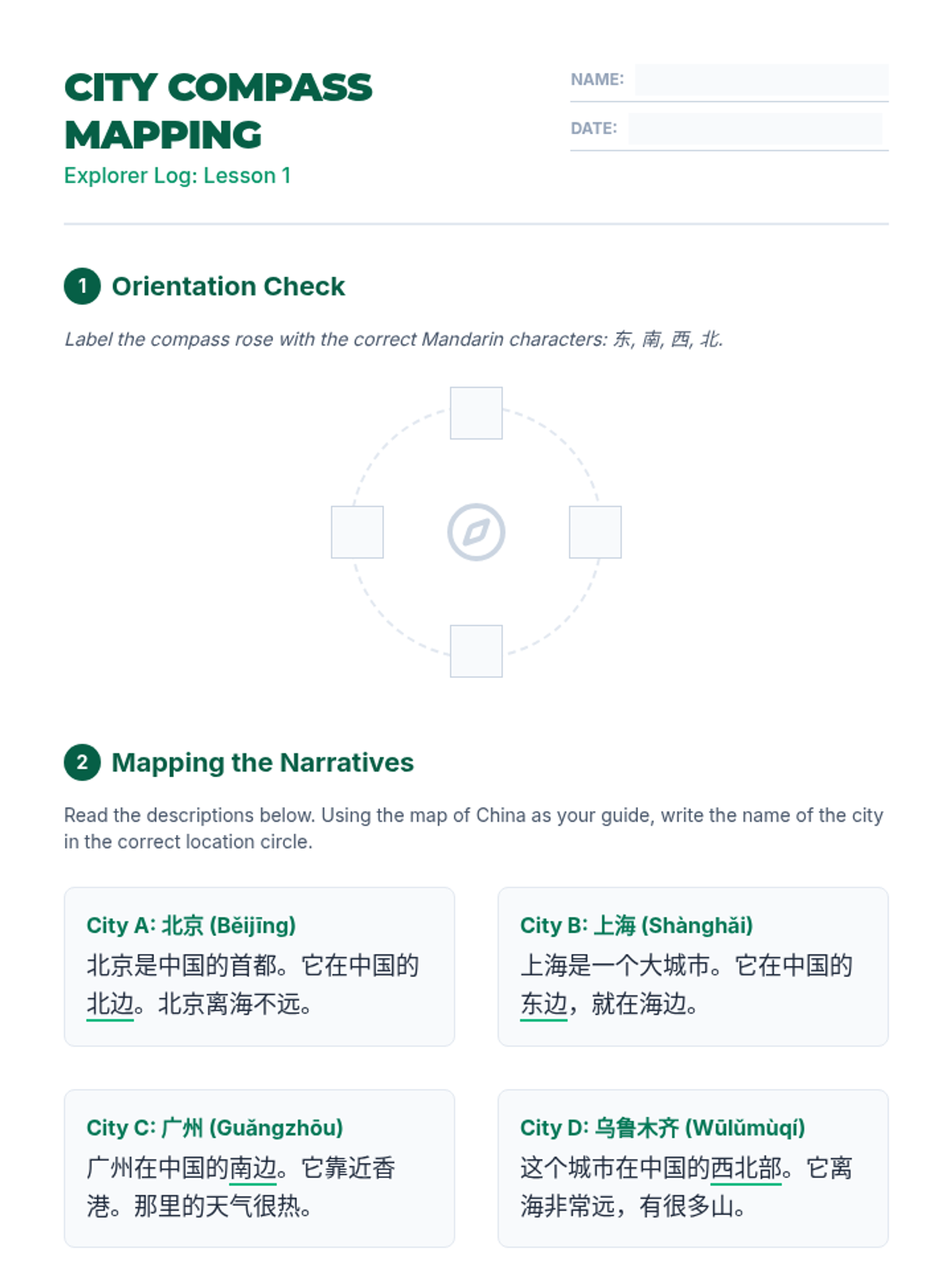
This 8th-grade Intermediate Mandarin sequence focuses on reading and interpreting practical travel information, from geographic descriptions and weather forecasts to train schedules and attraction brochures. Students develop functional literacy skills to navigate real-world logistical documents in a Chinese-speaking environment.
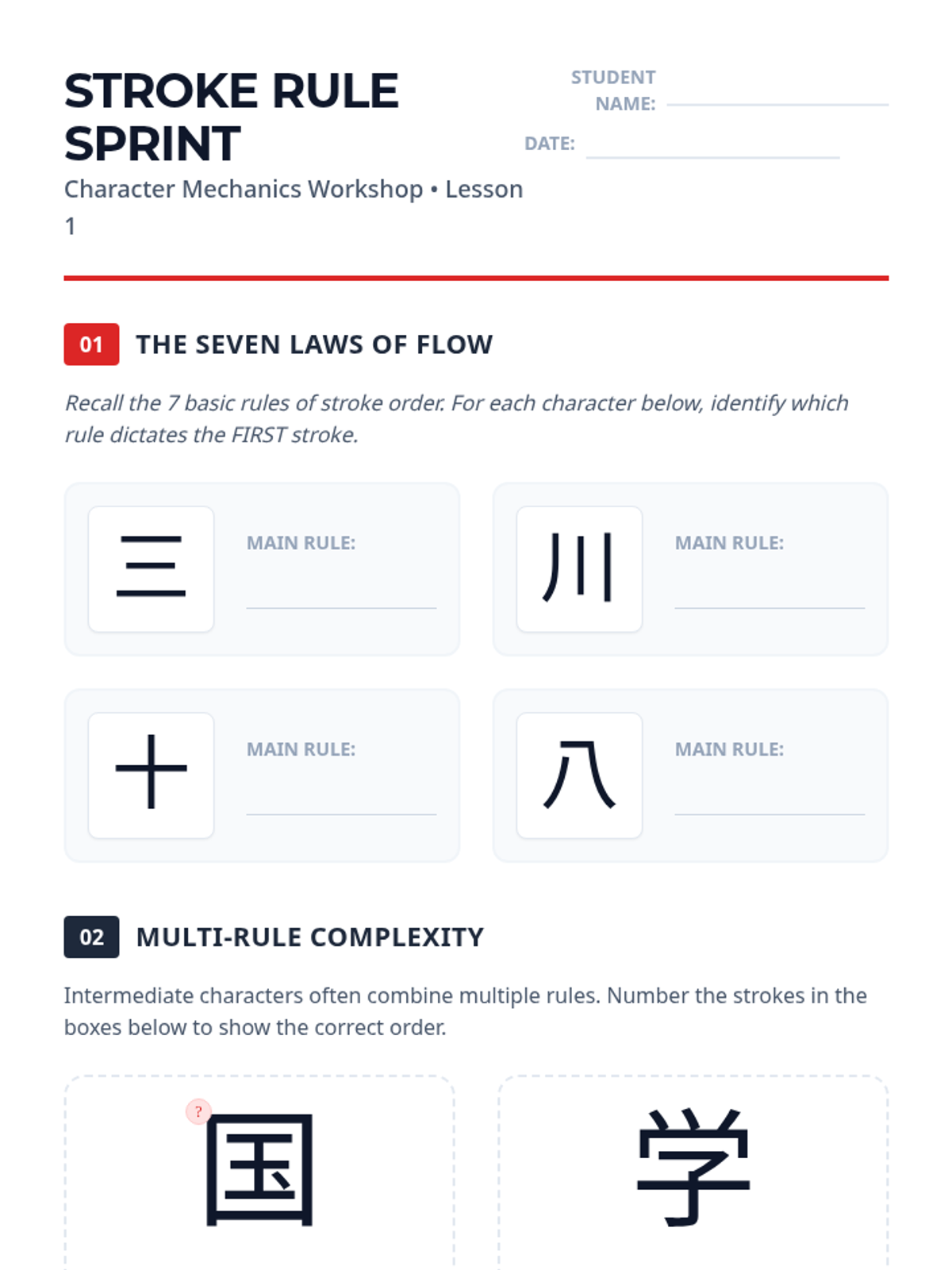
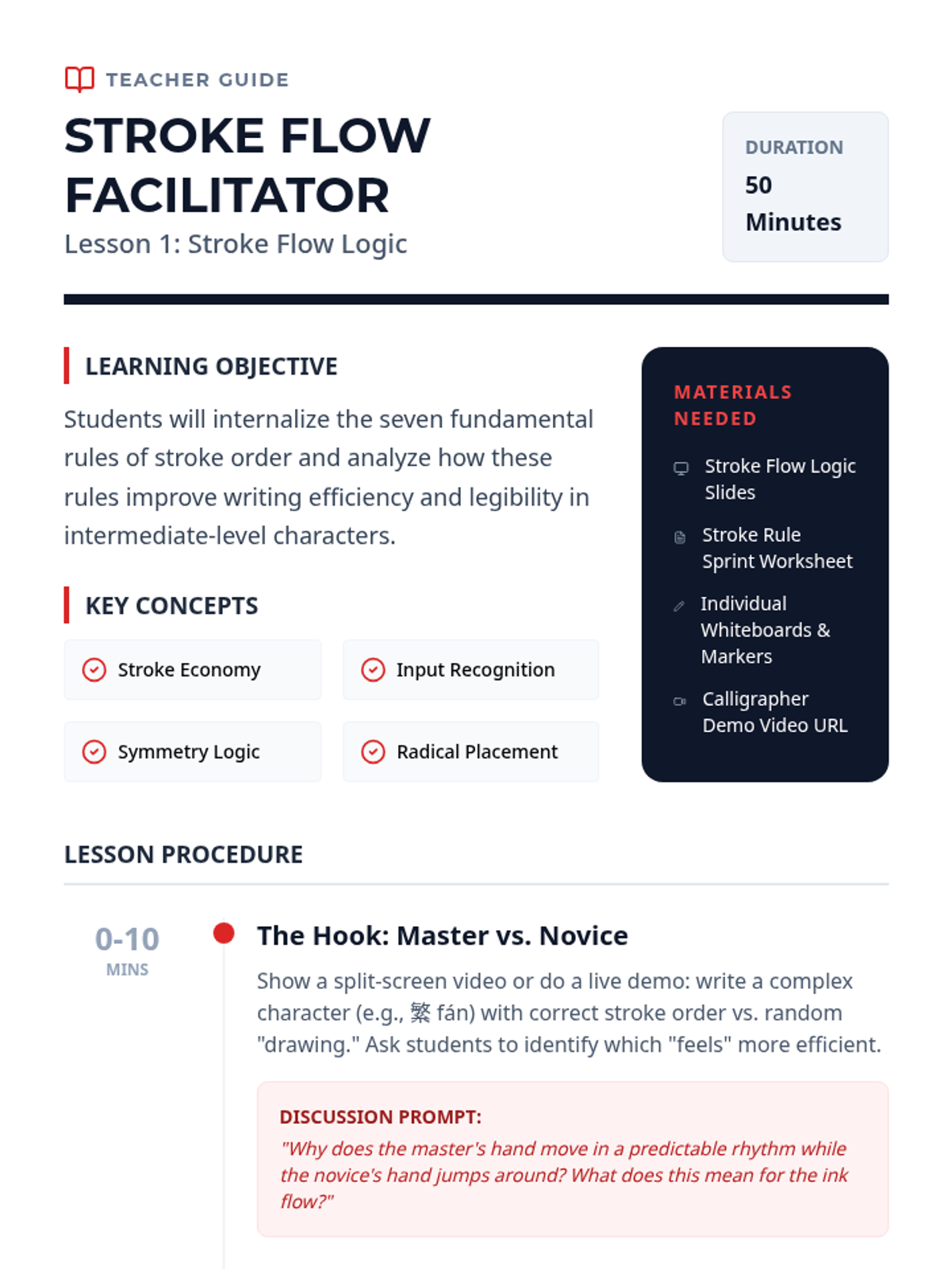
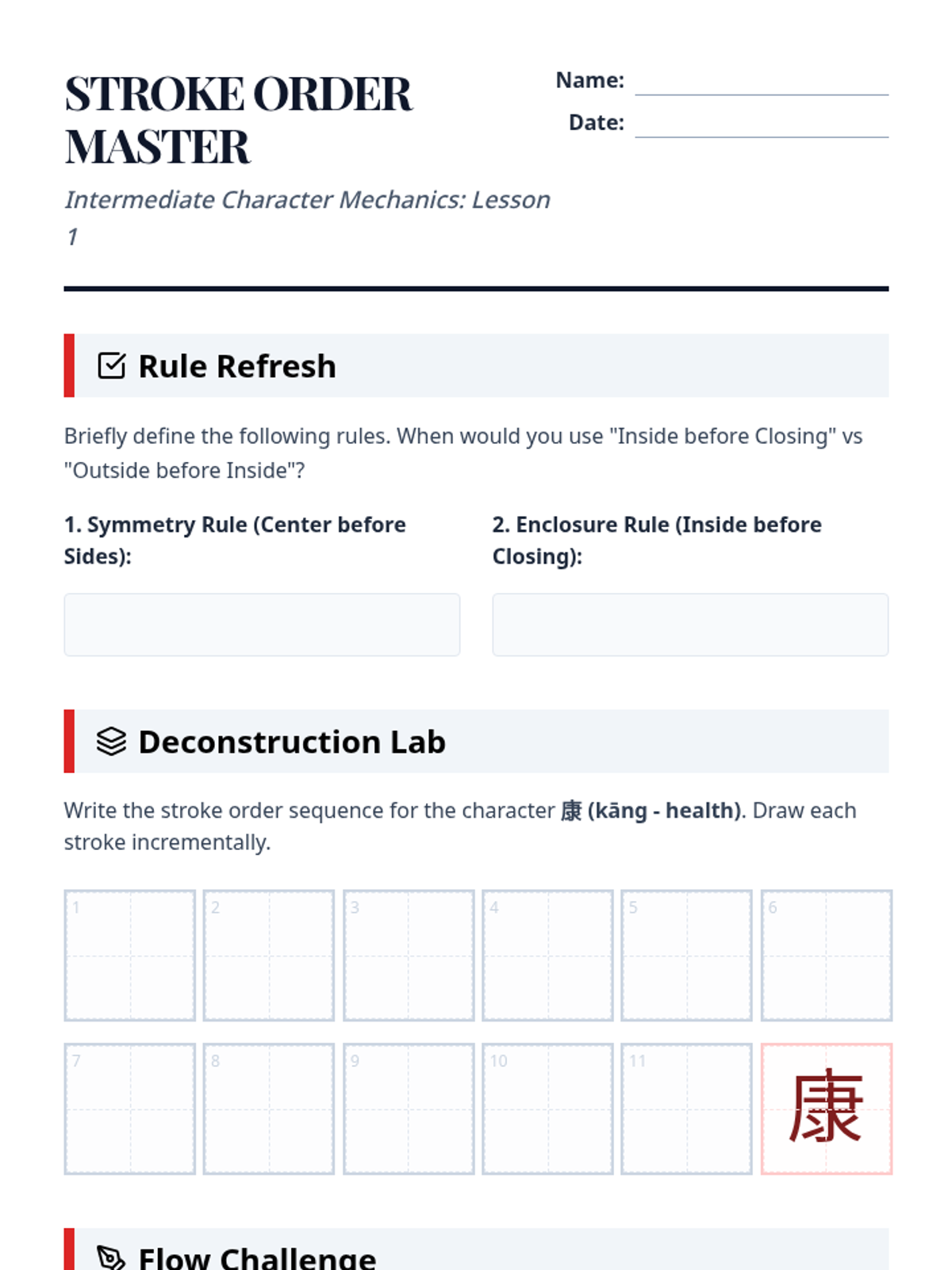
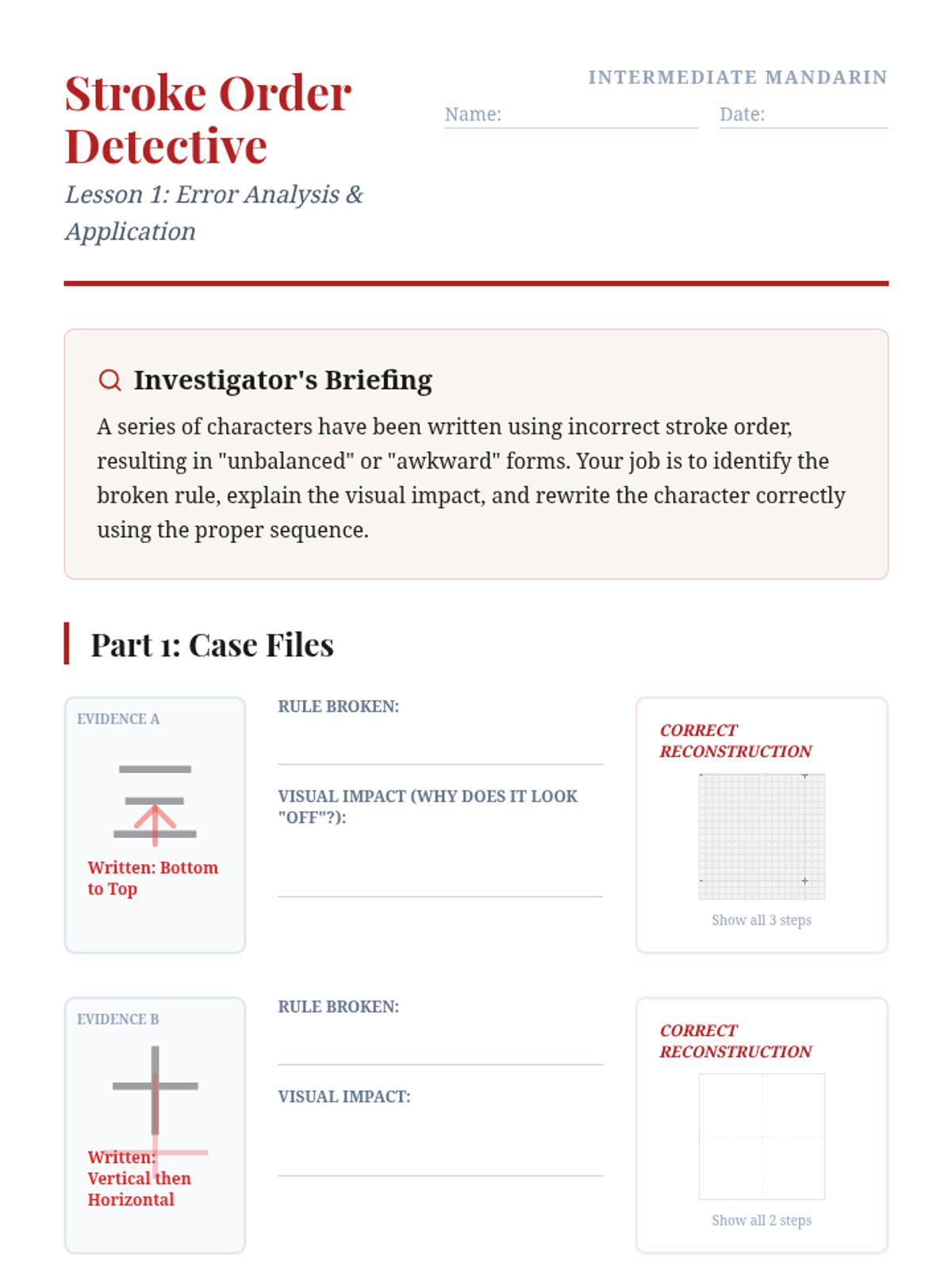
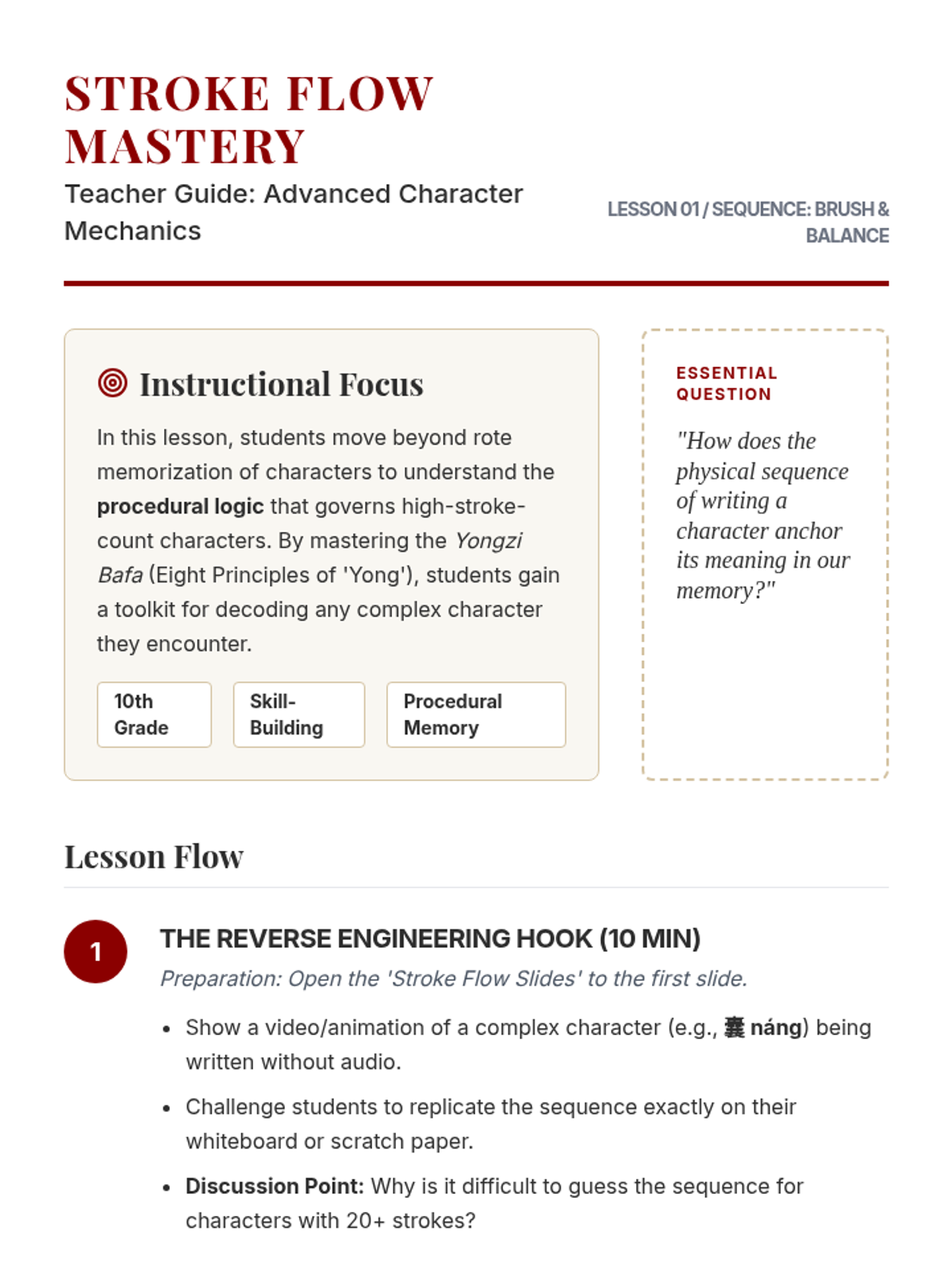
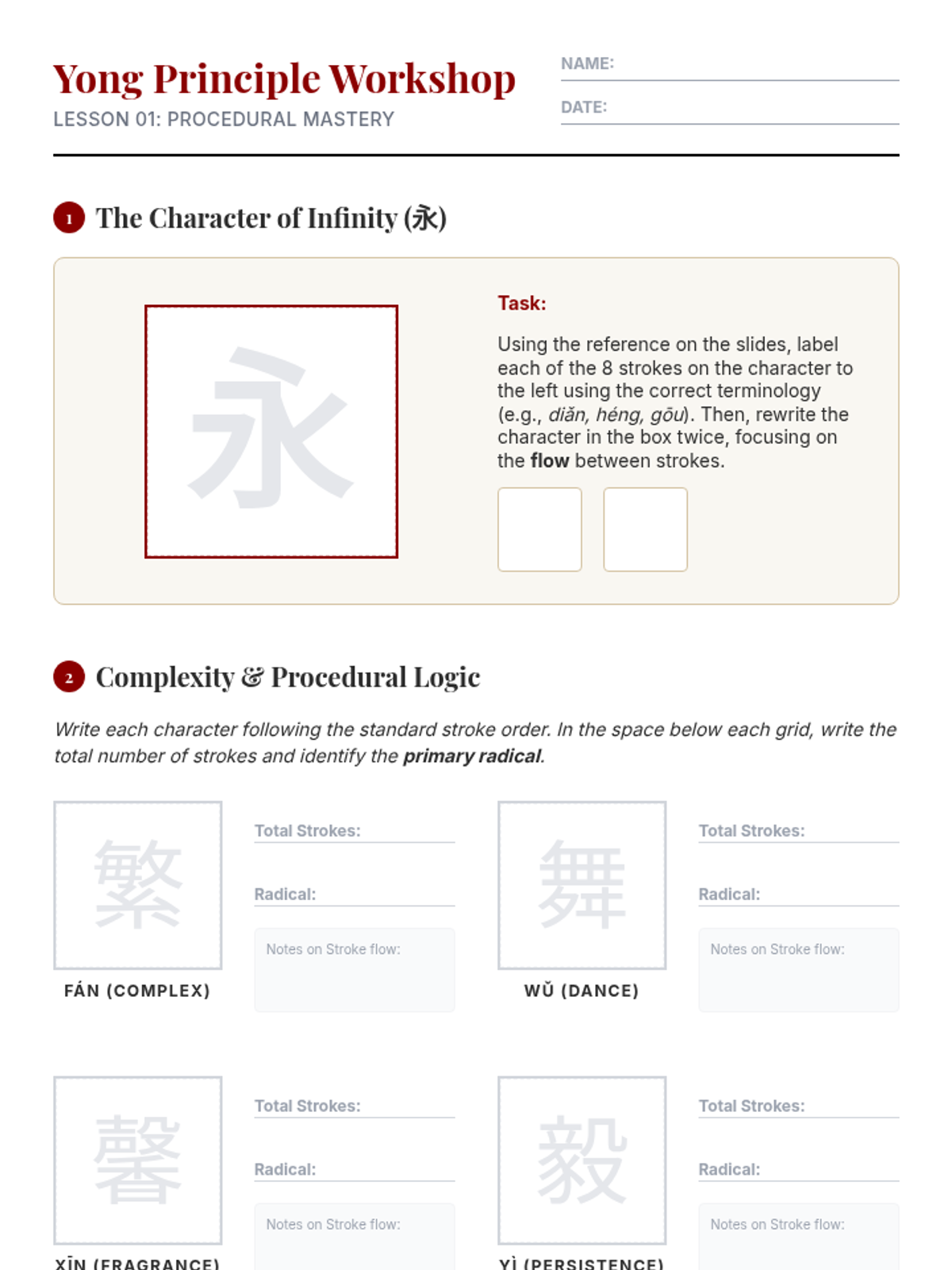
This workshop-style sequence focuses on the physical mechanics and aesthetics of writing intermediate Mandarin characters. Students move from basic stroke order rules to mastering complex HSK 3-4 character structures, digital handwriting recognition, and writing fluidity.
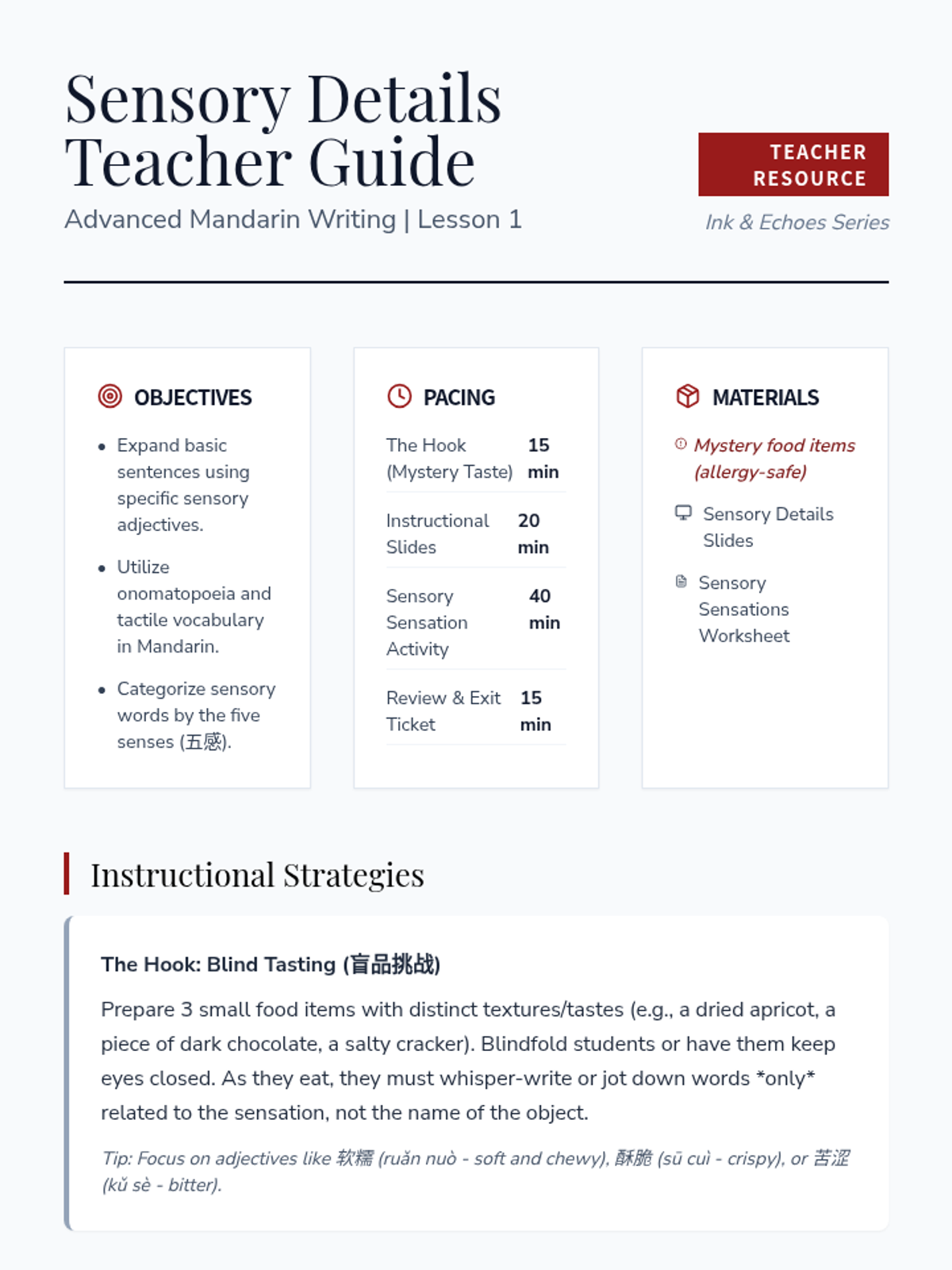
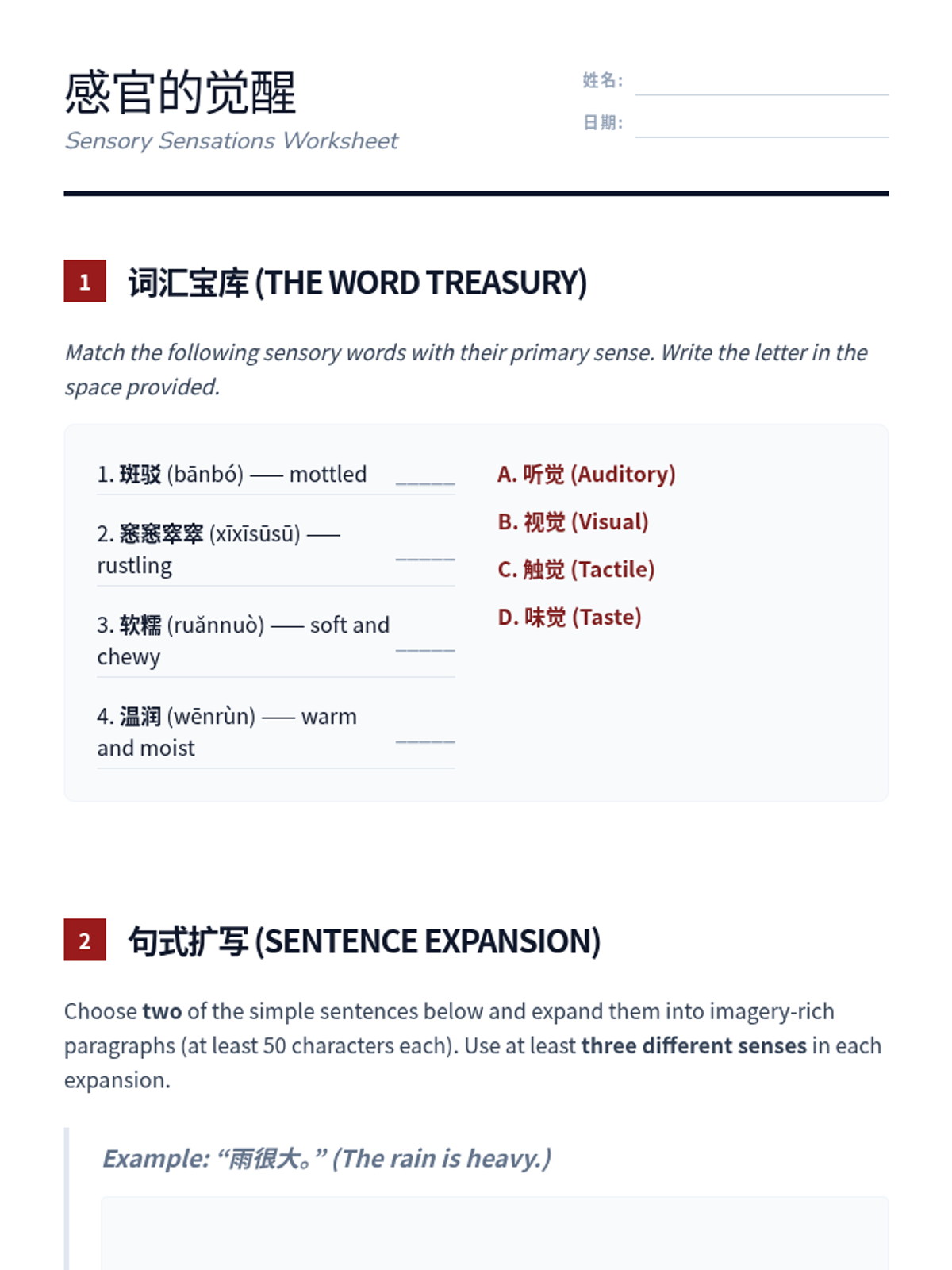
A high school advanced Mandarin writing sequence focused on developing a narrative voice through sensory details, imagery, introspective vocabulary, and narrative structure. Students progress from descriptive exercises to a full reflective essay.
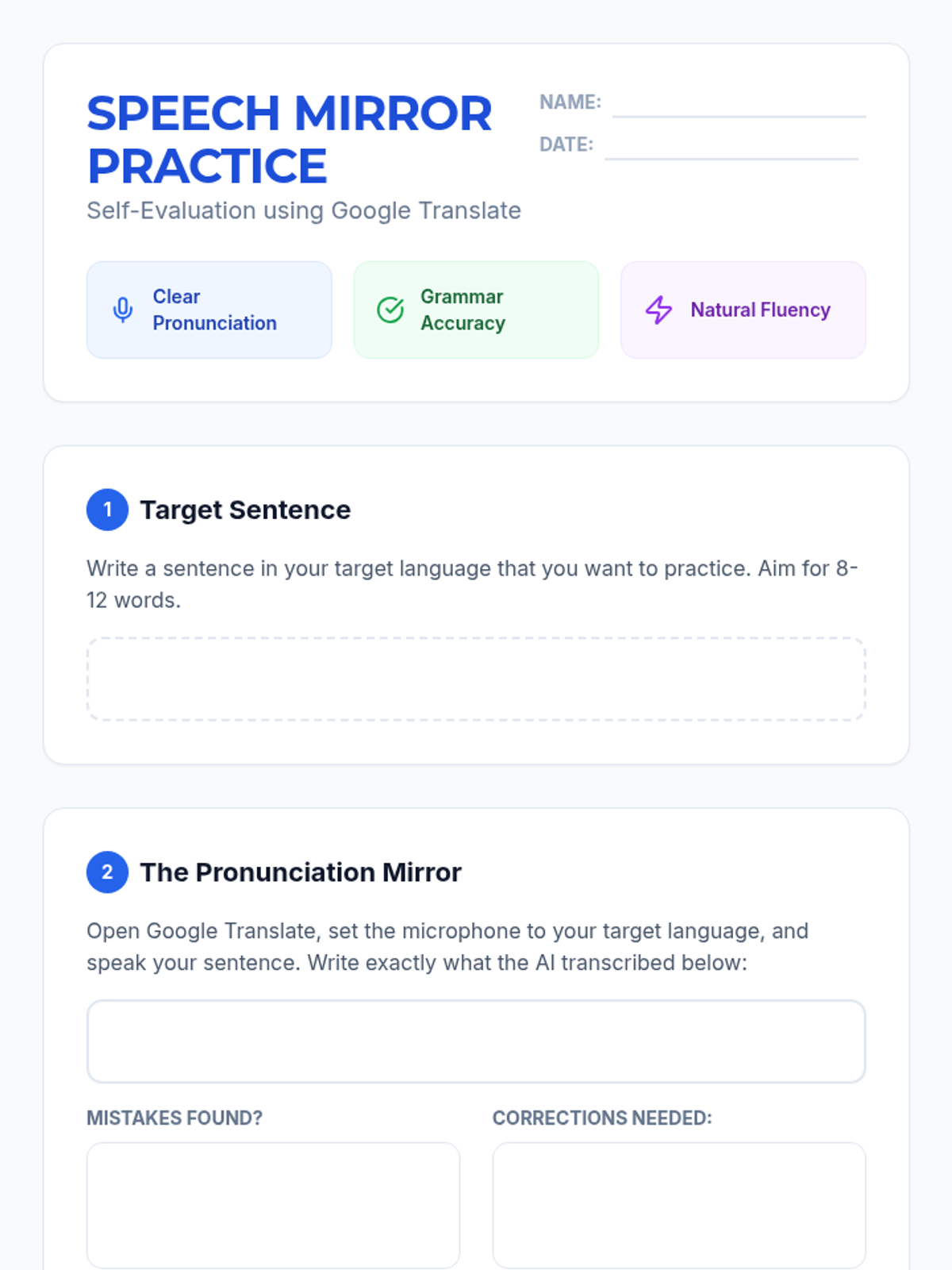
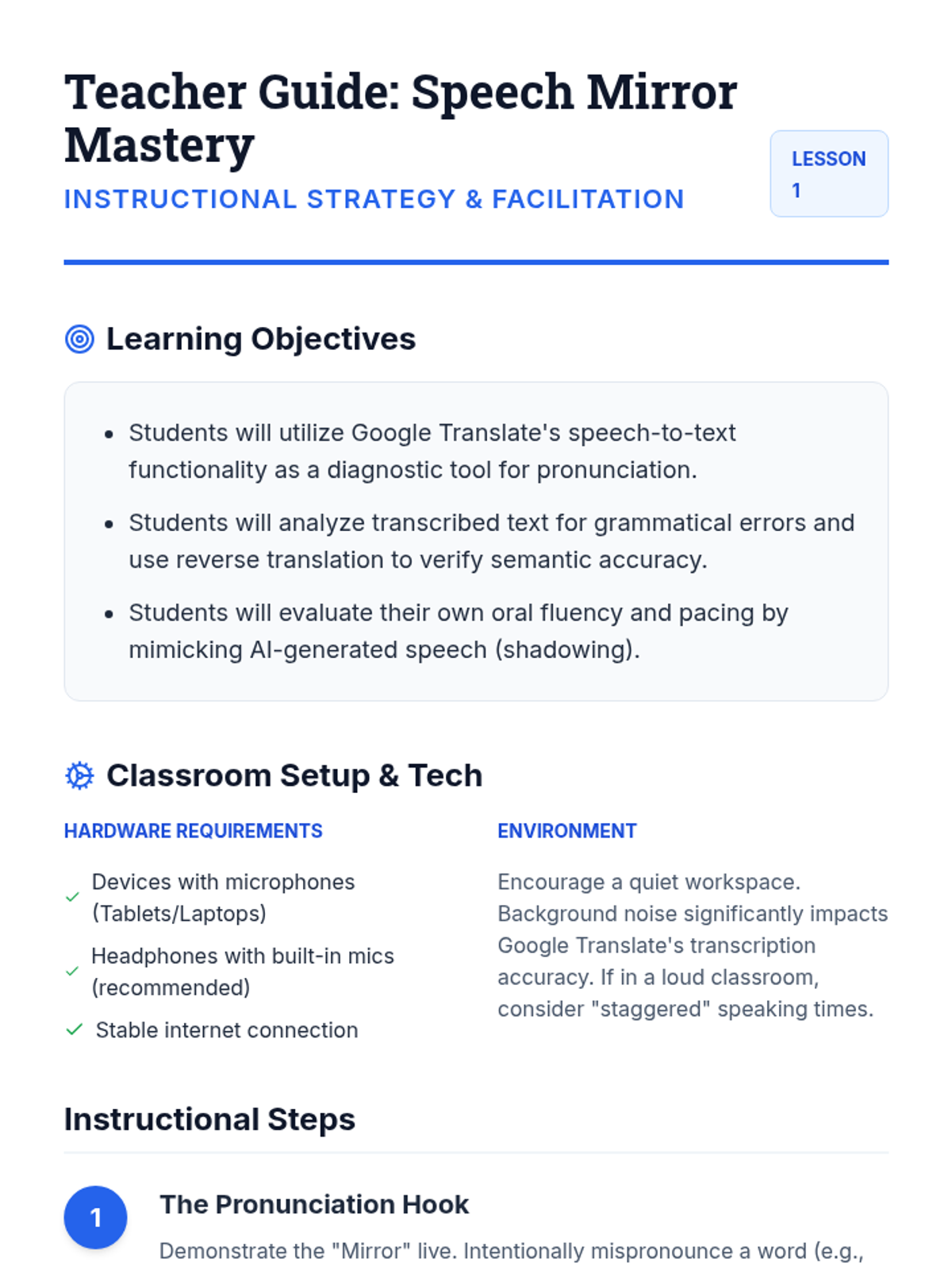
A sequence focused on leveraging digital translation tools for language self-assessment and speech improvement. Students learn to use Google Translate not just for translation, but as a 'mirror' for their own pronunciation, grammar, and fluency.
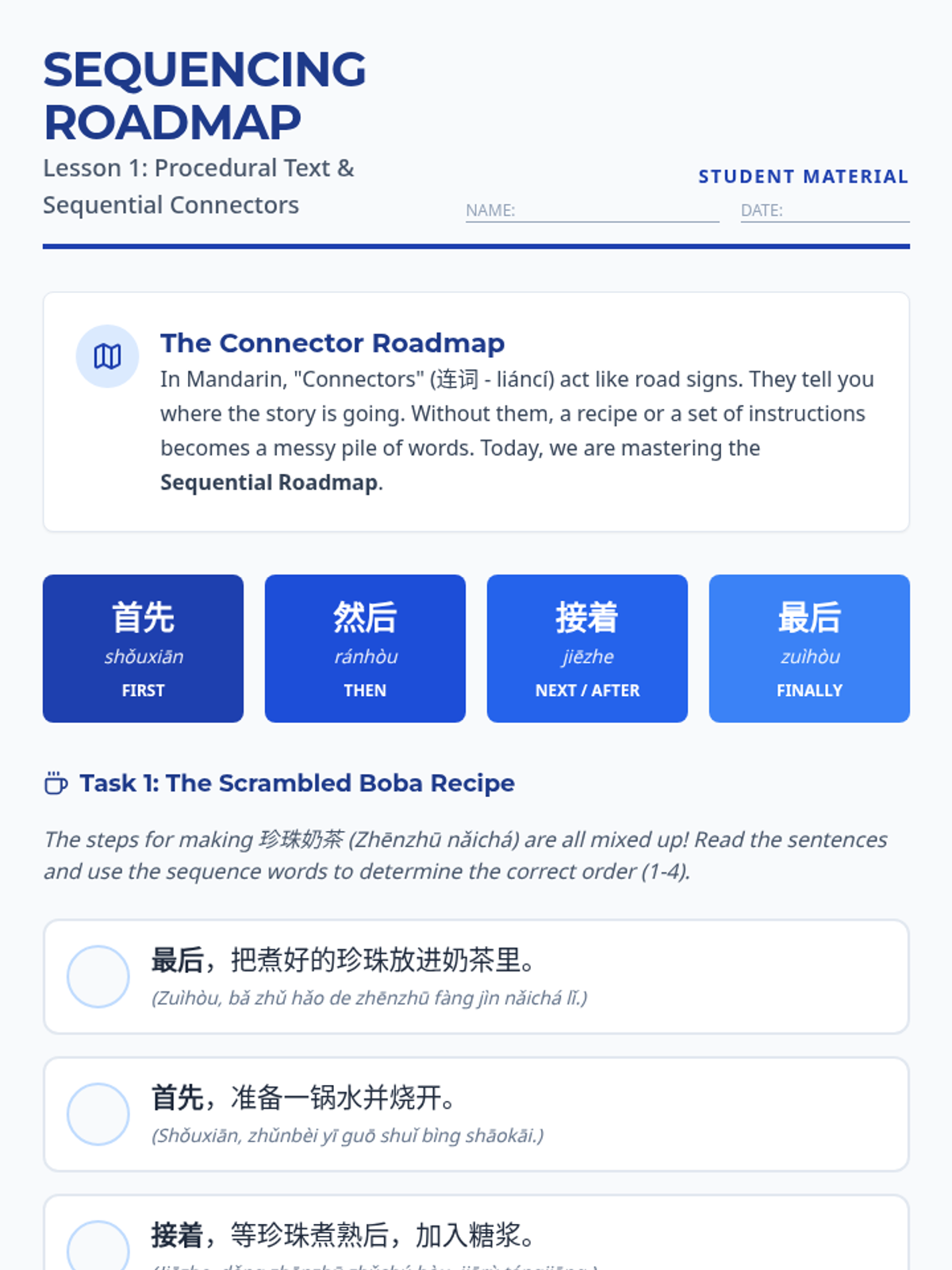
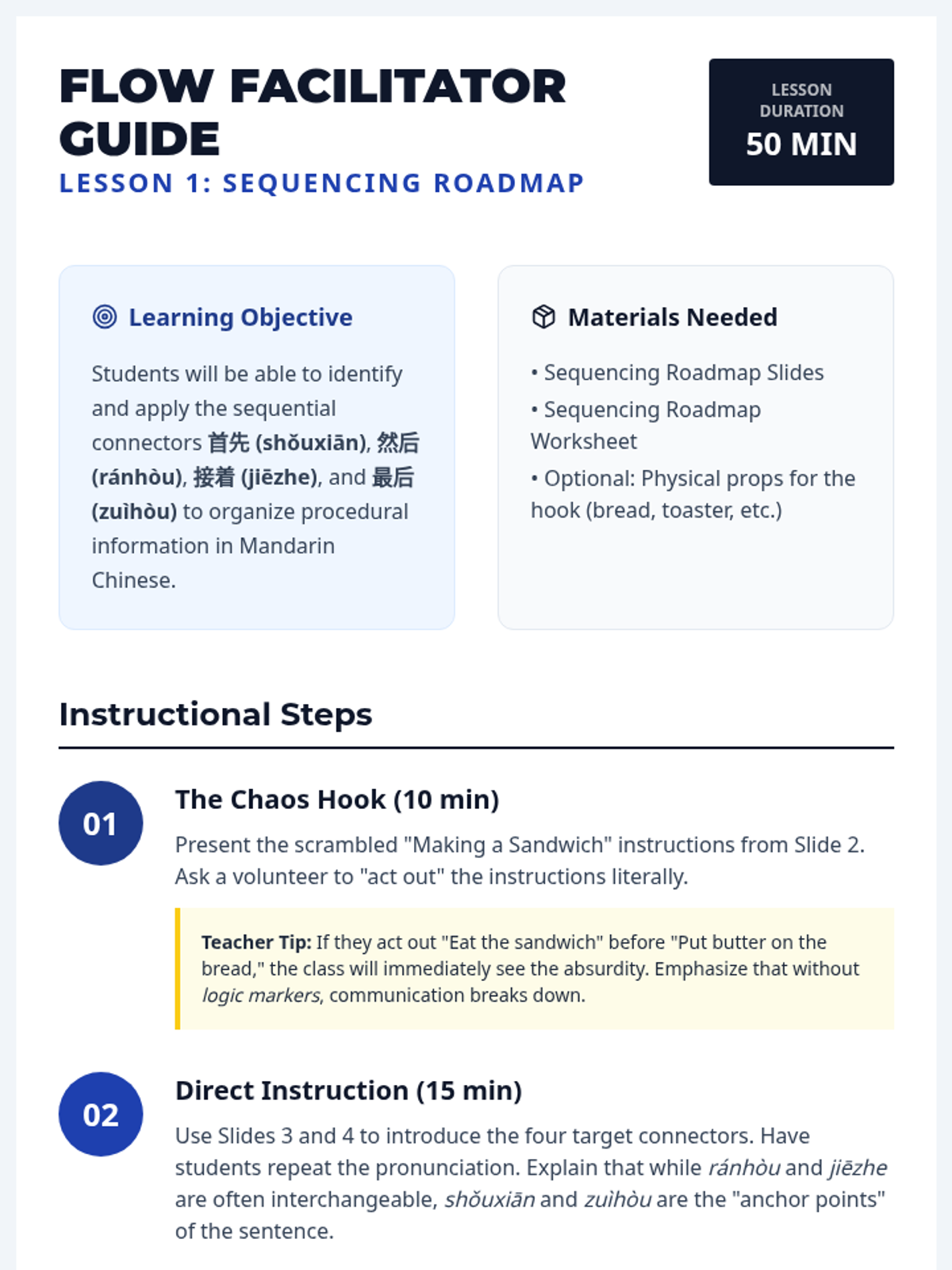
This intermediate Mandarin Chinese sequence focuses on identifying and analyzing complex sentence structures (sequential, concessive, causal, conditional, and simultaneous) to improve reading fluency and logical comprehension in 8th-grade students.
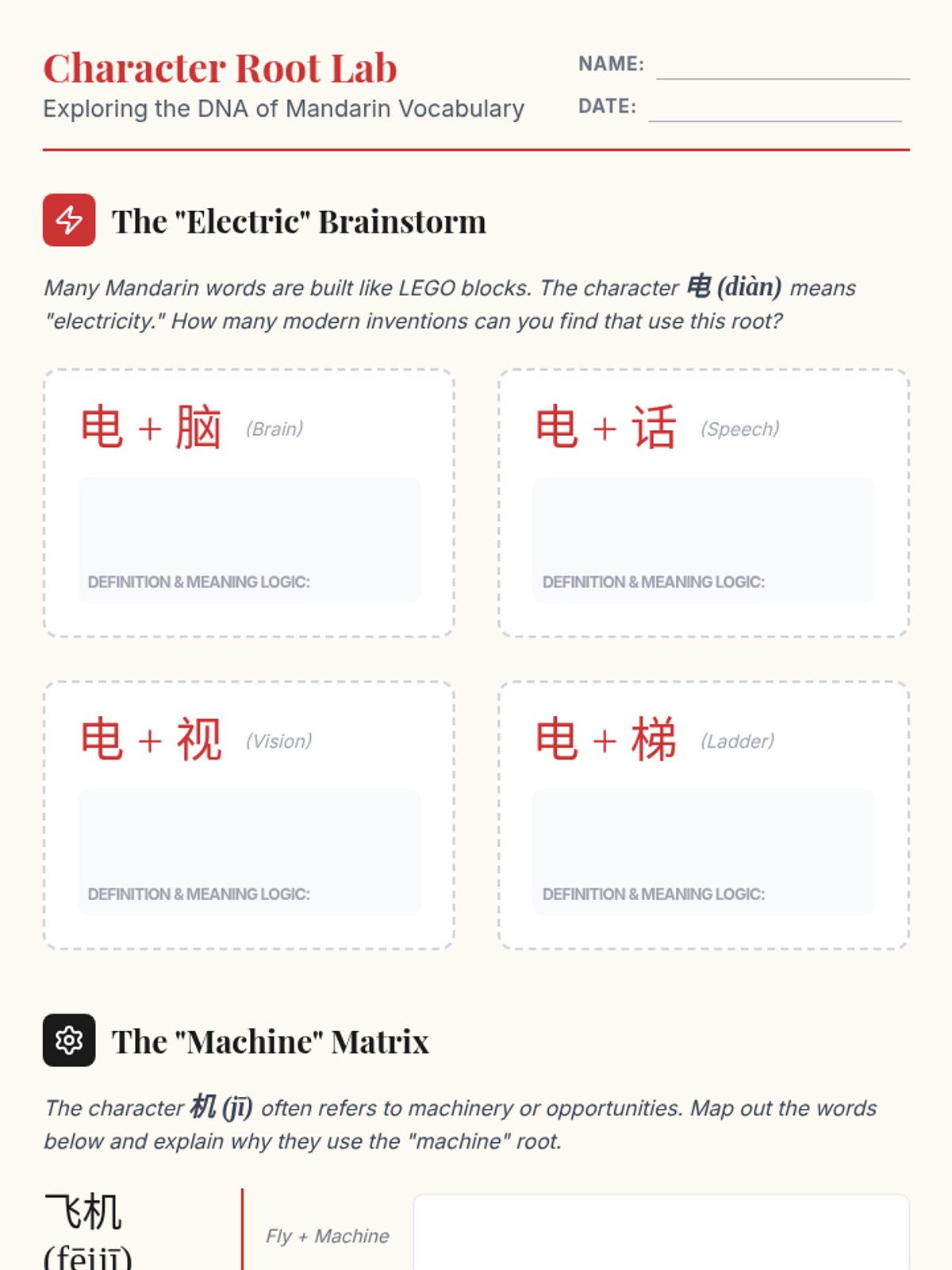
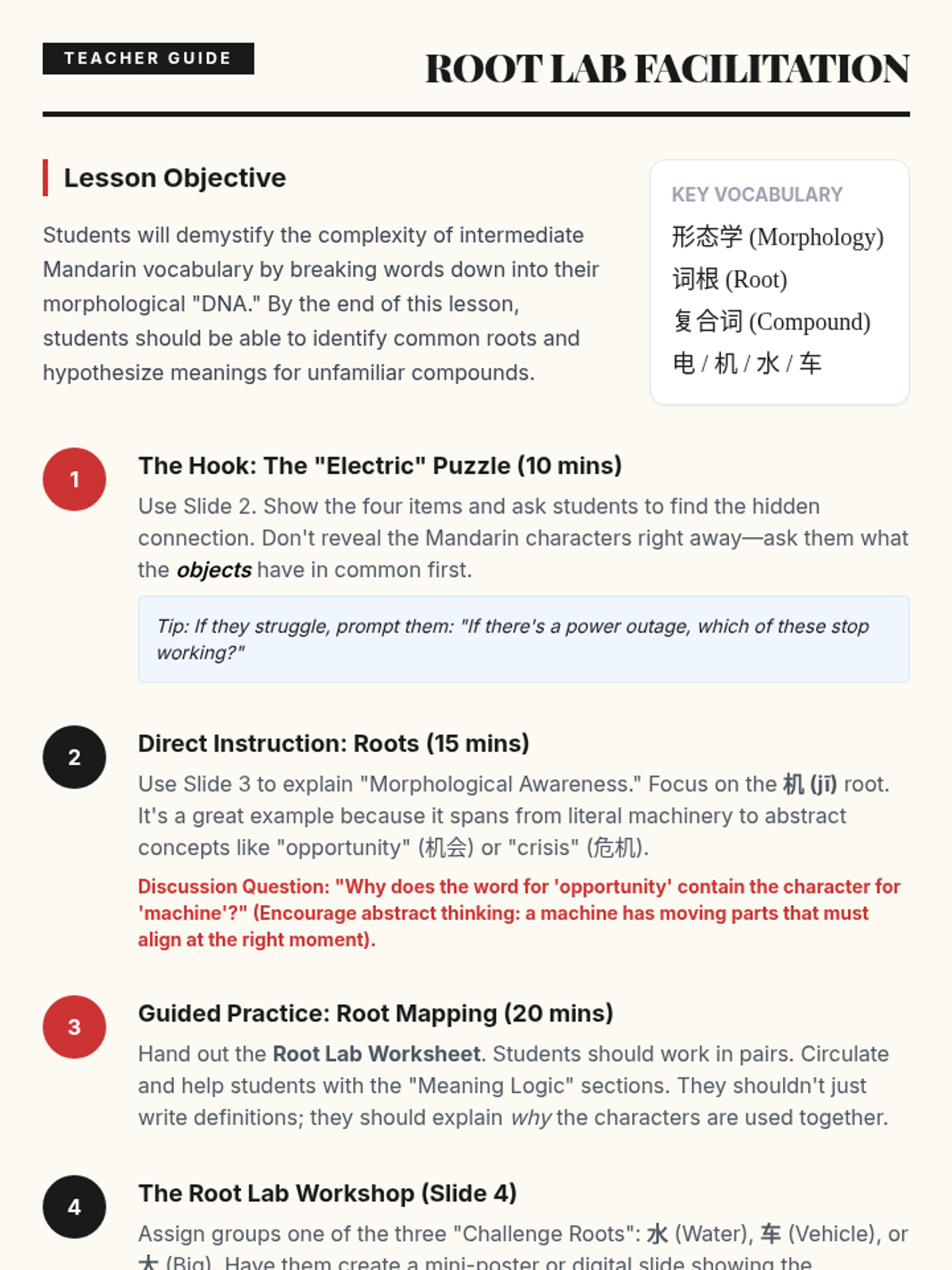
A project-based sequence for 8th-grade Mandarin students focusing on the morphology of compound words (cíyǔ) and their contextual usage. Students explore root characters, differentiate synonyms, learn idioms, and create a thematic glossary.
An intermediate Mandarin Chinese sequence exploring the cultural differences between Chinese and Western educational systems. Students analyze school schedules, academic subjects, extracurricular activities, and the emotional impact of high-stakes testing, culminating in a structured debate on global education models.
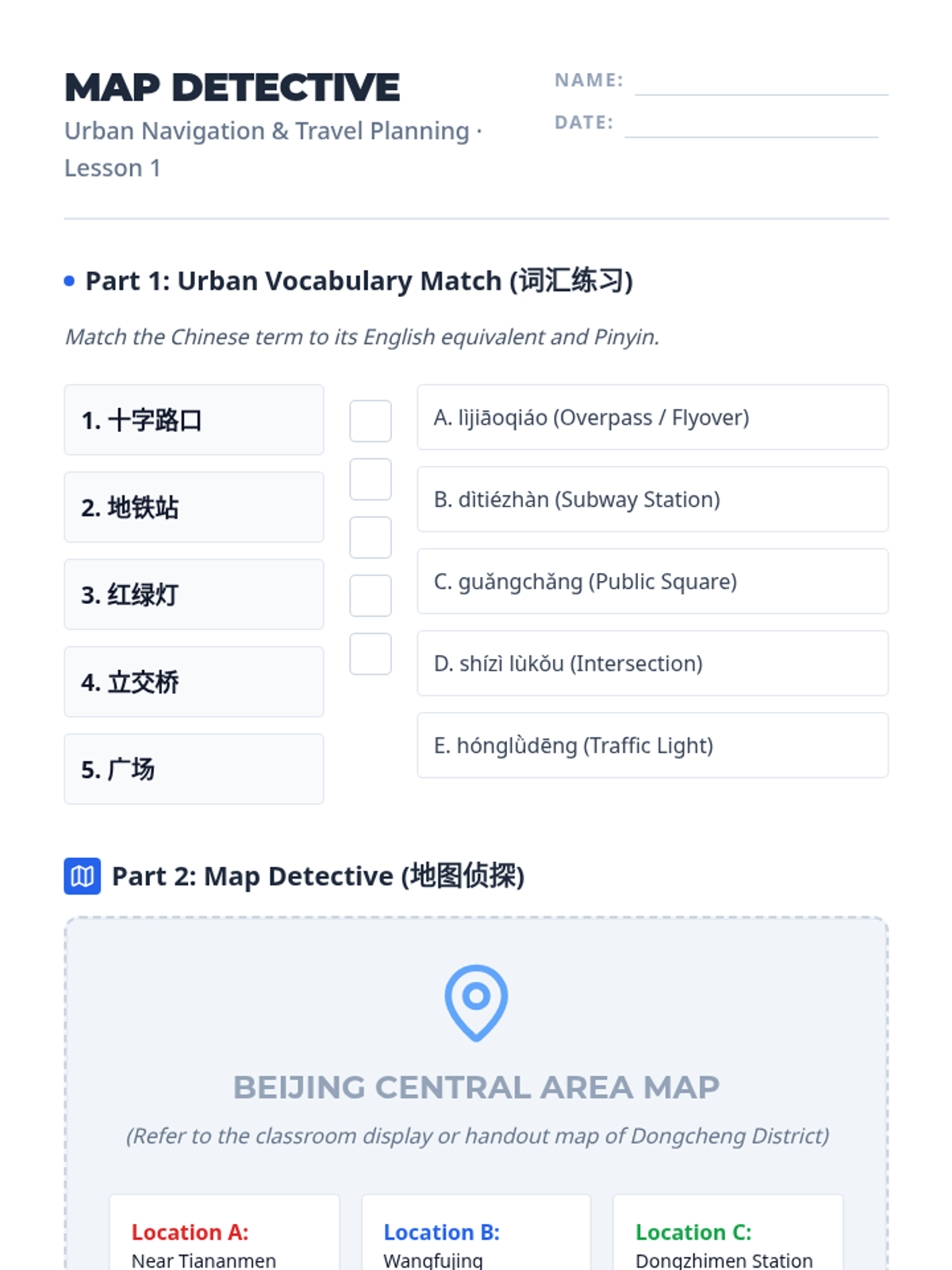
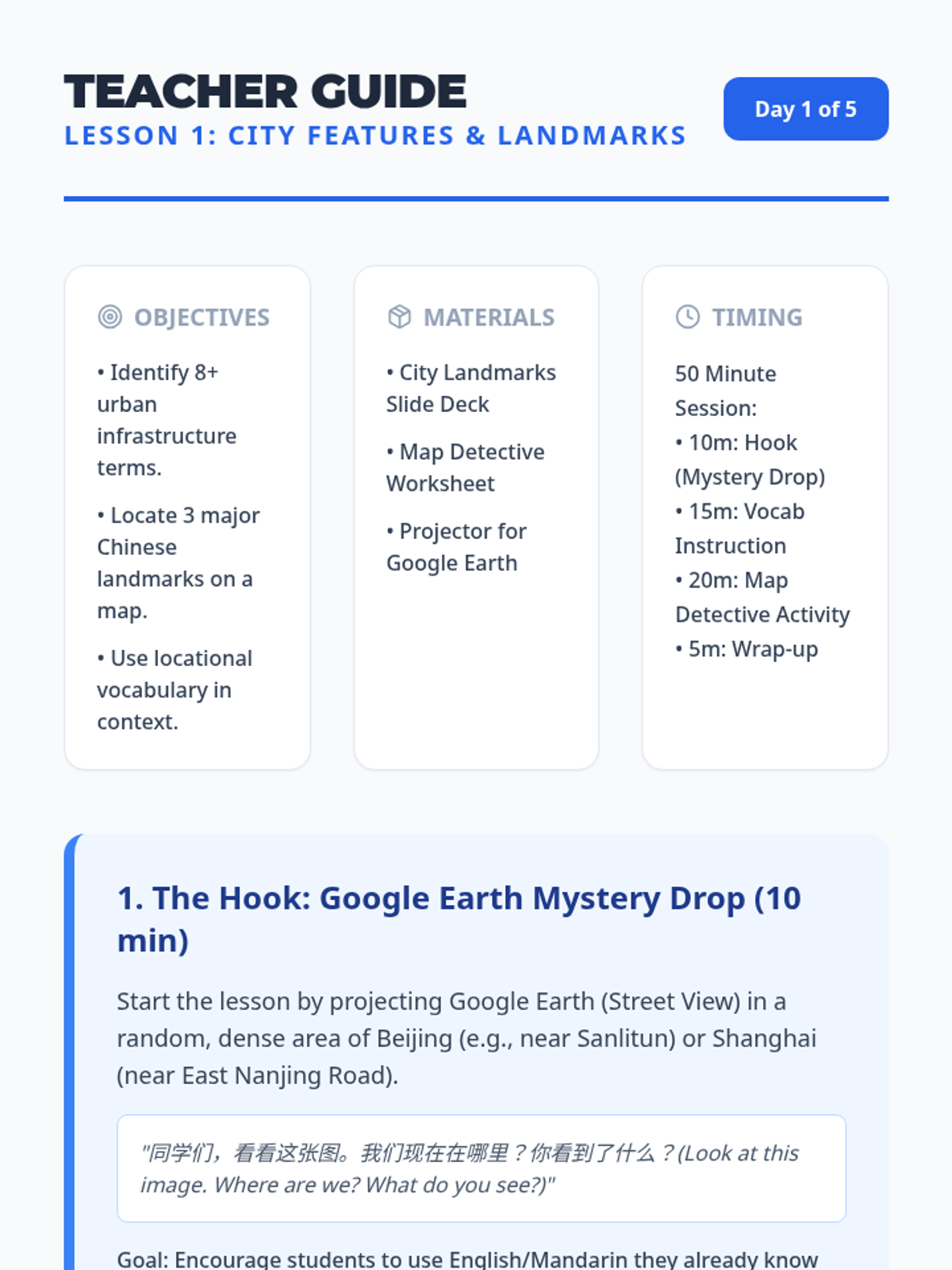
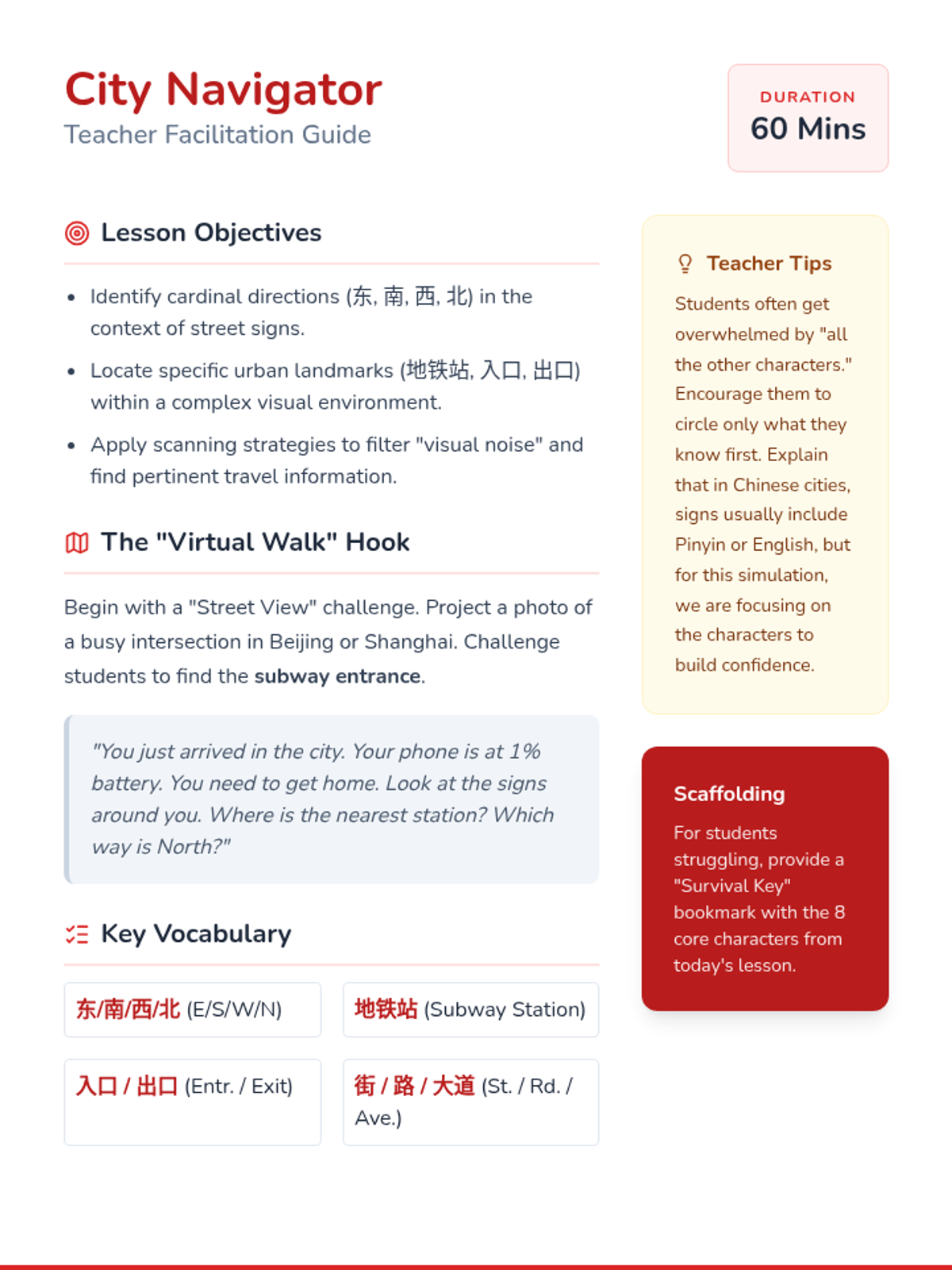
This sequence builds navigational confidence for independent travel in Mandarin-speaking cities, focusing on urban infrastructure, directional complements, and public transportation. Students will progress from identifying landmarks to presenting a complete multi-stop travel itinerary.
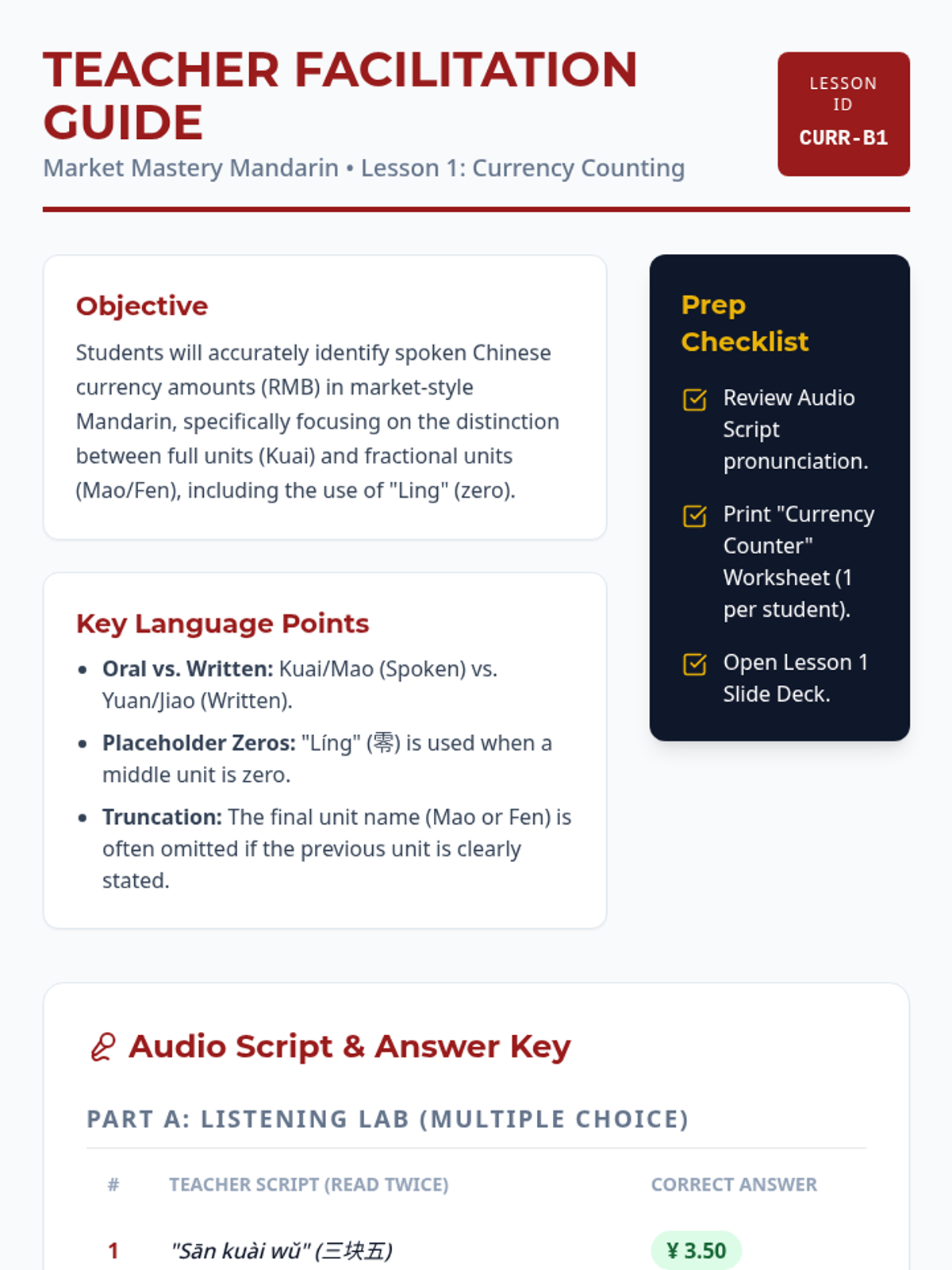
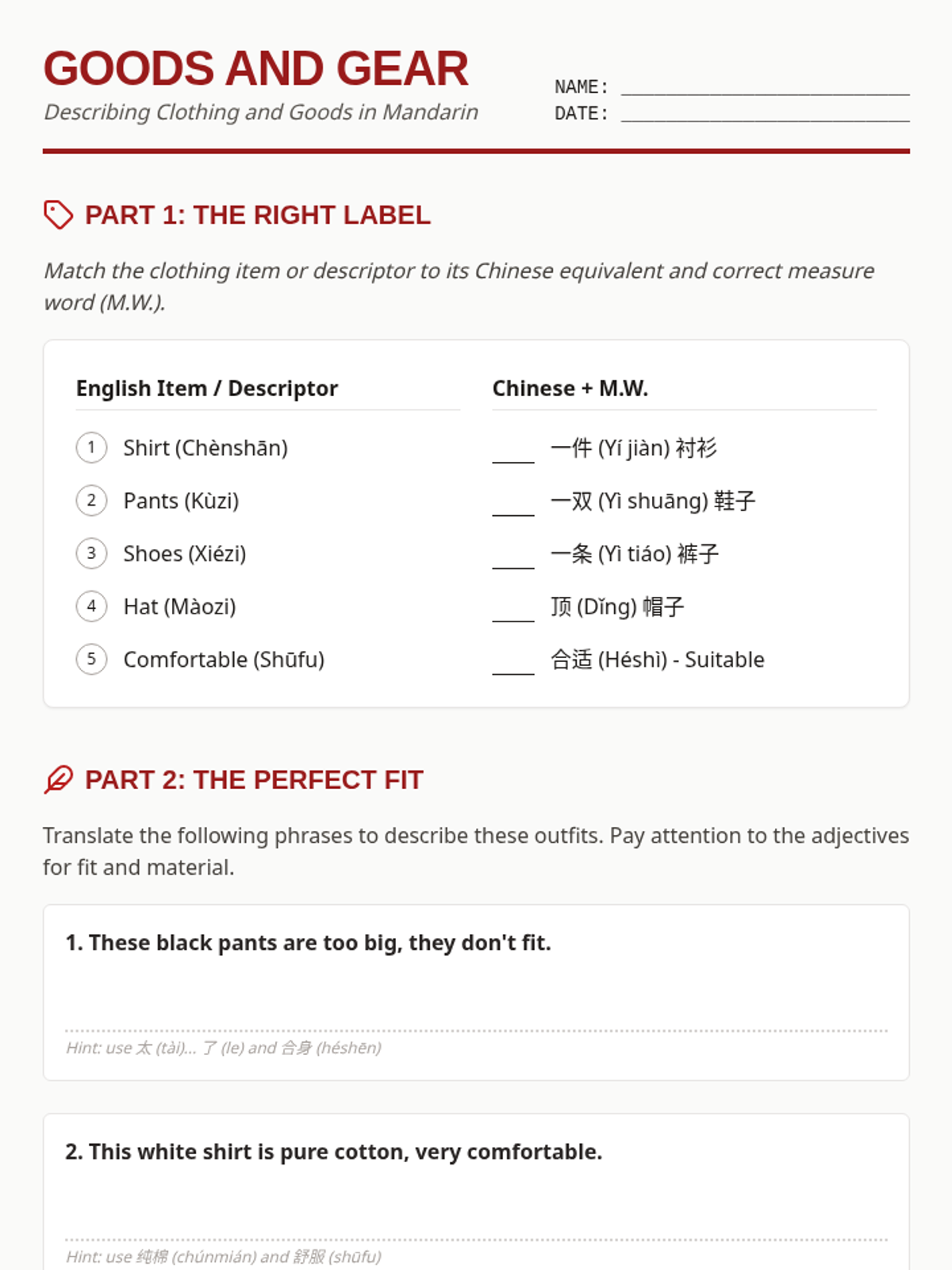
Students develop negotiation skills for traditional Chinese markets, focusing on comparative structures, currency fluency, and the cultural art of bargaining. The journey moves from basic product description to complex, real-time negotiation simulations.
This sequence immerses students in the cultural and linguistic complexities of dining in Mandarin-speaking regions. Students move beyond basic food vocabulary to master the nuances of ordering for a group, expressing specific dietary preferences, and navigating the social etiquette of seating arrangements and bill payment.
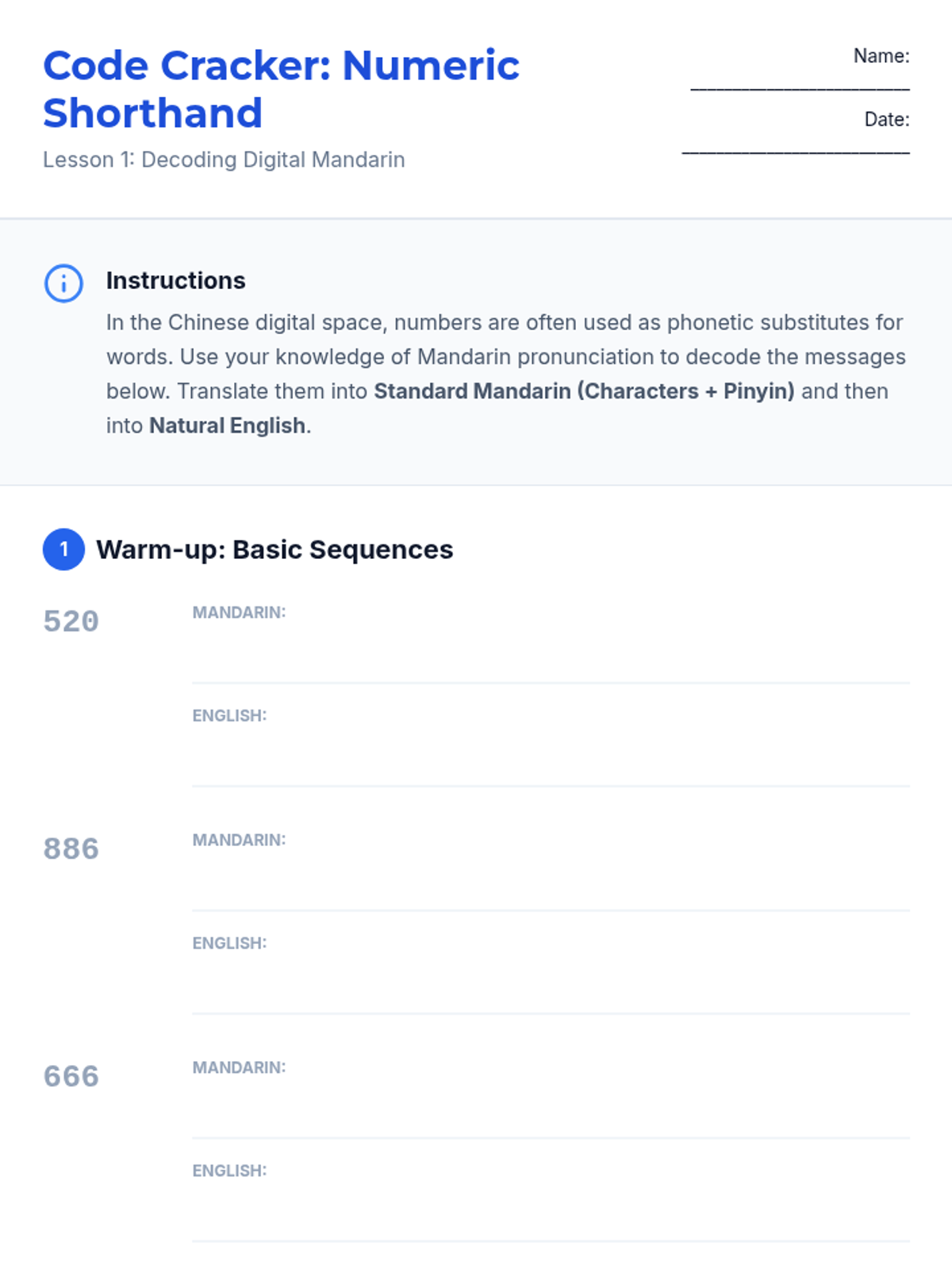
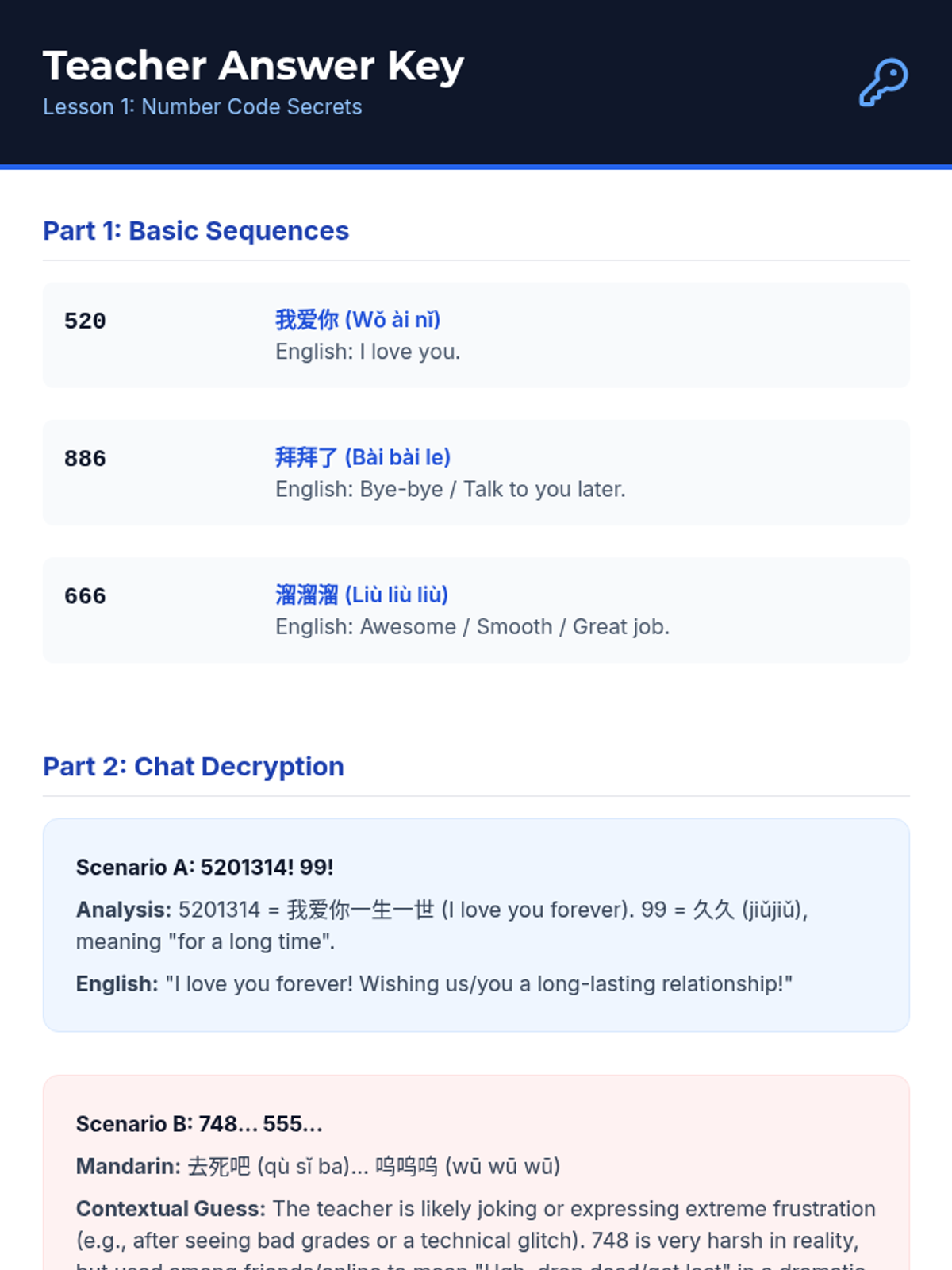
This sequence explores the dynamic and rapidly evolving language of the Chinese internet, from number codes and homophones to complex memes and marketing strategies. Students will analyze how digital culture influences communication and practice code-switching between formal and informal registers in a Mandarin-speaking context.
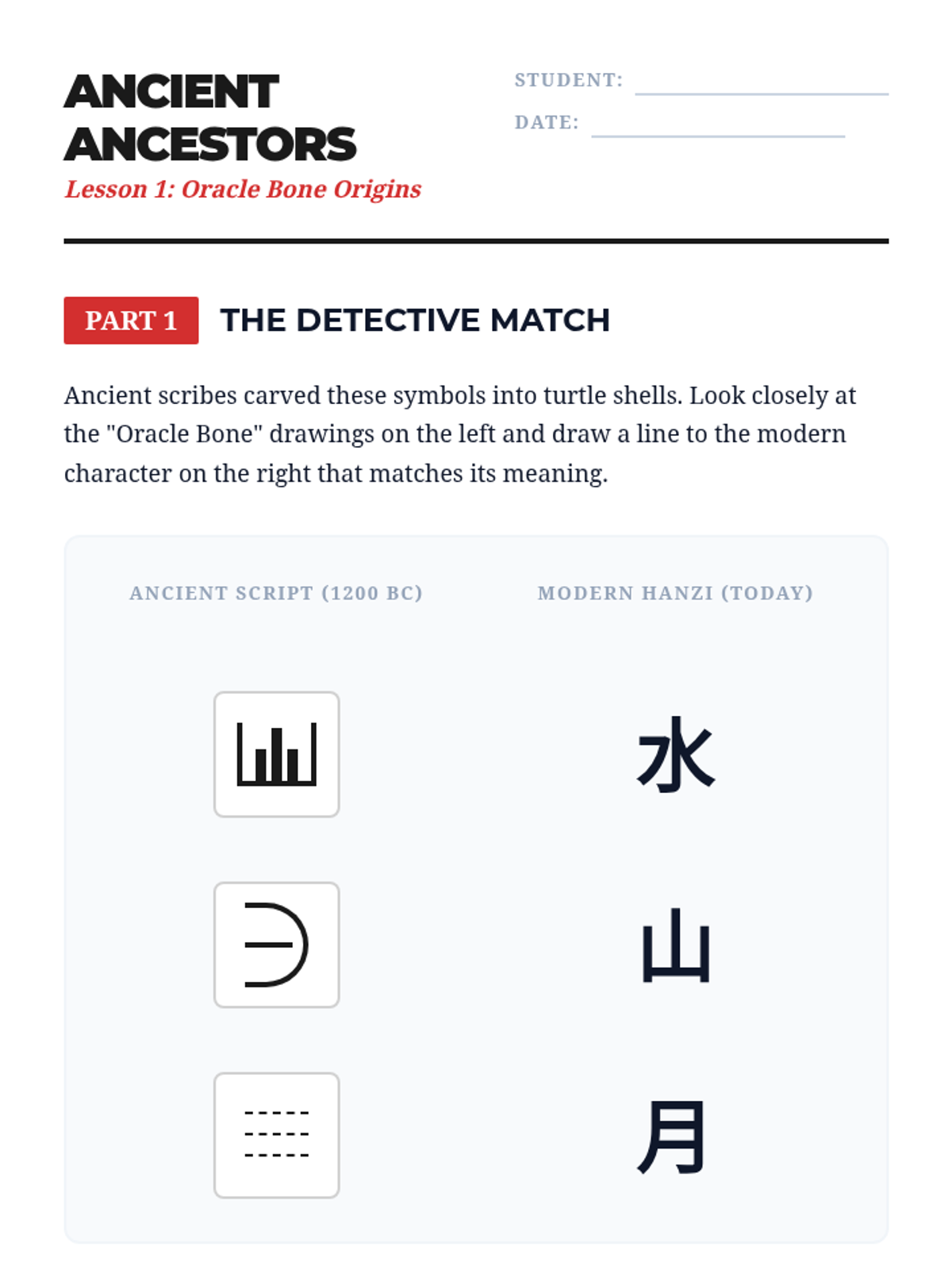
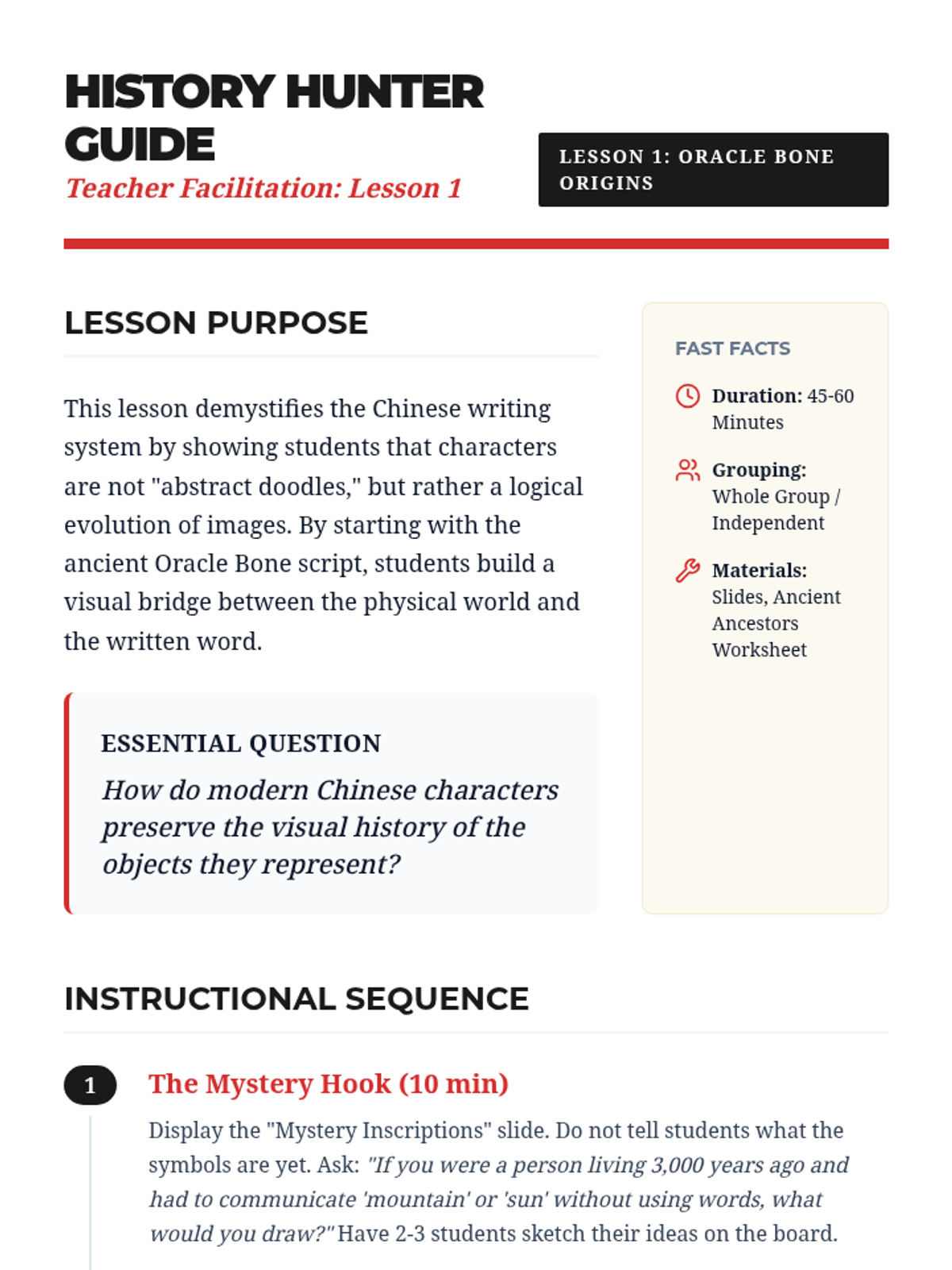
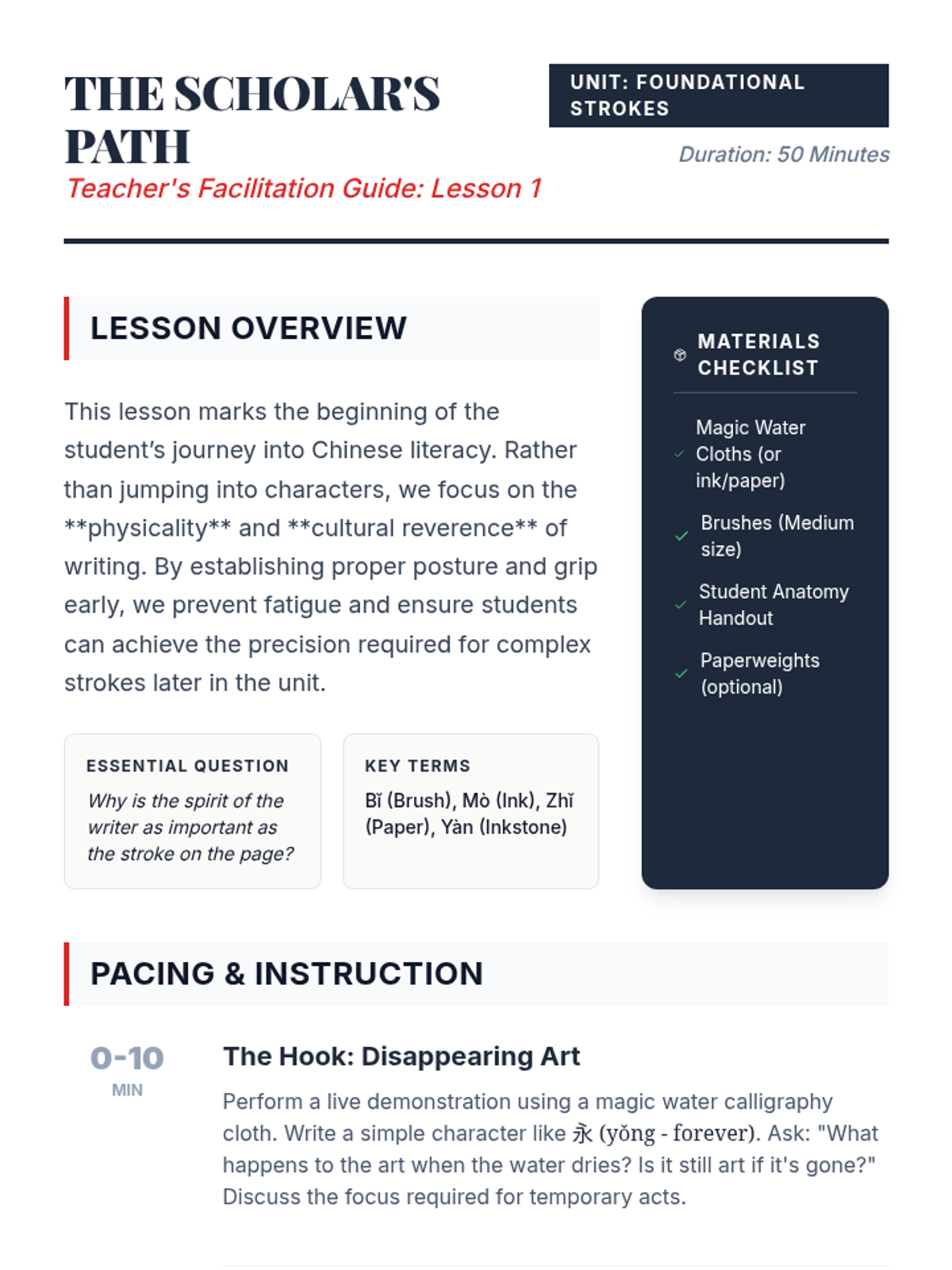
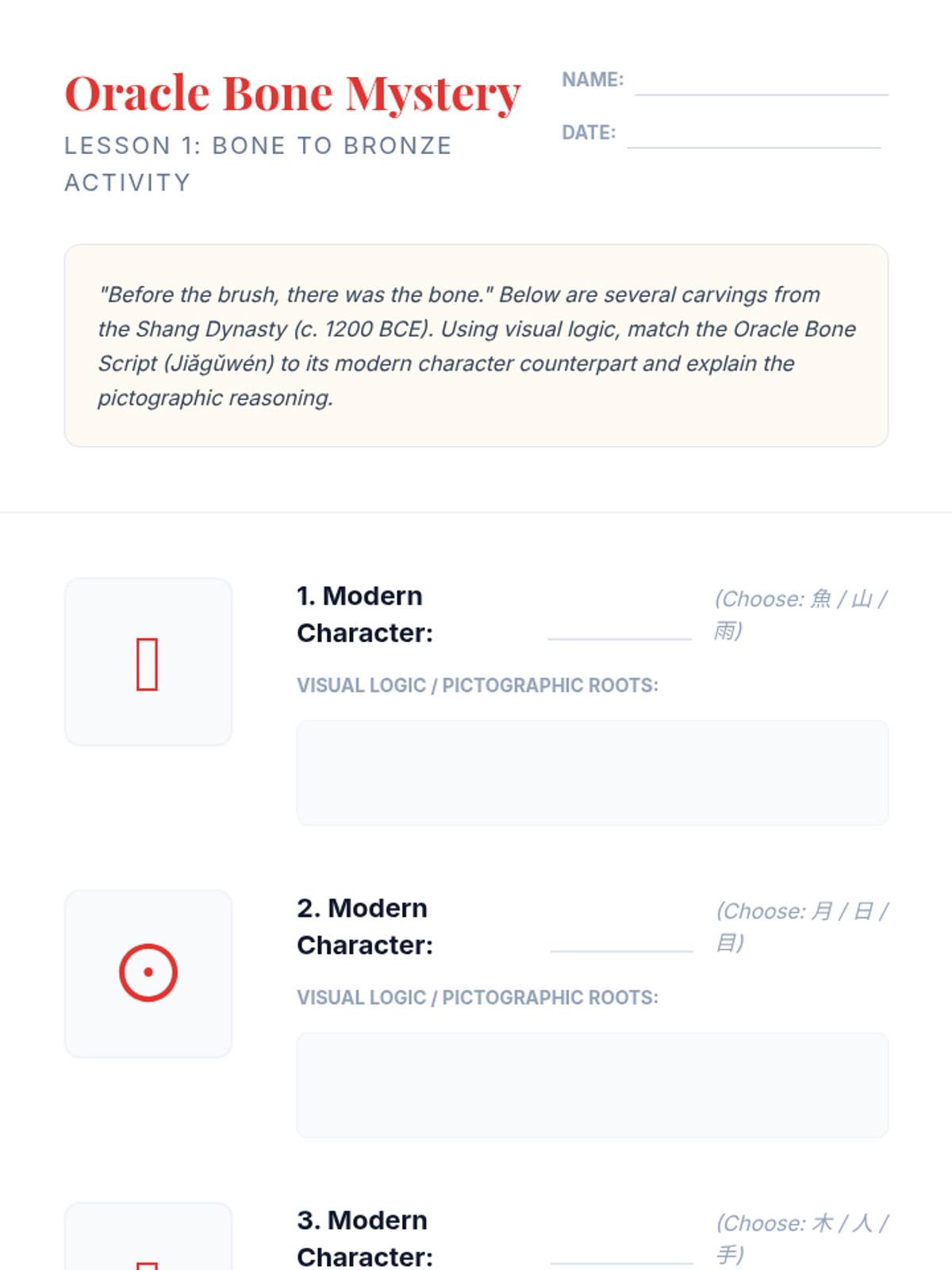
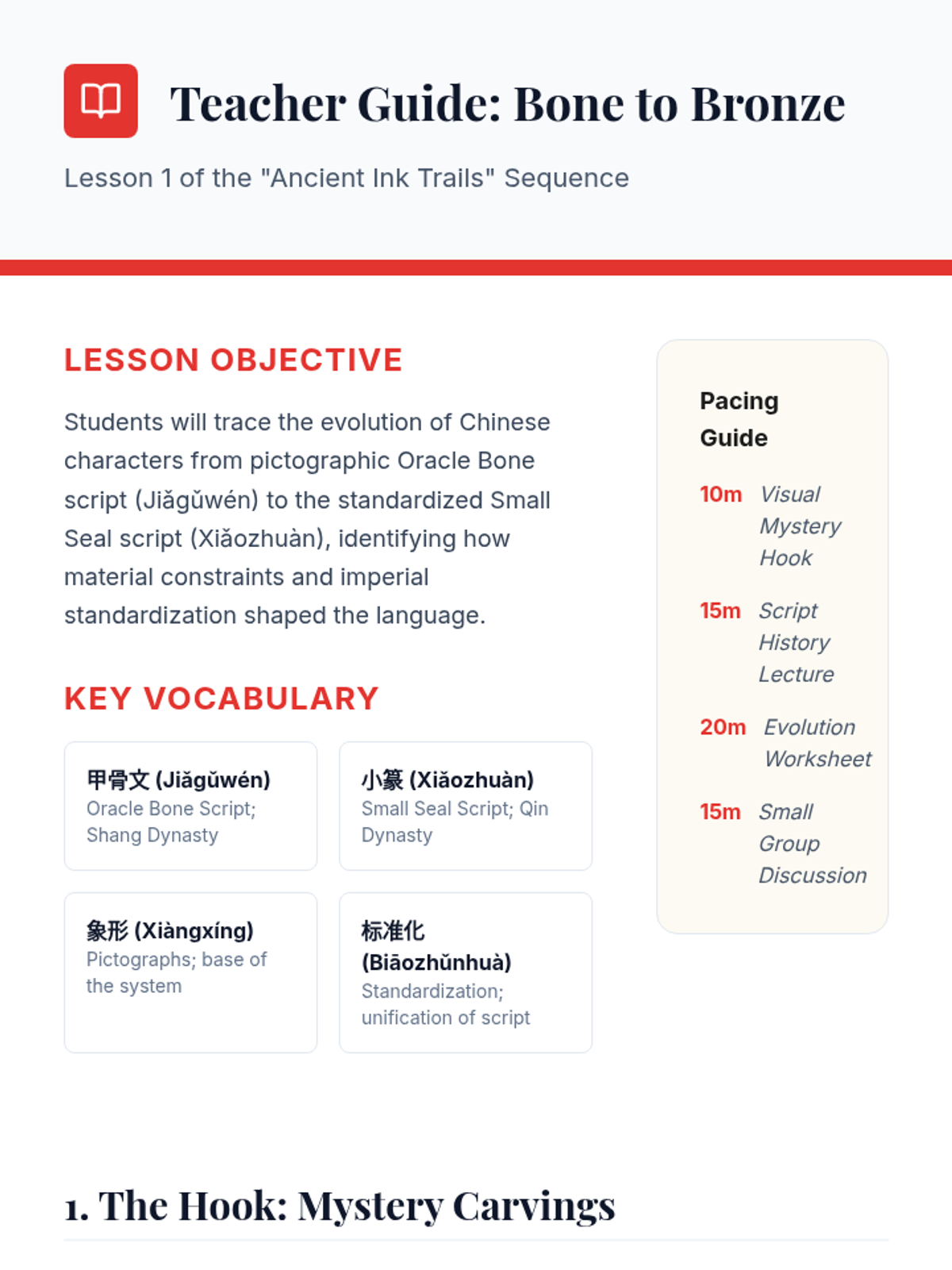
A hands-on exploration of Chinese calligraphy, tracing the history of characters from ancient Oracle Bone script to modern brush arts. Students learn the tools, techniques, and philosophy of traditional writing while creating their own calligraphic masterpieces.
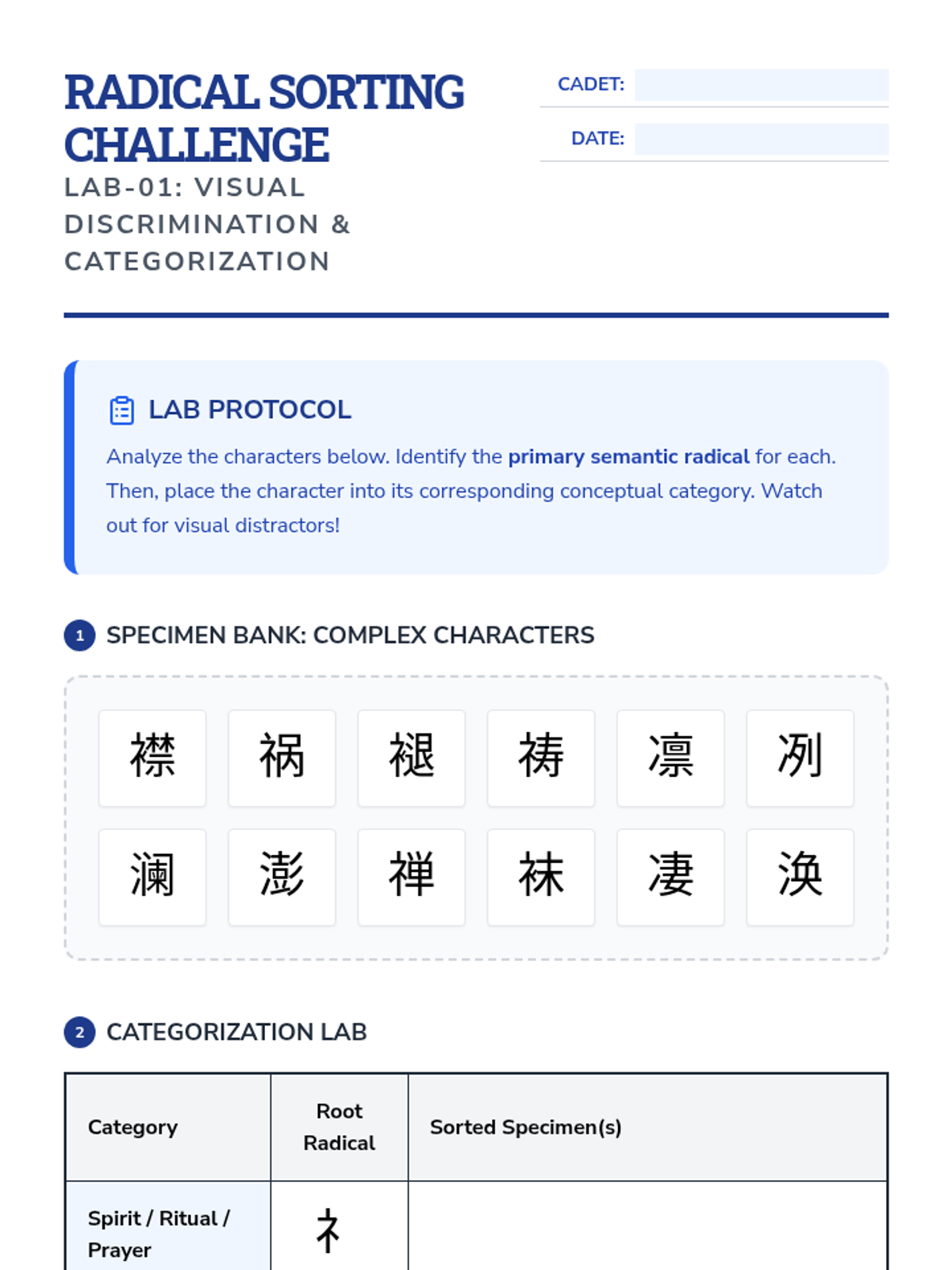
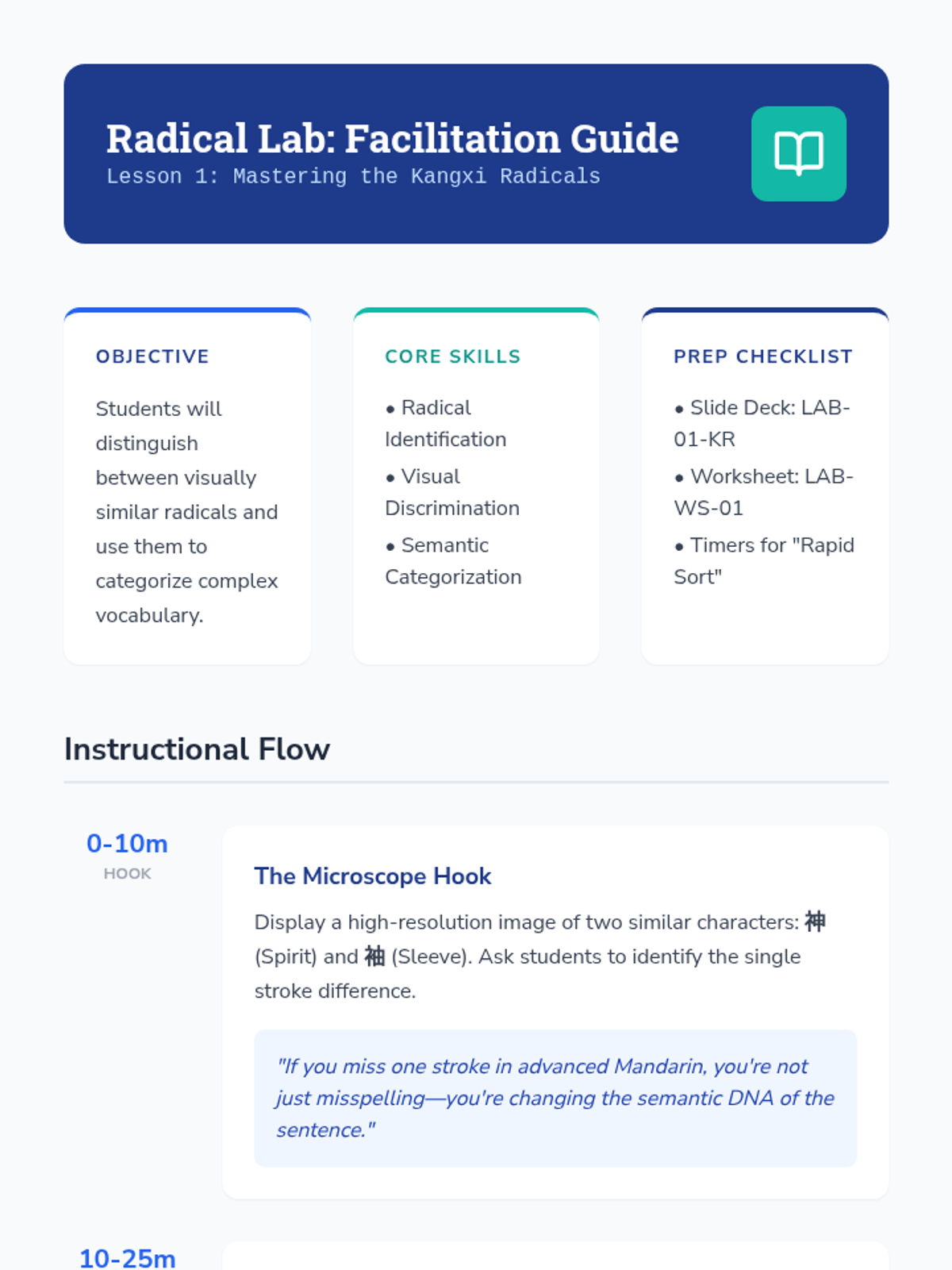
This intermediate Mandarin Chinese sequence focuses on the 214 Kangxi radicals, specifically the 50 most common ones. Using a flipped classroom model, students learn to categorize vocabulary by their semantic 'roots,' building mental frameworks for better character retention and structural analysis.
This workshop-style sequence focuses on the mechanics and aesthetics of writing intermediate Mandarin characters. Students refine their handwriting by mastering stroke order for complex characters and exploring structural balance using Tian Zi Ge grids, ultimately creating a calligraphic portfolio.
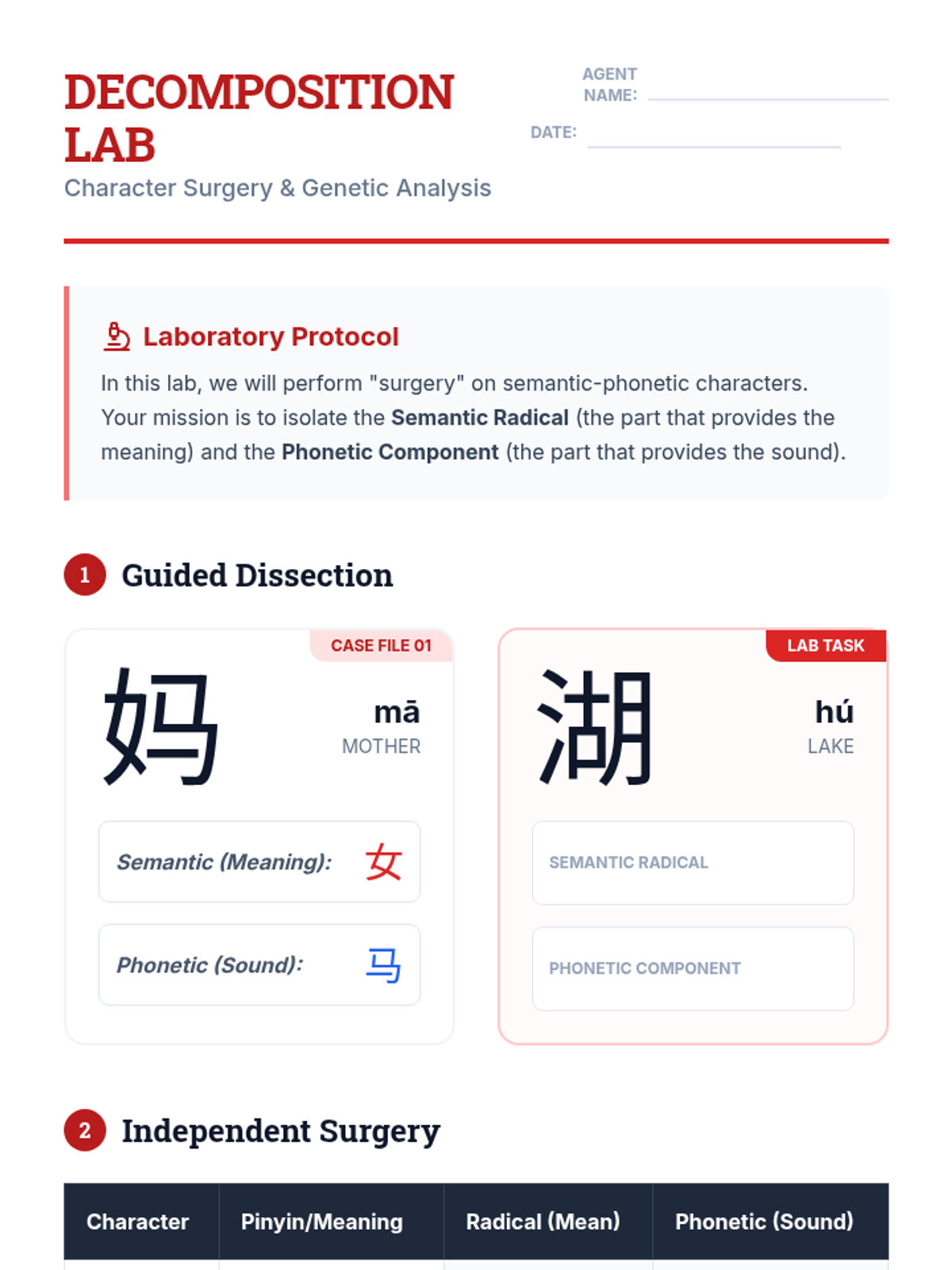
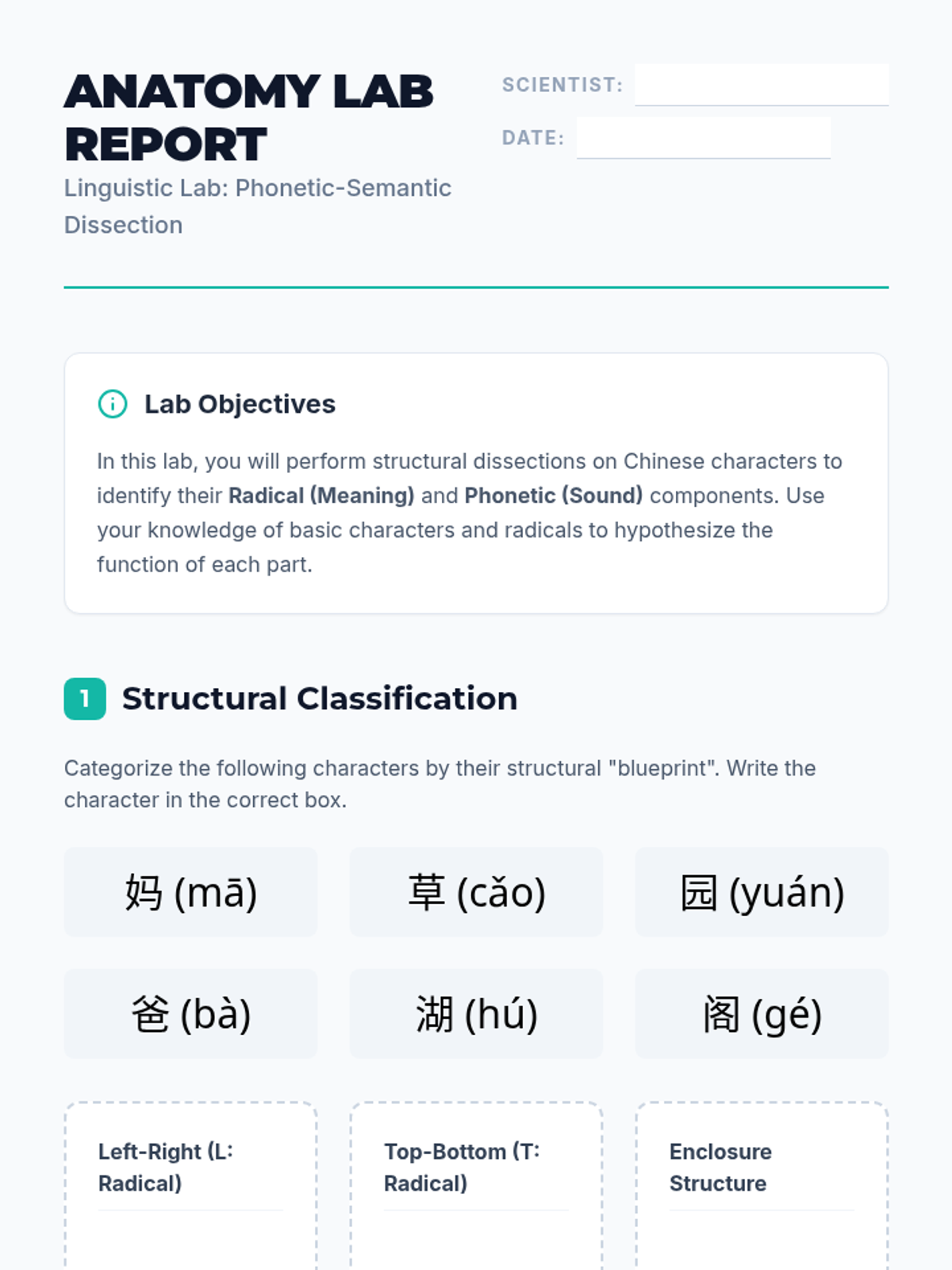
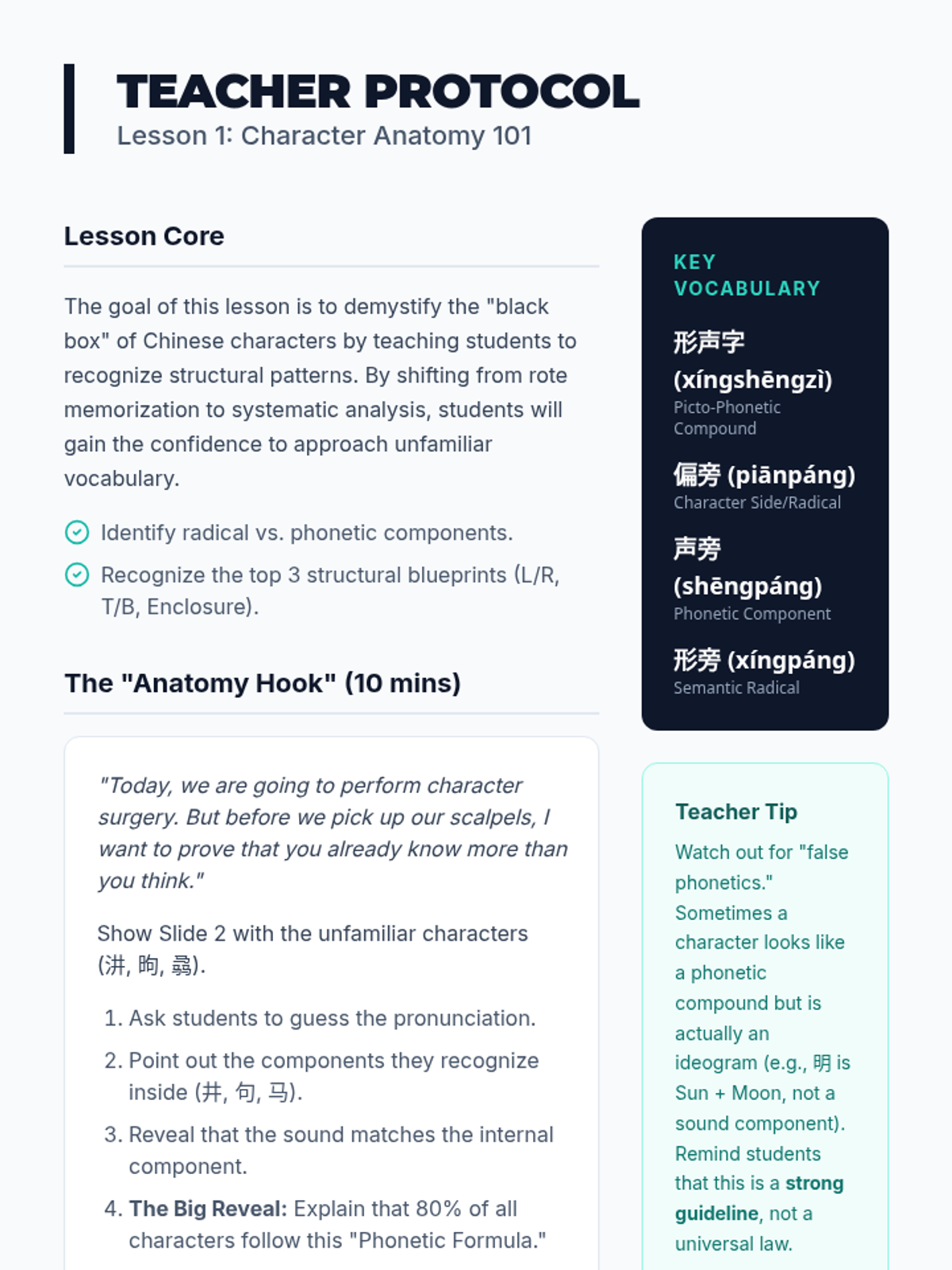
This inquiry-based sequence demystifies the structure of semantic-phonetic characters, which make up the vast majority of the Chinese writing system. Students move from rote memorization to analytical decoding by identifying the 'meaning' component (radical) and the 'sound' component (phonetic) within intermediate-level characters.
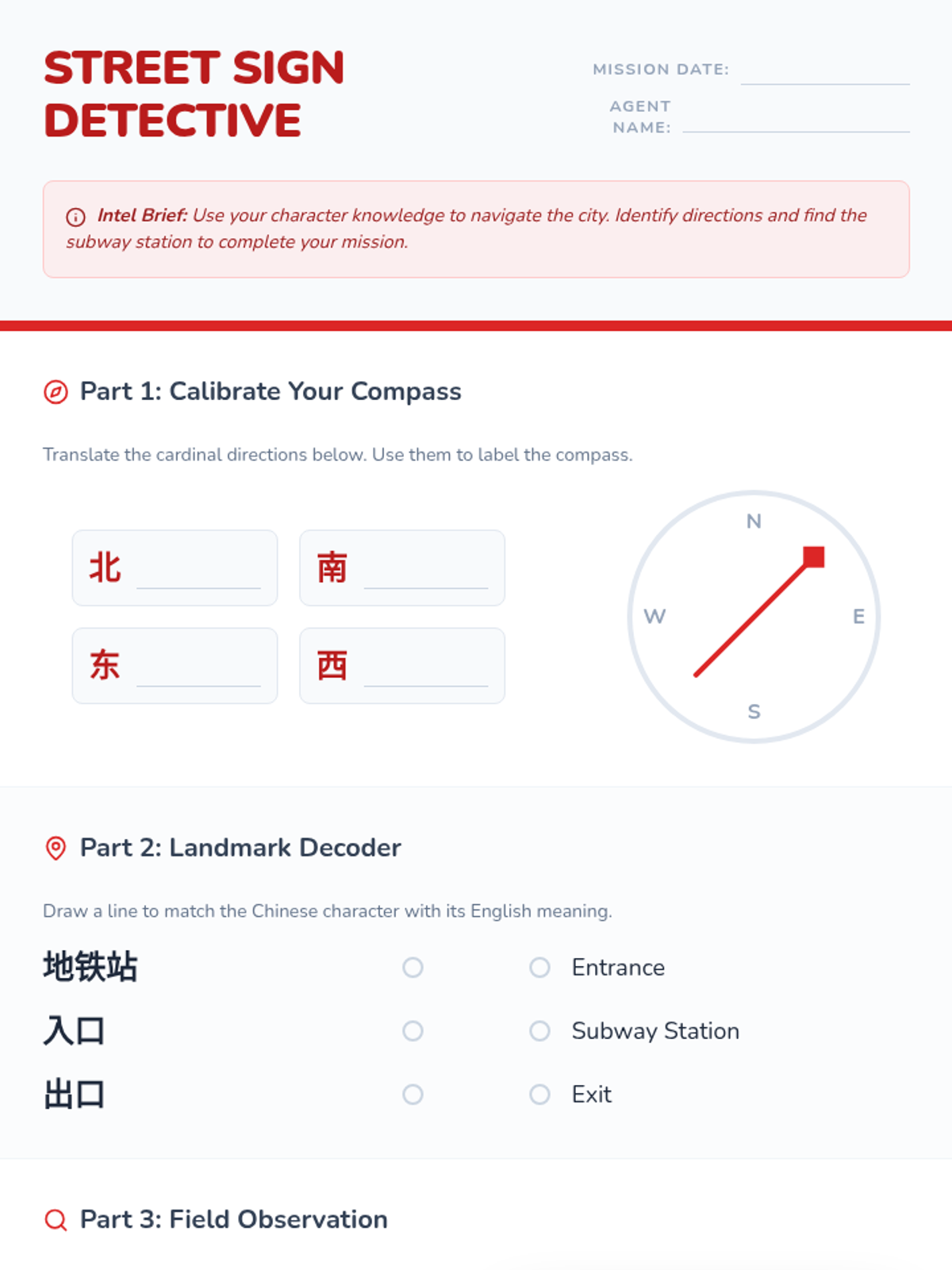
This simulation-heavy sequence applies intermediate Mandarin character knowledge to real-world survival scenarios like menus, street signs, and digital messages. Students focus on scanning for keywords and using context clues to navigate a Chinese-speaking environment.
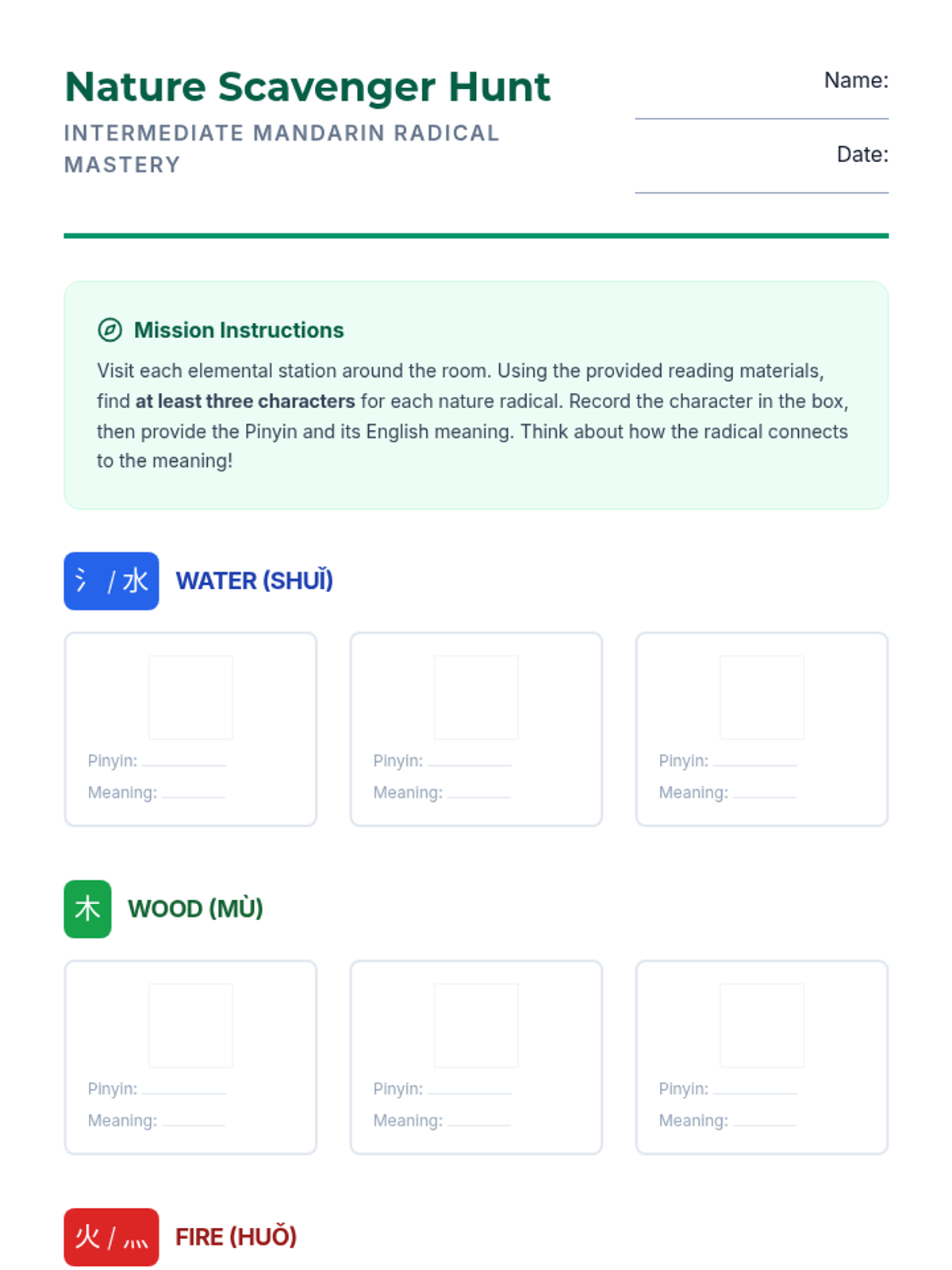
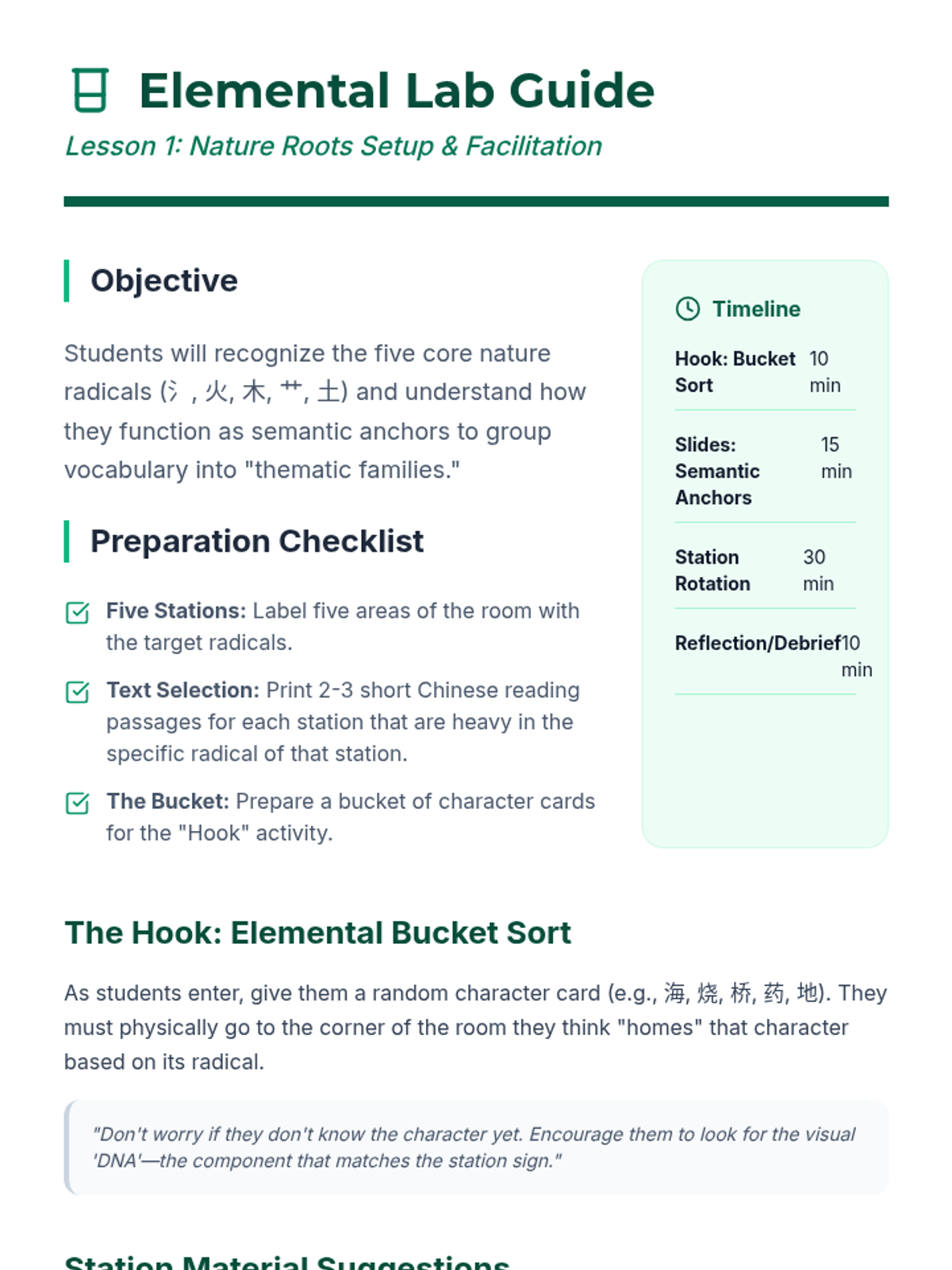
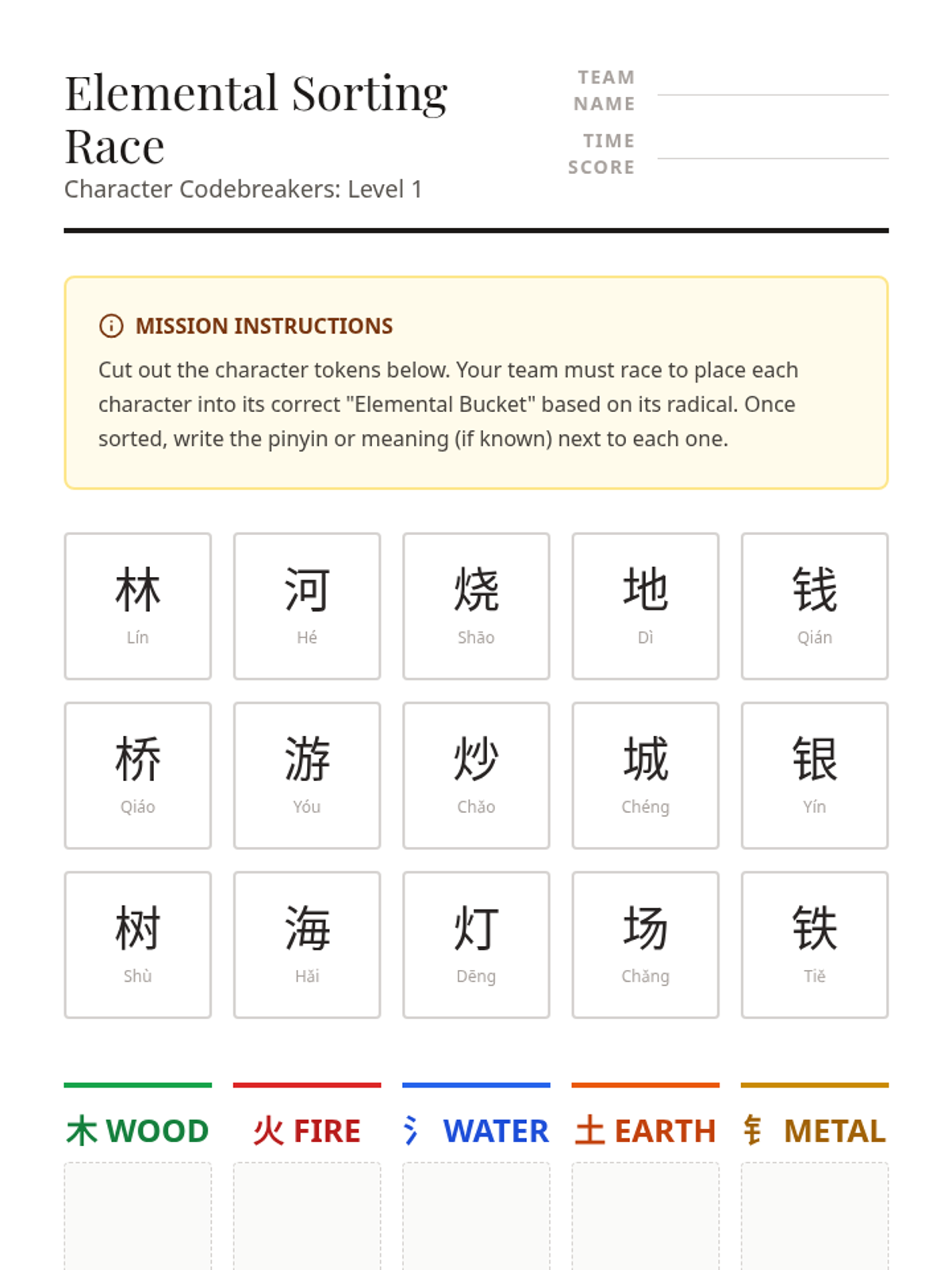
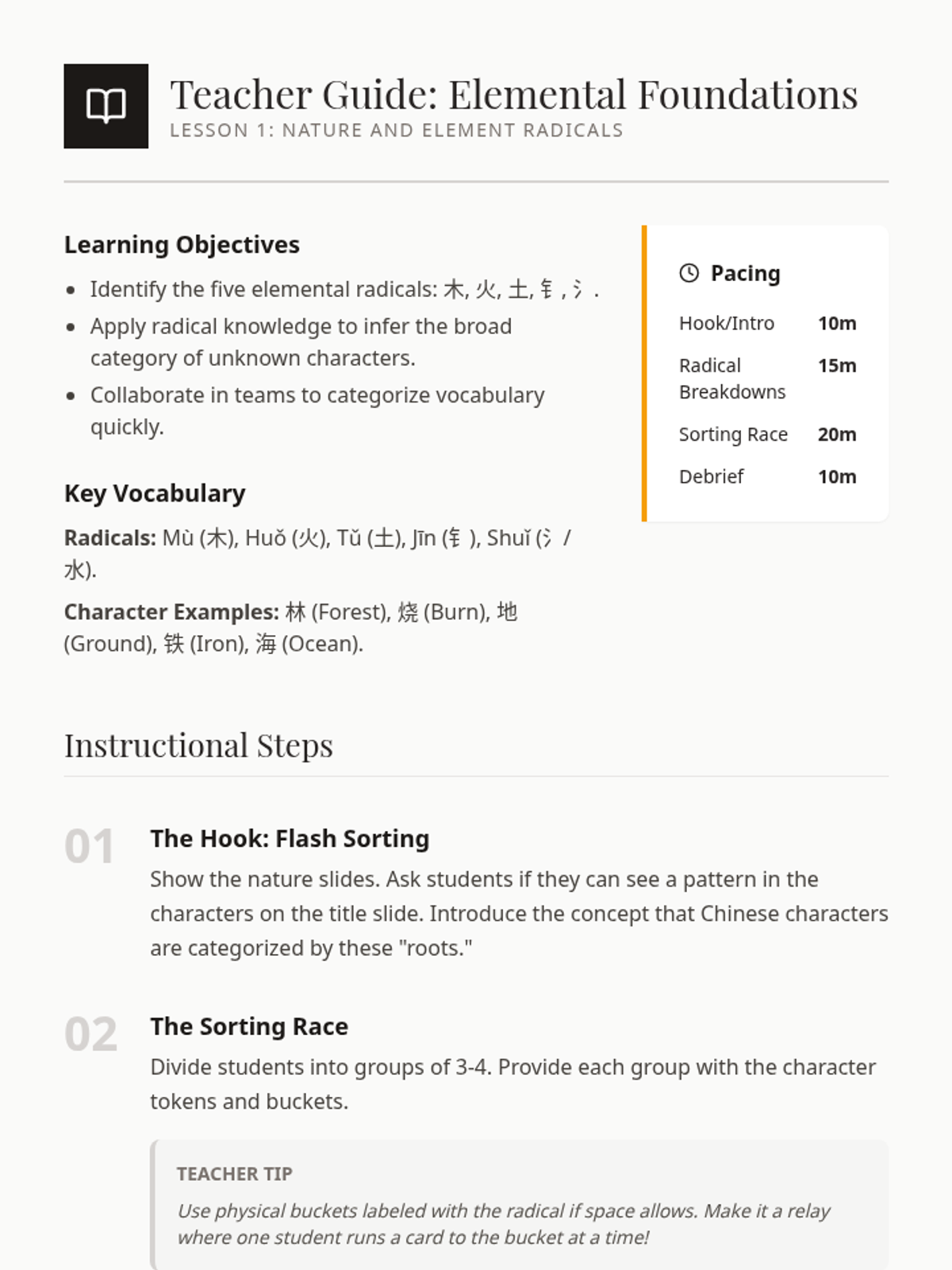
This intermediate Mandarin sequence transforms students into 'Character Codebreakers.' By analyzing the high-frequency radicals that form the building blocks of Chinese characters, students learn to infer meaning in new vocabulary related to nature, emotion, action, and abstract concepts, culminating in a dictionary scavenger hunt.
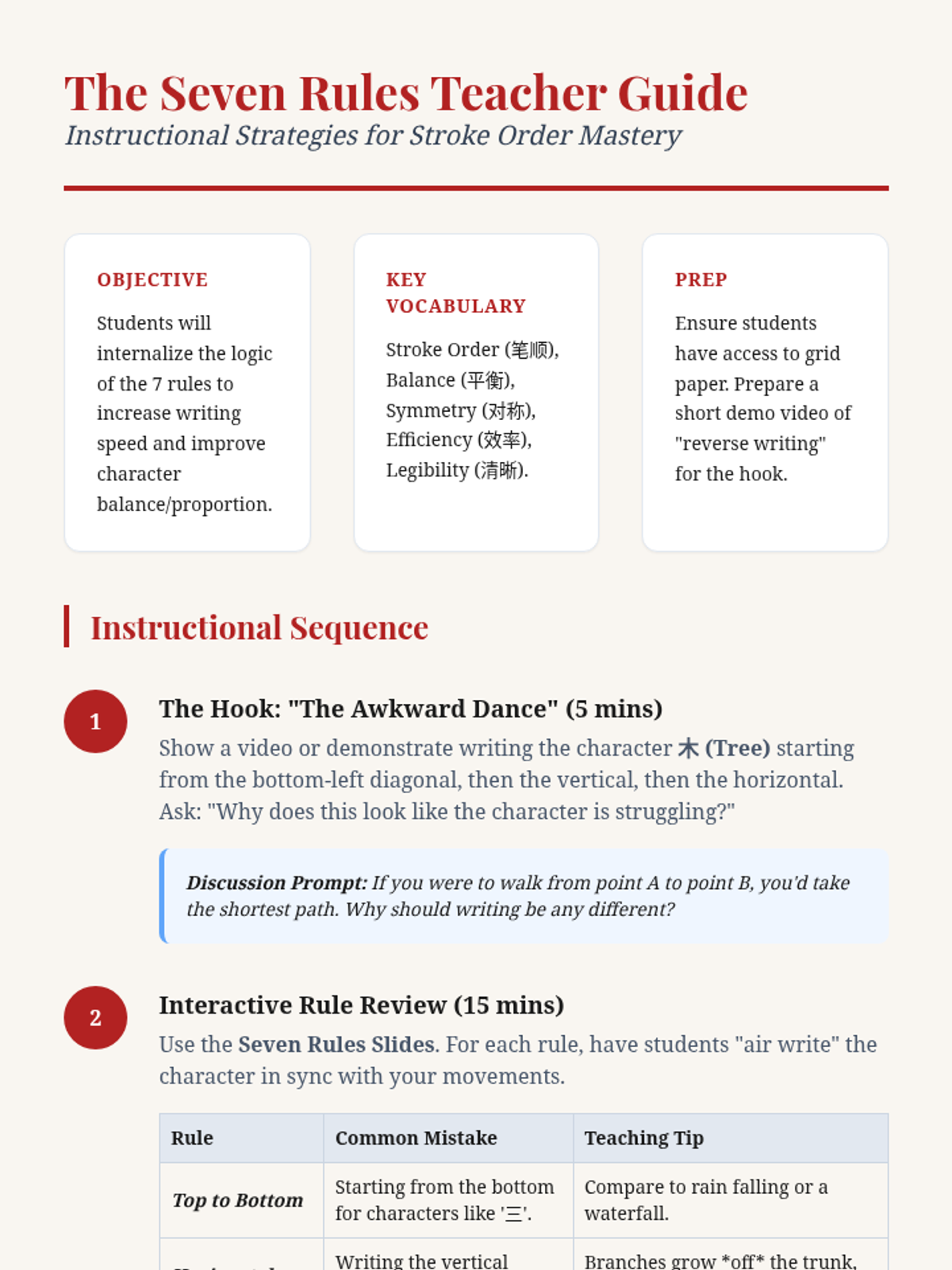
A workshop-style sequence for 6th-grade students focusing on the mechanics, aesthetics, and efficiency of writing intermediate Mandarin characters. Students move from basic stroke memorization to mastering complex stroke order rules, character balance (rang), and fluid writing speed.
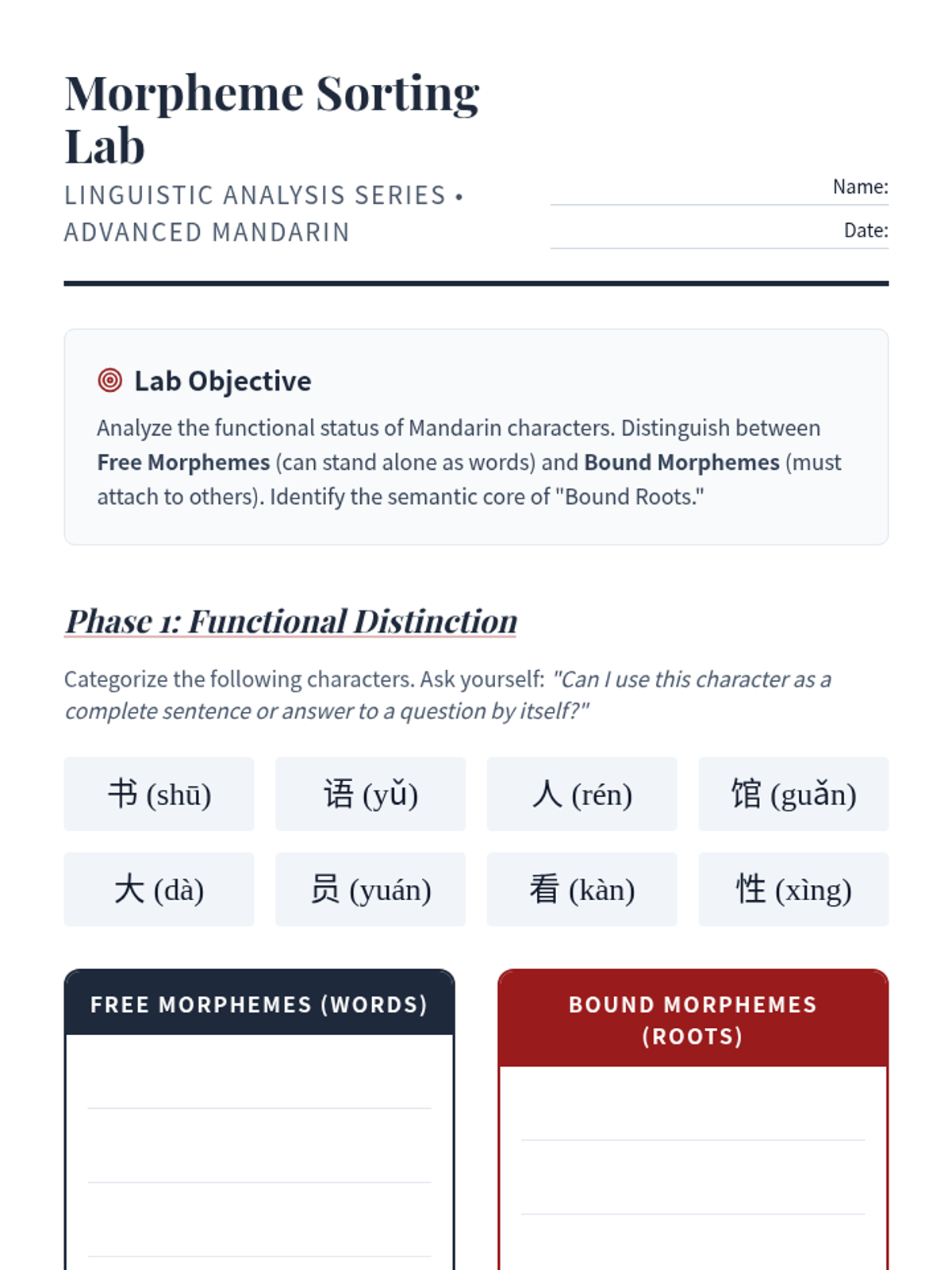
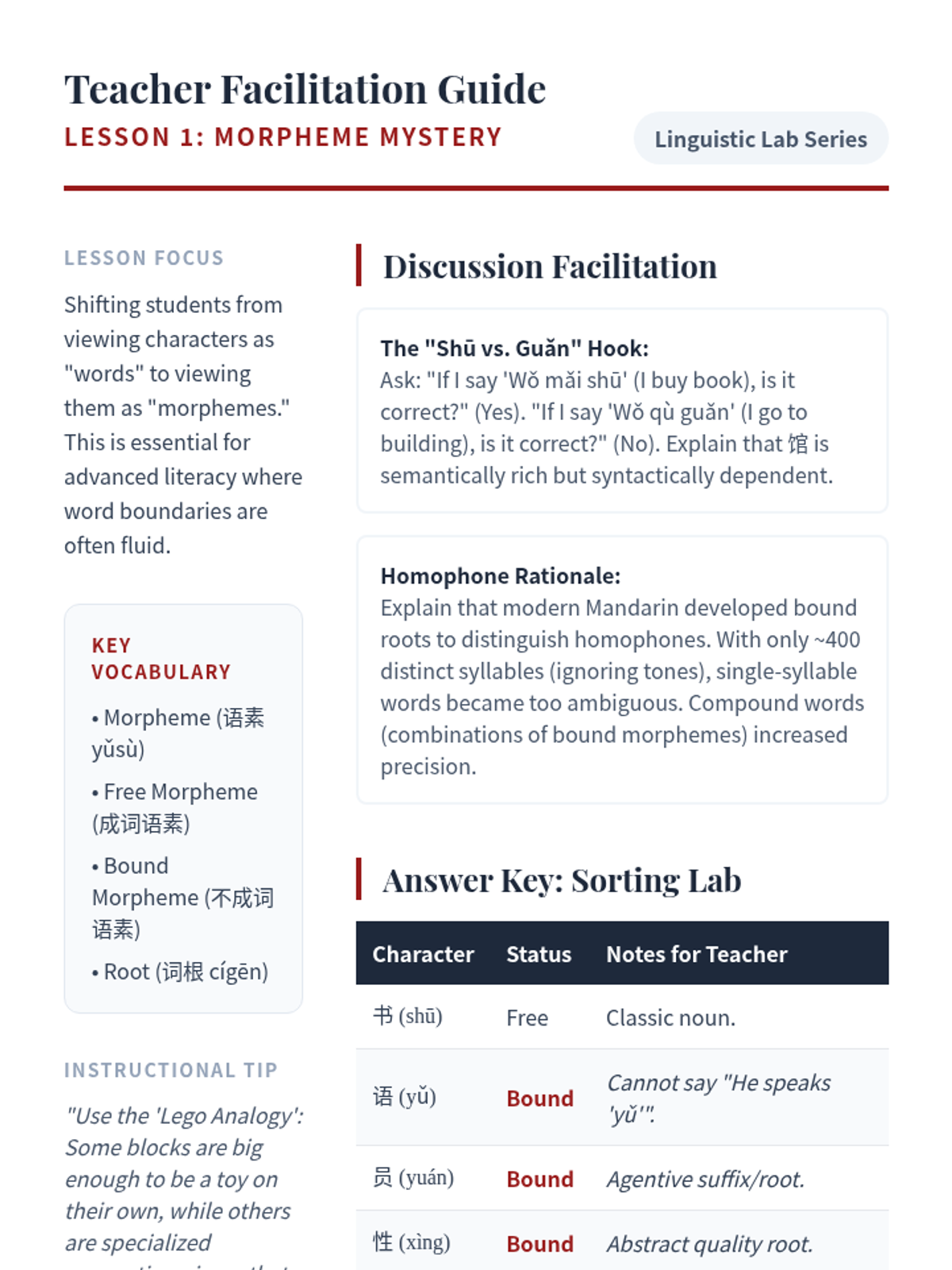
An advanced exploration of Mandarin Chinese morphology, focusing on how characters combine as bound and free morphemes to form complex vocabulary. Students will master word formation logic, quasi-affixes, and abbreviation strategies to decode unfamiliar terms and create neologisms.
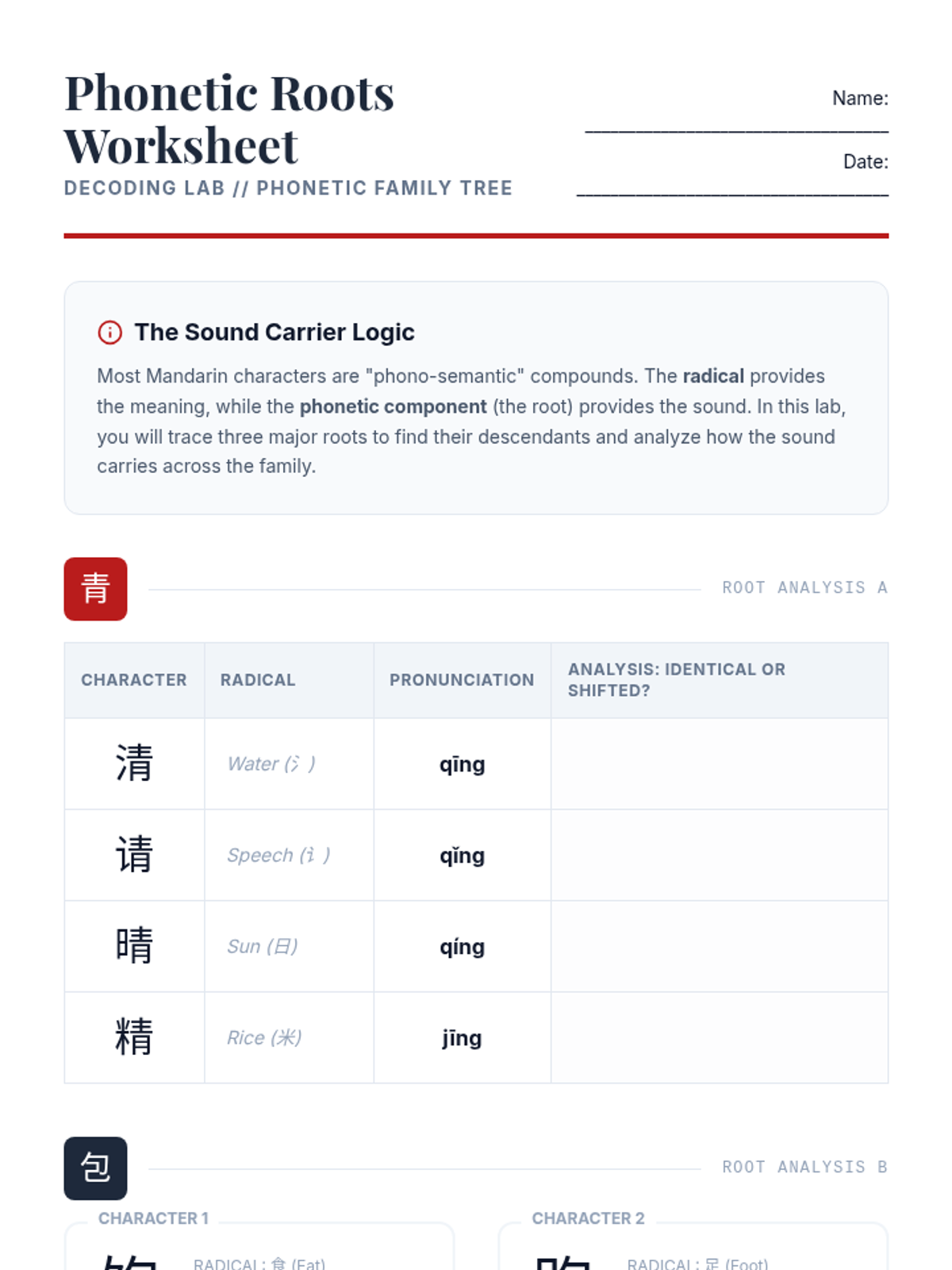
This advanced Mandarin Chinese sequence focuses on identifying phonetic components within compound characters. Students learn to decode pronunciation by recognizing 'sound carriers,' analyzing tone shifts, and navigating exceptions to improve reading fluency and predictive accuracy.
A high school Mandarin Chinese sequence focused on leveraging phonetic-semantic compounds (形声字) to accelerate vocabulary acquisition. Students learn to decode character anatomy, identify 'sound families', and predict pronunciation and tones with high accuracy.
A comprehensive unit for advanced Mandarin students focused on the structural logic of Chinese characters, emphasizing radical analysis, semantic categorization, and lookup strategies for independent reading.
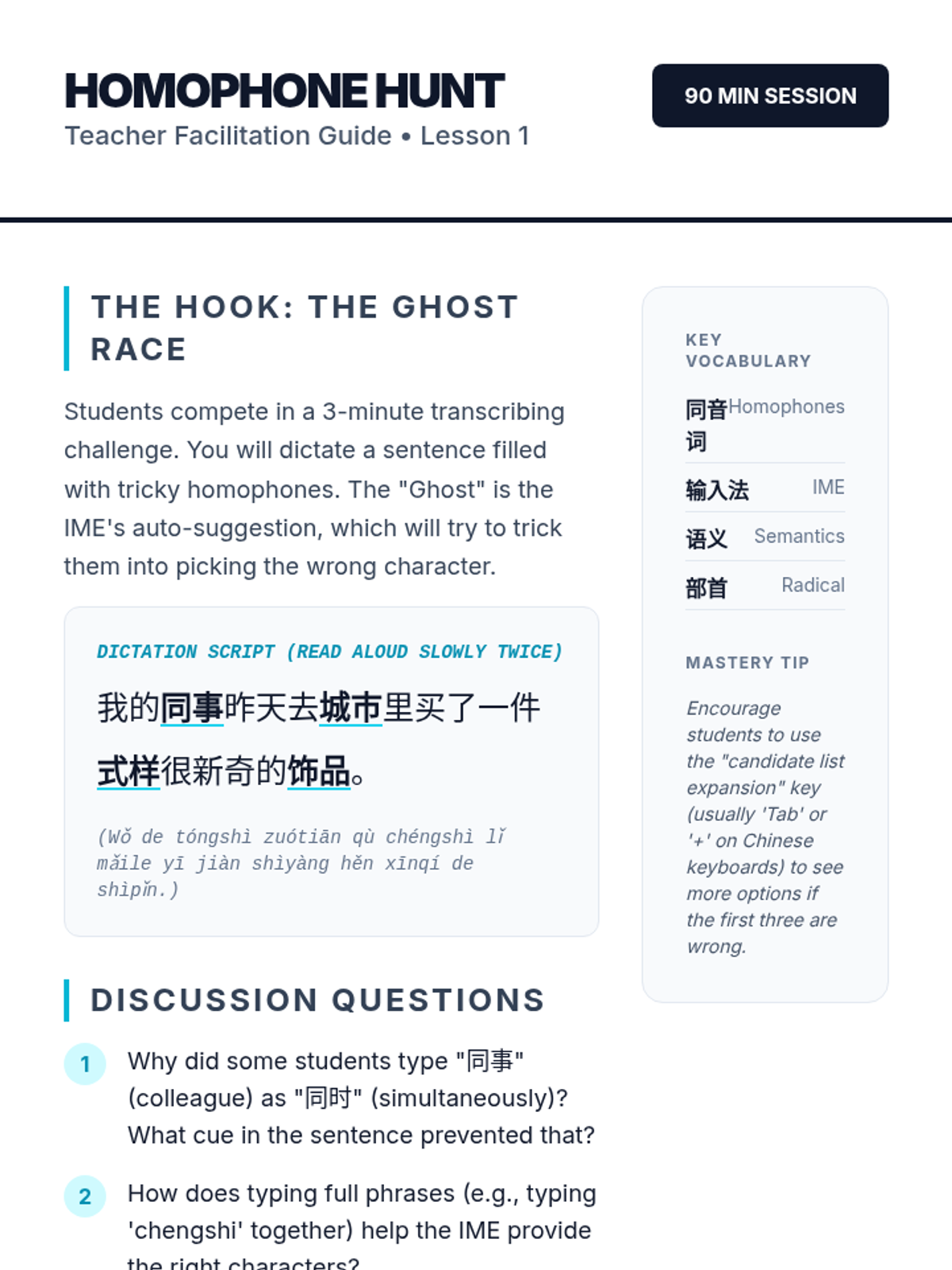
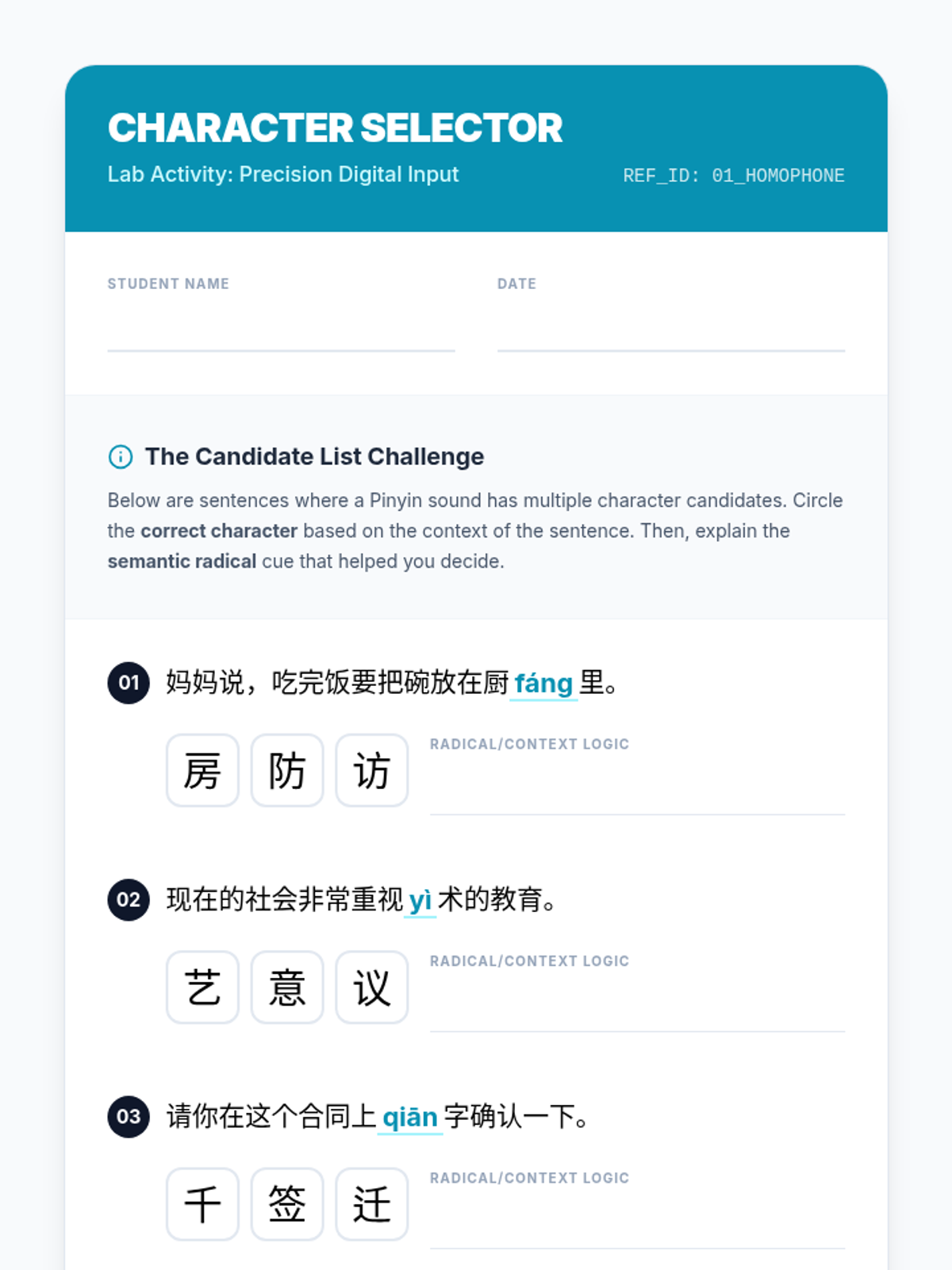
This advanced Mandarin sequence focuses on the nuances of character selection in digital environments. Students master homophone differentiation, navigate complex app interfaces, and analyze modern internet slang to communicate with precision and cultural fluency in a digital-first world.
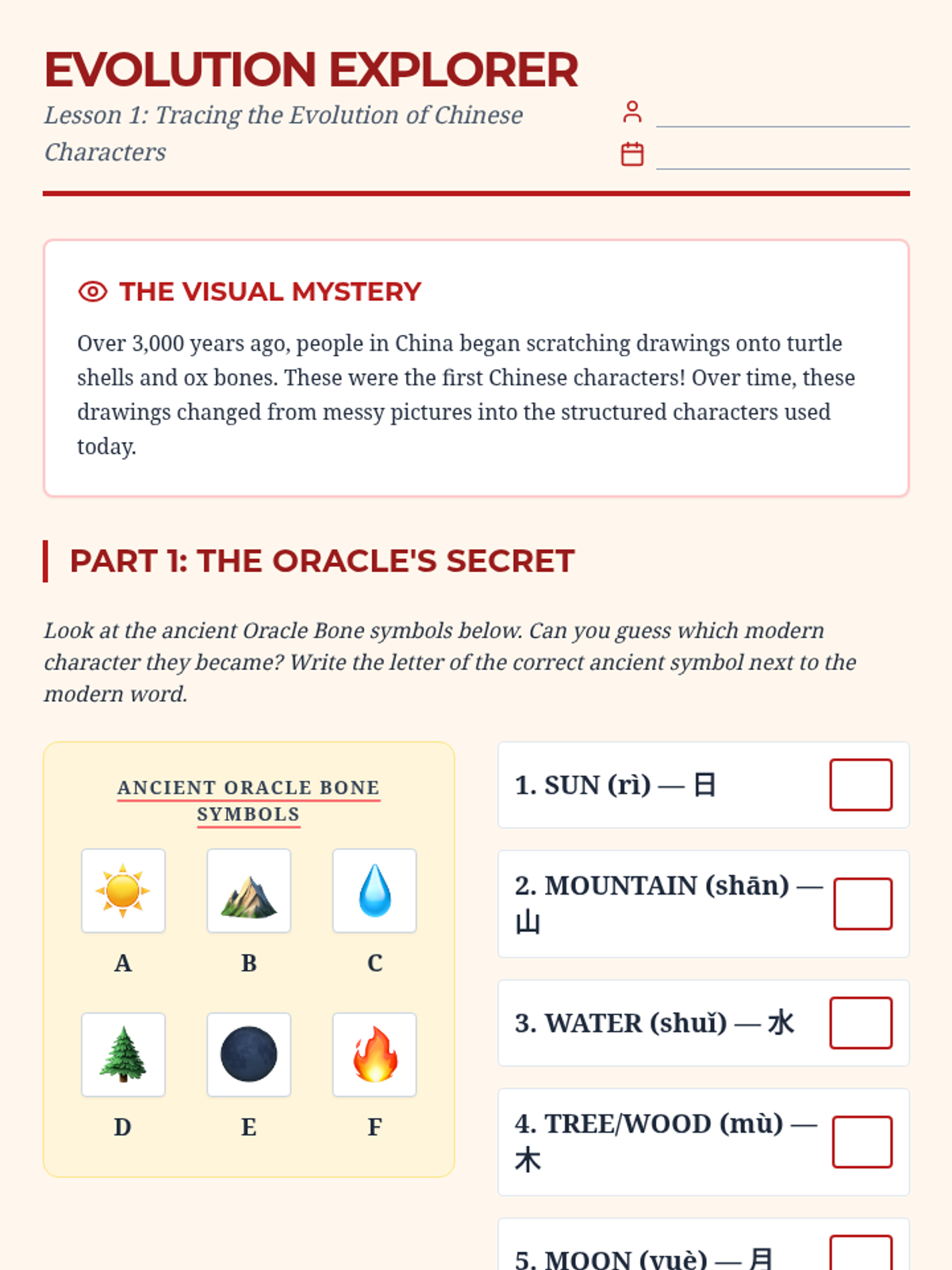
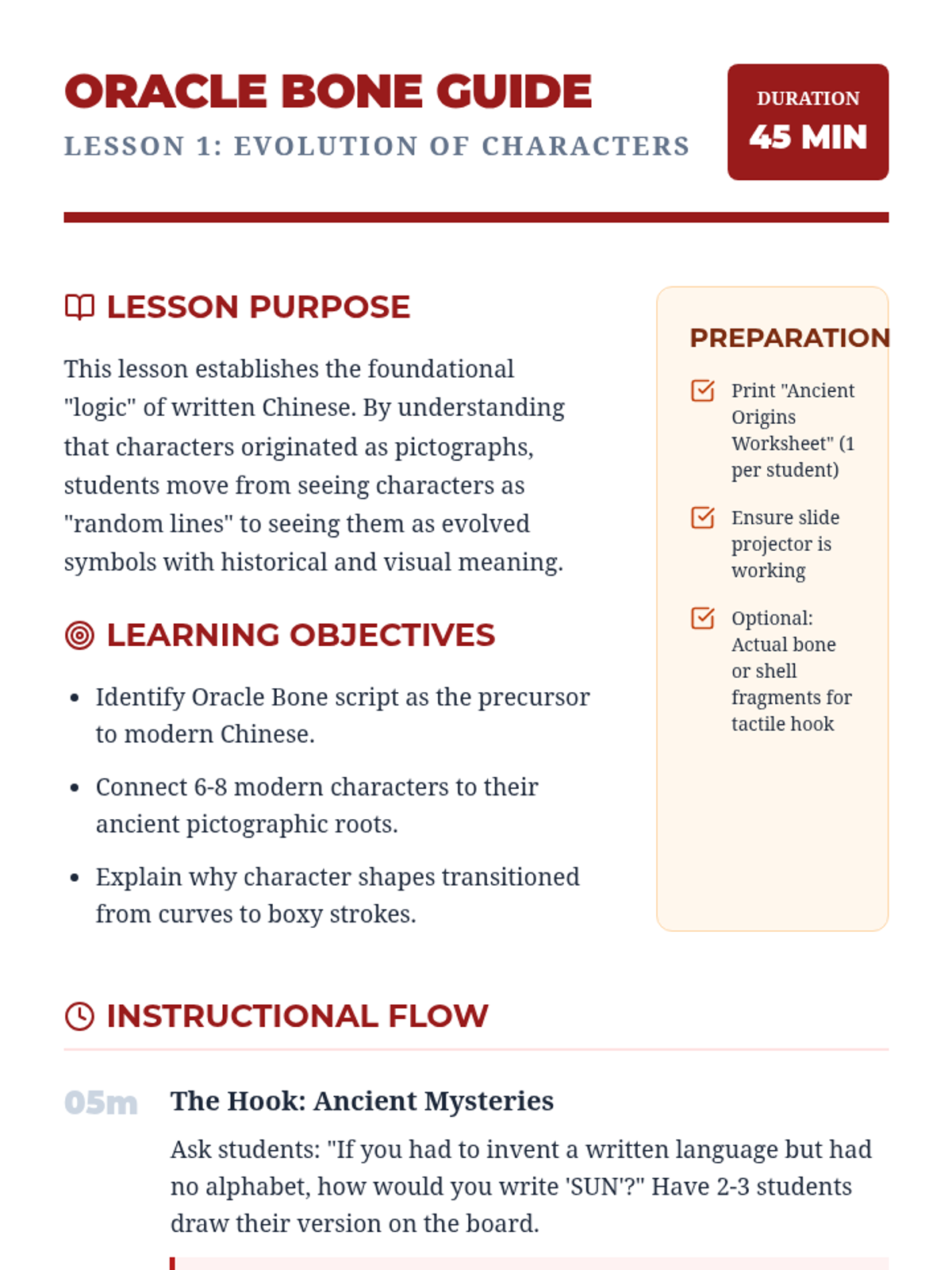
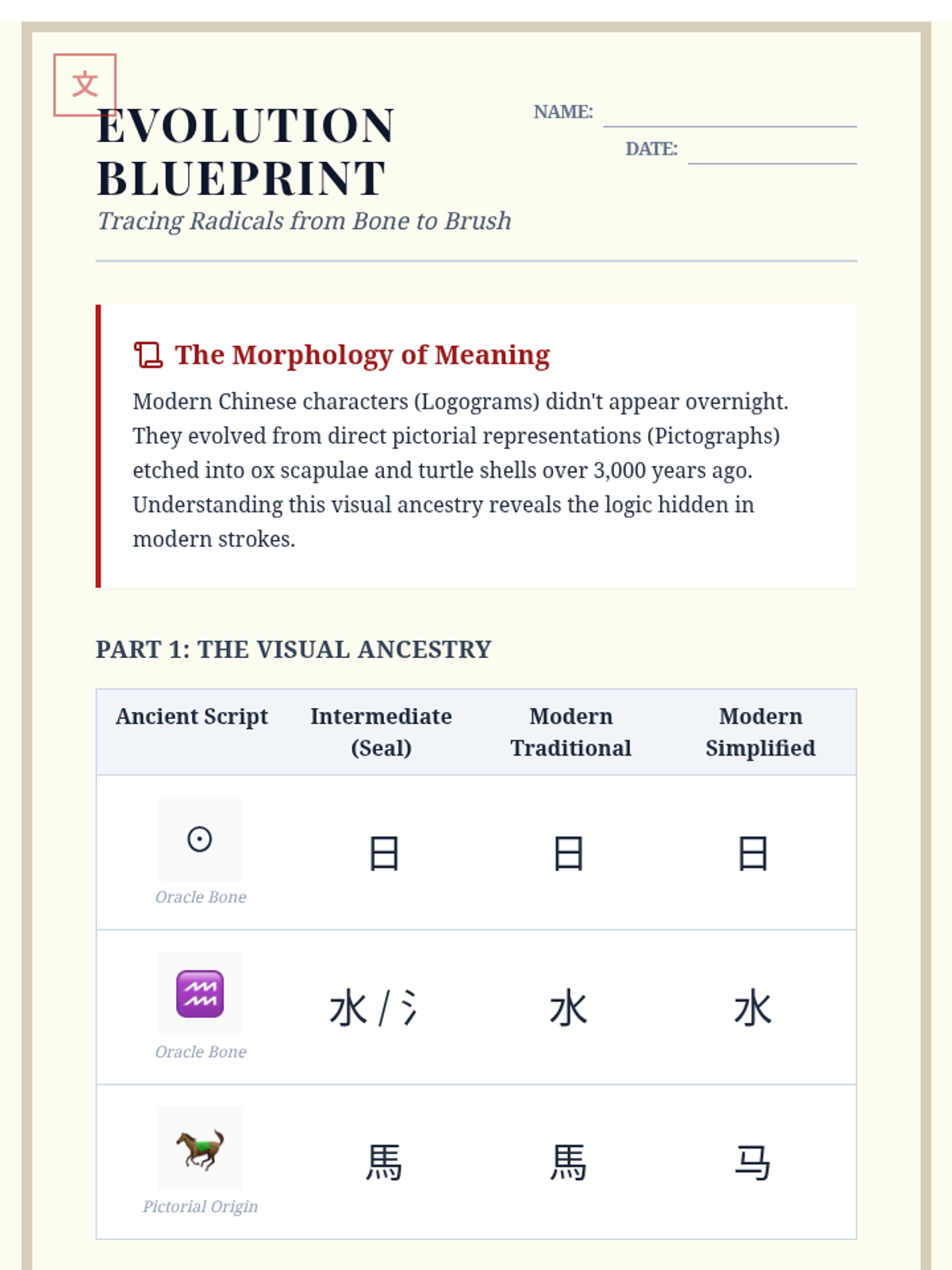
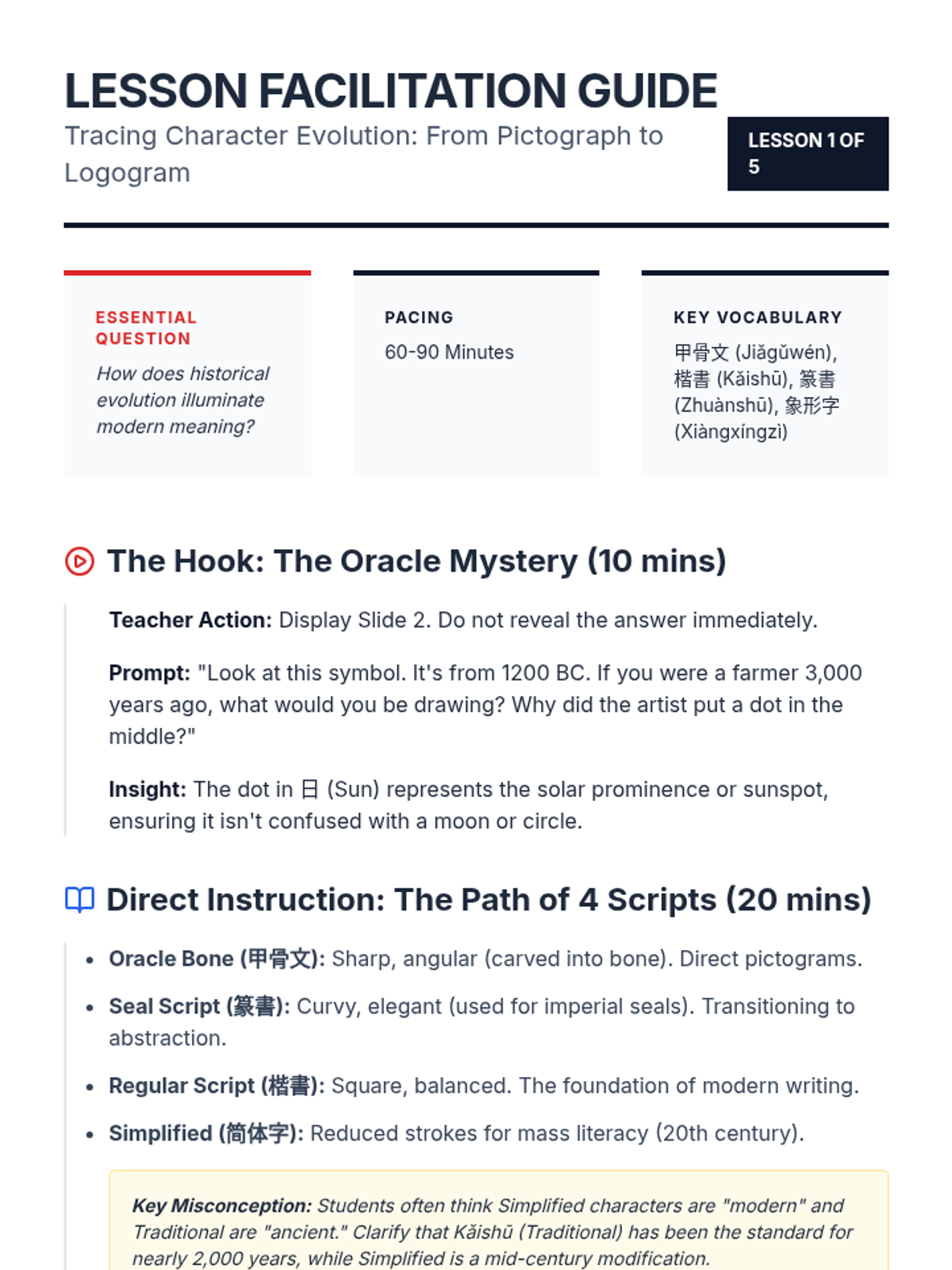
This sequence immerses students in the historical evolution of Chinese characters to deepen their understanding of character composition. Students trace morphological changes from Oracle Bone script to modern forms and master the logic of Logical Aggregates (huìyì) to move beyond rote memorization to analytical deduction.
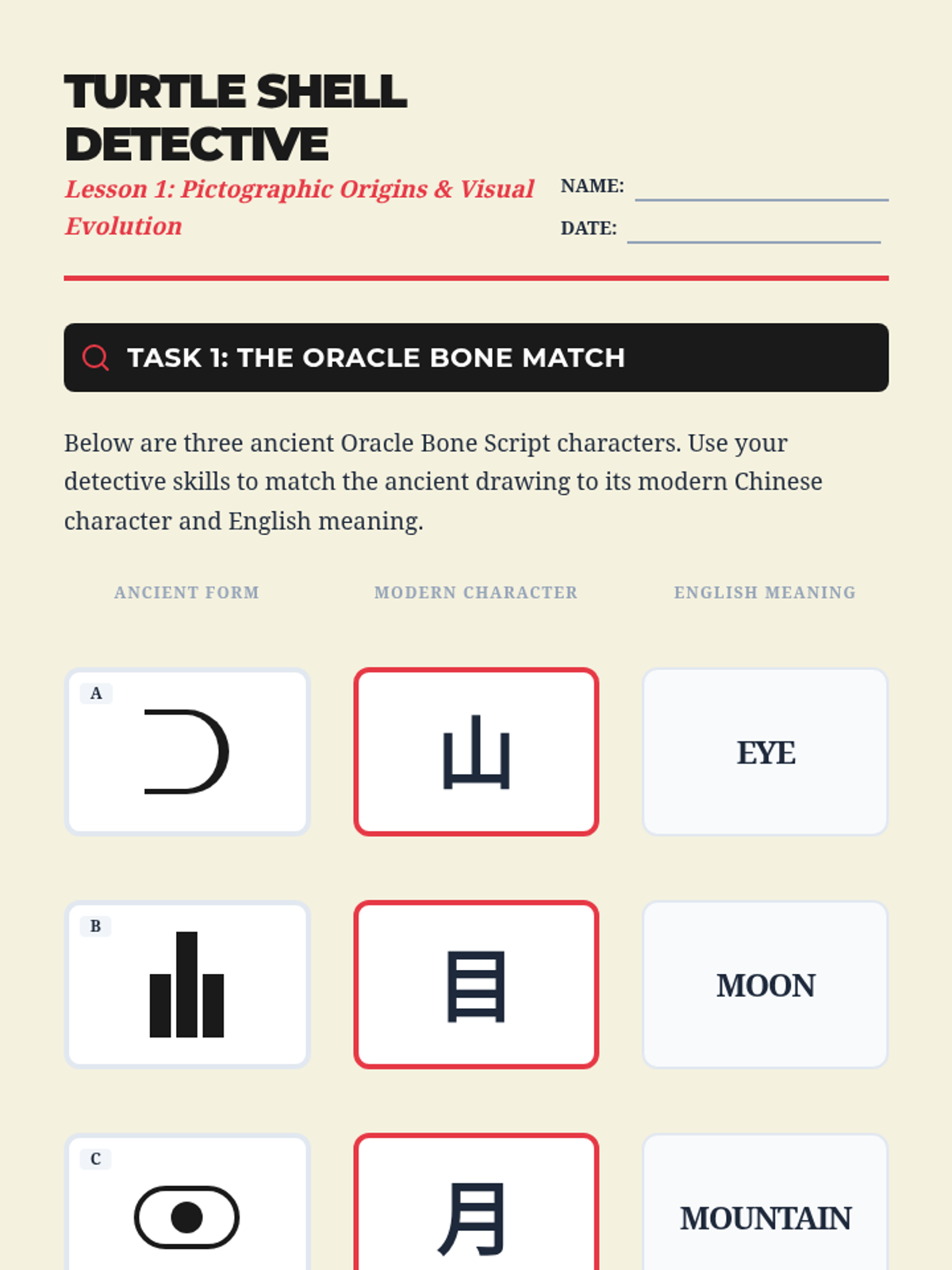
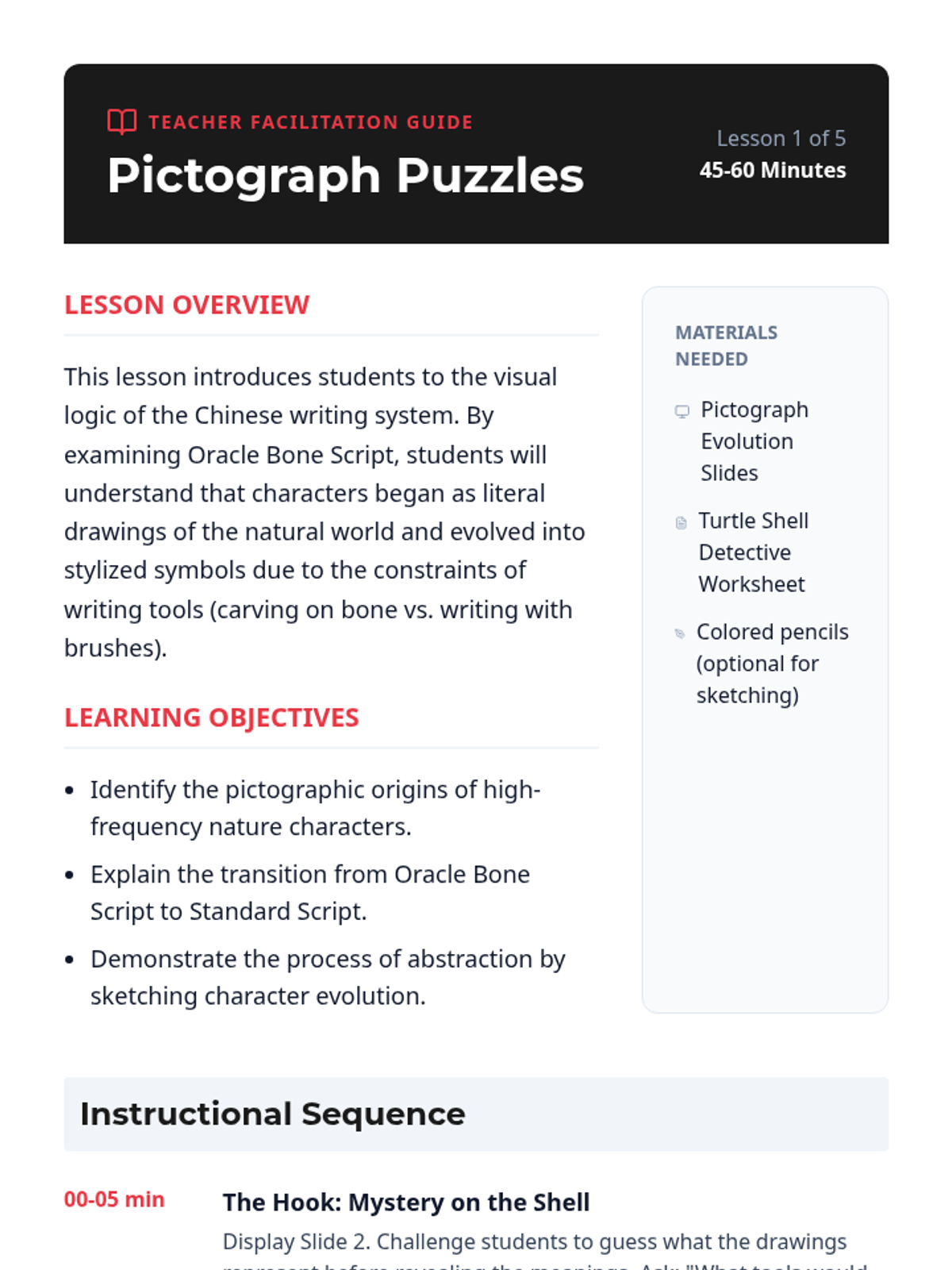
Students explore the pictographic evolution of Mandarin Chinese characters, tracing modern symbols back to ancient Oracle Bone script. The sequence focuses on nature and animal characters, helping students build visual associations and mnemonics to master basic Hanzi.
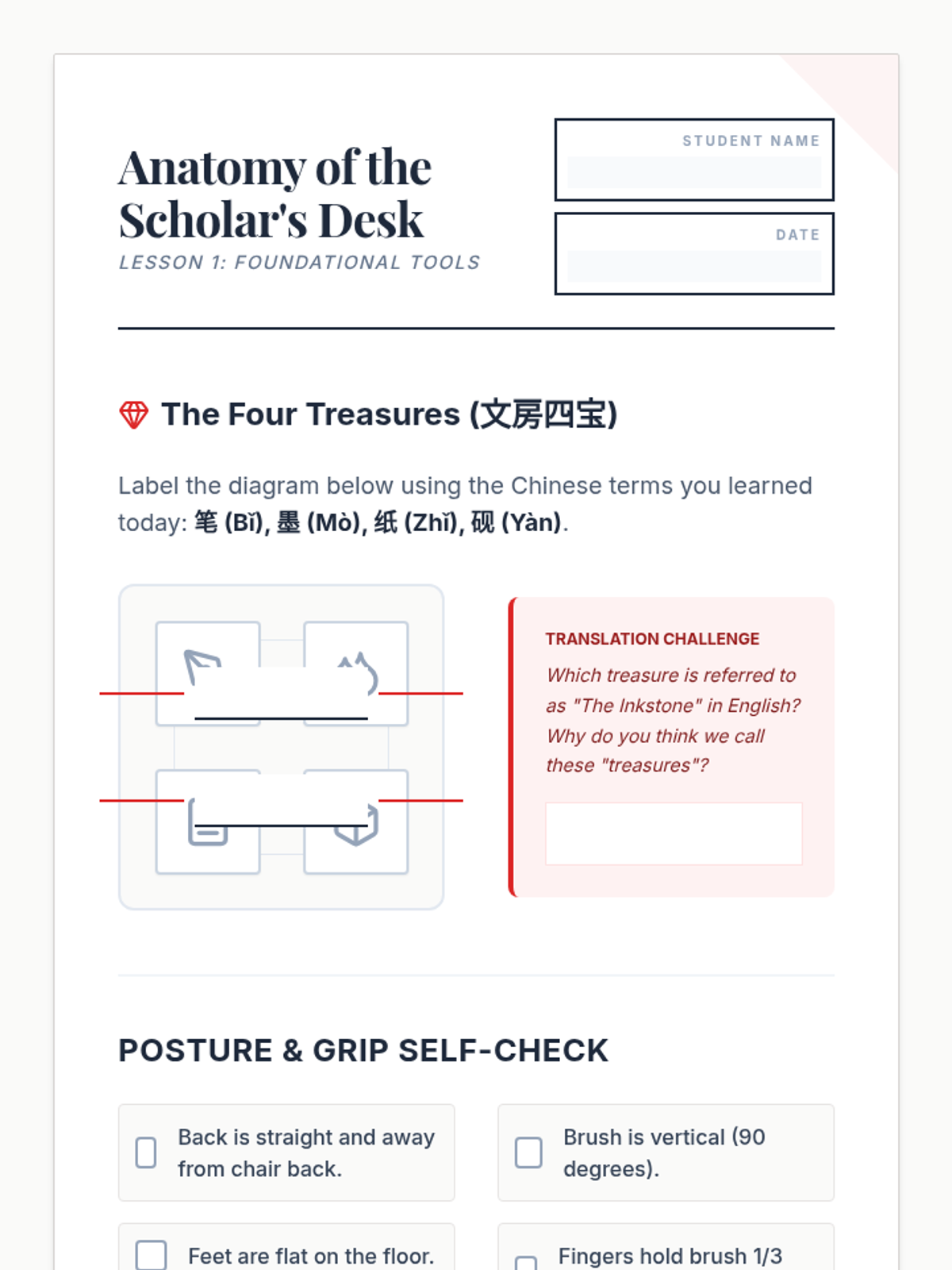
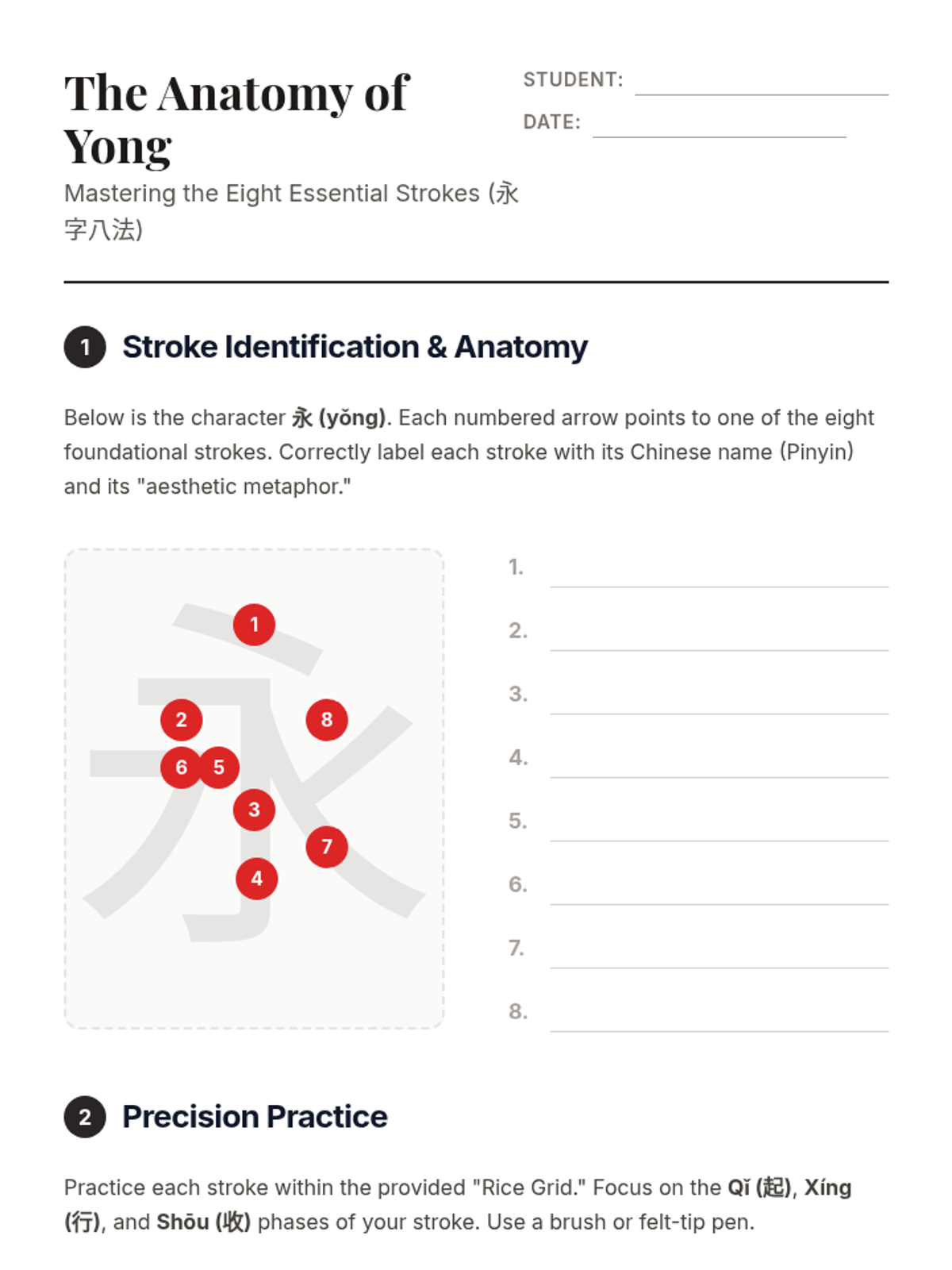
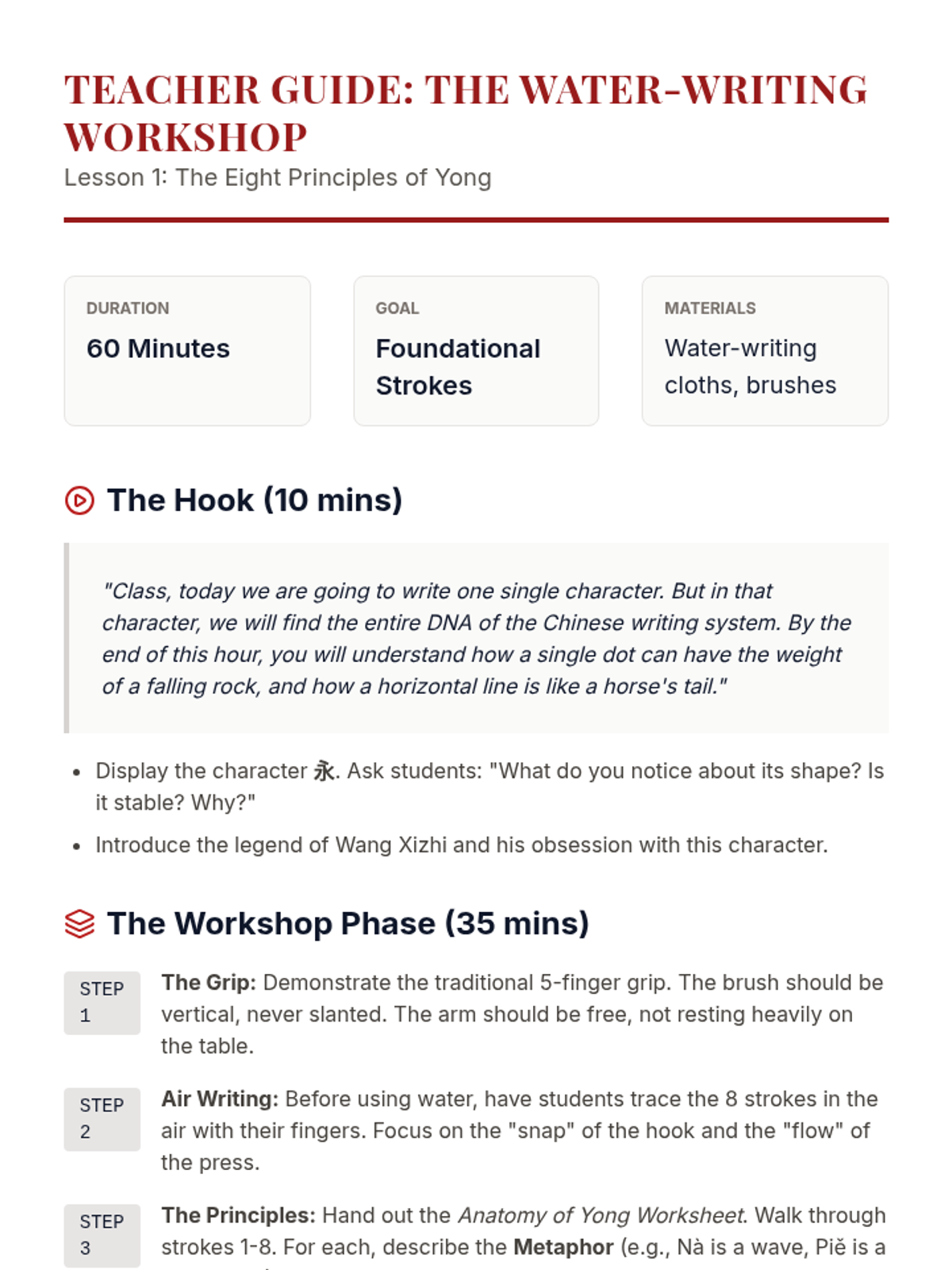
This sequence introduces 6th-grade students to the foundational strokes and rules of Mandarin Chinese character writing. Through a blend of cultural exploration and rigorous skill-building, students learn the 'Four Treasures of the Study,' master the eight basic strokes, and internalize the seven governing rules of stroke order to produce legible and balanced characters.
This sequence explores the etymological evolution of Mandarin Chinese characters from ancient Oracle Bone Script to modern digital input. Students analyze pictographs, ideographs, and phono-semantic compounds to understand the logic of the written language and apply this knowledge to real-world environmental print.
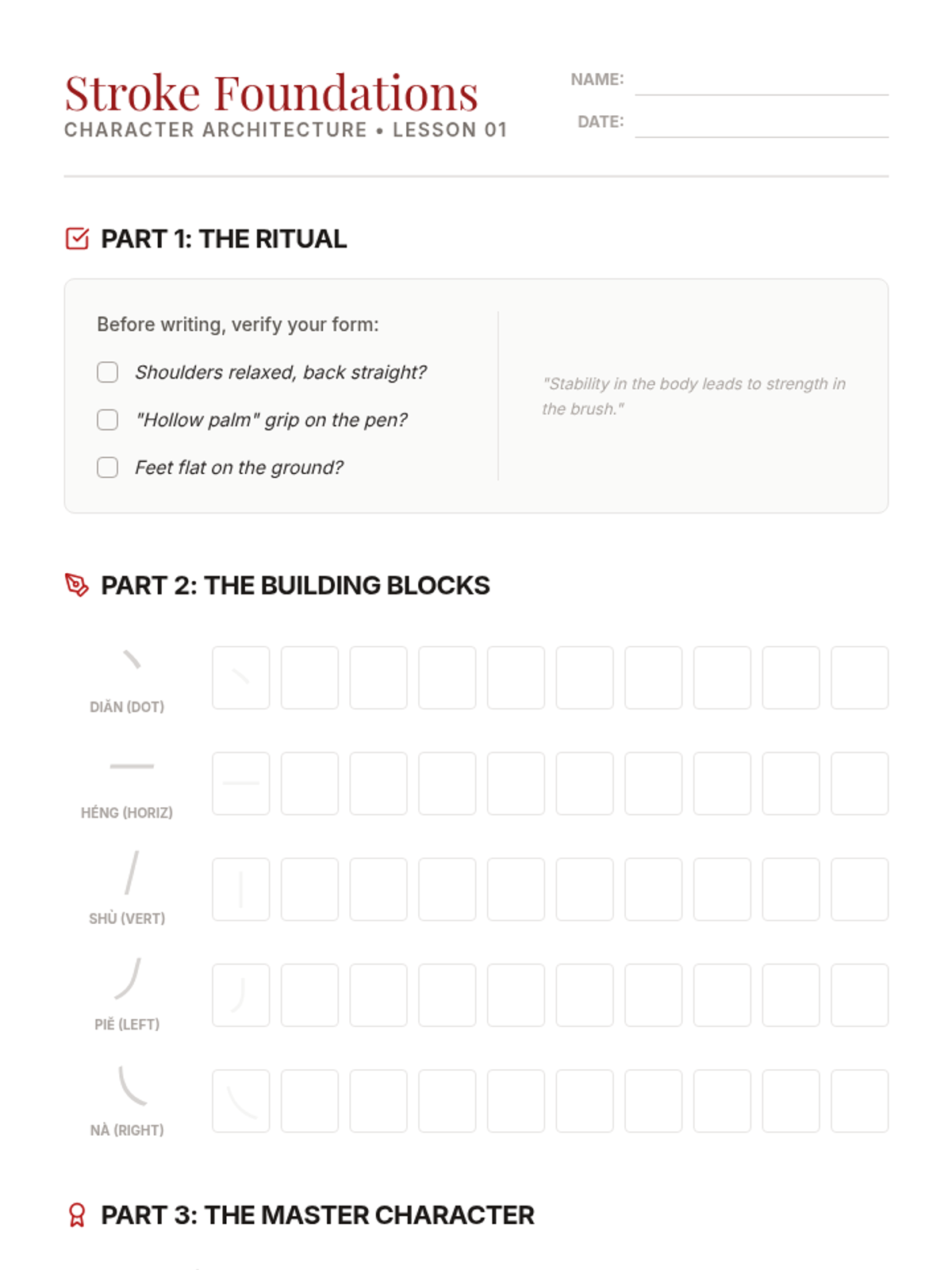
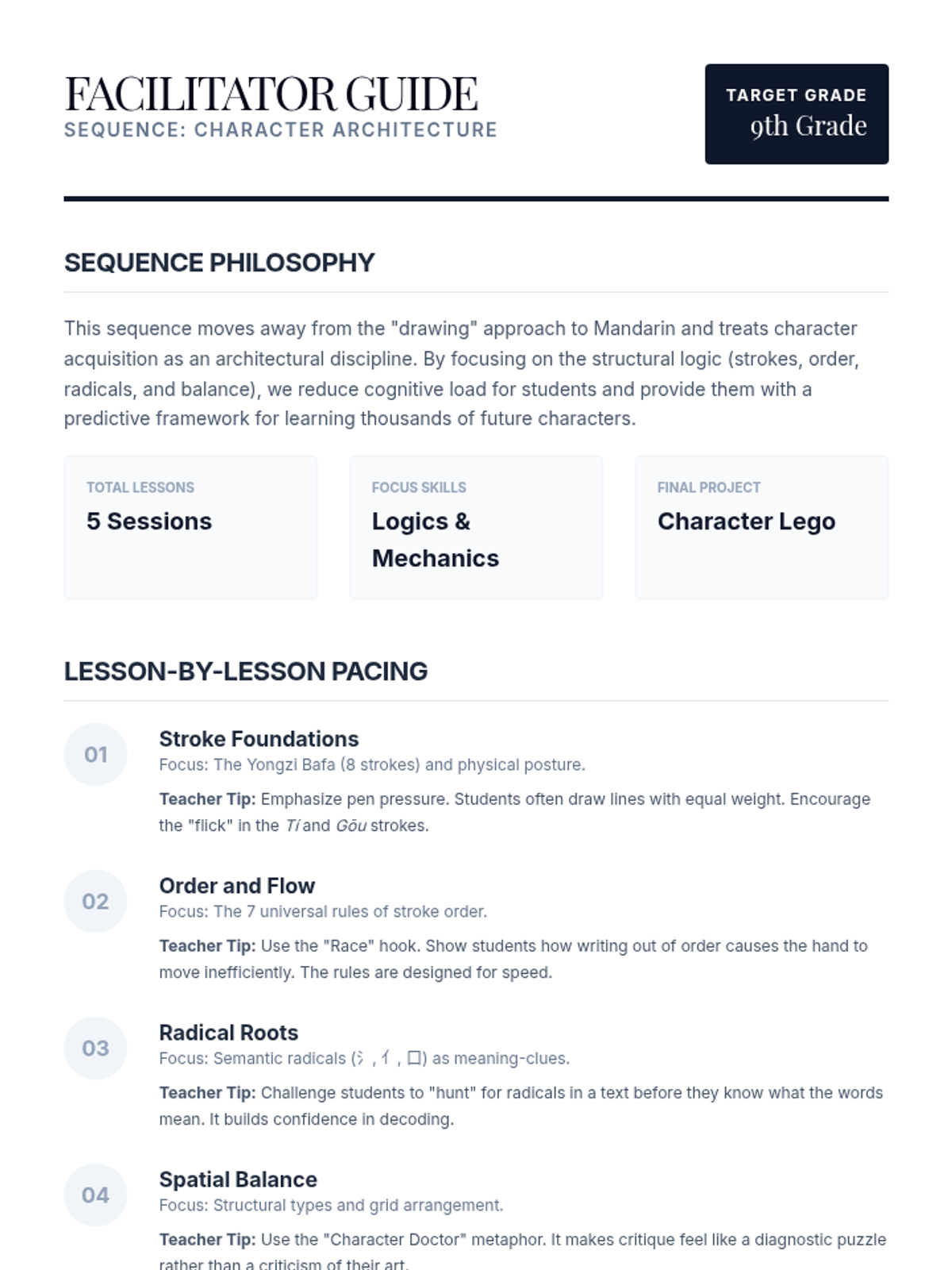
A comprehensive introduction to the structural logic of Chinese characters, covering fundamental strokes, stroke order rules, semantic radicals, and spatial balance for 9th-grade beginners.
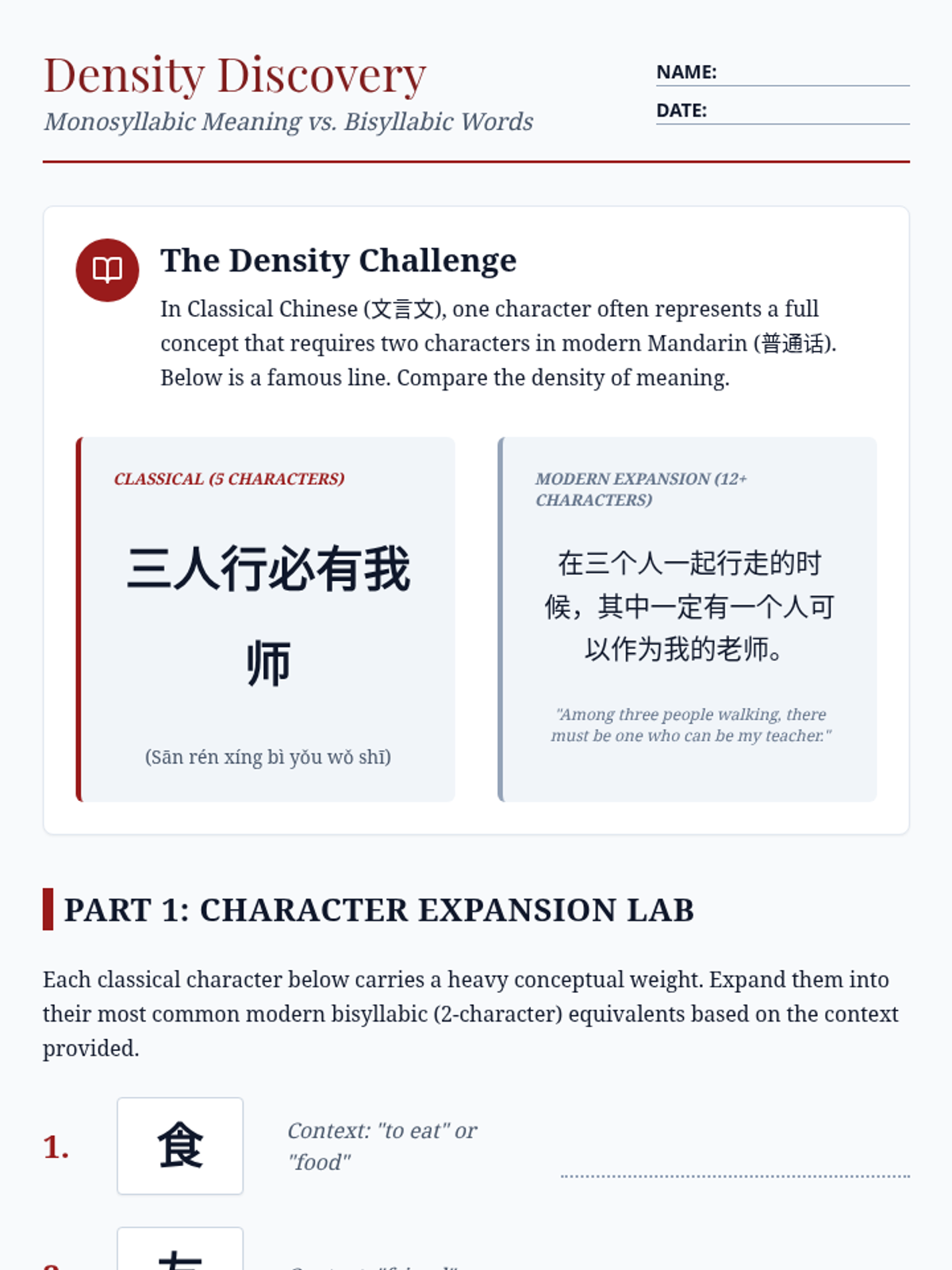
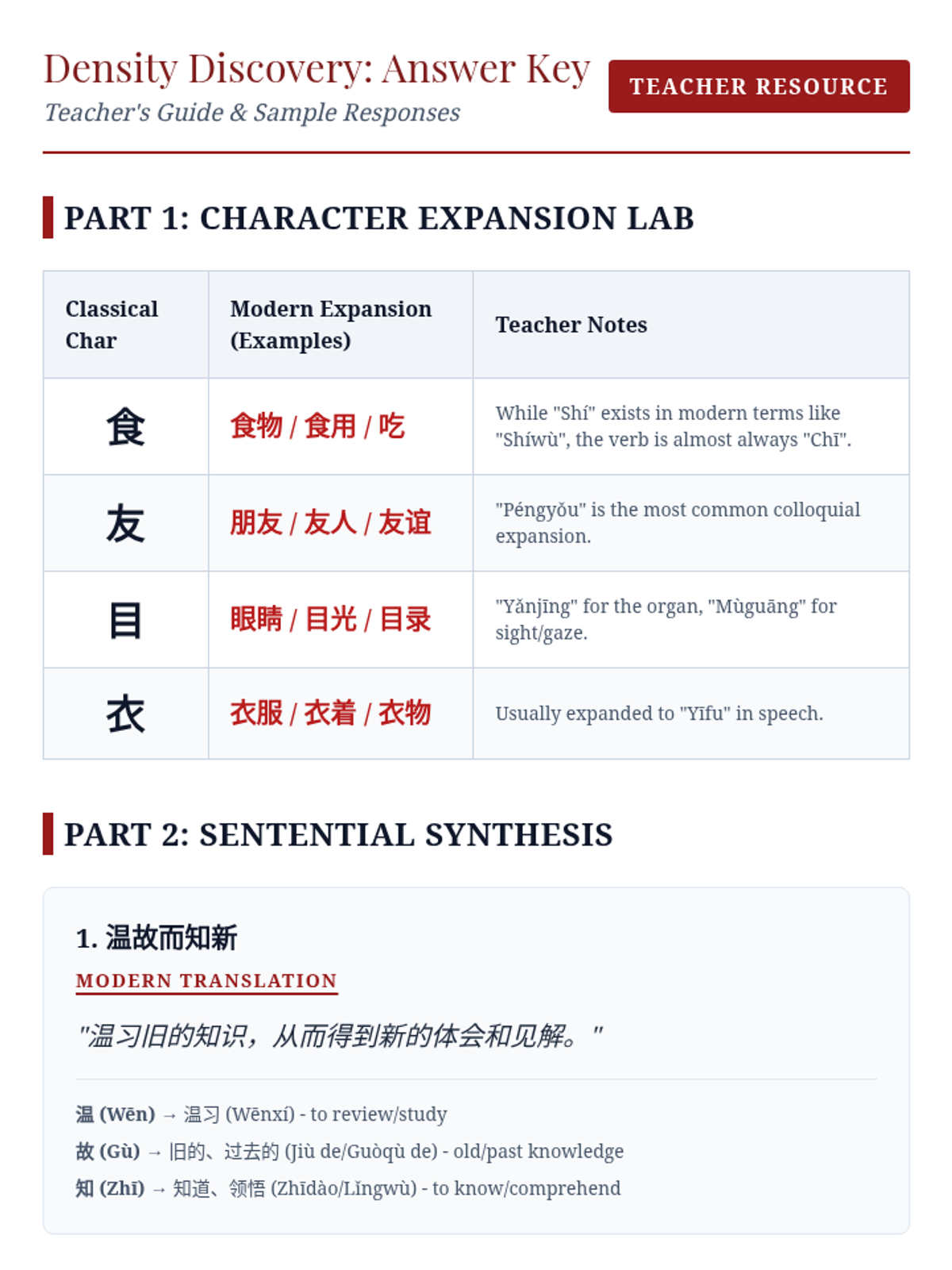
A deep dive into the transition from Classical Chinese (Wenyanwen) to modern Mandarin, exploring character density, classical particles, philosophical aphorisms, and poetic imagery to enhance advanced language proficiency.
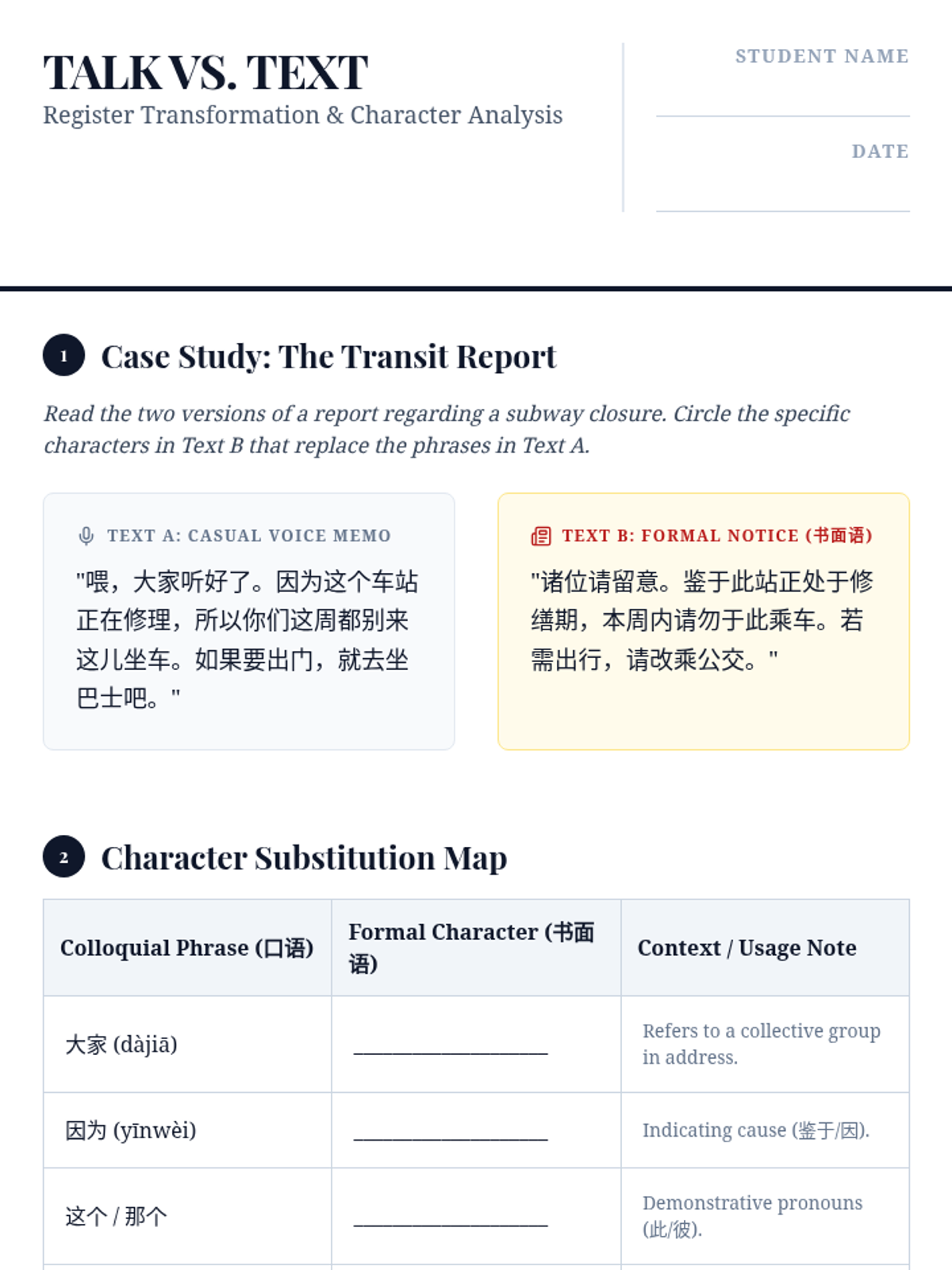
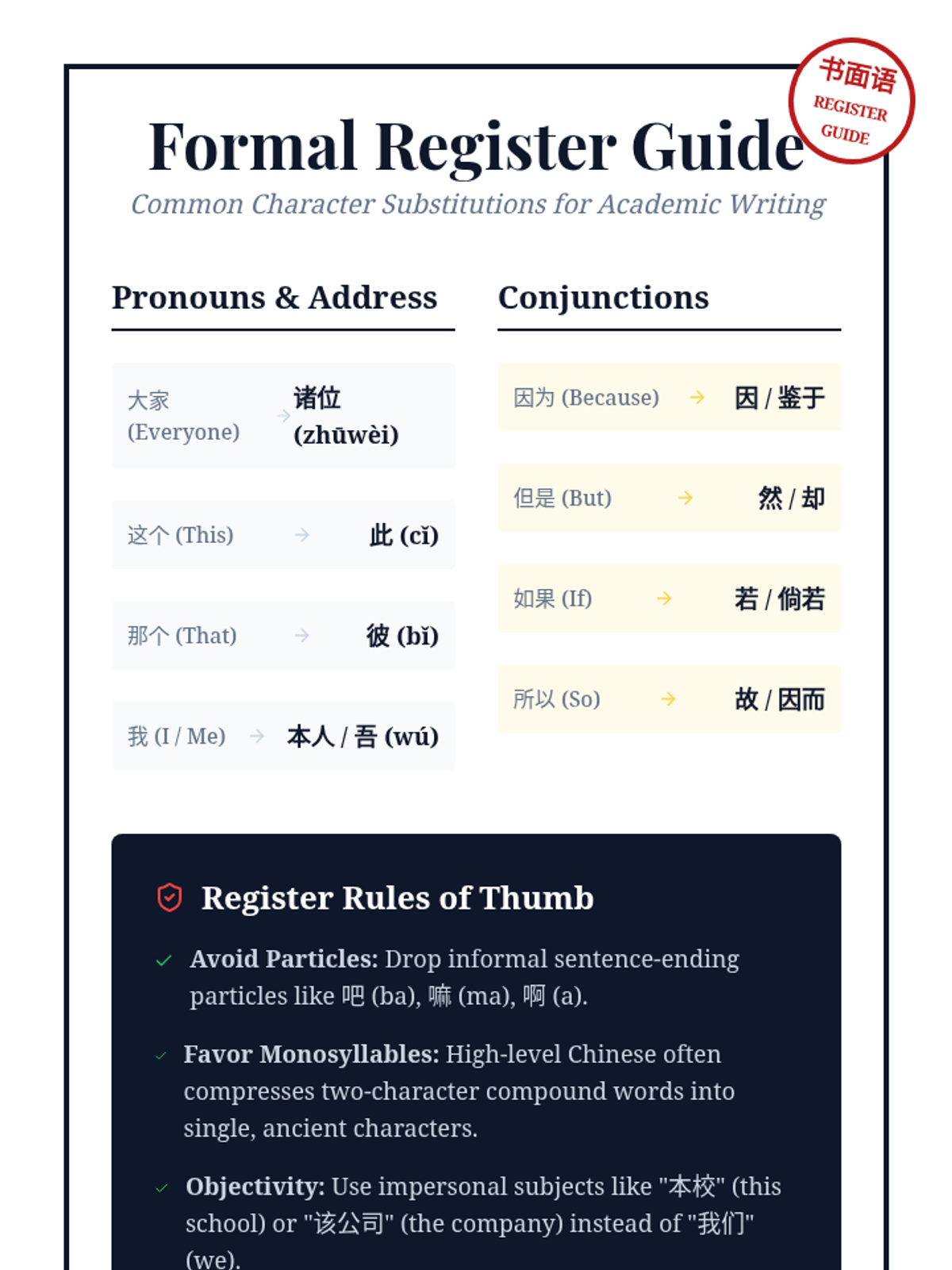
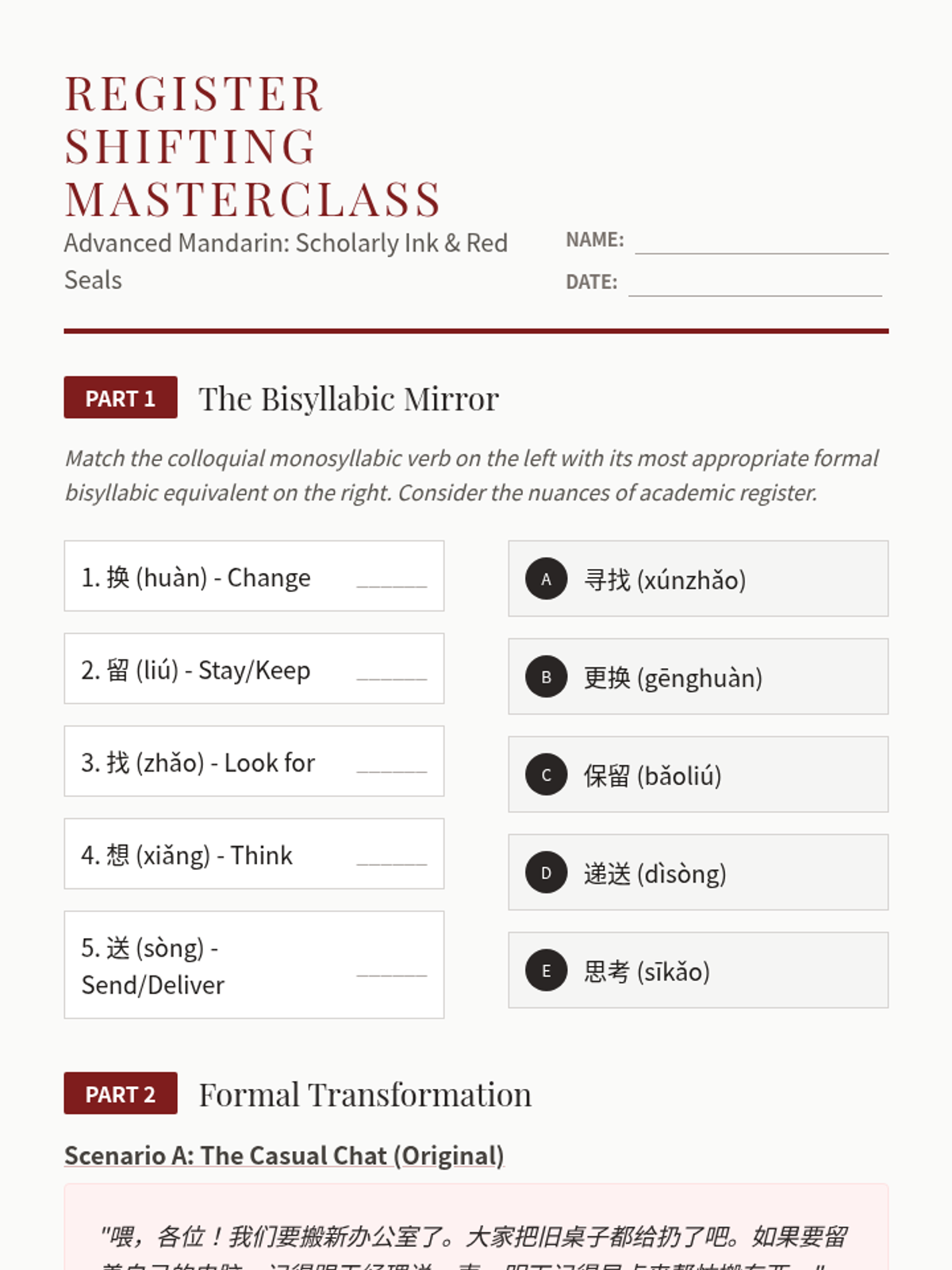
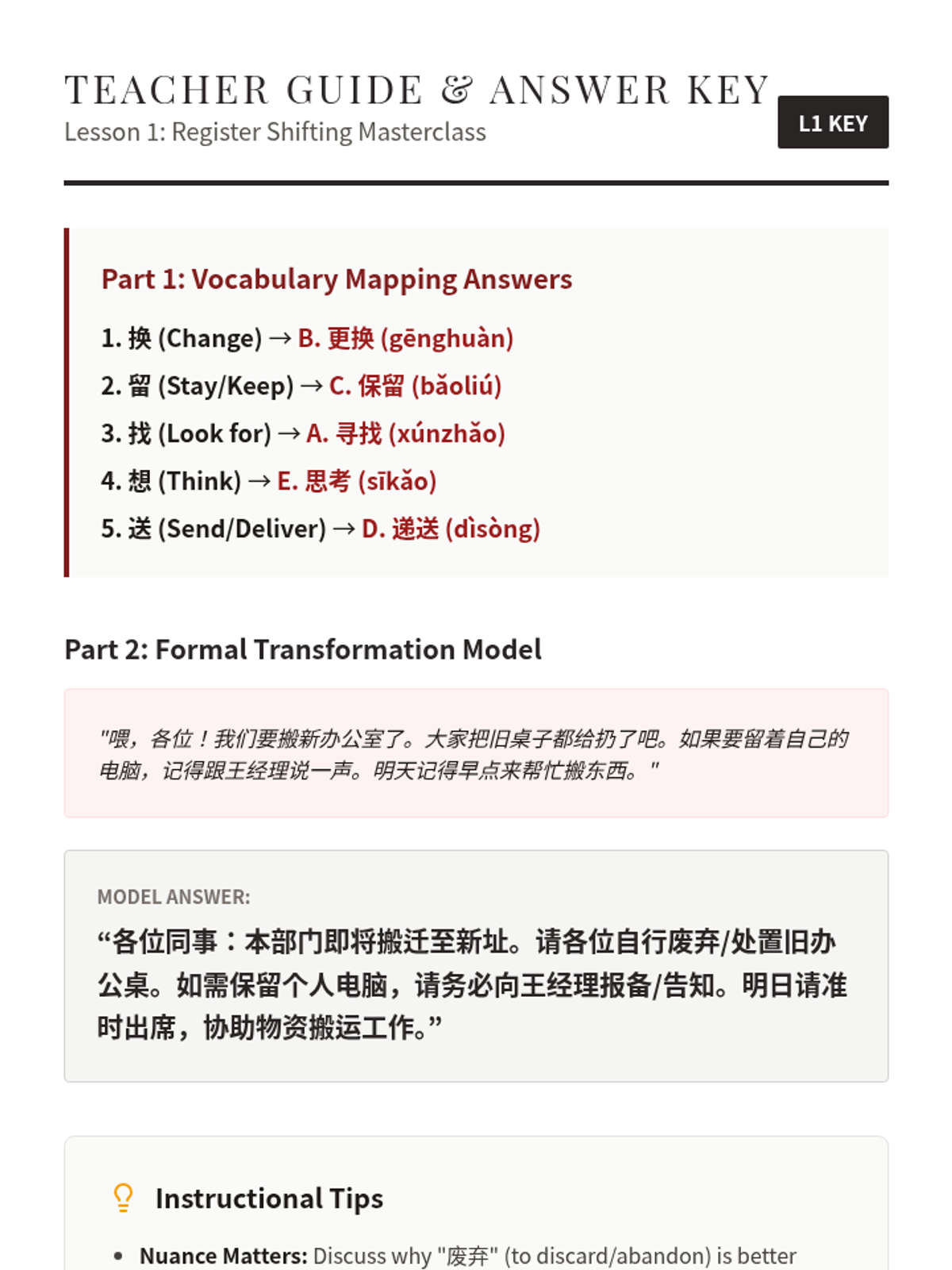
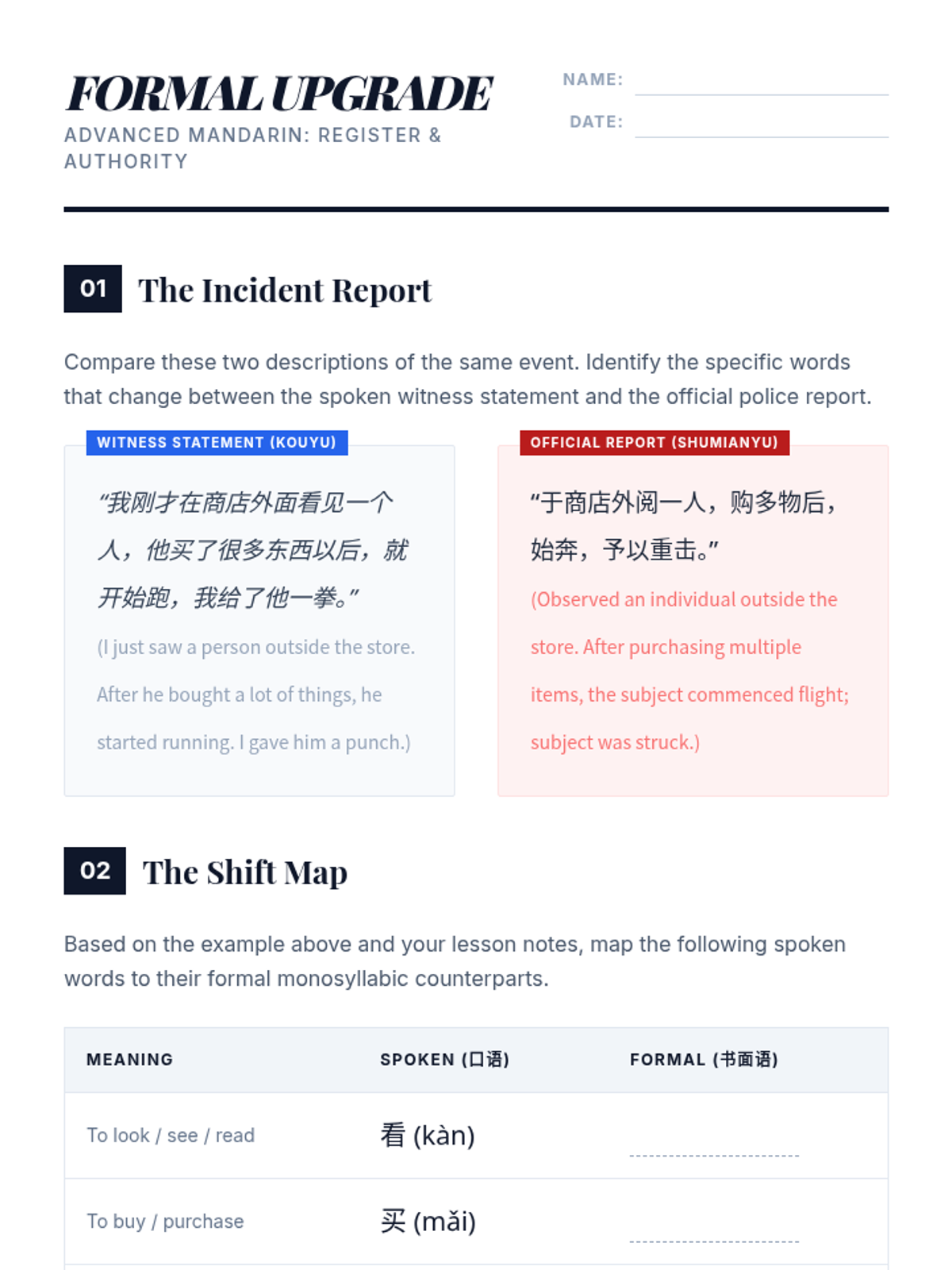
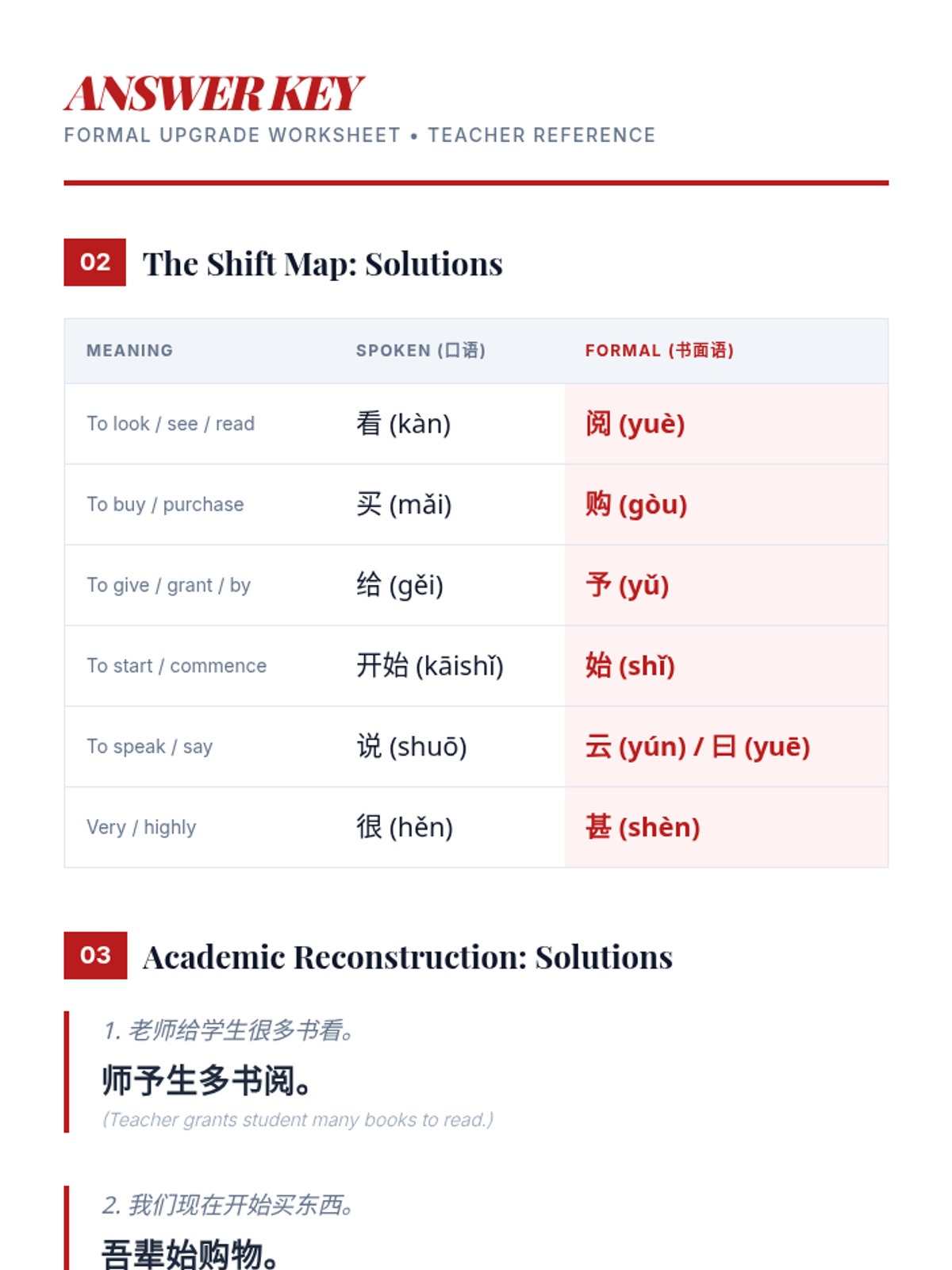
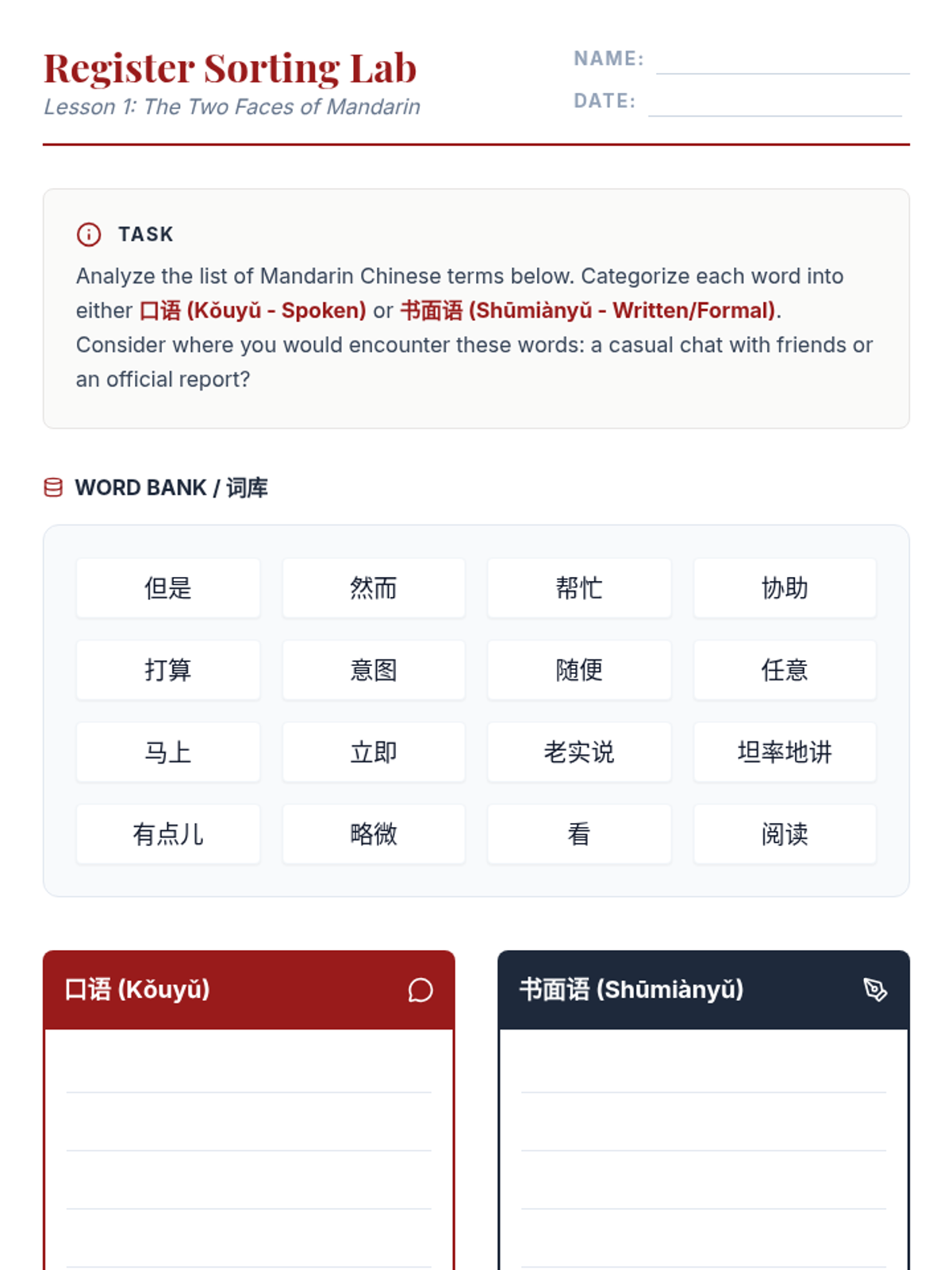
A high-level Mandarin sequence for 9th graders focusing on the transition from colloquial speech (kǒuyǔ) to formal written Chinese (shūmiànyǔ). Students master advanced character usage, register shifts, and academic writing structures.
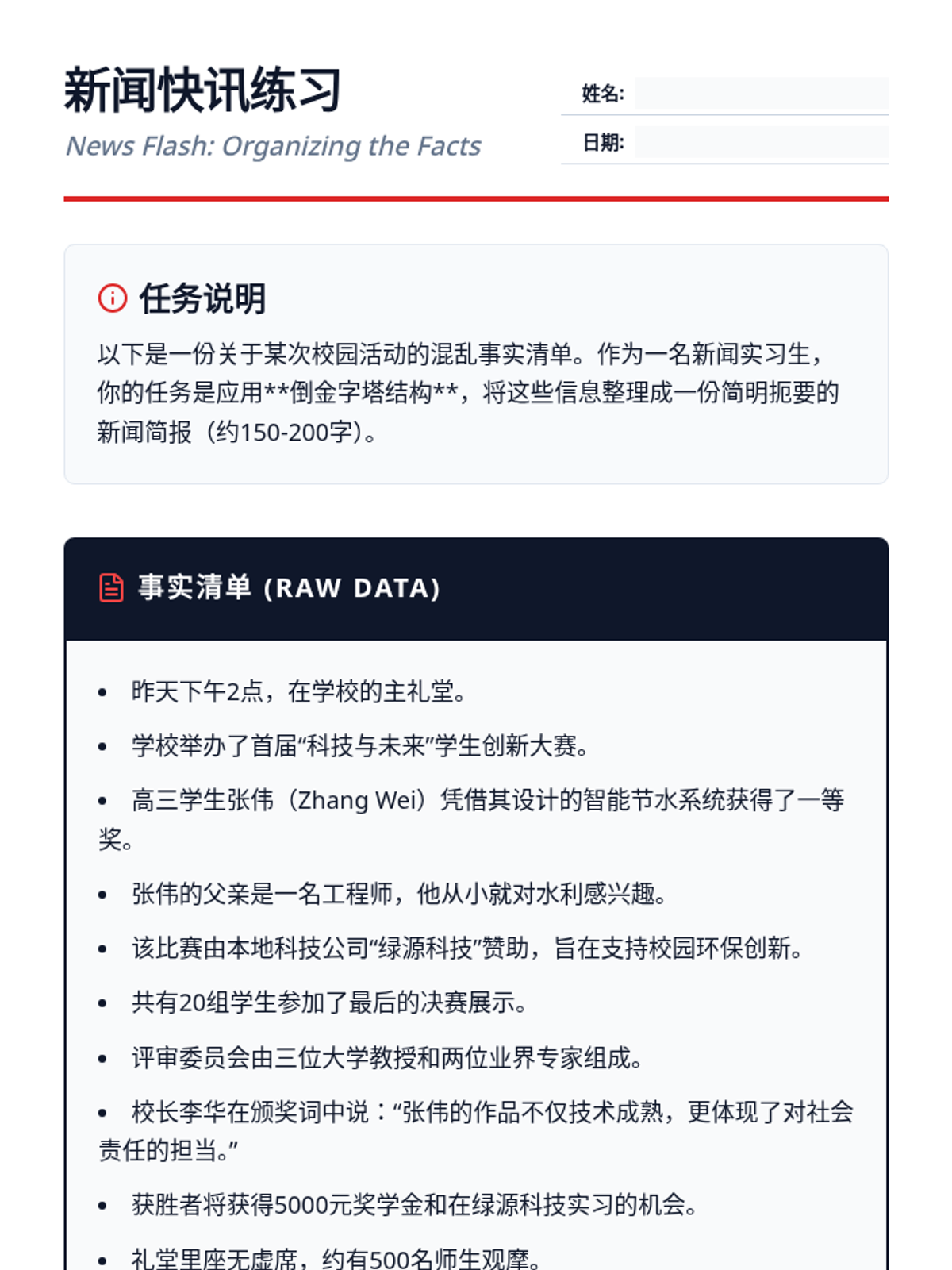
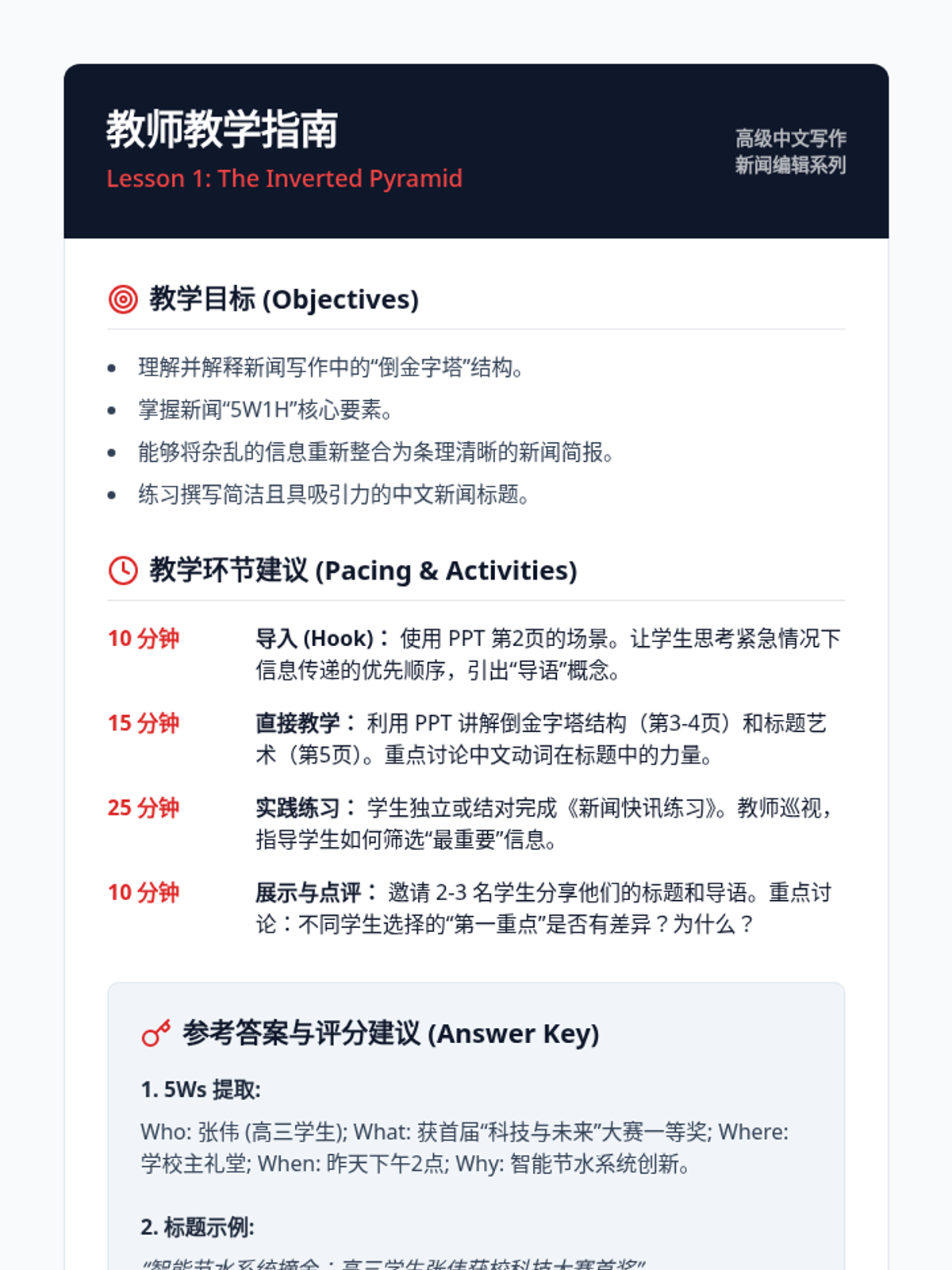
This advanced Mandarin writing sequence focuses on the art of journalism and editorial commentary. Students transition from the objective 'inverted pyramid' of news reporting to the persuasive, subjective voice of op-eds, mastering professional vocabulary and rhetorical strategies along the way.
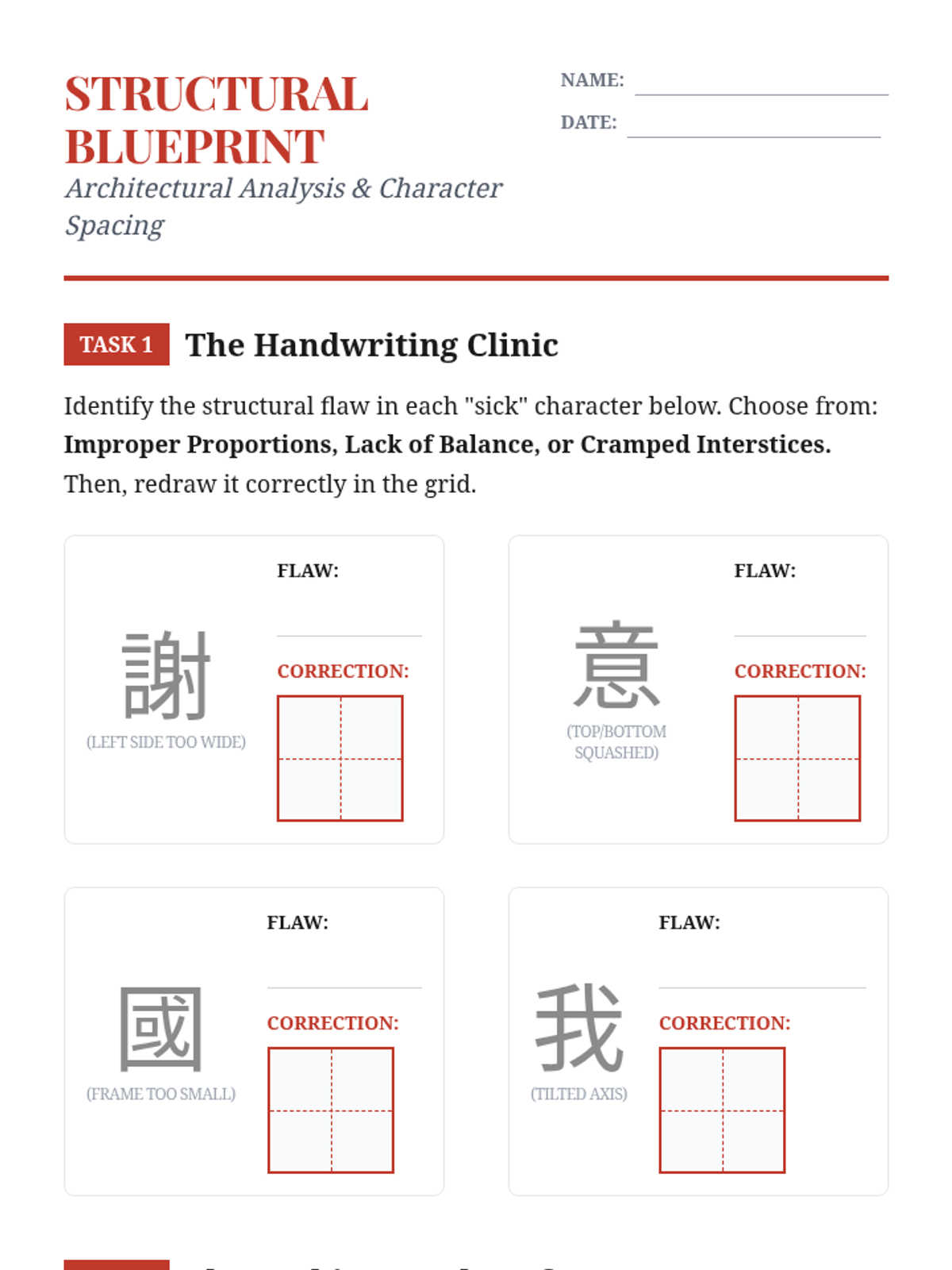
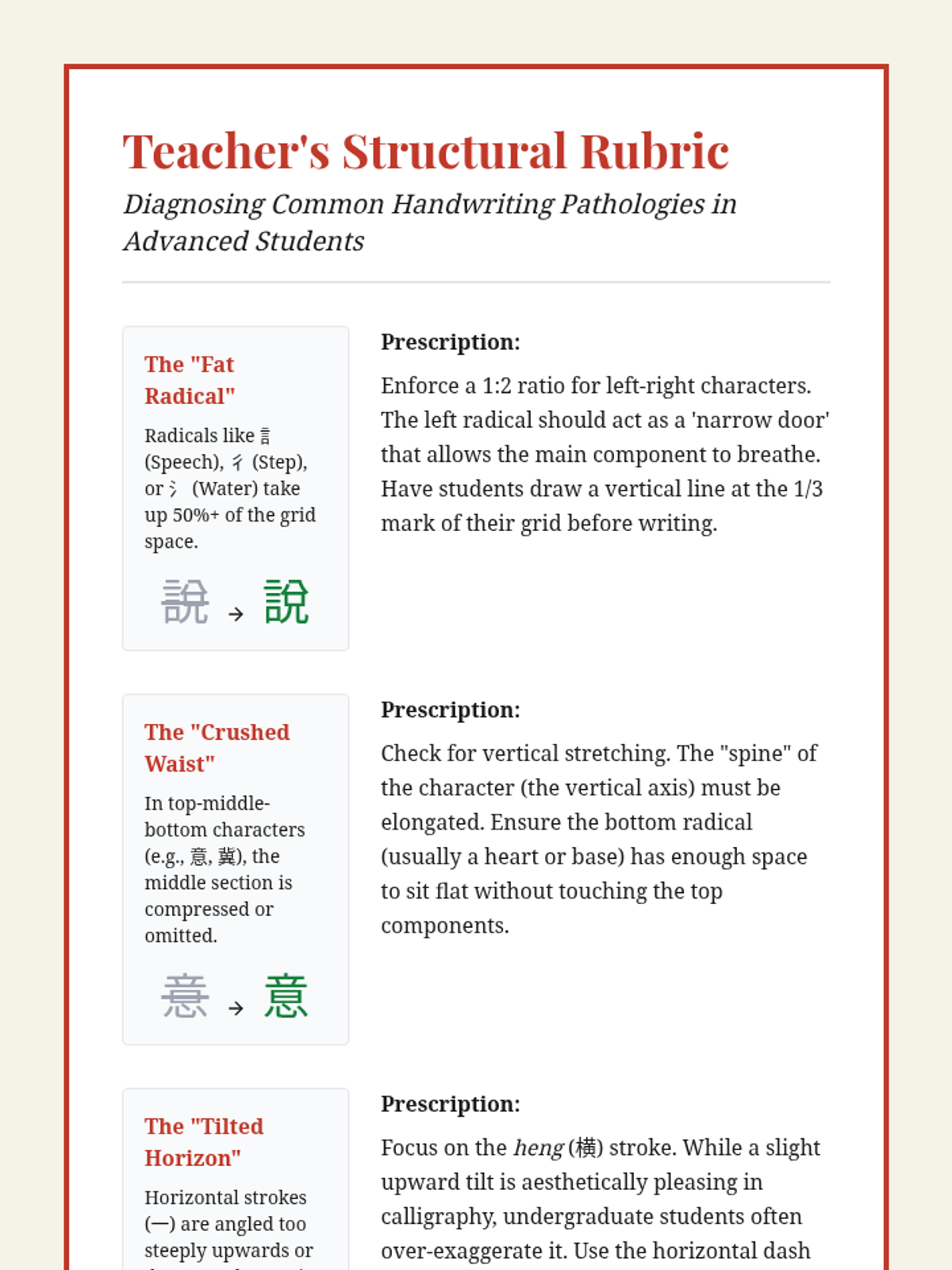
An advanced exploration of Chinese character aesthetics, focusing on structural geometry, historical script styles, the logic of stroke order, and the appreciation of calligraphy as both a linguistic and artistic medium. Students move from technical handwriting correction to aesthetic critique and modern digital typography.
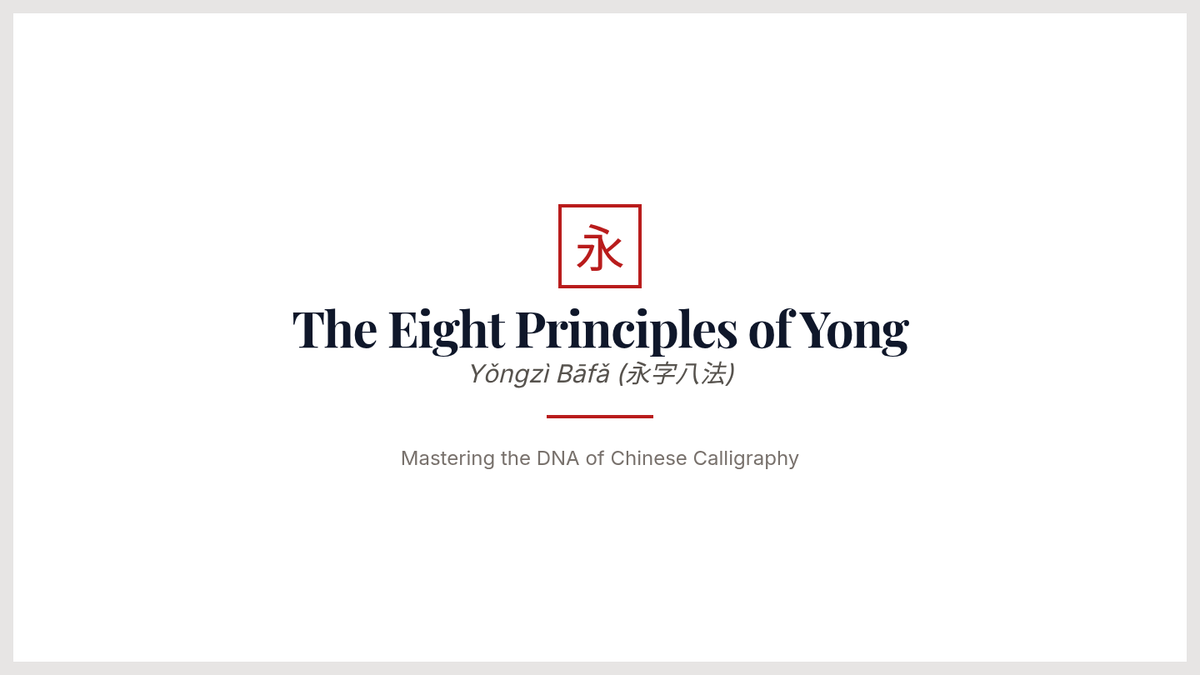
An advanced Mandarin Chinese sequence exploring the aesthetic structure of calligraphy, from foundational strokes to digital font application, focusing on balance, legibility, and cultural significance.
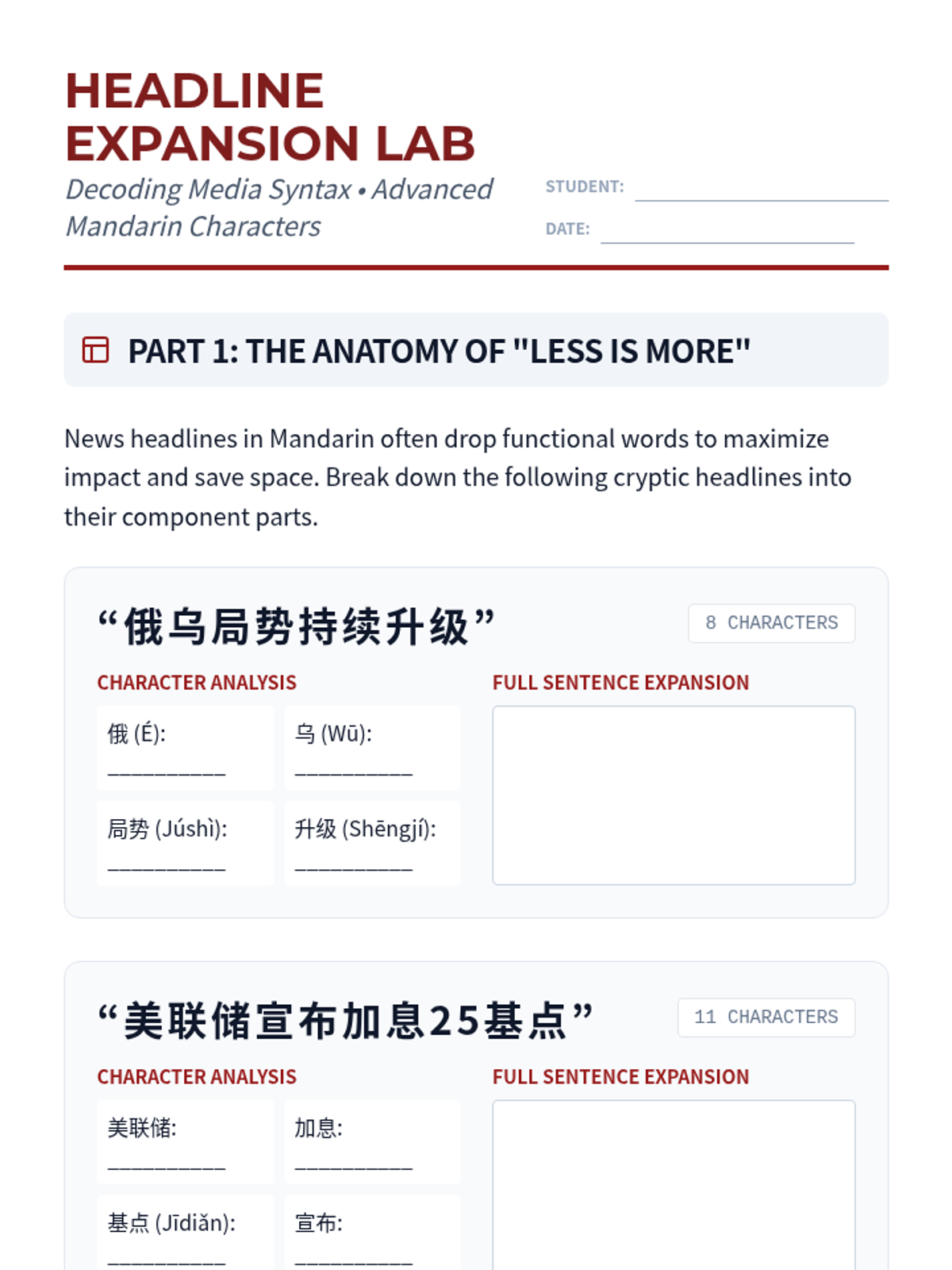
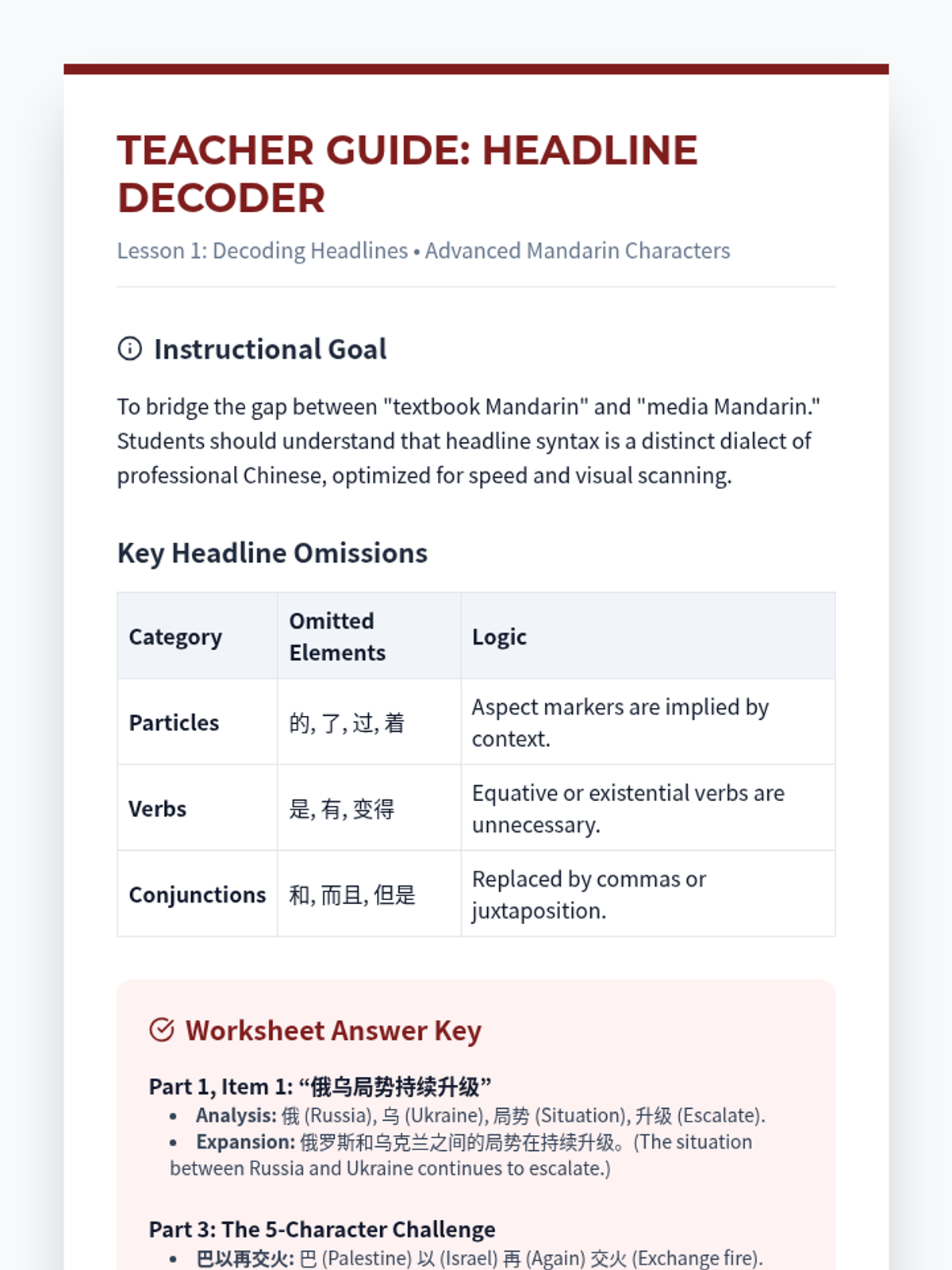
This sequence equips advanced Mandarin students with the linguistic tools to navigate modern Chinese media, focusing on the specific vocabulary, syntax, and cultural nuances found in headlines, political reports, and economic news. Students progress from decoding cryptic headlines to producing their own professional-style news broadcasts.
This sequence explores advanced Mandarin characters through the lens of calligraphy and physical structure. Students connect kinetic writing with cognitive retention by studying stroke order, structural balance, traditional tools, and mindfulness.
A comprehensive exploration of the historical development of Chinese characters for advanced 10th-grade Mandarin students. The unit traces scripts from ancient Oracle Bone inscriptions through the Clerical shift to the modern Simplification movement, focusing on etymology as a tool for linguistic mastery and cultural understanding.
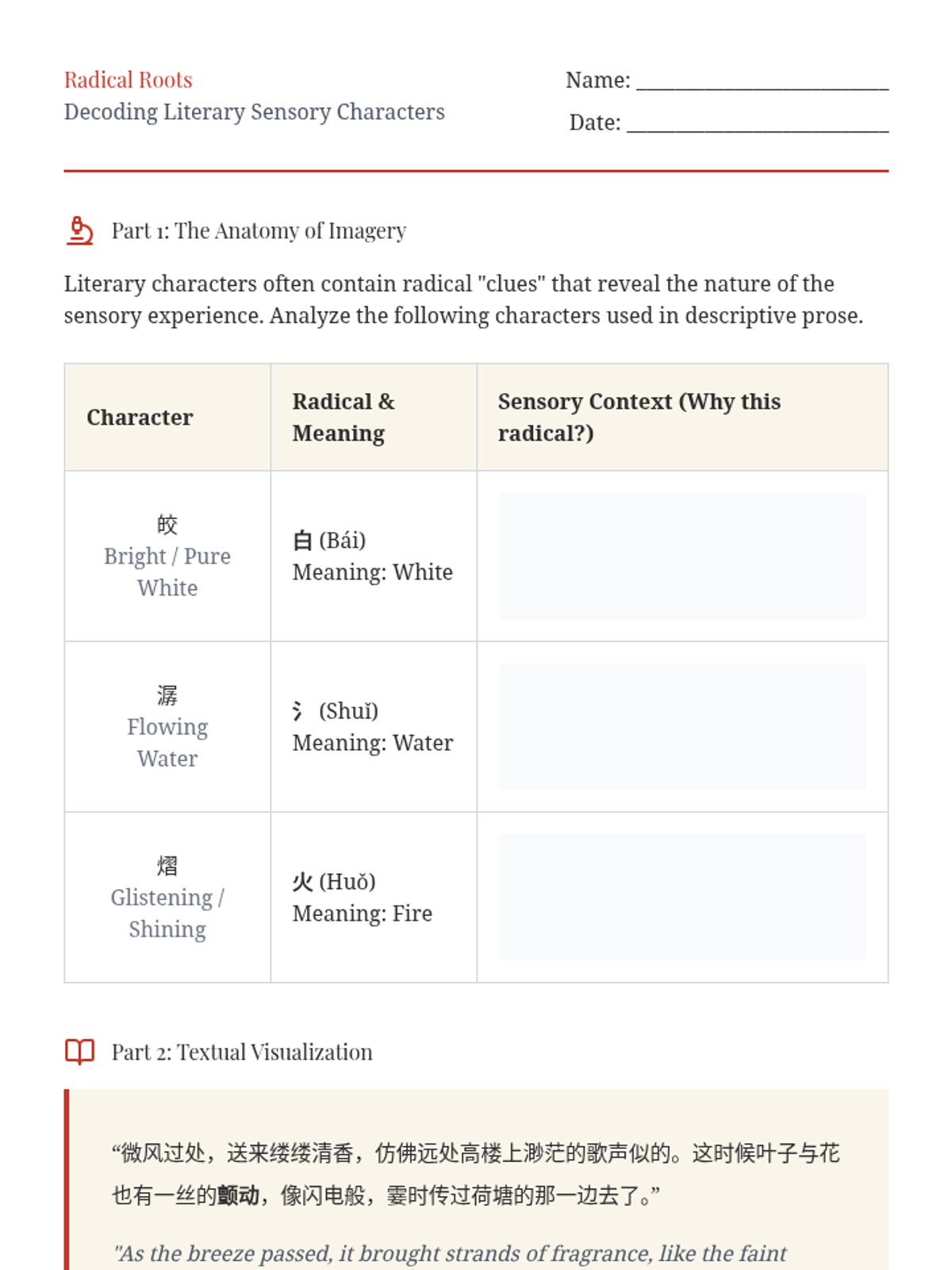
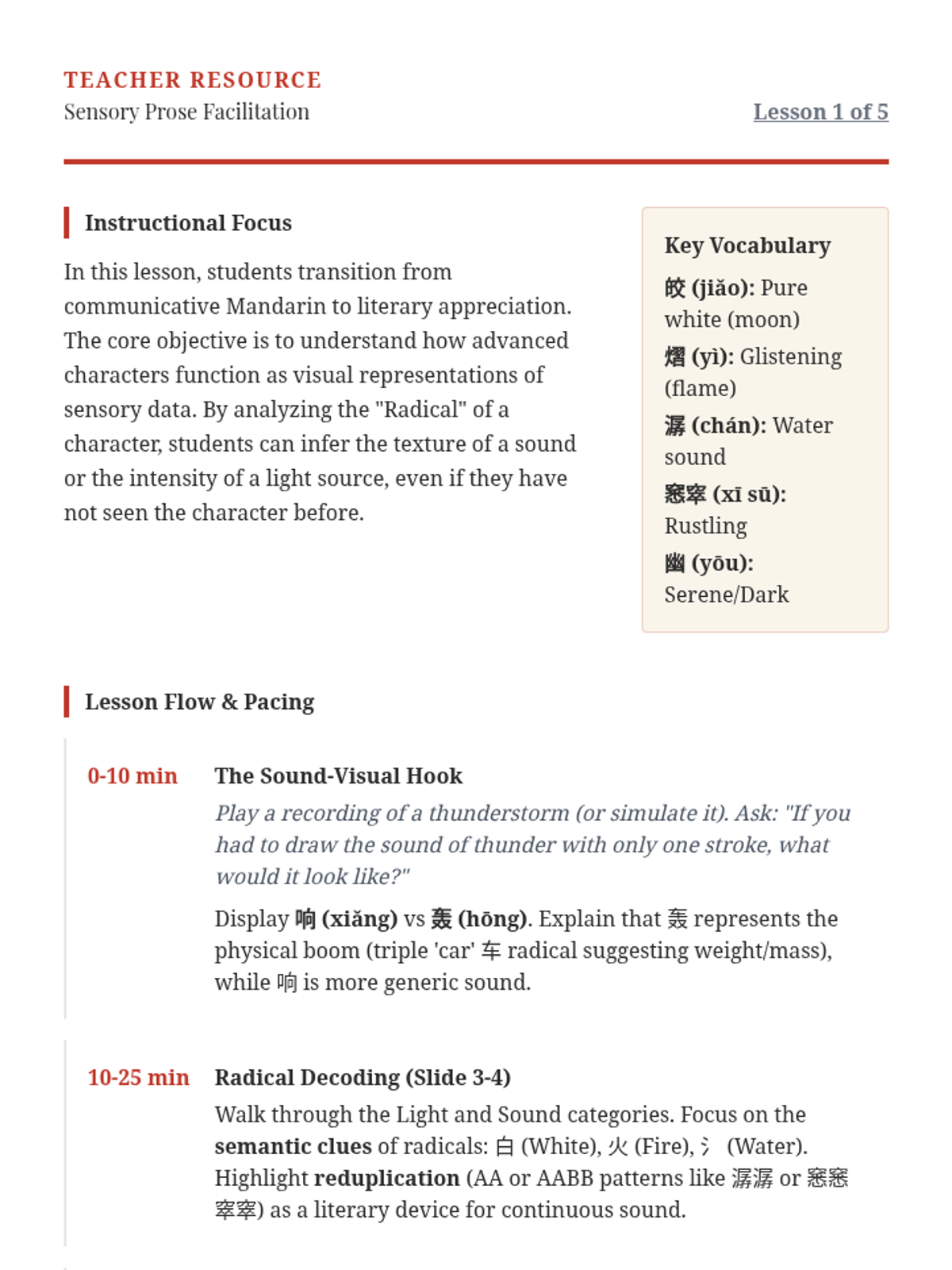
A high-school level sequence focusing on the literary and aesthetic use of advanced Mandarin Chinese characters. Students explore sensory prose, emotional nuance, landscape imagery, and modern poetry to enhance their descriptive writing and reading comprehension.
A comprehensive unit for 10th-grade Mandarin Chinese students to master the art of self-introduction. Students progress from basic identity markers like name and nationality to expressing personal preferences and cultural connections through the Chinese Zodiac, culminating in a polished oral presentation.
A 10th-grade Mandarin Chinese unit focused on the logical structure of numbers, dates, and time. Students move from basic 0-10 counting to managing complex schedules and exchanging personal numerical data.
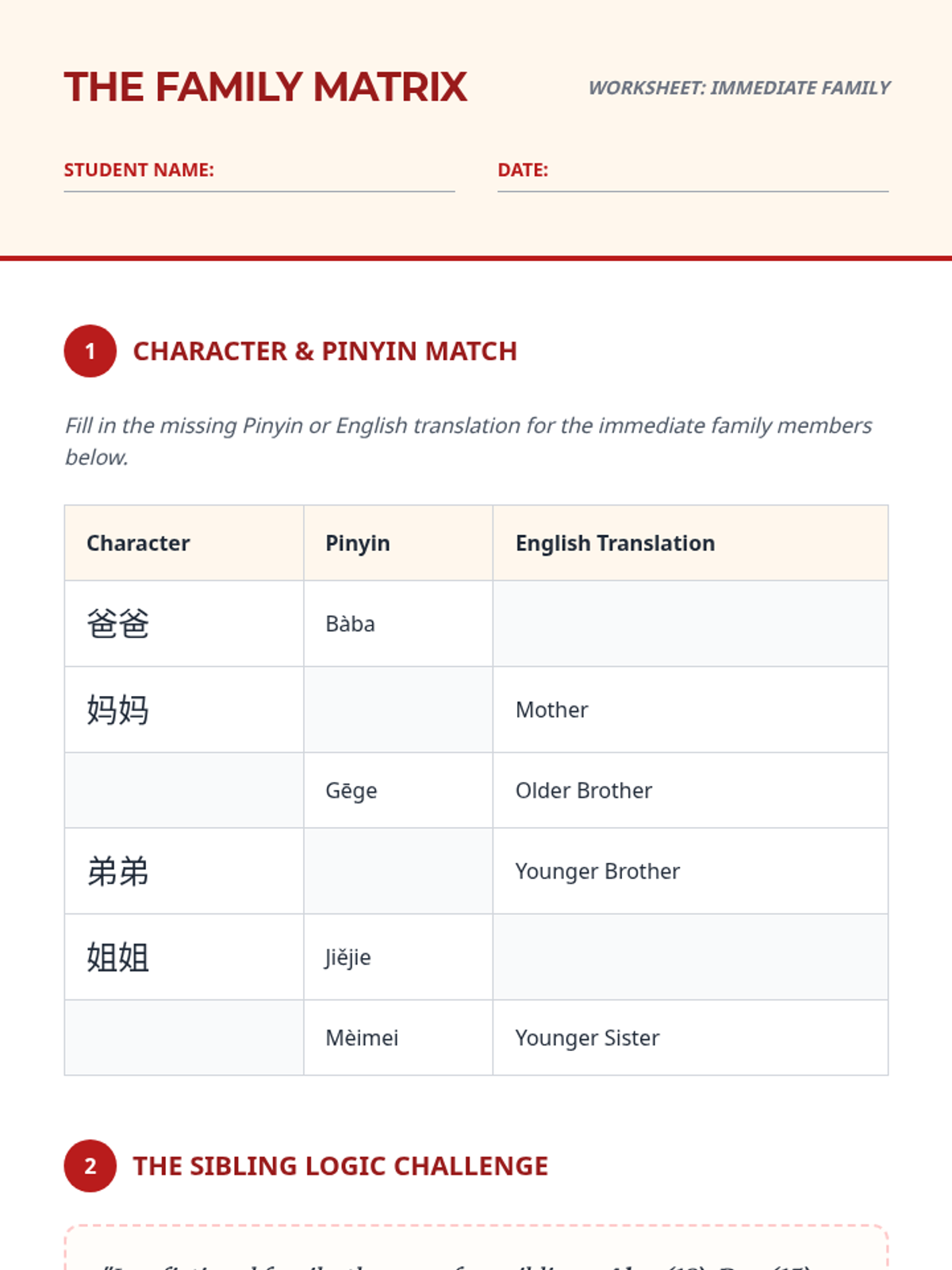
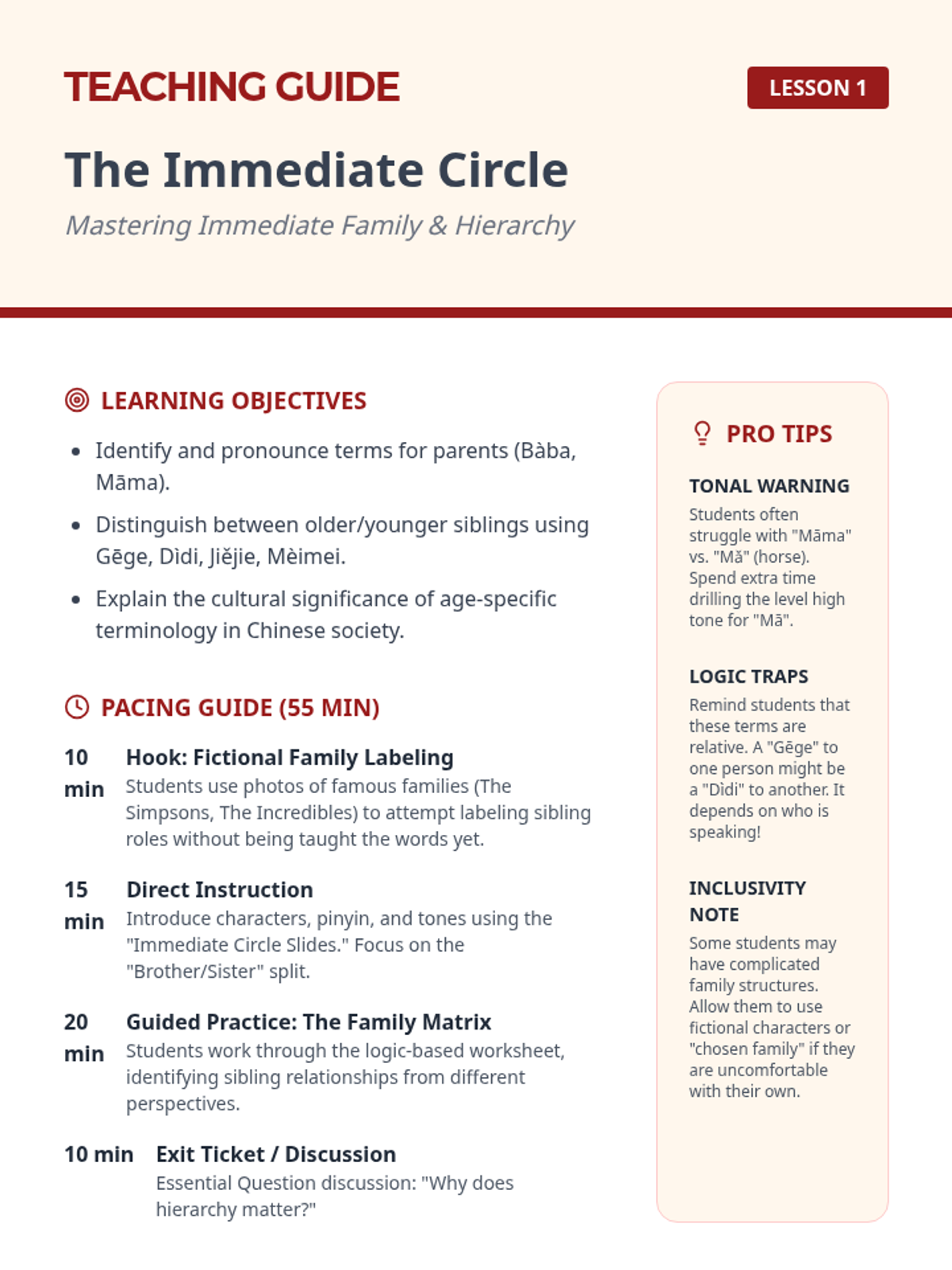
A 5-lesson sequence for 10th Grade Mandarin Chinese students focused on the linguistic and cultural nuances of family structures. Students progress from immediate family vocabulary to complex maternal/paternal distinctions, culminating in a family tree project that explores the social hierarchy embedded in the Chinese language.
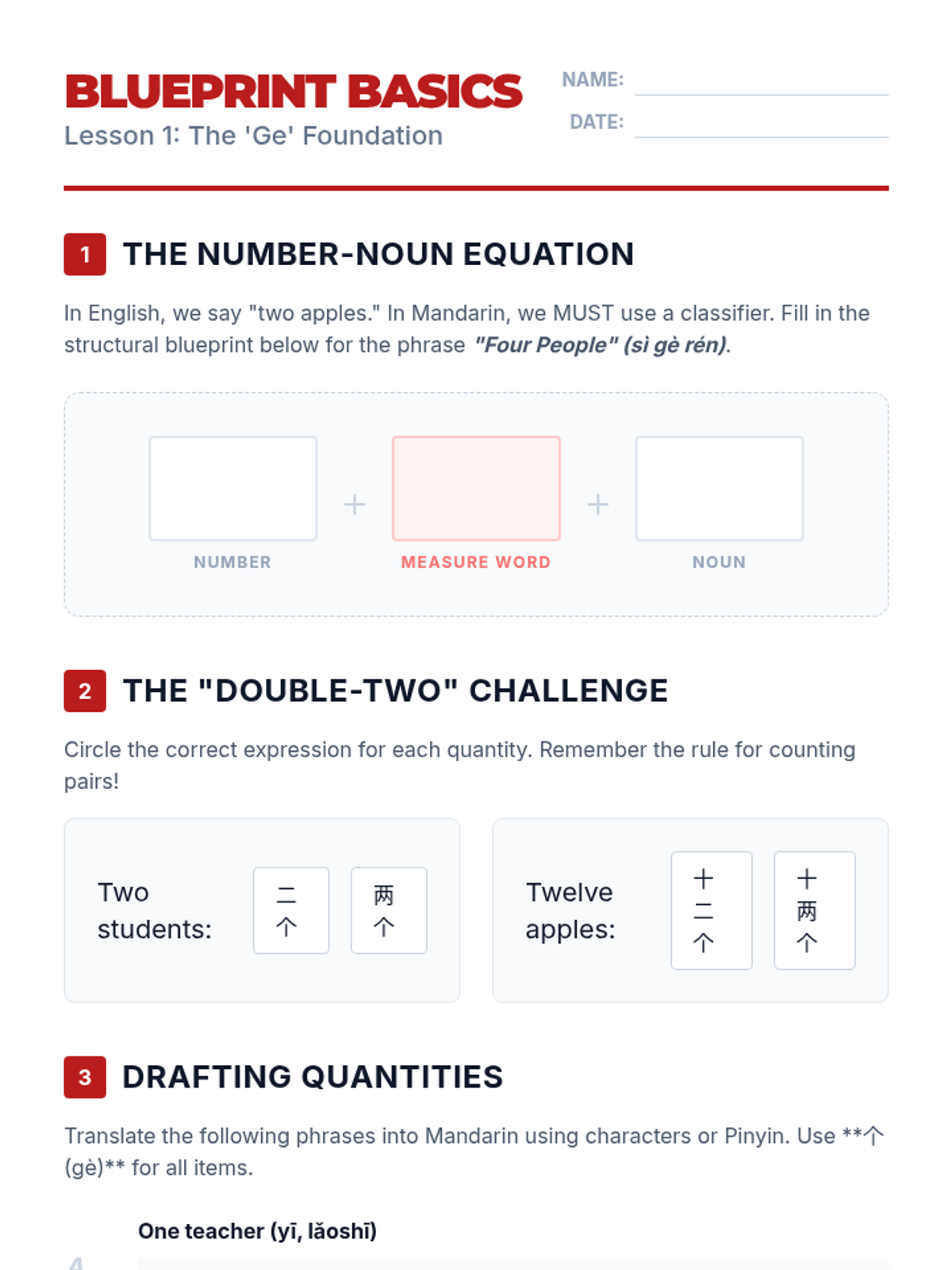
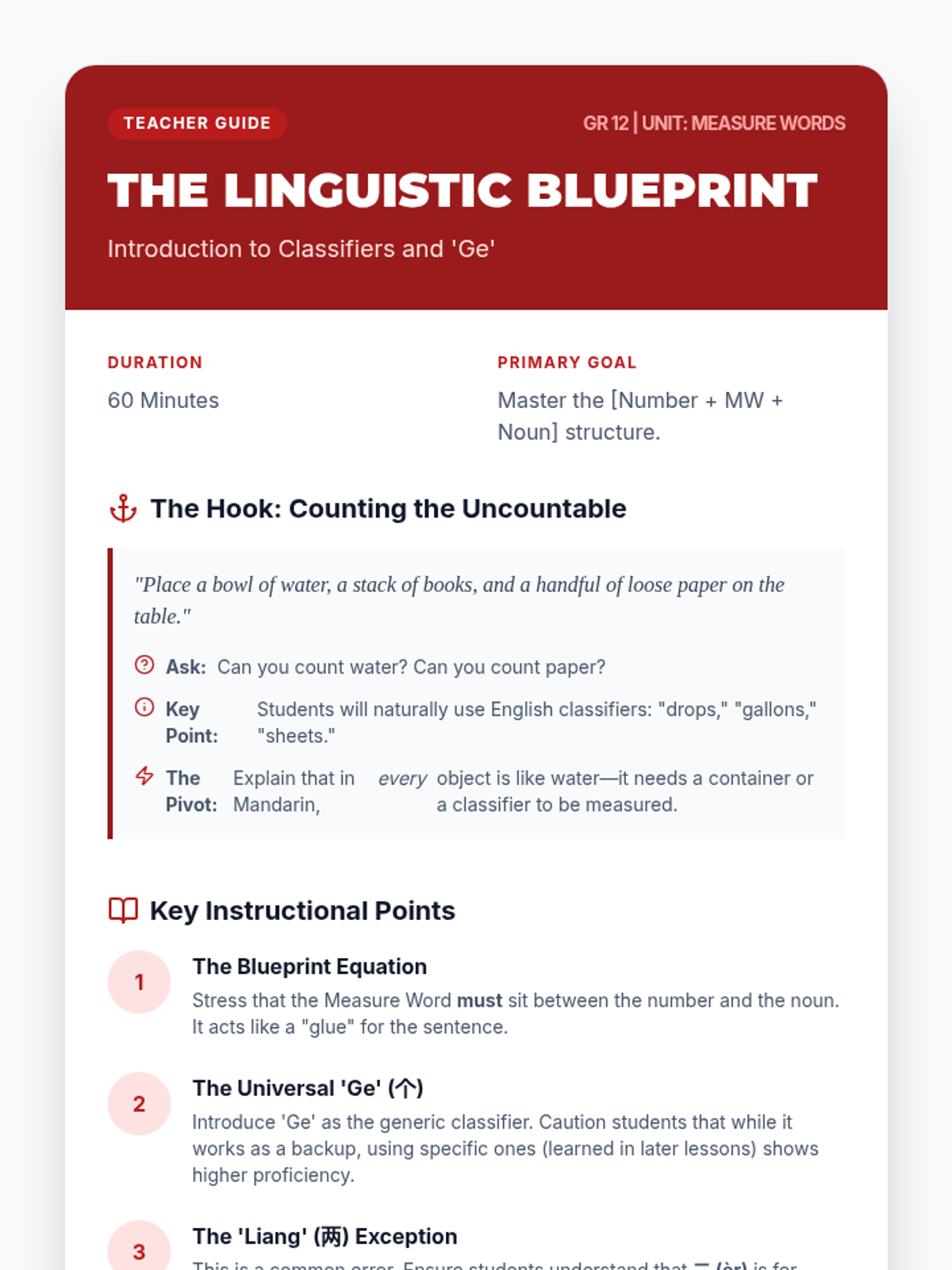
A comprehensive dive into Mandarin Chinese measure words, exploring how the language categorizes the physical world through shape, function, and respect. Students progress from basic structure to complex situational usage in a marketplace environment.
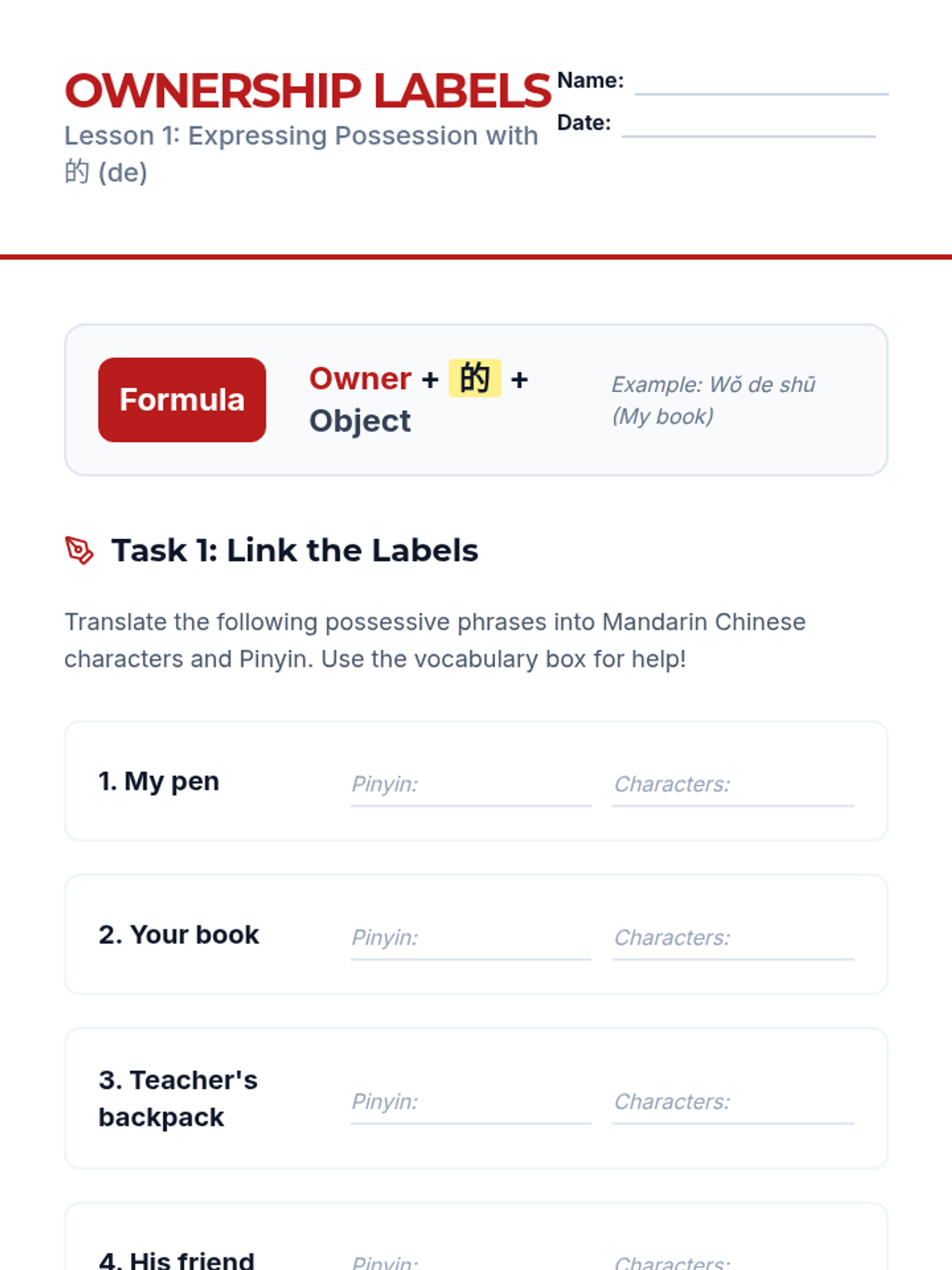
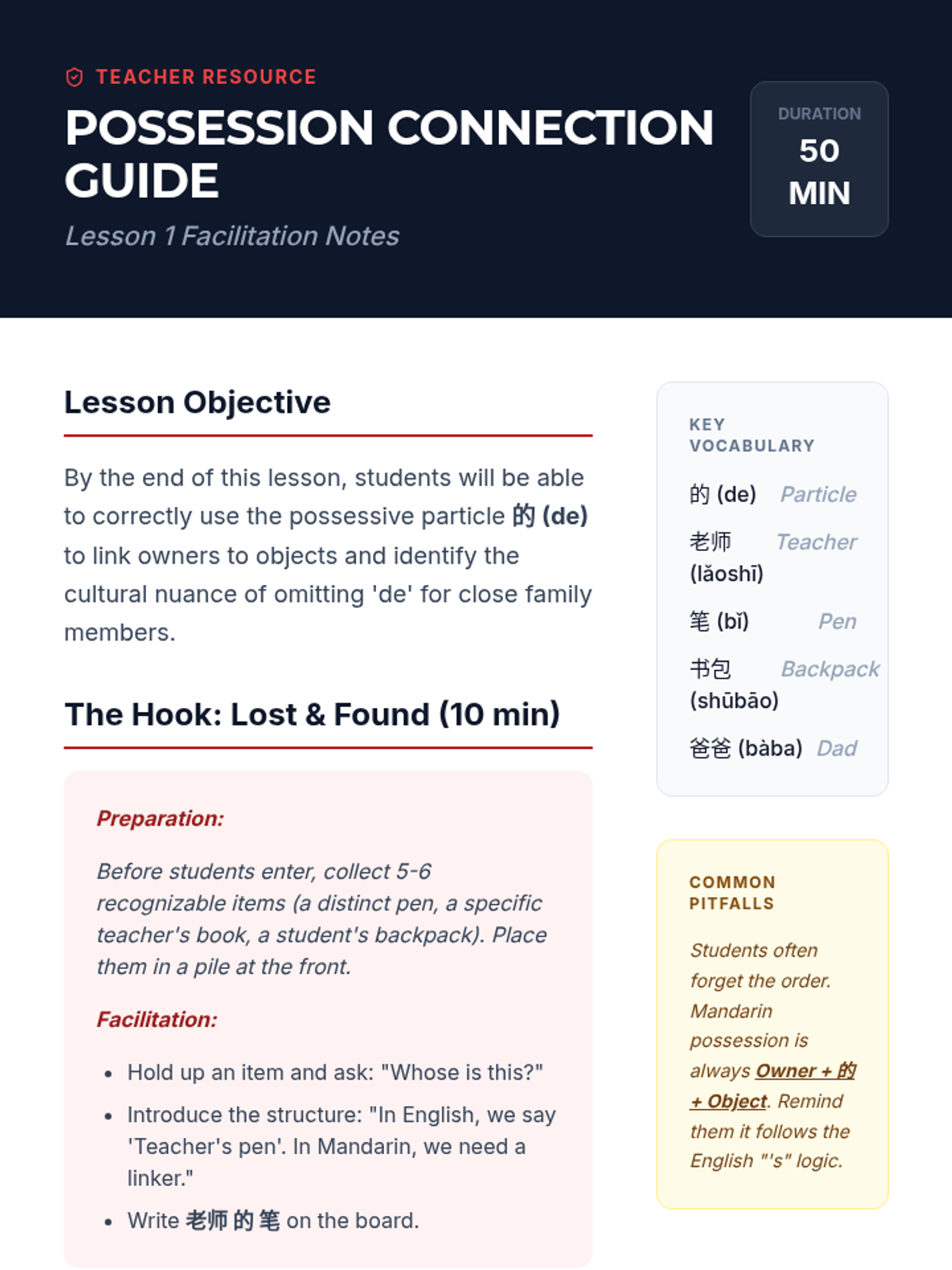
A comprehensive introduction to the Mandarin Chinese particle 'de' (的) for 6th-grade beginners. Students explore its use in expressing possession, describing family relationships, and linking adjectives to nouns through interactive games, creative projects, and character building.
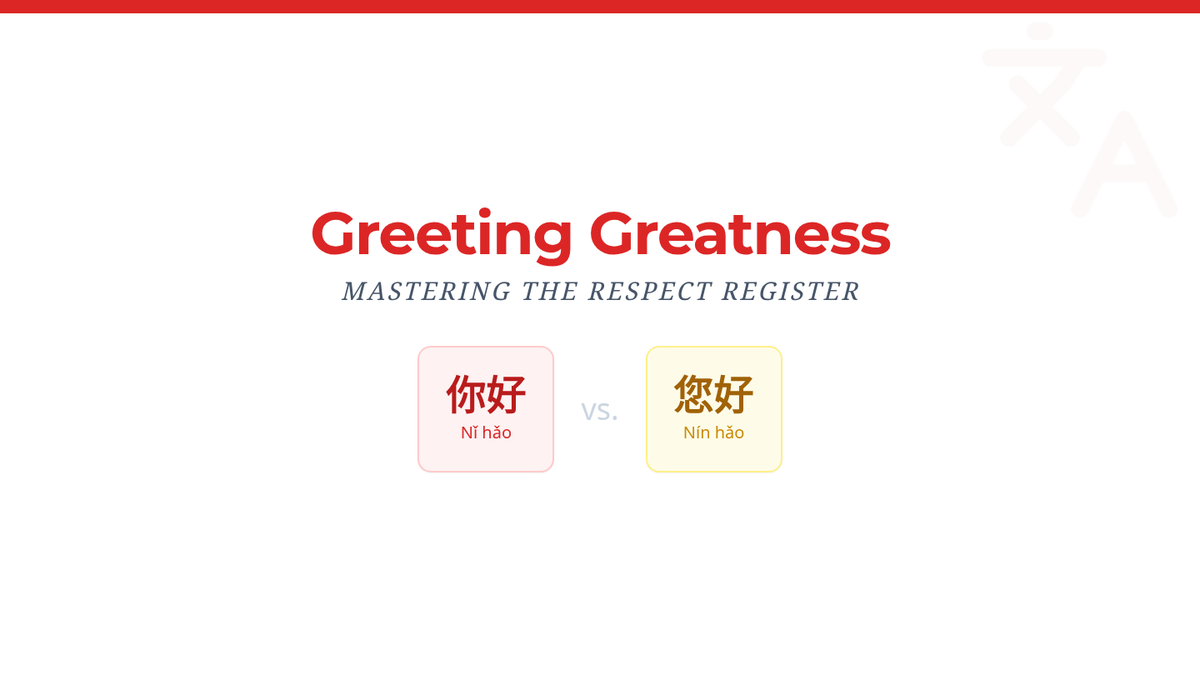
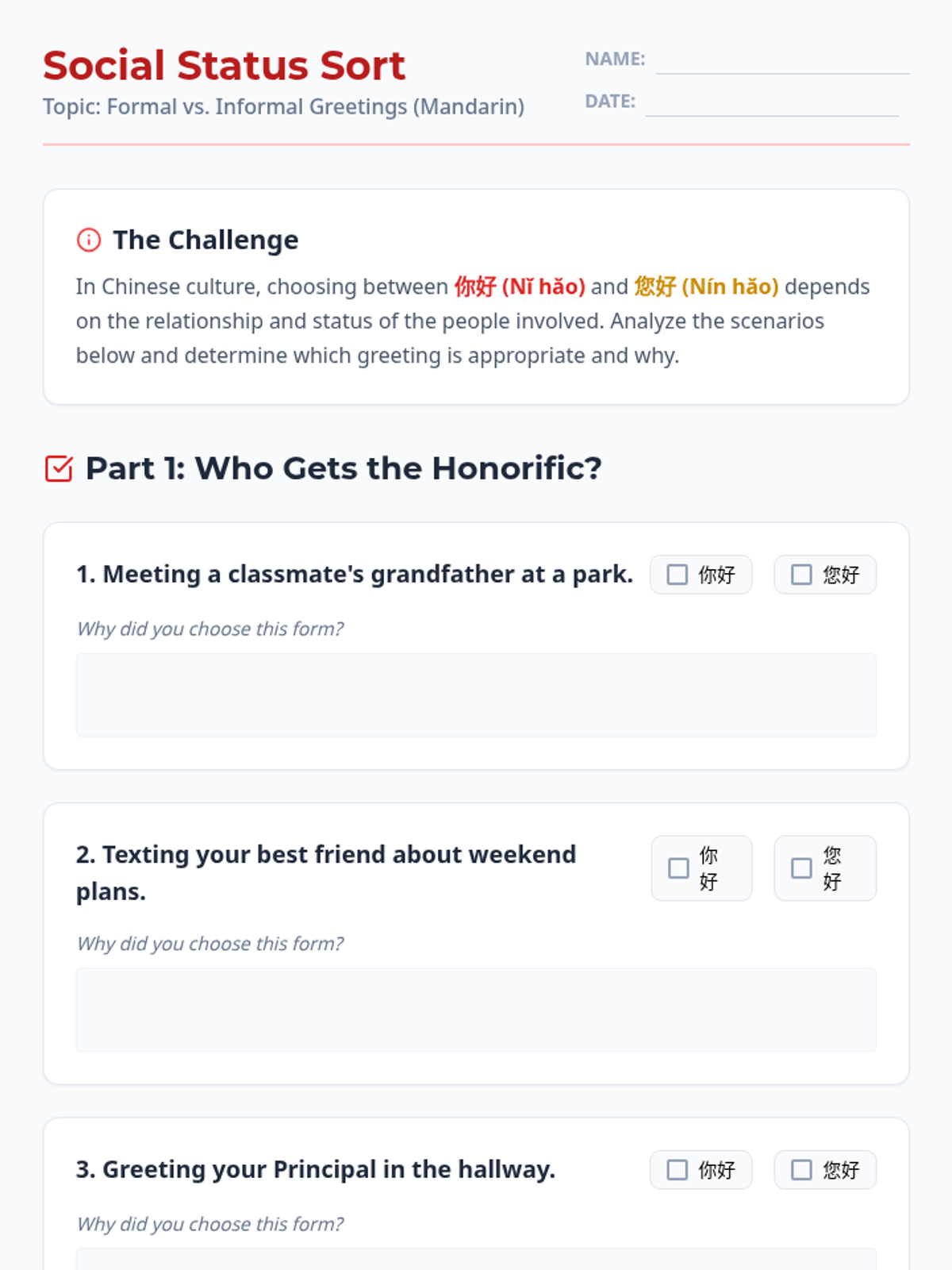
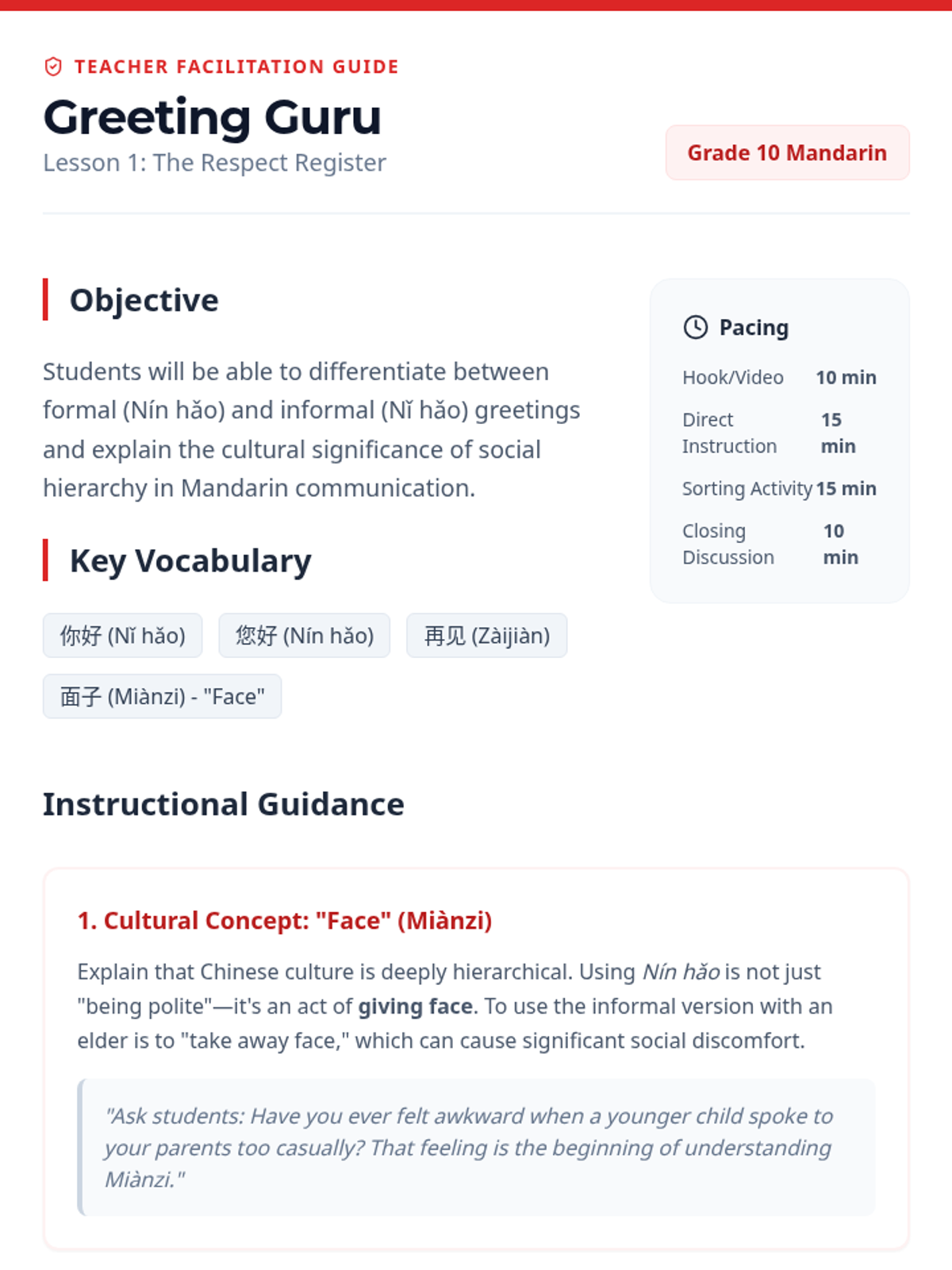
This sequence explores the pragmatics of Mandarin Chinese social interaction, focusing on social hierarchy, formal versus informal registers, and cultural etiquette. Students move from basic greetings to complex social simulations, understanding how language choice reflects respect and status.
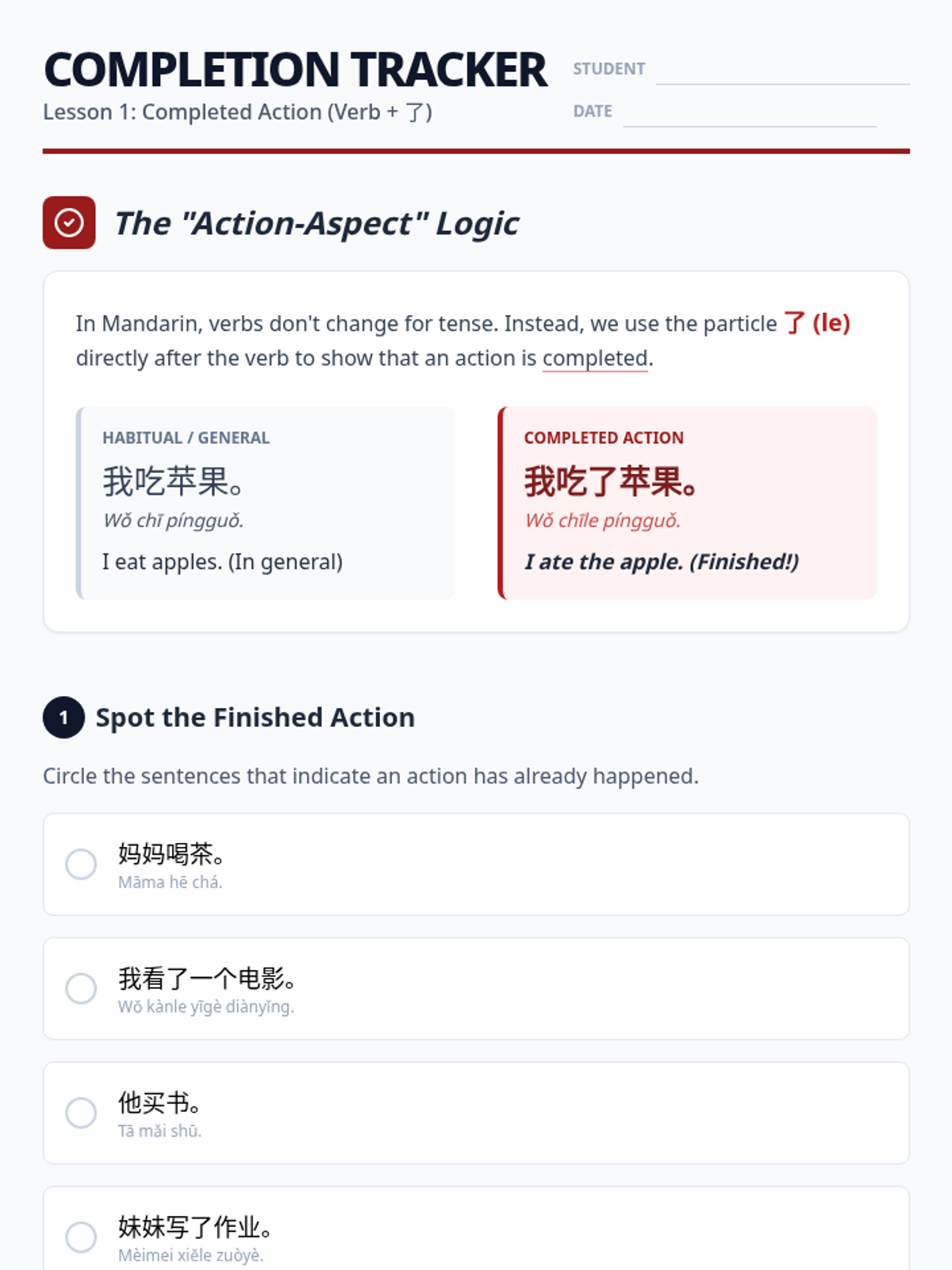
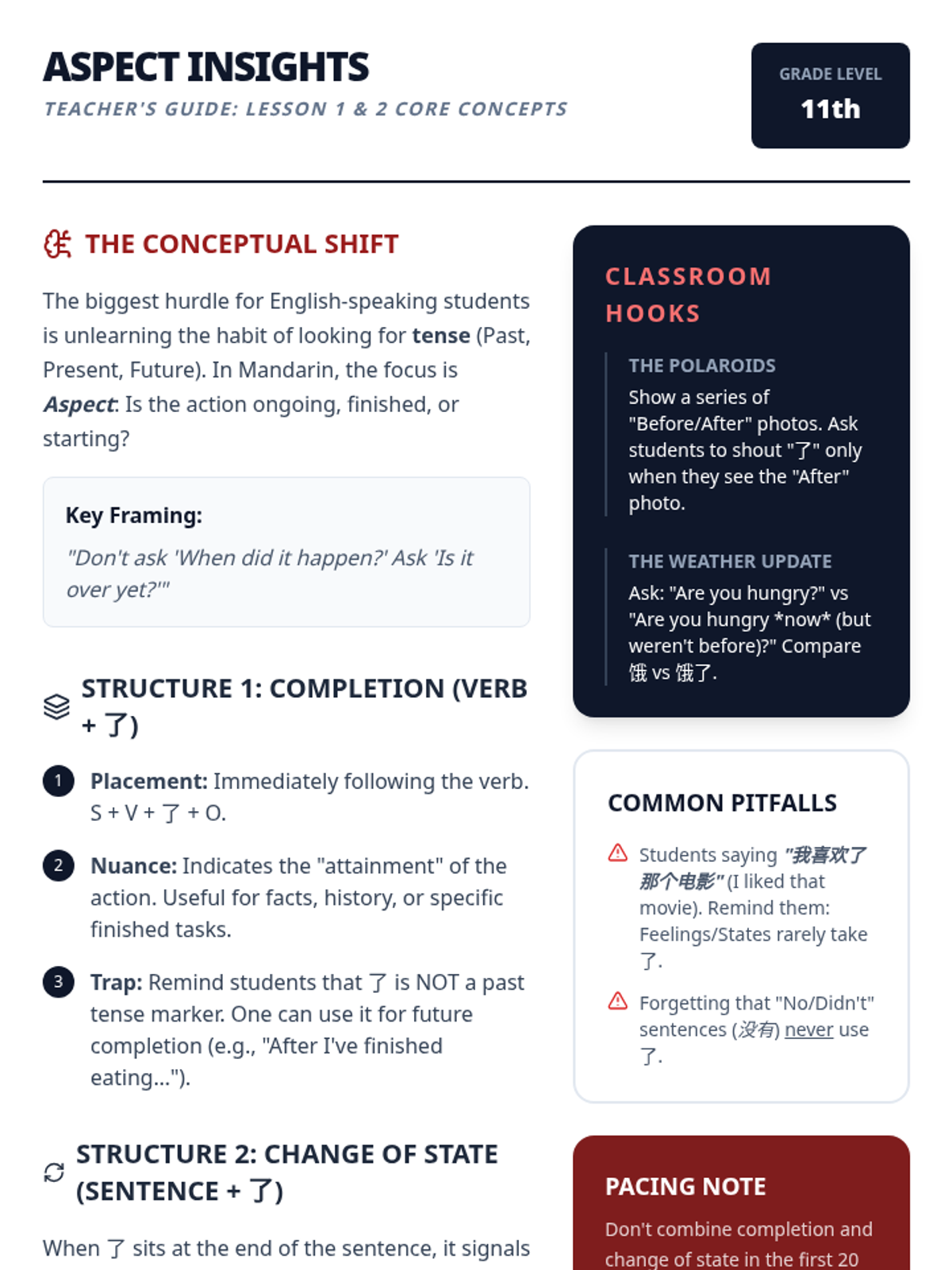
This sequence explores the nuances of the Mandarin particle 'le', focusing on its dual roles in marking completion and change of state while avoiding common pitfalls for English speakers.
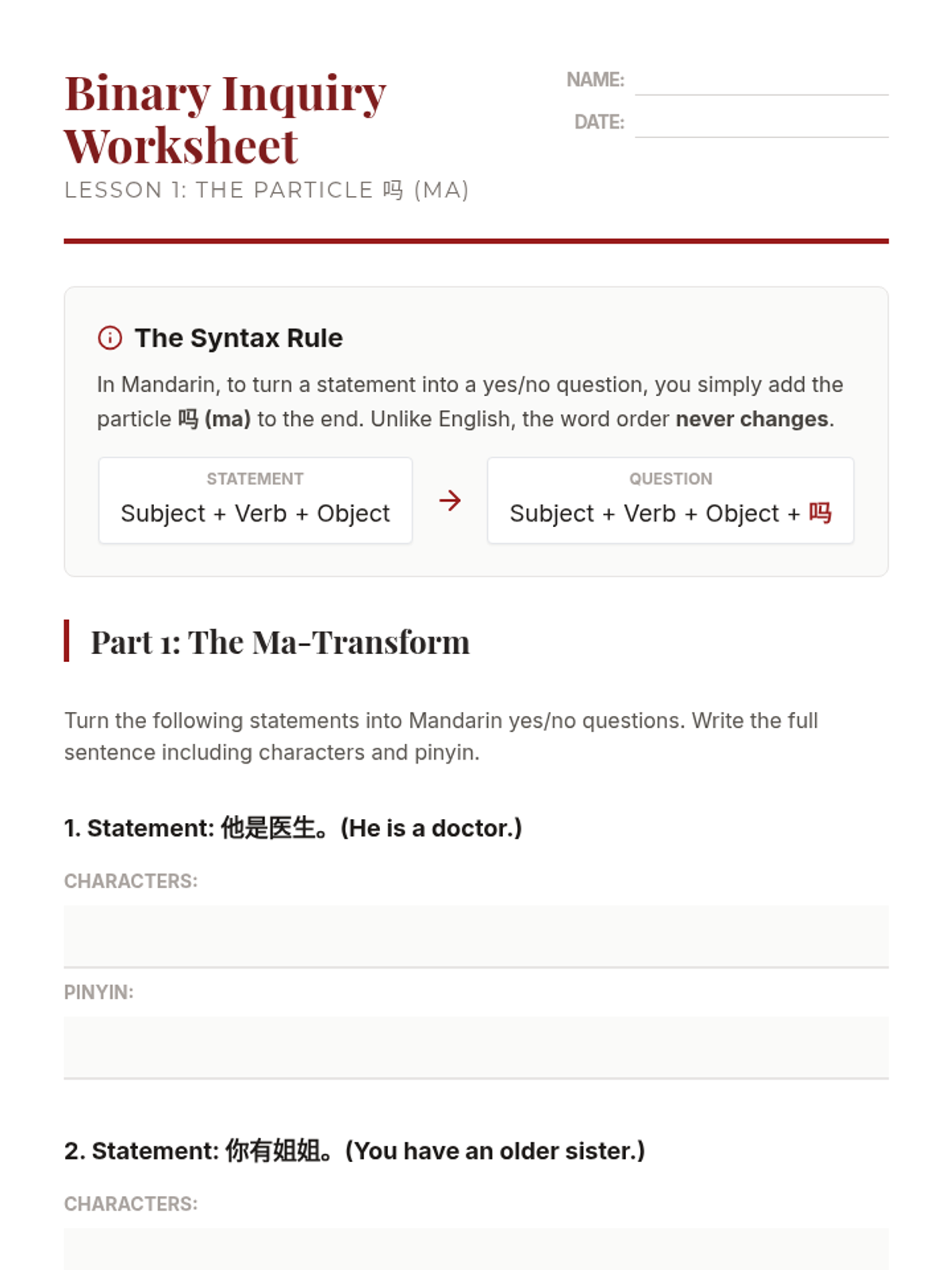
This sequence explores the mechanics of interrogation in Mandarin Chinese, focusing on how questions are formed without changing word order. Students move from simple 'ma' questions to complex V-not-V structures and wh-word substitution, culminating in a professional interview simulation.
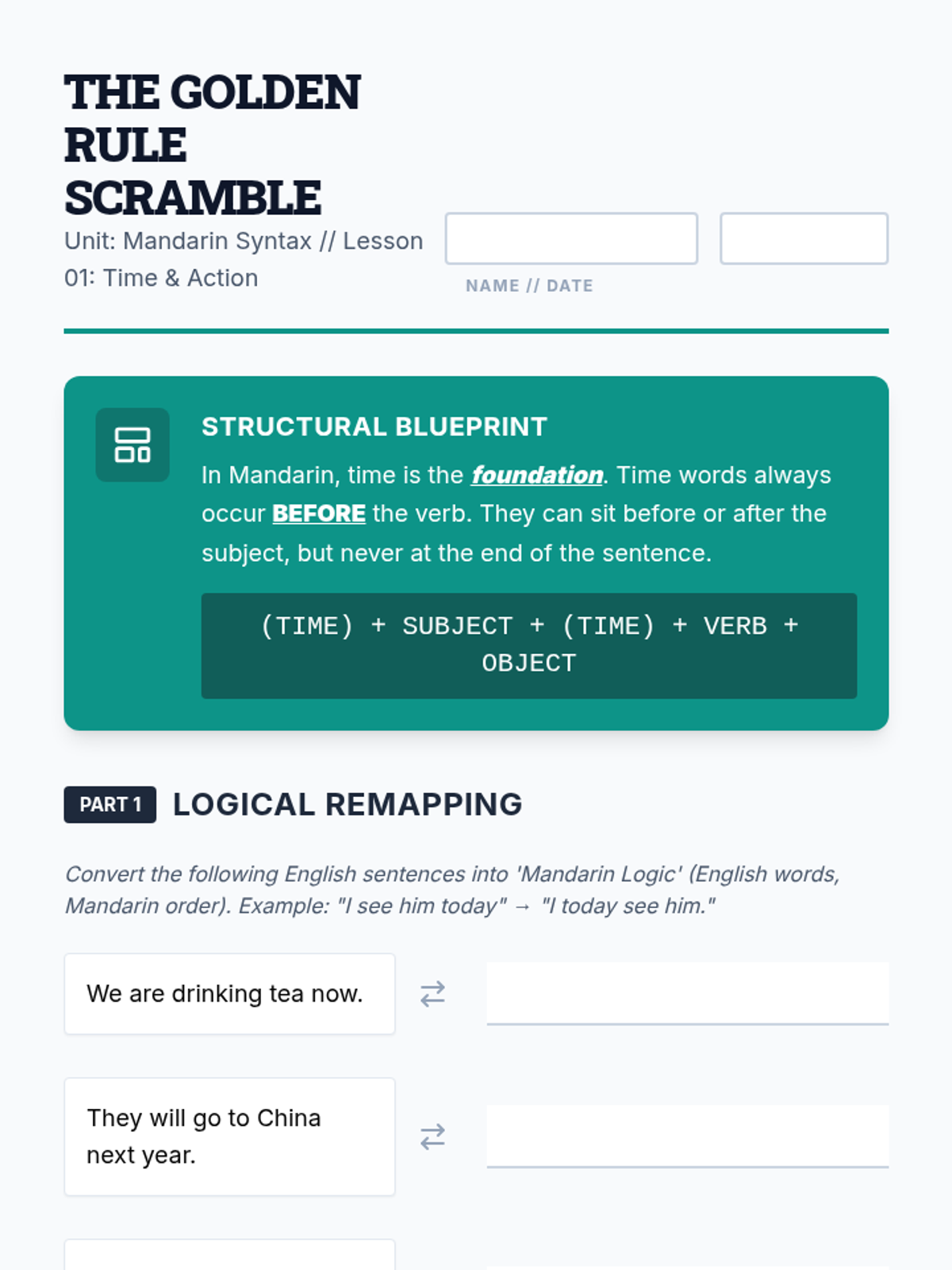
A rigorous analysis of Mandarin sentence structure, moving students from SVO assumptions to the Time-Location-Action hierarchy (STPVA). Students master word order rules, learn the Topic-Comment structure, and develop editing skills to eliminate 'Chinglish' syntactic errors.
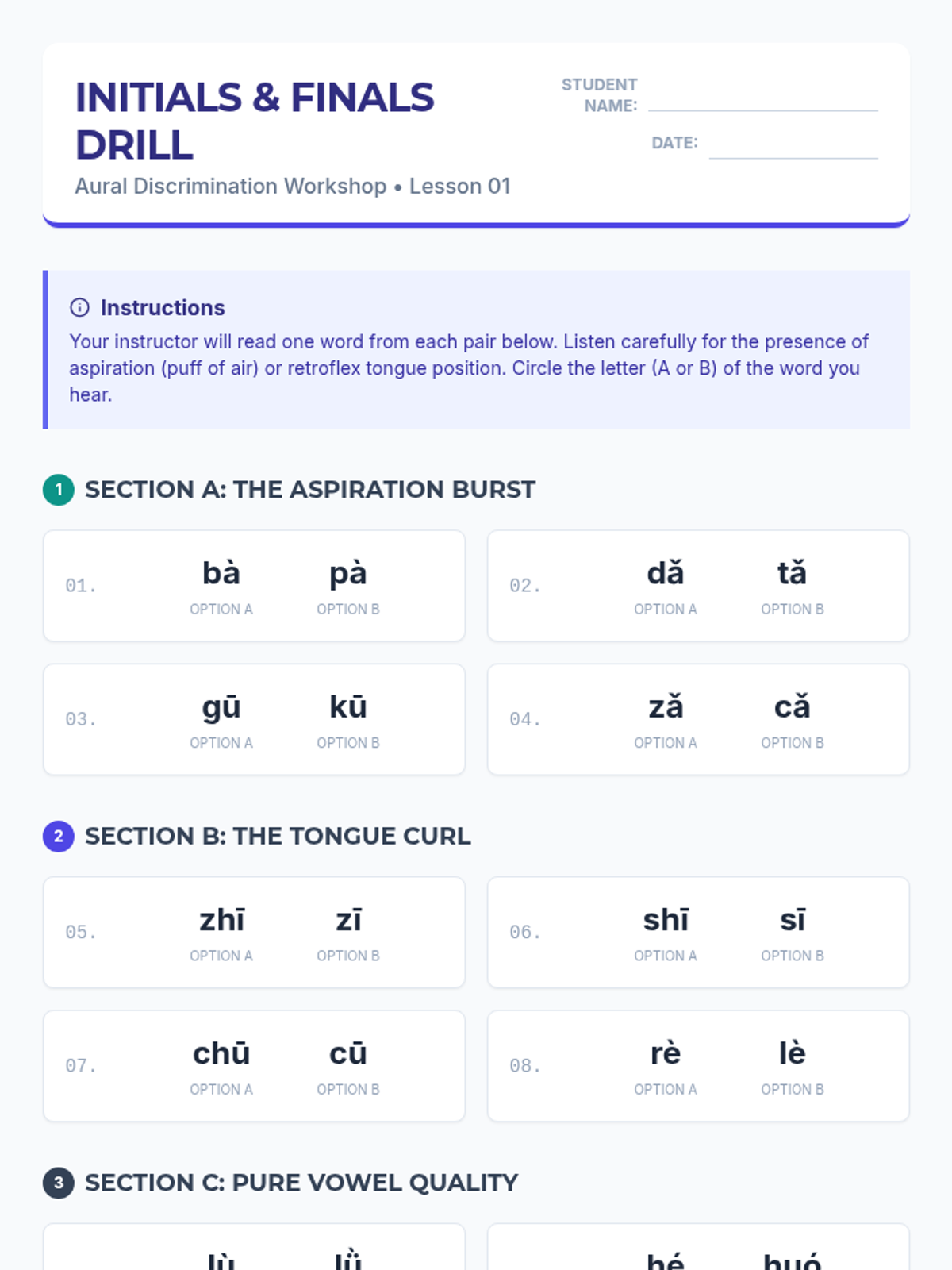
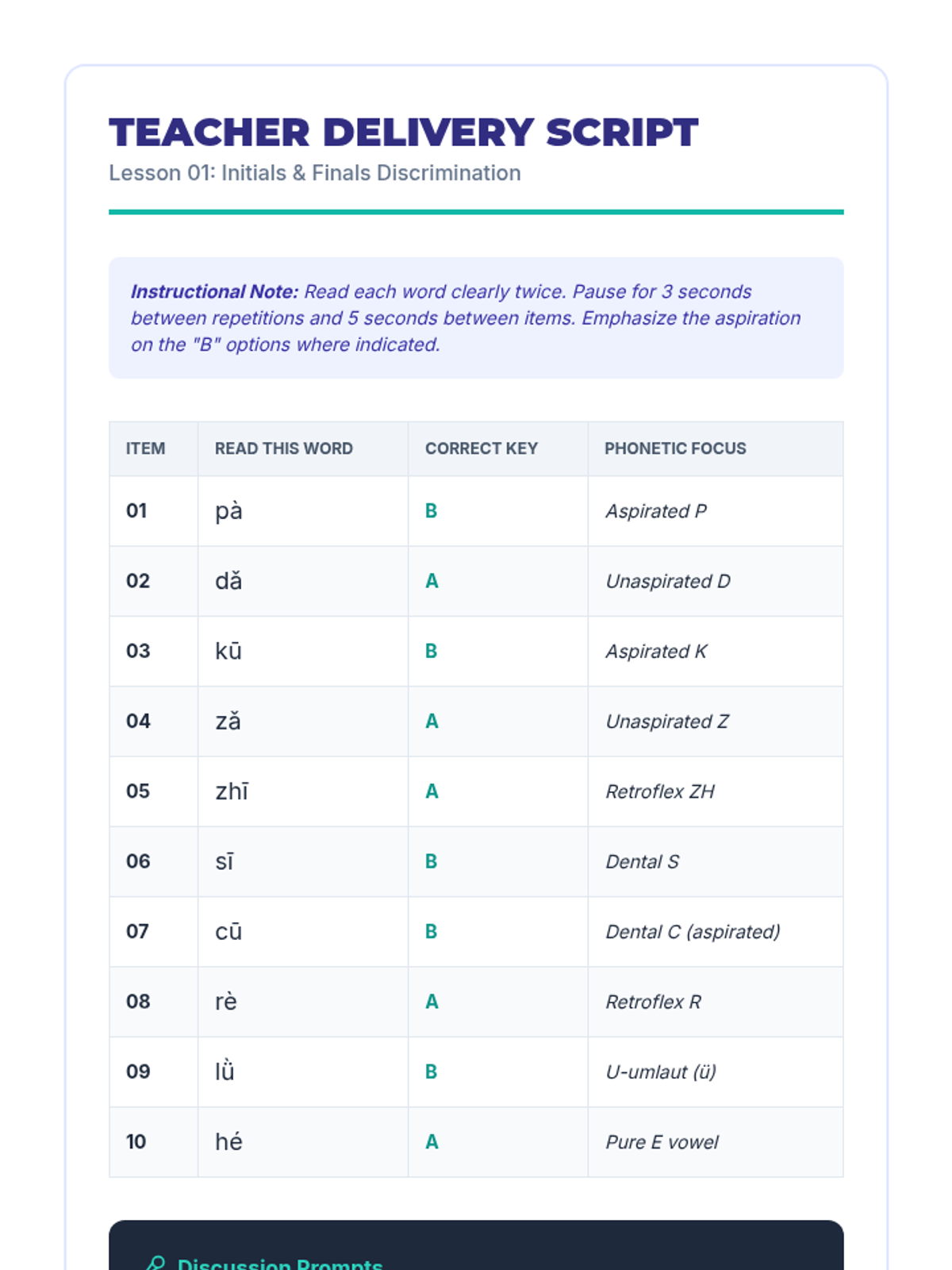
A foundational listening sequence for beginner Mandarin students, focusing on phonemic awareness, tone discrimination, and Pinyin transcription. Students progress from basic initials and finals to complex tone sandhi rules and full-word dictation.
This sequence introduces 10th-grade students to the fundamentals of Mandarin Chinese phonetics, focusing on tone discrimination, initial/final differentiation, and transcription. Students progress from isolated tones to complex pairs and full Pinyin transcription.
A comprehensive introduction to Mandarin Chinese phonetics, focusing on Pinyin Romanization and the four tones. Students analyze the mechanics of speech and pitch to build a solid foundation for future language study.
A comprehensive 10th-grade Mandarin Chinese sequence focusing on the fundamentals of Pinyin and tonal accuracy. Students move from basic pitch recognition to complex tone sandhi rules and phonetic discrimination, culminating in transcription mastery.
This sequence establishes the foundational mechanics of Mandarin Chinese pronunciation through intensive workshop-style practice, focusing on the Pinyin system, tones, and articulation rules.
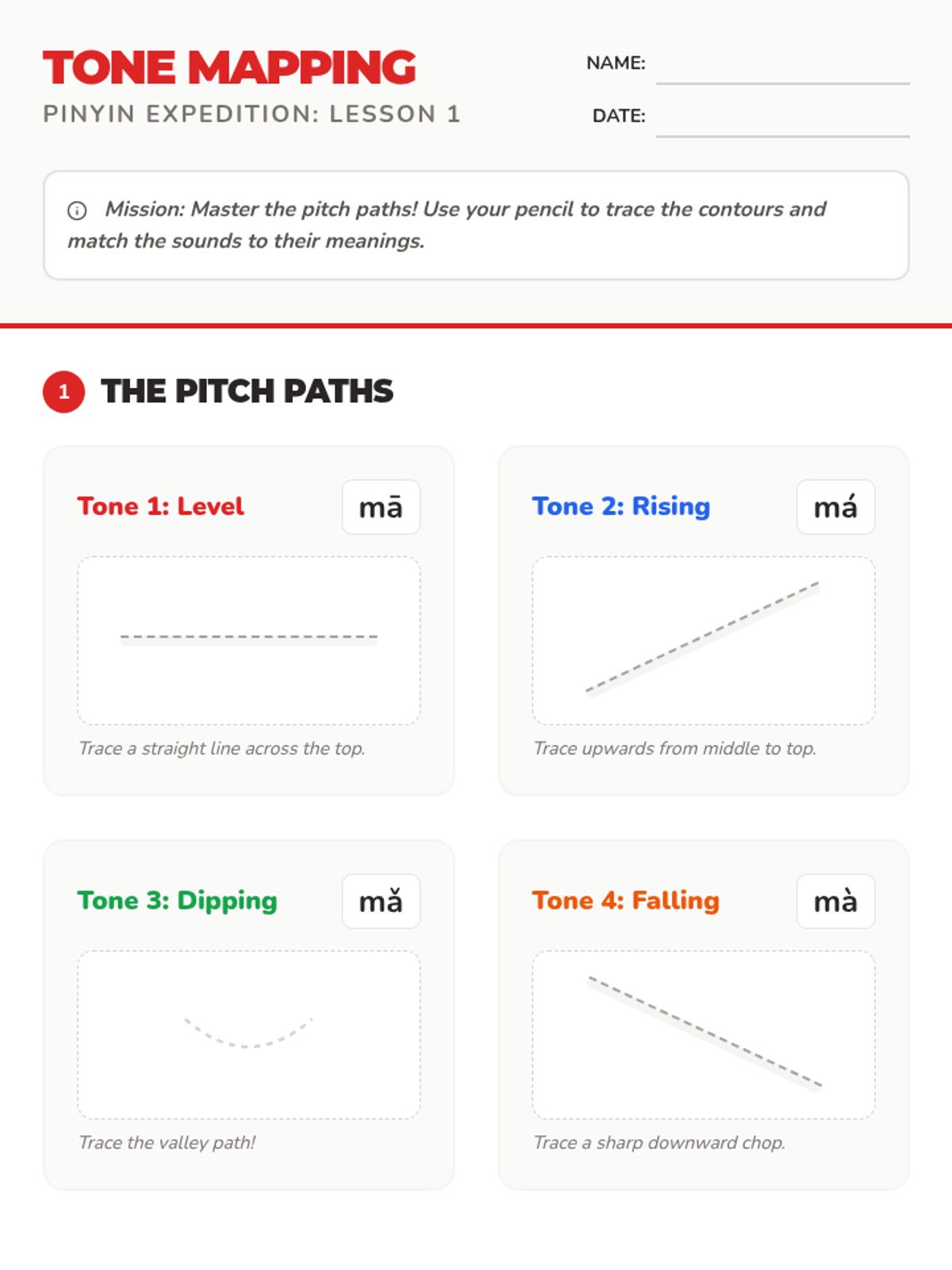
A comprehensive introduction to Mandarin Chinese phonetics, focusing on the mastery of the four tones, initials, finals, and reading fluency using the Pinyin system. Students use physical gestures, listening drills, and interactive games to decode and pronounce Mandarin accurately.
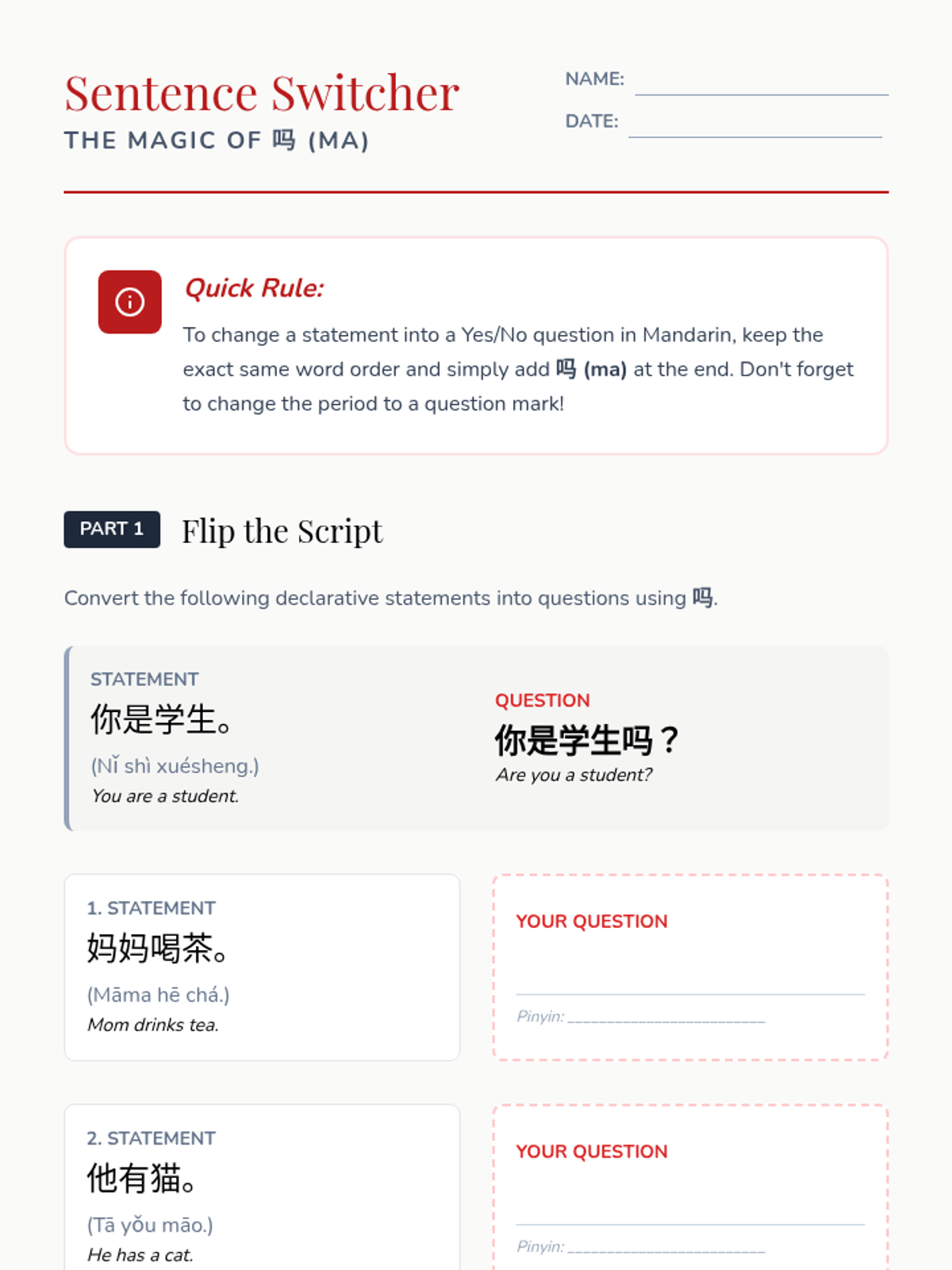
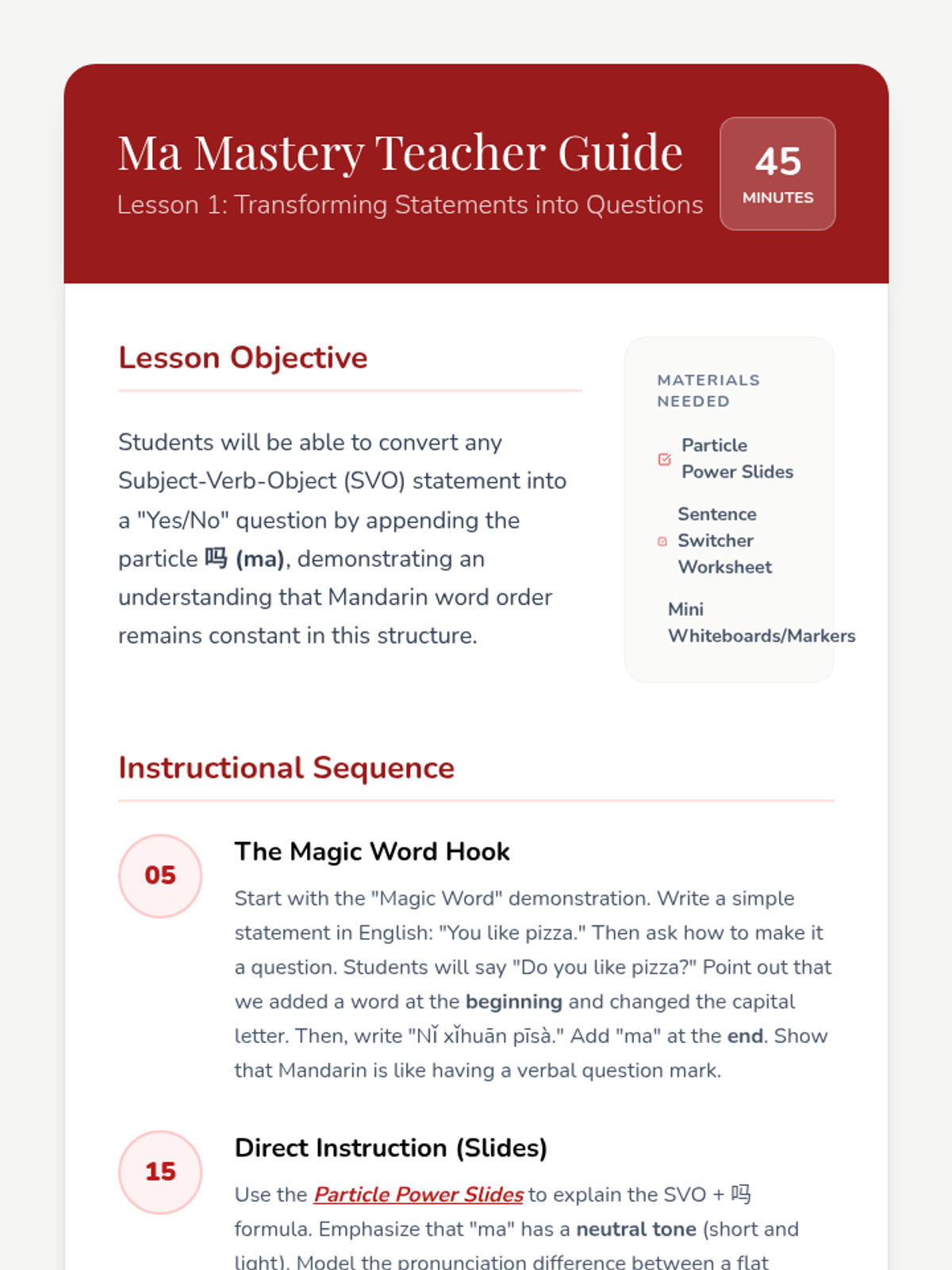
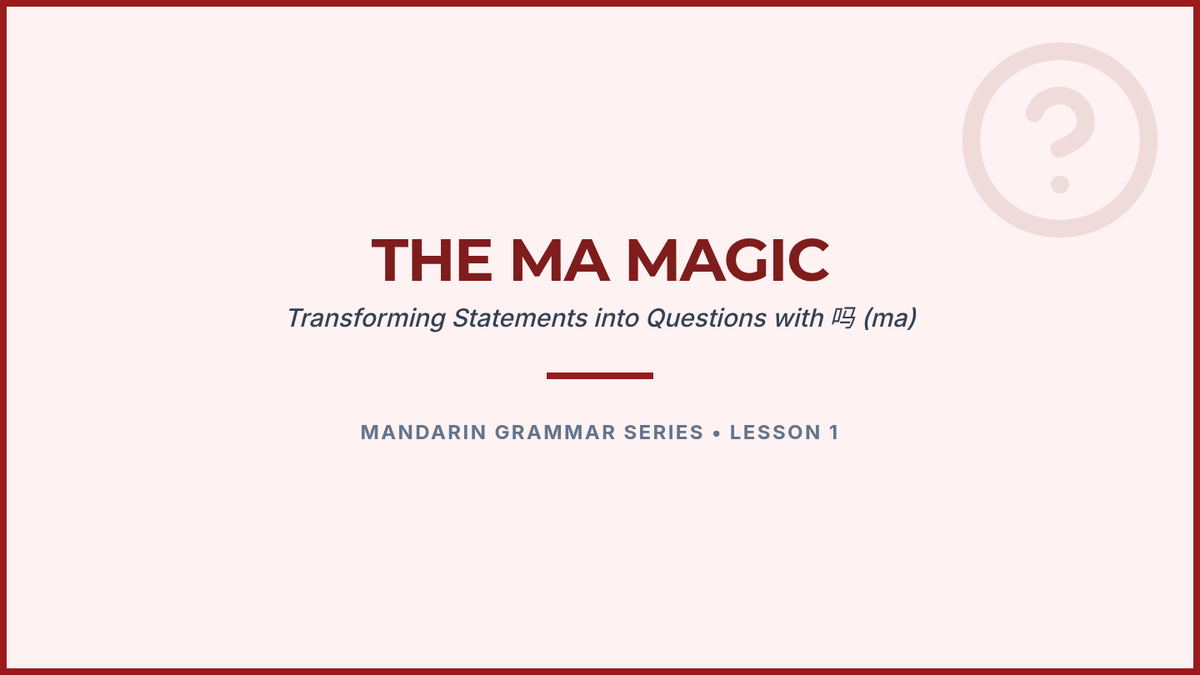
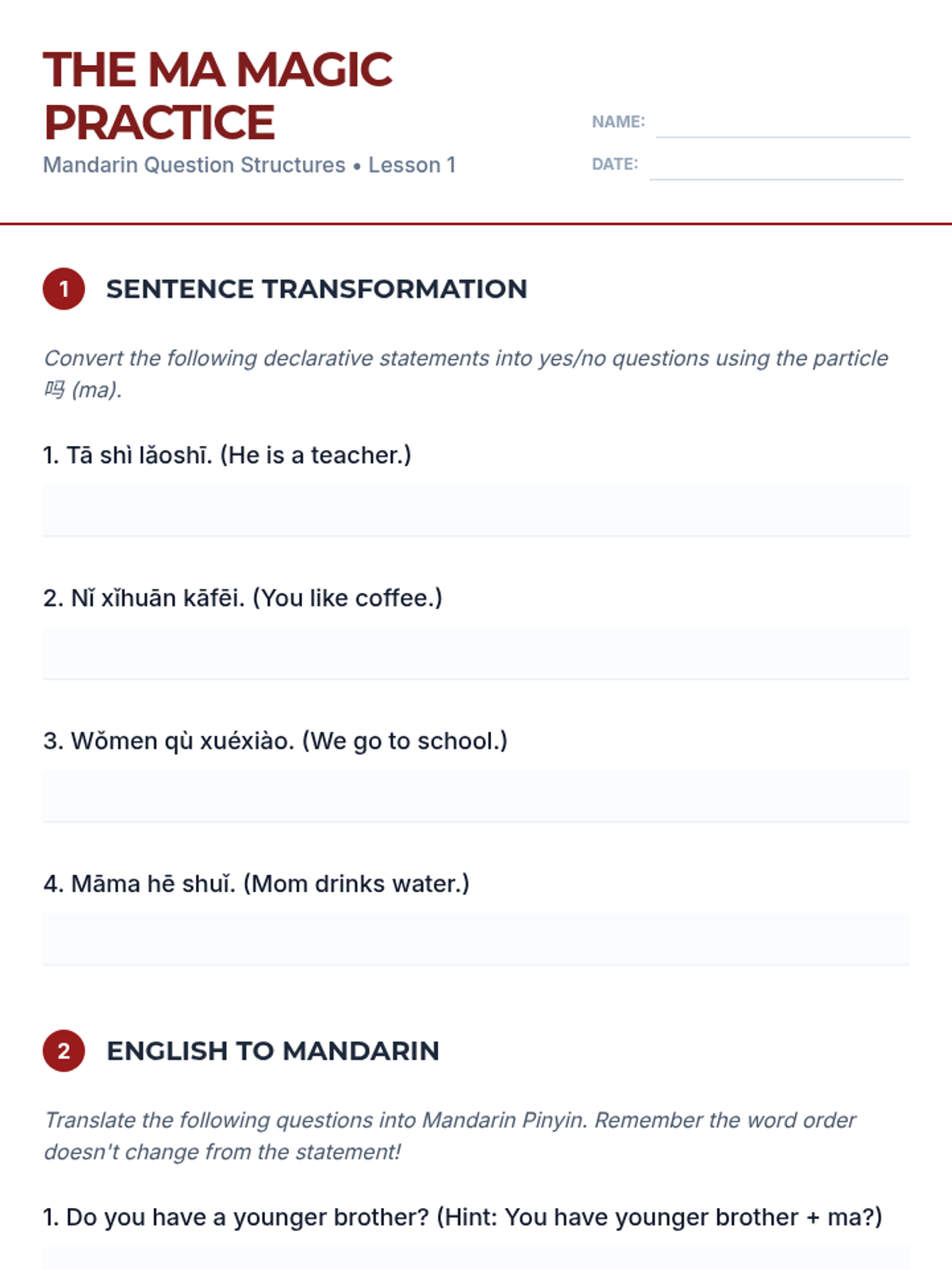
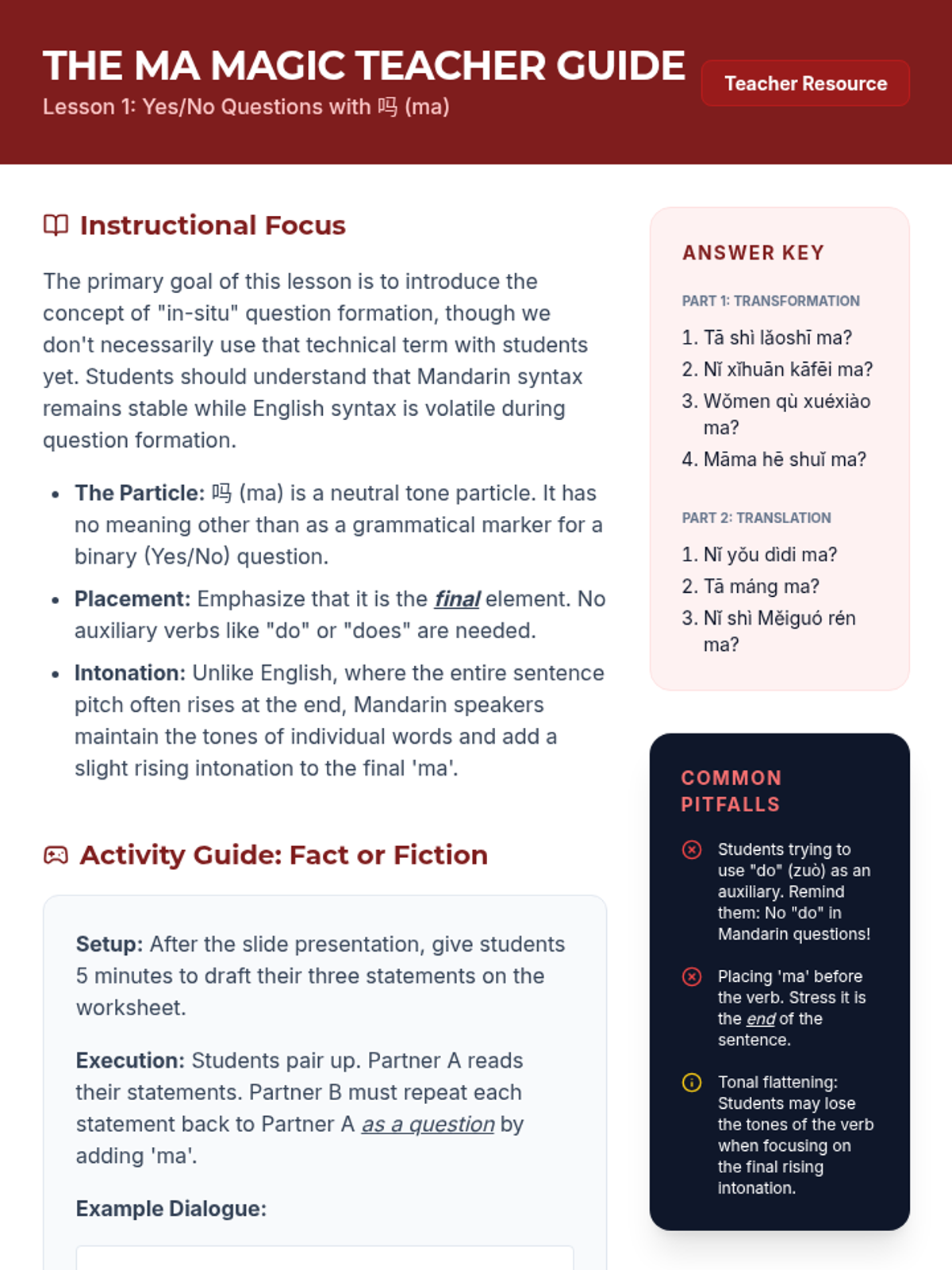
Students move from making statements to asking for information using the particle 'ma' and interrogative pronouns. The sequence emphasizes the simplicity of turning statements into questions in Mandarin compared to English auxiliary verbs. Learners engage in interview simulations and 'guess who' style games to practice inquiry strategies. By the end, students will confidently formulate yes/no questions and respond appropriately.
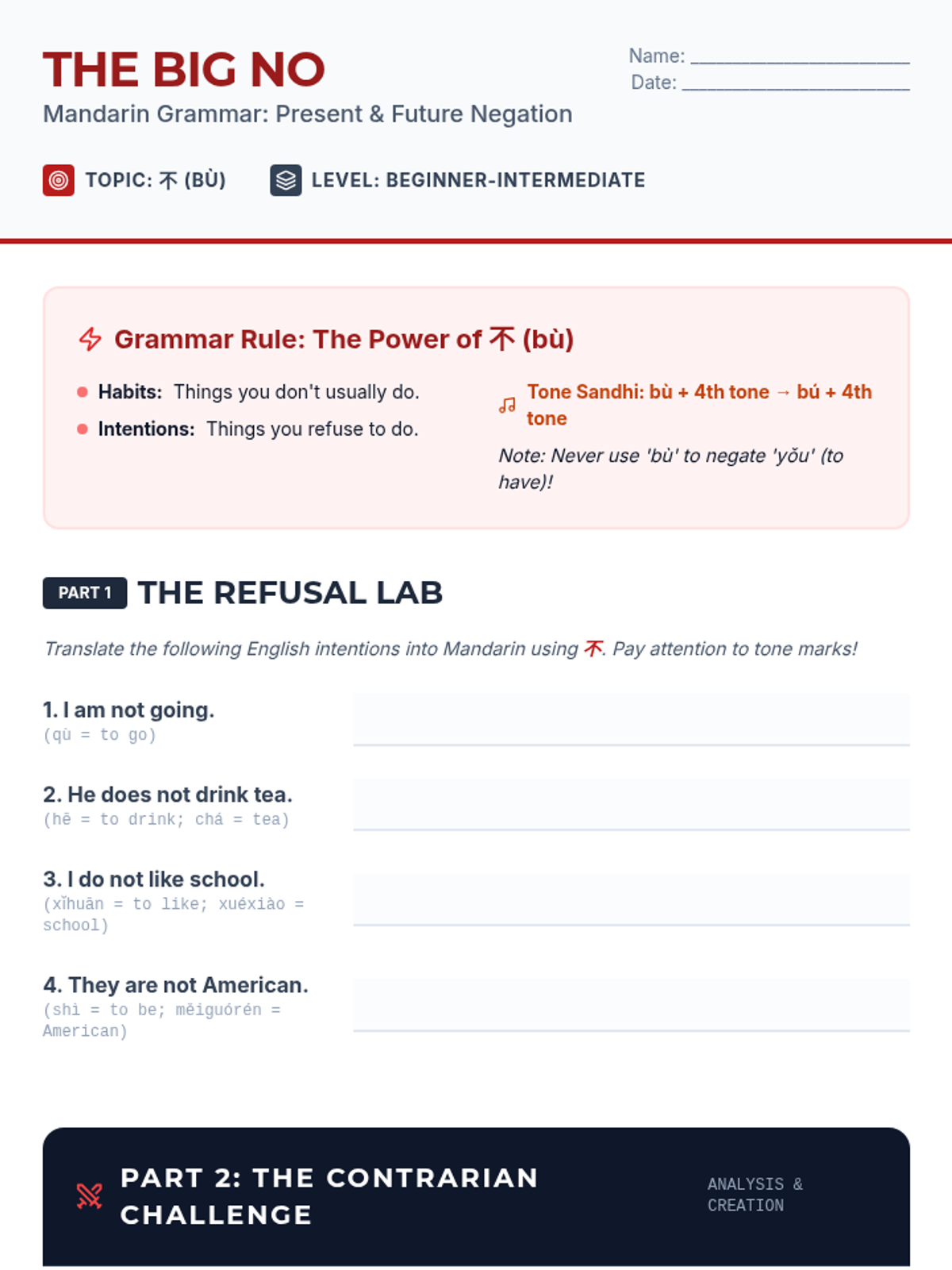
A comprehensive 10th-grade Mandarin Chinese grammar sequence focusing on the nuances of negation. Students master the distinct uses of 'bù' and 'méi' through case studies, creative writing, and linguistic analysis.
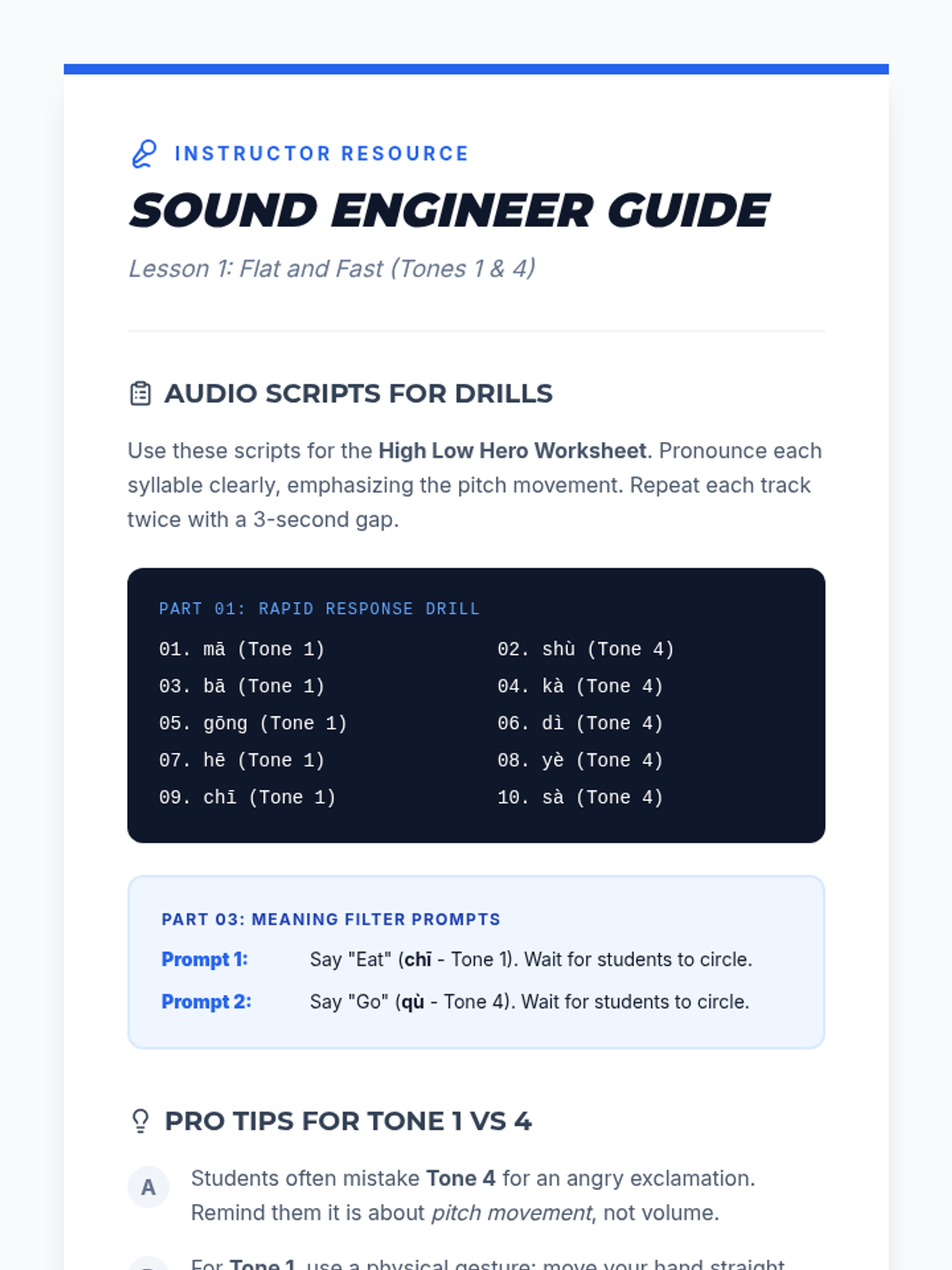
A high-repetition, auditory-focused sequence designed to train 10th-grade students to distinguish and identify the four Mandarin tones. The sequence moves from isolated syllables to complex combinations and rapid-fire recognition using gamified drills and transcription challenges.
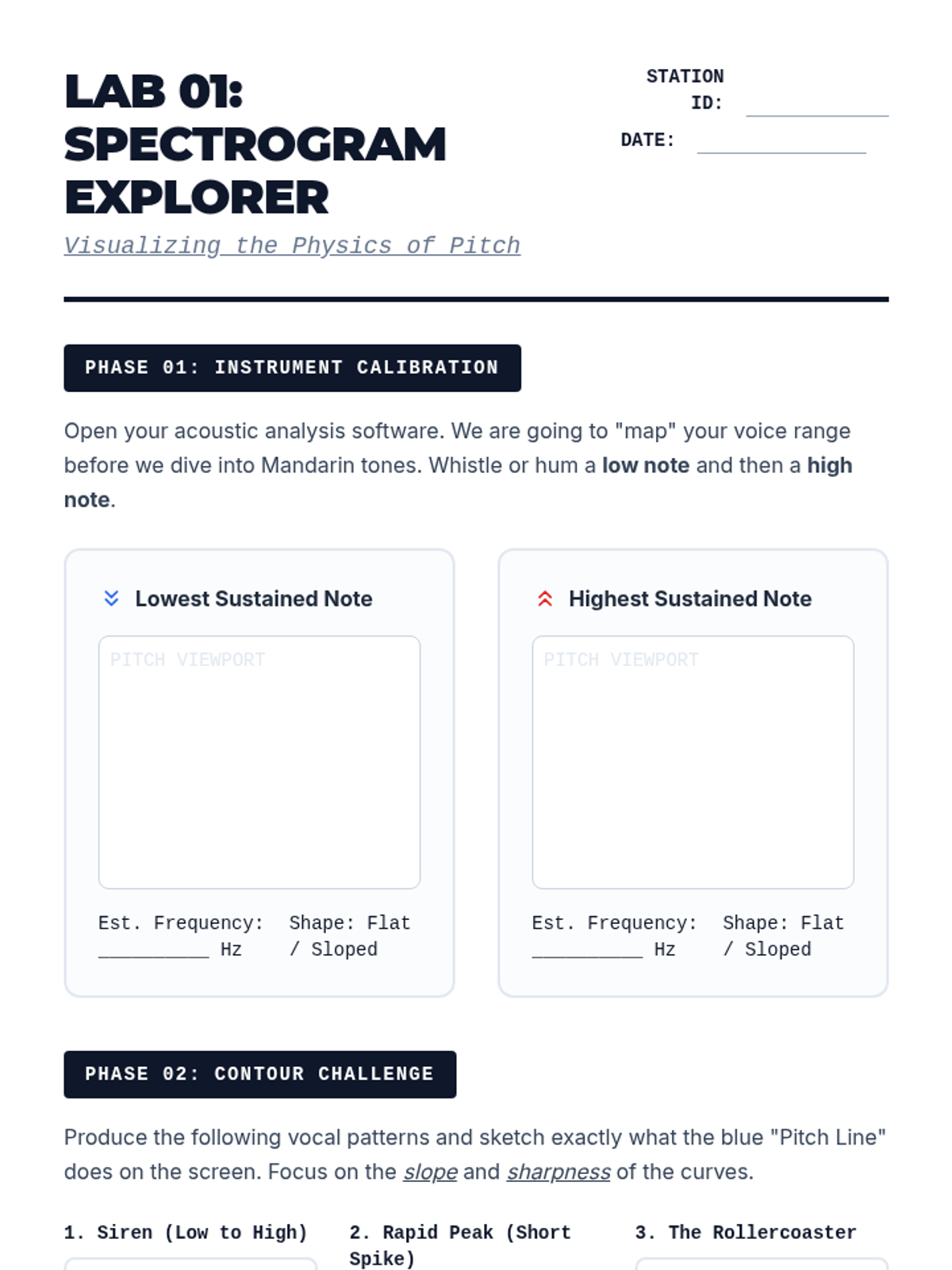
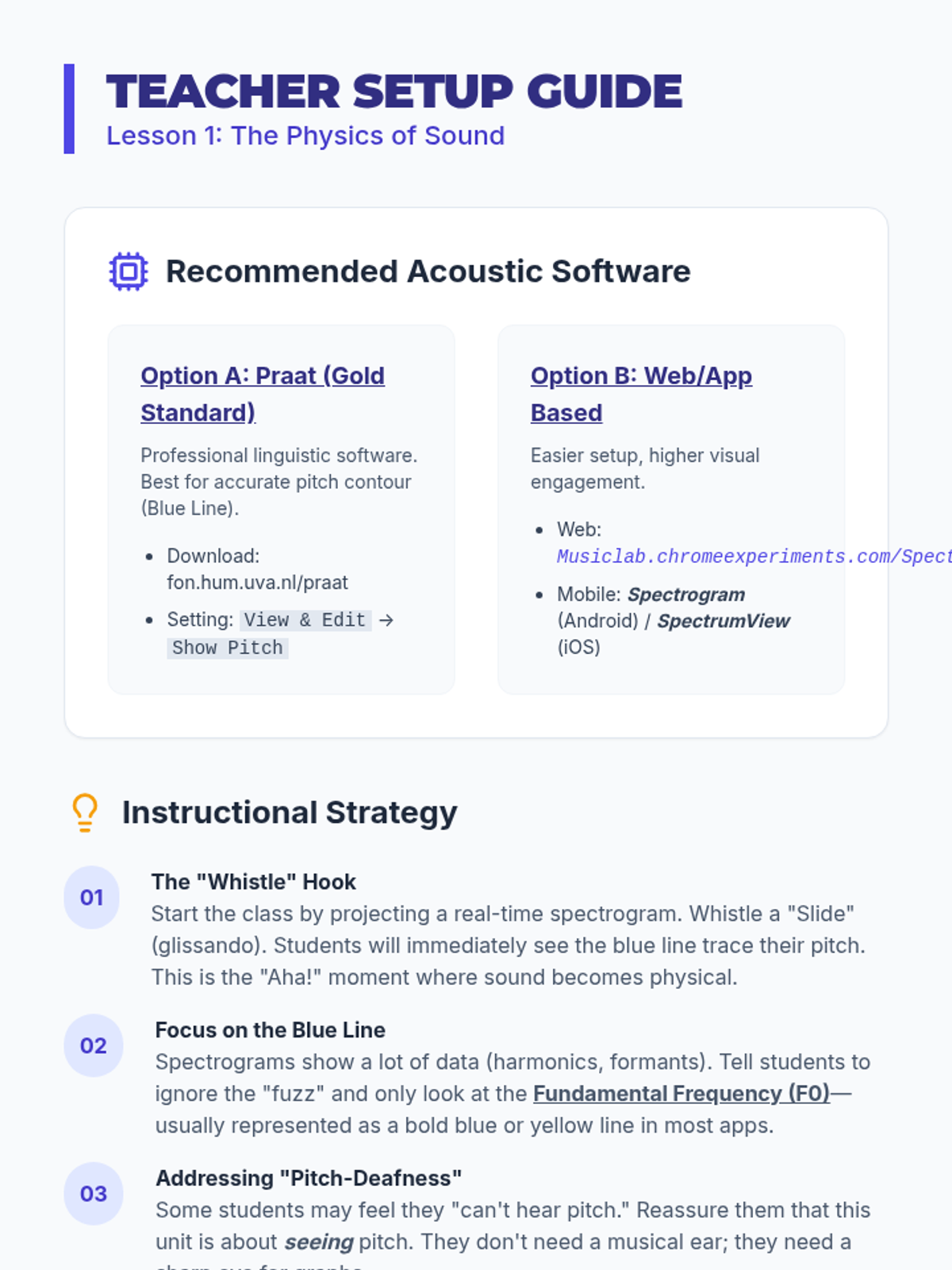
A high-tech approach to Mandarin tones for 10th graders, using acoustic analysis software to visualize pitch contours. Students treat pronunciation as a scientific inquiry, comparing their own voice waves to native speaker models.
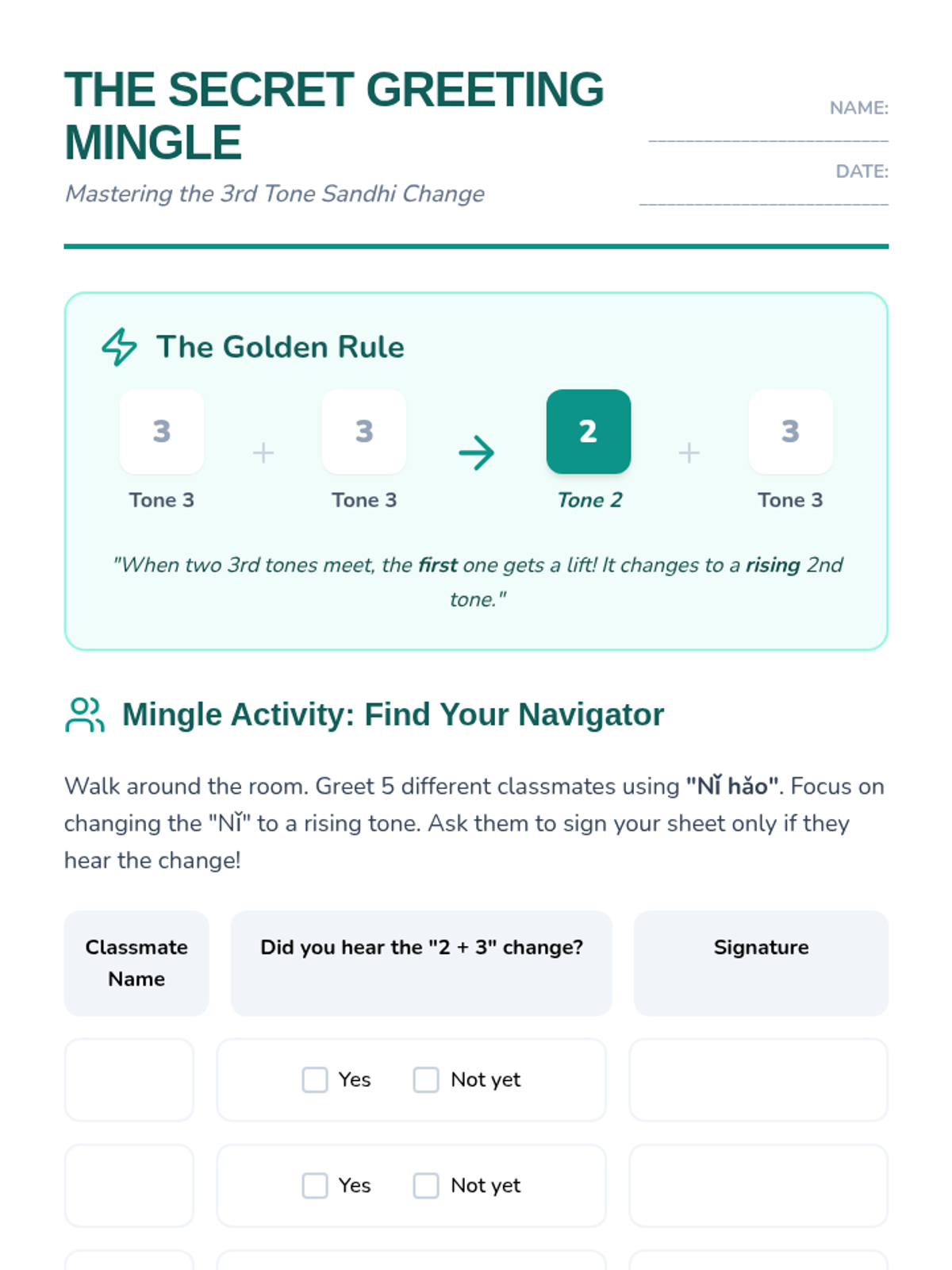
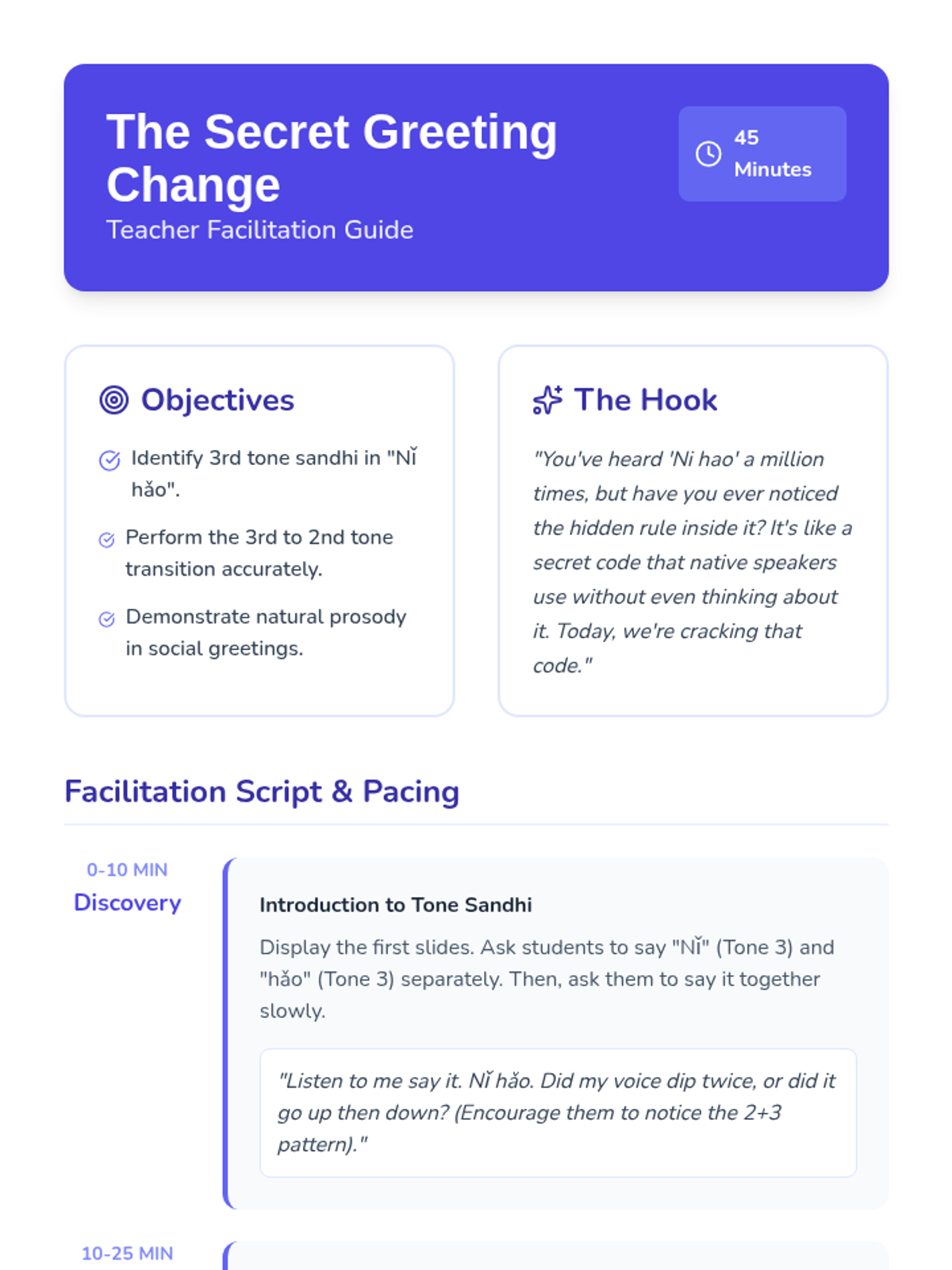
This sequence introduces 6th-grade students to the application of Mandarin Chinese tones in conversational contexts. It focuses on Tone Sandhi (specifically the 3rd tone change), the neutral tone in family vocabulary, rhythmic number patterns, and basic SVO sentence structures to build natural fluency and pitch accuracy.
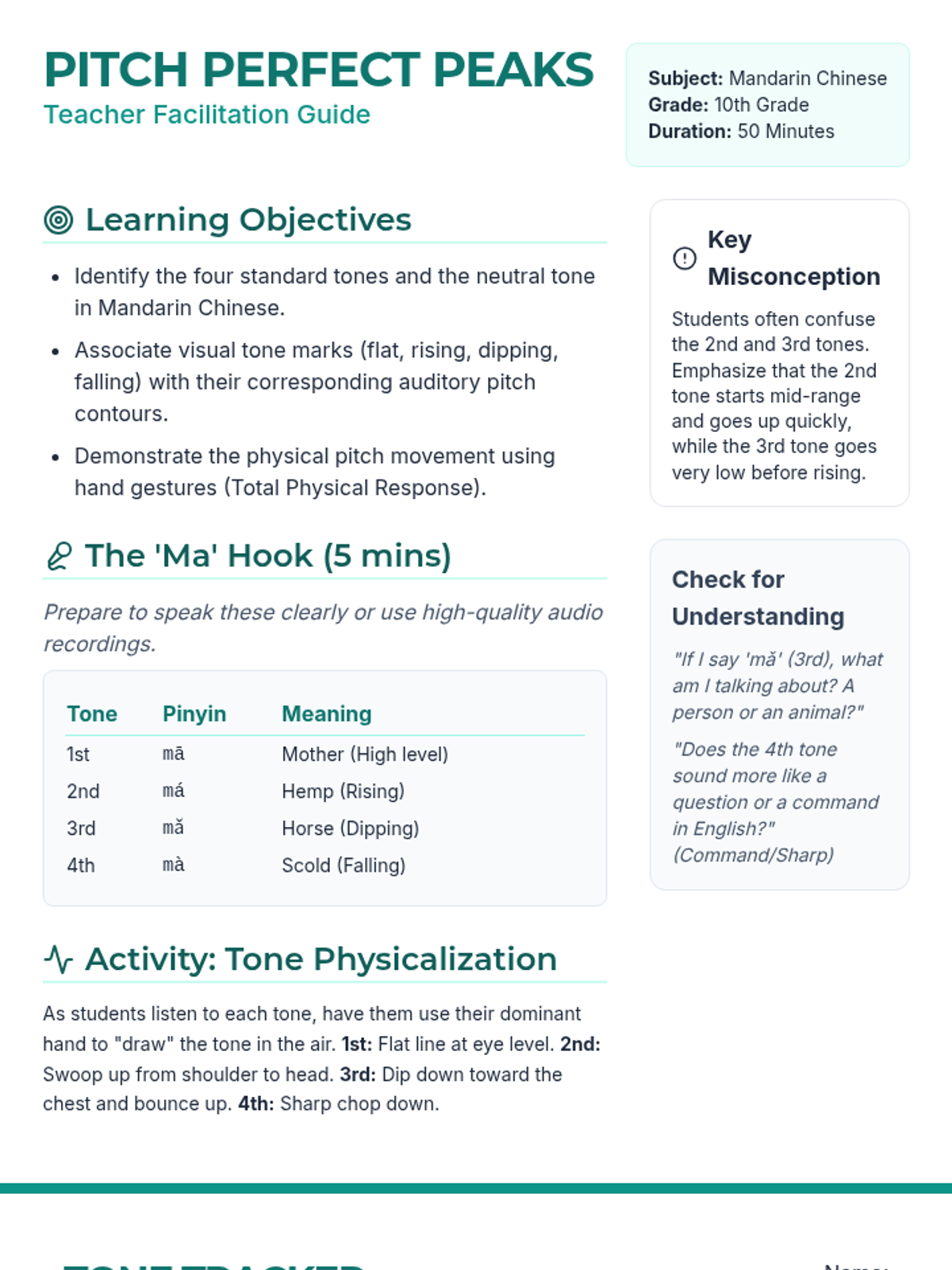
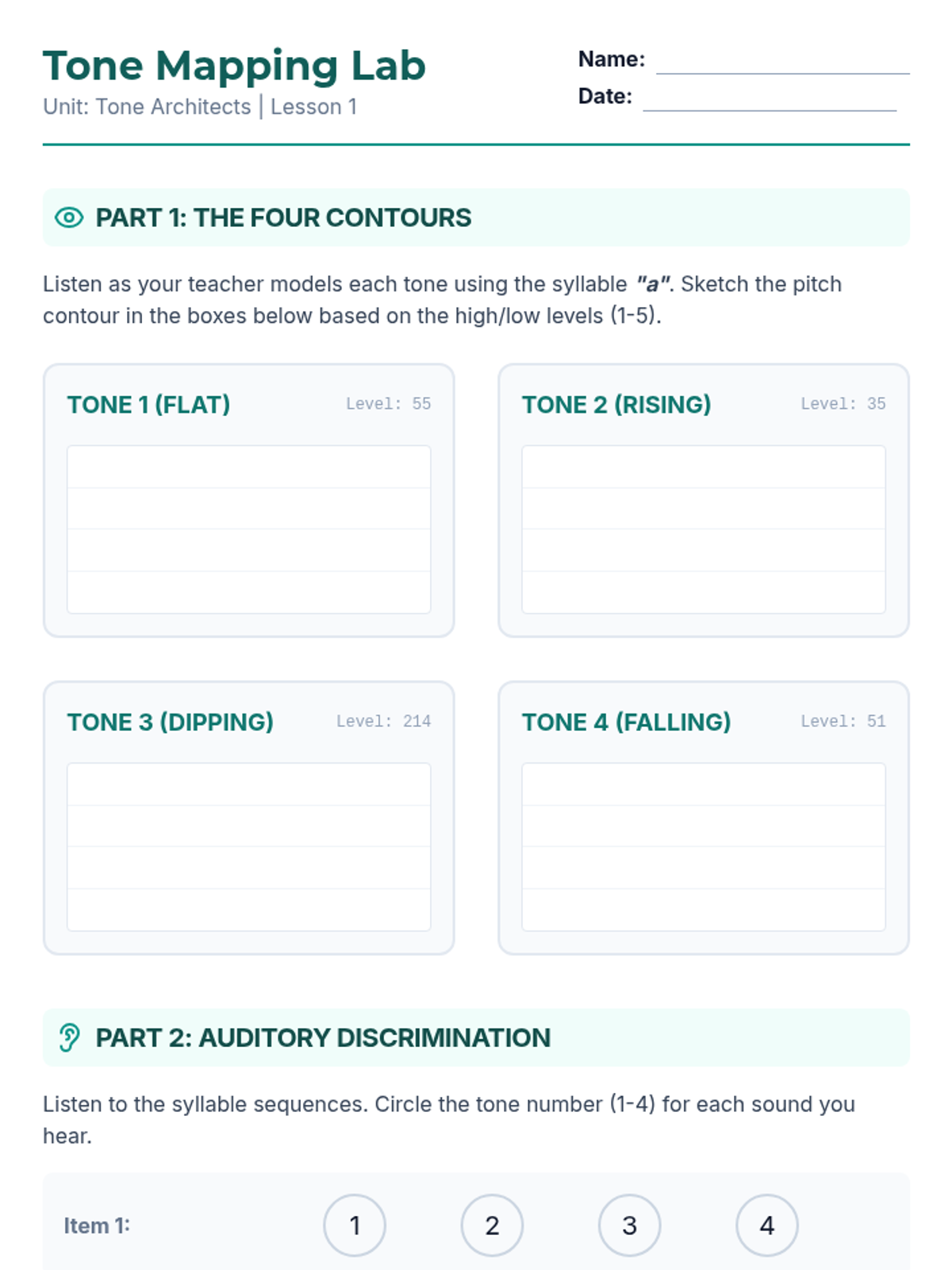
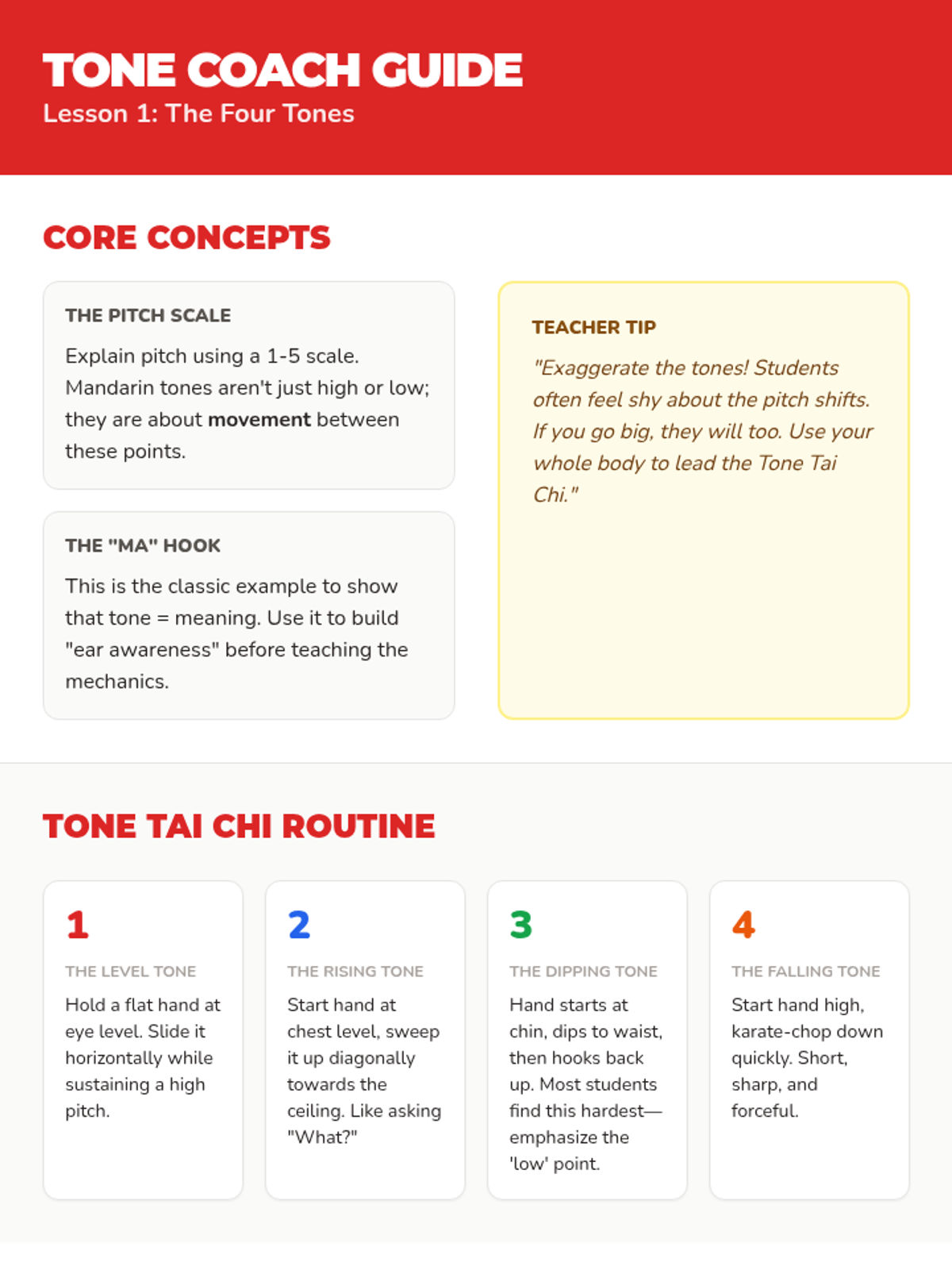
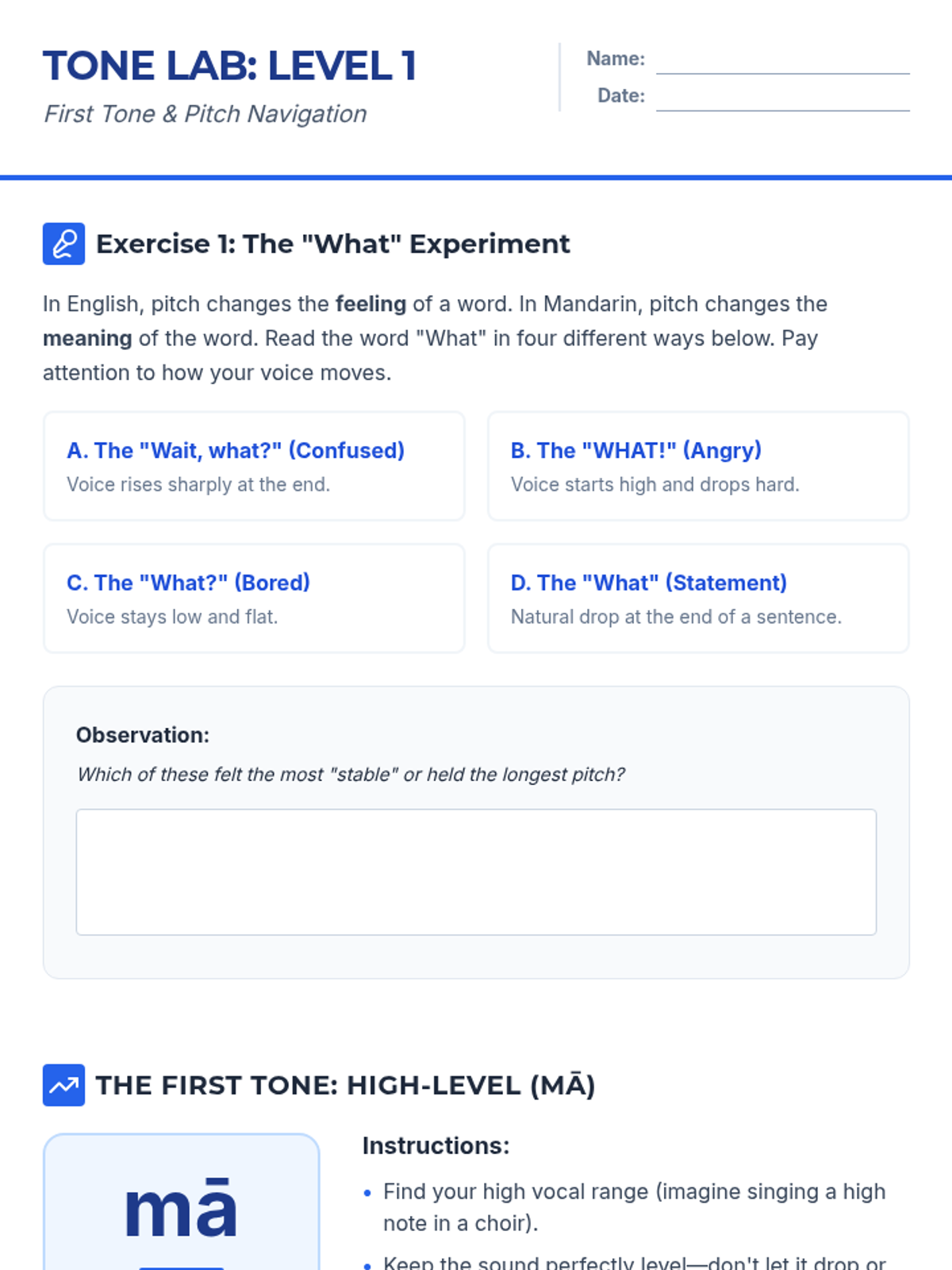
This sequence introduces 10th-grade students to the fundamental mechanics of Mandarin Chinese tones. It covers the four main tones and the neutral tone through vocal exercises, physical gestures, and pinyin orthography rules.
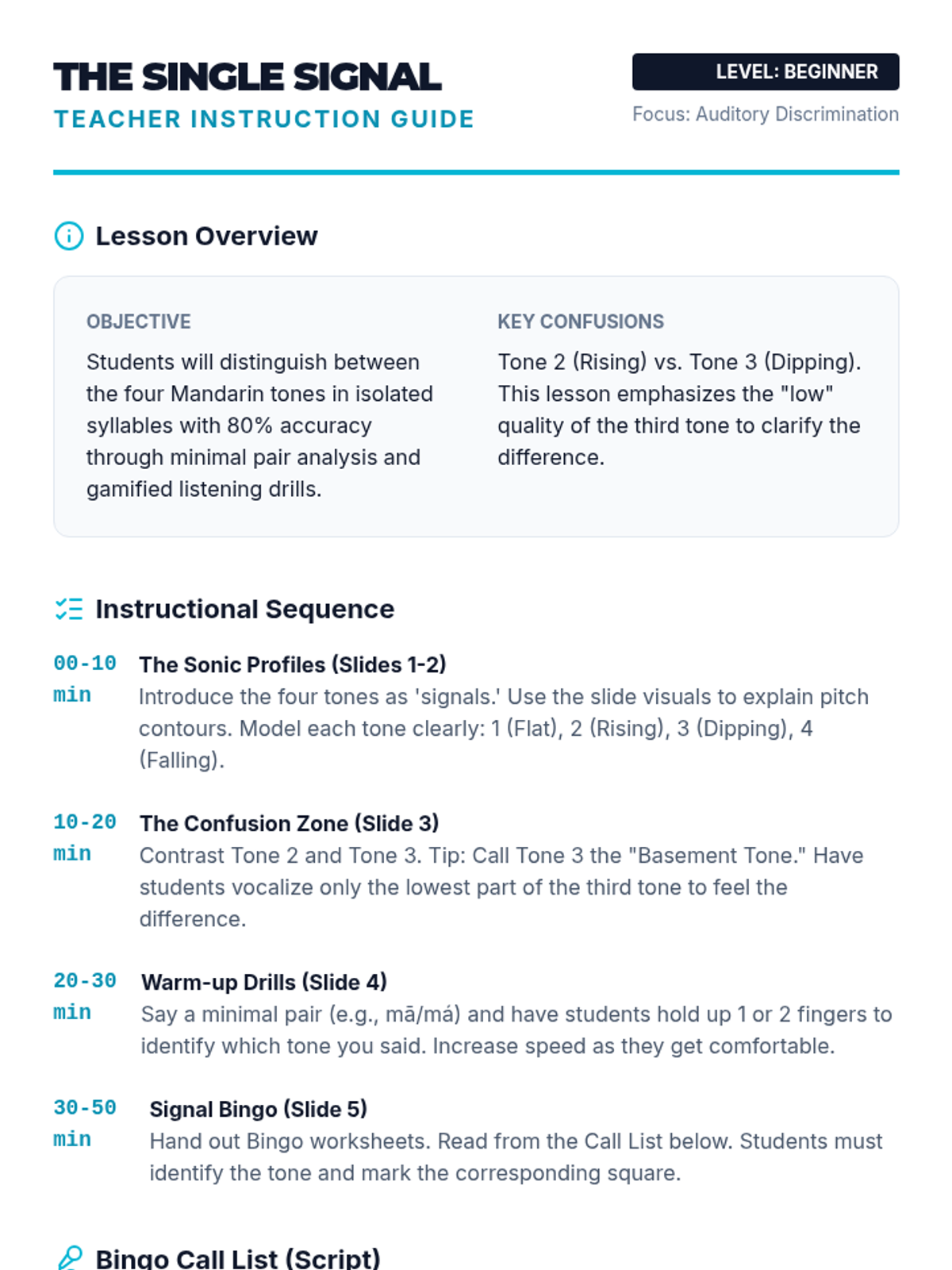
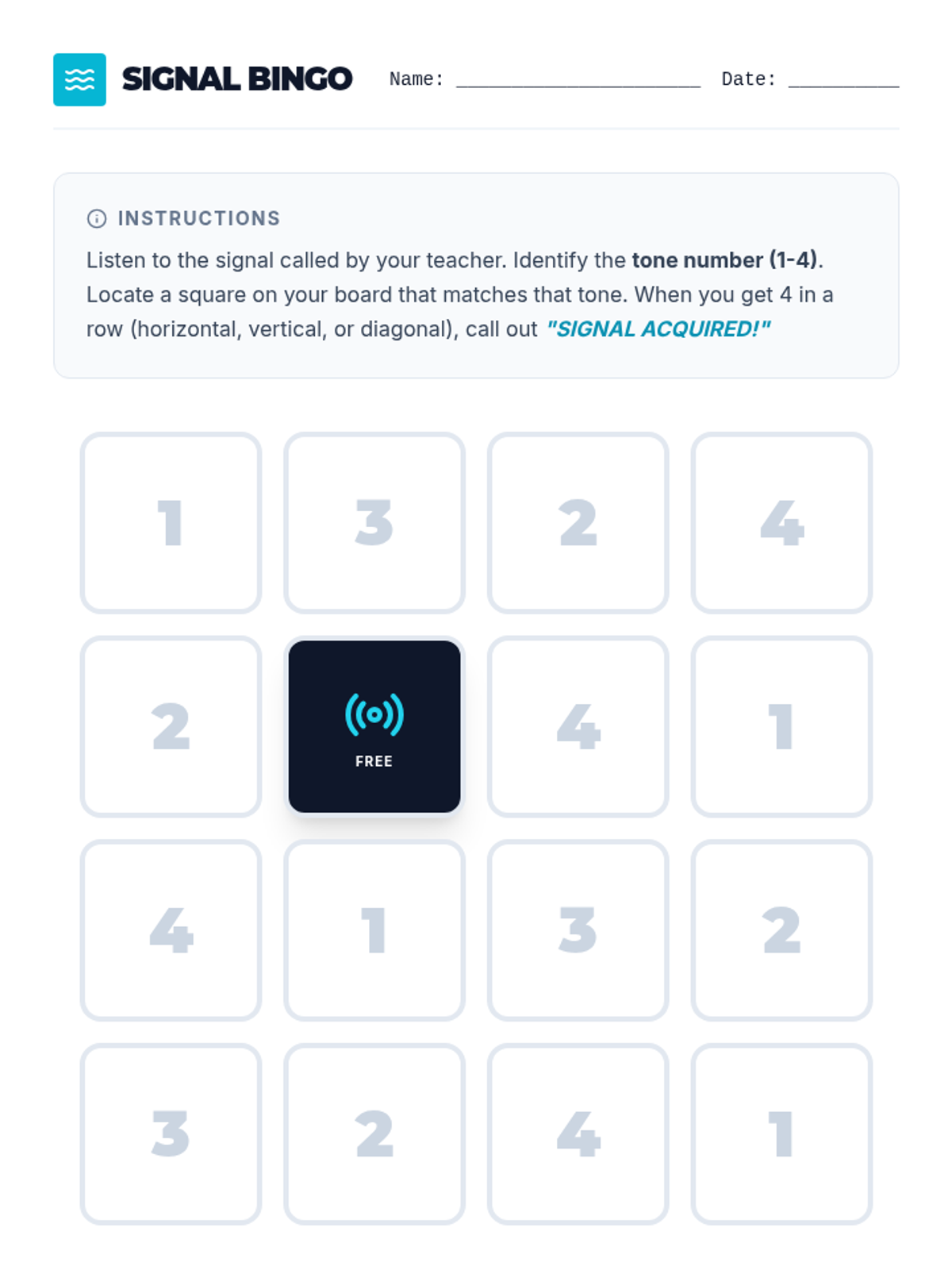
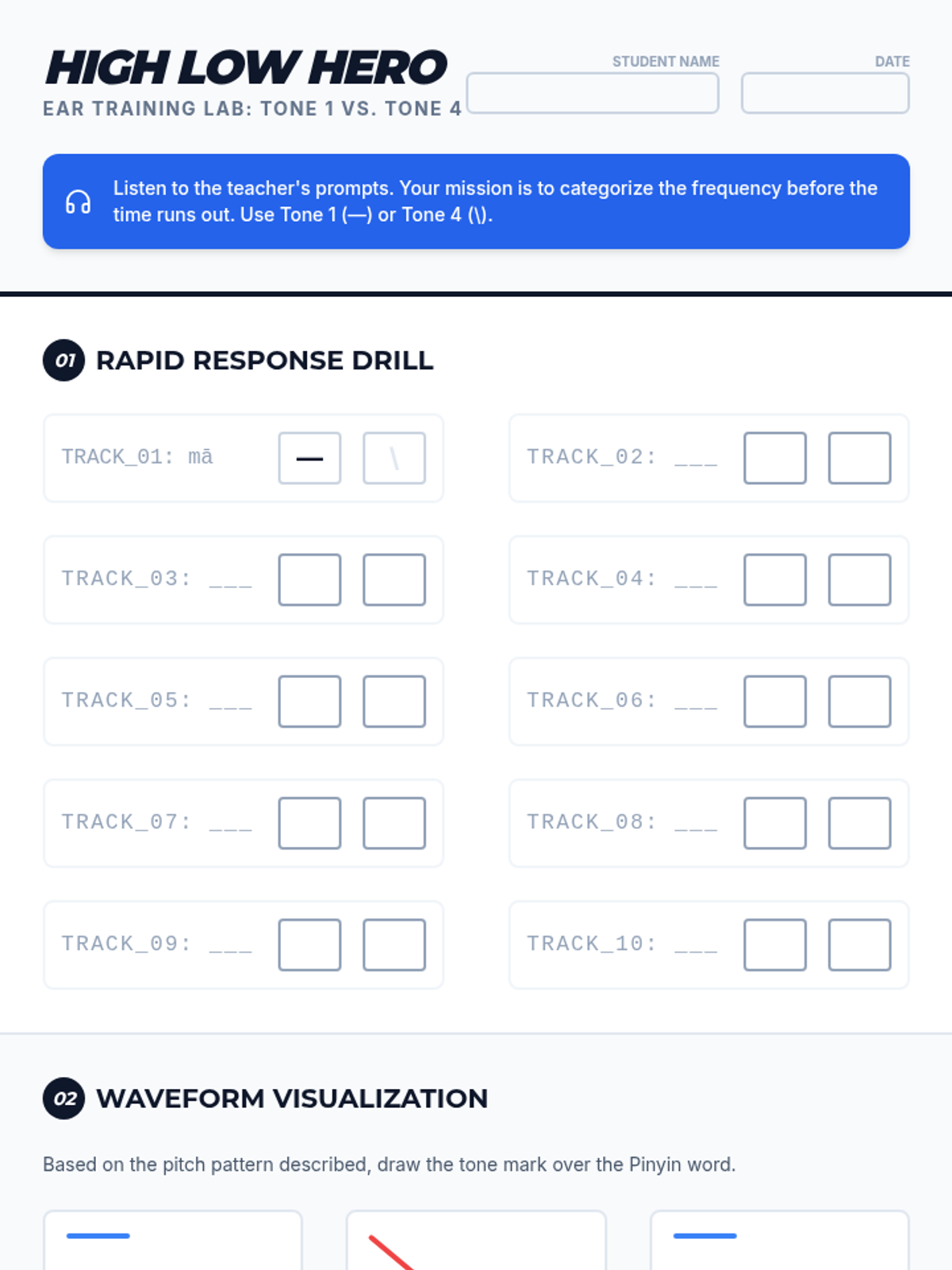
A gamified sequence for 9th-grade Mandarin beginners focused on auditory discrimination of the four Chinese tones. Students progress from basic contrasts to complex minimal pairs and sequential processing through competitive drills and ear training.
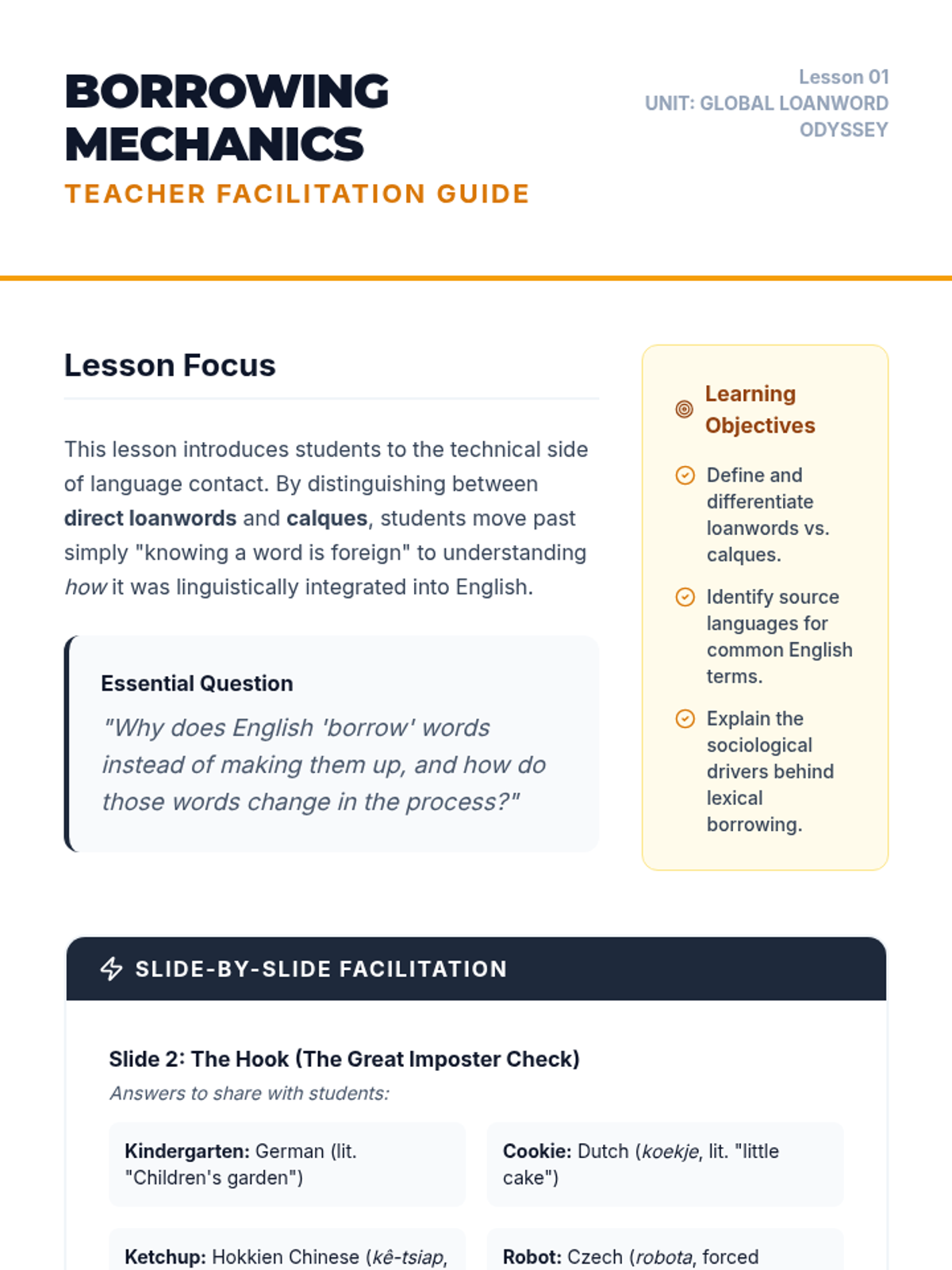
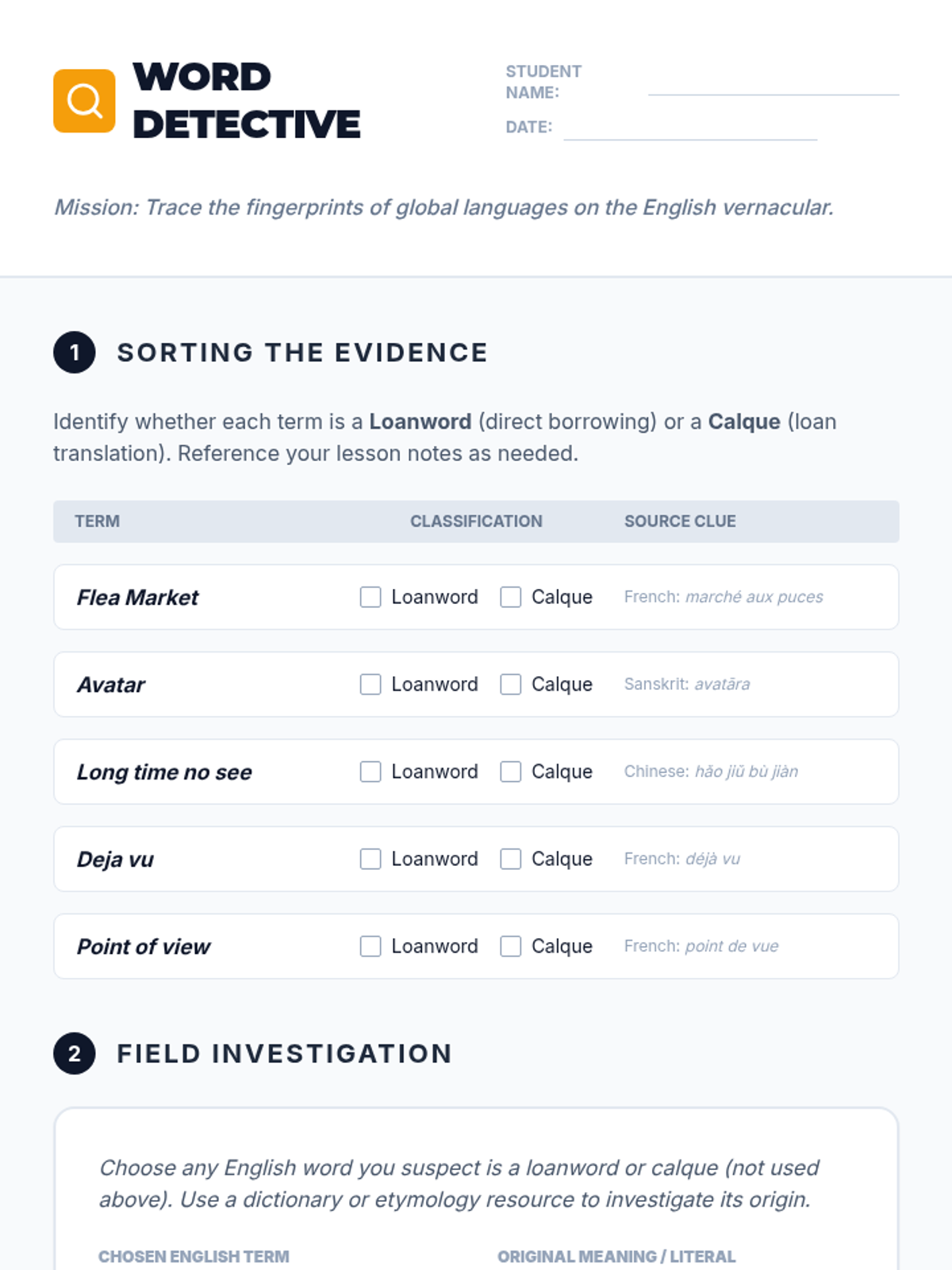
A linguistic and sociological exploration of how English absorbs and adapts words from diverse global sources, focusing on etymology, cultural exchange, and the evolution of language.
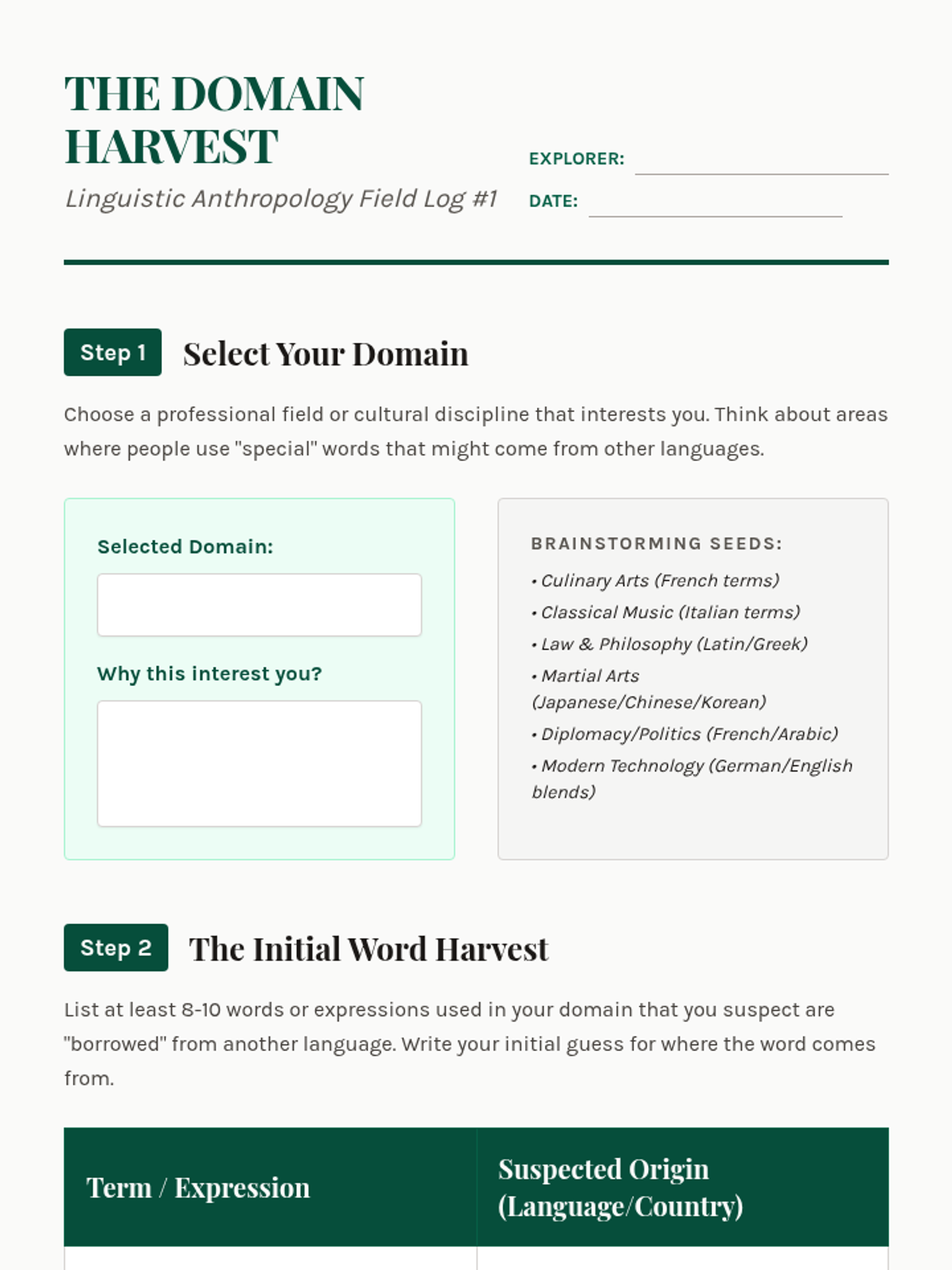
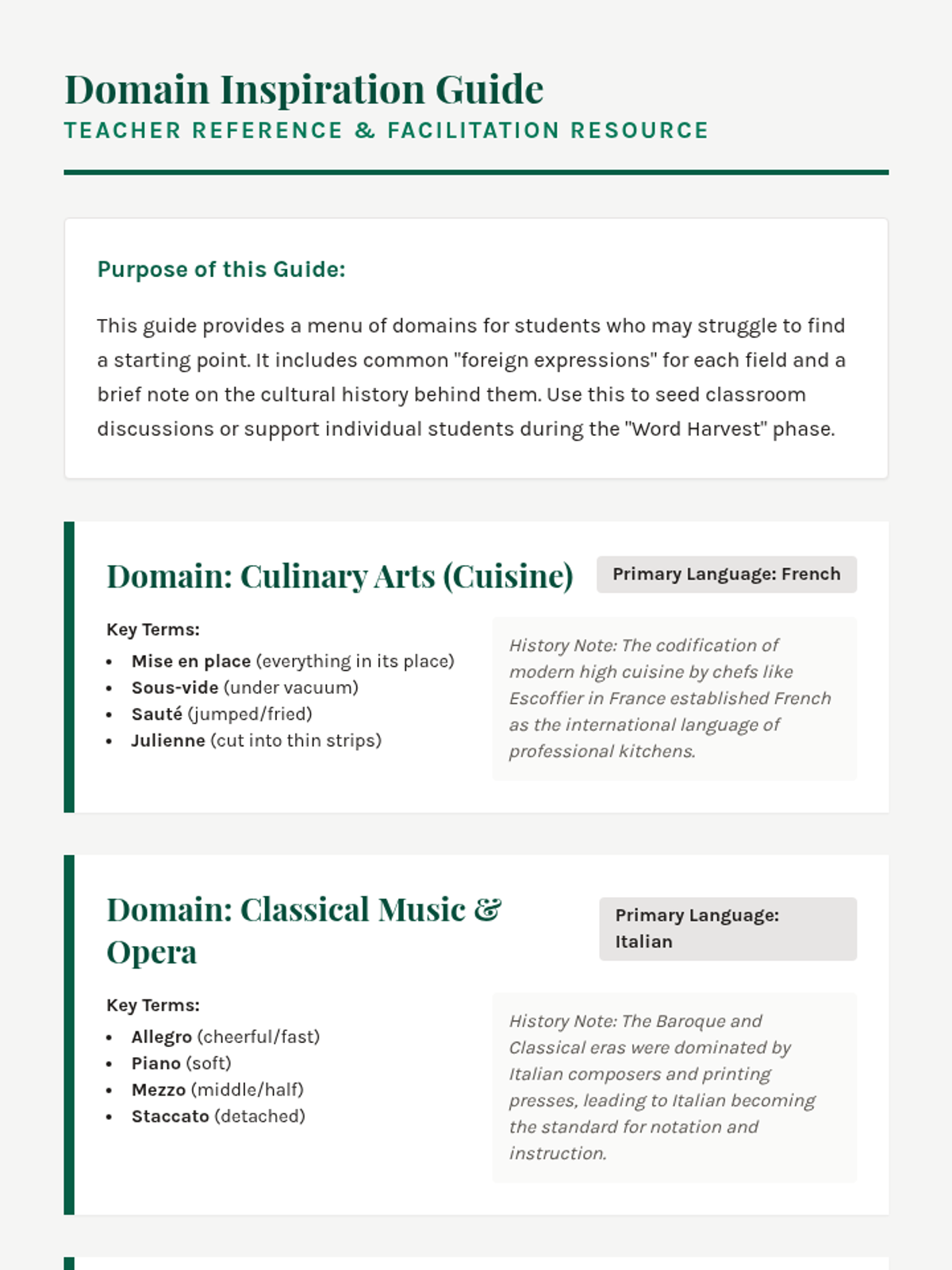
Students act as linguistic anthropologists creating a specialized 'Field Guide to Foreign Expressions' for a chosen professional or cultural domain. They investigate the etymology, usage, and visual representation of foreign terminology to explain their chosen field's linguistic history to a lay audience.
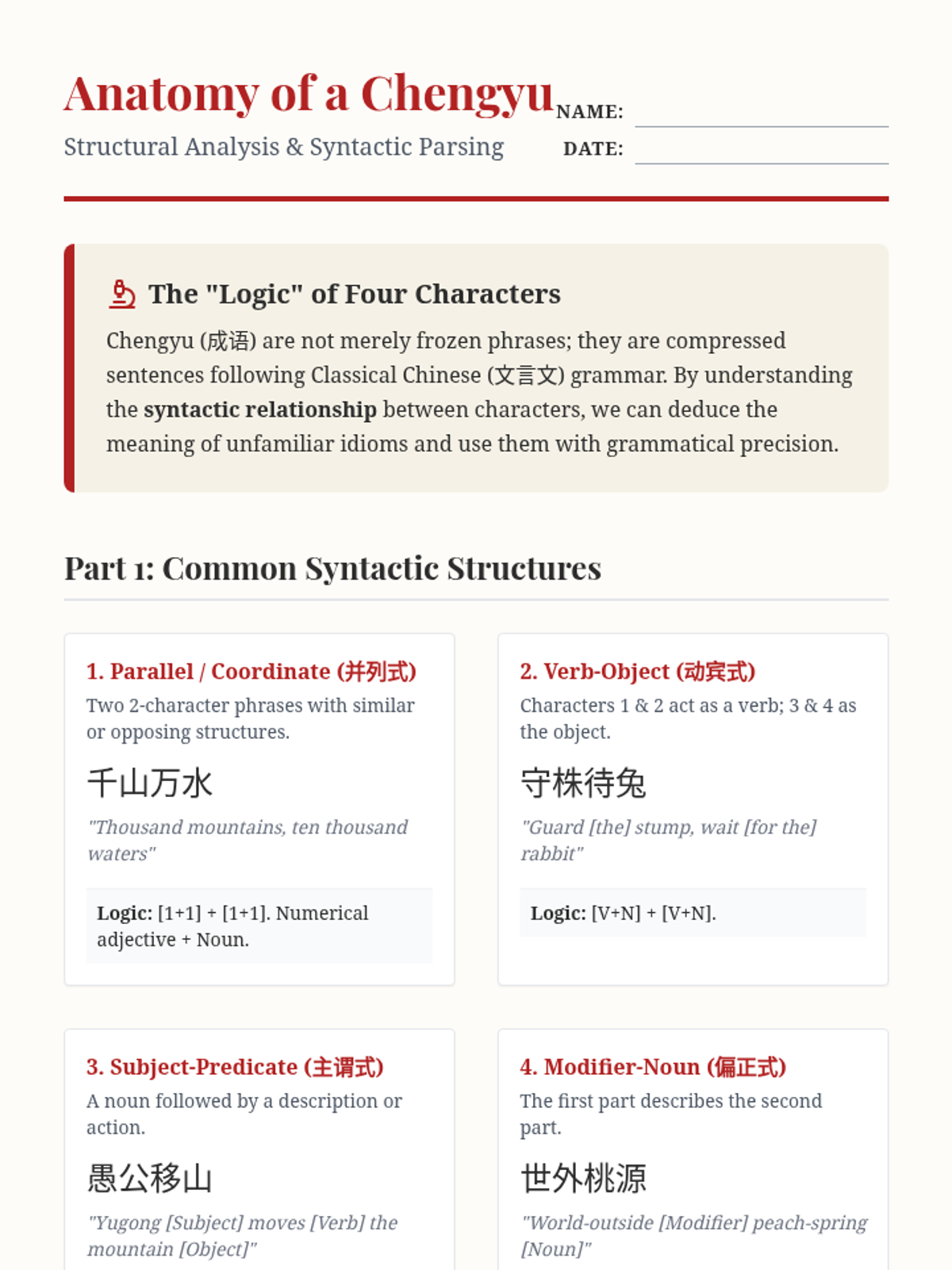
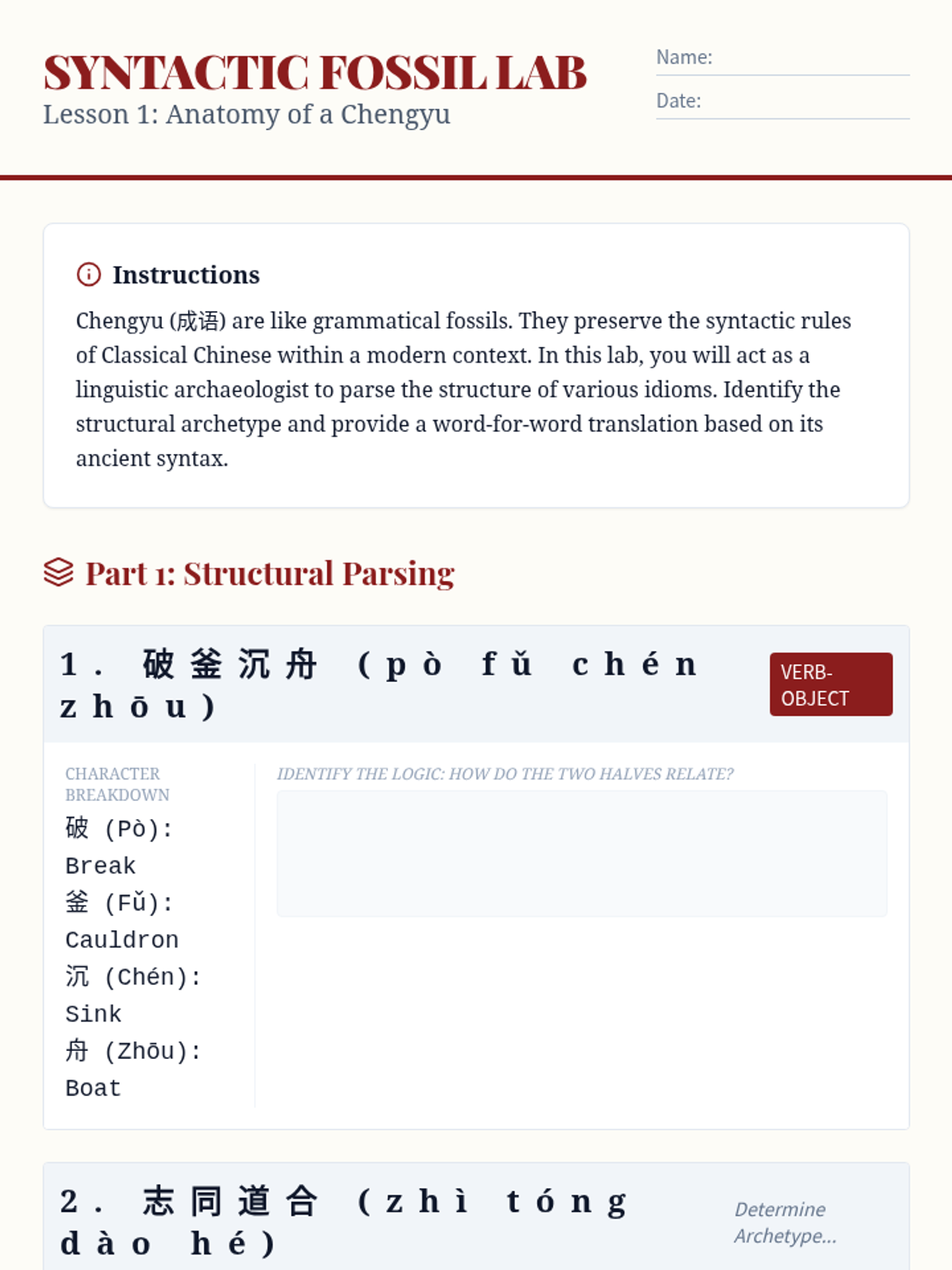
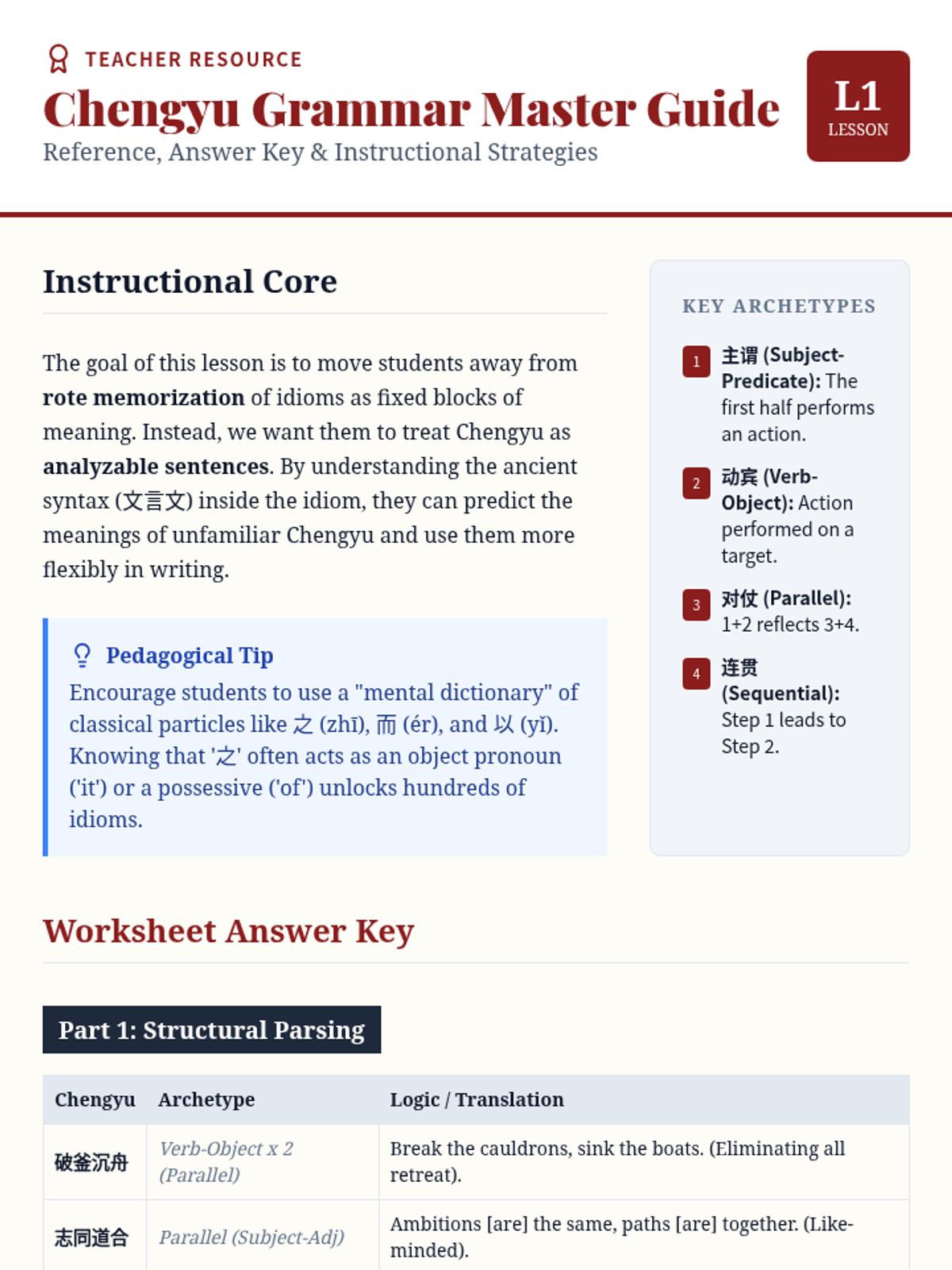
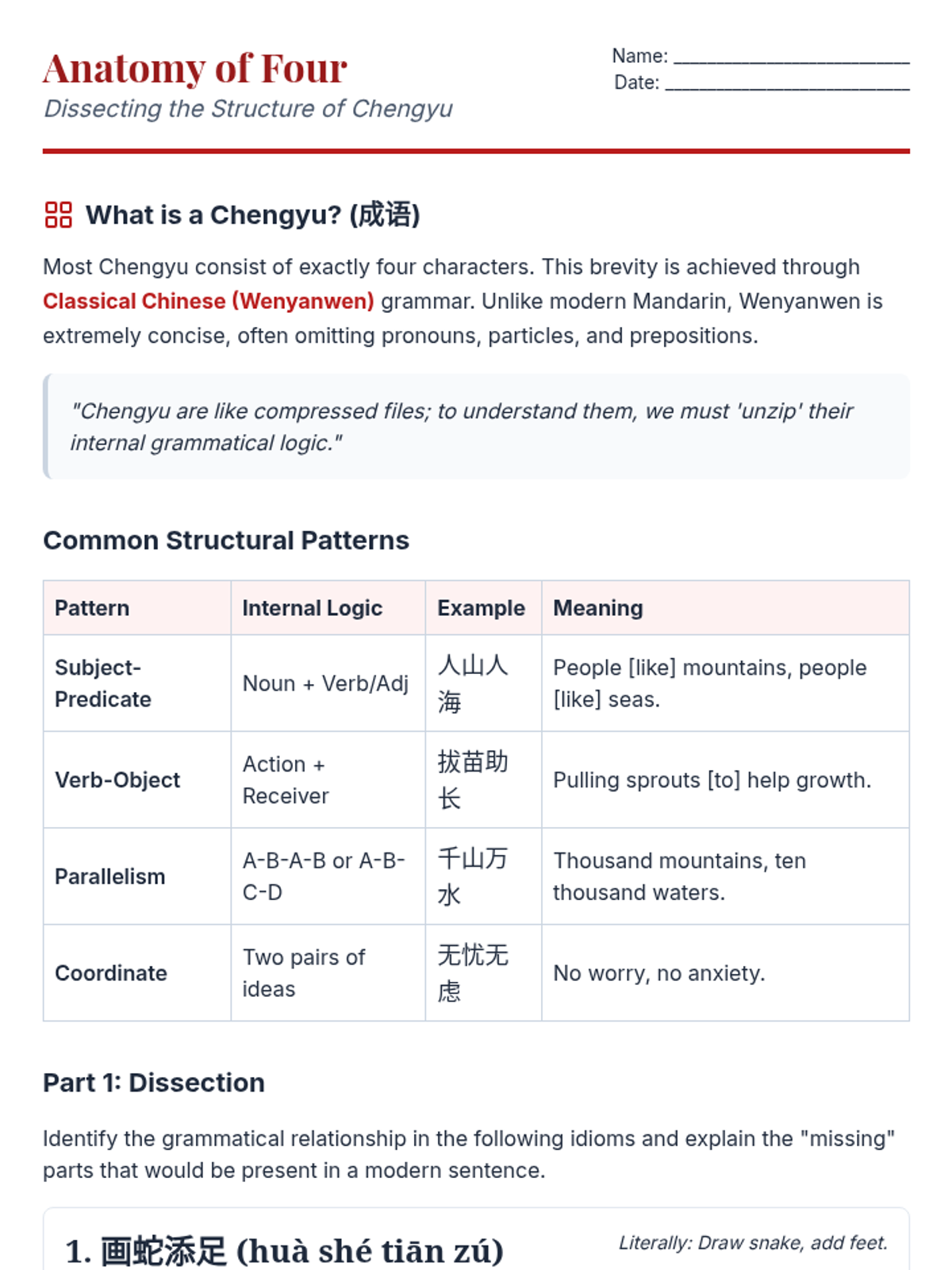
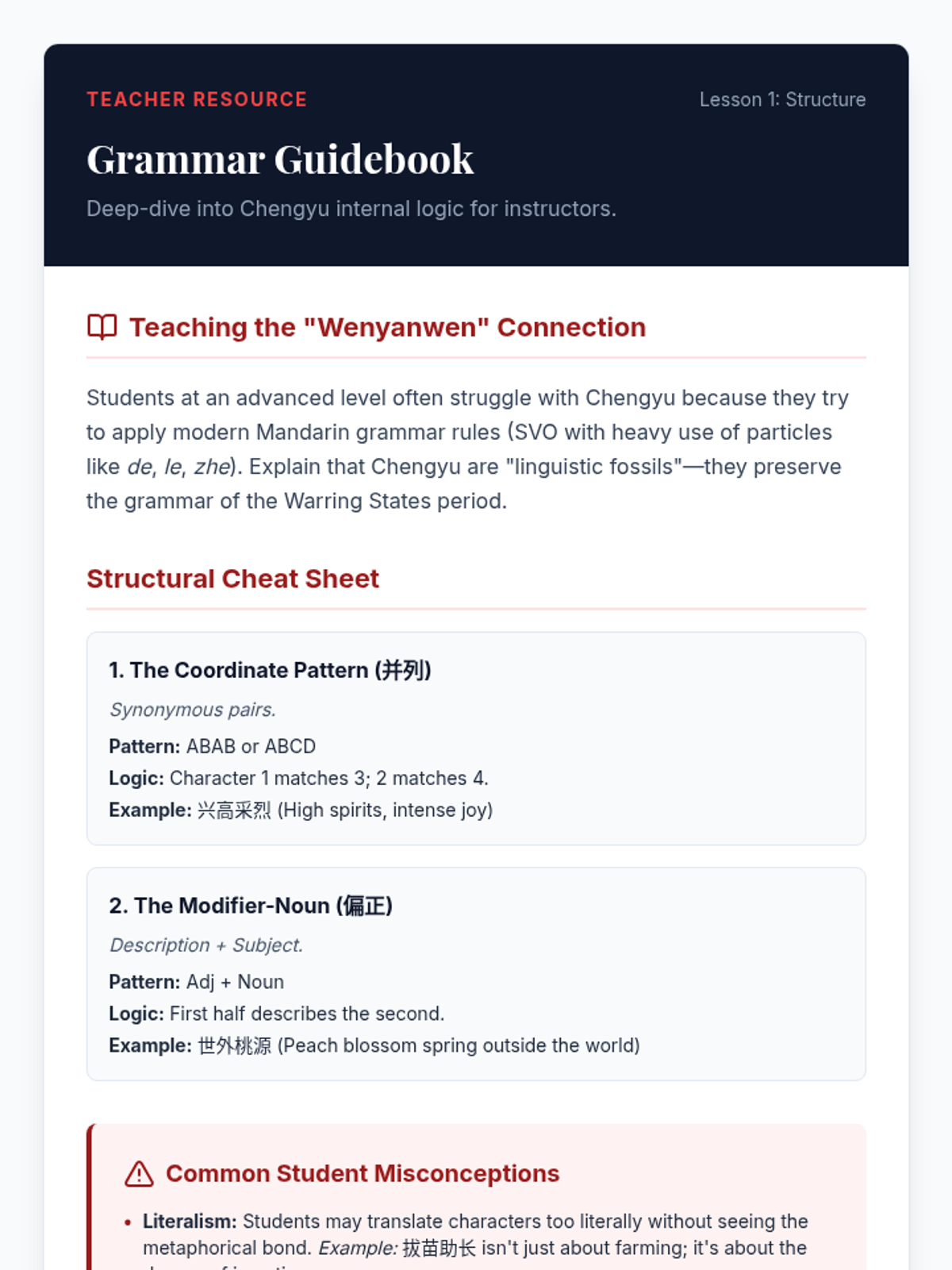
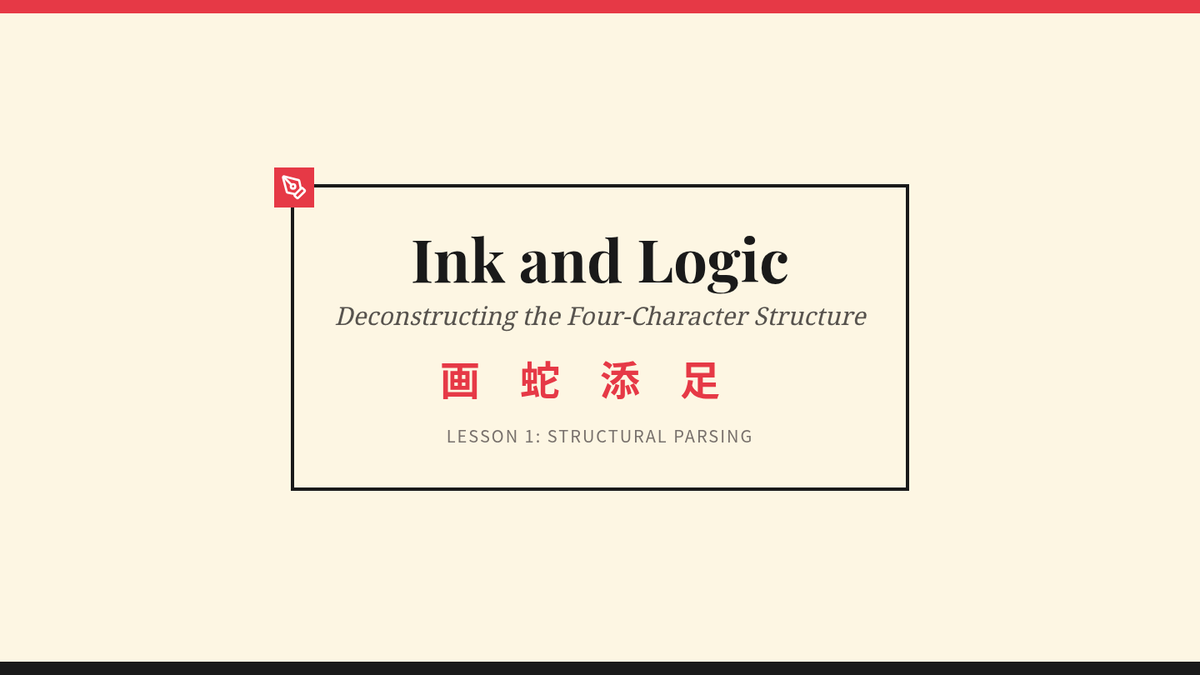
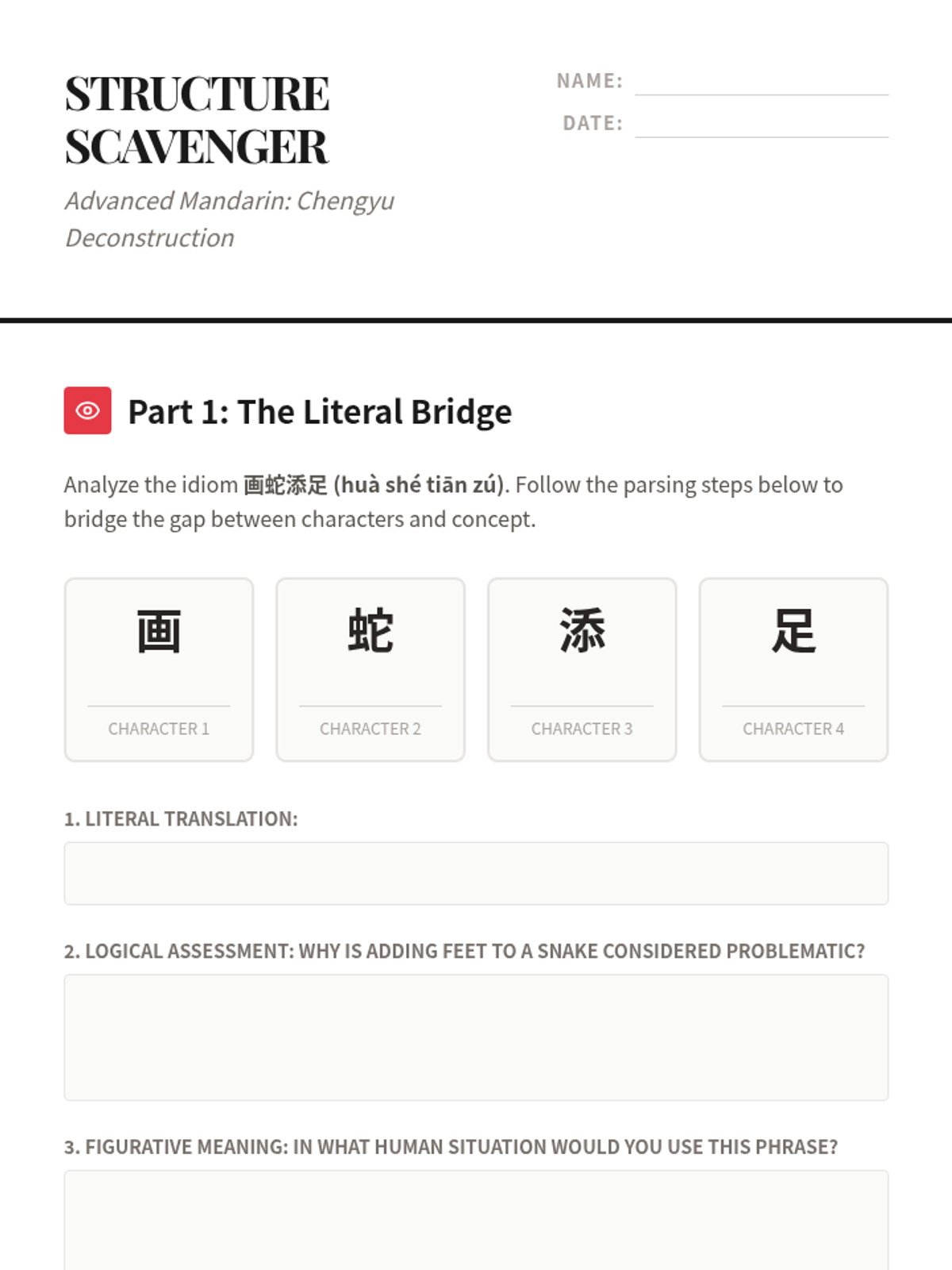
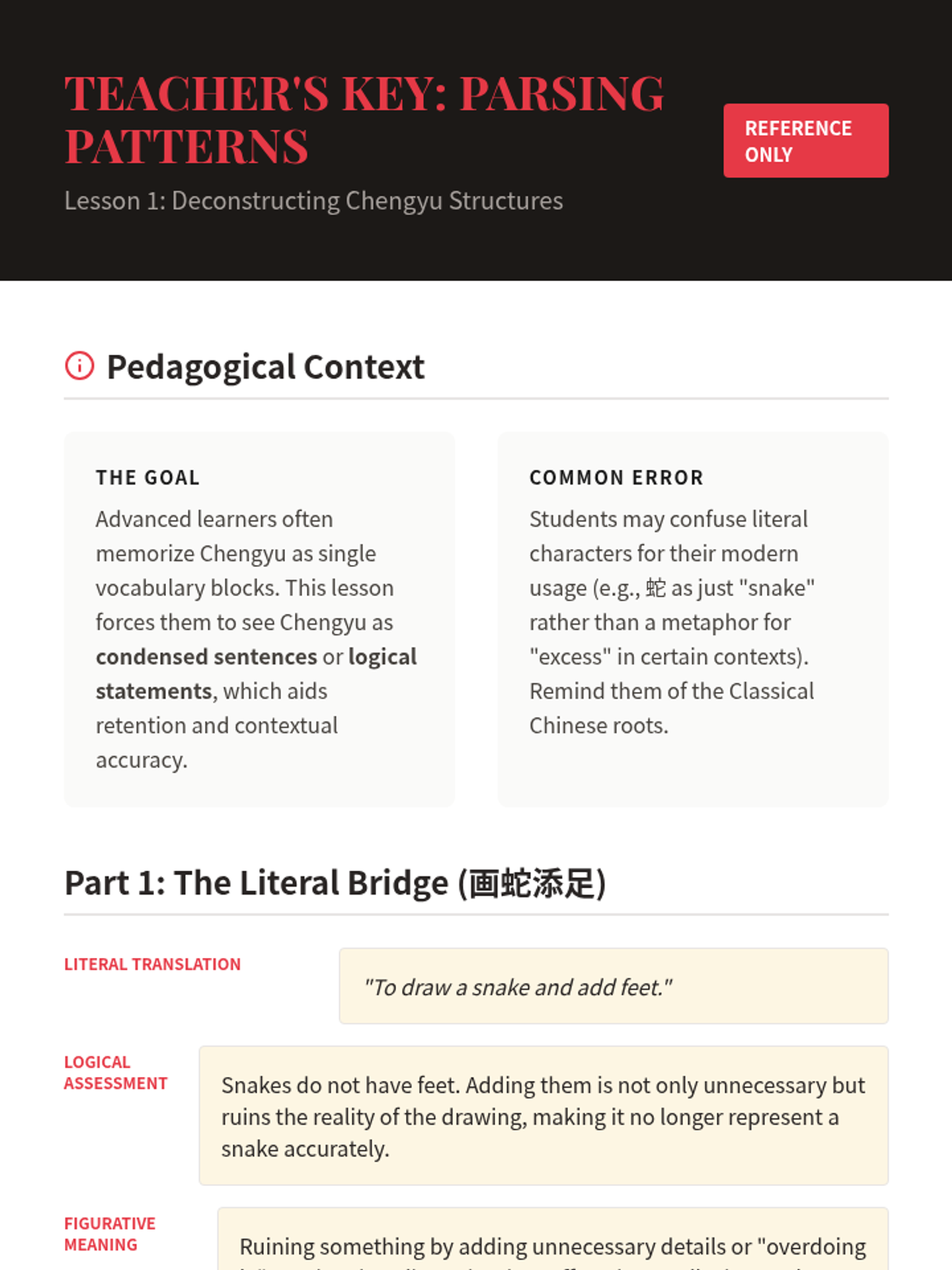
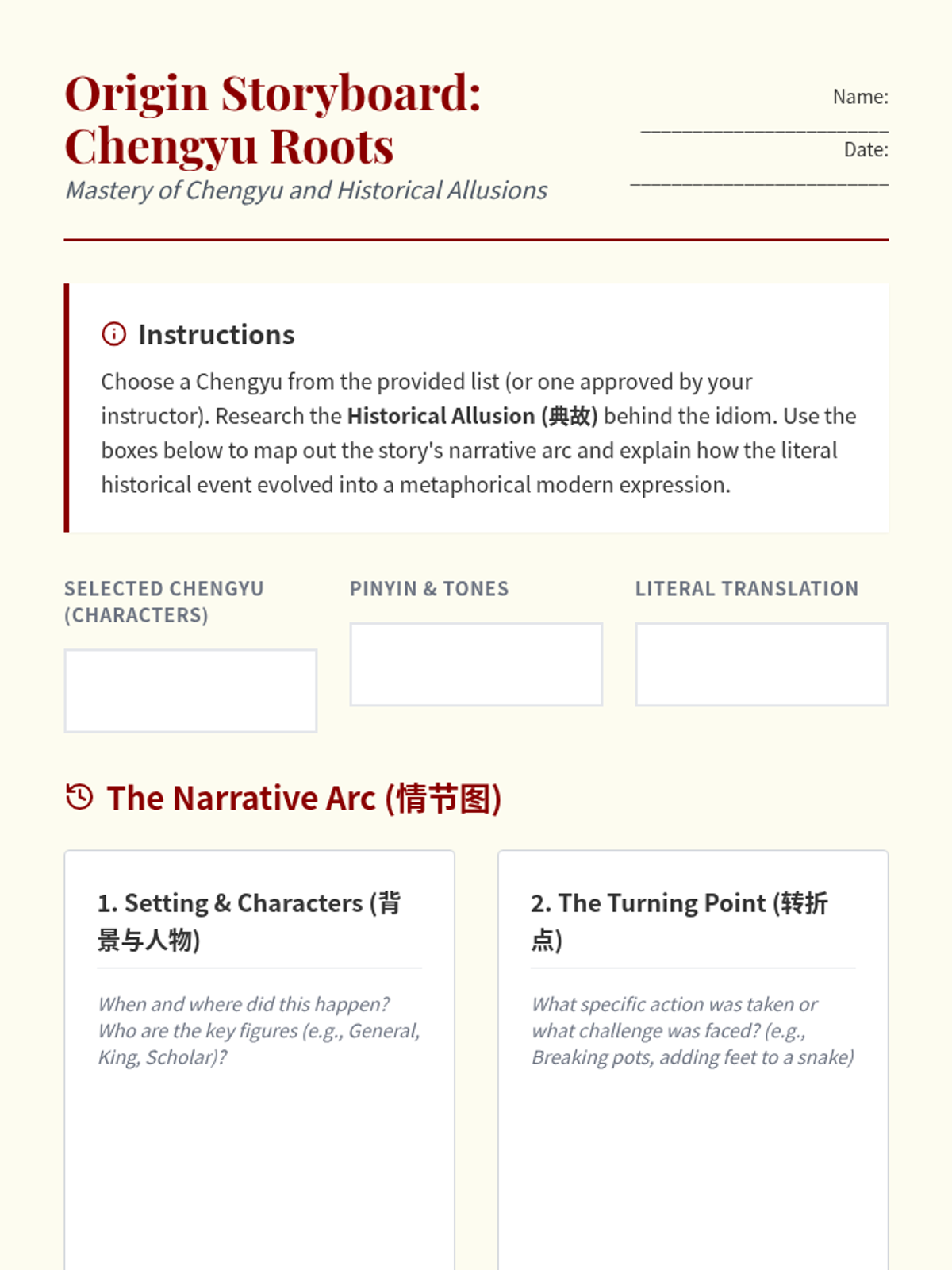
This advanced Mandarin course explores the linguistic structure, historical origins, and modern rhetorical applications of Chengyu (four-character idioms). Students transition from rote memorization to sophisticated deployment of classical allusions in academic and professional contexts.
A comprehensive unit for advanced Mandarin learners focusing on the transition from colloquial speech to formal academic and bureaucratic written Chinese (Shumianyu). Students will master formal vocabulary, complex syntax, and stylistic registers.
This advanced Mandarin course explores the linguistic structure, historical origins, and modern applications of Chengyu (four-character idioms), moving beyond memorization to stylistic mastery in academic writing.
This sequence explores the transition from spoken Mandarin to formal written Chinese (Shumianyu). Students will master academic vocabulary, logical connectors, and the unique syntax of news headlines to produce authoritative texts.
A comprehensive 5-lesson sequence for advanced Mandarin students exploring the grammar, history, metaphorical significance, and modern application of four-character idioms (Chengyu). Students move from linguistic analysis to creative dramatization.
This sequence explores the rich world of Chengyu (four-character idioms), which act as a bridge between ancient history and modern language. Students investigate the historical stories behind these complex character combinations to understand their metaphorical meanings.
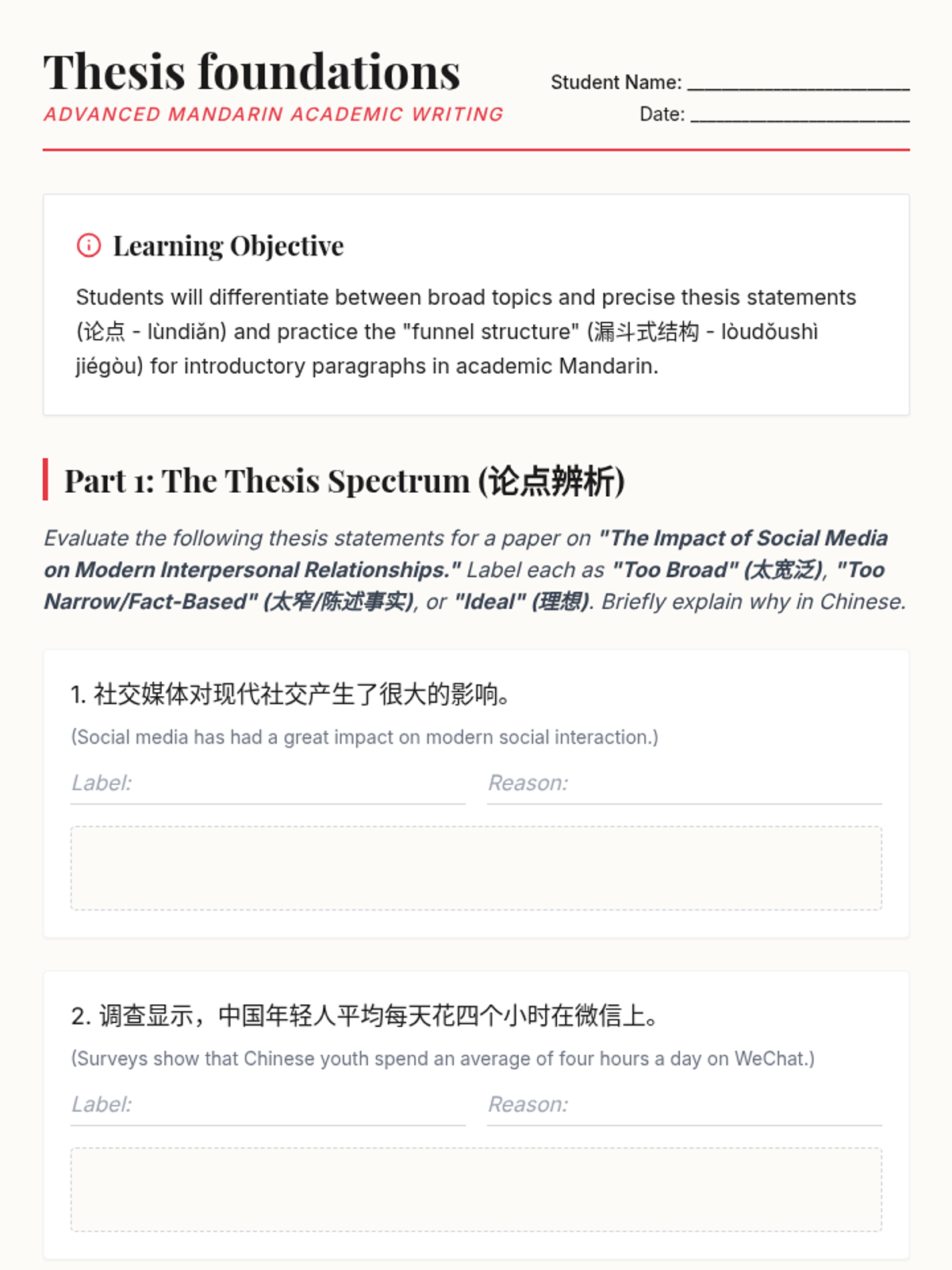
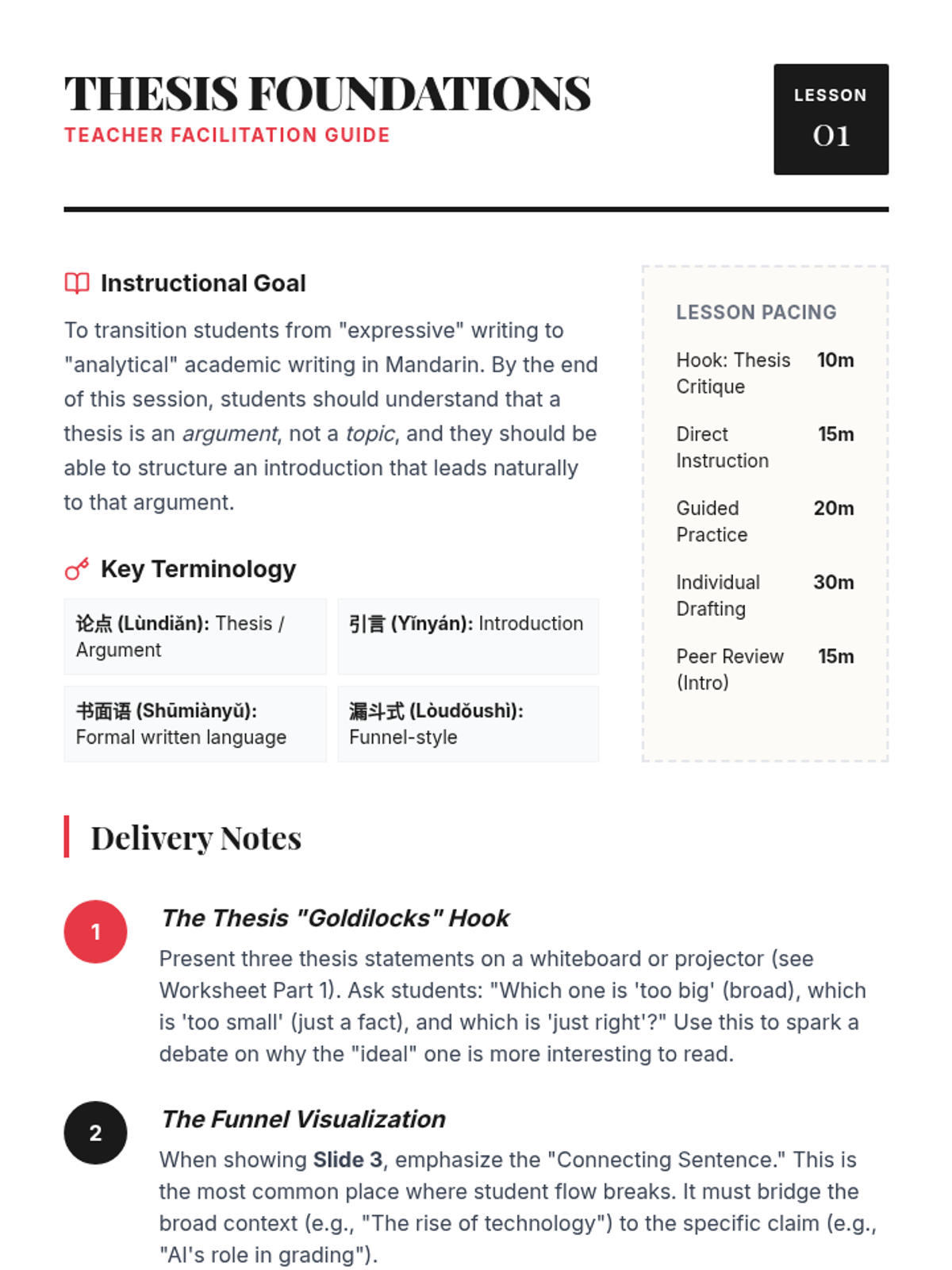
This sequence guides advanced Mandarin students through the rigorous structural requirements of academic writing. It covers thesis development, logical cohesion through connectors, source integration, and the art of counter-argumentation, culminating in a peer-review workshop.
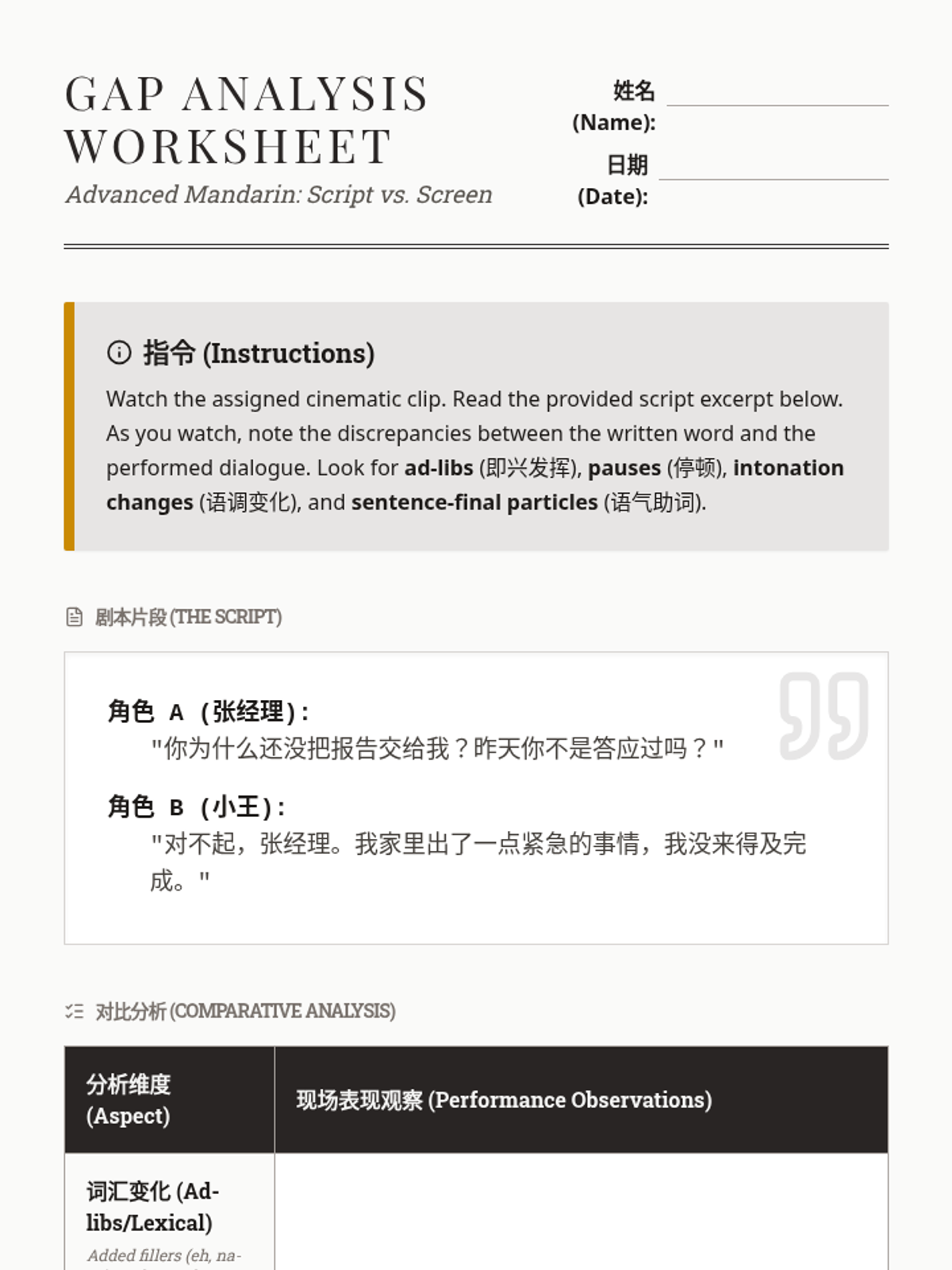
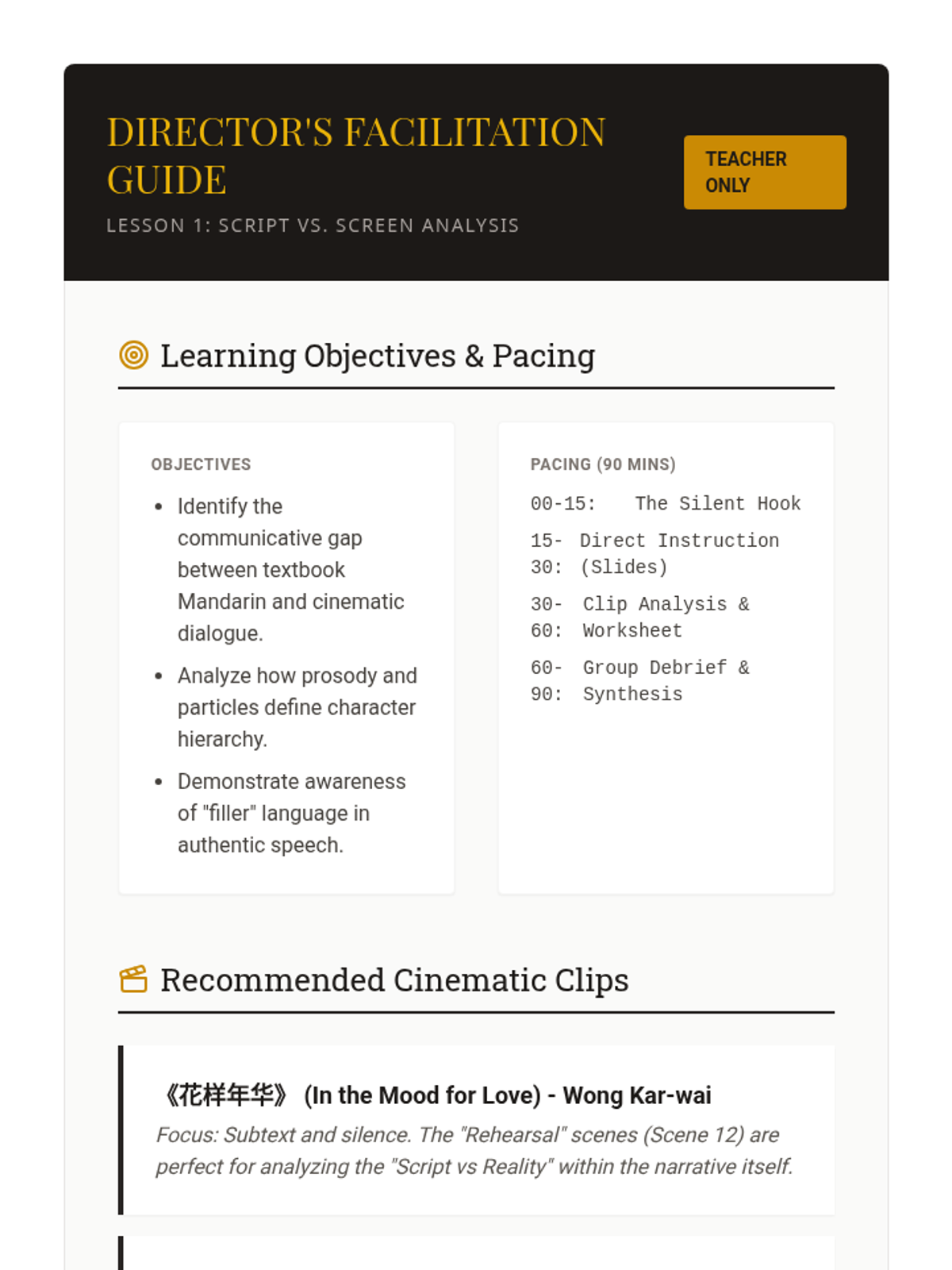
This advanced Mandarin sequence explores the nuances of spoken dialogue through cinematic analysis. Students analyze script-to-screen transformations, practice emotional intonation, investigate regional dialects, and perform live dubbing to master authentic communication and register manipulation.
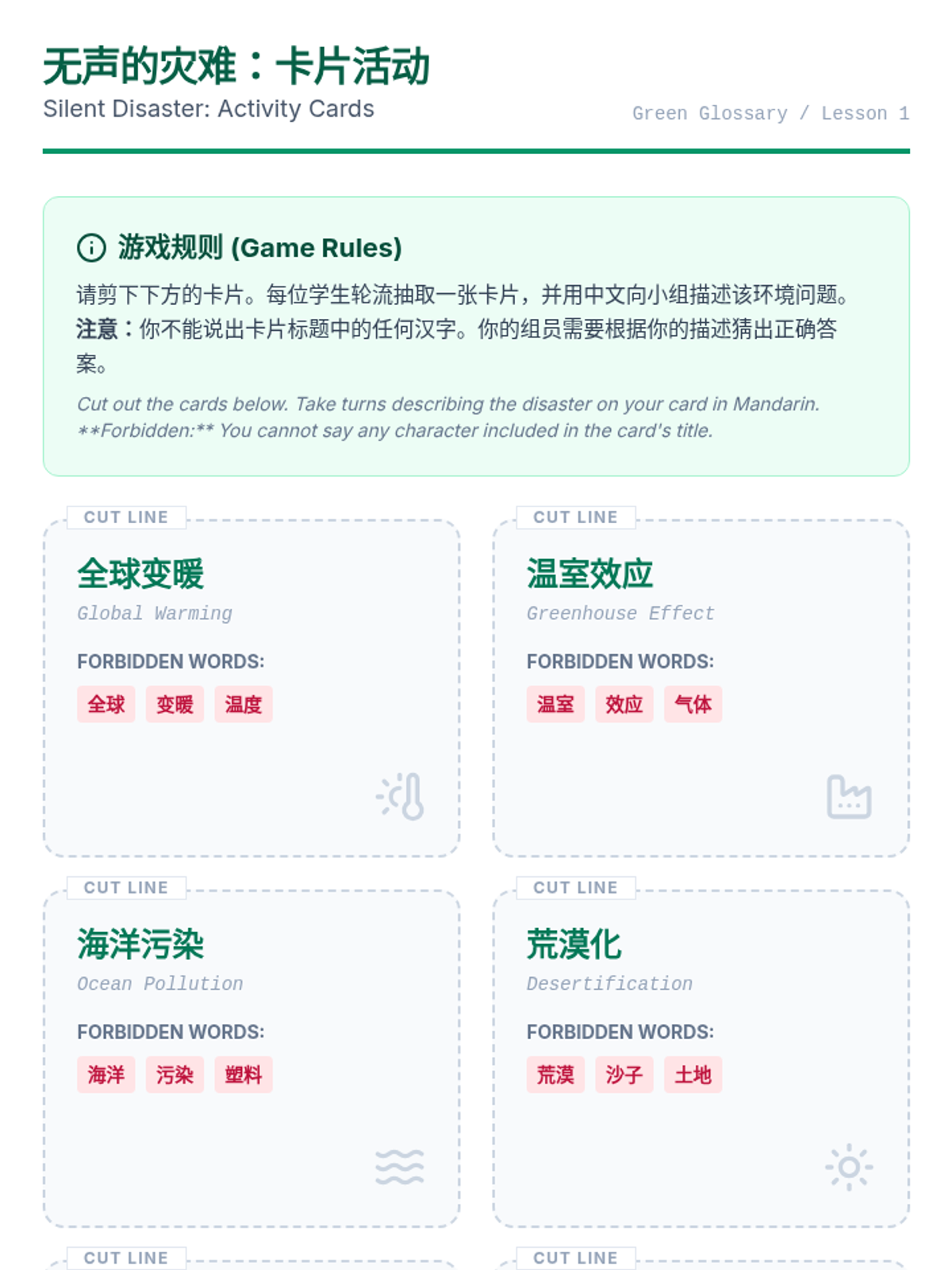
An advanced Mandarin Chinese sequence focused on environmental science and sustainability. Students master technical vocabulary, causal grammar, and persuasive argumentation to discuss complex global ecological challenges.
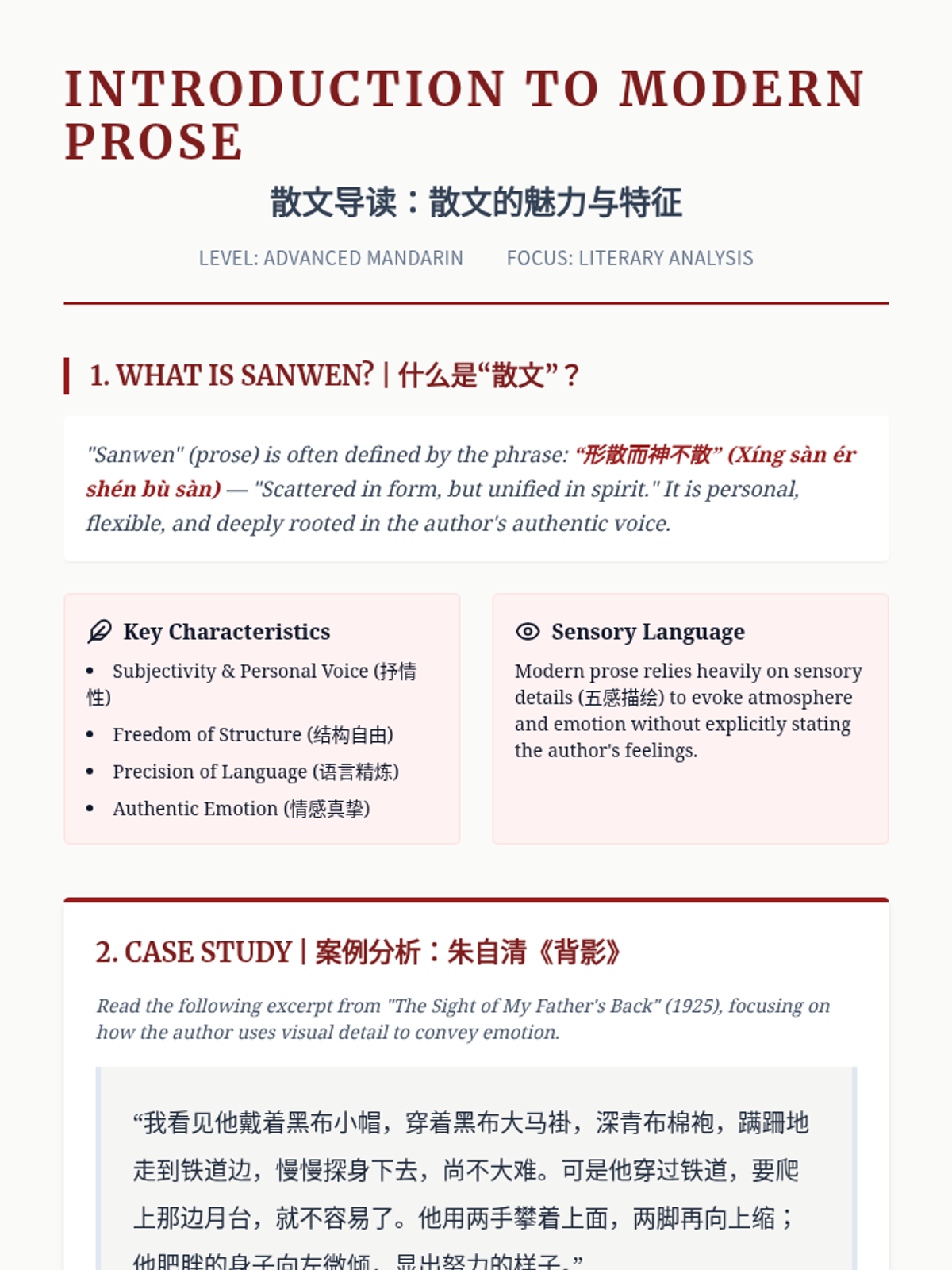
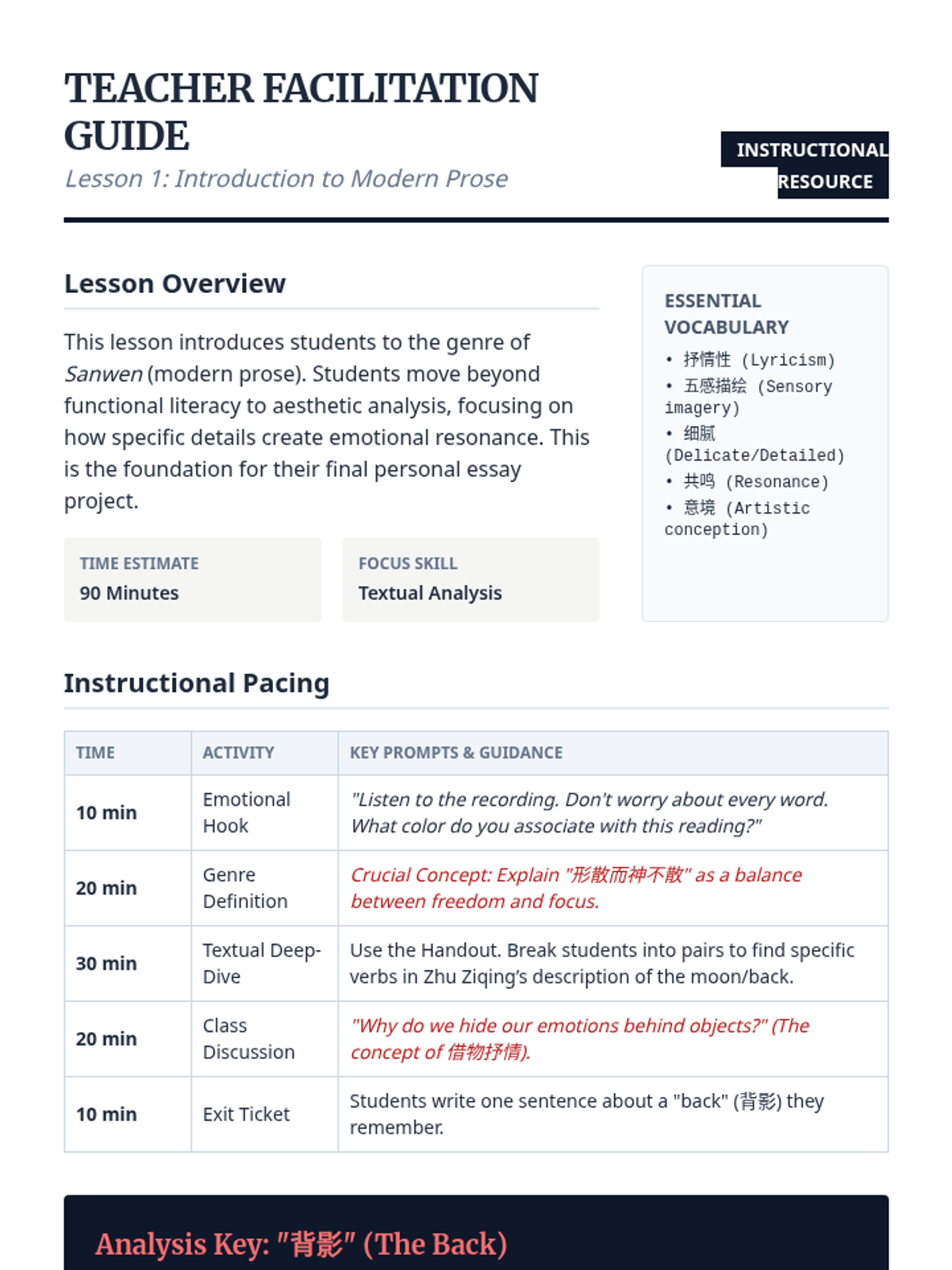
An advanced Mandarin Chinese sequence focusing on the analysis and creation of modern prose (Sanwen), exploring themes of nostalgia, change, and literary style.
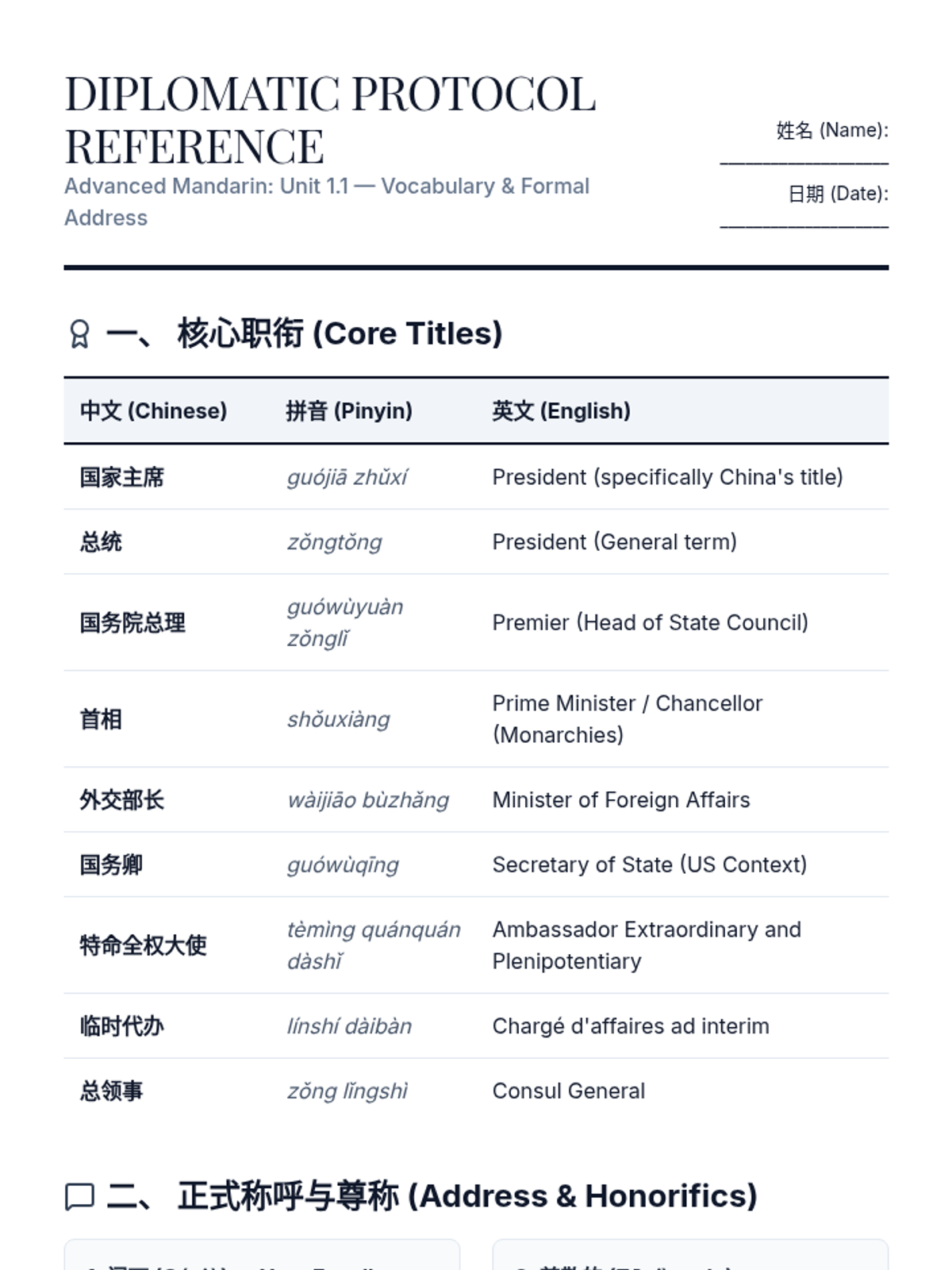
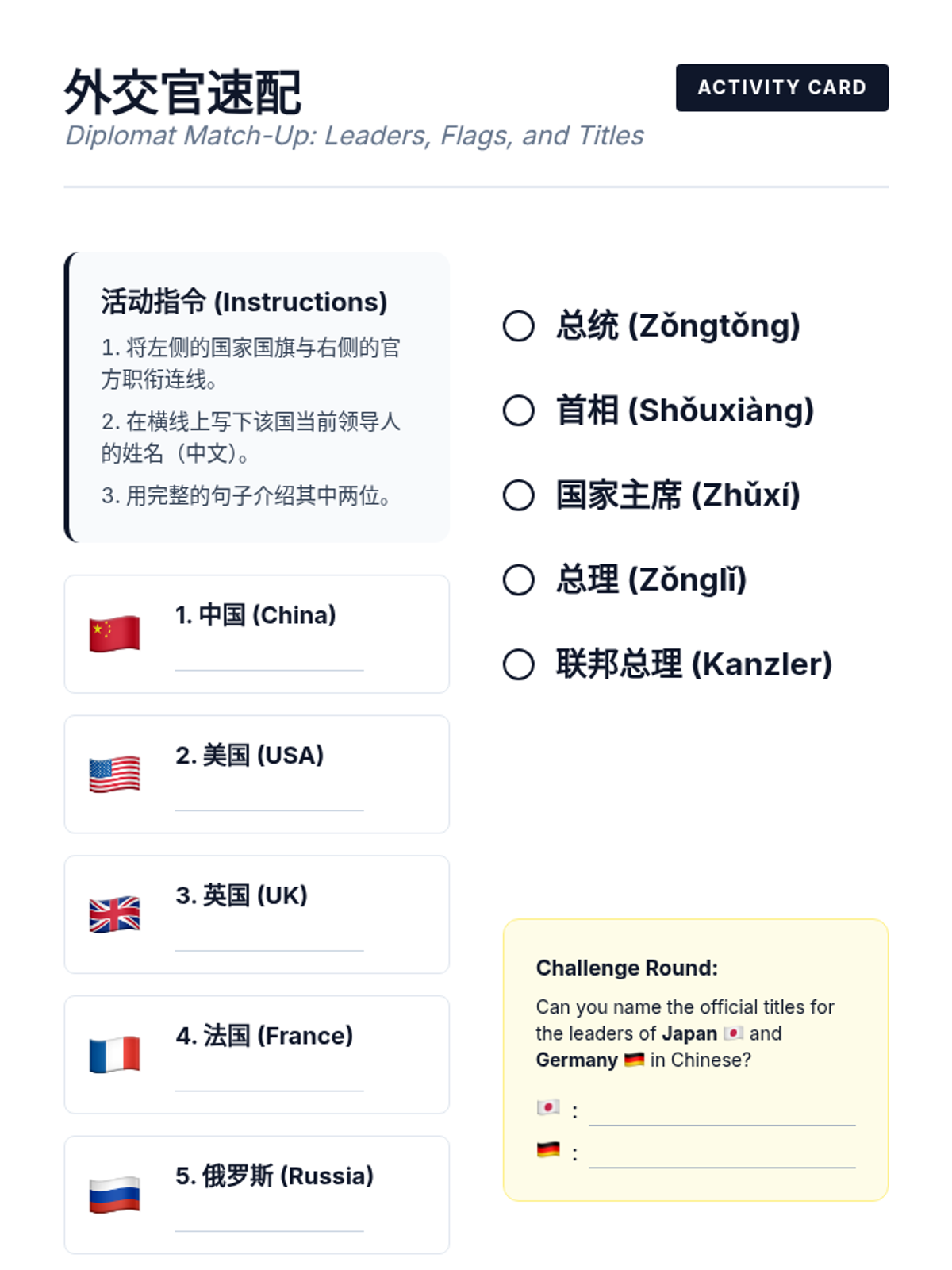
This advanced Mandarin Chinese sequence explores the intersection of language, statecraft, and international relations. Students master formal diplomatic rhetoric, analyze Ministry of Foreign Affairs briefings, and practice the art of strategic ambiguity through a series of increasingly complex communicative tasks, culminating in a global summit simulation.
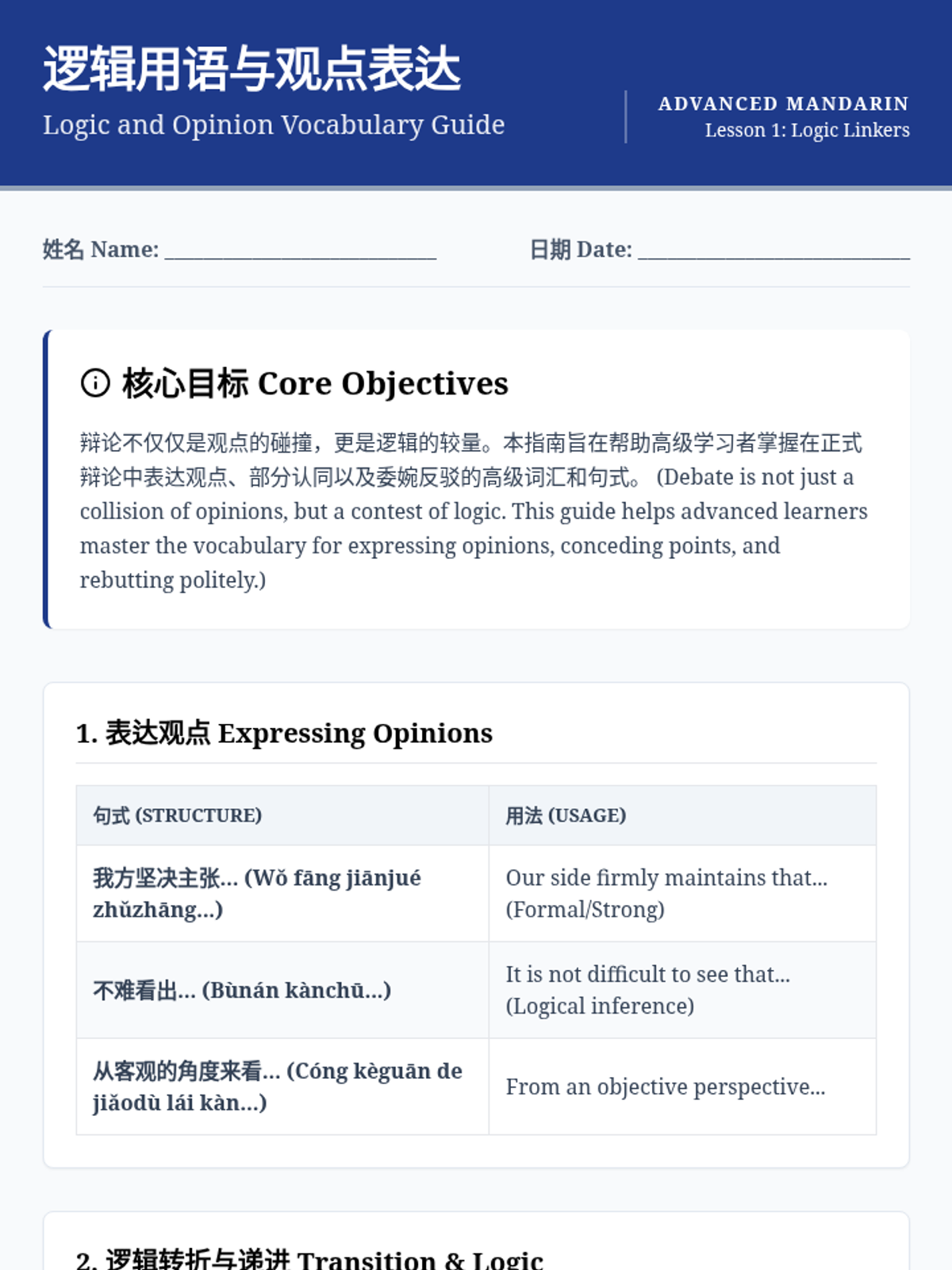
An advanced Mandarin Chinese sequence focused on developing rhetorical skills, logical argumentation, and formal debating techniques for contemporary social issues. Students progress from learning specific connectors and transitions to participating in a full structured debate.
An inquiry-based sequence for advanced Mandarin students focusing on the transition between 'Kouyu' (colloquial) and 'Shumianyu' (formal/written) registers through media analysis and creative rewriting.
An advanced Mandarin Chinese sequence focusing on the historical origins, modern media application, grammatical nuances, and creative usage of four-character idioms (Chengyu). Students explore how ancient allusions continue to shape contemporary Chinese expression.
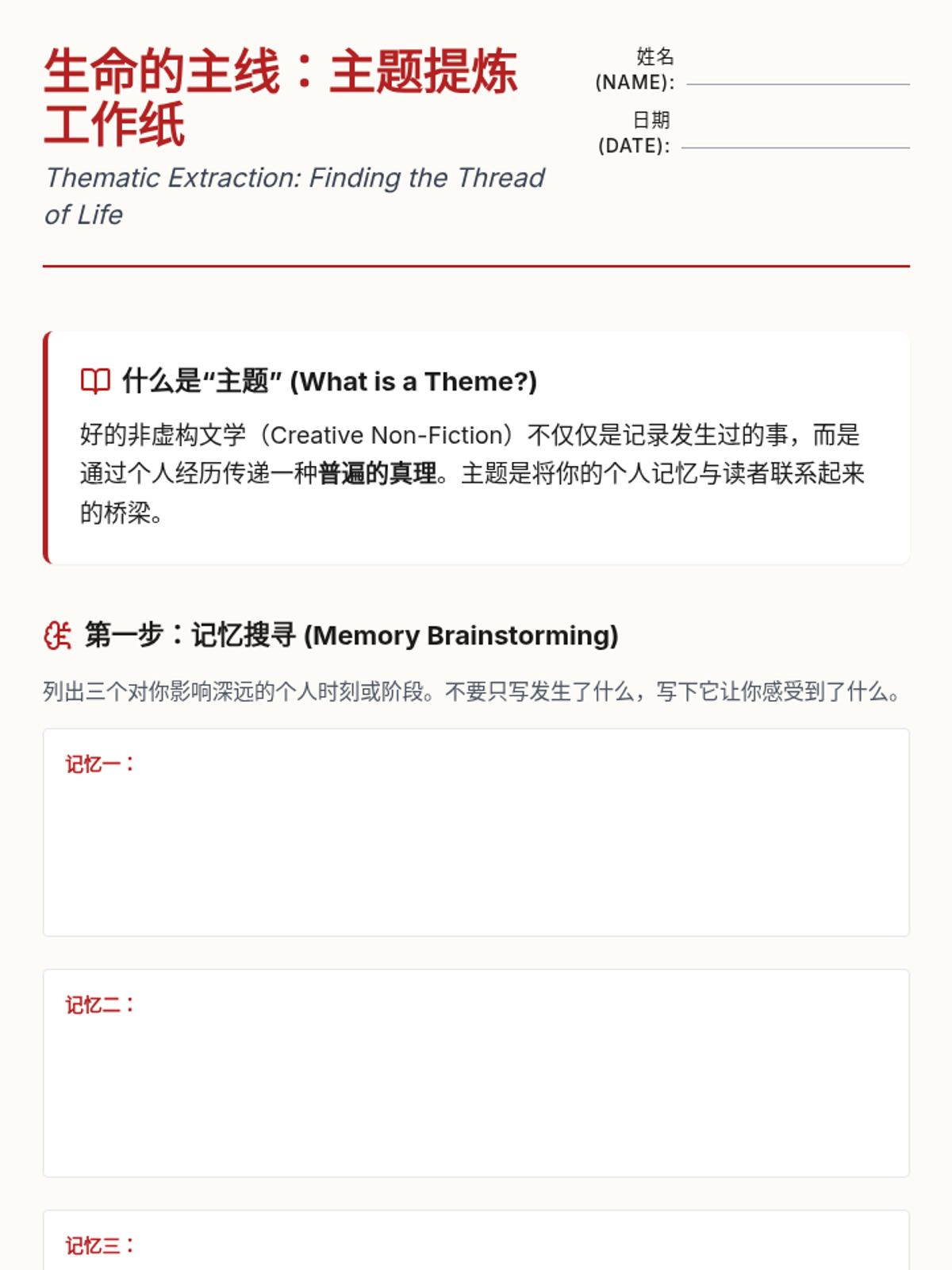
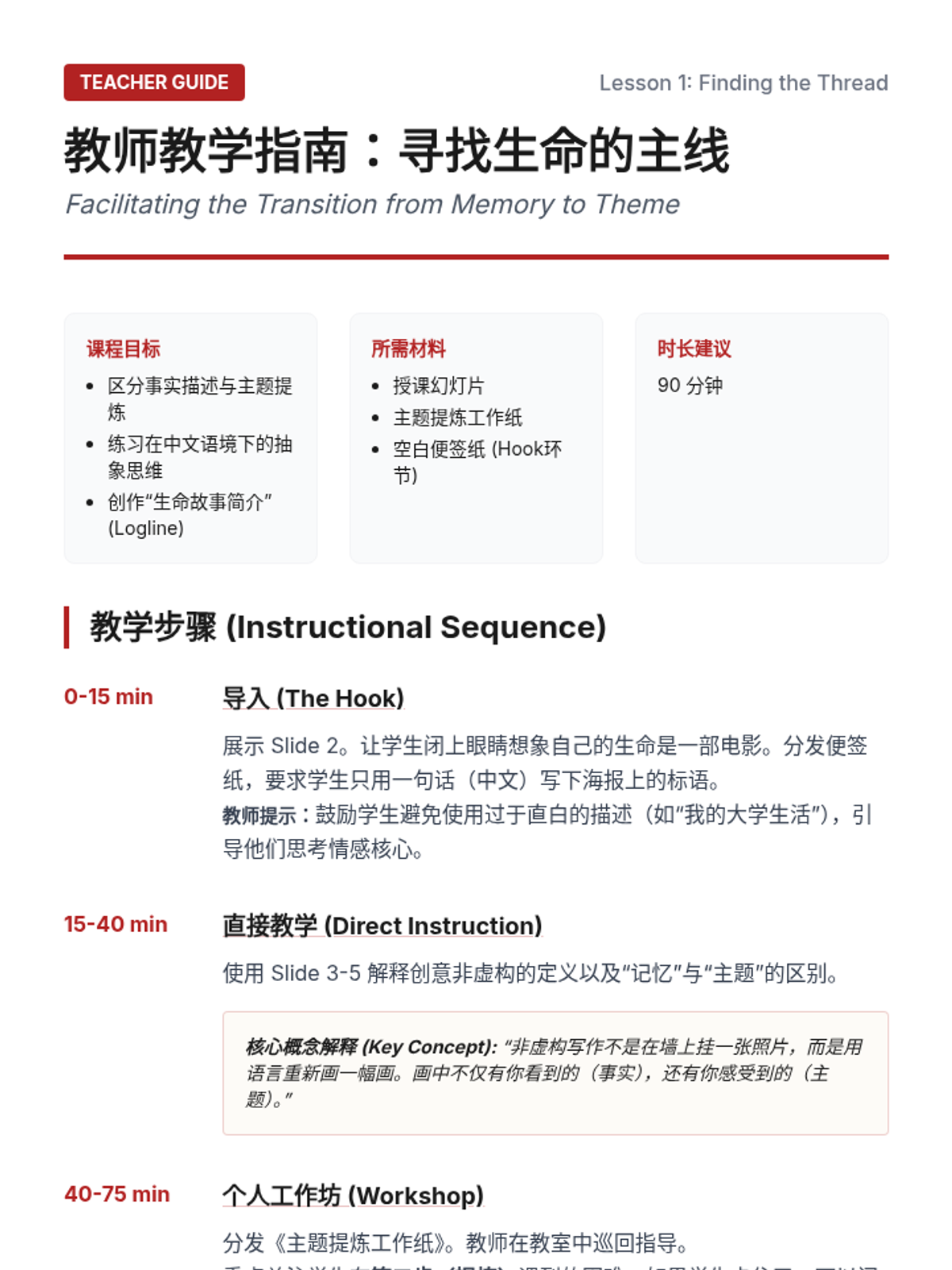
This advanced Mandarin writing sequence explores the genre of creative non-fiction. Students will learn to transform personal memories into literary art through thematic extraction, metaphorical language, non-linear structures, and authentic voice development.
A comprehensive unit on Mandarin question formation, covering 'ma' particles, 'wh-' words in-situ, A-not-A structures, and the reciprocal 'ne' particle, culminating in a biographical interview project.
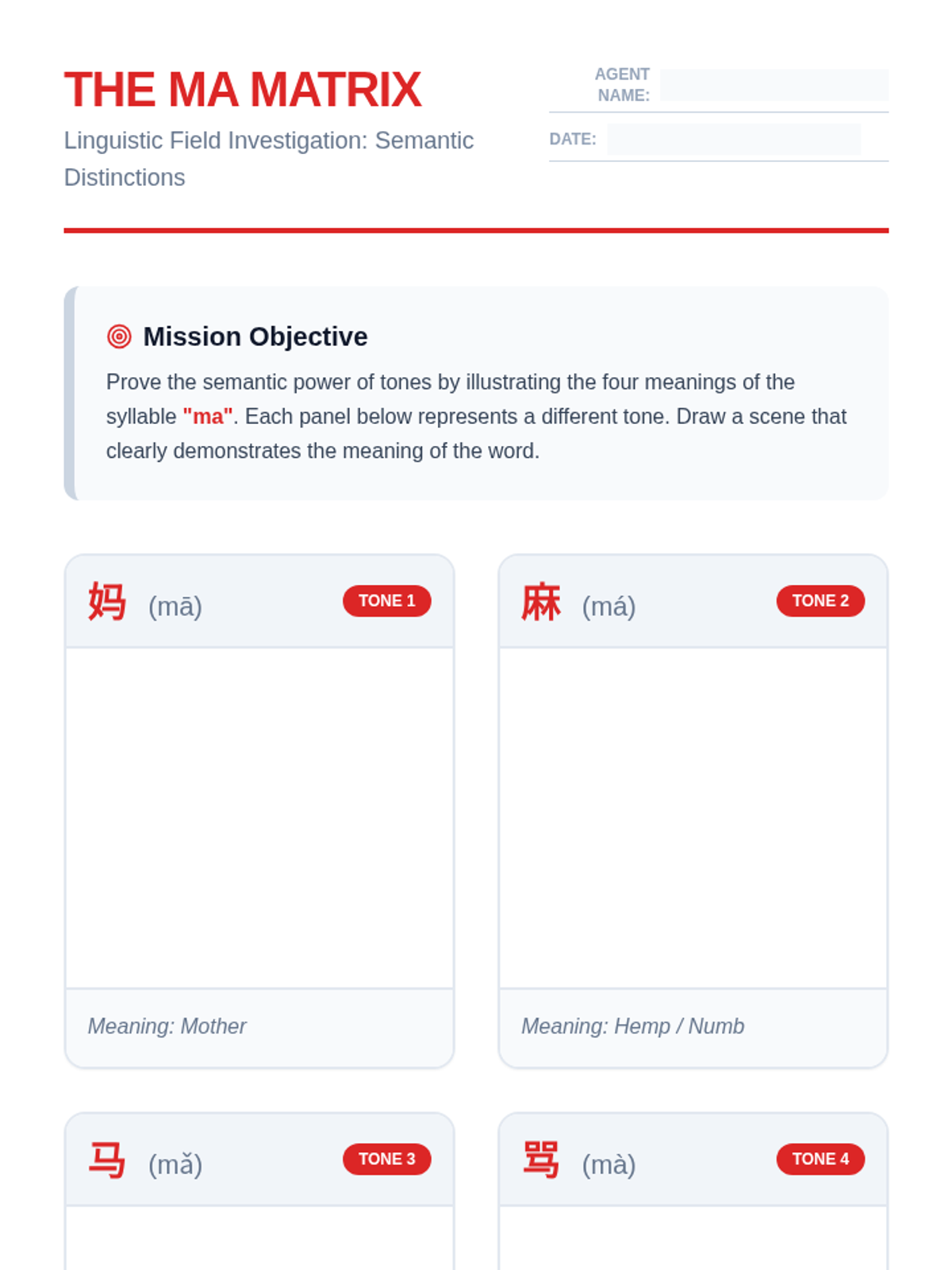
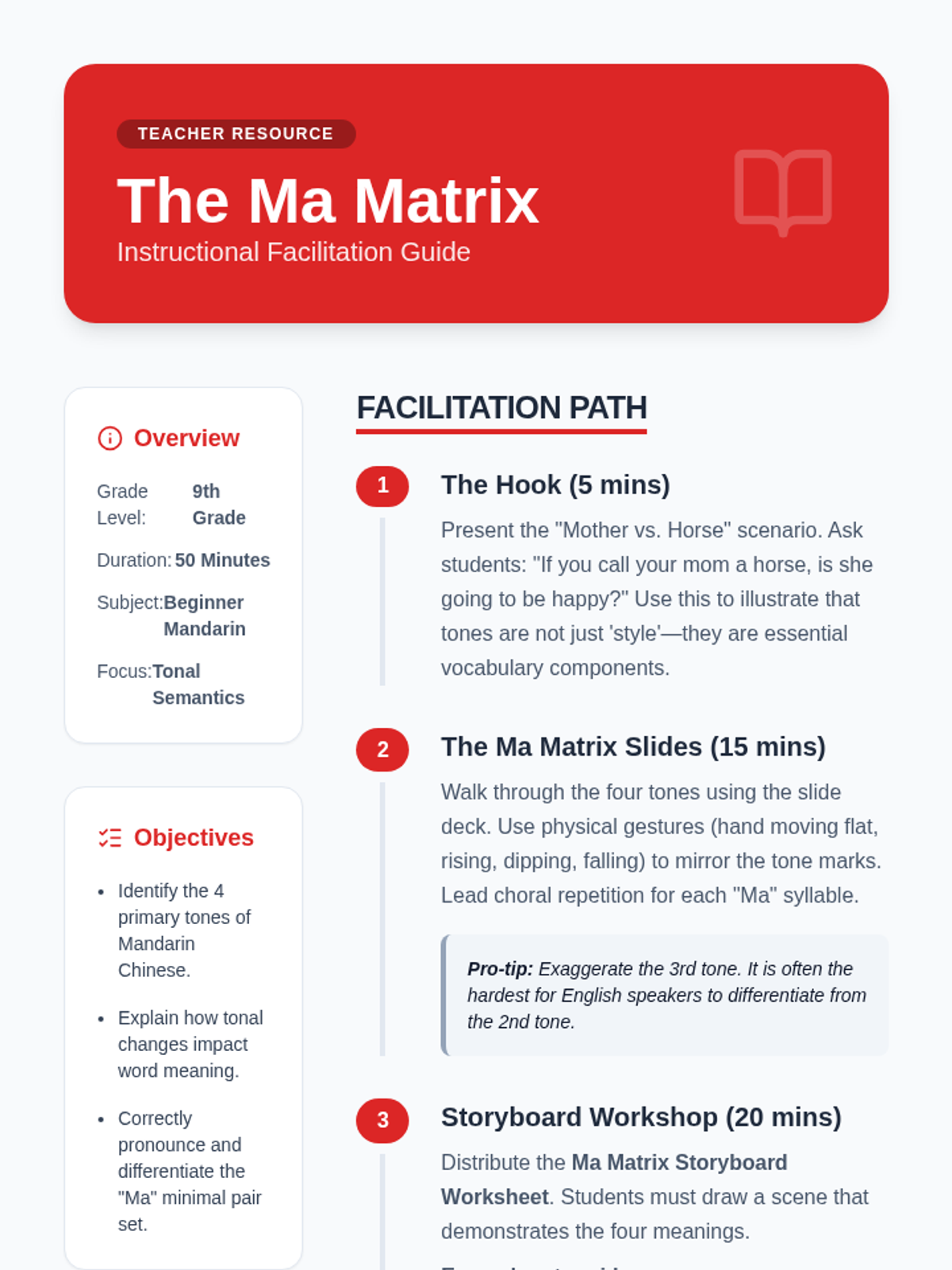
This sequence focuses on the semantic consequences of tonal errors in Mandarin Chinese through case studies and simulations. Students explore how changing a tone completely alters word meaning, analyzing famous linguistic curiosities and participating in real-world scenarios where tonal accuracy is required for successful communication.
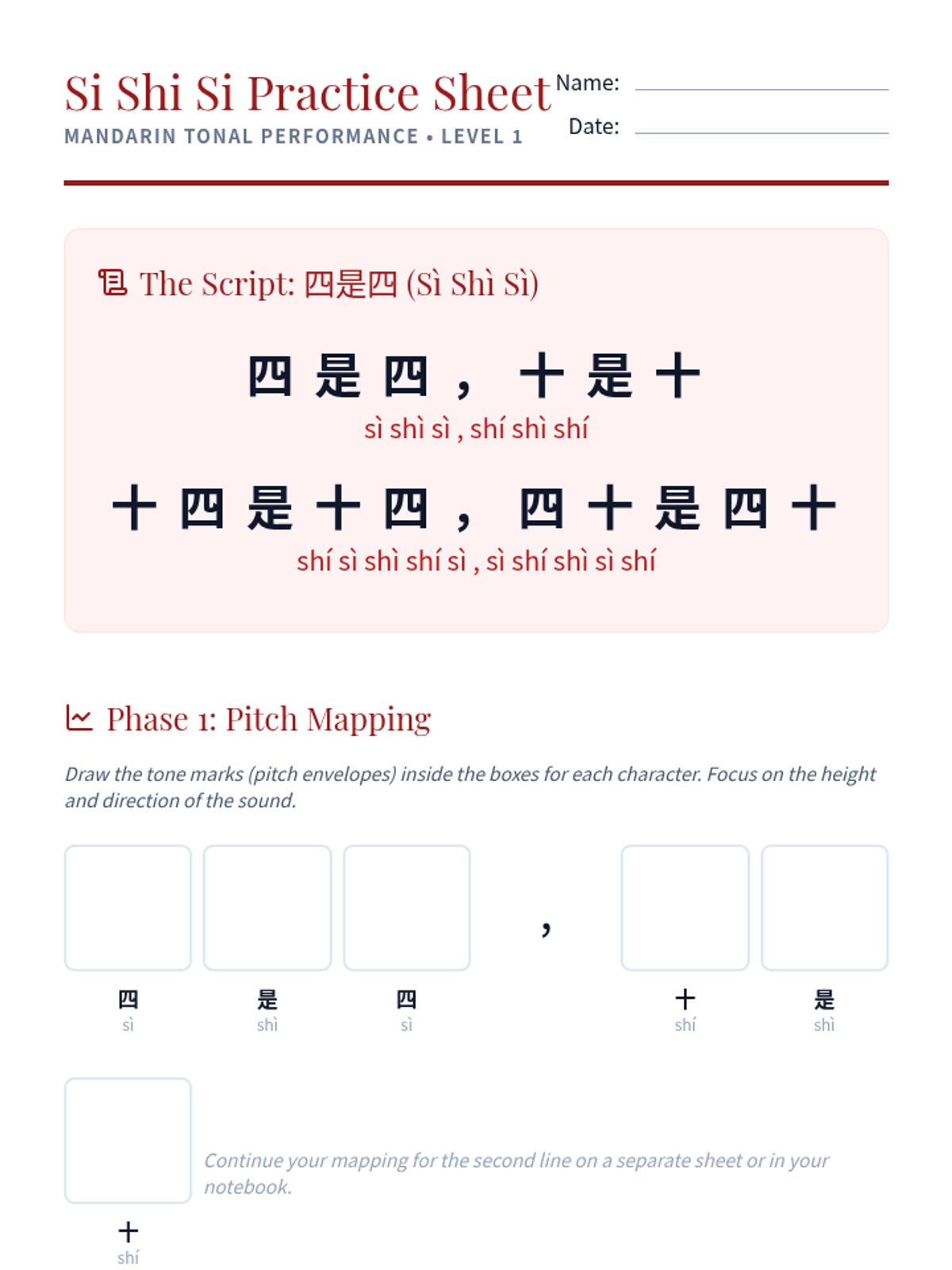
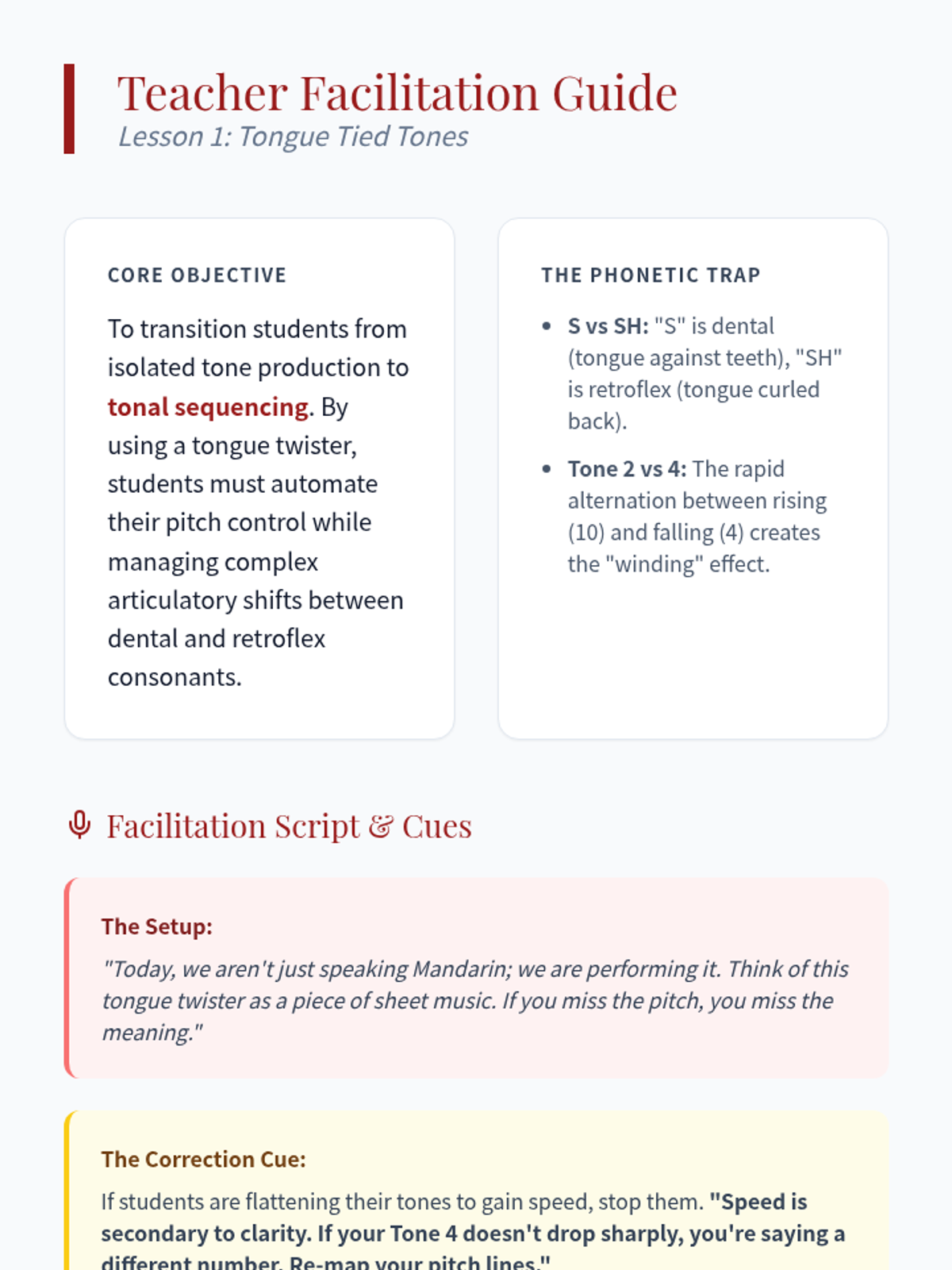
A high-stakes, performance-based exploration of Mandarin tones through the lens of tongue twisters, classical poetry, and native speaker mimicry. Students transform from passive learners to active performers, mastering pitch envelopes and rhythmic precision.
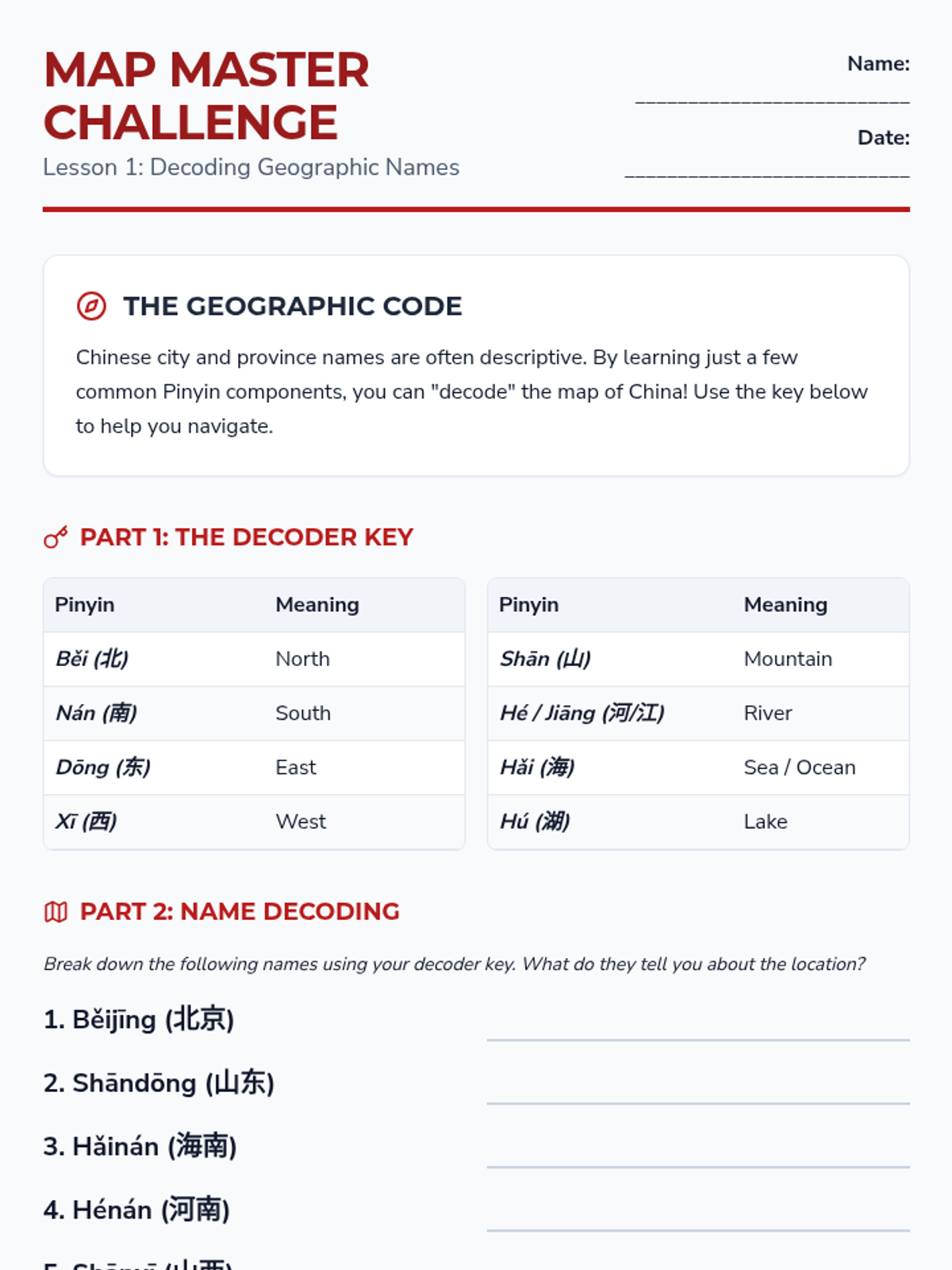
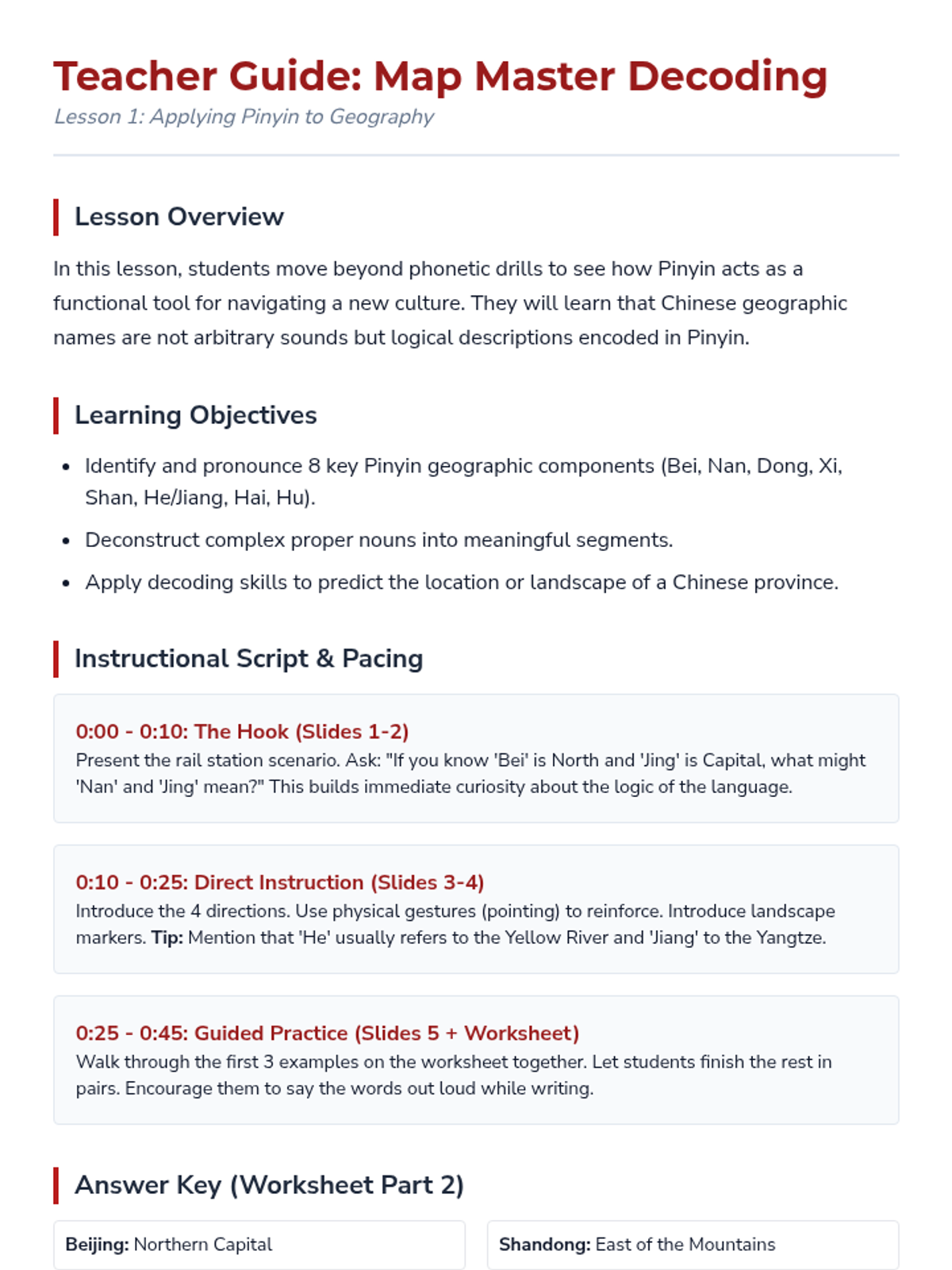
A 10th-grade Mandarin Chinese sequence focusing on the practical application of Pinyin in real-world contexts, including geography, personal names, branding, and navigation.
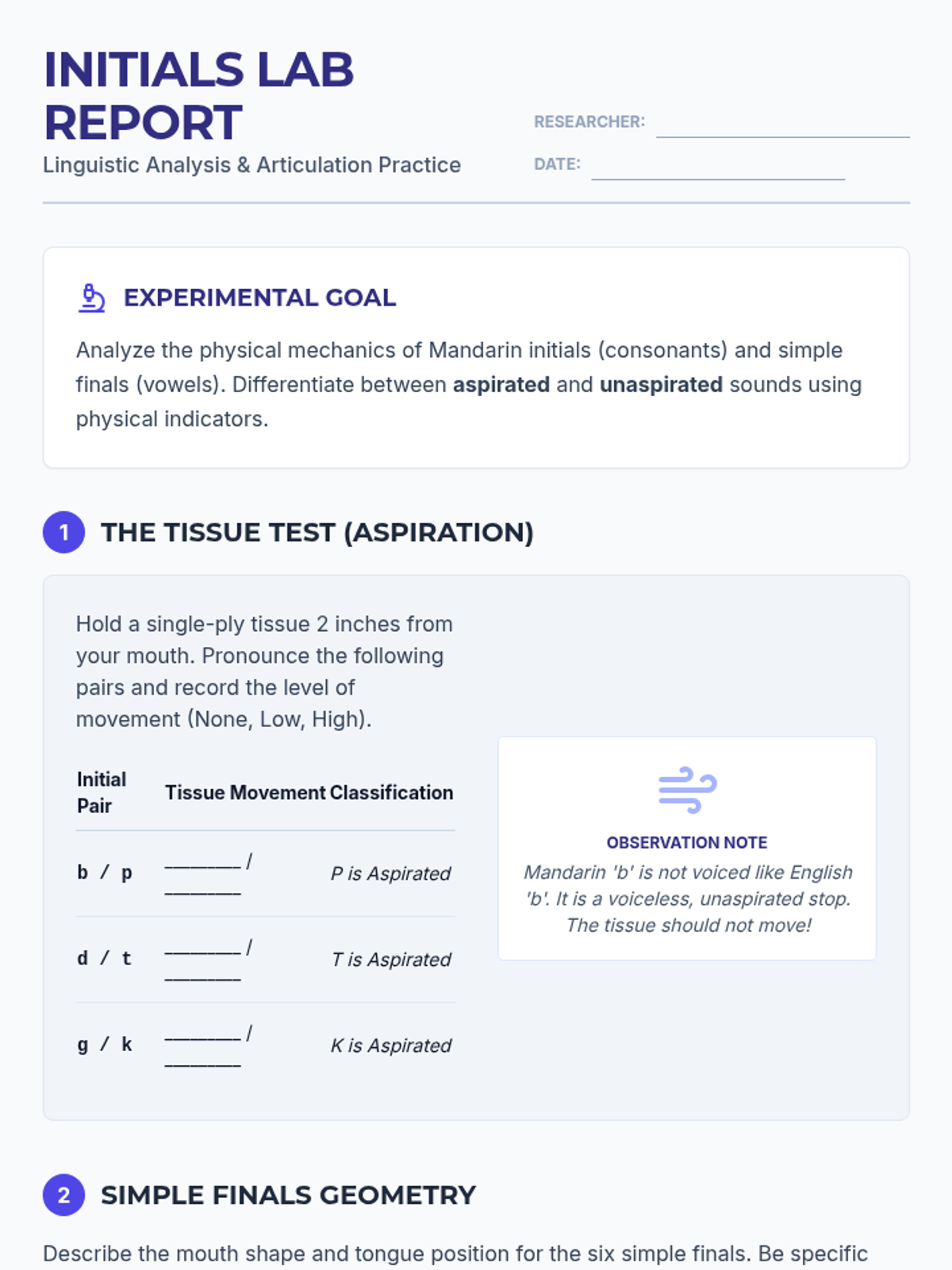
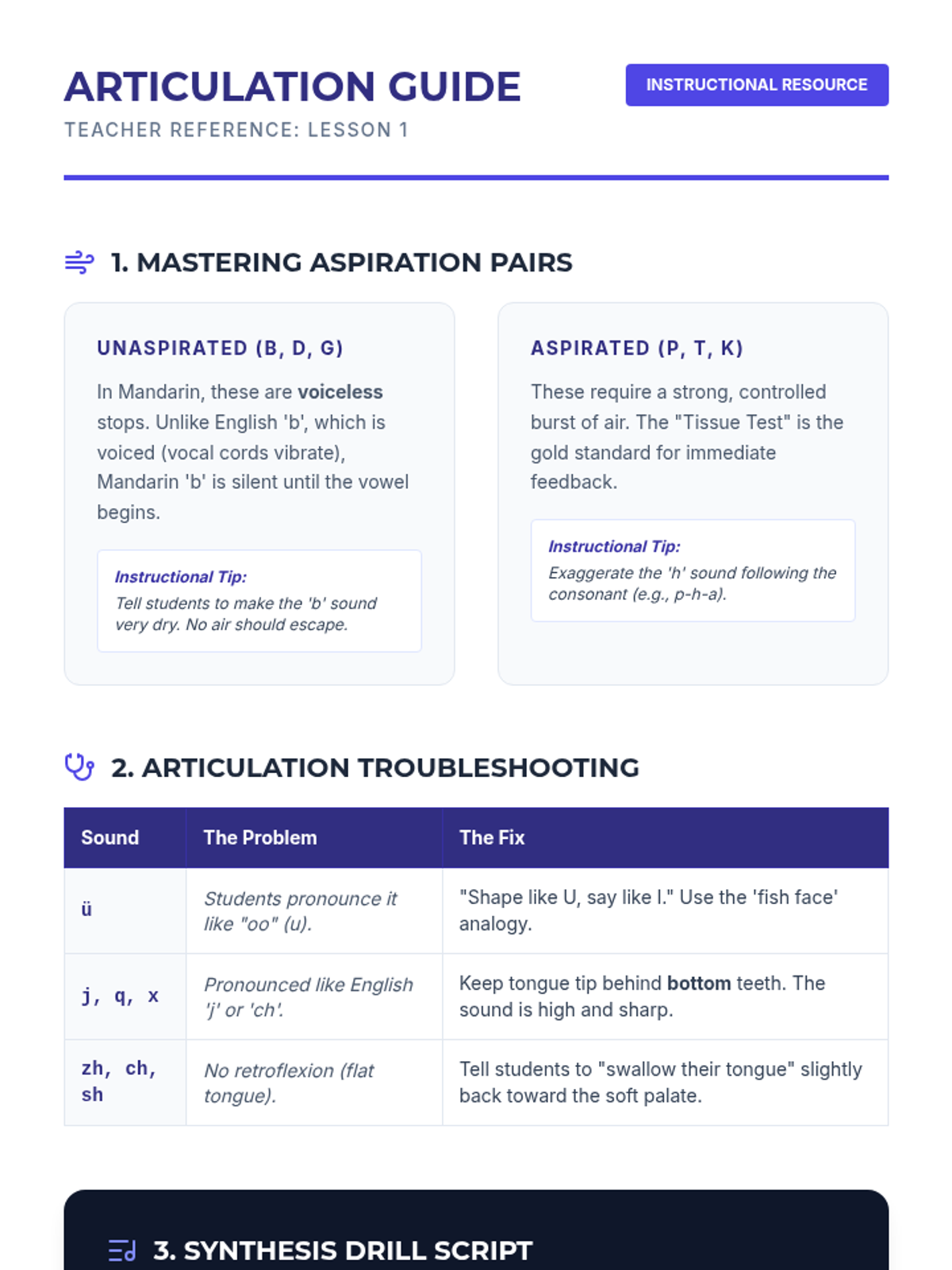
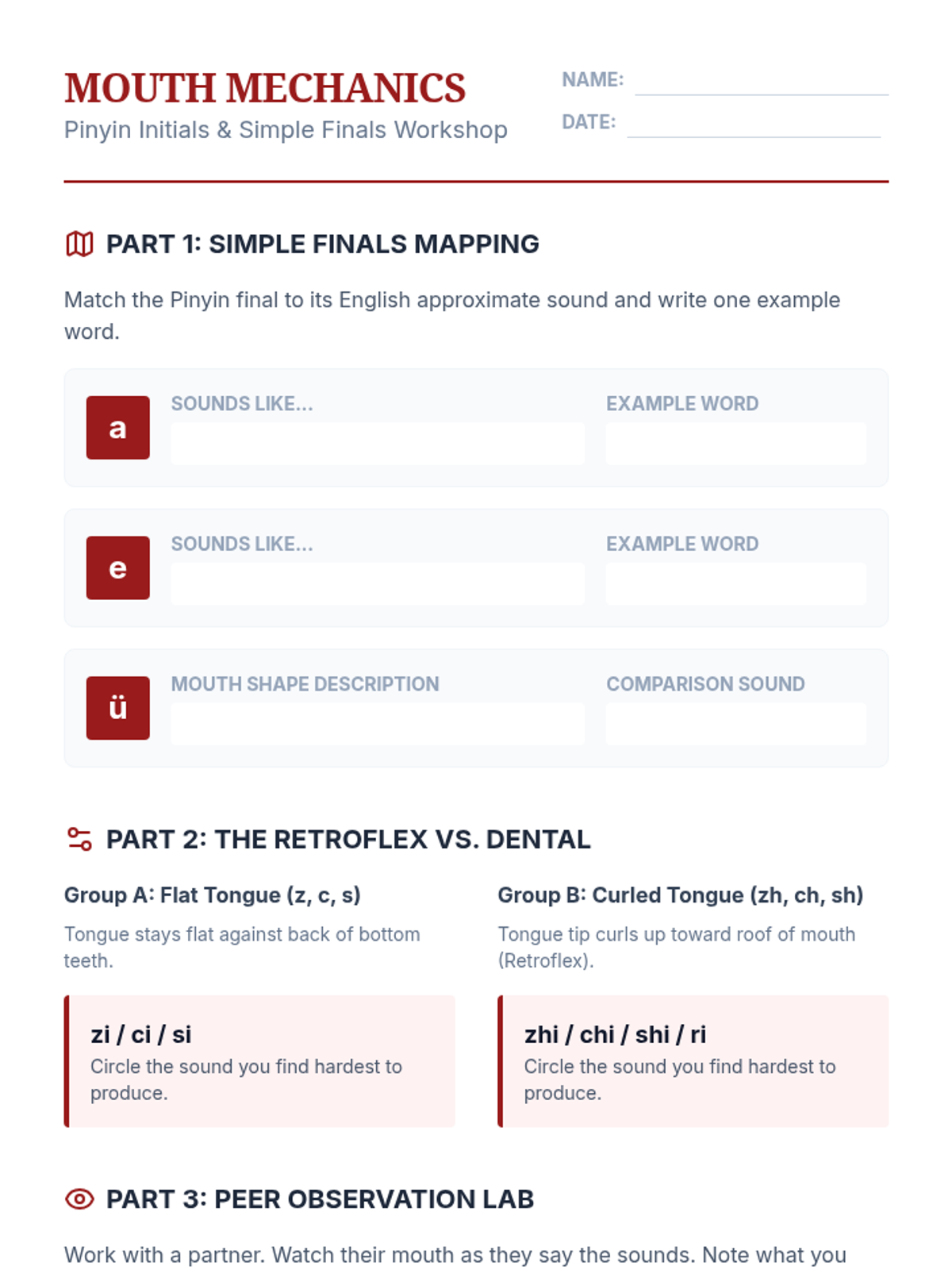
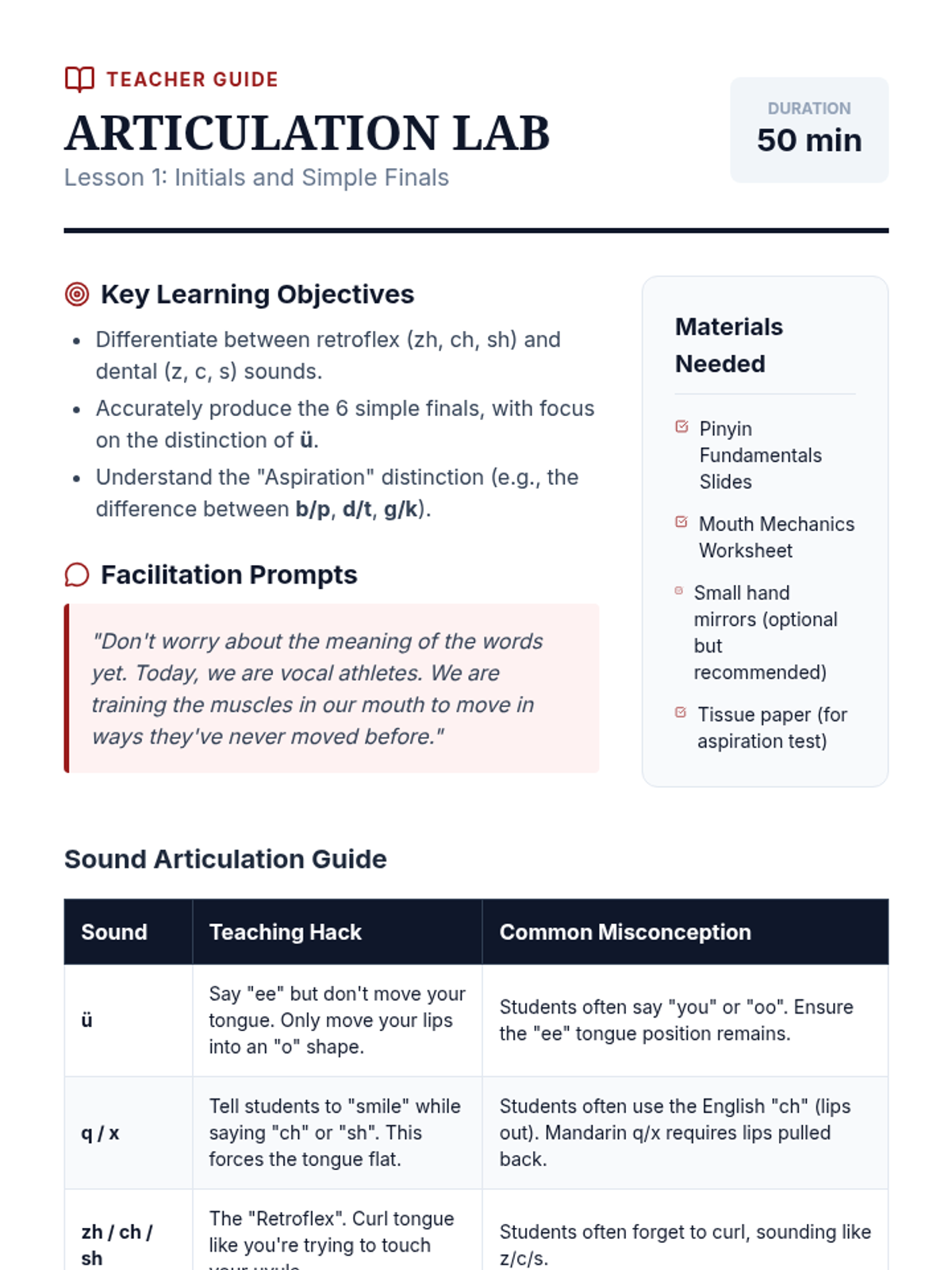
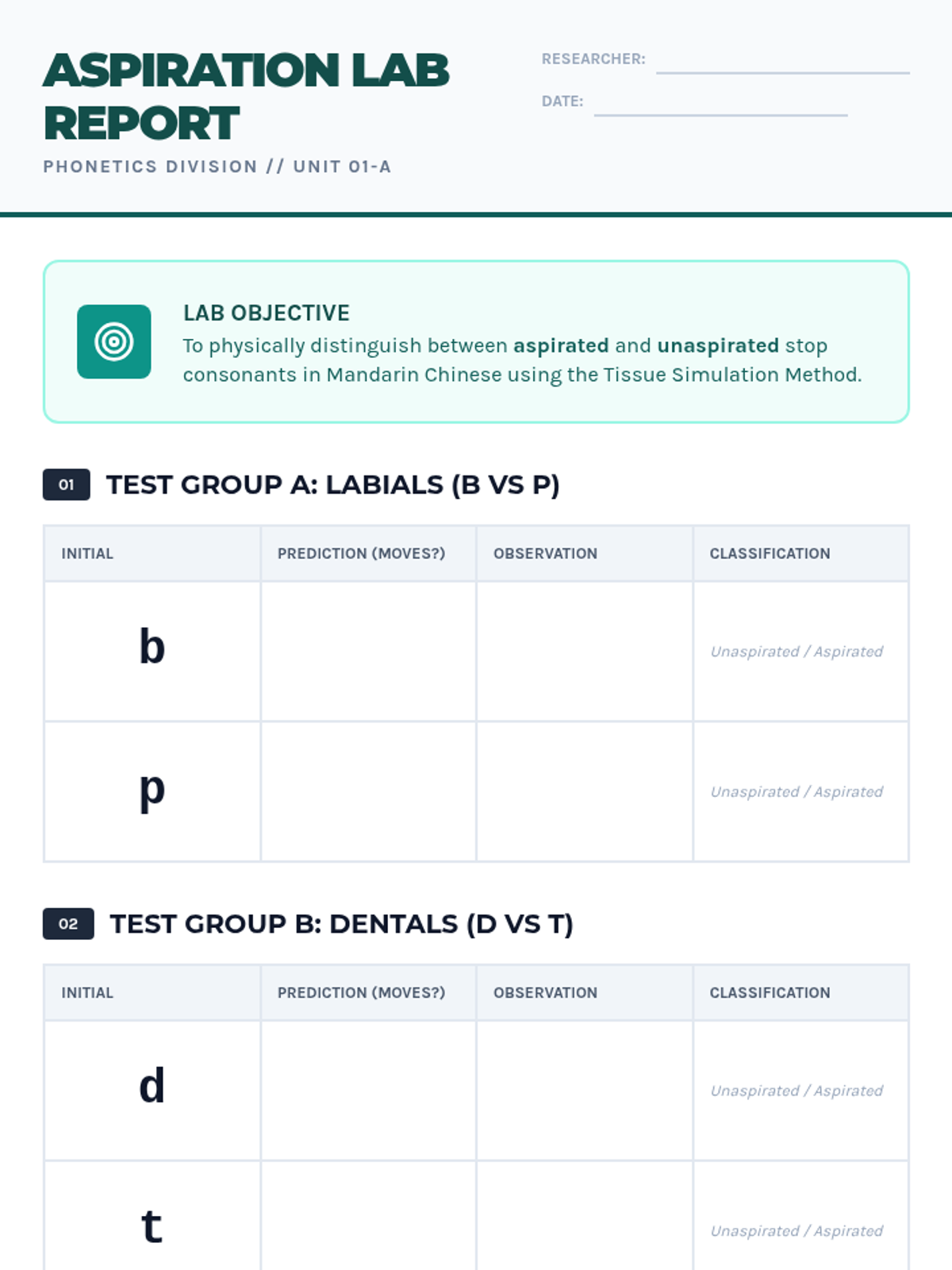
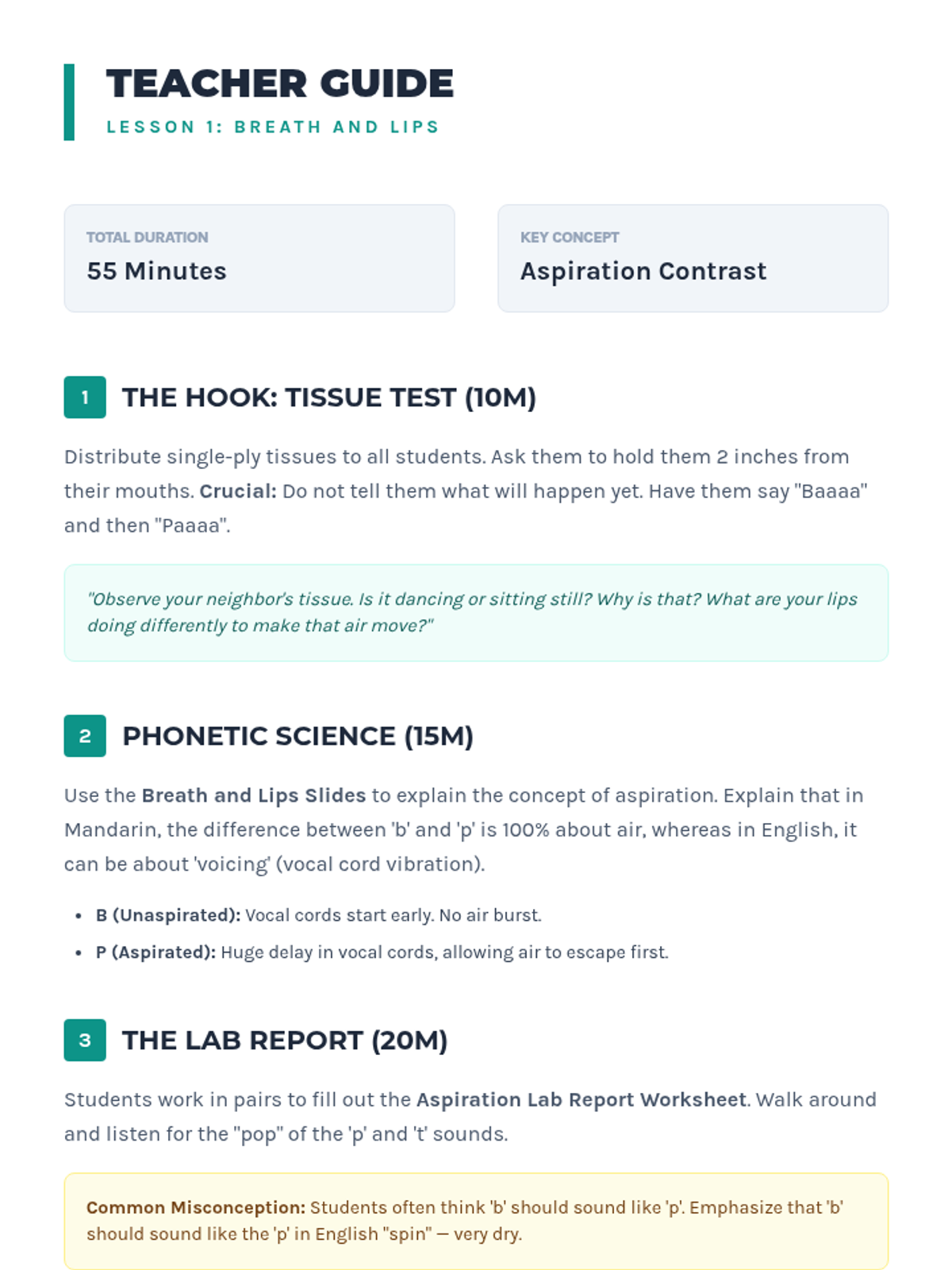
An inquiry-based exploration of Mandarin Chinese initials (consonants), focusing on articulatory phonetics, aspiration control, and tongue positioning for retroflex and palatal sounds.
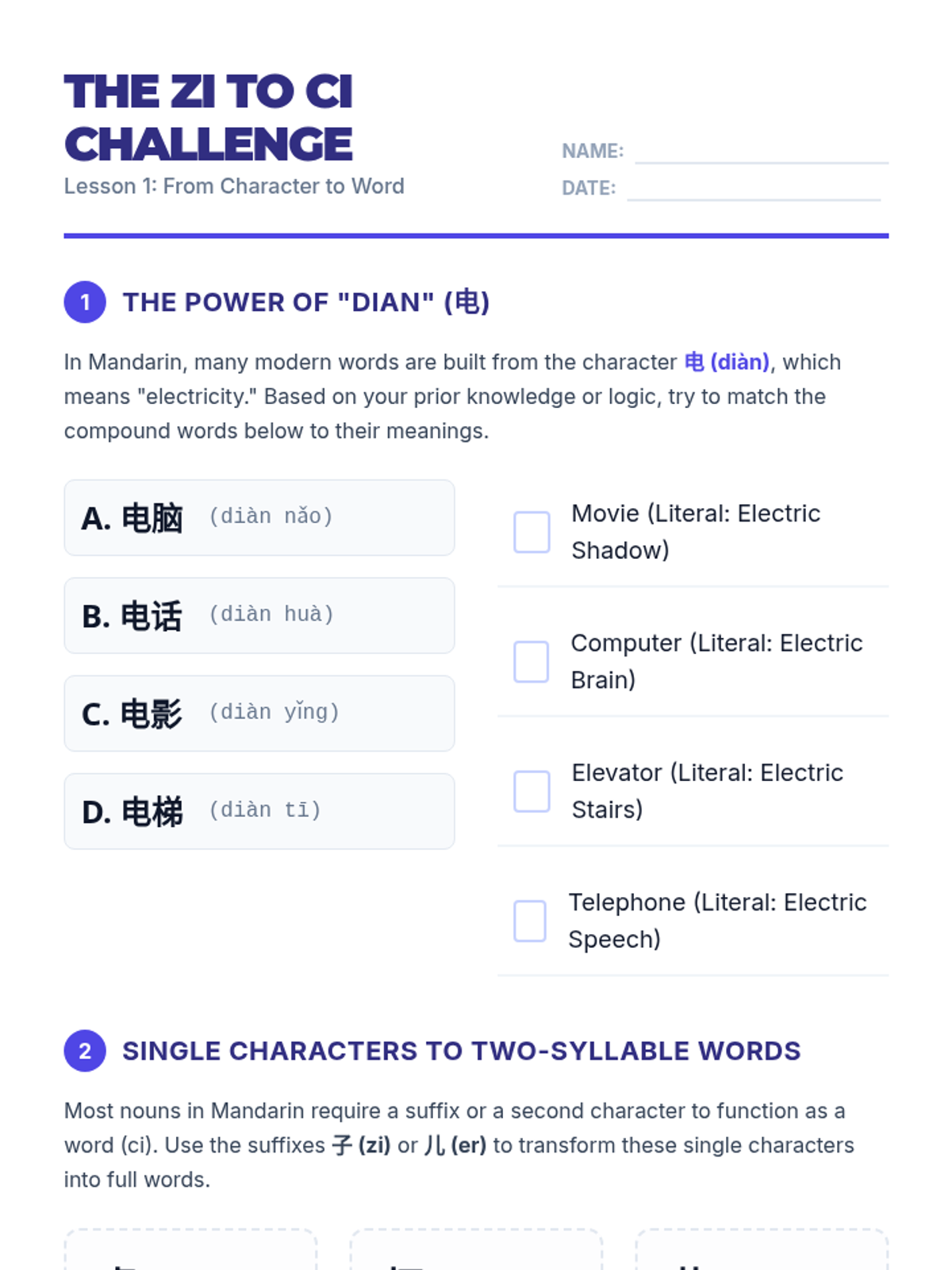
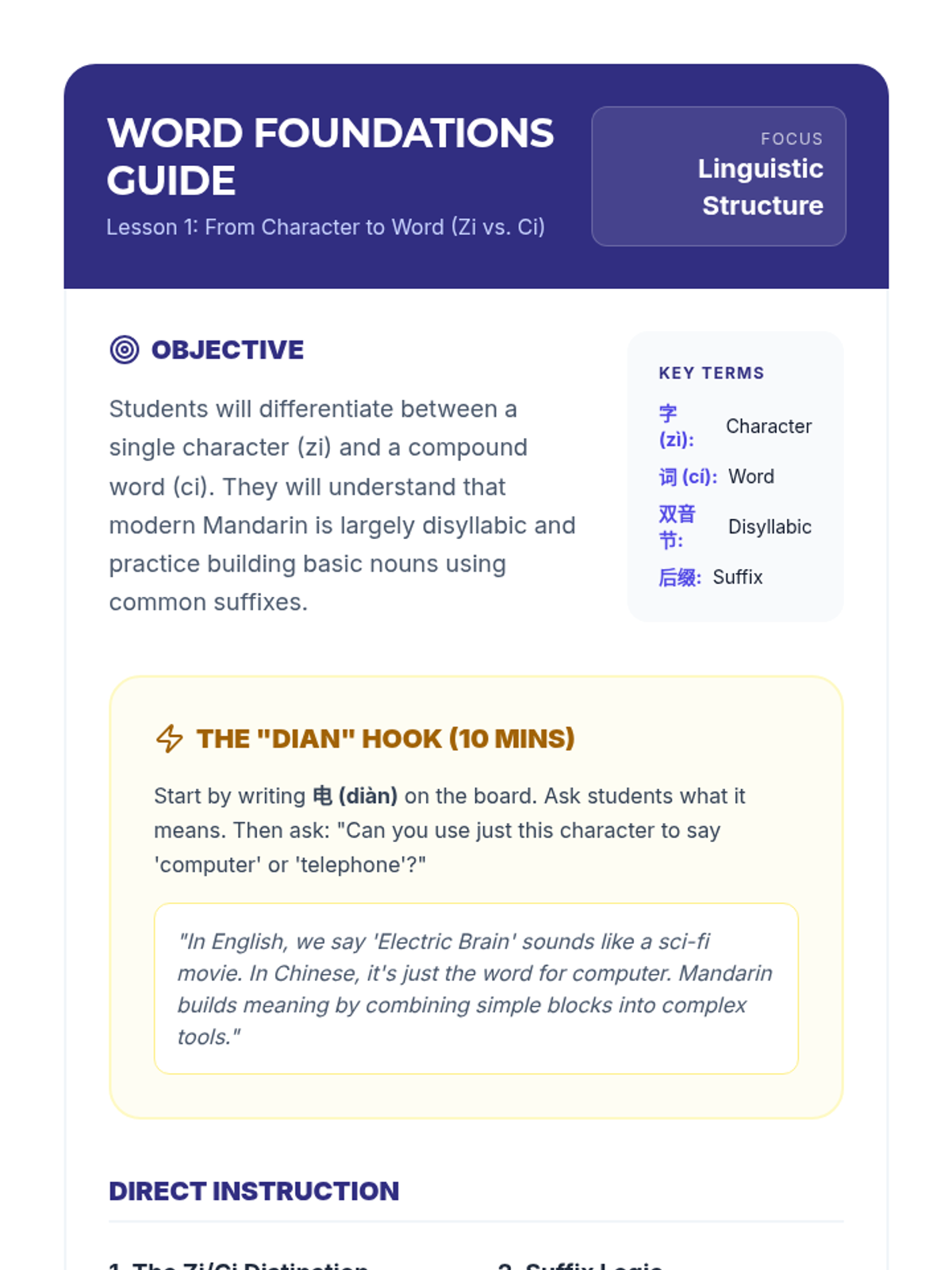
This project-based sequence explores the logic of Mandarin Chinese compound word formation (ci) versus single characters (zi). Students investigate how simple meanings combine to create modern terminology and conclude by inventing their own 'future gadgets' using valid character combinations.
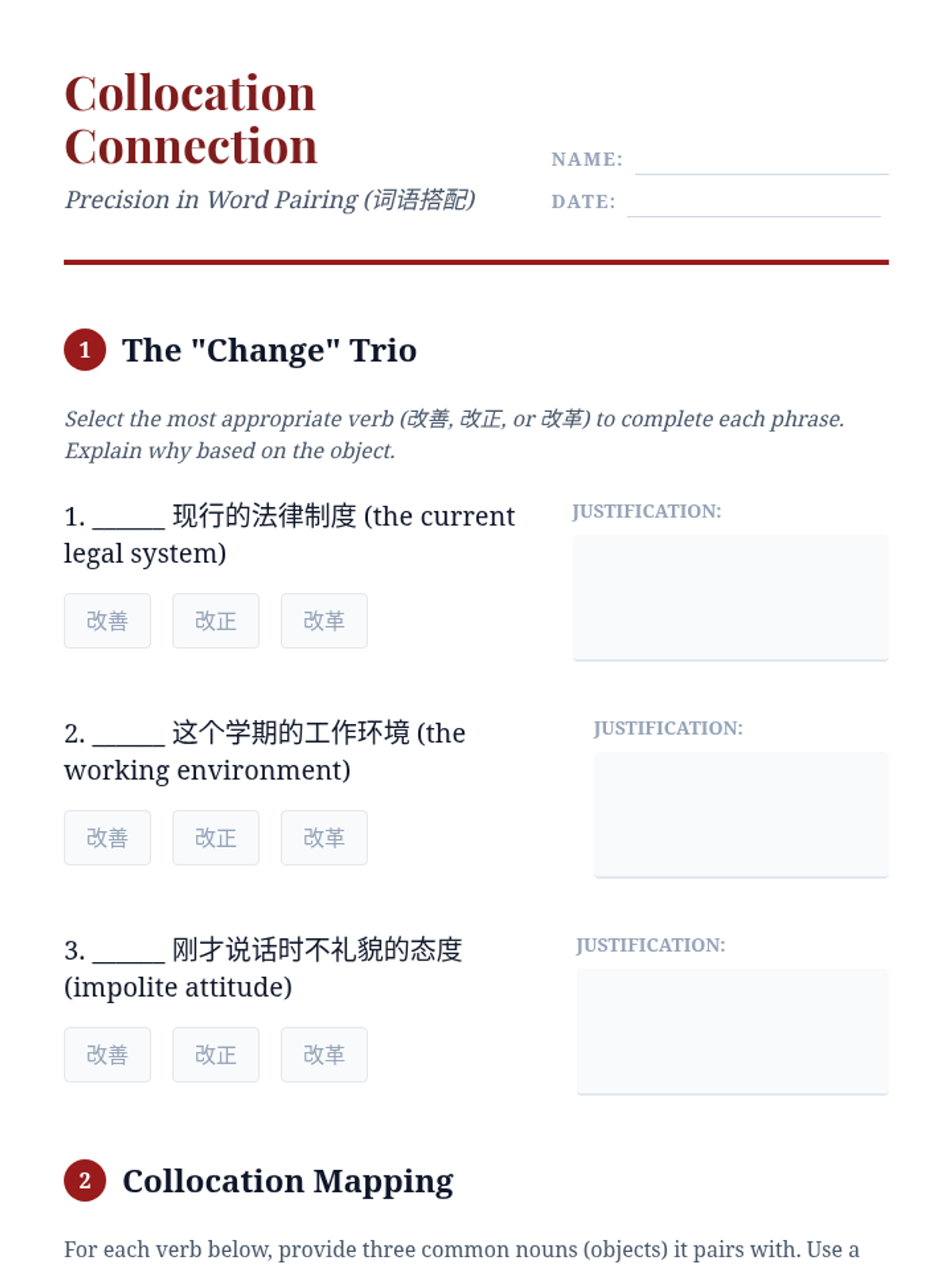
This sequence guides advanced Mandarin learners through the subtle art of synonym discrimination. Students explore collocations, emotional connotations, semantic intensity, and register shifts to achieve native-like precision in their writing and speech.