Phonetic foundations through Pinyin and tones, character recognition, and essential grammar for all proficiency levels. Integrates cultural context with advanced reading, writing, and communicative strategies.
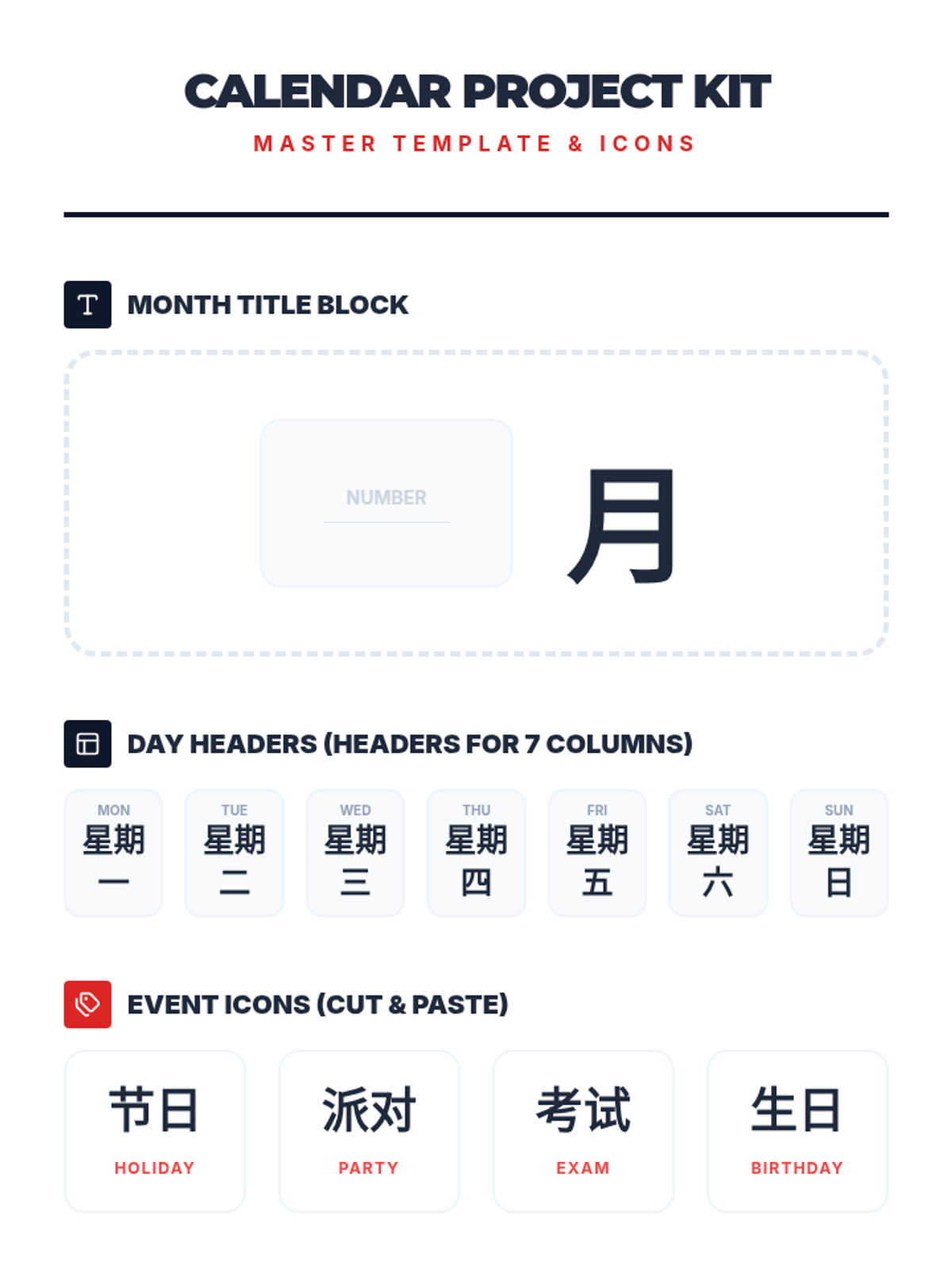
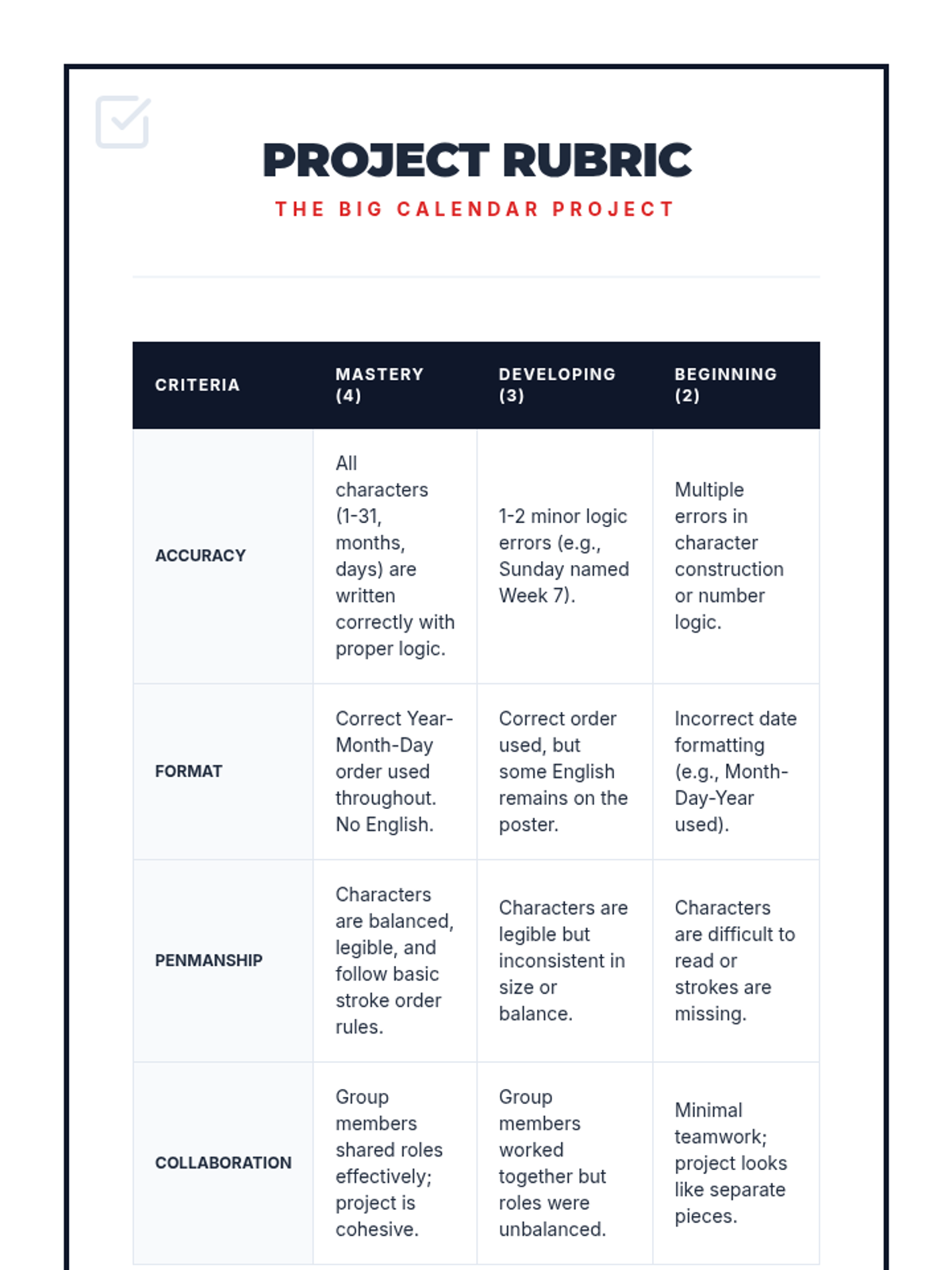
A collaborative project where students apply their knowledge to build a full classroom calendar and plan a class event in Mandarin.
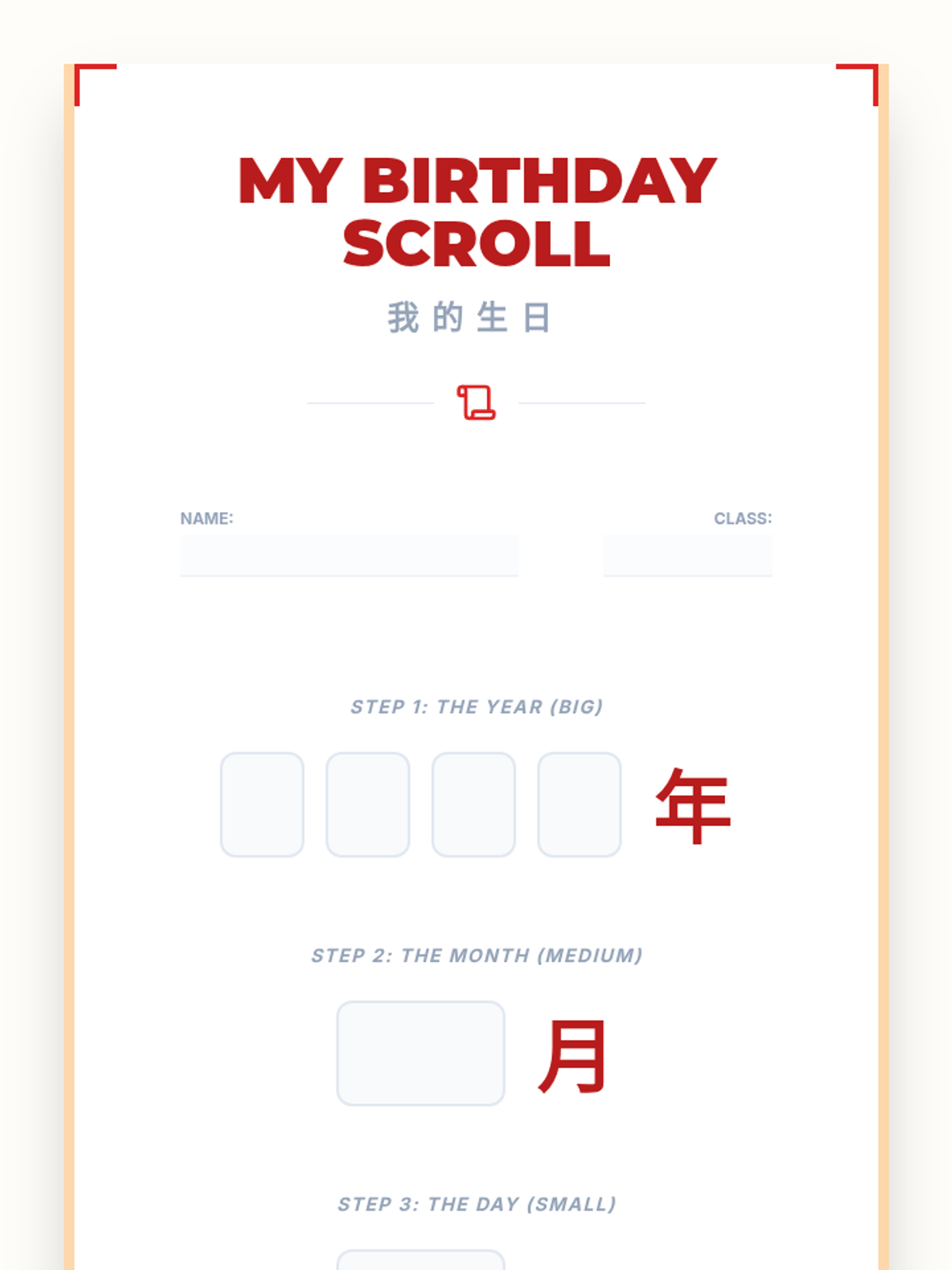
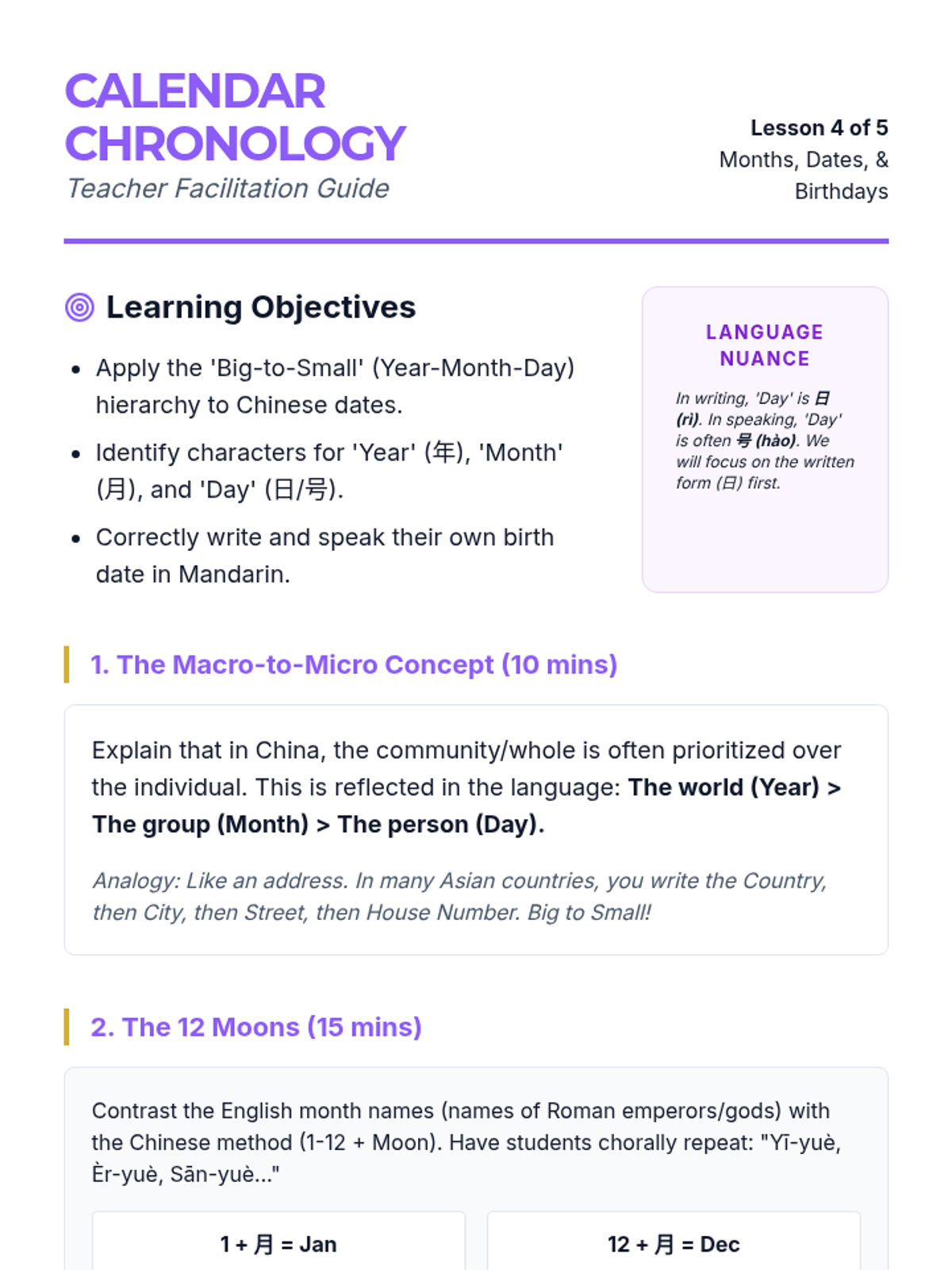
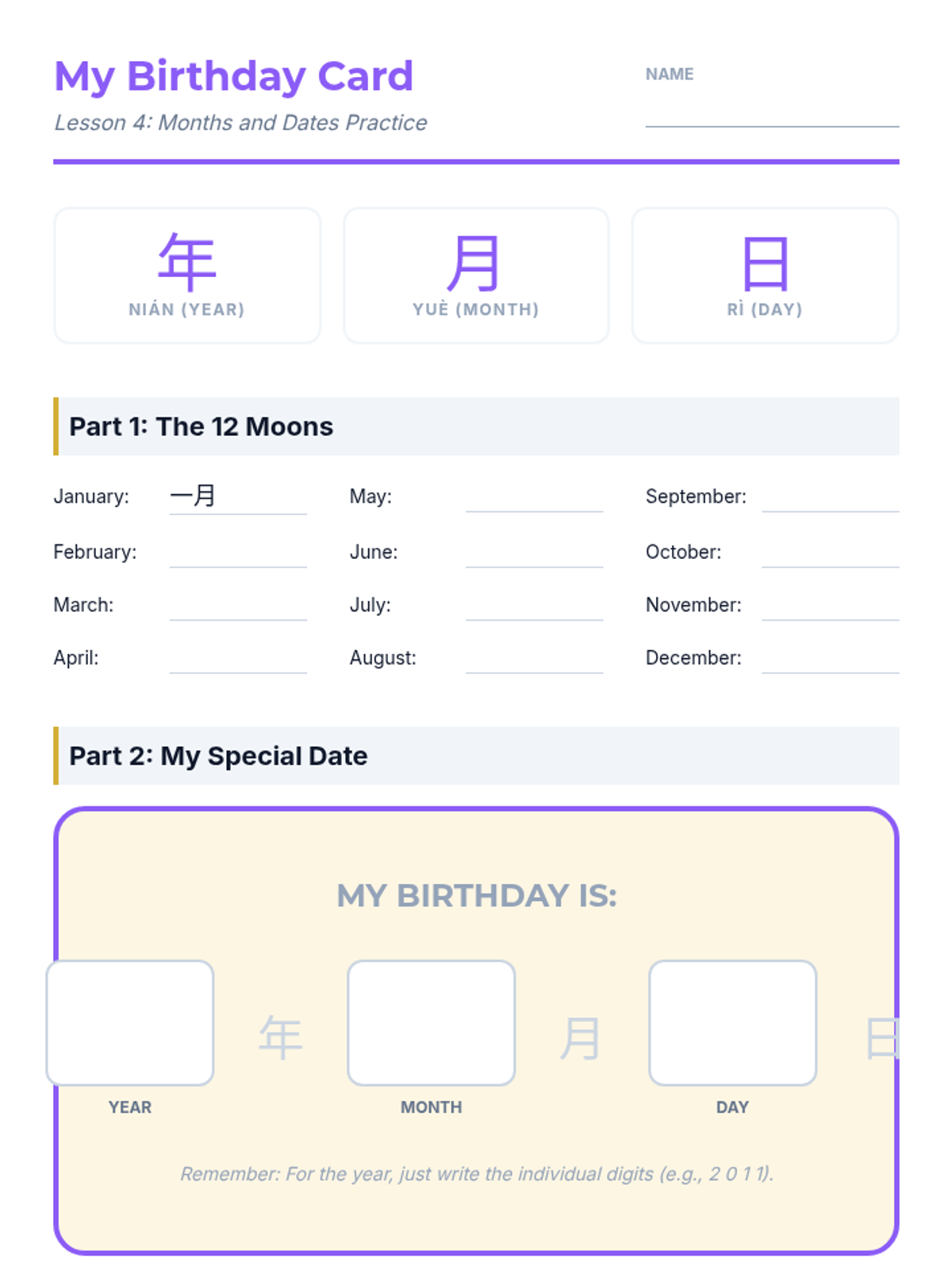
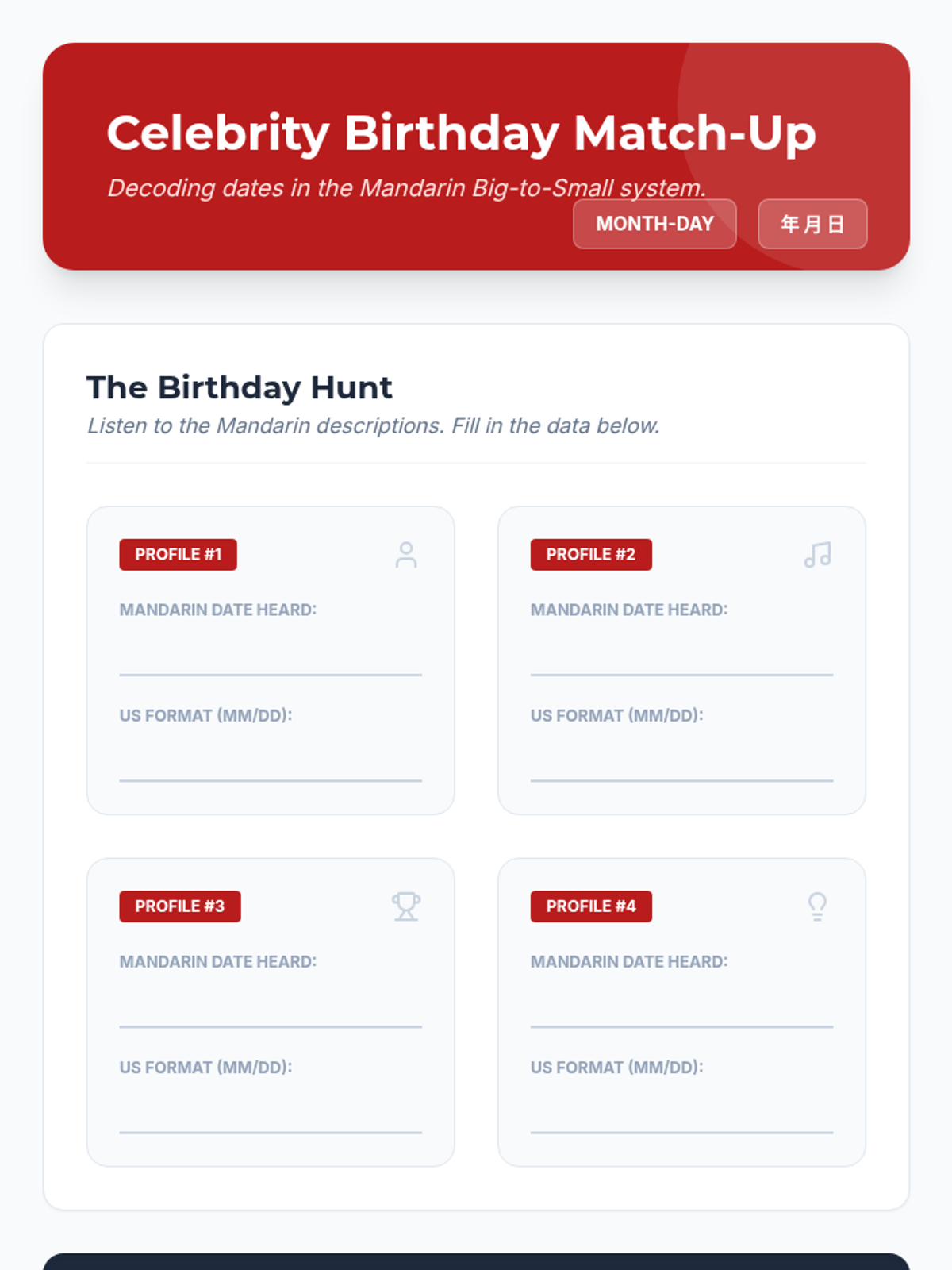
Students learn the 'Number + Moon' logic for months and the Year-Month-Day formatting used in Chinese culture.
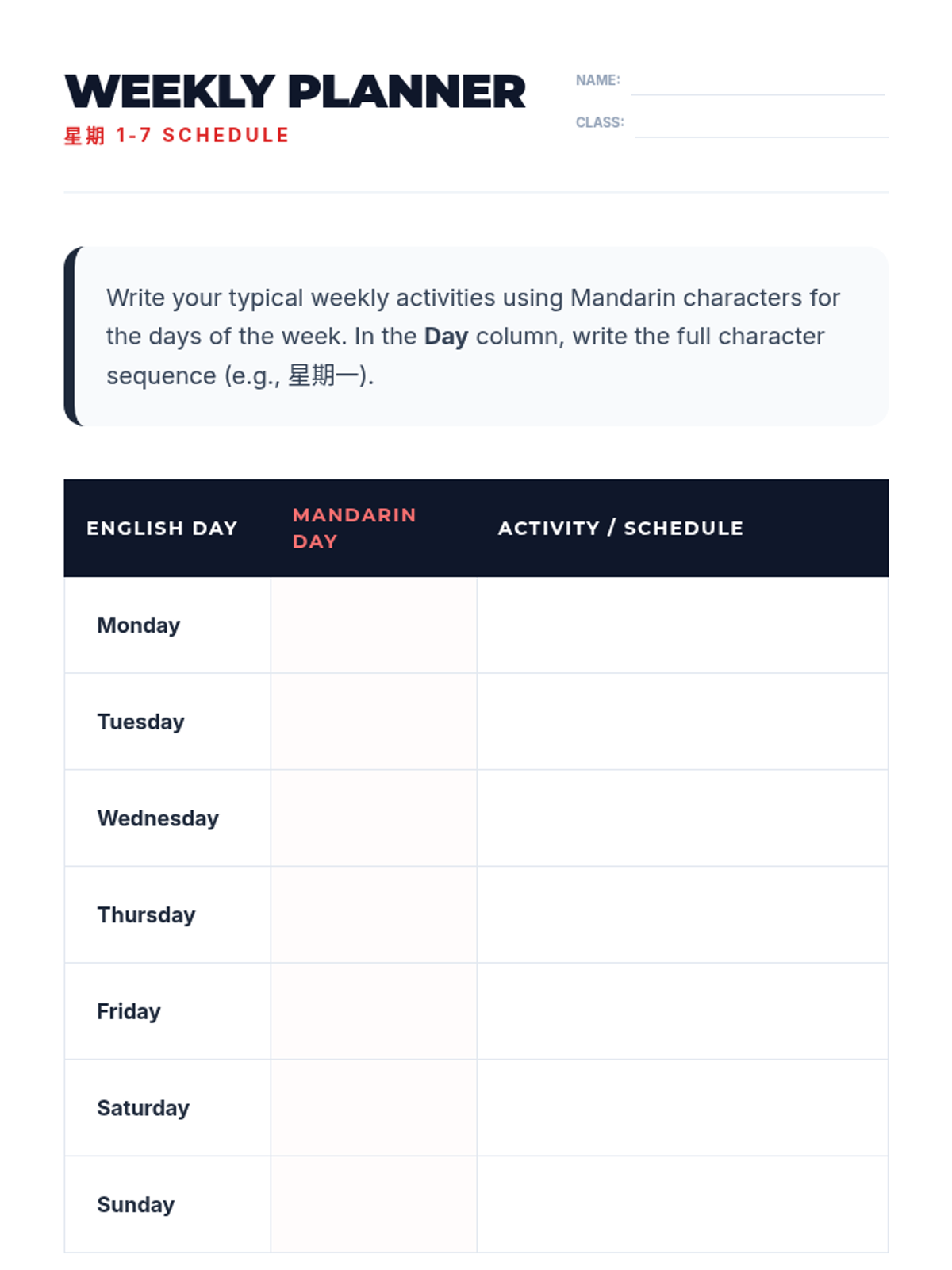
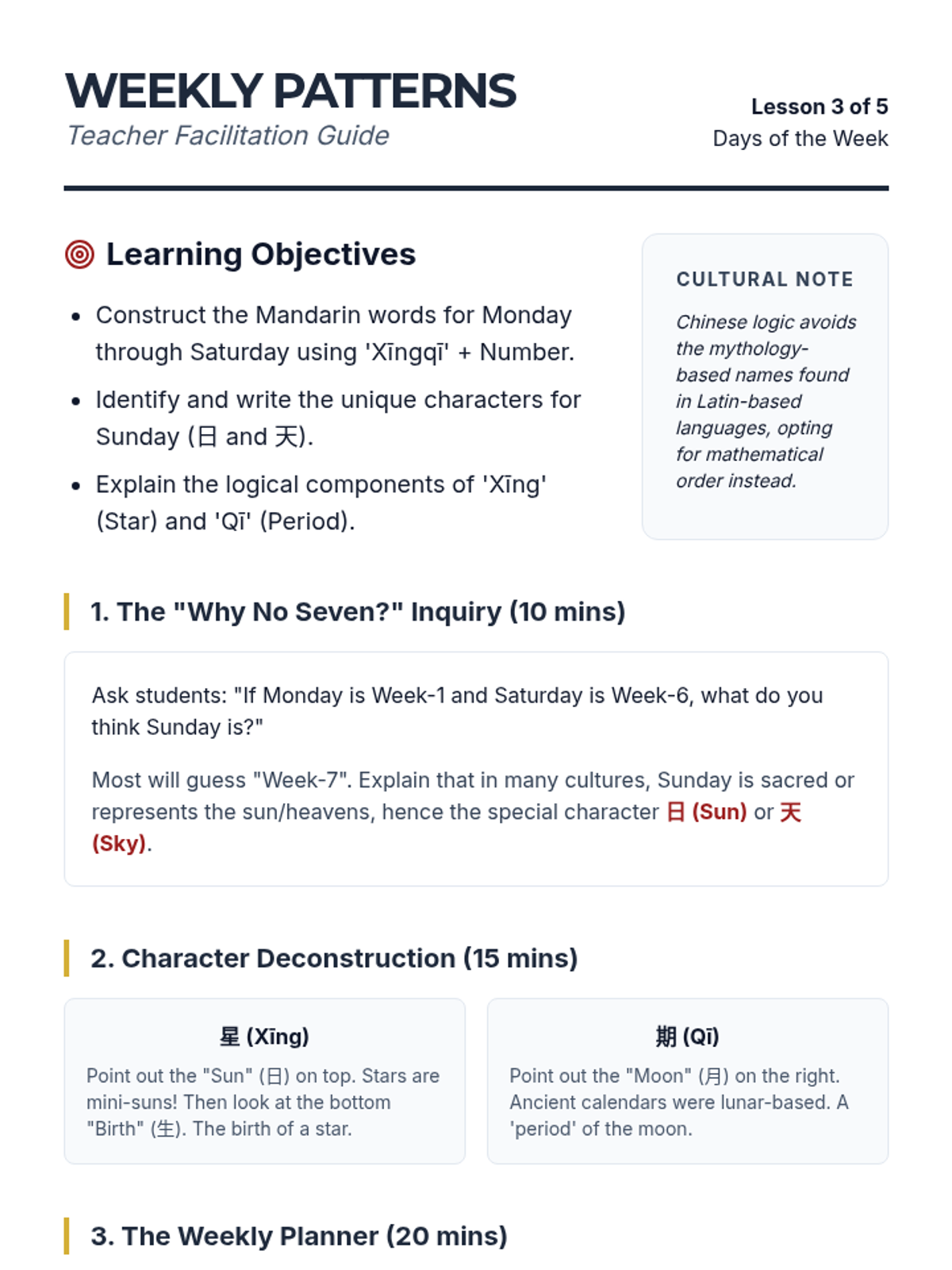
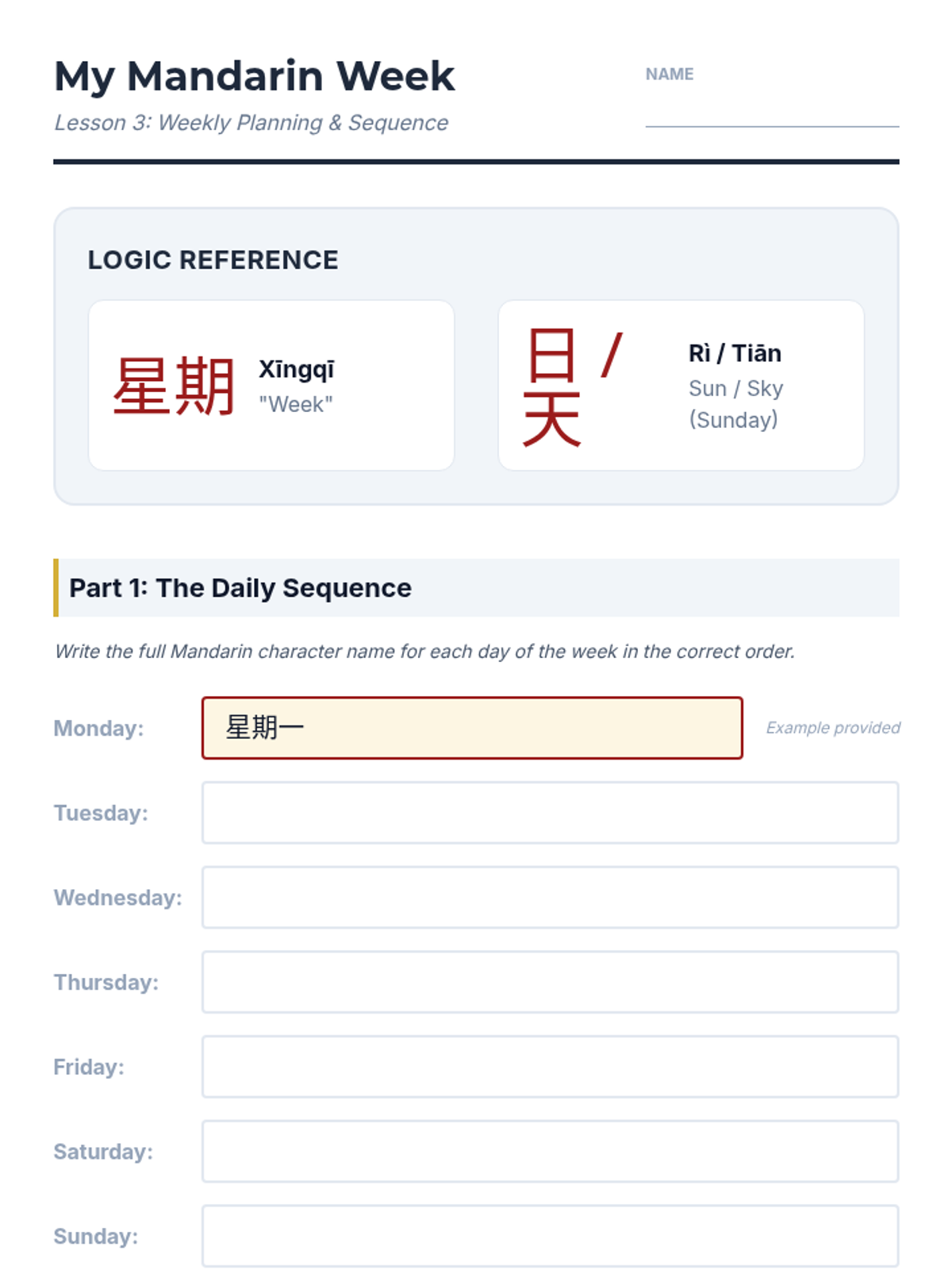
An exploration of the numerical naming system for days of the week in Mandarin, comparing it to the mythological origins of English day names.
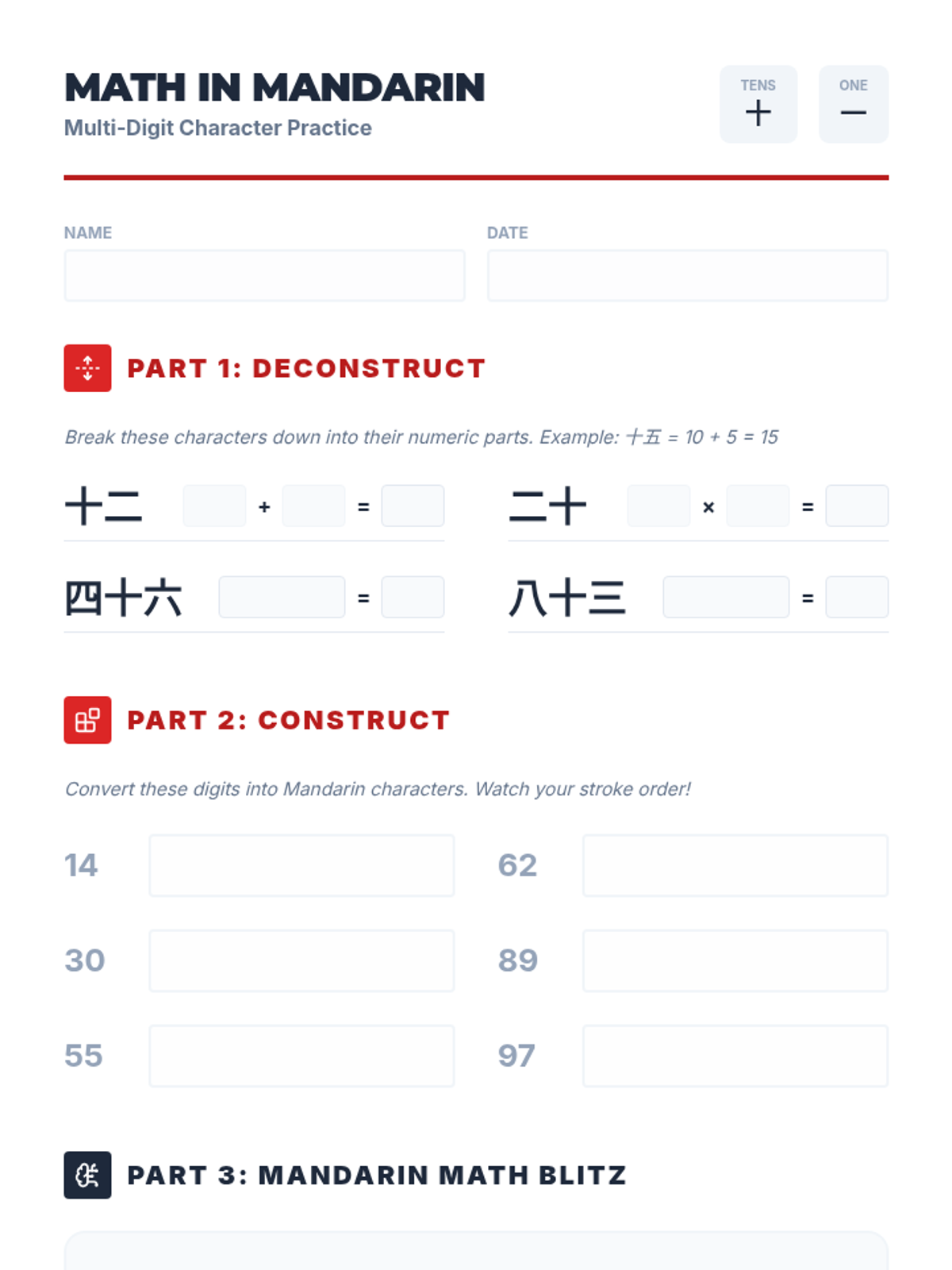
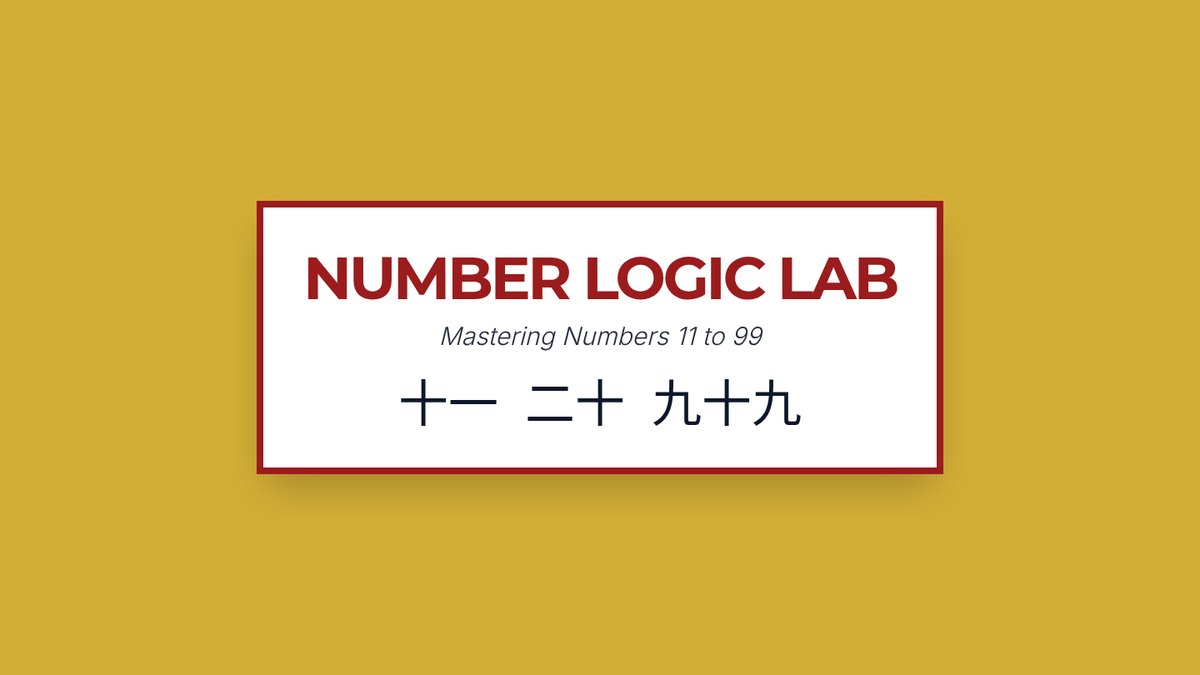
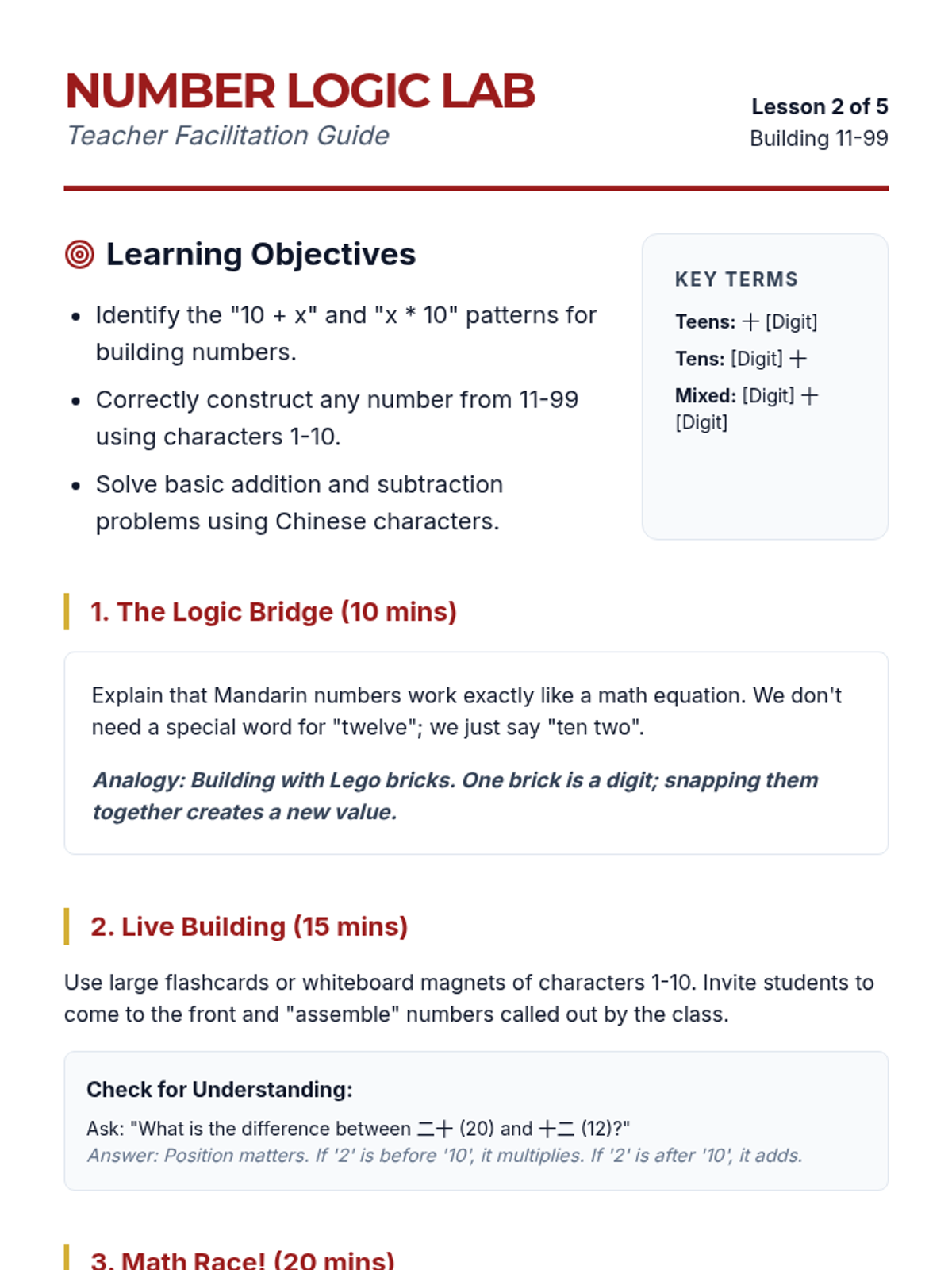
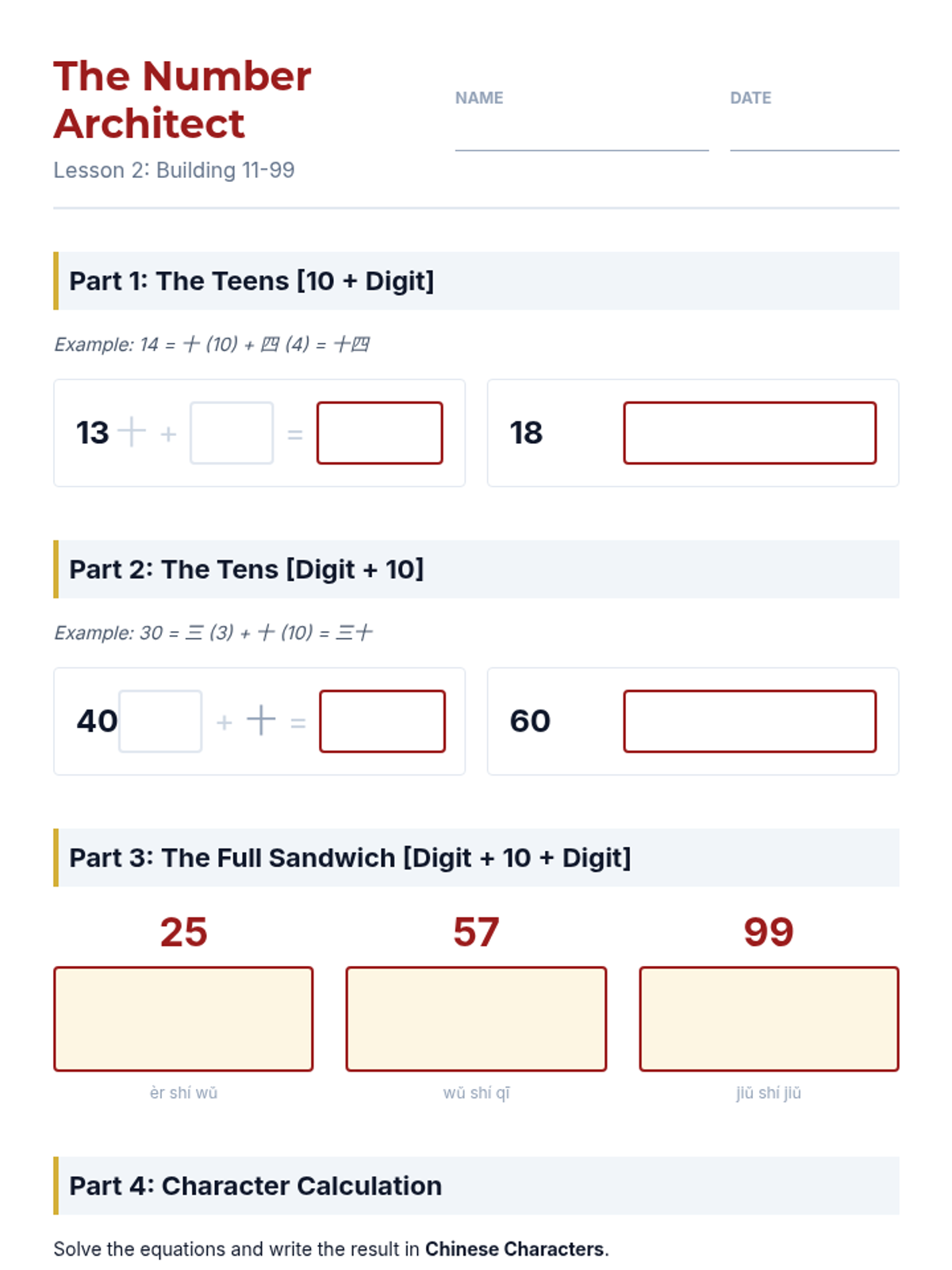
Students discover the additive and multiplicative logic behind Chinese numbers up to 99, practicing the construction of double-digit numerals.
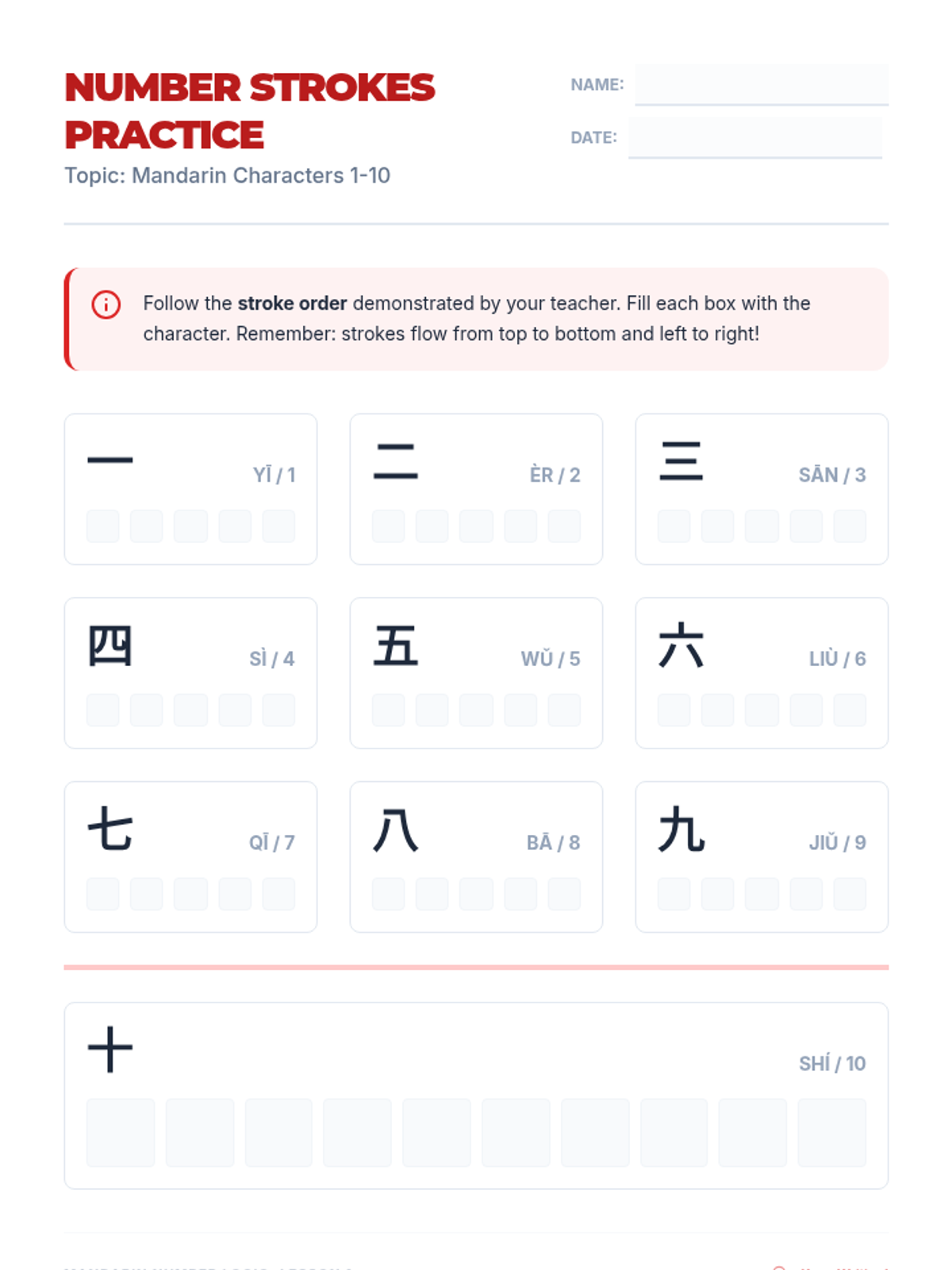
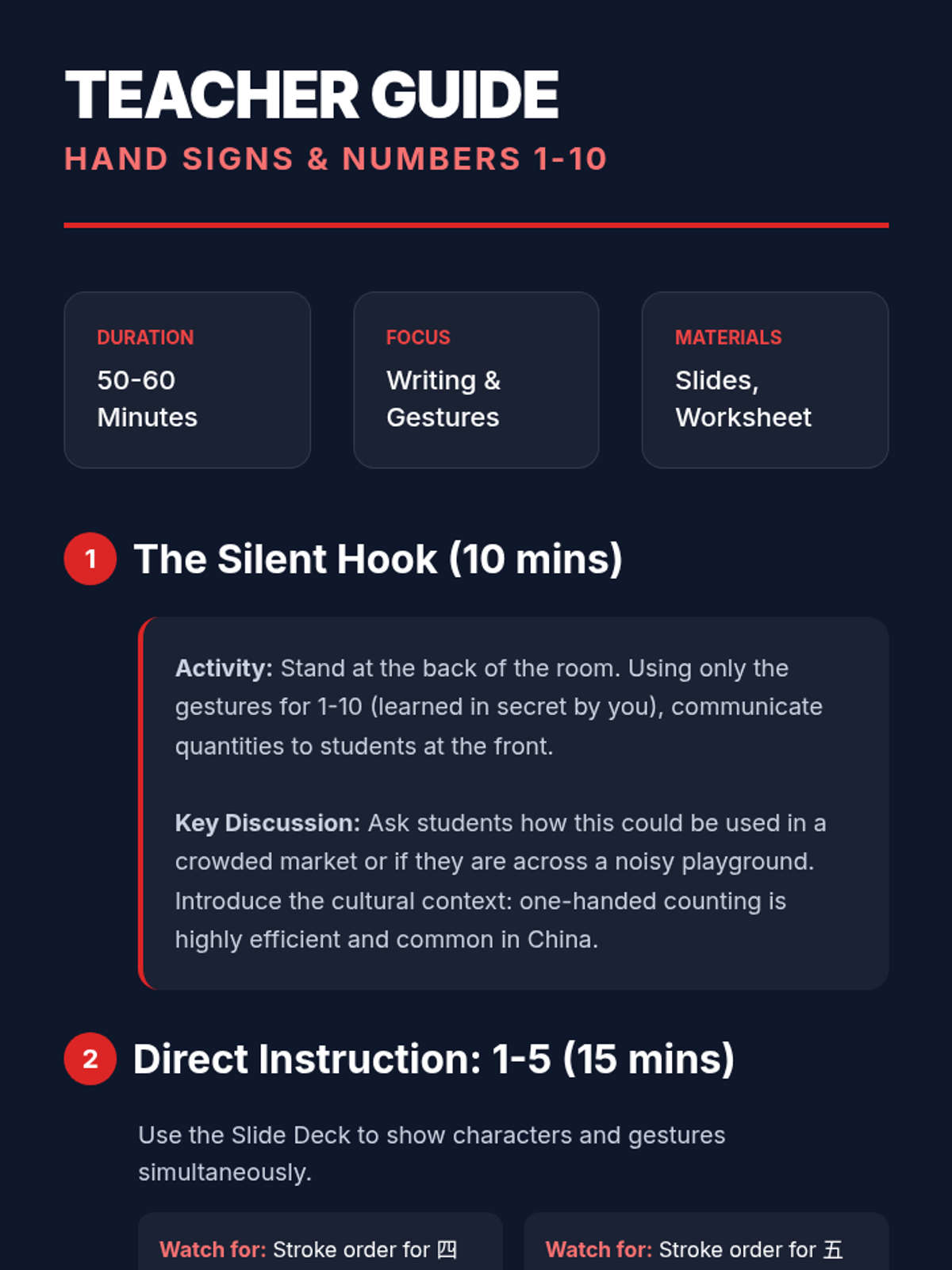
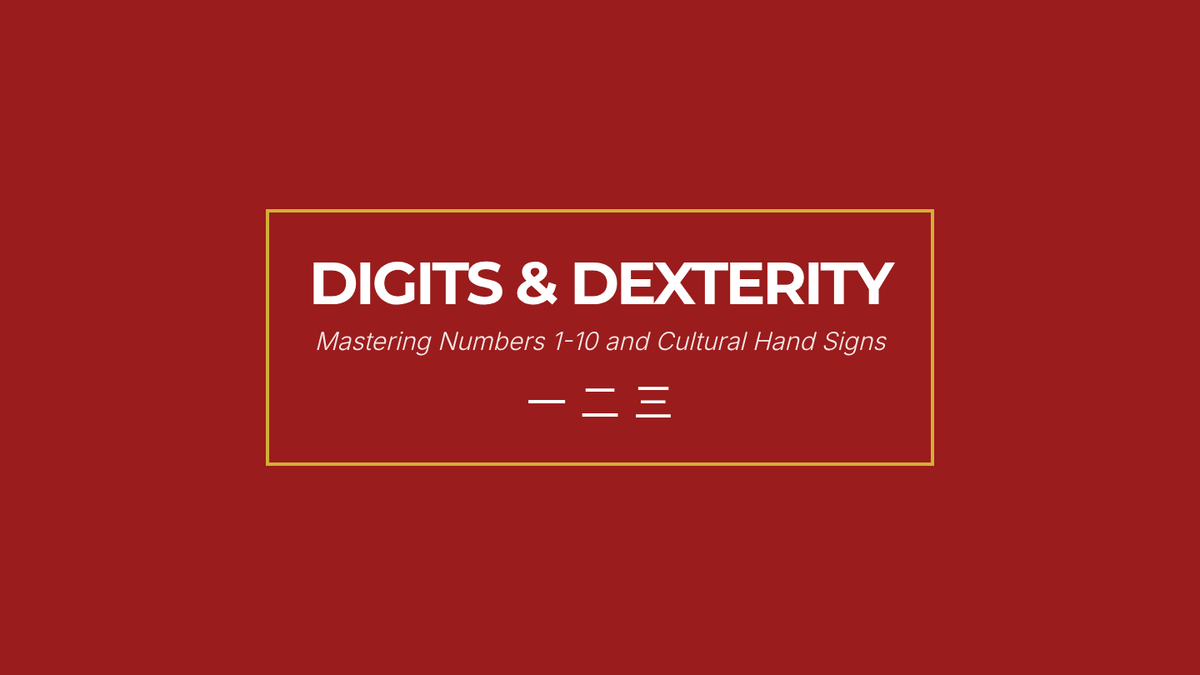
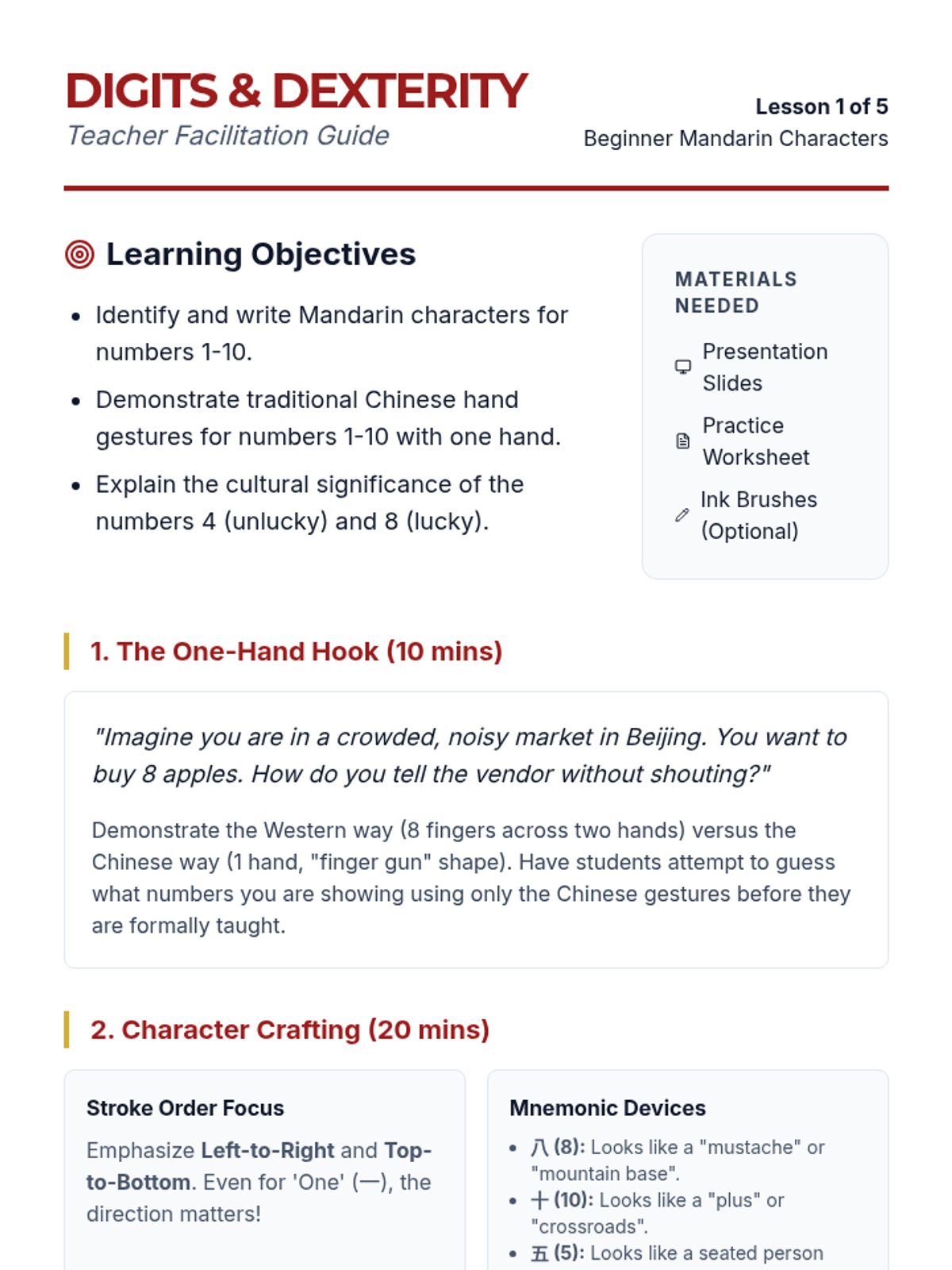
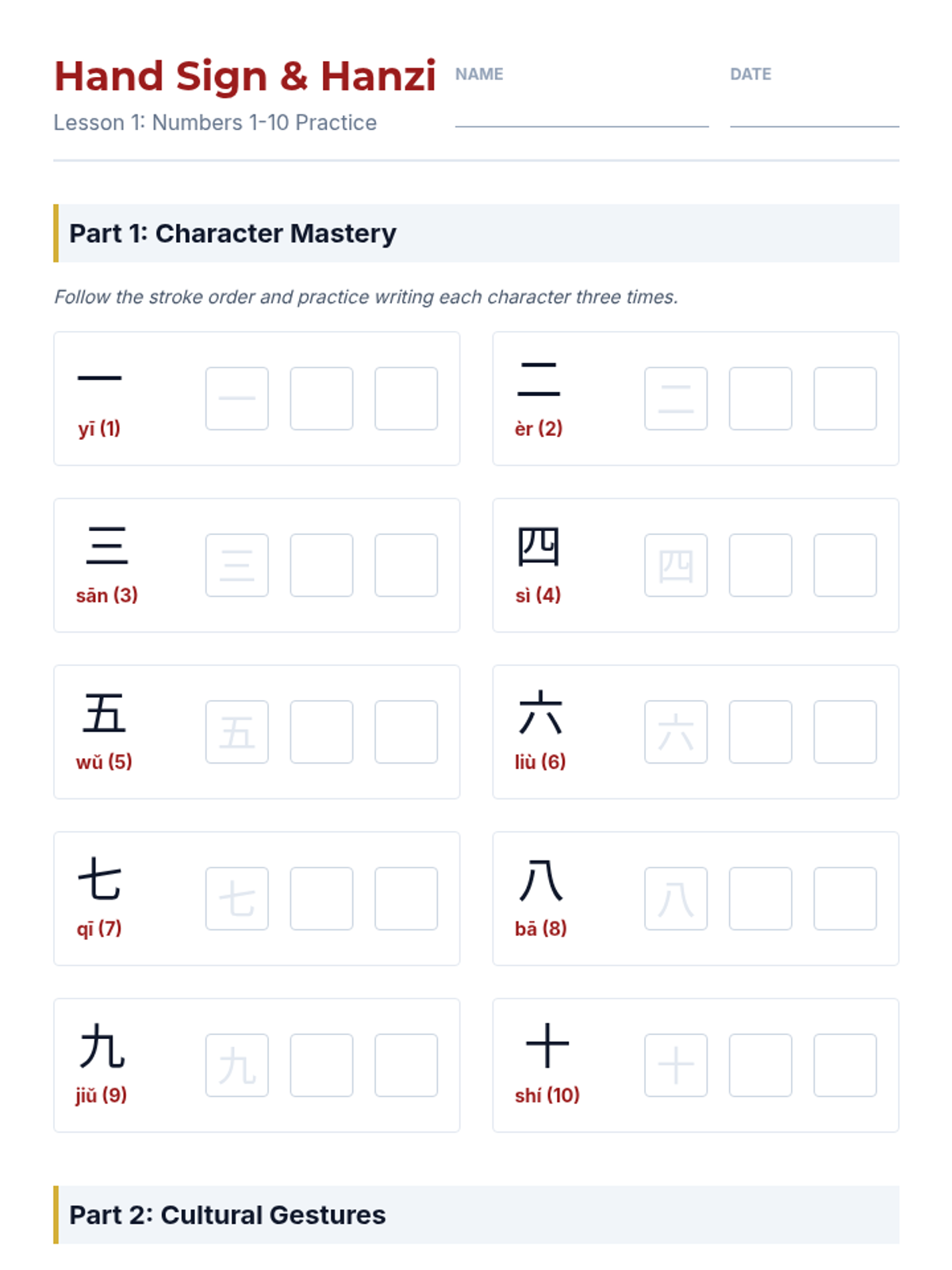
Students learn to write characters for 1-10 and master the traditional Chinese one-handed counting gestures. Focus is on stroke order and cultural communication.
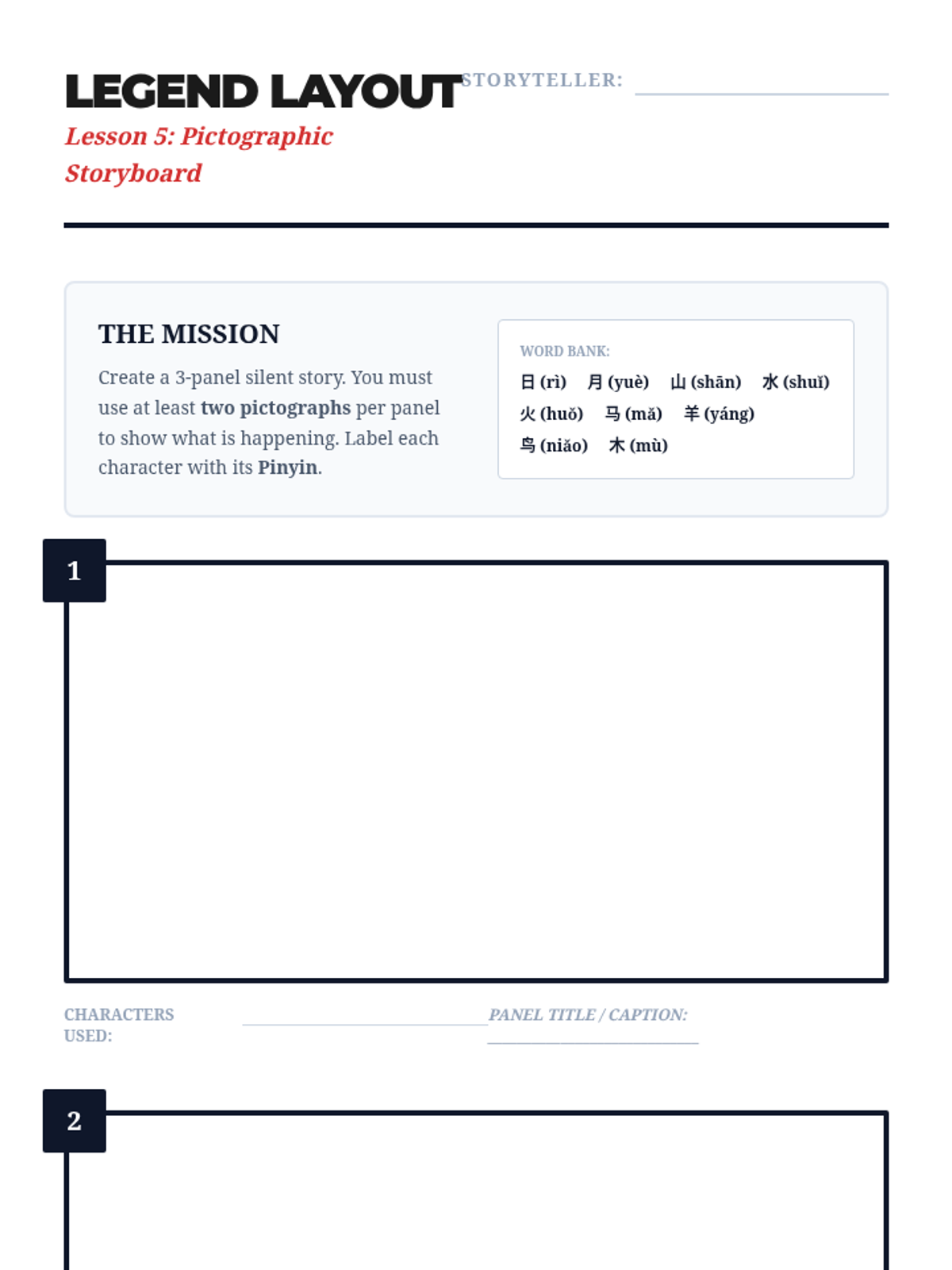
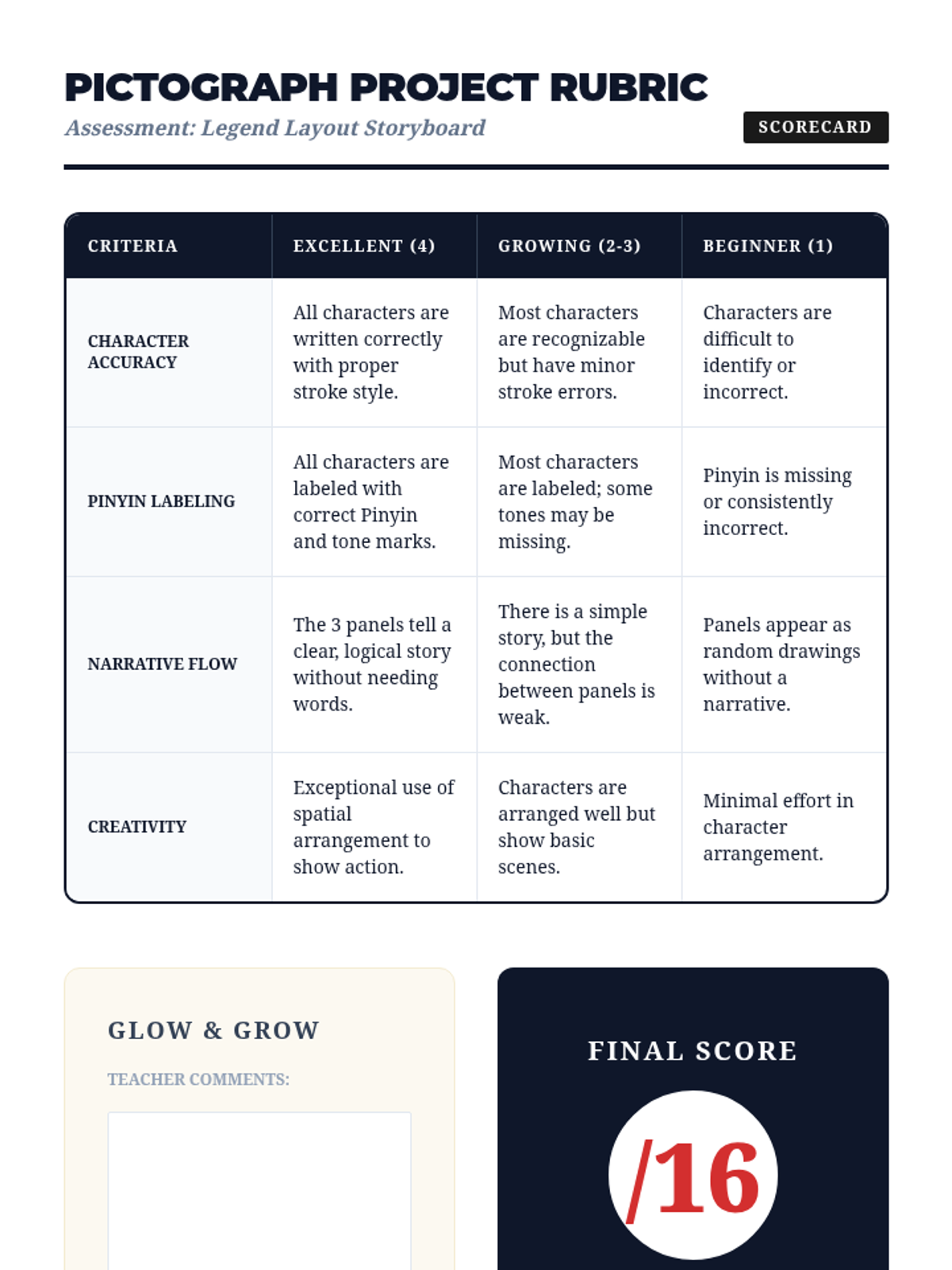
Students synthesize their learning by composing a visual storyboard using the characters they've mastered. They arrange pictographs to create narrative scenes, demonstrating their understanding of both character meaning and spatial composition.
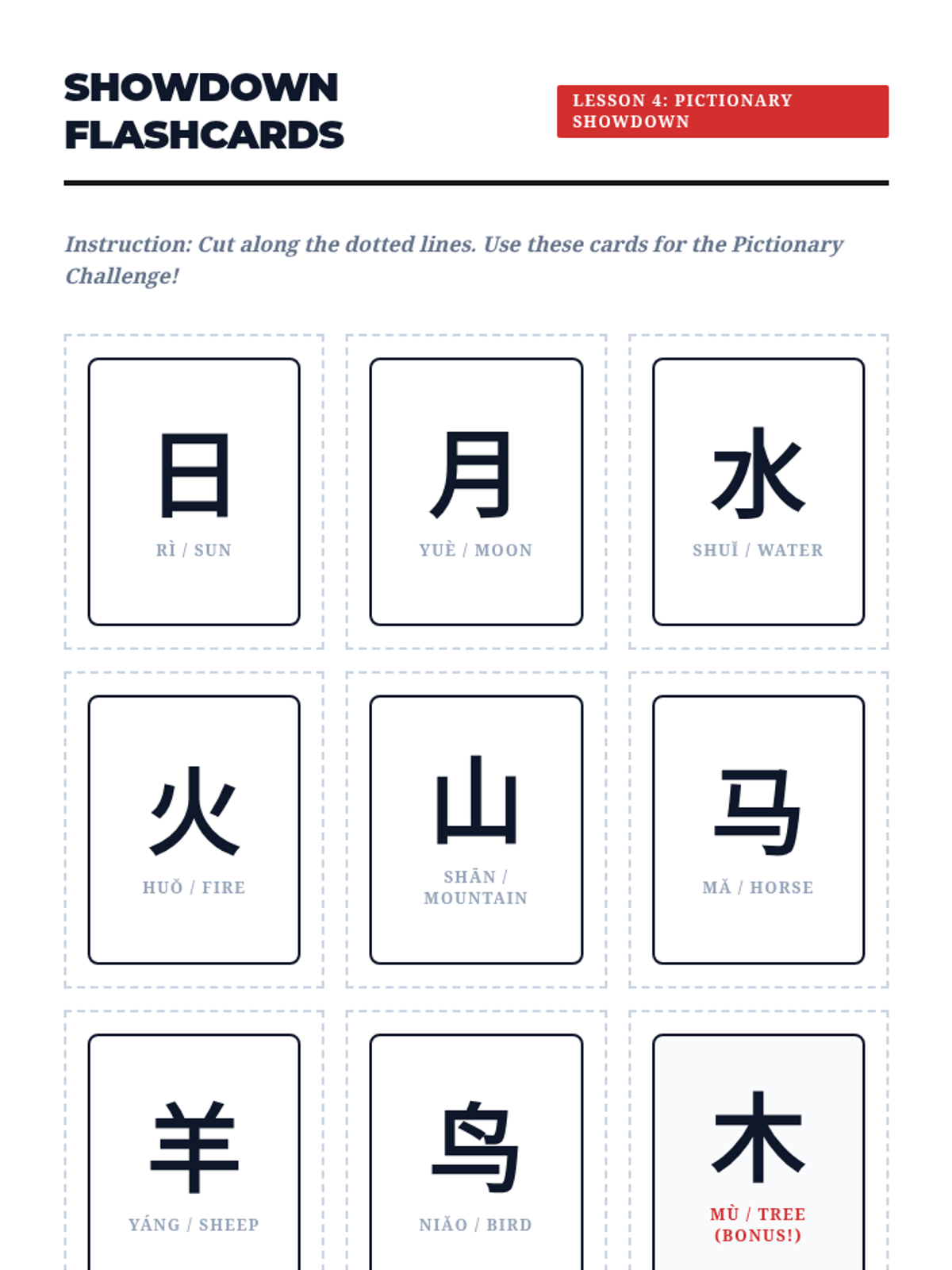
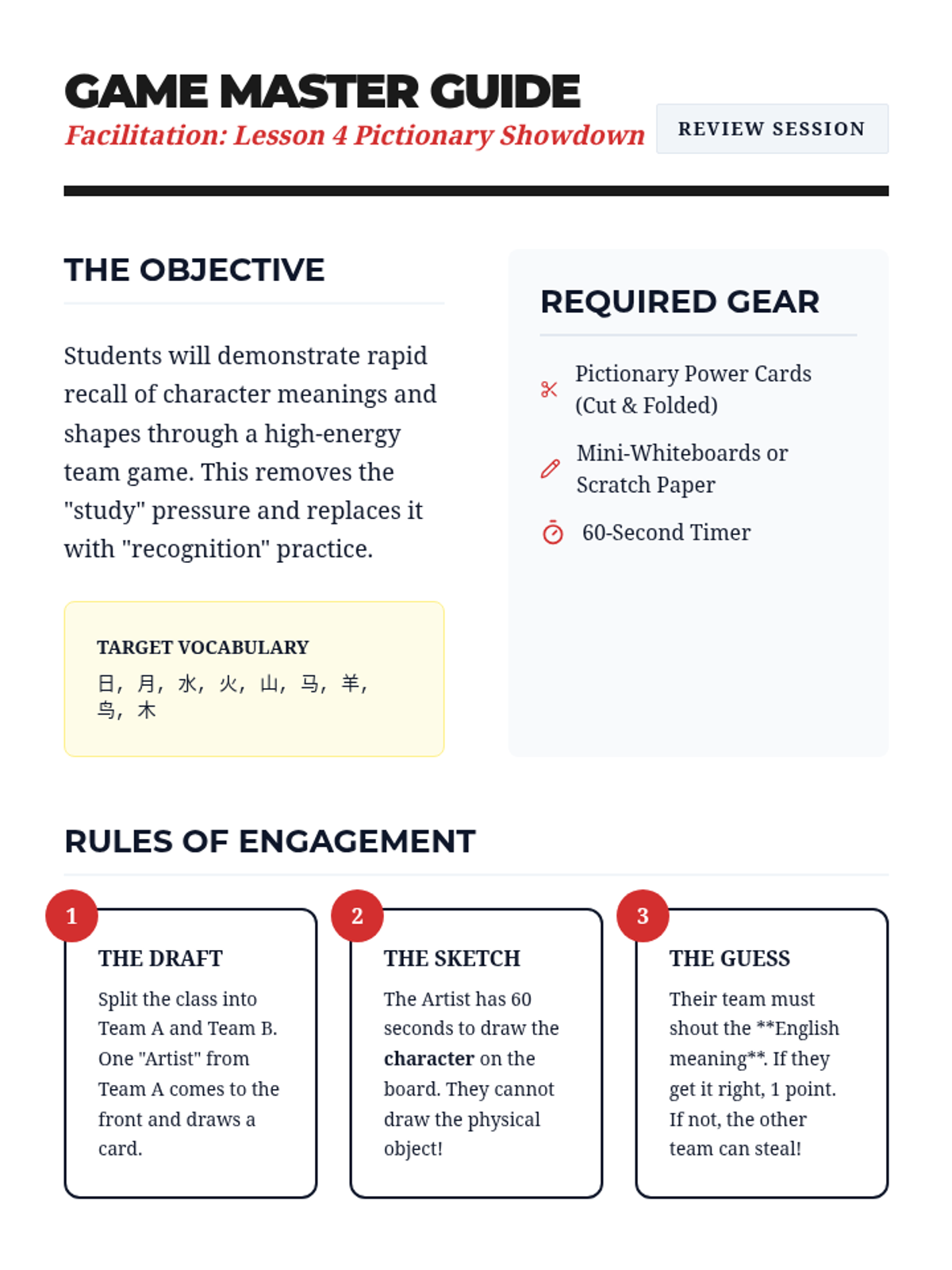
A high-energy, game-based review session where students test their rapid recognition of pictographs through a Pictionary-style challenge. Focuses on switching between visual symbols and English meanings.
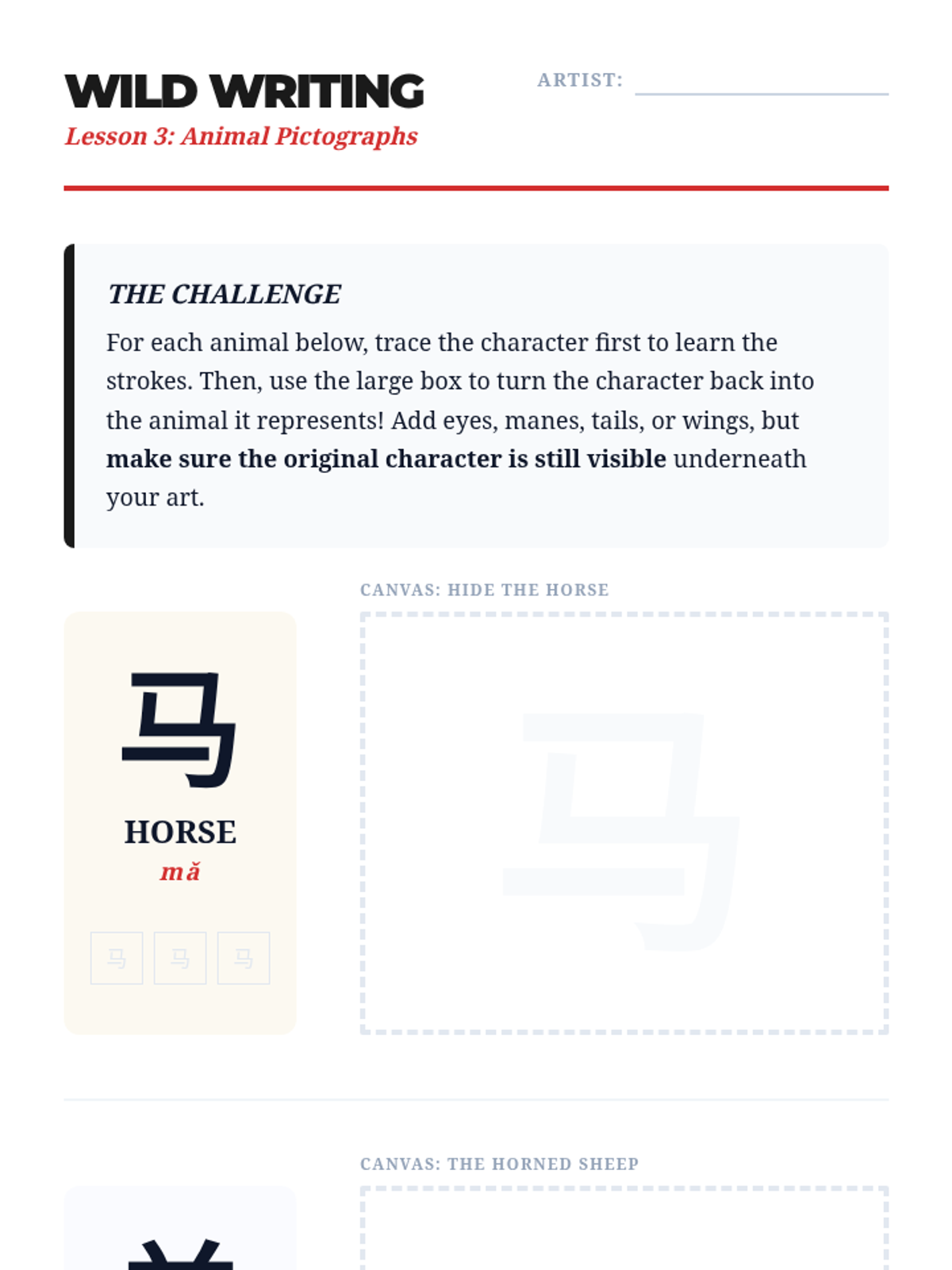
Students explore more complex animal characters like Horse, Sheep, and Bird. Through creative visualization, they draw animals over characters to cement the link between the creature and its written symbol.
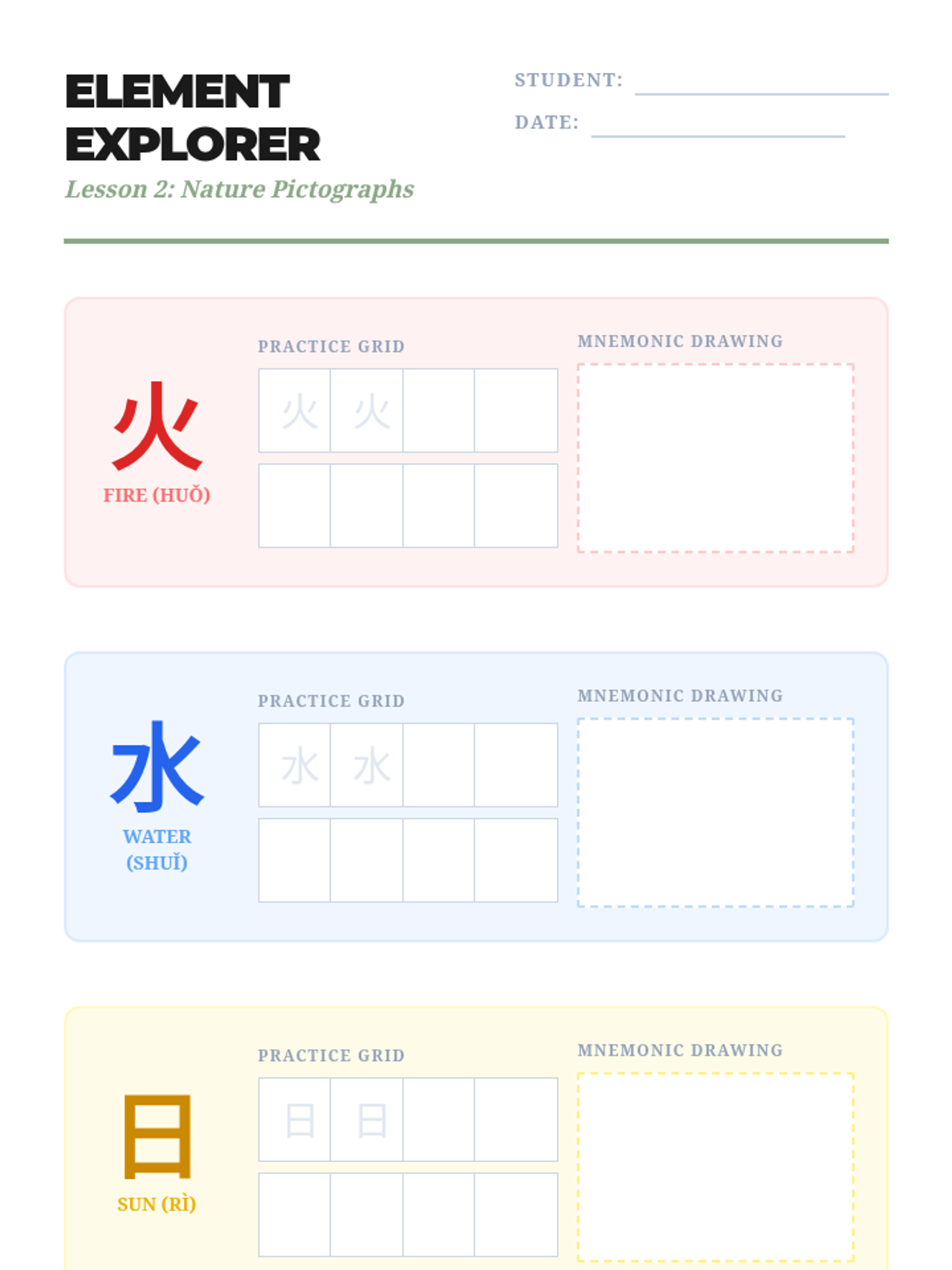
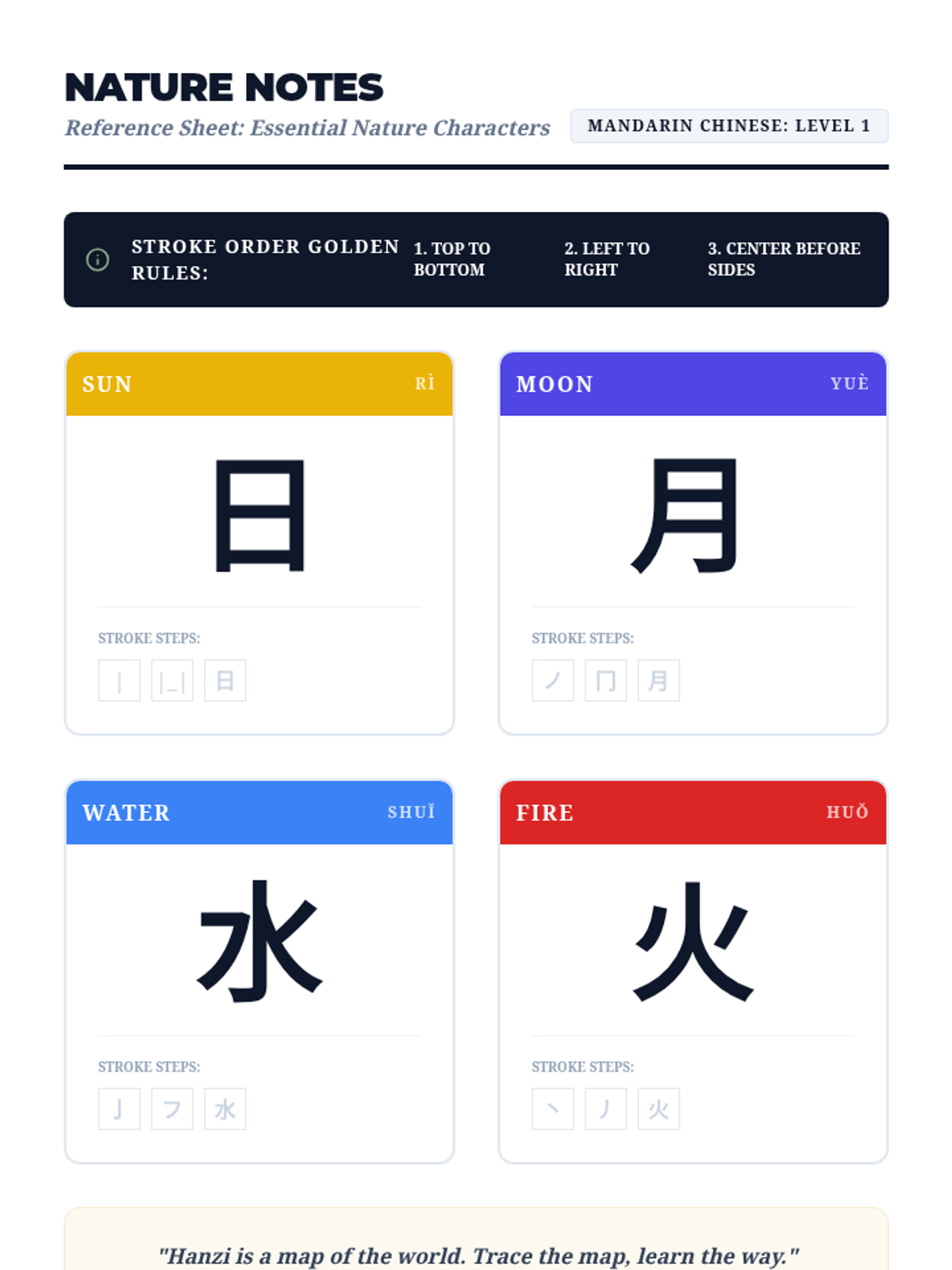
Focusing on the fundamental elements of nature—Sun, Moon, Water, and Fire—students learn stroke order and create visual mnemonics. The lesson emphasizes the transition from physical object to stylized character.
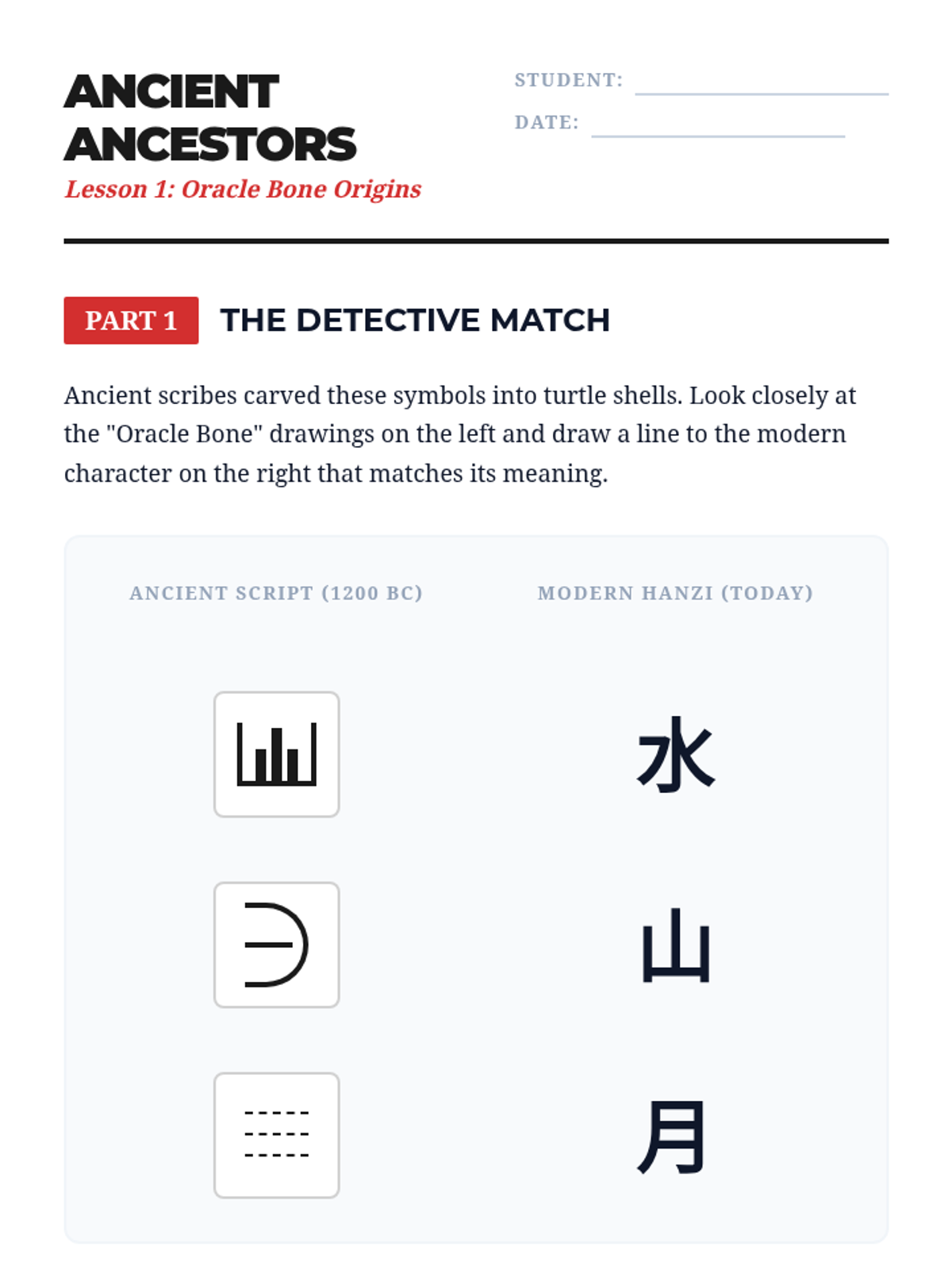
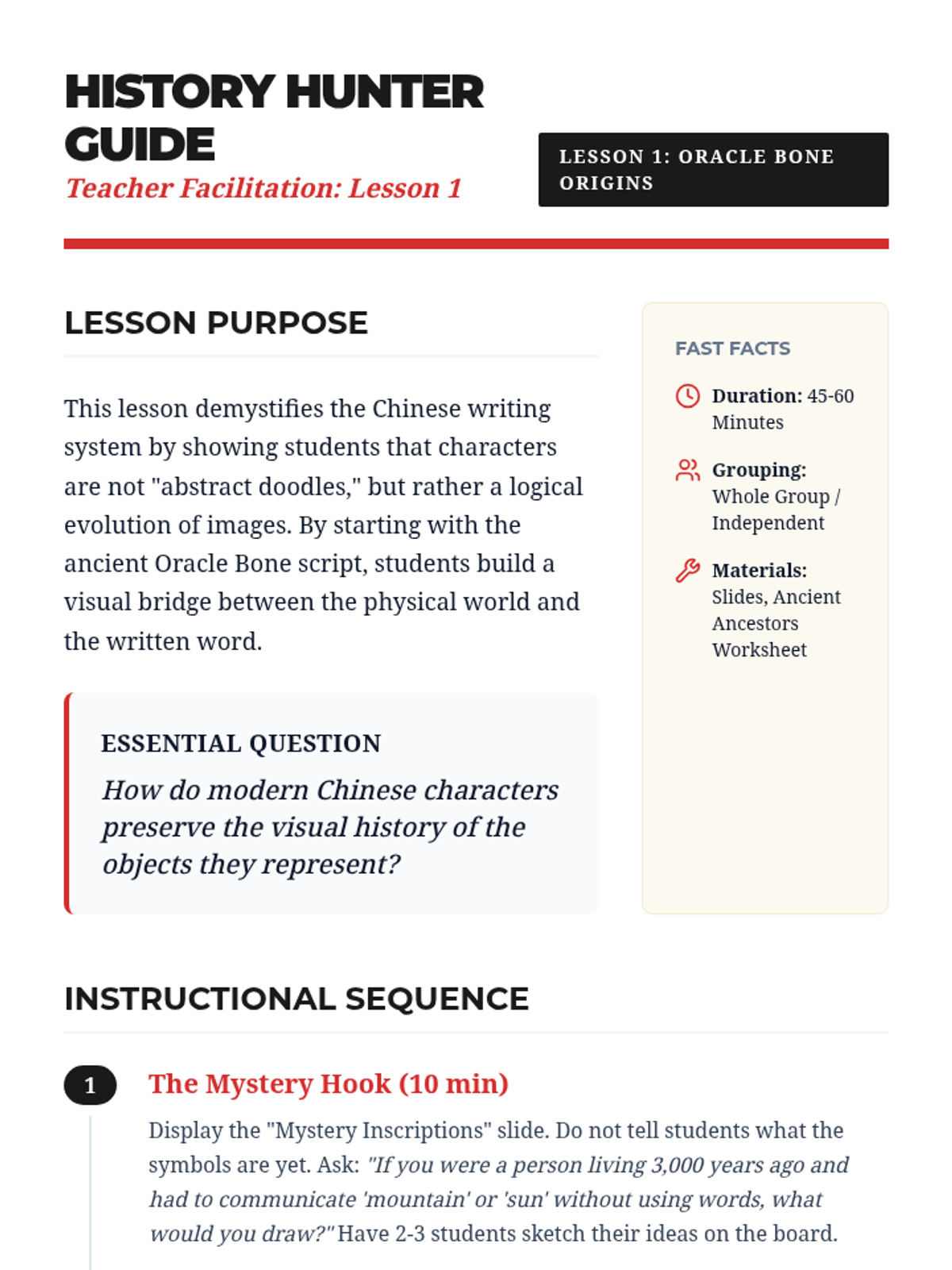
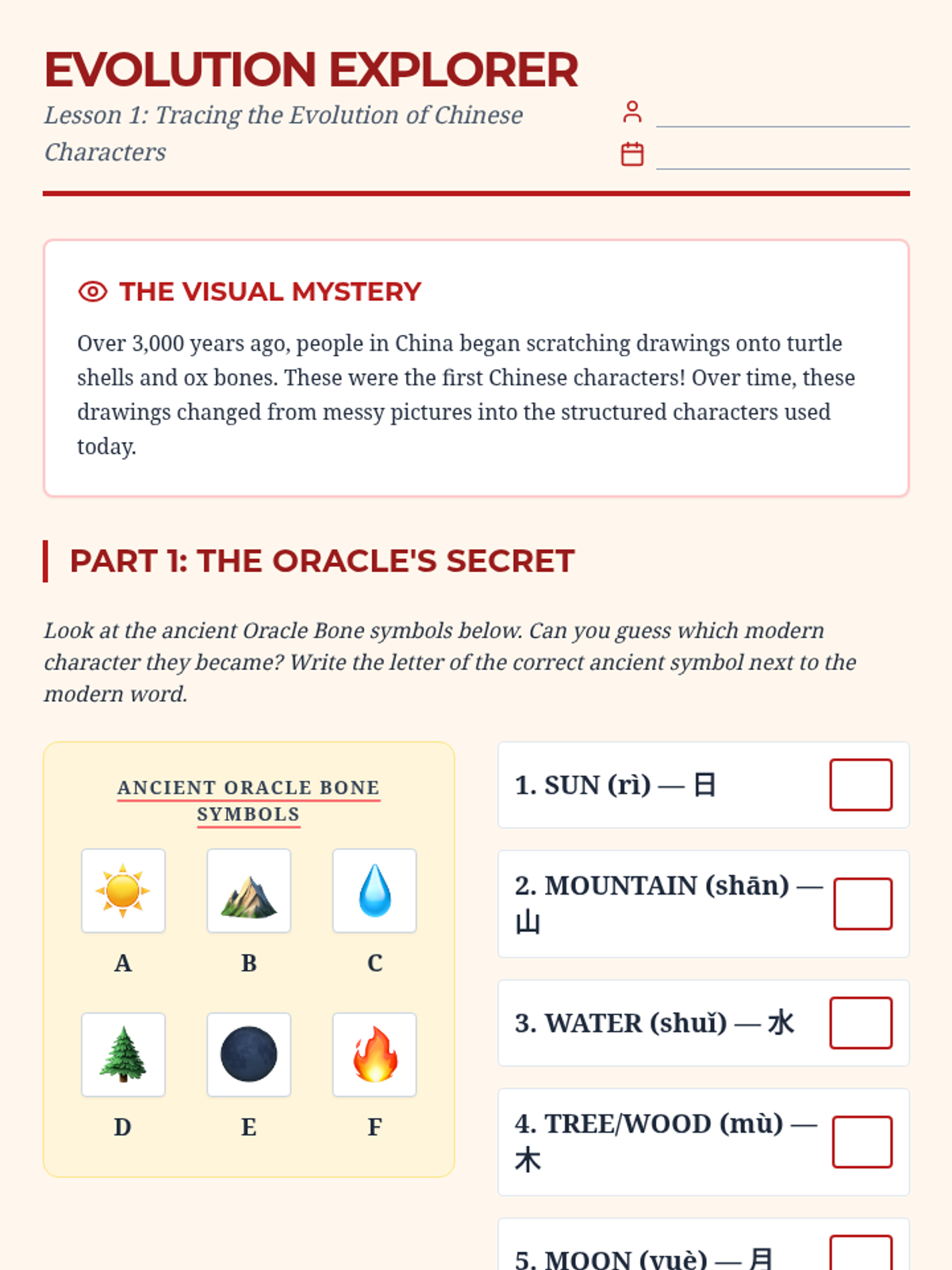
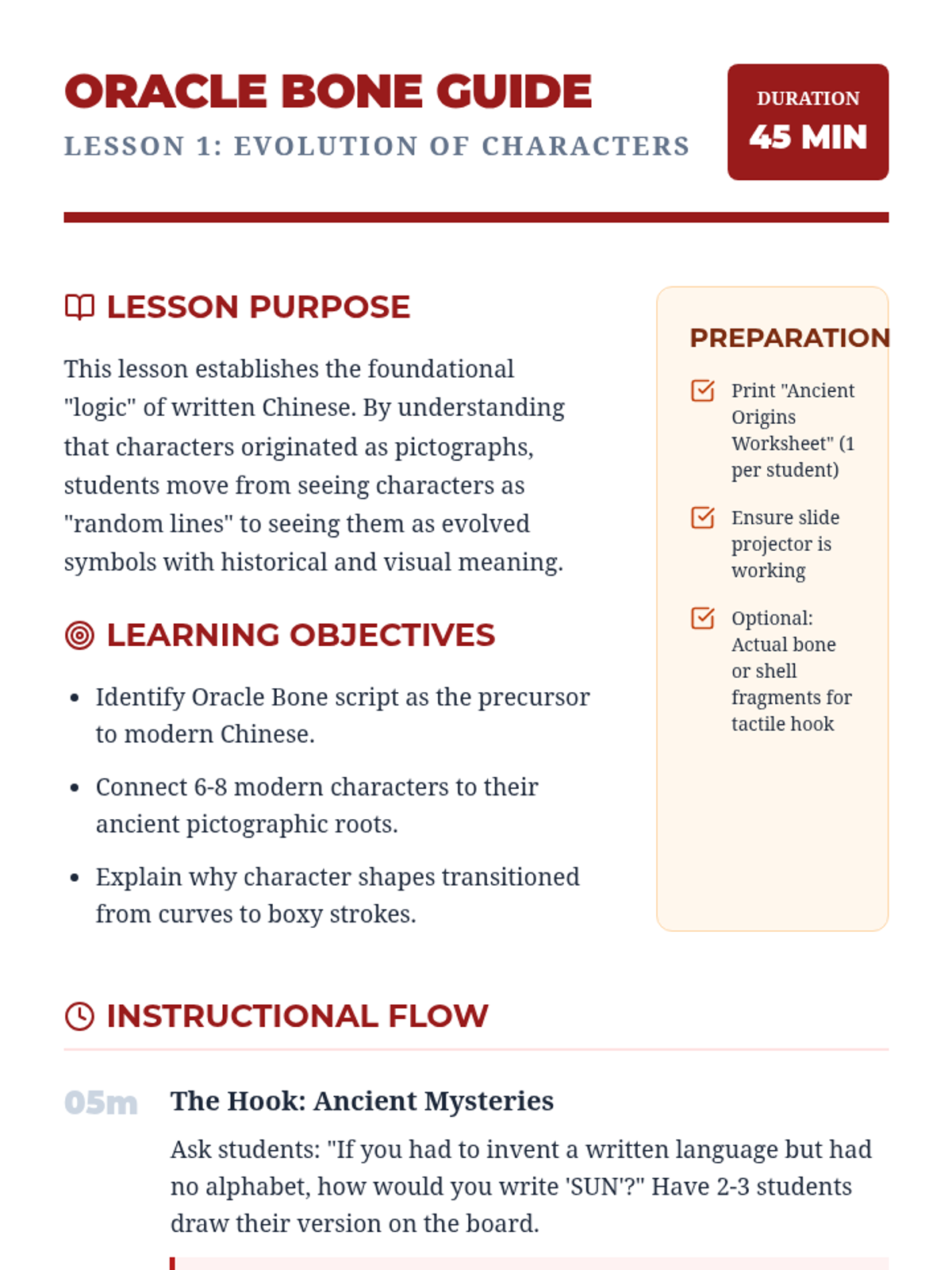
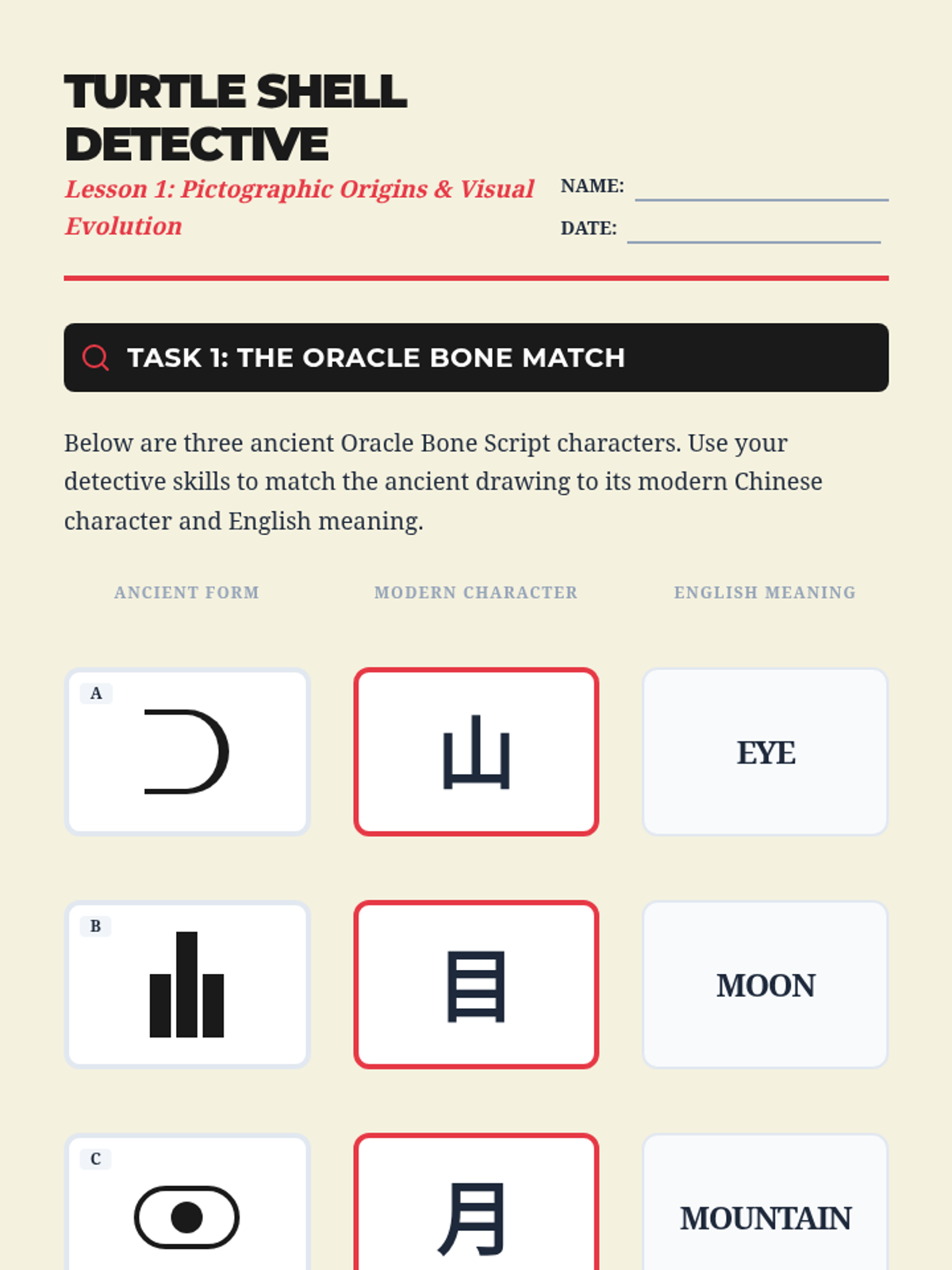
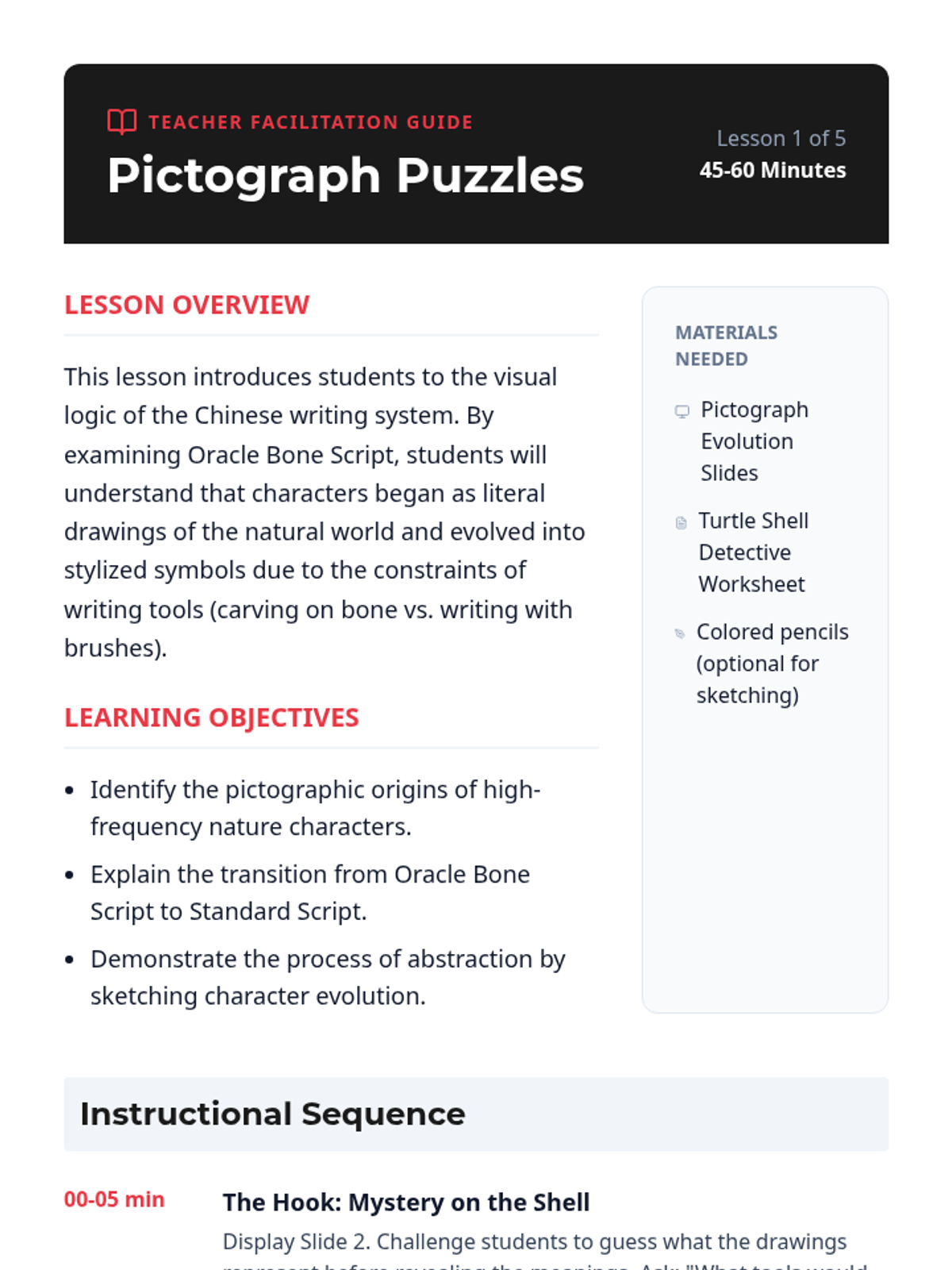
Students investigate ancient Oracle Bone script to understand how modern characters evolved from visual drawings. They will match ancient symbols to their modern counterparts and create a transformation timeline for specific characters.
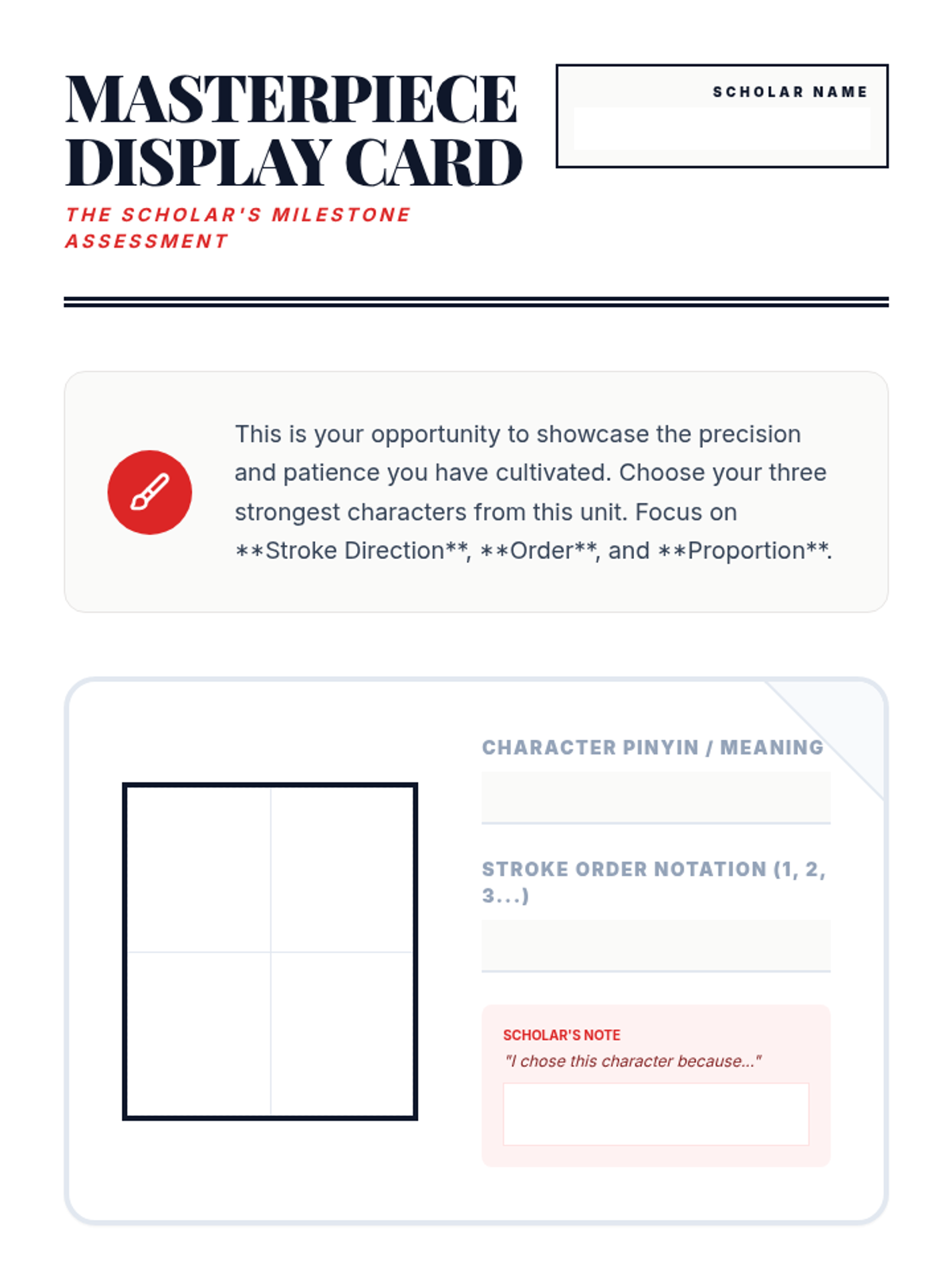
A culminating assessment and gallery walk where students demonstrate their mastery of stroke order and character proportion through precise calligraphy.
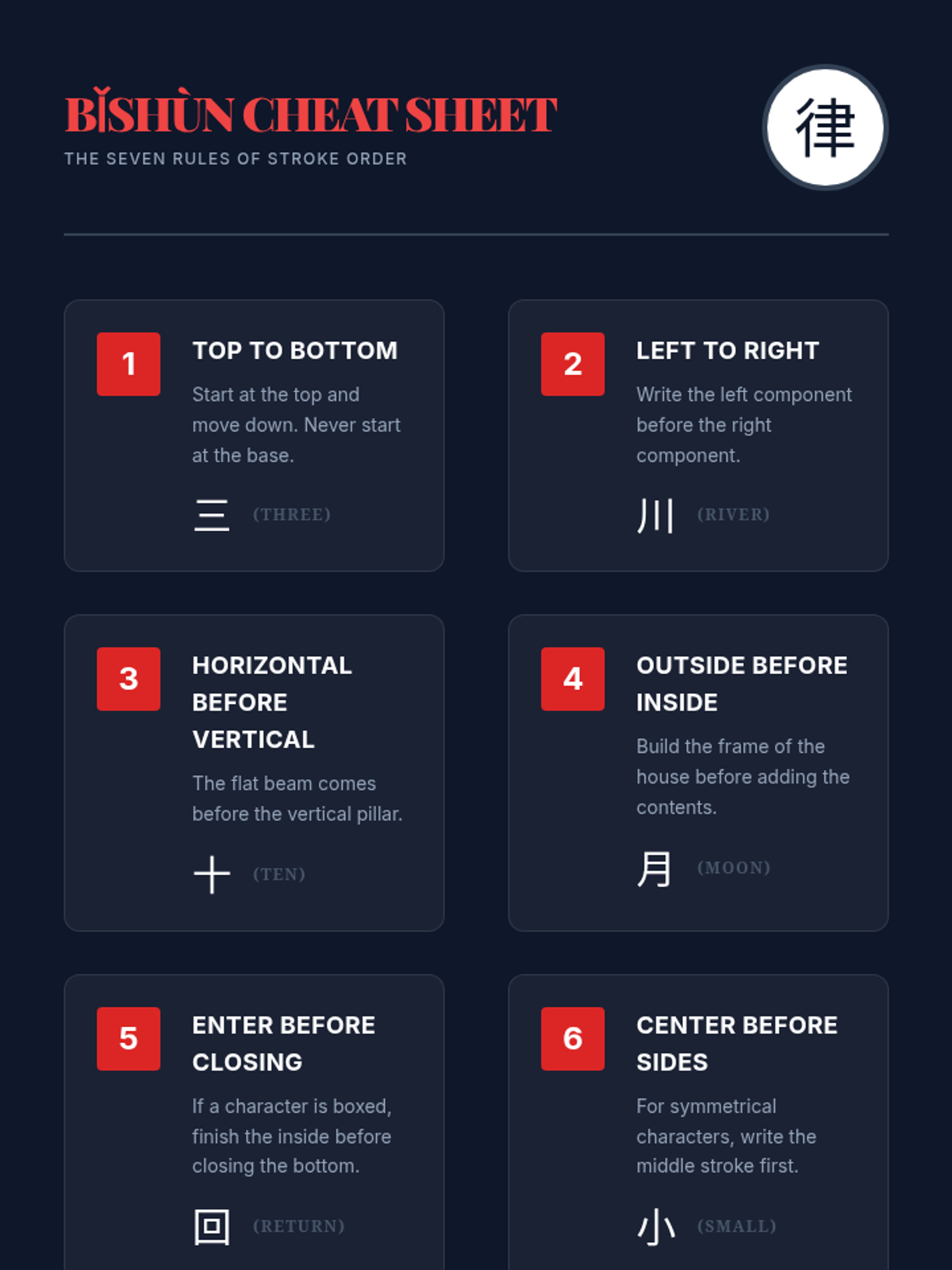
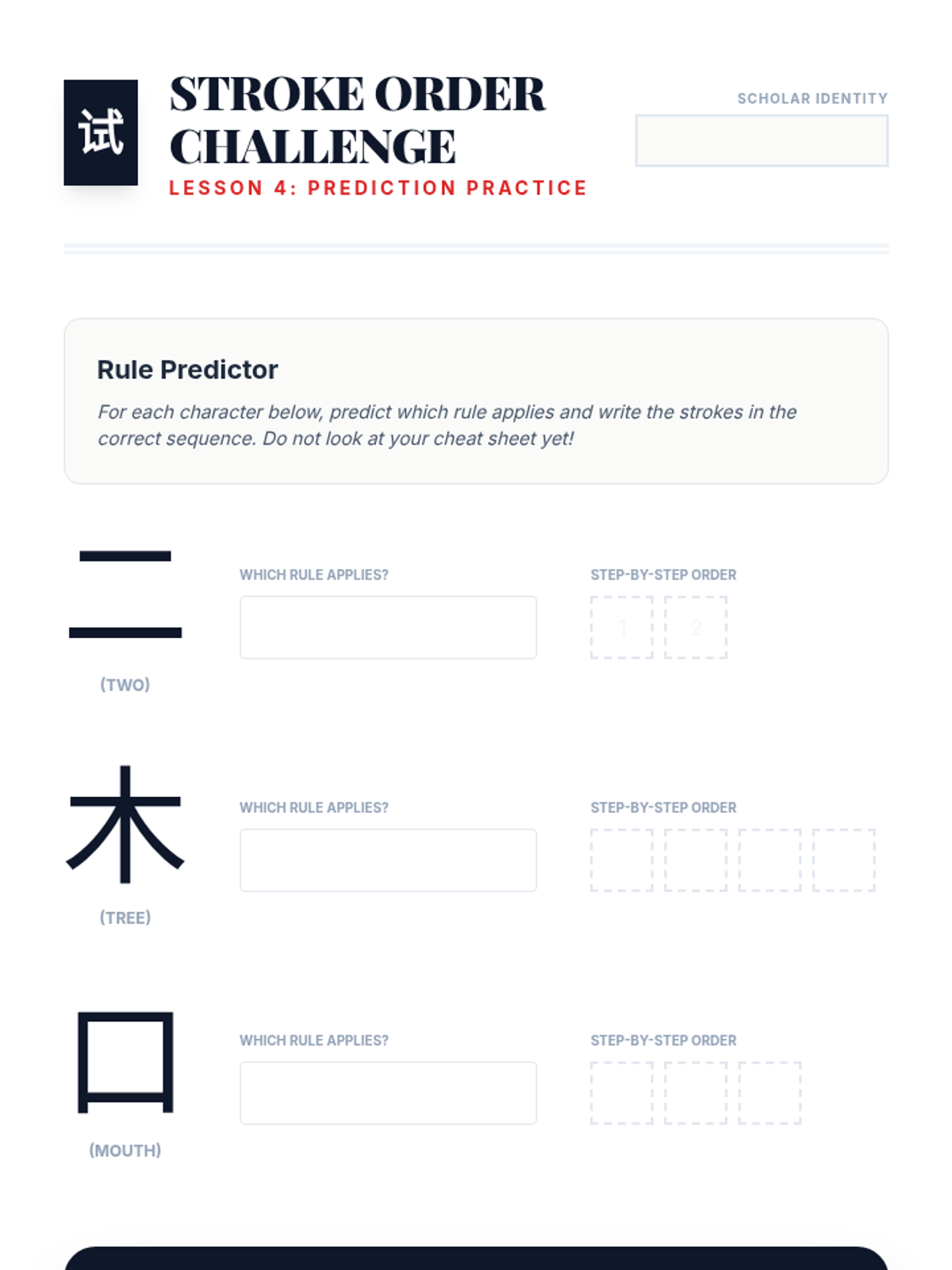
Students learn and apply the seven governing rules of stroke order, predicting and verifying sequences for various characters to ensure logical construction.
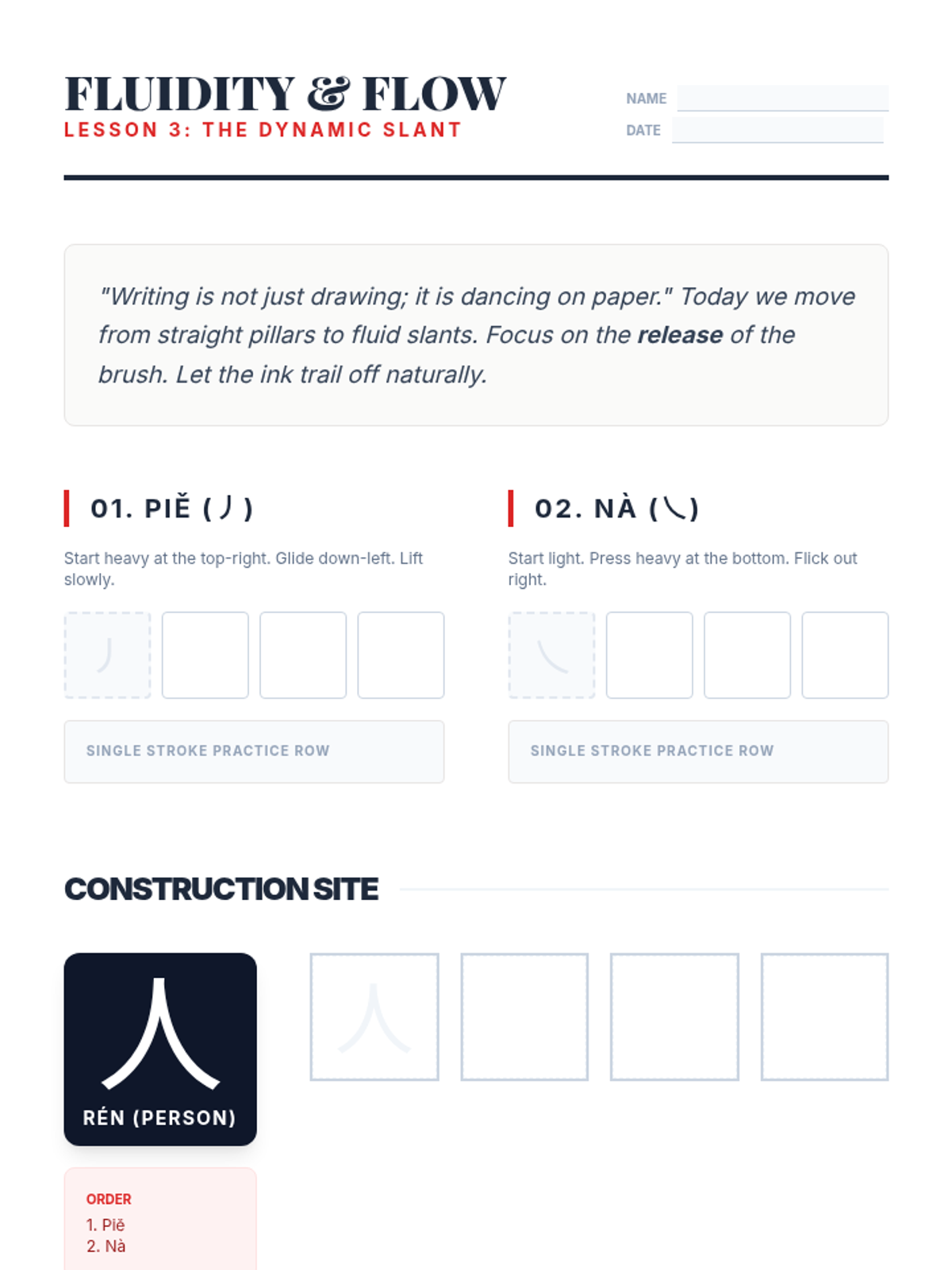
Introduction to 'Piě' (left slant), 'Nà' (right slant), and hooks, focusing on fluid motion and visual balance in characters like 'person' and 'big'.
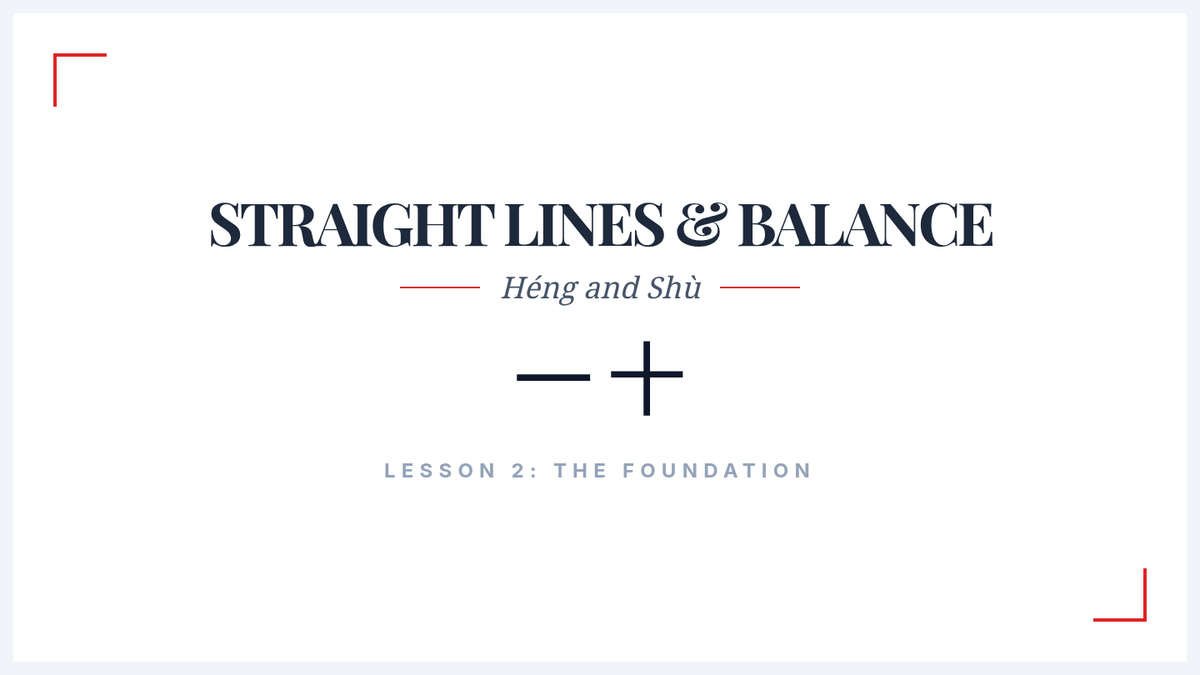
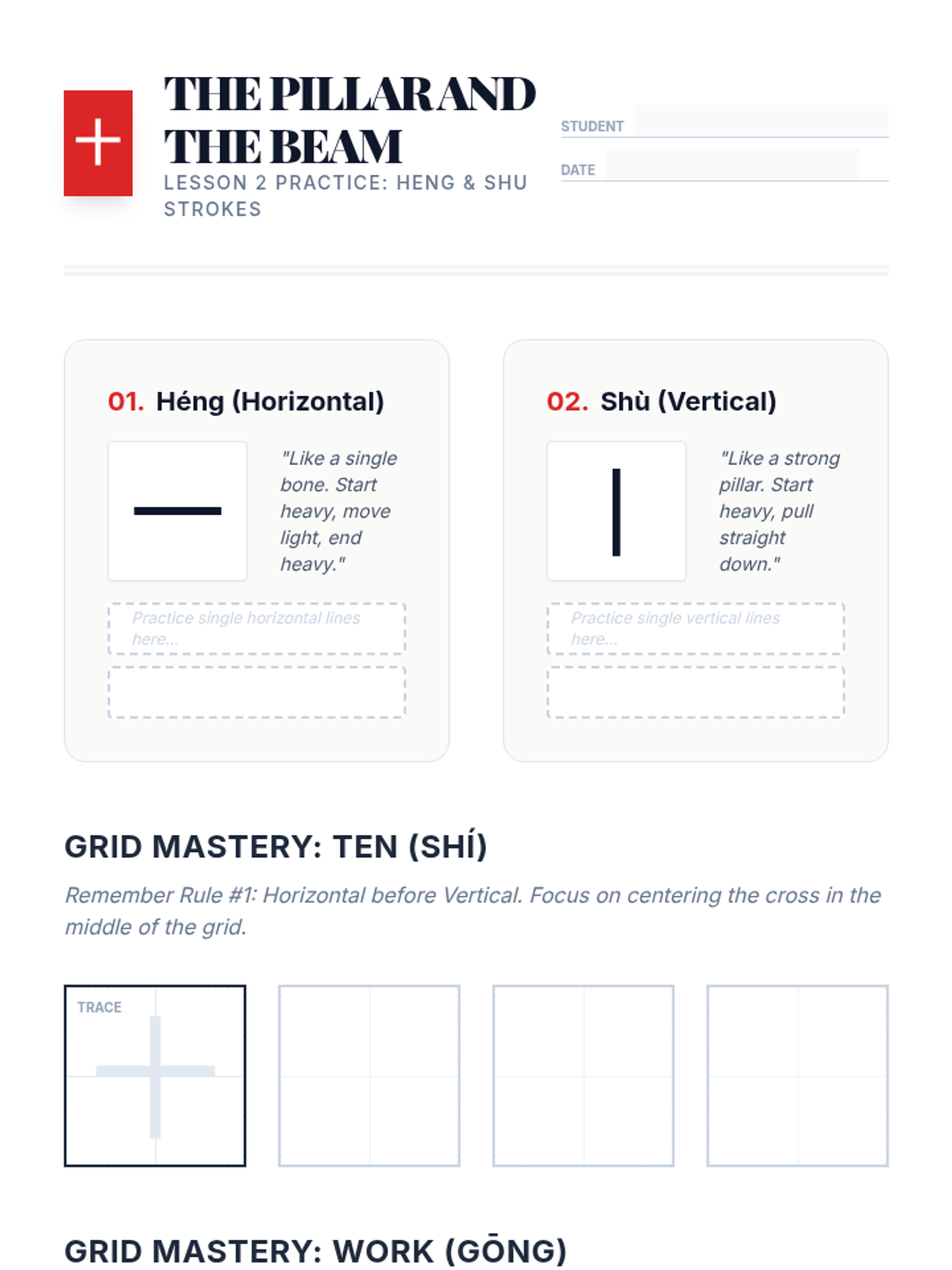
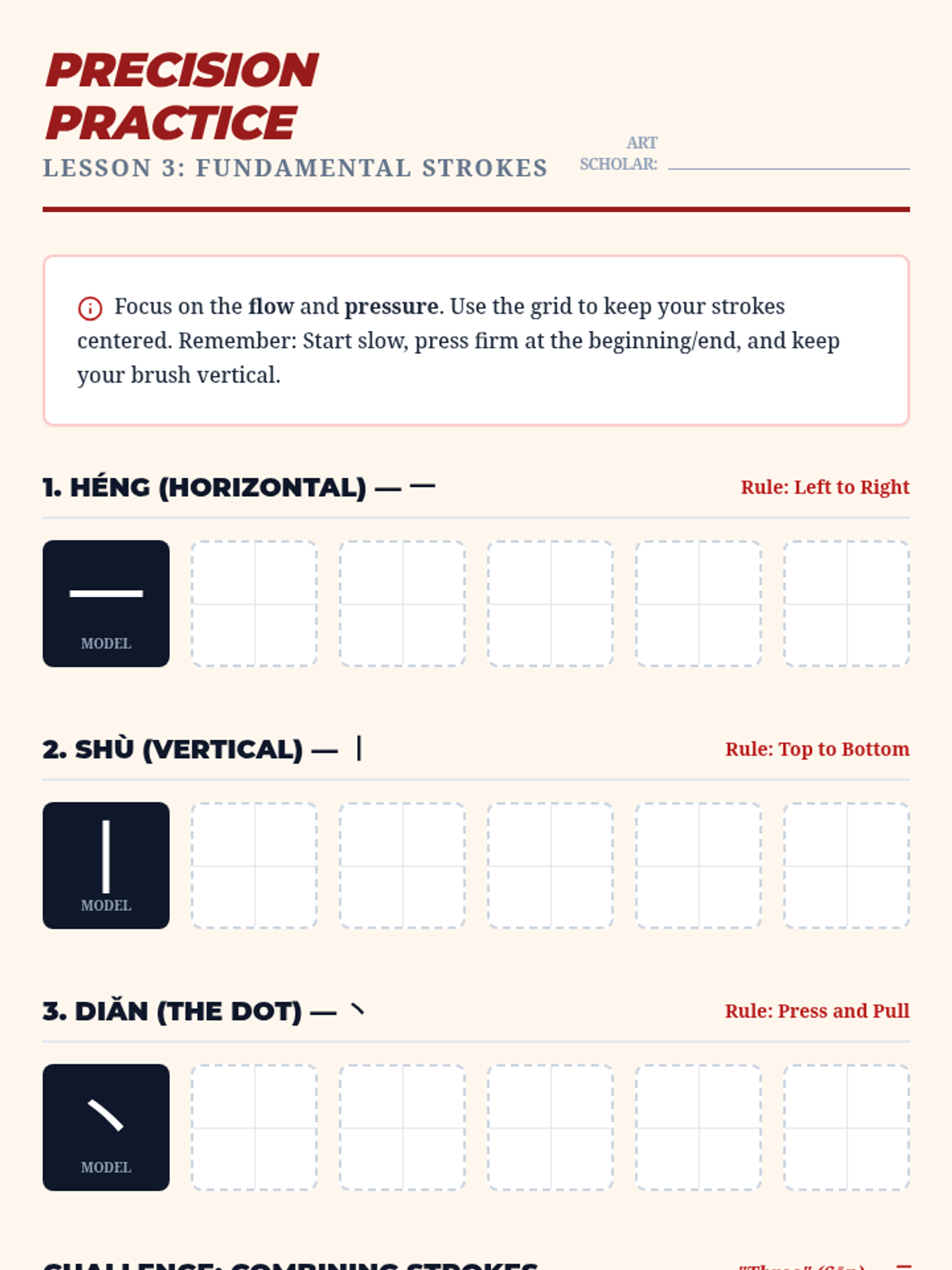
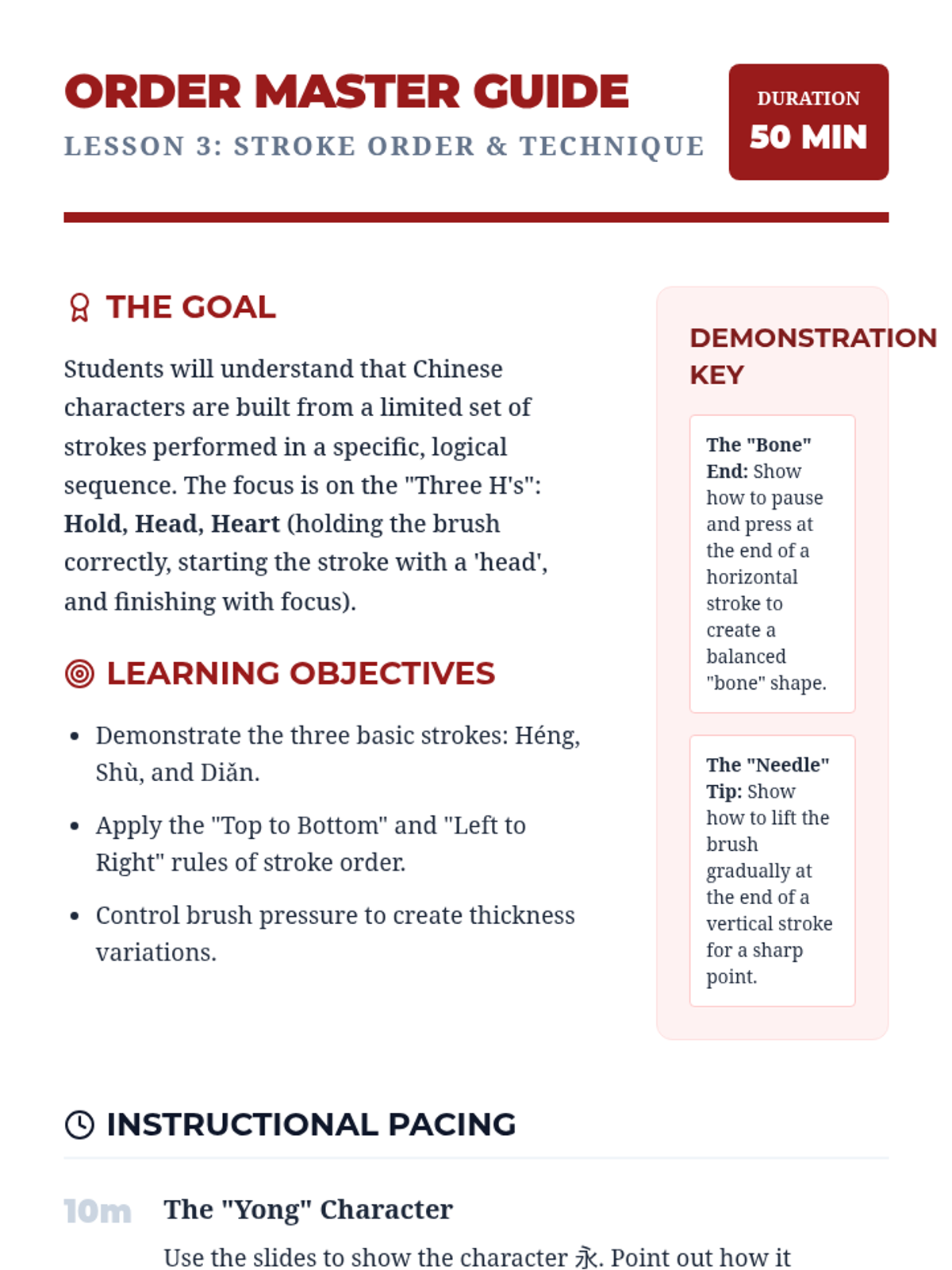
Focusing on 'Héng' (horizontal) and 'Shù' (vertical) strokes, students learn start and release pressure while practicing the characters for 'ten' and 'work'.
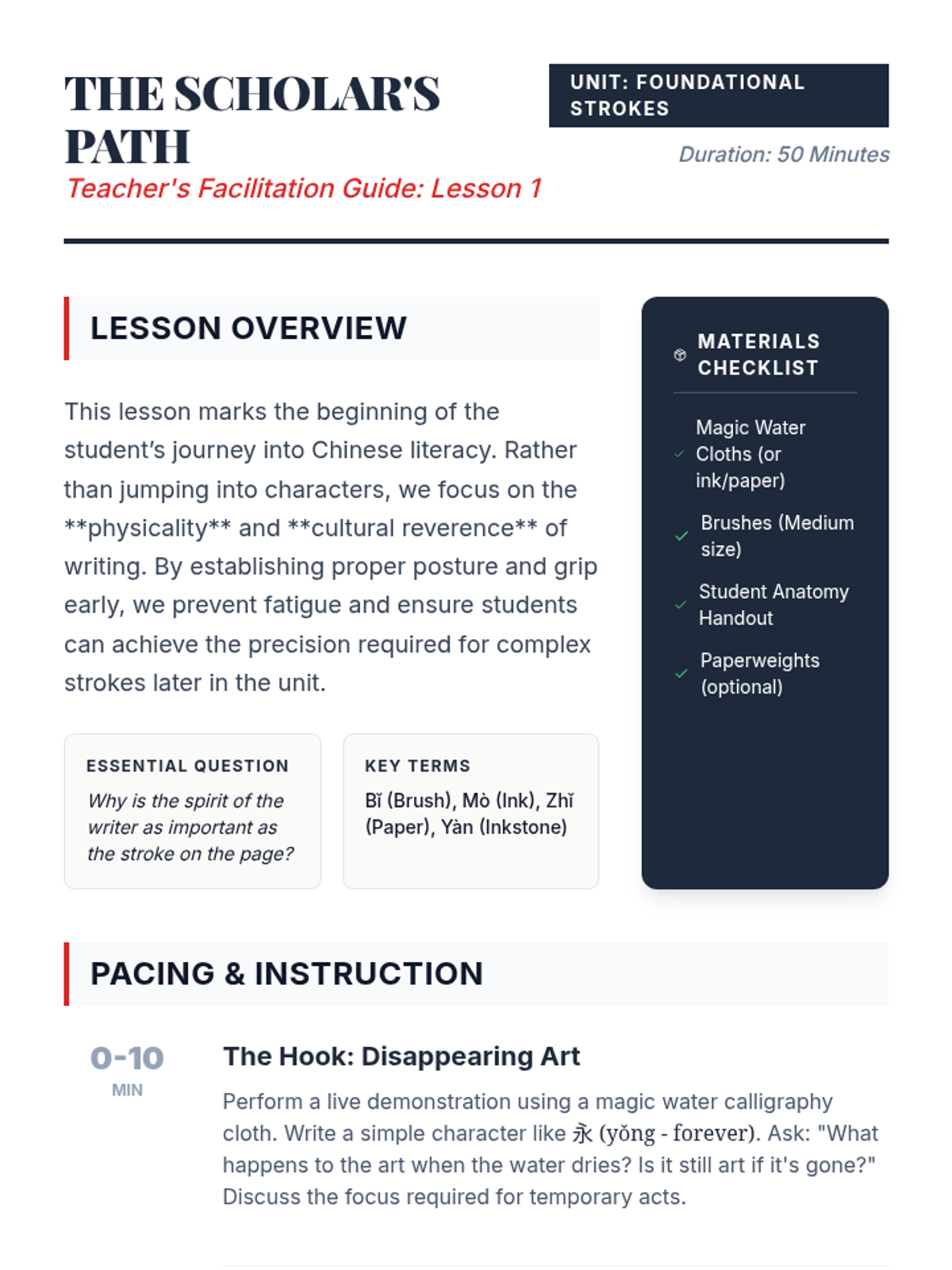
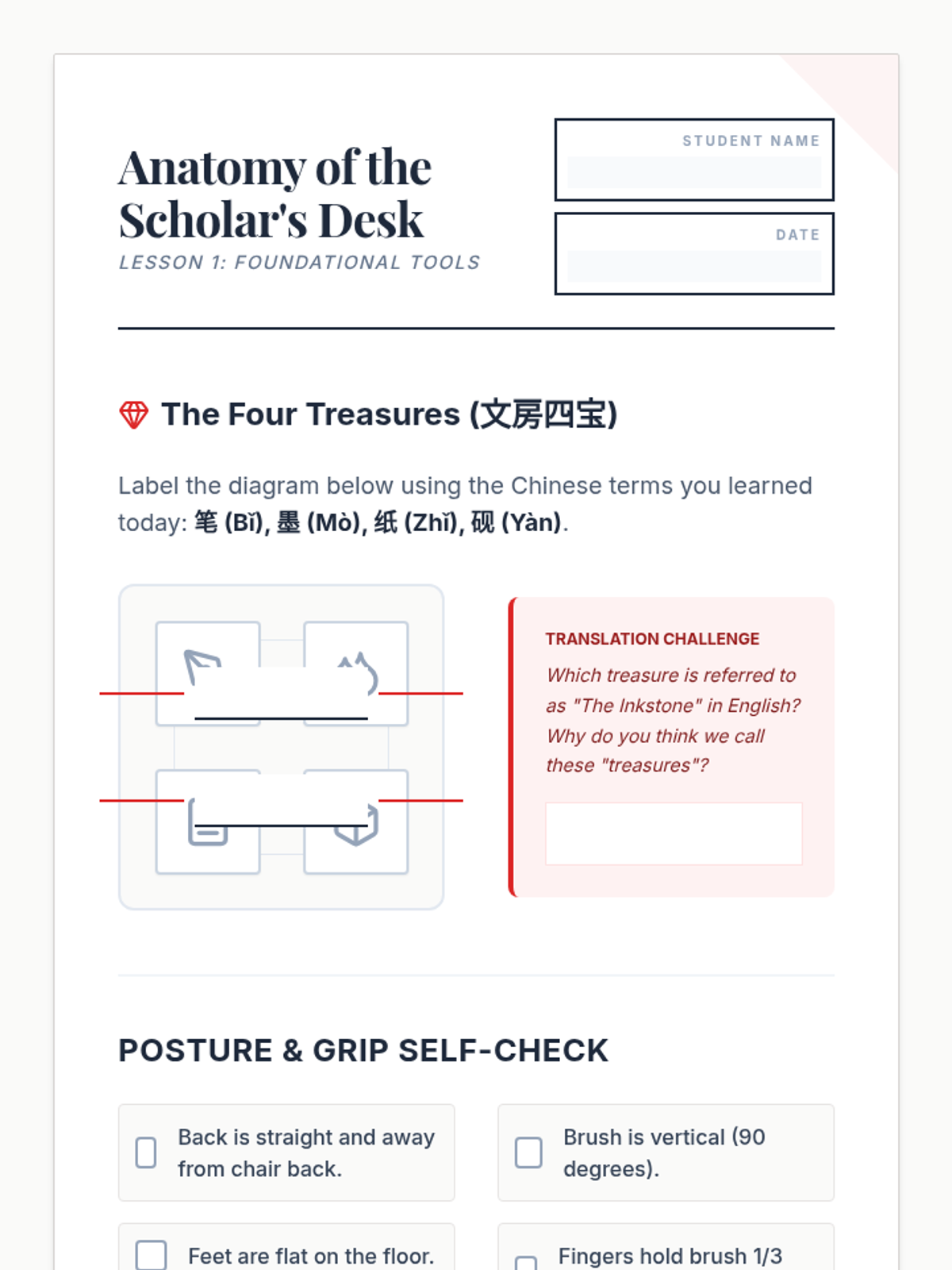
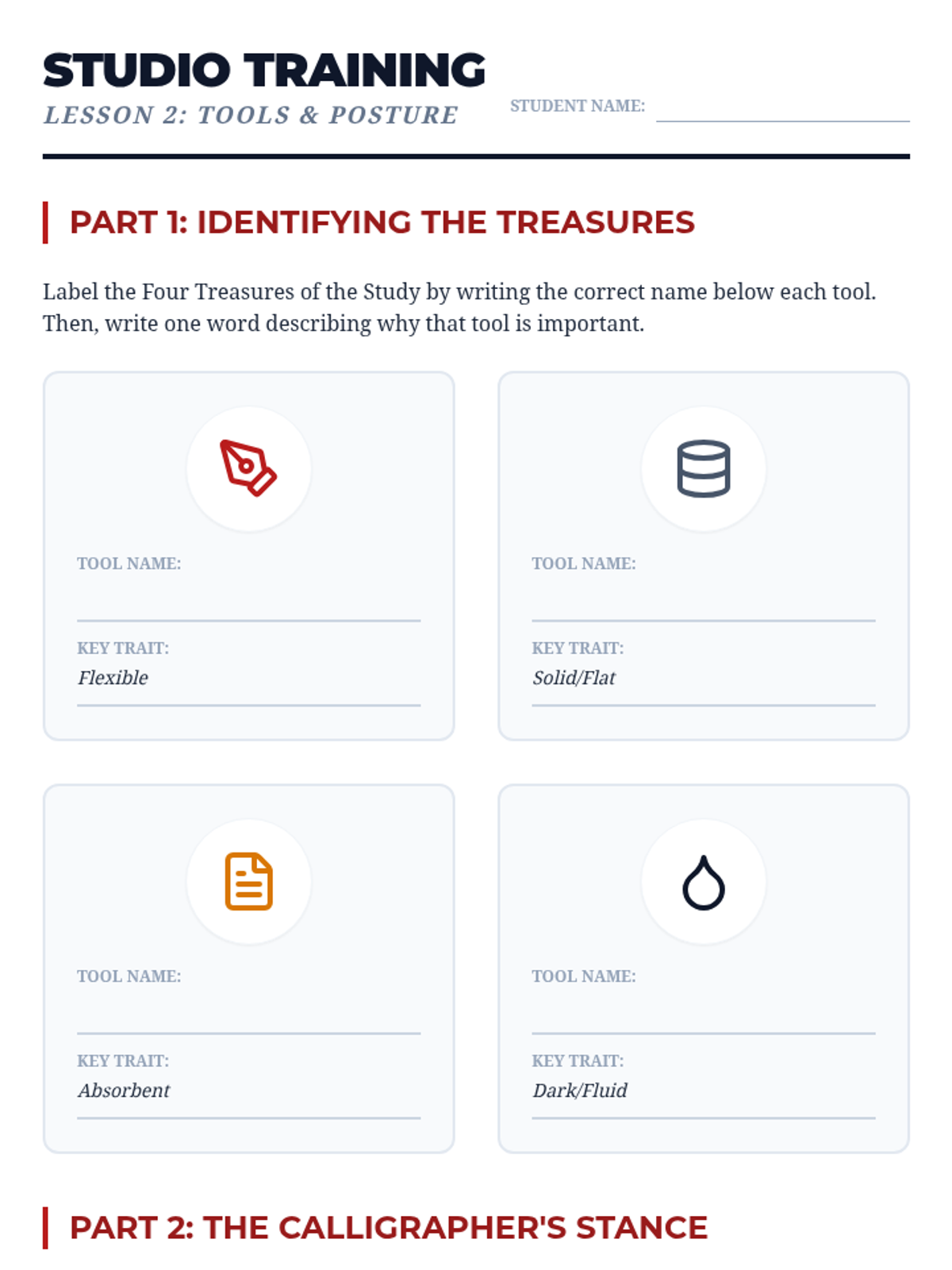
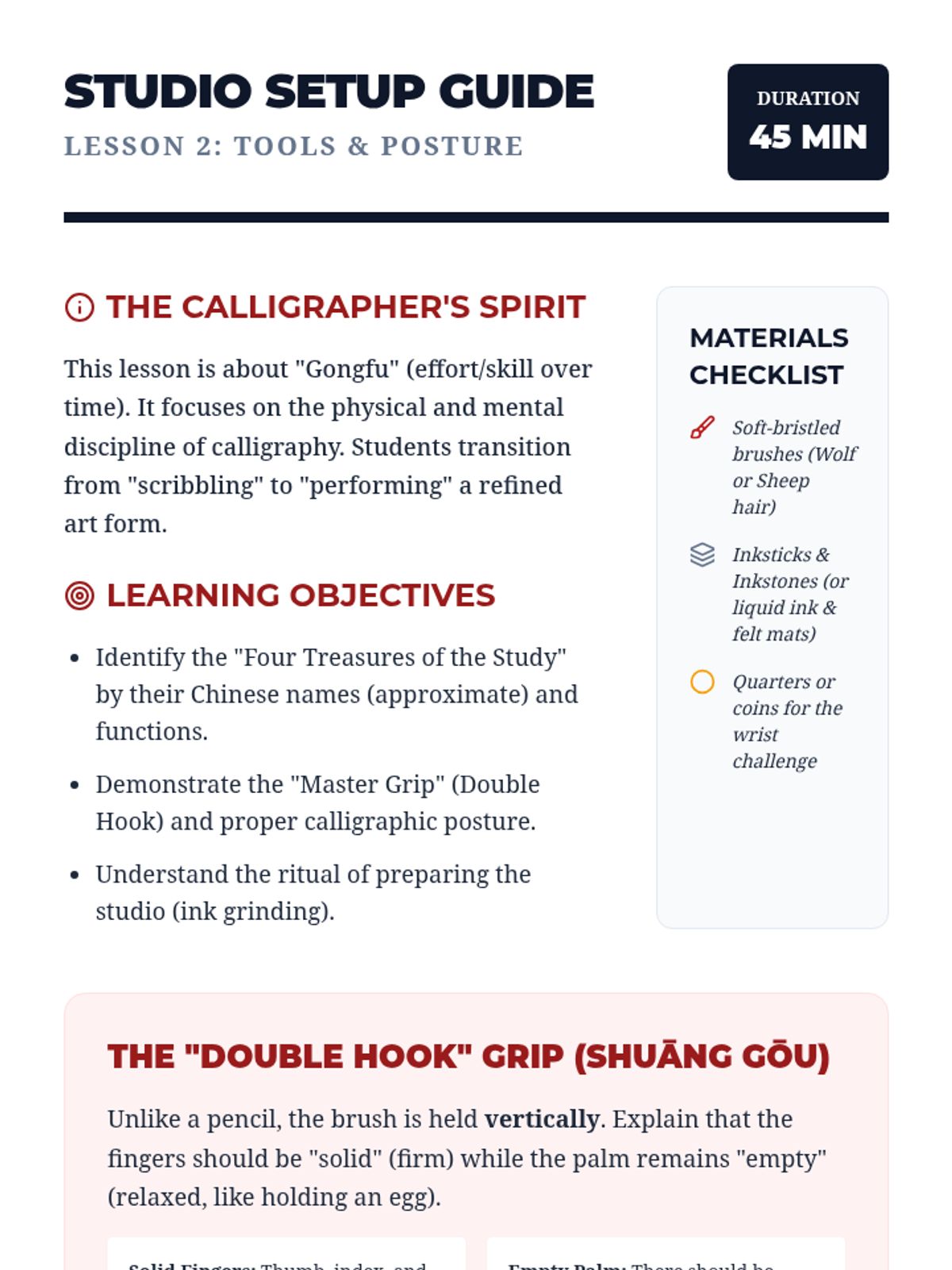
Students explore the traditional 'Four Treasures of the Study' and practice proper posture and pen grip, establishing the physical and cultural foundation for Mandarin calligraphy.
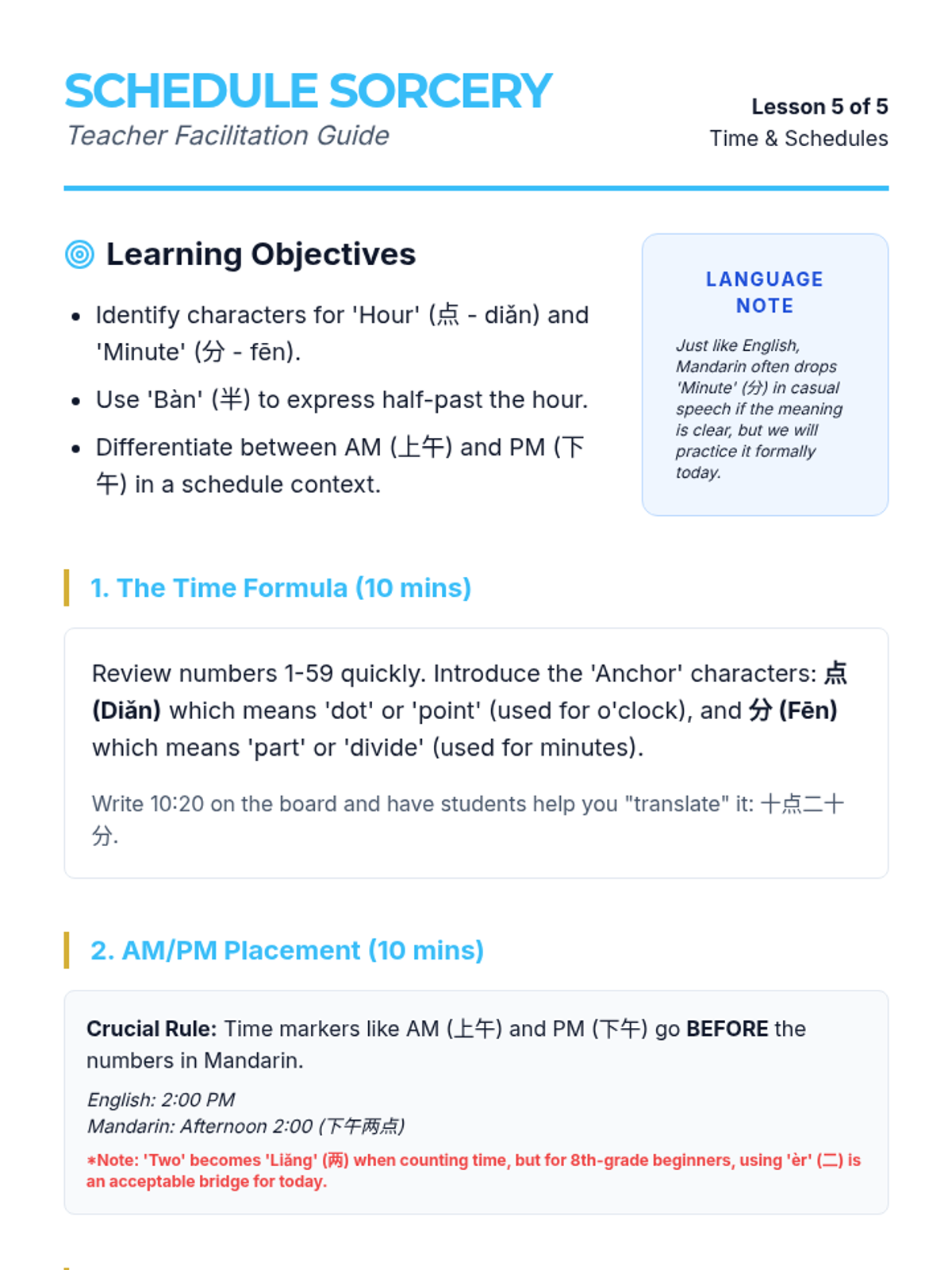
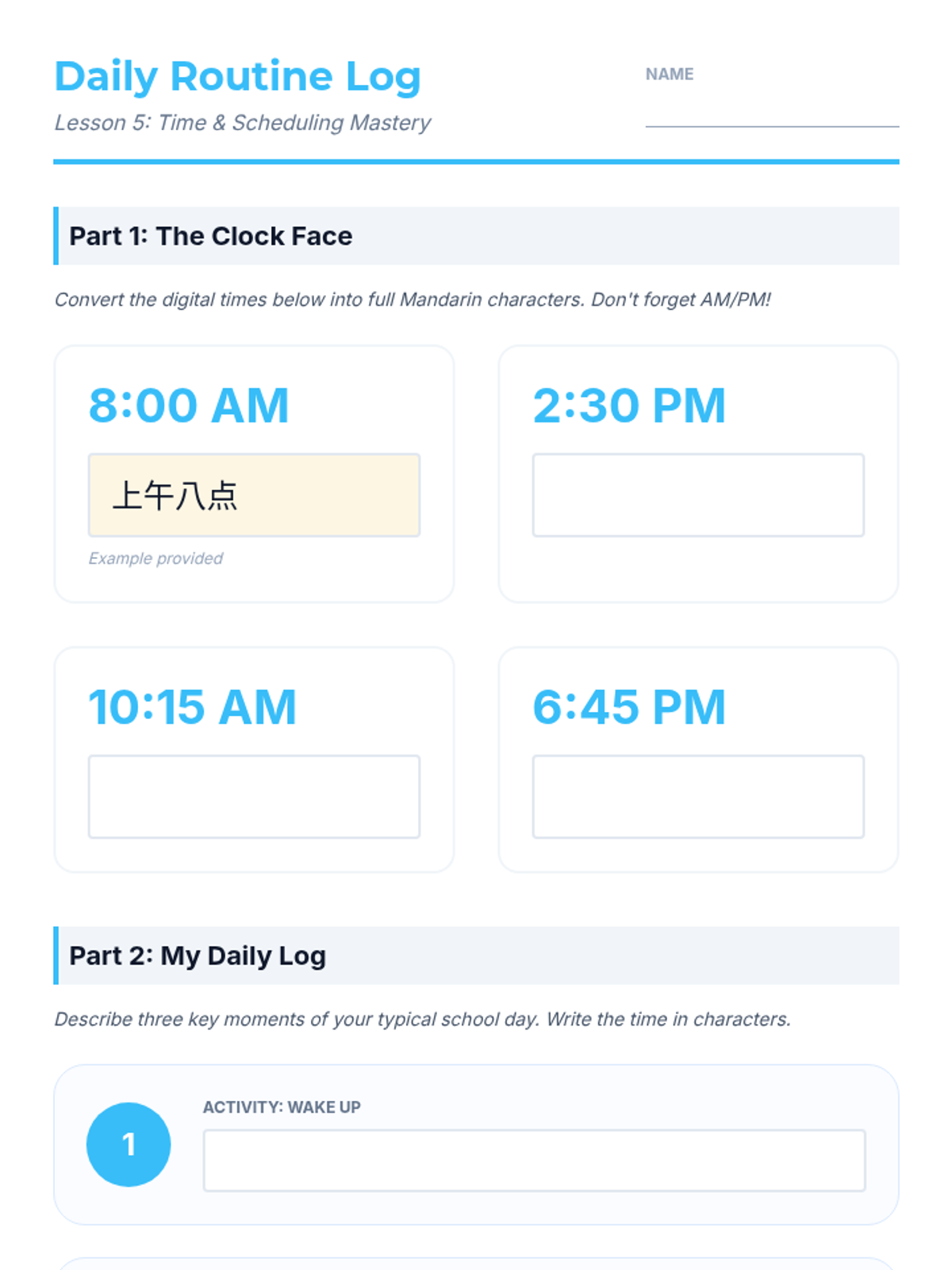
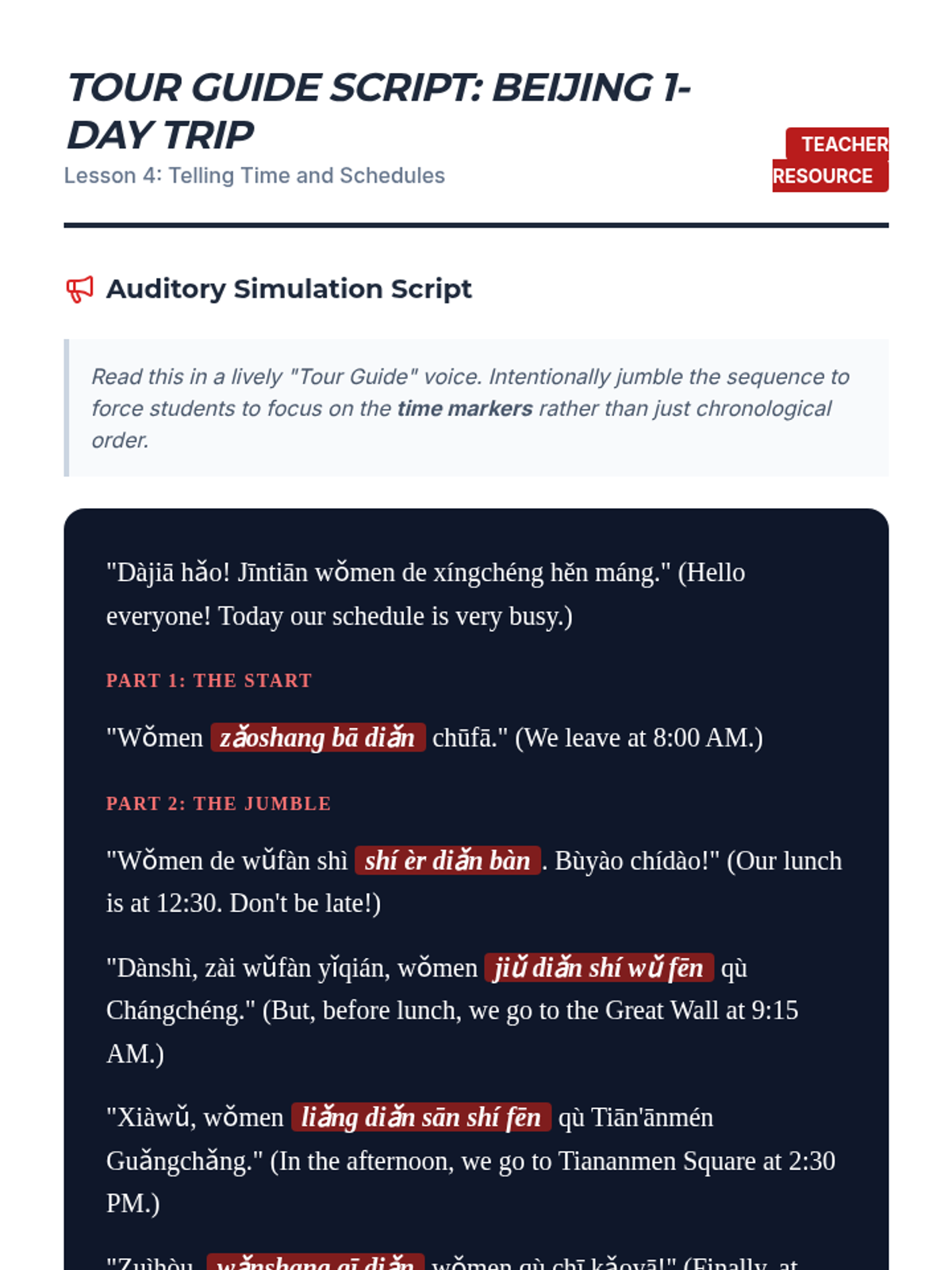
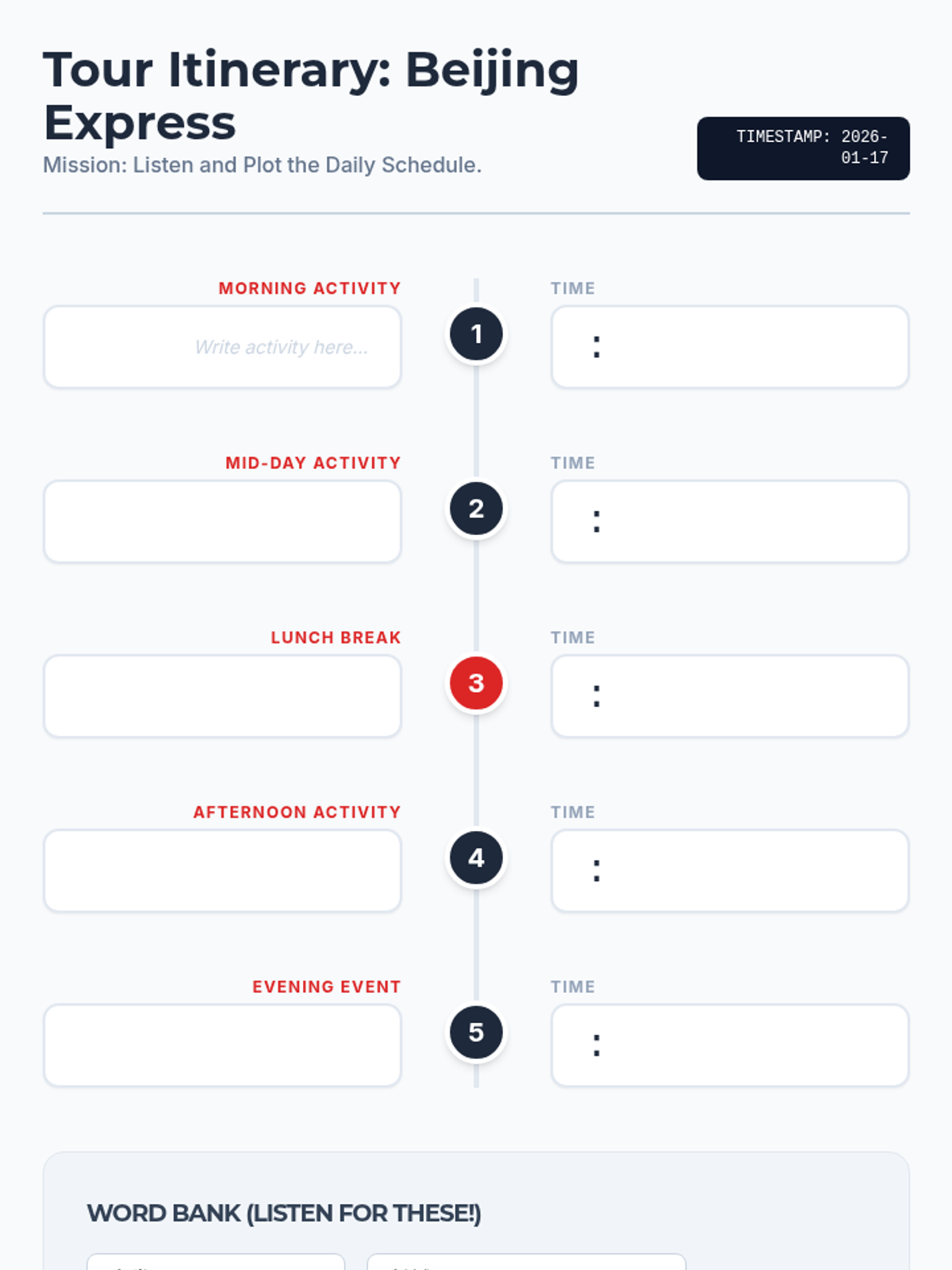
Combining numbers with time-specific characters to read schedules and describe daily routines.
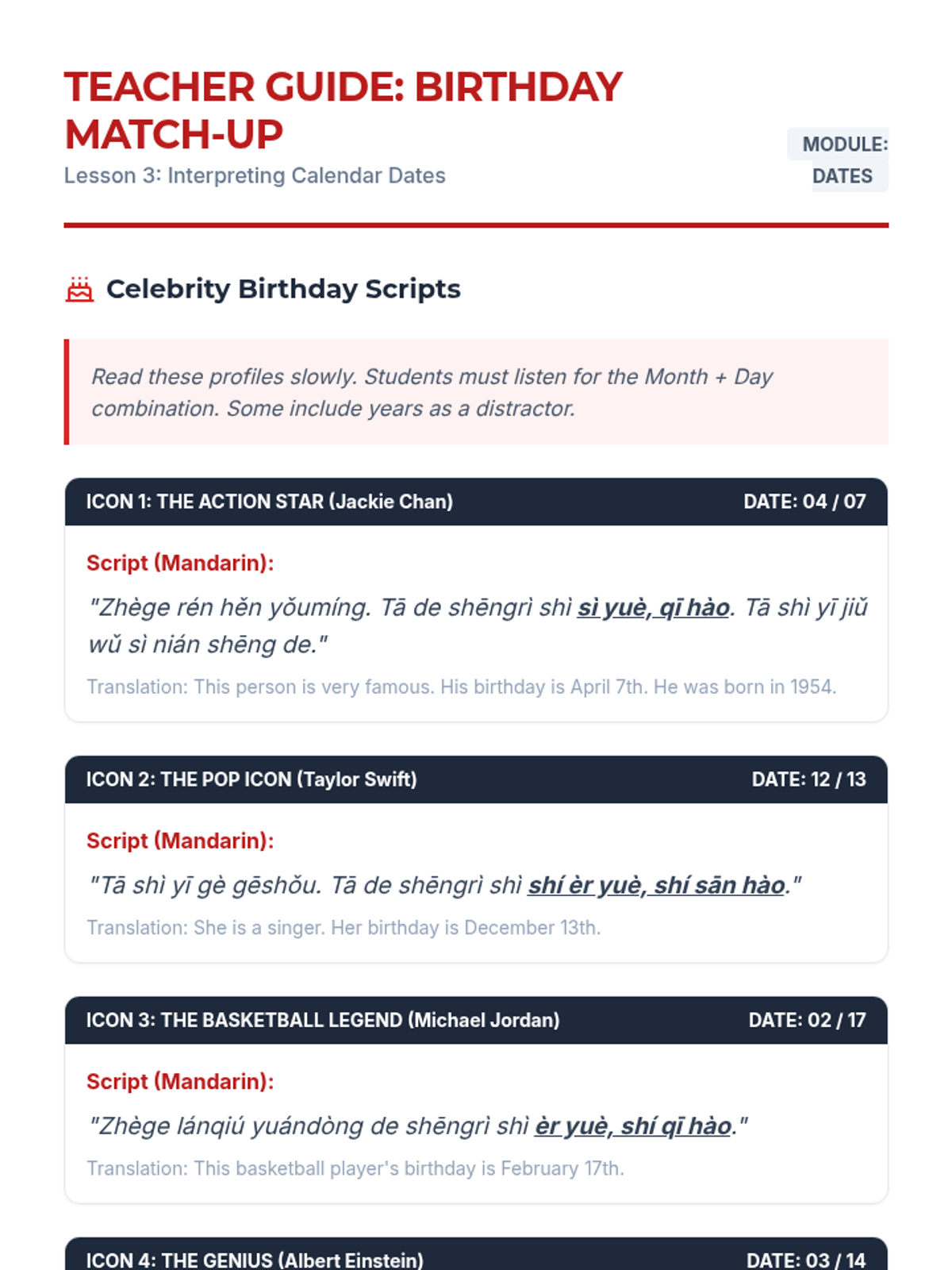
Applying the 'Big to Small' logic to write months and specific dates, culminating in sharing birthdays.
Focusing on the structure of weeks and the pattern-based naming convention for days in Mandarin.
Students apply the logic of the Chinese numbering system to build values from 11 to 99 using basic characters.
Students learn to write characters for 1-10 and master the unique Chinese hand gestures for these numbers.
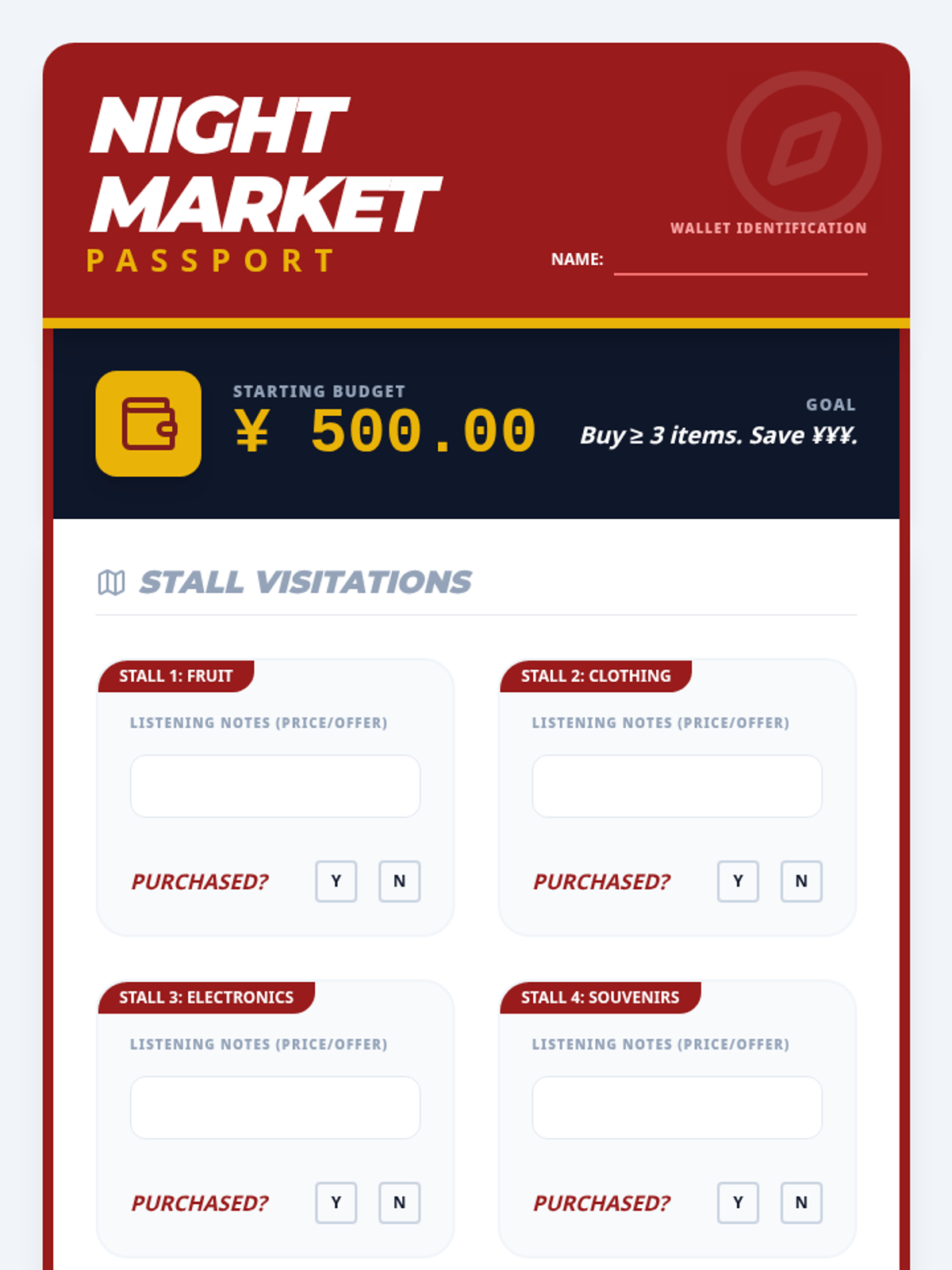
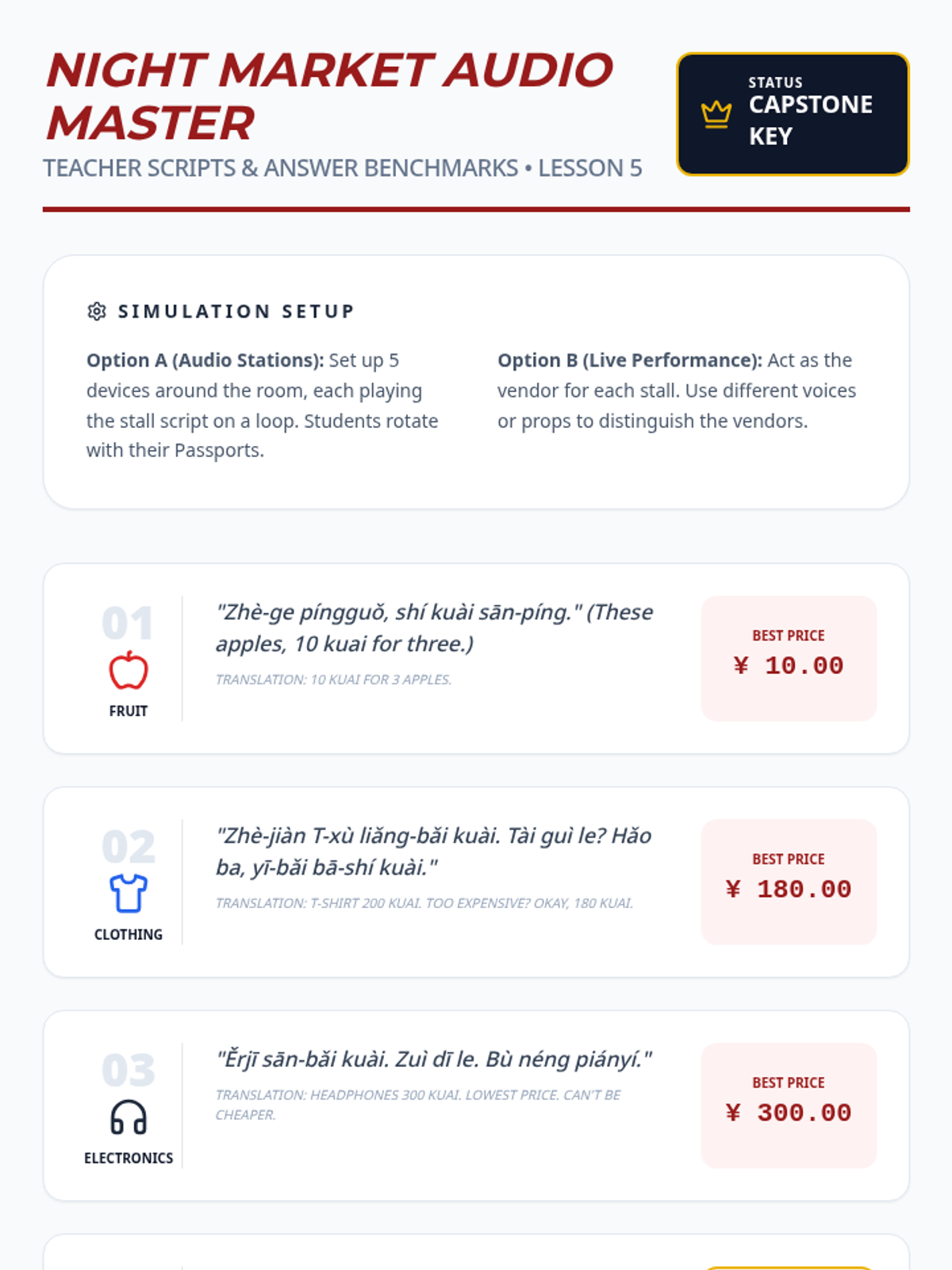
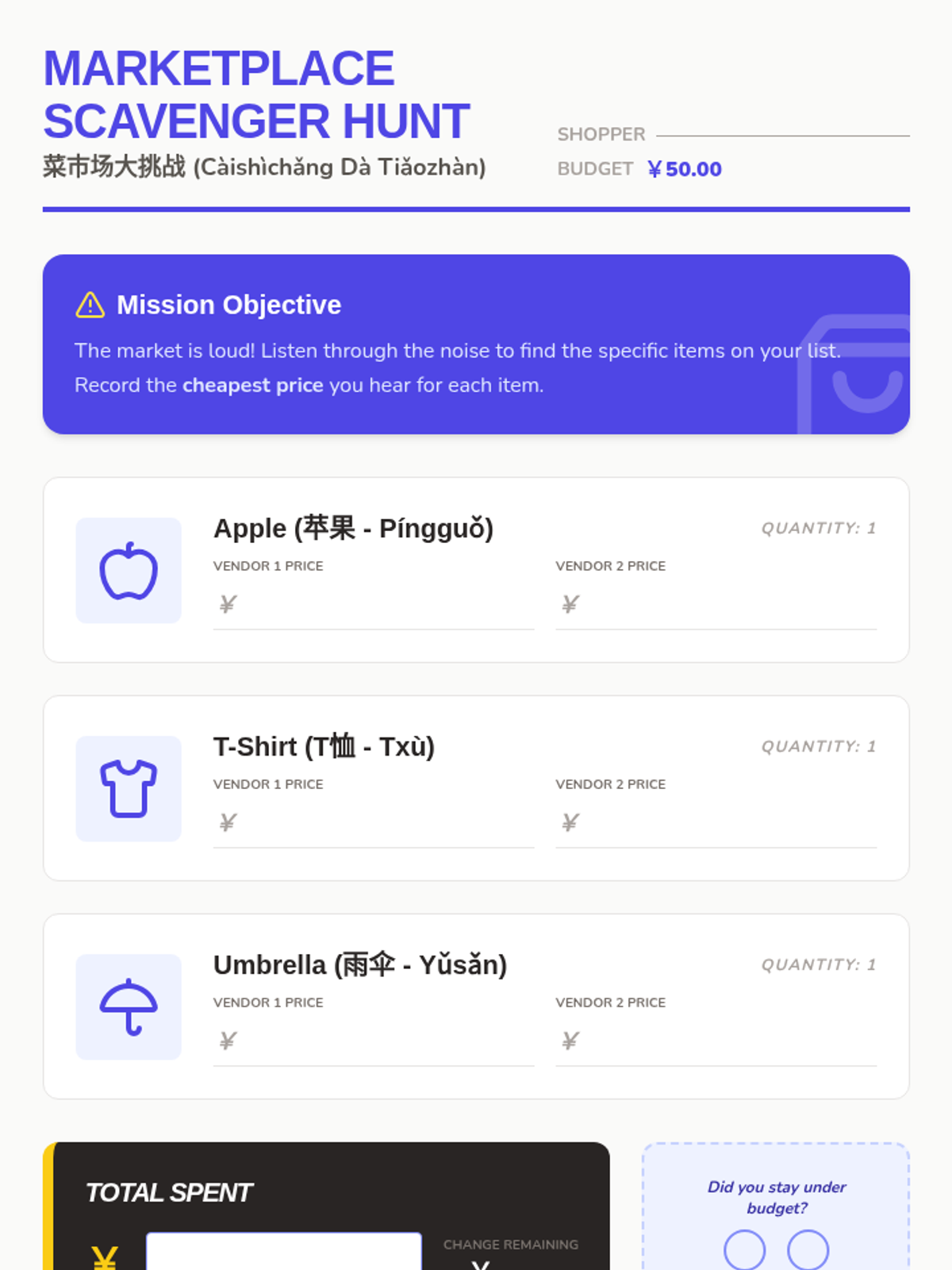
A capstone night market simulation where students navigate audio stalls and manage a virtual budget.
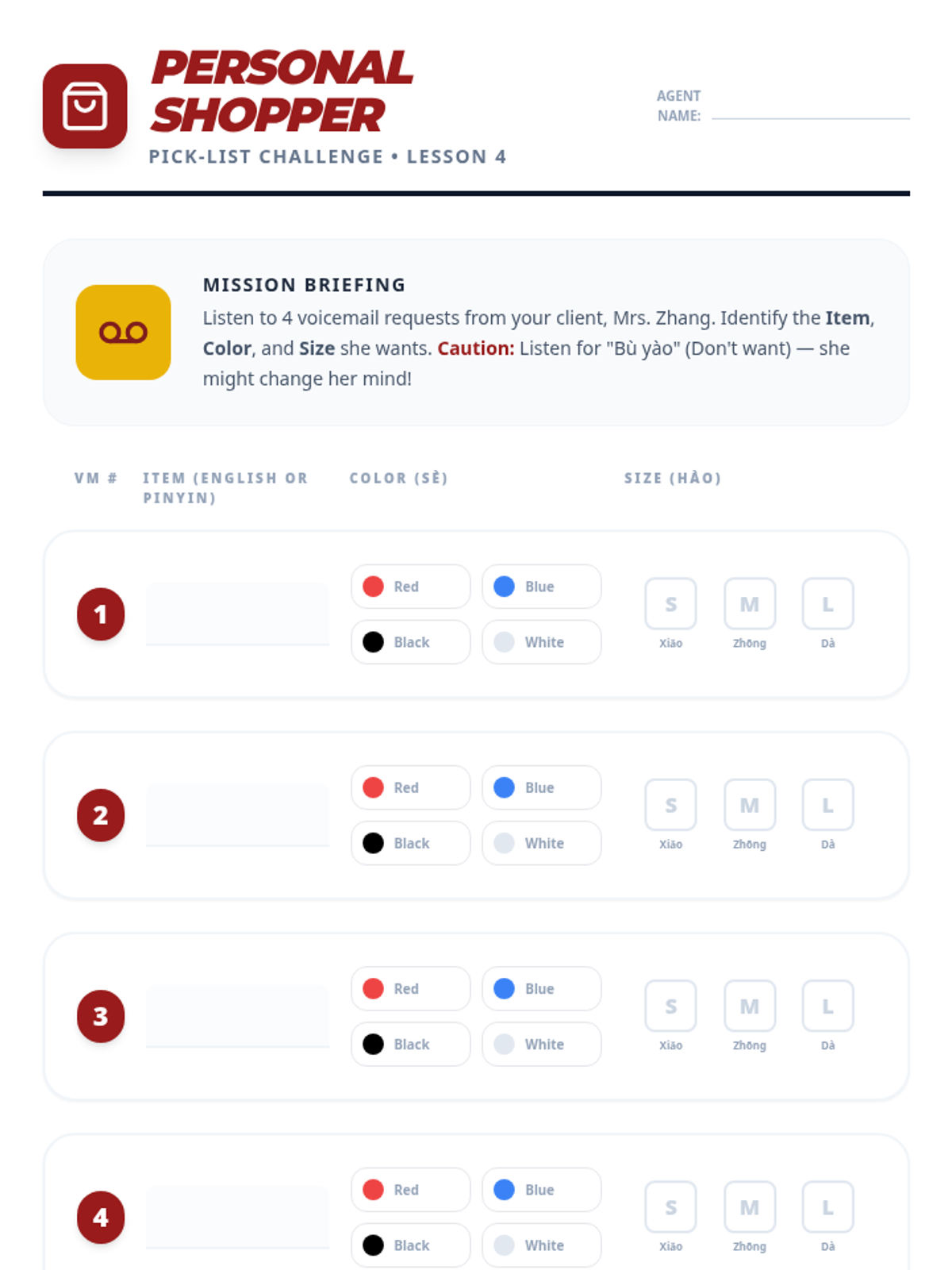
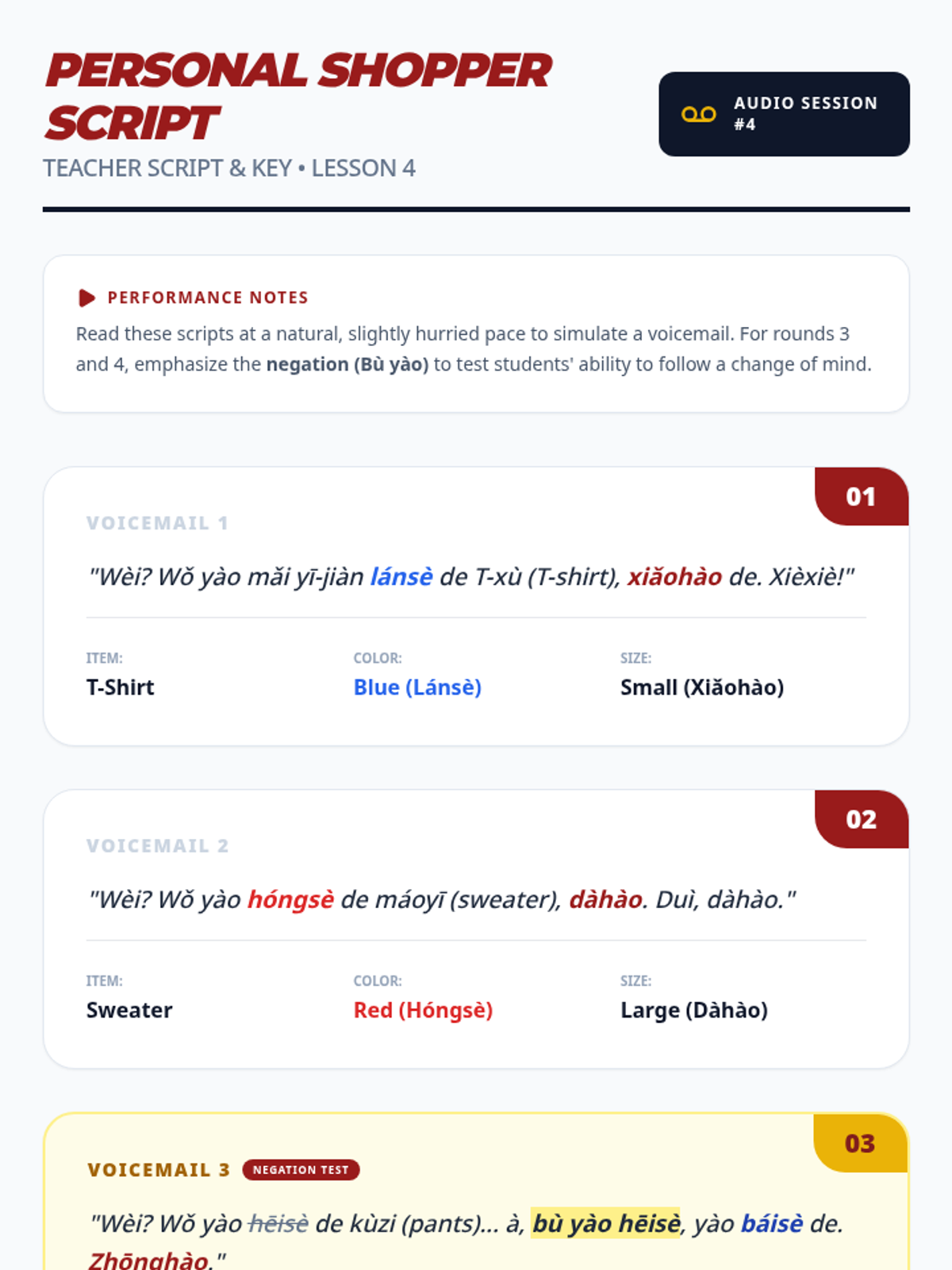
Expanding shopping context to product attributes like colors and sizes through personal shopping simulations.
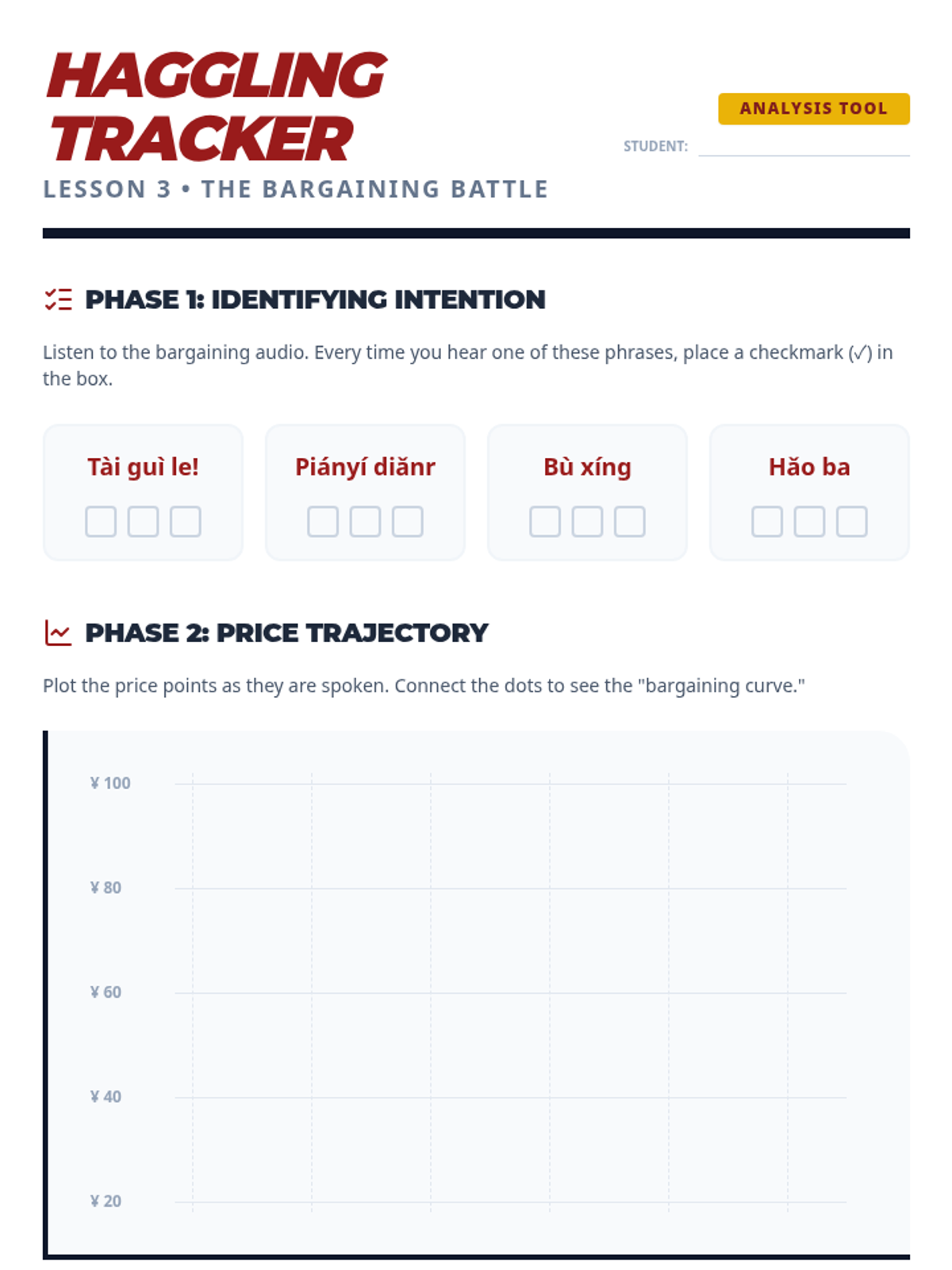
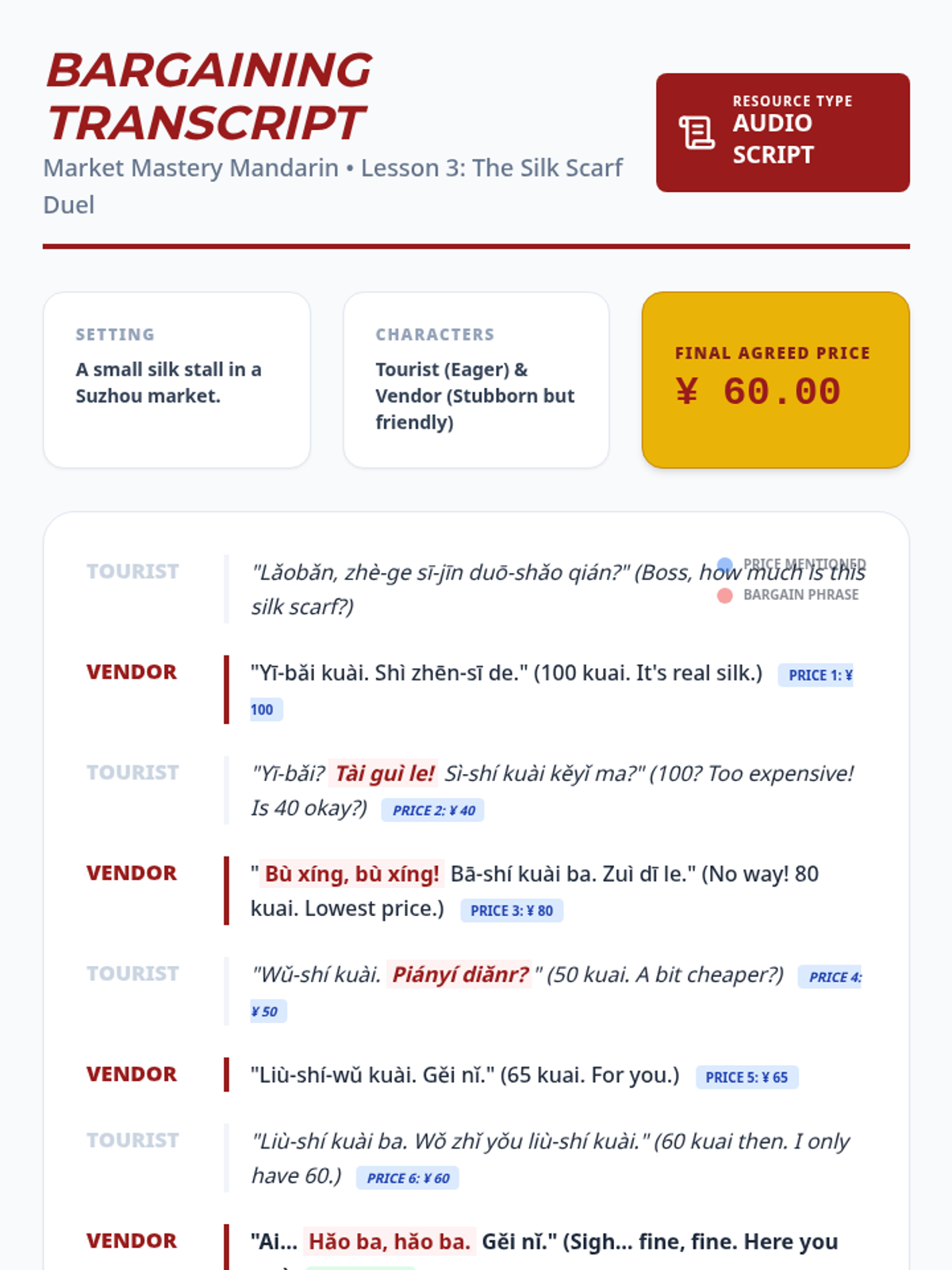
Introduction to bargaining vocabulary and identifying final agreed prices in recorded haggling sessions.
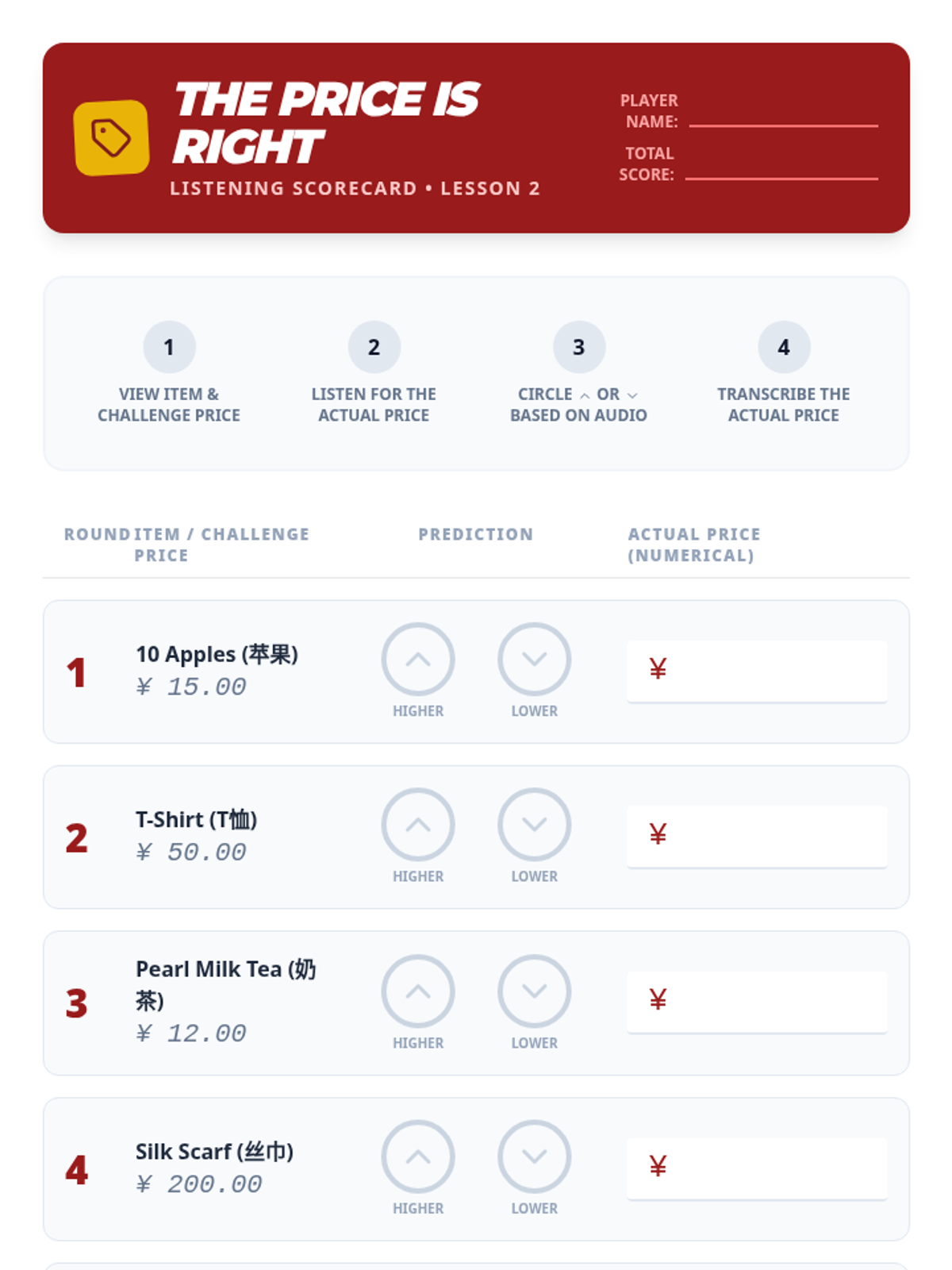
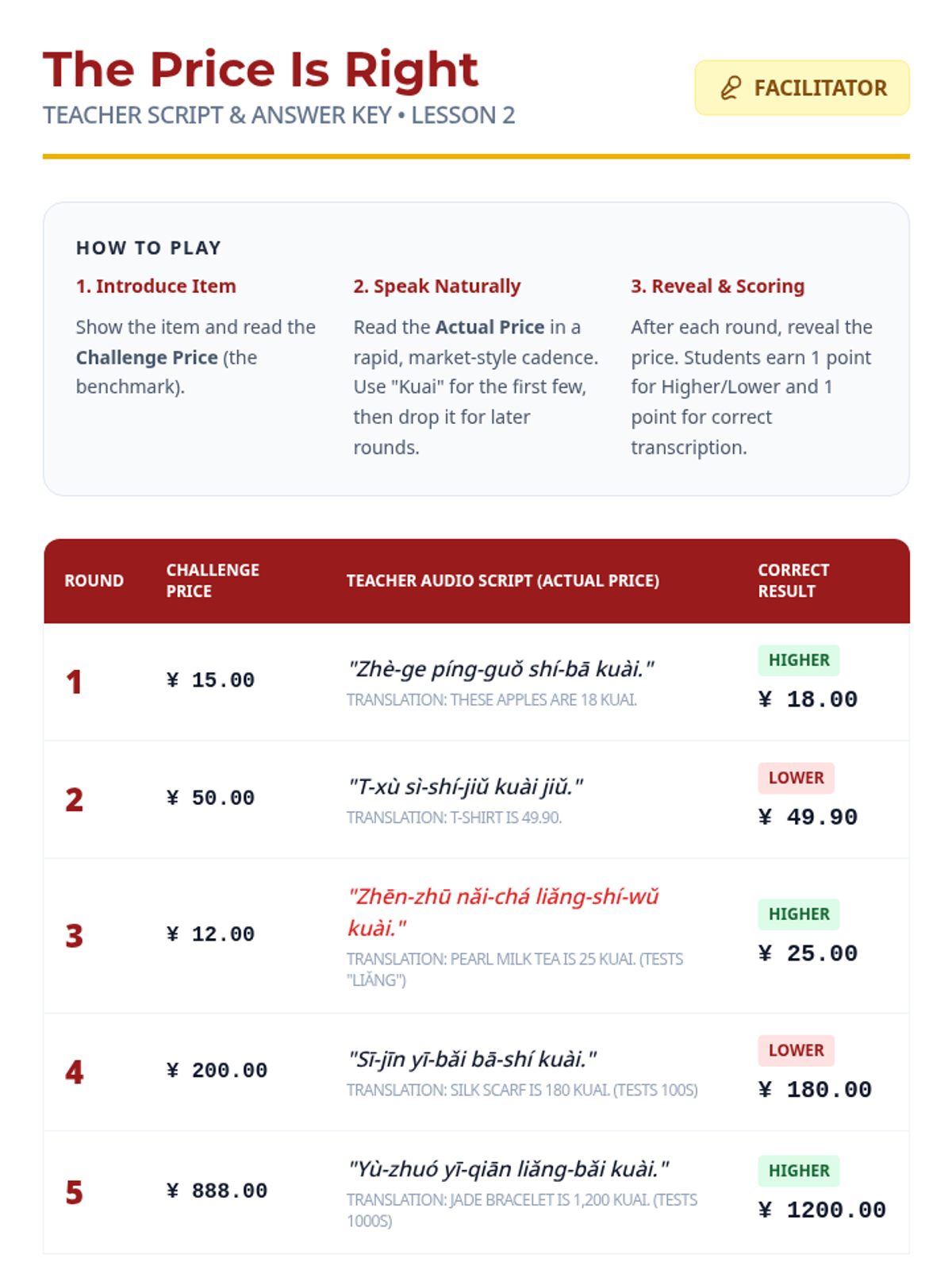
Focuses on the interrogative 'Duo shao qian?' and recognizing rapid price responses in market settings.
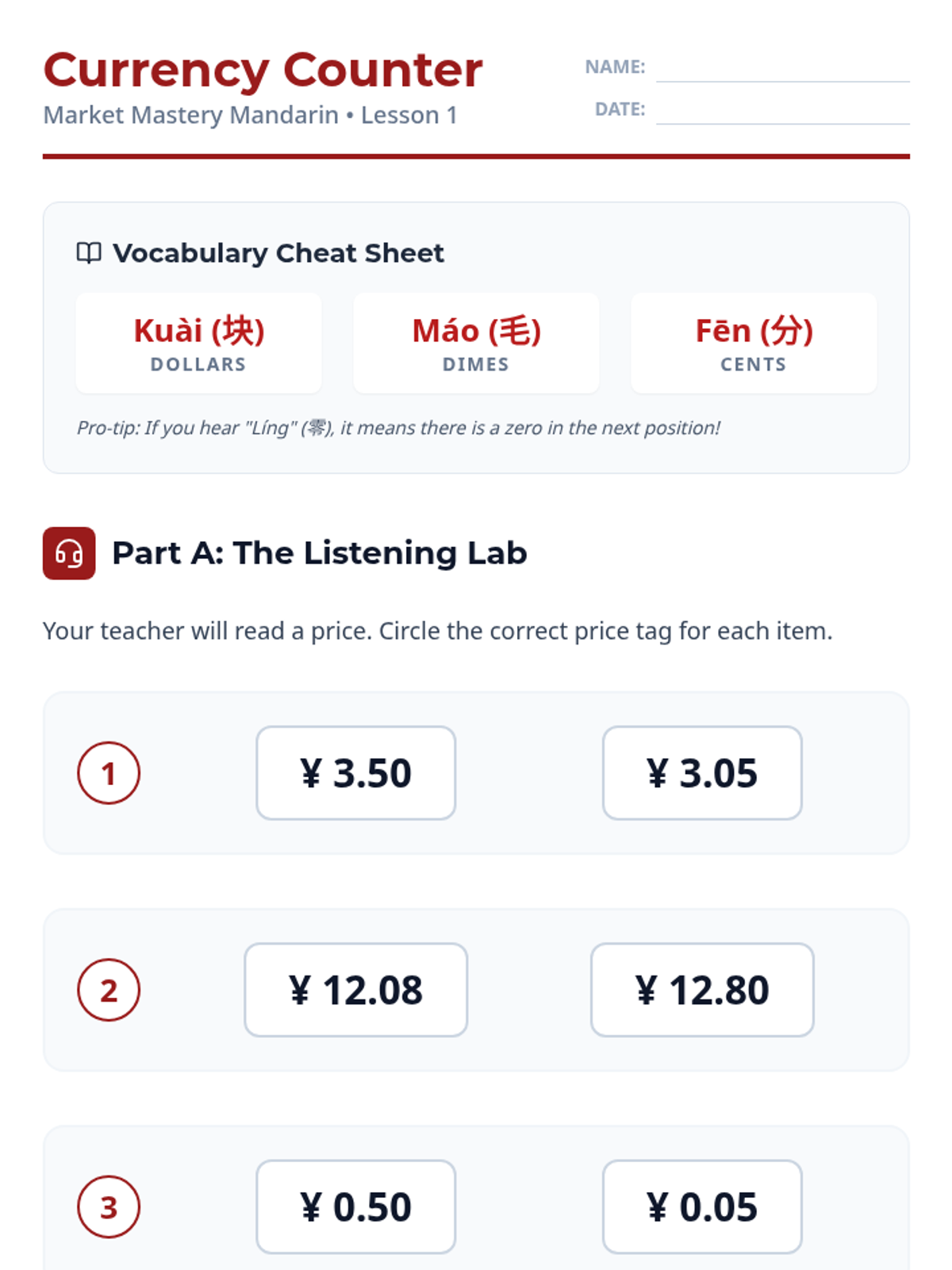
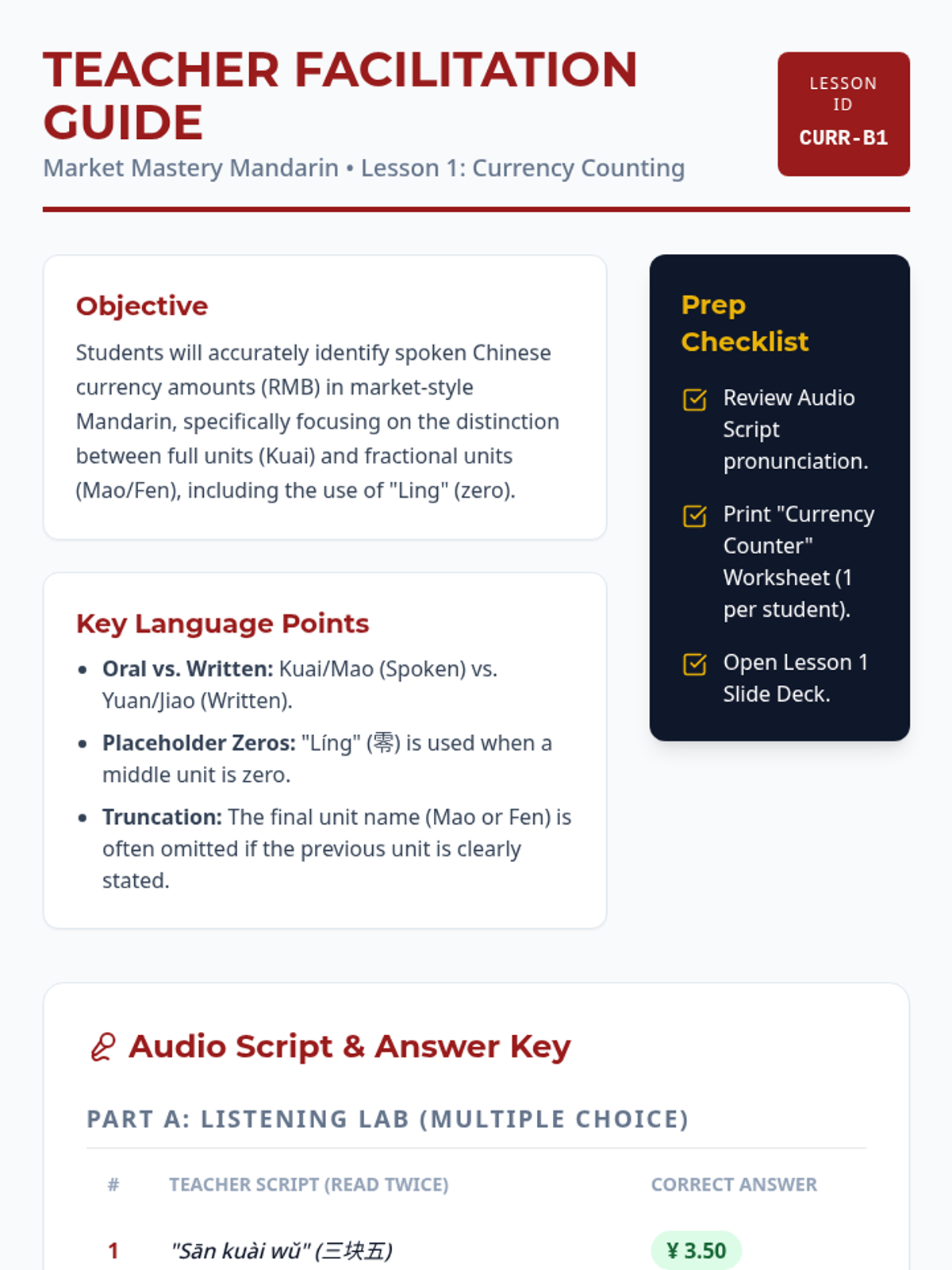
Introduction to Chinese currency units (Yuan/Kuai, Jiao/Mao, Fen) with a focus on distinguishing prices in listening drills.
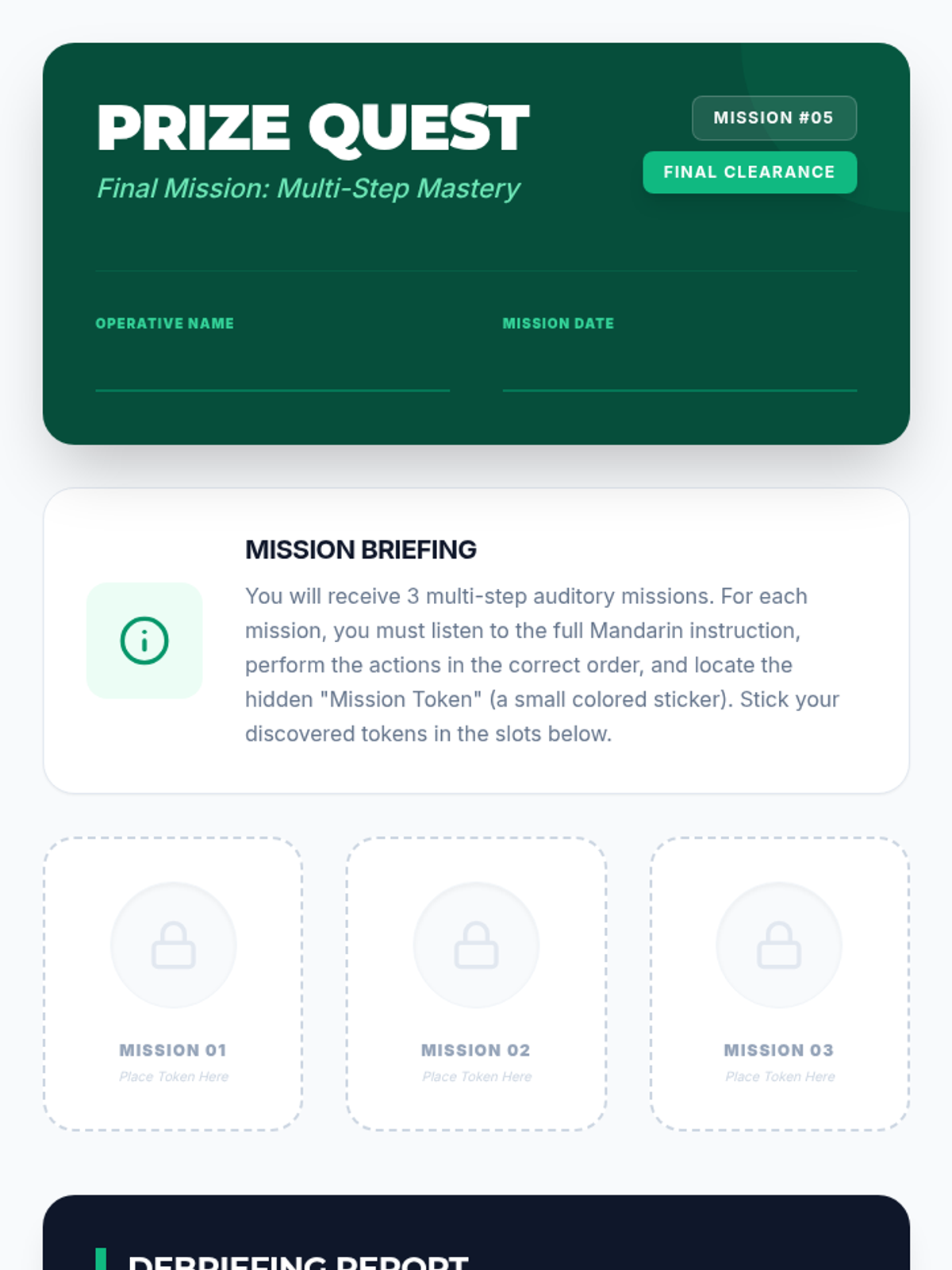
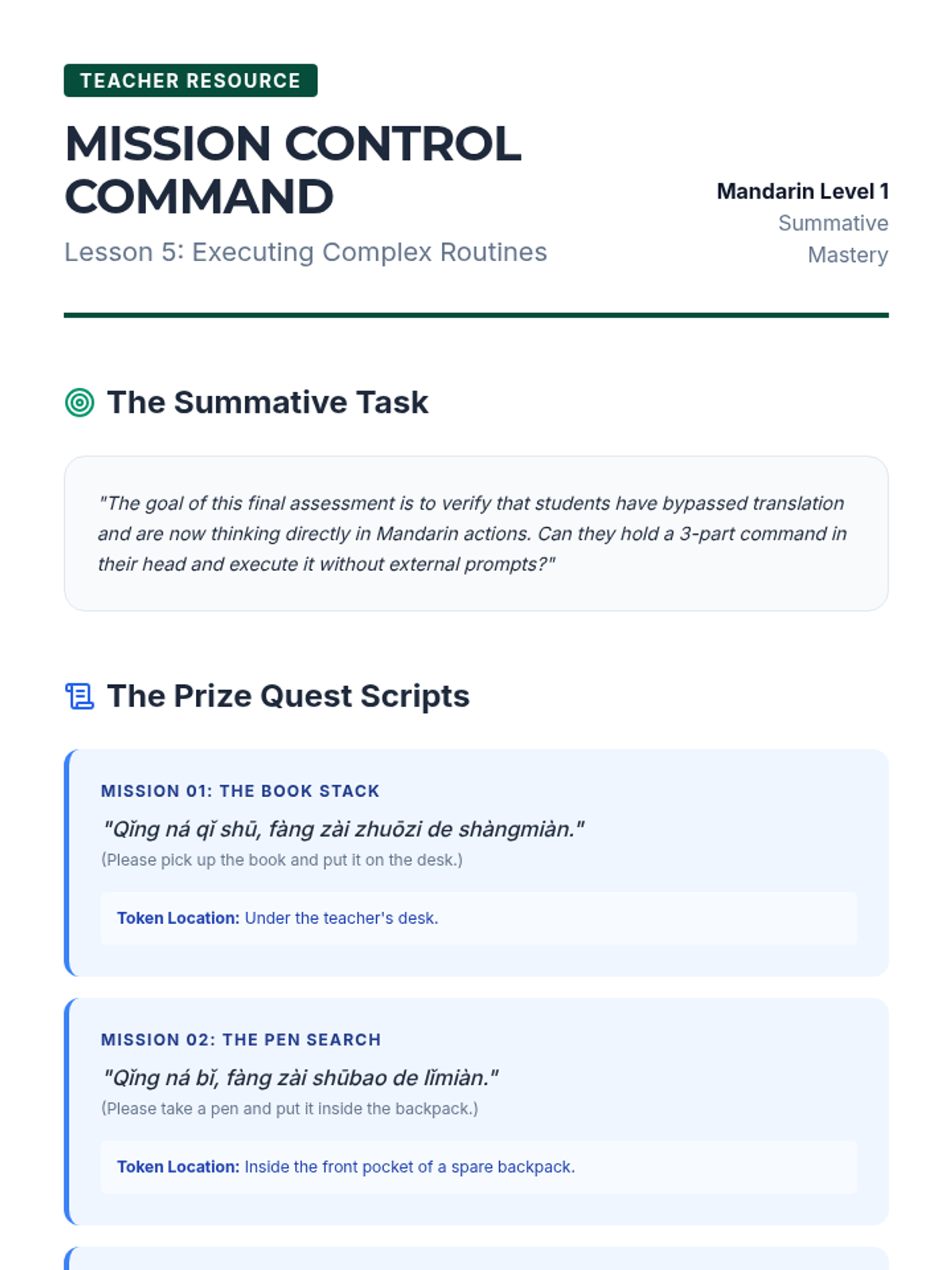
Culminates the sequence with complex, multi-step directions that combine actions, objects, and locations.
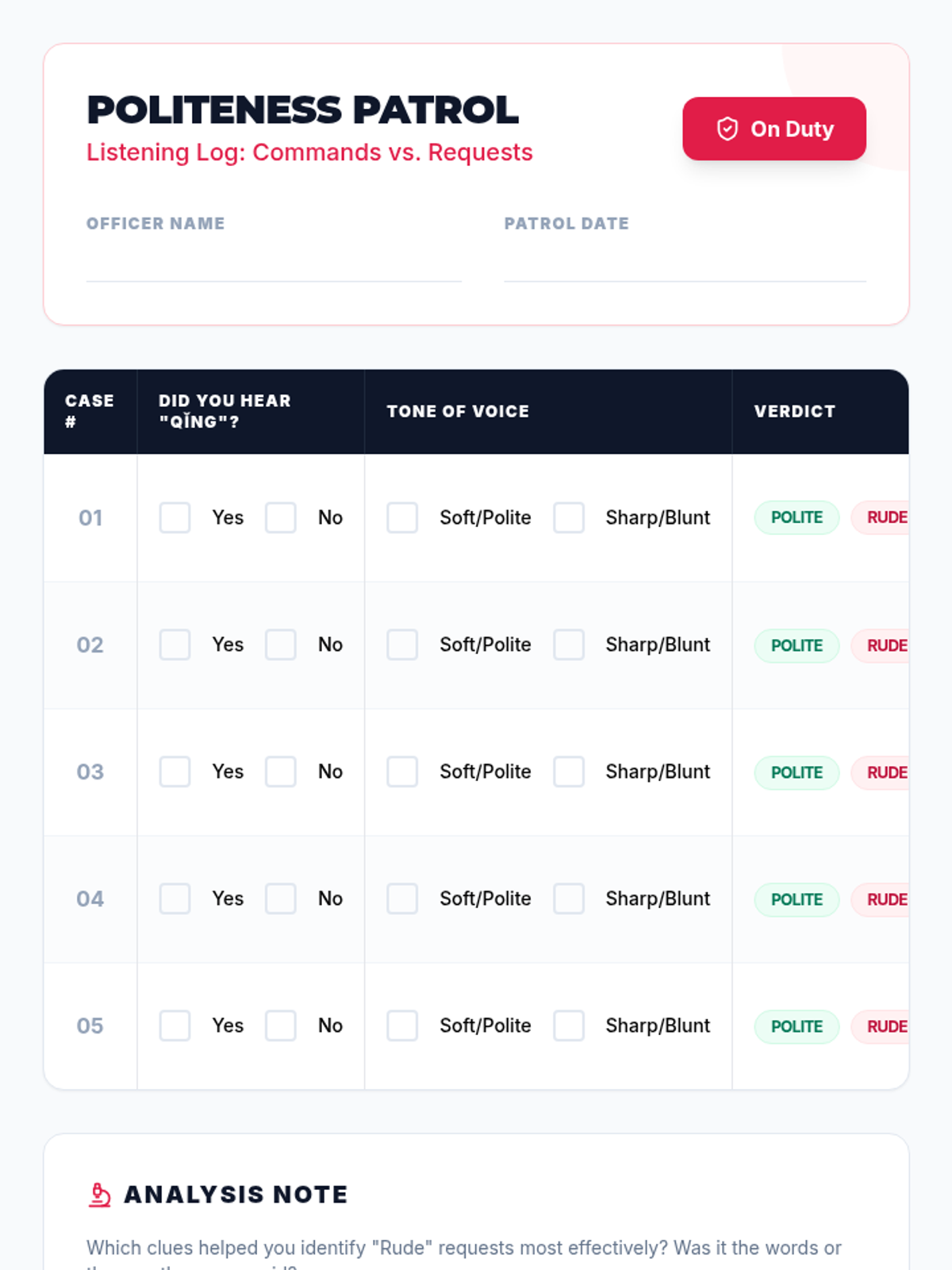
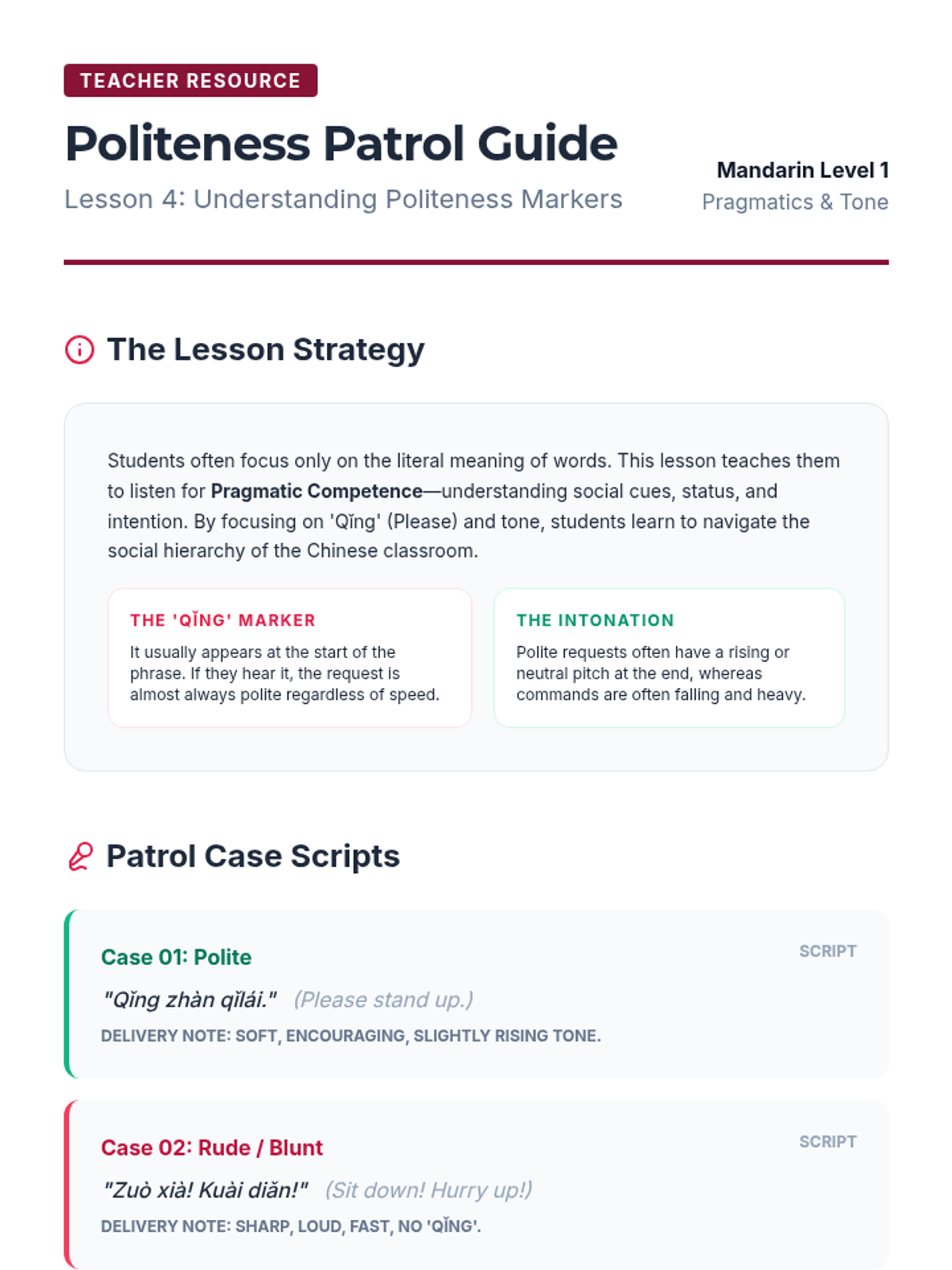
Teaches students to differentiate between polite requests and direct commands by listening for markers like 'Qing'.
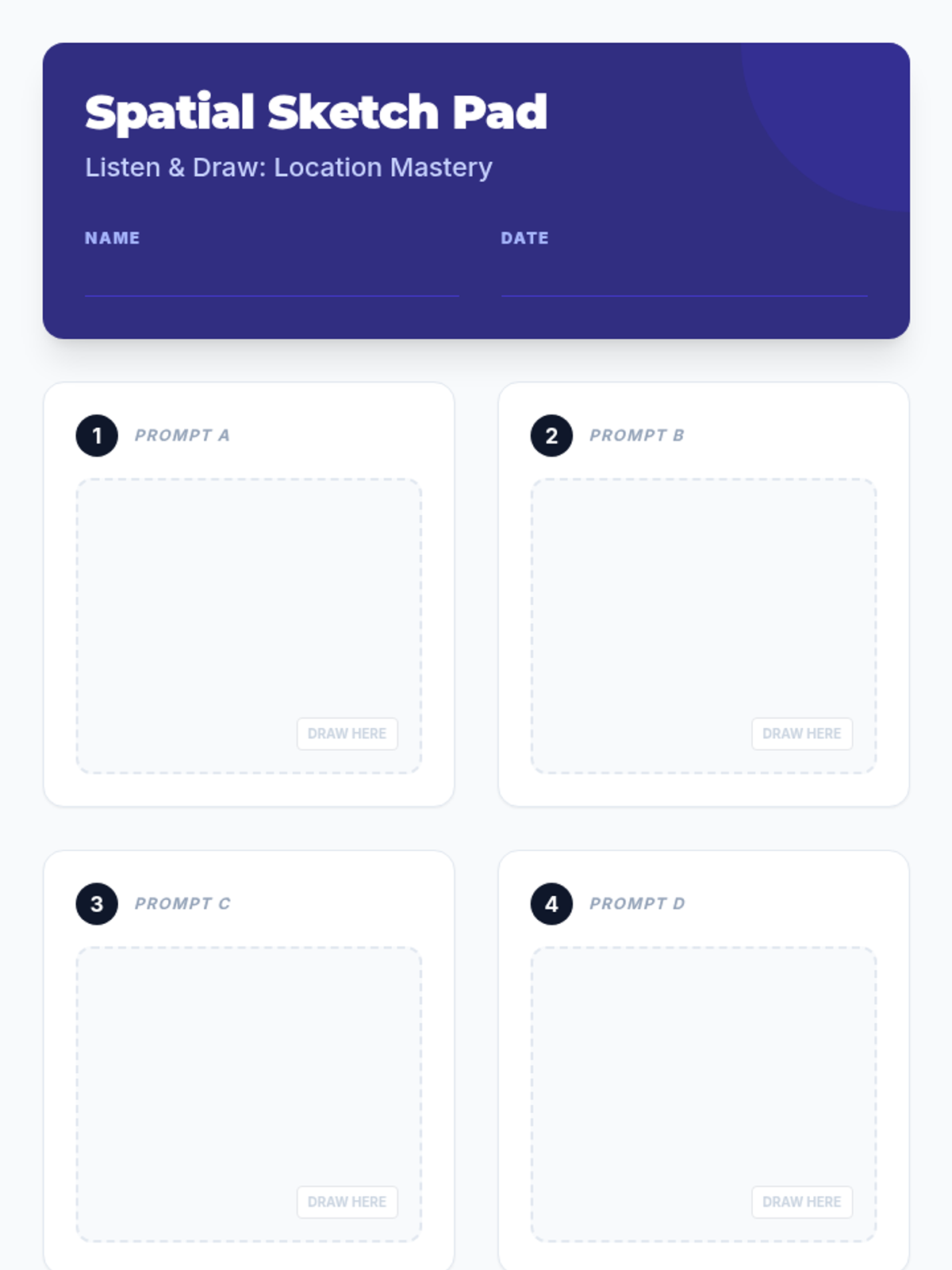
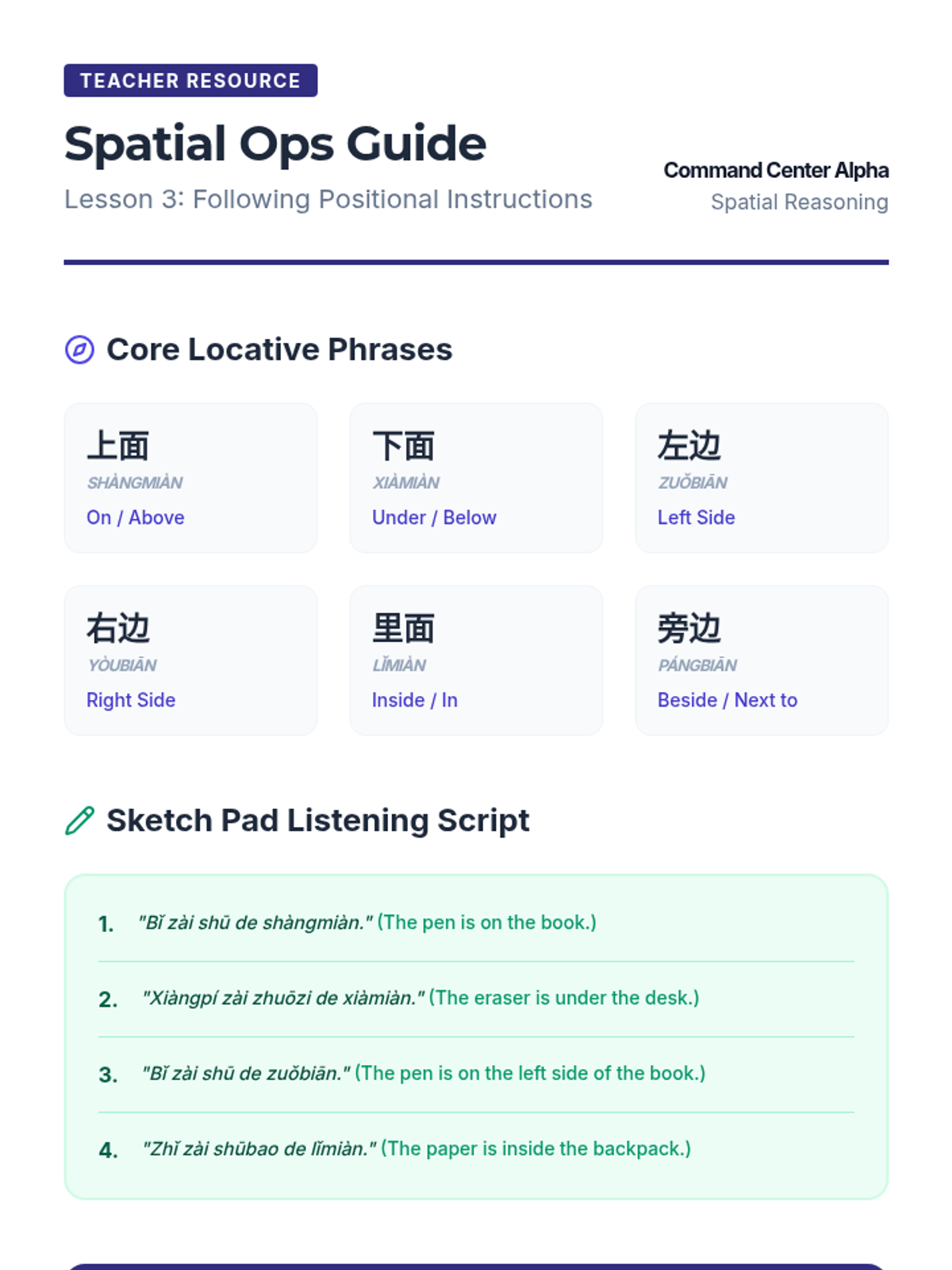
Introduces spatial prepositions like 'on', 'under', and 'beside' to guide students through location-based listening tasks.
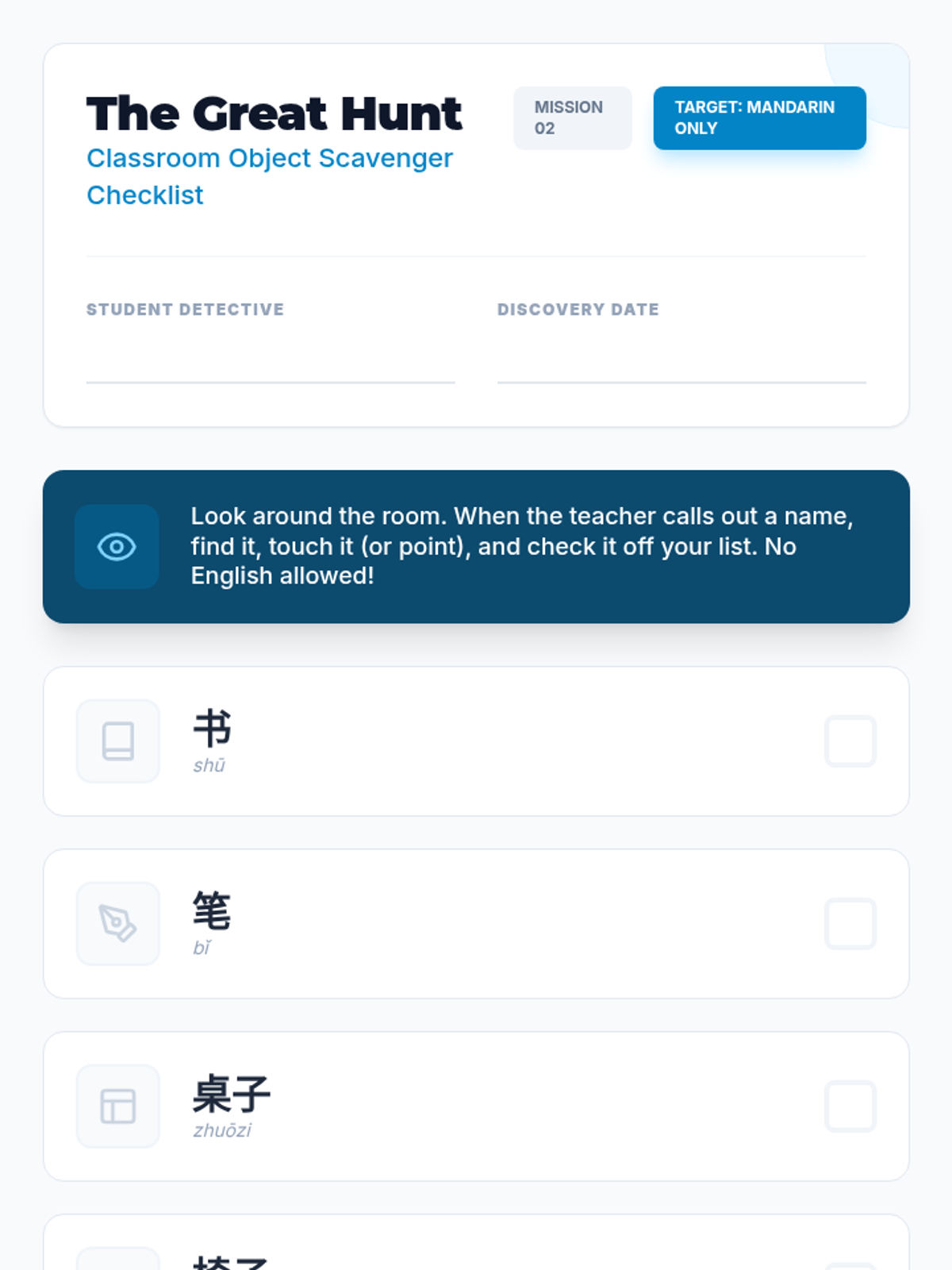
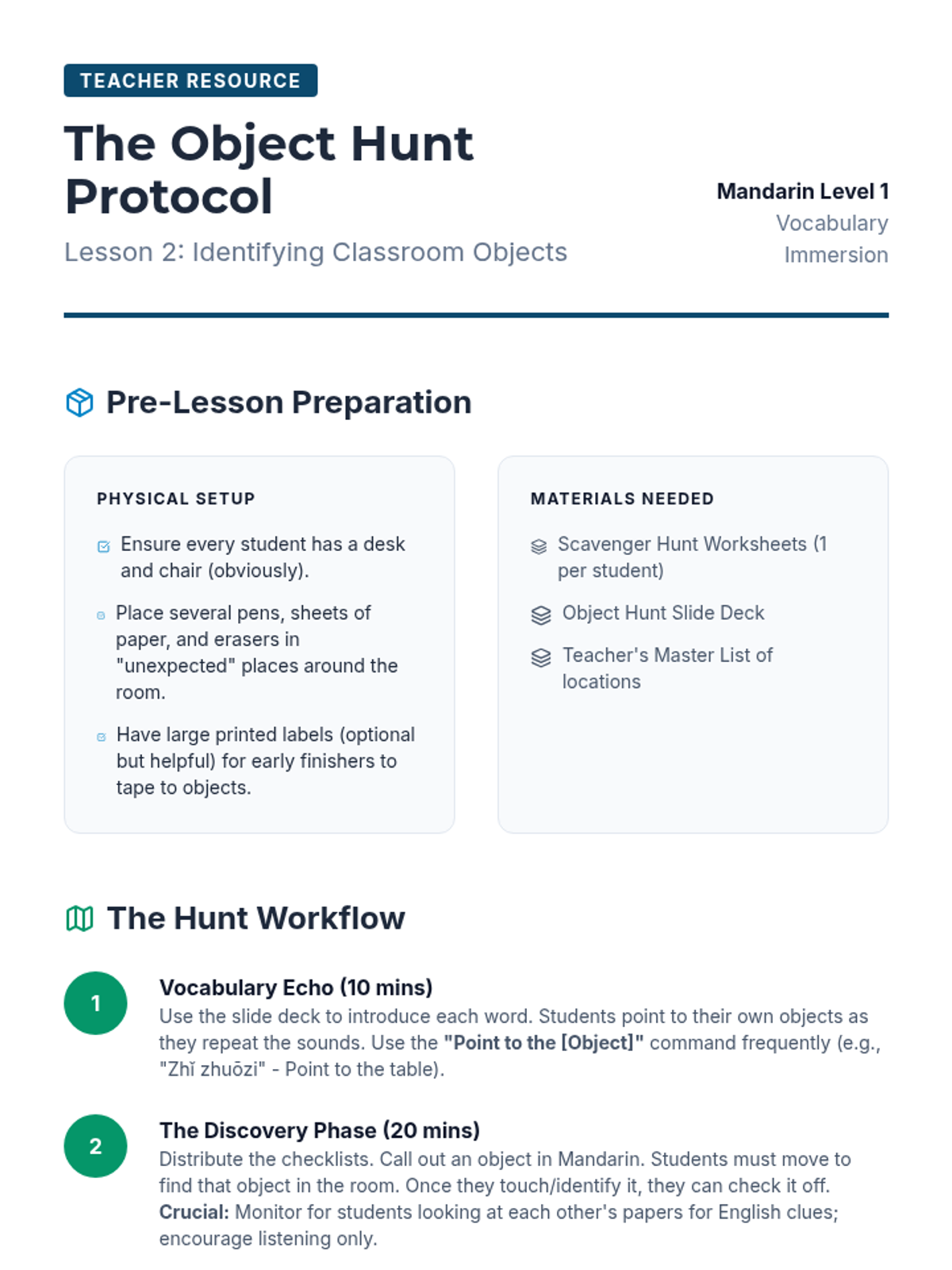
Students identify common school items such as books, pens, and chairs through a scavenger hunt and visual matching.
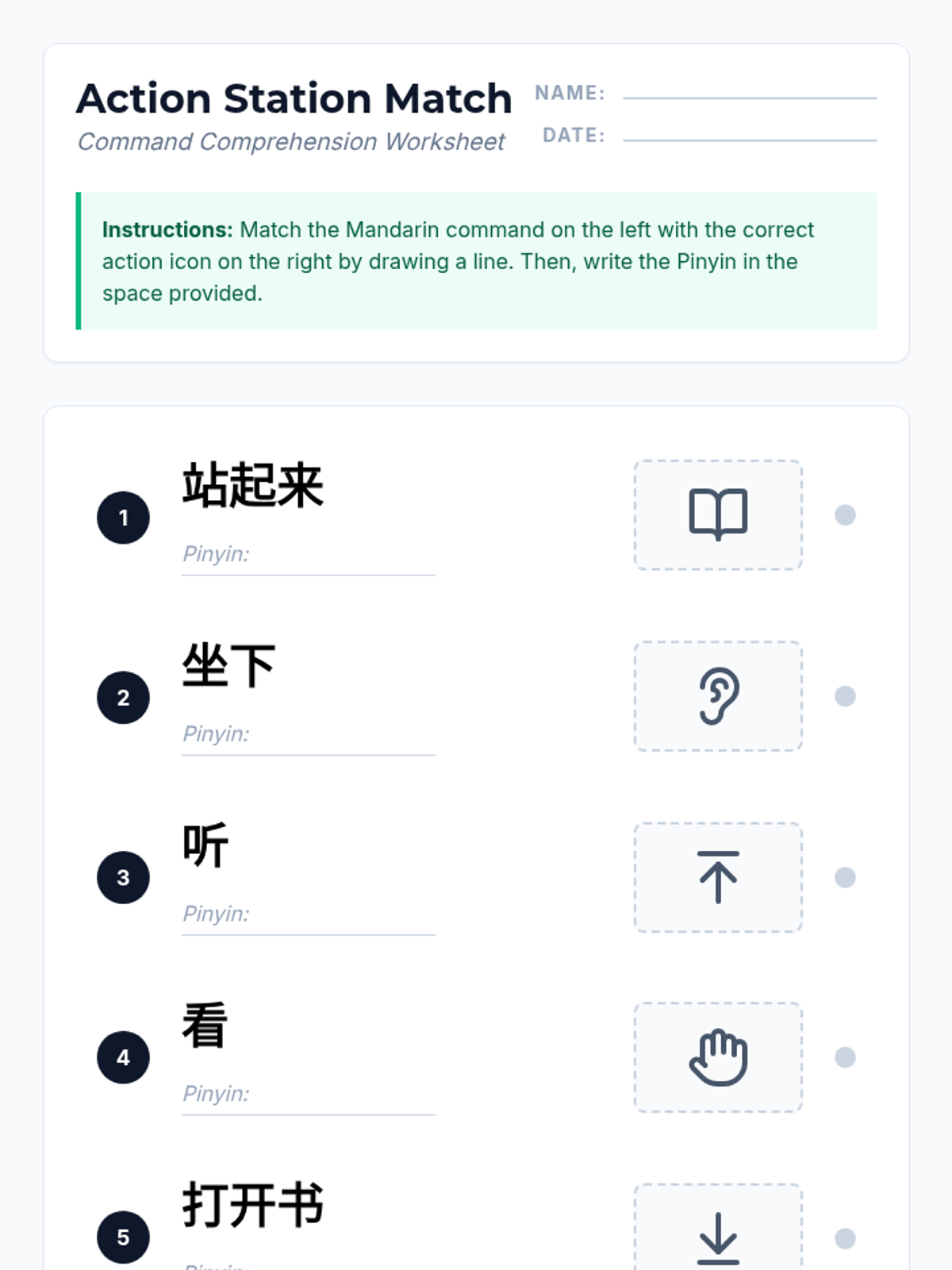
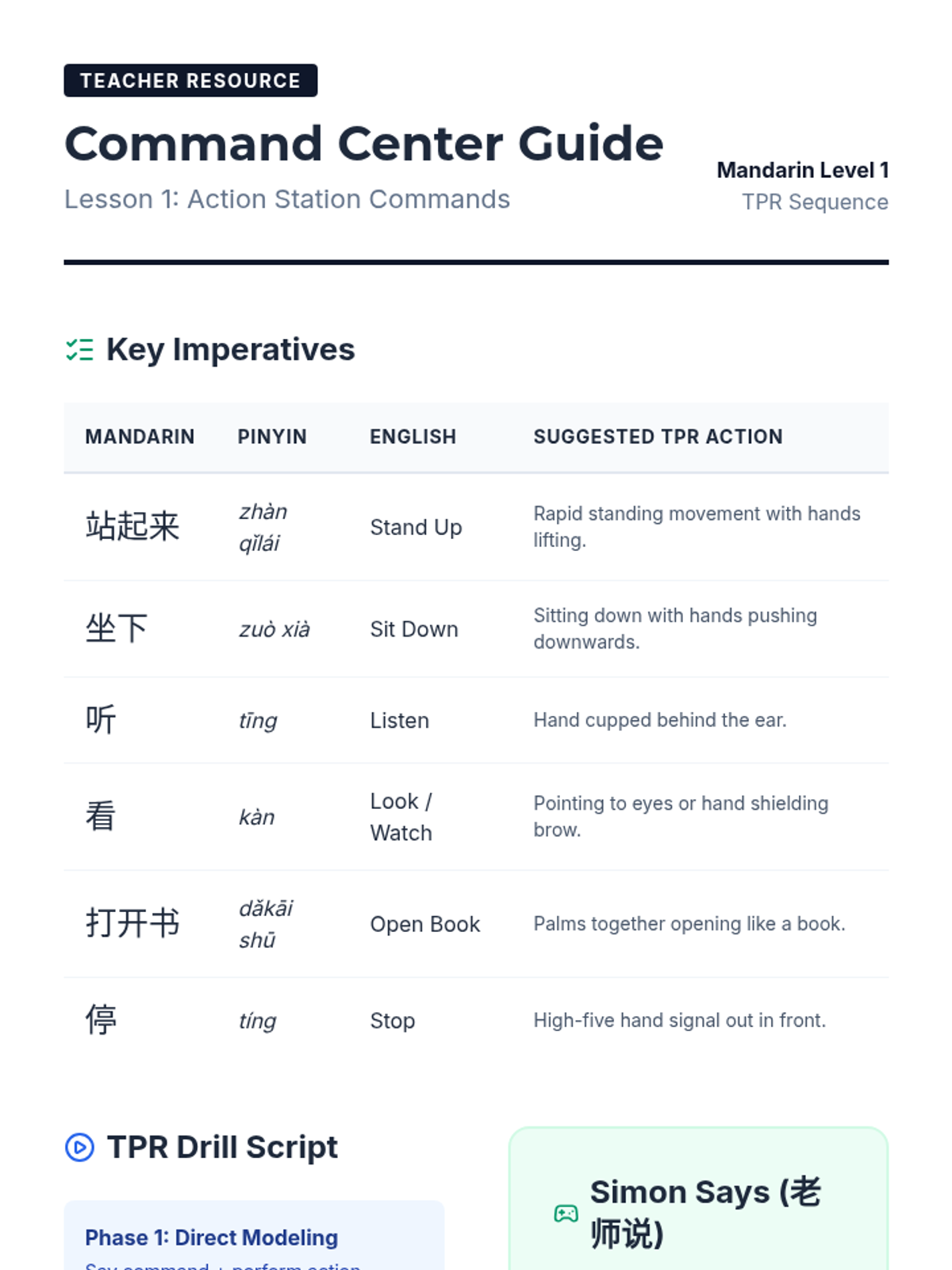
Focuses on high-frequency imperatives like 'stand up', 'sit down', and 'open book' through physical movement and a game-based hook.
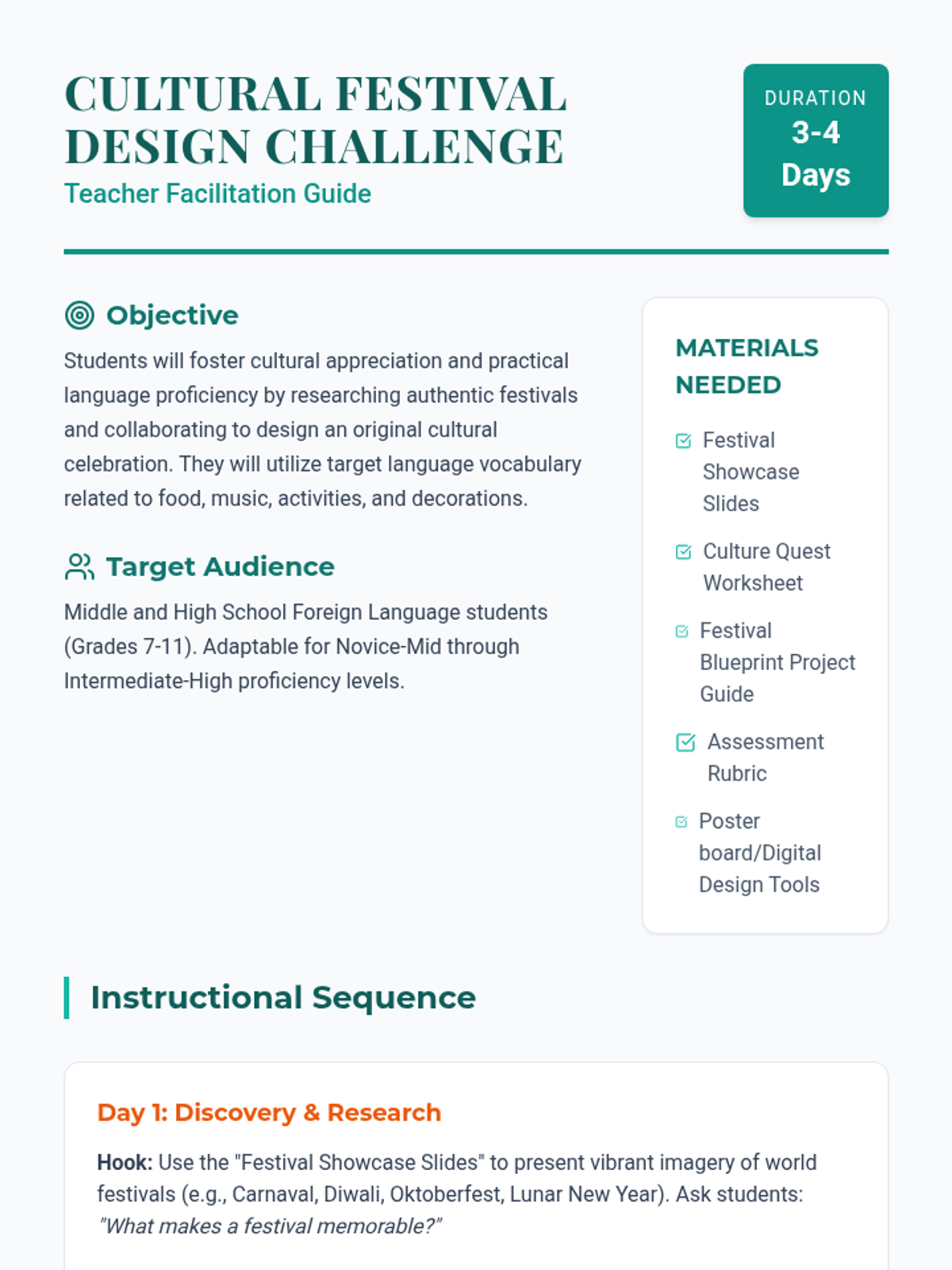
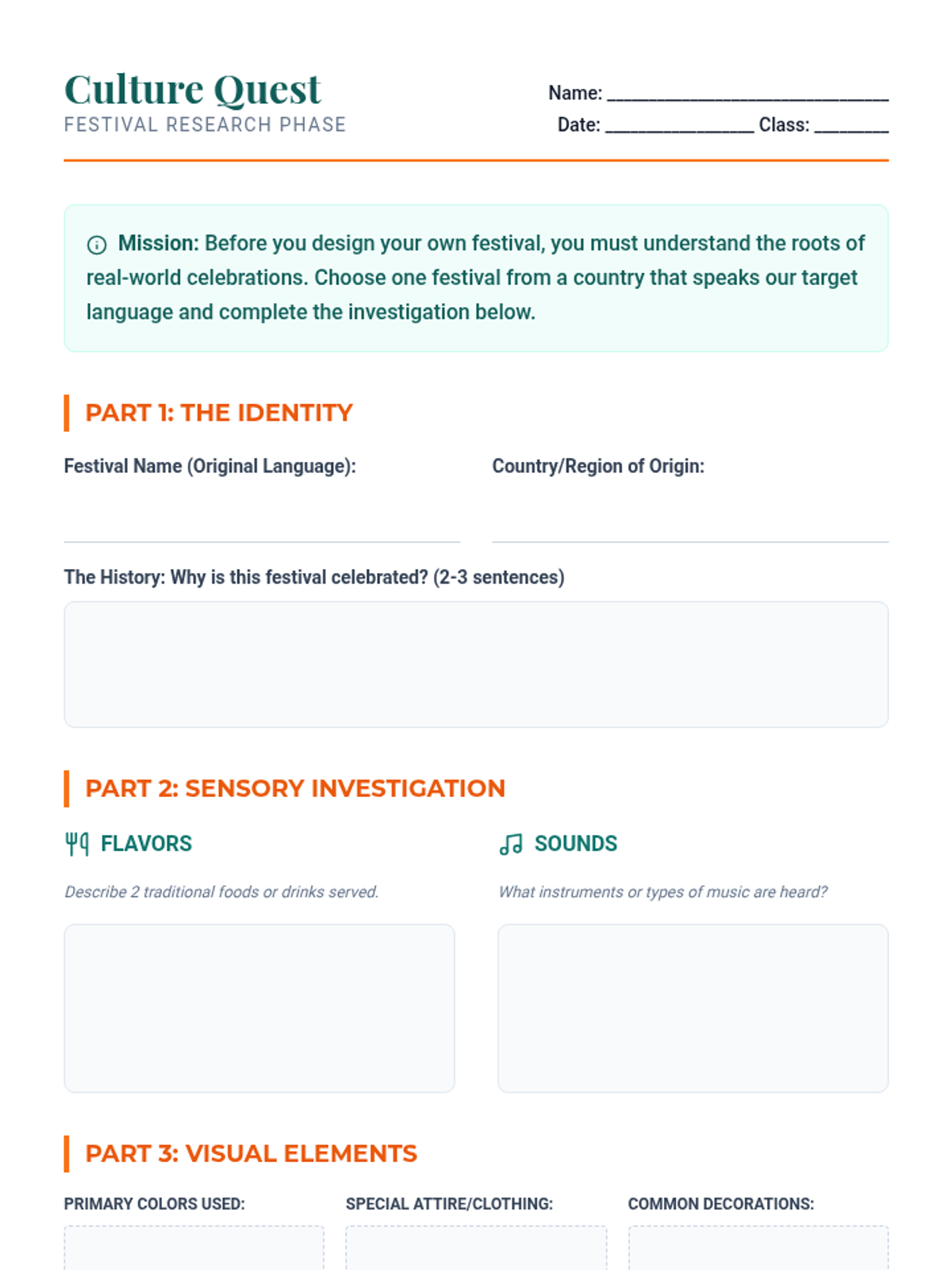
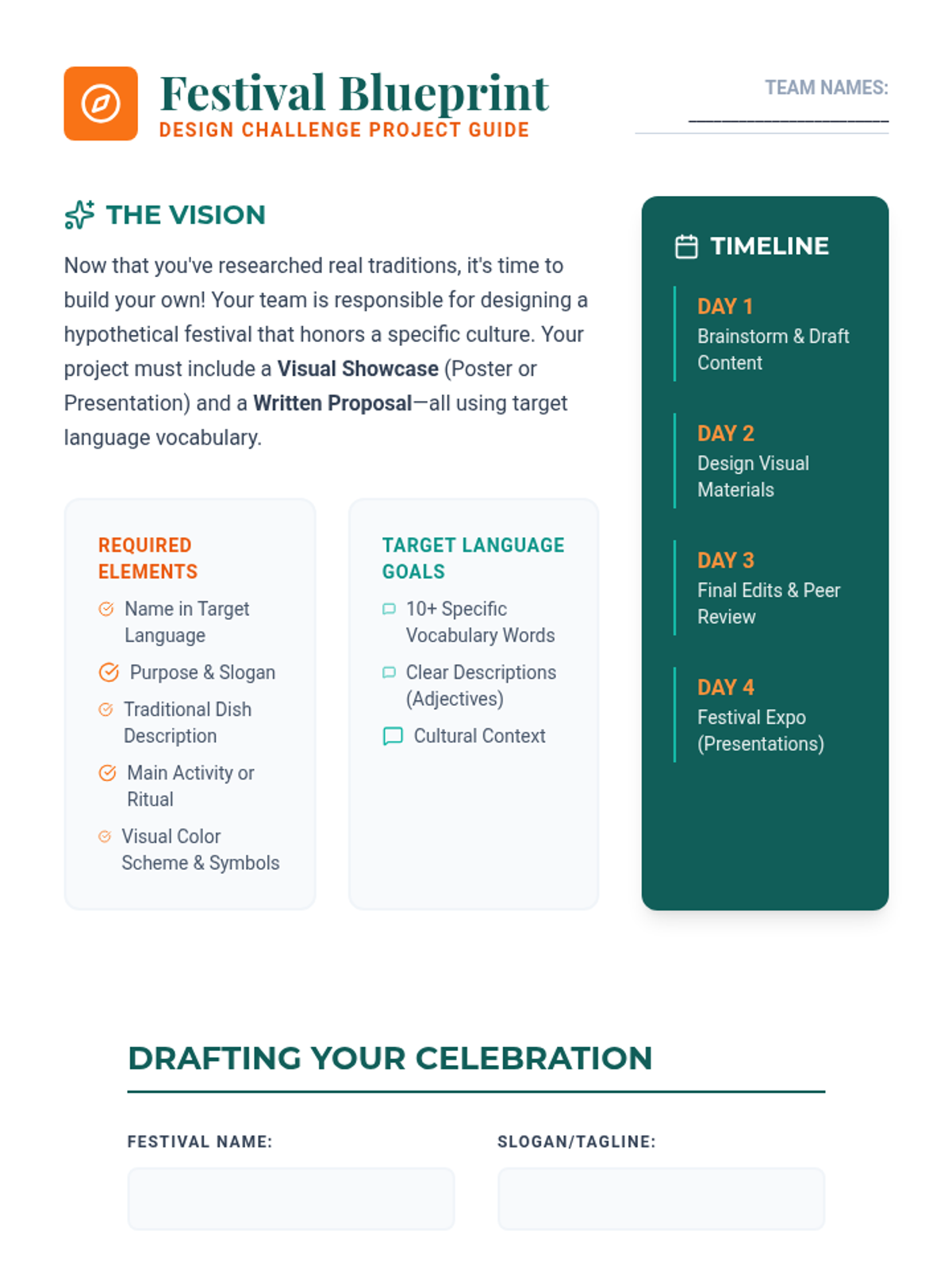
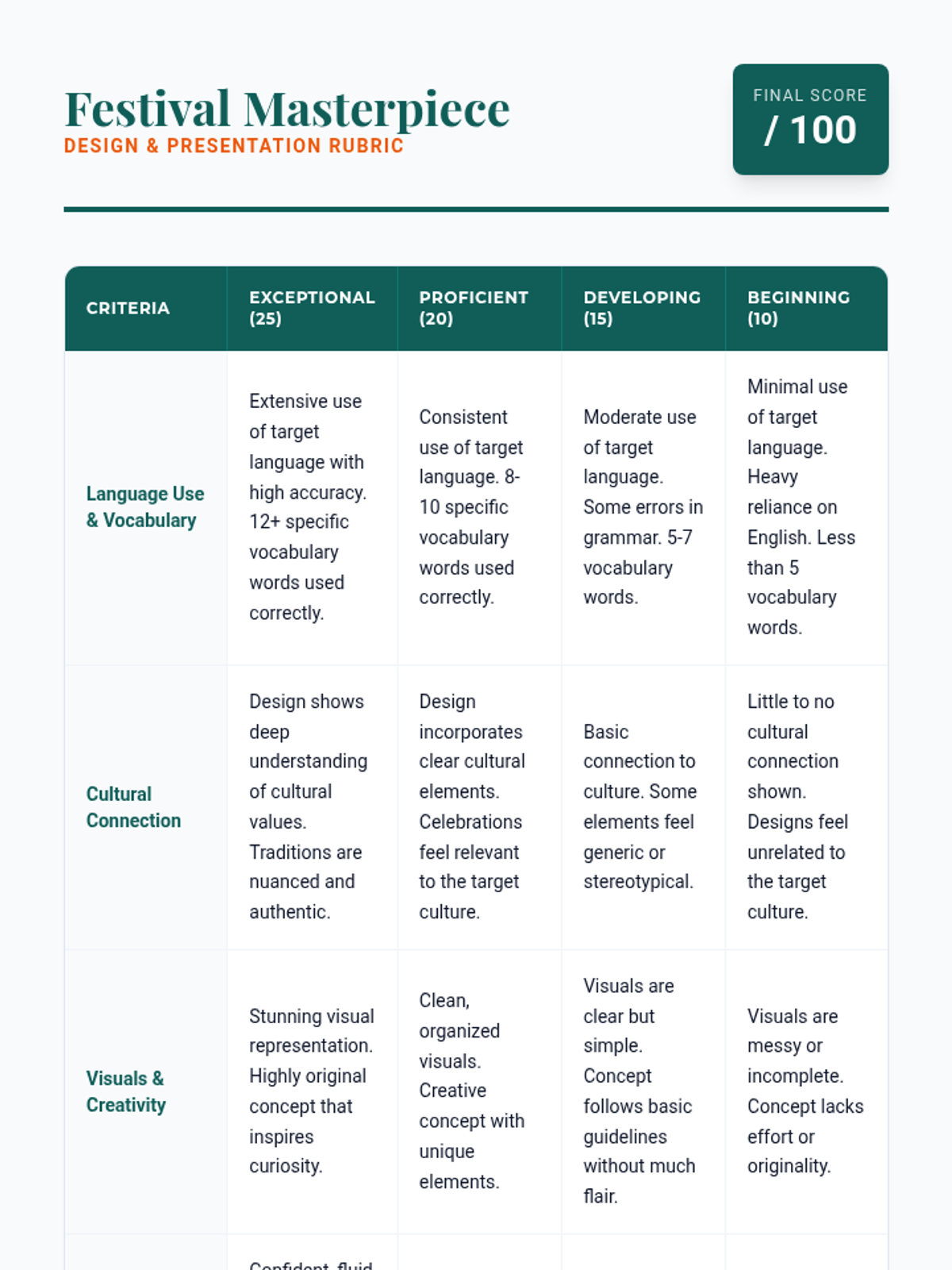
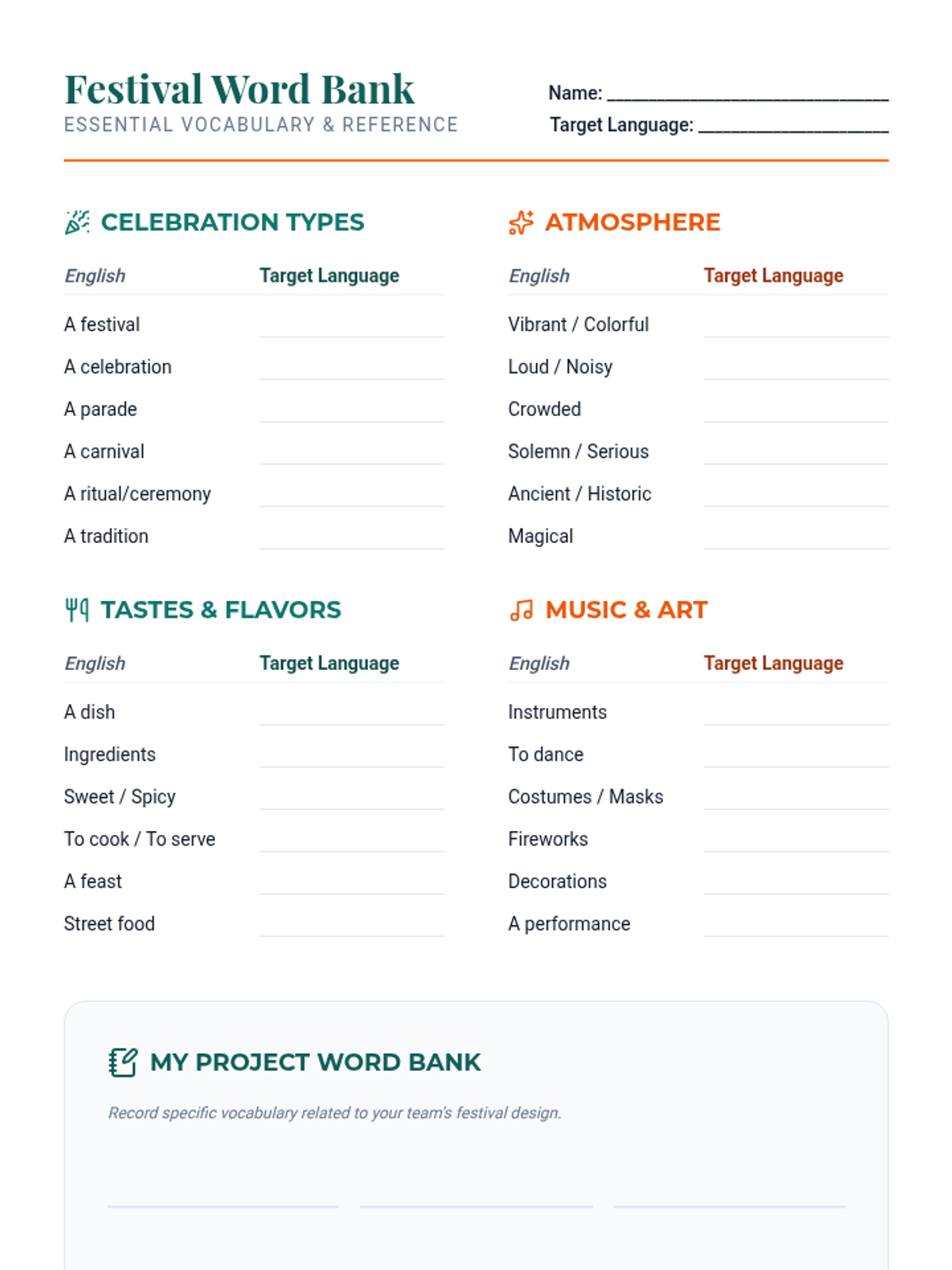
A collaborative project-based lesson where students research real-world cultural festivals and then design their own unique celebration, applying target language vocabulary for food, music, and traditions.
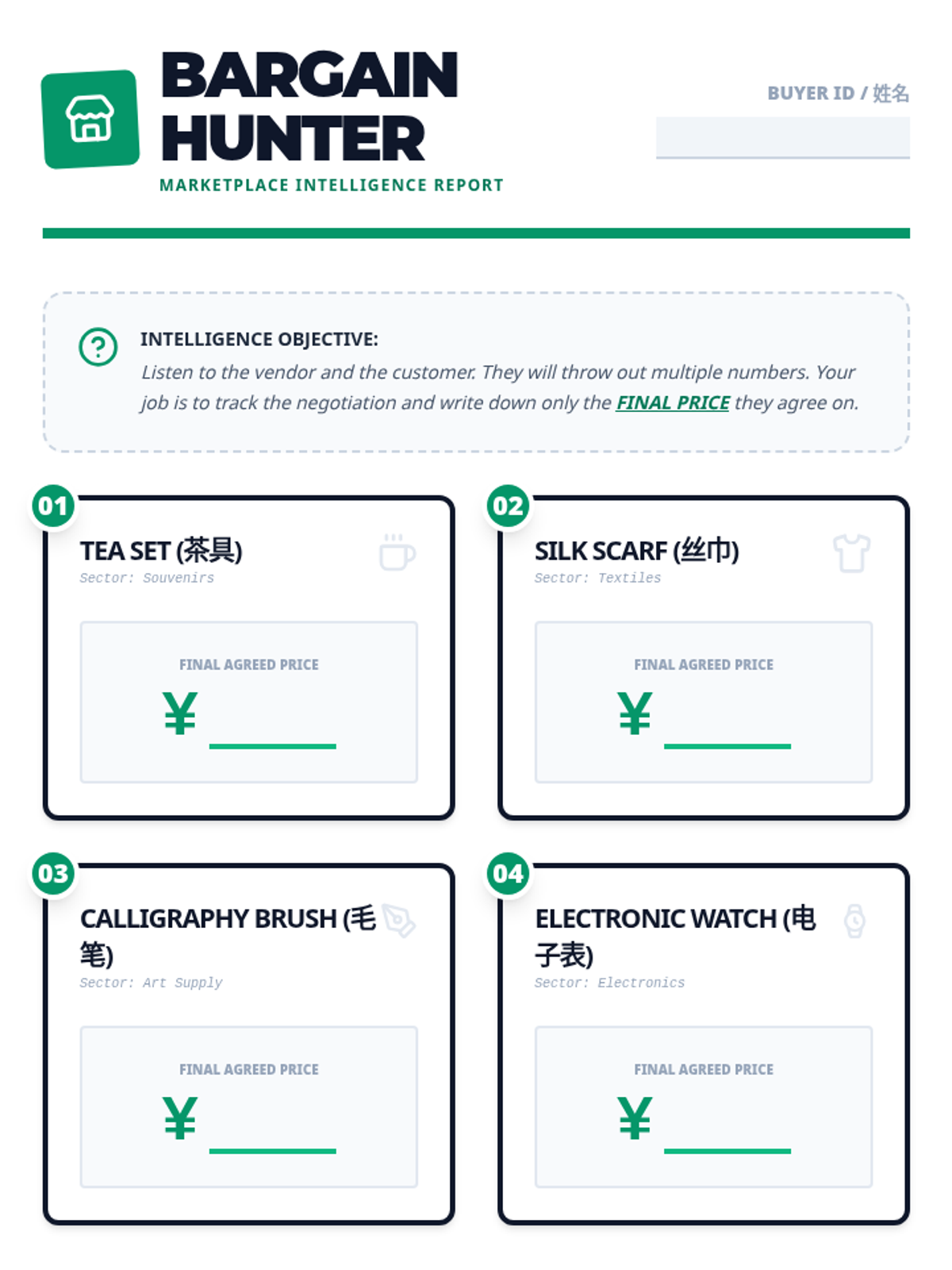
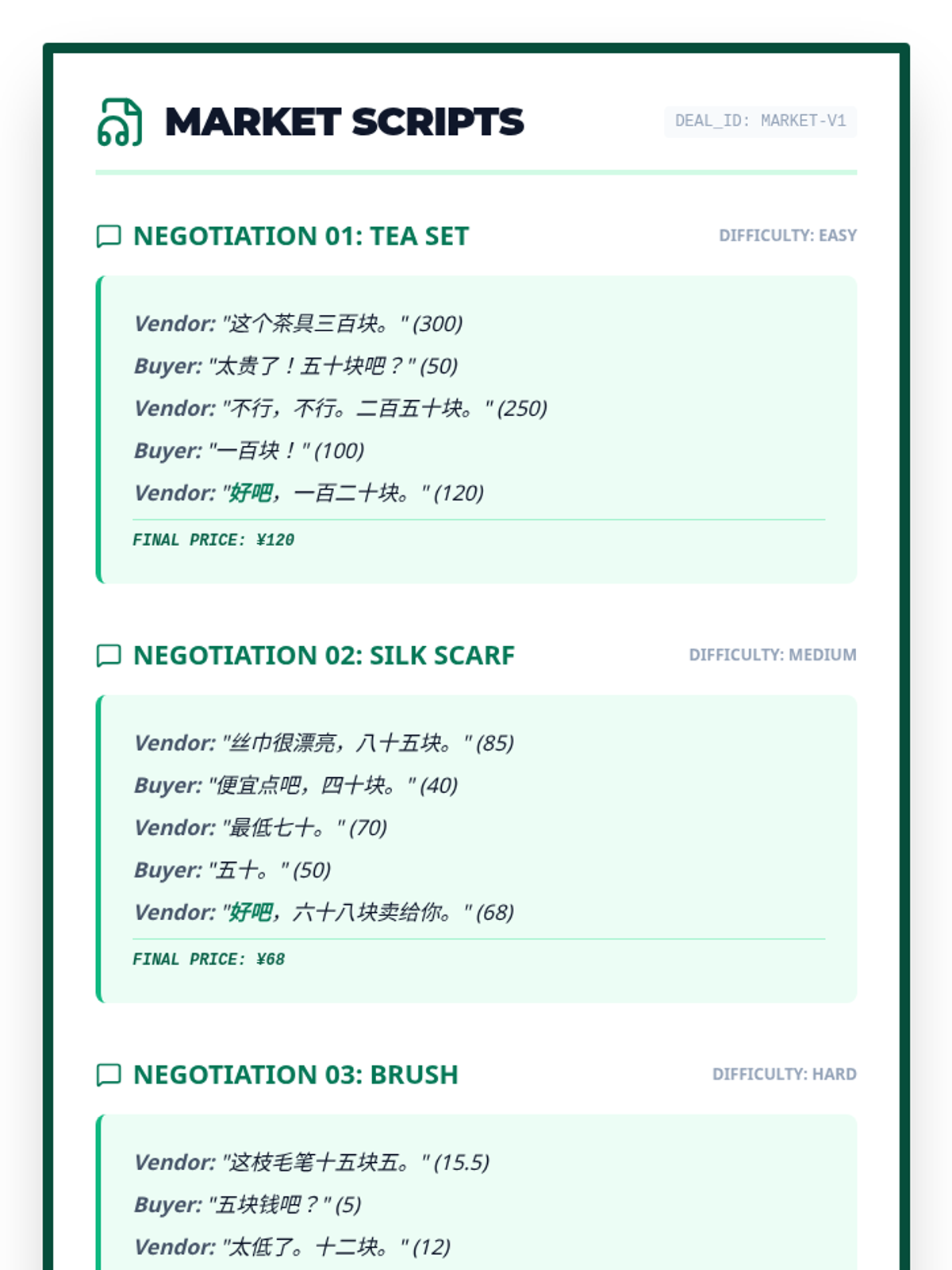
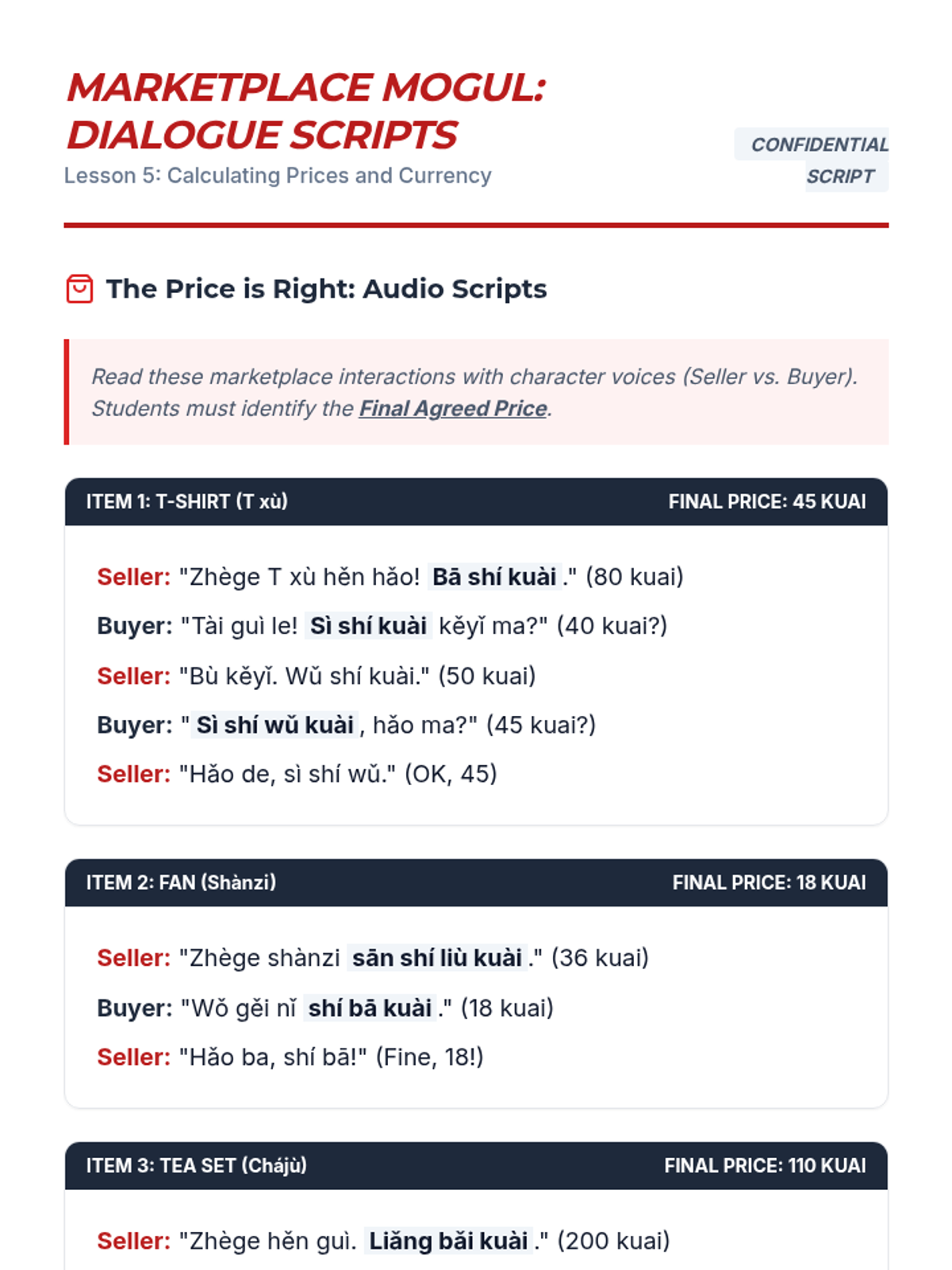
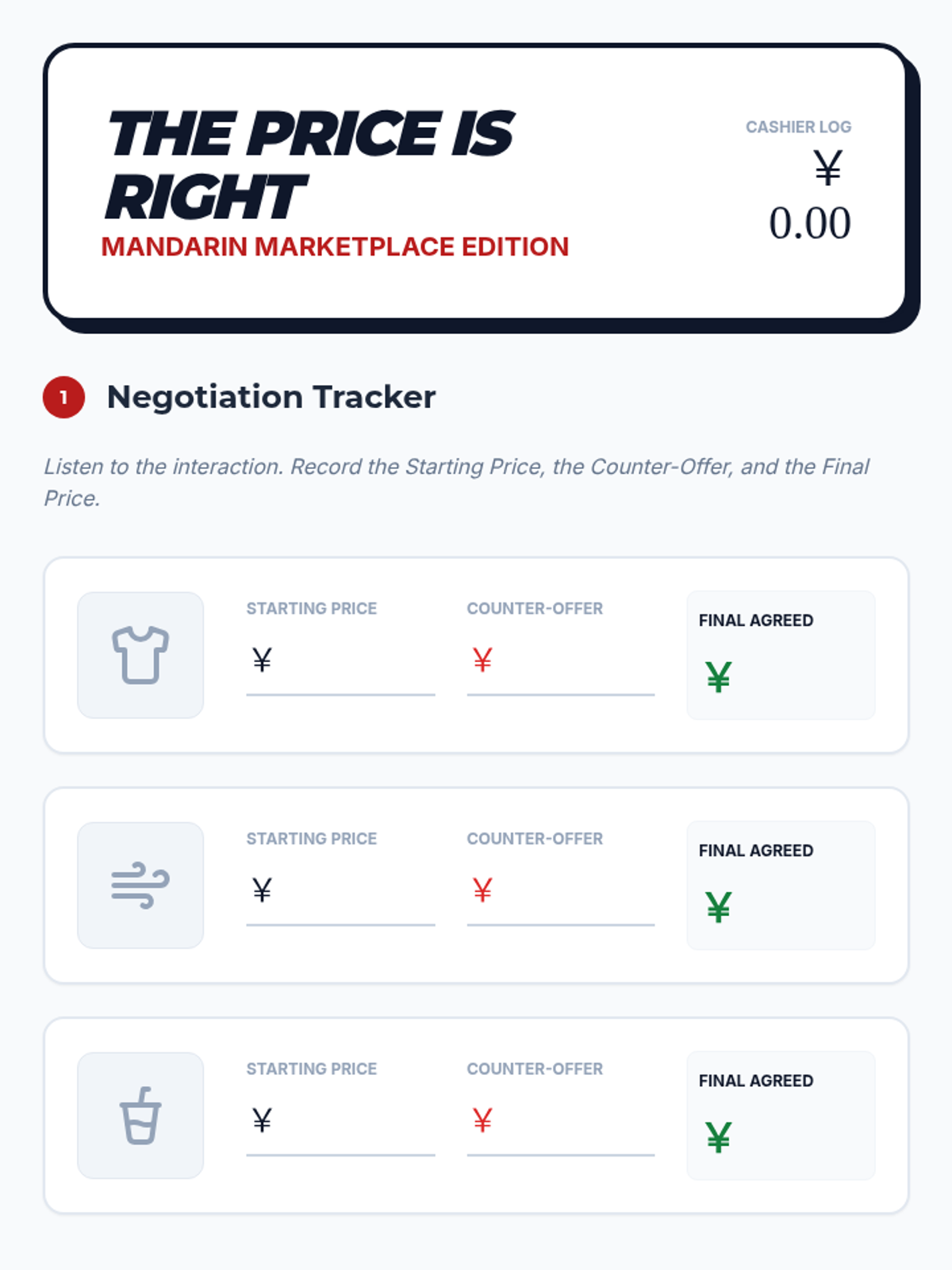
Focuses on currency (yuan, kuai, mao) and the linguistic nuances of haggling. Students track price negotiations in a marketplace setting to identify final agreed costs.
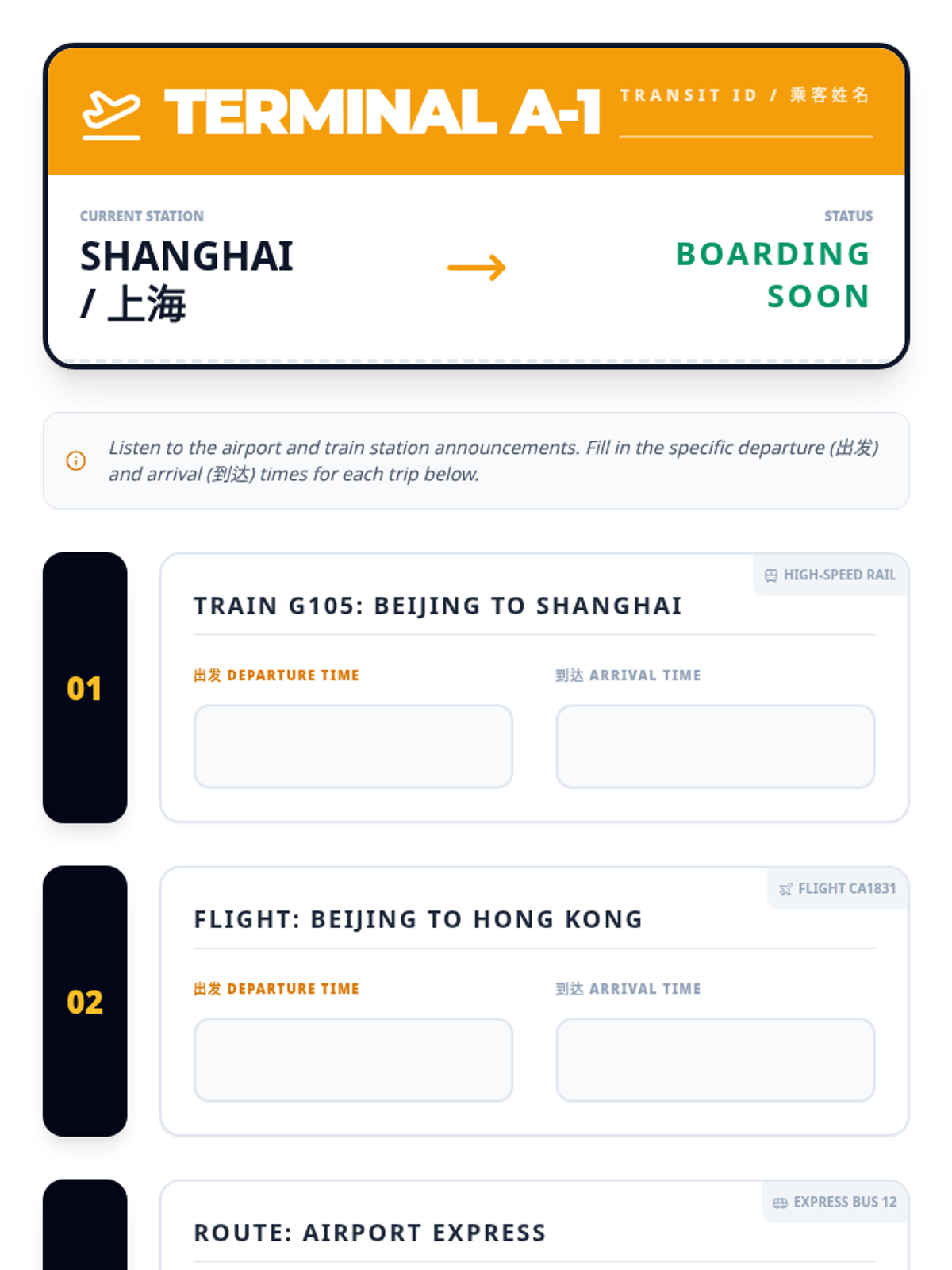
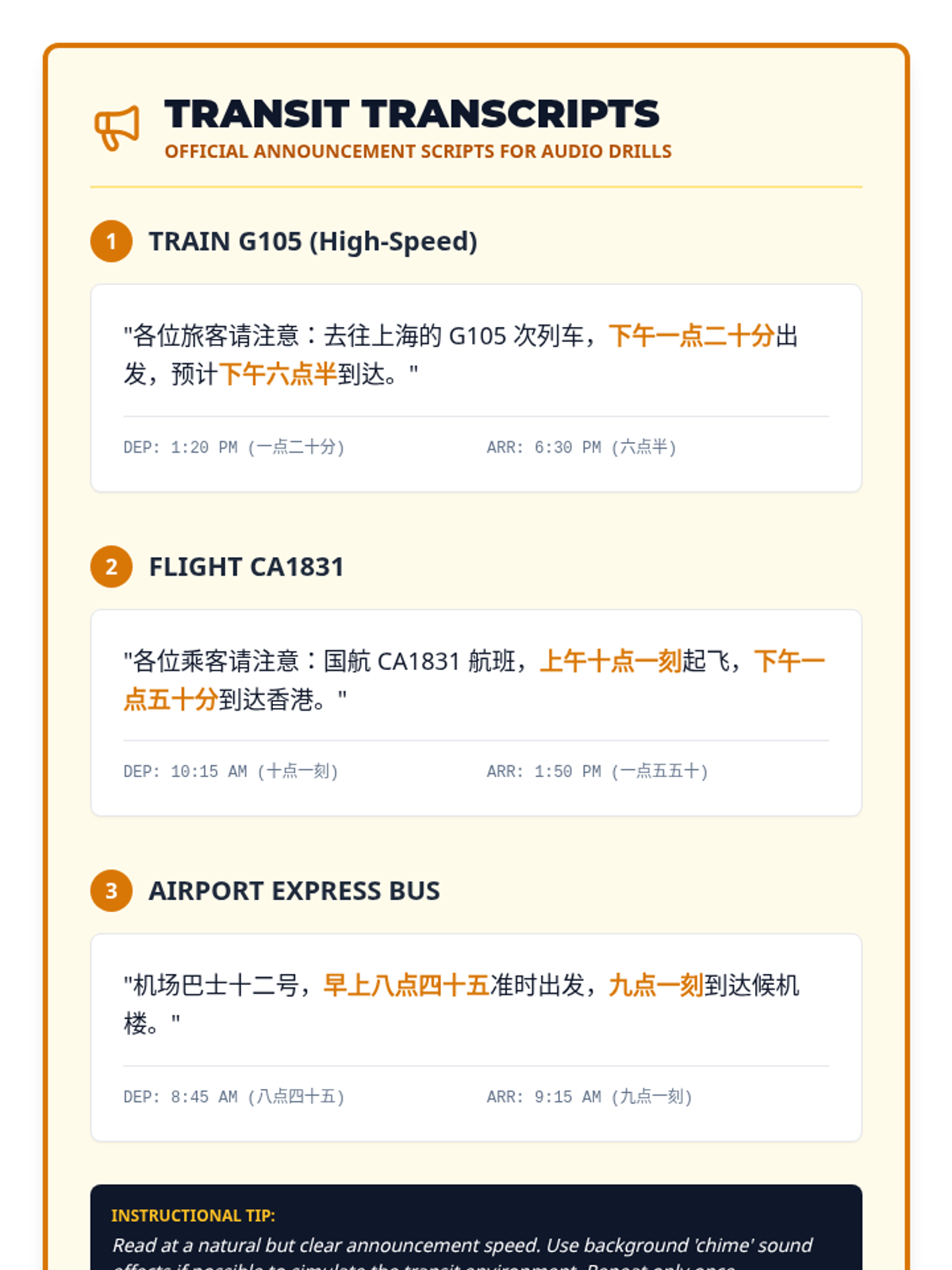
Covers clock times including 'half past' and 'quarter to'. Students audit transit announcements to extract specific departure and arrival data under time pressure.
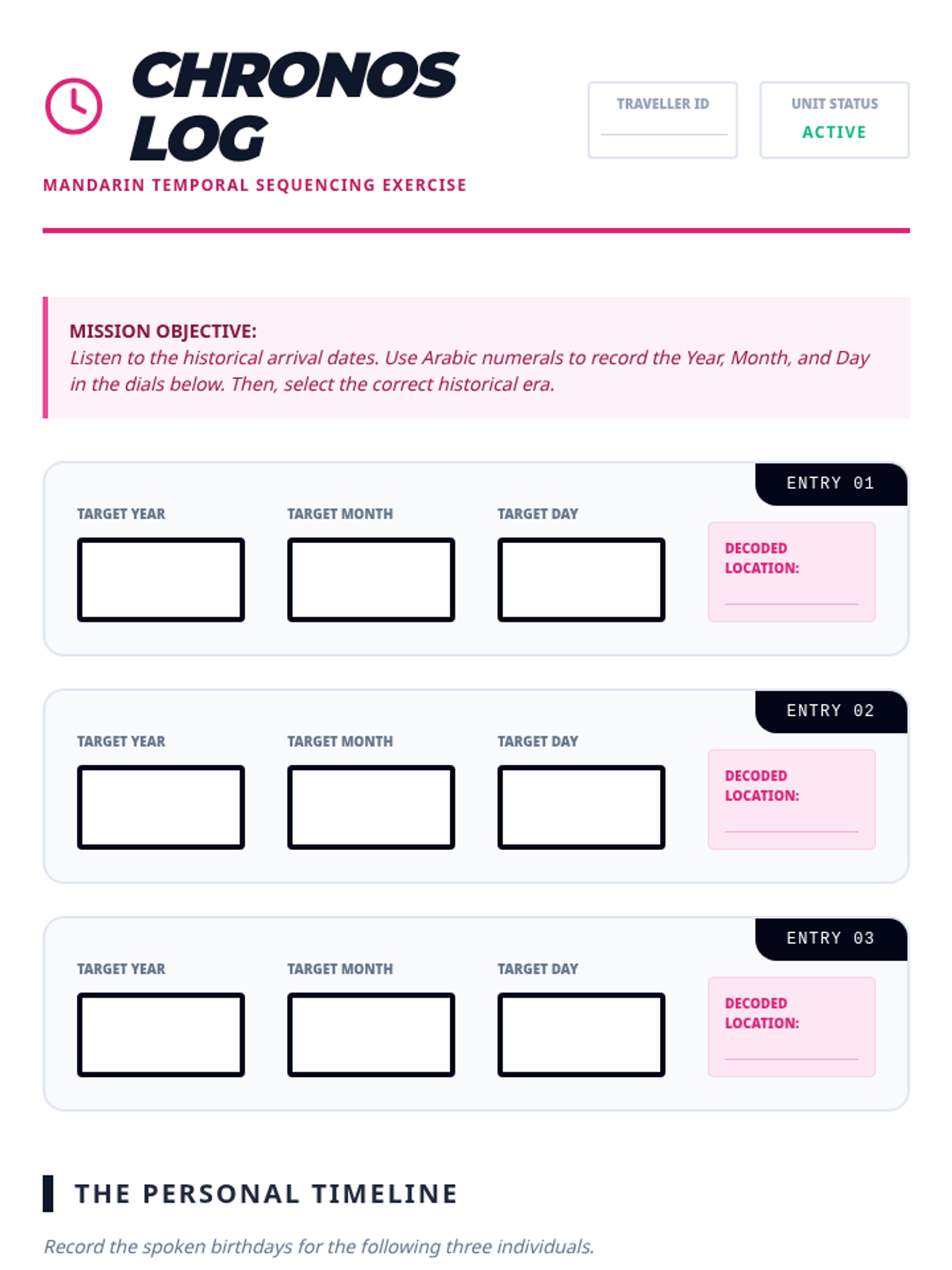
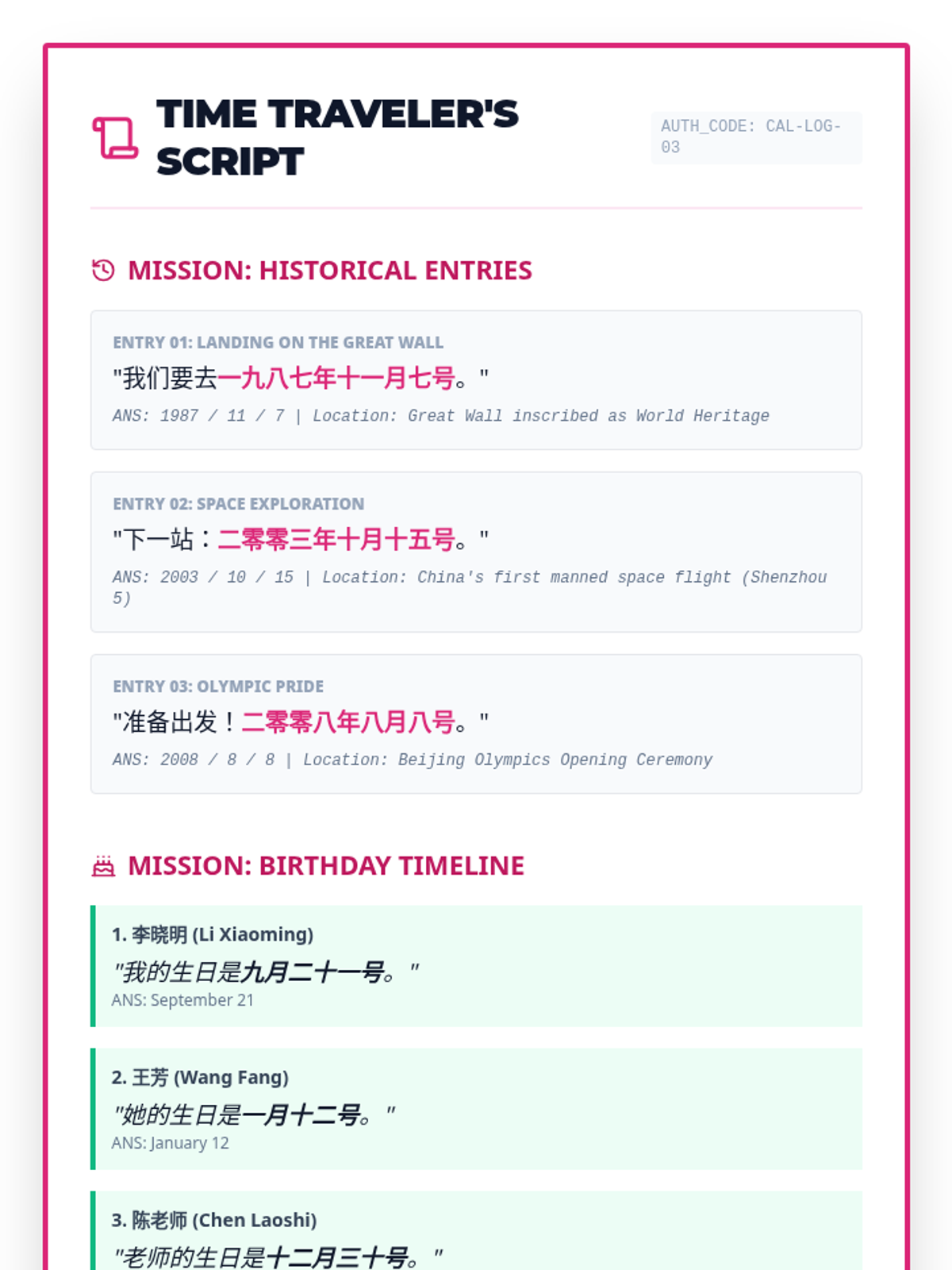
Teaches the Year-Month-Day structure of Mandarin dates. Students listen to historical and personal dates, organizing information chronologically in a 'Time Traveler' simulation.
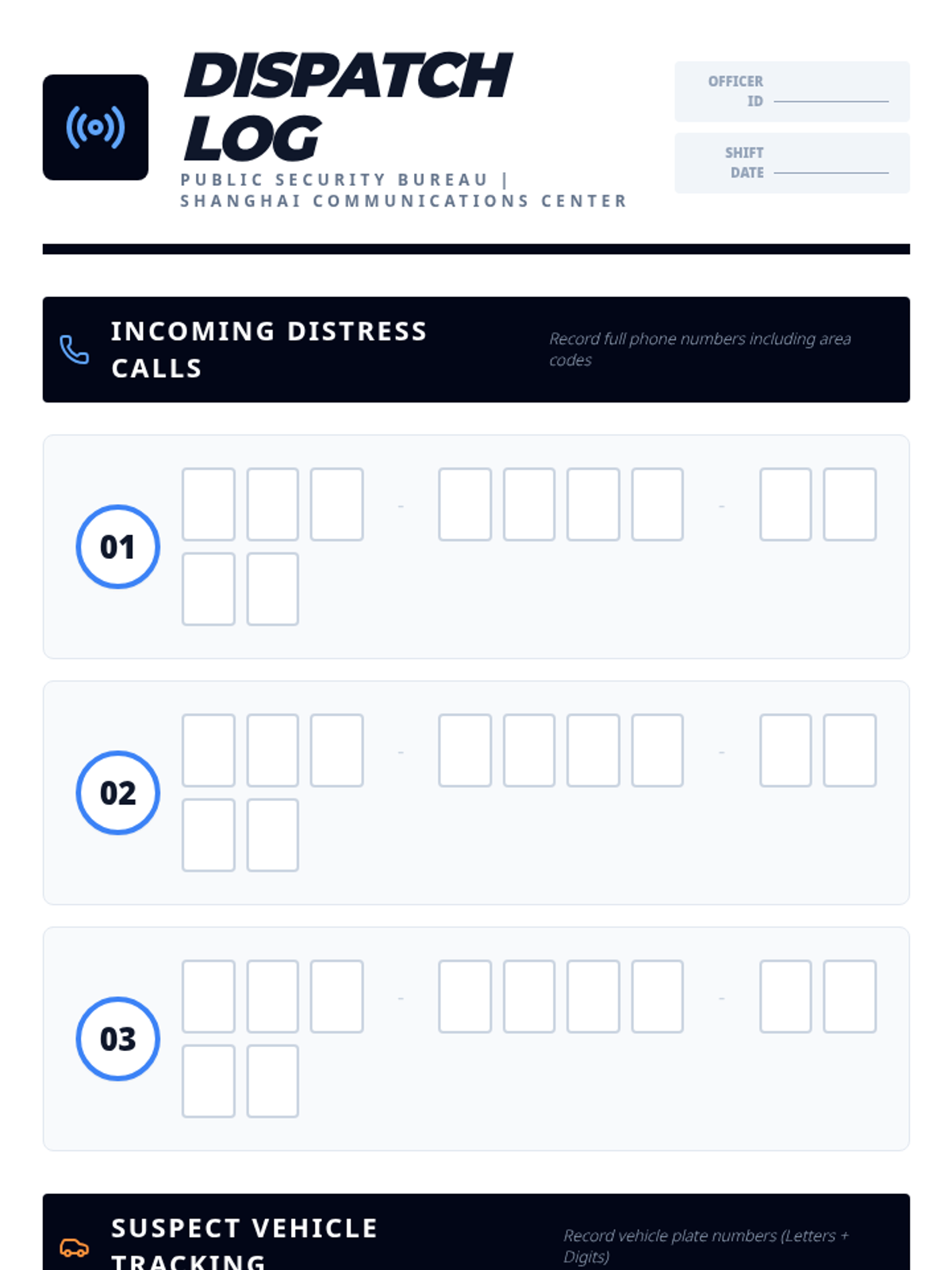
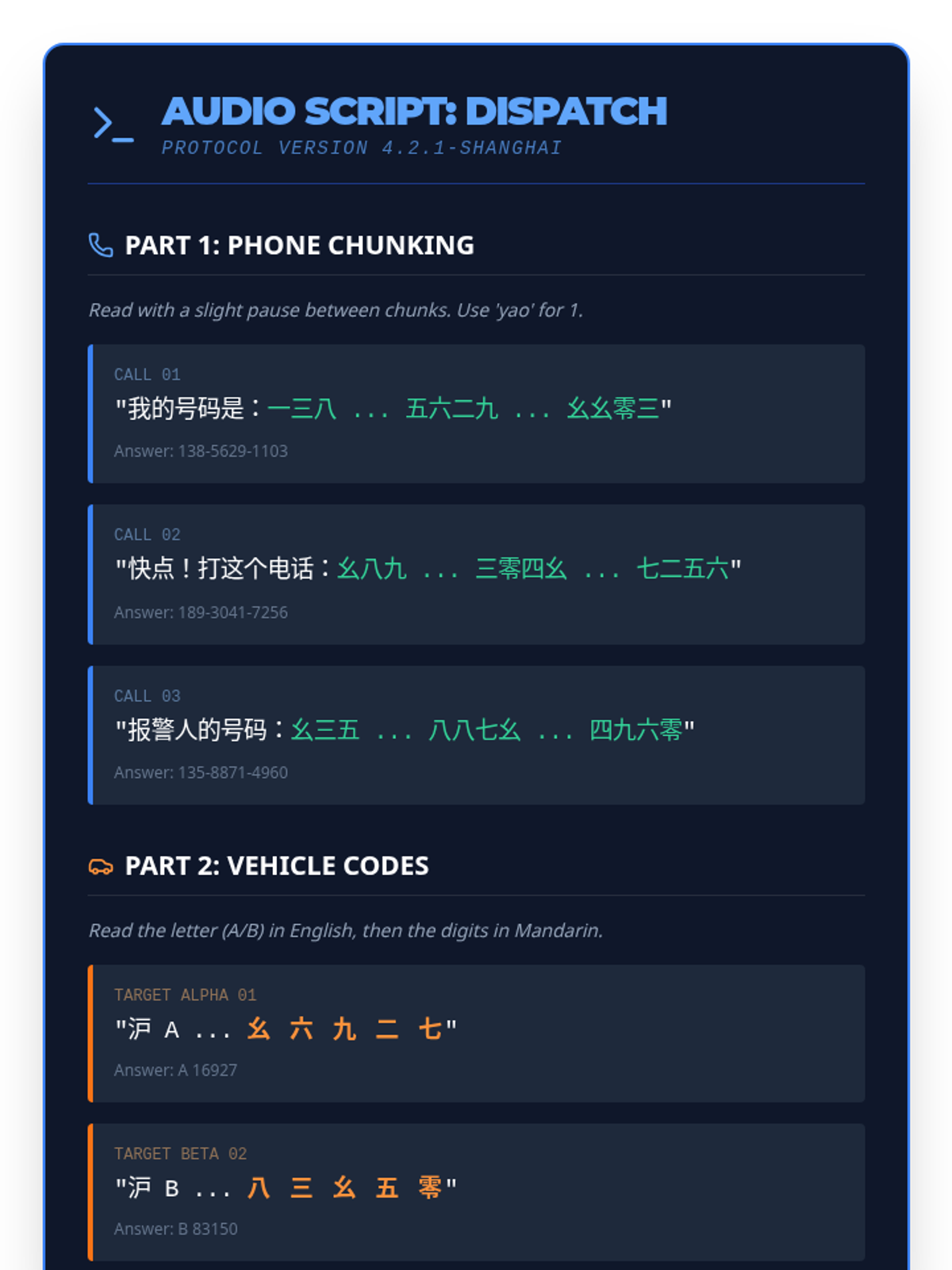
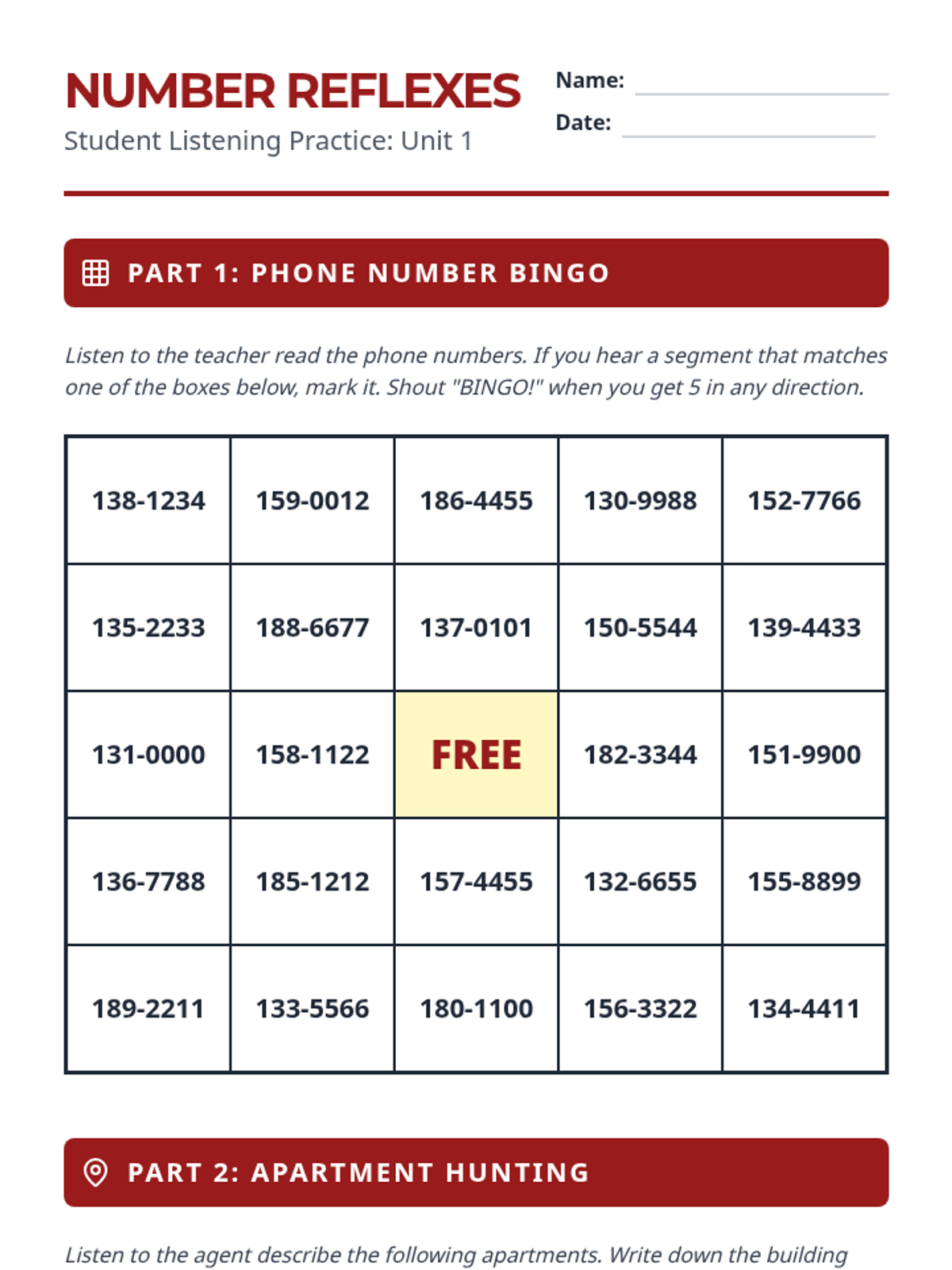
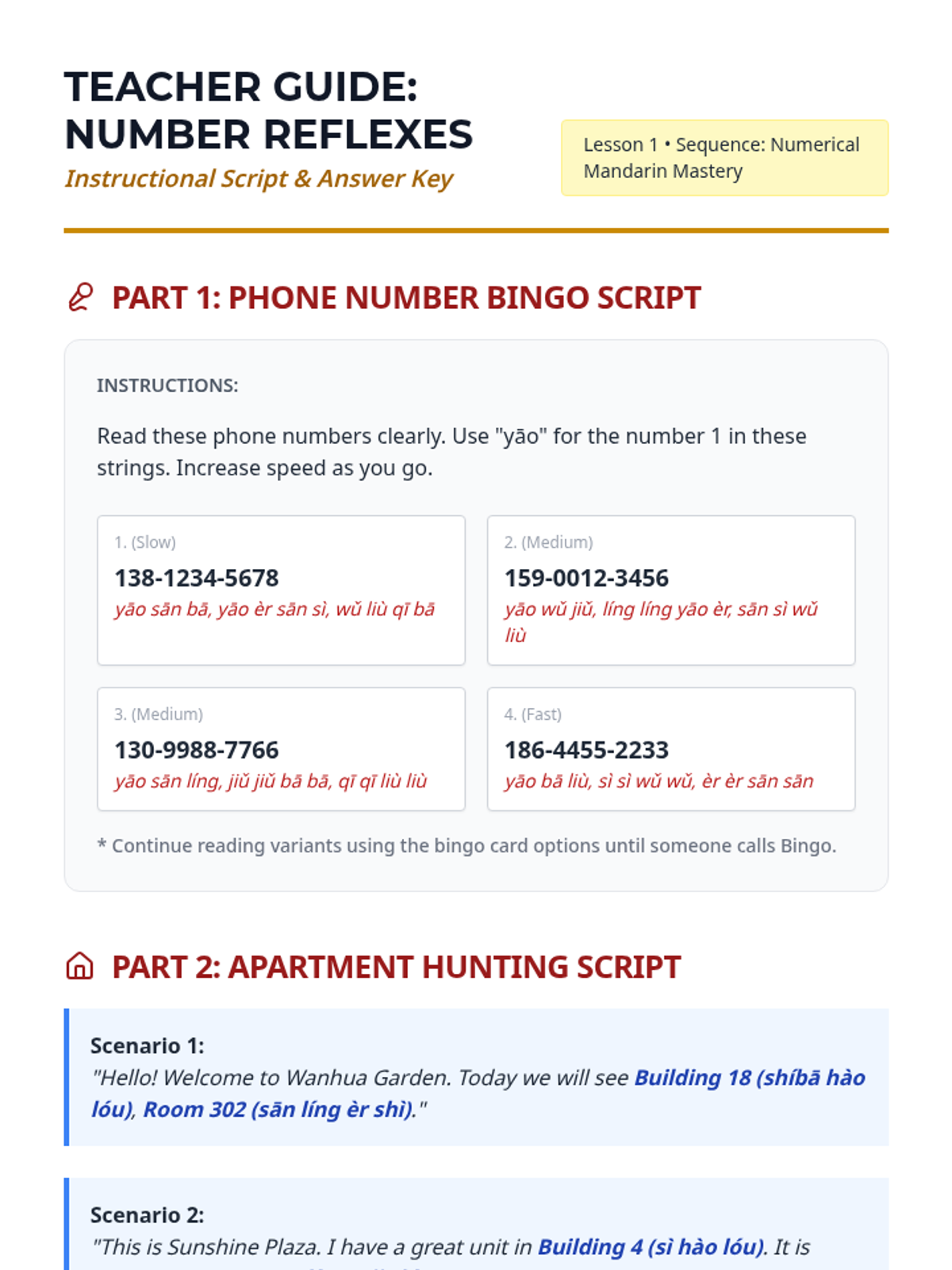
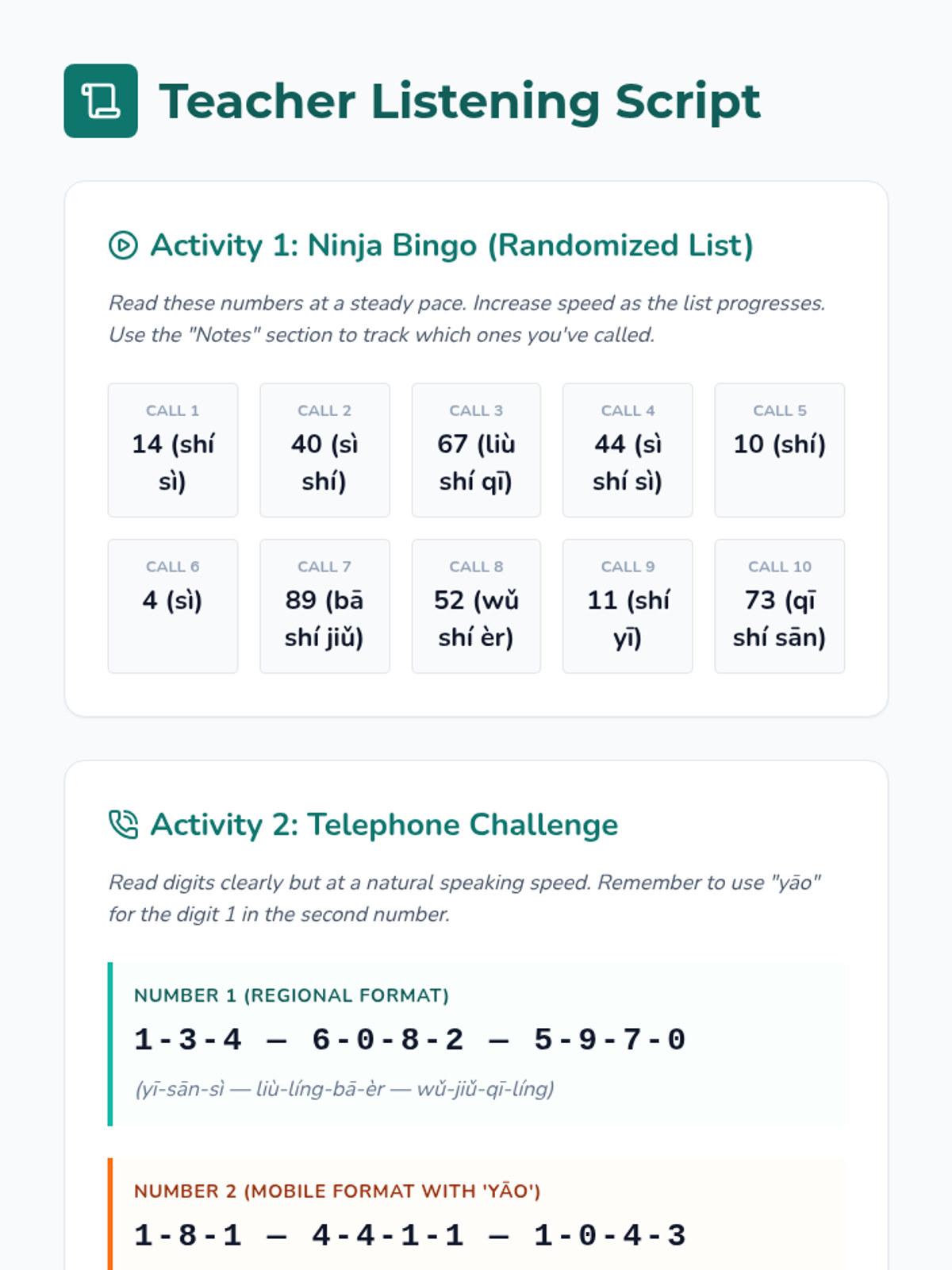
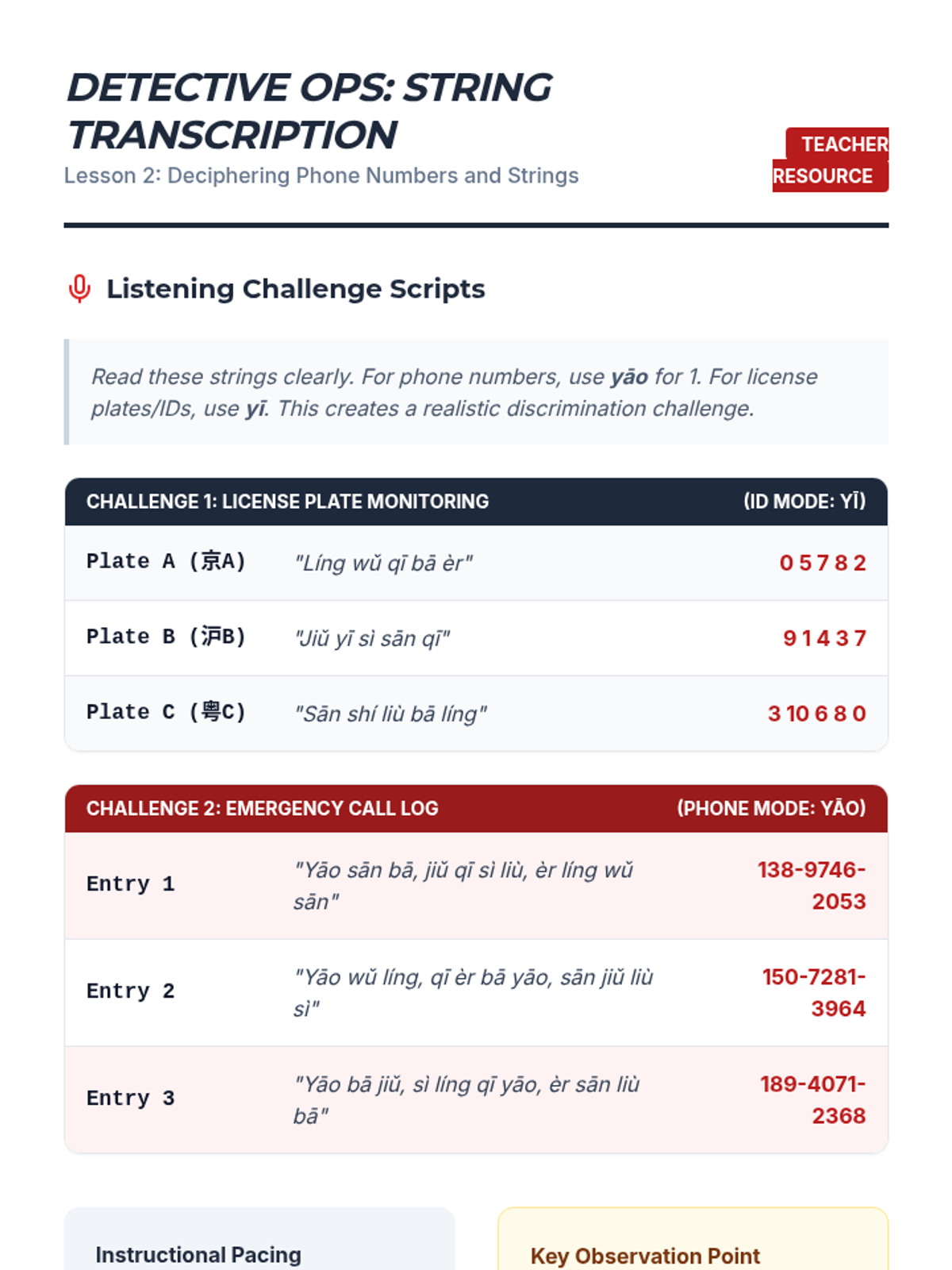
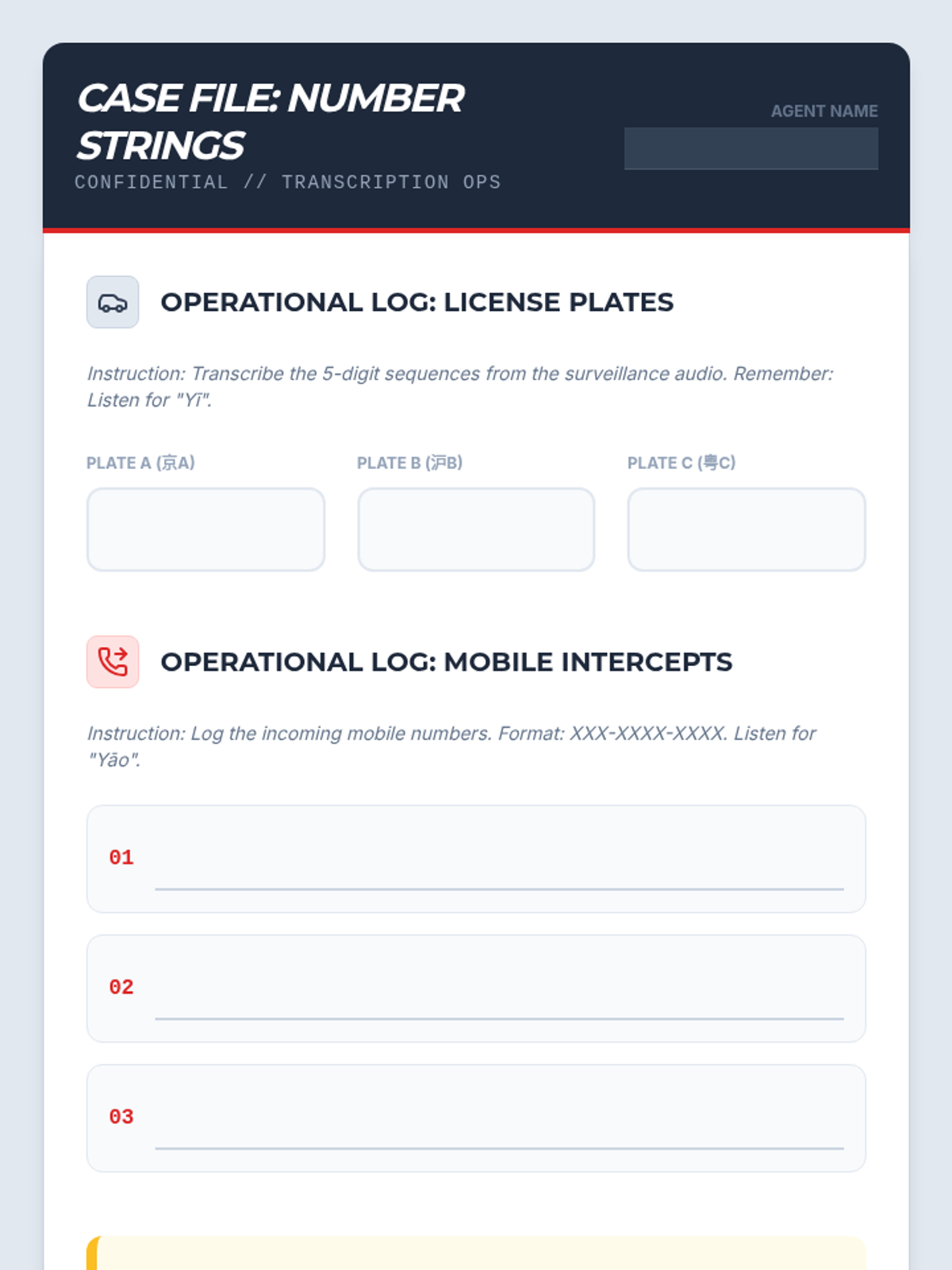
Practices the 'digit span' required for phone numbers and codes, introducing the specialized 'yao' pronunciation for the number one. Students role-play as emergency dispatchers to record numerical sequences accurately.
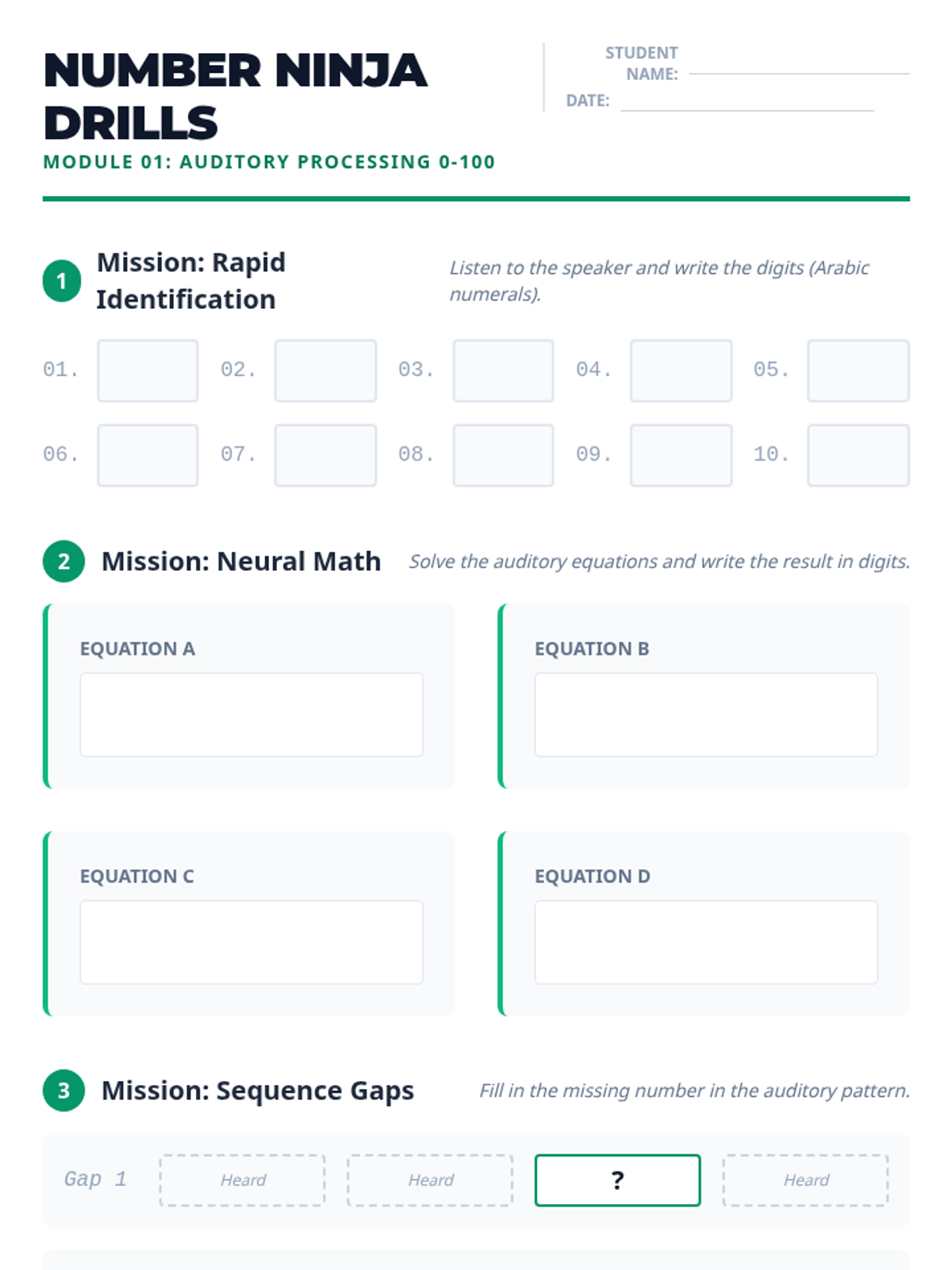
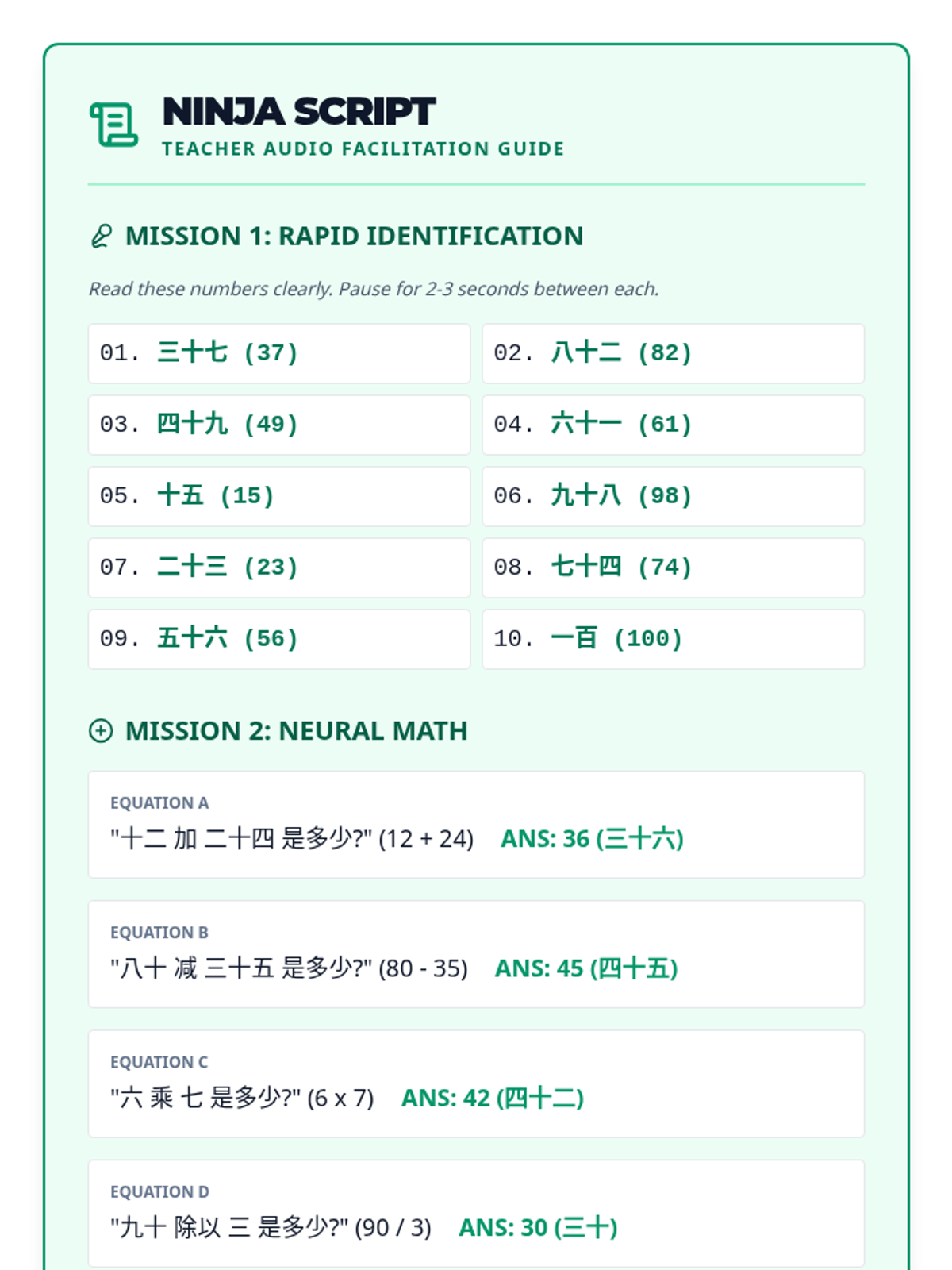
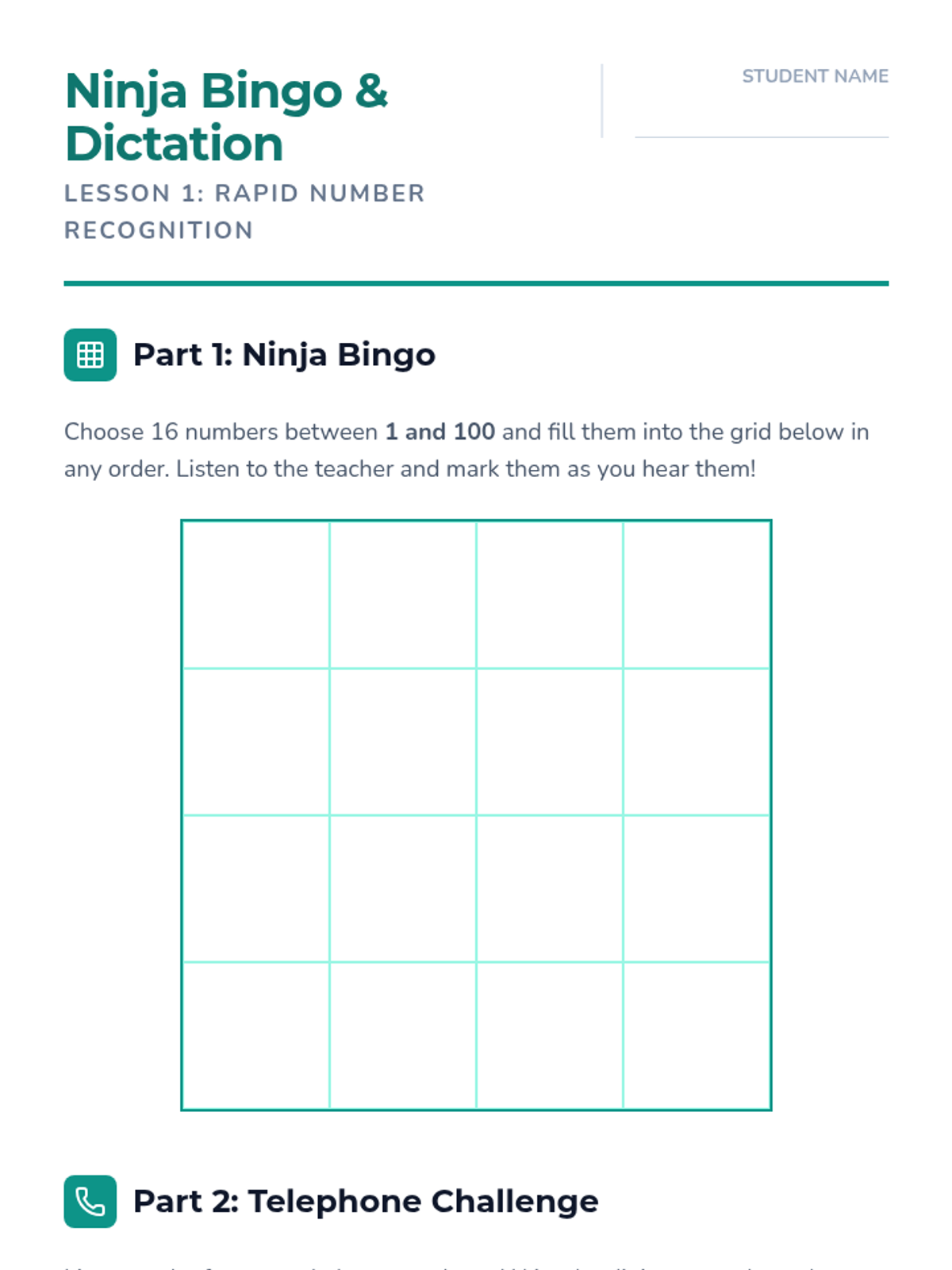
Focuses on the rapid recognition of numbers 0-100, highlighting the logical base-10 structure of Mandarin. Students engage in mental math drills and reflex-based games to build auditory fluency.
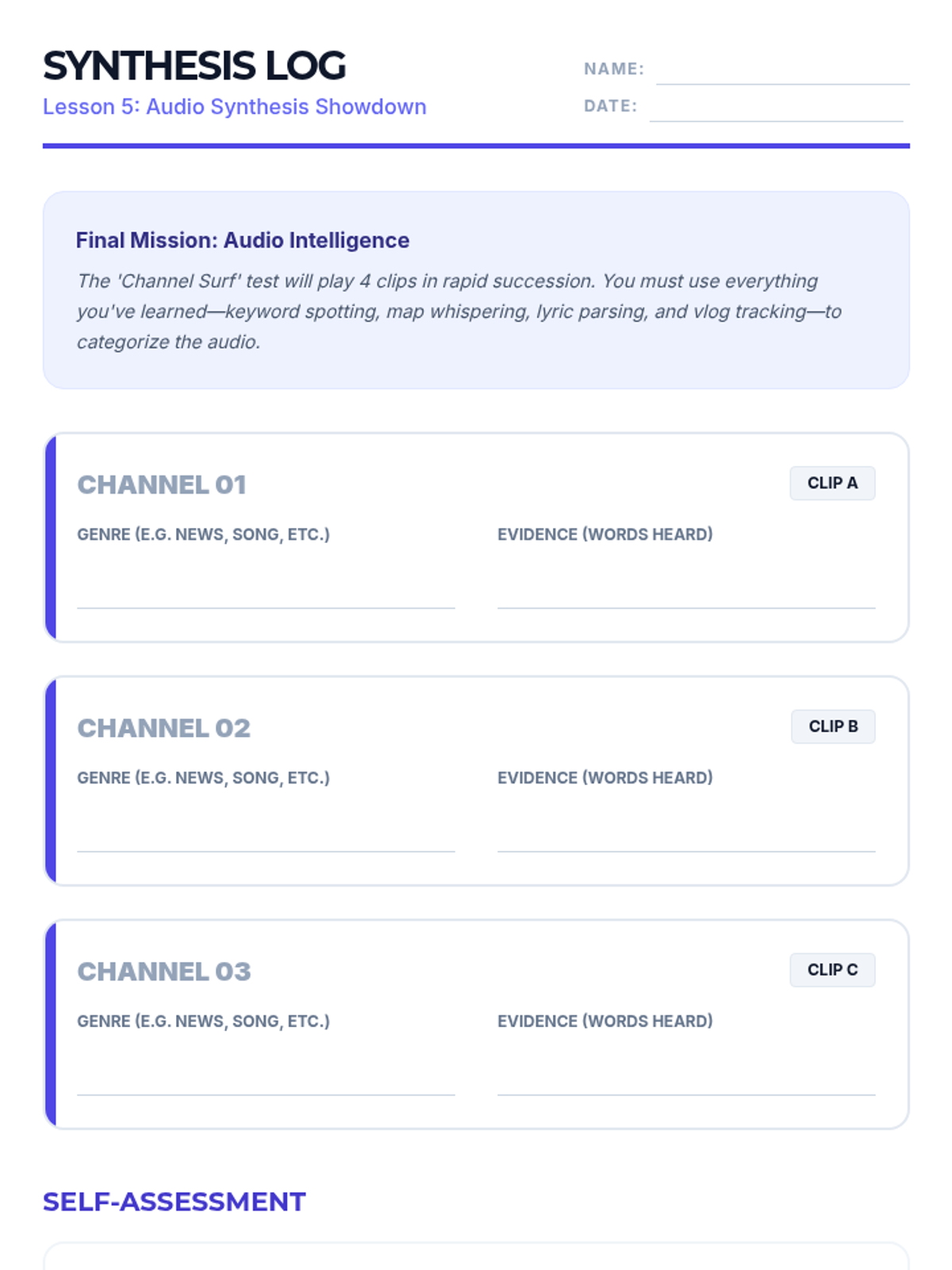
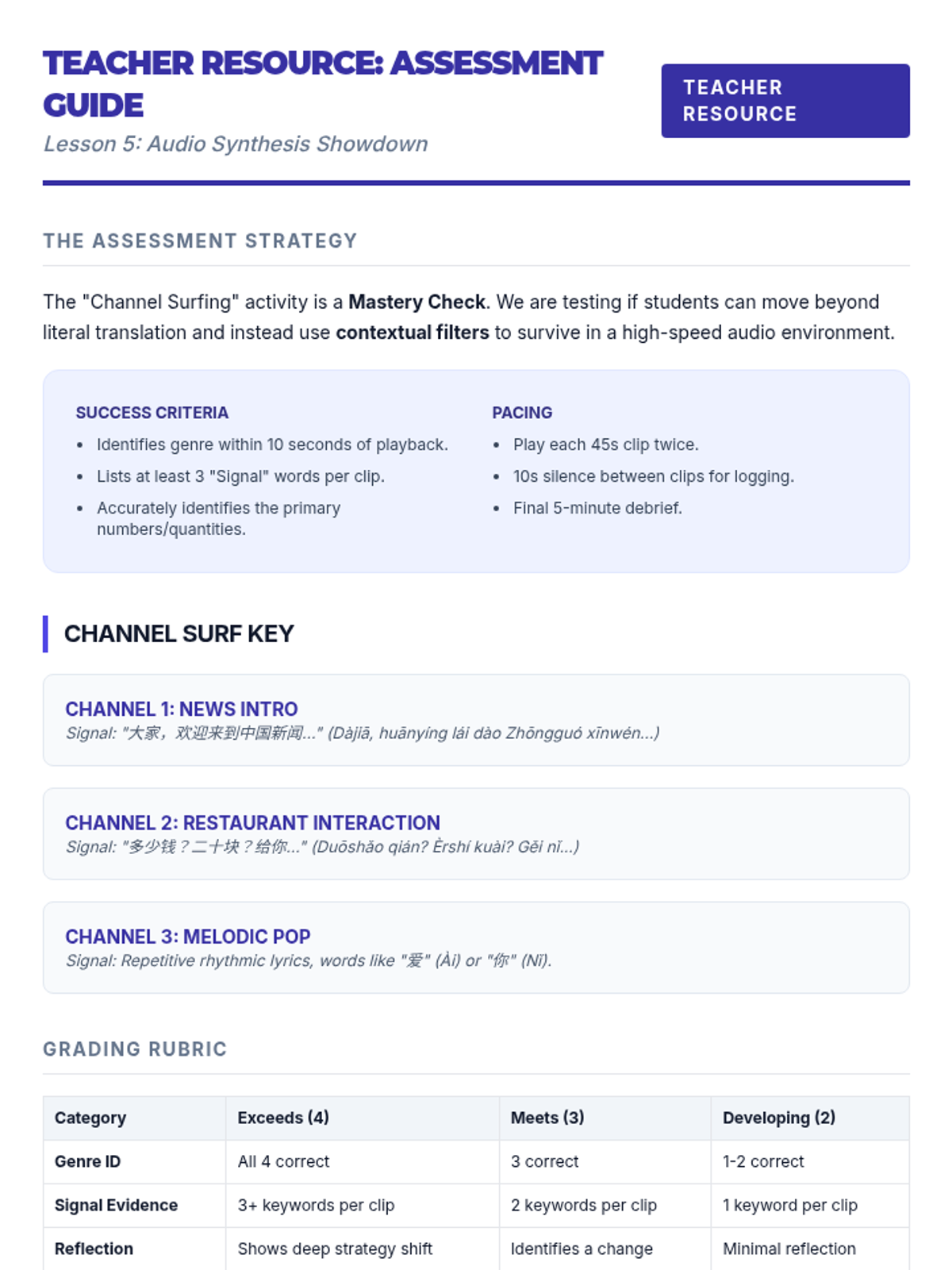
A culminating lesson where students synthesize their skills by identifying genres and main ideas across a variety of rapid-fire audio sources.
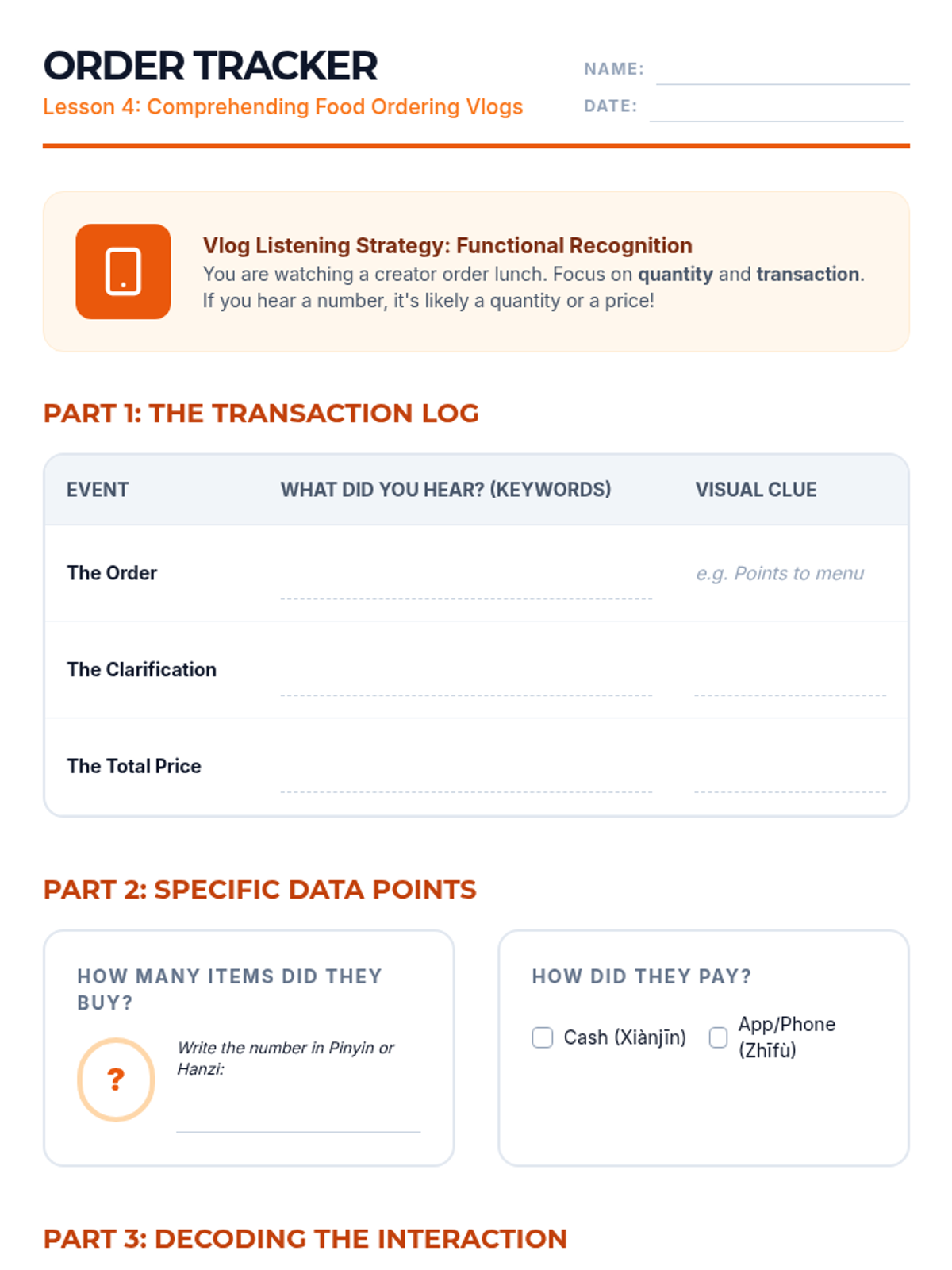
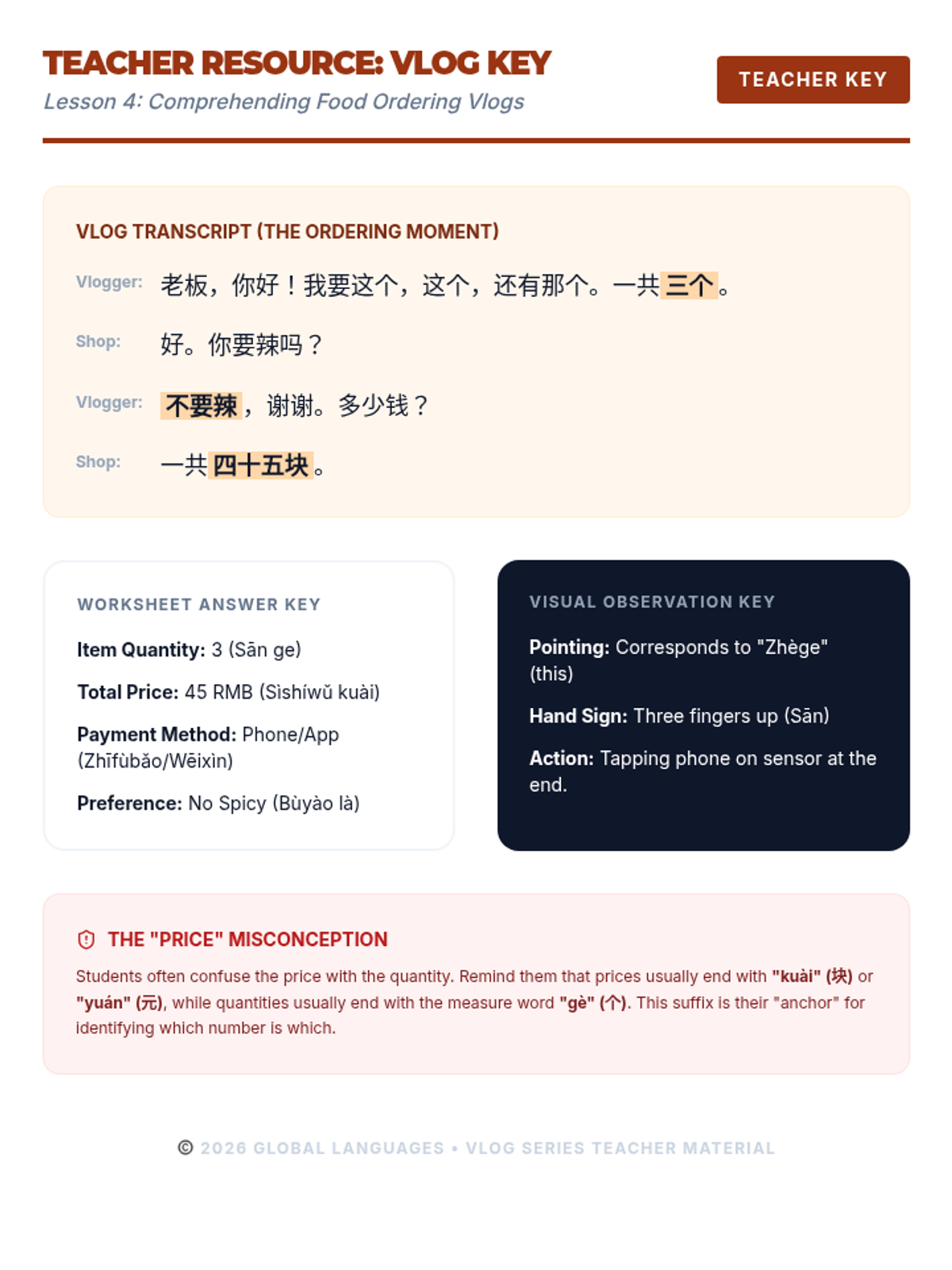
Students analyze food vlogs to understand the structure of restaurant interactions, focusing on ordering vocabulary and cultural transaction cues.
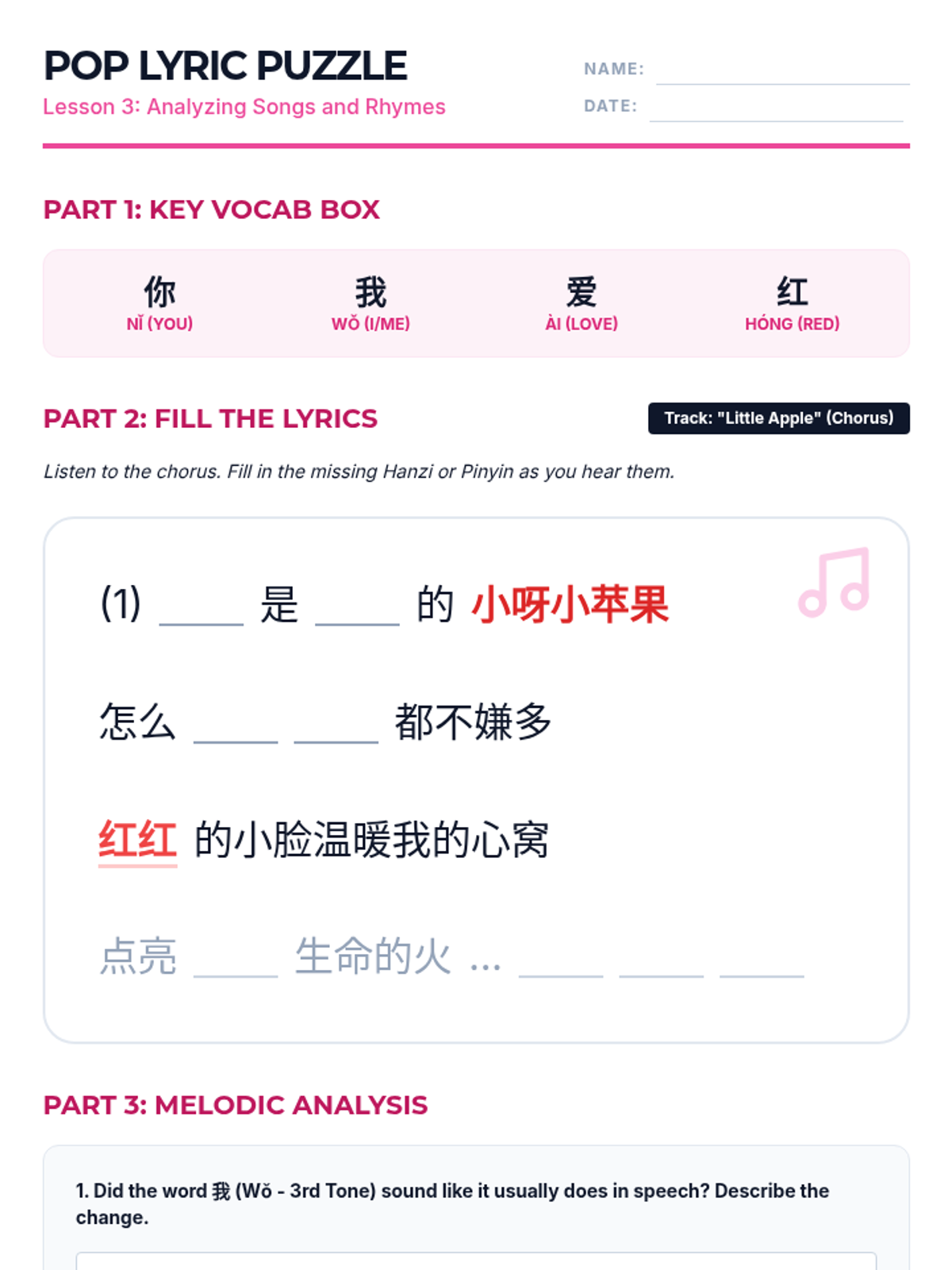
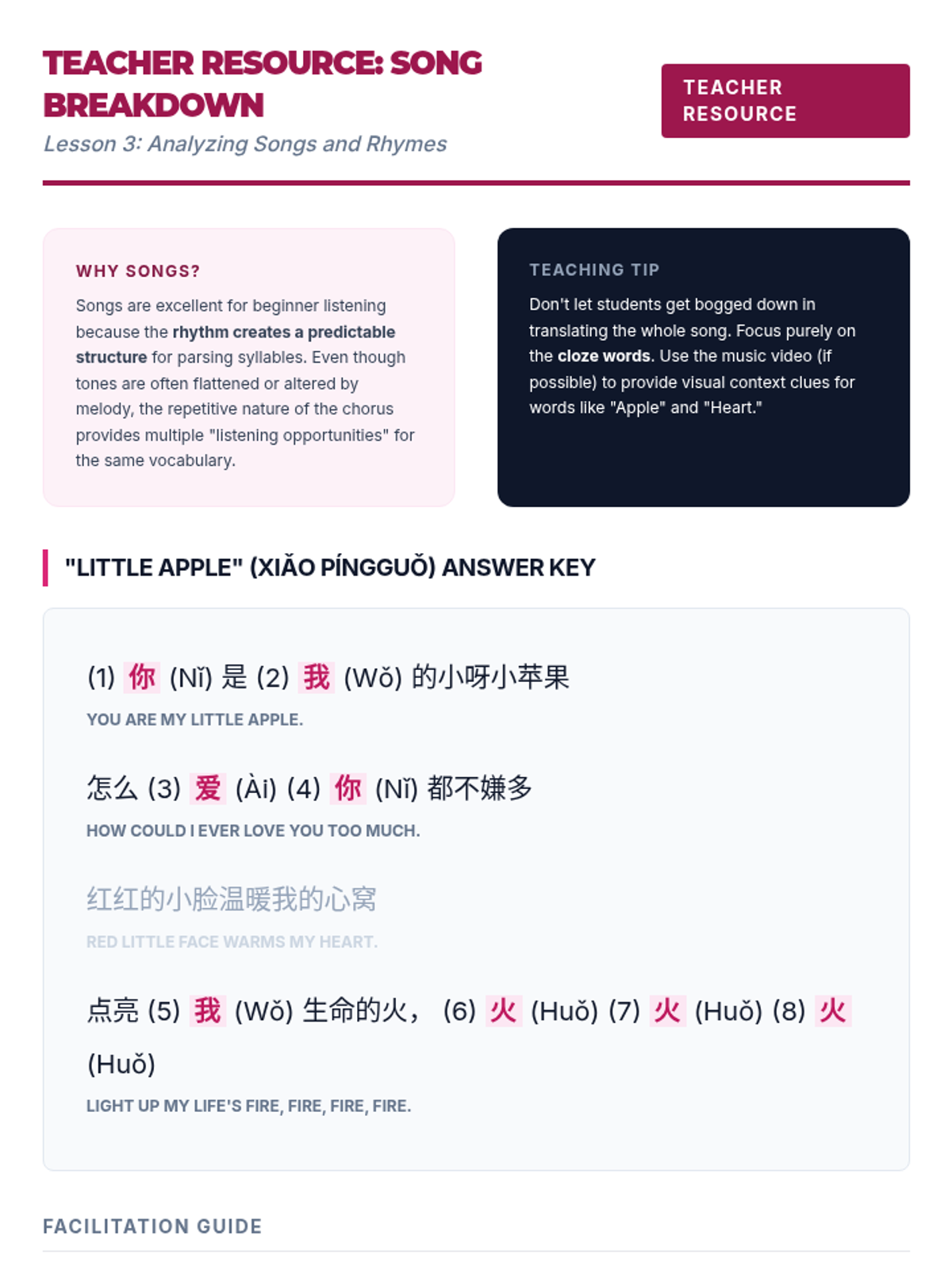
Using simple C-Pop and rhymes to practice tone flow and sentence parsing, students will analyze how melody interacts with Mandarin's tonal nature.
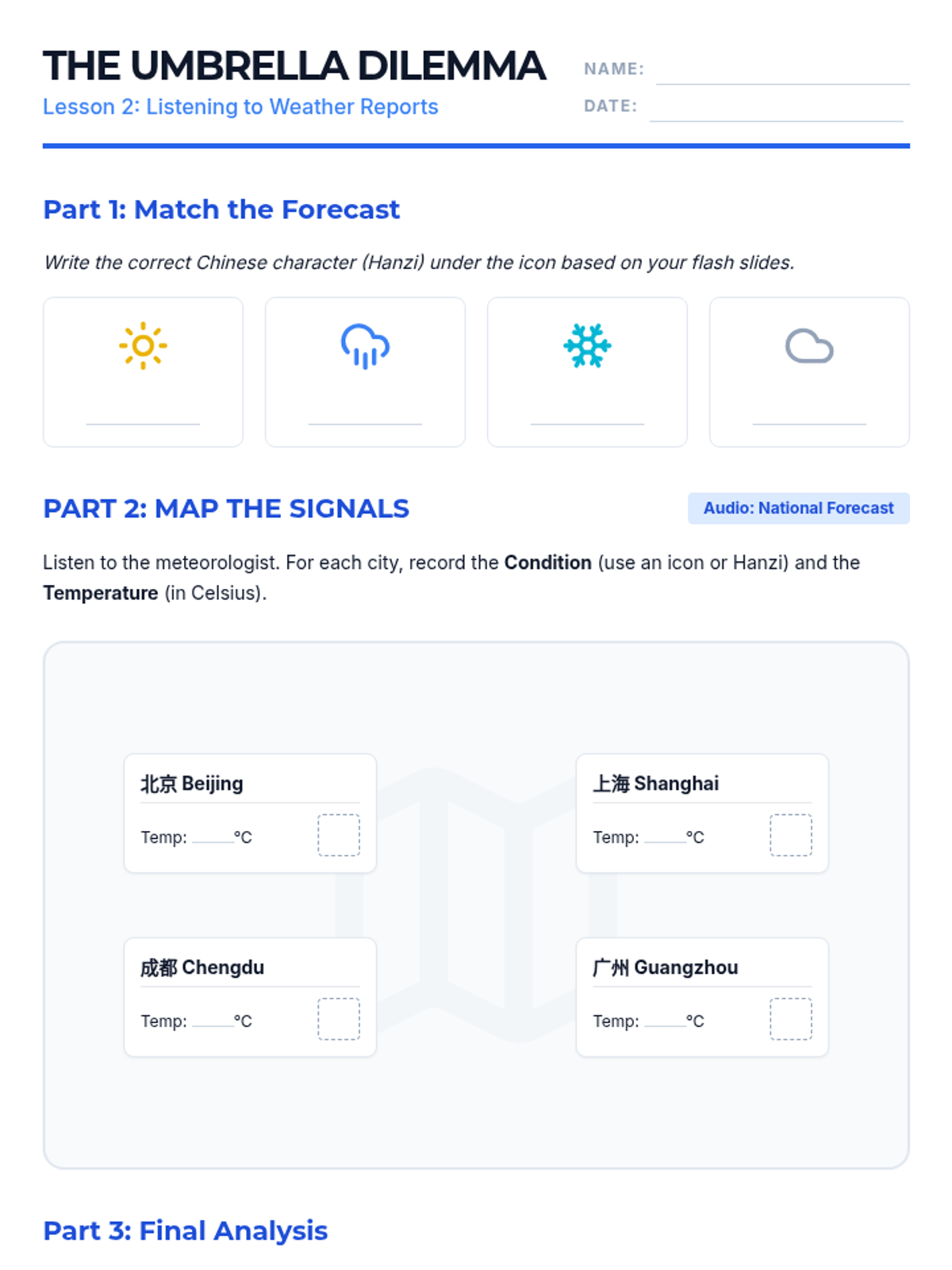
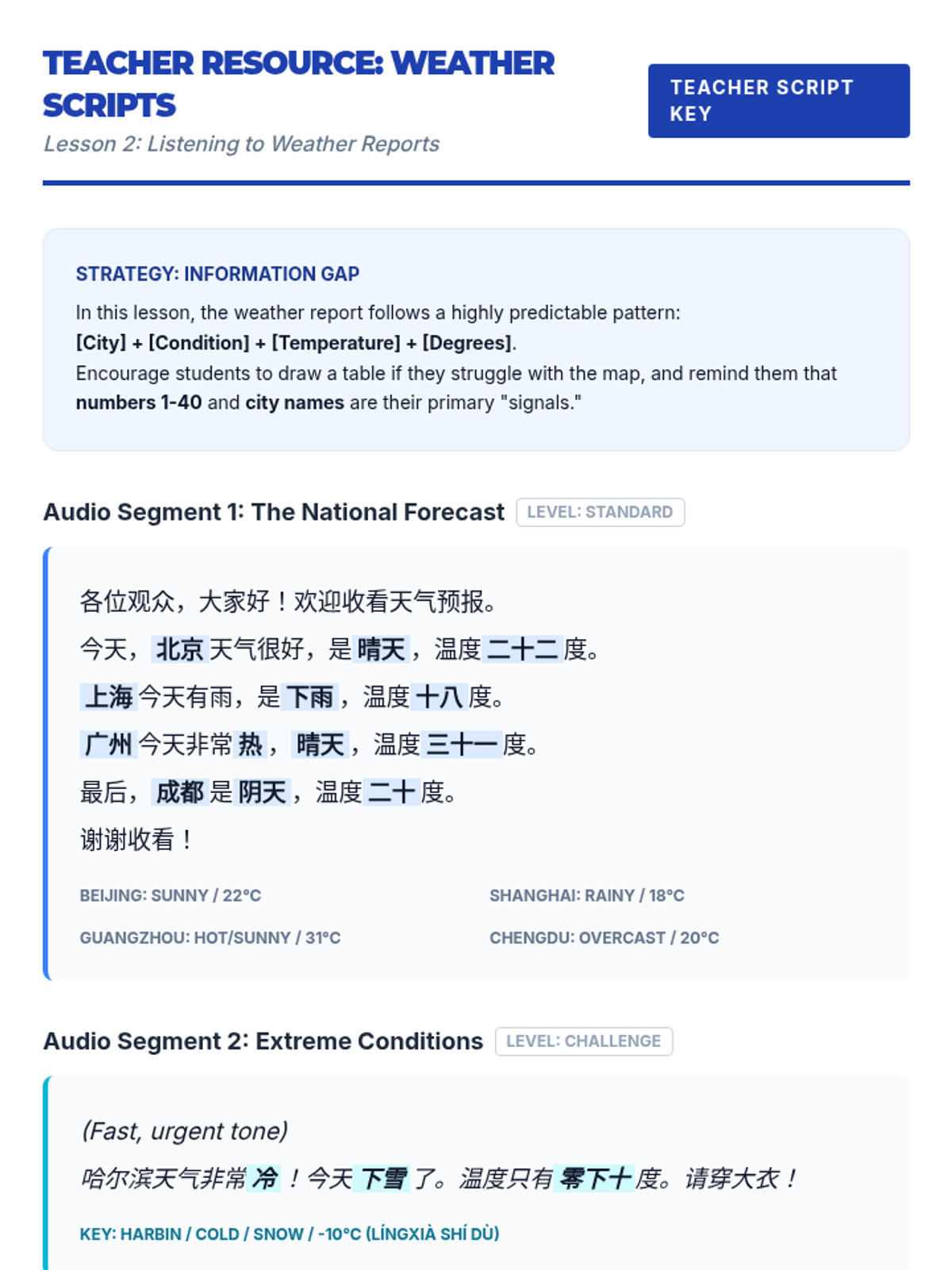
An exploration of Chinese weather reports where students extract specific data like temperatures and city names to populate a visual map.
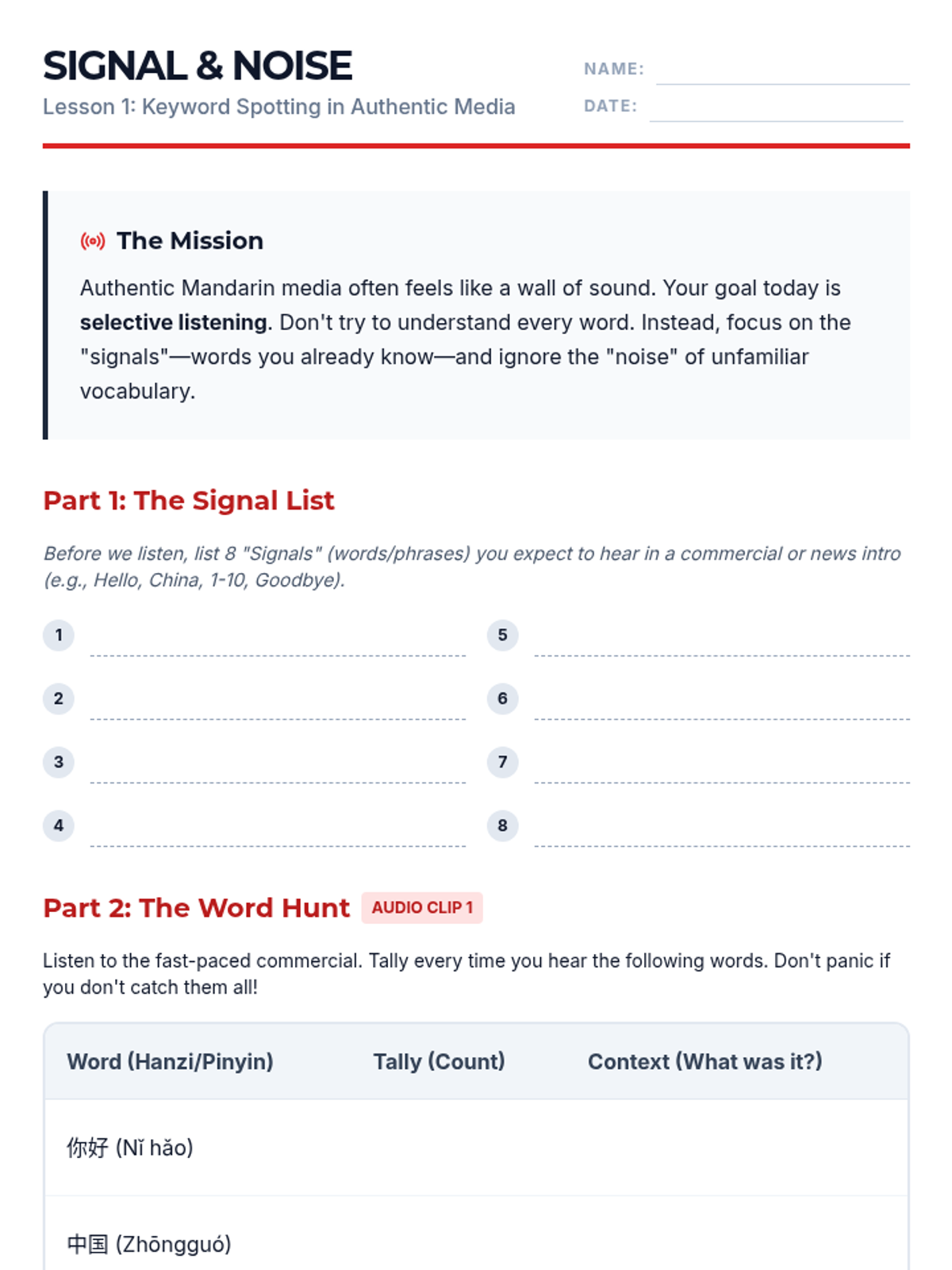
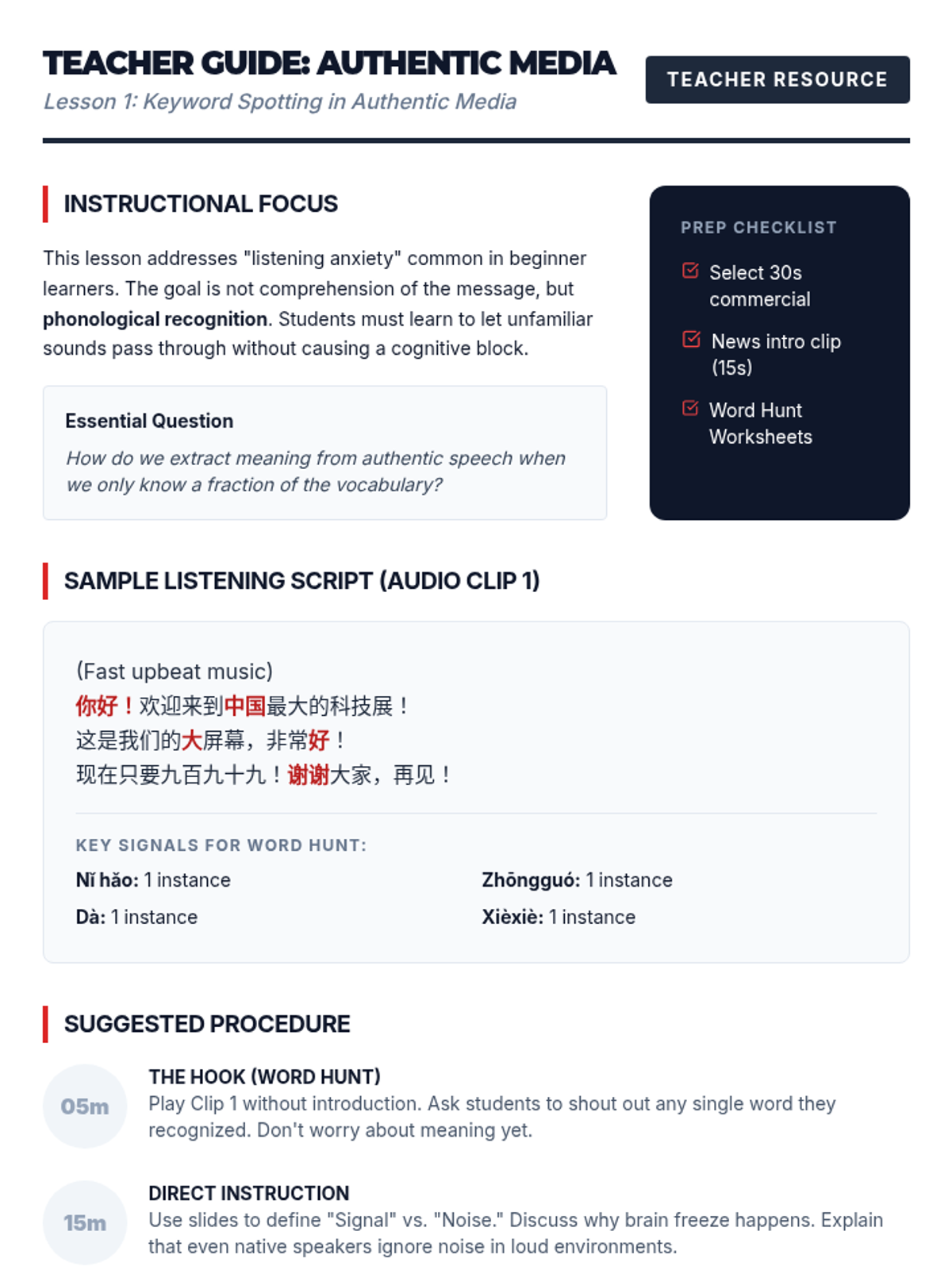
Students learn to identify high-frequency keywords and greetings within fast-paced native media clips, focusing on selective listening and ignoring unknown vocabulary.
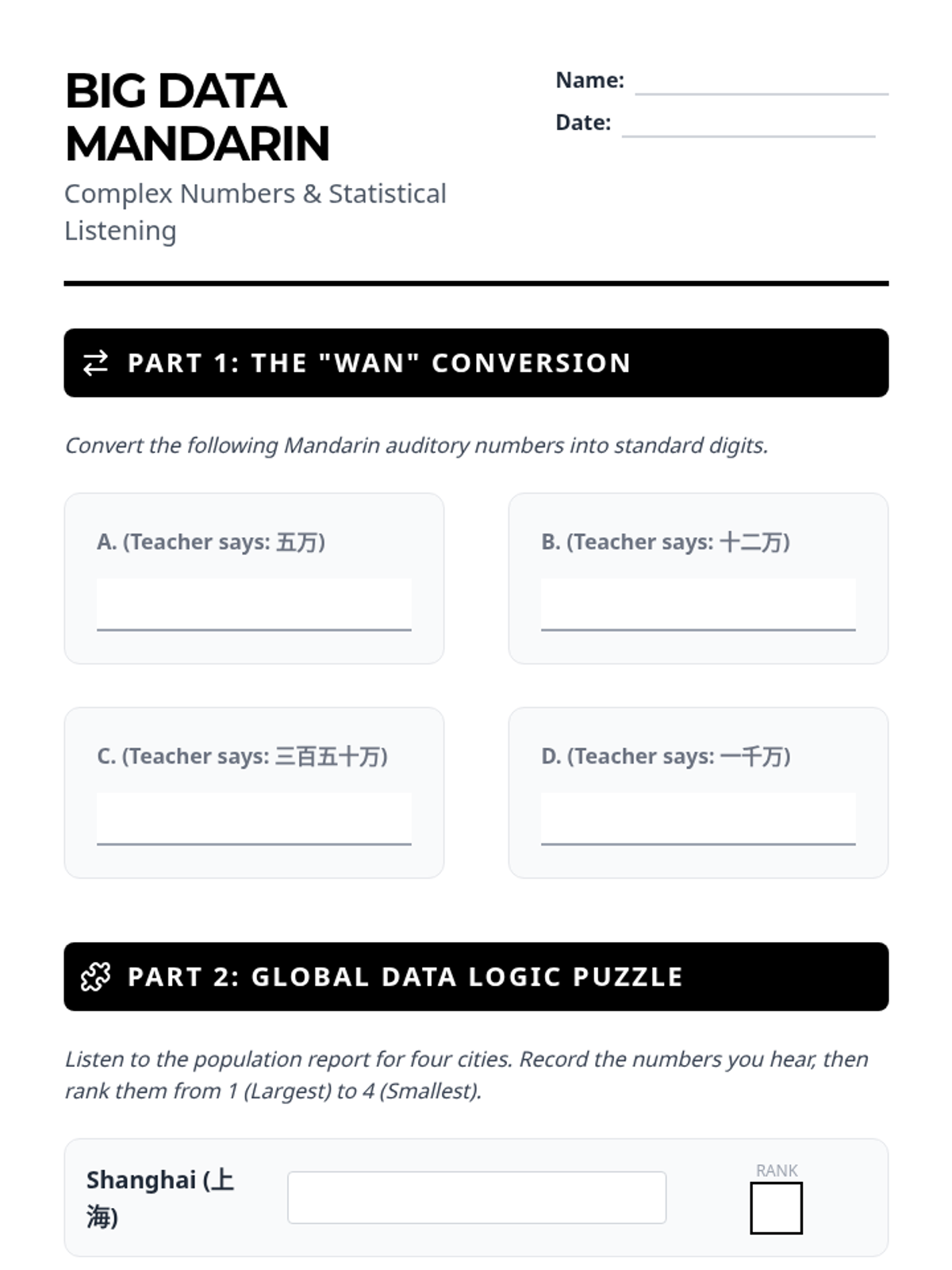
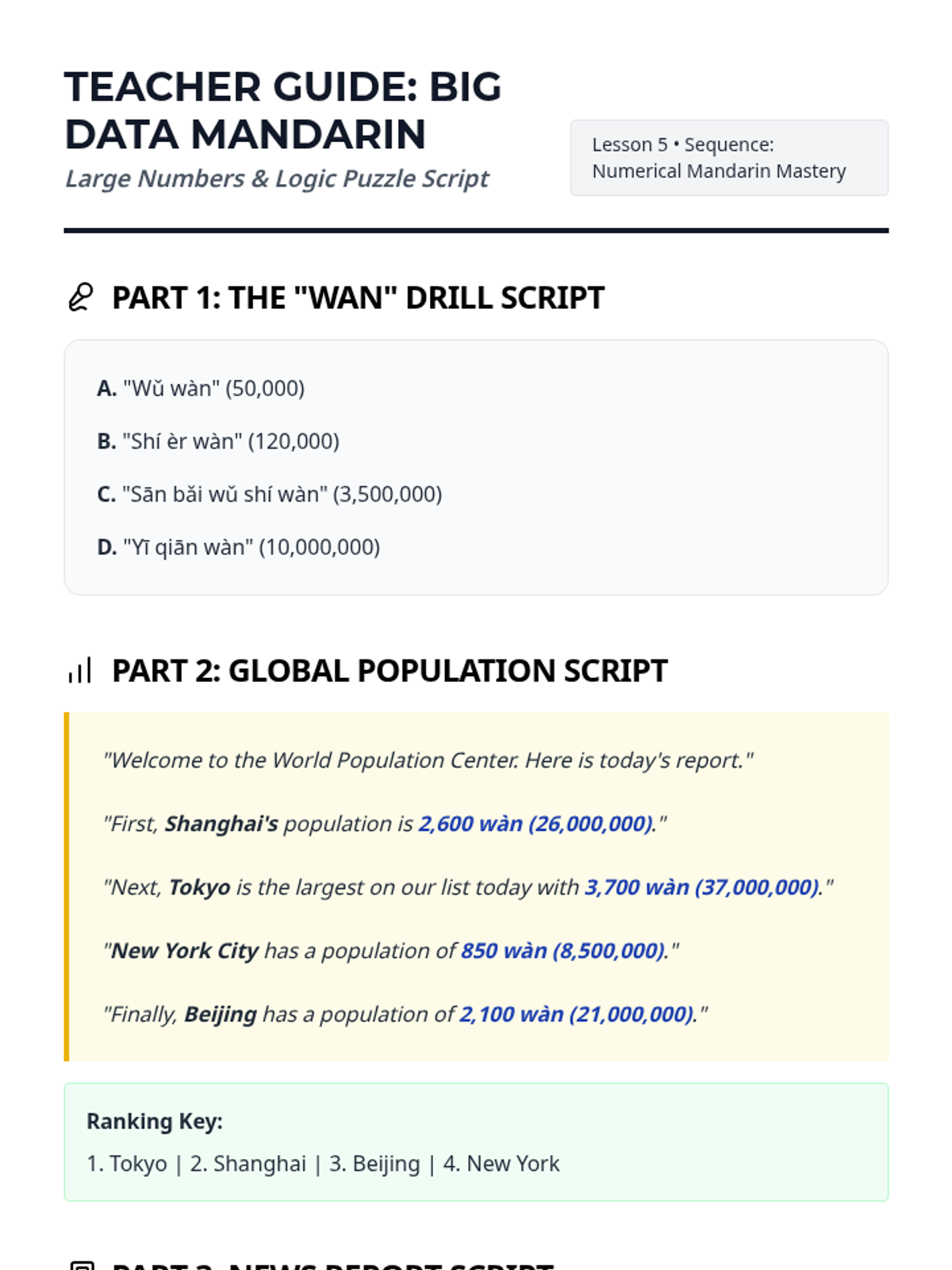
Students tackle the 'Wan' (ten-thousand) unit and larger statistical data relevant to population and economics. The lesson concludes with a listening logic puzzle based on global statistics.
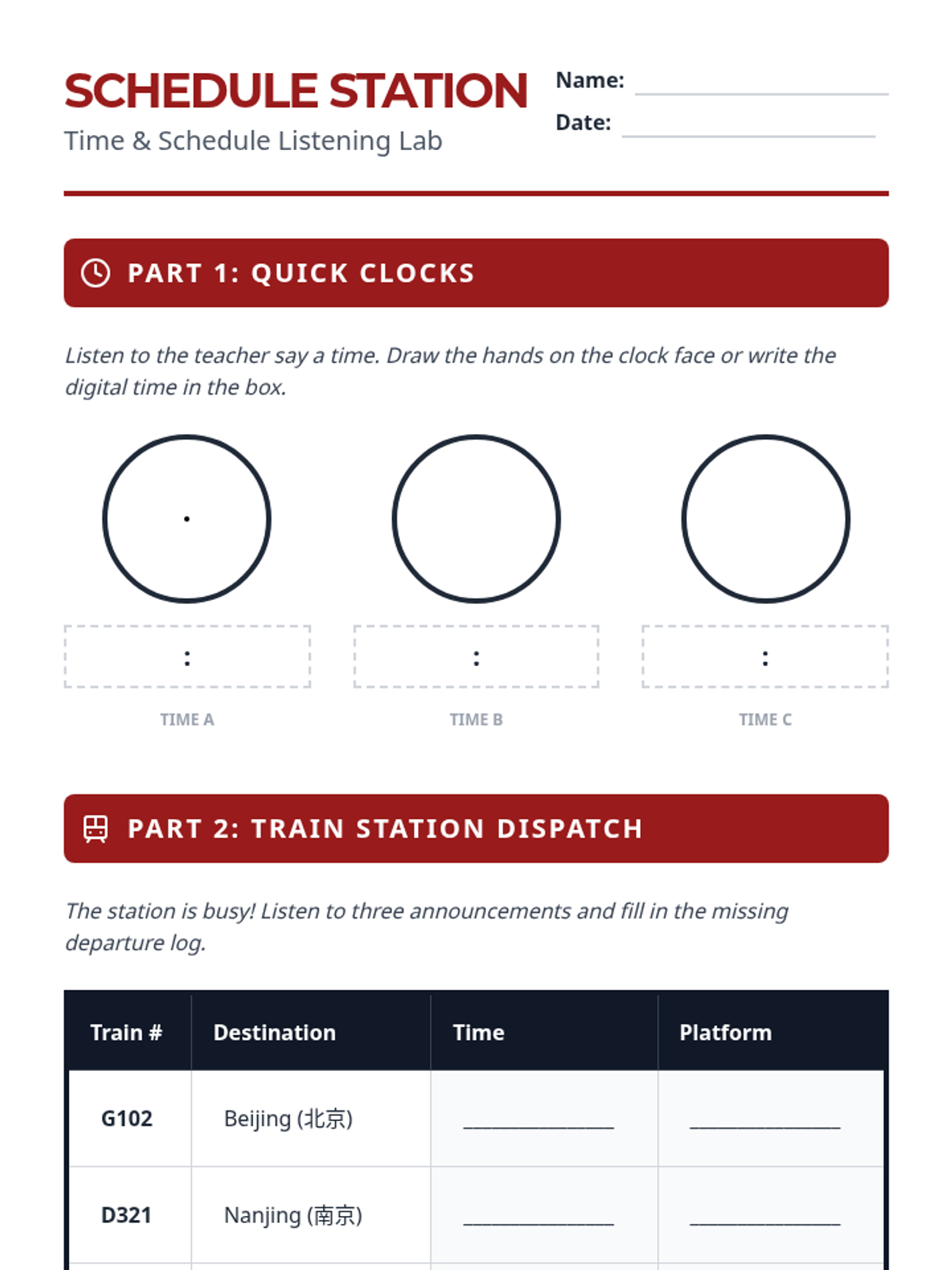
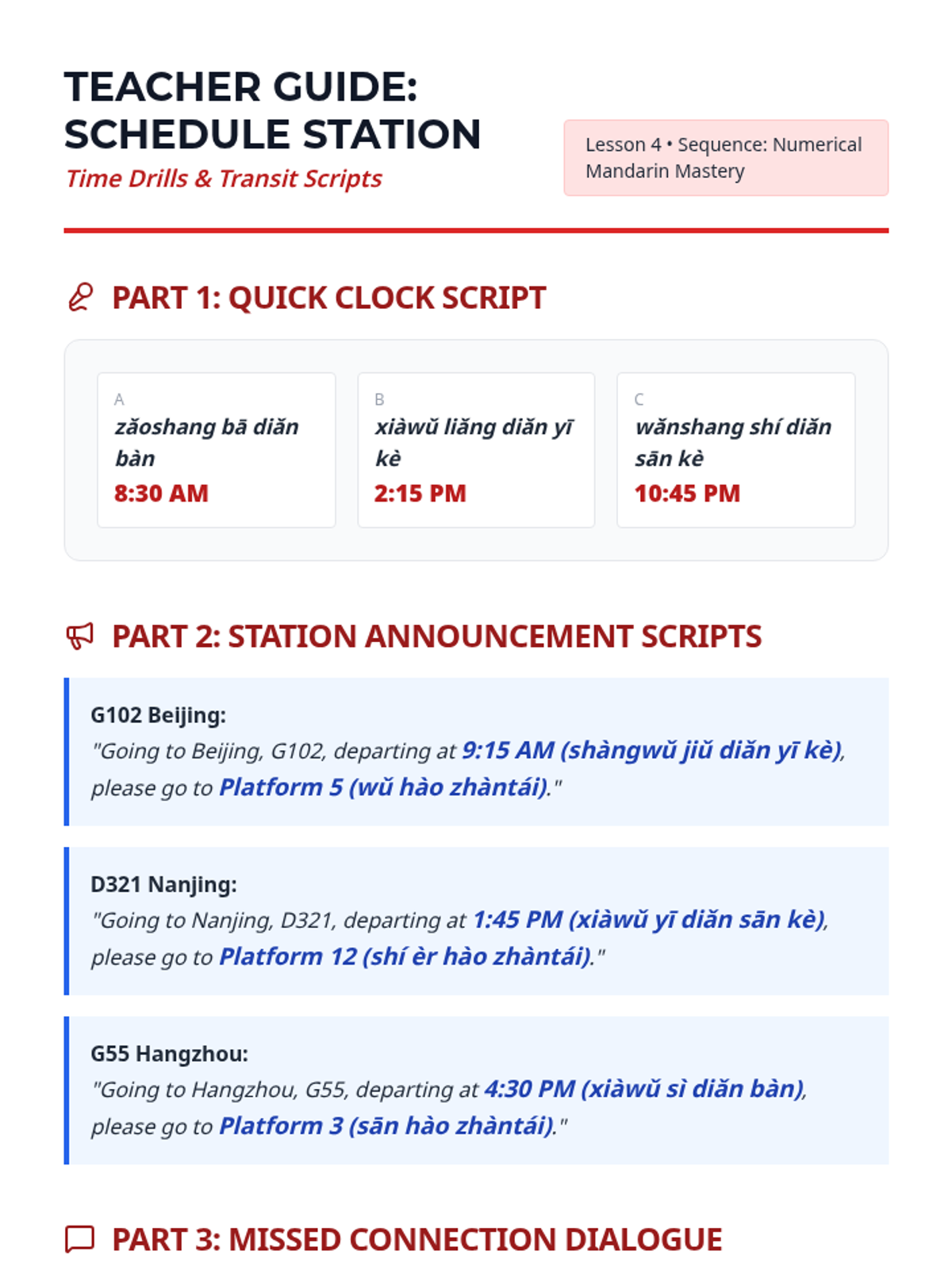
Students master time-telling conventions and extract specific scheduling details from train station announcements and daily logs. The focus is on precision and identifying key information under pressure.
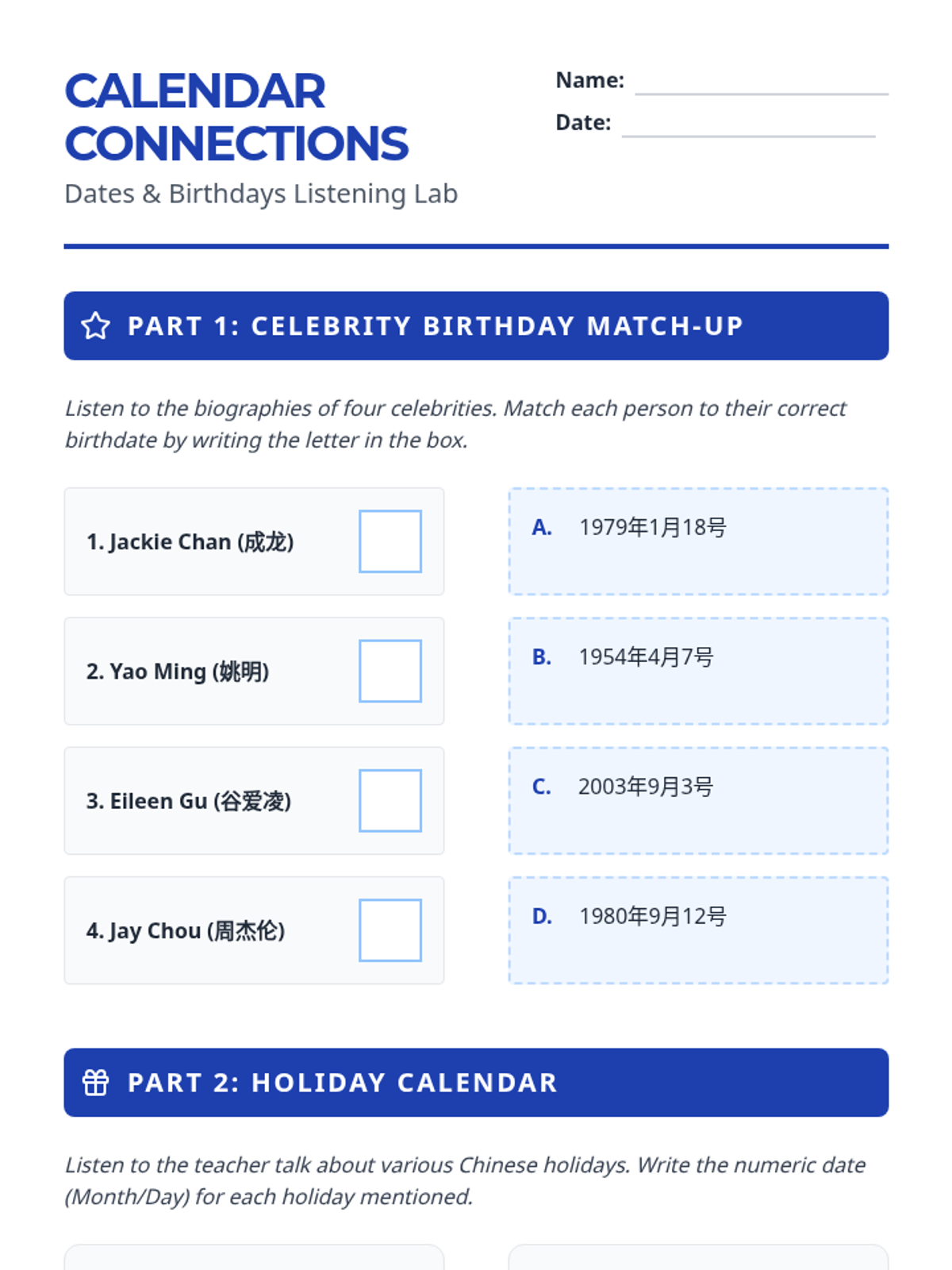
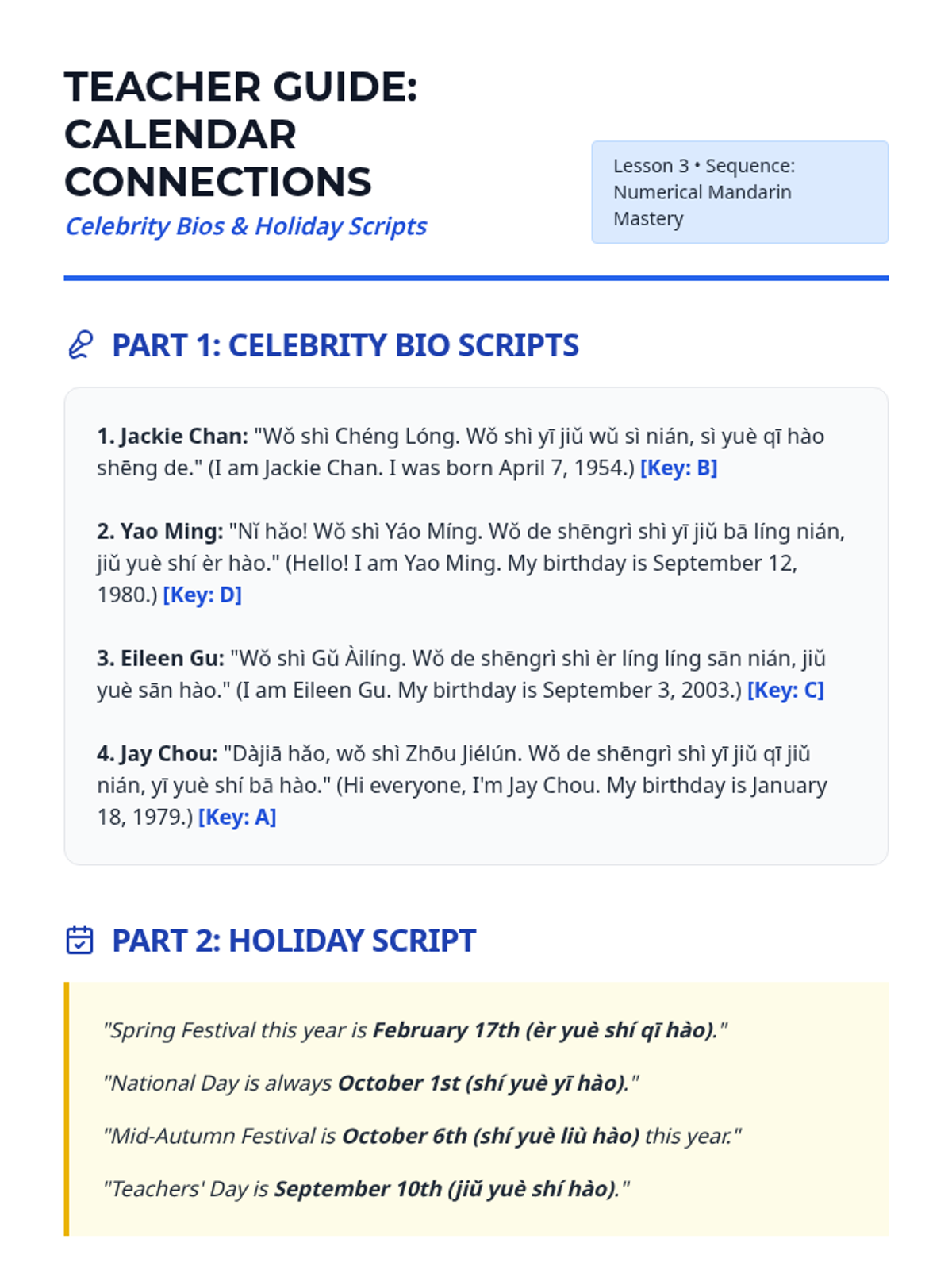
This lesson covers the Year-Month-Day structure and specific temporal vocabulary for birthdays and holidays. Students practice extracting dates from biographical descriptions and social invitations.
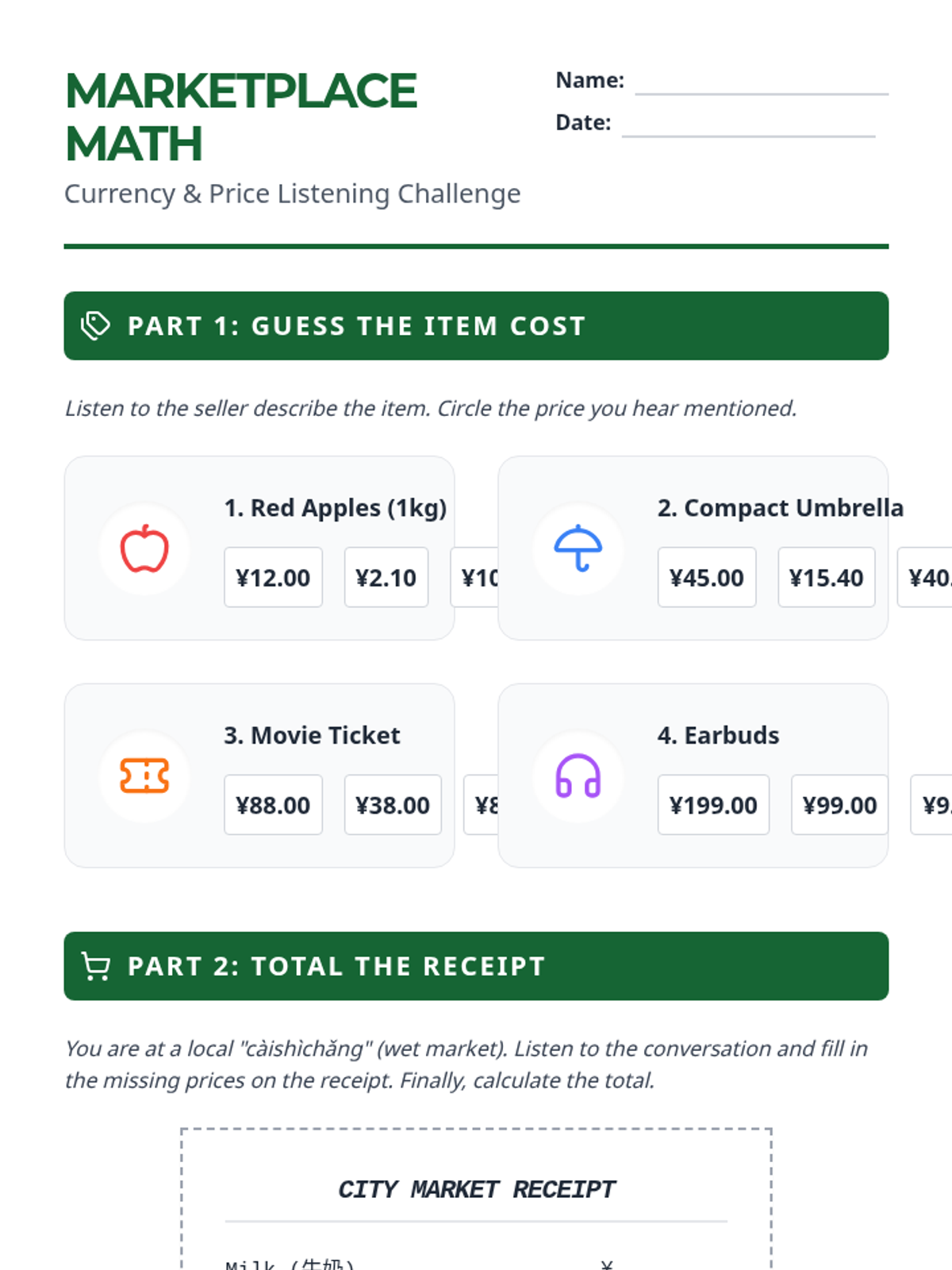
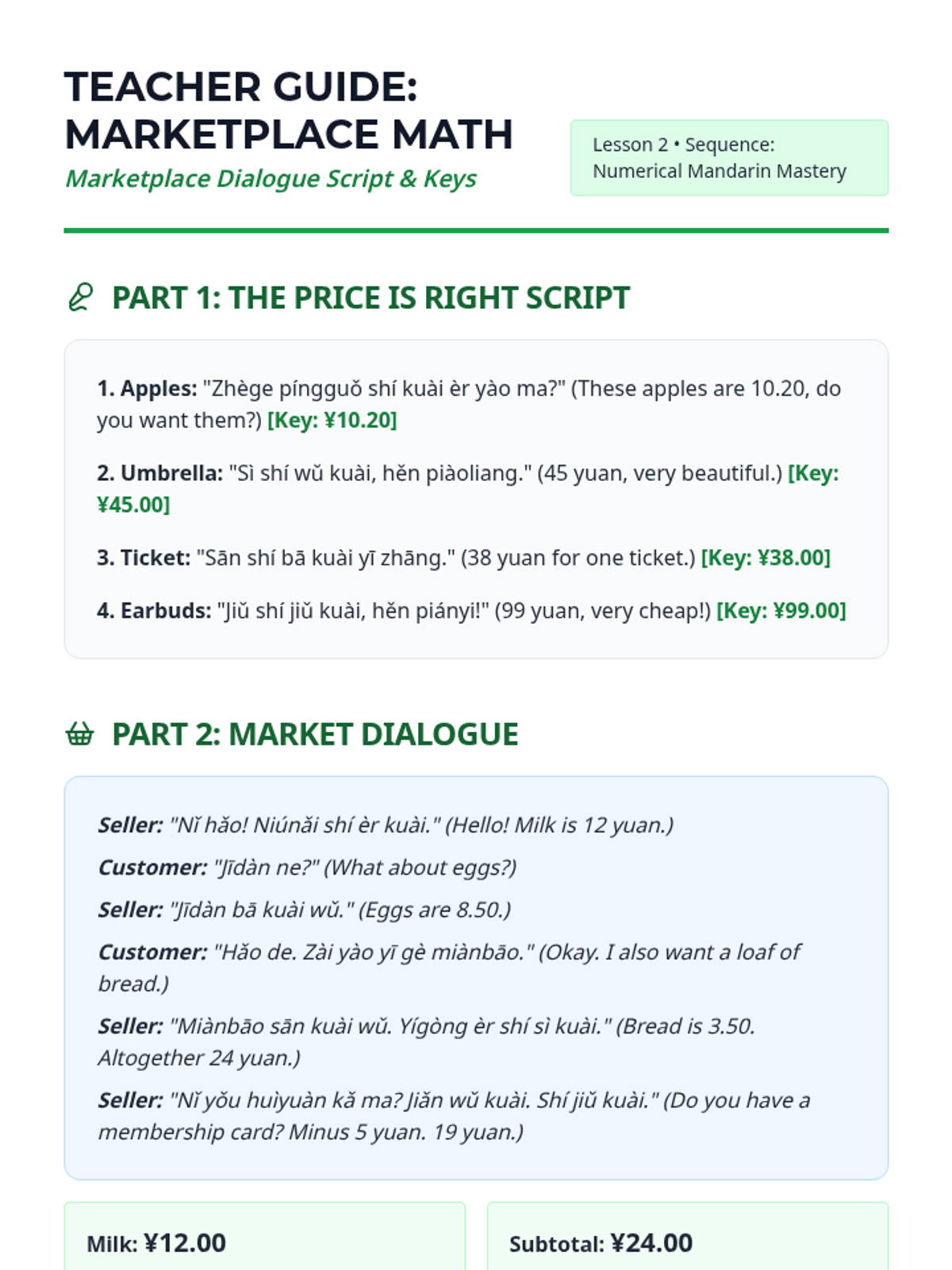
Students differentiate between formal and colloquial currency terms (yuan vs. kuai) while practicing price recognition in auditory marketplace scenarios. Activities include calculating totals and identifying discounts.
Students focus on rapid recognition of numbers 0-100 and digit strings in contexts like phone numbers and addresses. The lesson uses high-speed drills to eliminate mental translation lag.
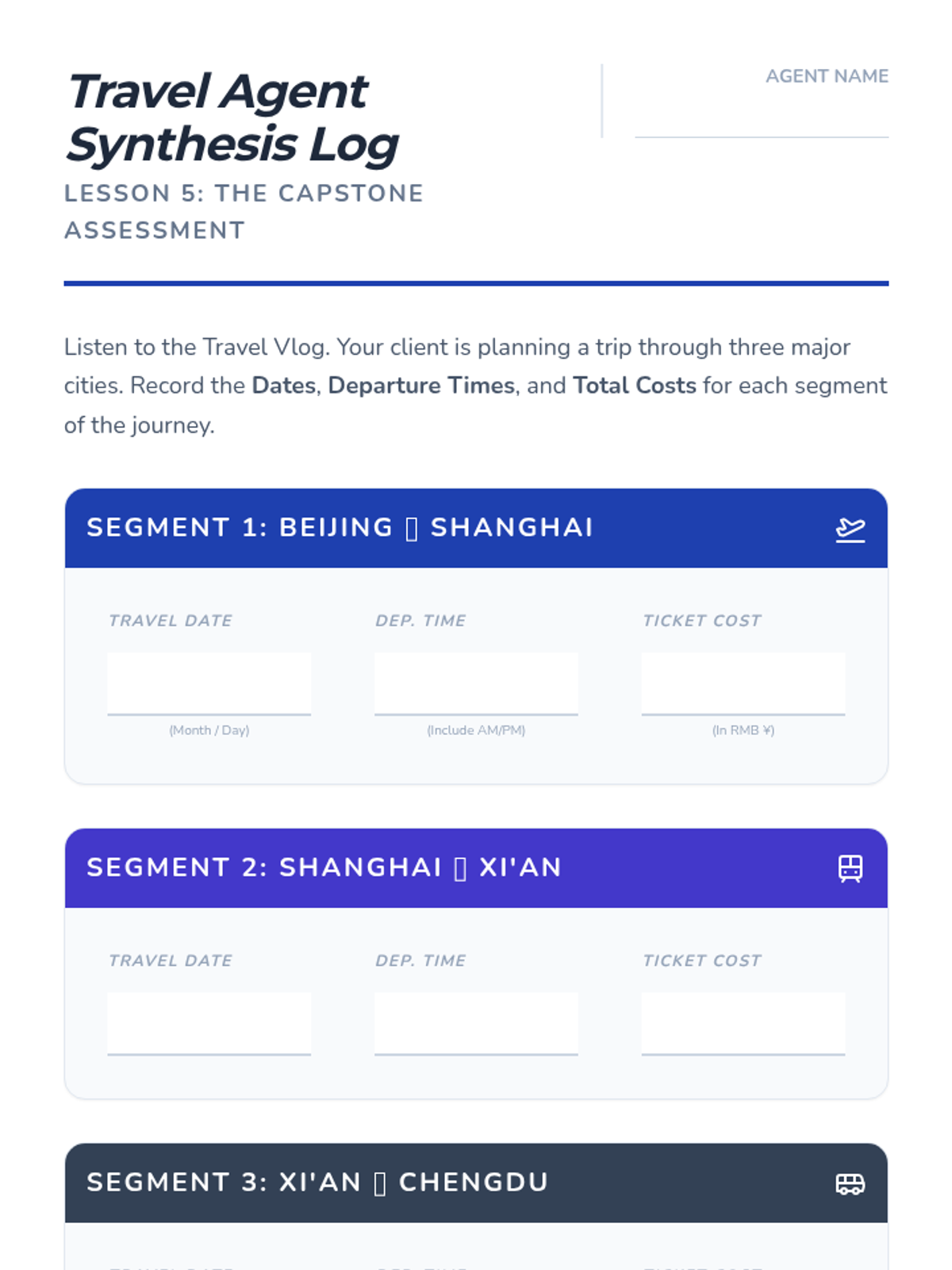
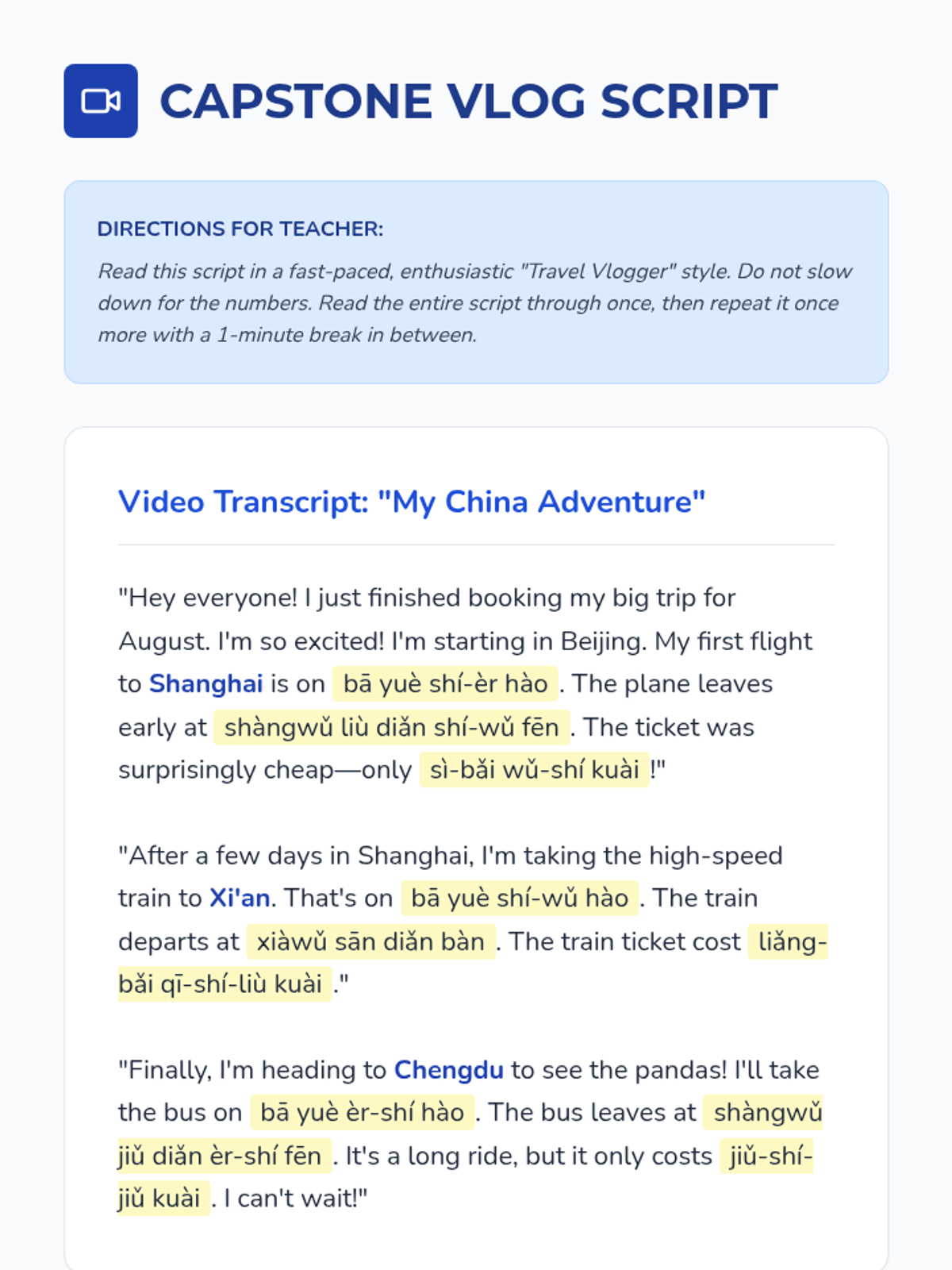
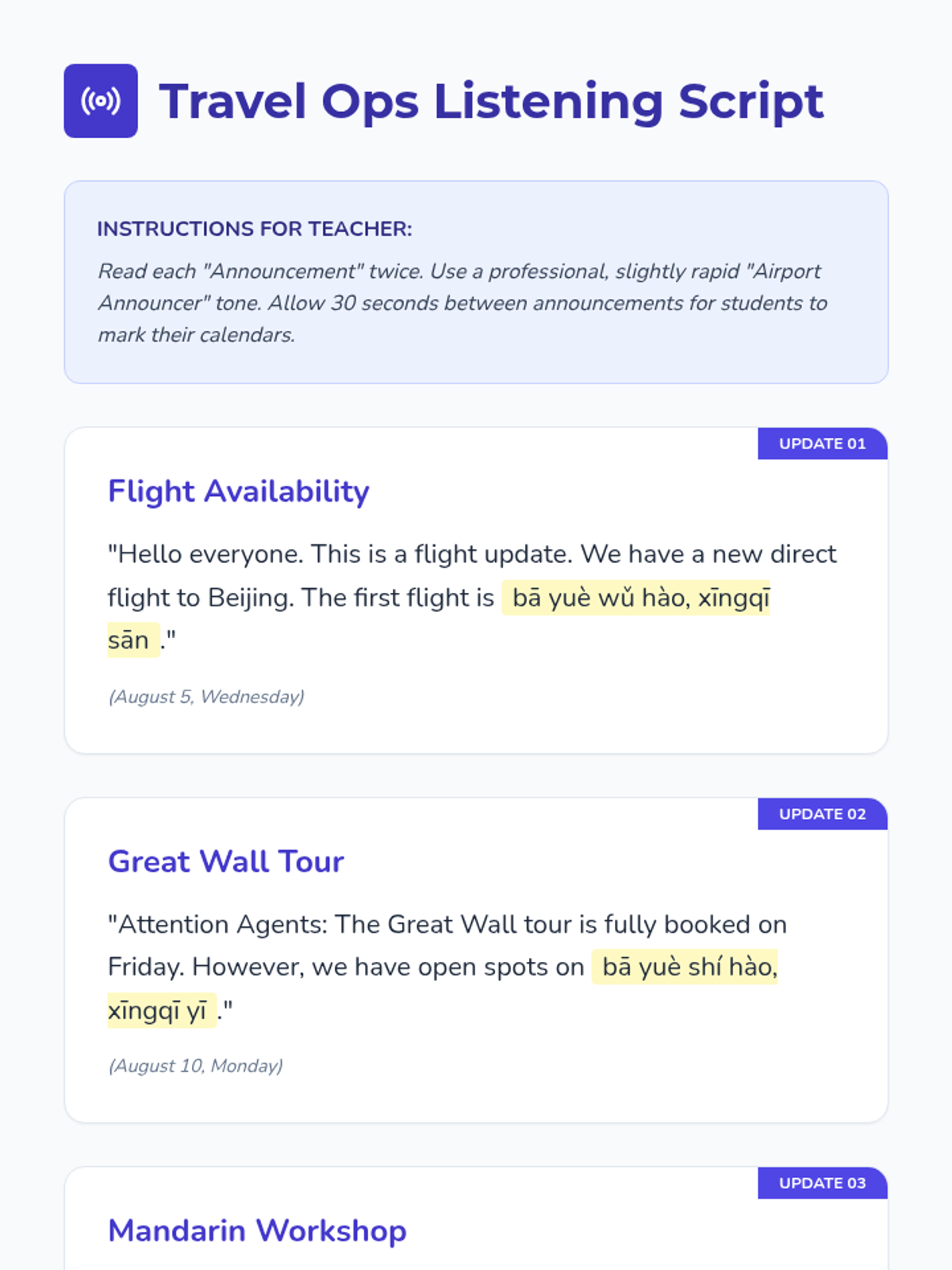
The capstone lesson where students synthesize dates, times, and prices from a complex travel-themed audio source.
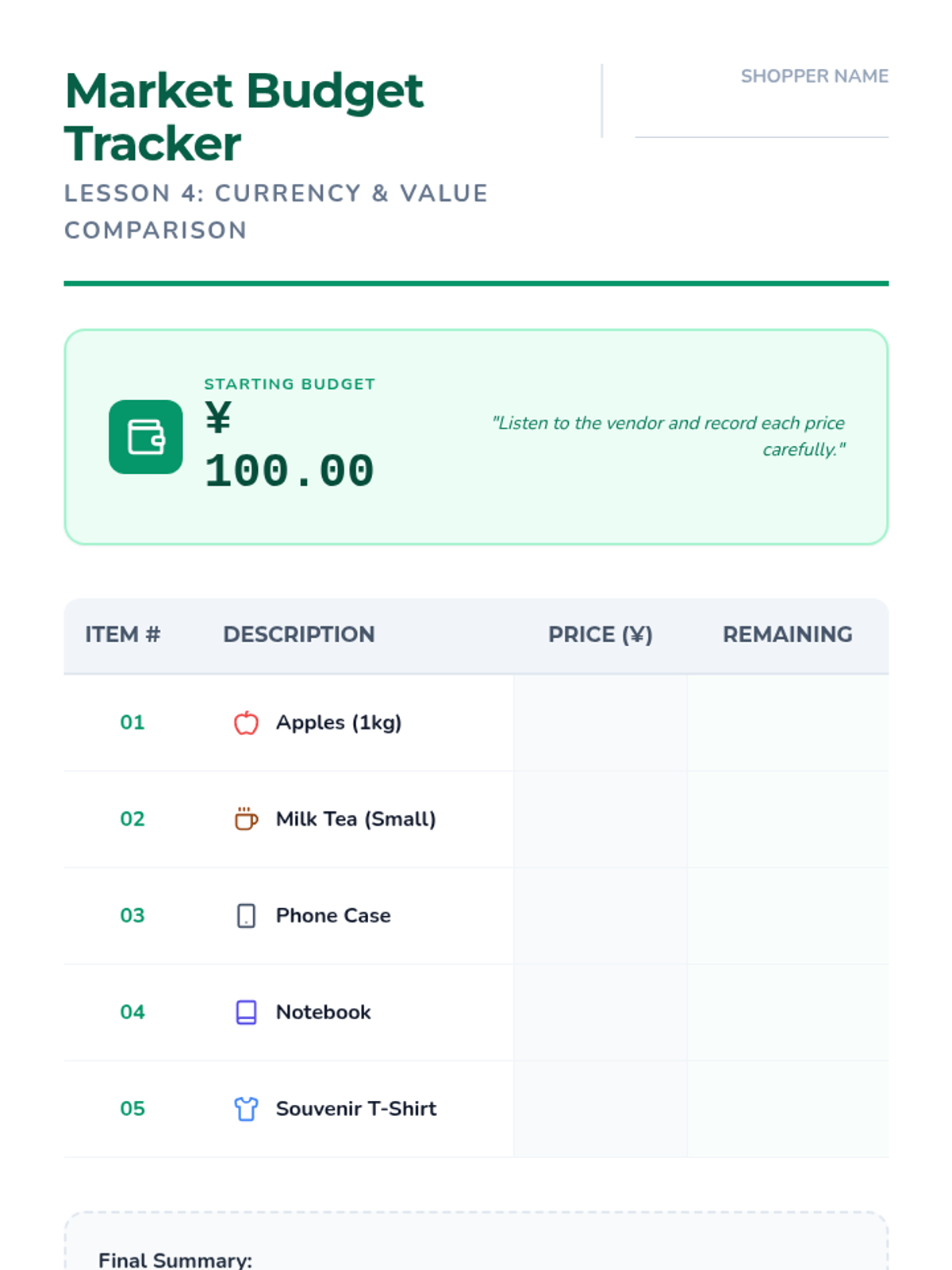
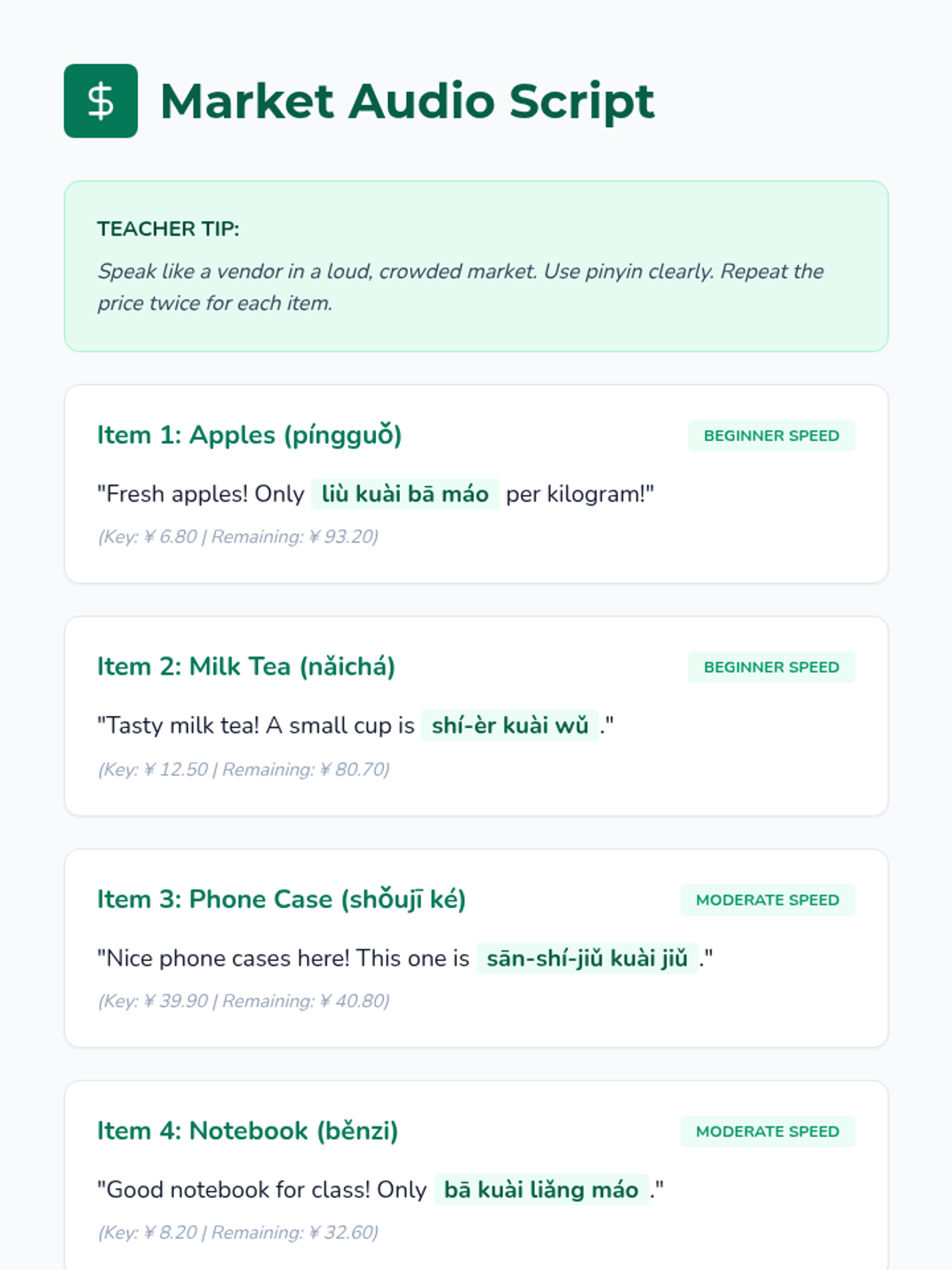
Simulates a market environment where students listen for prices in 'kuài' and 'máo' and manage a virtual budget.
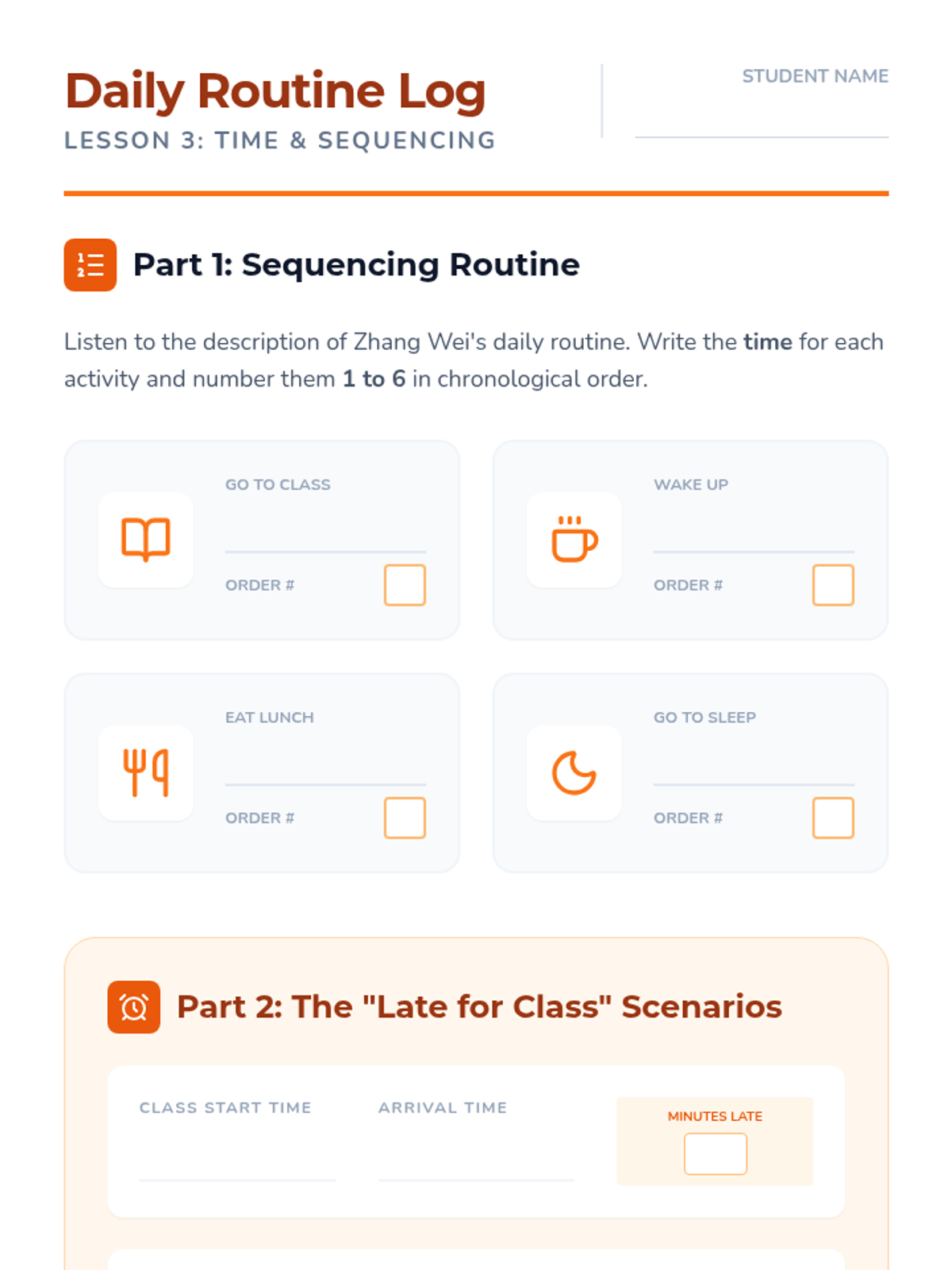
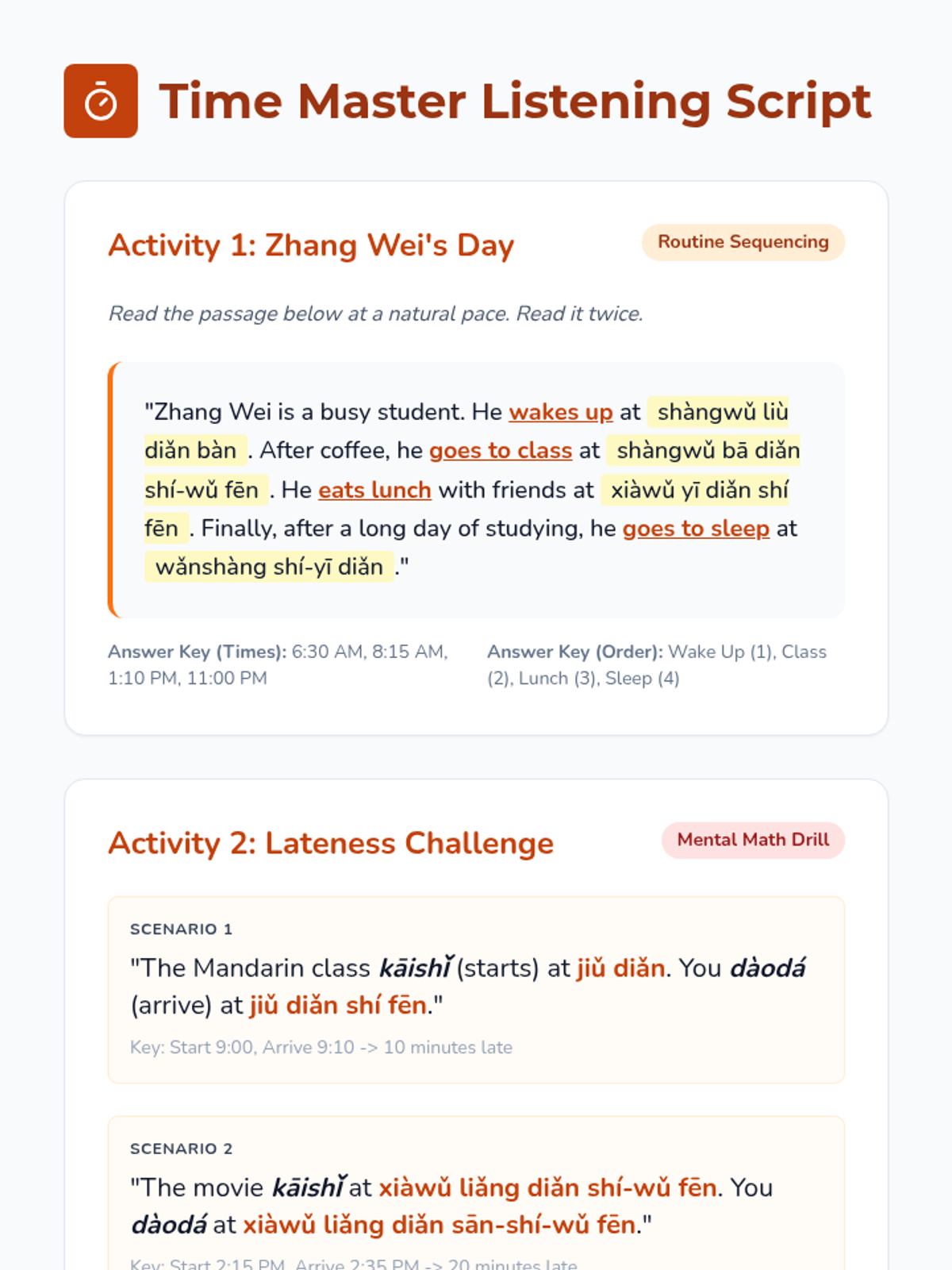
Teaches students to identify specific times using 'diǎn' and 'fēn' and sequence daily routines based on auditory cues.
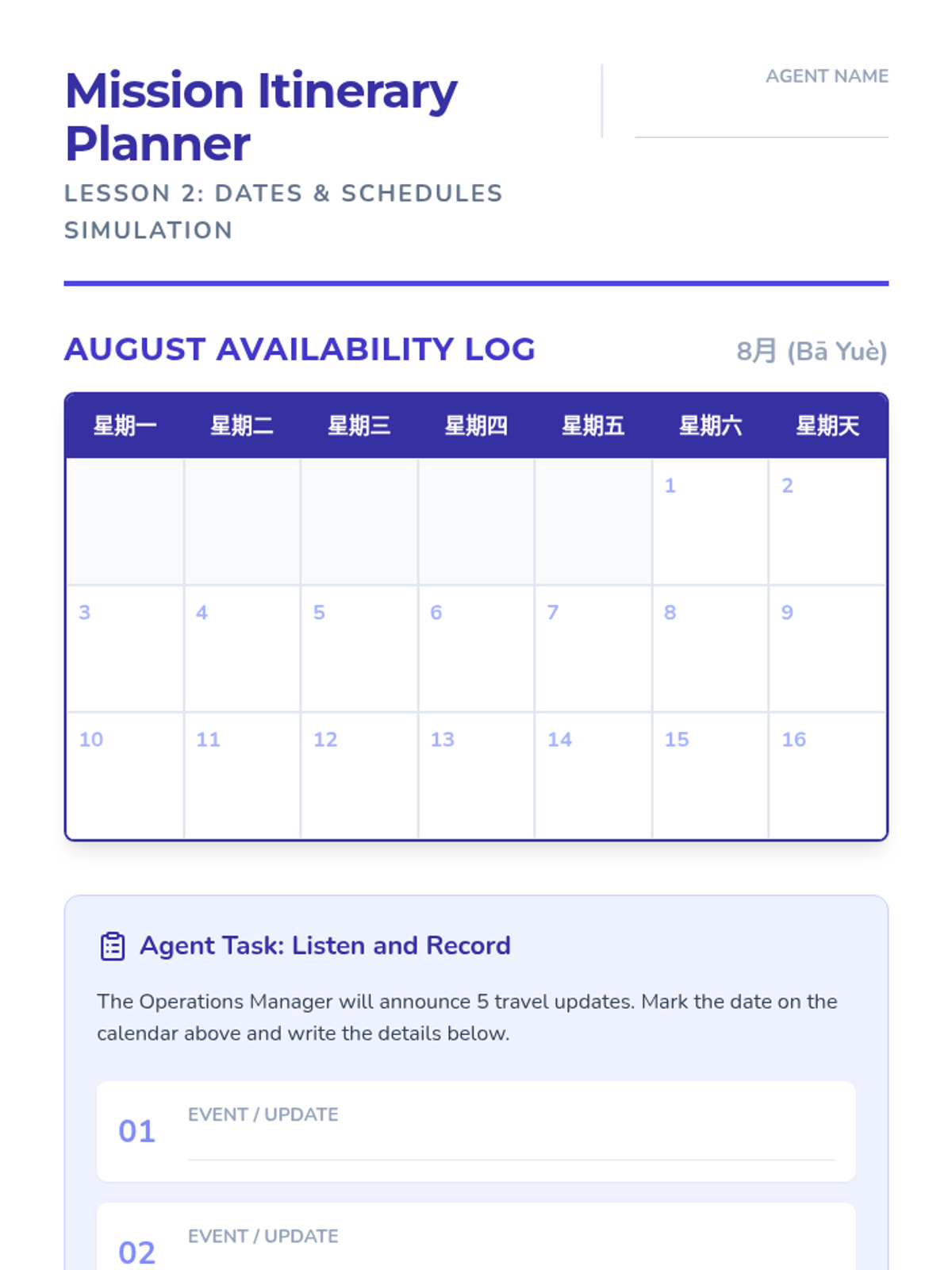
Covers the Mandarin date format (Year-Month-Day) and days of the week through schedule-based listening tasks.
Focuses on rapid recognition of Mandarin digits 0-100, with specific drills for auditory discrimination between 'shí' (10) and 'sì' (4).
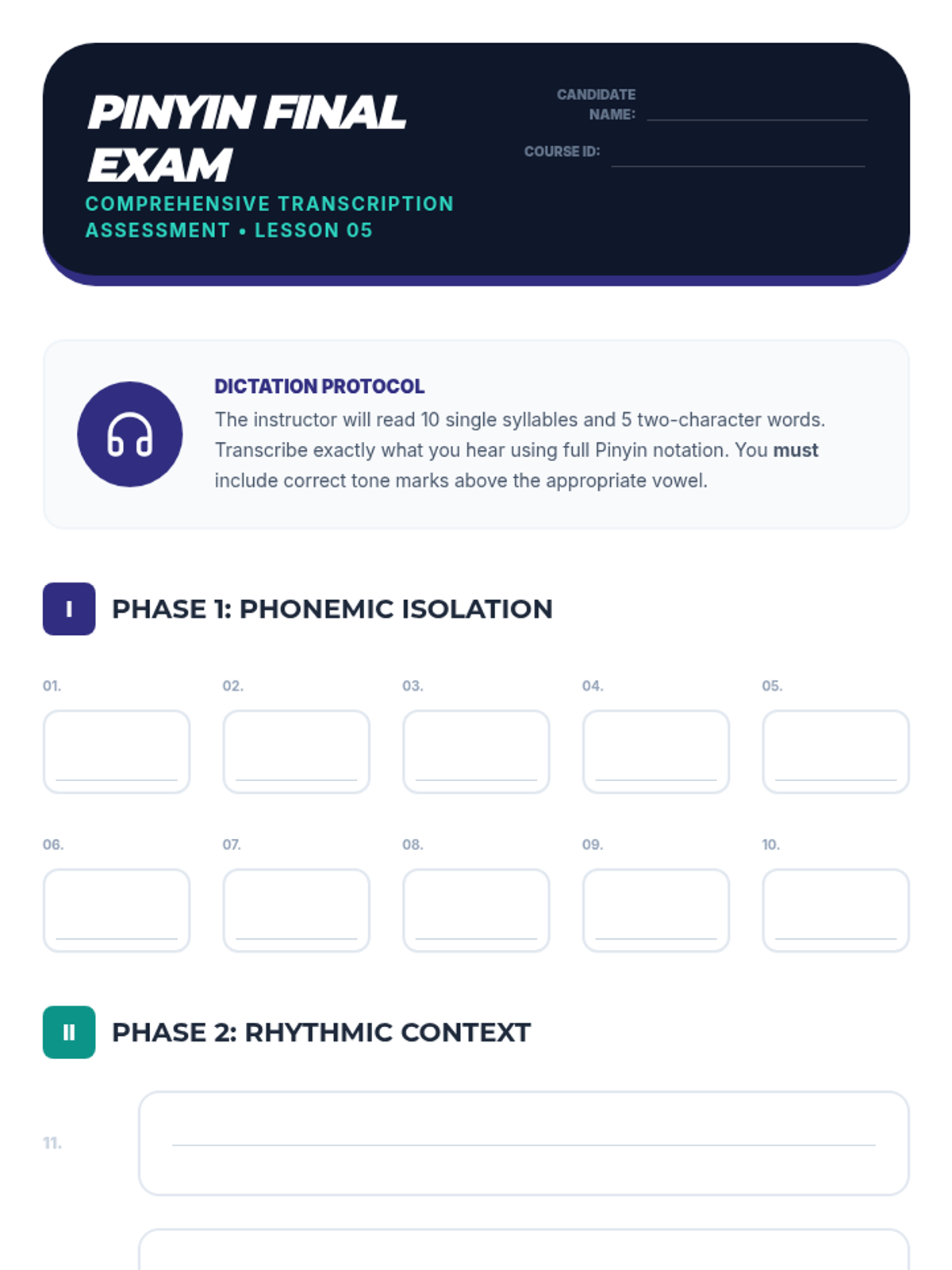
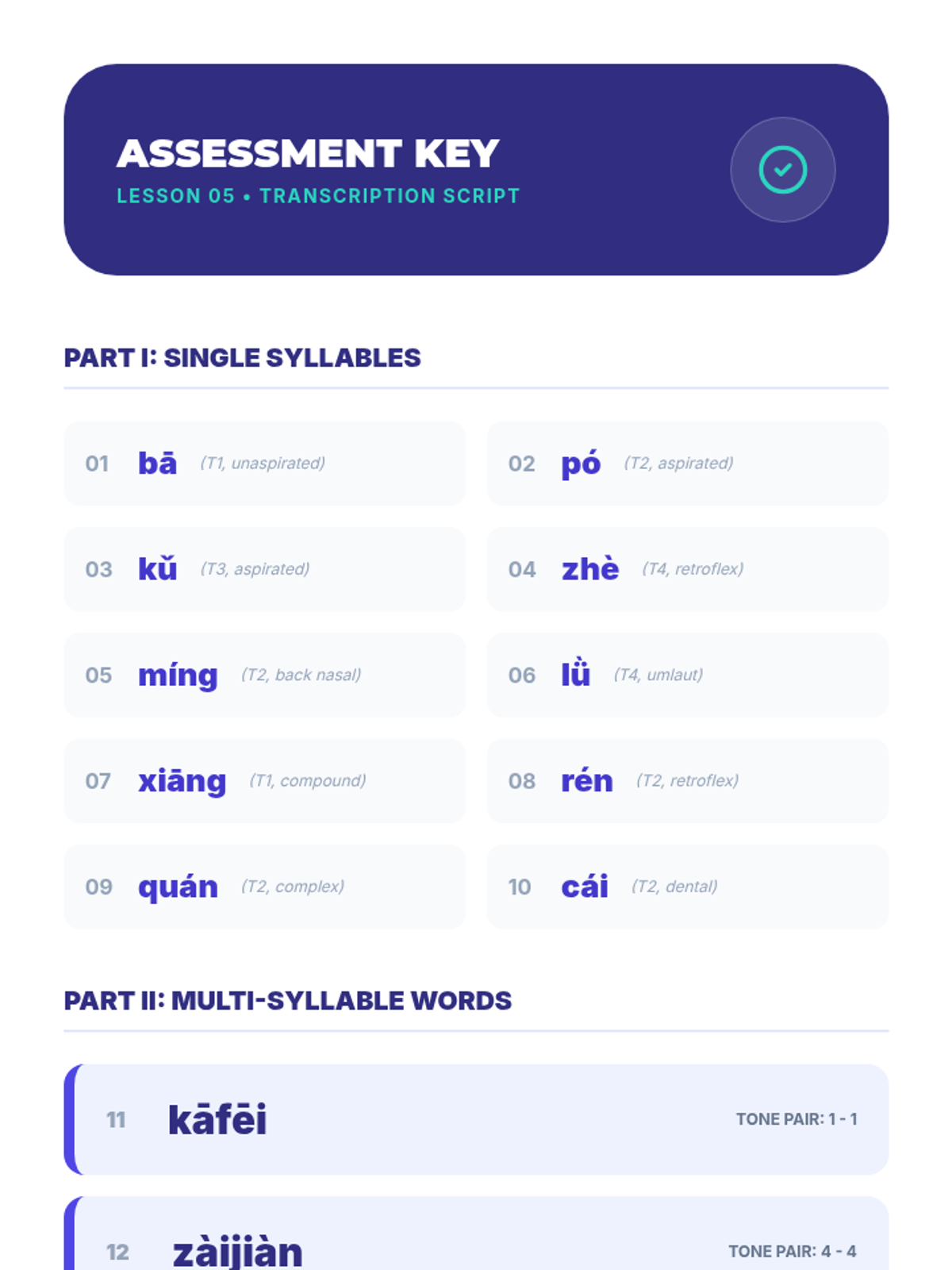
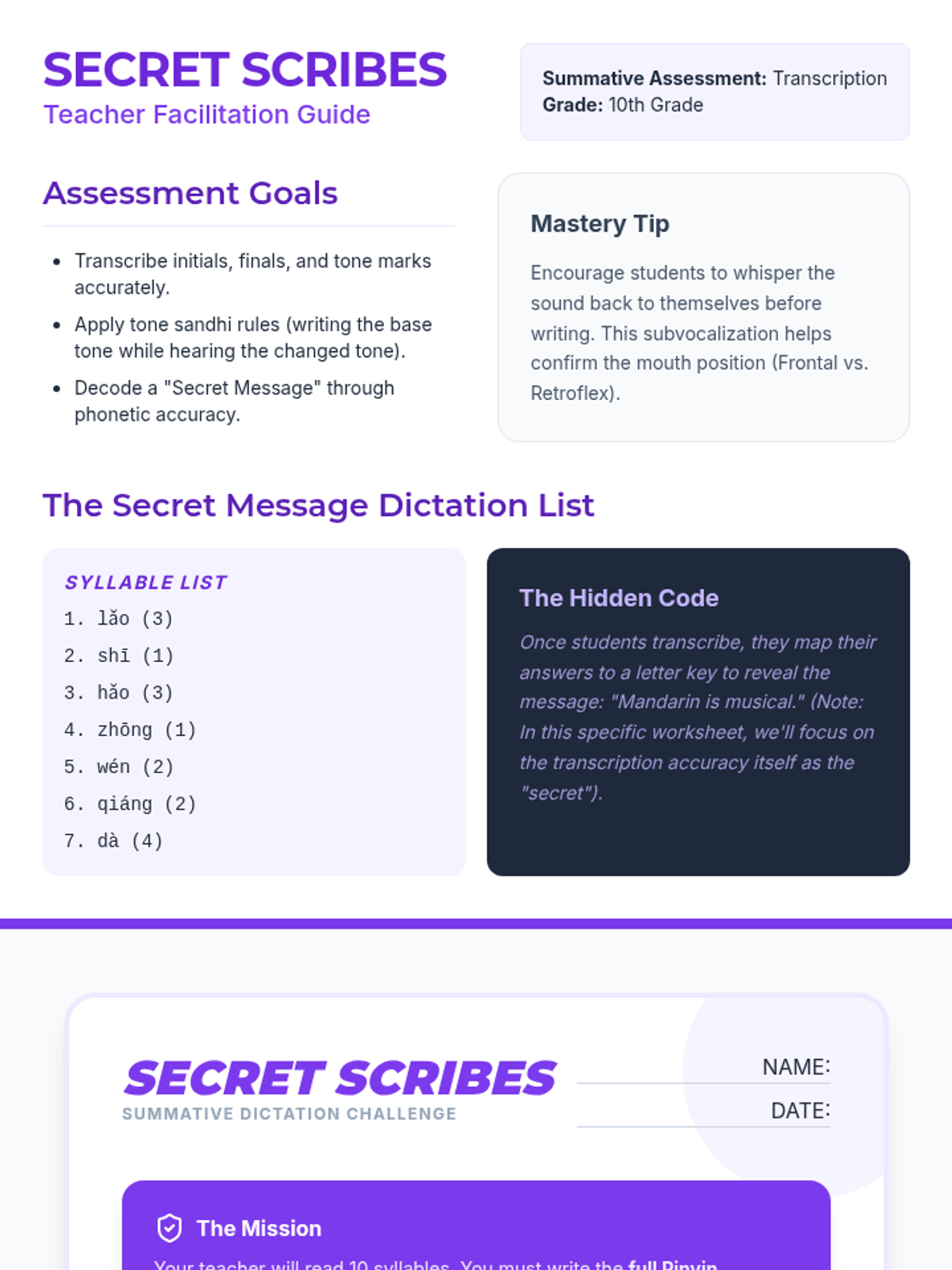
A comprehensive dictation assessment where students transcribe nonsense and real words into full Pinyin with tone marks.
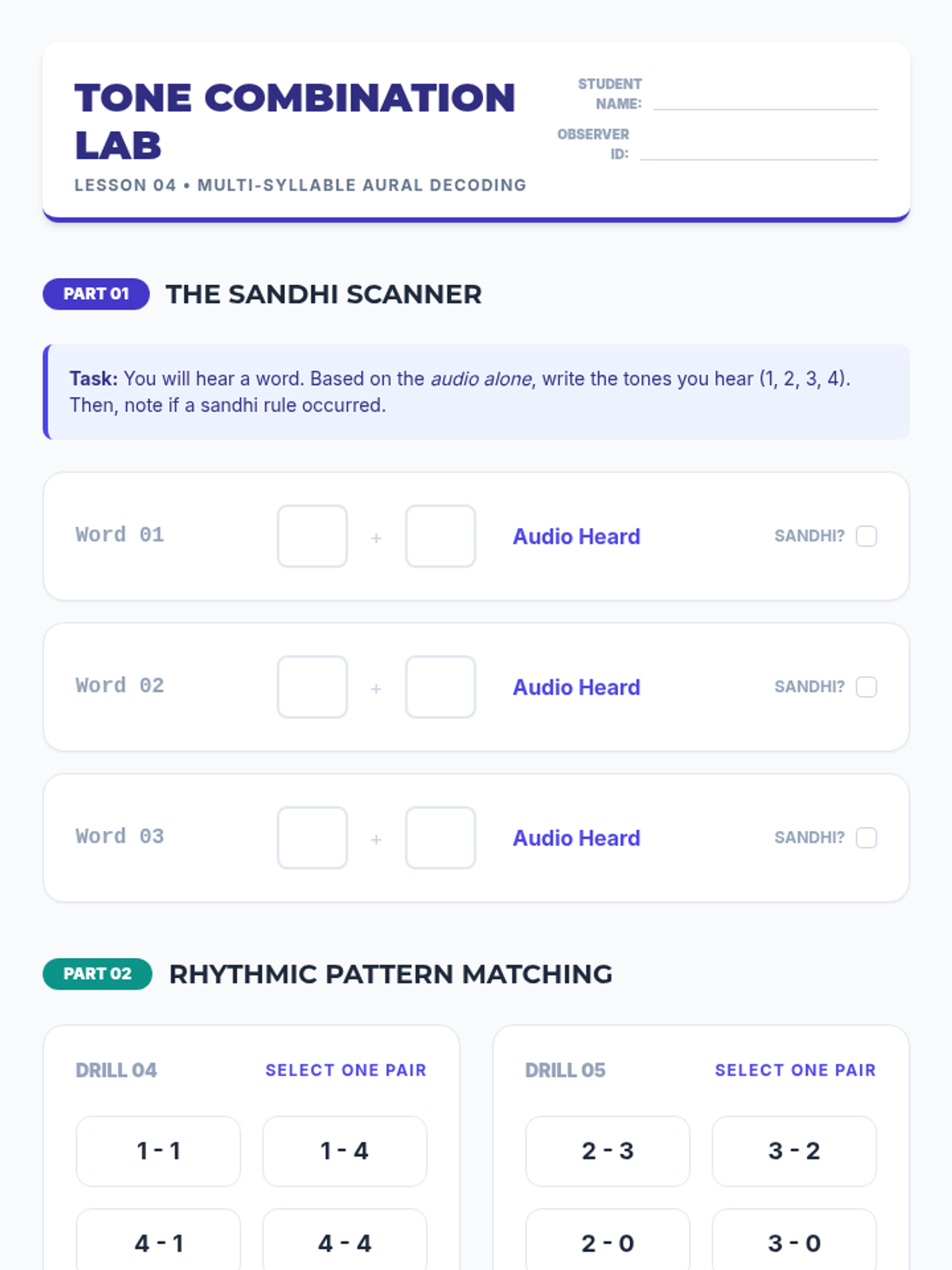
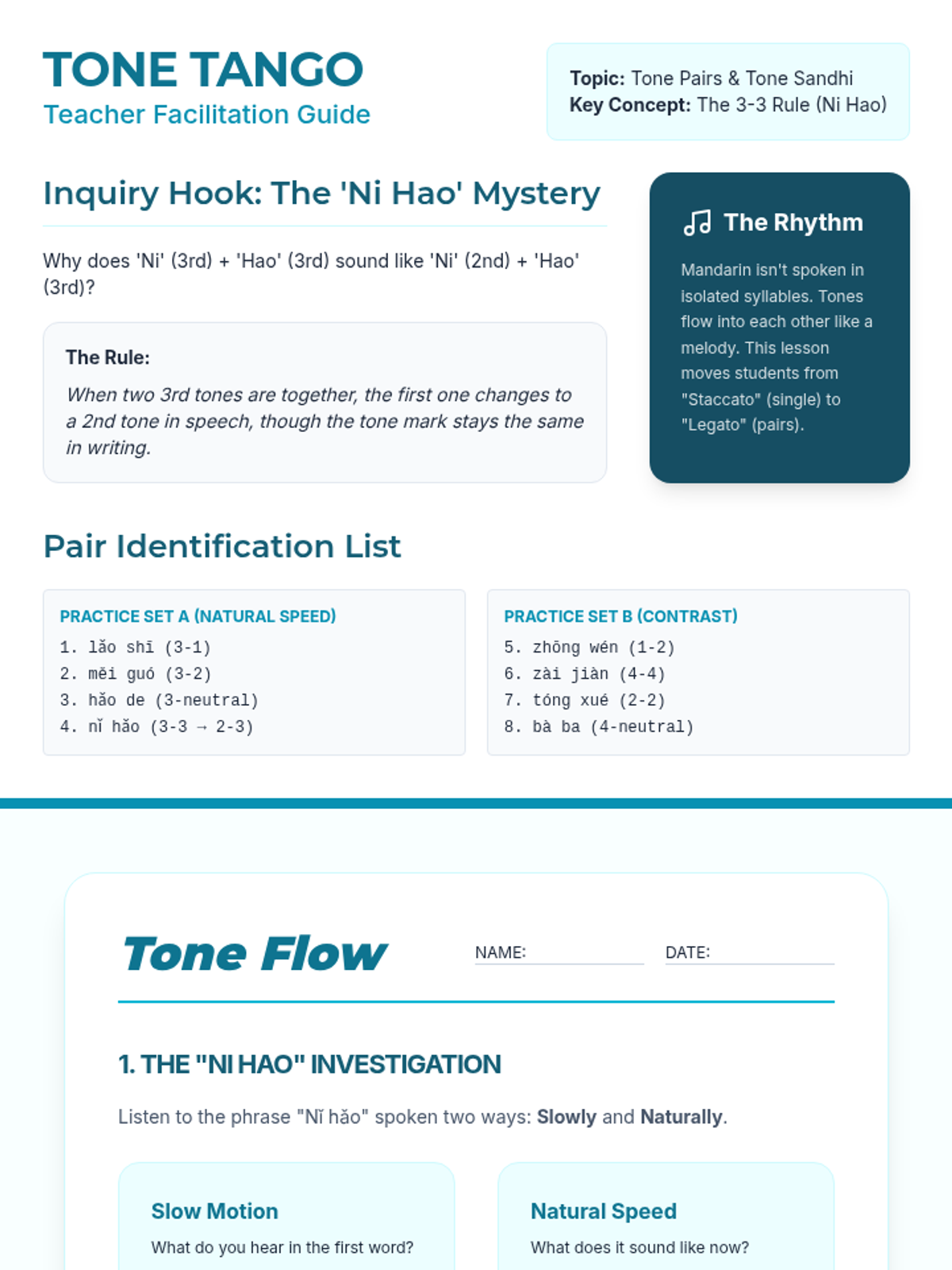
Teaches tone identification in multi-syllable contexts, specifically focusing on the Third Tone Sandhi rule.
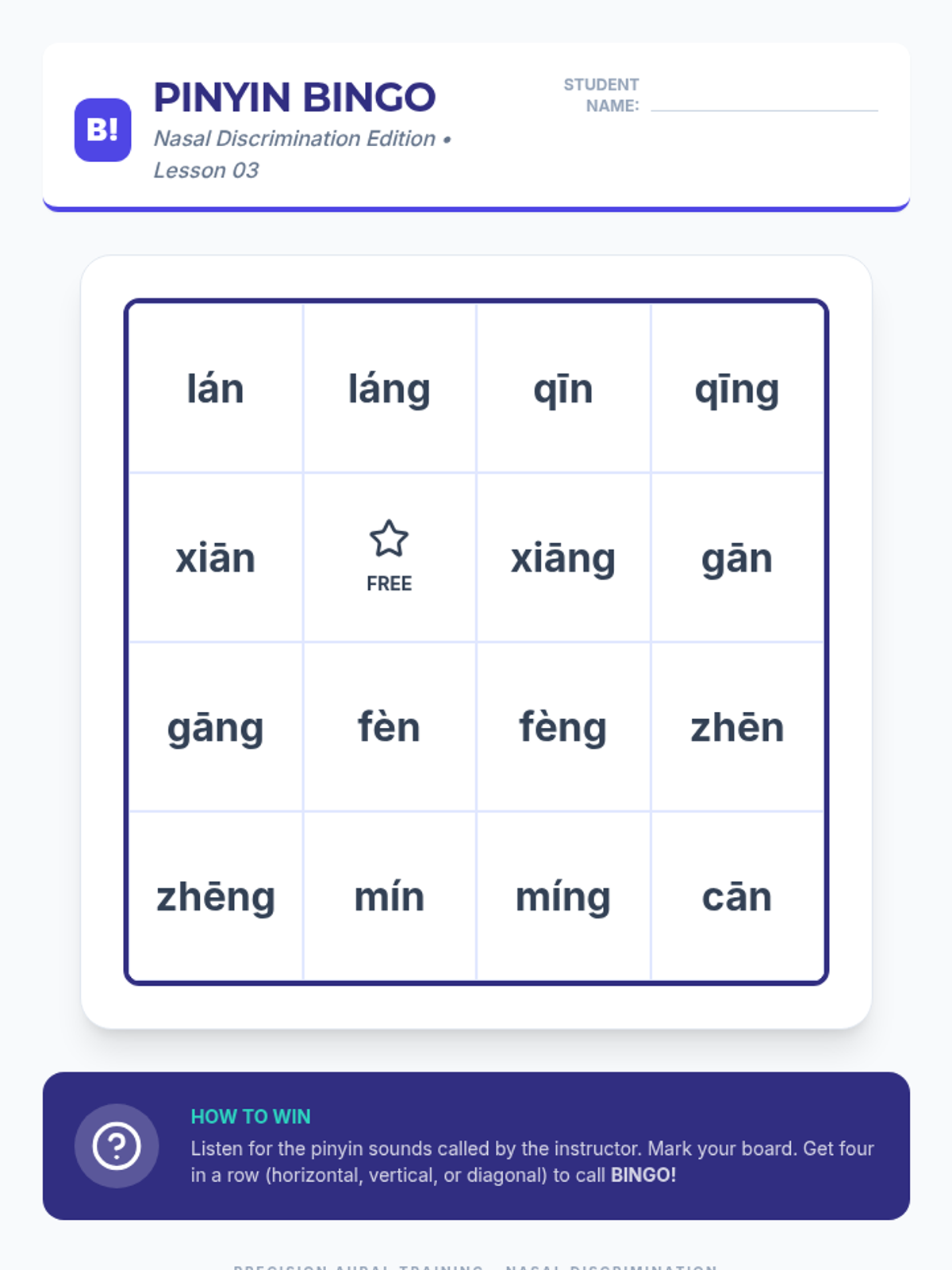
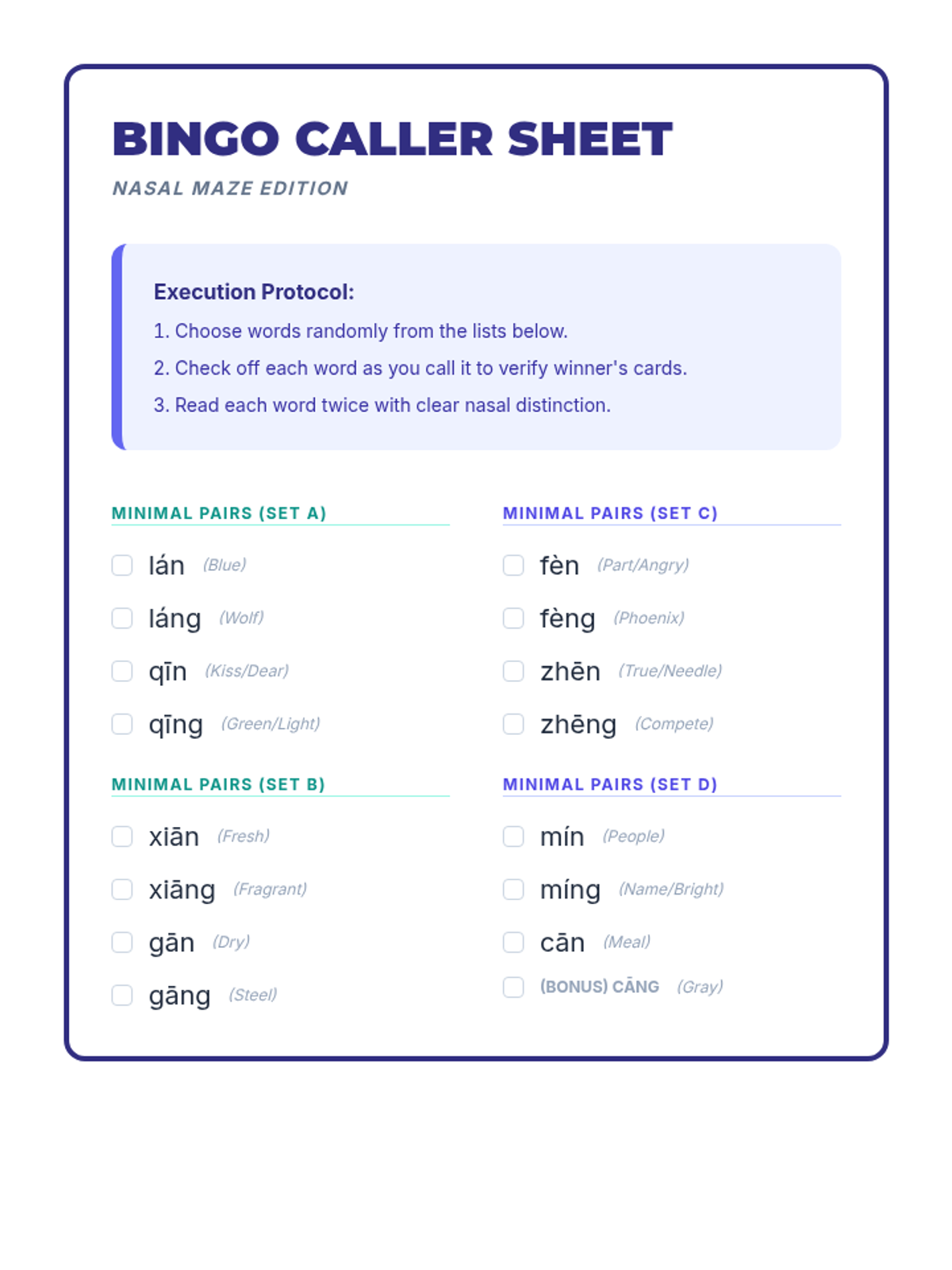
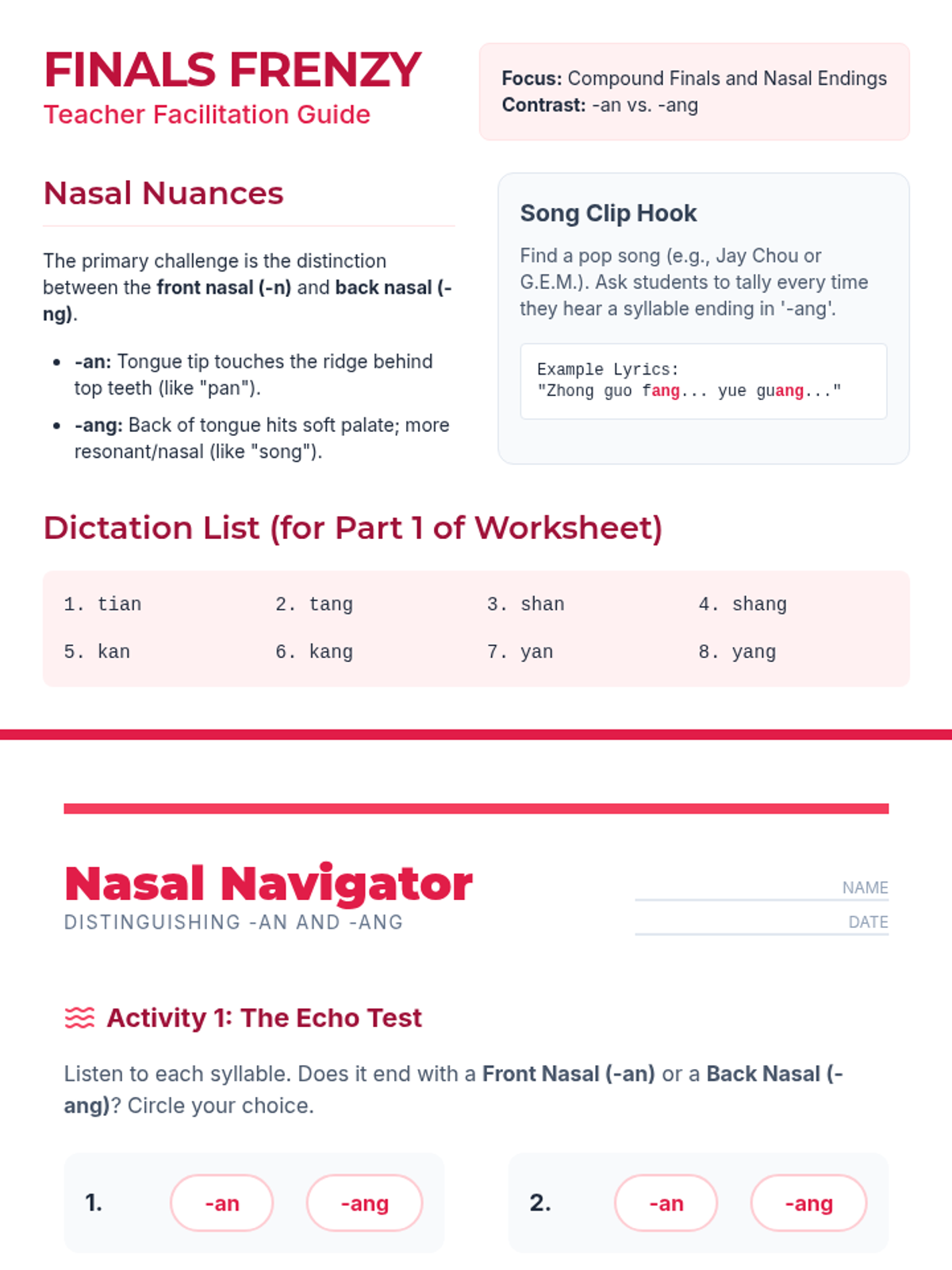
Addresses the distinctions between front and back nasal endings and complex vowel combinations using minimal pair activities.
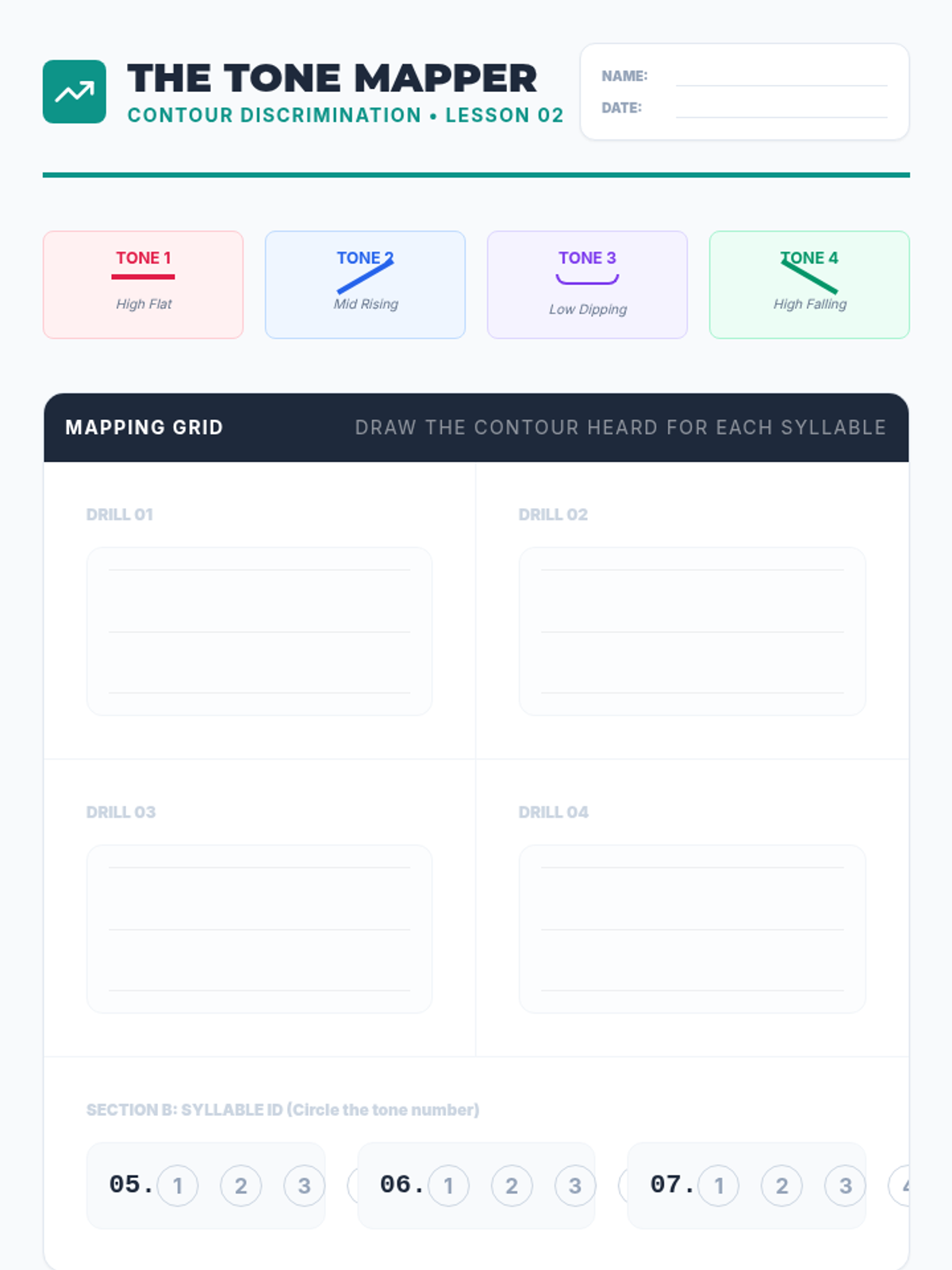
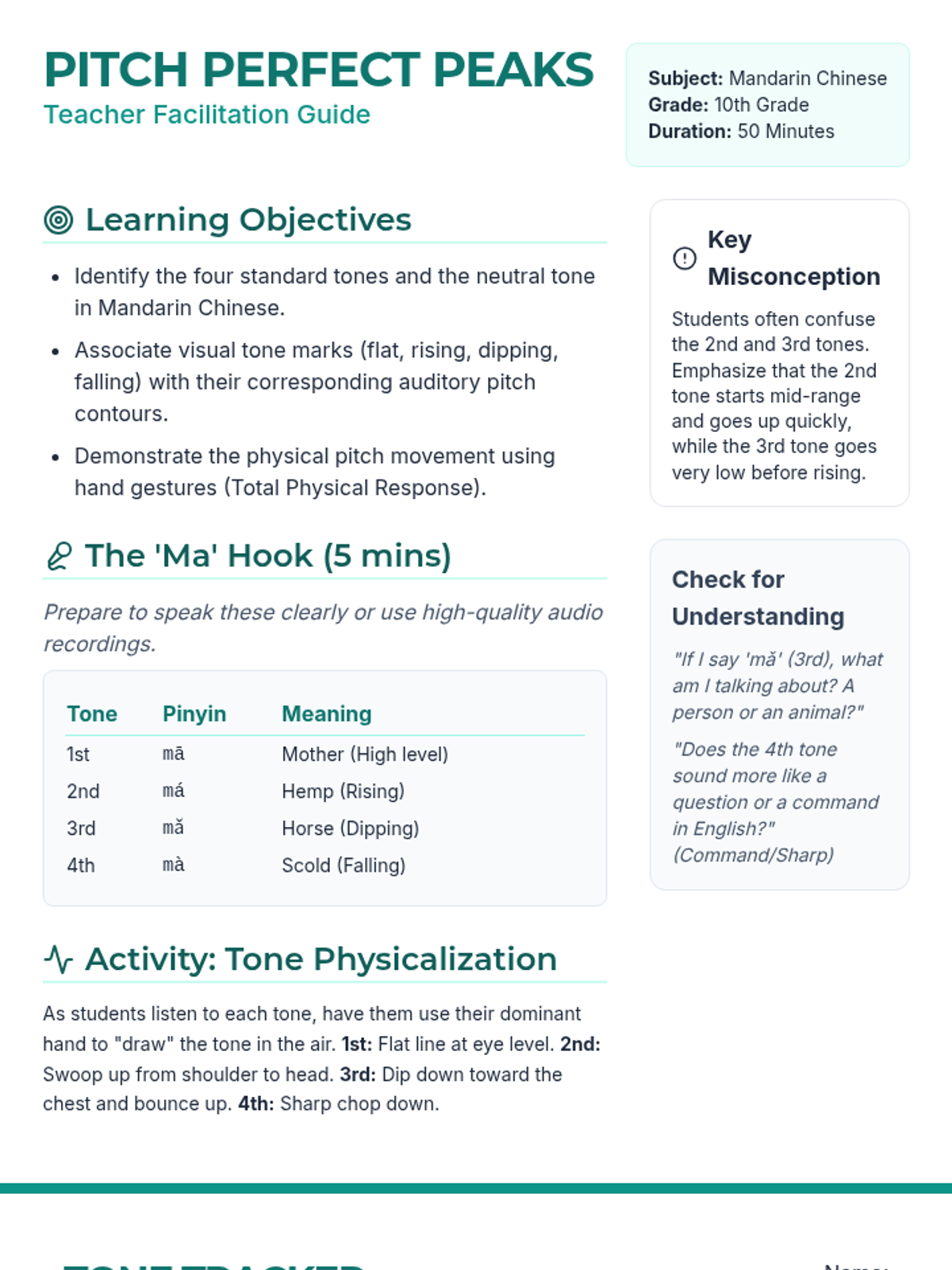
Introduces the four tones and neutral tone, mapping pitch contours to visual representations and identifying tones of single syllables.
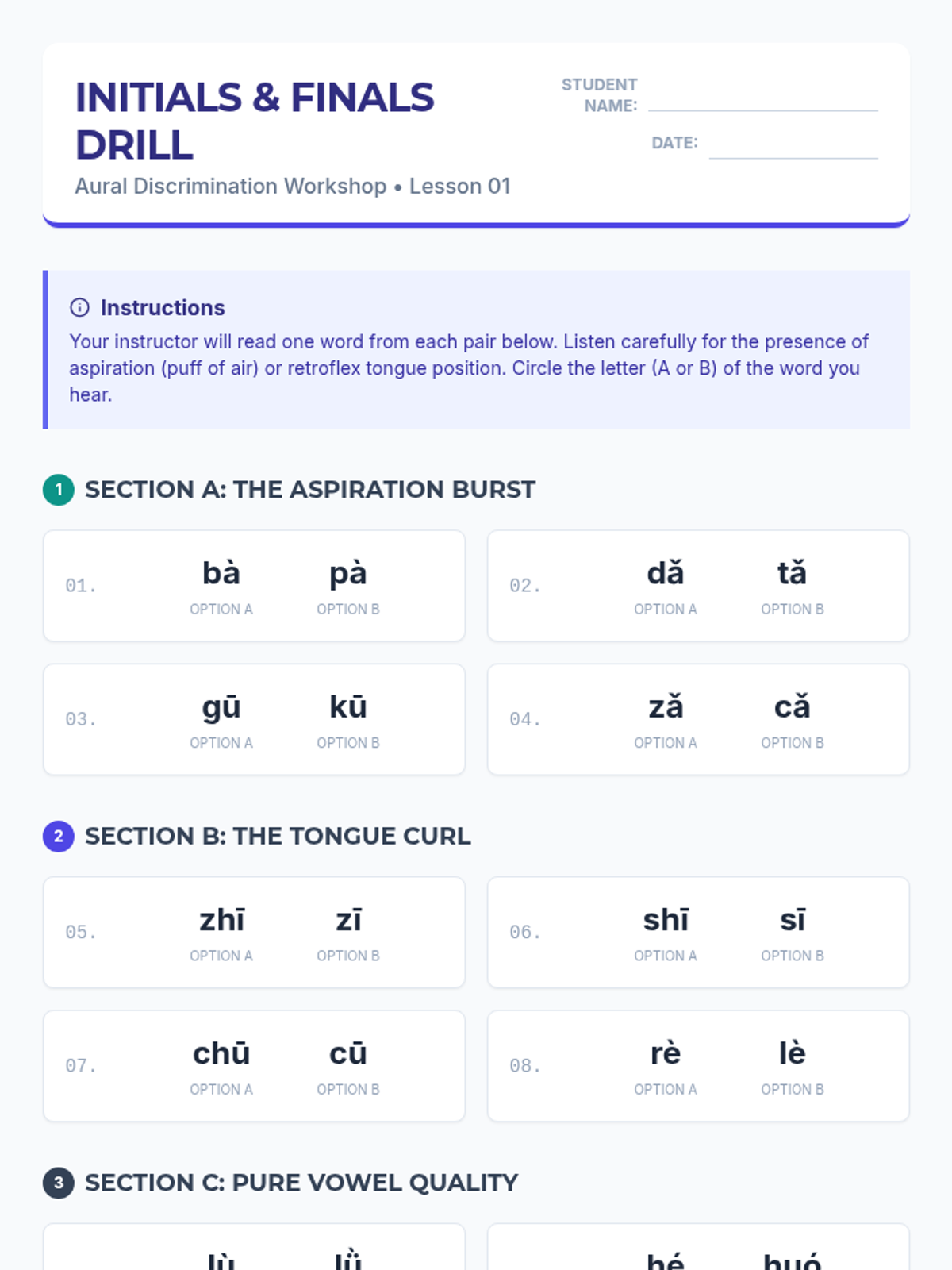
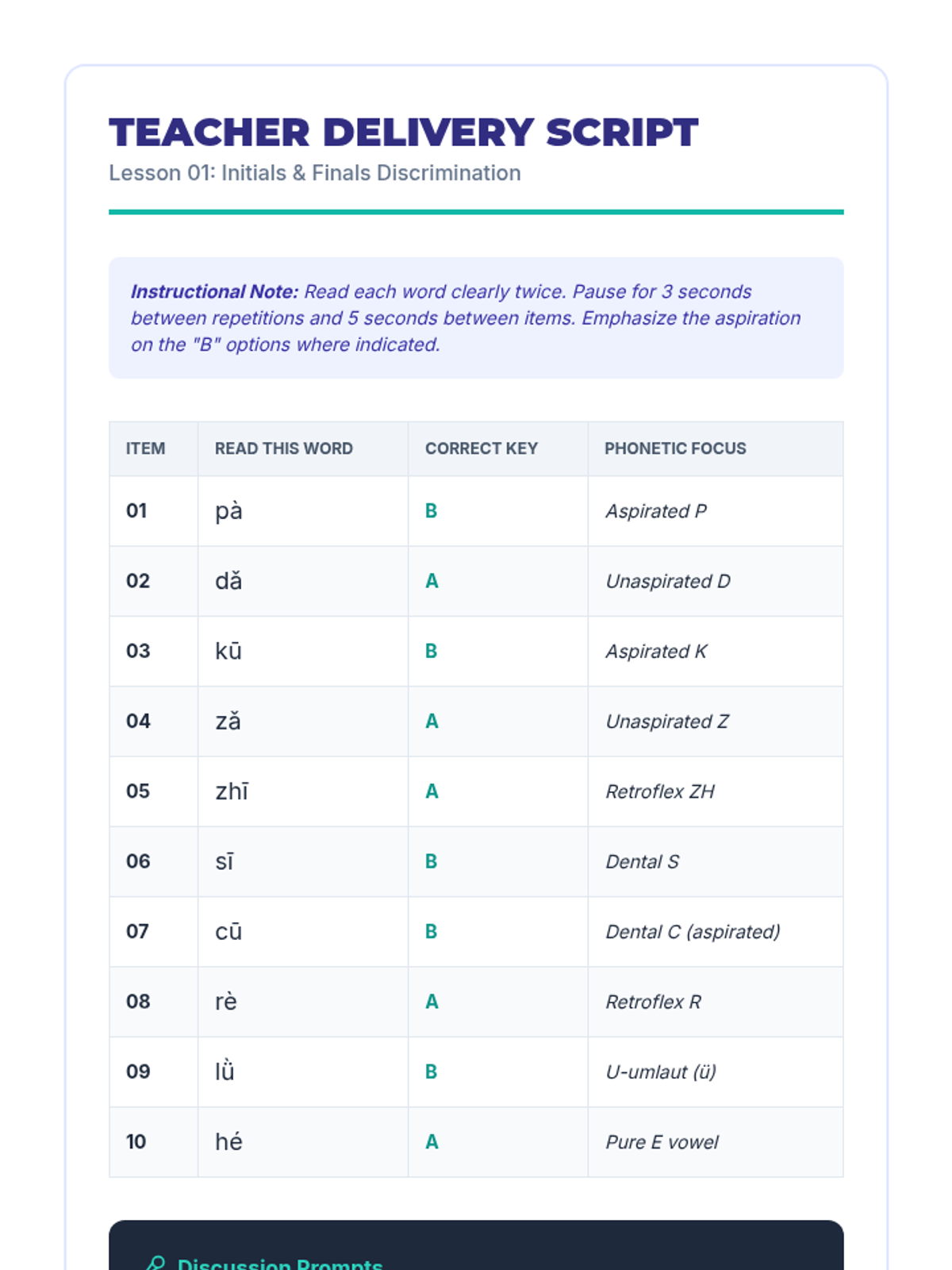
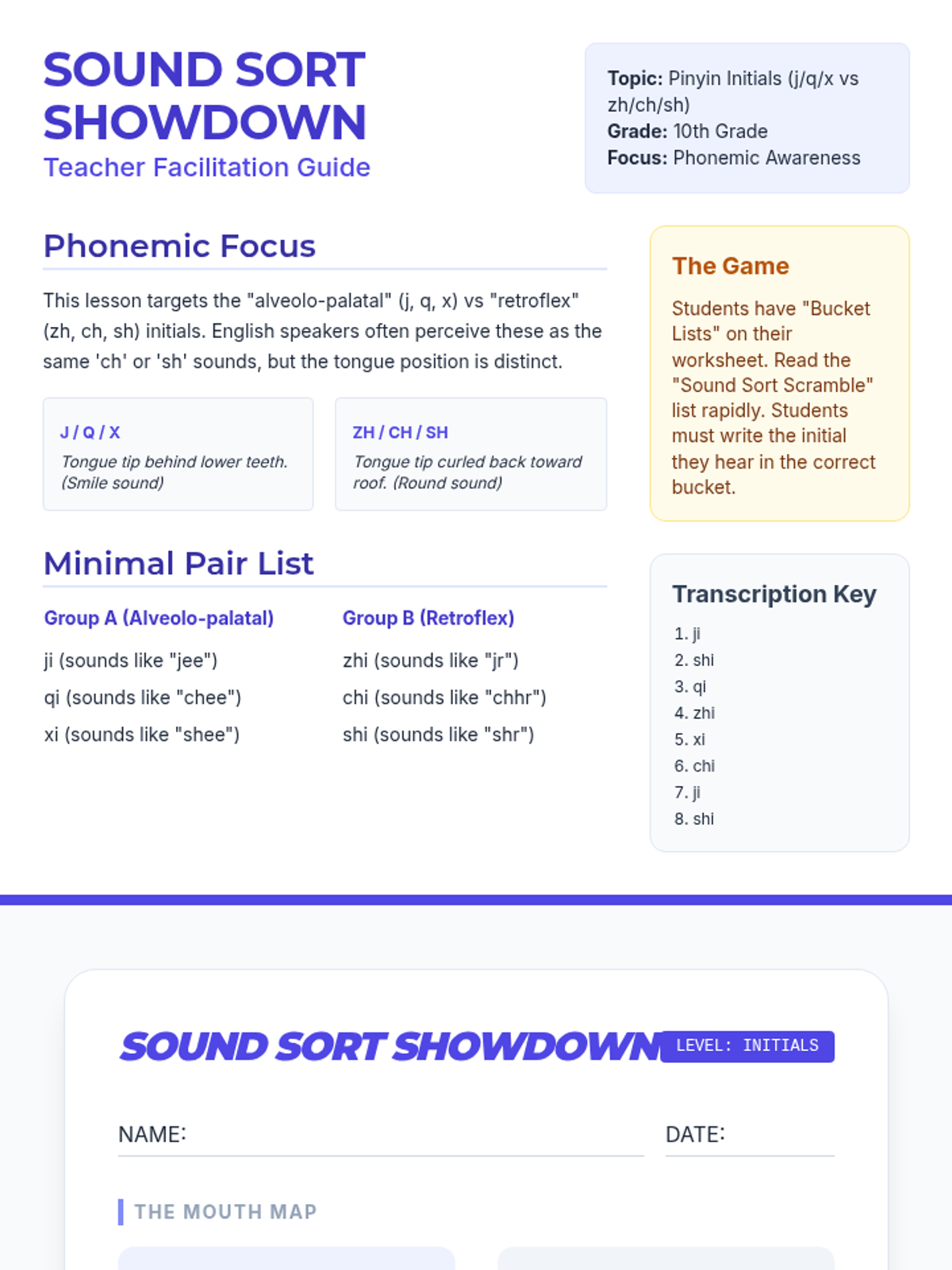
Focuses on distinguishing aspirated and unaspirated initials and retroflex sounds through discriminatory listening drills.
As a summative experience, students apply their listening skills to transcribe spoken syllables into correct Pinyin with tone marks. This closes the loop between hearing a sound and visualizing its written phonetic representation.
Moving beyond single syllables, students practice listening to two-character combinations to understand how tones flow together. The lesson introduces the concept of tone sandhi (specifically for the third tone) through auditory examples.
Students tackle the nuances of vowel combinations and nasal endings (like -an vs -ang). Through listening repetition and identification exercises, students learn to hear the subtle resonance differences that distinguish these common rhymes.
This lesson focuses on distinguishing difficult initial consonants that sound similar to English speakers, such as j/q/x versus zh/ch/sh. Students participate in minimal pair listening drills to sharpen their phonemic awareness.
Students explore the four tones of Mandarin Chinese through visualization and auditory practice, using the classic 'ma' example to understand how pitch changes meaning.
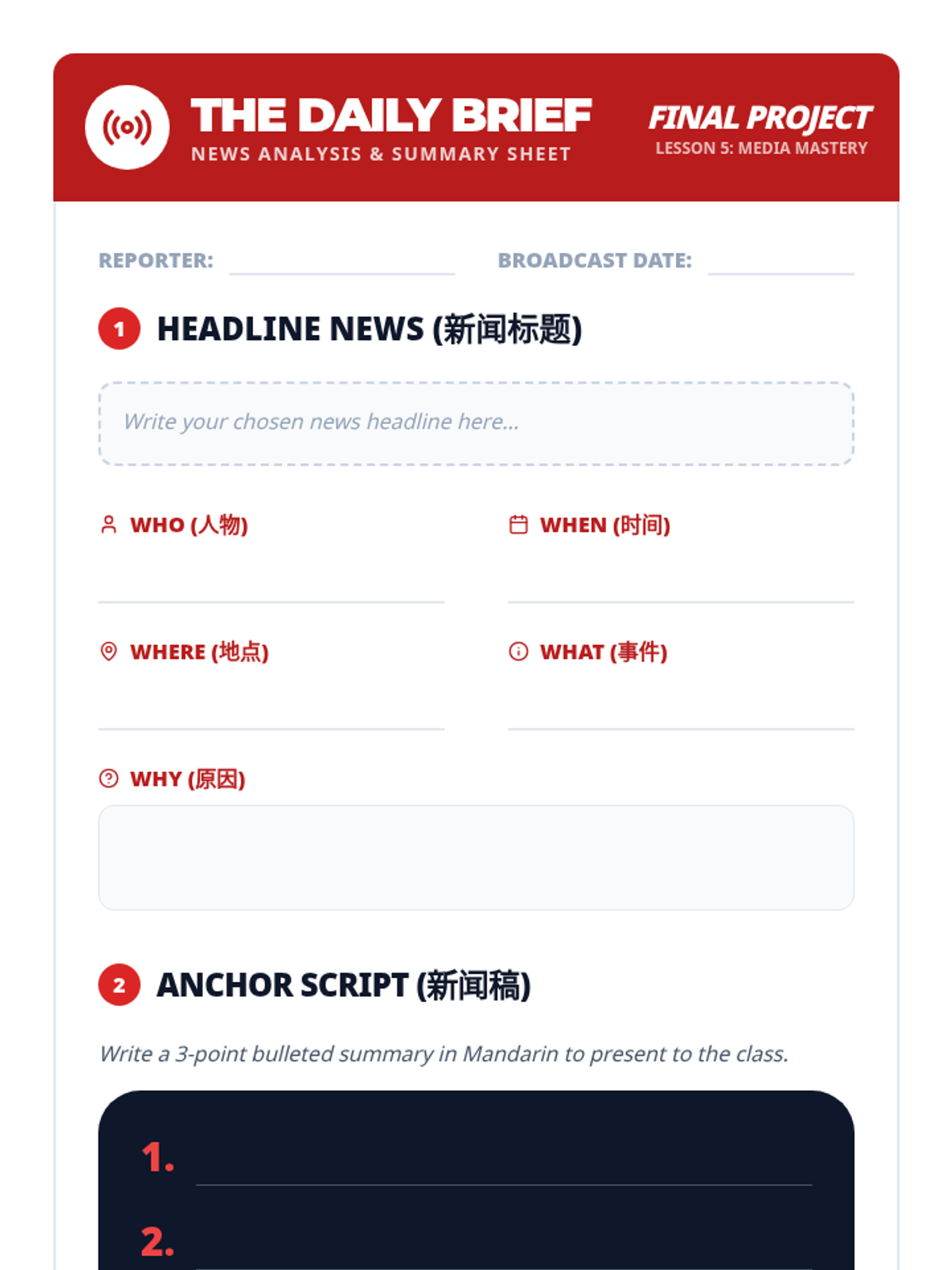
A capstone lesson where students apply the 5 Ws to analyze and summarize a news article for a mock broadcast.
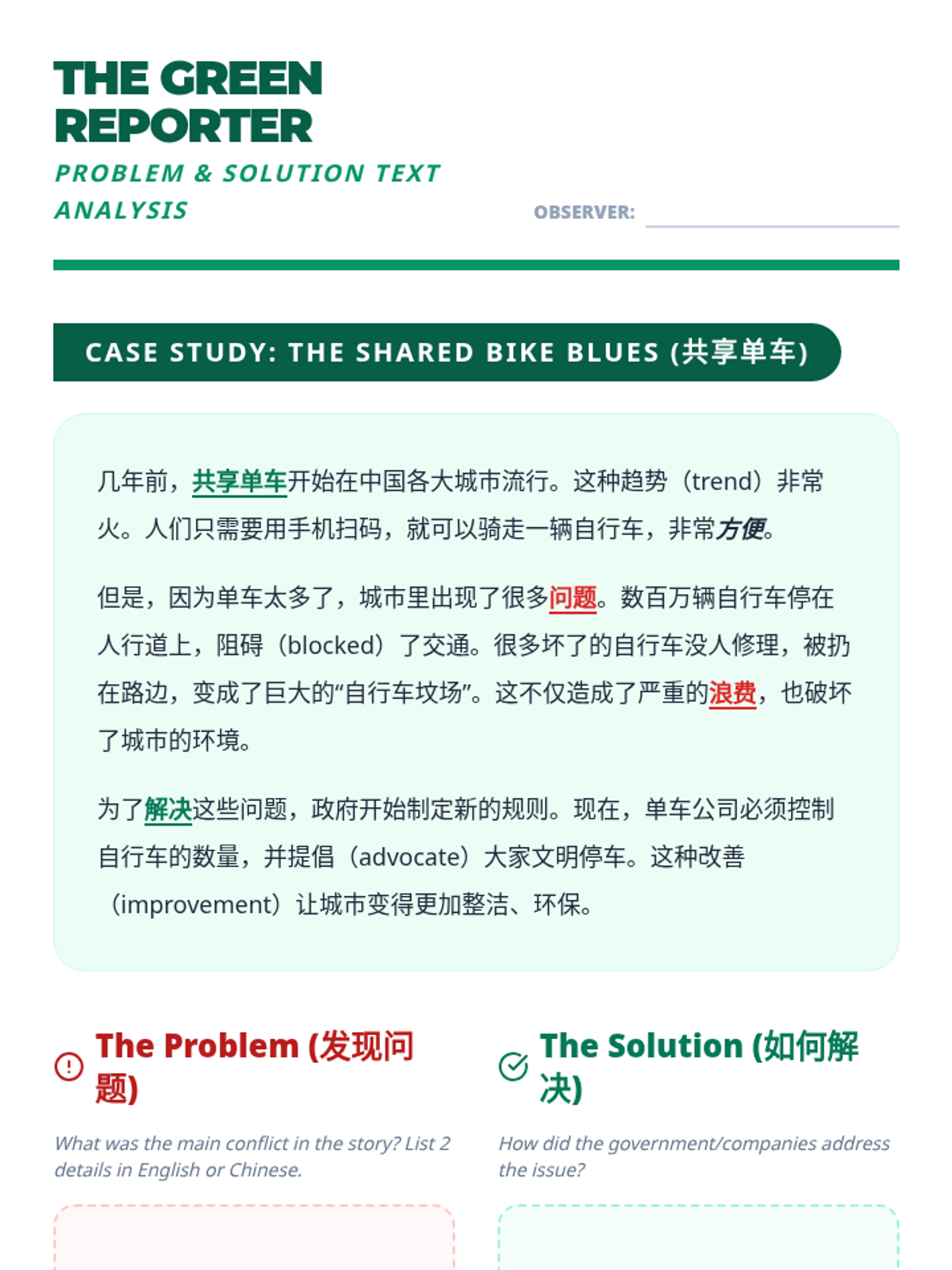
Explores environmental initiatives like bike-sharing to identify problem-solution text structures and global social trends.
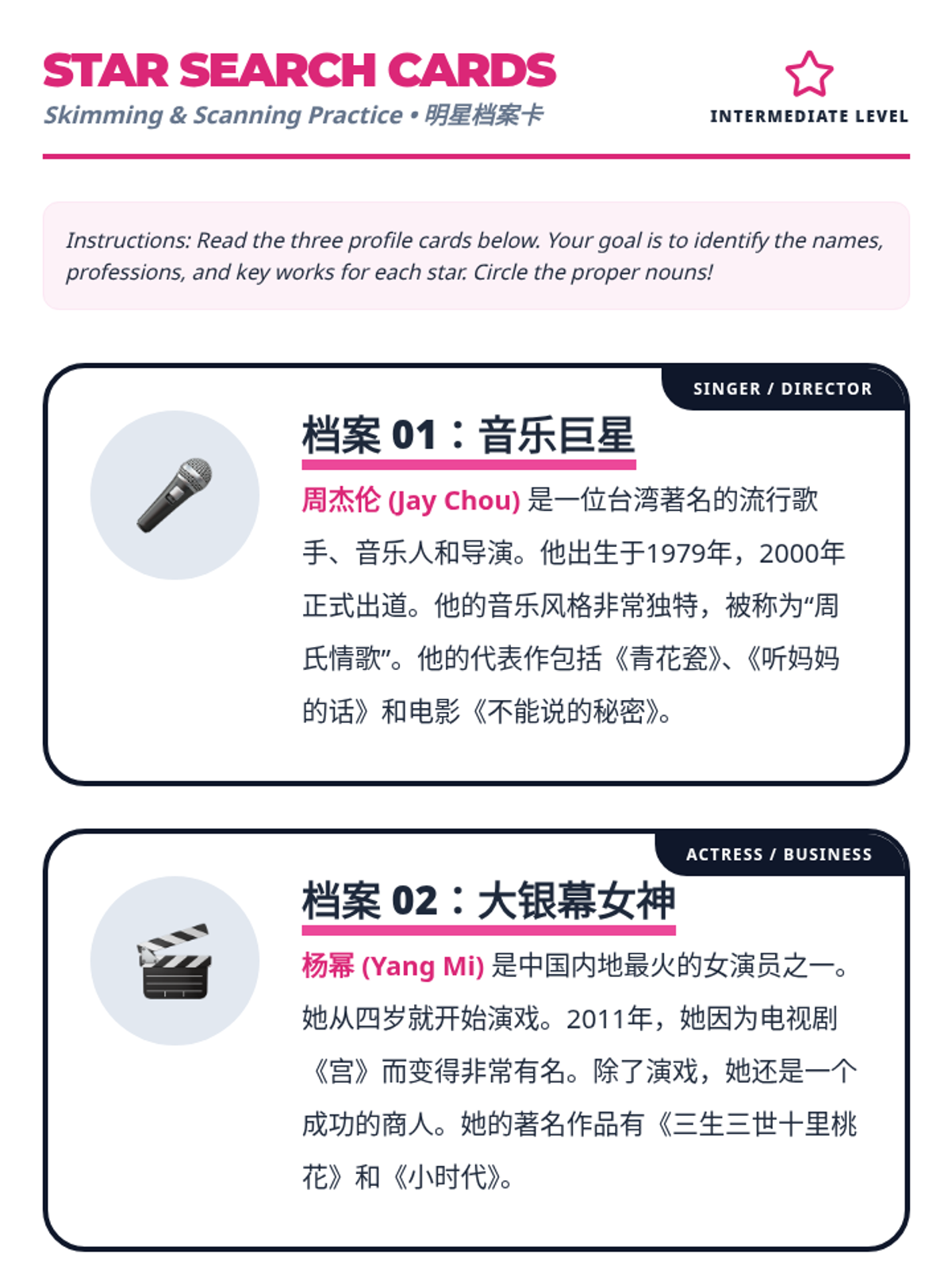
Students practice skimming for proper nouns and biographical data in celebrity profiles and entertainment news.
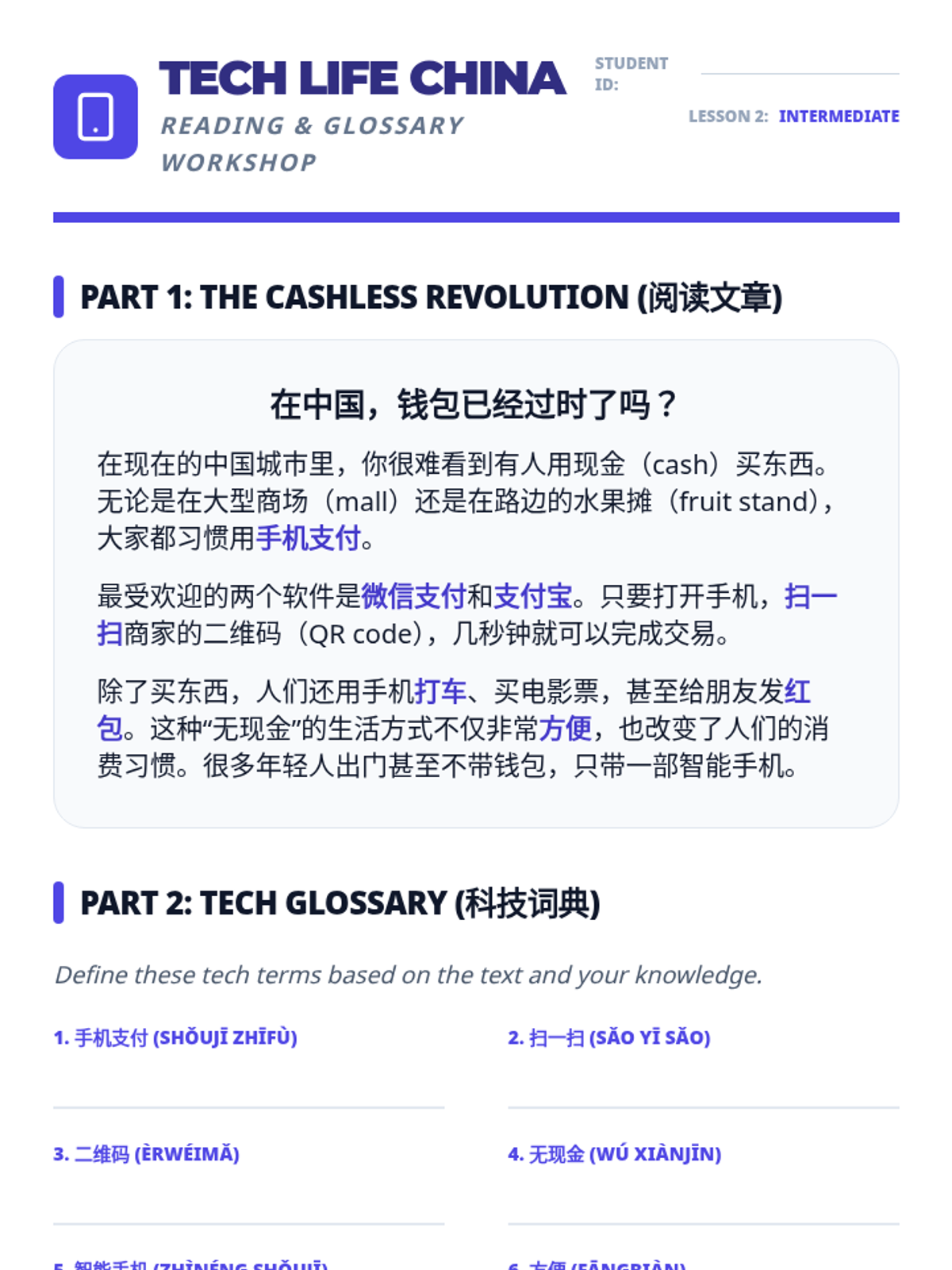
Focuses on mobile payments and social media vocabulary, specifically loanwords and modern tech terminology used in everyday reading.
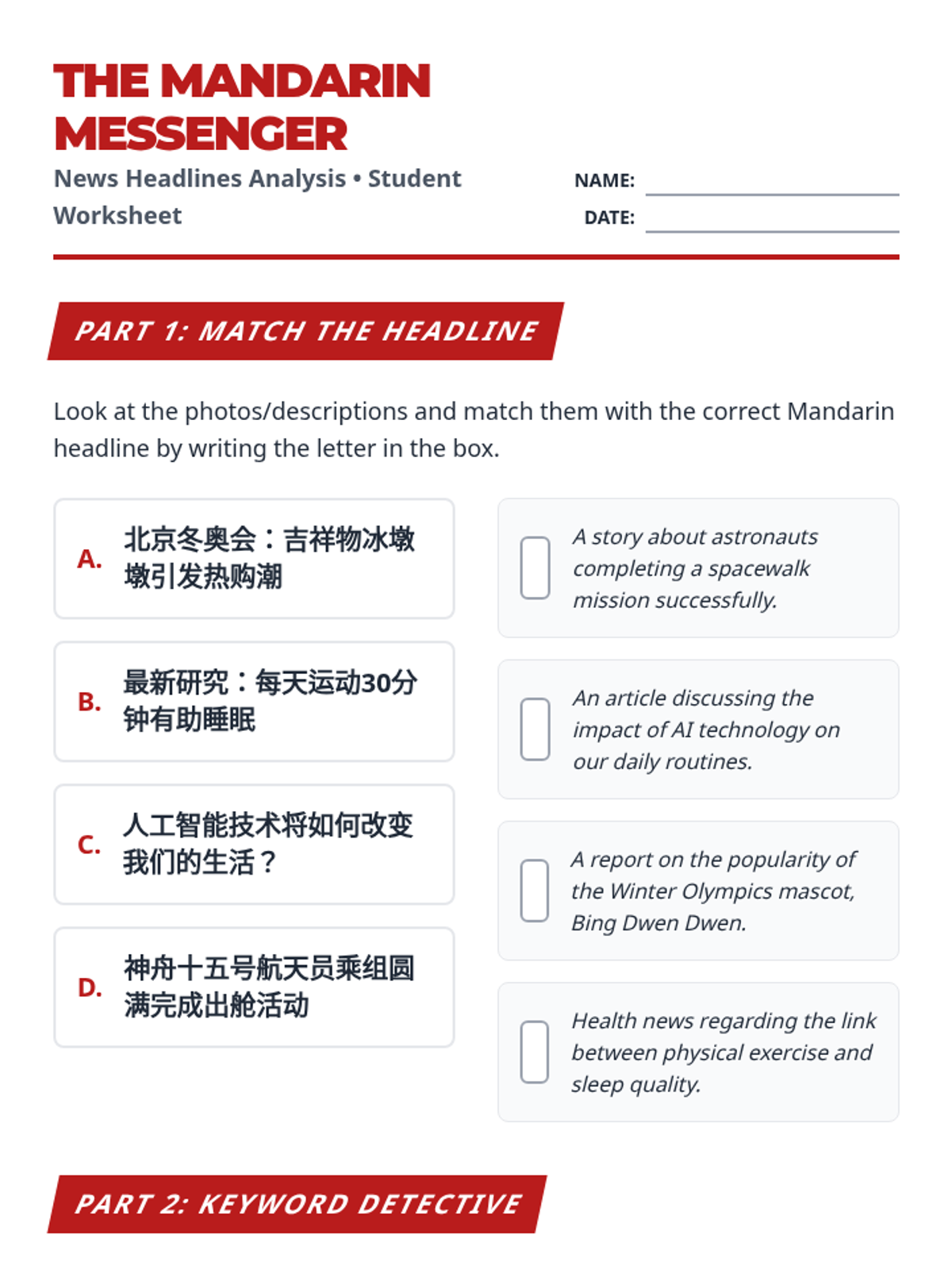
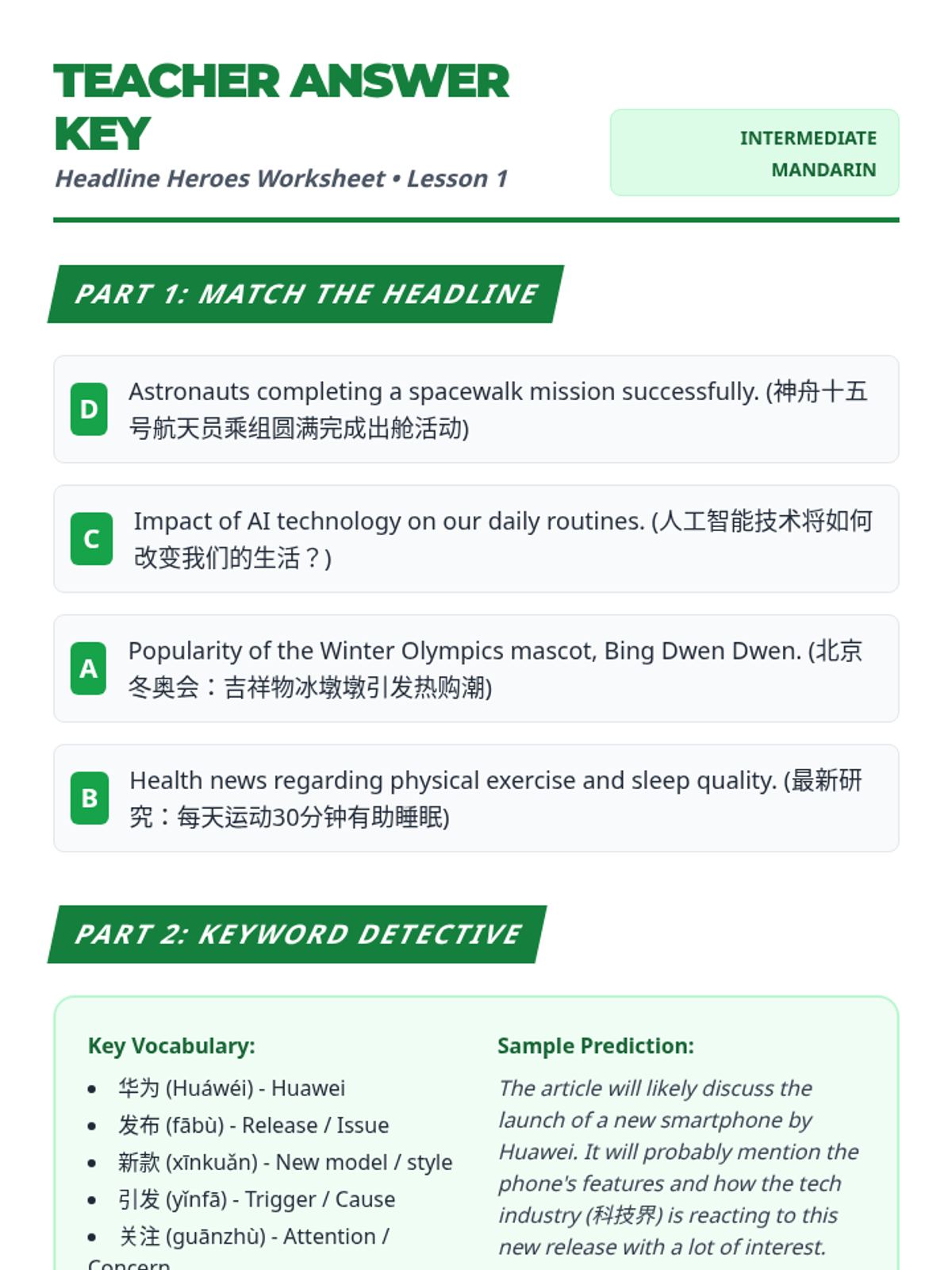
Students analyze the abbreviated grammar and formal vocabulary of news headlines to predict content and associate keywords.
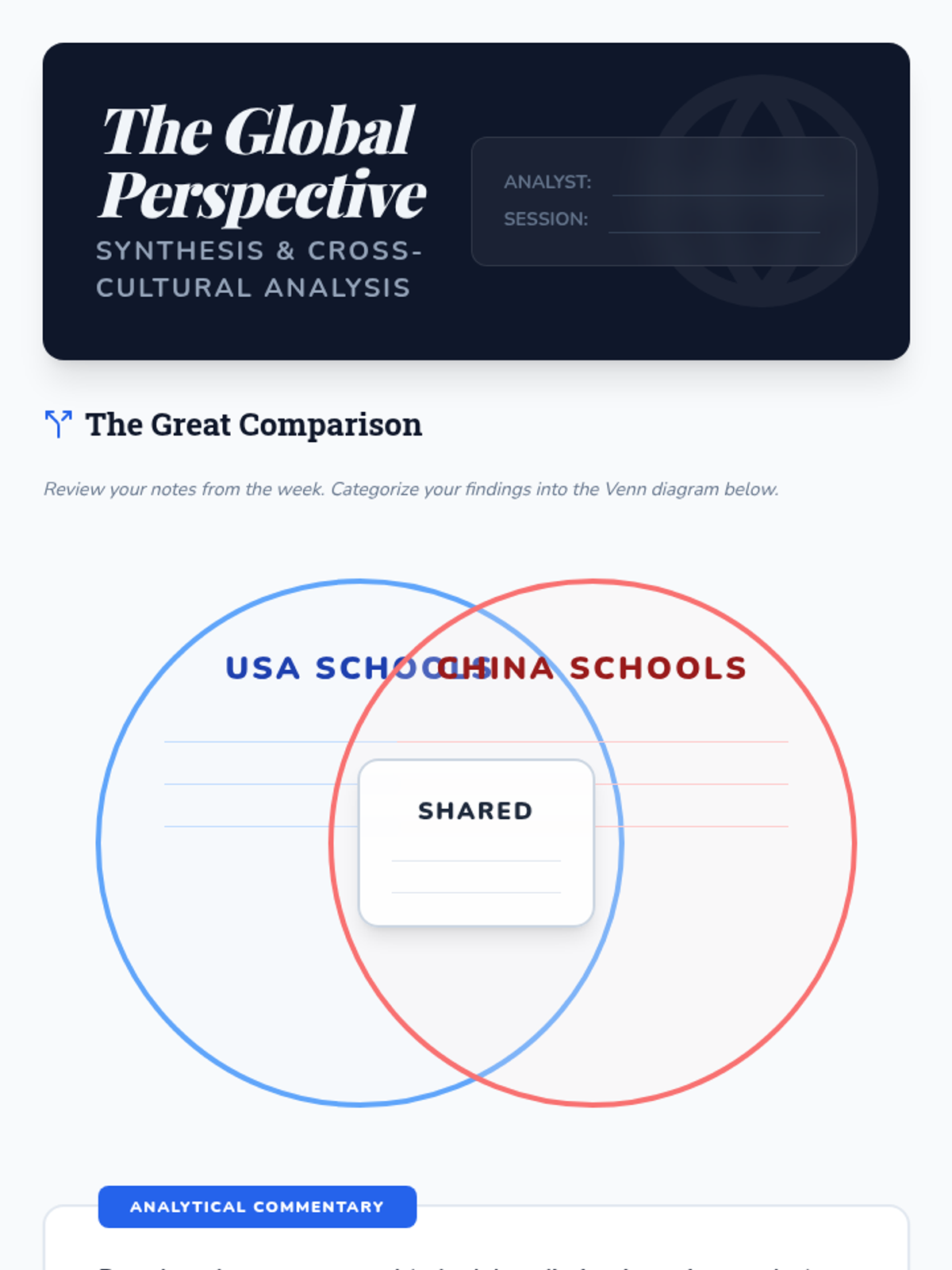
Synthesizing evidence from the week, students compare education styles and articulate their own perspectives using Venn diagrams and short written responses.
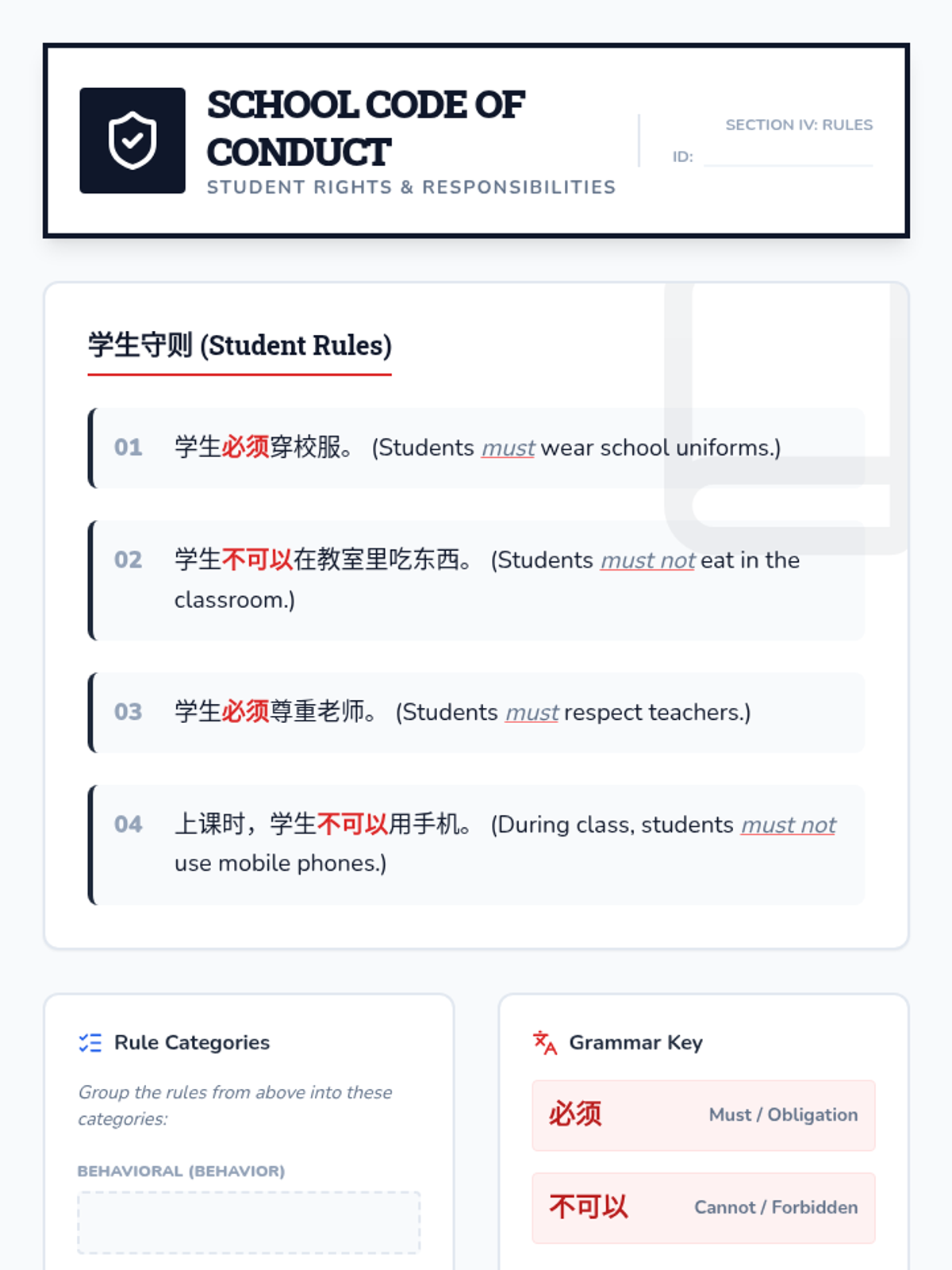
Students analyze school rules and codes of conduct using imperative and modal verbs to understand behavioral and academic expectations.
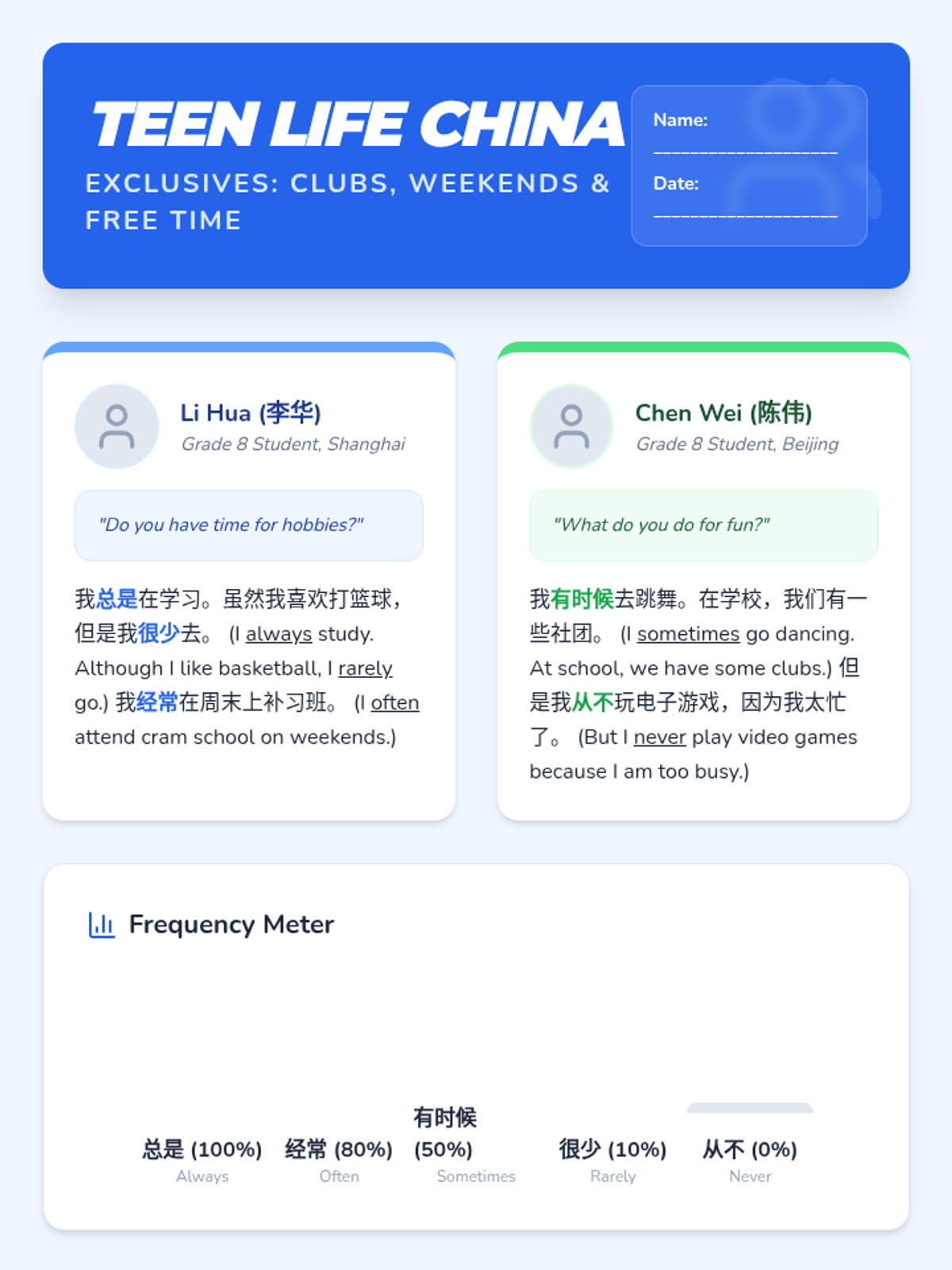
Students explore texts about extracurricular activities and social life, focusing on frequency adverbs and the balance between study and play.
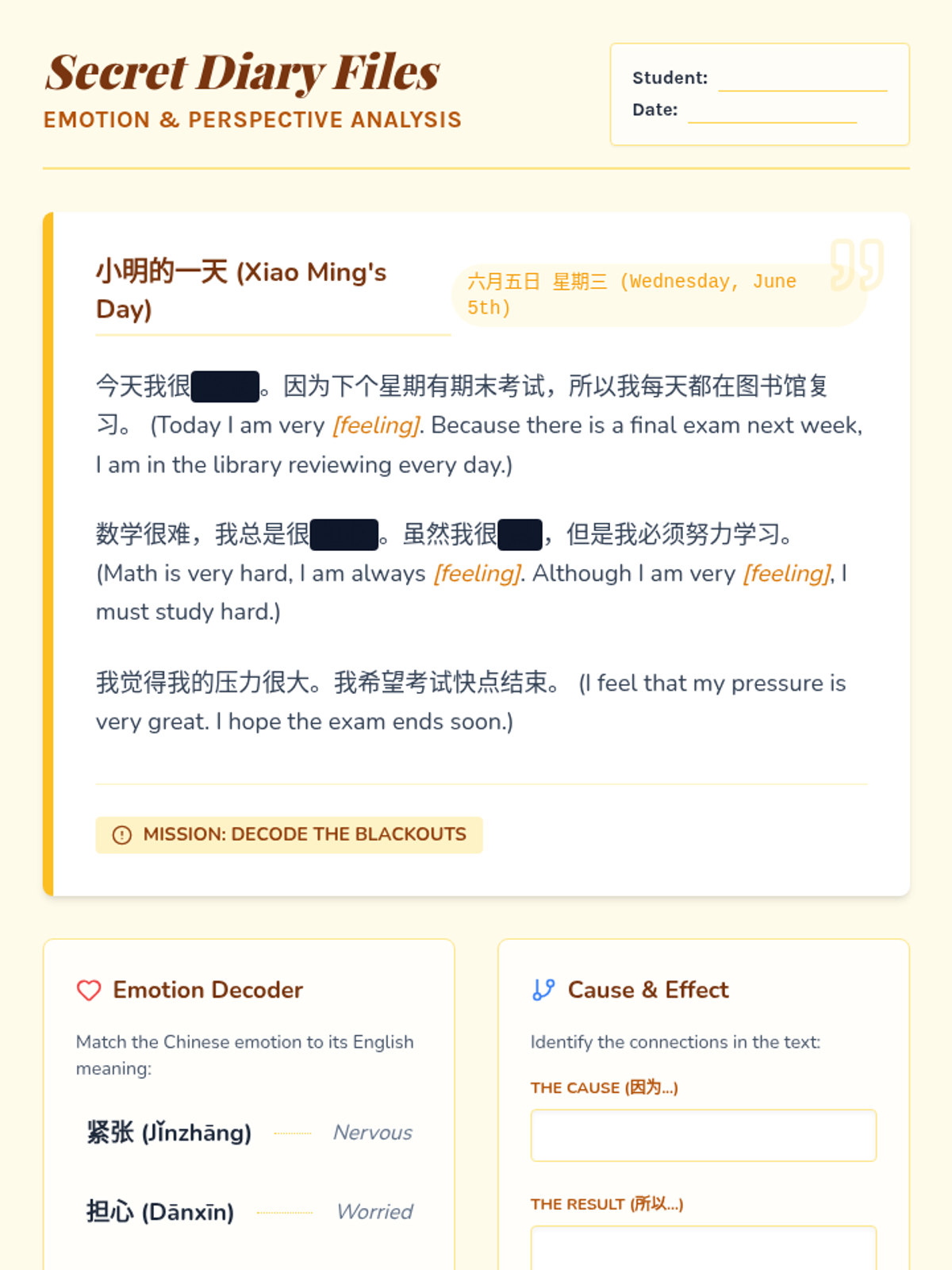
Focusing on emotional tone and cause-effect structures, students read personal diary entries to understand the feelings and pressures of Chinese peers.
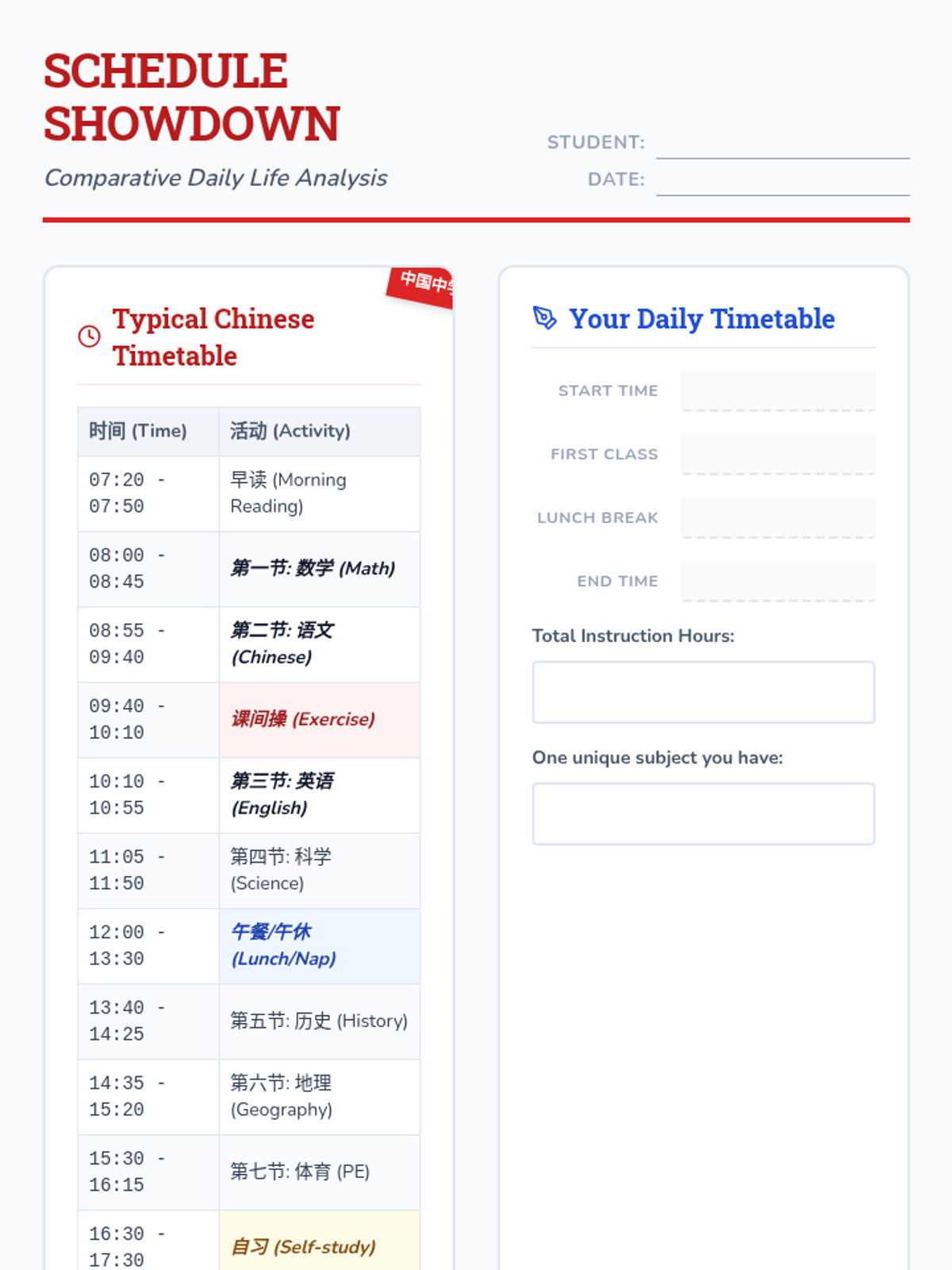
Students read and analyze a typical Chinese middle school timetable, comparing it to their own to understand the structure of the school day and academic subjects.
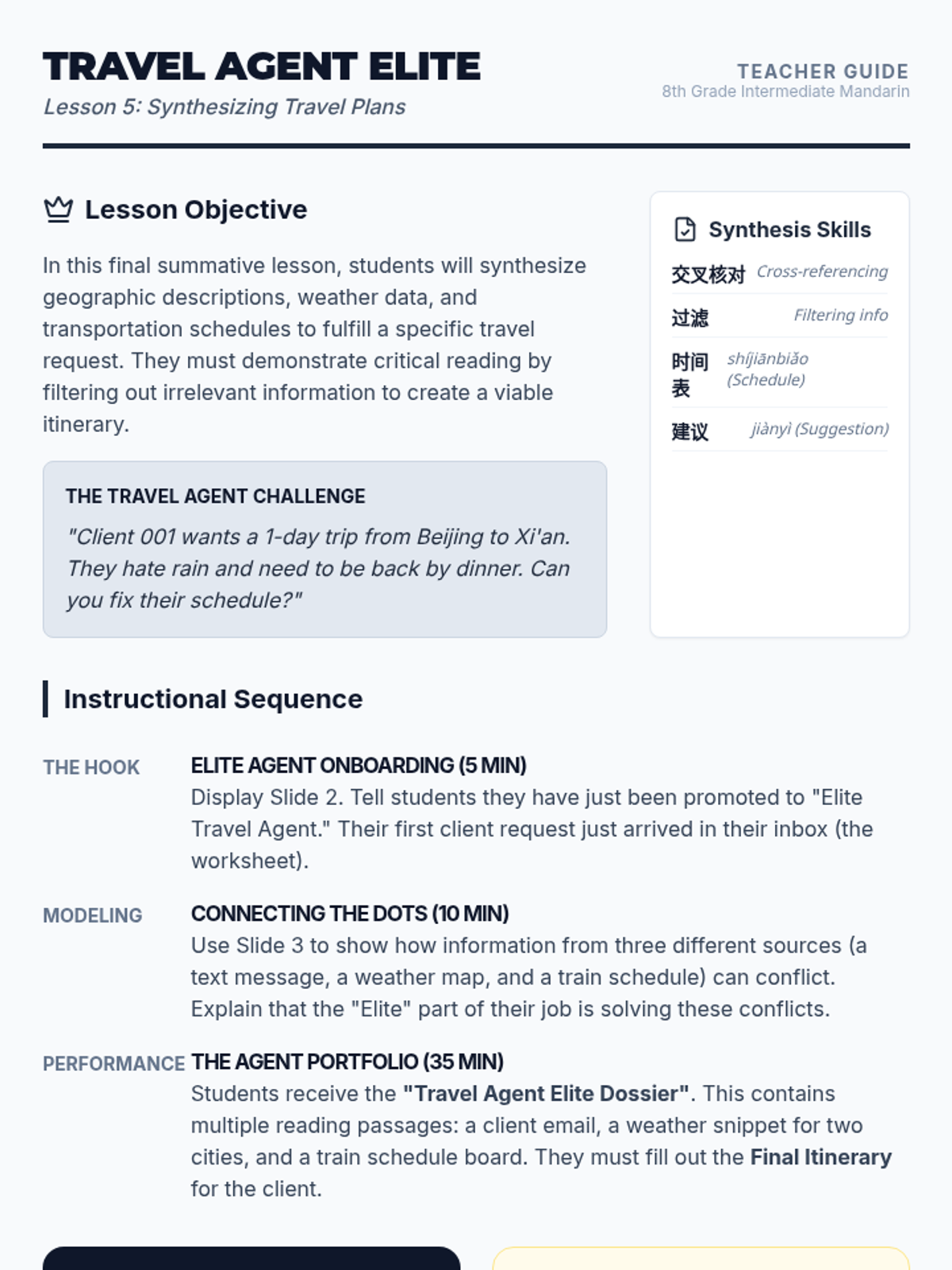
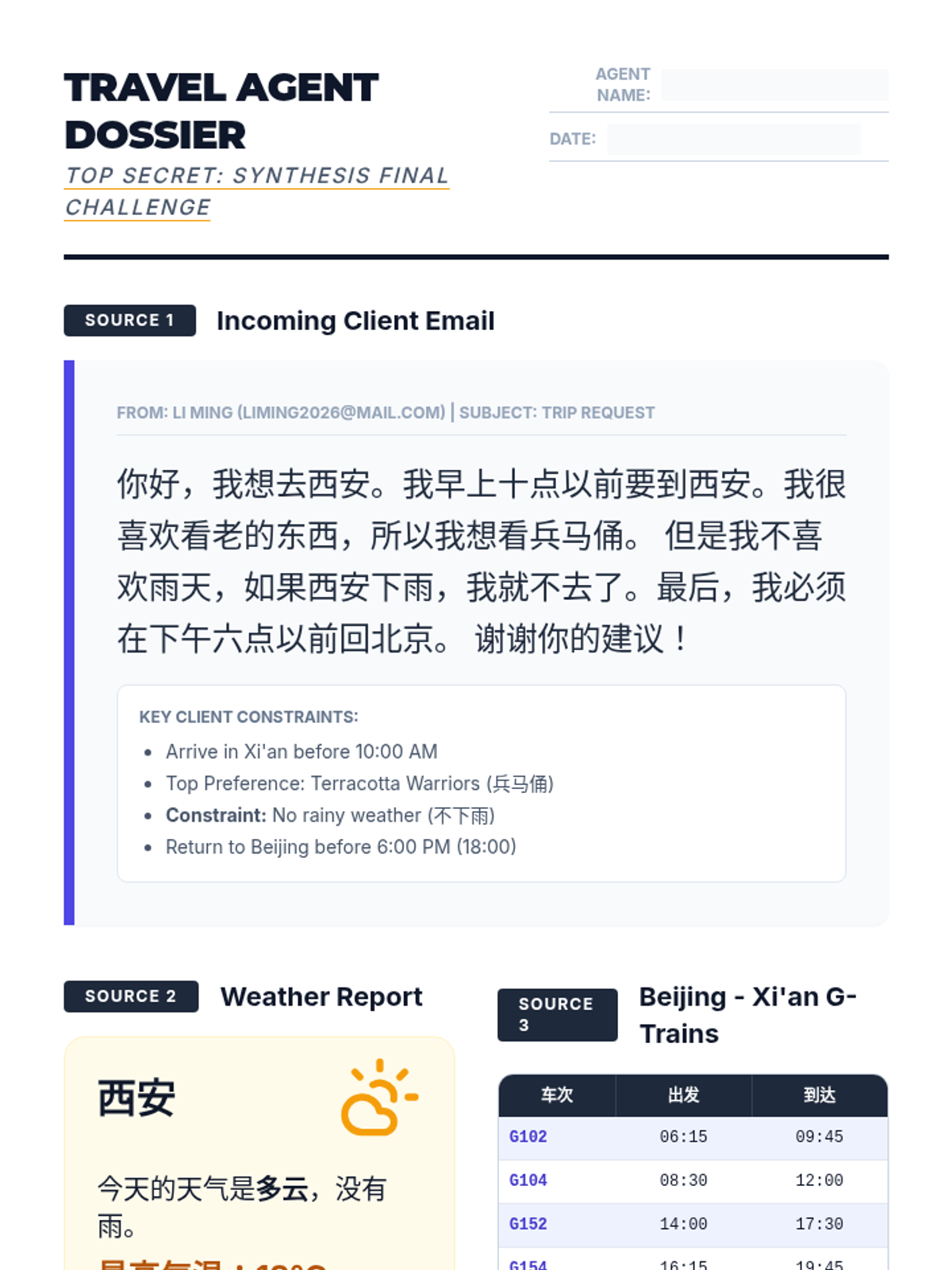
Students synthesize information from multiple sources to create a complete travel itinerary for a specific client request.
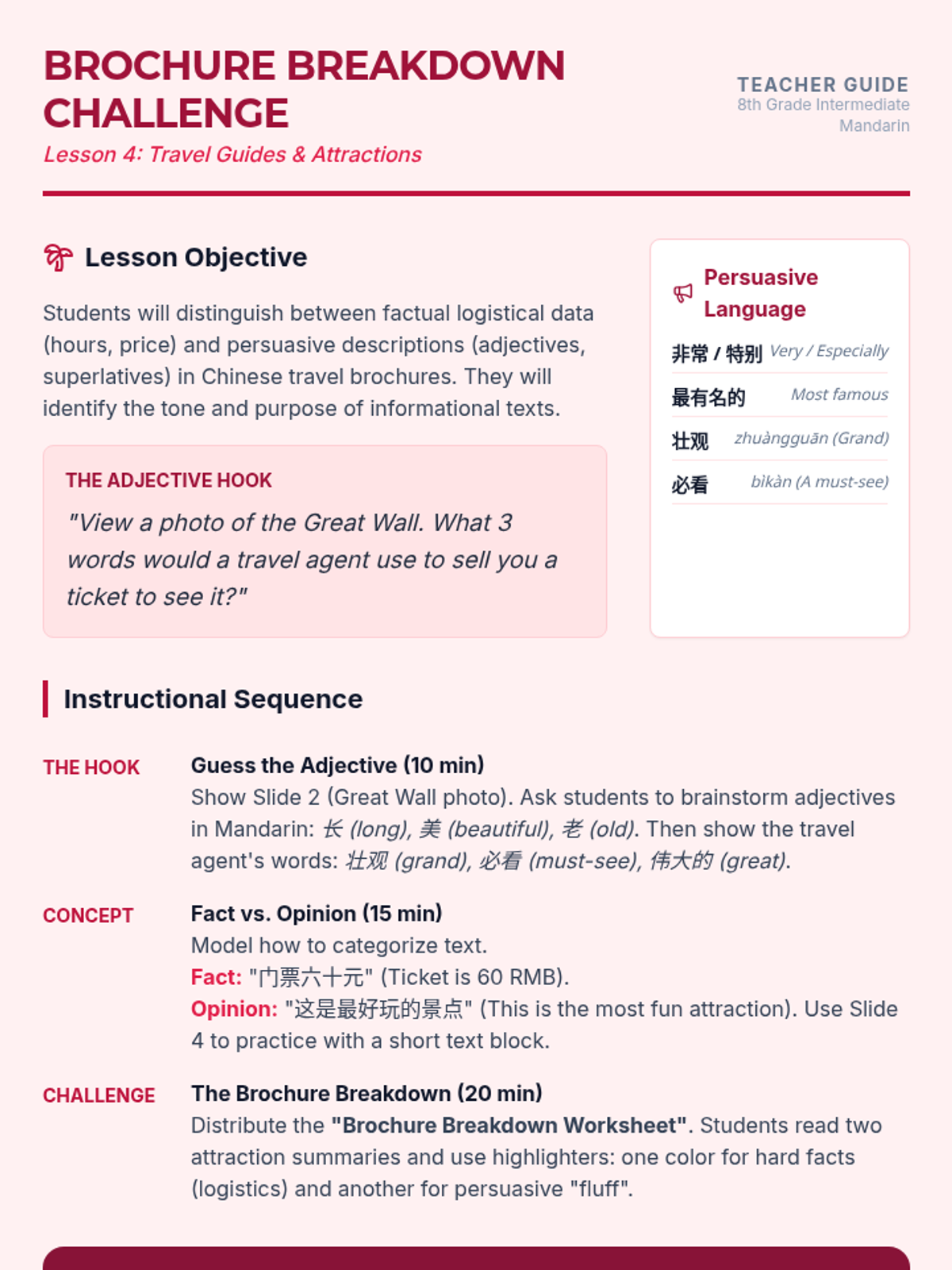
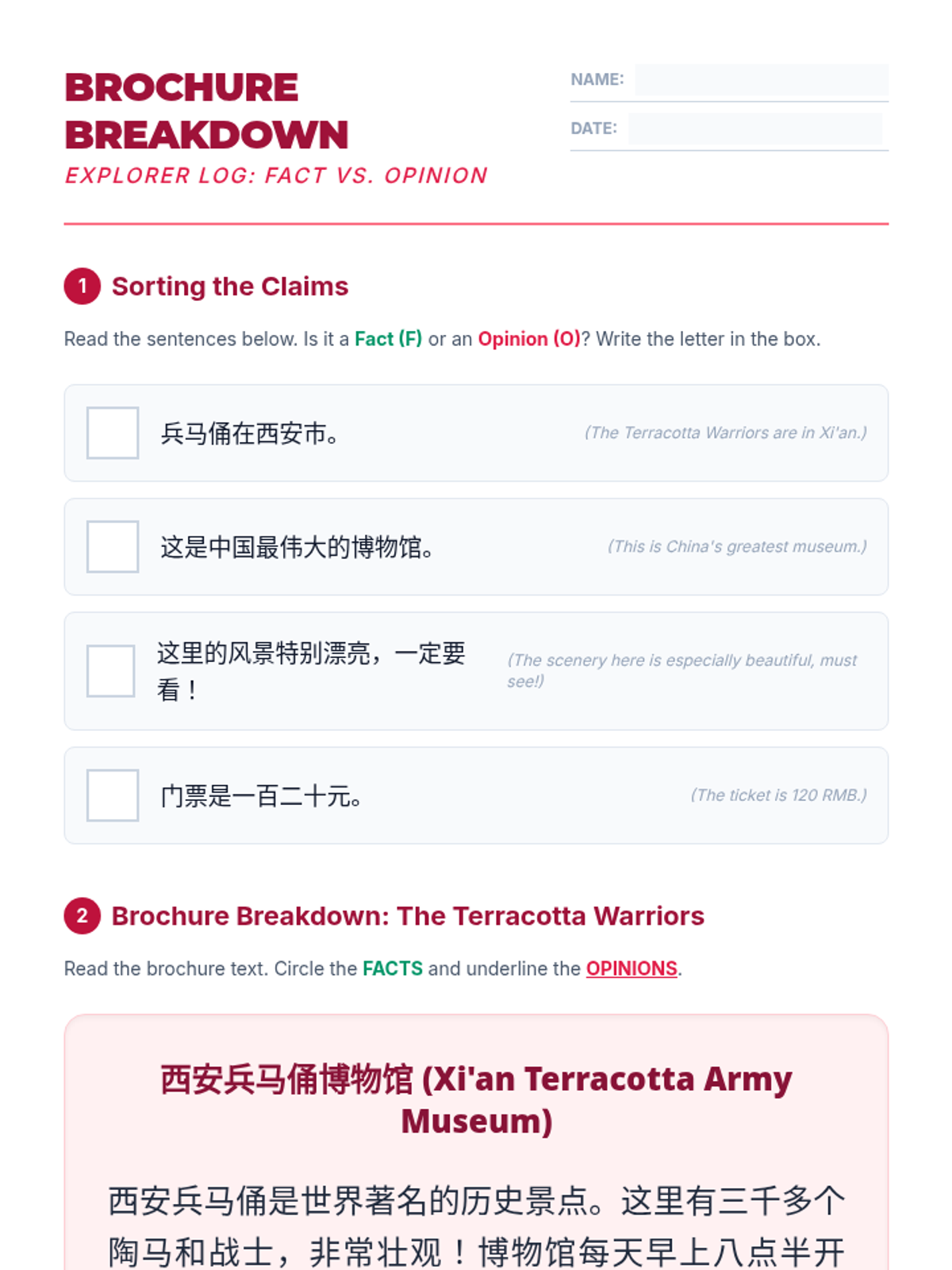
Students analyze travel brochures for major attractions, distinguishing between factual logistics and persuasive descriptions.
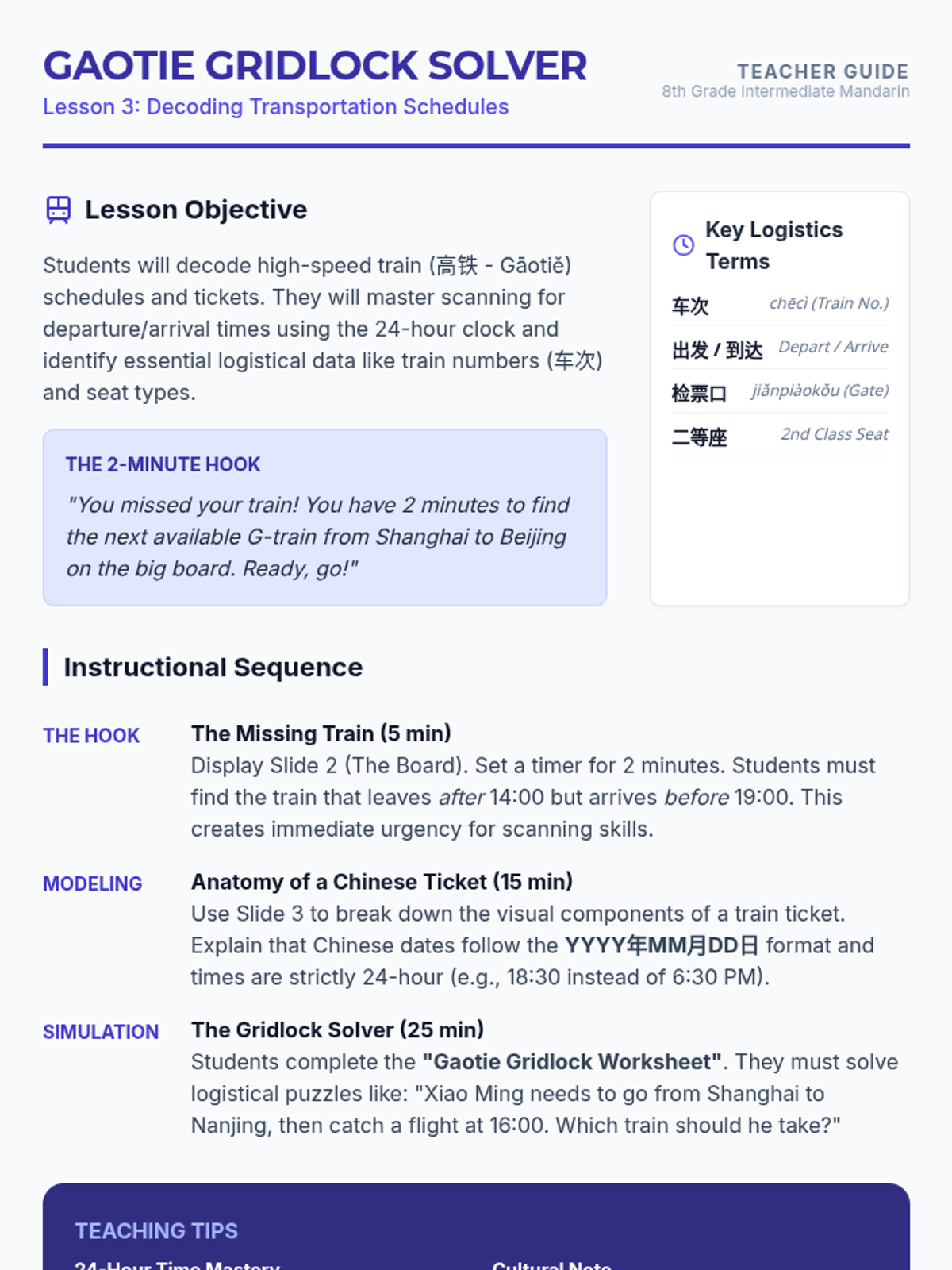
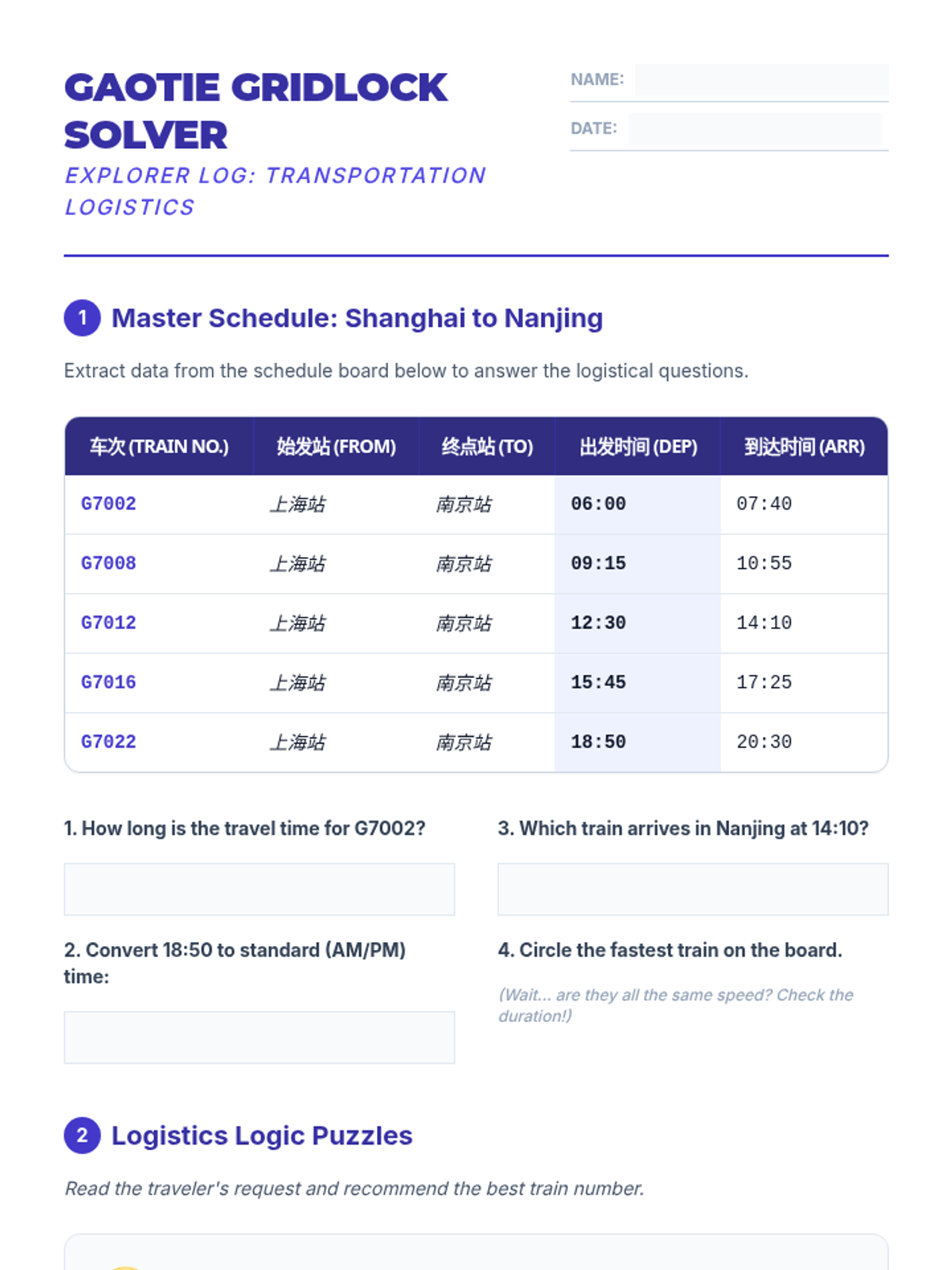
Students decode high-speed train schedules and tickets to solve logistics problems and navigate the 24-hour clock.
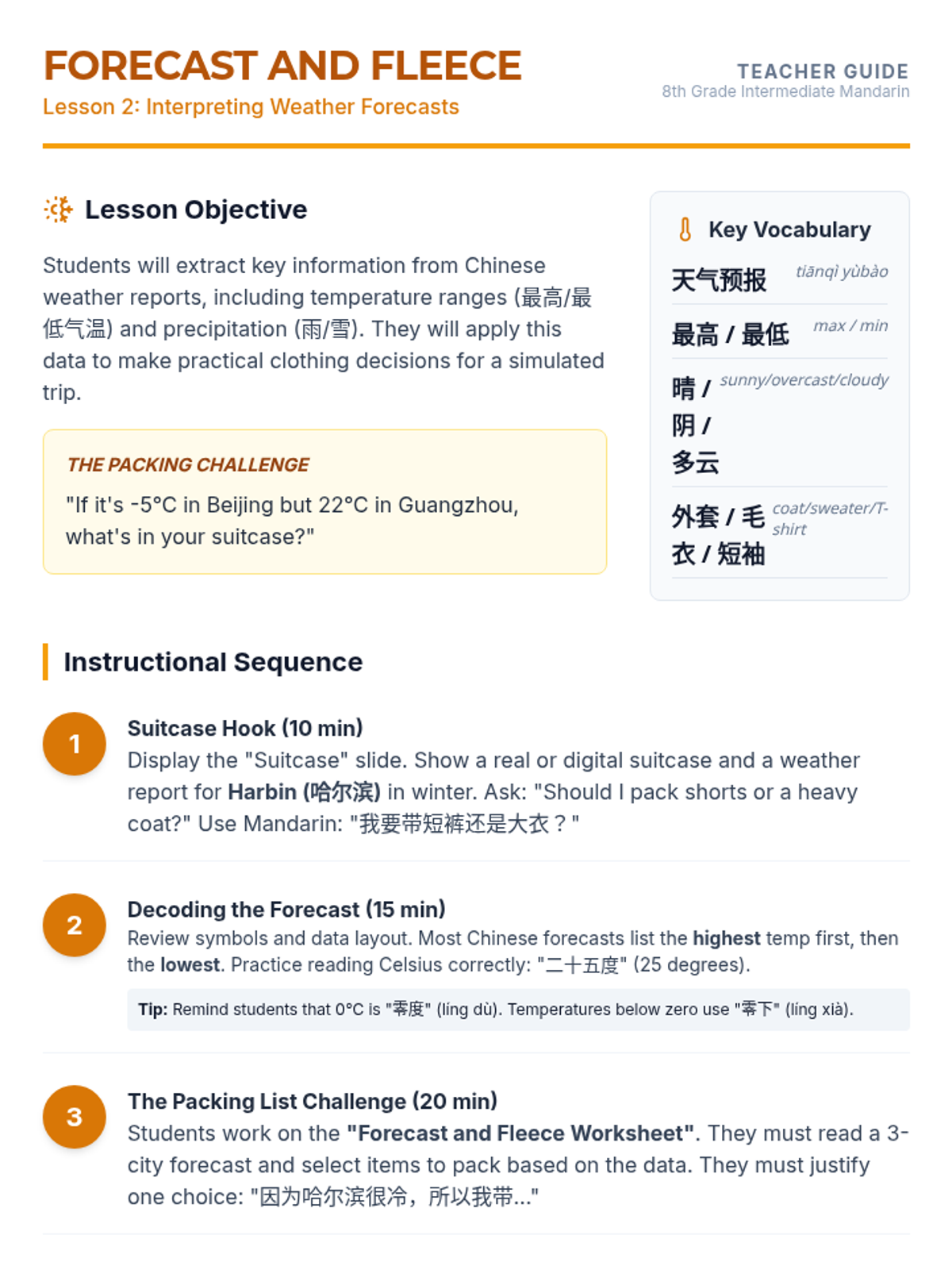
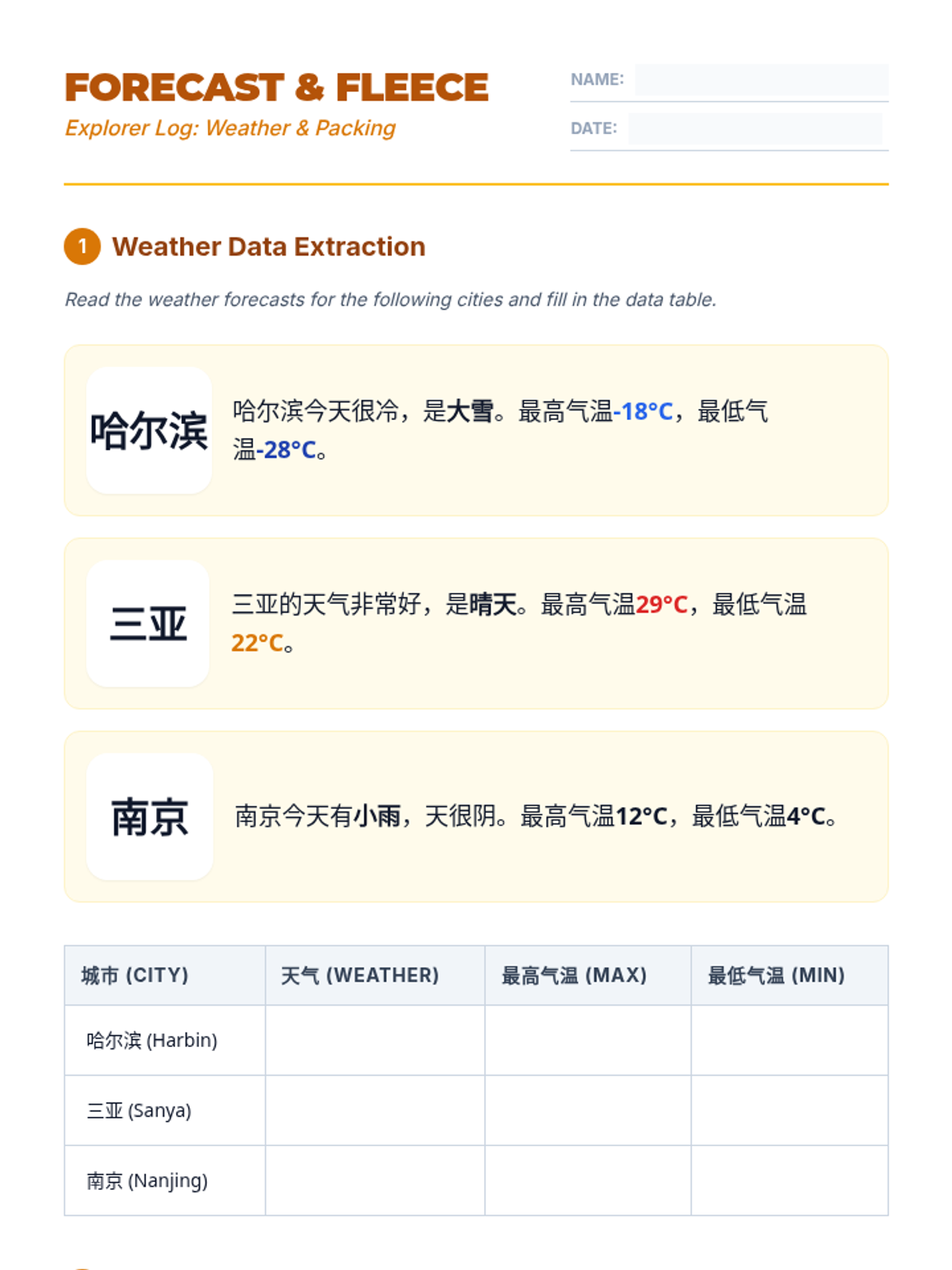
Students extract data from weather forecasts to make practical decisions about packing and clothing recommendations.
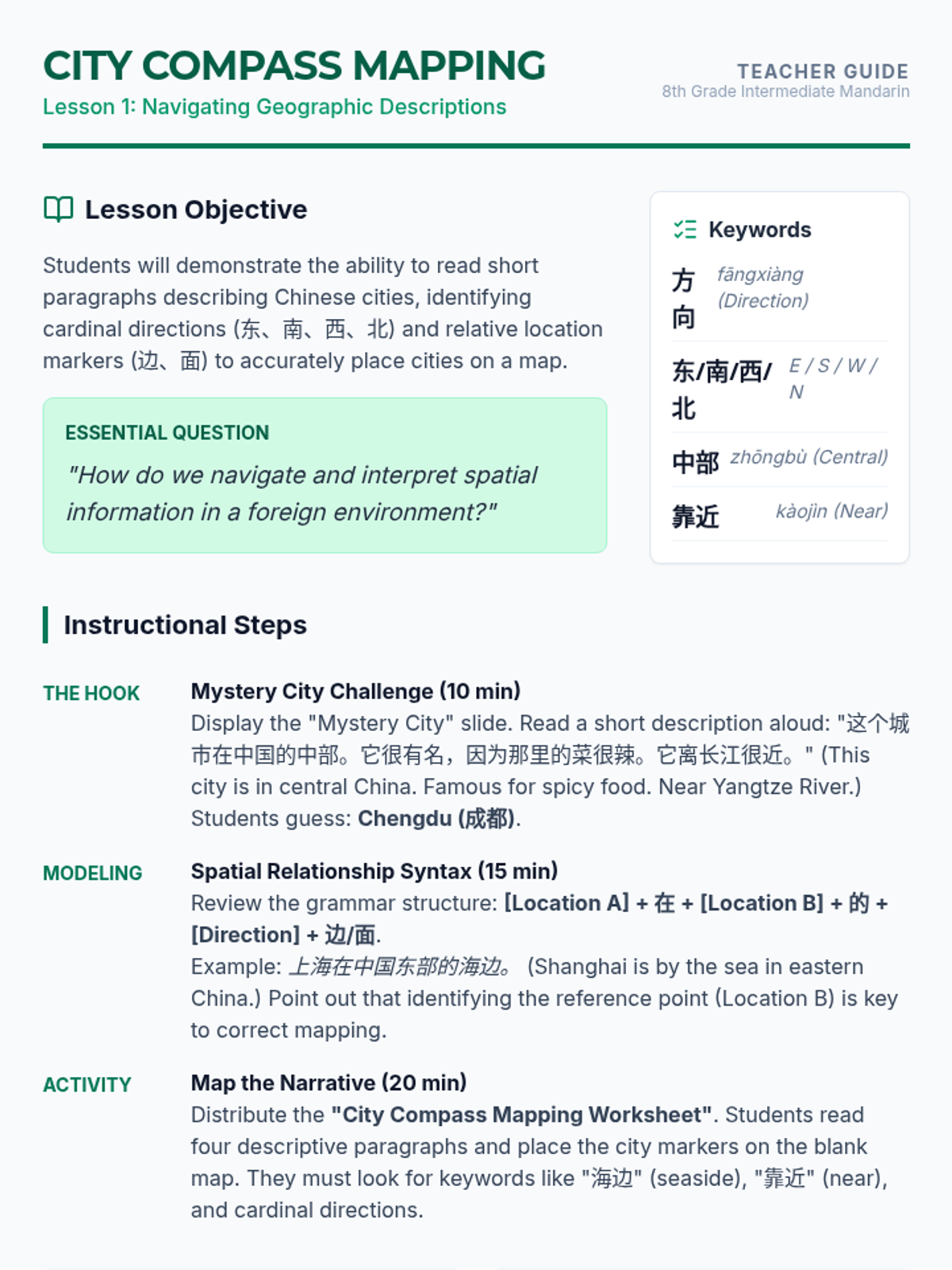
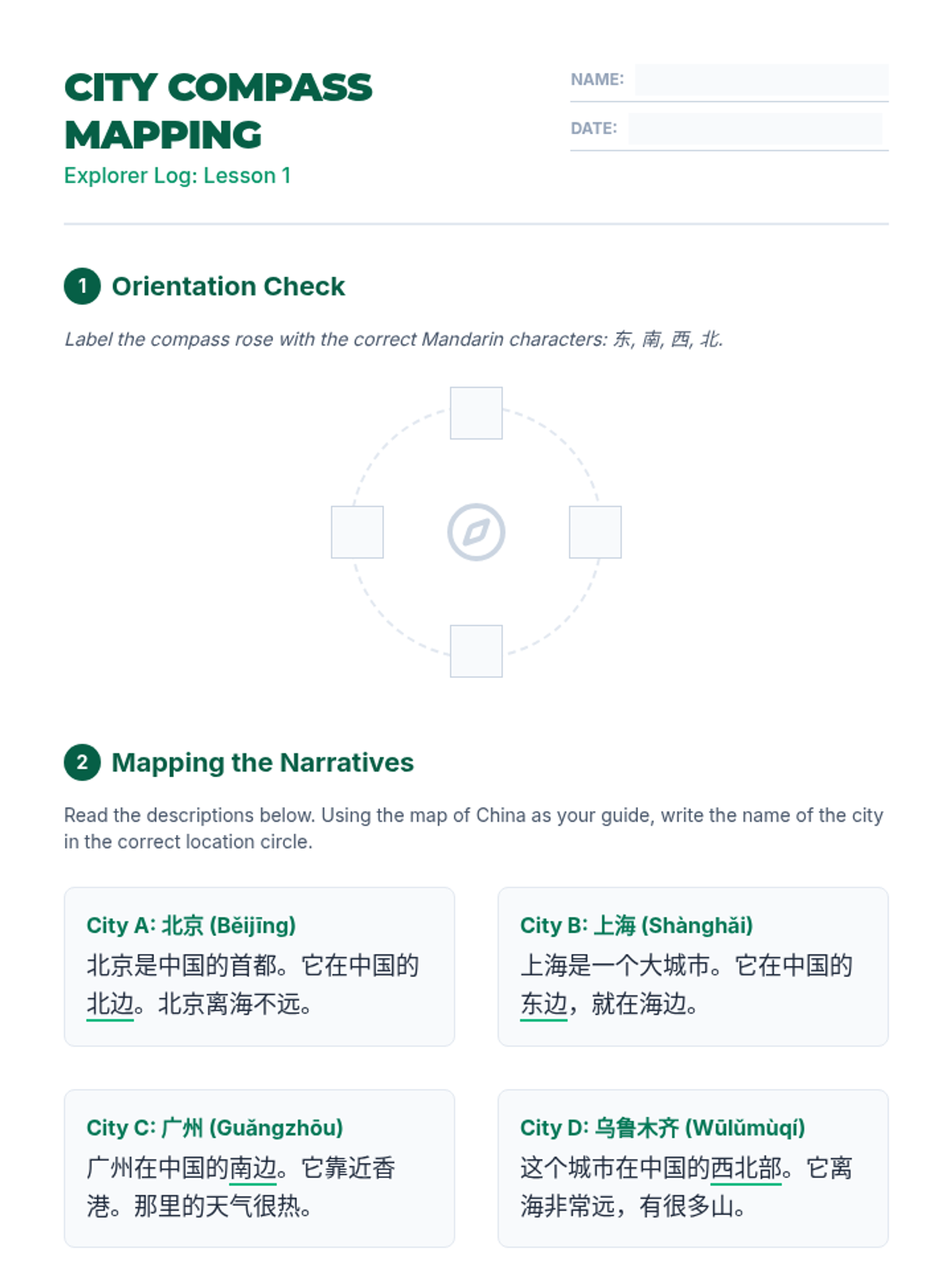
Students read descriptions of Chinese cities using cardinal directions and geographic features, mapping them based on textual clues.
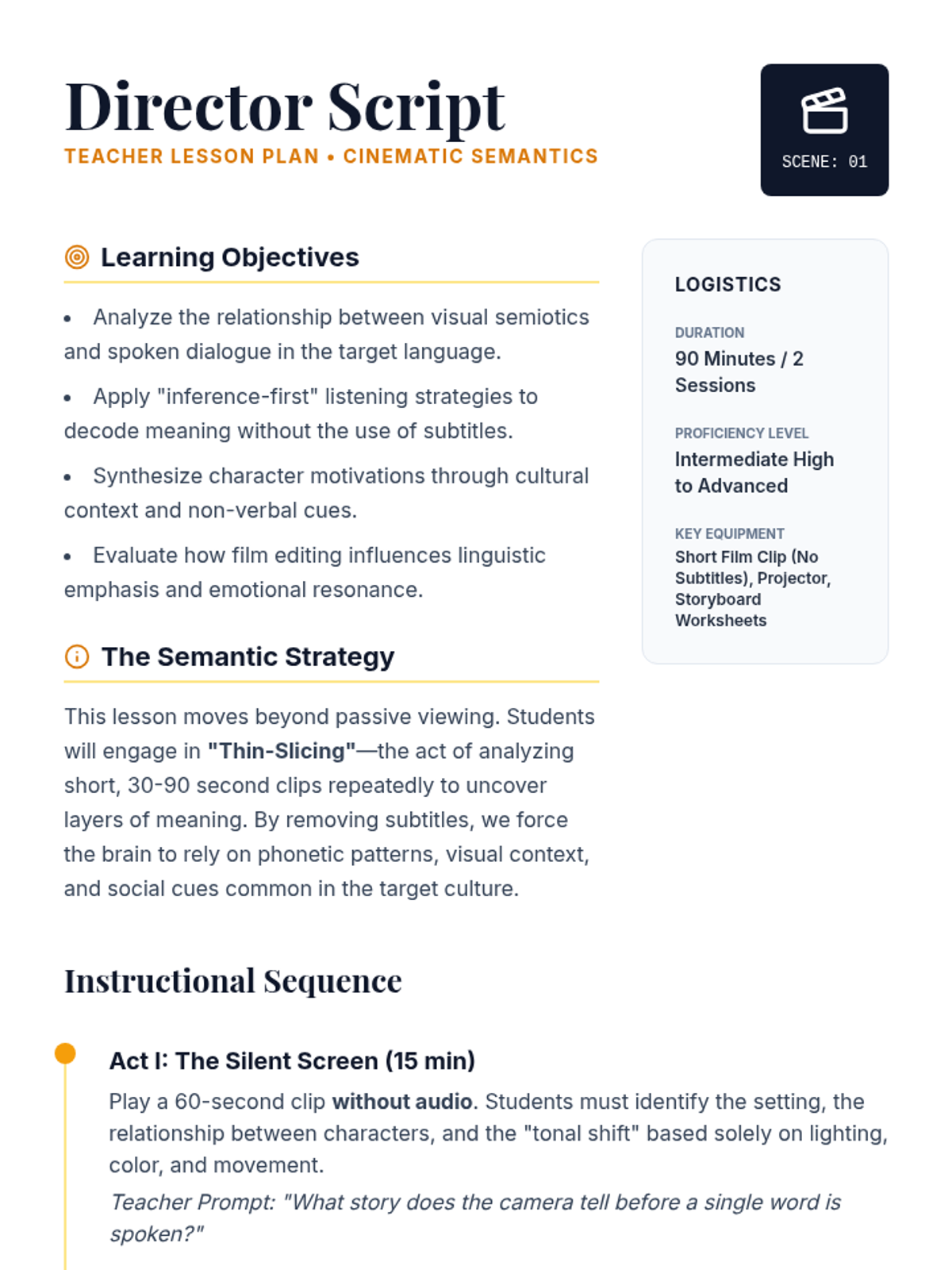
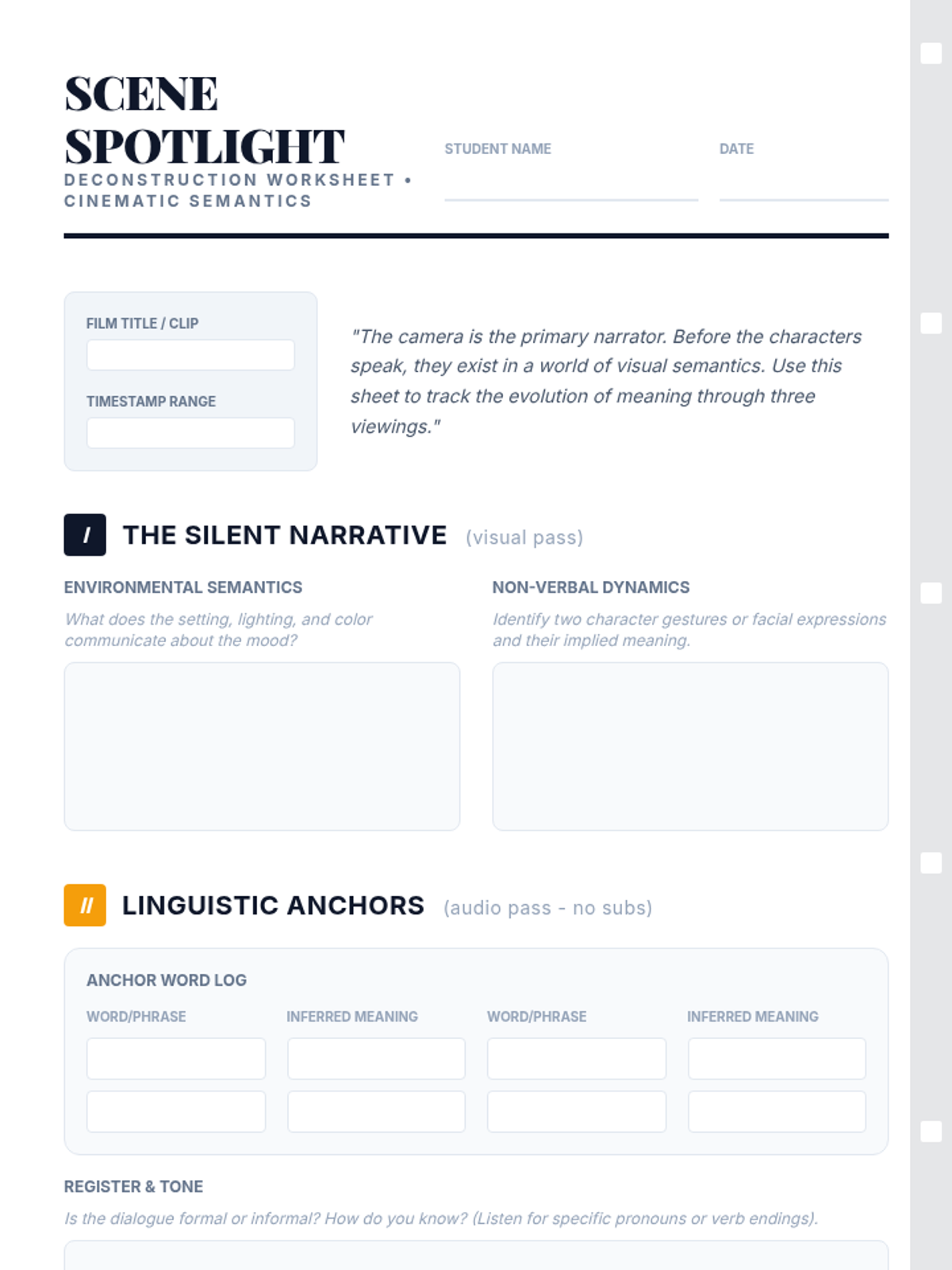
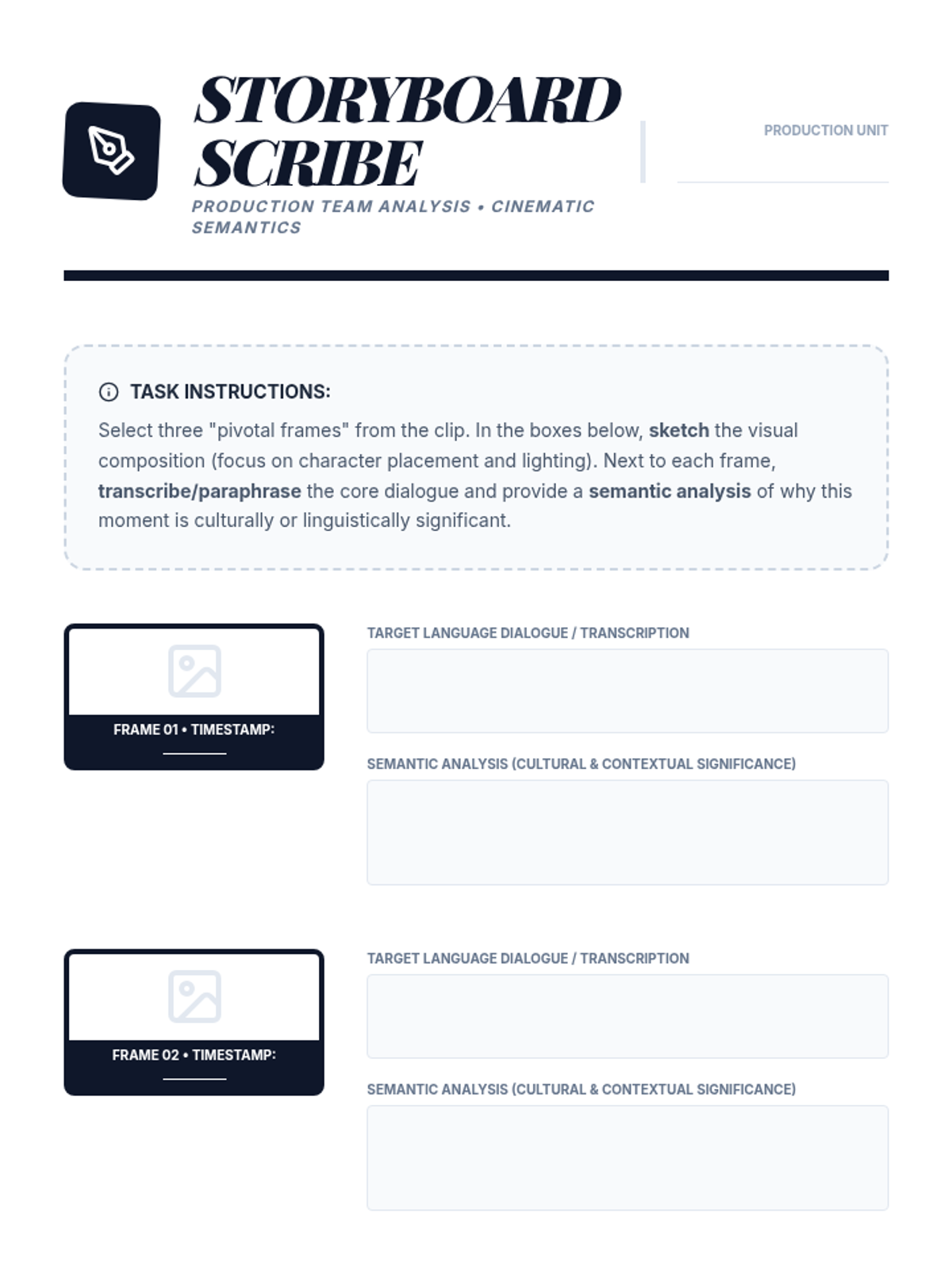
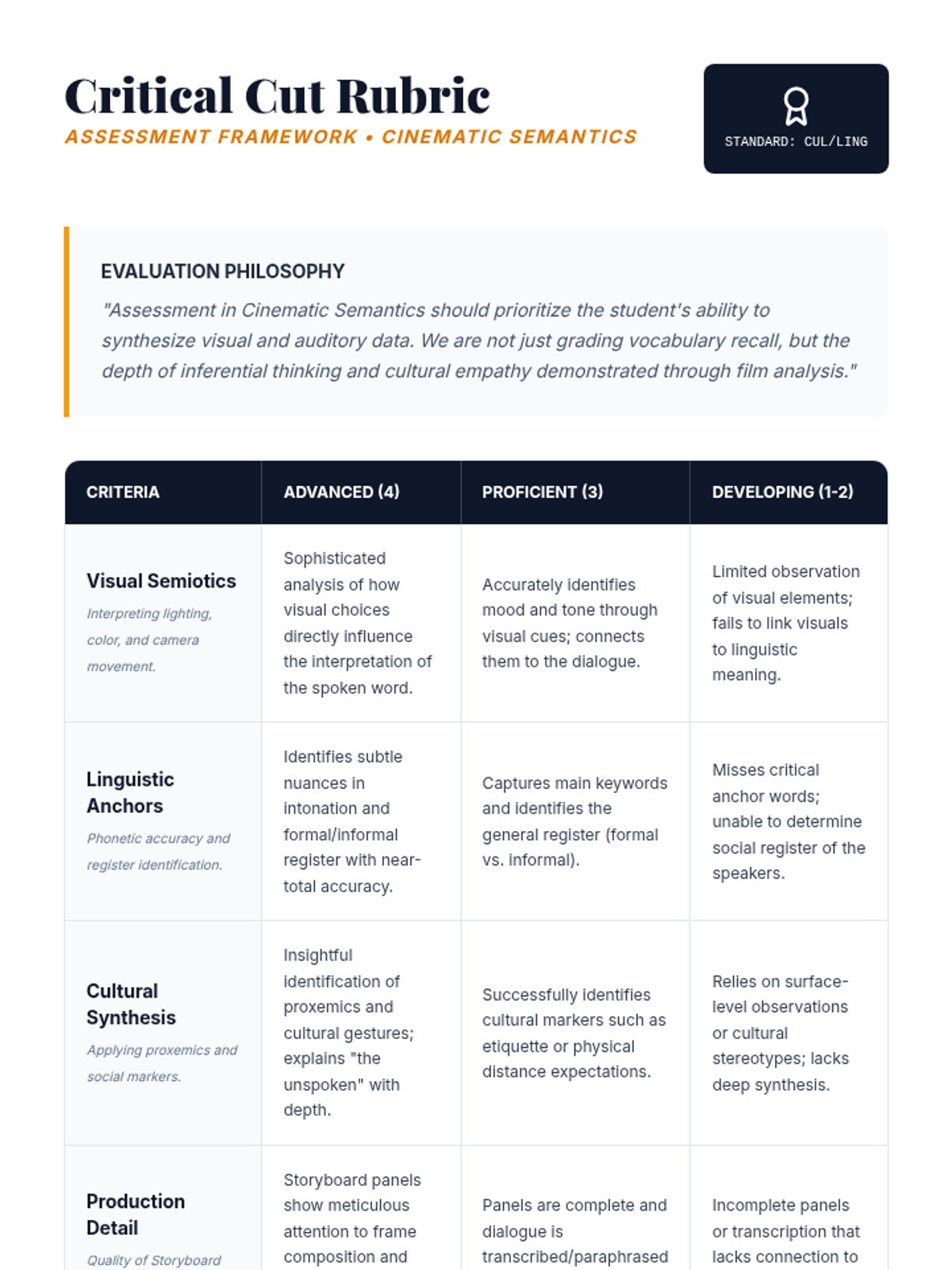
A comprehensive framework for foreign language educators to guide students through deep linguistic and cultural analysis of film, focusing on visual storytelling and advanced listening strategies.
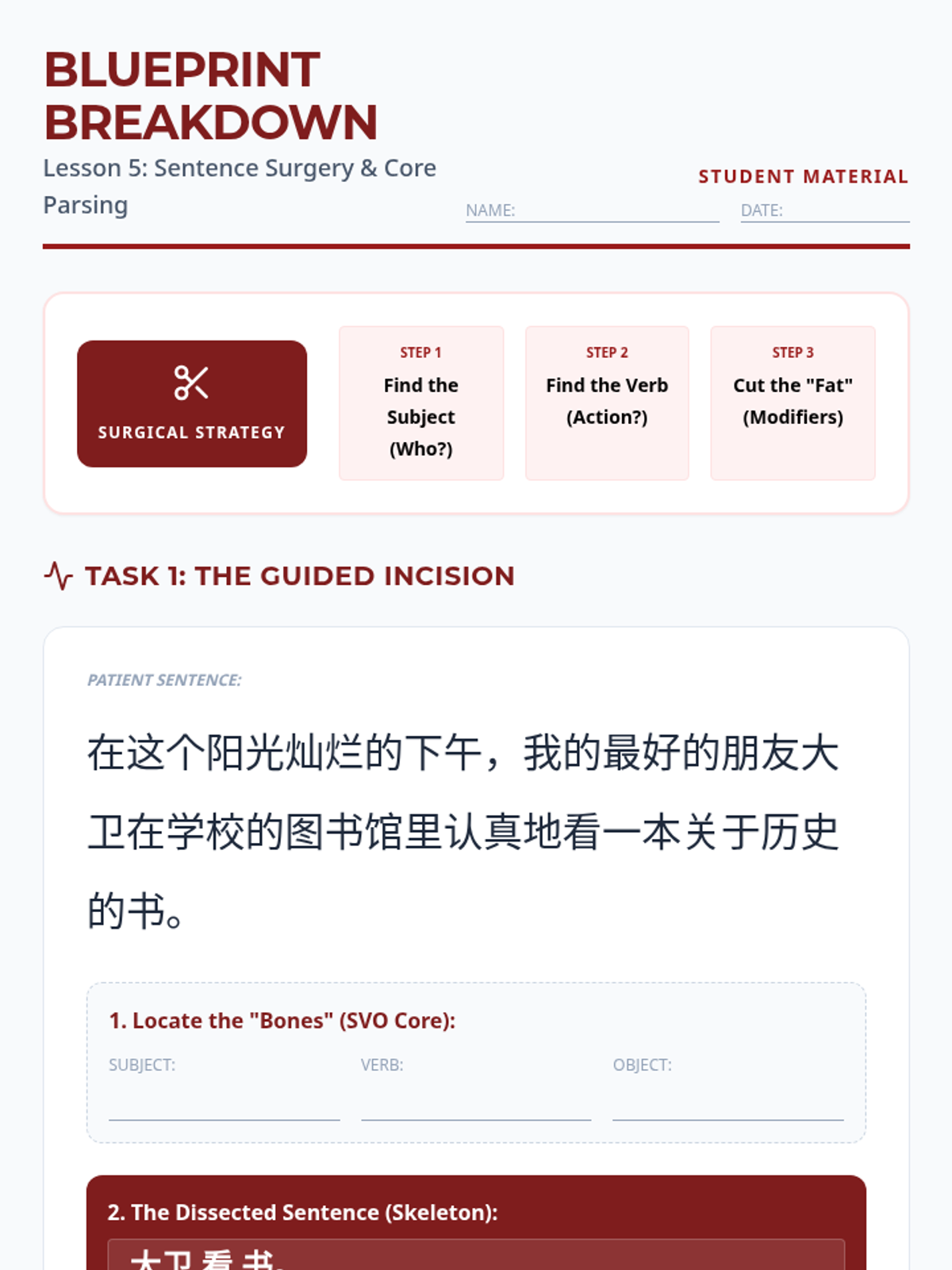
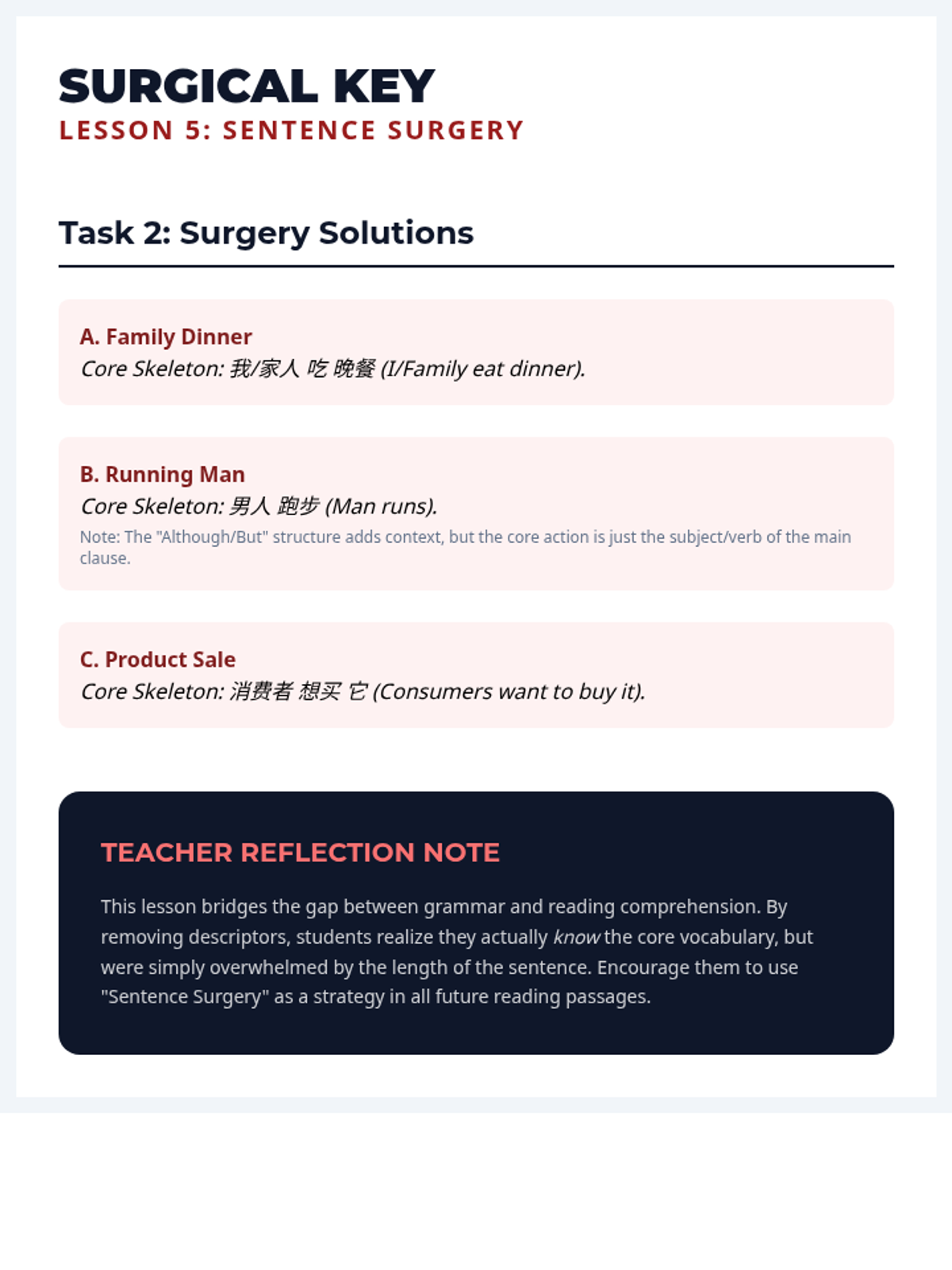
Students practice 'sentence surgery' by parsing long, complex sentences into their core components, learning to isolate the main subject and verb from modifying clauses.
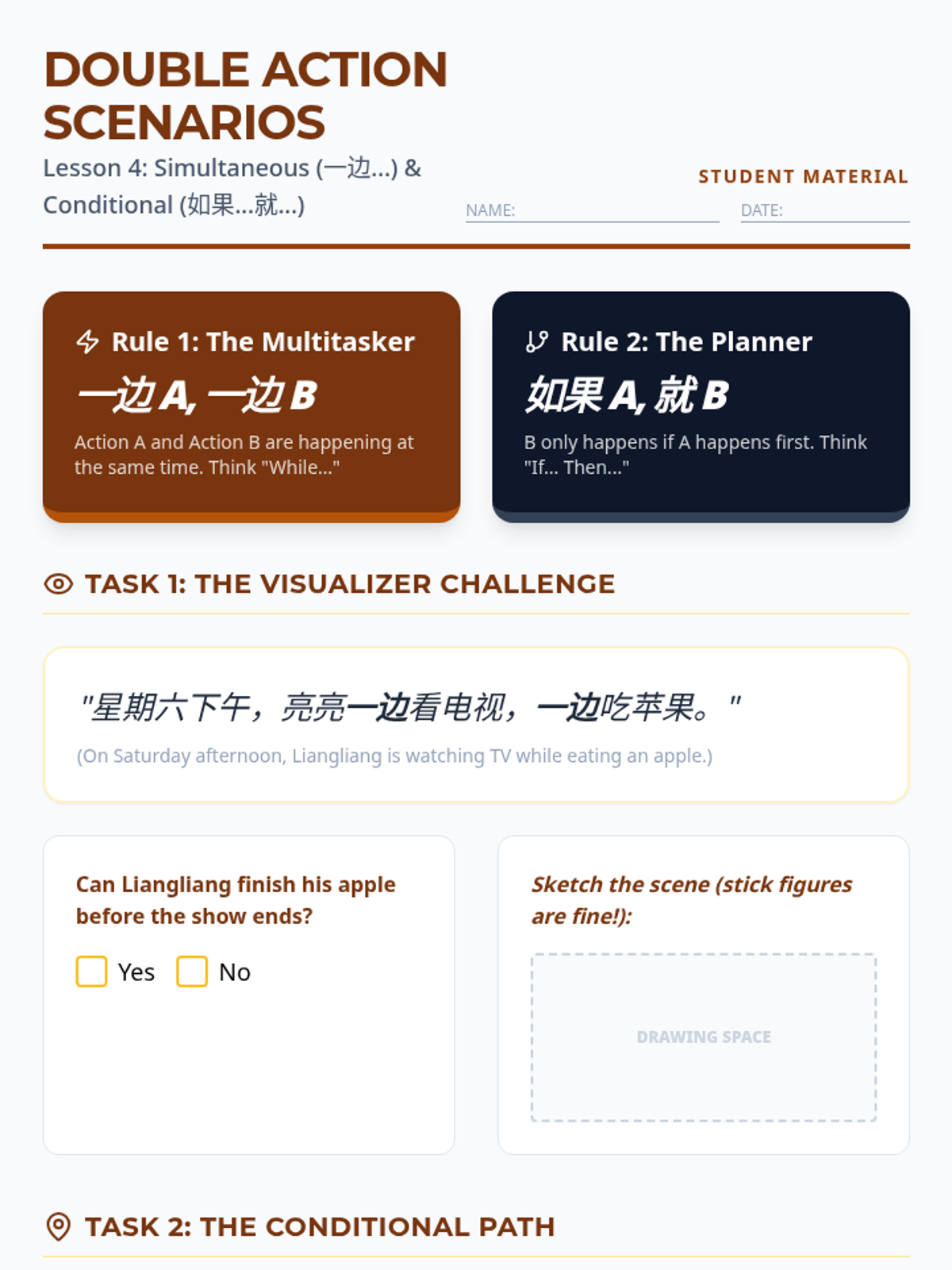
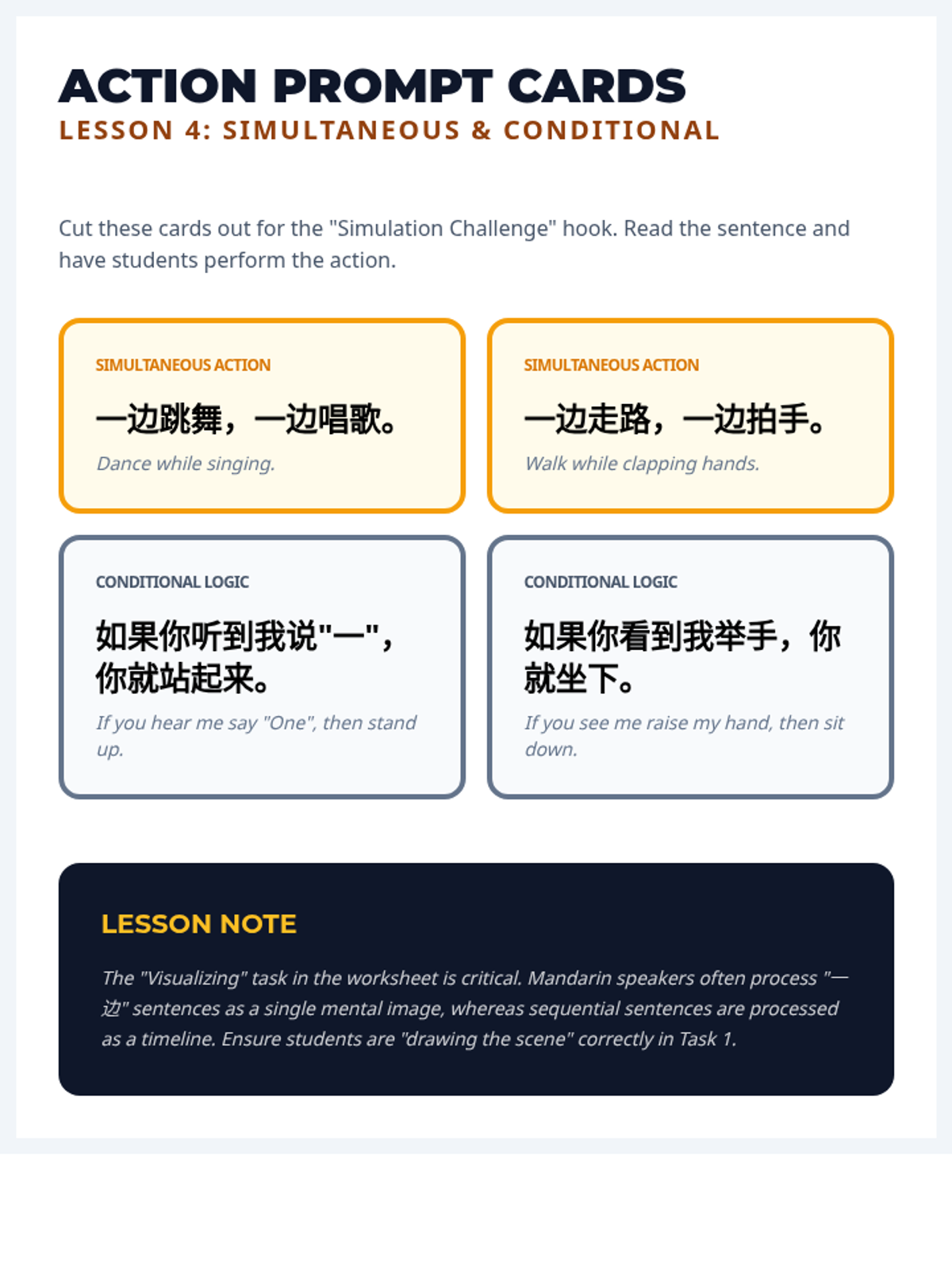
Students explore simultaneous actions (While... Also...) and conditional logic (If... Then...) through narratives, visualizing scenes to differentiate between concurrent and dependent events.
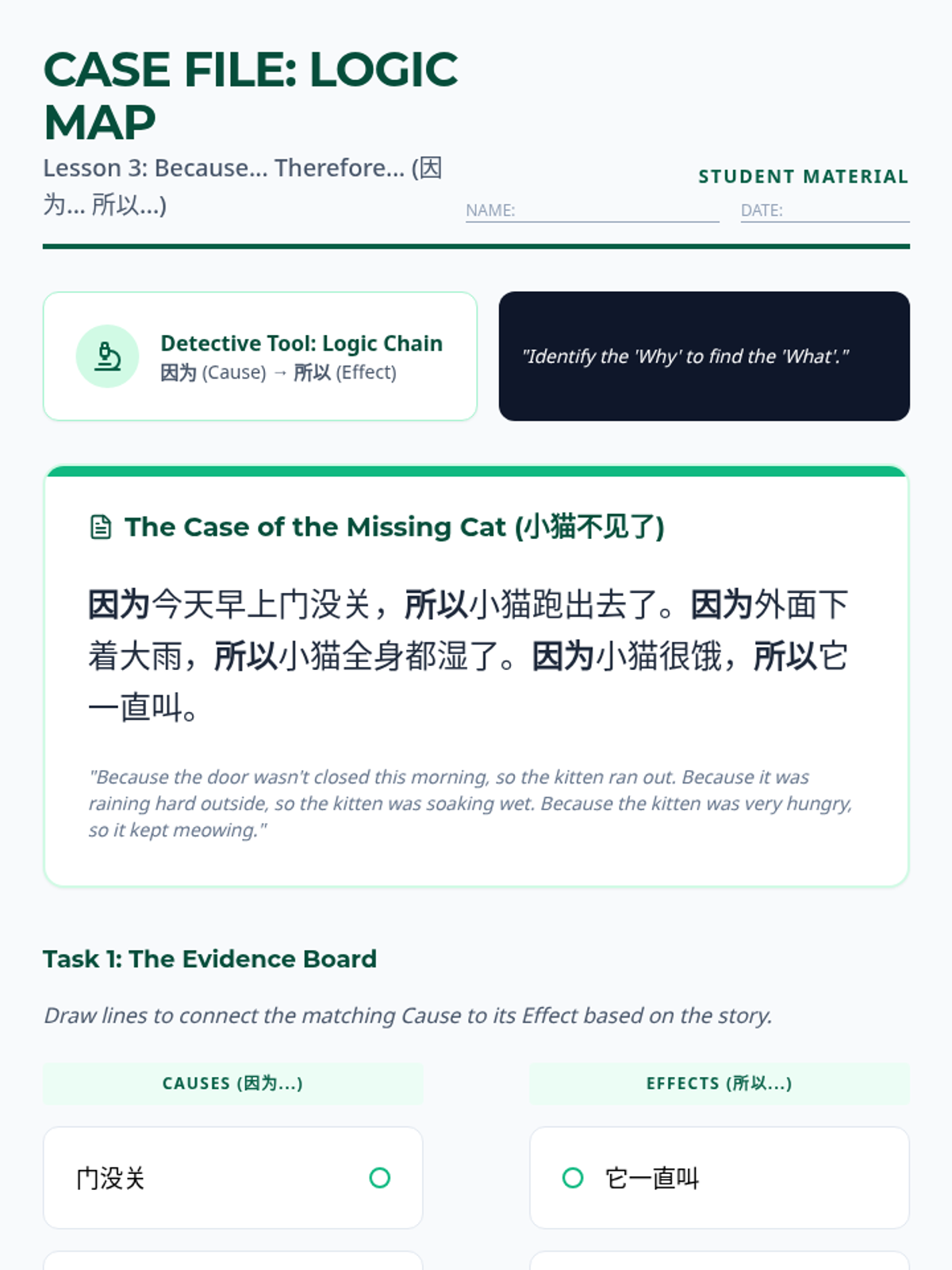
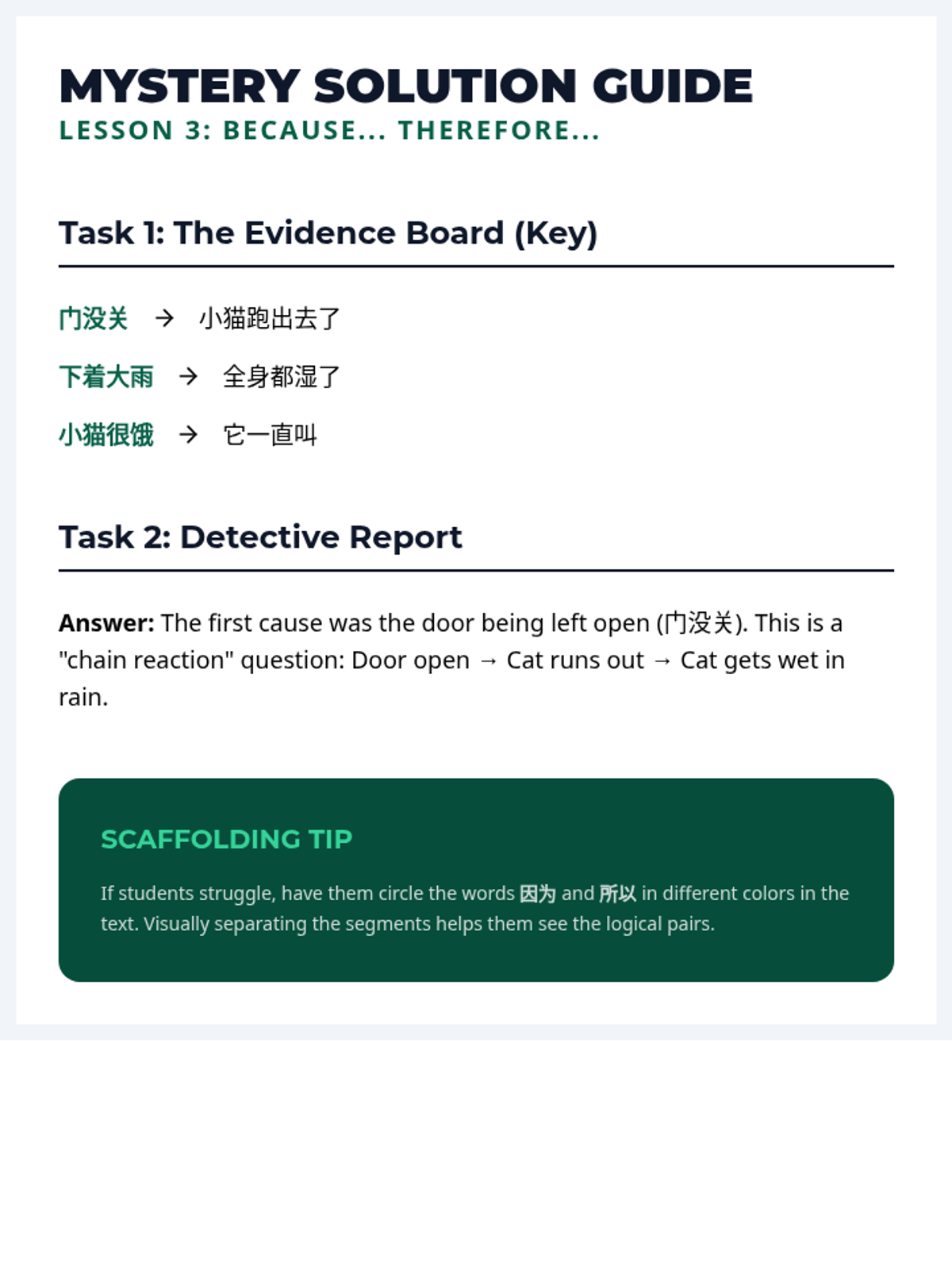
Students map cause-and-effect relationships using 'Because... Therefore...' (Yinwei... Suoyi...) structures within expository and mystery texts to develop logical reasoning skills.
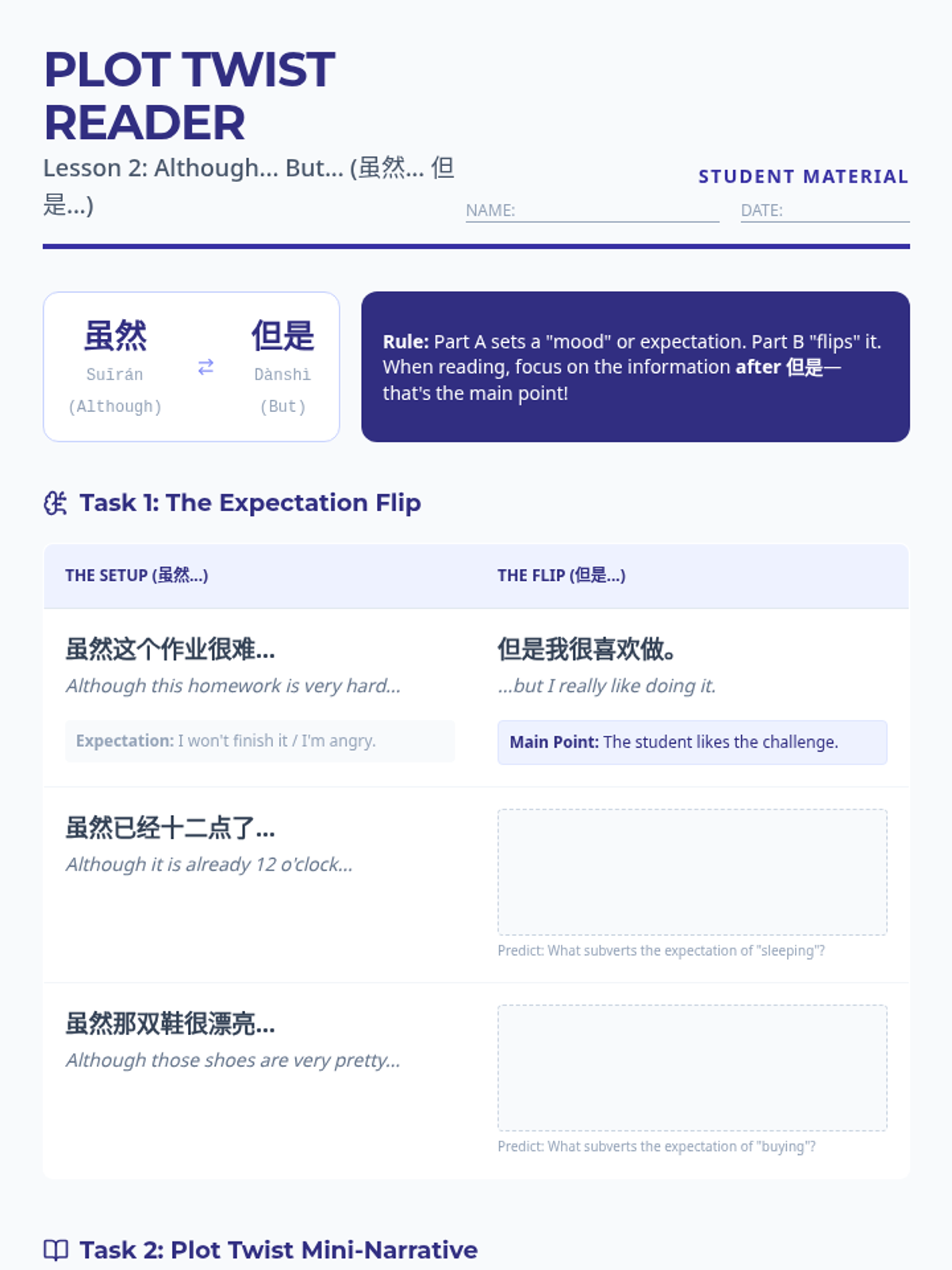
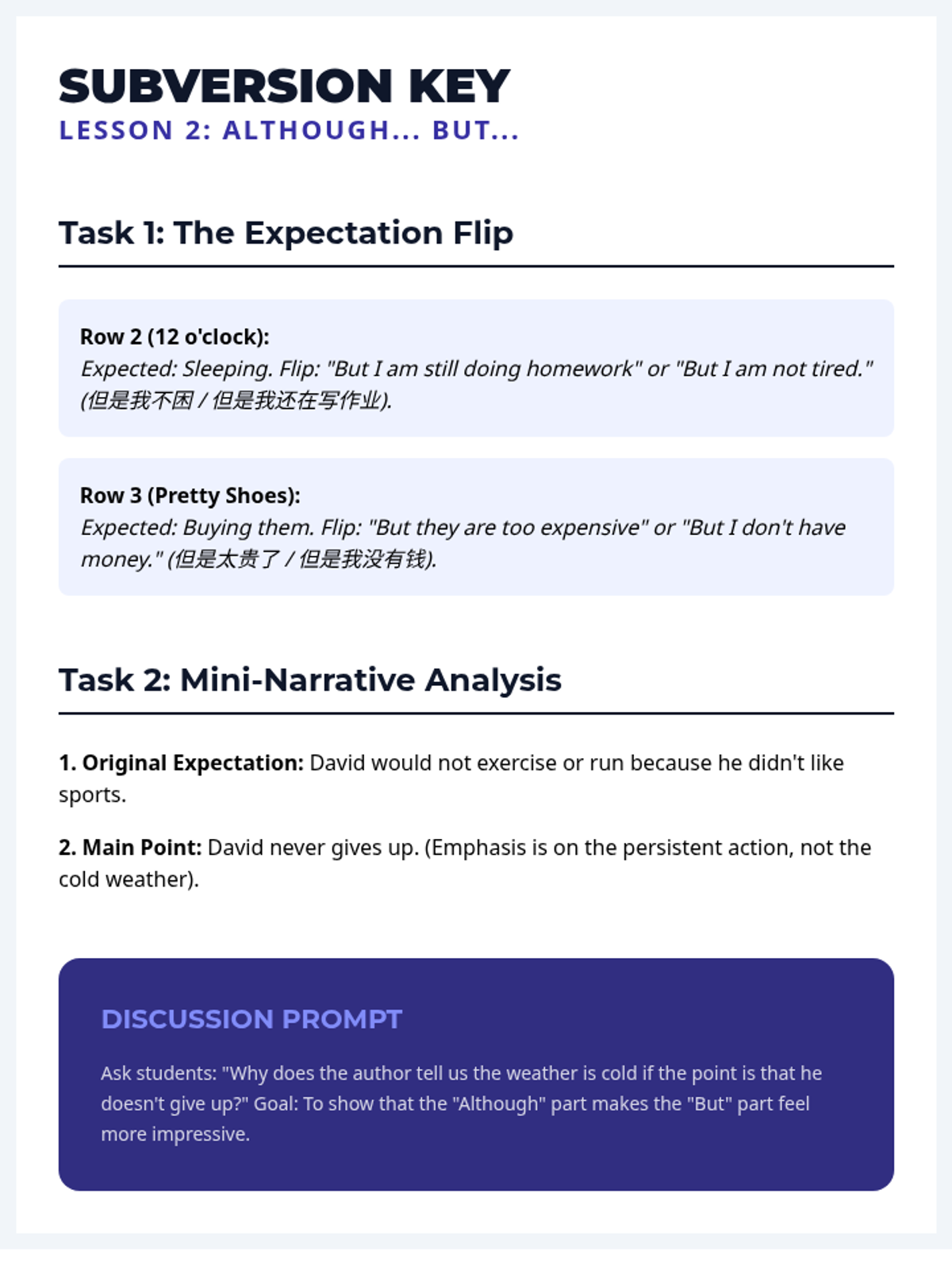
Students master the 'Although... But...' (Suiran... Danshi...) structure, analyzing how the second clause shifts emphasis and subverts expectations in narrative contexts.
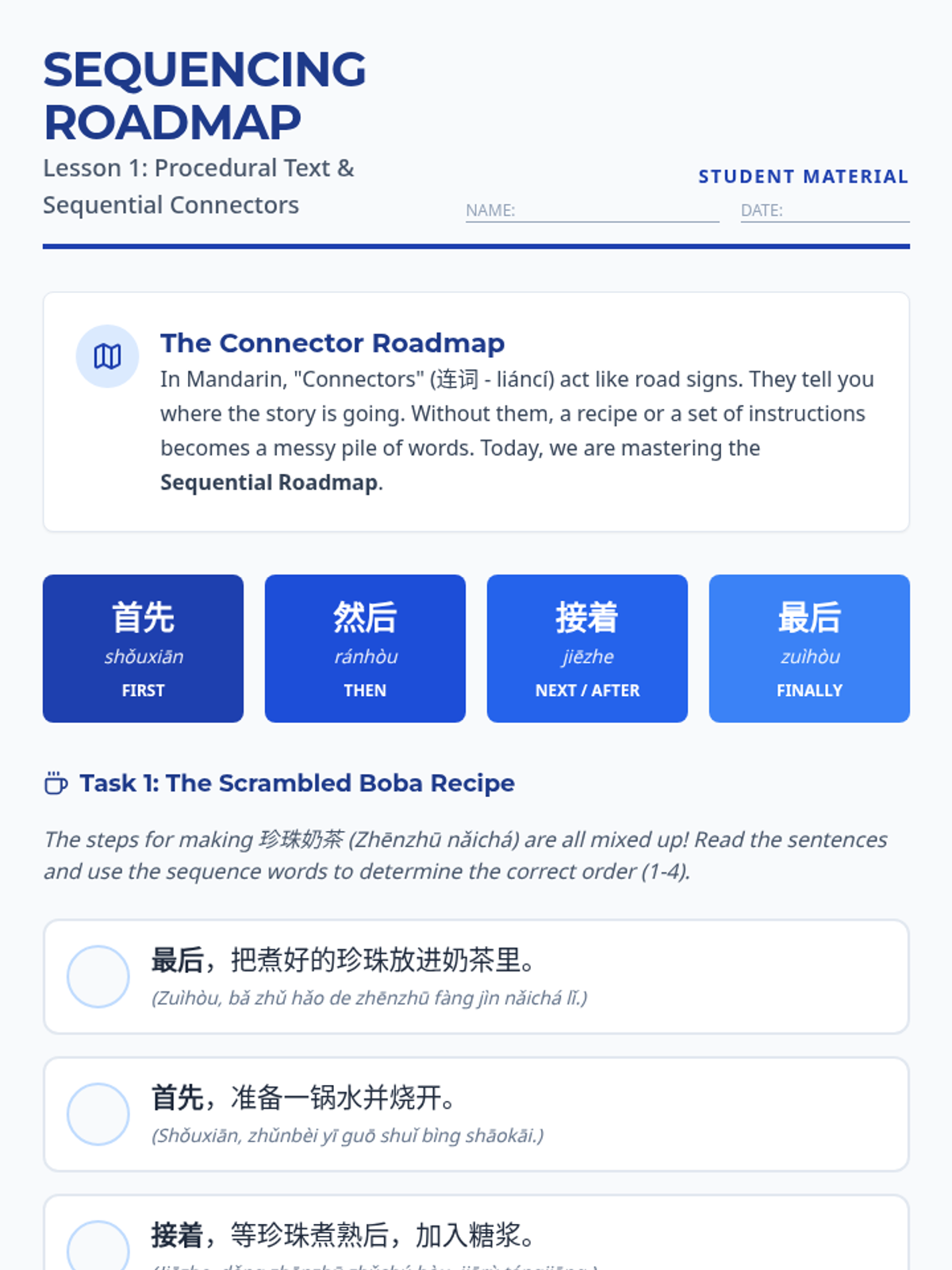
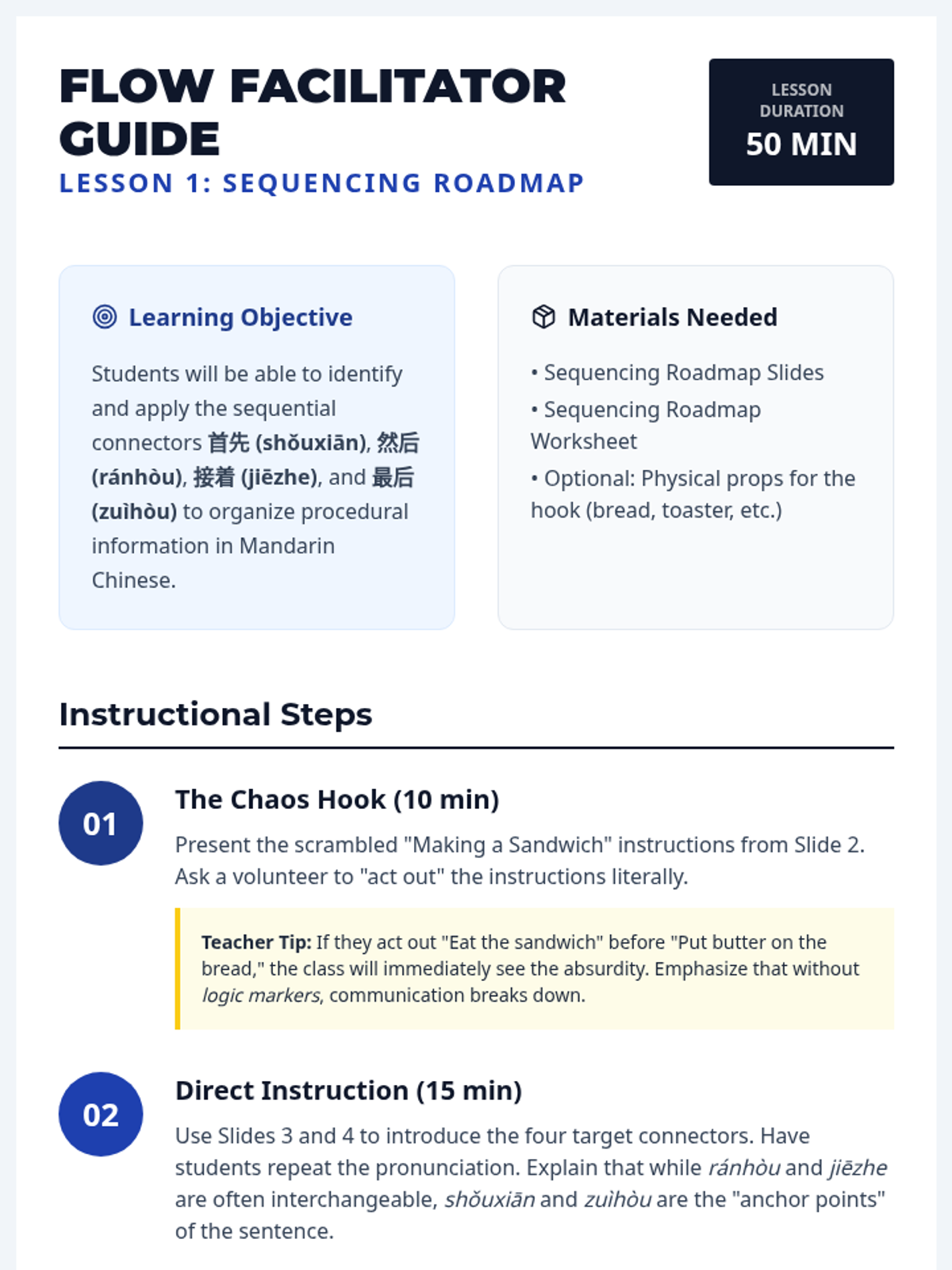
Students identify and use sequential connectors (first, then, after, finally) in procedural texts to understand how these markers provide a roadmap for the reader.
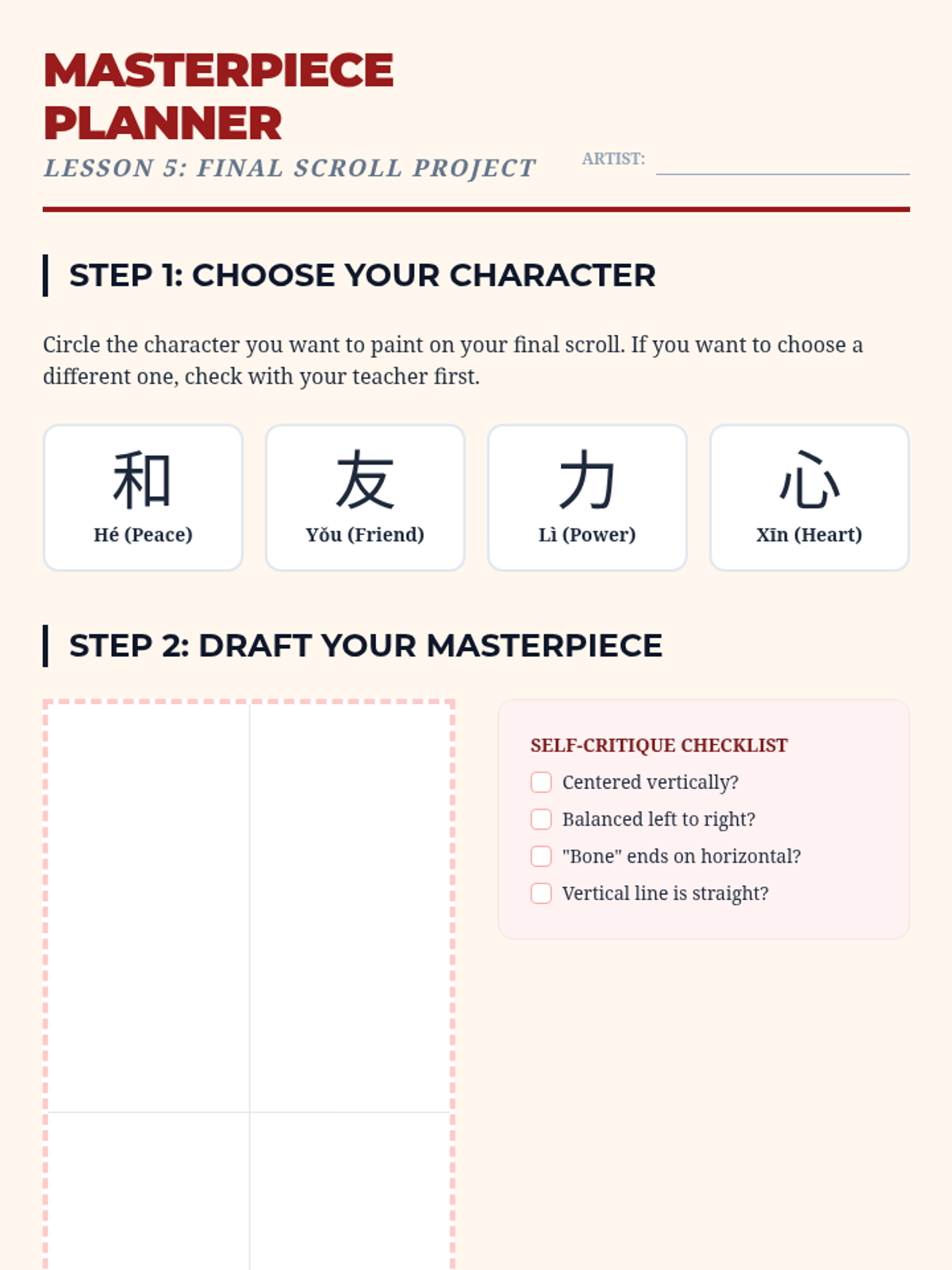
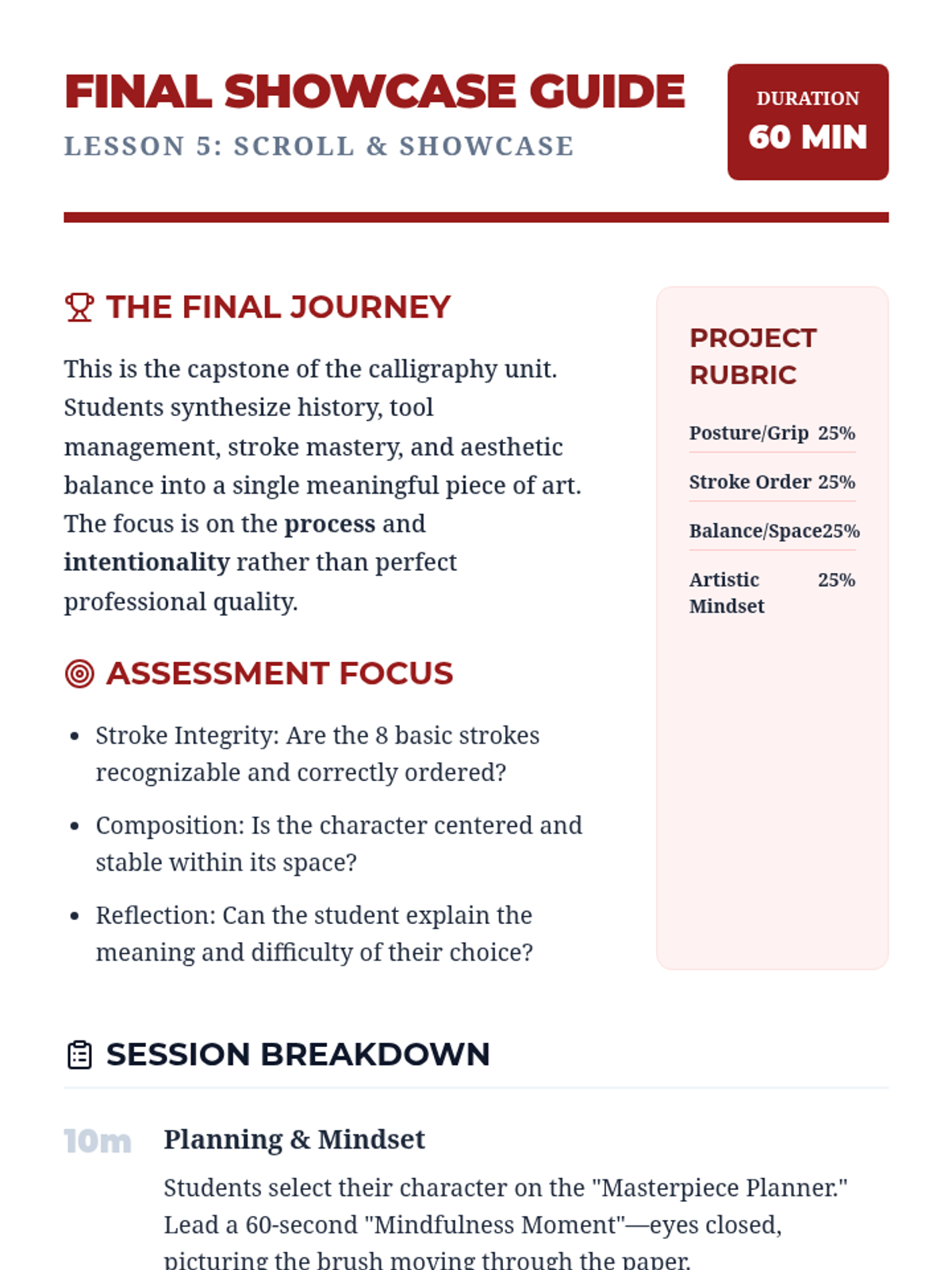
Apply all learned skills to create a final calligraphic scroll of a meaningful character, followed by a classroom gallery showcase.
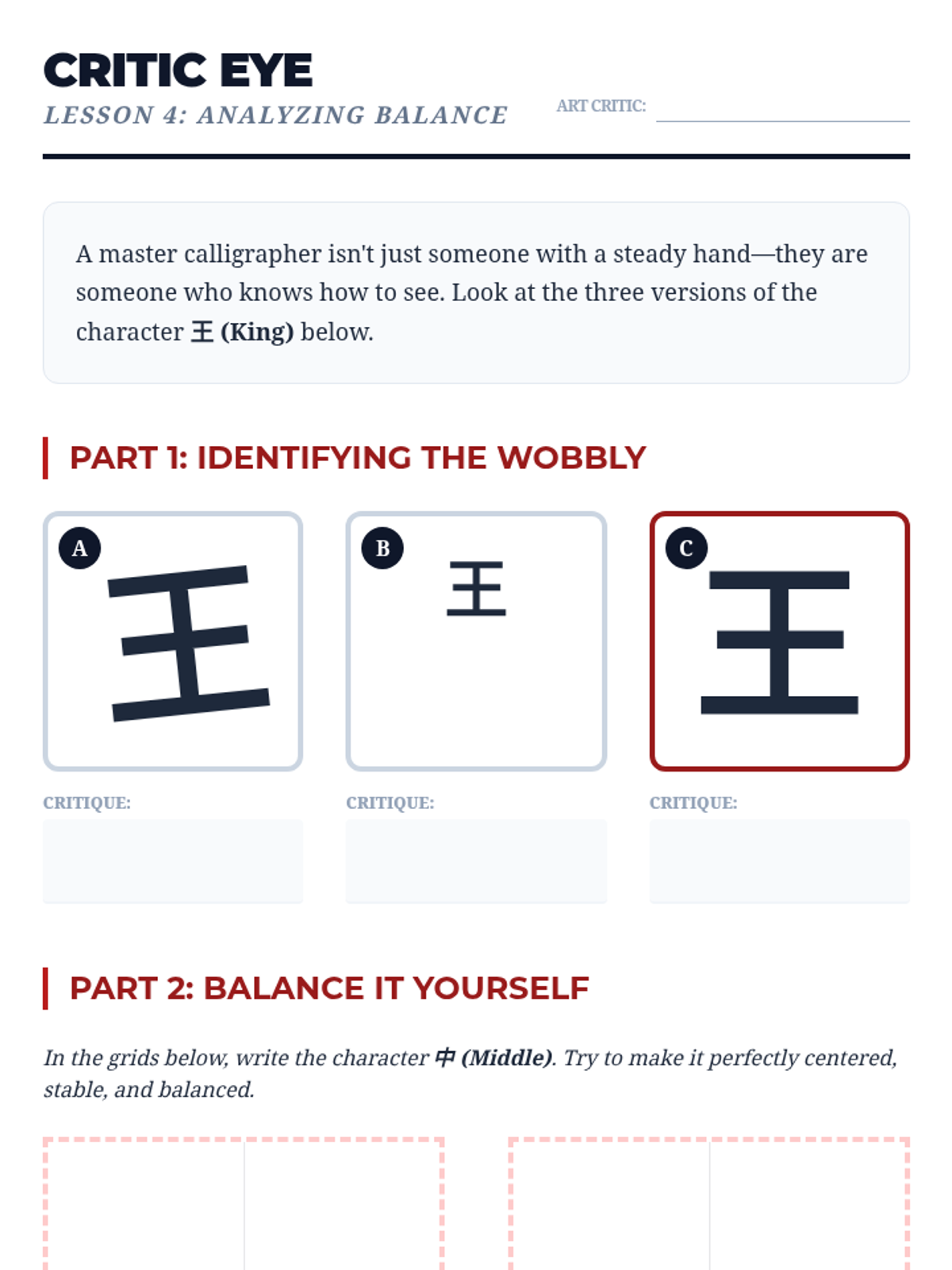
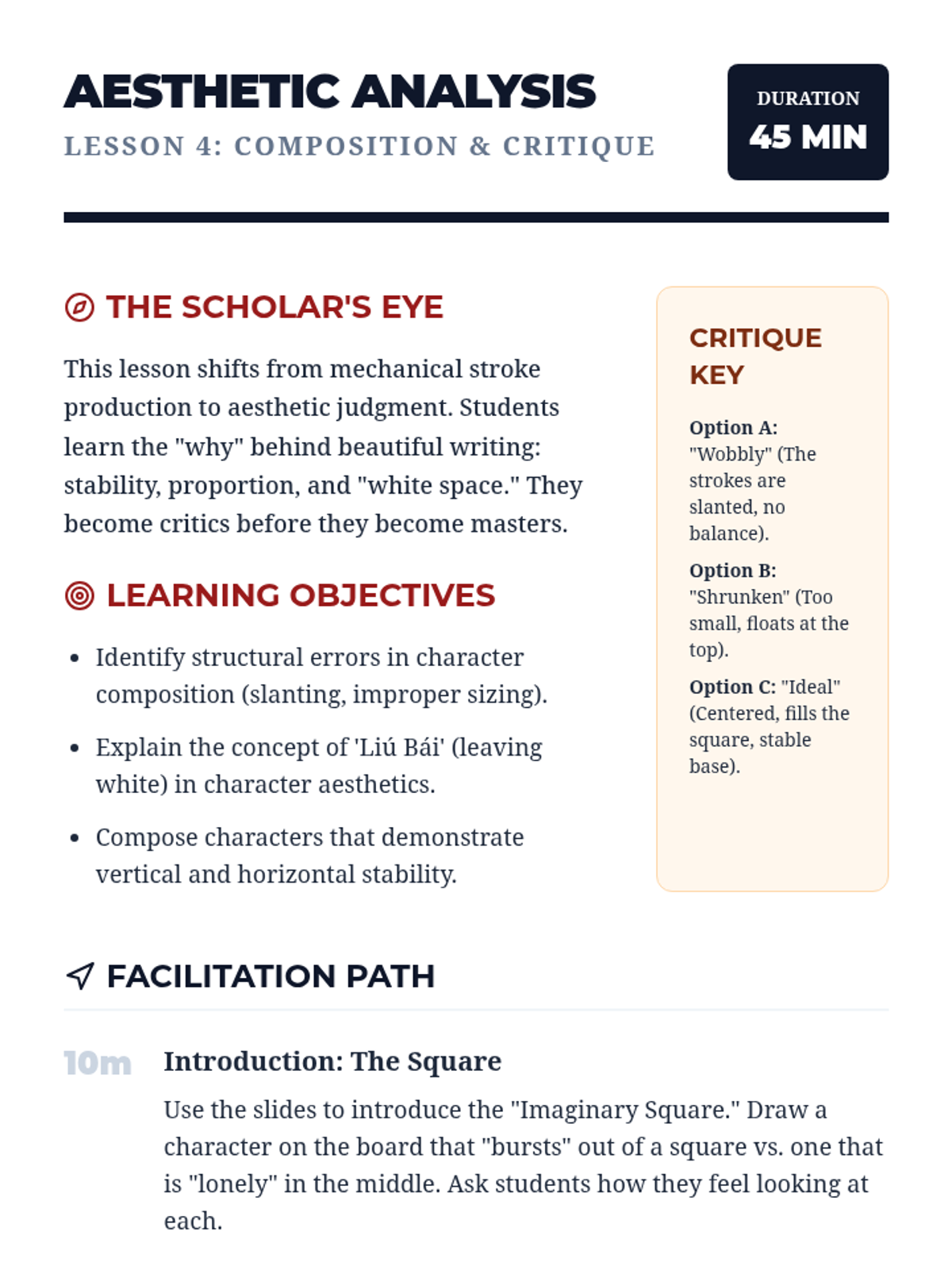
Analyze character structure, balance, and spacing within the imaginary square, moving from individual strokes to cohesive, aesthetic character composition.
Learn the eight fundamental strokes of Chinese calligraphy and the essential rules of stroke order to build a foundation for character construction.
Introduction to the 'Four Treasures of the Study'—brush, ink, paper, and inkstone—focusing on material respect, proper grip, and calligraphic posture.
Explore the ancient roots of Chinese writing by investigating Oracle Bone script and how pictographs evolved into modern characters through visual logic and history.
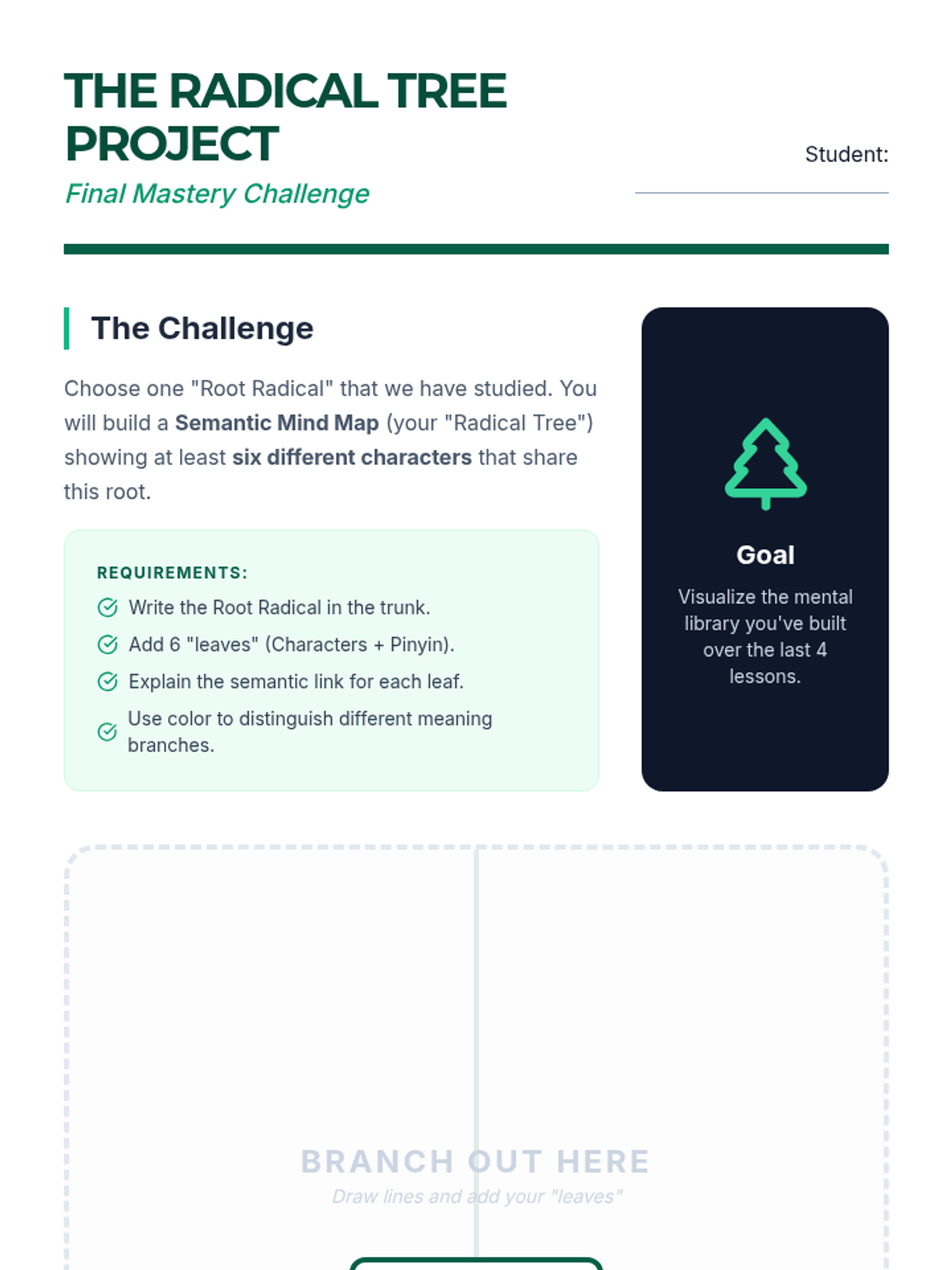
The capstone lesson where students synthesize their knowledge by creating semantic mind maps (Radical Trees) and explaining the logic behind character construction.
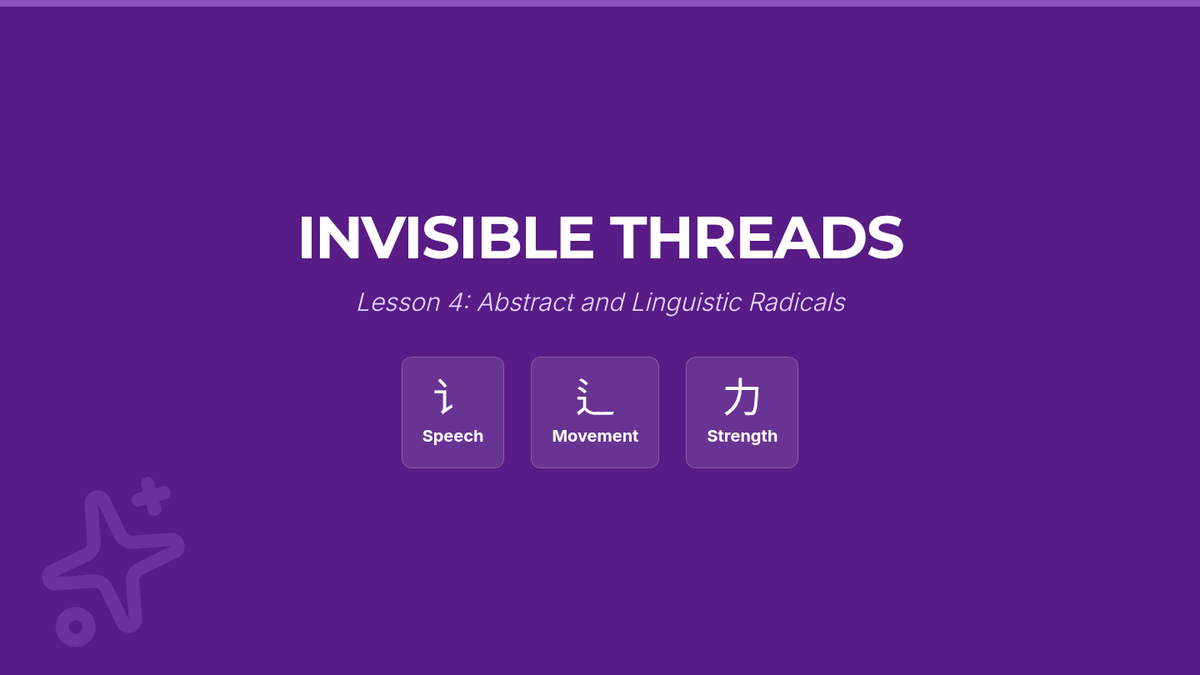
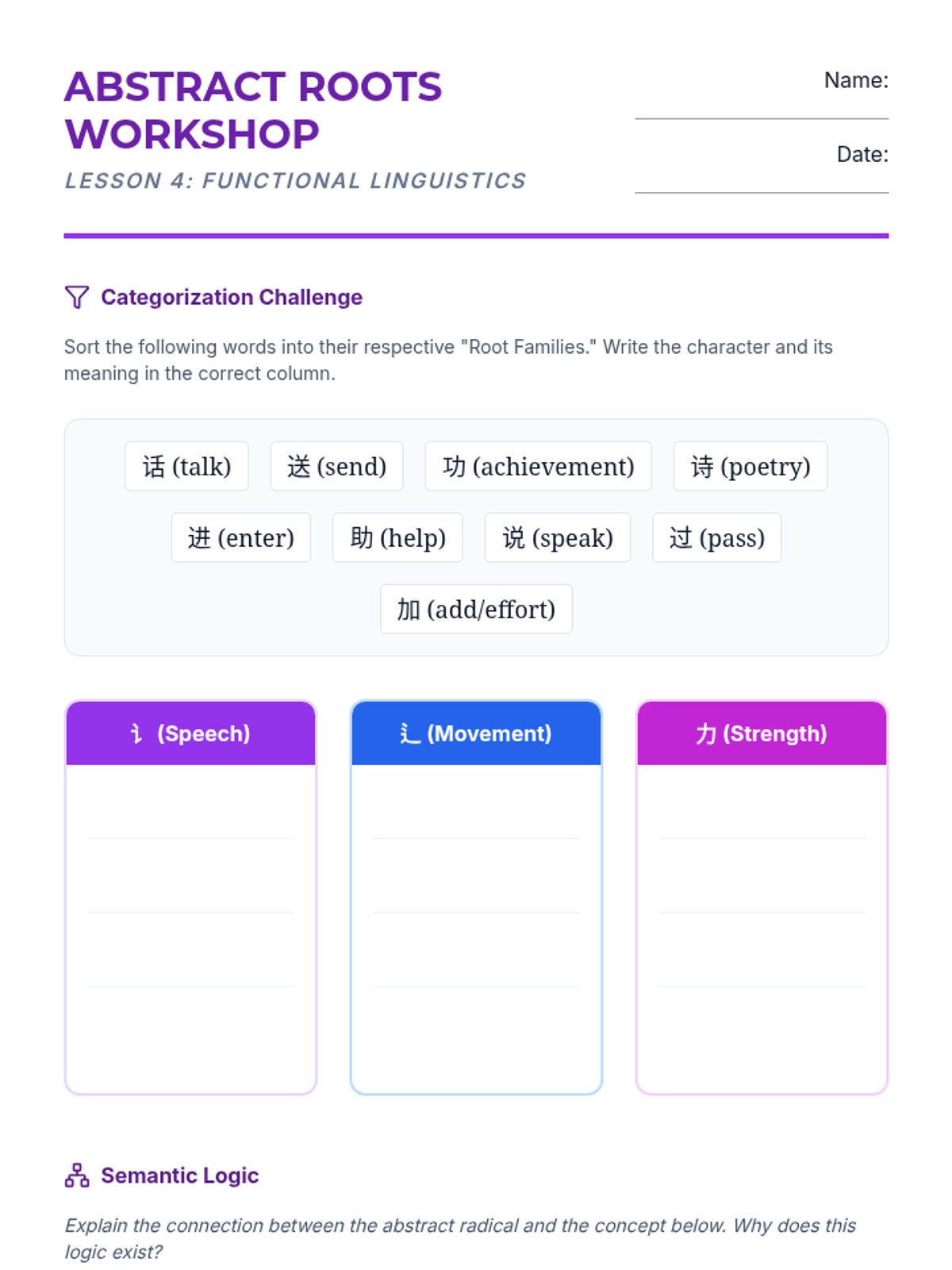
A shift to abstract concepts like speech, movement, and strength, where students investigate how these radicals underpin linguistic and conceptual vocabulary.
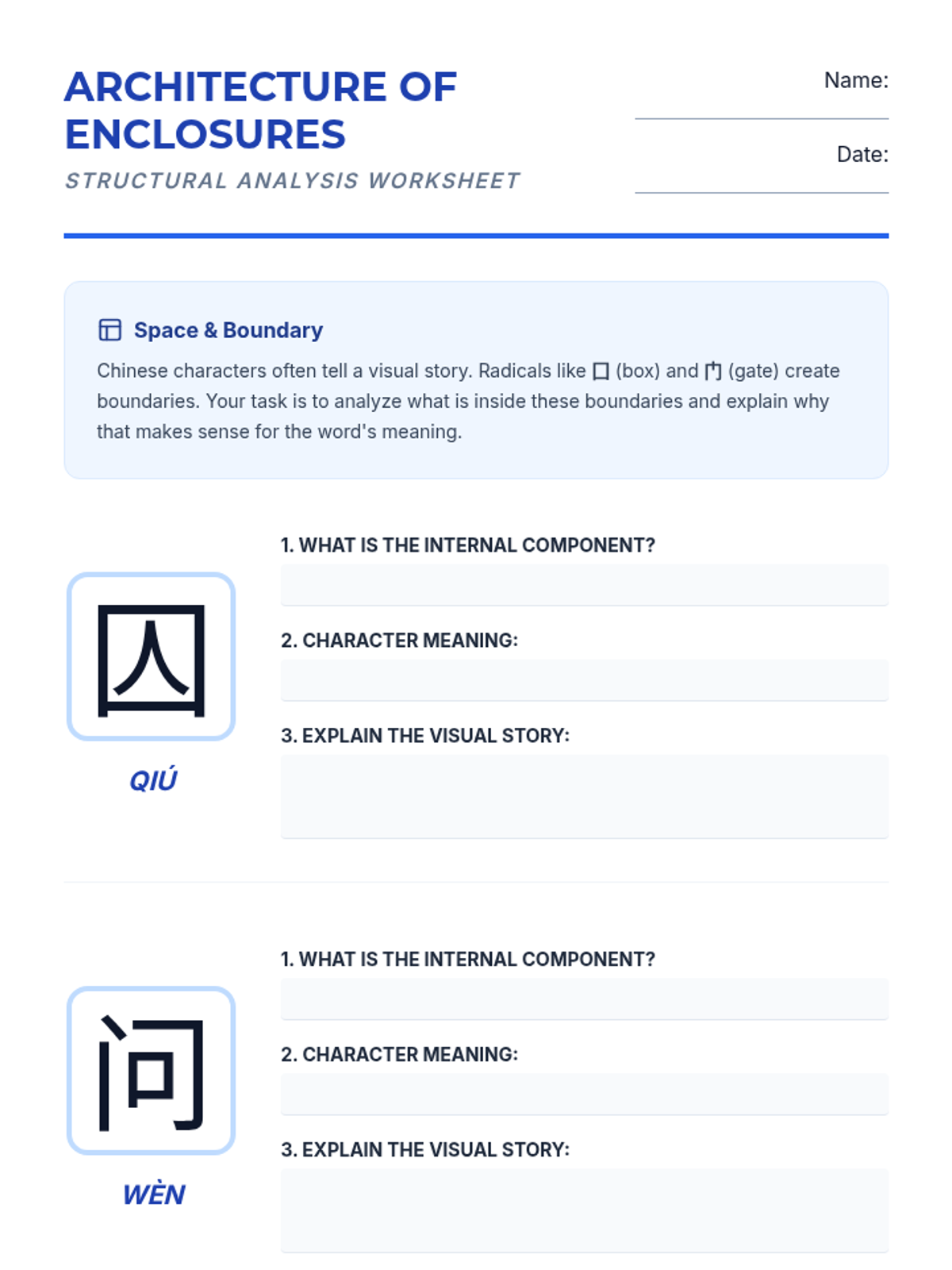
Students analyze structural radicals that enclose or border other components, exploring the spatial relationship between visual boundaries and meanings like 'prisoner' or 'park'.
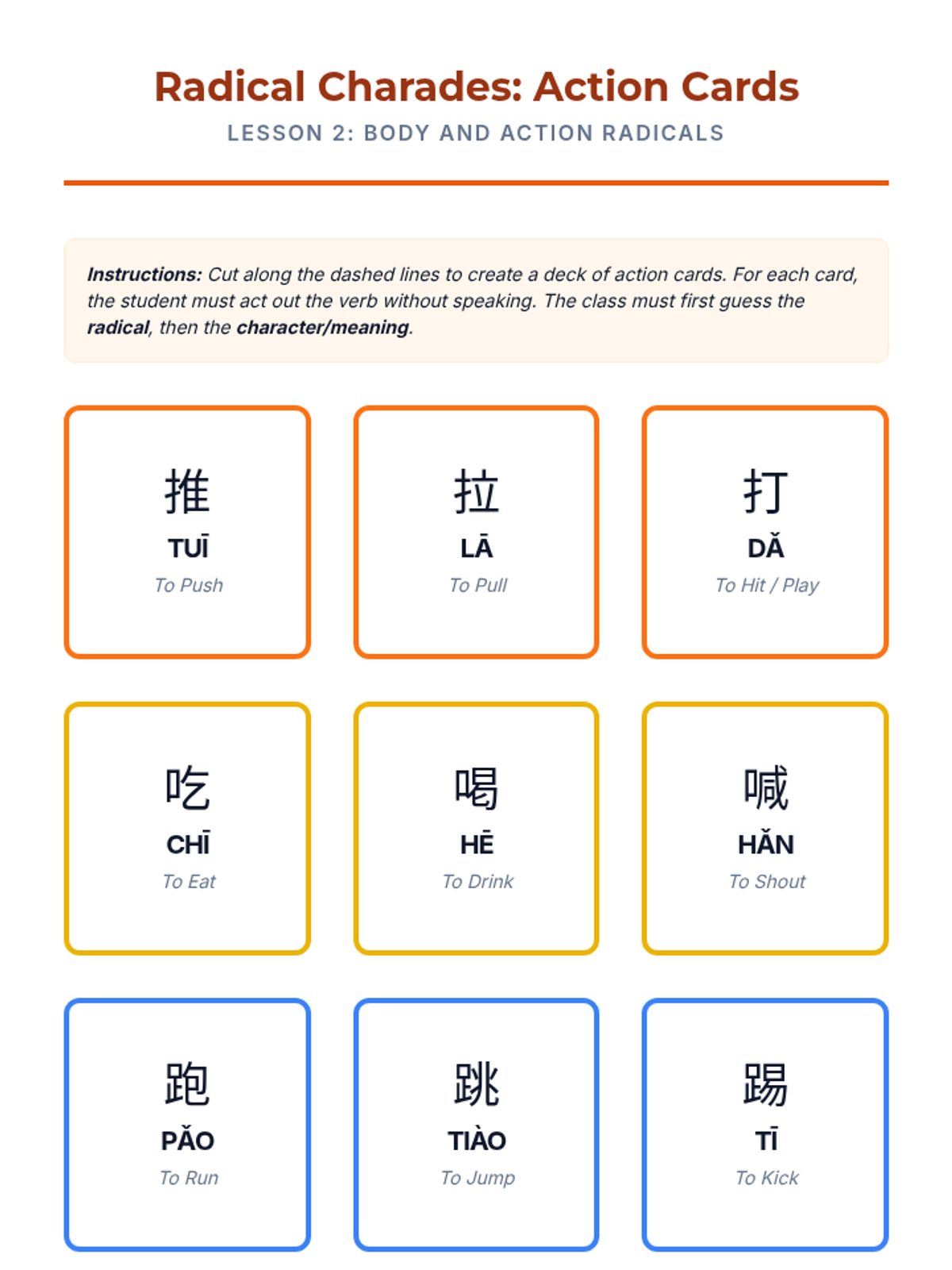
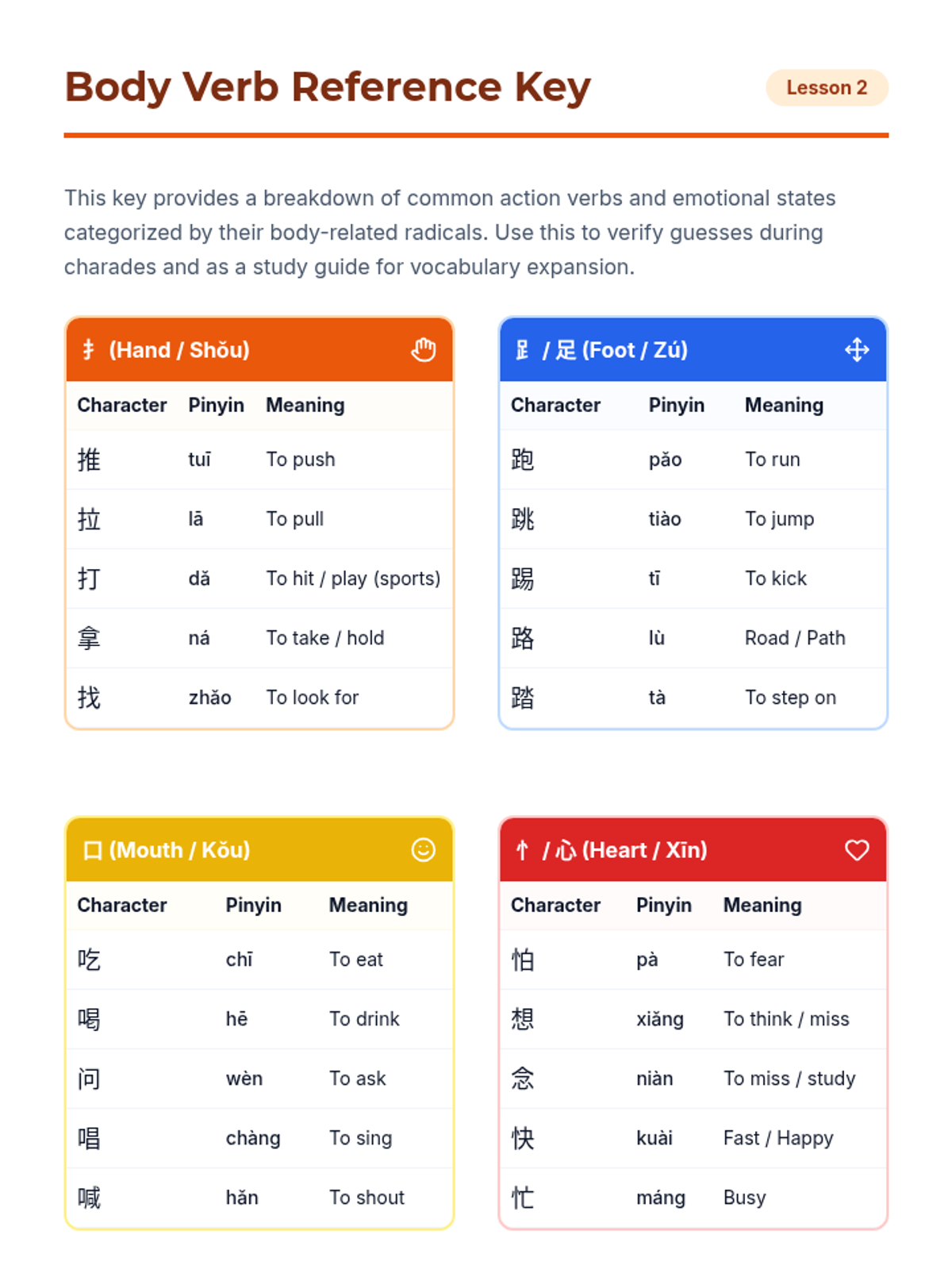
This lesson focuses on body-related radicals like hand, foot, mouth, and heart, using kinesthetic activities to link physical actions with their corresponding character components.
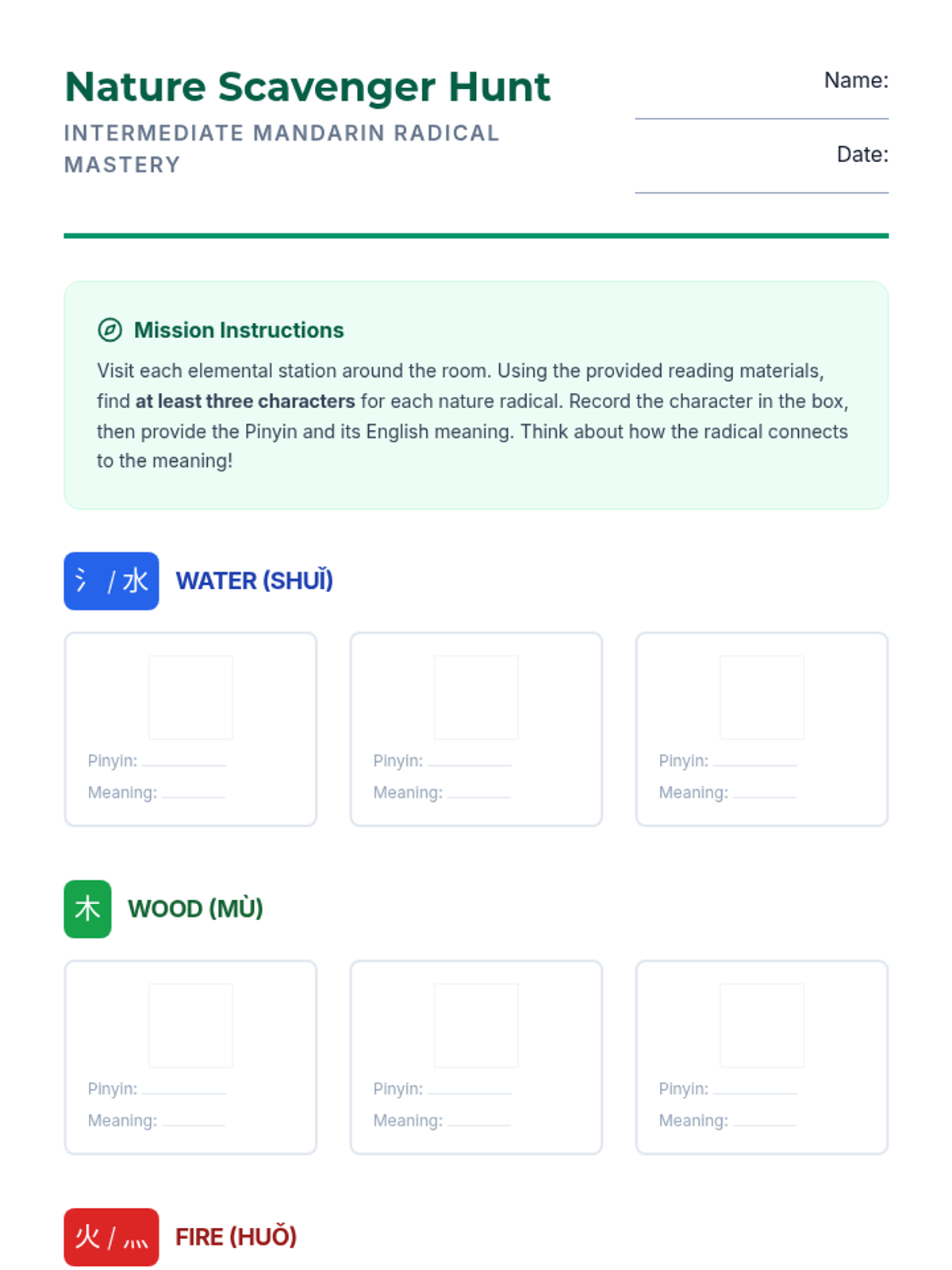
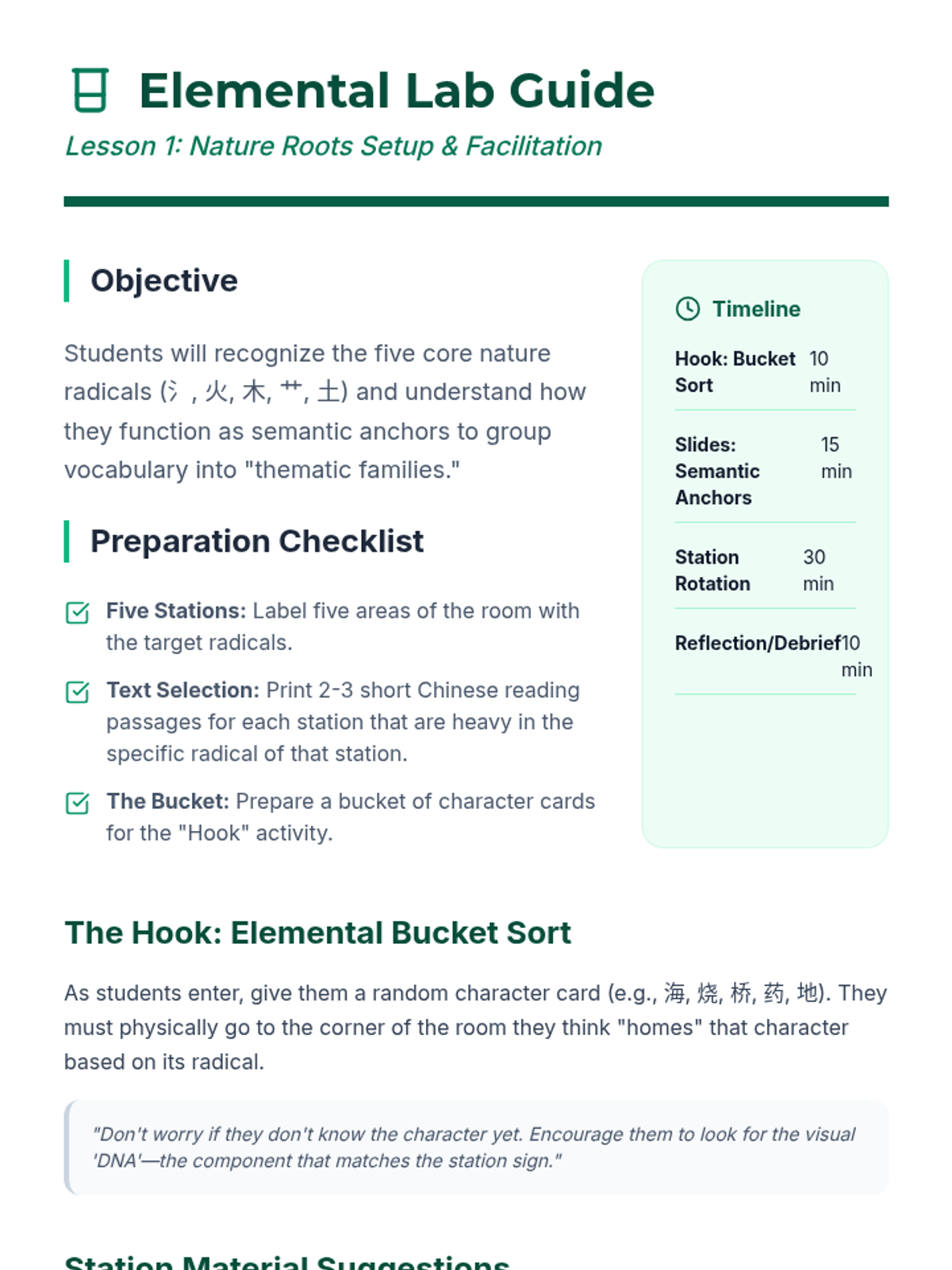
Students explore the semantic connection between nature-related radicals (water, fire, wood, grass, earth) and the characters they form through a hands-on scavenger hunt and sorting activity.
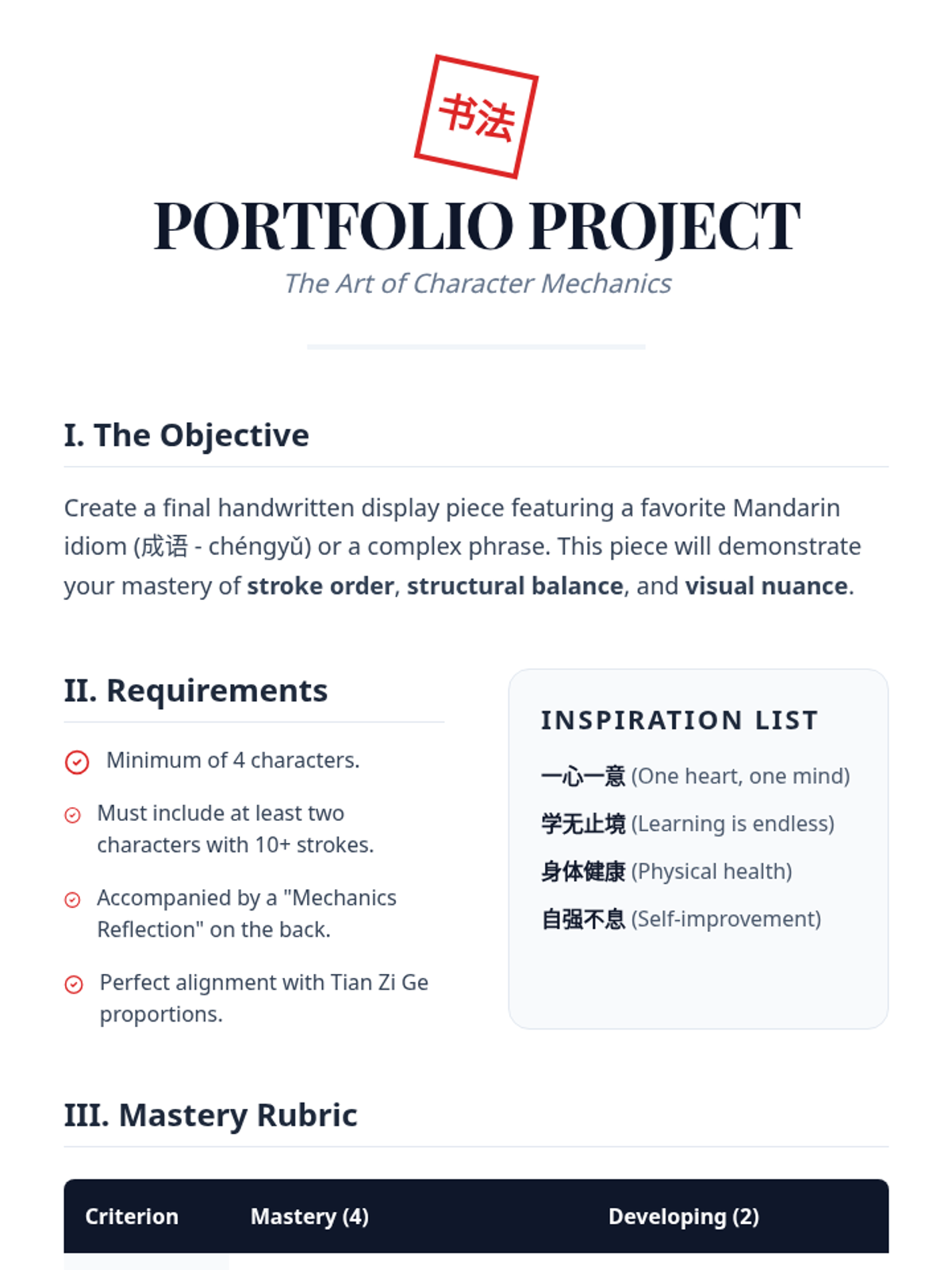
Students create a final handwritten piece featuring a favorite idiom, applying all learned rules to reflect on the meditative and aesthetic aspects of writing.
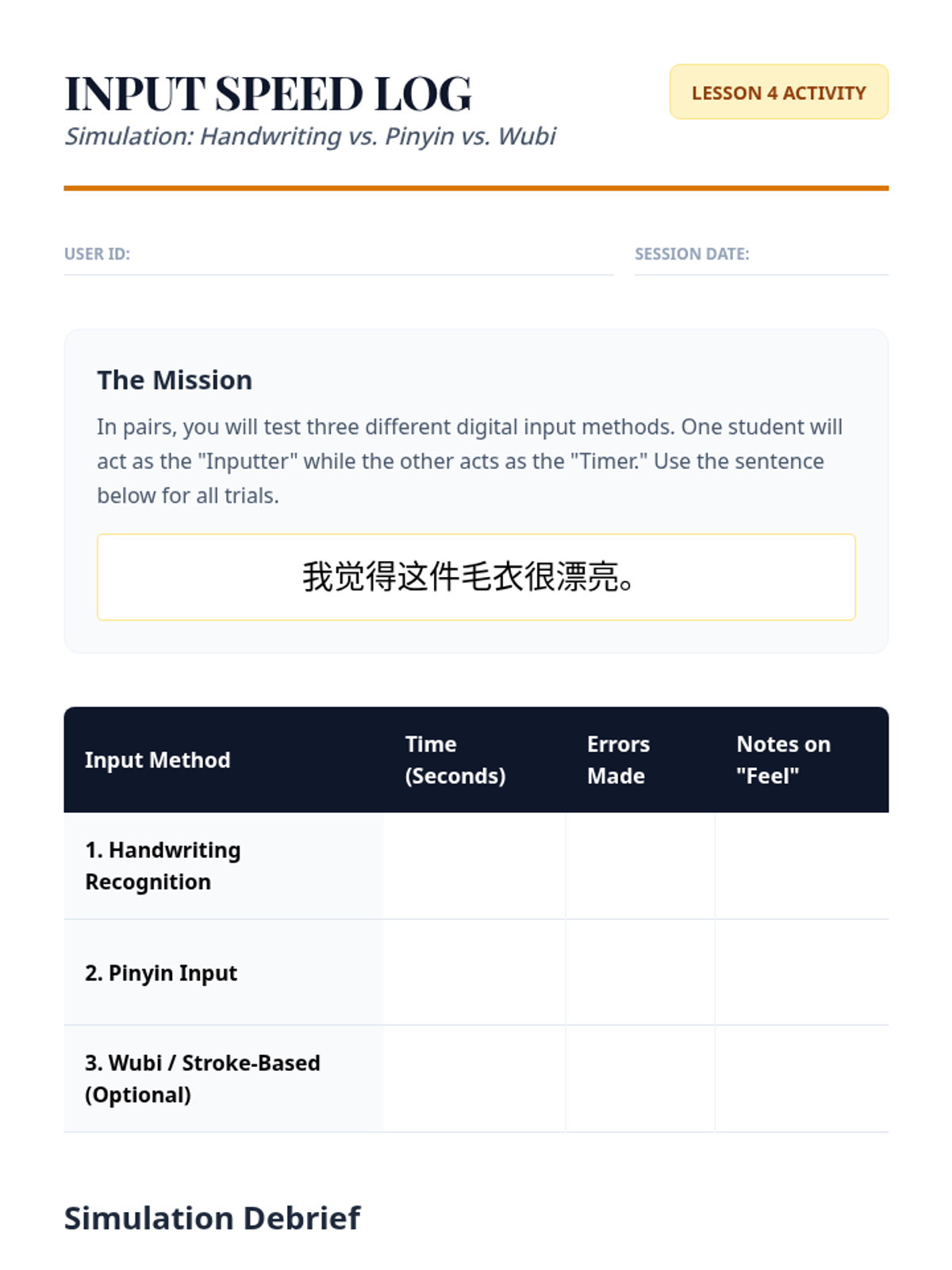
Students bridge the gap between paper and screen by learning how correct stroke order assists digital recognition and input methods.
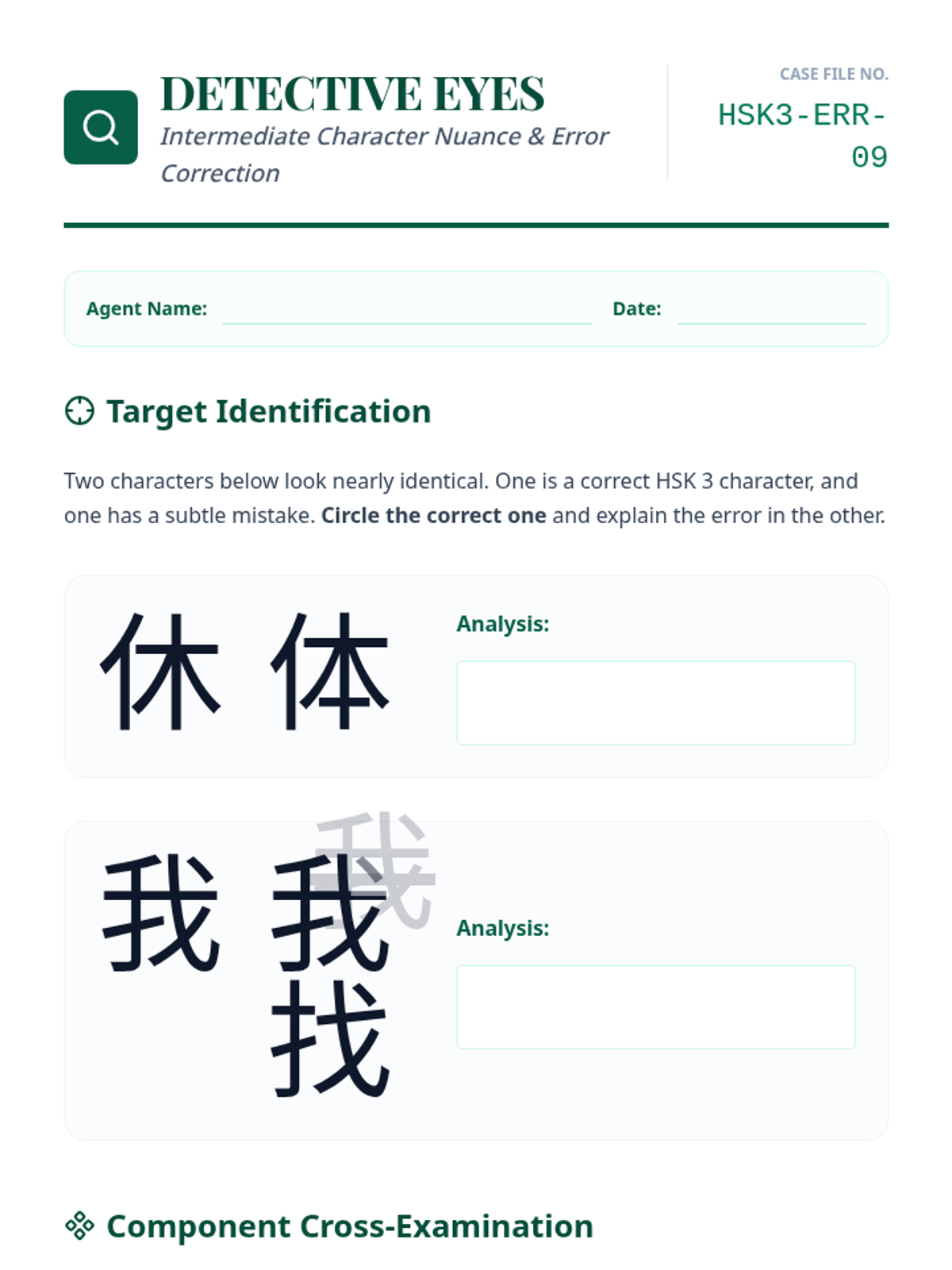
Students identify and correct common writing errors and subtle stroke nuances, utilizing peer review to spot differences in intermediate vocabulary.
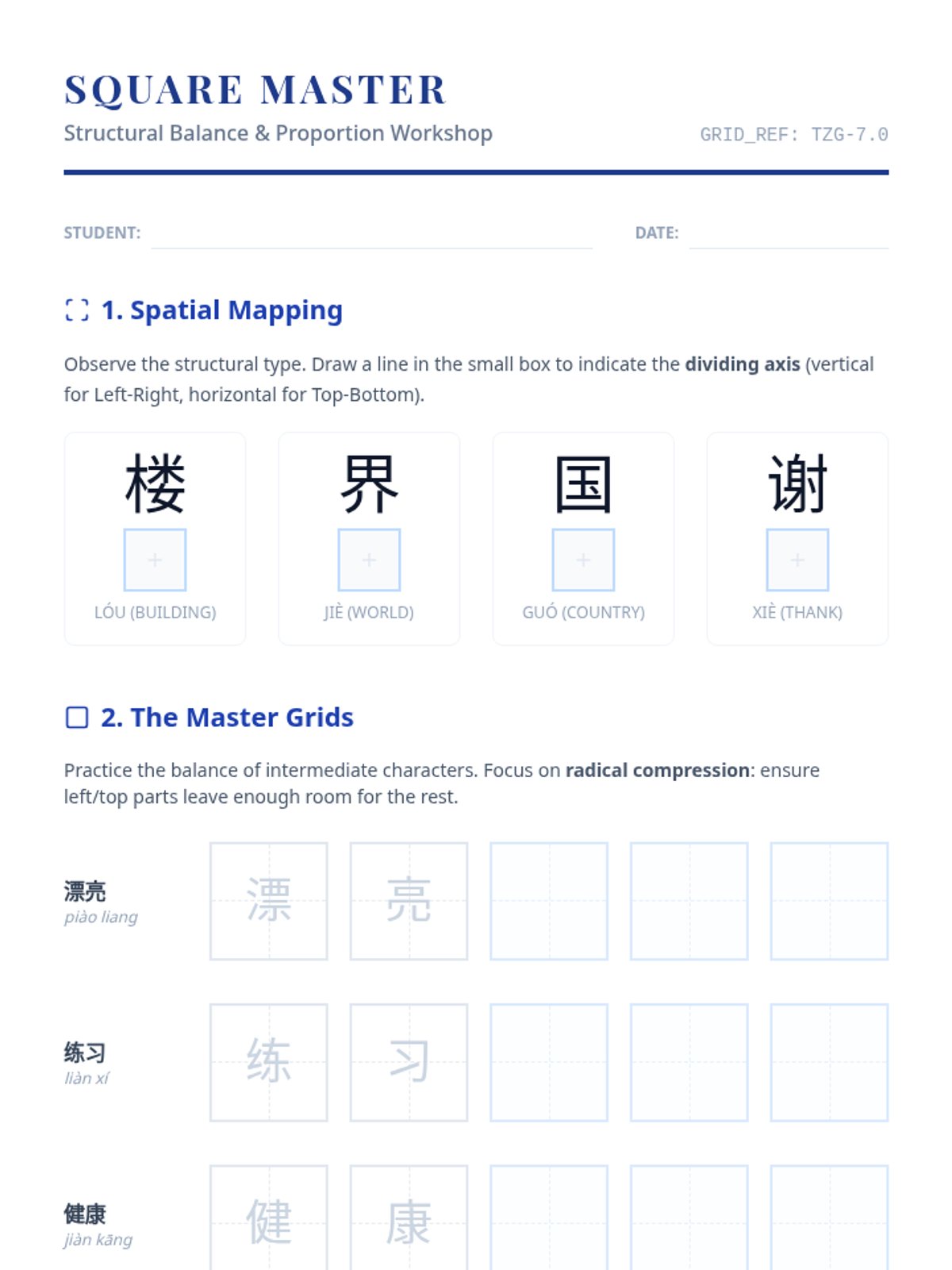
Using grid paper, students analyze the spatial arrangement of characters with various structures, practicing how to balance radicals within the square.
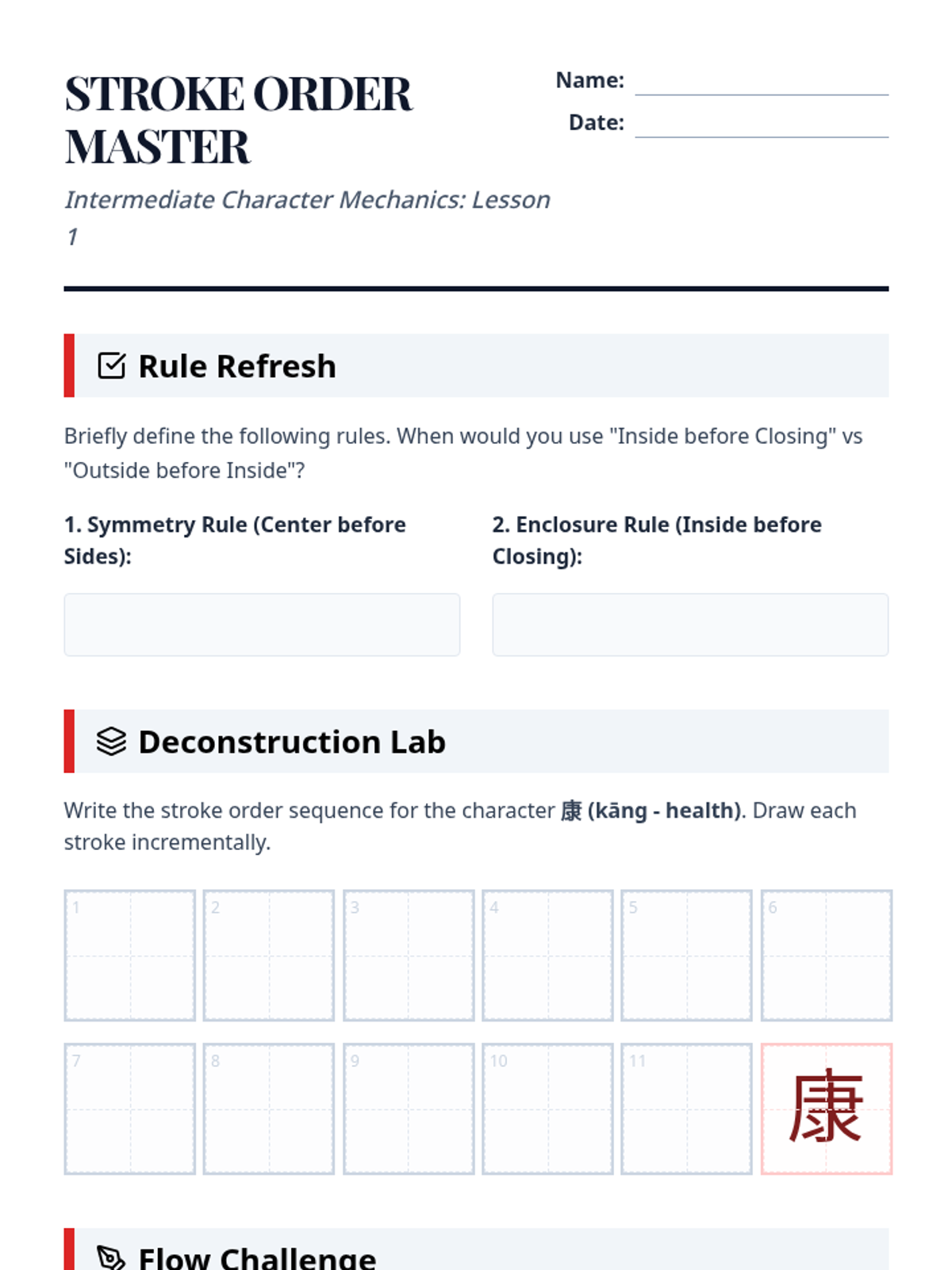
Students review basic stroke order rules and apply them to denser, intermediate-level characters (10+ strokes), focusing on the 'inside-outside' and 'symmetry' rules.
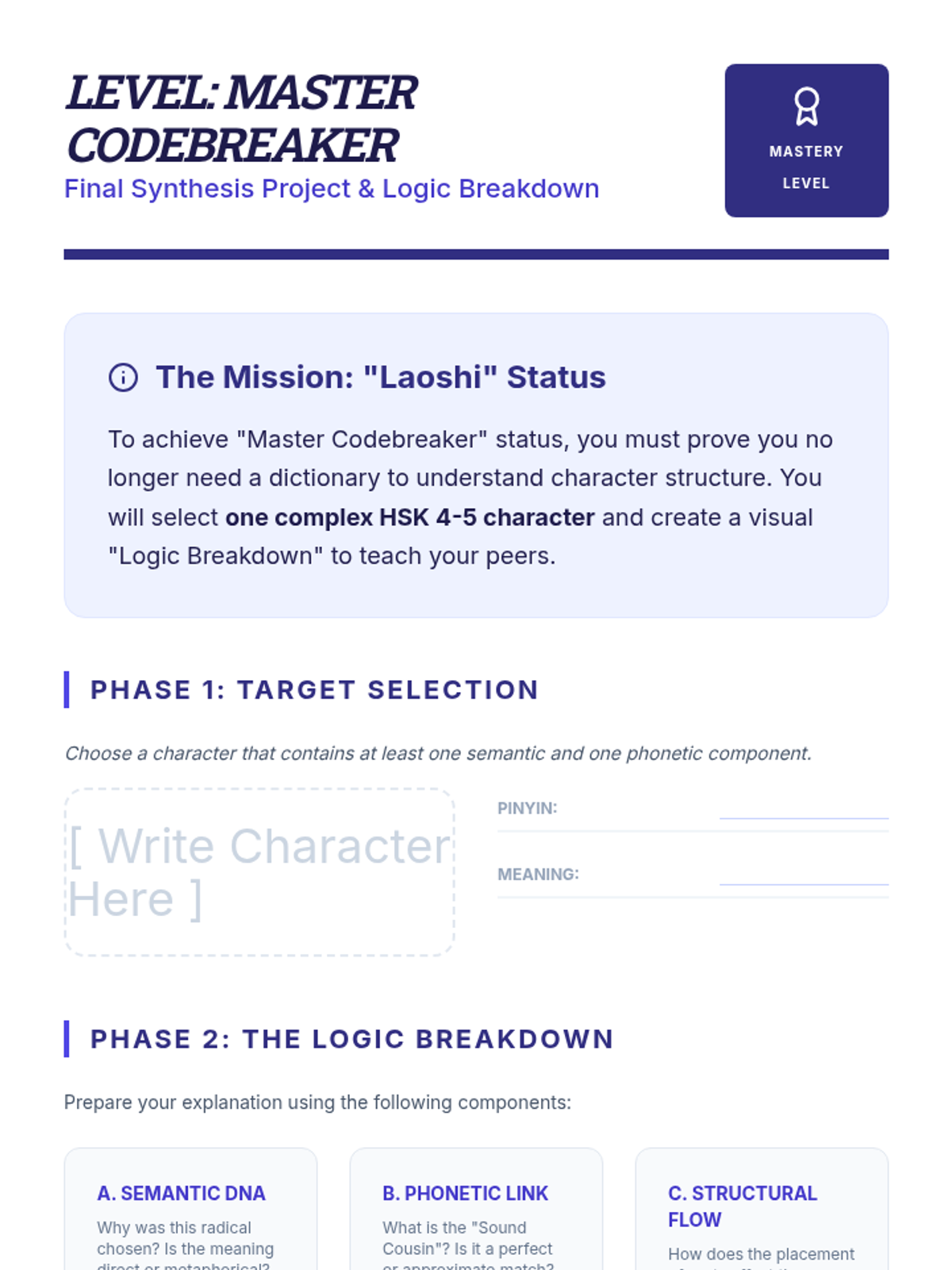
In this culminating lesson, students select a set of complex characters and present a 'logic breakdown' to the class, explaining the role of every stroke and component. They reflect on the reliability of the semantic-phonetic system and its exceptions.
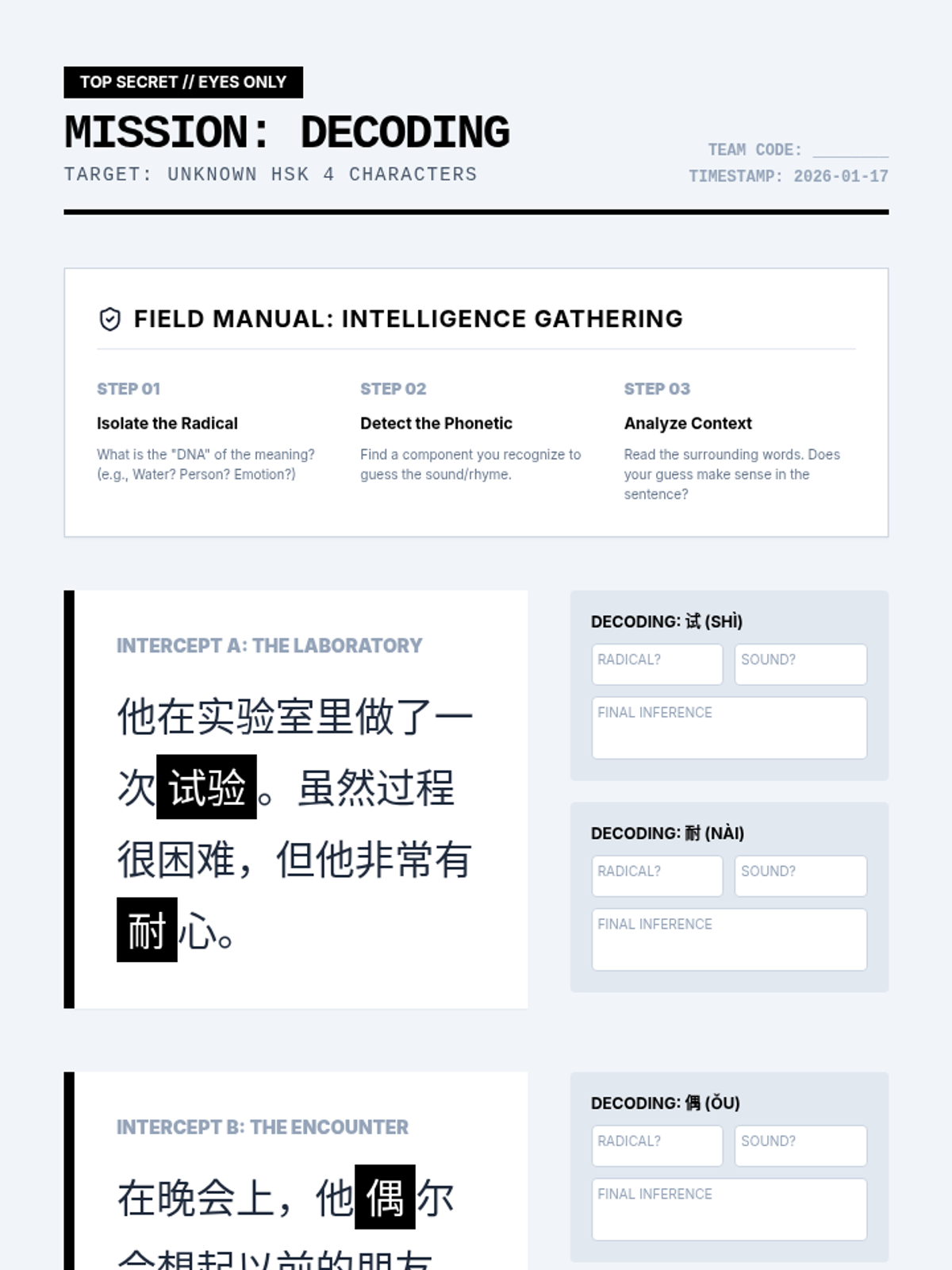
Students apply their decoding strategies to short reading passages containing undefined HSK 4 characters. Working in teams, they use context clues and character composition to infer meanings before verifying with a dictionary.
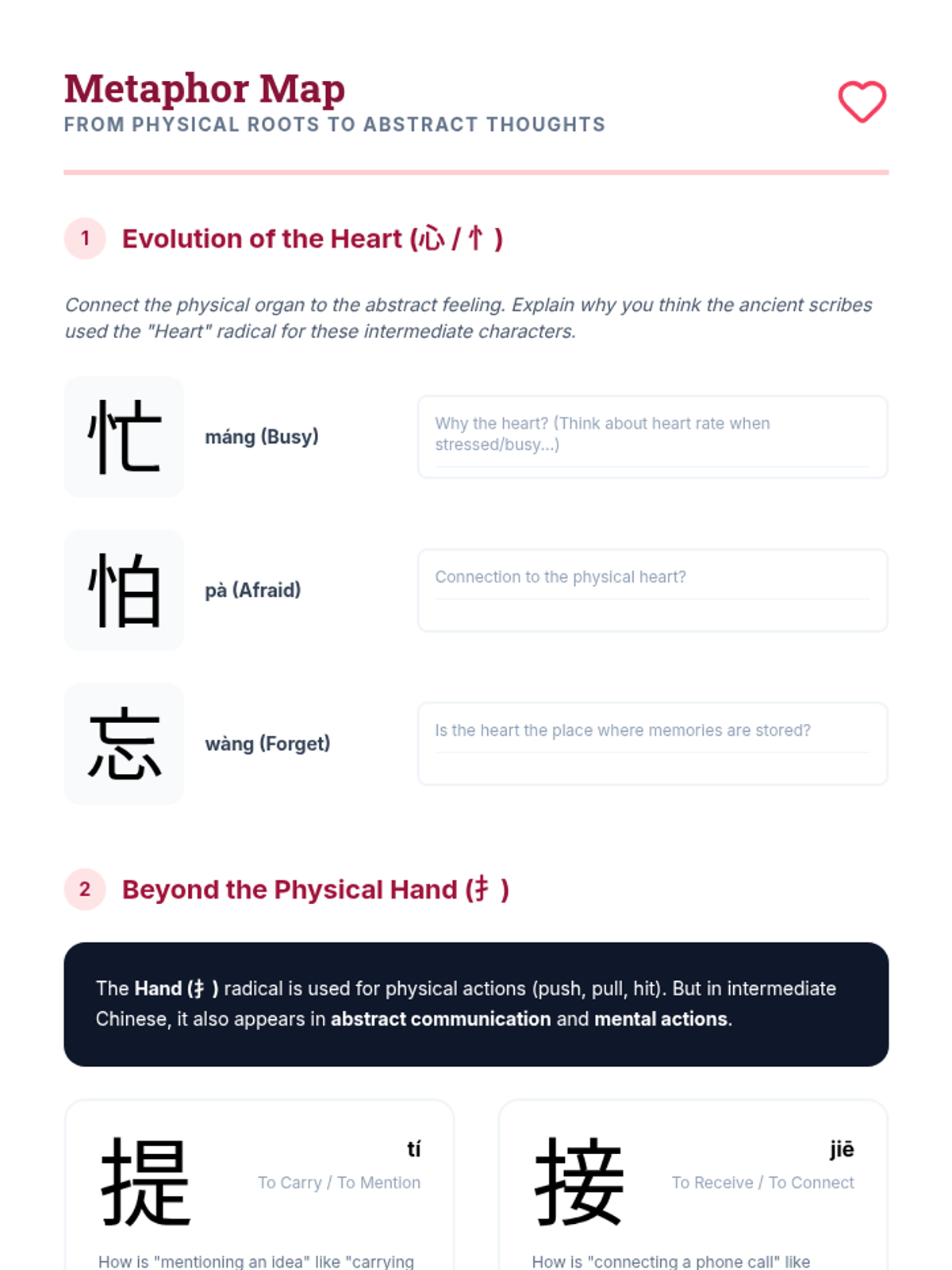
Students explore how physical radicals (like 'heart' or 'hand') are used metaphorically in abstract intermediate vocabulary (e.g., emotions, actions). They analyze how ancient meanings evolved into modern abstract definitions within the semantic-phonetic framework.
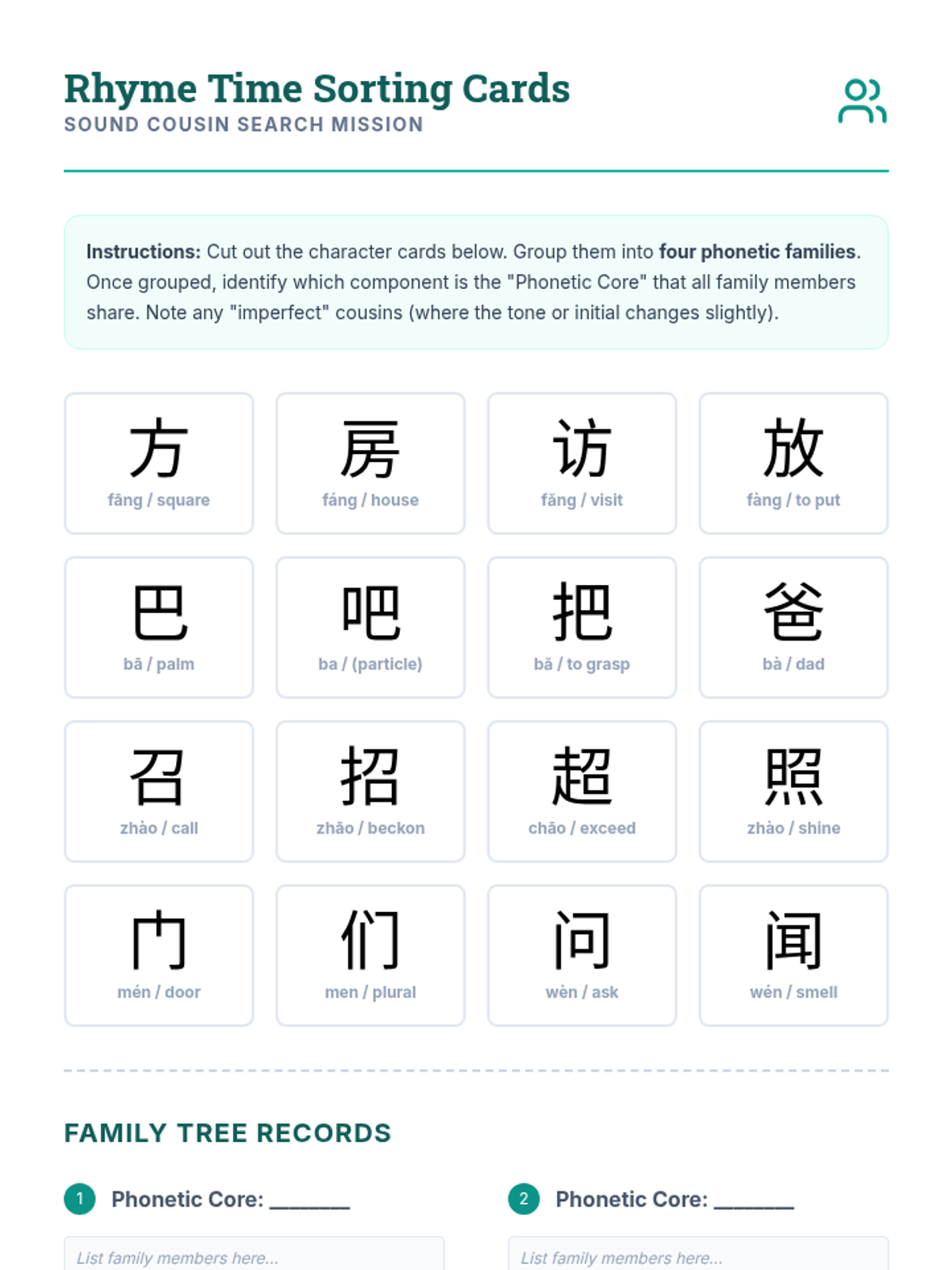
Focusing on common phonetic components found in HSK 3 vocabulary, students group characters that share the same sound element but have different radicals. They practice distinguishing tones and verifying if the phonetic component provides an exact or approximate sound match.
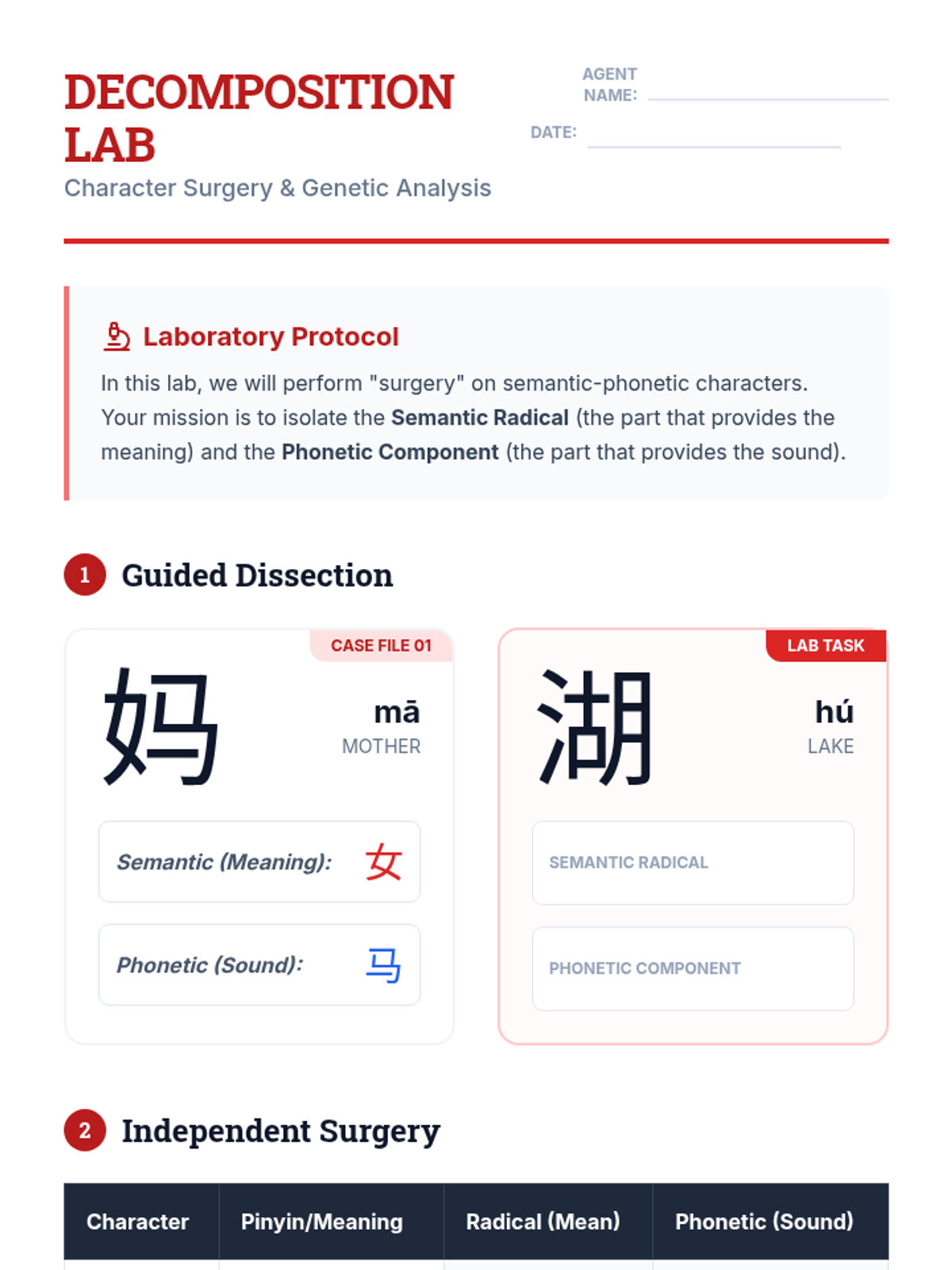
Students are introduced to the concept of separating characters into two functional parts: the semantic radical and the phonetic component. They analyze simple examples to see how one side hints at meaning while the other hints at sound, establishing the foundation for decoding intermediate vocabulary.
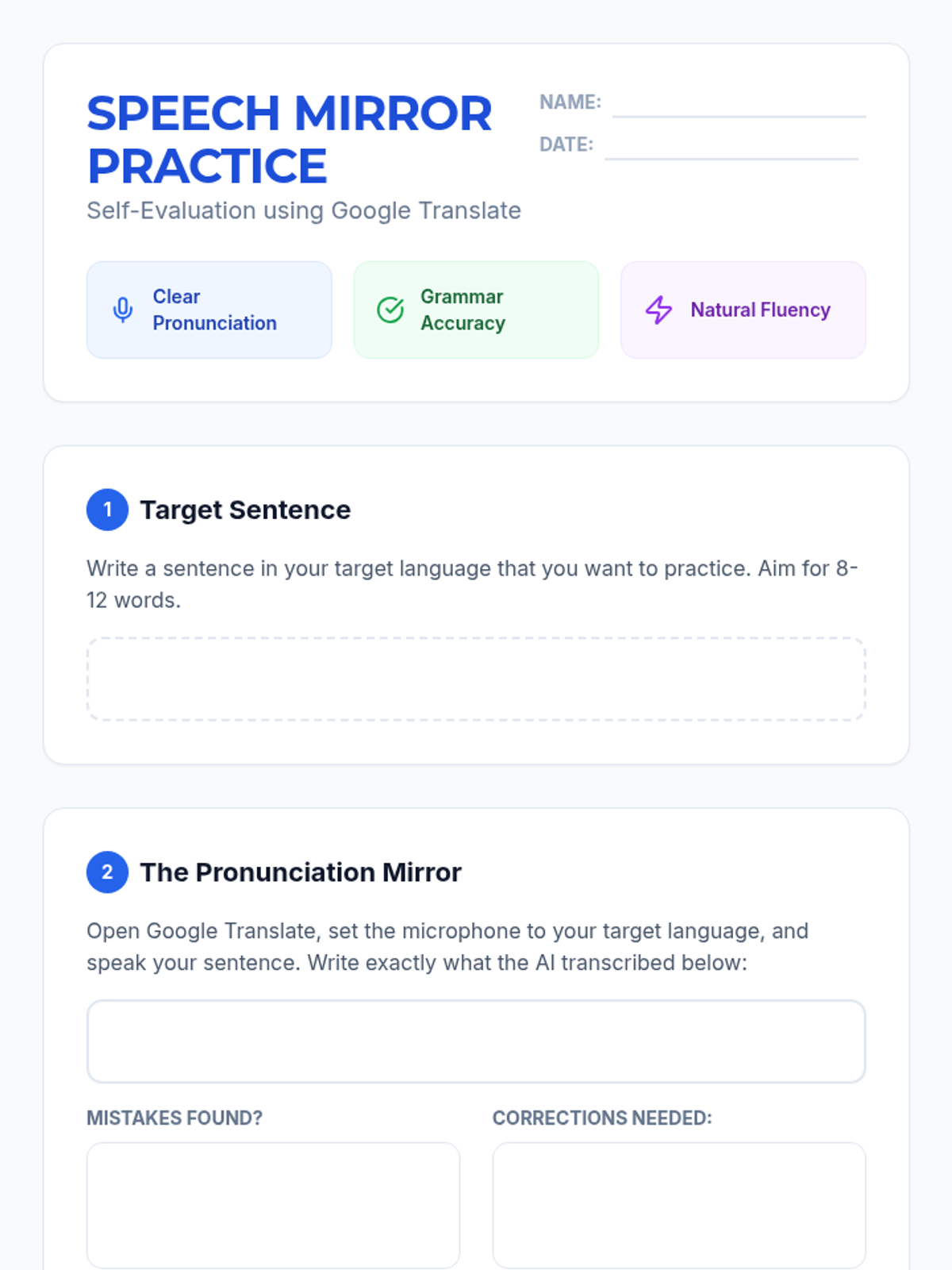
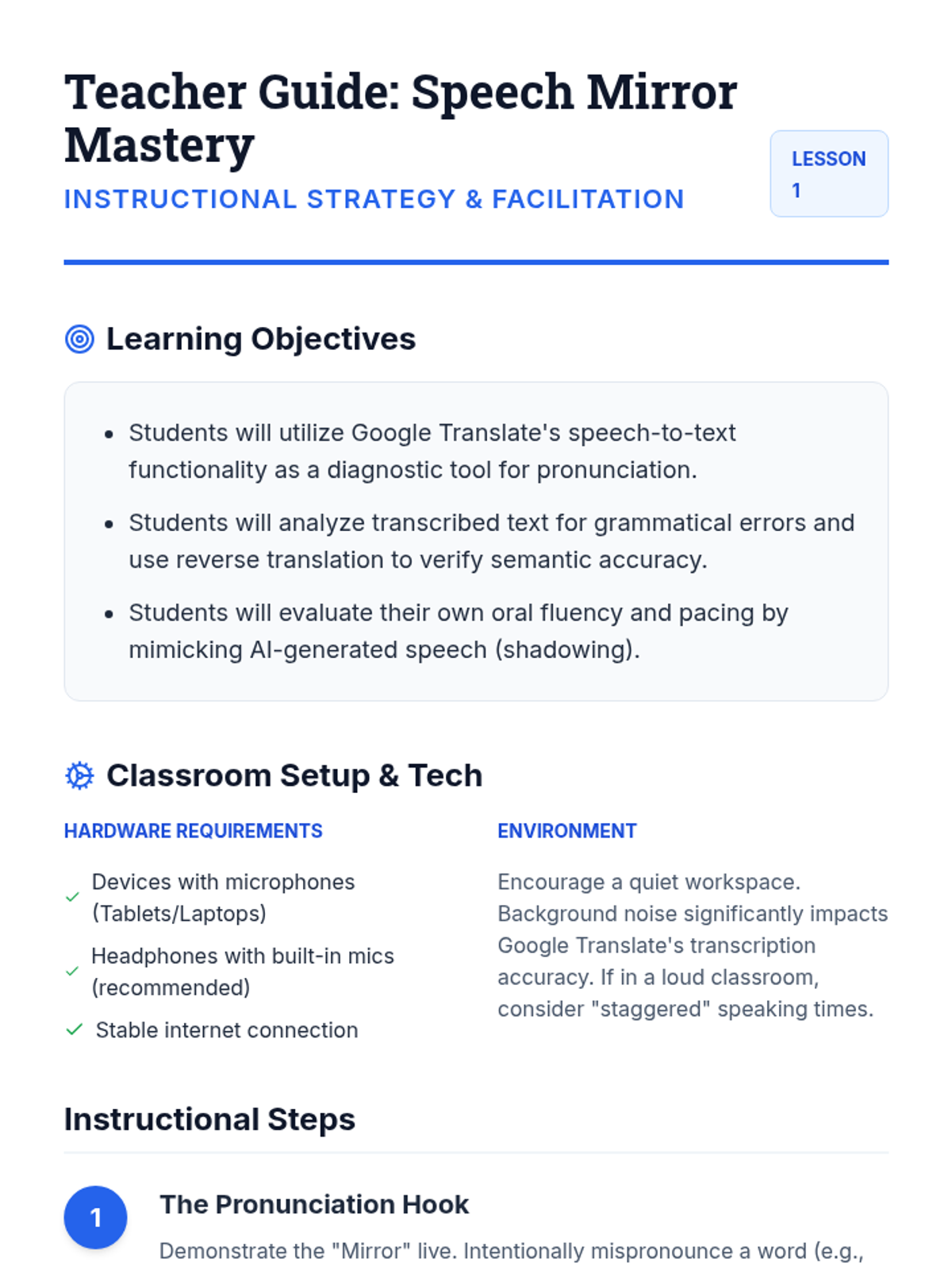
This lesson teaches students how to use Google Translate's speech-to-text and text-to-speech features to self-evaluate their spoken language. Focus areas include pronunciation clarity, grammatical accuracy of transcribed text, and oral fluency.
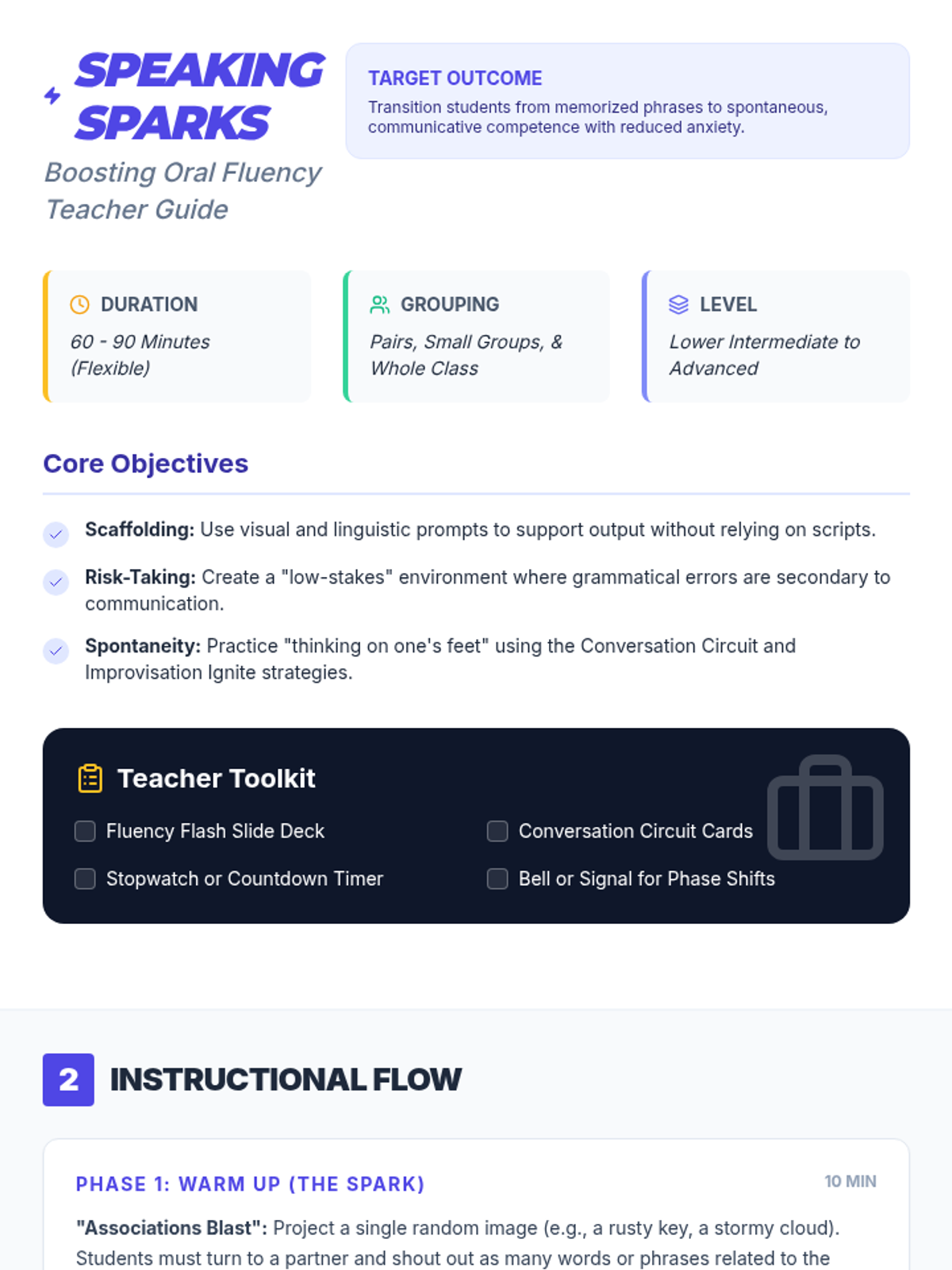
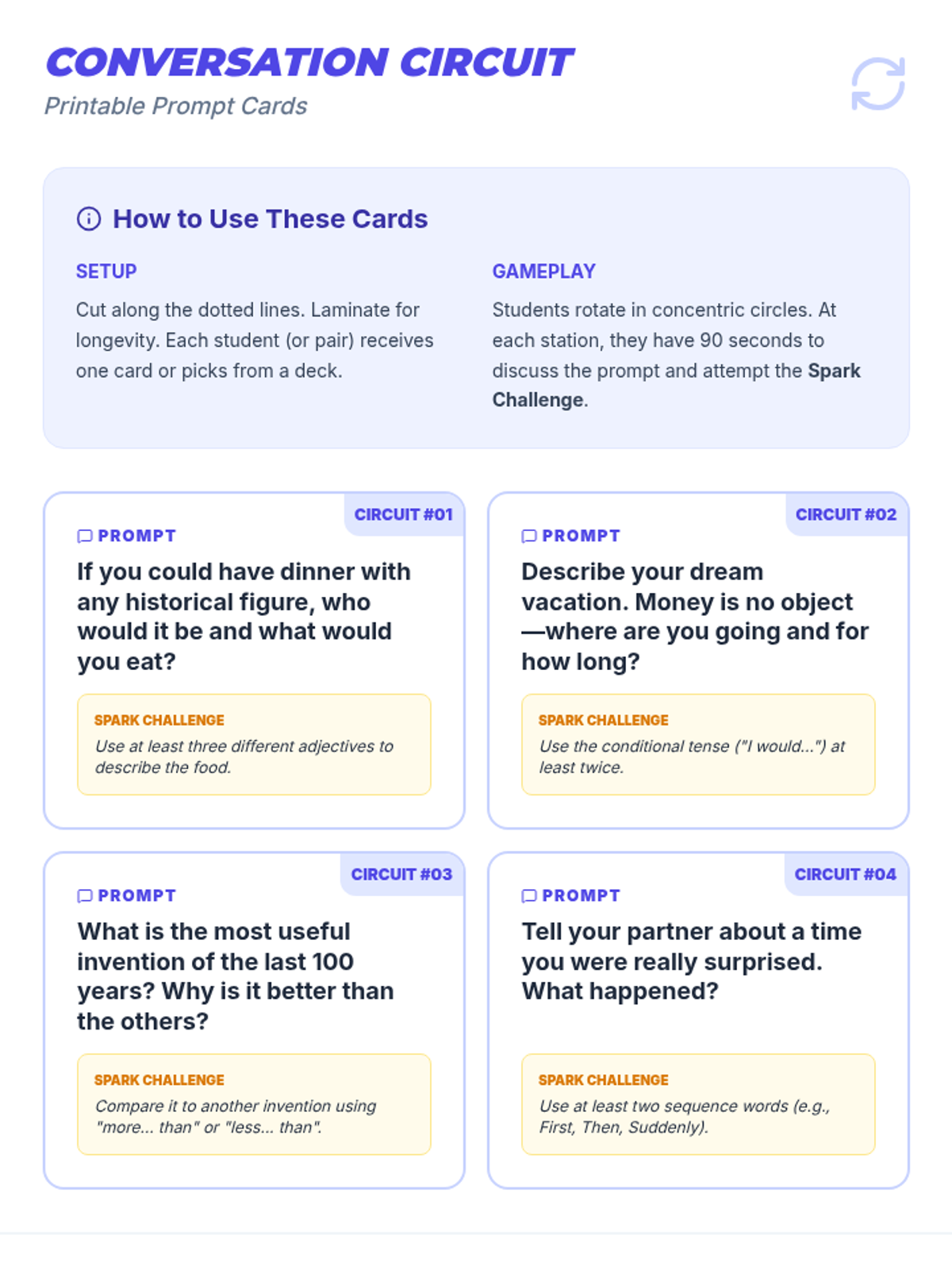
A comprehensive toolkit for foreign language teachers to bridge the gap between rote memorization and spontaneous oral communication through interactive activities and low-stakes scaffolding.
The sequence concludes with a creative writing task where students synthesize their vocabulary knowledge into a narrative or dialogue.
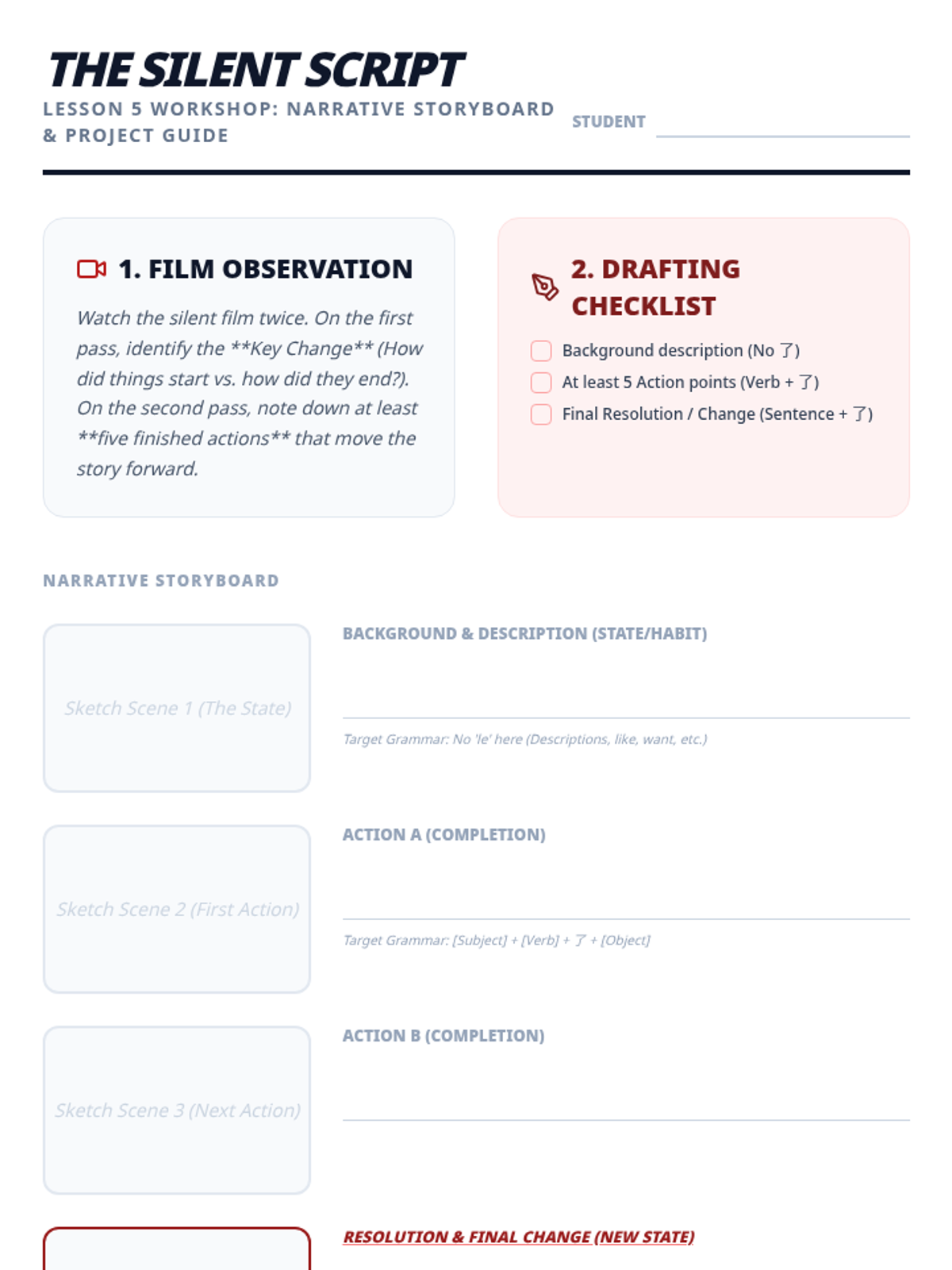
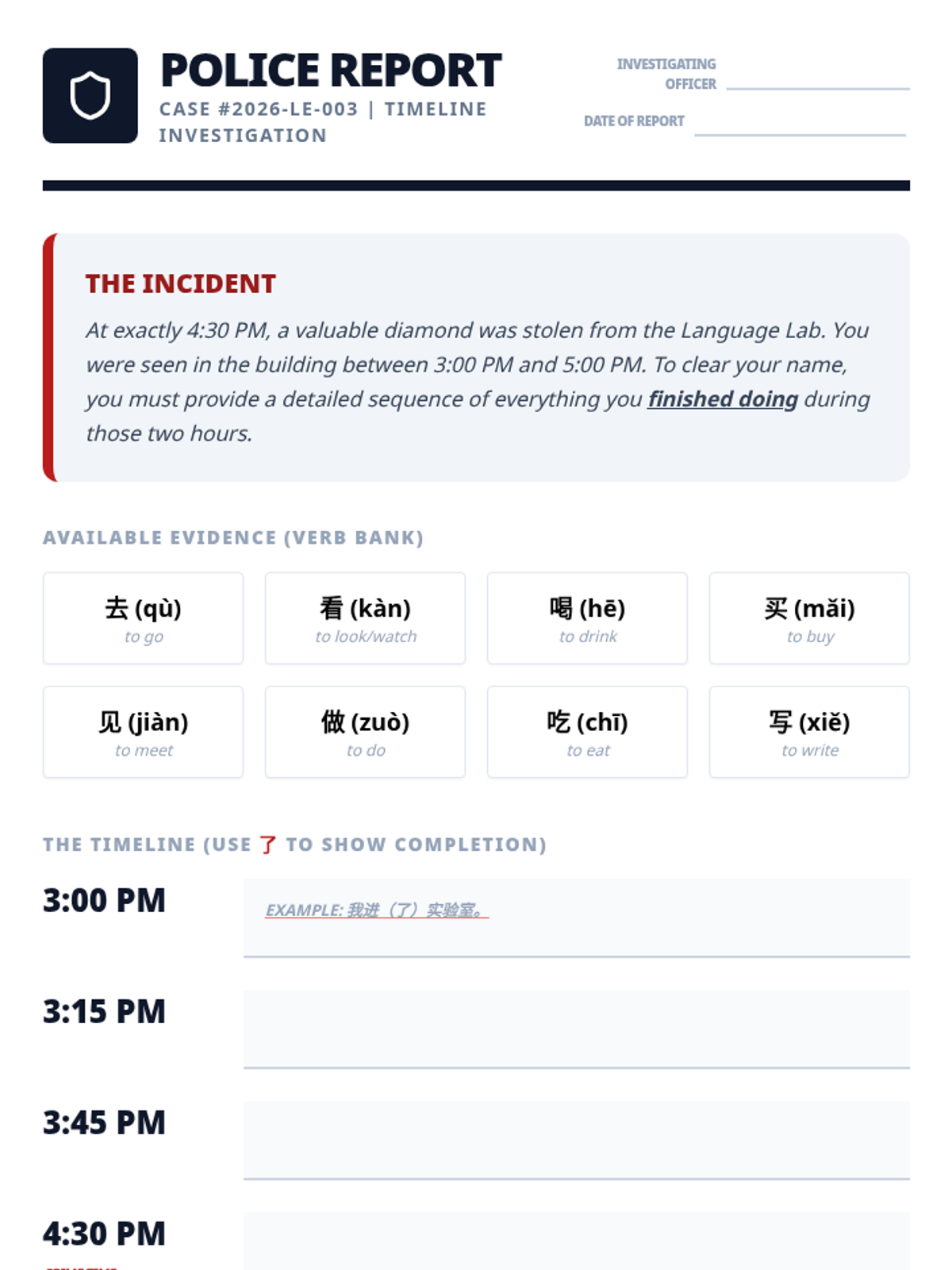
Synthesize learning by narrating a story, correctly applying completion markers and change-of-state markers.
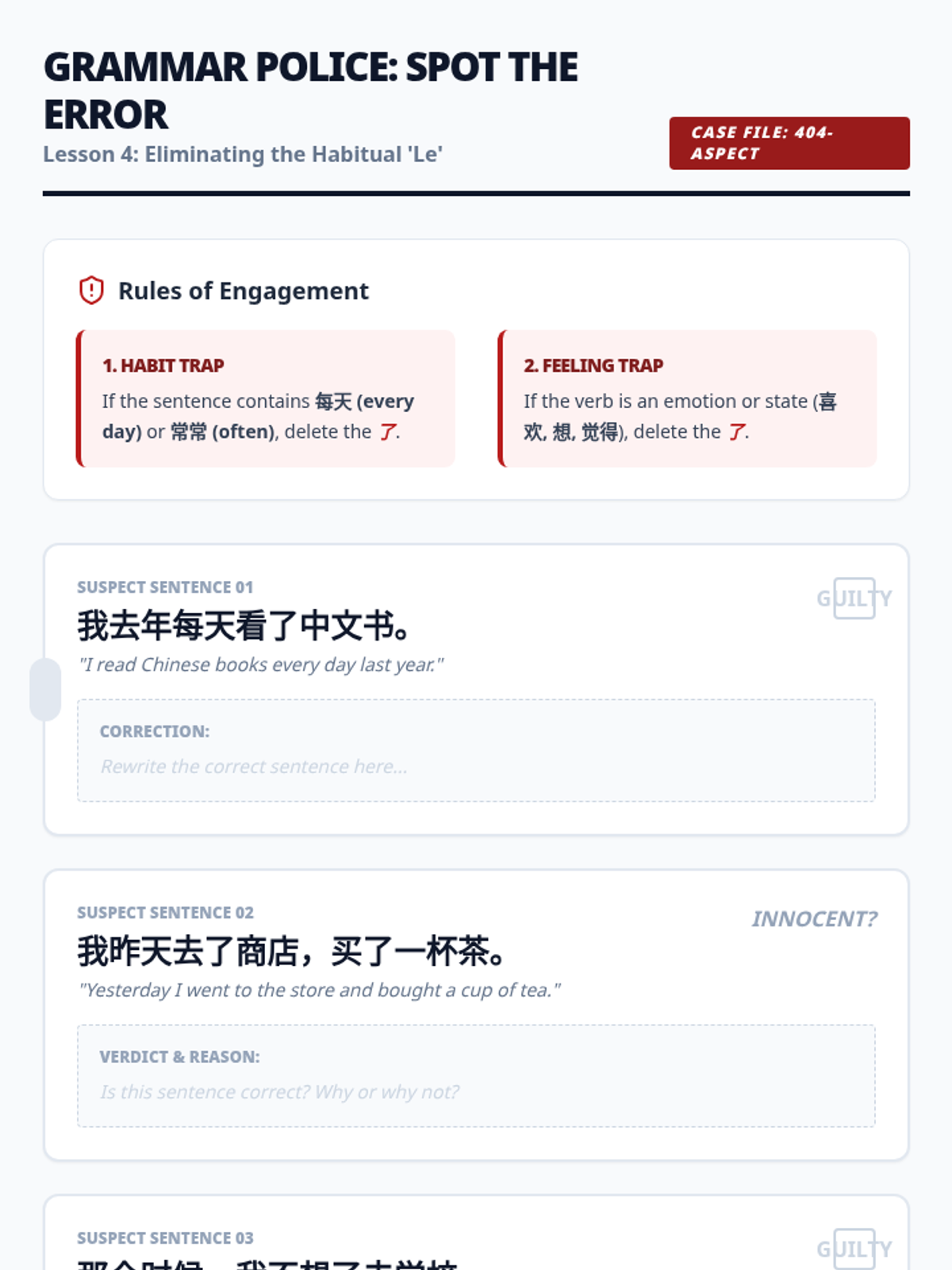
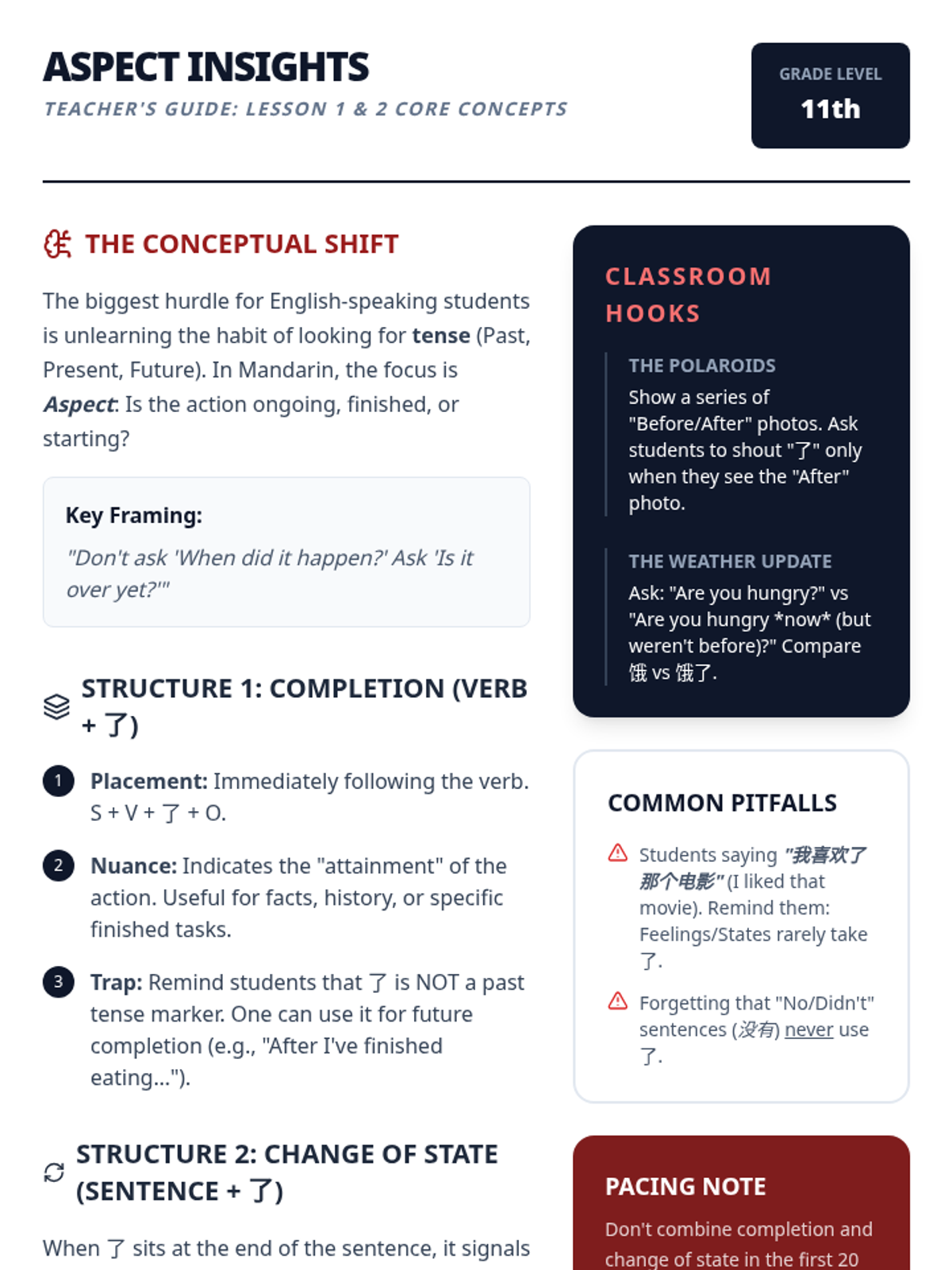
Identify contexts where 'le' is forbidden, such as past habits or continuous states, to prevent over-application.
Apply 'le' to sequence multiple actions in a narrative, focusing on the chronological flow of completed events.
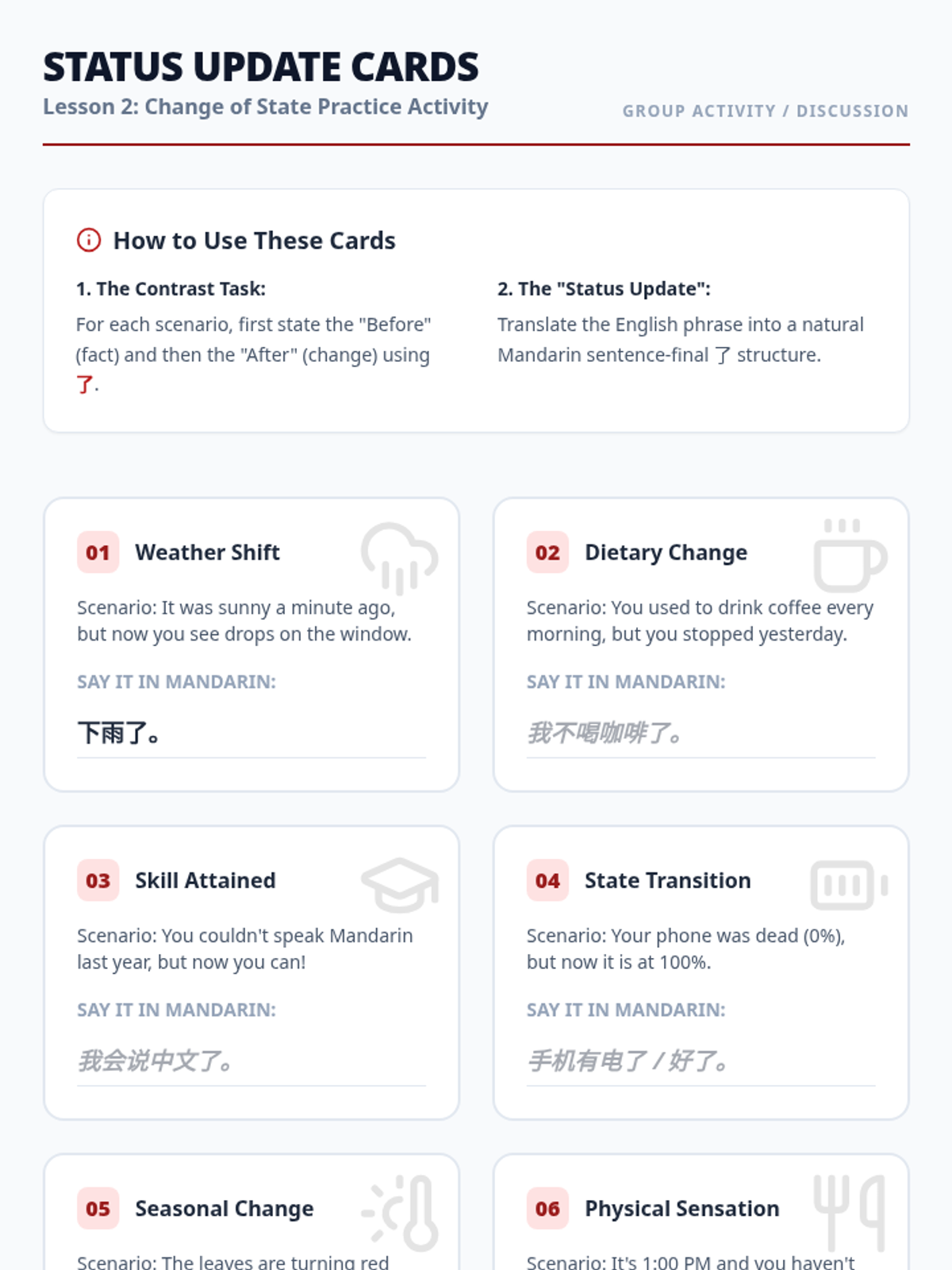
Explore the use of 'le' at the end of a sentence to indicate a change of state or a new situation.
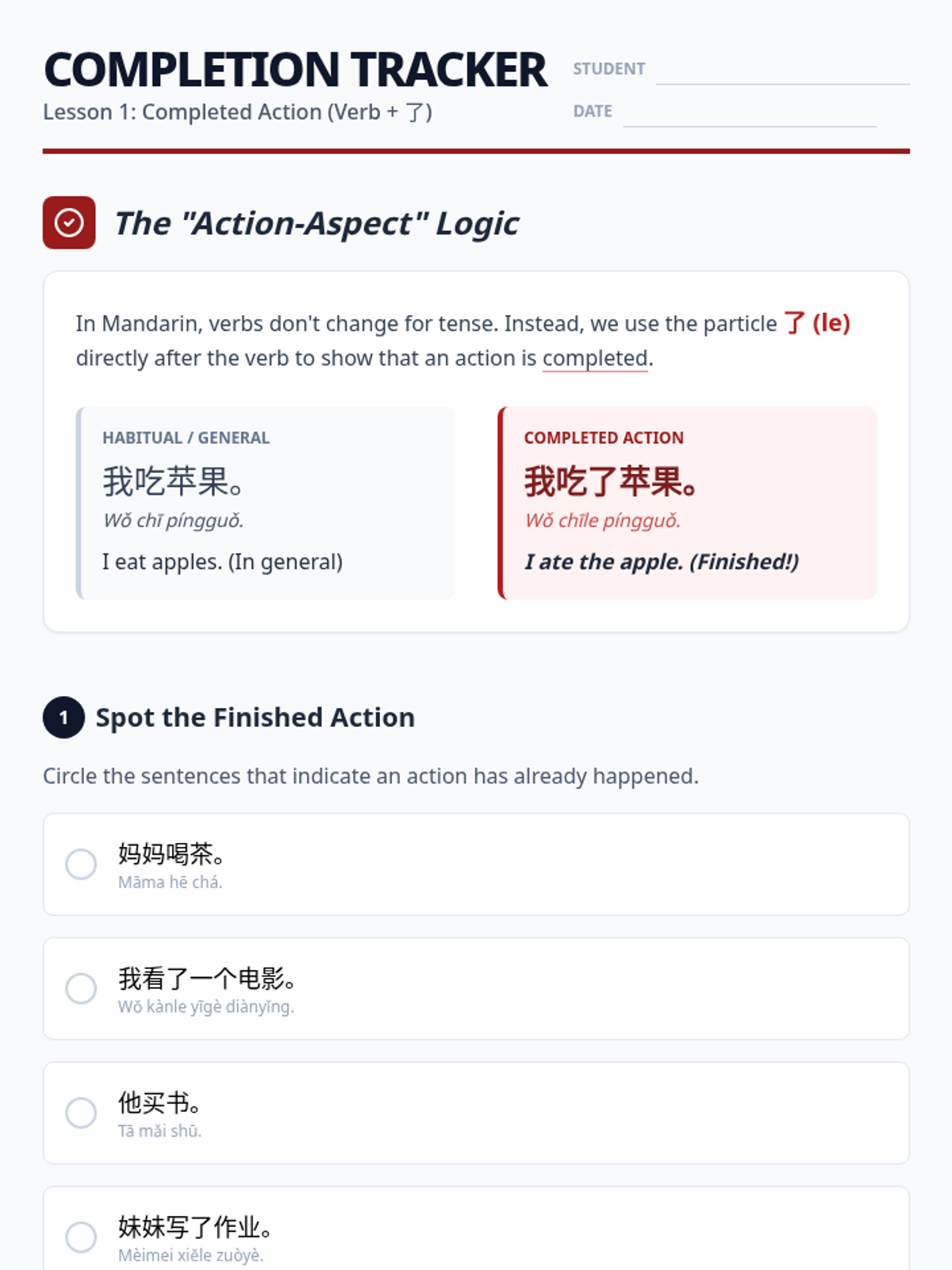
Introduce the use of 'le' directly after a verb to signal the completion of an action, distinguishing it from habitual behaviors.
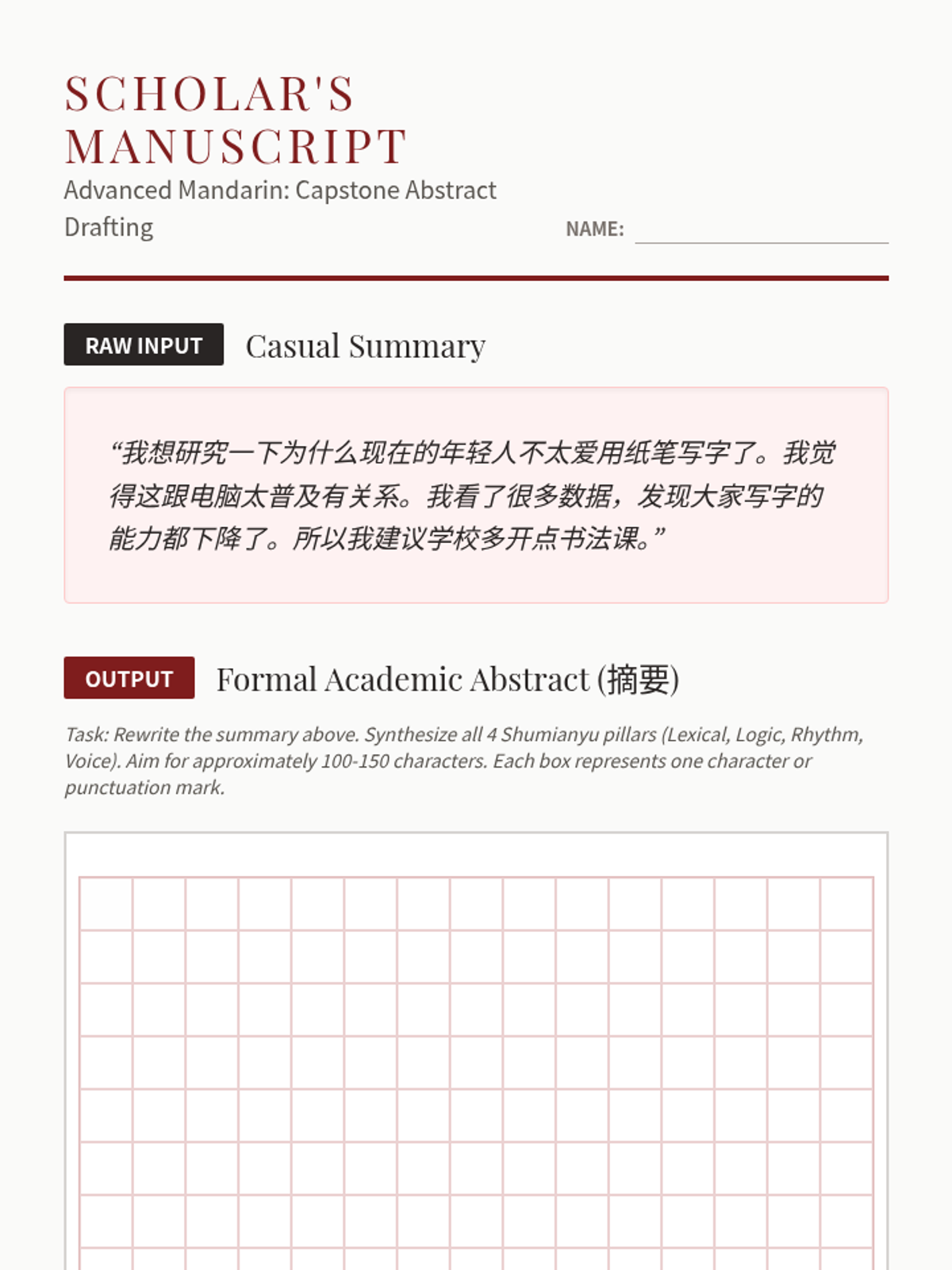
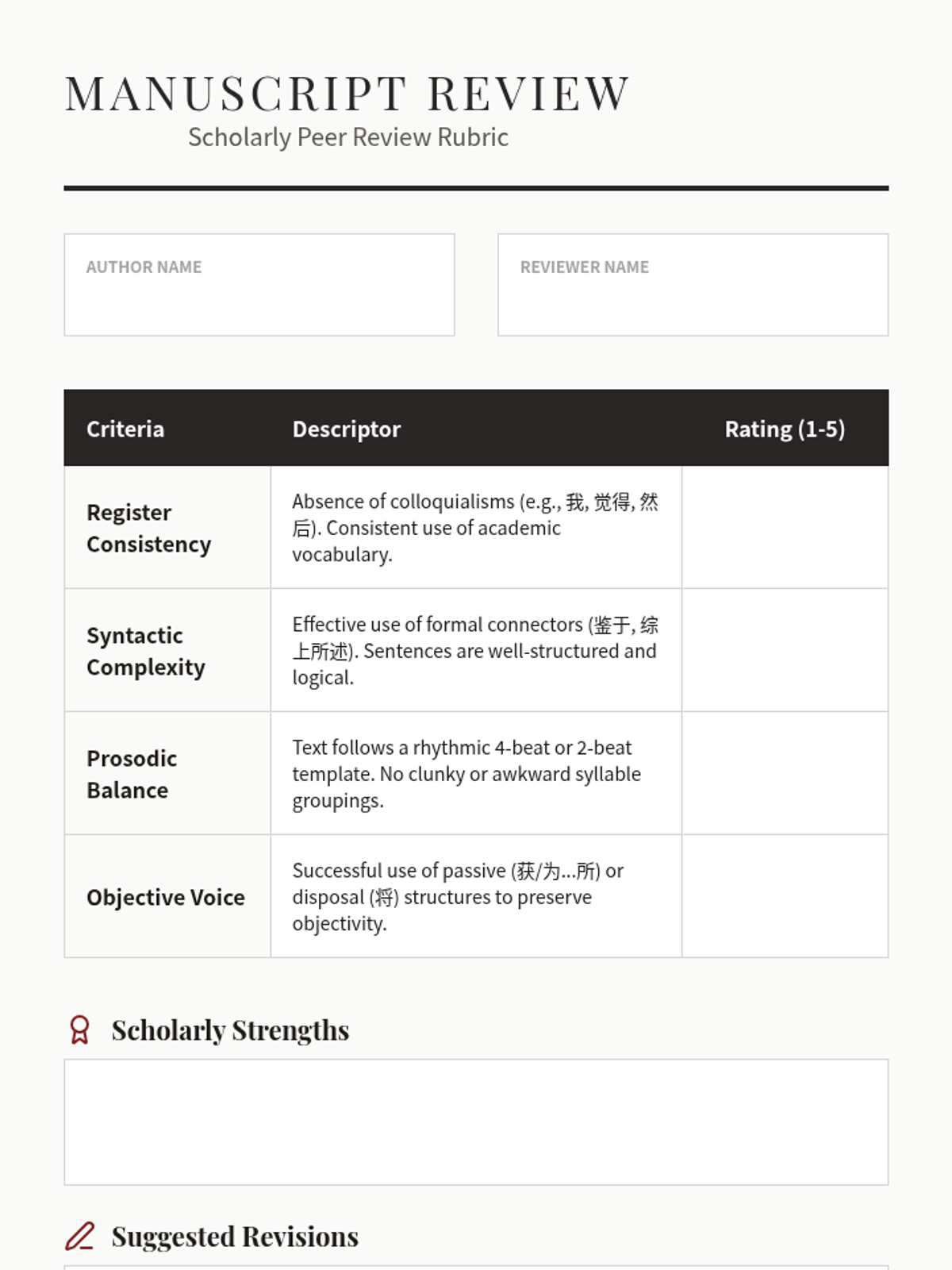
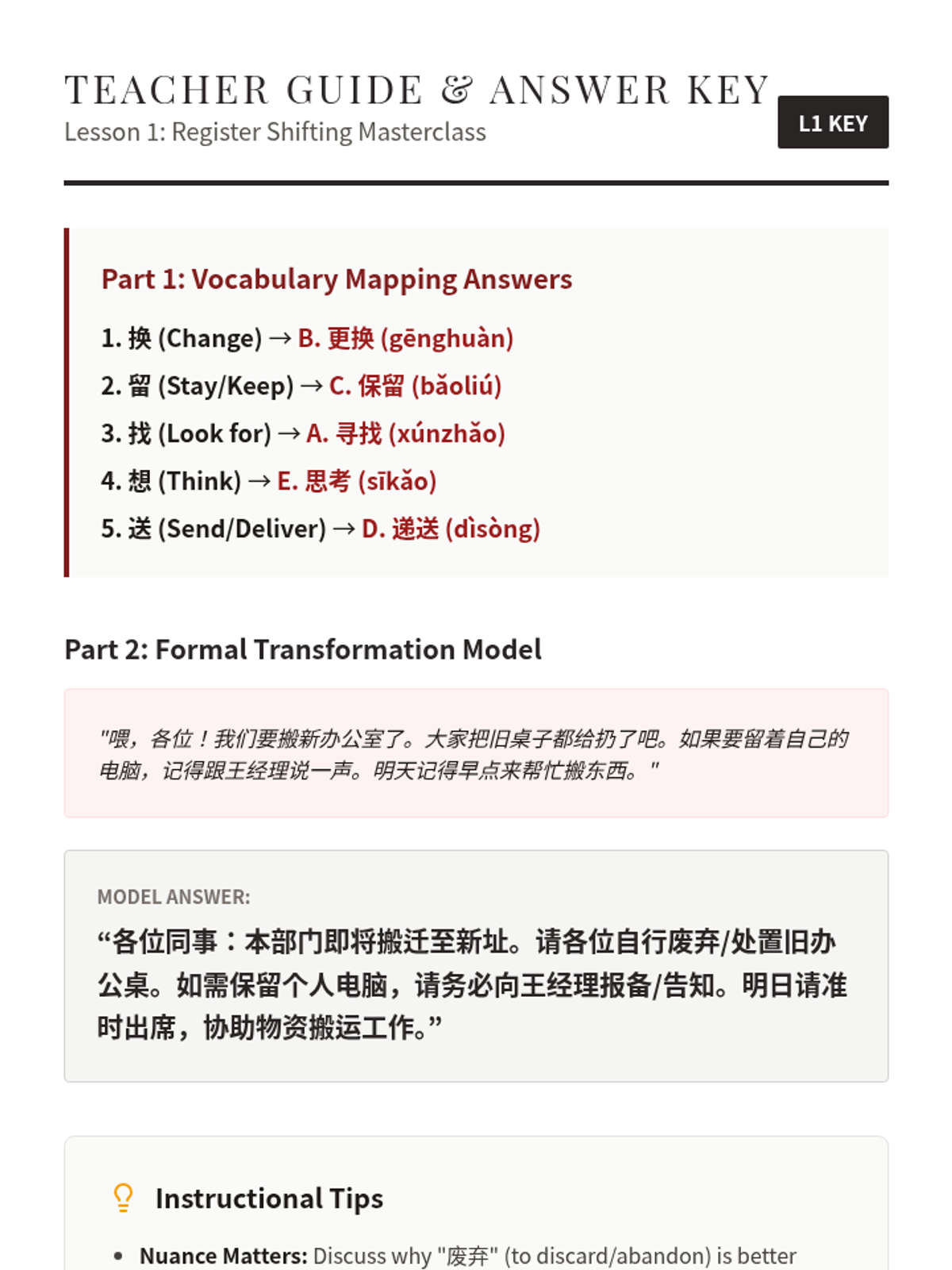
Students apply all learned formal writing techniques to translate a colloquial summary of a topic into a formal academic abstract. Peer review focuses on register consistency.
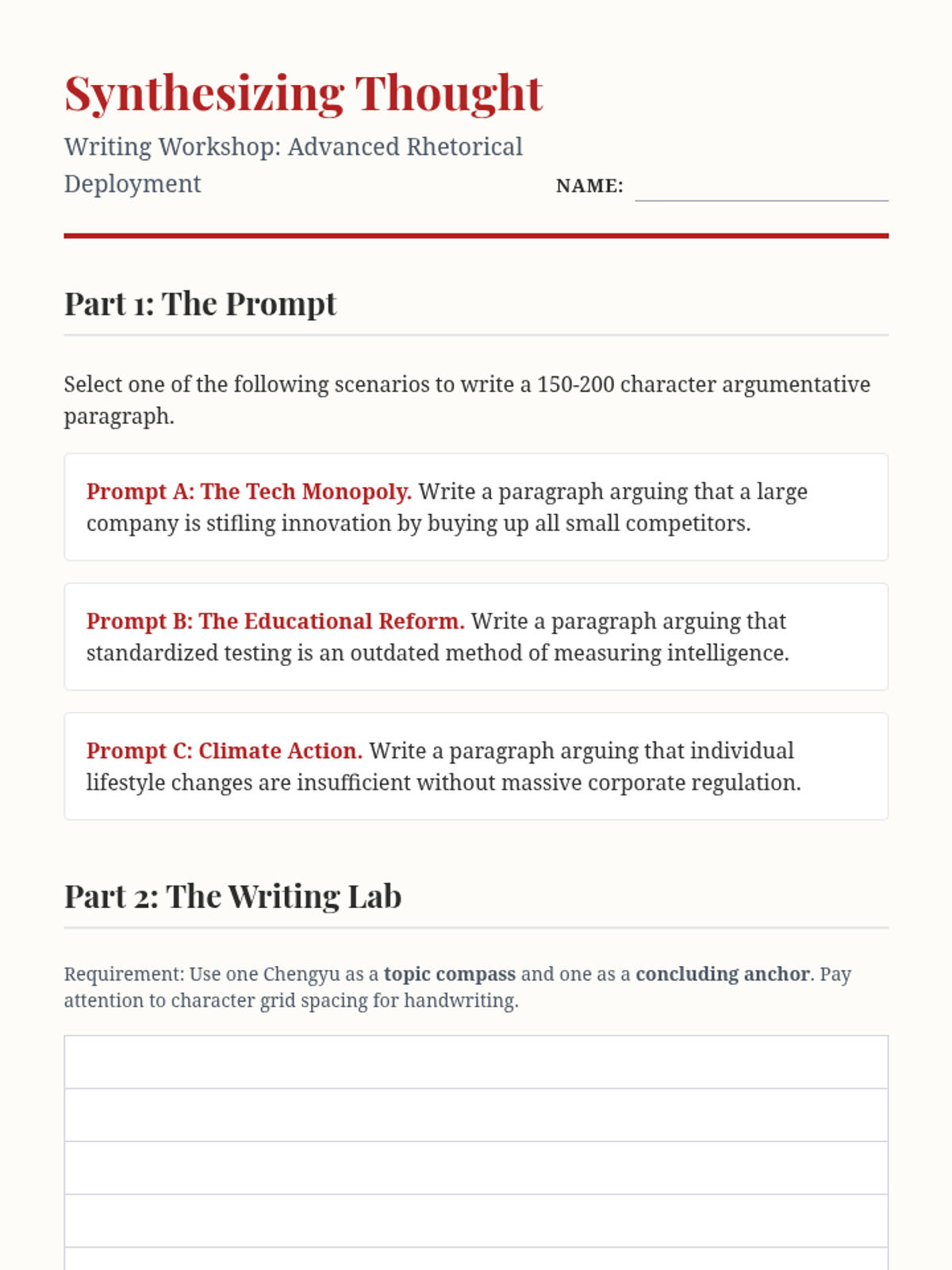
Students practice writing argumentative paragraphs where idioms serve as topic sentences or concluding summaries to condense logic.
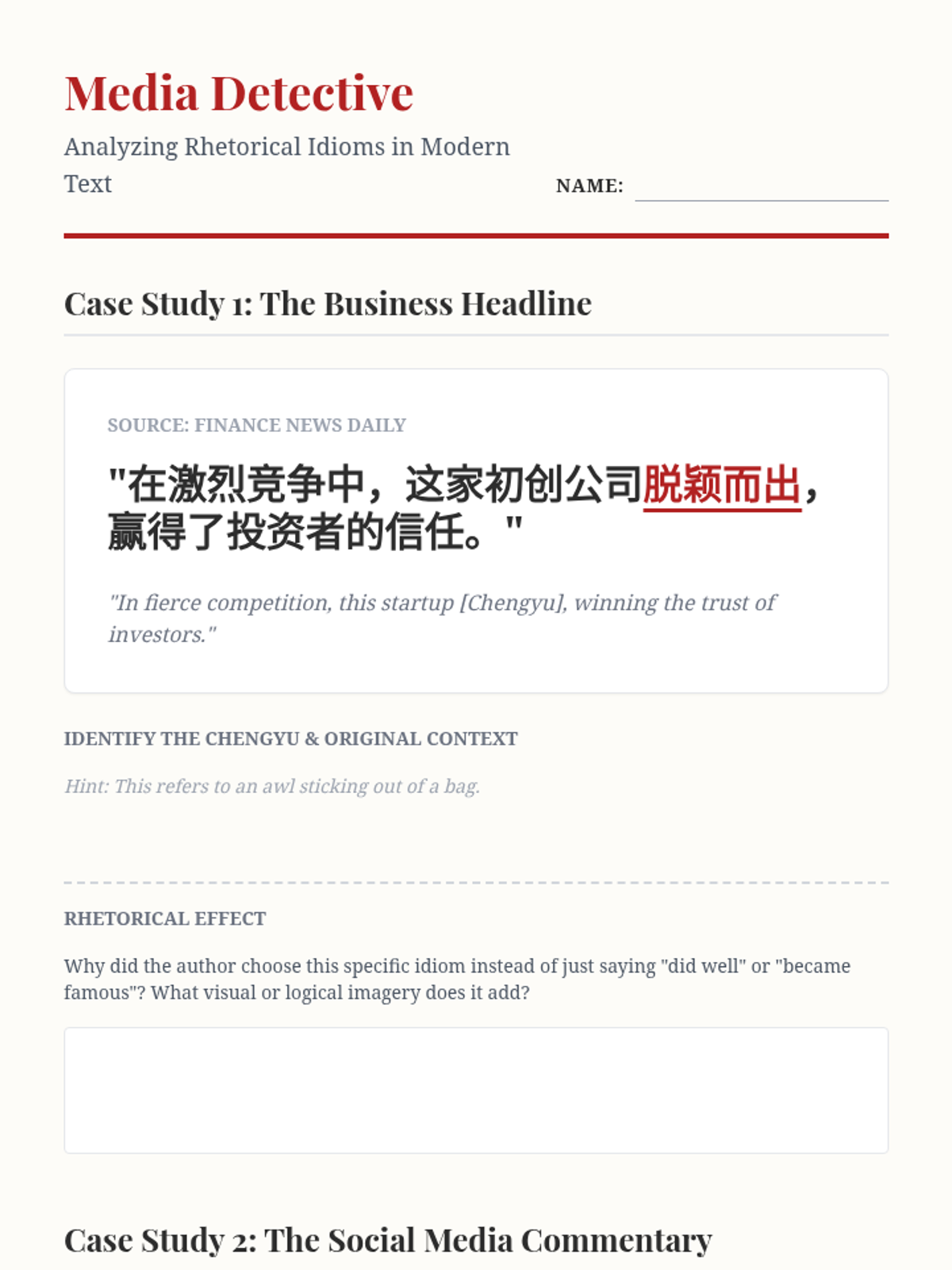
Students analyze how idioms are used, misused, or modified in contemporary news and social media for rhetorical effect.
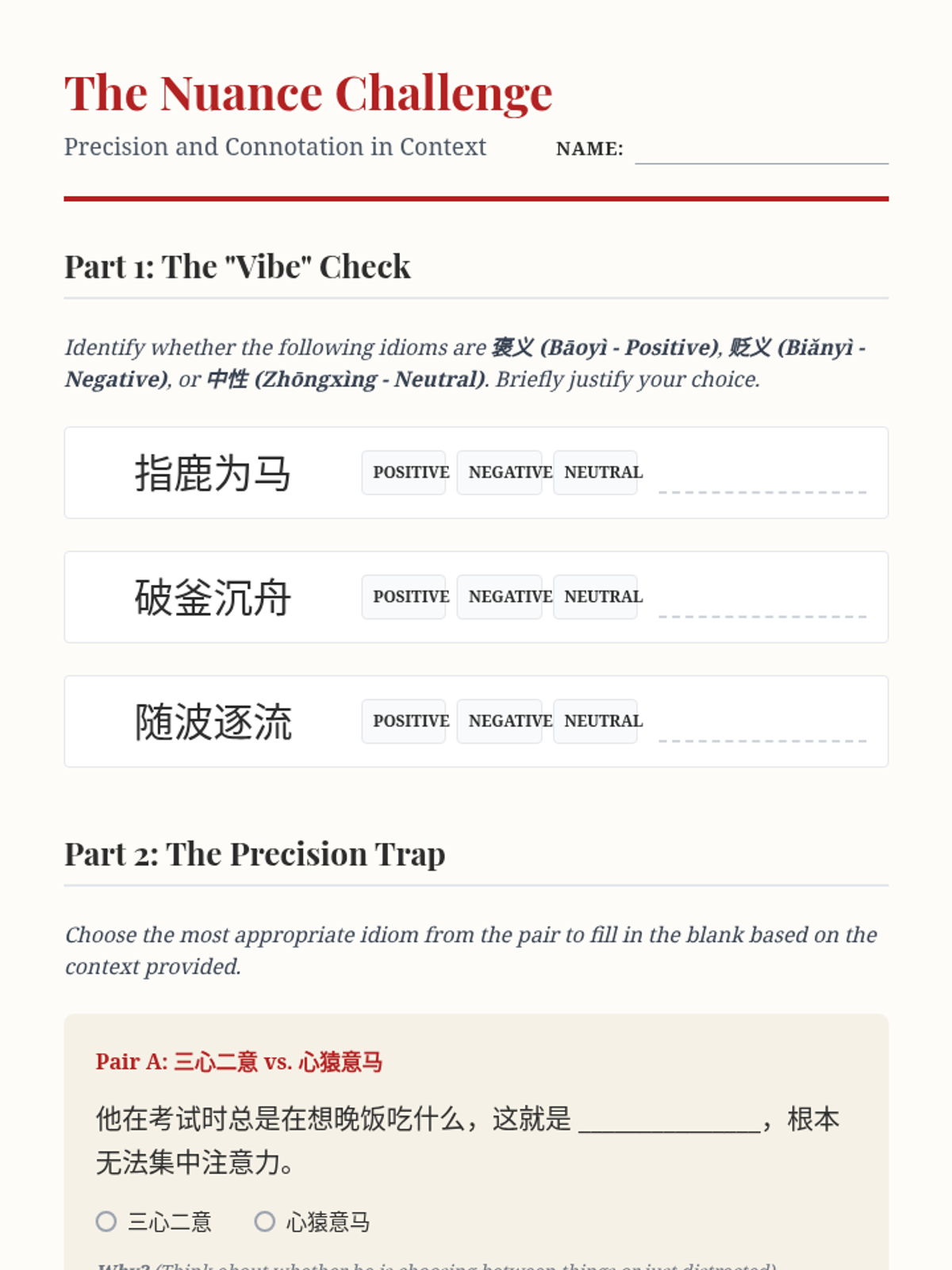
This lesson compares idioms with similar meanings but different connotations, focusing on precision in academic writing.
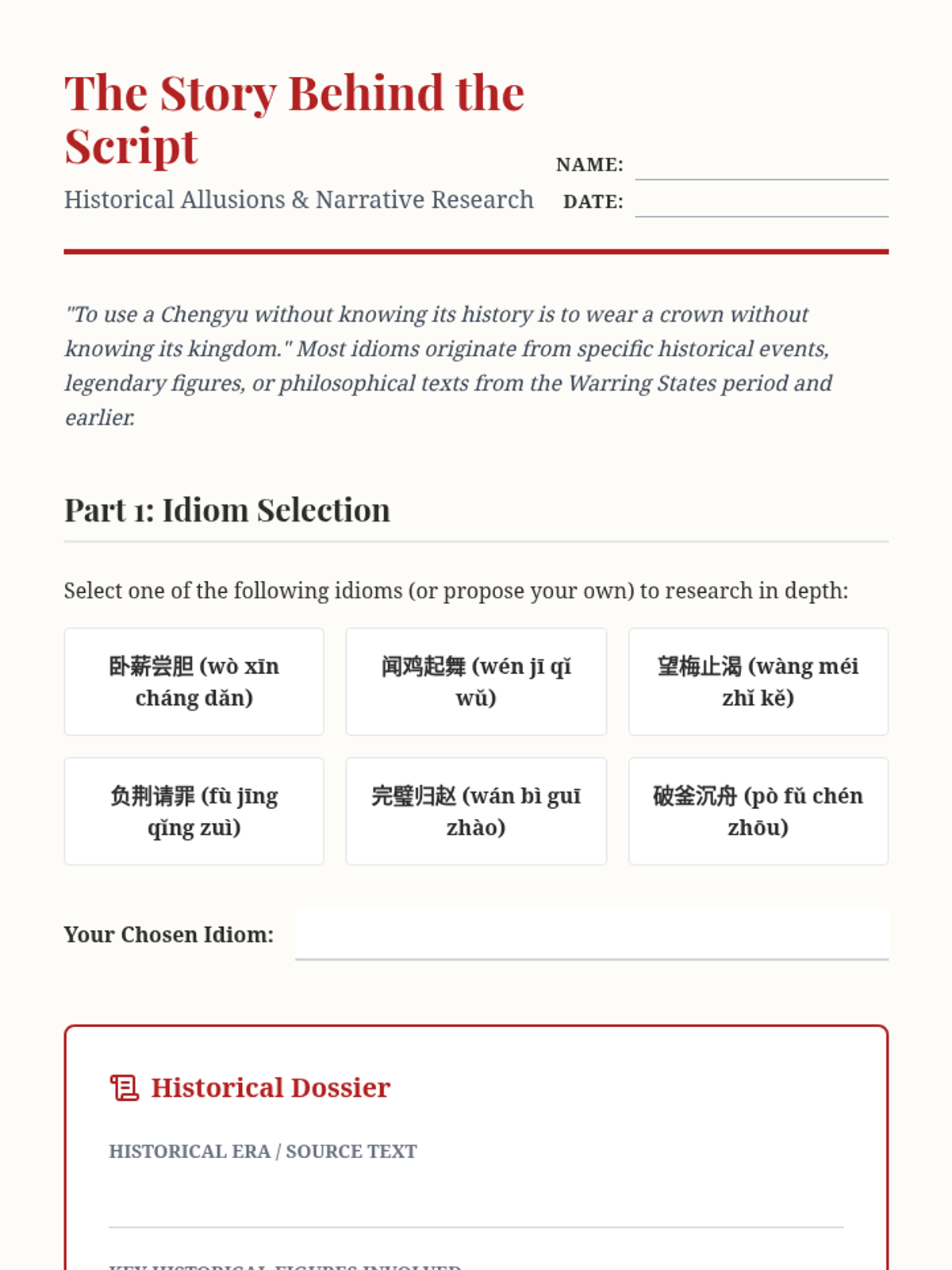
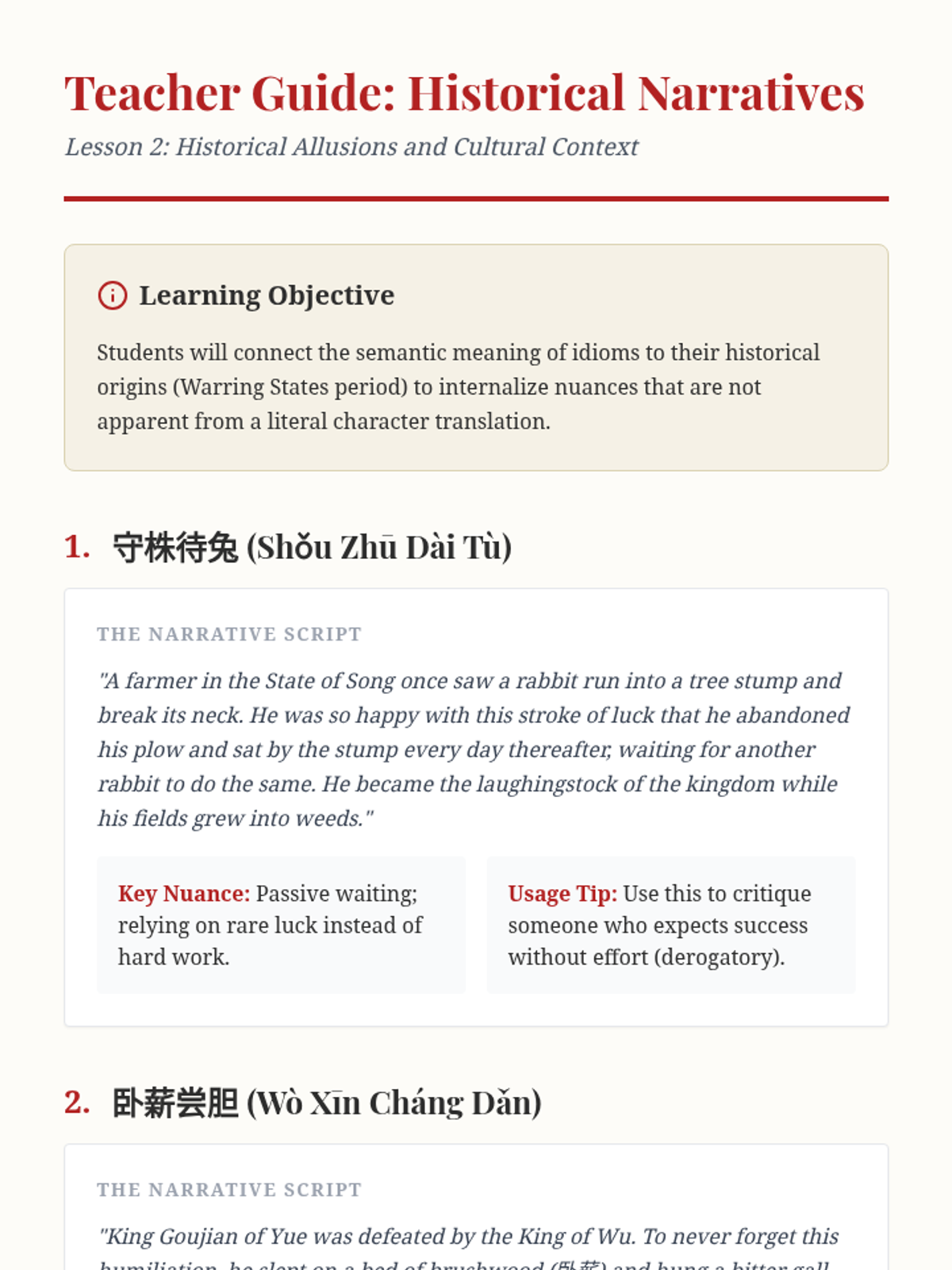
Students research the backstory of key idioms derived from the Warring States period and other historical eras to understand cultural context.
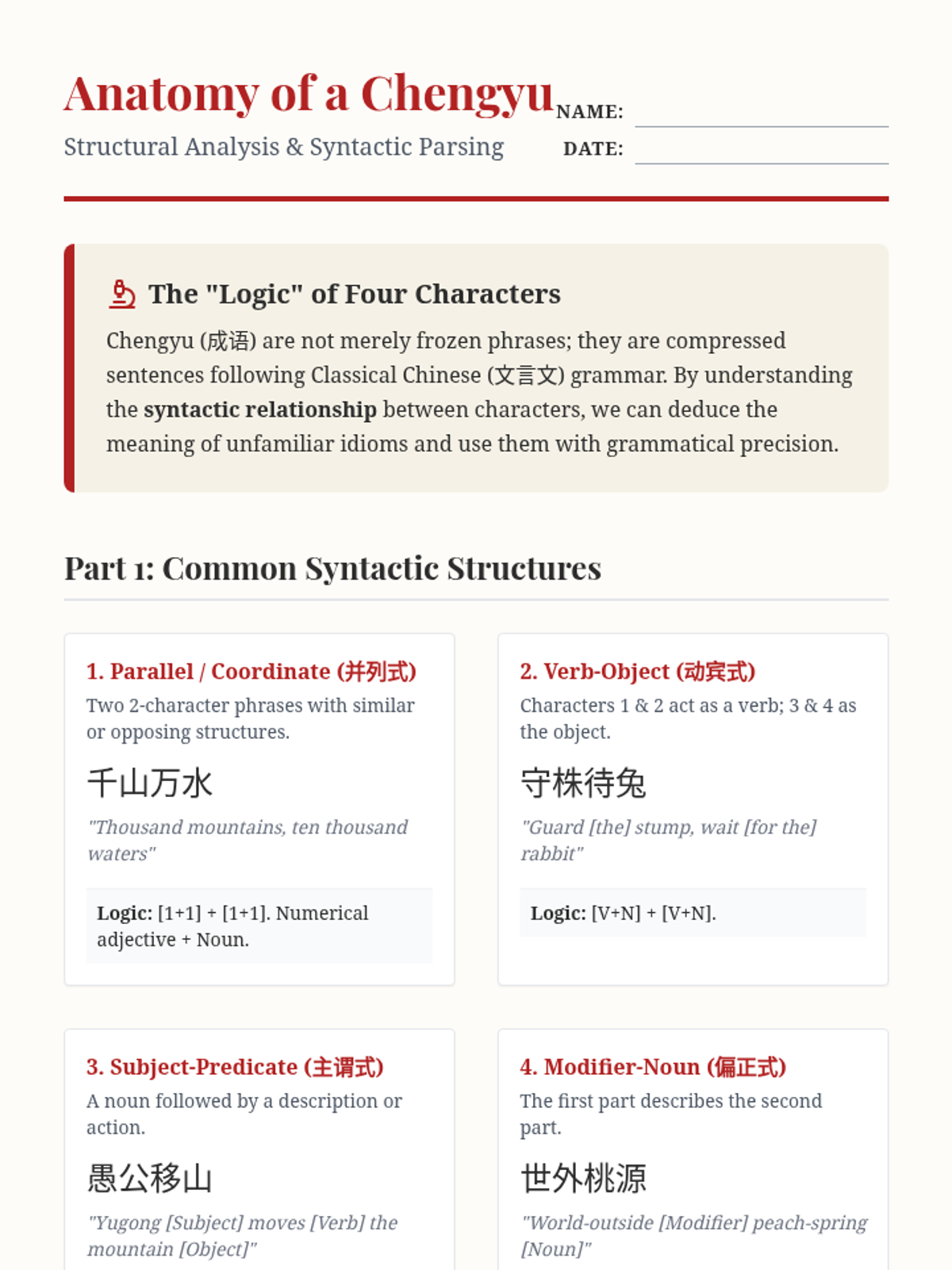
Students analyze the standard 4-character structure and the grammatical relationships within idioms (e.g., subject-predicate, verb-object) to parse their internal logic.
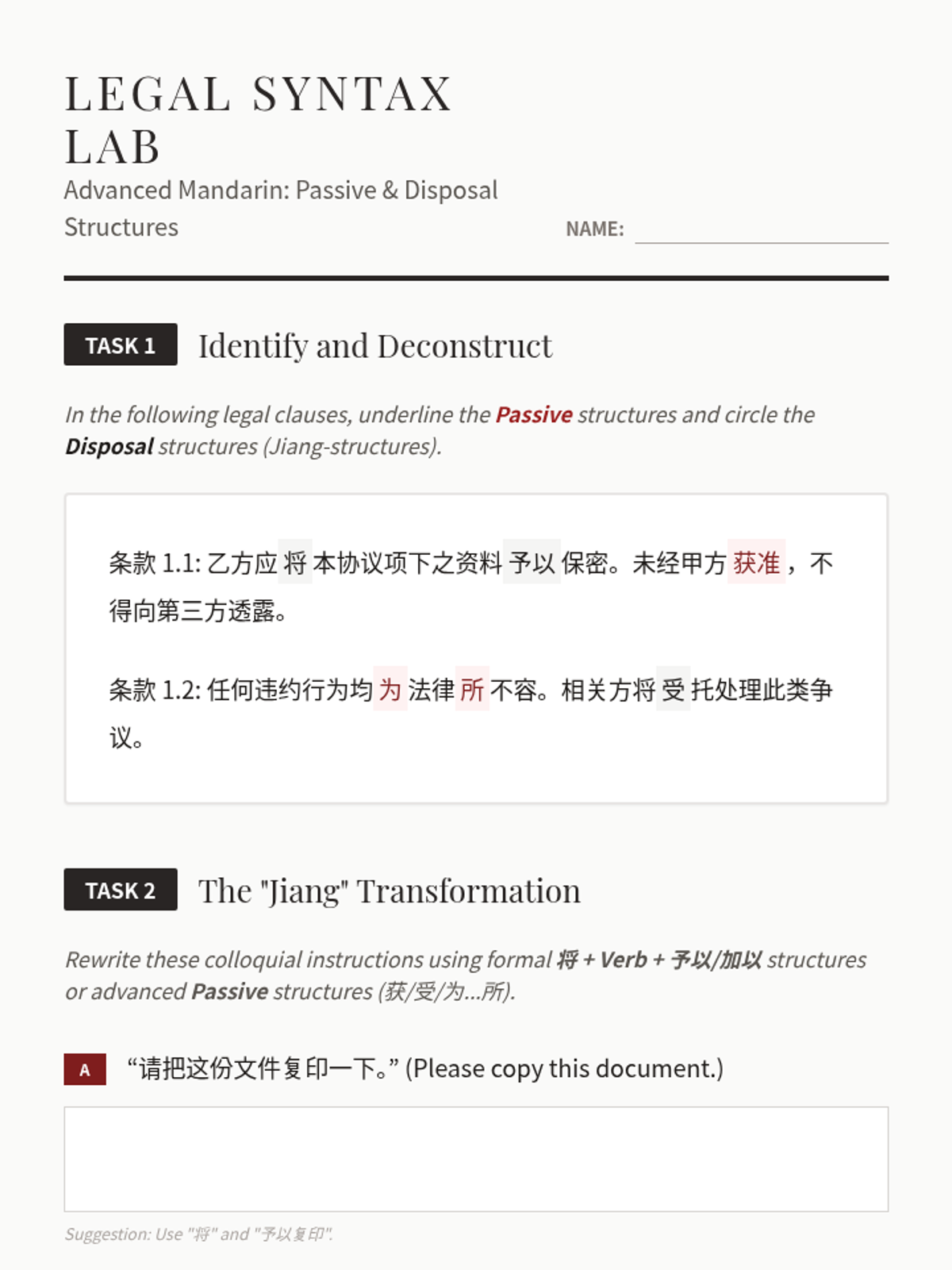
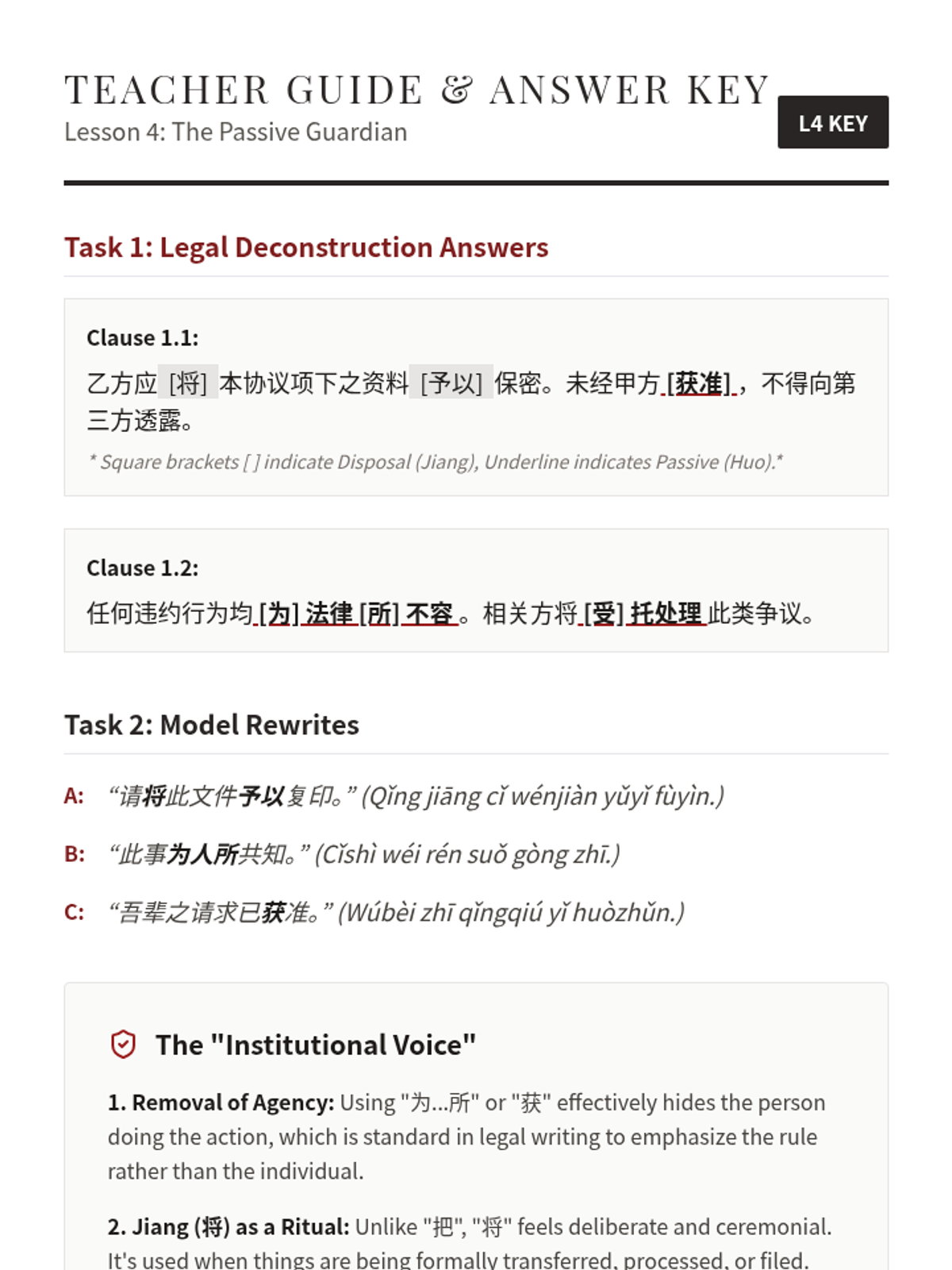
This lesson covers advanced usage of the passive voice (bei, wei...suo) and disposal structures in formal contexts. Students analyze legal or bureaucratic texts where these structures preserve objectivity.
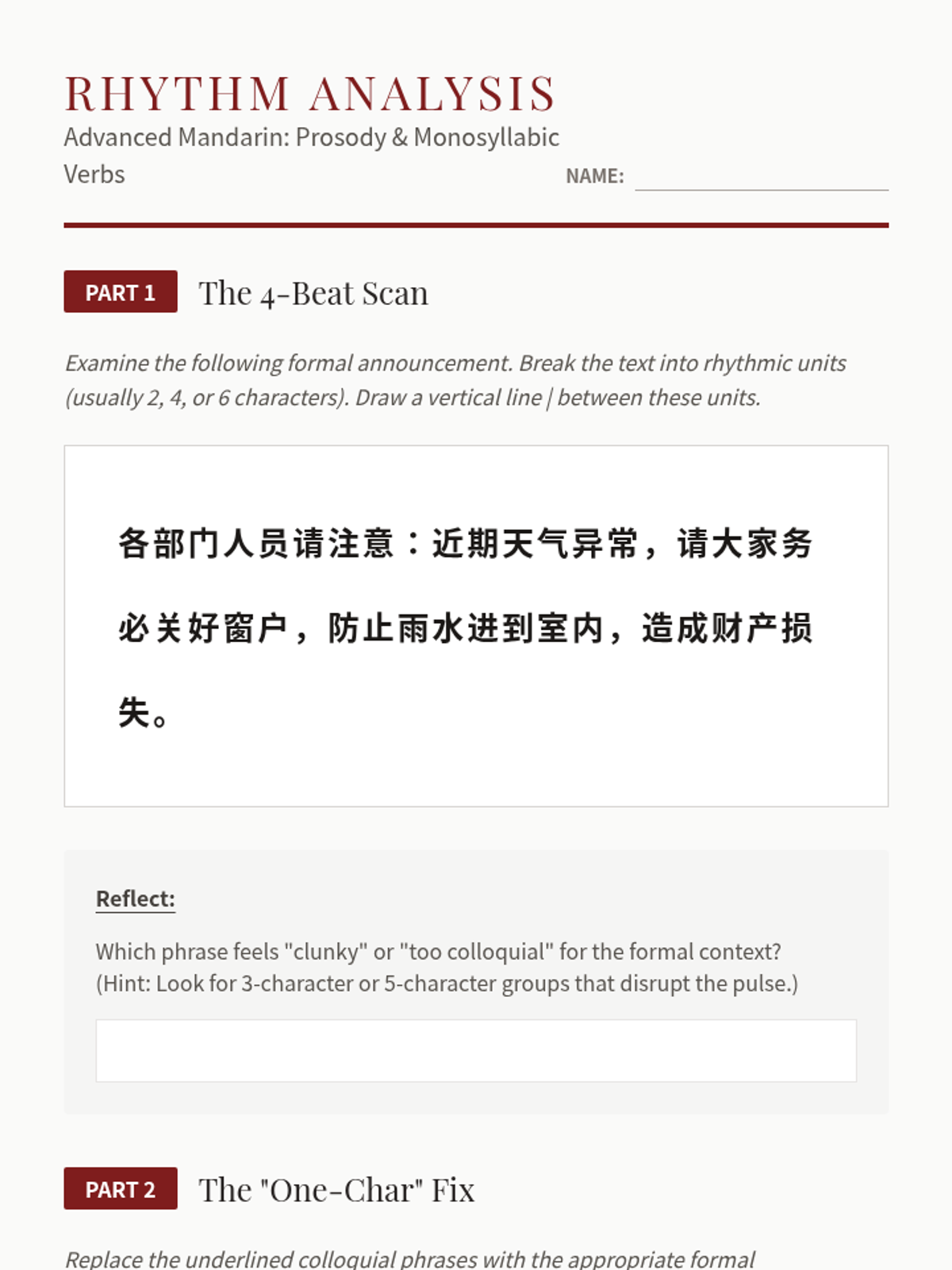
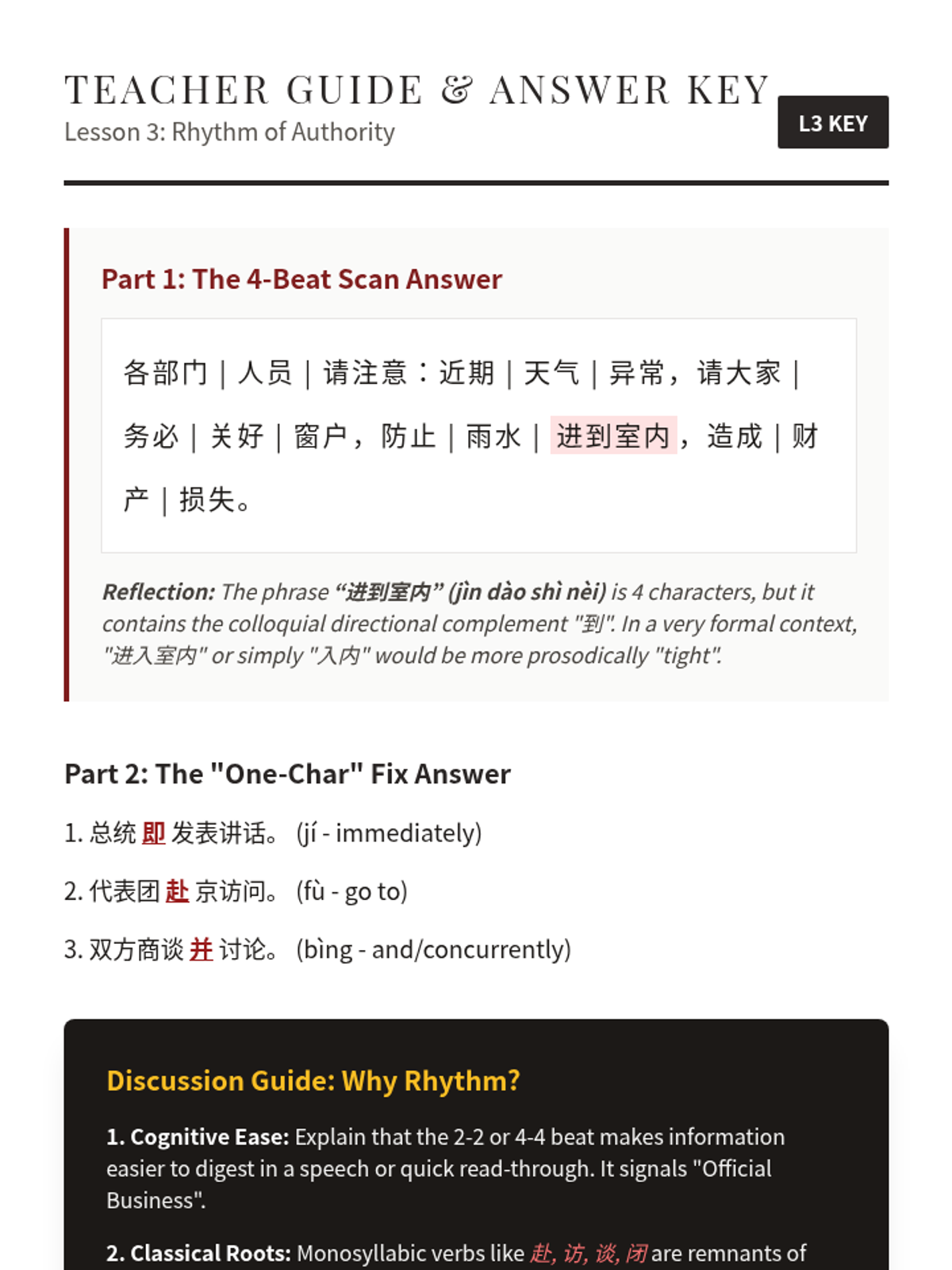
Students explore the tendency of written Chinese to prefer certain monosyllabic verbs or formal bisyllabic compounds over everyday phrasing. They analyze rhythm and prosody in formal texts.
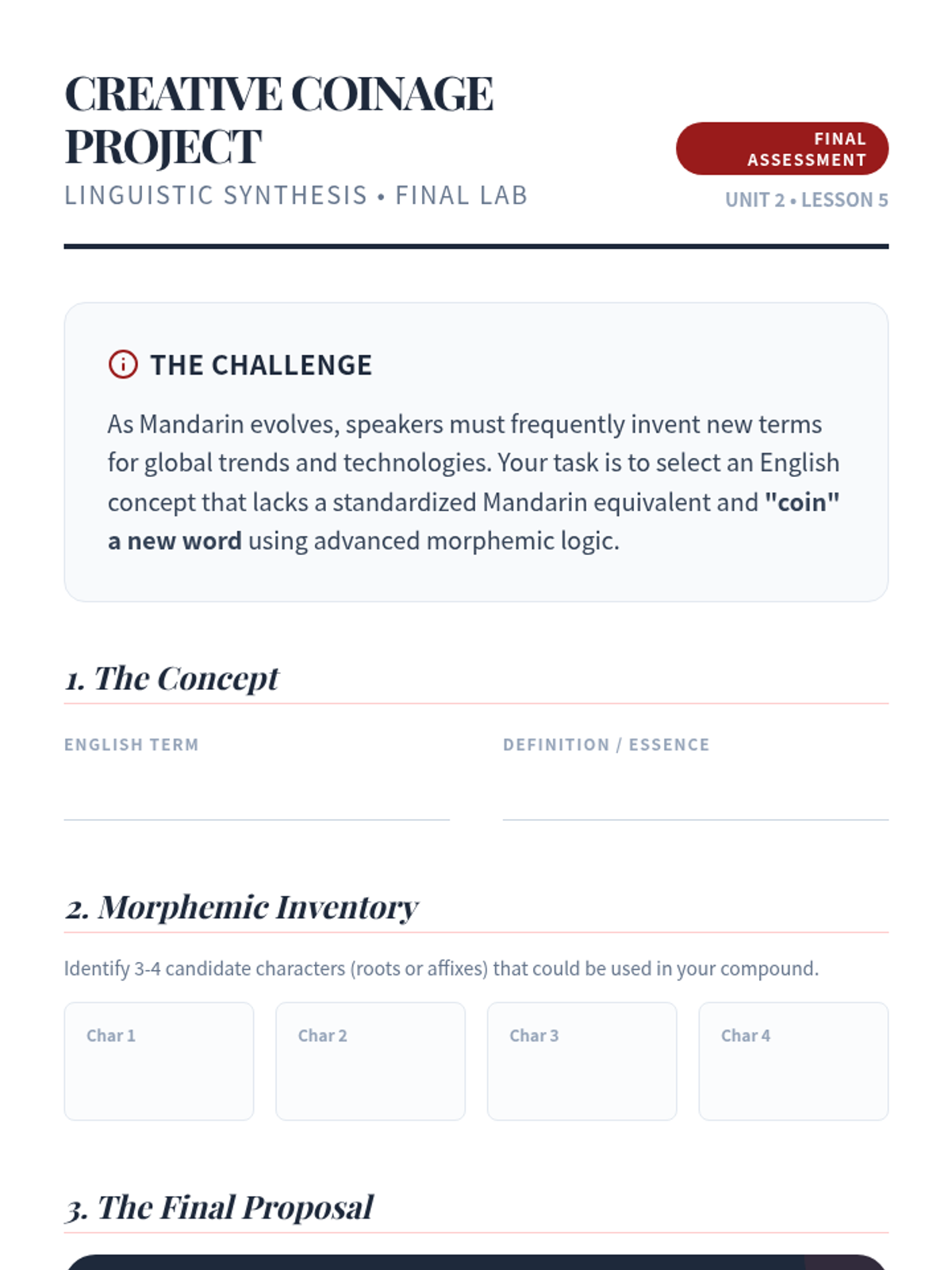
Synthesize knowledge to create new Mandarin terms for modern concepts, justifying linguistic choices through morphemic analysis.
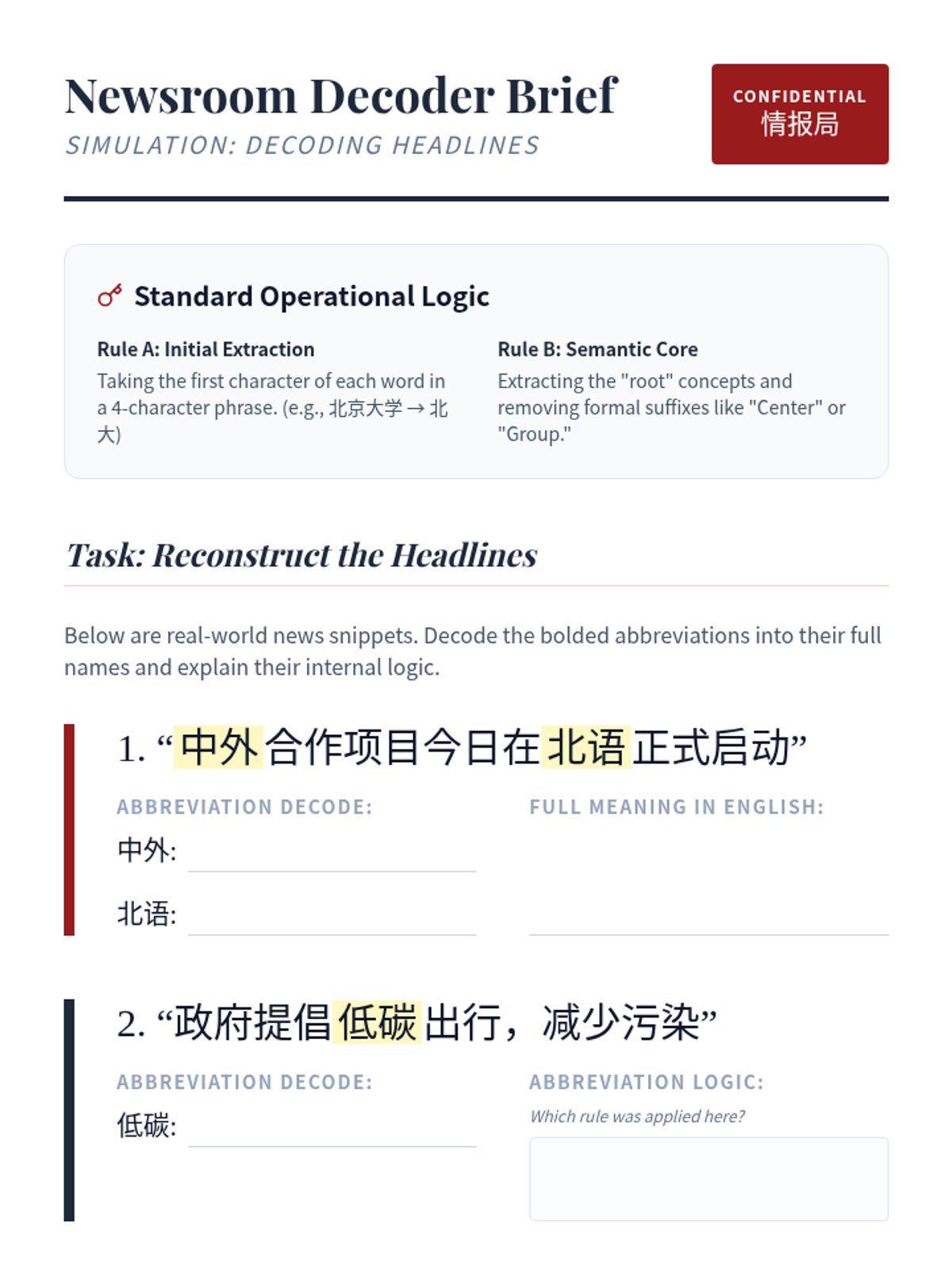
Decode the rules behind Chinese abbreviations and contractions used in media, politics, and institutional naming.
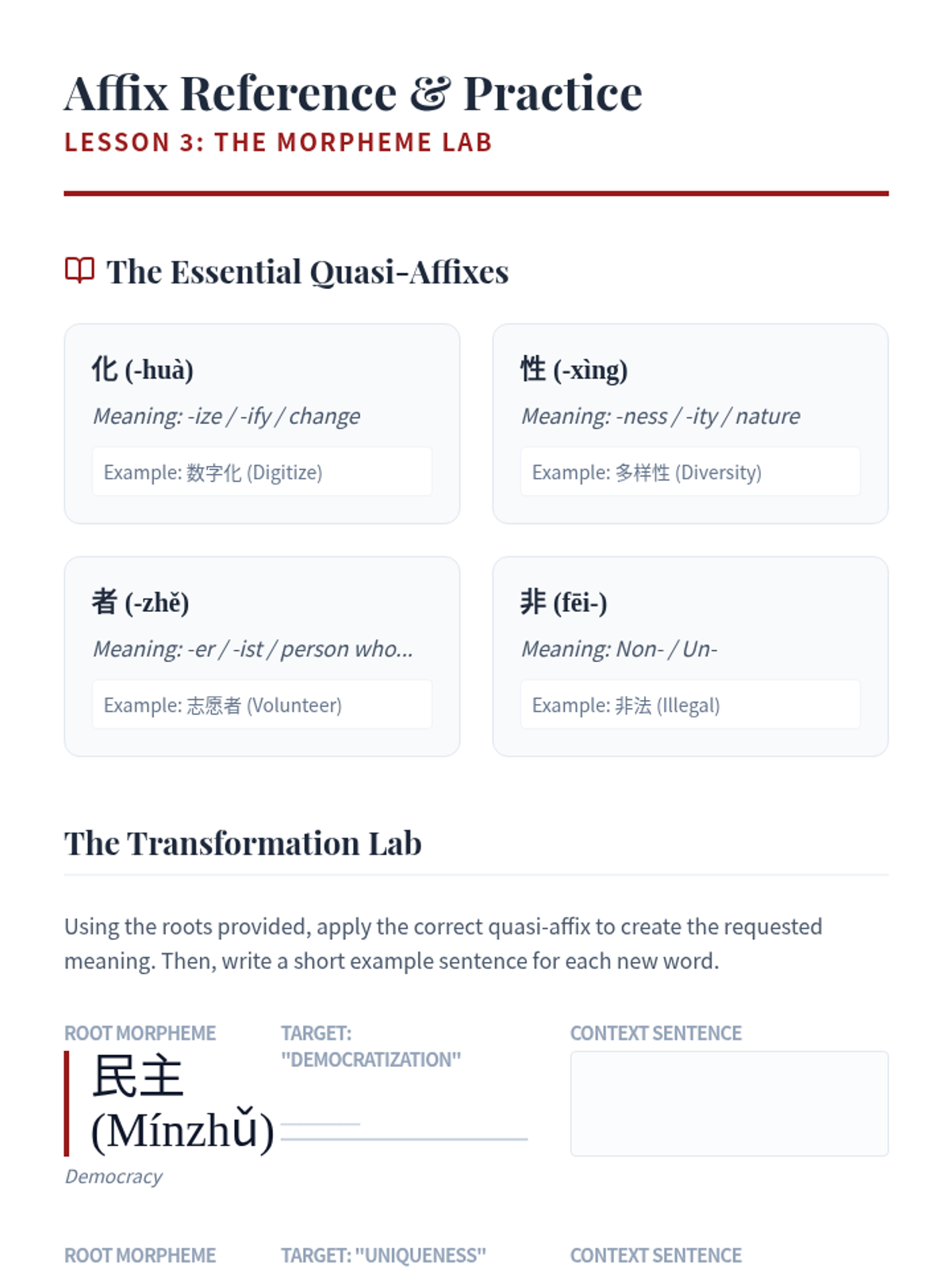
Master the use of quasi-prefixes and suffixes like -hua, -xing, and -zhe to transform word classes and expand academic vocabulary.
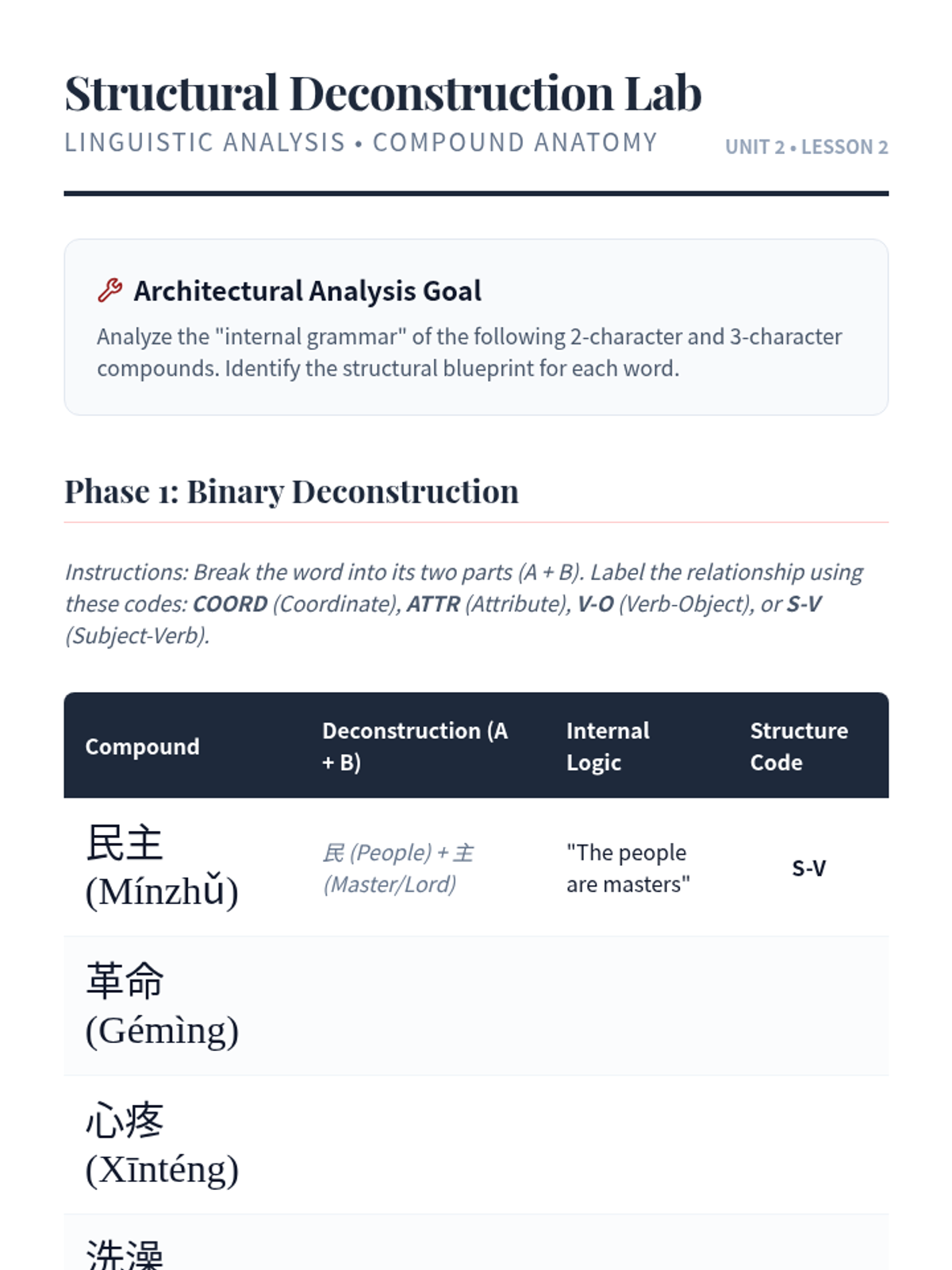
Analyze the internal grammatical structures of Chinese compound words, including Subject-Verb, Verb-Object, and Attribute-Noun patterns.
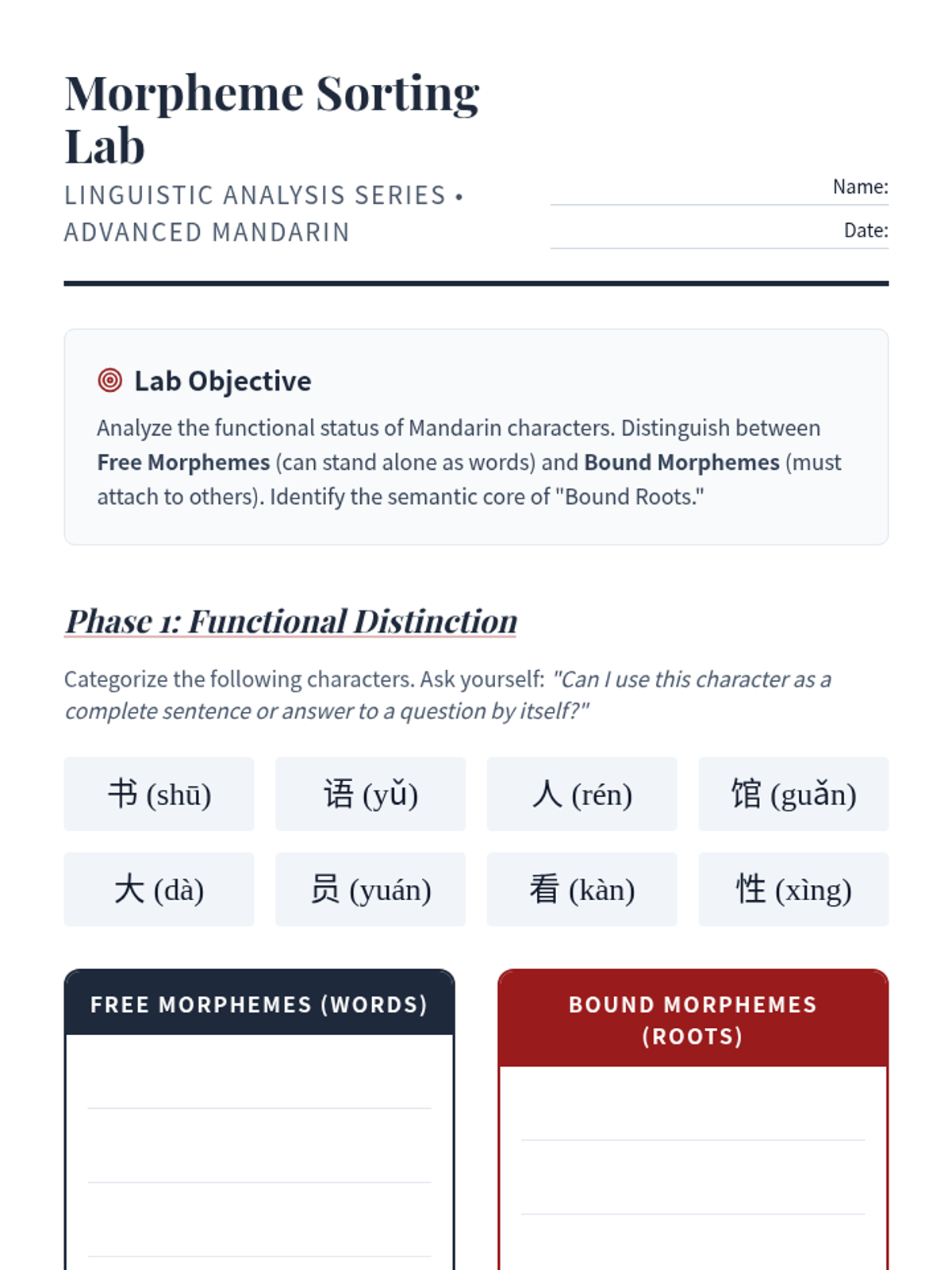
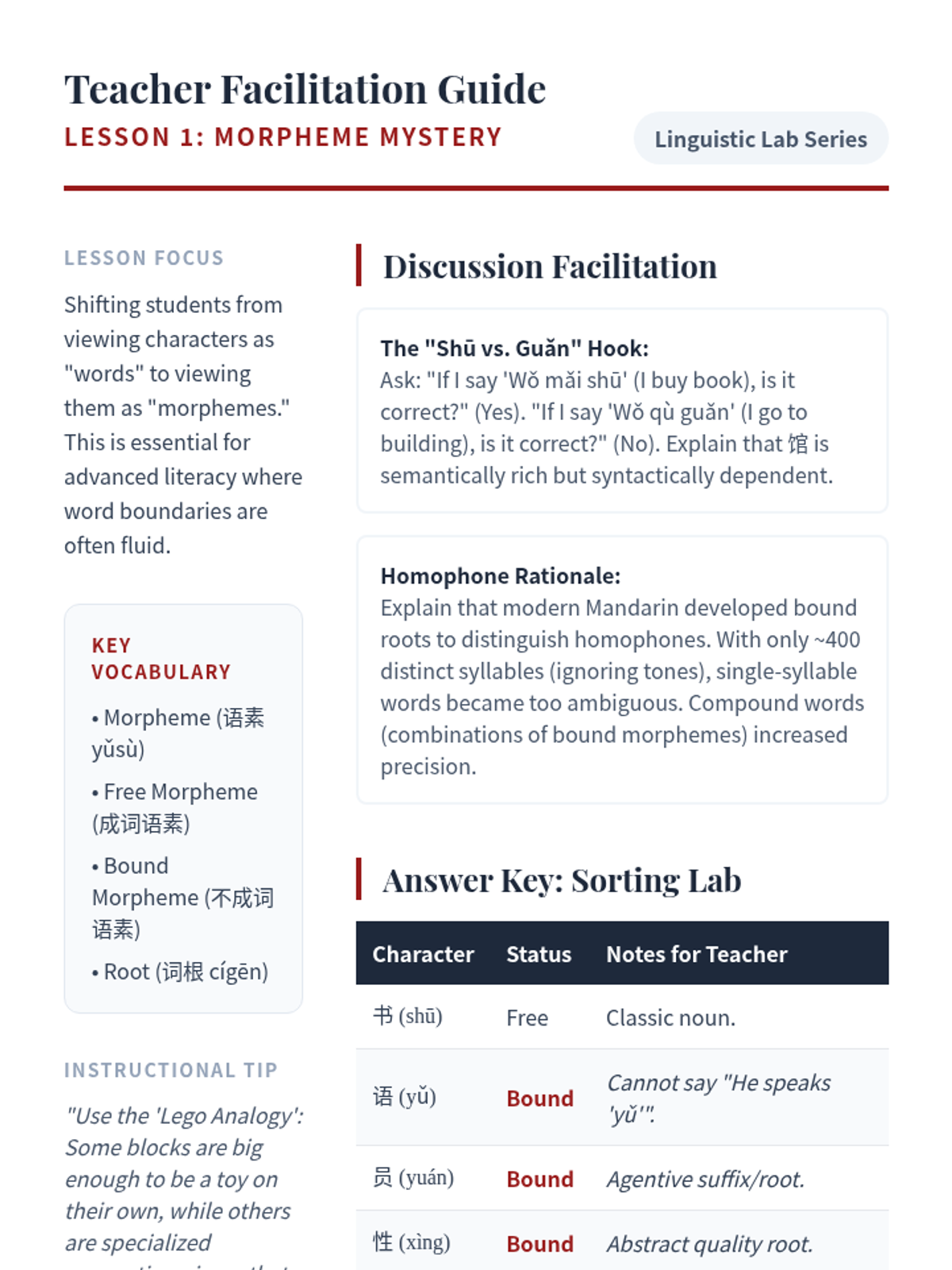
Distinguish between free and bound morphemes in Mandarin. Students analyze why certain characters cannot stand alone and identify the core semantic value of bound roots.
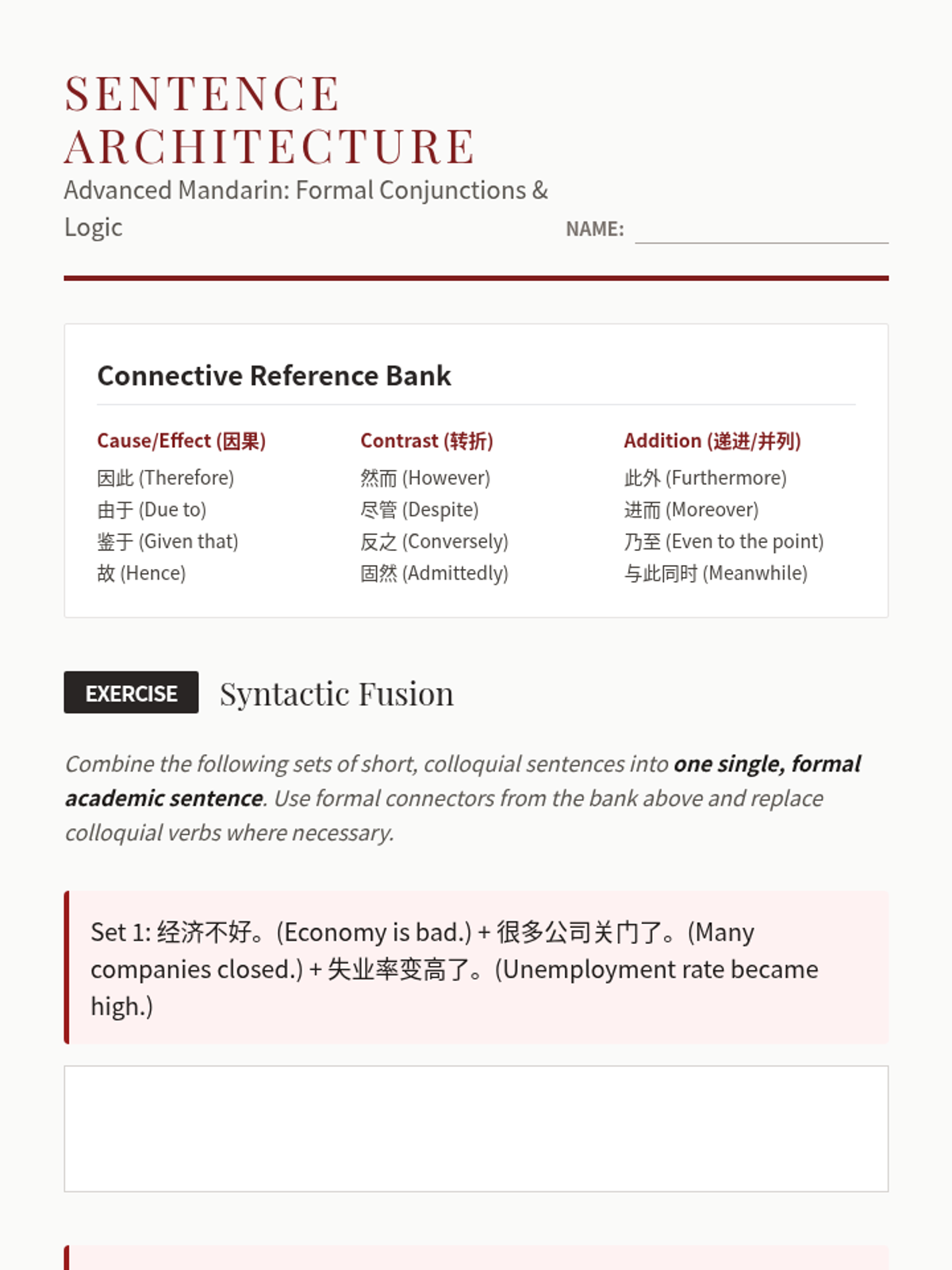
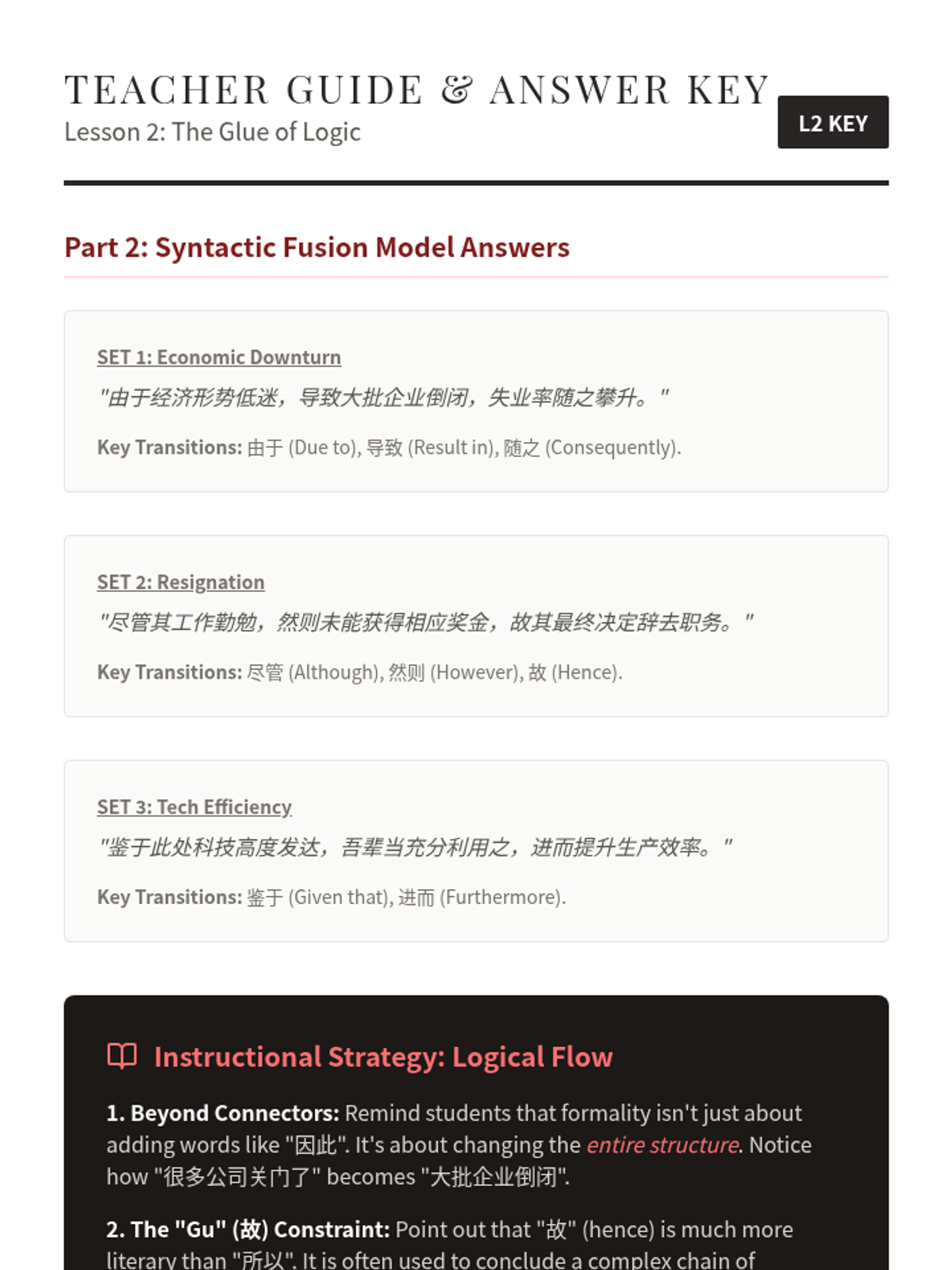
Focus shifts to the 'glue' of academic writing—formal transition words and conjunctions rarely used in speech. Students conduct sentence combining exercises to increase syntactic complexity.
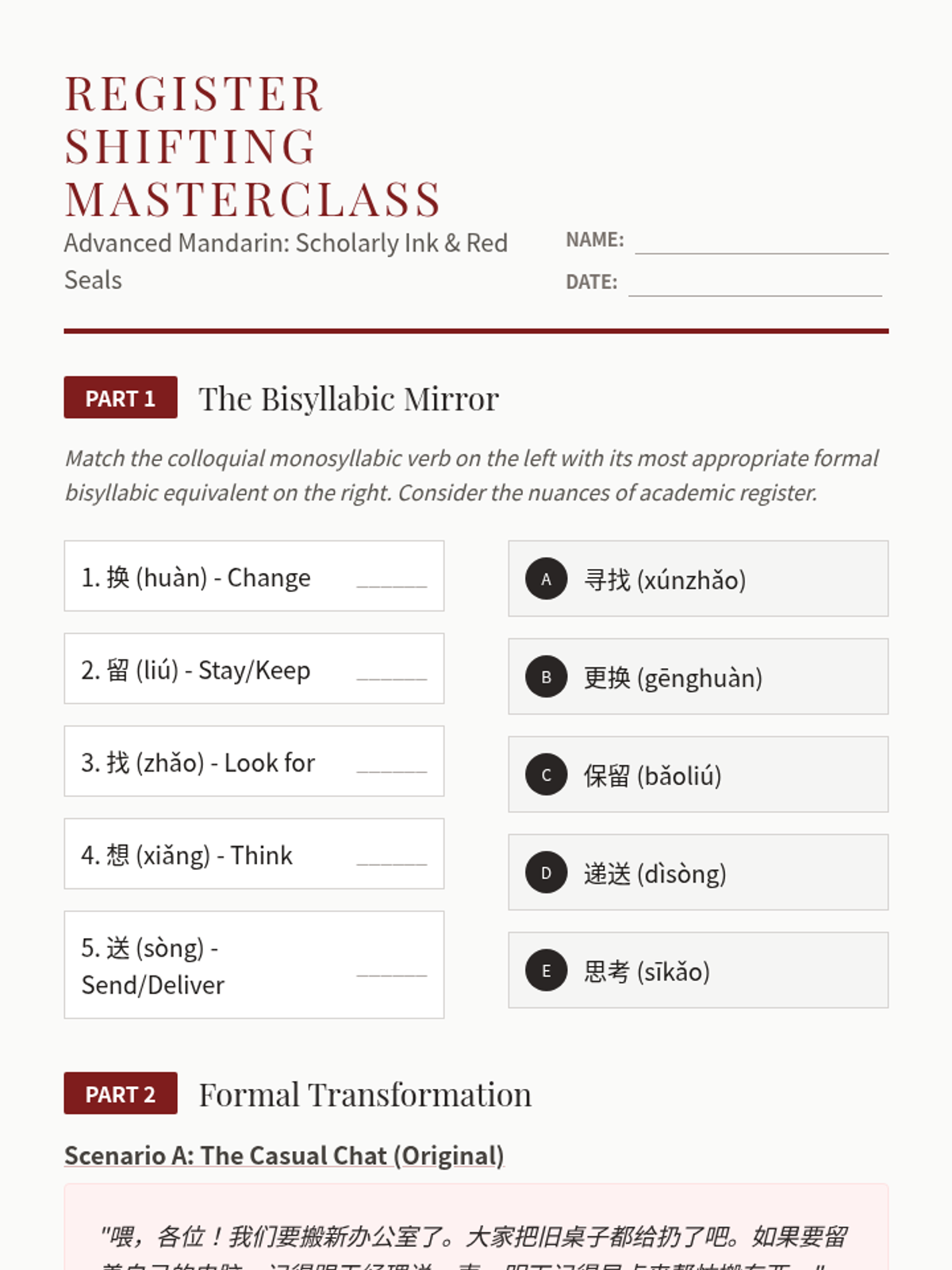
Students analyze pairs of words to map the shift from oral to written registers, practicing the replacement of colloquial terms with formal bisyllabic equivalents.
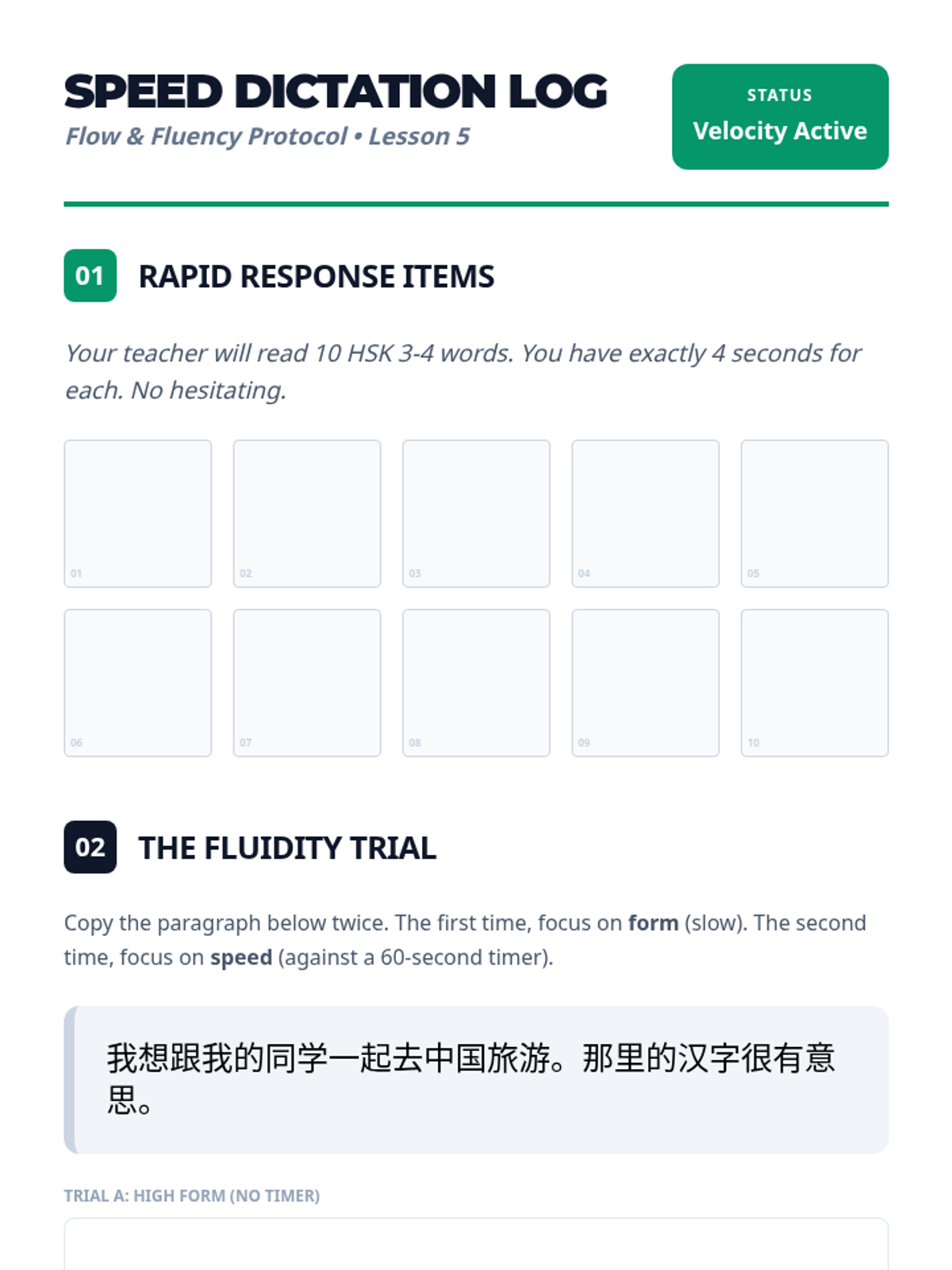
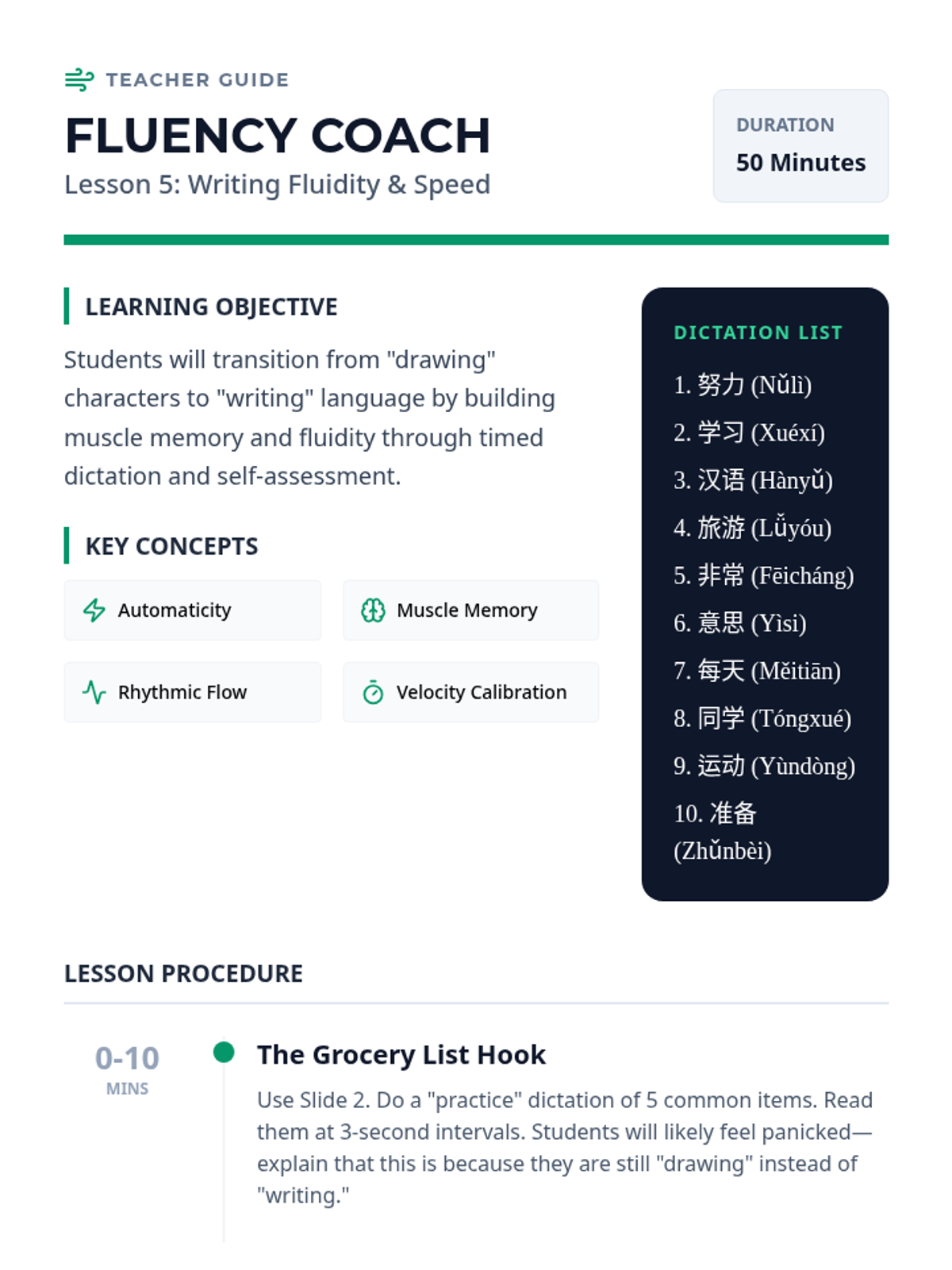
Builds writing speed and fluidity without sacrificing legibility. Students practice timed dictation and self-assessment to move from 'drawing' characters to writing them fluently.
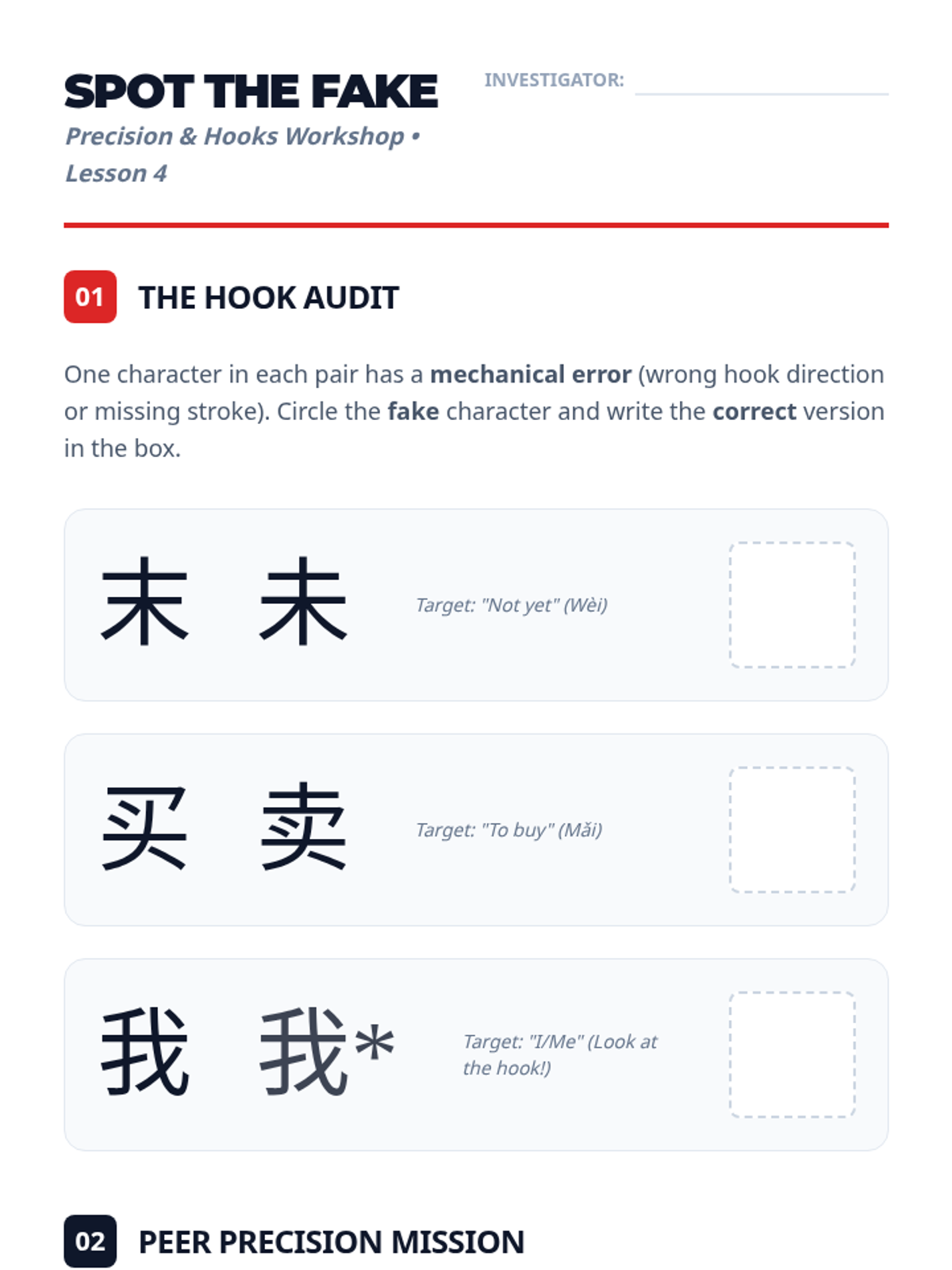
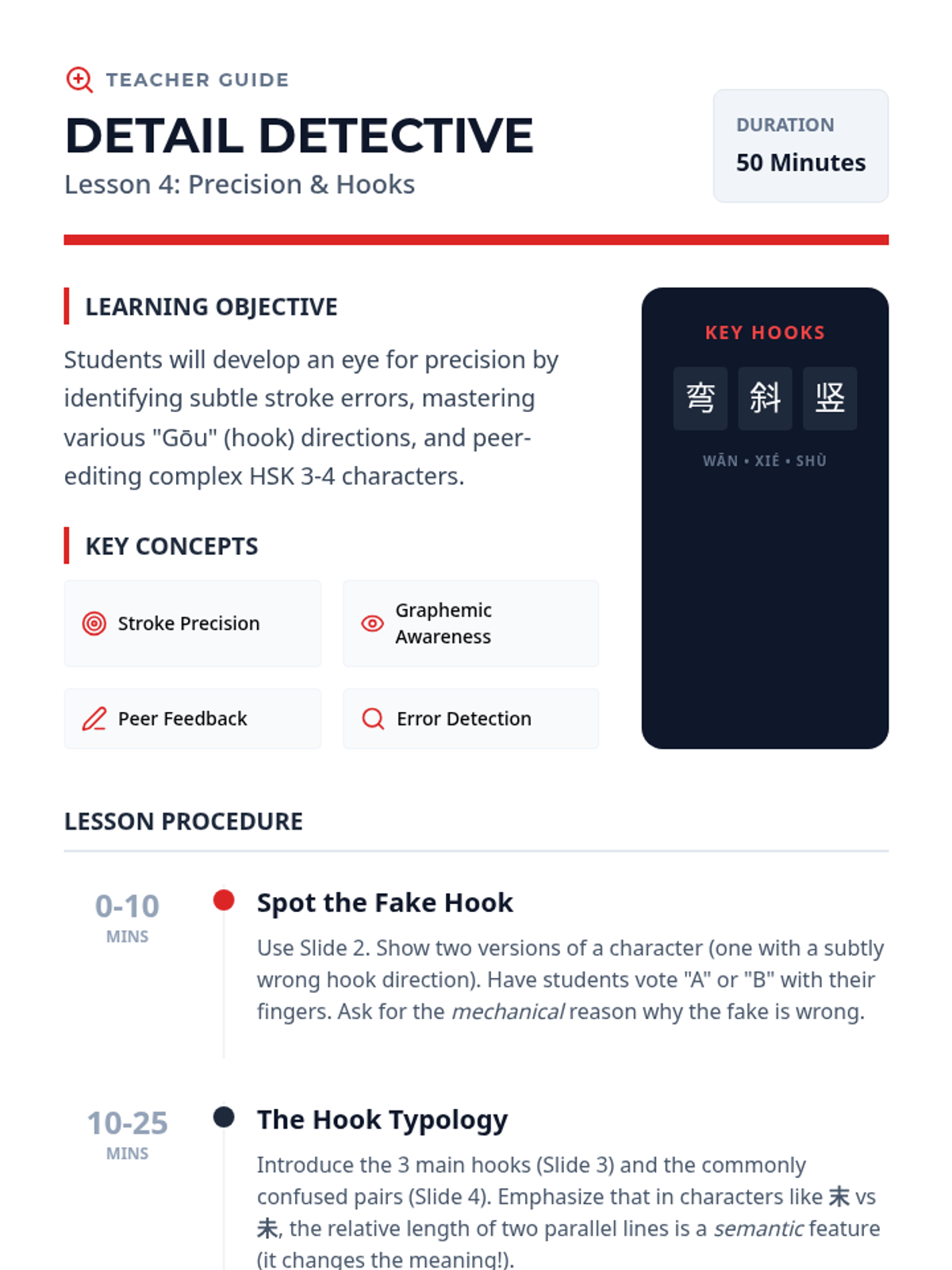
Targets subtle differences in strokes, such as specific hook directions and tiny variations that change a character's meaning. Students practice precision and peer-editing for accuracy.
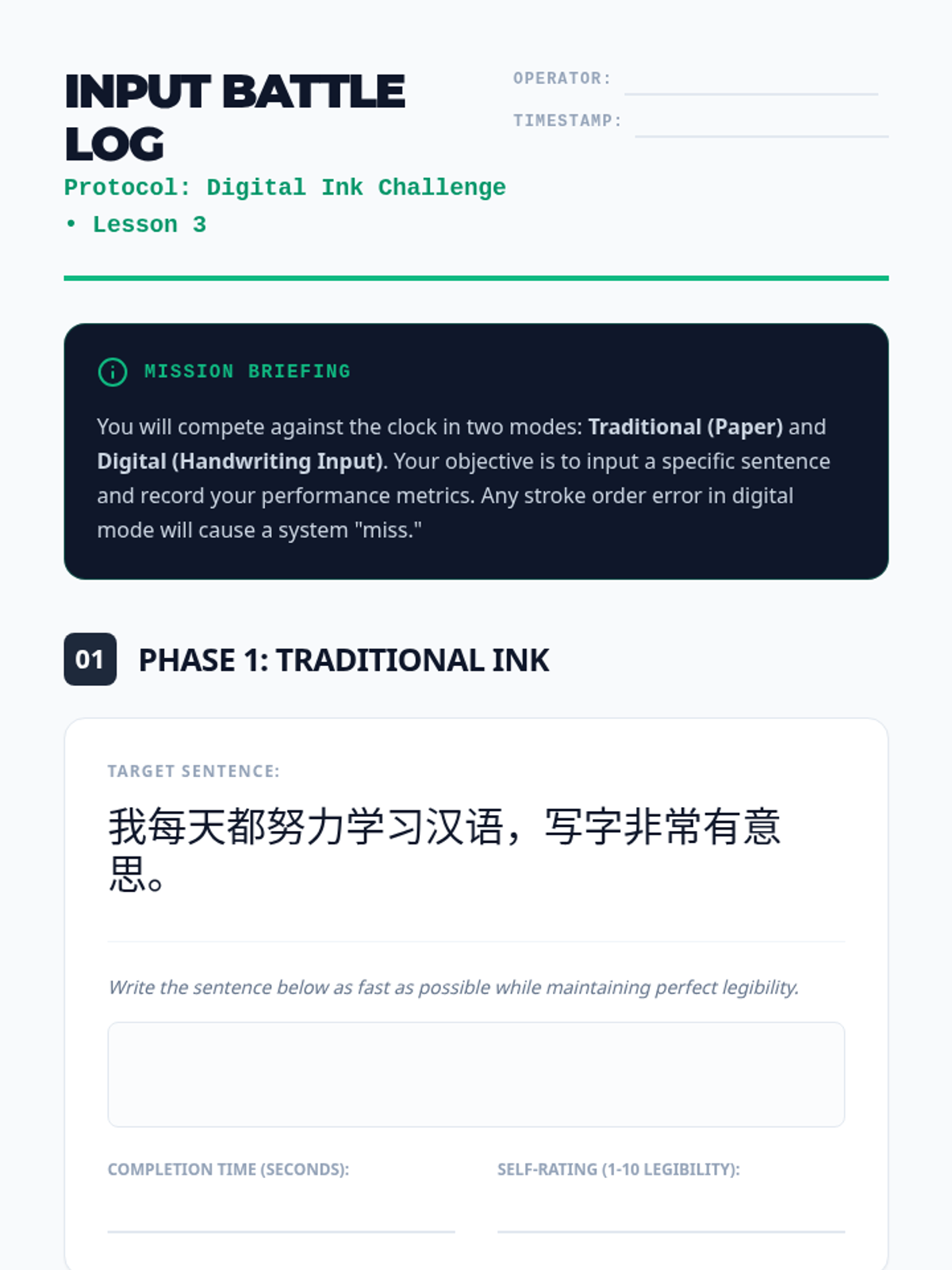
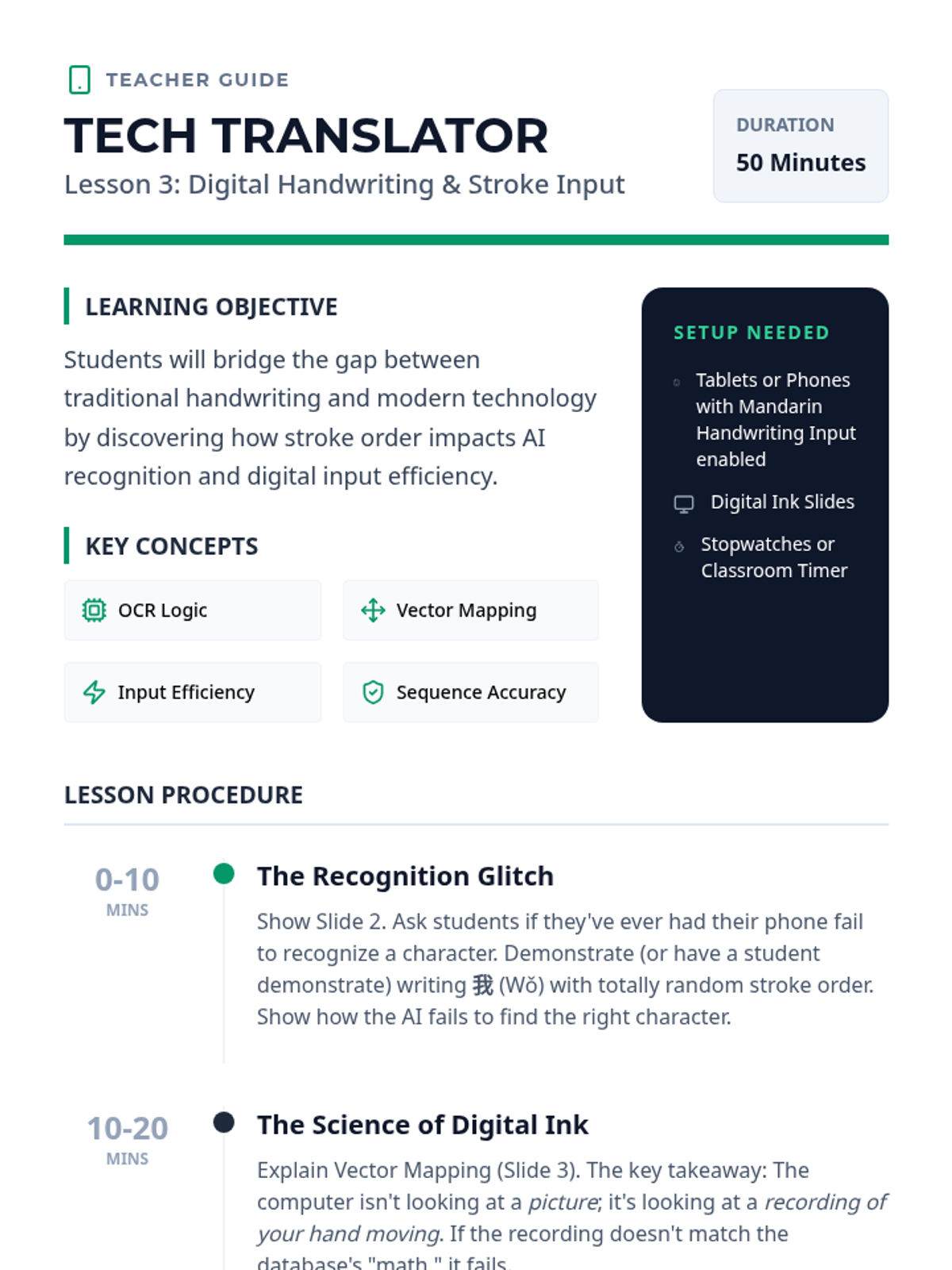
Connects traditional handwriting to modern technology by exploring digital input methods. Students discover how correct stroke order is essential for accurate character recognition on touchscreens.
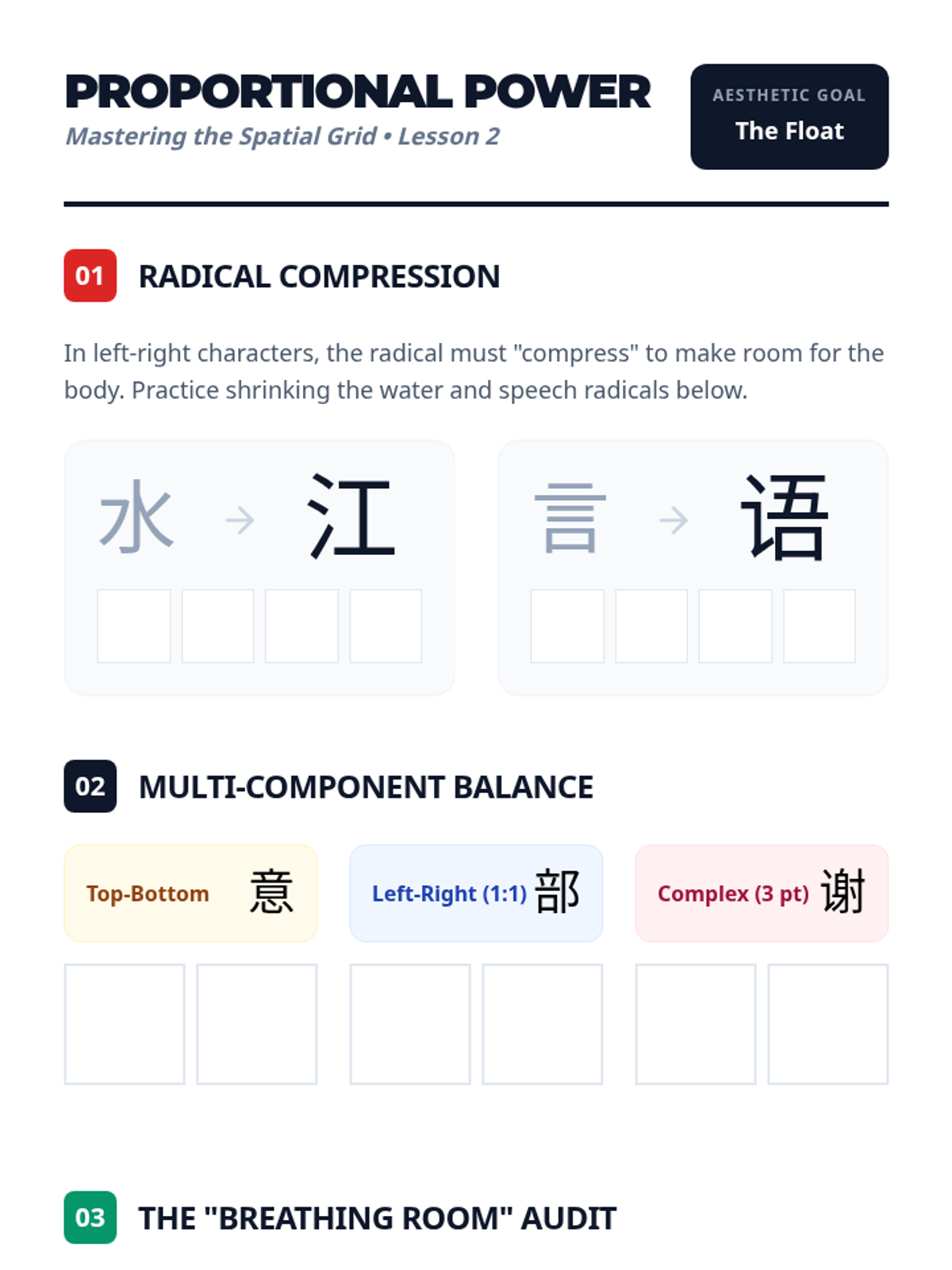
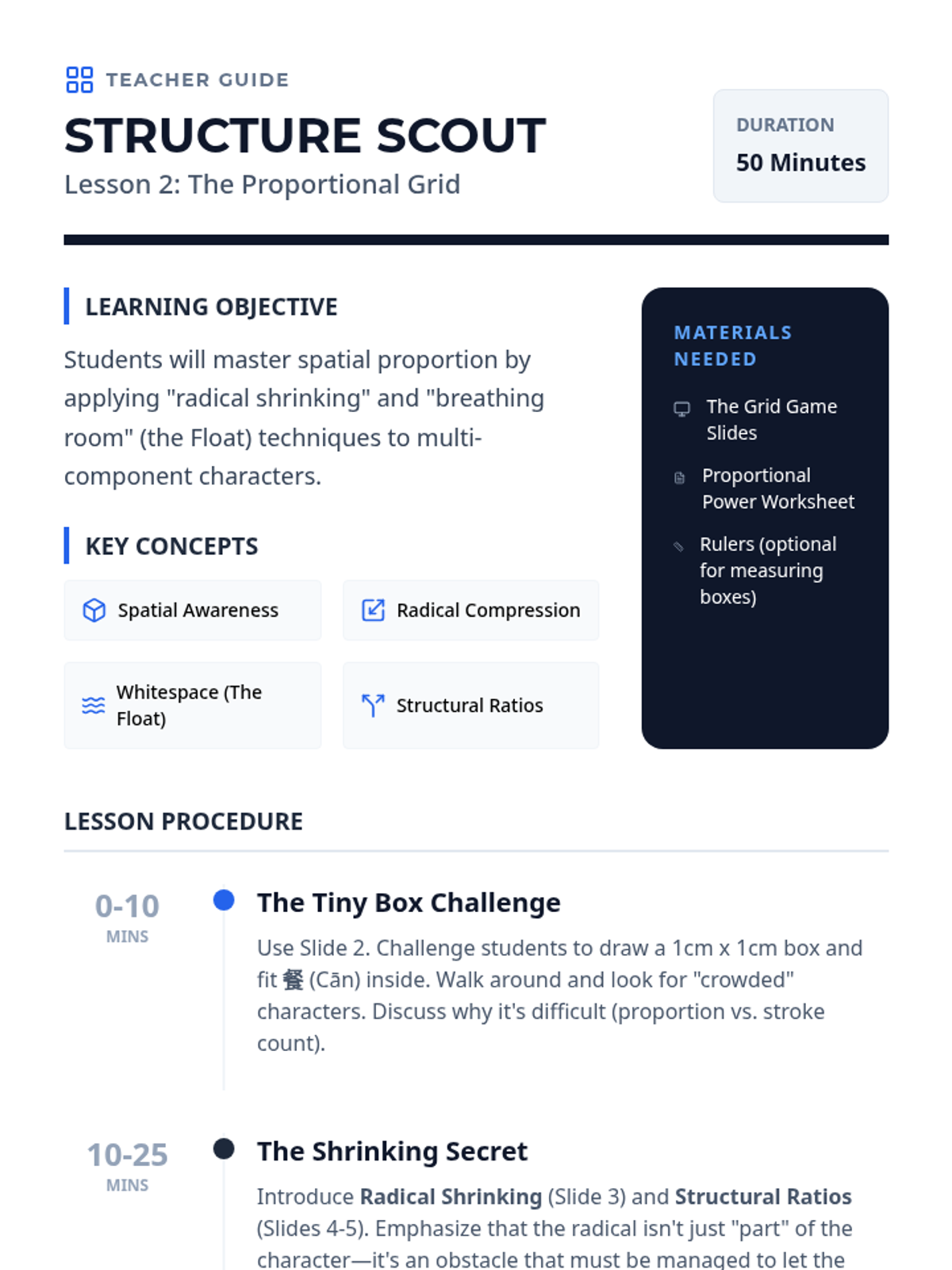
Focuses on spatial proportion and fitting multi-component characters into a square grid. Students practice shrinking radicals and balancing complex HSK 3-4 characters to improve penmanship aesthetics.
An immersion into marketplace listening where students track prices, identify currency, and follow the logic of bargaining to find the final price.
Students listen to daily schedules and use auditory cues to map out timelines, focusing on hours, half-hours, and specific time markers.
Introduces the Year-Month-Day structure of Chinese dates, challenging students to decode auditory dates and convert them to familiar formats.
Focuses on rapid transcription of long number strings, including phone numbers and IDs, introducing the "yao" convention for the number one.
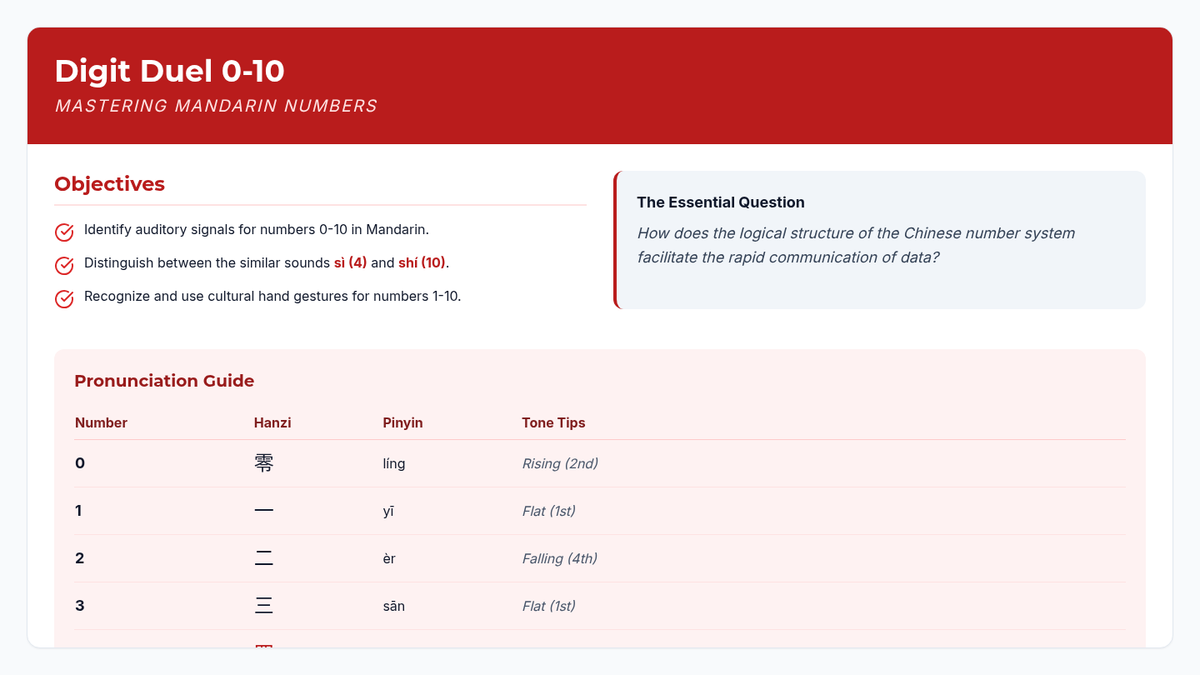
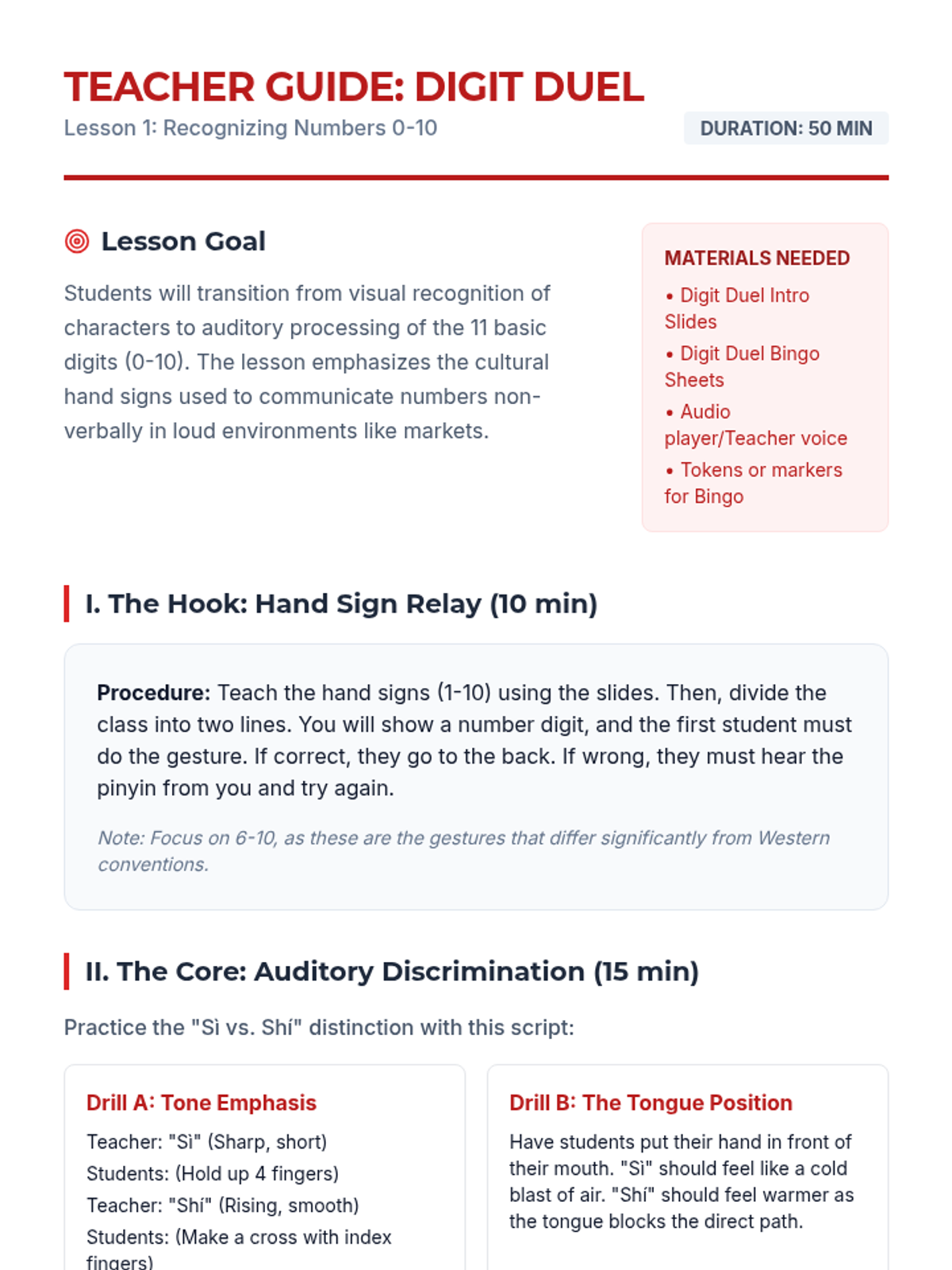
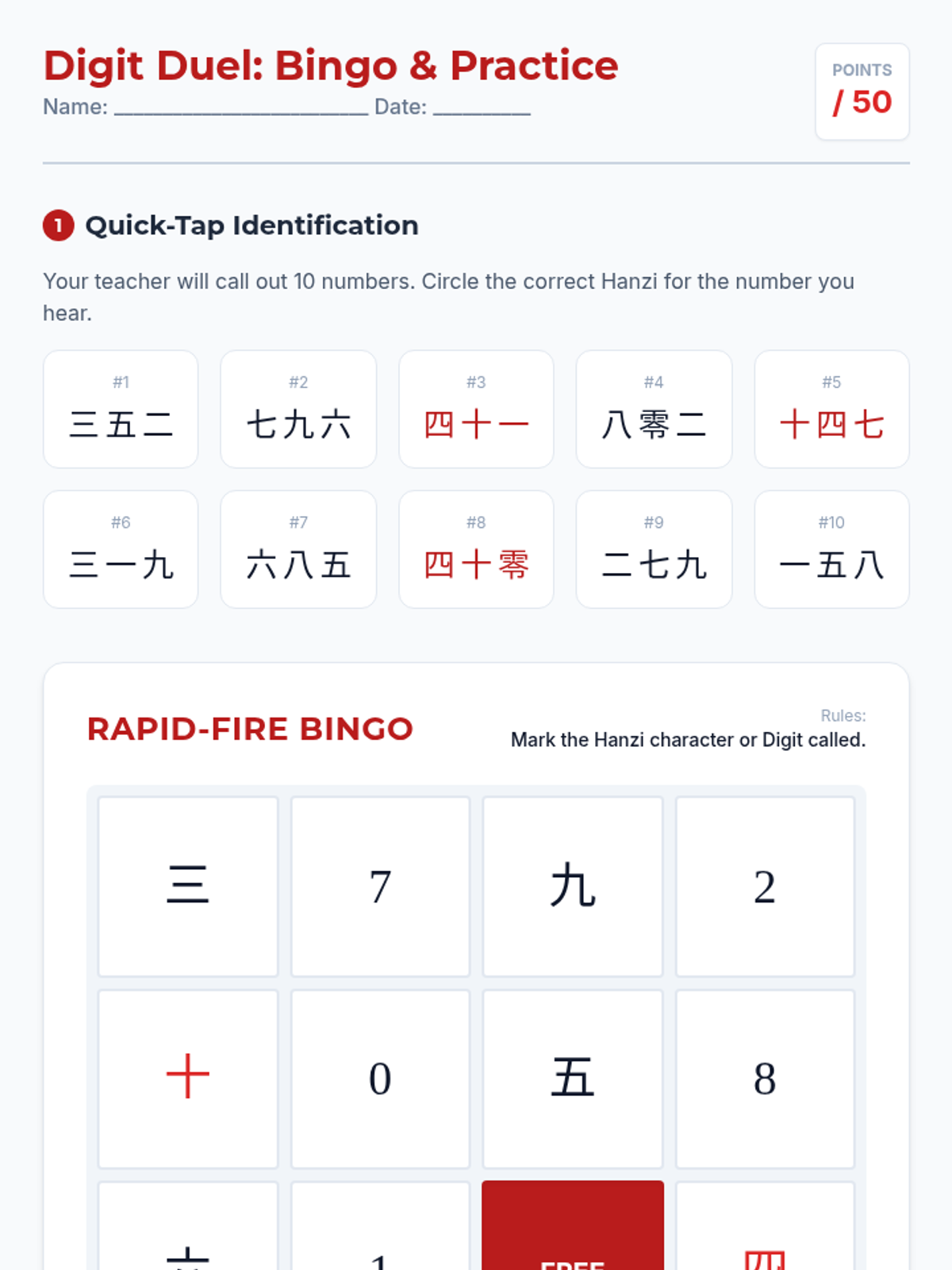
Students master the sounds of digits 0-10 and their corresponding cultural hand gestures, focusing on tonal distinctions between similar sounds like 'si' and 'shi'.
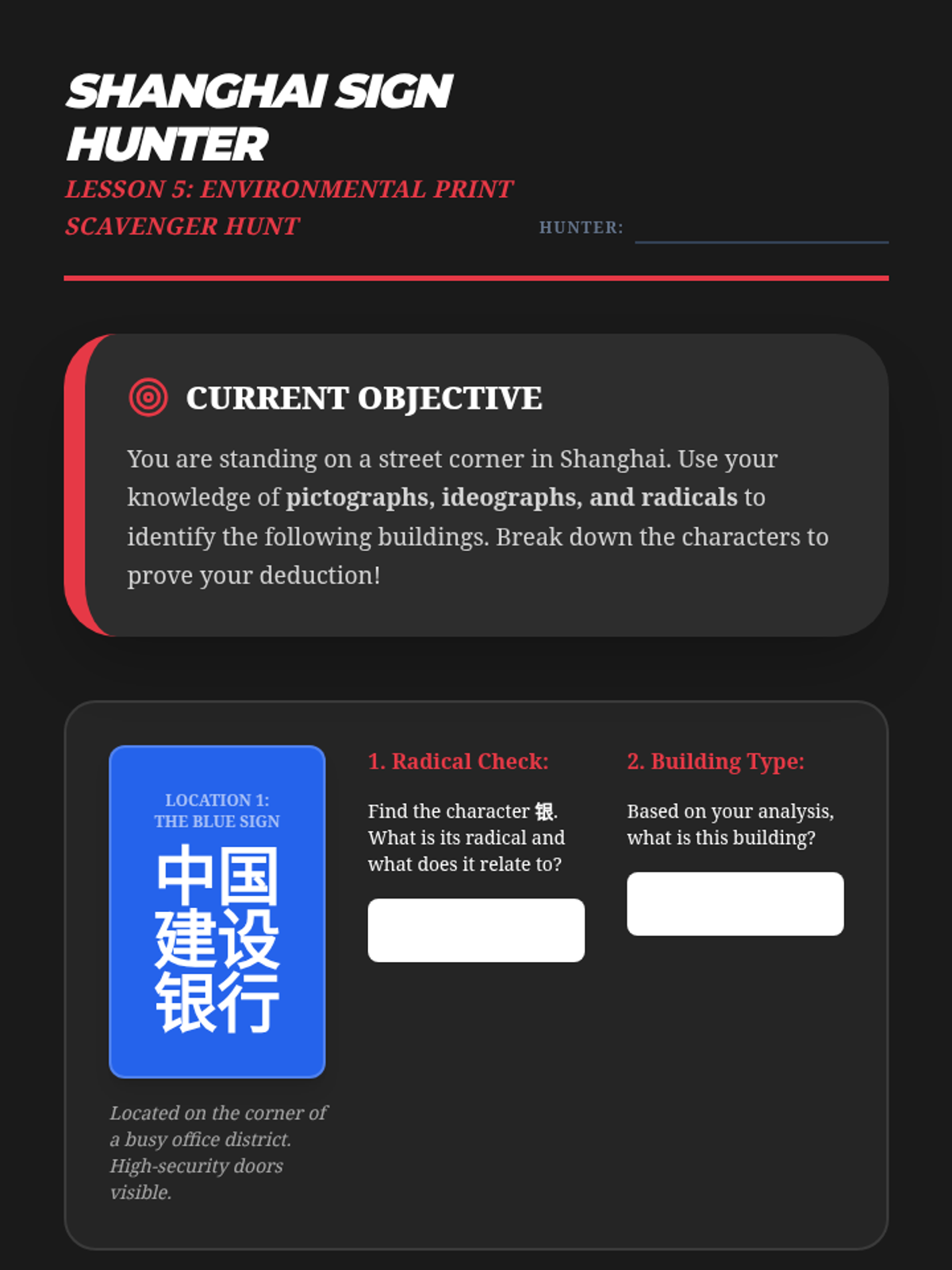
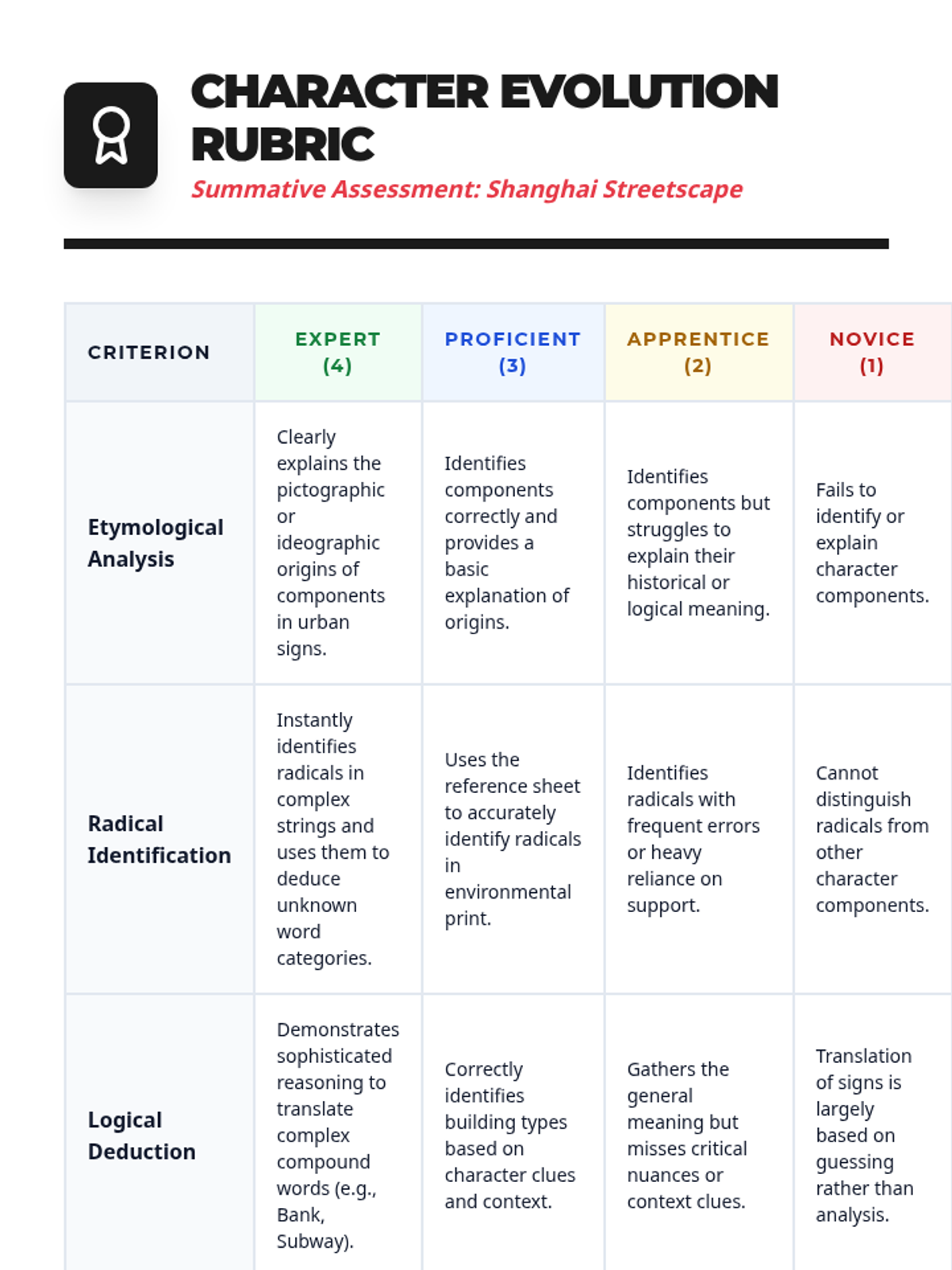
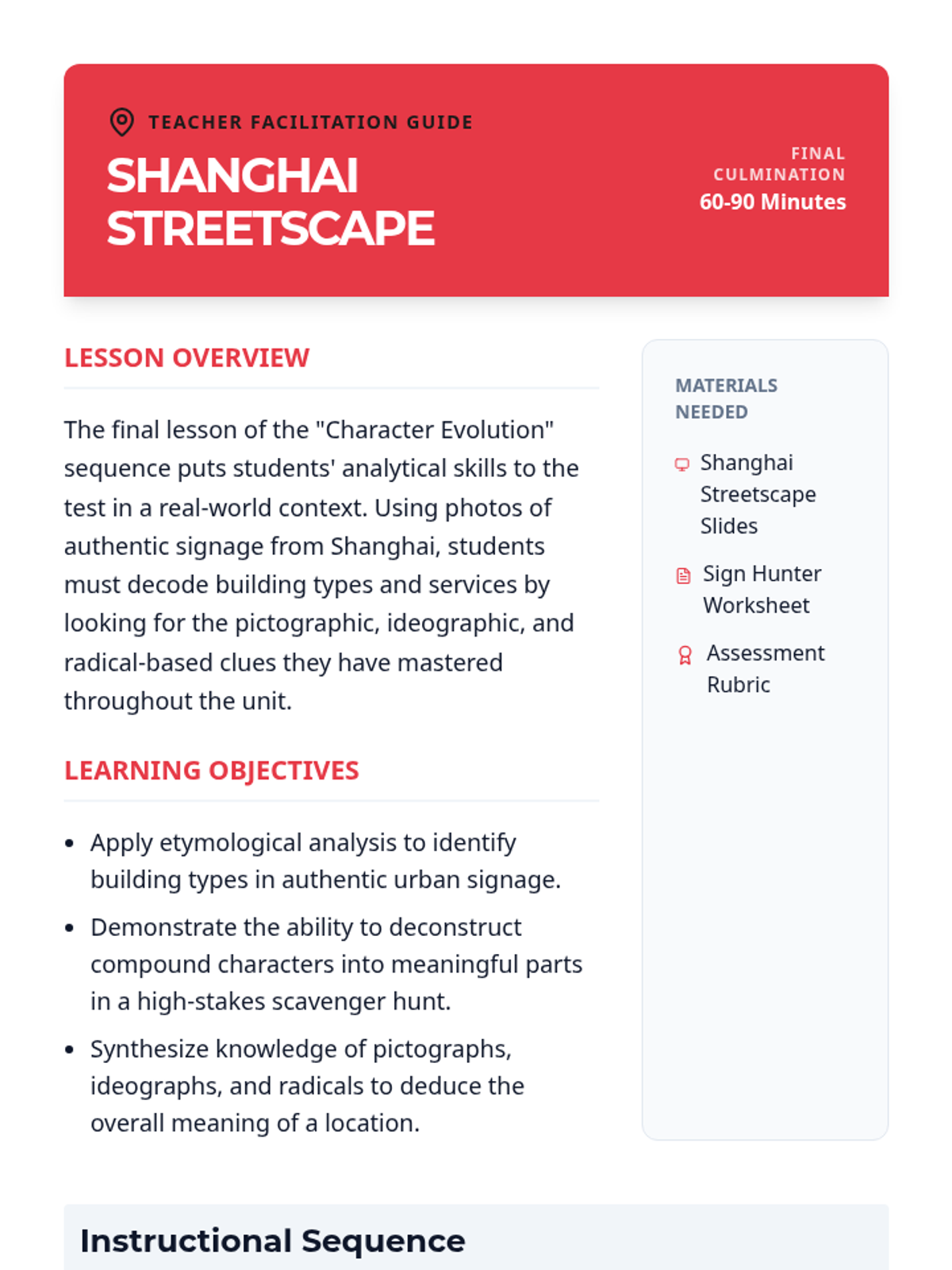
A culminating activity where students analyze real-world Chinese street signs, menus, and advertisements to identify keywords and deduce meanings in context.
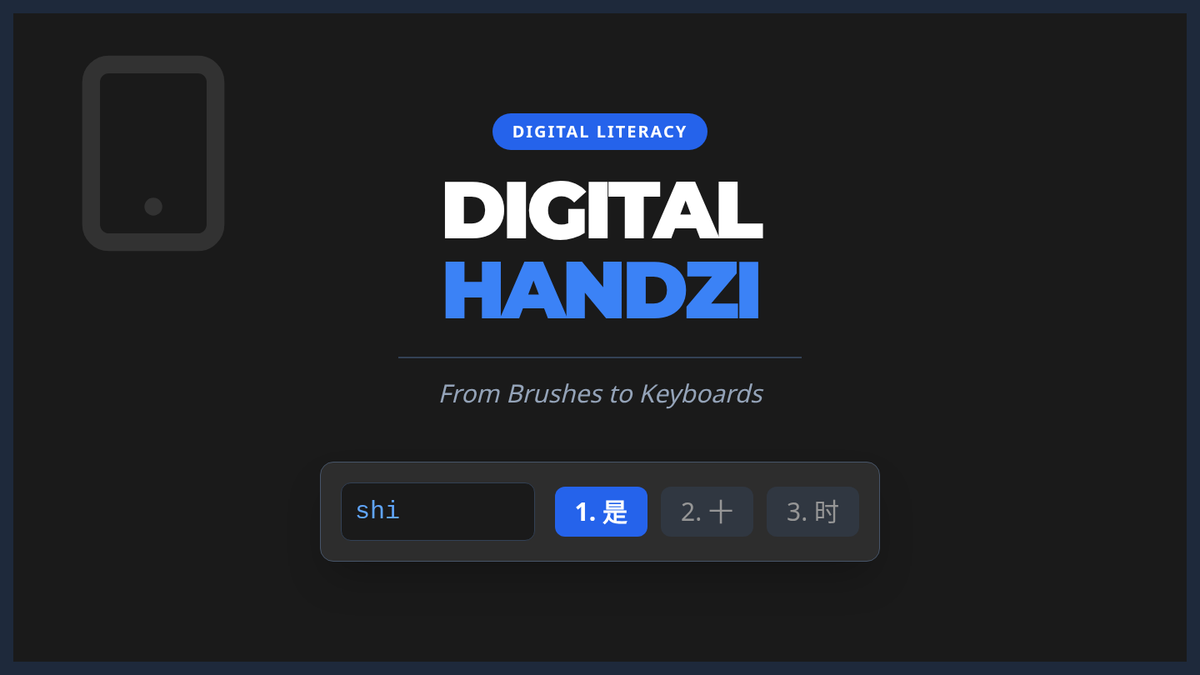
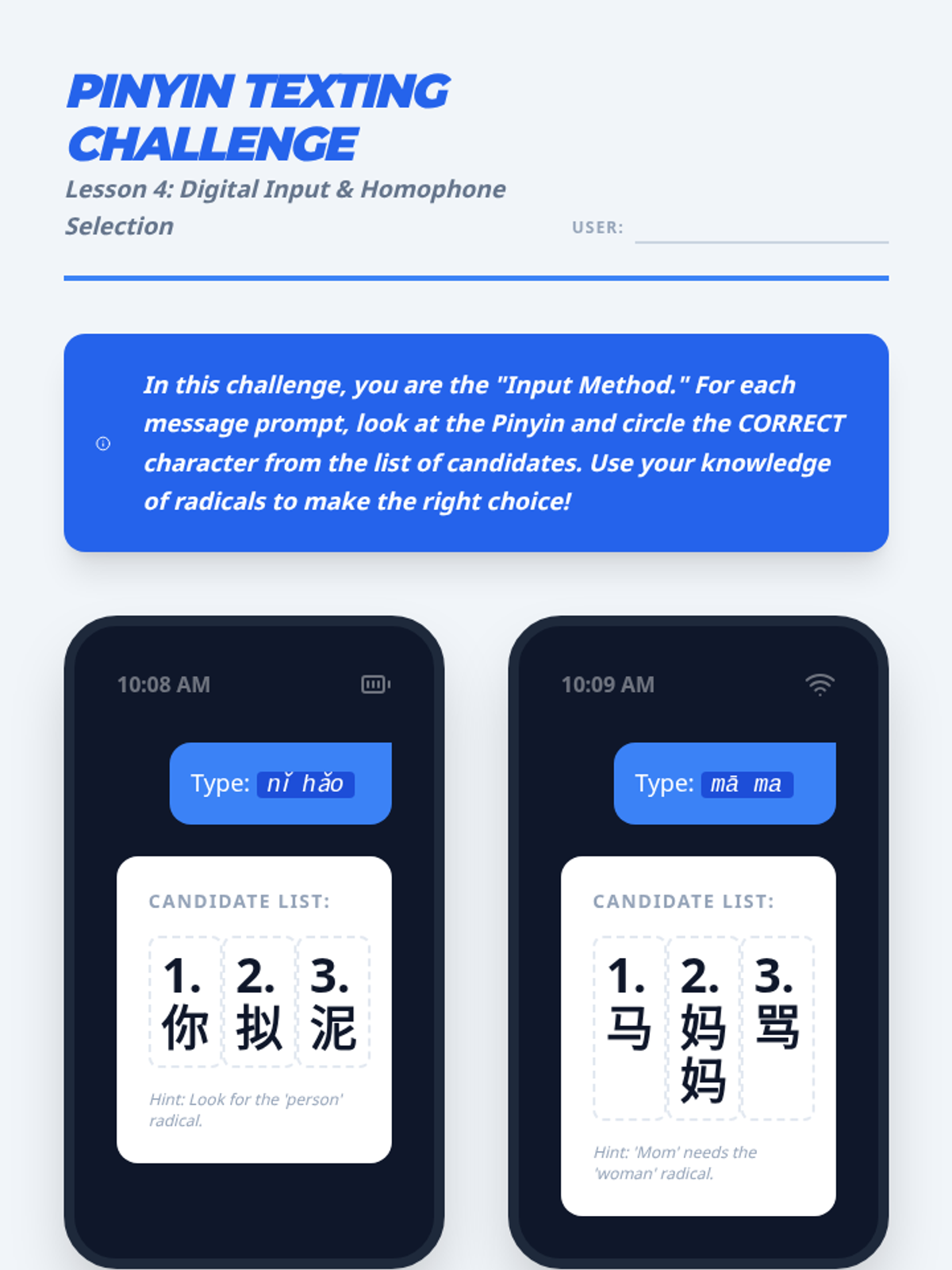
Students learn to use Pinyin input methods to generate characters digitally, practicing the selection of correct characters from homophones.
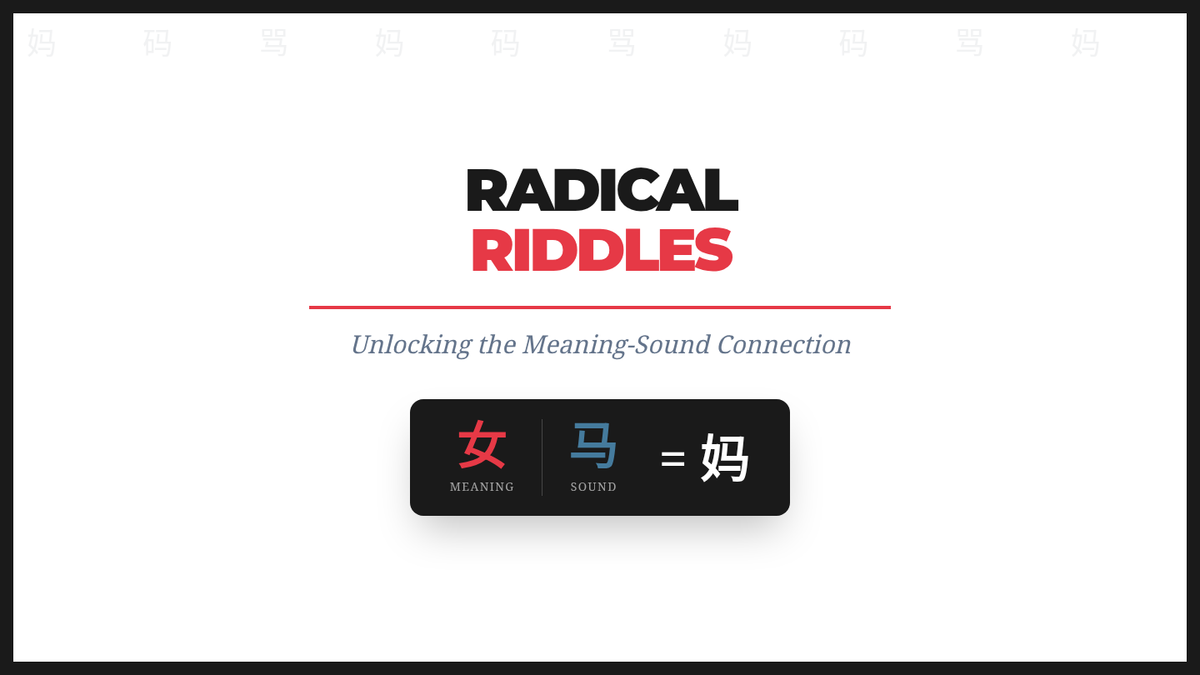
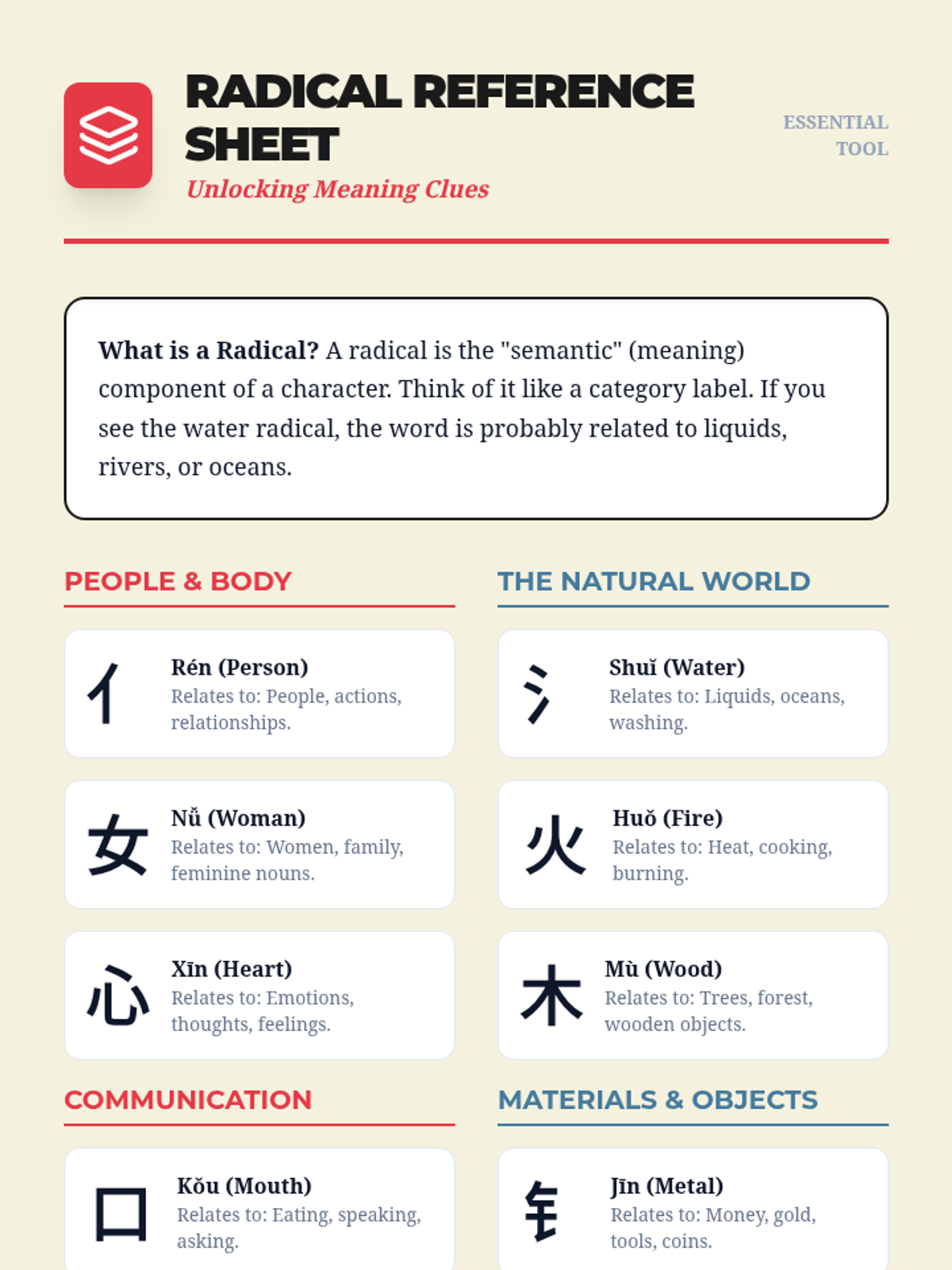
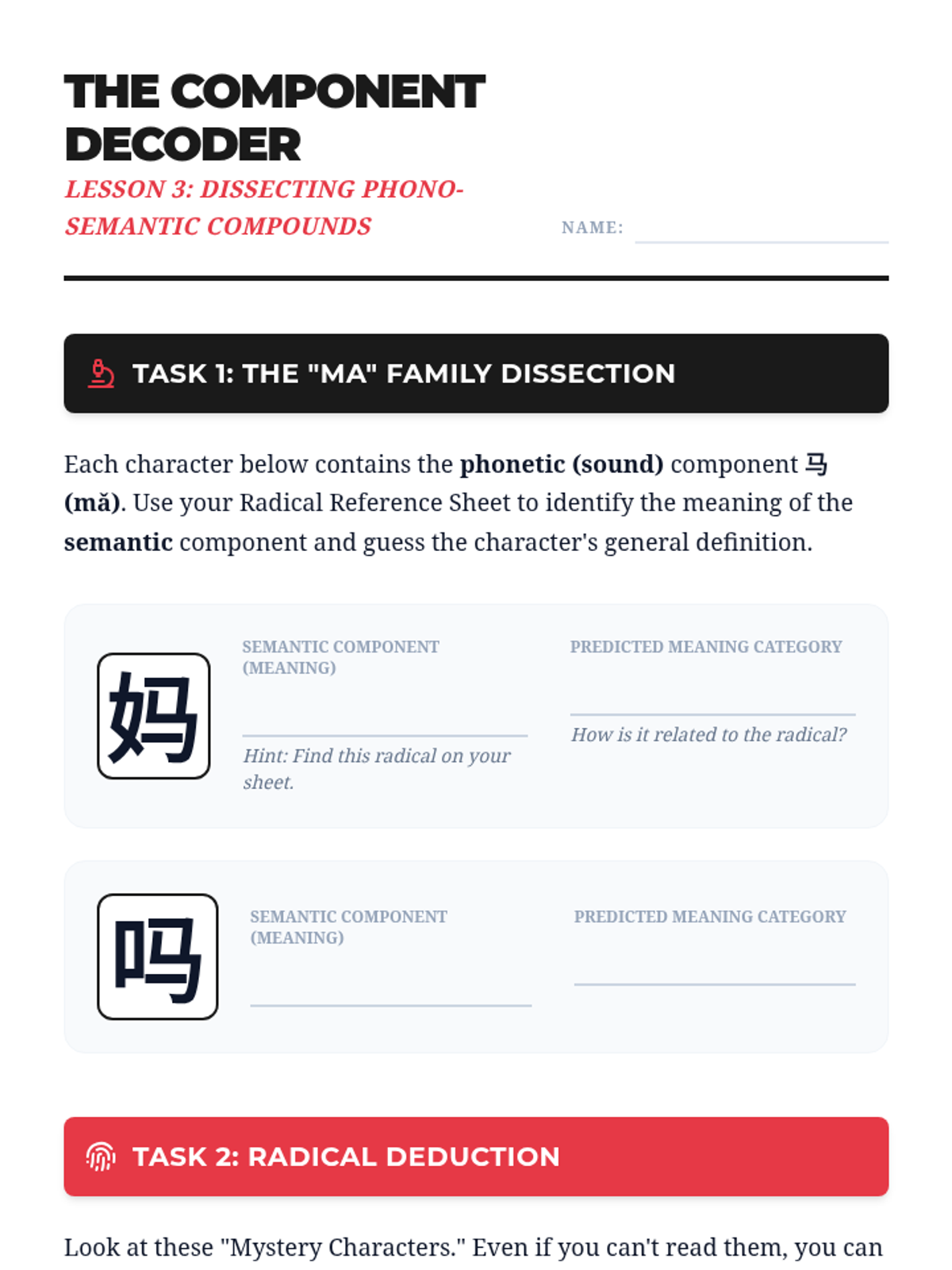
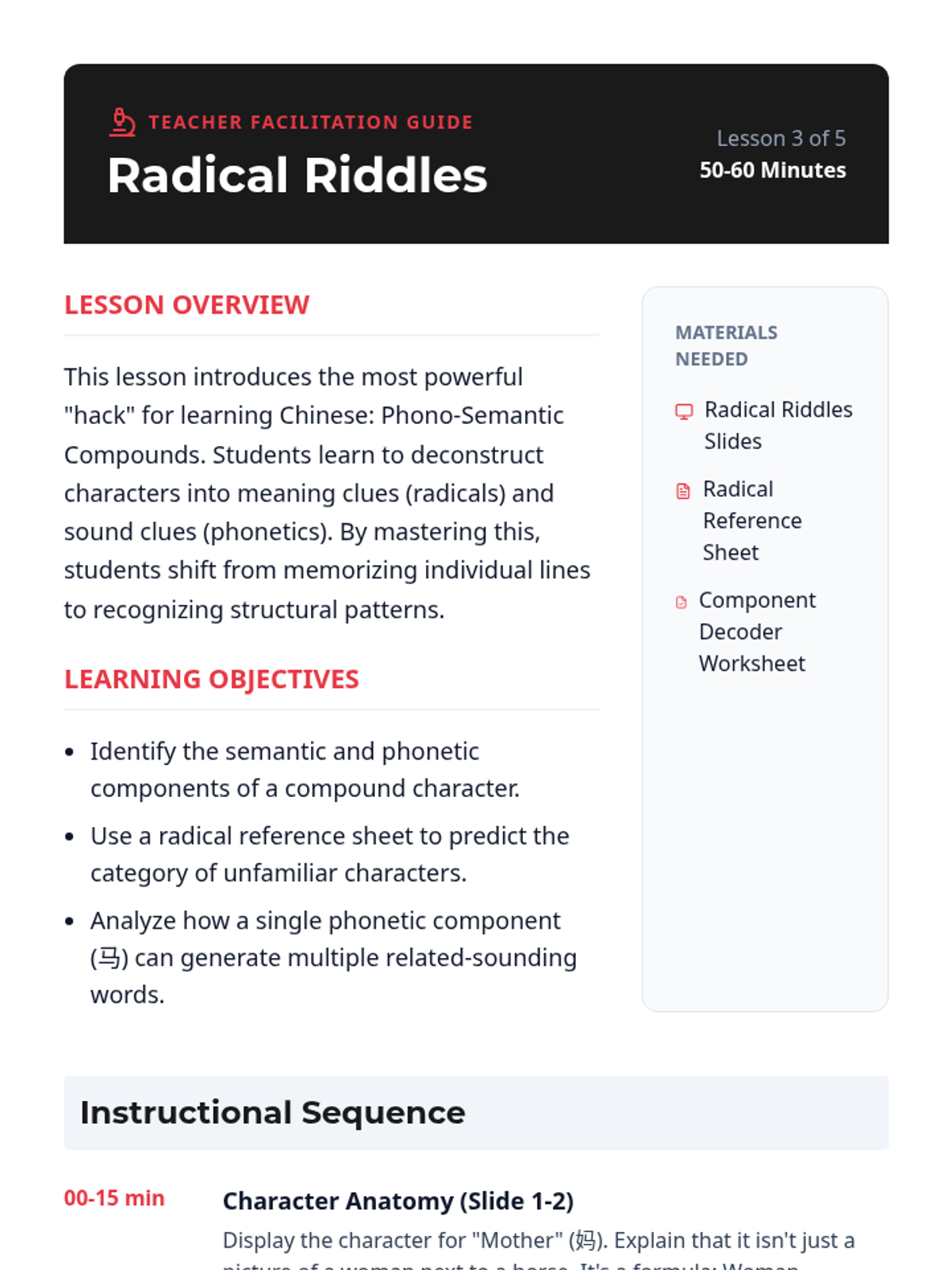
Students tackle phono-semantic compounds, where parts suggest meaning or sound. They dissect characters to unlock the 'sound clues' hidden inside the majority of Chinese characters.
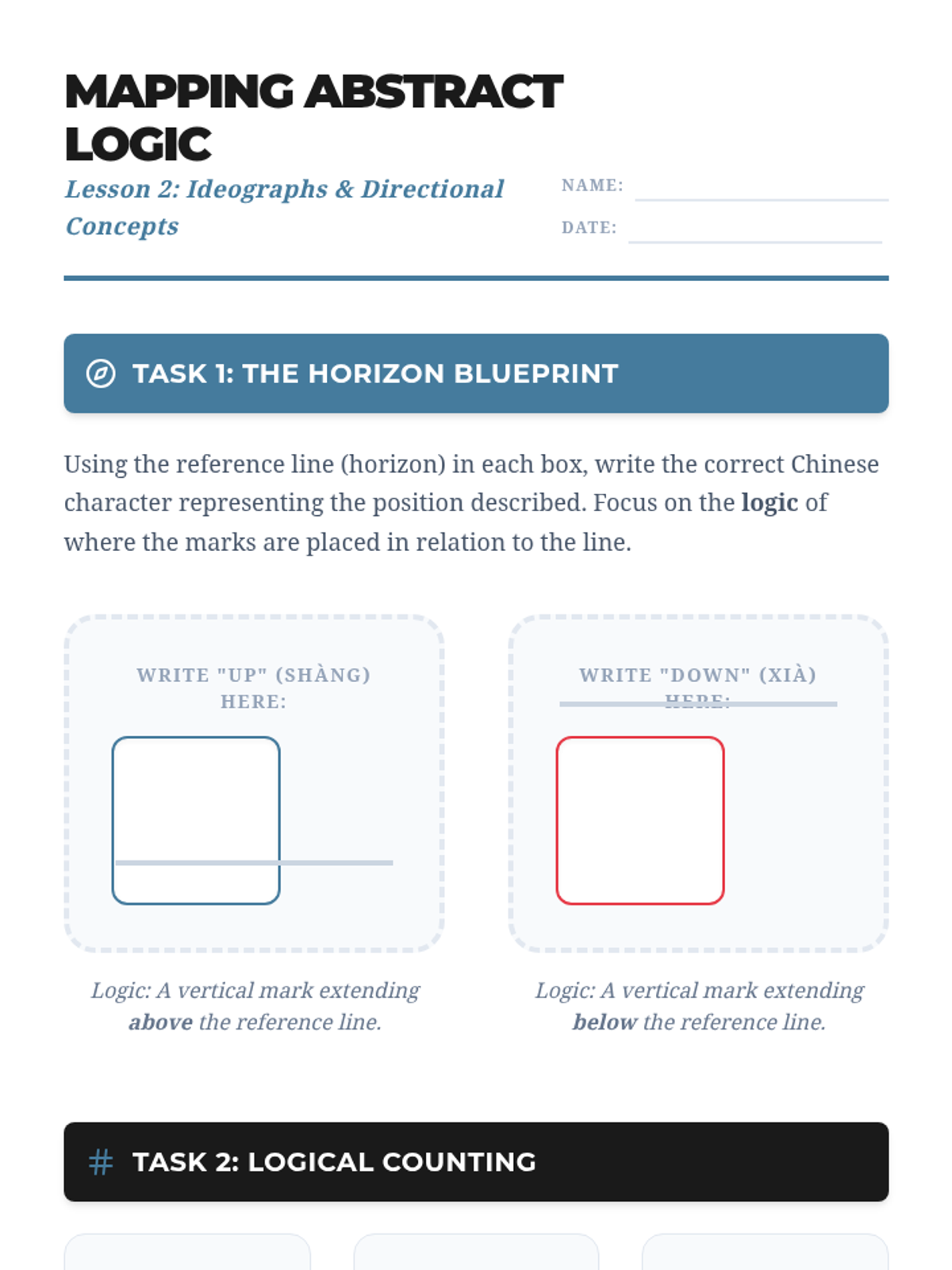
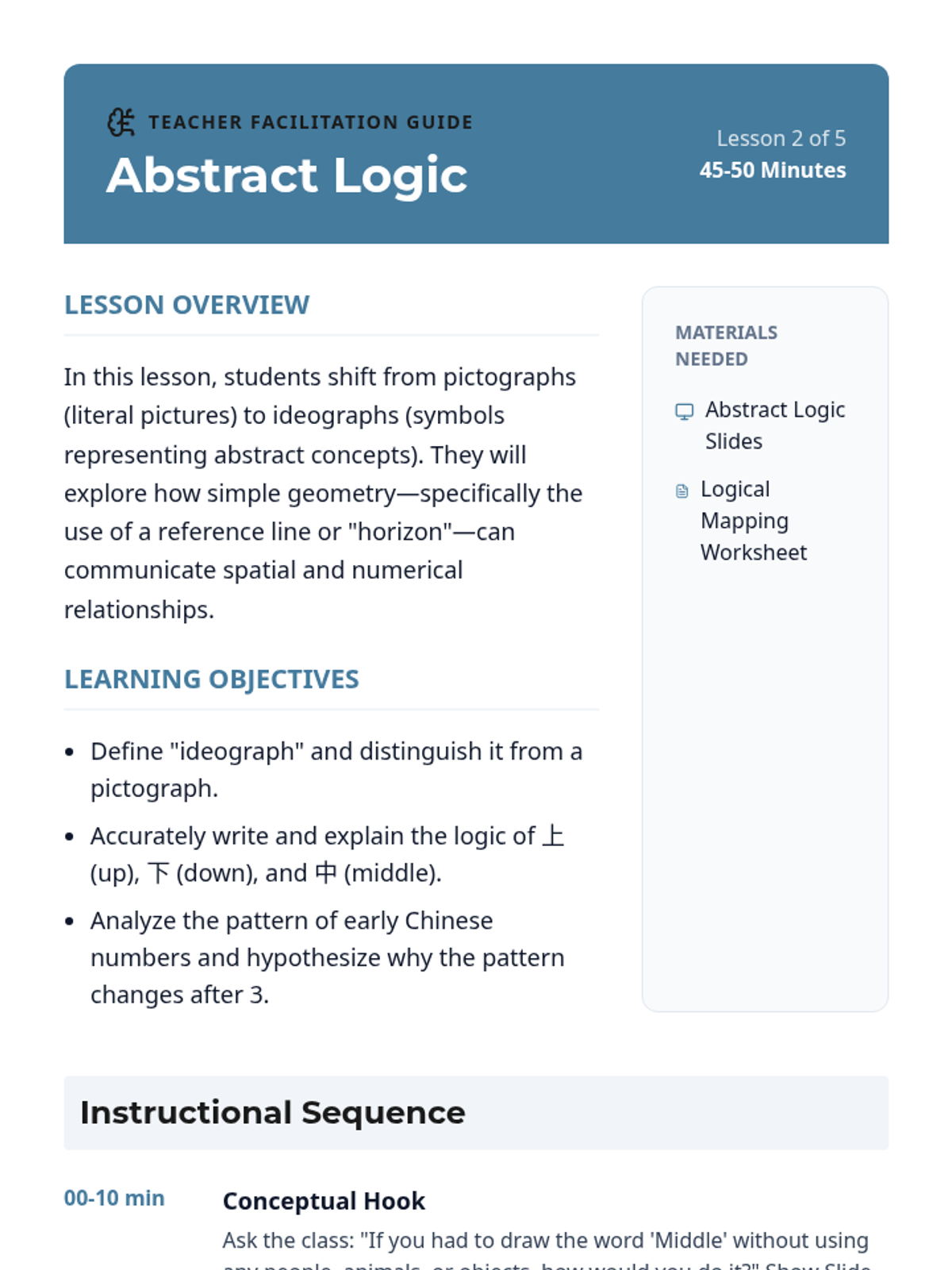
Focuses on characters representing abstract ideas rather than physical objects. Students explore the logic of ideographs and practice using foundational characters for location and quantity.
Students analyze ancient Oracle Bone Script versions of nature-based characters to trace their evolution into modern forms. They compare literal drawings to stylized standard script to understand simplification and abstraction.
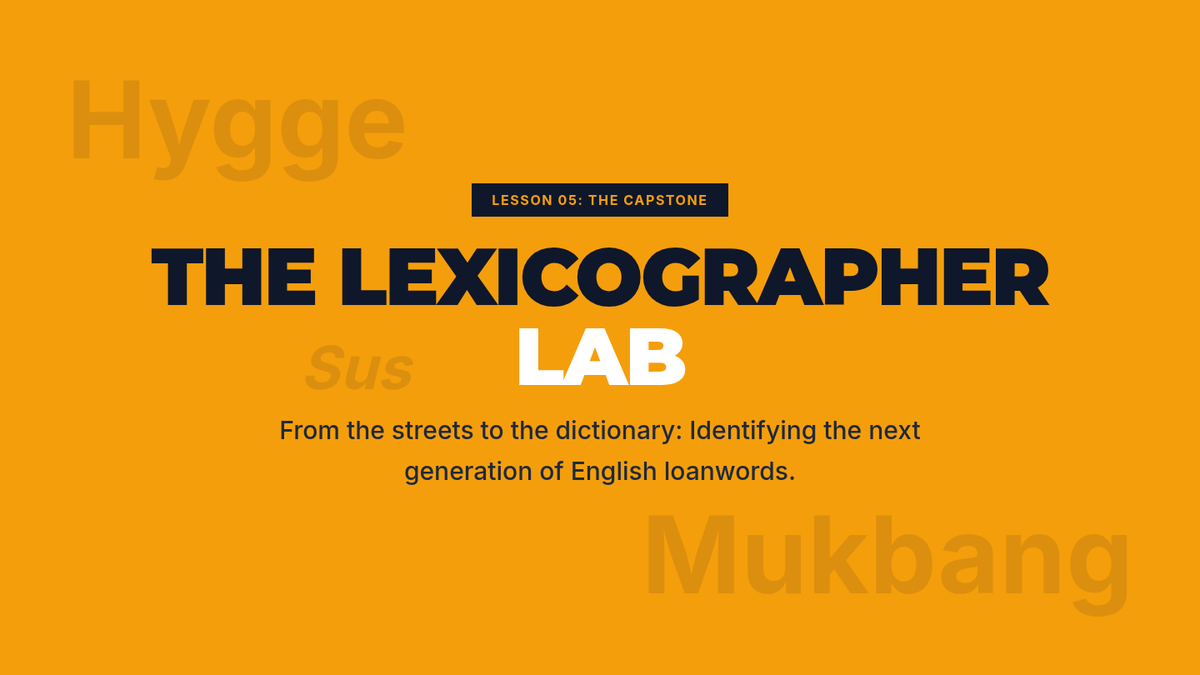
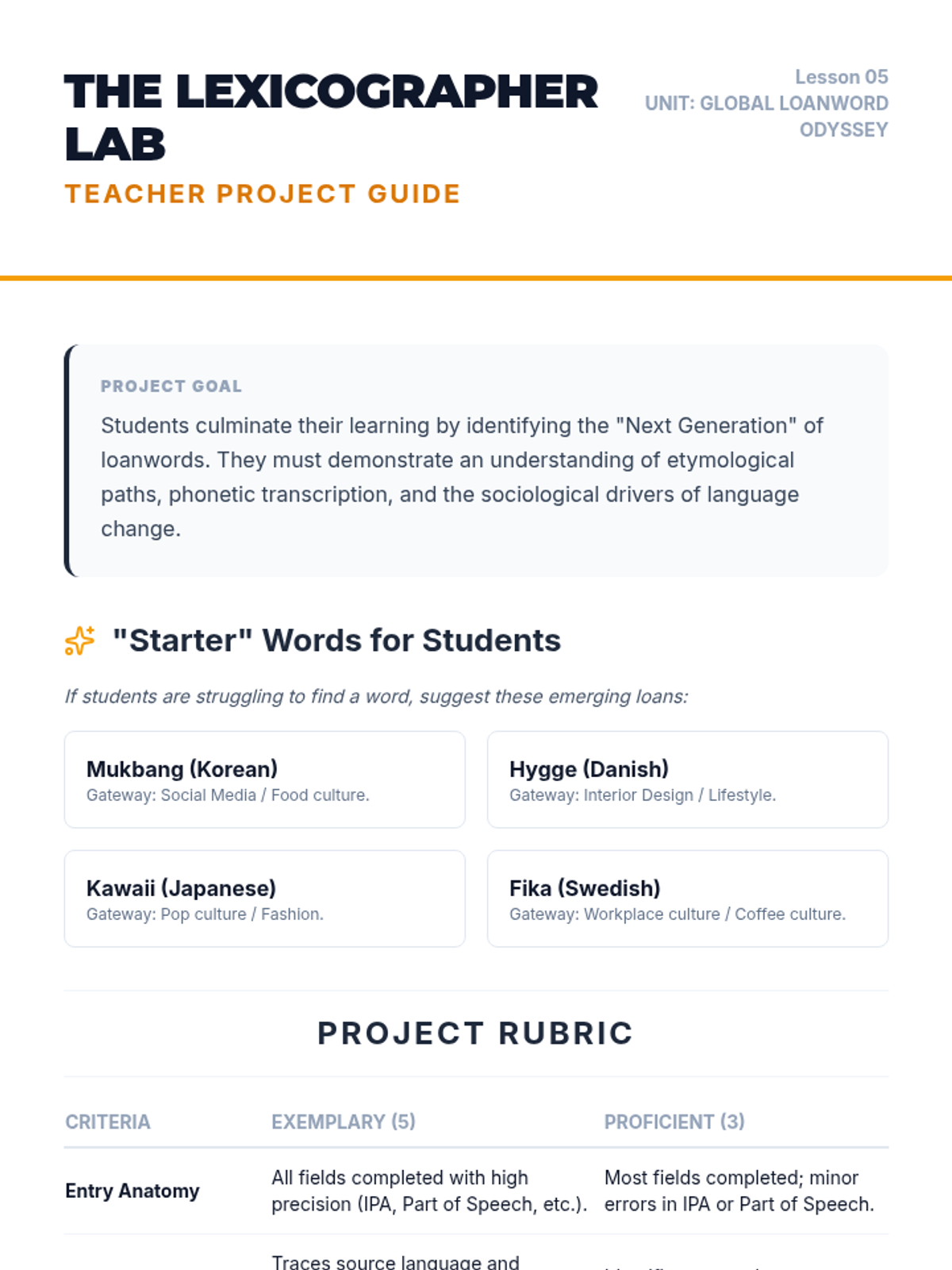
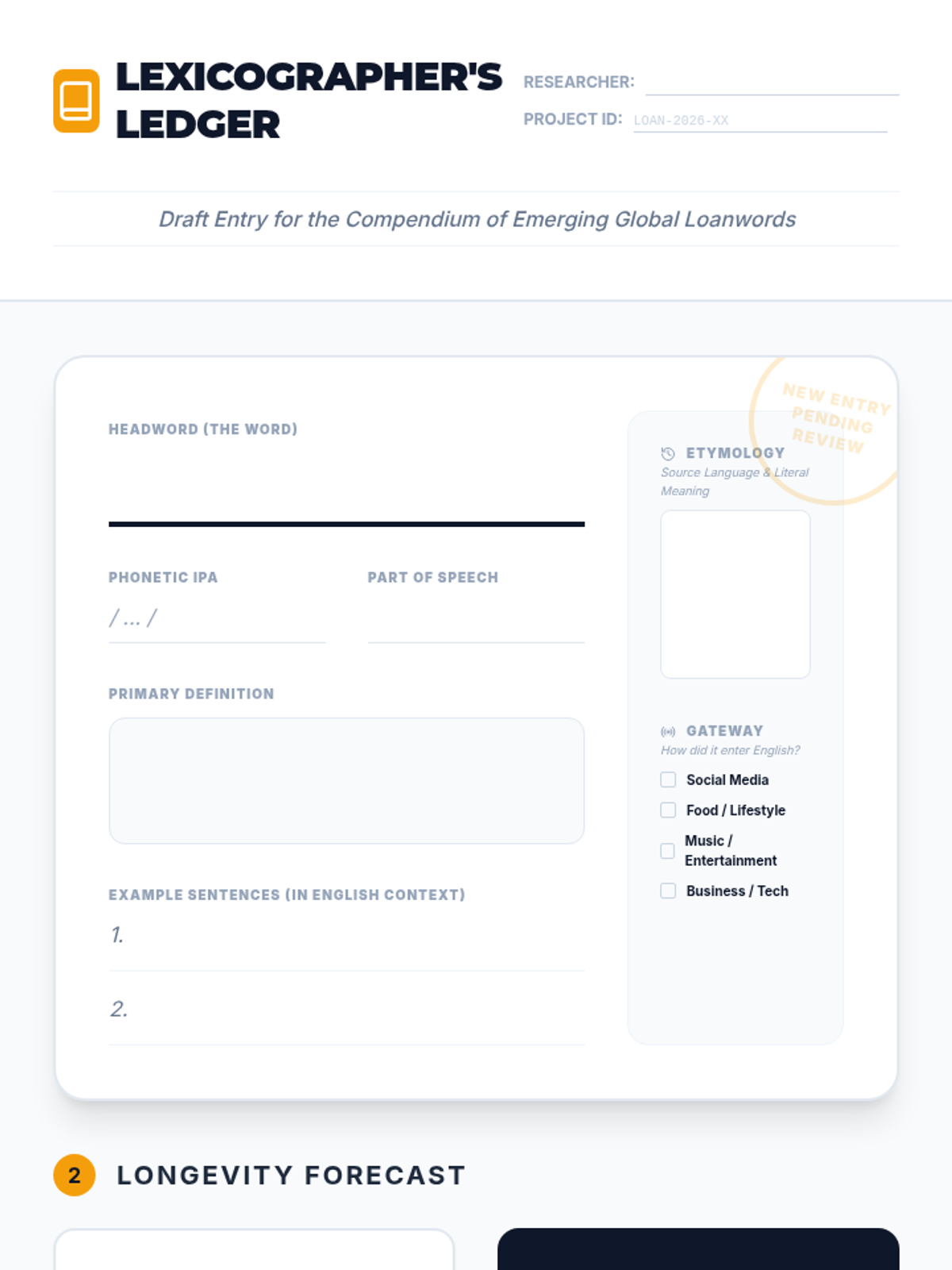
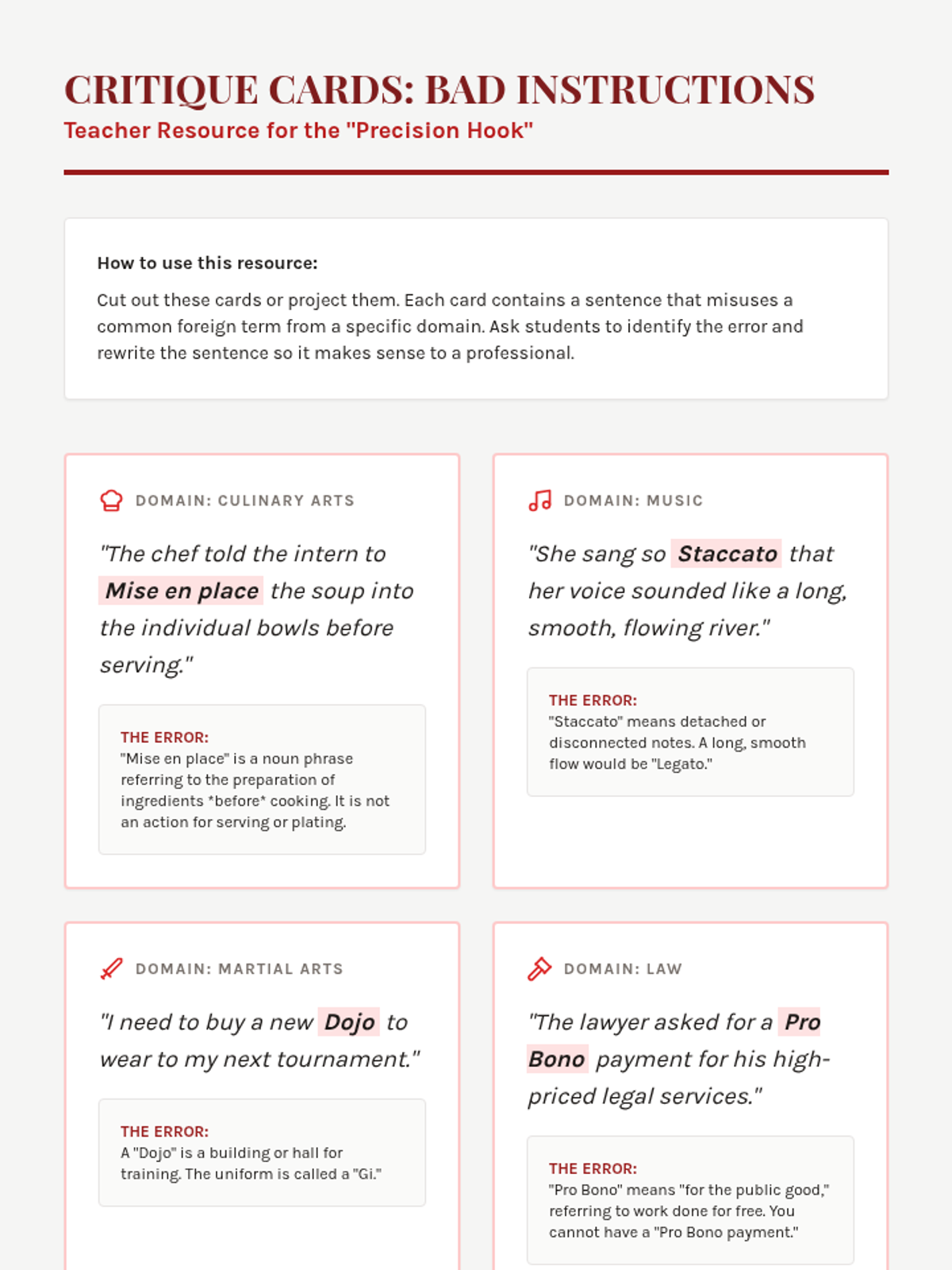
Students act as amateur lexicographers, identifying a foreign word or phrase currently entering English usage through social media, food culture, or music (e.g., 'mukbang,' 'hygge'). They create a dictionary entry including pronunciation, etymology, current usage examples, and a prediction of its longevity.
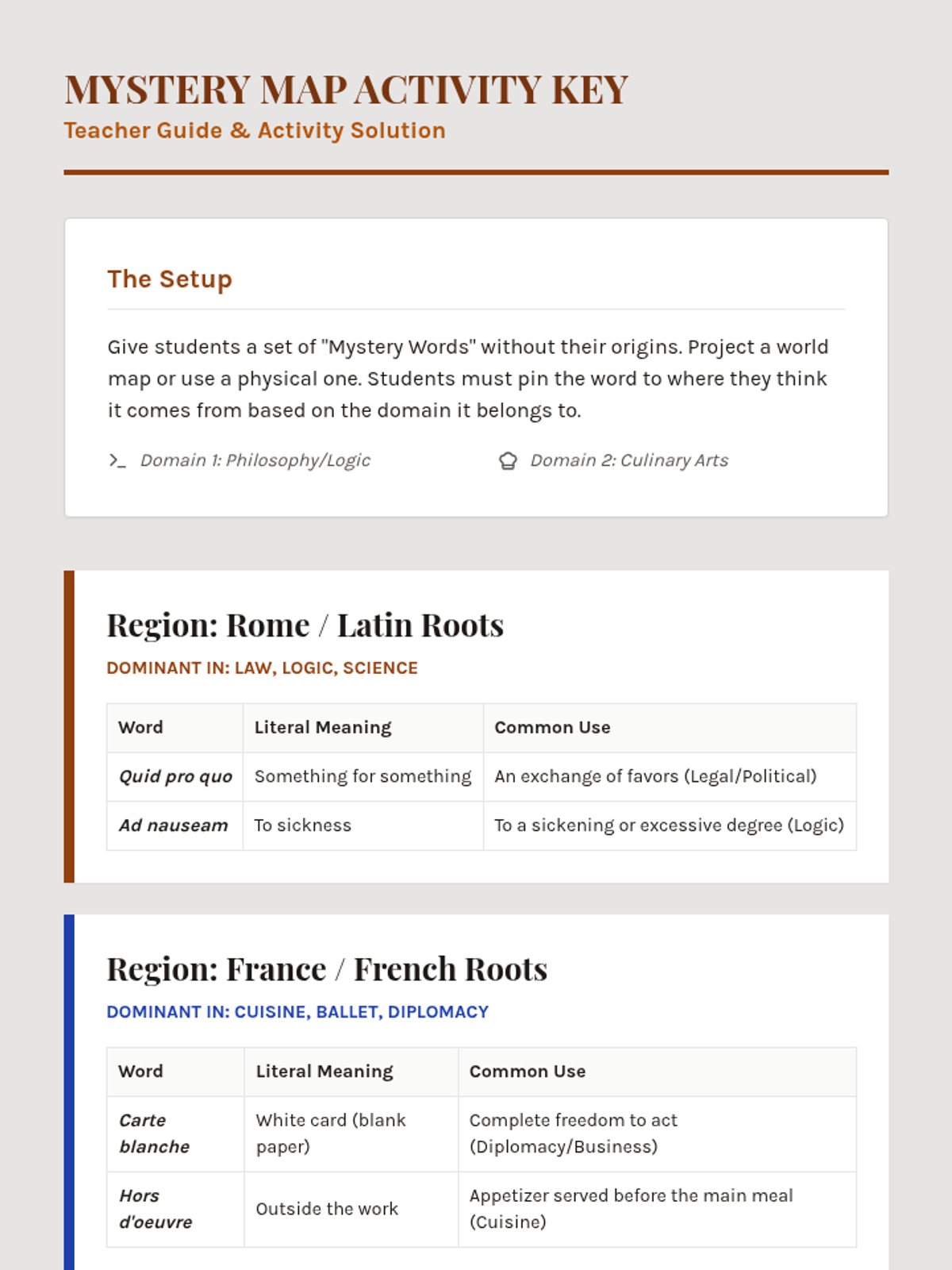
This lesson broadens the scope to words from Arabic ('algorithm,' 'nadir'), Japanese ('tycoon,' 'zen,' 'emoji'), and Hindi ('pundit,' 'guru'). Students research the historical trade routes or cultural exchanges (like the tech boom or yoga craze) that facilitated these specific borrowings.
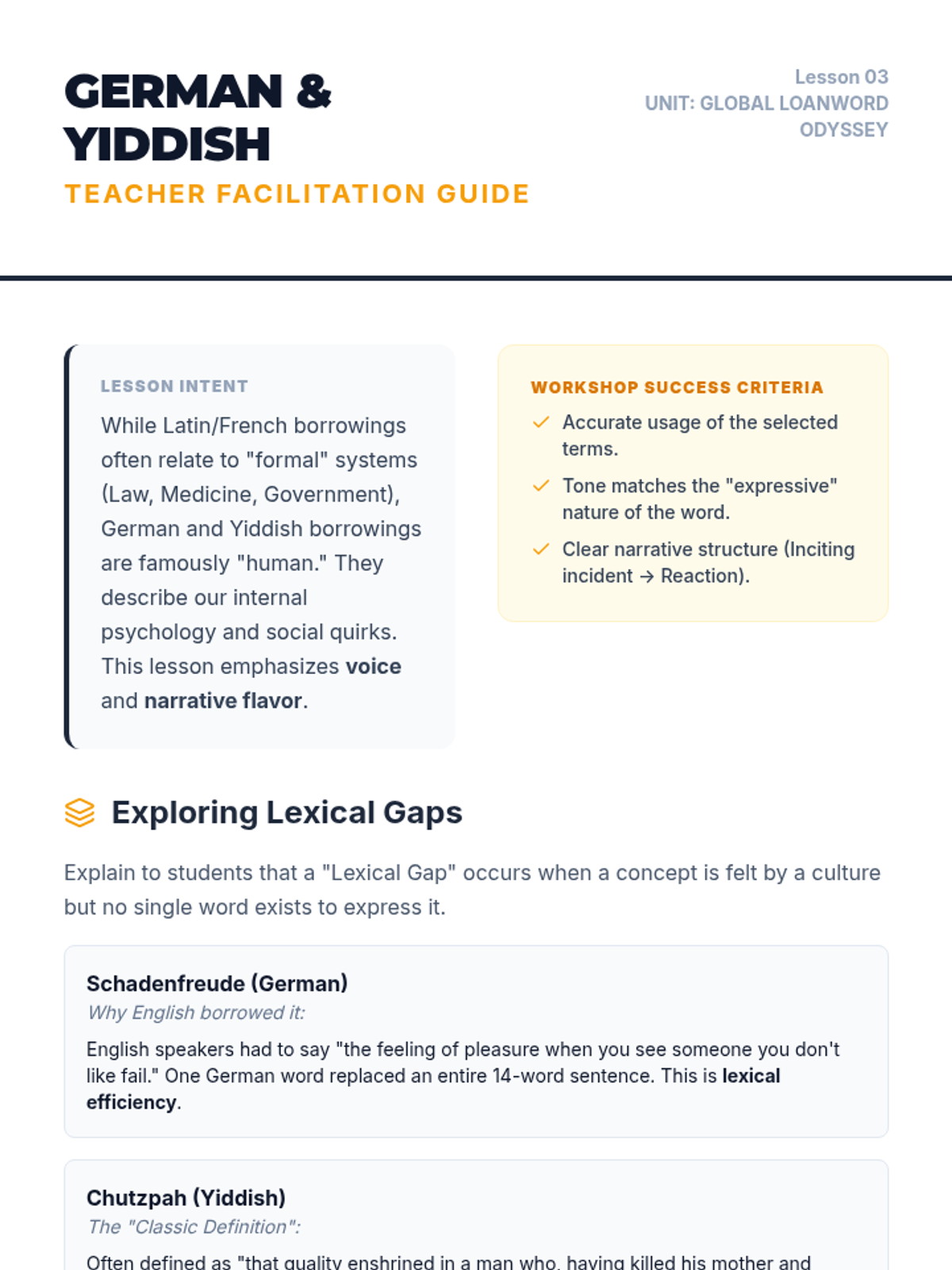
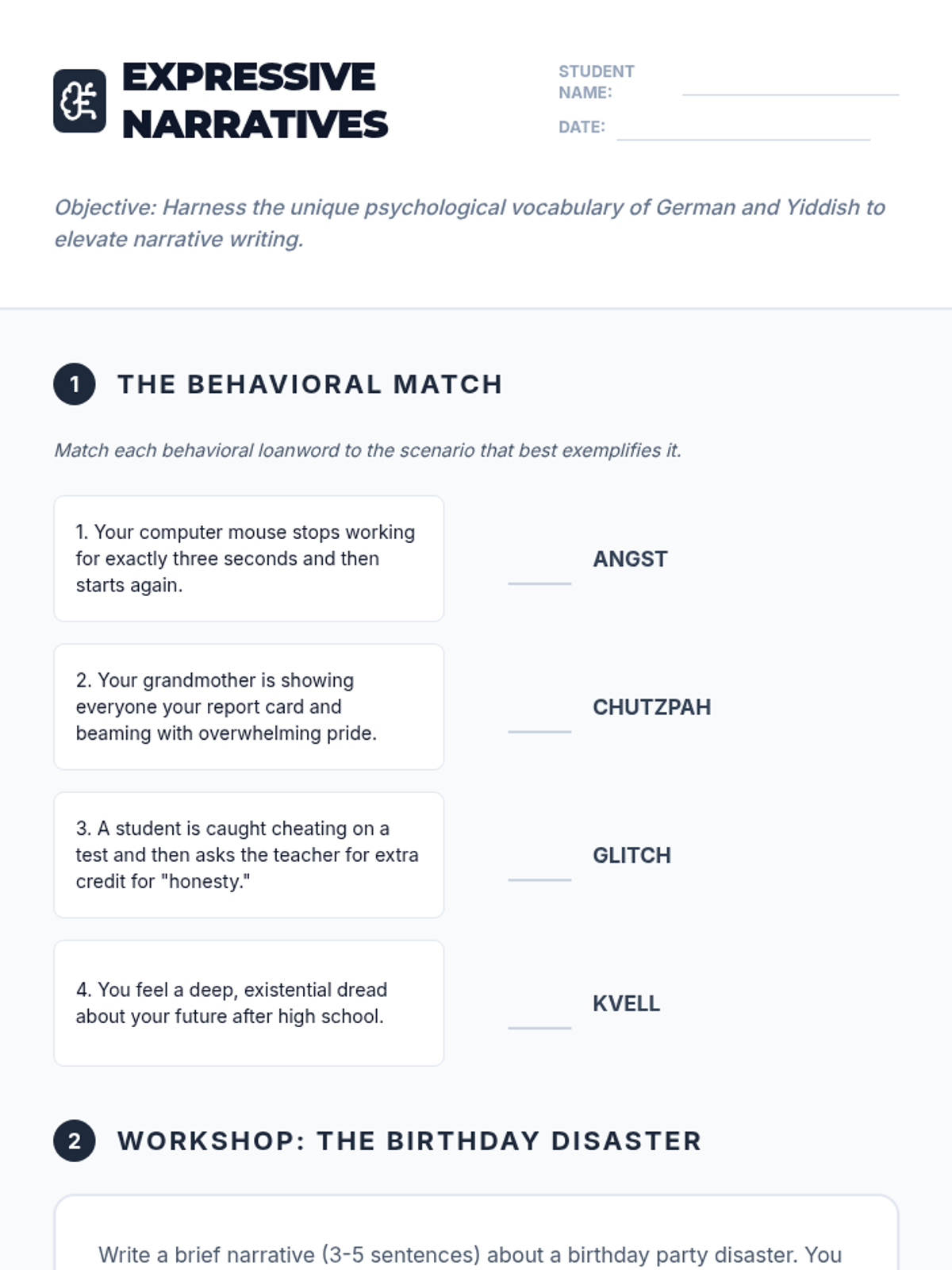
Students explore the unique contribution of German and Yiddish to English expressiveness, covering terms like 'schadenfreude,' 'zeitgeist,' 'spiel,' and 'chutzpah.' They analyze how these words often fill specific gaps in English regarding psychology and human behavior.
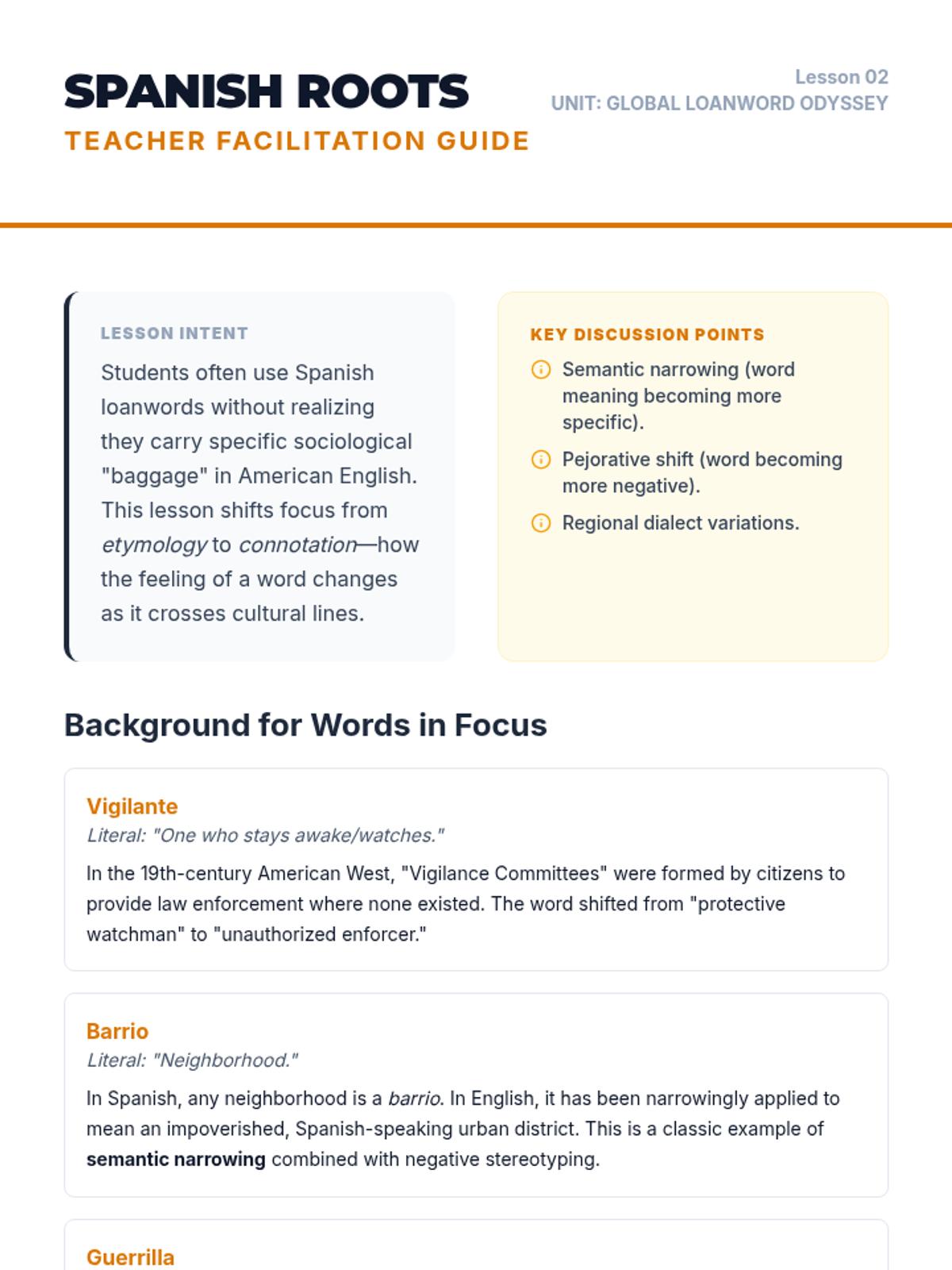
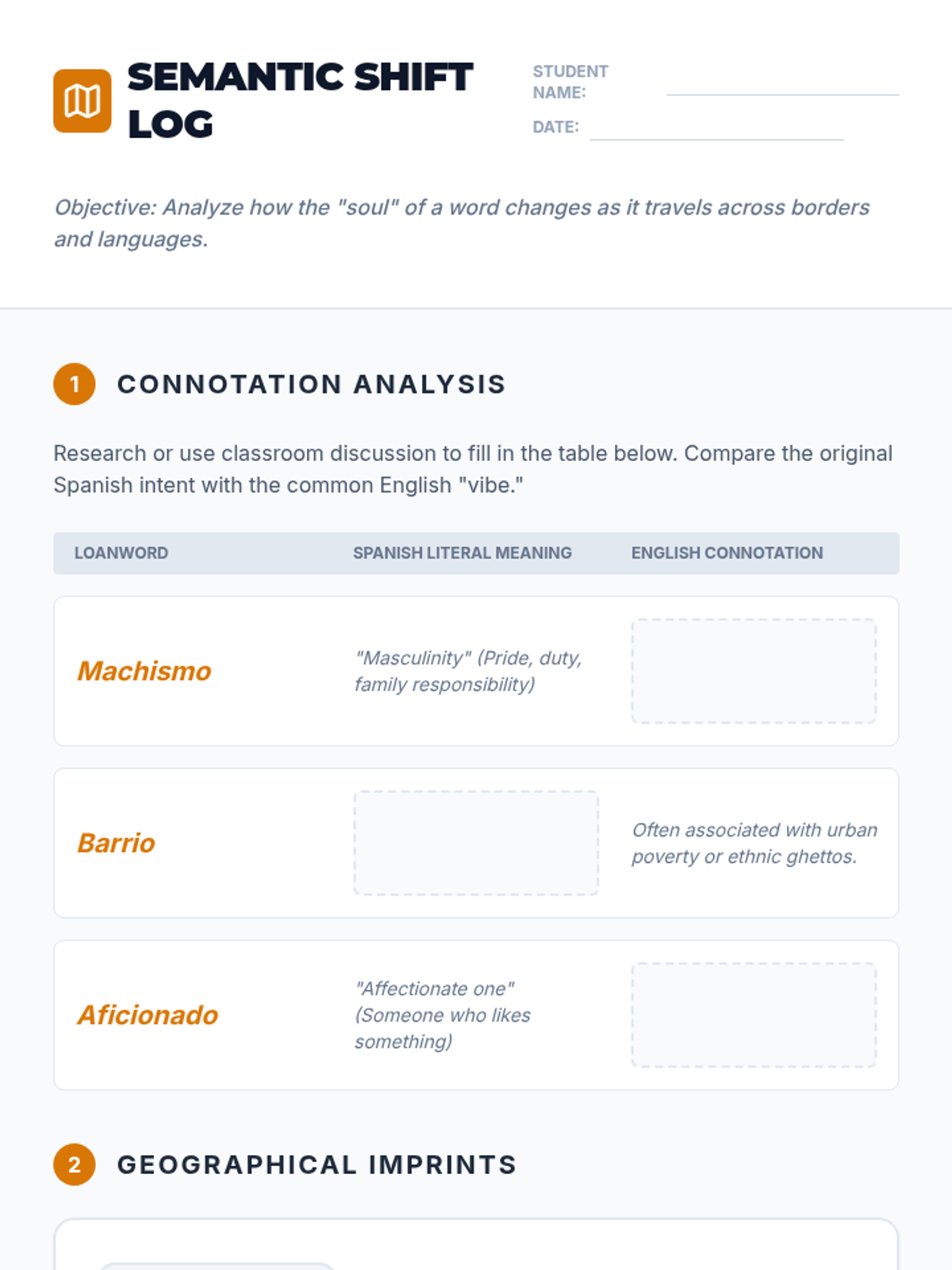
Focusing on the deep integration of Spanish, students examine words like 'aficionado,' 'barrio,' 'guerrilla,' and 'vigilante,' exploring how these words have shifted in meaning or connotation when entering English usage.
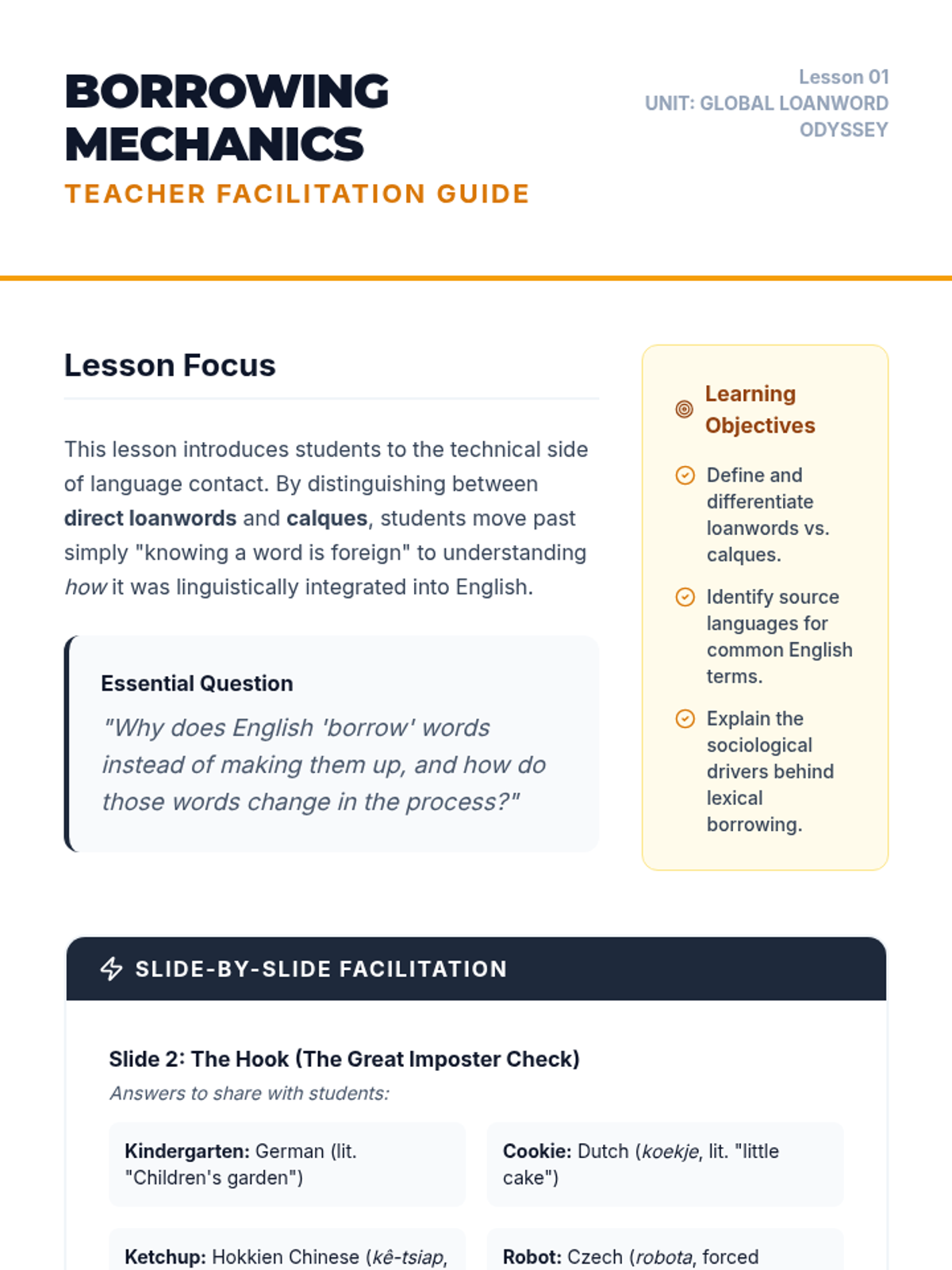
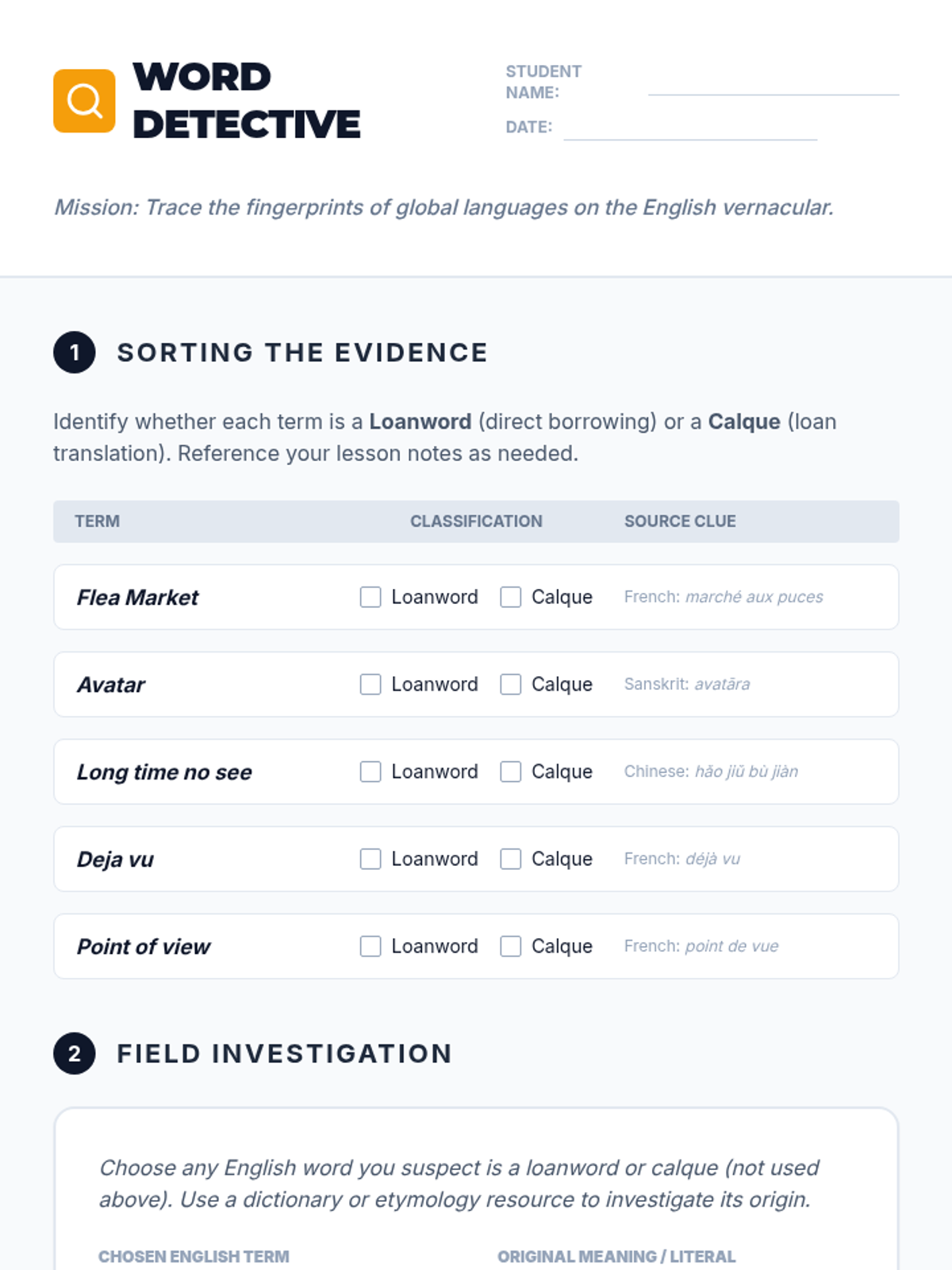
Students explore the linguistic mechanisms of lexical borrowing, distinguishing between direct loanwords and calques (loan translations) while tracing the origins of everyday English words.
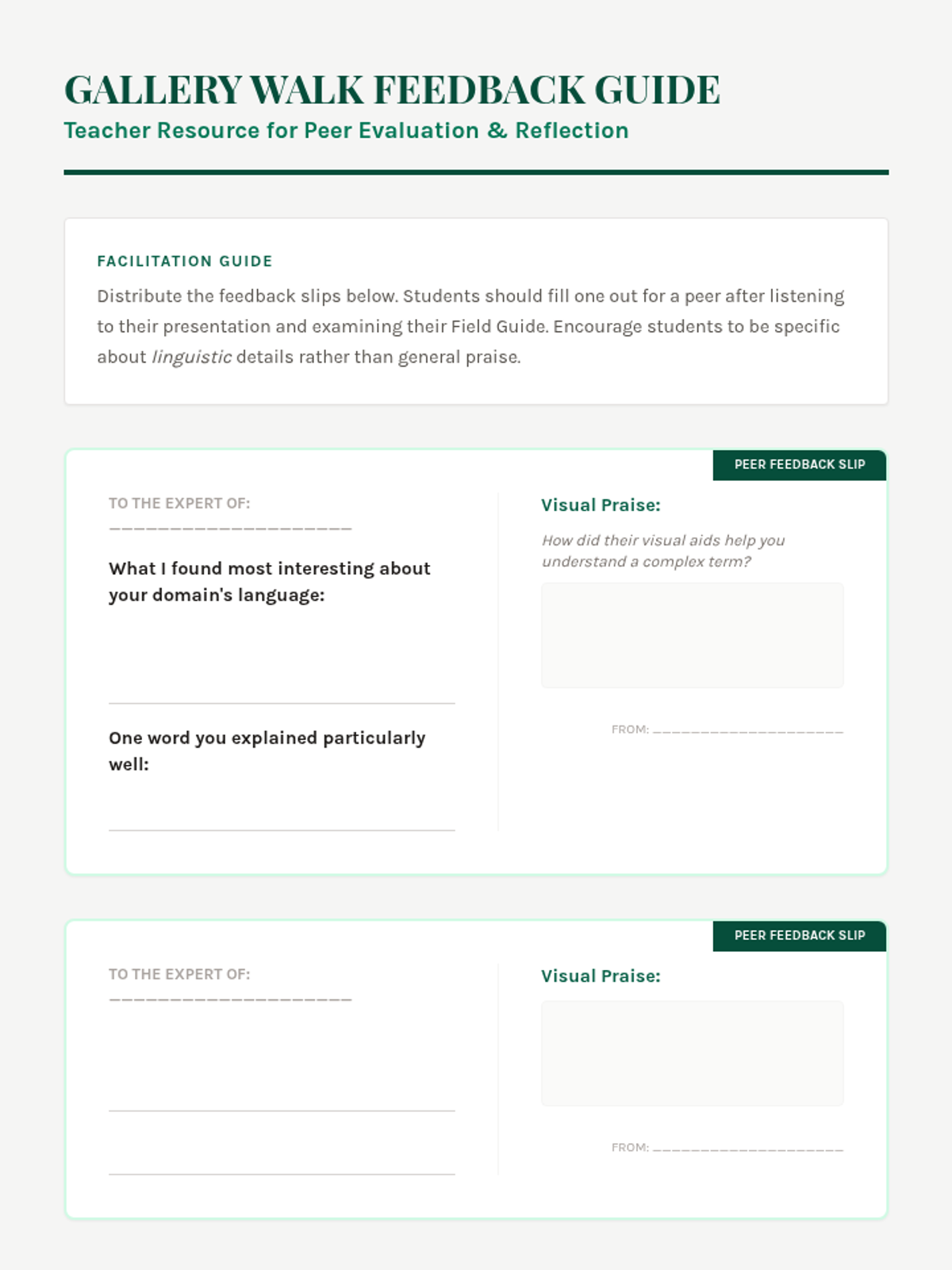
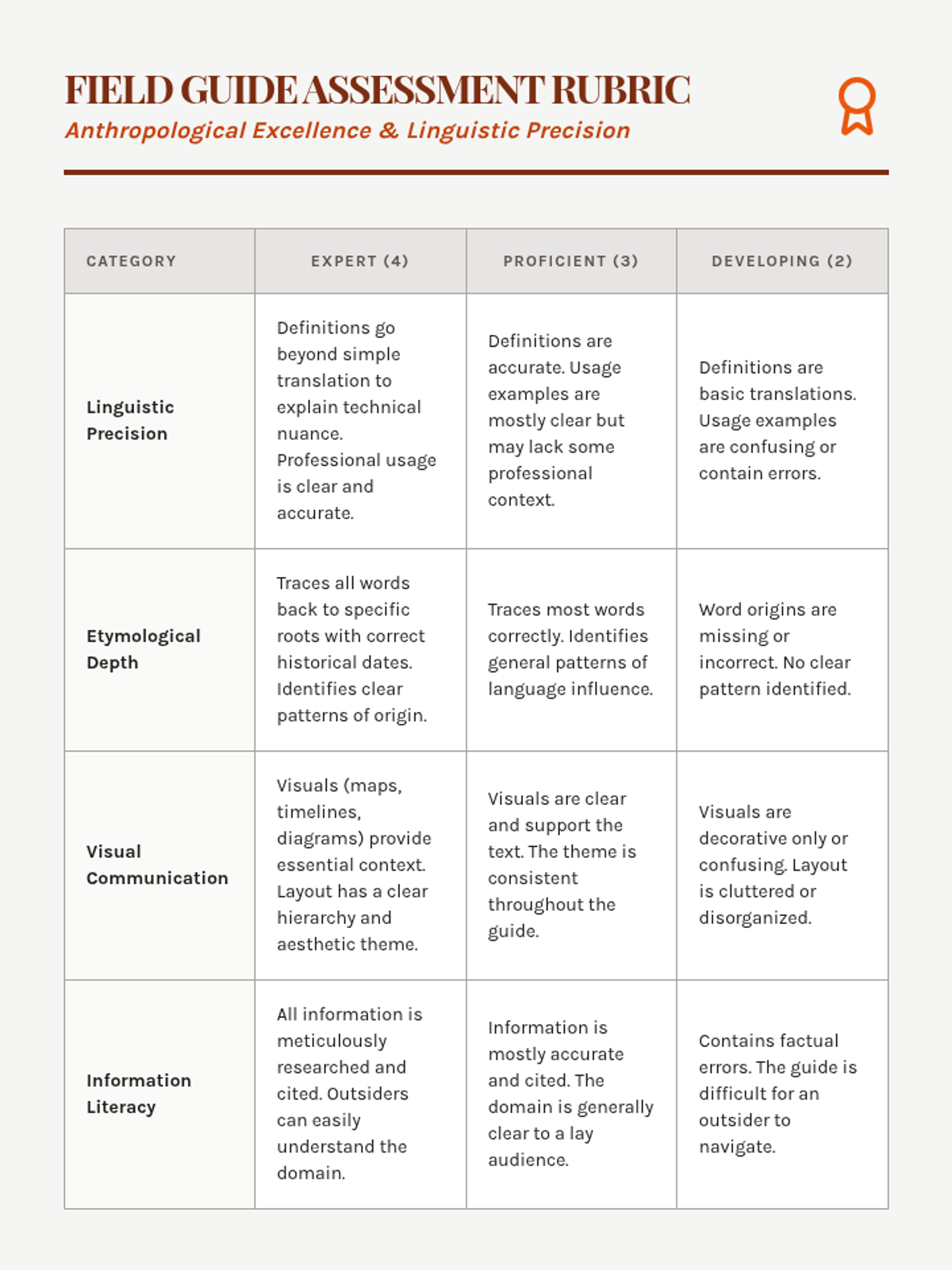
Students present their final field guides in a gallery walk format, teaching peers about the linguistic influences in their chosen domains.
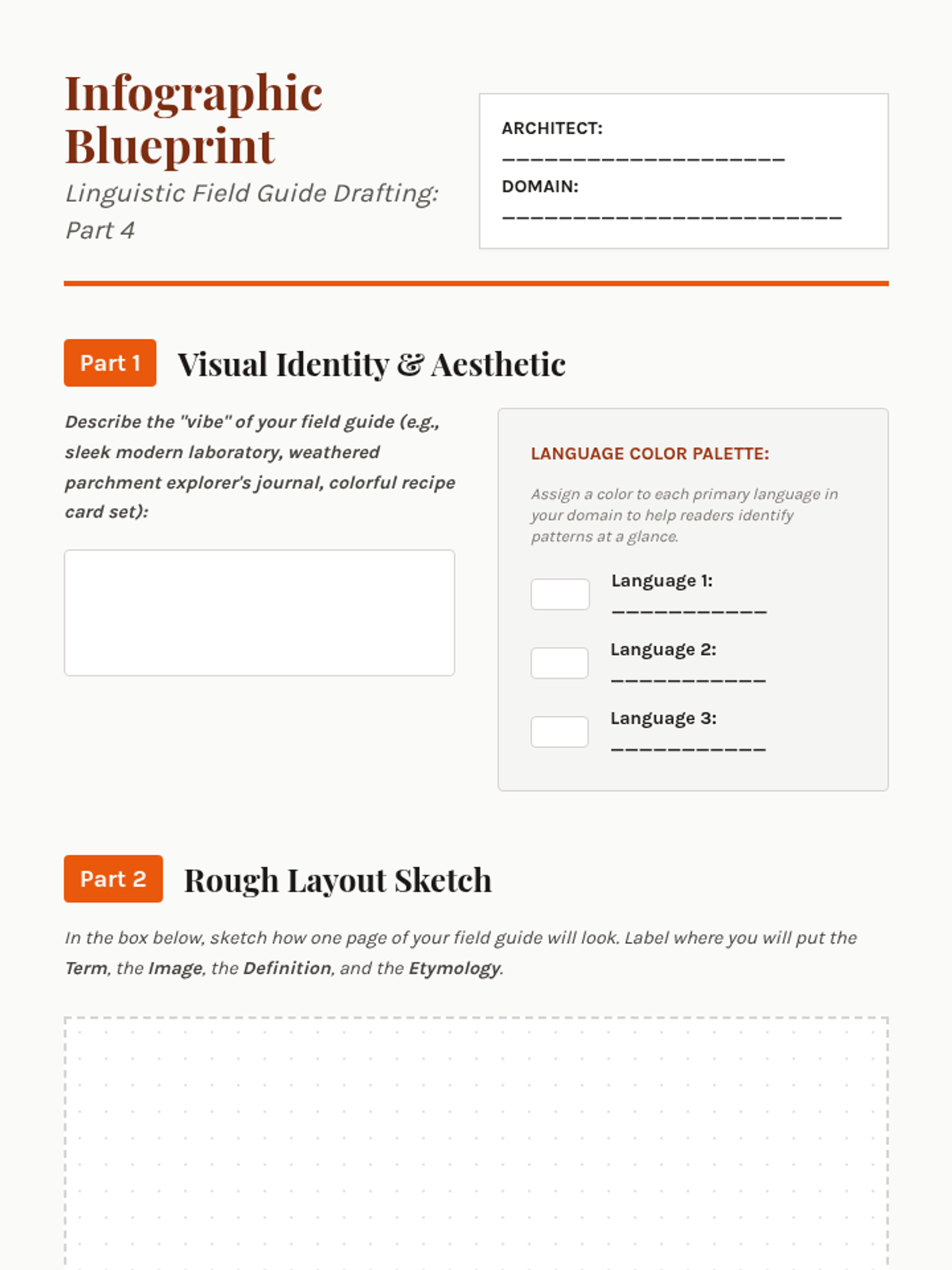
Students design visual aids and infographics to make complex foreign terminology accessible and memorable for a general audience.
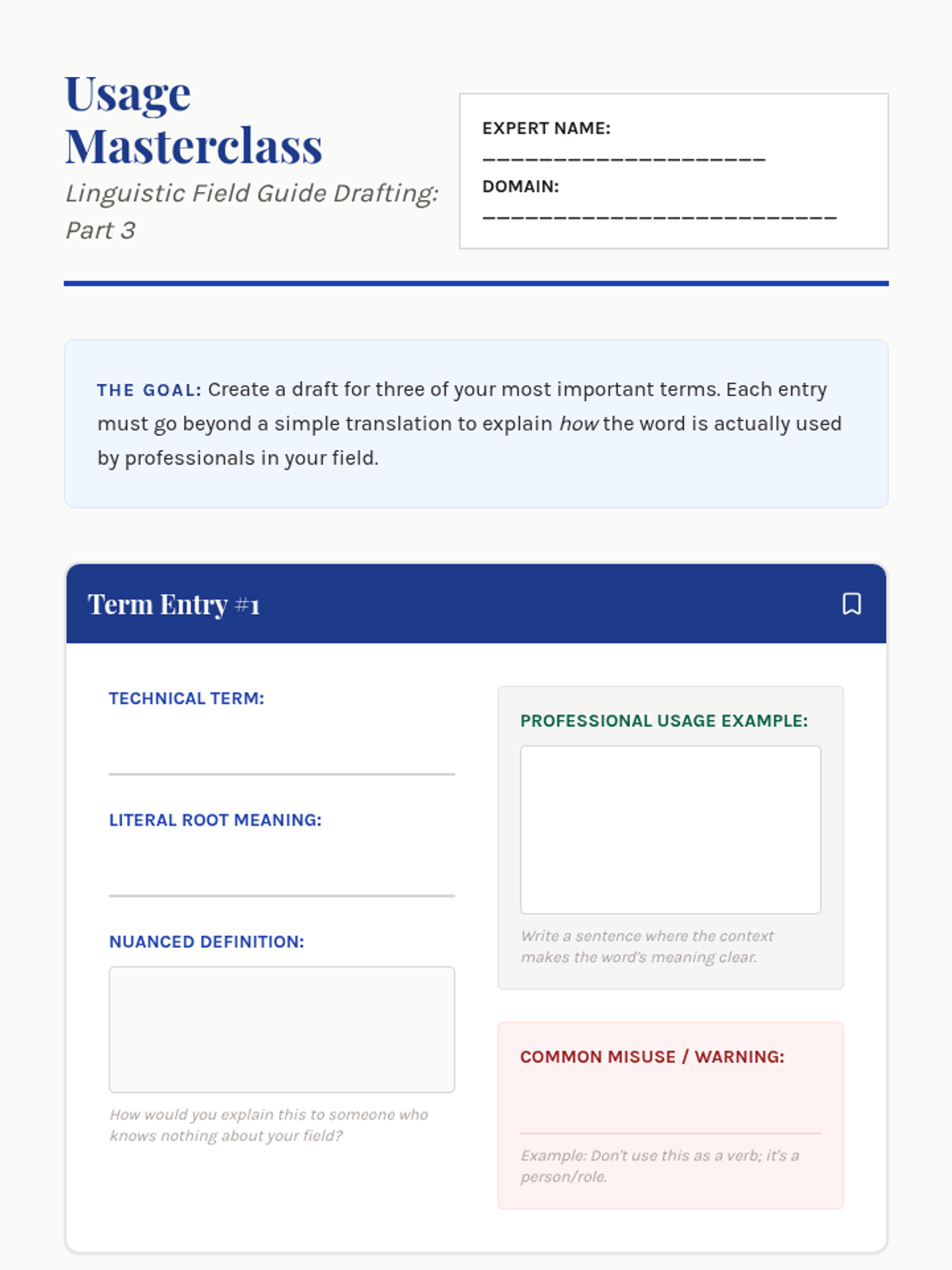
Students draft technical definitions and usage guides that explain the nuances of their chosen terms within their professional context.
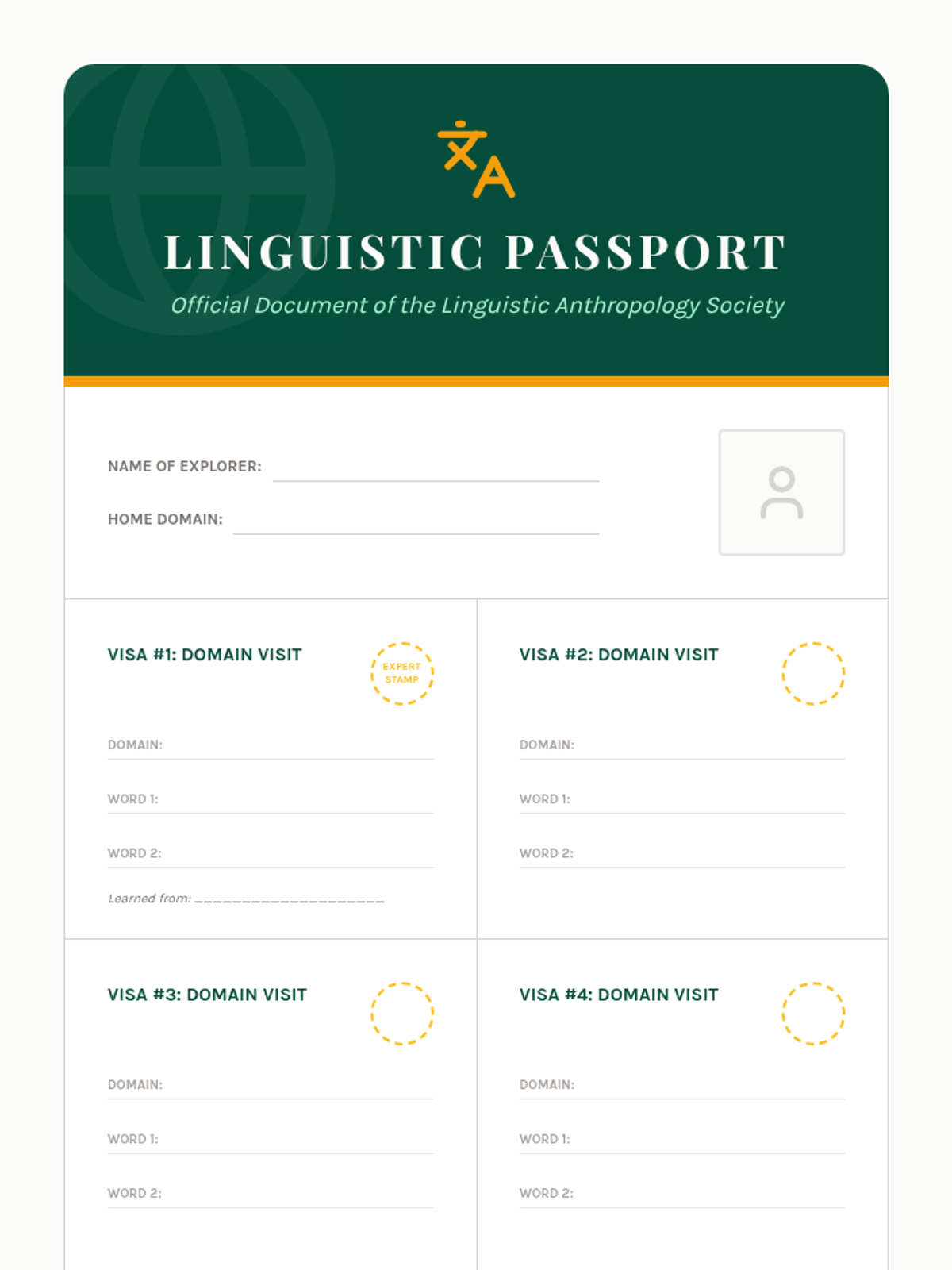
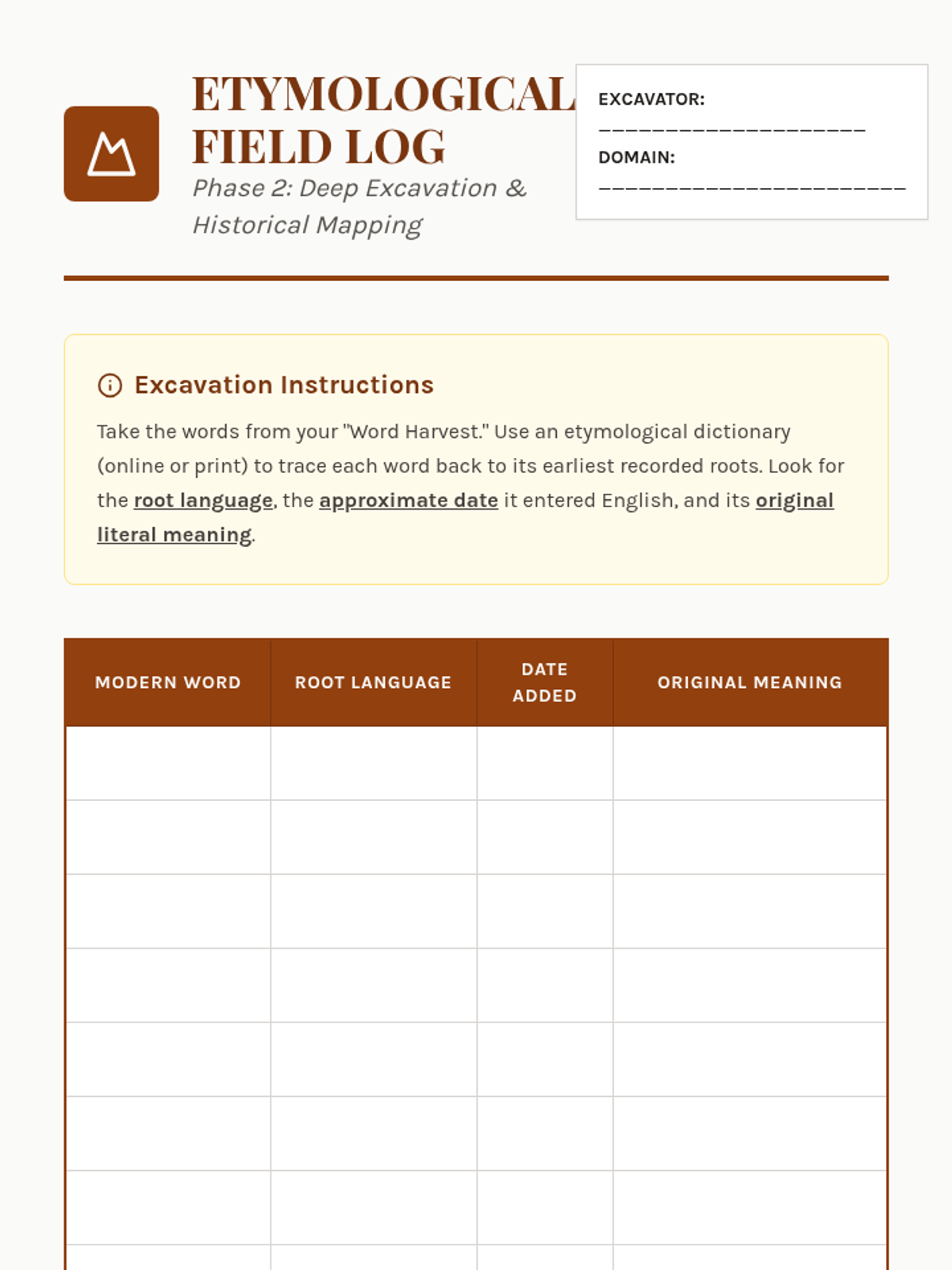
Students use etymological resources to trace the historical origins of their harvested words and identify cultural patterns in language usage.
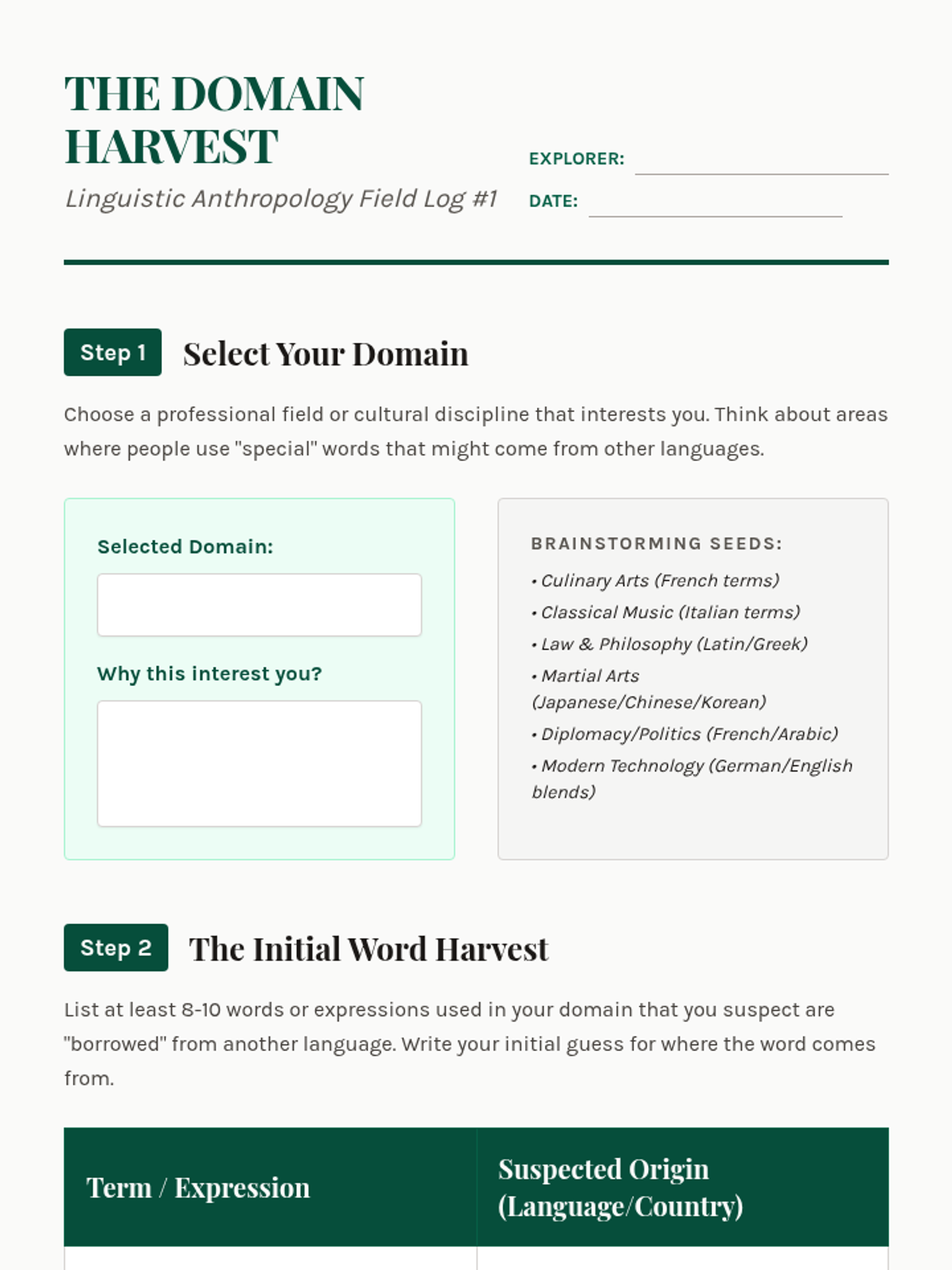
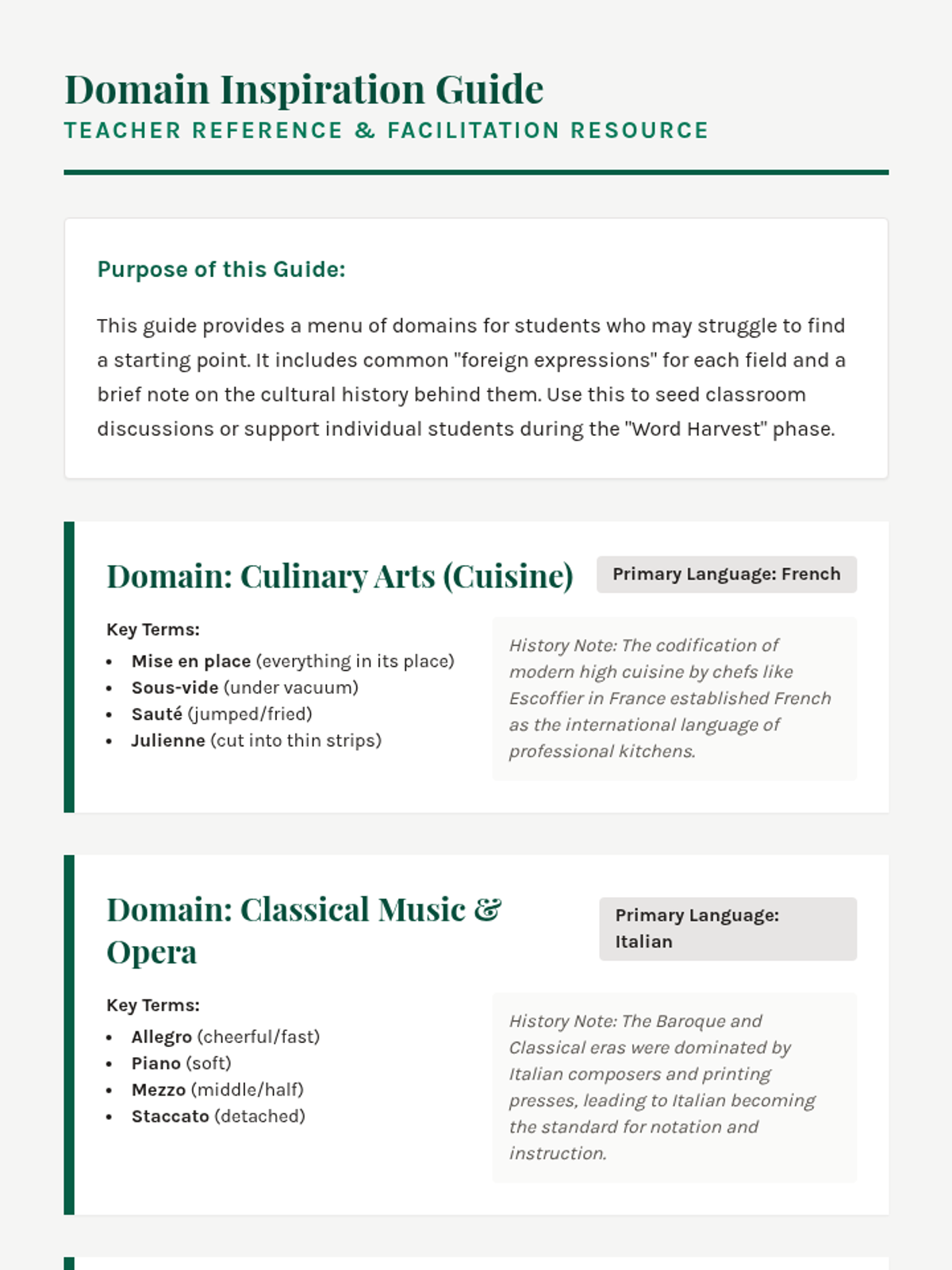
Students explore specialized vocabulary in various fields and select a domain of interest to begin their initial research into foreign terms.
A culminating marketplace simulation where students filter information from a chaotic audio environment to identify items, prices, and vendor requests.
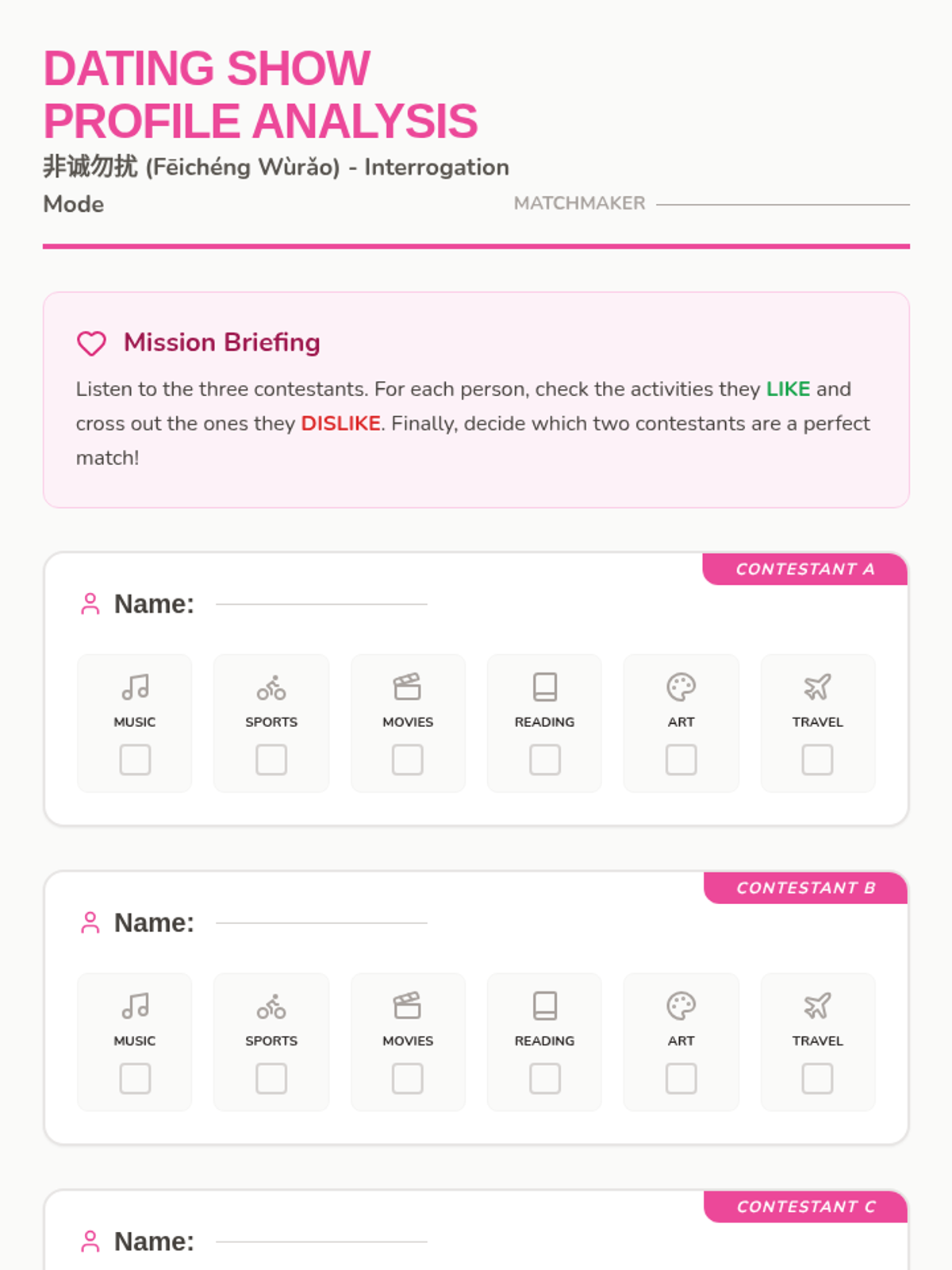
Students identify opinions and preferences using 'xihuan', analyzing interviews and character profiles to categorize likes and dislikes.
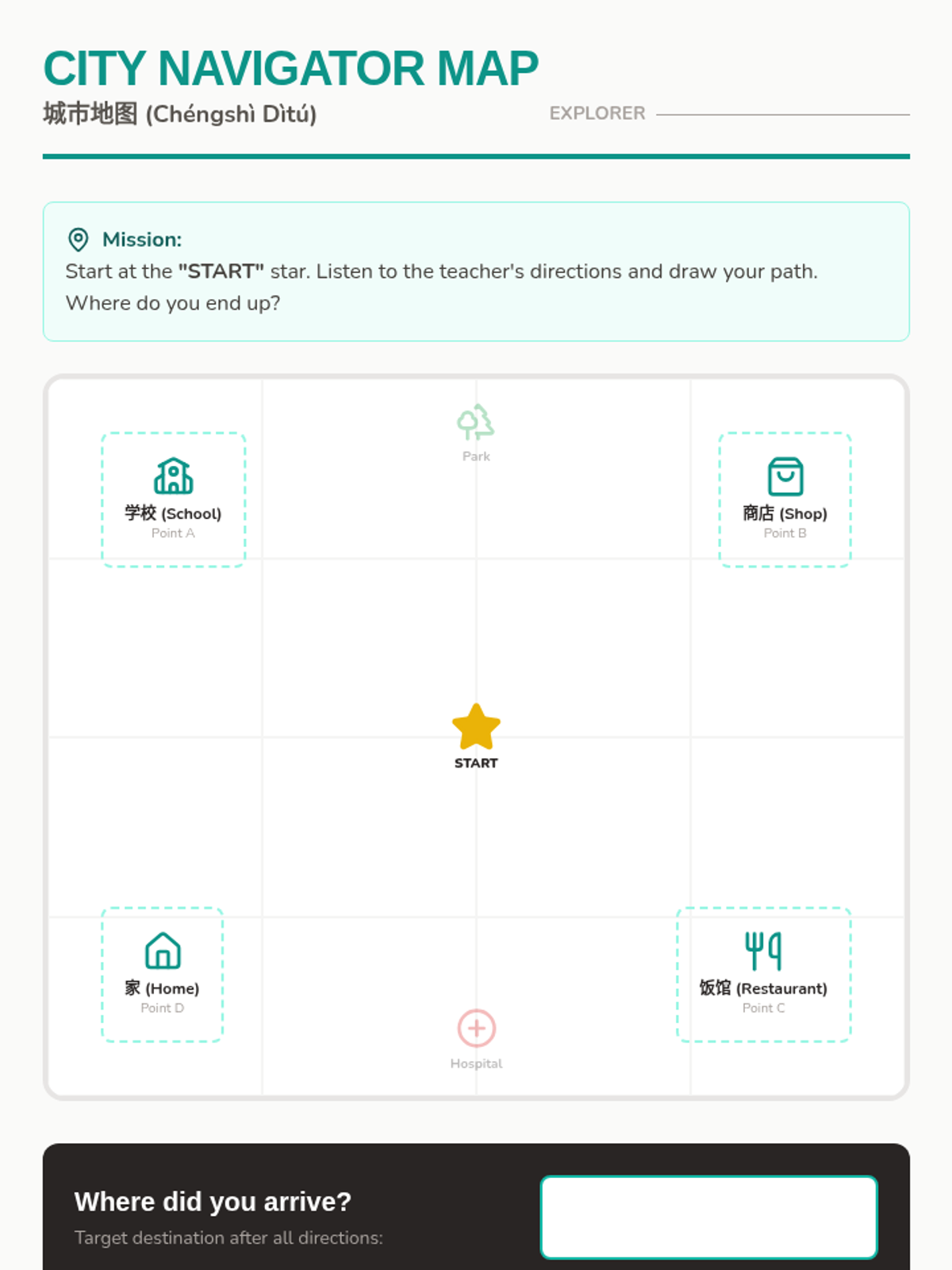
Focusing on spatial words and navigation, students listen to directions to trace routes on maps and find specific destinations.
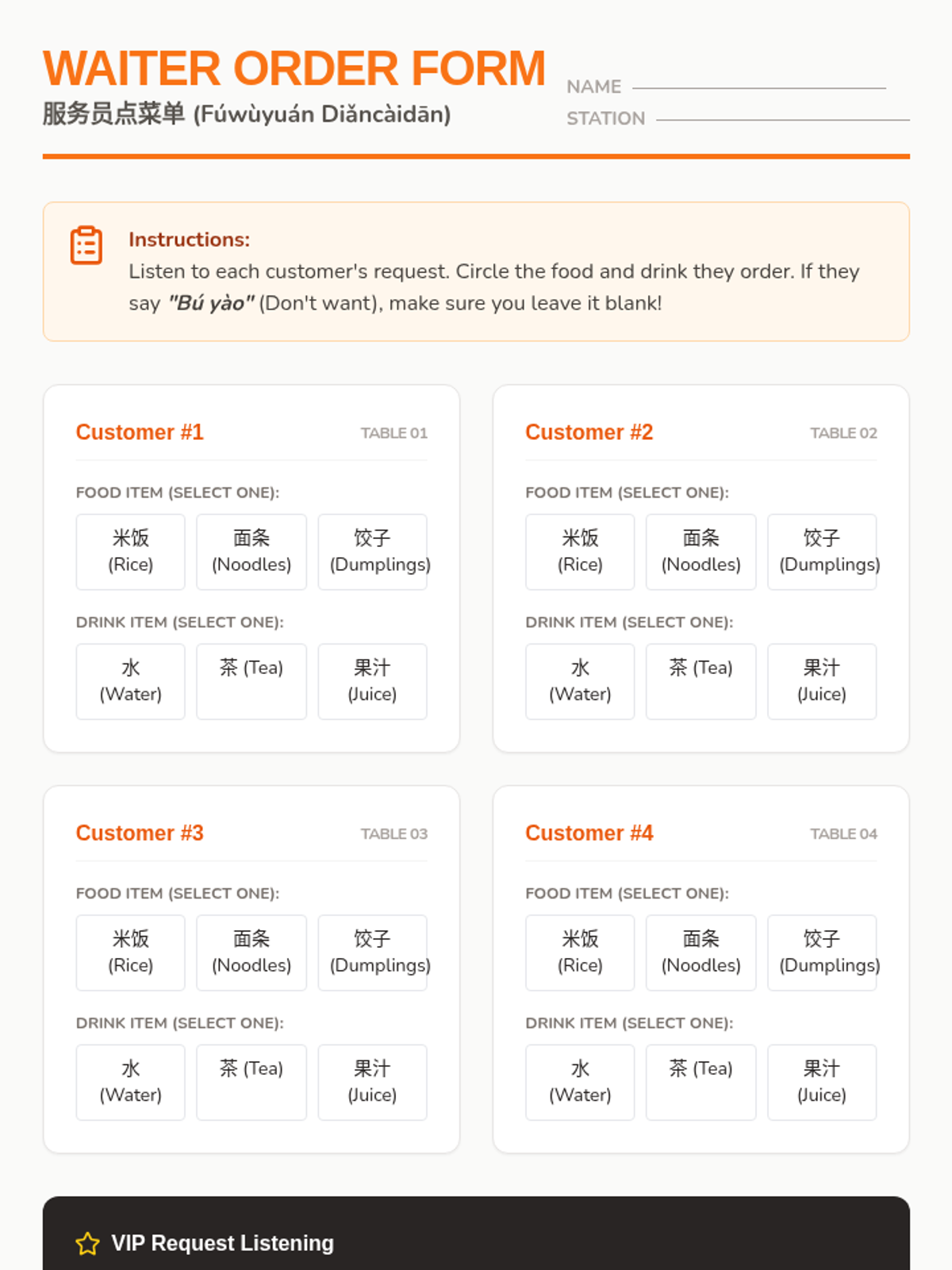
Students listen to restaurant dialogues and 'I want' statements to accurately capture customer requests in a simulated dining environment.