Vocabulary, grammar, and cultural contexts for Spanish language acquisition across all proficiency levels. Develops skills in reading, writing, speaking, and listening through structured linguistic analysis and practice.
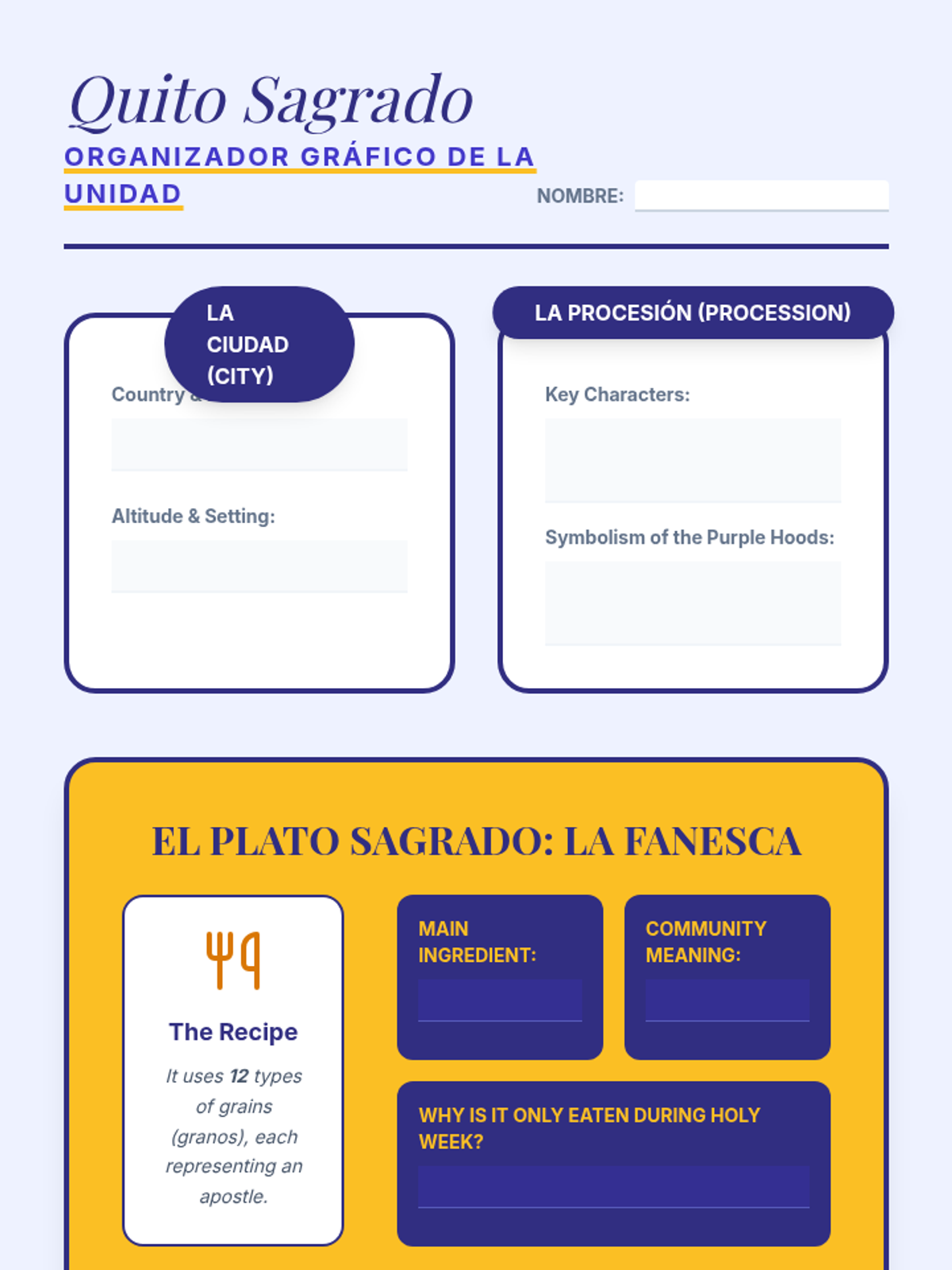
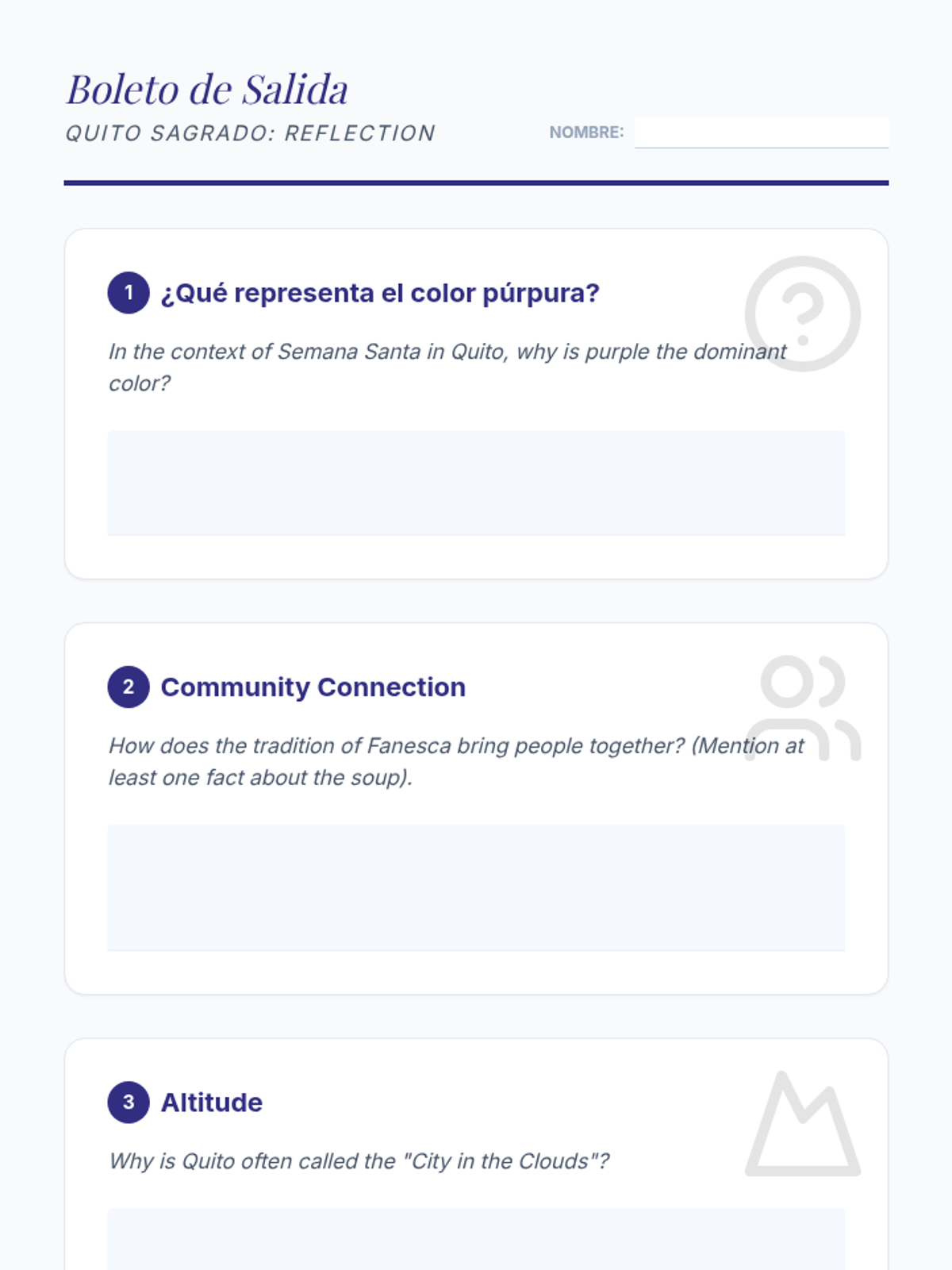
Exploring the role of community through the traditional Fanesca soup and summarizing the unit's learning with a graphic organizer.
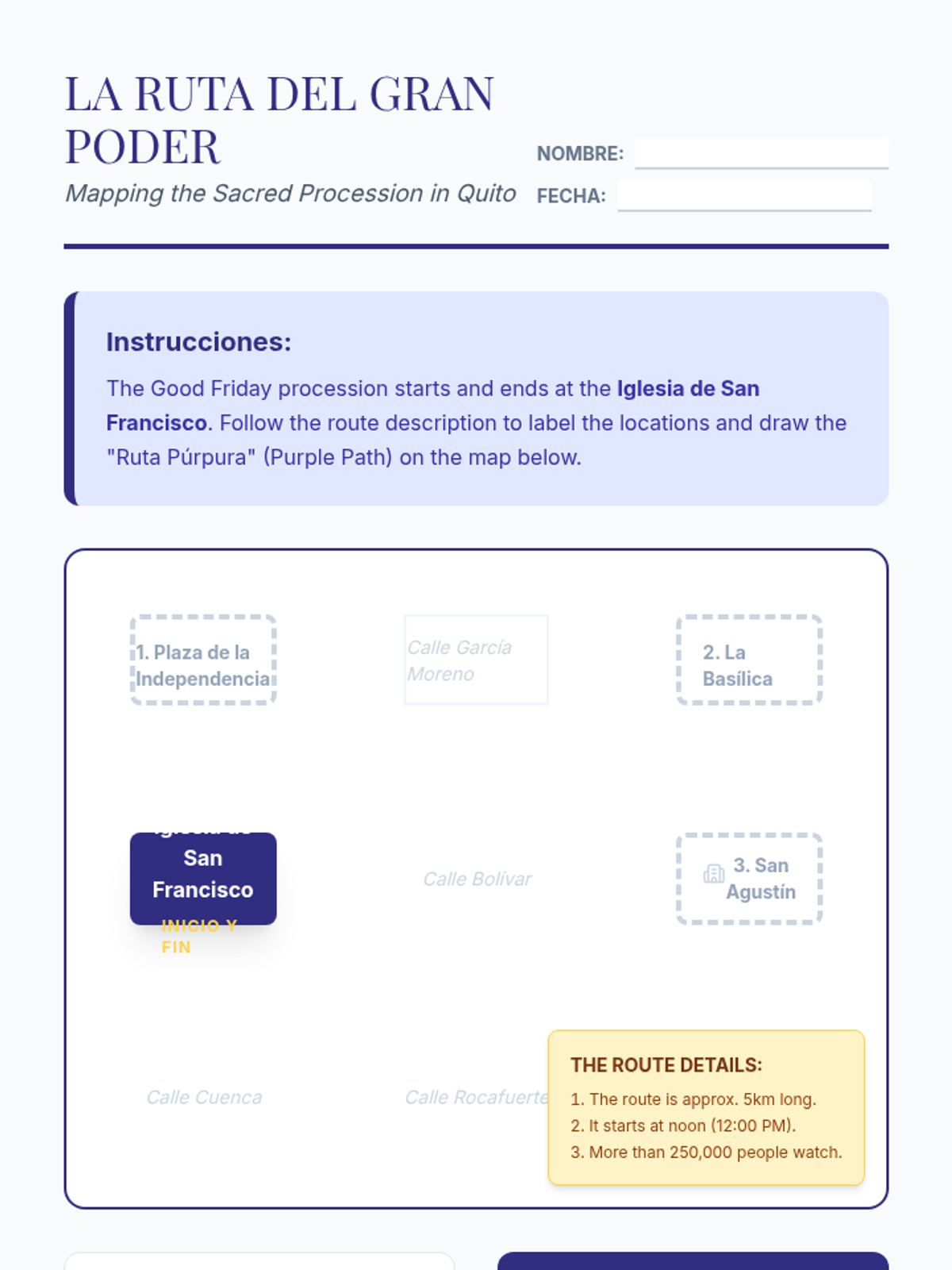
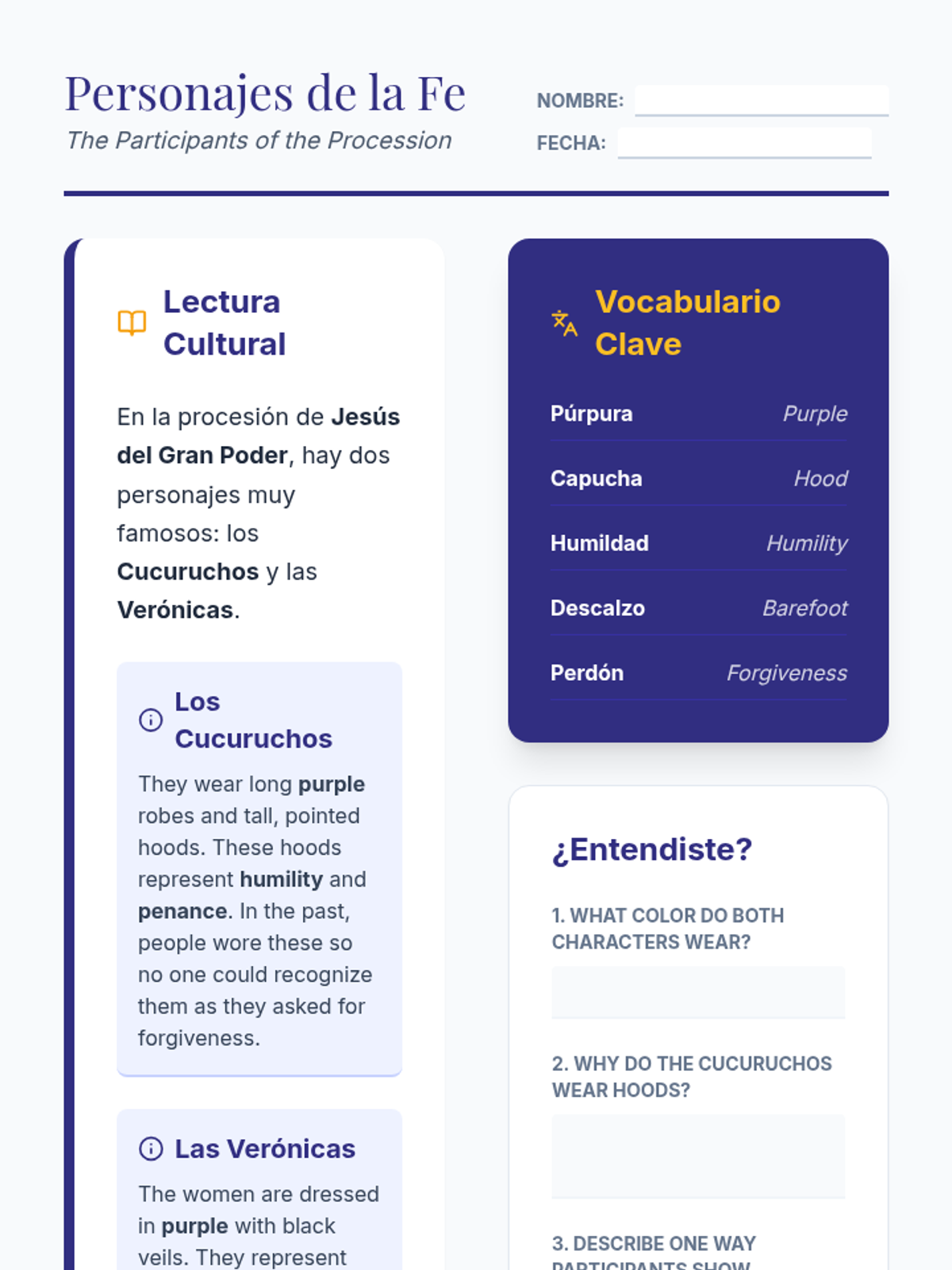
In-depth exploration of the Jesús del Gran Poder procession, including mapping the route through the Historic Center and understanding the symbolism of the participants.
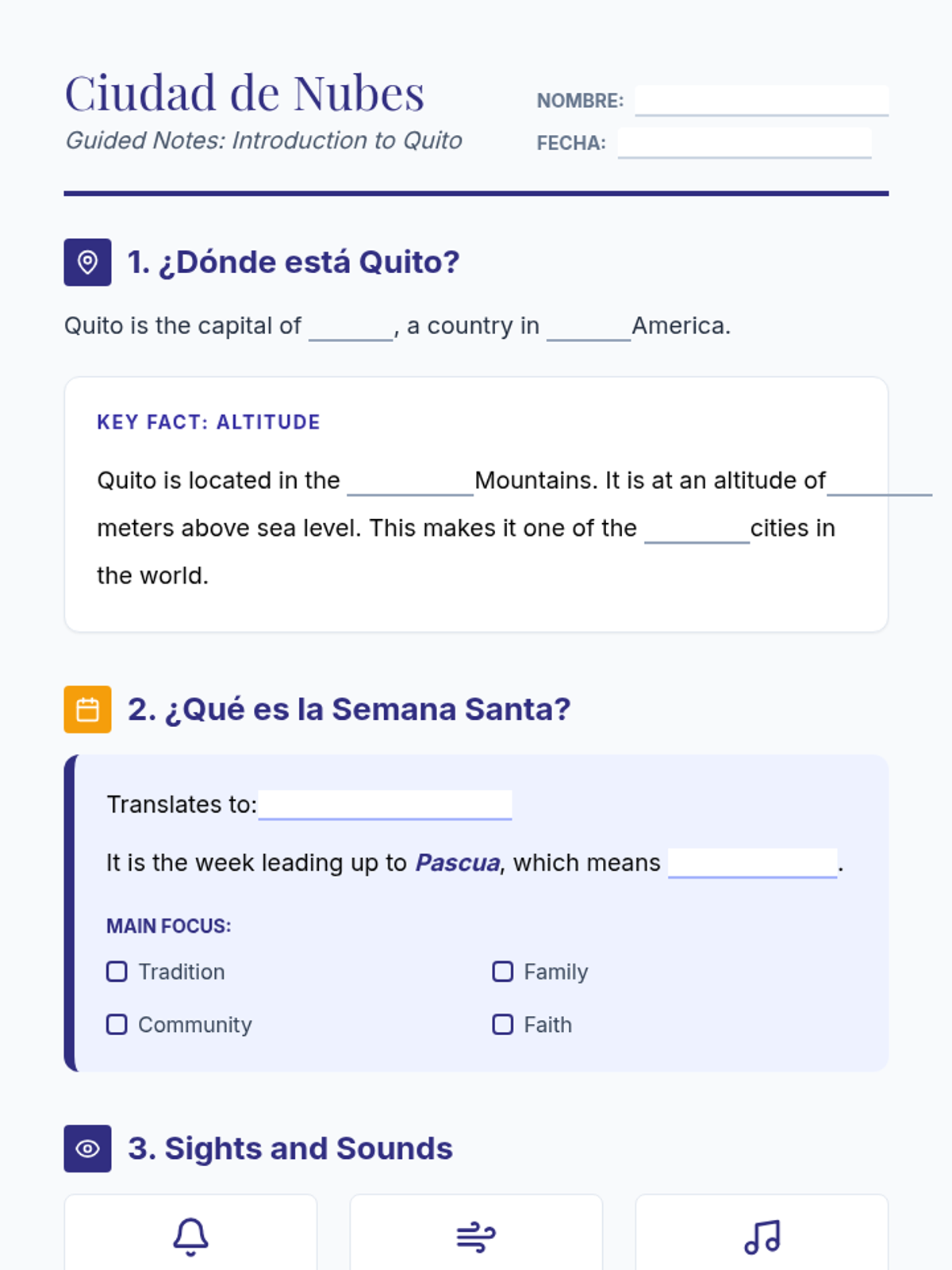
Introduction to Quito's geography and the basic concepts of Semana Santa, focusing on the visual and atmospheric elements of the city.
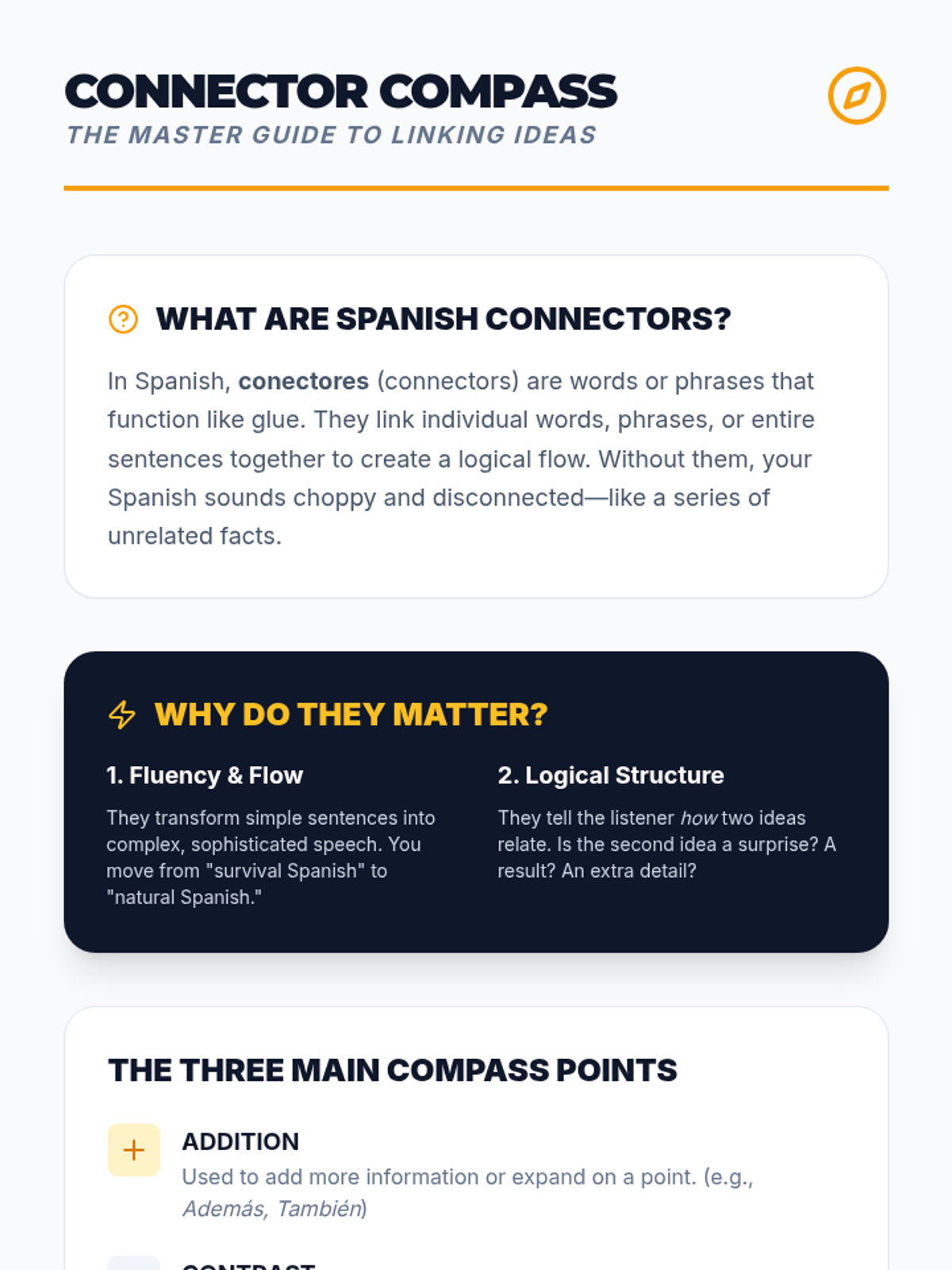
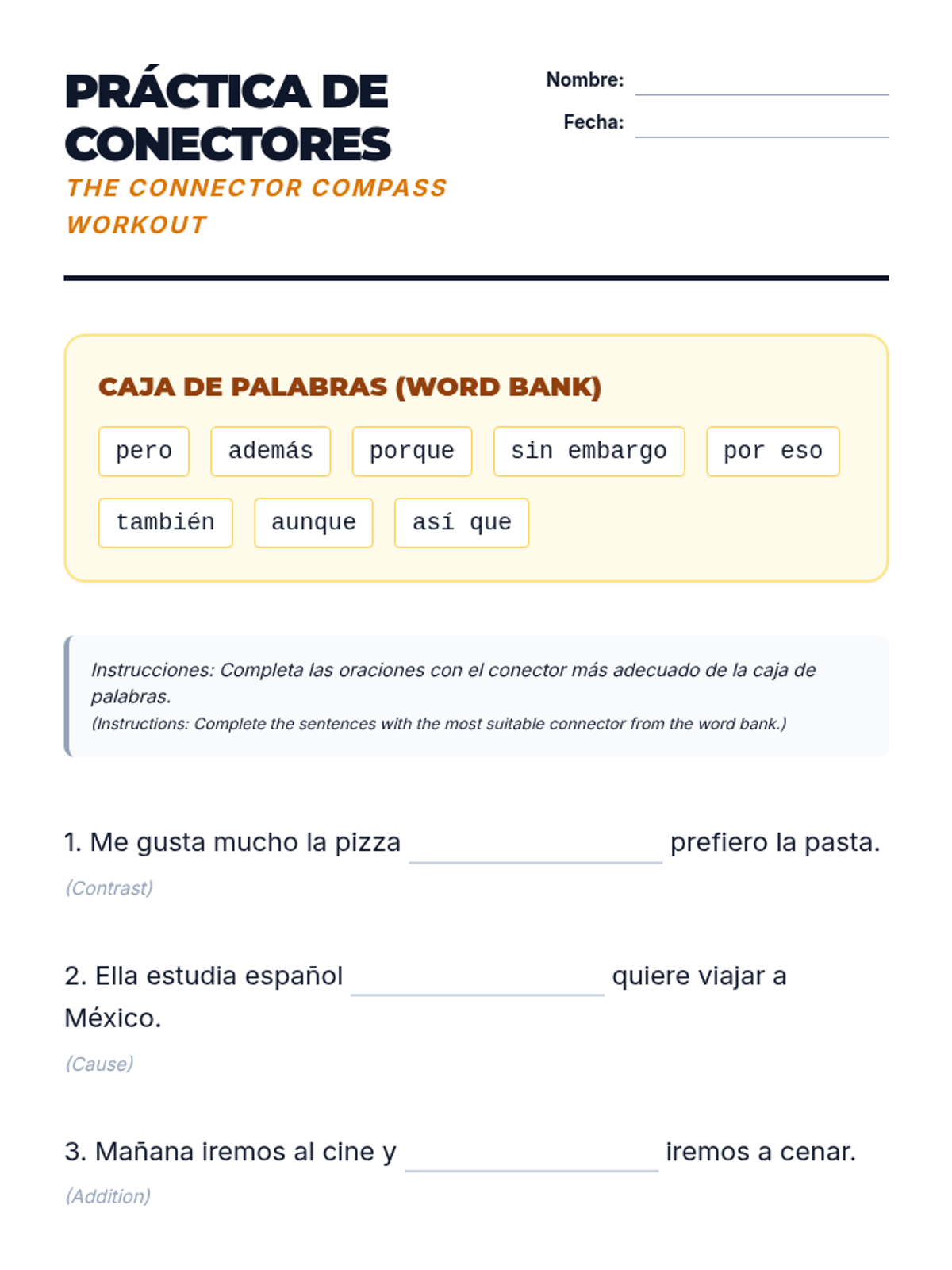
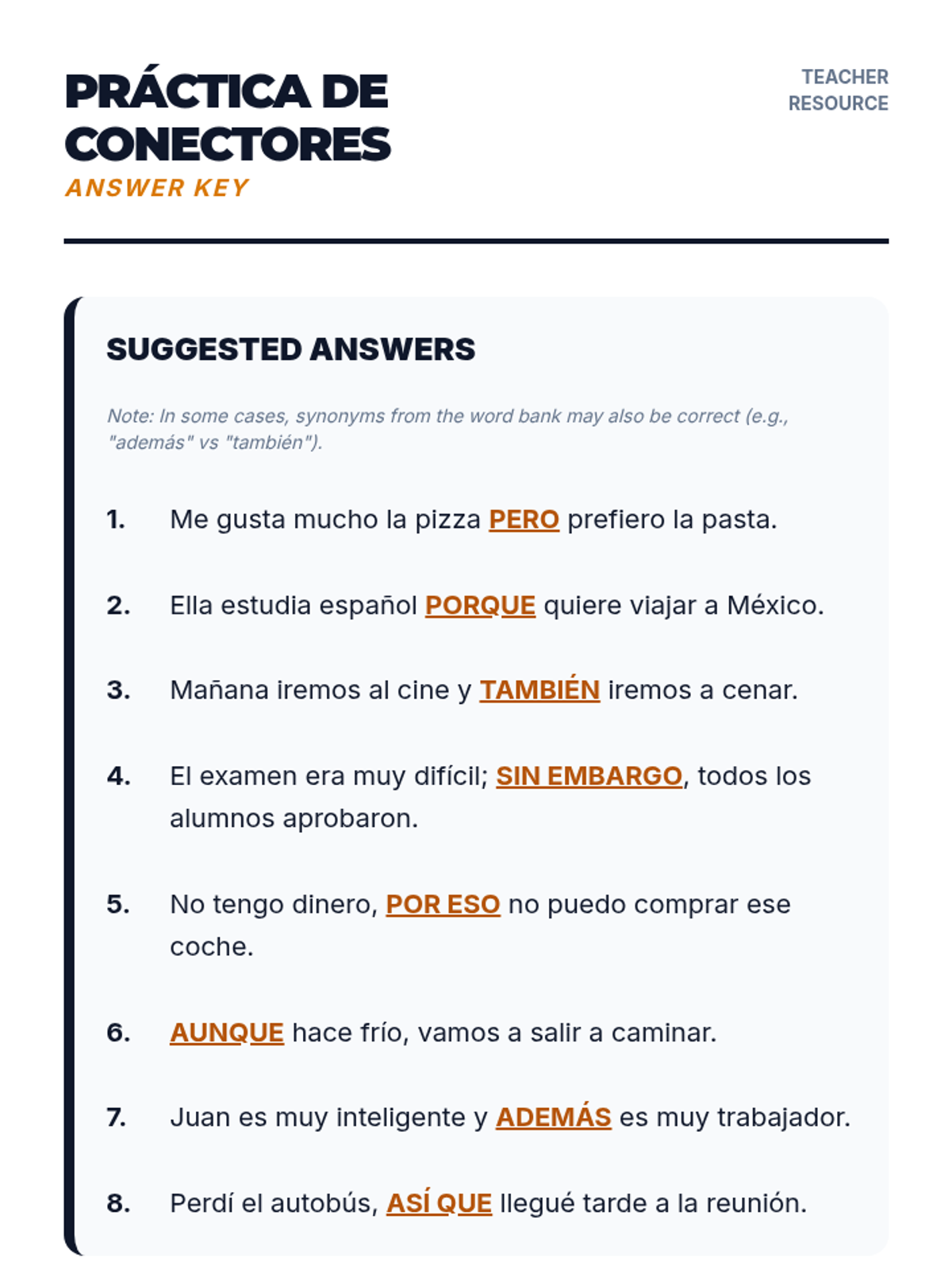
An introduction to essential Spanish conjunctions and transition words to improve sentence structure and narrative flow.
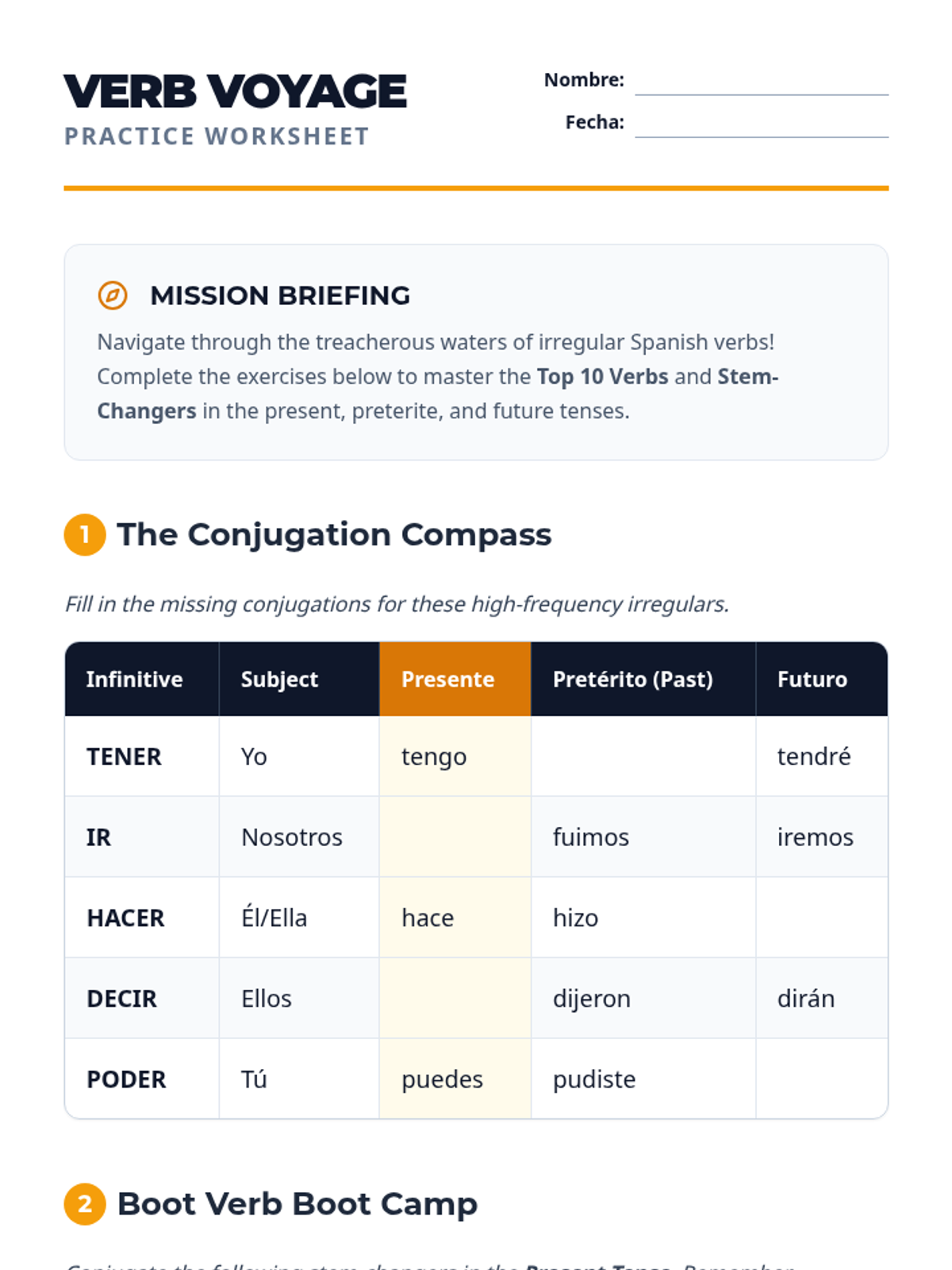
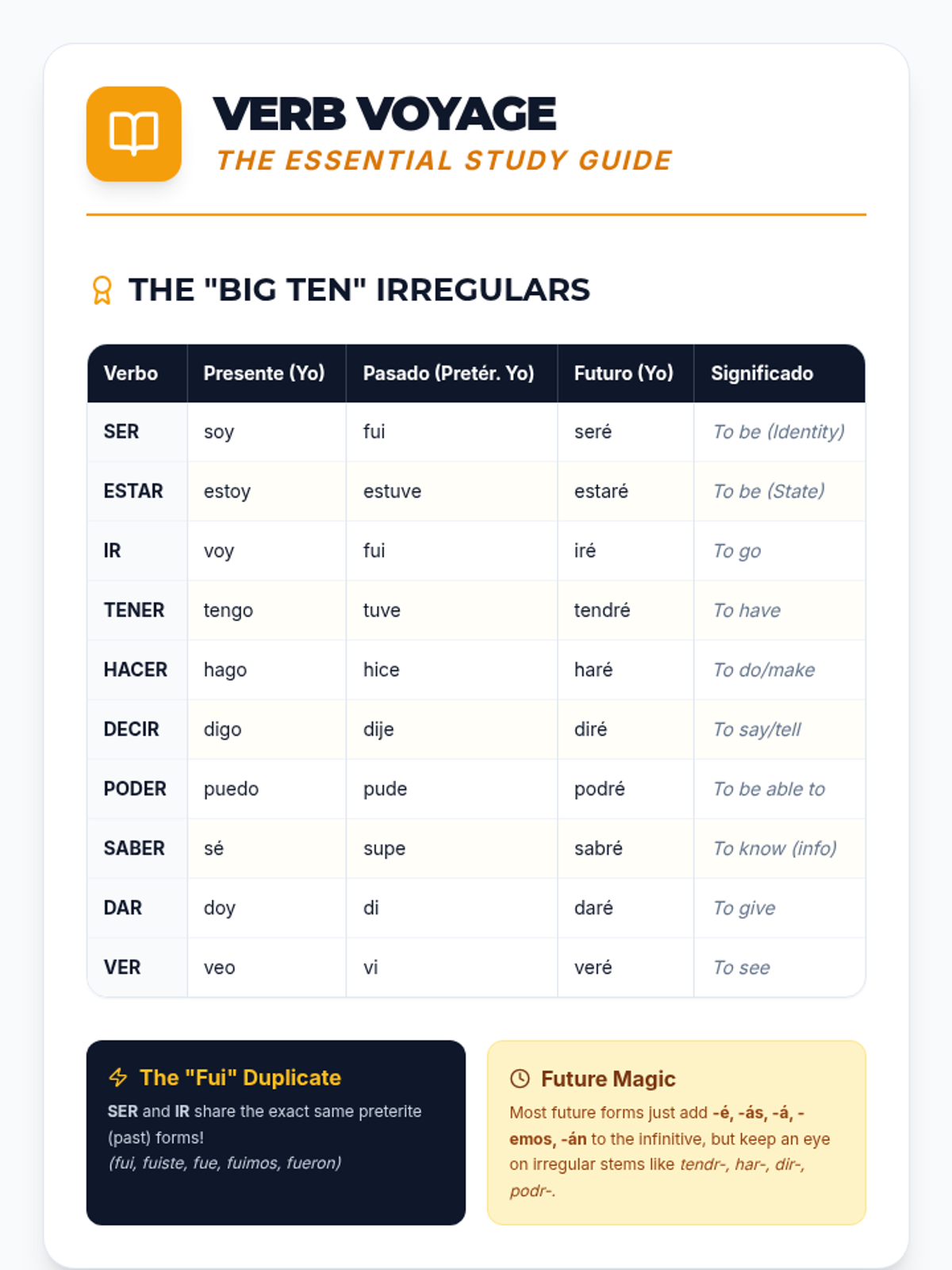
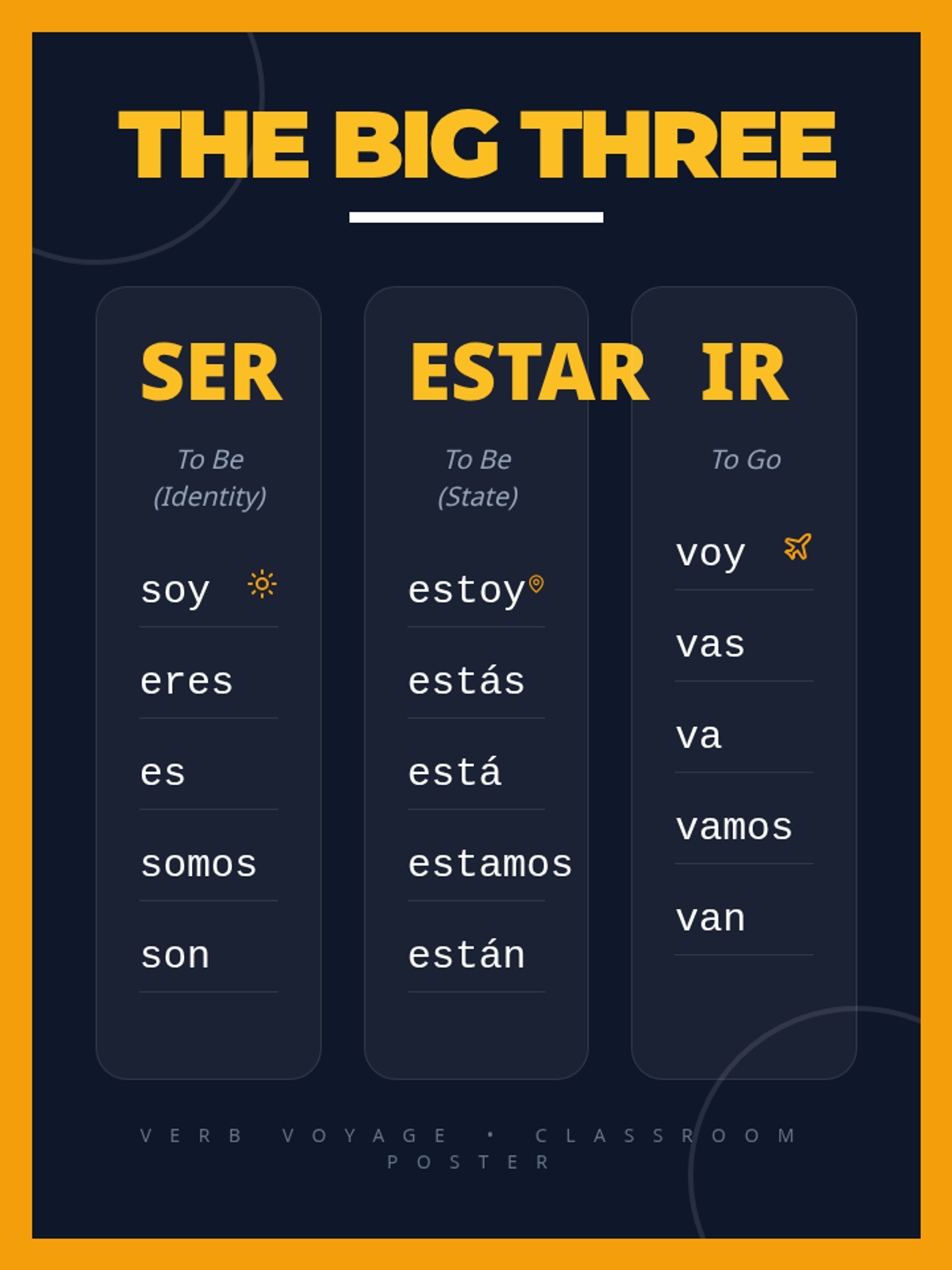
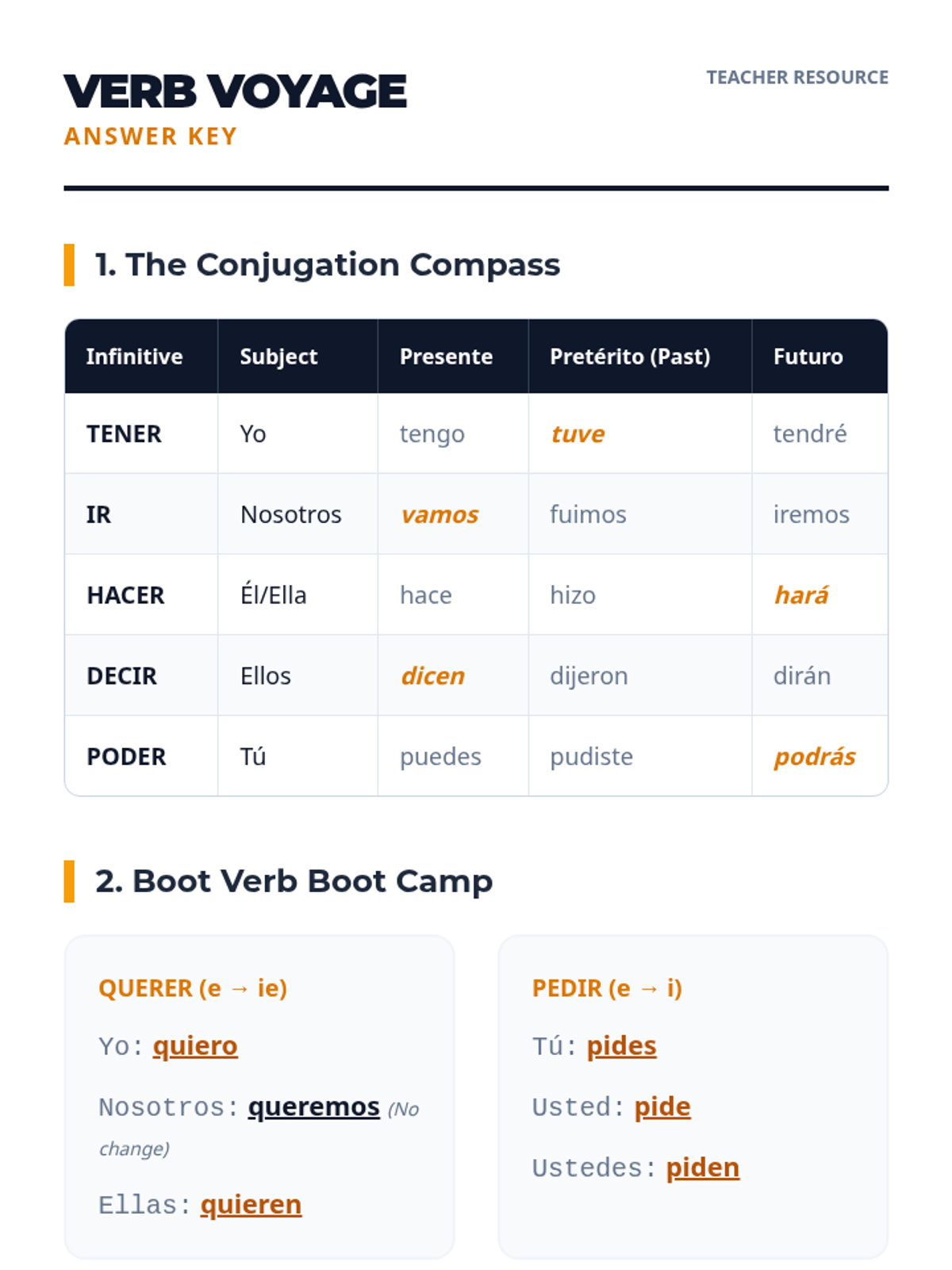
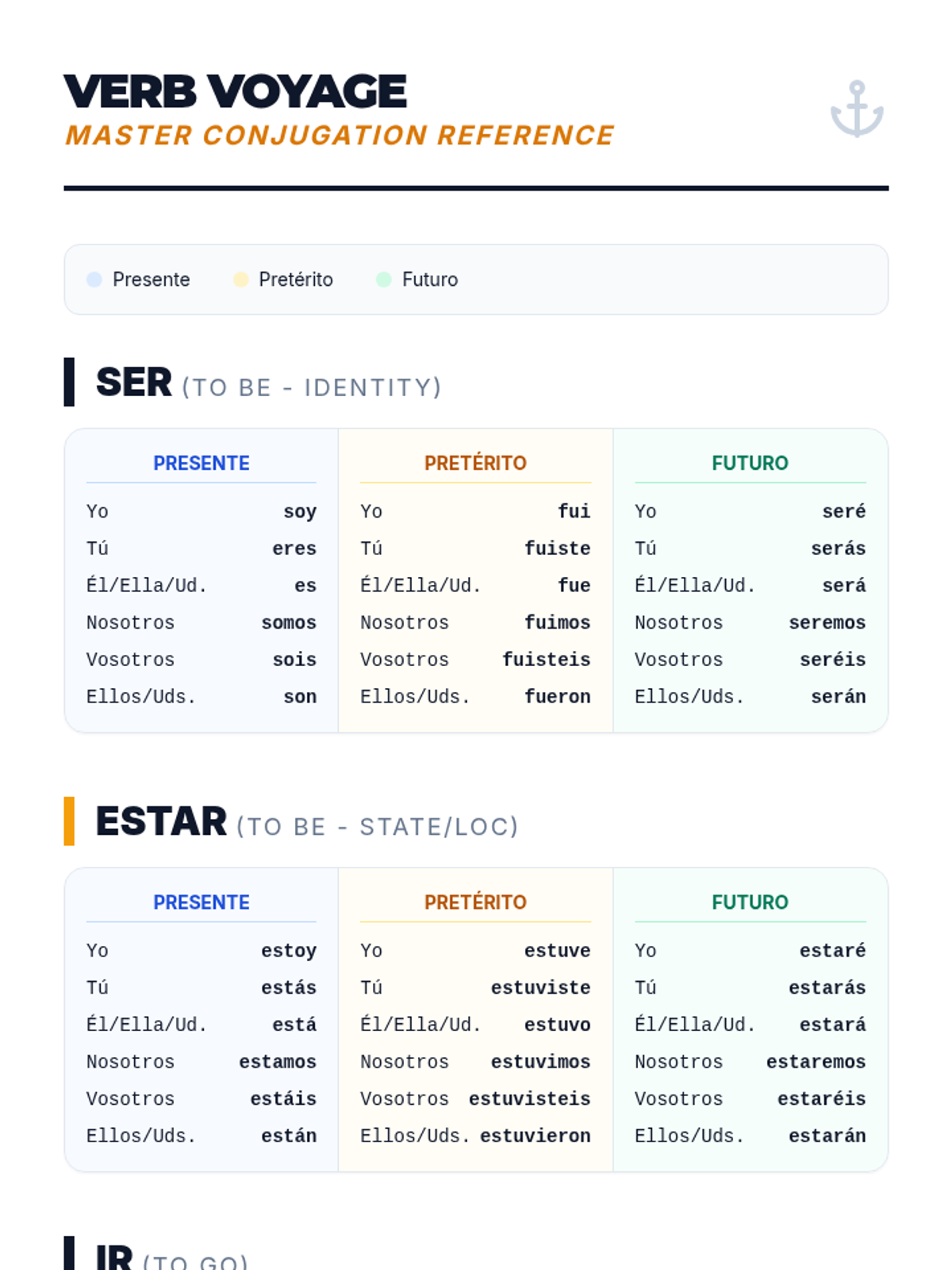
A comprehensive introduction to the most frequent irregular verbs in Spanish across present, preterite, and future tenses, including stem-changers.
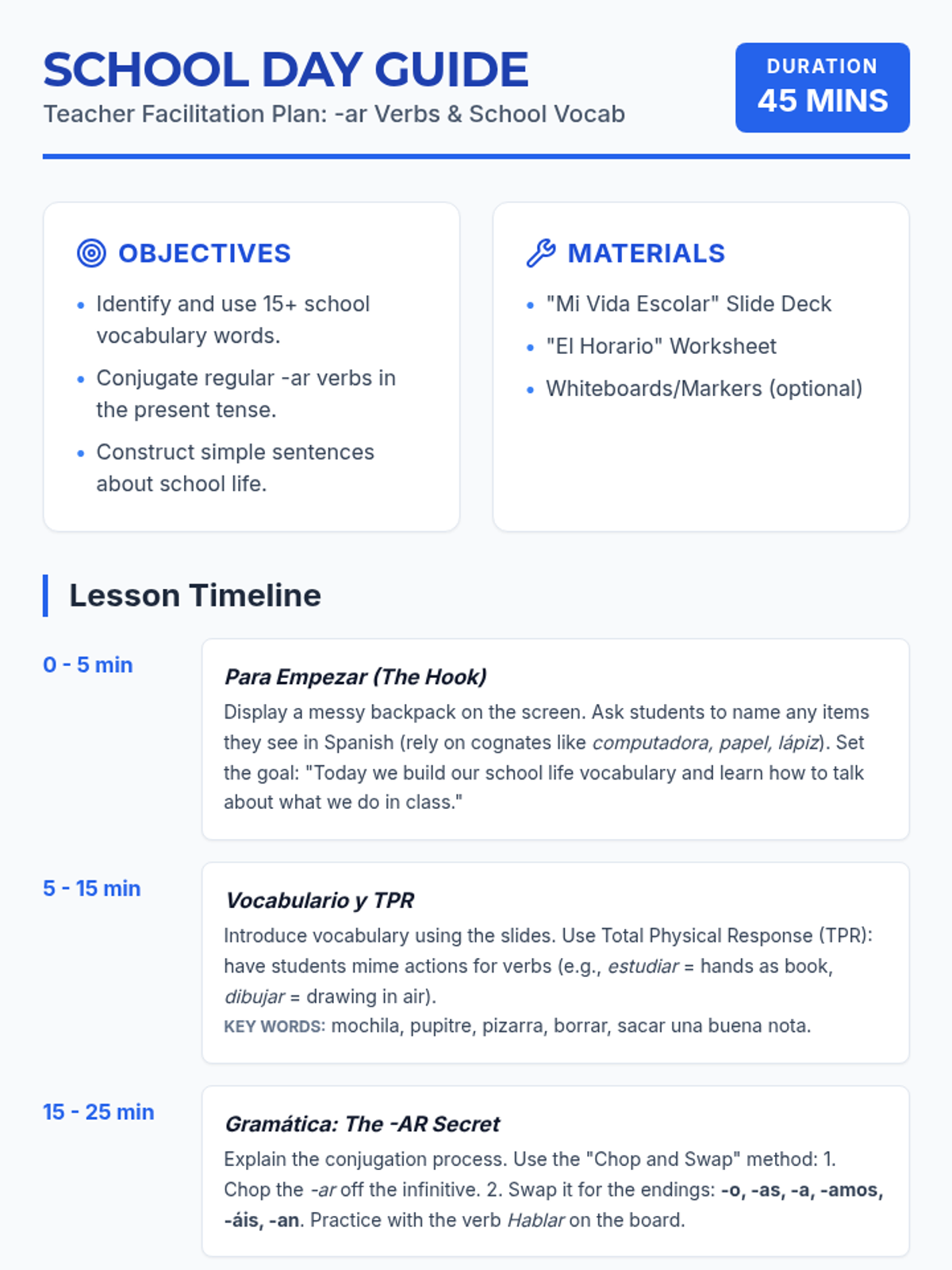
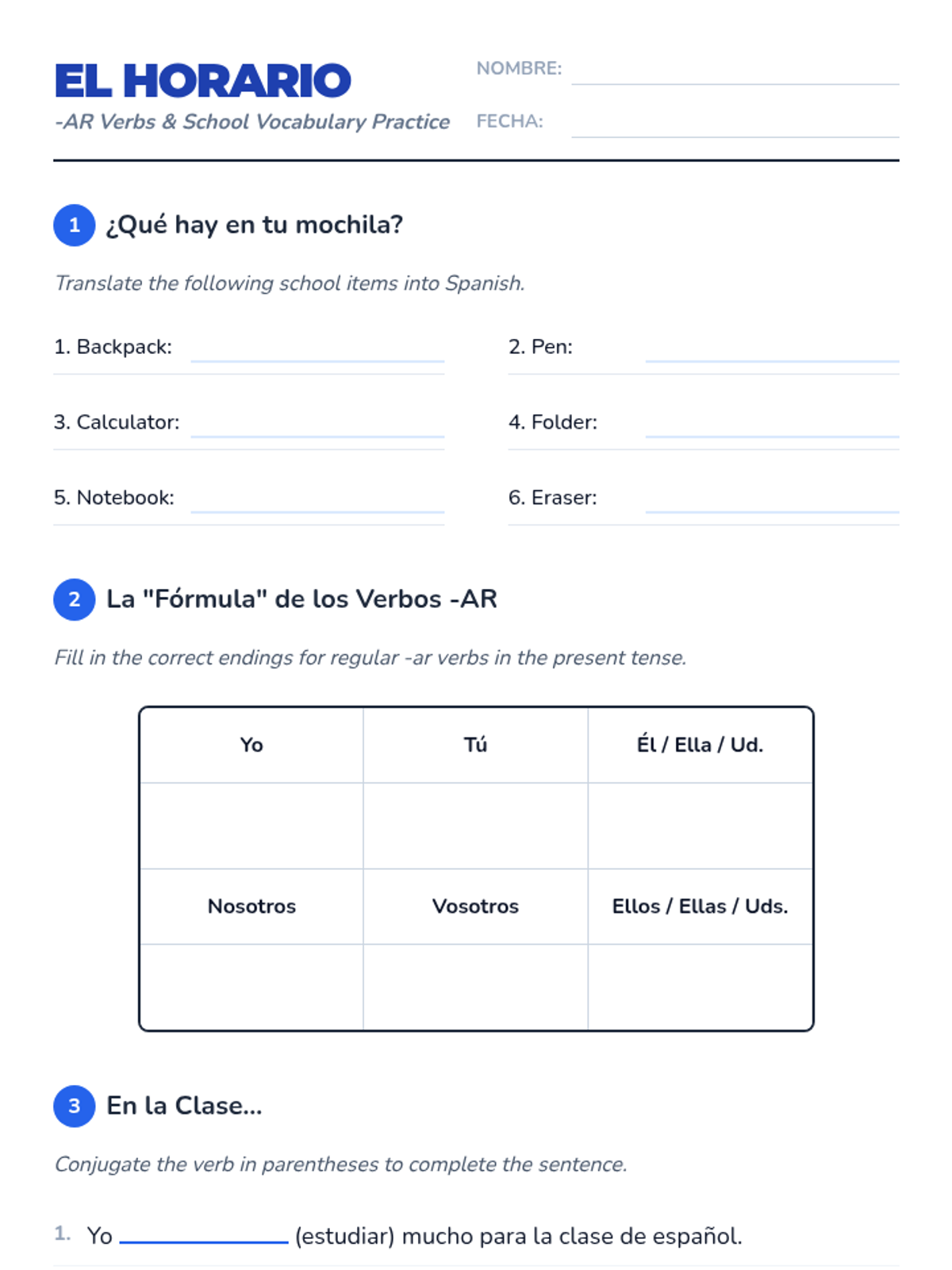
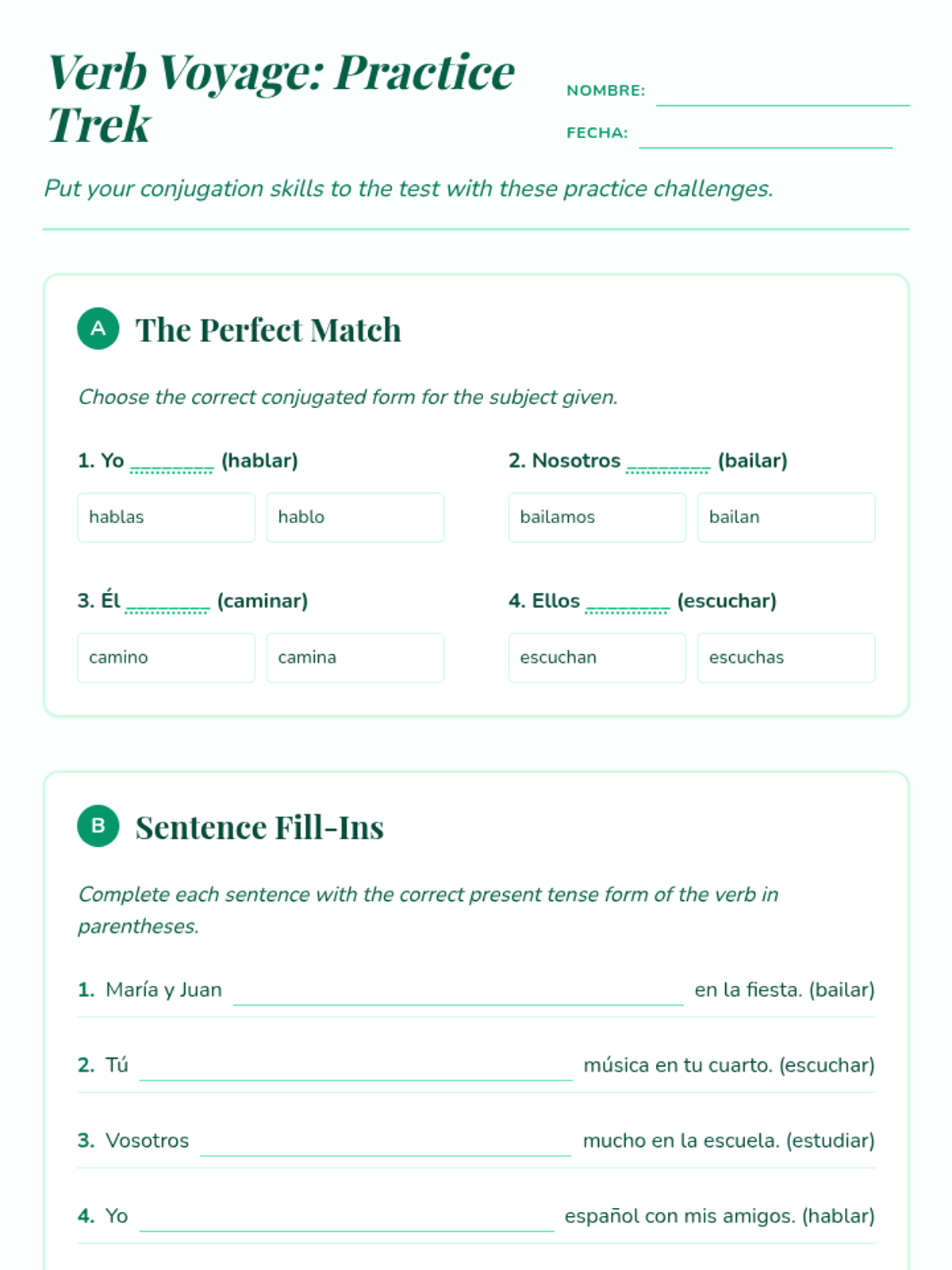
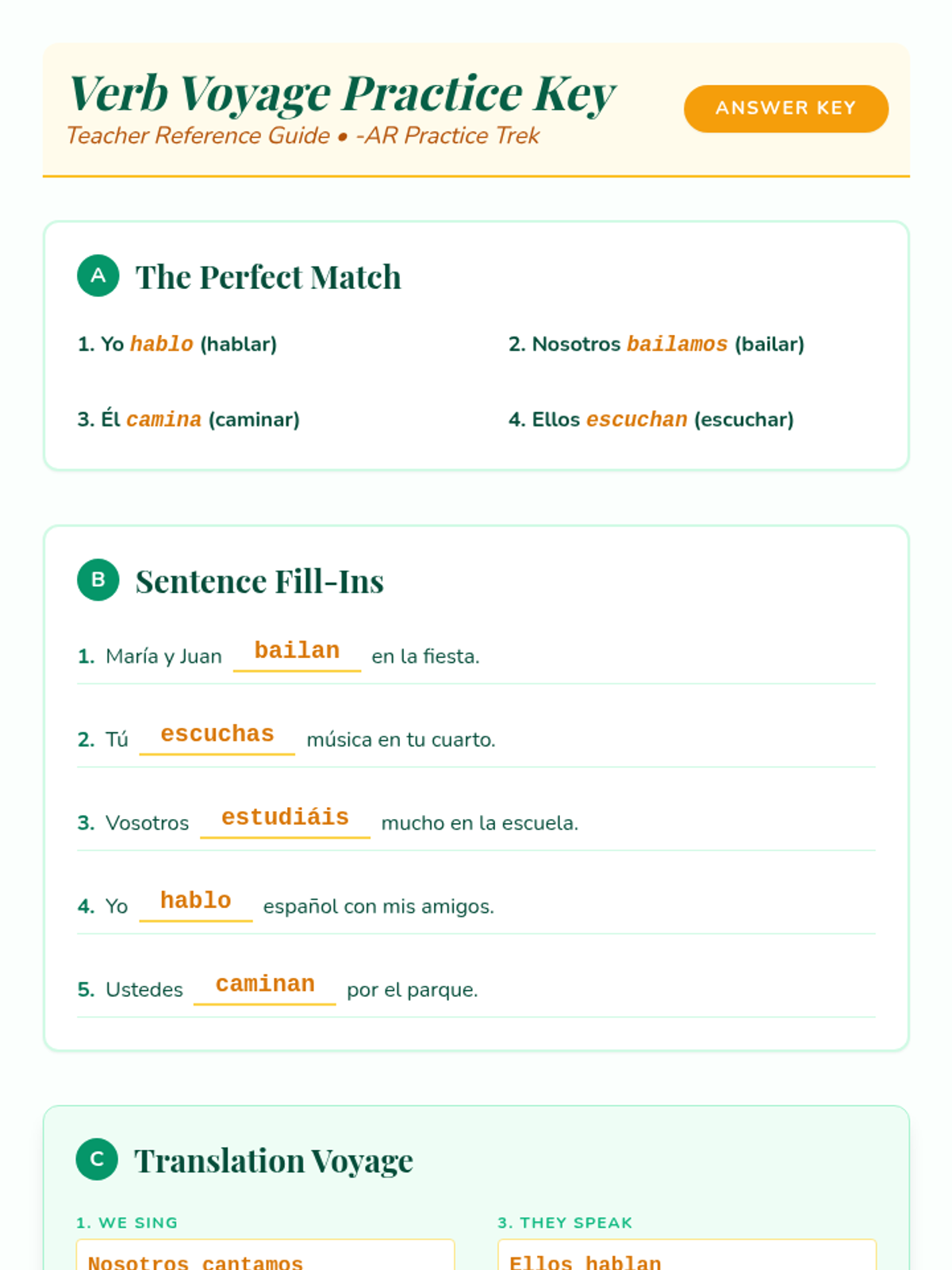
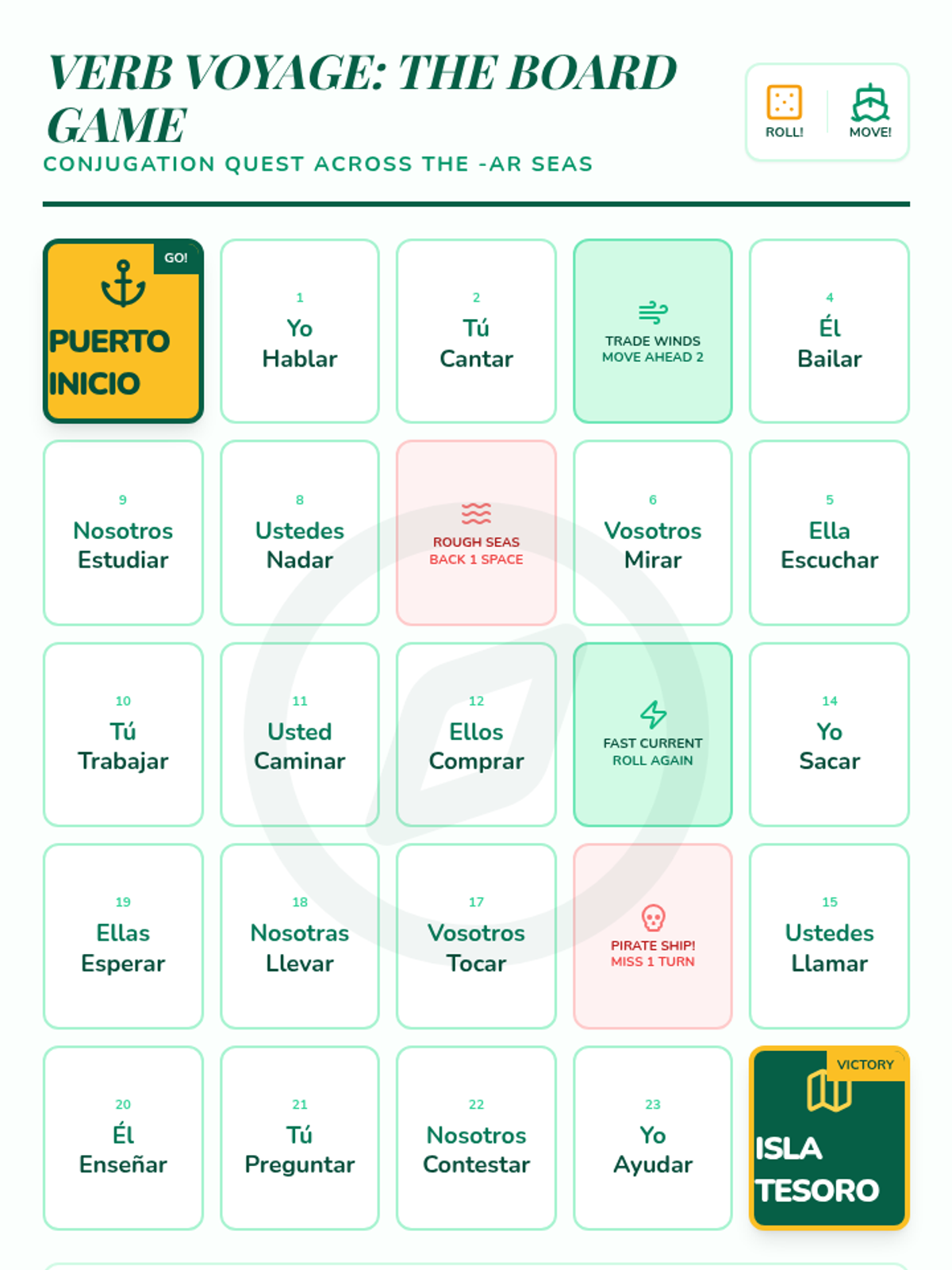
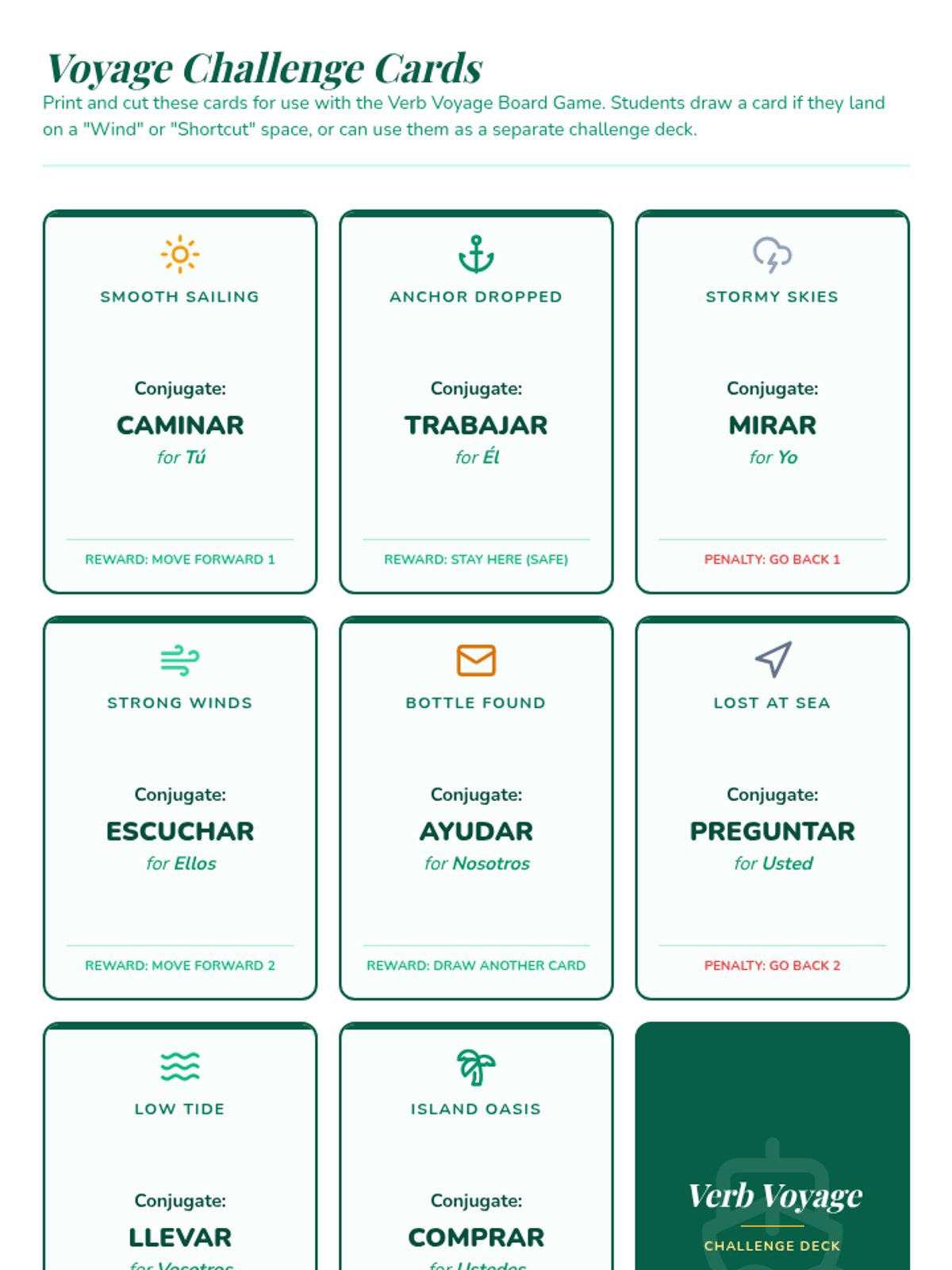
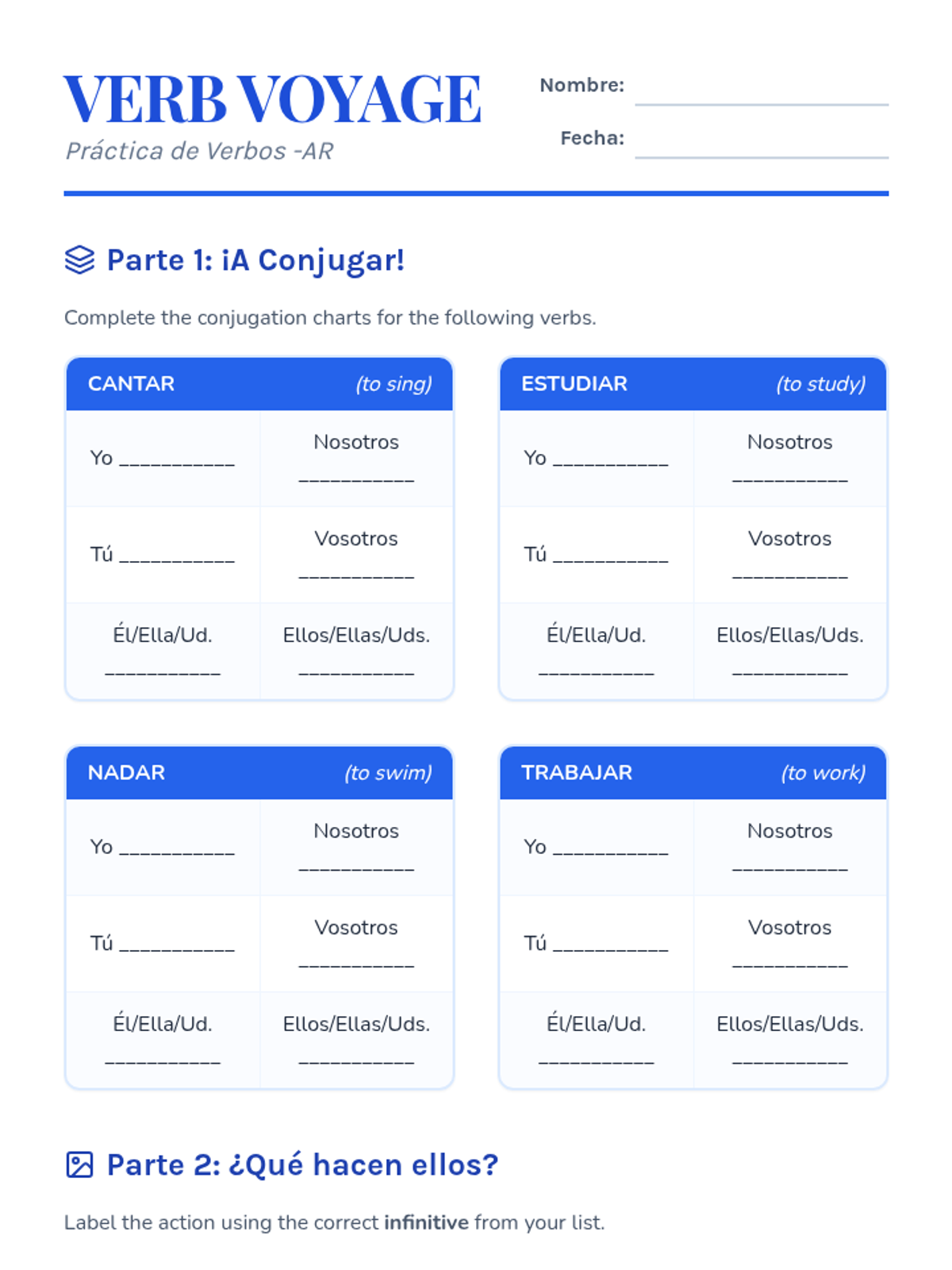
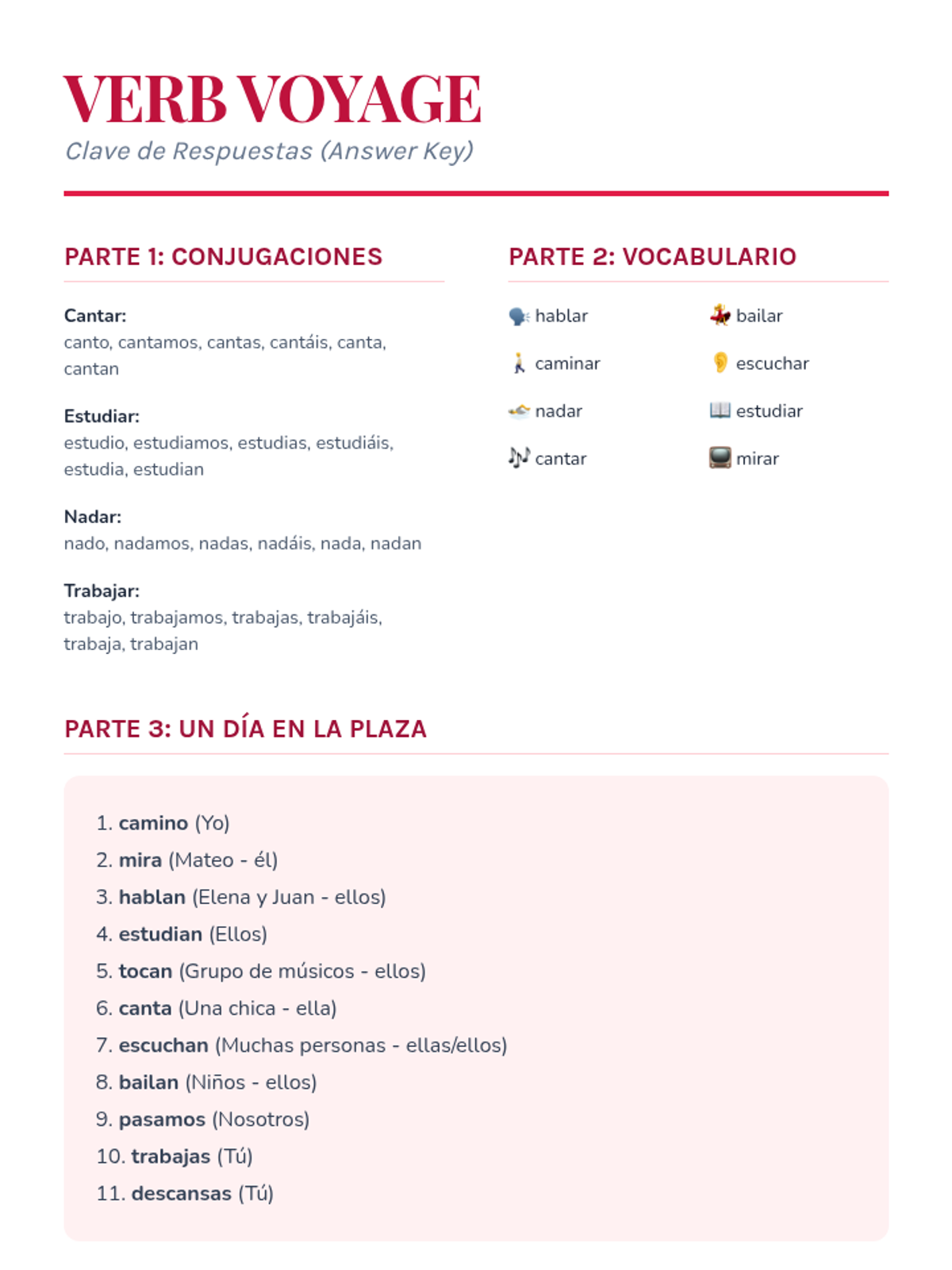
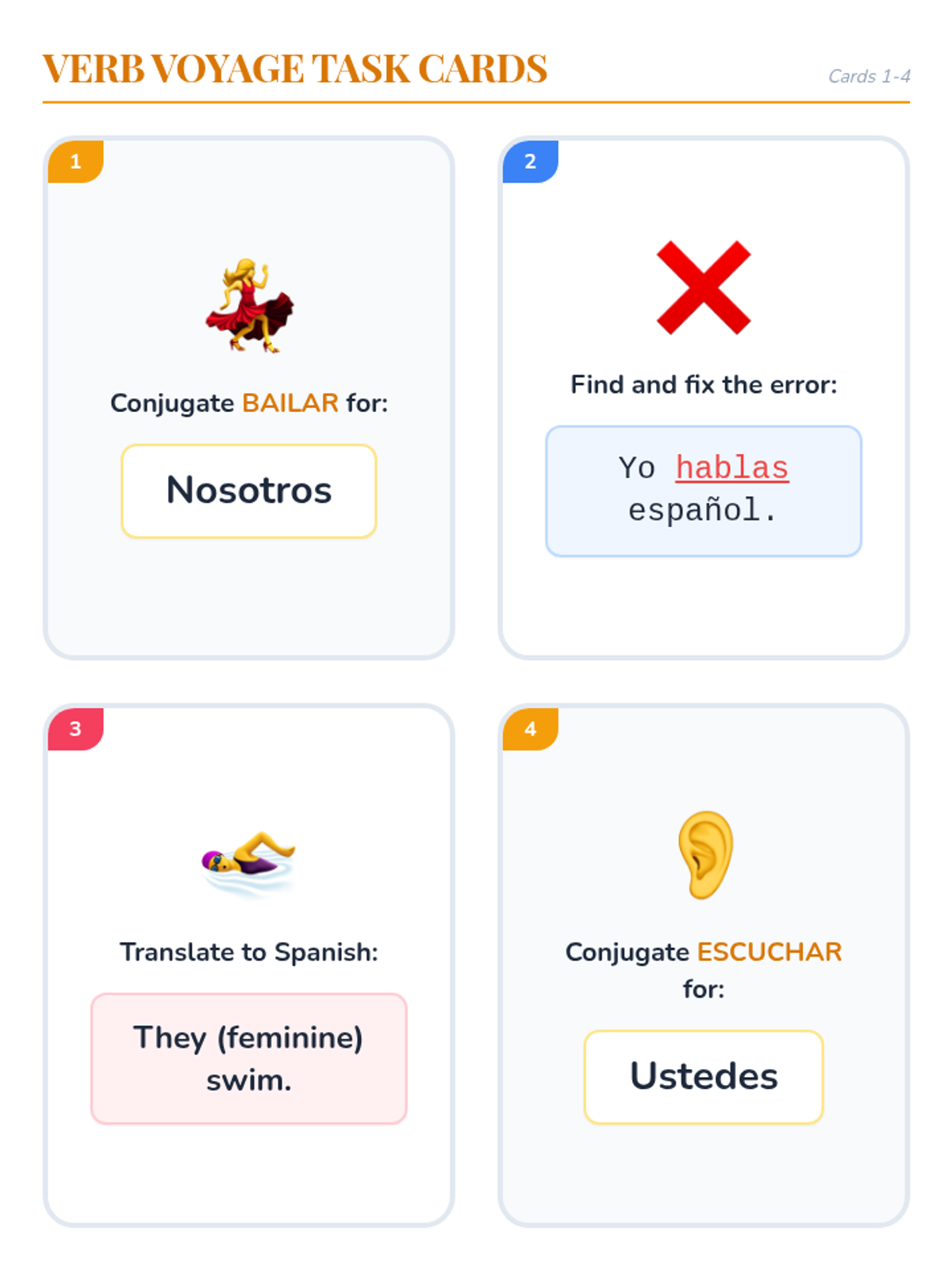
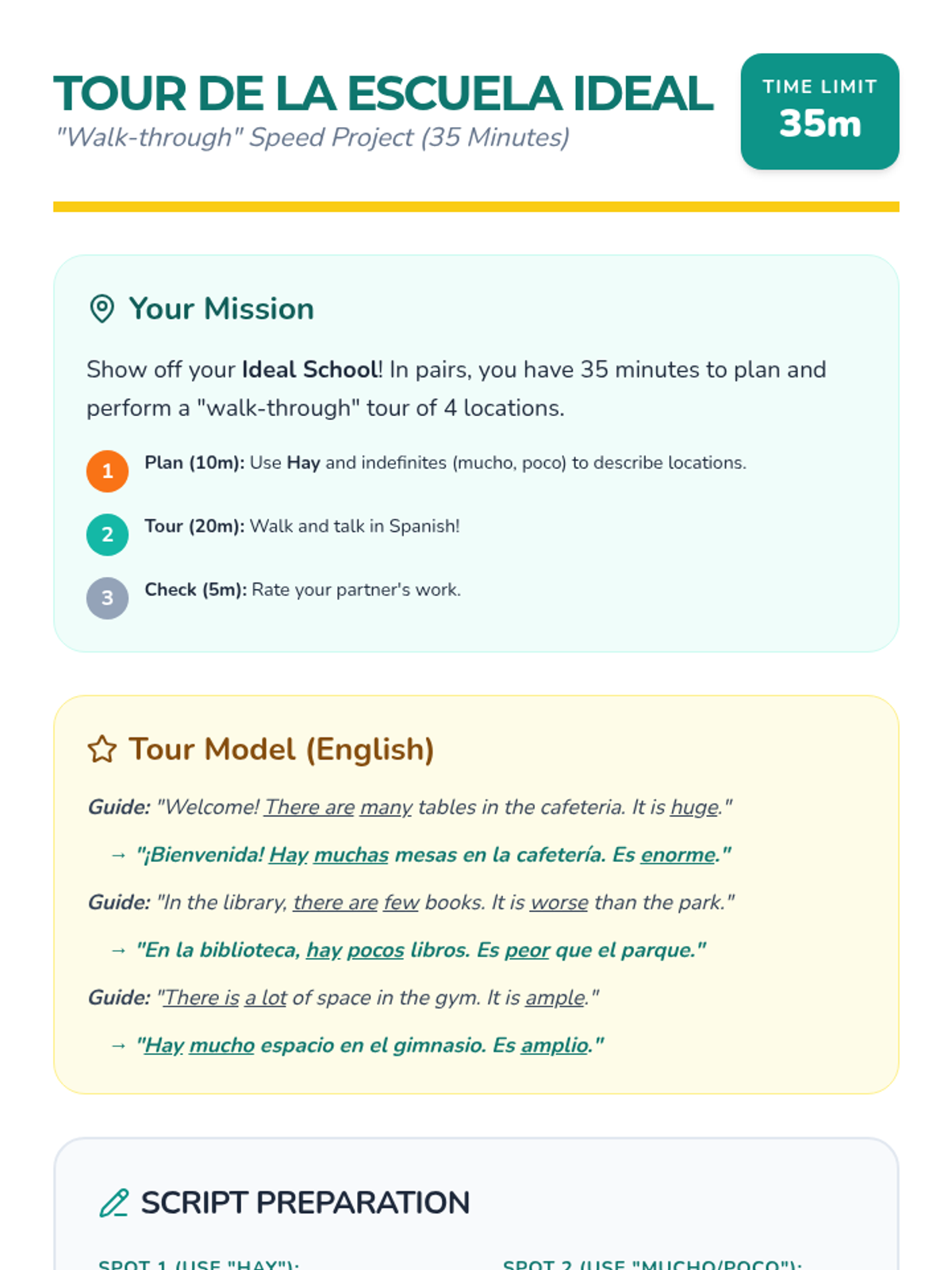
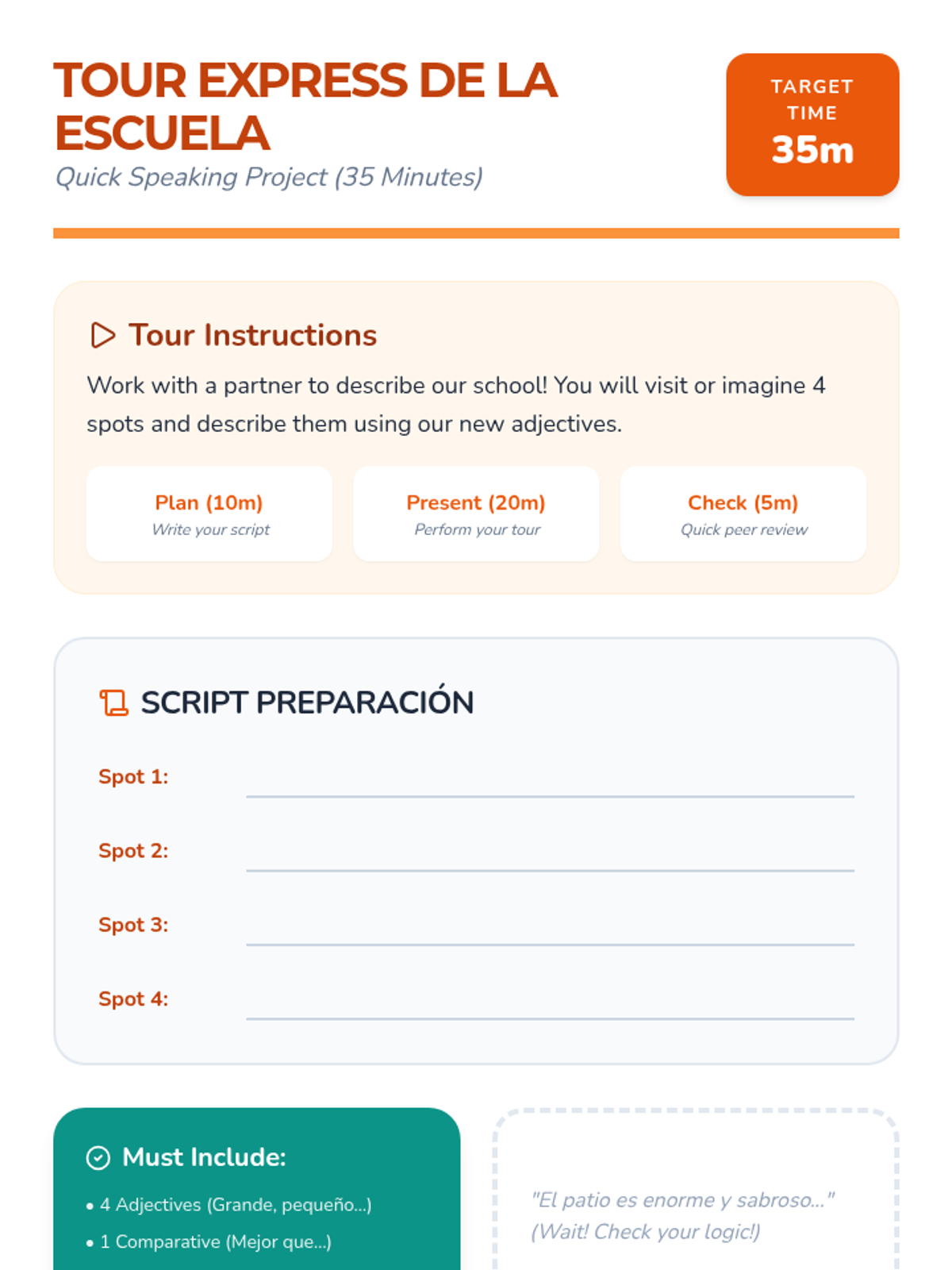
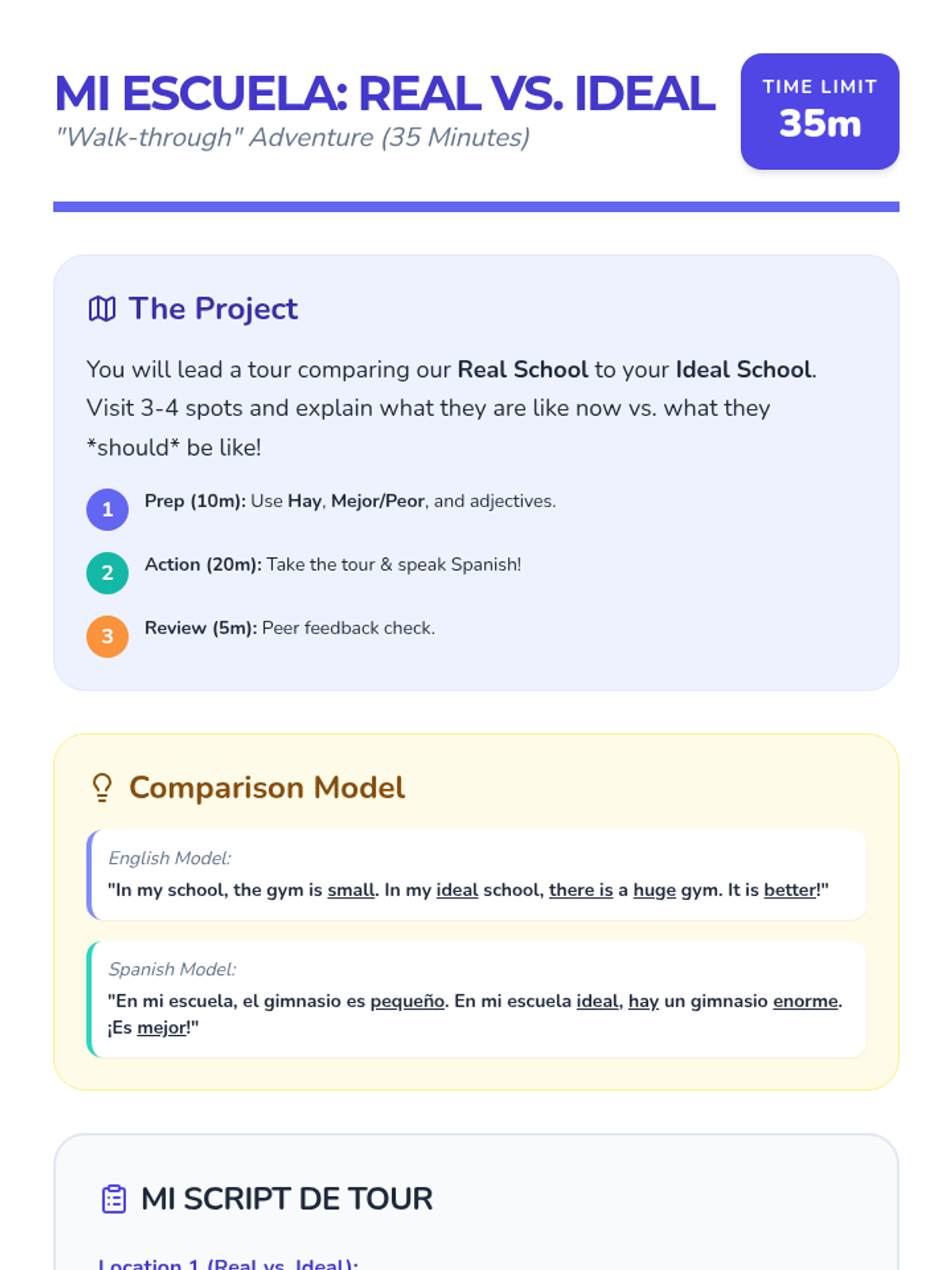
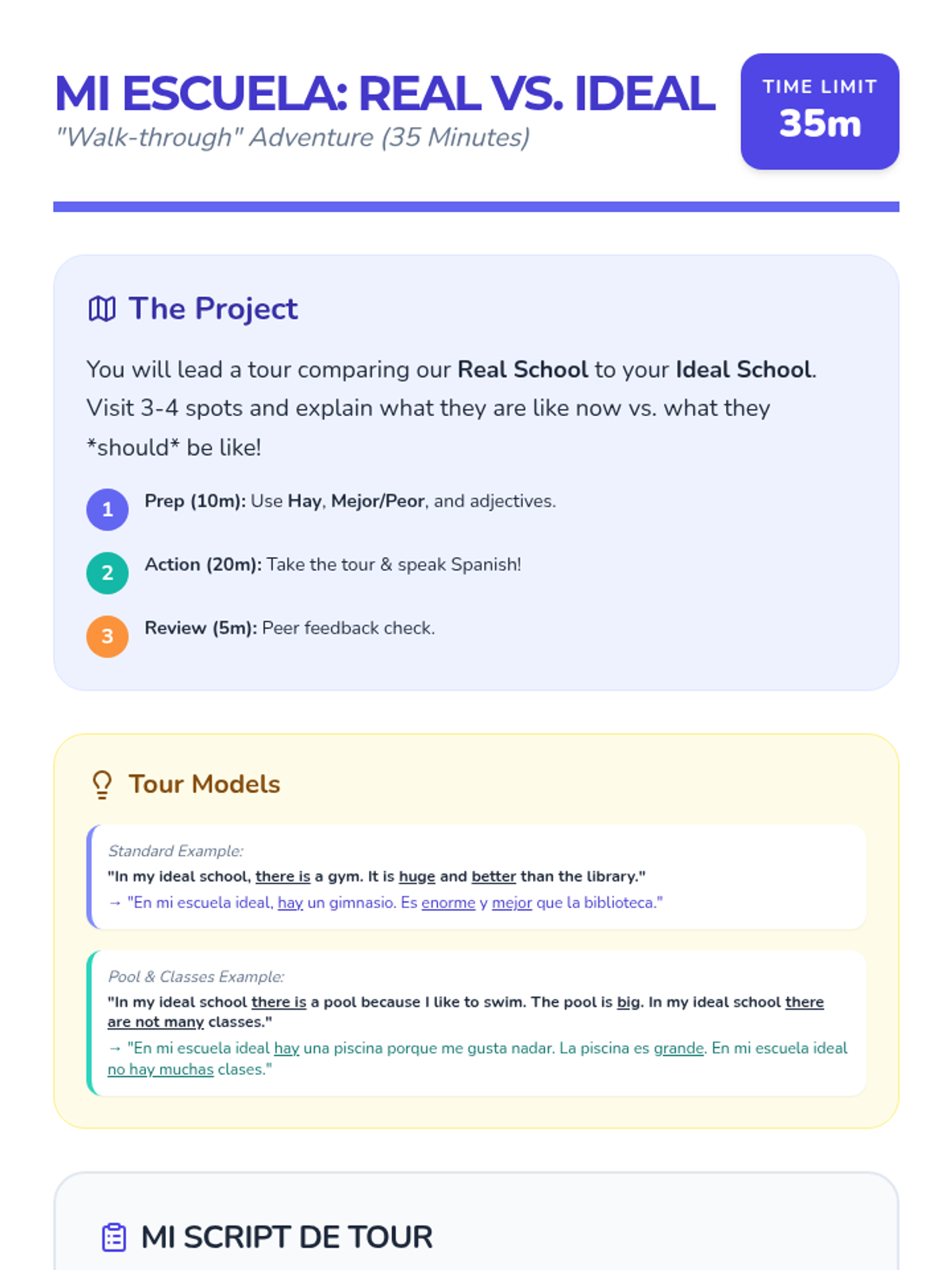
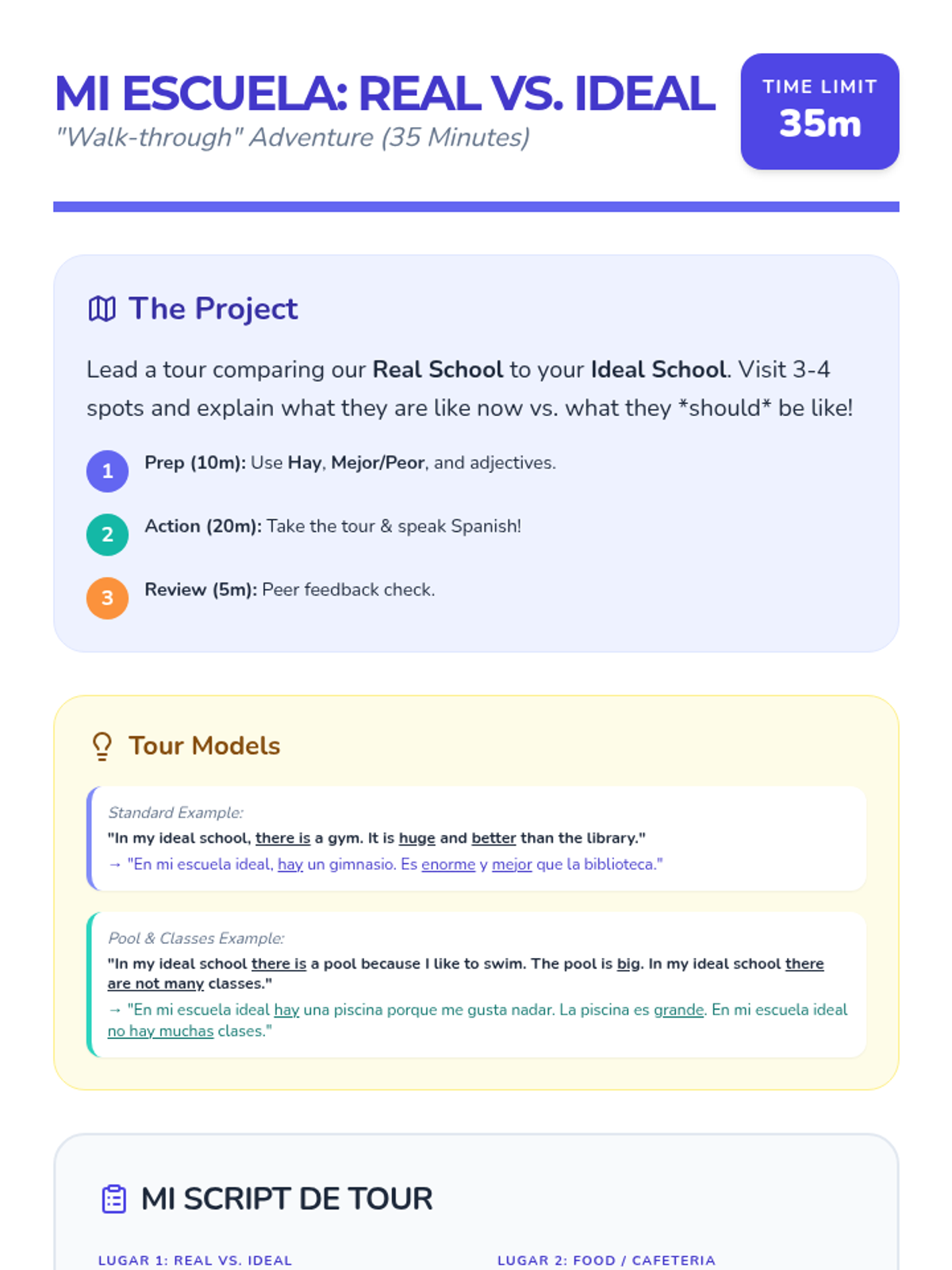
A comprehensive lesson covering regular -ar verb conjugations and school-related vocabulary for beginner Spanish students. includes a detailed timing guide, visual aids, and practice exercises.
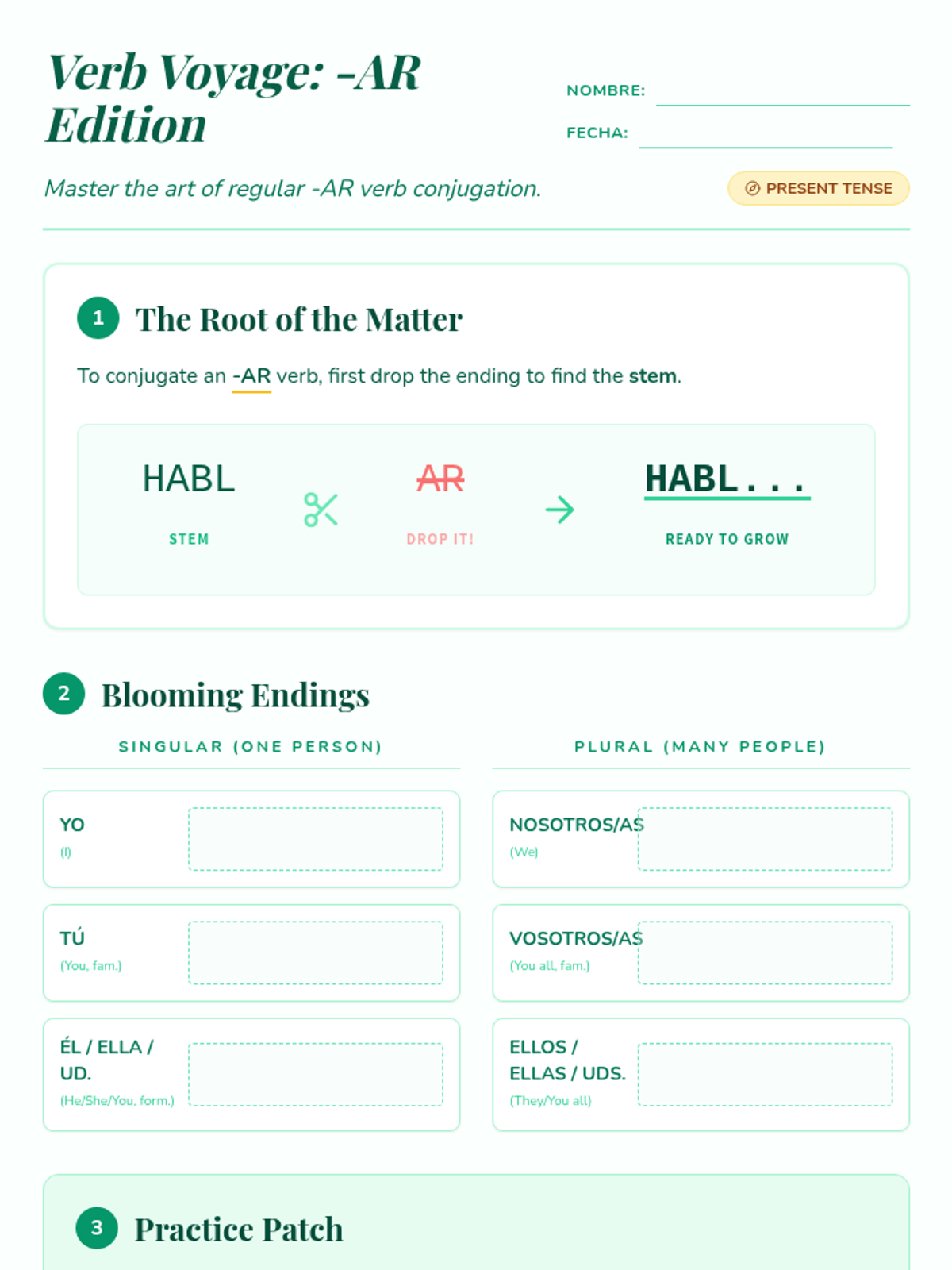
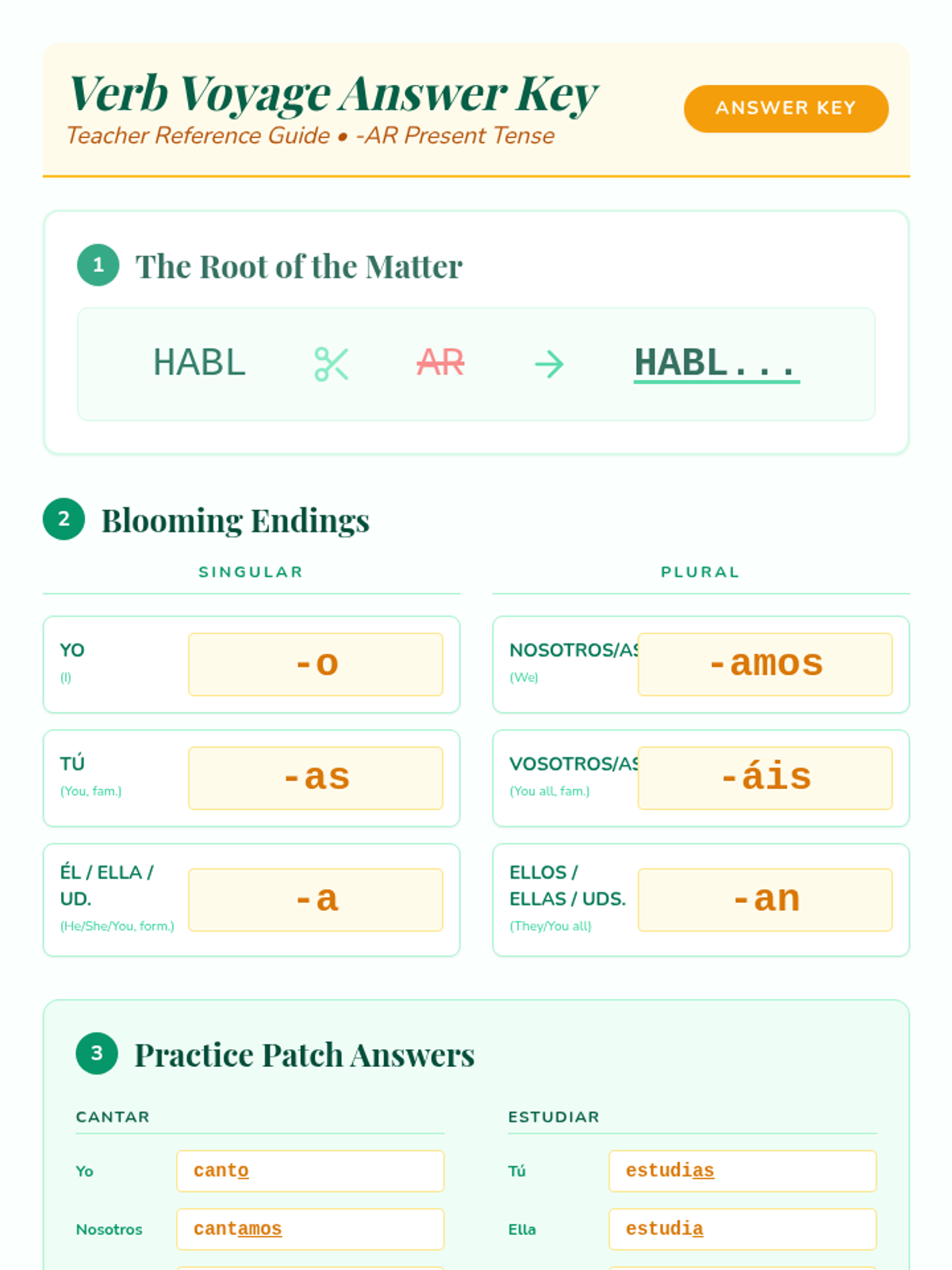
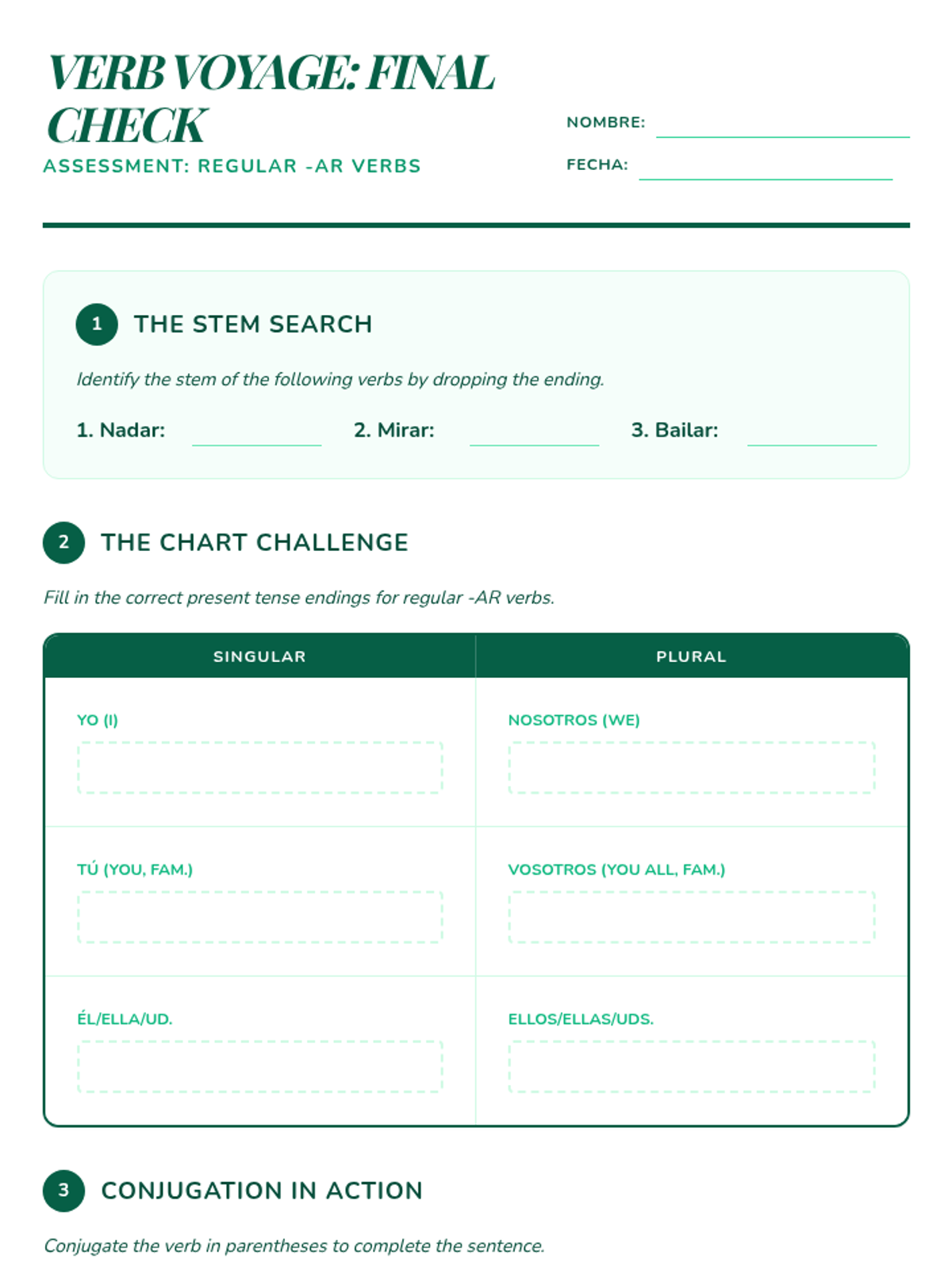
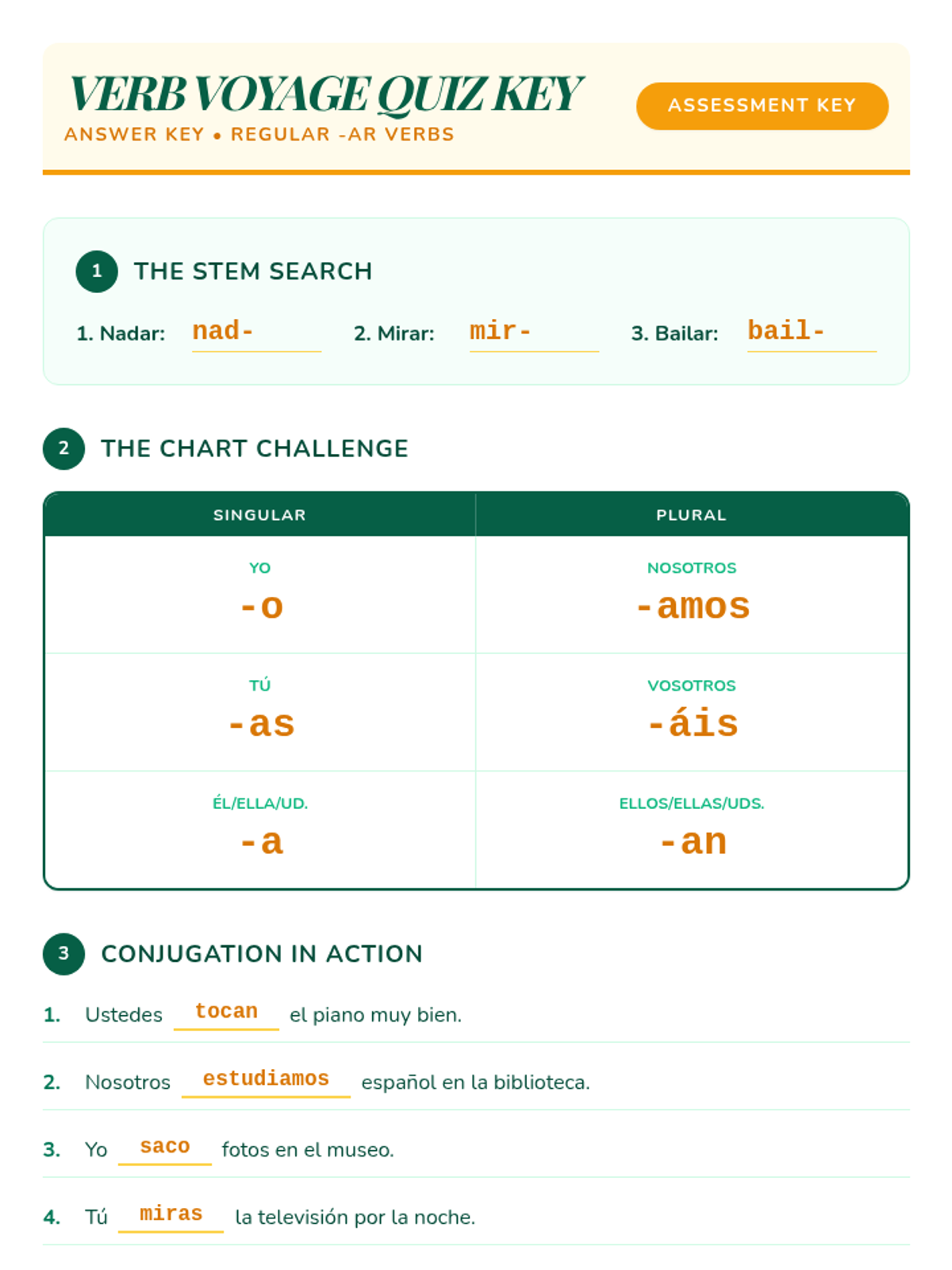
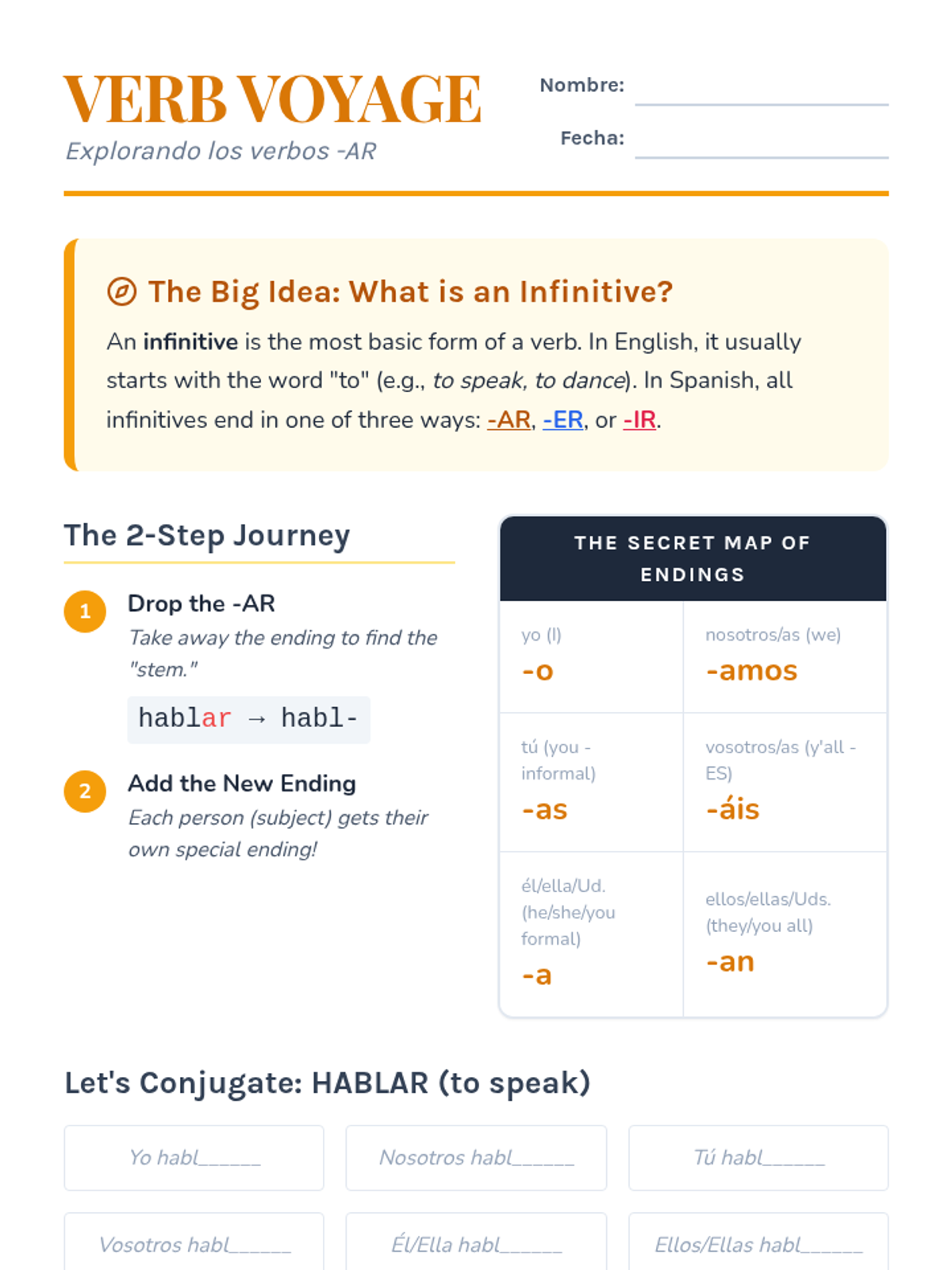
A foundational lesson on regular Spanish -AR verbs, focusing on identifying stems and applying the correct present tense endings.
An introductory lesson on Spanish present tense -ar verbs, covering conjugation rules, common vocabulary, and contextual application.
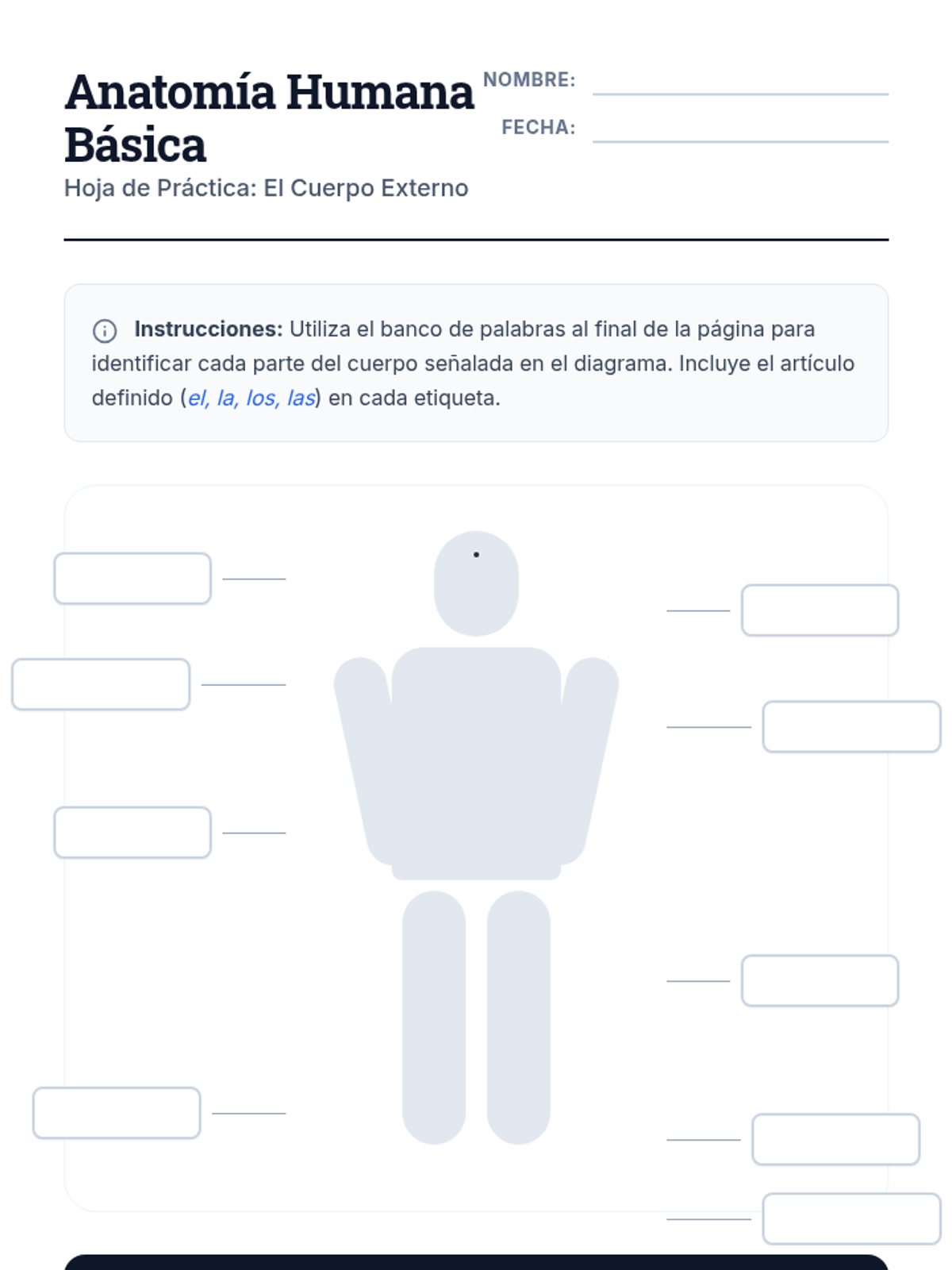
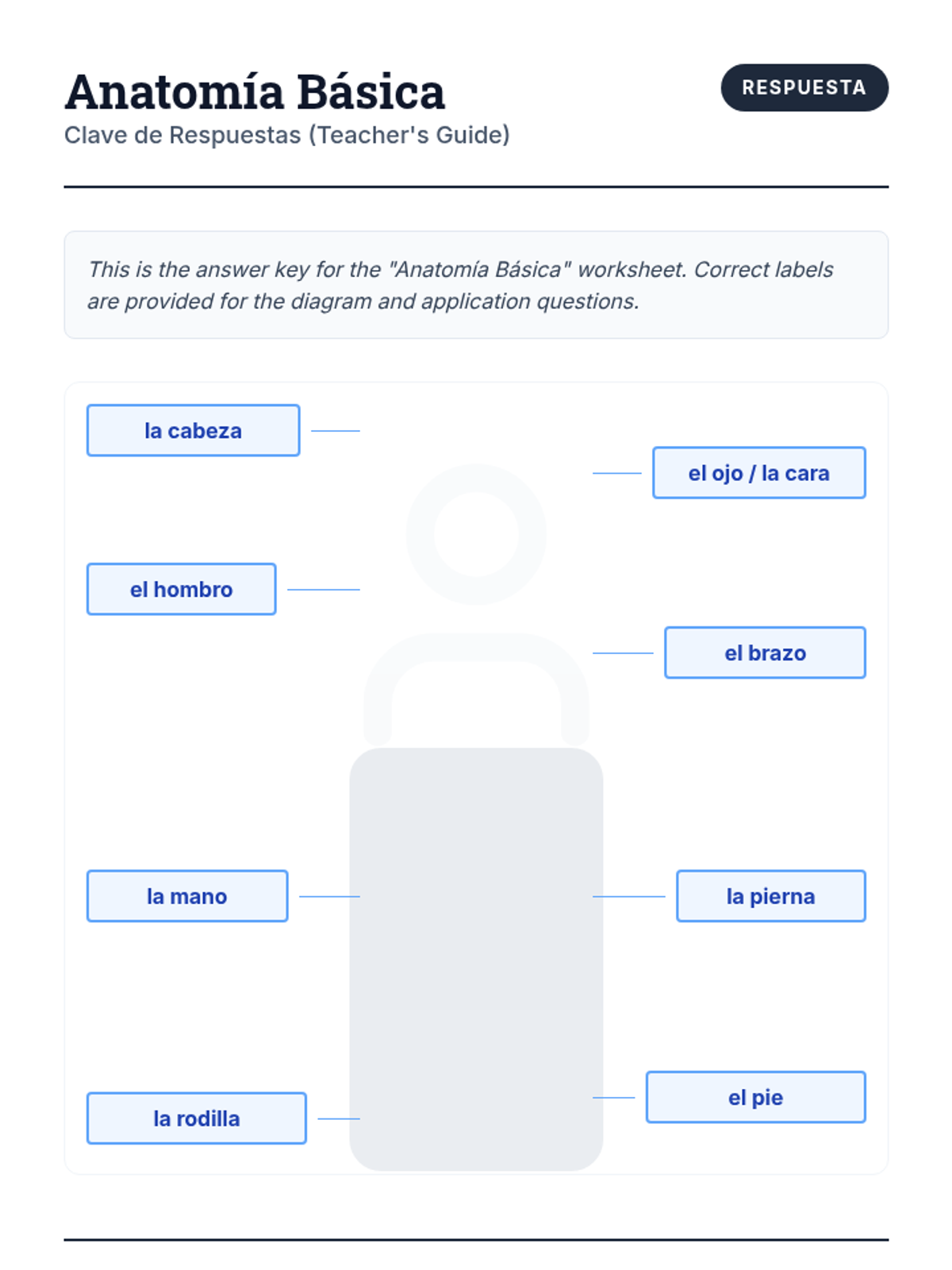
A lesson introducing basic external human anatomy in Spanish, focusing on 'el cuerpo' vocabulary through visual labeling and interactive practice.
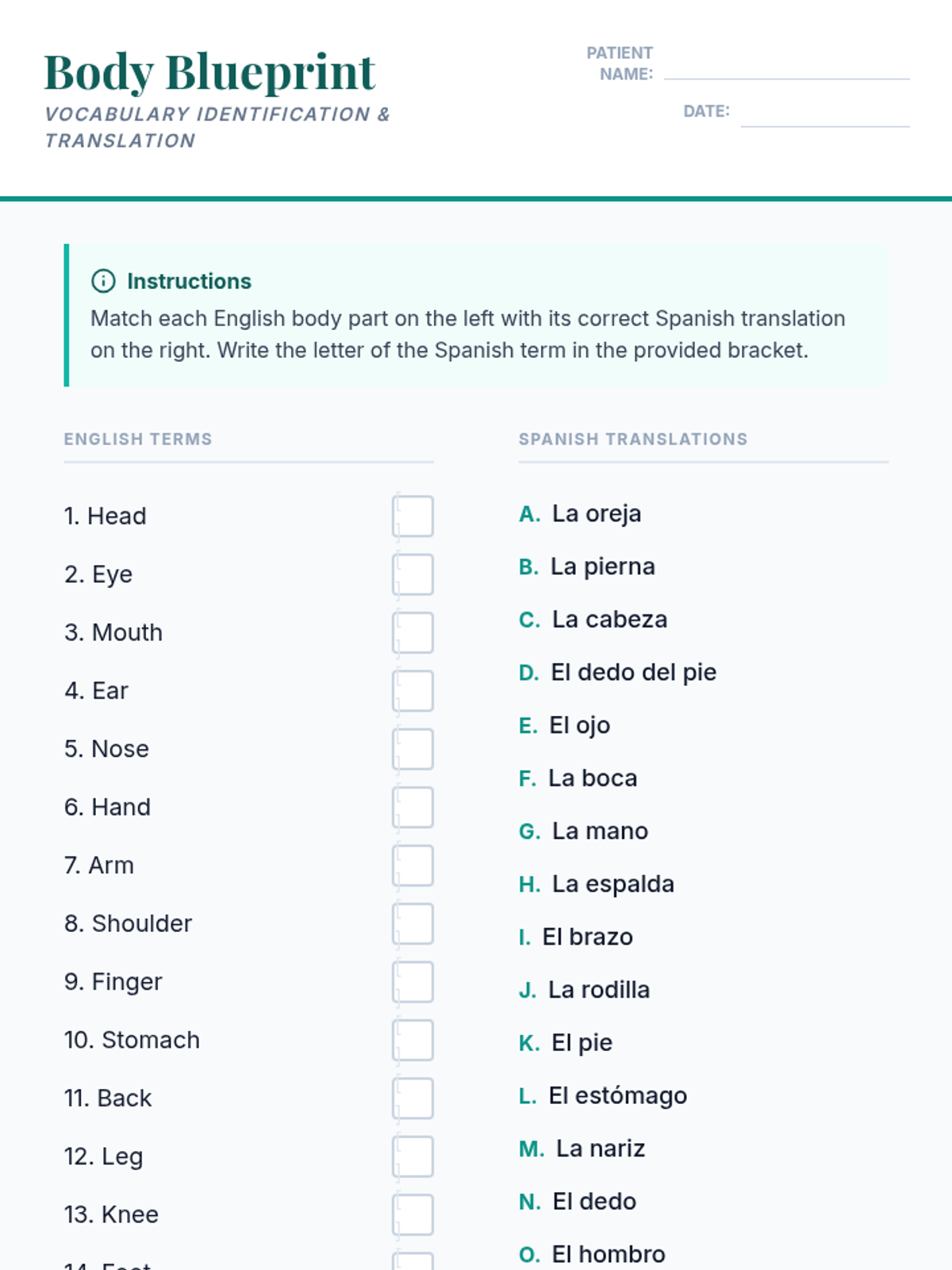
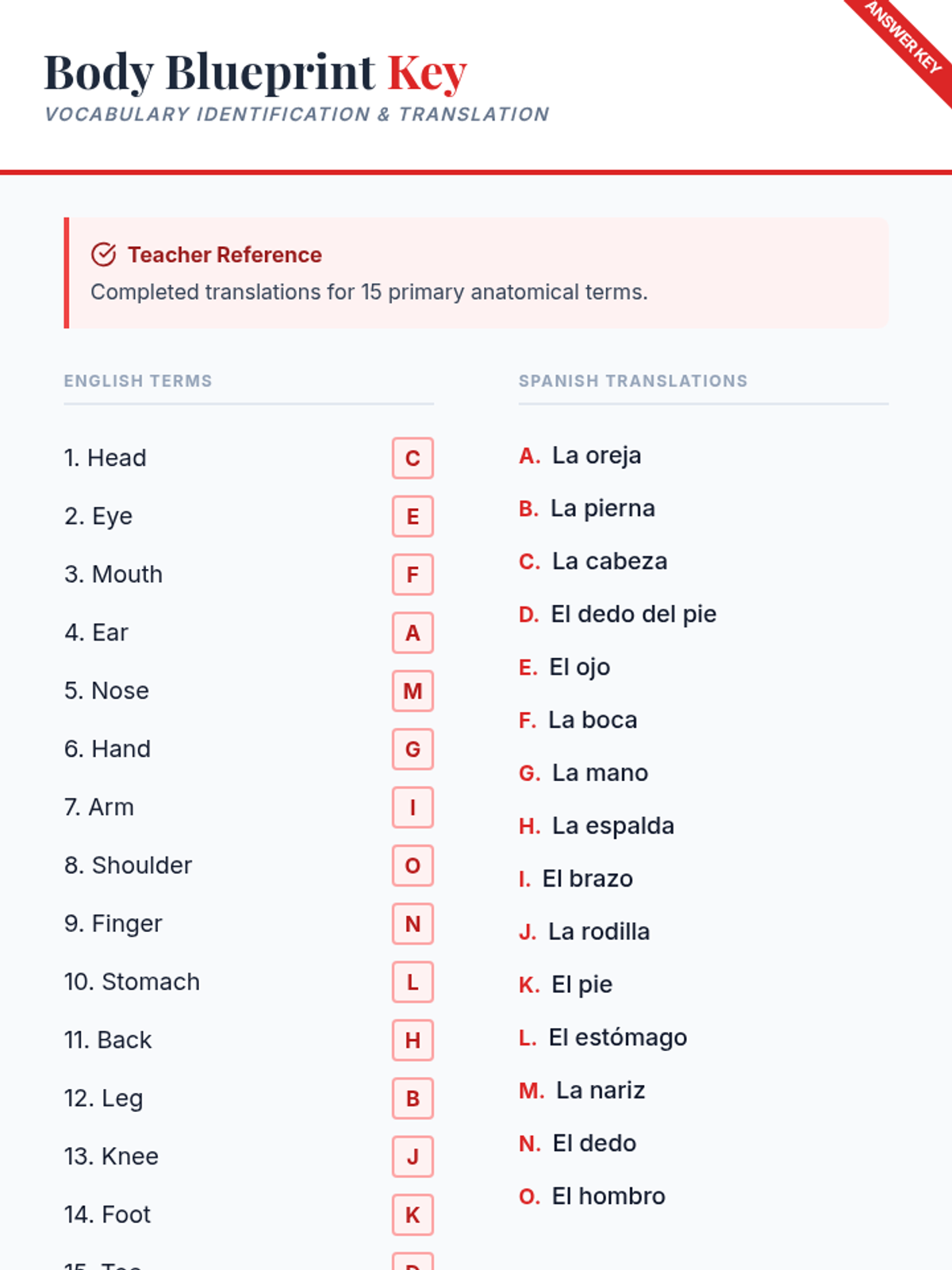
A foundational lesson on human anatomy vocabulary in Spanish, focusing on identifying and translating common body parts from English to Spanish.
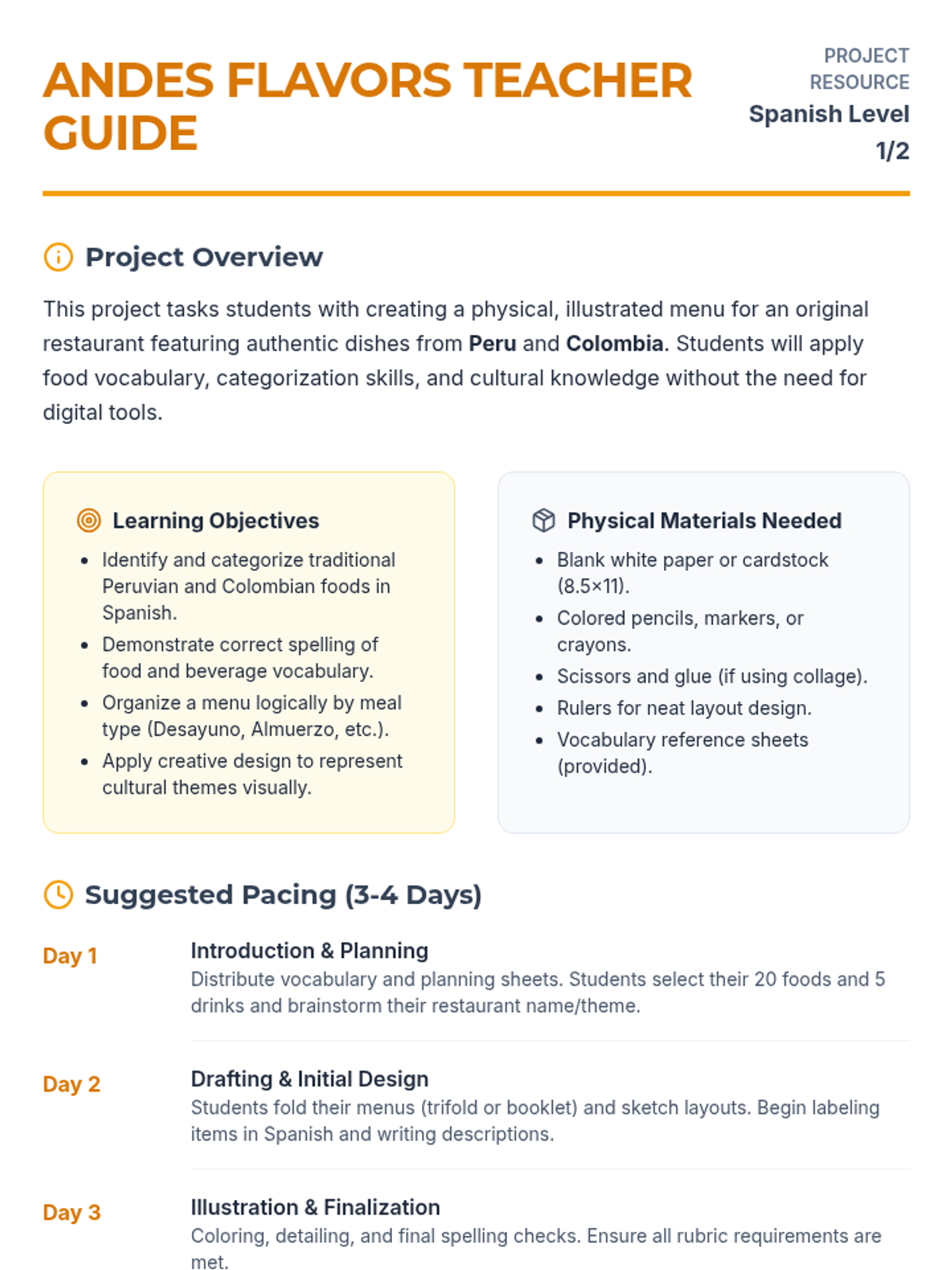
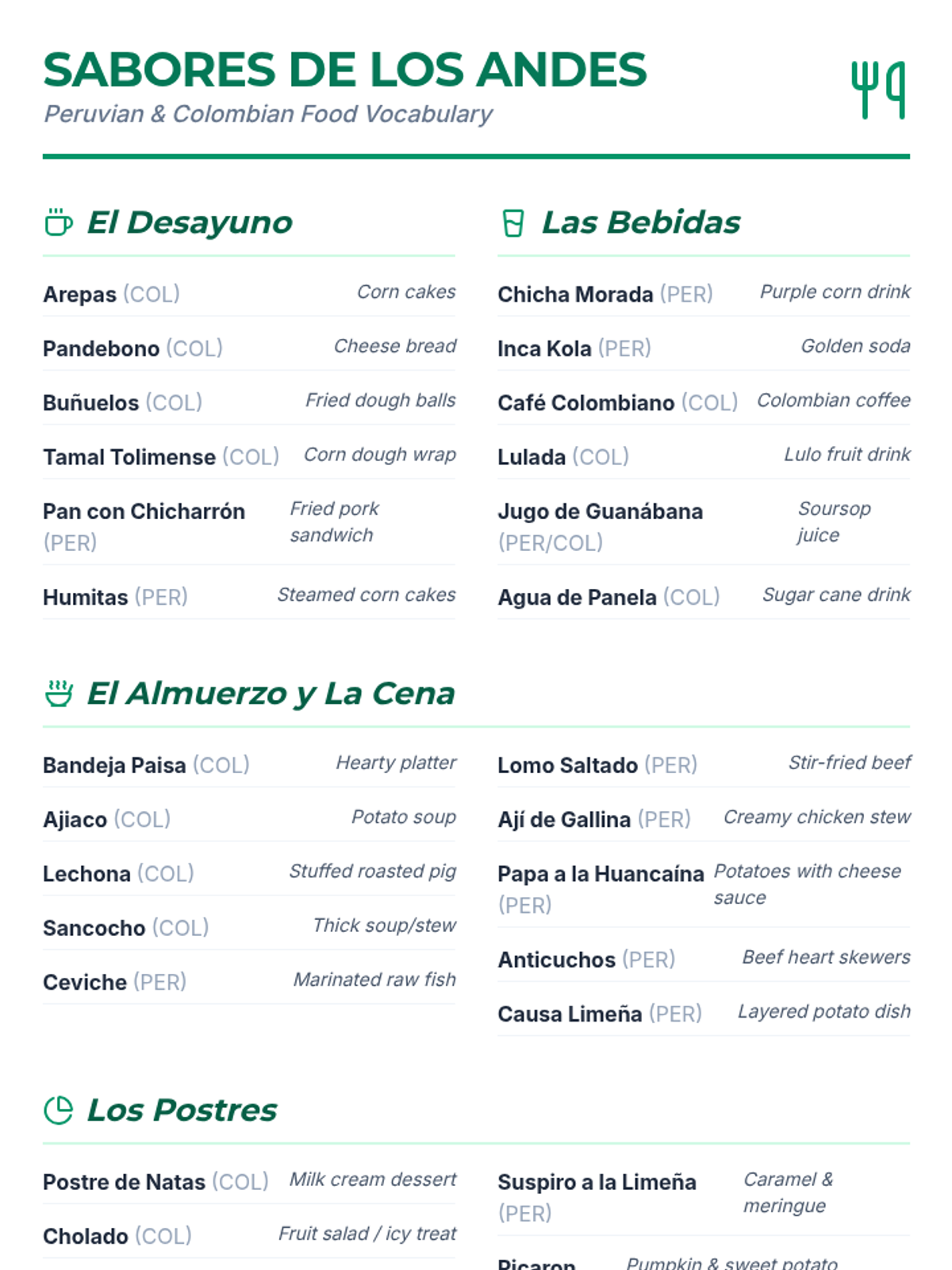
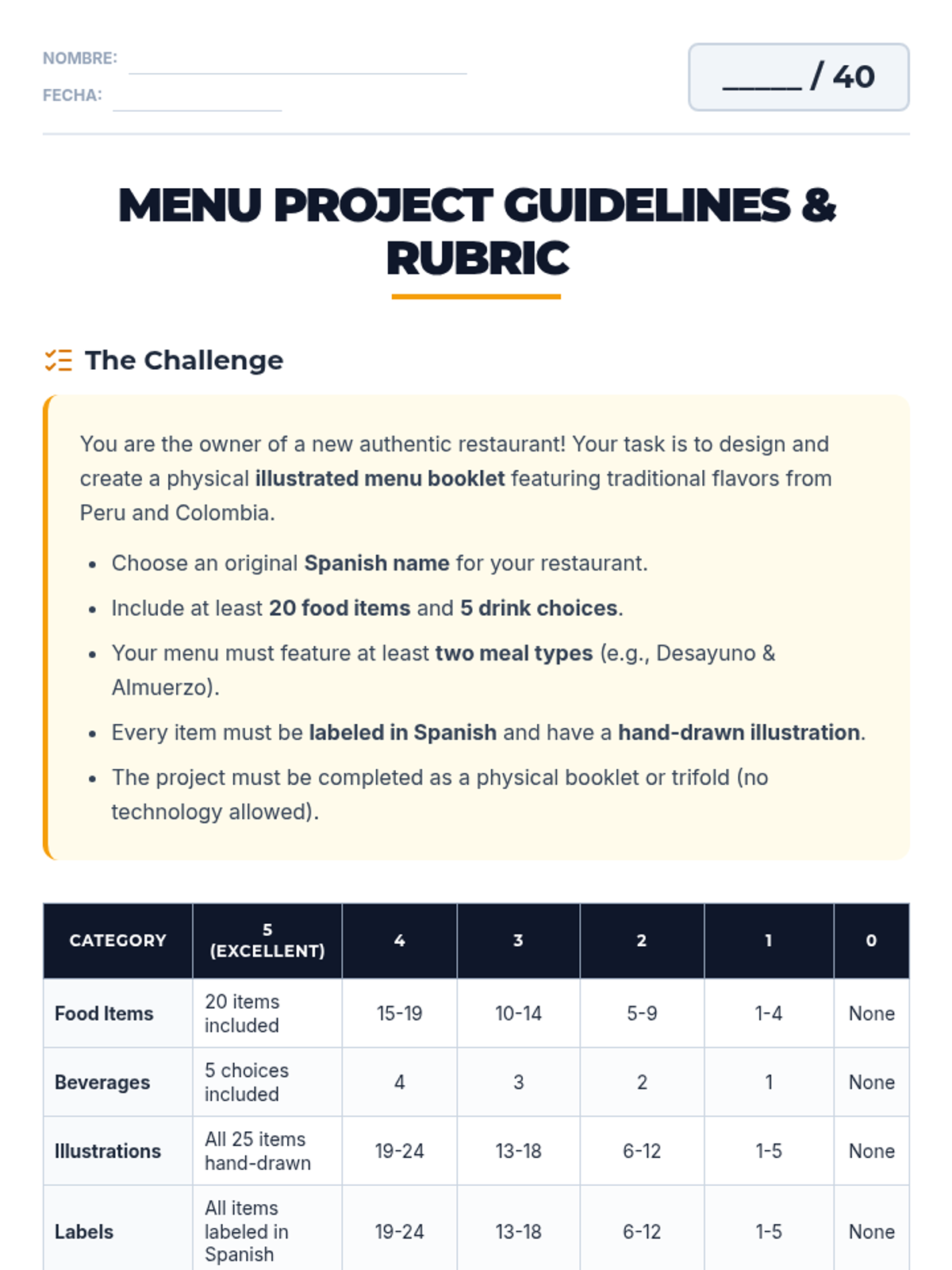
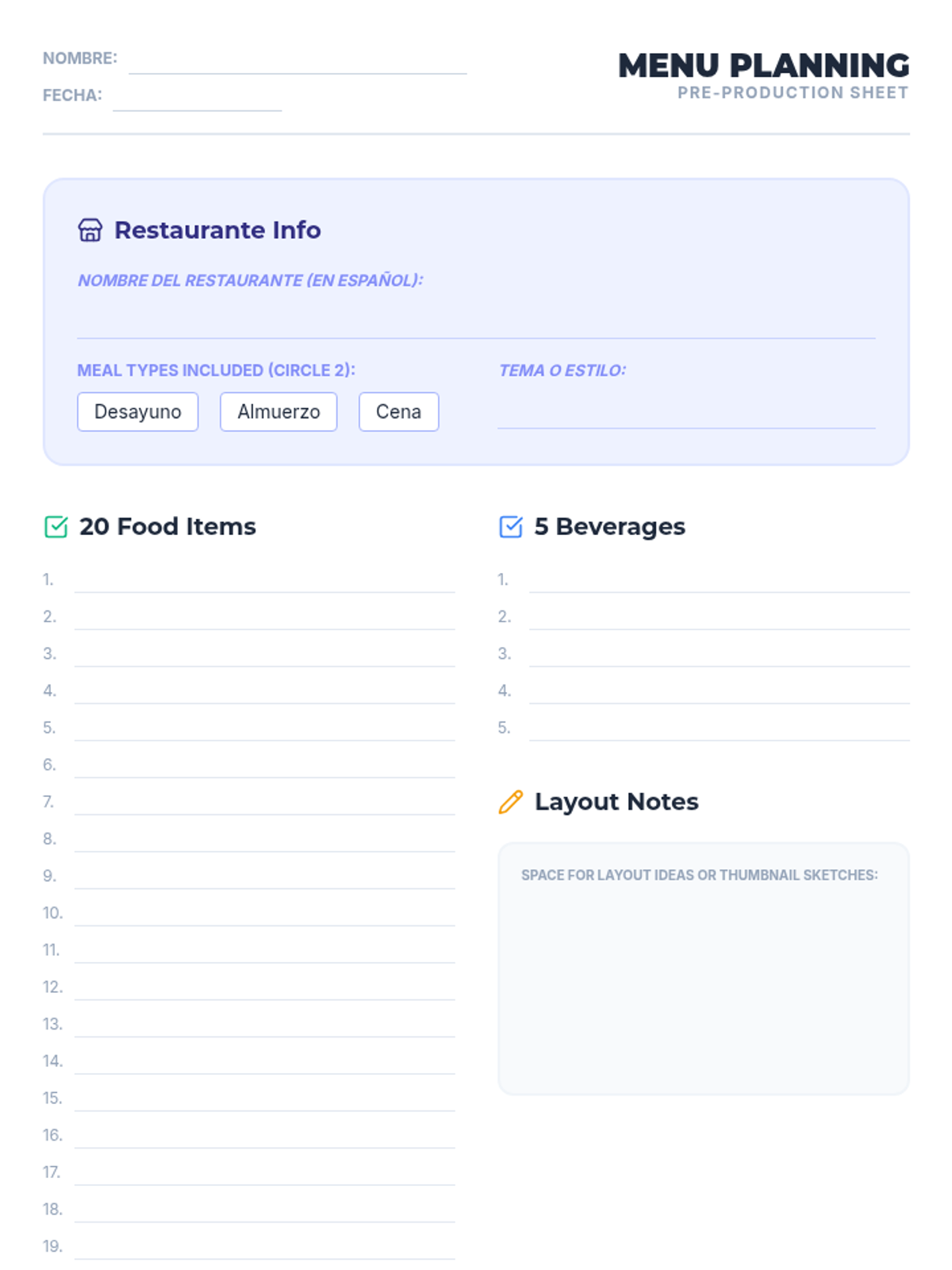
A hands-on Spanish language project where students design and illustrate an authentic menu featuring traditional Peruvian and Colombian cuisine, adapted for a technology-free classroom.
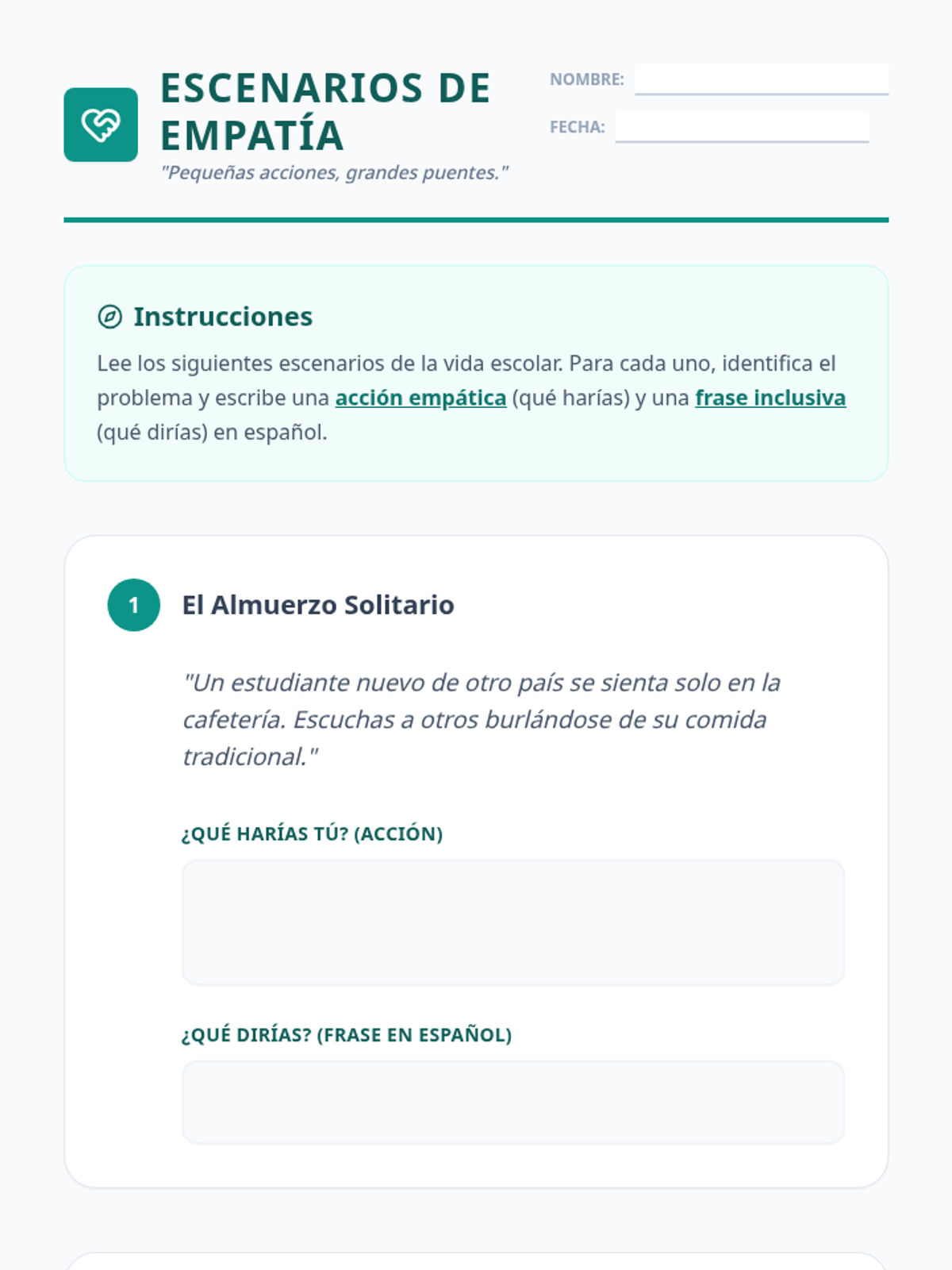
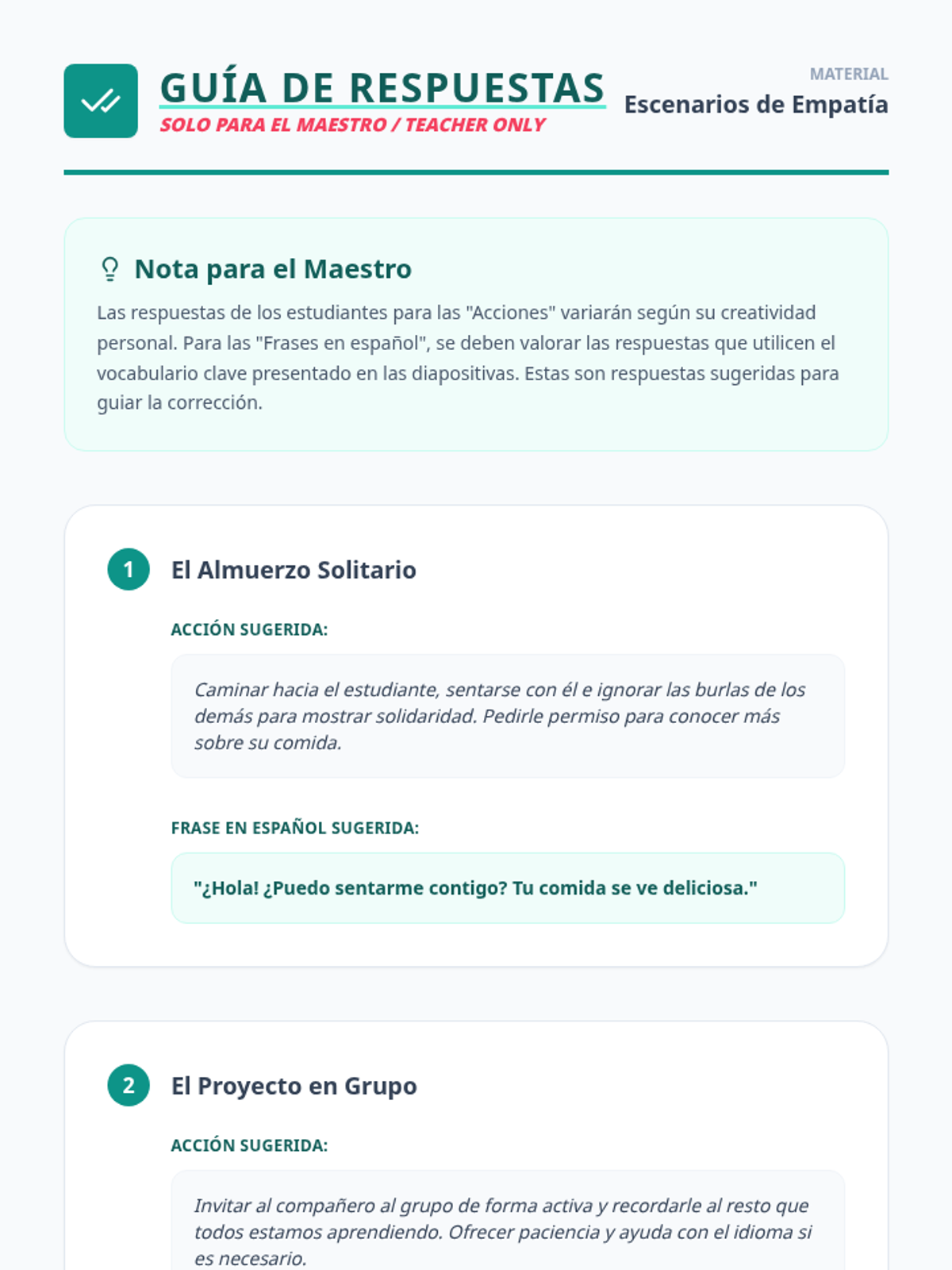
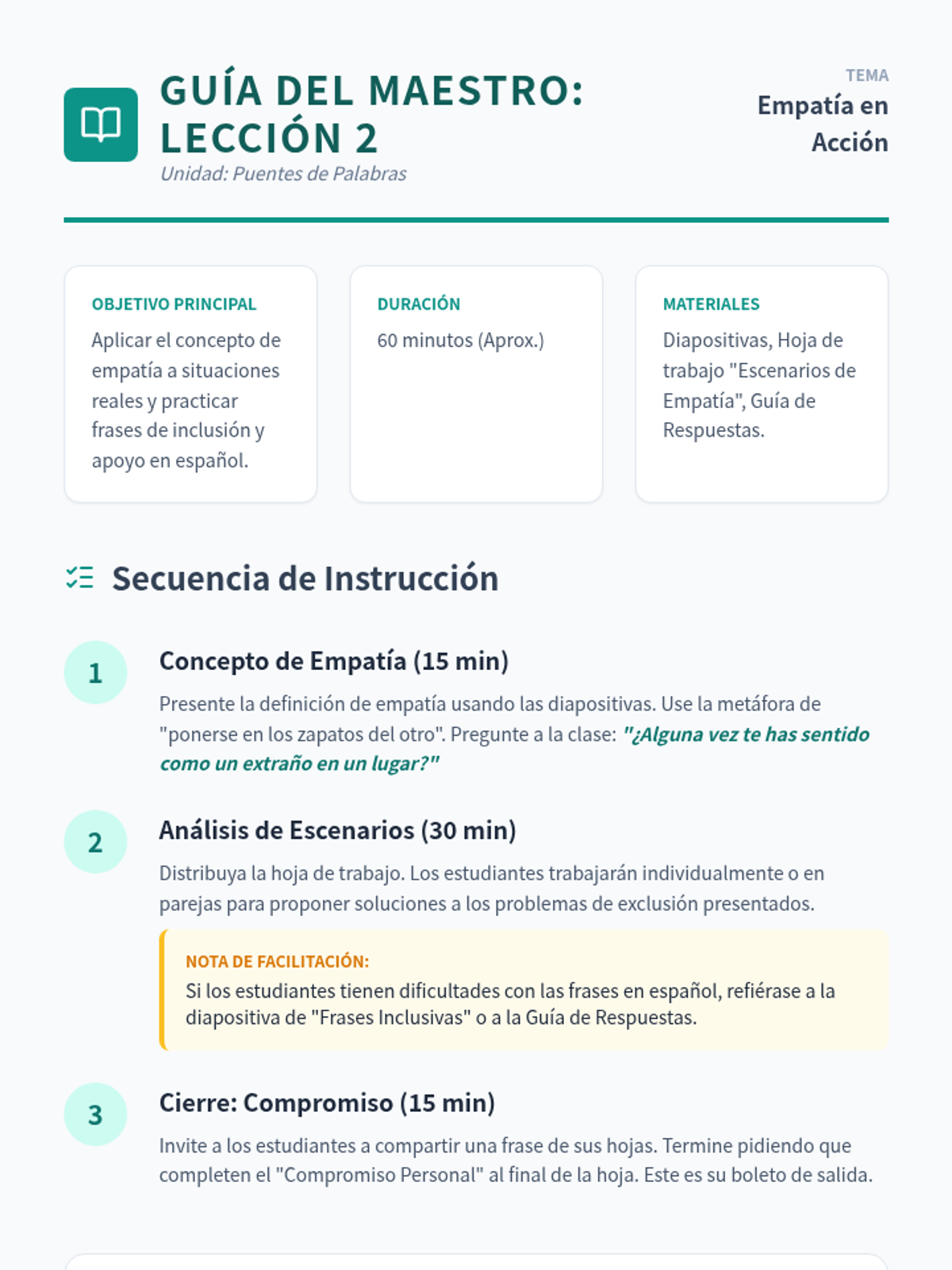
Focuses on empathy and social acceptance by analyzing scenarios and practicing inclusive language in Spanish.
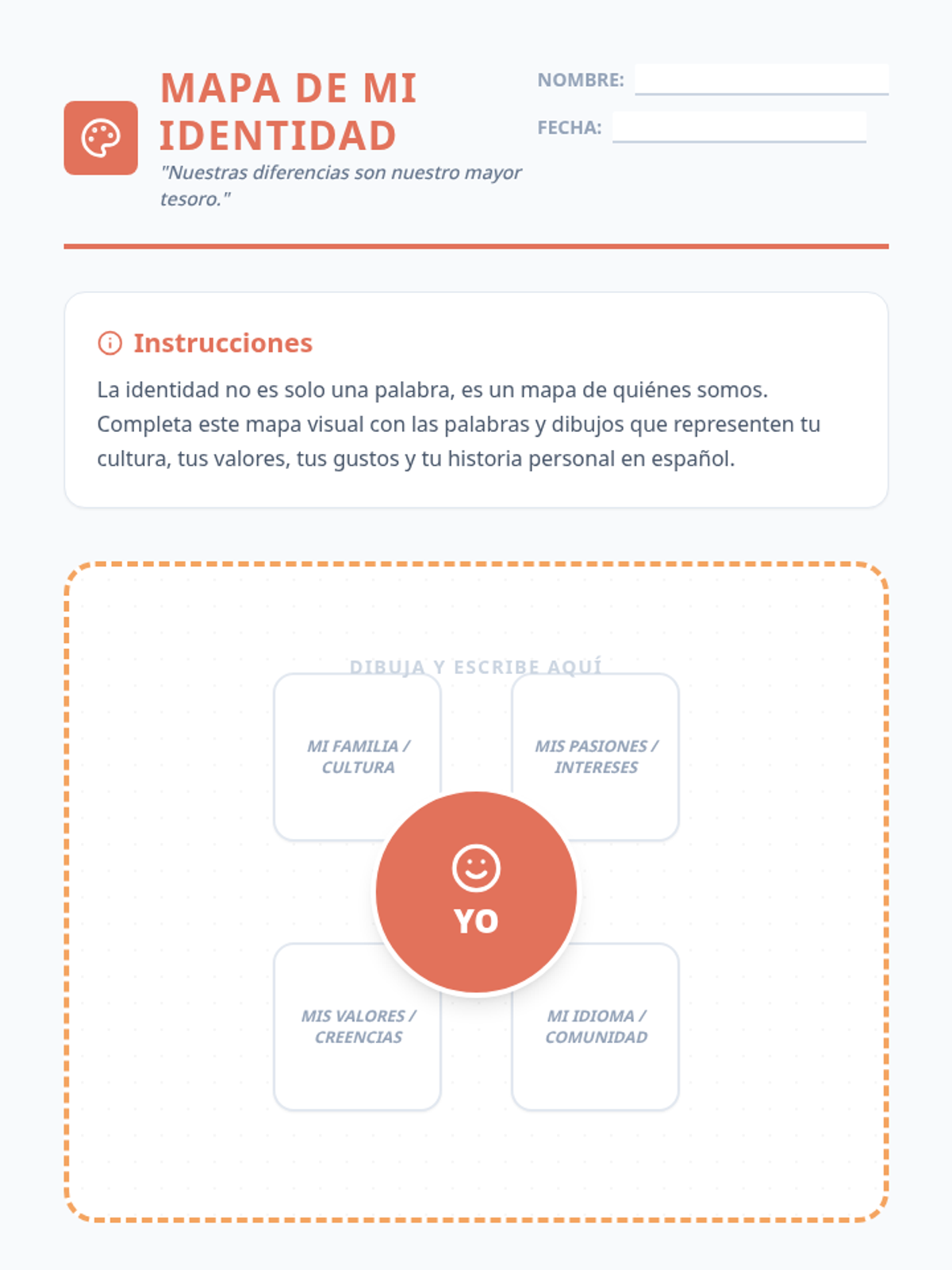
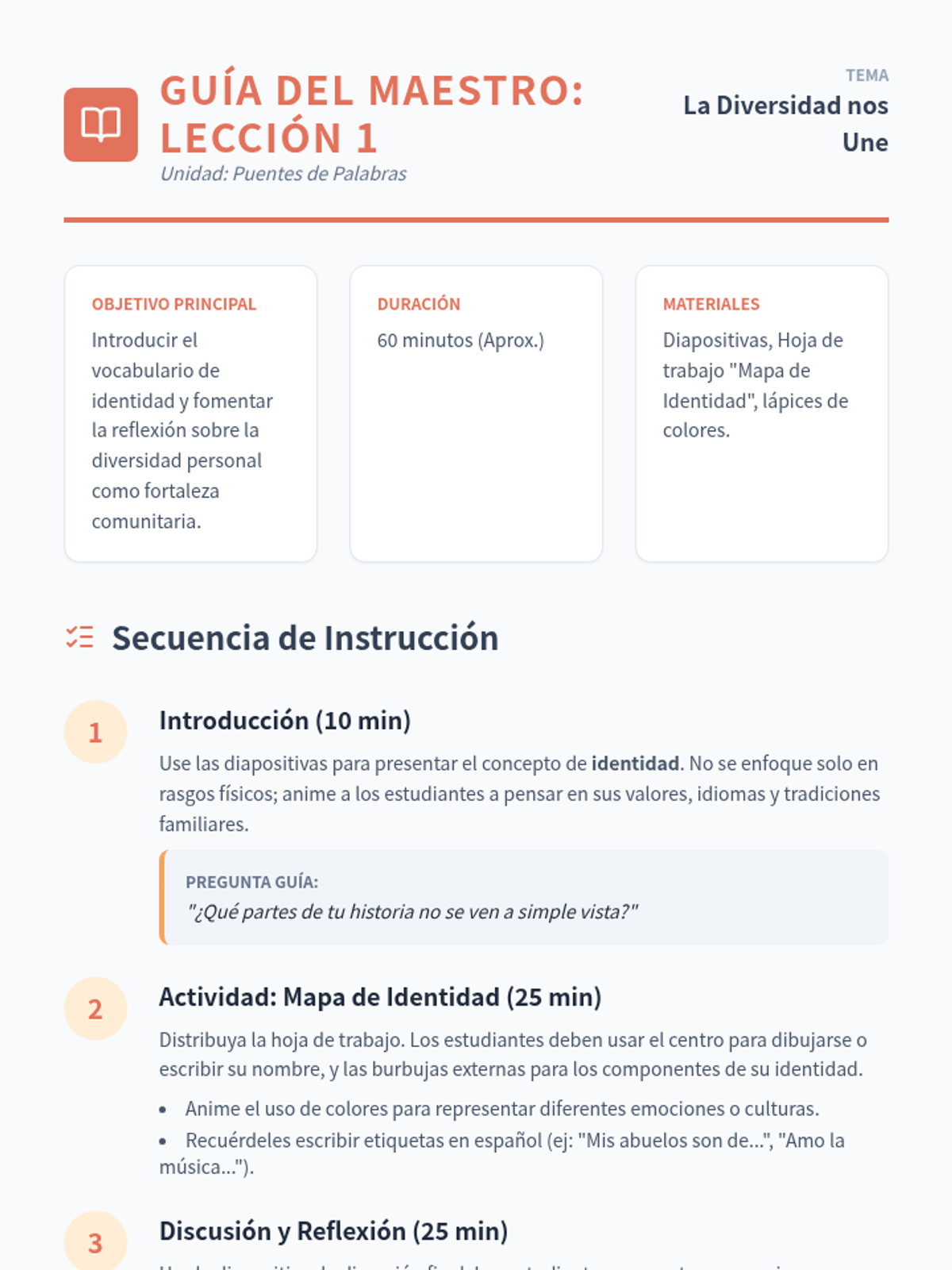
Introduces vocabulary related to identity and diversity, encouraging students to celebrate differences within their classroom and the Spanish-speaking world.
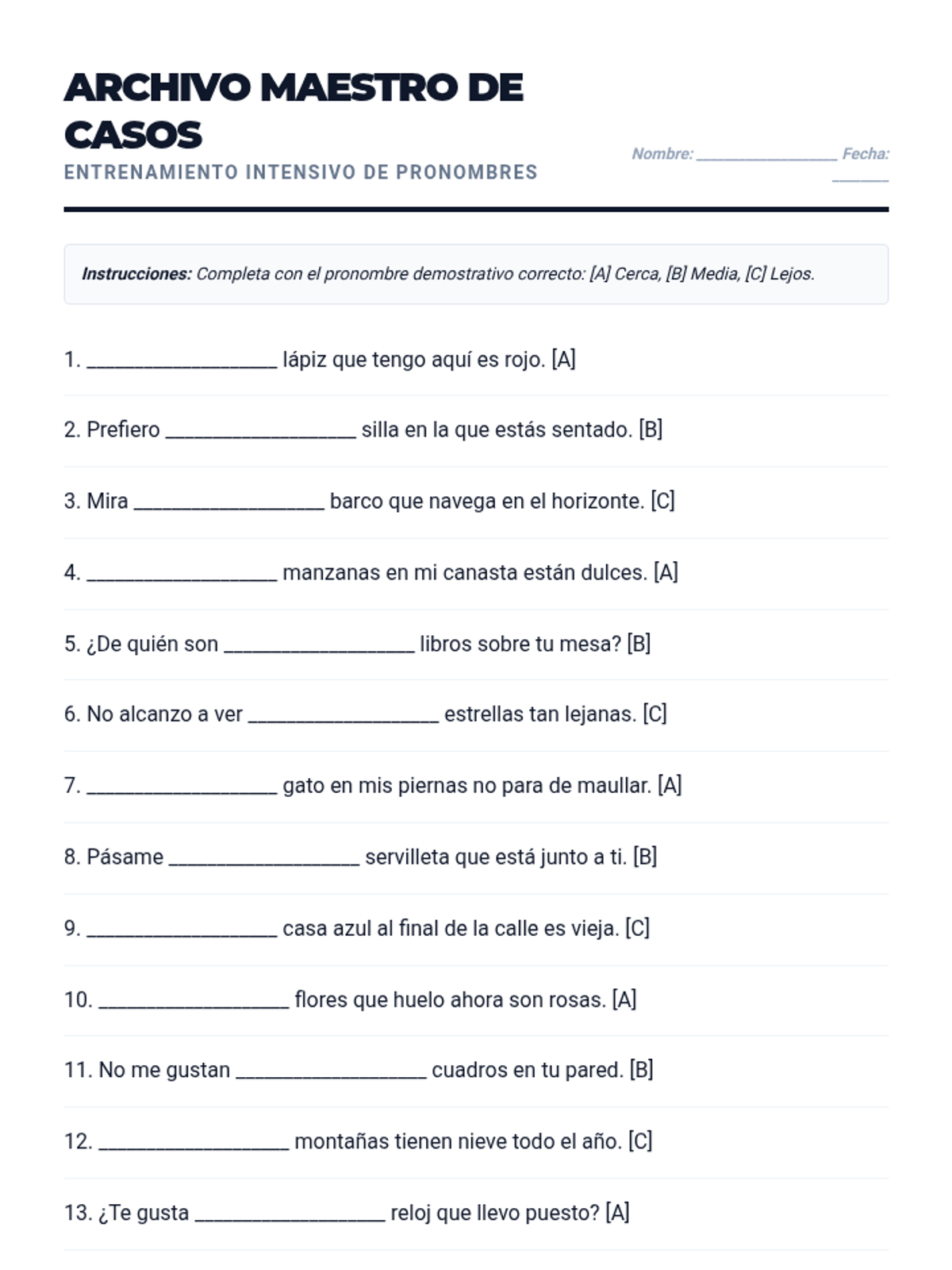
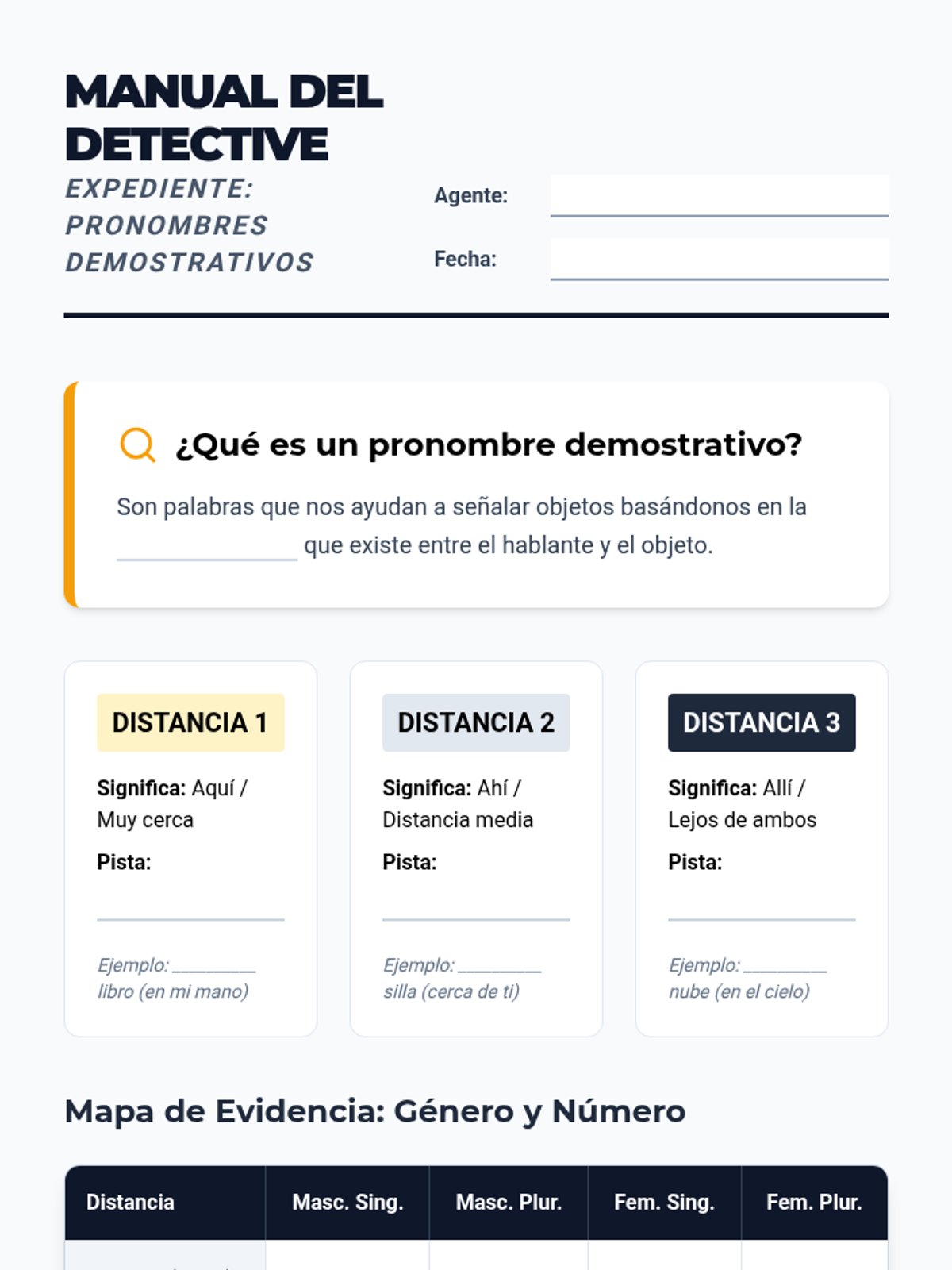
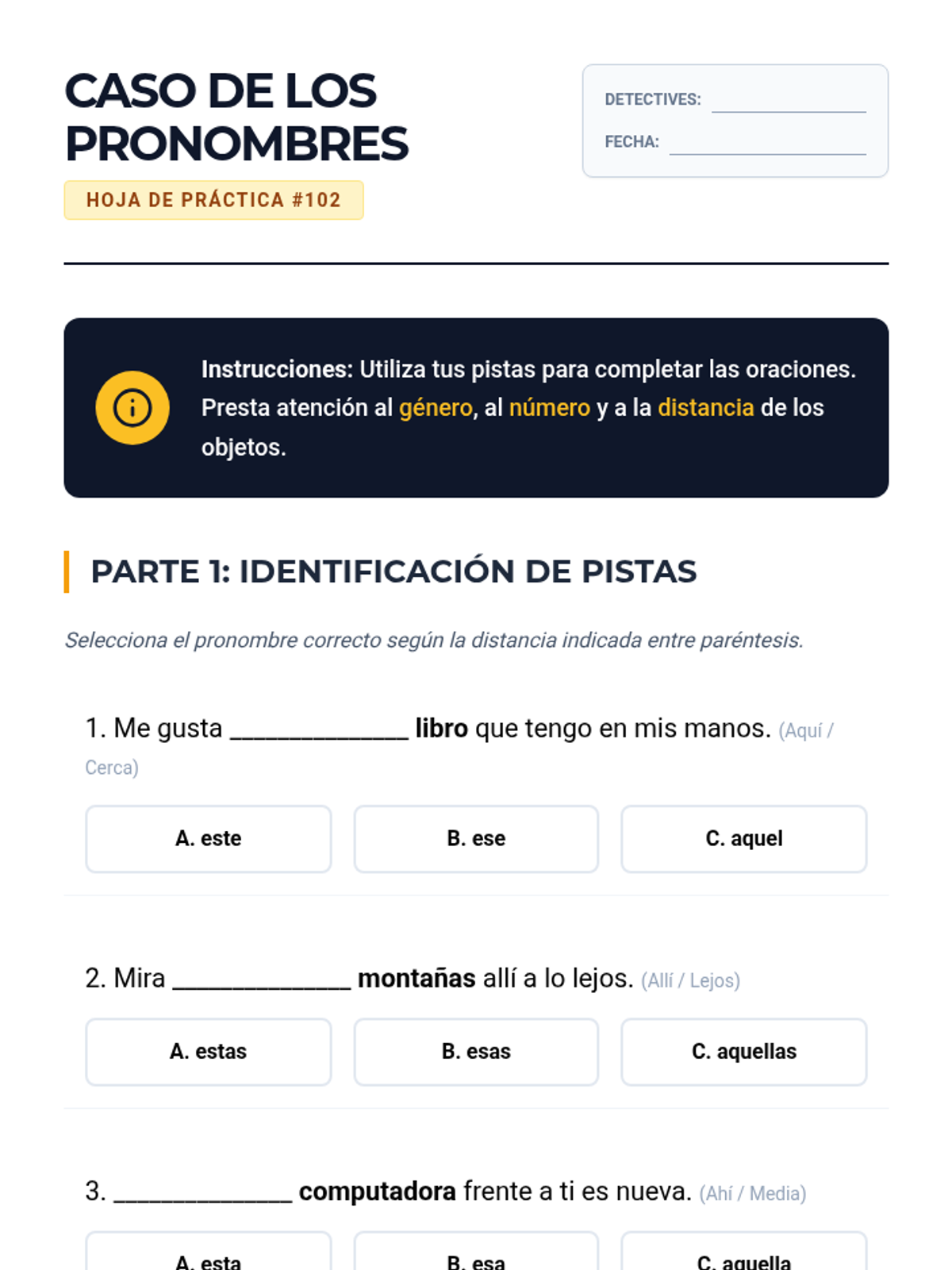
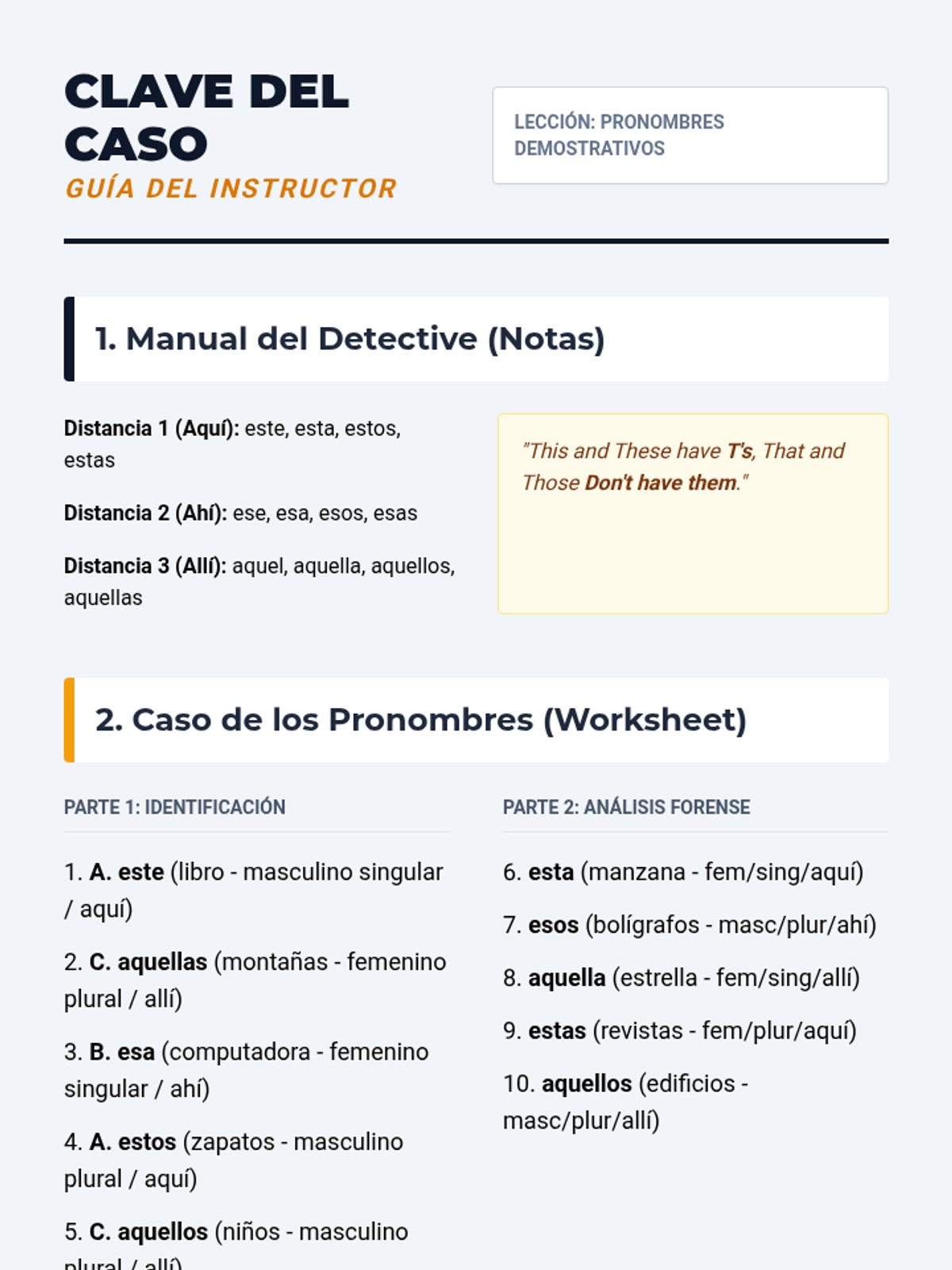
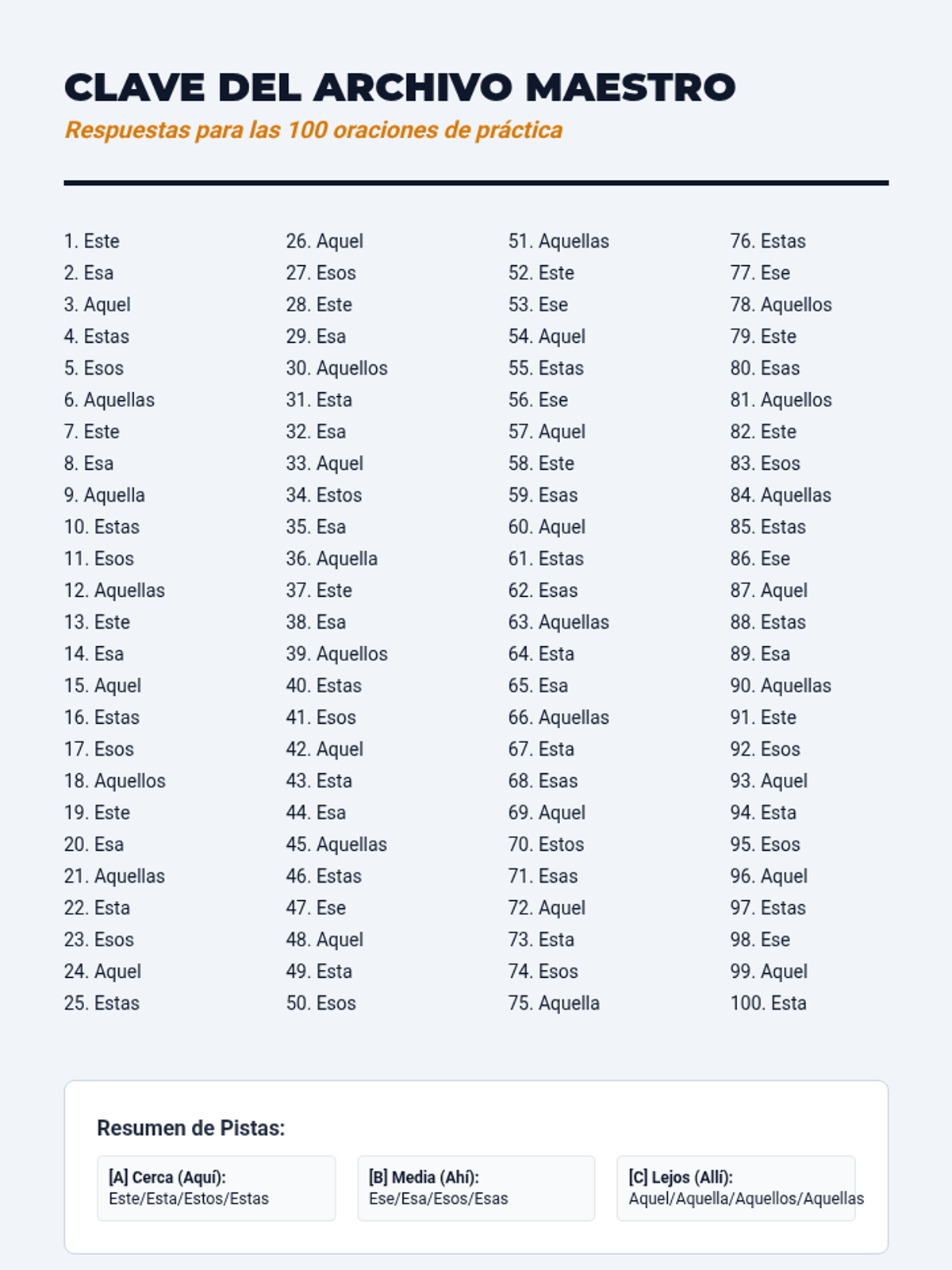
Una lección interactiva sobre los pronombres demostrativos en español (este, ese, aquel) enfocada en la distancia, el género y el número. Incluye una presentación visual, notas guiadas y práctica aplicada.
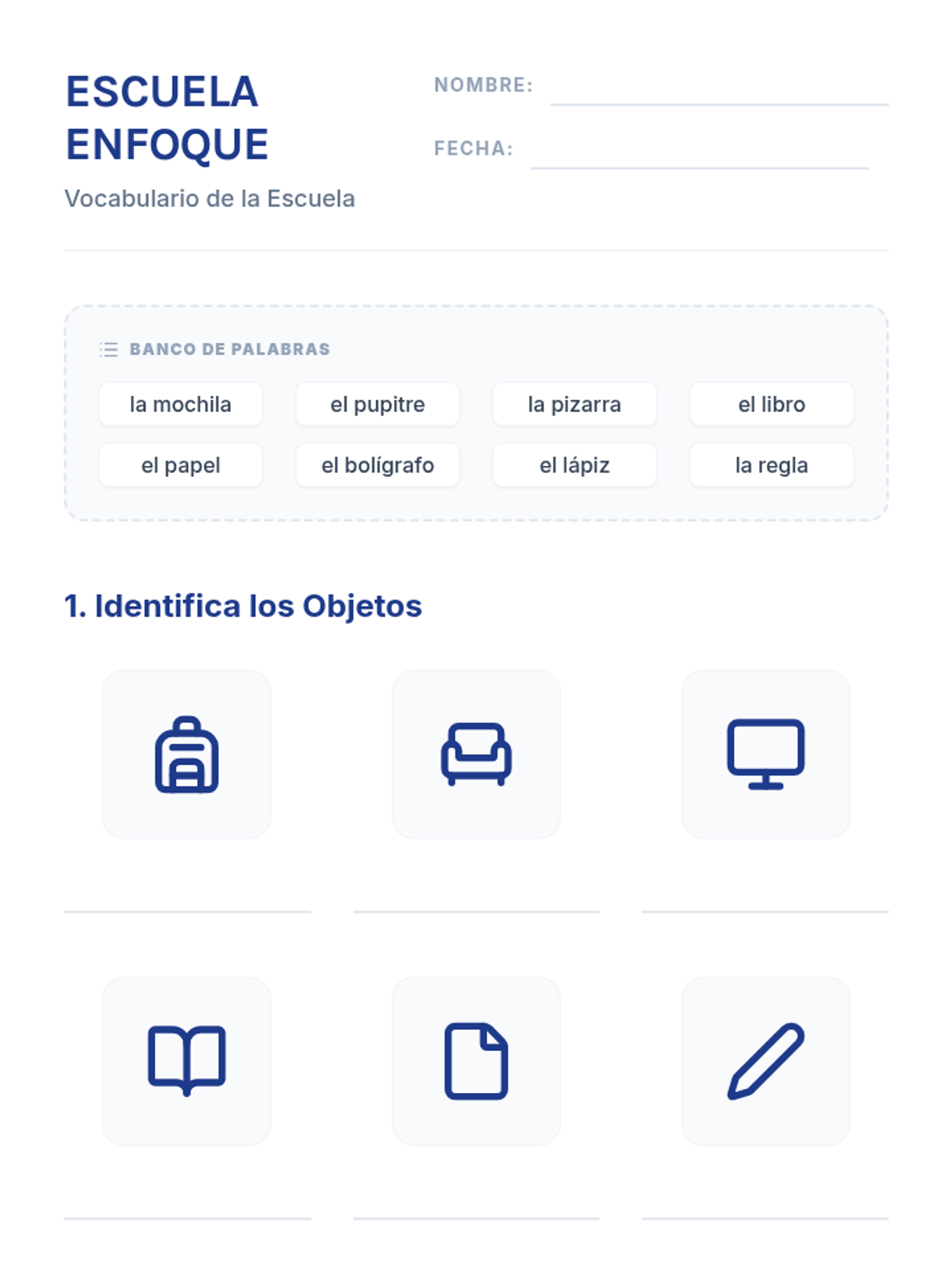
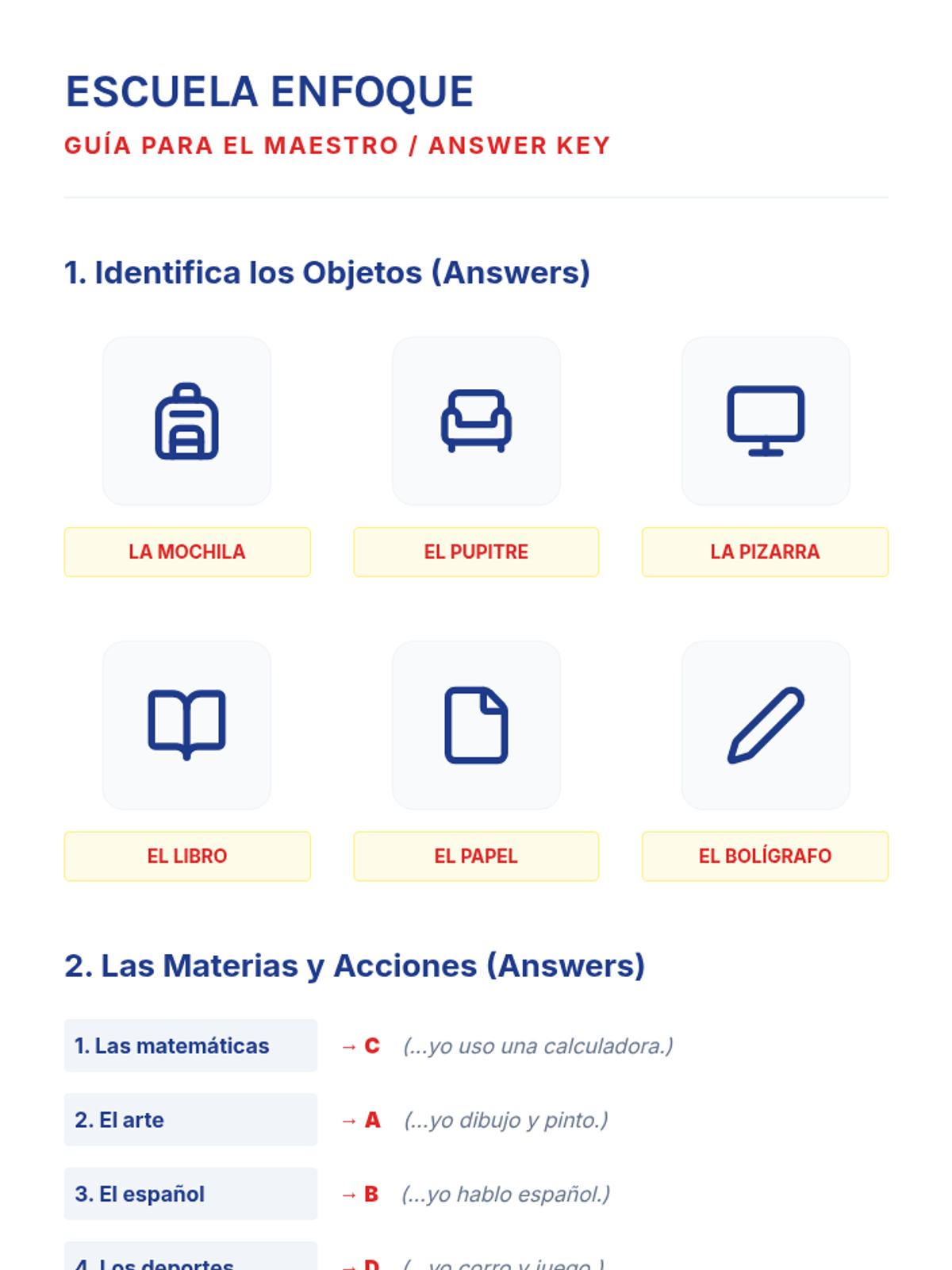
An introductory Spanish 1 lesson focusing on school-related vocabulary, including classroom objects, academic subjects, daily actions, and extracurricular activities.
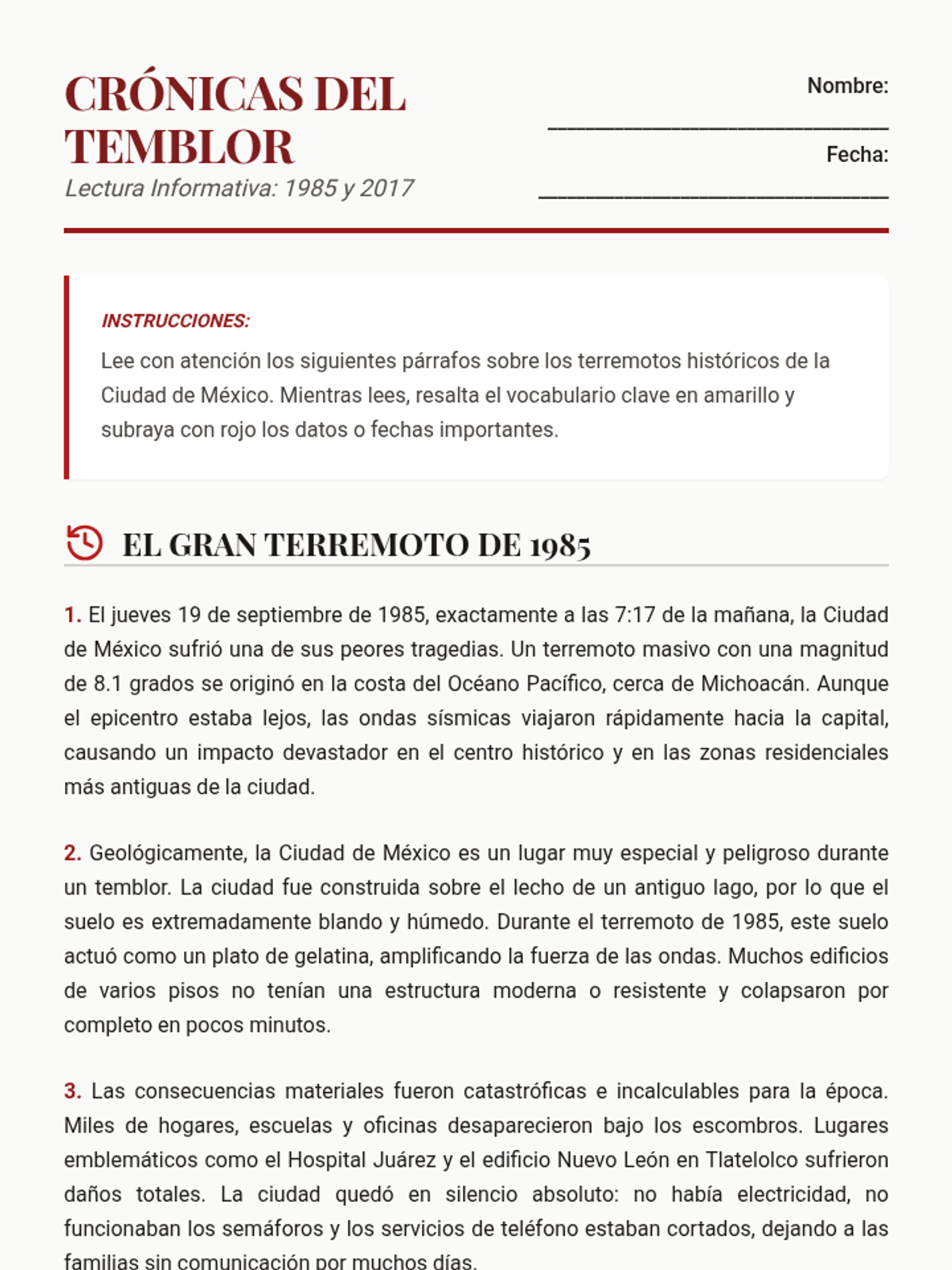
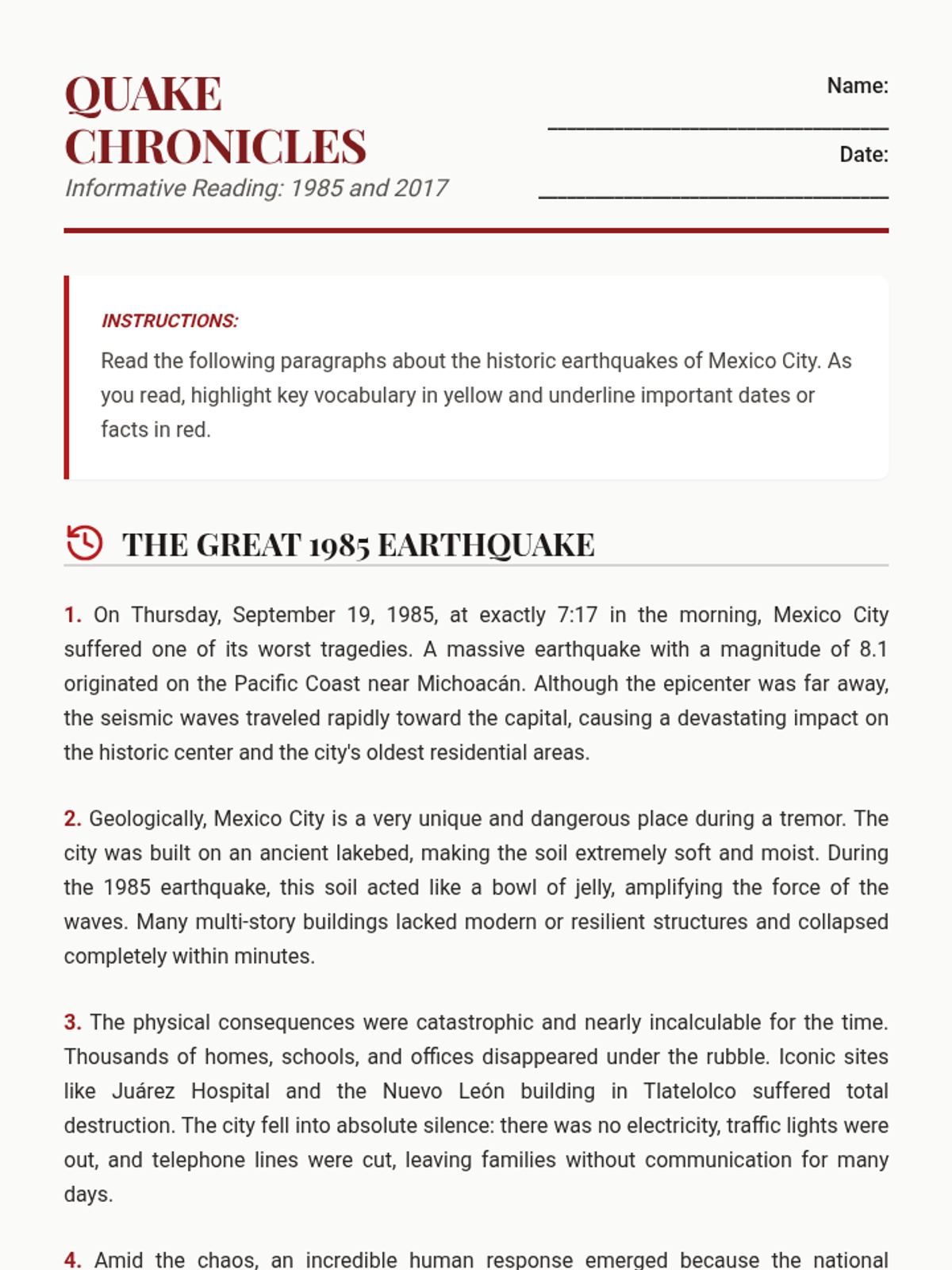
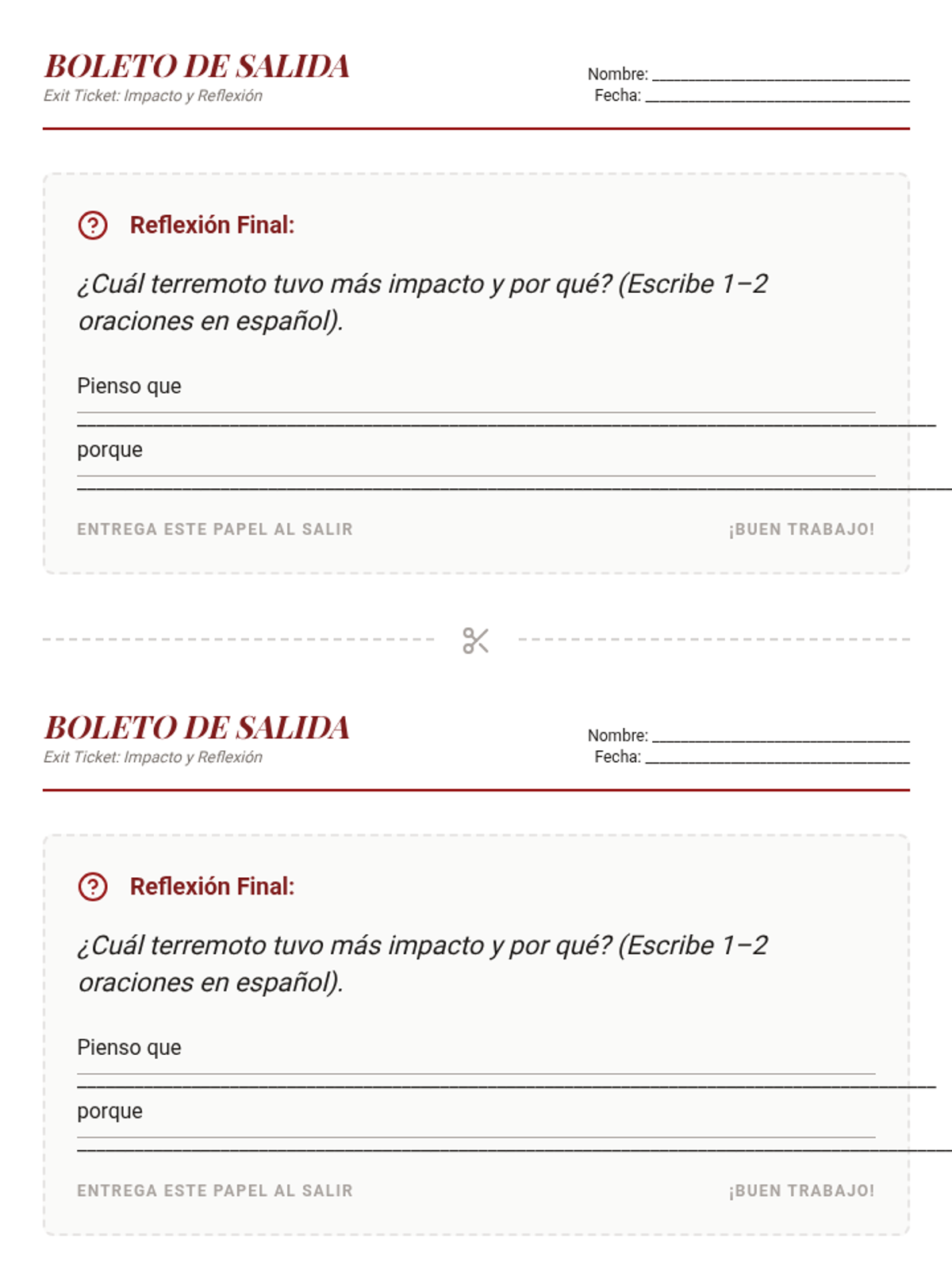
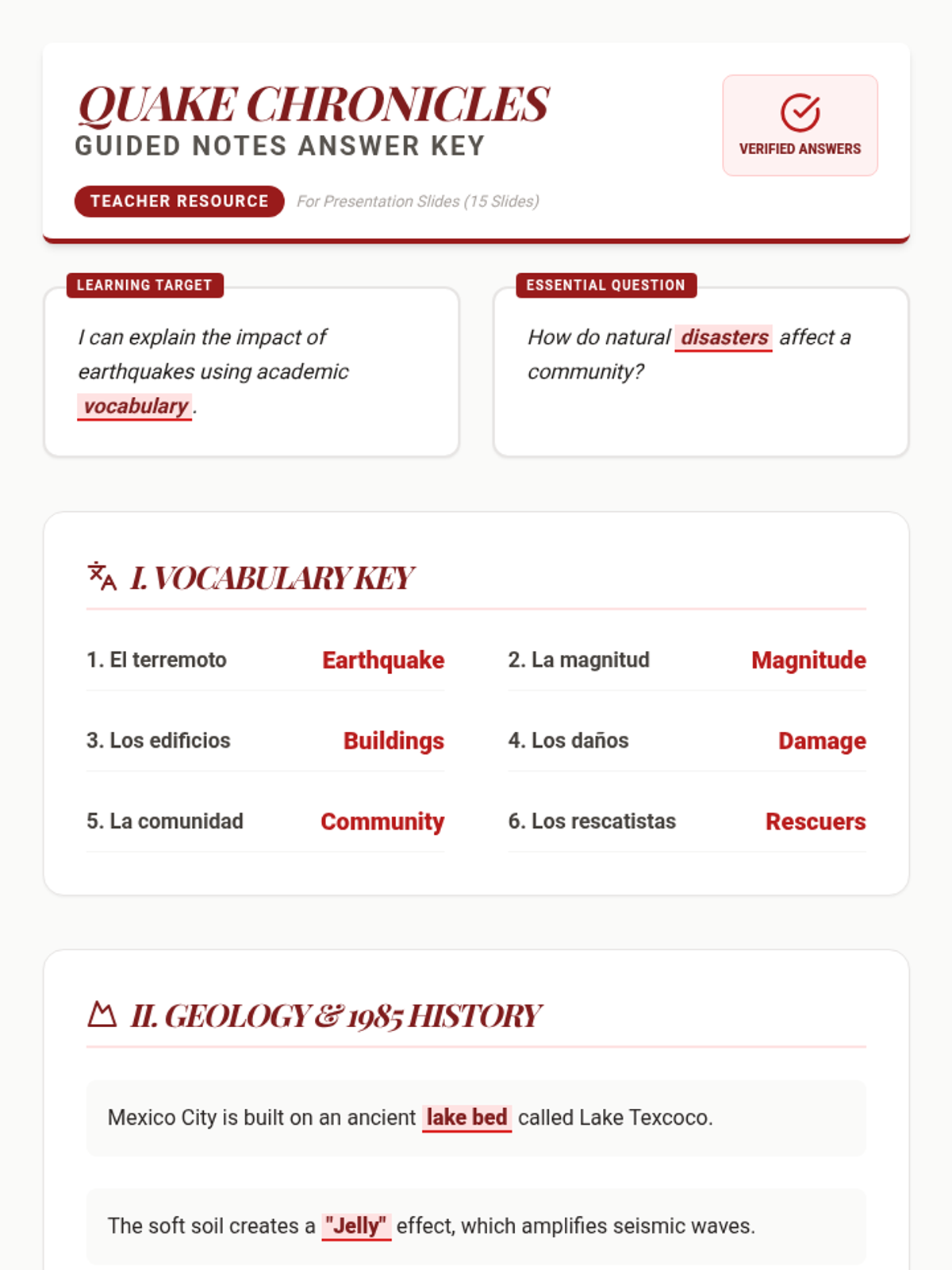
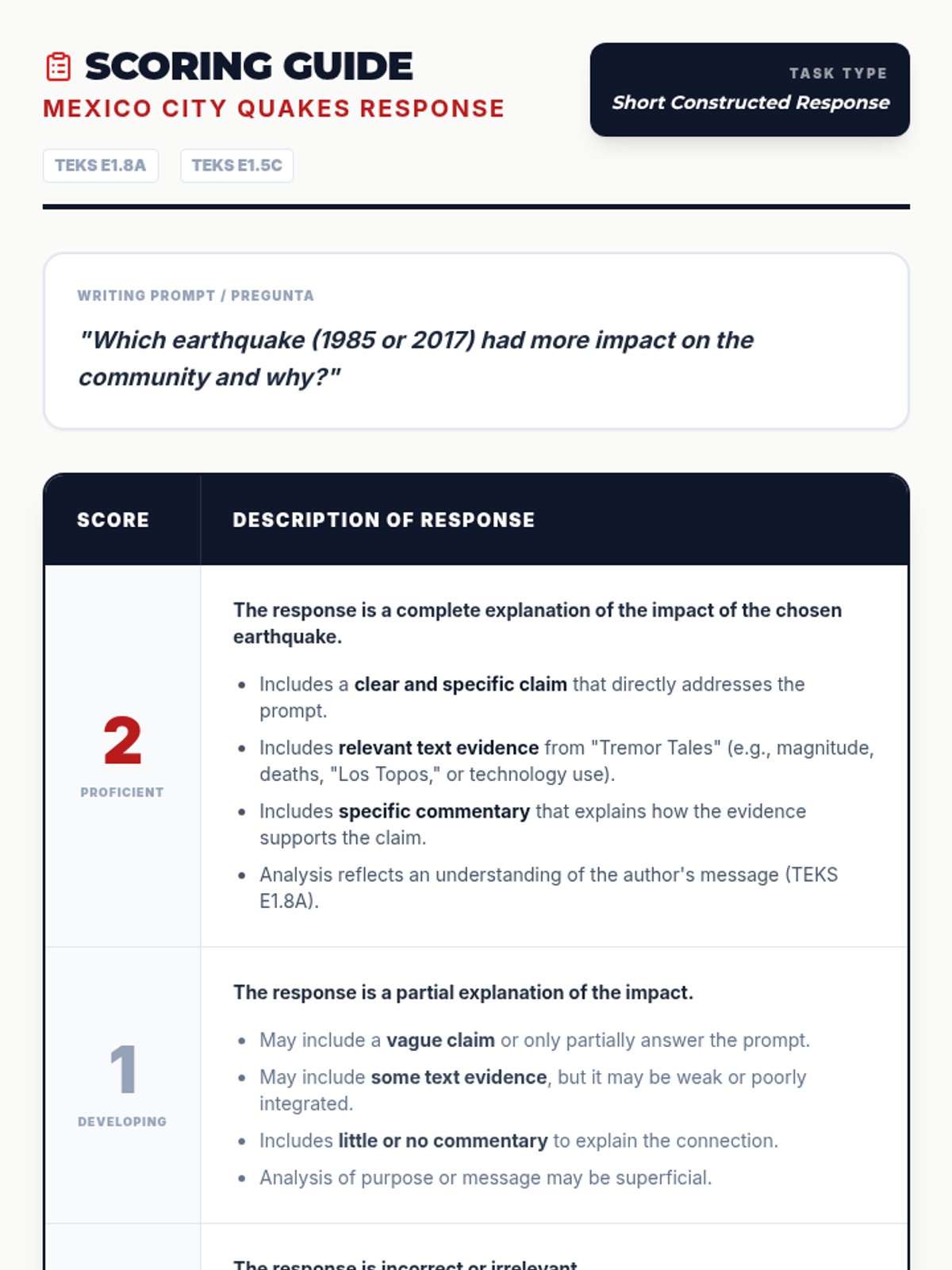
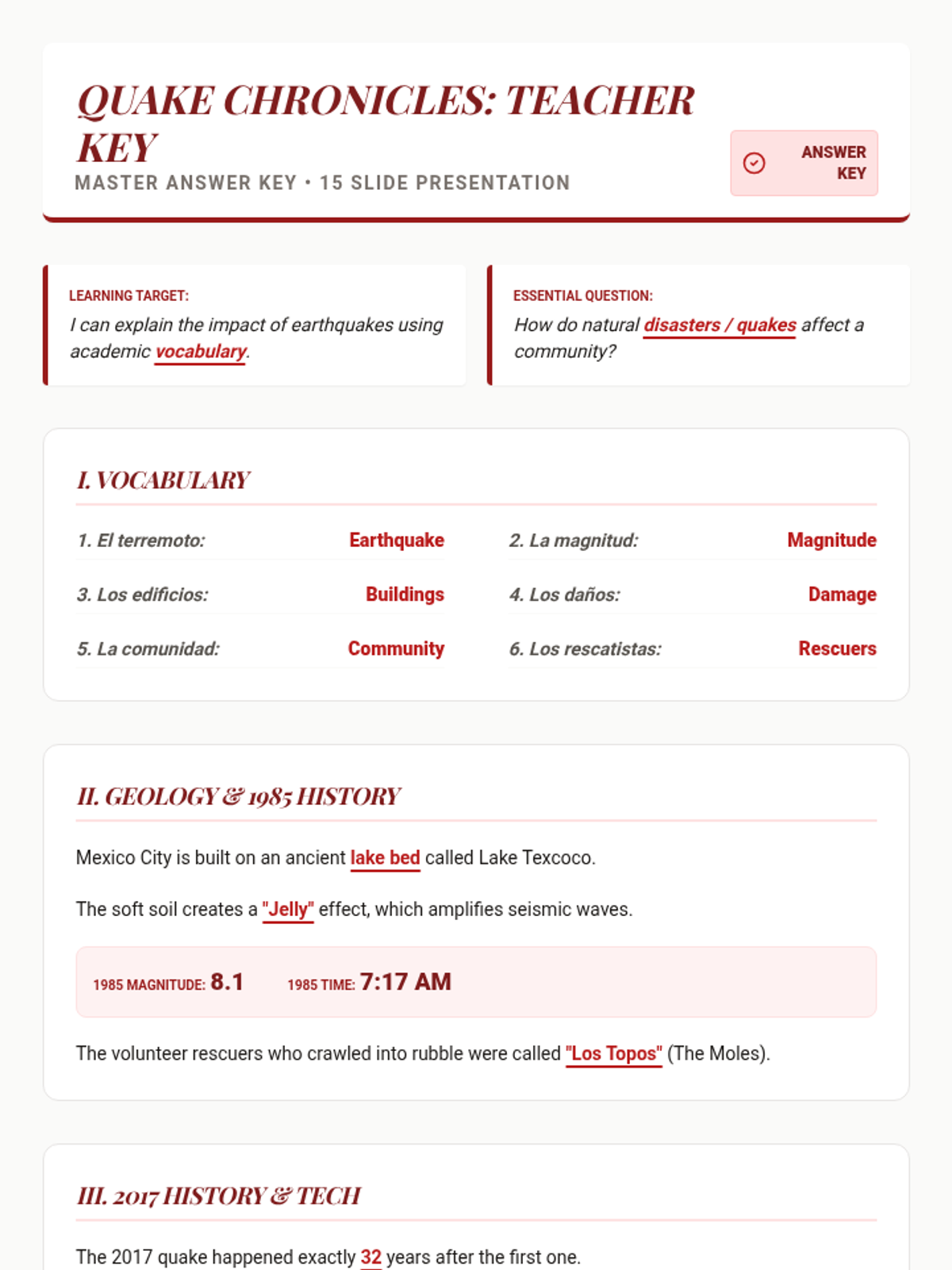
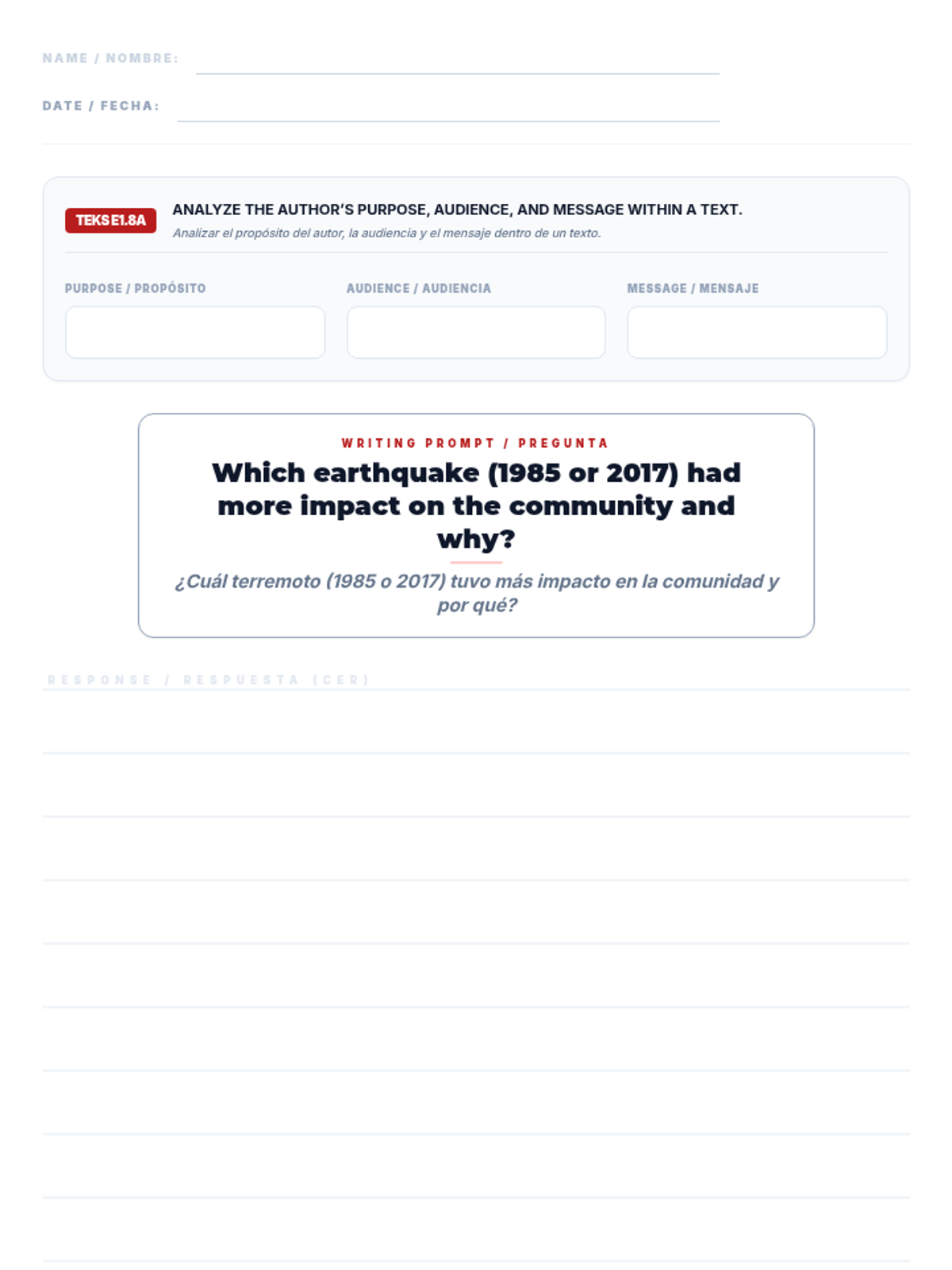
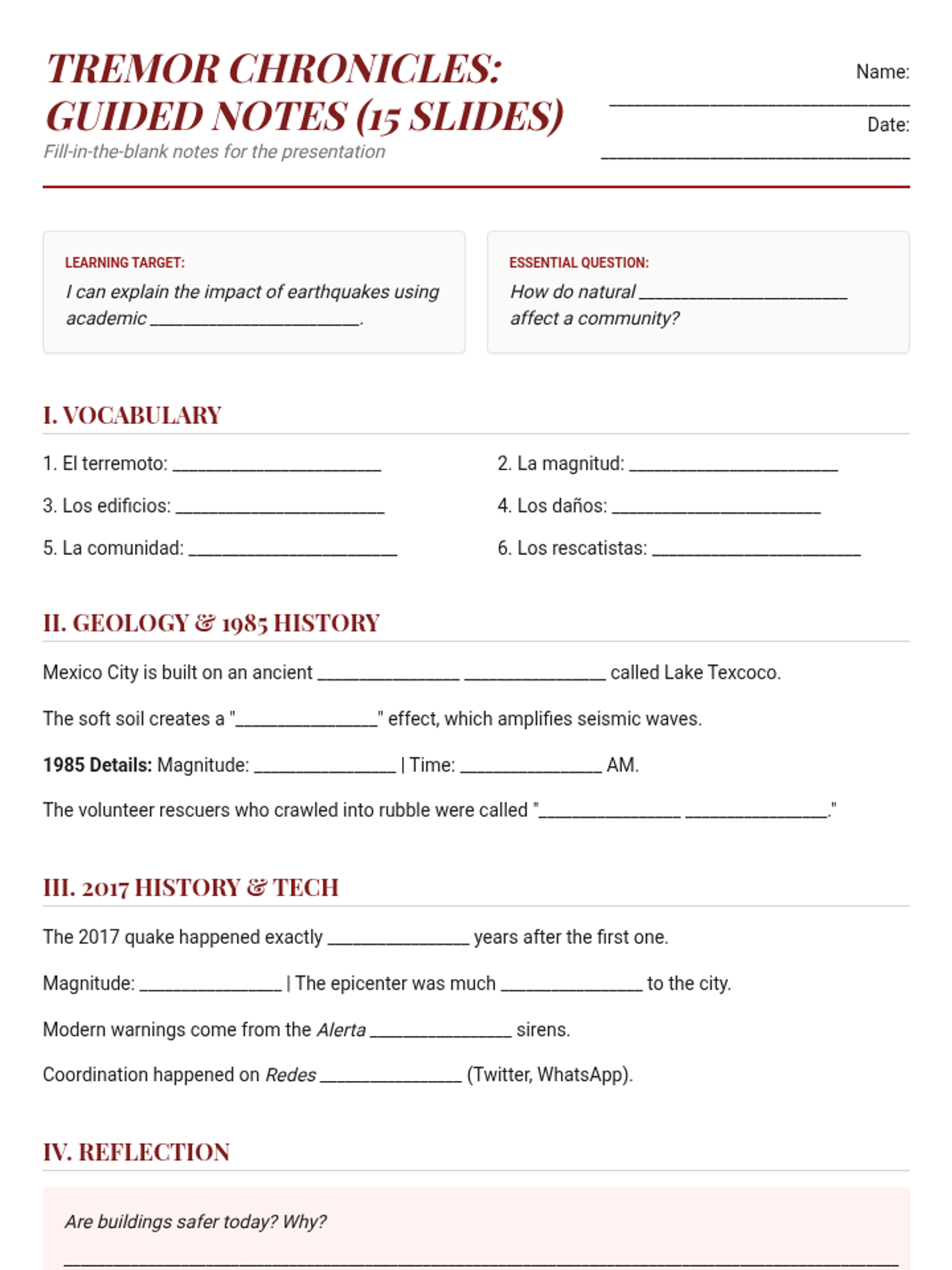
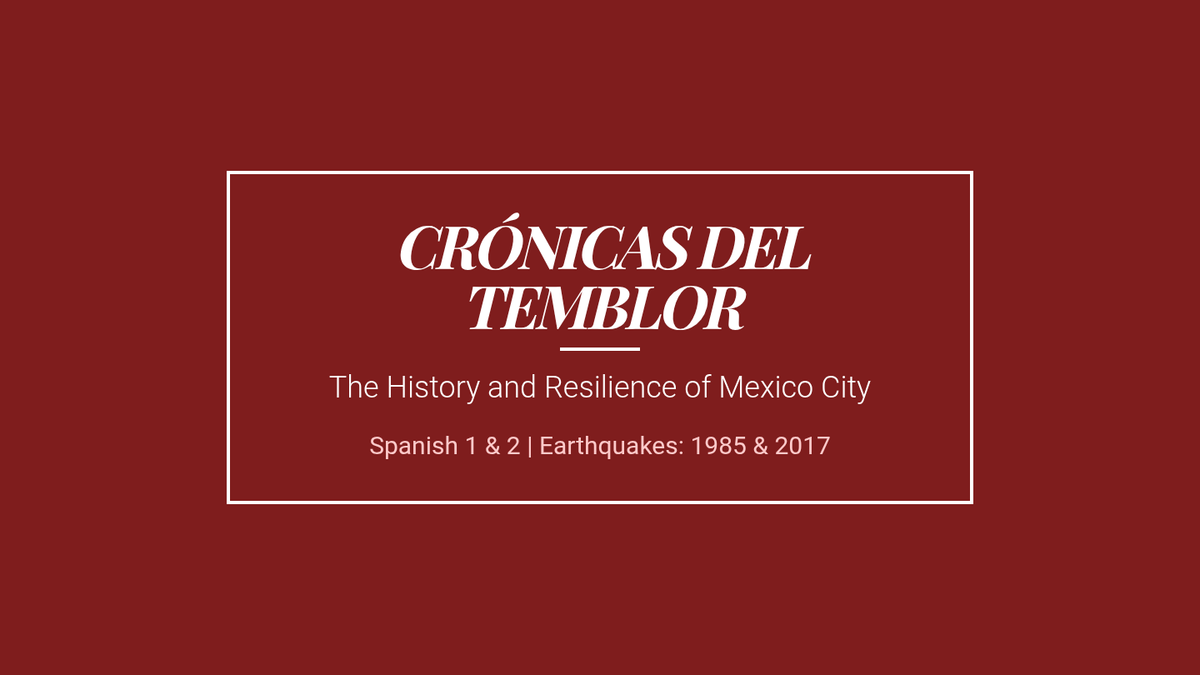
A comprehensive lesson on the historic earthquakes of Mexico City (1985 and 2017), focusing on interpretive reading and academic writing using the Claim, Evidence, Reasoning (CER) framework. Students explore community impact, resilience, and historical comparison.
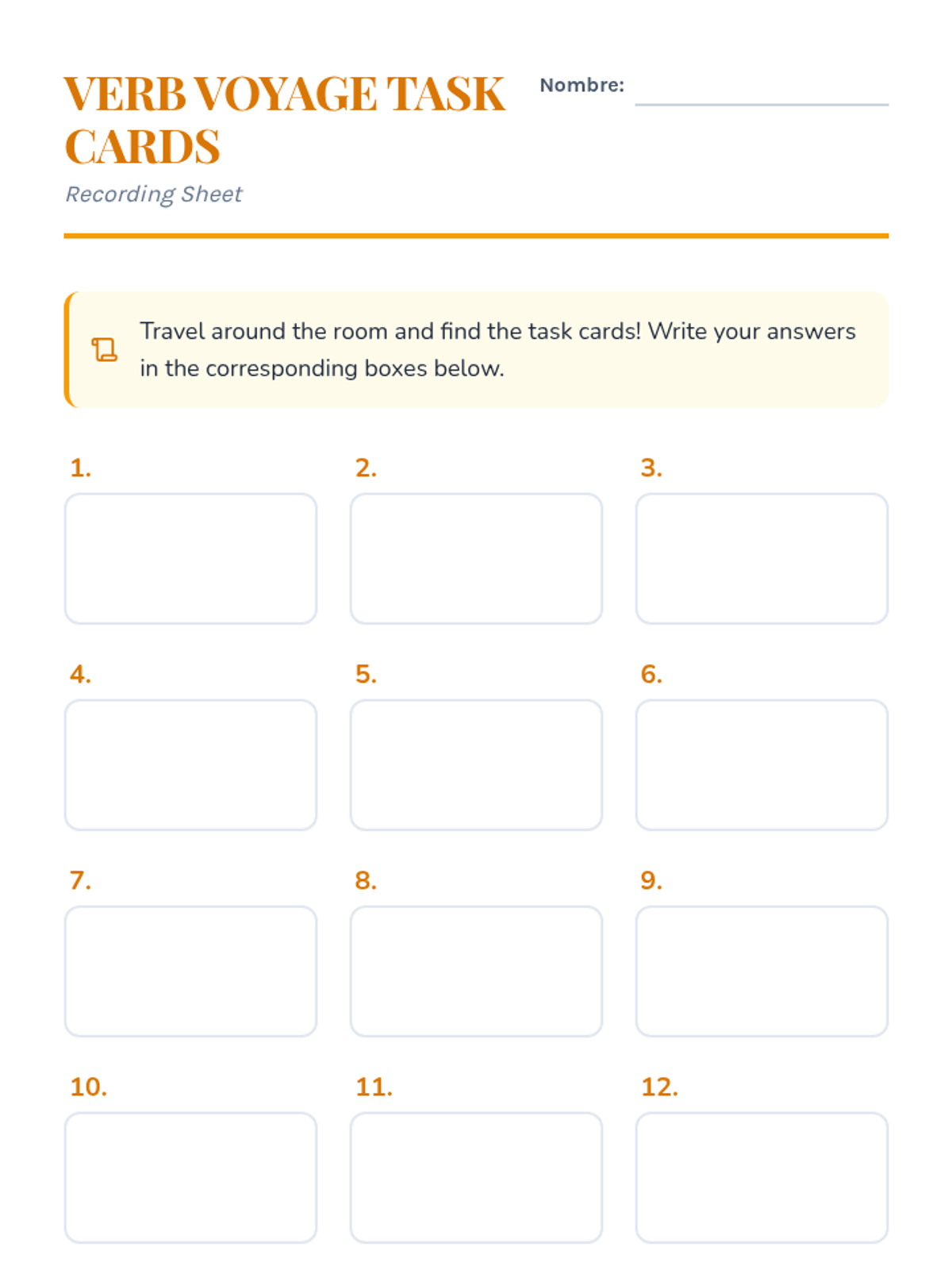
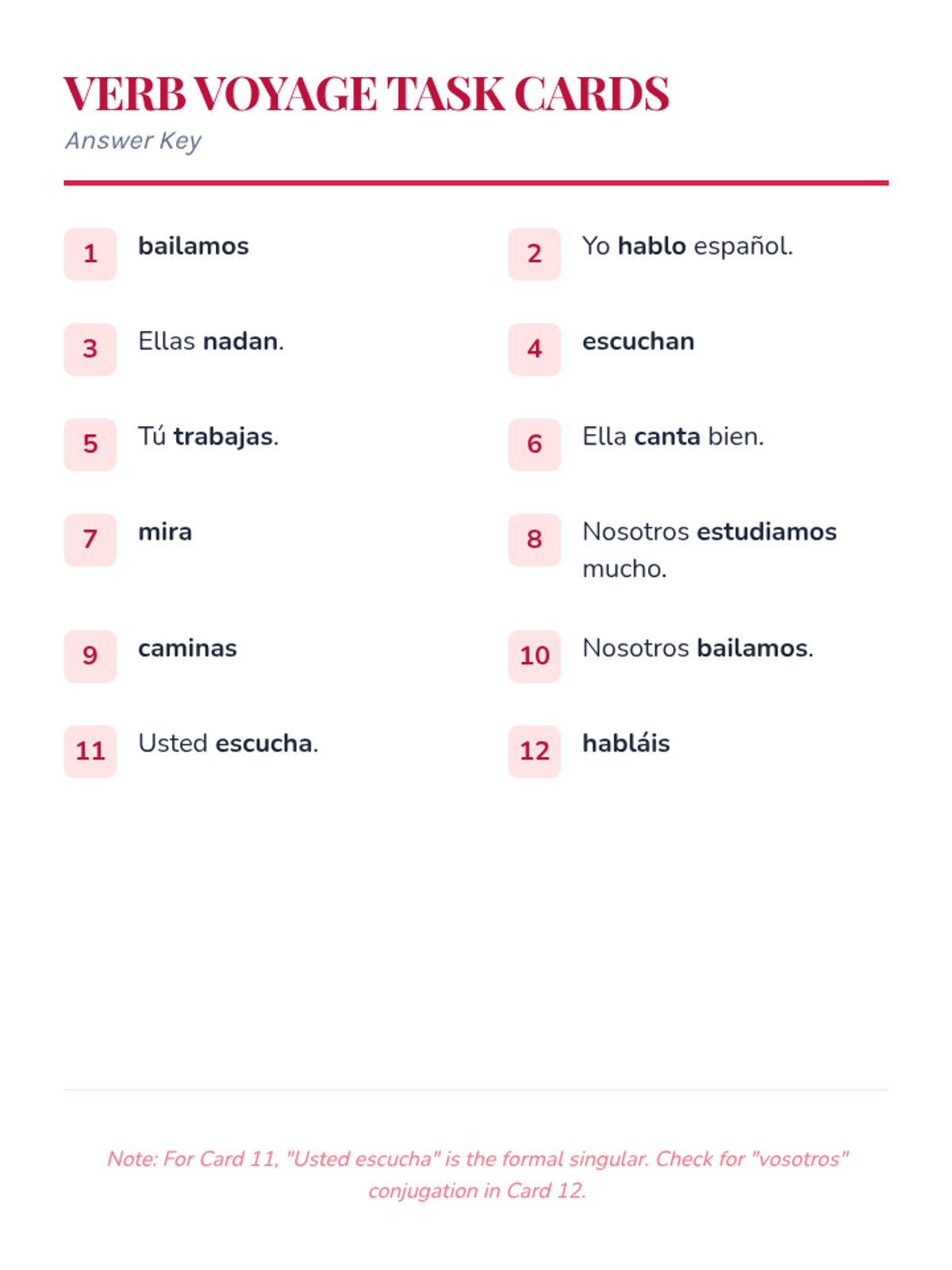
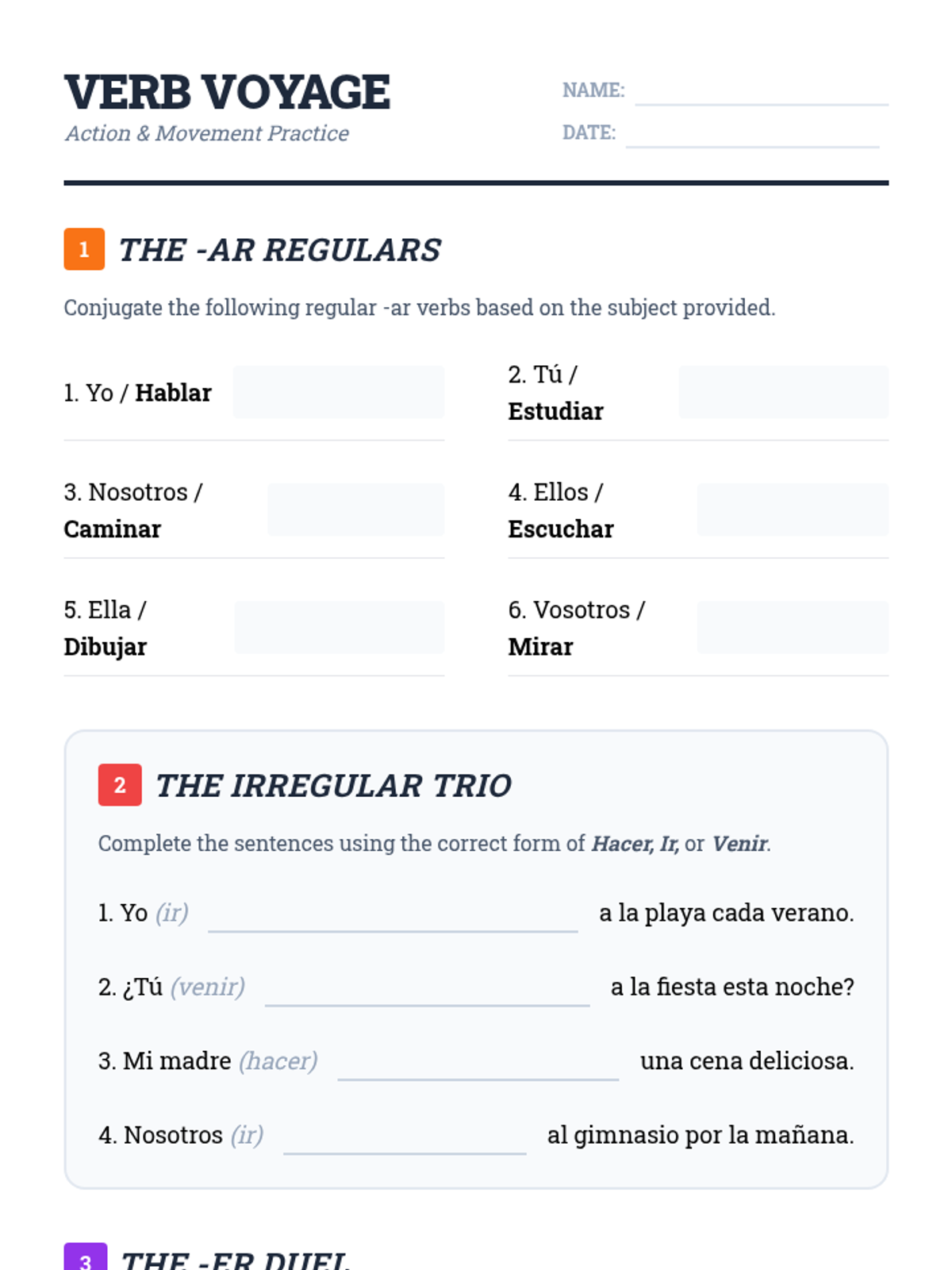
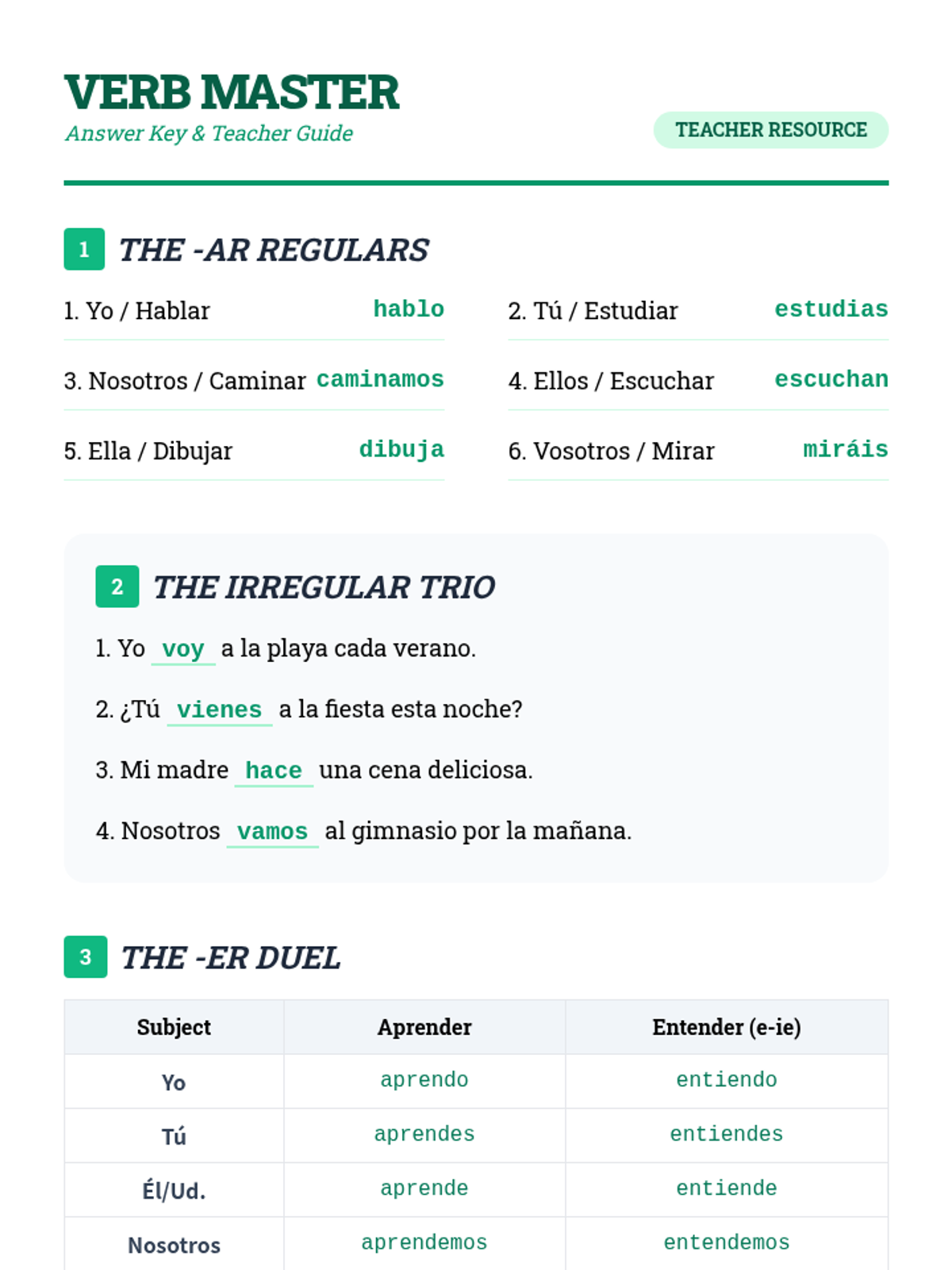
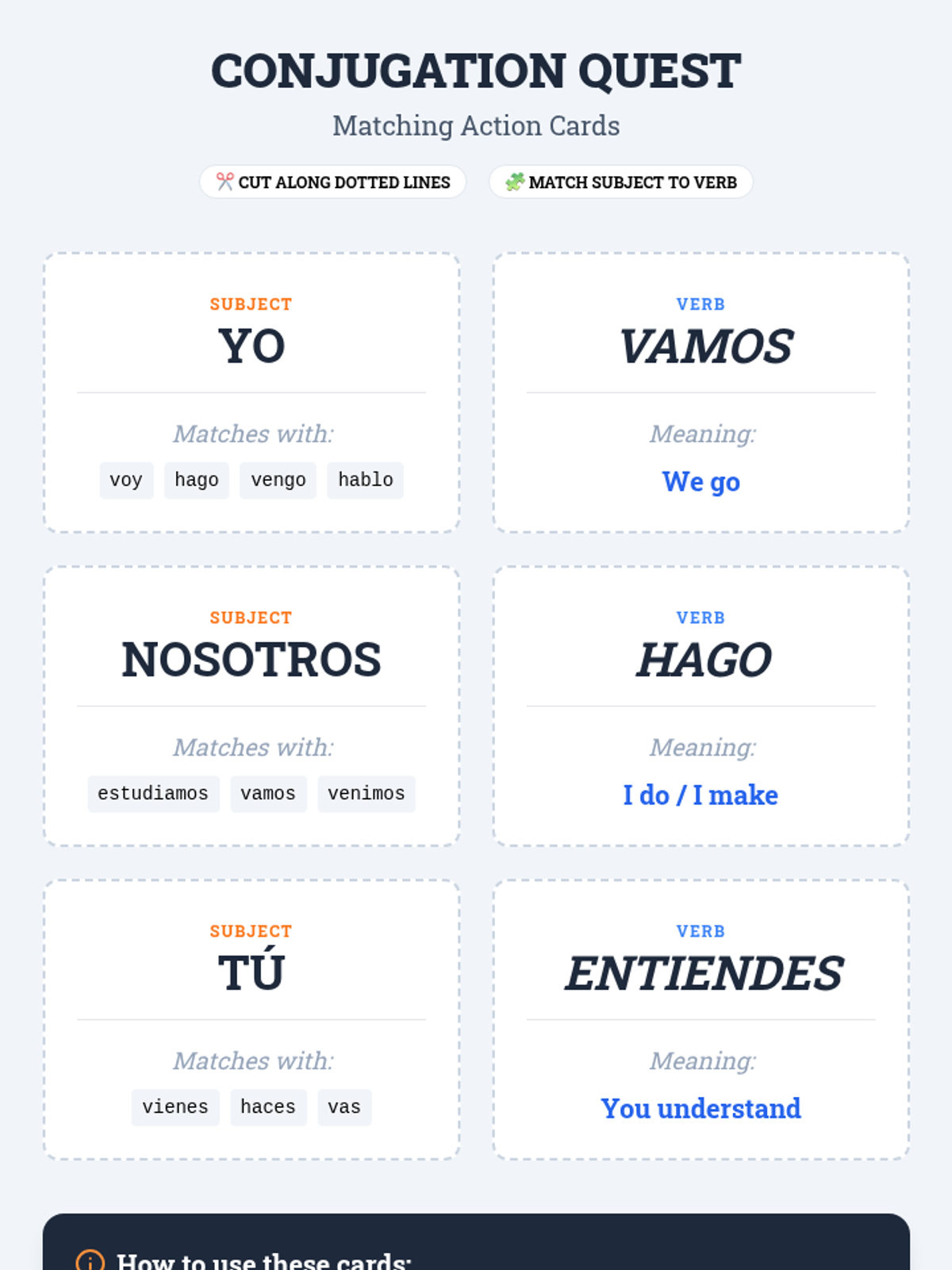
A comprehensive introduction to essential Spanish verbs, covering regular -ar and -er conjugations along with key irregular verbs like hacer, ir, and venir. Students will learn to describe daily actions and movement through interactive practice and translation.
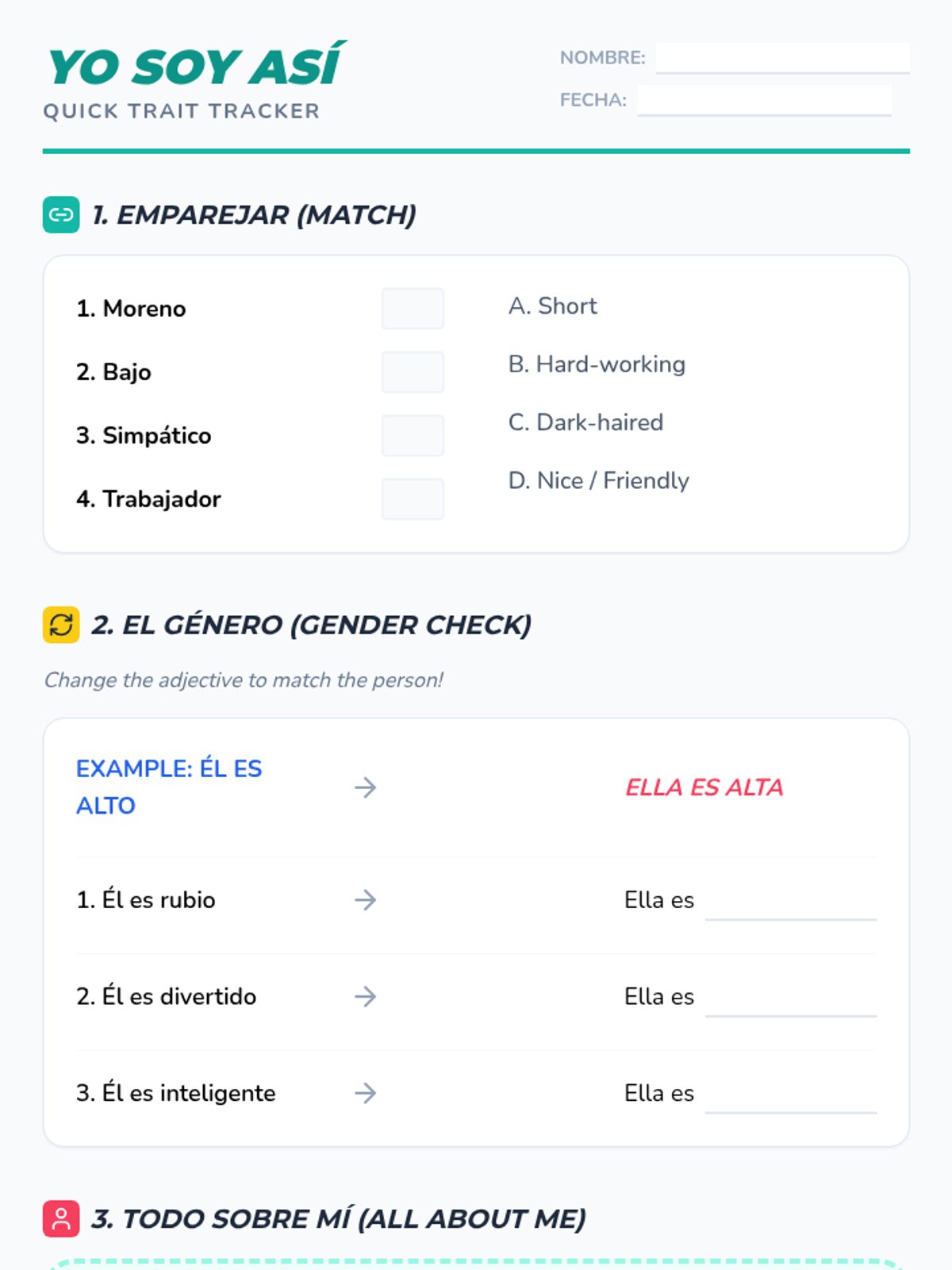
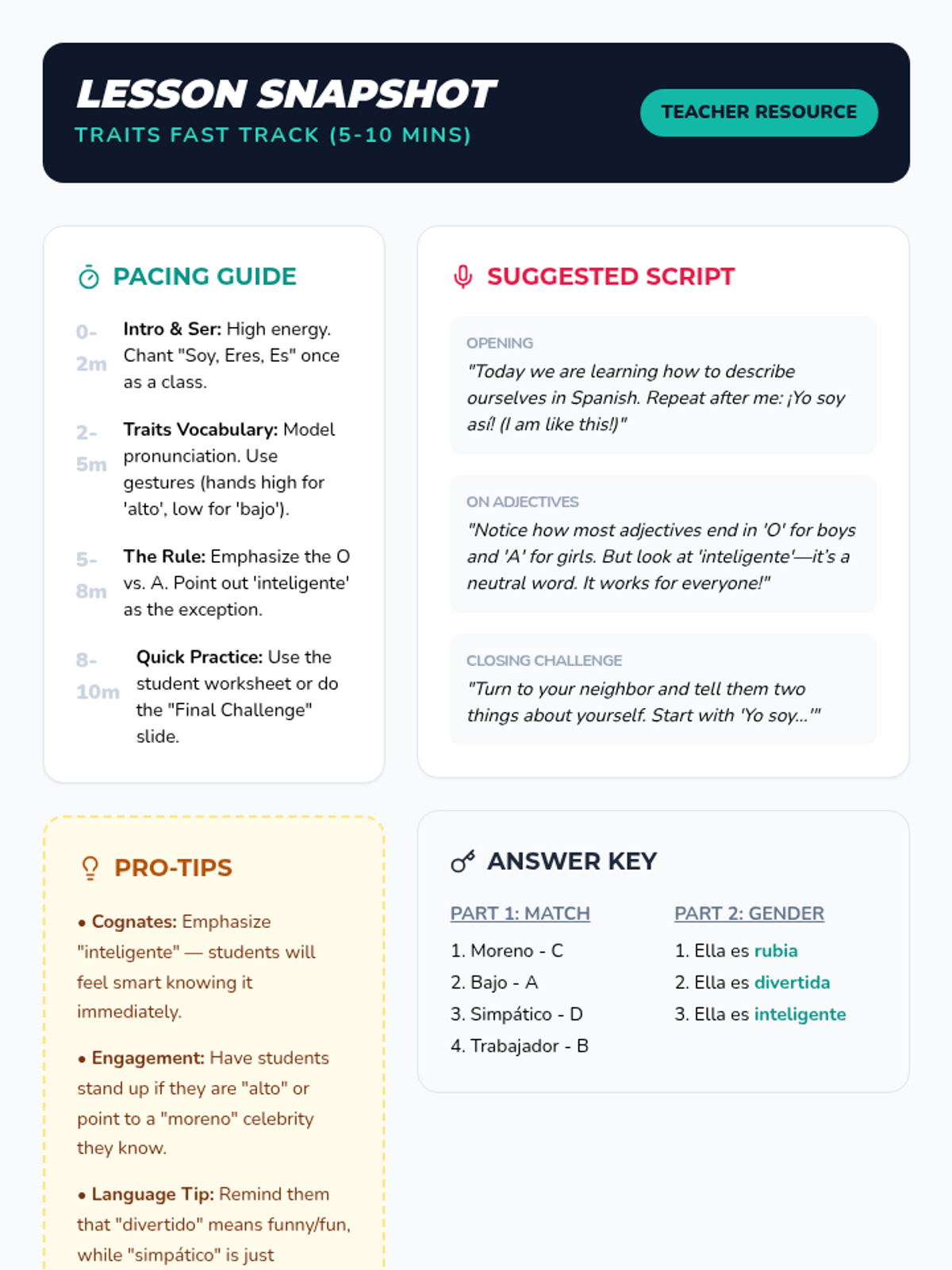
A lightning-fast introduction to physical and personality traits in Spanish, focusing on the verb 'ser' and basic adjective agreement for beginners.
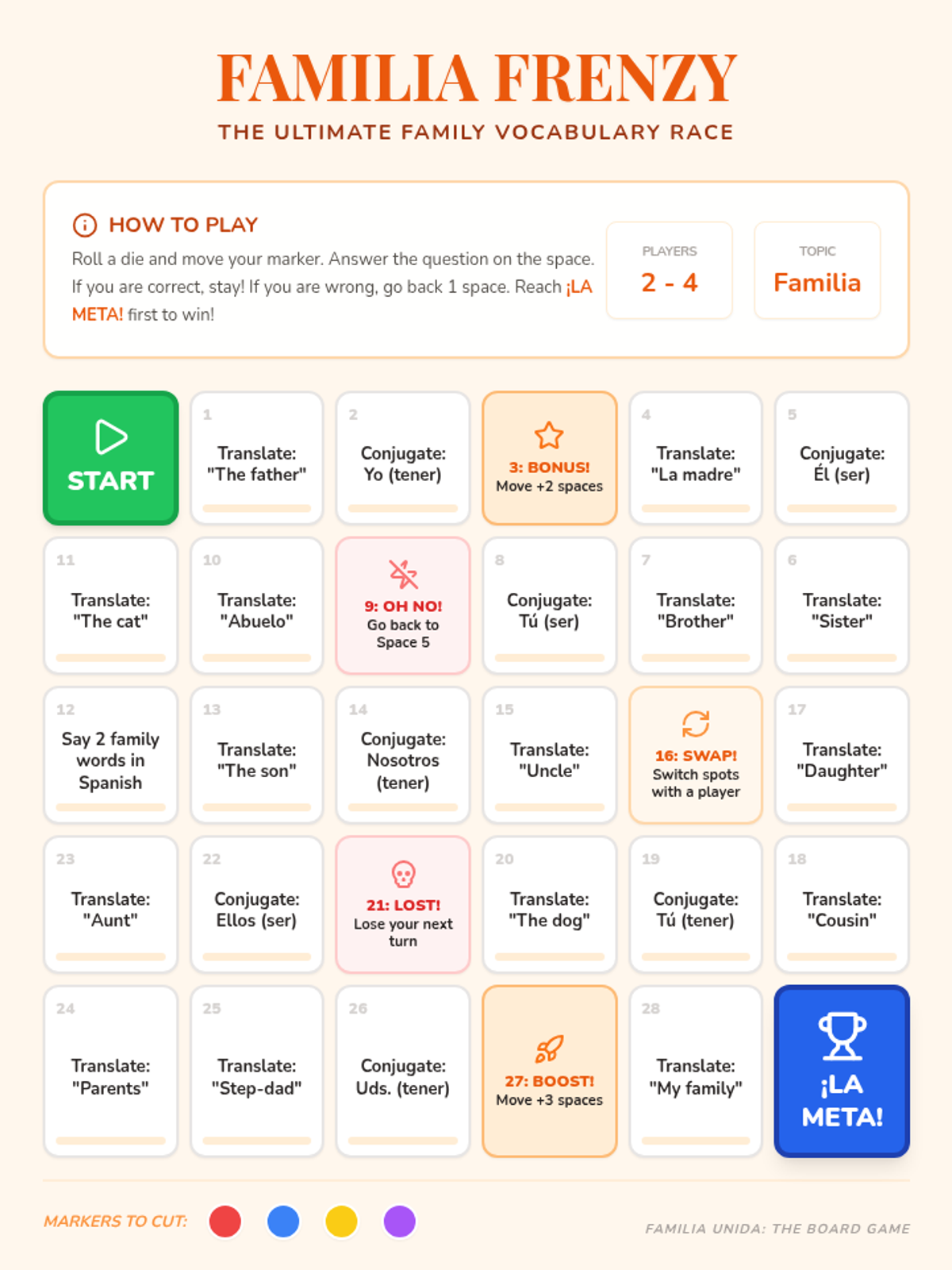
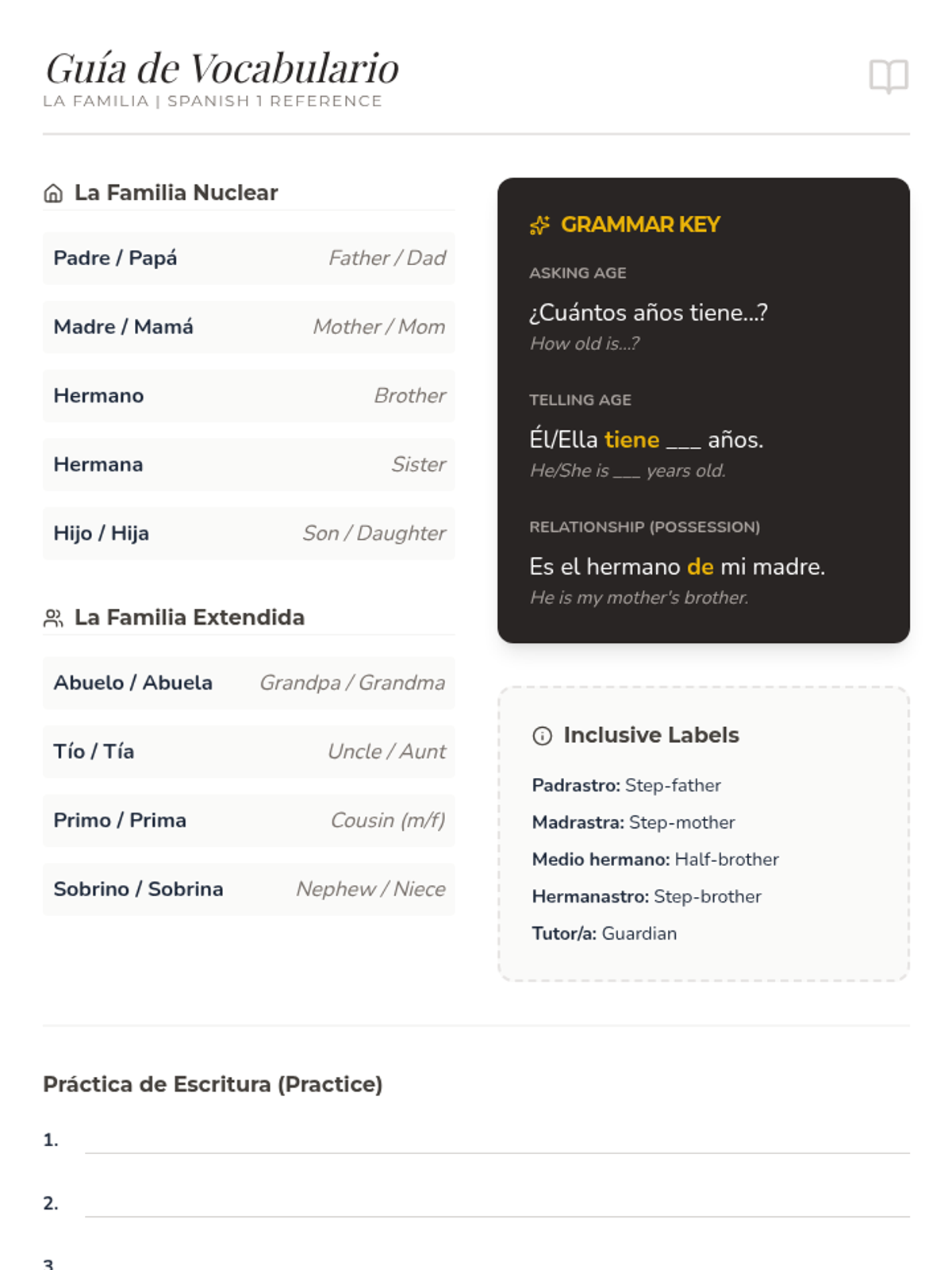
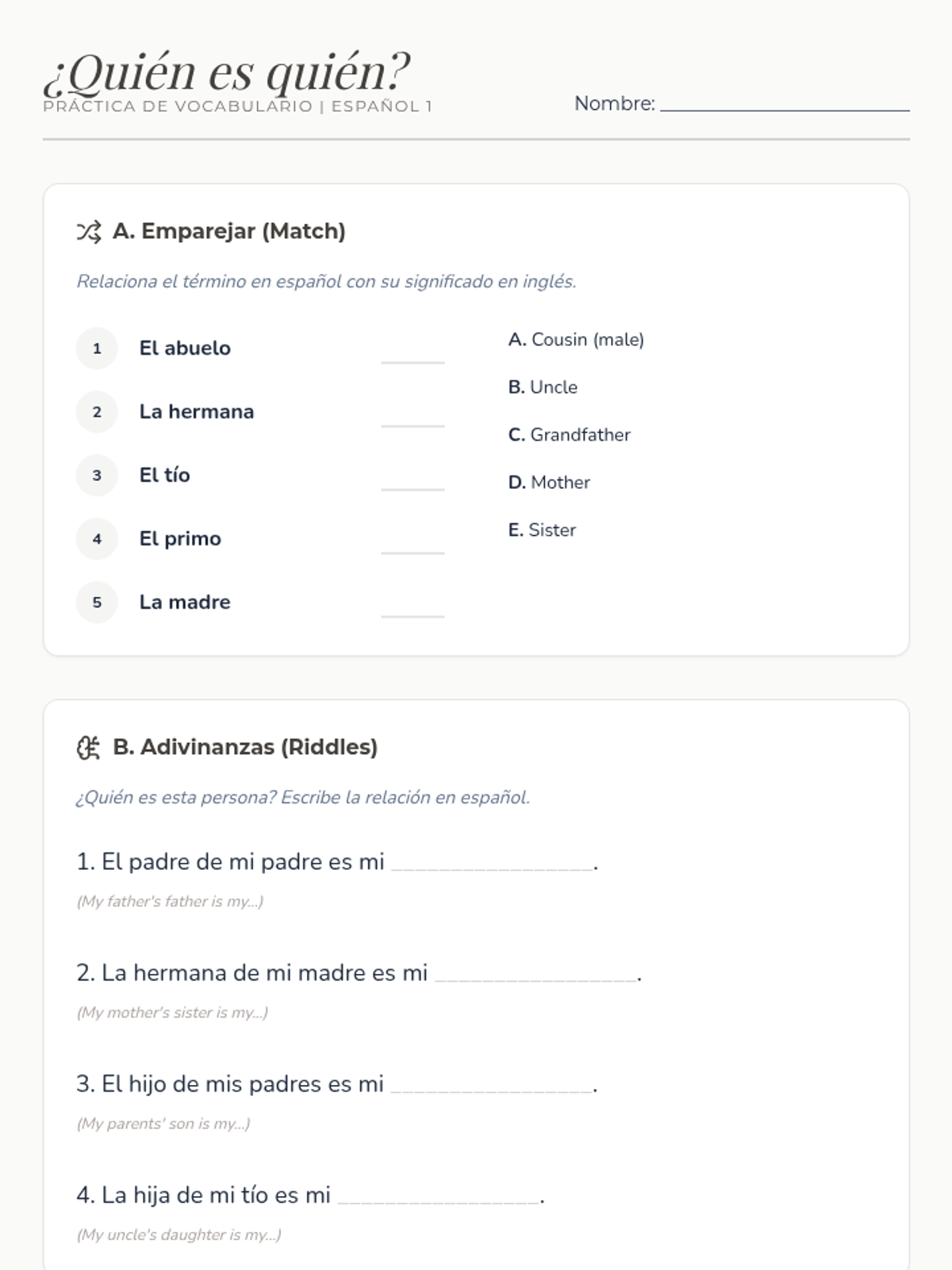
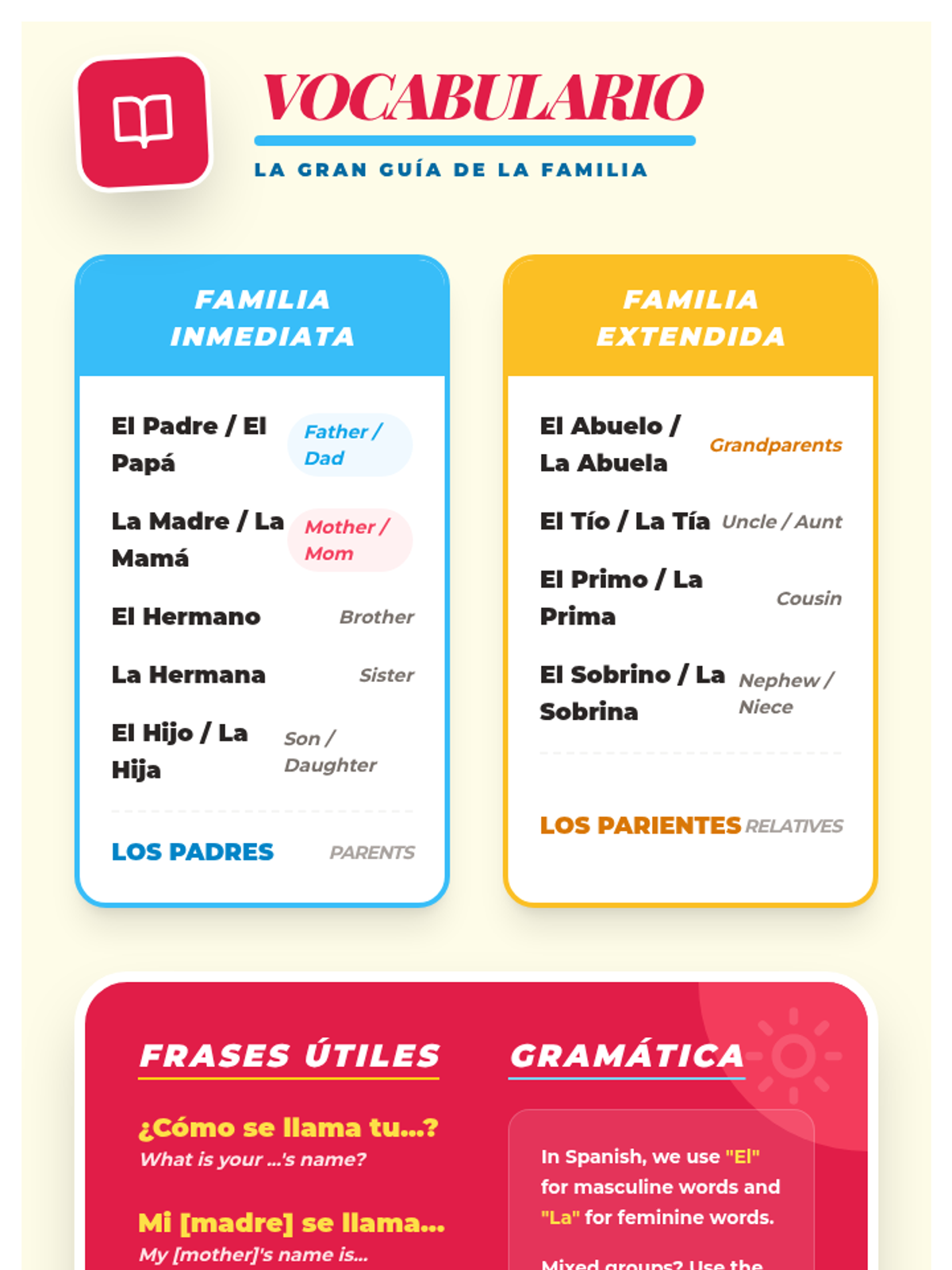
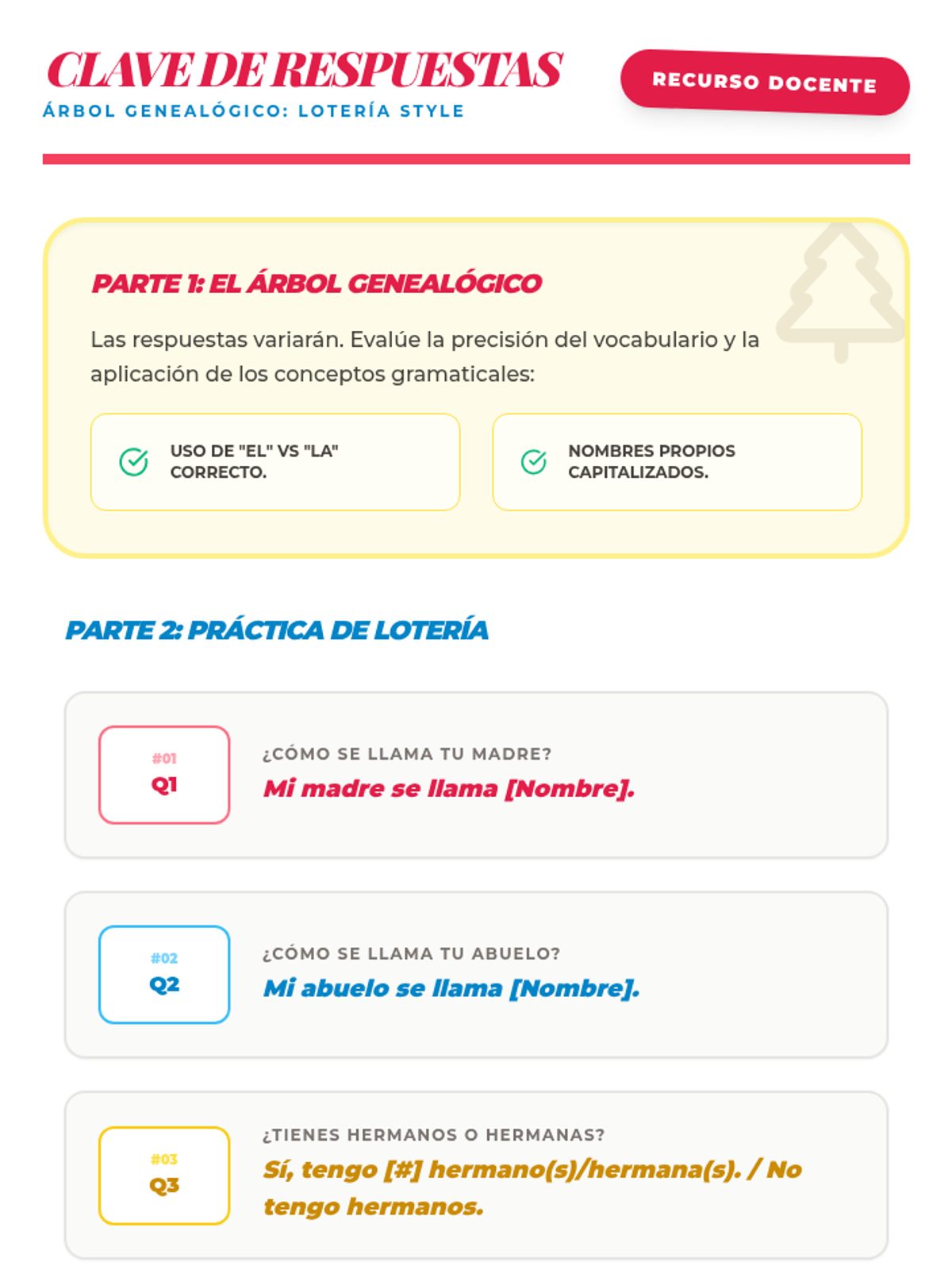
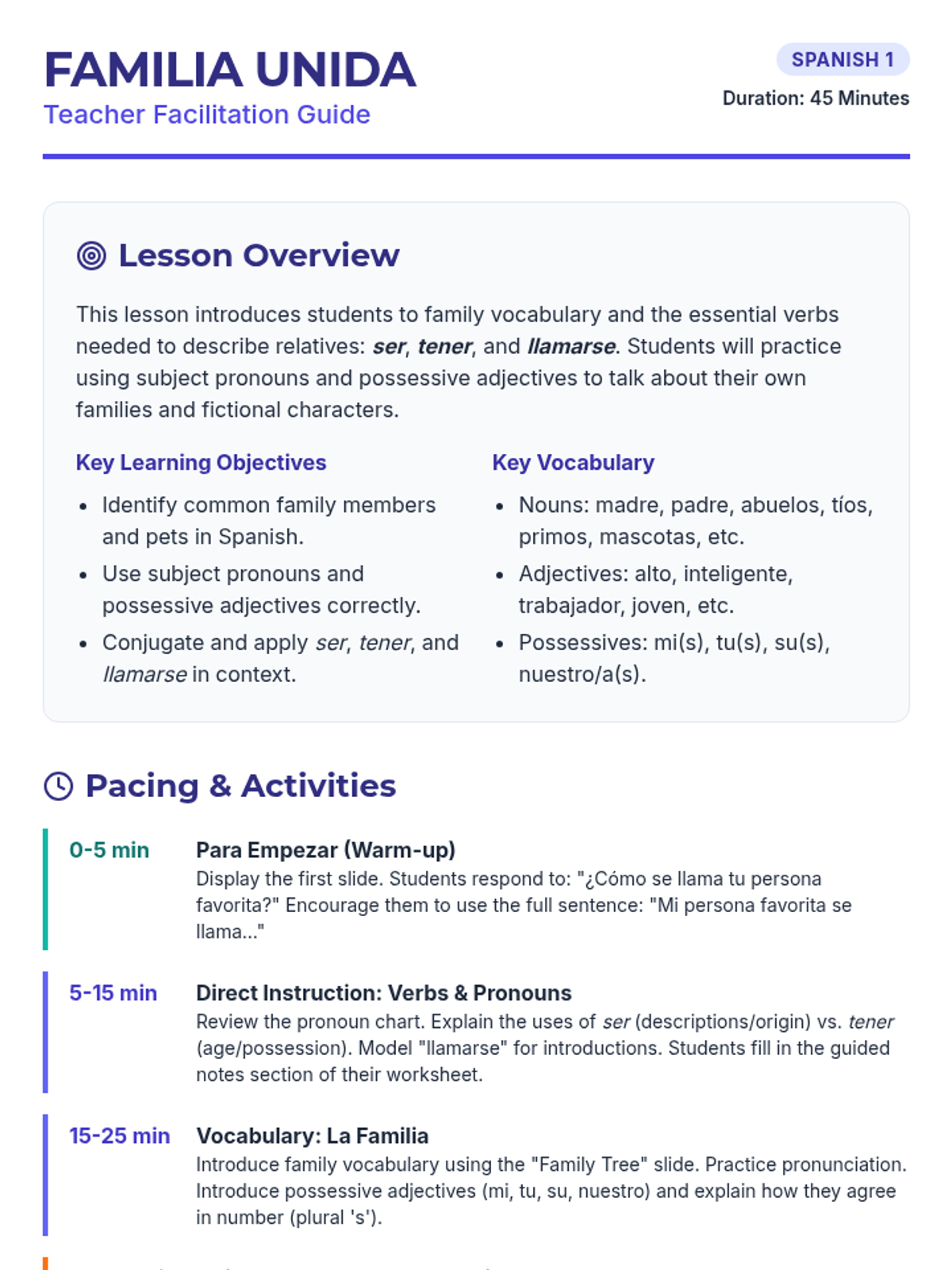
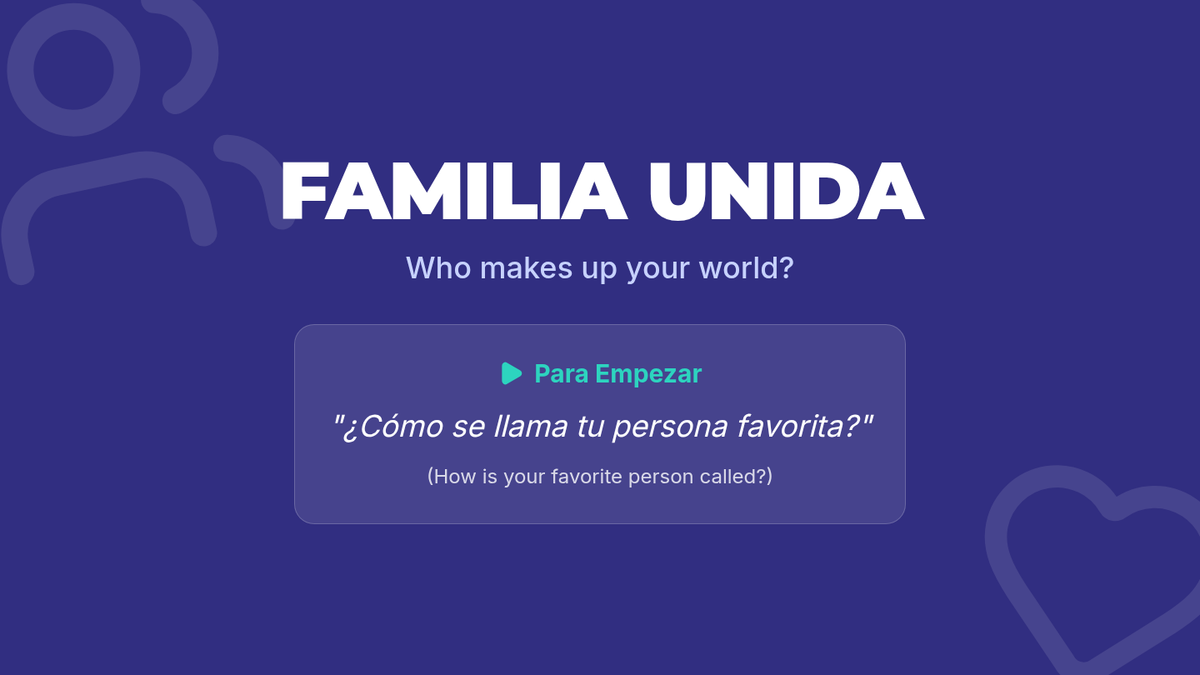
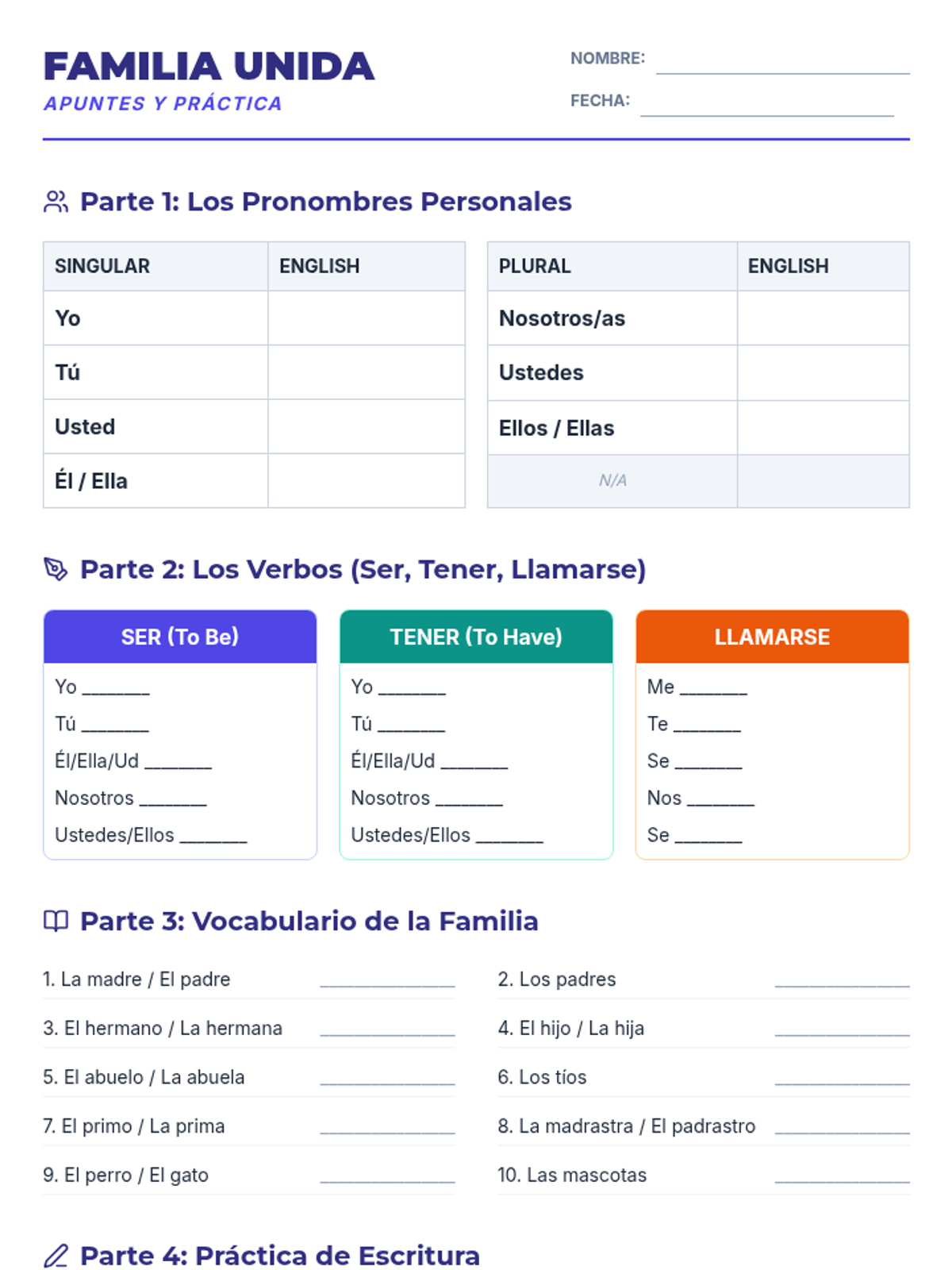
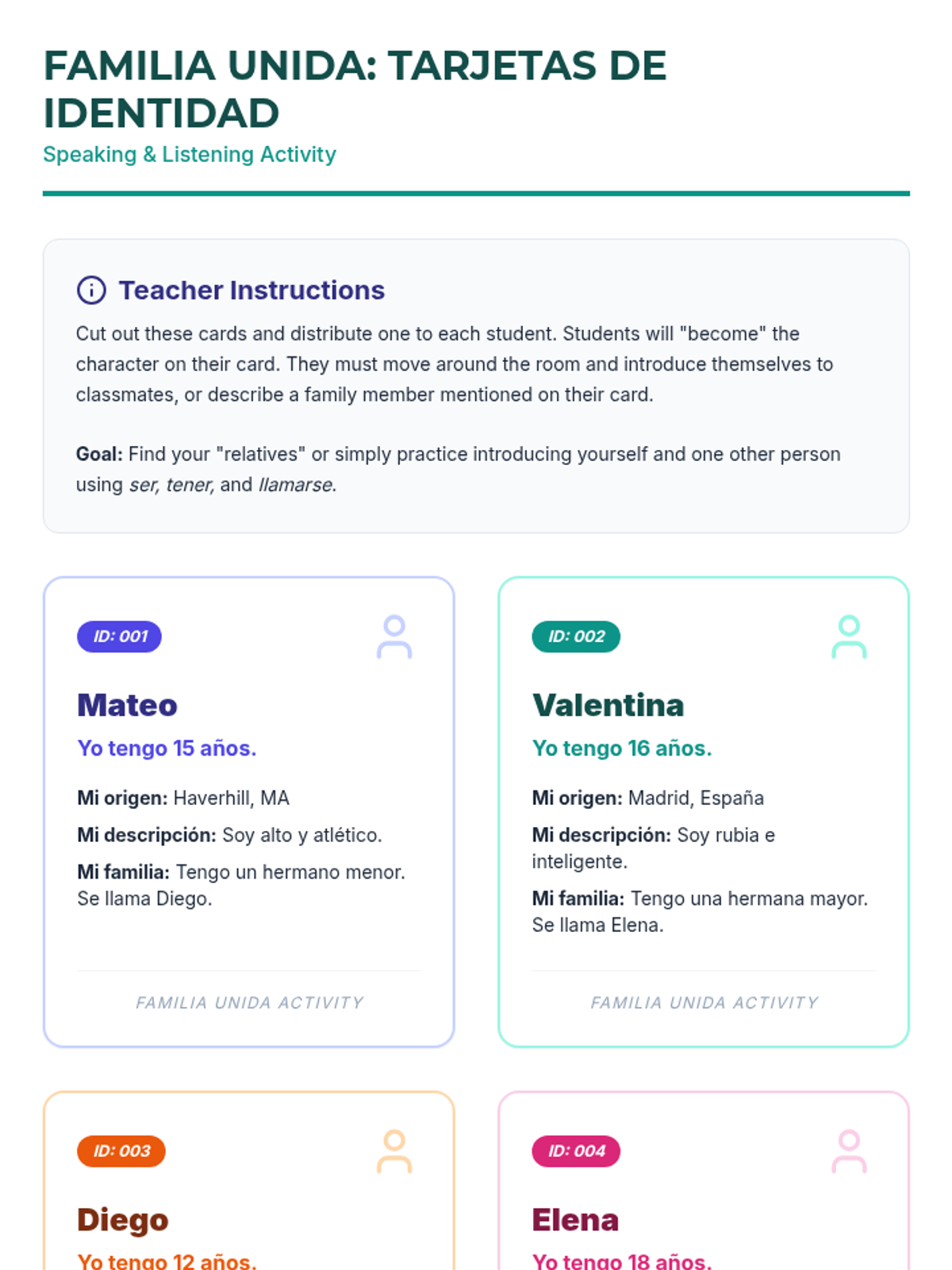
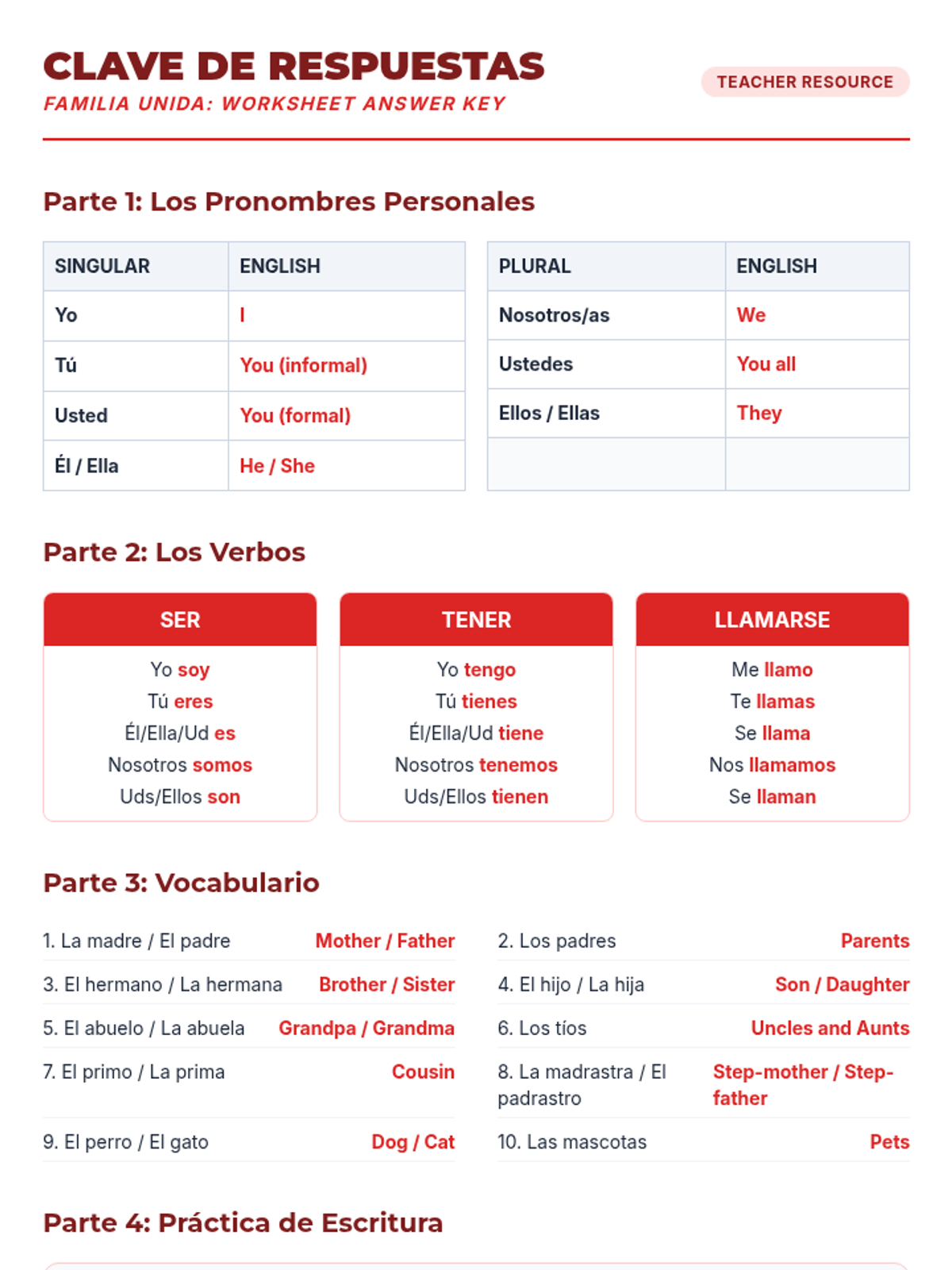
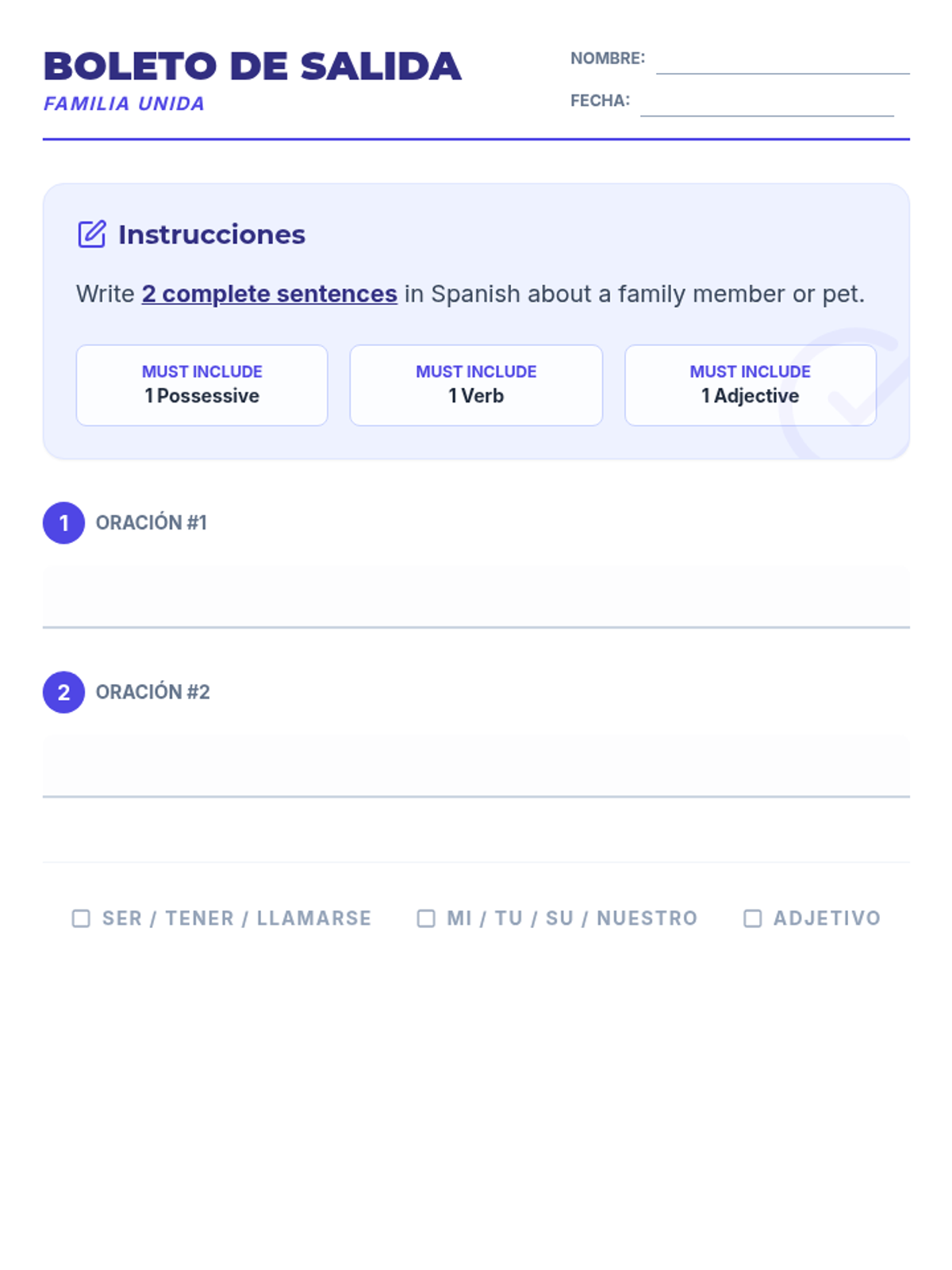
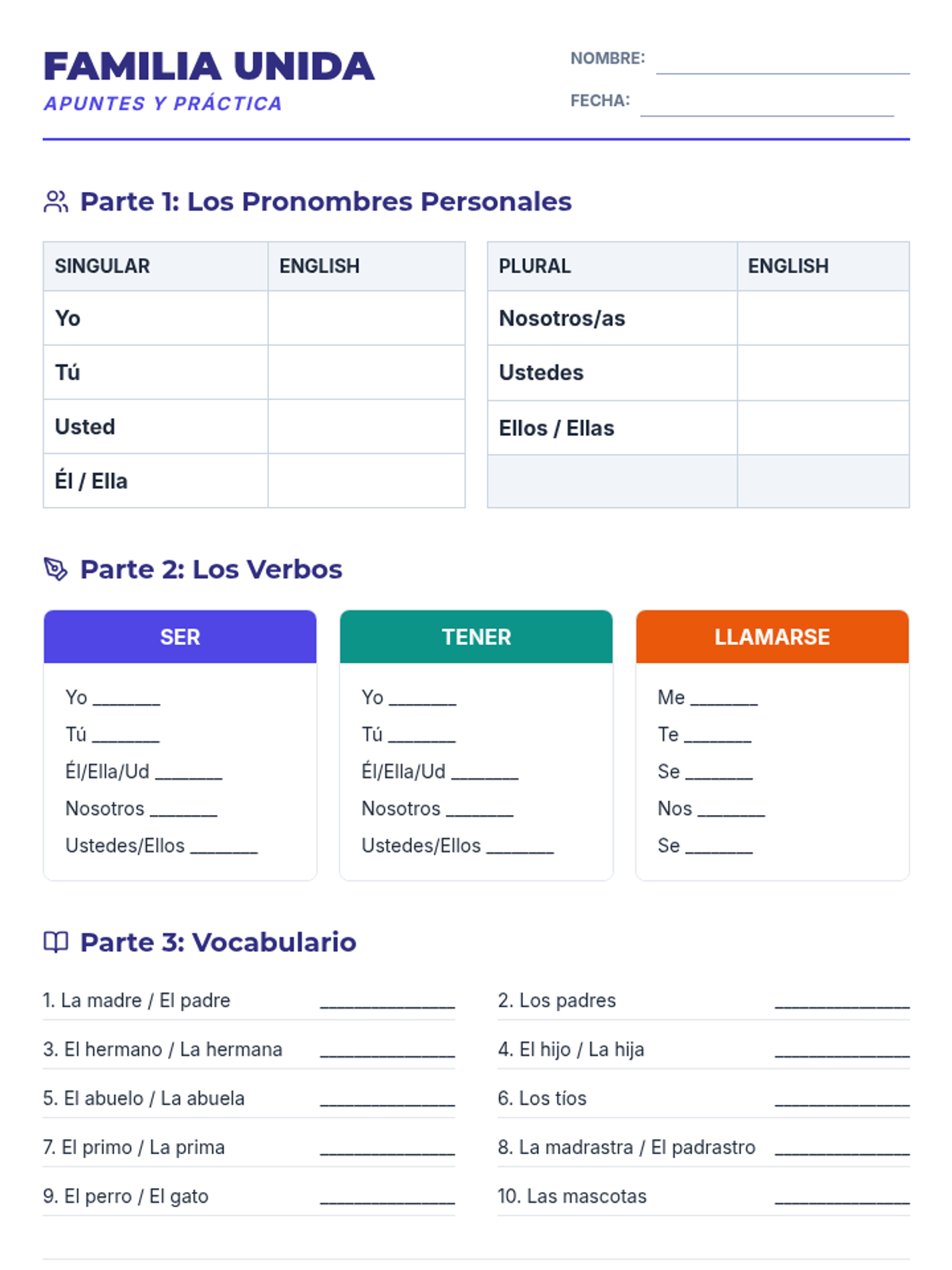
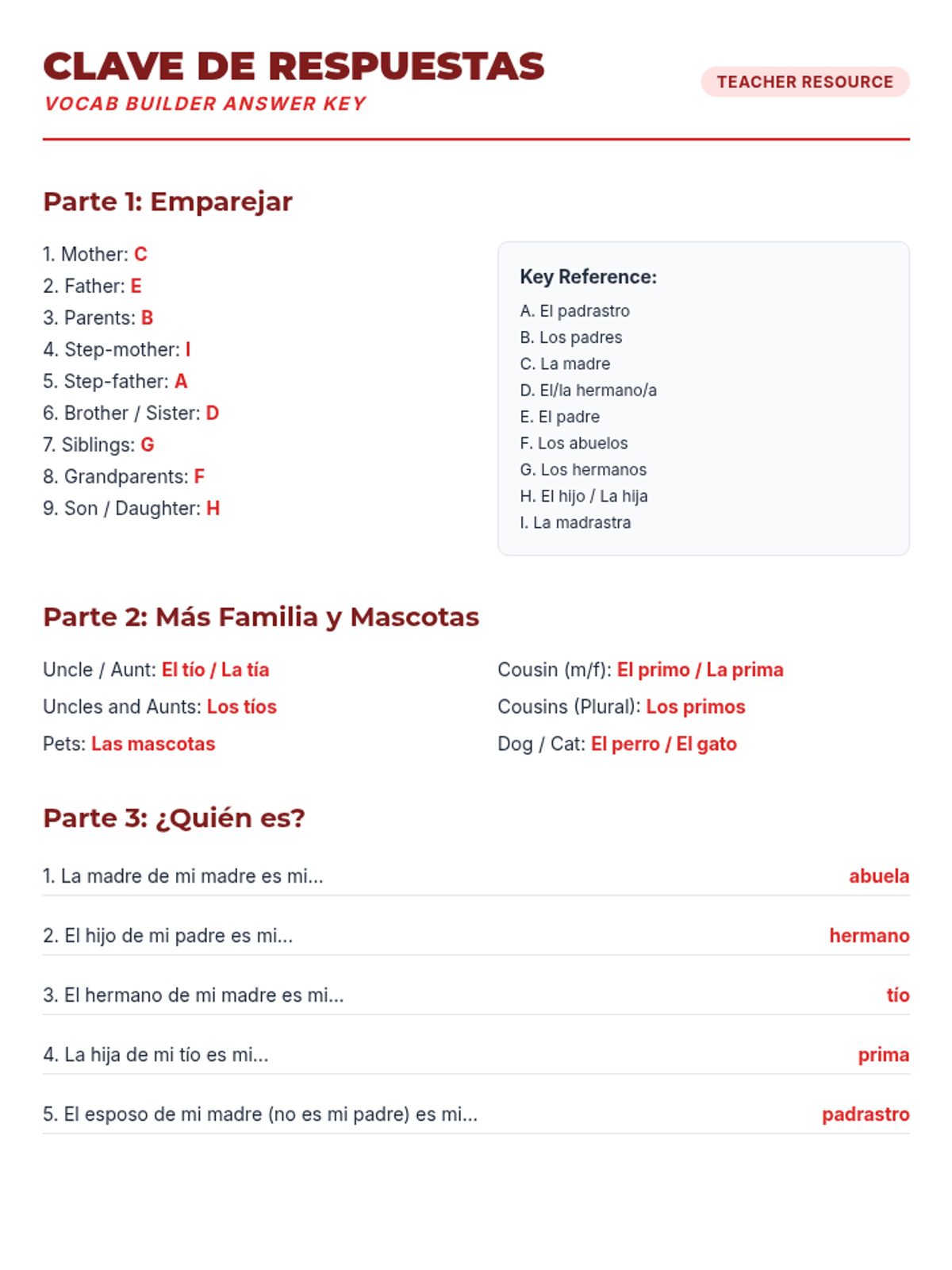
An introductory Spanish 1 lesson focused on family vocabulary, possessive adjectives, and the verbs ser, tener, and llamarse. Students will learn to describe their family members and pets while practicing subject pronouns.
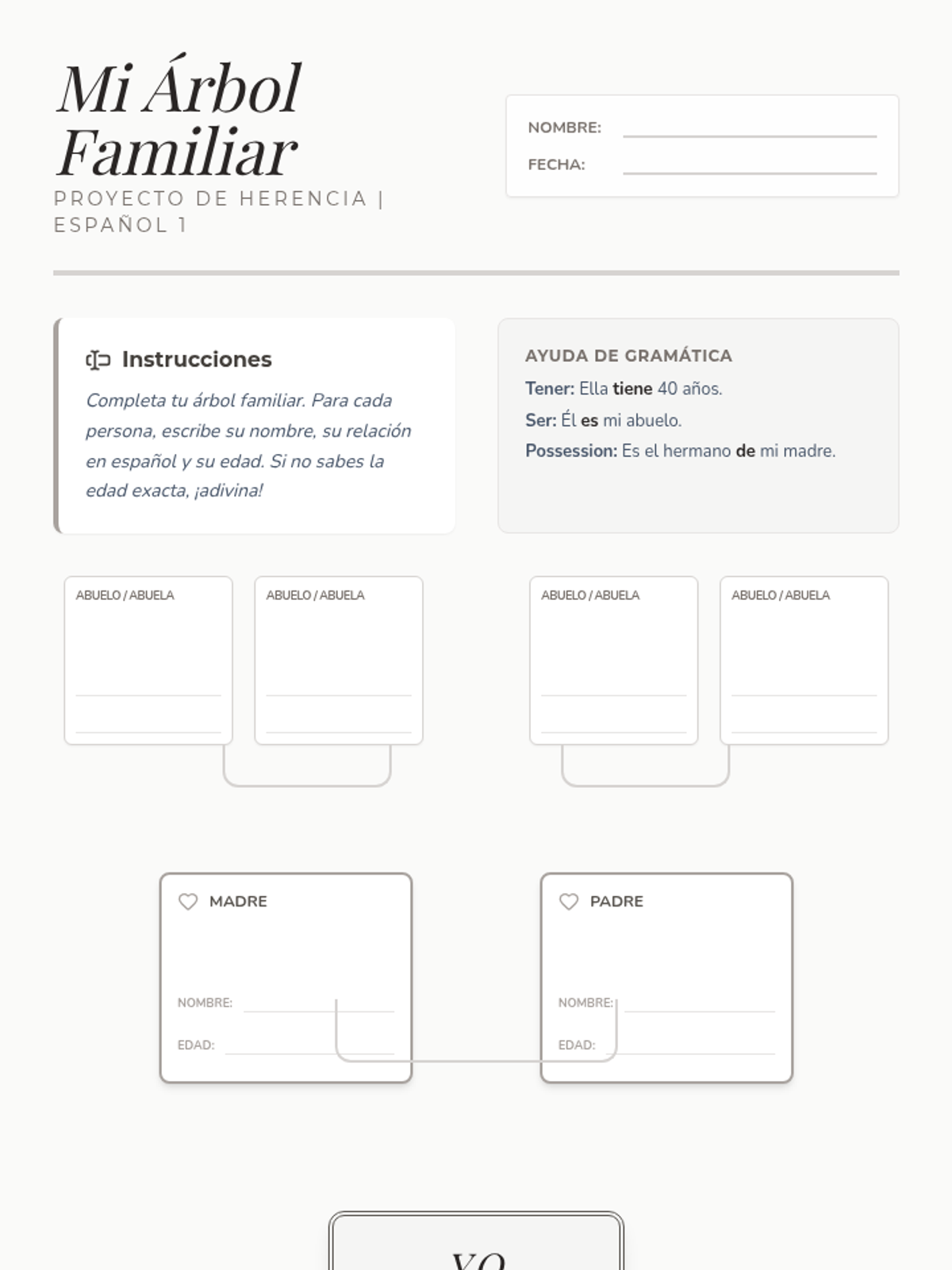
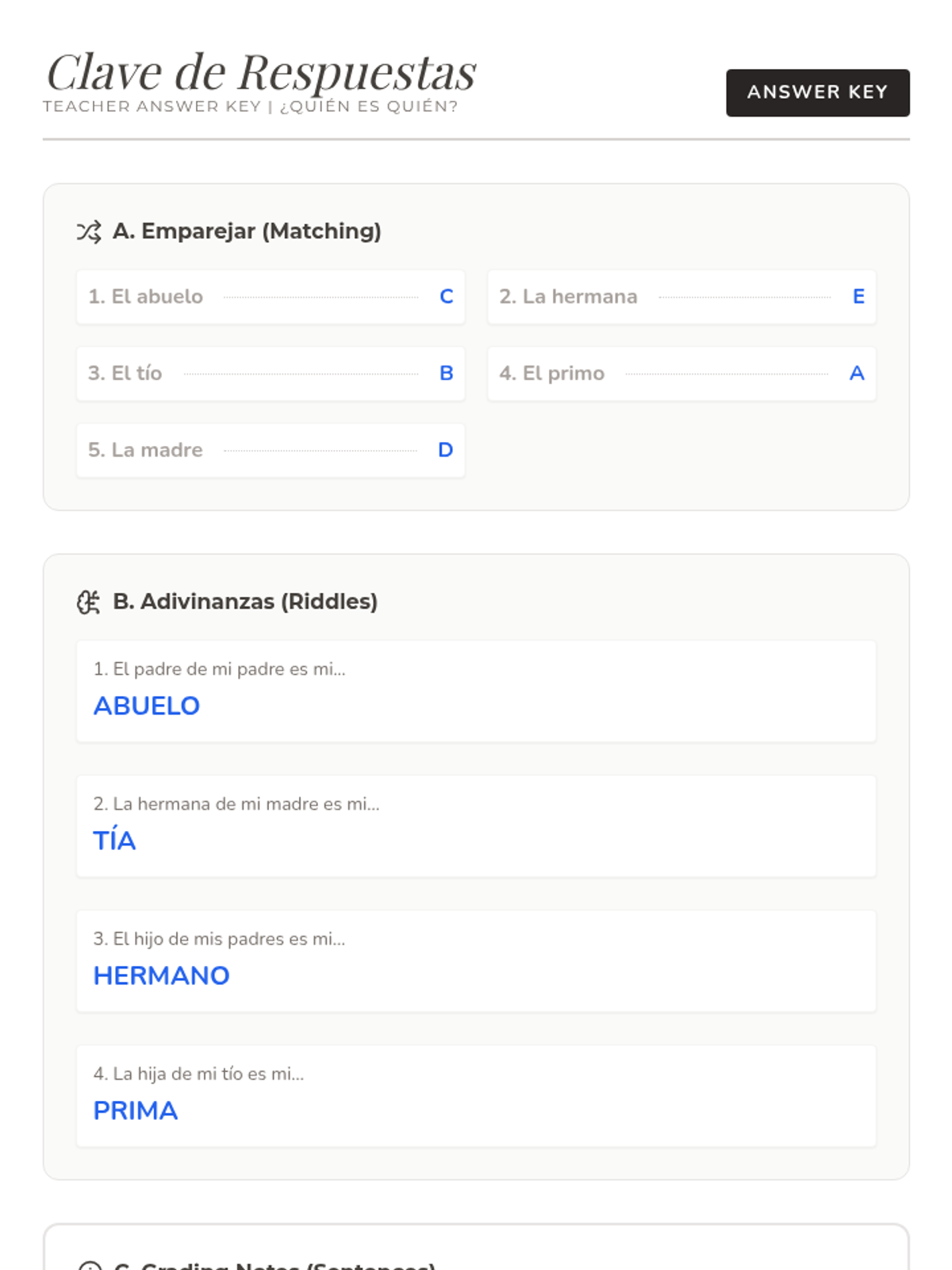
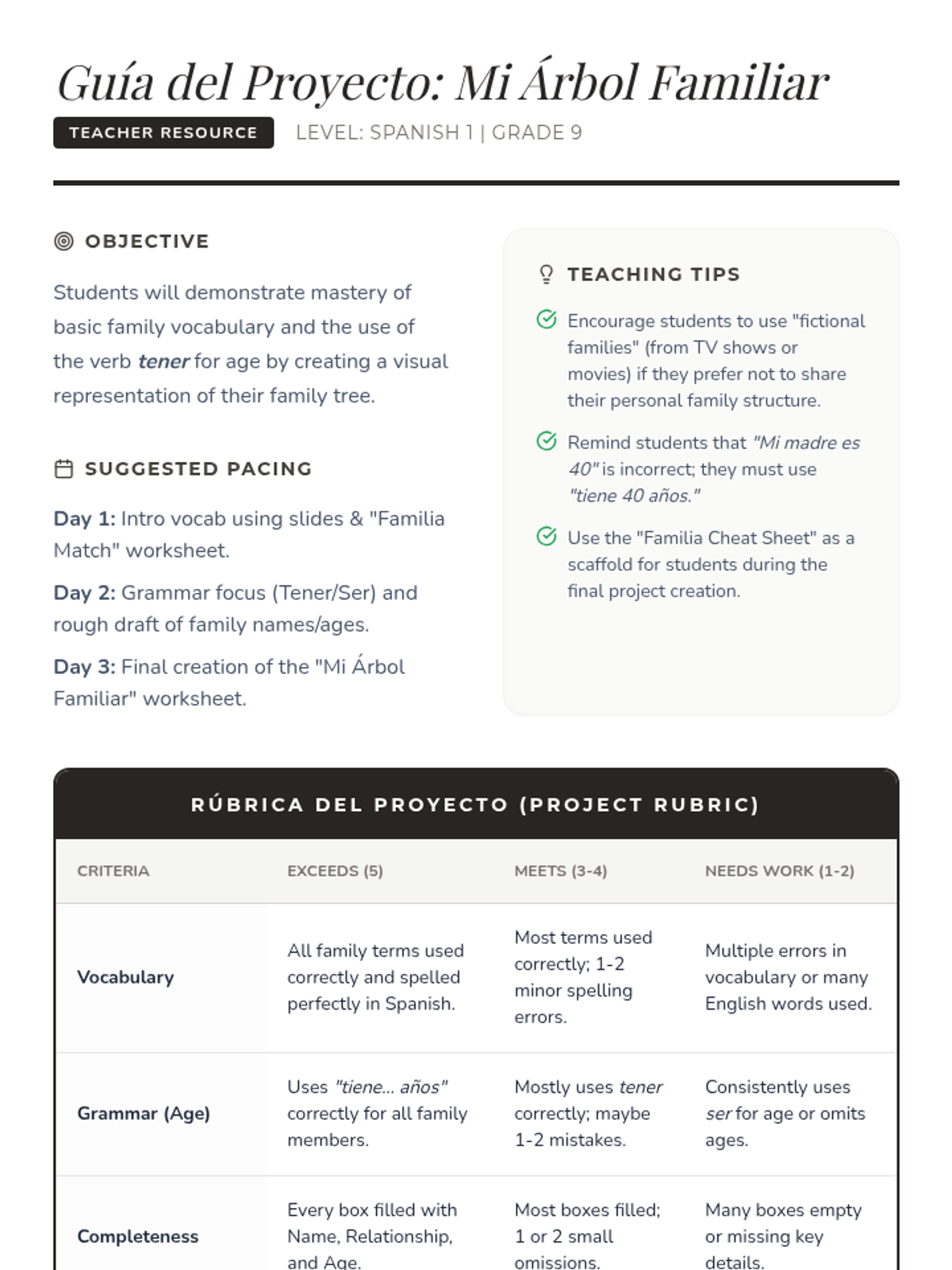
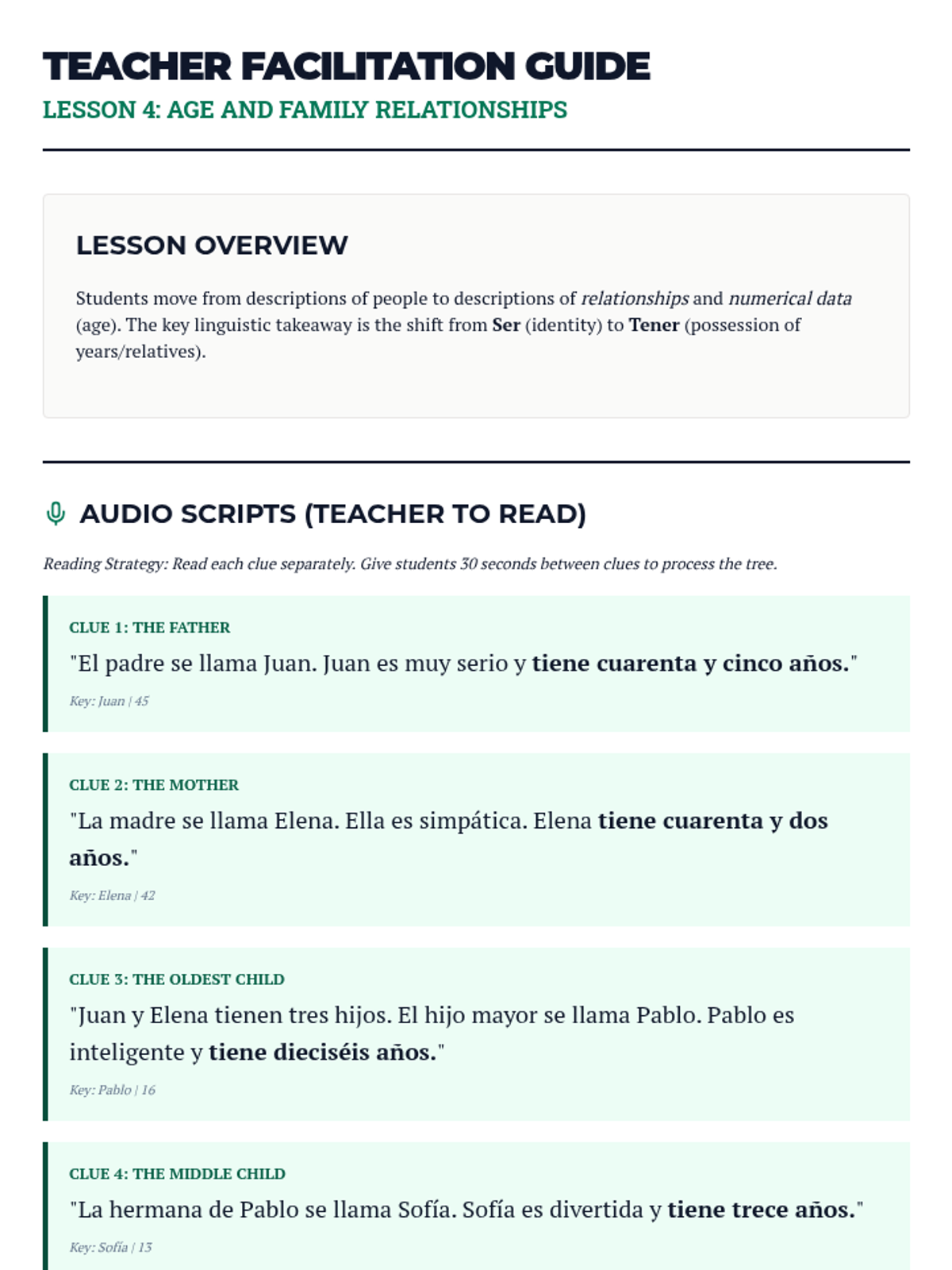
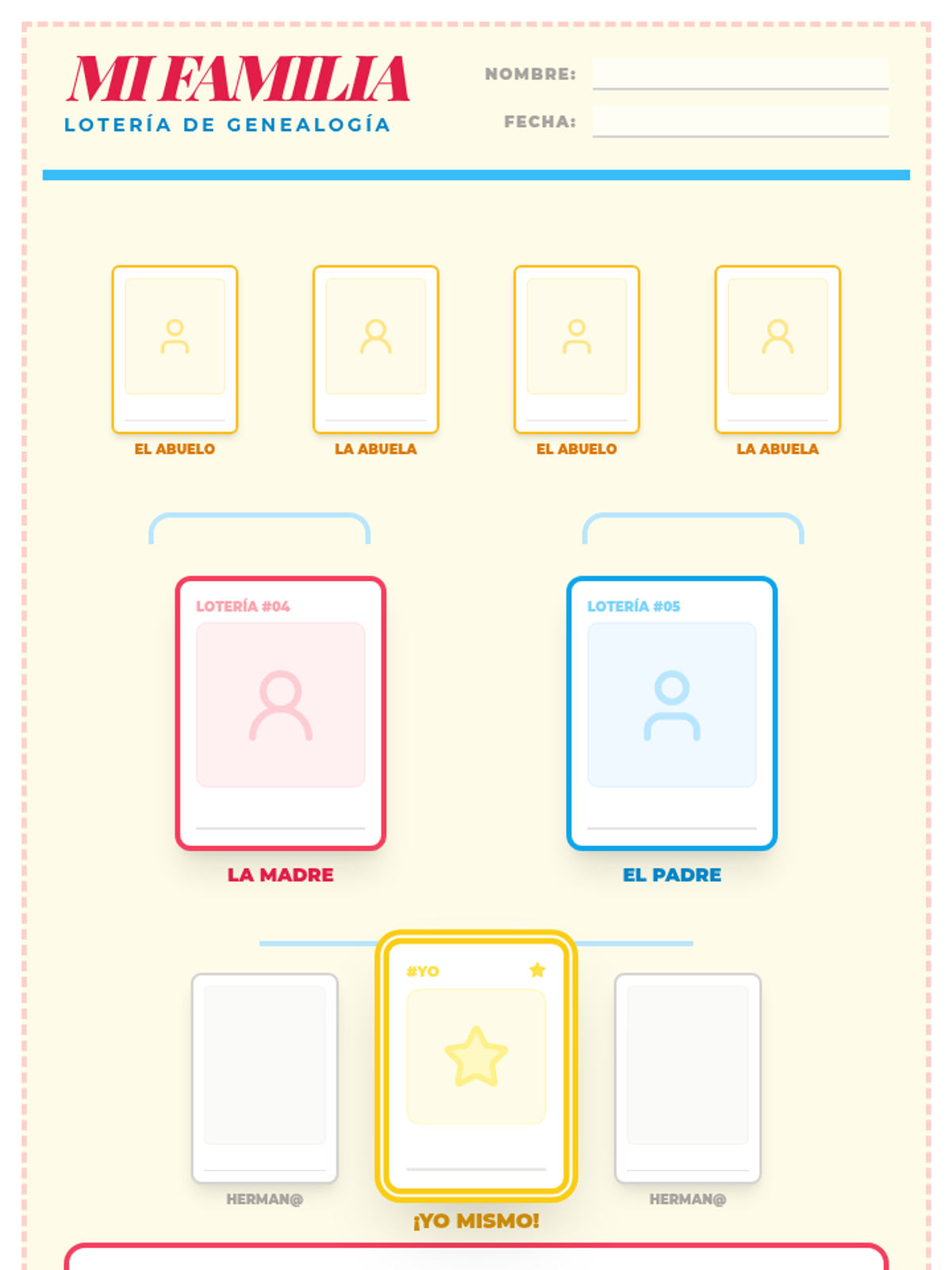
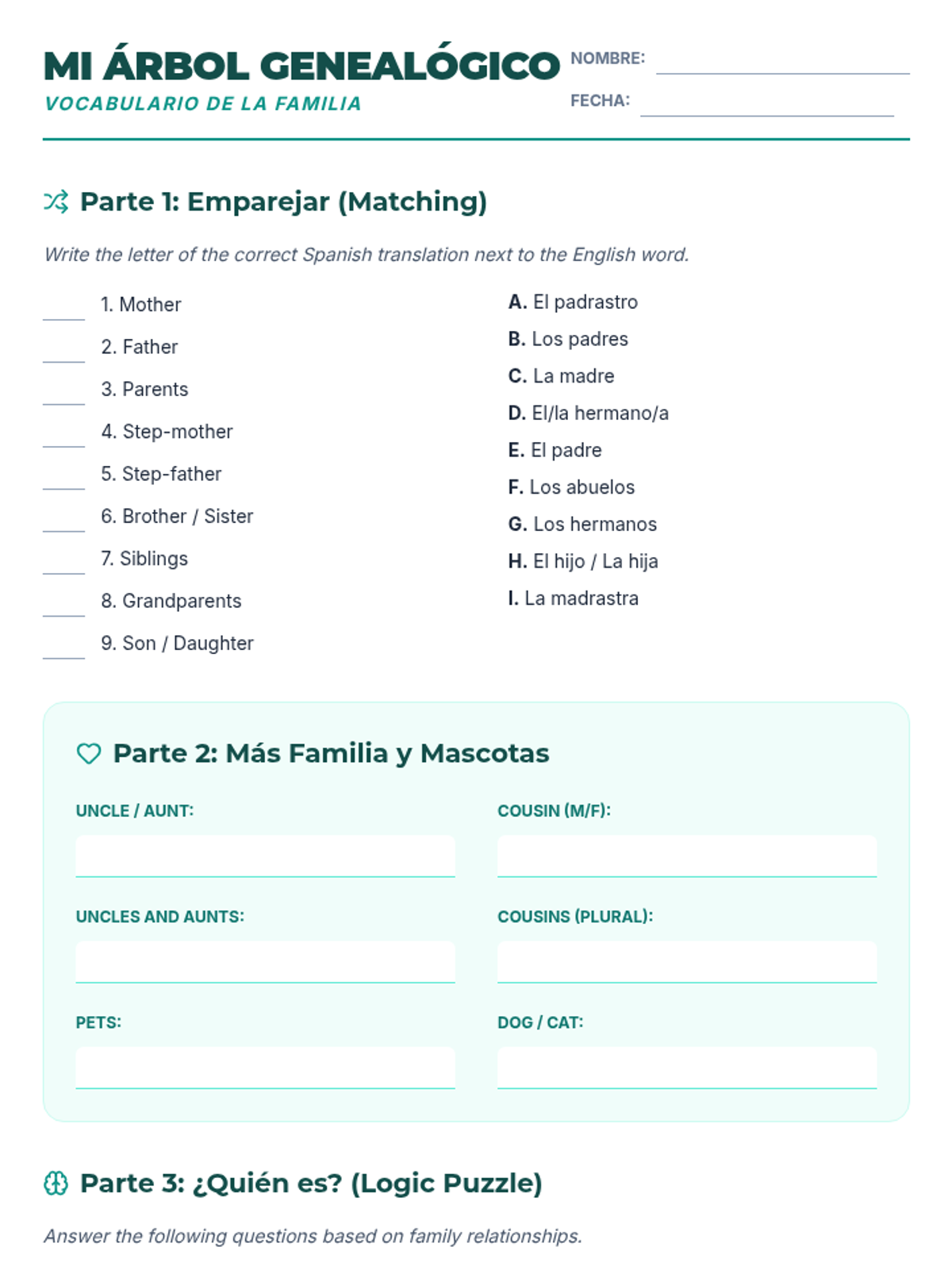
A Spanish 1 lesson focused on family vocabulary, ages, and relationships through the creation of a personalized family tree project. Students learn 'ser' and 'tener' in context while exploring their own heritage.
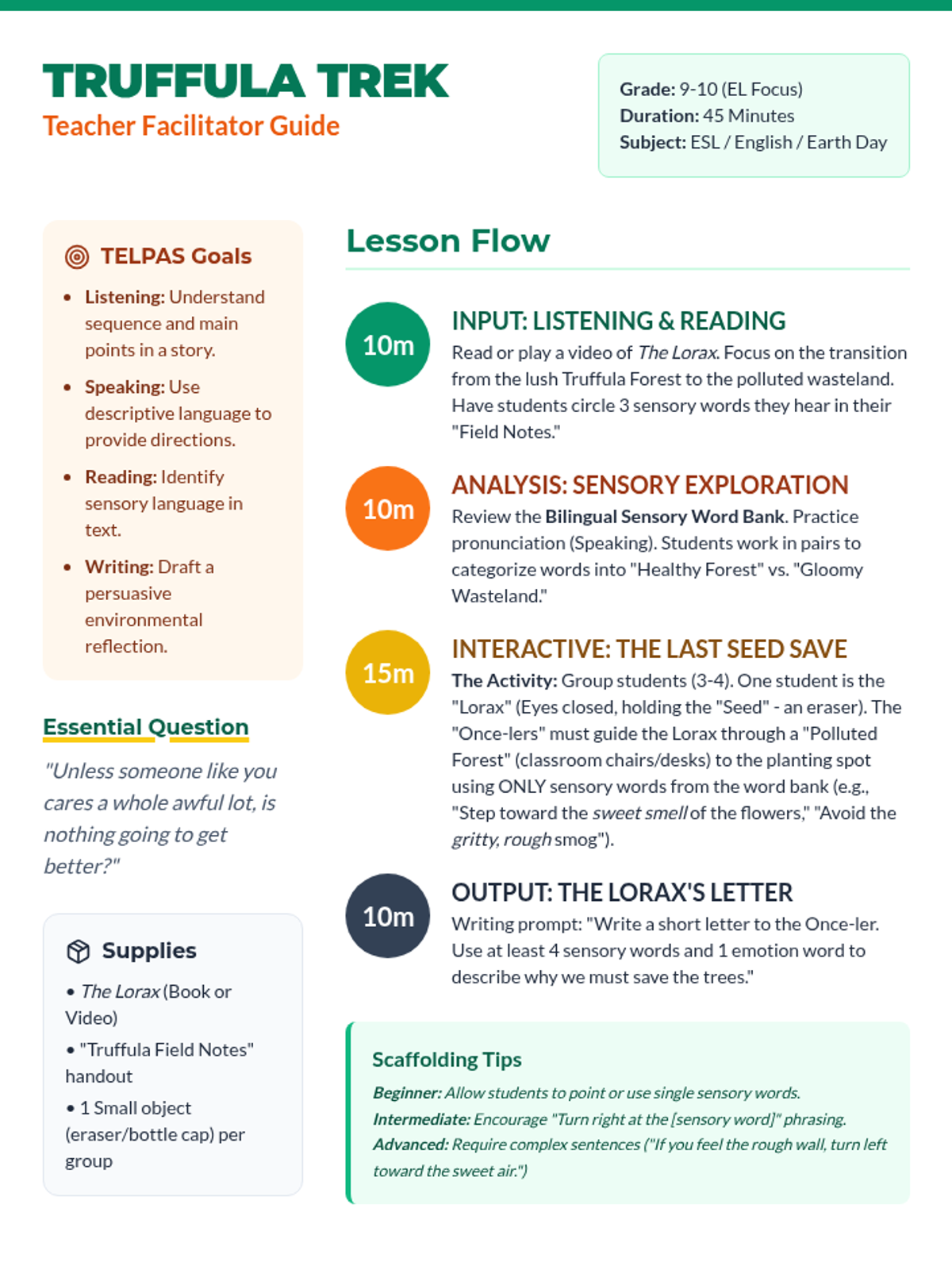
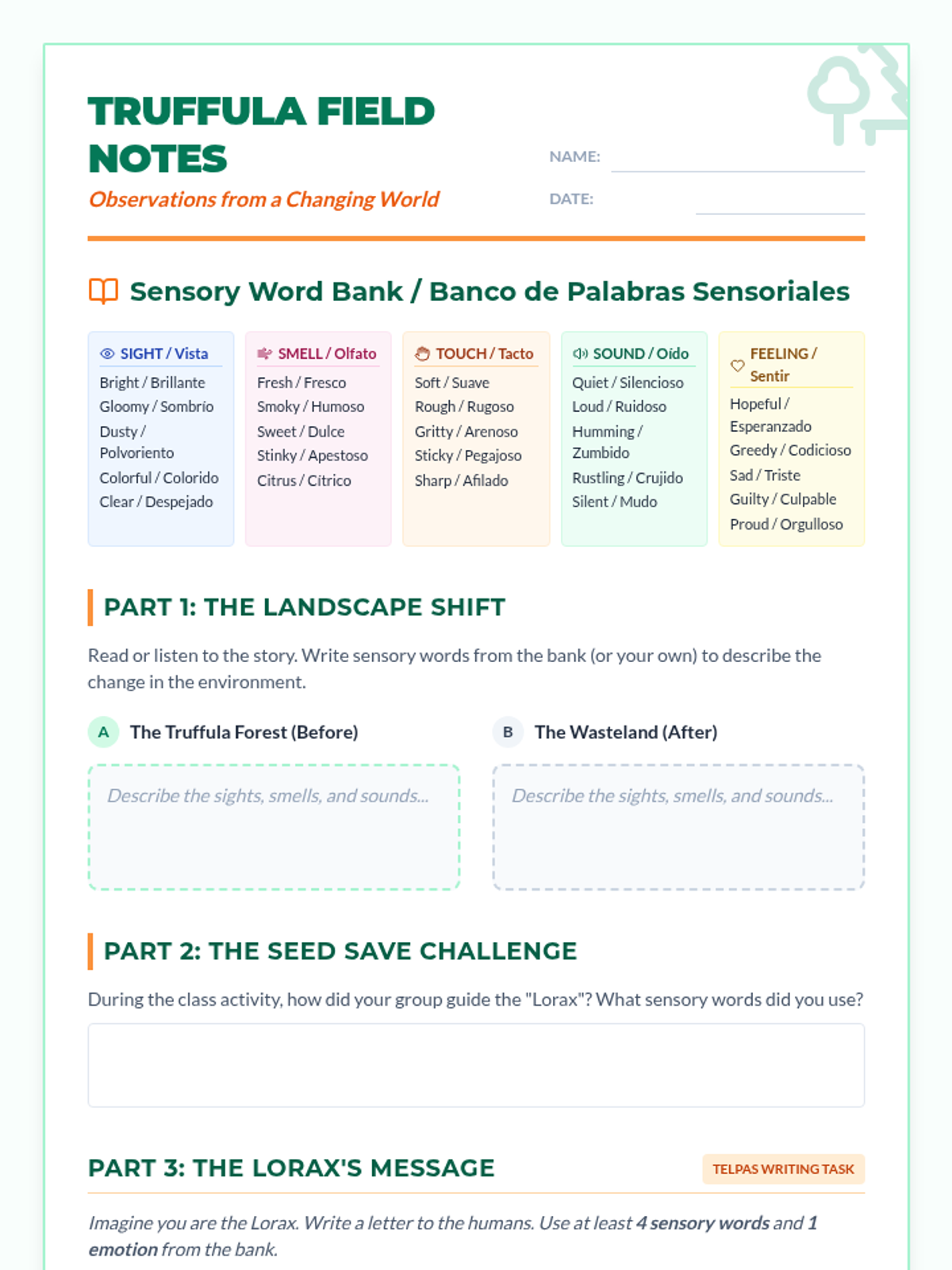
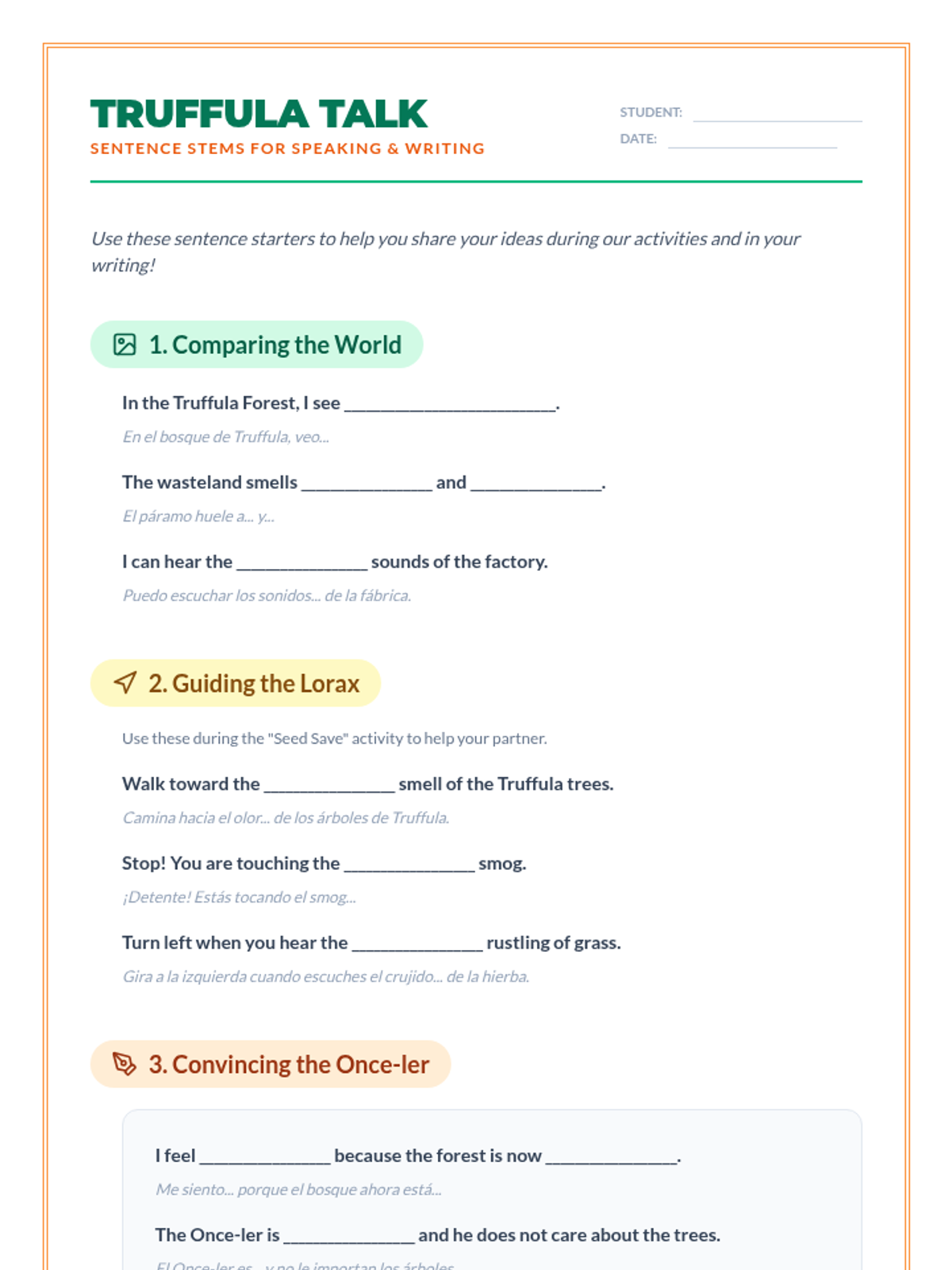
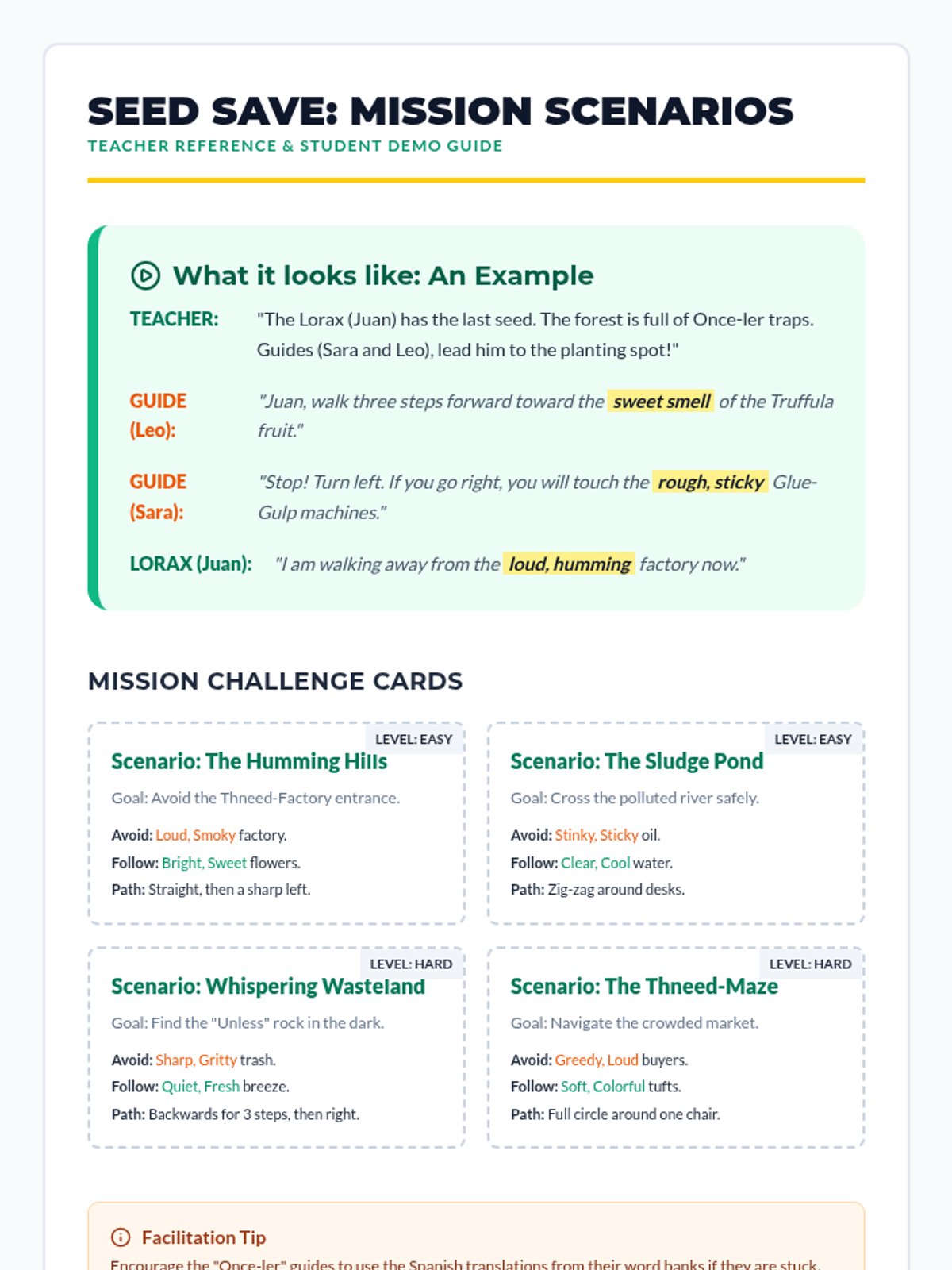
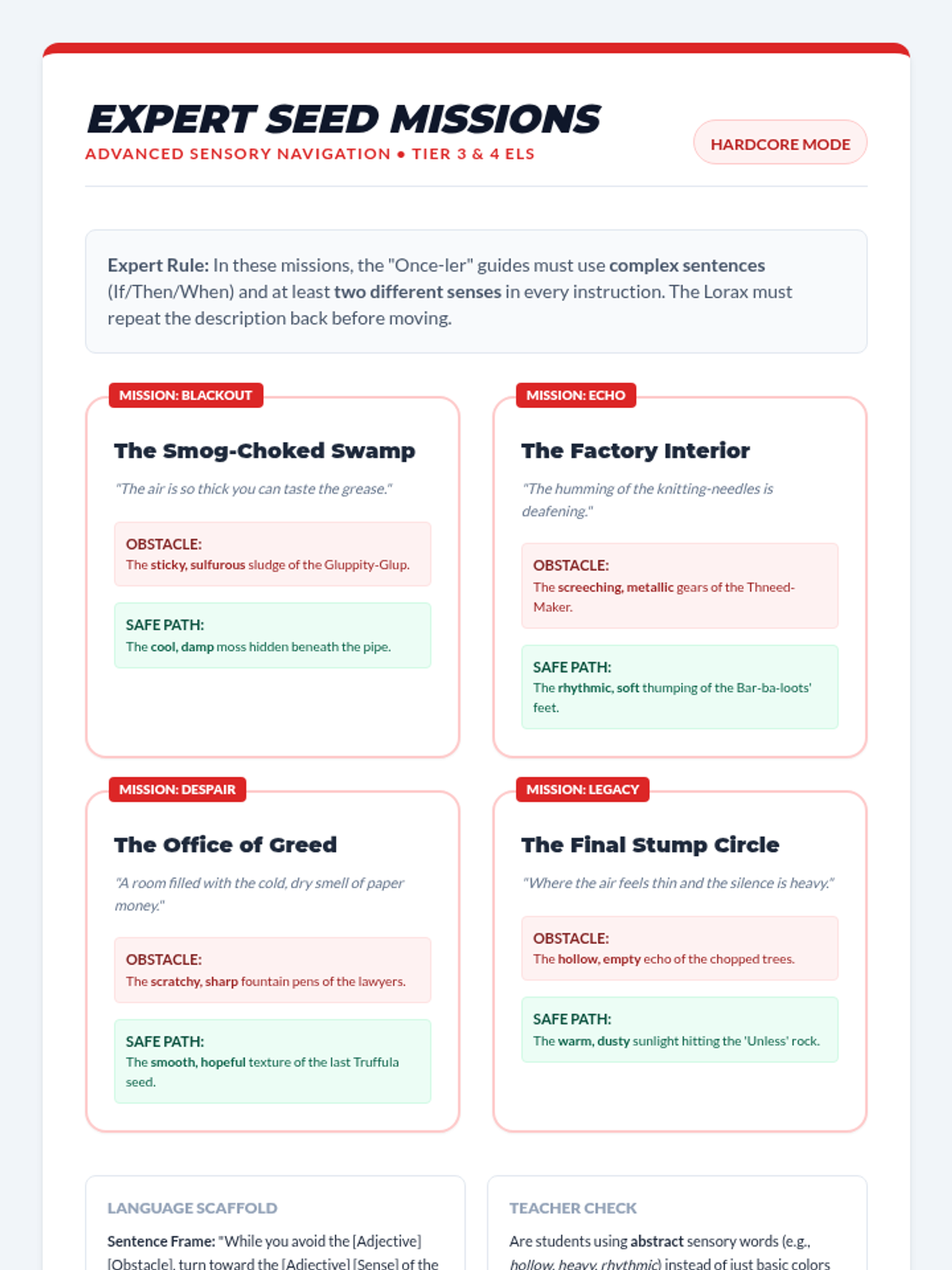
A 45-minute immersive lesson where students use sensory language to analyze environmental impact and collaborate on protecting 'the last seed.'
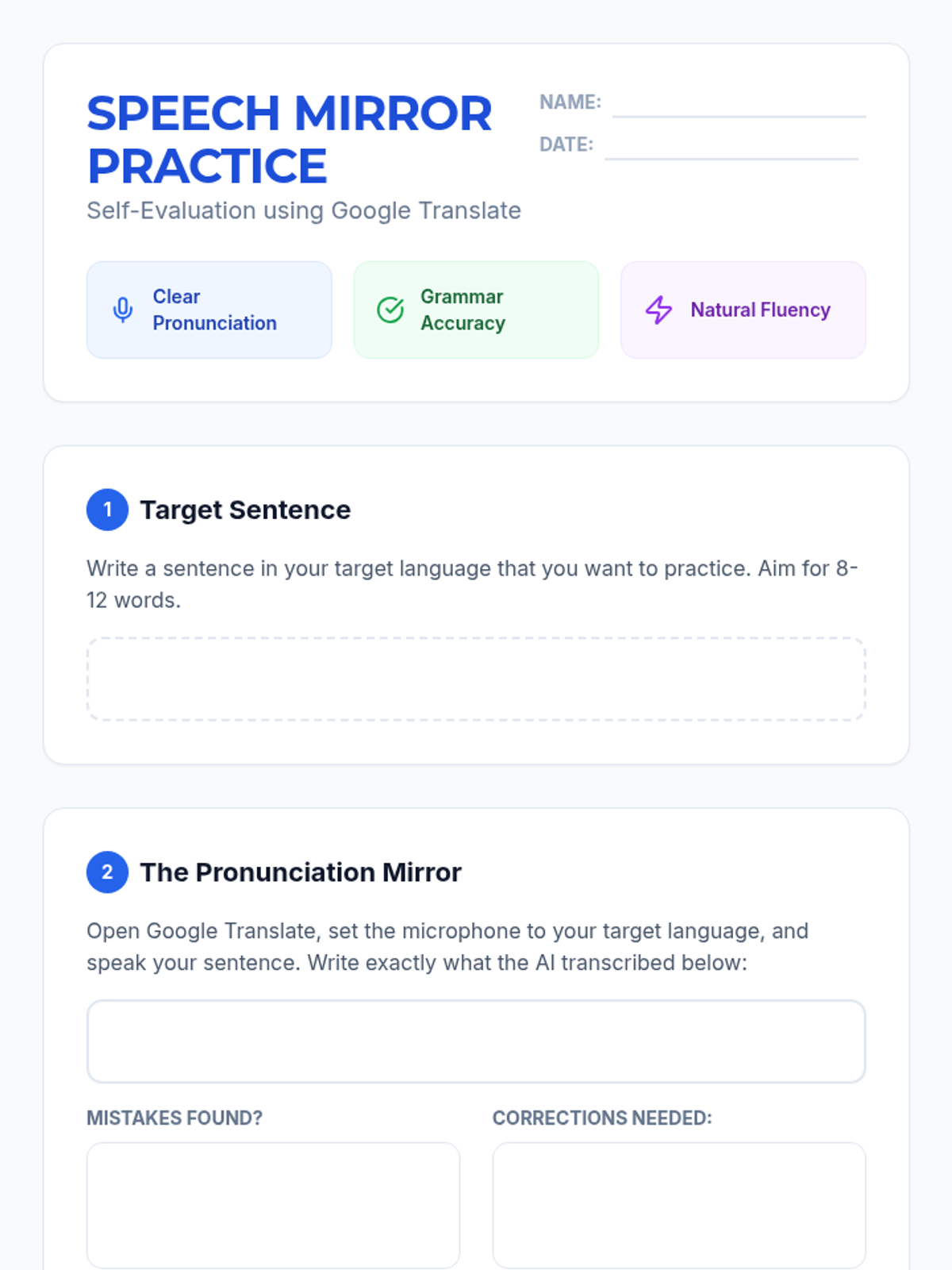
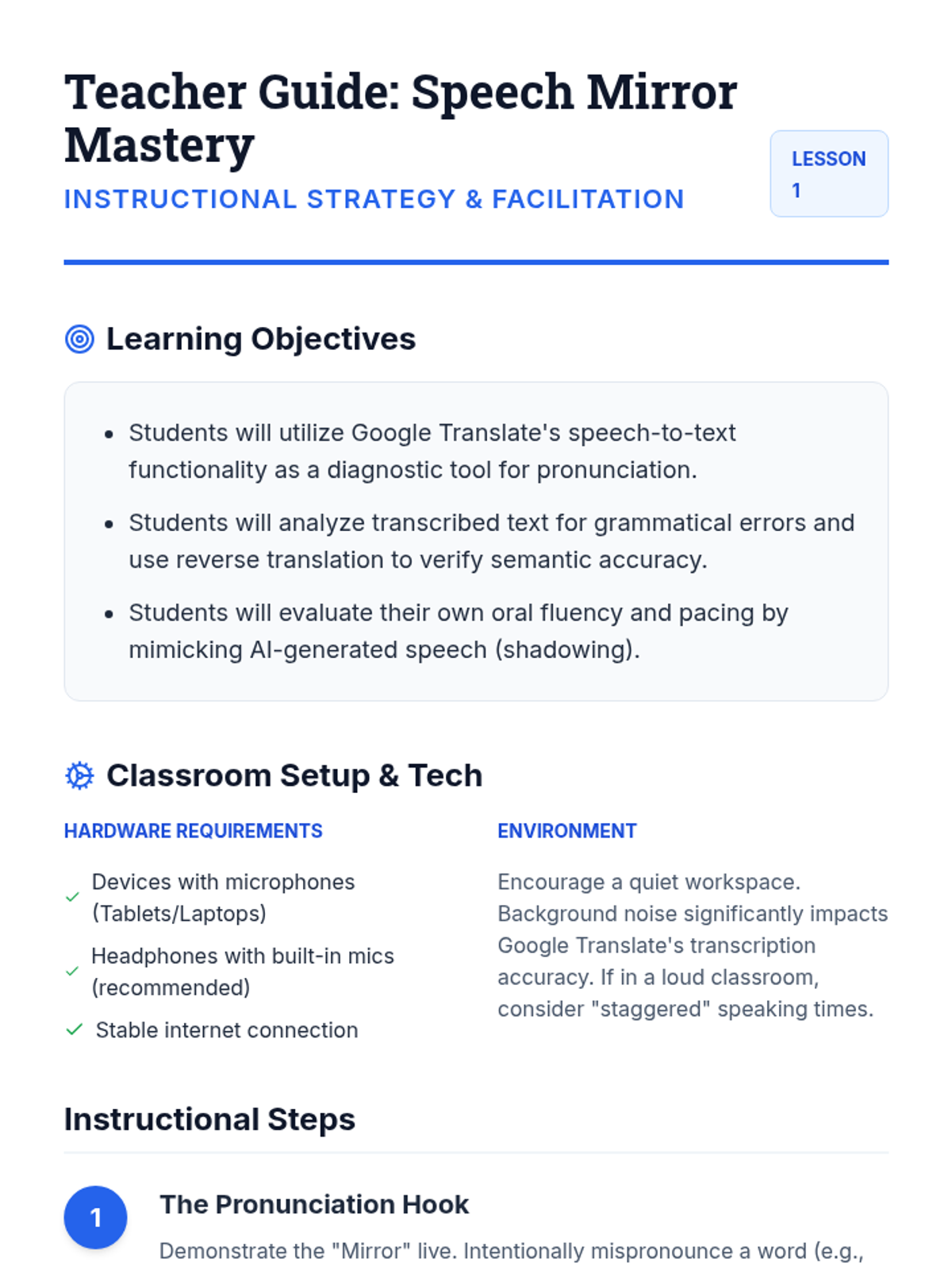
This lesson teaches students how to use Google Translate's speech-to-text and text-to-speech features to self-evaluate their spoken language. Focus areas include pronunciation clarity, grammatical accuracy of transcribed text, and oral fluency.
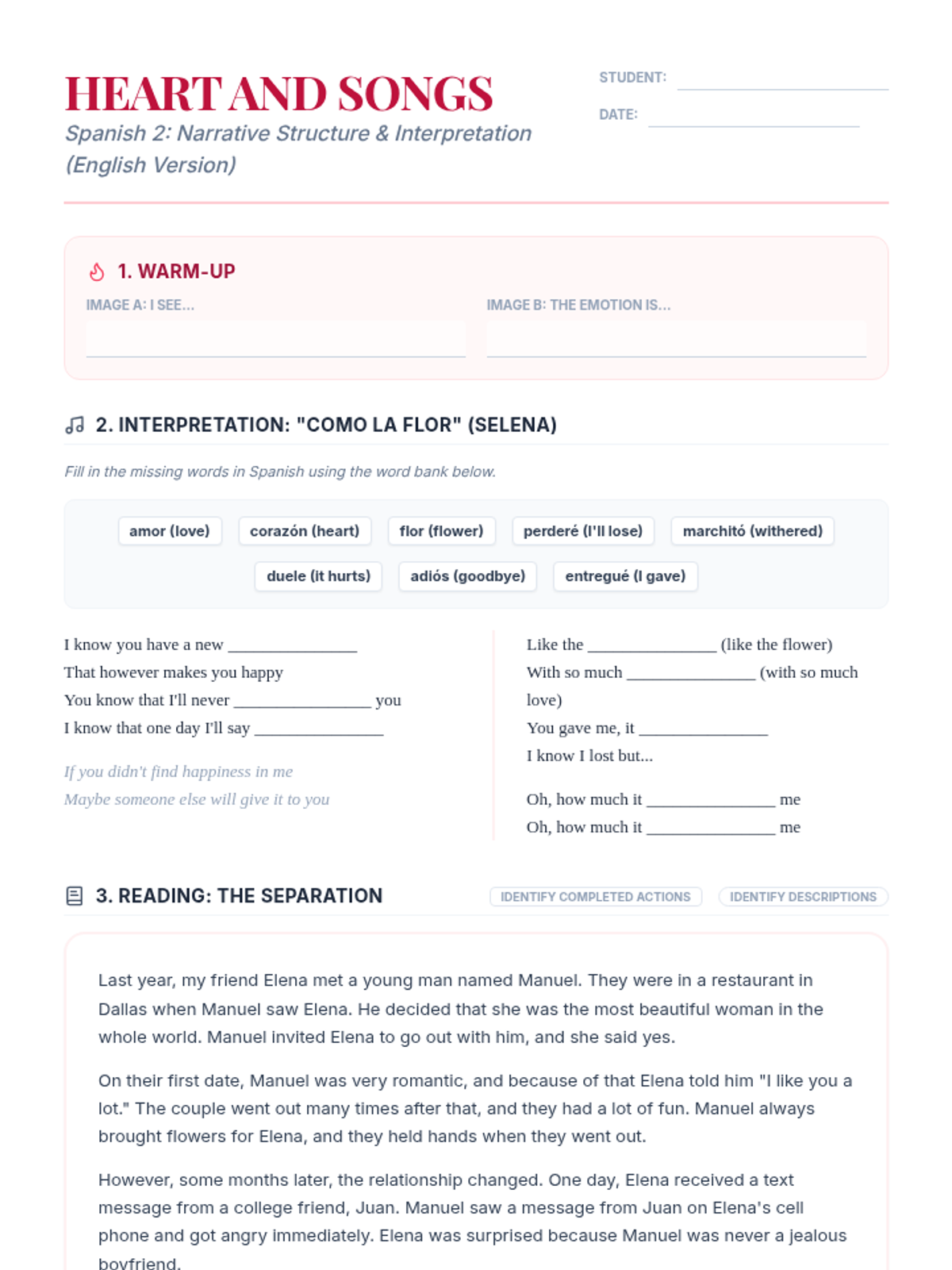
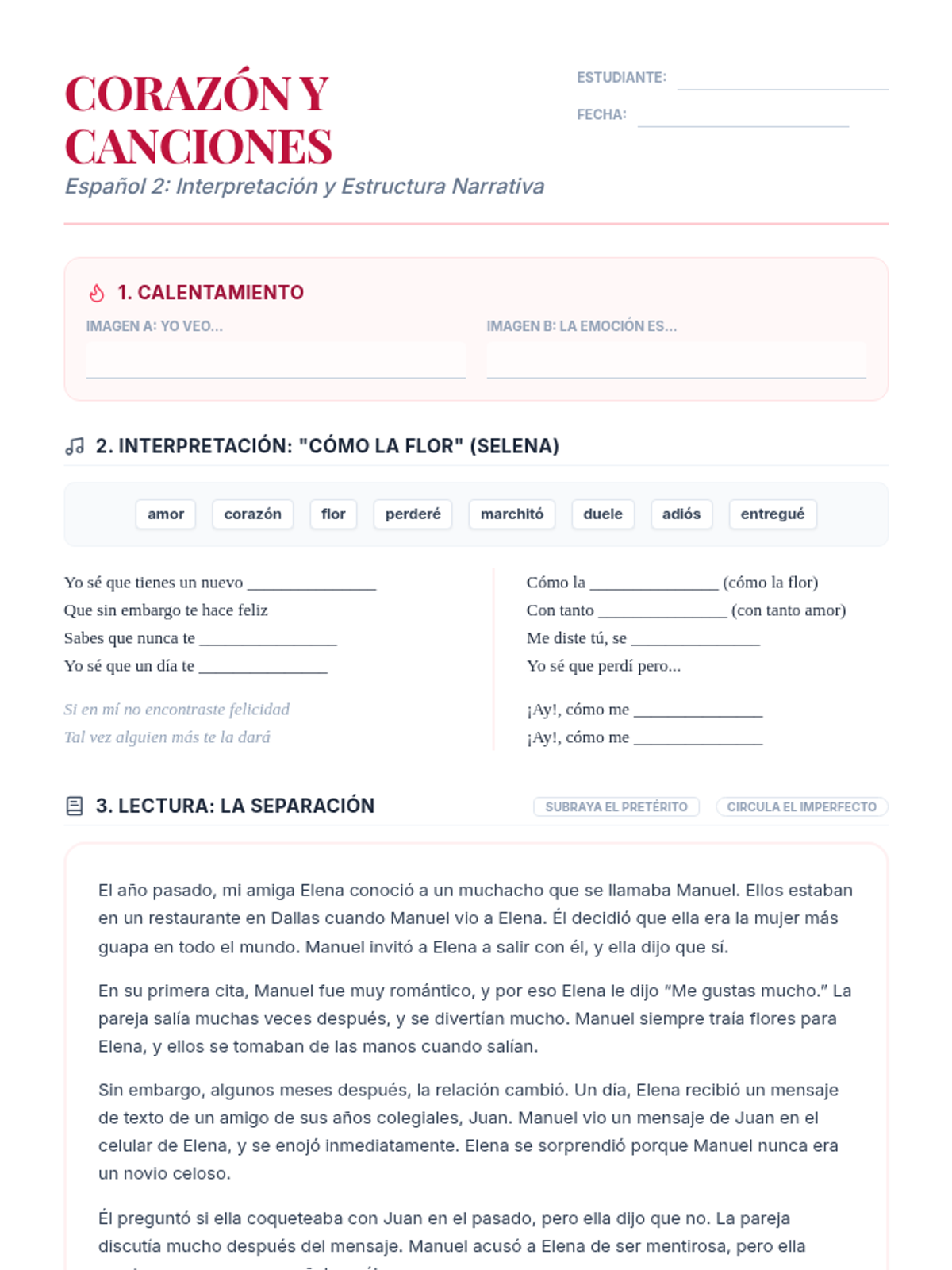
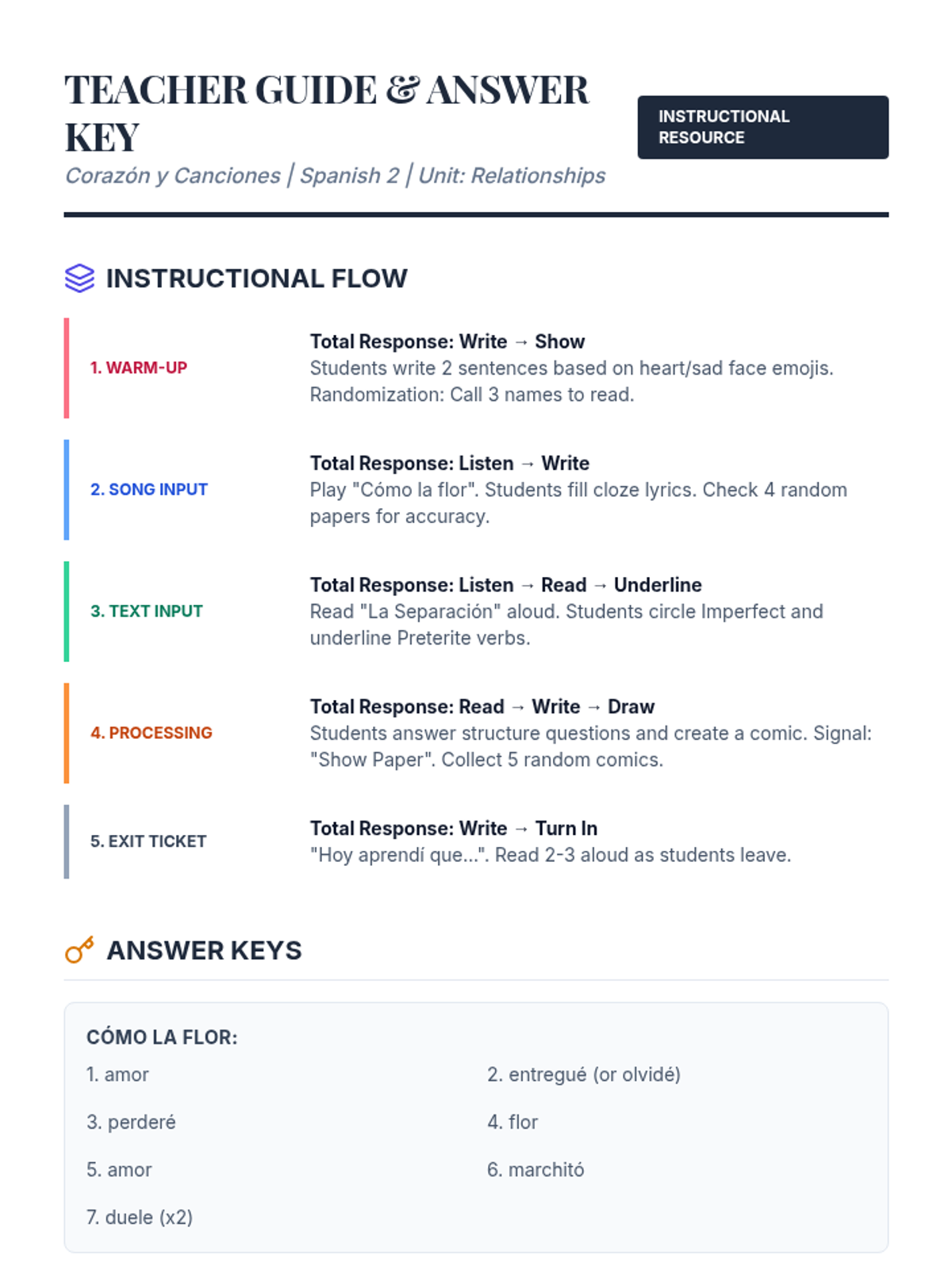
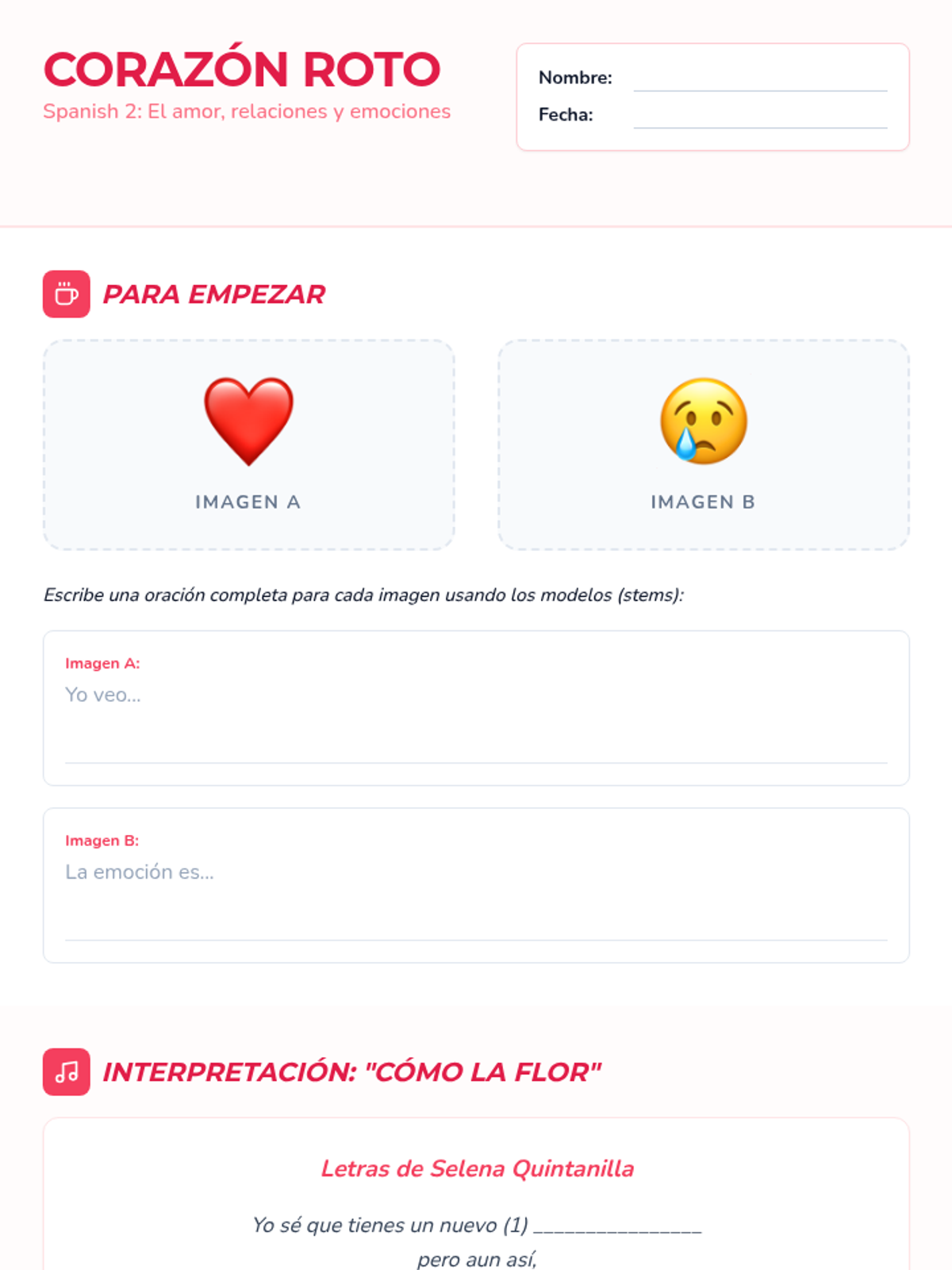
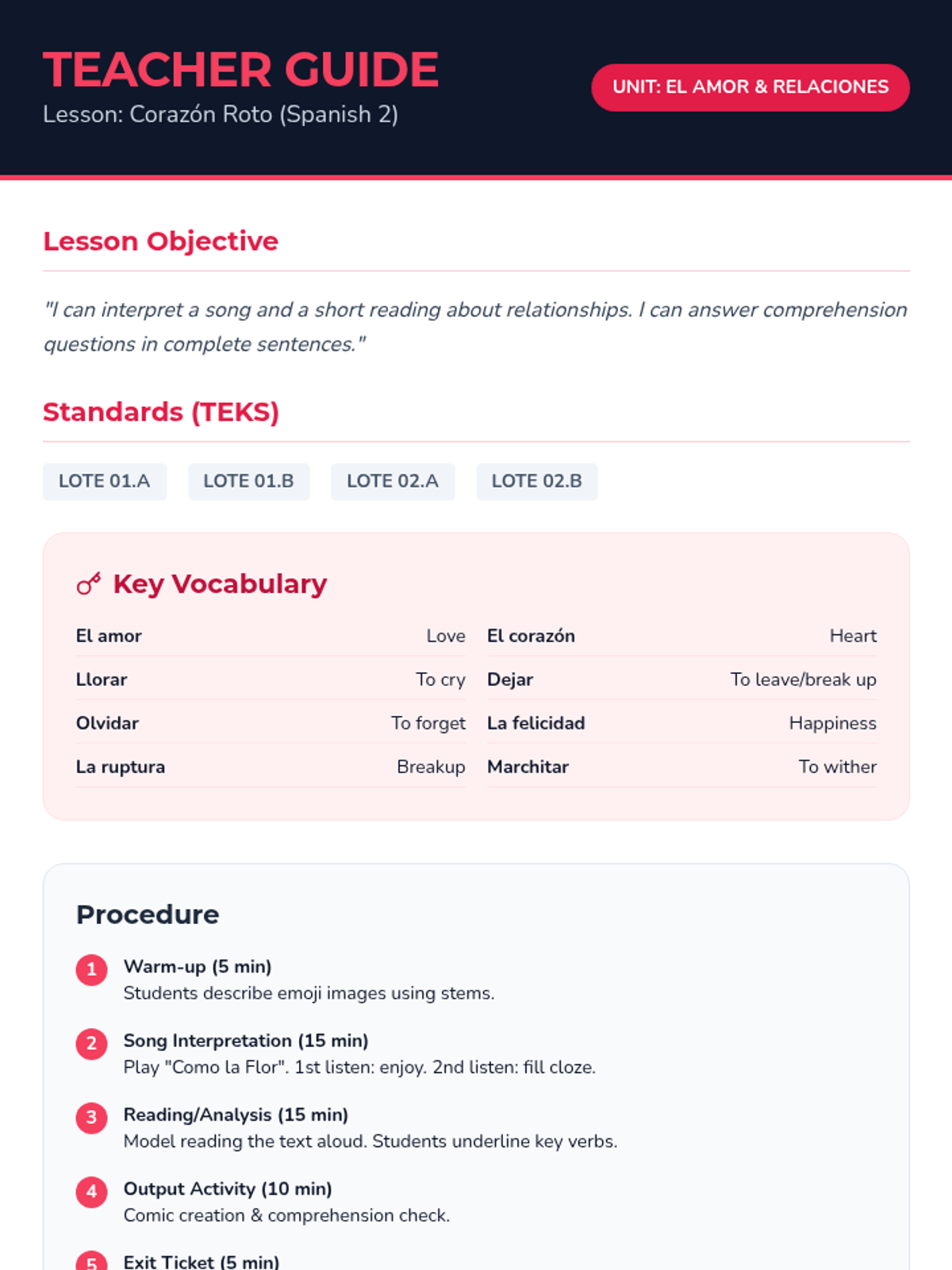
A Spanish 2 lesson focused on interpreting relationships and emotions through Selena's 'Cómo la flor' and a narrative text, with a focus on preterite vs. imperfect and narrative structure.
A Spanish 2 lesson focused on interpreting relationships and emotions through the lens of Selena's 'Como la Flor' and modern relationship concepts like the friend zone. Students practice interpretive skills through song and text, and presentational skills through sentence construction and comic creation.
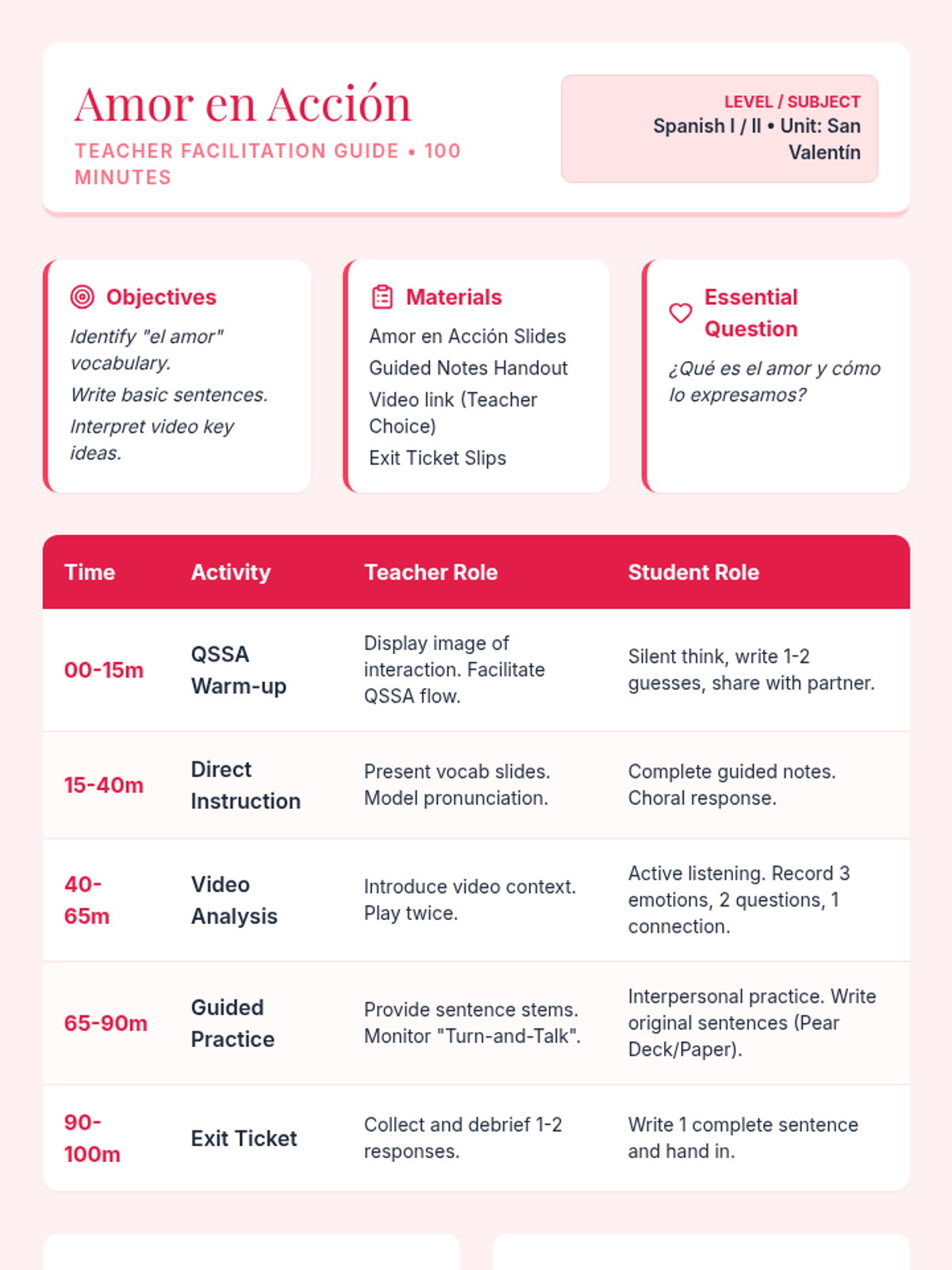
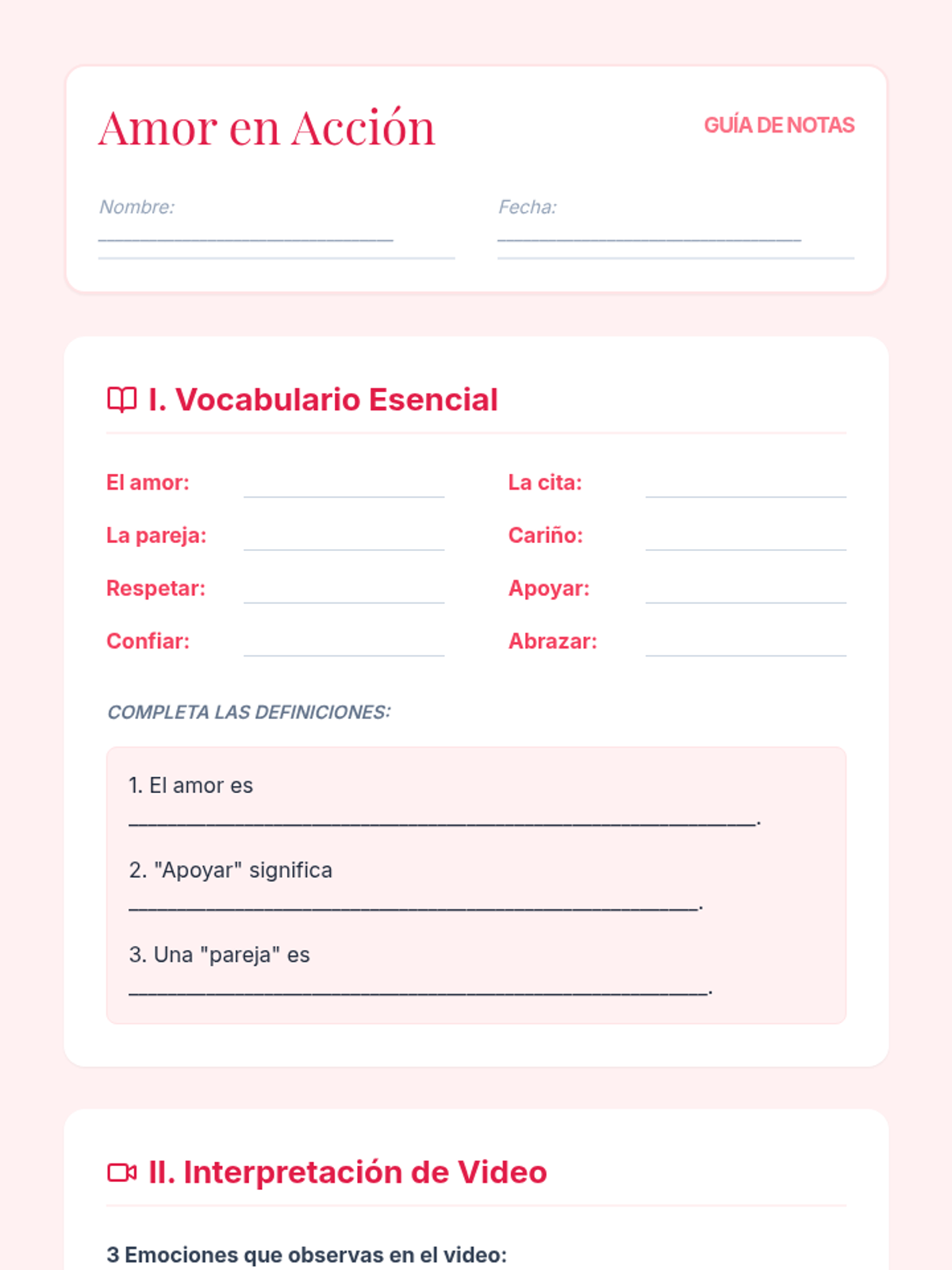
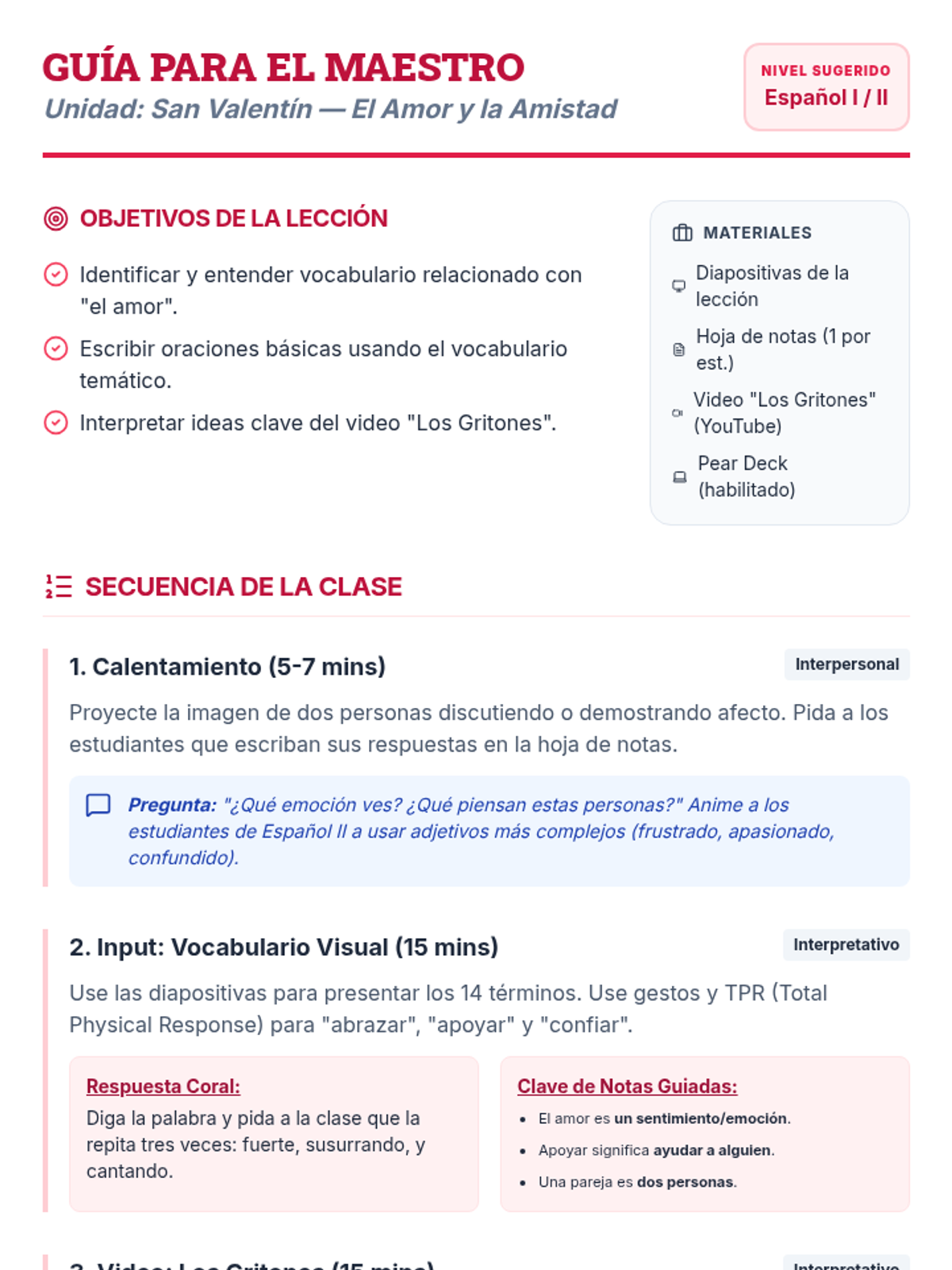
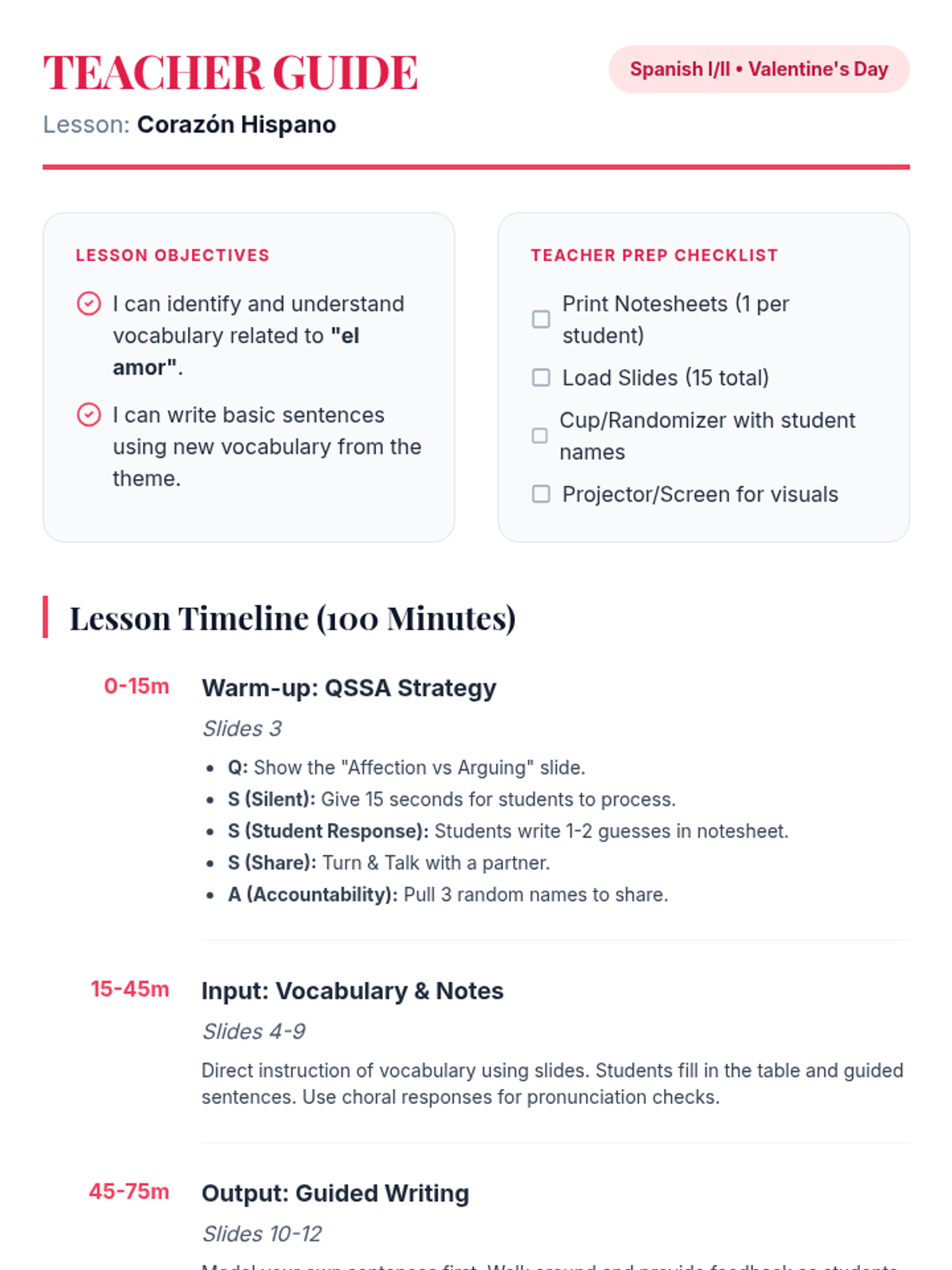
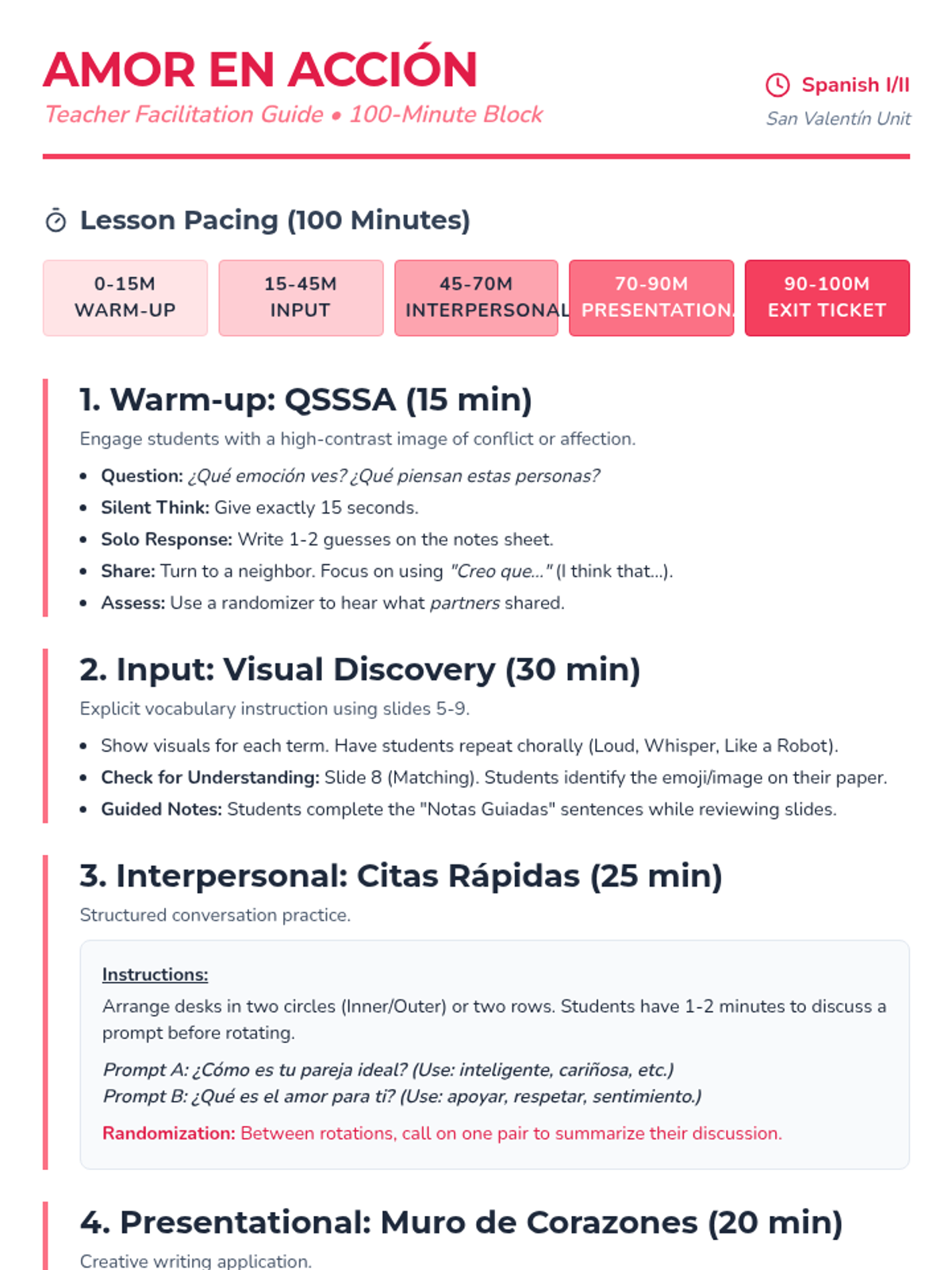
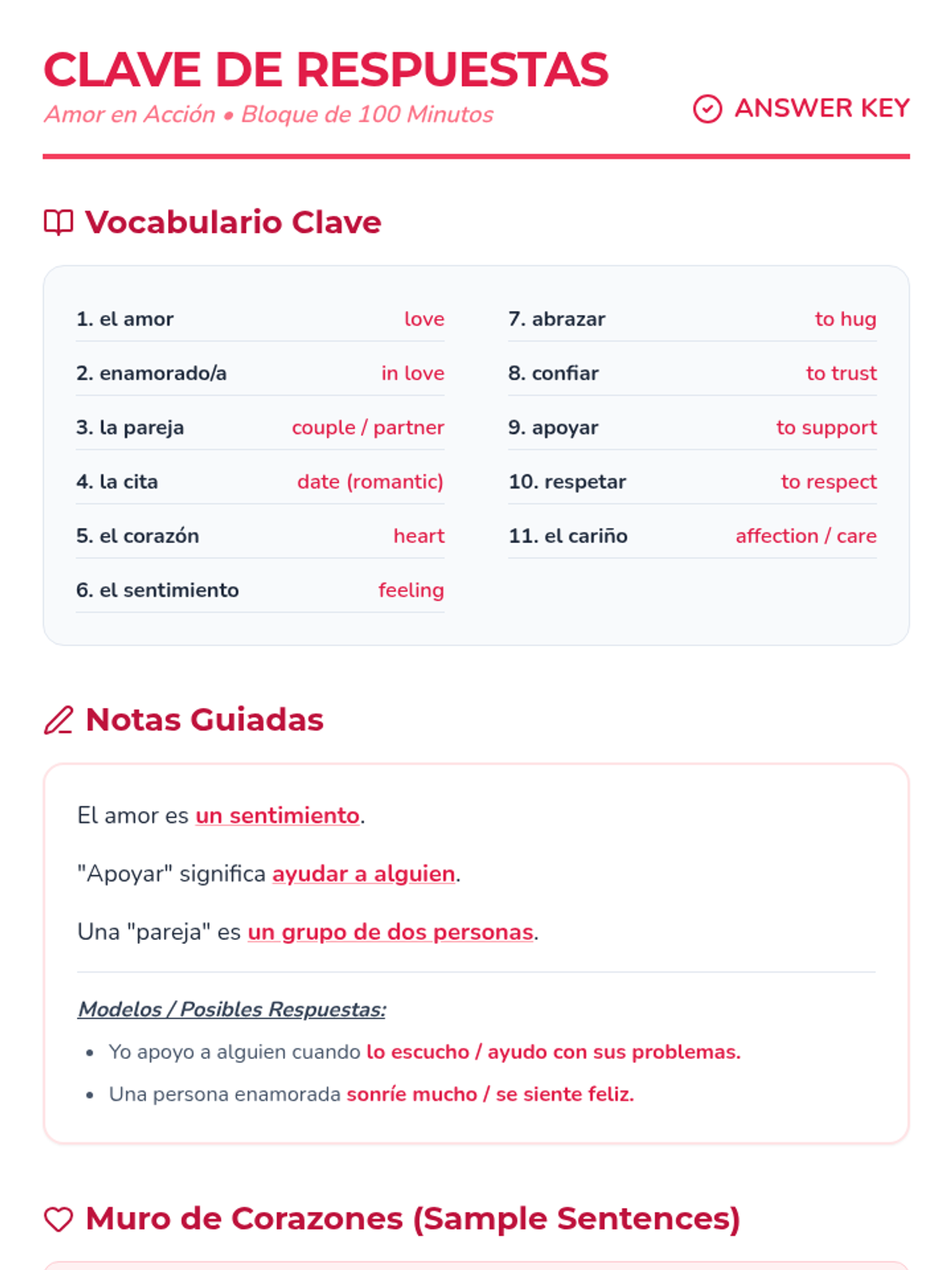
A comprehensive 100-minute introductory lesson on Valentine's Day vocabulary and concepts for Spanish I/II. Students explore the theme of 'el amor' through visual vocabulary, video analysis, and interactive sentence building.
A Spanish I/II lesson focused on San Valentín vocabulary (el amor), sentence construction, and interpreting media through the short film 'Los Gritones'. Students will develop interpretive, interpersonal, and presentational skills while exploring the complexities of relationships.
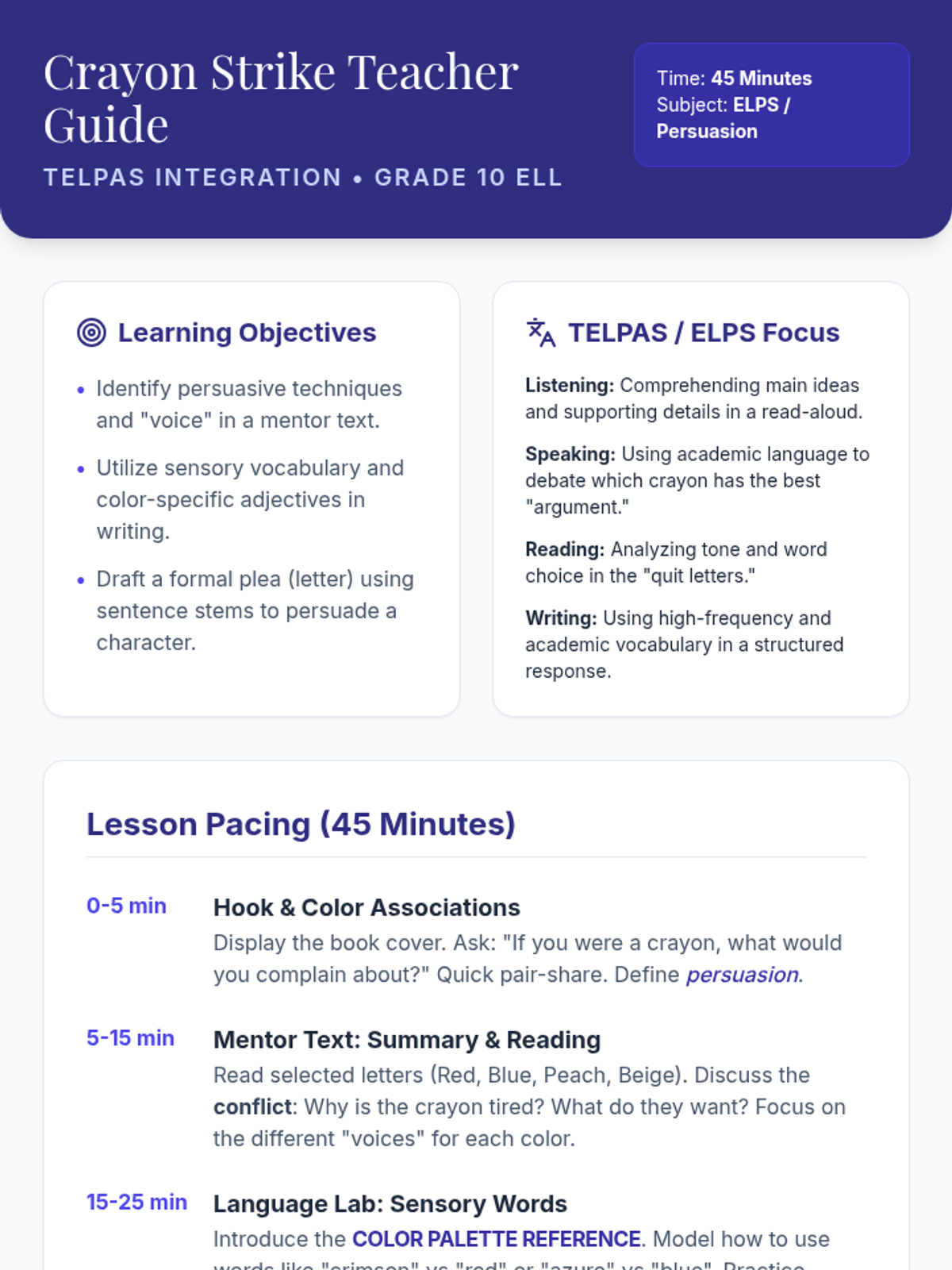
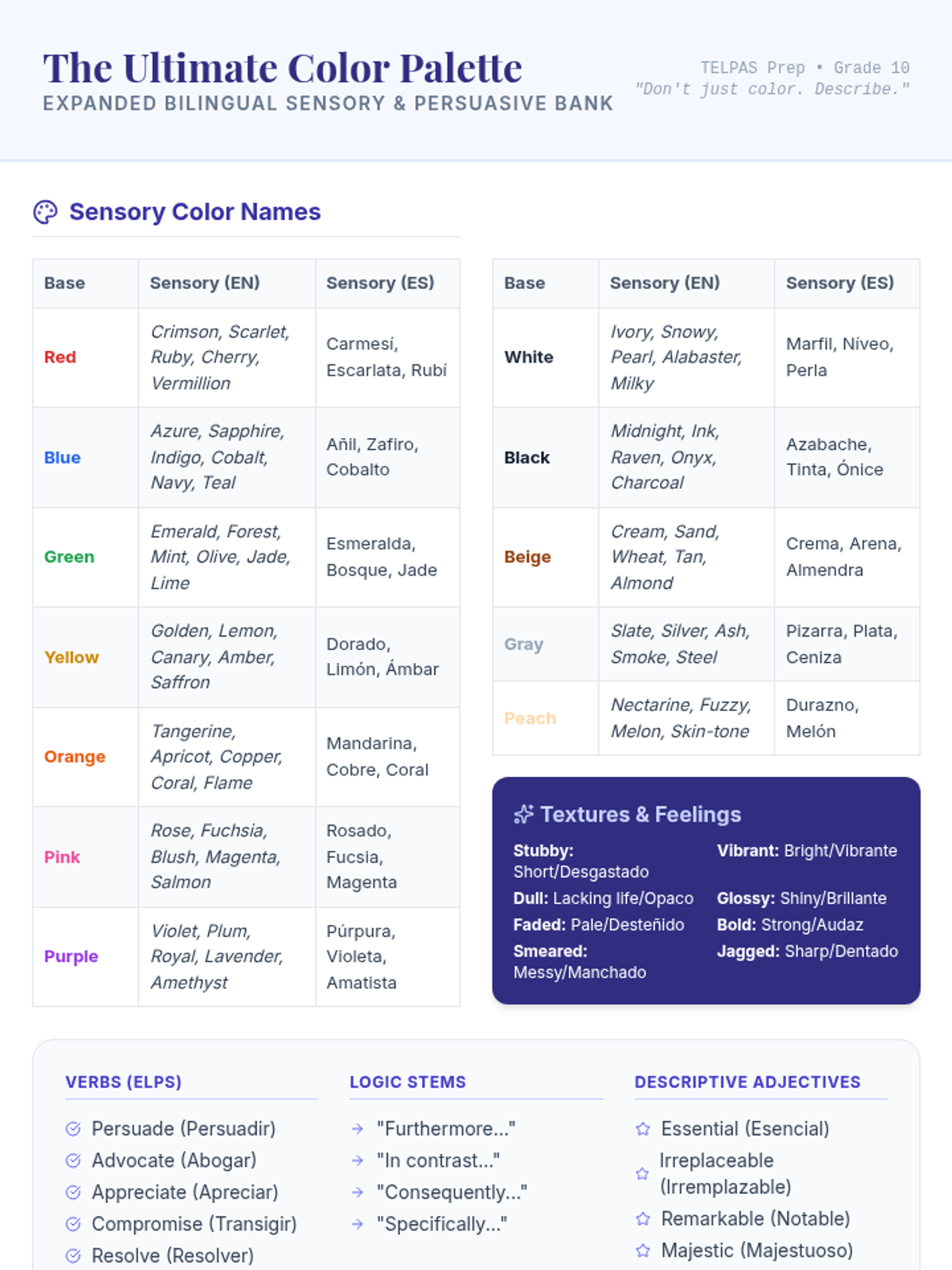
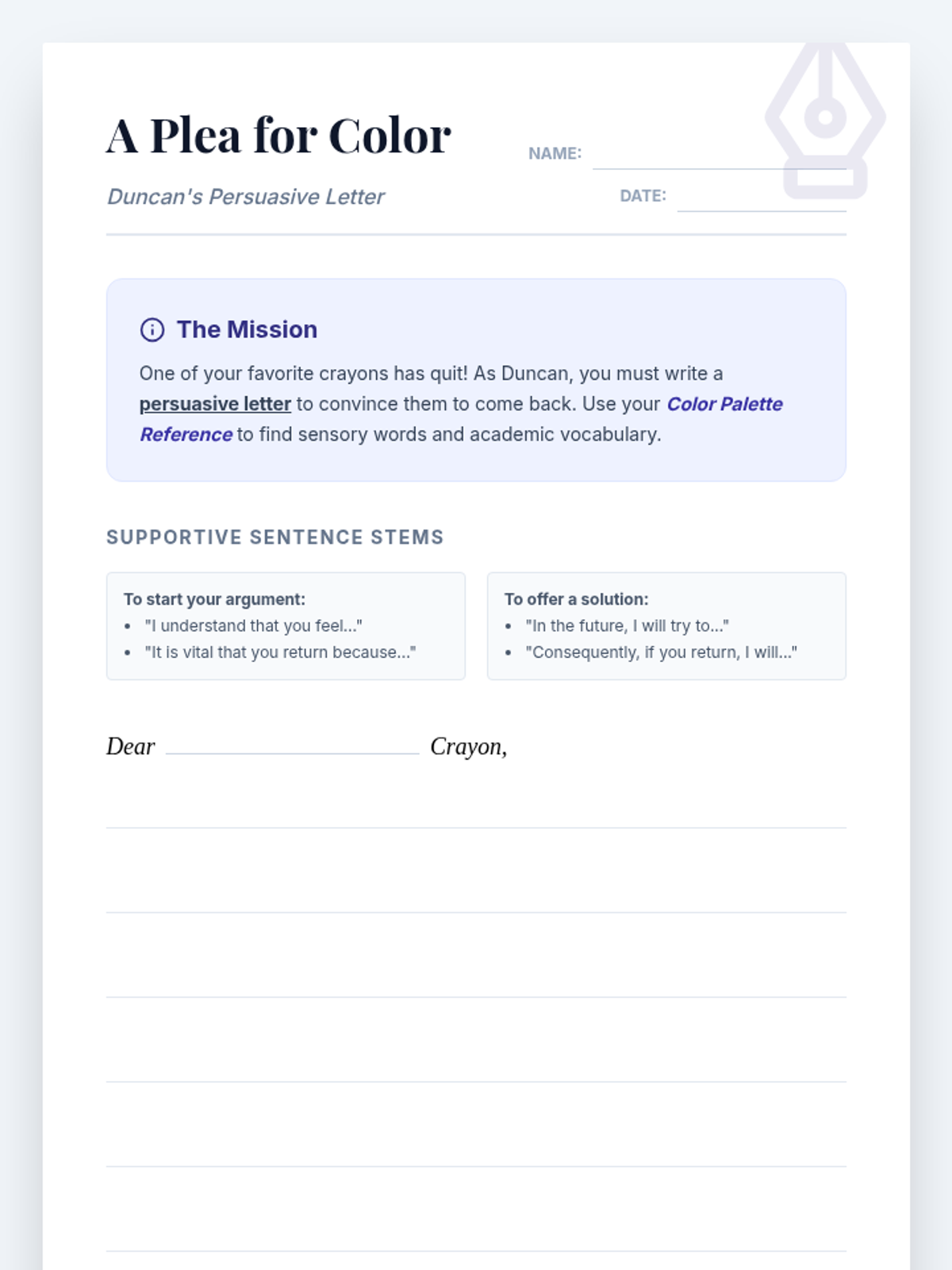
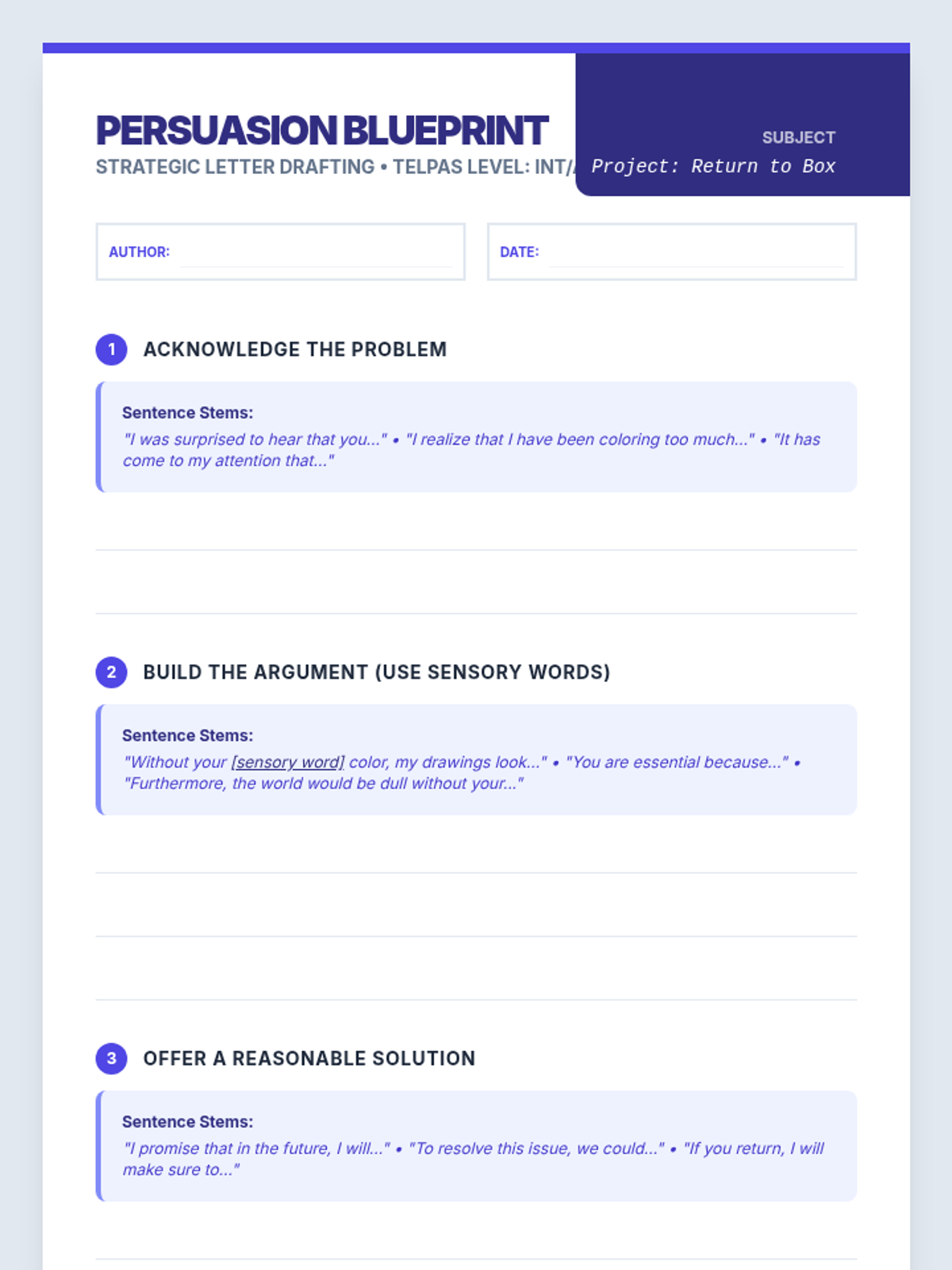
A 45-minute TELPAS-aligned lesson for 10th-grade ELLs using 'The Day the Crayons Quit' to practice persuasive writing, sensory language, and oral communication.
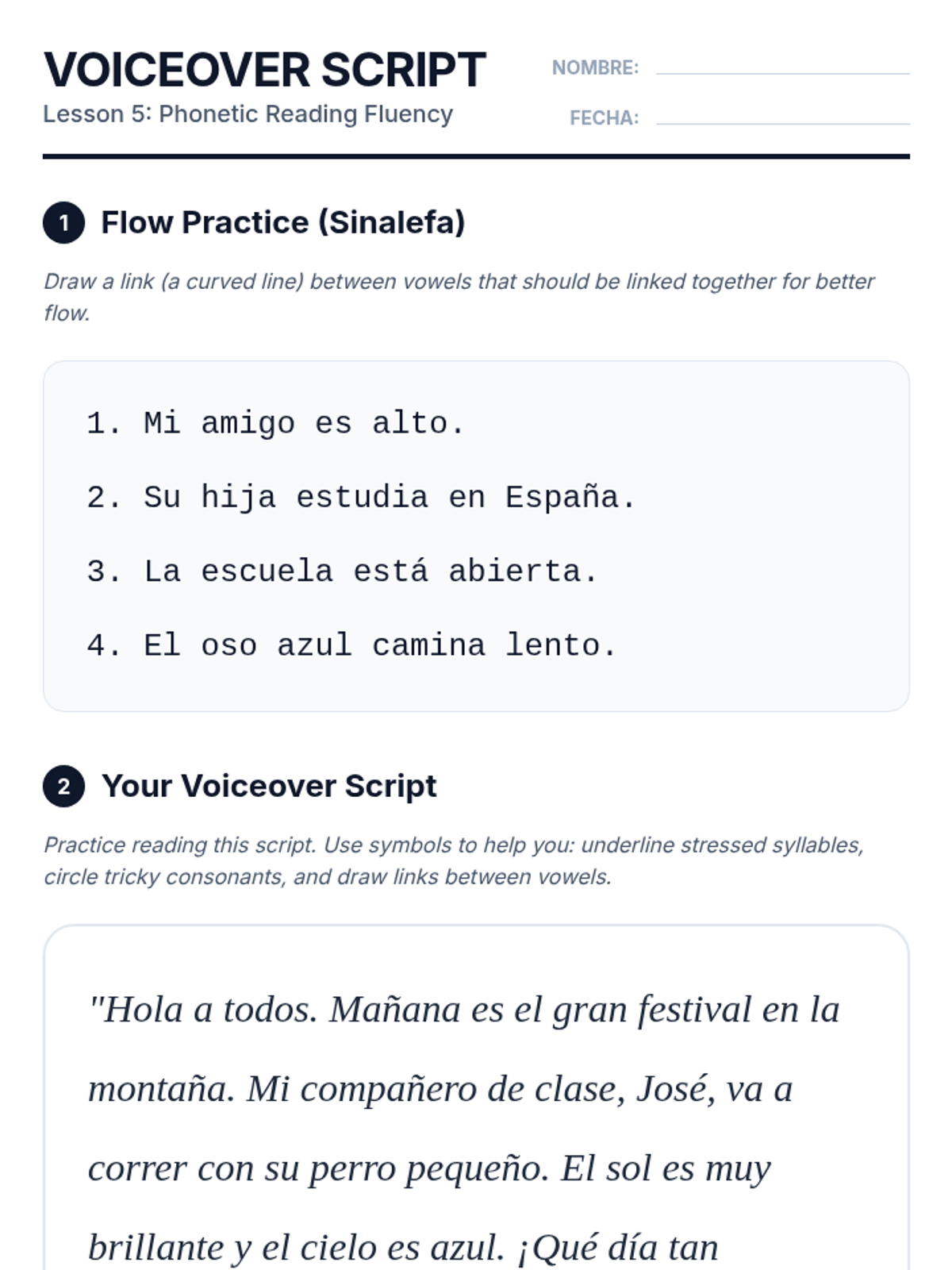
Bringing all skills together, students practice reading short paragraphs aloud, focusing on flow, linking words, and maintaining correct pronunciation, culminating in a recorded 'voiceover' activity.
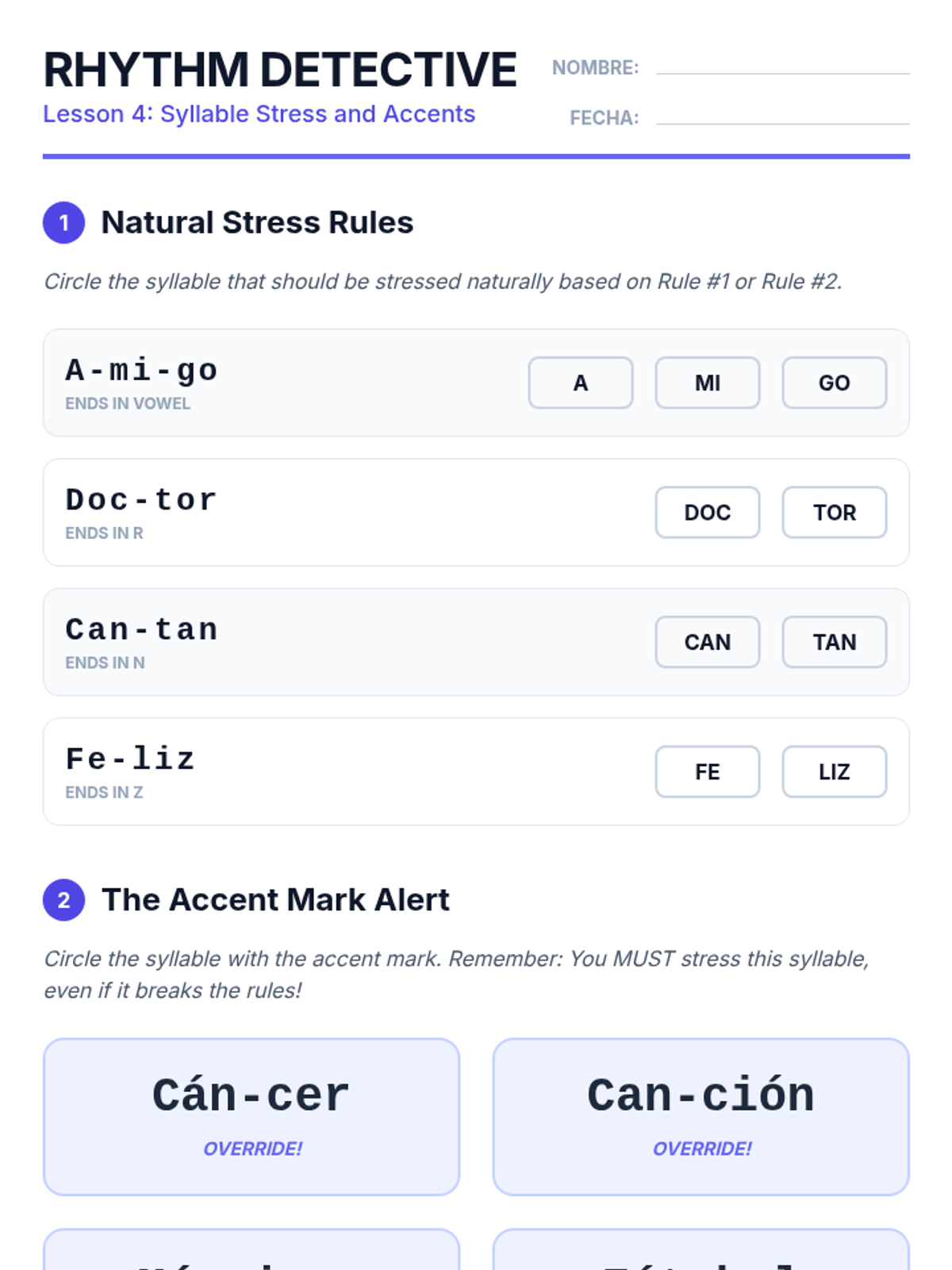
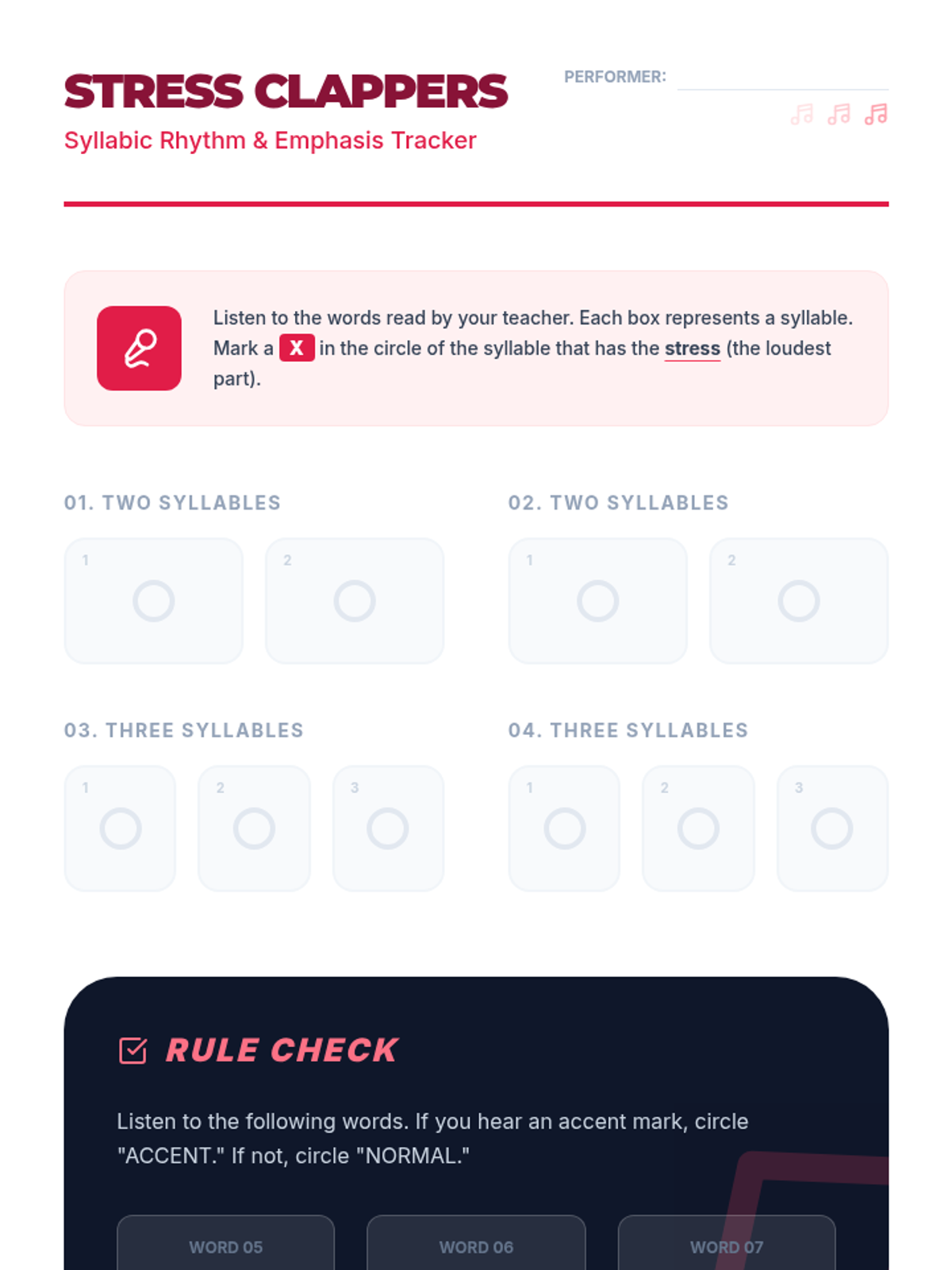
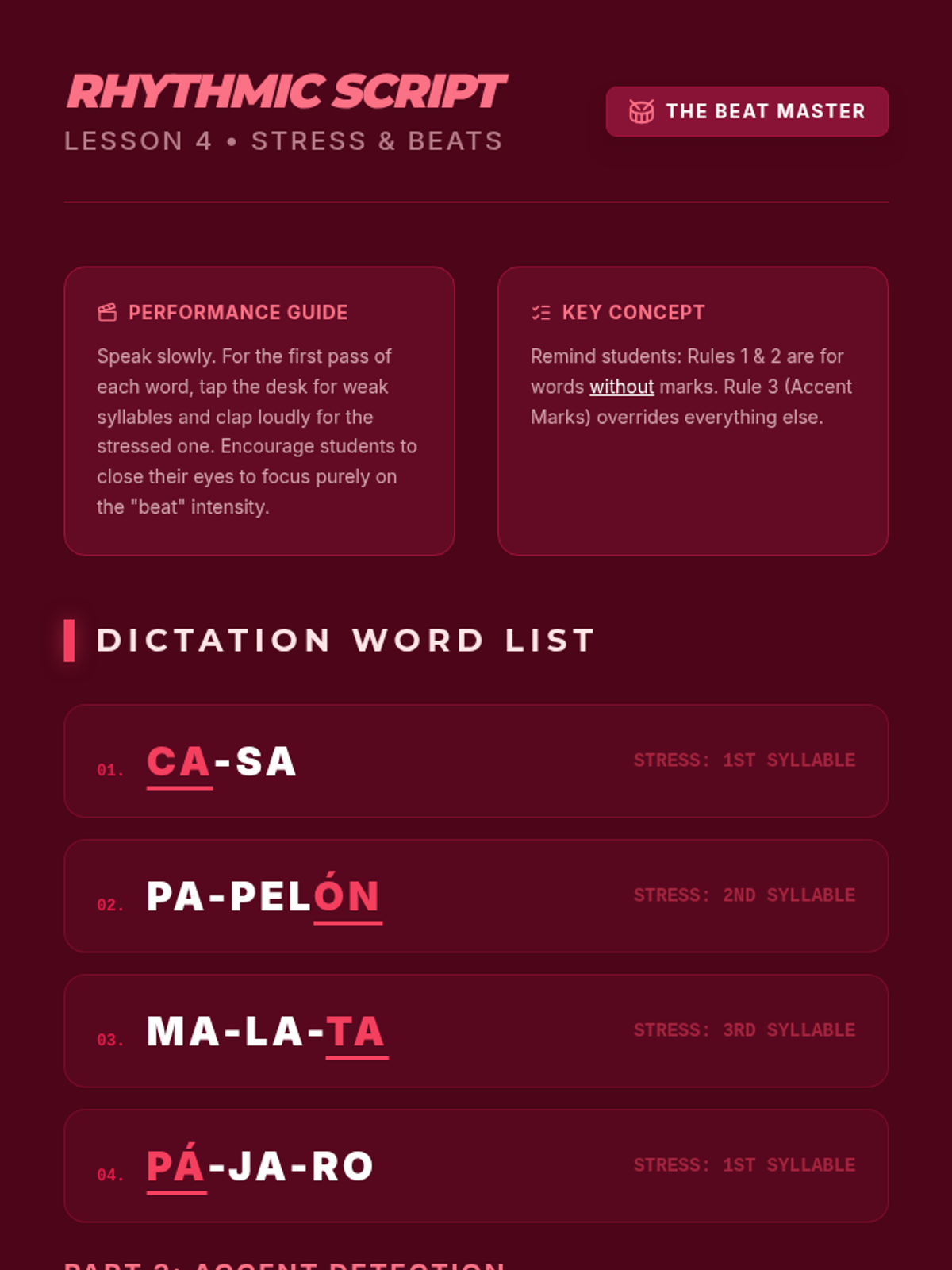
Students learn the two basic rules of natural stress in Spanish and how written accent marks (tildes) break those rules. They practice identifying emphasis through rhythmic activities.
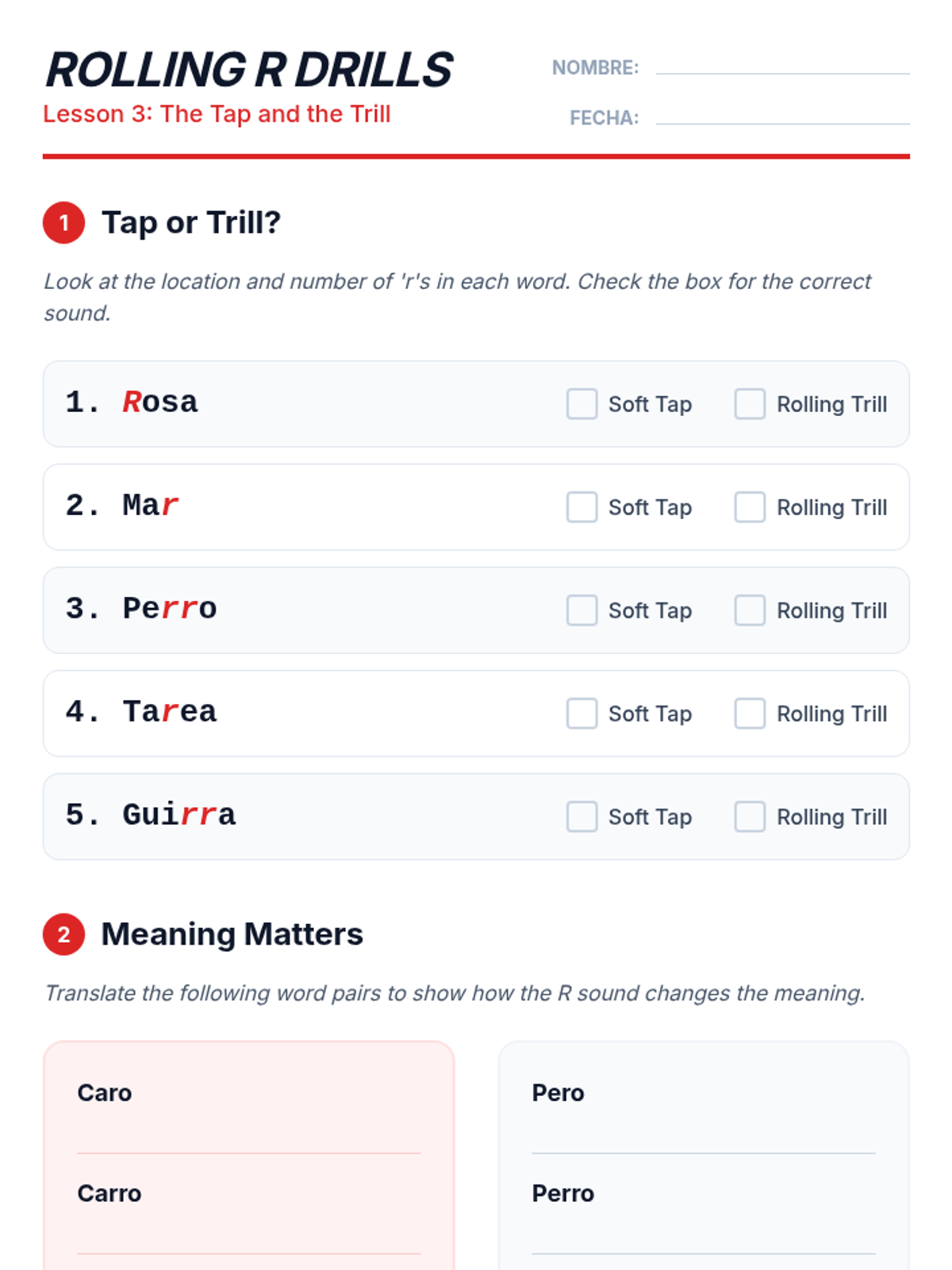
Students explore the difference between the single 'r' (tap) and the double 'rr' (trill), learning the physical mechanics of vibrating the tongue. The lesson focuses on distinguishing minimal pairs like 'pero' and 'perro'.
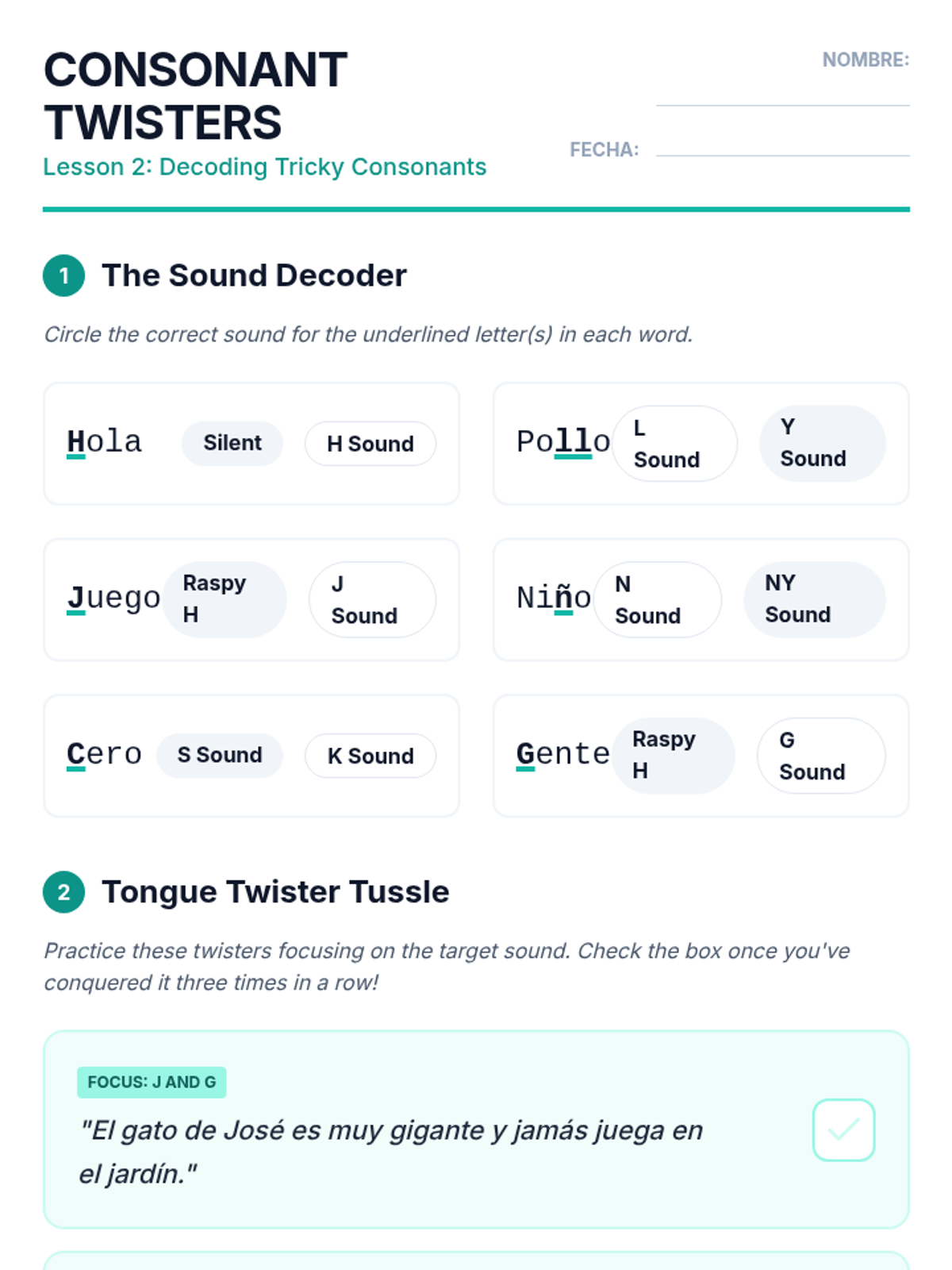
This lesson introduces consonants that function differently in Spanish, such as h (silent), j (aspirated), ll, ñ, and z/c. Students practice tongue placement and air flow to produce these sounds accurately through tongue twister challenges.
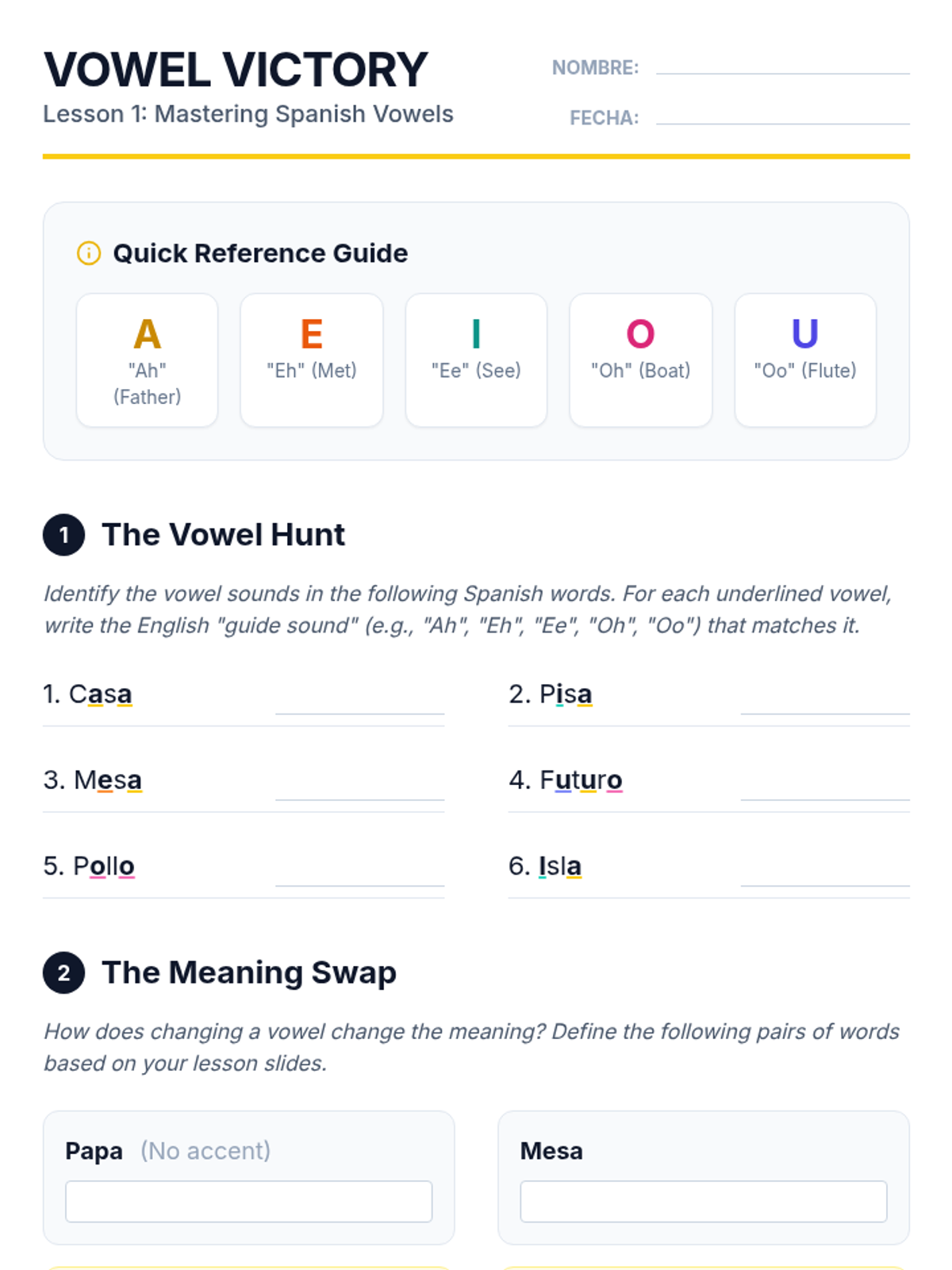
Students focus exclusively on the five Spanish vowels (a, e, i, o, u), learning their short, crisp, and invariable nature compared to English diphthongs. Through choral repetition and listening discrimination drills, students practice identifying and producing these core sounds.
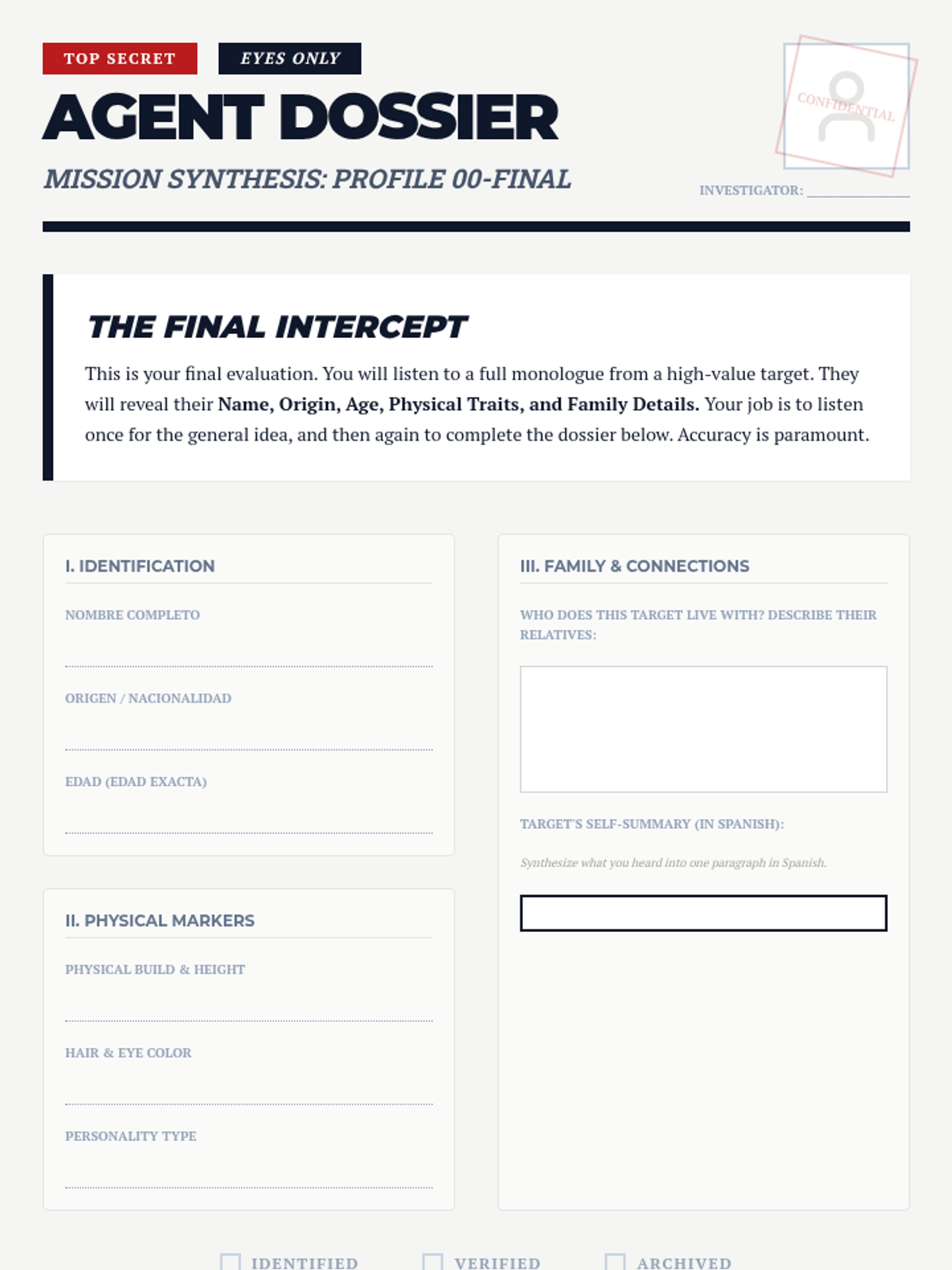
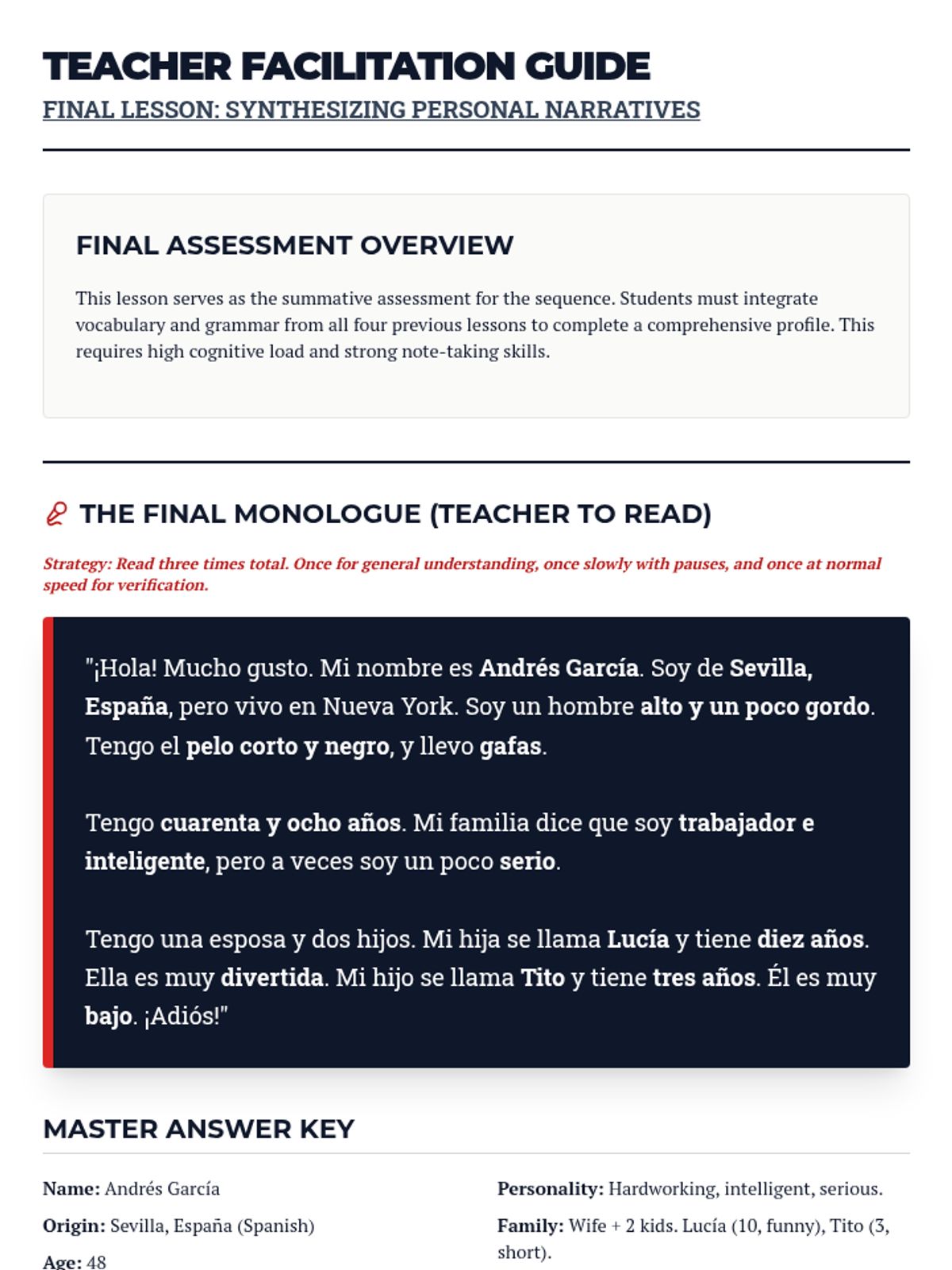
Students combine all previous listening skills—origin, physical traits, personality, age, and family—to synthesize complete personal narratives and create secret agent dossiers.
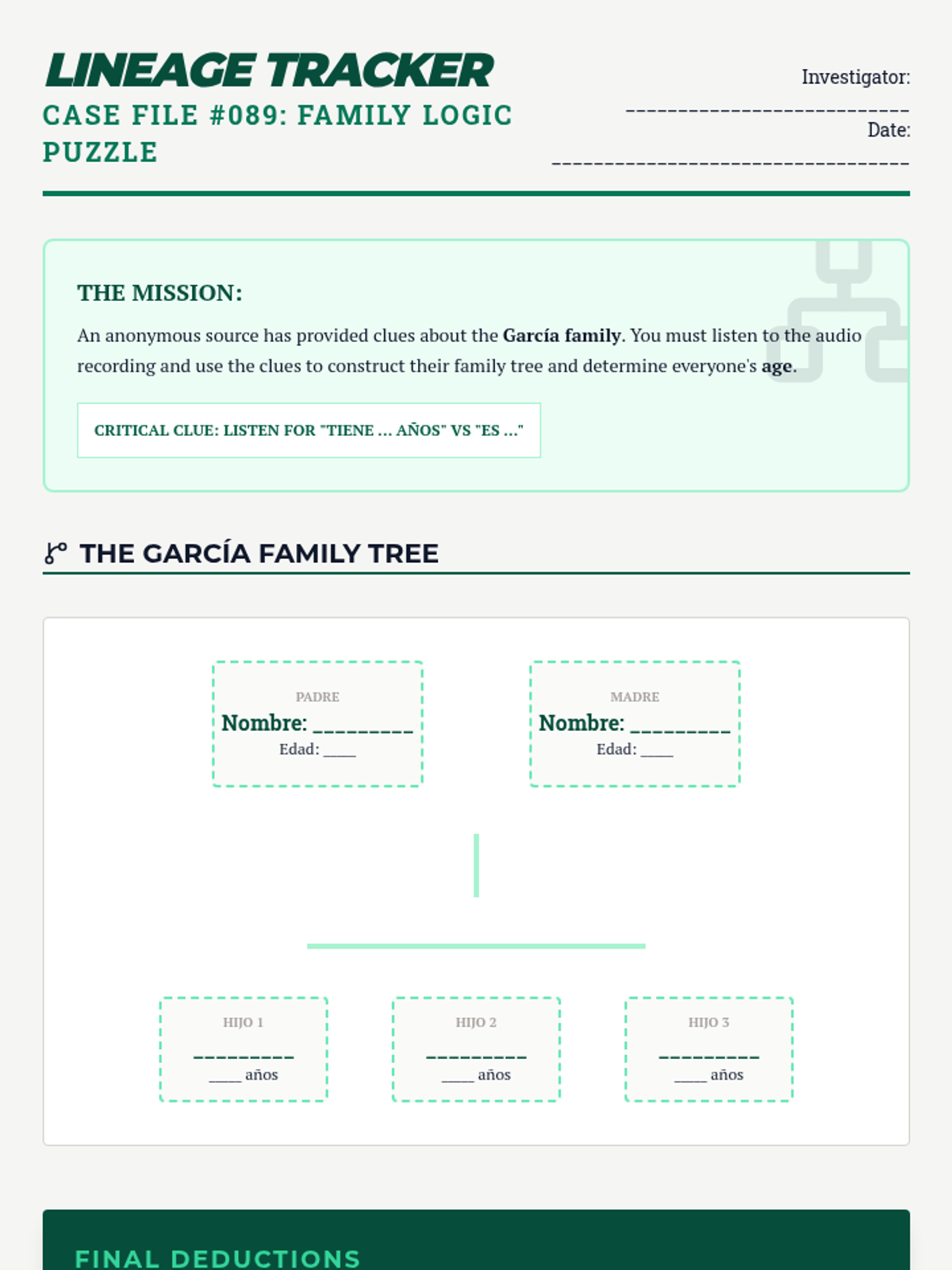
Students practice listening for ages and family relationships in Spanish, distinguishing between 'Ser' (being) and 'Tener' (having) to construct family trees.
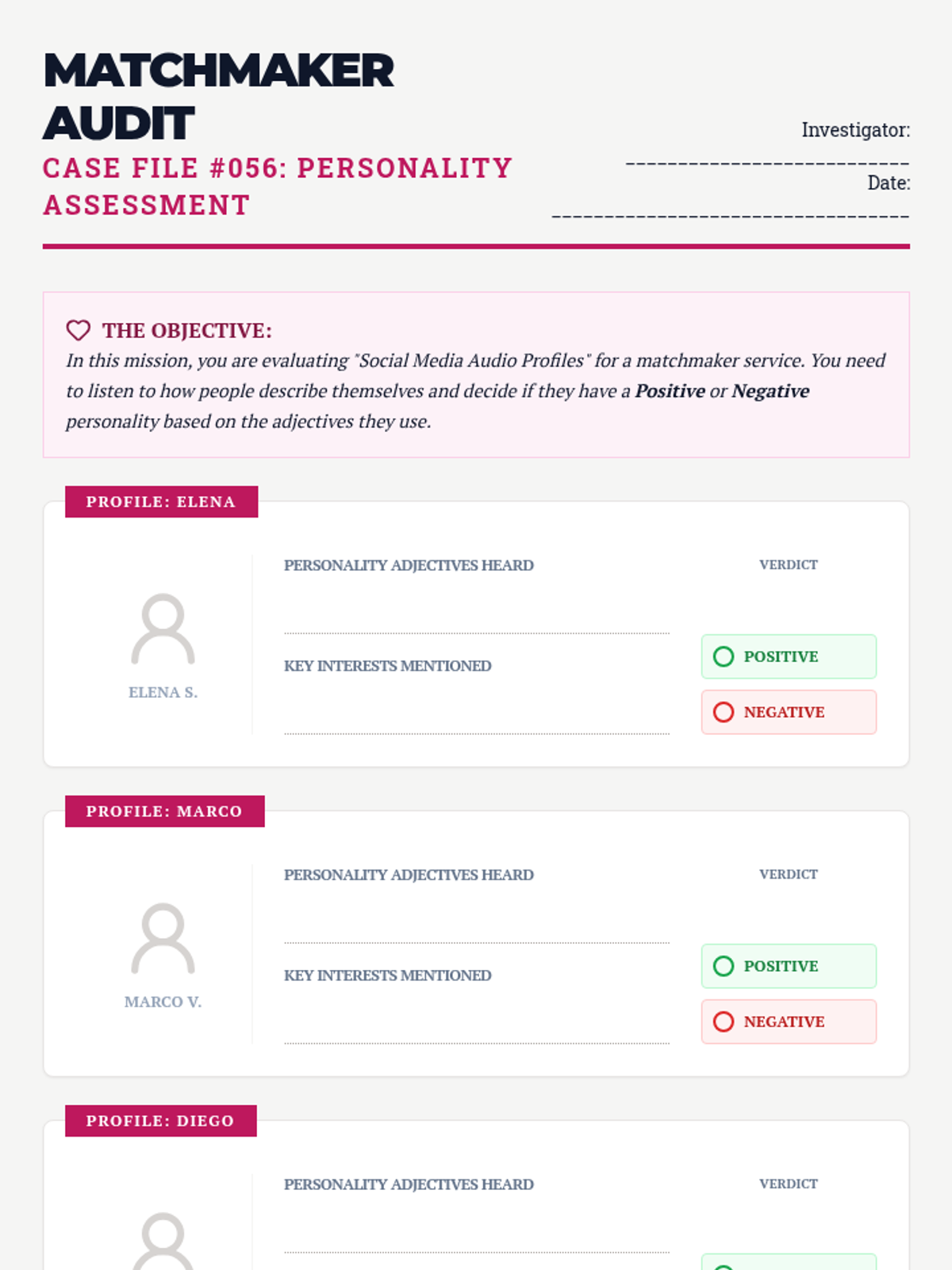
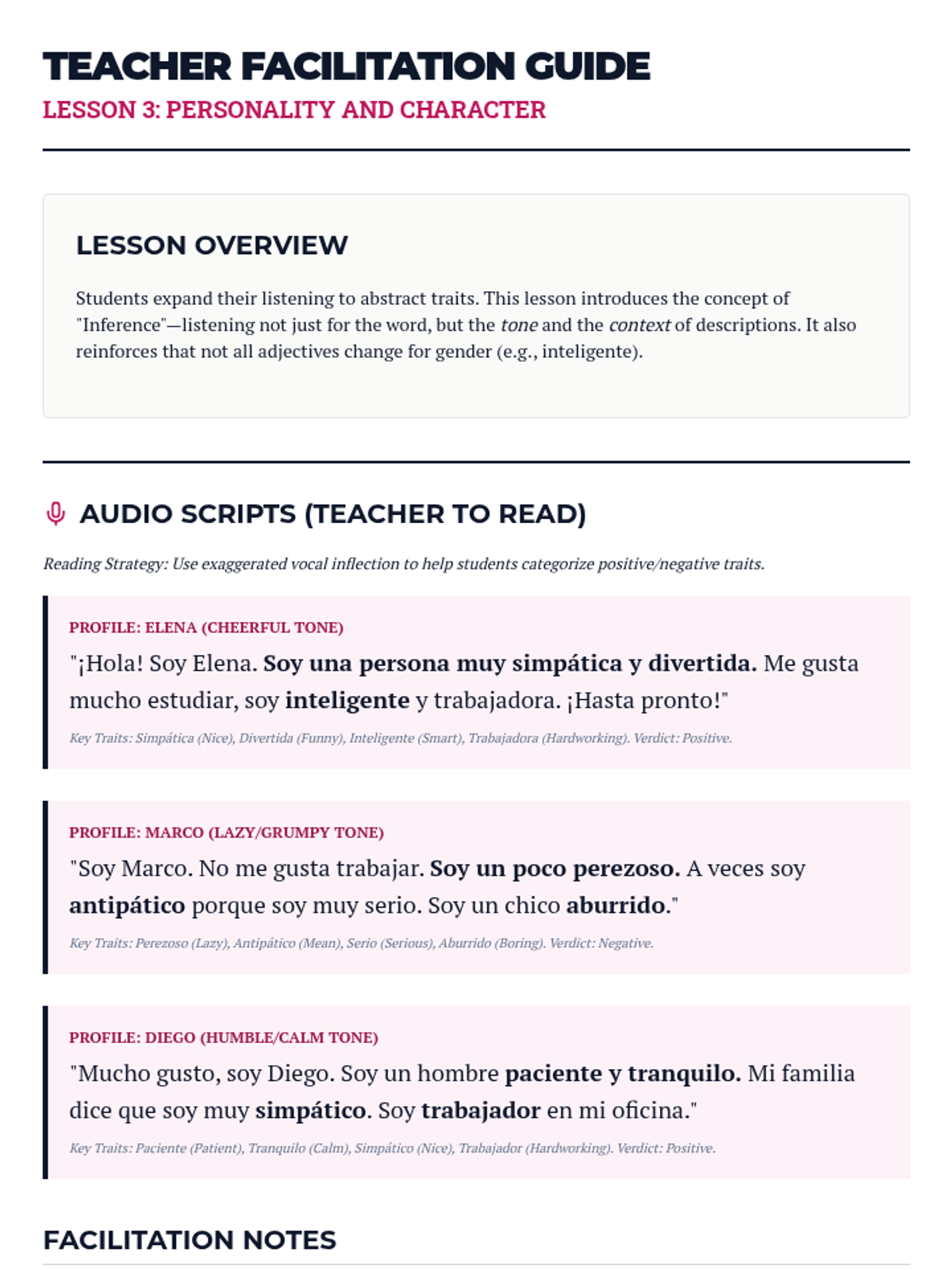
Students explore personality traits through listening, identifying positive and negative influences based on auditory character descriptions.
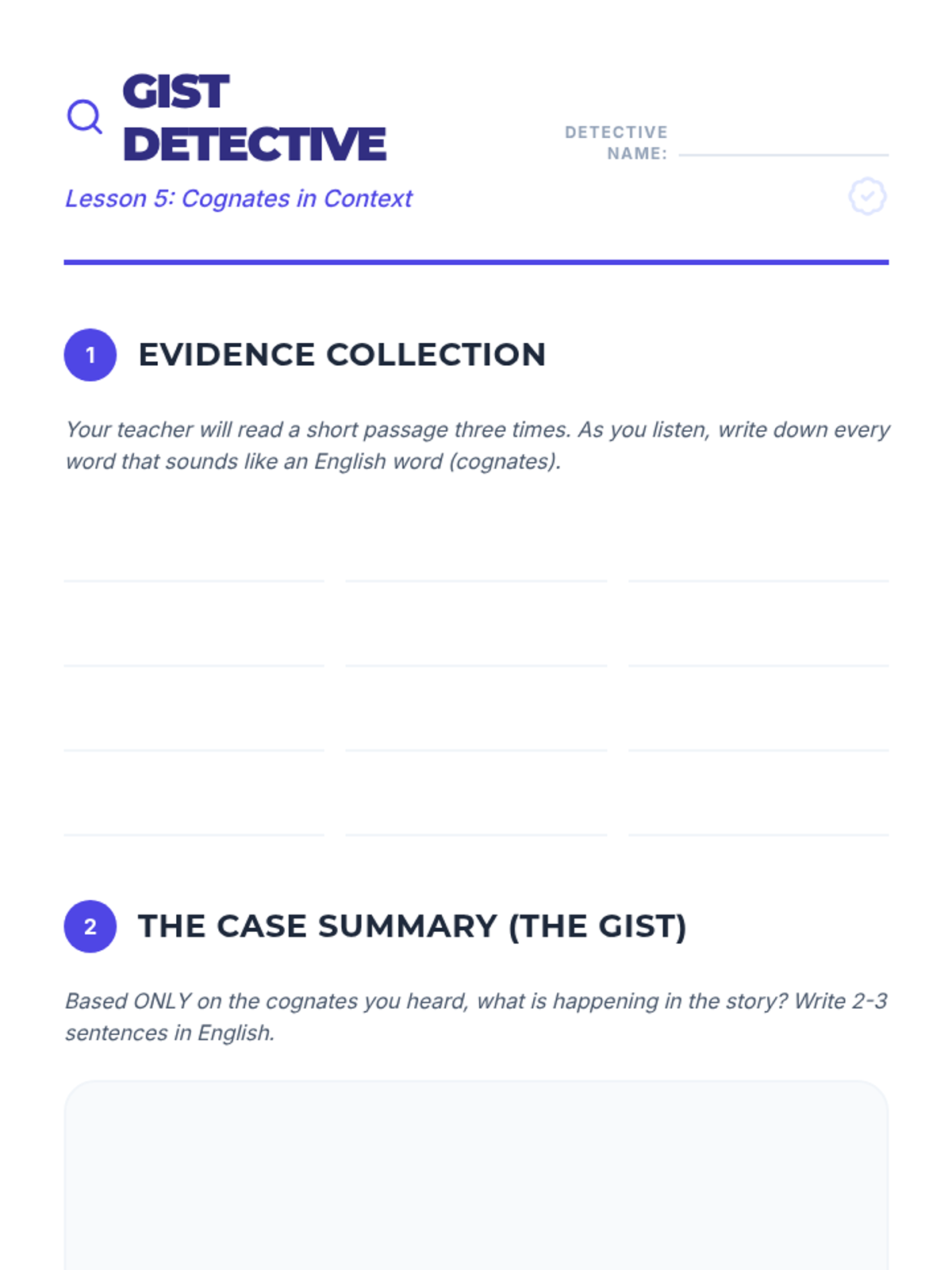
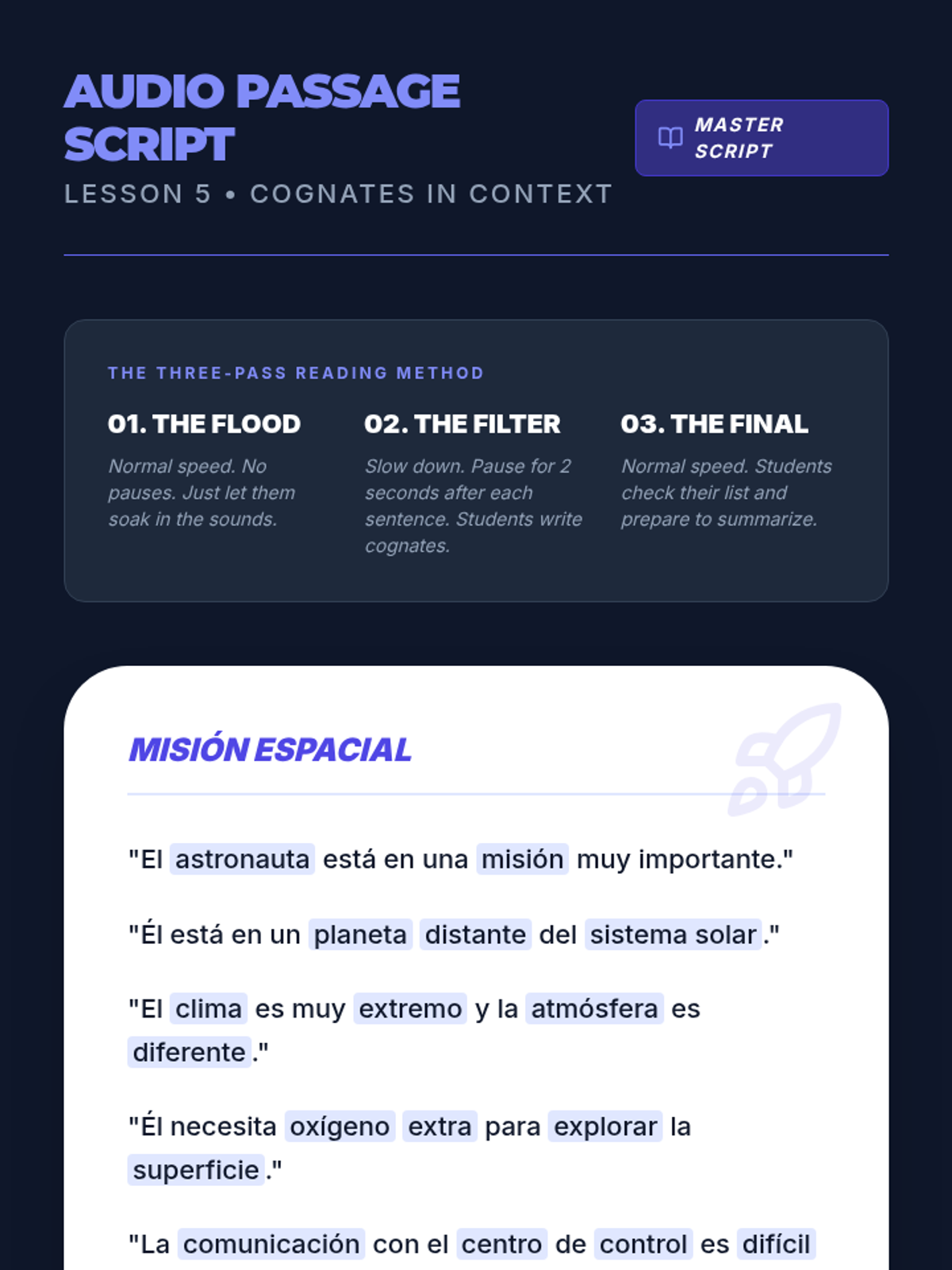
Students apply their phonetic skills to identify Spanish words that sound similar to English words. They listen to a short, simple paragraph and extract the main idea by focusing only on the cognates they recognize.
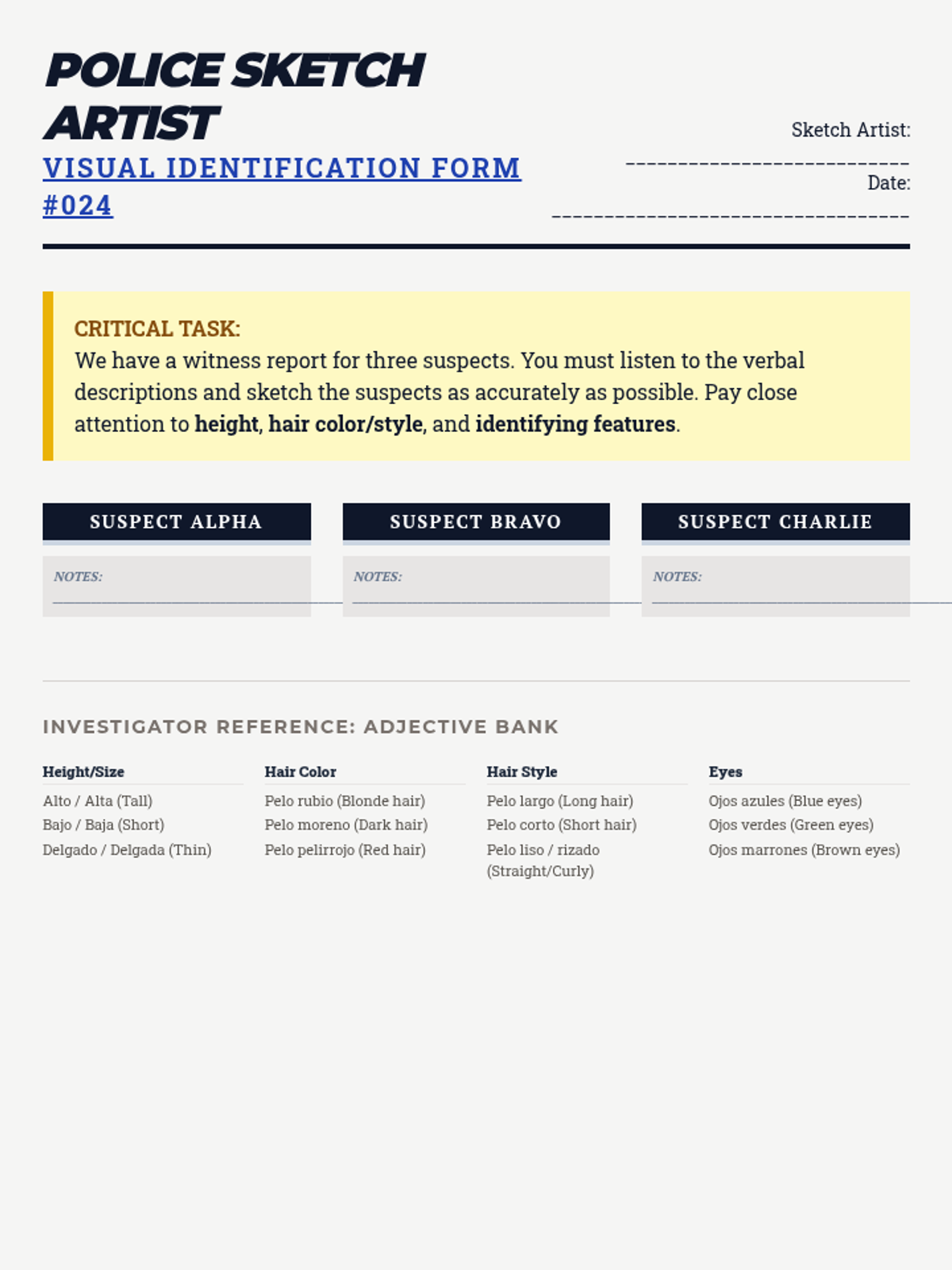
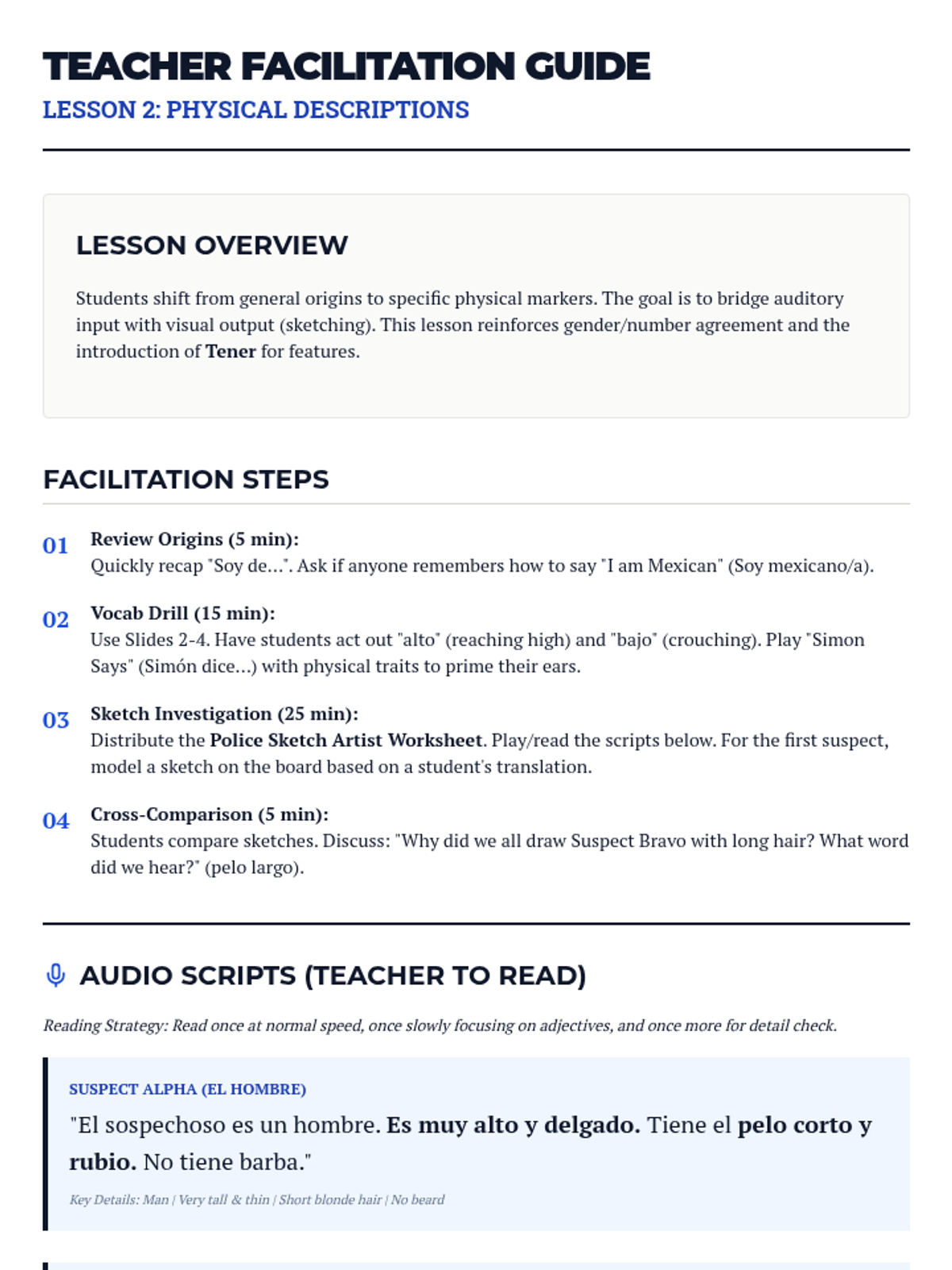
Students listen to physical descriptions in Spanish and transfer auditory information into visual sketches, focusing on adjectives and the verb 'Ser'.
Students learn to hear where the emphasis falls in a word and how it correlates to written accent marks. The lesson uses clapping rhythms to match the stress patterns of spoken words.
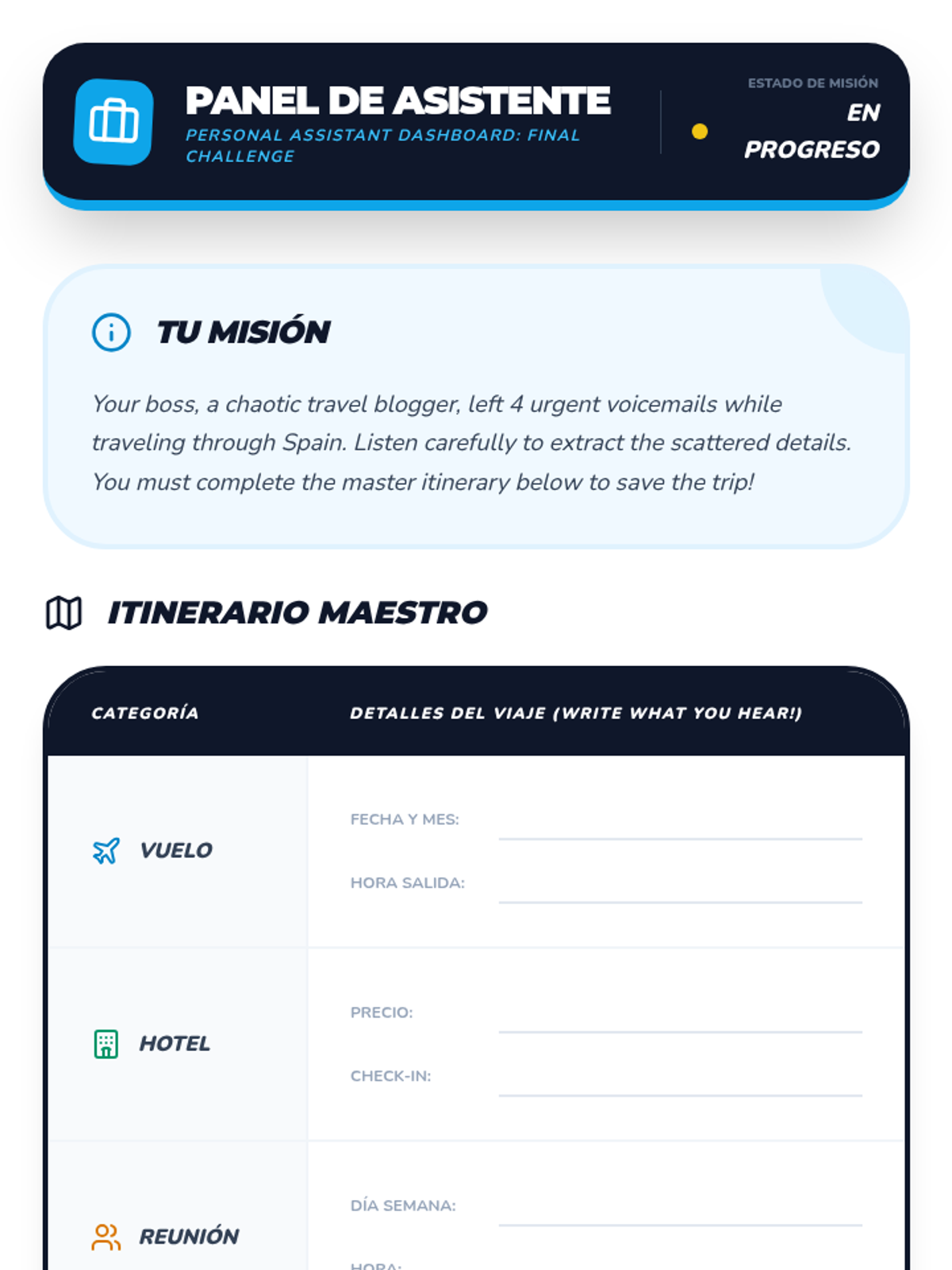
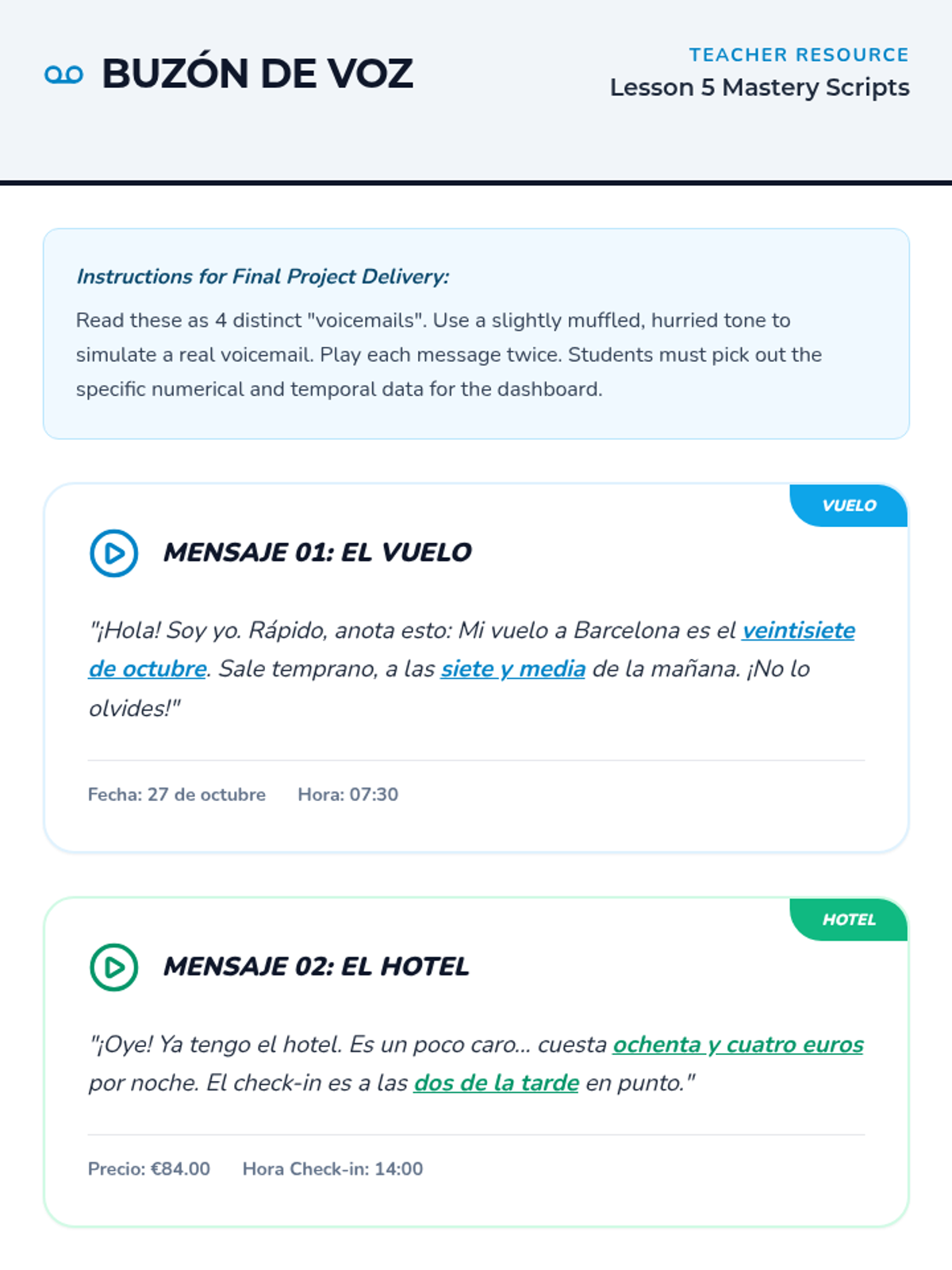
The capstone project where students synthesize all previous skills to organize a complex travel itinerary based on a series of spoken voicemails.
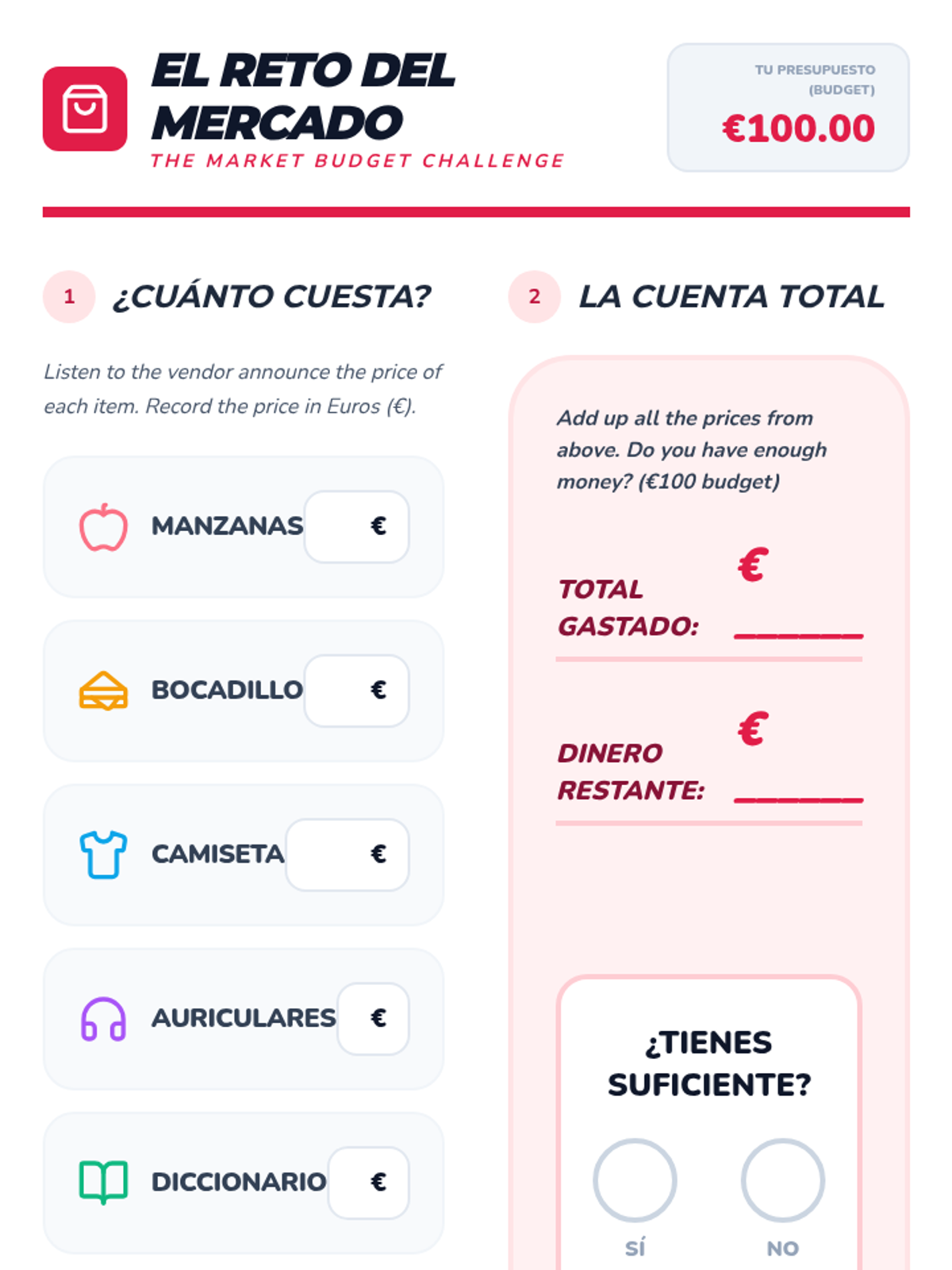
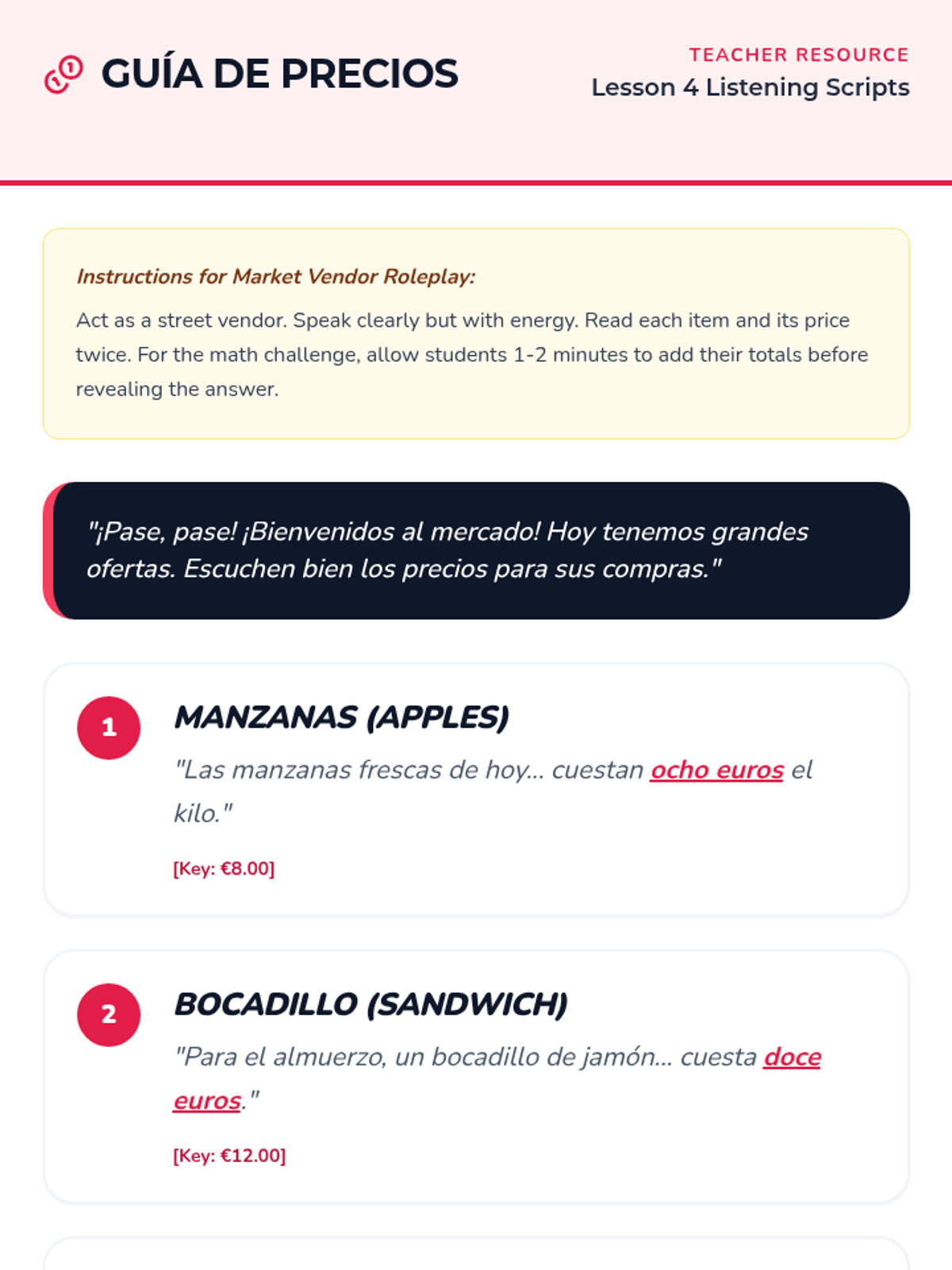
Introduces numbers up to 100+ and currency concepts (Euros and Dollars) through shopping simulations and budgeting activities.
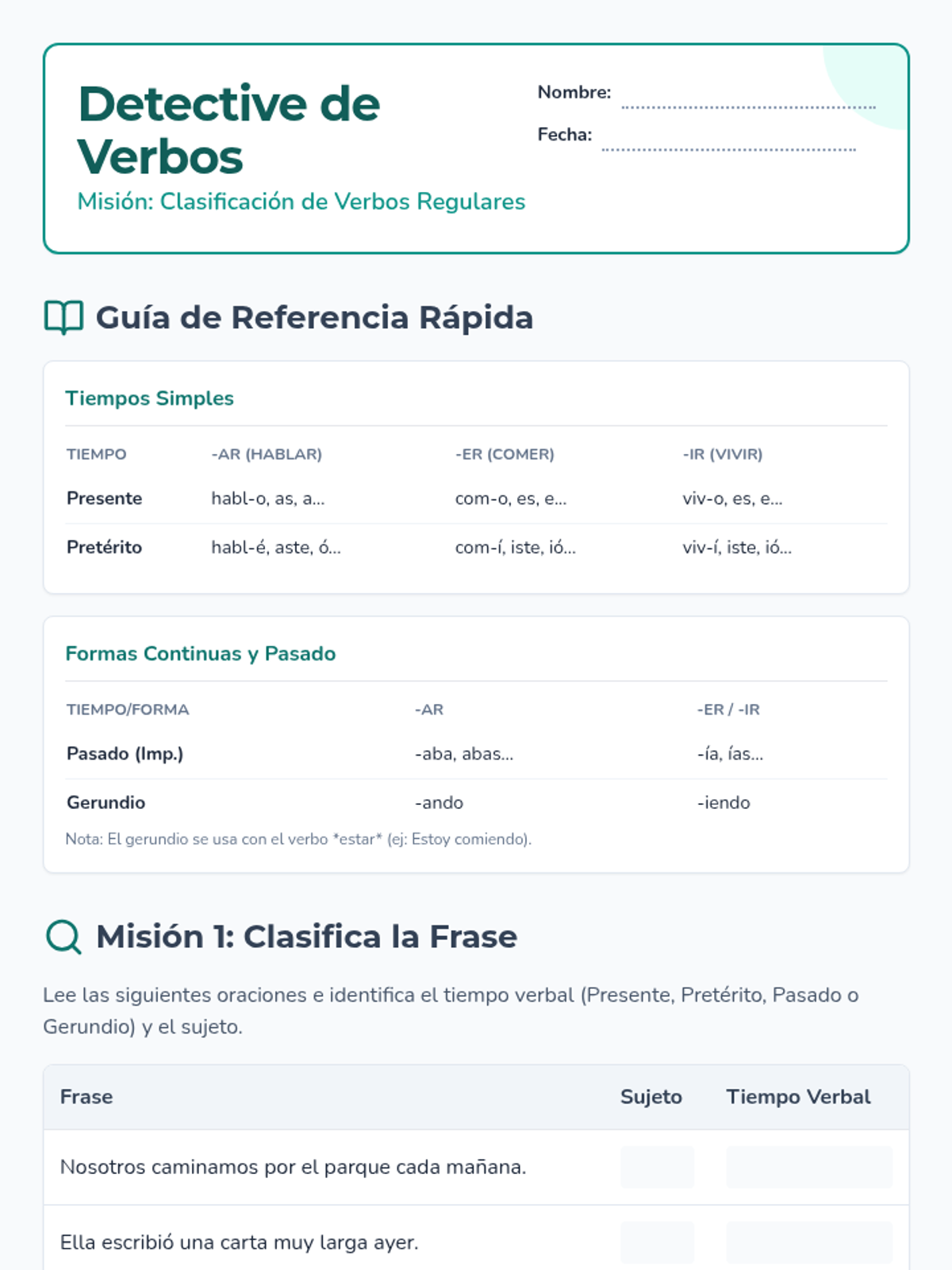
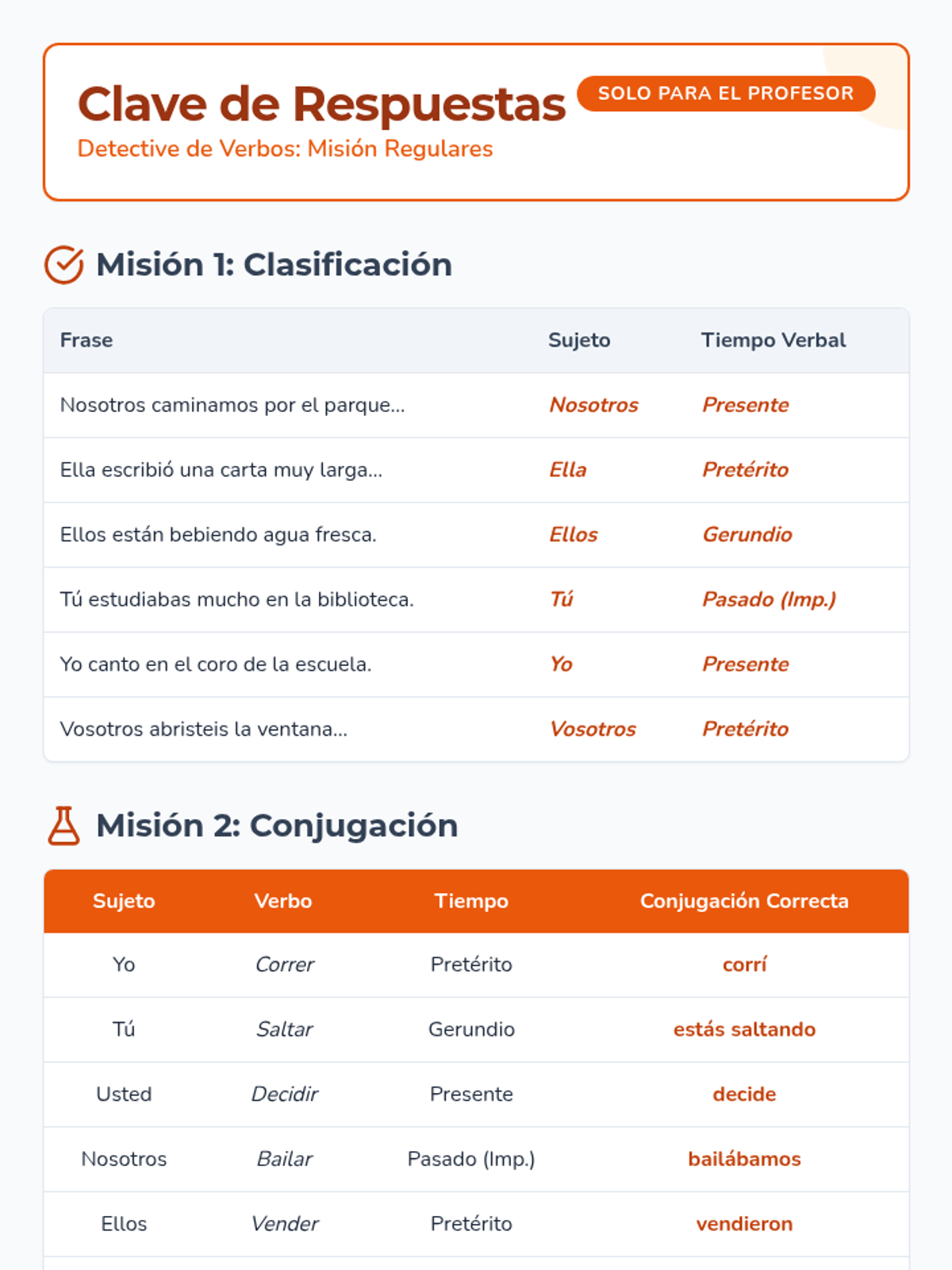
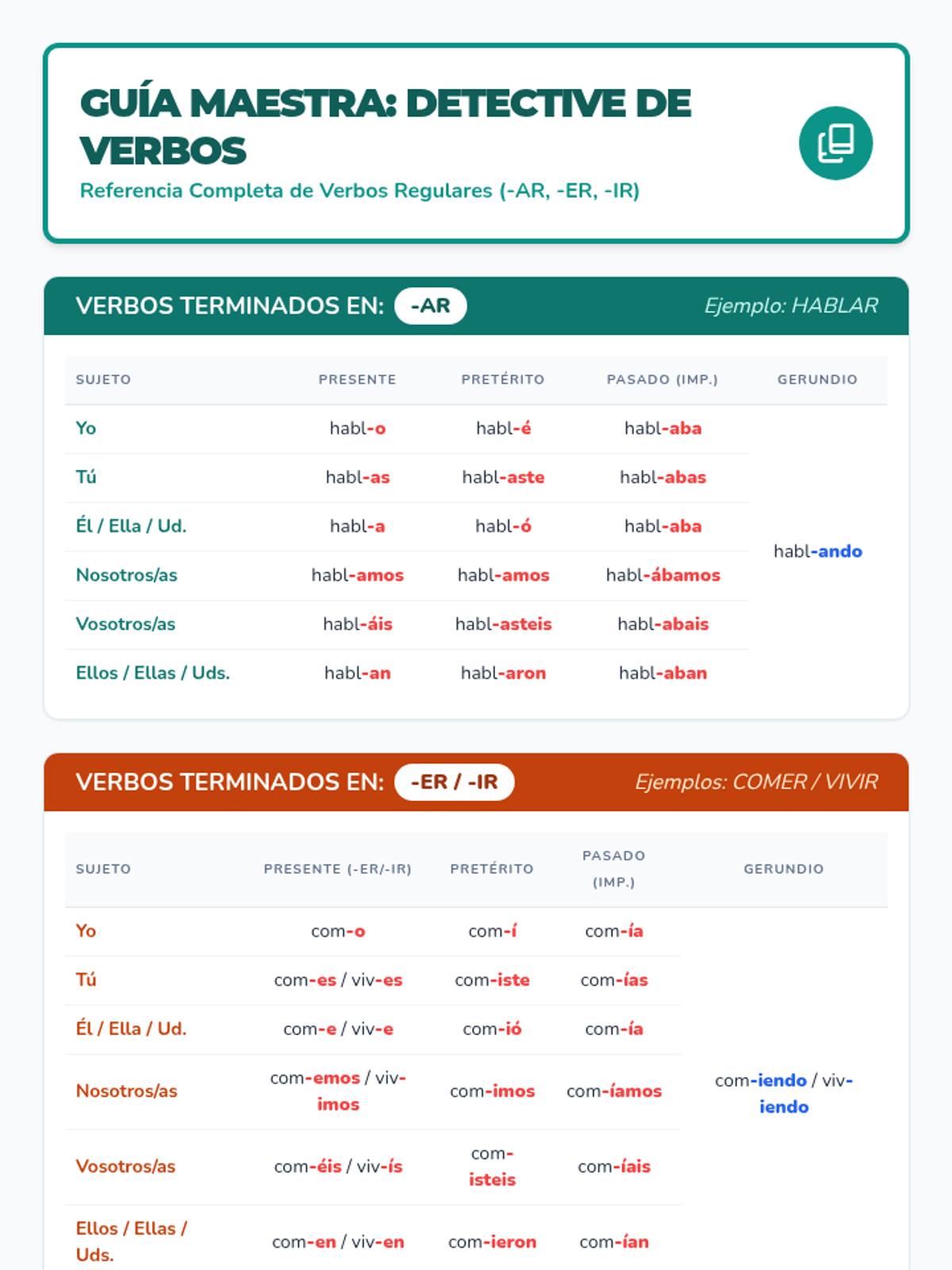
Una lección enfocada en la identificación y uso de verbos regulares en español en diferentes tiempos verbales.
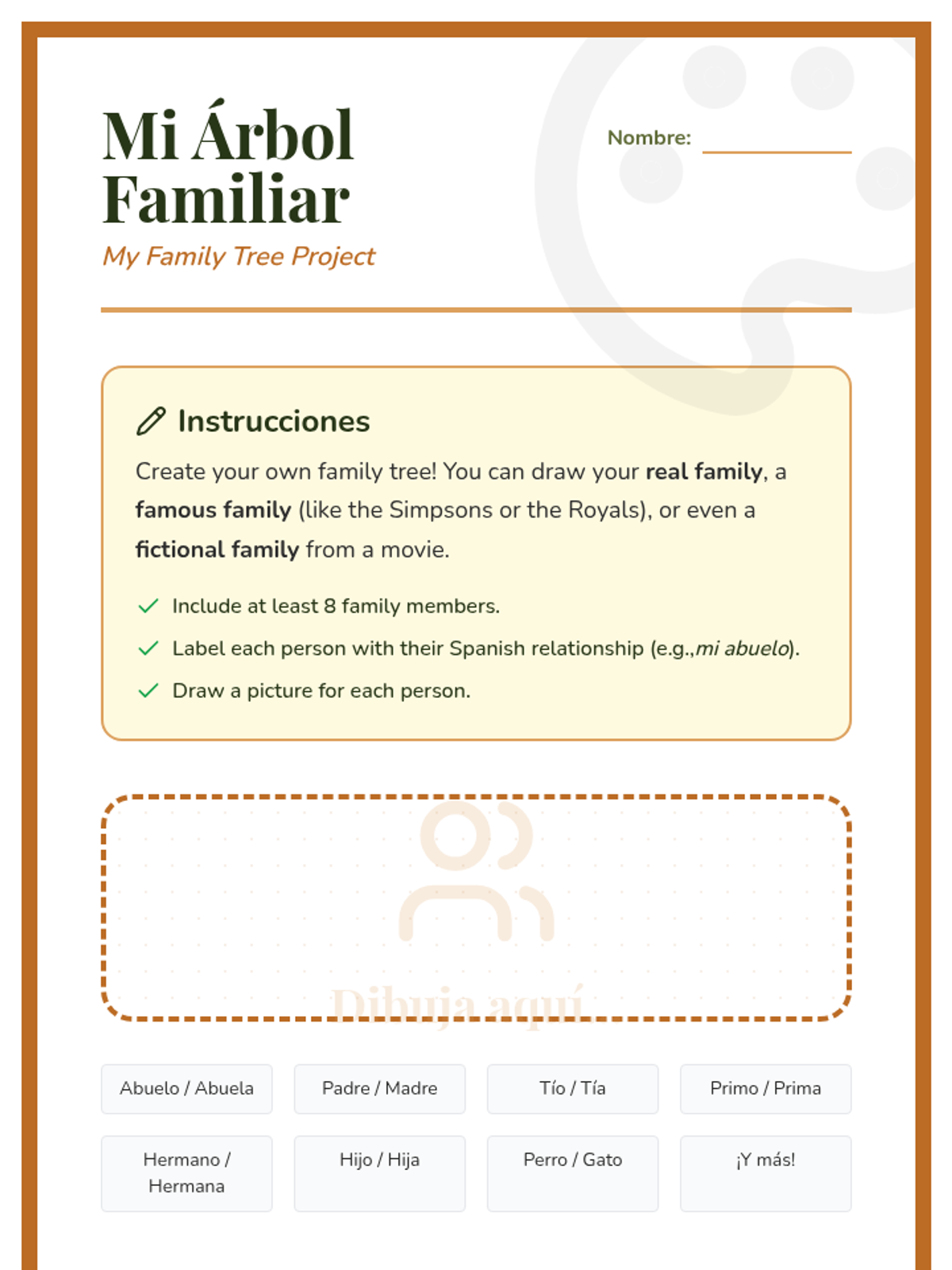
A beginner-level Spanish lesson where students learn and apply basic family vocabulary by constructing their own family tree graphic organizer.
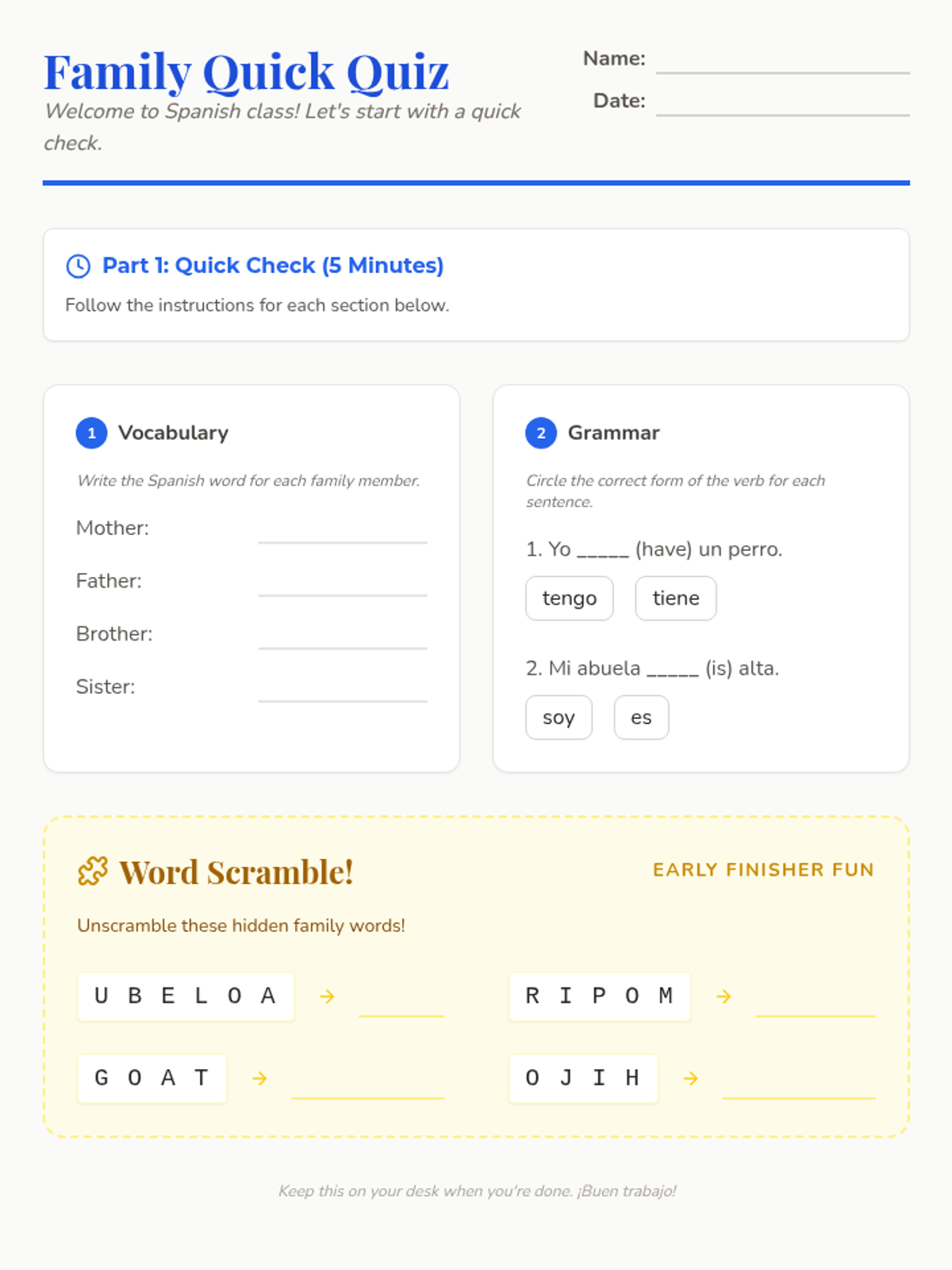
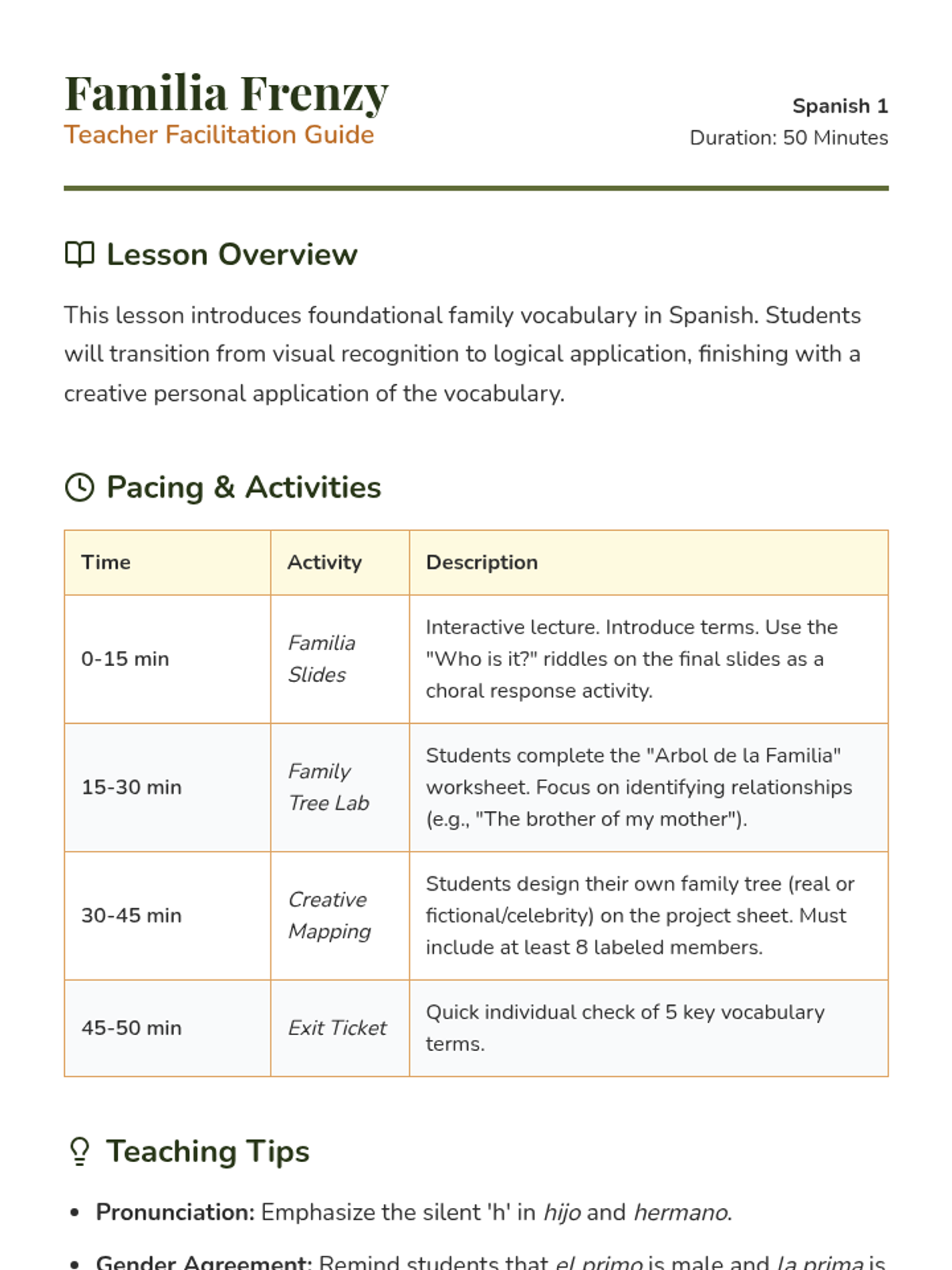
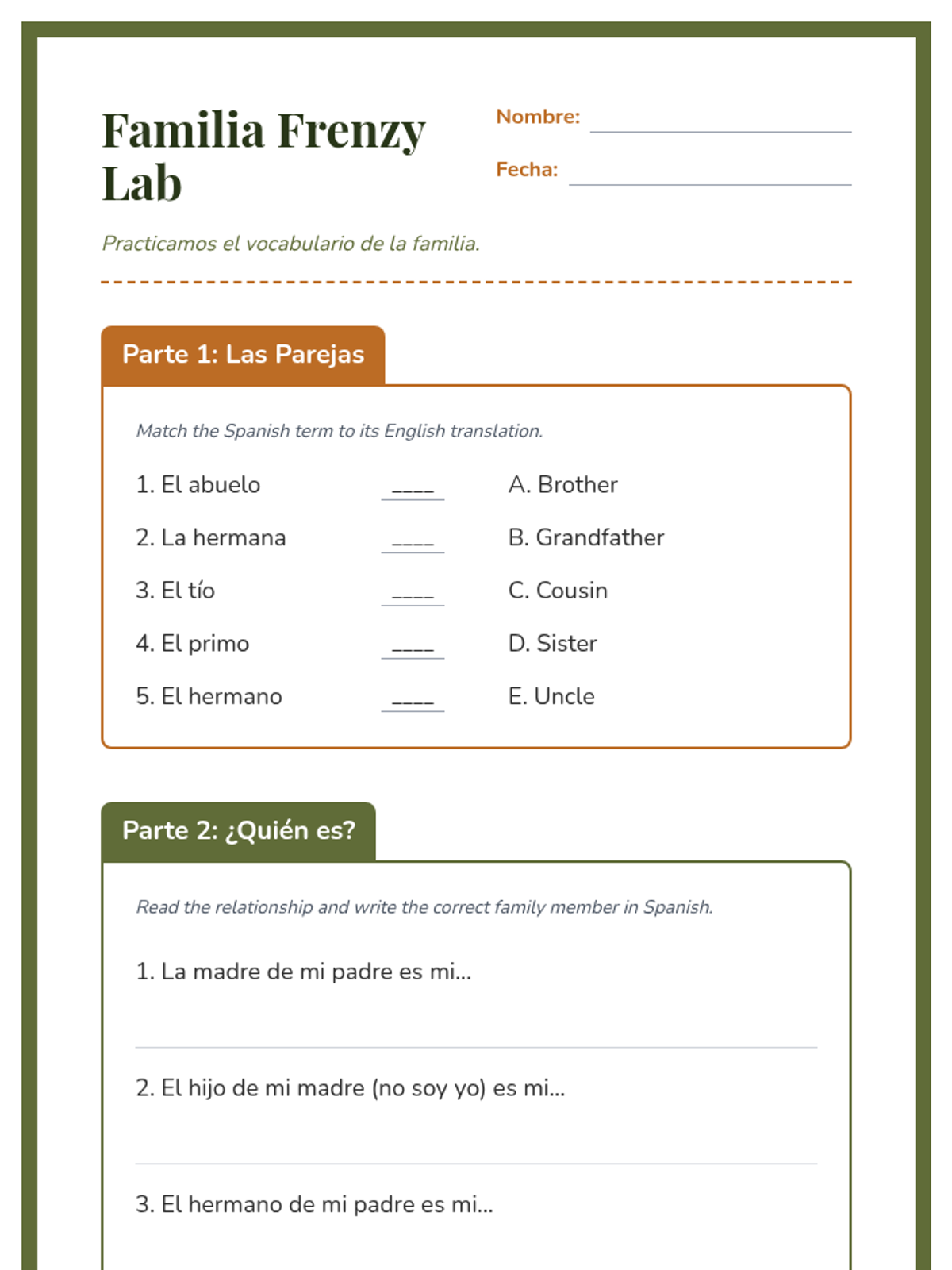
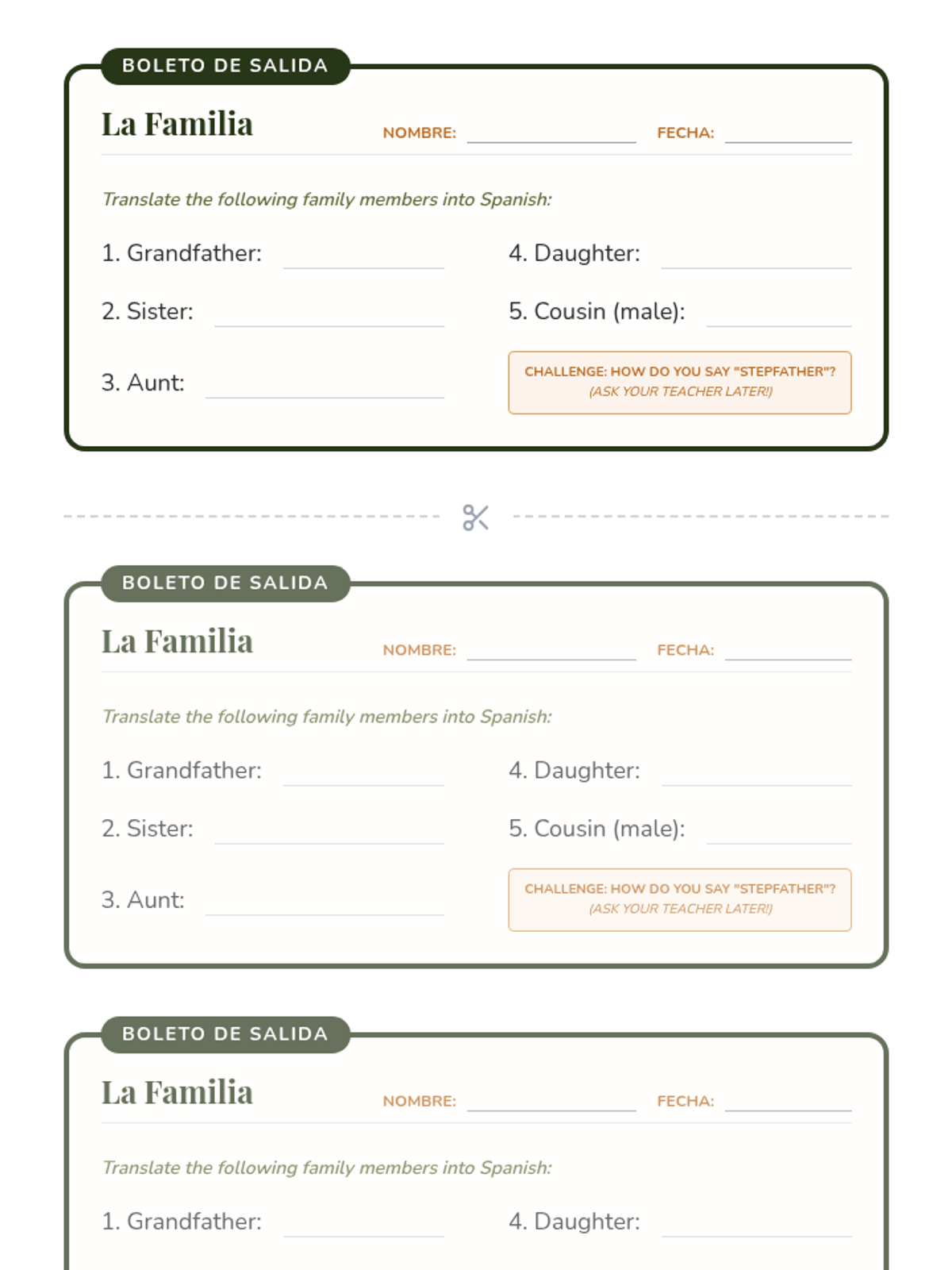
A 50-minute introductory Spanish 1 lesson focused on family member vocabulary through visual slides, a family tree reading activity, a creative mapping project, and a quick vocabulary check.
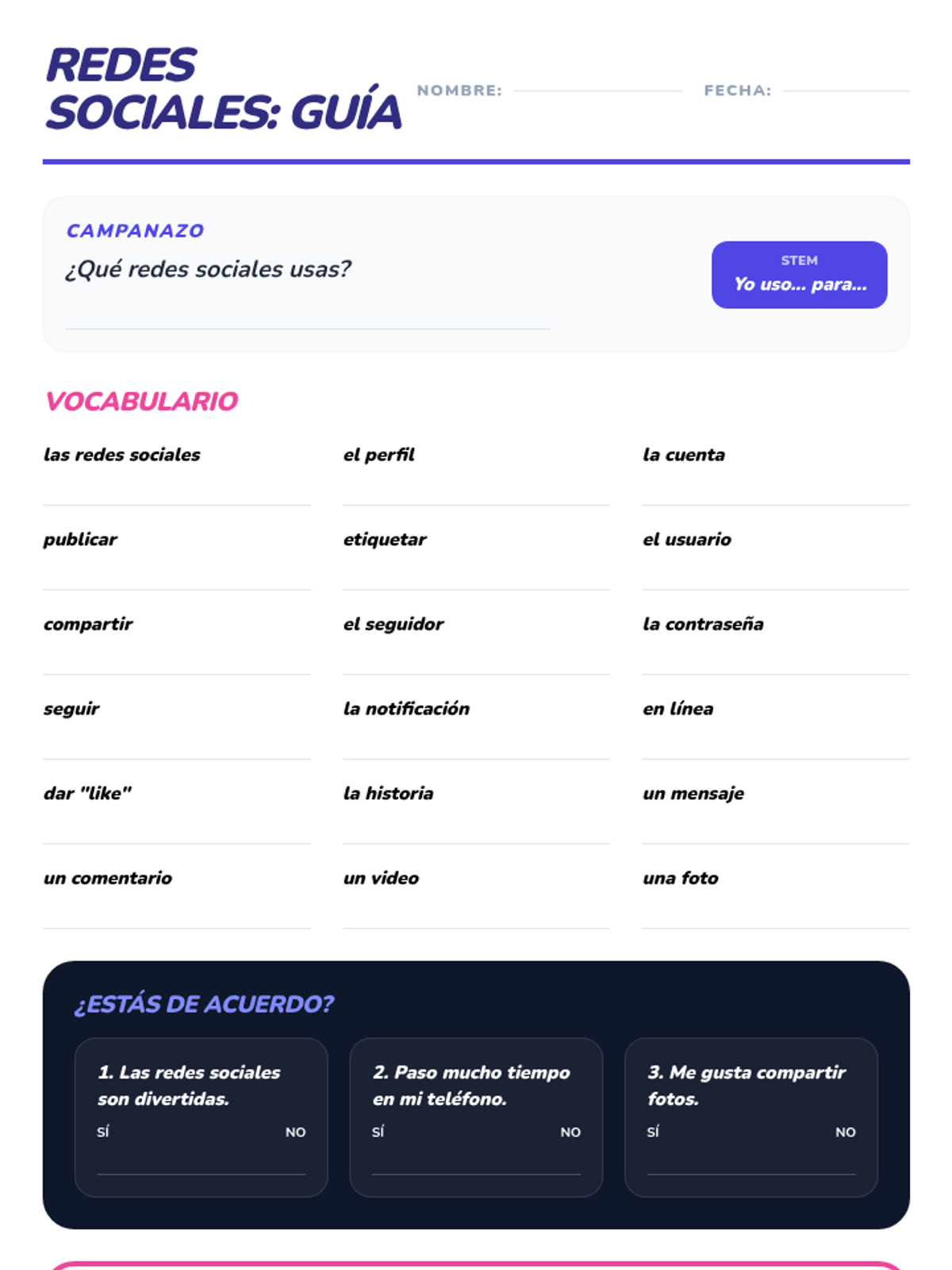
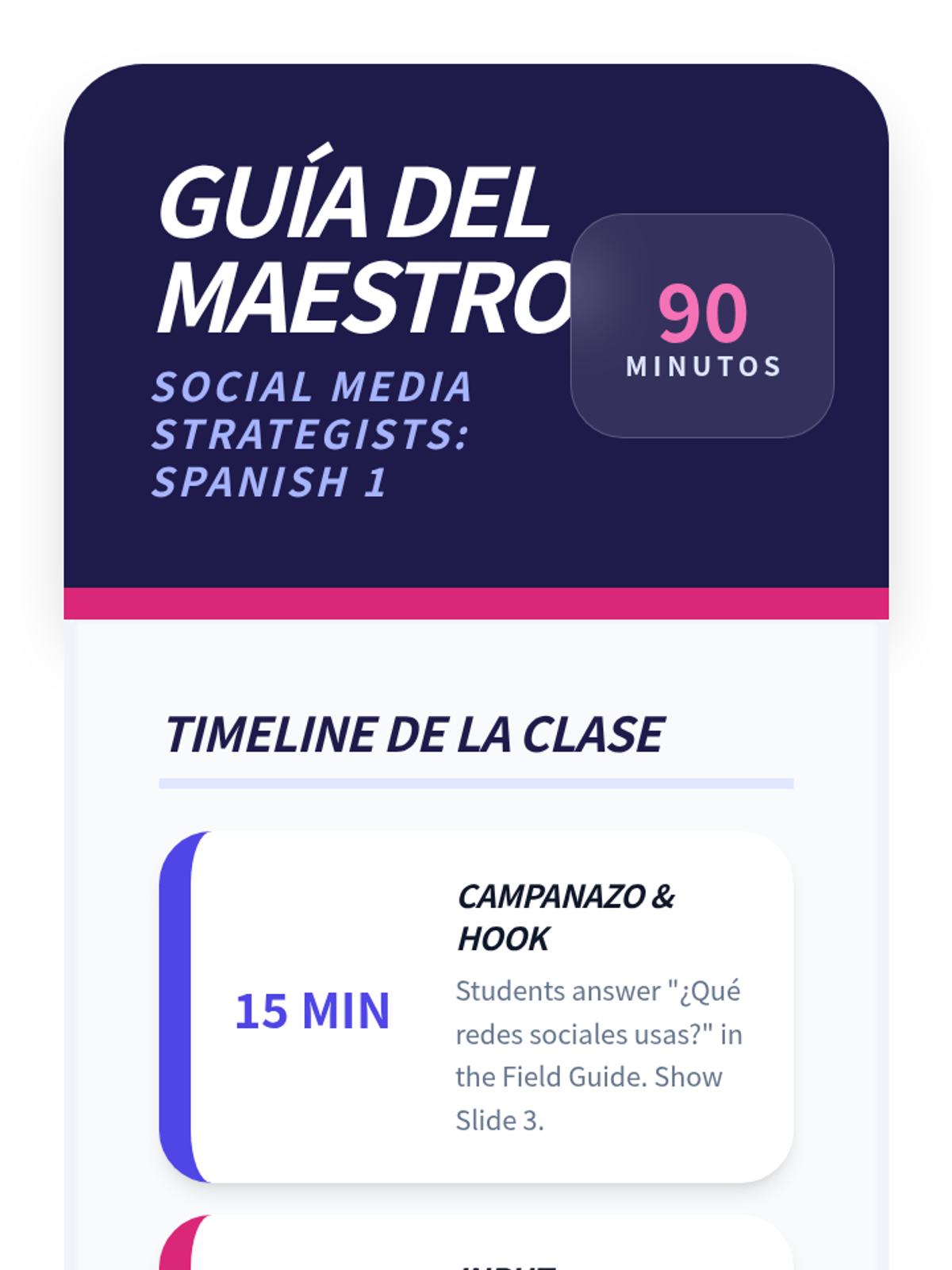
An introductory Spanish 1 lesson on social media vocabulary and expressing opinions (agreement/disagreement). Students will learn to identify key platforms and actions while discussing their digital habits.
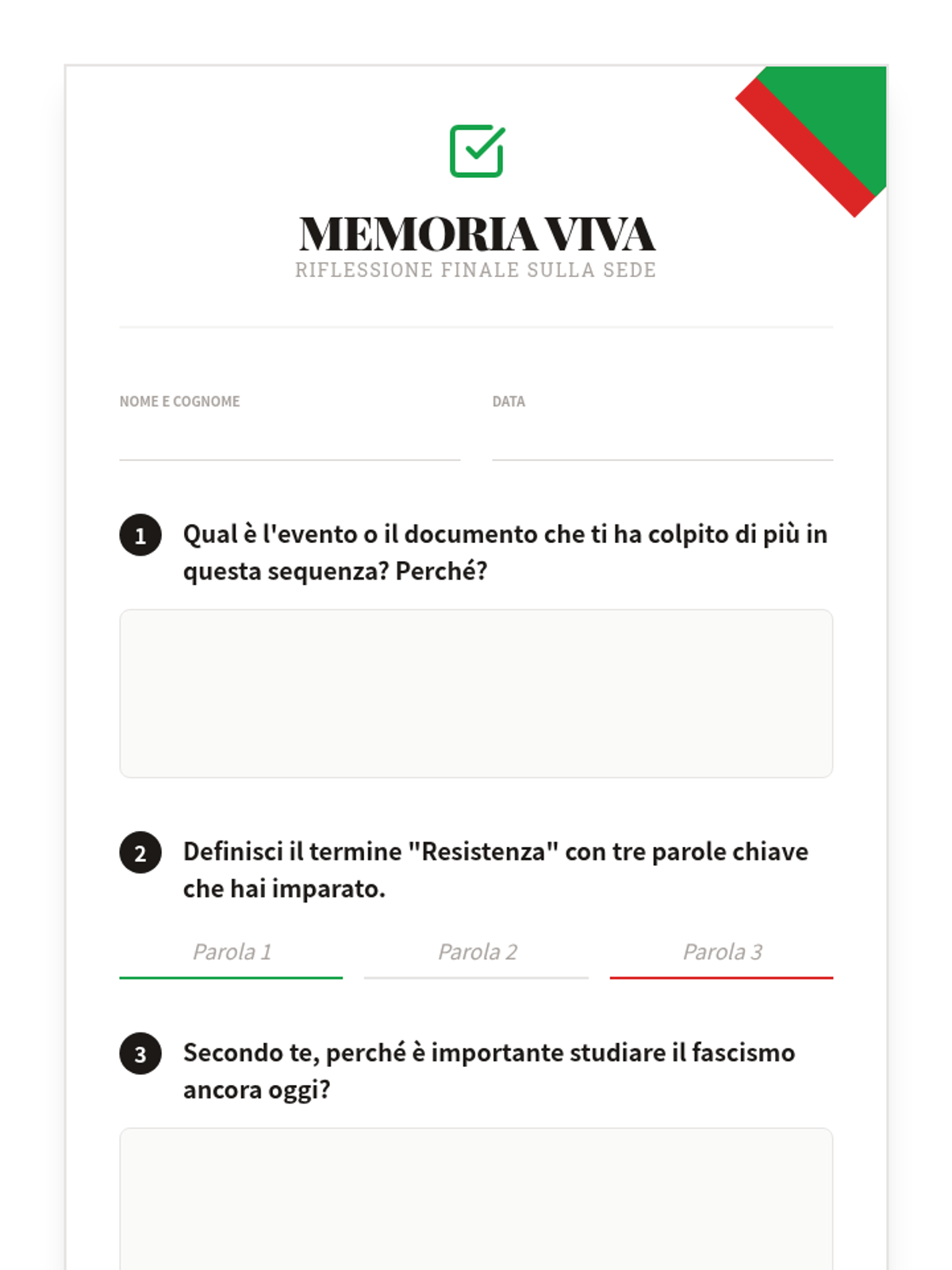
La fin du régime, la Libération du 25 avril et la réflexion sur l'héritage historique du fascisme.
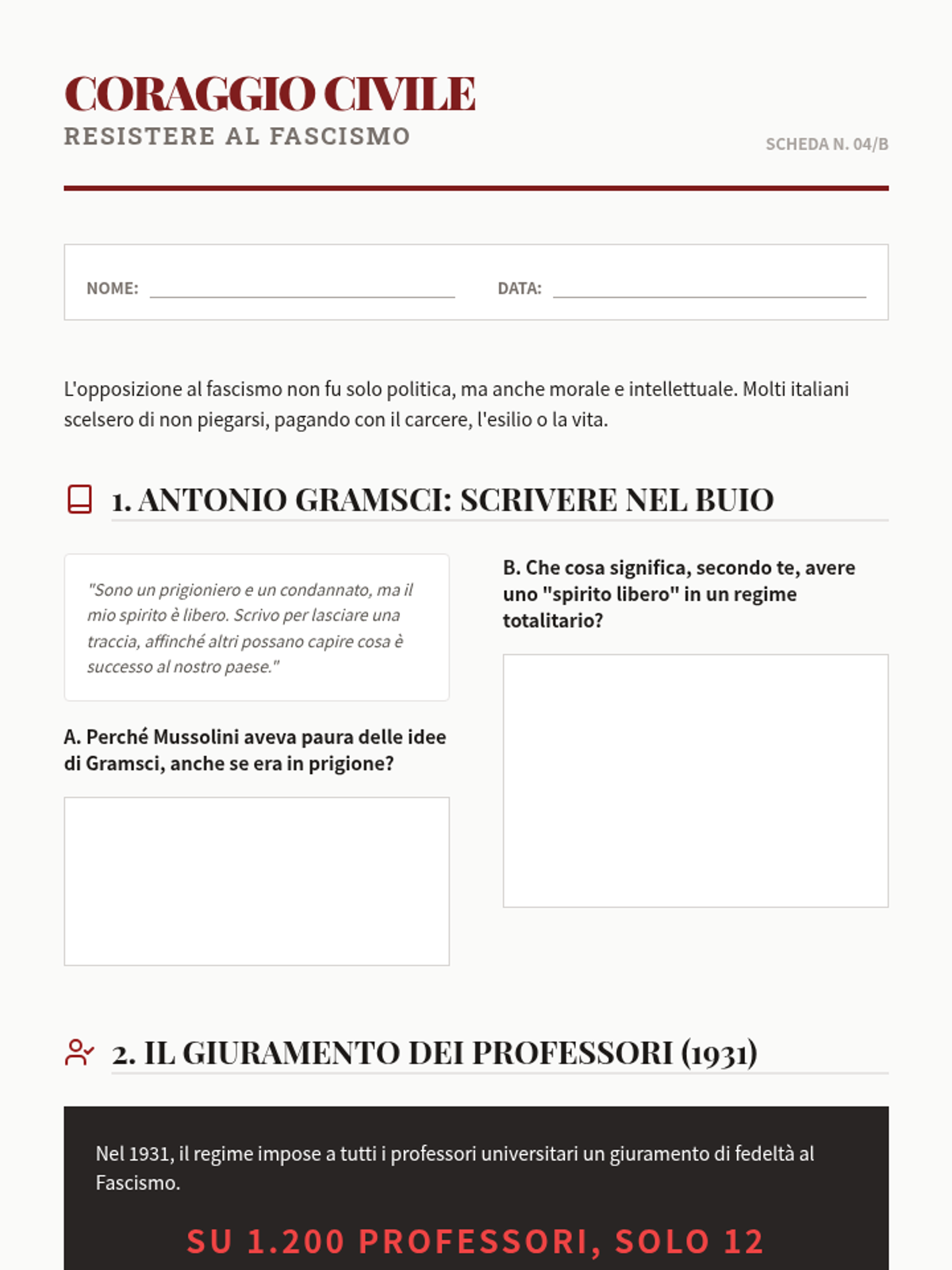
Découverte des figures de l'opposition antifasciste et des prémices de la Résistance.
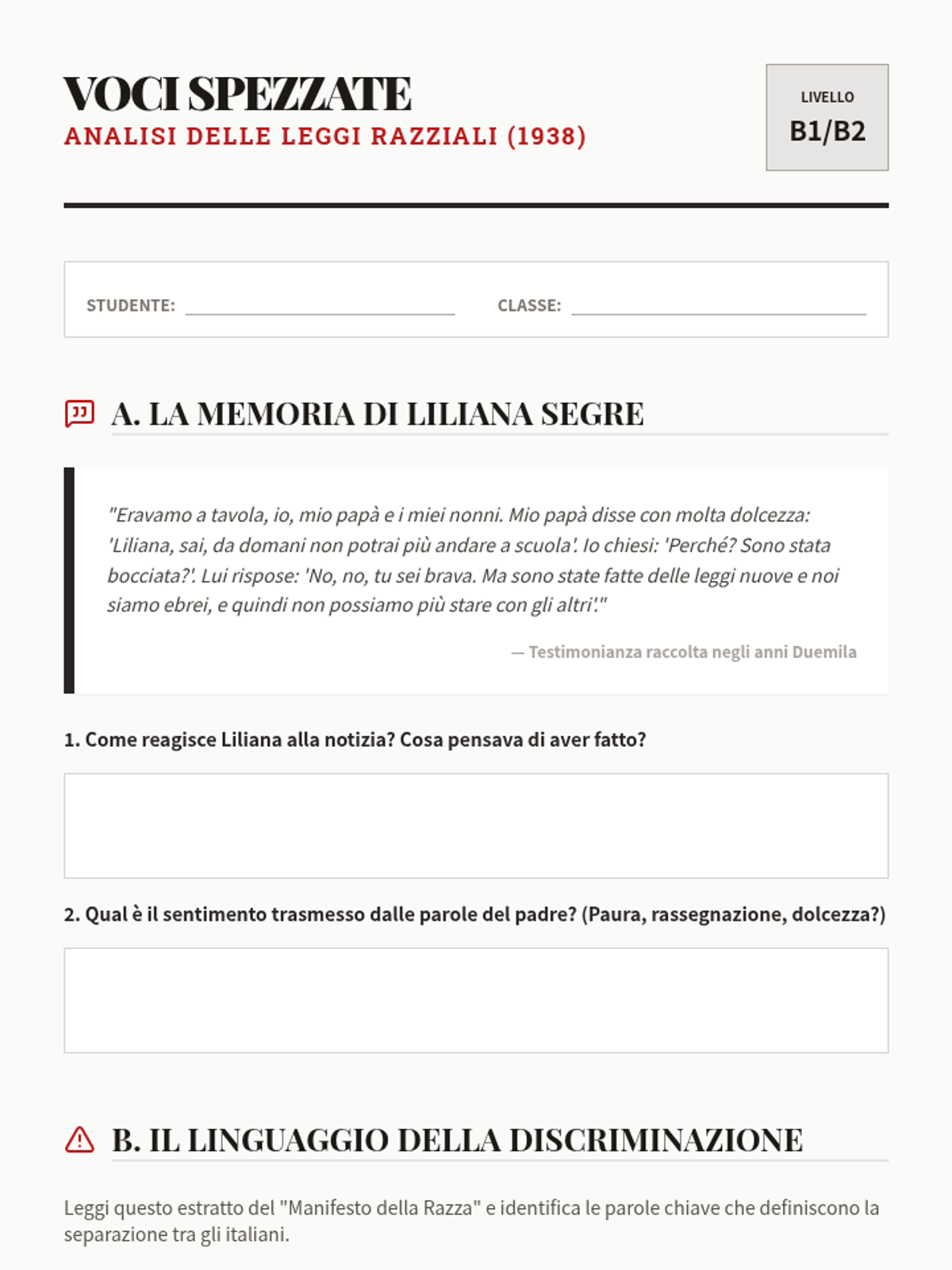
Examen de l'introduction des lois raciales de 1938 et de leur impact dévastateur sur la société italienne.
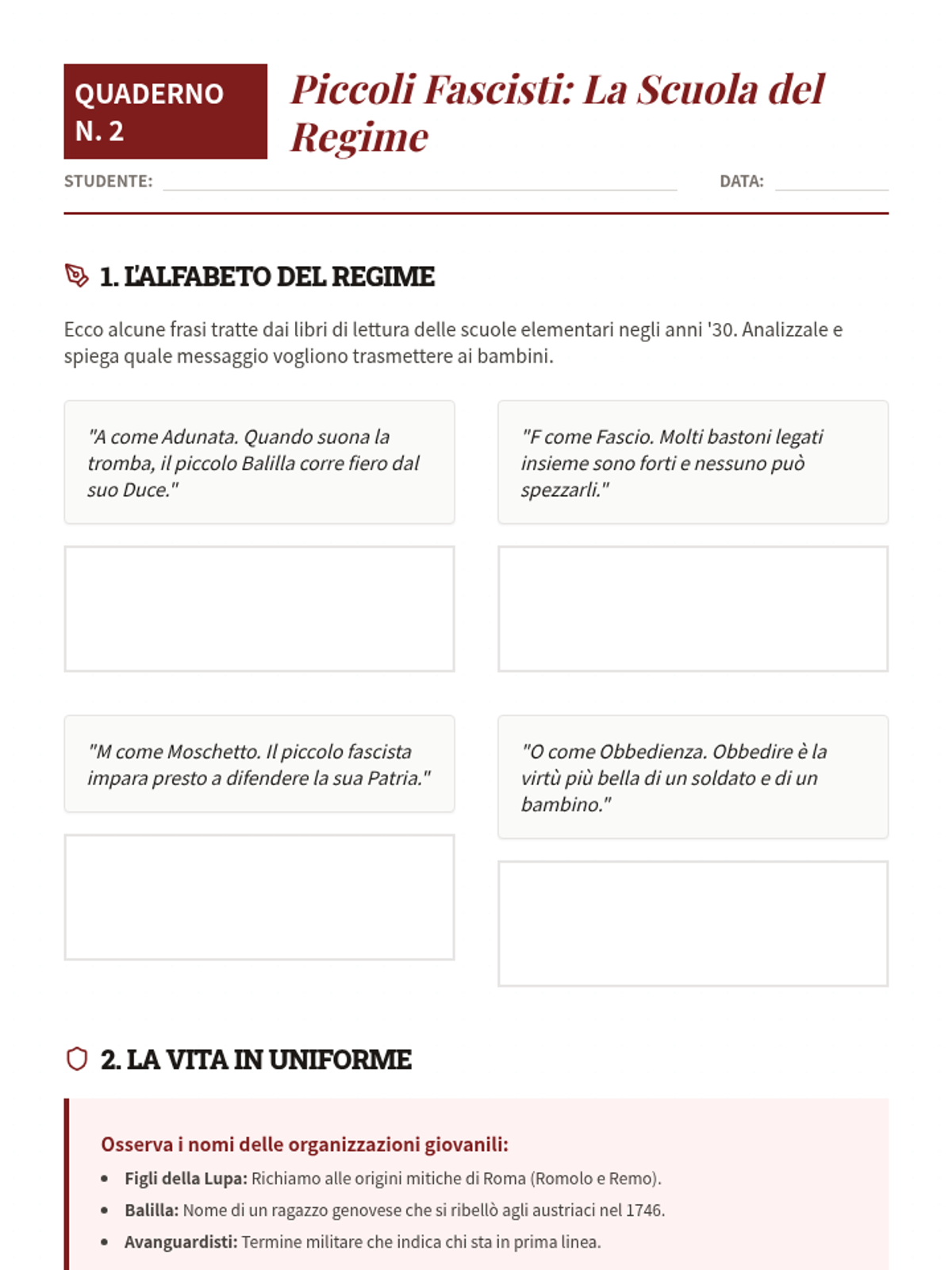
Analyse des outils de propagande, de l'embrigadement de la jeunesse et du culte de la personnalité du Duce.
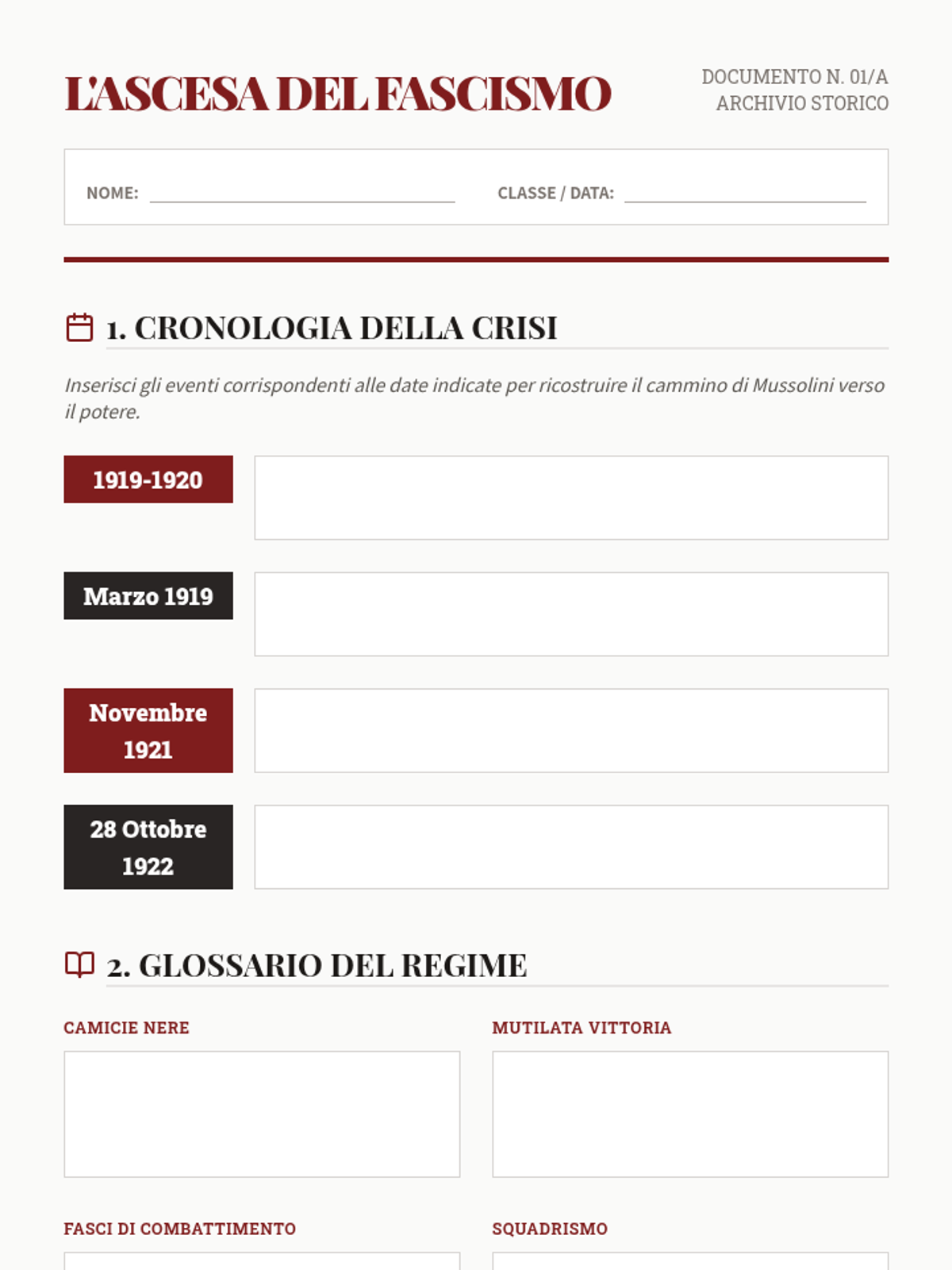
Étude de la crise de l'après-guerre en Italie et de la marche sur Rome qui a mené Mussolini au pouvoir.
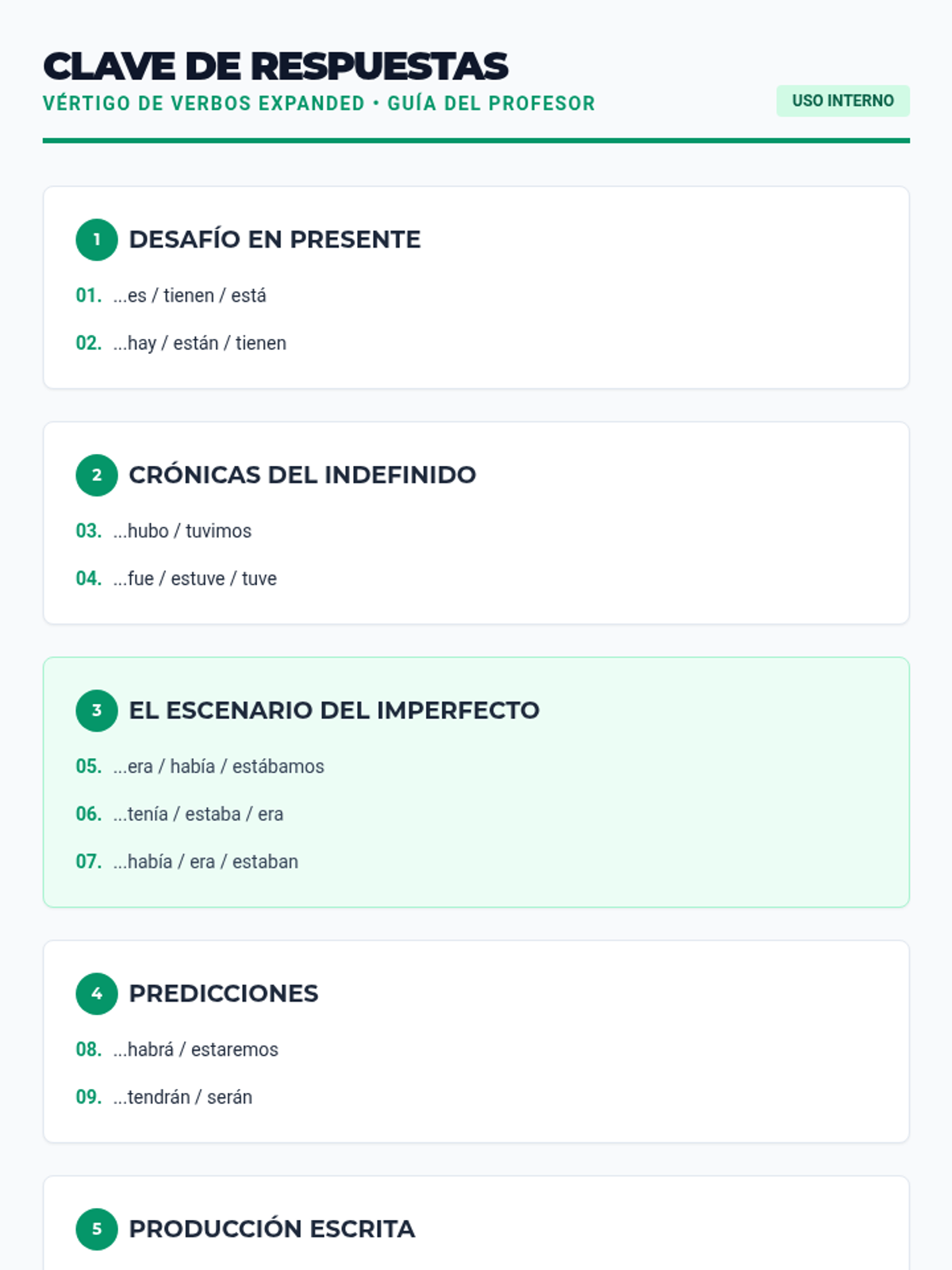
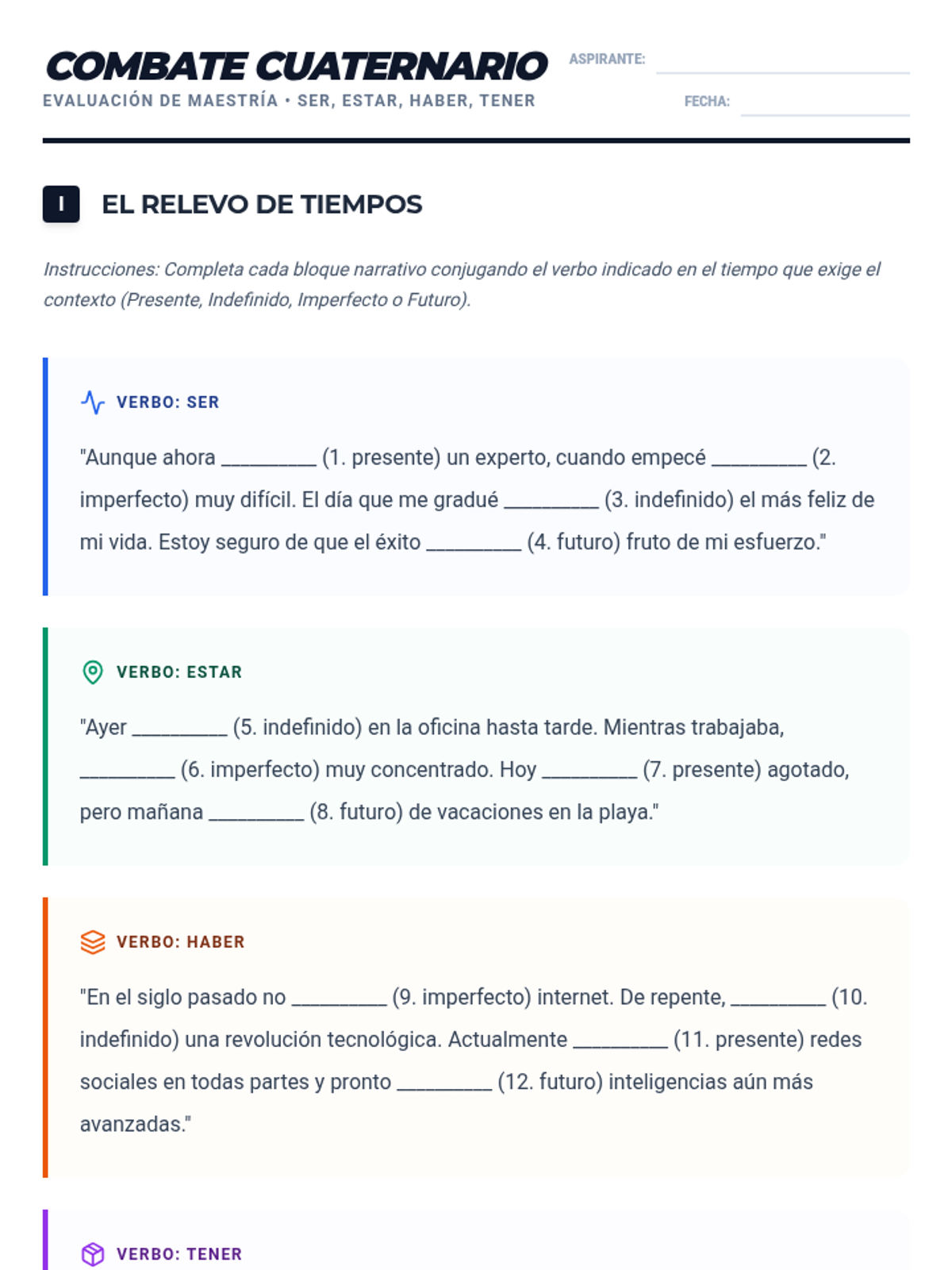
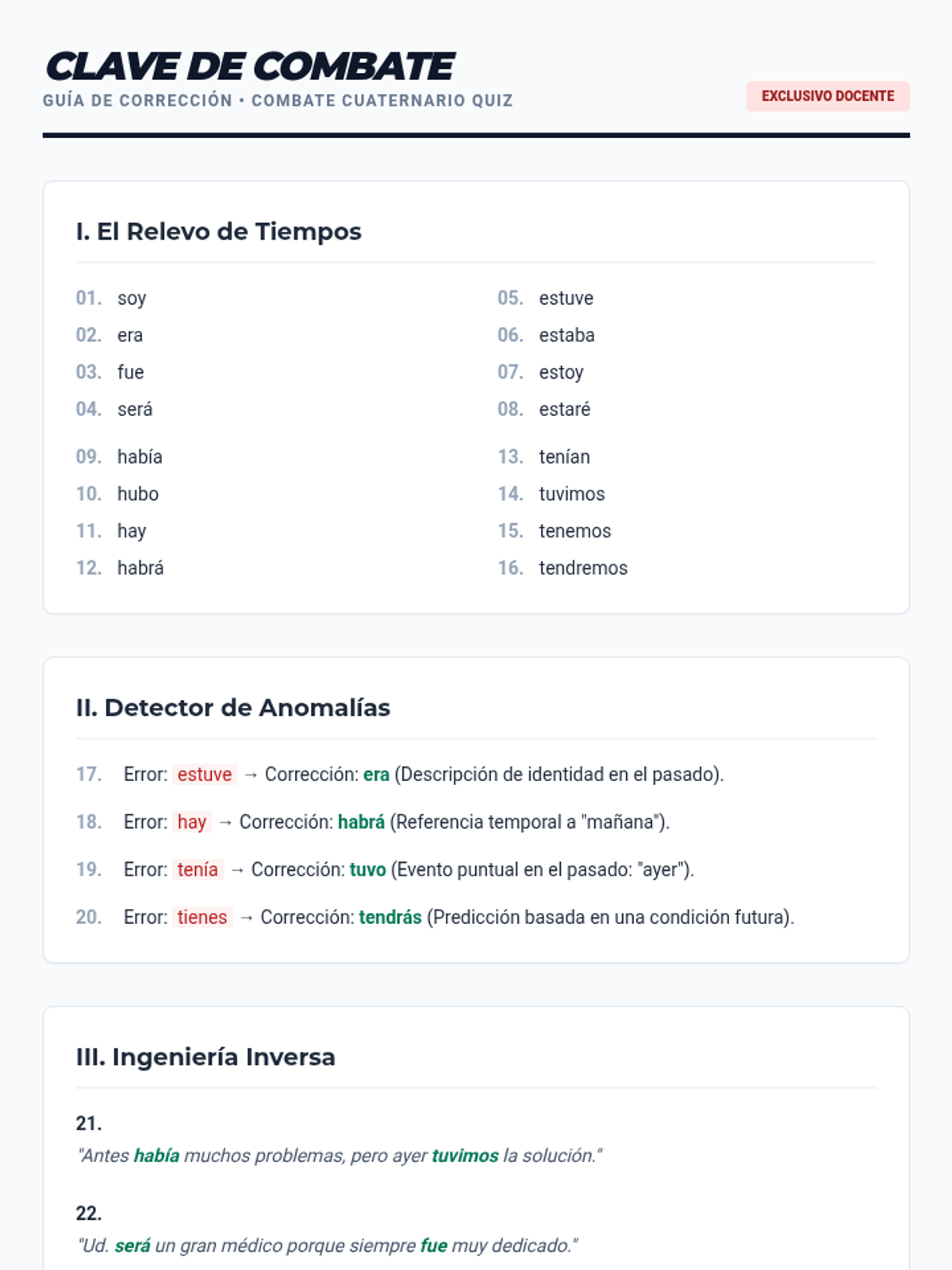
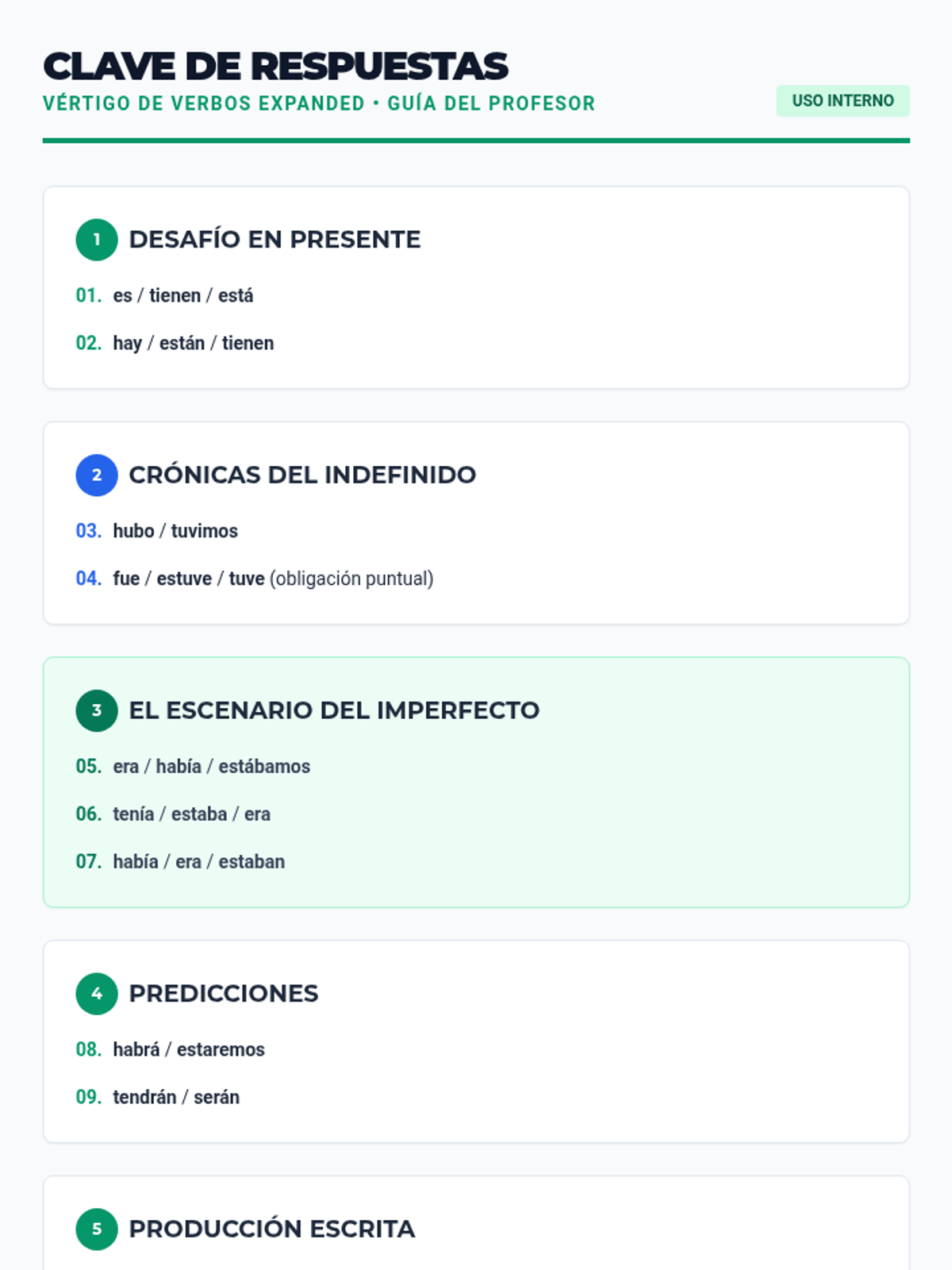
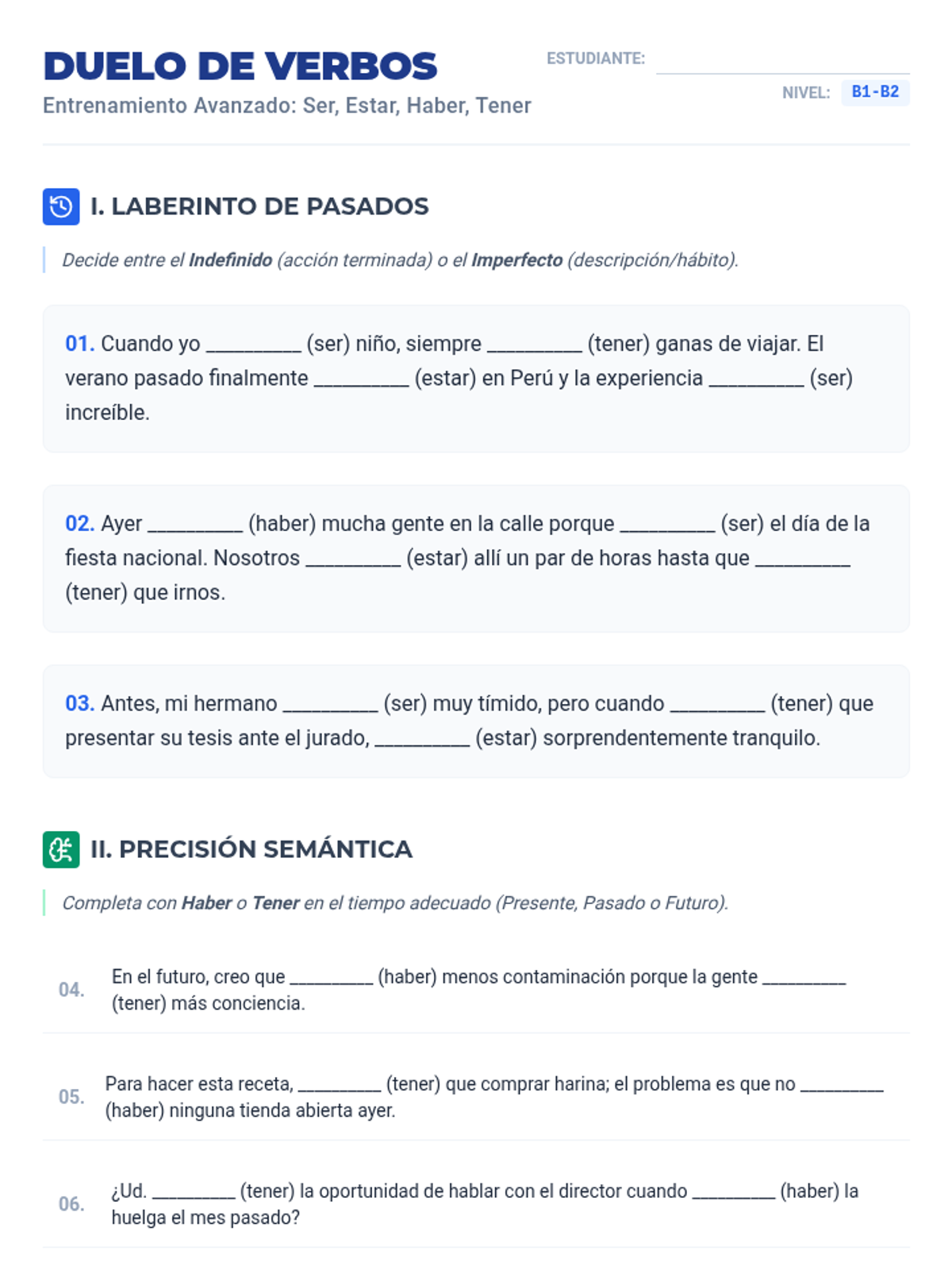
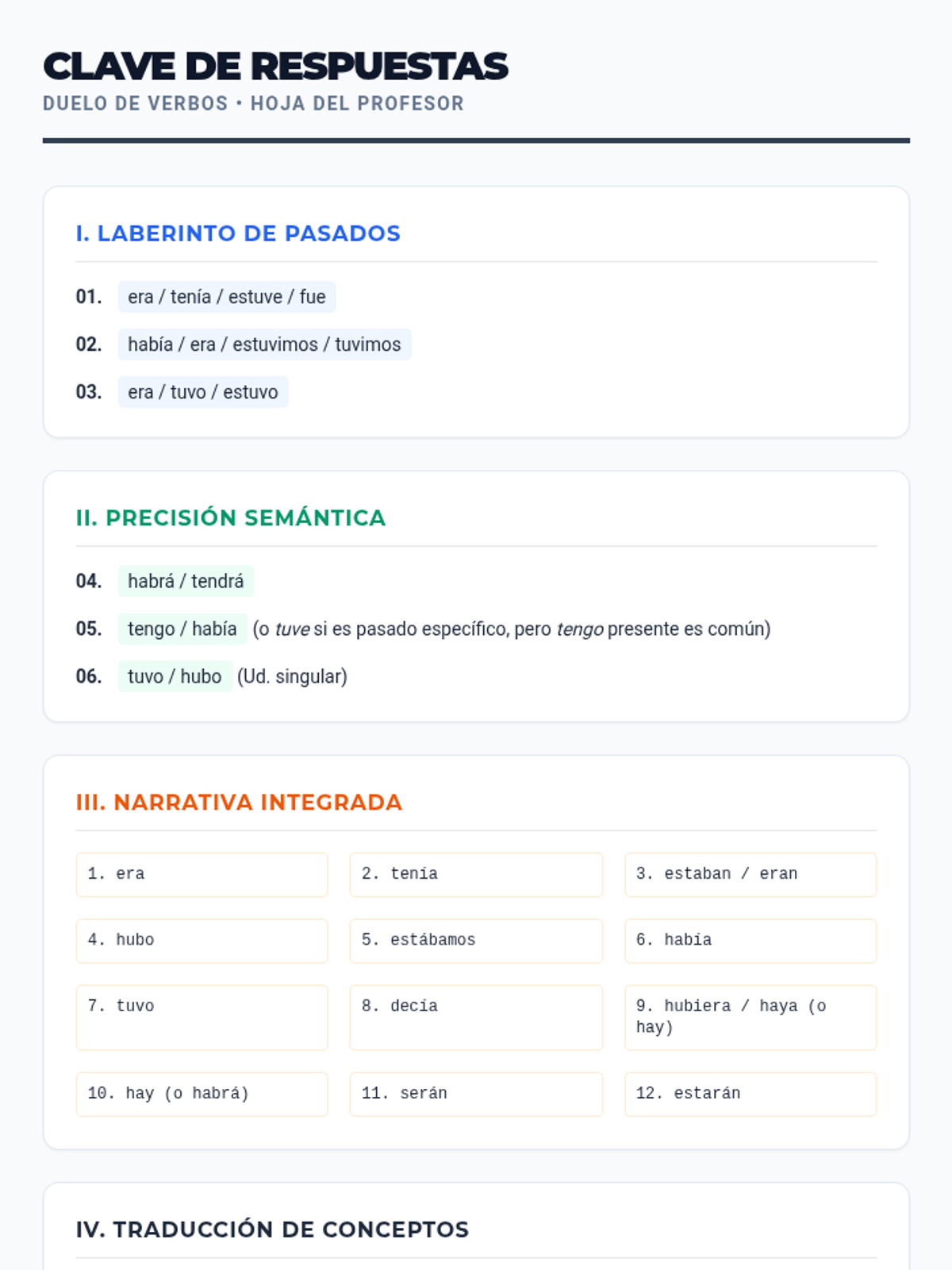
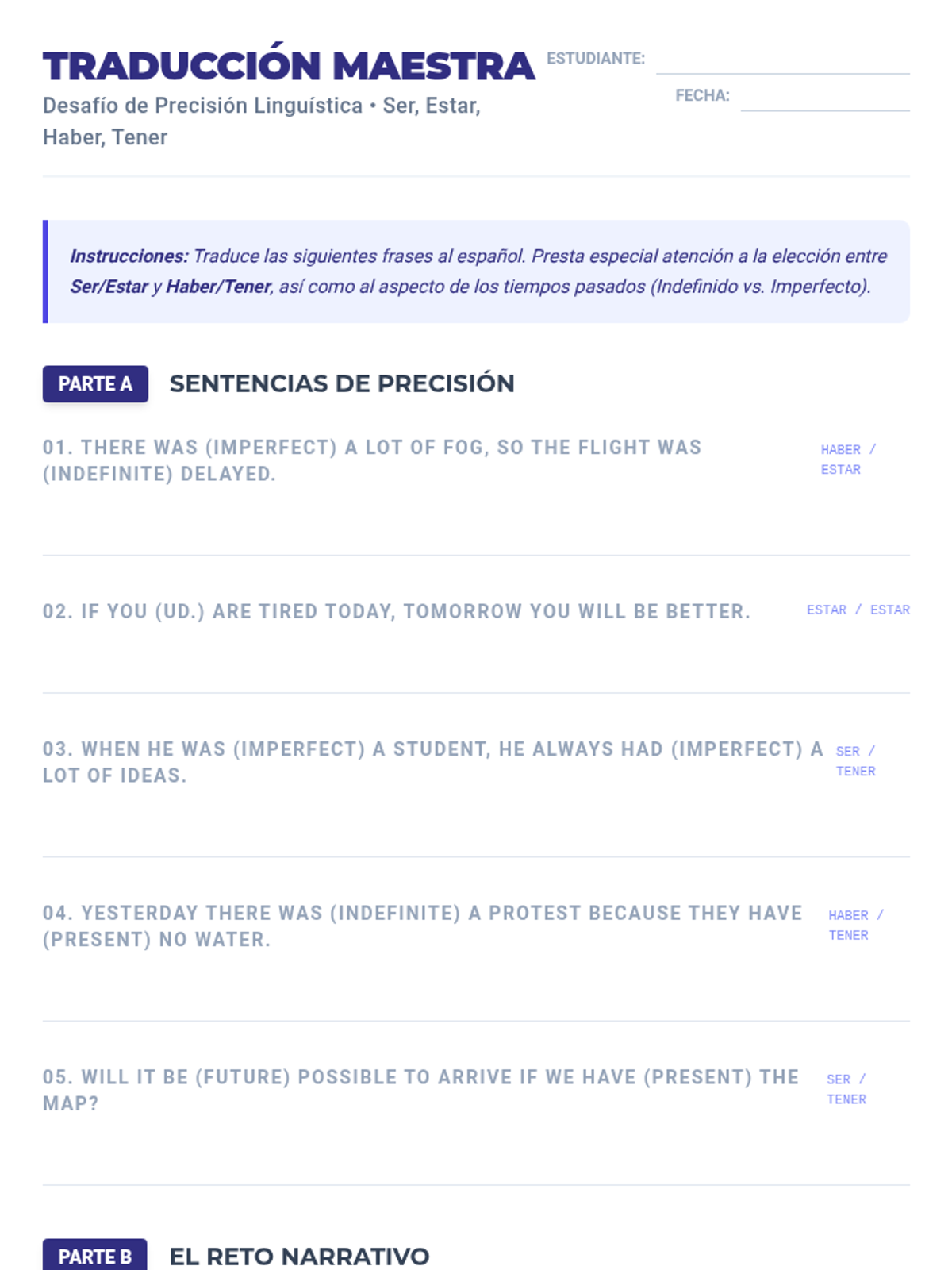
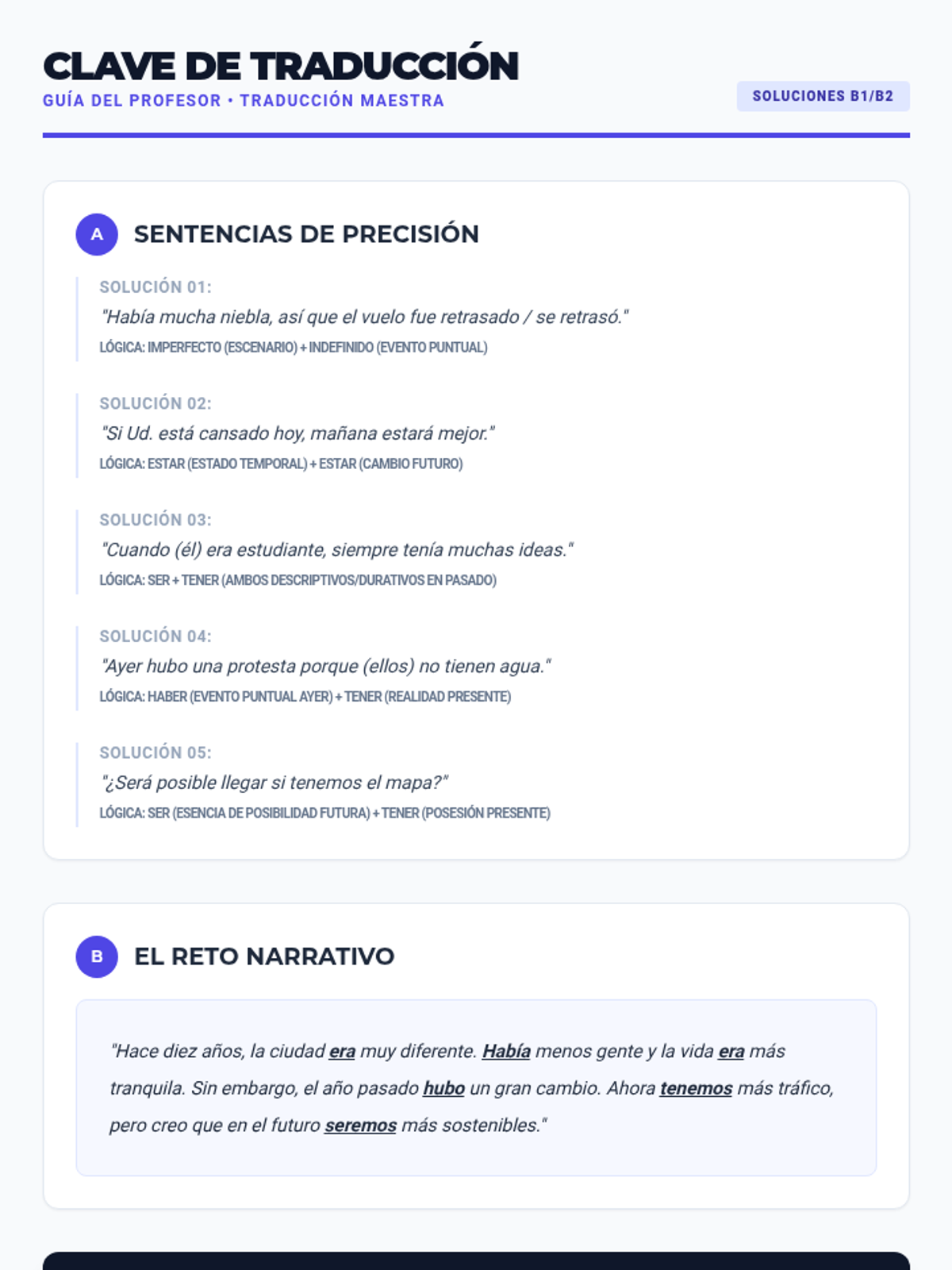
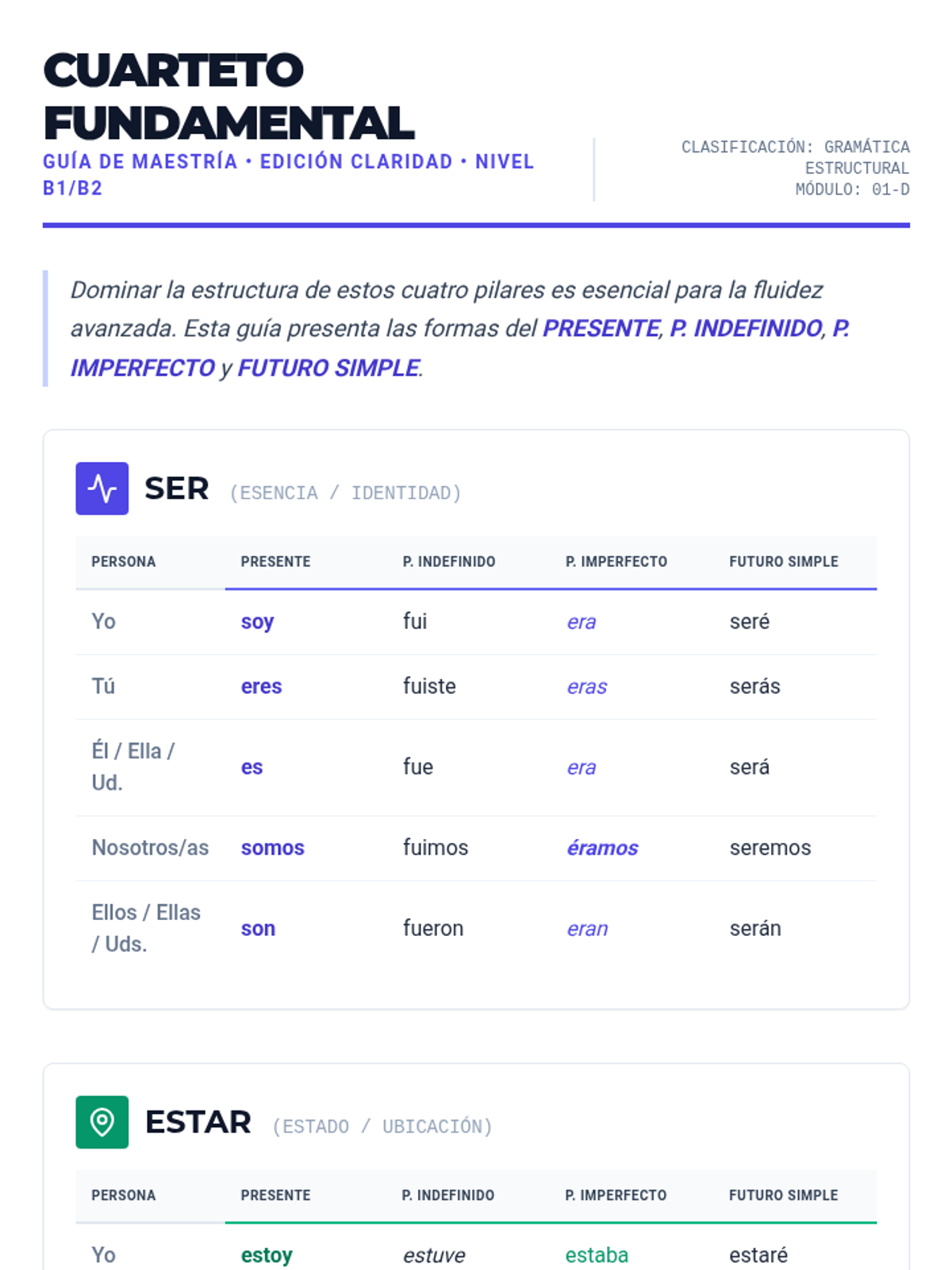
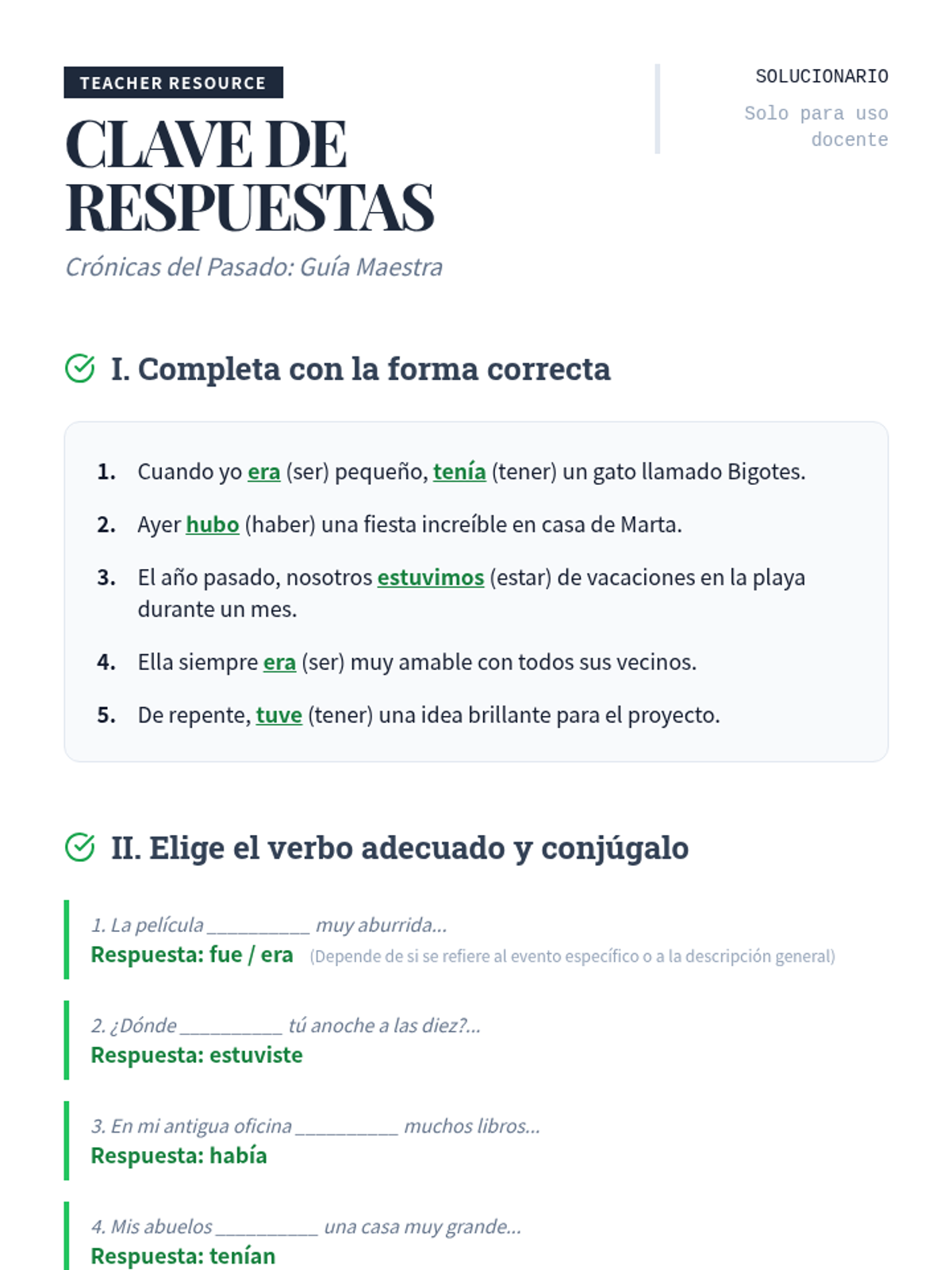
A comprehensive guide and practice set for mastering the four most essential Spanish verbs: ser, estar, haber, and tener across present, past, and future tenses.
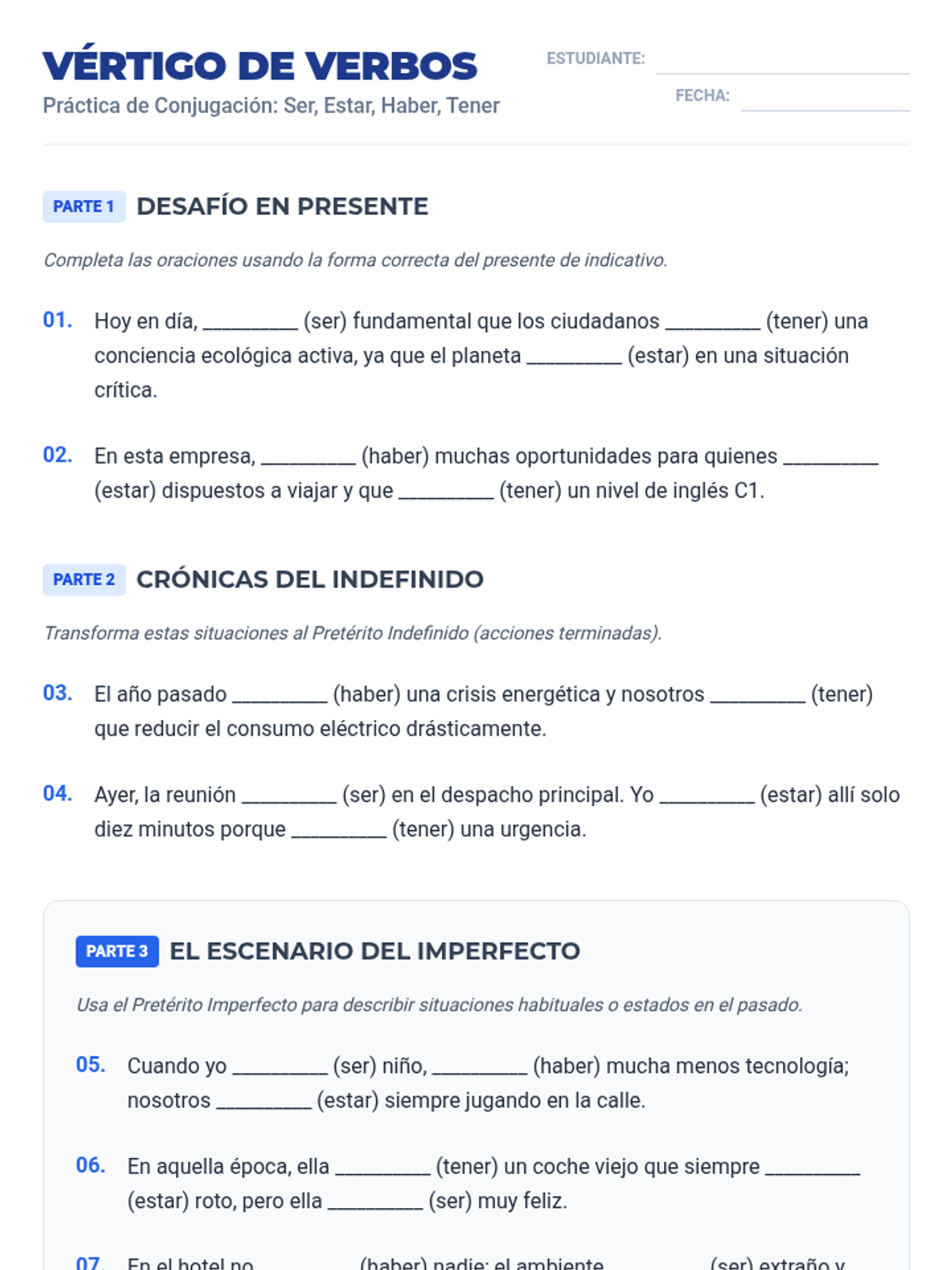
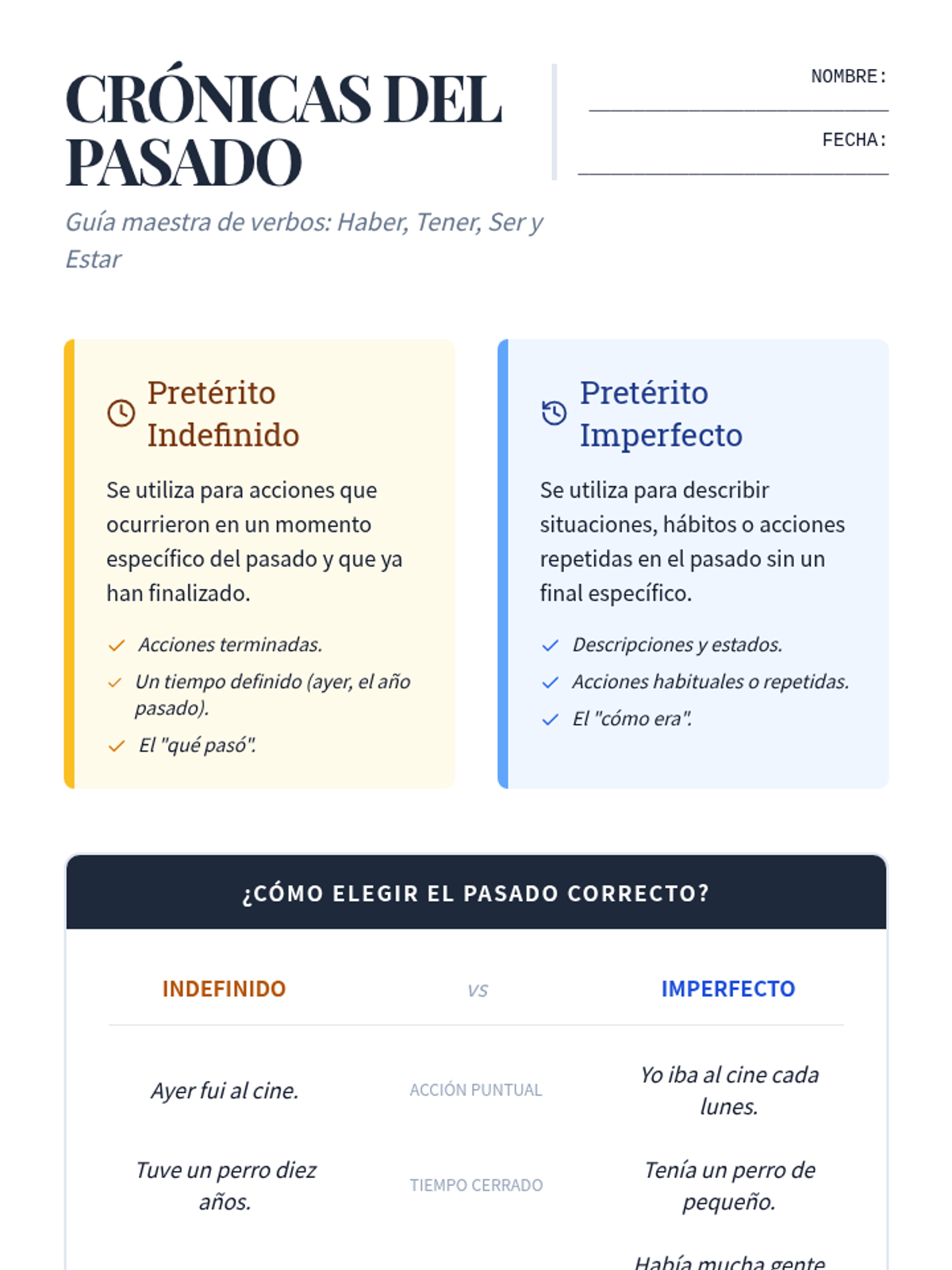
Una guía detallada para dominar los verbos fundamentales (haber, tener, ser, estar) en el pretérito indefinido y el imperfecto. Incluye explicaciones teóricas, tablas de conjugación y ejercicios prácticos.
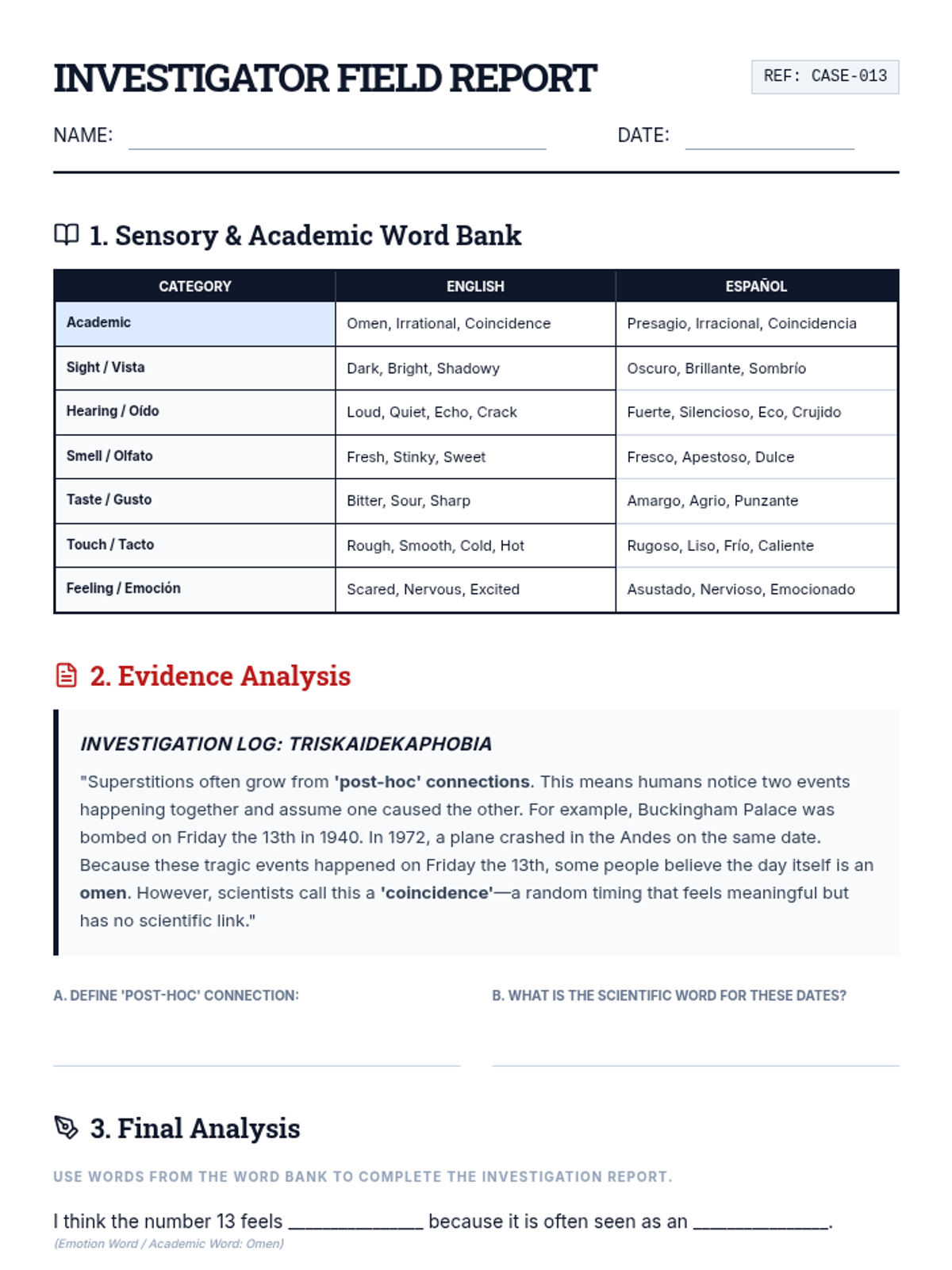
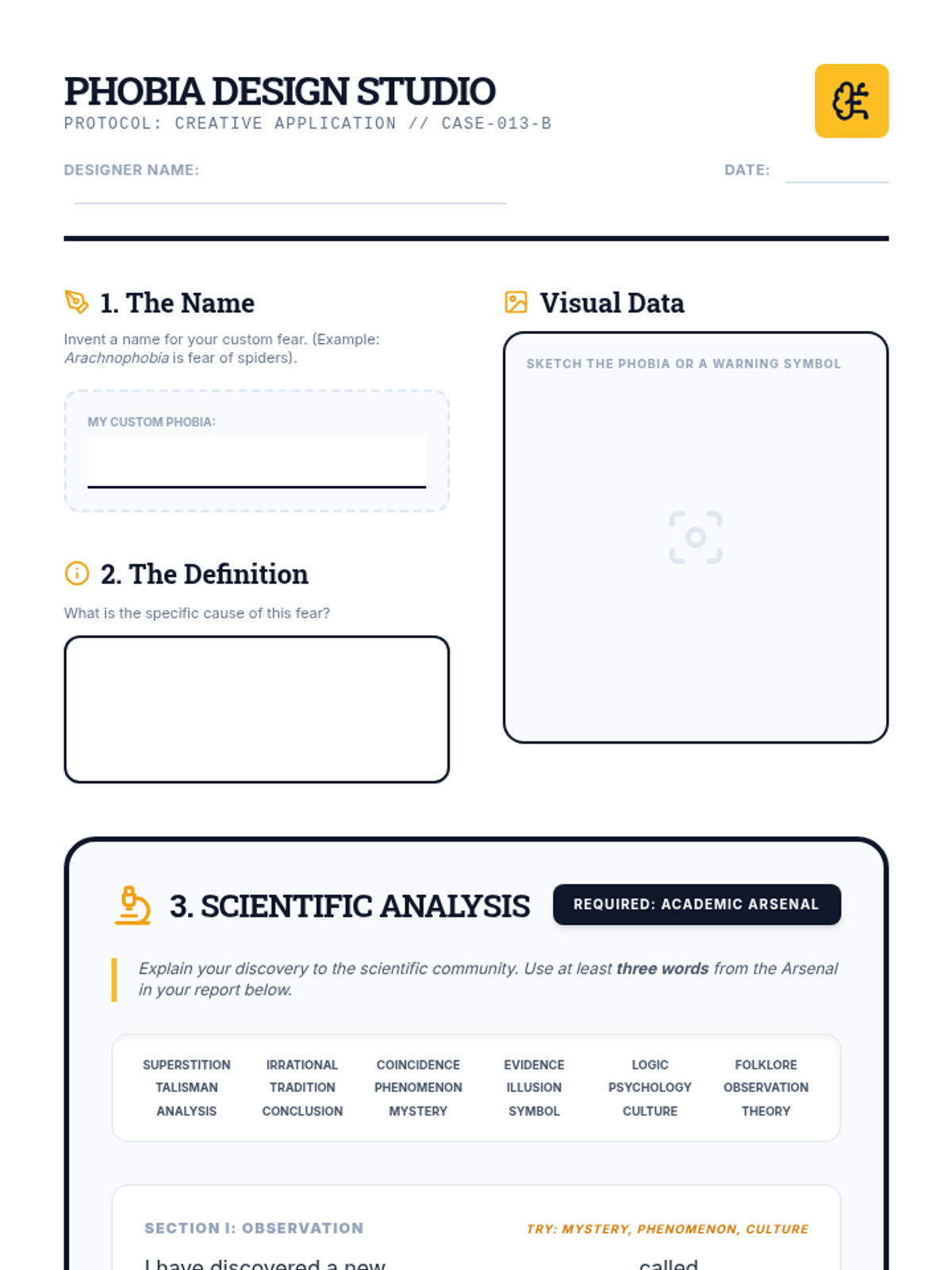
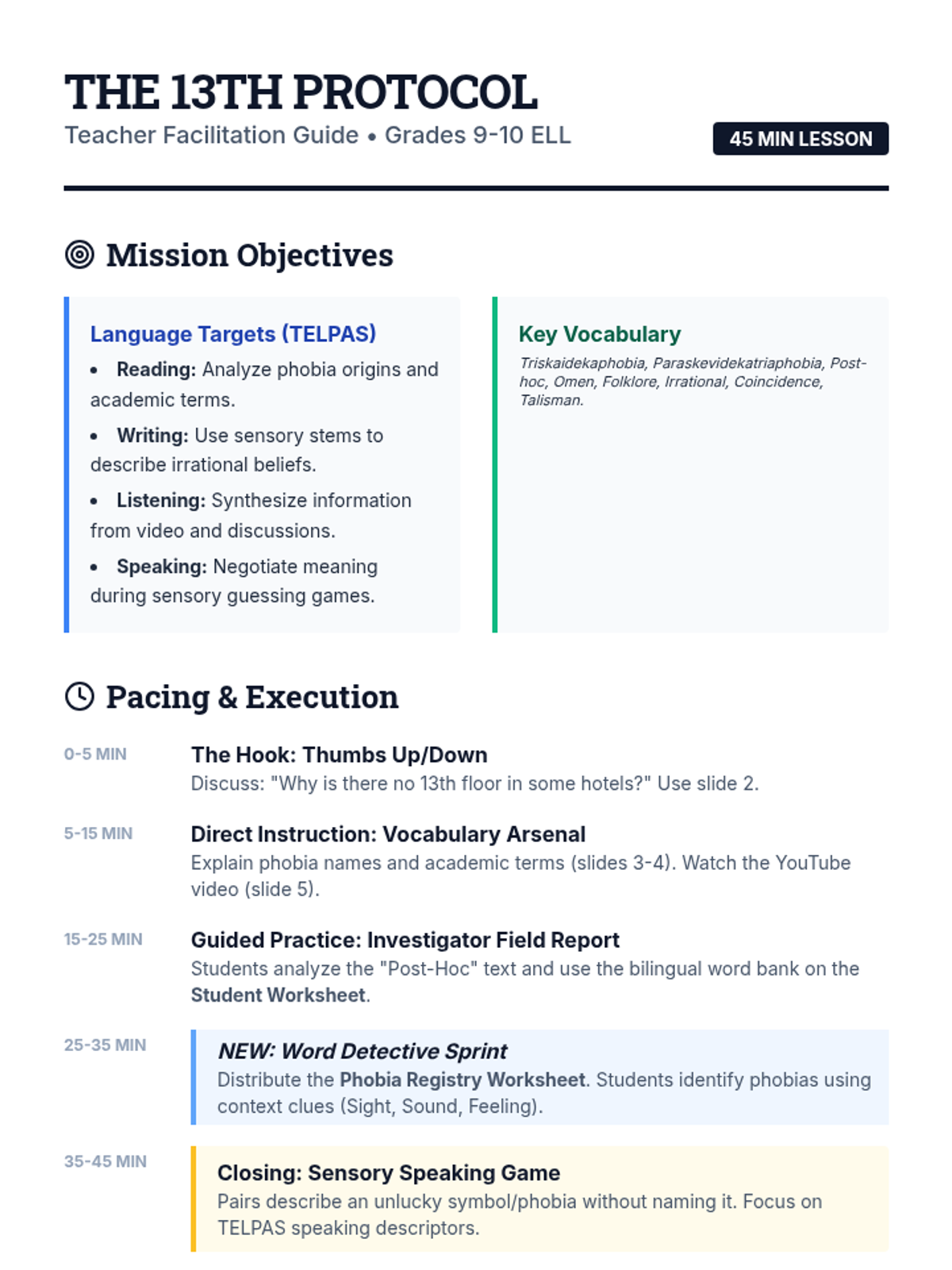
A 45-minute lesson exploring the origins of superstitions surrounding the number 13 and Friday the 13th, focusing on TELPAS speaking, listening, reading, and writing skills for 9th and 10th grade ELLs.
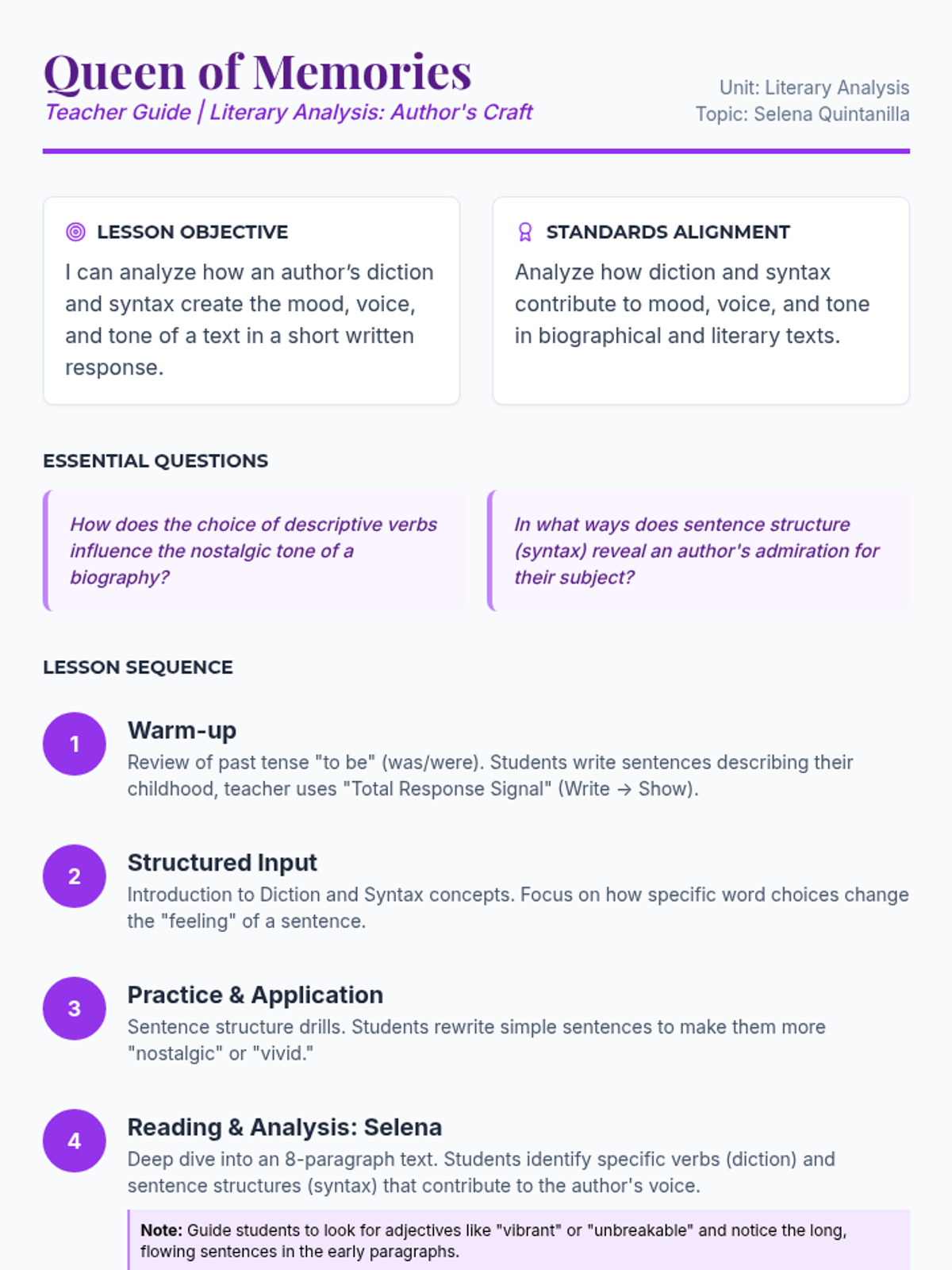
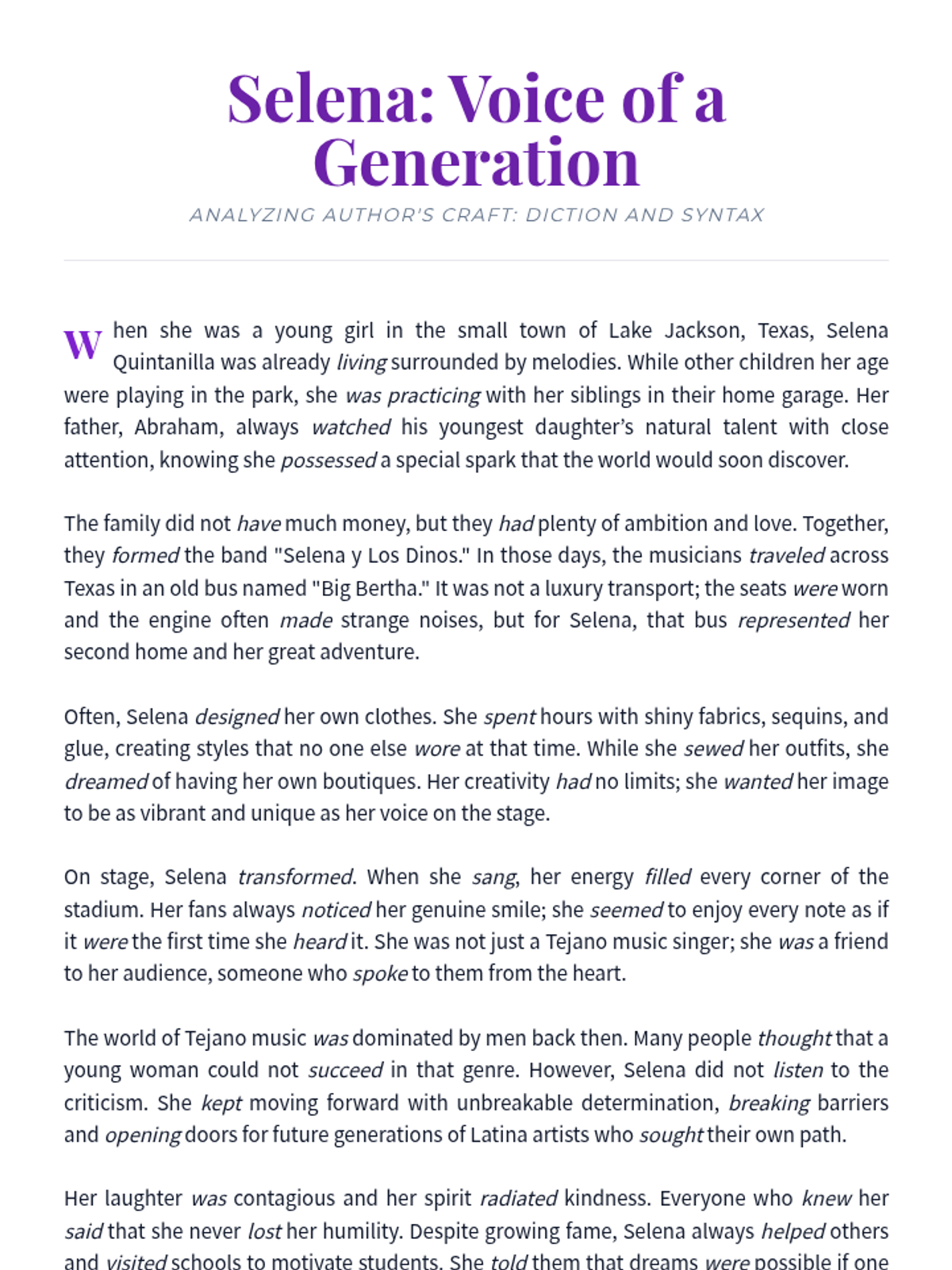
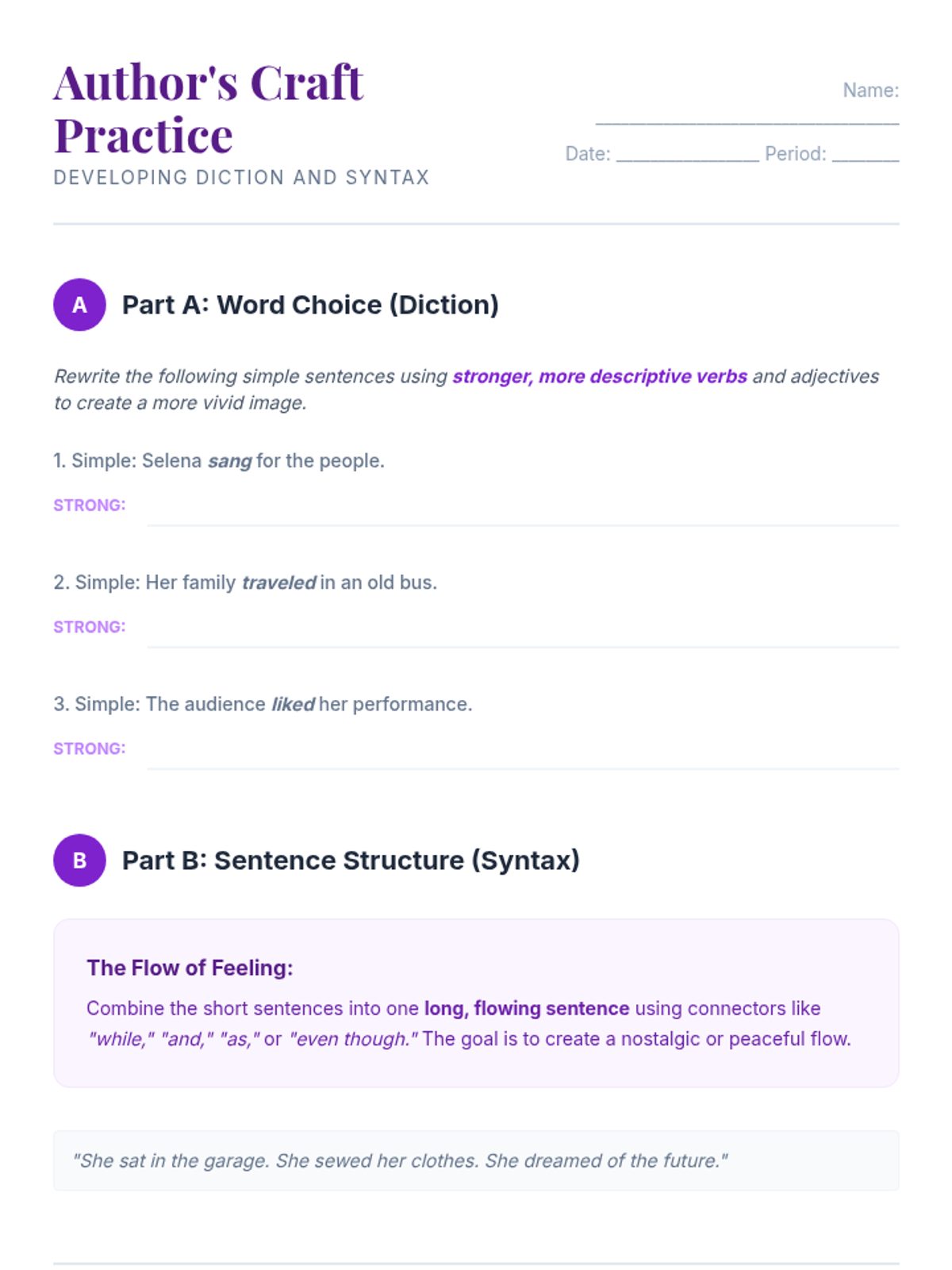
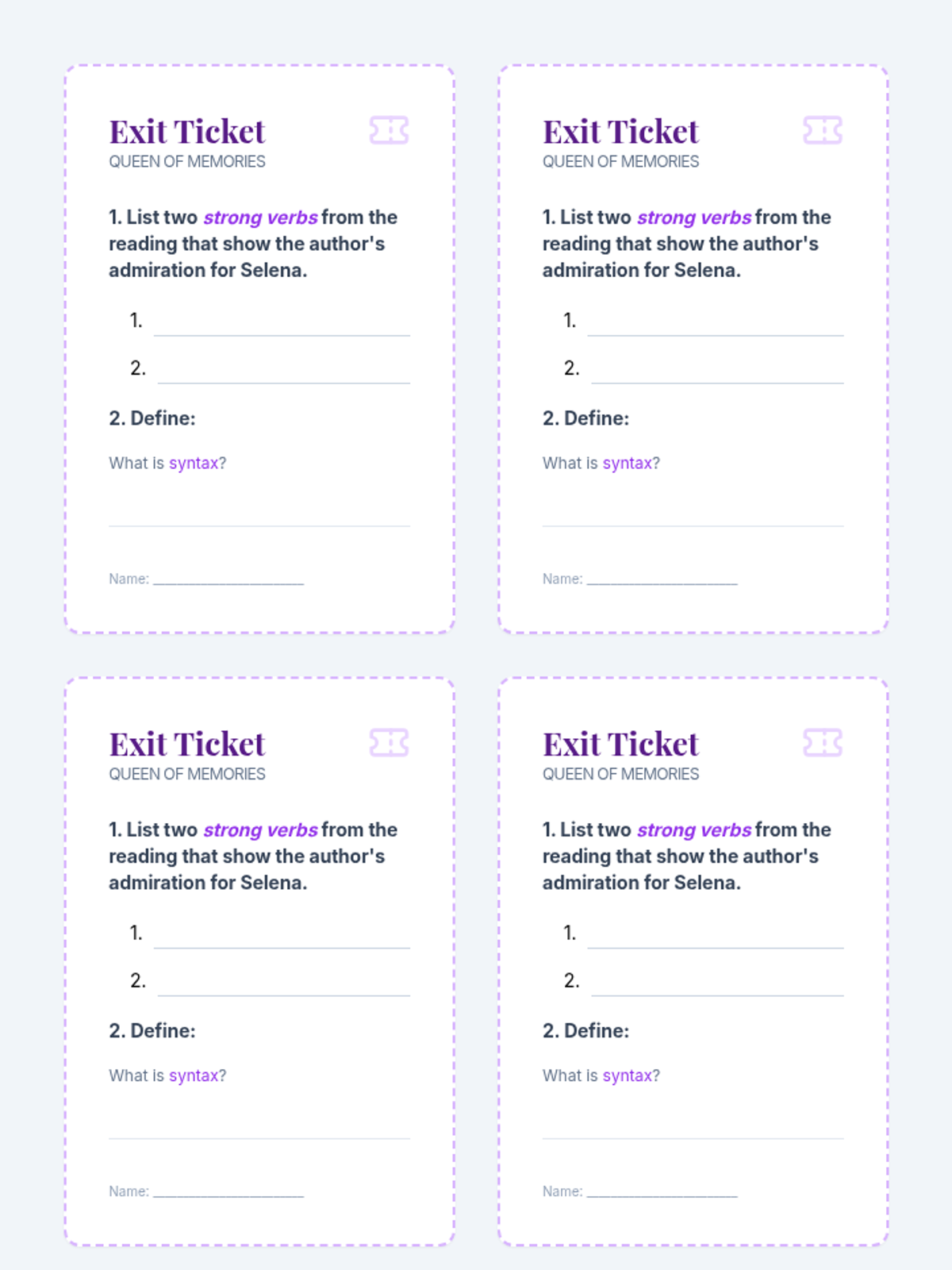
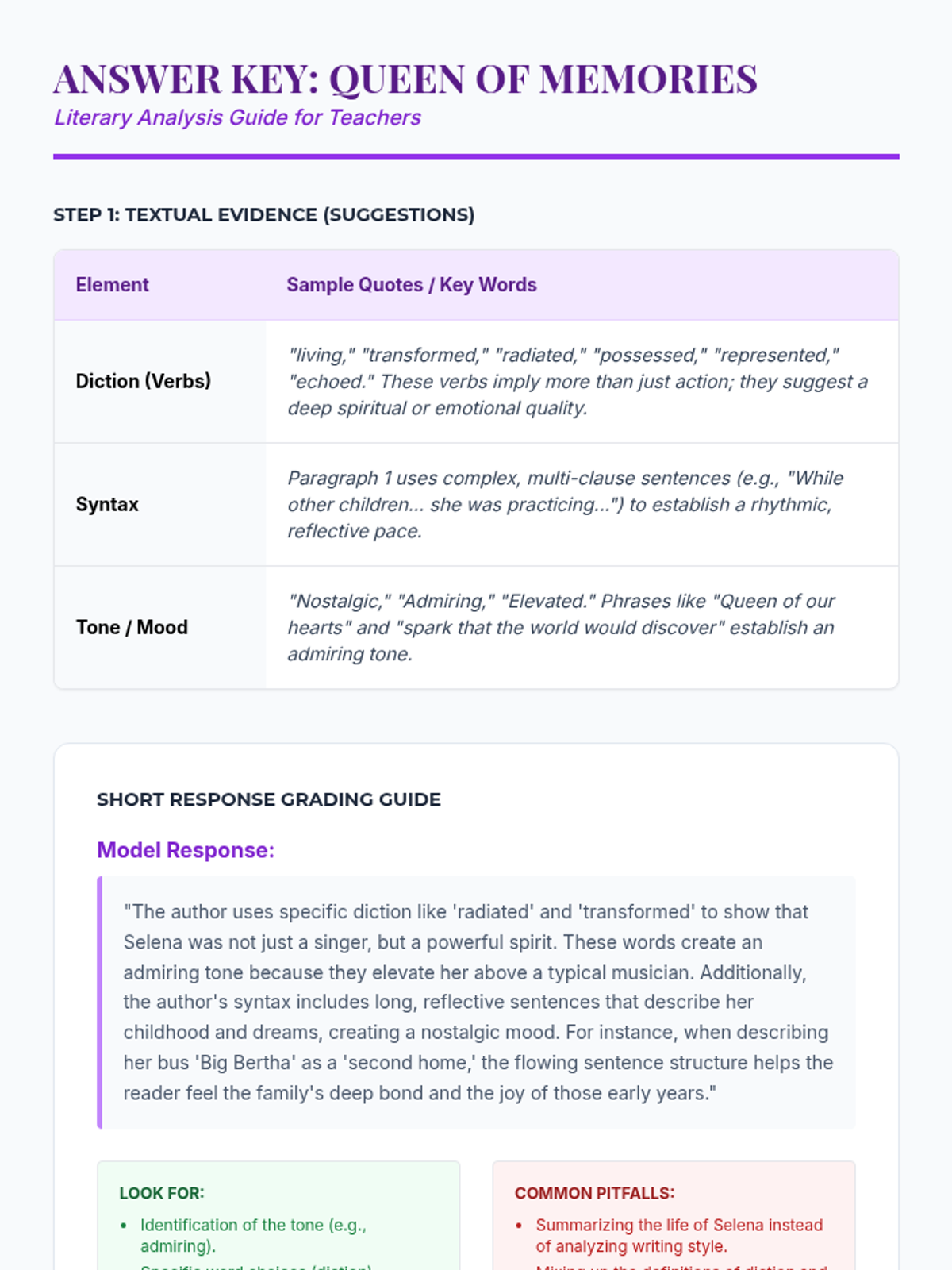
A lesson focused on the life of Selena Quintanilla, using the past tense to analyze how an author's diction and syntax build mood and tone in a biographical text.
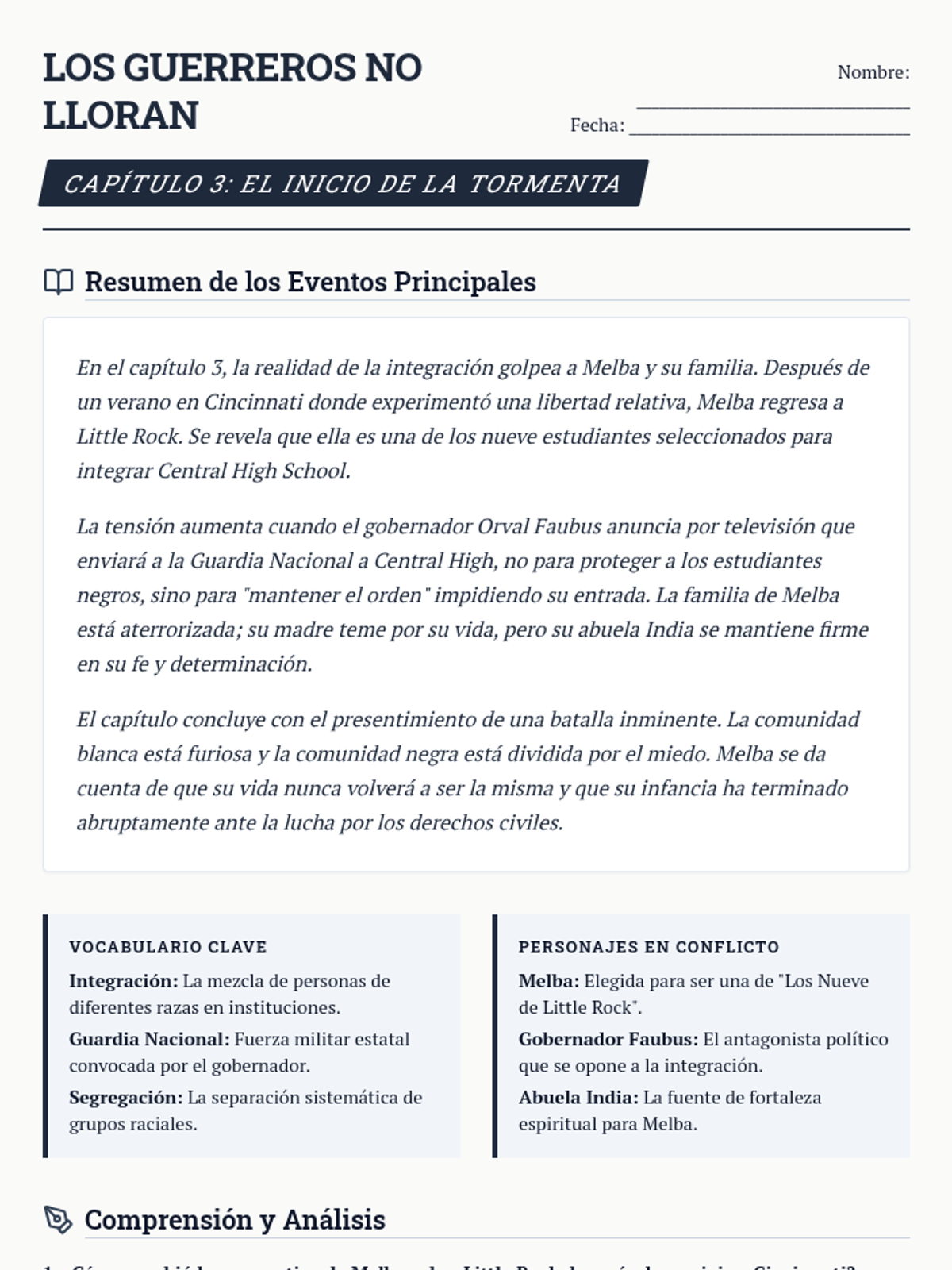
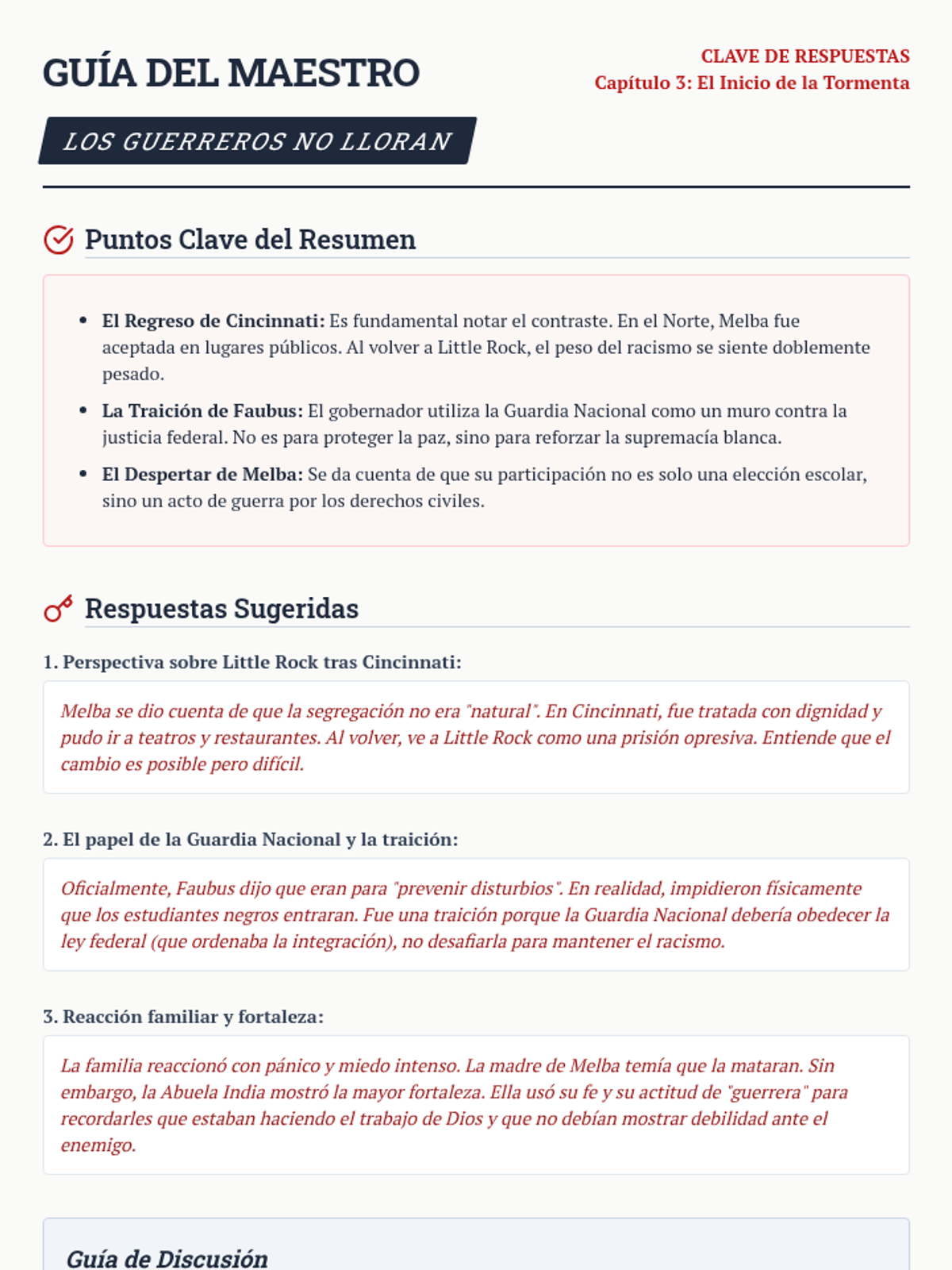
Una lección centrada en el tercer capítulo de la memoria de Melba Pattillo Beals, explorando los eventos iniciales de la integración de Central High School.
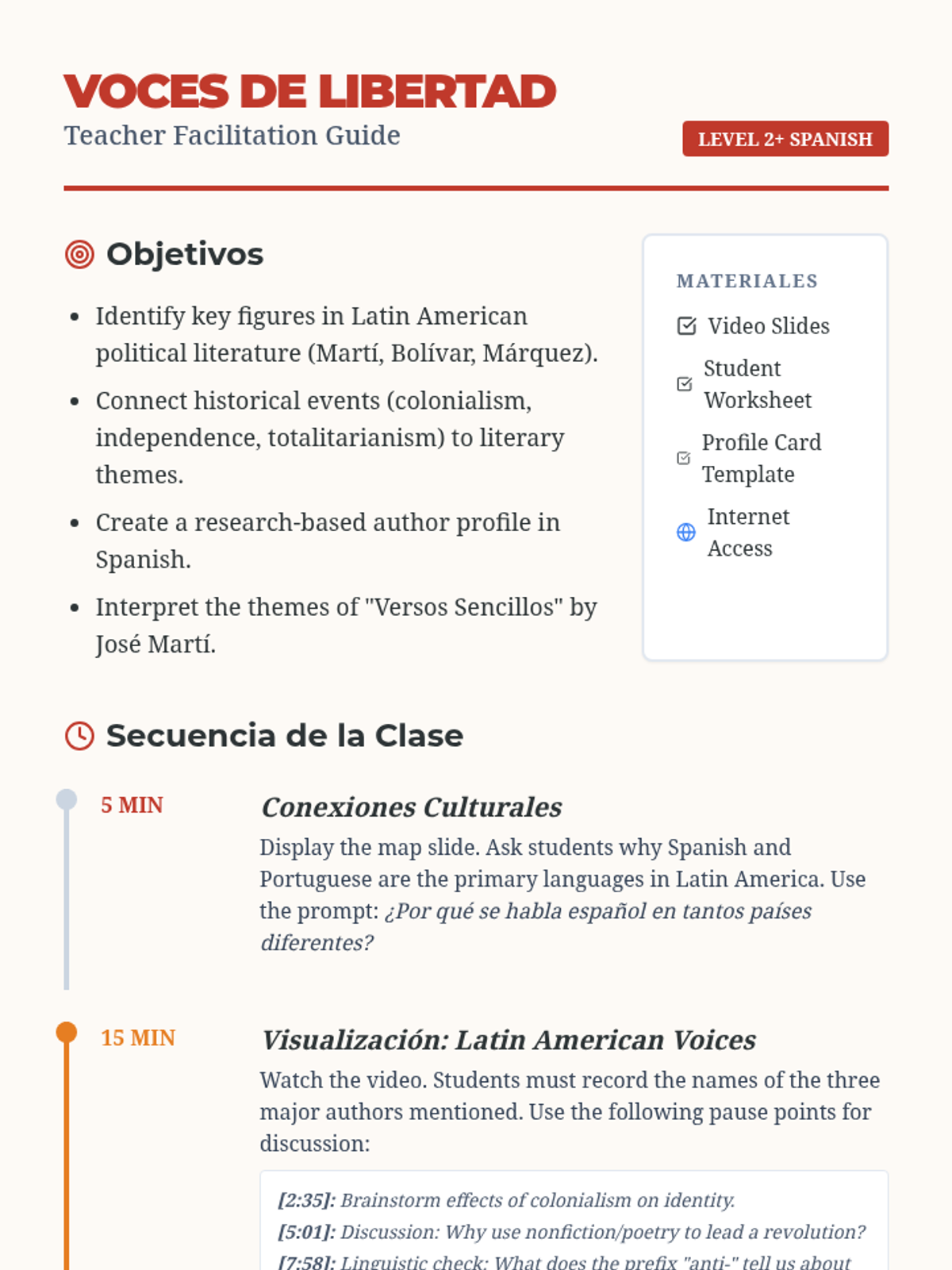
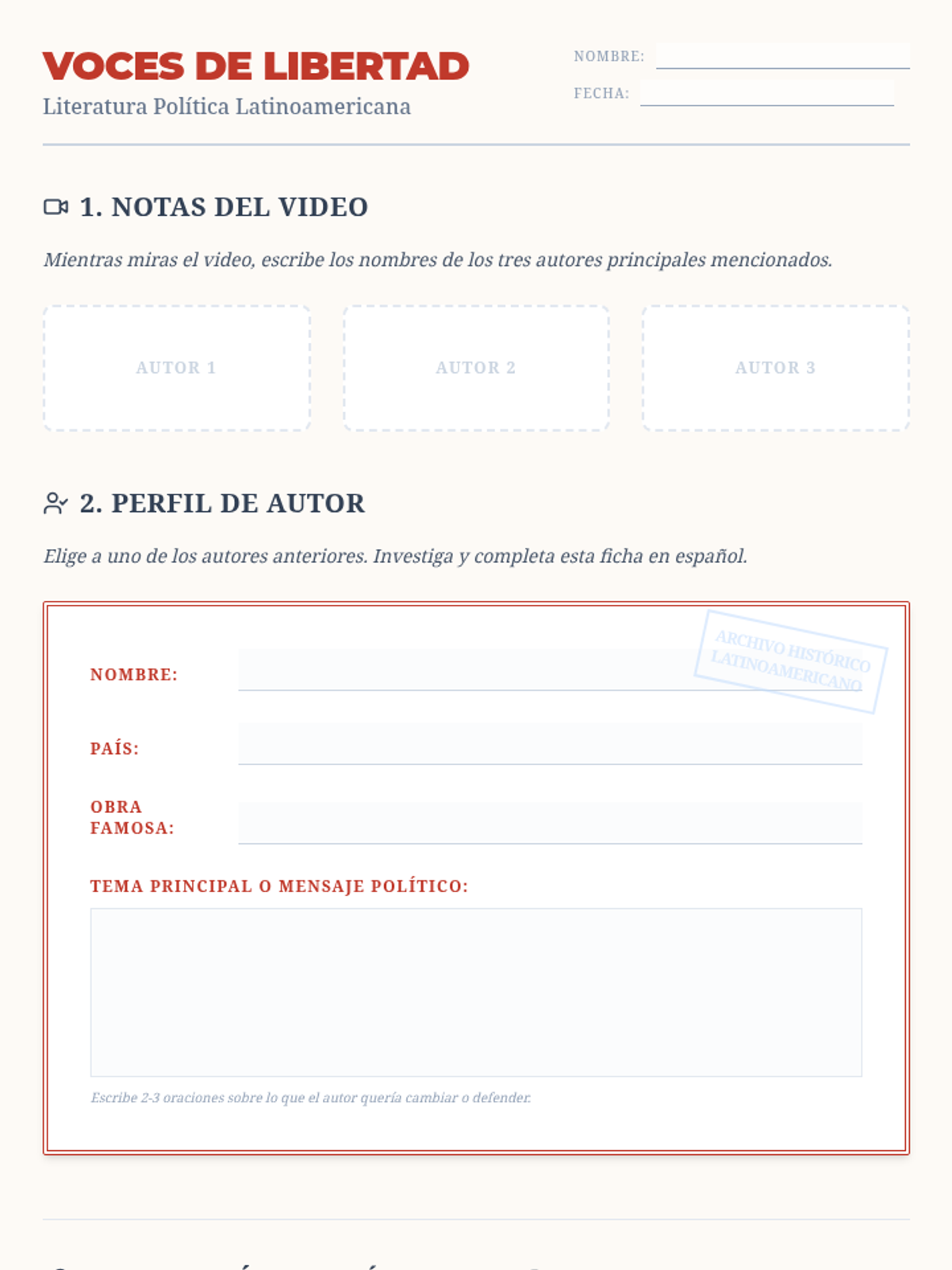
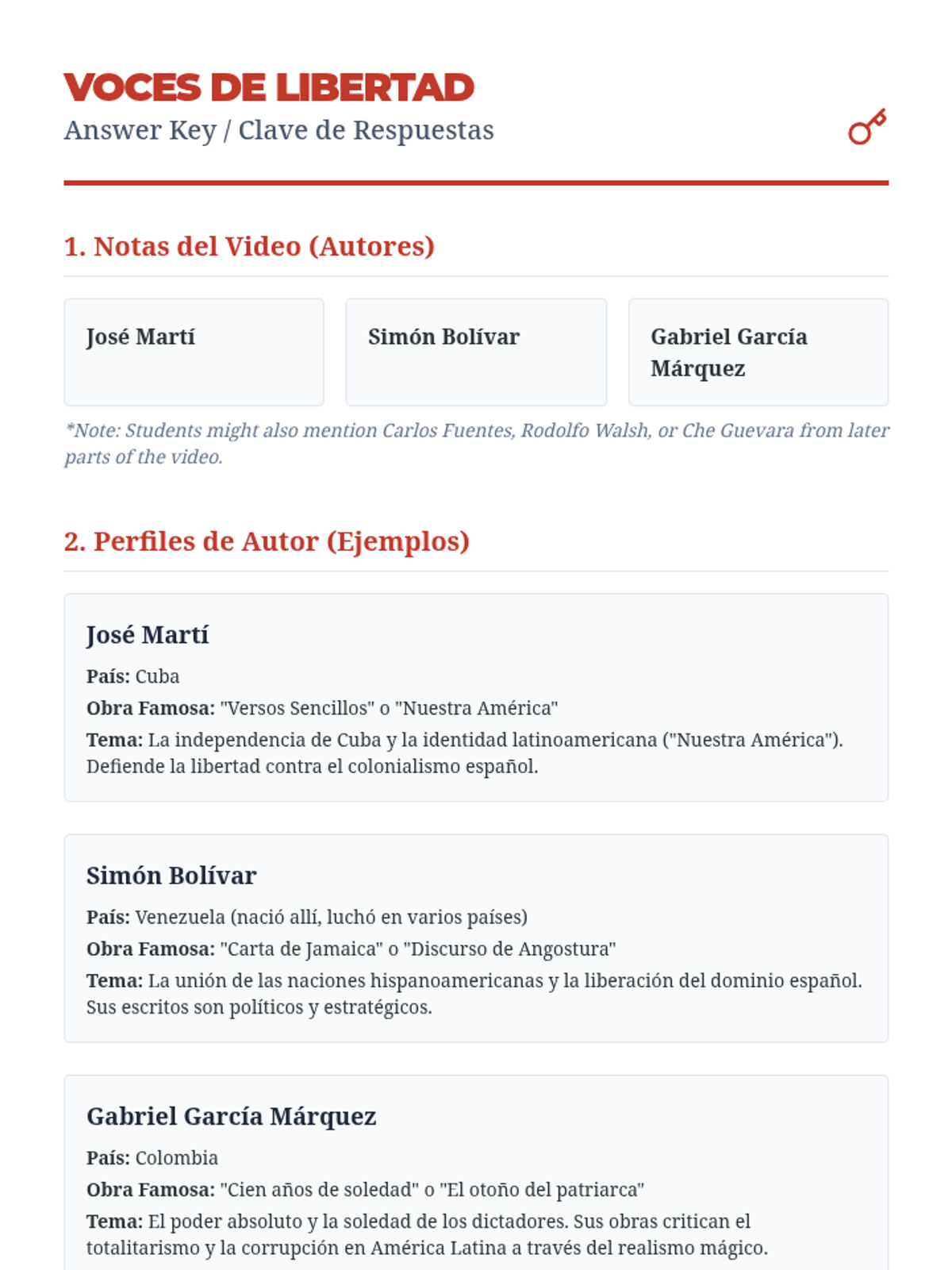
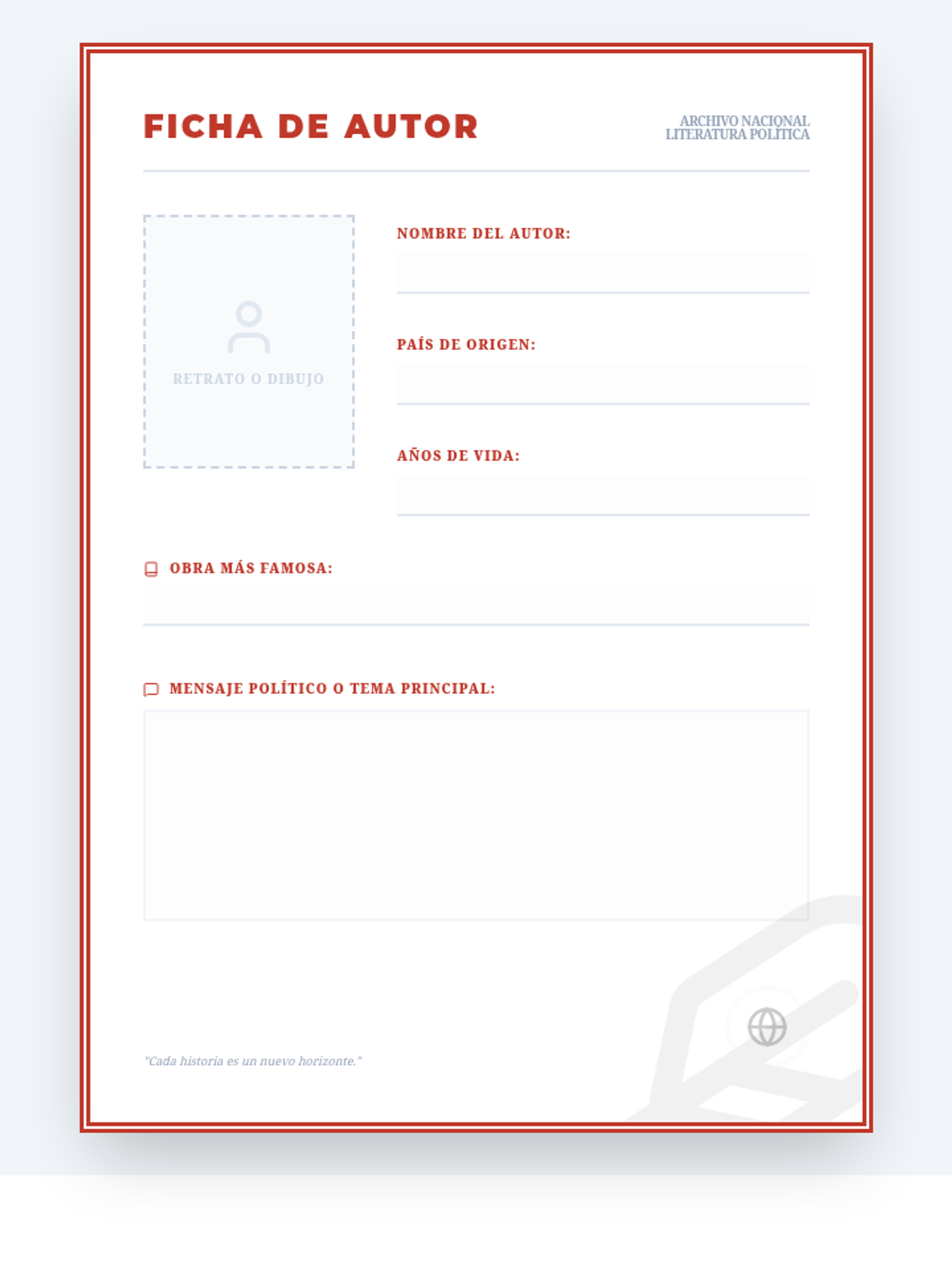
A Level 2+ Spanish lesson connecting language learning with Latin American political history and literature. Students explore the works of Martí, Bolívar, and Márquez while building author profiles in Spanish.
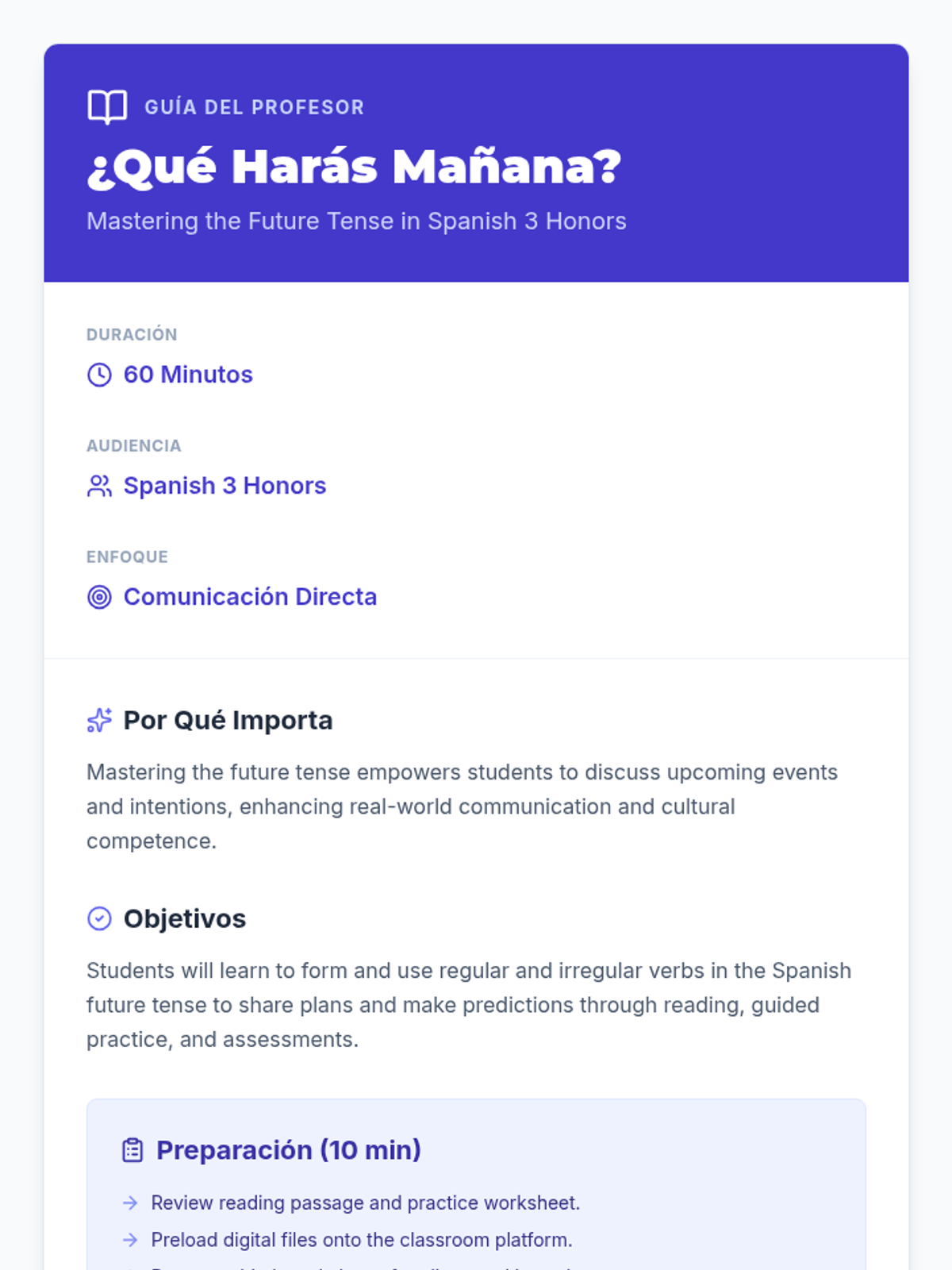
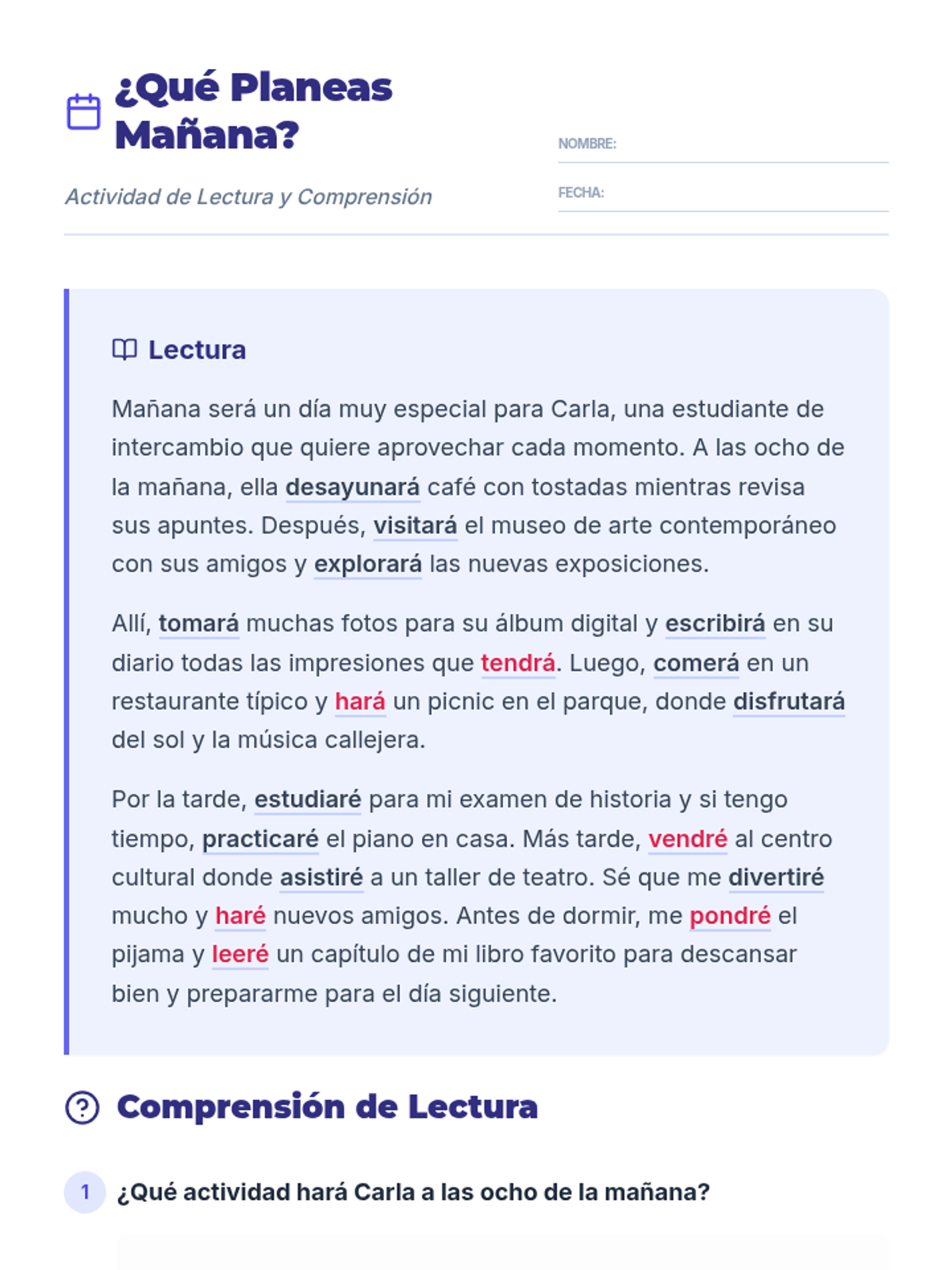
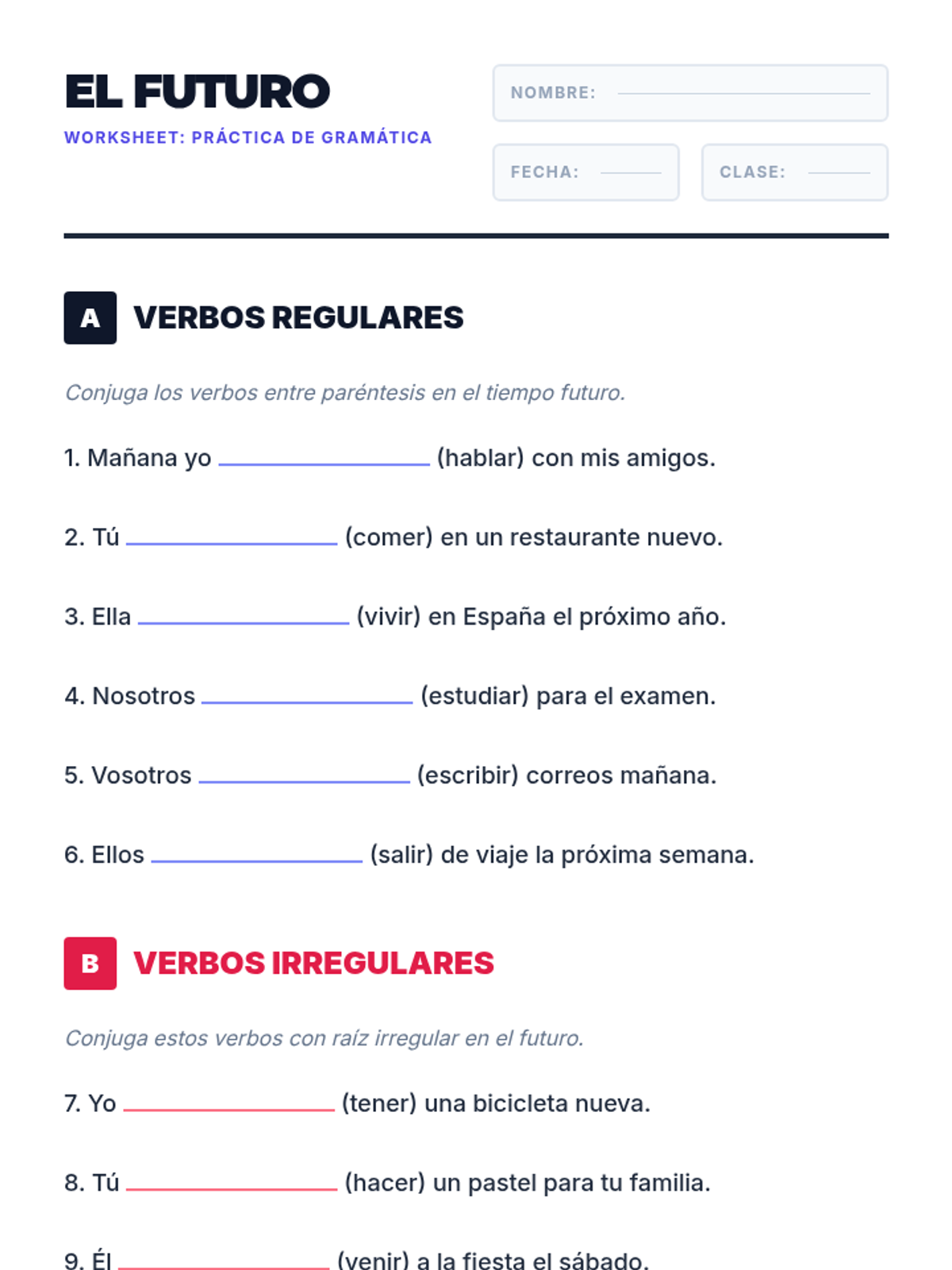
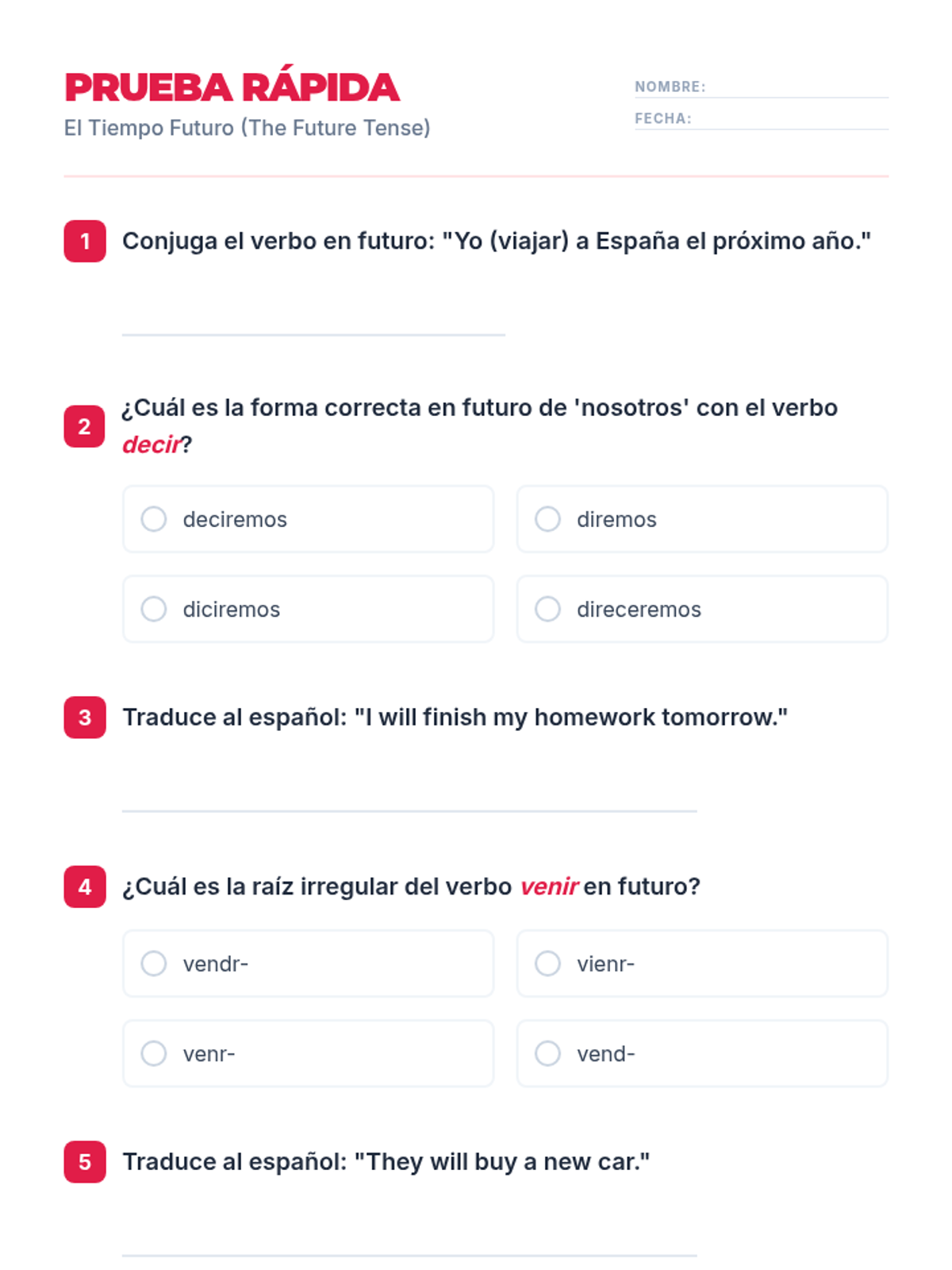
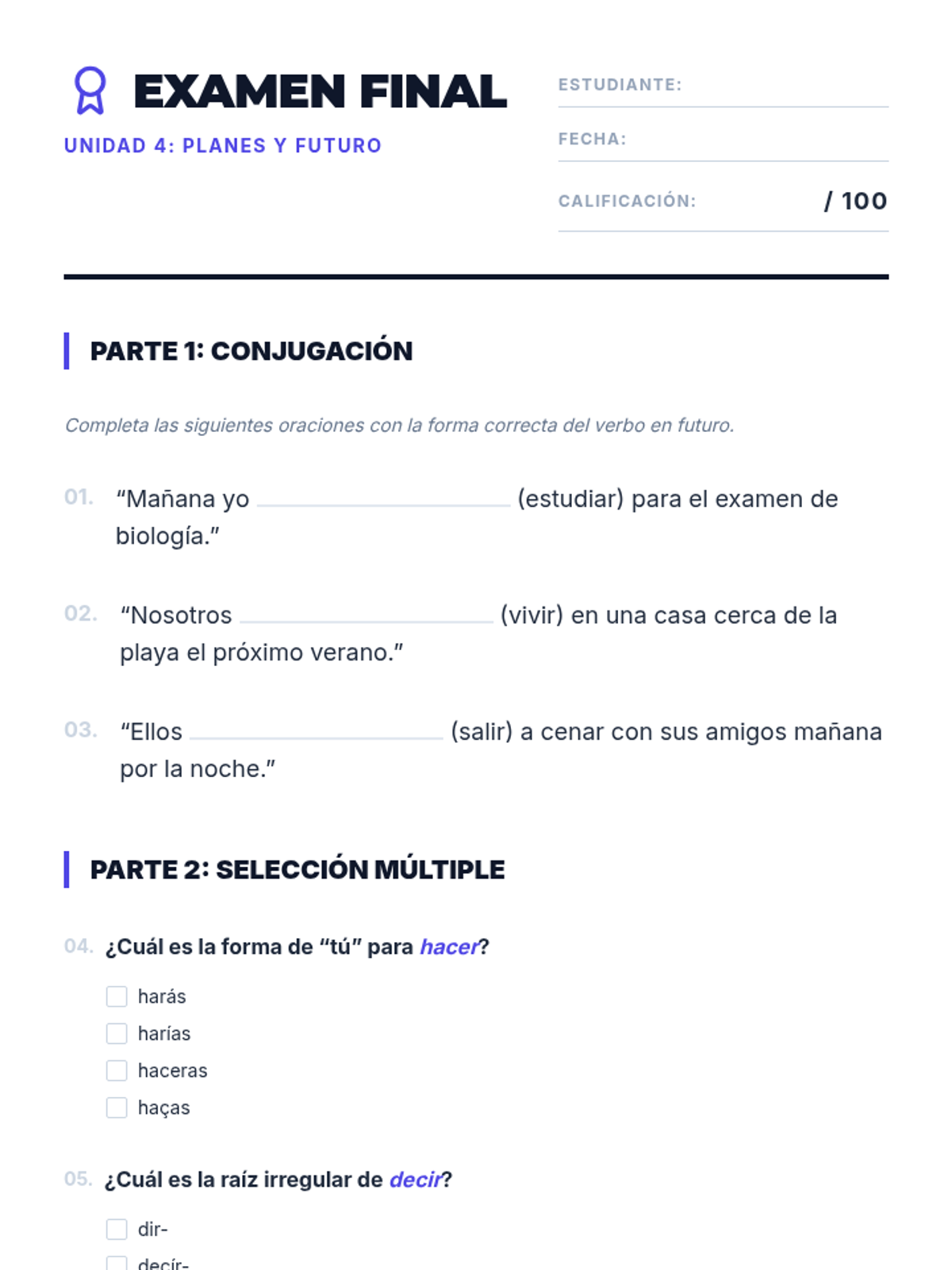
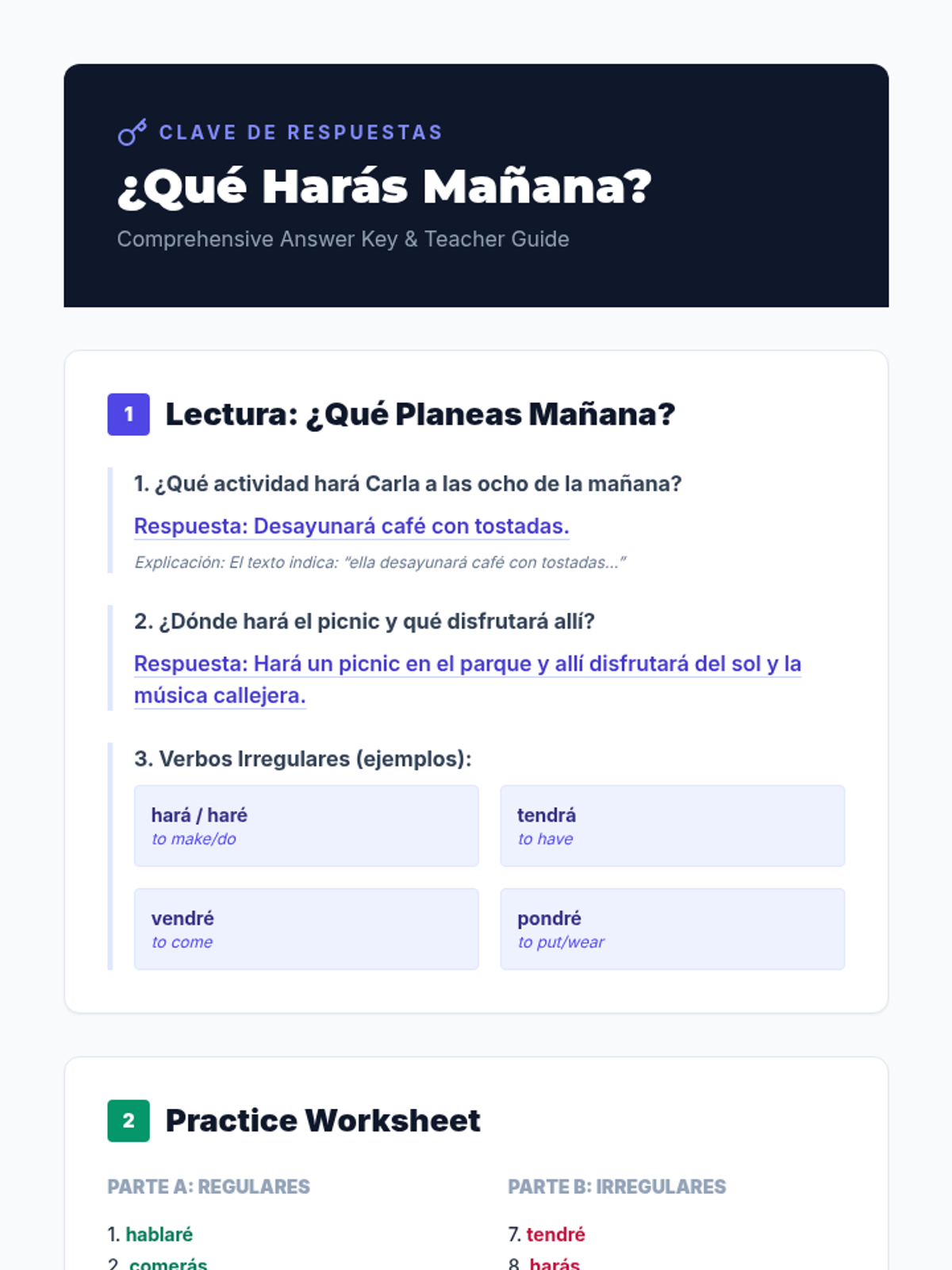
A comprehensive 60-minute Spanish 3 Honors lesson focused on mastering the future tense through reading, guided practice, and assessments. Students will learn to conjugate regular and irregular verbs to discuss future plans and predictions.
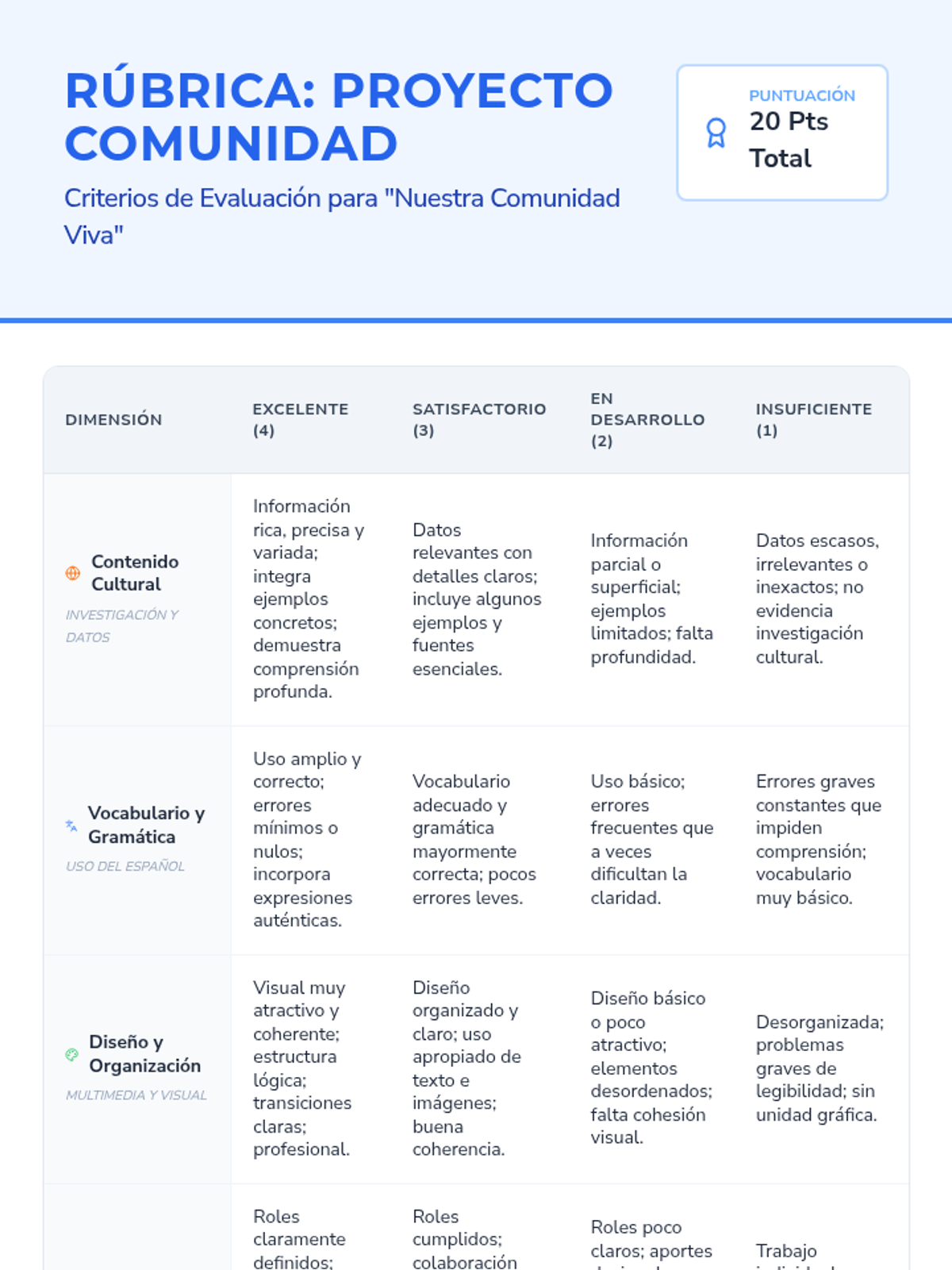
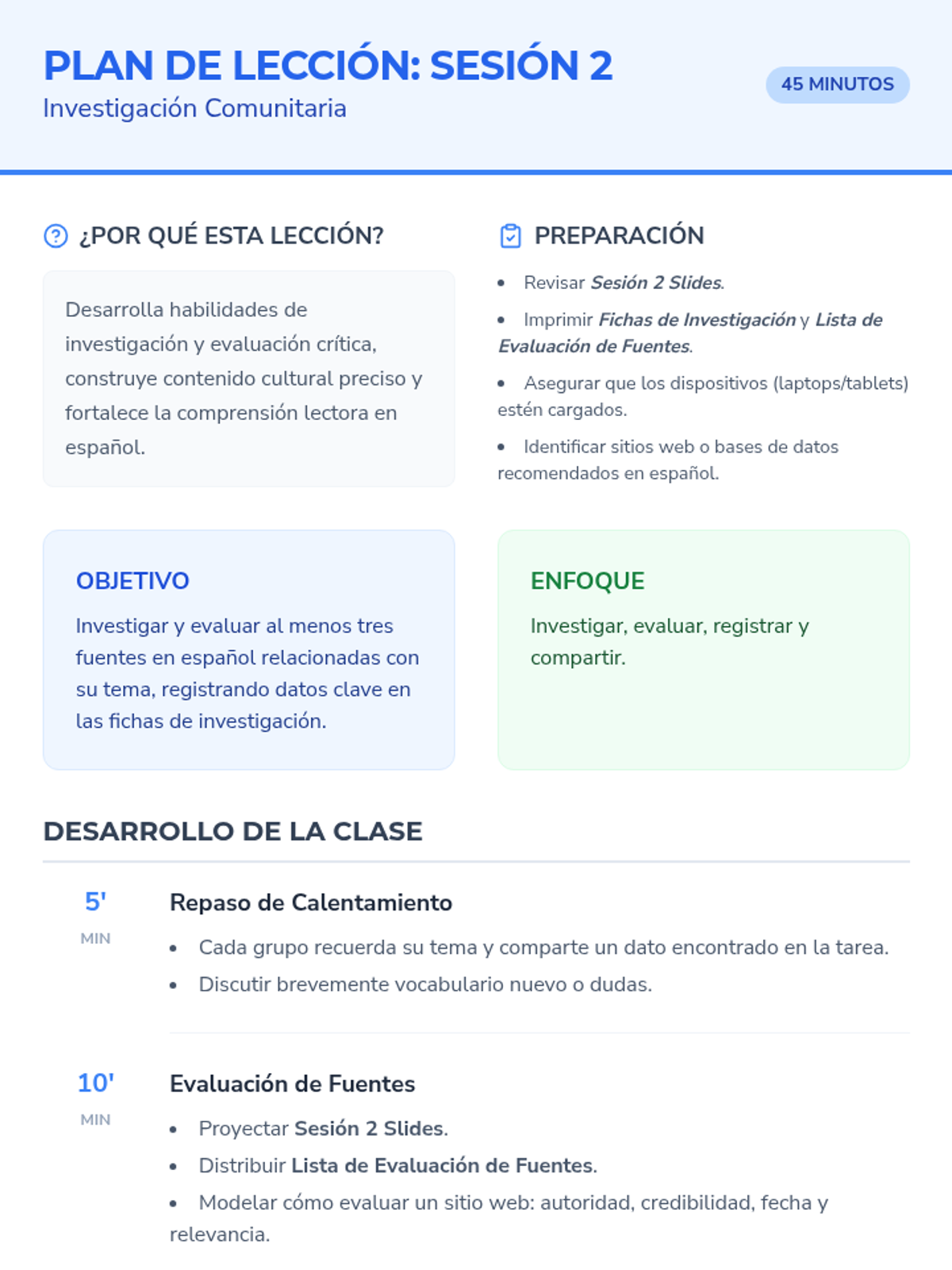
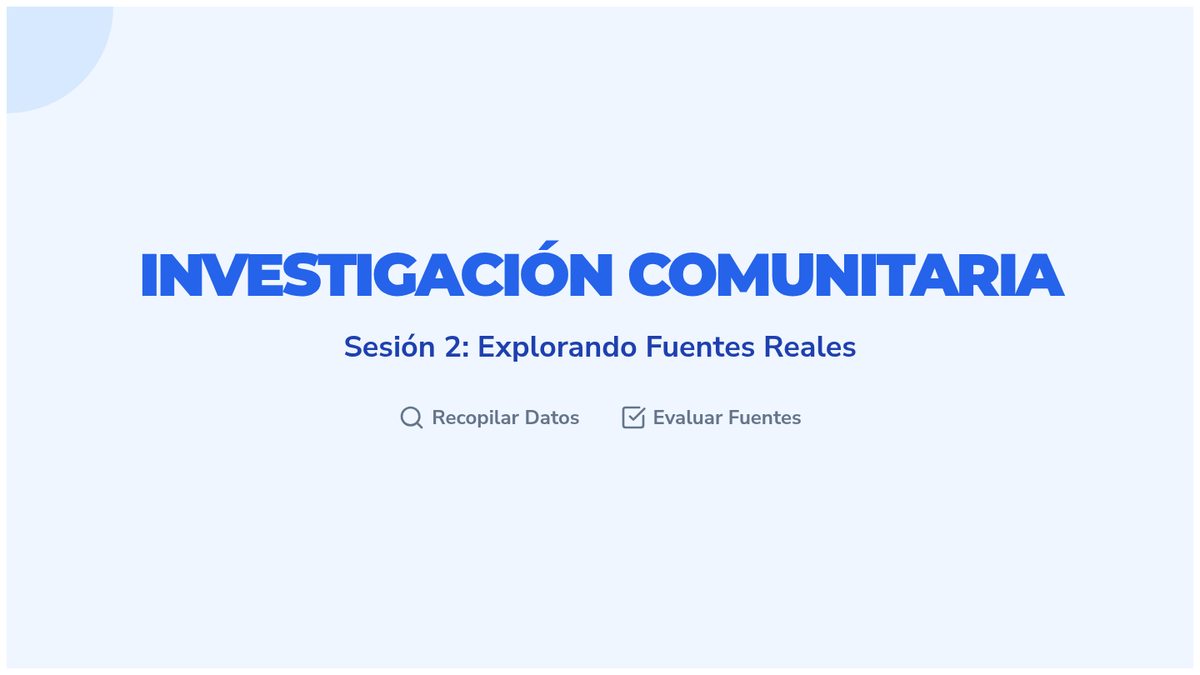
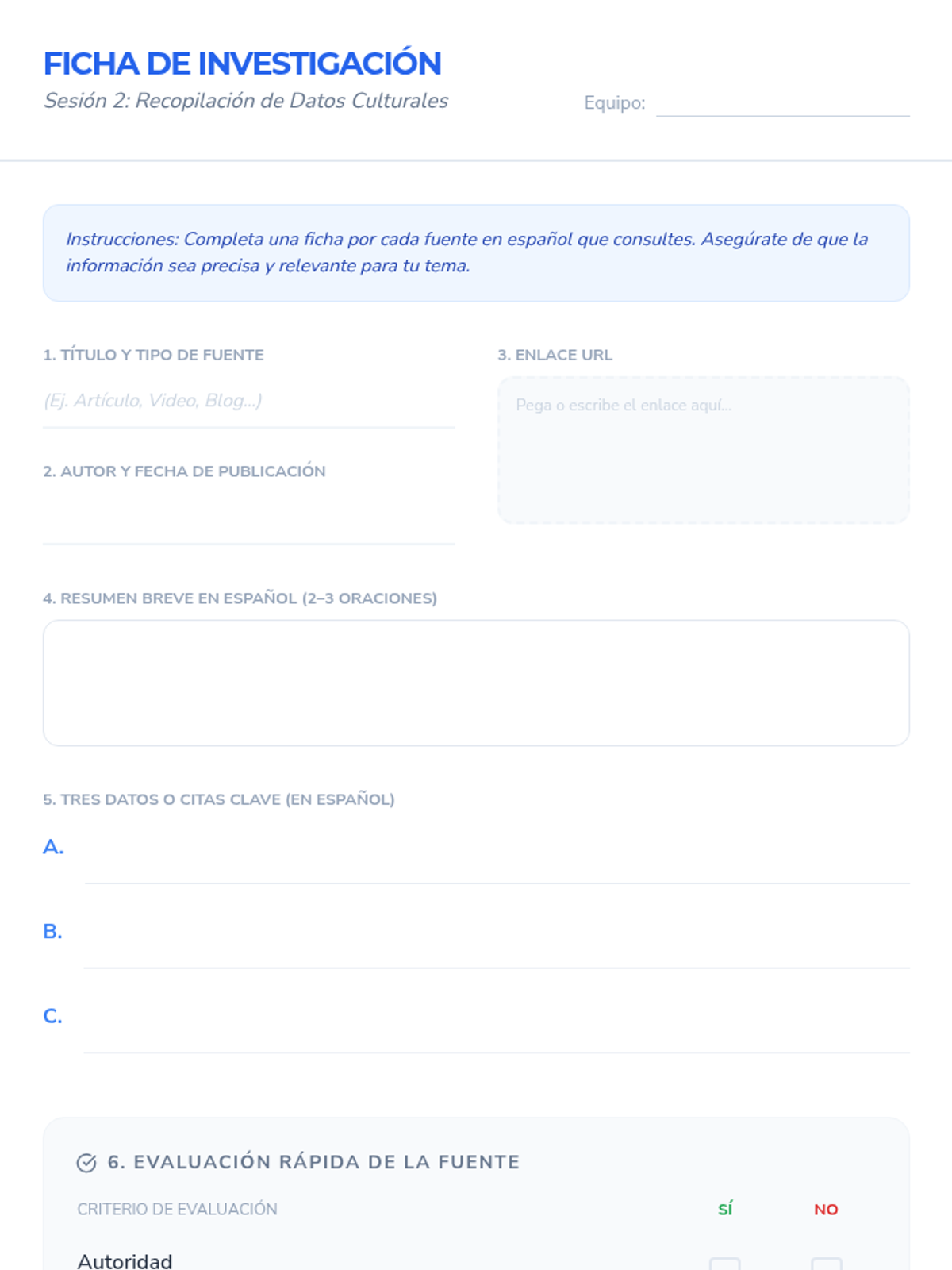
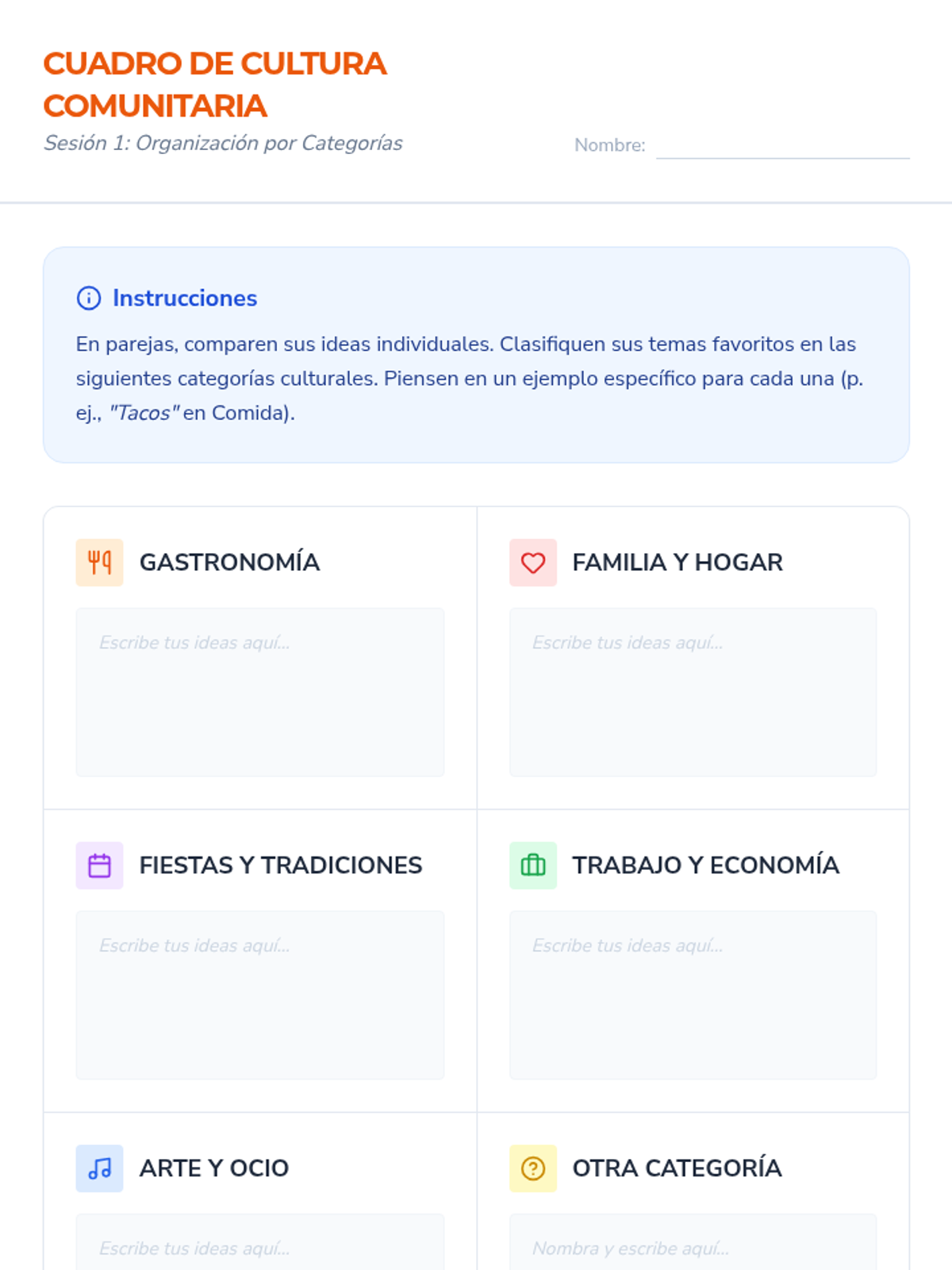
Students develop research skills by evaluating Spanish-language sources and recording key cultural facts for their community project.
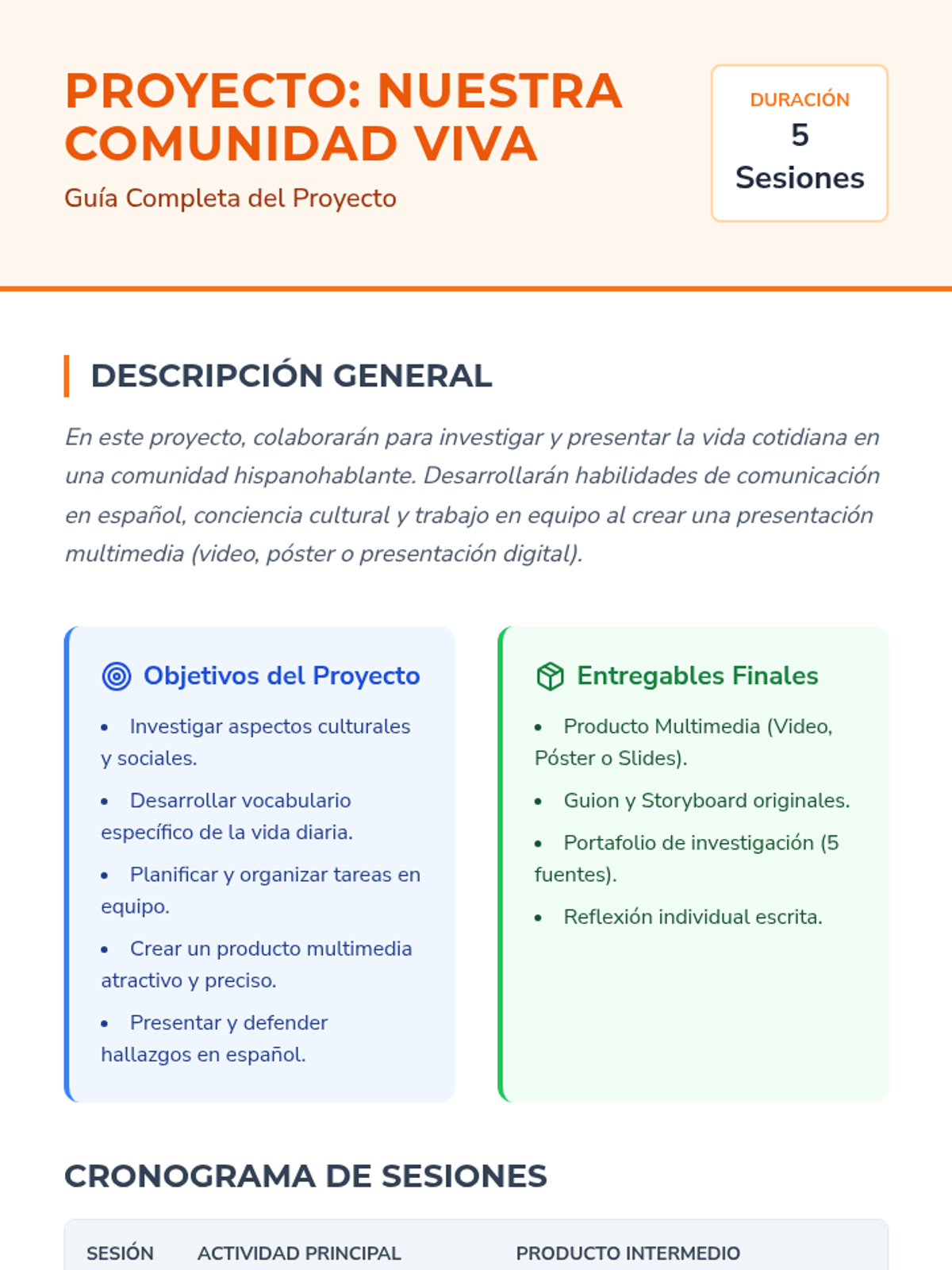
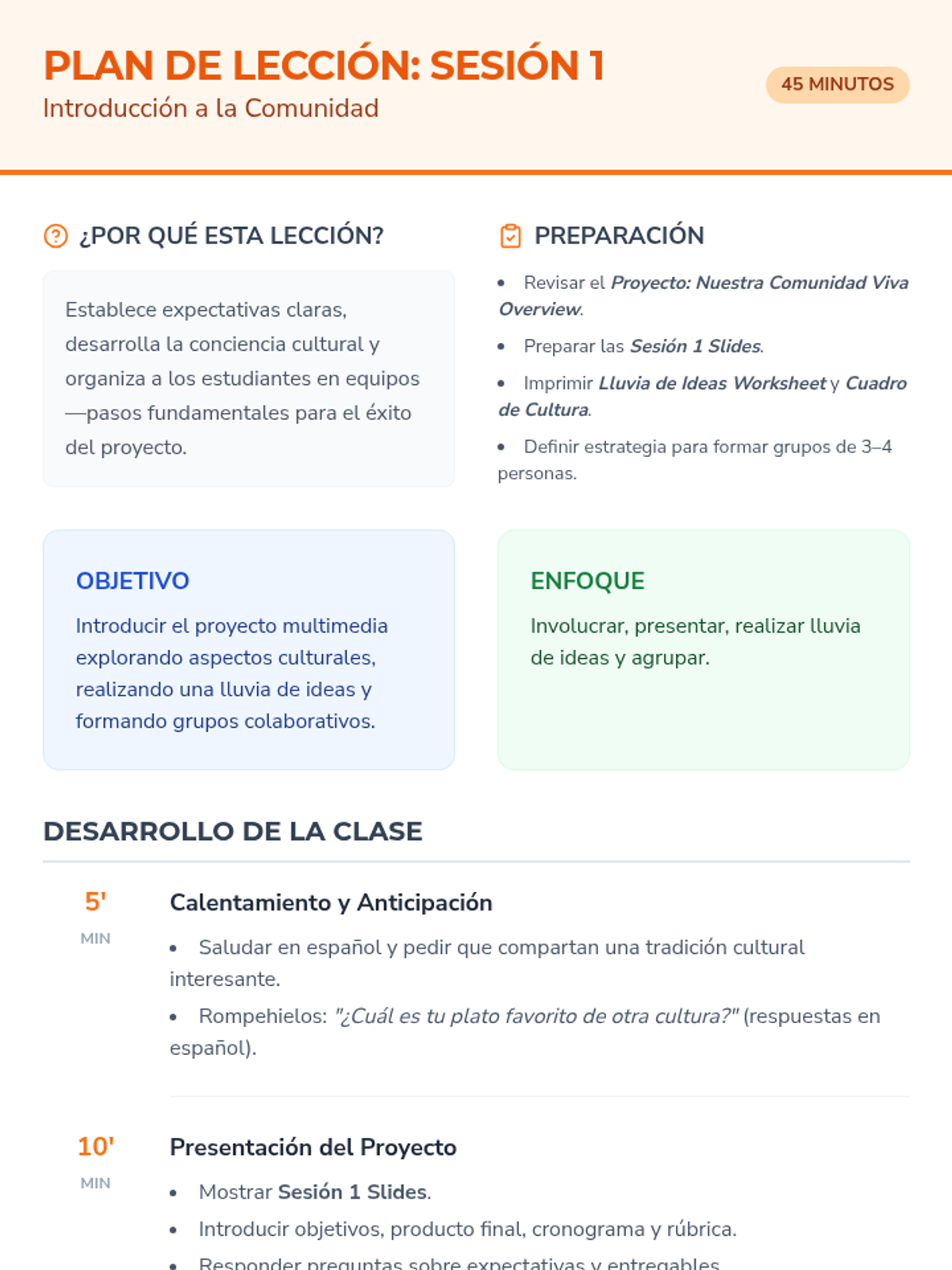
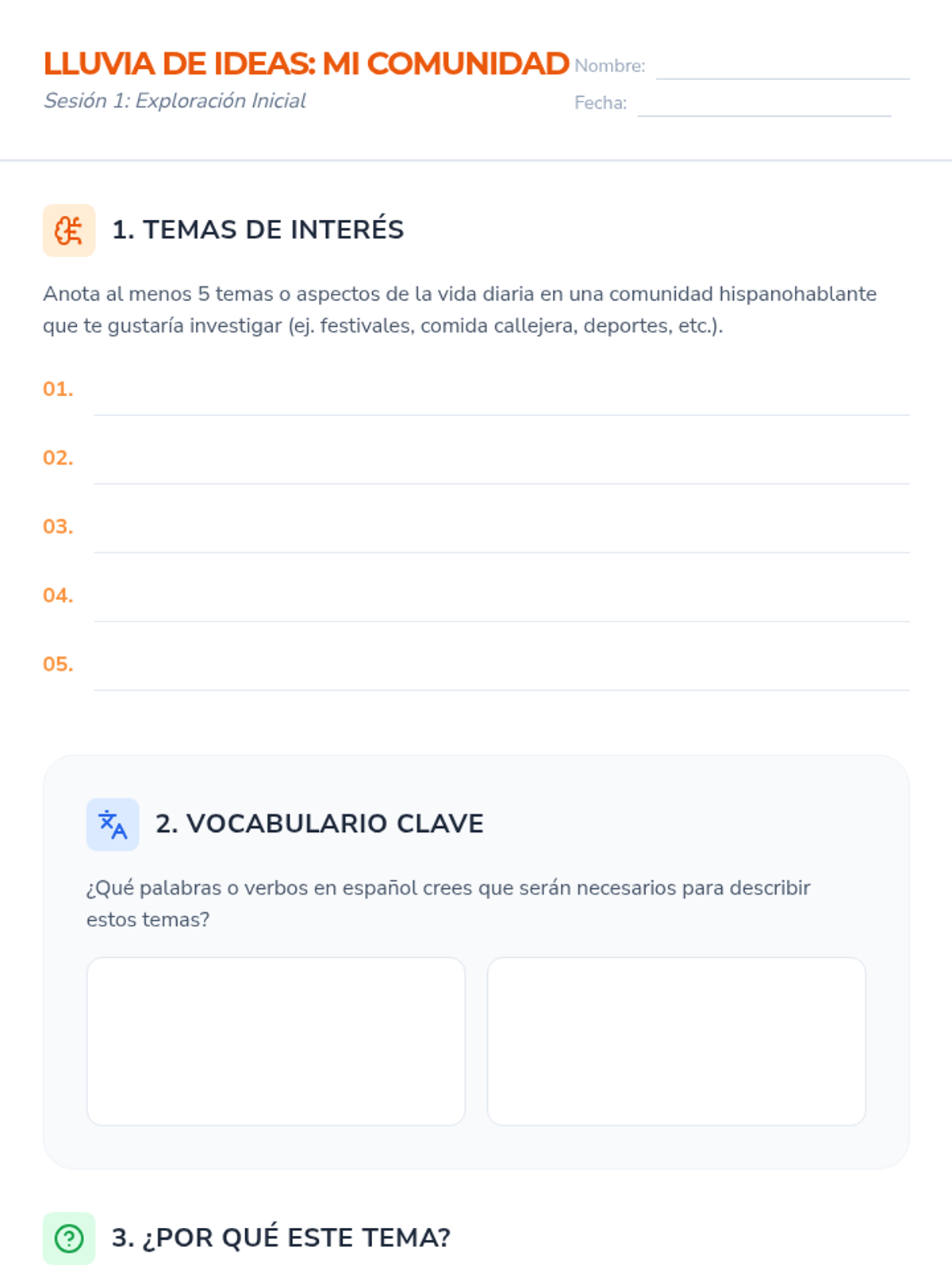
Introduces the multimedia project on Spanish-speaking communities, explores cultural aspects through brainstorming, and forms collaborative student teams.
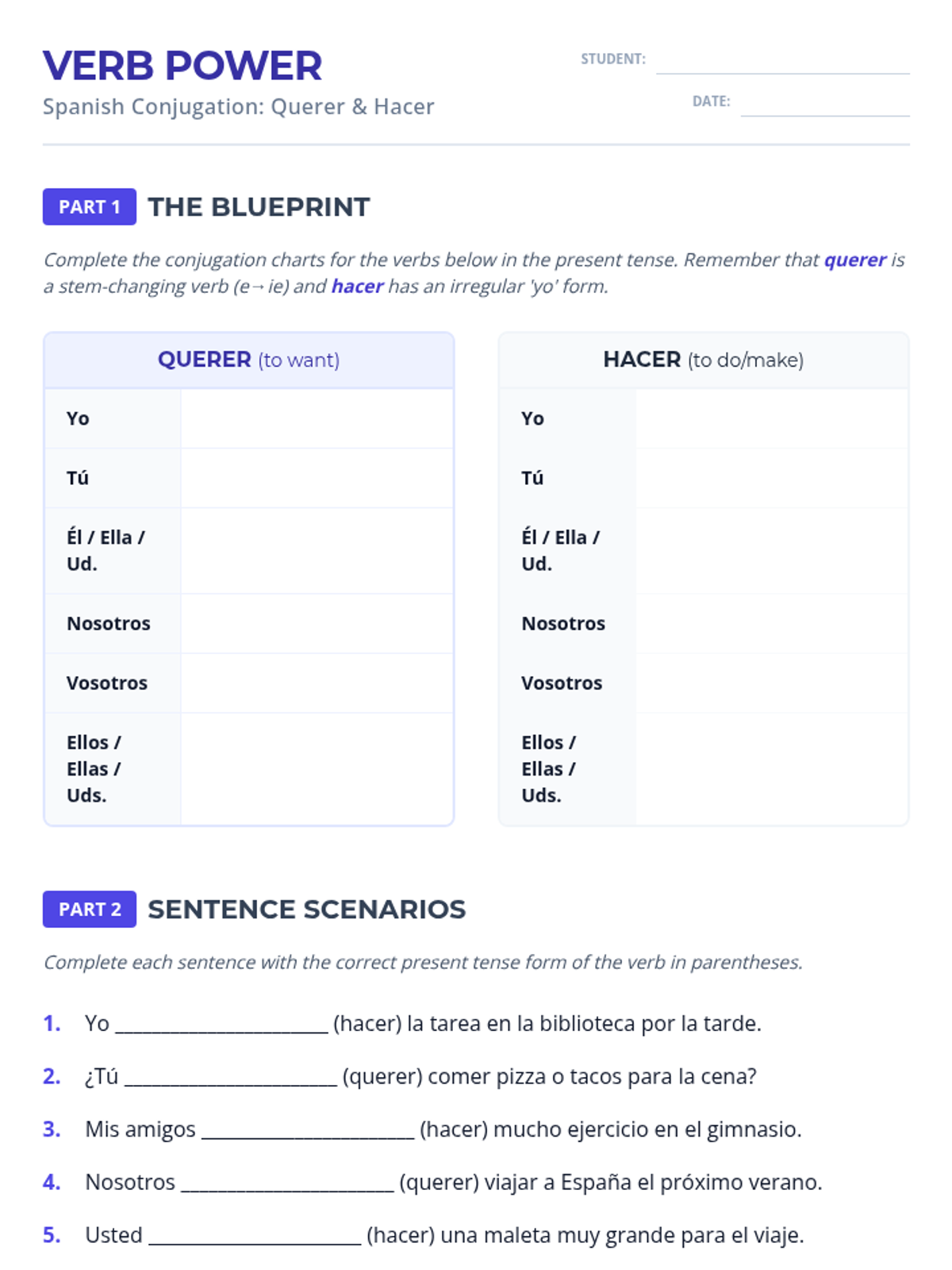
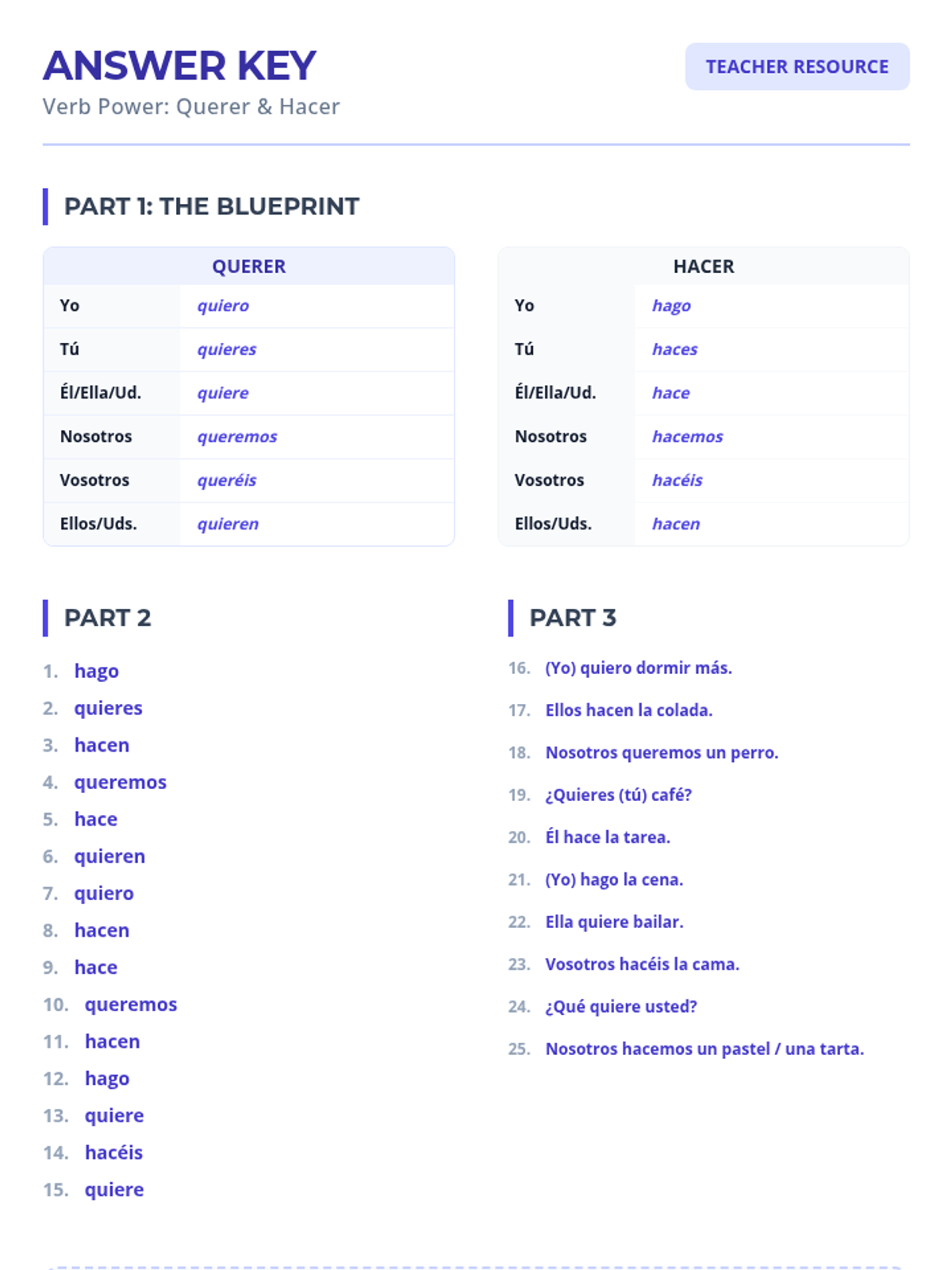
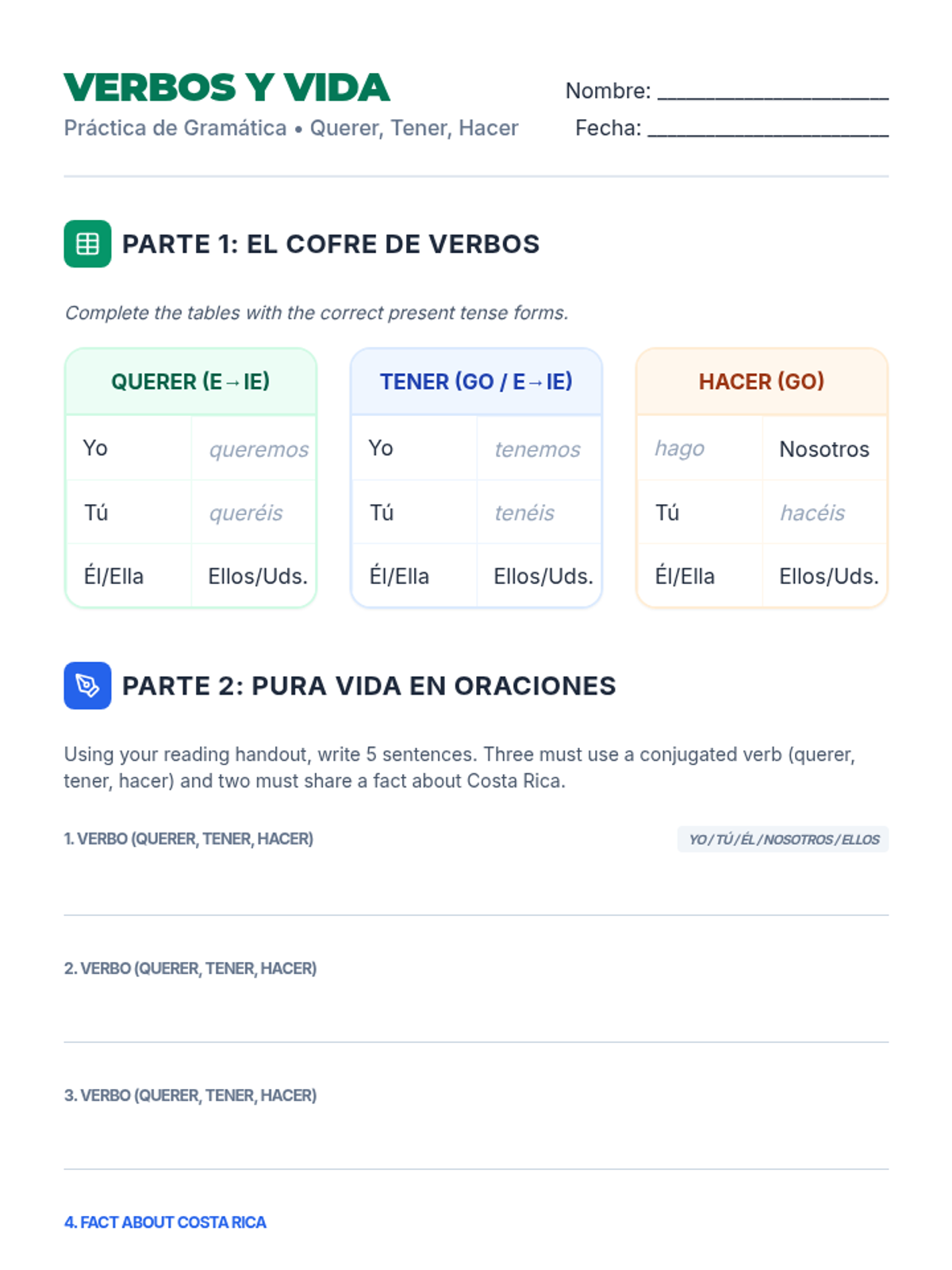
A focused practice session on the irregular present tense conjugations of the Spanish verbs 'querer' and 'hacer' through charts and contextual exercises.
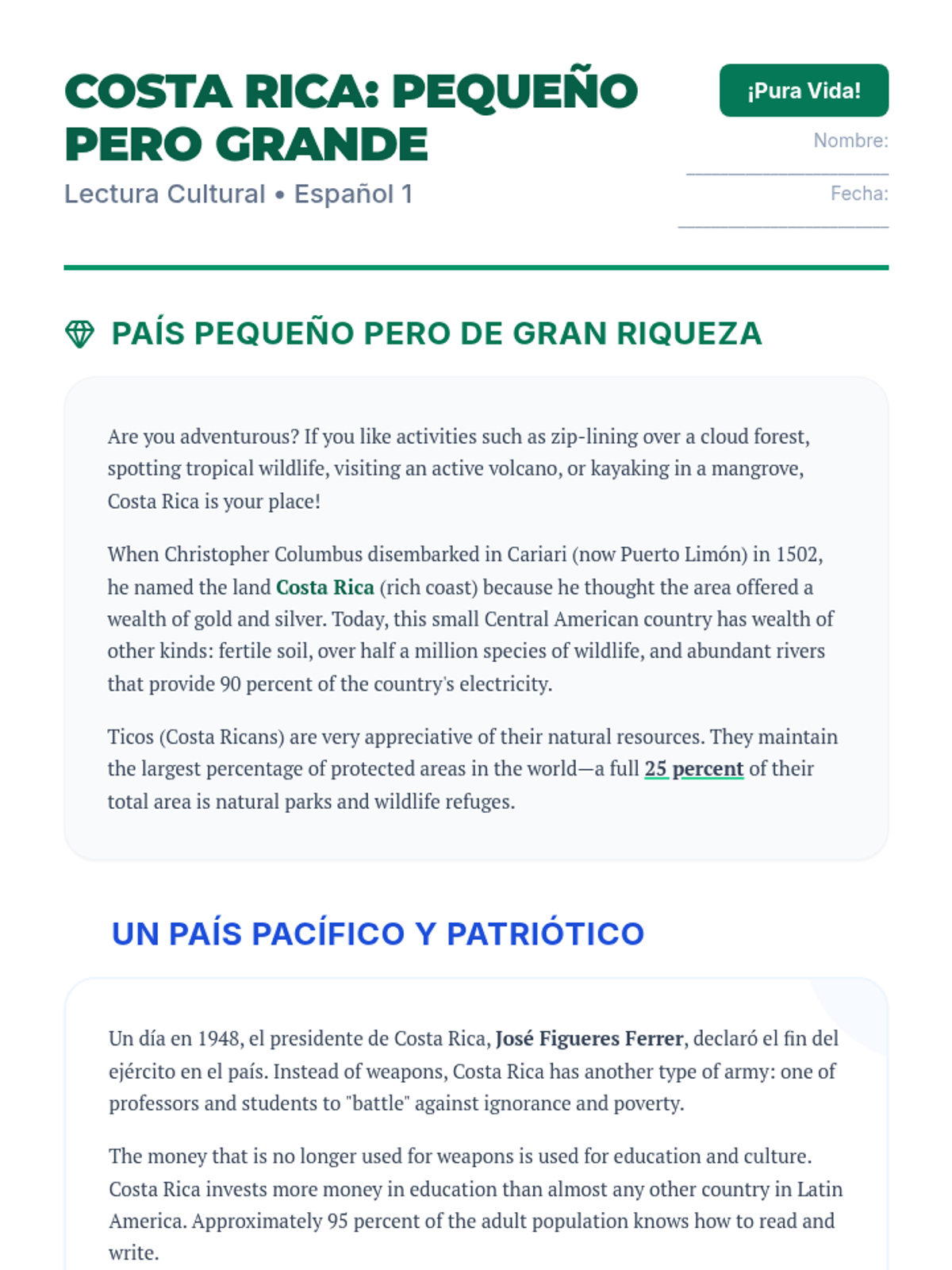
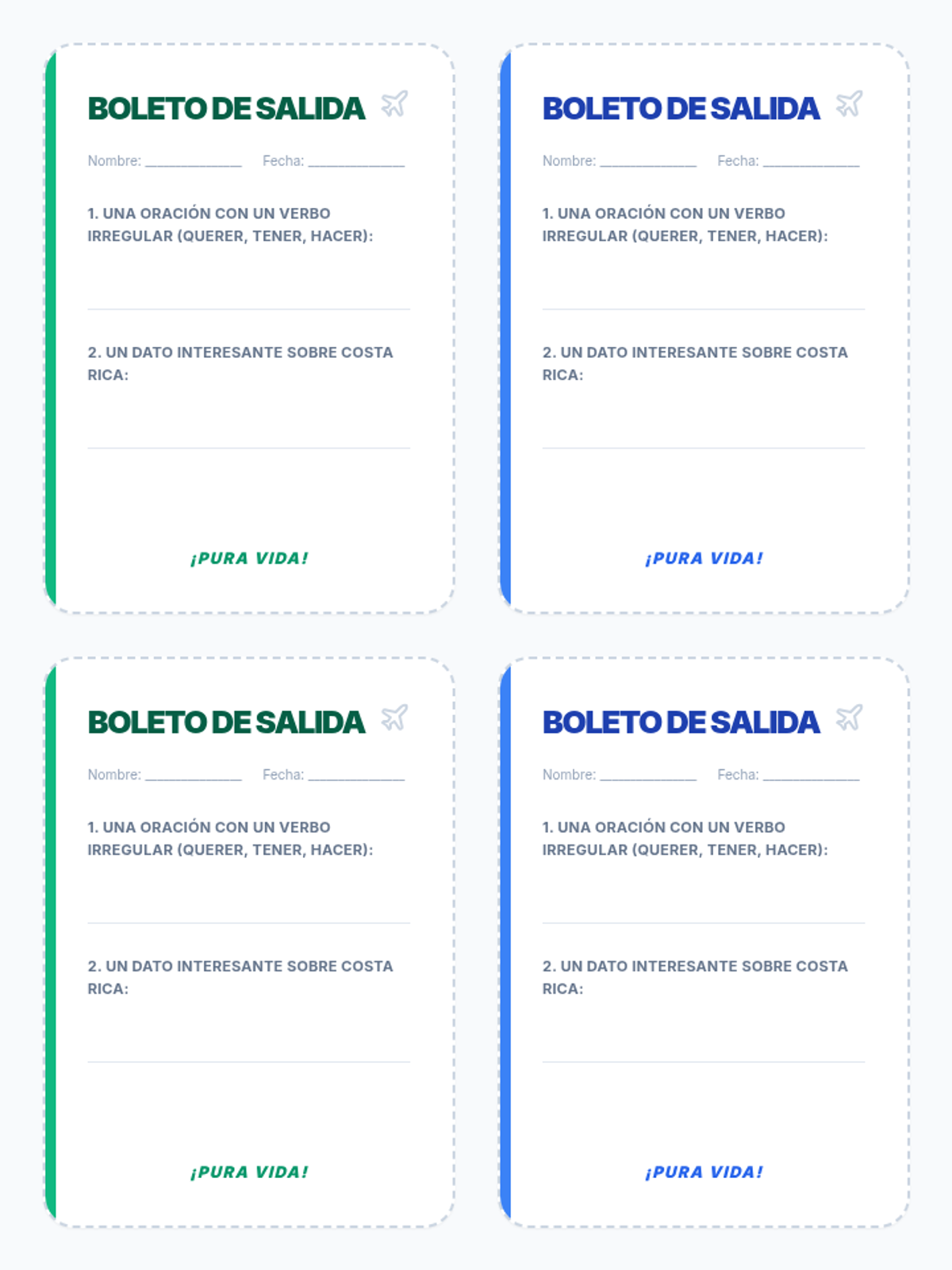
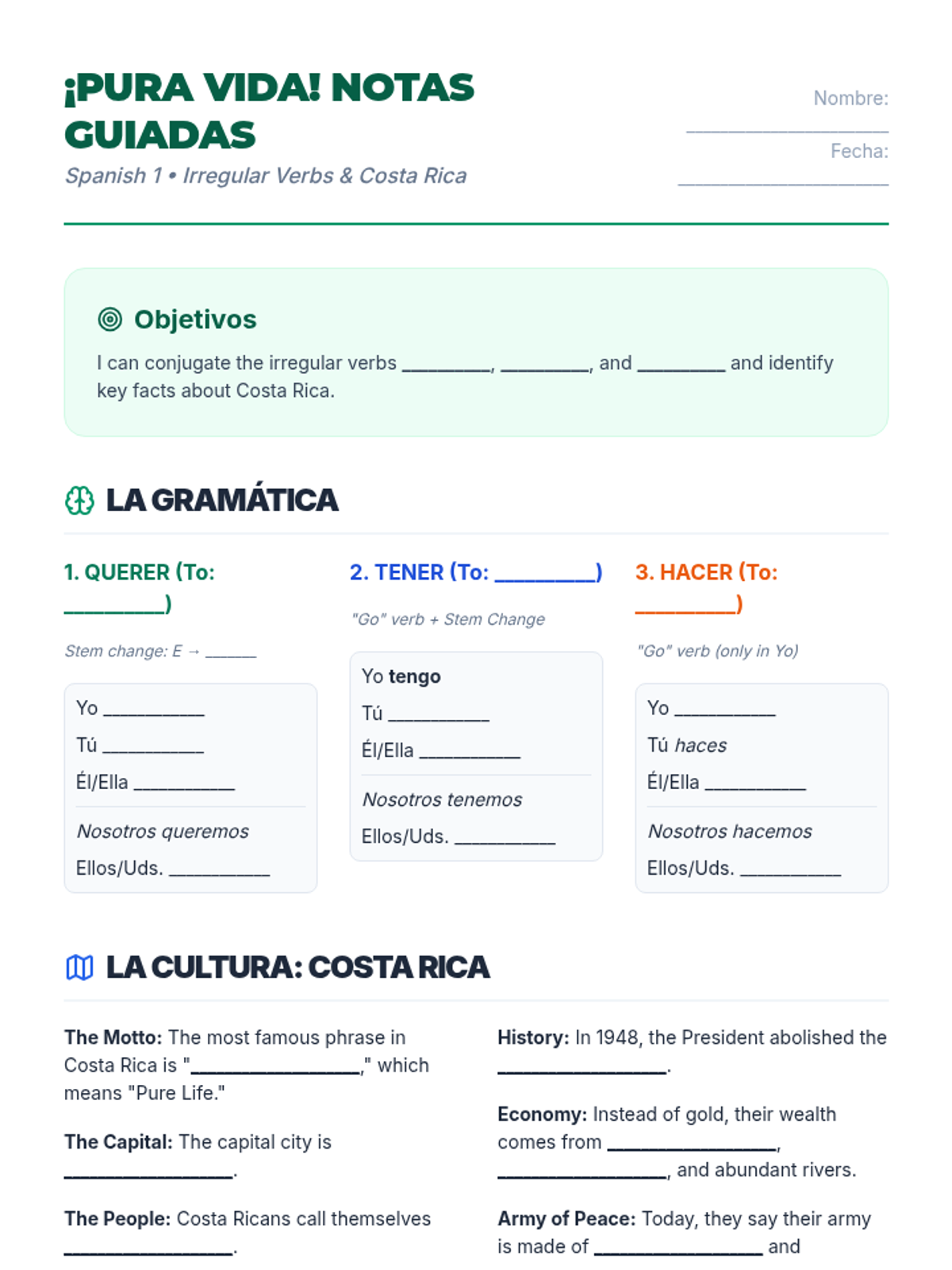
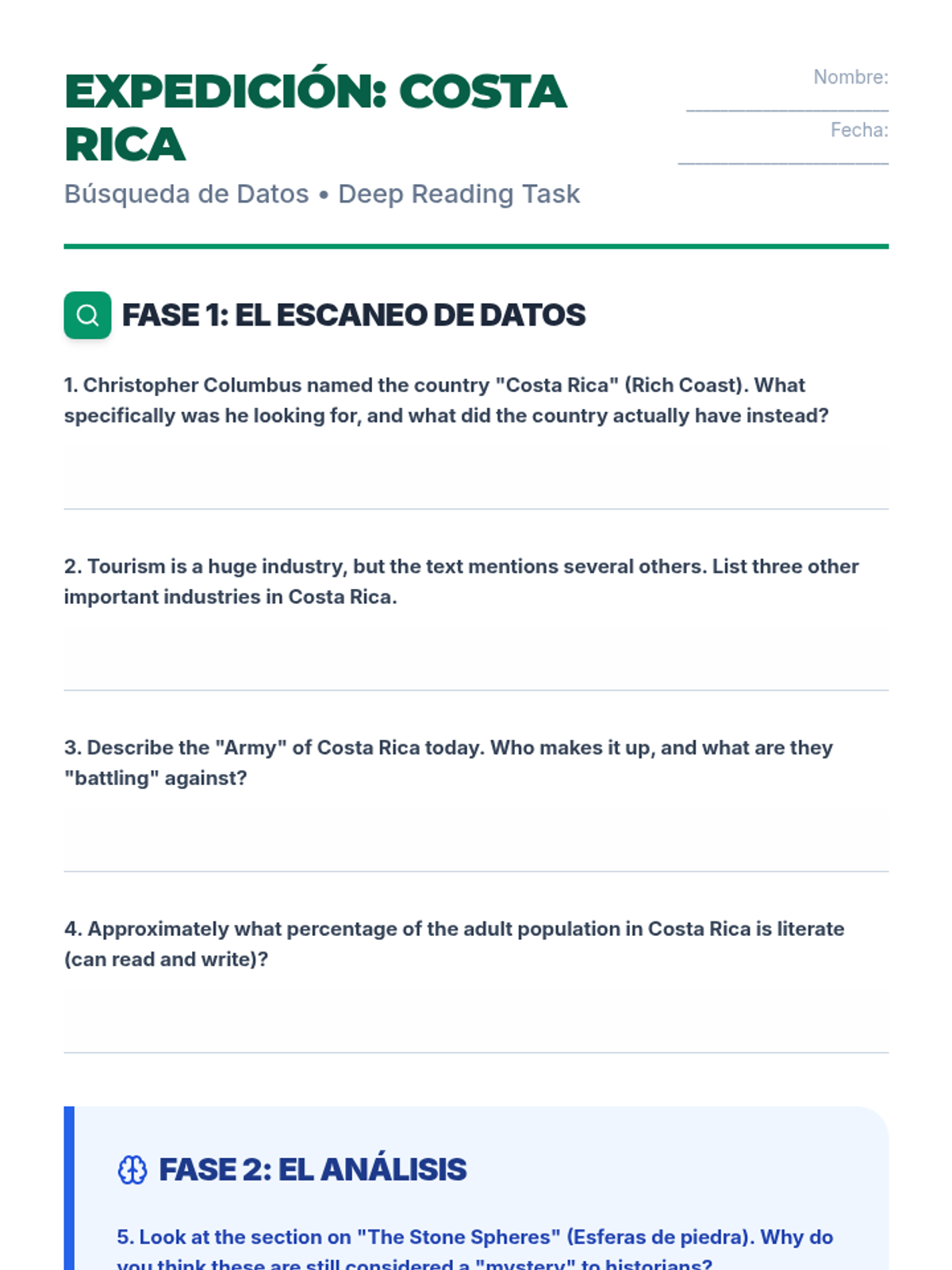
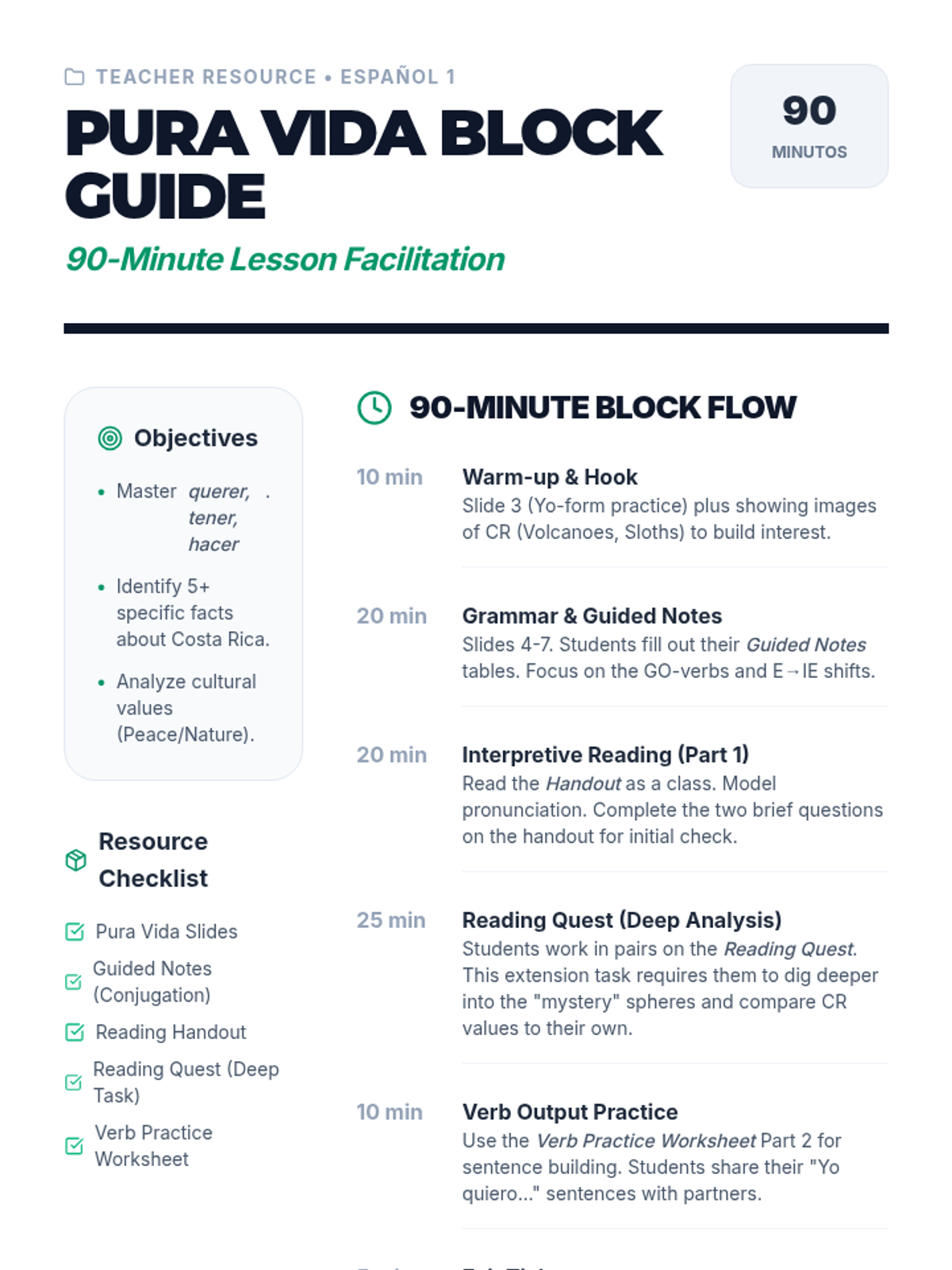
A Spanish 1 lesson focusing on the irregular verbs querer, tener, and hacer, alongside a cultural exploration of Costa Rica's unique geography, history, and 'Pura Vida' lifestyle.
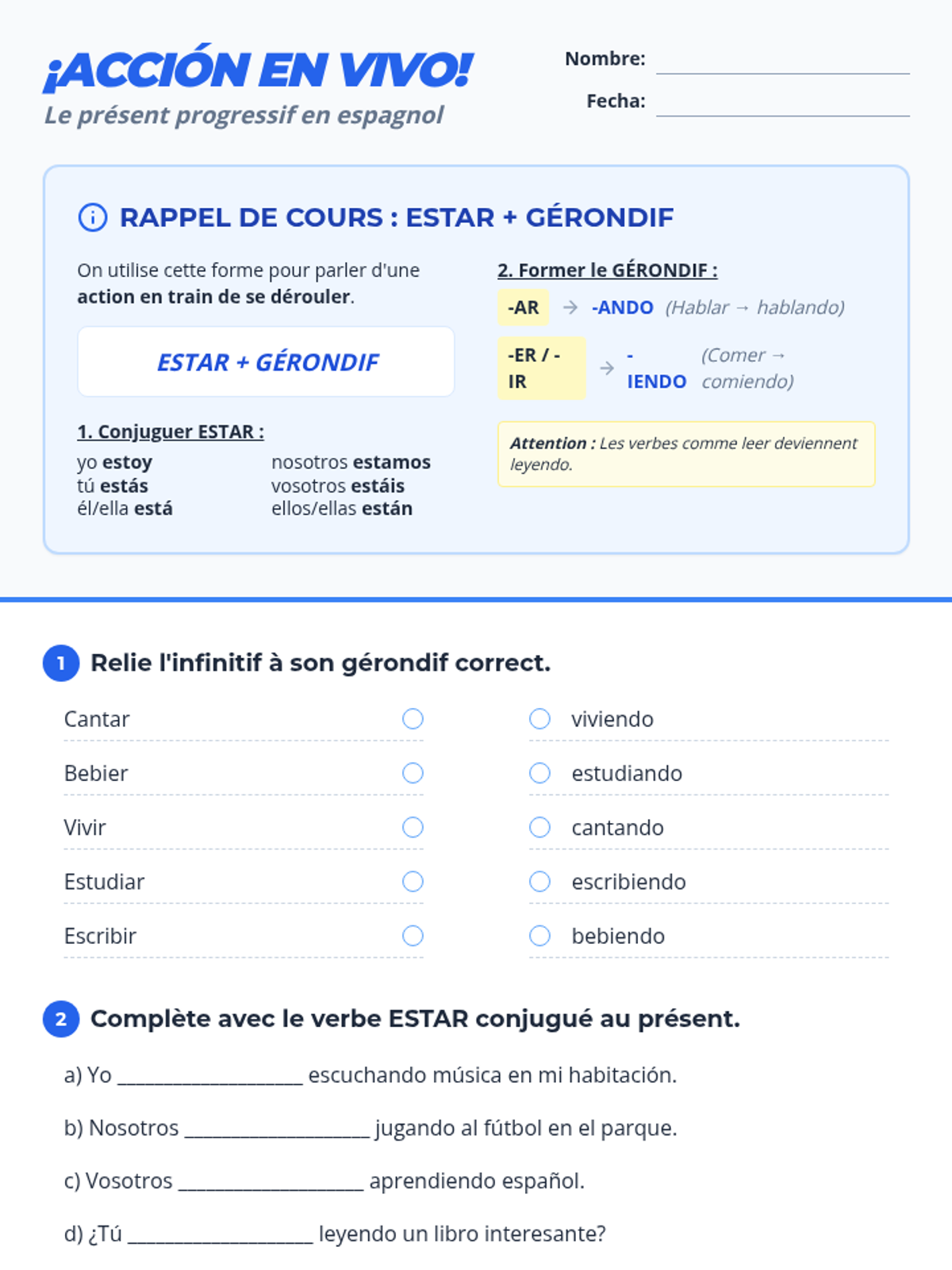
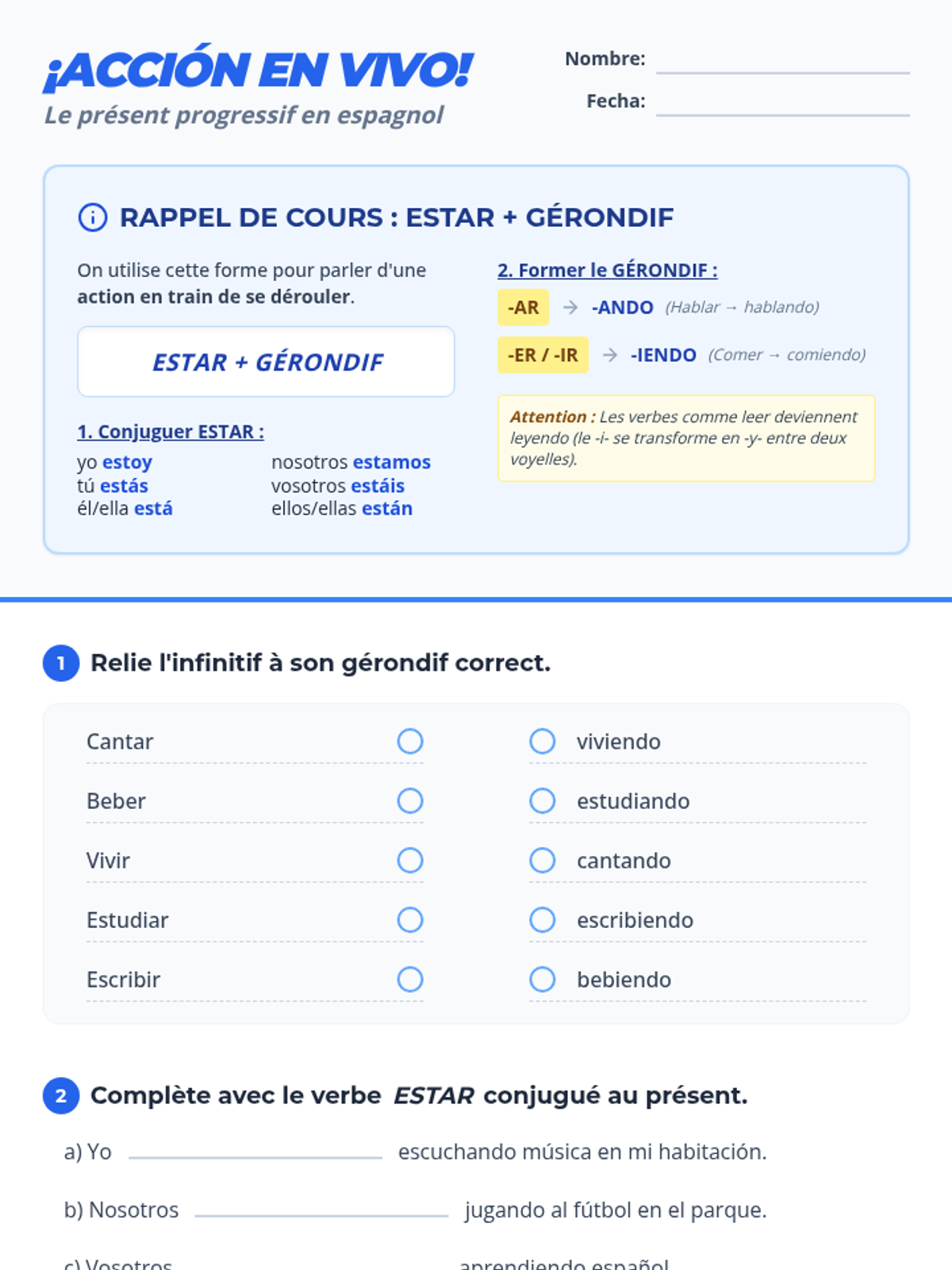
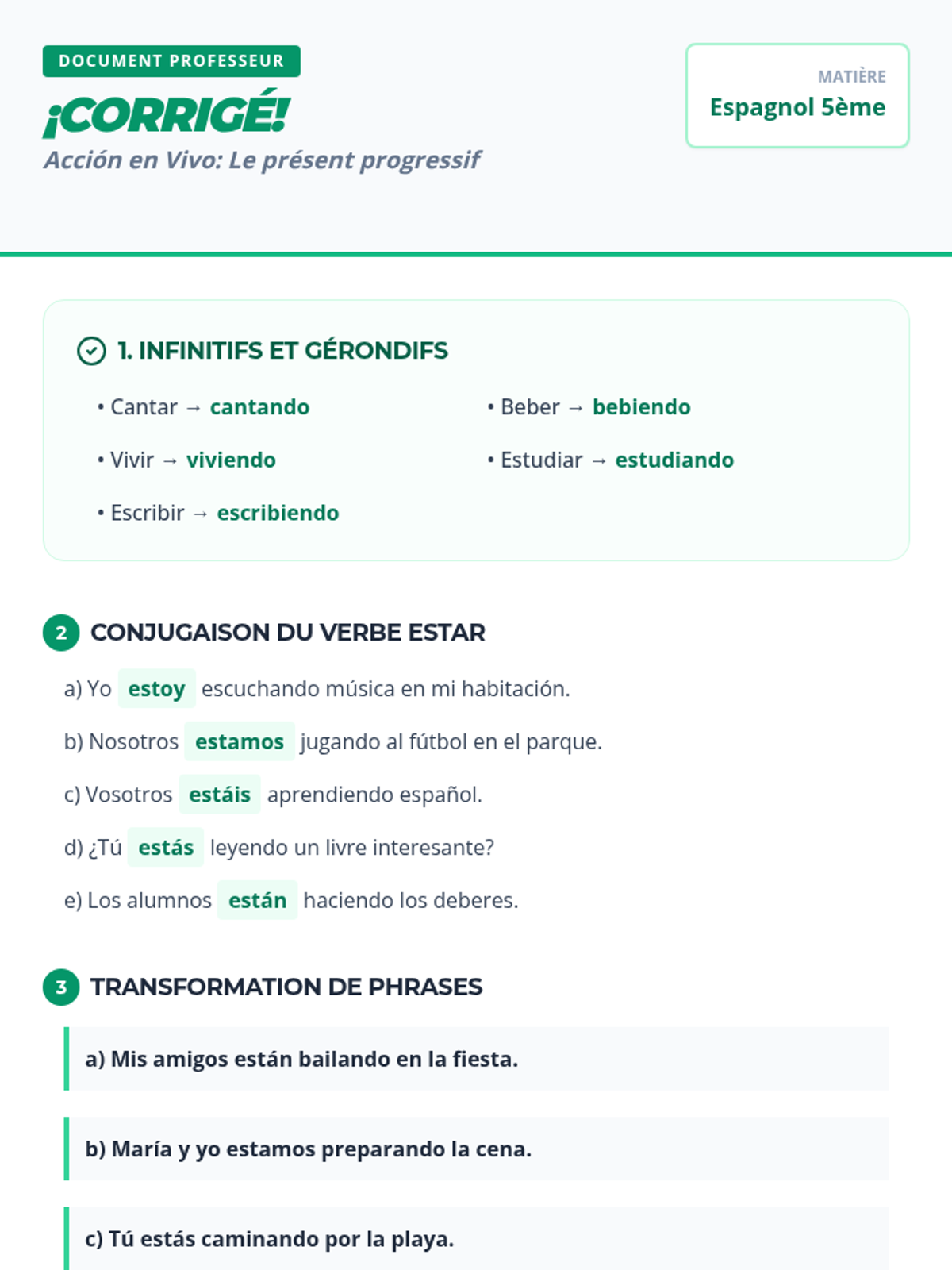
Cette leçon porte sur la formation et l'utilisation du présent progressif (estar + gérondif) en espagnol pour décrire des actions en cours. Elle comprend une fiche d'exercices complète avec un rappel de cours.
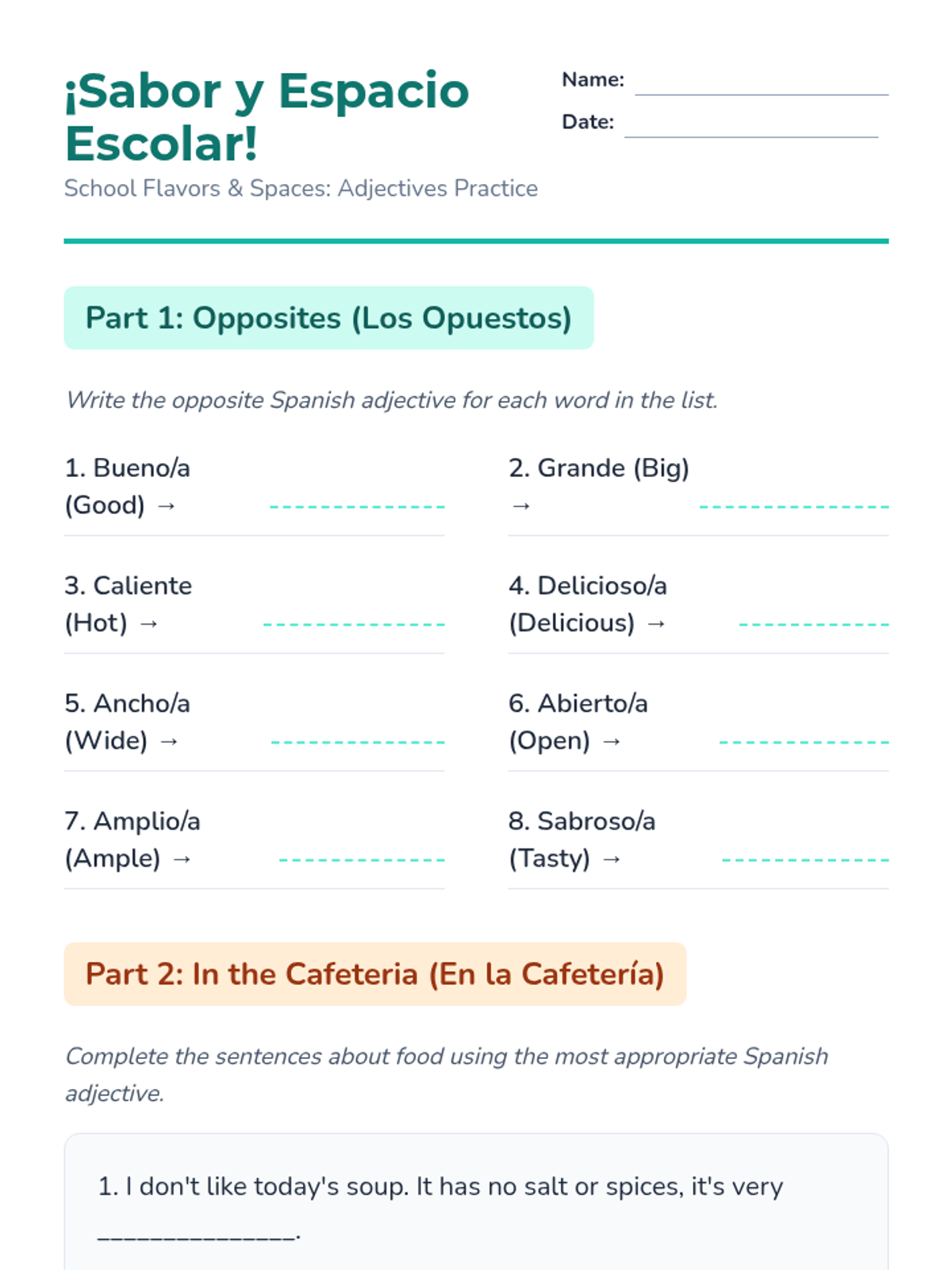
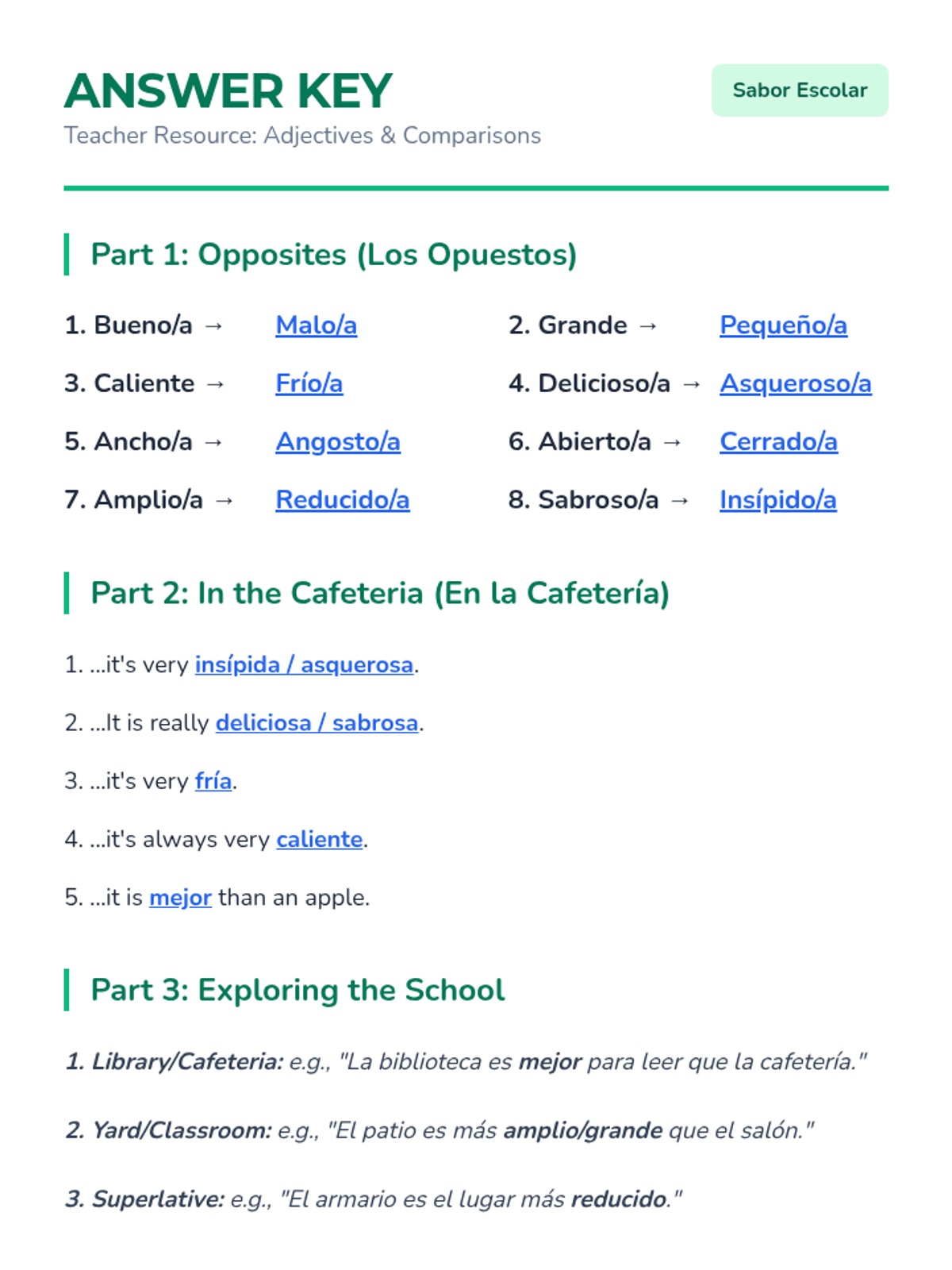
A Spanish grammar lesson focusing on common adjectives (opposites, comparatives, and superlatives) using school-related vocabulary and food as context.
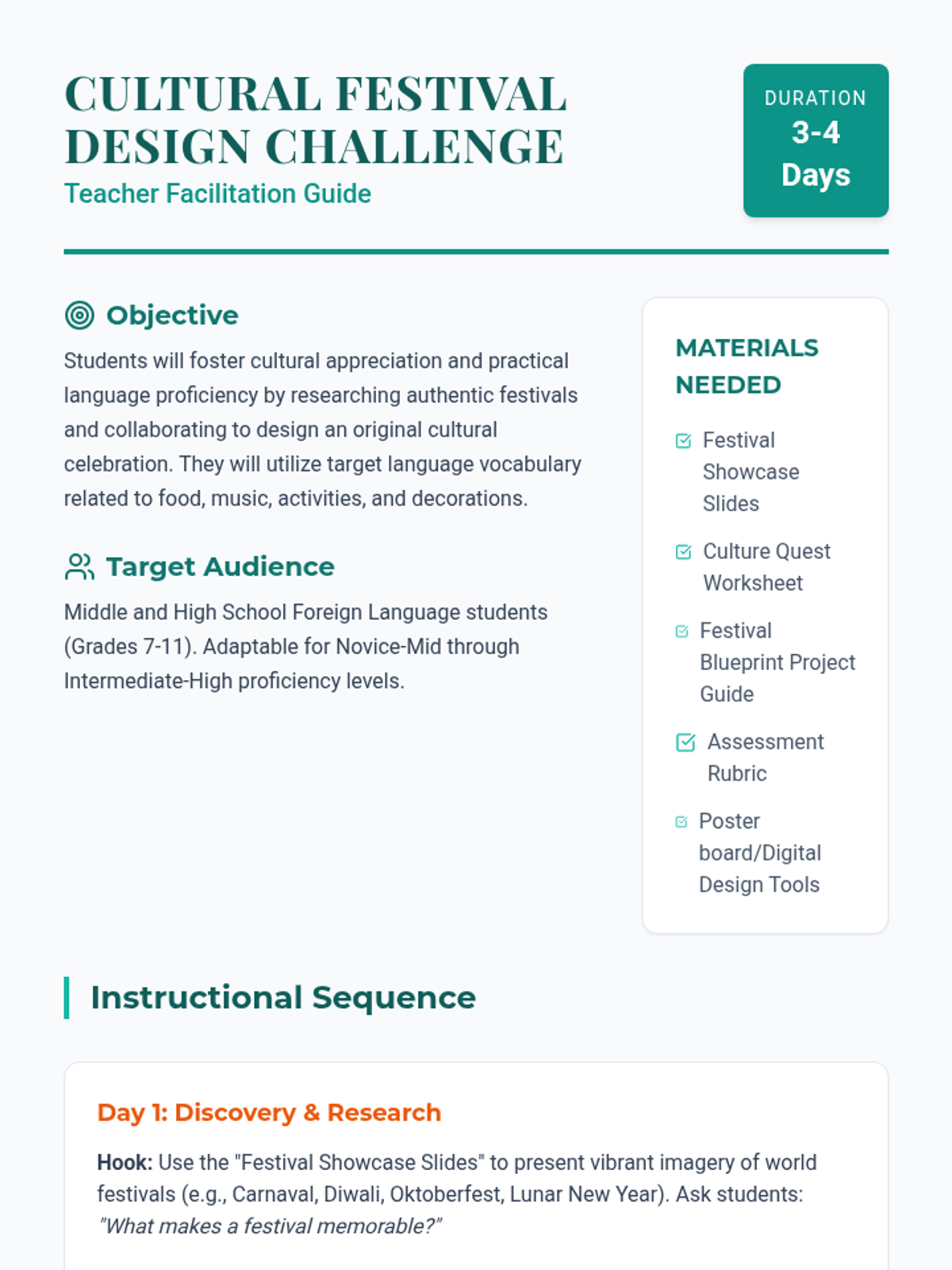
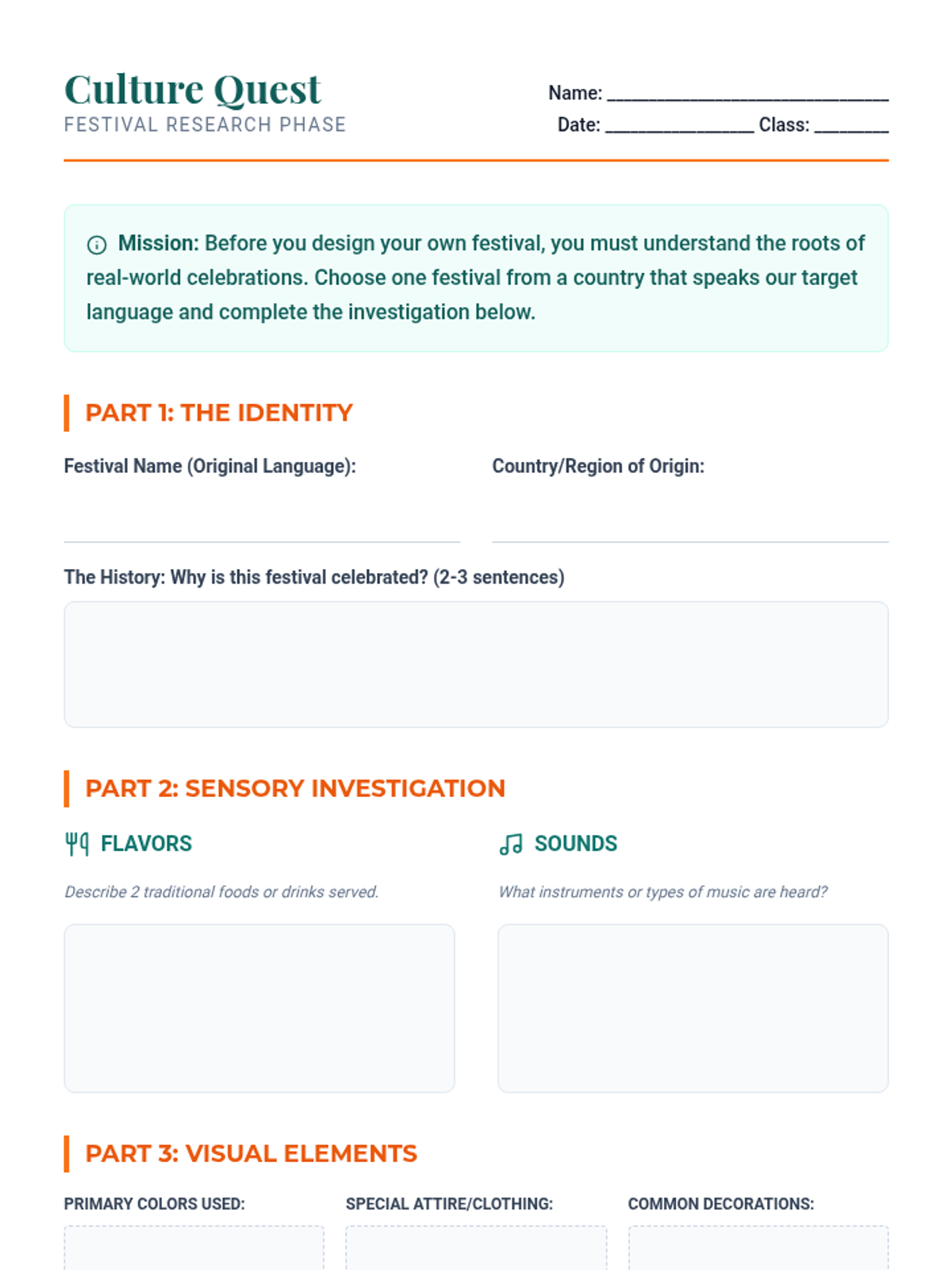
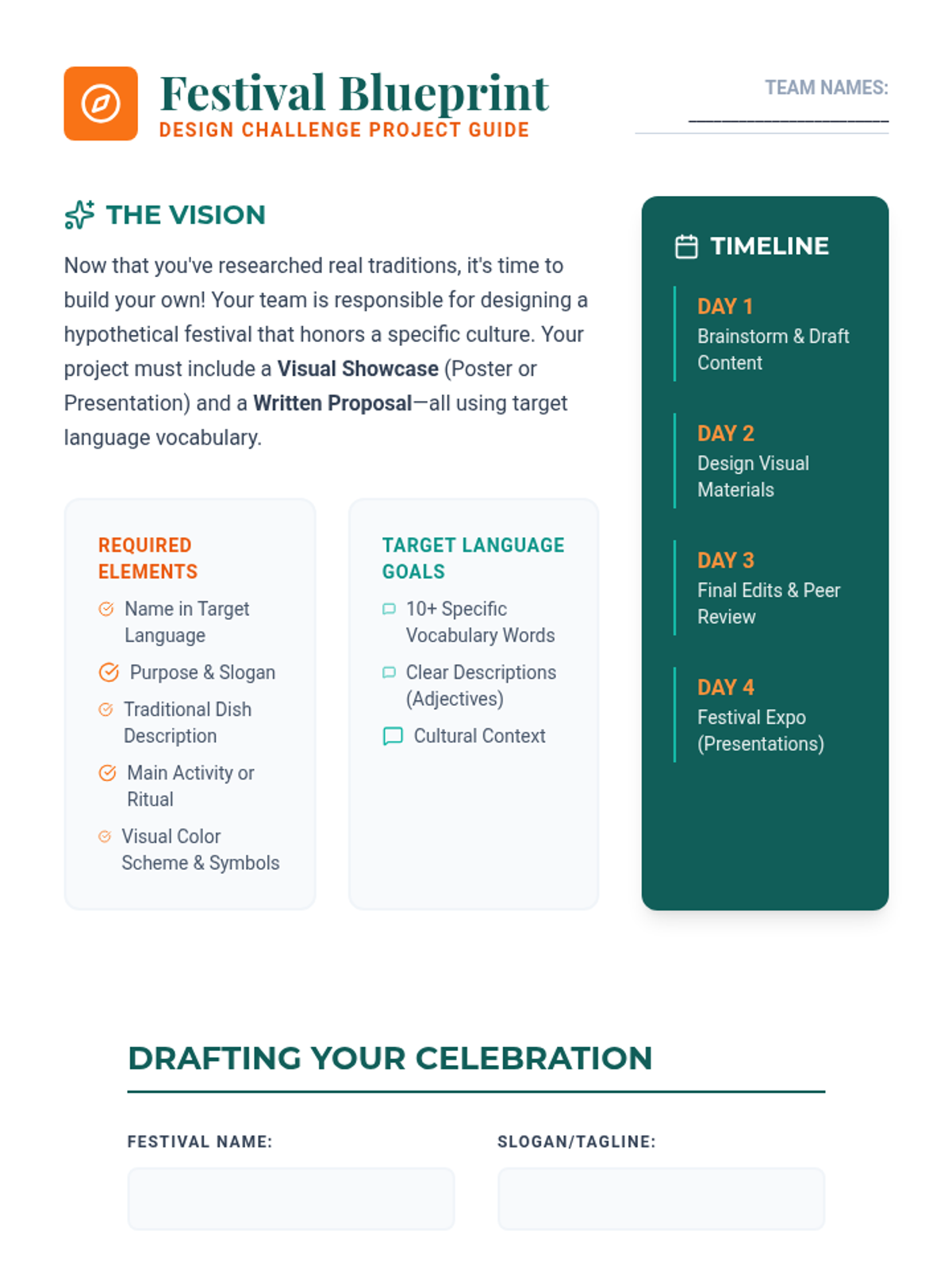
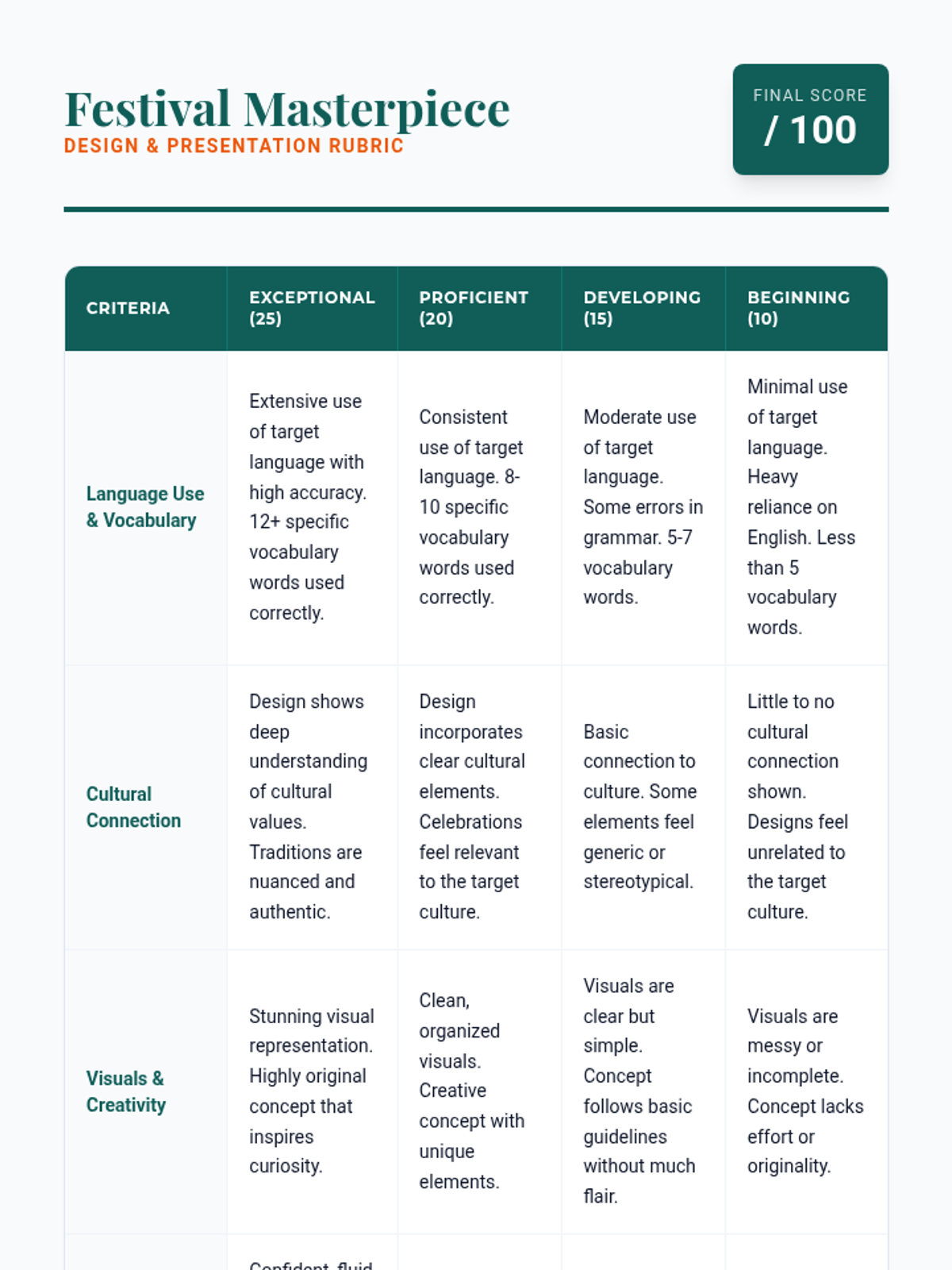
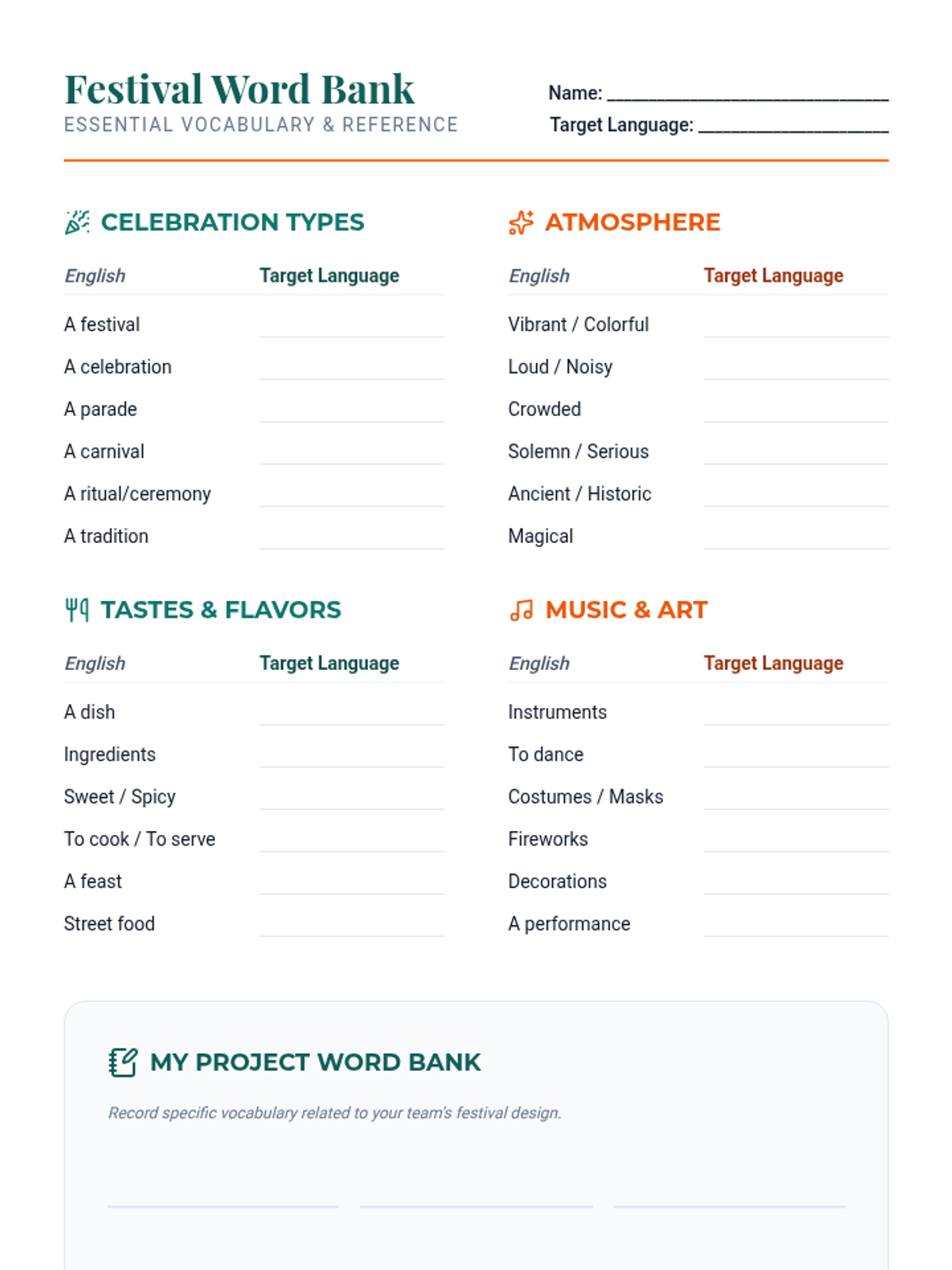
A collaborative project-based lesson where students research real-world cultural festivals and then design their own unique celebration, applying target language vocabulary for food, music, and traditions.
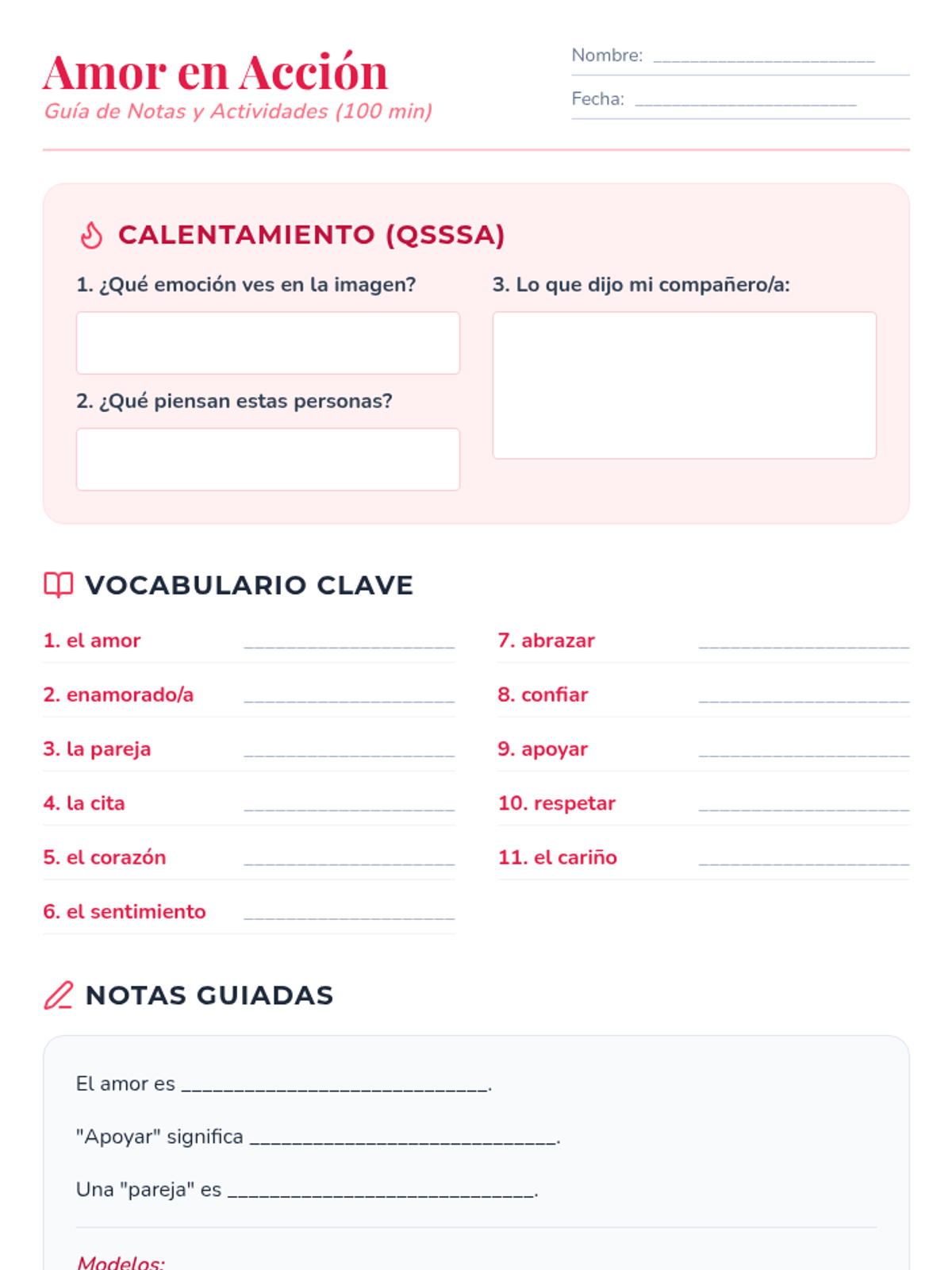
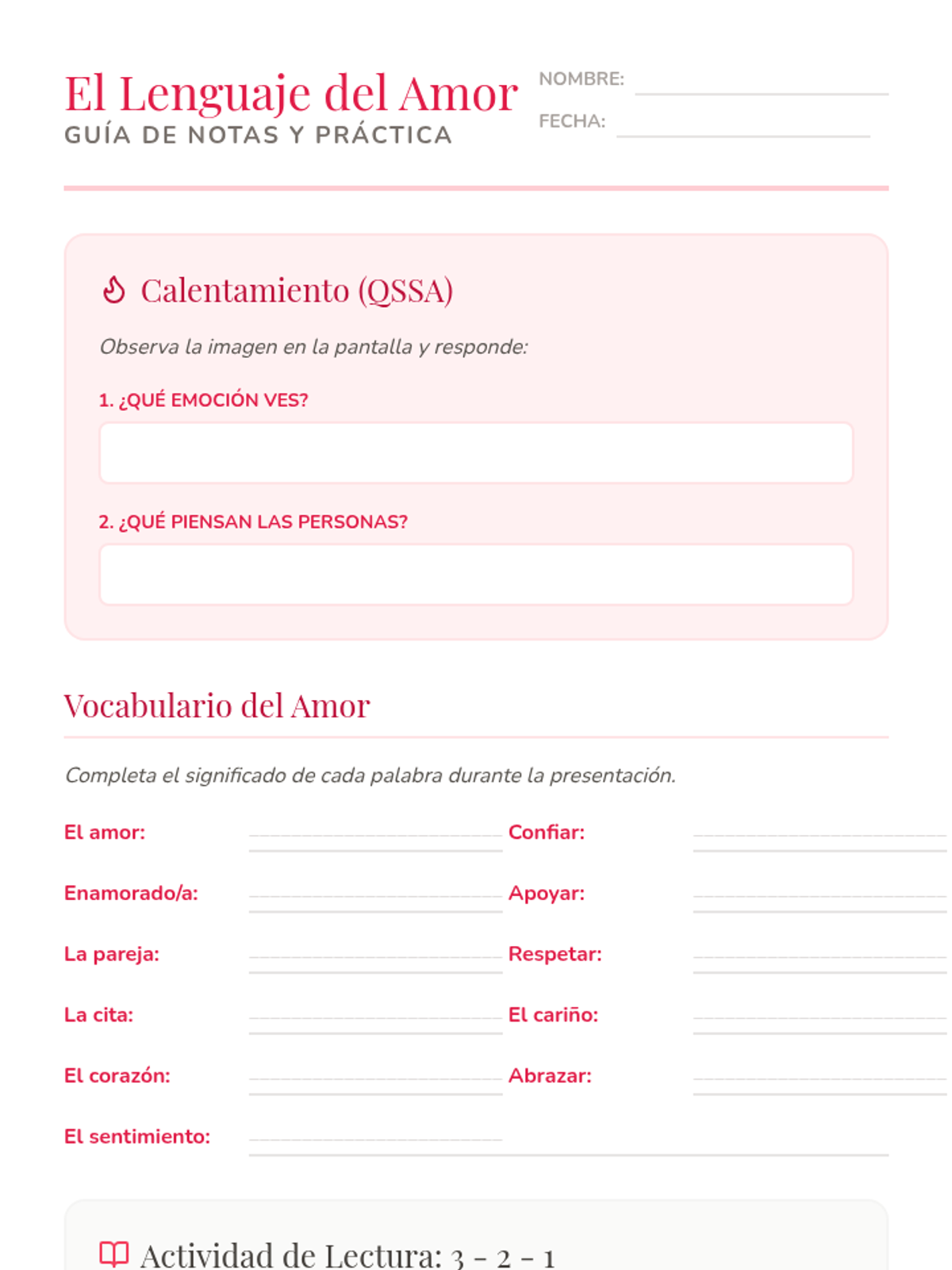
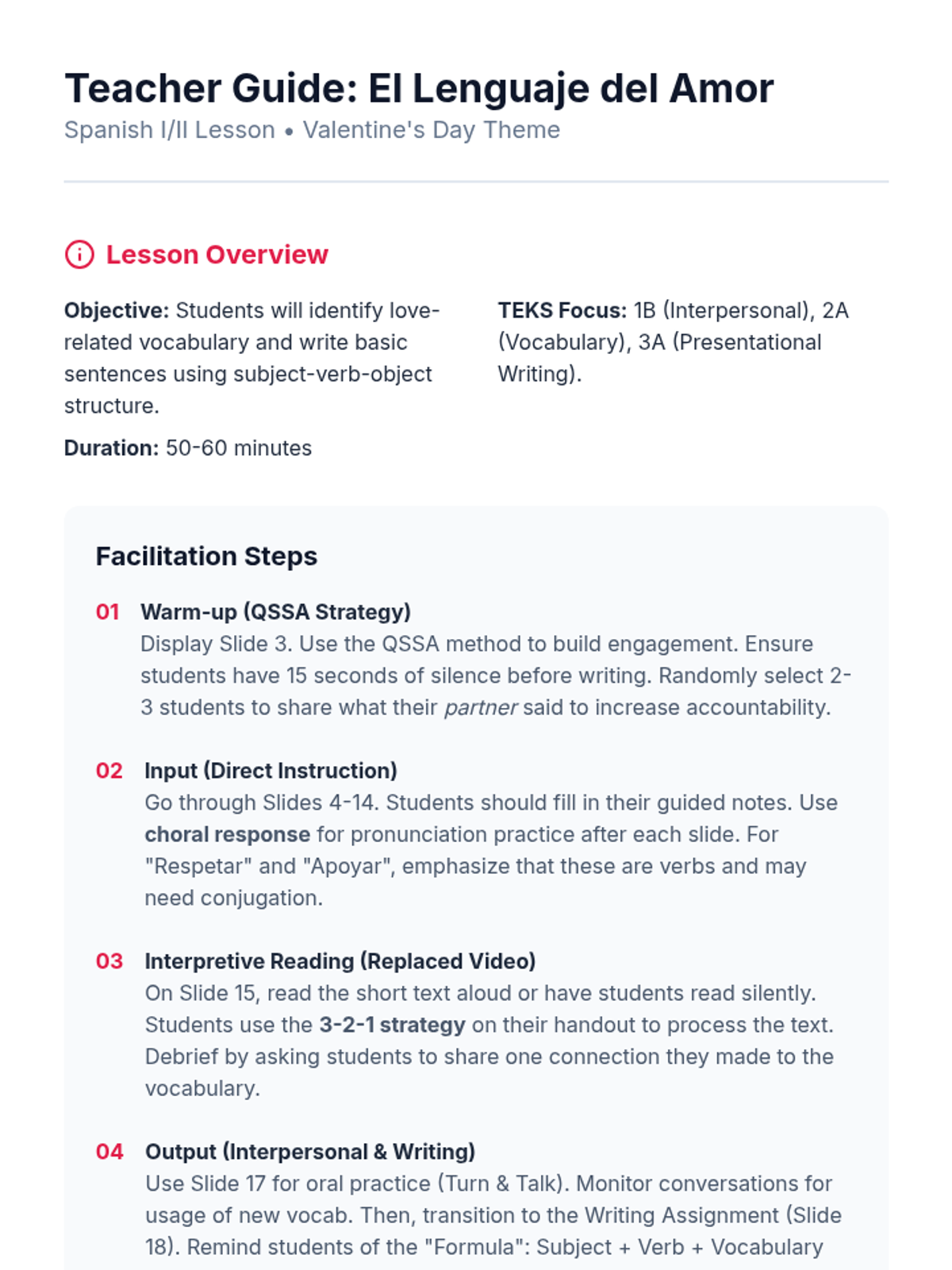
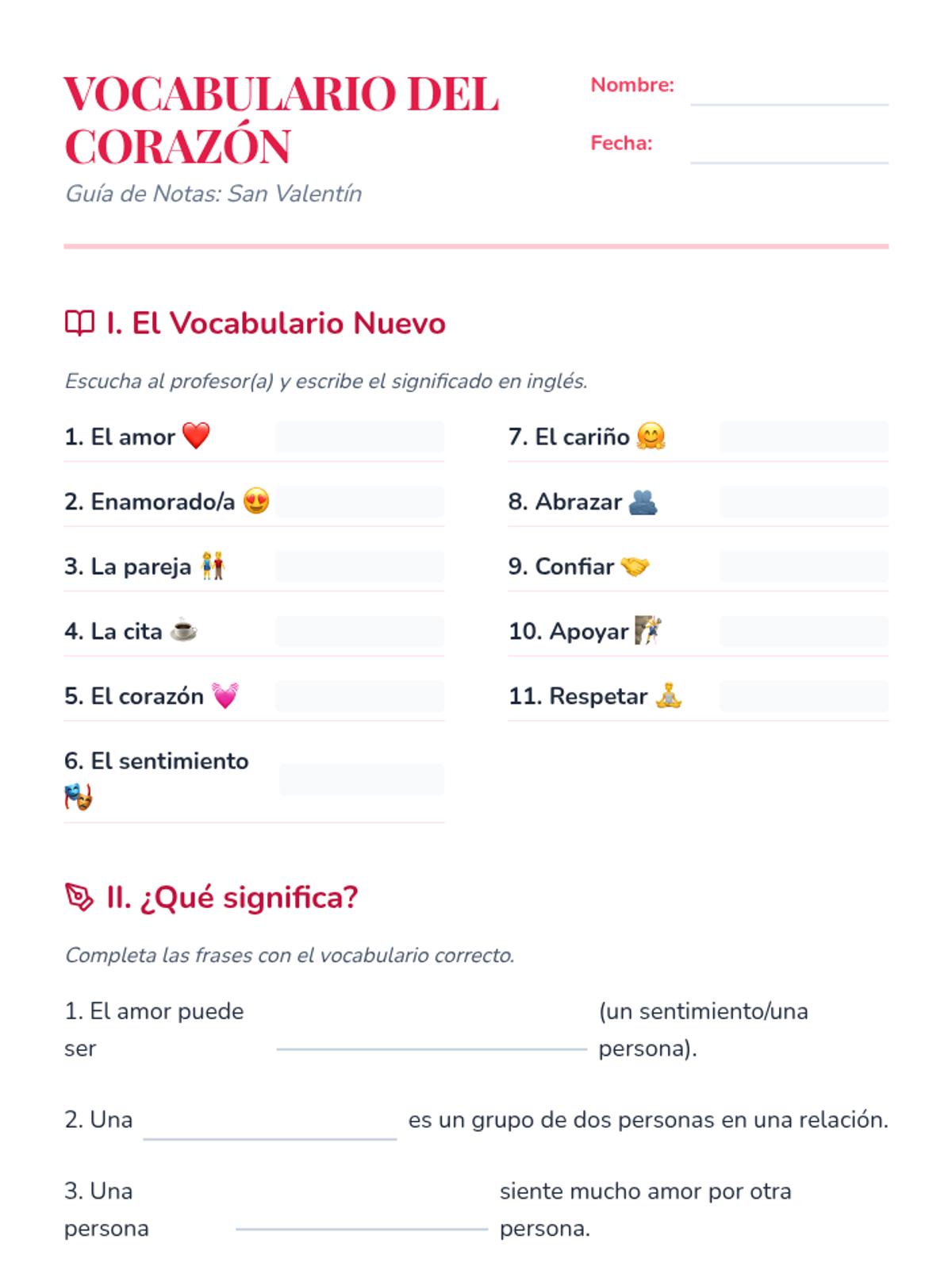
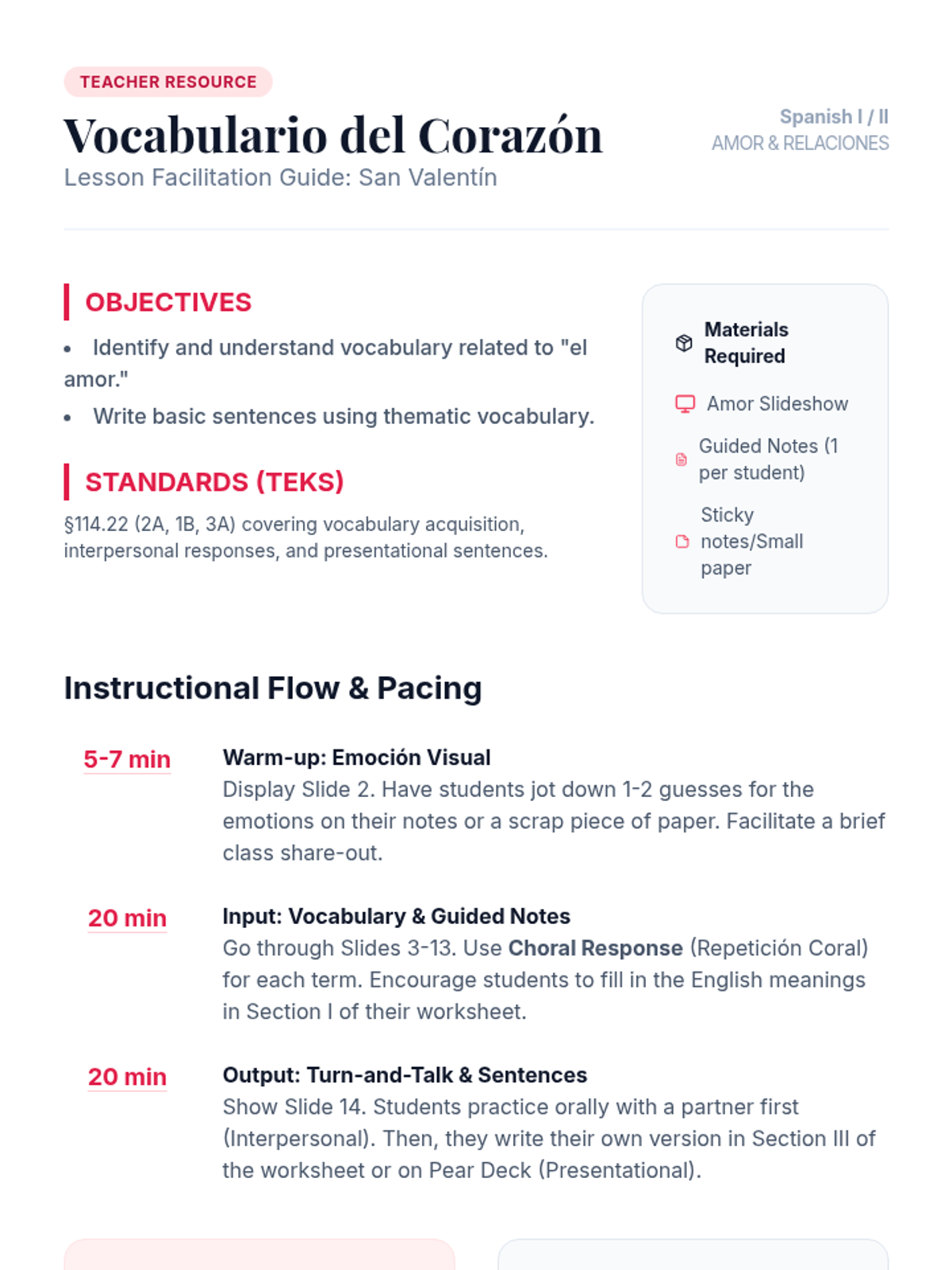
A comprehensive lesson for Spanish I/II students to learn and practice vocabulary related to love and relationships in the context of Valentine's Day. Students will move from interpretive vocabulary acquisition to interpersonal and presentational sentence building.
Students will learn and use Spanish vocabulary for love and relationships, progressing from identifying terms to writing original sentences about emotions and ideal partners.
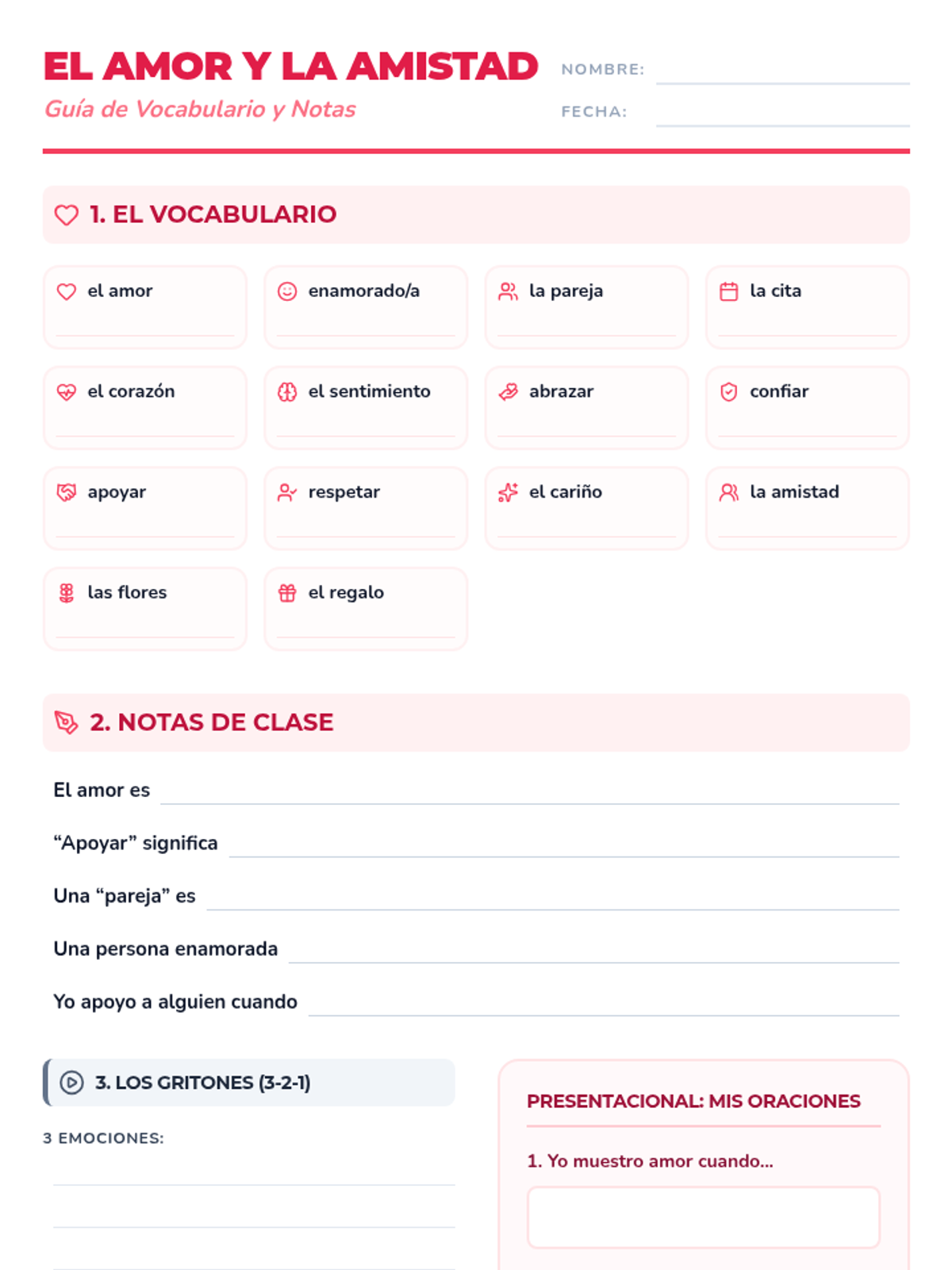
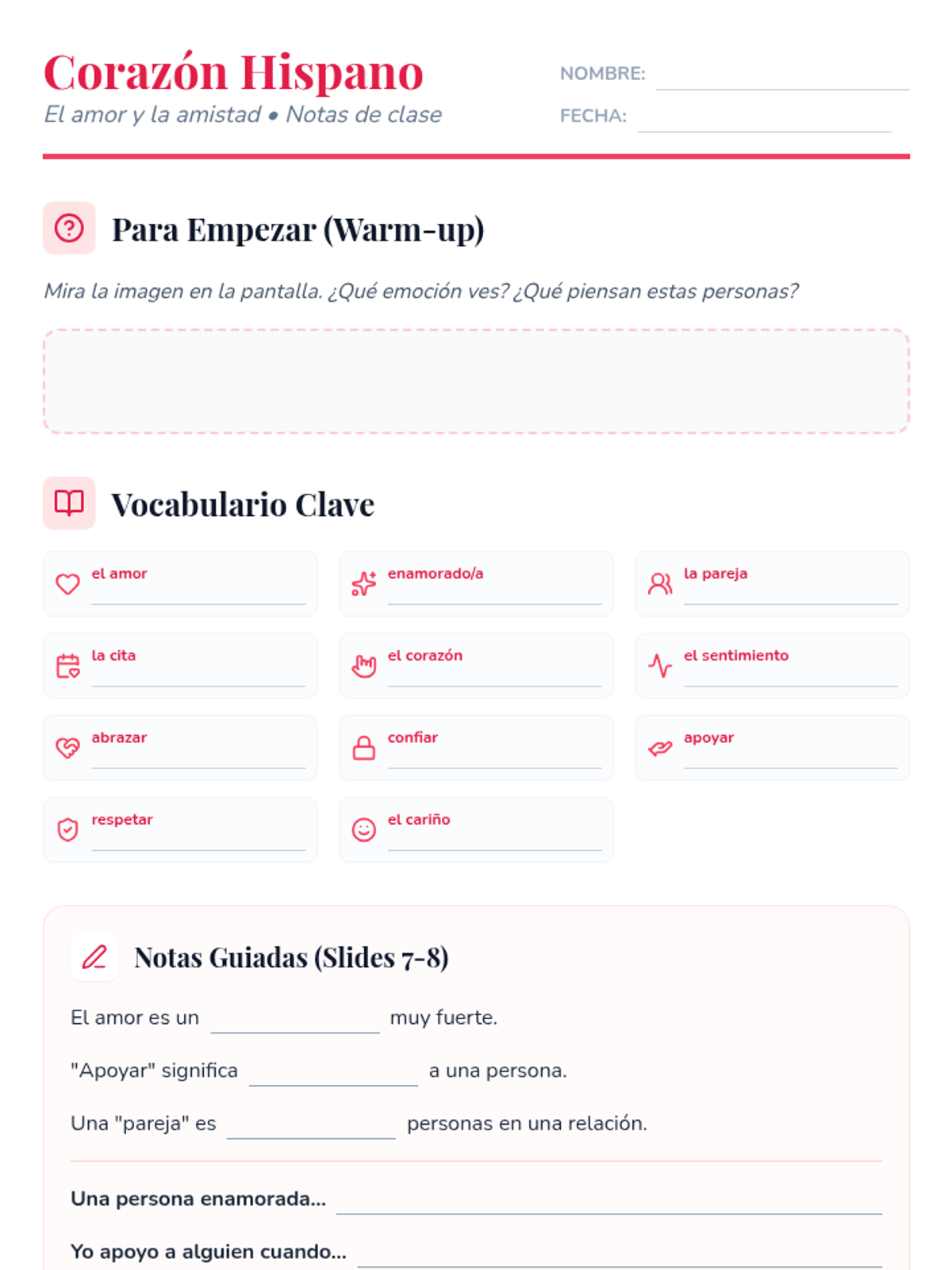
A comprehensive lesson for Spanish I/II students to learn and use vocabulary related to love and relationships in the context of Valentine's Day. Includes a detailed slide deck for instruction, guided notes for student processing, and a teacher guide for facilitation.
A Spanish I/II lesson focused on identifying and using vocabulary related to love and relationships through visuals, video interpretation, and sentence creation.
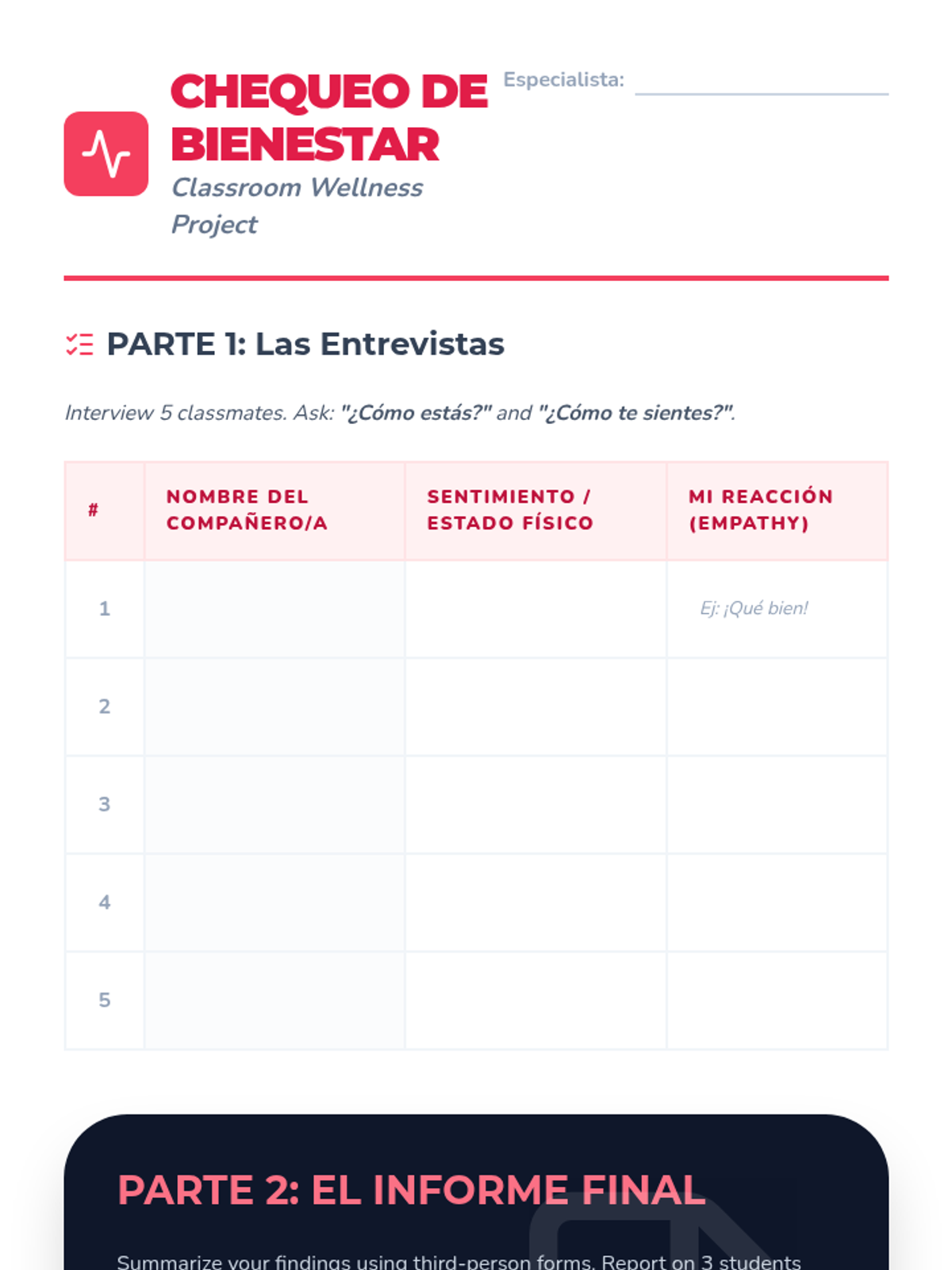
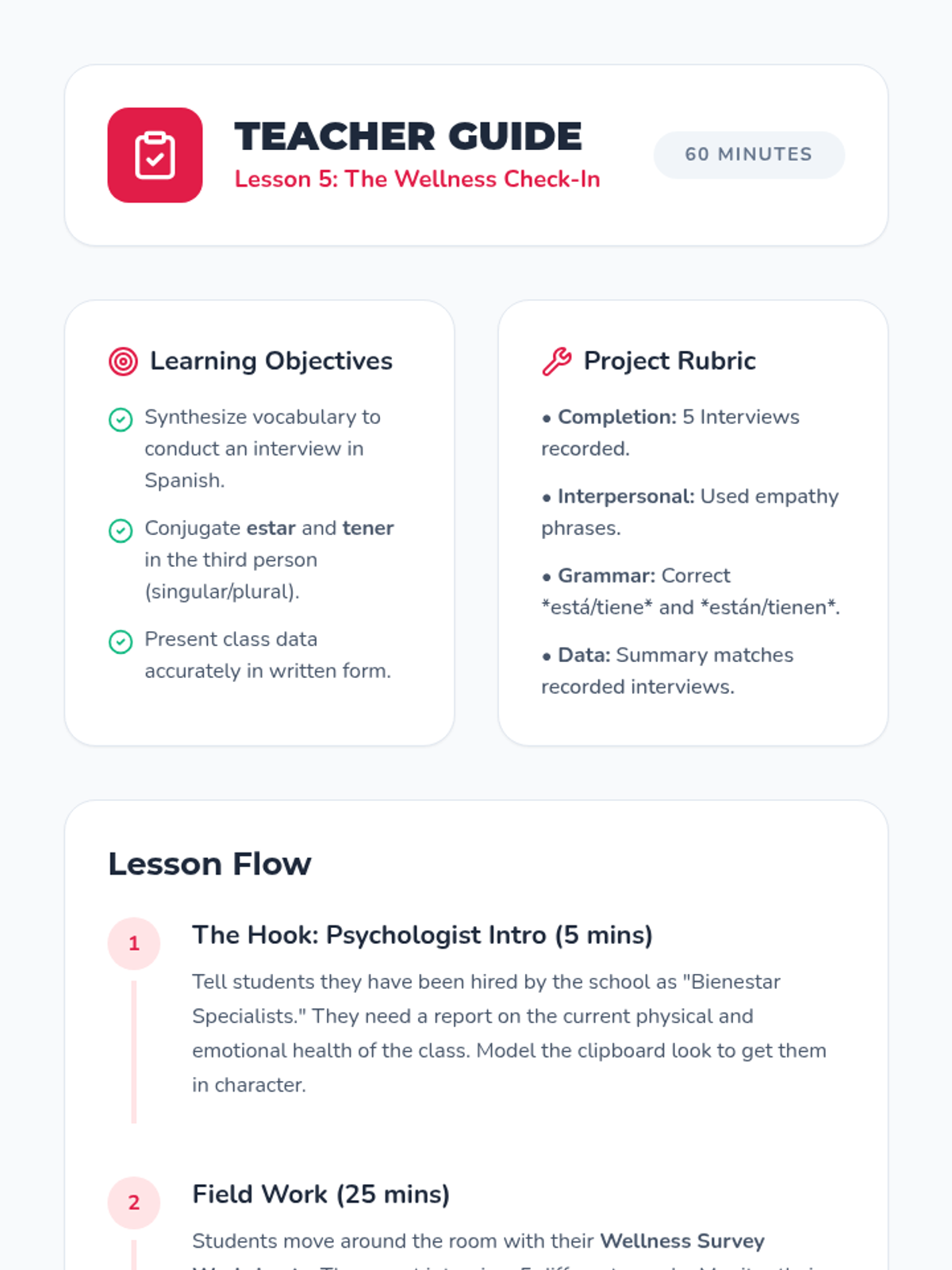
A synthesis project where students conduct a class wellness survey, collect data, and report findings using third-person conjugations.
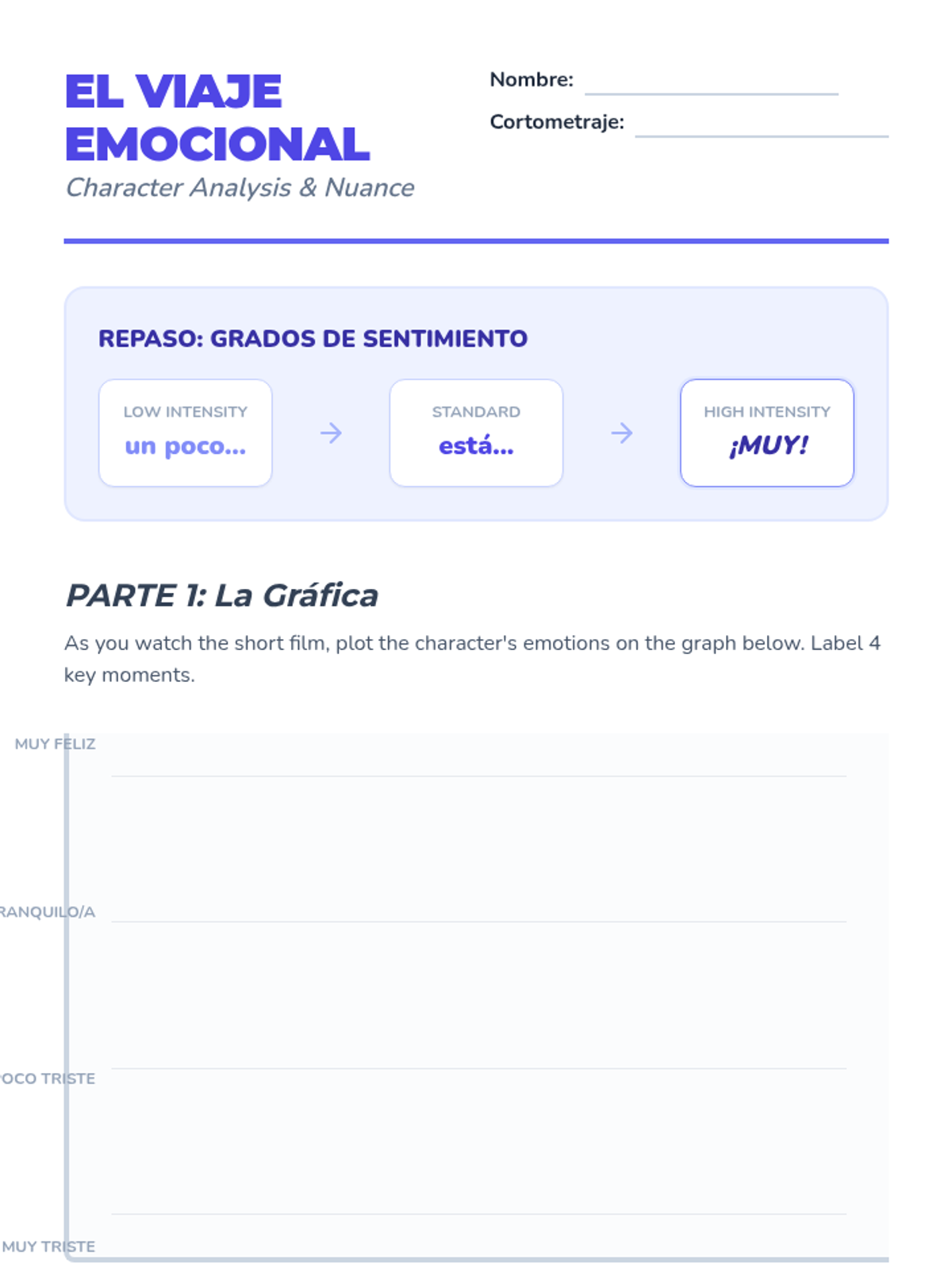
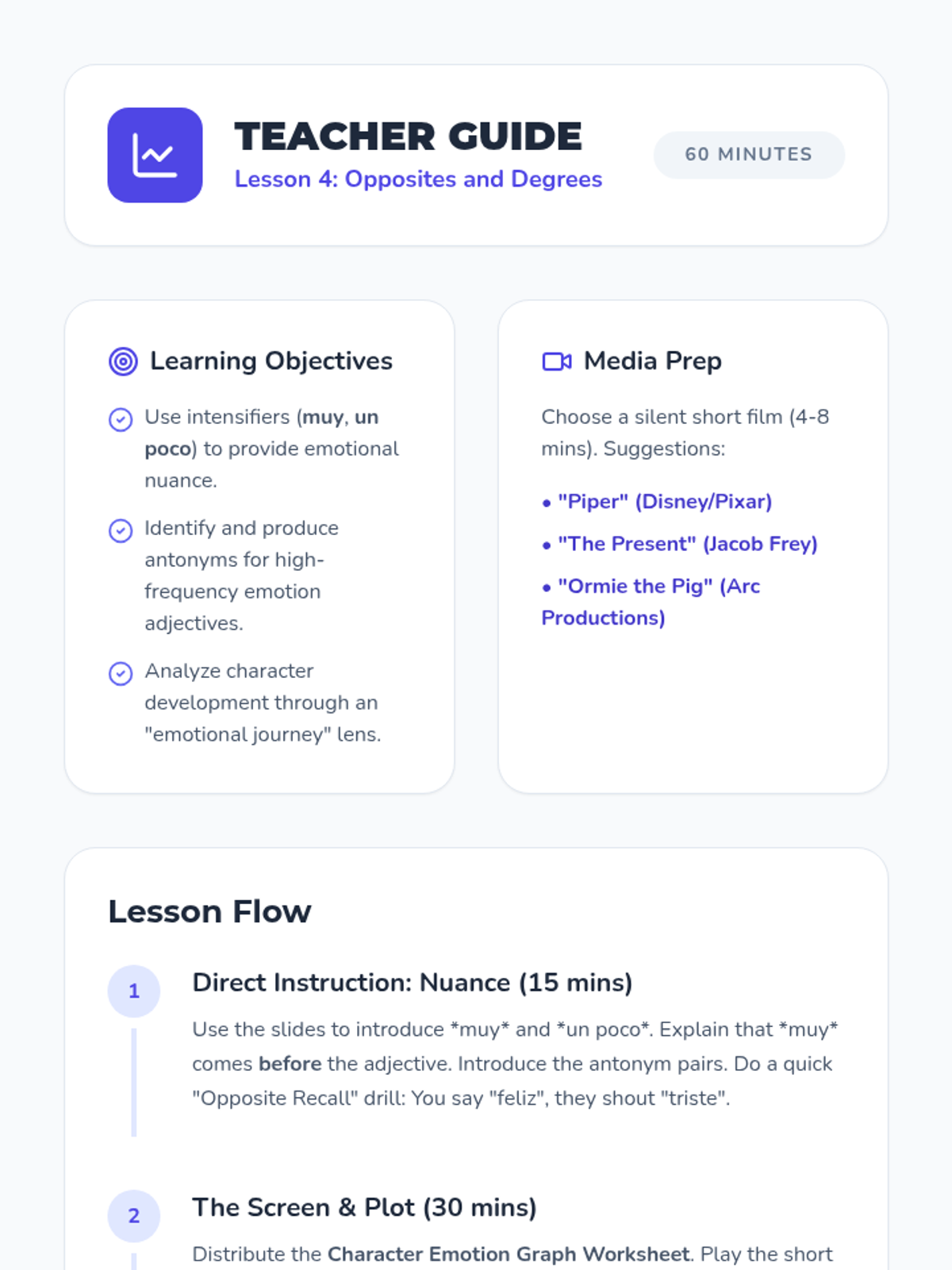
Expanding vocabulary with antonyms and intensifiers (muy, un poco). Students analyze character emotions in stories and media.
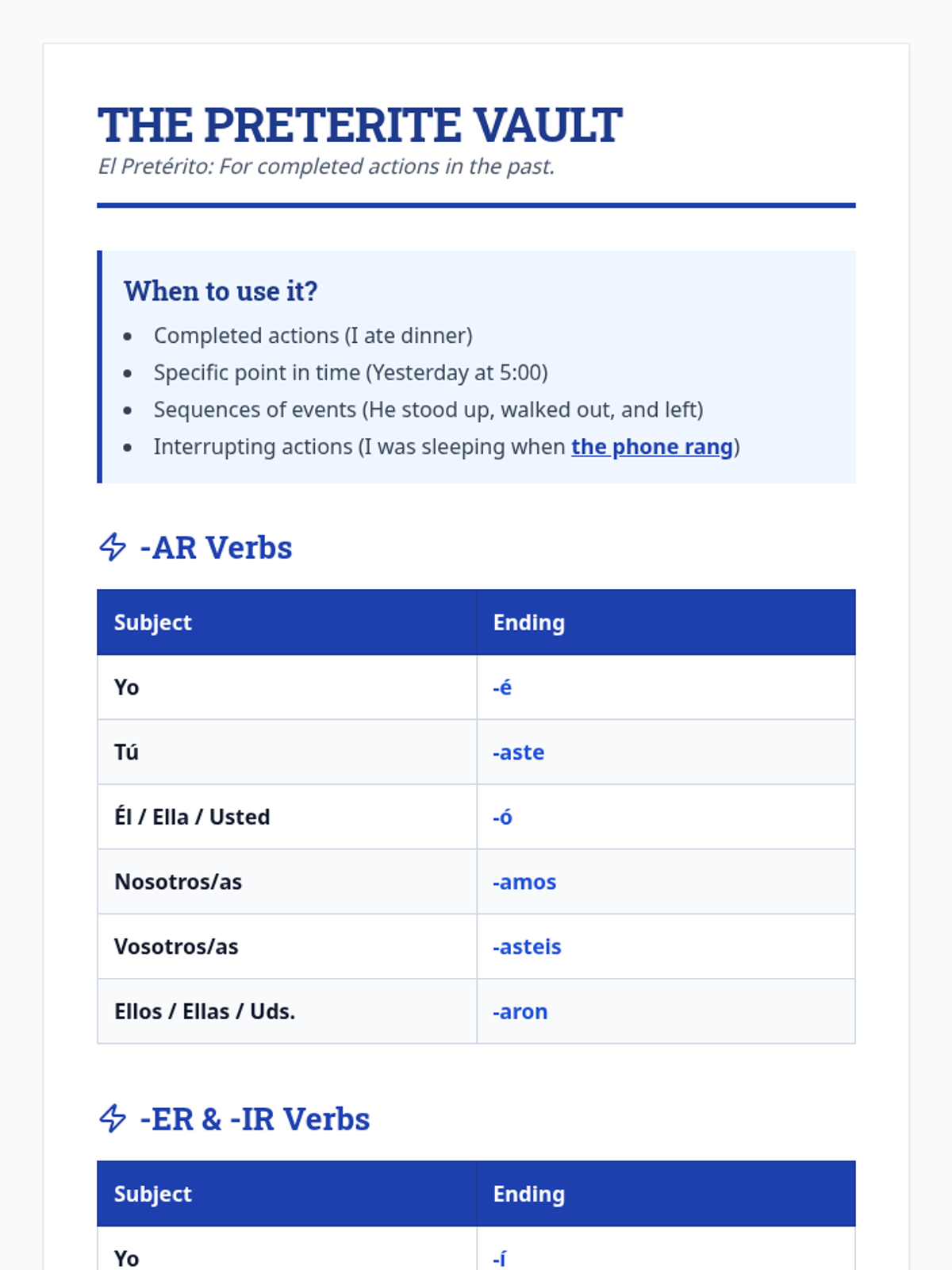
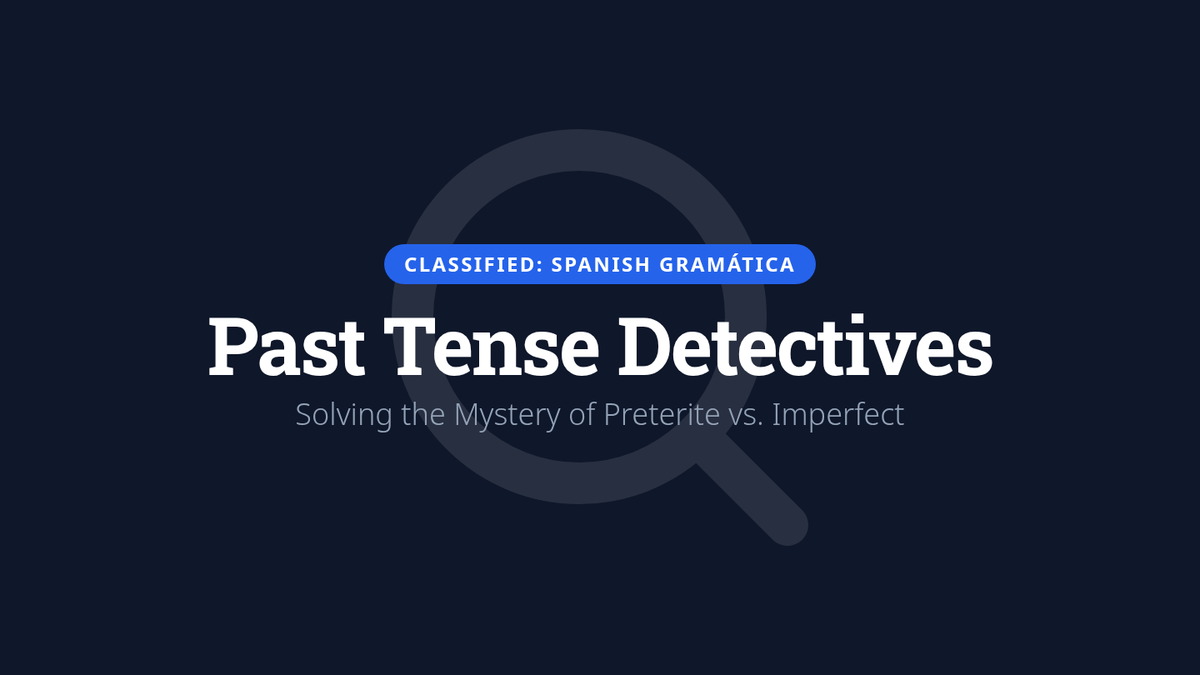
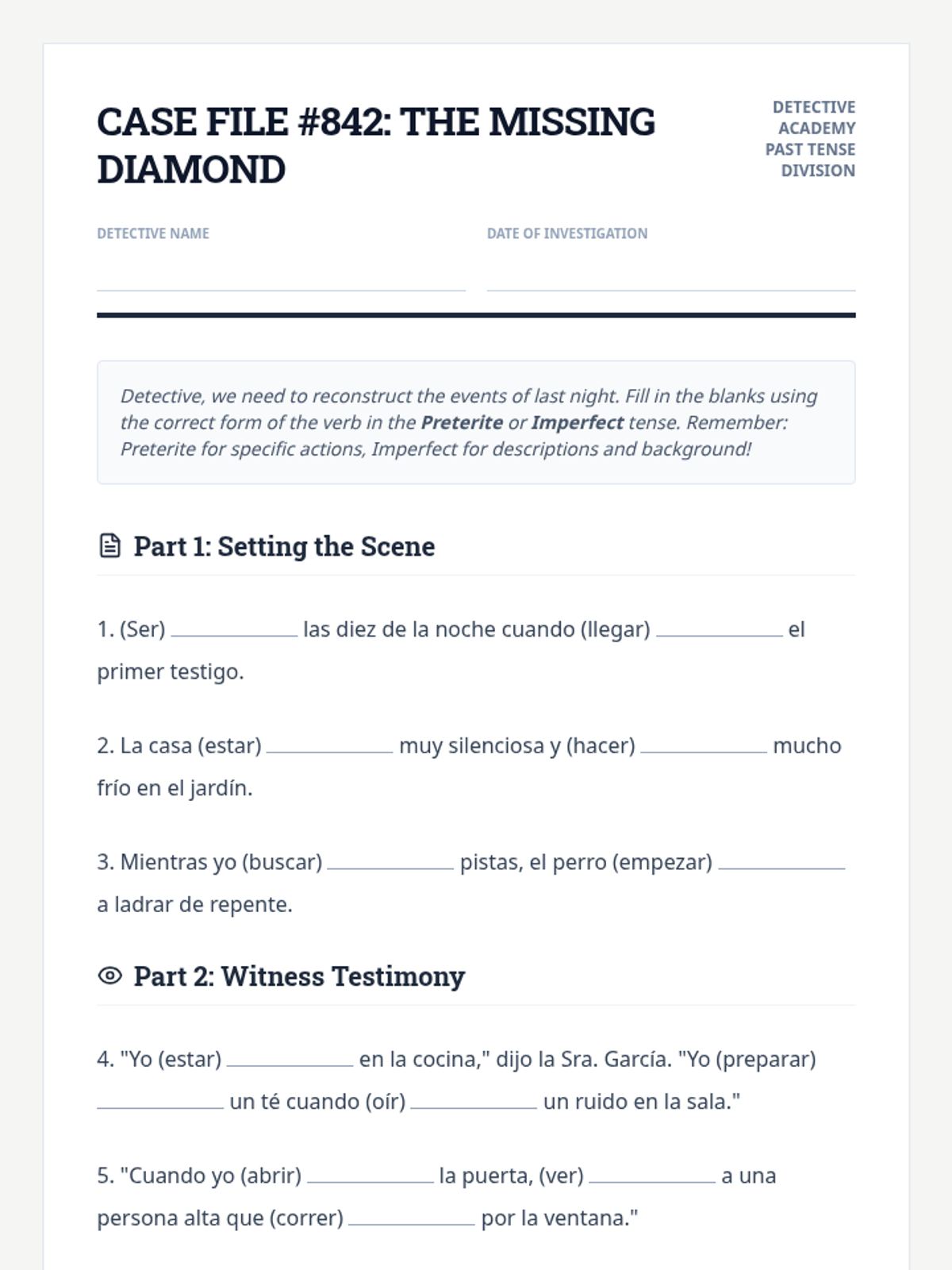
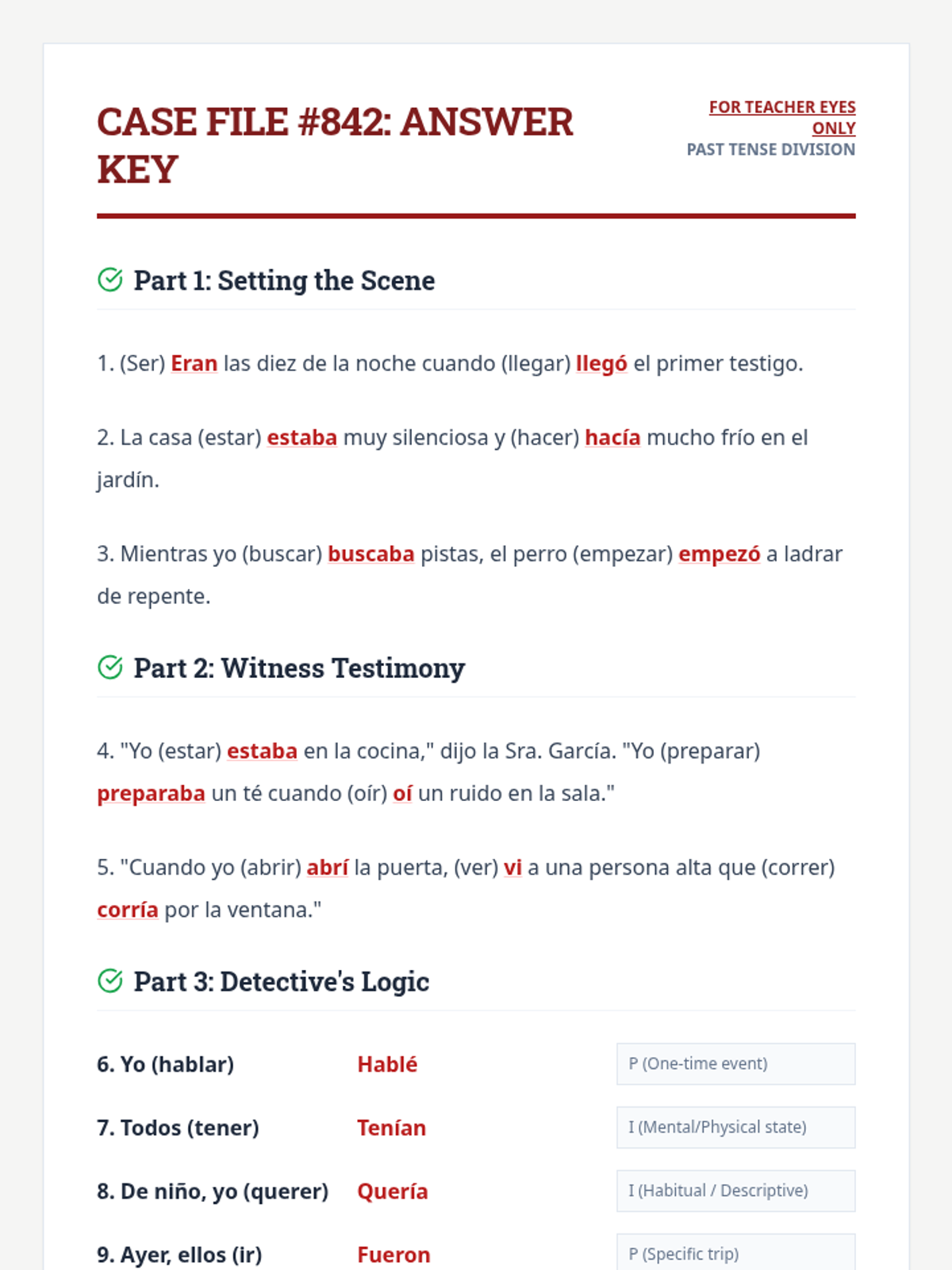
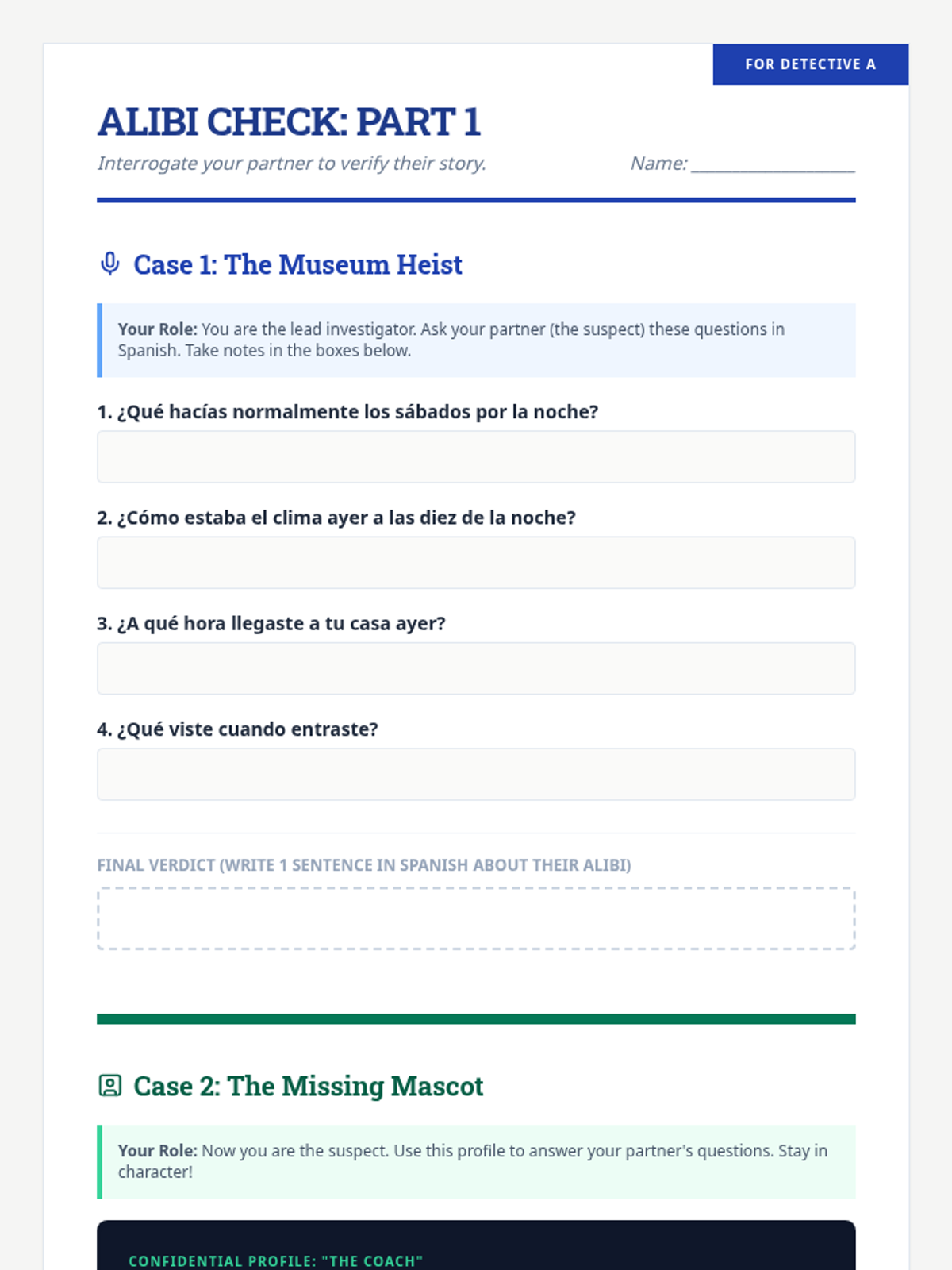
A comprehensive guide to mastering the Spanish Preterite and Imperfect tenses, featuring clear conjugation patterns and usage rules through a detective-themed lens.
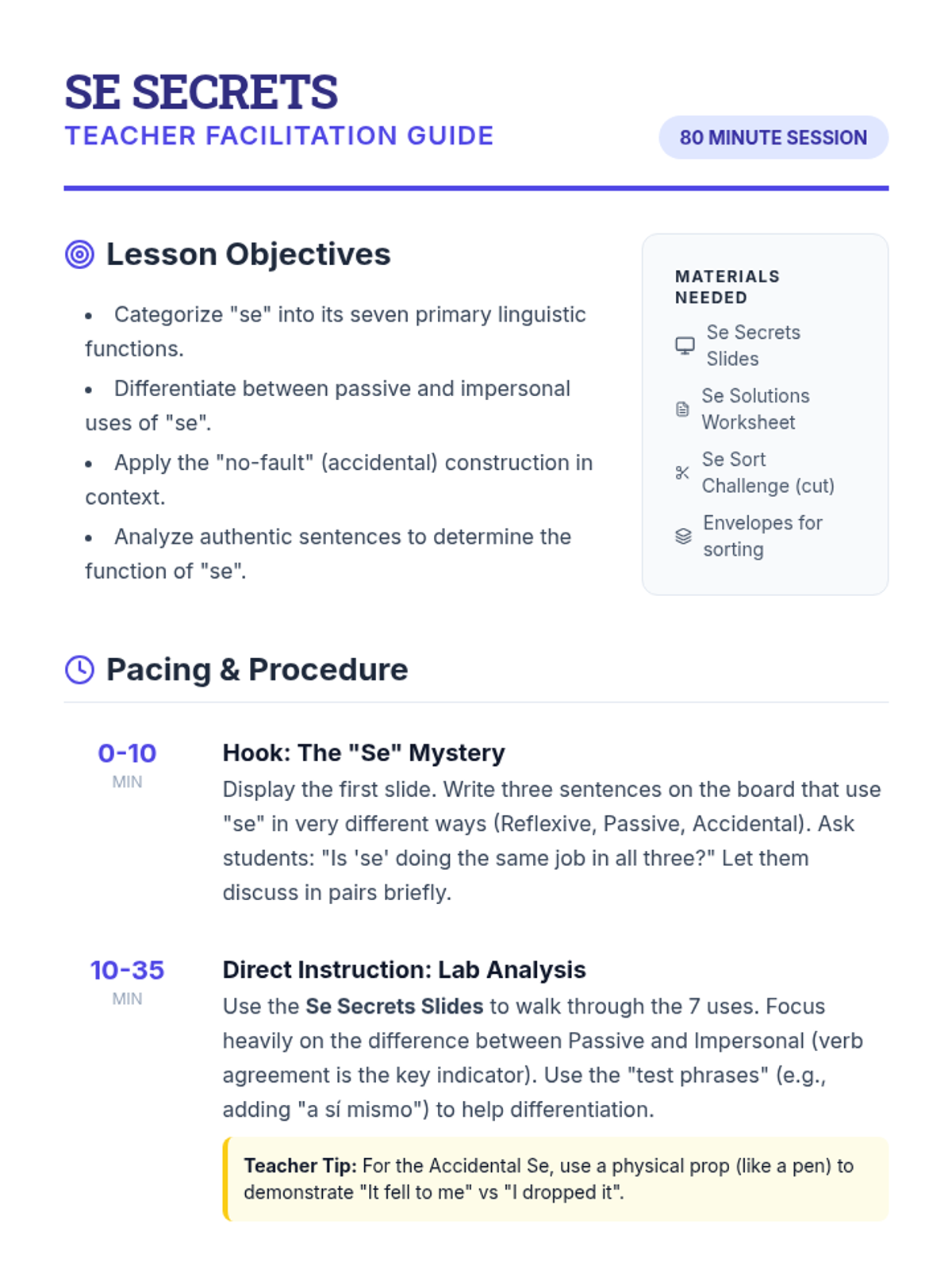
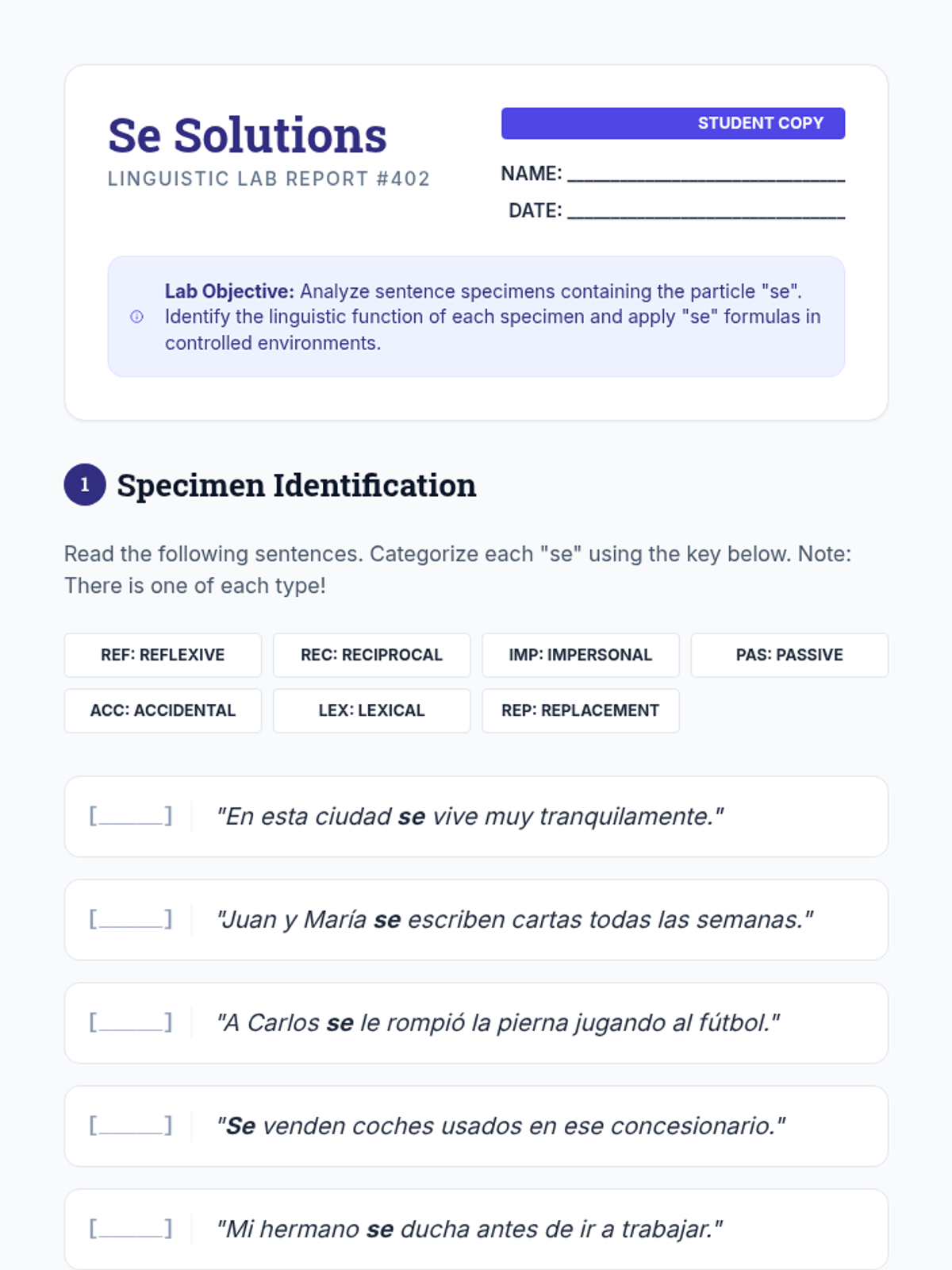
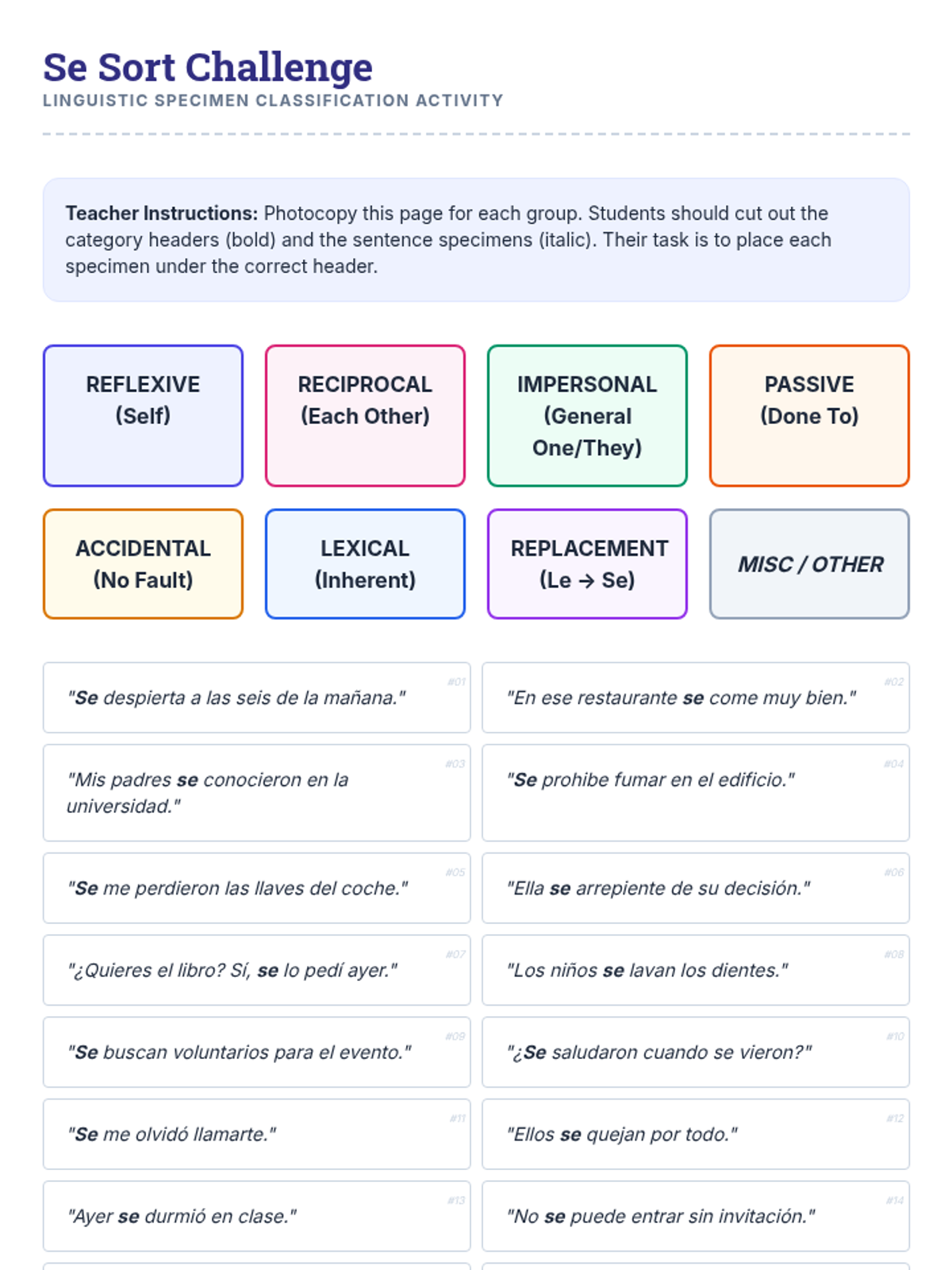
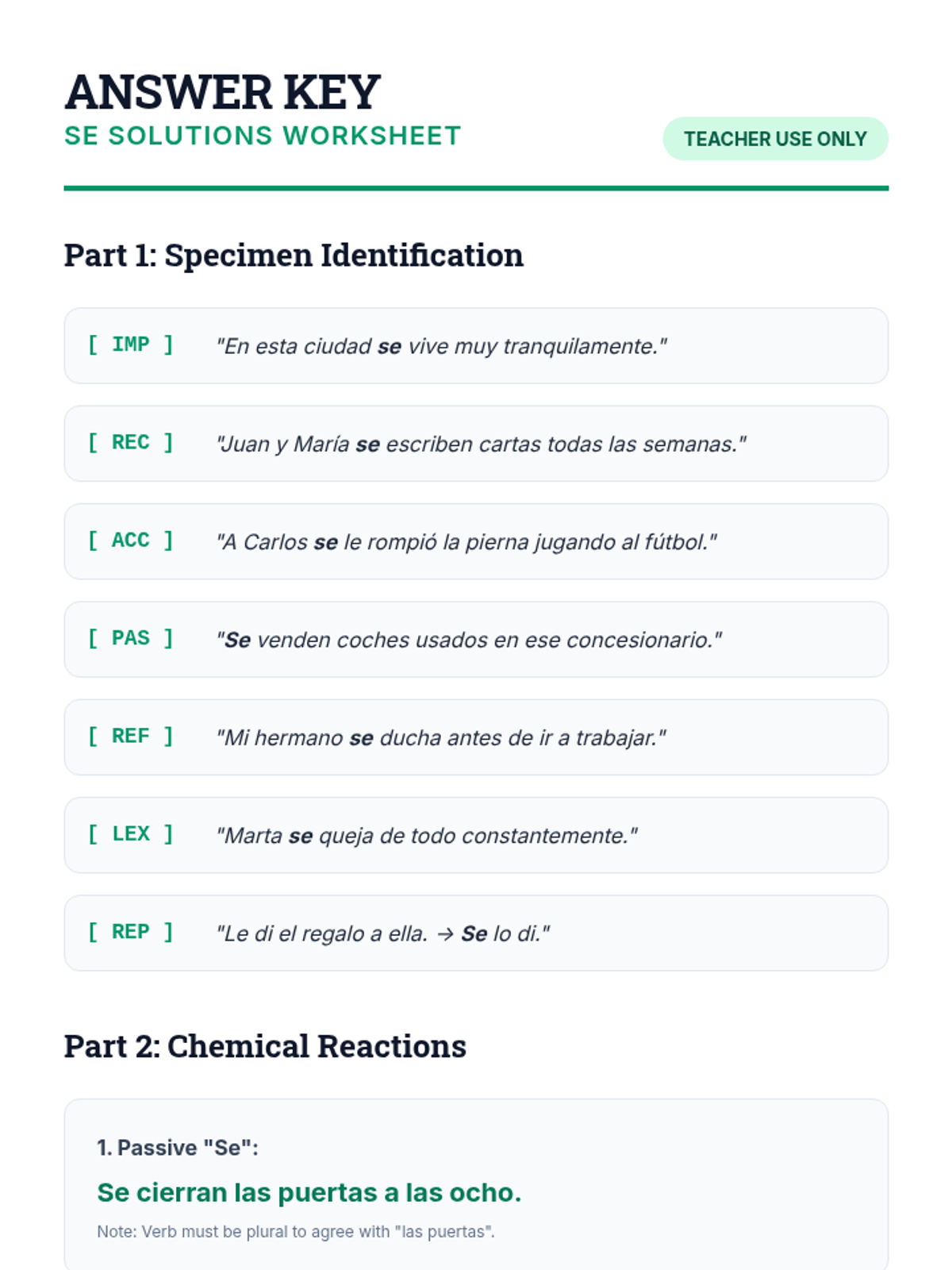
A comprehensive 80-minute lesson exploring the seven primary uses of 'se' in Spanish, featuring contextual analysis and hands-on practice.
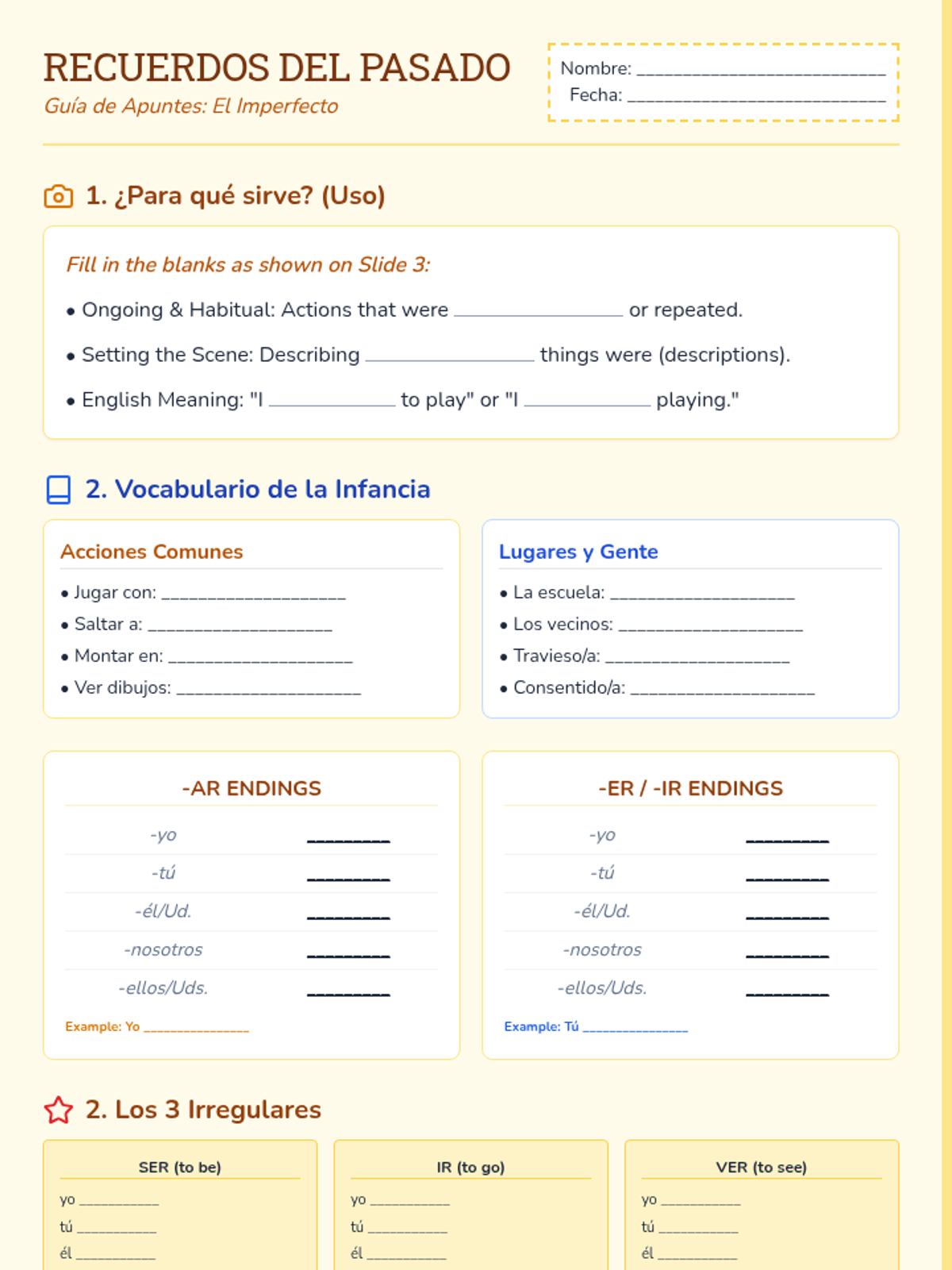
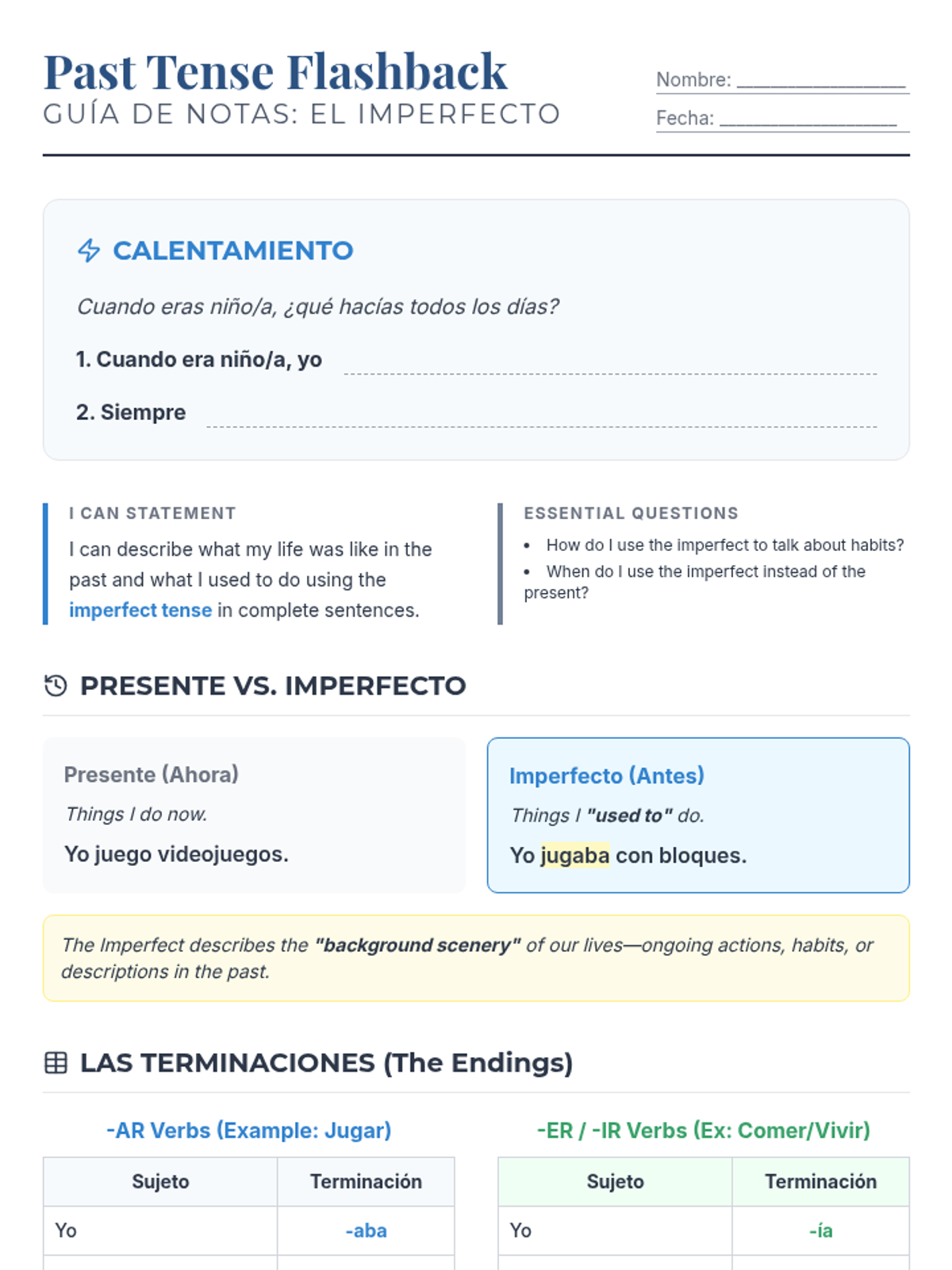
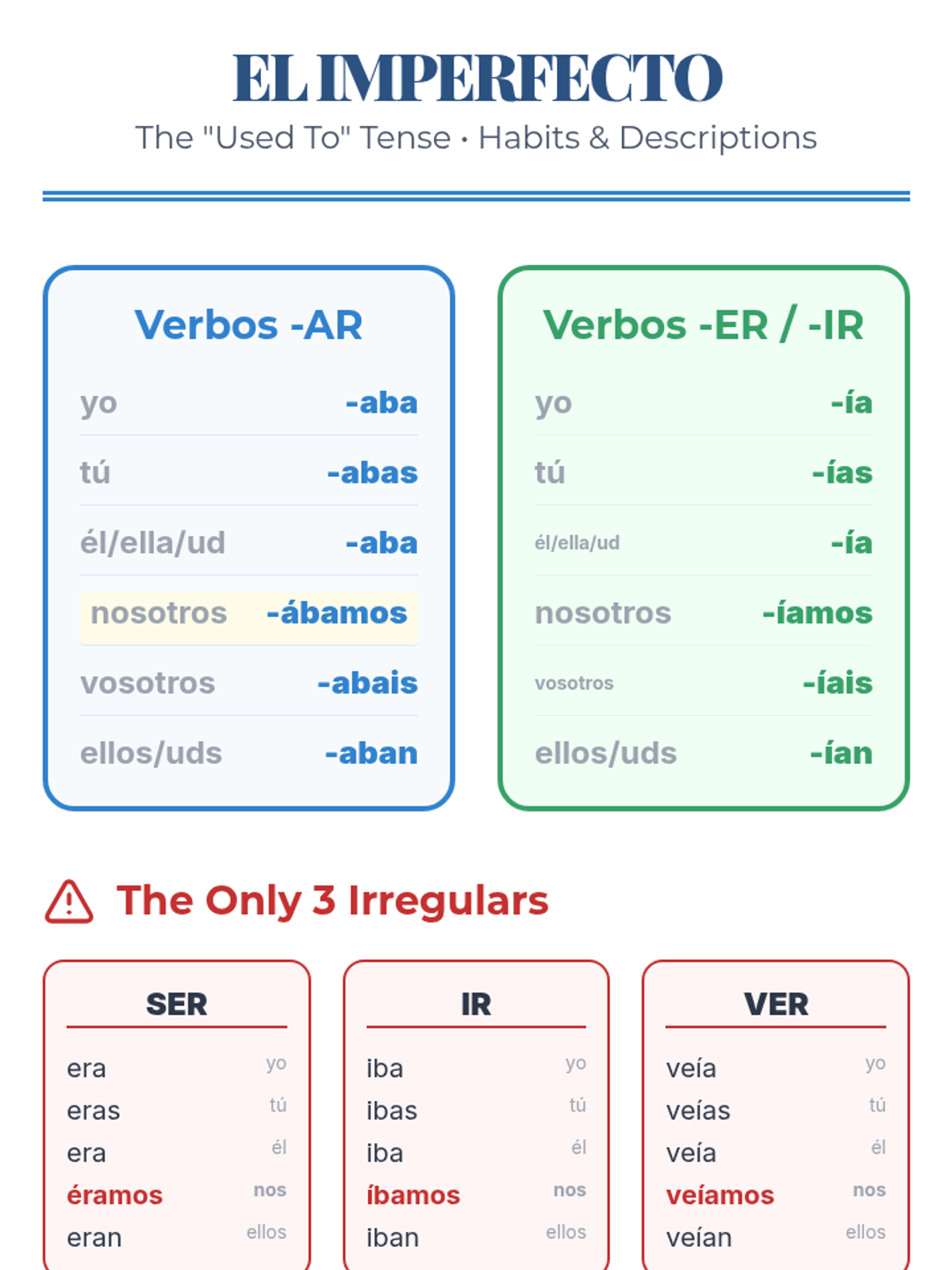
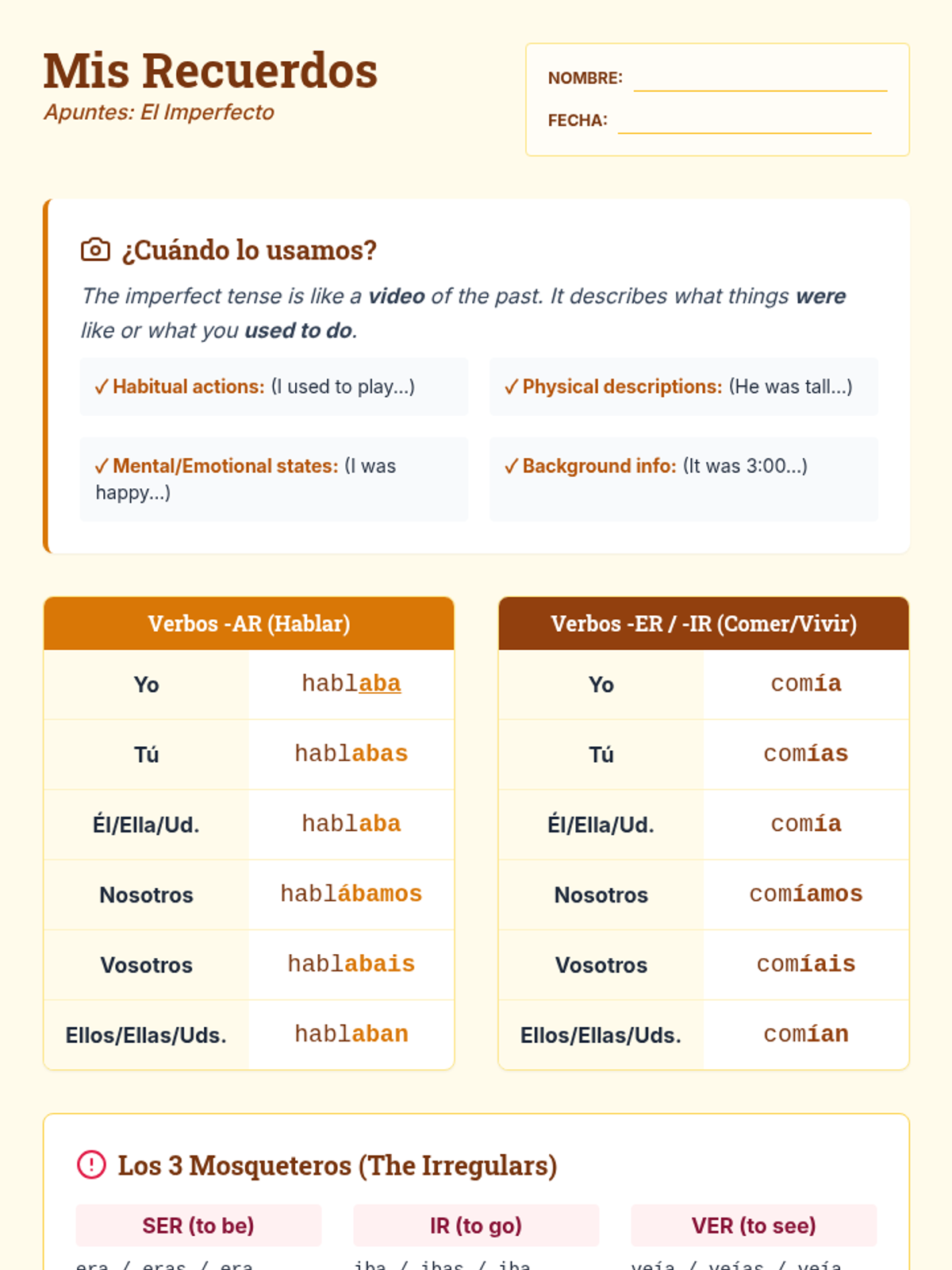
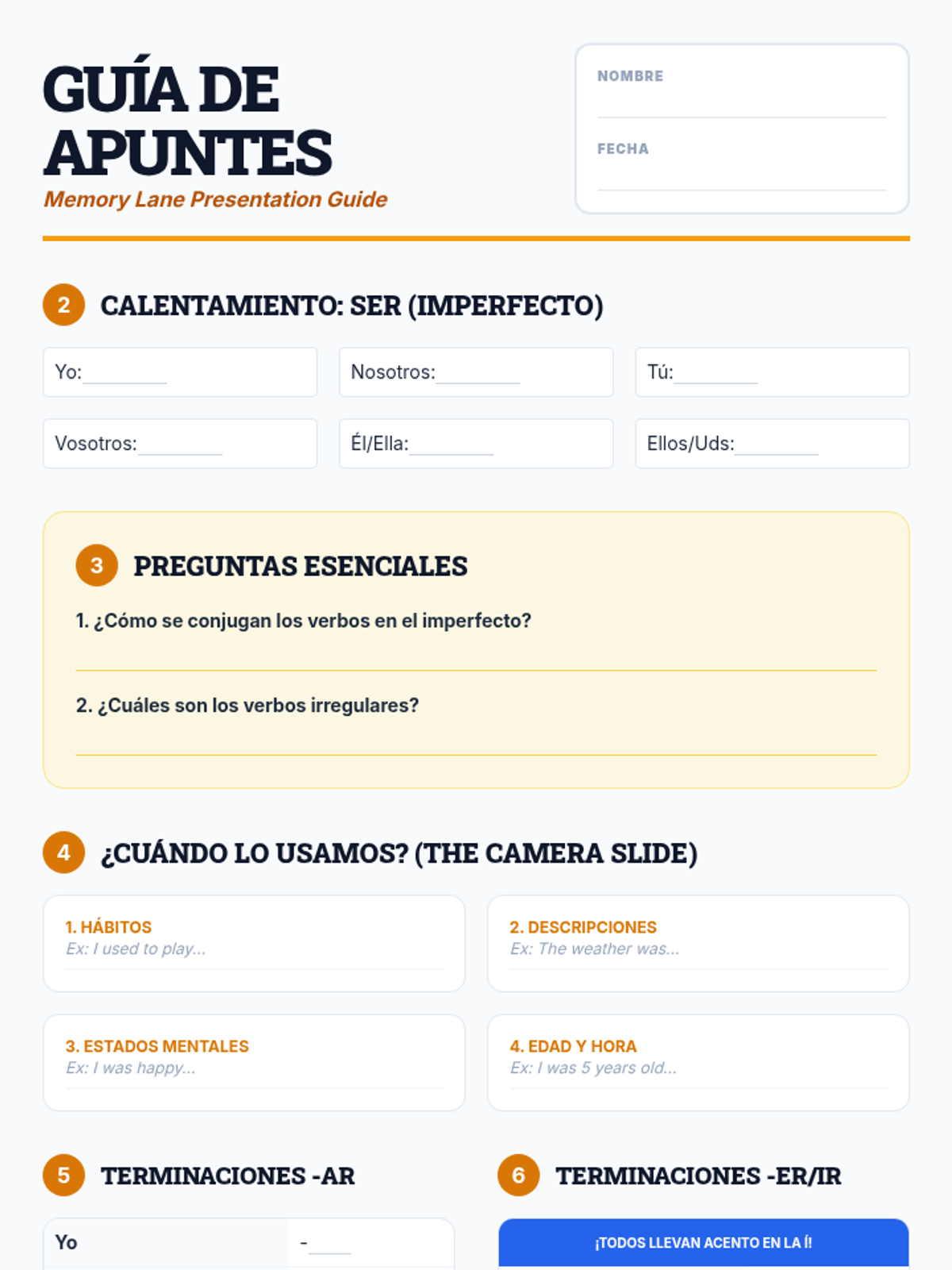
A comprehensive lesson on the Spanish imperfect tense, focusing on childhood descriptions and habits using a scrapbook theme. includes instructional slides, note-taking guides, and intensive conjugation practice.
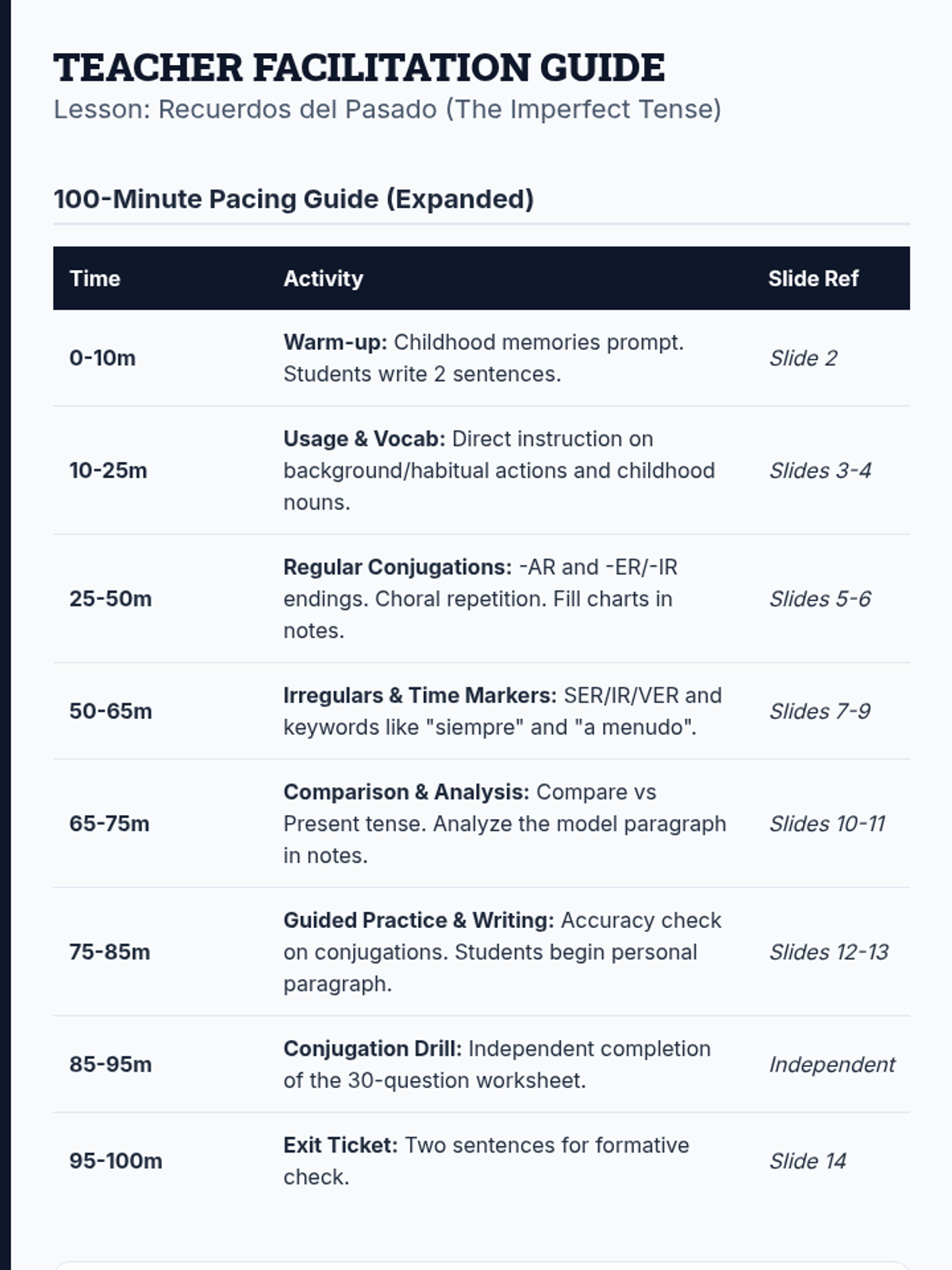
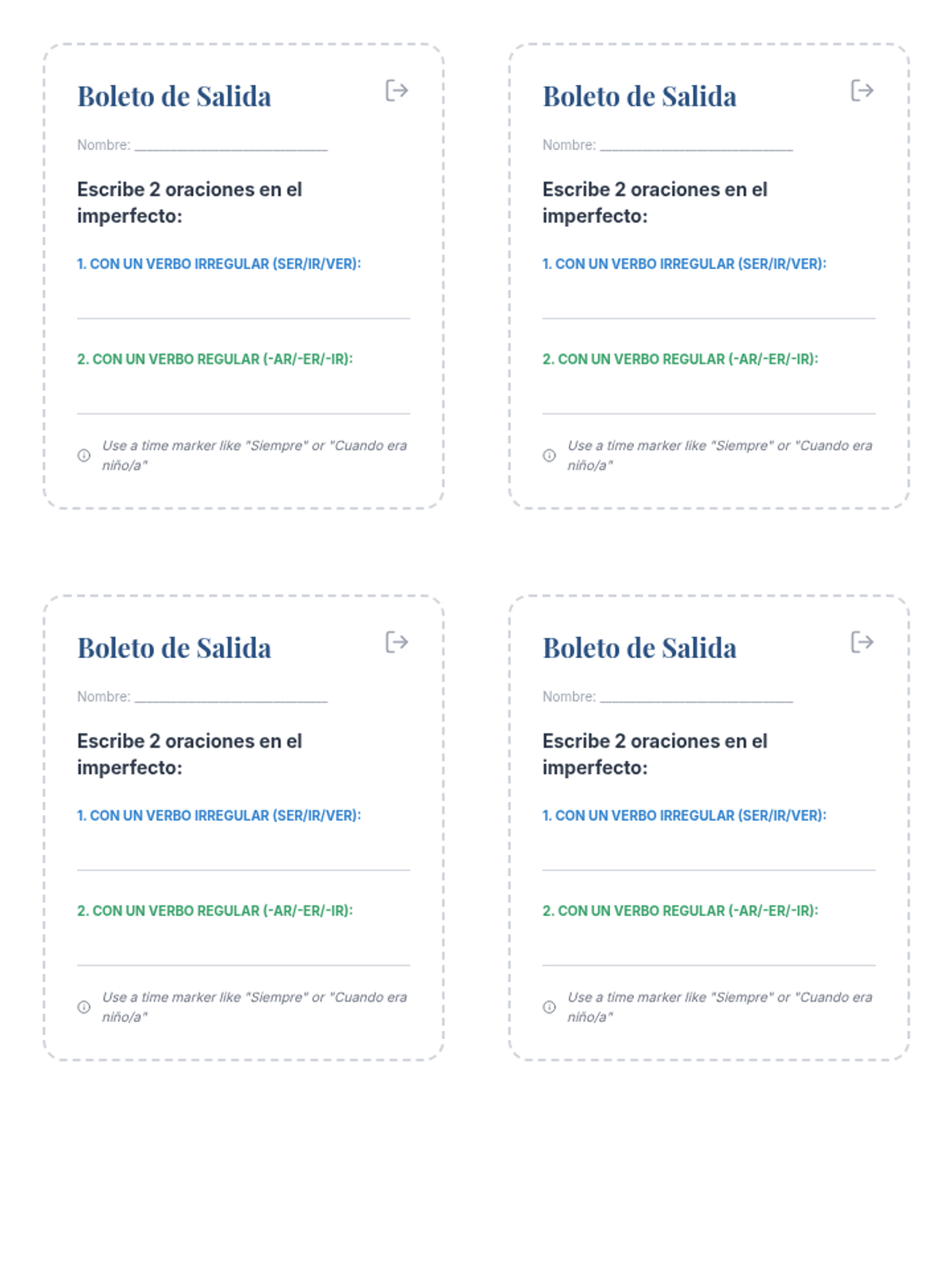
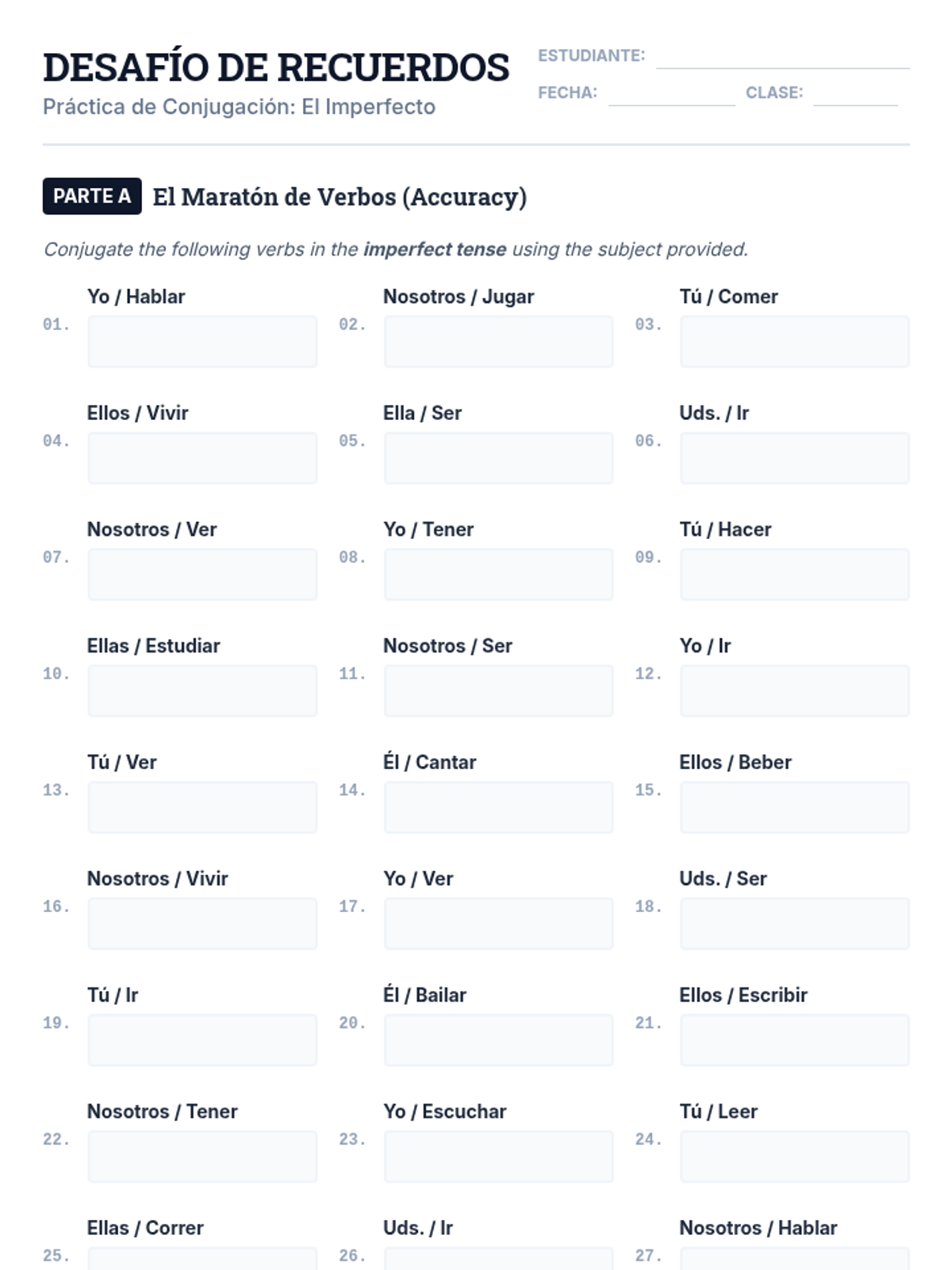
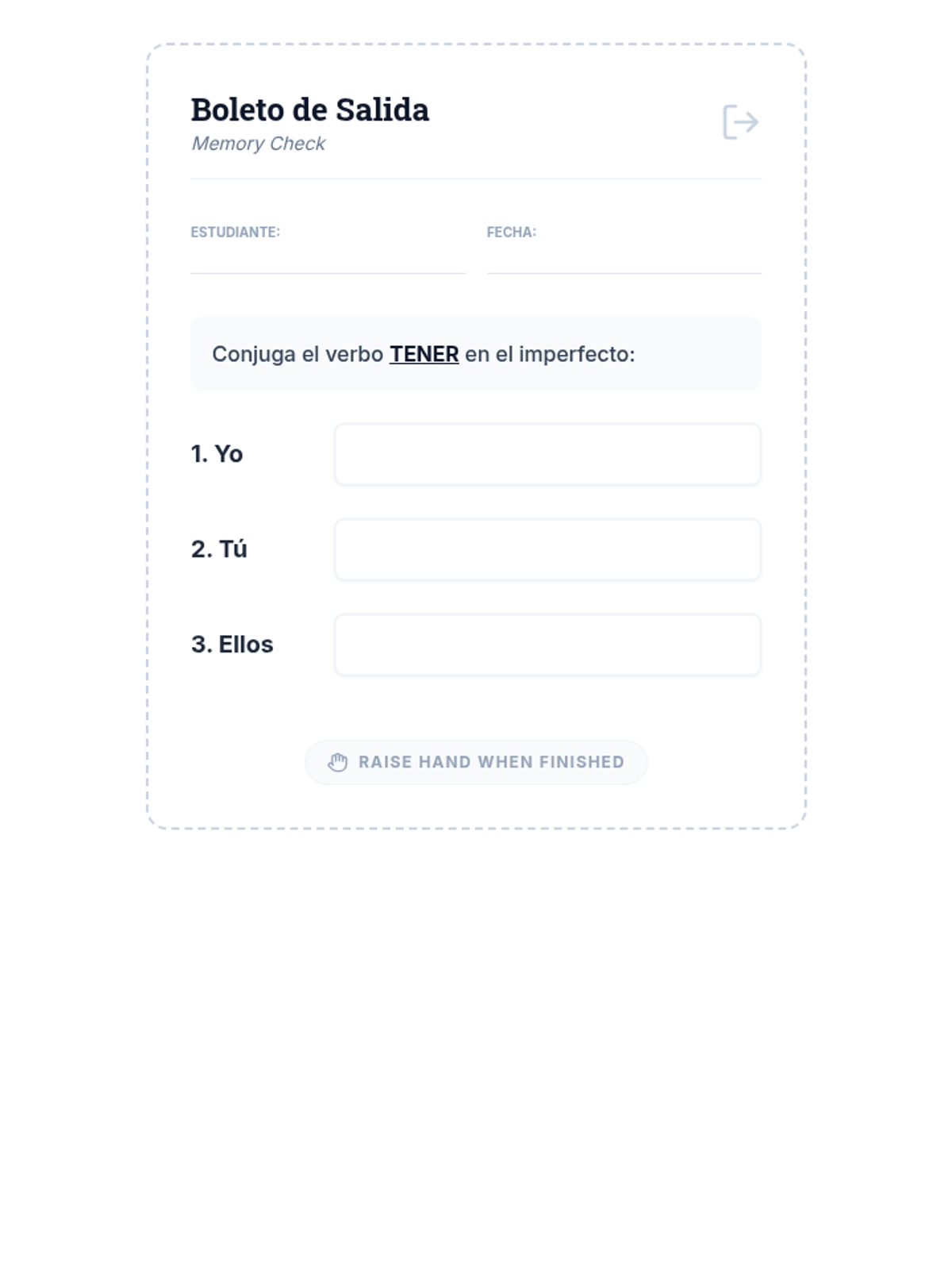
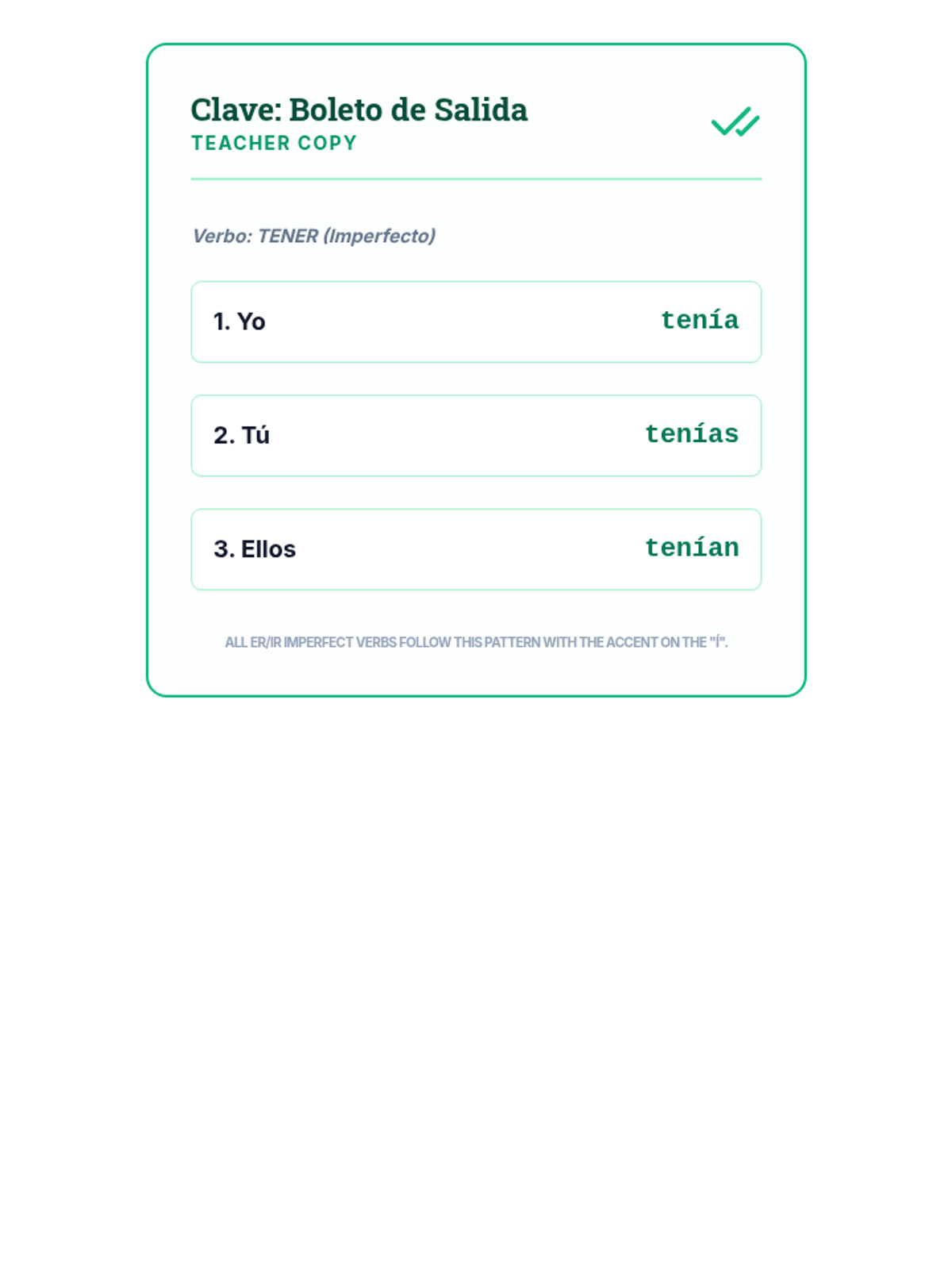
A comprehensive 100-minute direct instruction lesson on the Spanish imperfect tense, focusing on describing childhood habits and routines. Includes visual slides, a guided note-taking packet, and an assessment.
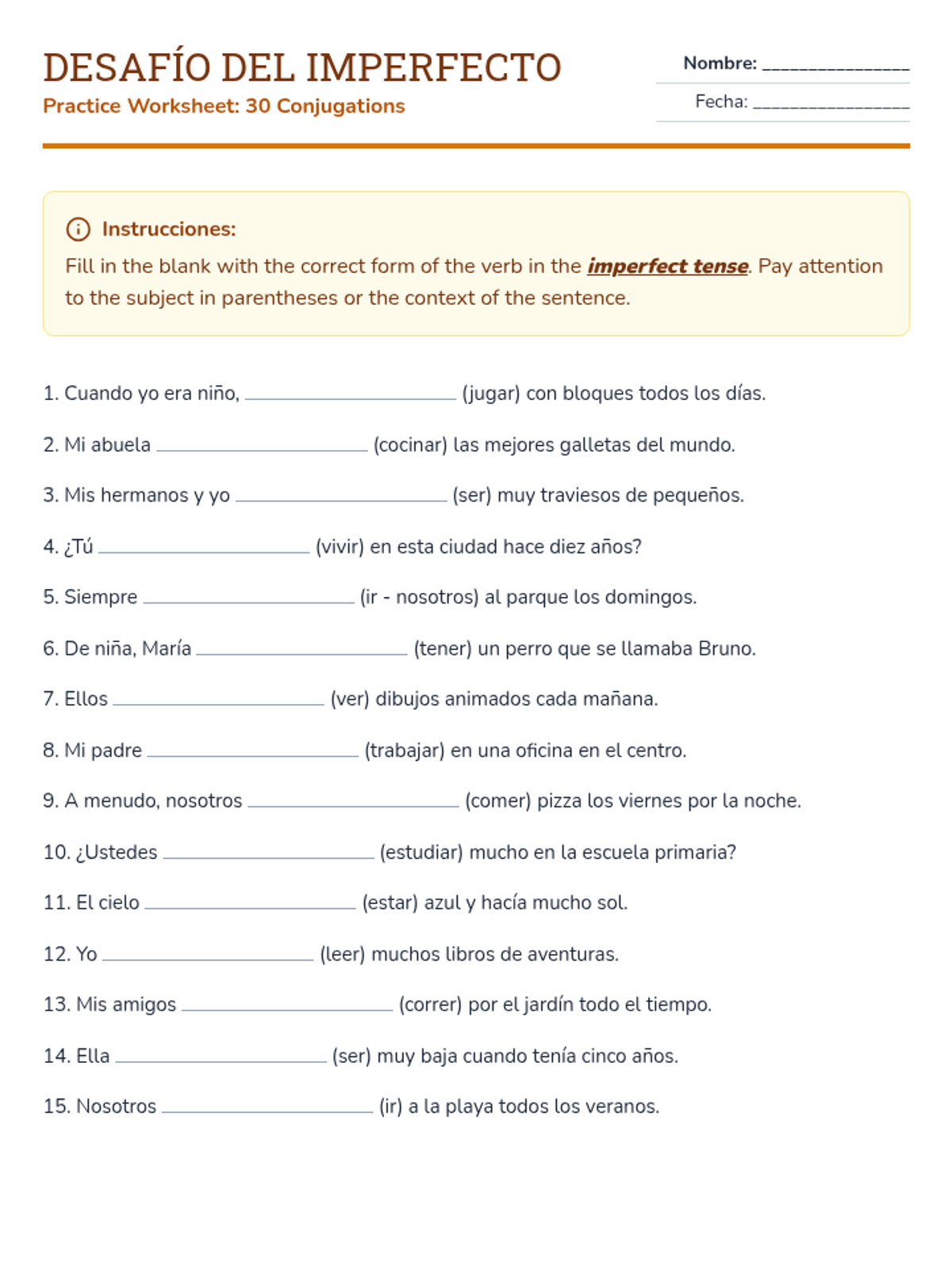
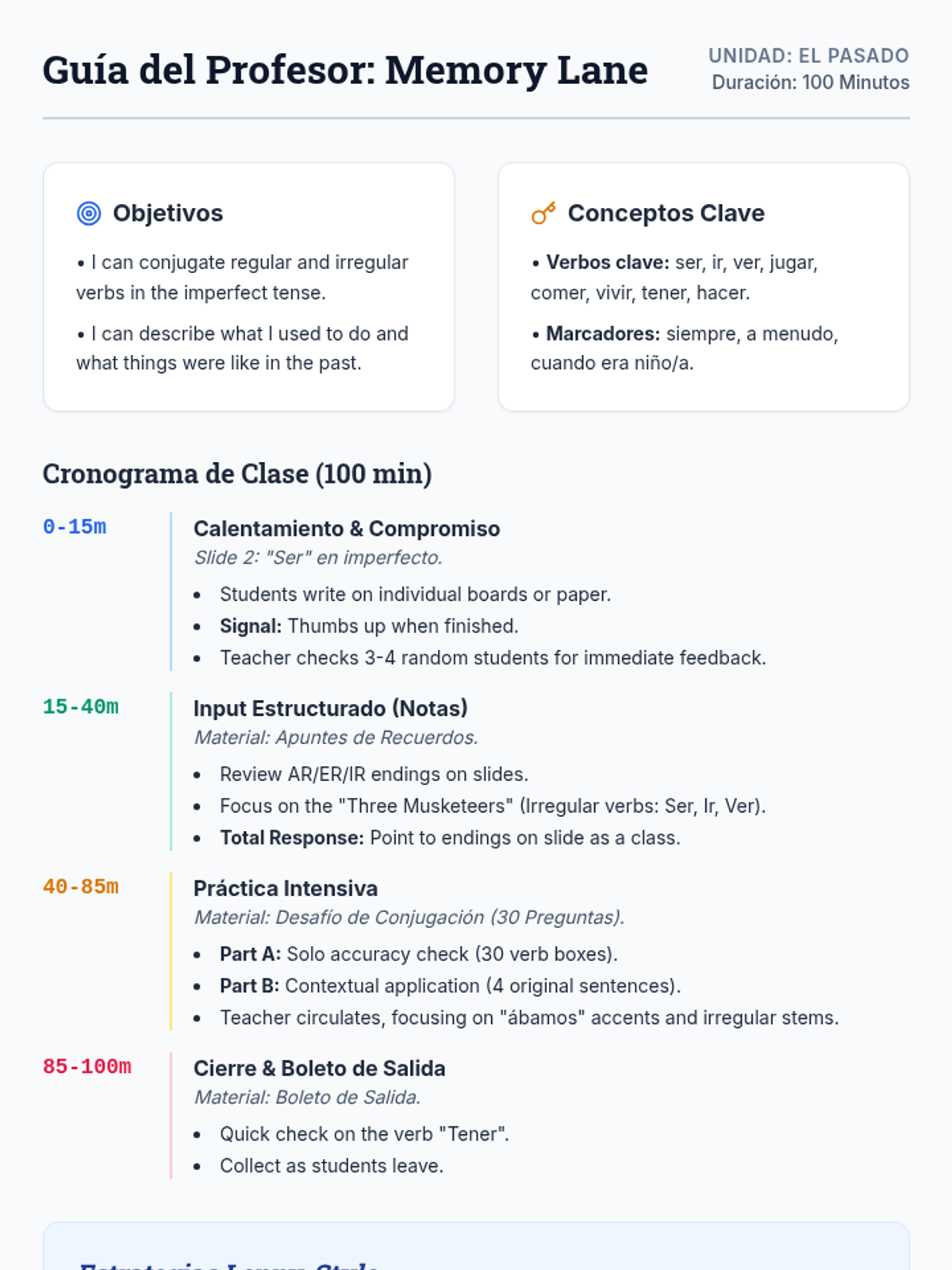
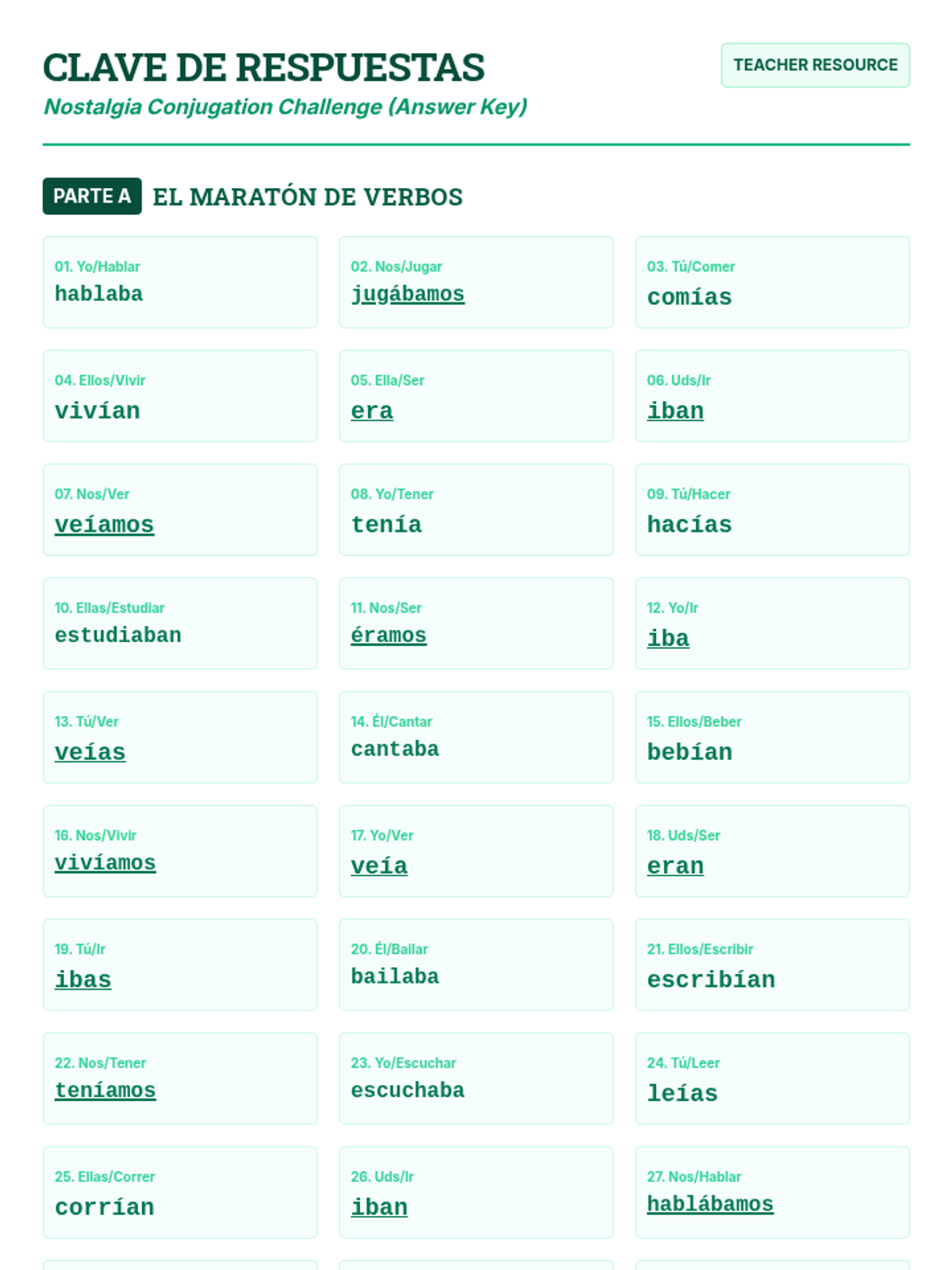
A comprehensive 100-minute lesson on the Spanish imperfect tense, focusing on nostalgic descriptions and childhood routines through structured notes, slides, and a 30-question conjugation challenge.
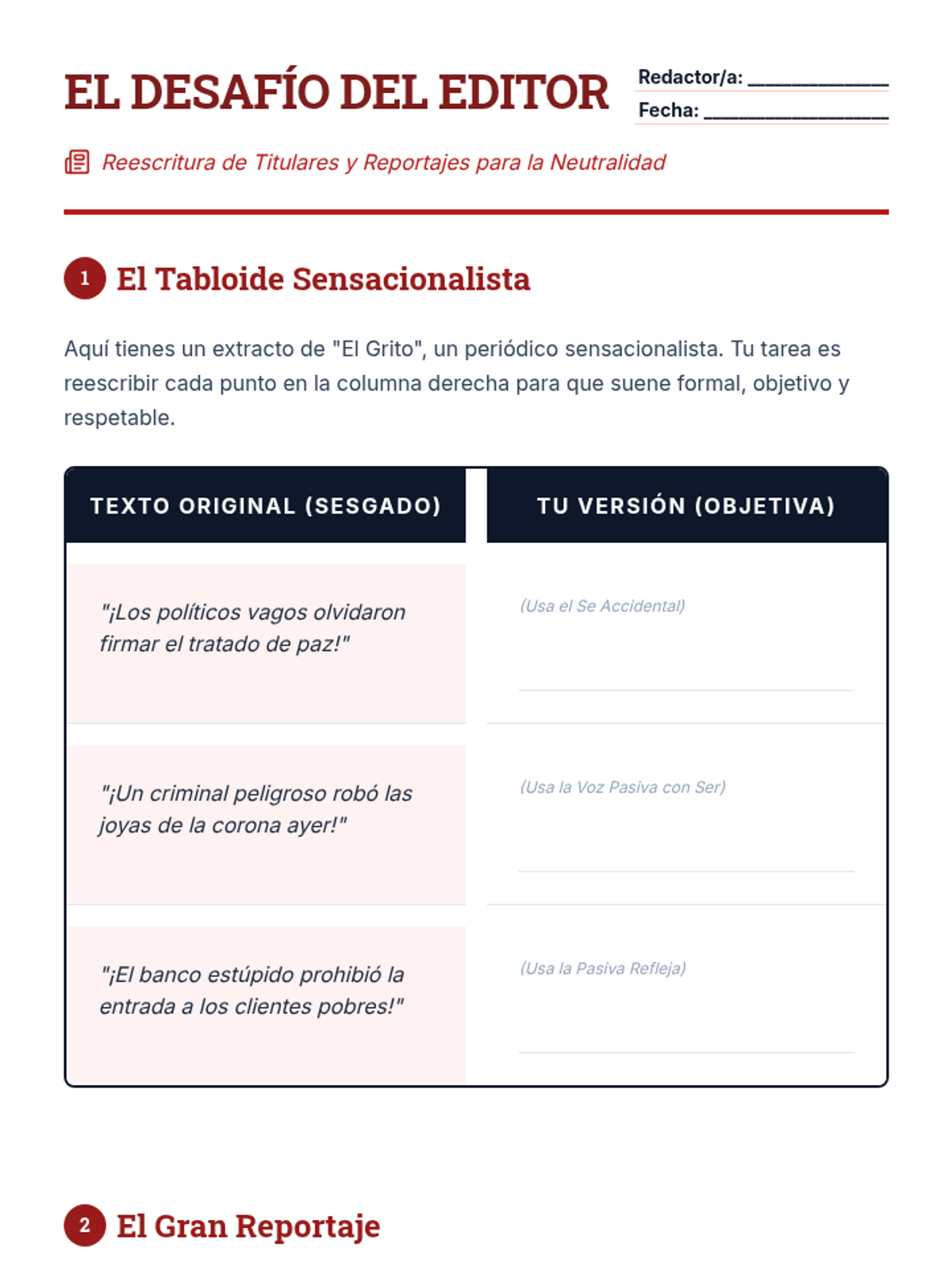
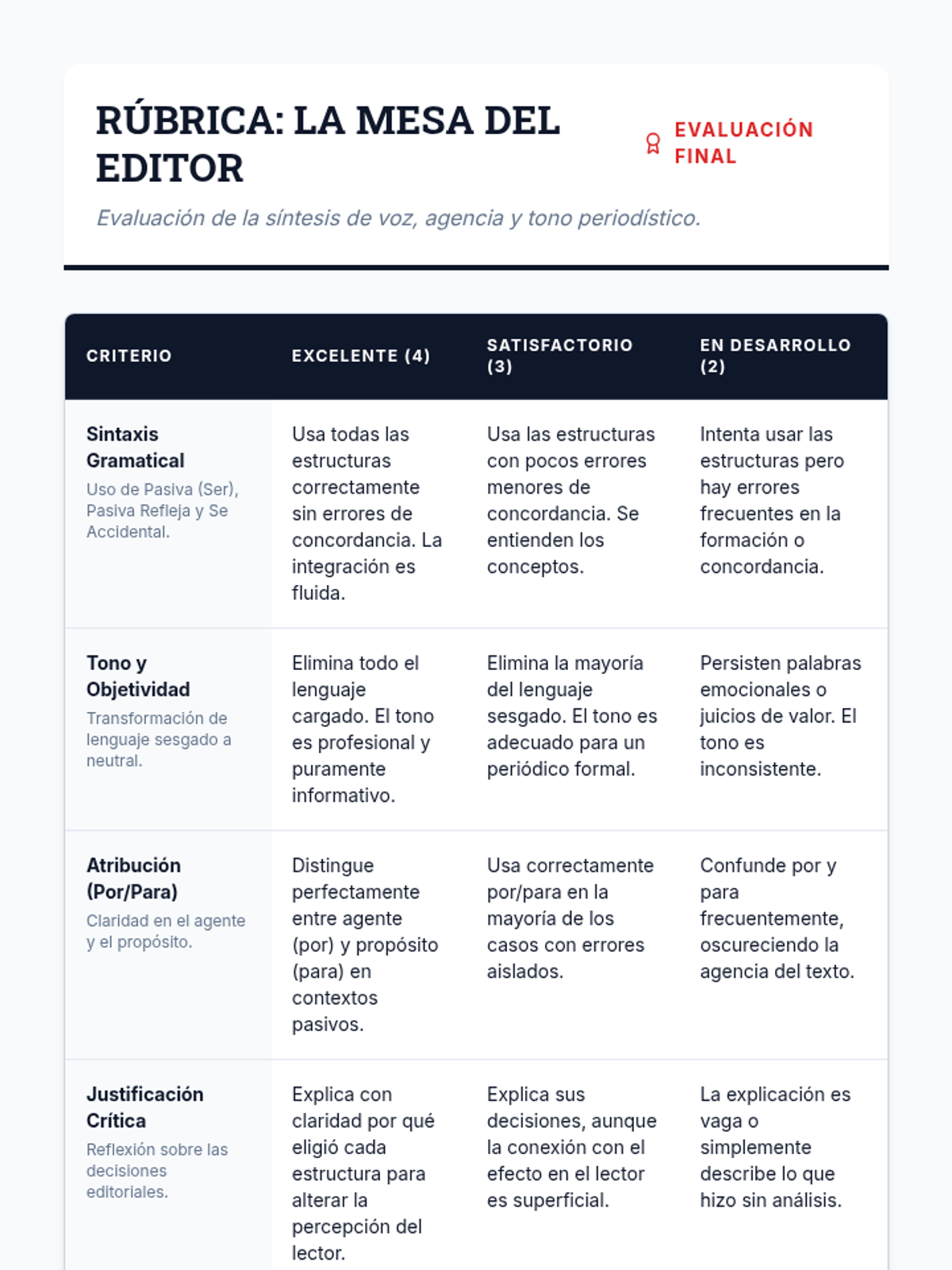
A culminating project where students rewrite sensationalist articles into objective reports using all learned grammatical structures.
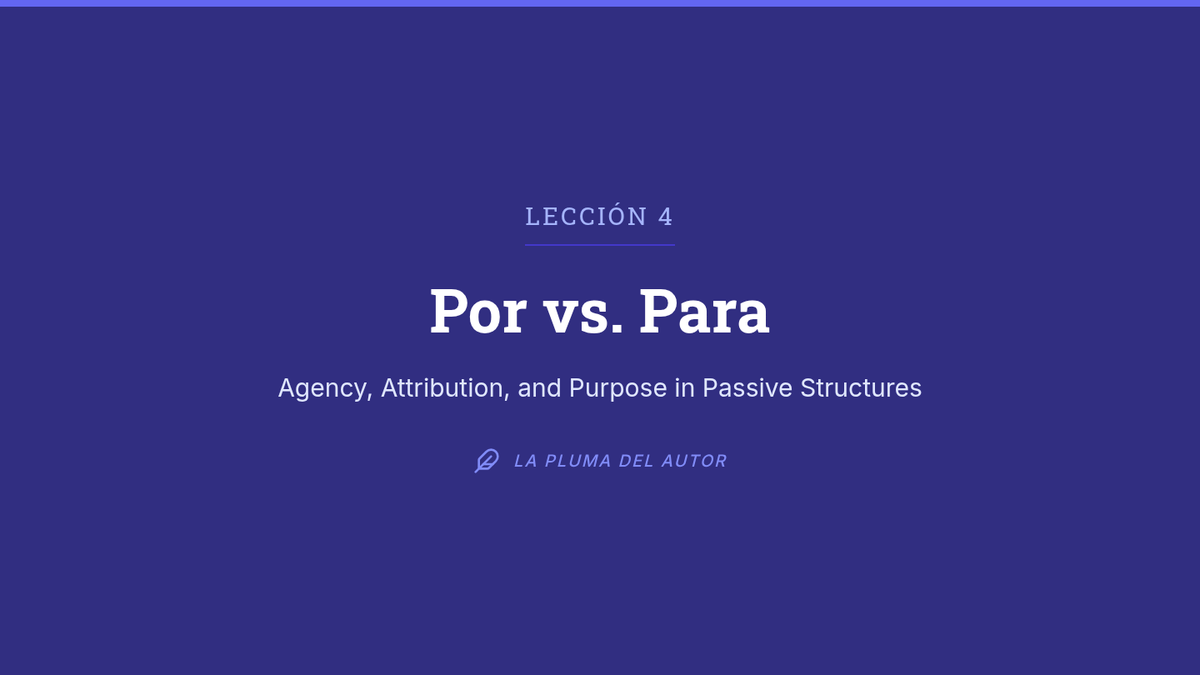
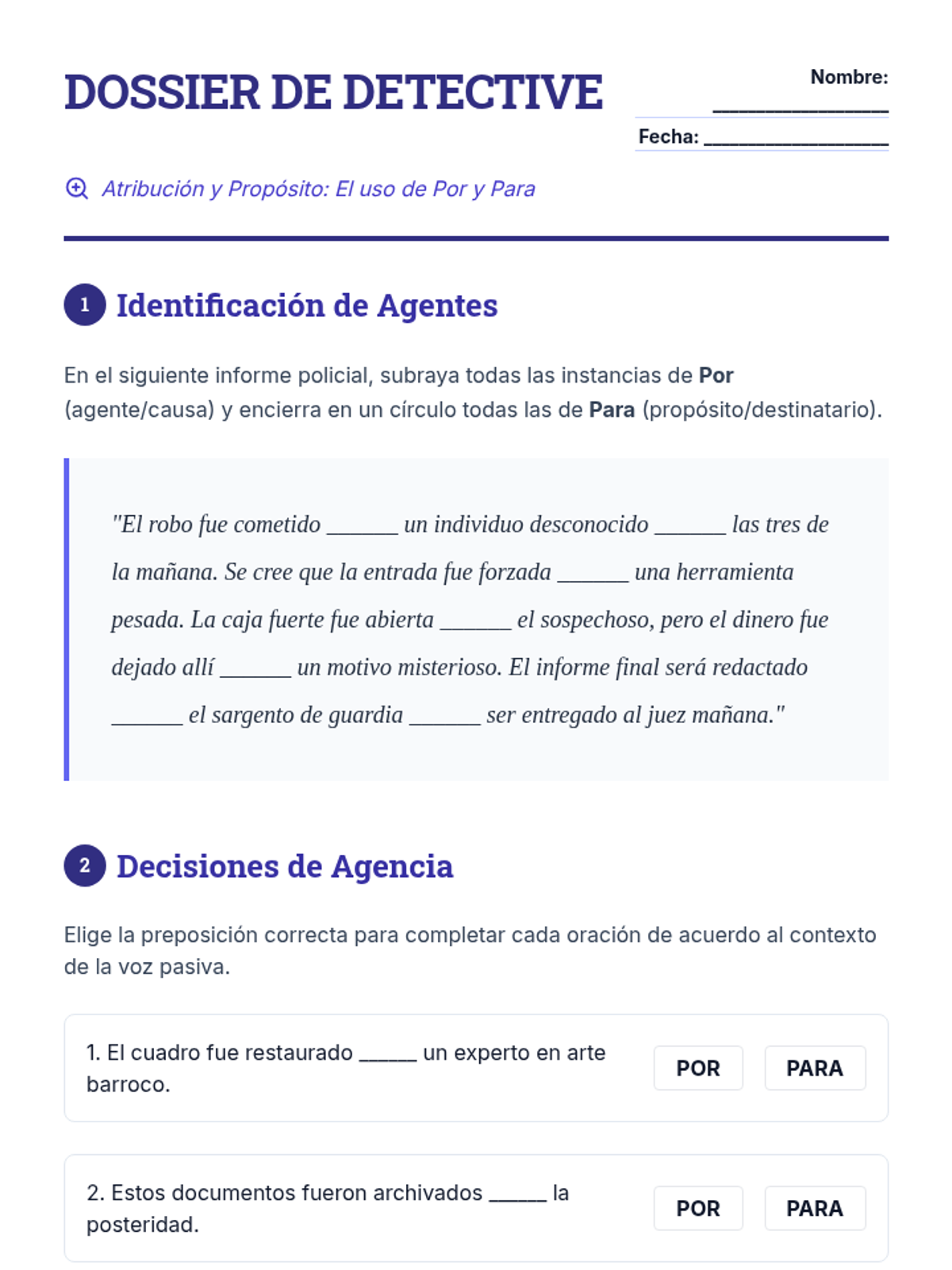
Integrates Por and Para within passive structures to clarify agency, attribution, and purpose in formal academic writing.
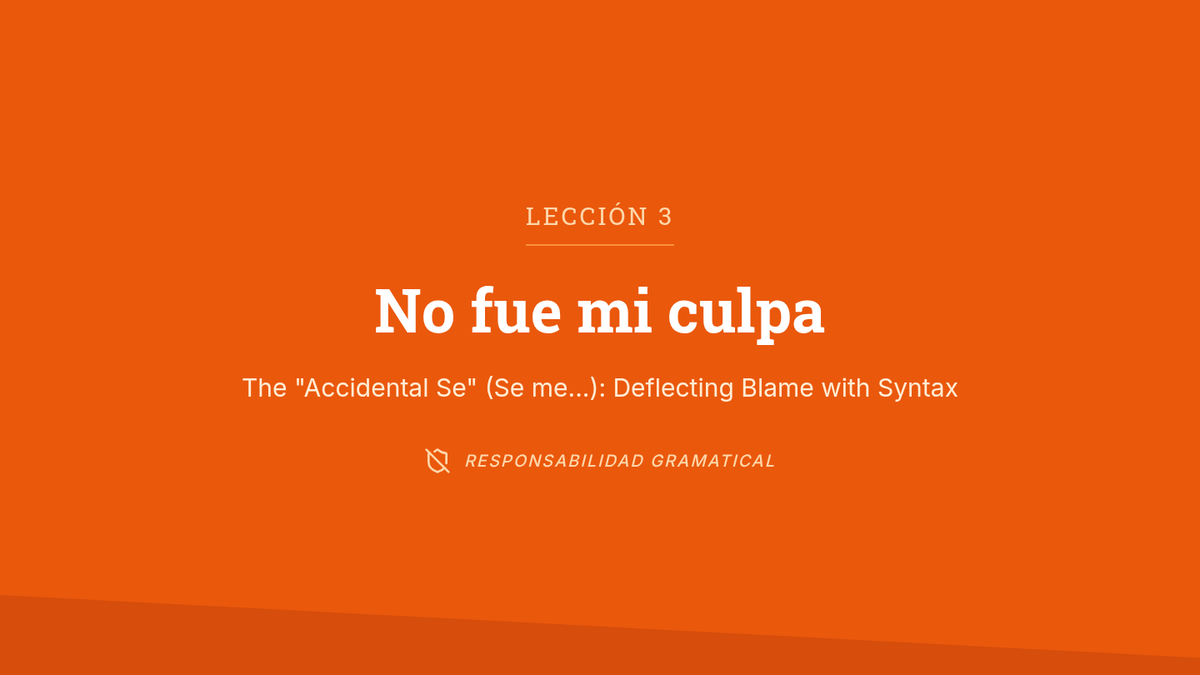
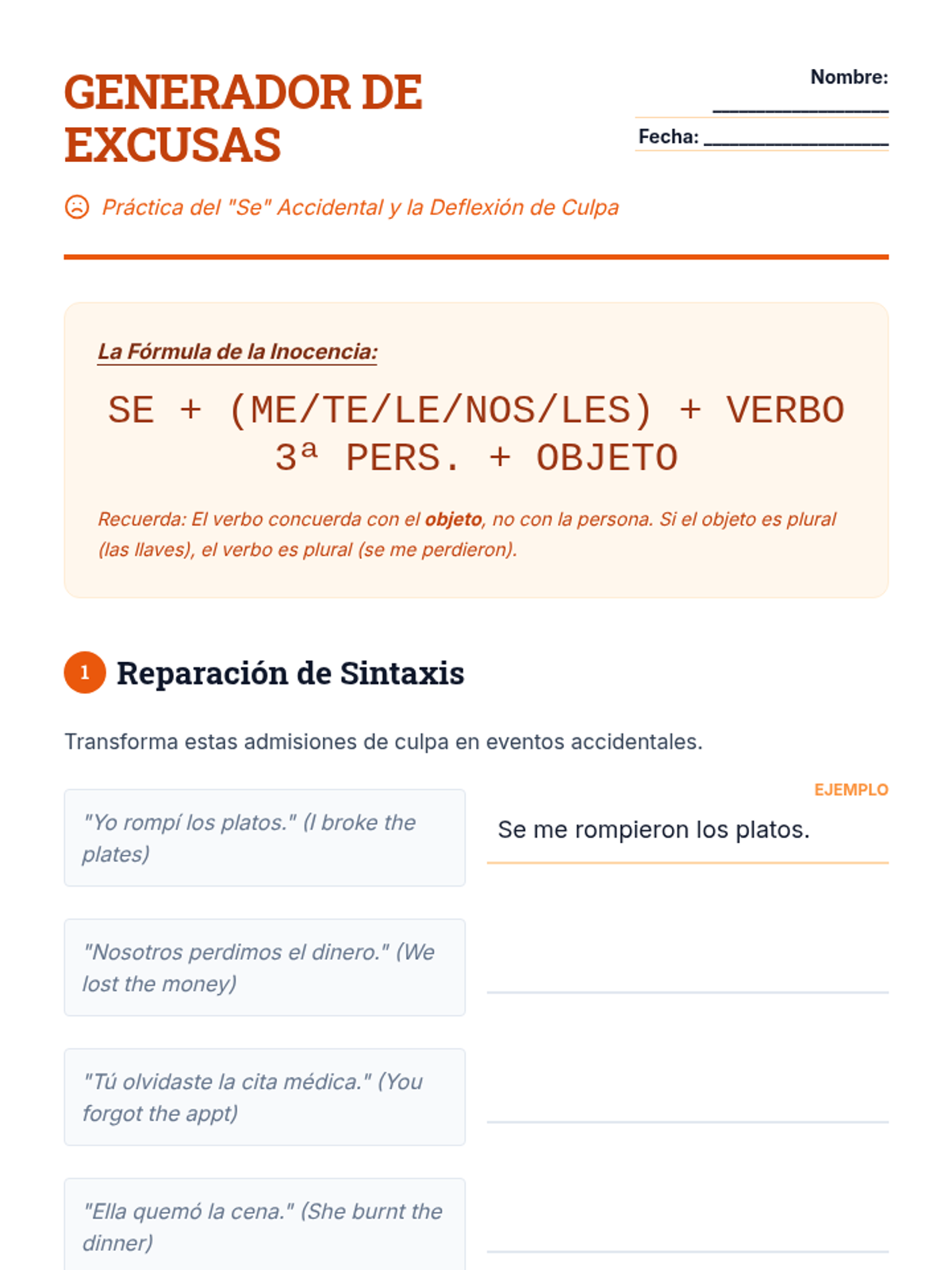
Explores the Accidental Se construction (Se me...), teaching students how to express unplanned events and deflect blame politely.
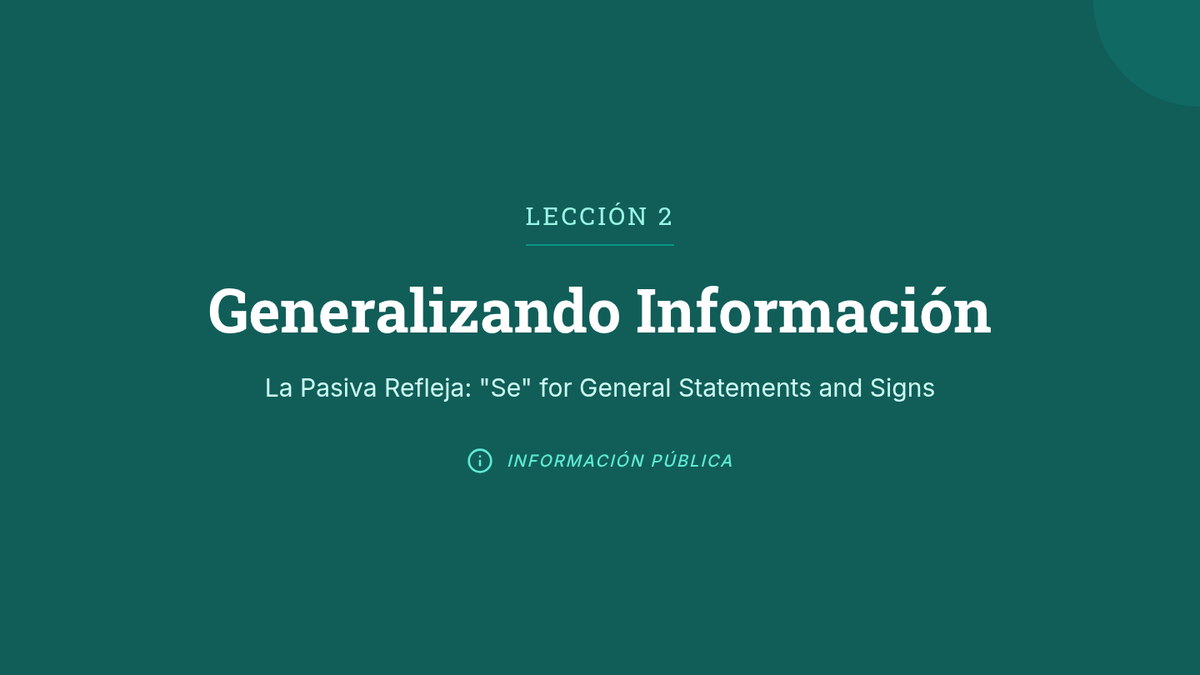
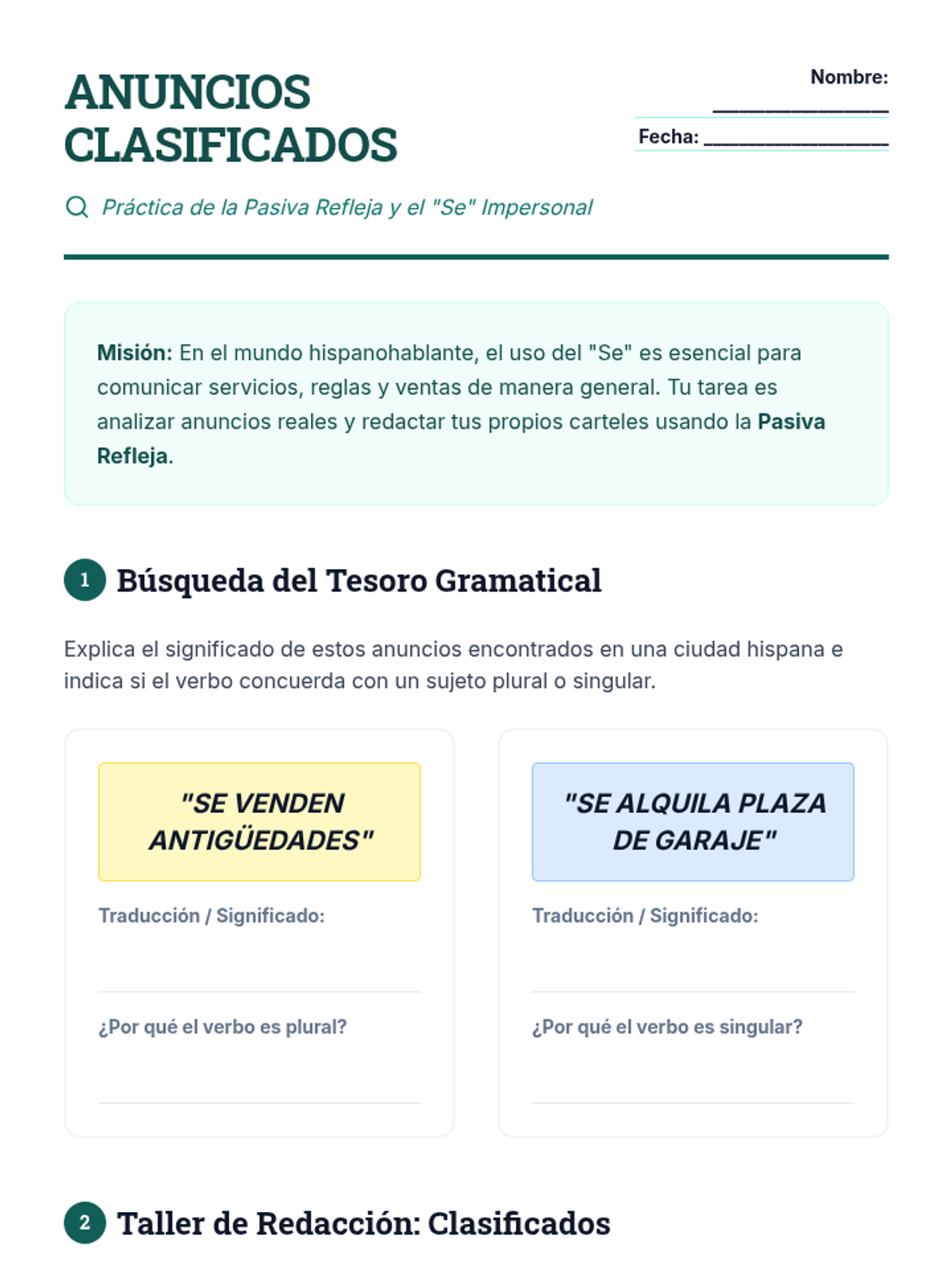
Focuses on the Passive Se (Pasiva Refleja) for generalizations and advertisements, distinguishing it from specific passive actions.
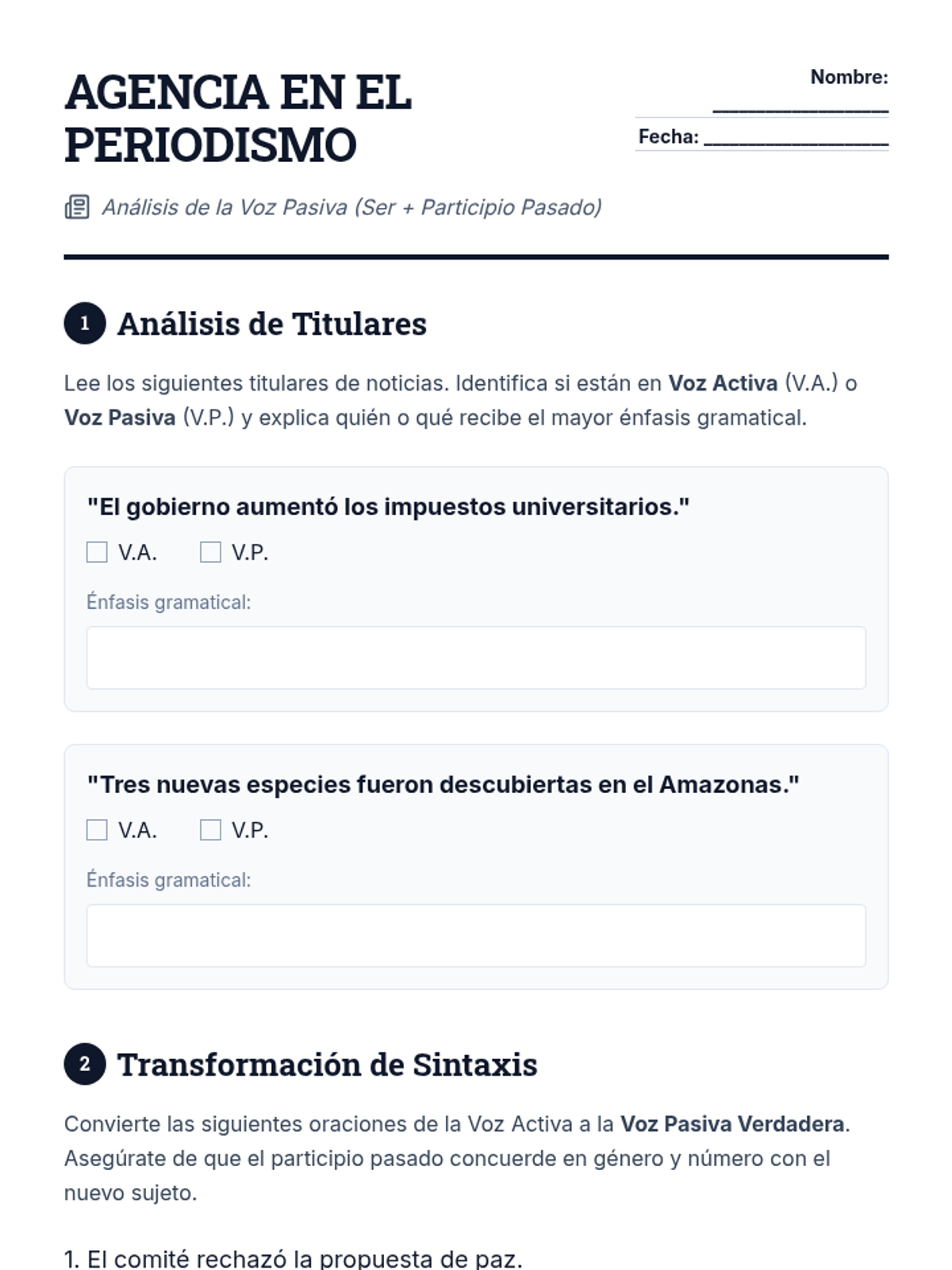
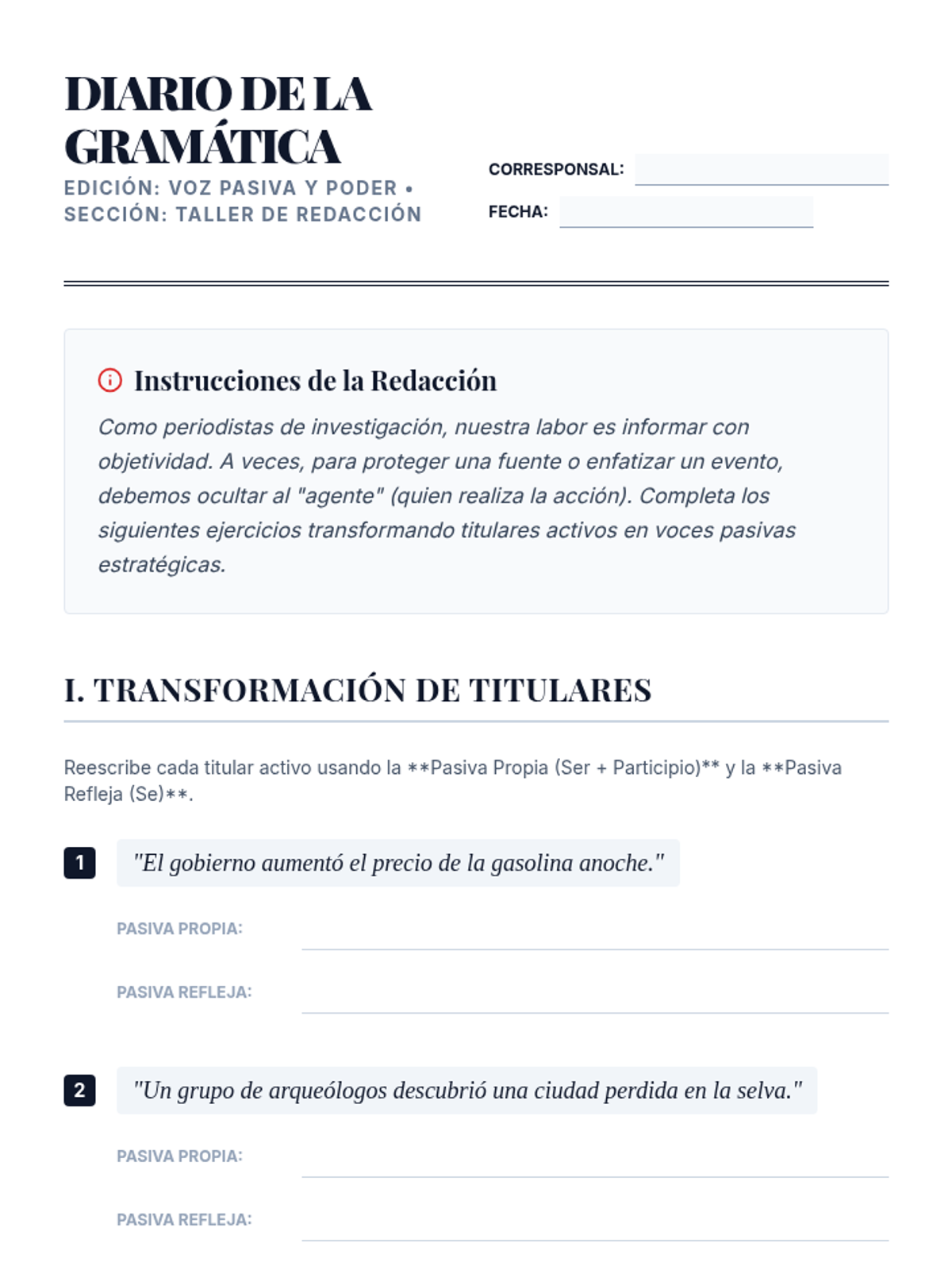
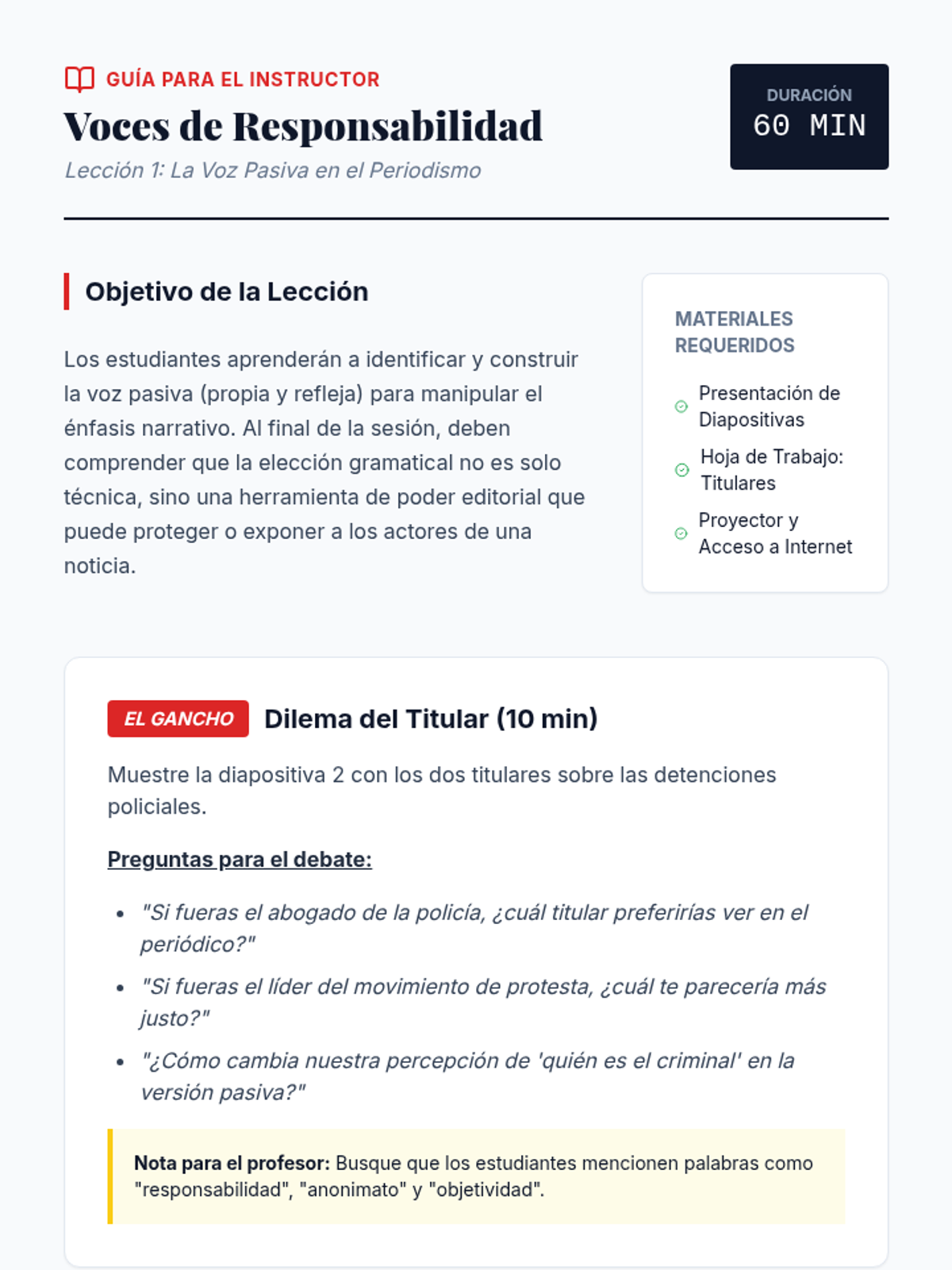
Students compare active and passive voice in journalism, learning the Ser + Past Participle construction and its effect on sentence focus.
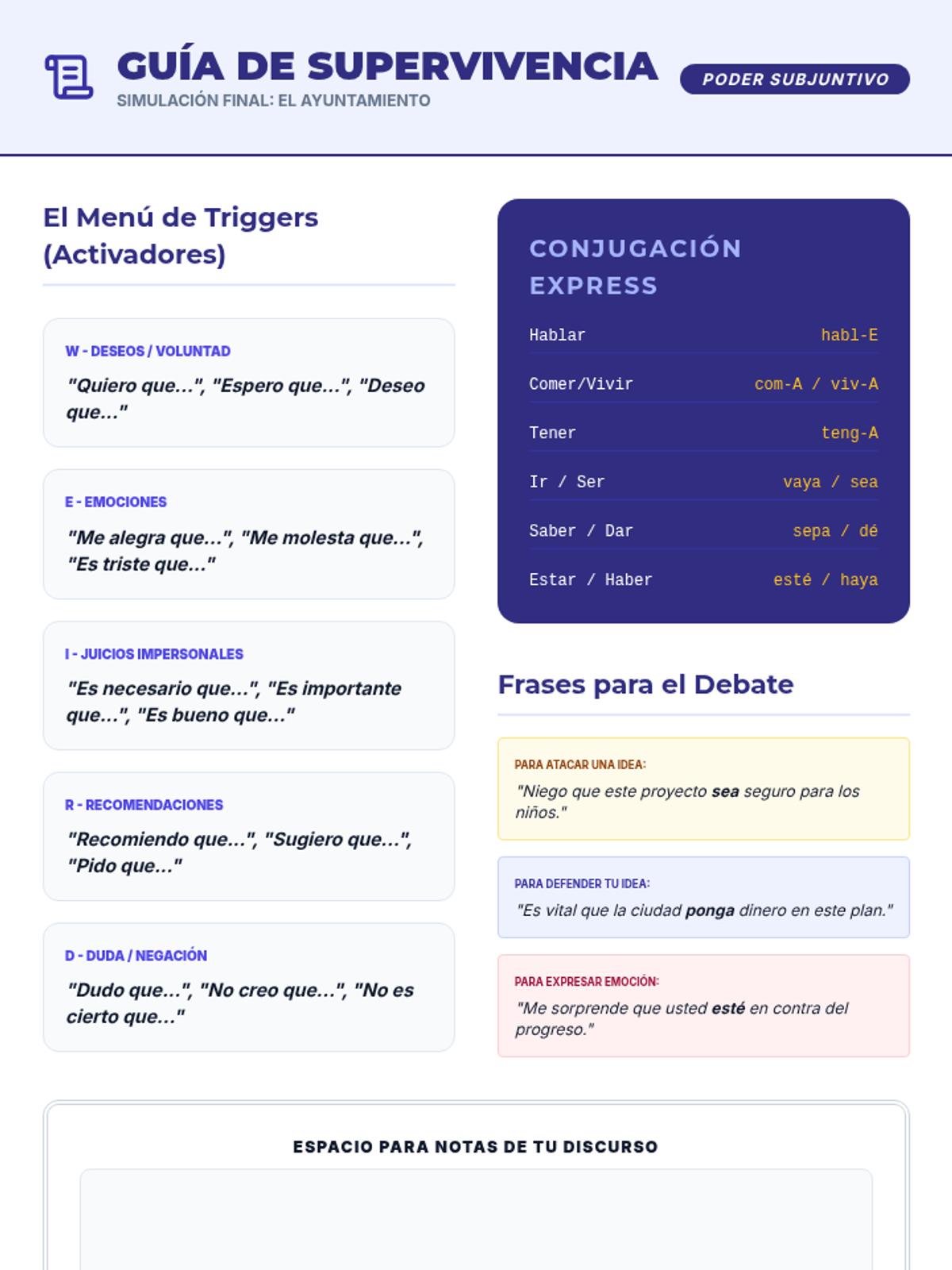
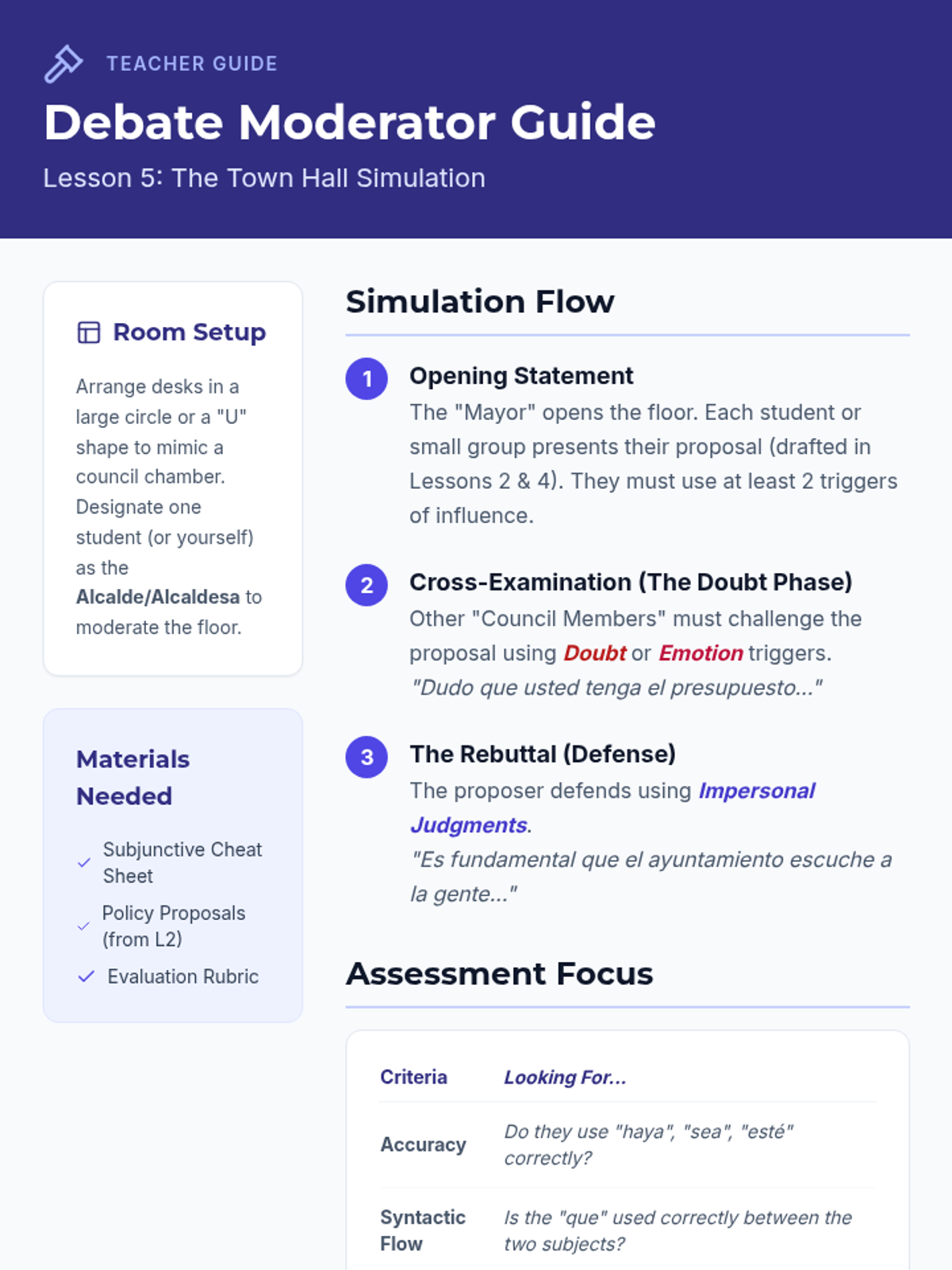
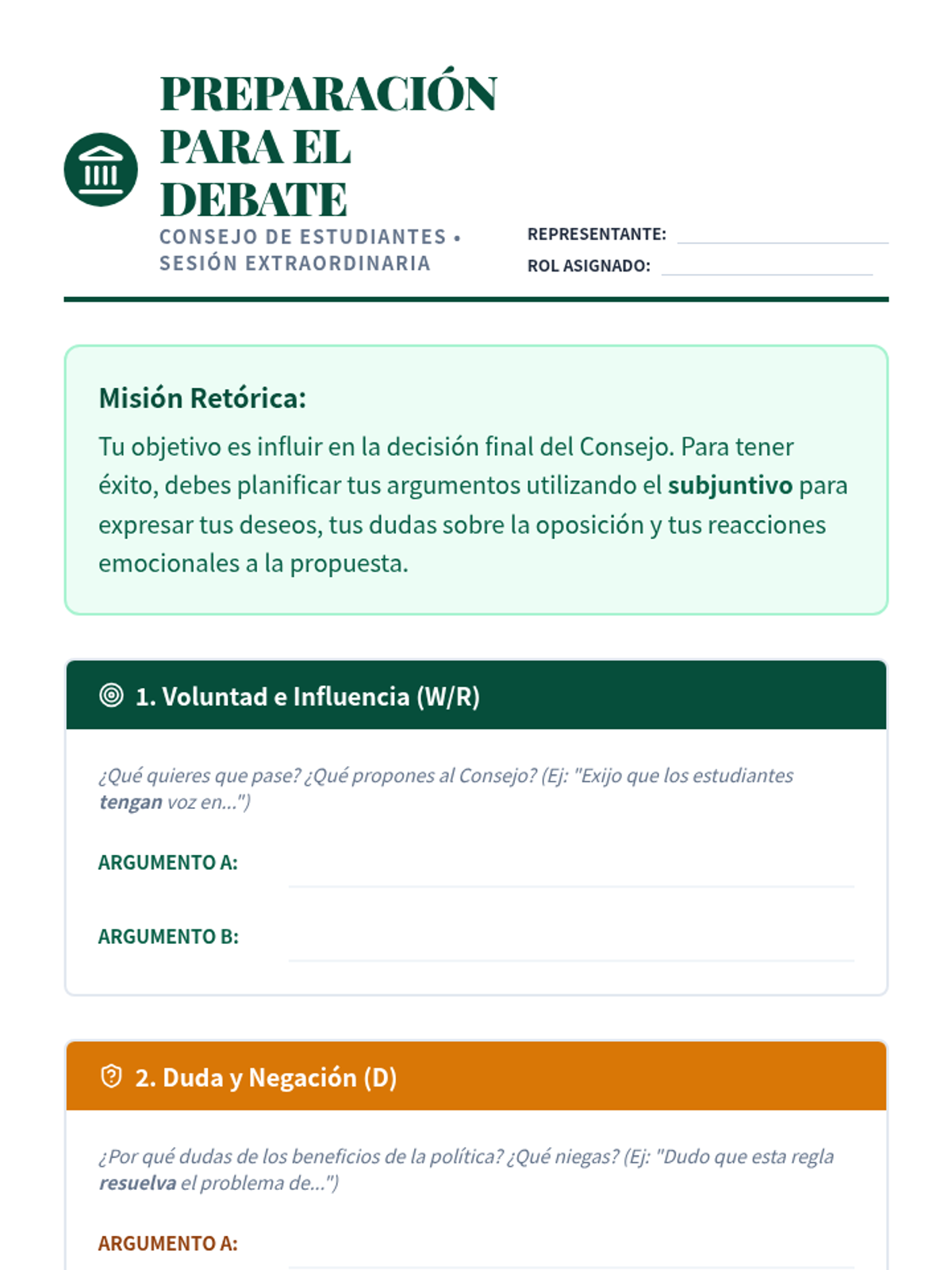
A culminating mock town hall where students present community improvement proposals. They are assessed on their ability to use various subjunctive triggers naturally in oral persuasion and debate.
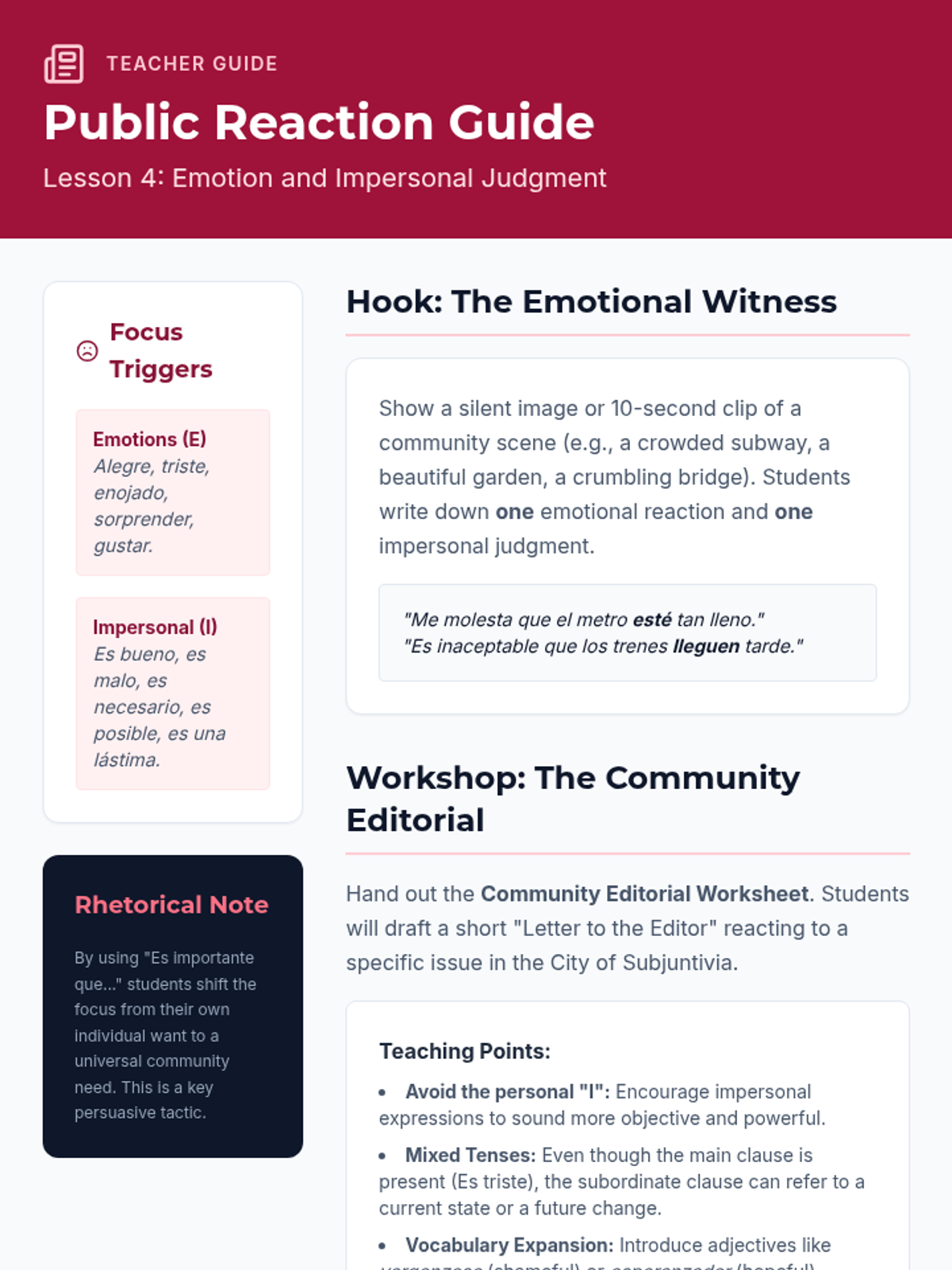
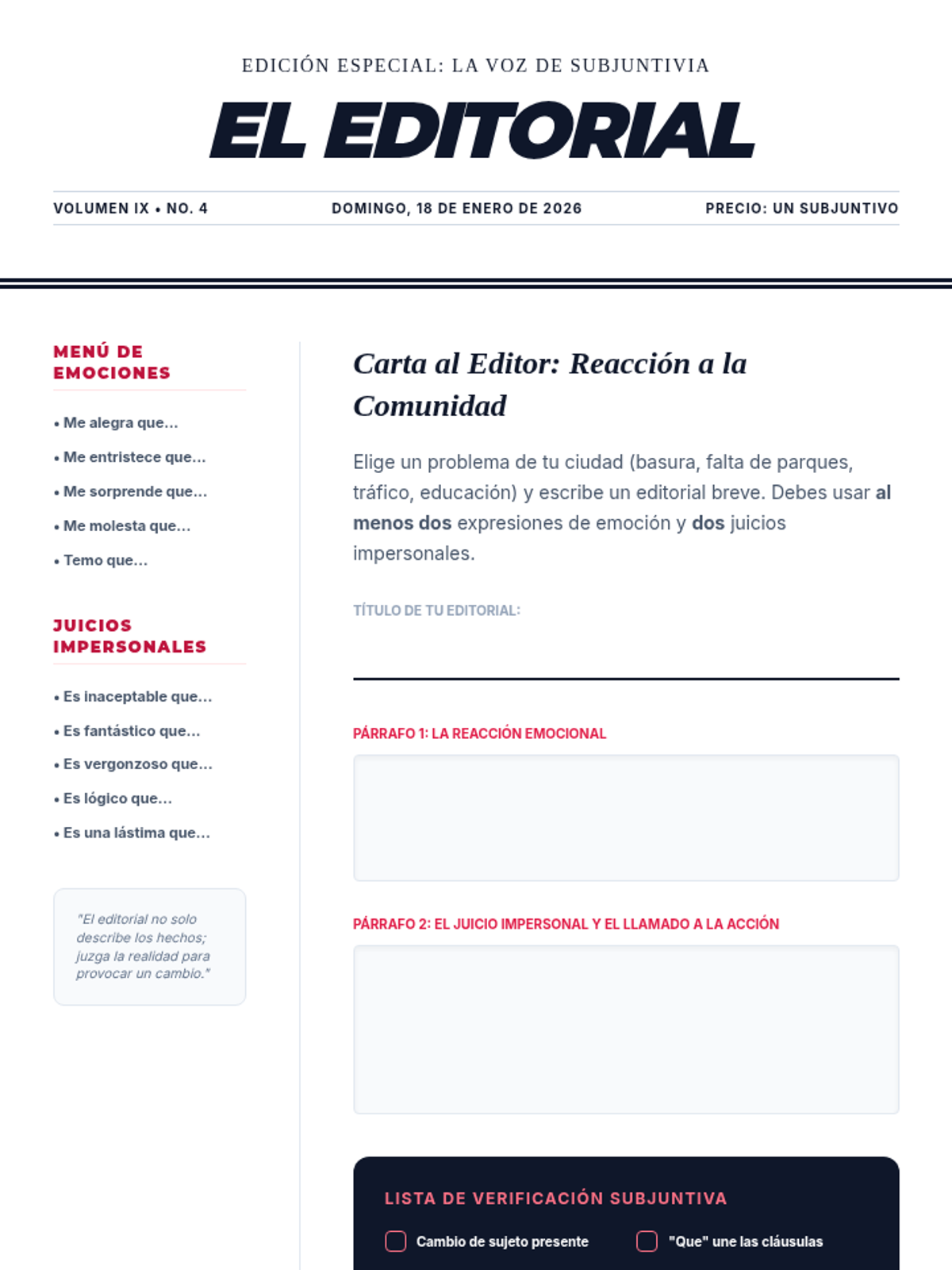
Students use the subjunctive to express emotional reactions and impersonal judgments regarding community issues. They draft editorials to add rhetorical weight to their arguments.
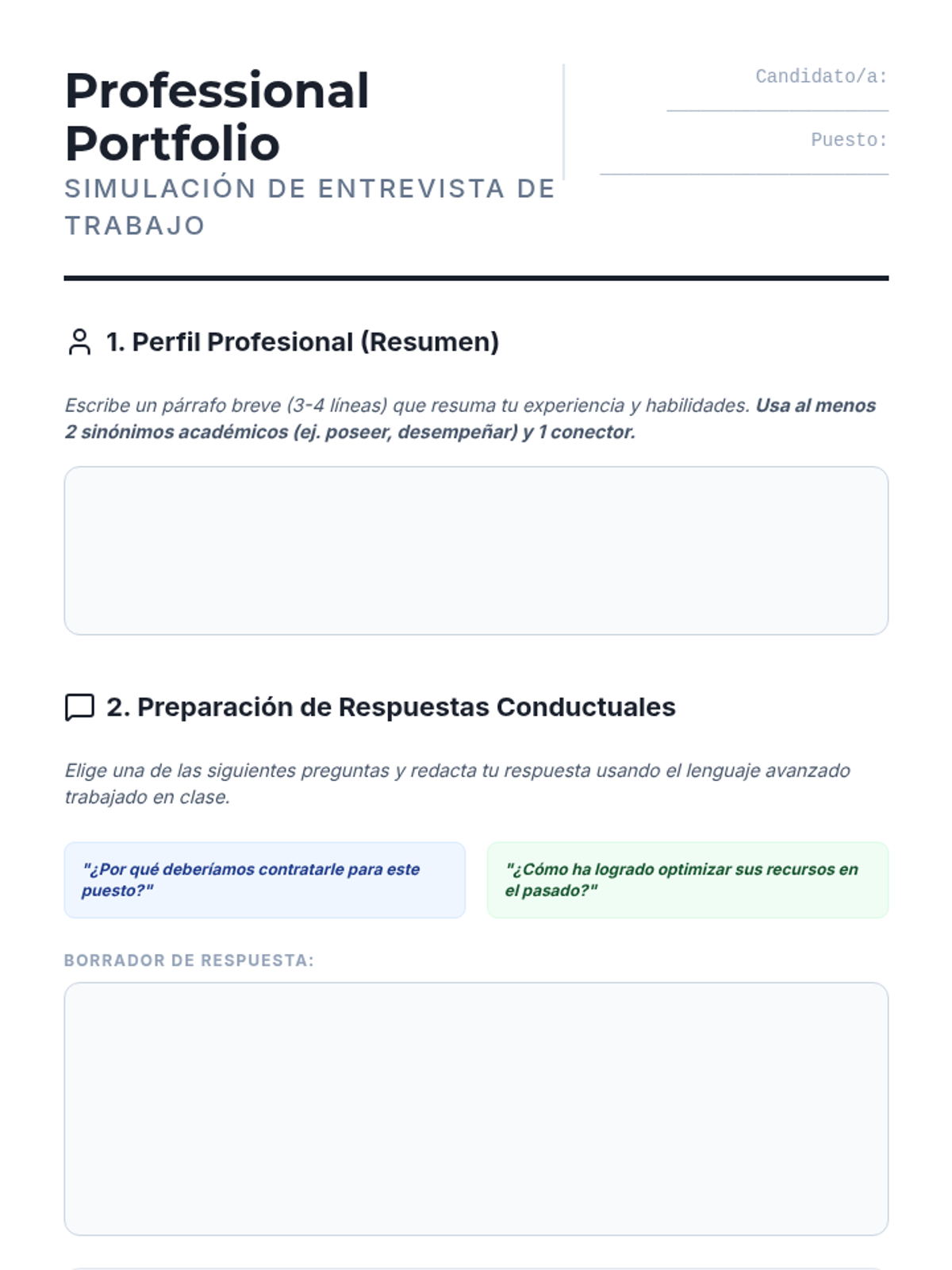
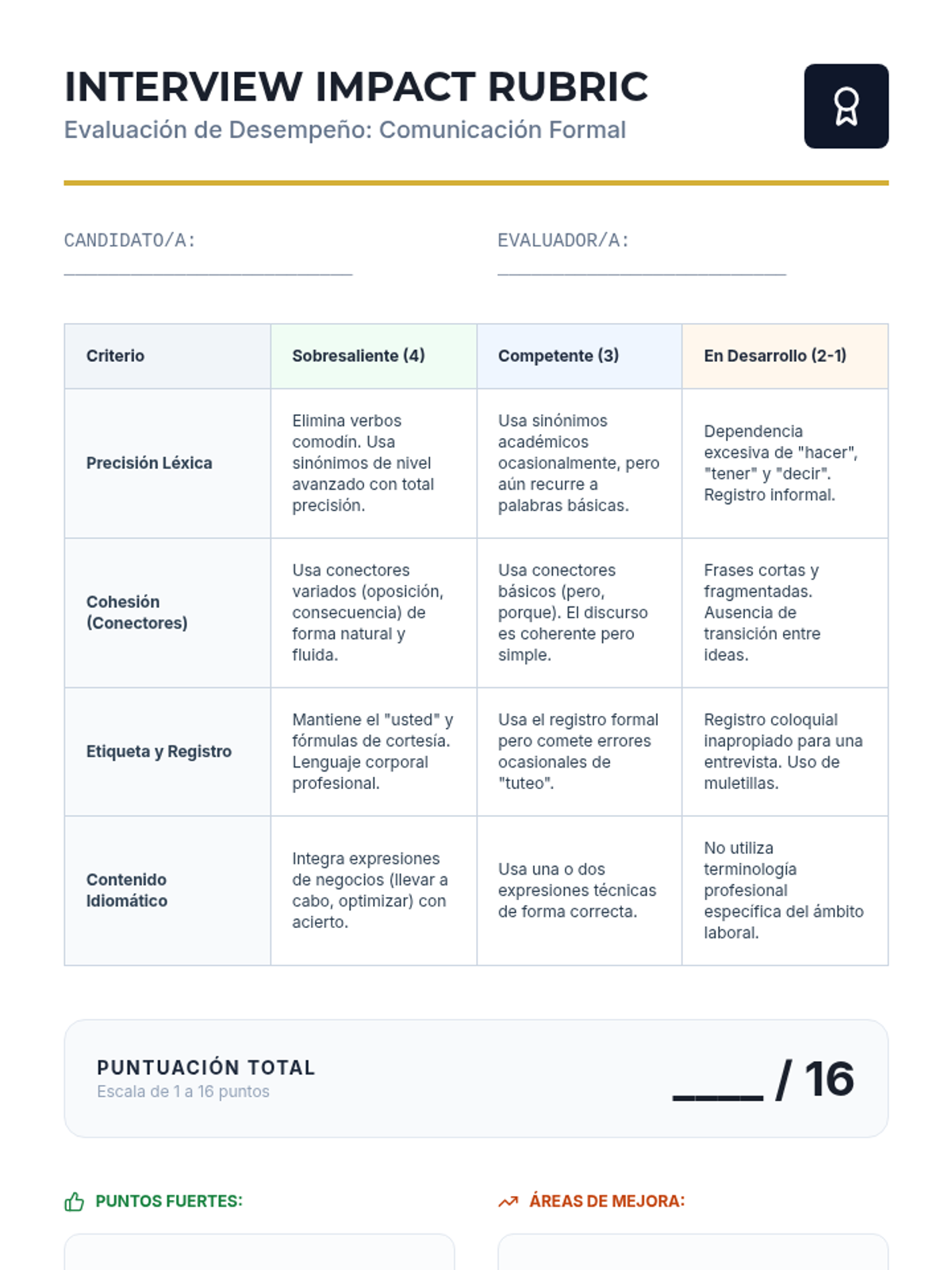
The sequence culminates in a professional interview simulation where students synthesize all acquired skills. They demonstrate oral proficiency and mastery of formal registers in a mock hiring environment.
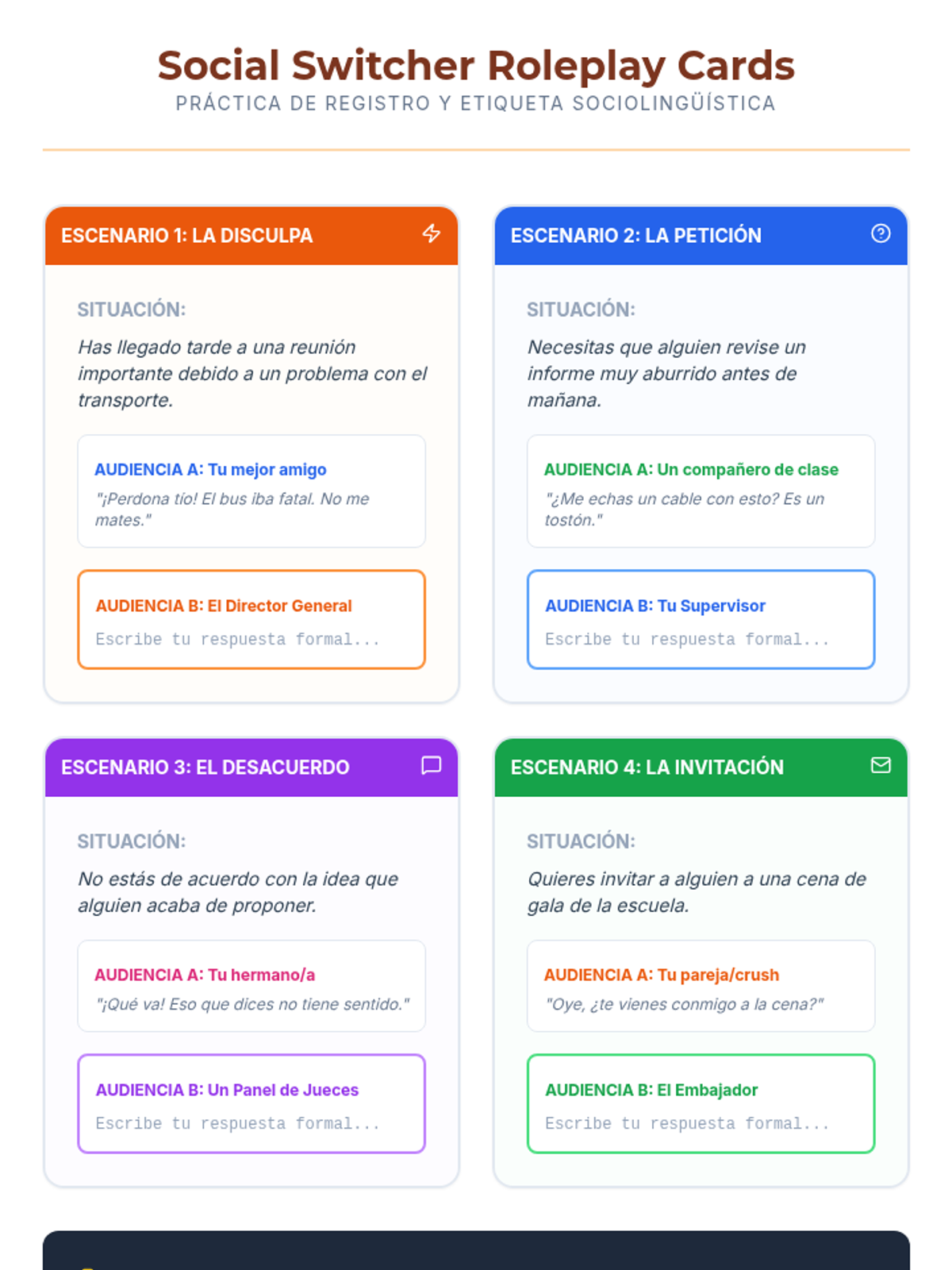
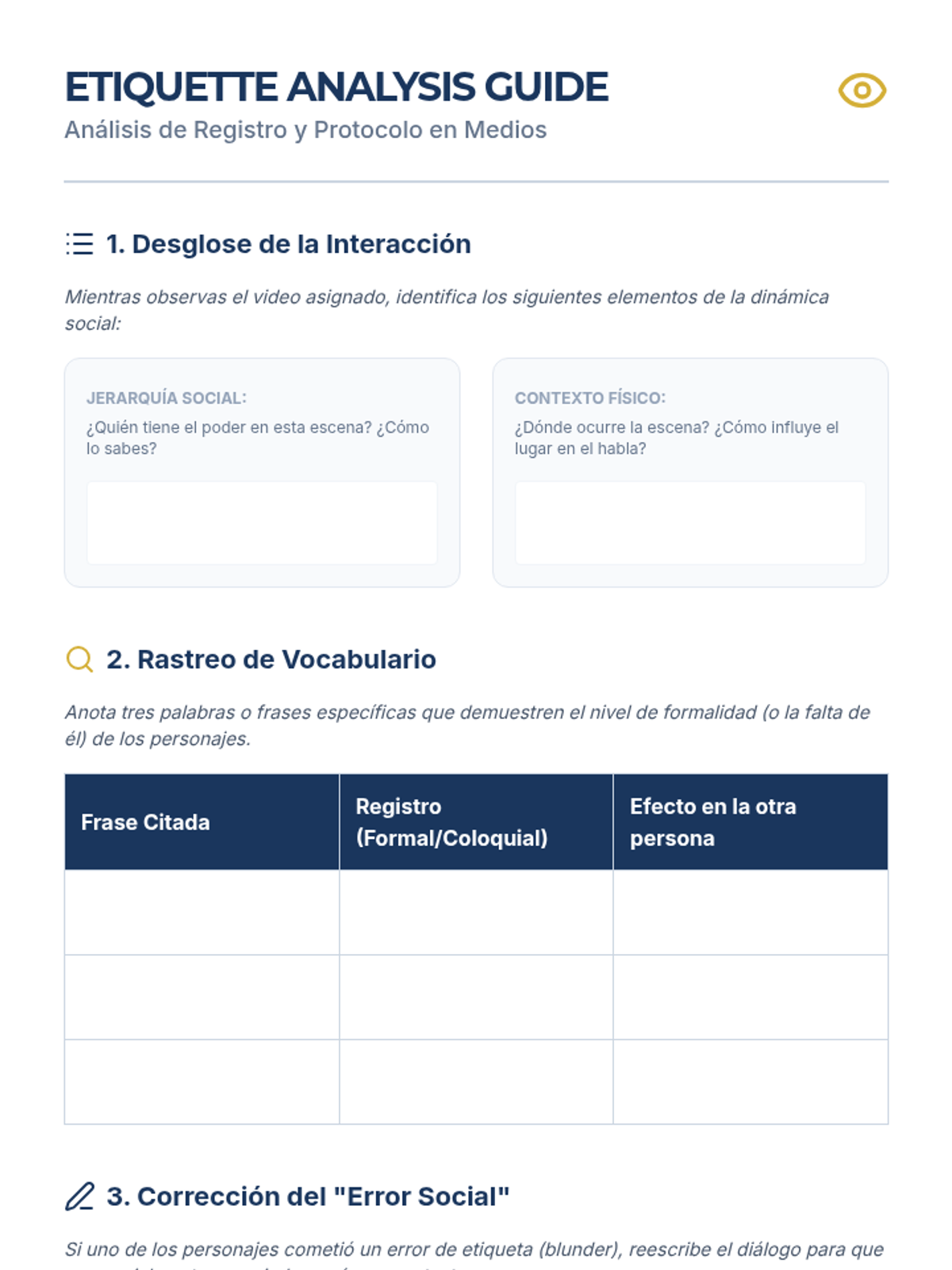
Students investigate the nuances of 'tú' vs 'usted' and formal etiquette in diverse social hierarchies. They practice code-switching based on audience and context.
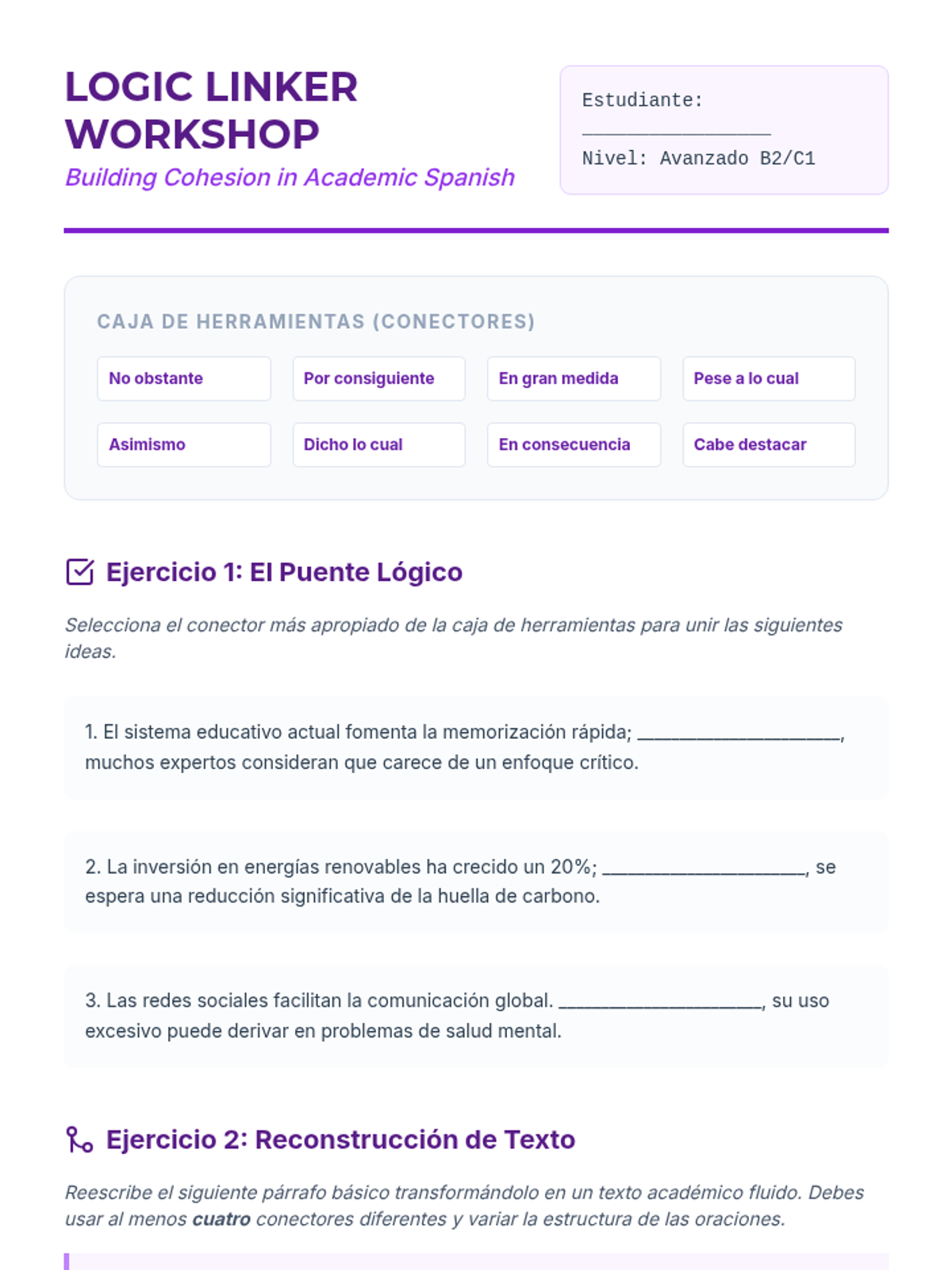
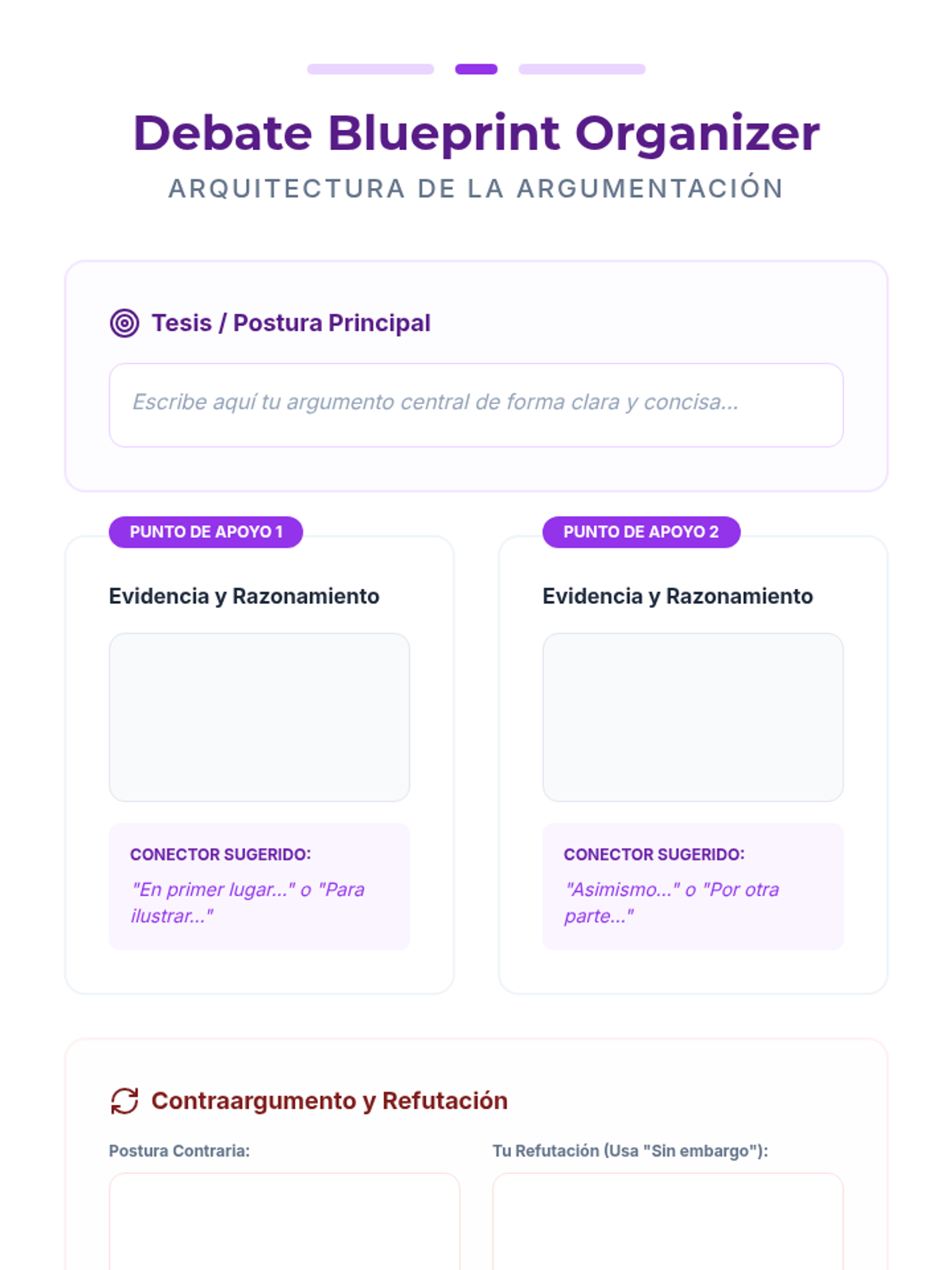
This lesson focuses on transition words and logical connectors to build cohesive academic arguments. Students practice complex sentence structures required for high-level argumentation.
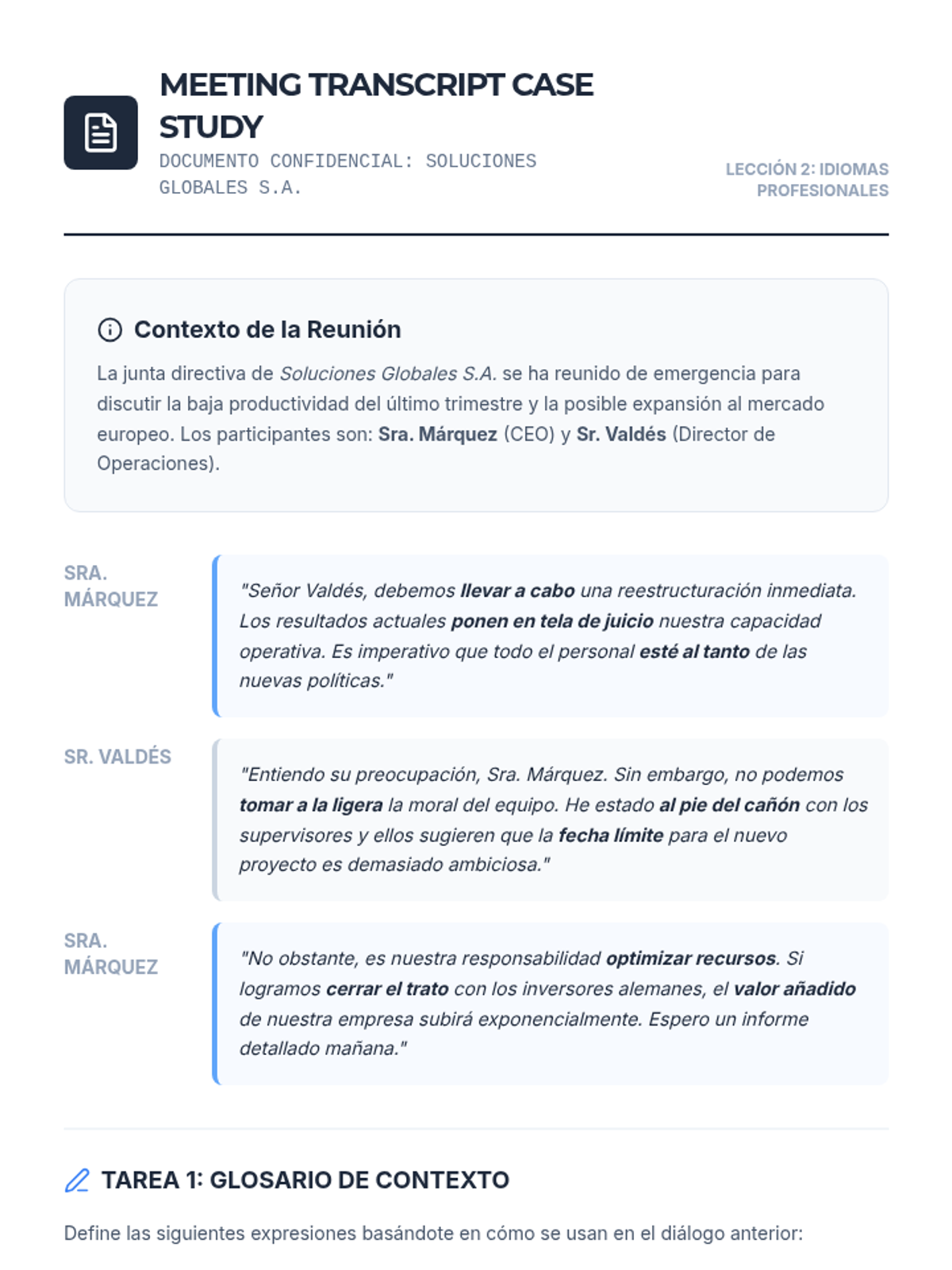
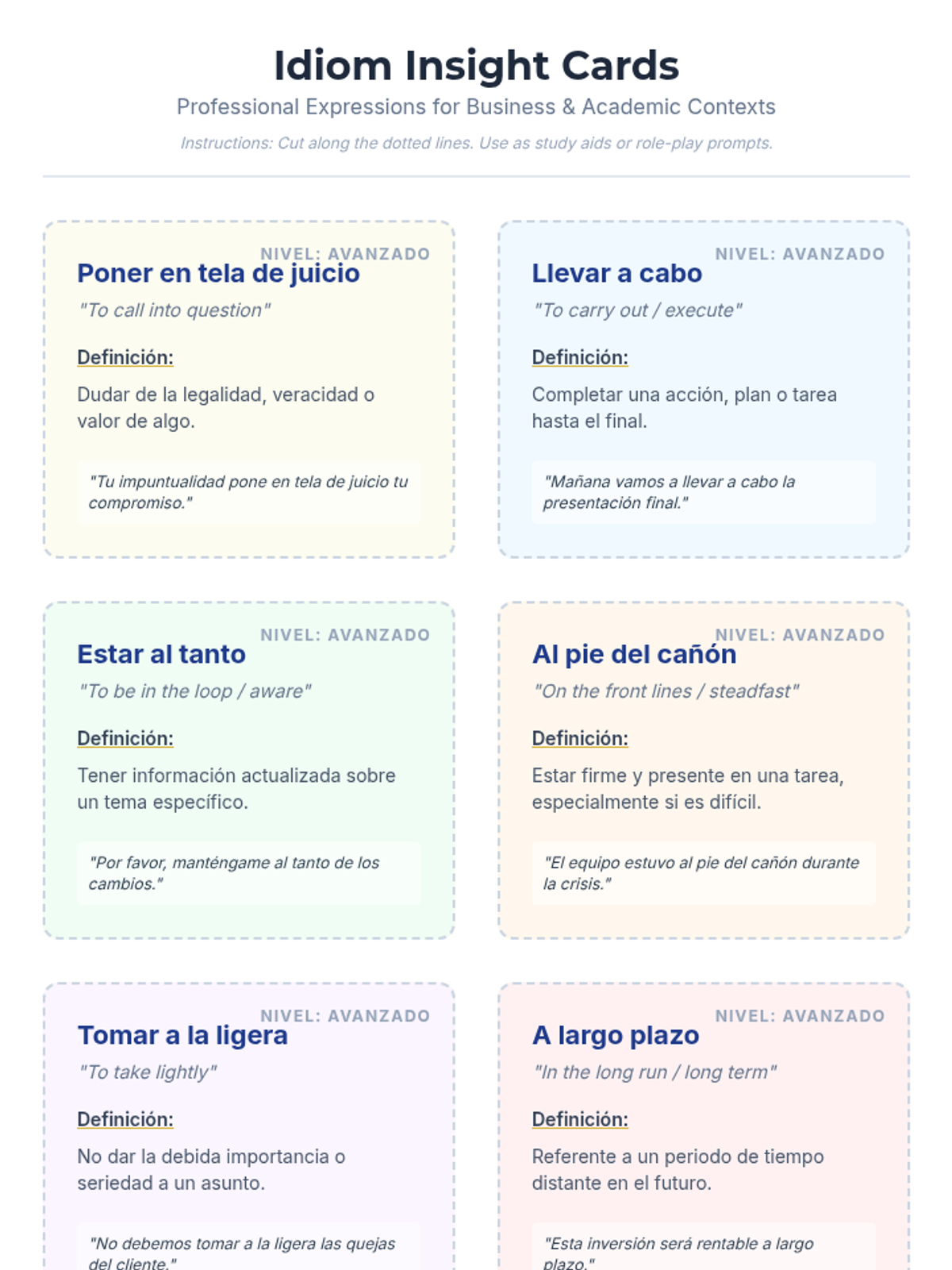
Learners acquire and apply idiomatic expressions and terminology specific to professional environments. They analyze workplace communication to identify literal vs. figurative meanings.
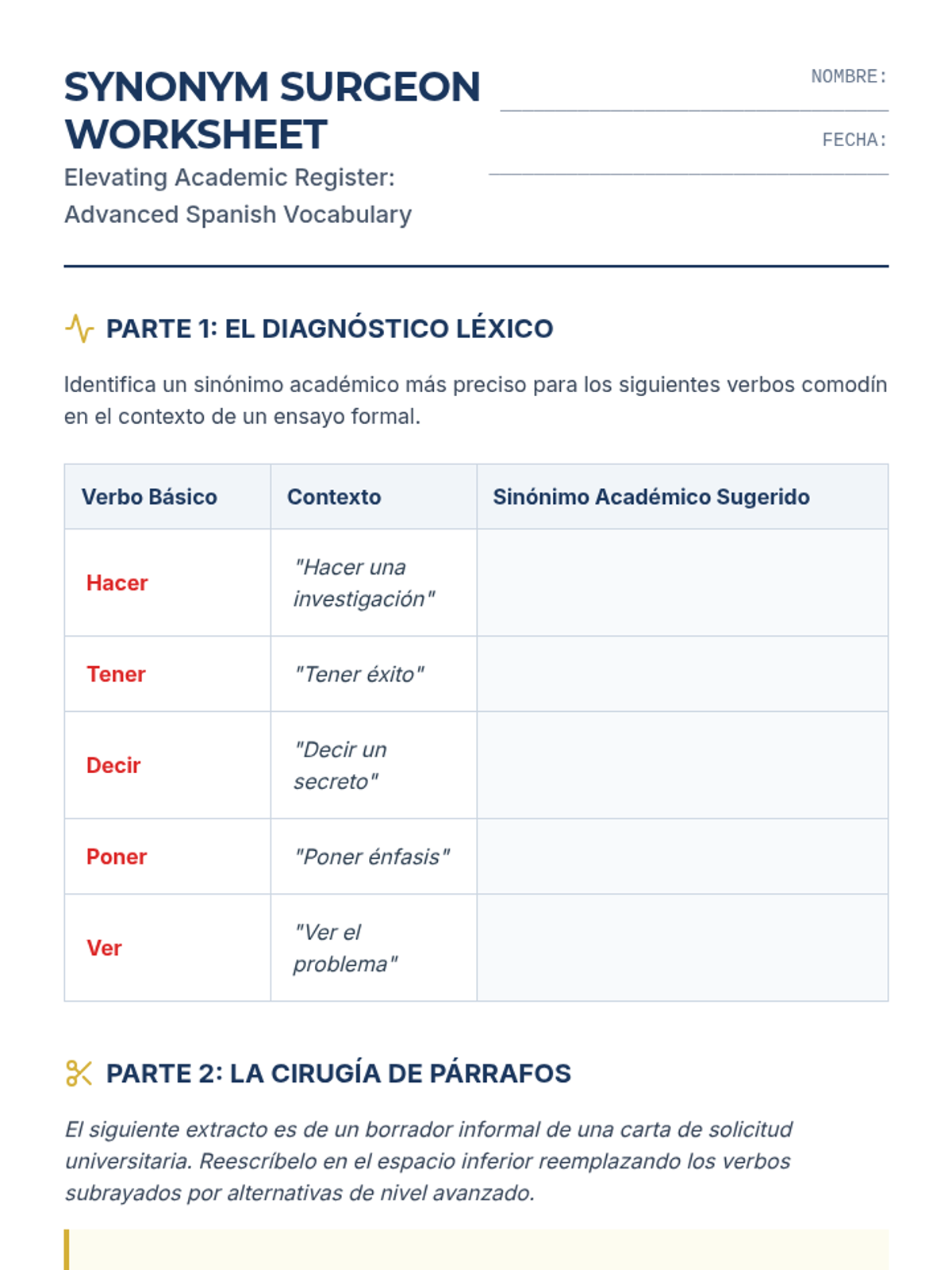
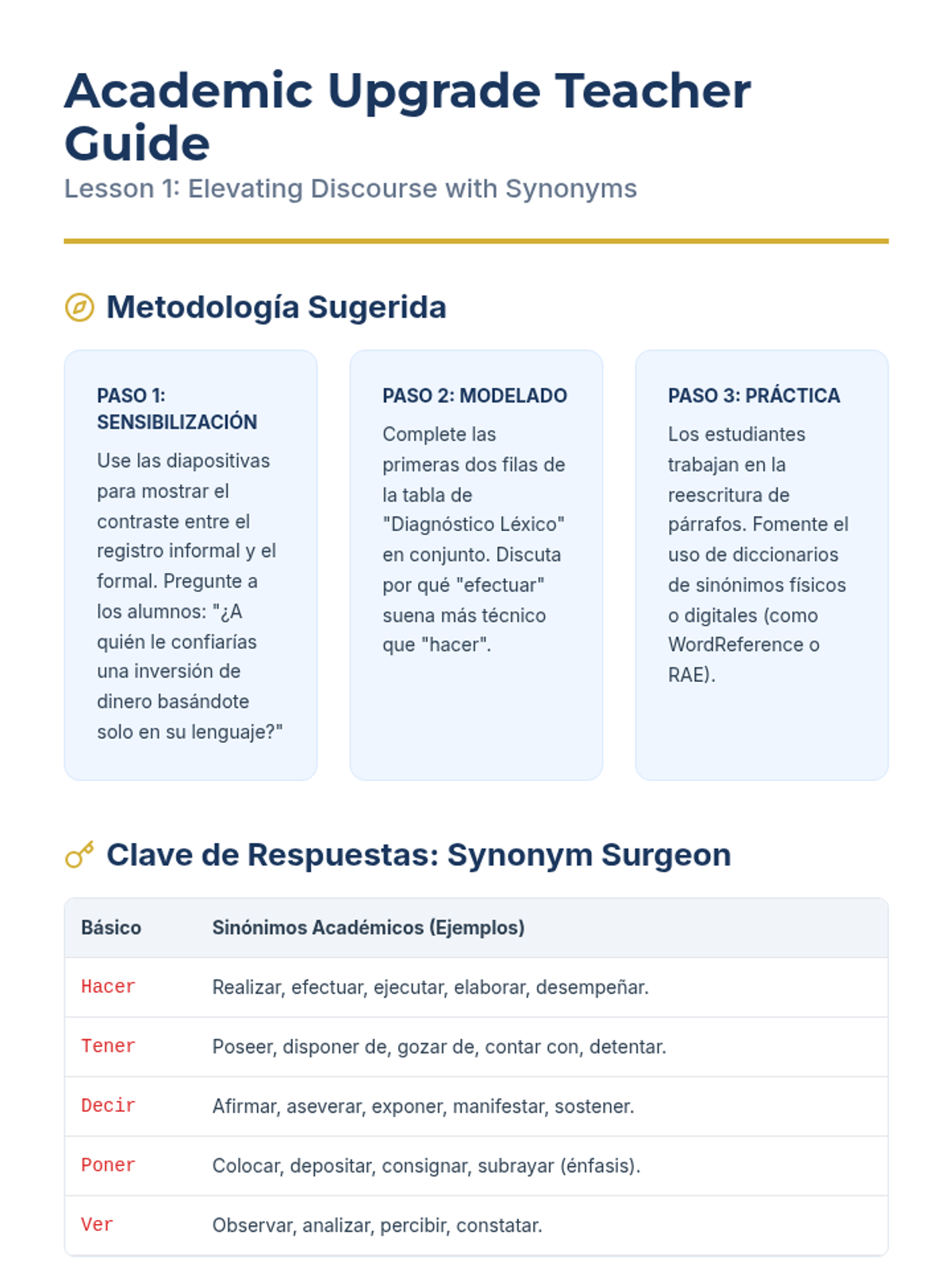
Students replace generic 'helper' verbs with high-level academic synonyms to elevate their written and spoken register. They analyze the impact of vocabulary choice on professional credibility.
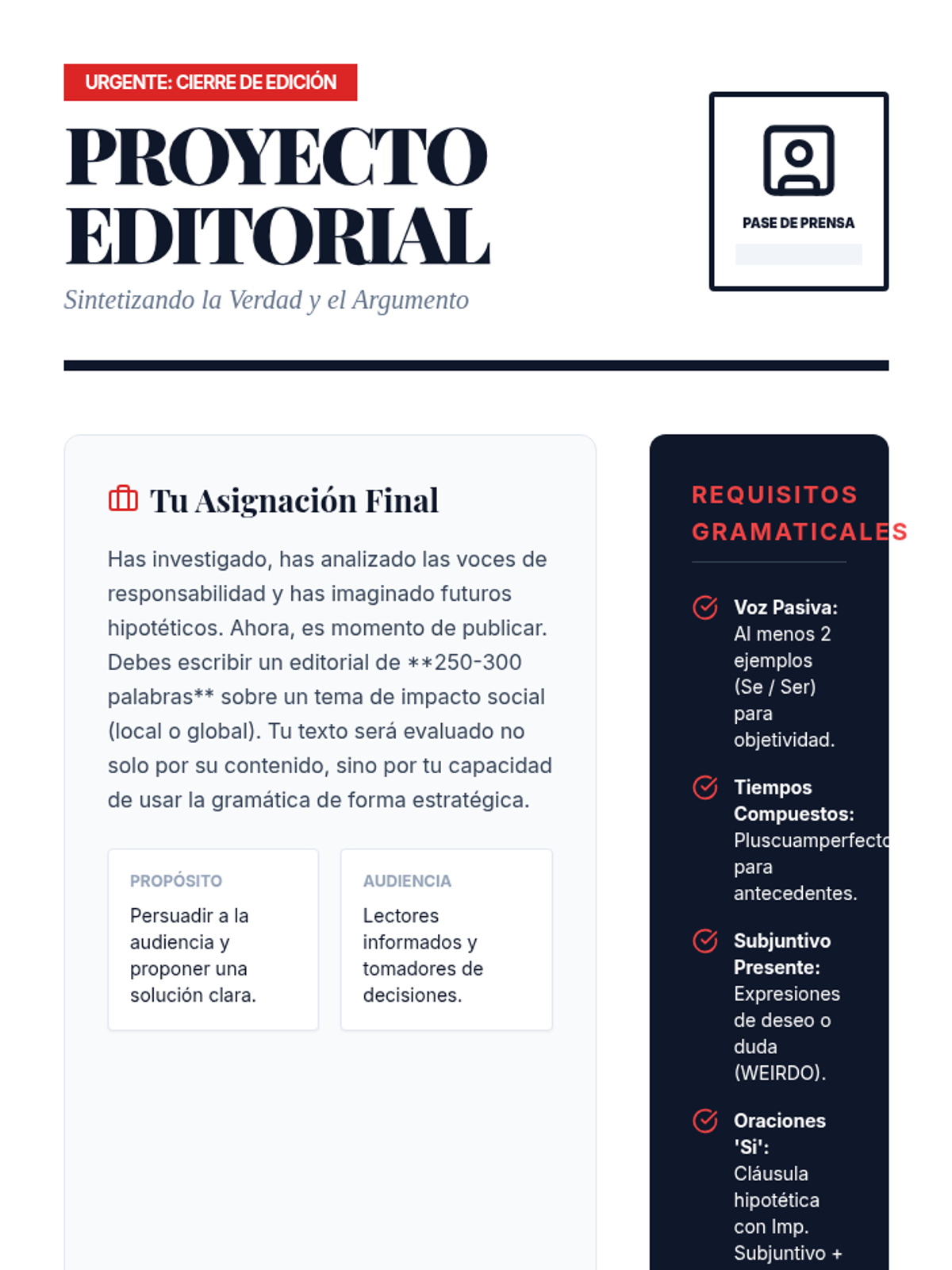
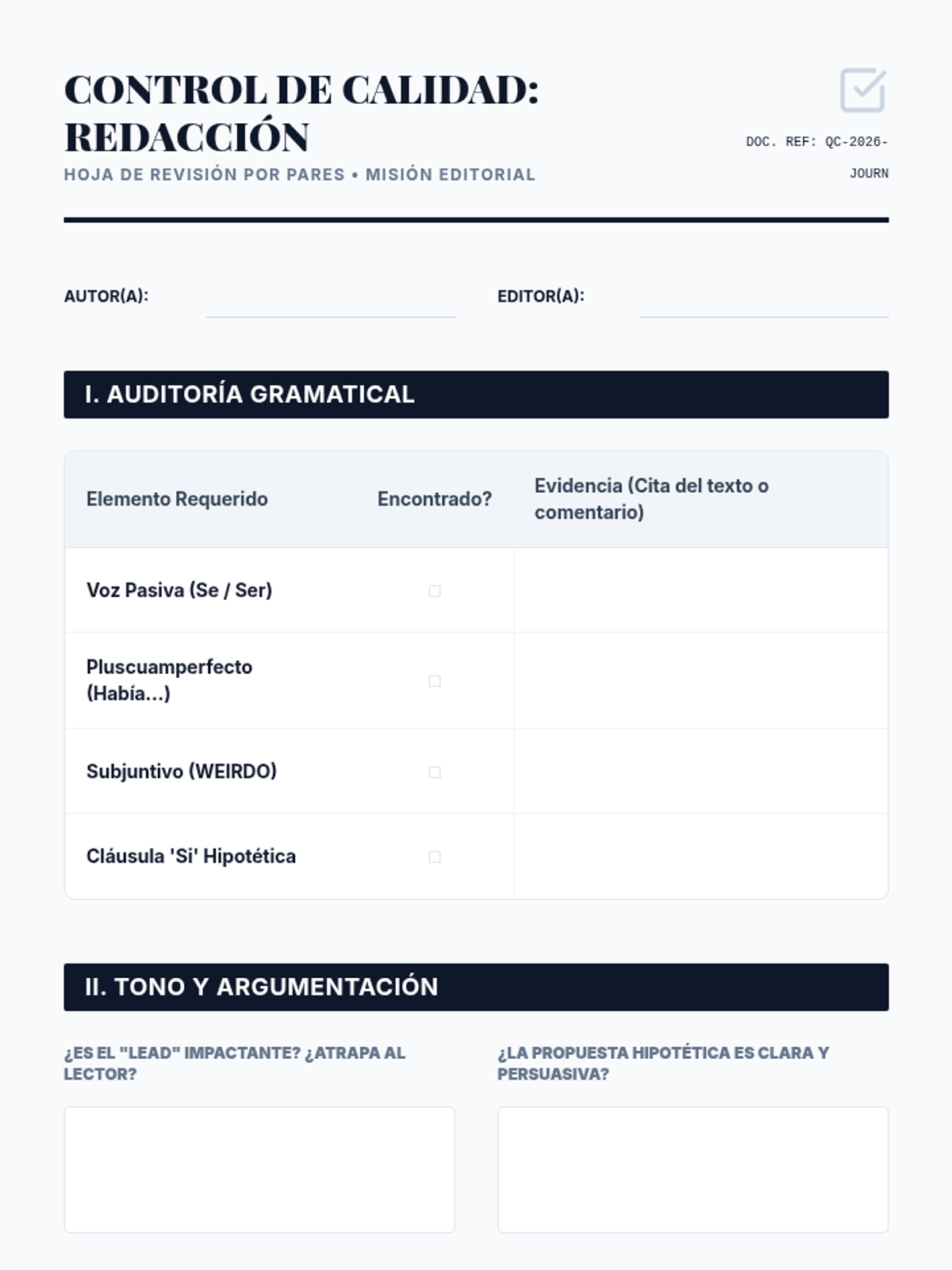
A culminating project where students synthesize all grammar points to produce a polished editorial piece under a newsroom deadline.
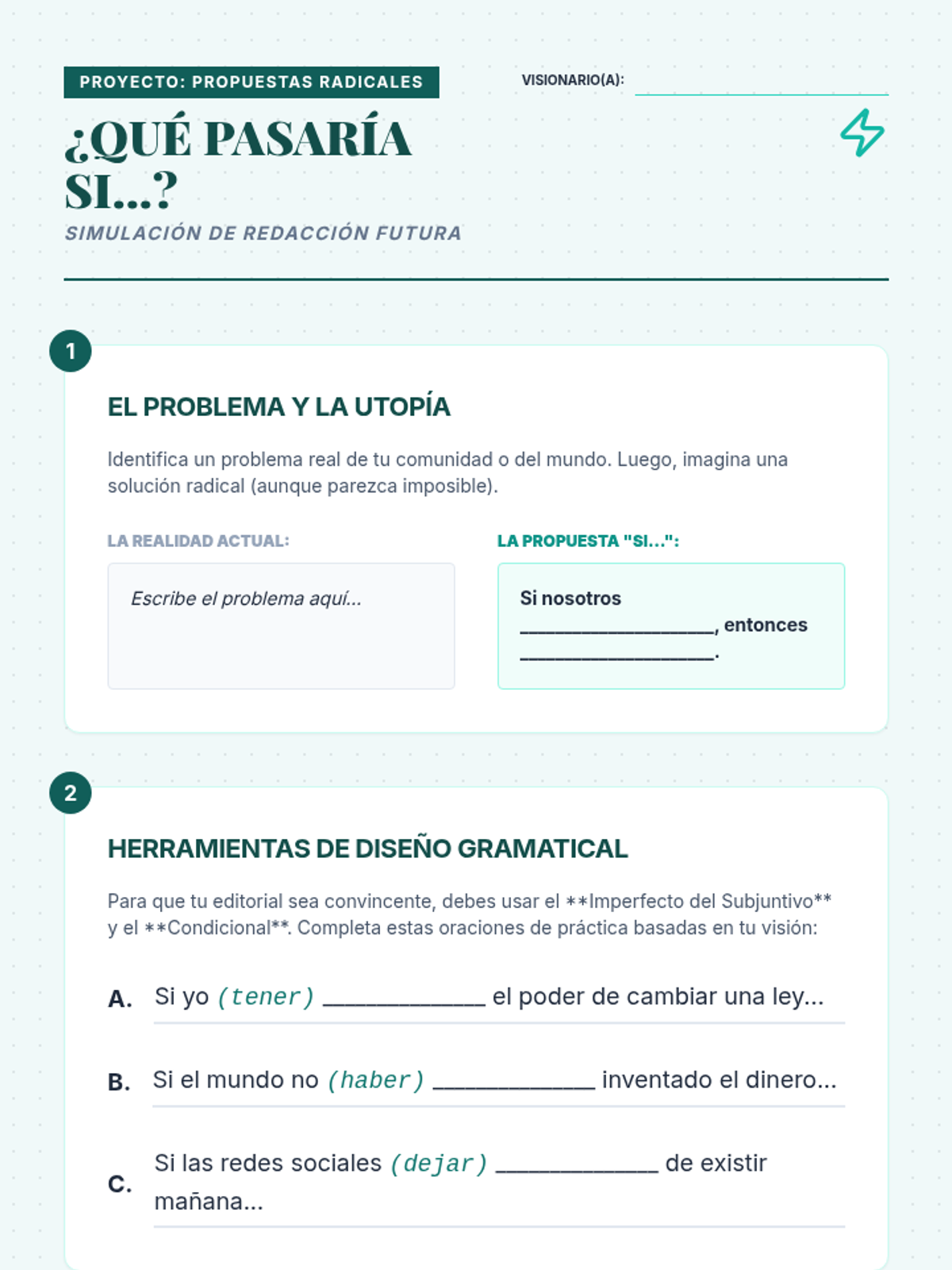
Students use the Imperfect Subjunctive and Conditional tense to propose hypothetical solutions to societal problems within their investigative reports.
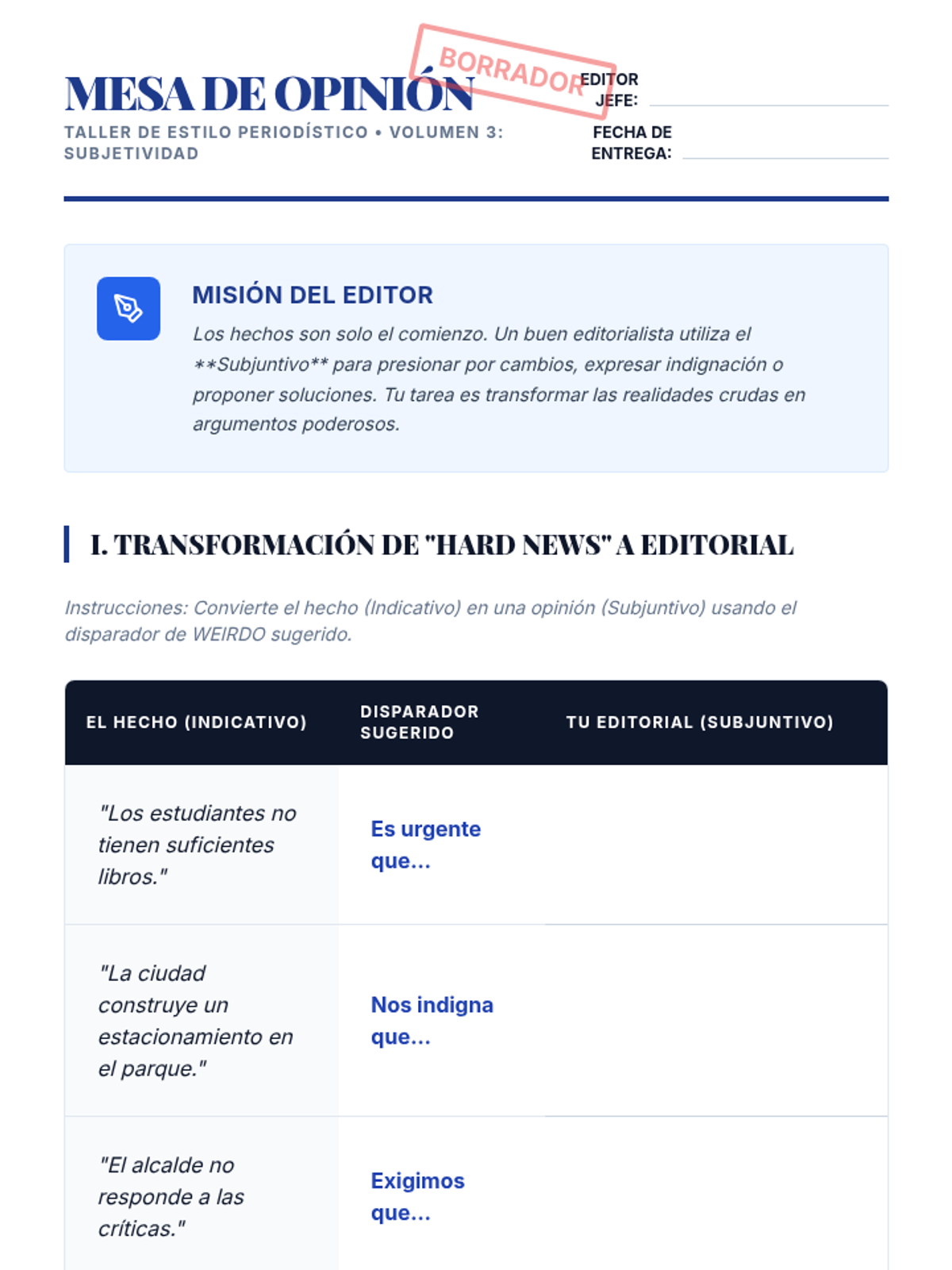
Students transition from reporting facts to expressing opinions using the Present Subjunctive (WEIRDO) in formal editorials.
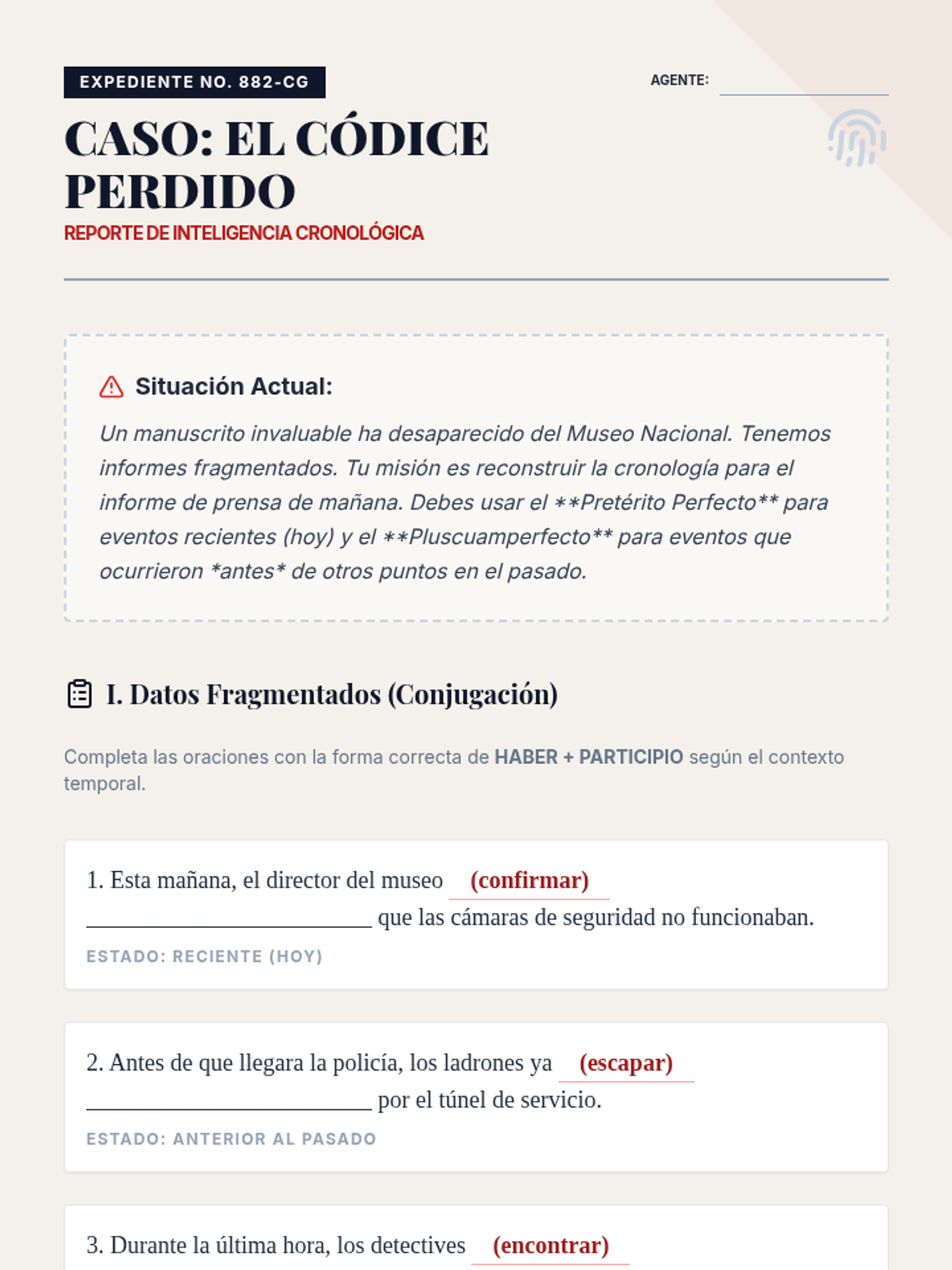
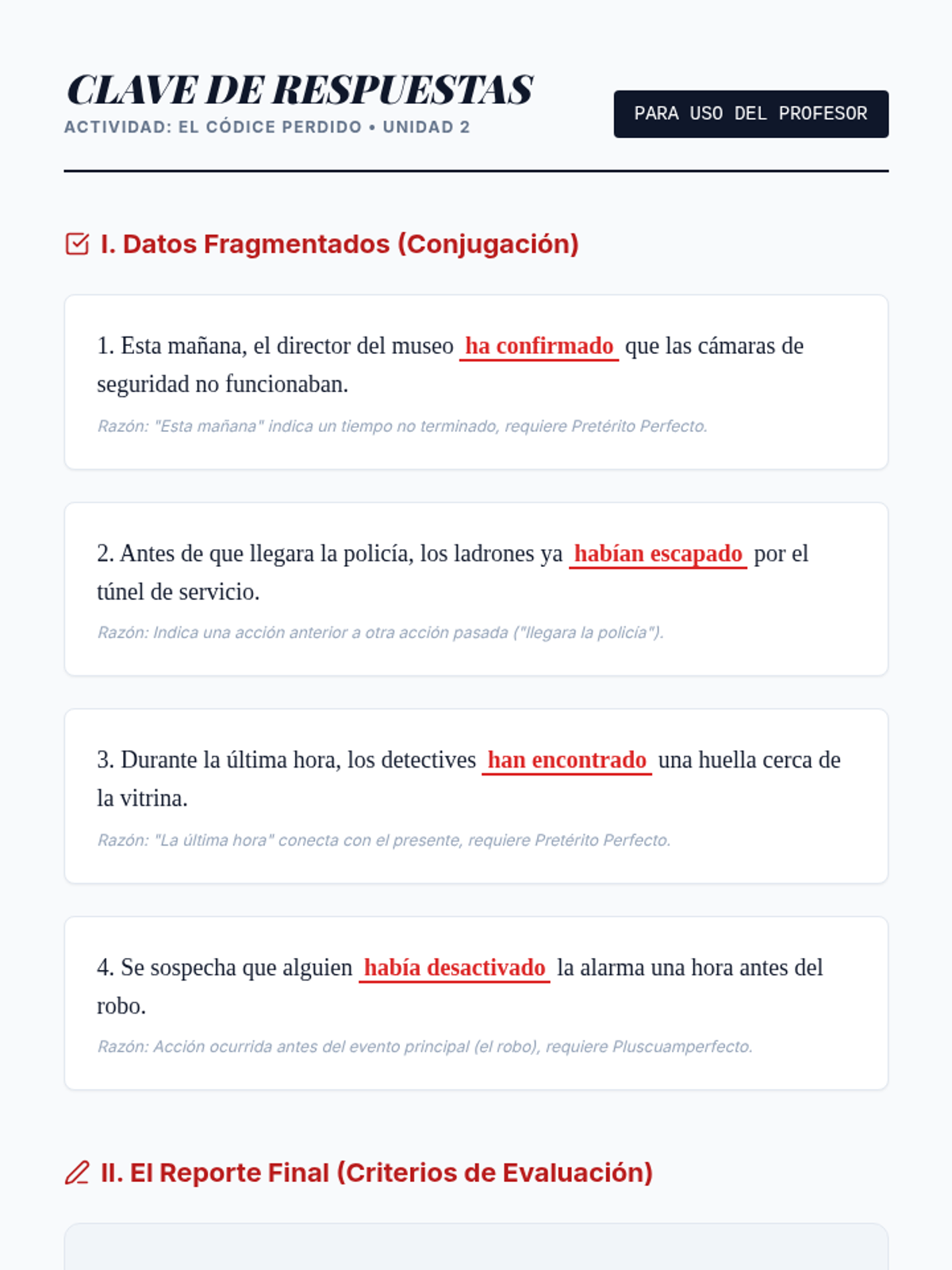
Students master the Present Perfect and Pluperfect to construct precise timelines for news reports, distinguishing between recent actions and prior events.
Students analyze Spanish news headlines to distinguish between active voice, true passive (ser + participio), and passive 'se', focusing on how these structures shift responsibility.
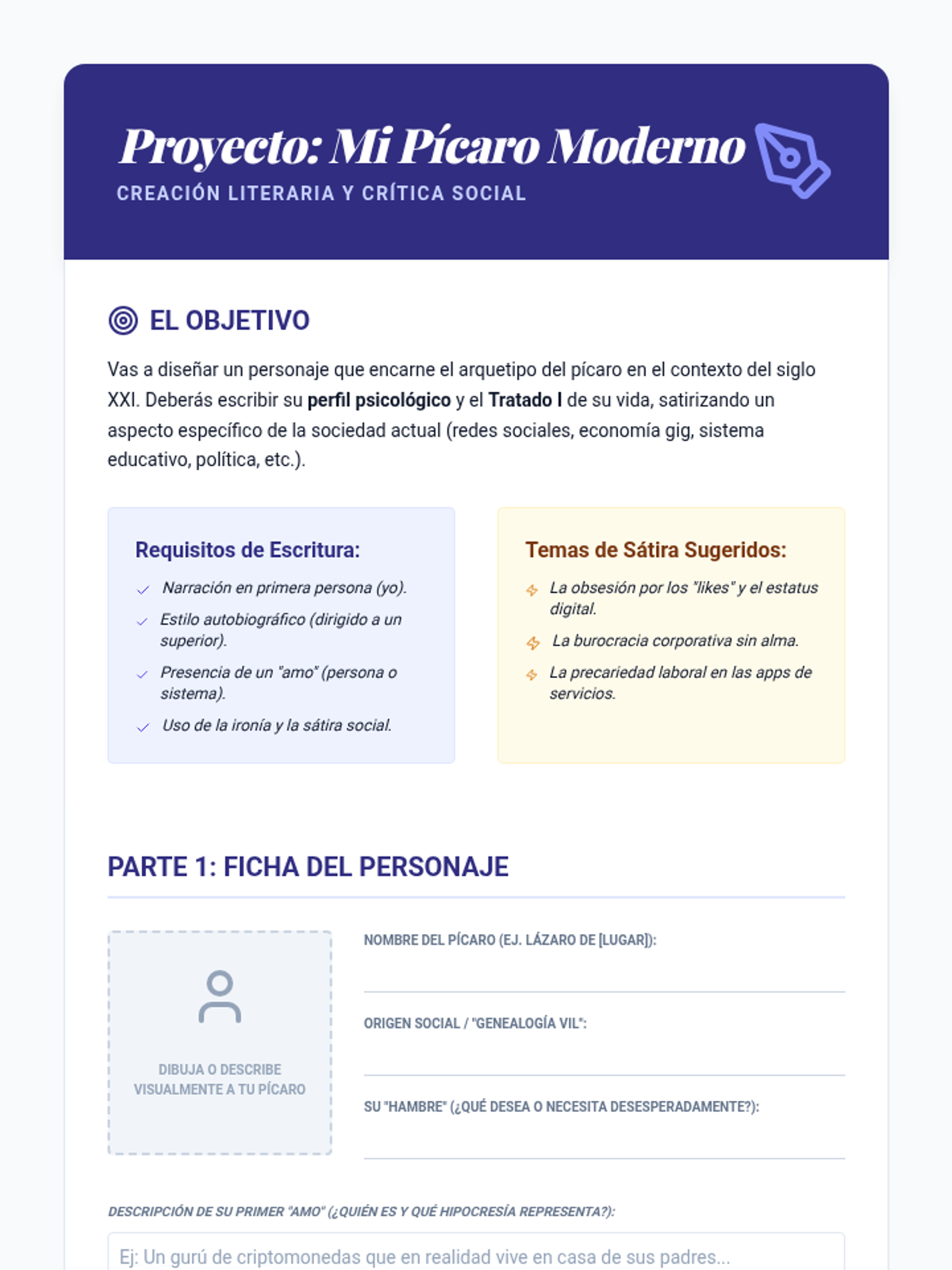
Students apply their understanding of the genre by designing their own modern pícaro. They write a character profile and an opening 'treatise' that satirizes a specific element of contemporary society.
Tracing the lineage of the pícaro into the modern world. Students compare historical characters to modern 'hustlers' in literature and film, identifying universal themes of survival and societal critique.
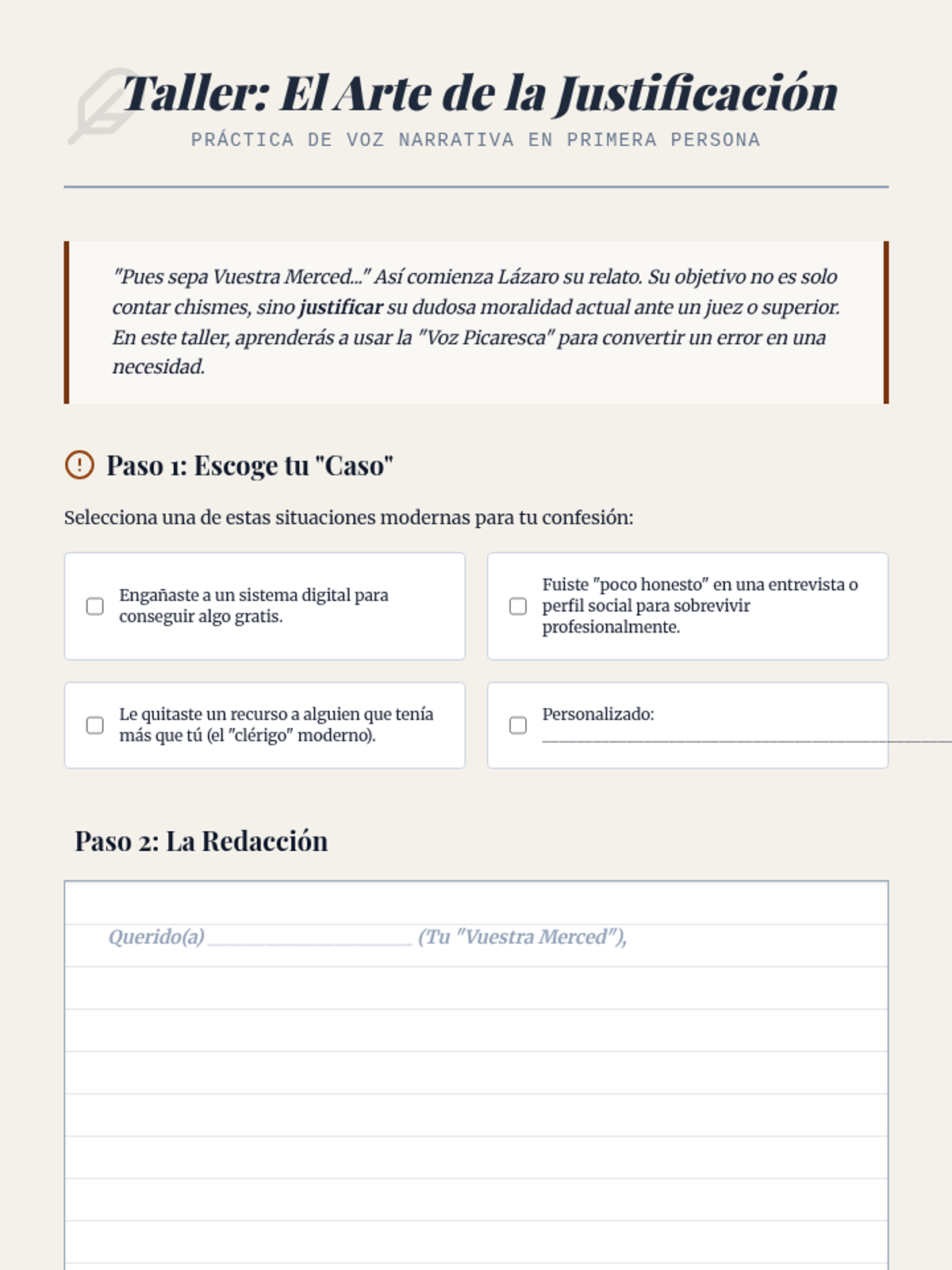
An exploration of the episodic nature of the picaresque and the power of the first-person narrator. Students examine how the 'confessional' voice builds empathy and justifies the protagonist's survival tactics.
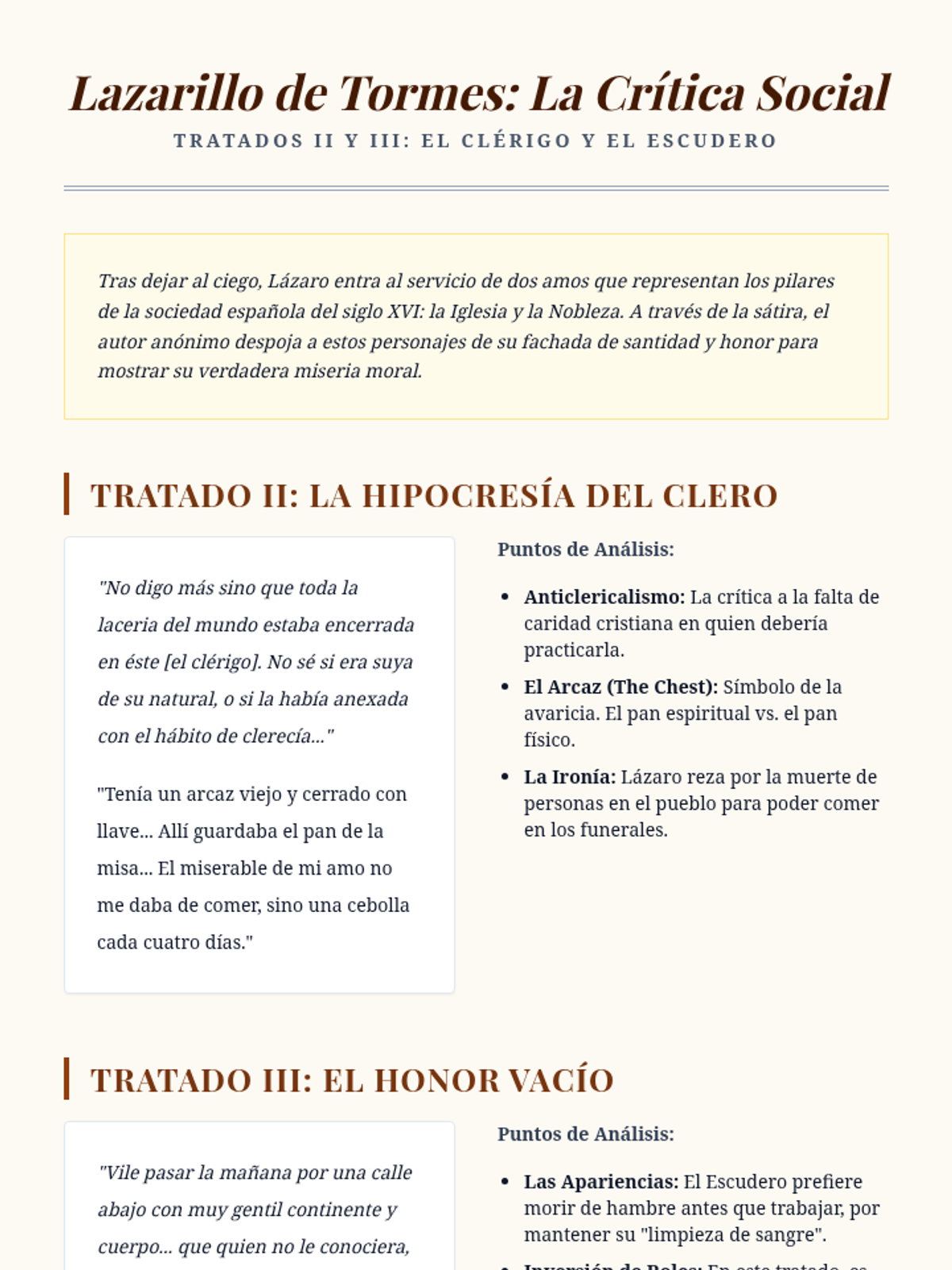
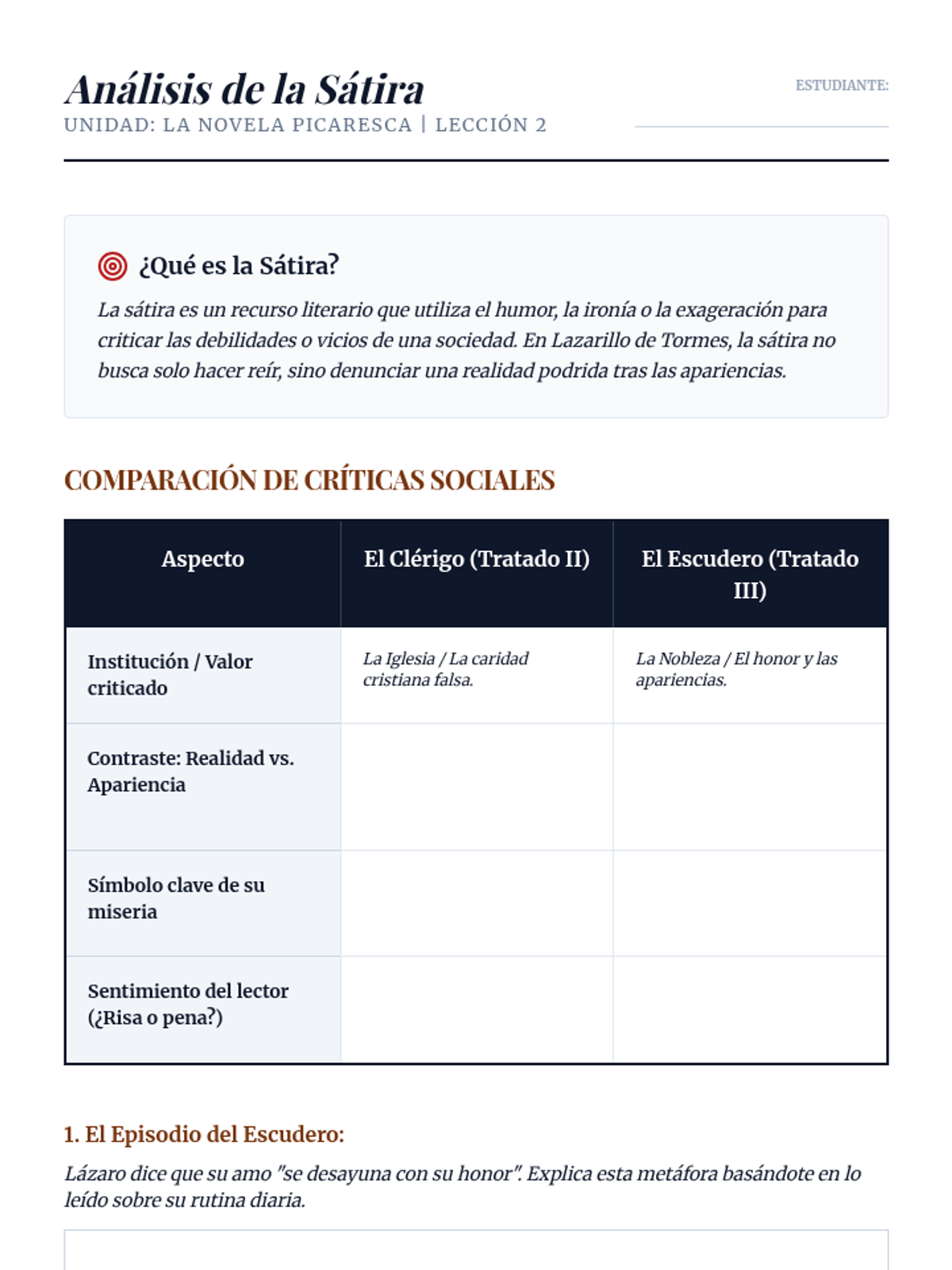
A deep dive into the satire directed at the clergy and the nobility. Students analyze how Lazarillo's experiences with the Priest and the Squire expose hypocrisy and the emptiness of social 'honor'.
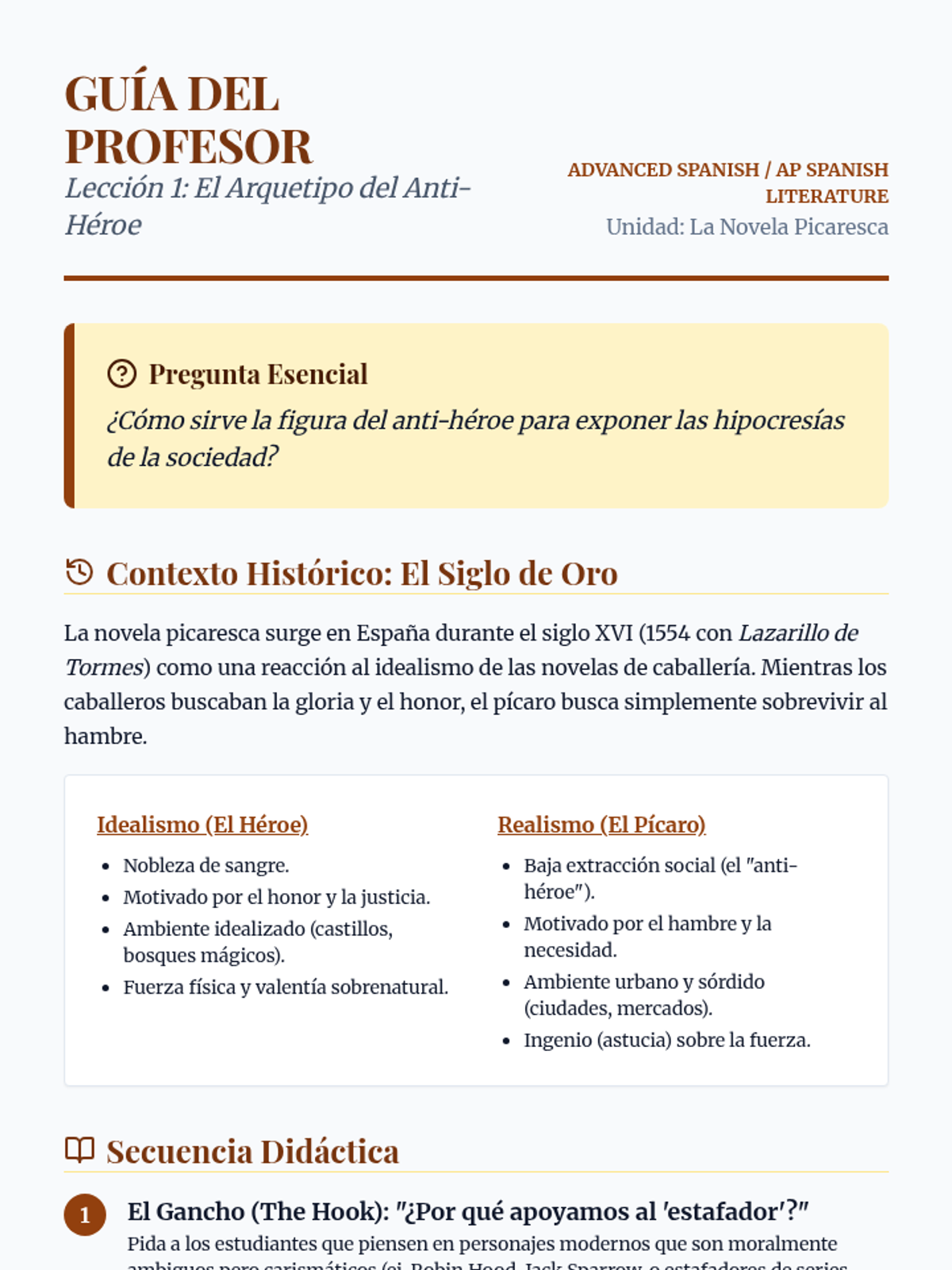
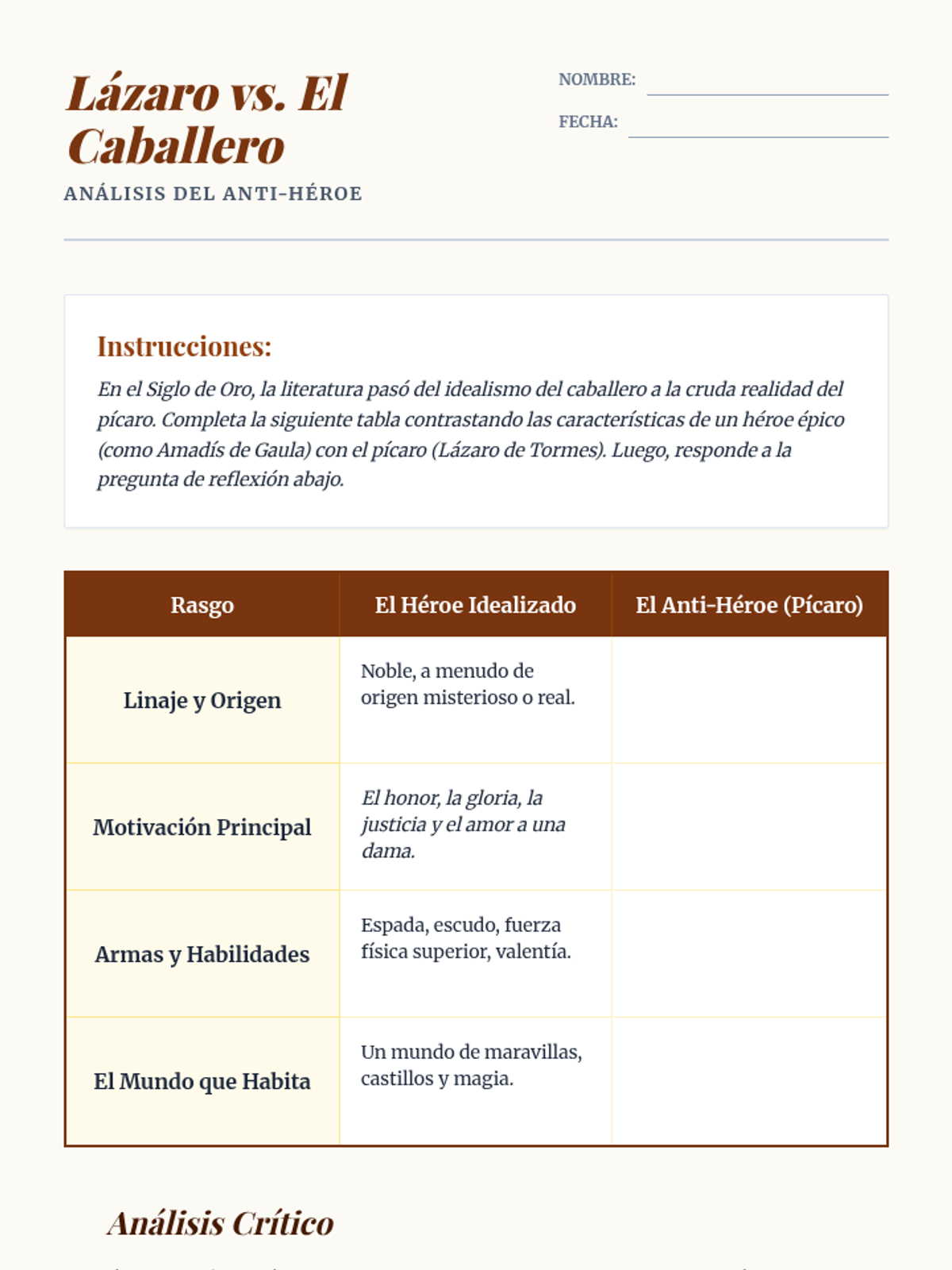
Students define the 'pícaro' archetype and contrast it with the traditional medieval hero. Through excerpts from *Lazarillo de Tormes*, they identify key traits such as wit, low social status, and moral flexibility.
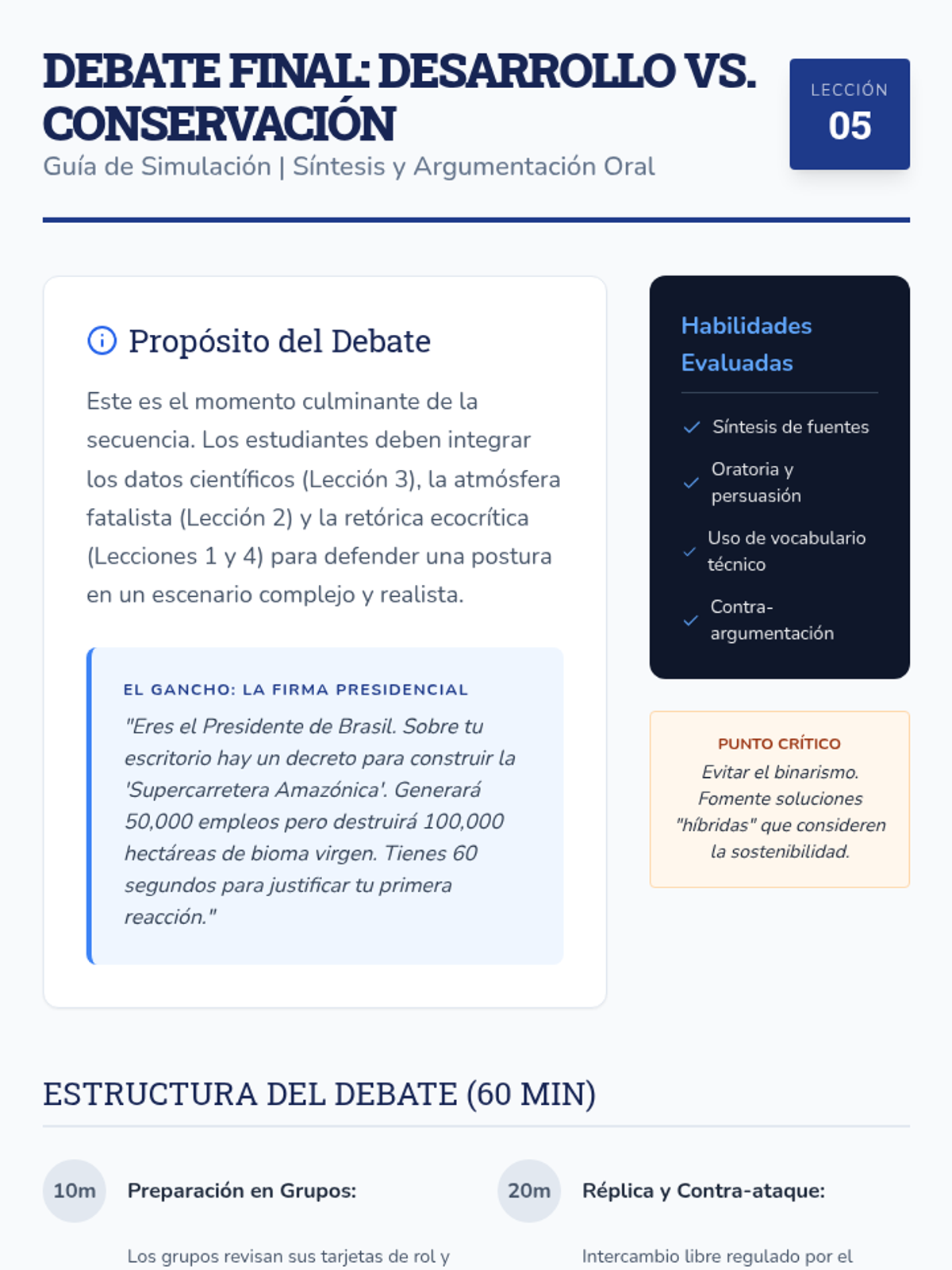
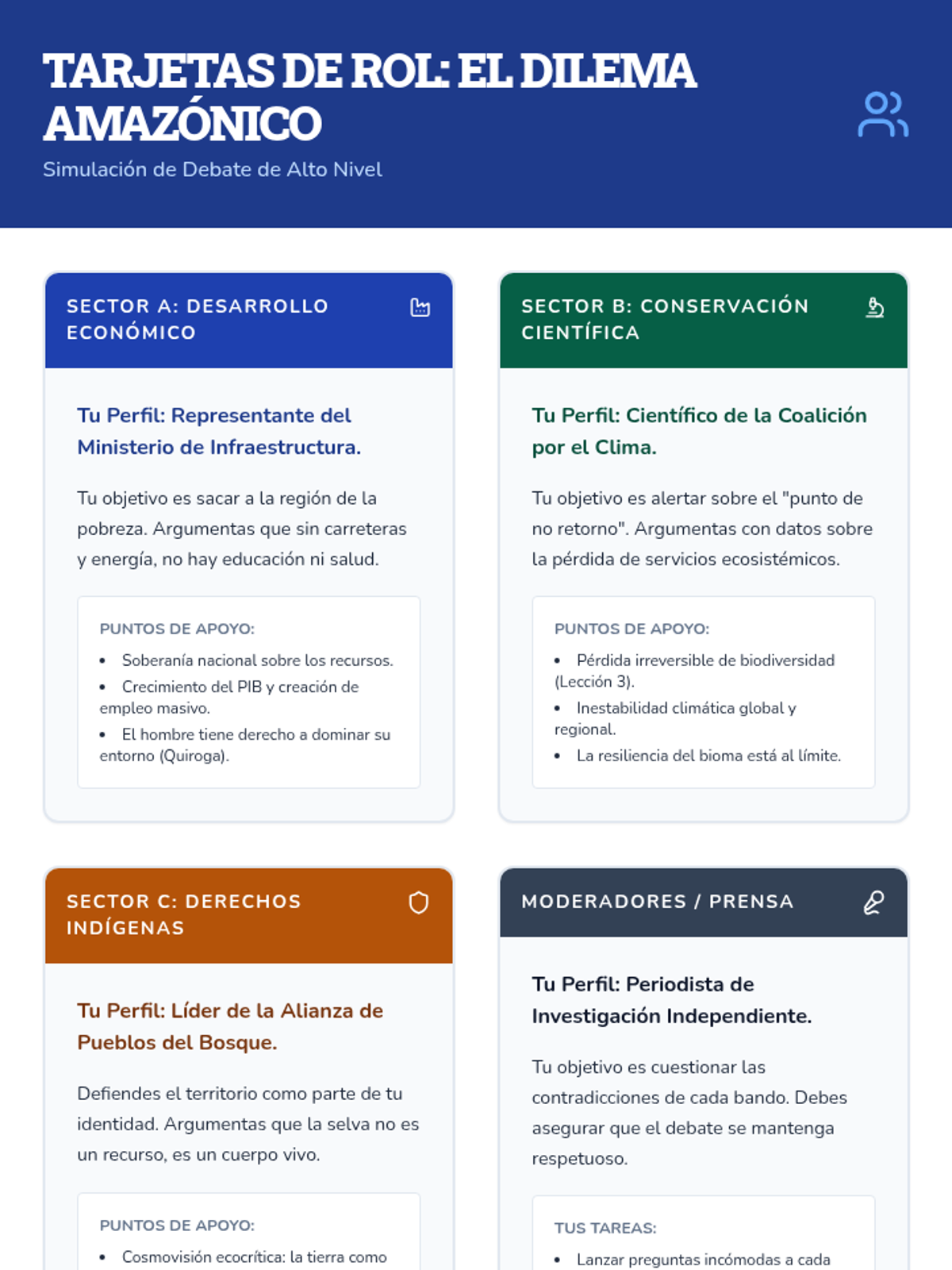
A culminating debate simulation where students synthesize scientific data and literary themes to argue the ethics of economic development versus environmental preservation.
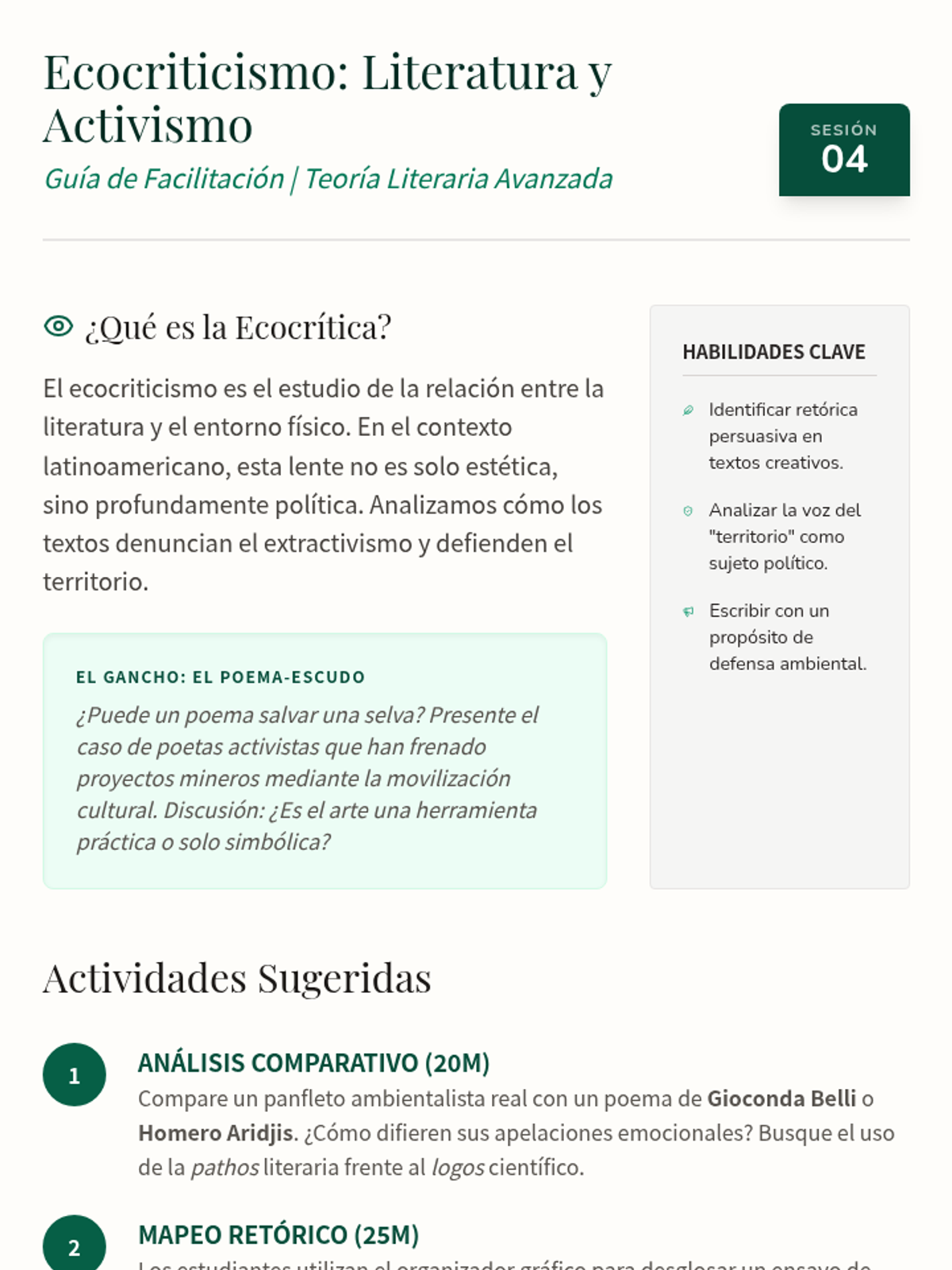
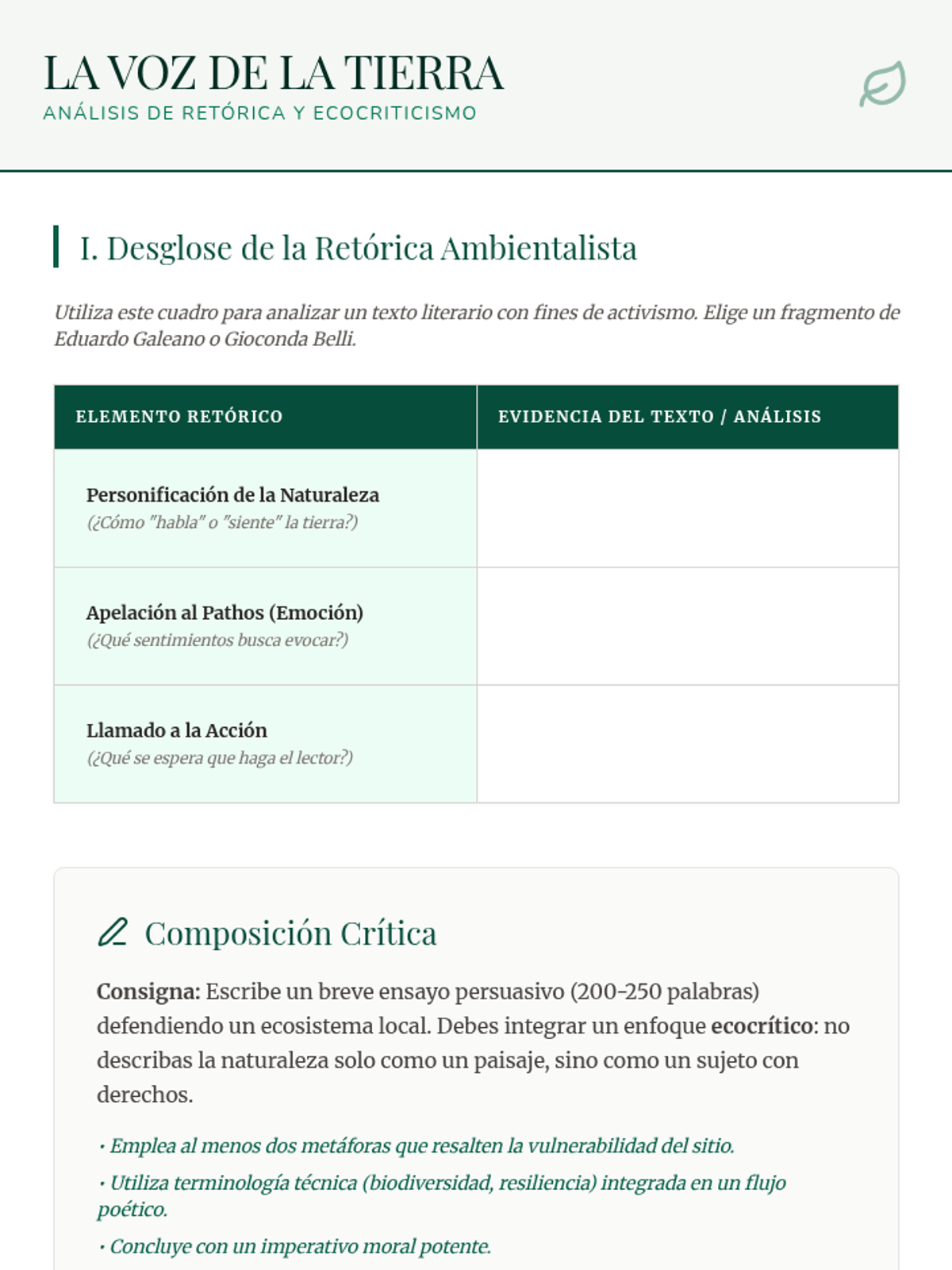
Introduction to Ecocriticism as a literary lens. Students analyze how literature serves as environmental activism through persuasive rhetoric and emotional appeal.
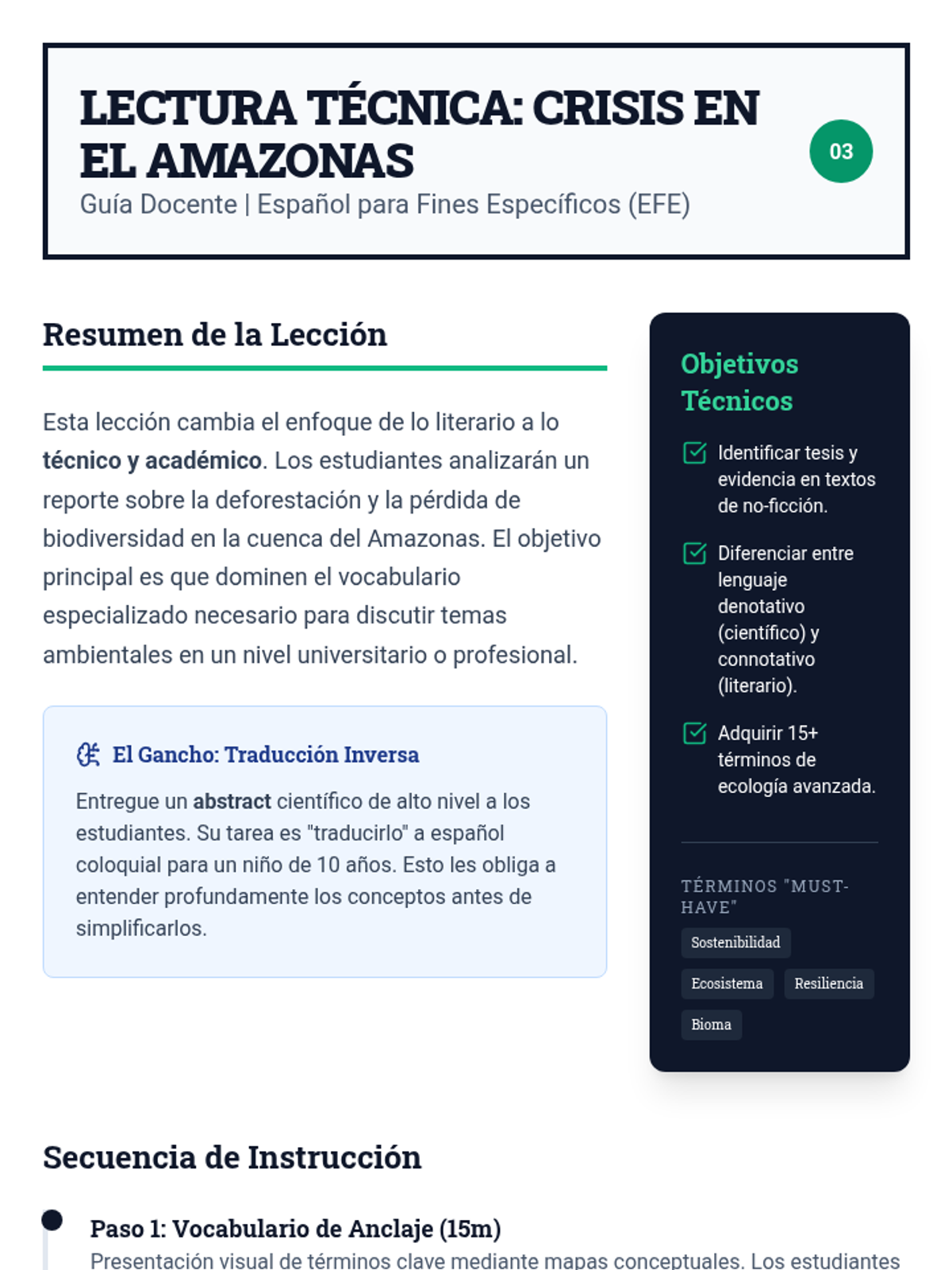
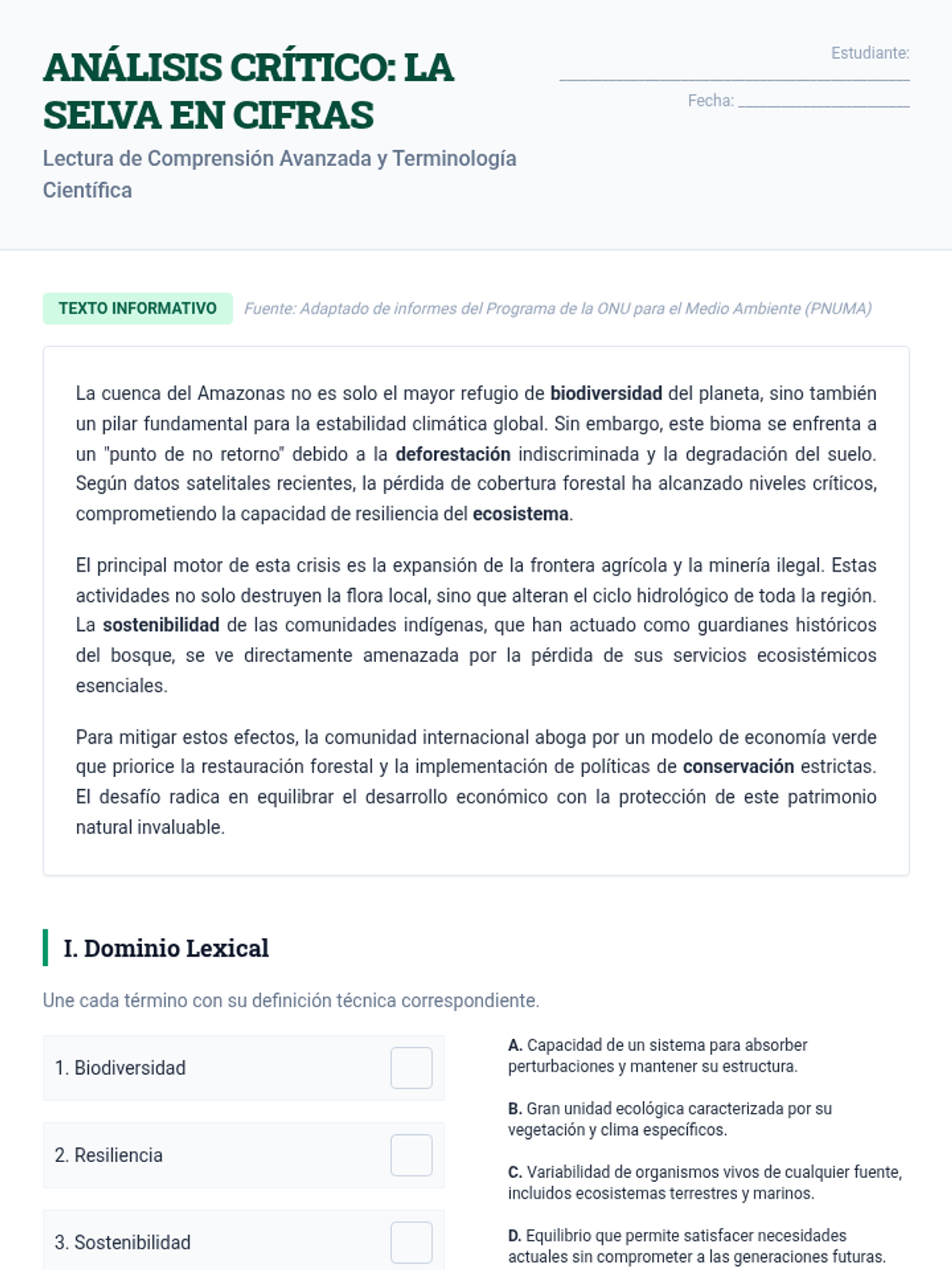
A technical immersion into scientific Spanish, focusing on deforestation in the Amazon. Students practice identifying theses and mastering academic vocabulary related to ecology.
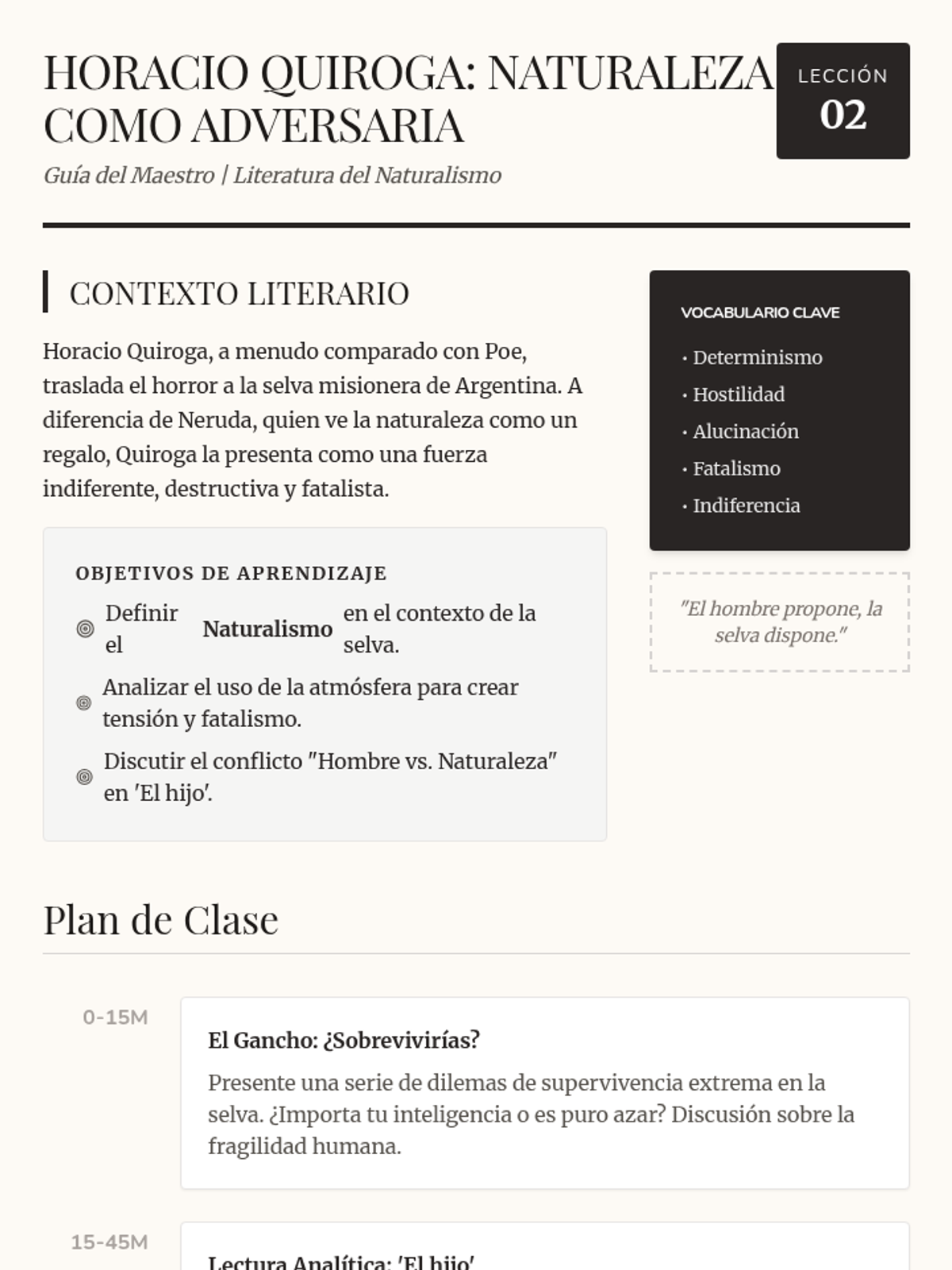
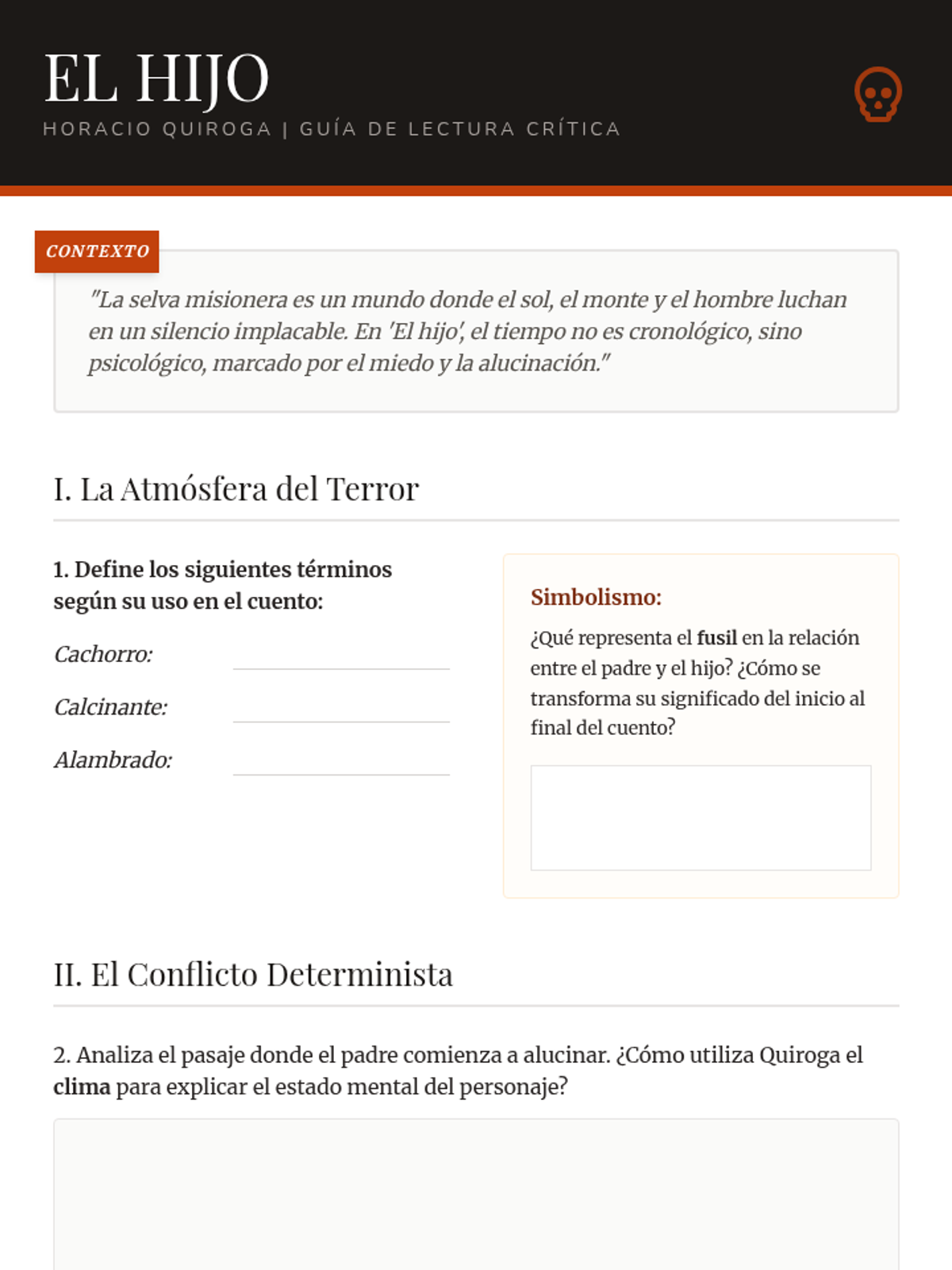
An analysis of Horacio Quiroga's jungle narratives, specifically 'El hijo', focusing on the deterministic relationship between humanity and a hostile environment.
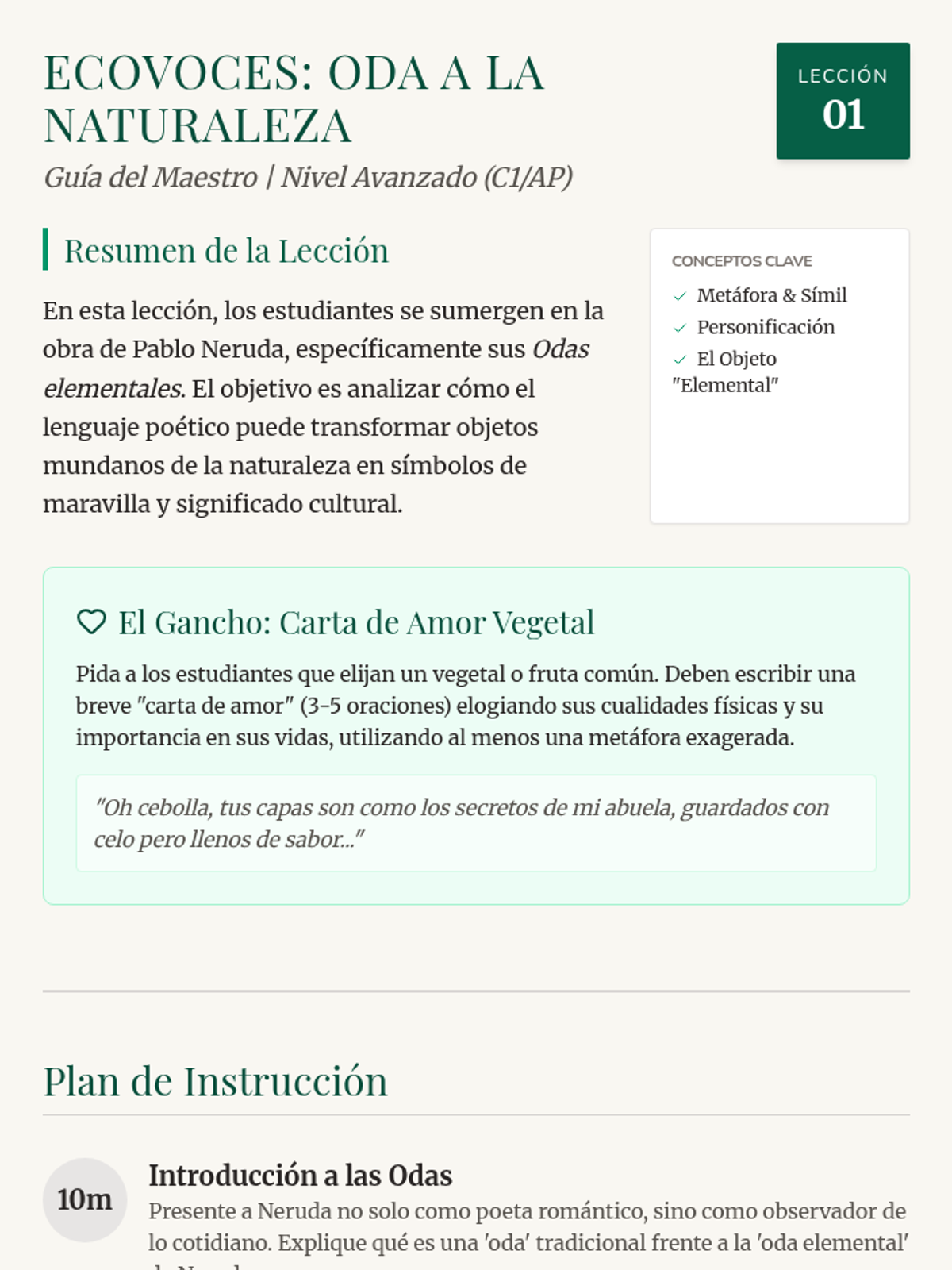
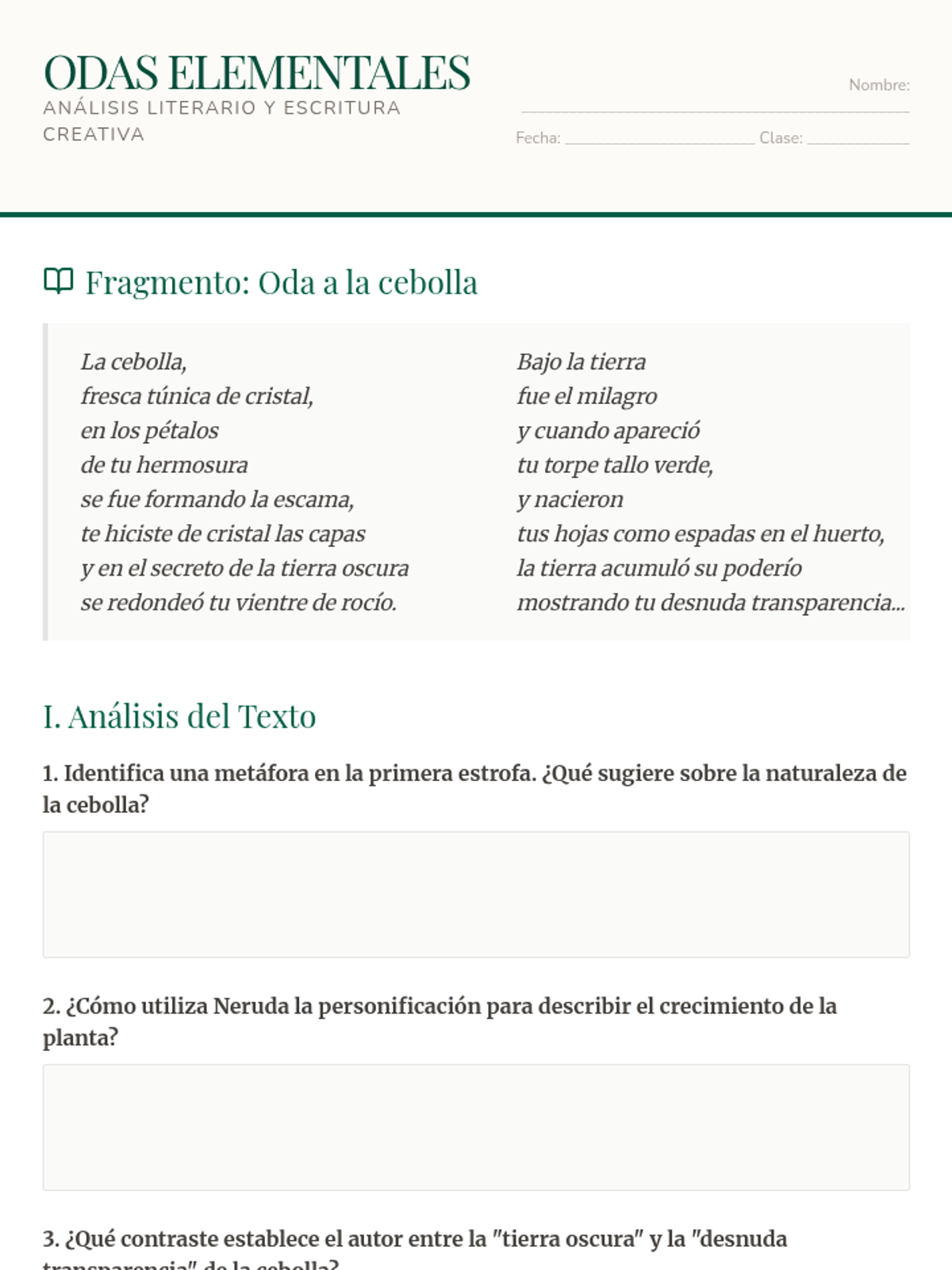
Students explore the poetic elevation of nature through Pablo Neruda's 'Odas Elementales'. The lesson focuses on metaphor, personification, and the cultural significance of ordinary natural objects.
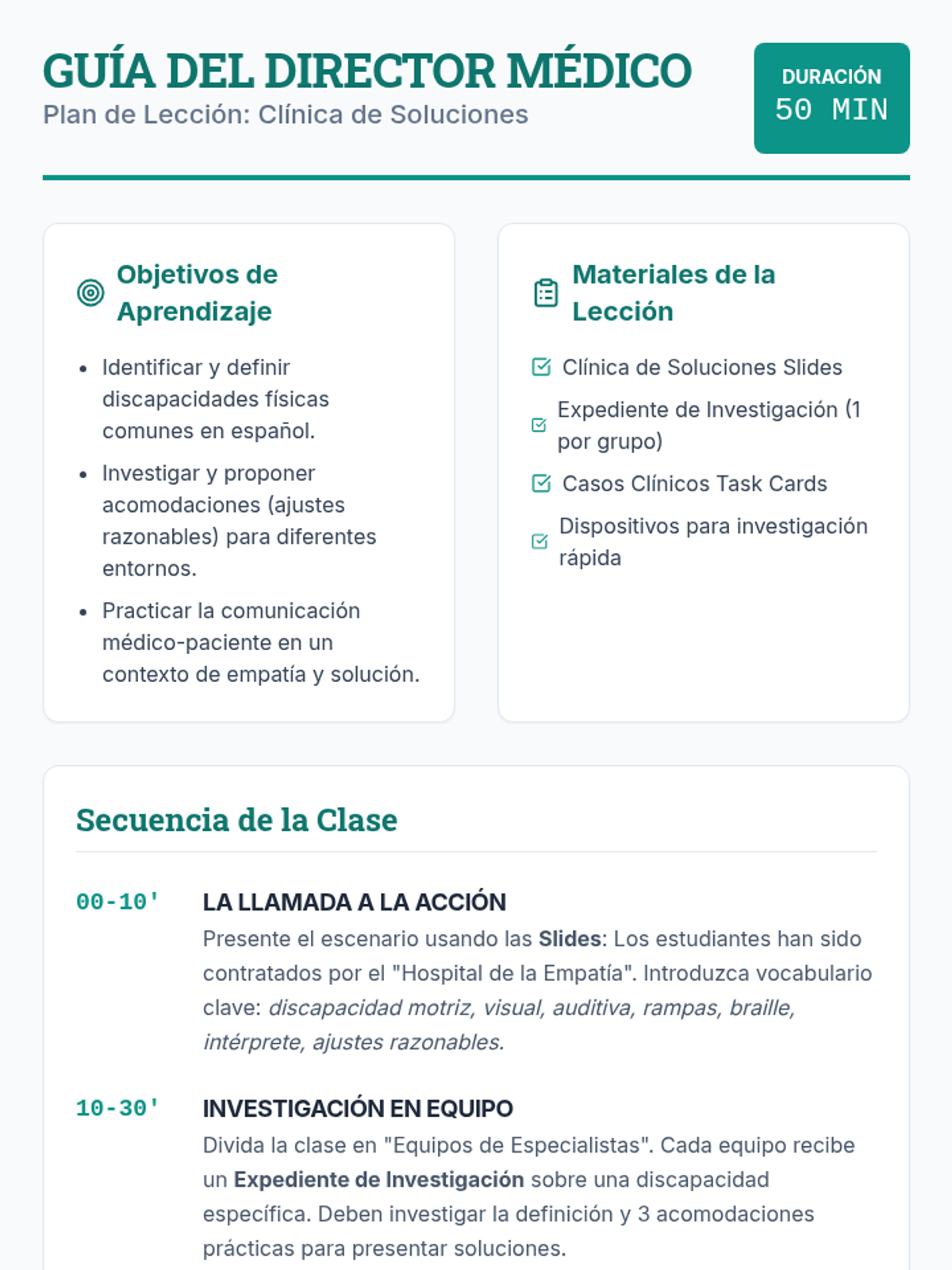
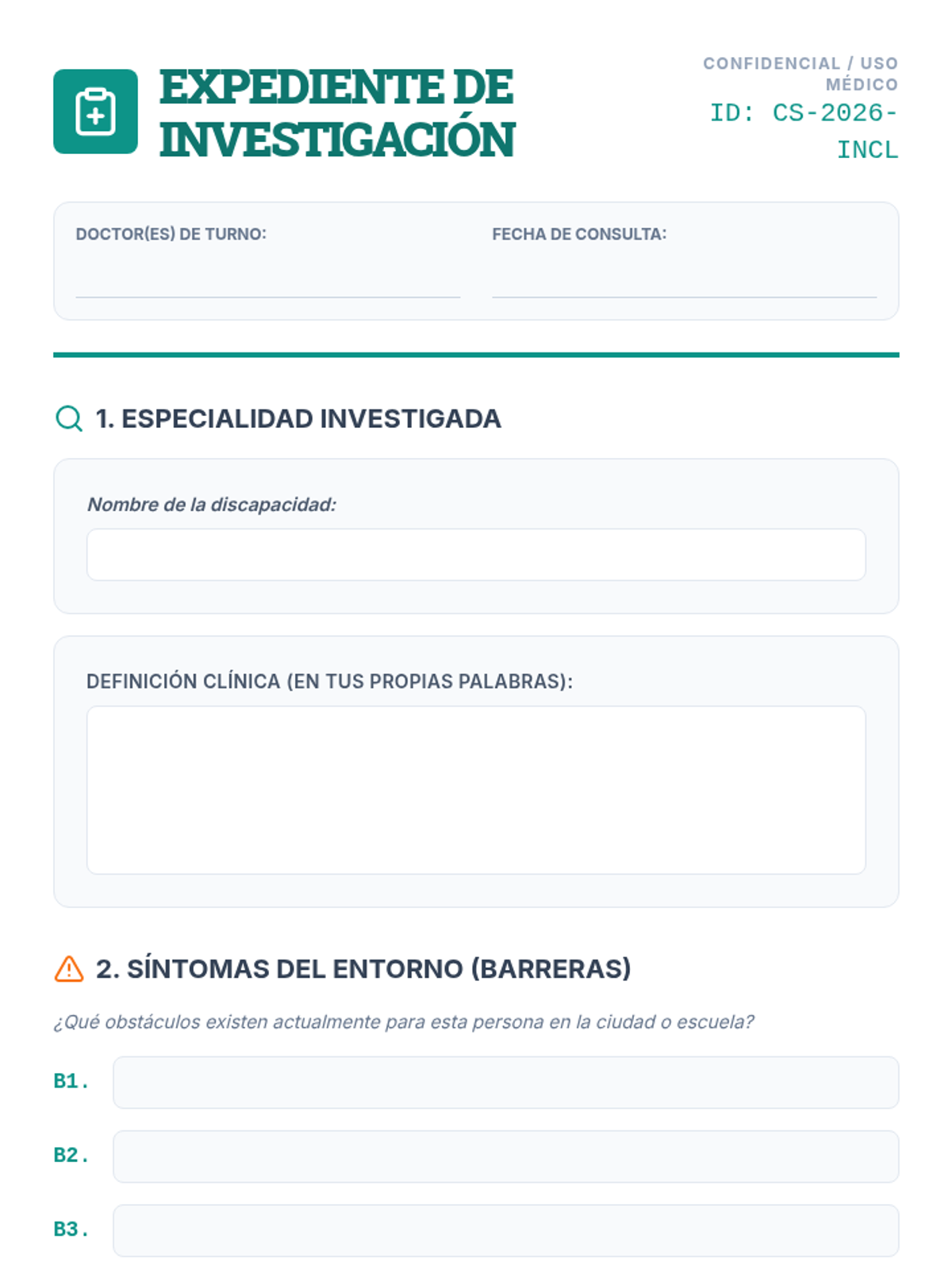
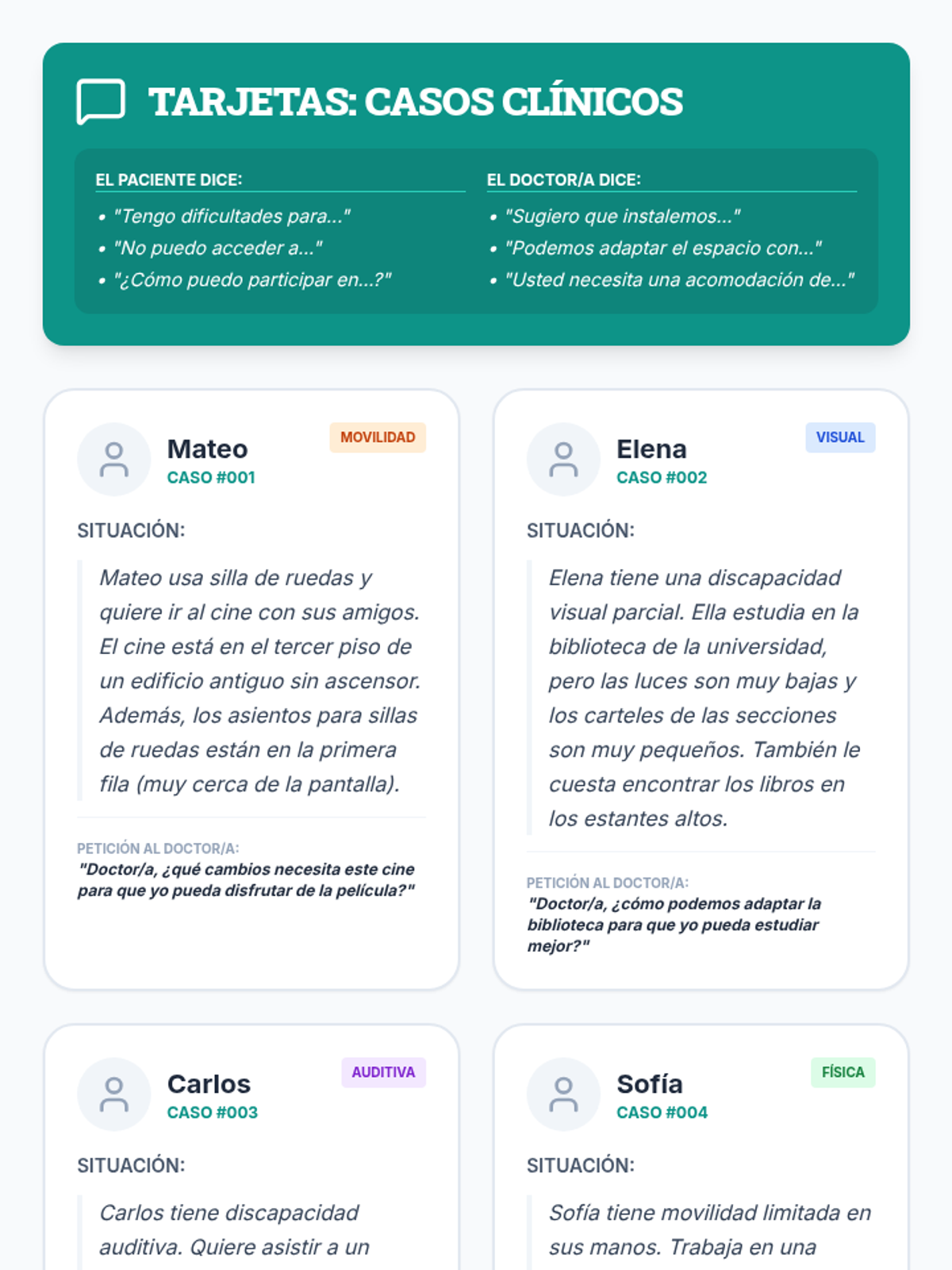
A high-energy, collaborative lesson where students act as medical consultants to research physical disabilities and design inclusive accommodations through role-play.
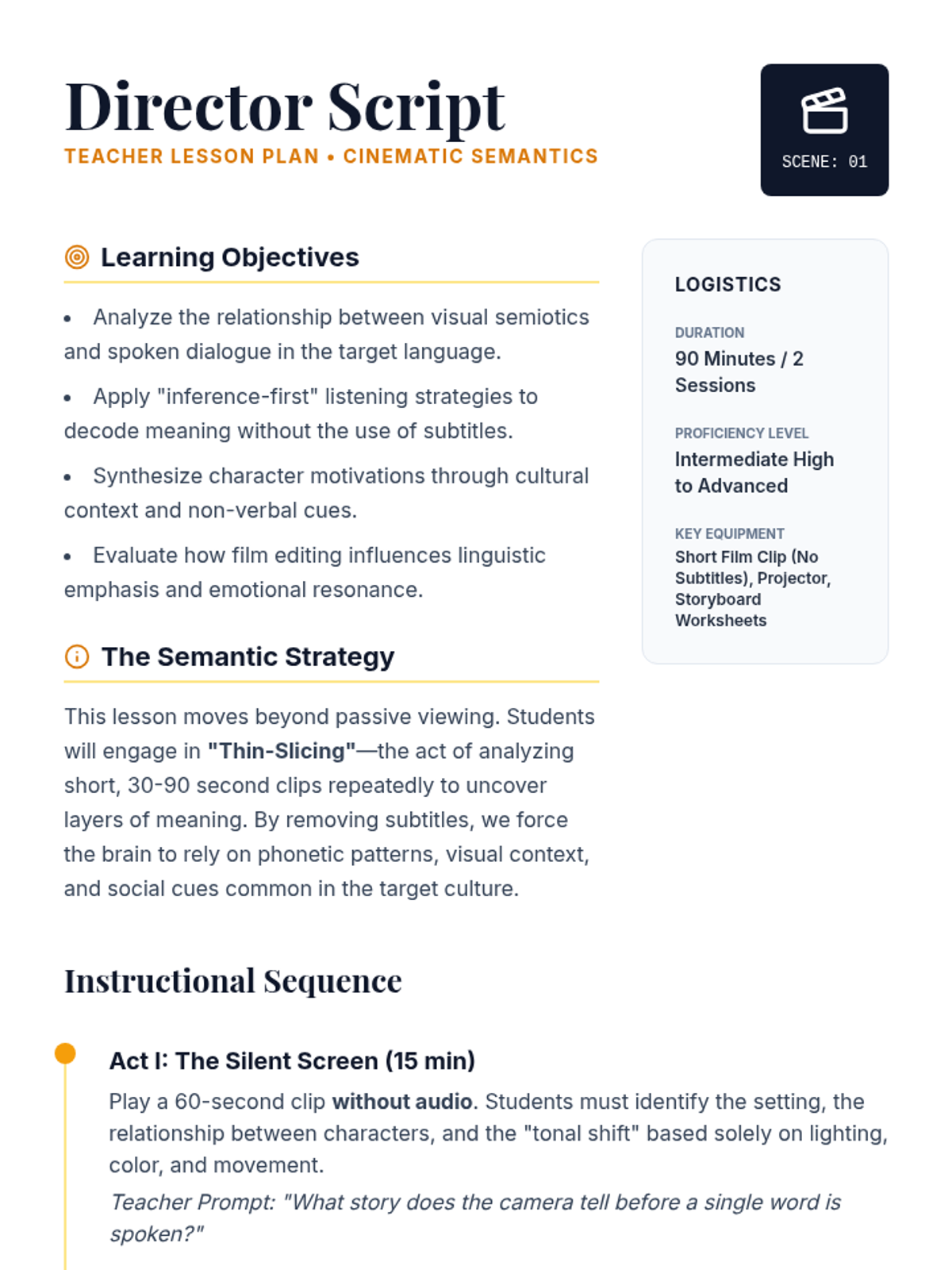
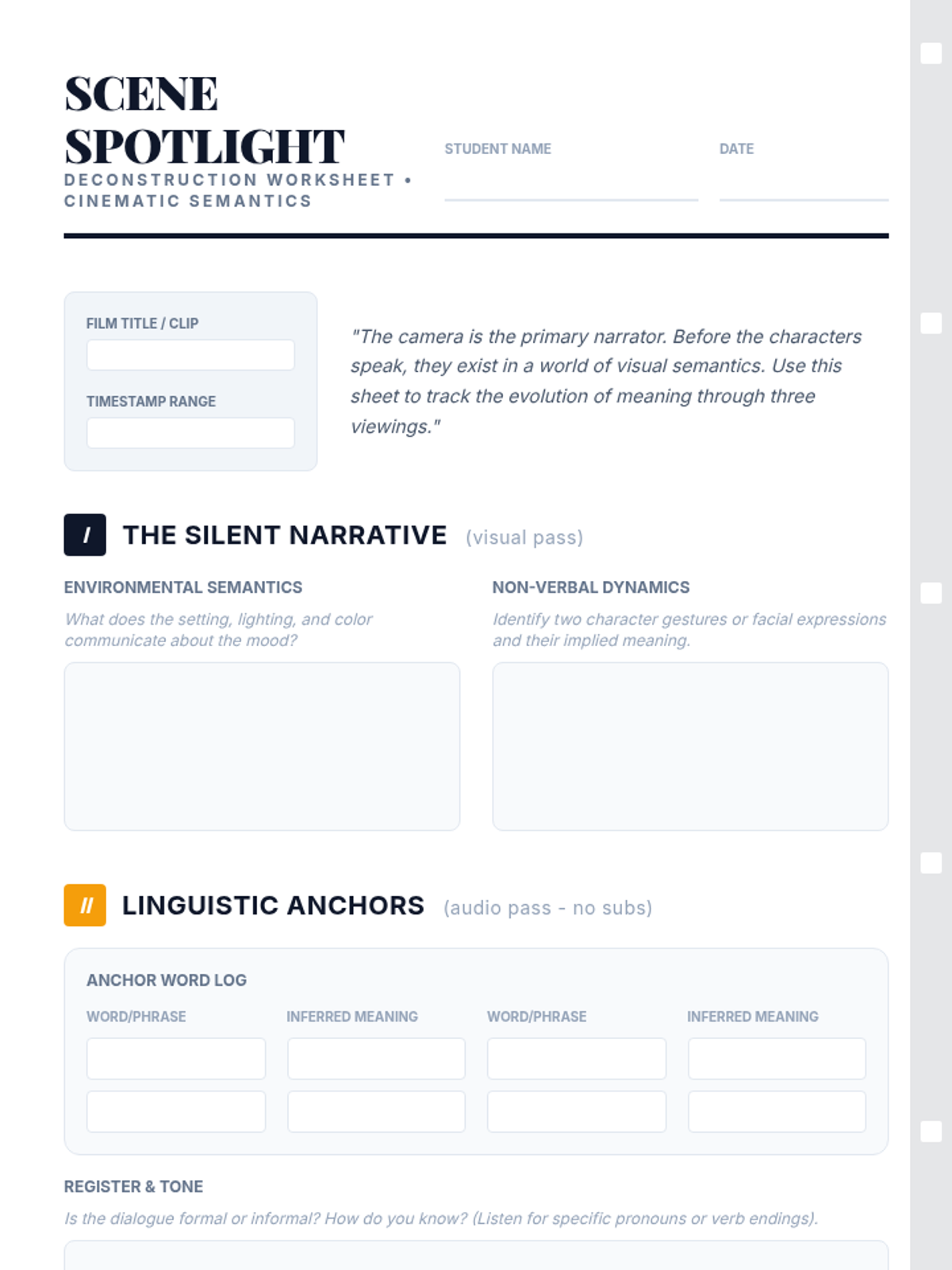
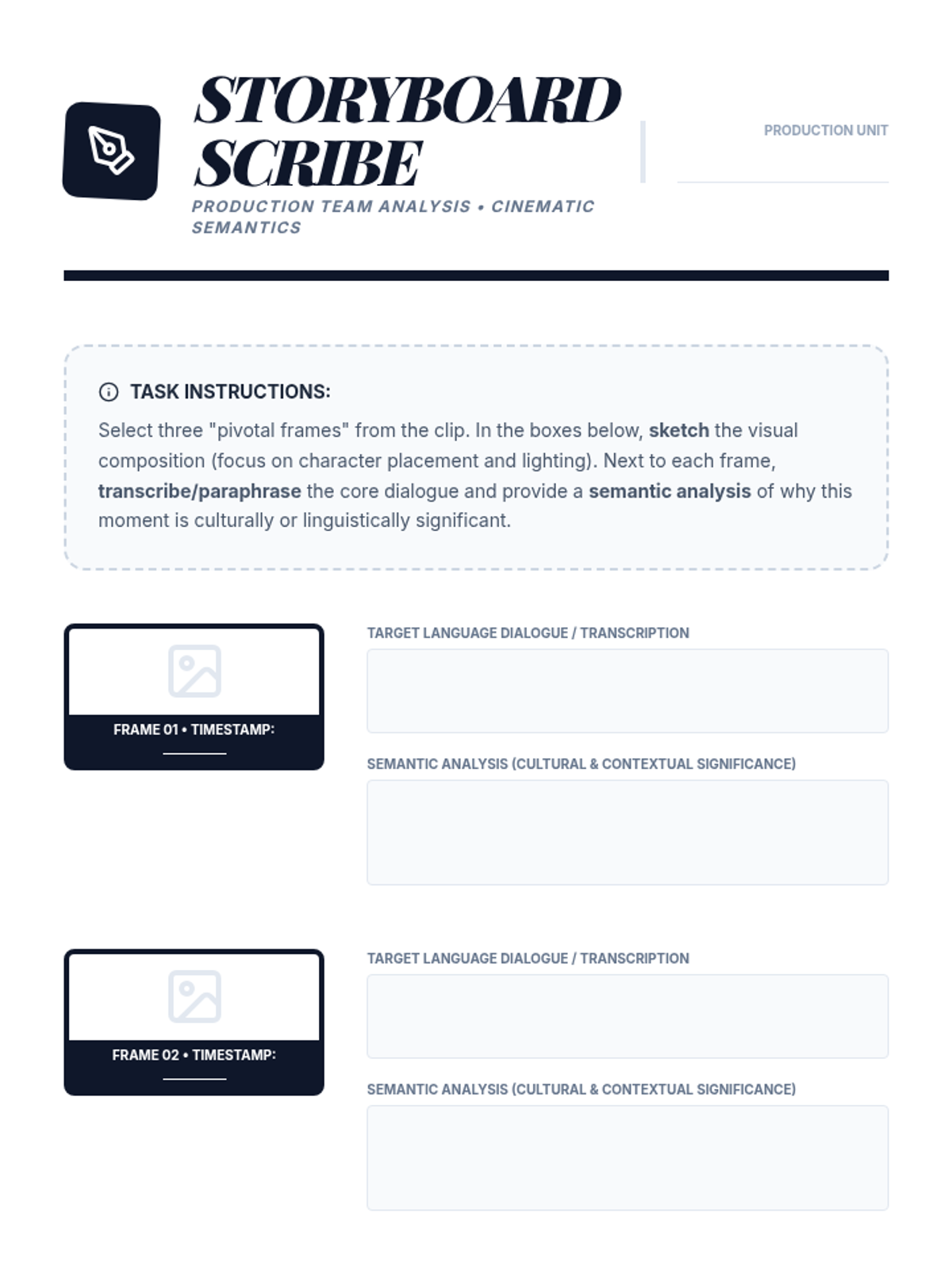
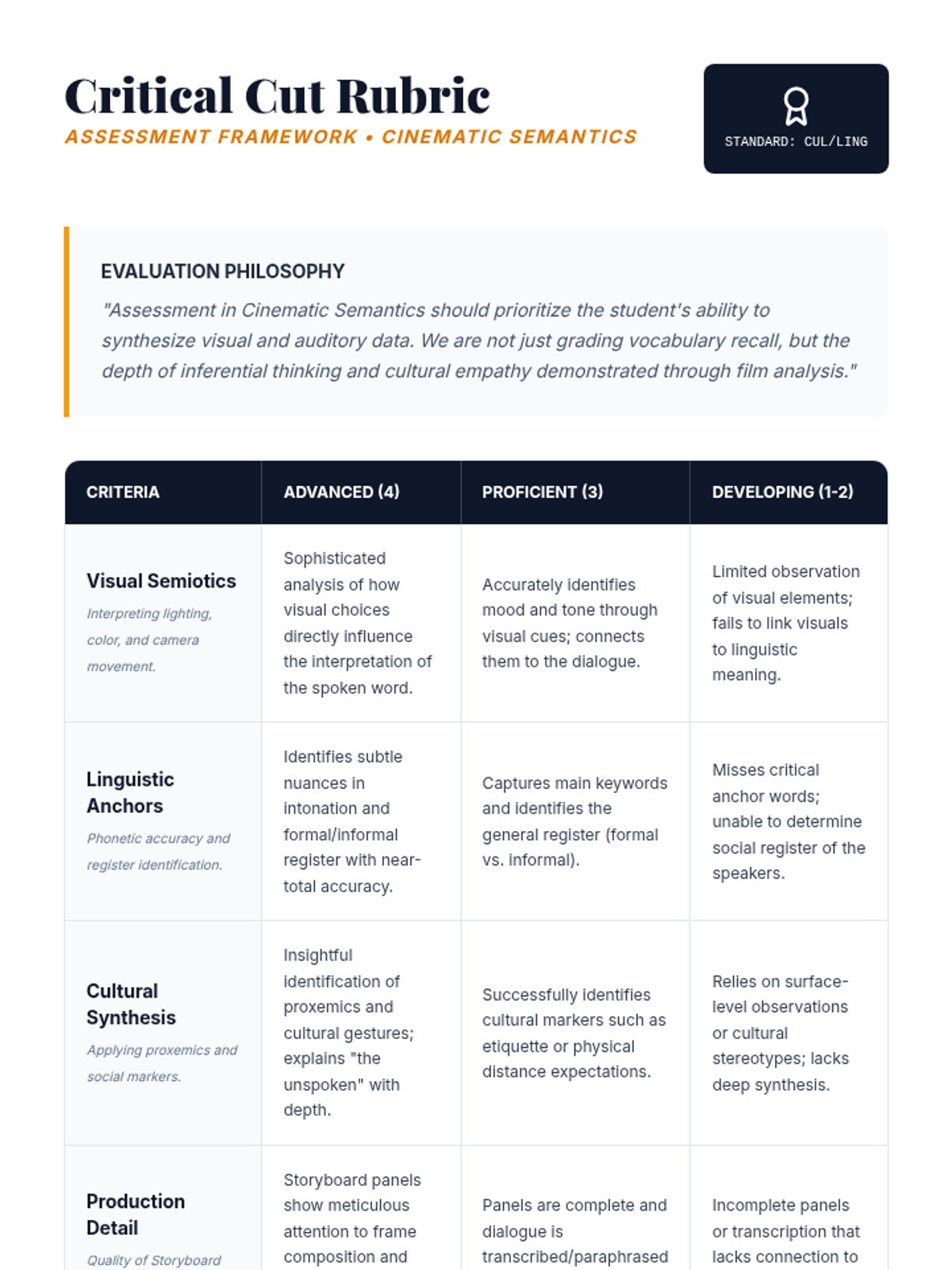
A comprehensive framework for foreign language educators to guide students through deep linguistic and cultural analysis of film, focusing on visual storytelling and advanced listening strategies.
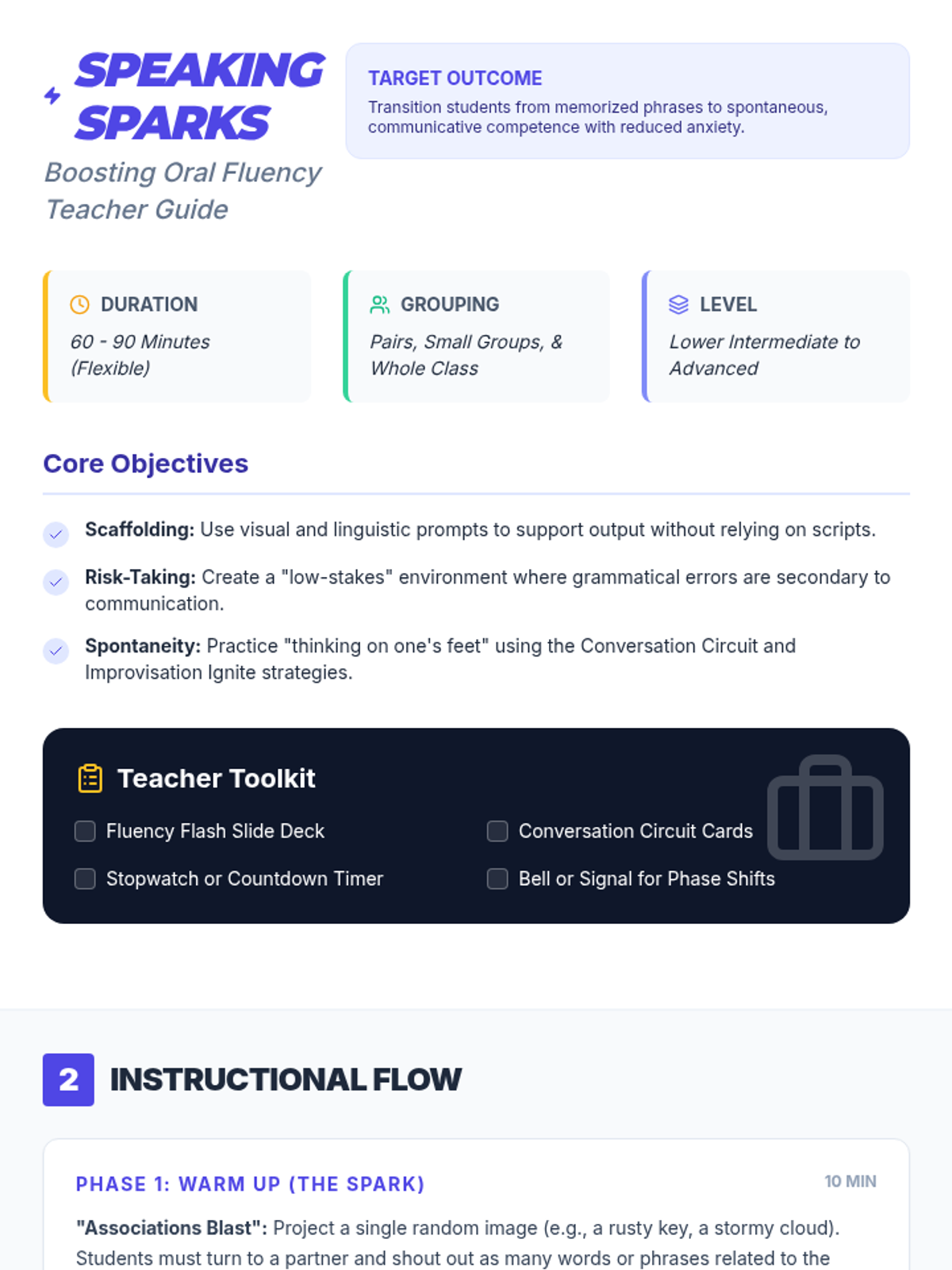
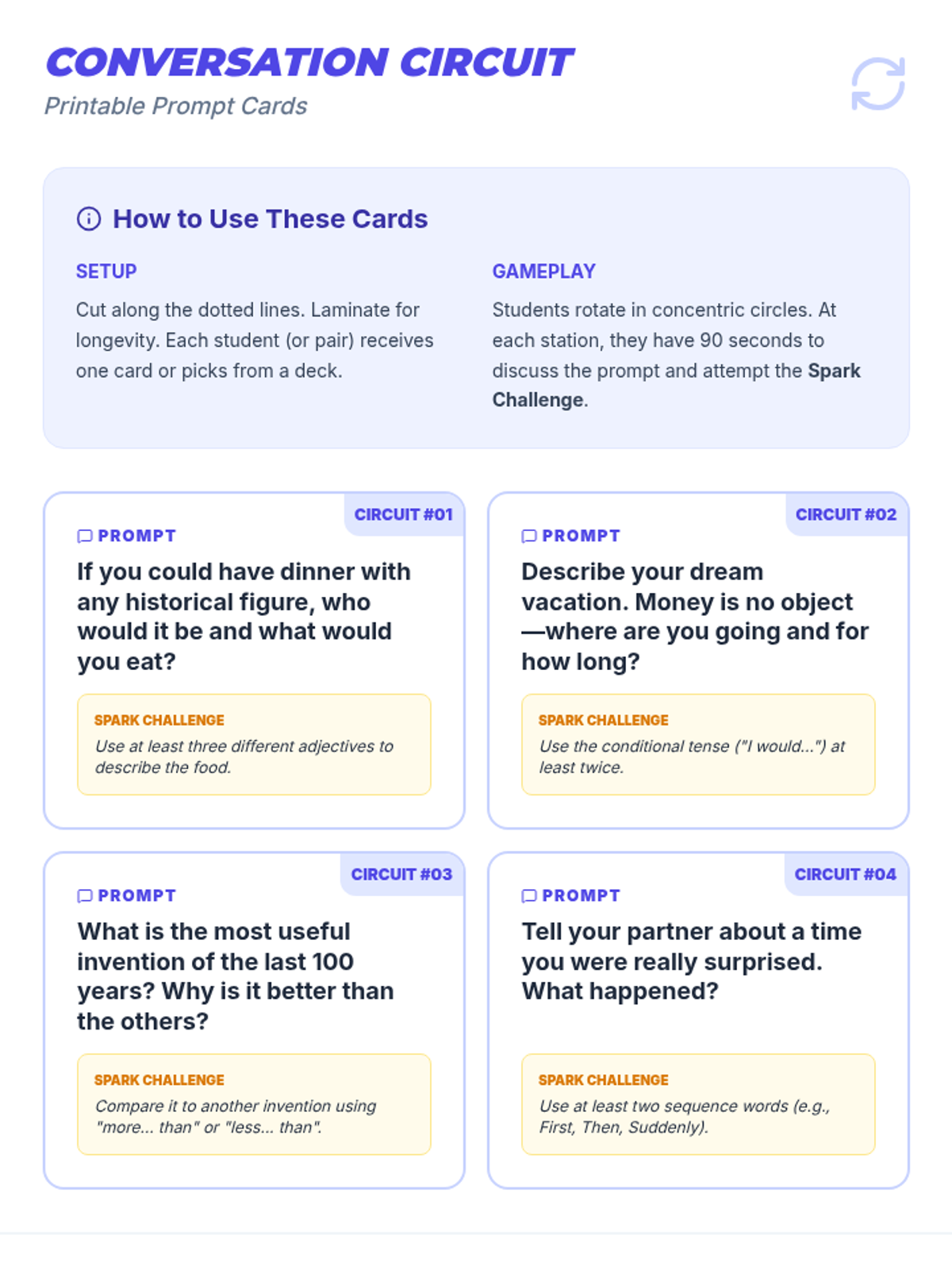
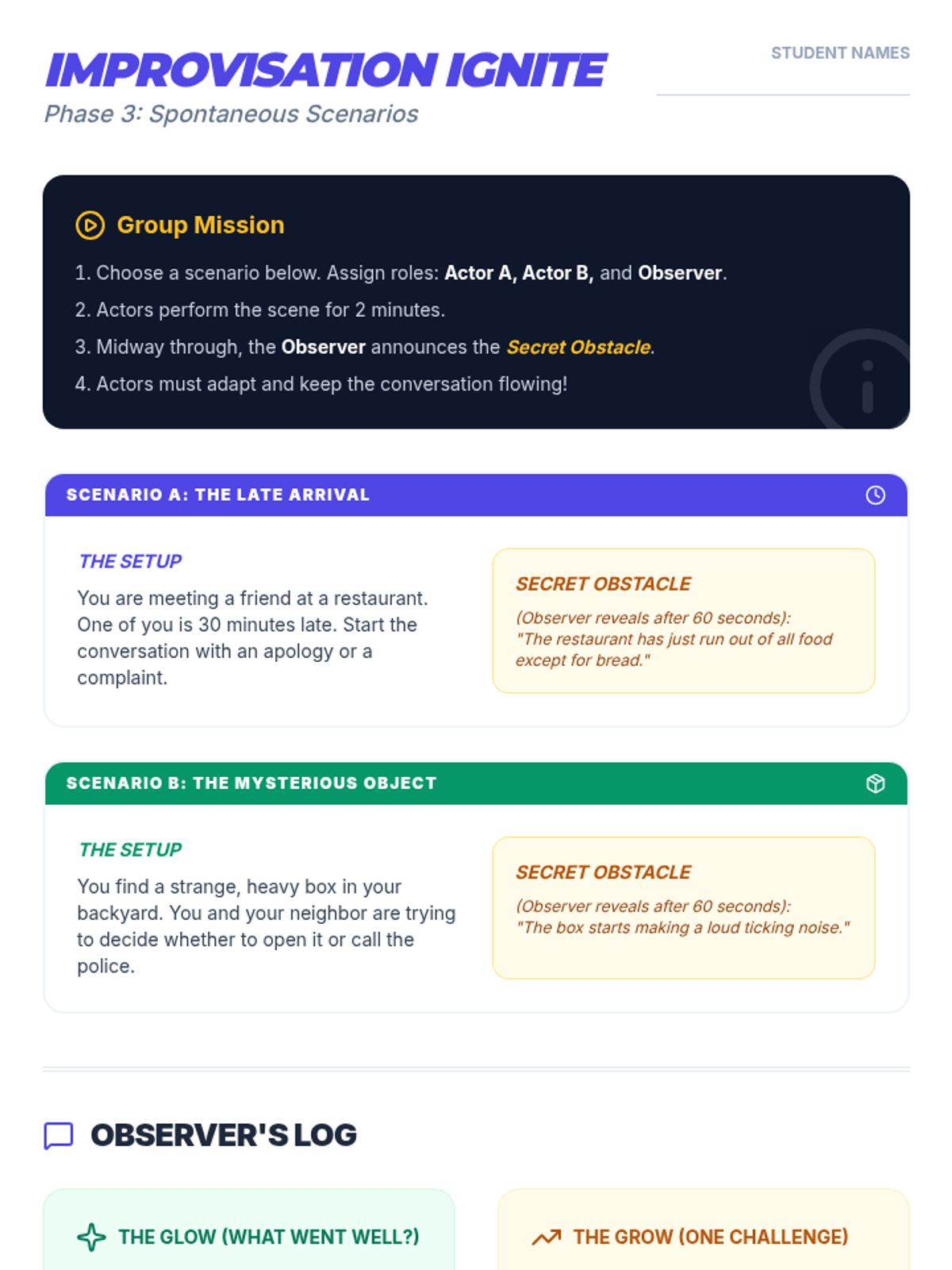
A comprehensive toolkit for foreign language teachers to bridge the gap between rote memorization and spontaneous oral communication through interactive activities and low-stakes scaffolding.
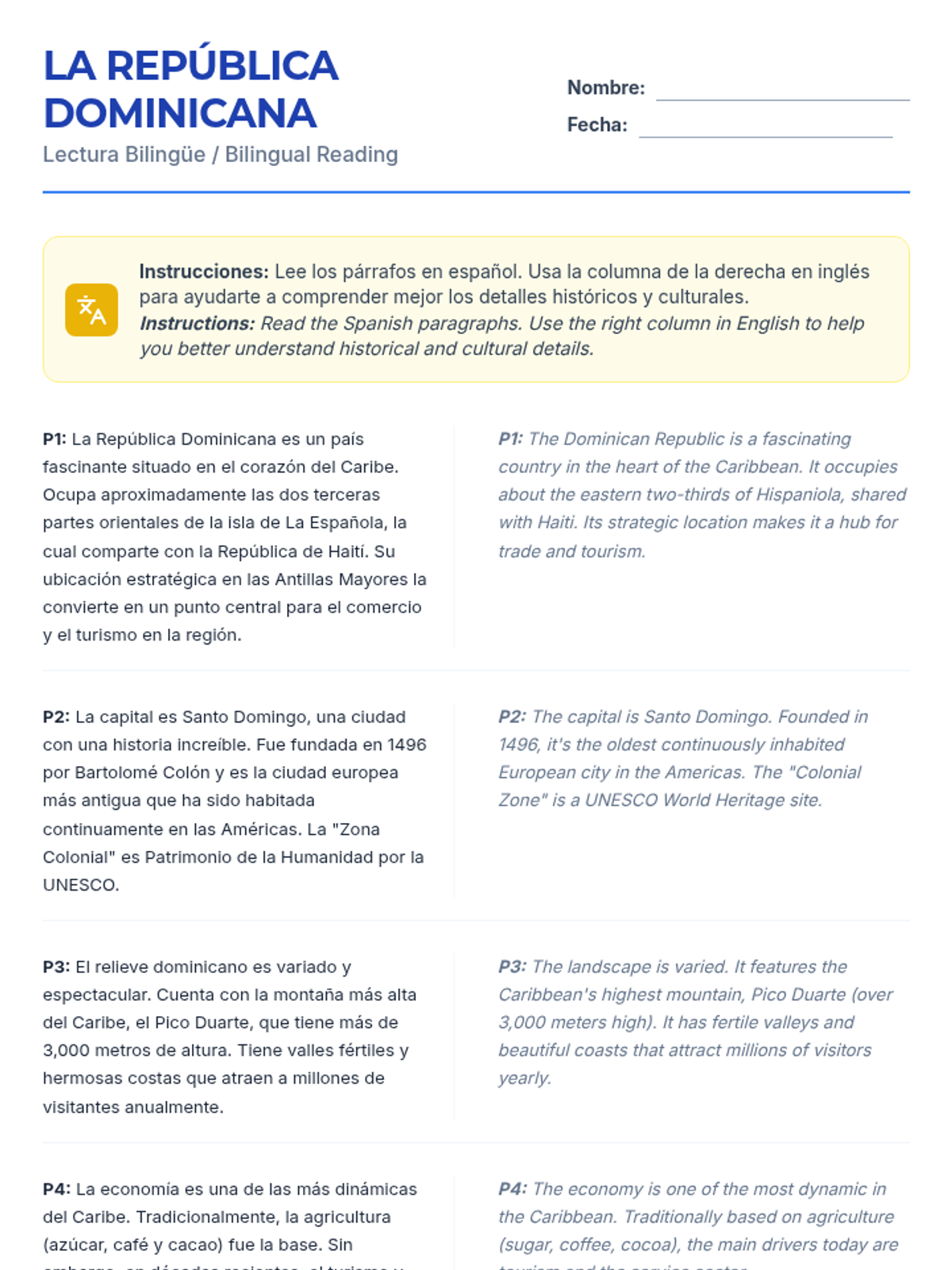
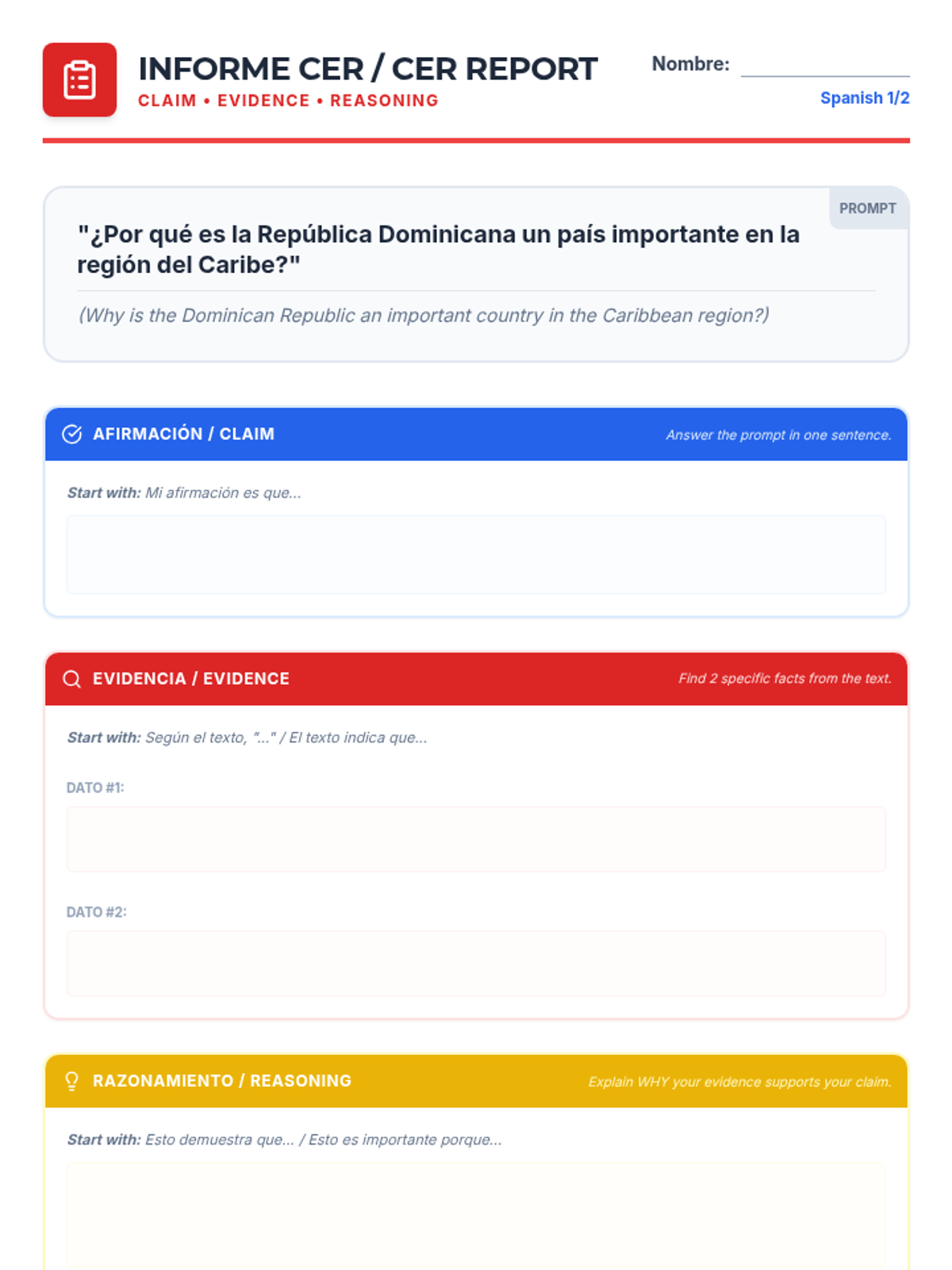
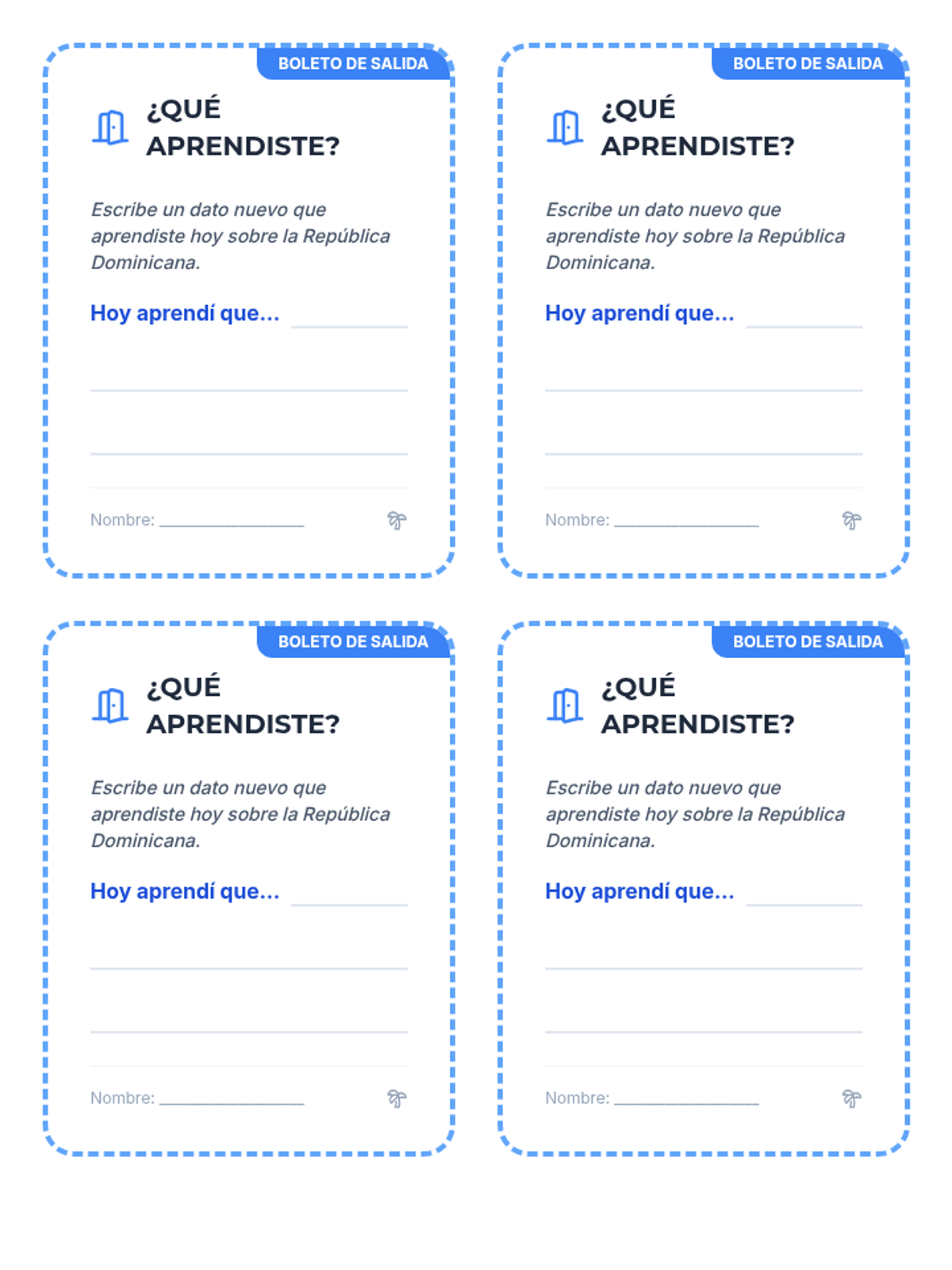
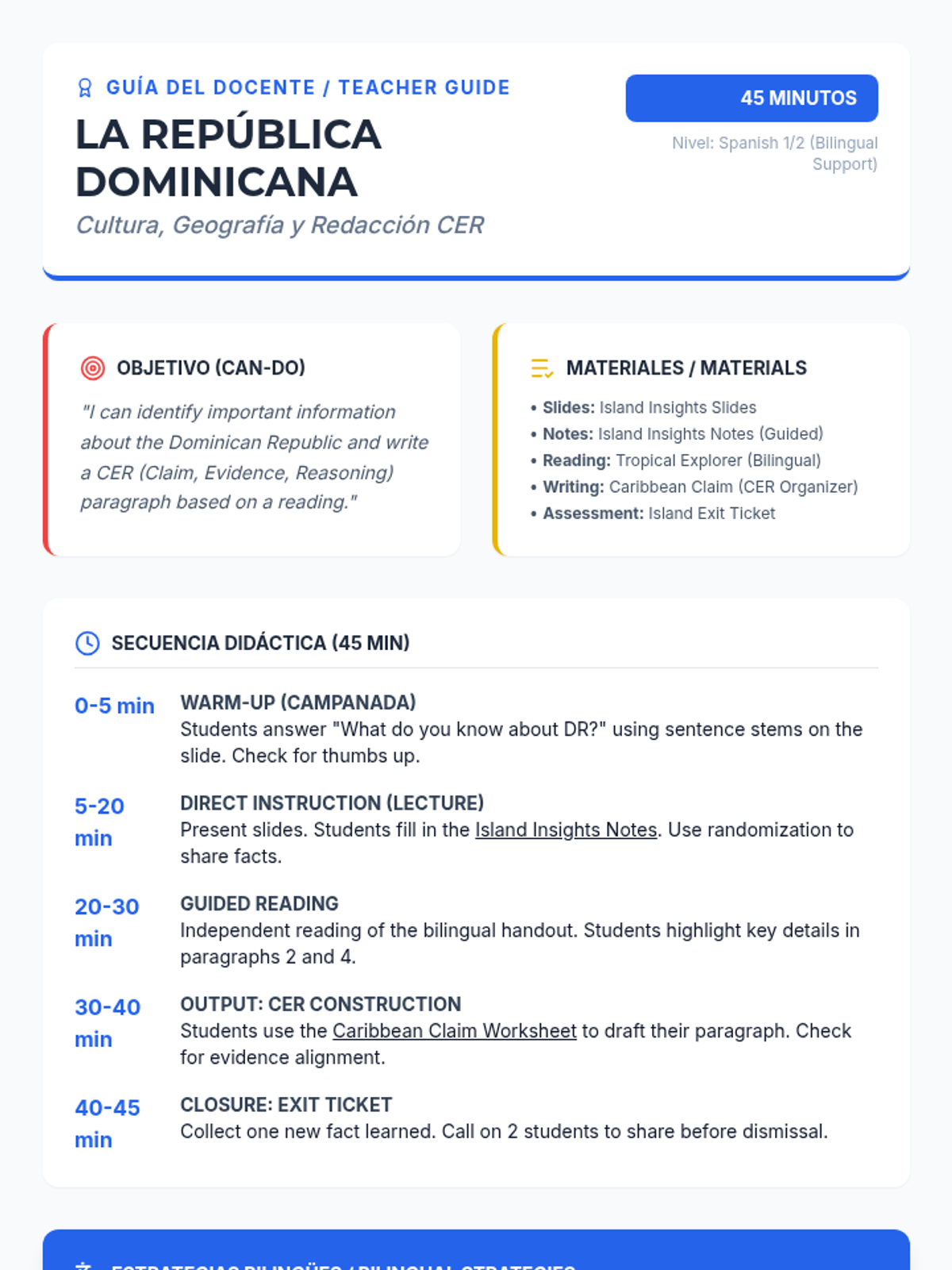
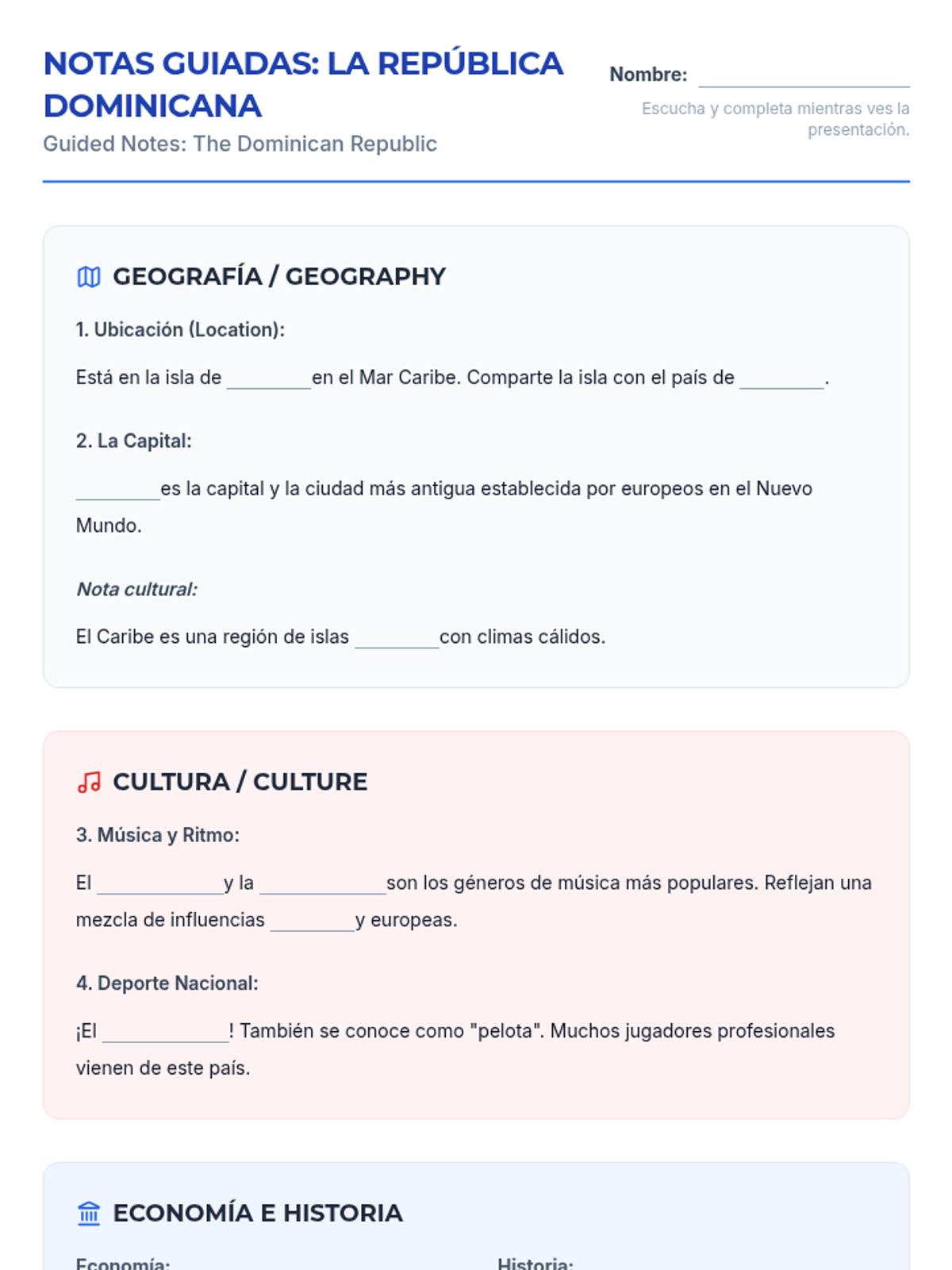
Students will explore the geography, history, and culture of the Dominican Republic, culminating in a CER paragraph using evidence from an informational text.
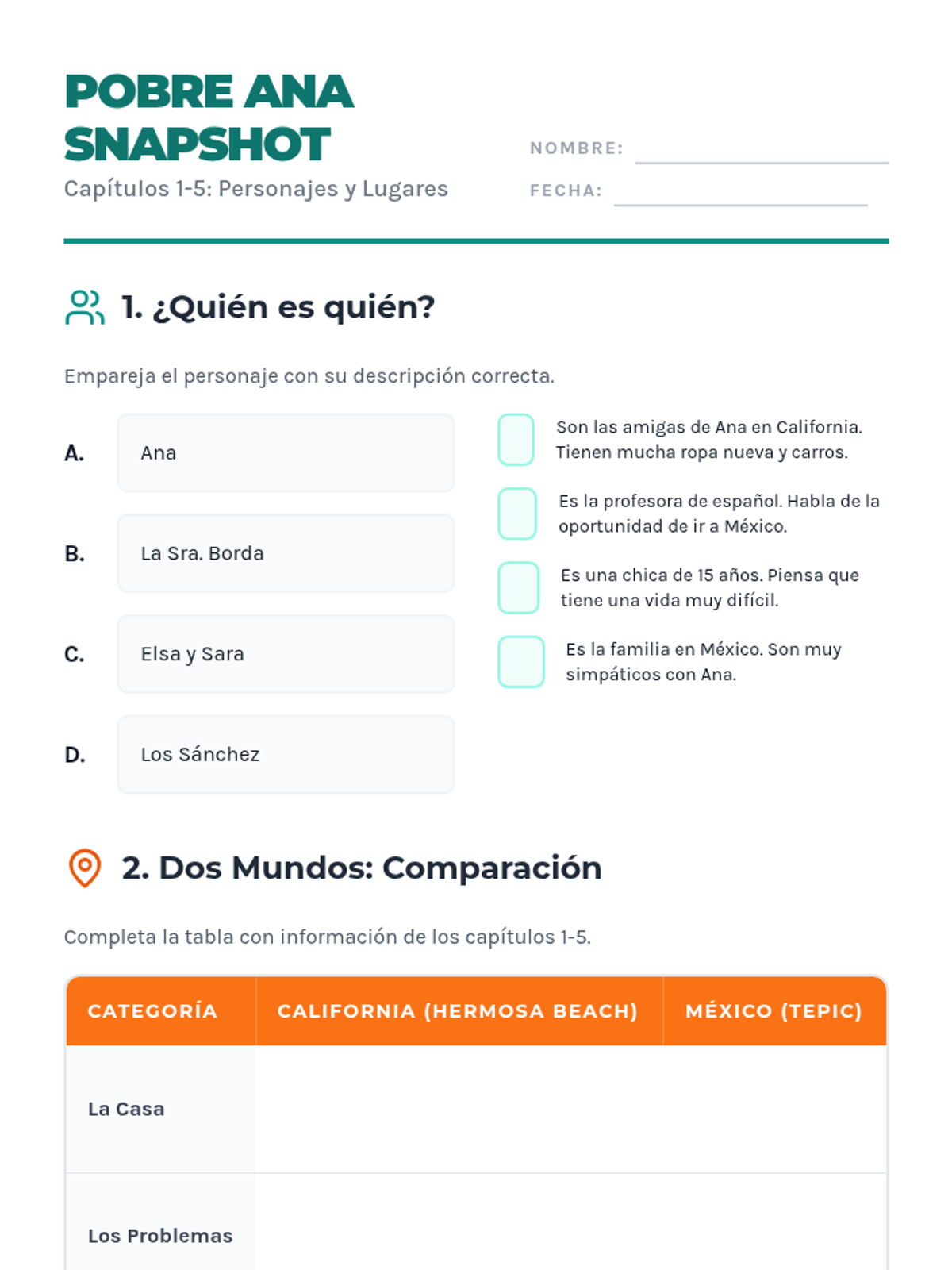
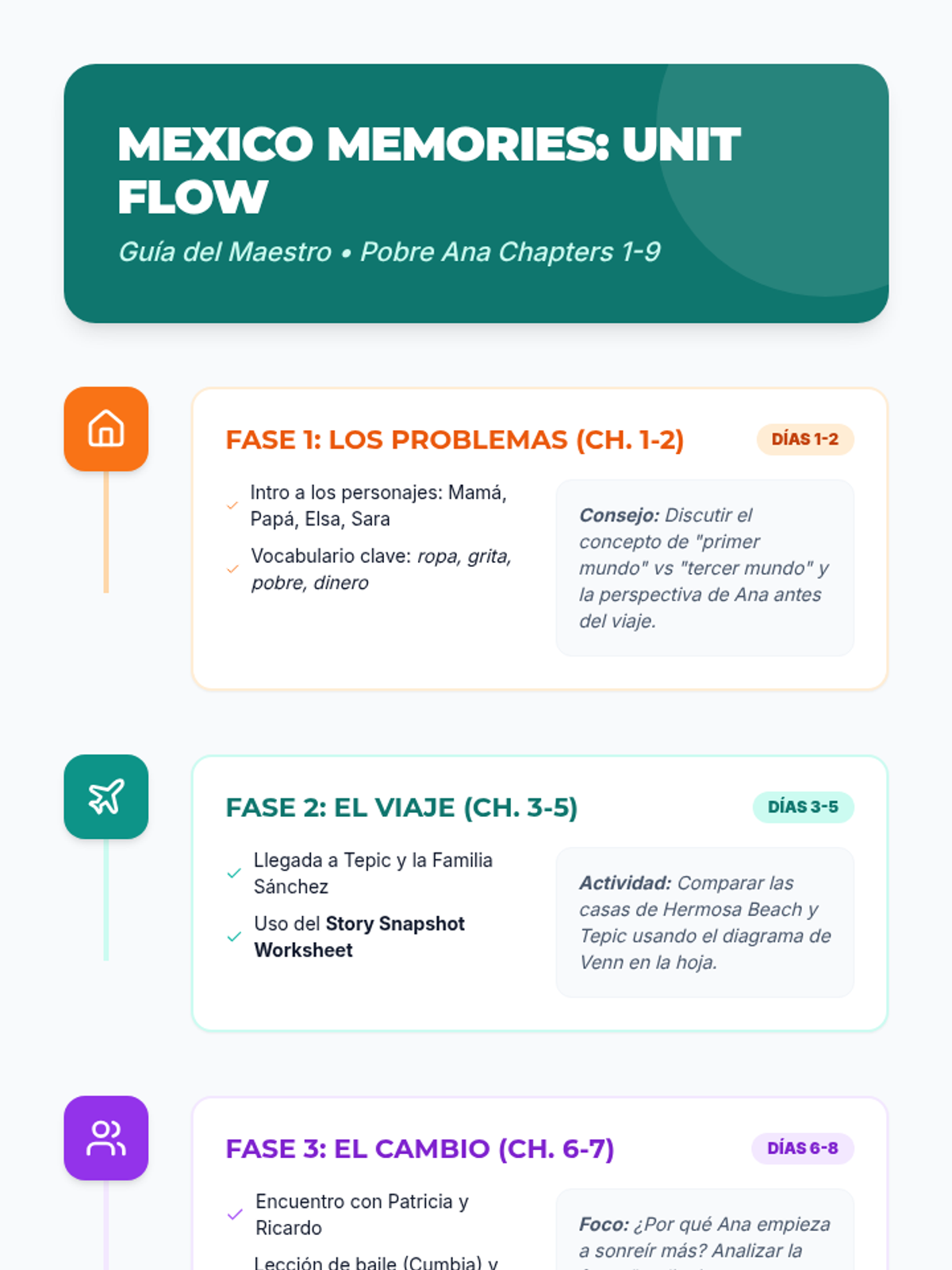
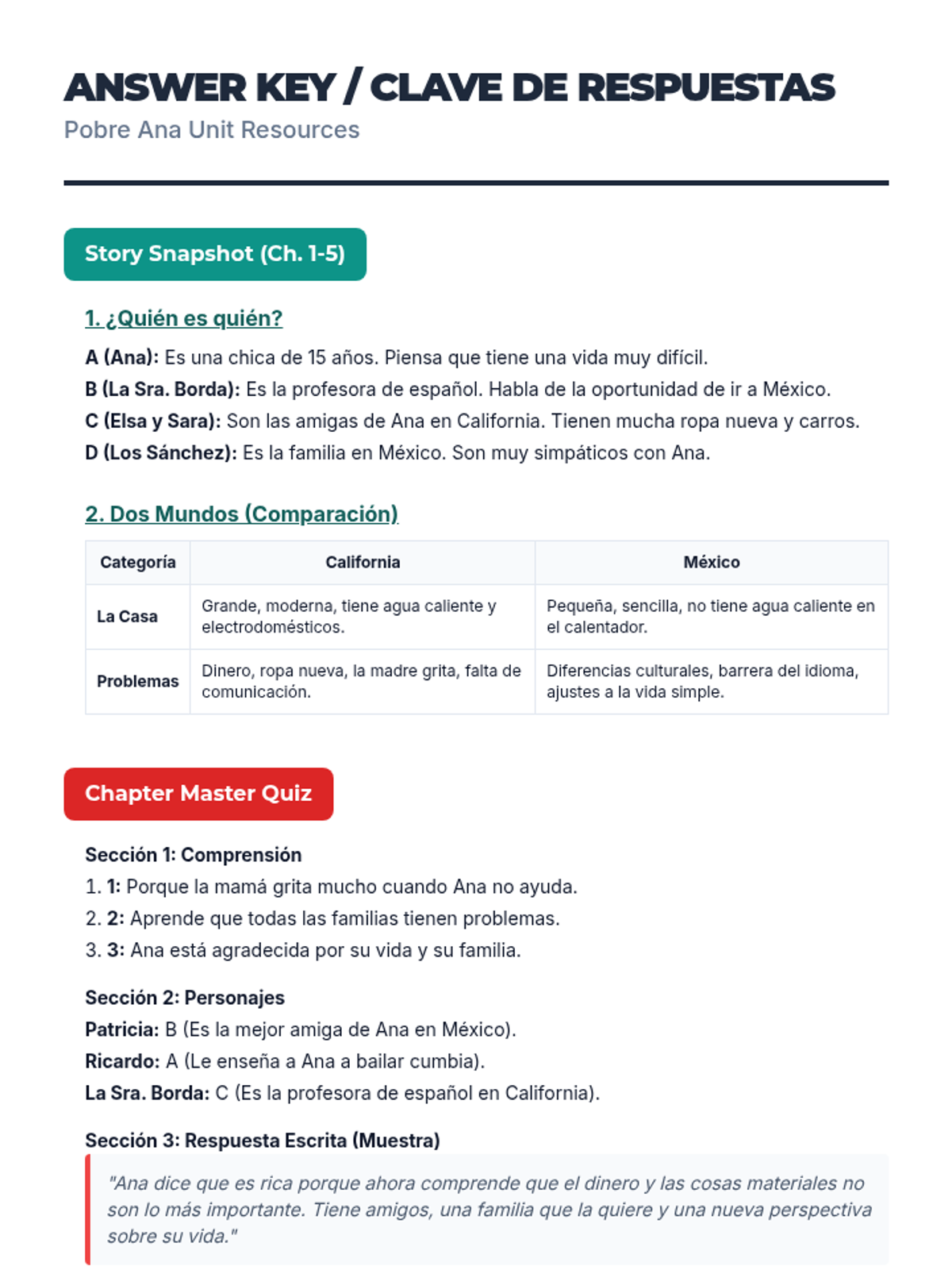
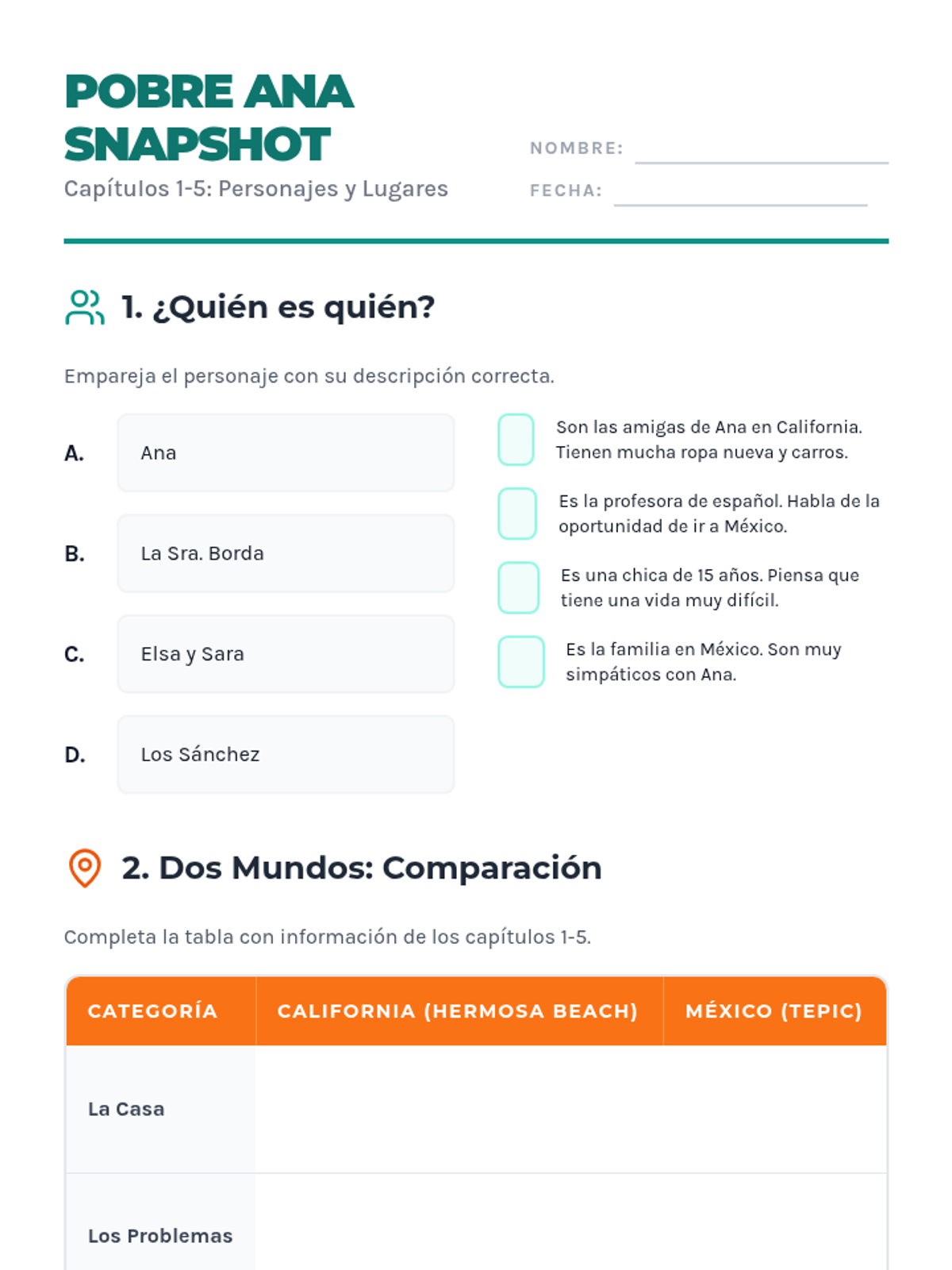
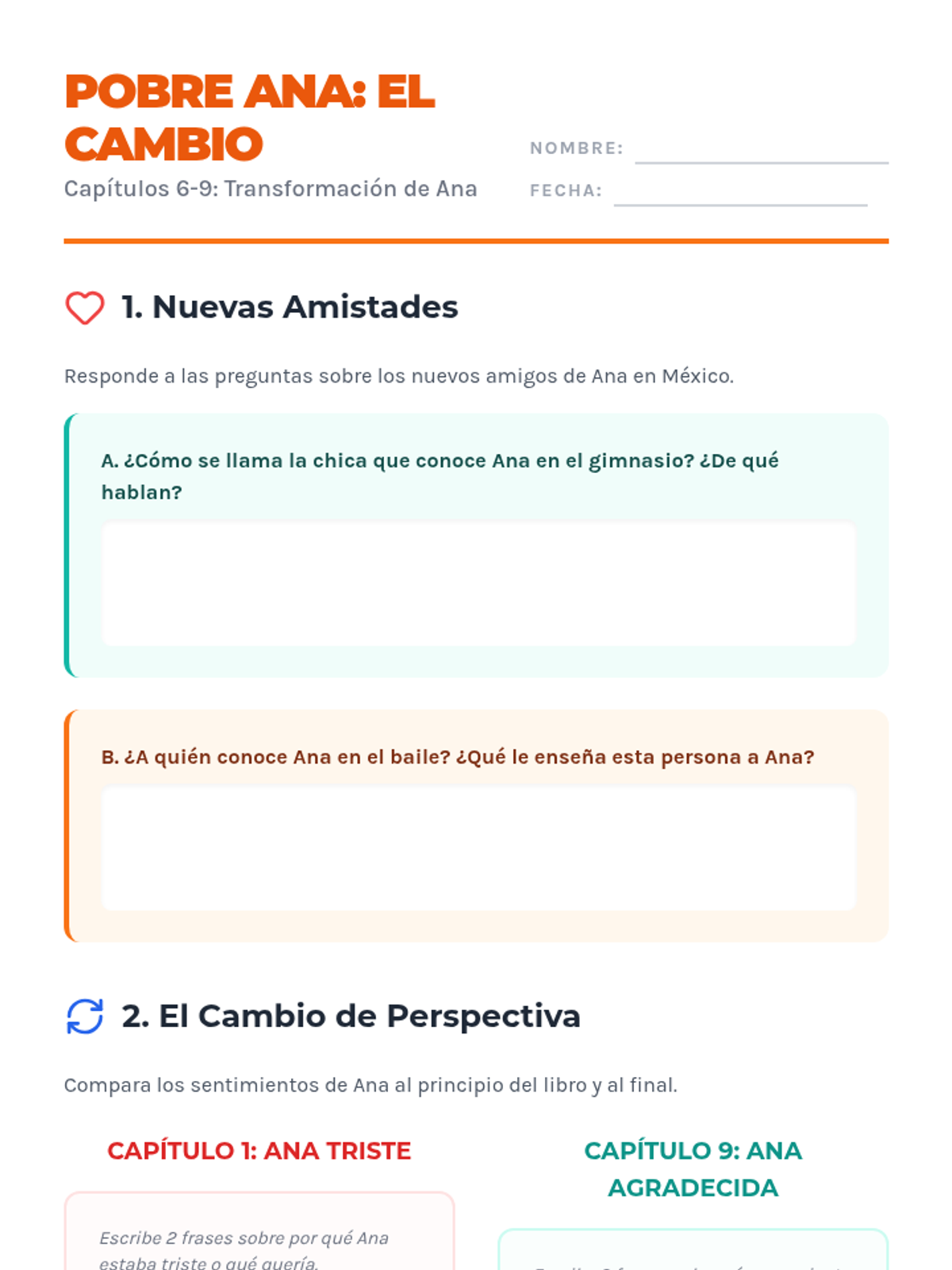
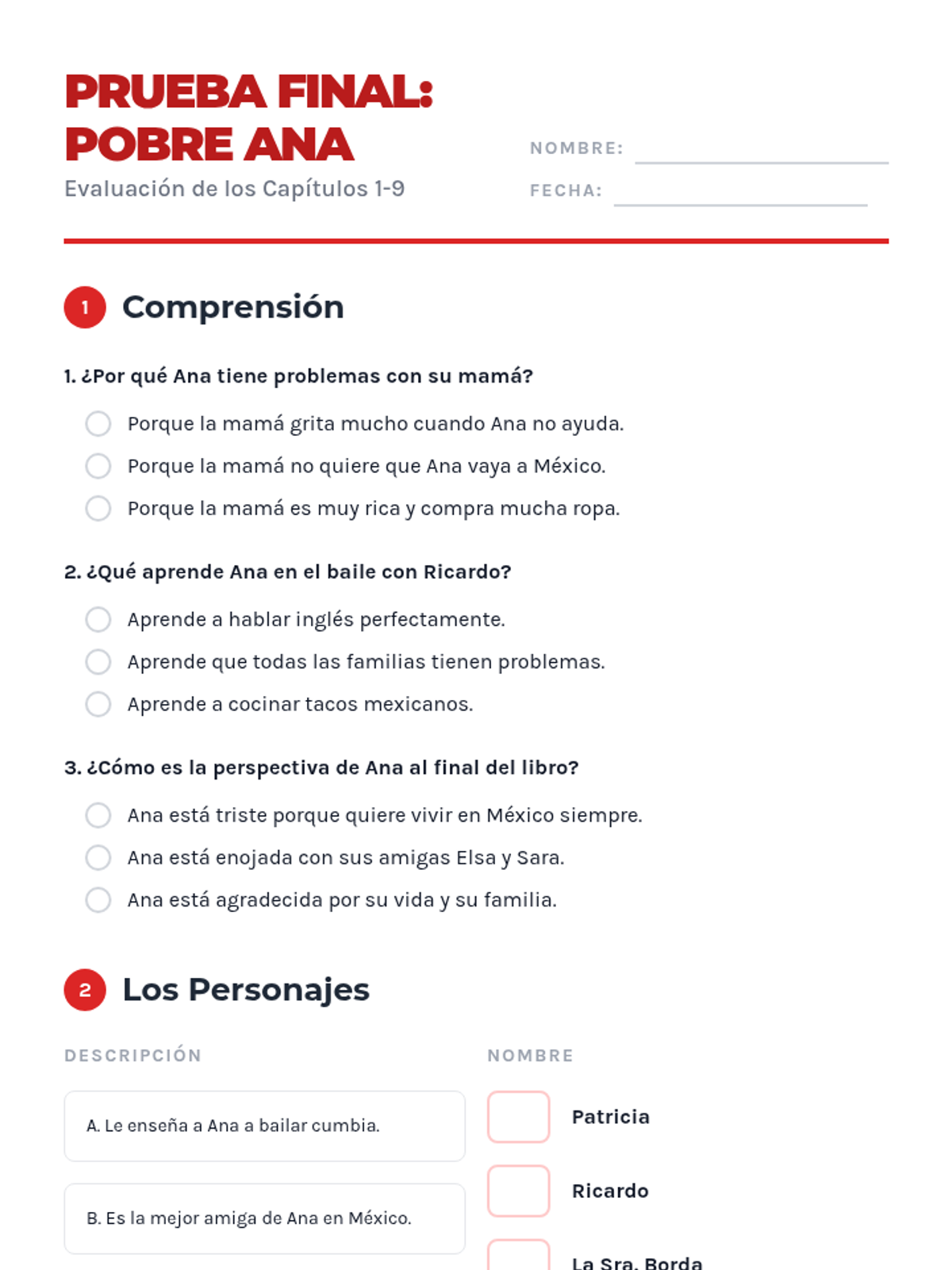
A deep dive into the first half of the novel, focusing on Ana's life in California, her struggles, and her initial arrival and culture shock in Mexico.
Explores the concluding chapters of the book, focusing on Ana's deepening friendships in Mexico, her perspective shift regarding wealth and happiness, and her return to California.
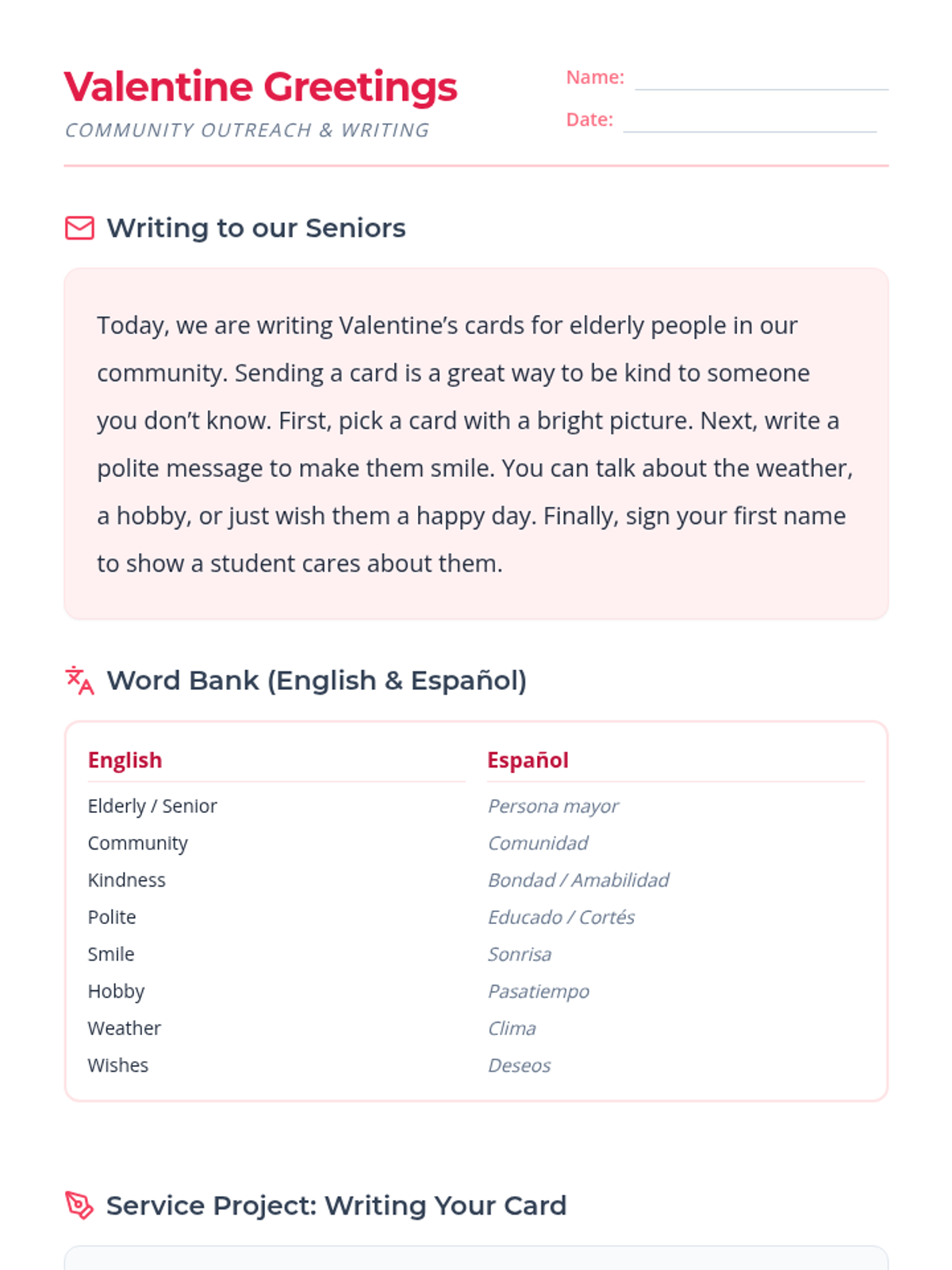
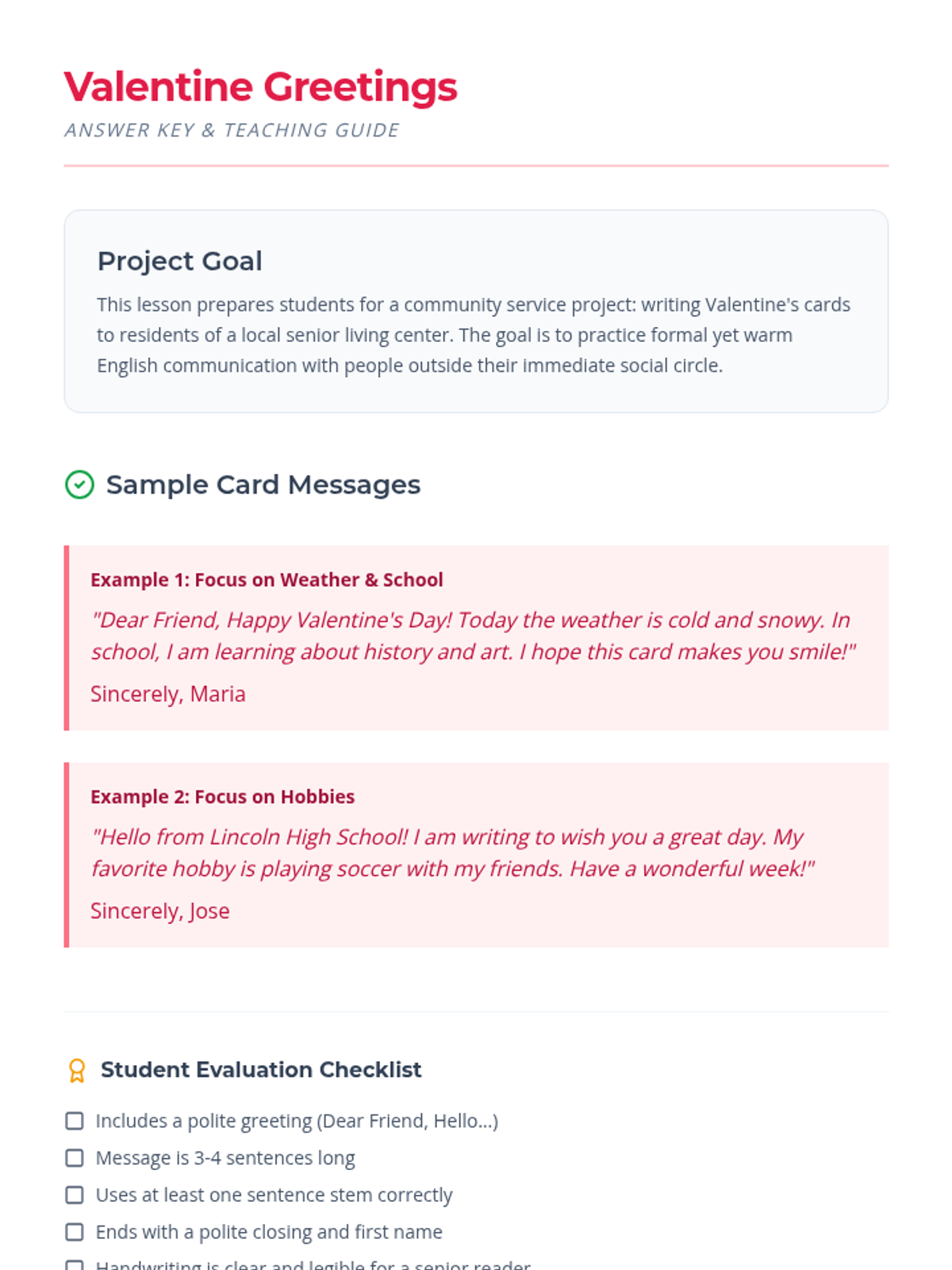
A lesson focused on the cultural tradition of sending Valentine's Day cards, designed for ESL students to practice functional reading and writing skills.
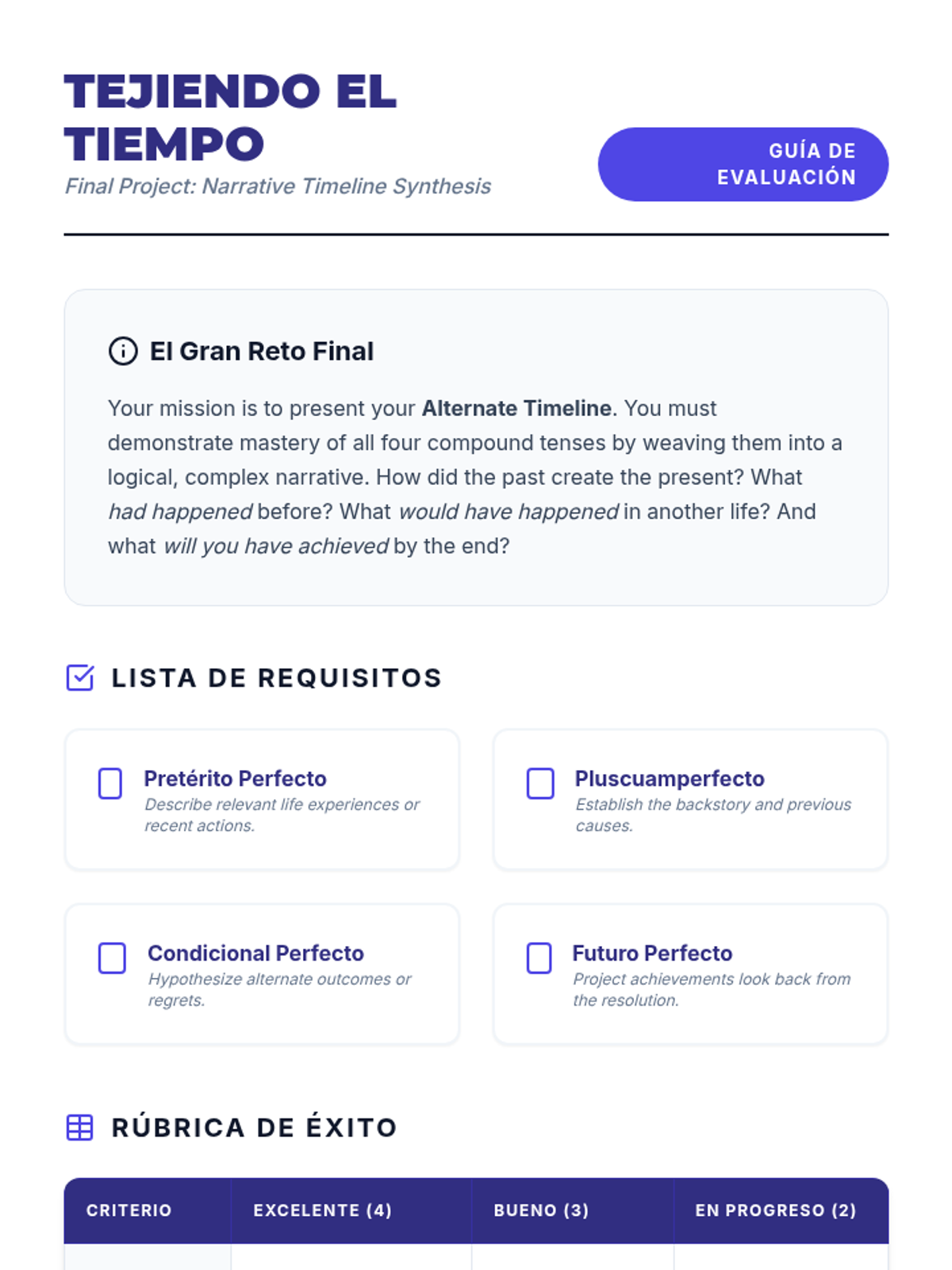
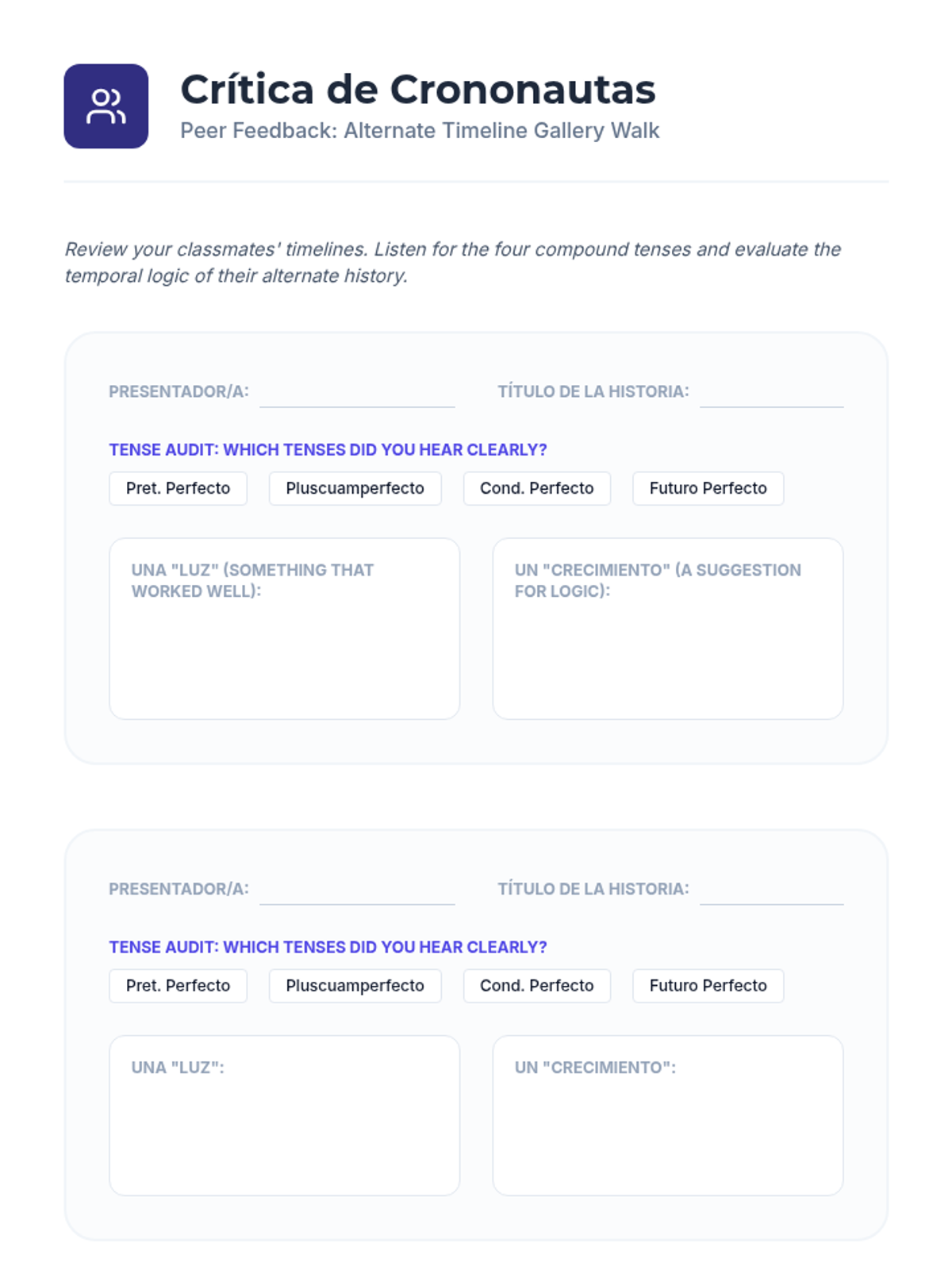
Students synthesize all compound tenses into their final narrative timeline presentation. They peer-edit for temporal logic and showcase their complex personal or fictional histories.
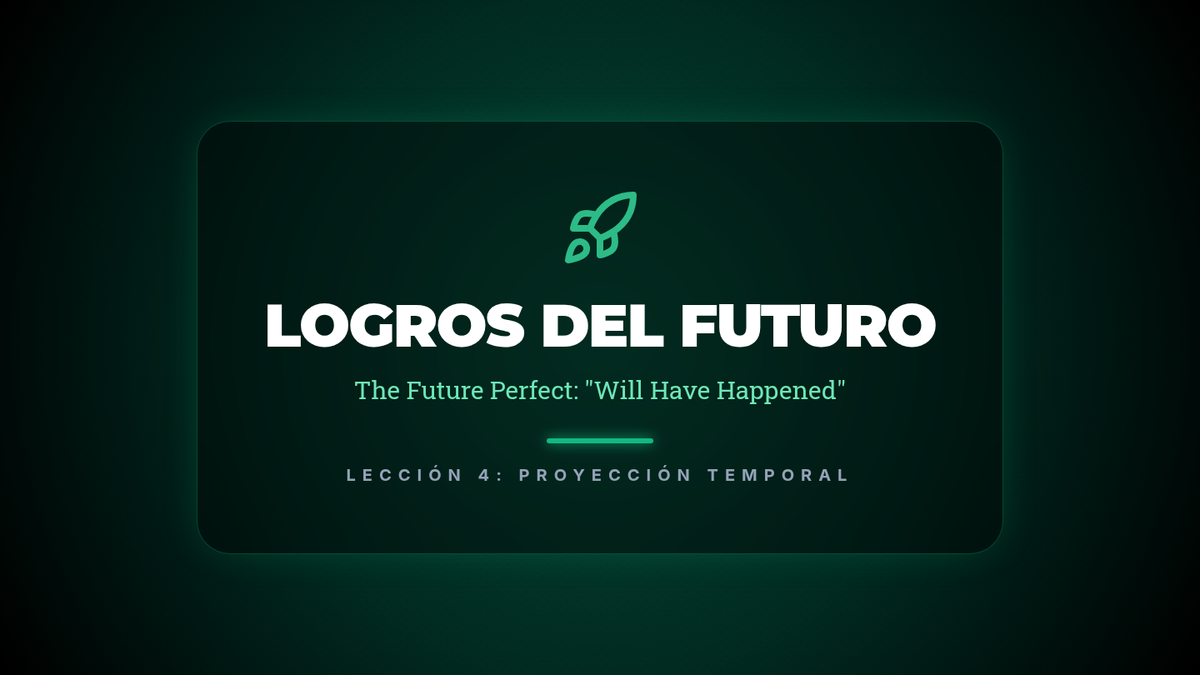
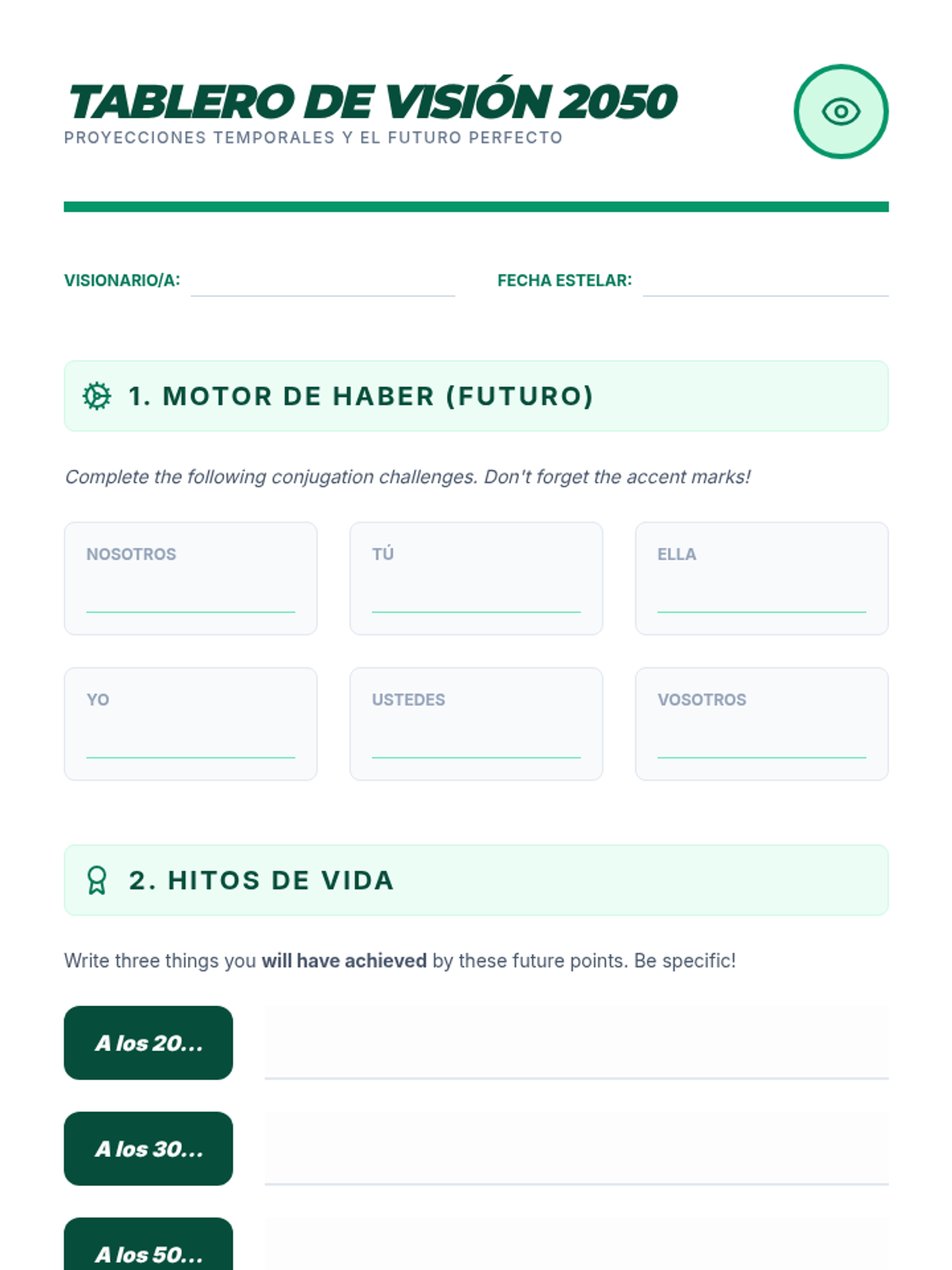
Students project themselves forward in time to look back at what they 'will have achieved'. They practice the Future Perfect tense to add layers of projection and certainty to their narratives.
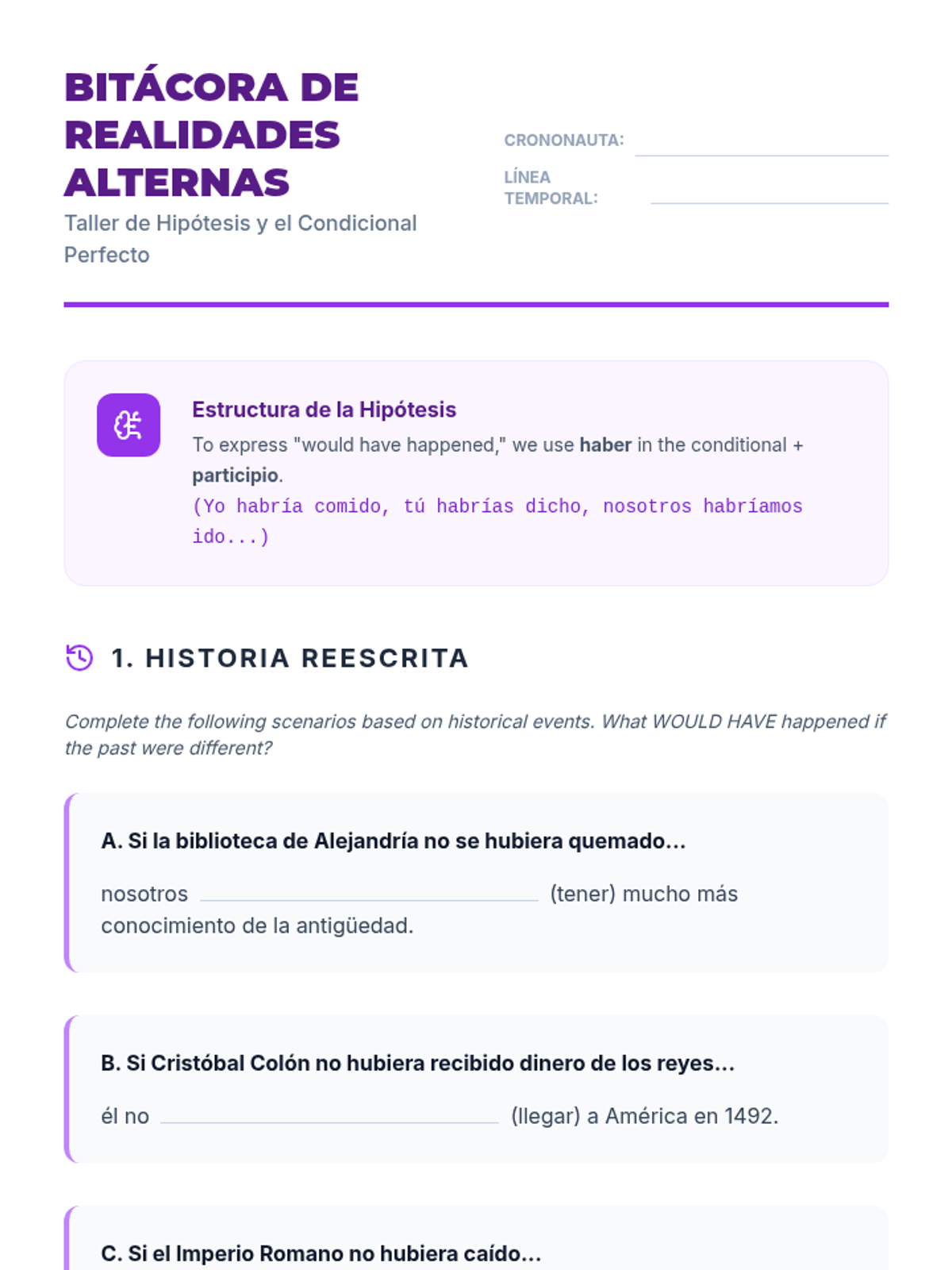
This lesson introduces the 'would have' structure to discuss alternate history and regrets. Students apply the Conditional Perfect to historical events or personal choices to rewrite outcomes.
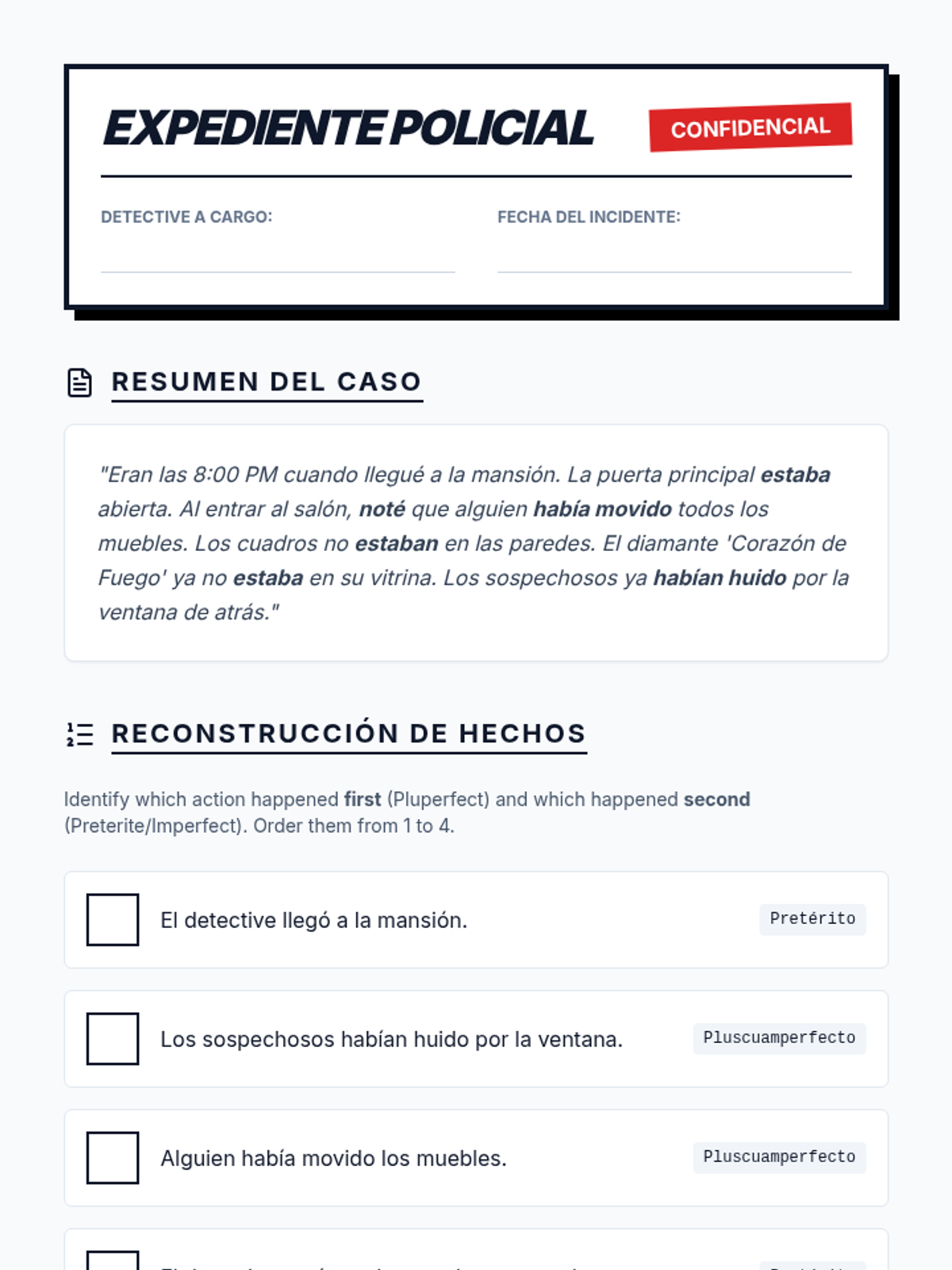
Students learn to sequence past events using the Pluperfect tense. They analyze short stories and detective cases to identify actions that occurred before other past actions.
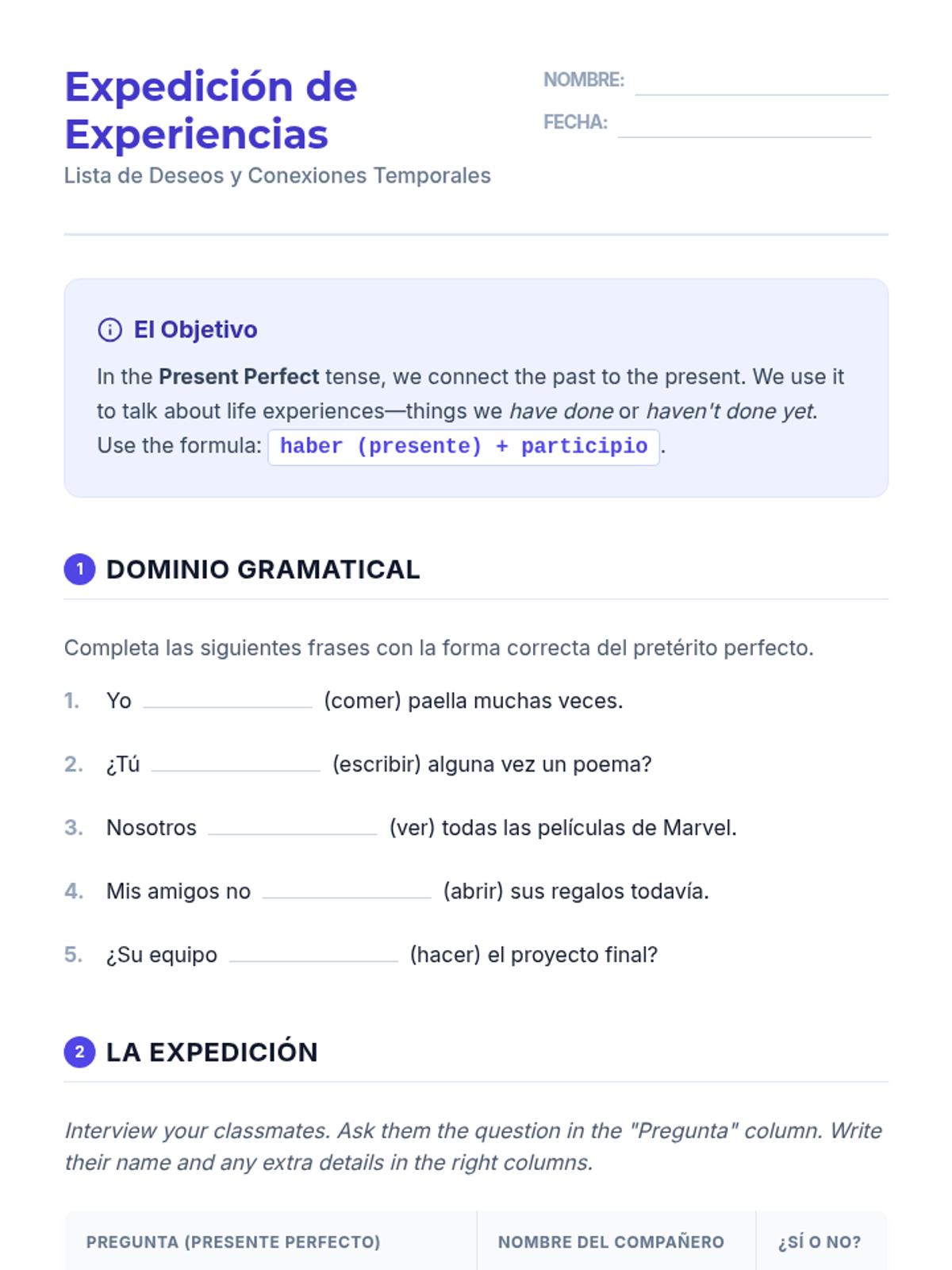
Students explore the Present Perfect tense to discuss life experiences that remain relevant to the present. They distinguish this from the preterite by interviewing classmates about their 'bucket lists'.
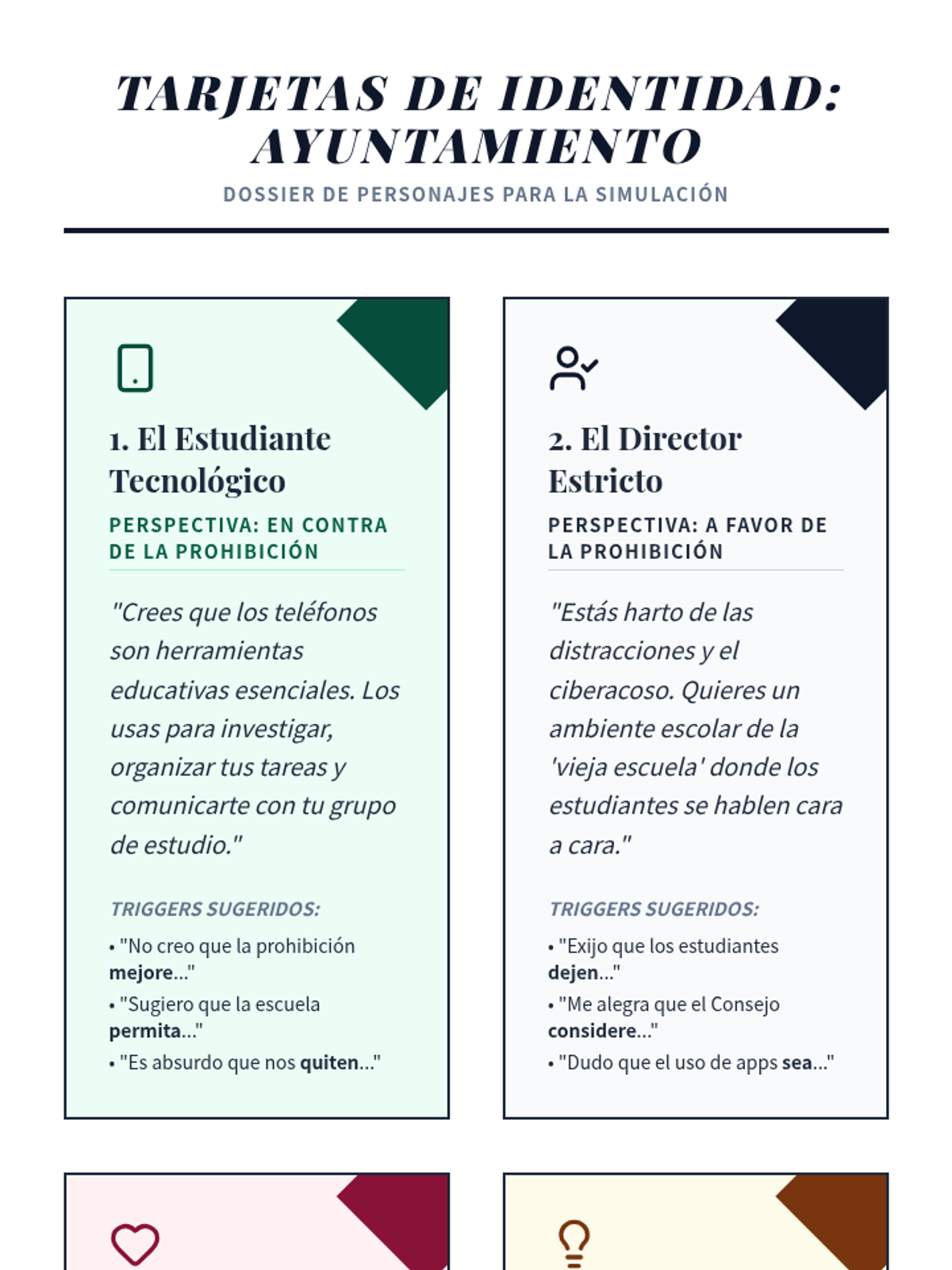
The unit culminates in a live town hall simulation where students must spontaneously use the full range of subjunctive triggers to persuade peers, react to proposals, and debate a controversial school policy.
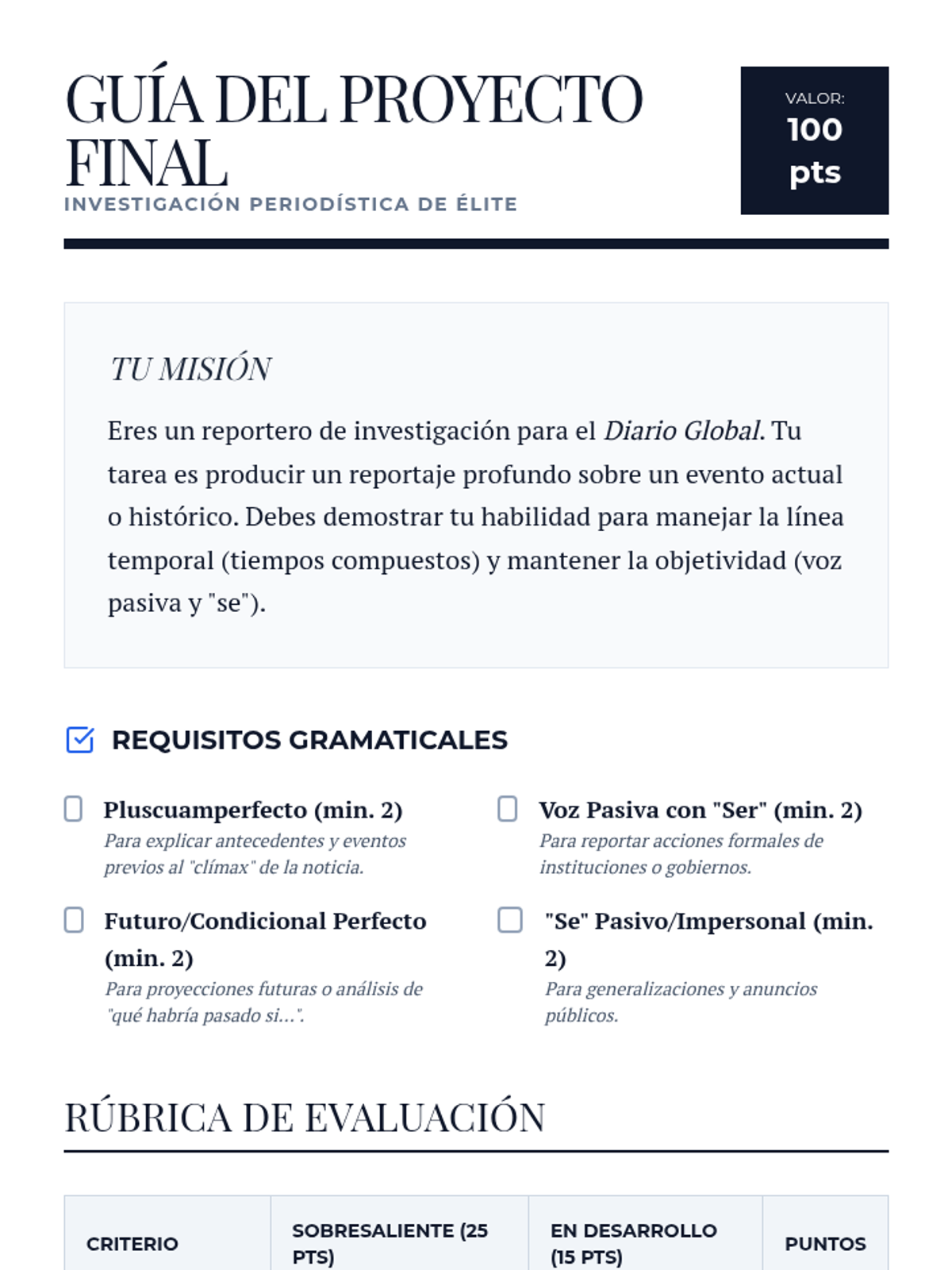
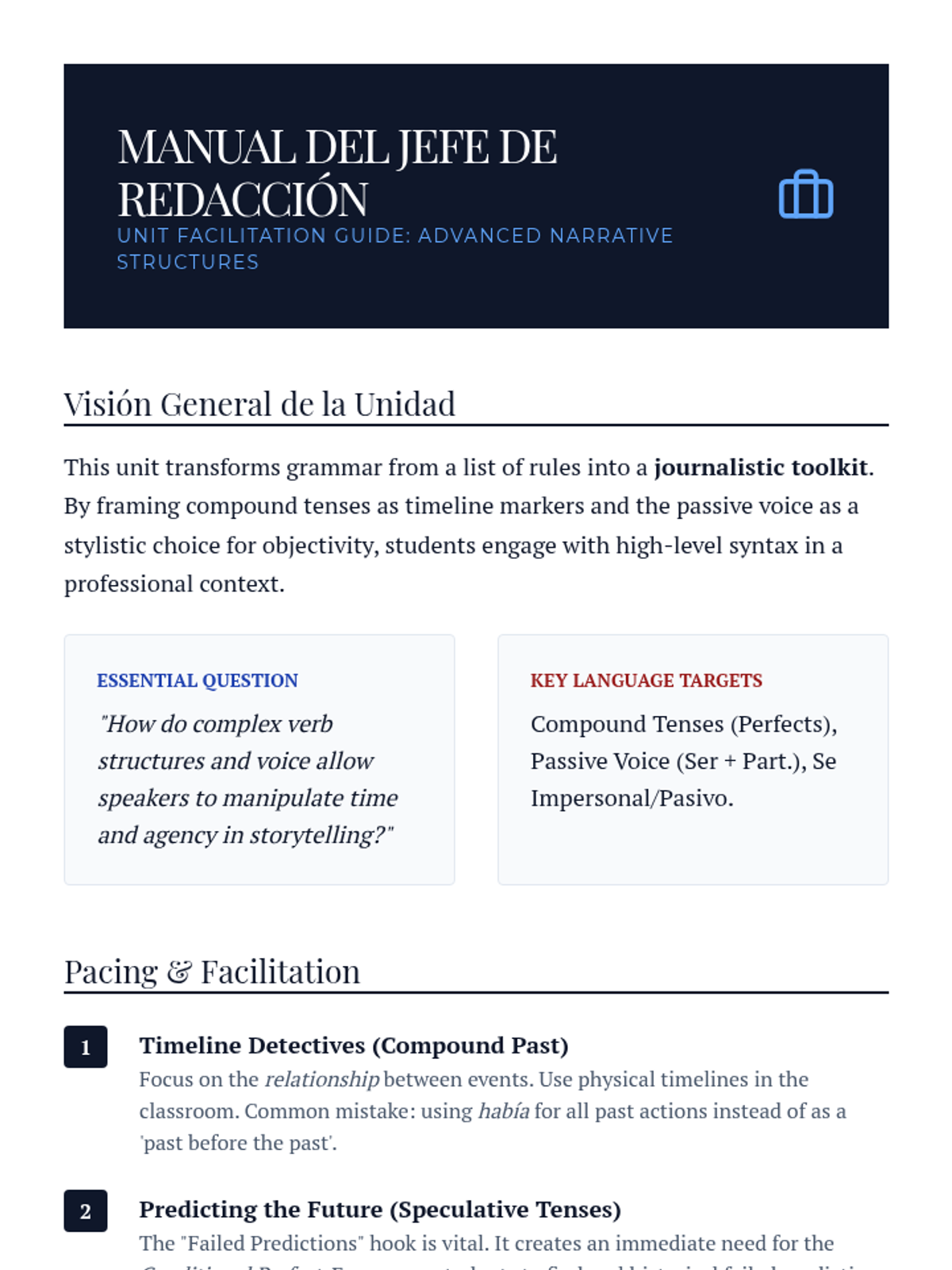
In this final project, students synthesize all grammar concepts to produce an investigative news report. They must demonstrate mastery of complex timelines and objective reporting styles in both written and spoken formats.
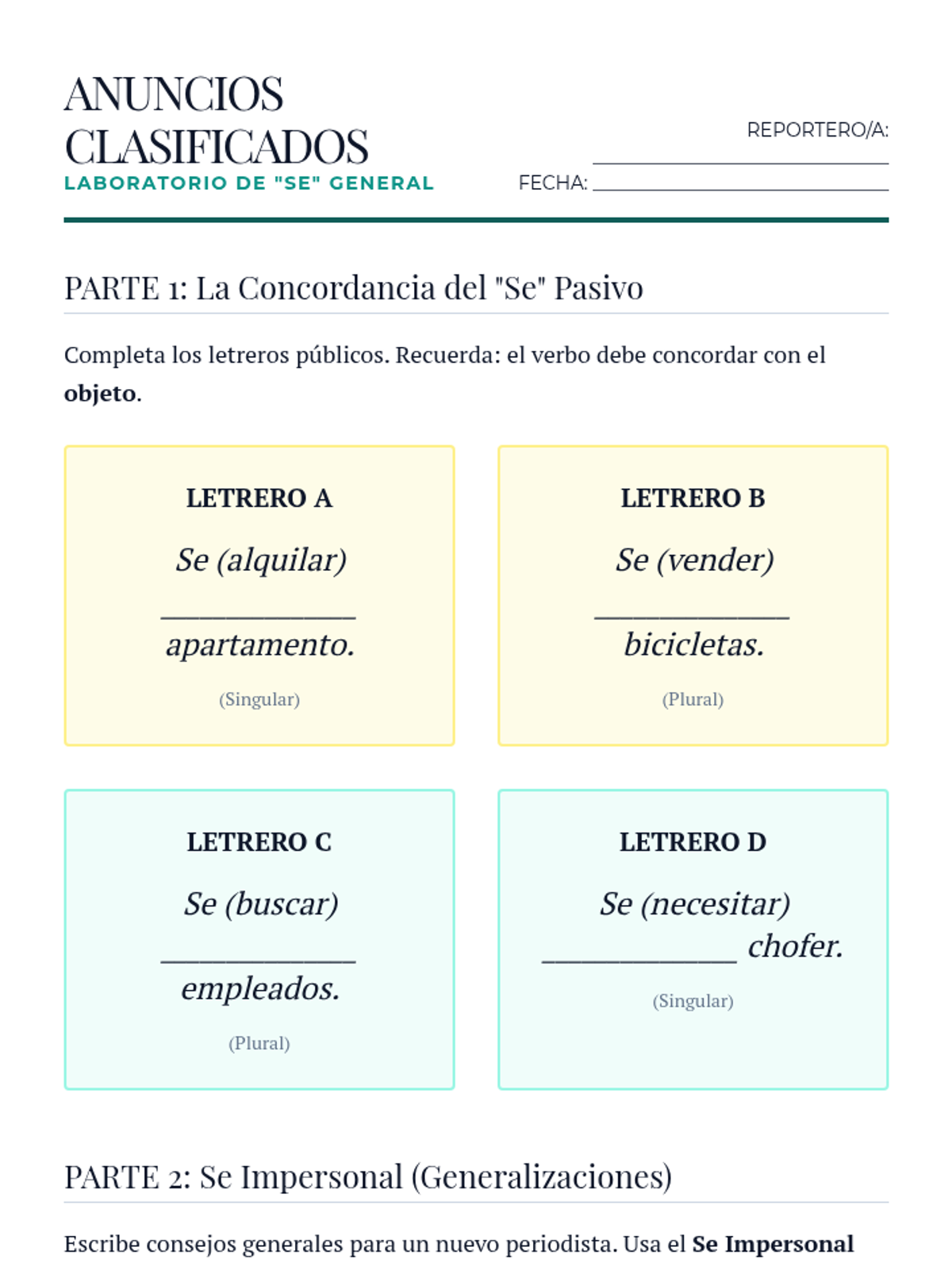
Students master the 'Se Impersonal' and 'Se Passive' constructions for general statements and formal instructions. They practice writing classified ads and analyzing cultural signage to see these forms in real-world contexts.
Students learn to articulate internal reactions to external events using 'Emotions' and 'Impersonal expressions.' They critique visual media to practice shifting focus from the event itself to their subjective judgment.
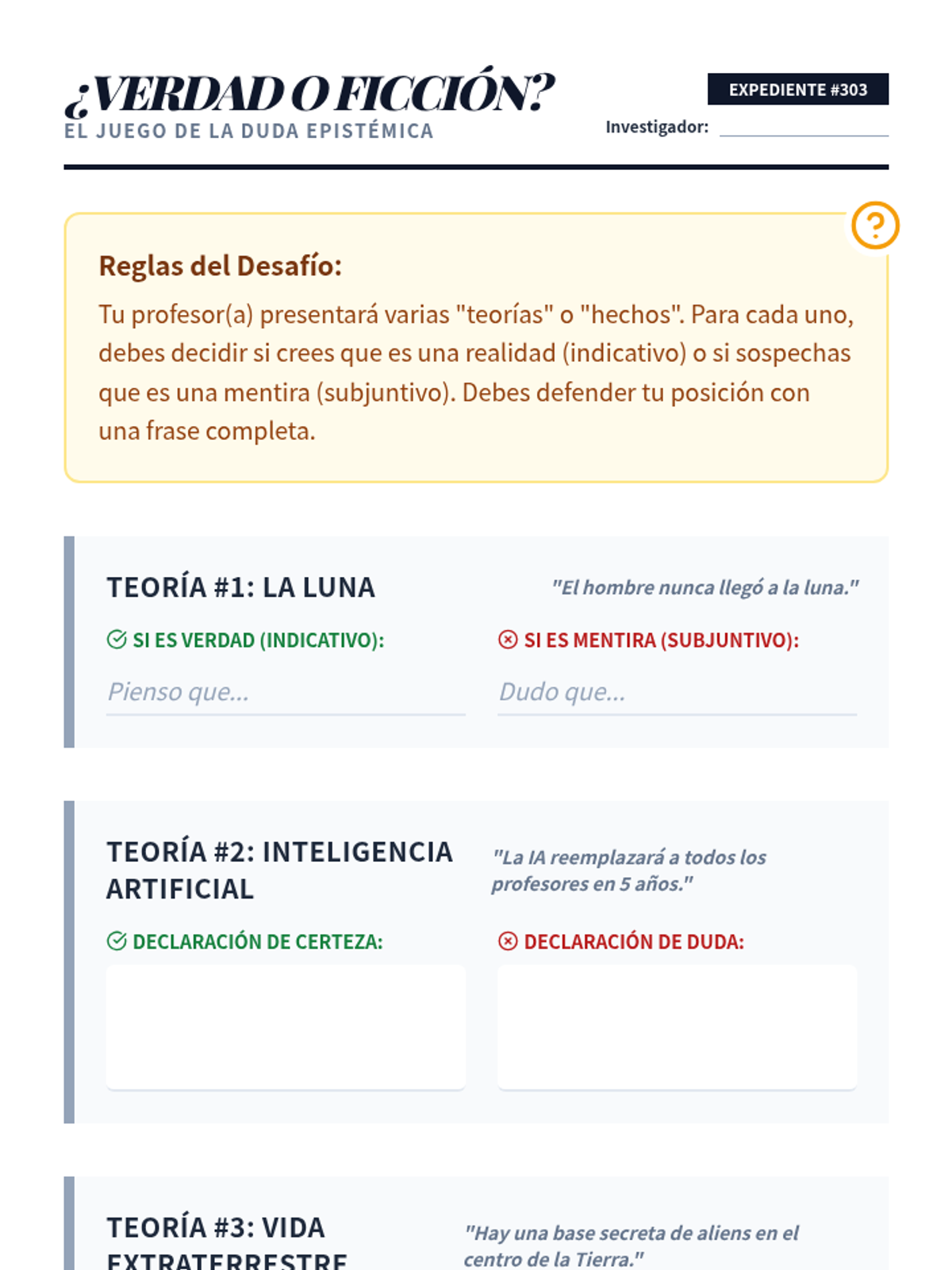
This lesson focuses on epistemic modality—expressing doubt and denial. Through a 'Fact vs. Fiction' game, students practice using 'Dudo que...' and 'No creo que...' to challenge claims and navigate uncertainty.
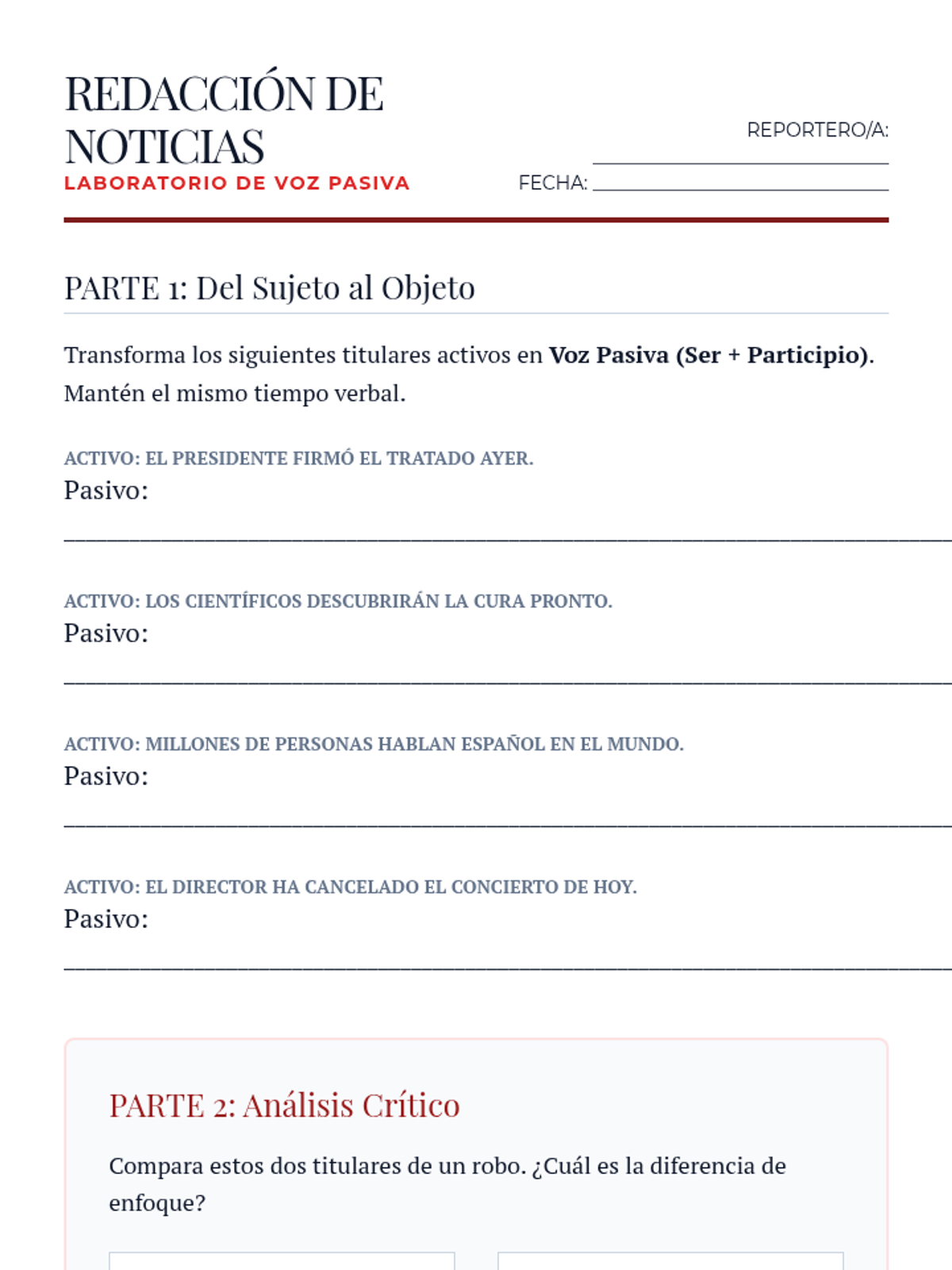
Students learn the 'Ser + Past Participle' construction to shift focus from the agent to the action. They transform active headlines into passive ones, analyzing how this structure contributes to a formal, objective journalistic tone.
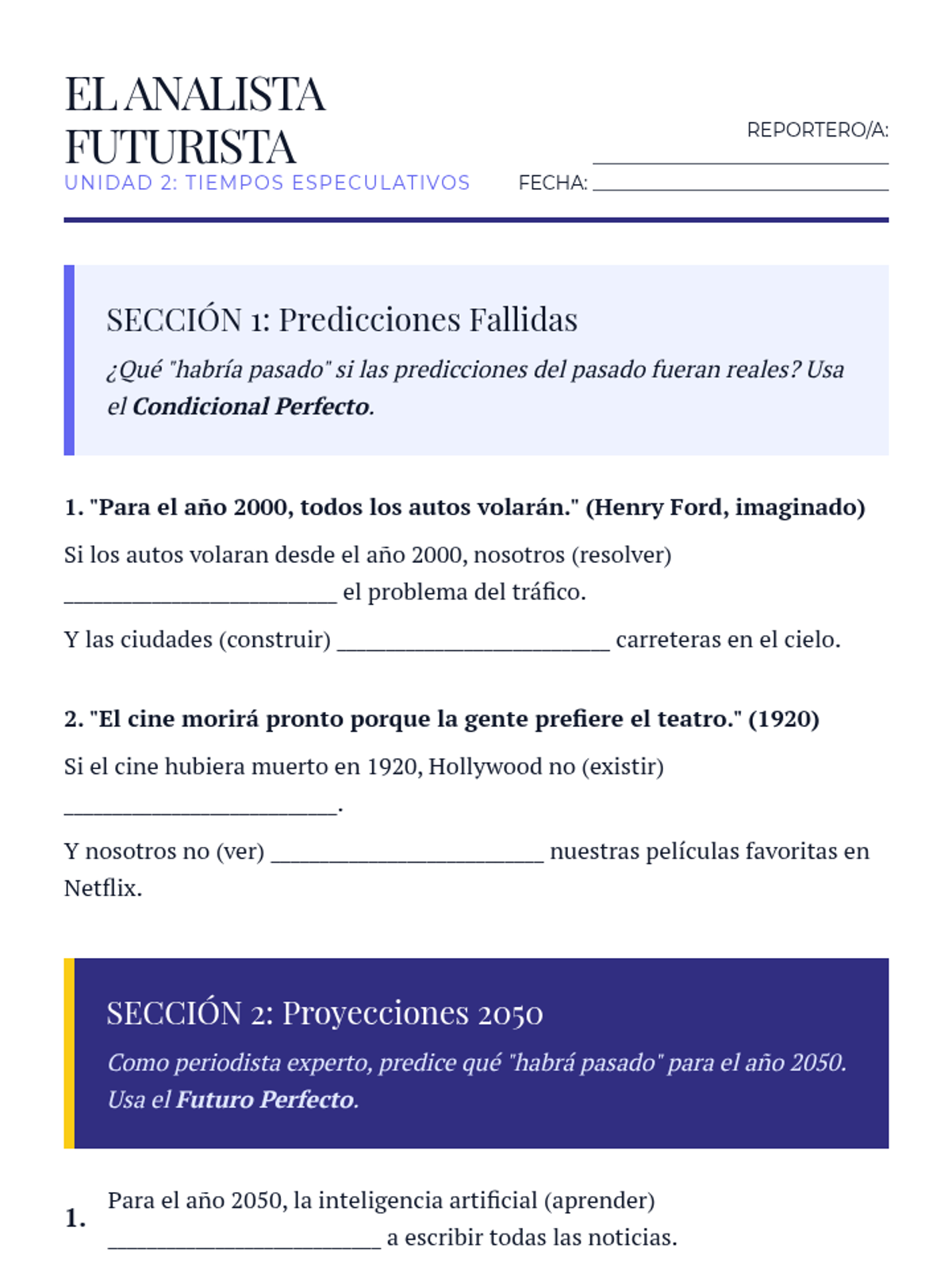
Students explore speculative grammar using the Future Perfect and Conditional Perfect. They analyze failed historical predictions and construct hypothetical scenarios to understand how these tenses project outcomes and alternative pasts.
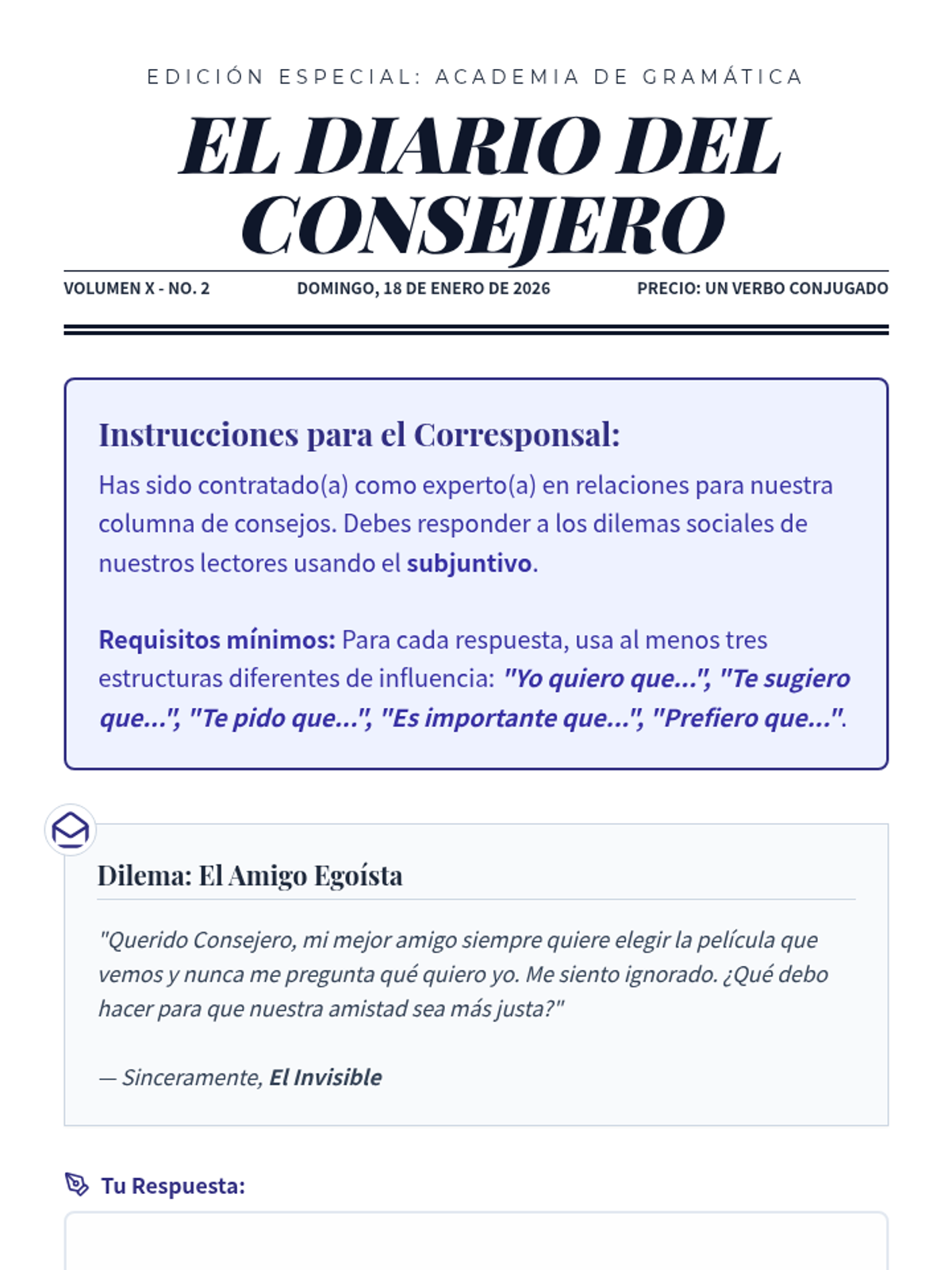
Students step into the role of advice columnists to practice 'Wishes' and 'Requests.' They learn to use verbs of influence and volition to offer sophisticated recommendations and navigate interpersonal social dilemmas.