Comprehensive French language instruction spanning basic literacy to advanced oral and written communication. Strengthens grammar, vocabulary, and cultural understanding through targeted exercises in listening, reading, and composition.
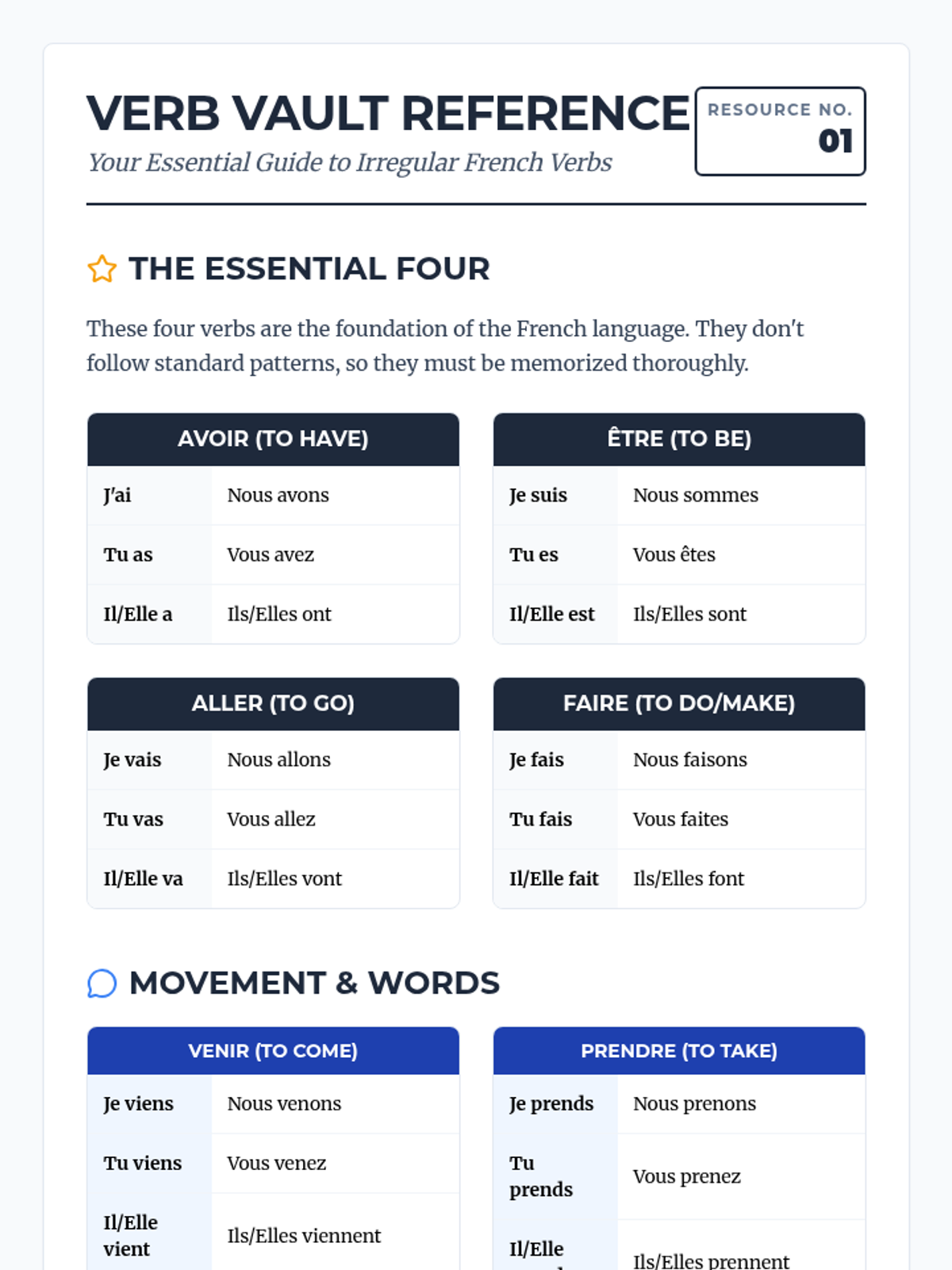
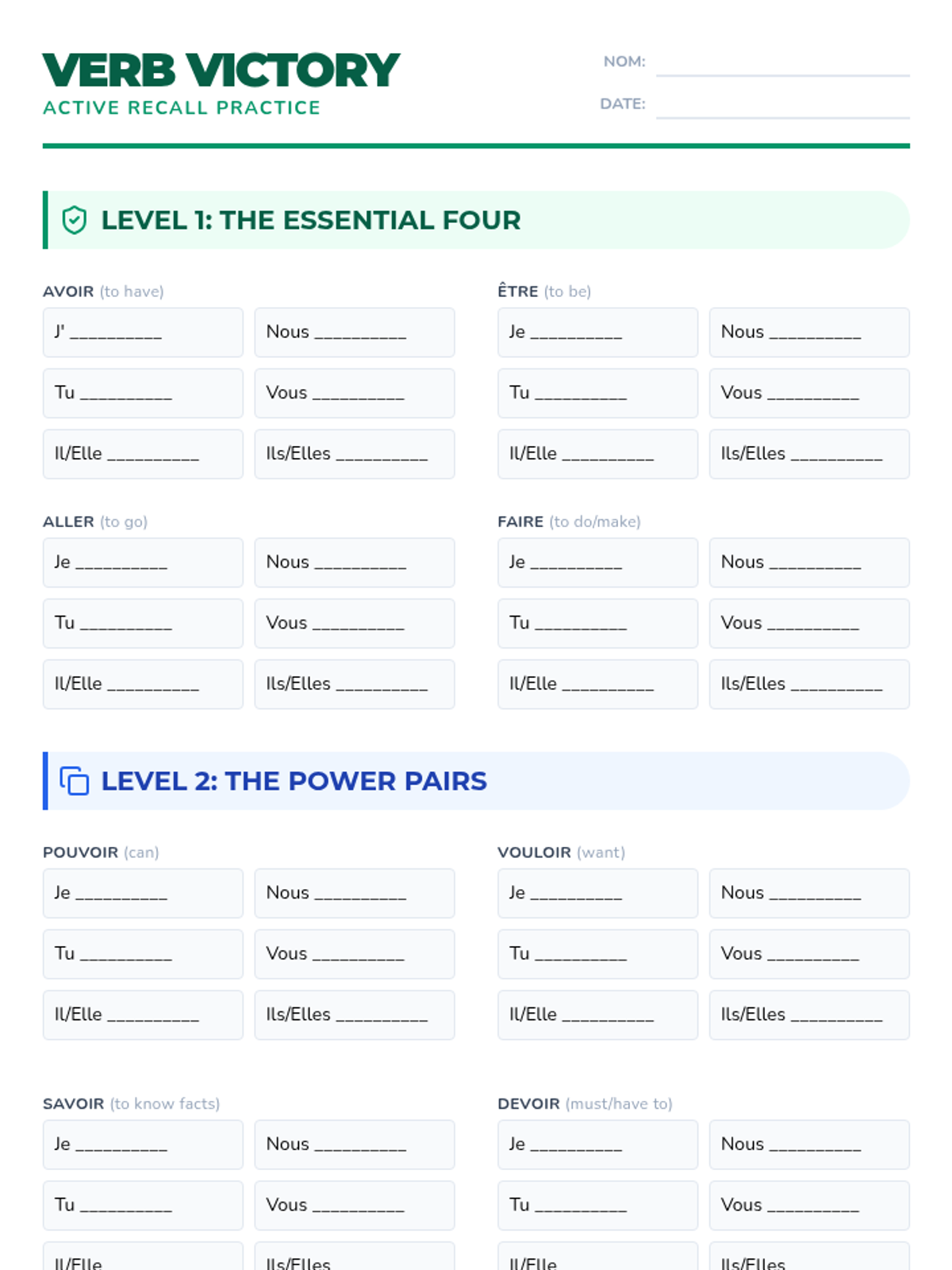
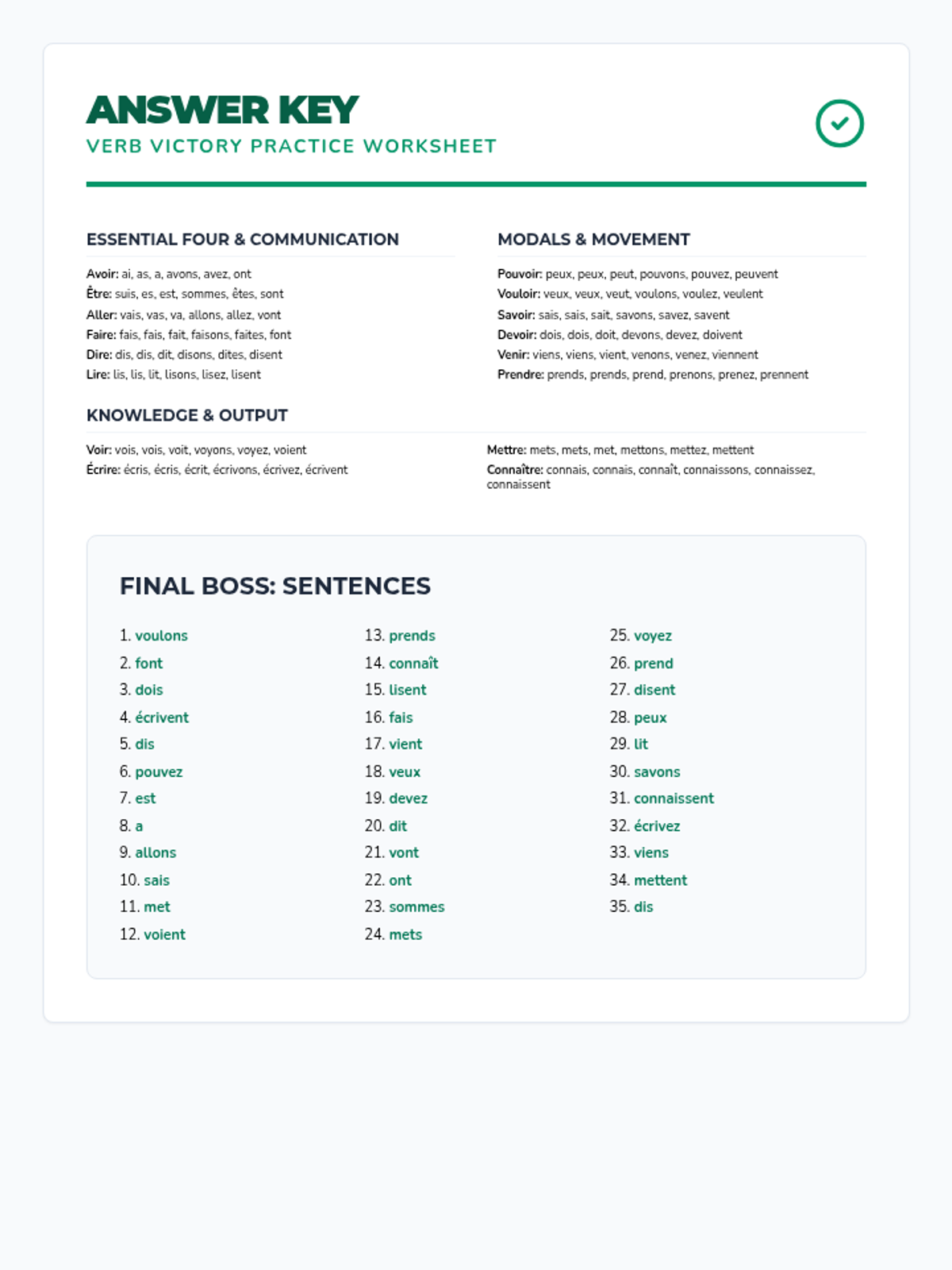
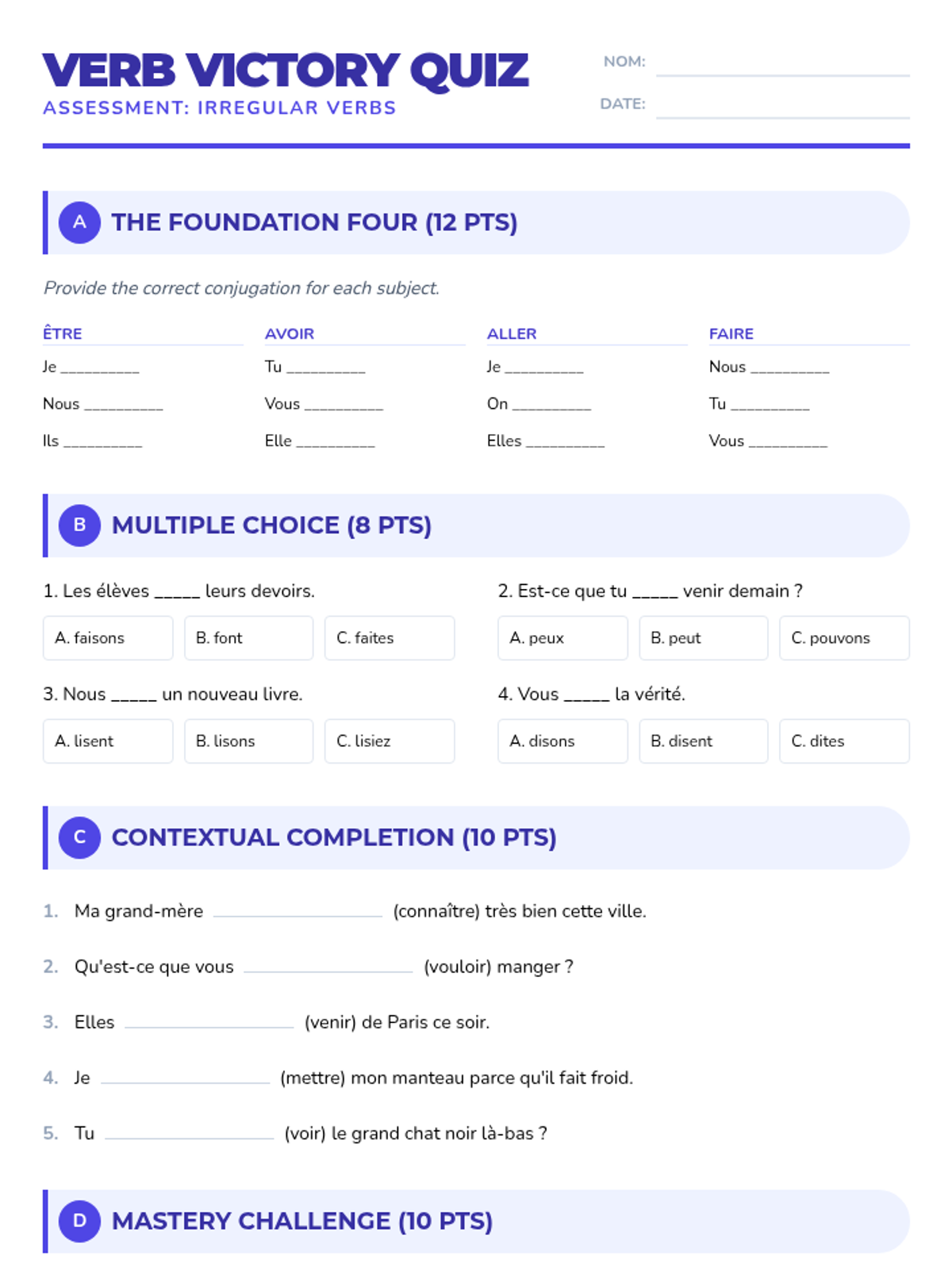
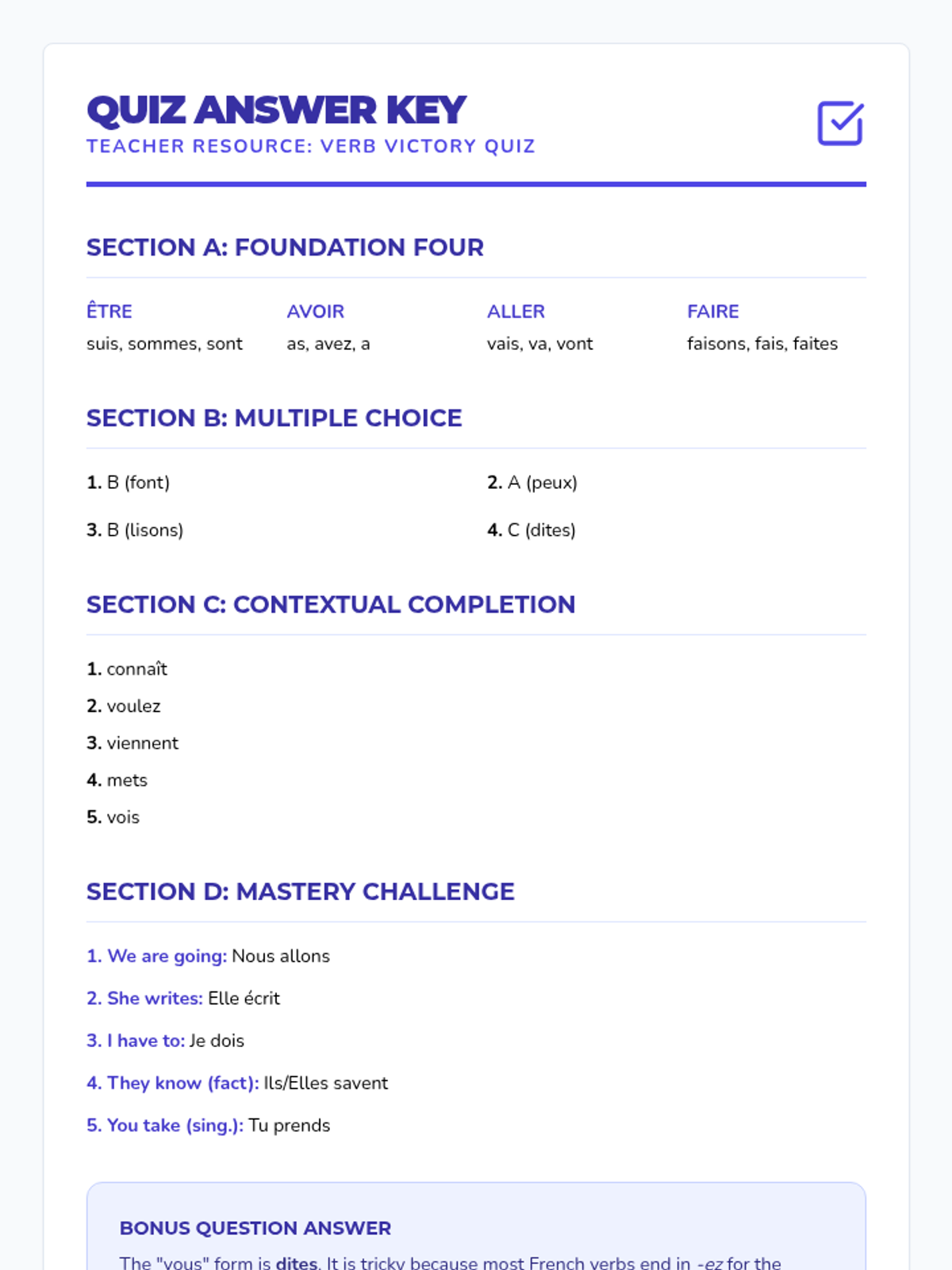
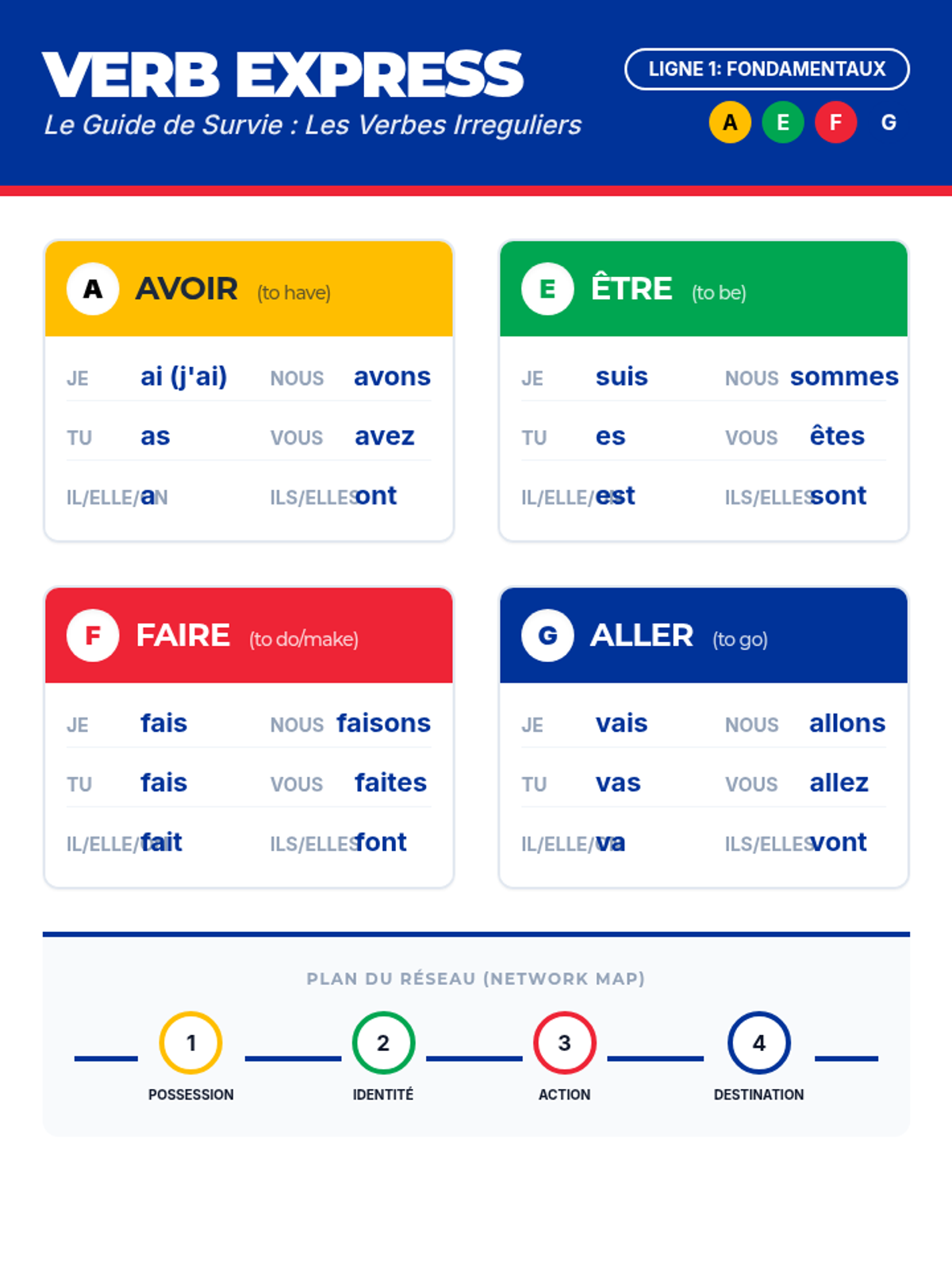
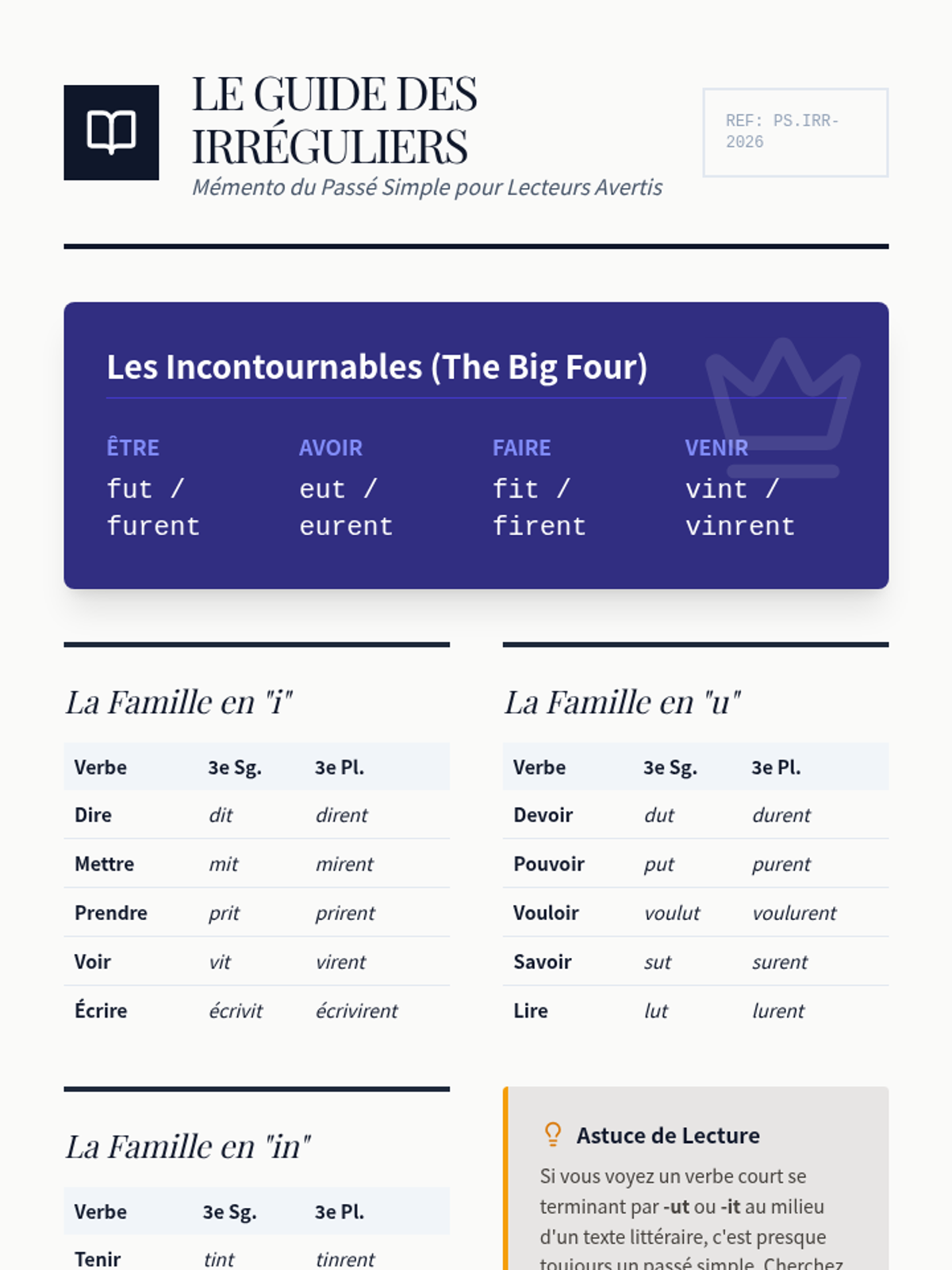
A comprehensive guide and practice set for mastering the most common irregular French verbs, focusing on patterns, comparisons, and active recall.
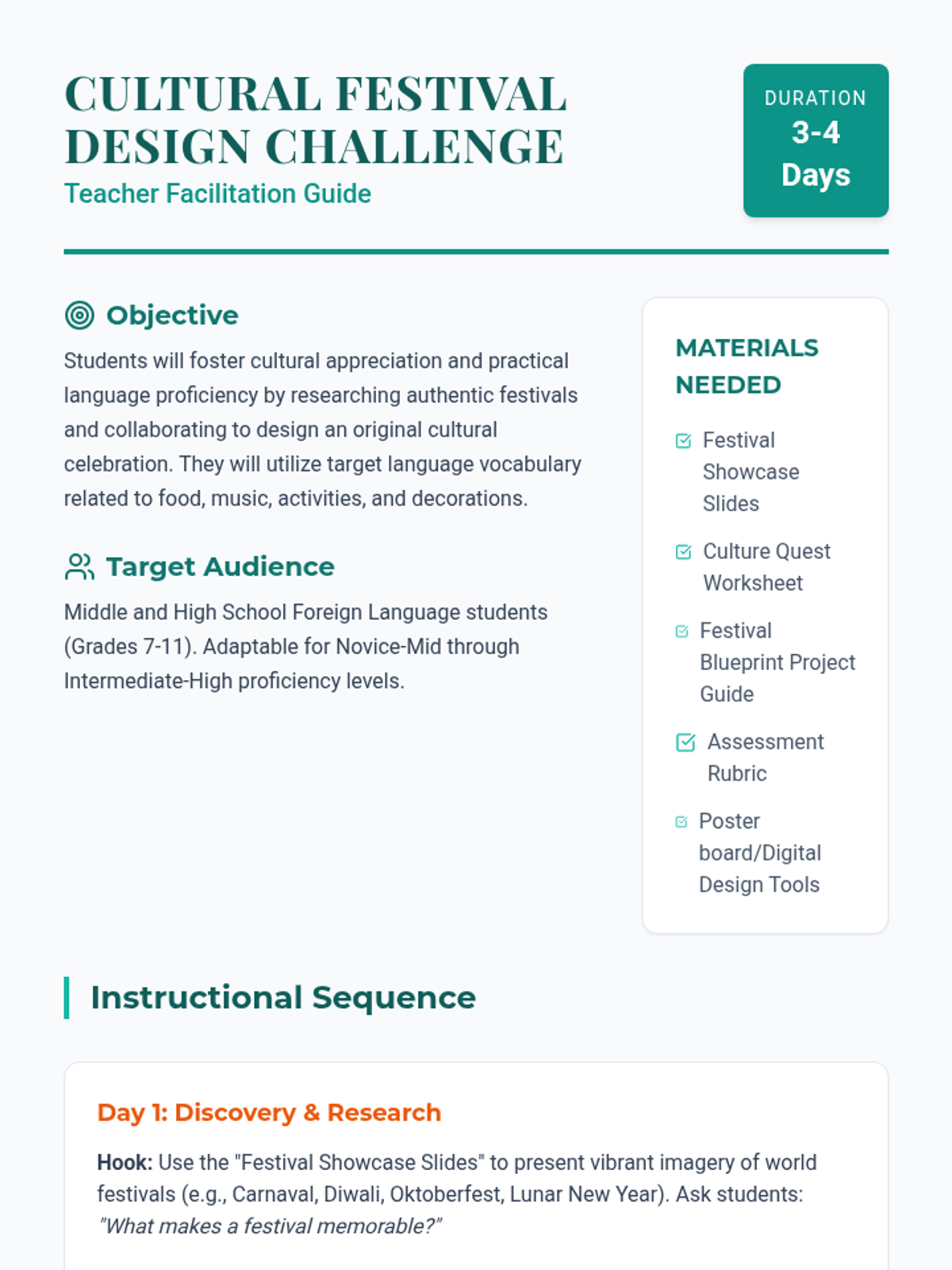
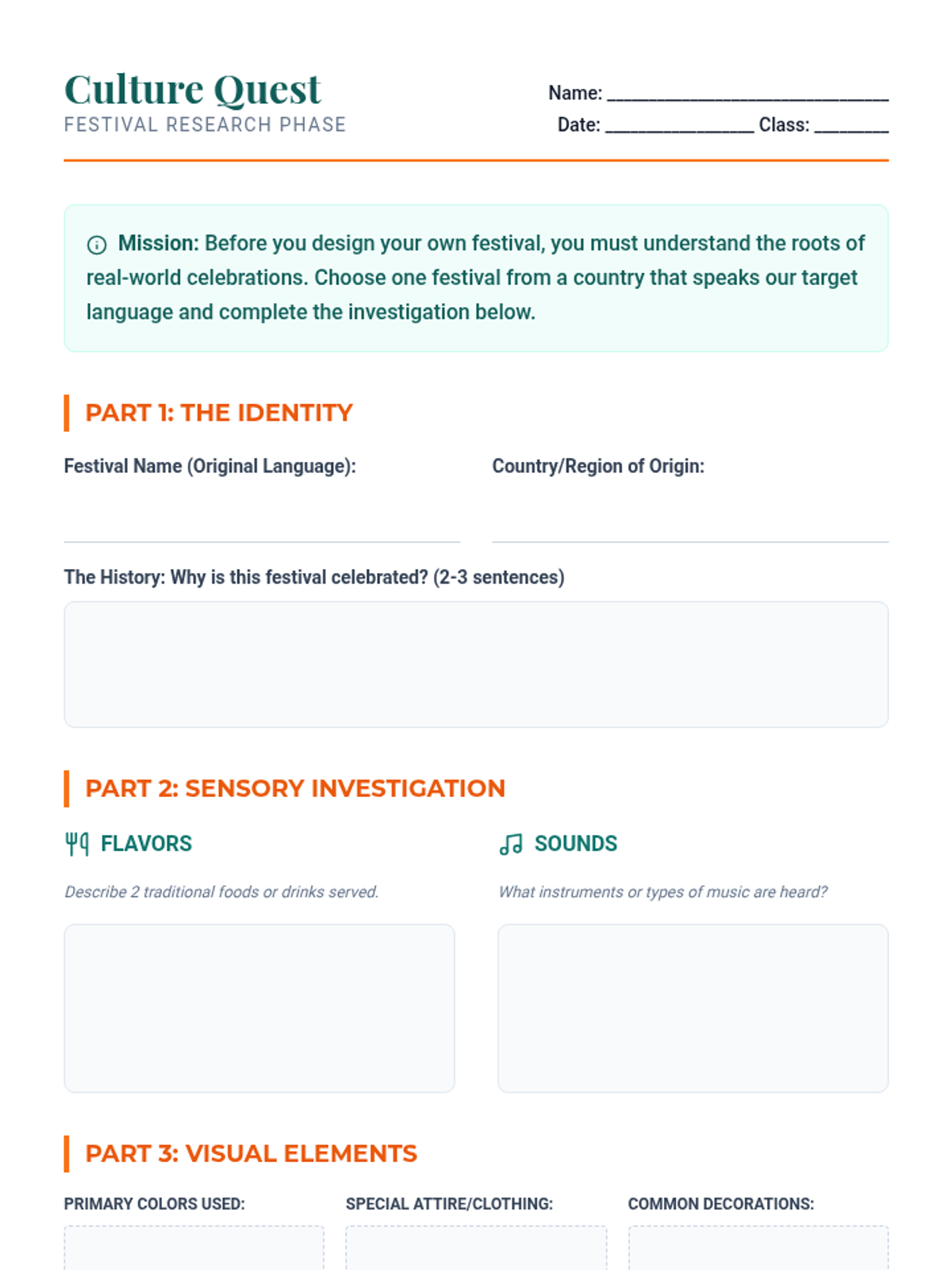
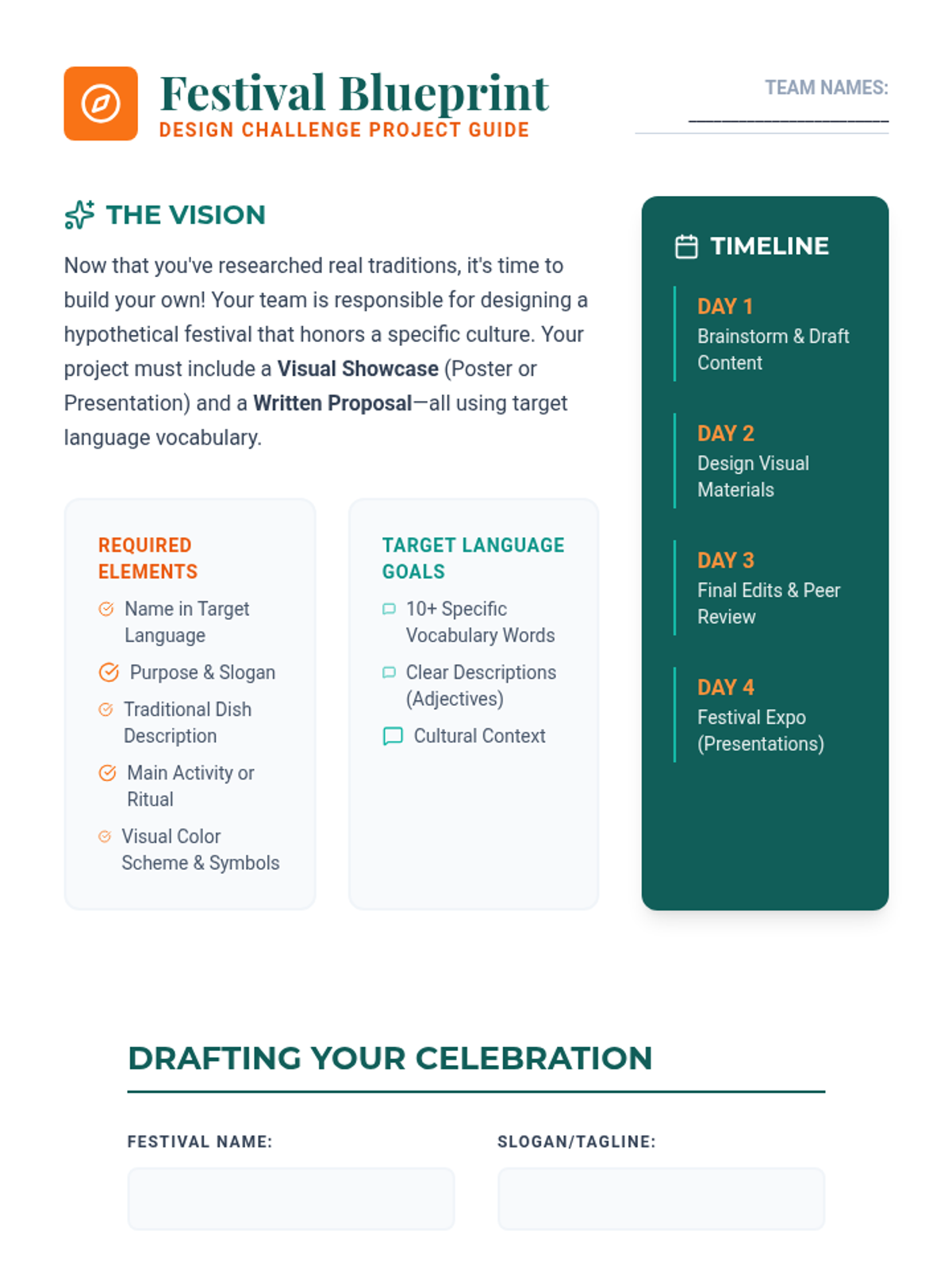
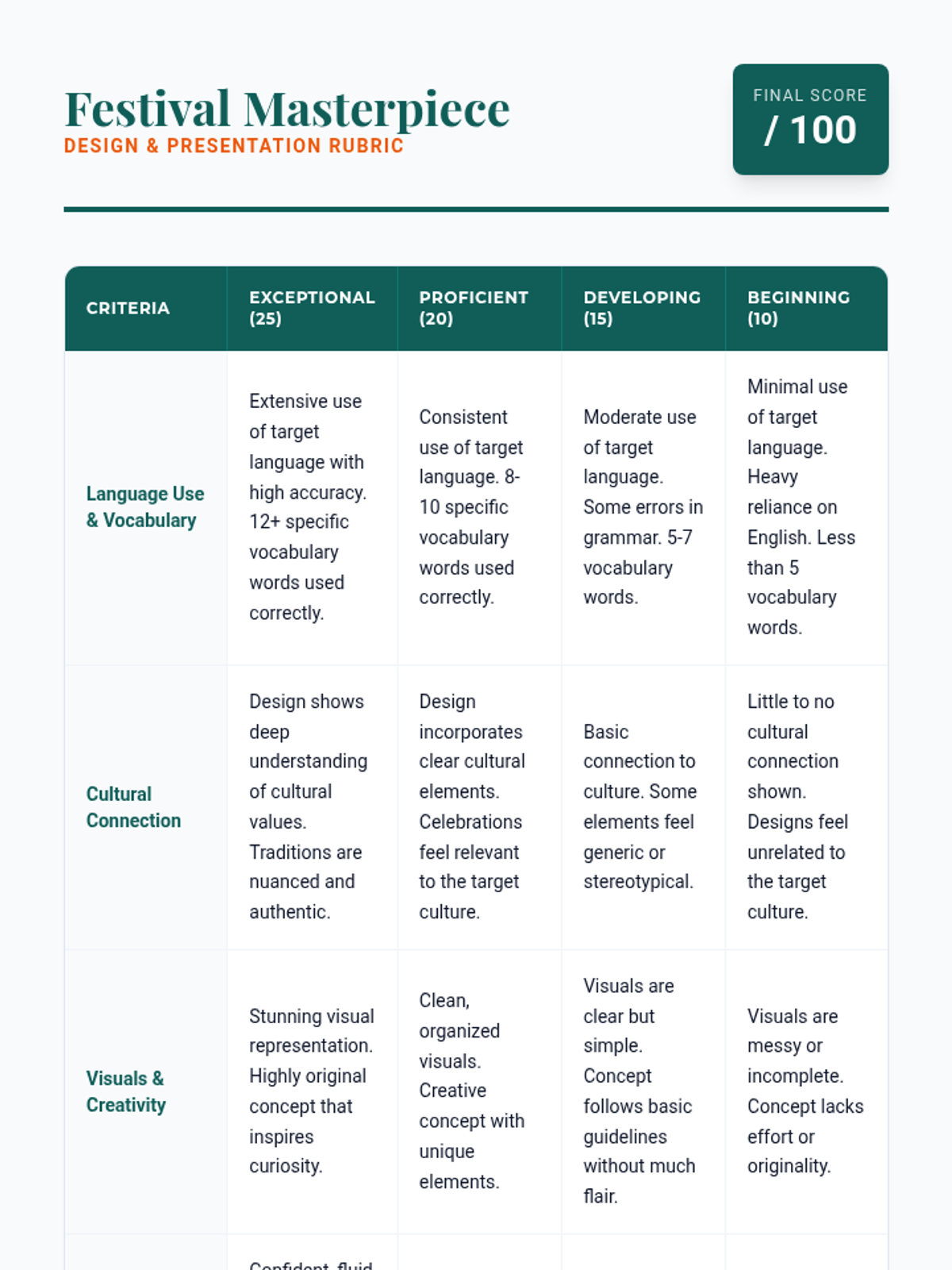
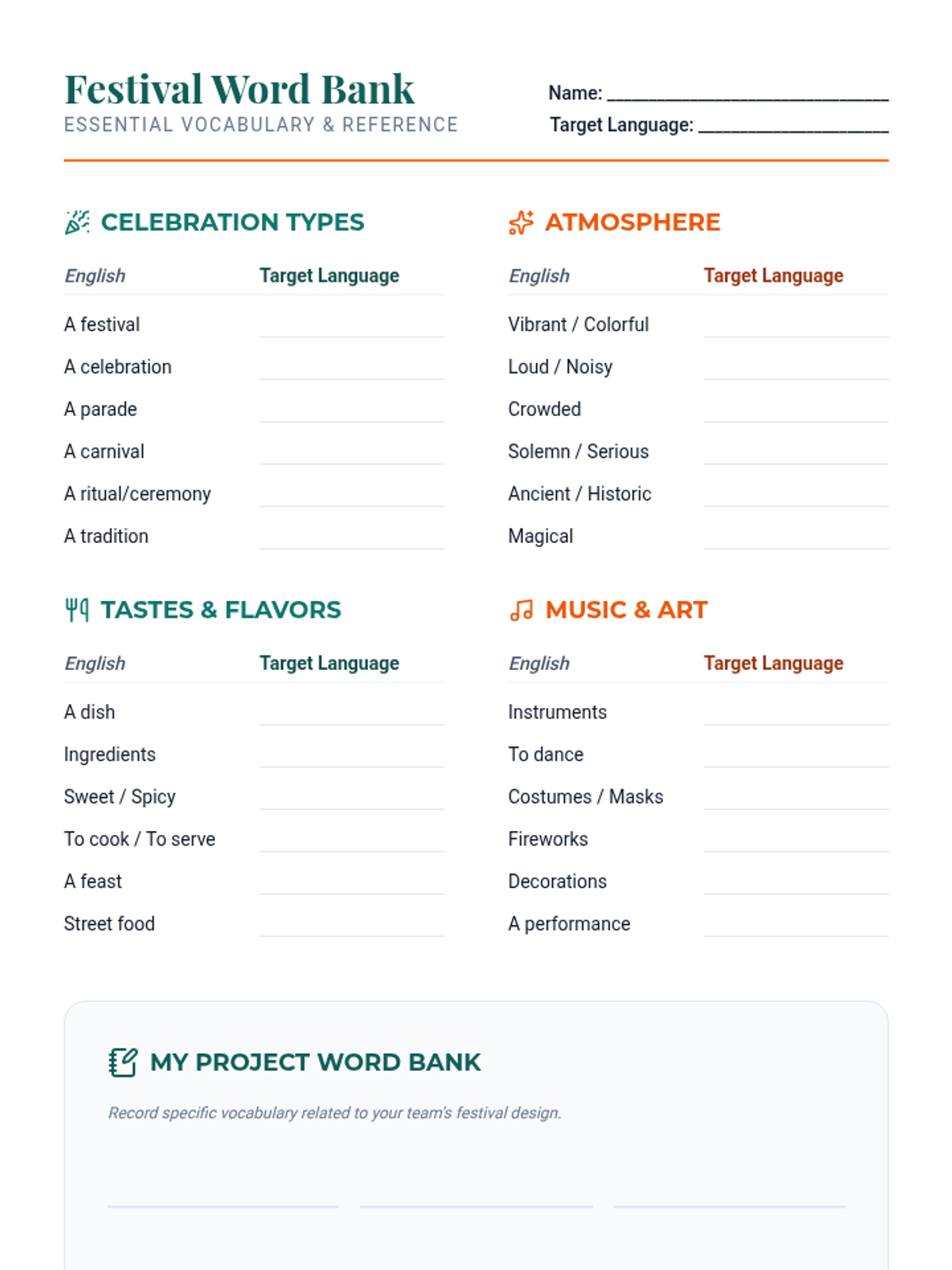
A collaborative project-based lesson where students research real-world cultural festivals and then design their own unique celebration, applying target language vocabulary for food, music, and traditions.
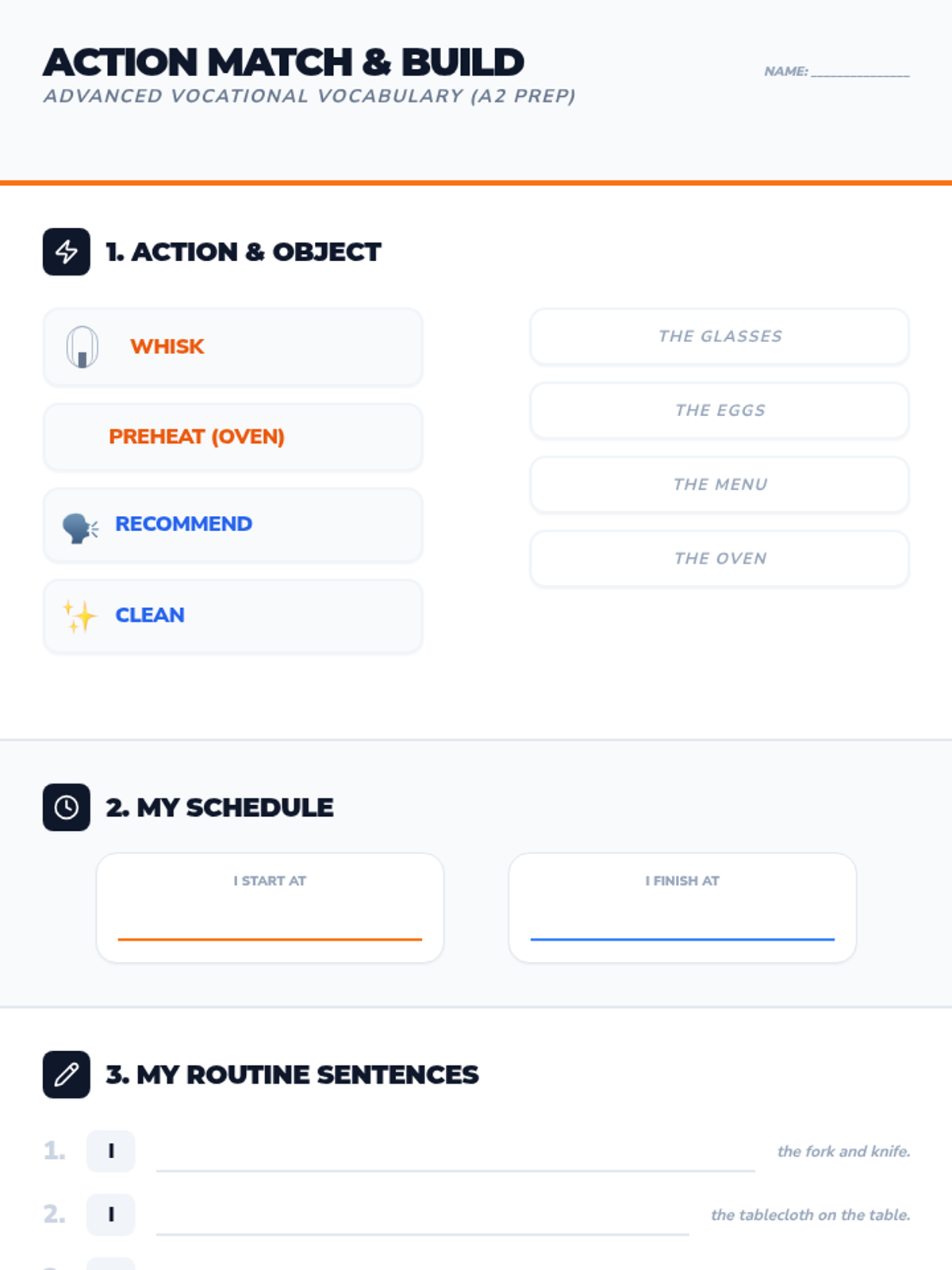
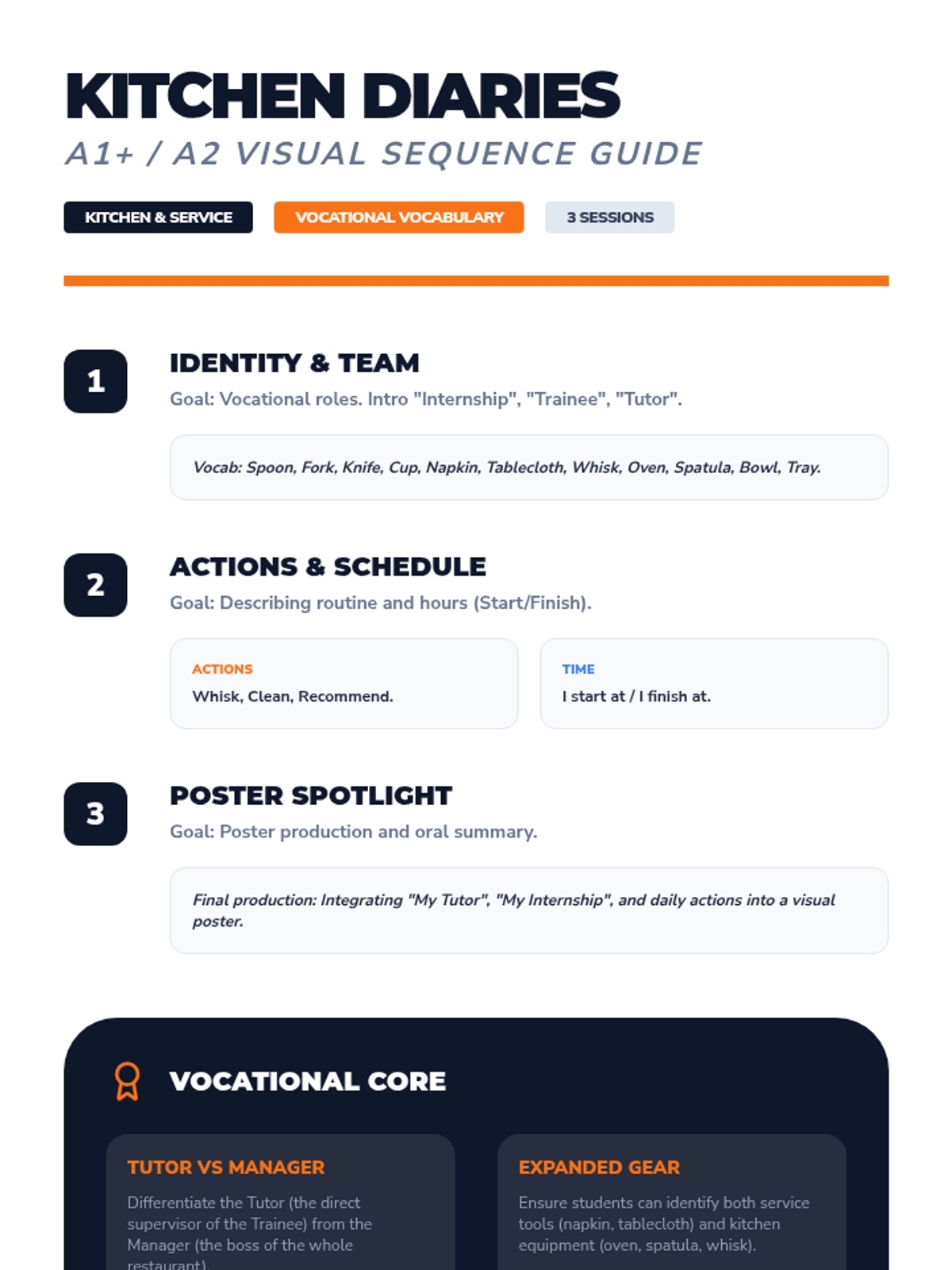
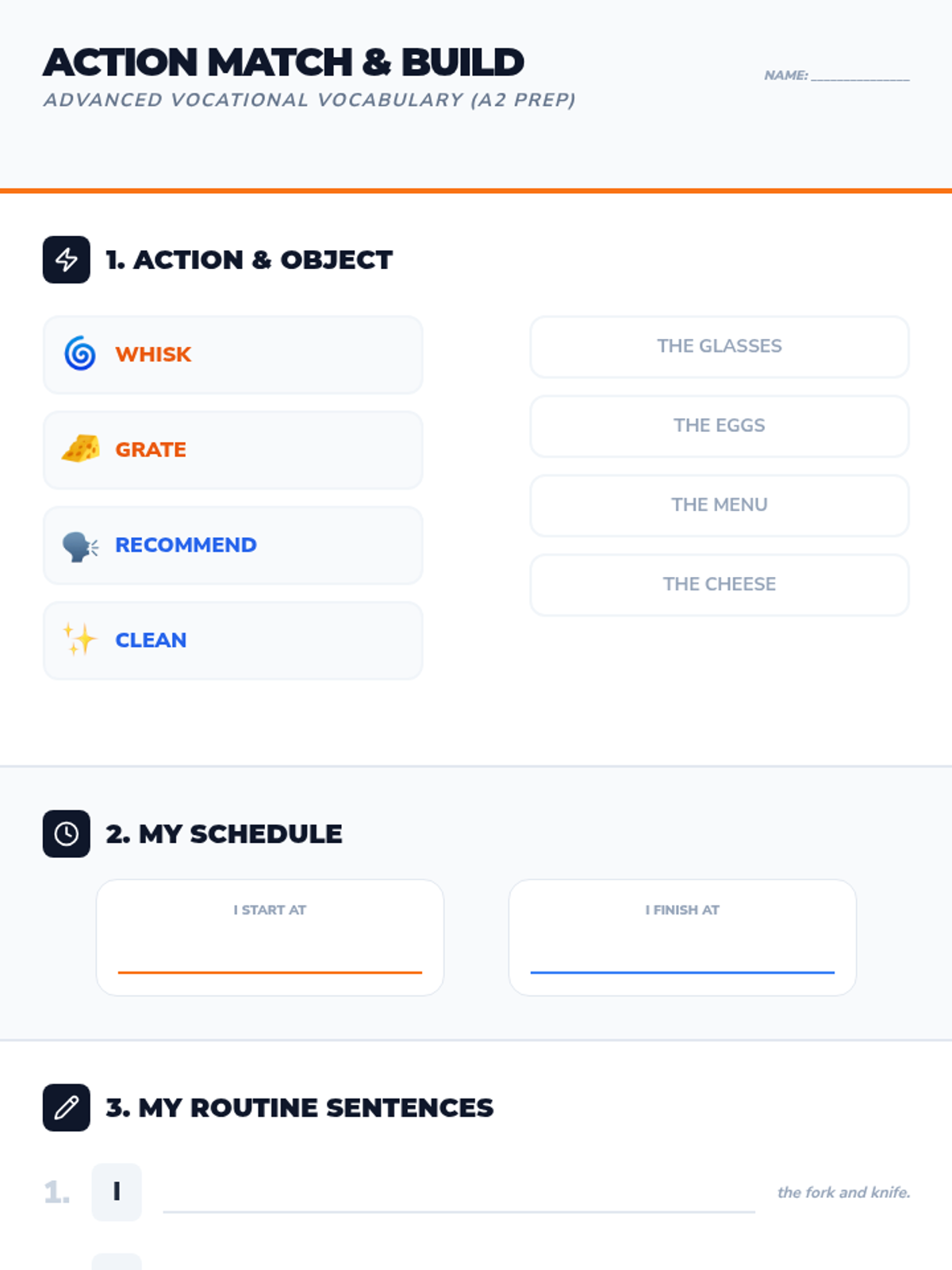
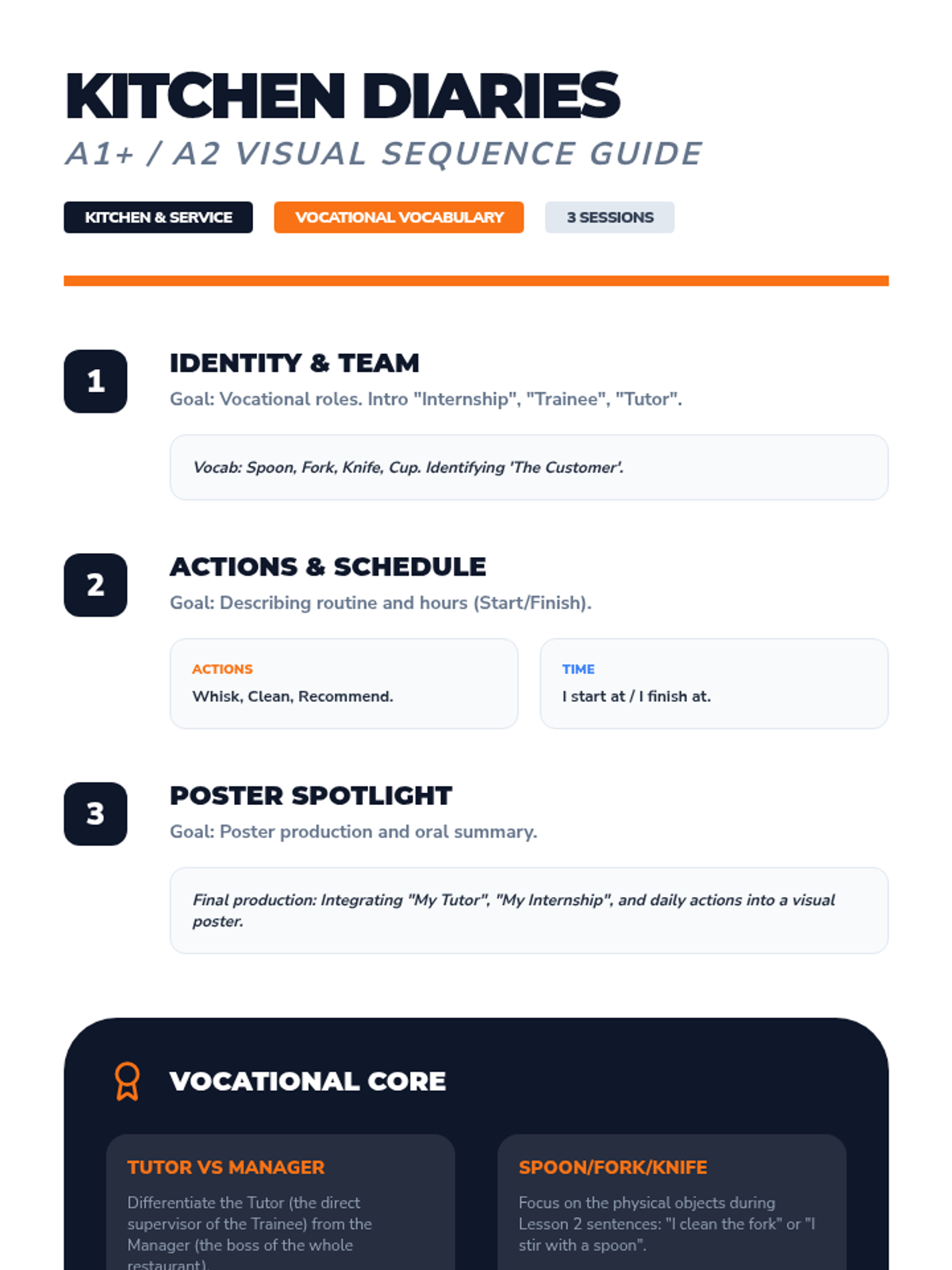
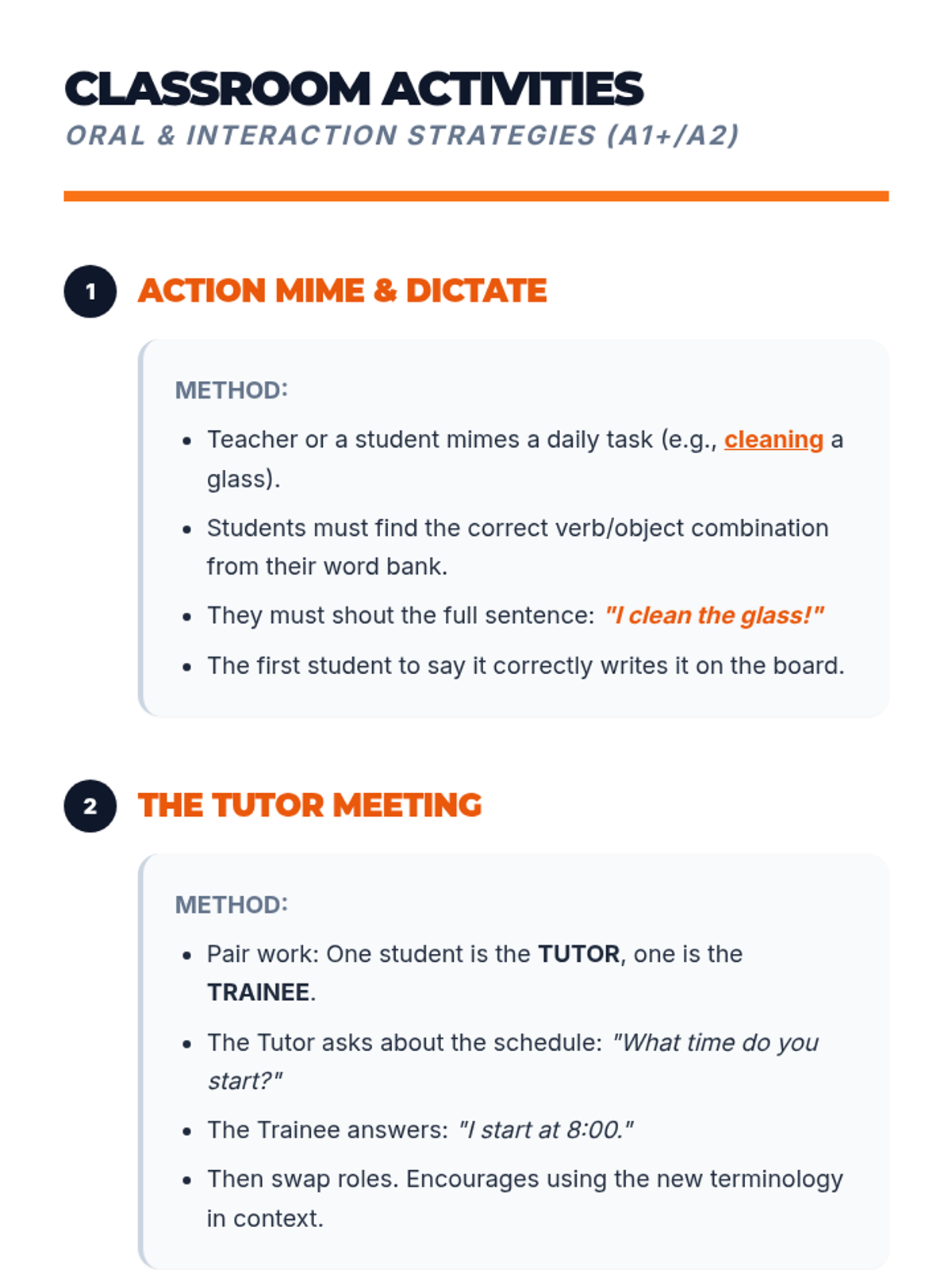
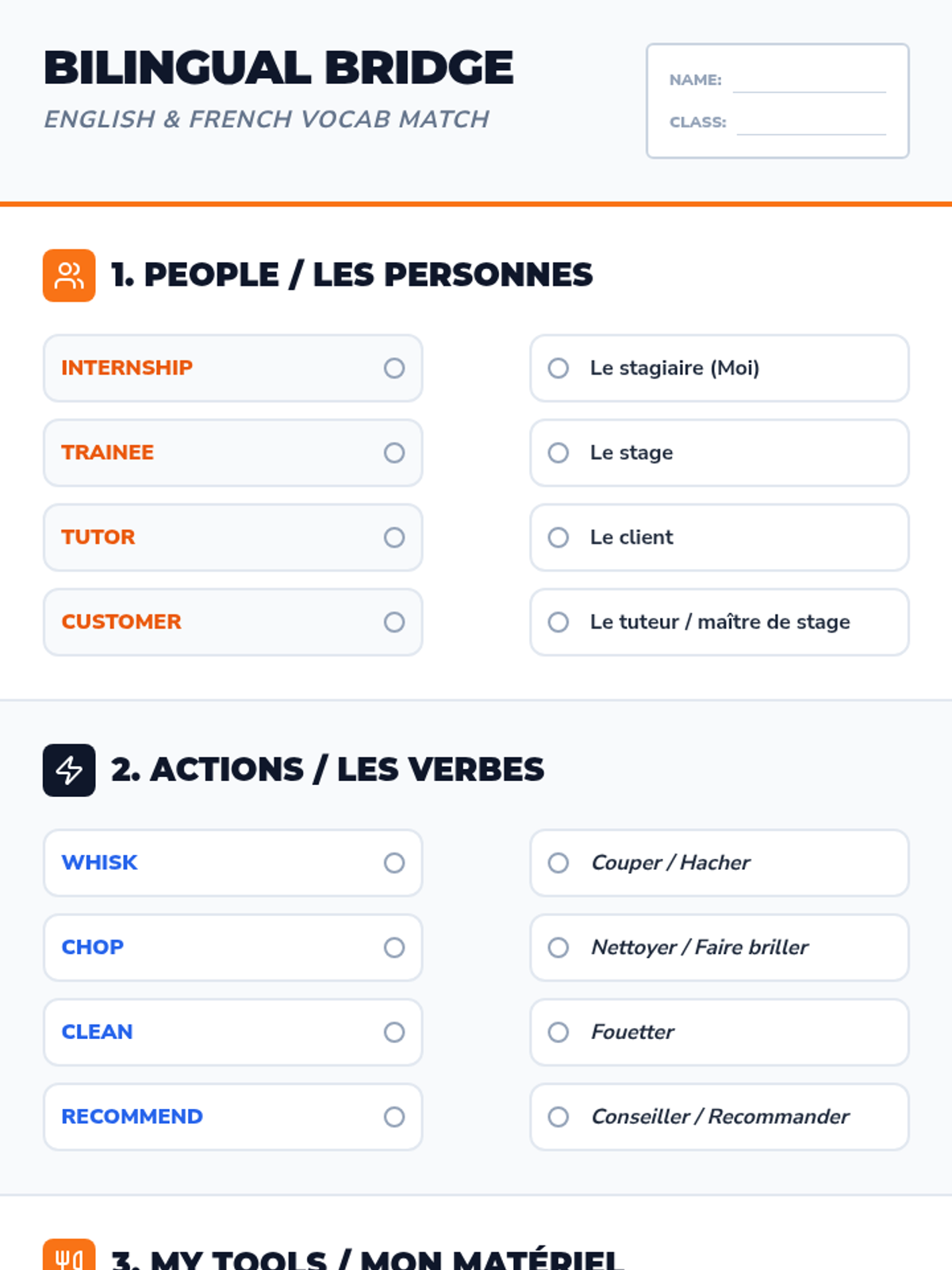
Introduces and practices action verbs related to daily professional tasks in the kitchen and dining room using simple present tense.
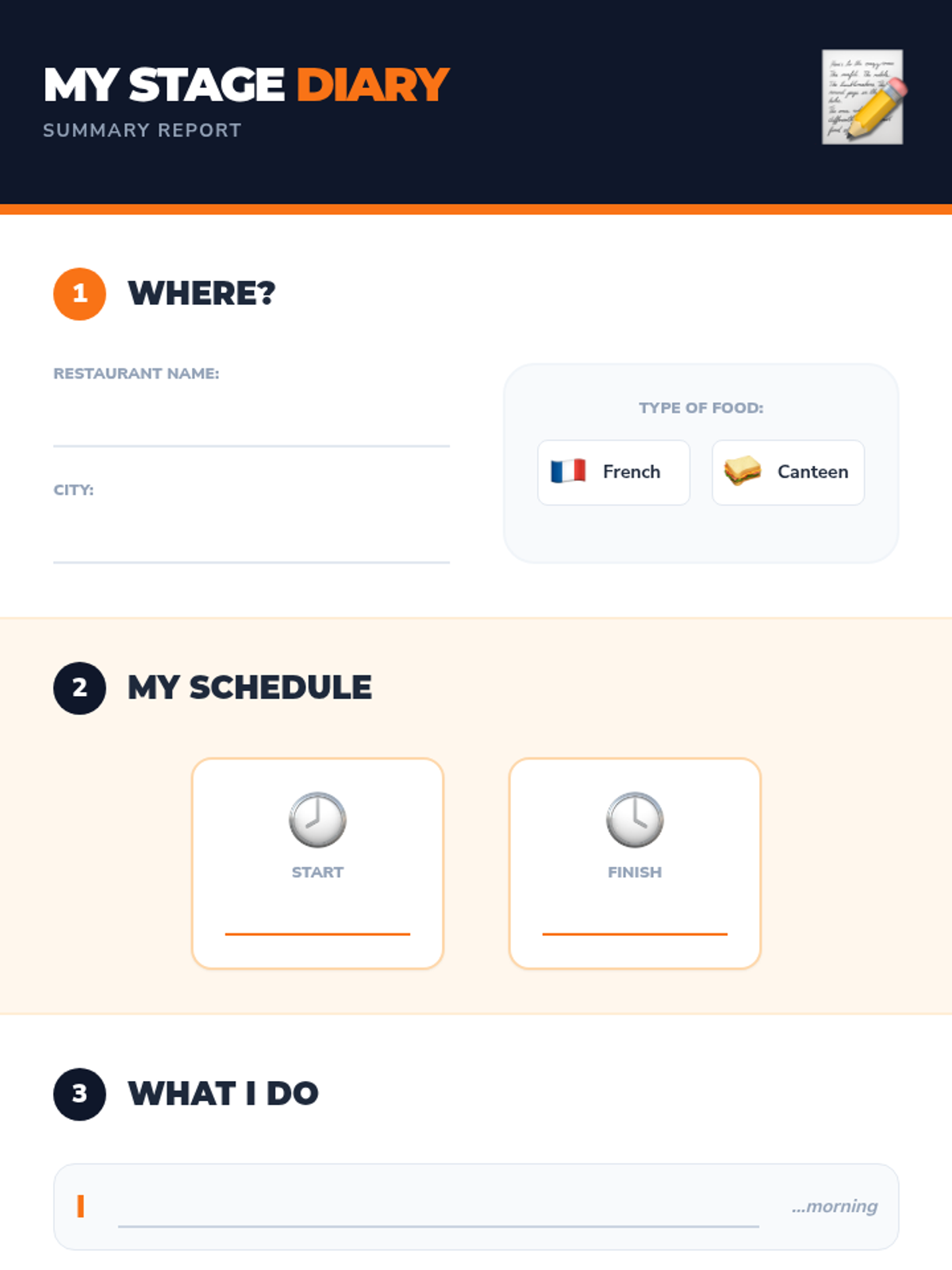
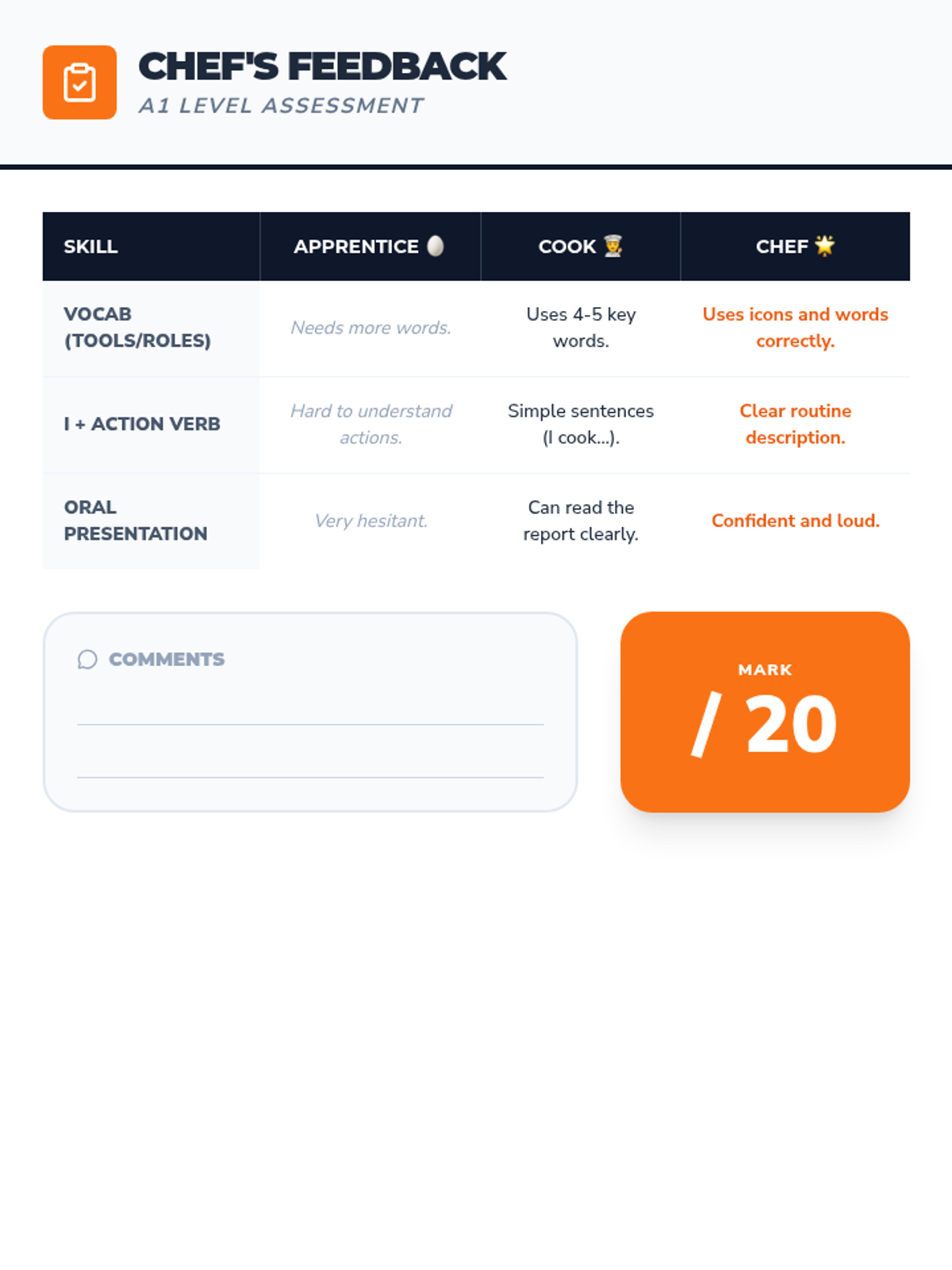
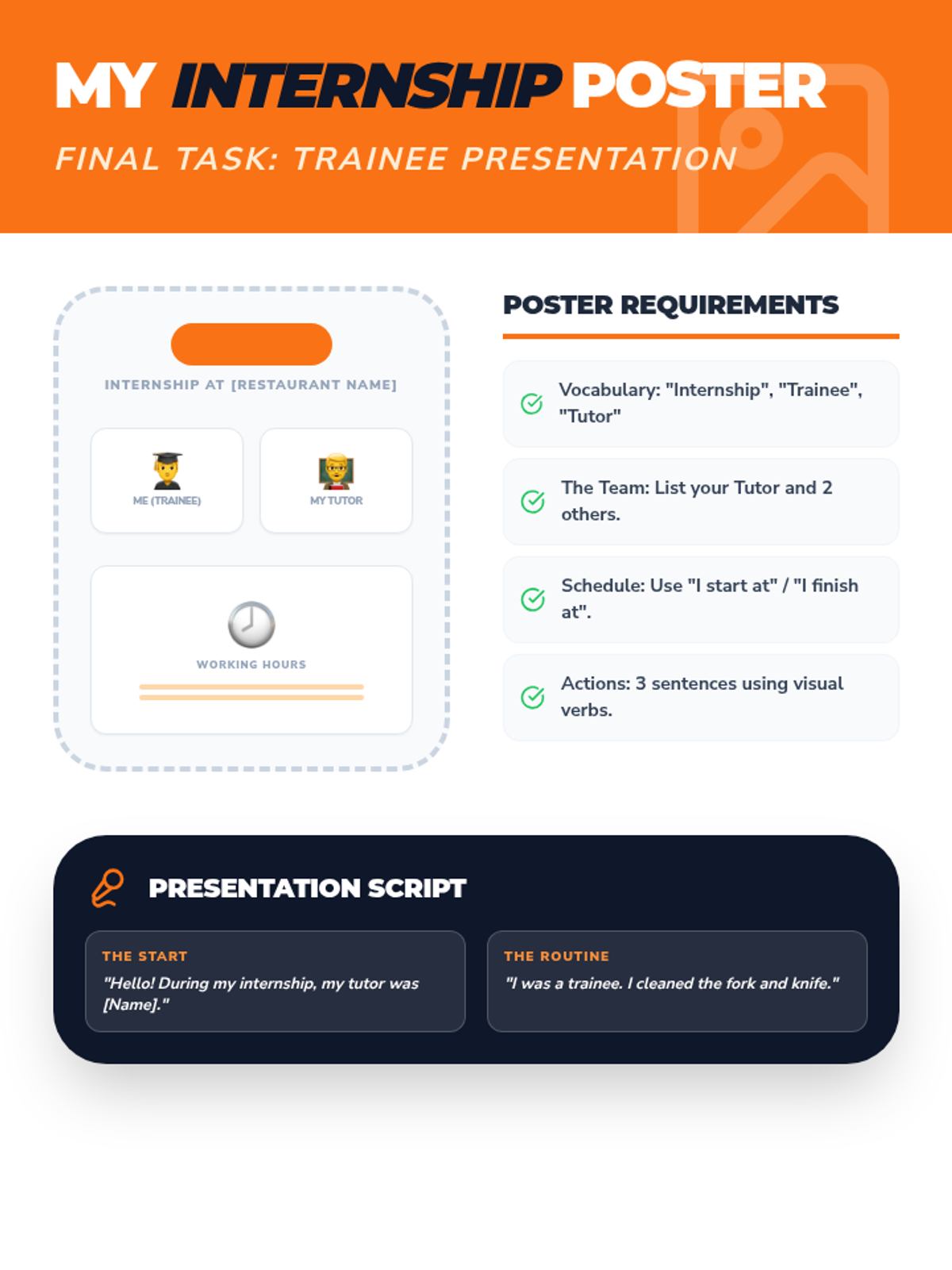
Students synthesize their learning to produce a short report or presentation about their specific internship experience.
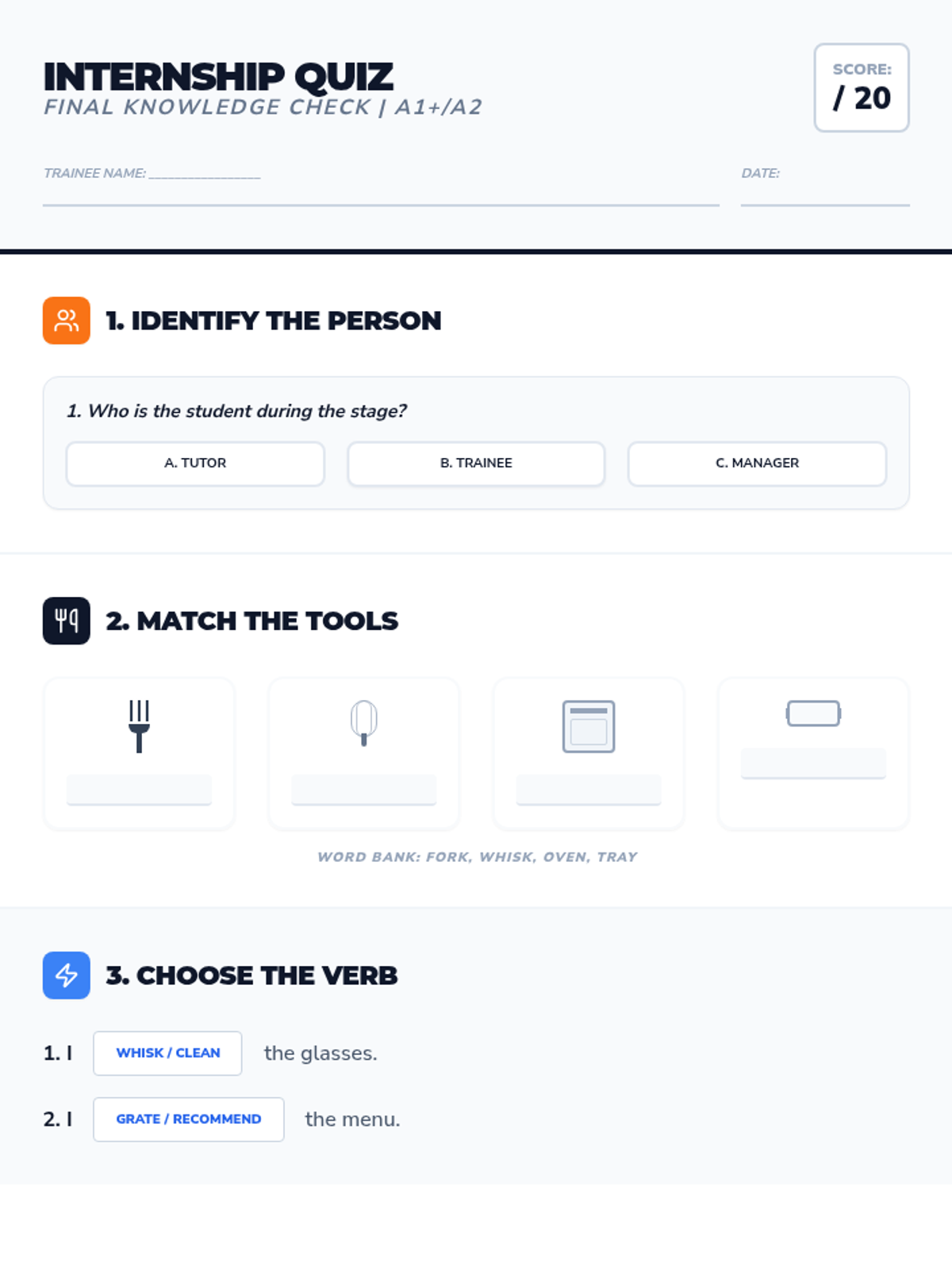
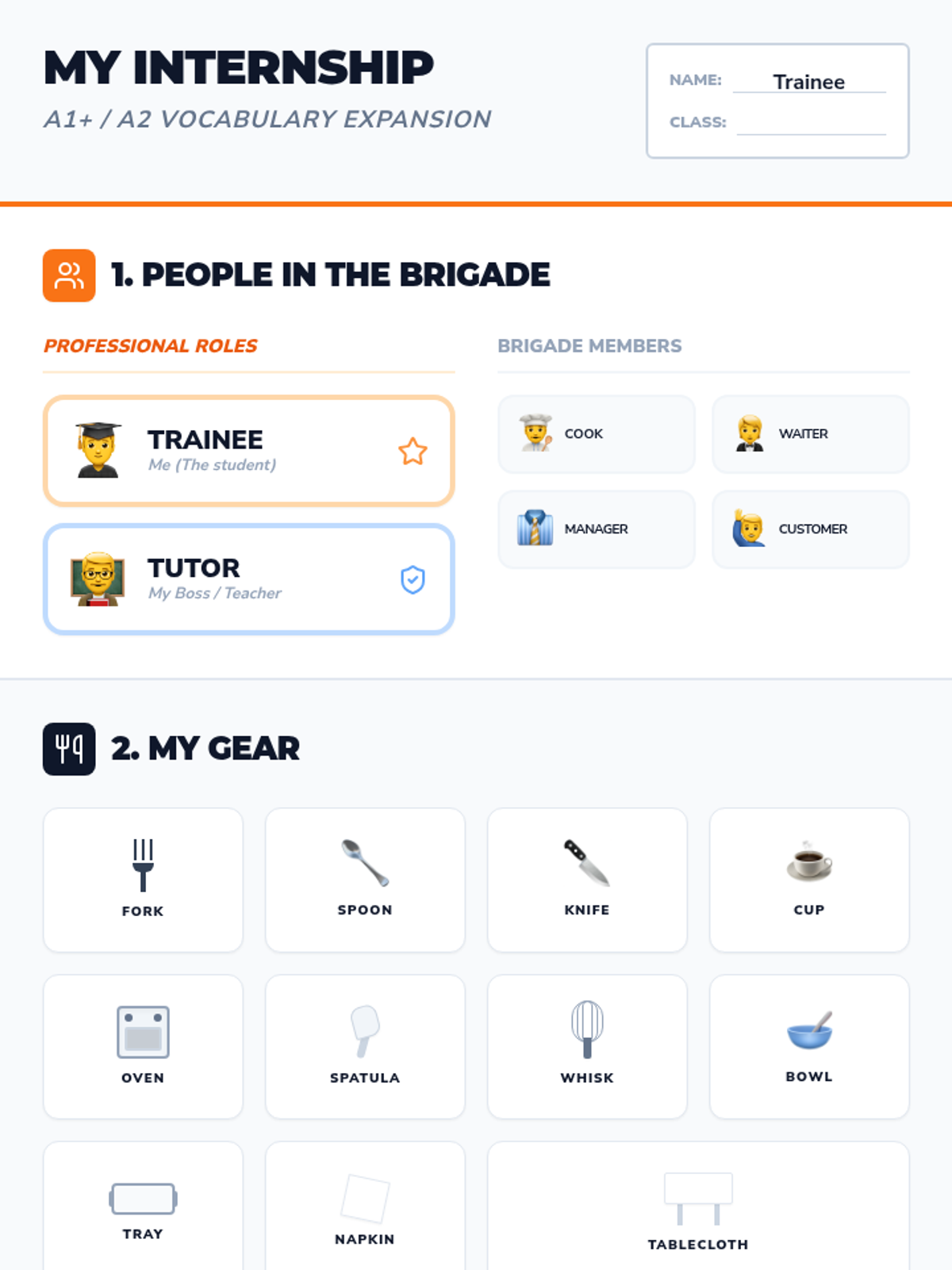
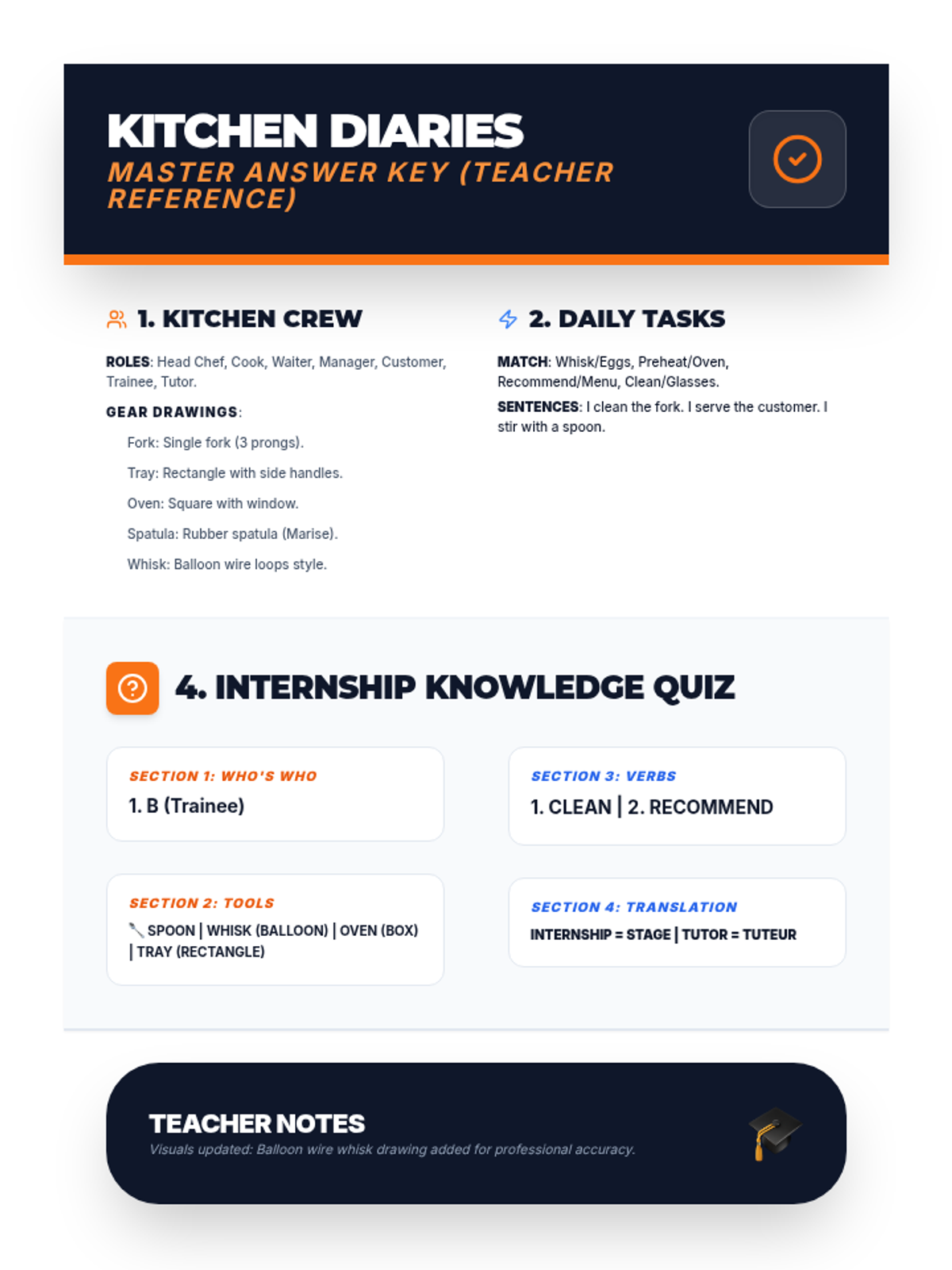
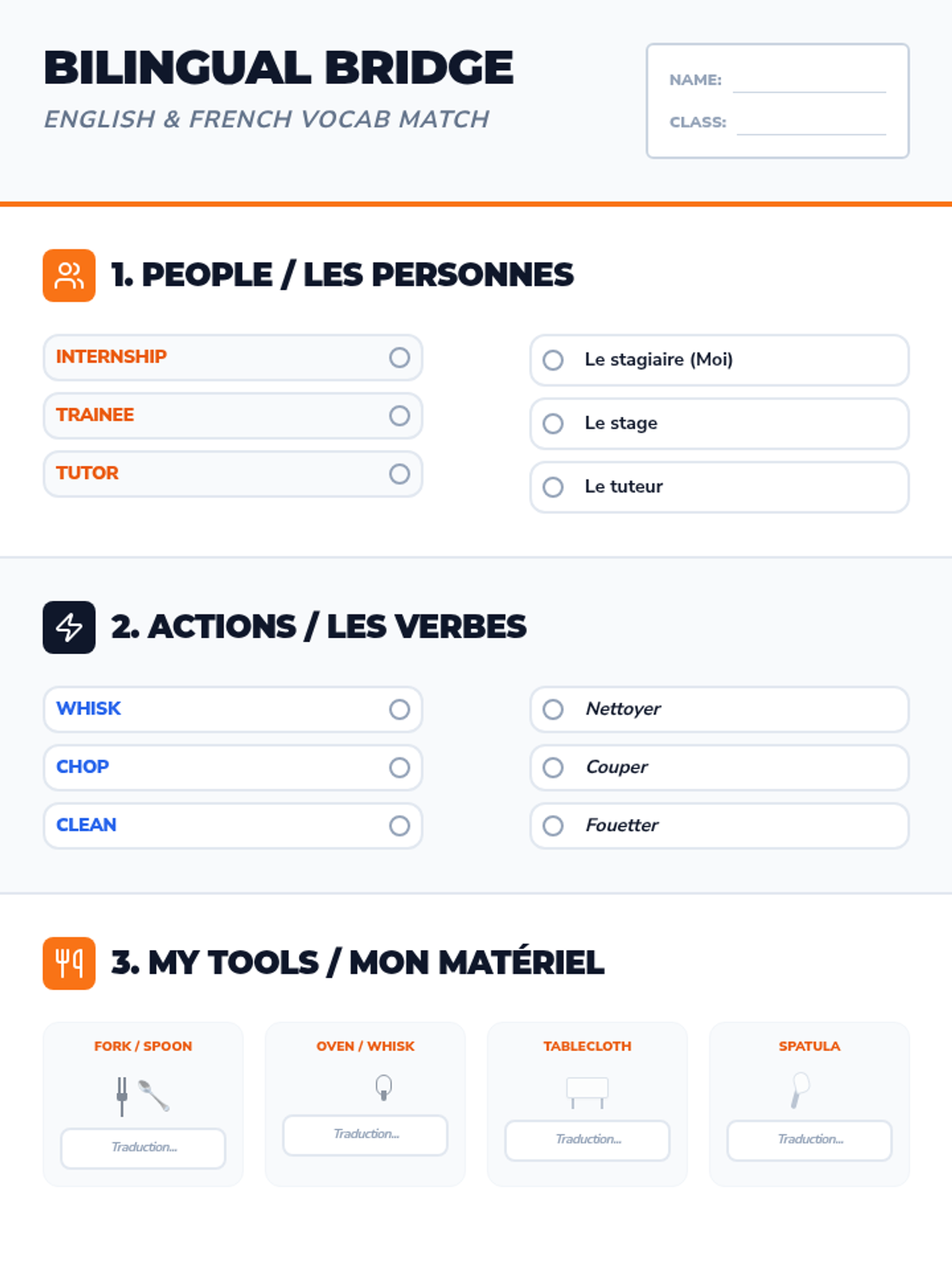
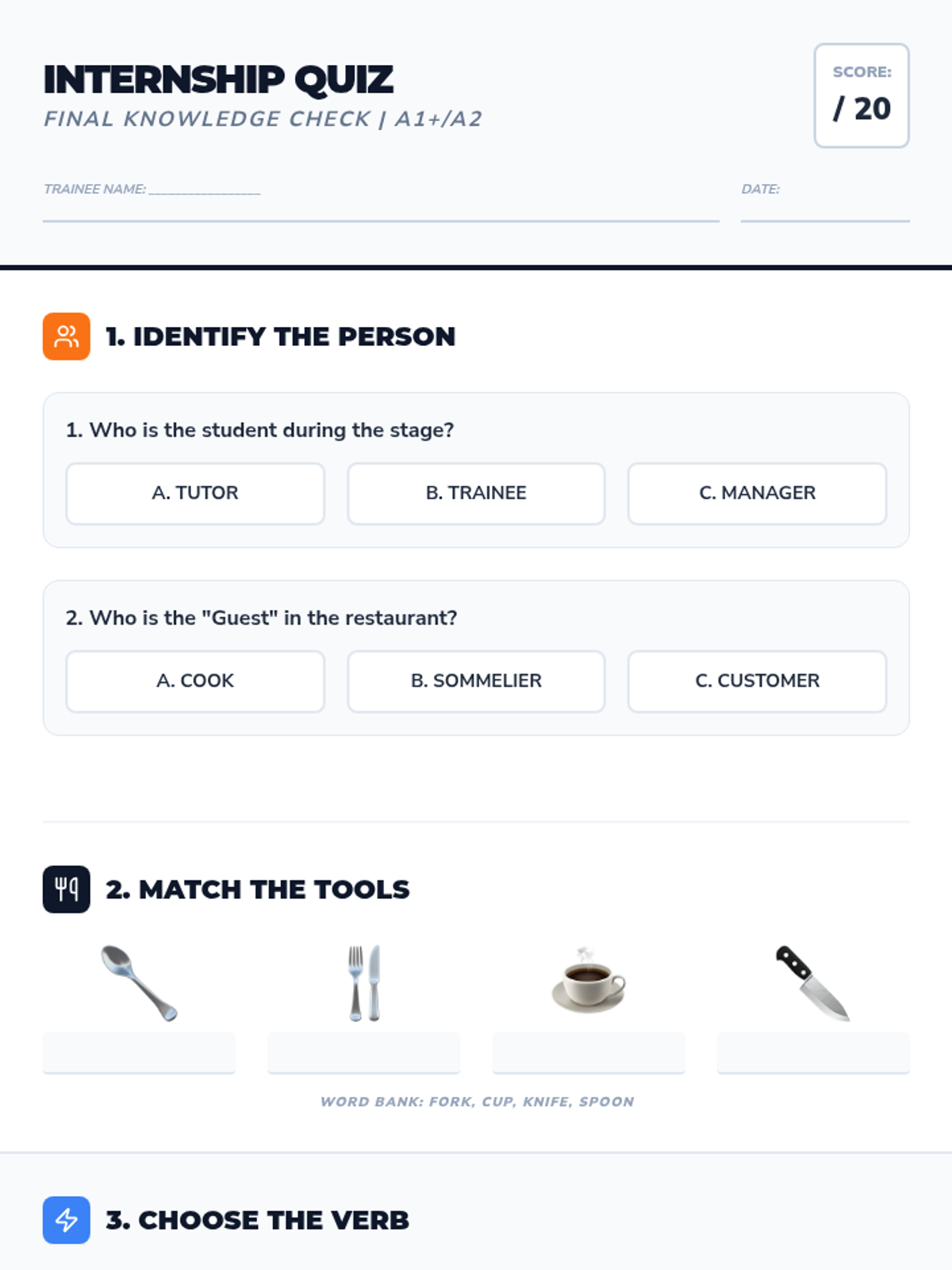
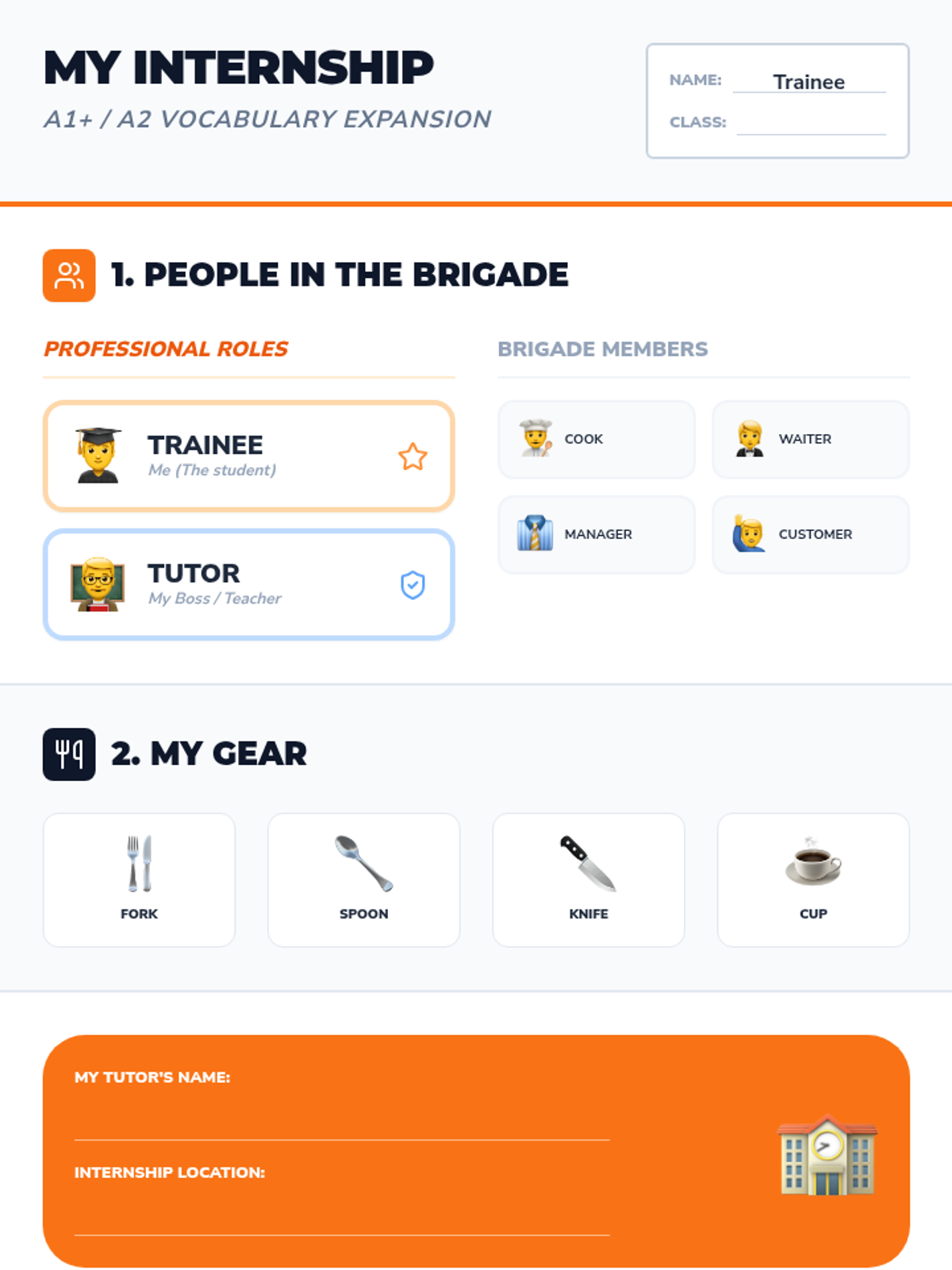
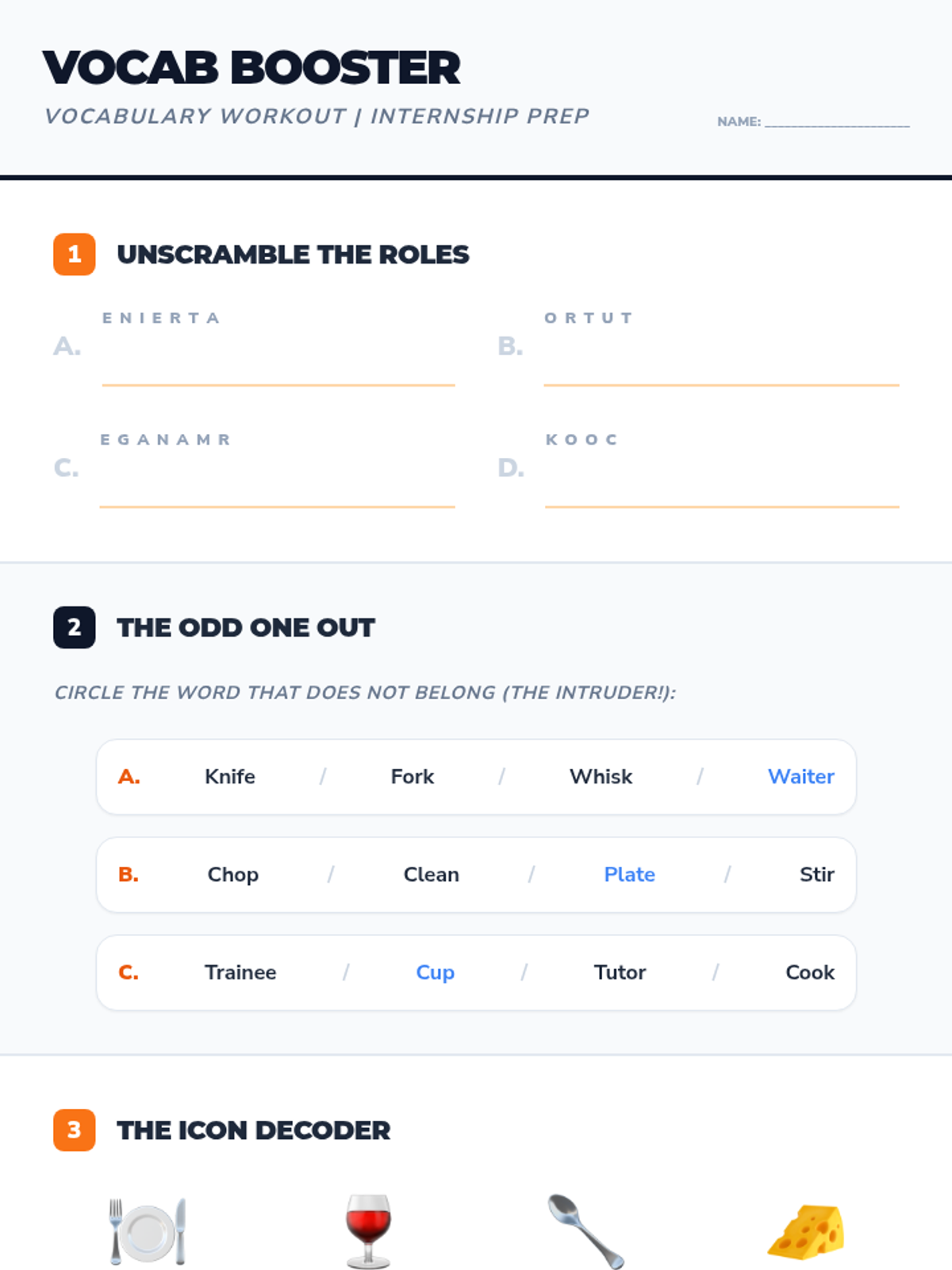
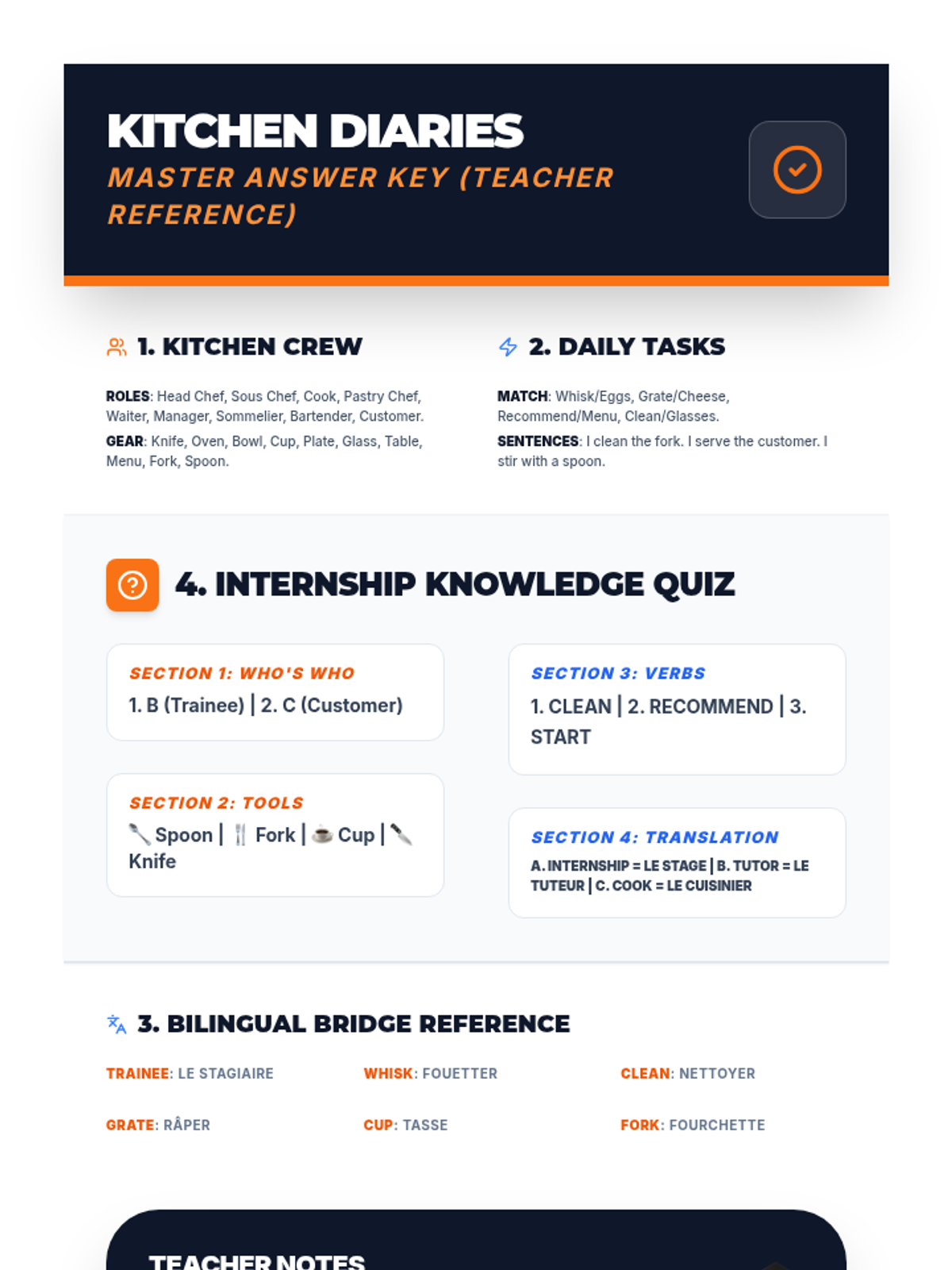
Focuses on identifying kitchen/restaurant roles and equipment used during the internship to re-establish professional vocabulary.
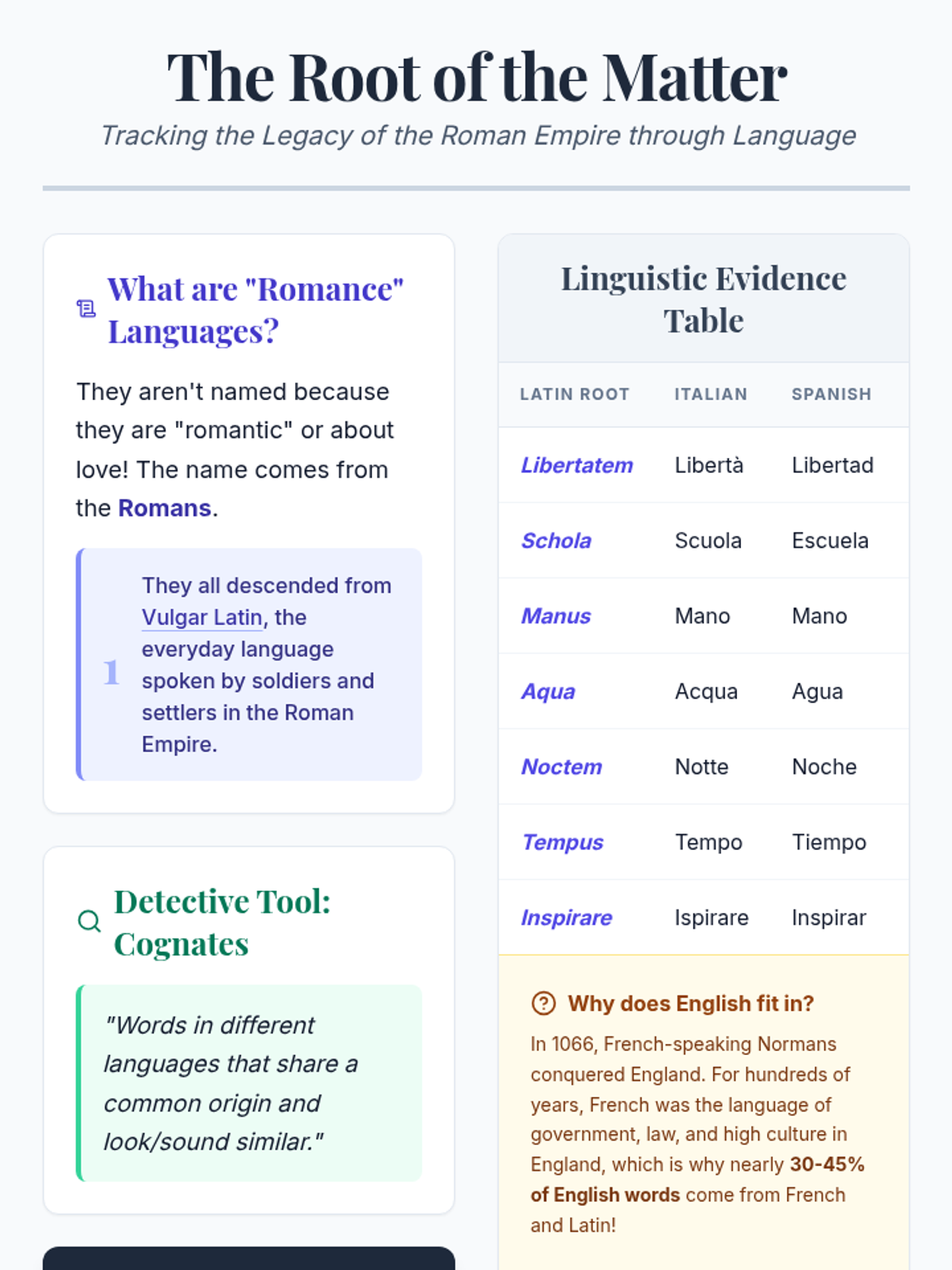
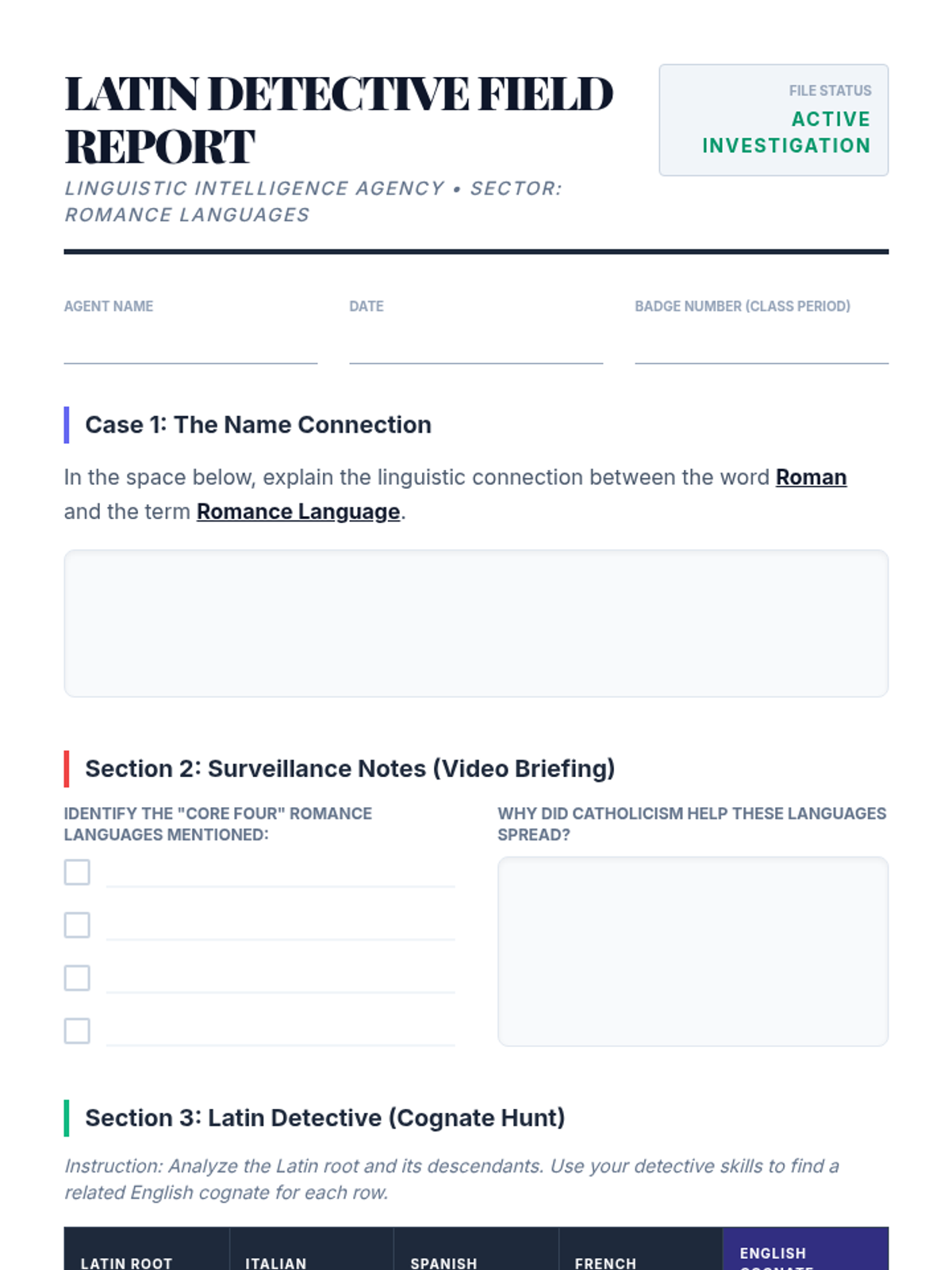
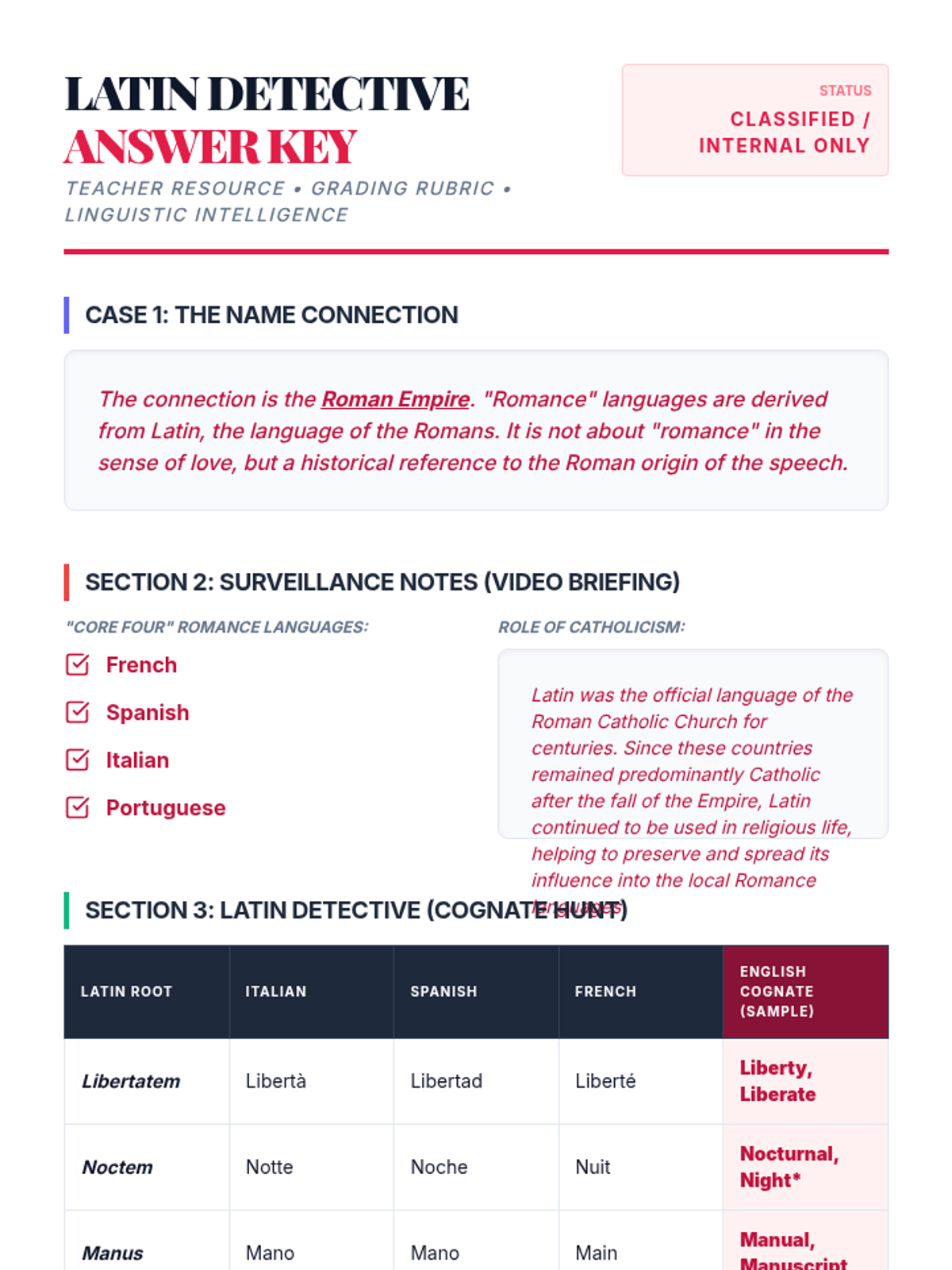
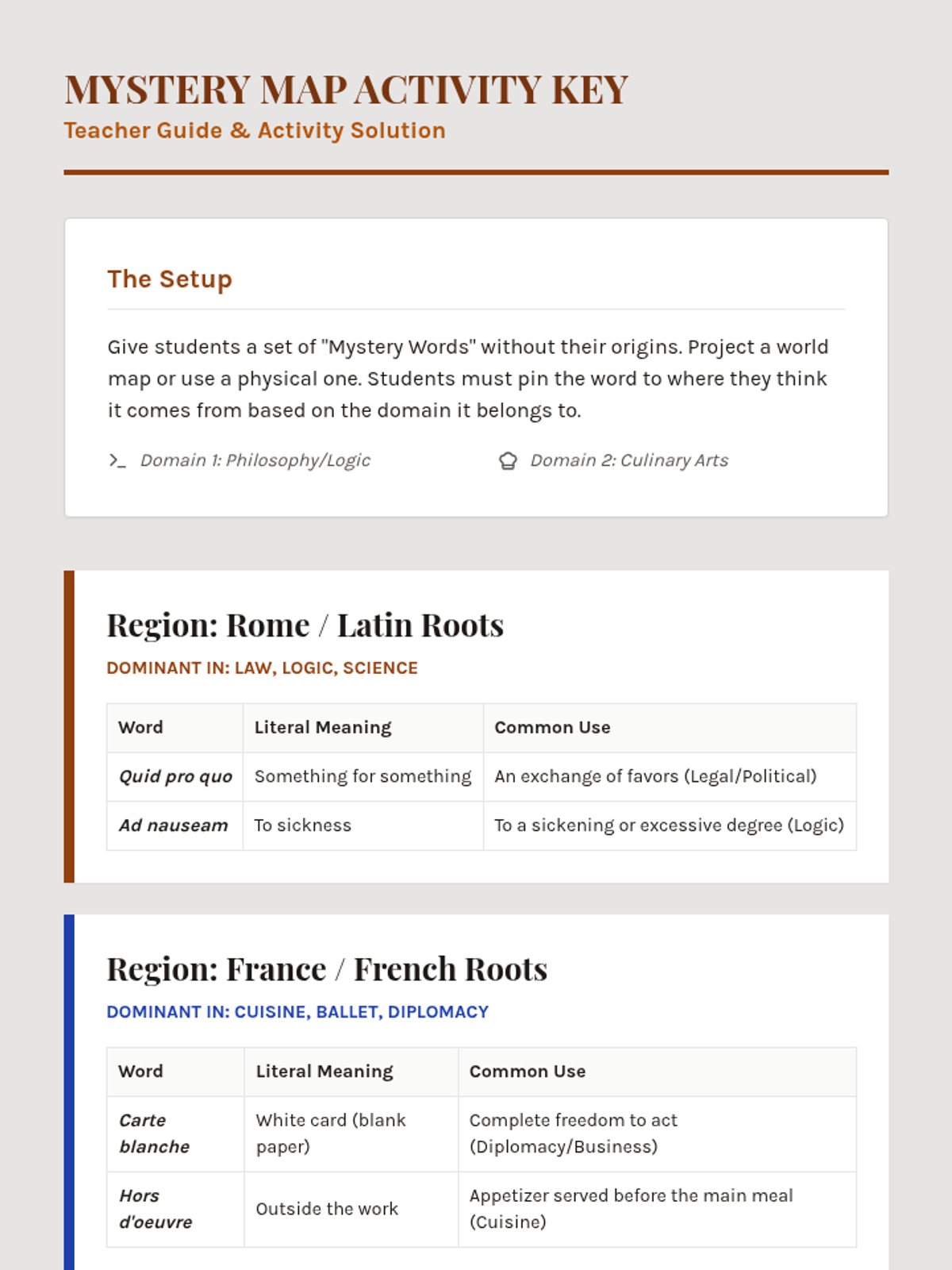
A lesson exploring the linguistic connections between Latin, Romance languages, and English through the lens of 'linguistic detective work.' Students identify cognates and understand the historical influence of the Roman Empire on modern speech.
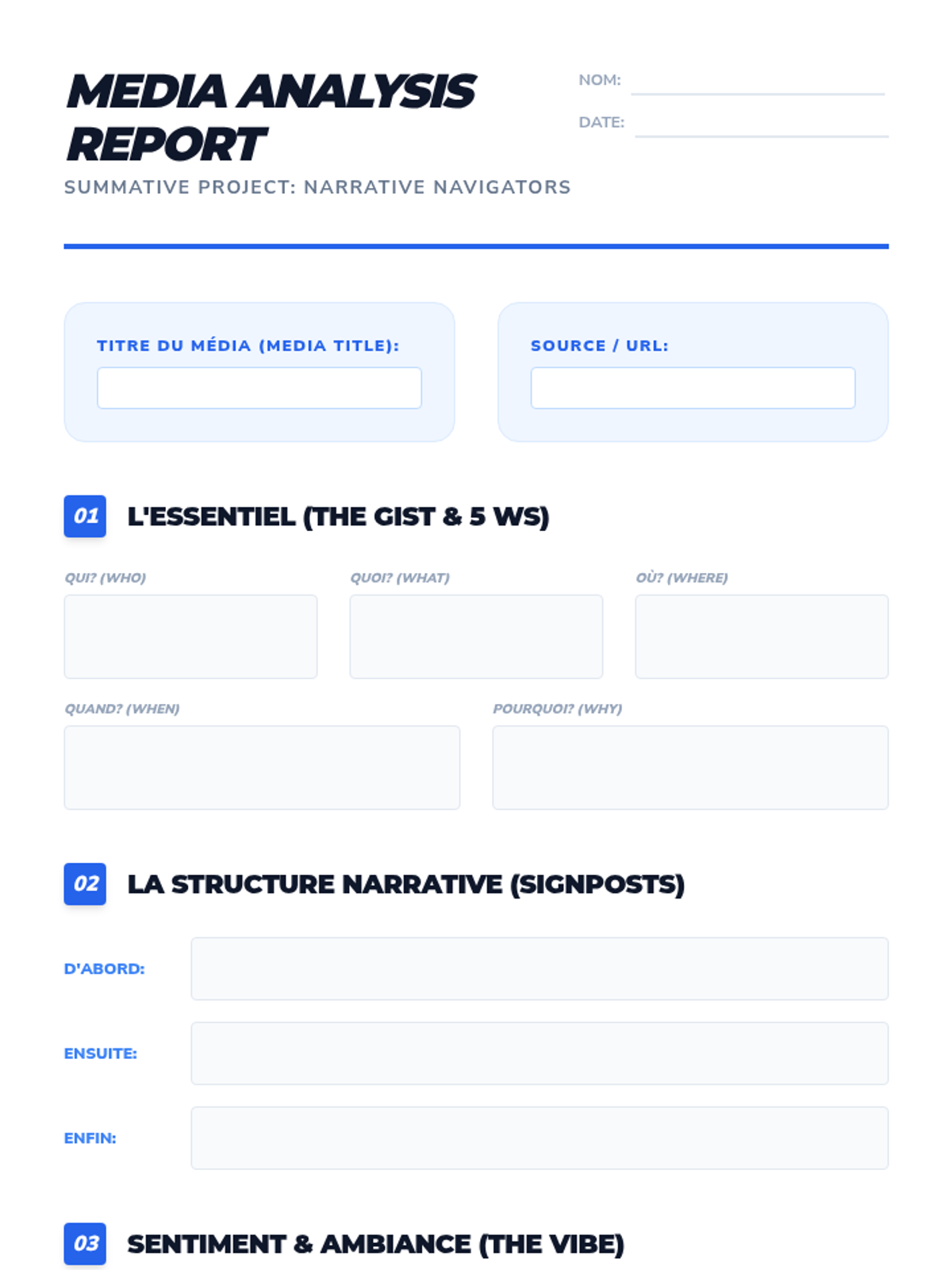
As a final workshop, students select a short audio clip of their choice (podcast intro, video blog, etc.) and apply all strategies to create a 'Listening Report.' They present a summary, key vocabulary, and the structural outline of the clip to peers. This encourages autonomous listening habits.
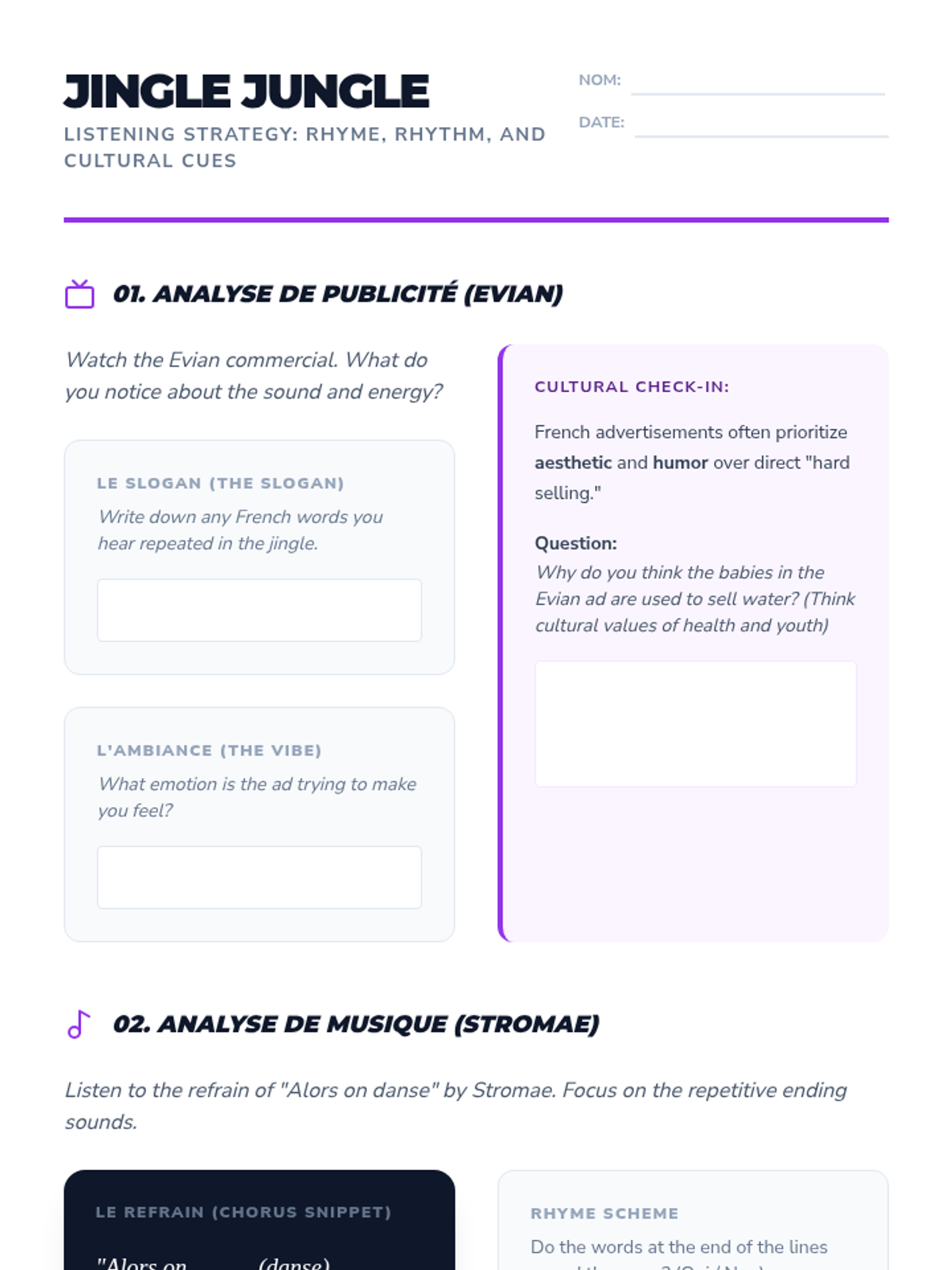
This lesson uses catchy commercials and simple pop songs to explore cultural references and wordplay. Students identify slogans, rhymes, and cultural values embedded in the media. This adds a layer of cultural literacy to auditory skills.
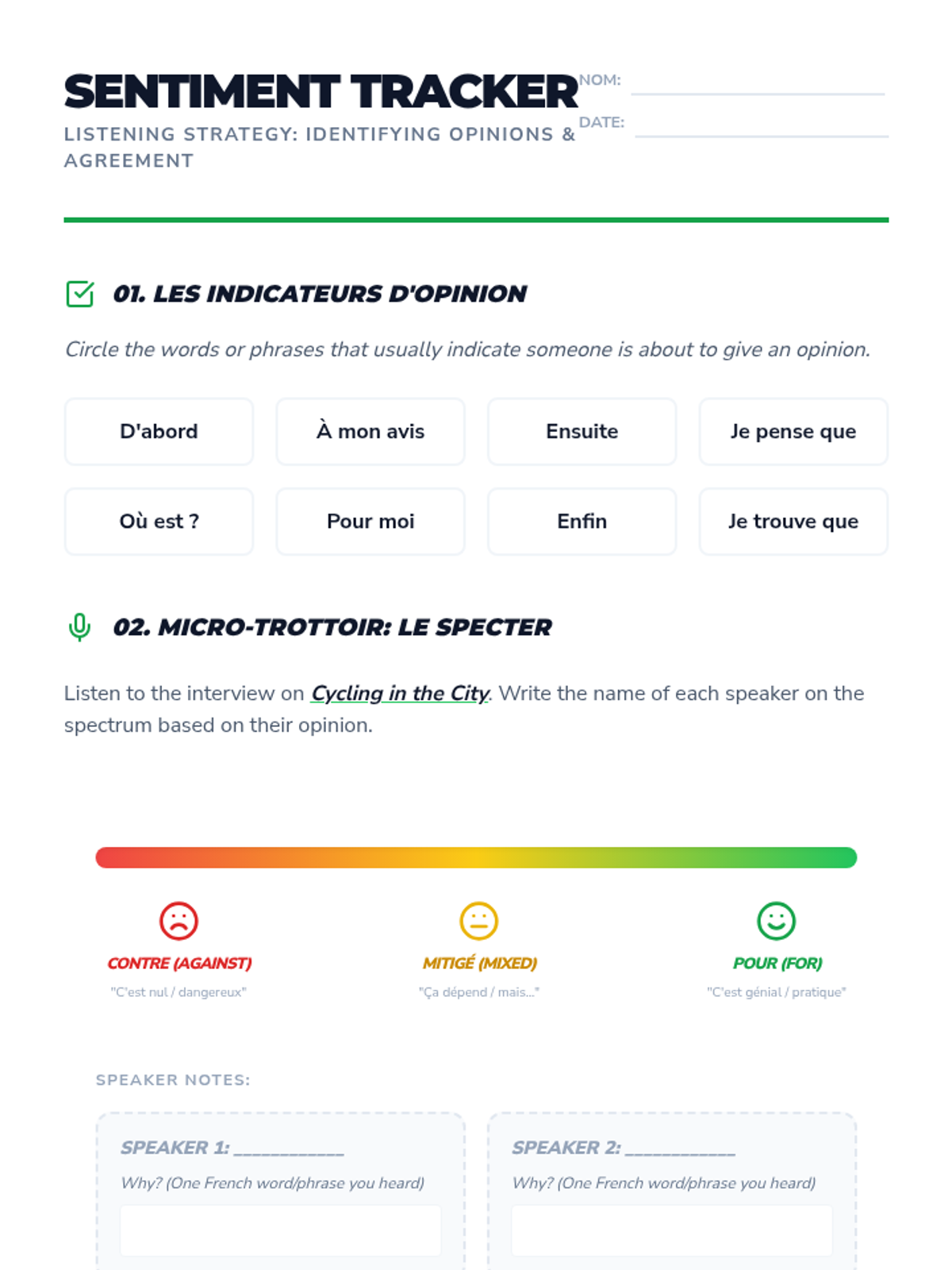
Students listen to street interviews (micro-trottoir) where people express likes, dislikes, and opinions. The lesson focuses on identifying agreement/disagreement phrases and emotive adjectives. Students chart the general sentiment of the speakers toward a specific topic.
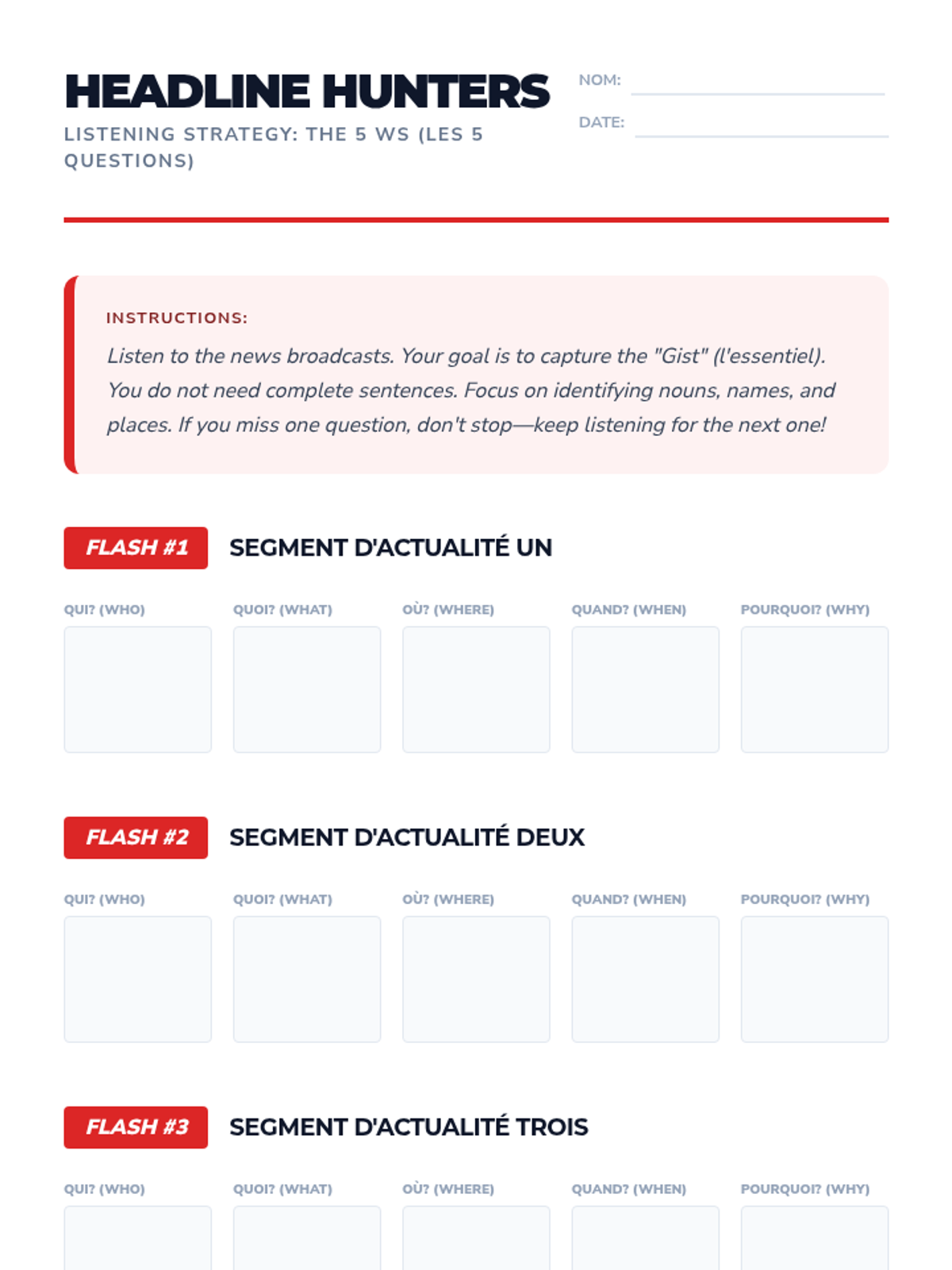
Using simplified news broadcasts (like 'News in Slow French'), students practice answering the '5 Ws' (Who, What, Where, When, Why). The focus is on extracting the main idea or 'gist' without getting stuck on unknown vocabulary. Discussion focuses on how the lead sentence frames the listening.
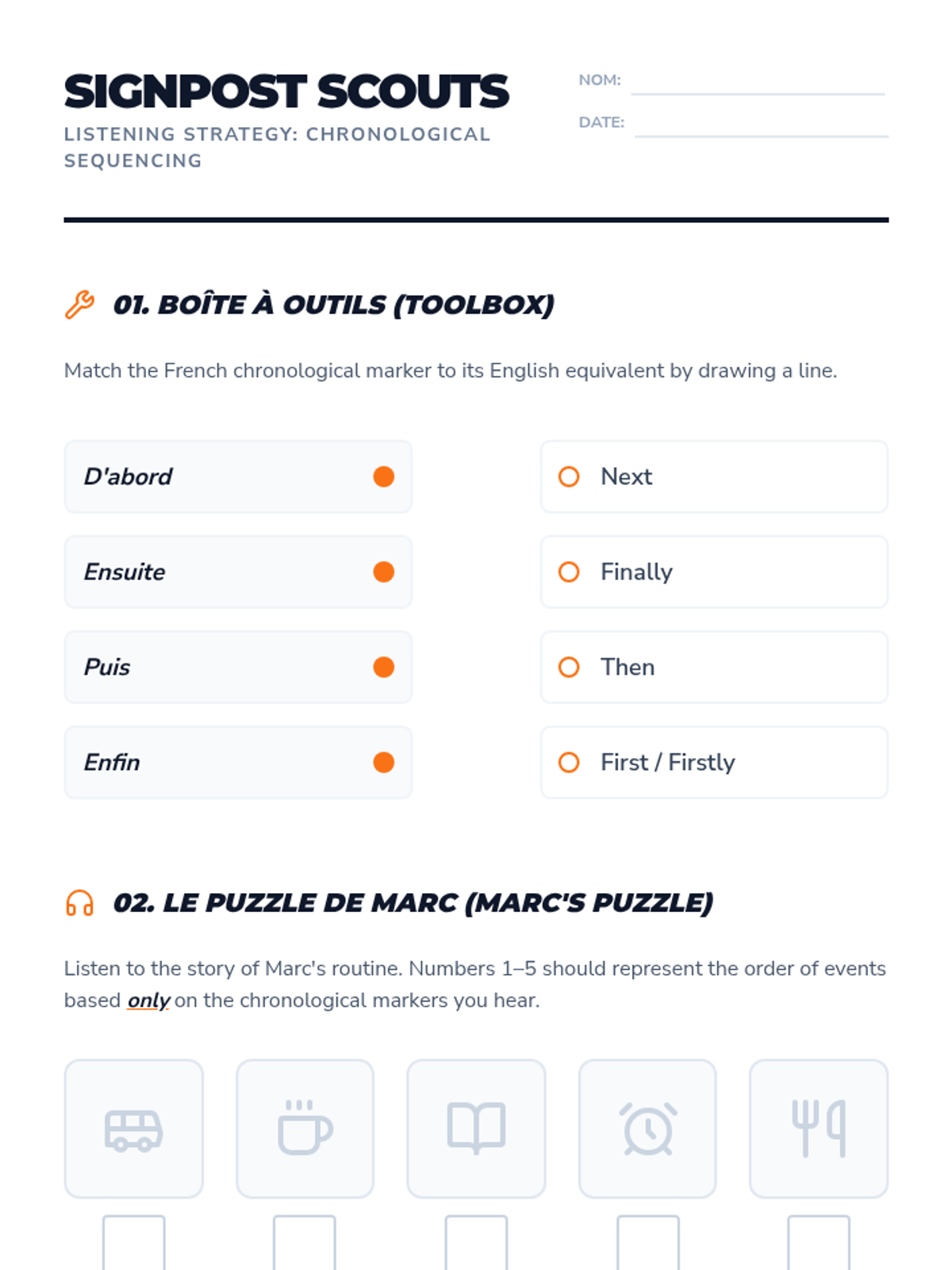
Students learn to identify chronological markers and logical connectors in simple French narratives to organize events mentally without needing word-for-word translation.
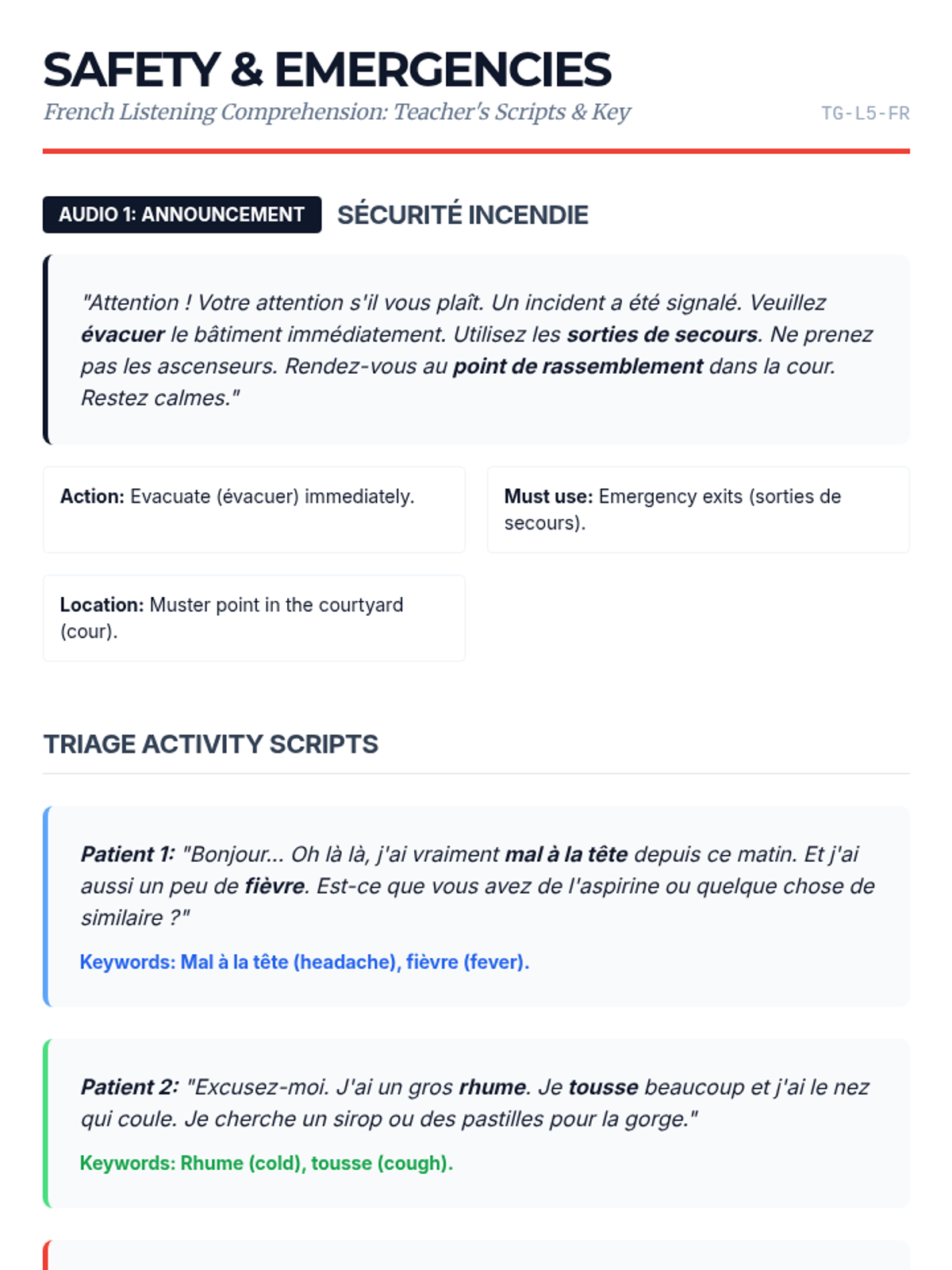
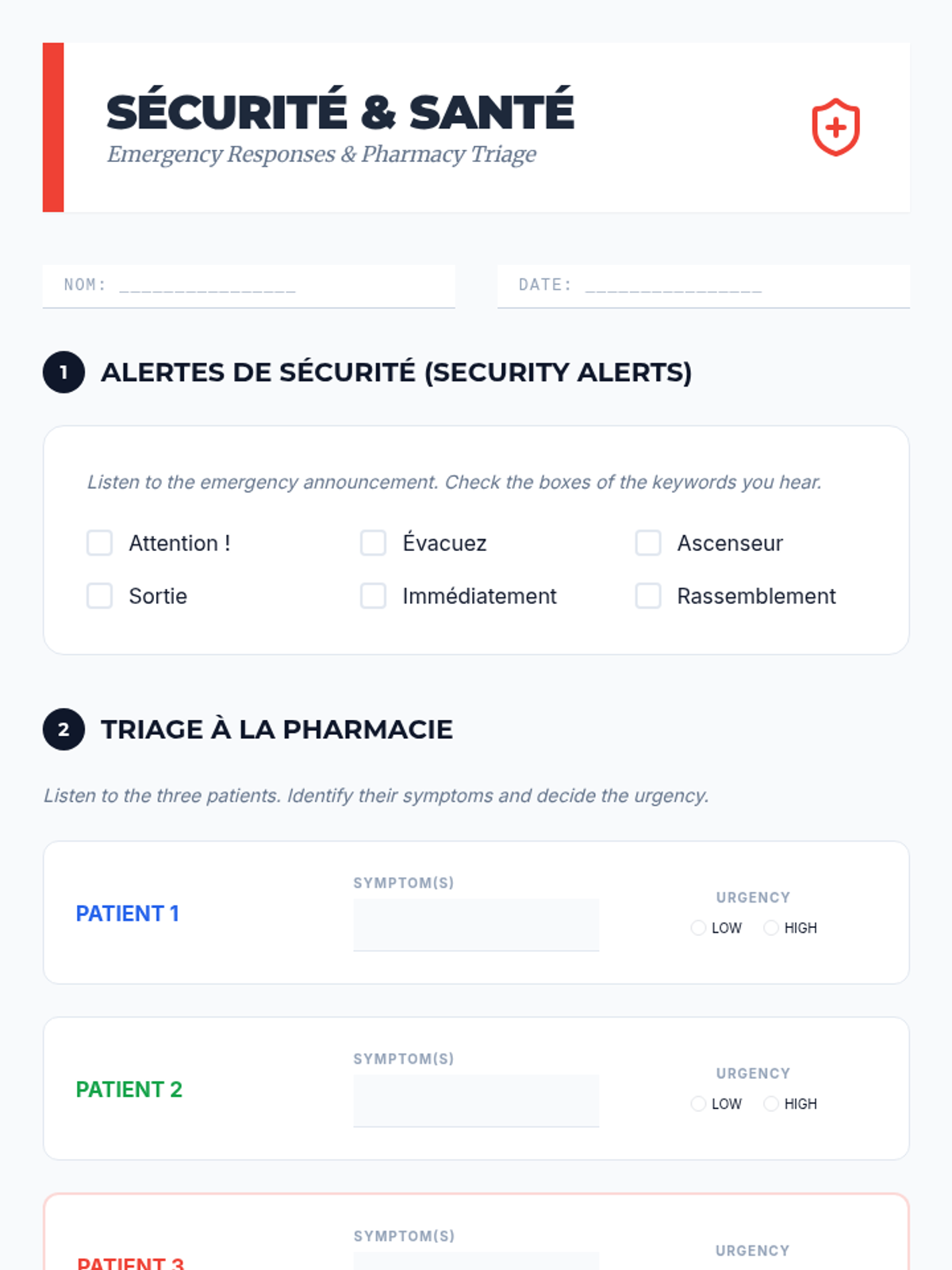
Students identify keywords in simulated emergency announcements and pharmacy interactions. The focus is on urgency assessment and health-related vocabulary for travel safety.
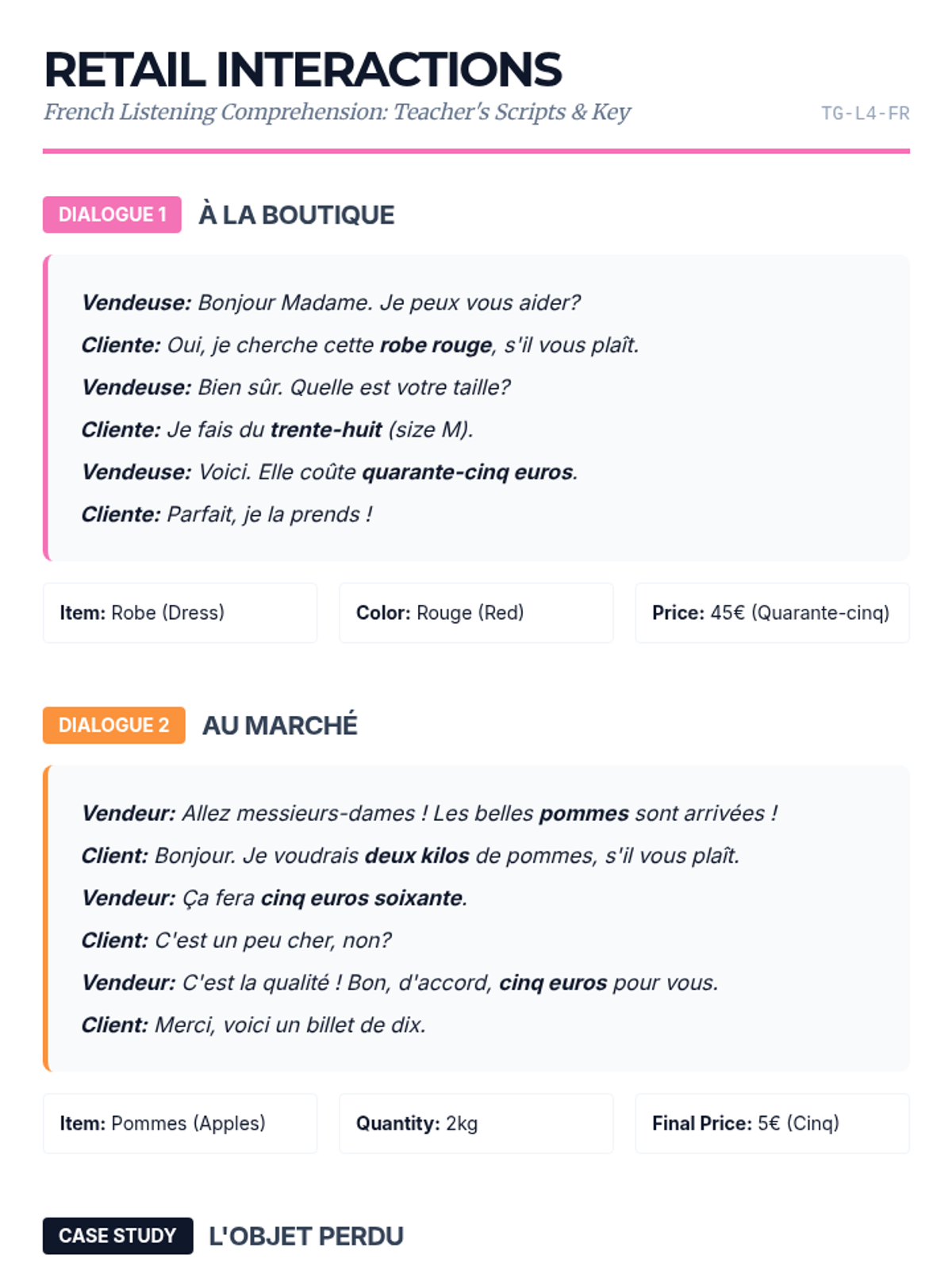
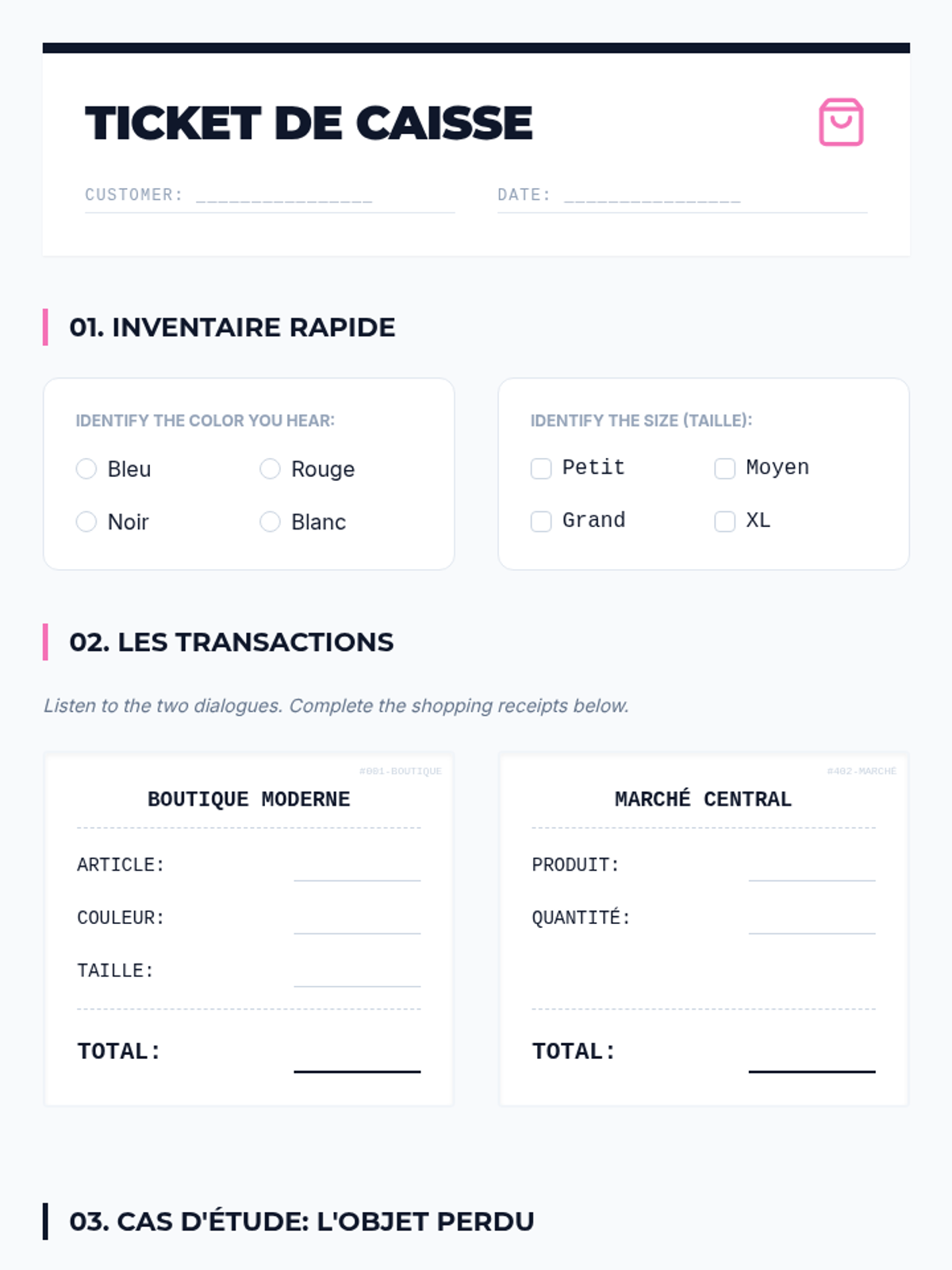
Students listen to retail interactions at boutiques and markets to identify items, sizes, colors, and prices. The lesson covers transactional listening and cultural notes on metric conversions.
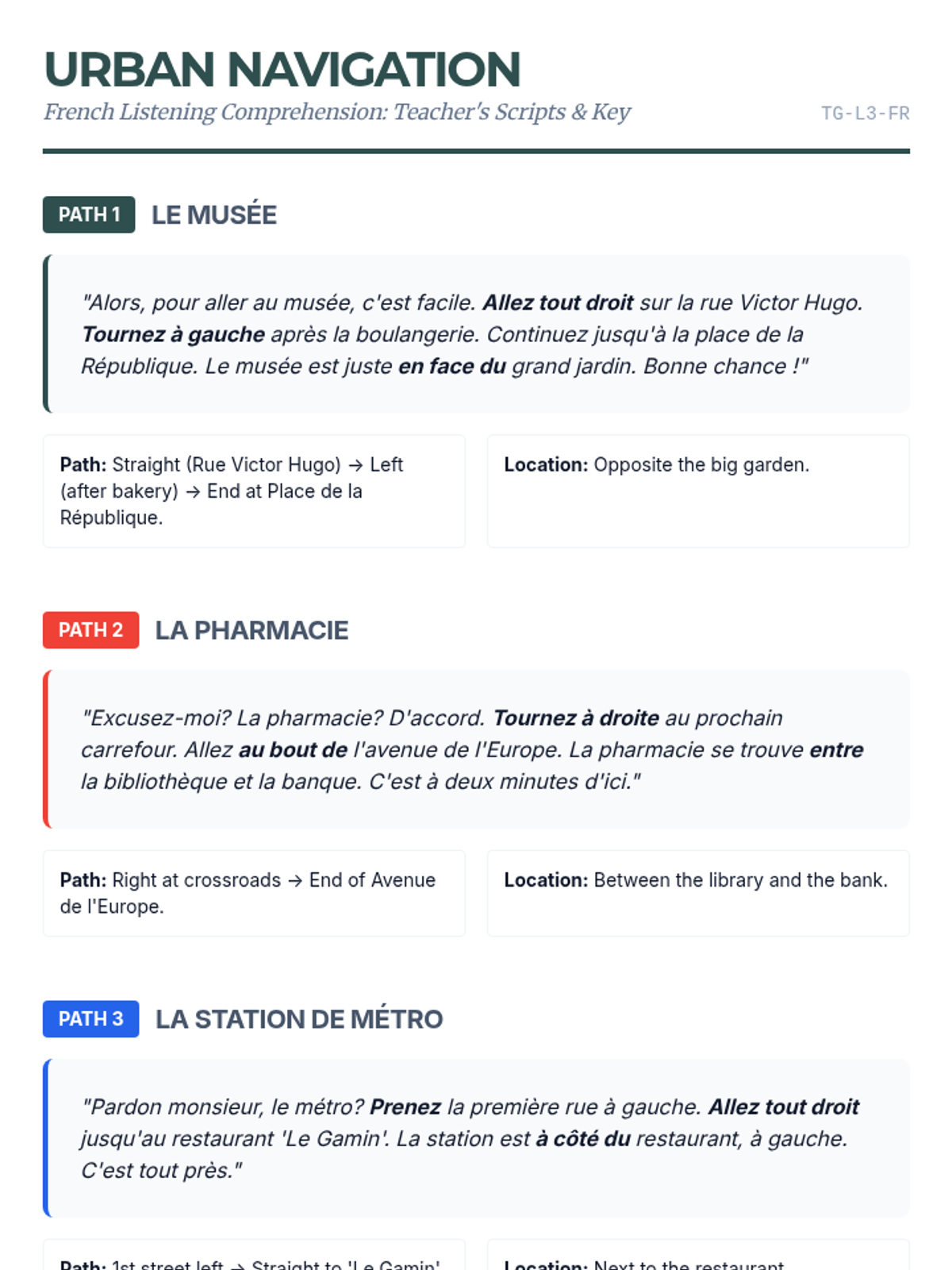
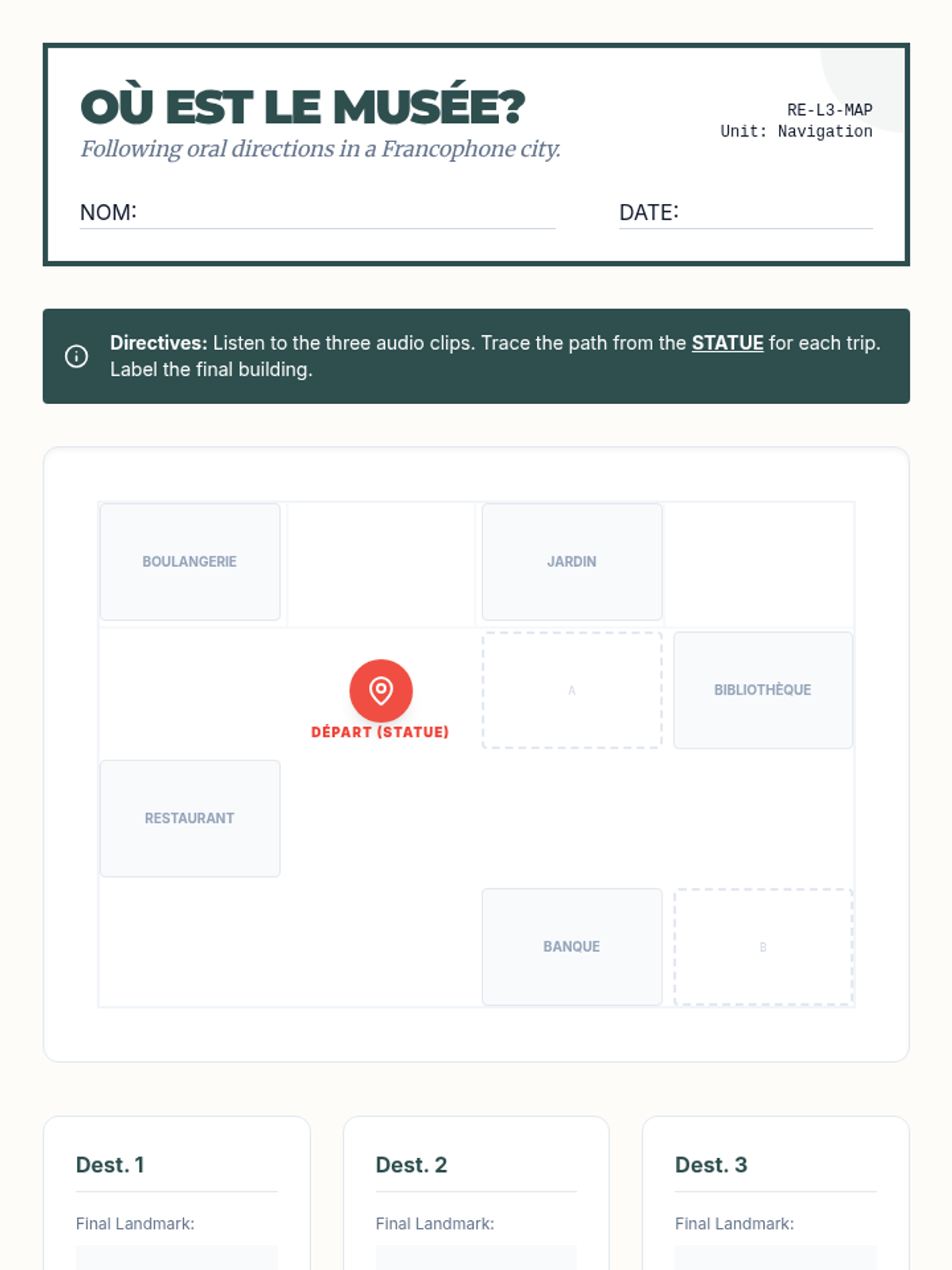
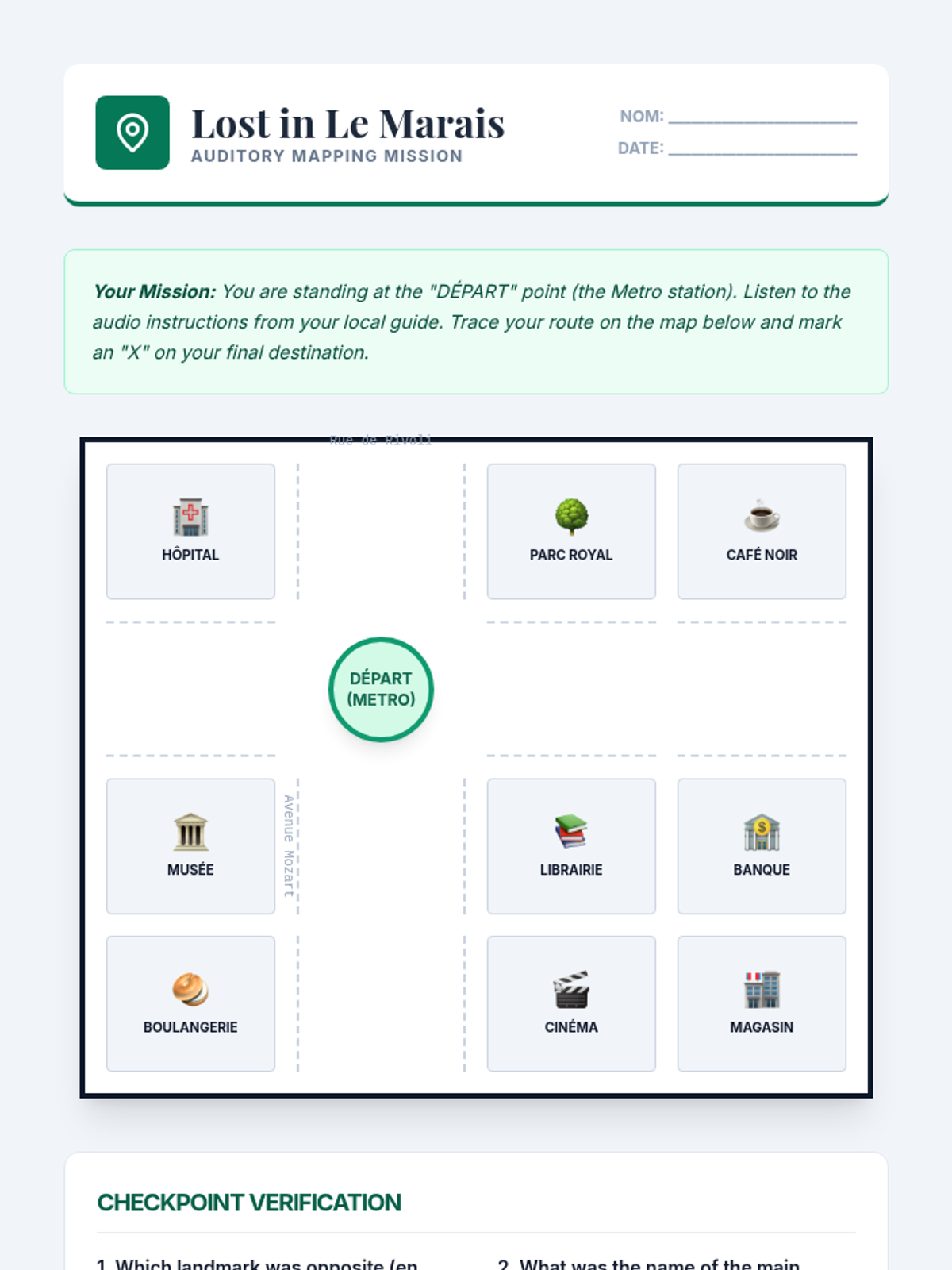
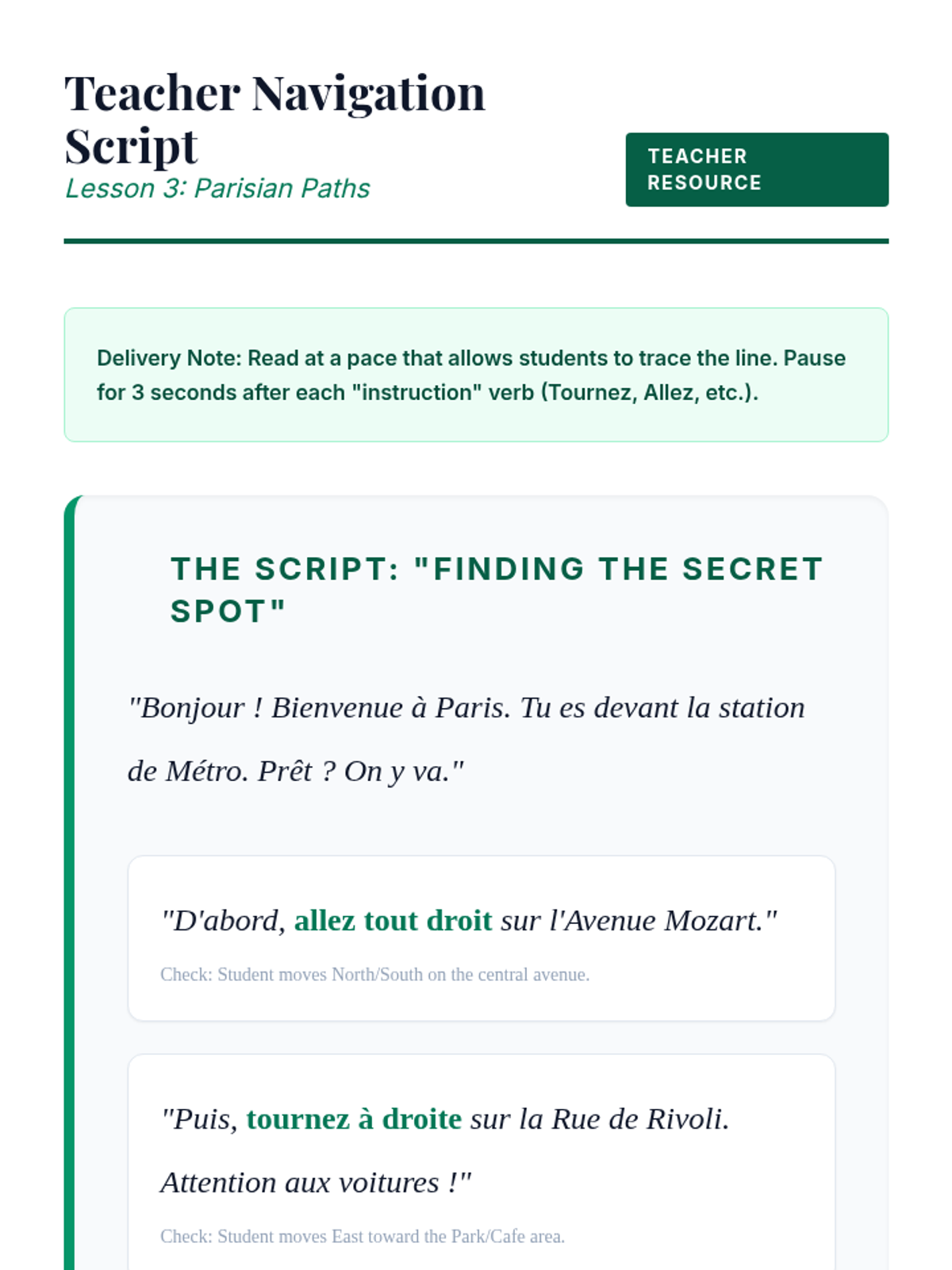
Students trace paths on maps by listening to oral directions. The lesson focuses on prepositions of place and sequencing words to navigate urban landmarks effectively.
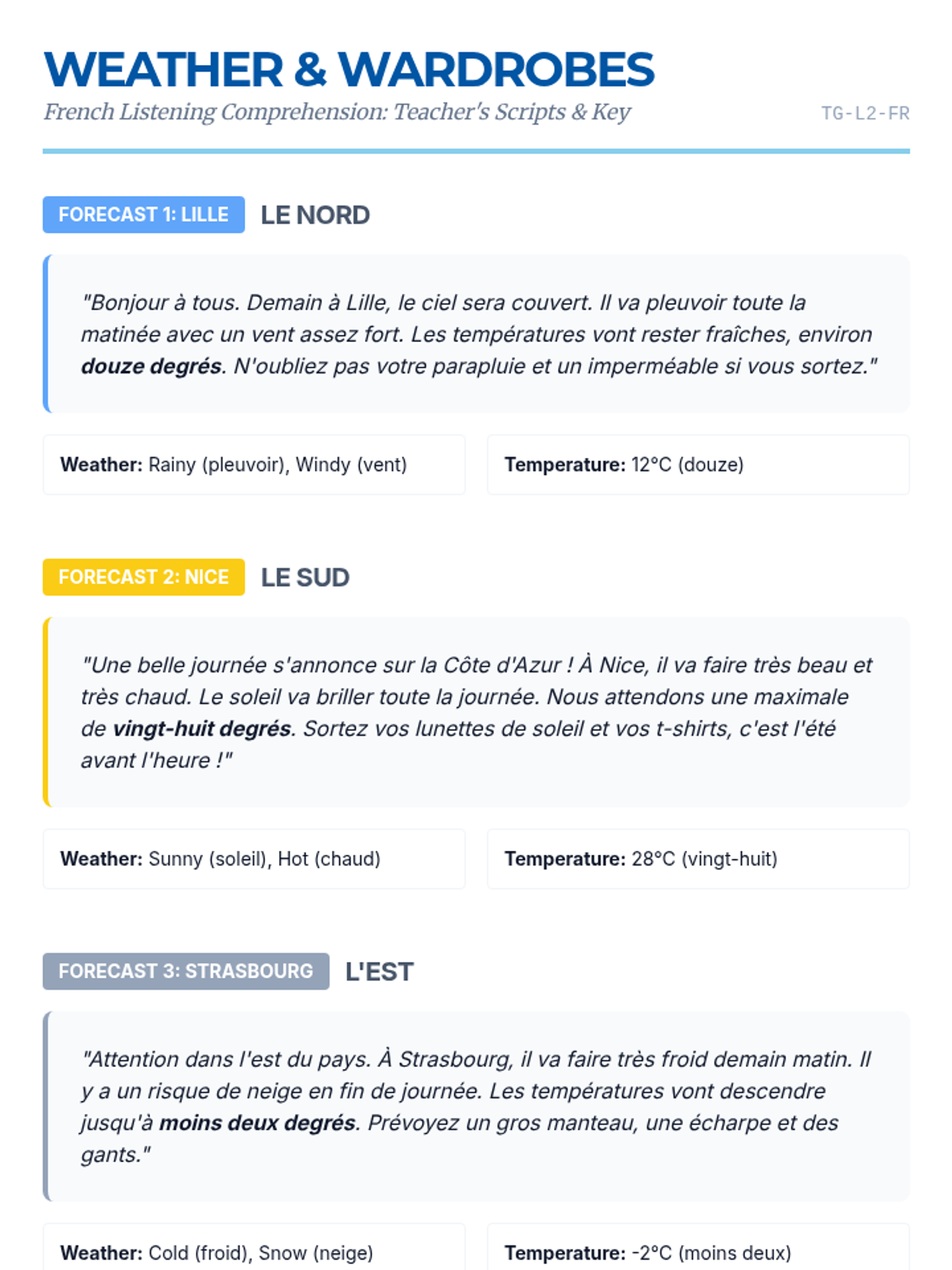
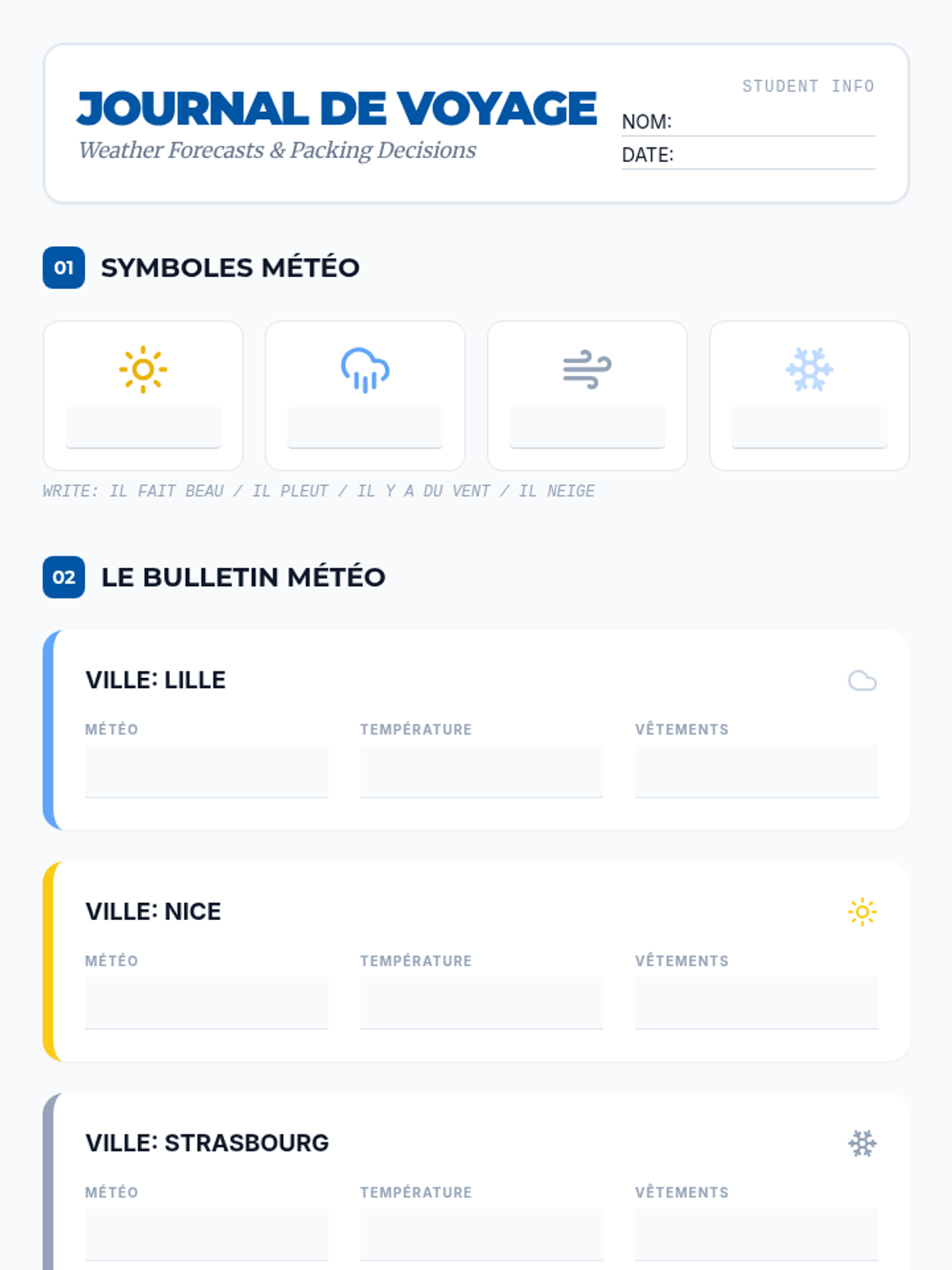
Students analyze weather forecasts to identify future tense structures and temperatures. They practice functional planning by creating packing lists and recommending outfits based on regional weather heard in the audio.
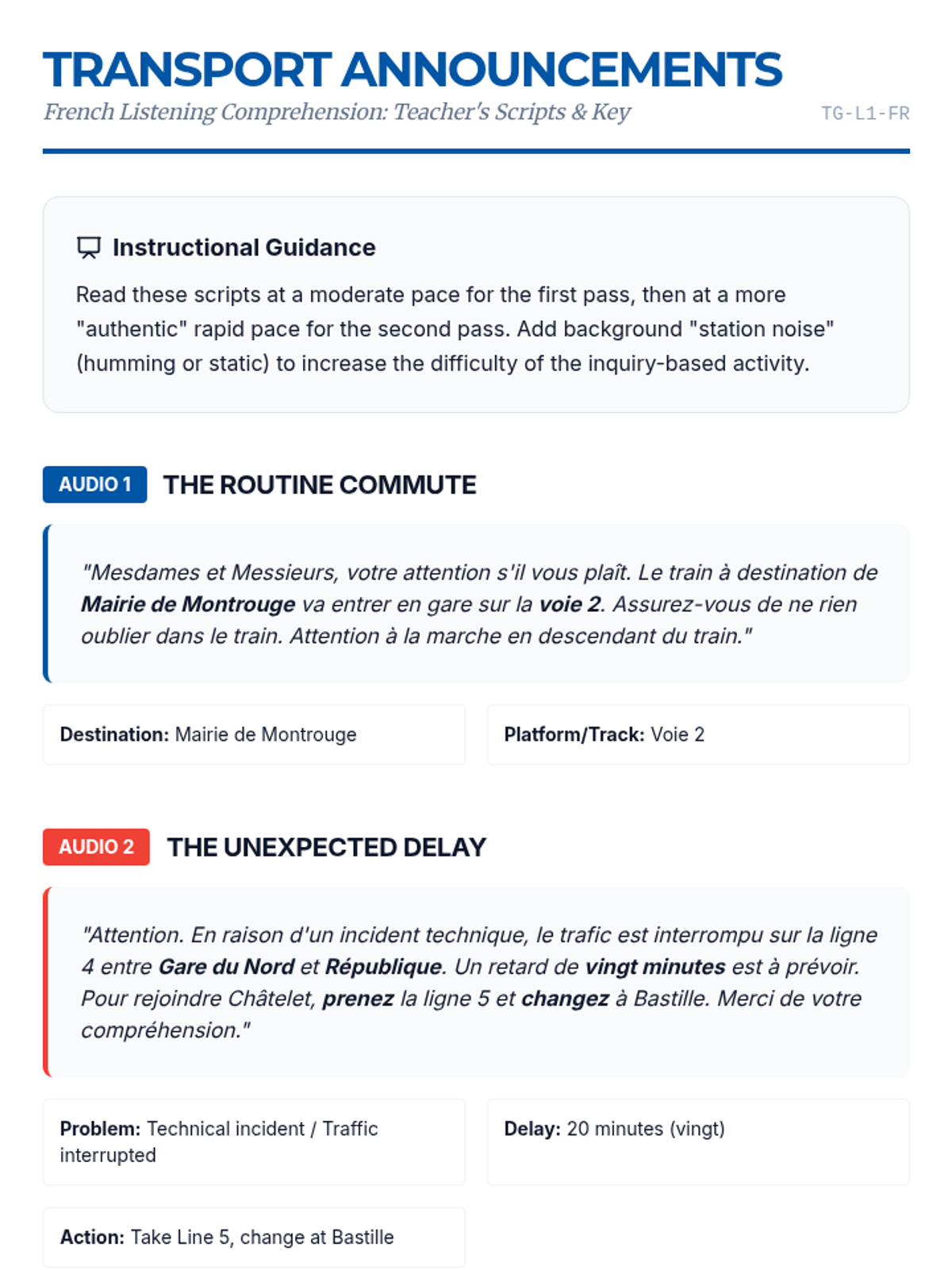
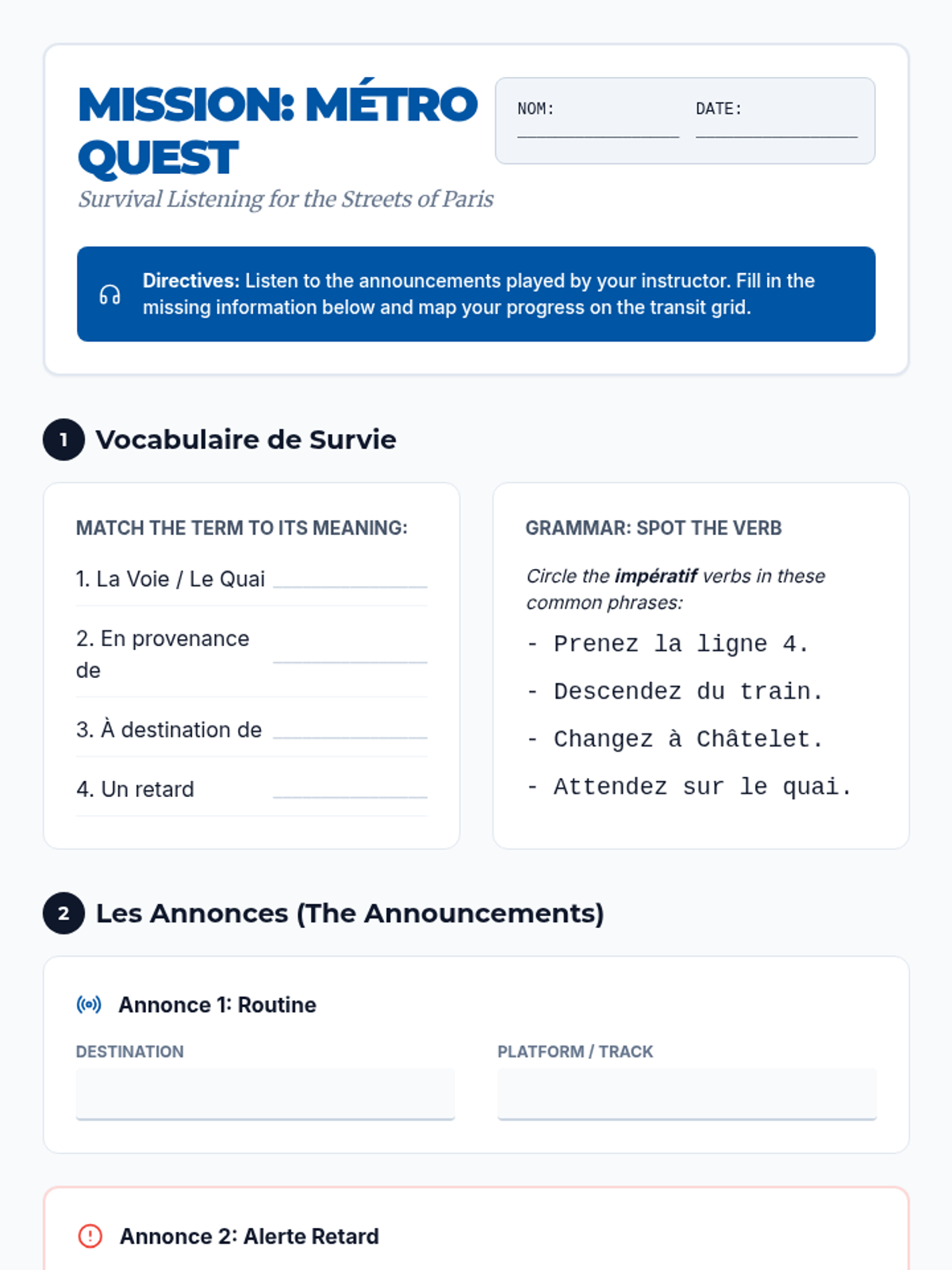
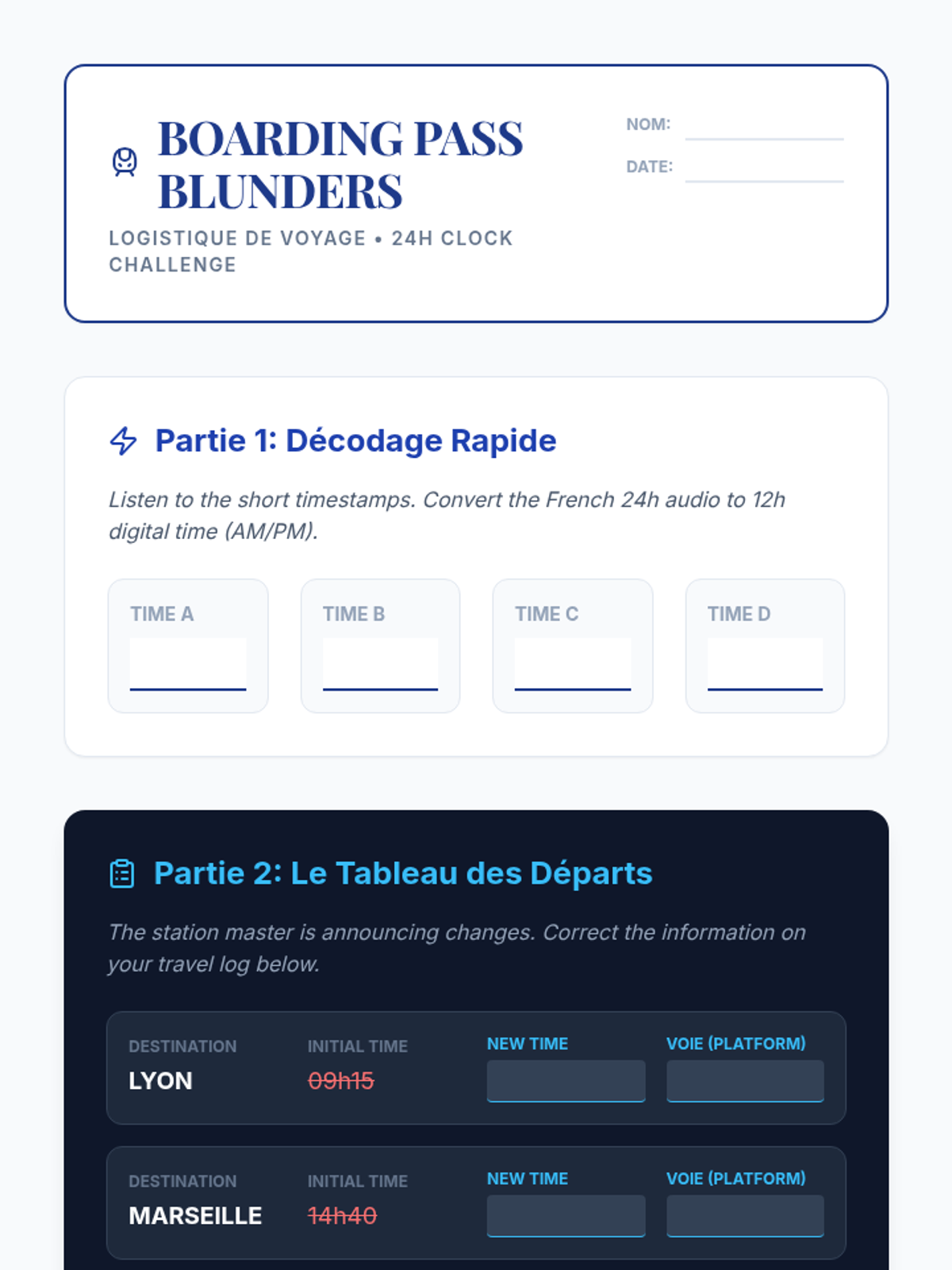
Students practice identifying platforms, delays, and destinations from authentic-style metro and train announcements. Focus is on imperative verbs and travel-specific vocabulary through a route-mapping simulation.
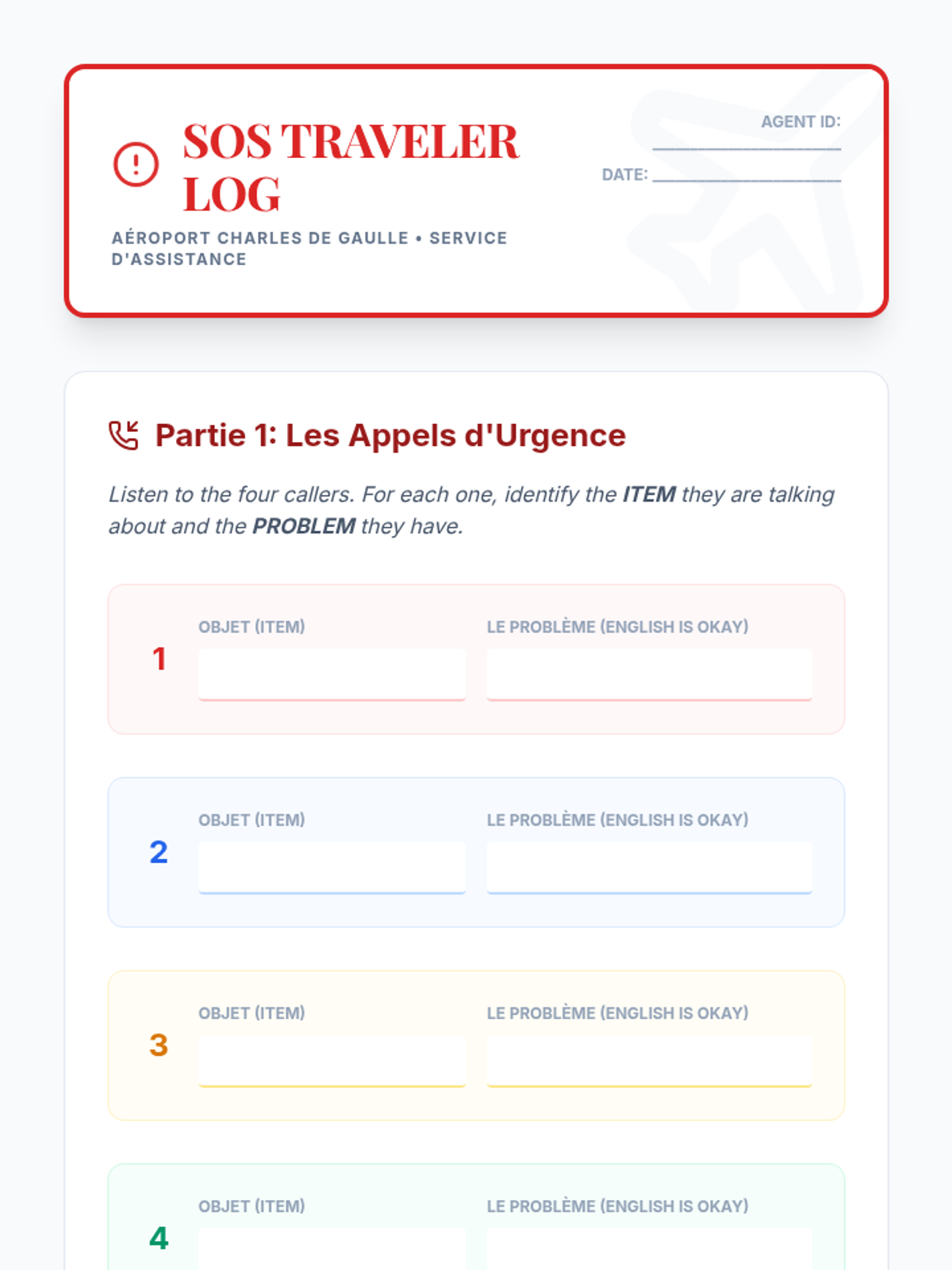
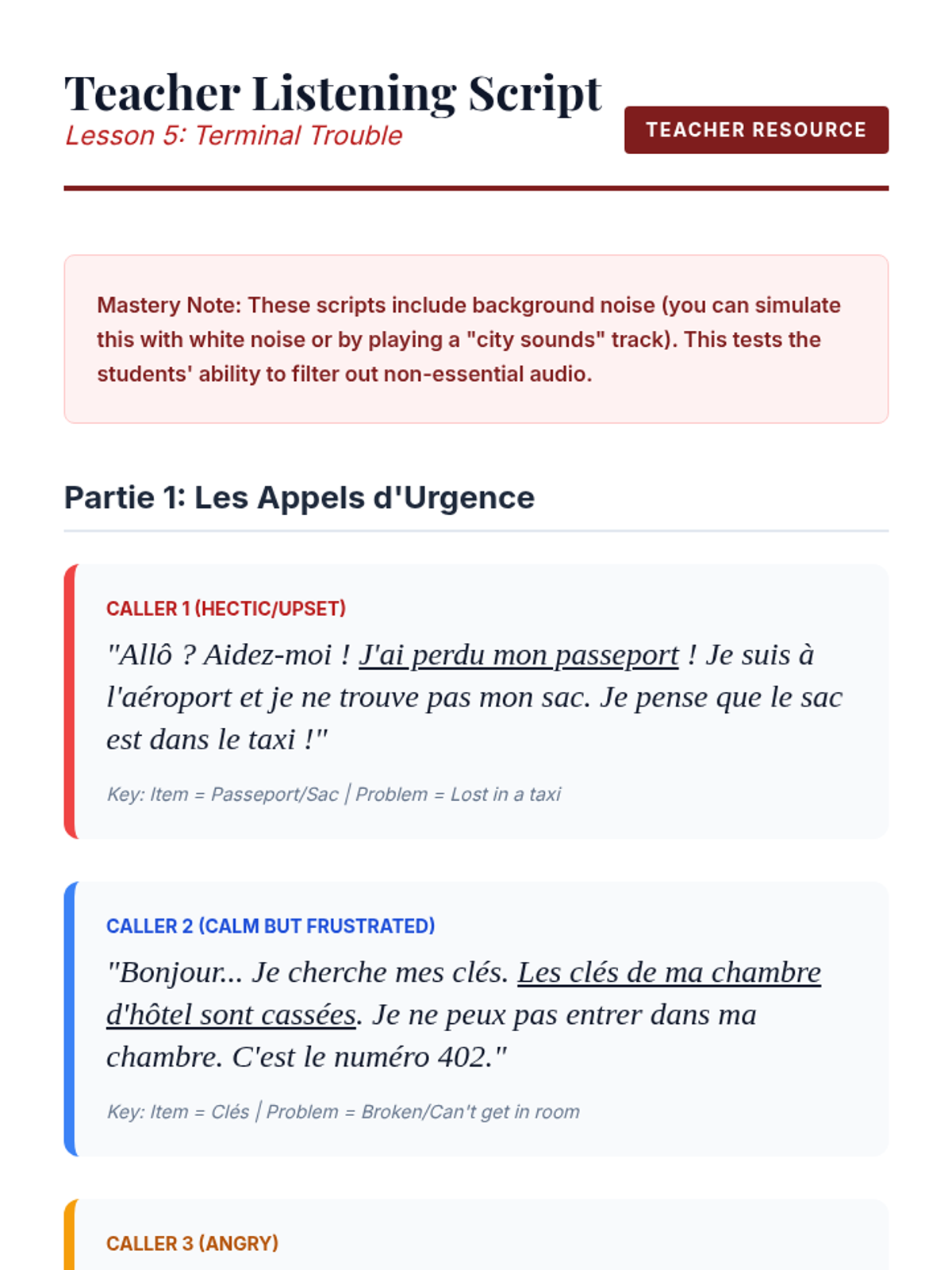
A mastery-based finale where students solve travel emergencies by identifying problems and solutions from audio reports.
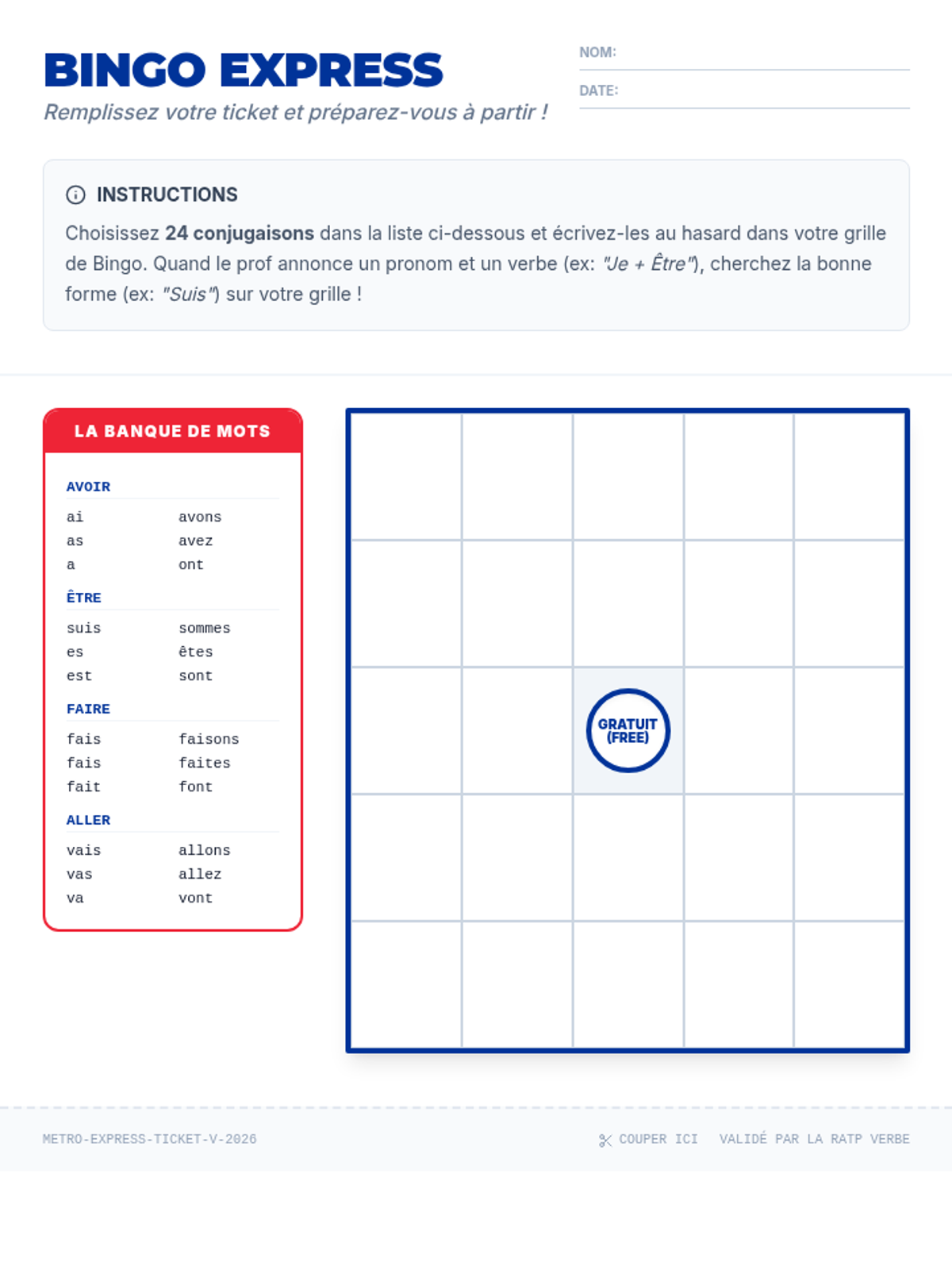
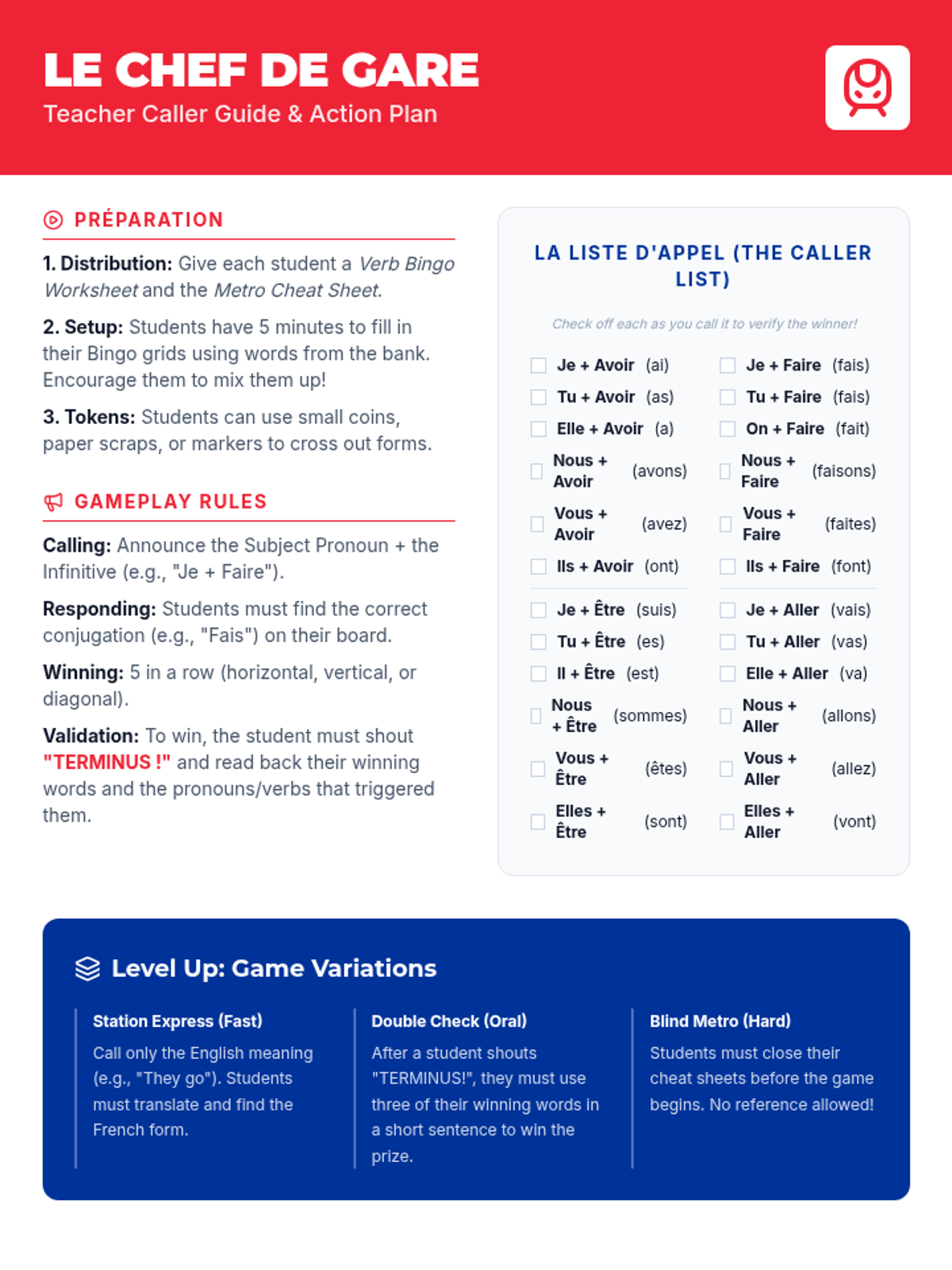
A high-energy lesson focused on mastering the four most important irregular French verbs (avoir, être, faire, aller) through a competitive Metro-themed Bingo game. Students review conjugations and apply them in a fast-paced listening activity.
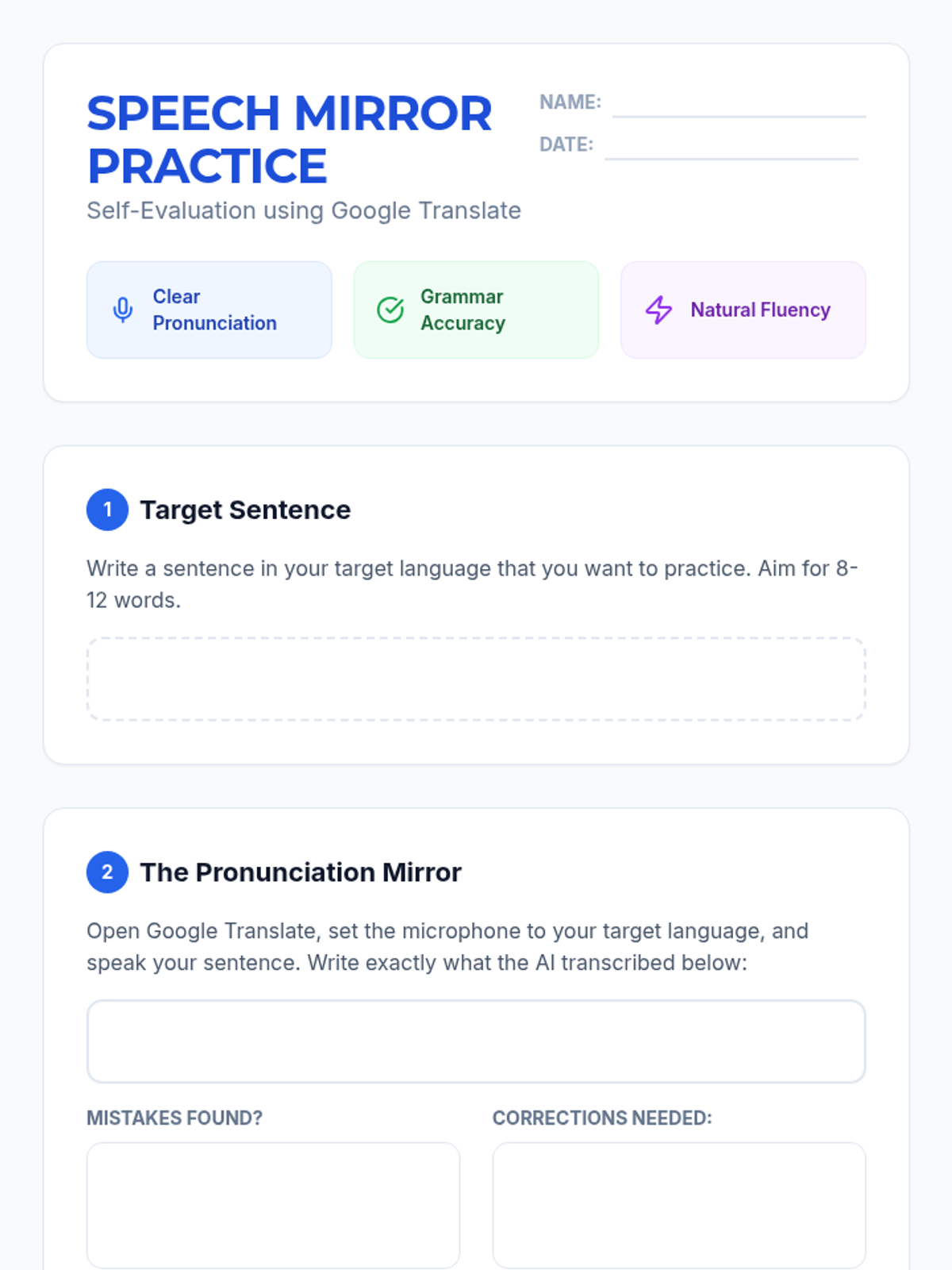
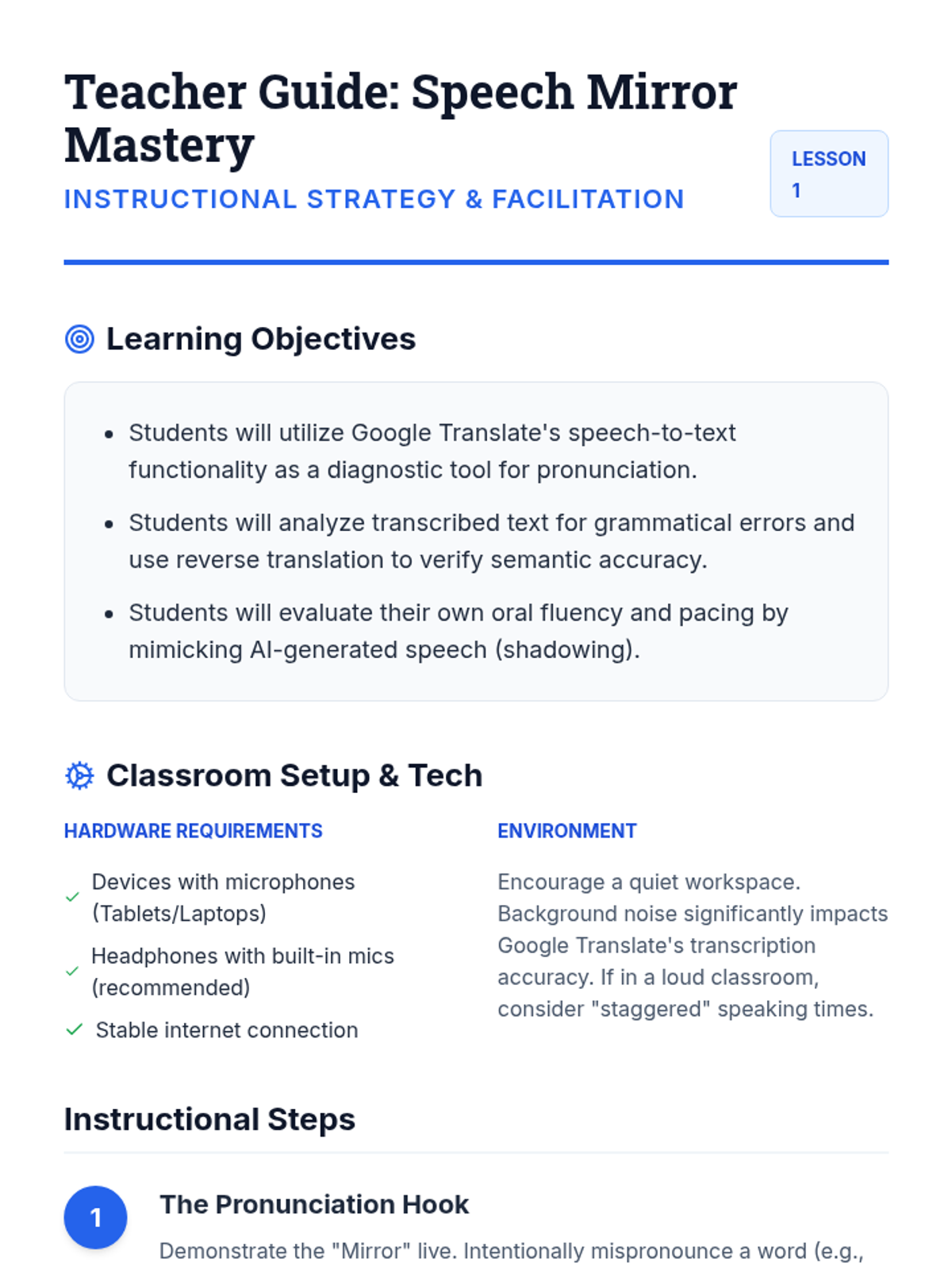
This lesson teaches students how to use Google Translate's speech-to-text and text-to-speech features to self-evaluate their spoken language. Focus areas include pronunciation clarity, grammatical accuracy of transcribed text, and oral fluency.
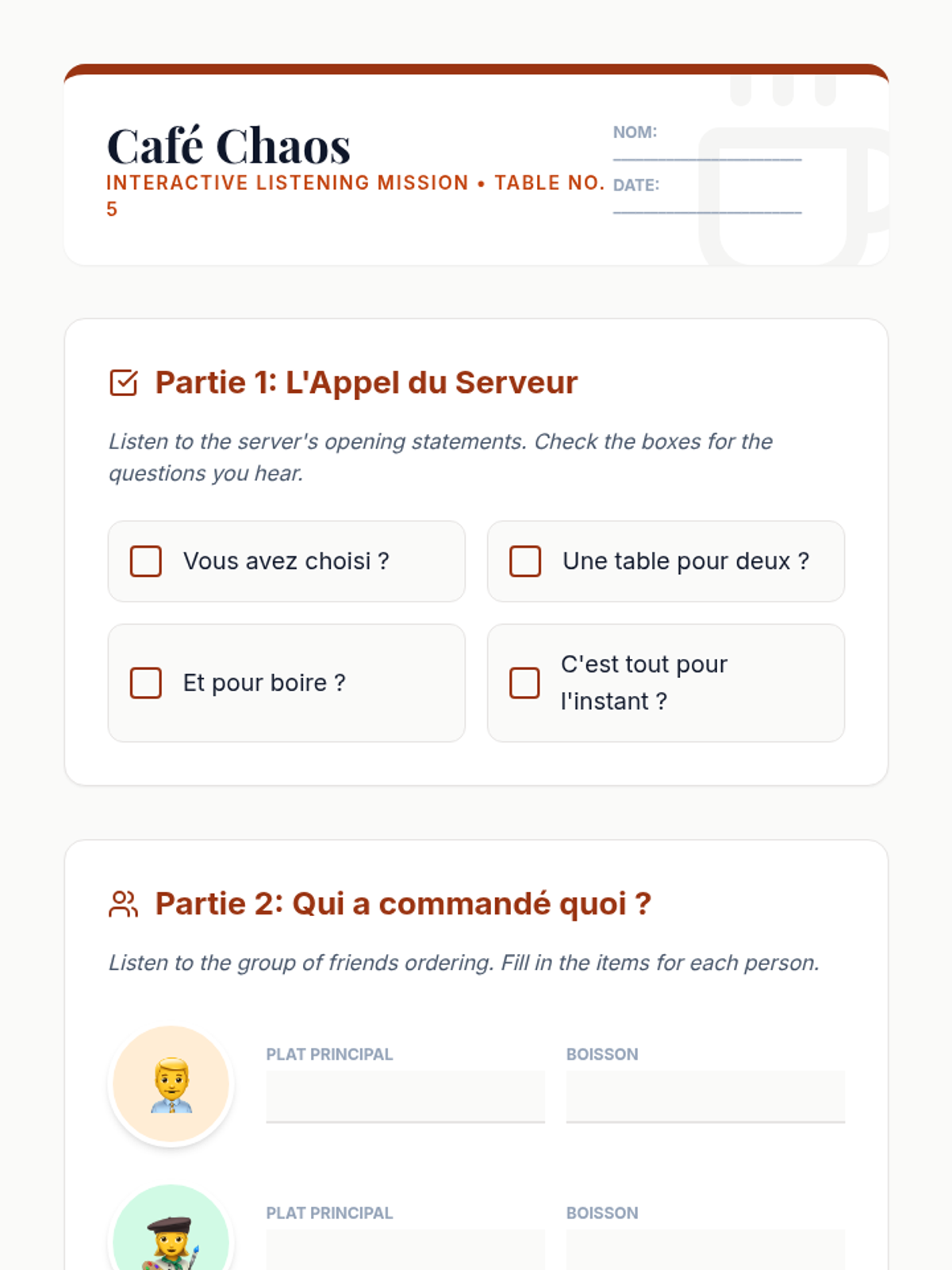
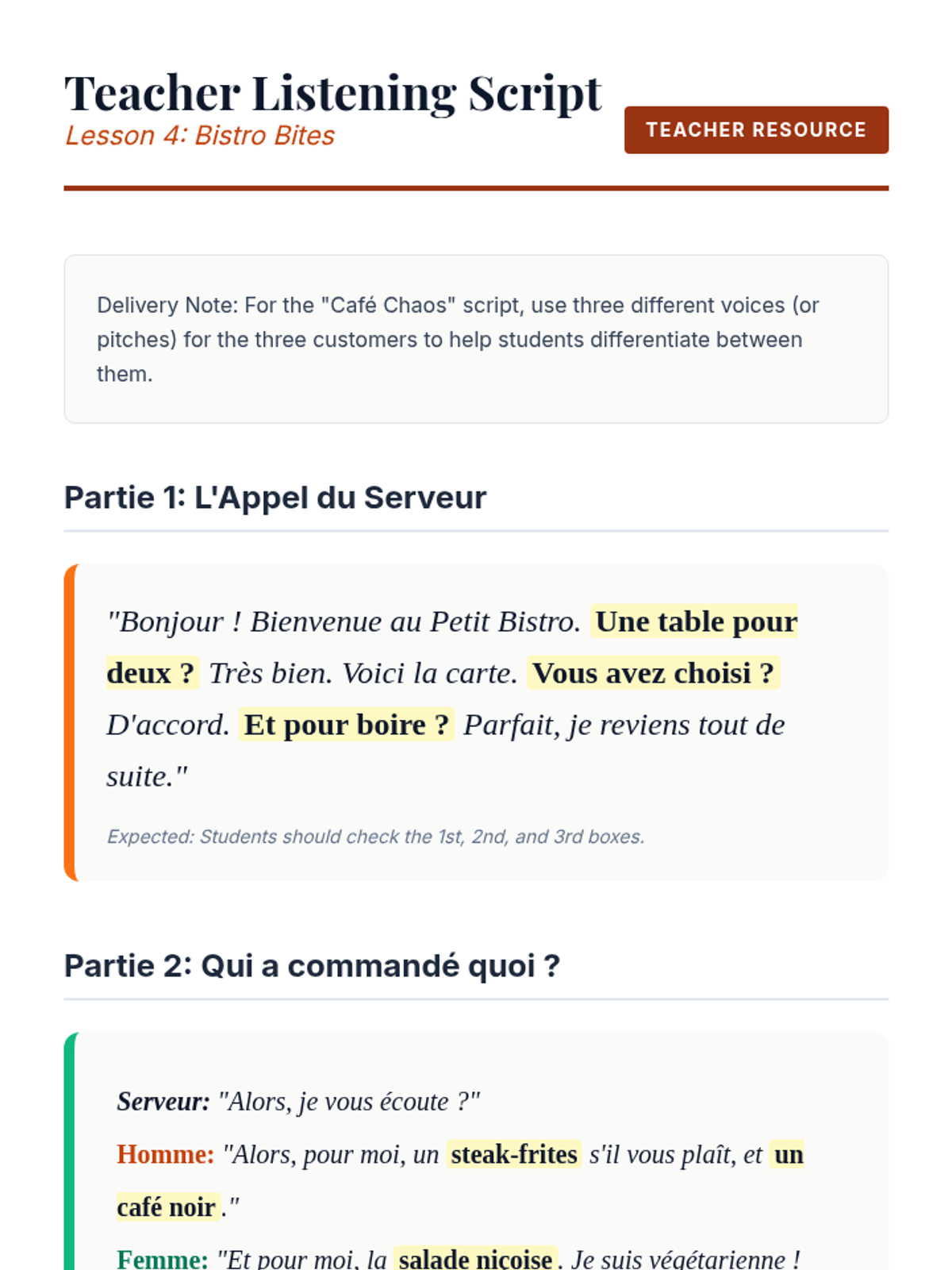
Students decode rapid restaurant interactions to identify menu items and specific customer requests in a café setting.
Students follow complex audio instructions to navigate a city map using spatial prepositions and direction vocabulary.
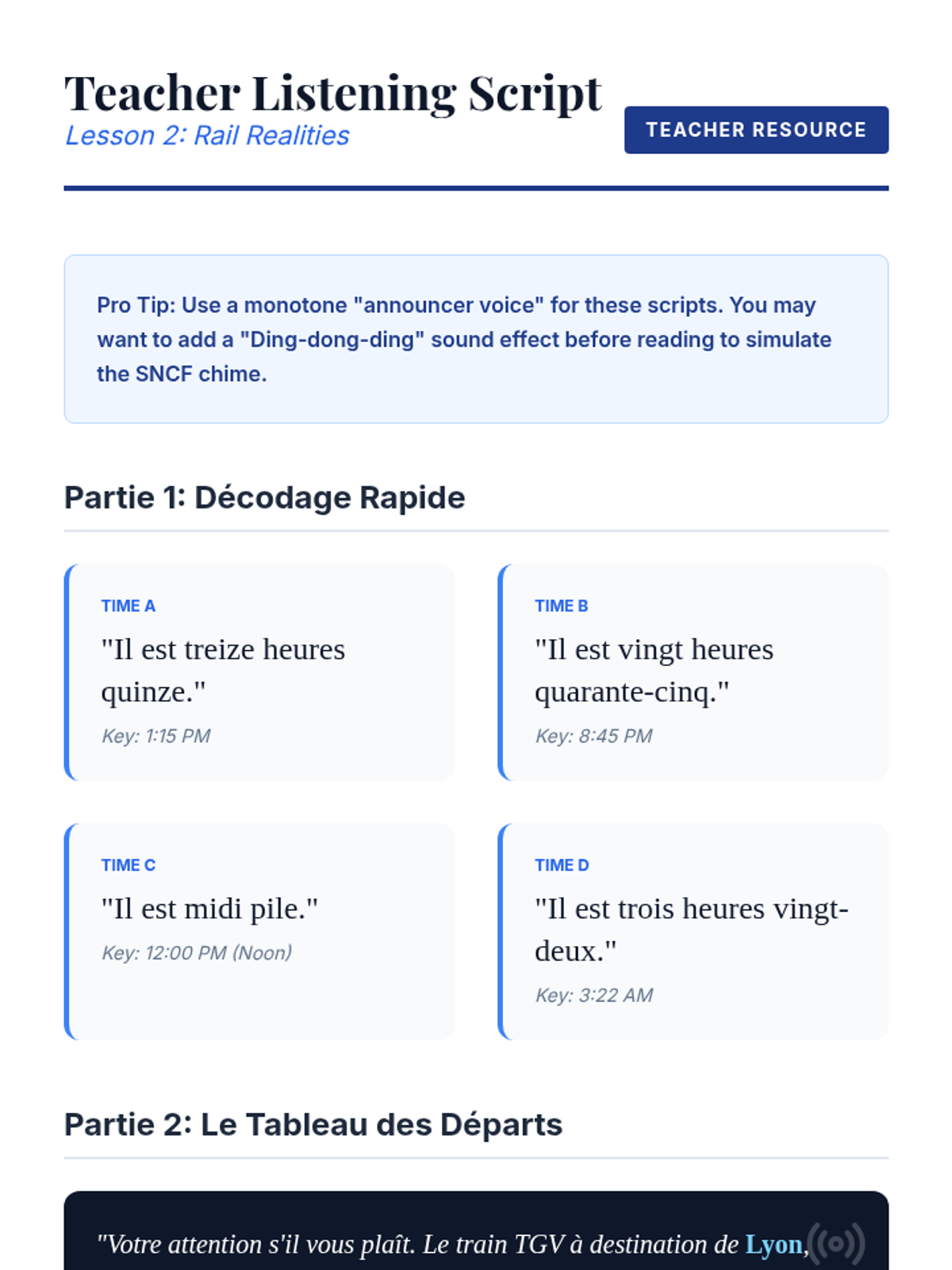
Focusing on the 24-hour clock, students interpret transportation announcements to navigate train stations and airports.
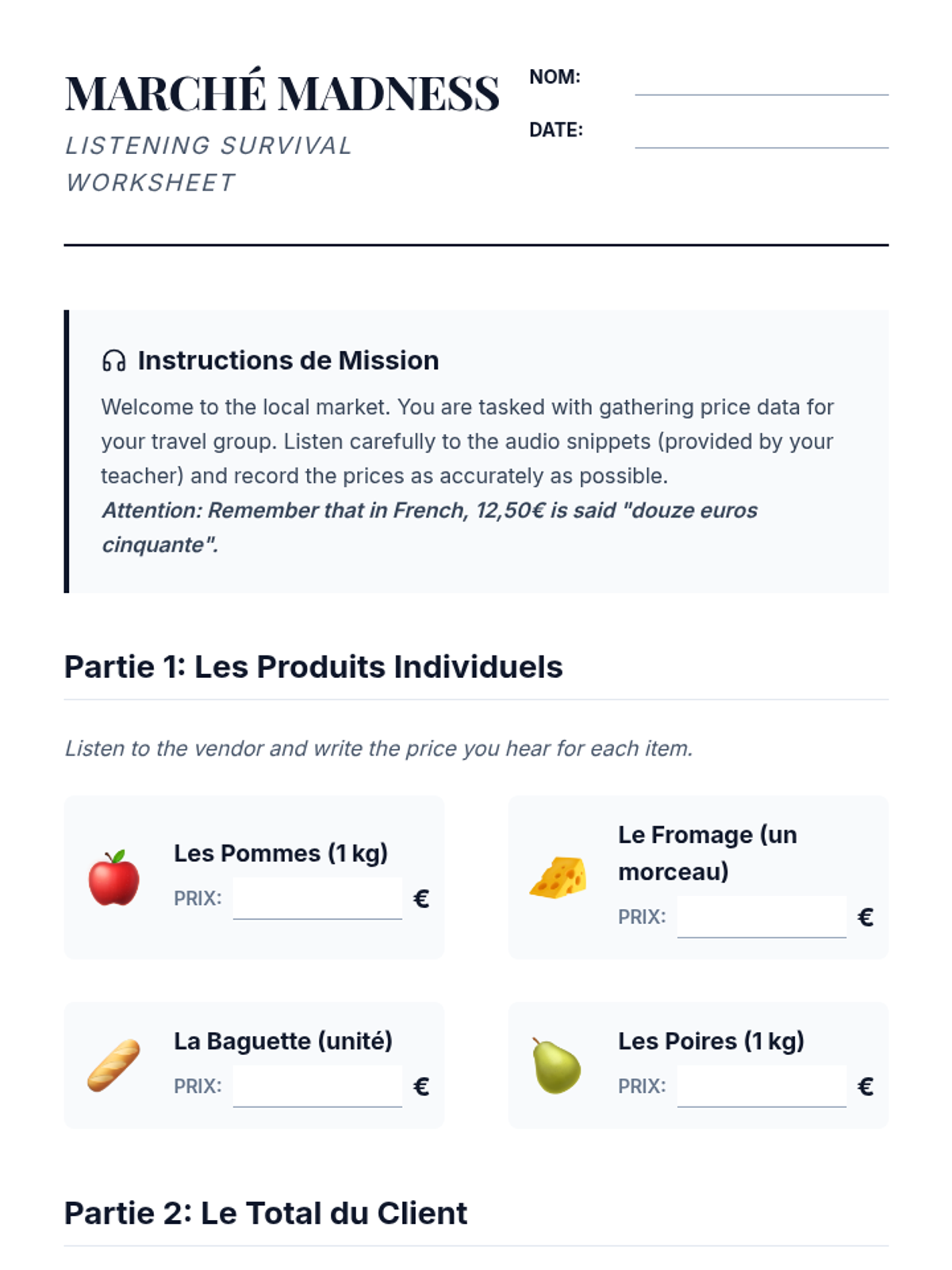
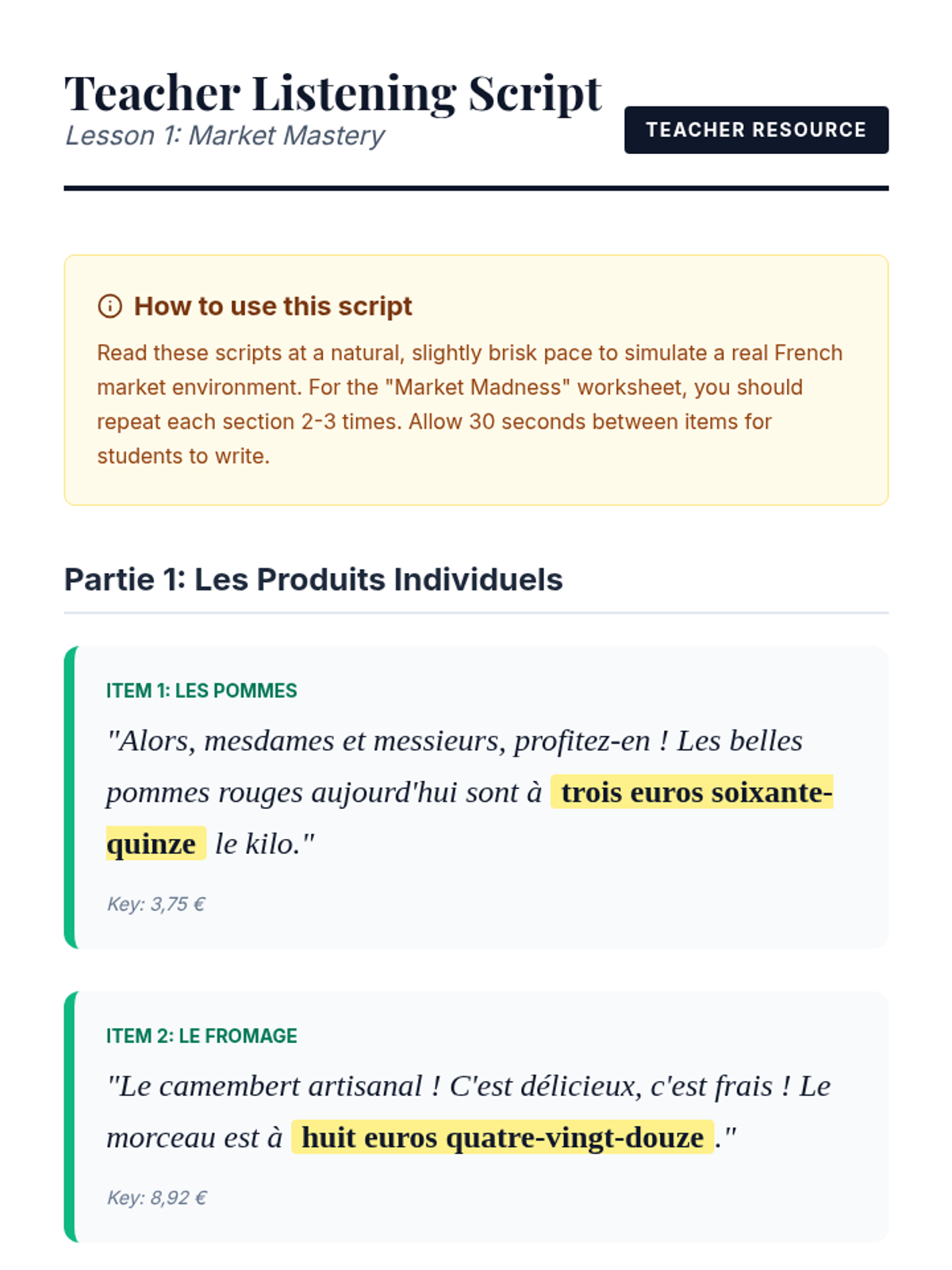
Students practice recognizing numbers 0-100 and prices in a Euro context through marketplace simulations.
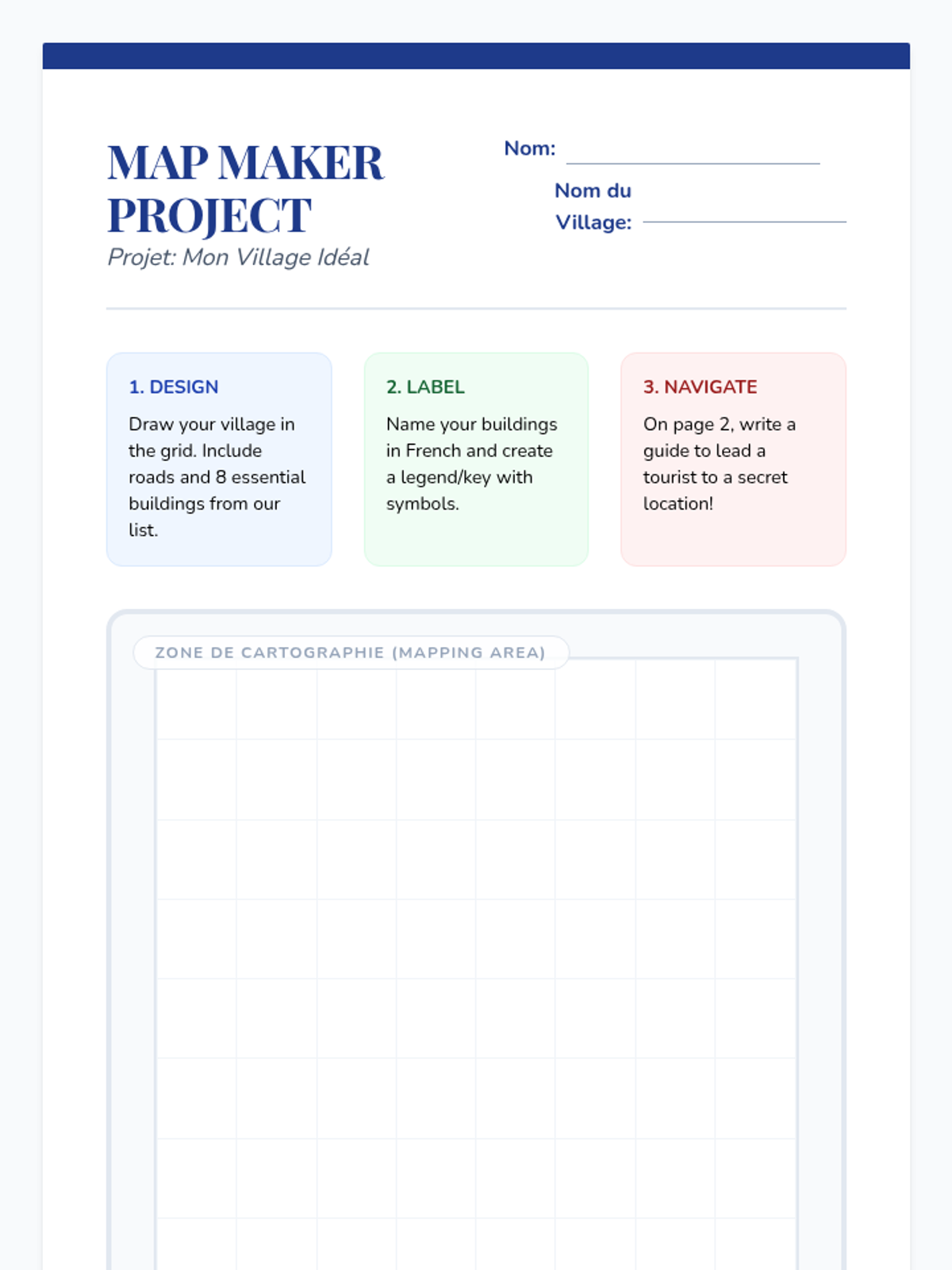
Students design their own town maps and write navigation guides, applying all previously learned vocabulary and grammar.
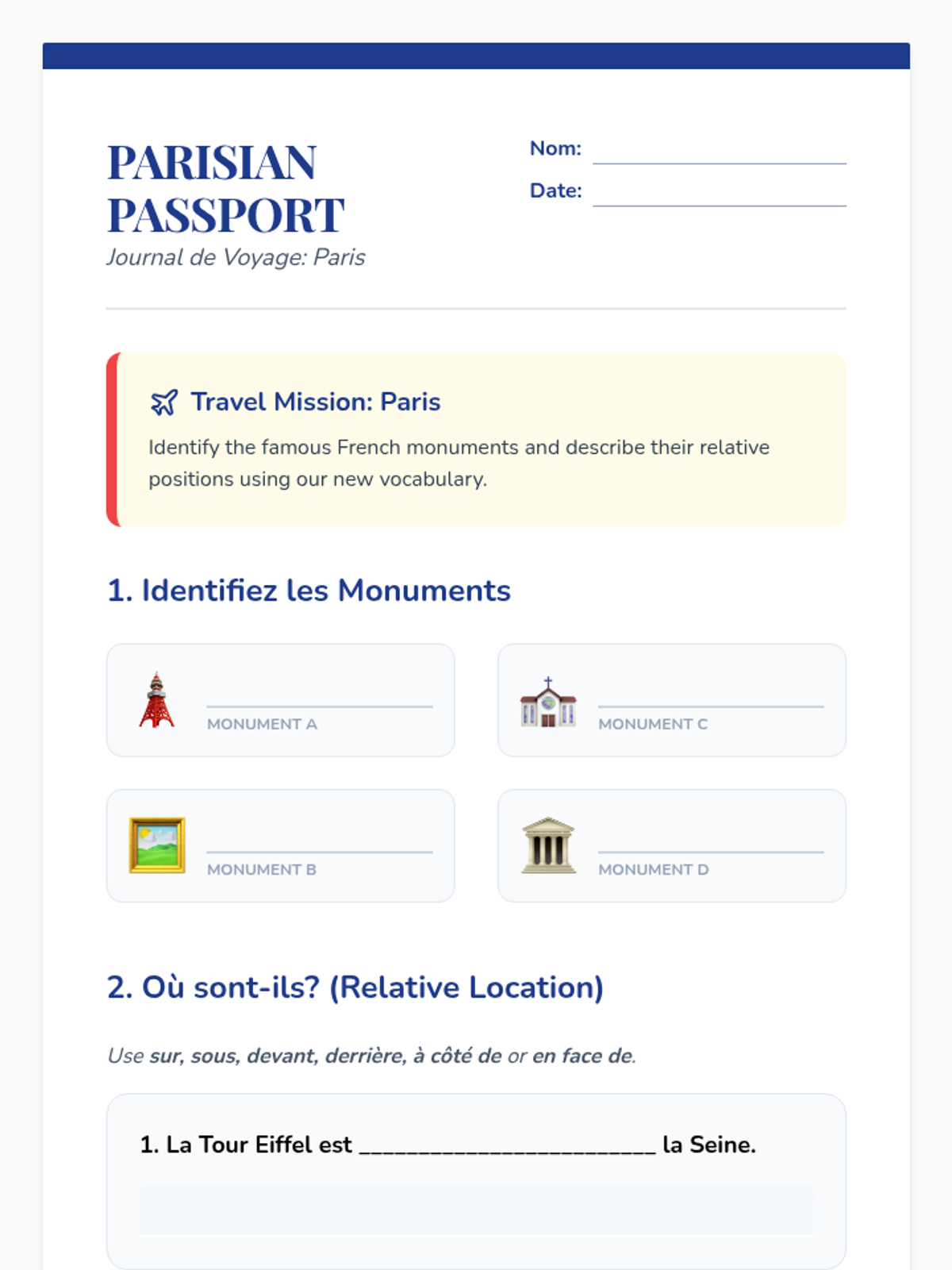
Students explore iconic Francophone landmarks and practice describing their positions in a real-world cultural context.
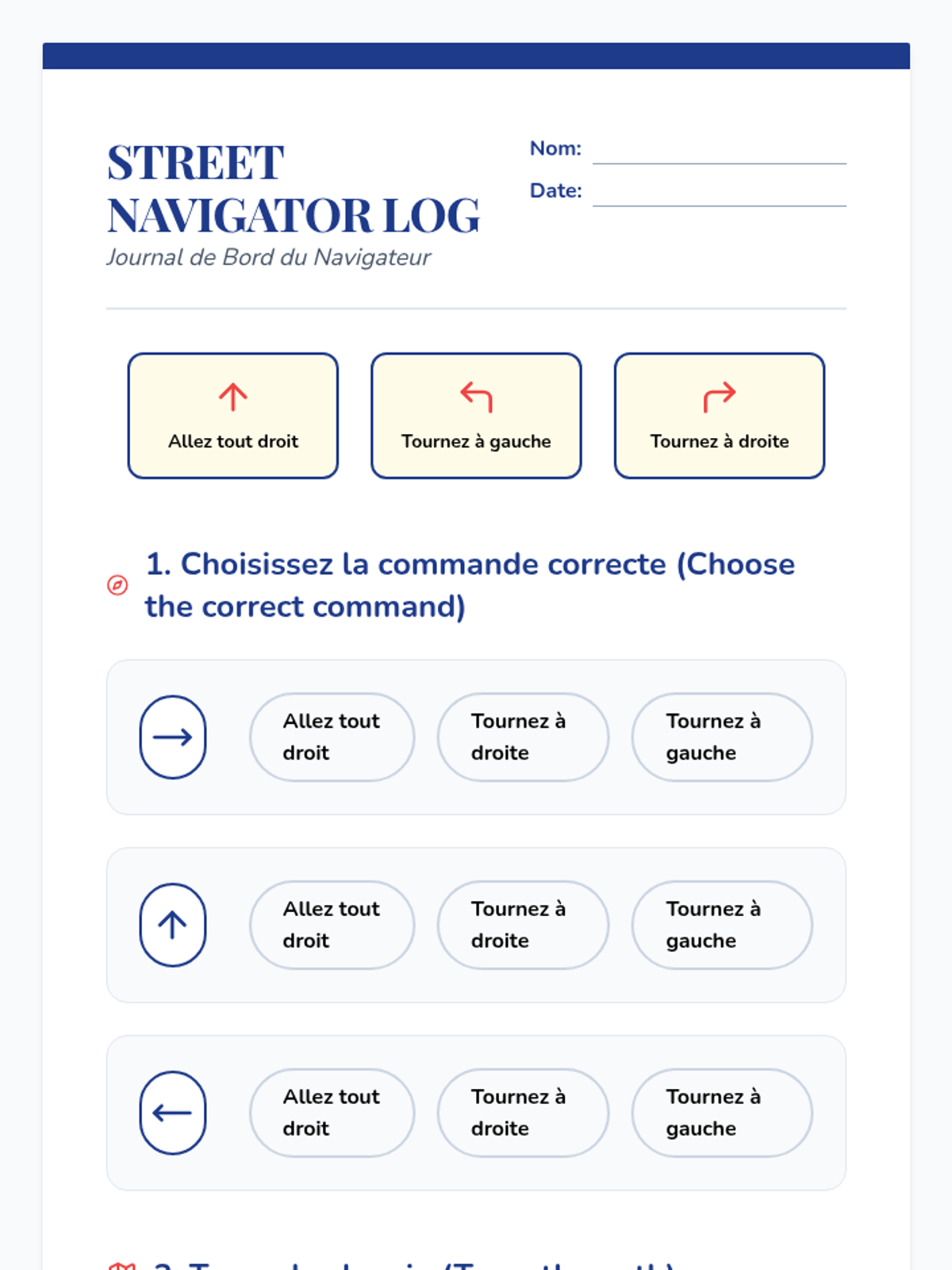
Students master directional commands and the imperative mood to navigate and guide others through a city.
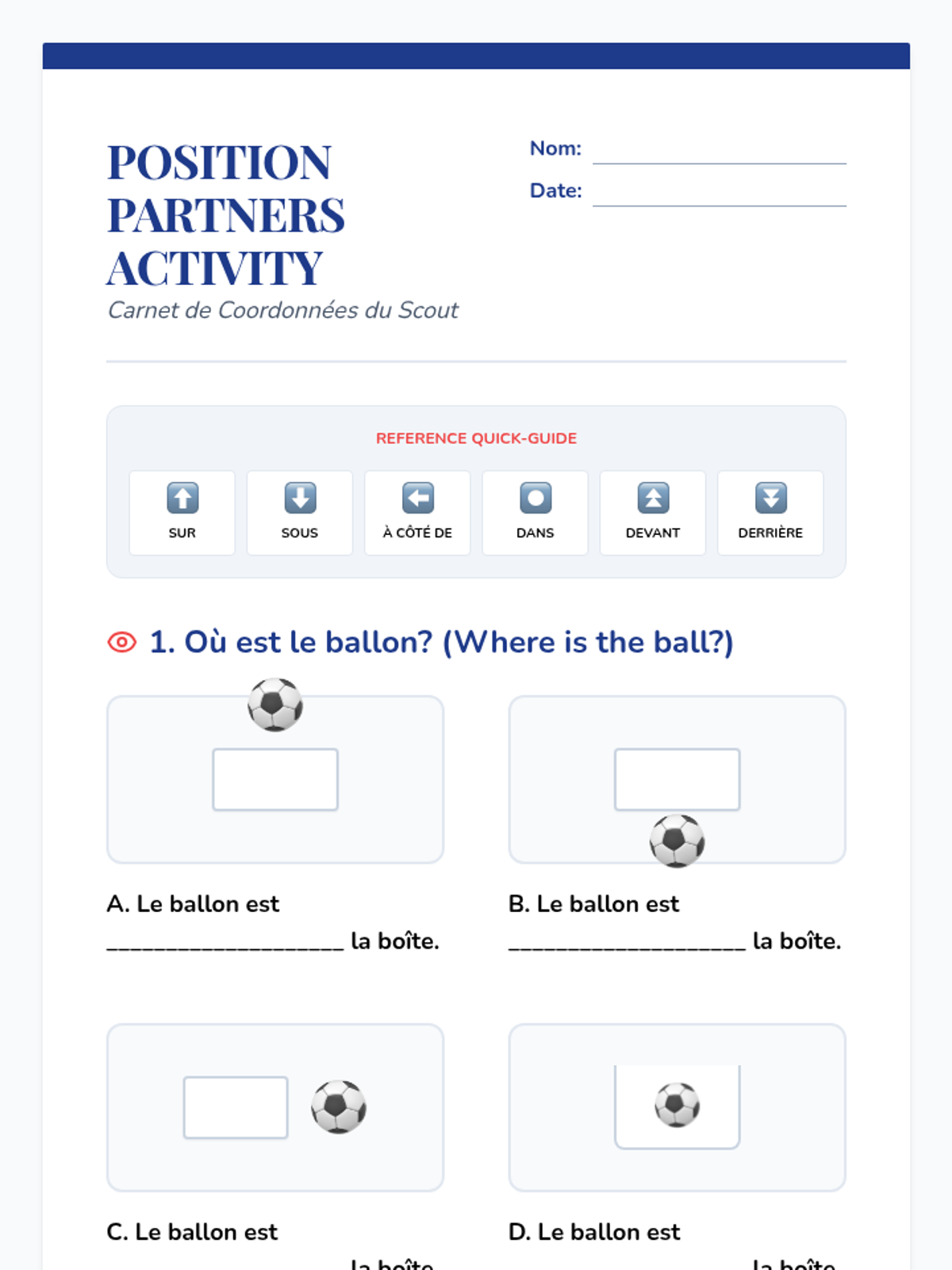
Students learn spatial prepositions to describe the relative locations of buildings and objects in a French setting.
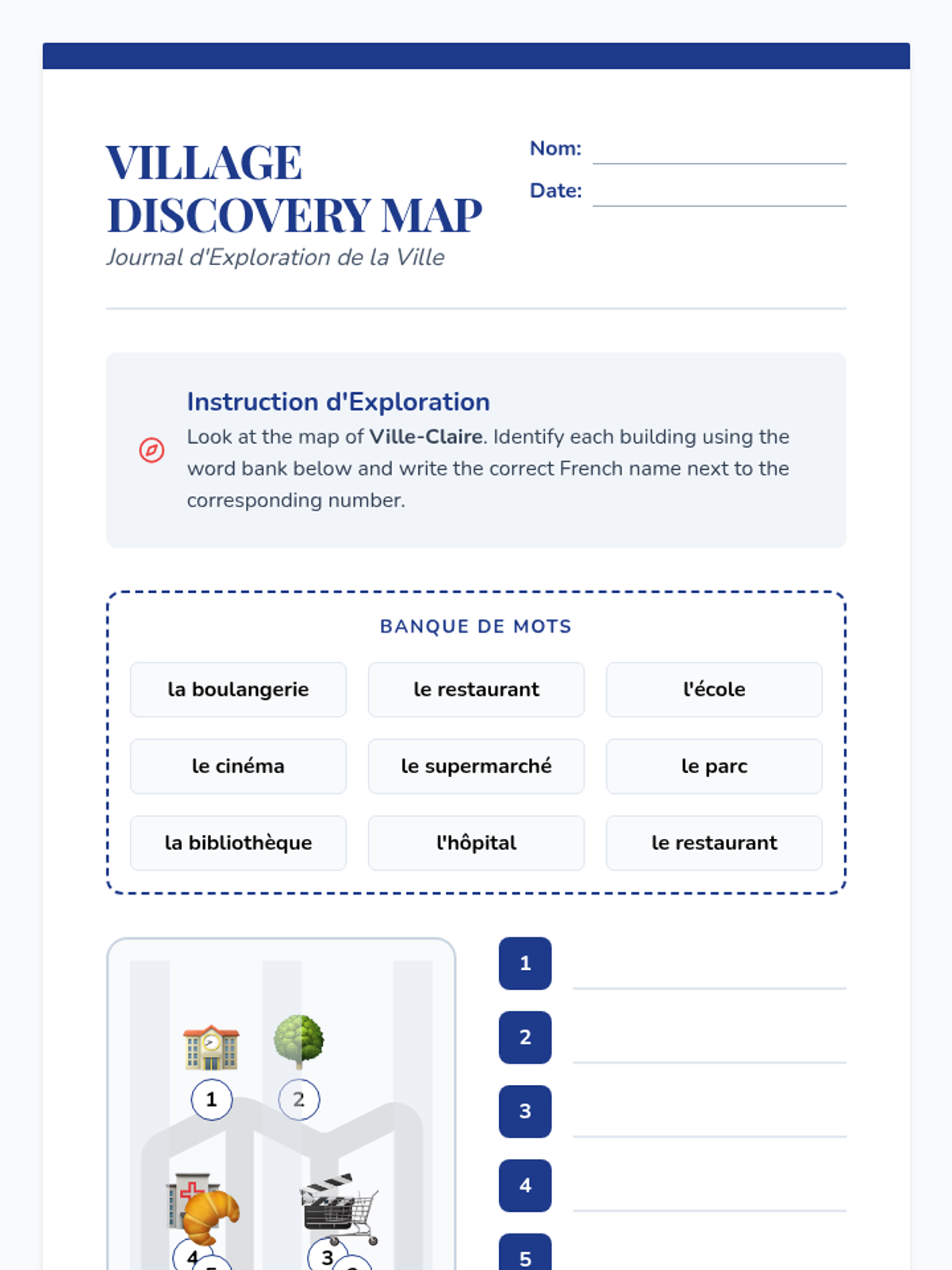
Students identify common city locations in French through visual clues and categorize them by service.
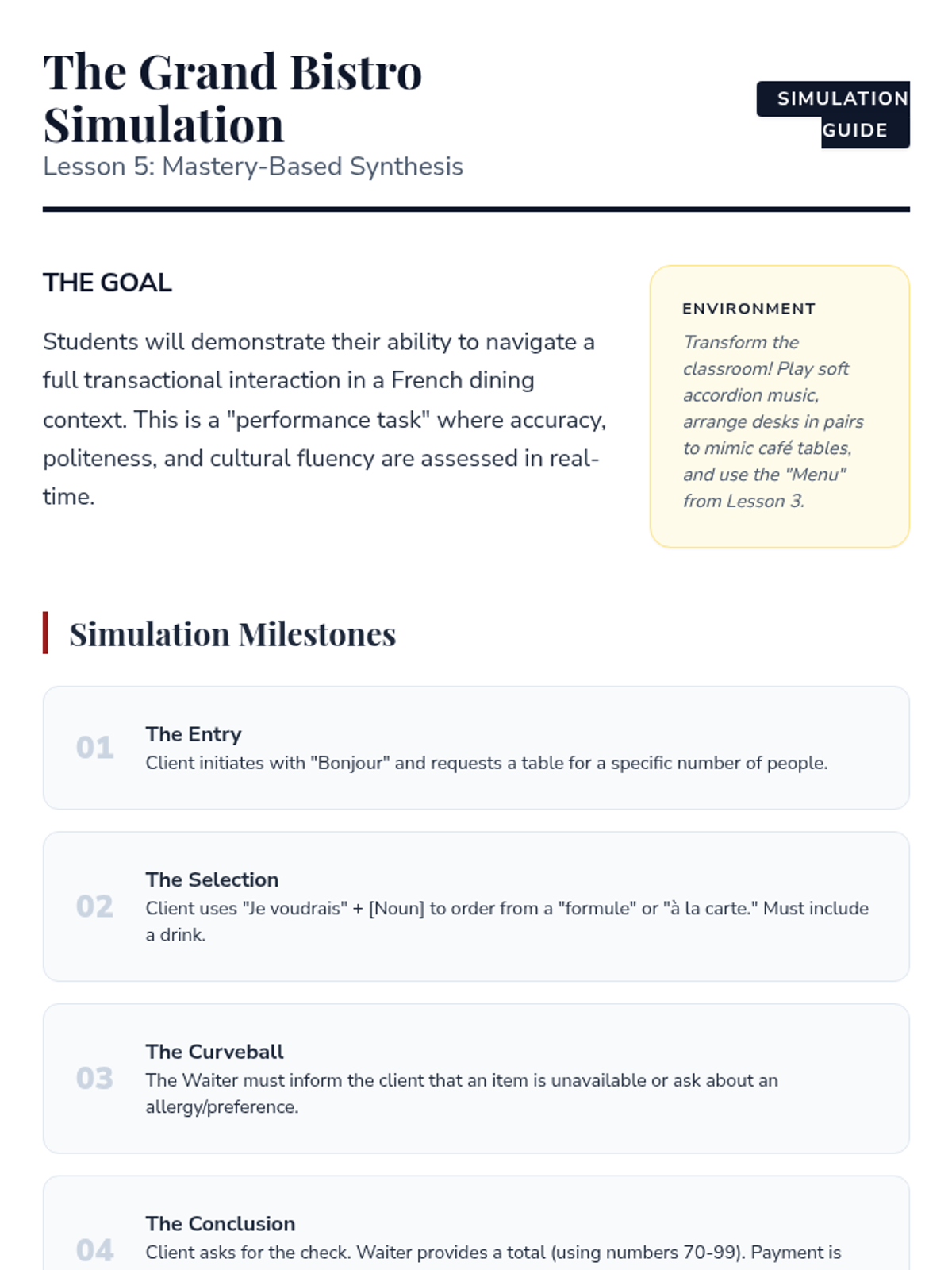
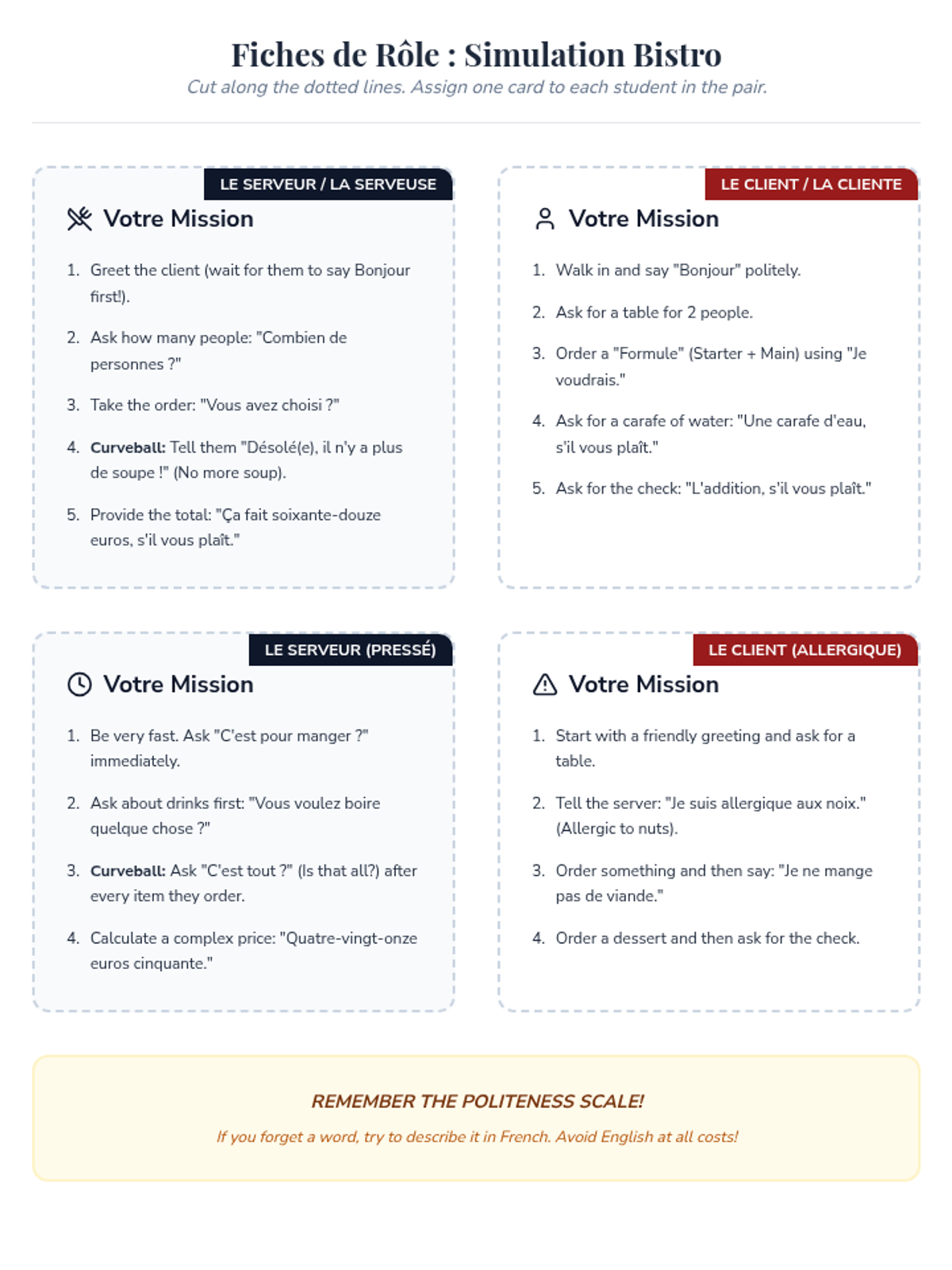
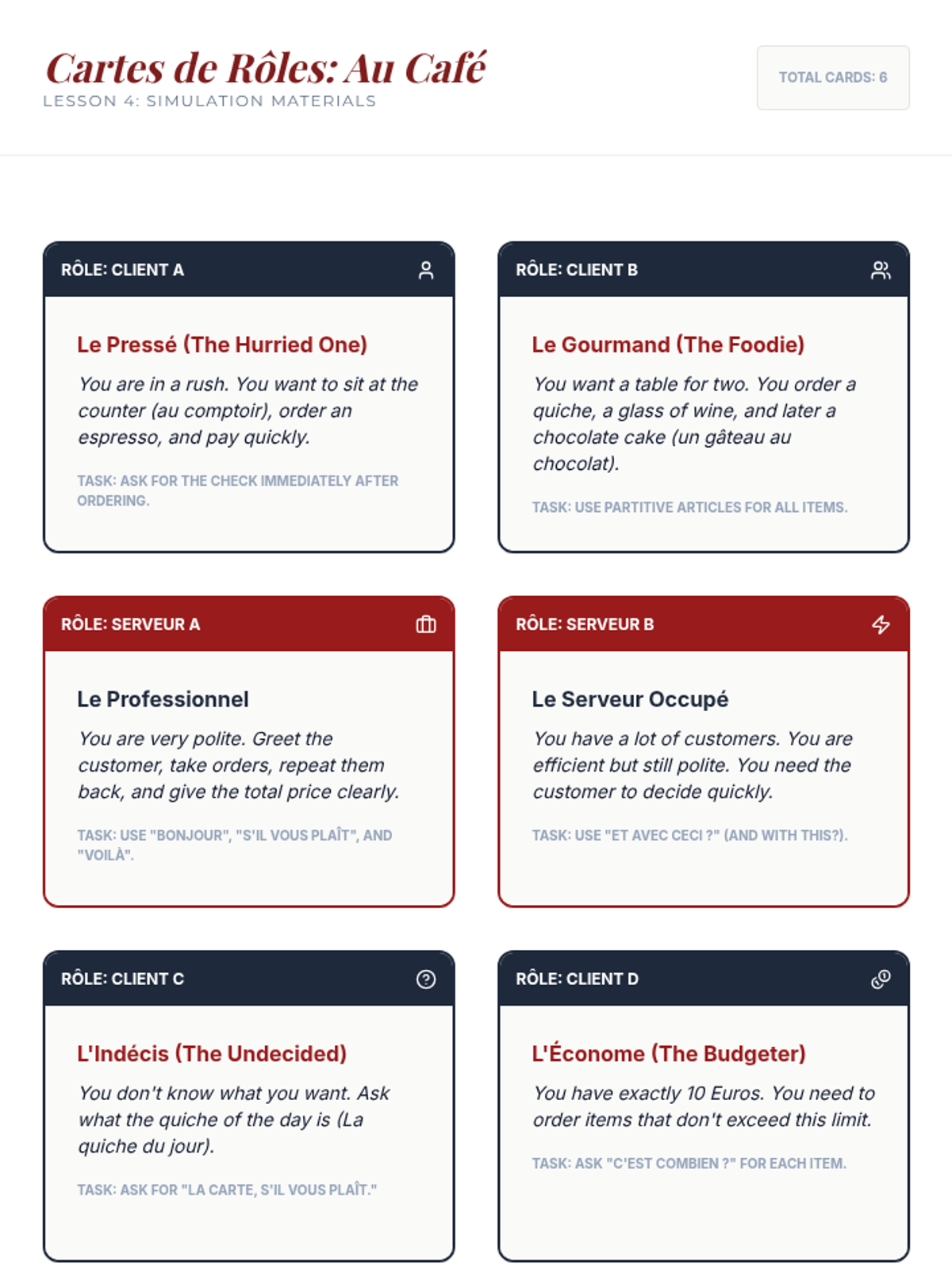
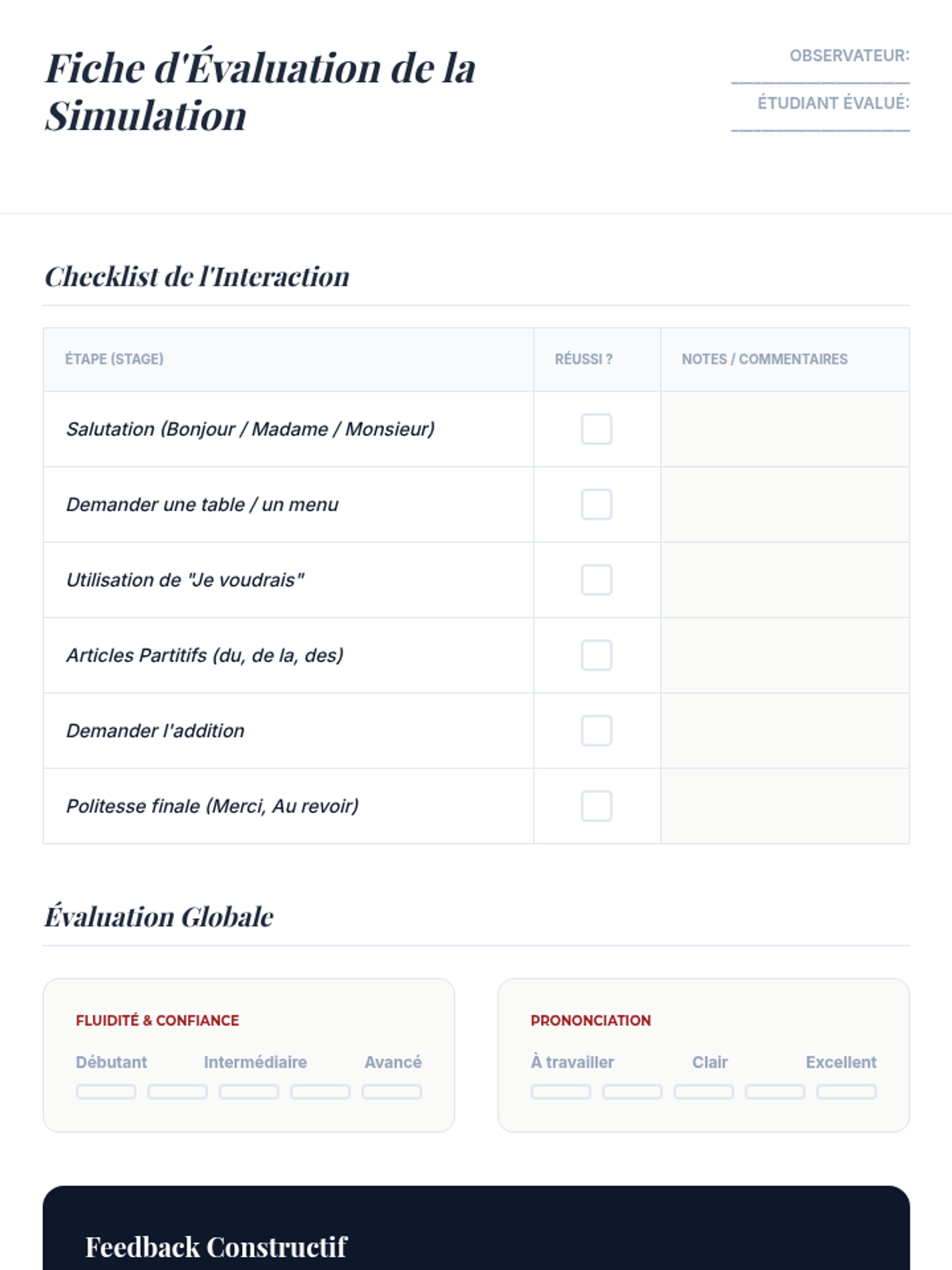
Students synthesize their skills in a full dining simulation, taking turns as the server and the client. They must greet, request a table, order a three-course meal, ask for the check, and handle payment.
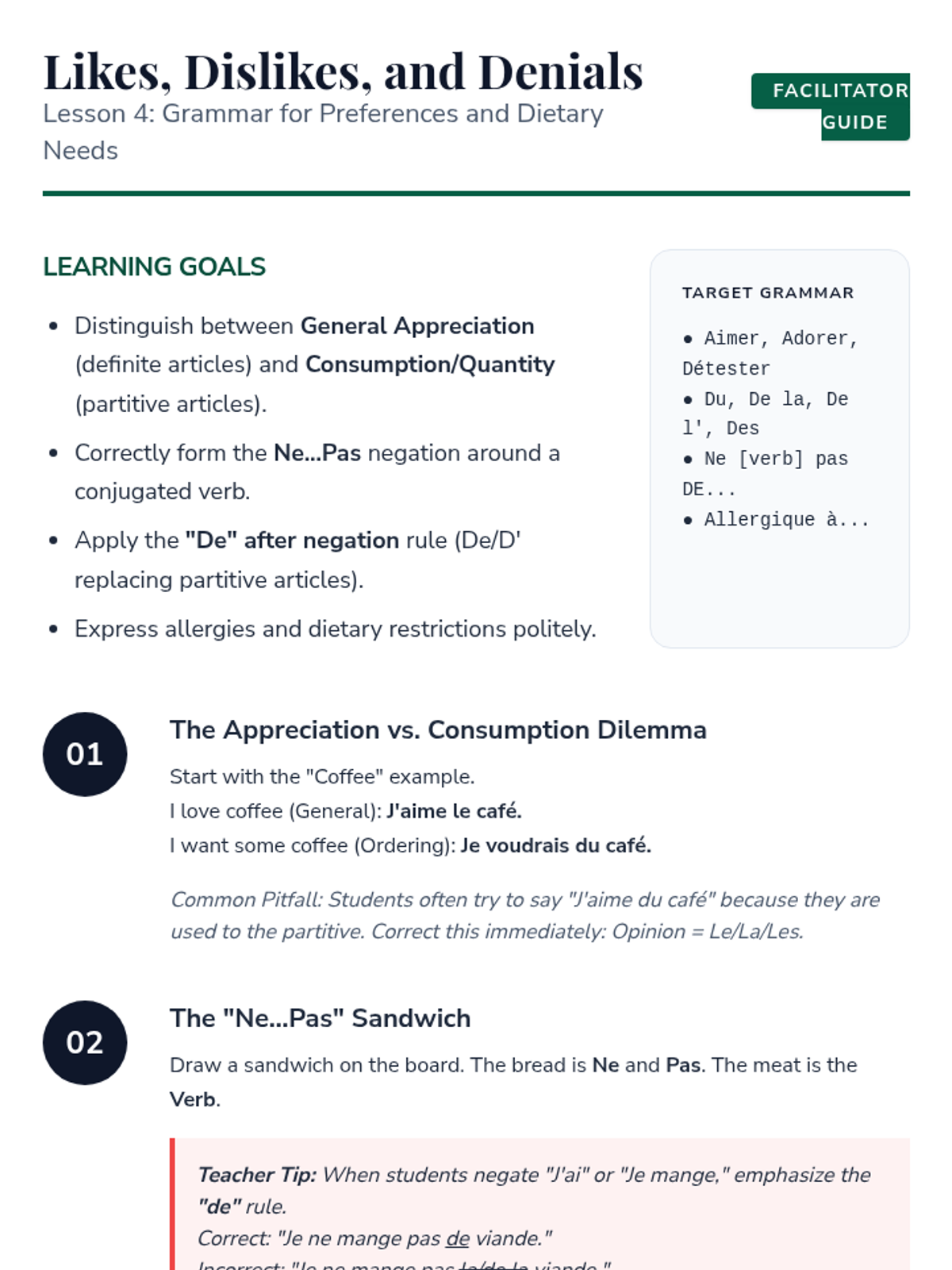
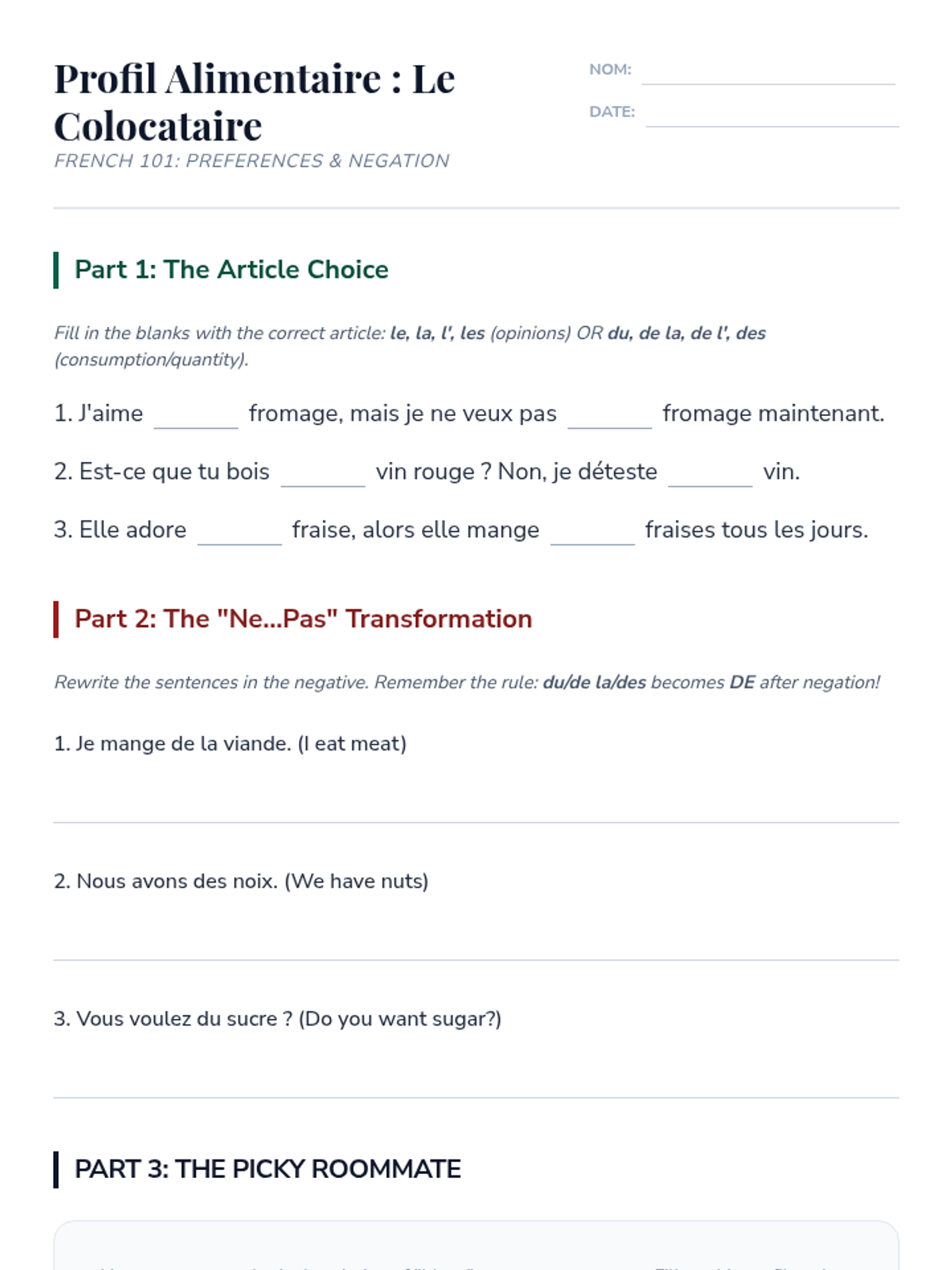
This lesson introduces the definite article with appreciation verbs (aimer, détester) vs. the partitive article for consumption. Students learn to express likes, dislikes, and allergies using negative structures (ne...pas).
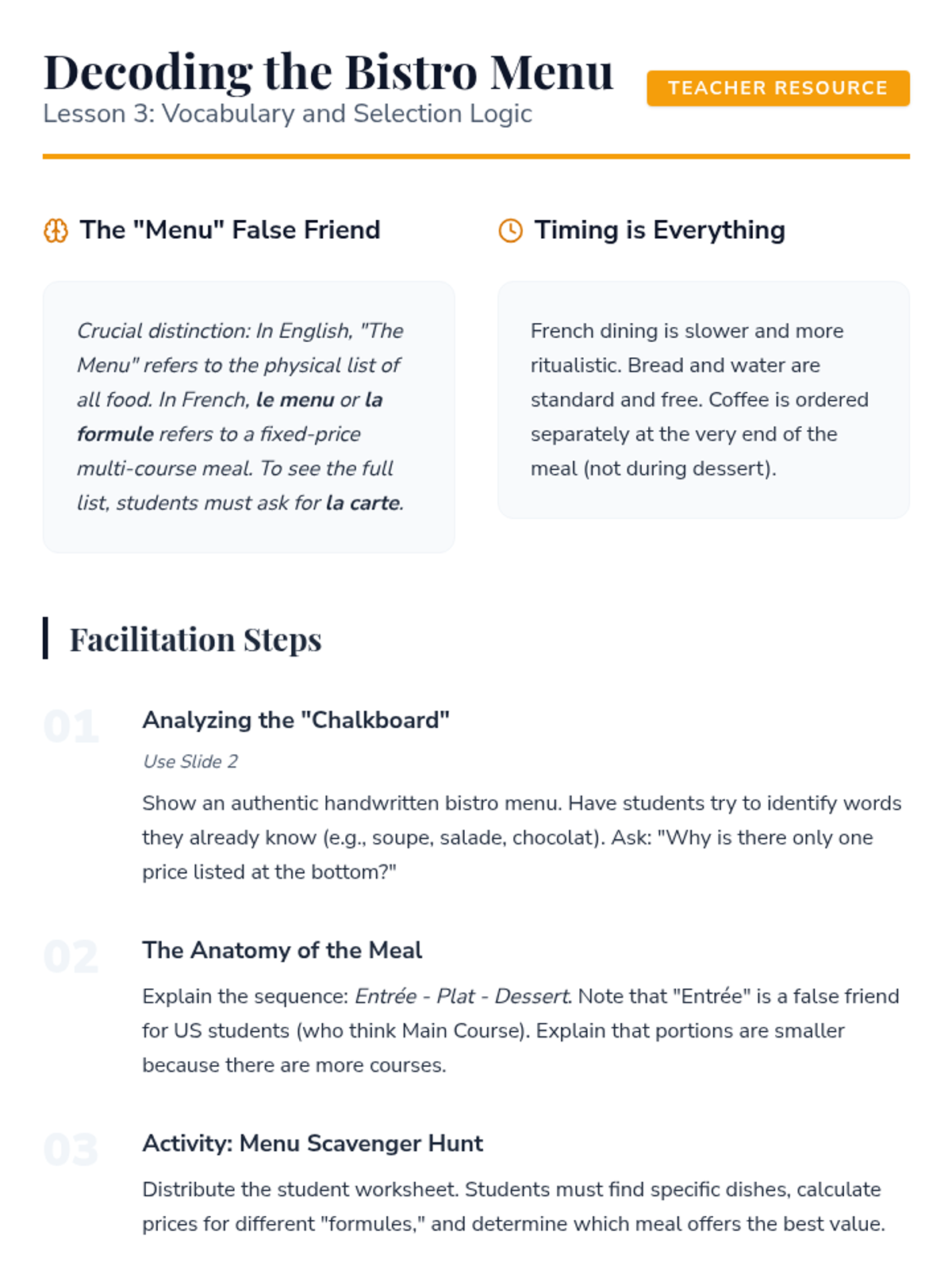
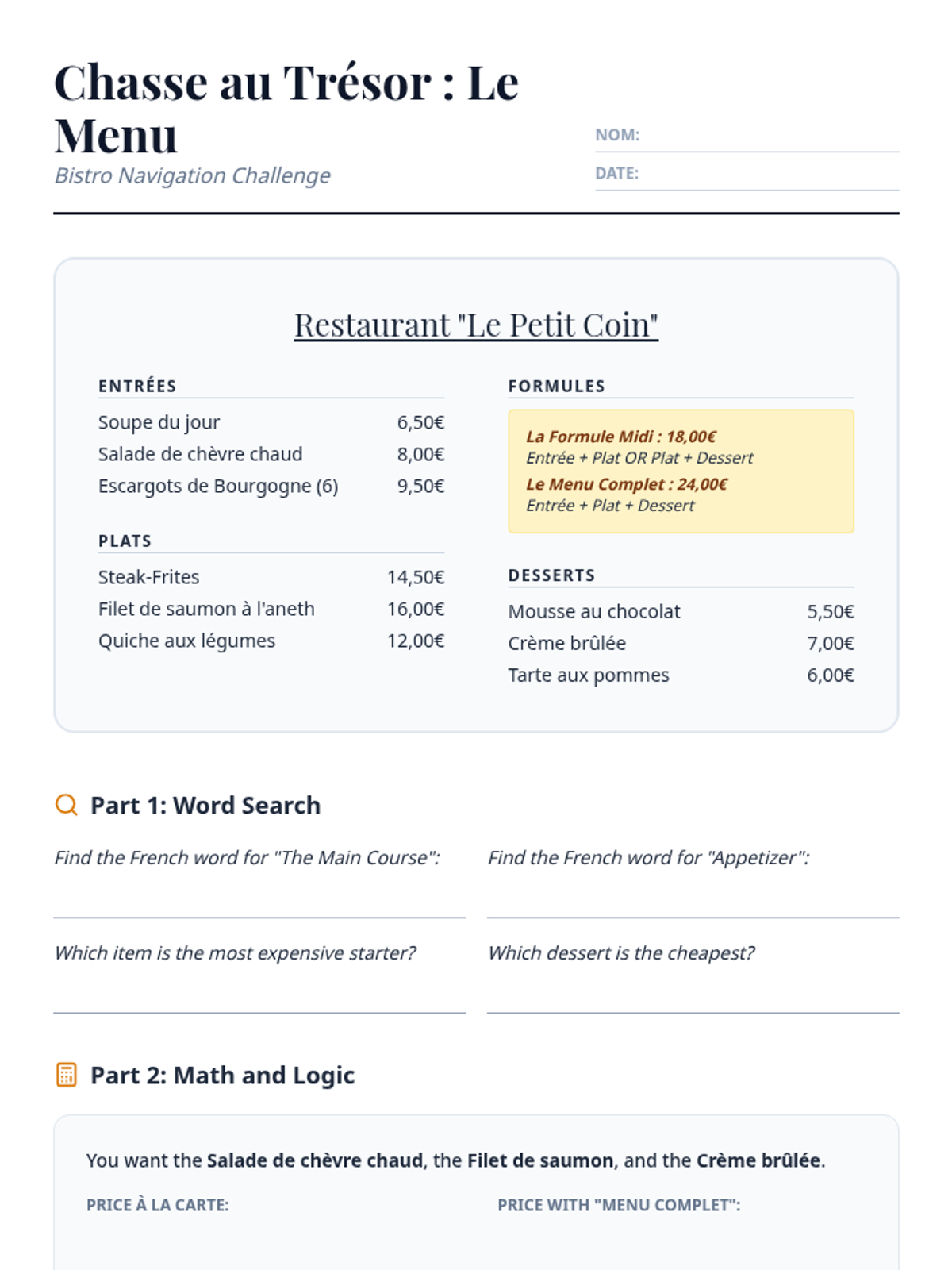
Students explore authentic French menus to identify food categories and vocabulary. They practice ordering beverages and snacks while navigating the cultural distinction between 'le menu,' 'la carte,' and 'la formule.'
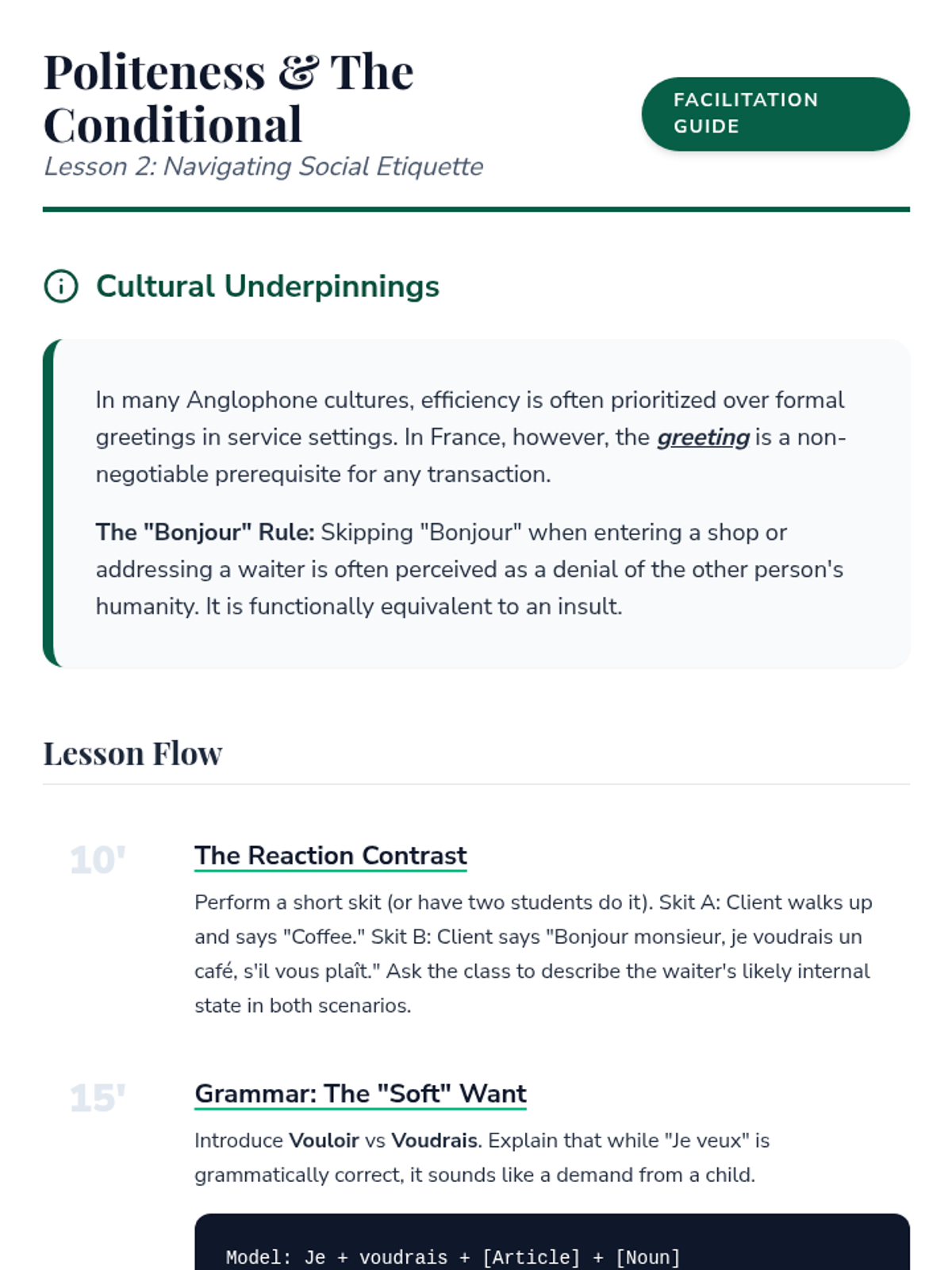
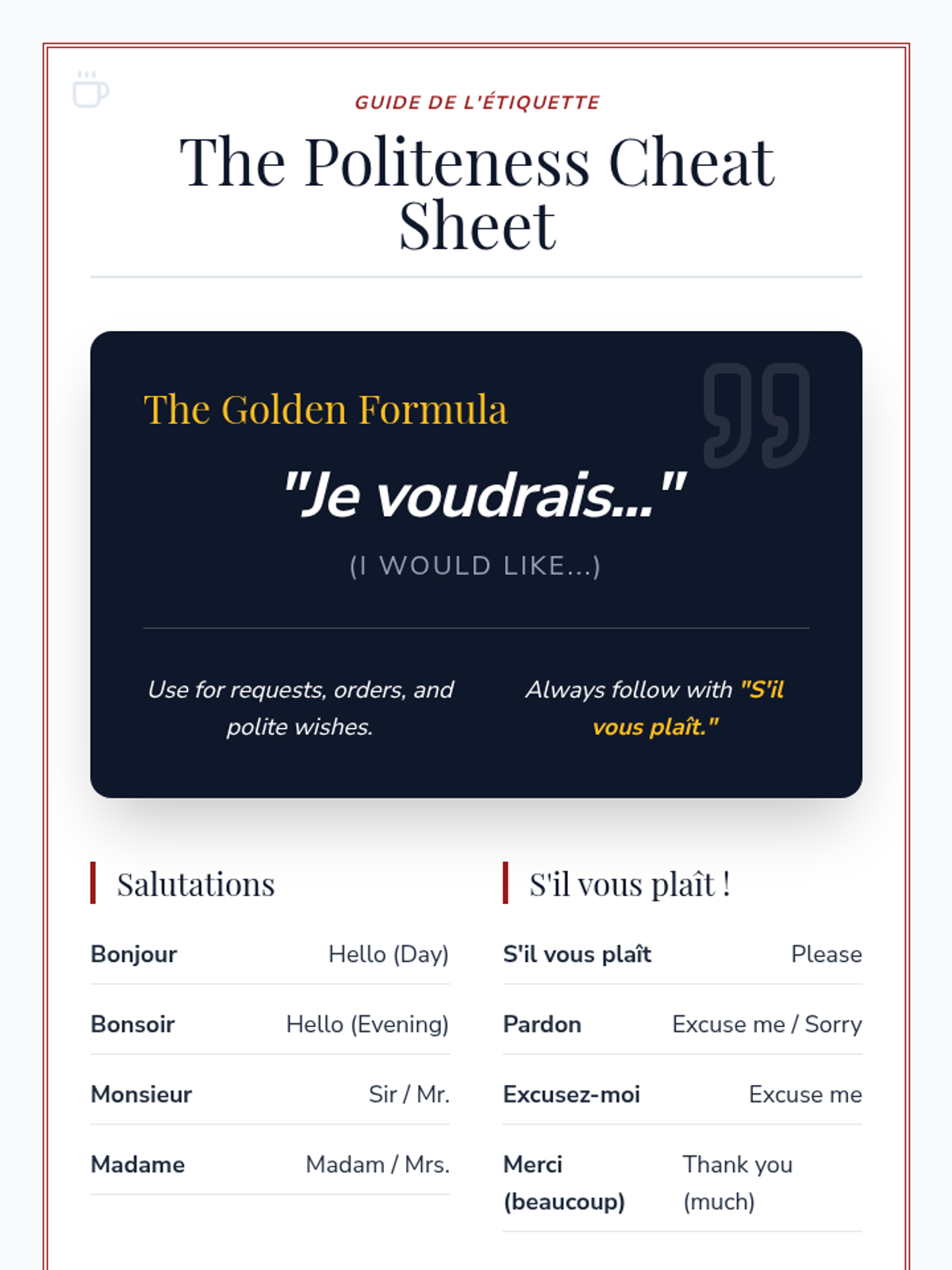
Moving beyond the imperative, students learn to soften requests using 'Je voudrais' (I would like) and 'S'il vous plaît.' The lesson focuses on the importance of politeness markers in French service interactions.
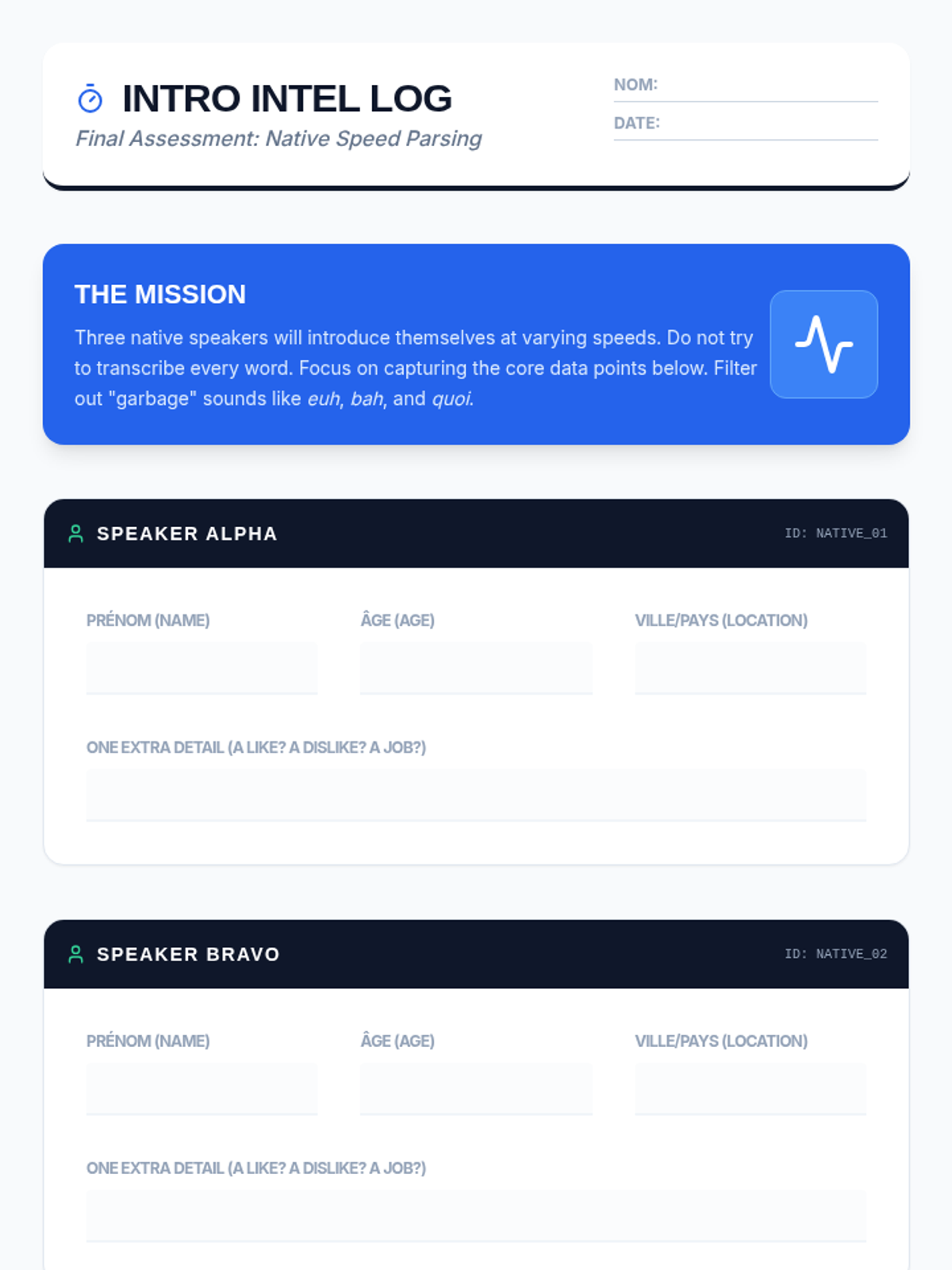
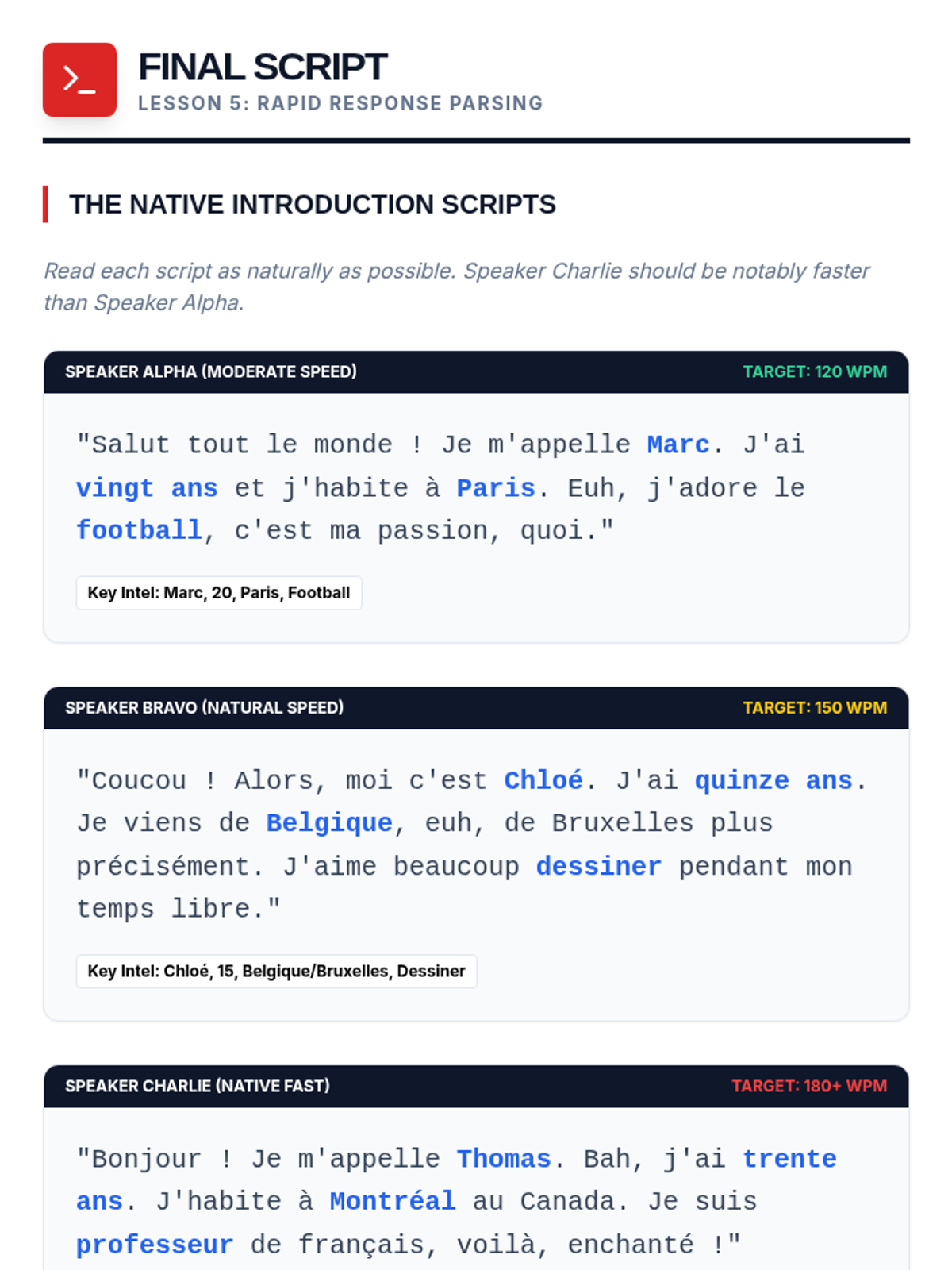
Students apply their phonetic skills to native-speed introductory phrases, practicing information extraction and filtering for key data points.
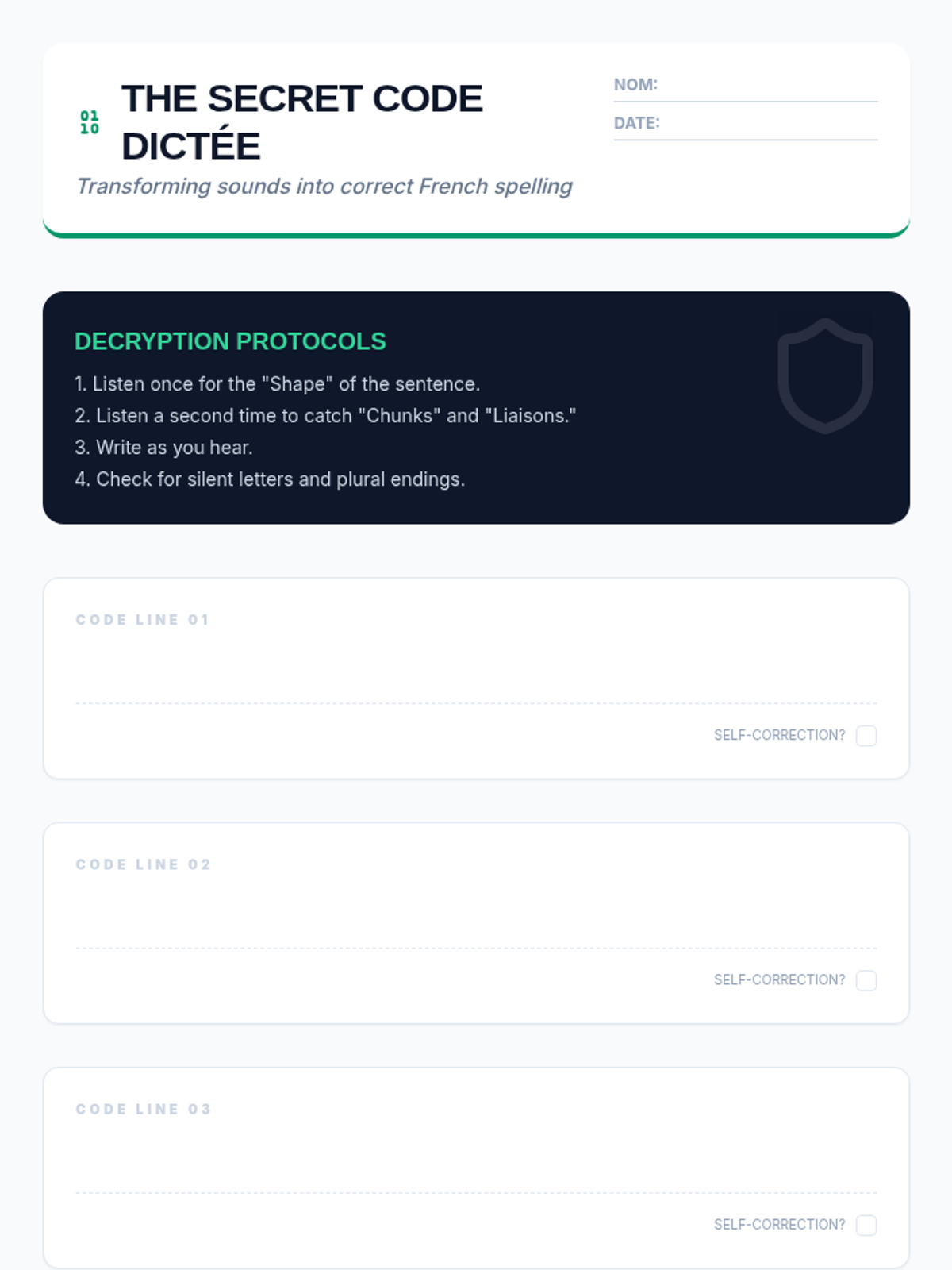
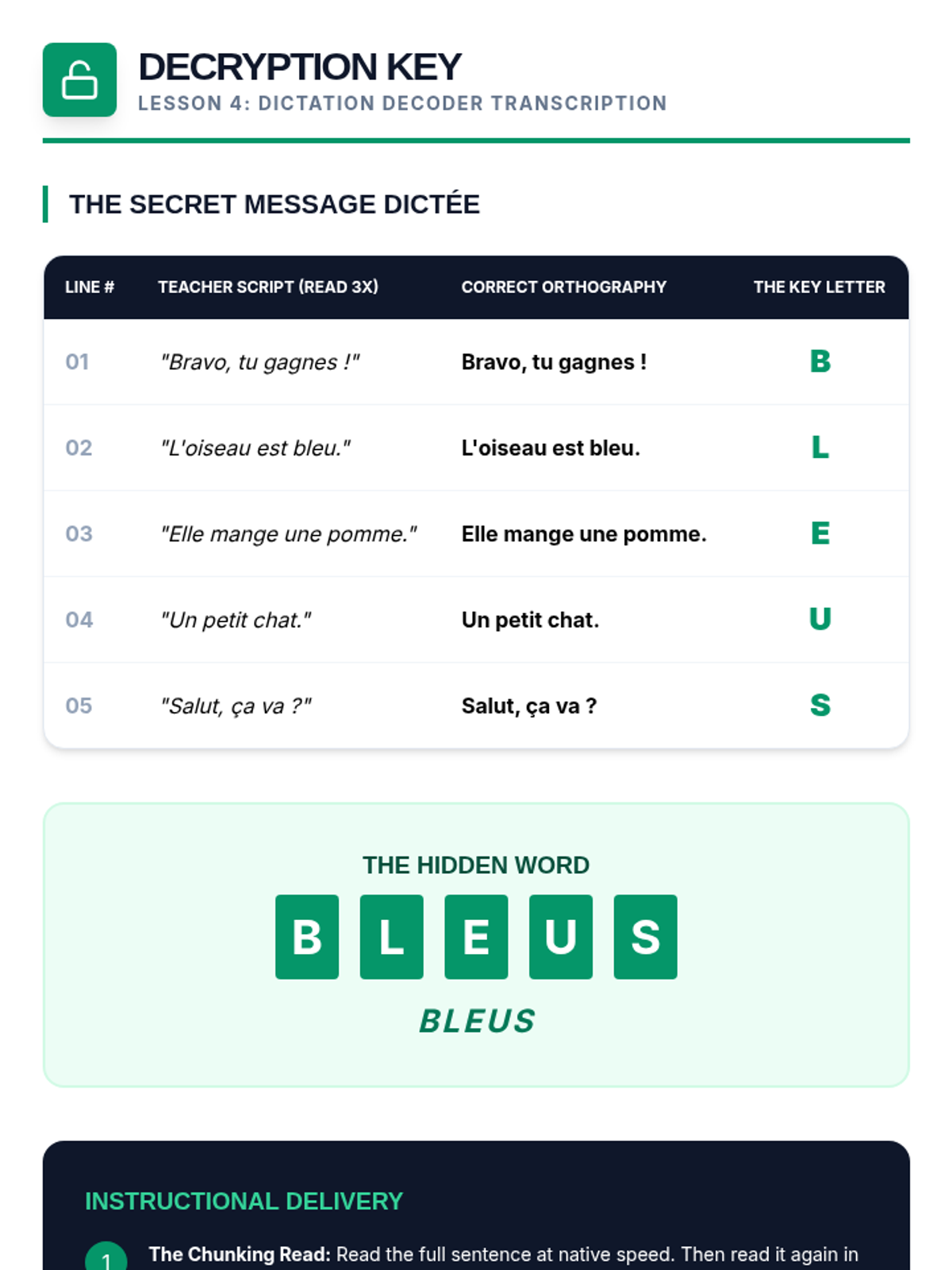
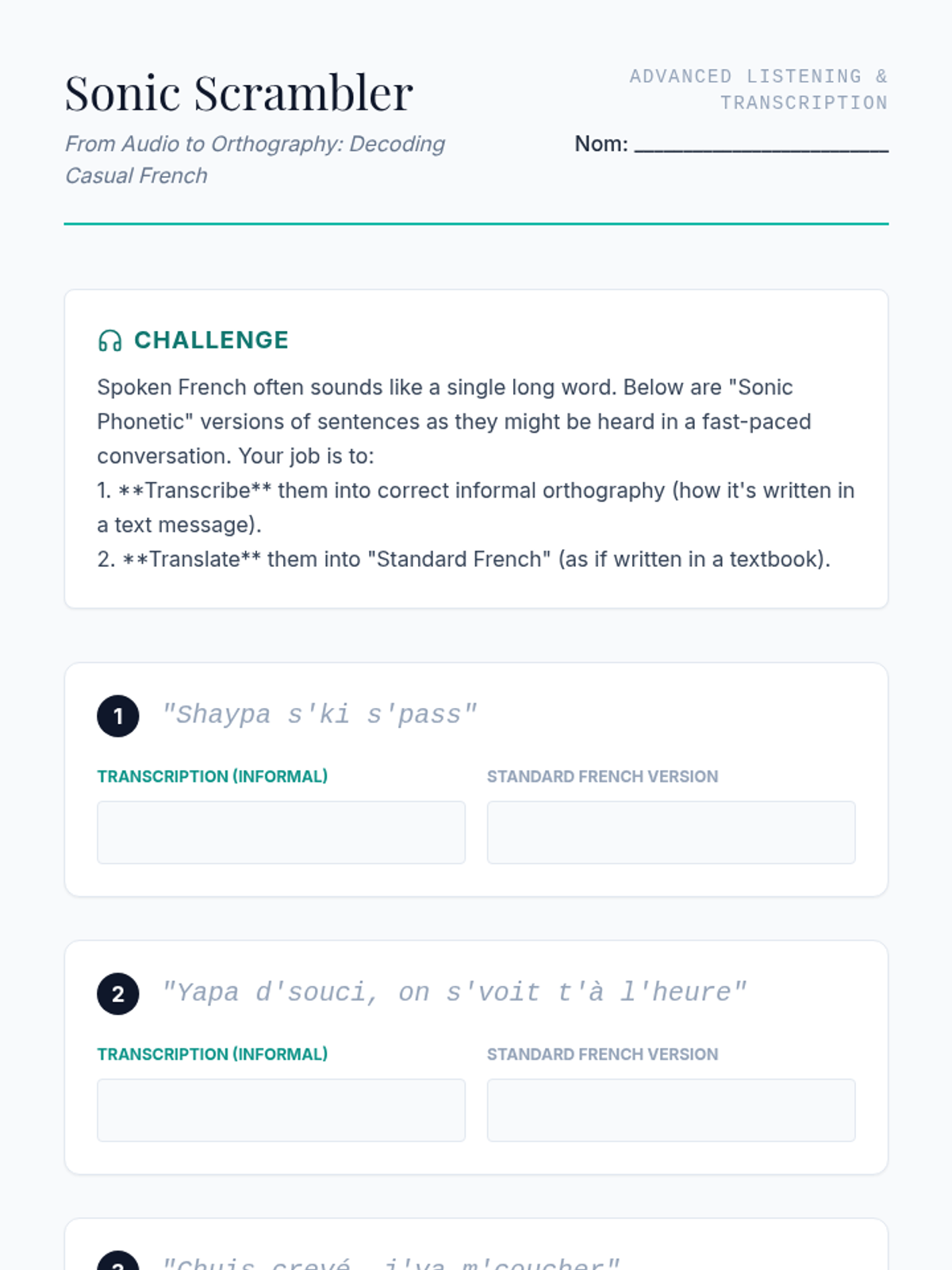
Introduces the 'dictée' method to bridge the gap between spoken sounds and French orthography, reinforcing spelling-sound connections.
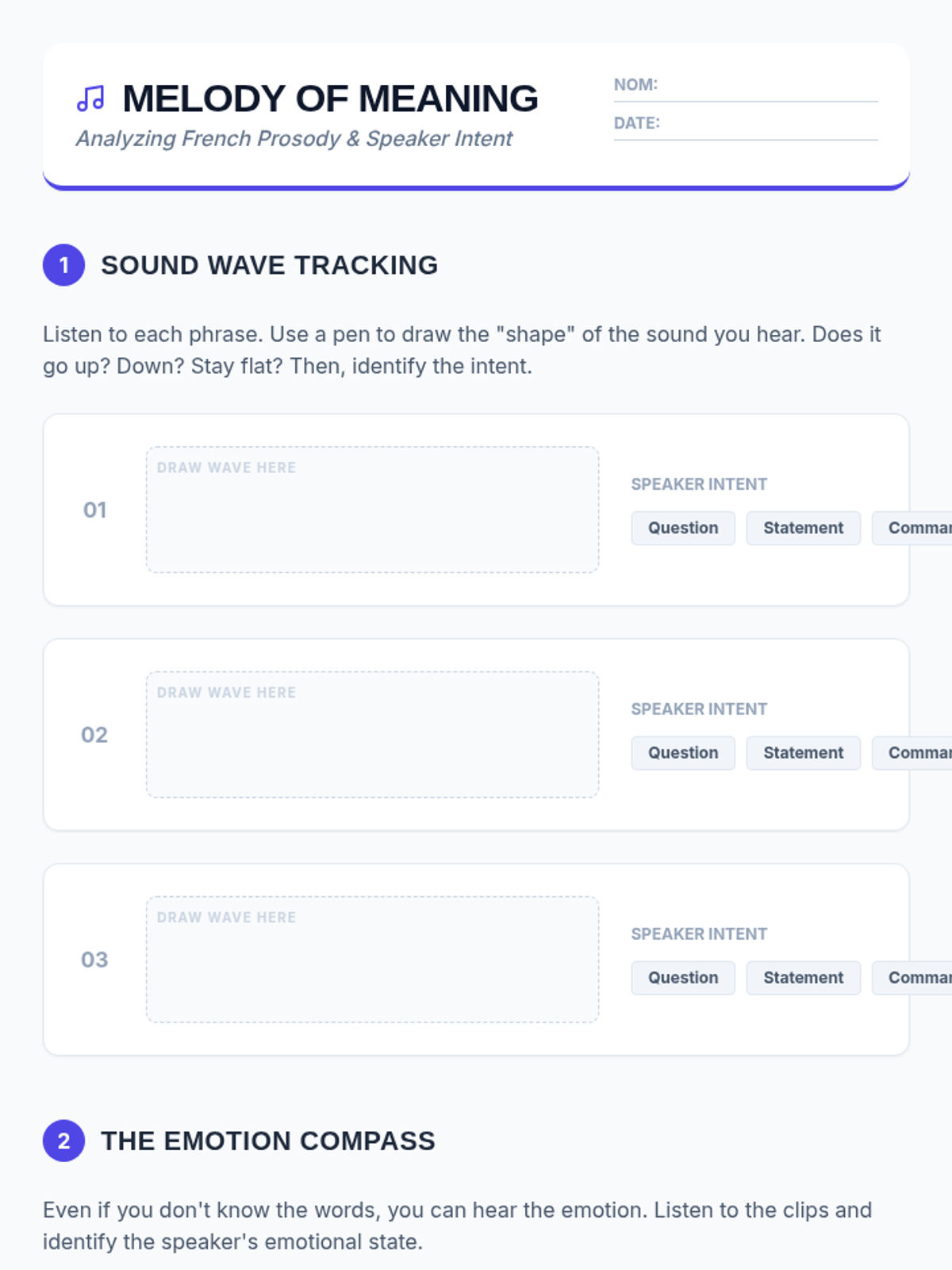
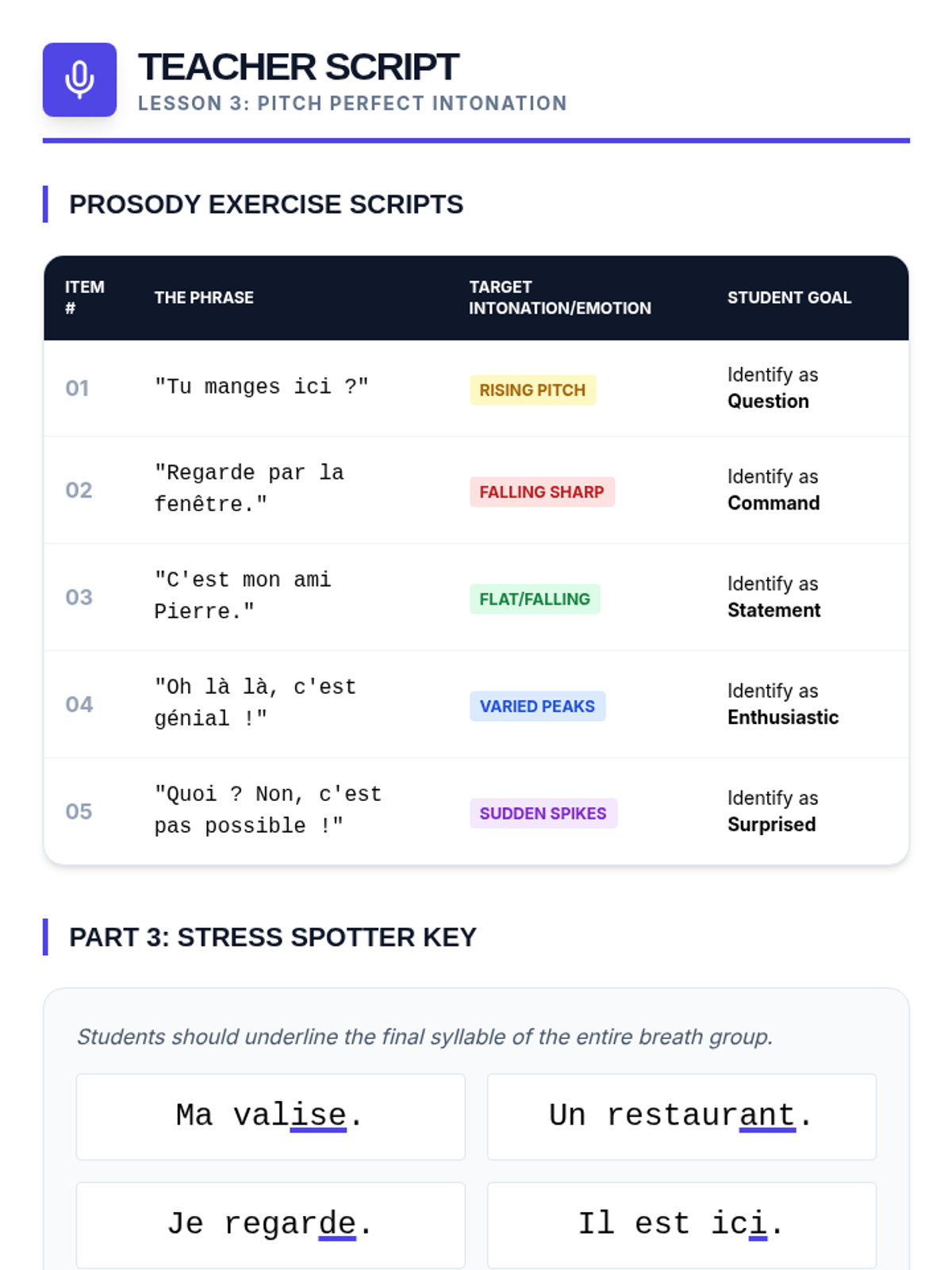
Explores how French intonation and stress patterns signal questions, commands, and emotions, using pitch analysis to determine speaker intent.
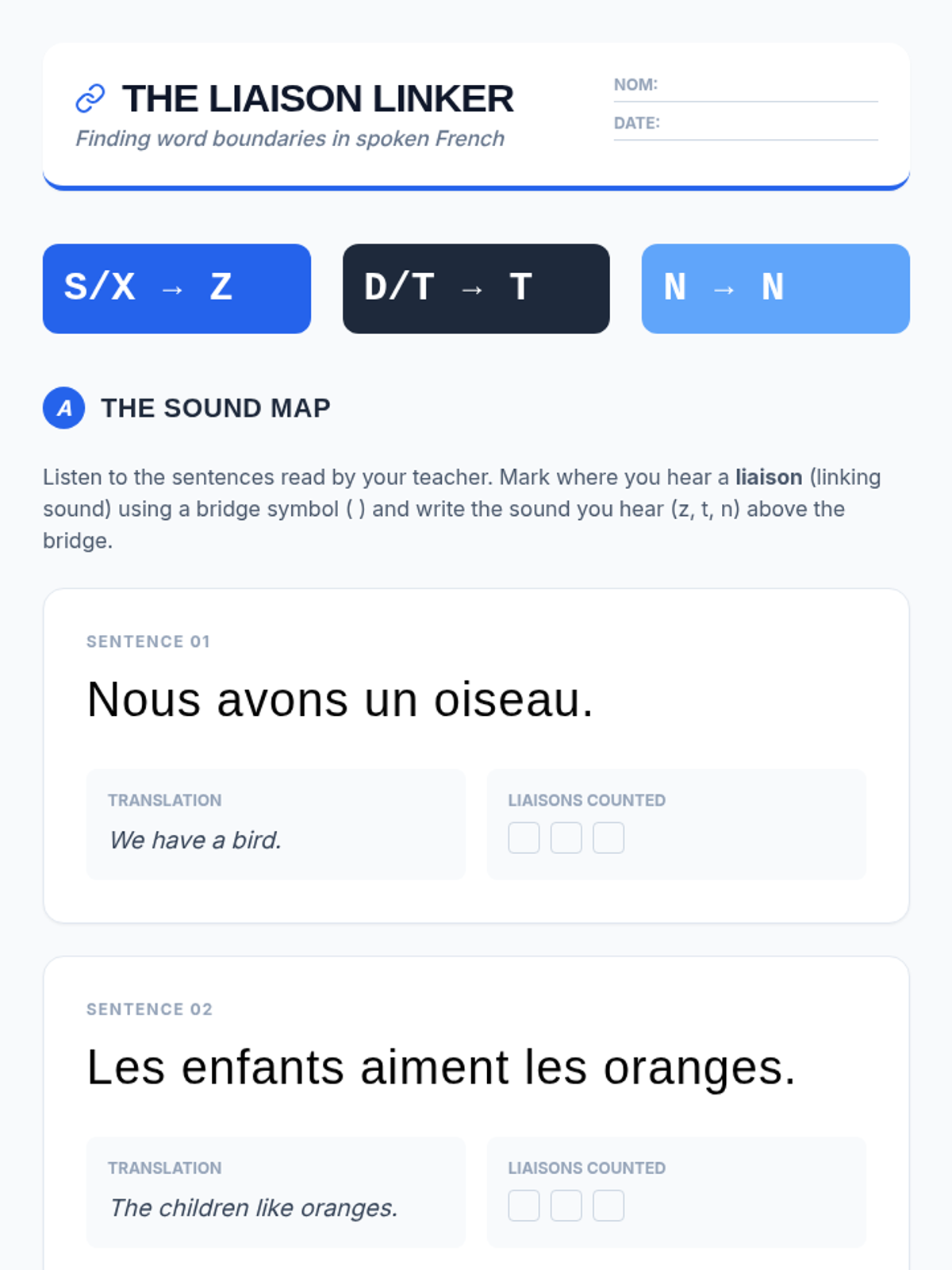
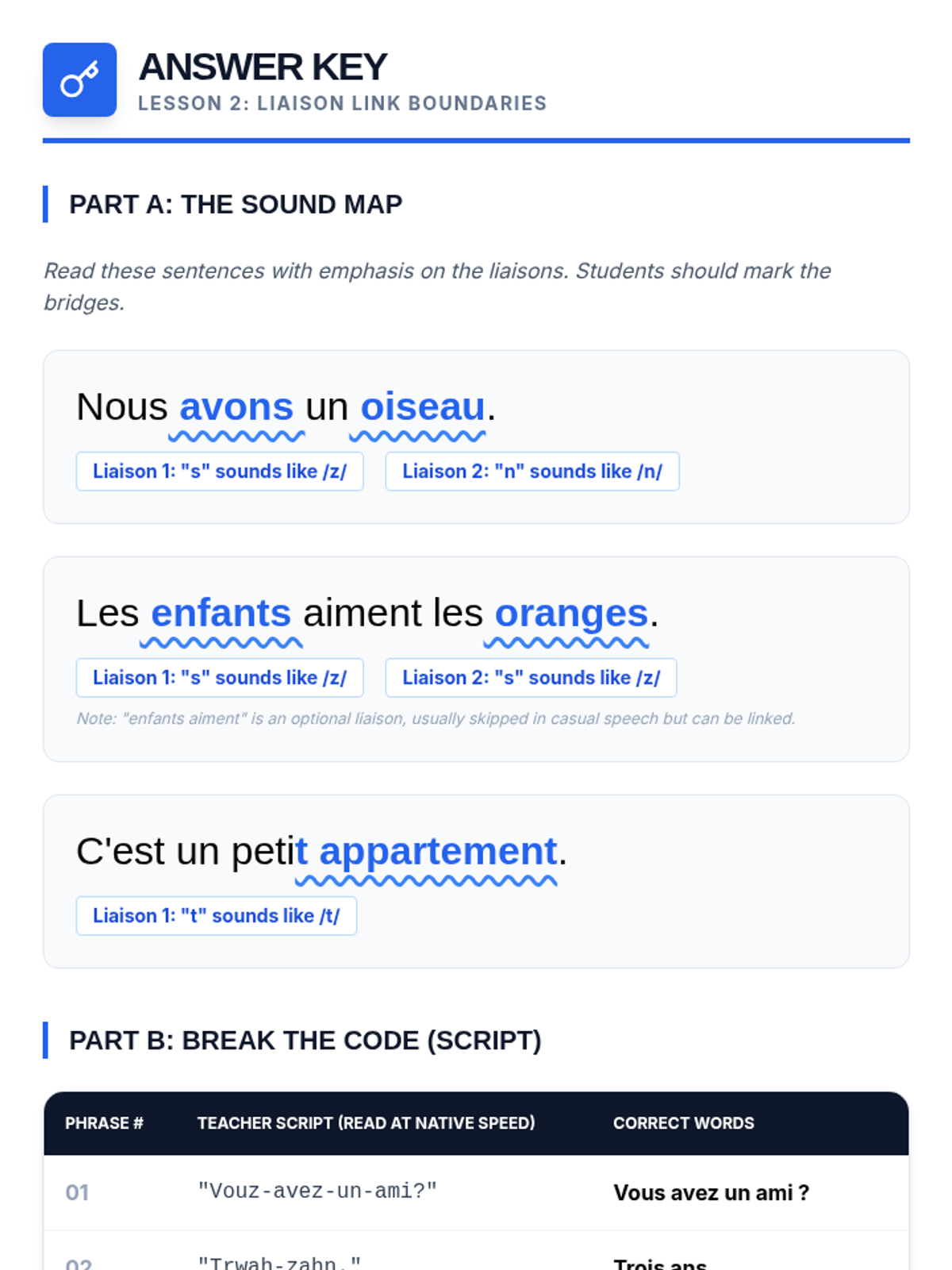
Focuses on the mechanics of liaisons and elisions in French, teaching students how to identify word boundaries in continuous spoken speech.
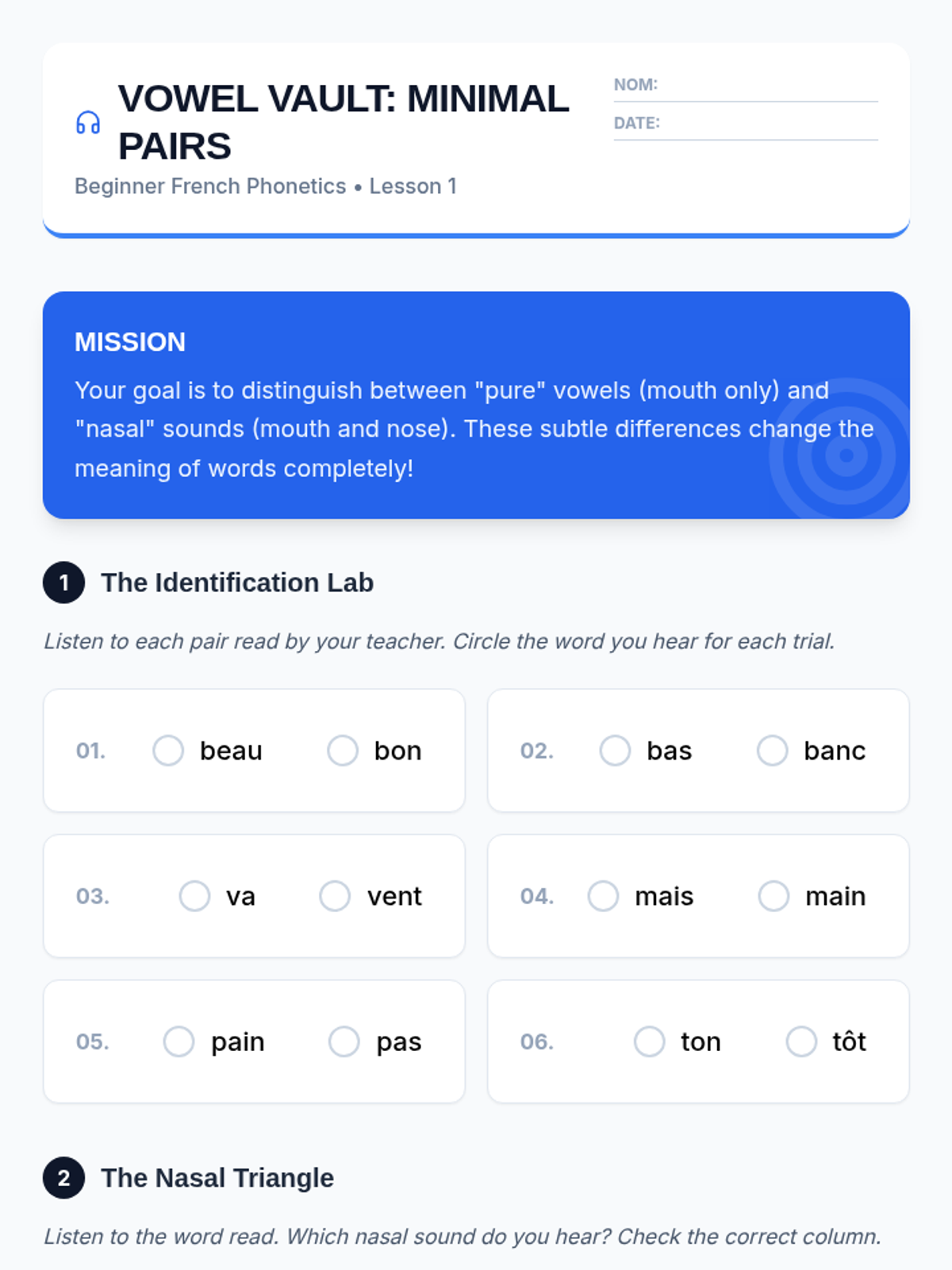
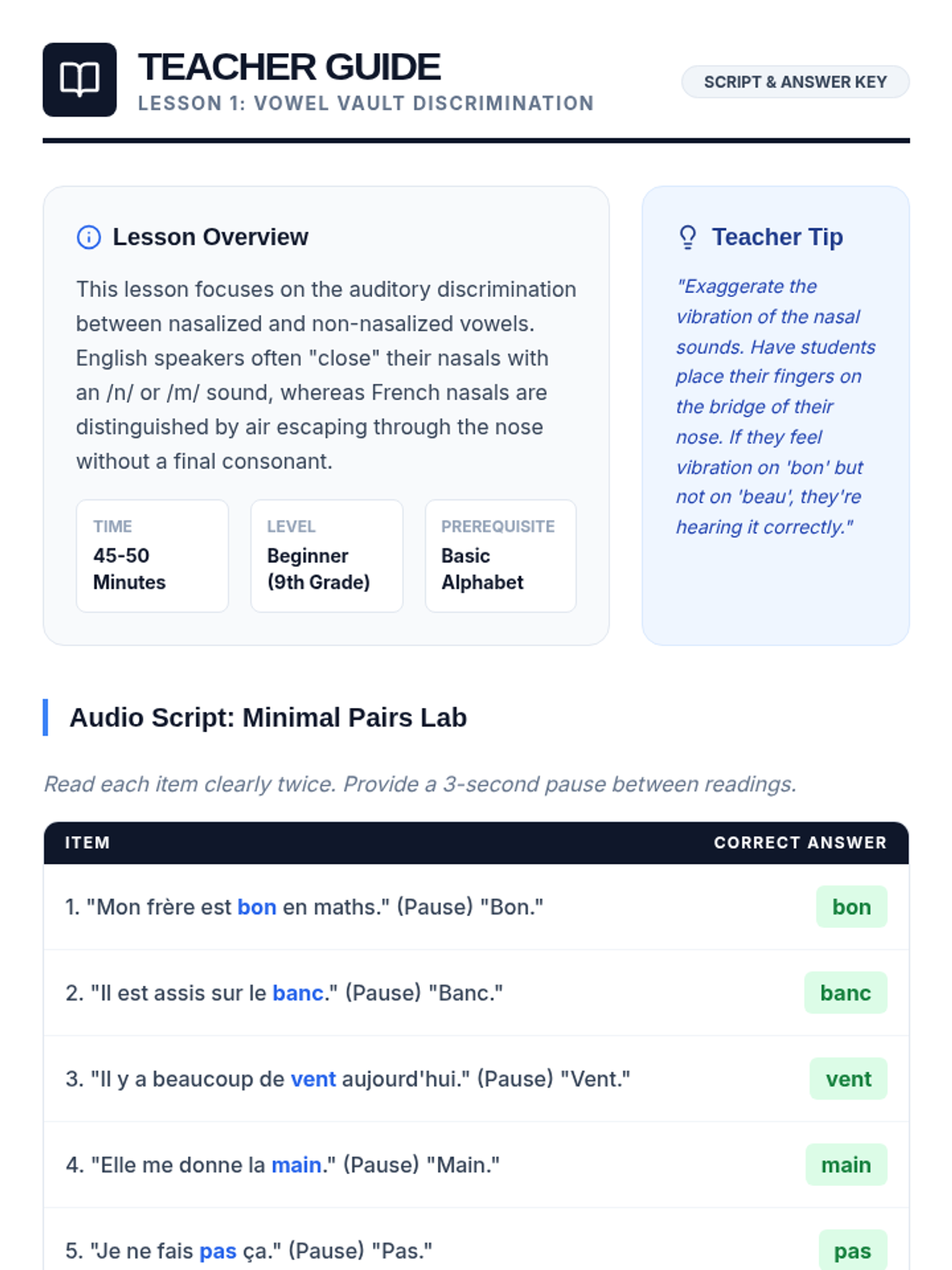
Students practice distinguishing between French nasal sounds (on, an, in) and their pure vowel counterparts through minimal pair exercises and auditory drills.
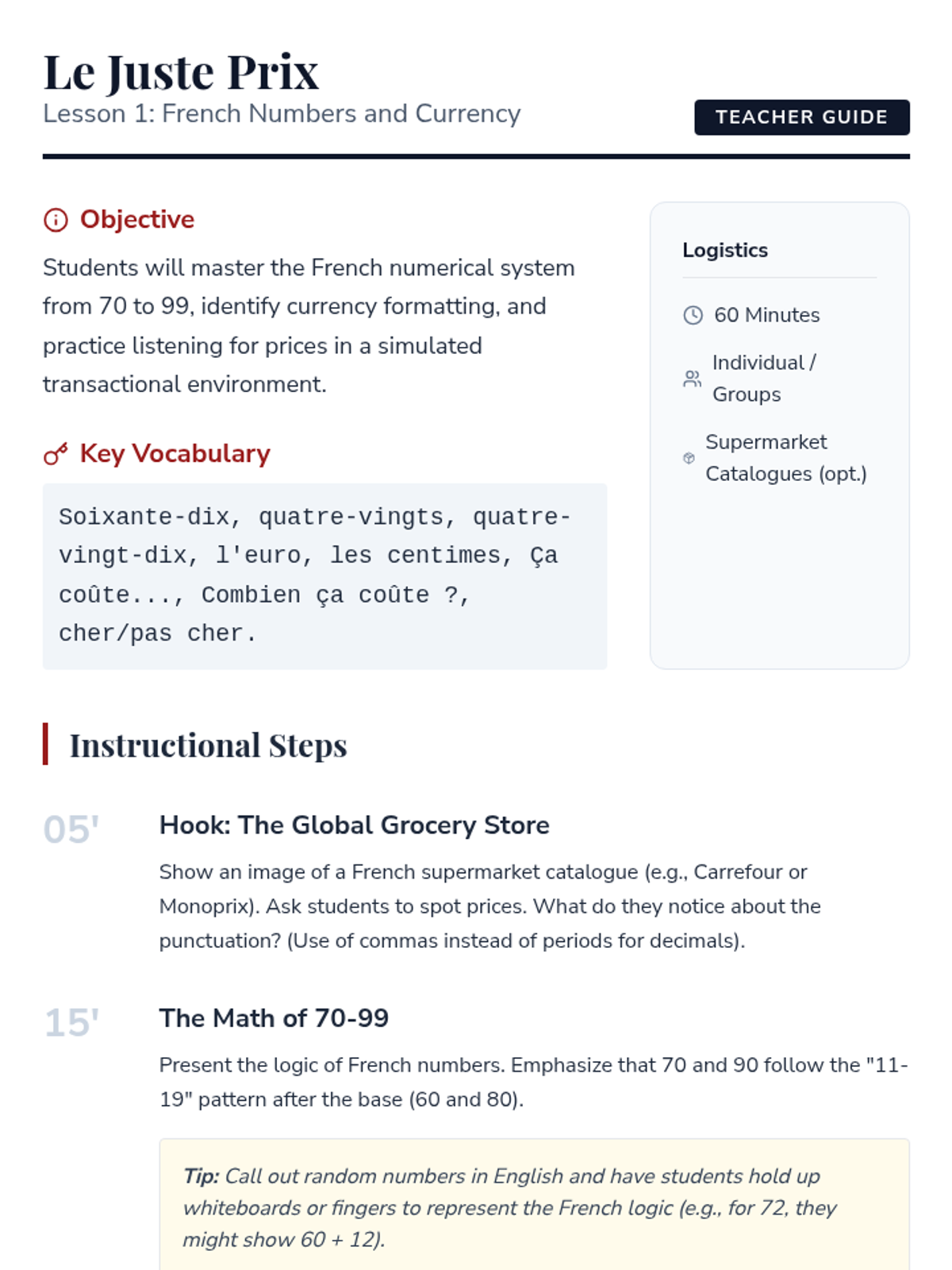
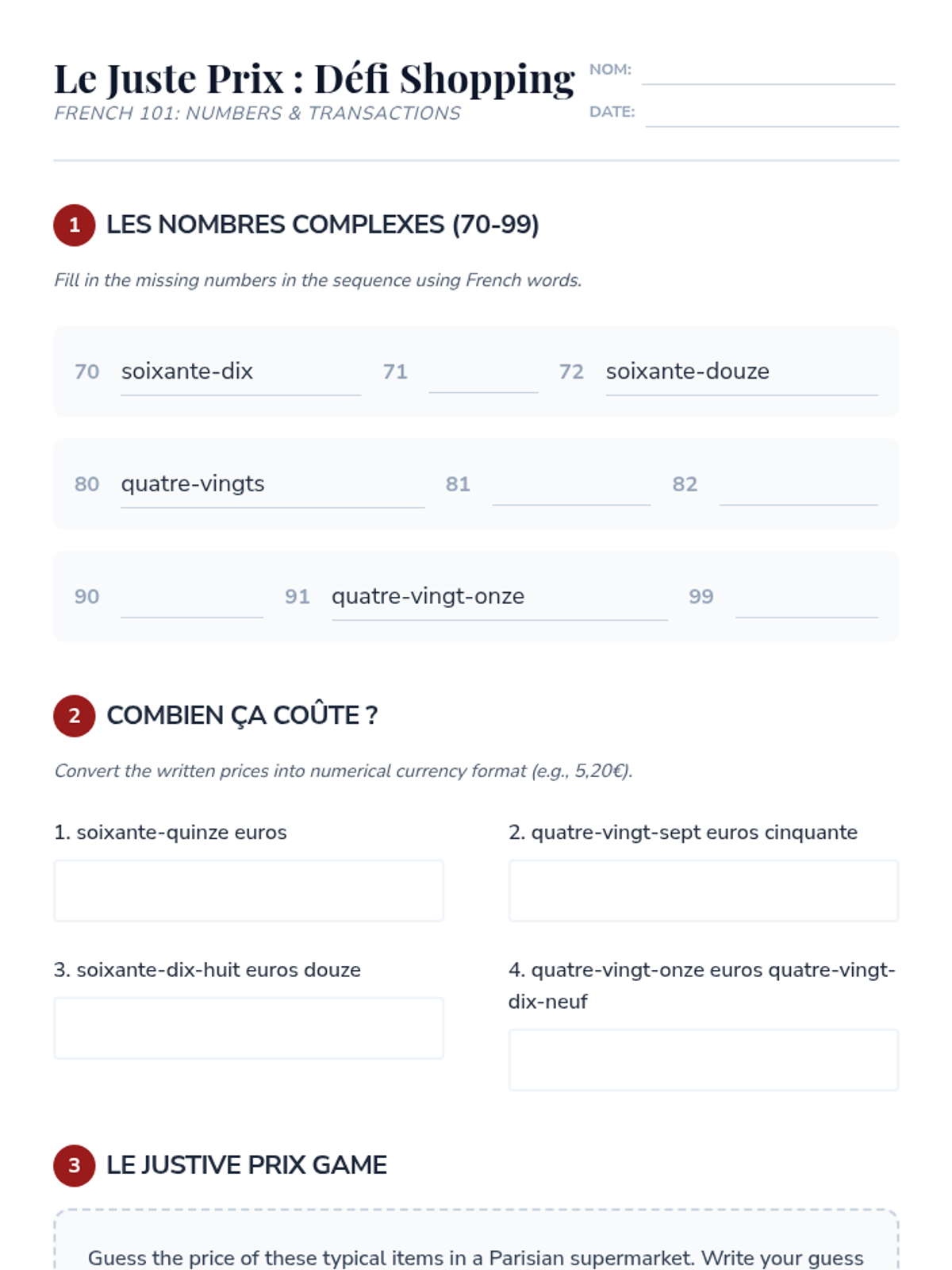
Students master the French numerical system (70-99), practice listening for prices, and handle basic monetary transactions in a competitive, game-based environment.
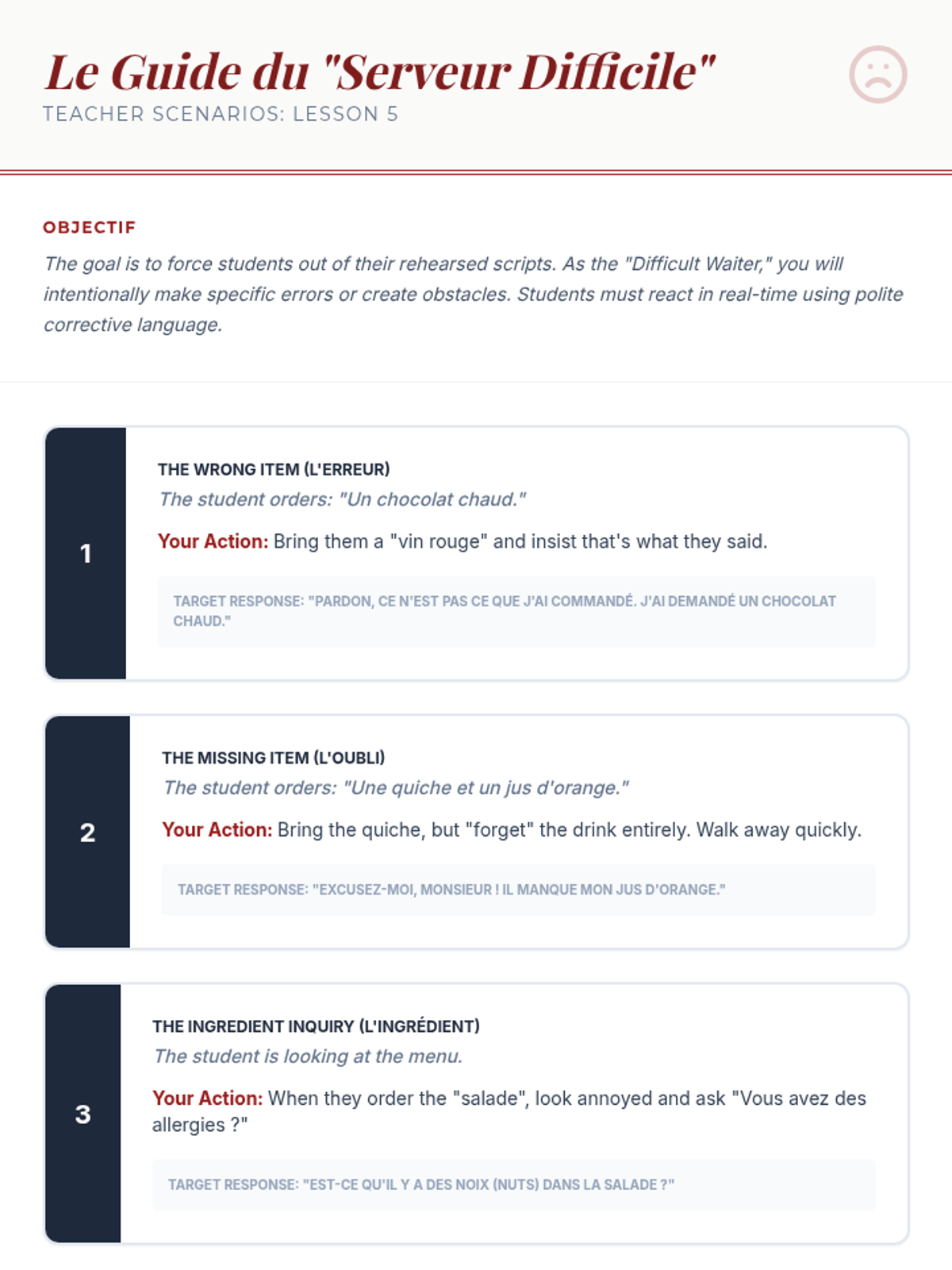
Students practice resolving order errors and inquiring about ingredients, pushing their language use into adaptive and spontaneous territory.
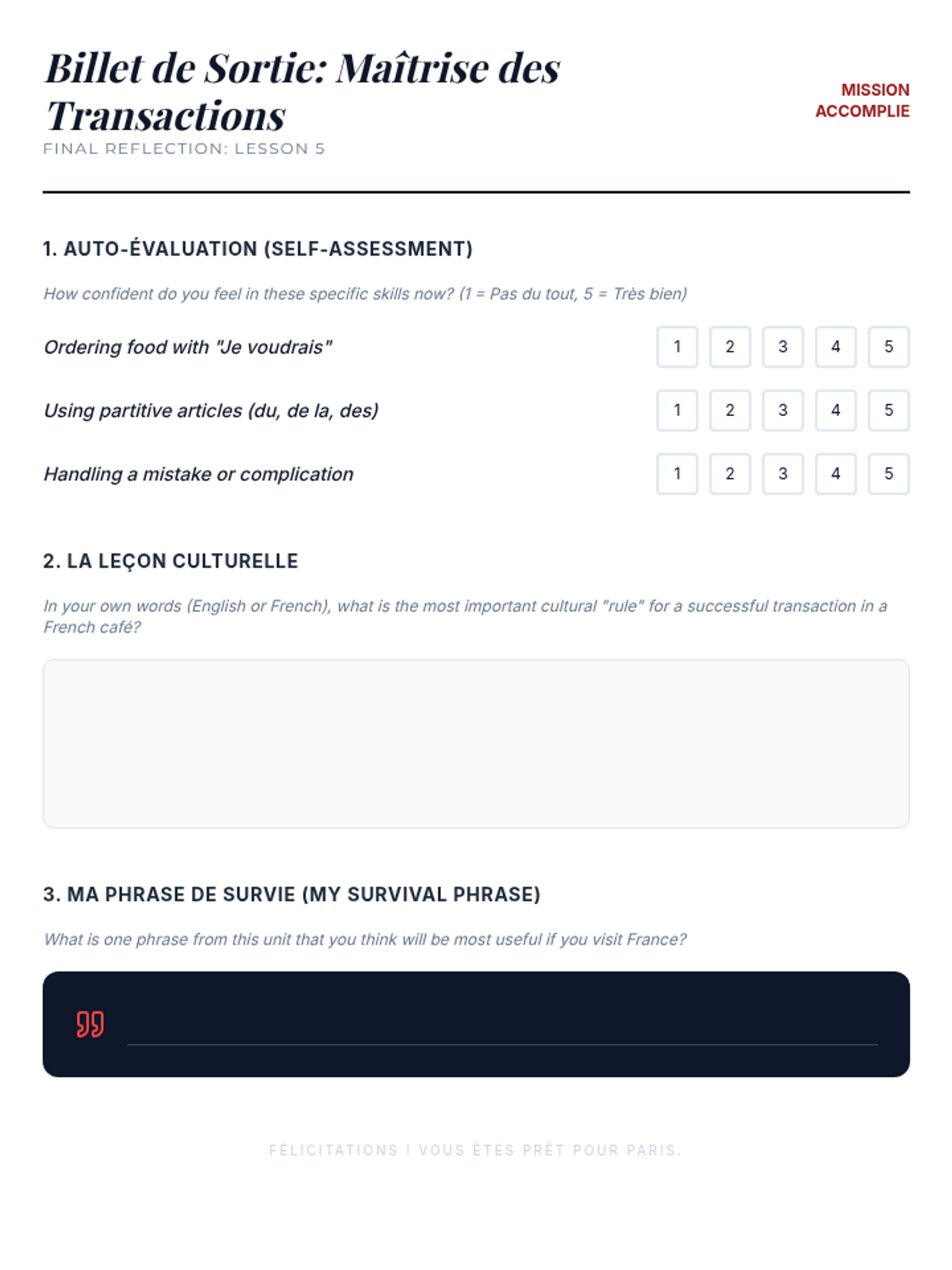
A full-scale simulation of a café visit, covering everything from being seated to asking for the check using authentic cultural scripts.
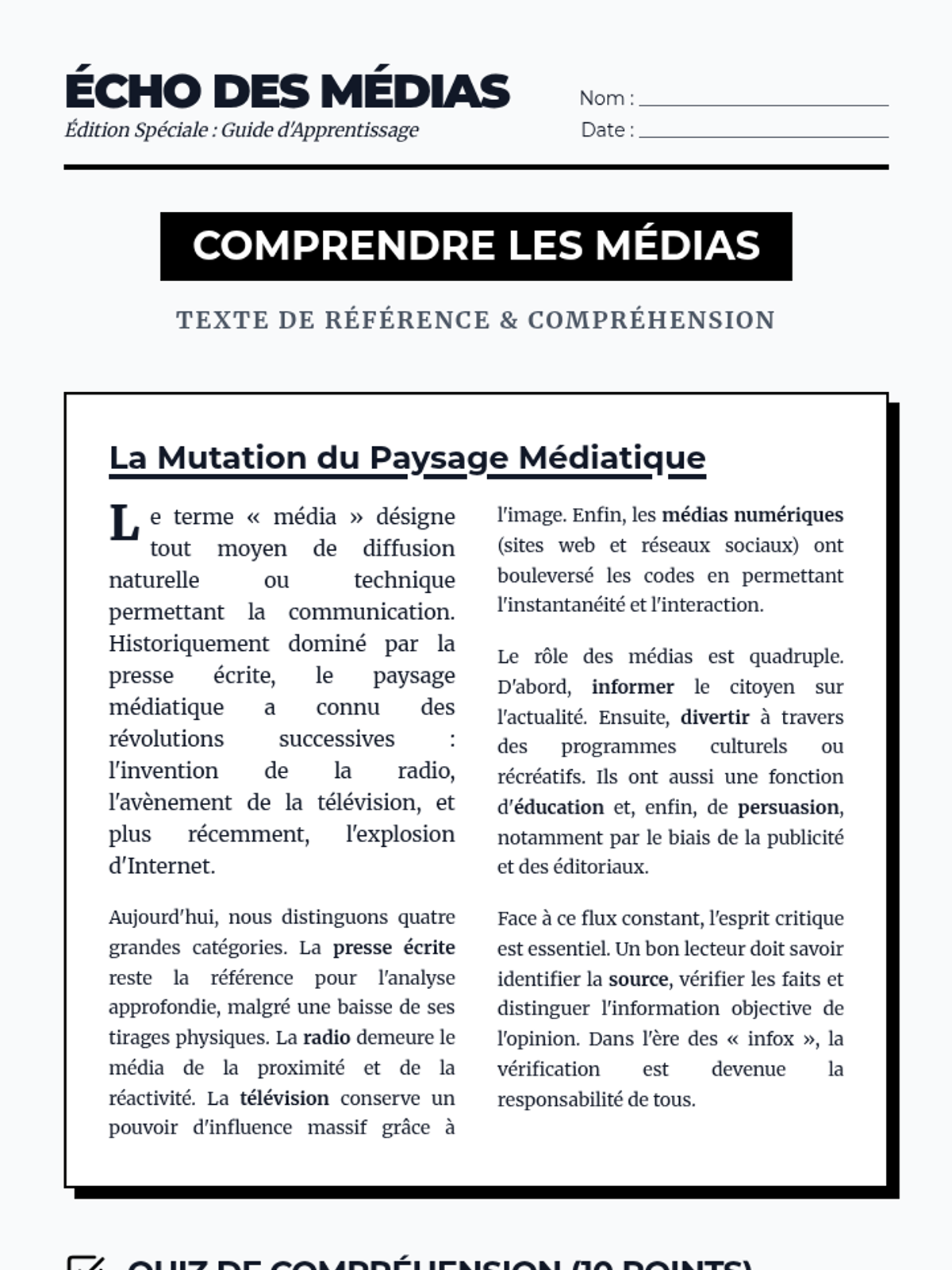
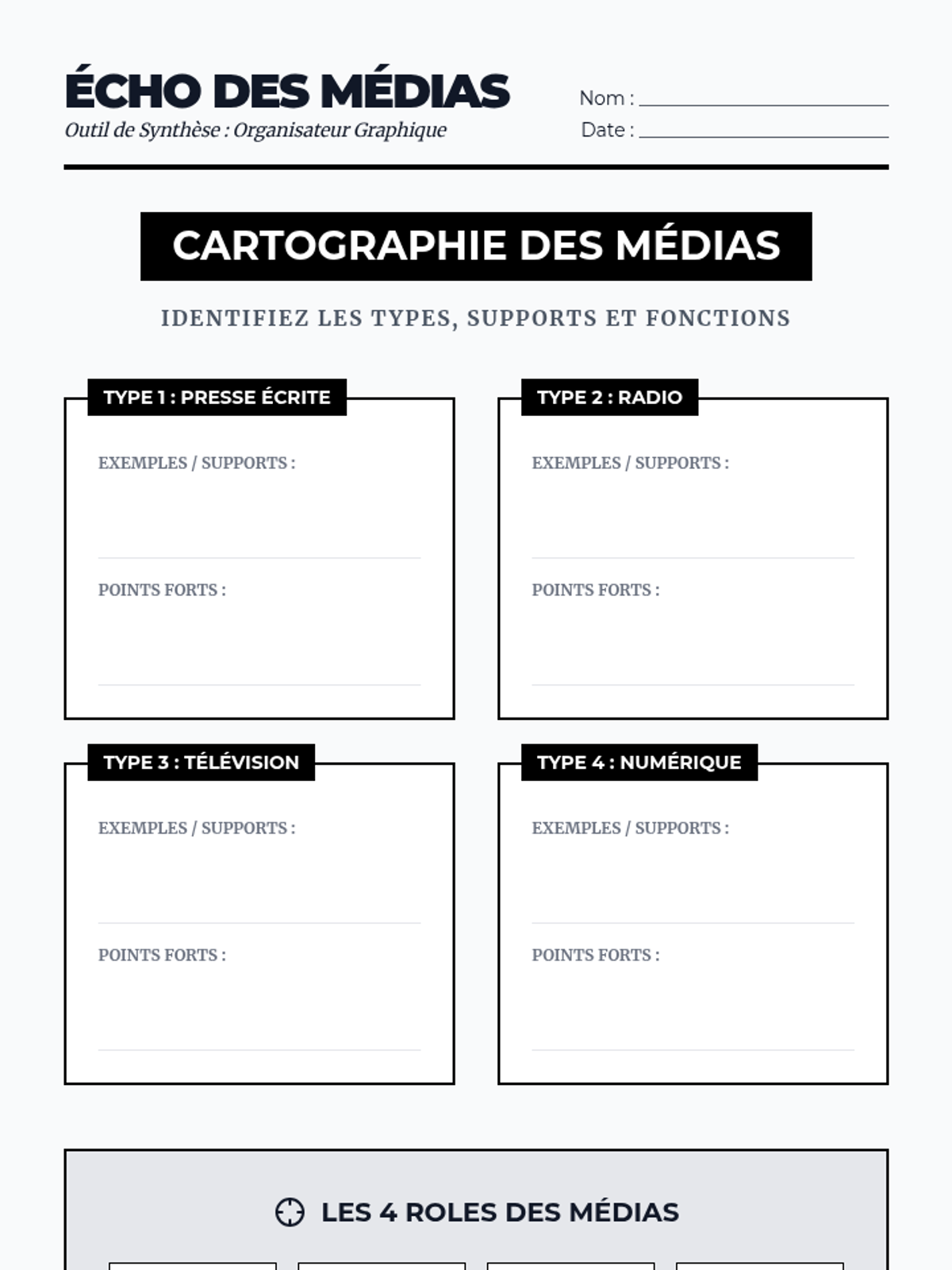
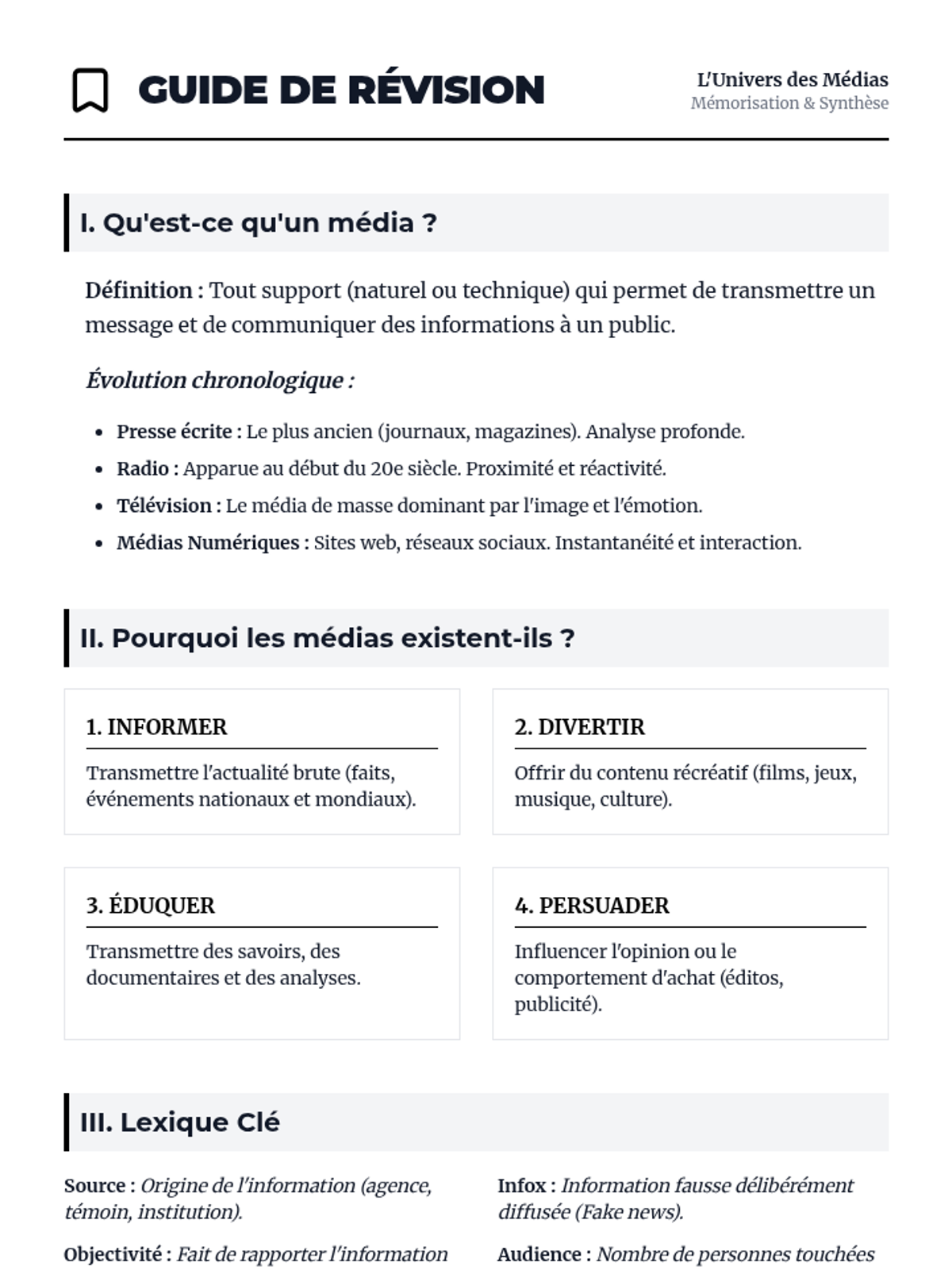
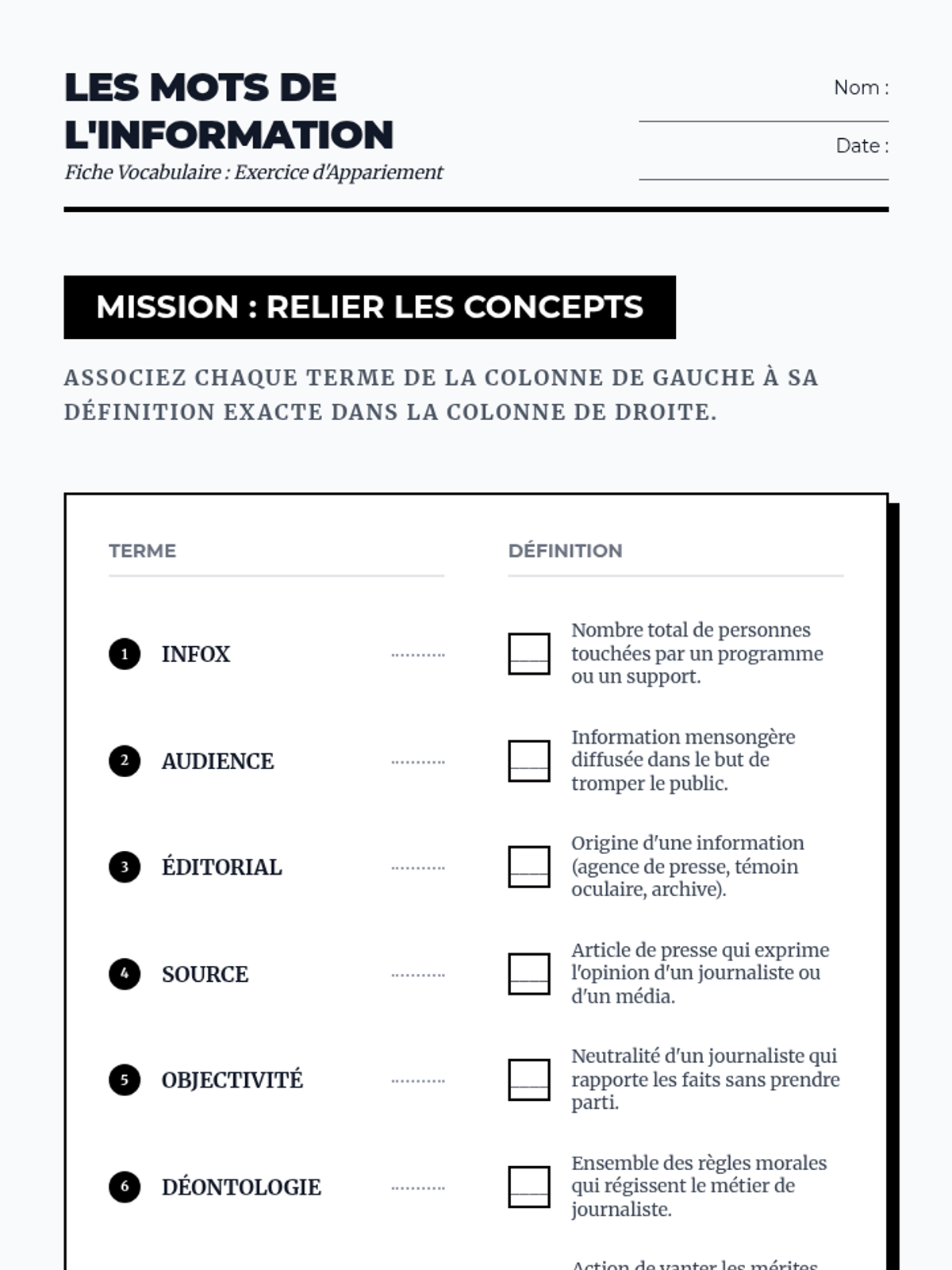
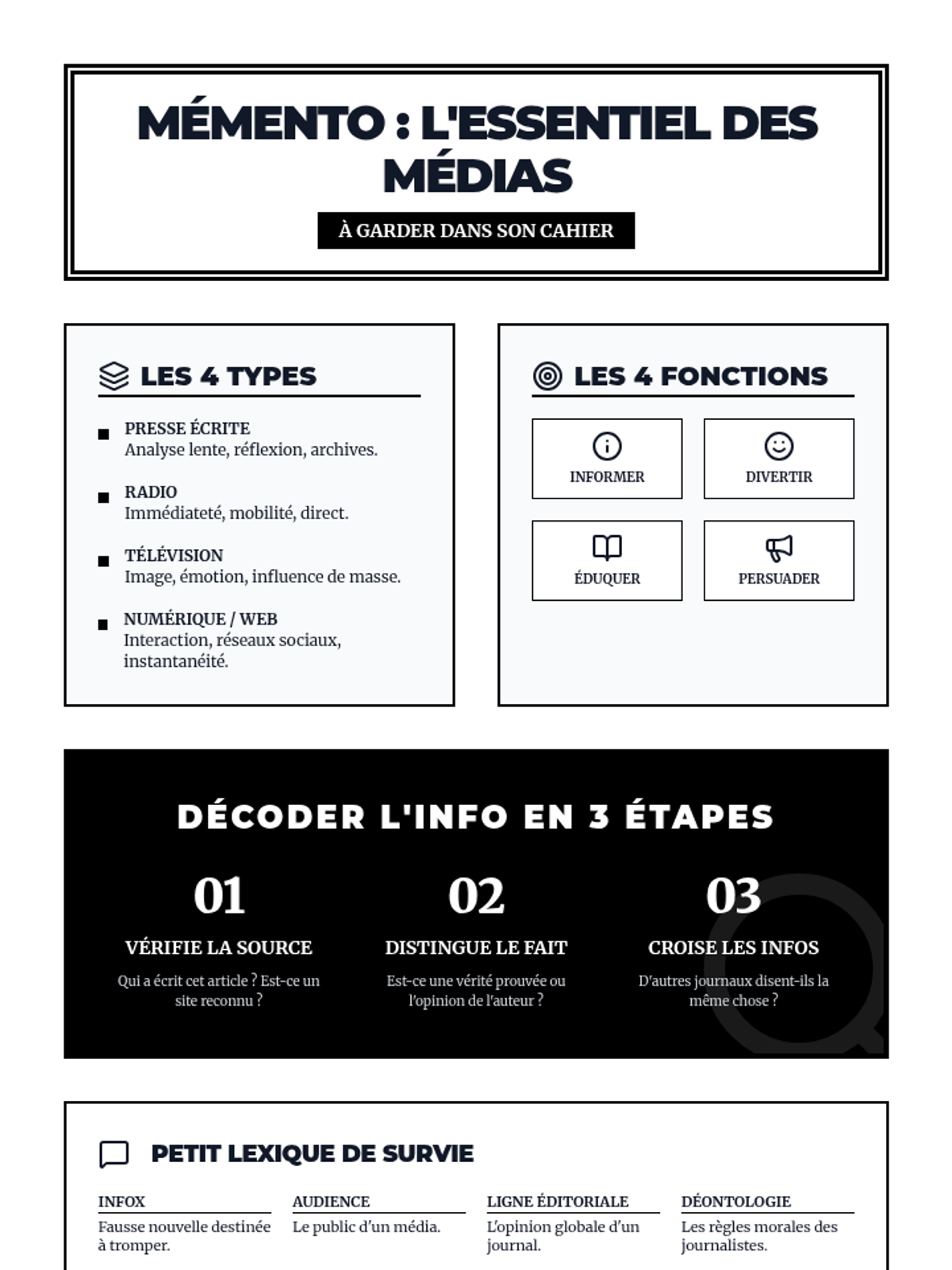
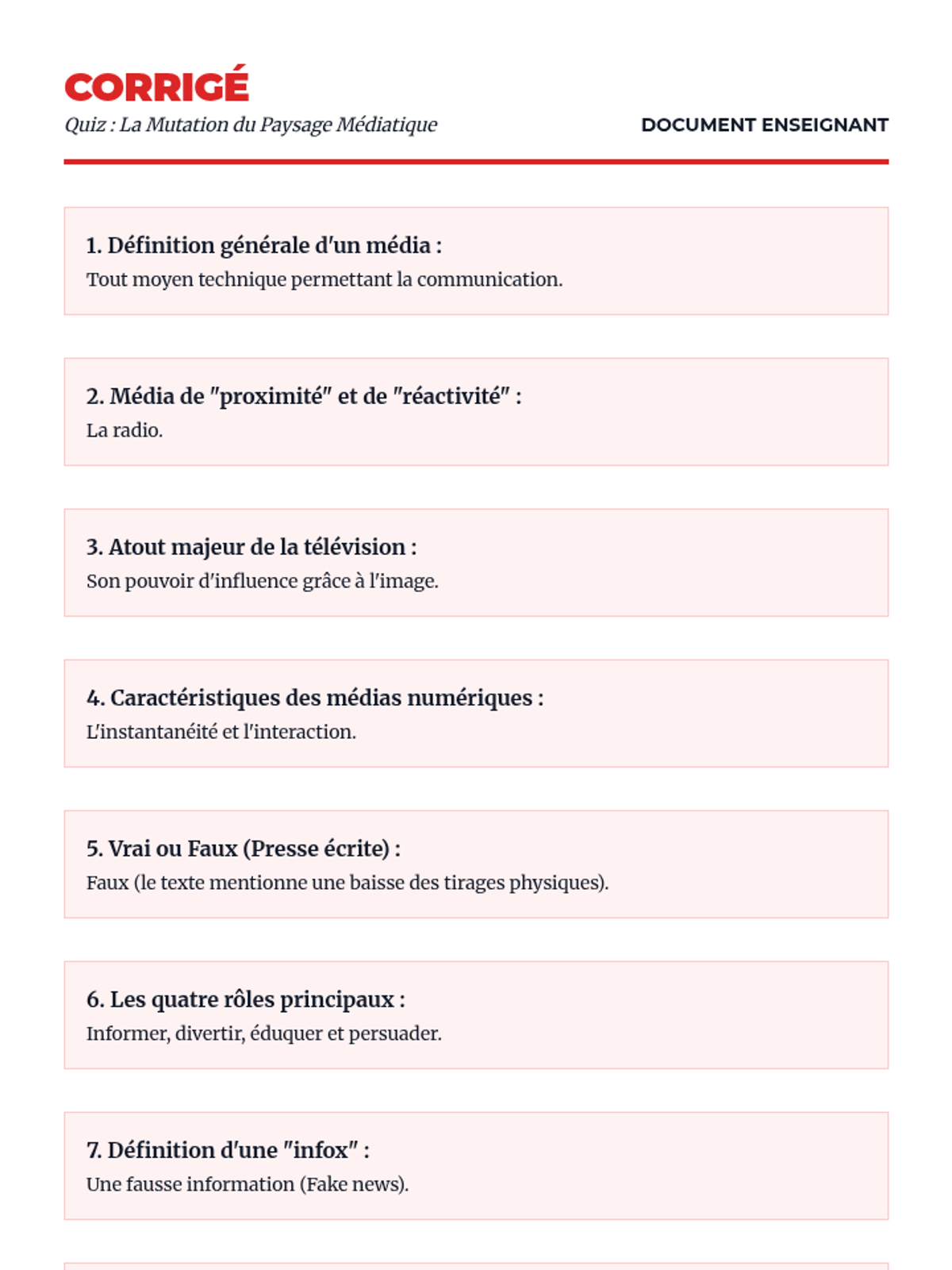
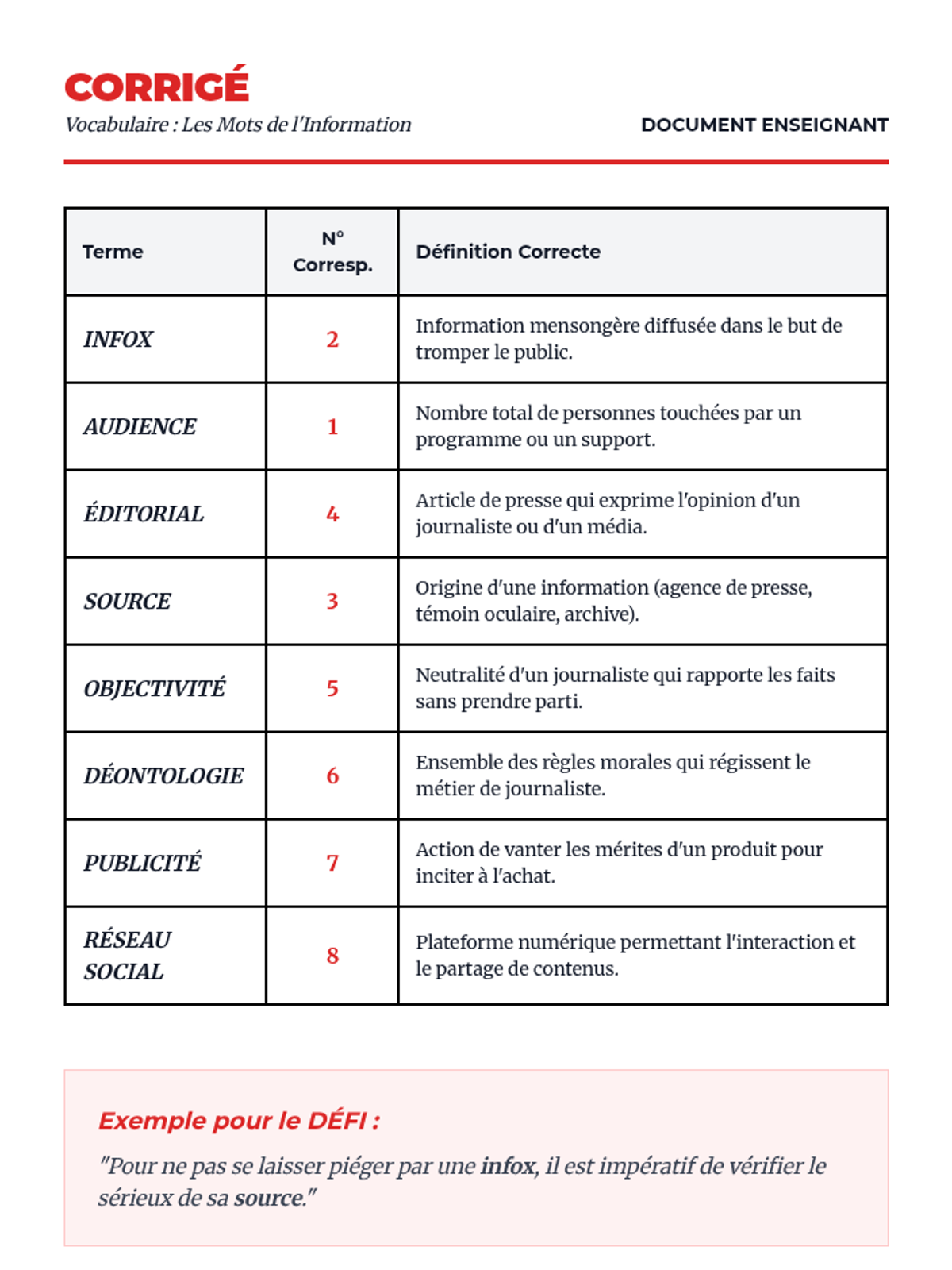
Cette leçon explore la diversité des médias modernes, de la presse écrite aux réseaux sociaux, tout en développant les compétences de lecture et de vocabulaire en français.
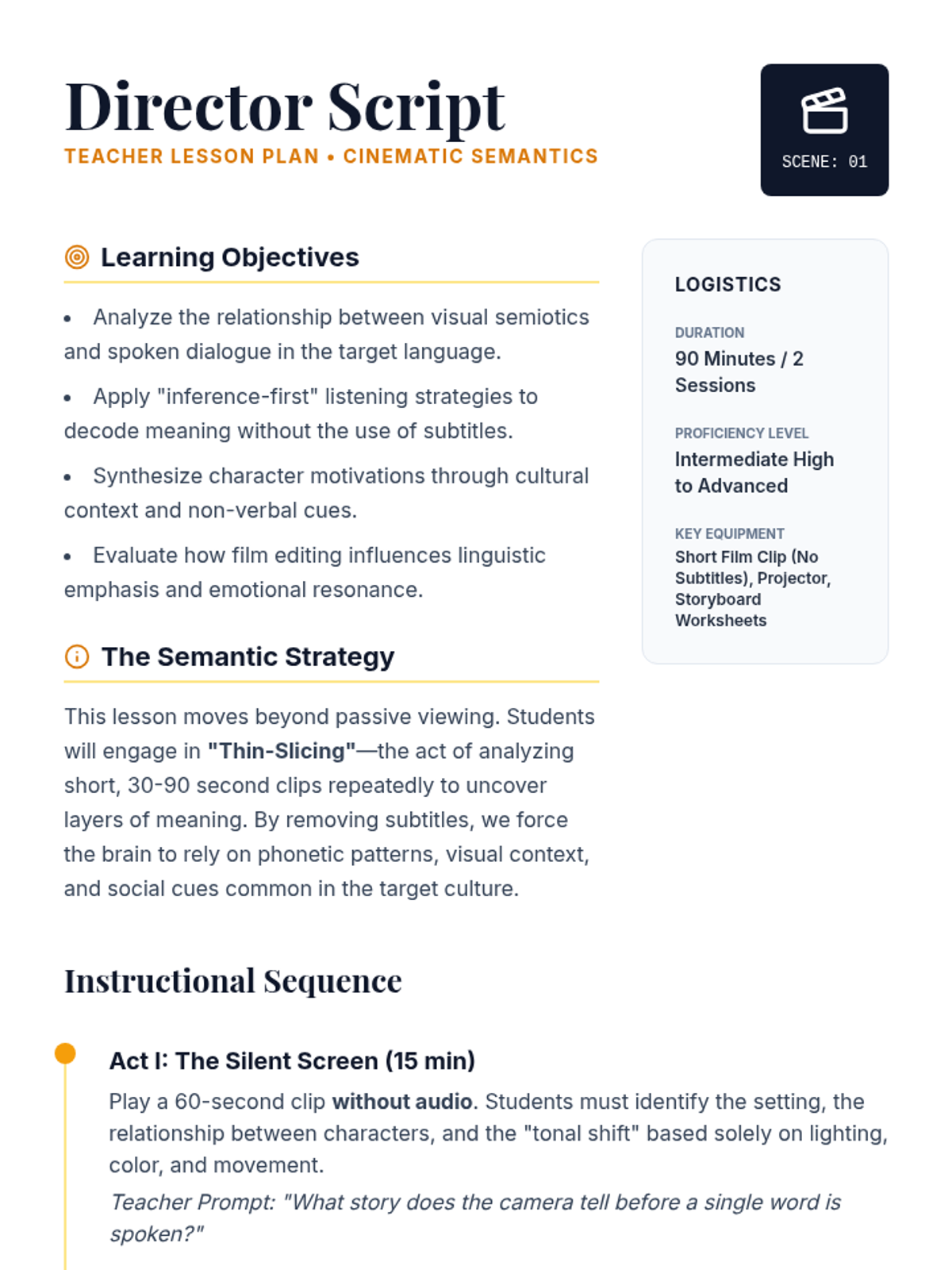
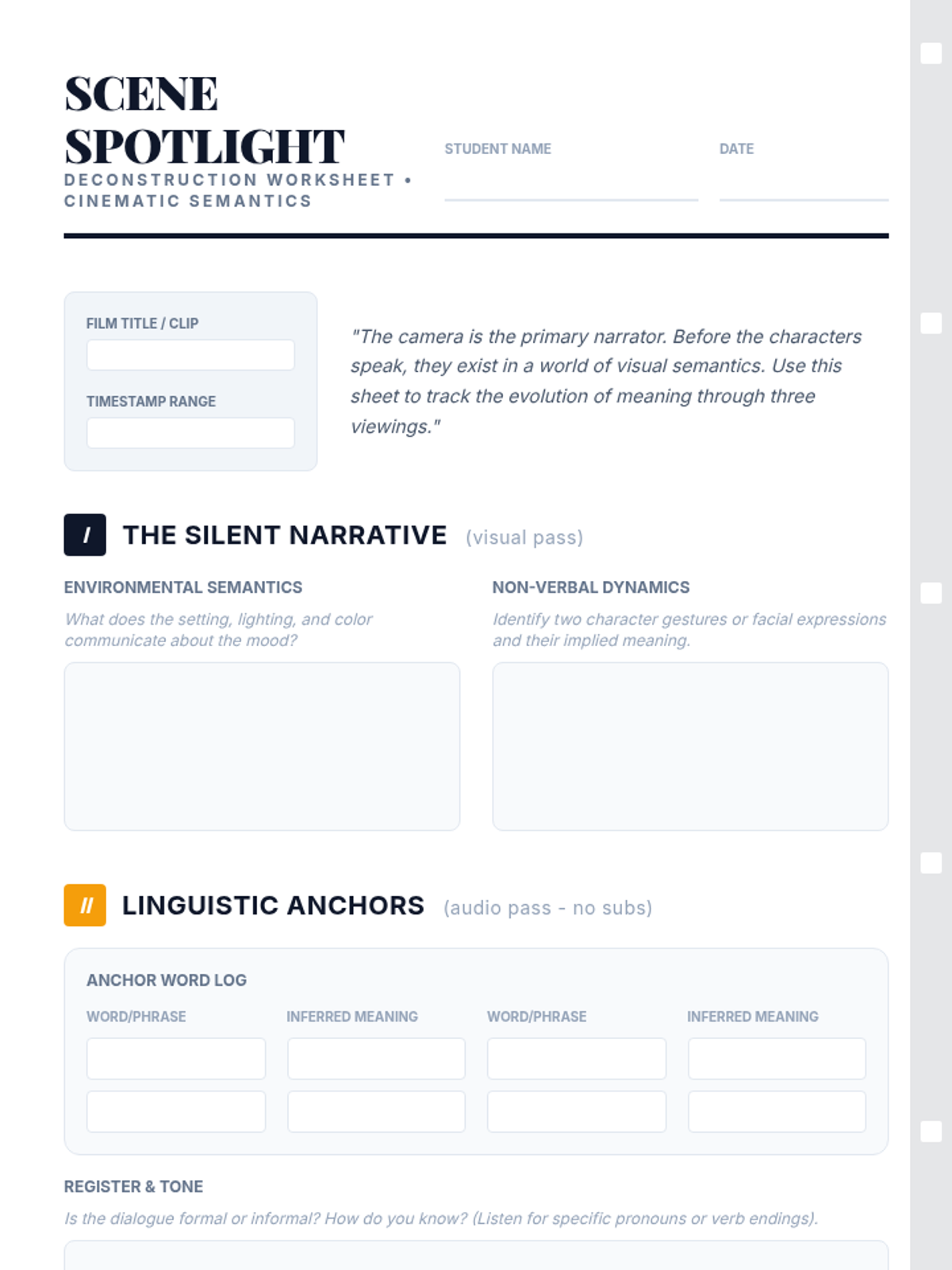
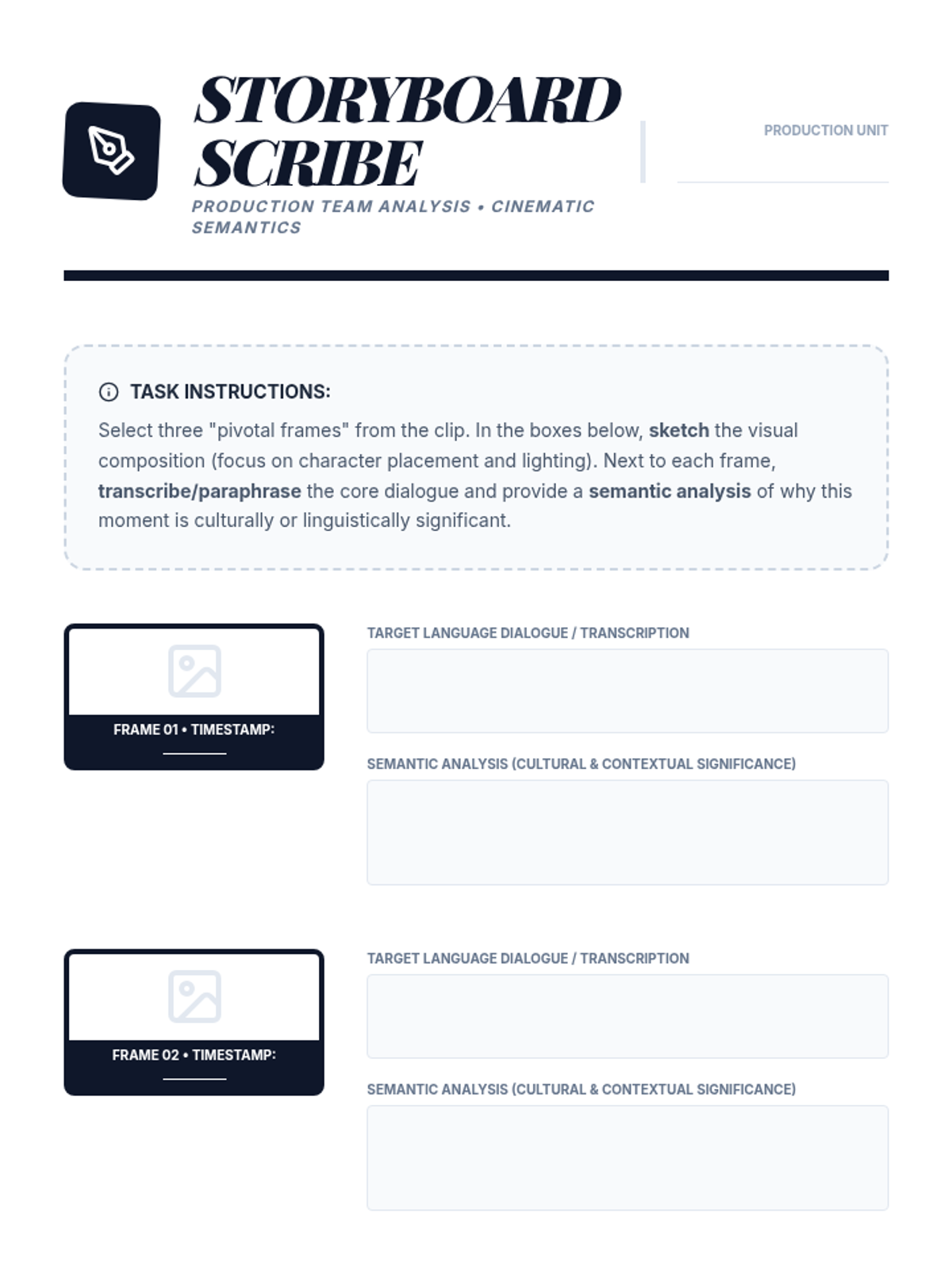
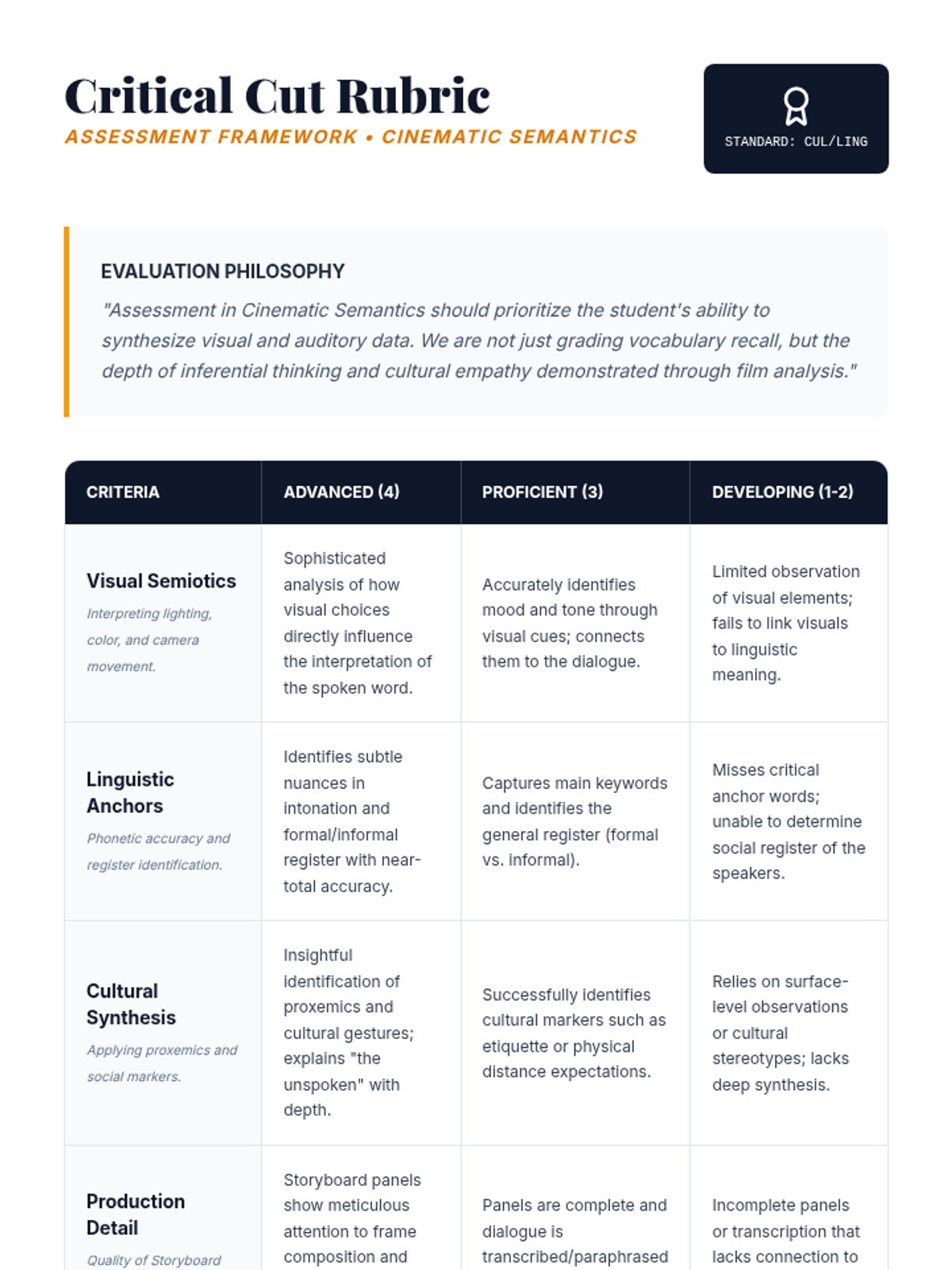
A comprehensive framework for foreign language educators to guide students through deep linguistic and cultural analysis of film, focusing on visual storytelling and advanced listening strategies.
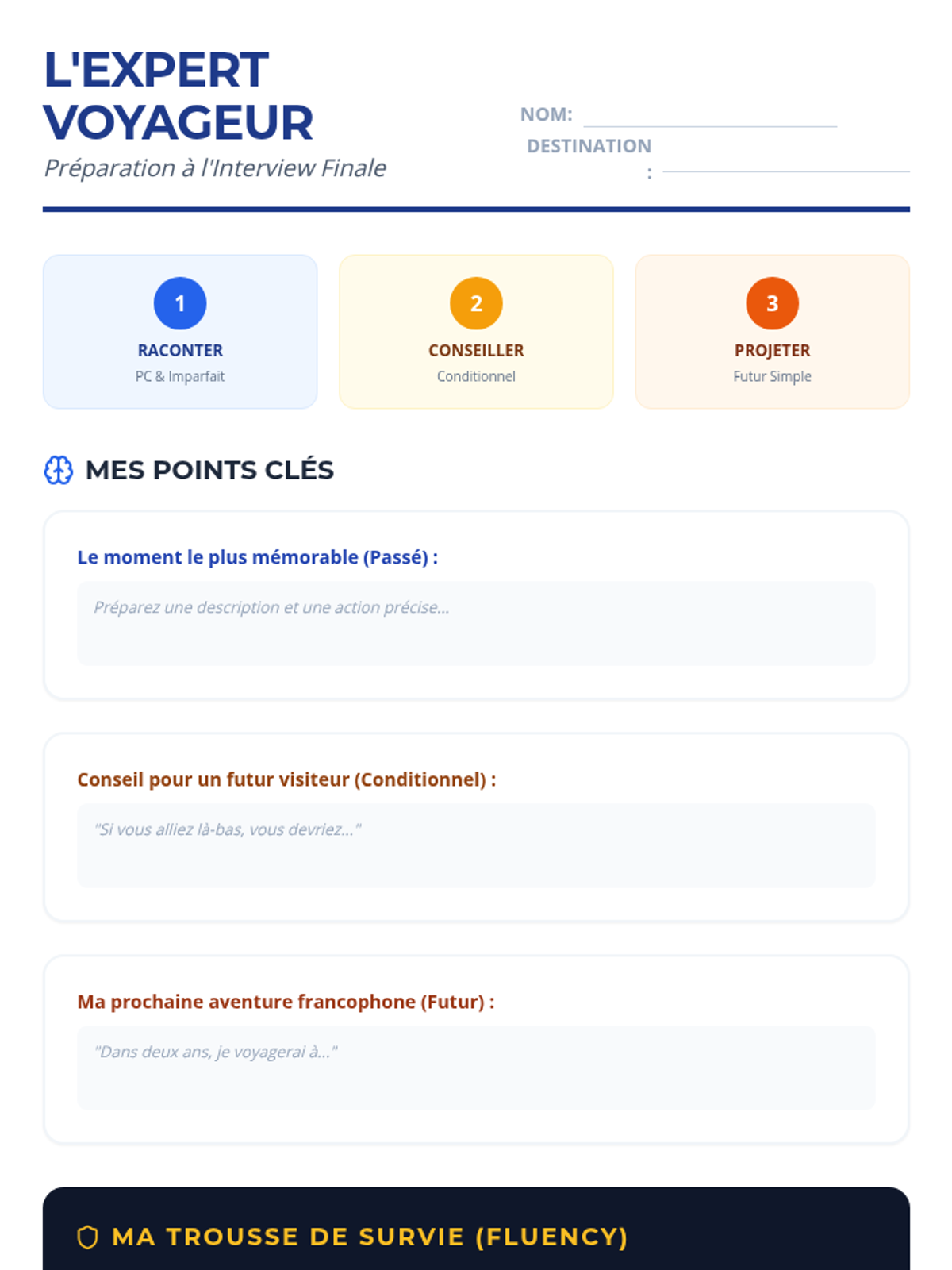
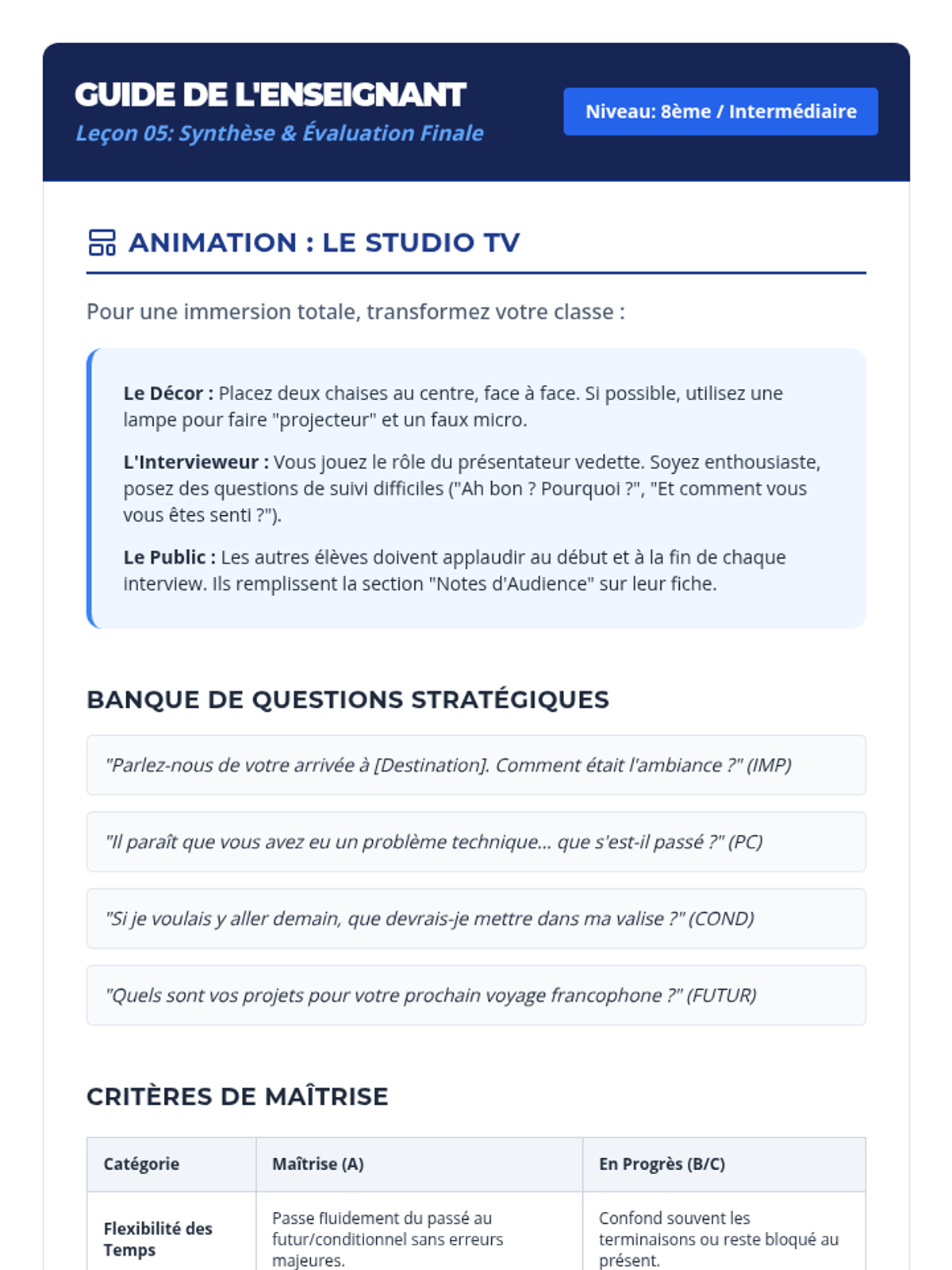
The sequence culminates in a mock TV interview where students synthesize their travel experiences, using multiple tenses and circumlocution strategies.
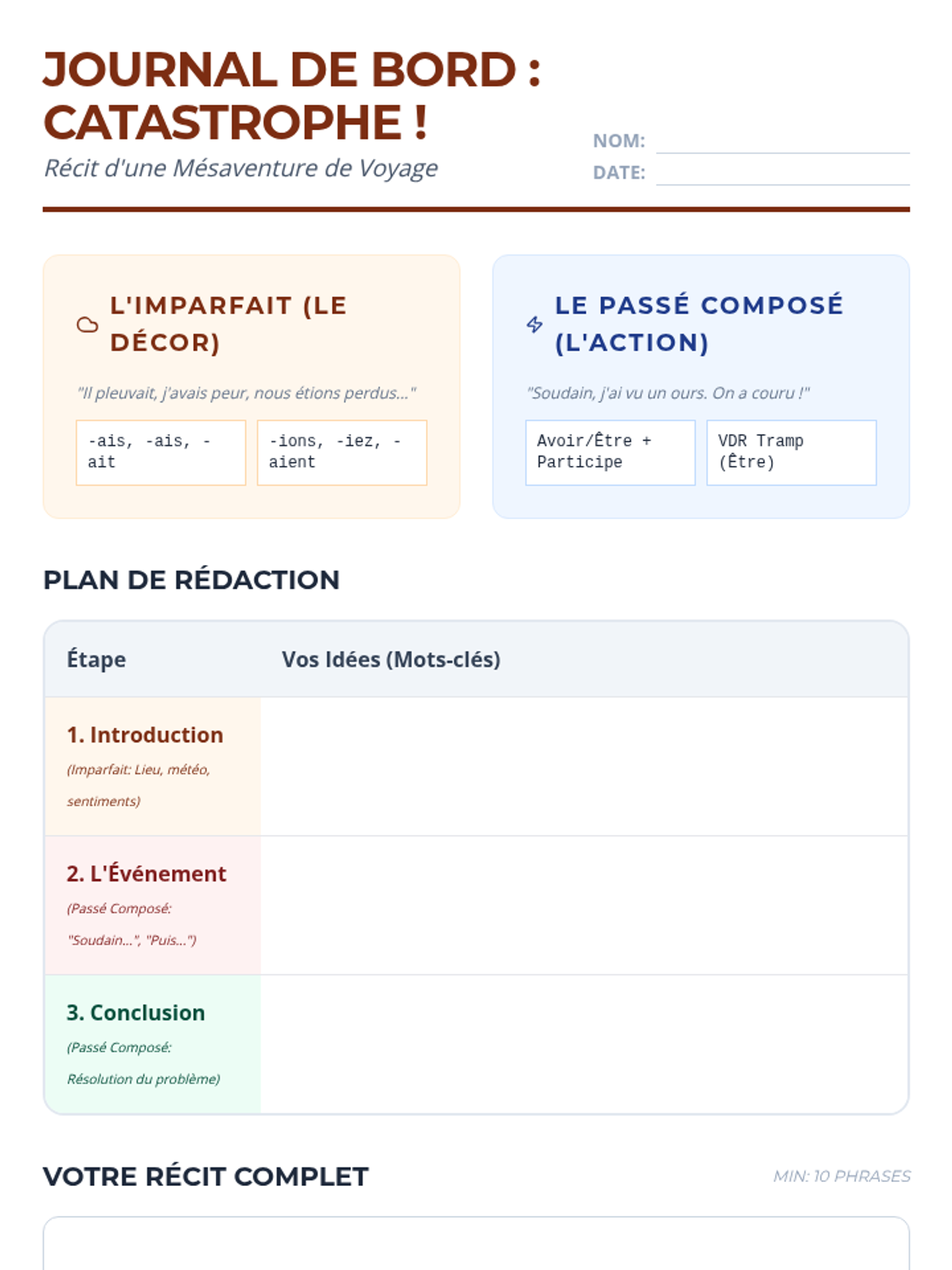
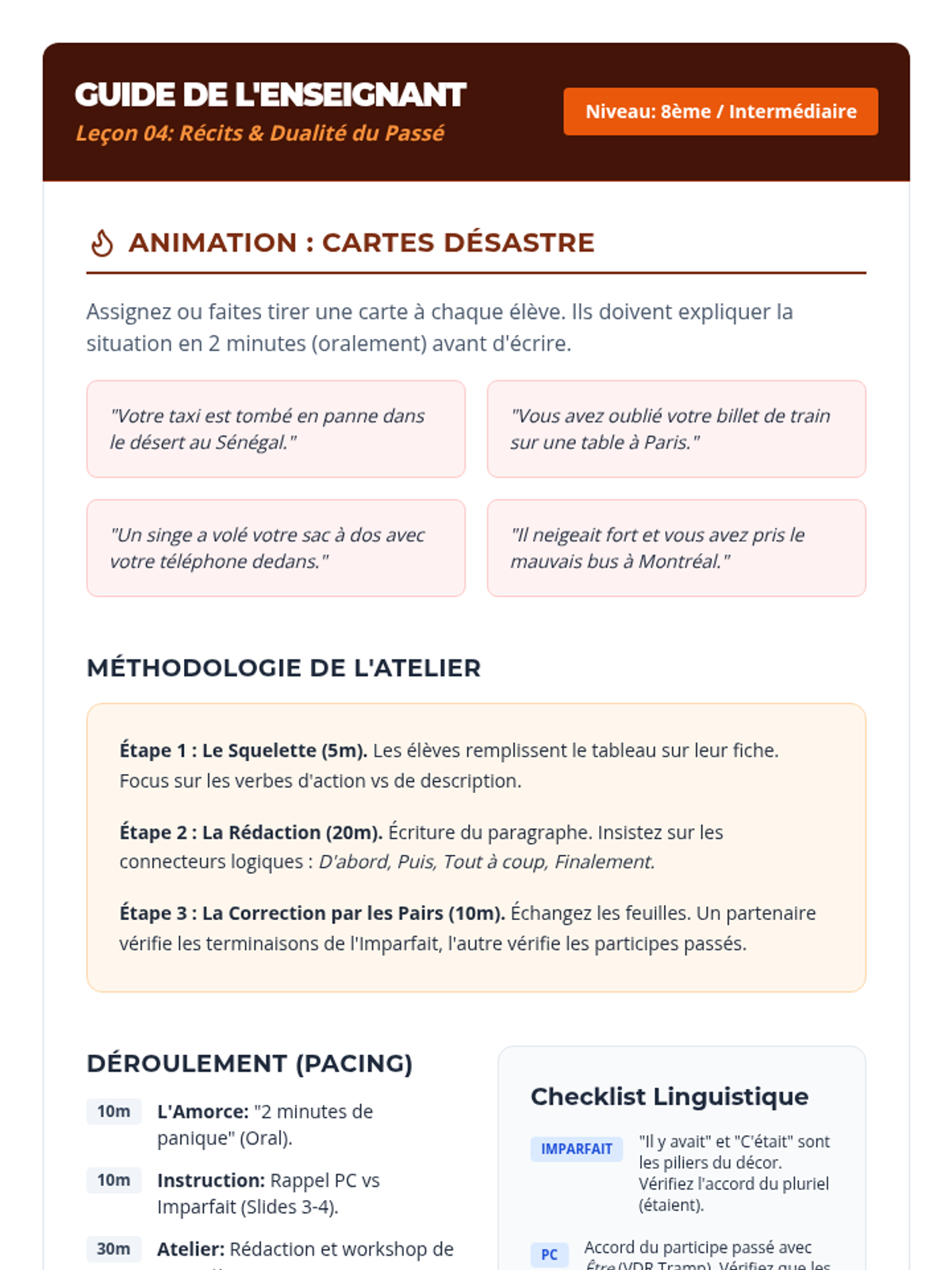
Students master the interplay between Passé Composé and Imparfait by narrating travel mishaps and setting the scene for their stories.
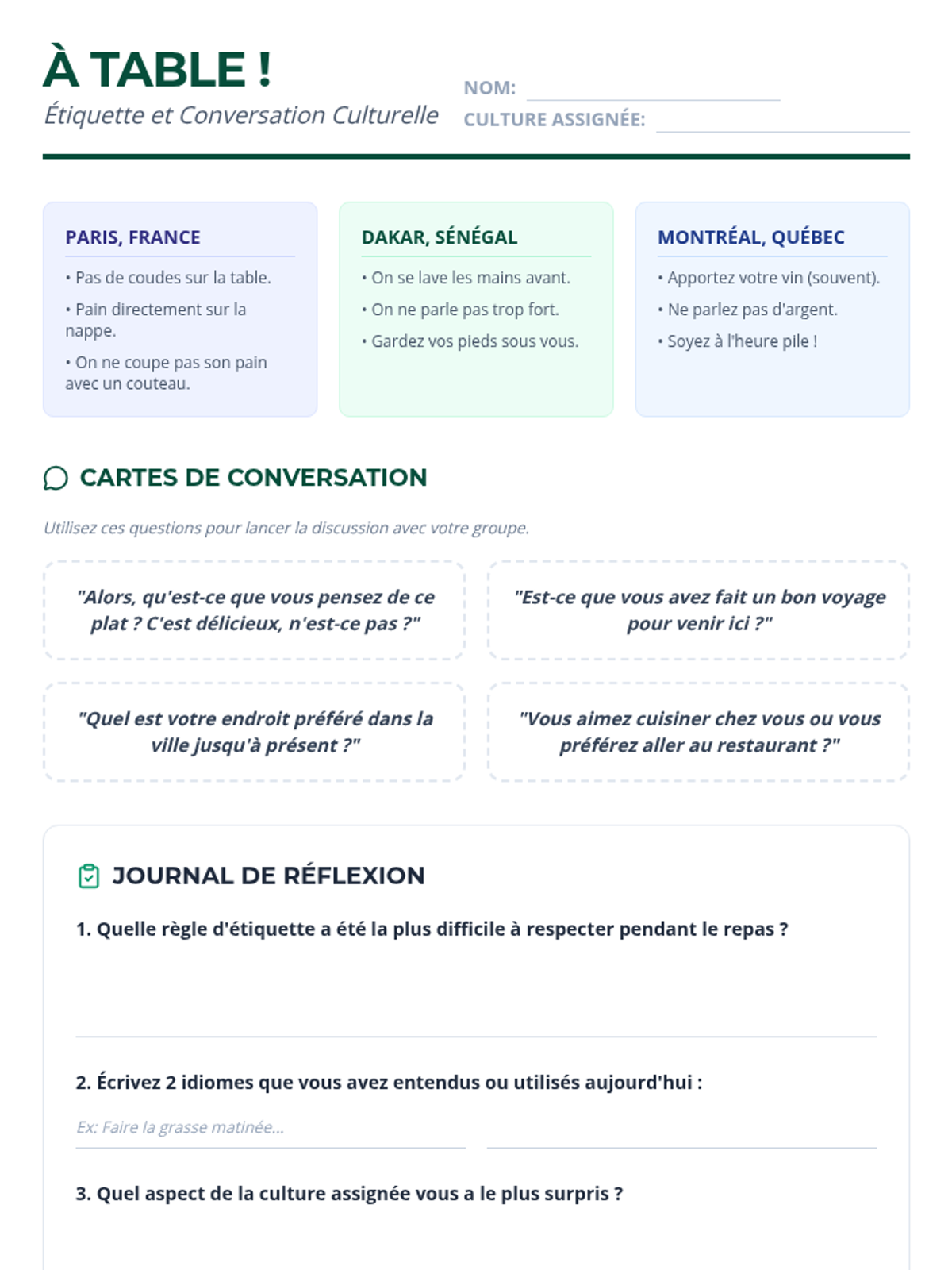
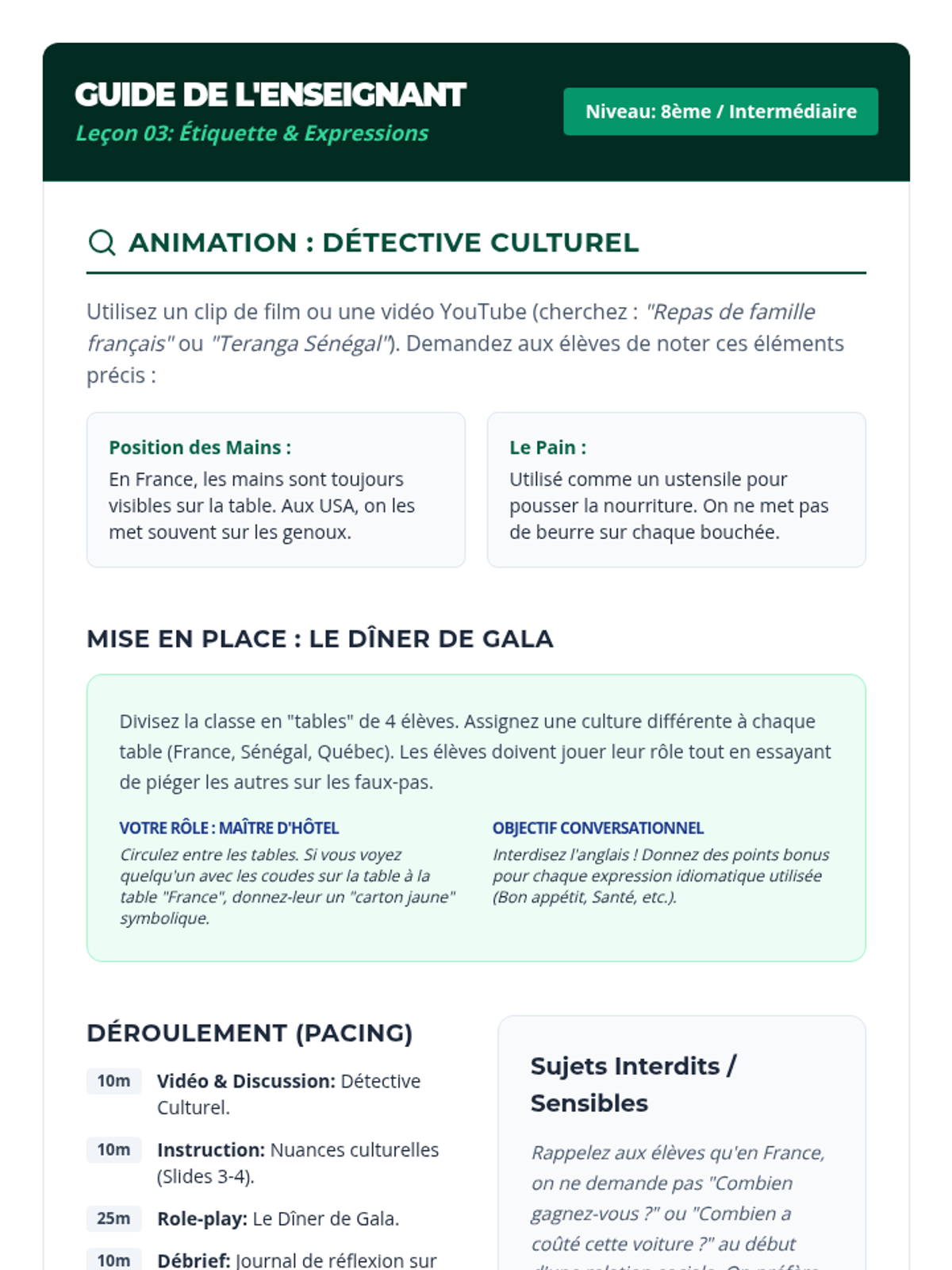
Students explore dining etiquette and social norms across the Francophone world, practicing idiomatic expressions and conversational maintenance.
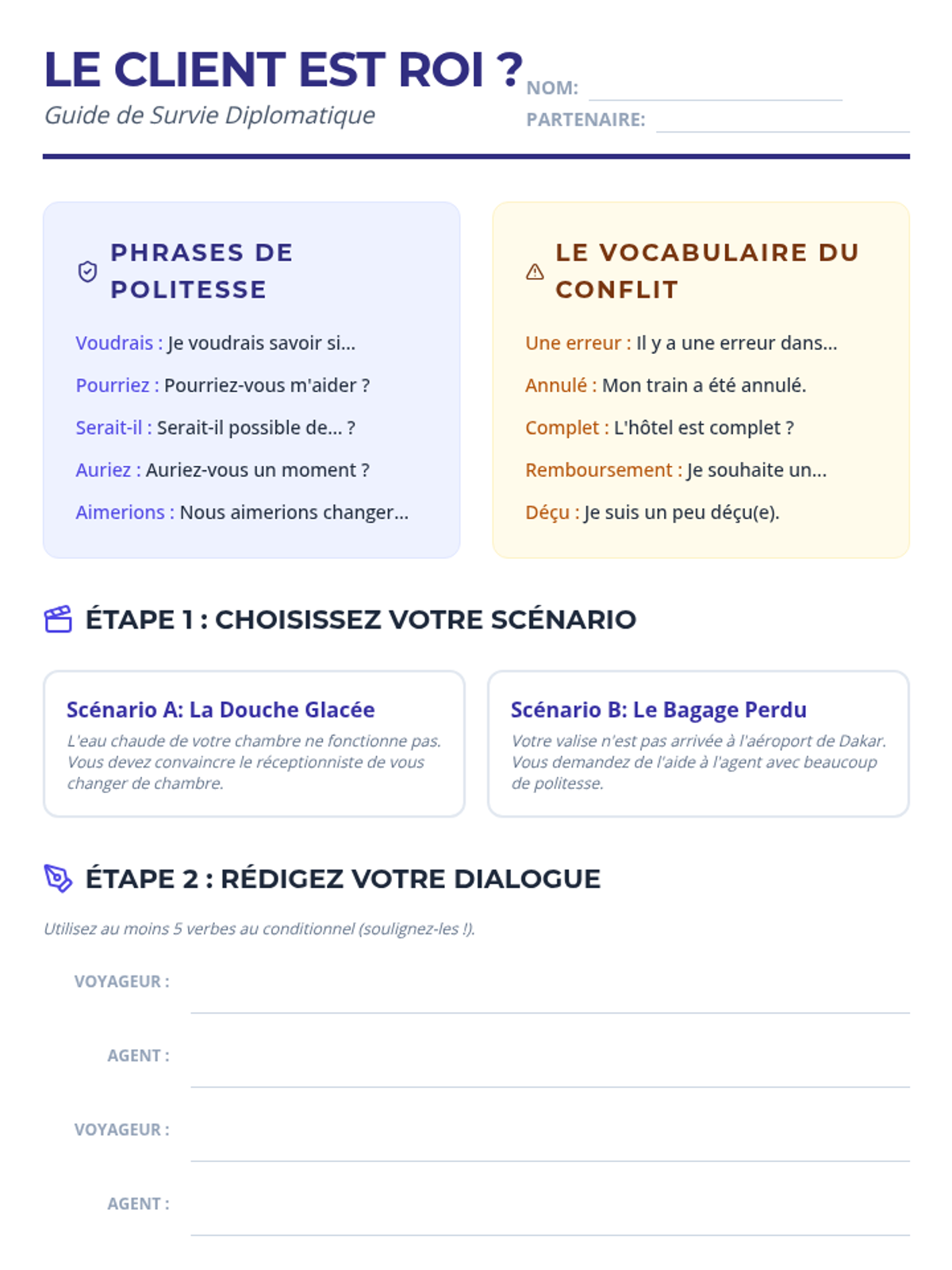
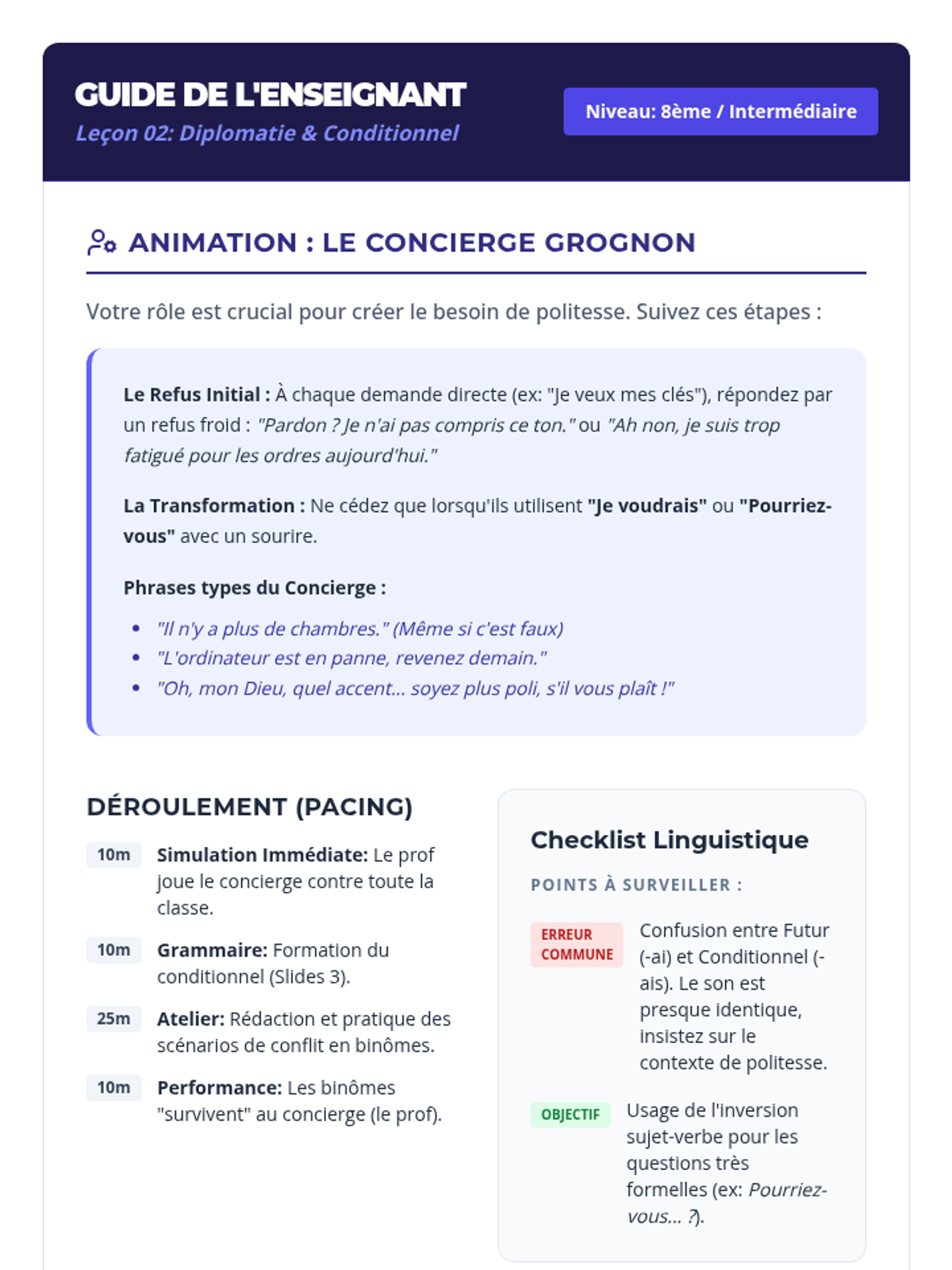
Focusing on the conditional mood, students practice polite service interactions and conflict resolution in hotels and transit hubs.
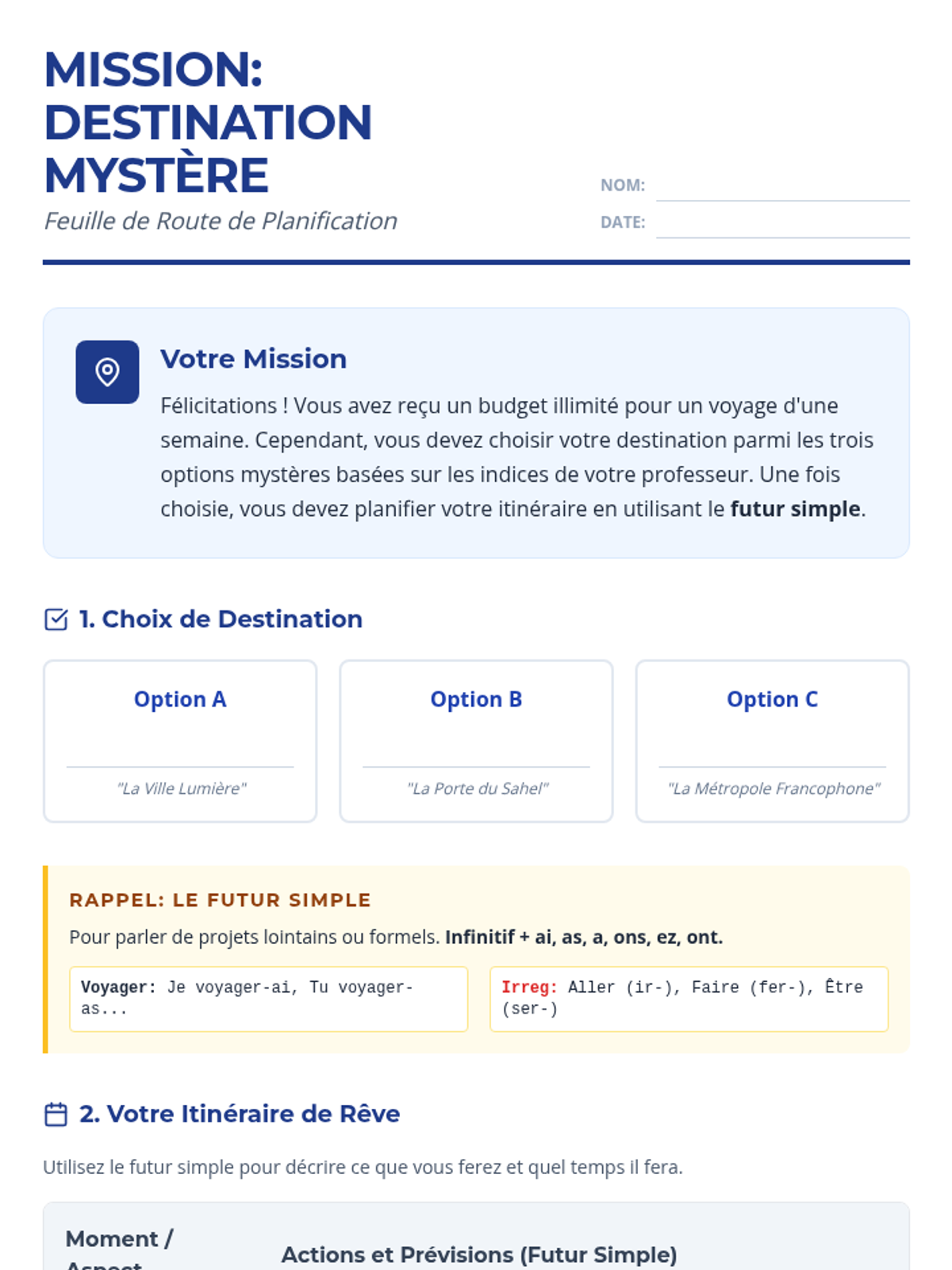
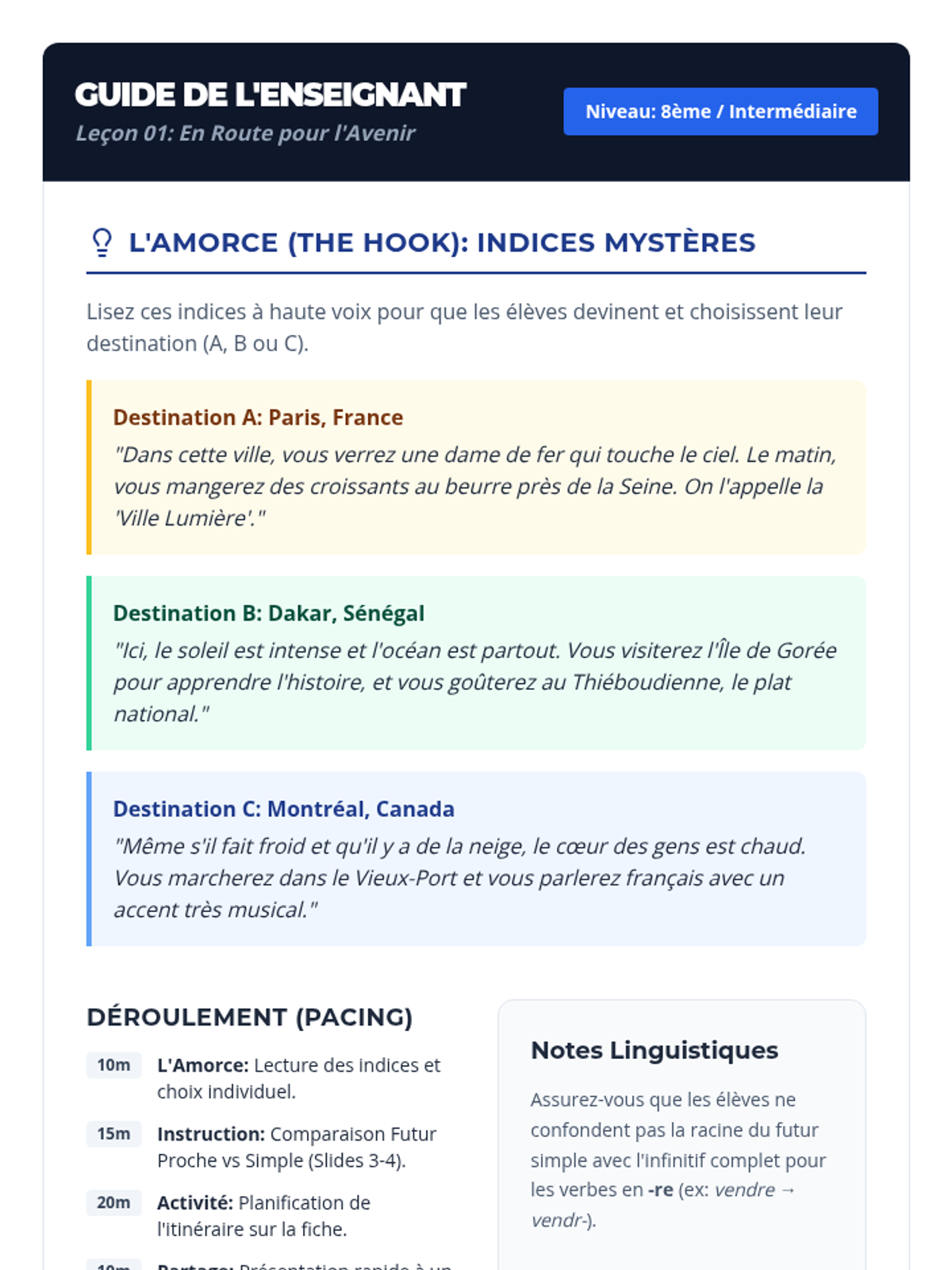
Students transition from near future to simple future to plan detailed itineraries for Dakar, Paris, or Montreal, predicting weather and scheduling logistics.
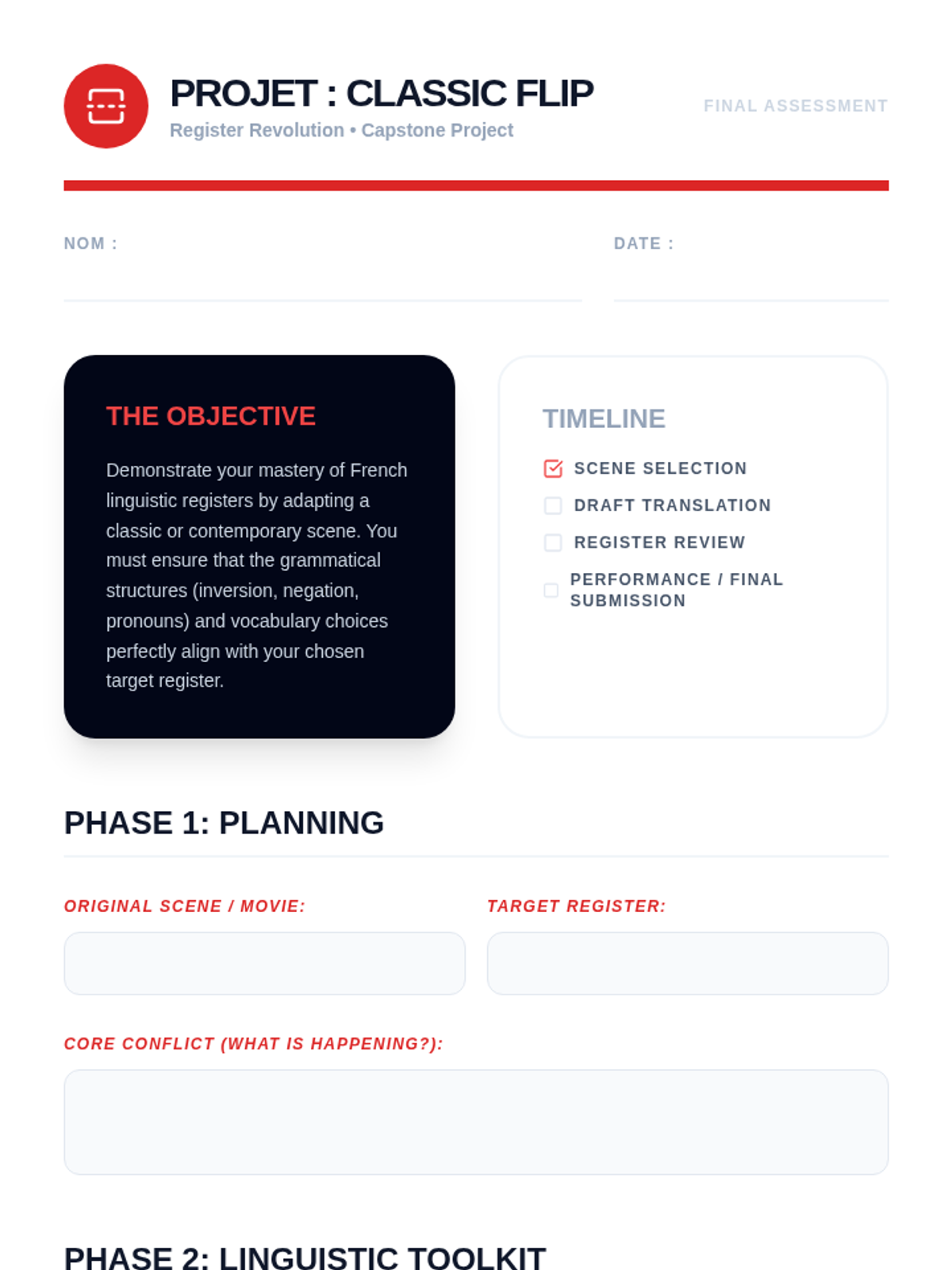
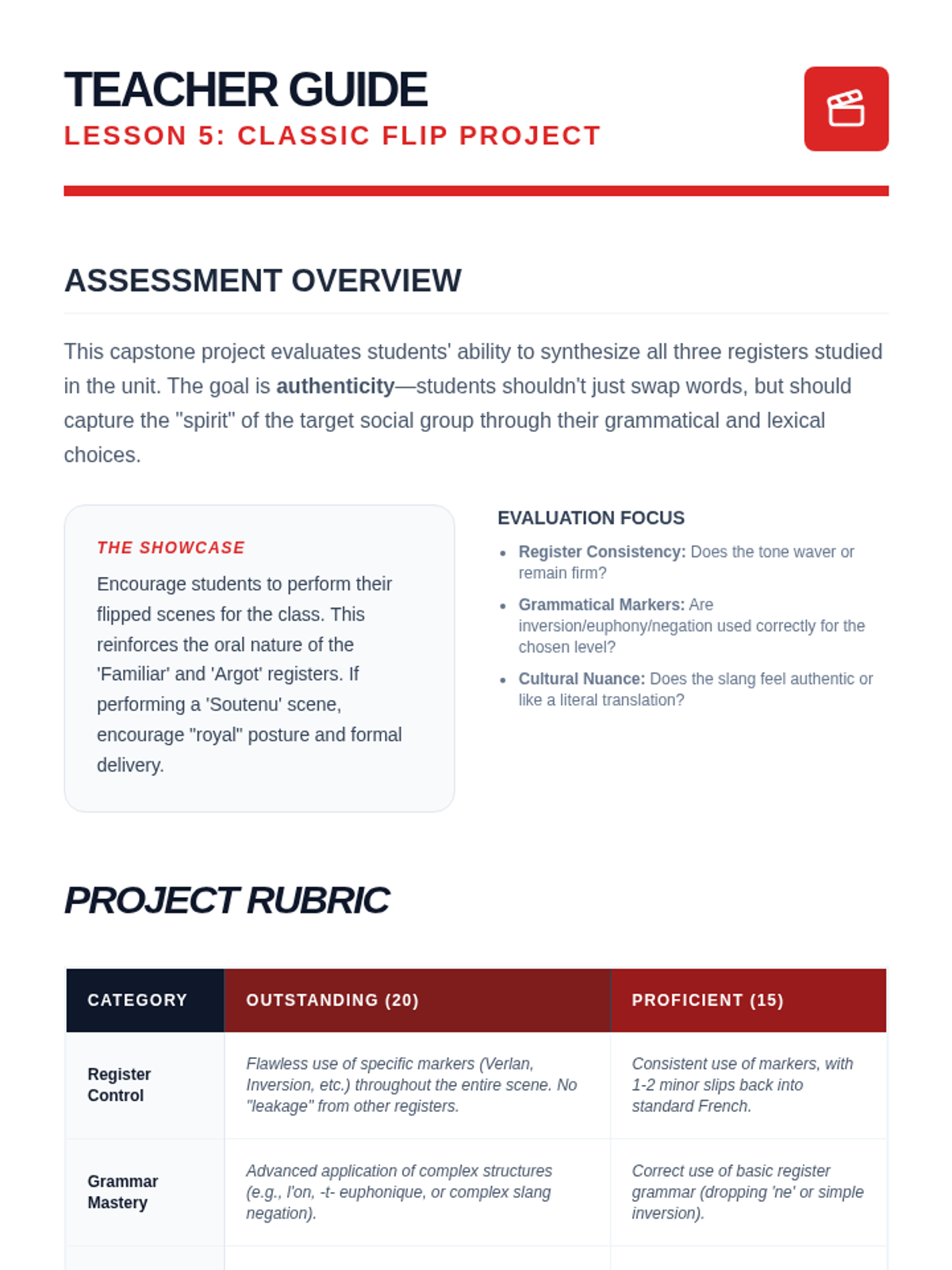
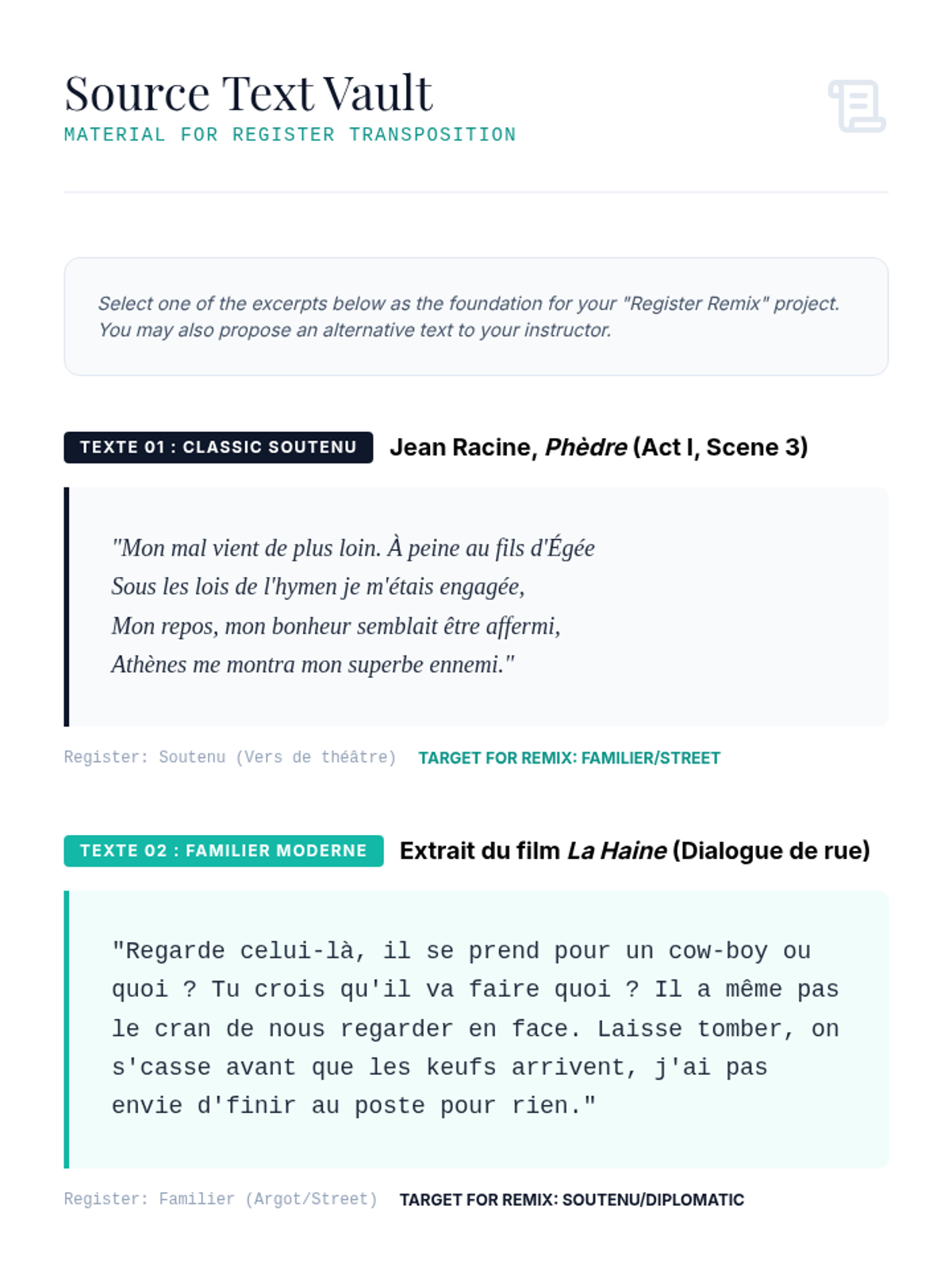
Students take a scene from a movie or play and translate it into a different register (e.g., Shakespeare into slang, or a teen comedy into formal French).
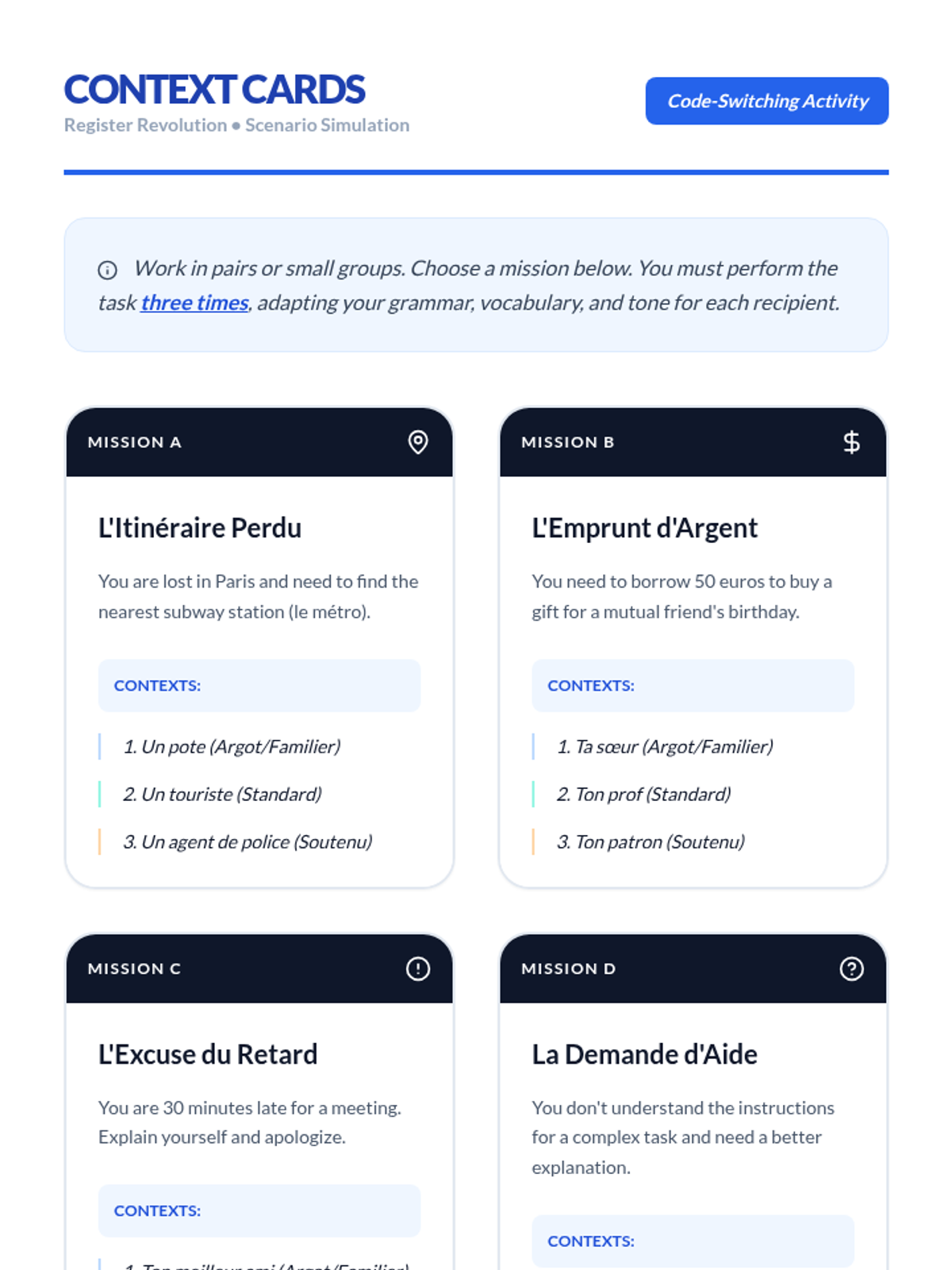
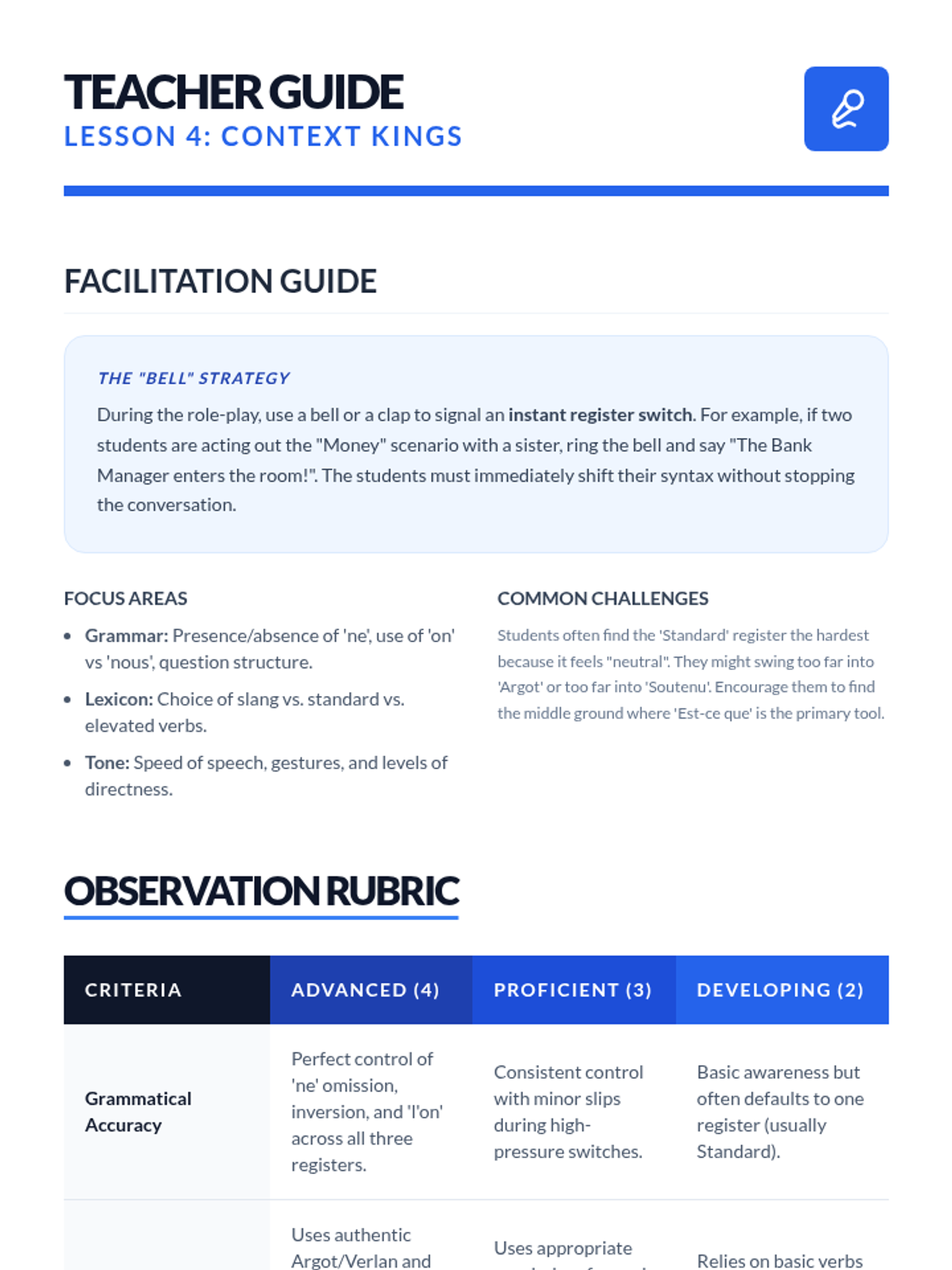
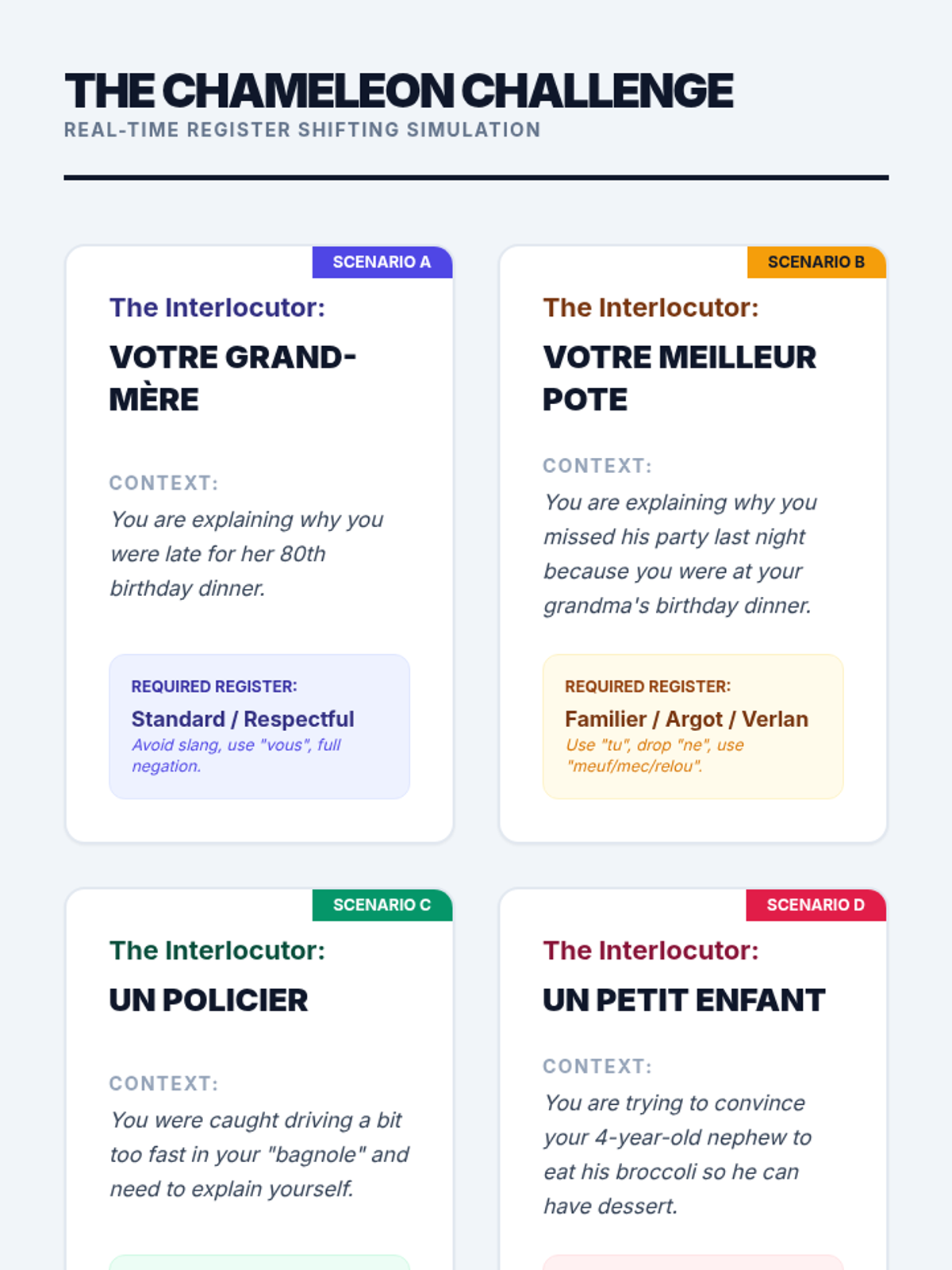
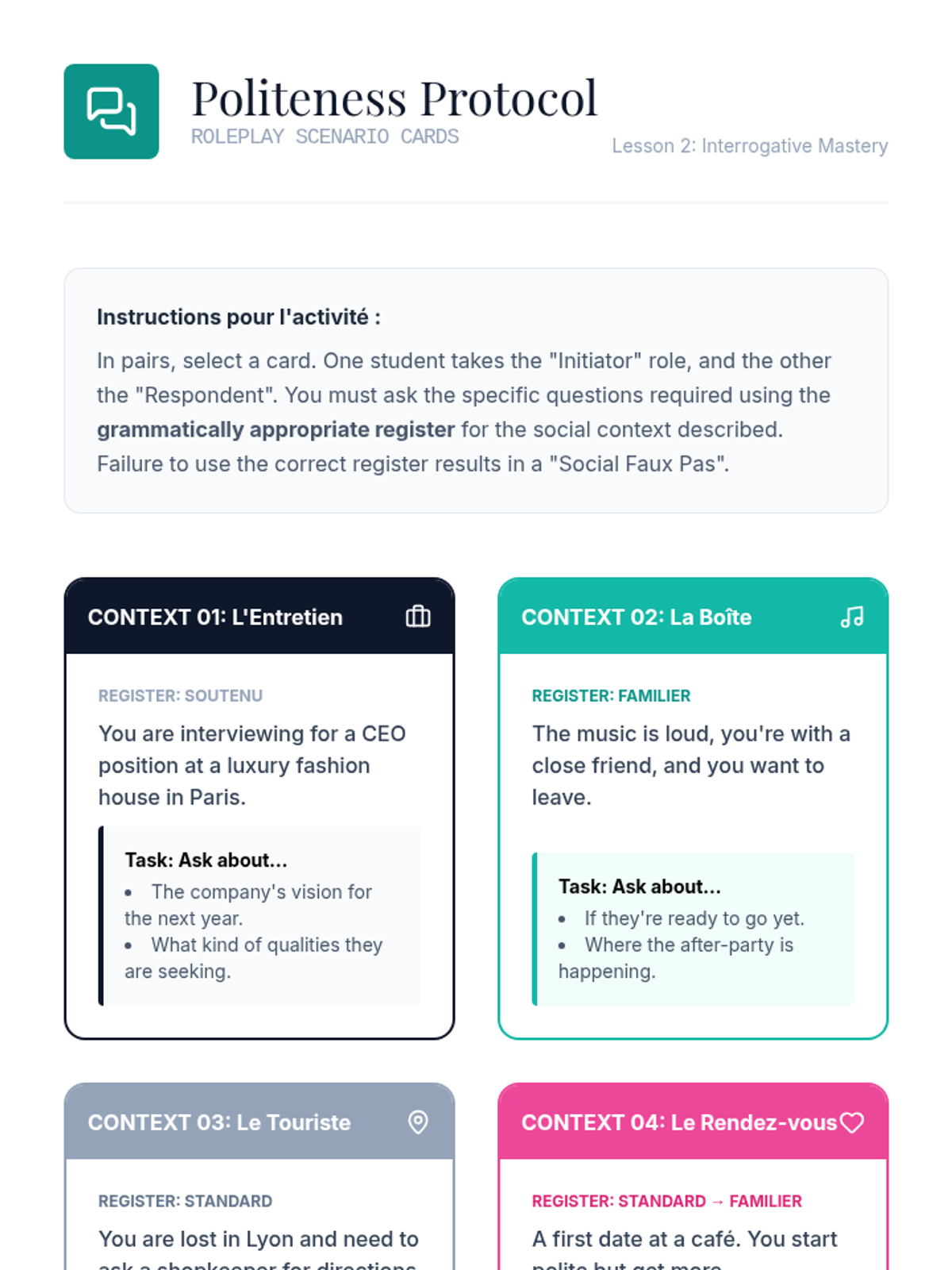
Students role-play the same request in three different contexts (friend, parent, professional). They practice moving fluidly between registers and identifying social triggers for code-switching.
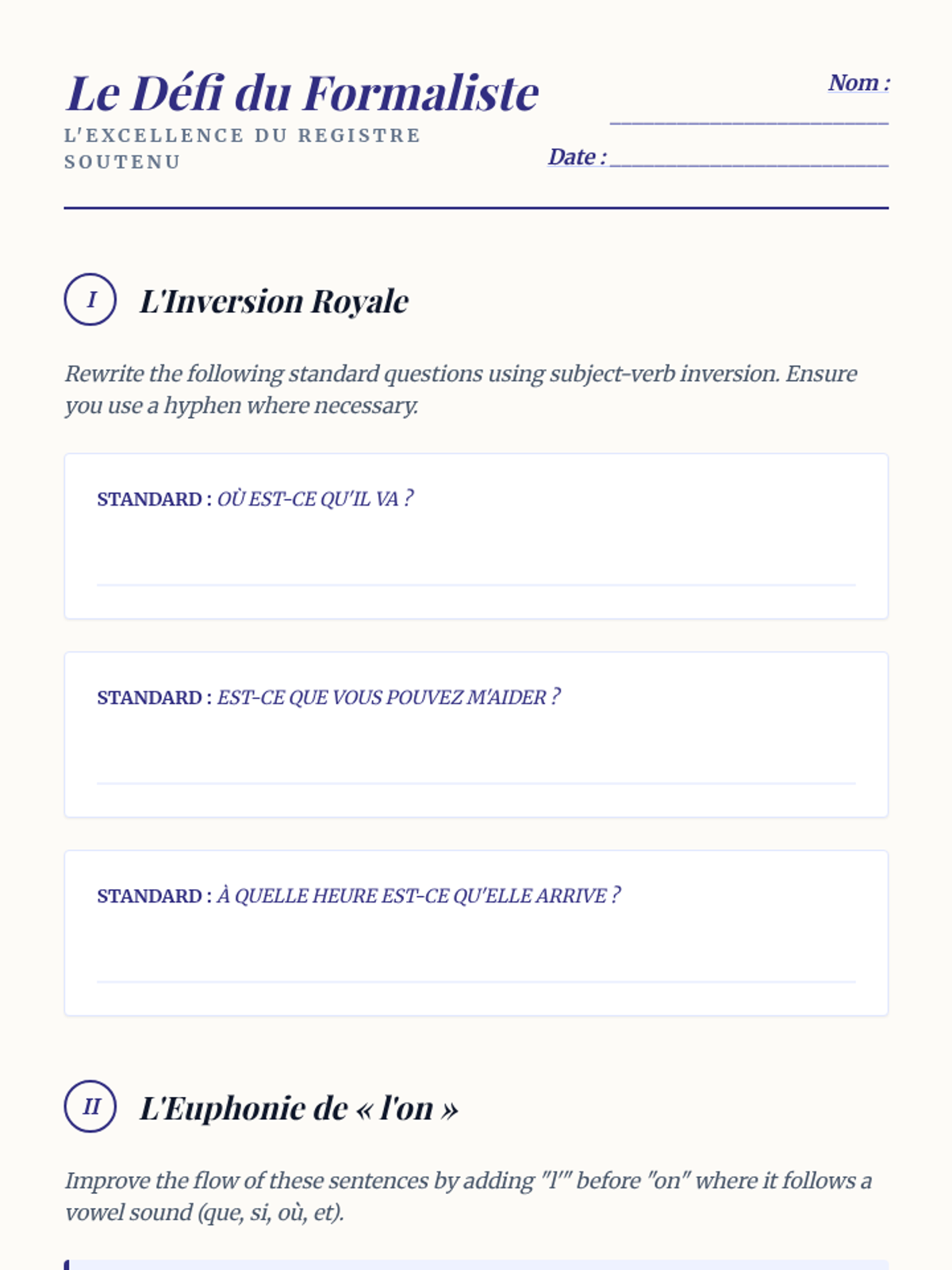
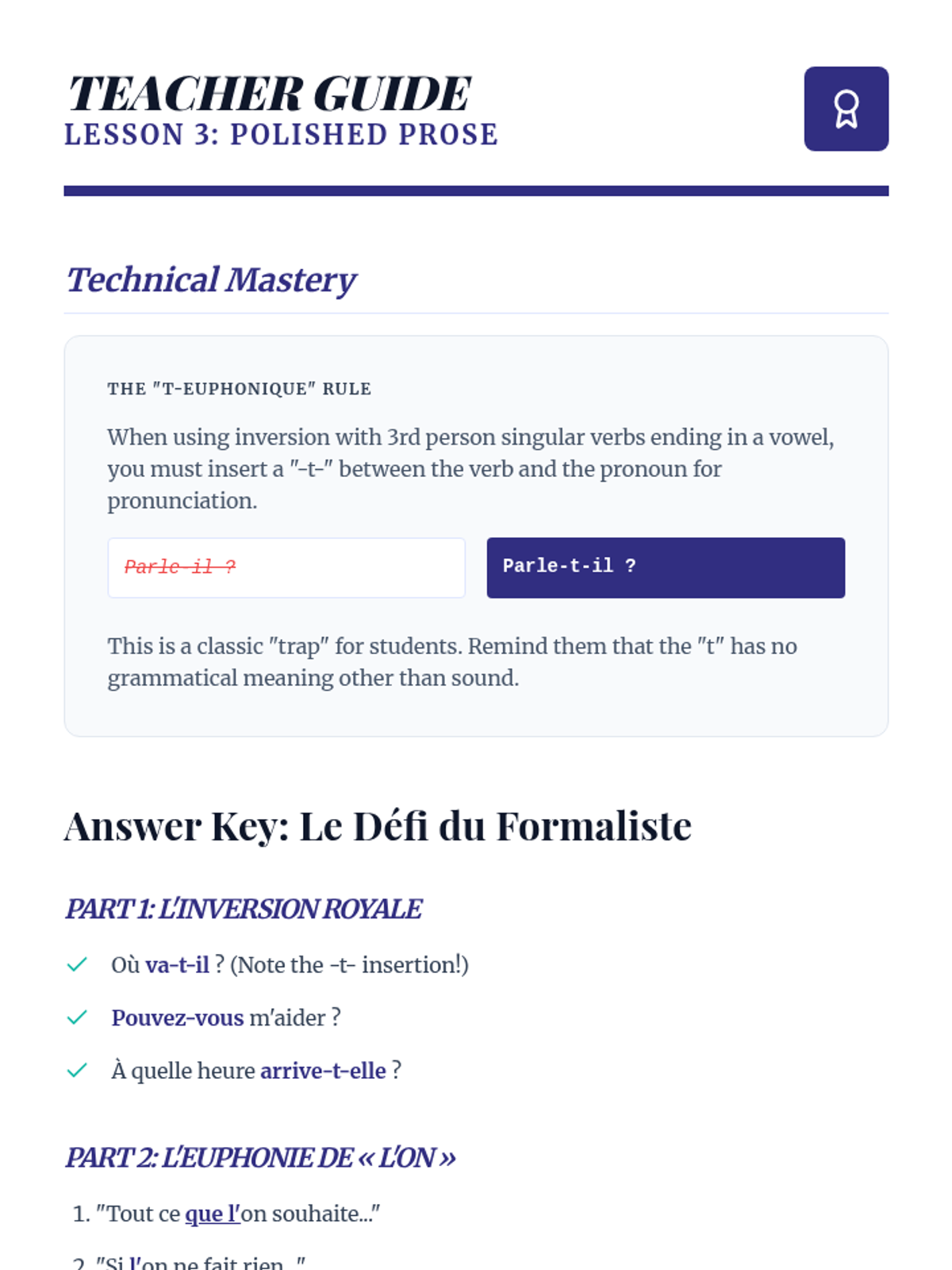
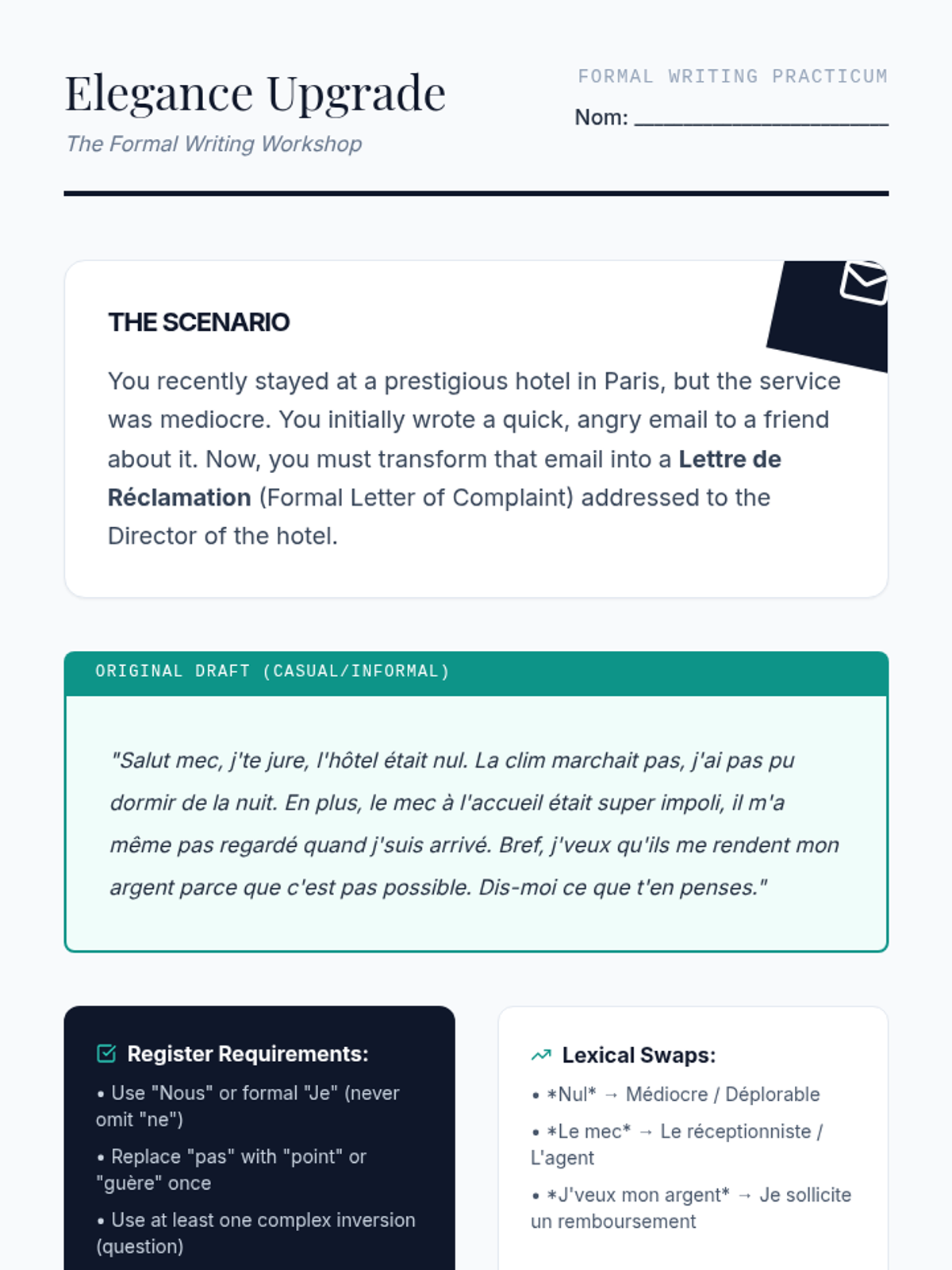
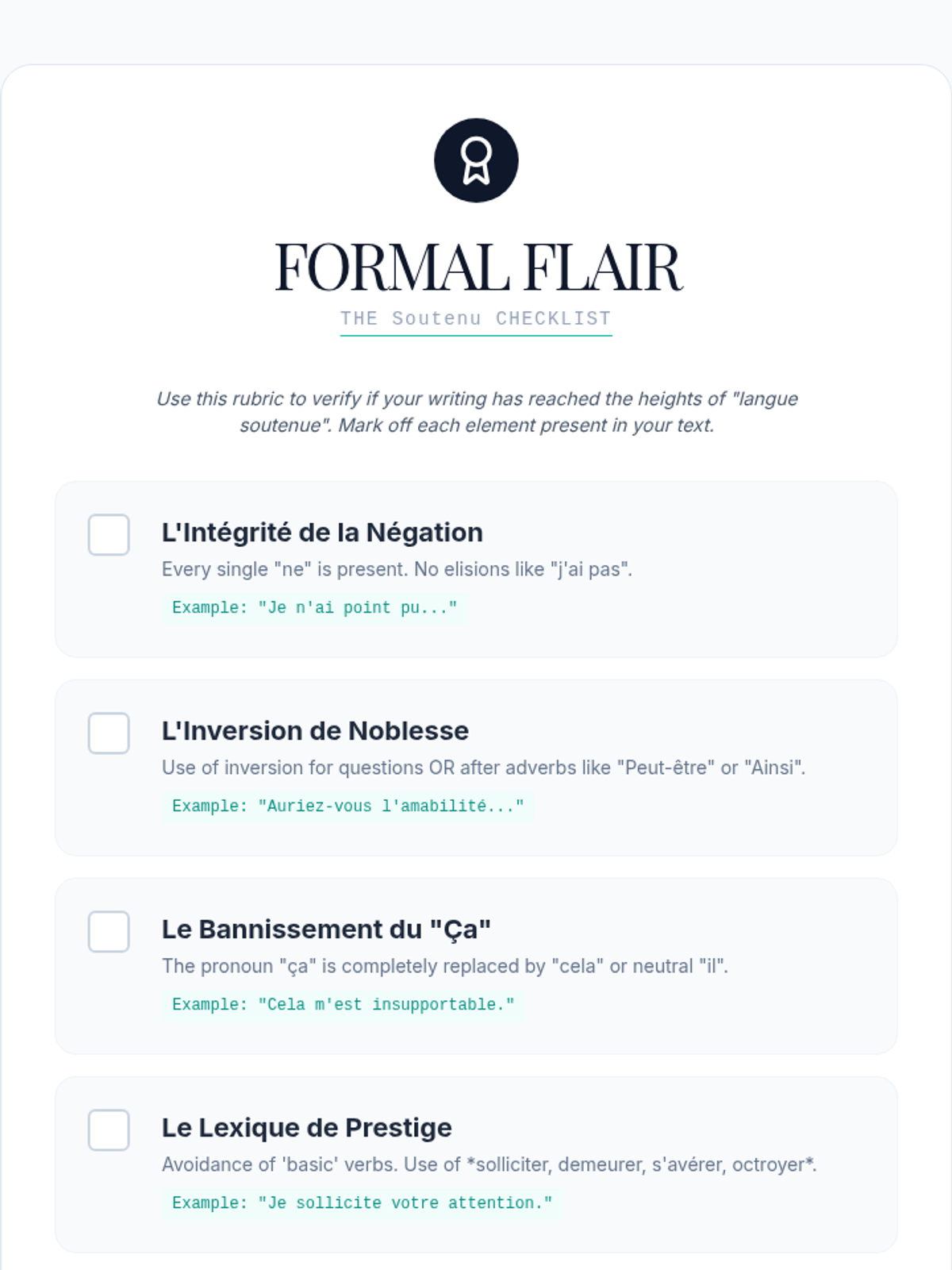
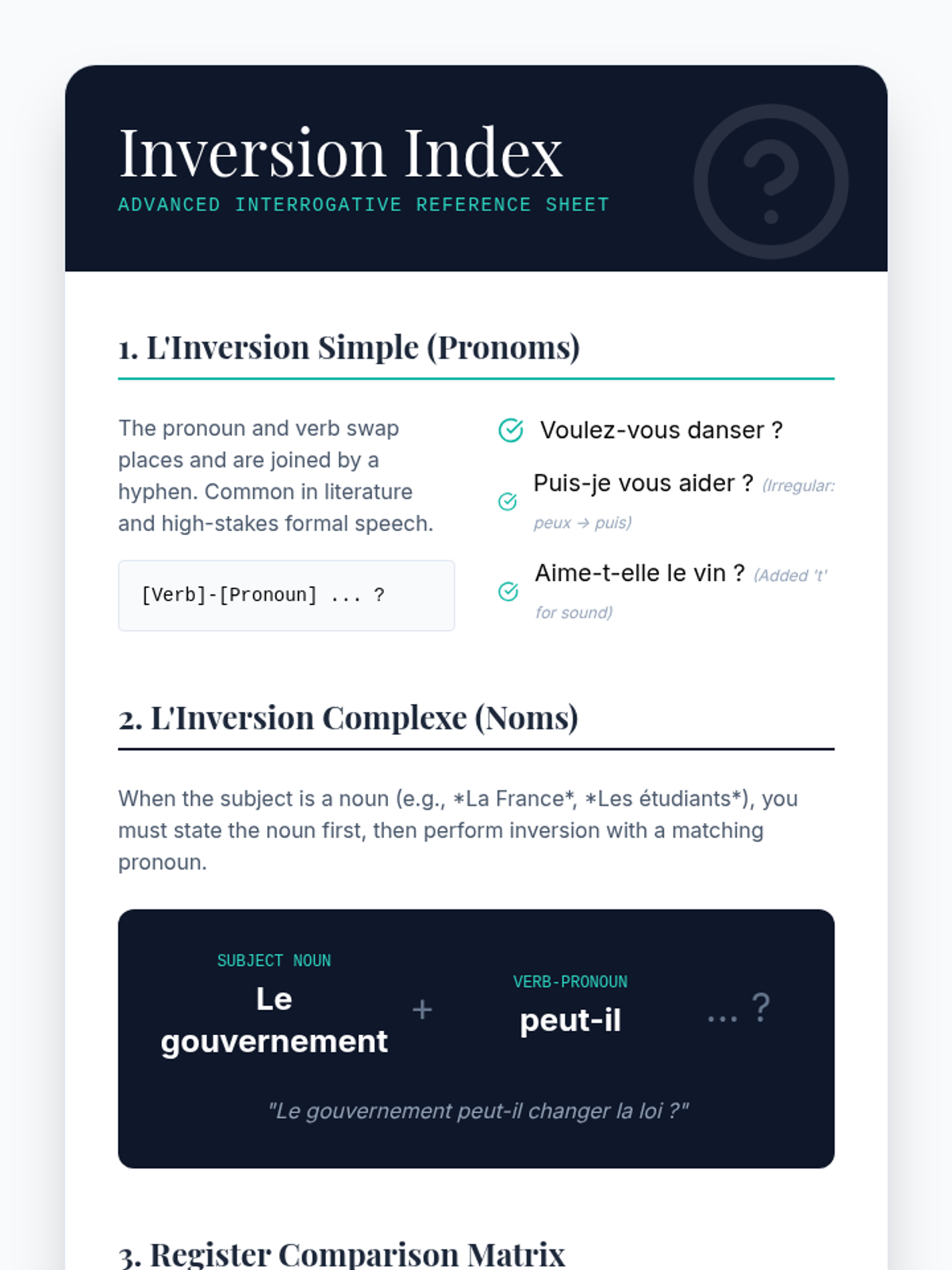
Students practice 'langage soutenu', focusing on interrogation by inversion and the use of 'l'on' for euphony. They rewrite casual sentences into hyper-formal ones.
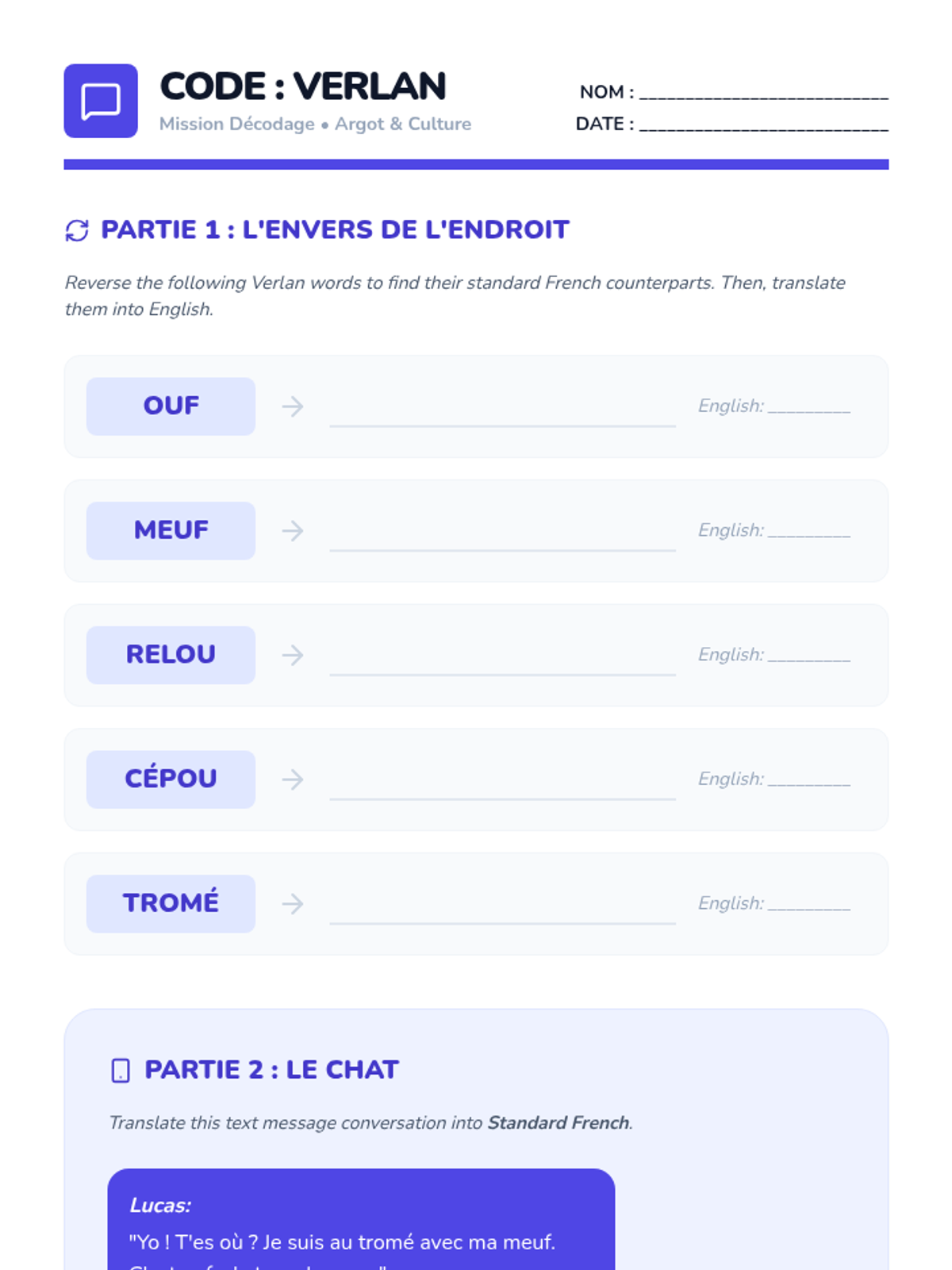
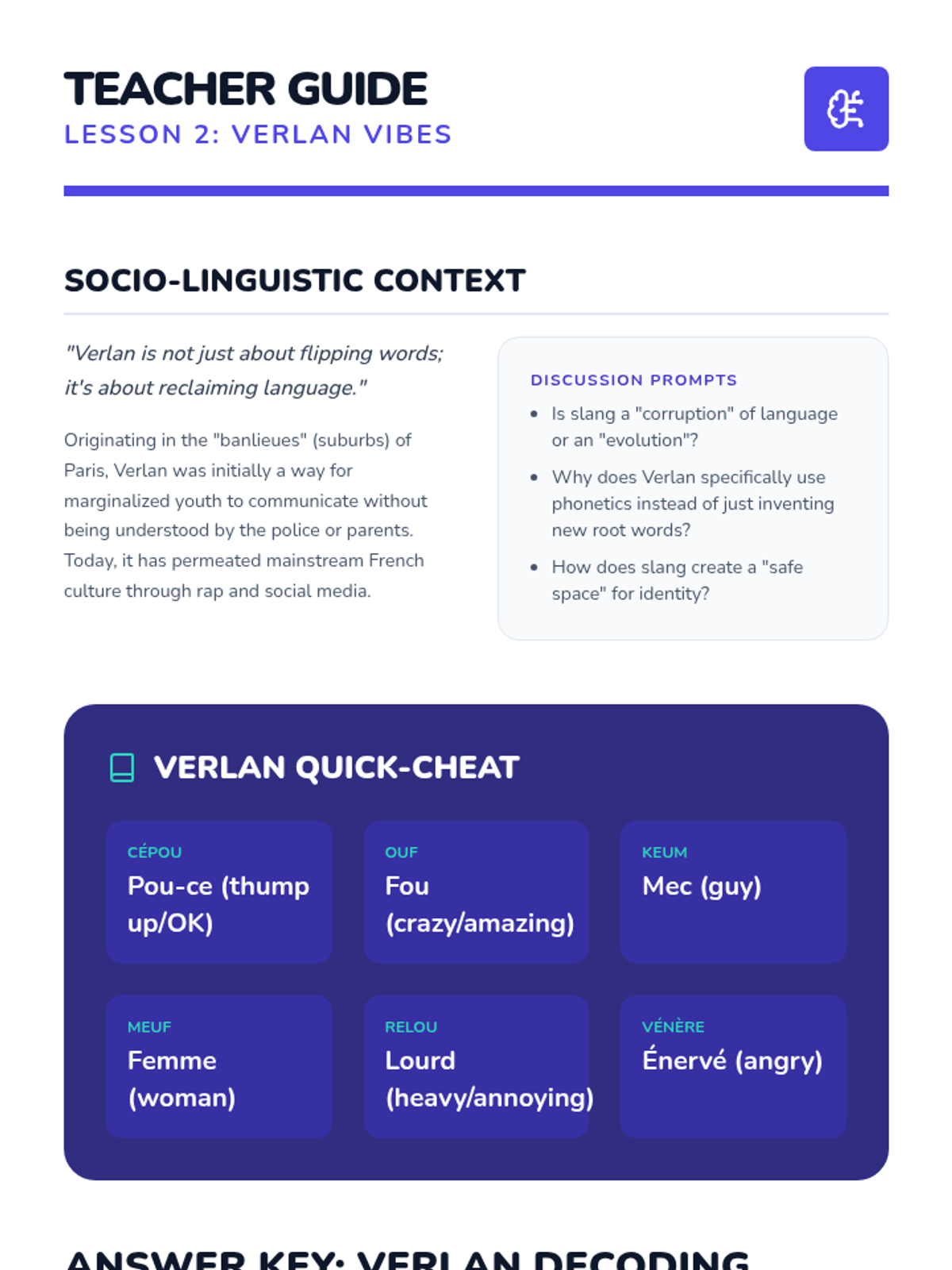
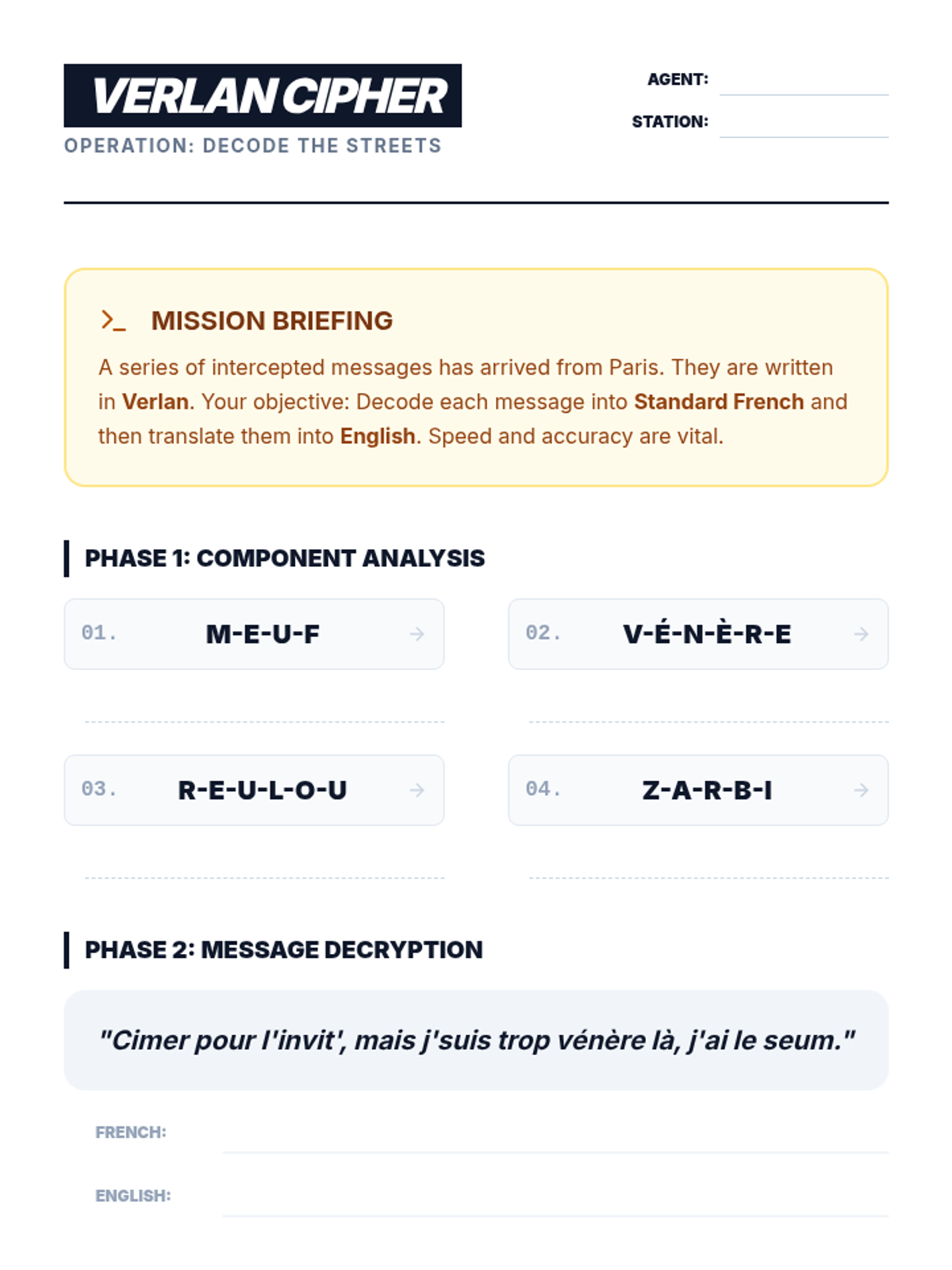
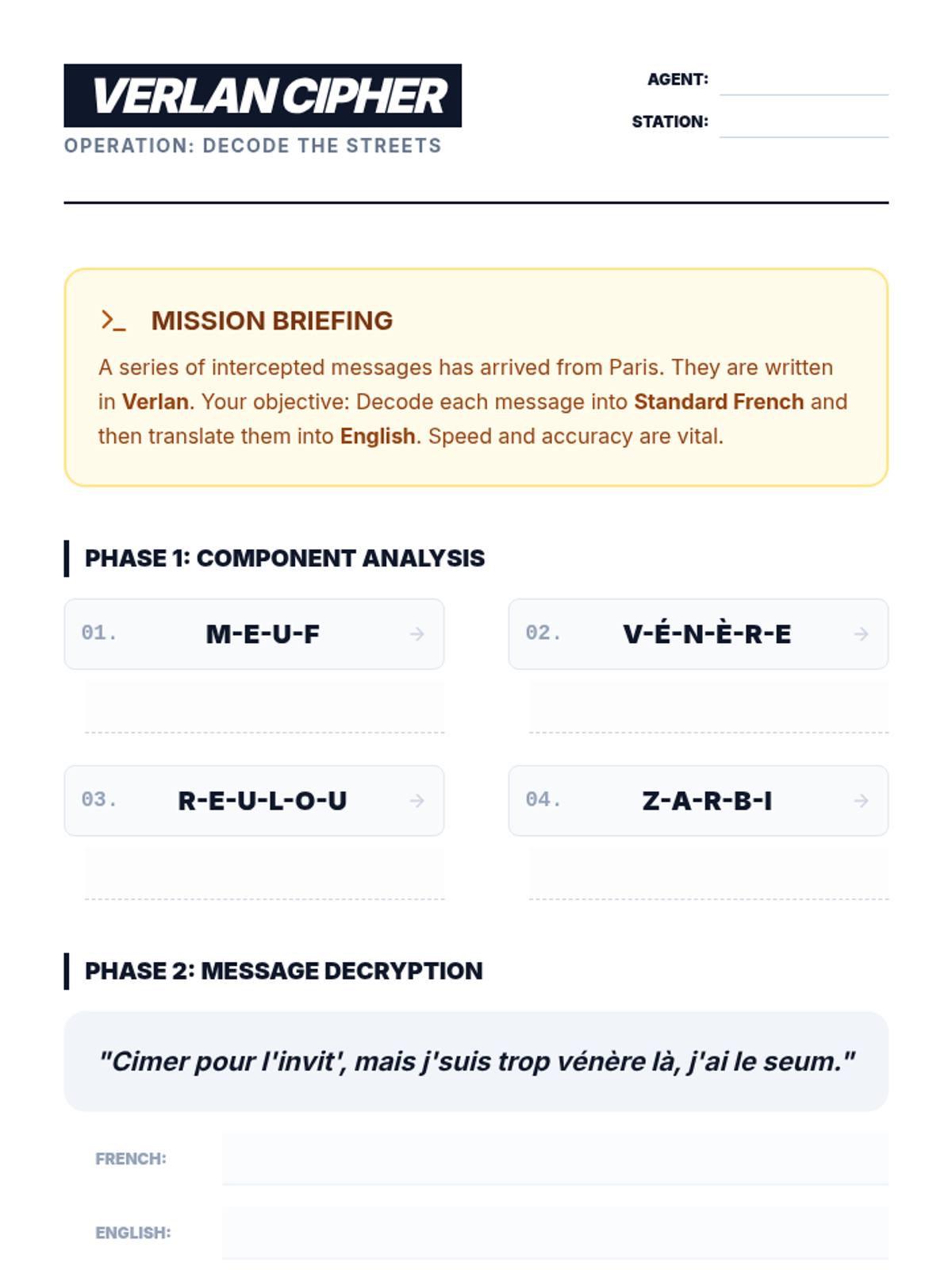
An introduction to the mechanics of Verlan (reversing syllables) and common slang terms. Students discuss the sociological function of slang as a group marker.
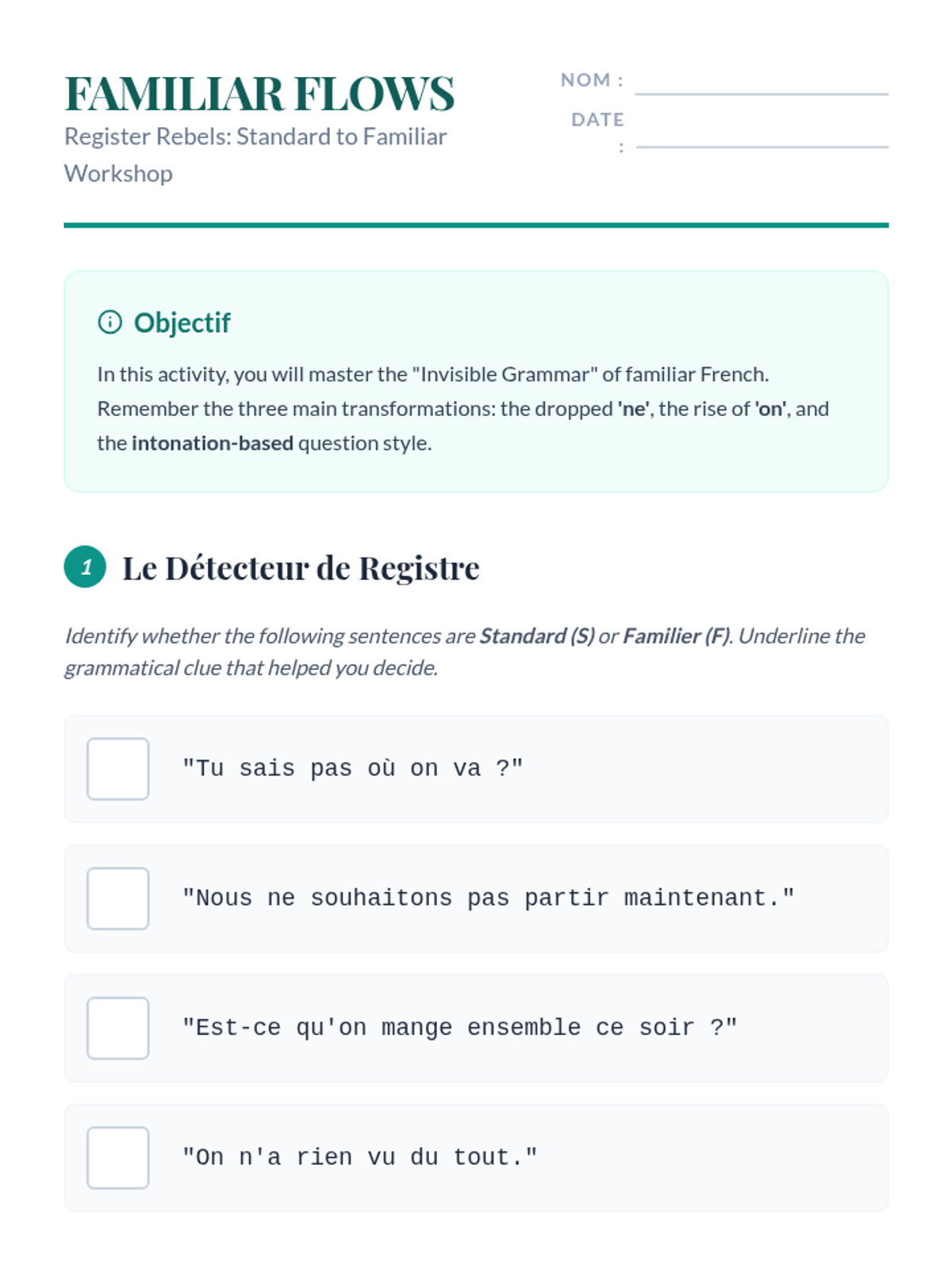
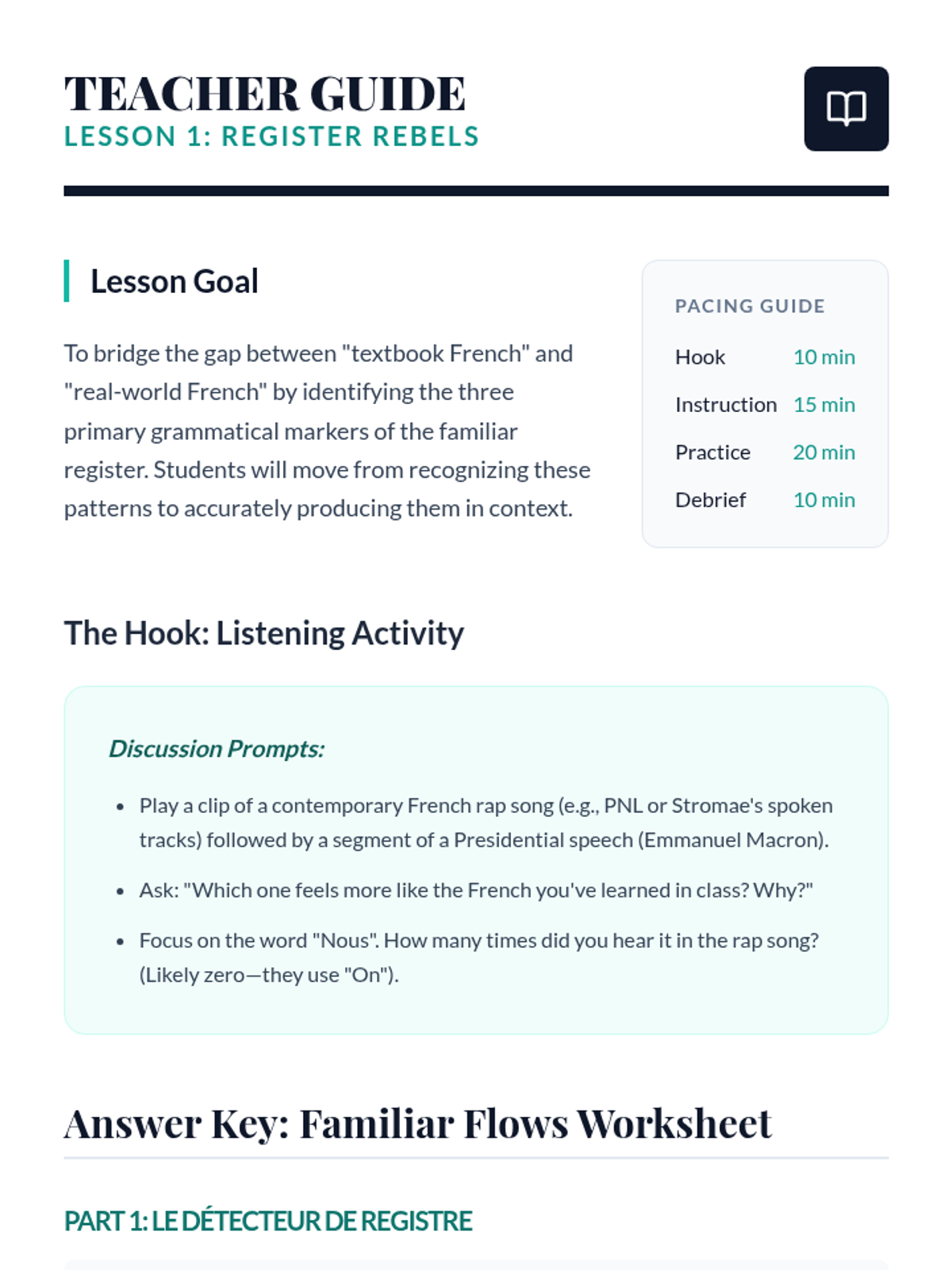
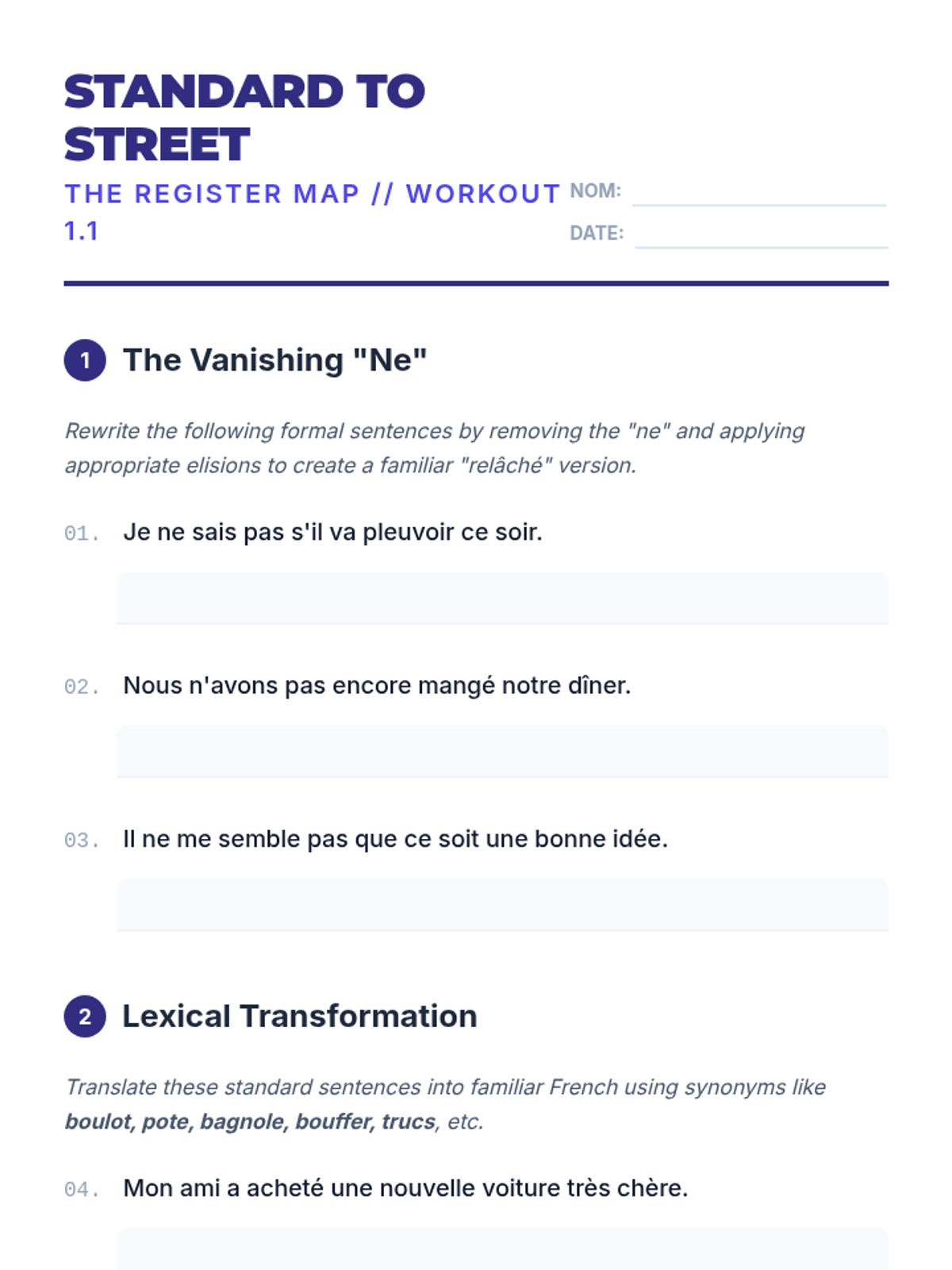
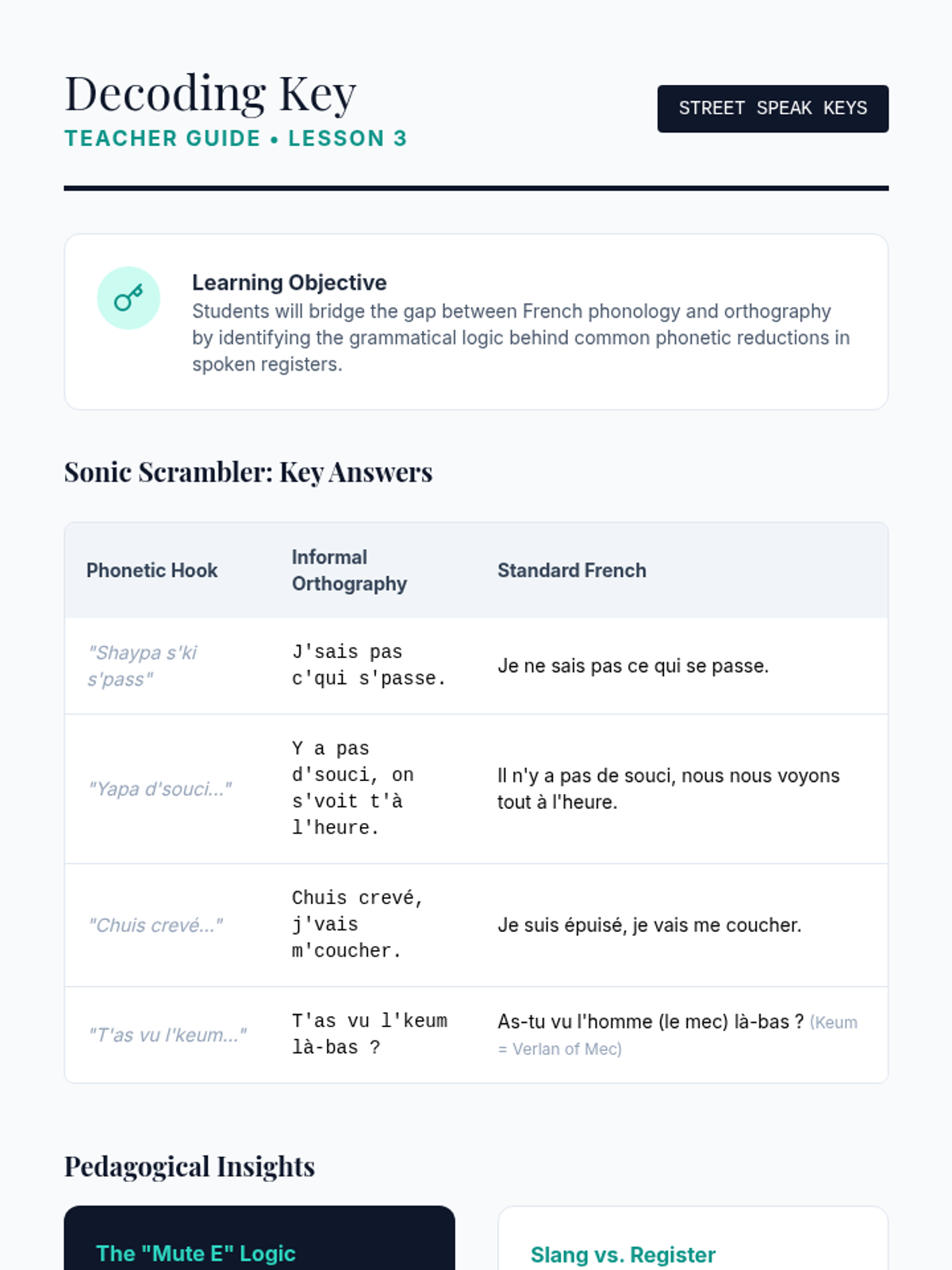
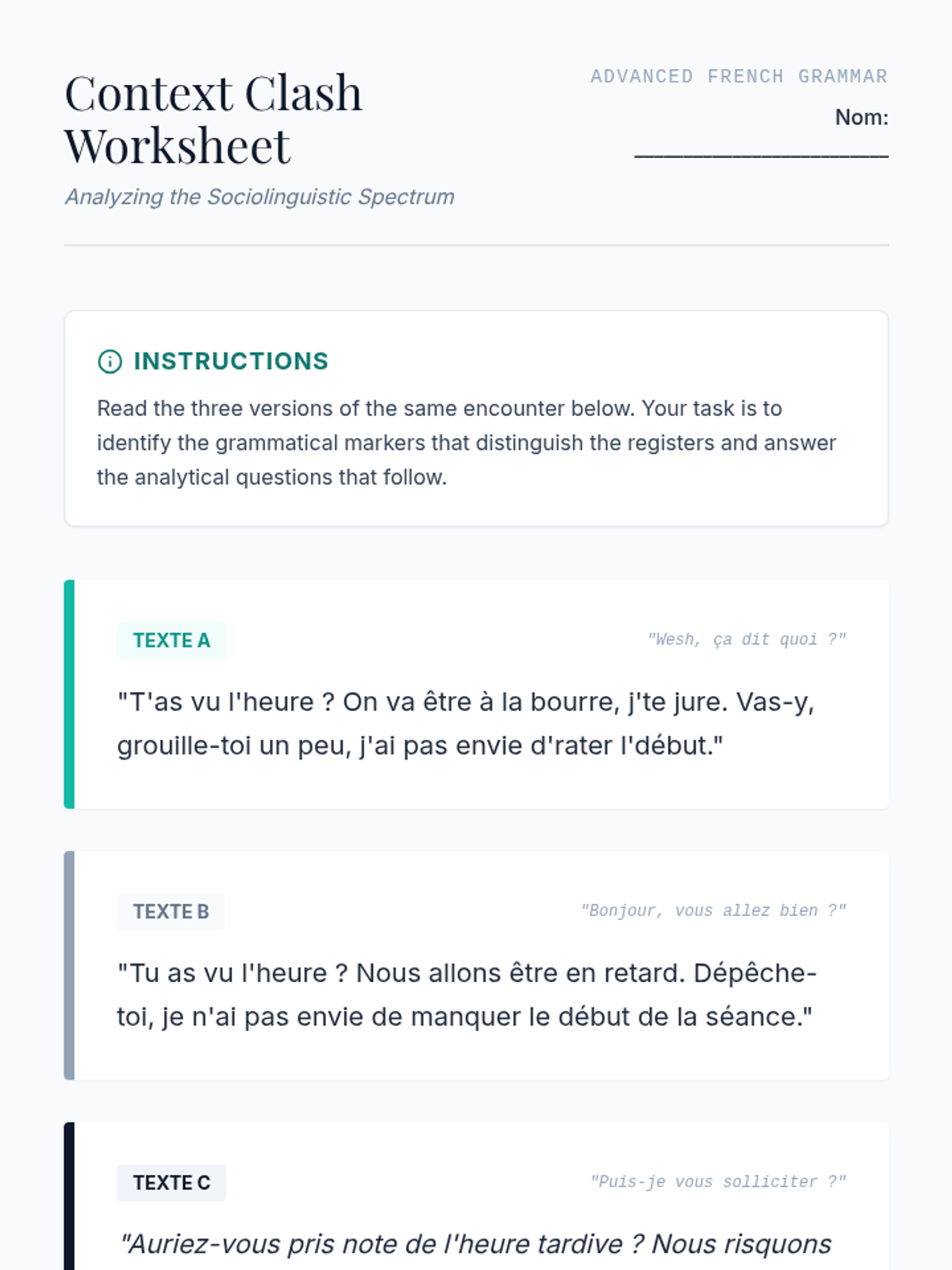
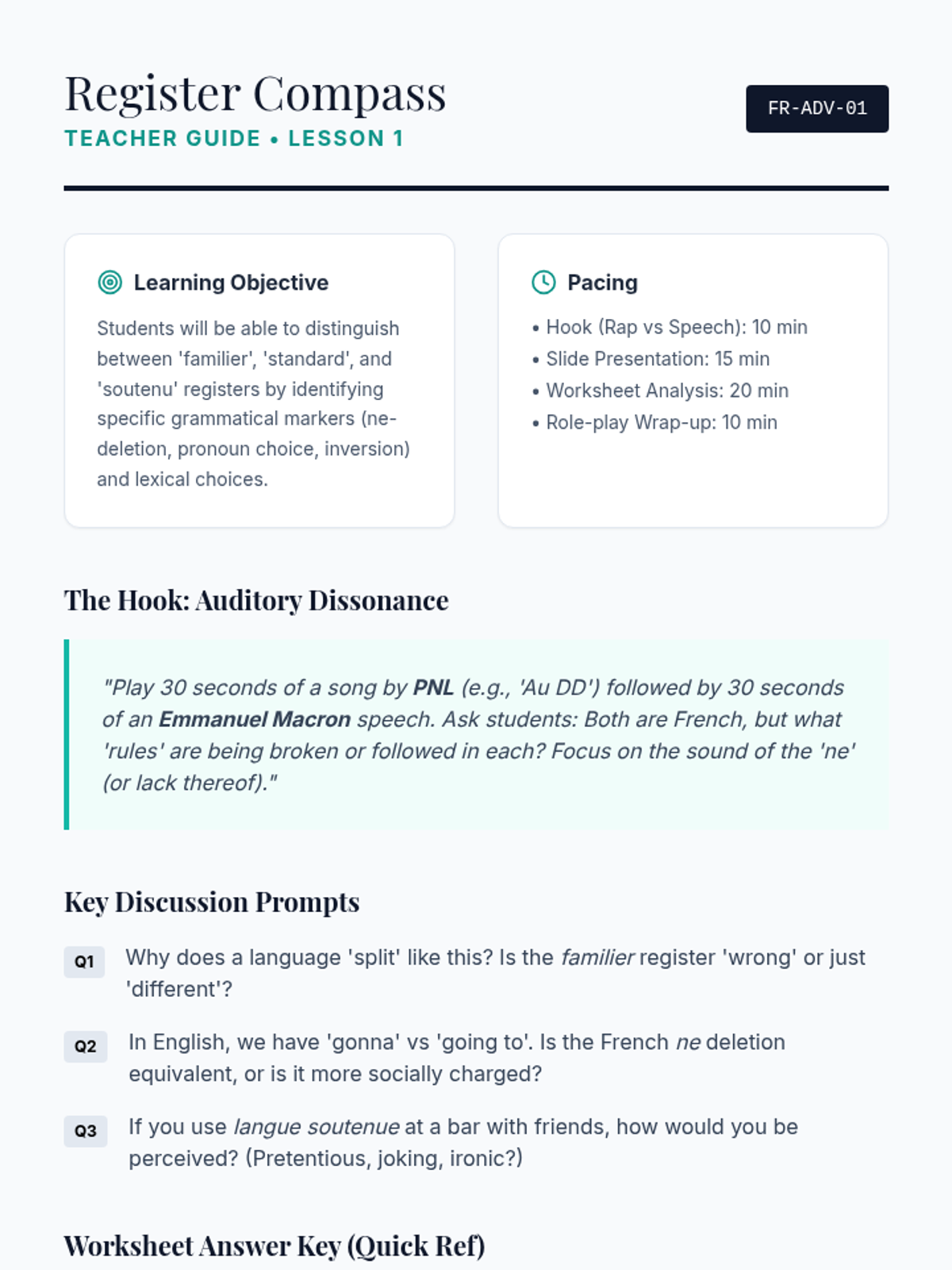
Students analyze the grammatical differences between standard and familiar French, focusing on common colloquialisms like dropping the 'ne' in negation and the use of 'on' for 'nous'.
A capstone simulation where students practice rapid code-switching between formal and informal contexts based on the social setting and interlocutor.
A study of regional vocabulary differences across the Francophone world and the evolution of French in digital spaces through SMS abbreviations and social media.
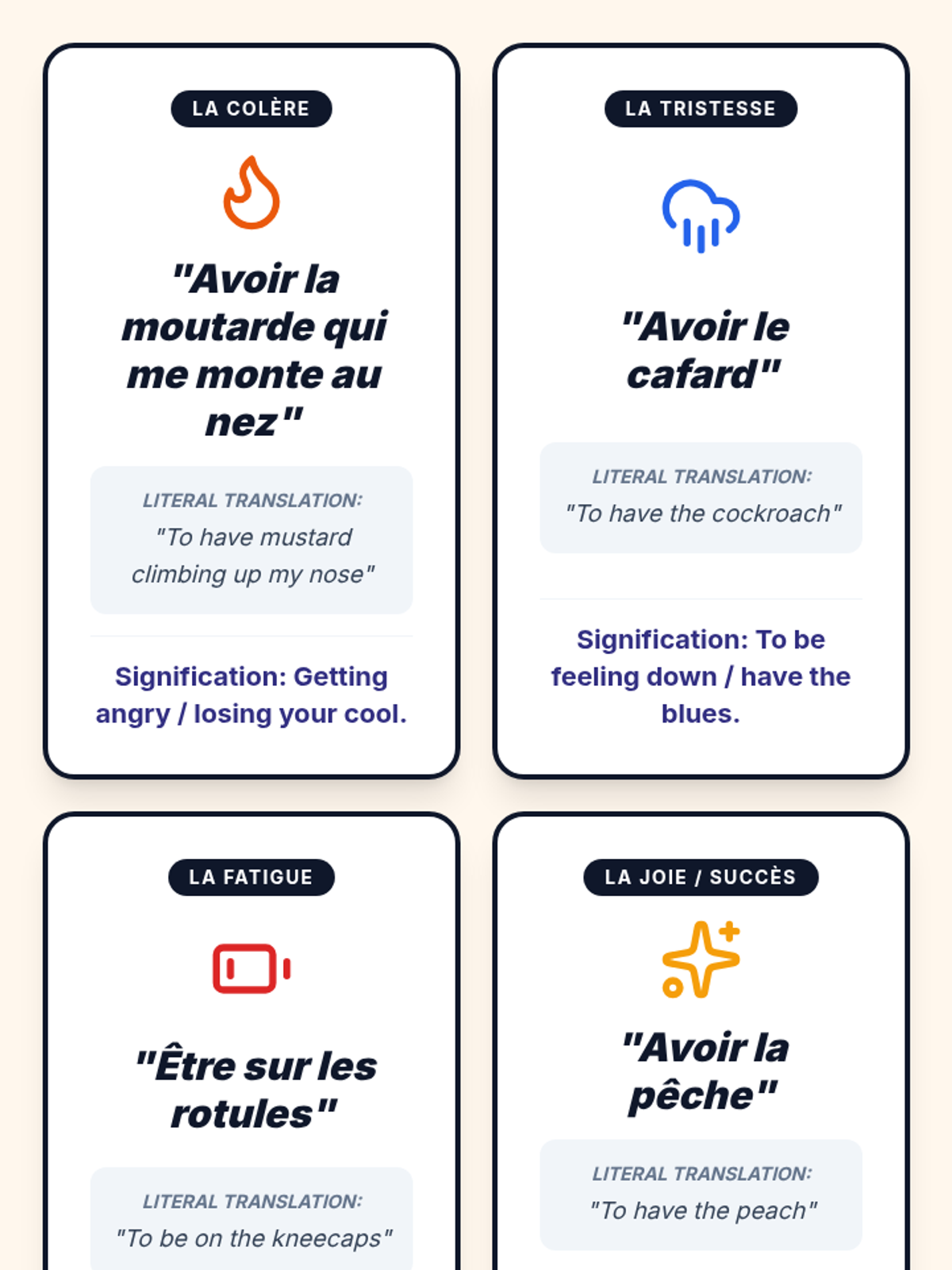
Students master colorful French idioms for expressing emotions, moving away from literal translations to natural, culturally-grounded expressions.
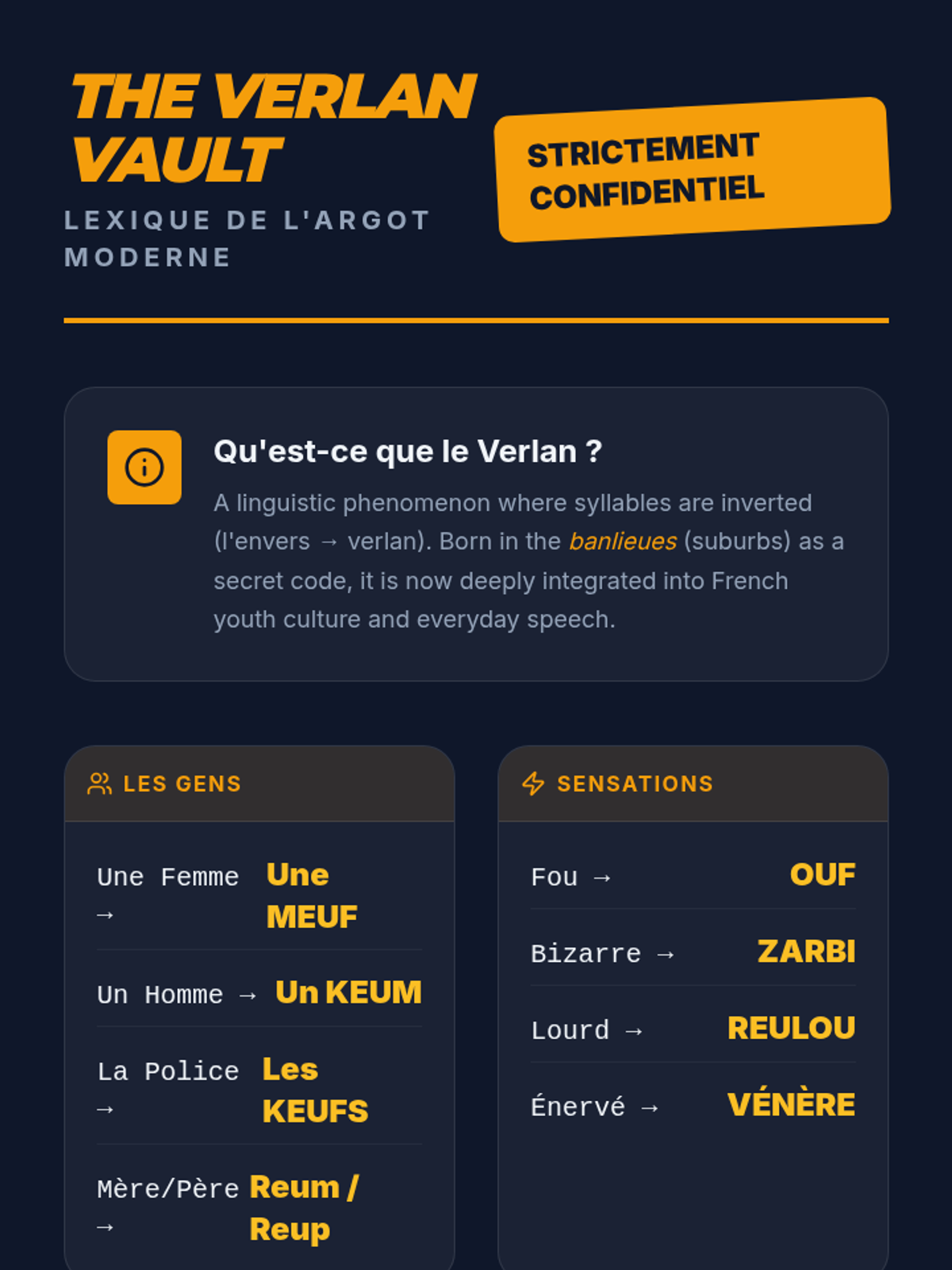
An exploration of the linguistic phenomenon of Verlan (syllable inversion) and common street slang, including their historical origins and social connotations.
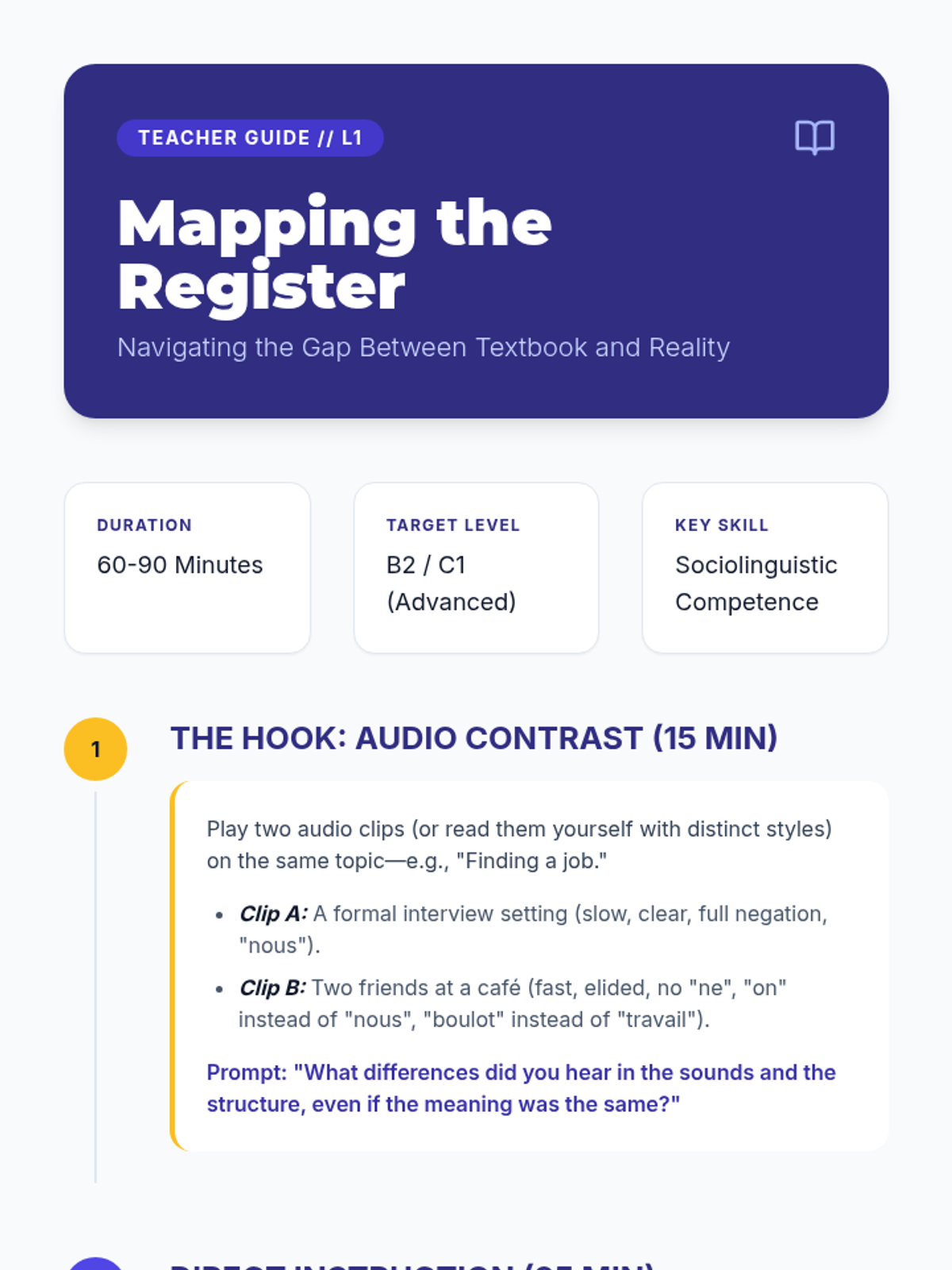
Students compare formal and informal speech patterns, focusing on the omission of 'ne', elisions, and lexical substitutions like 'travail' vs 'boulot'.
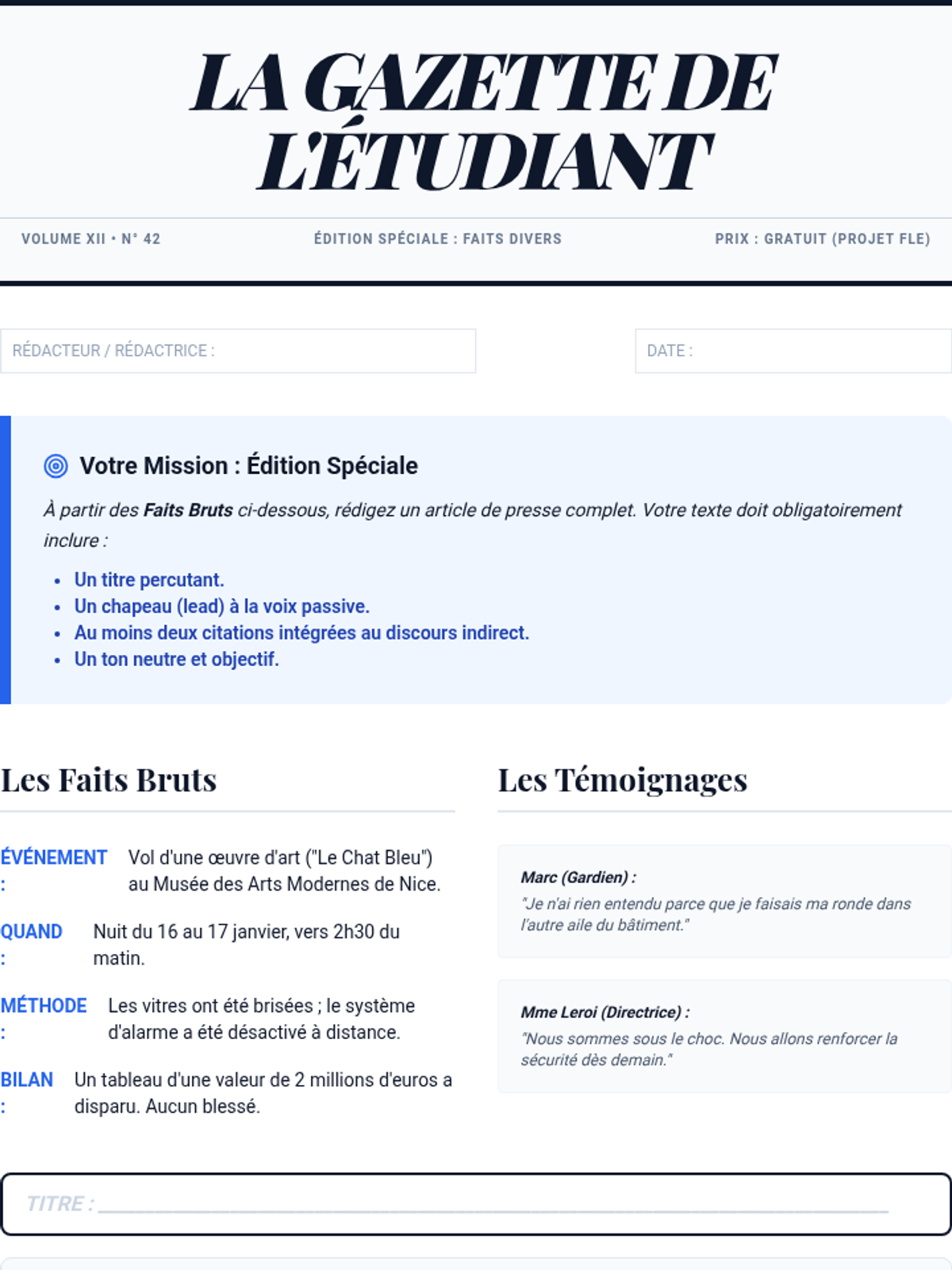
Students produce a complete news article based on a mock event. They must use passive voice for the lead and indirect speech to quote witnesses.
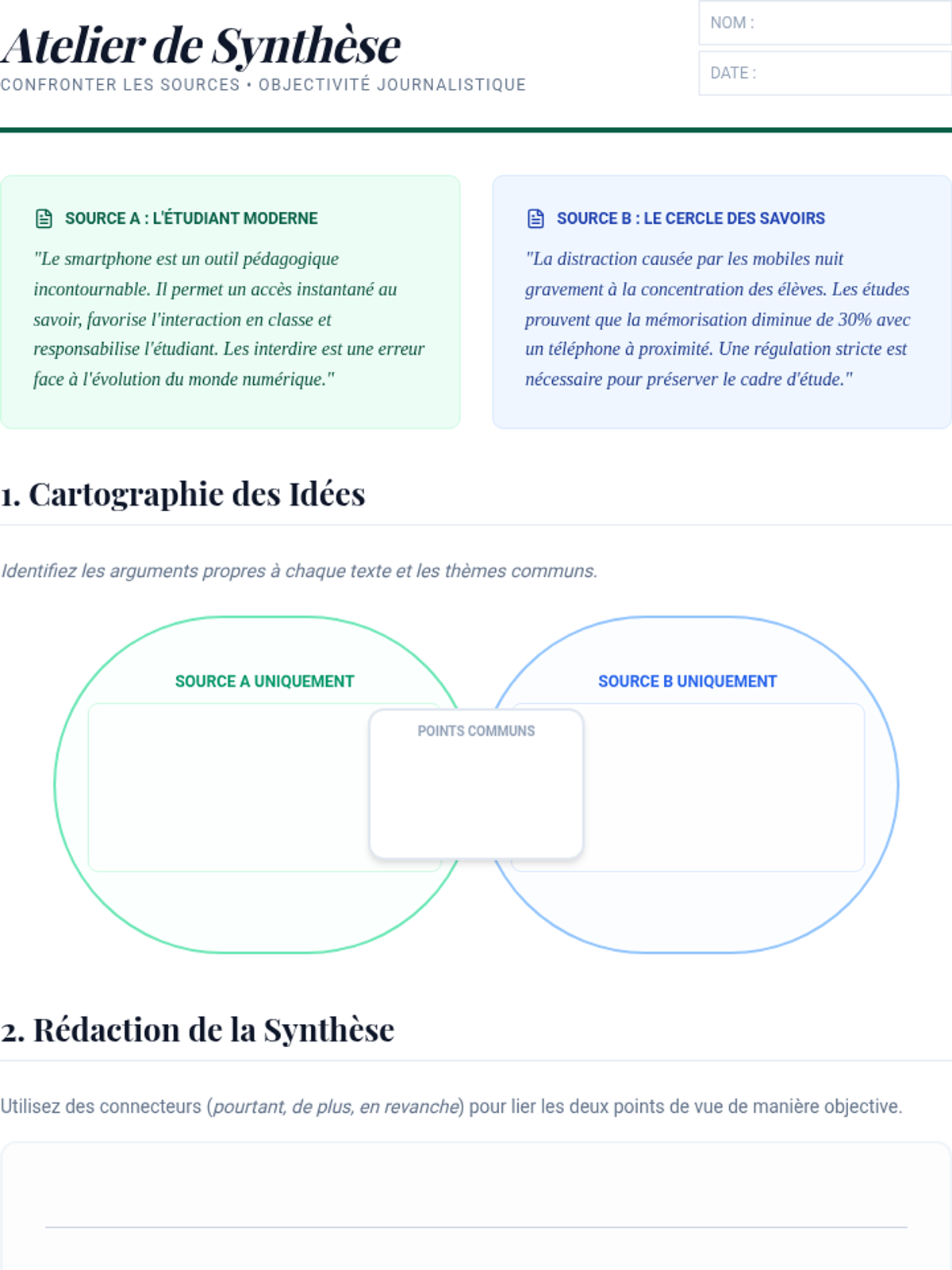
Students review two different articles on the same topic and write a short synthesis that highlights commonalities and differences without inserting personal opinion.
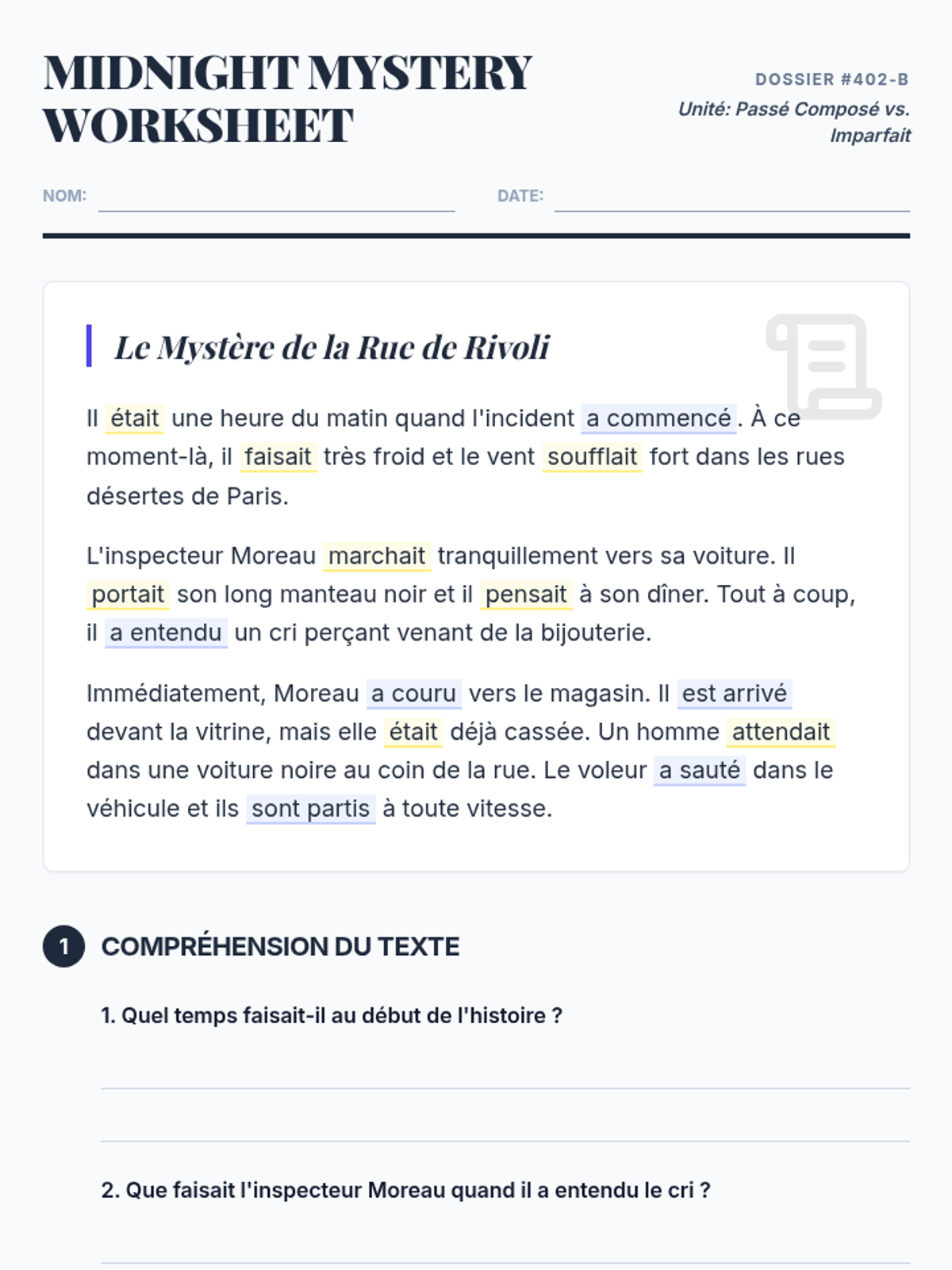
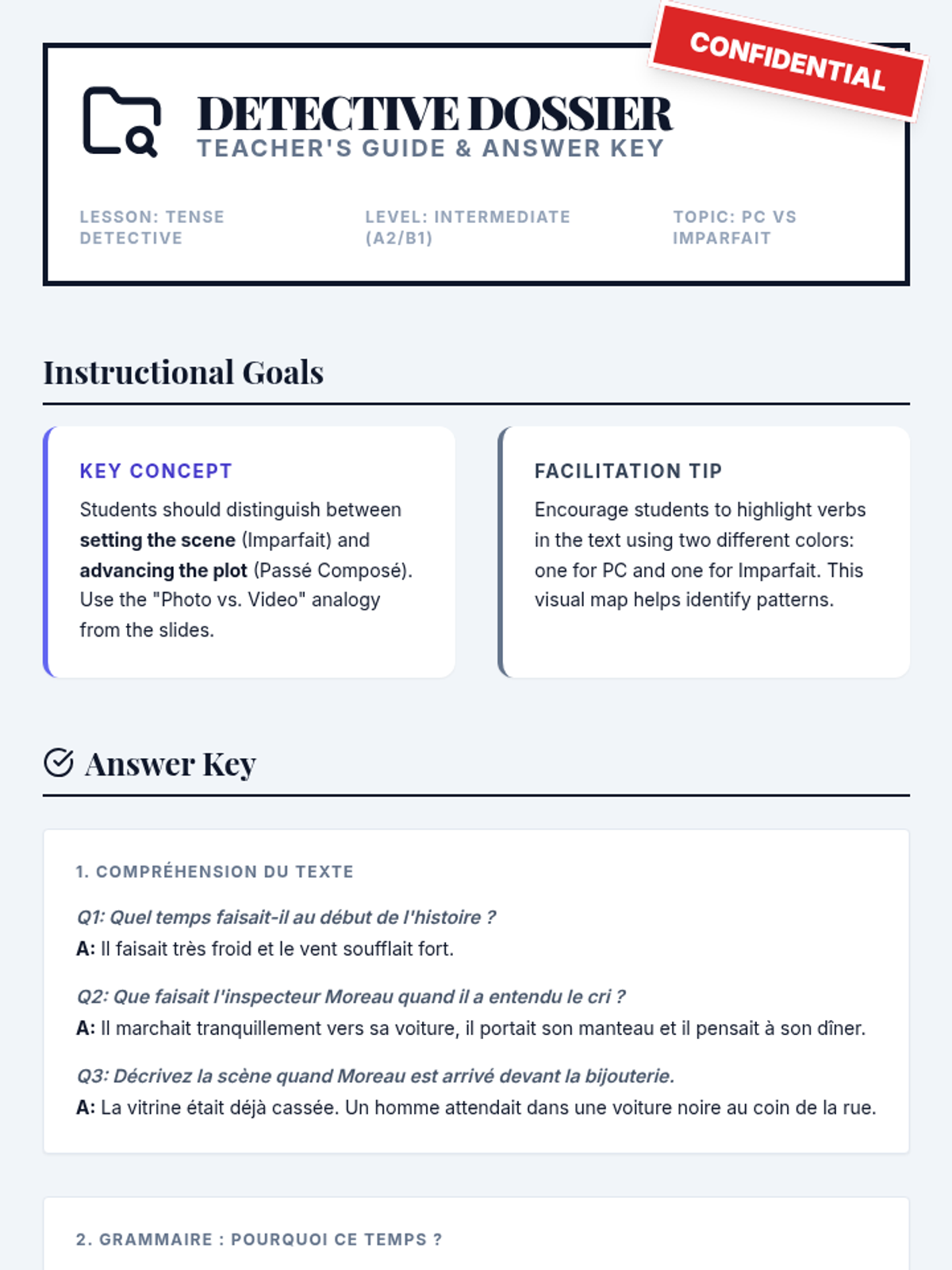
A French grammar lesson focused on distinguishing between the Passé Composé and Imparfait through a mystery narrative. Students learn to set the scene with descriptions (Imparfait) and identify completed actions (Passé Composé).
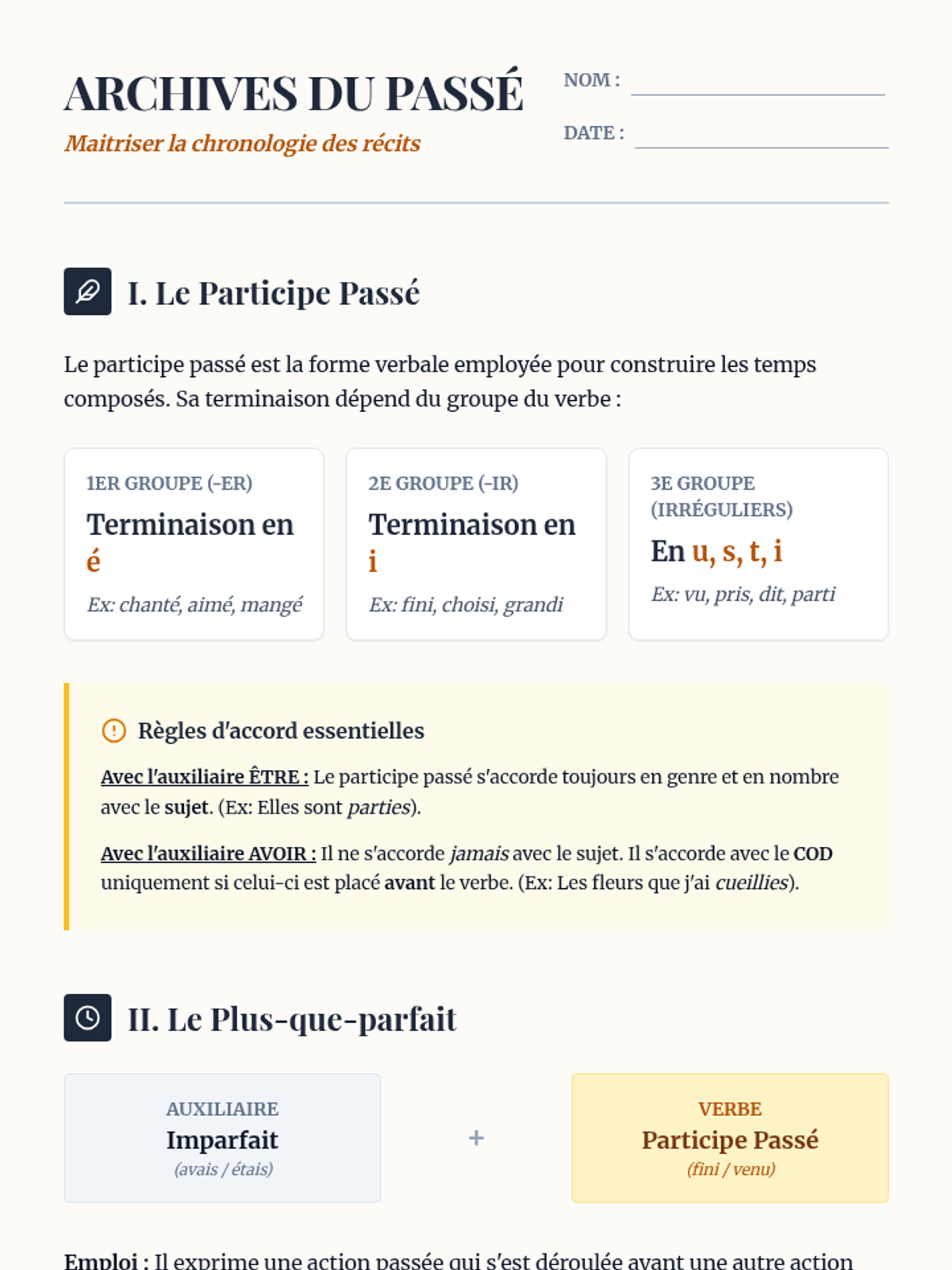
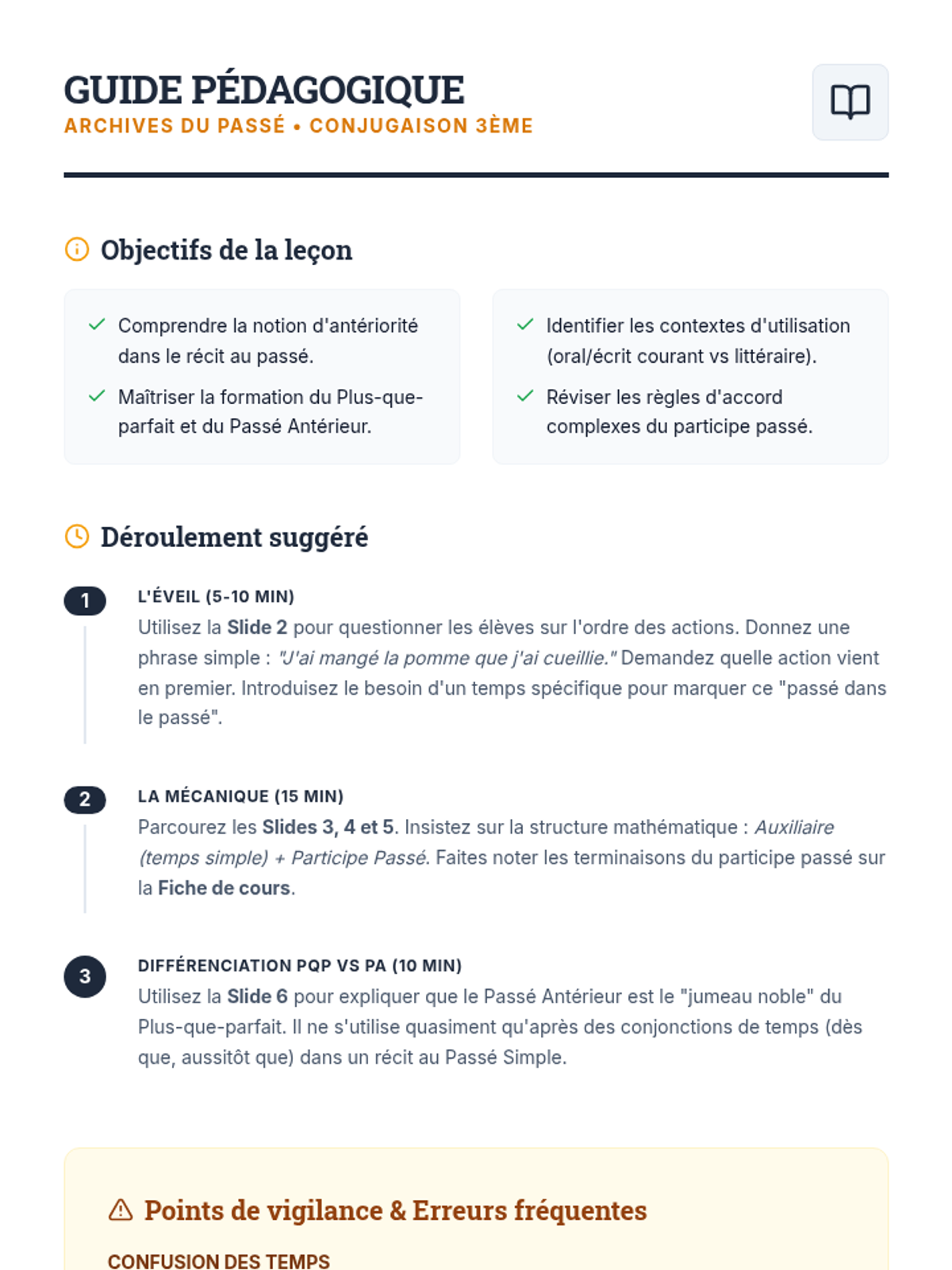
Cette leçon explore la formation et l'emploi du participe passé, du plus-que-parfait et du passé antérieur, en mettant l'accent sur la chronologie des actions passées.
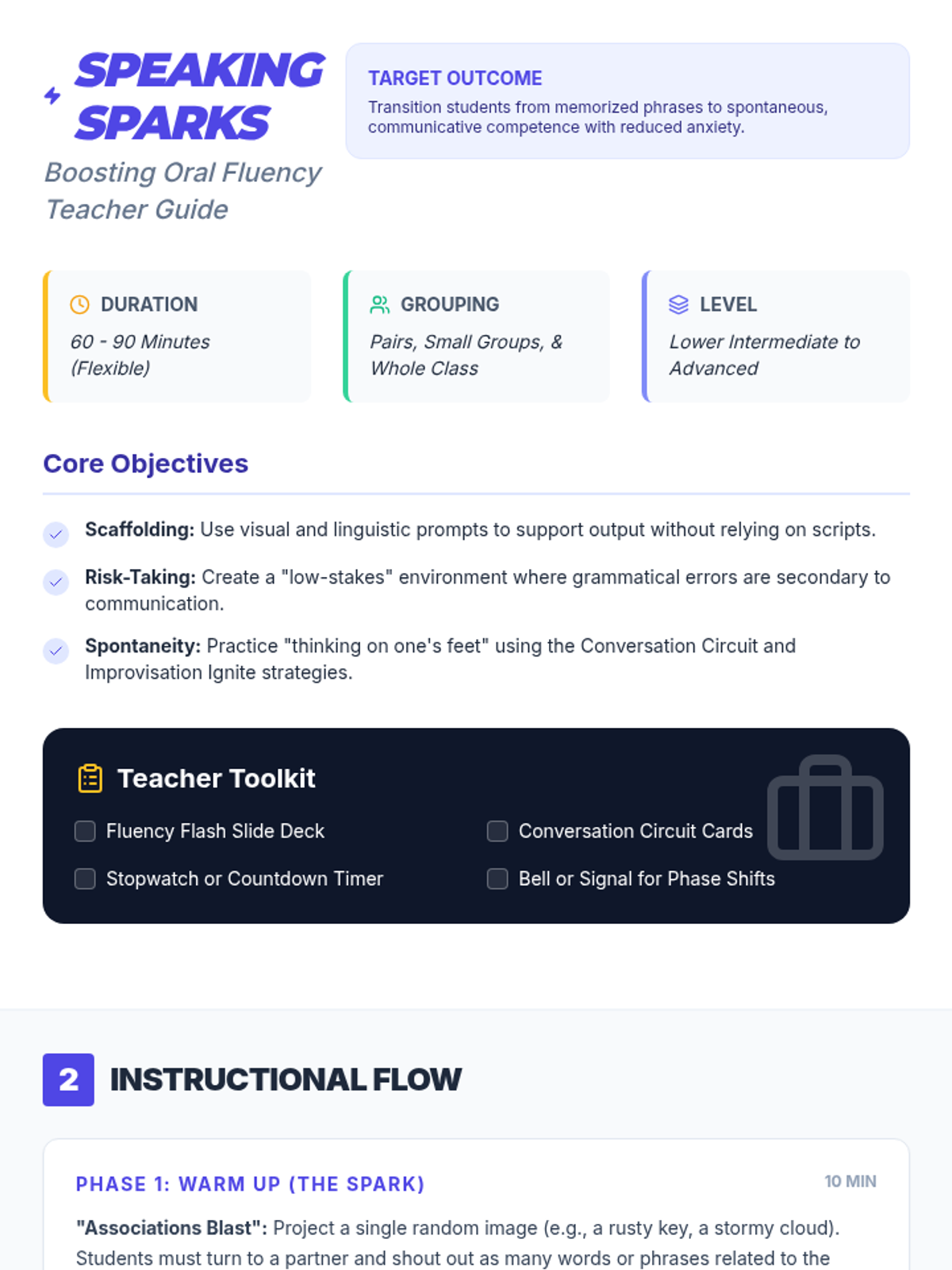
A comprehensive toolkit for foreign language teachers to bridge the gap between rote memorization and spontaneous oral communication through interactive activities and low-stakes scaffolding.
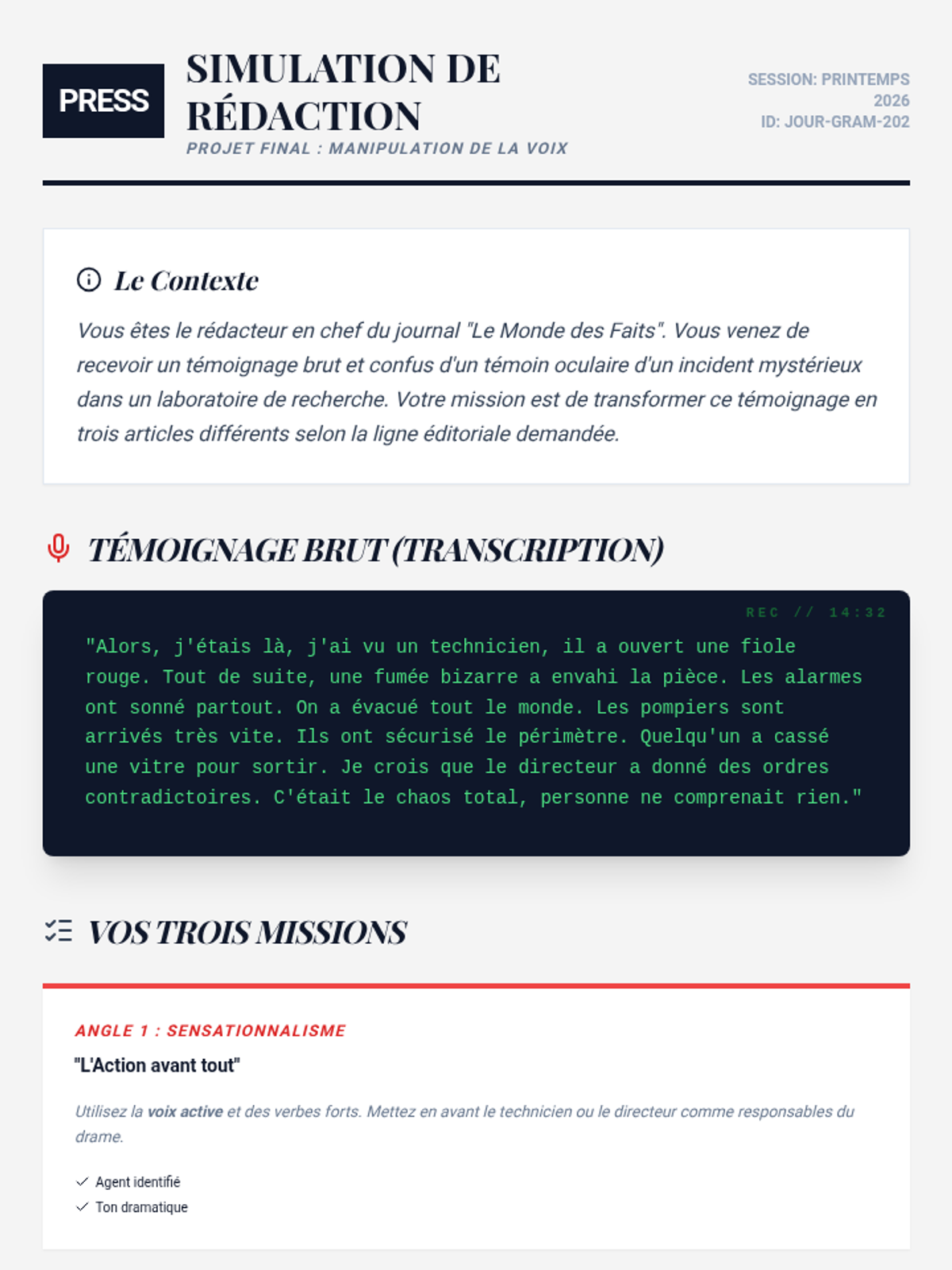
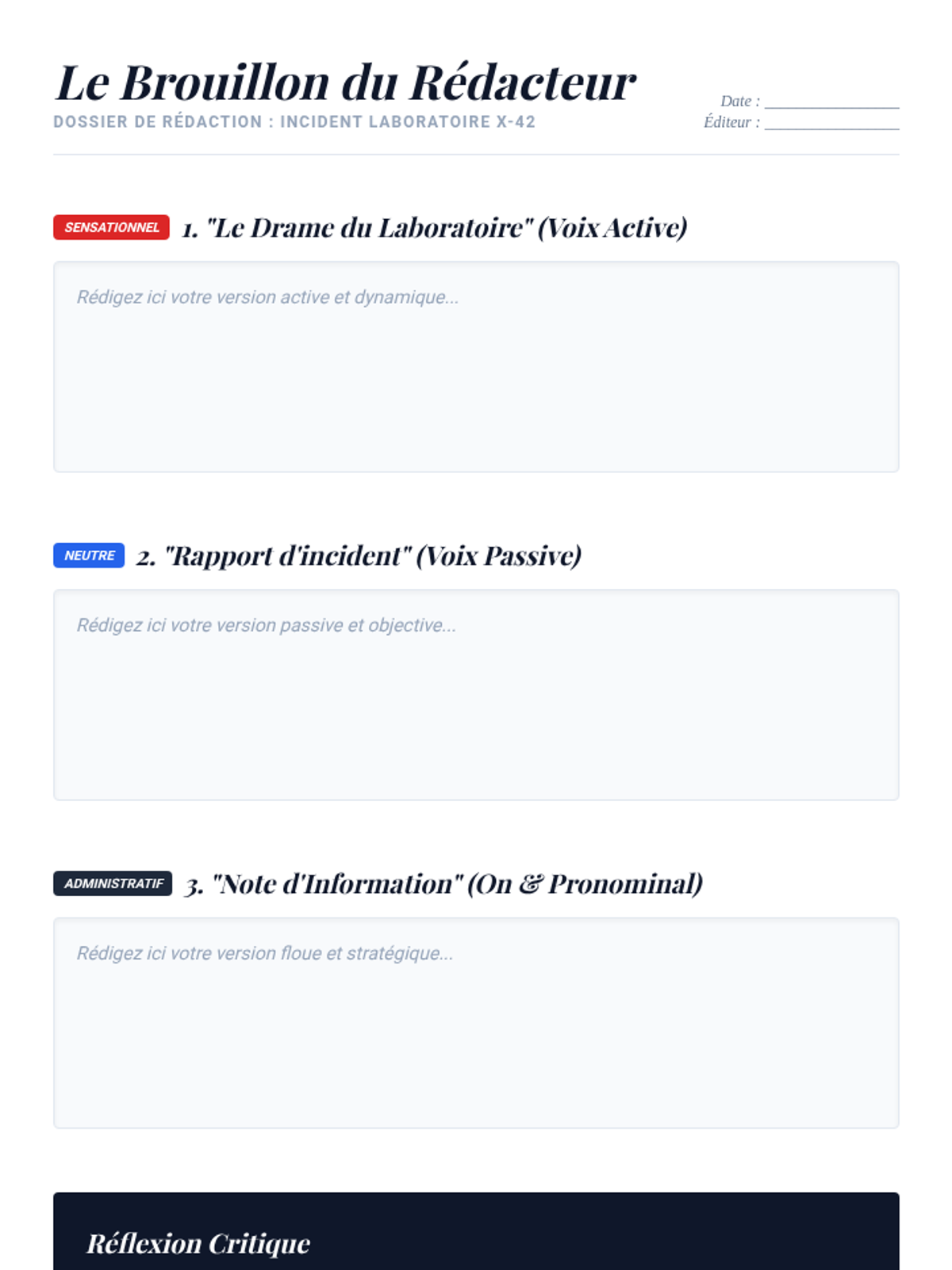
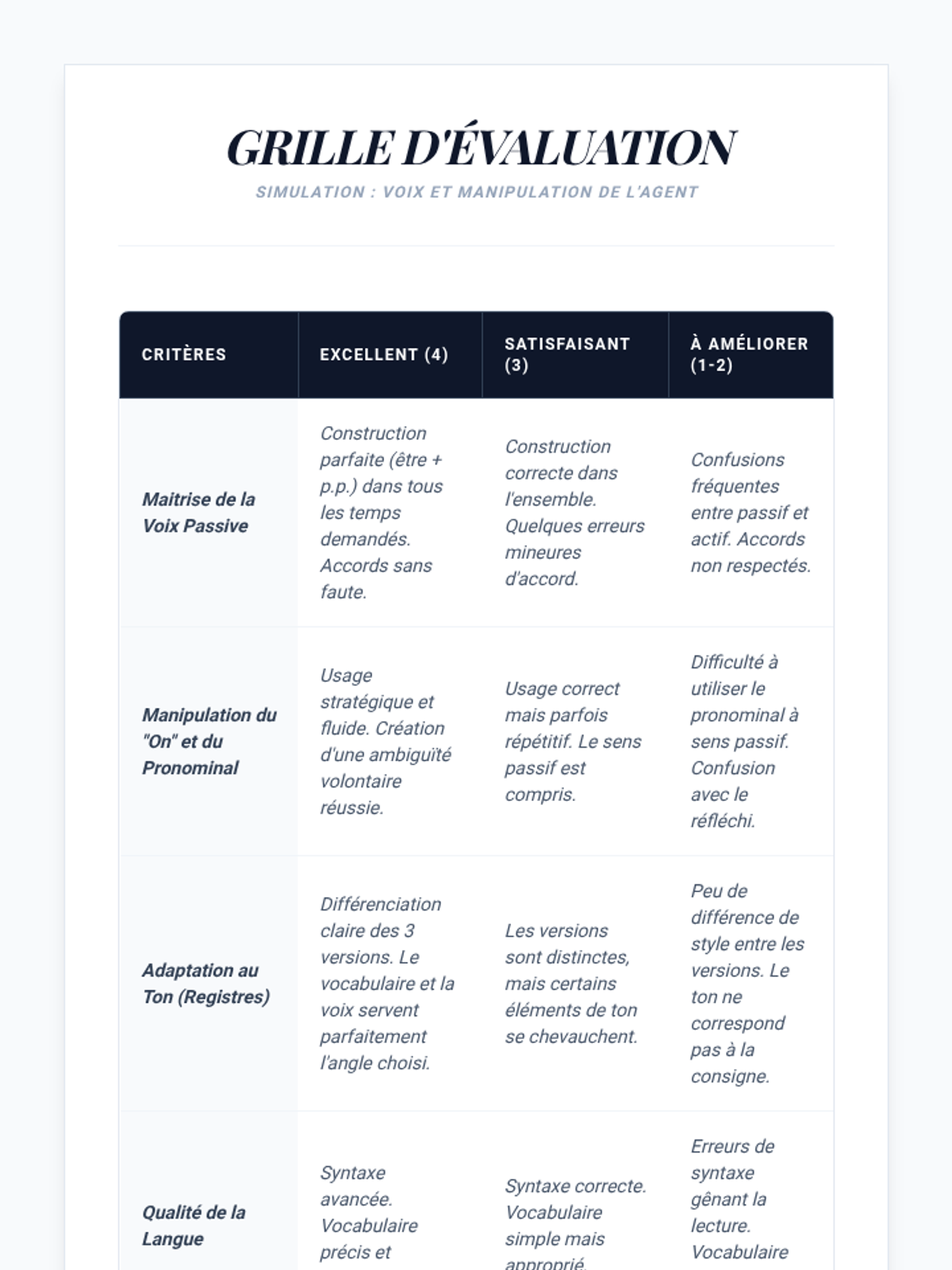
Students act as editors, rewriting a chaotic witness account into three versions: a sensationalist active account, a neutral passive report, and a formal administrative summary.
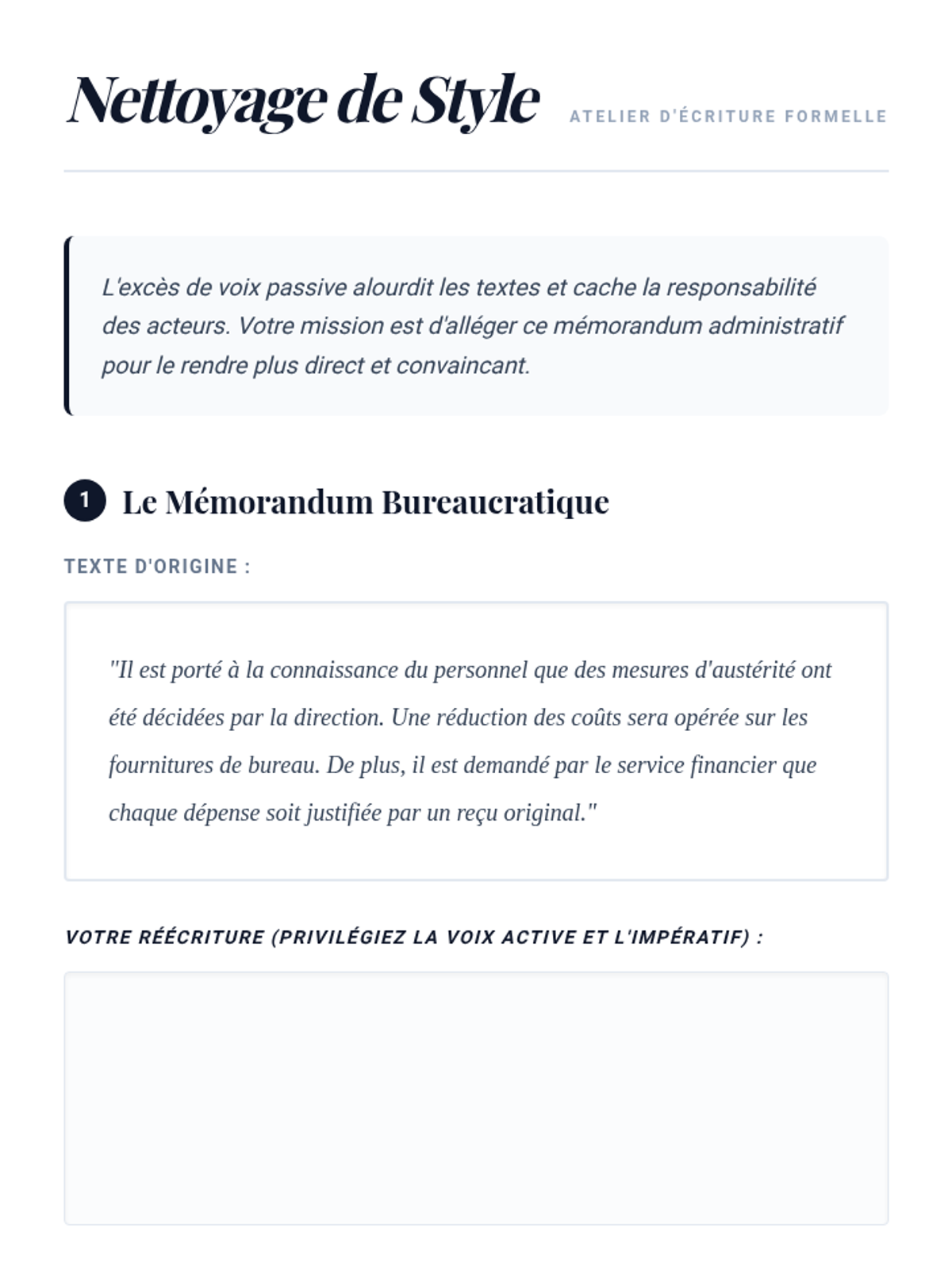
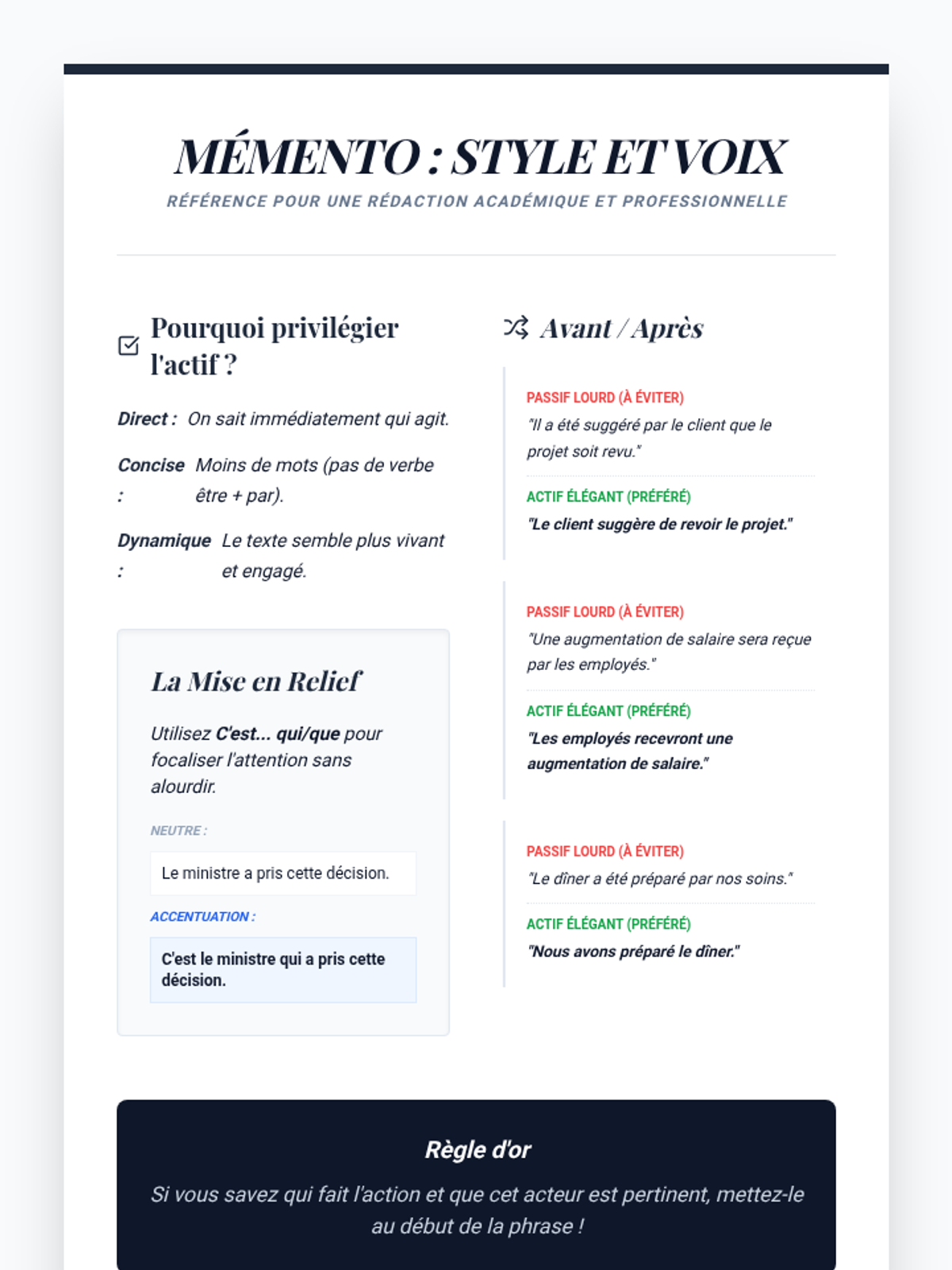
While knowing the passive is important, avoiding it is often better for style. Students practice transforming heavy passive sentences into active ones or using 'C'est... qui' structures.
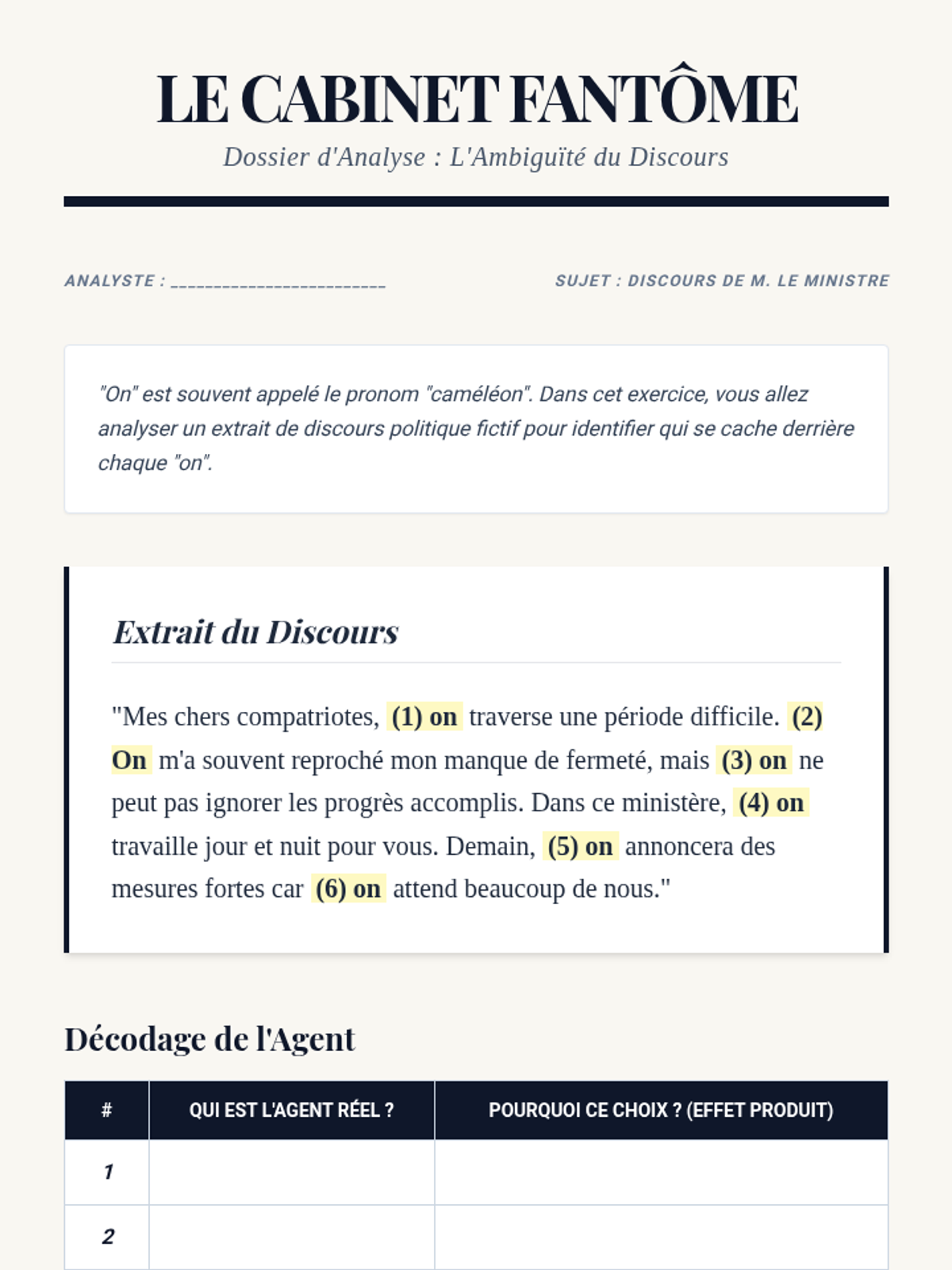
Students explore the versatility of 'on' to replace 'nous', 'les gens', or a passive construction. They discuss the ambiguity of 'on' in political speech.
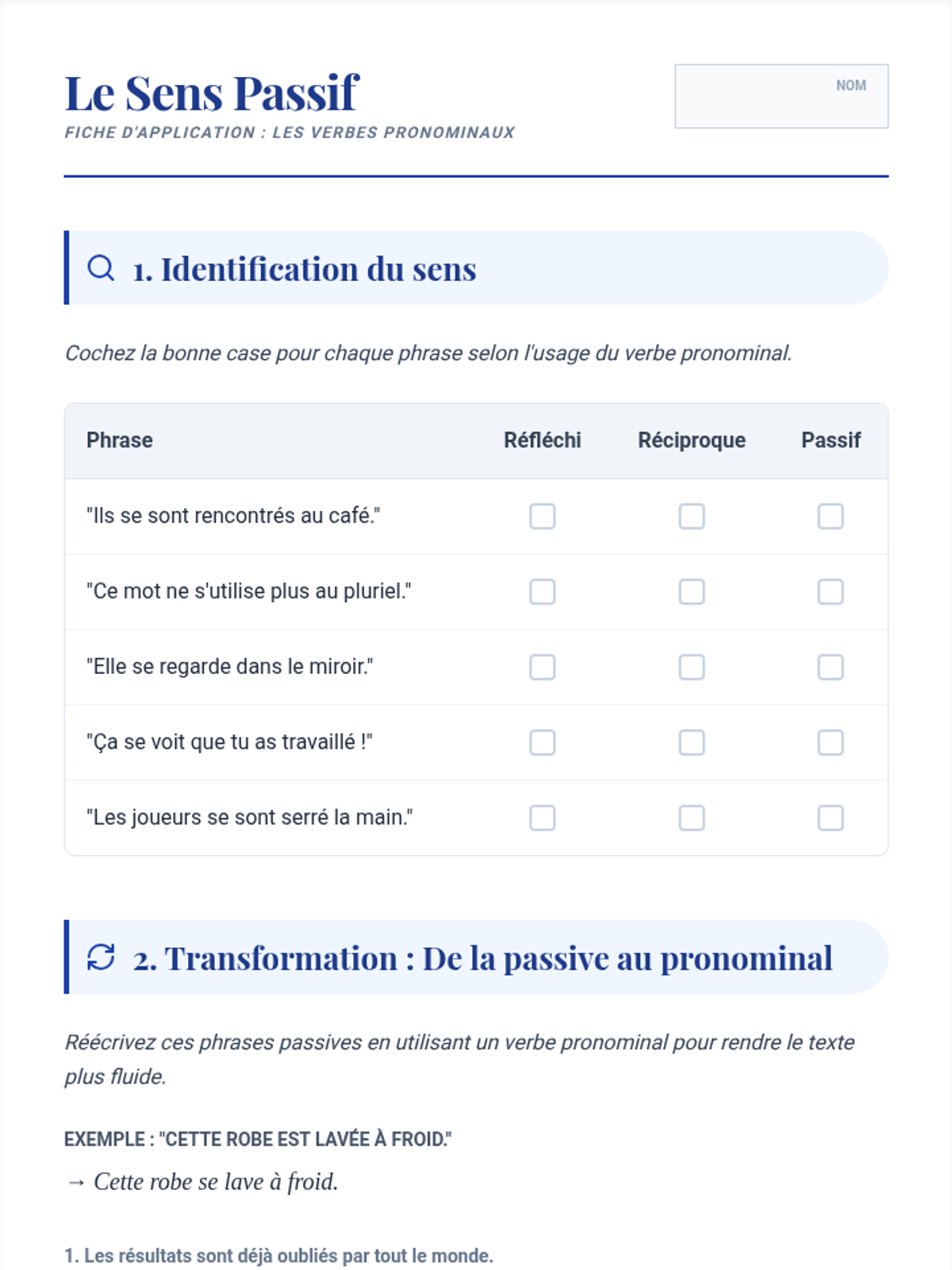
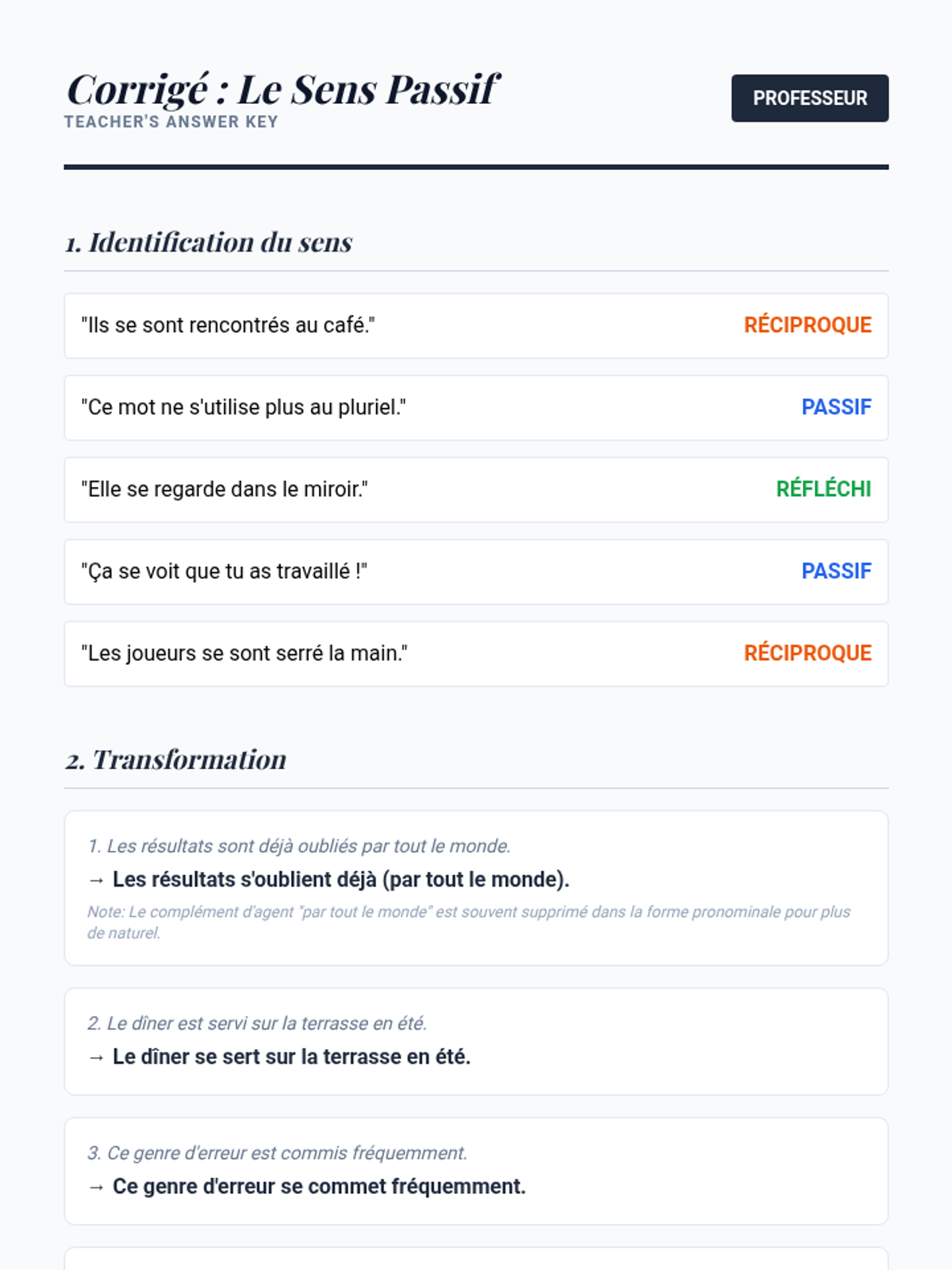
Students learn to use reflexive verbs in a passive sense (e.g., 'Cela se dit', 'Ce vin se boit frais'). They practice distinguishing between reflexive, reciprocal, and passive interpretations.
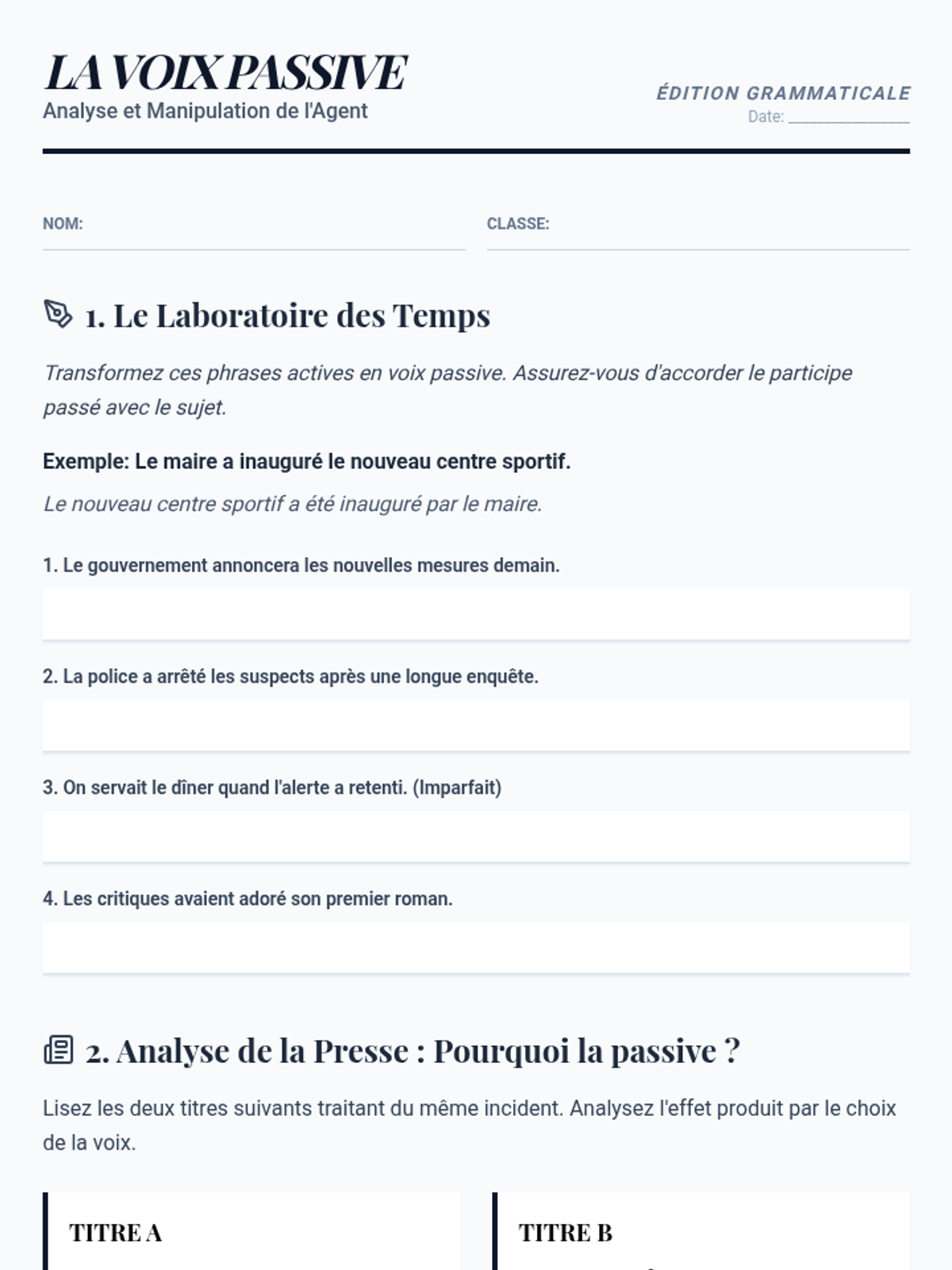
Students review the construction of the passive voice across various tenses. They analyze news headlines to discuss why the passive is chosen and how it affects the perception of responsibility in media.
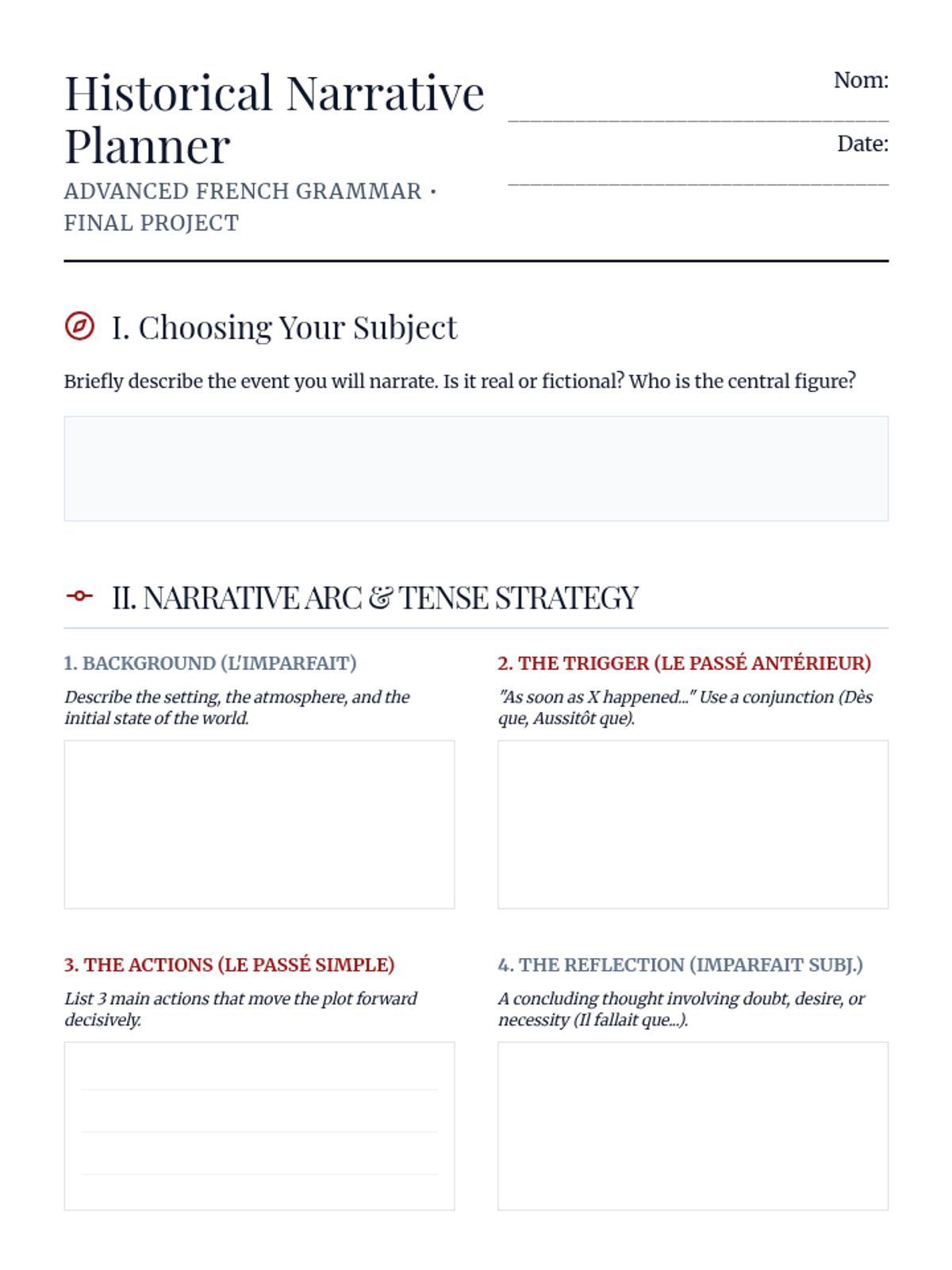
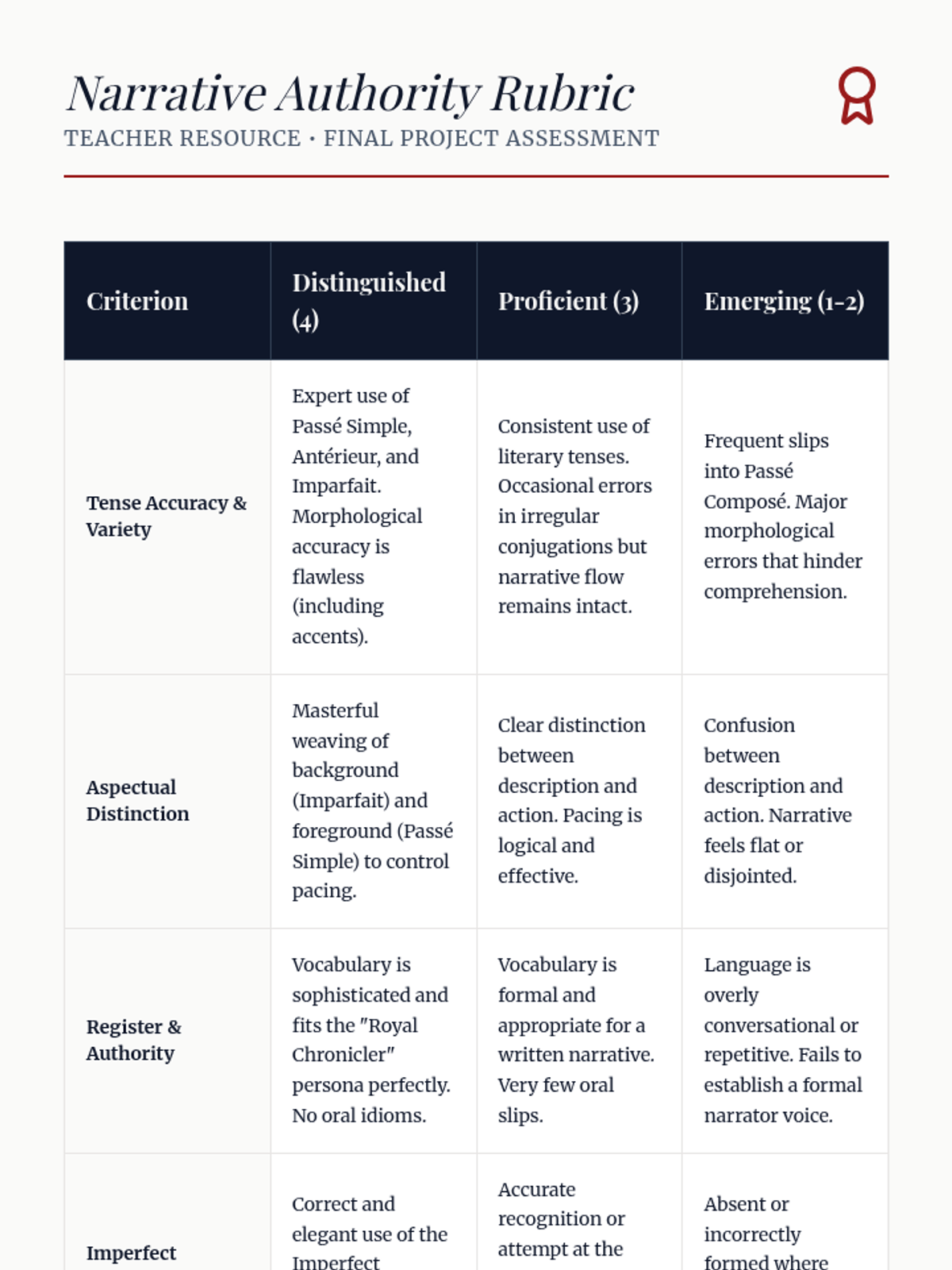
The culmination of the sequence where students apply their knowledge to create a formal historical or biographical narrative, focusing on register consistency and narrative authority.
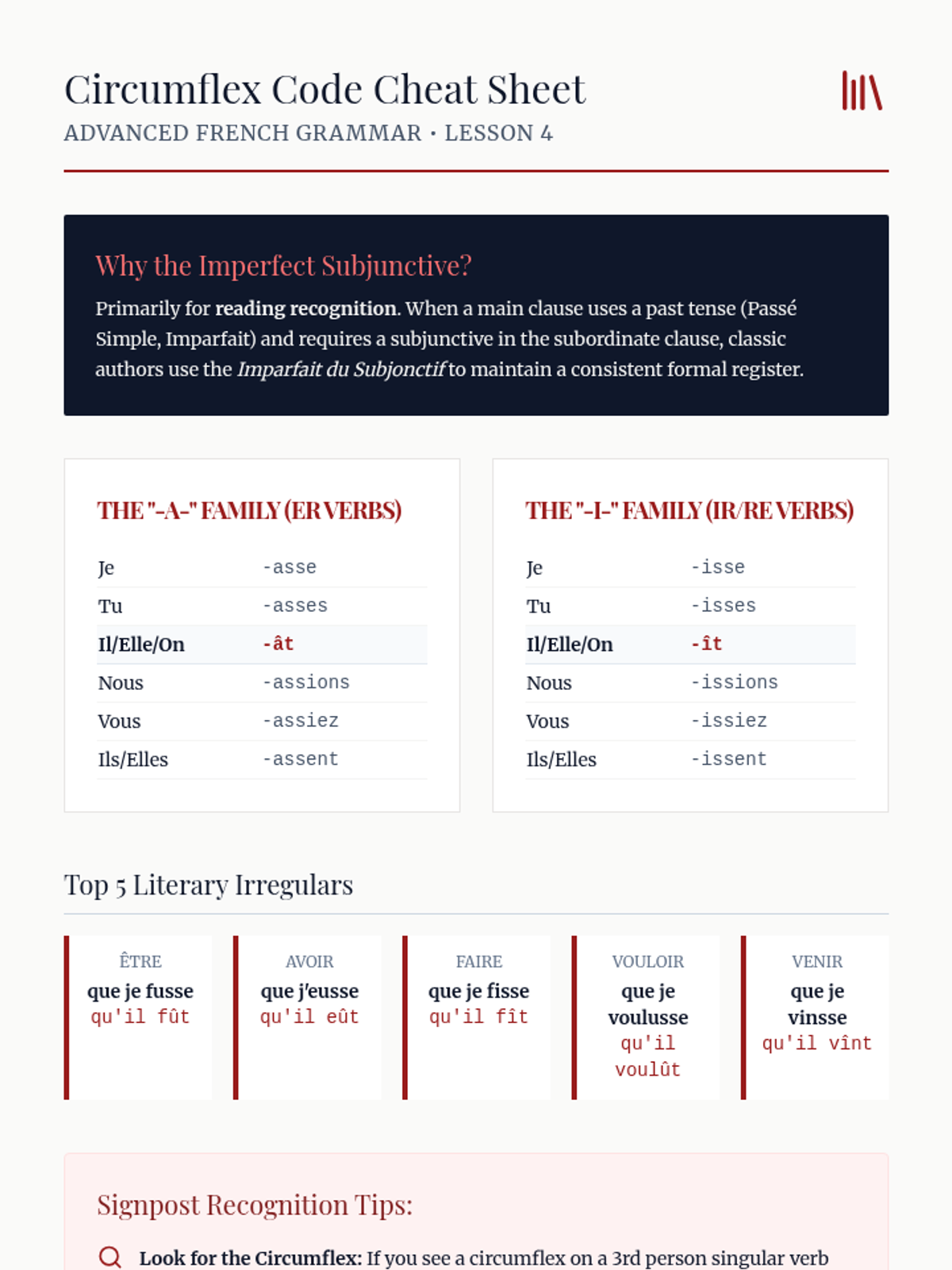
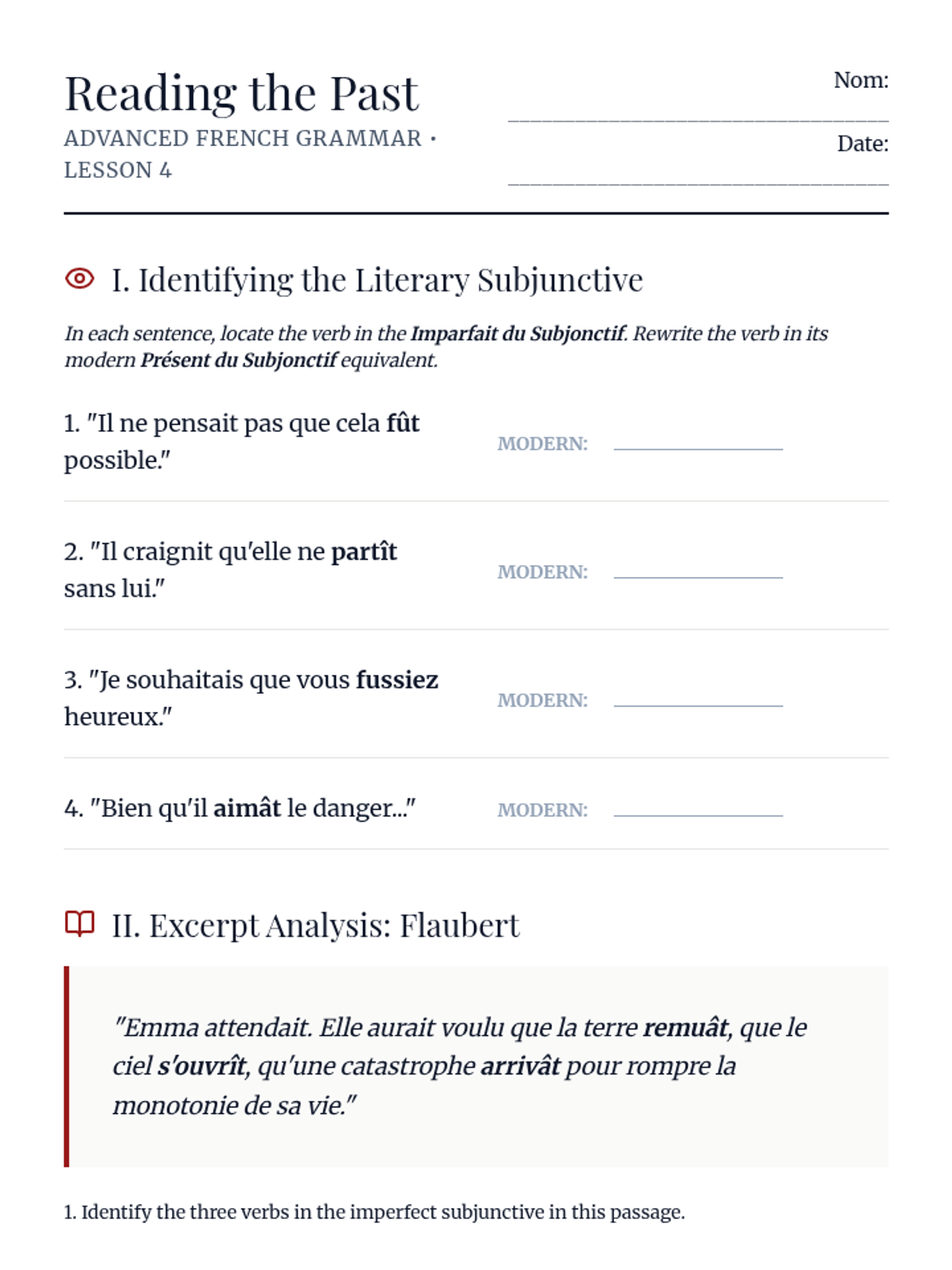
A deep dive into the imperfect subjunctive. Students learn to recognize the 'circumflex' indicators and understand the historical context and stylistic elegance of this tense in formal French.
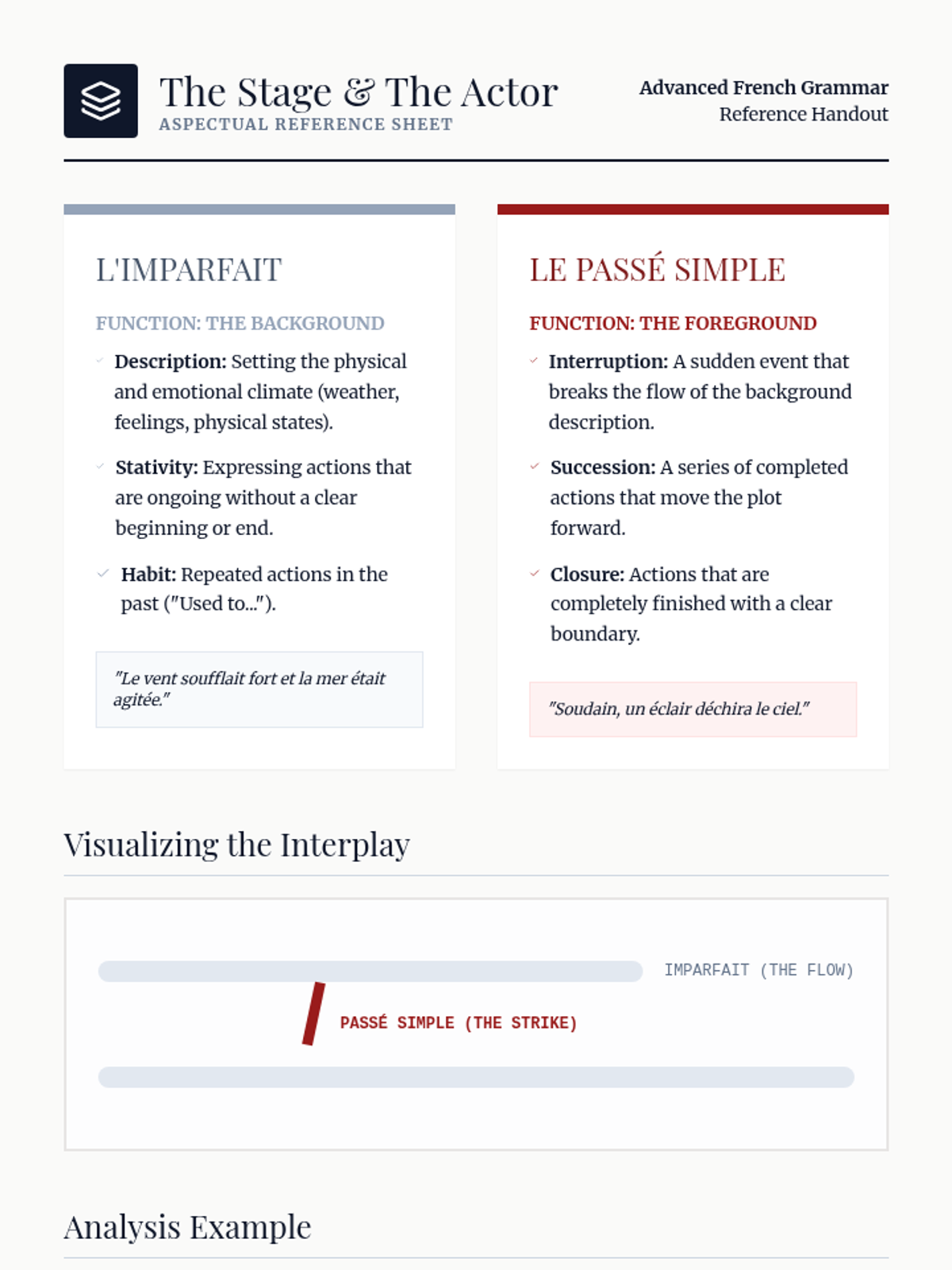
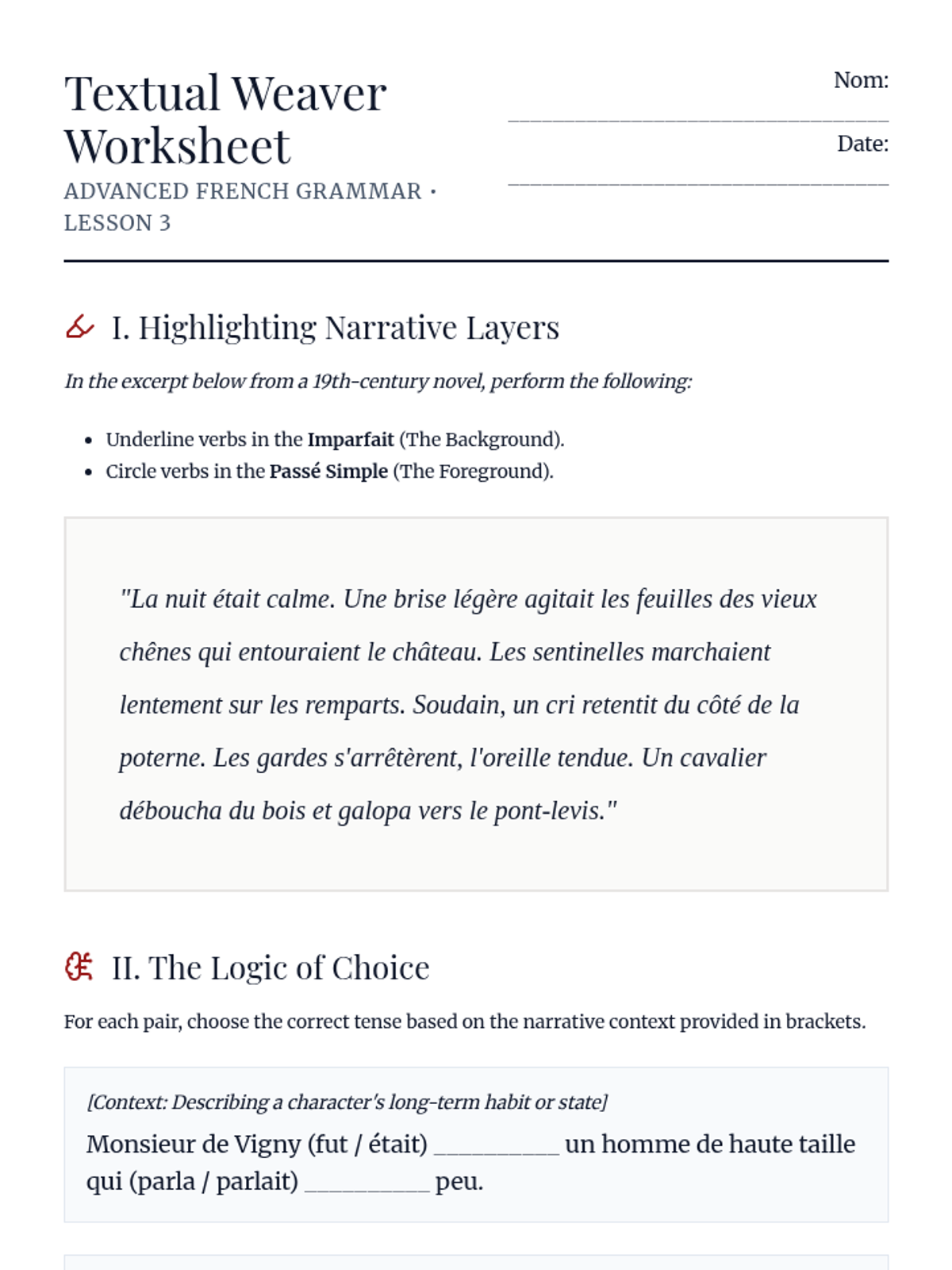
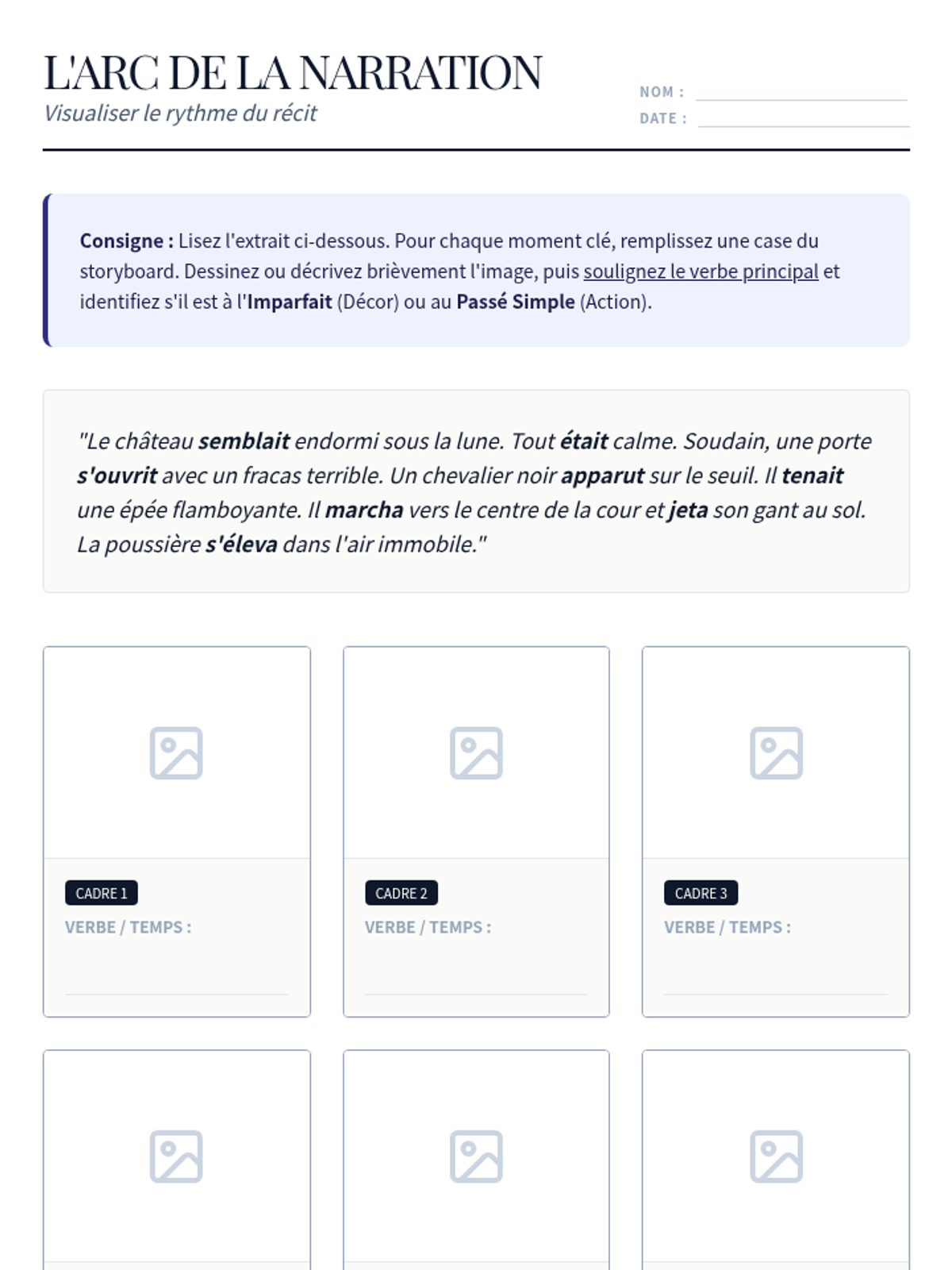
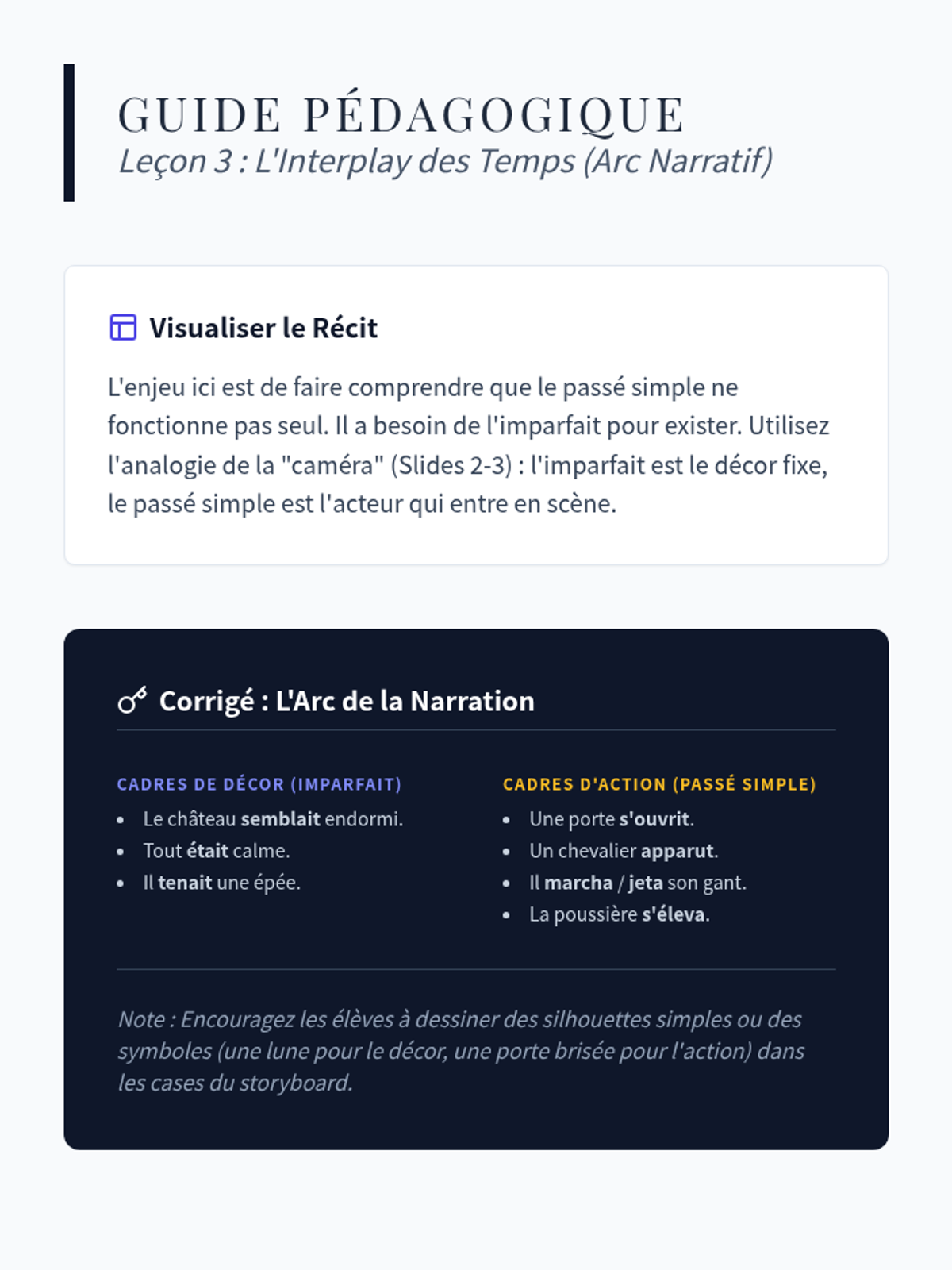
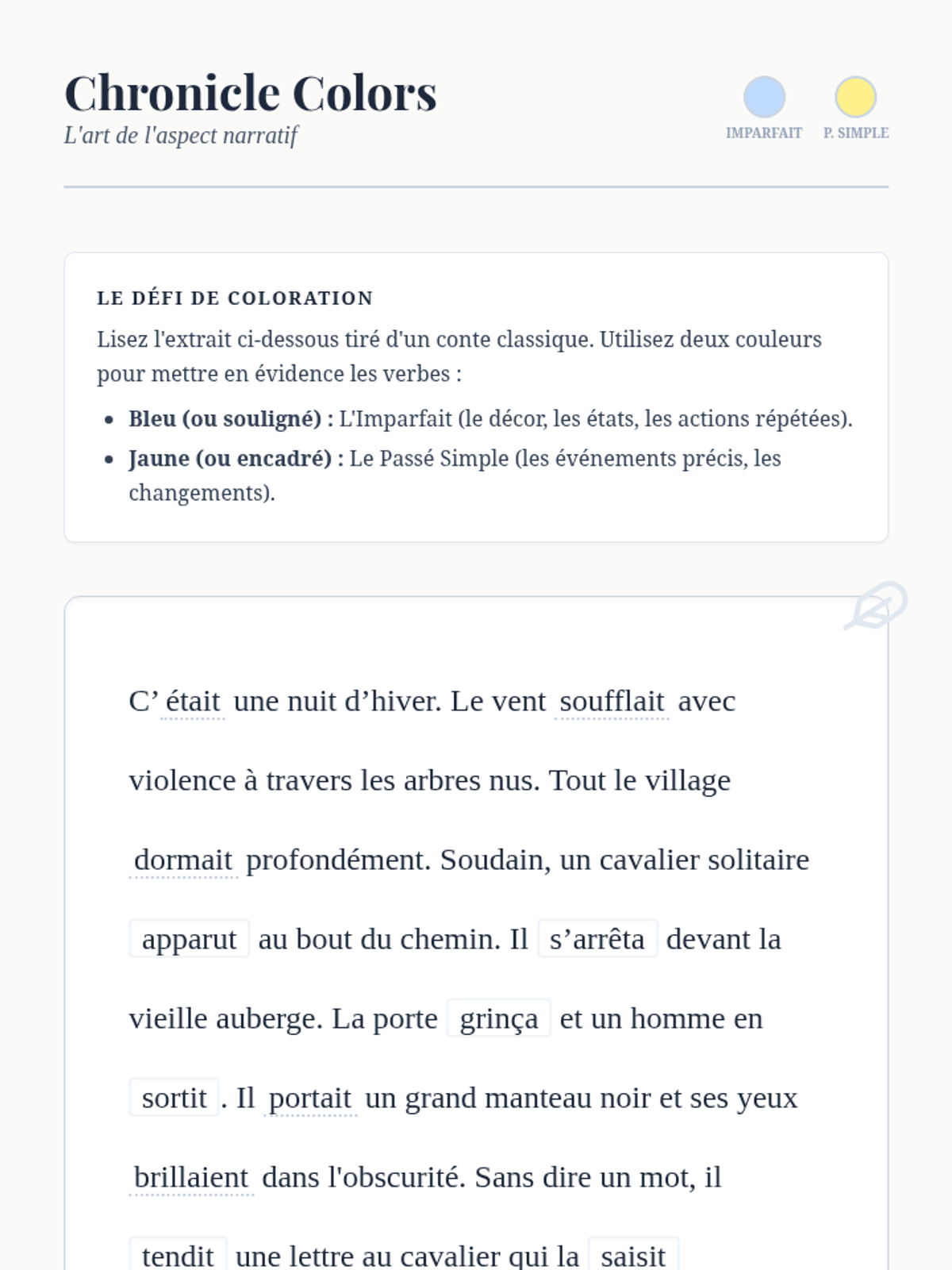
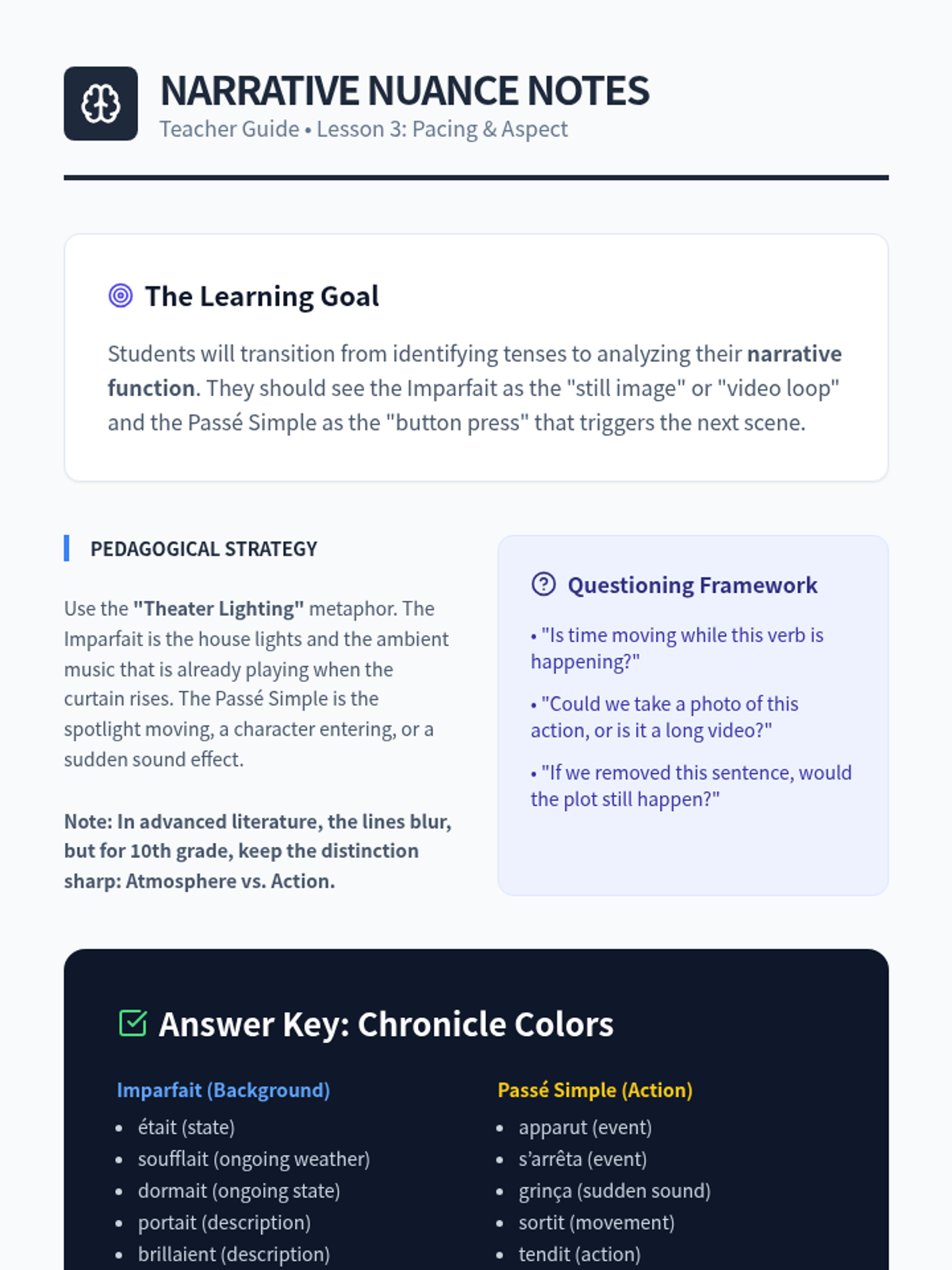
This lesson distinguishes between 'foreground' and 'background' in narrative. Students use visual tools to separate descriptive settings from plot-driving actions using the imparfait and passé simple.
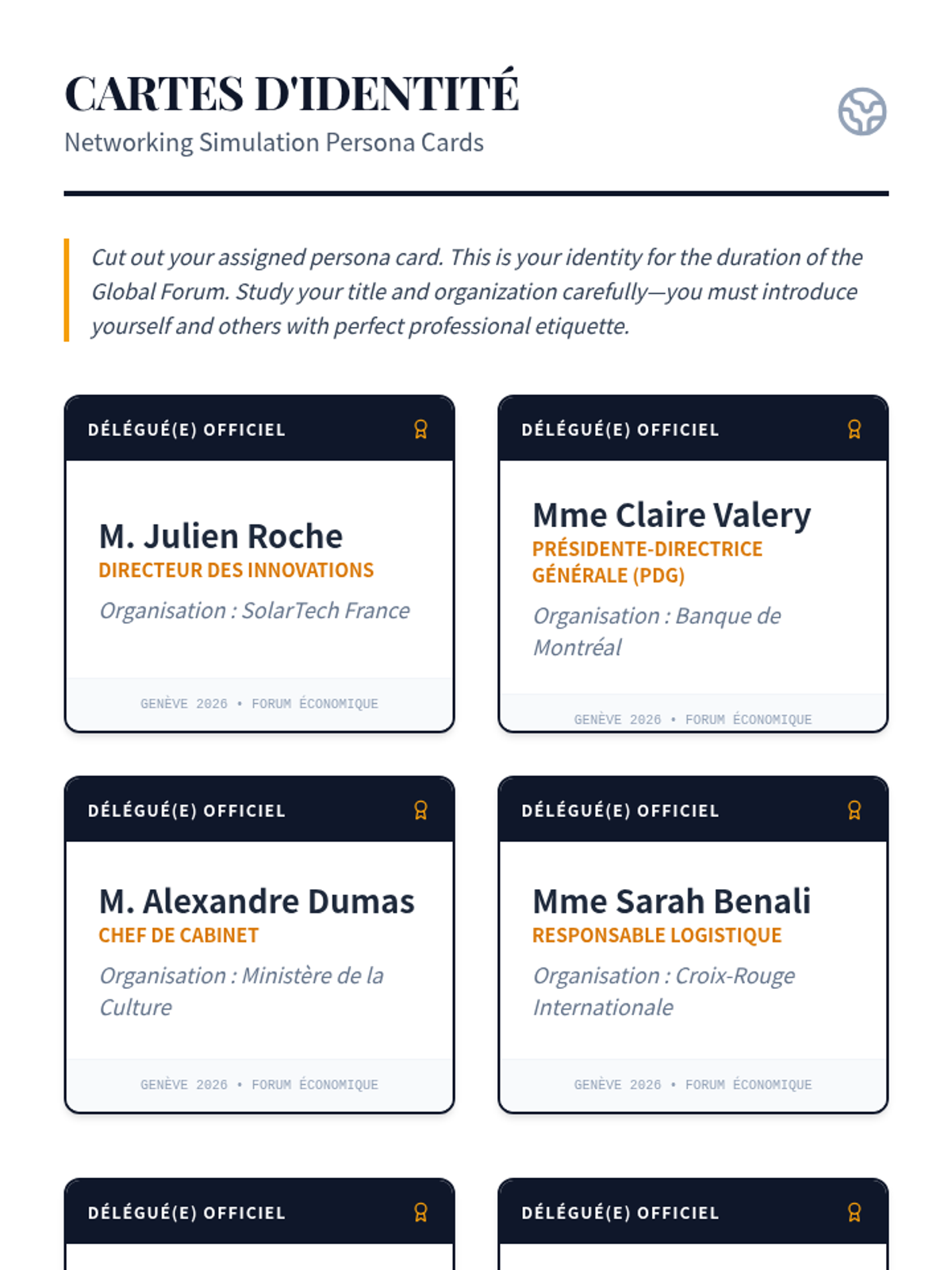
A culminating mock international conference where students circulate and interact using the formal structures and etiquette mastered in the unit.
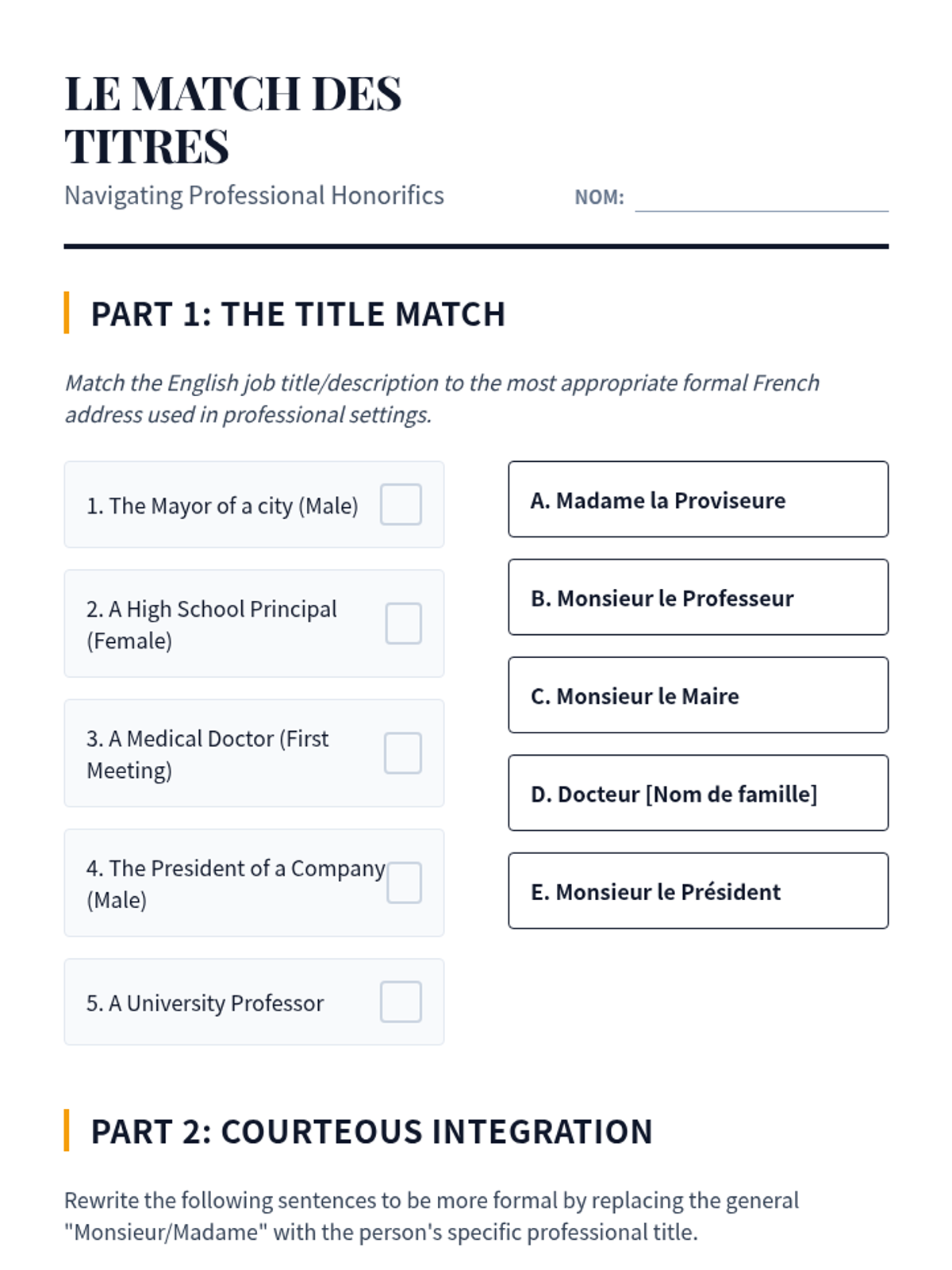
Students explore the use of Madame, Monsieur, and professional titles within sentences, practicing cultural respect through formal address.
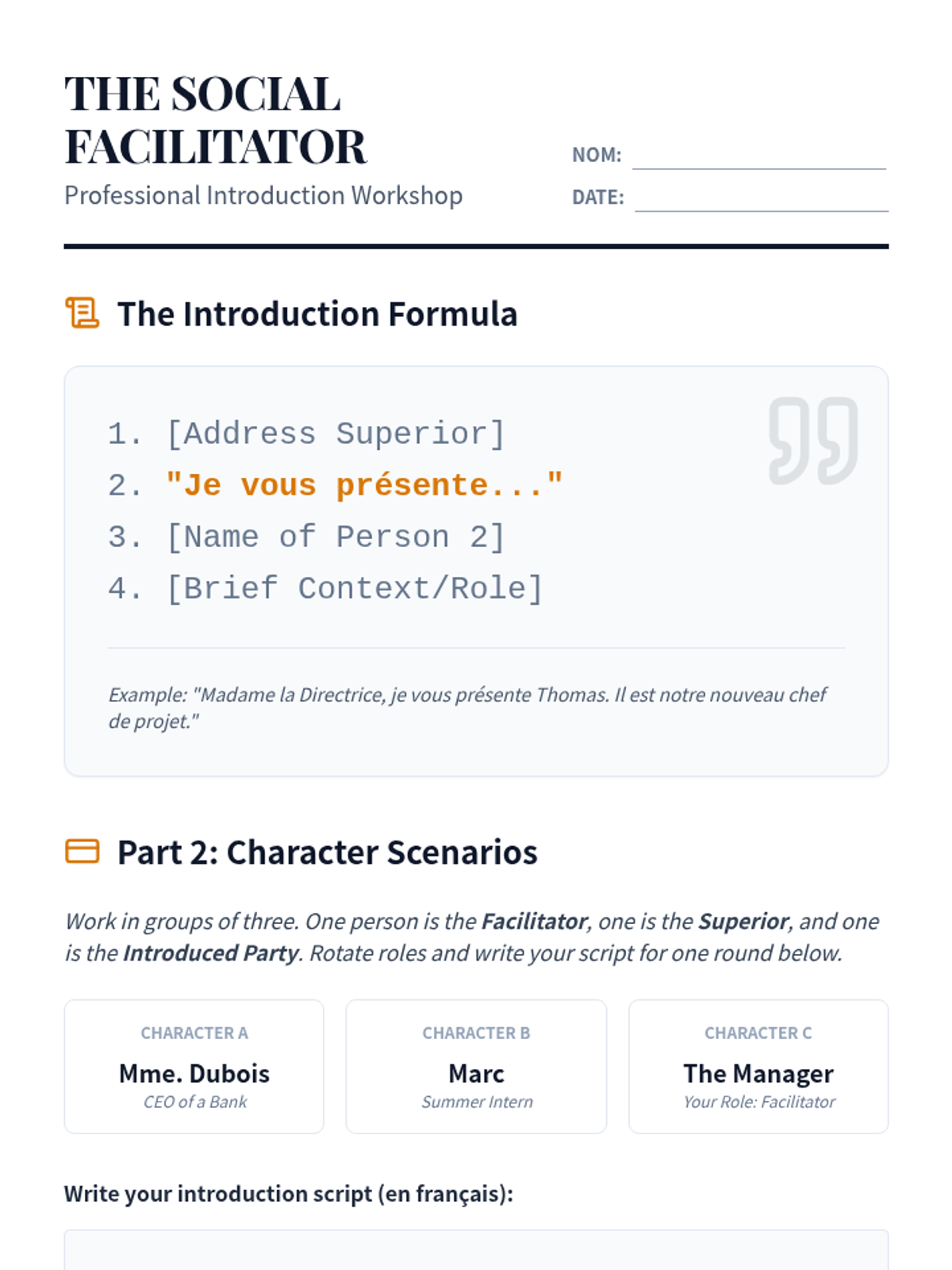
Focusing on the phraseology 'Je vous présente...', students practice introducing a third party to a superior while maintaining poise.
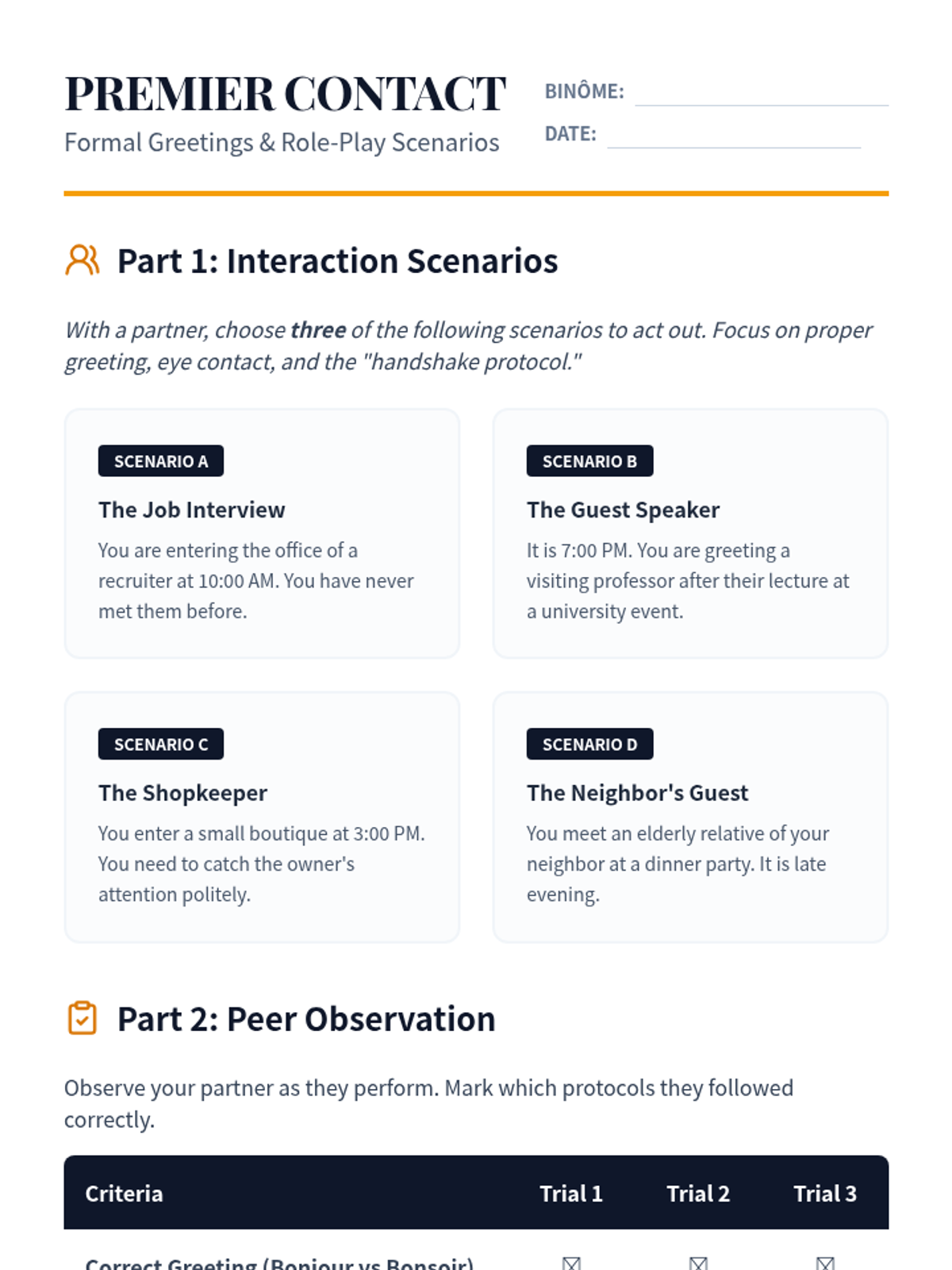
Students learn the standard formulas for formal greetings, including time-specific salutations and cultural norms like handshakes and 'la bise'.
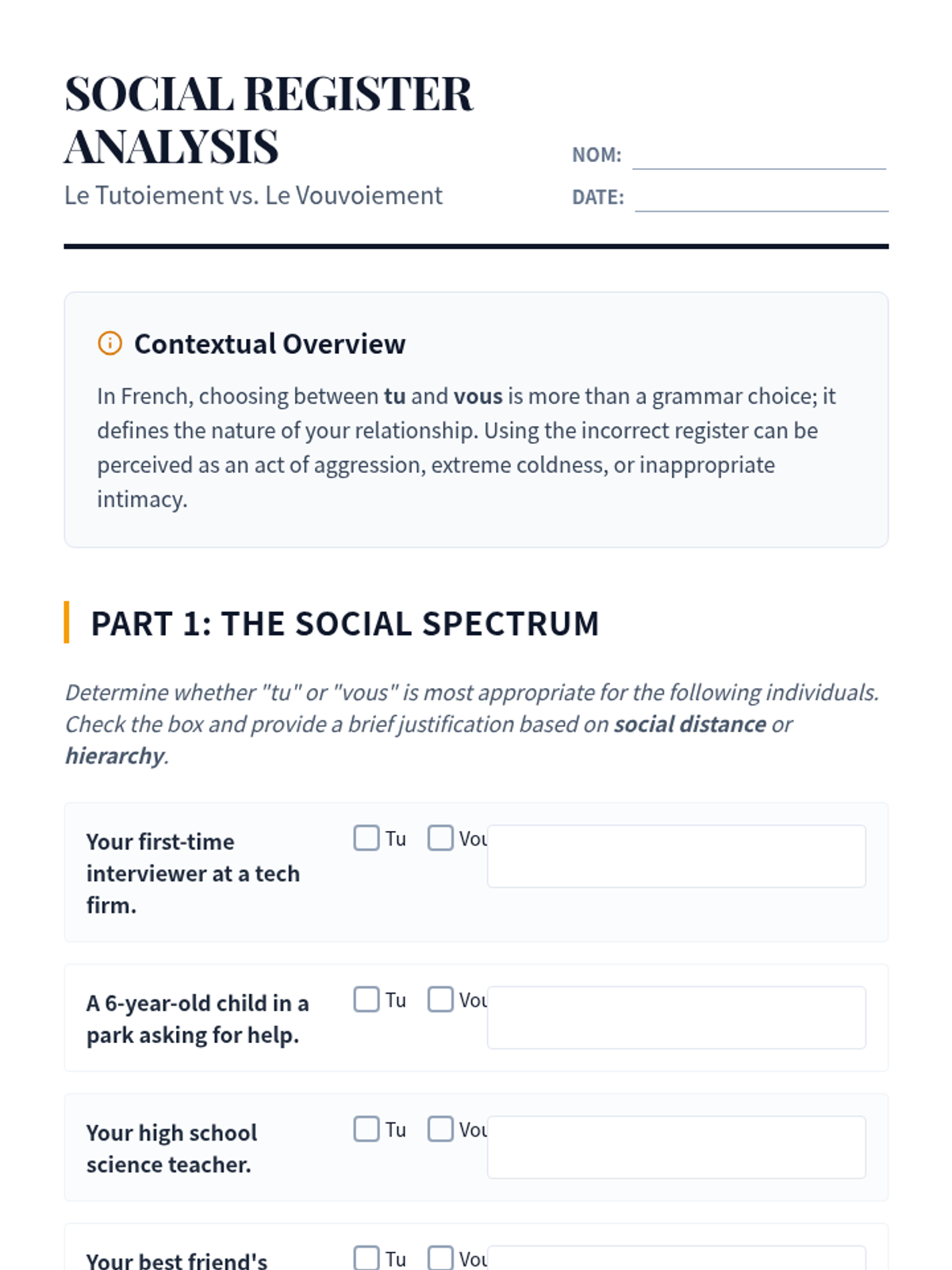
Students analyze the sociolinguistic weight of 'tu' vs 'vous' and practice categorizing social relationships to determine the appropriate register in Francophone cultures.
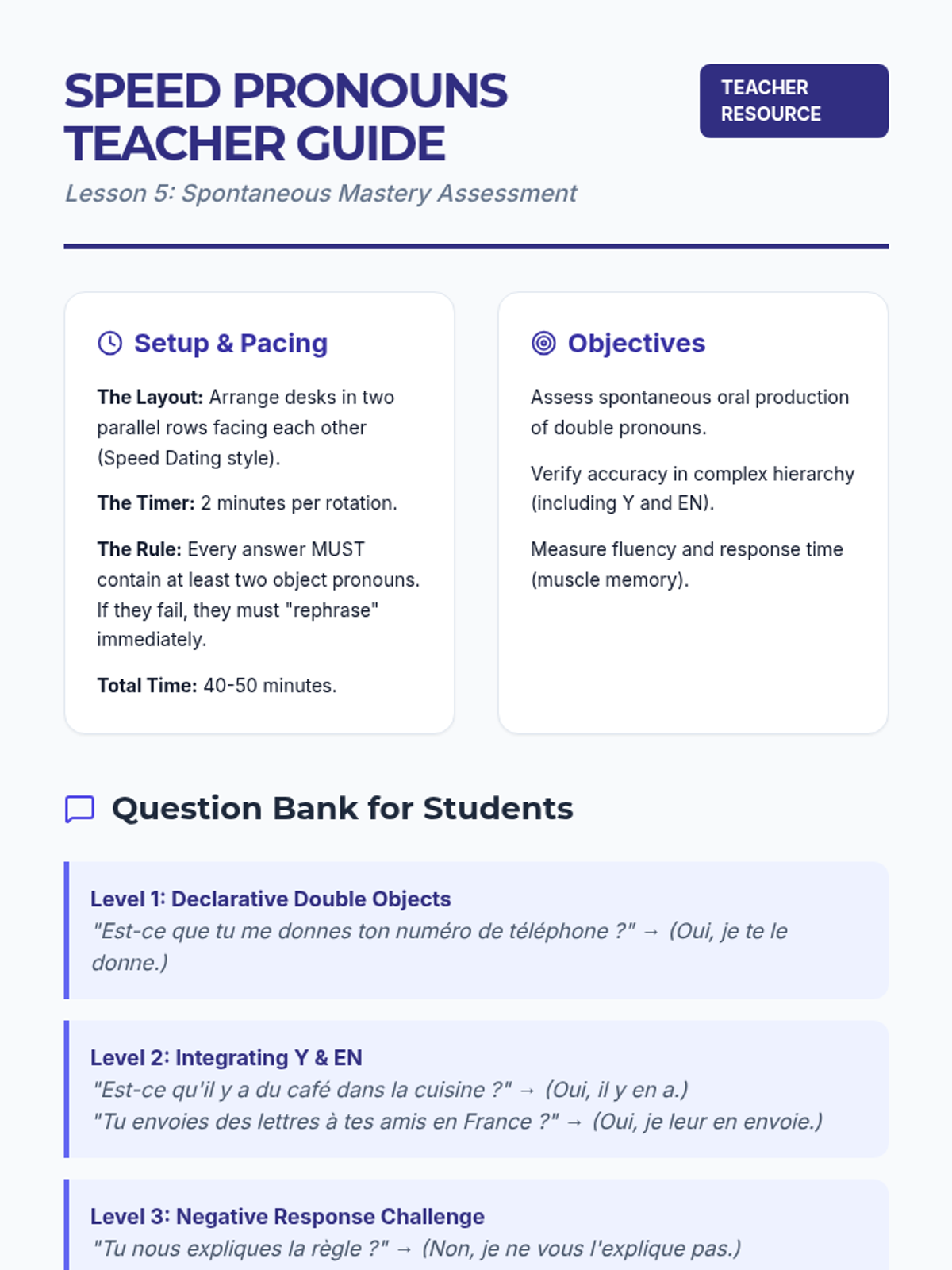
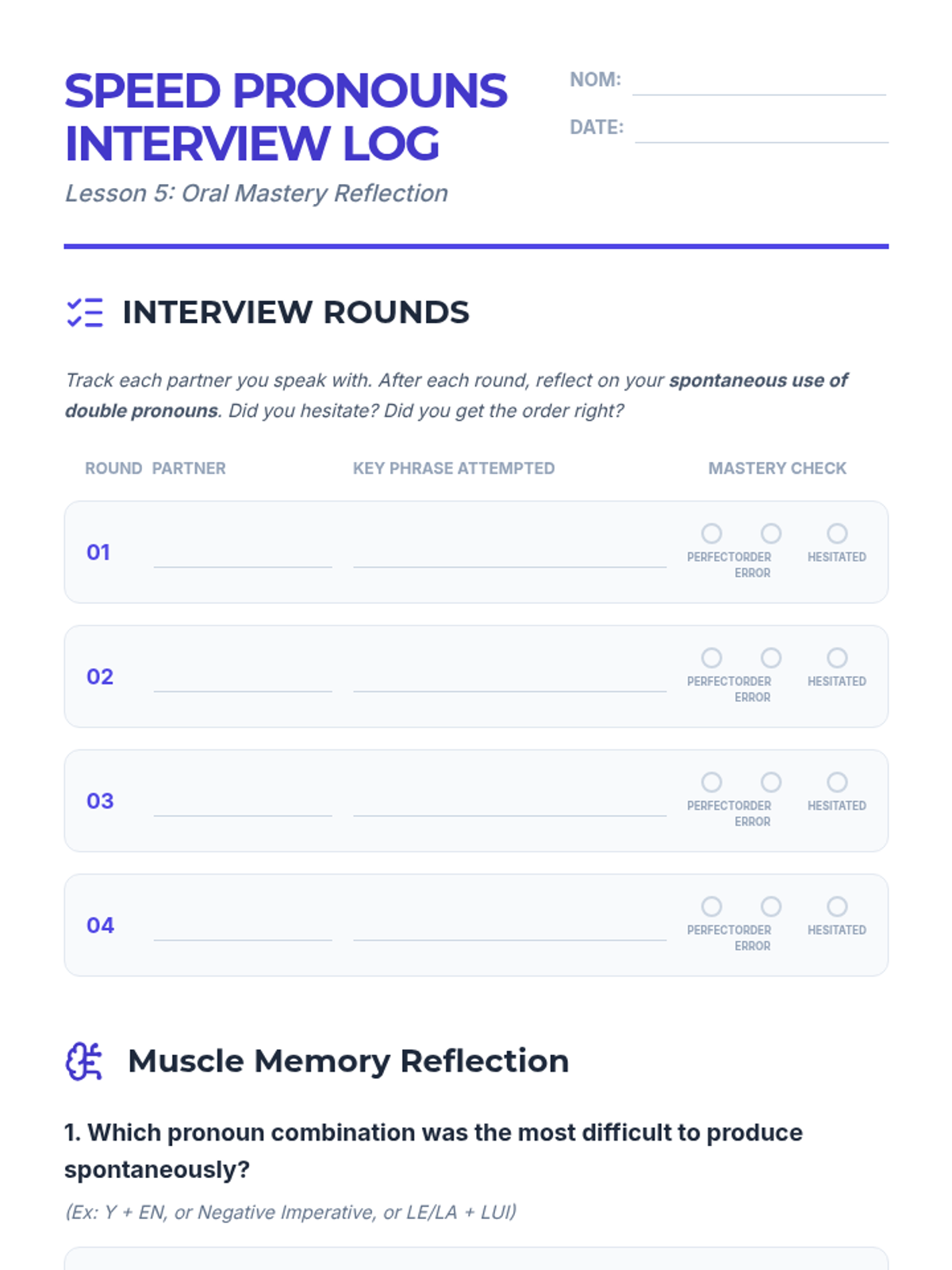
A mastery-based oral assessment where students must answer questions replacing all nouns with pronouns in real-time conversation.
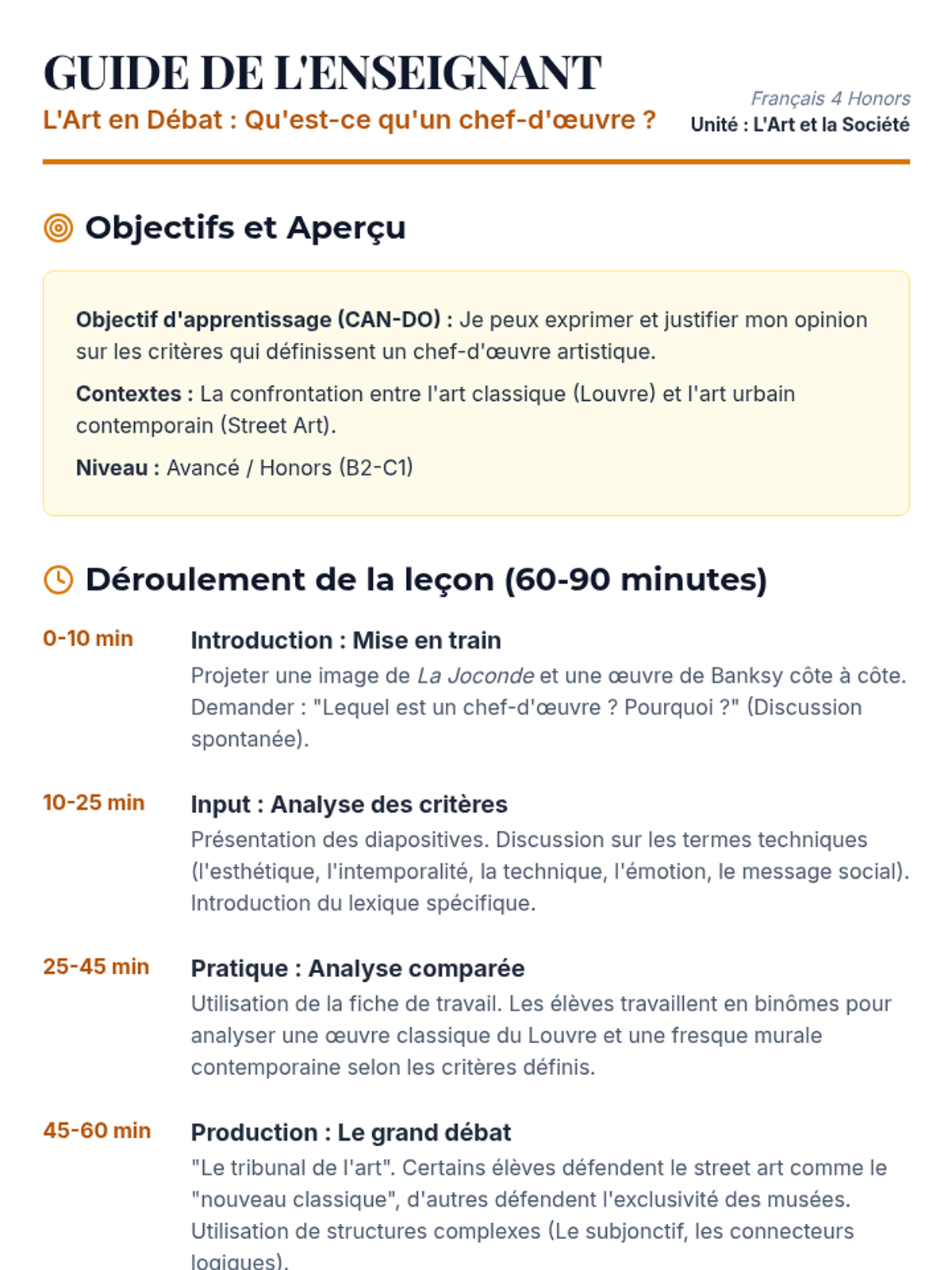
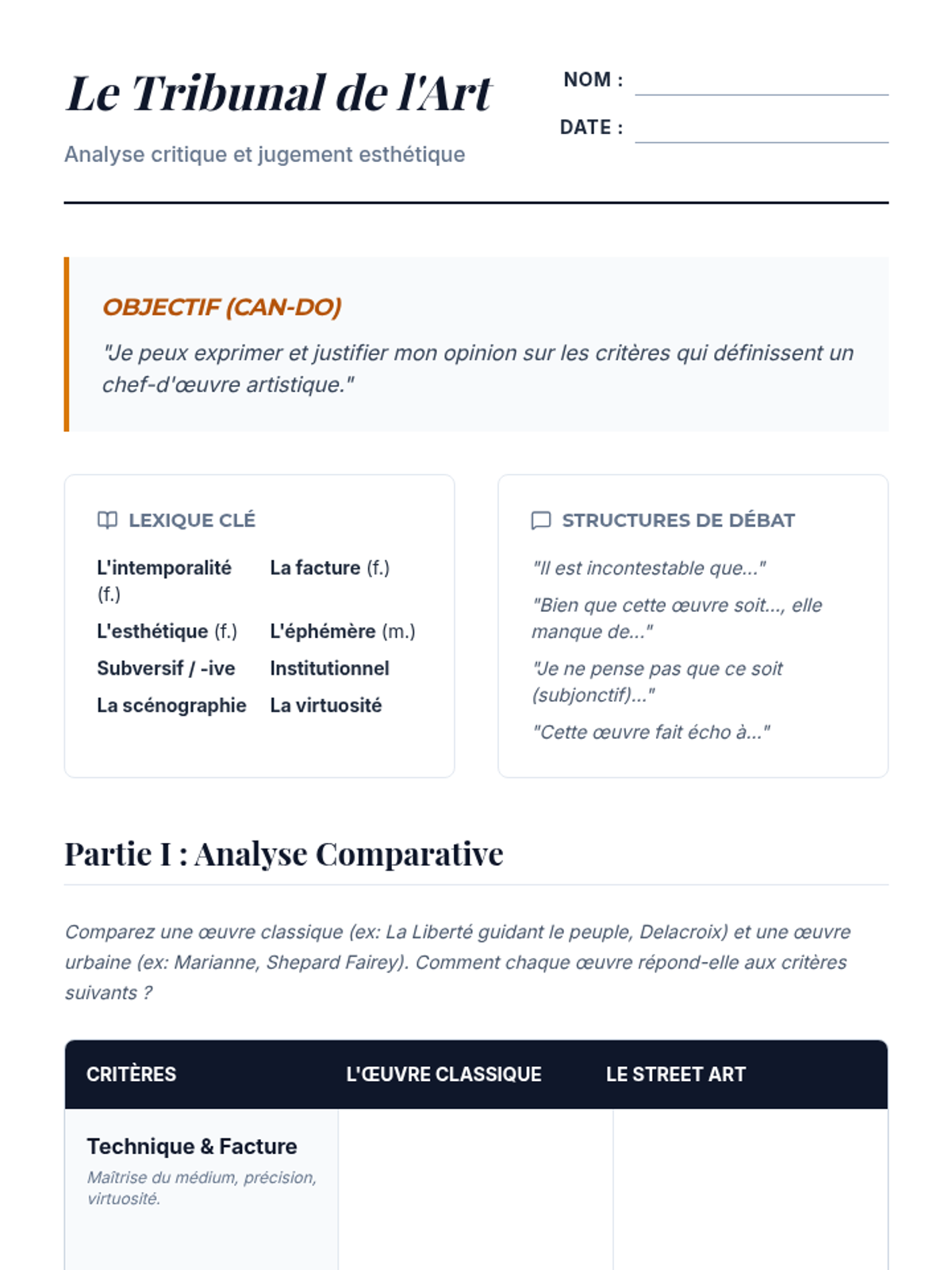
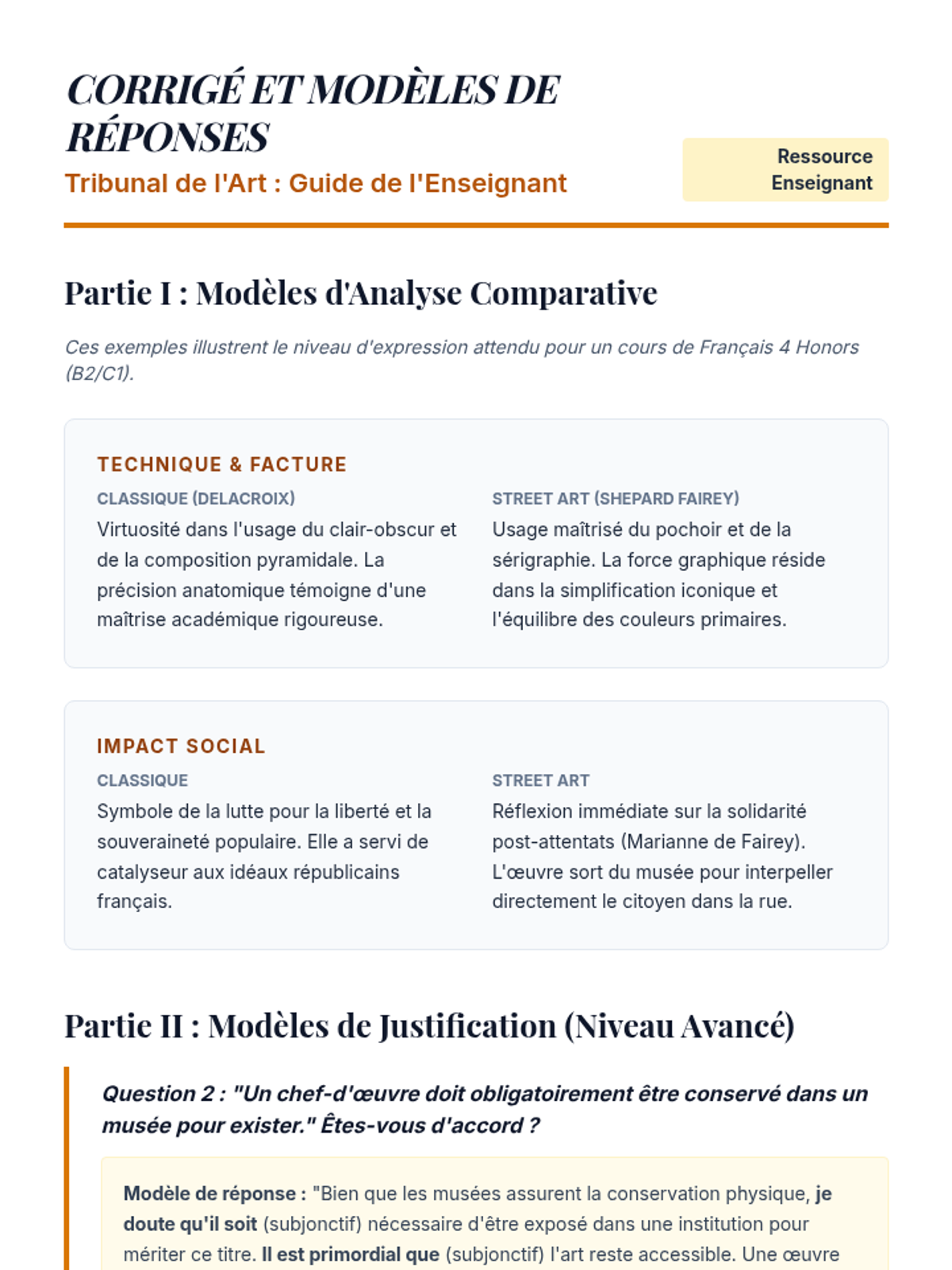
A high-level French Level 4 Honors lesson where students evaluate and debate the criteria that define a 'masterpiece,' comparing classic Louvre works with contemporary street art.
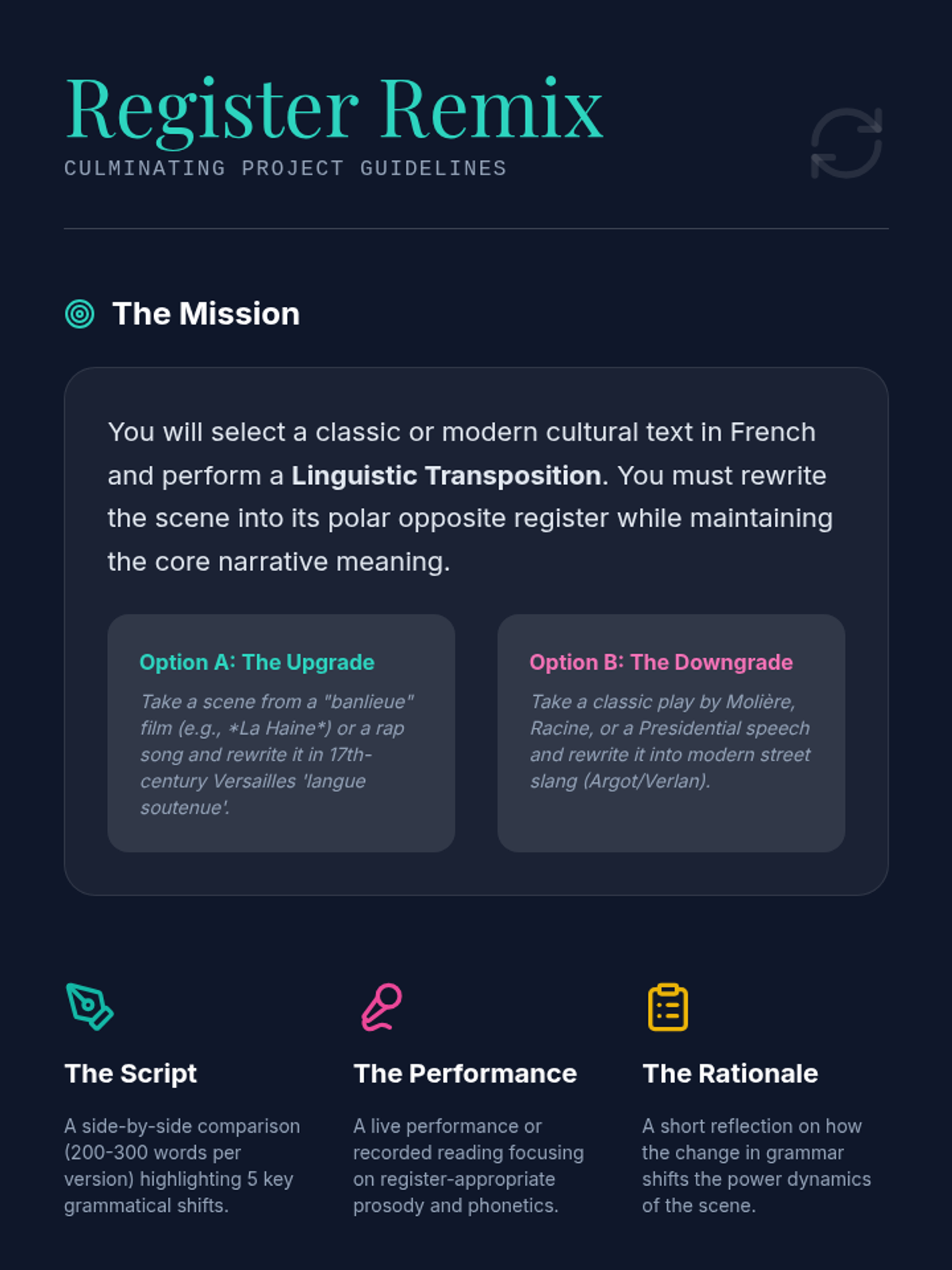
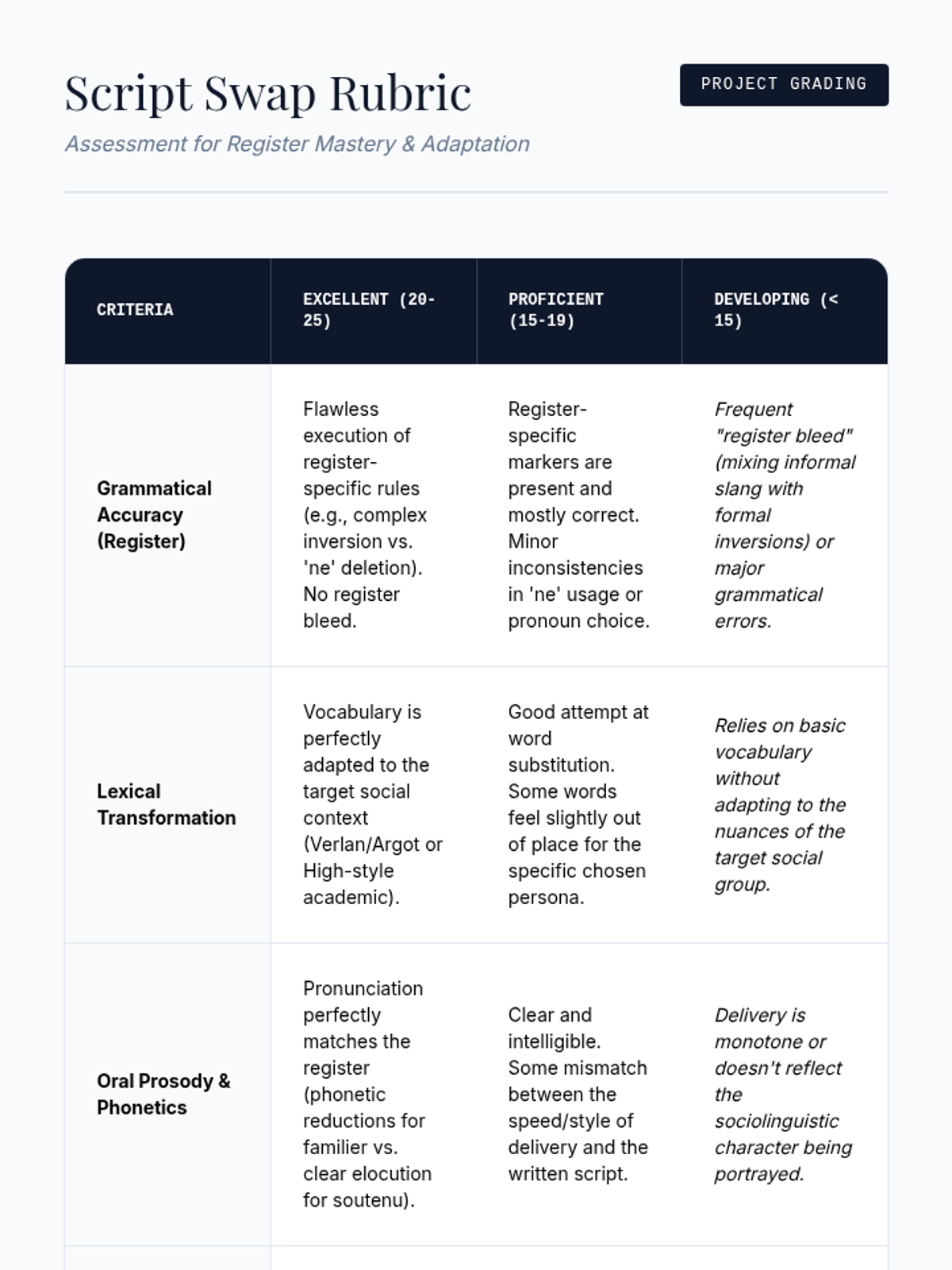
A culminating project where students adapt scenes from one register to another, demonstrating mastery over the grammatical and stylistic markers of various social contexts.
Explores the mechanics of high-register French, including complex inversions, advanced negation, and the use of 'cela' and 'lequel'.
Focuses on the phonology and grammar of 'le français familier', including phonetic reductions, the use of 'on' for 'nous', and common slang structures.
A deep dive into the three ways to form questions in French and how each choice communicates a specific level of formality and social distance.
An introduction to the three primary registers of French, comparing grammatical markers like 'ne' deletion and vocabulary shifts through dialogue analysis.
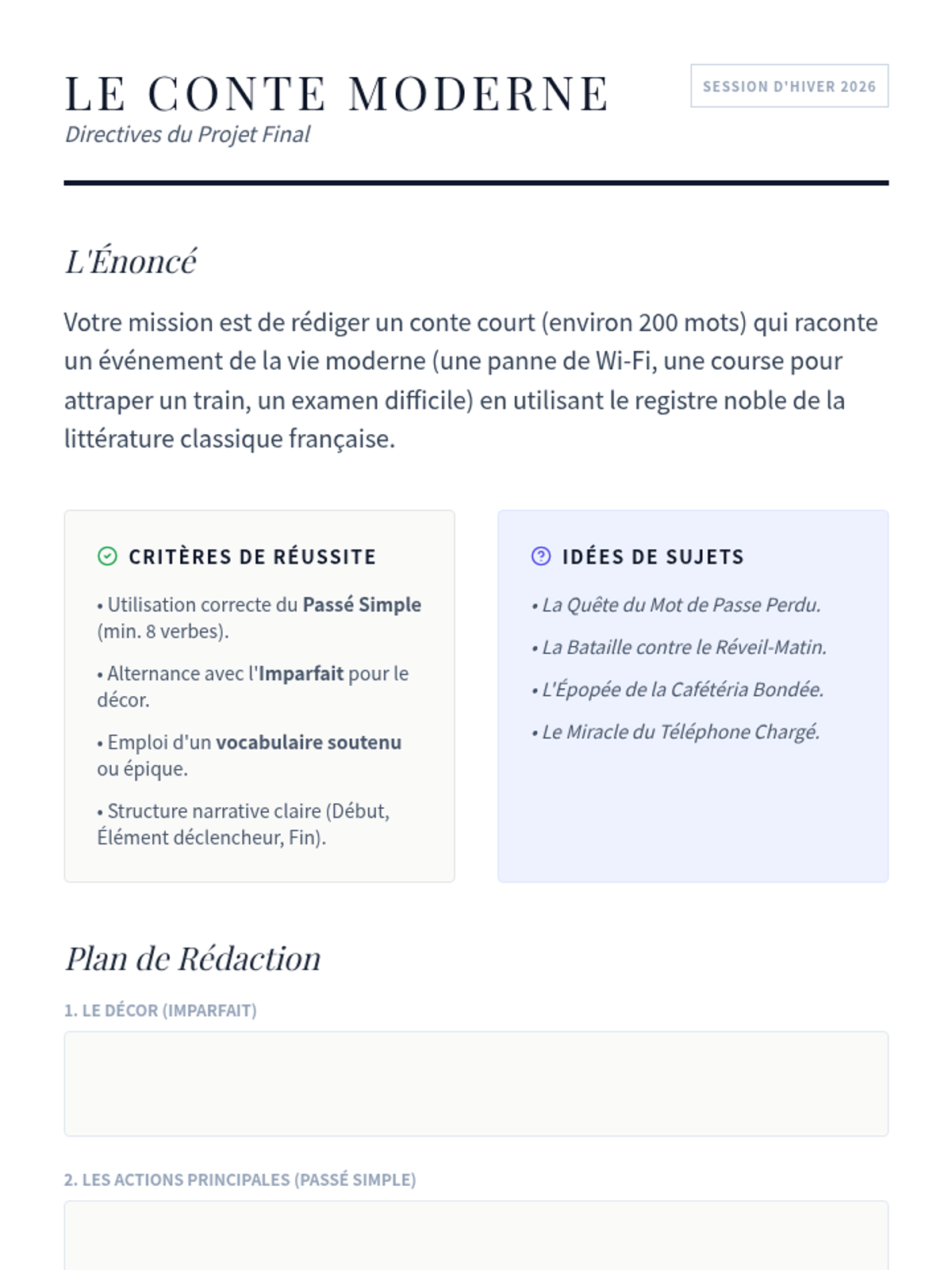
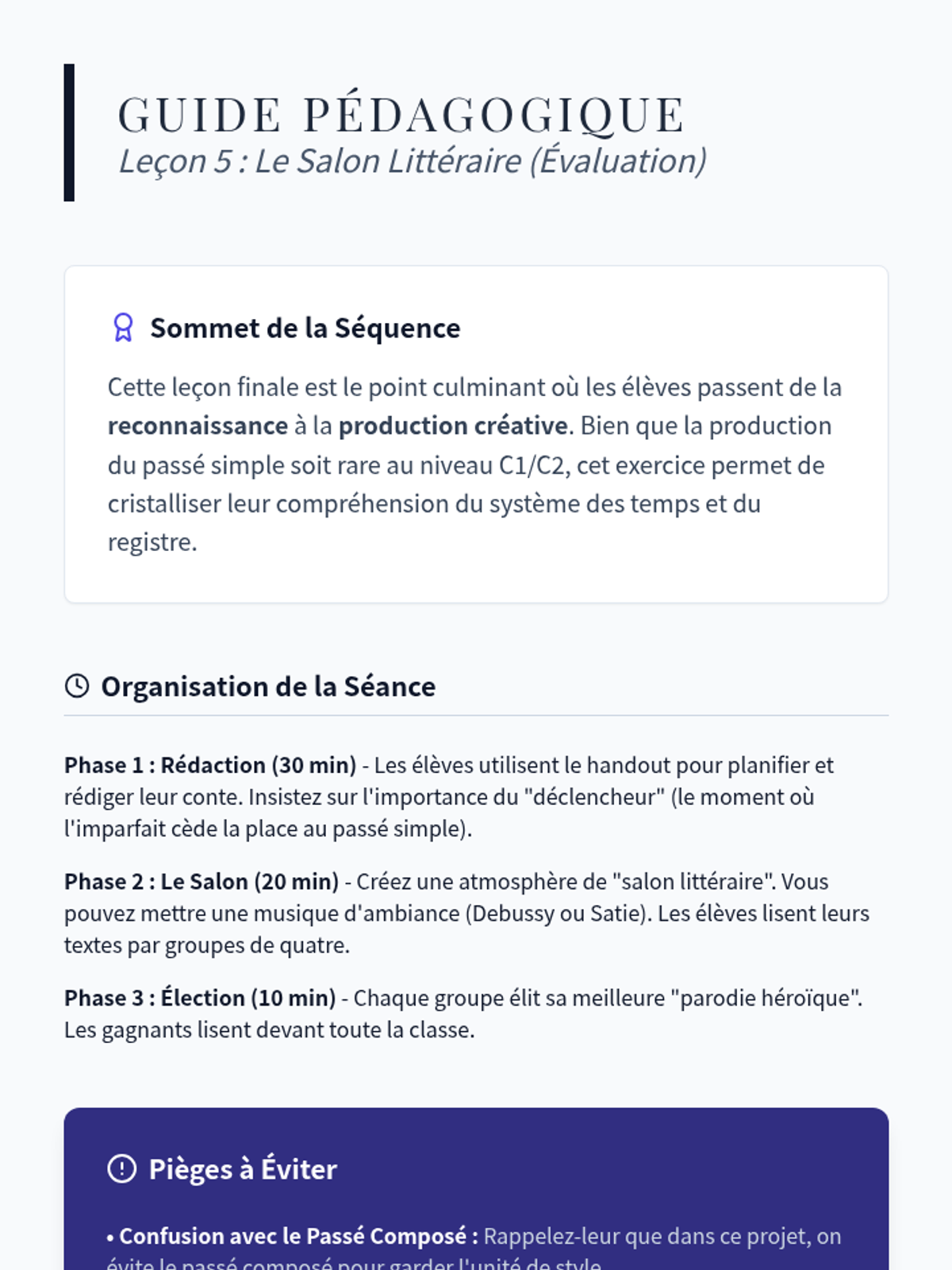
Students write a short 'fairy tale' set in modern times, utilizing the passé simple for the main actions. They share stories in a 'literary salon' setting.
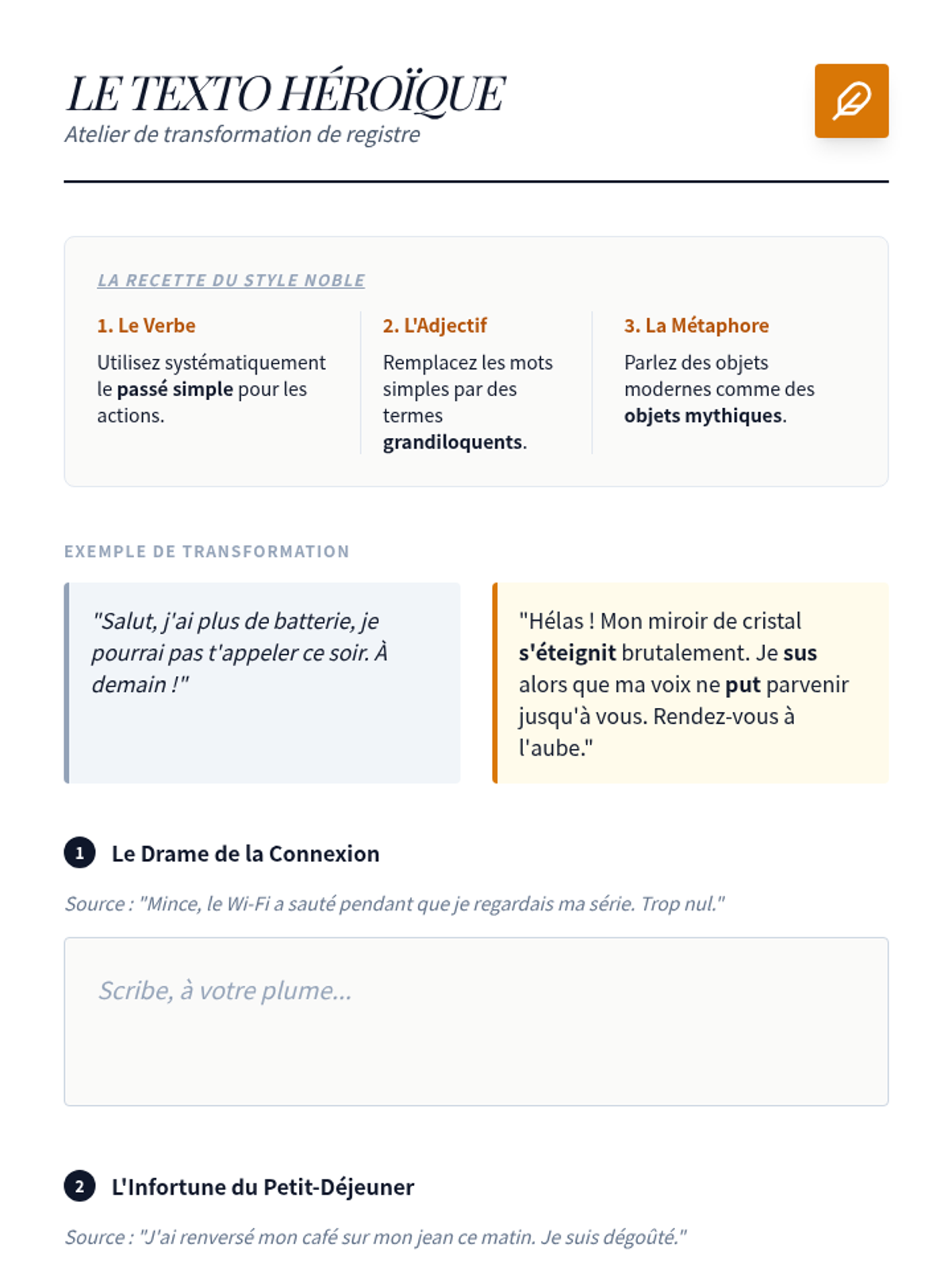
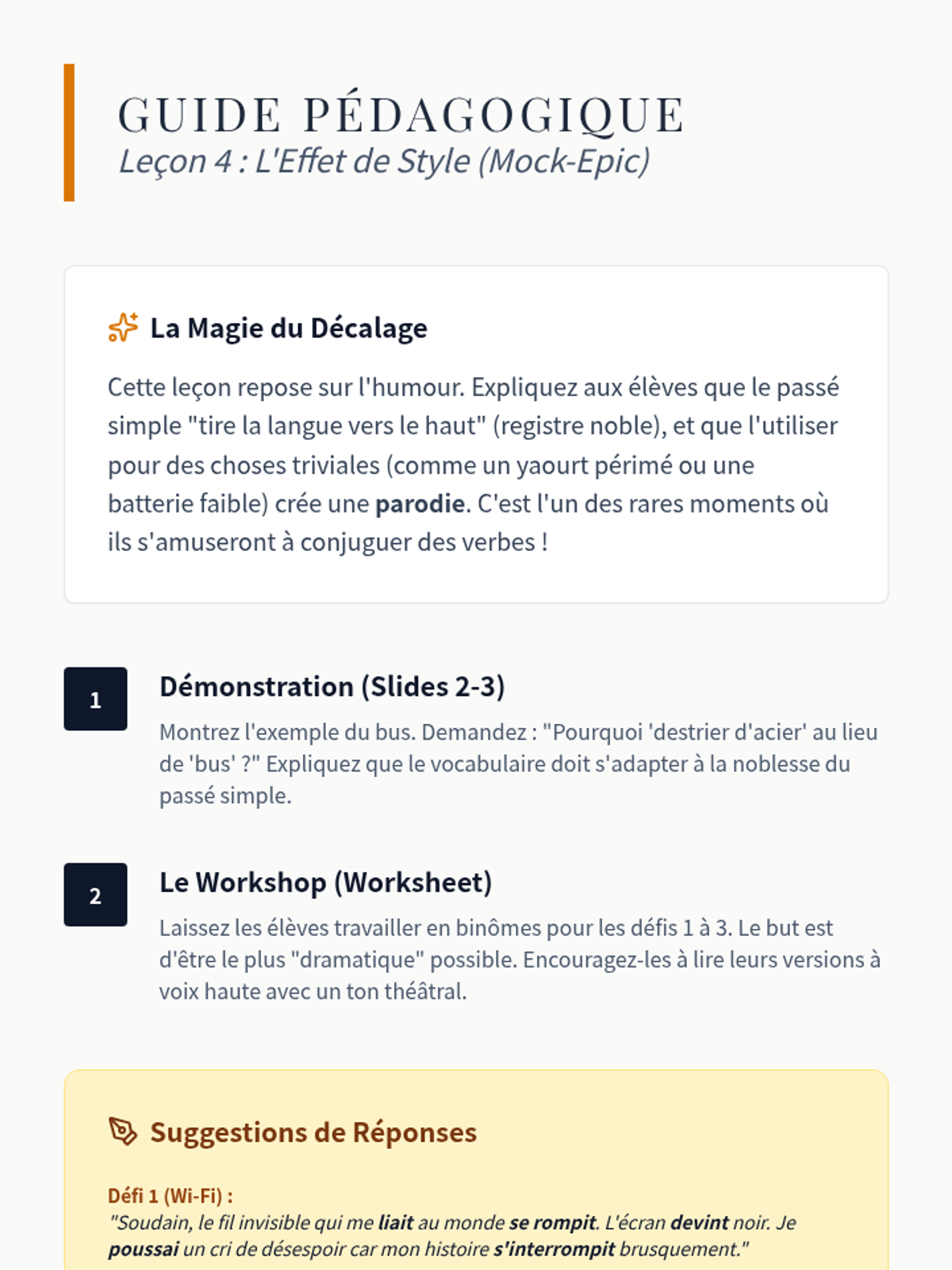
Students take a contemporary email or text message recounting an event and rewrite it using the passé simple to create a mock-epic tone. This highlights the stylistic gap between spoken and literary French.
Students analyze how authors switch between description (imparfait) and plot action (passé simple). They diagram the timeline of a short story to visualize this relationship.
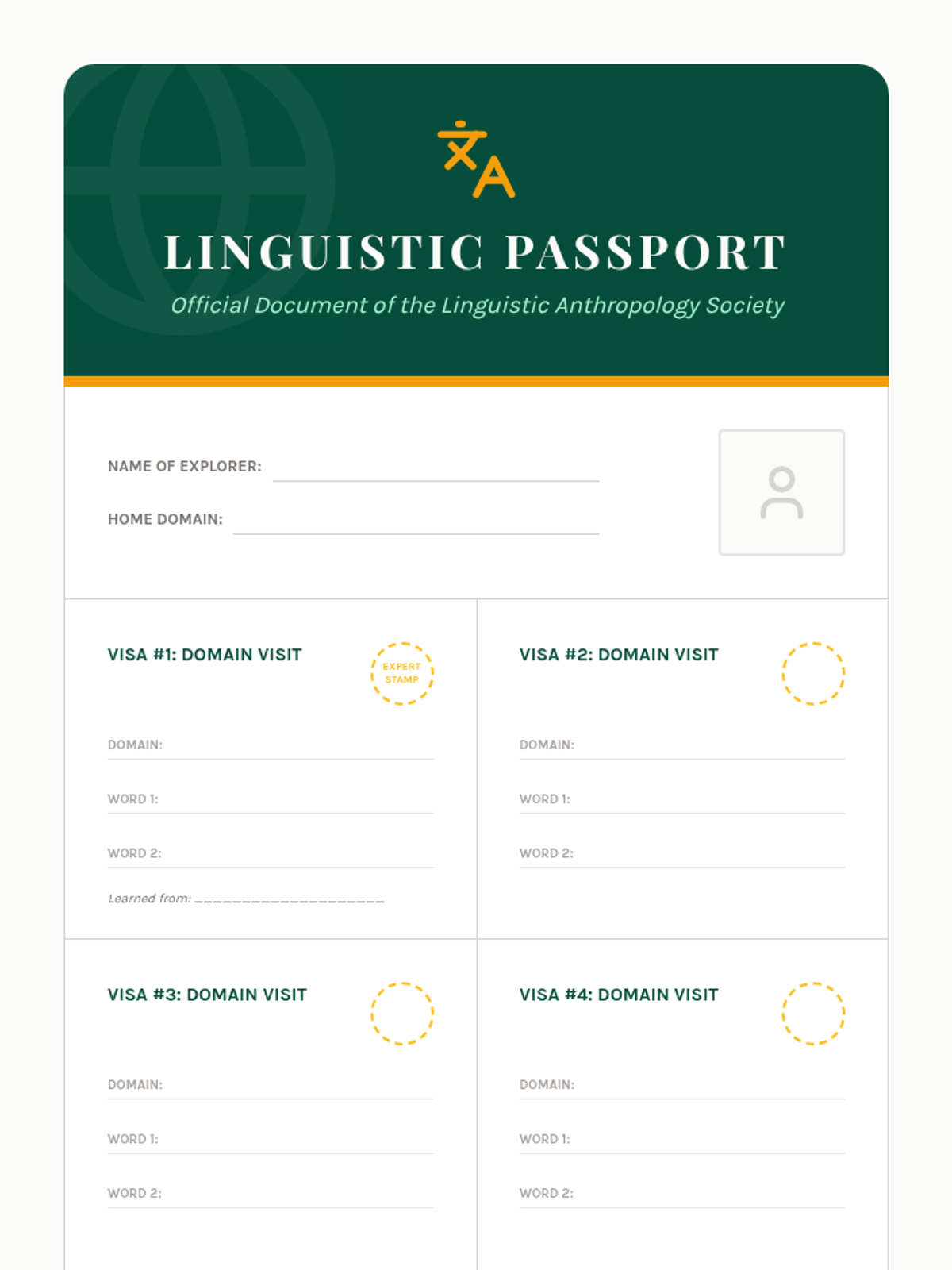
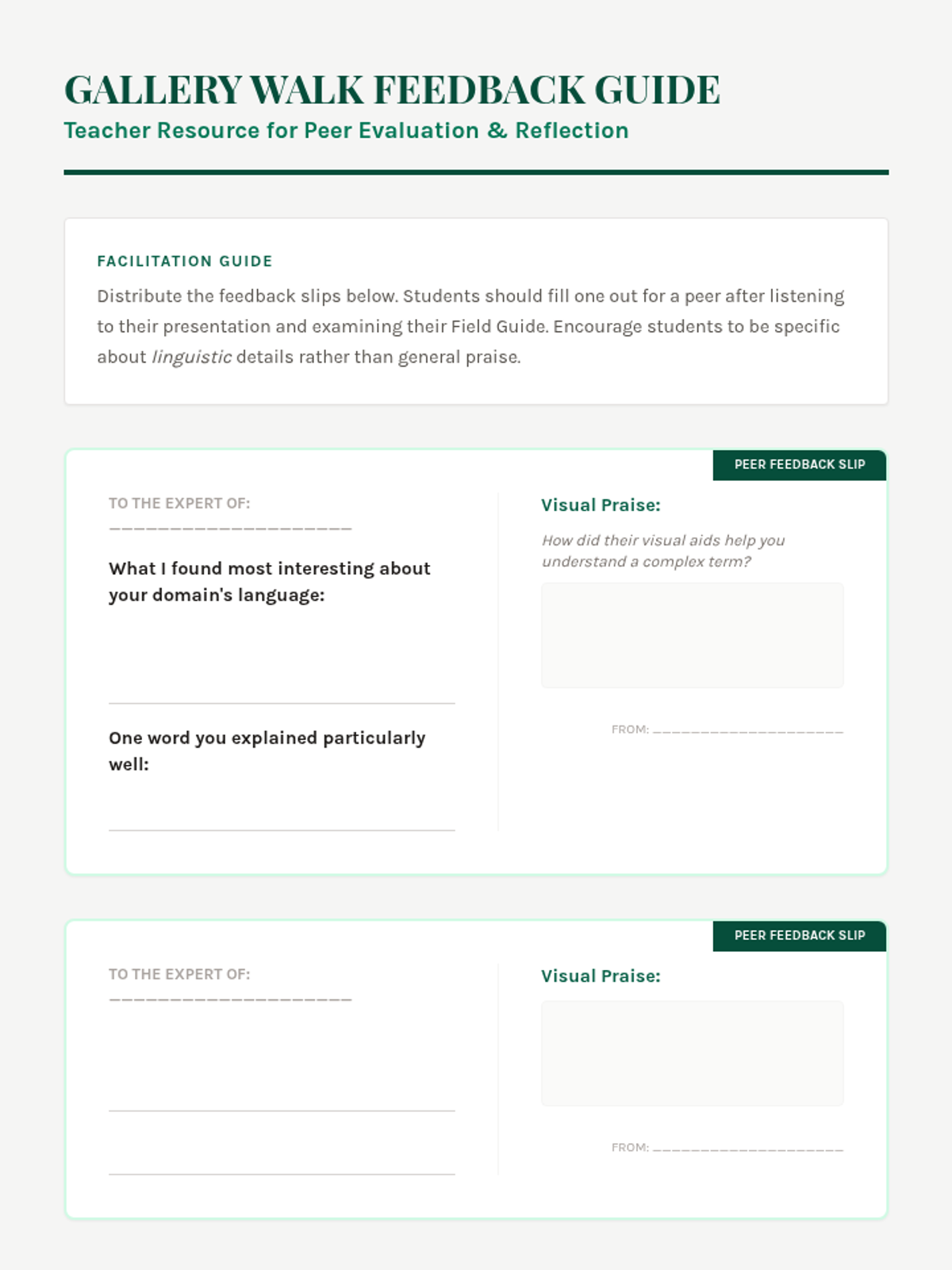
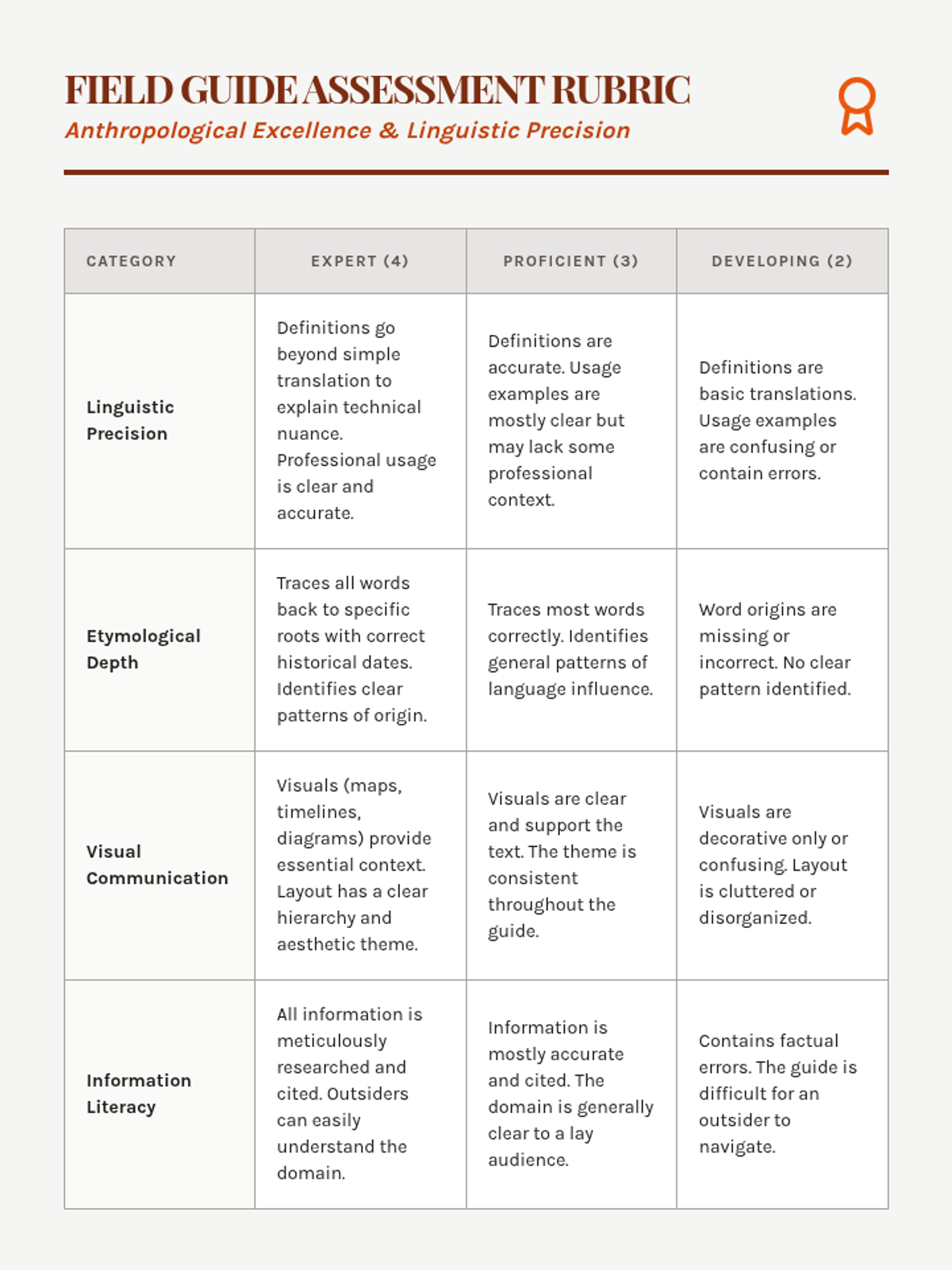
Students present their final field guides in a gallery walk format, teaching peers about the linguistic influences in their chosen domains.
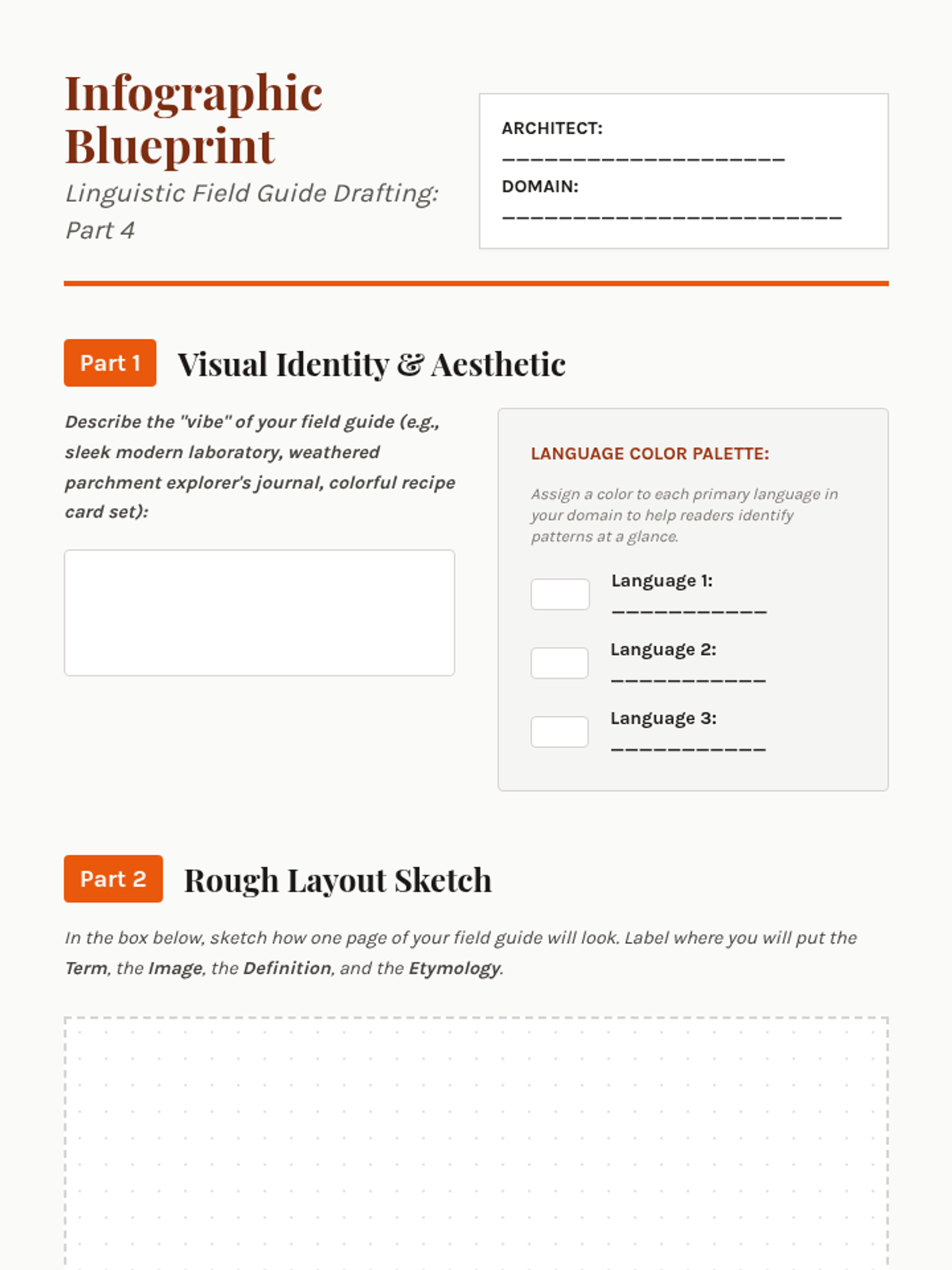
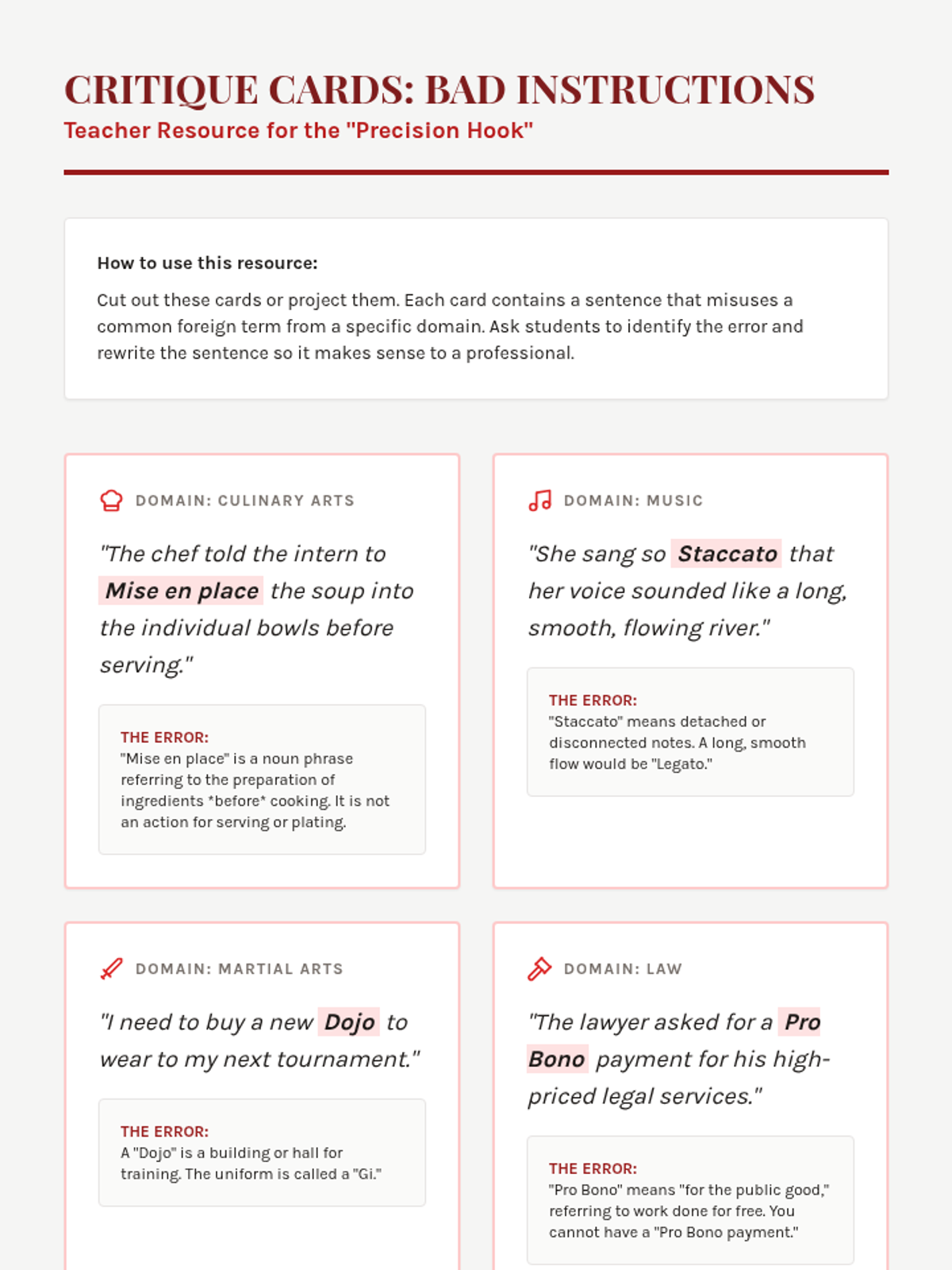
Students design visual aids and infographics to make complex foreign terminology accessible and memorable for a general audience.
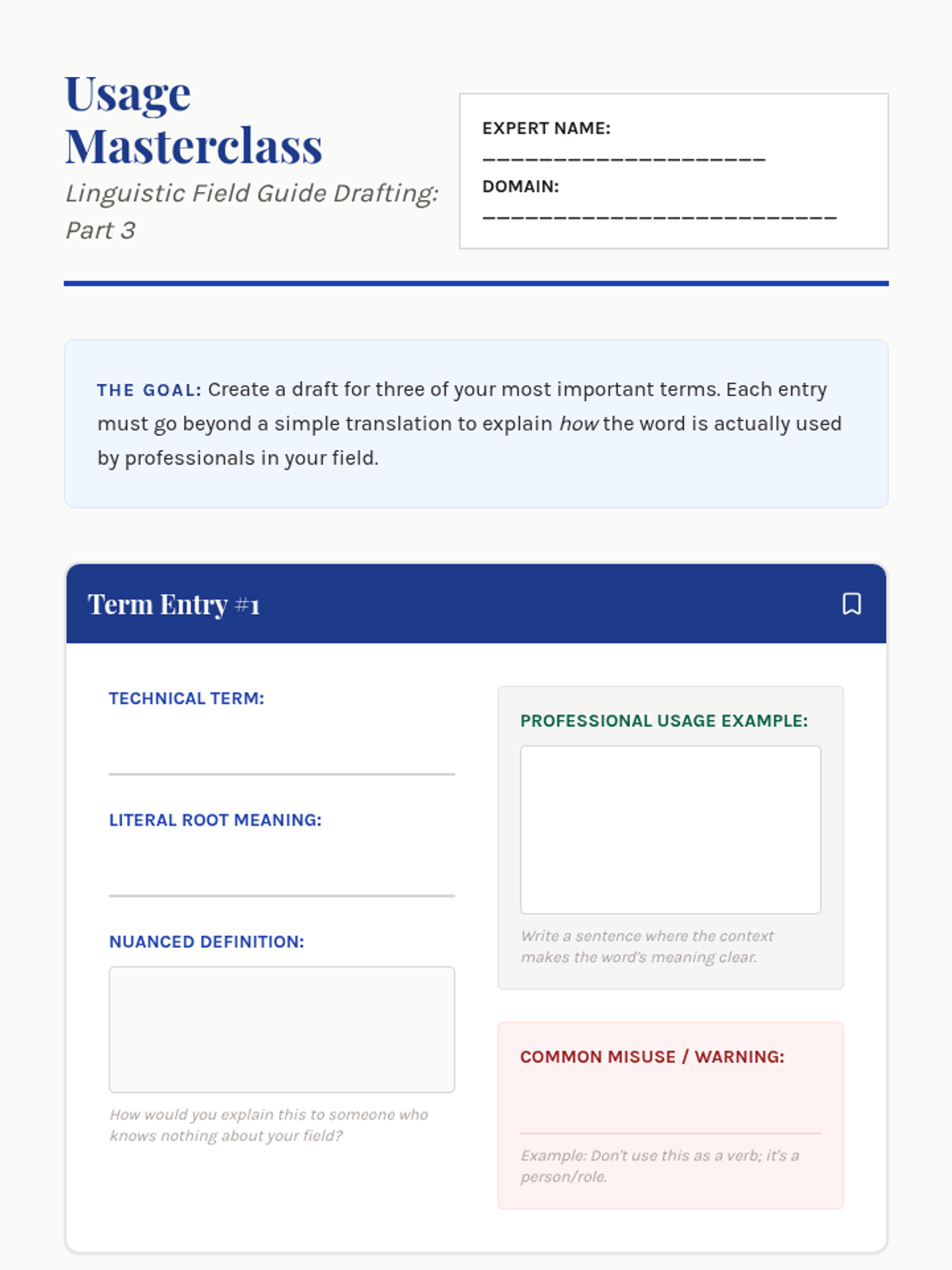
Students draft technical definitions and usage guides that explain the nuances of their chosen terms within their professional context.
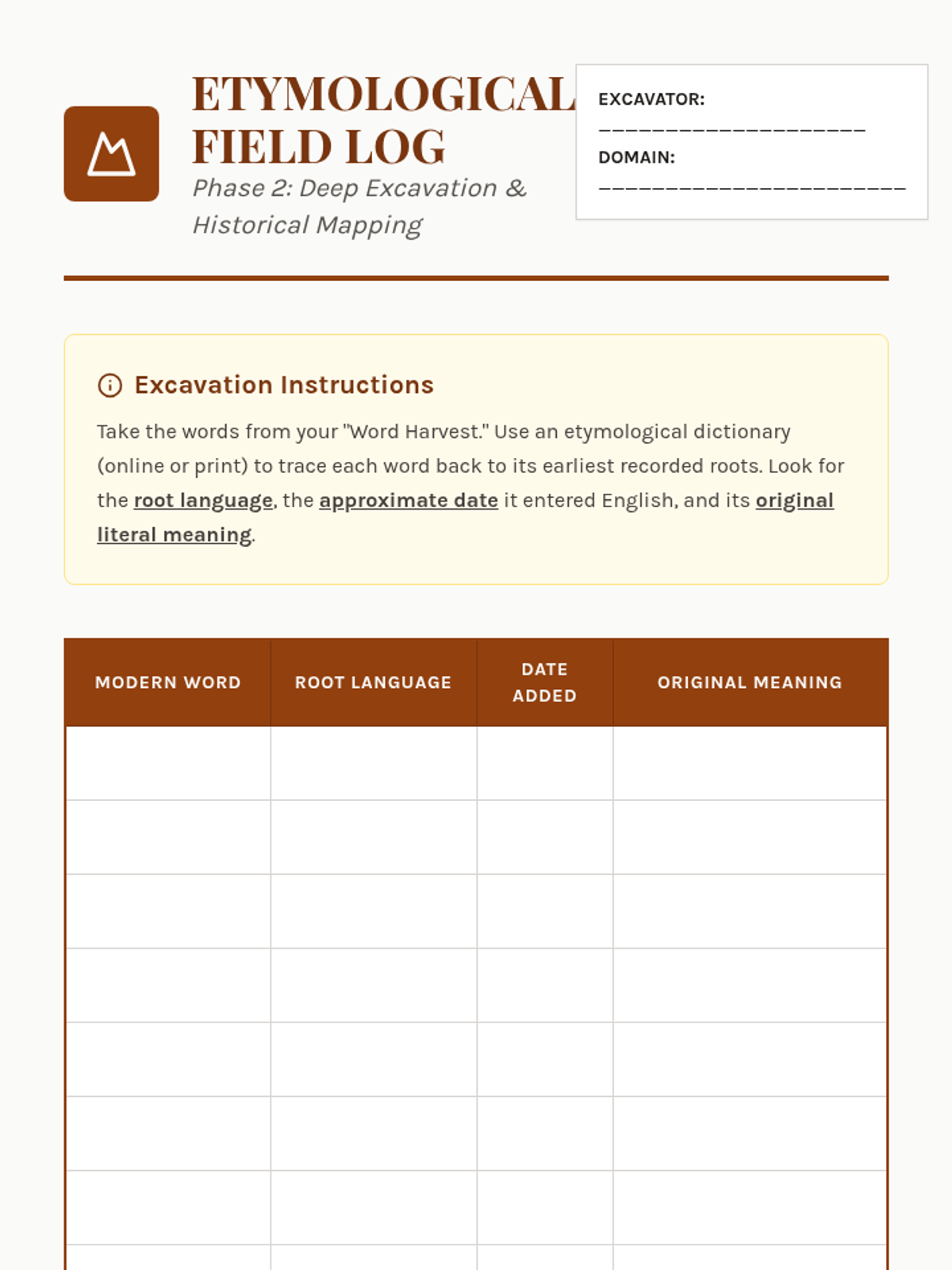
Students use etymological resources to trace the historical origins of their harvested words and identify cultural patterns in language usage.
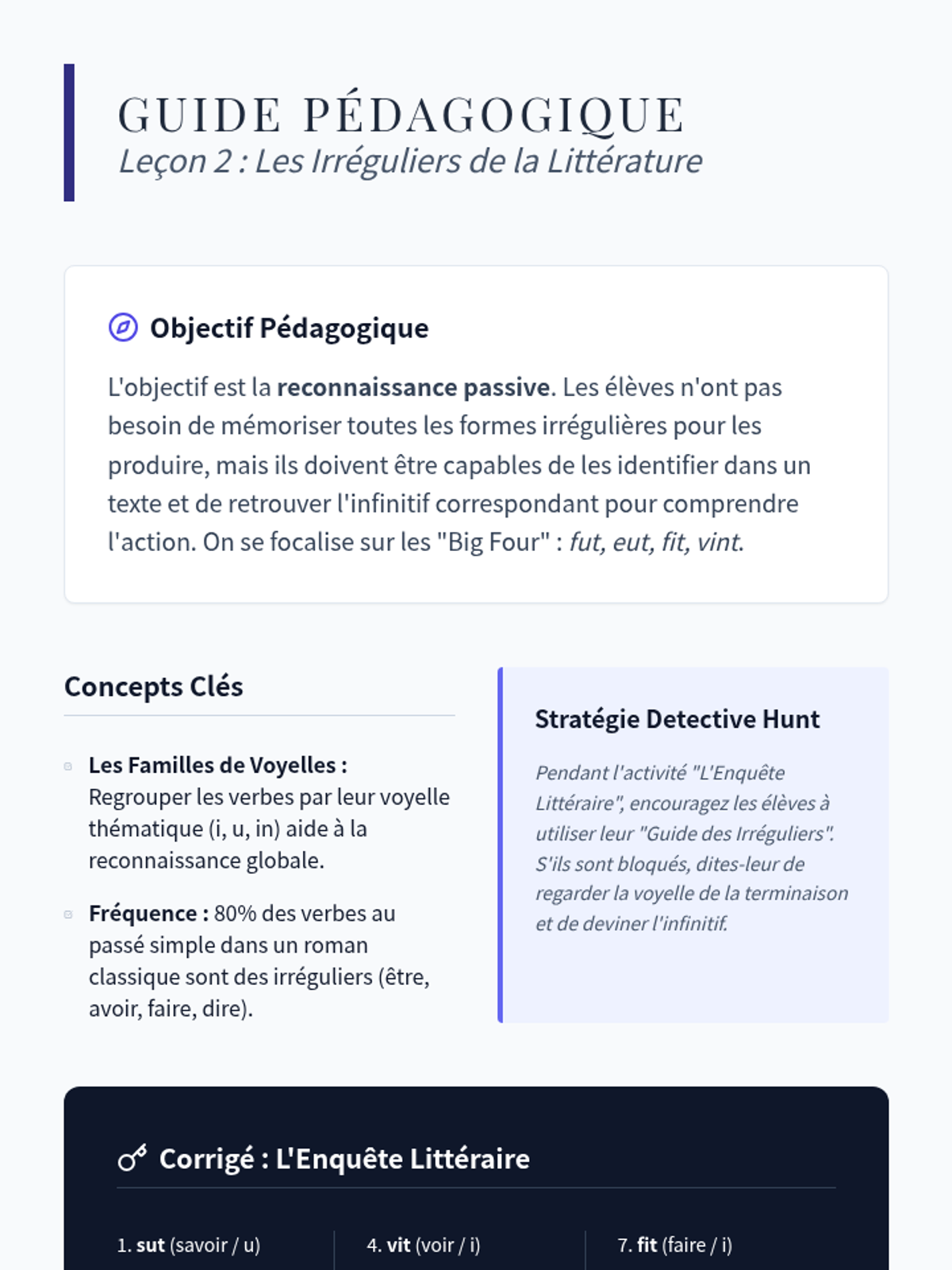
Focusing on the 'big' irregulars (fut, eut, fit, vint), students translate literary excerpts into modern French. They create a reference guide for these high-frequency literary forms.
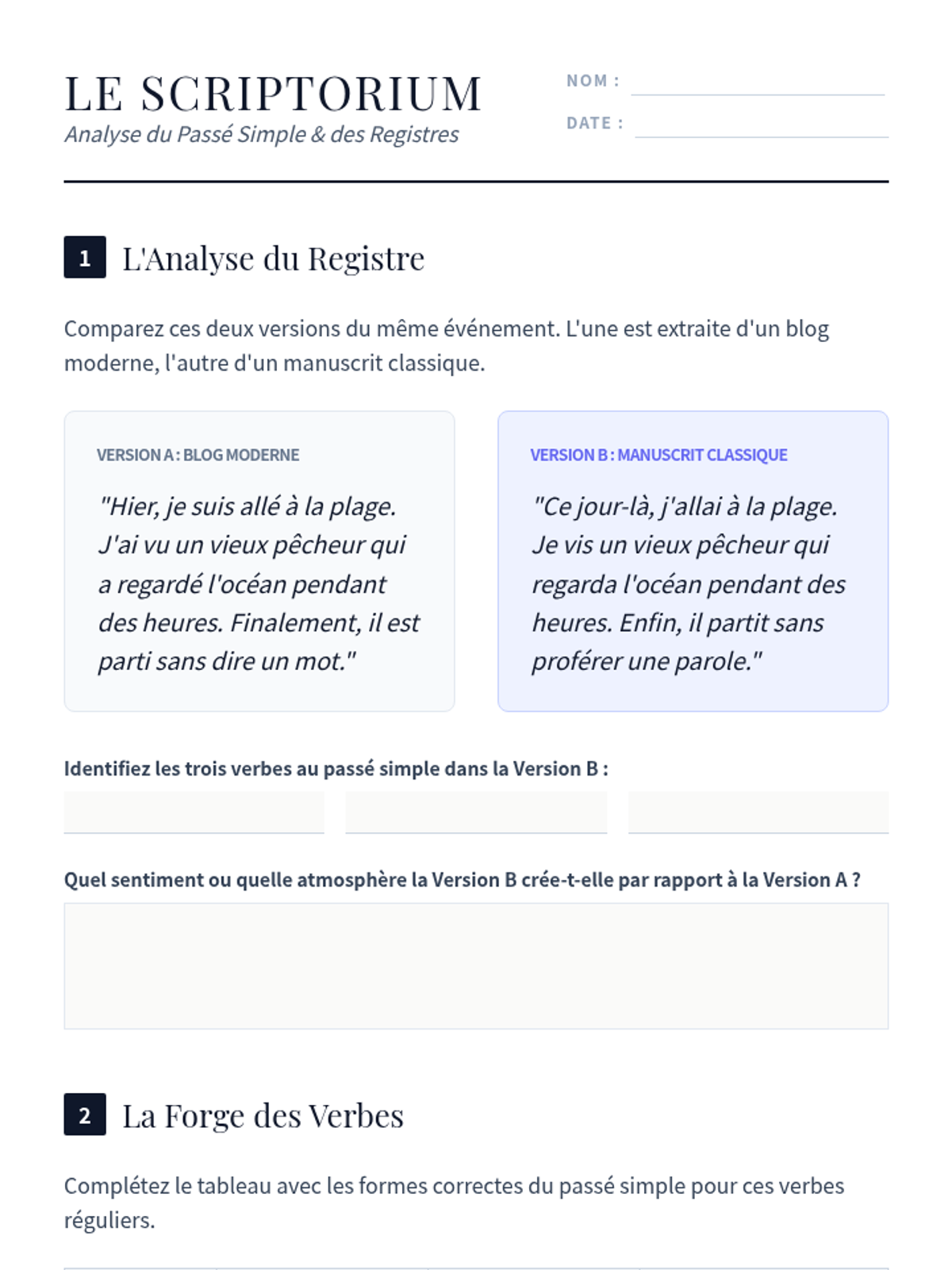
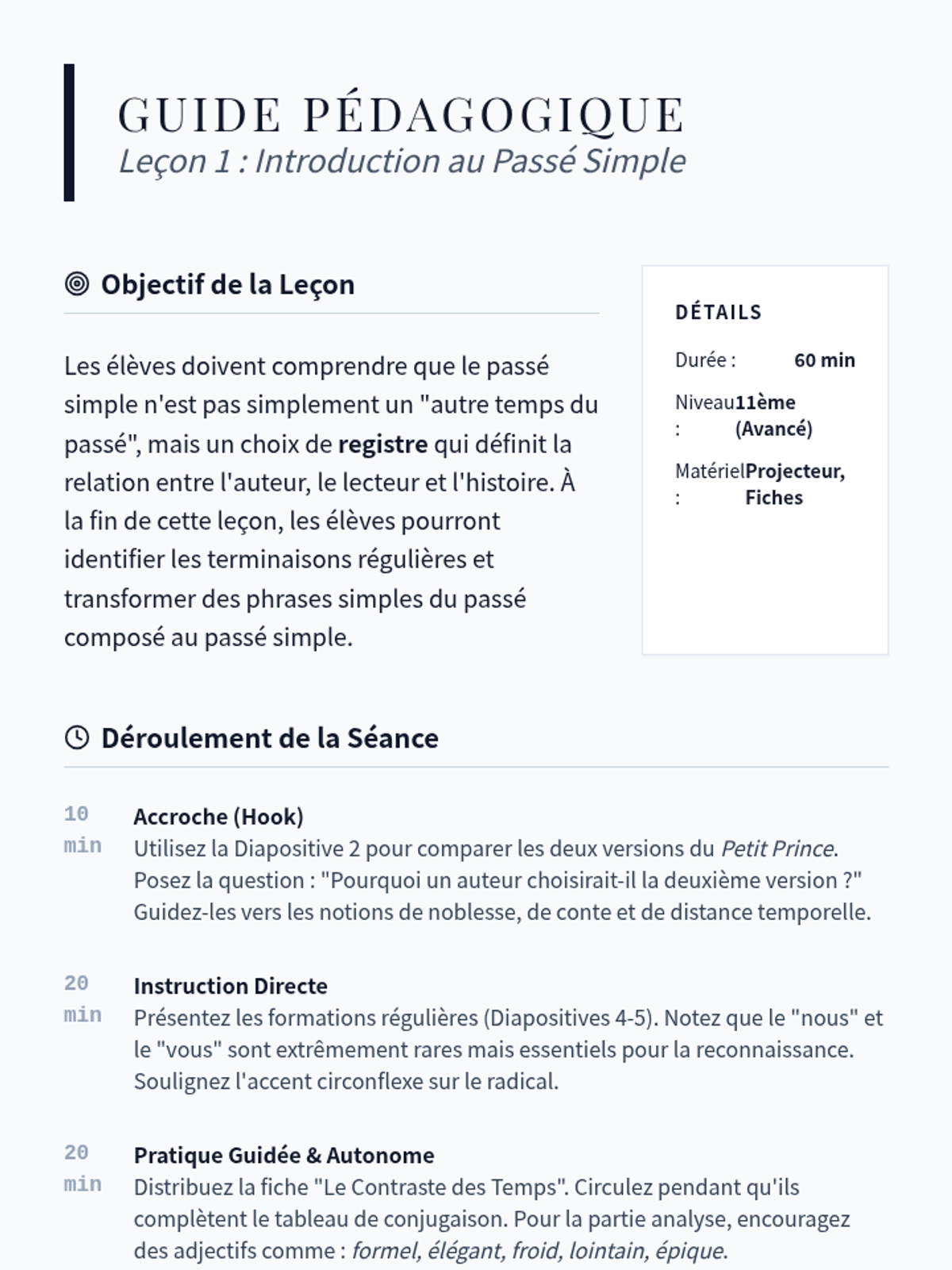
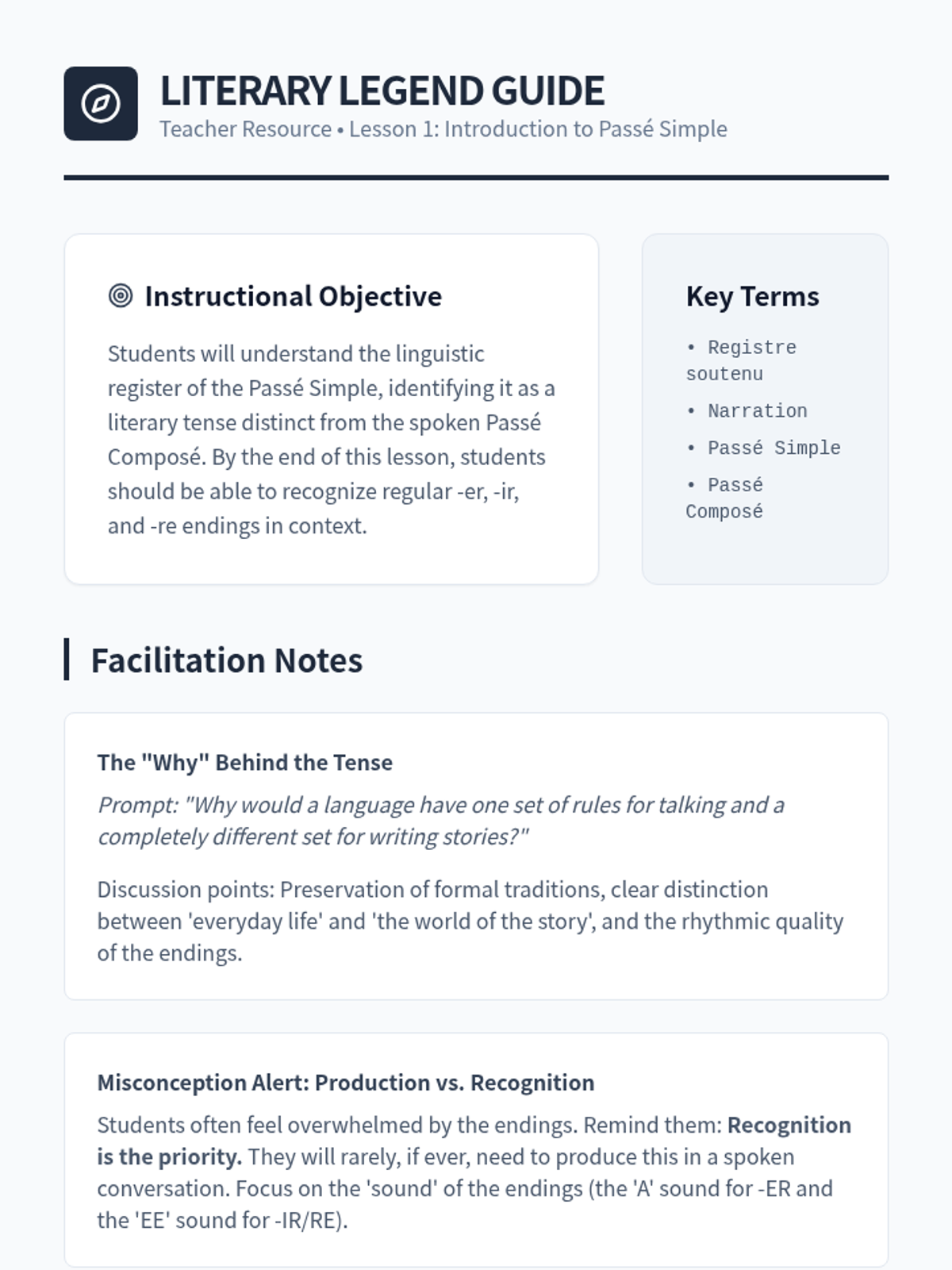
Students compare a text written in passé composé with one in passé simple to analyze the difference in tone and register. They learn the regular formation patterns for -er, -ir, and -re verbs.
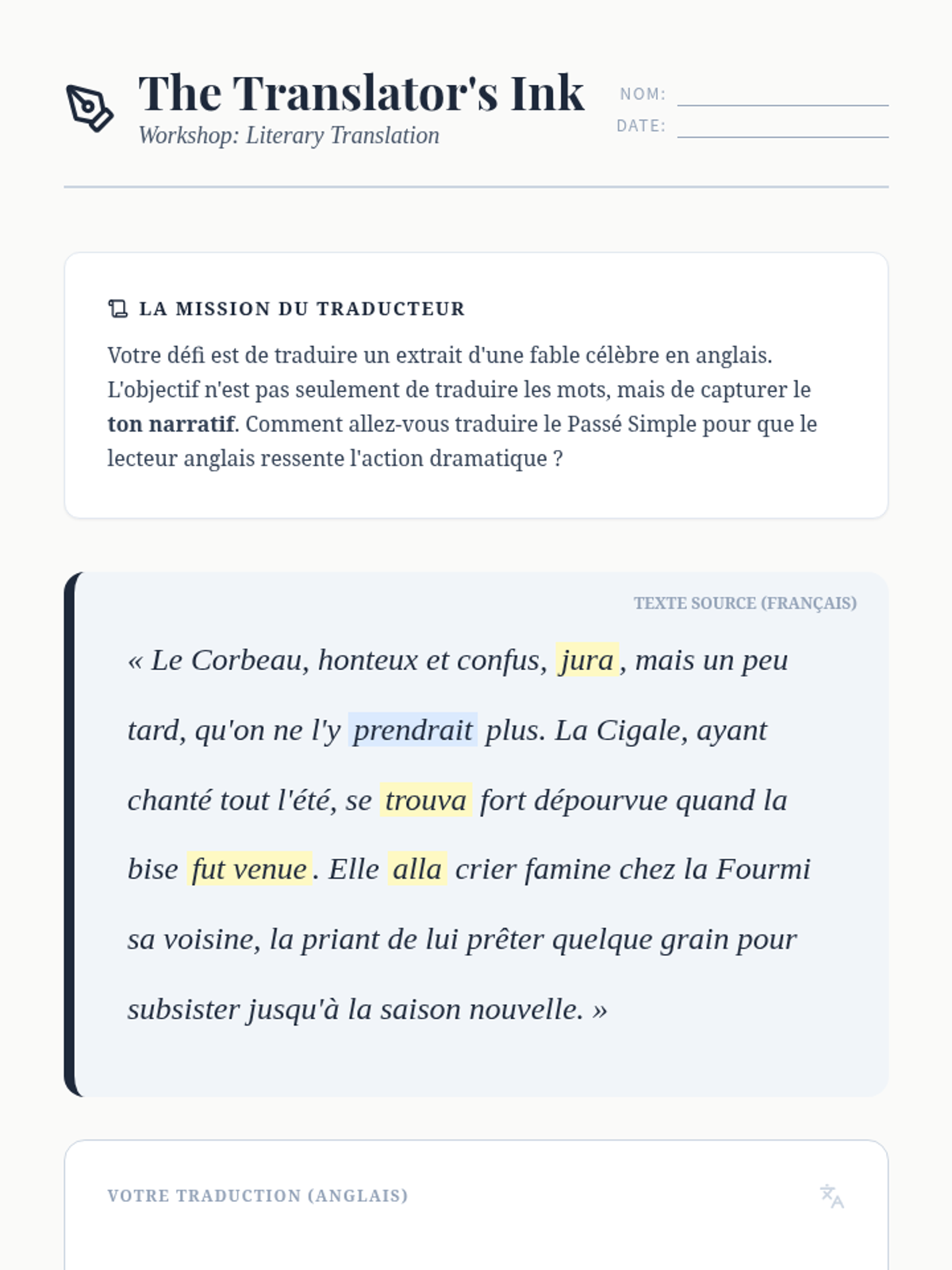
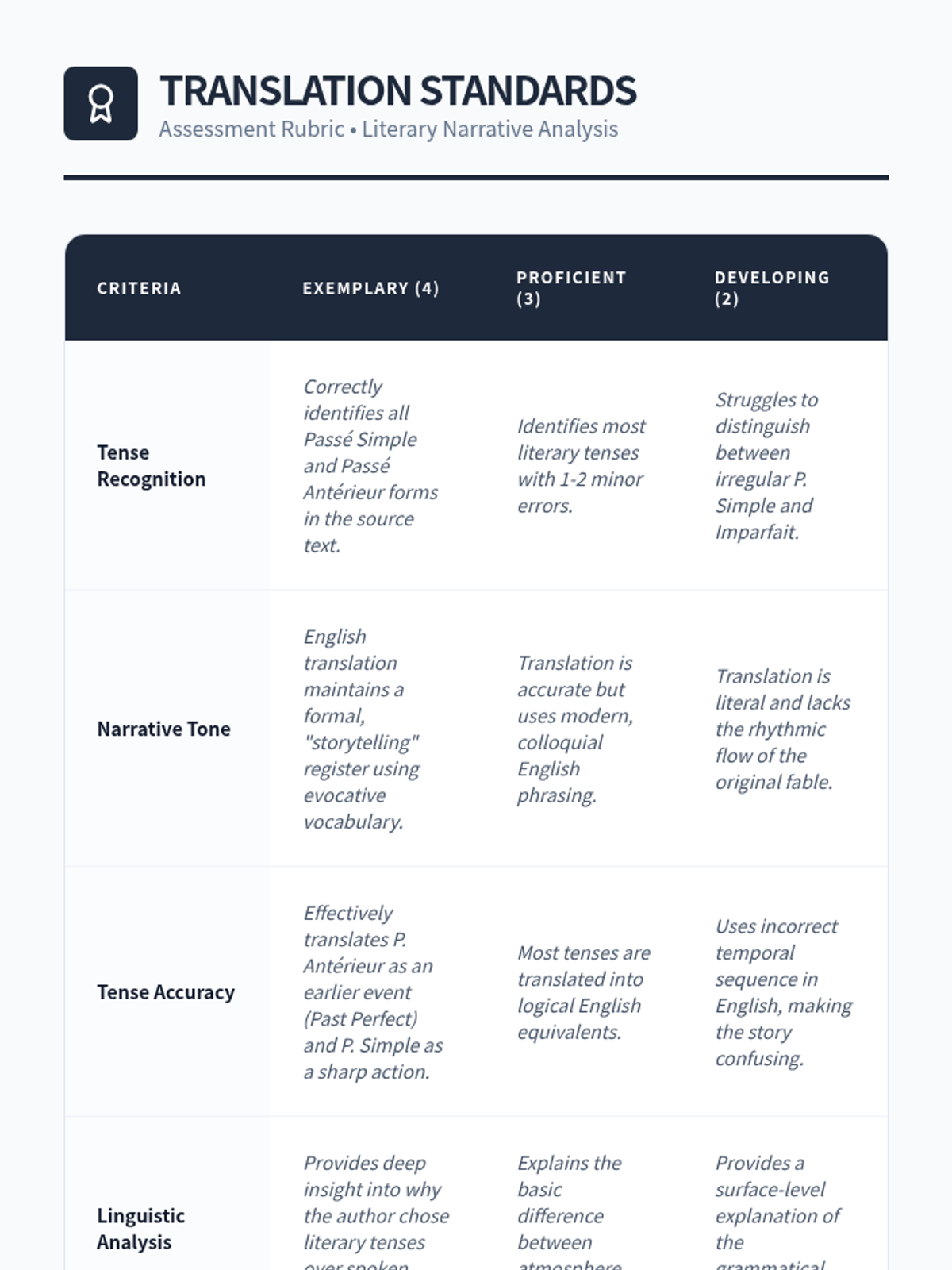
A hands-on workshop where students apply their knowledge to translate a classic French fable or literary passage into nuanced English.
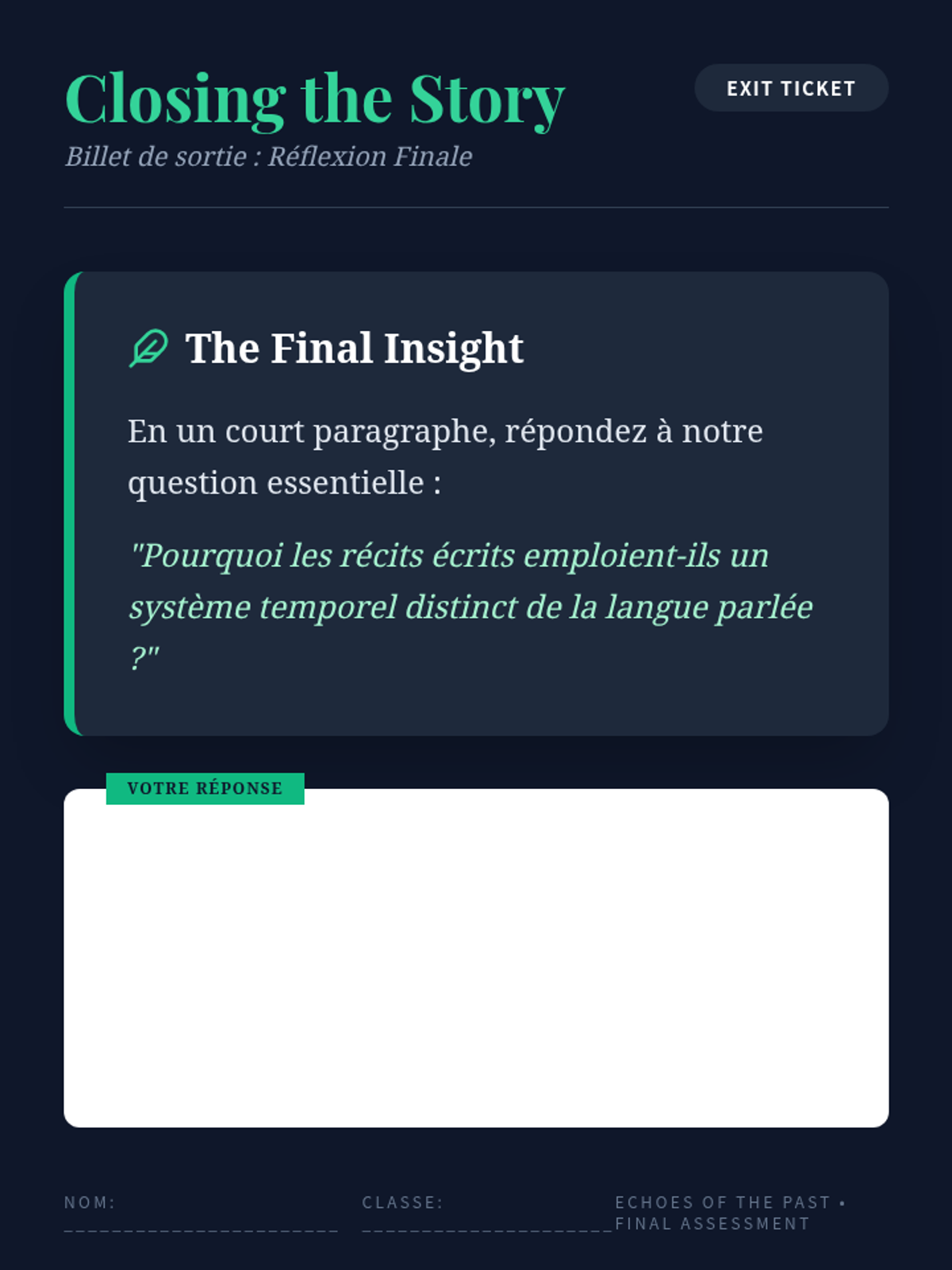
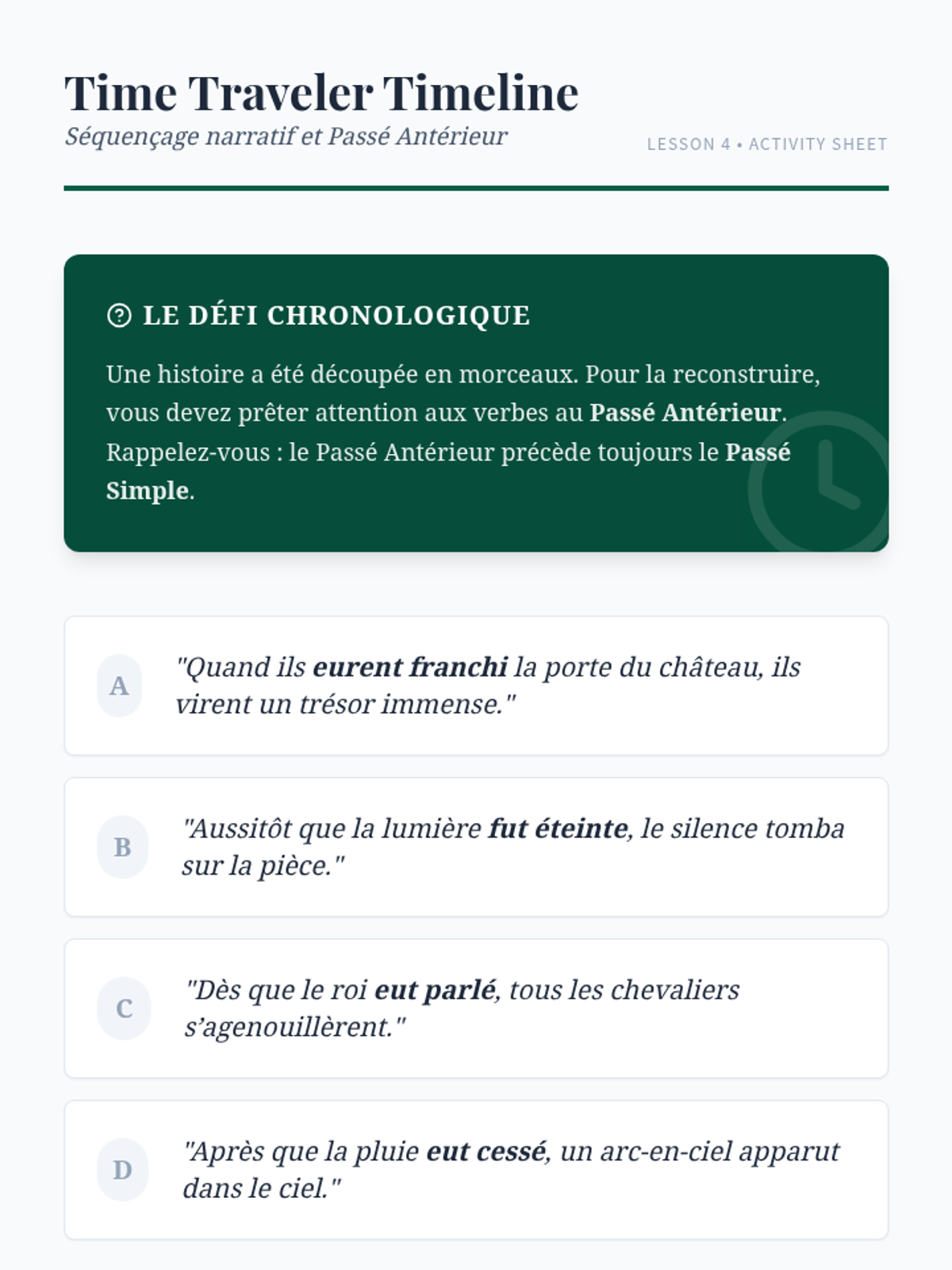
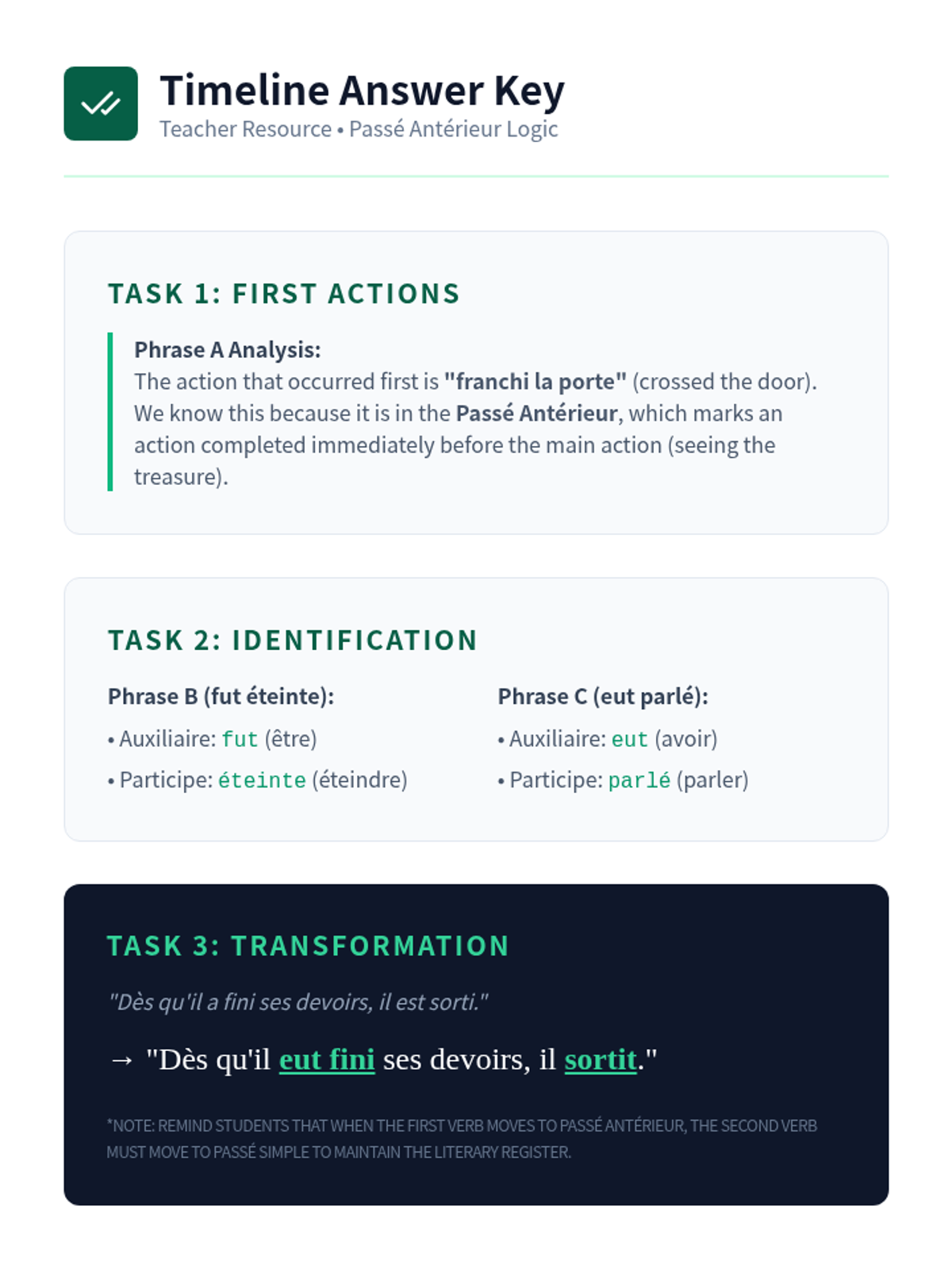
Introduction to the Passé Antérieur as the literary equivalent of the Plus-que-parfait, focusing on anteriority and sequence of events.
Analysis of how the Passé Simple and Imparfait work together to create foreground and background actions in literary narratives.
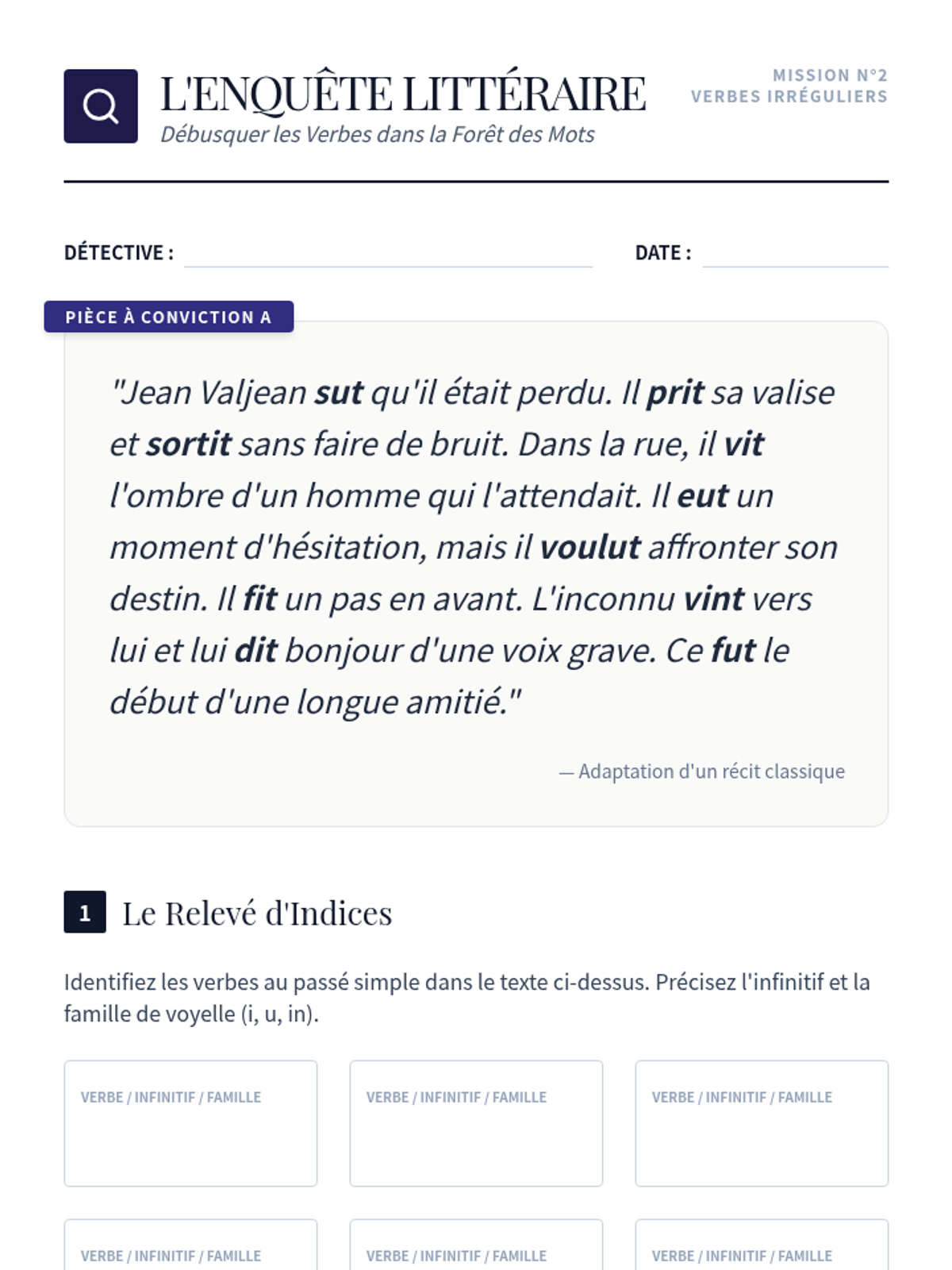
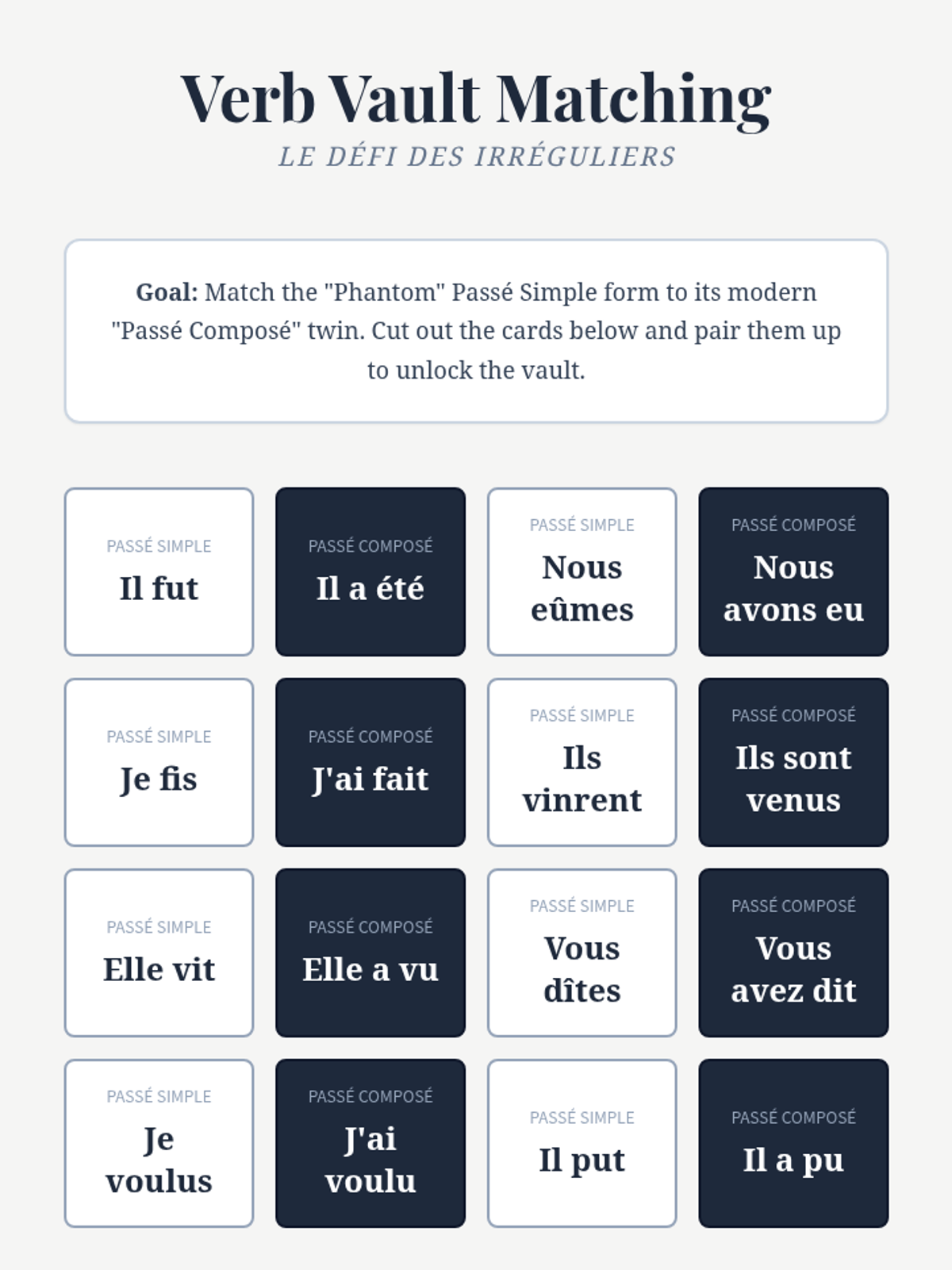
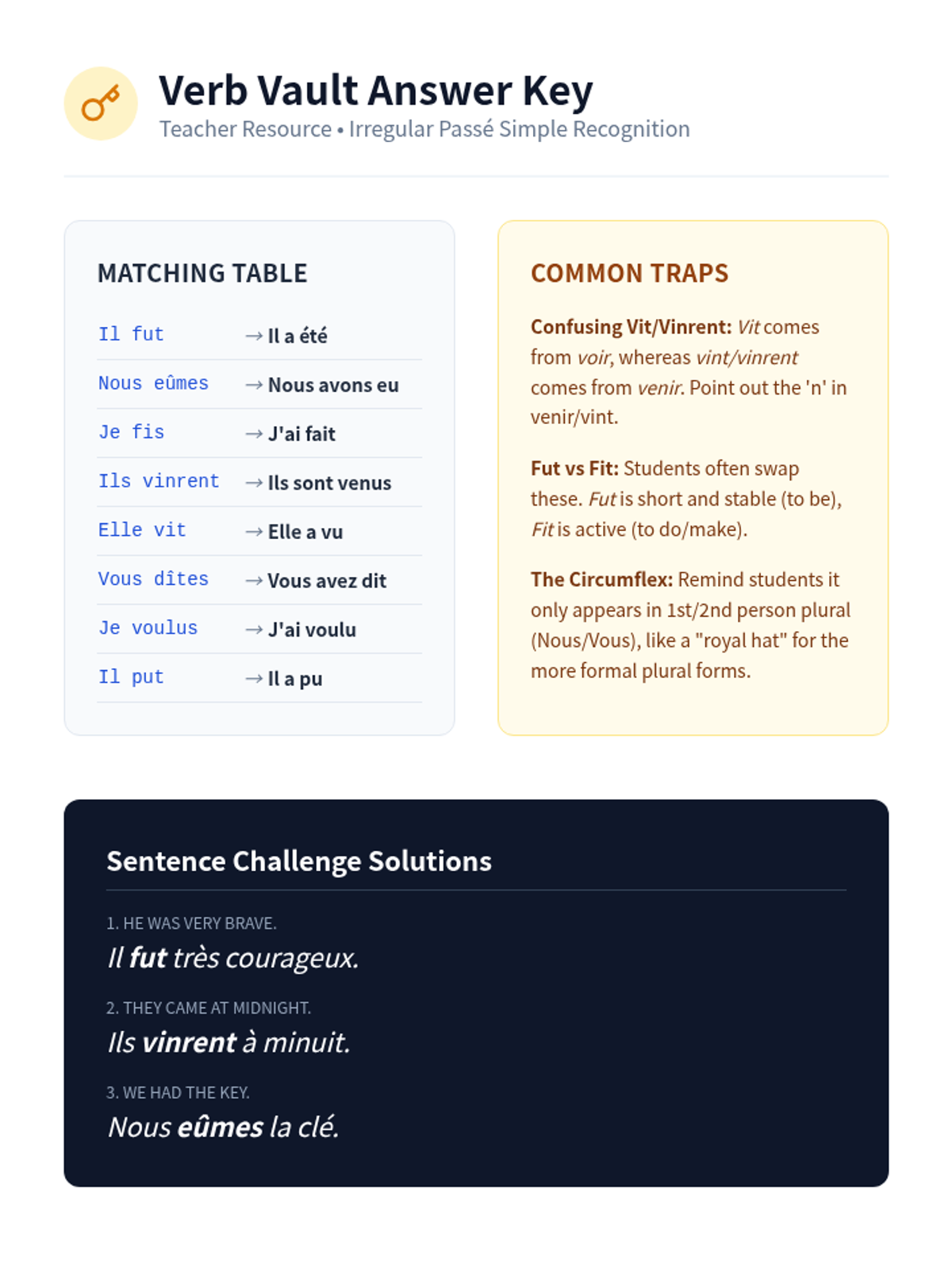
A focus on identifying high-frequency irregular verbs in the Passé Simple through matching games and reading comprehension activities.
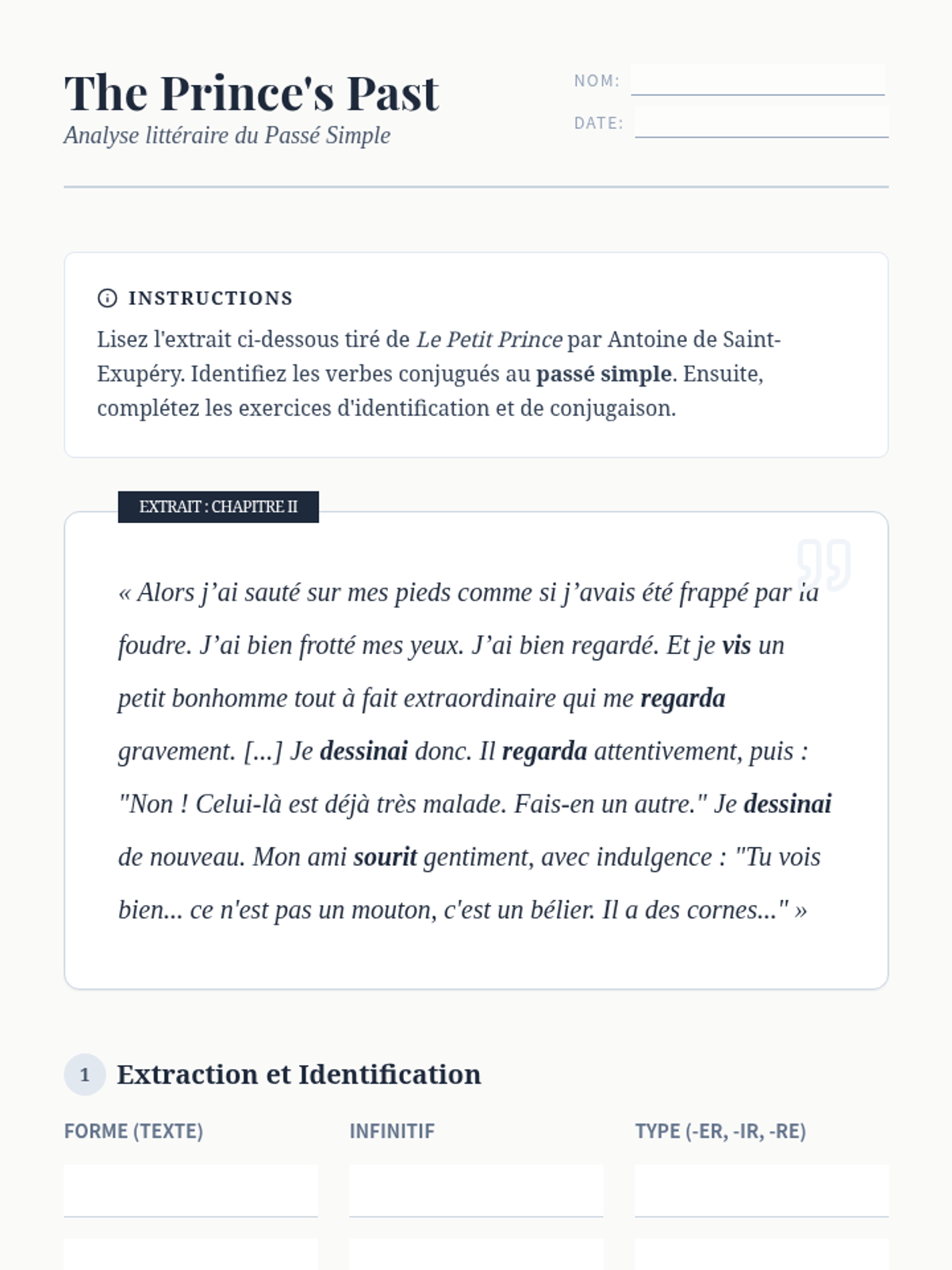
Students explore the historical context of the Passé Simple, learn regular verb endings, and identify the tense in the opening of 'Le Petit Prince'.
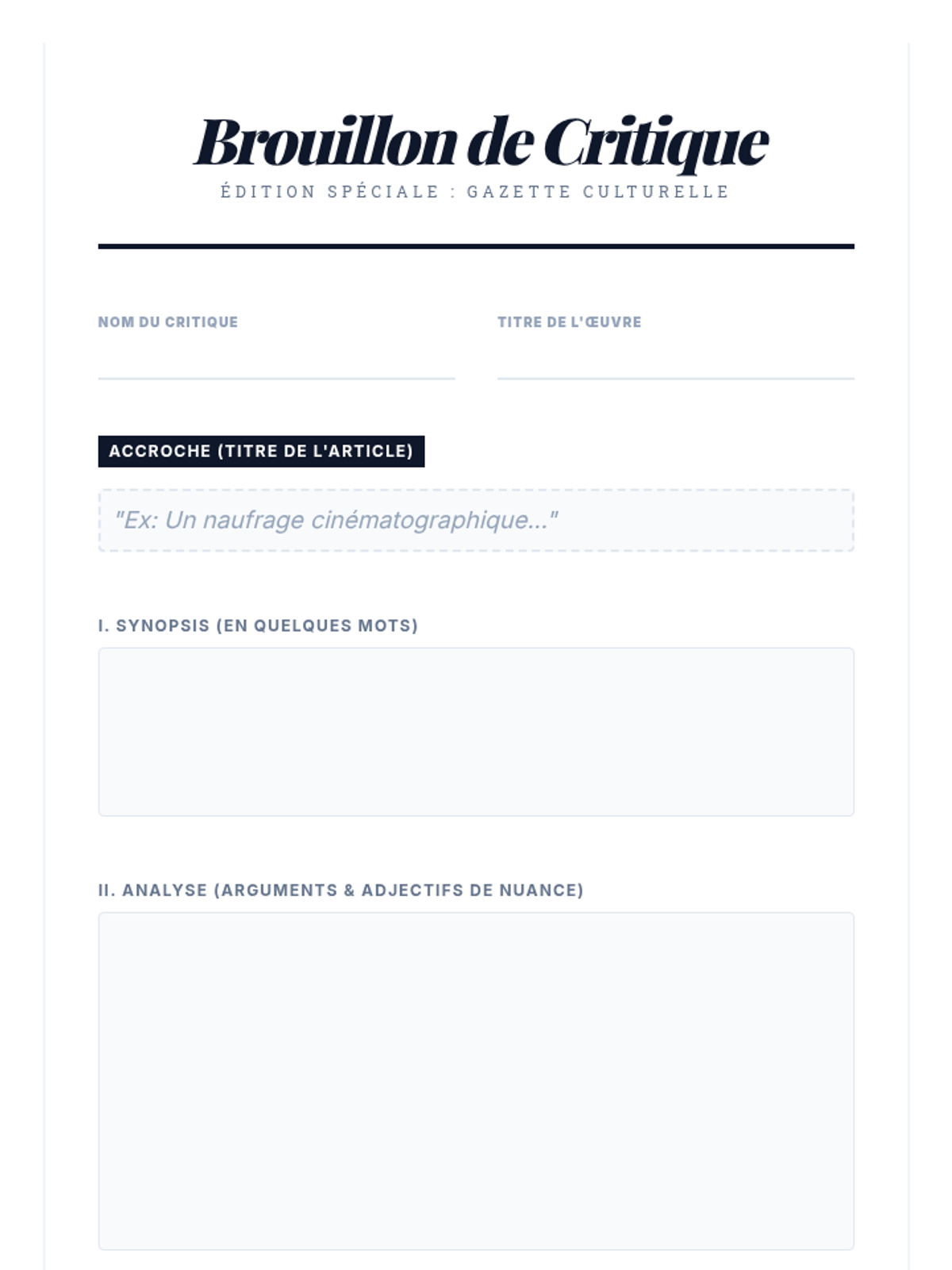
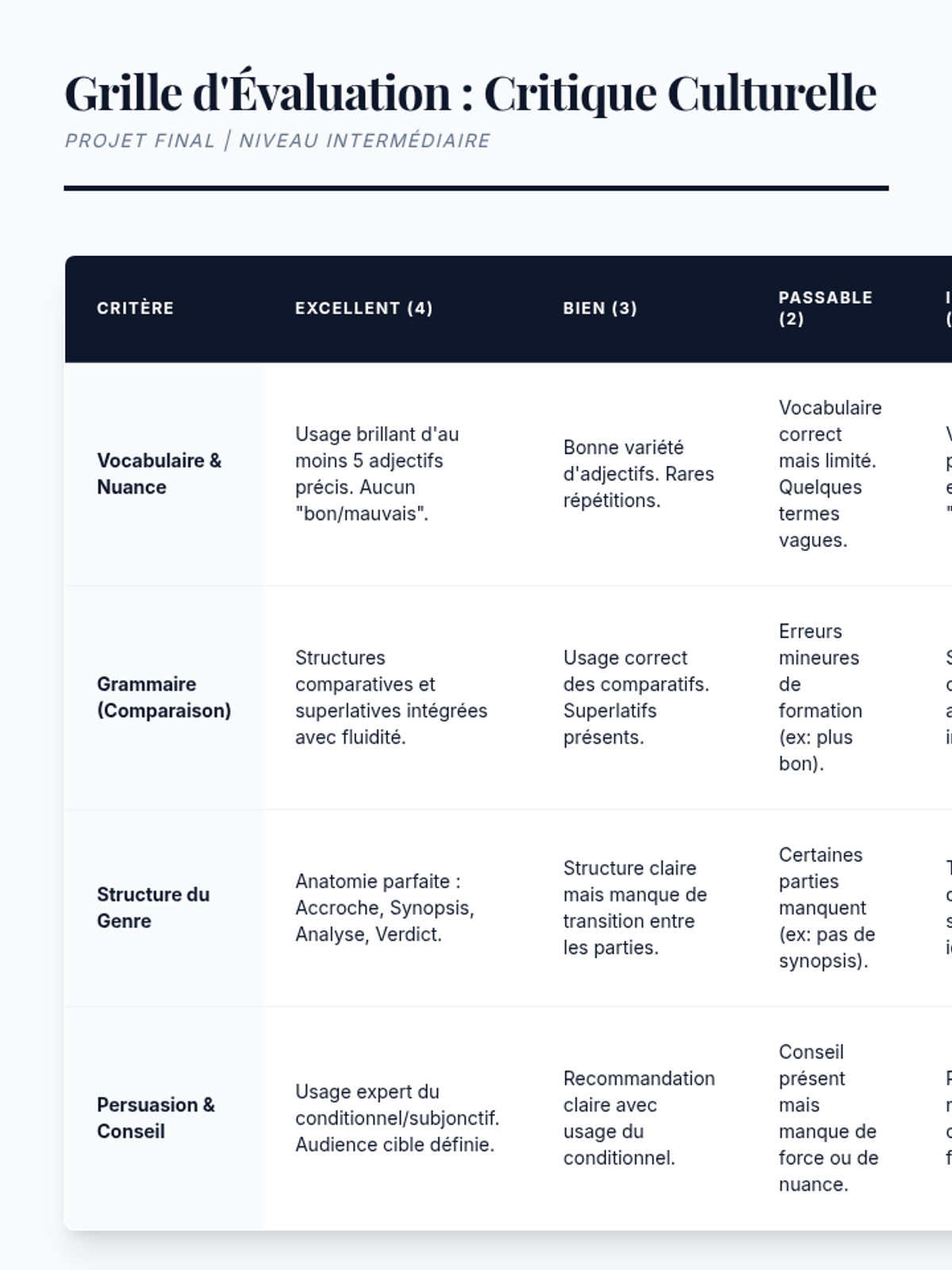
Final project phase where students write, edit, and publish a full cultural critique, culminating in a 'Critics Circle' presentation.
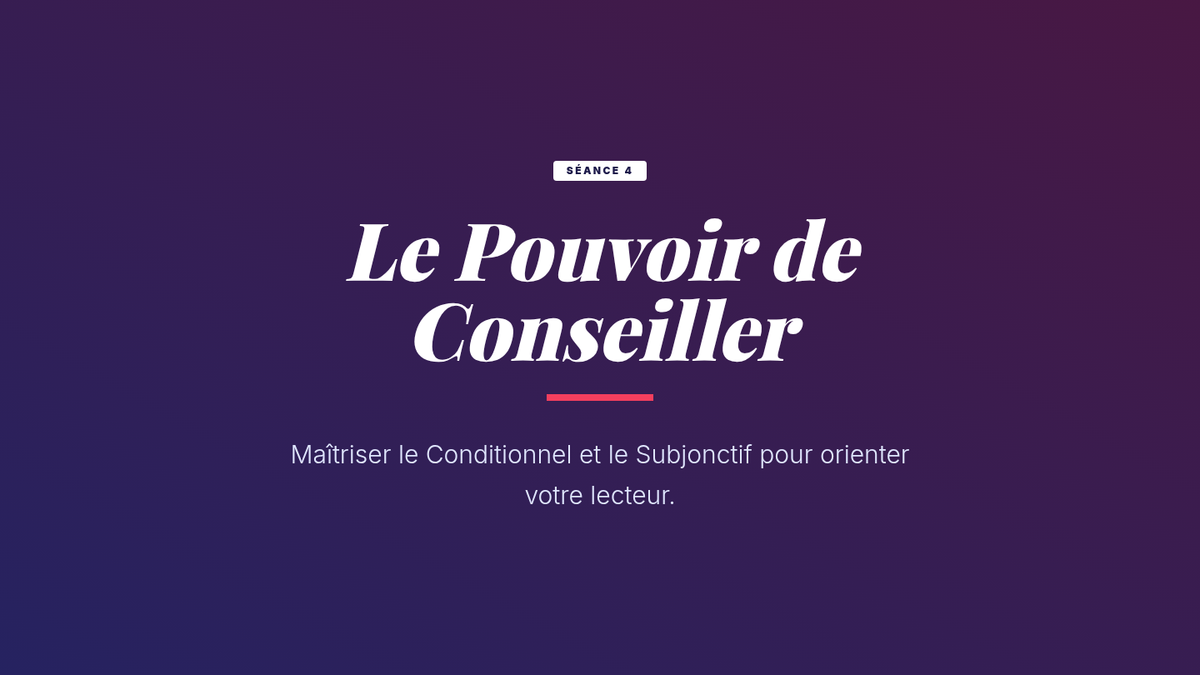
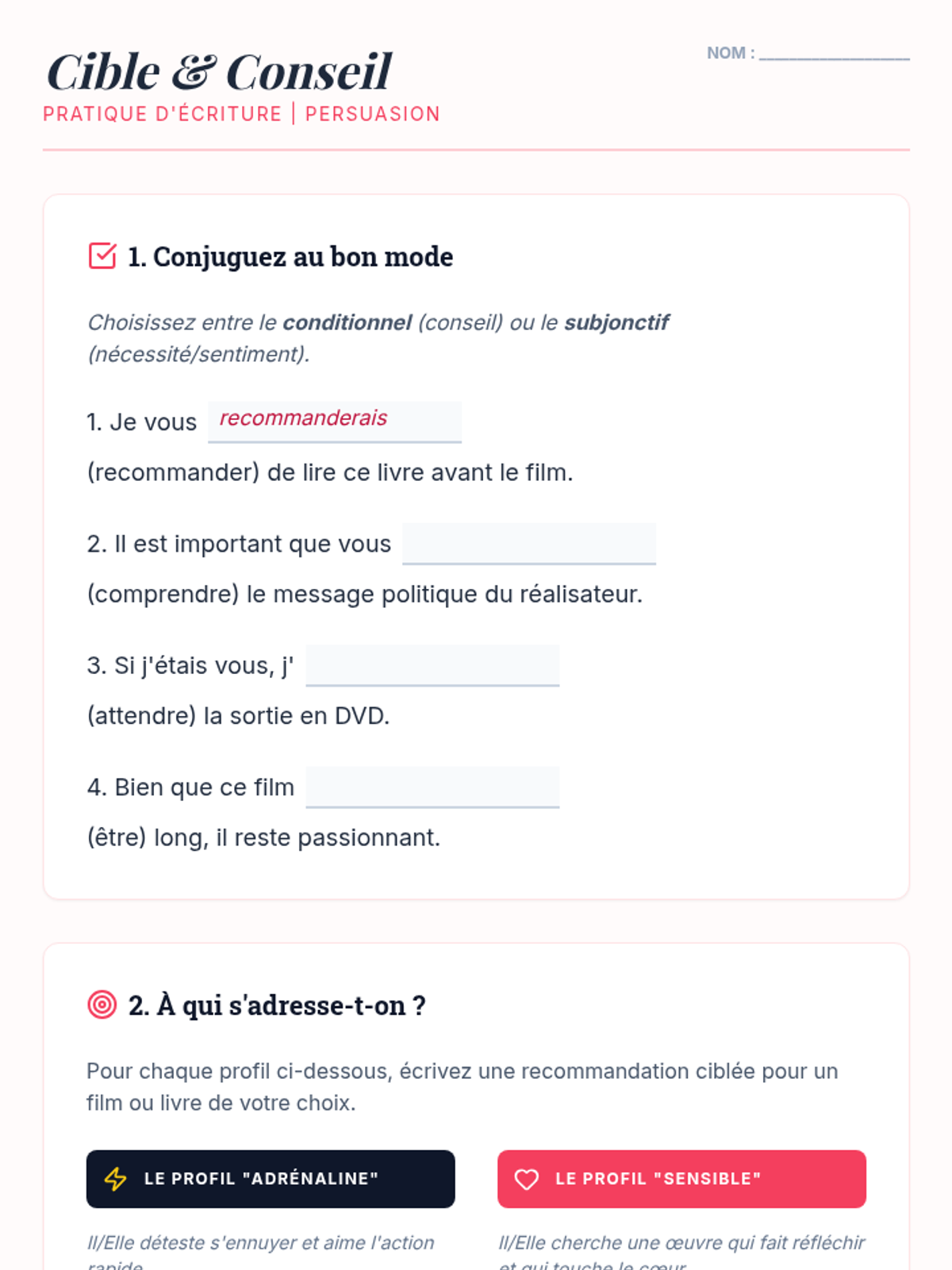
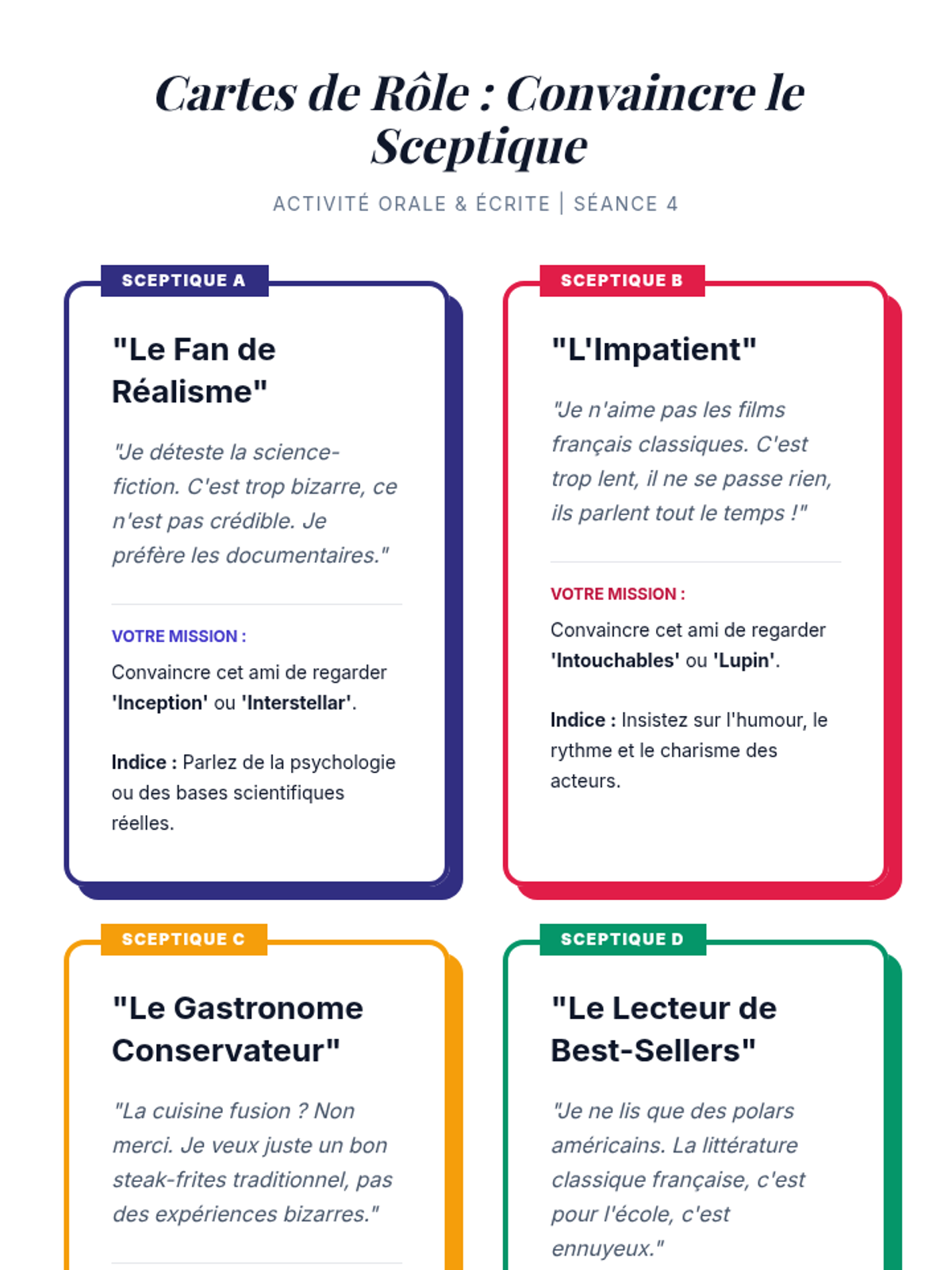
Advanced concluding techniques. Students use the conditional and subjunctive to target specific audiences and provide nuanced recommendations.
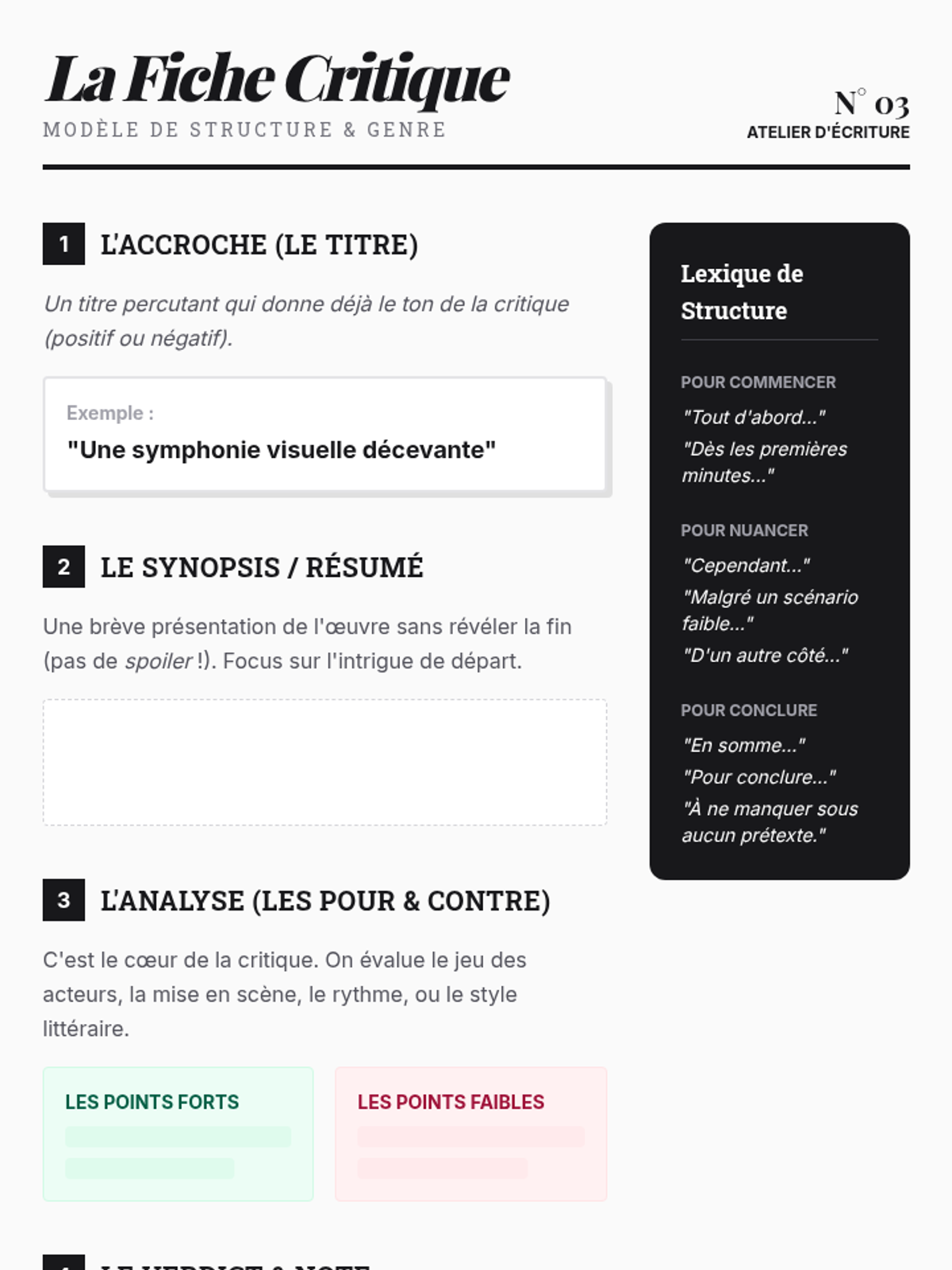
Analyzing the genre of the review. Students study real-world examples to identify structural elements like summaries, pros/cons analysis, and the final verdict.
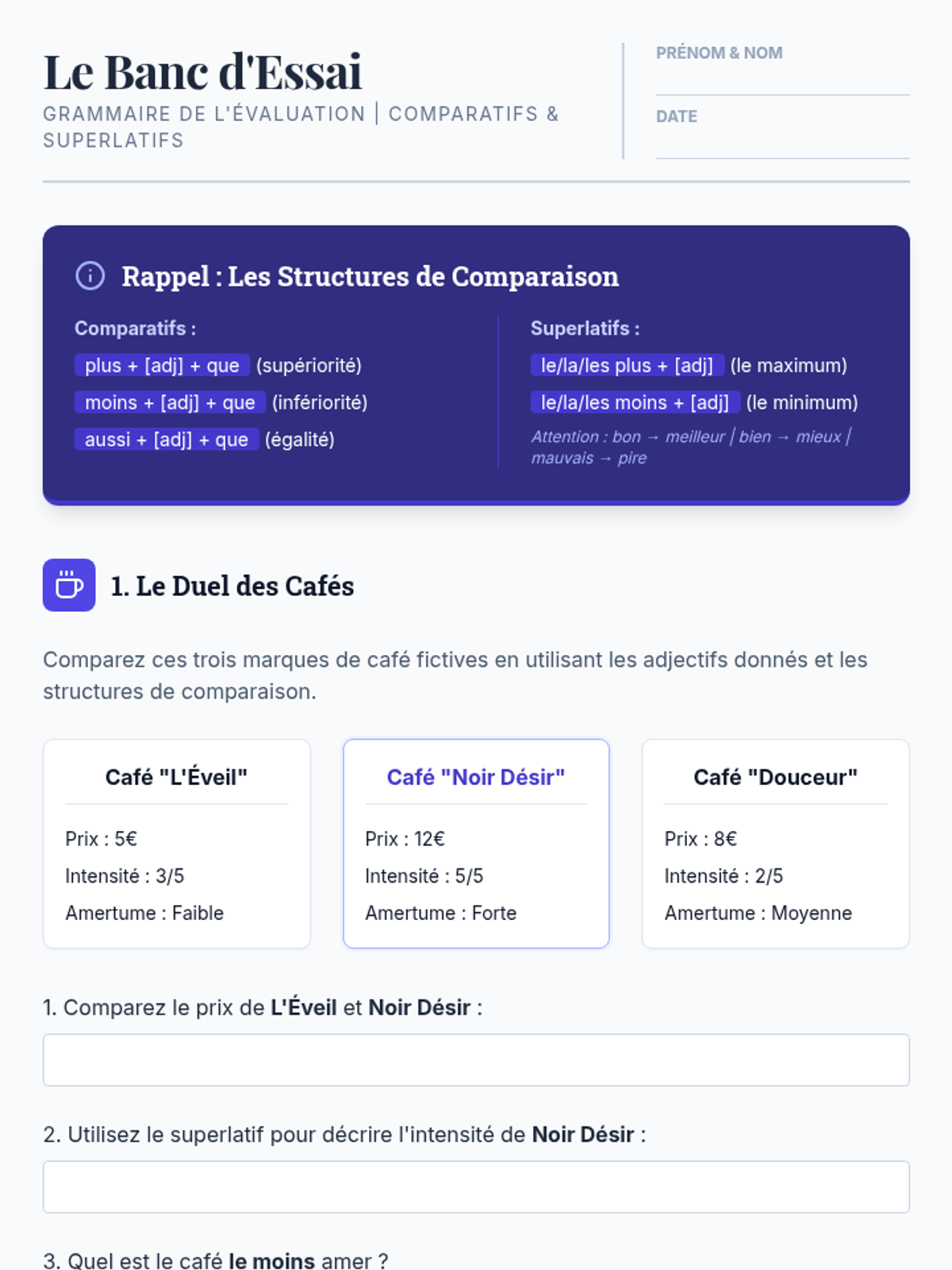
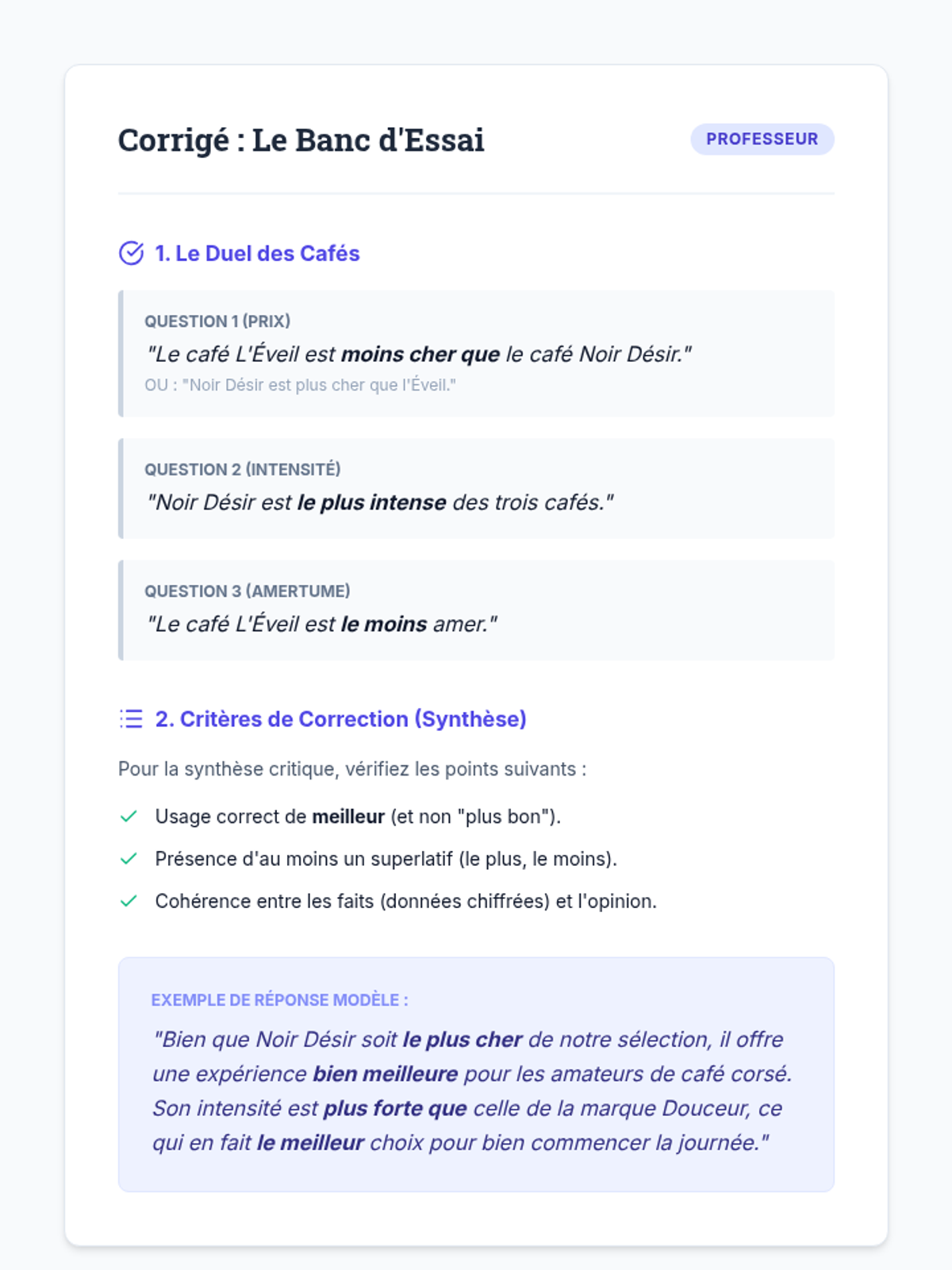
Focus on the grammar of evaluation. Students master comparative and superlative structures to contrast cultural works and defend their preferences.
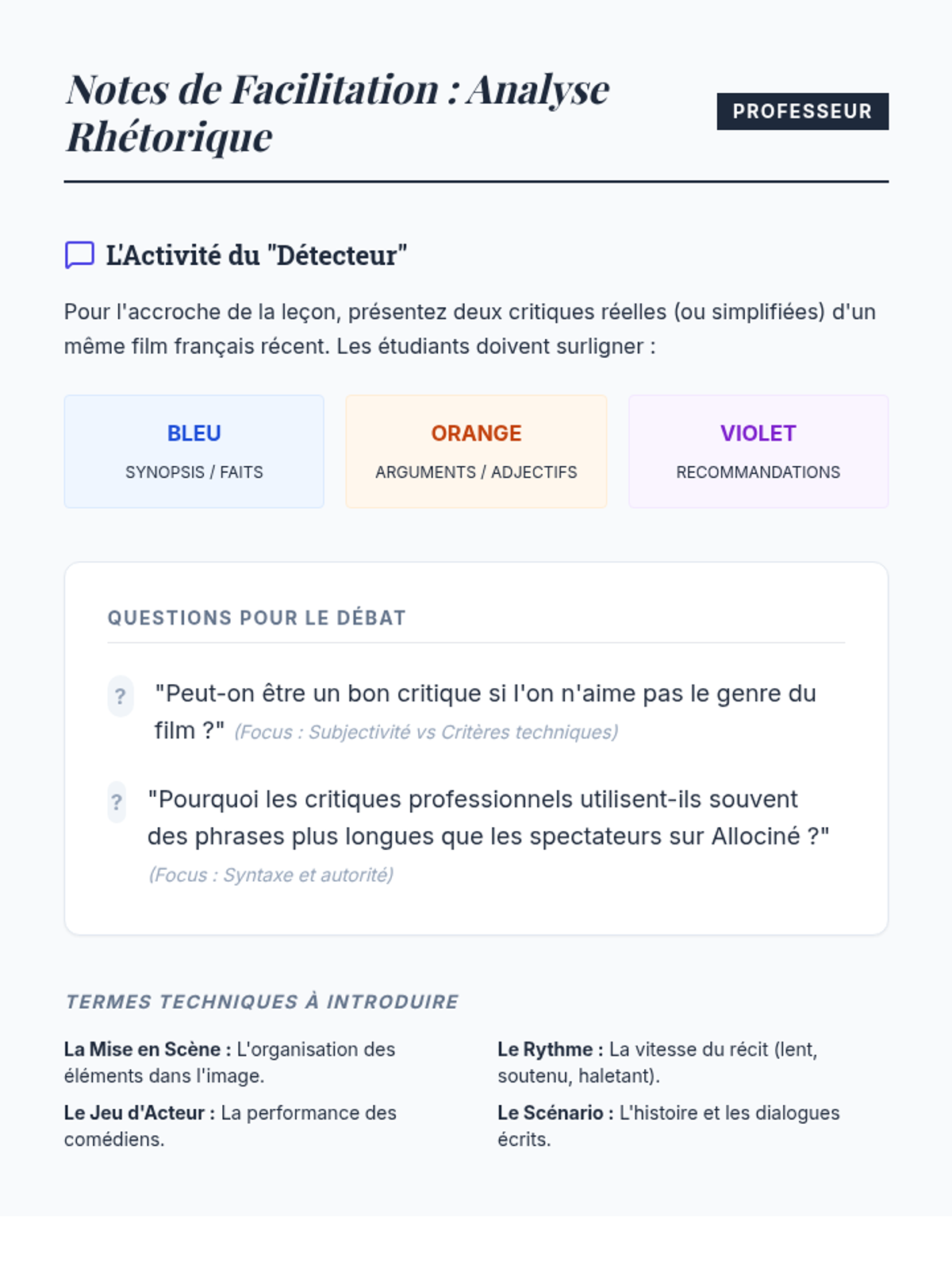
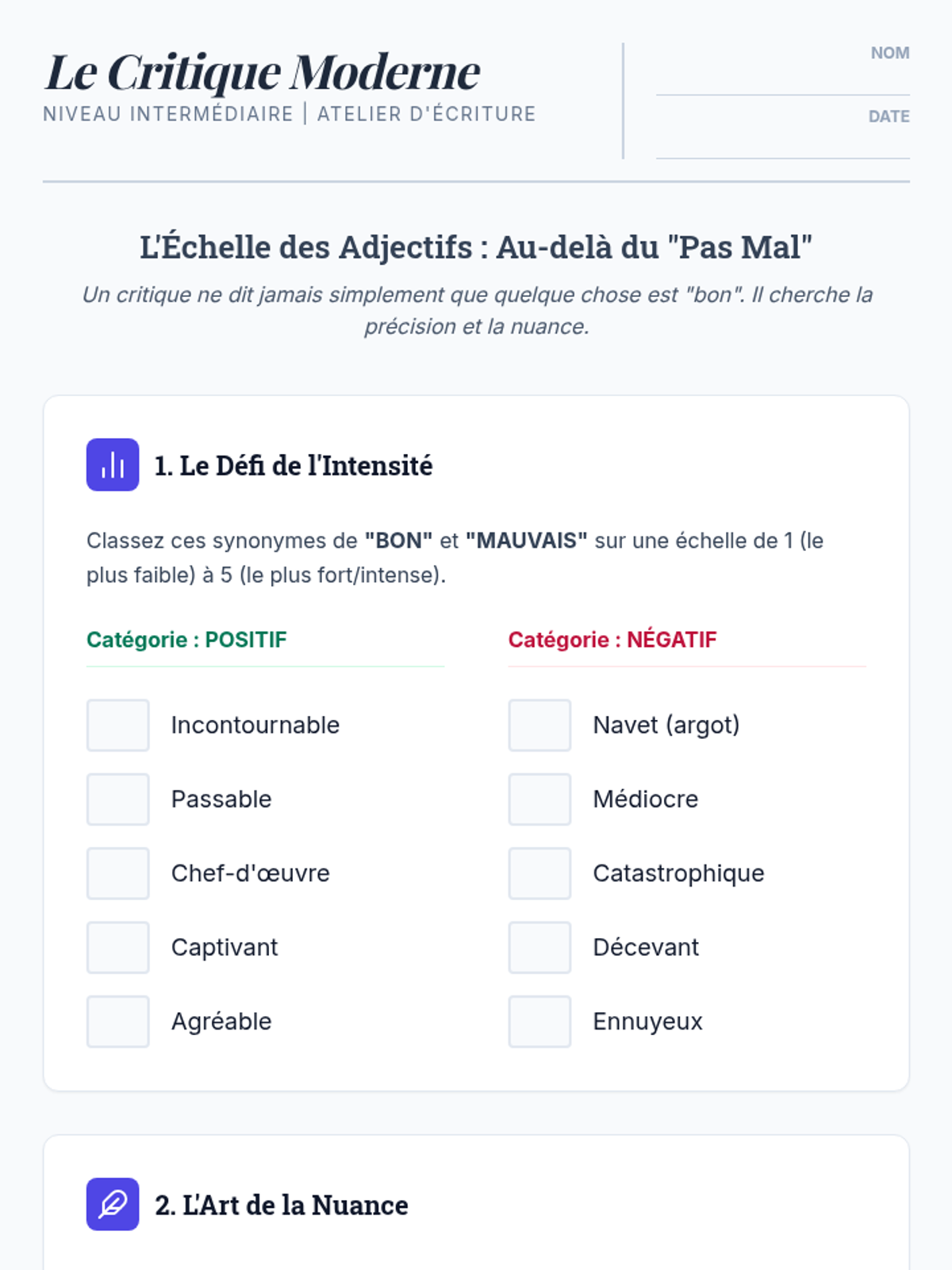
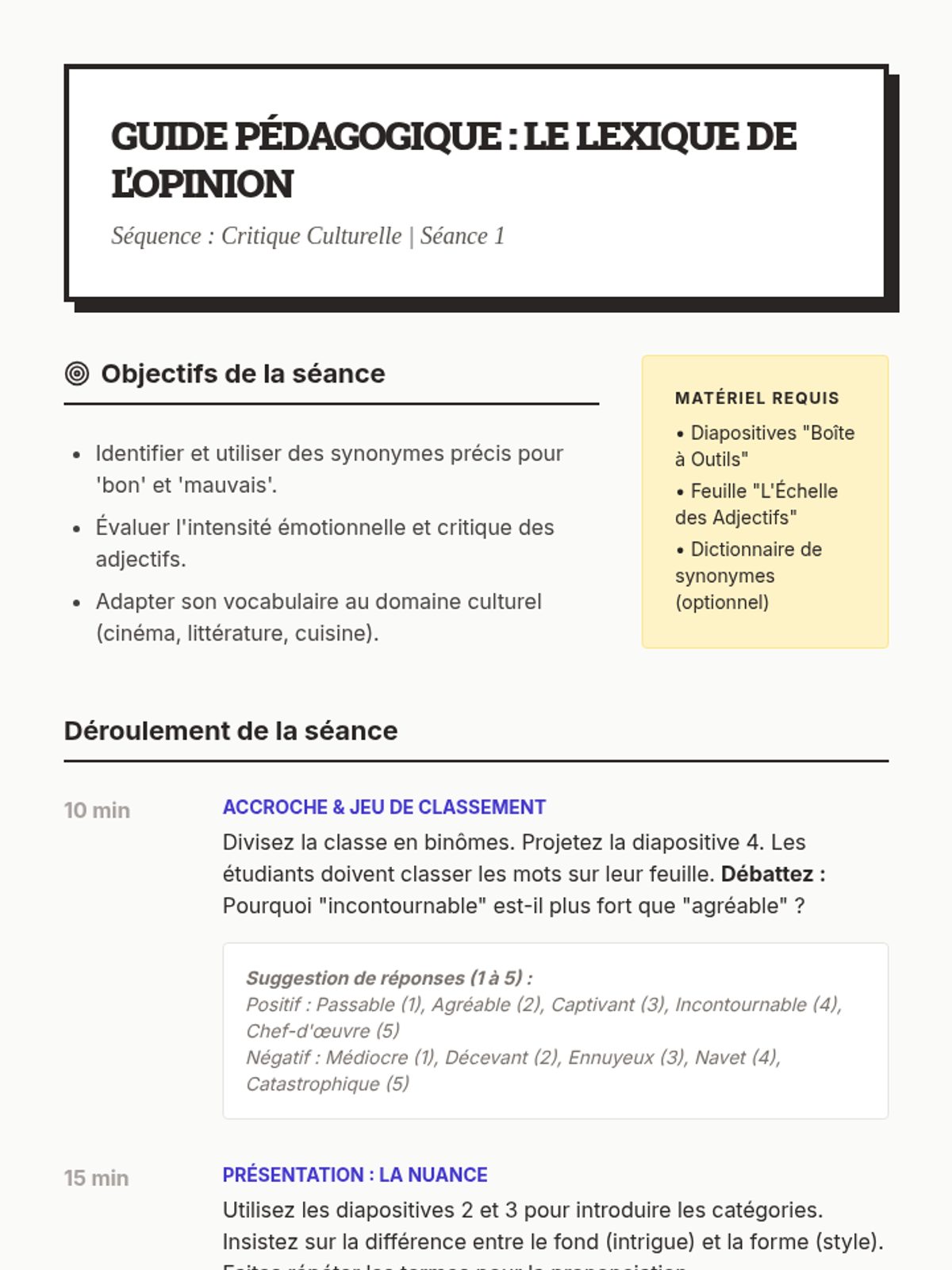
Students expand their vocabulary beyond basic terms like 'bon' and 'mauvais'. They learn to categorize adjectives by intensity and nuance to provide specific, professional evaluations.
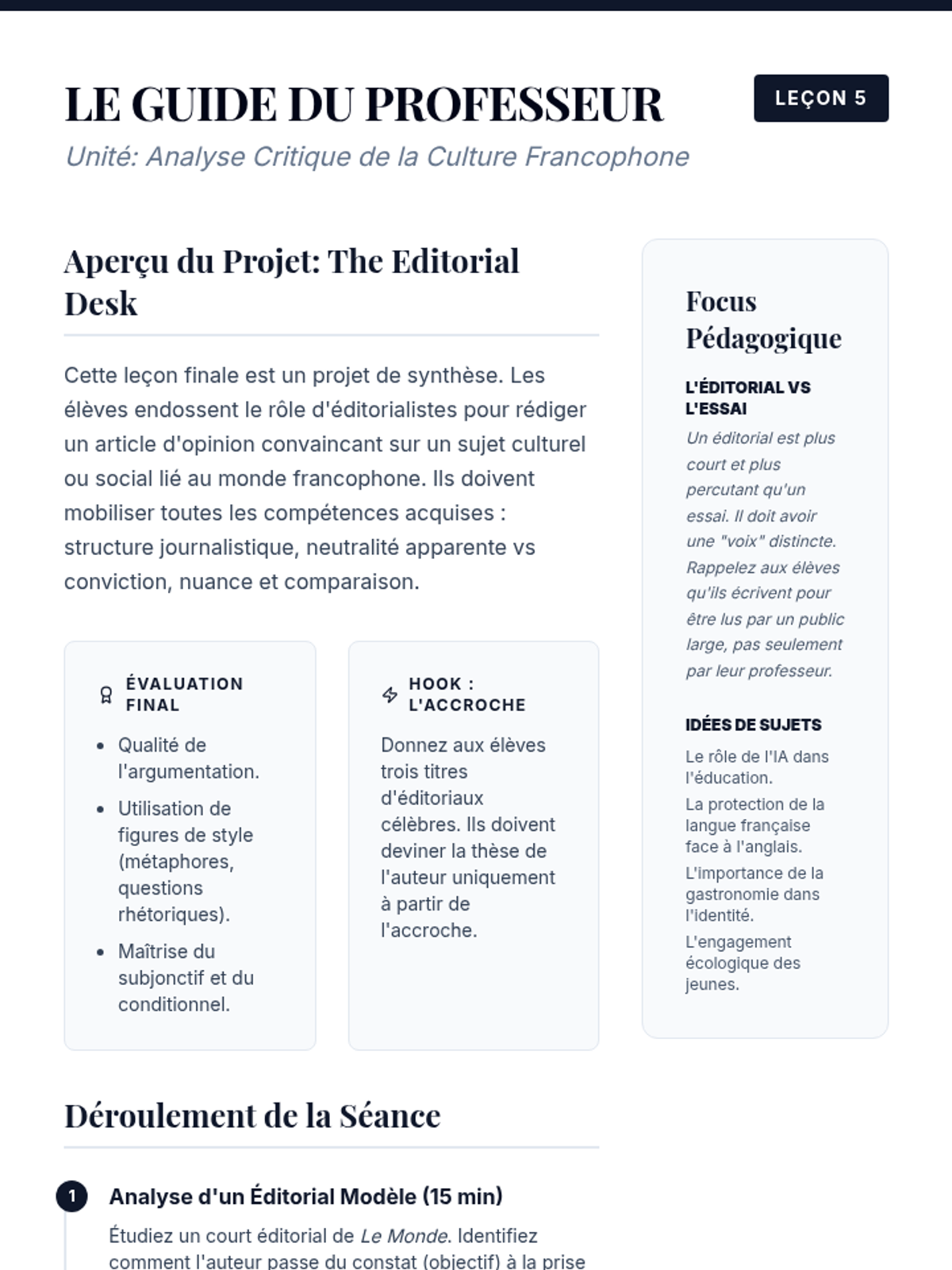
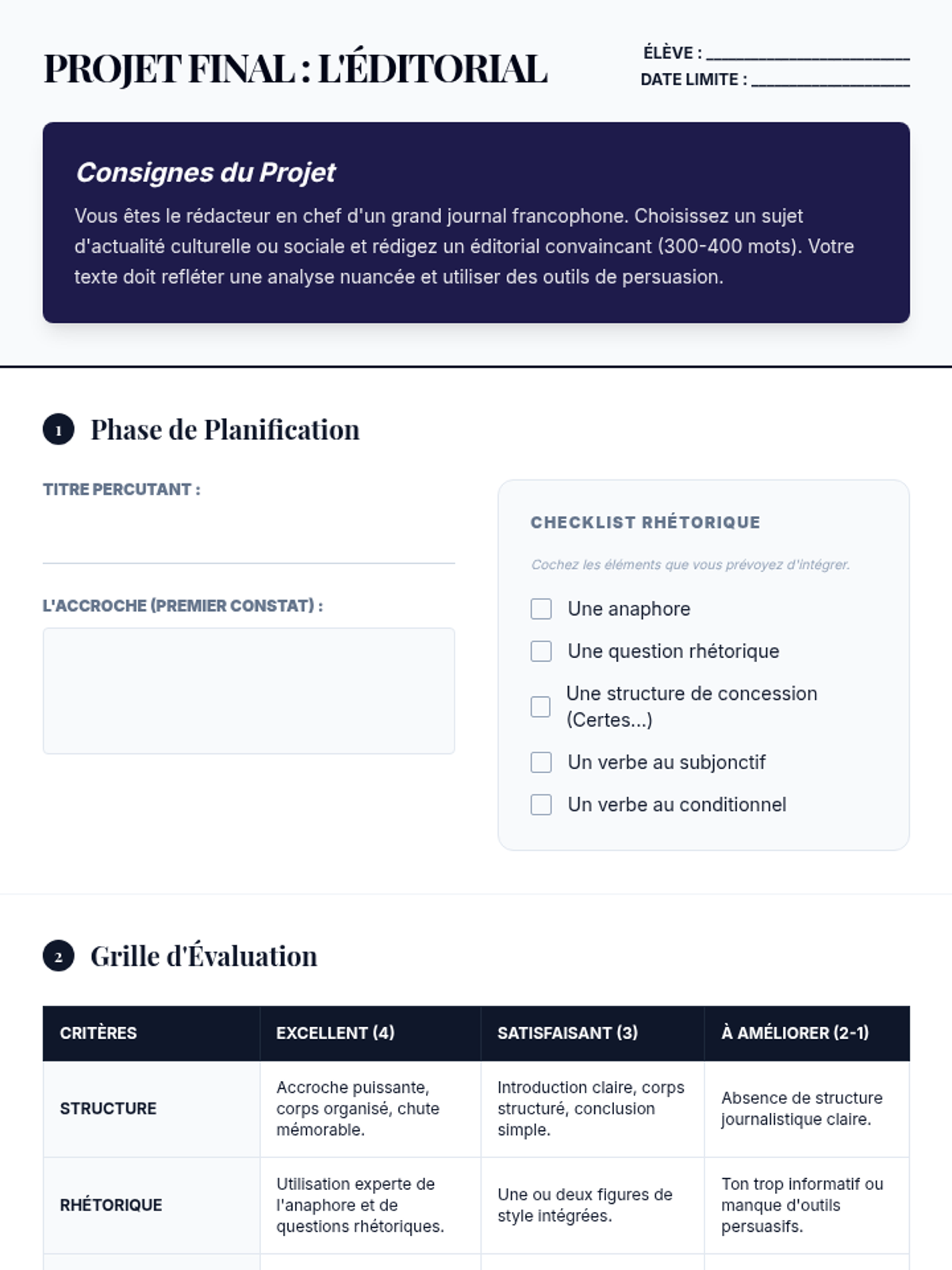
The capstone project where students synthesize their skills to write a persuasive editorial, using rhetorical devices to advocate for a cultural or social position.
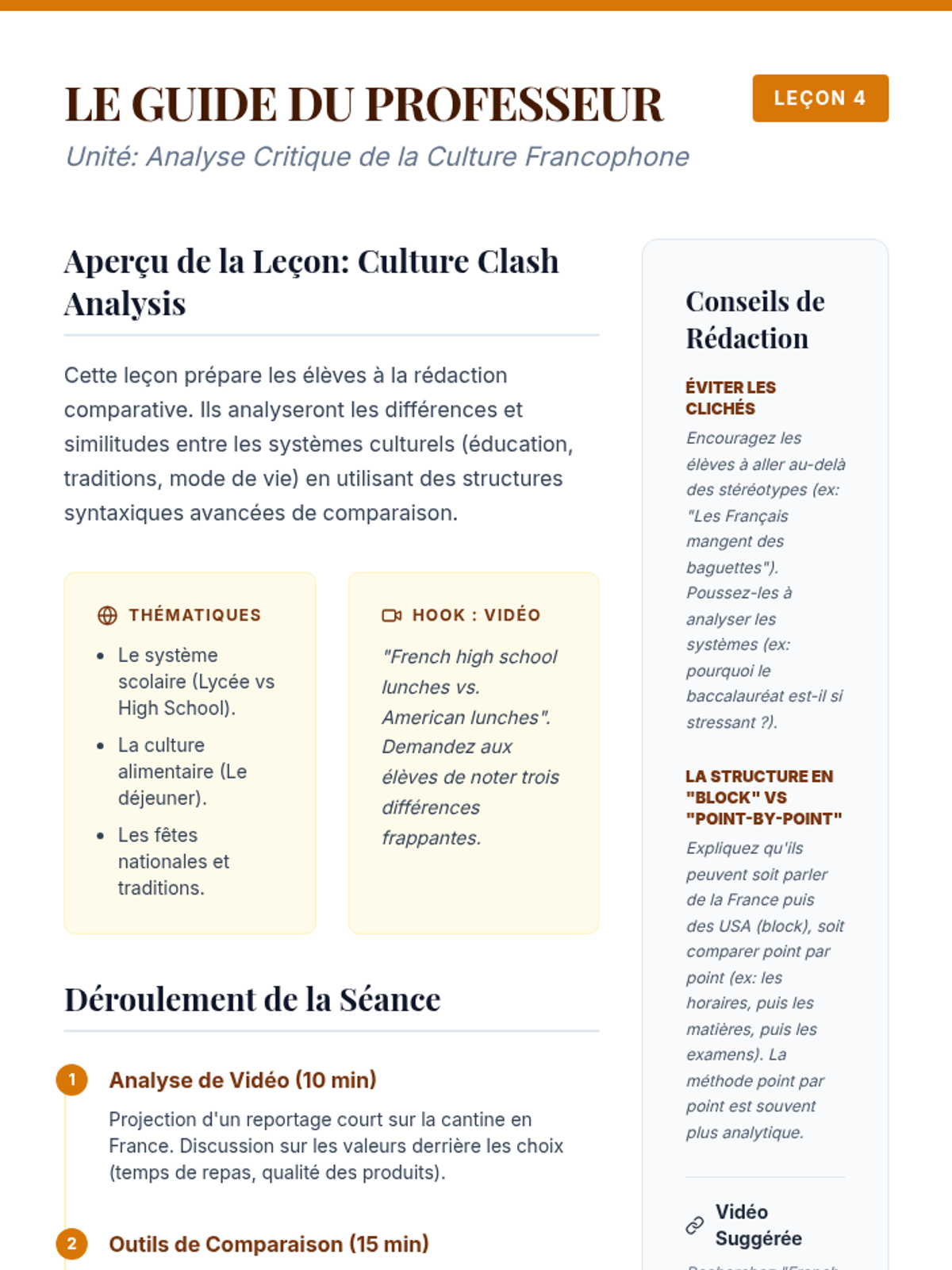
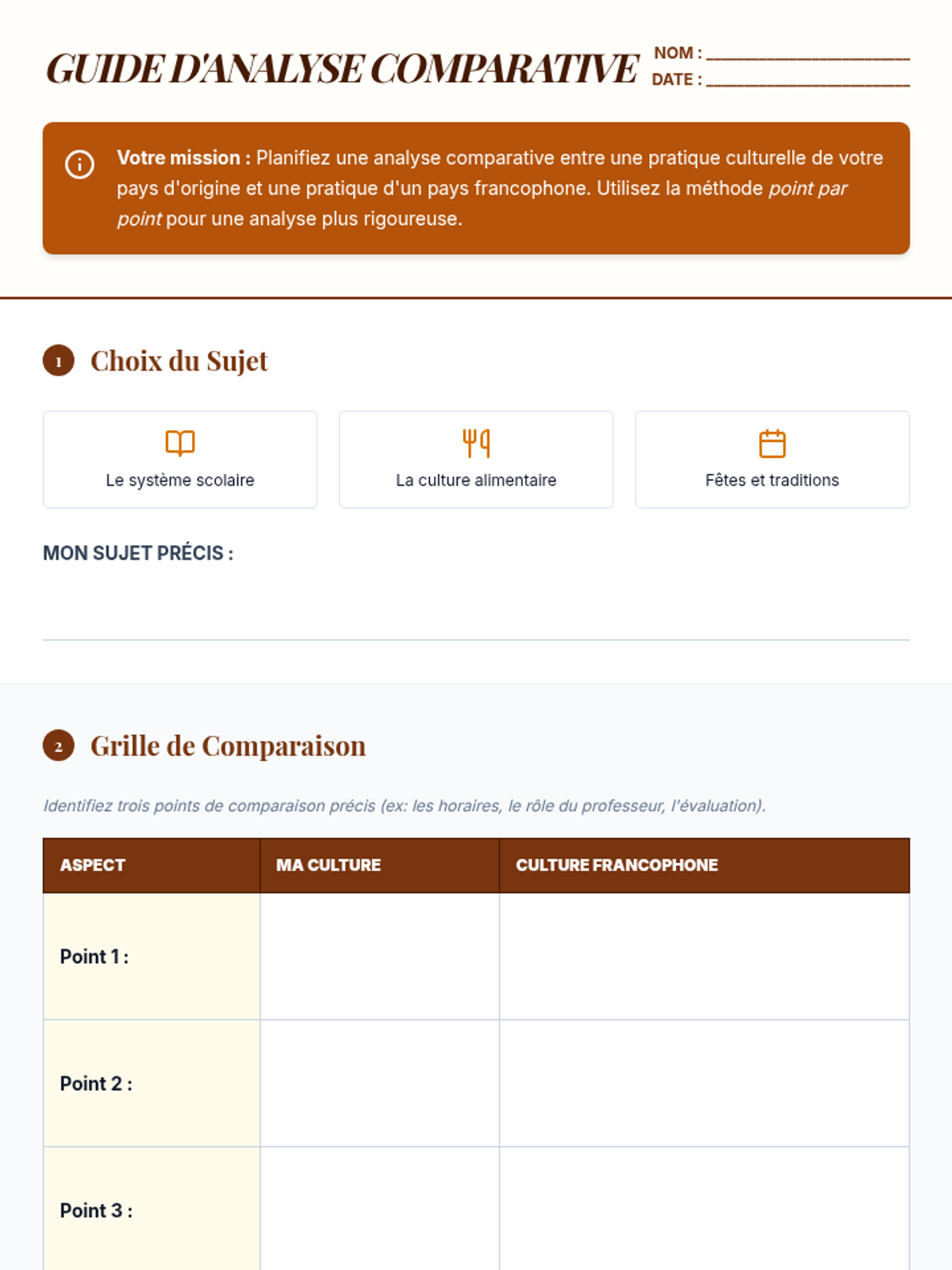
A deep dive into cultural differences, where students apply comparative writing structures to analyze Francophone traditions and systems against their own.
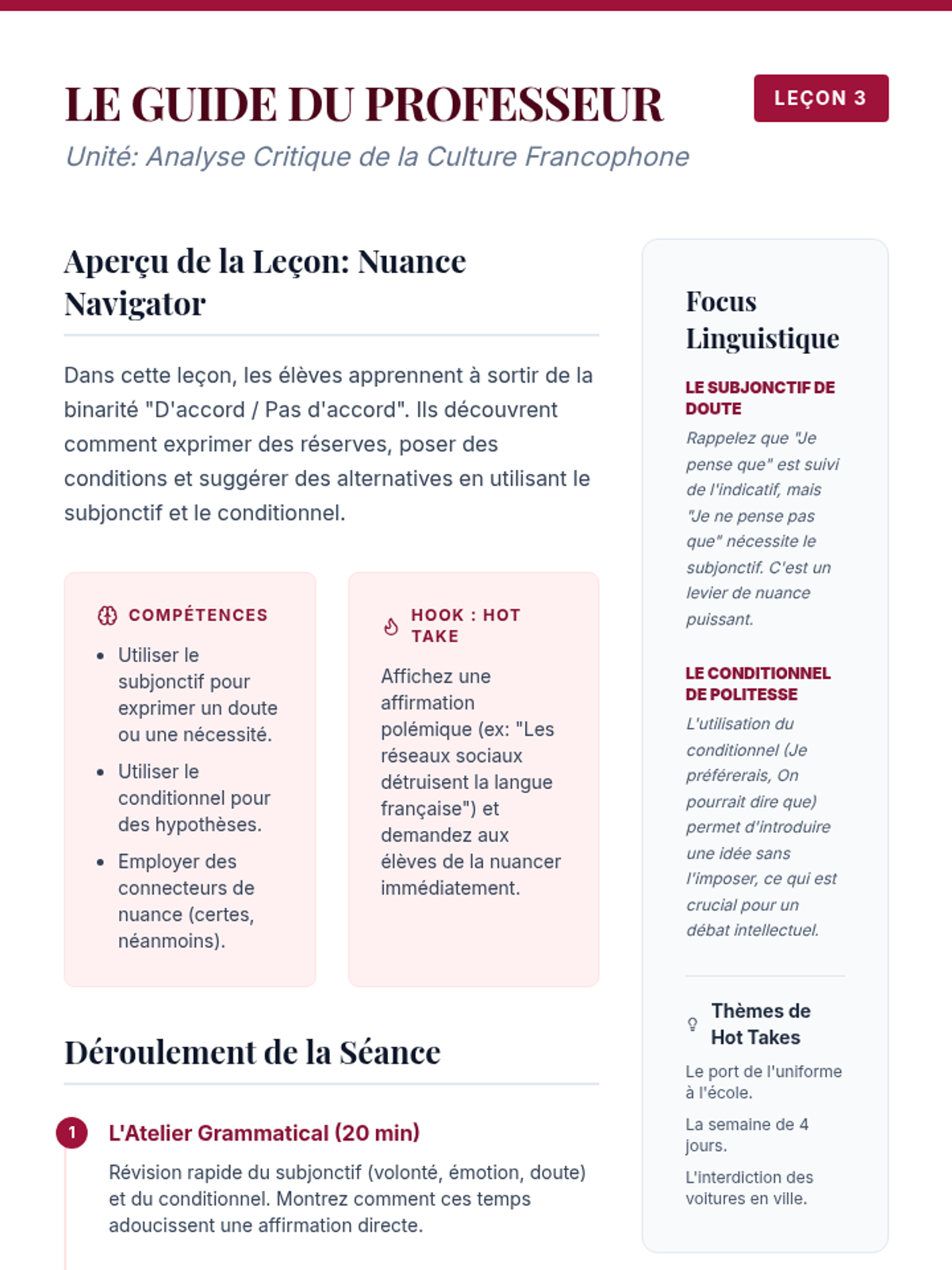
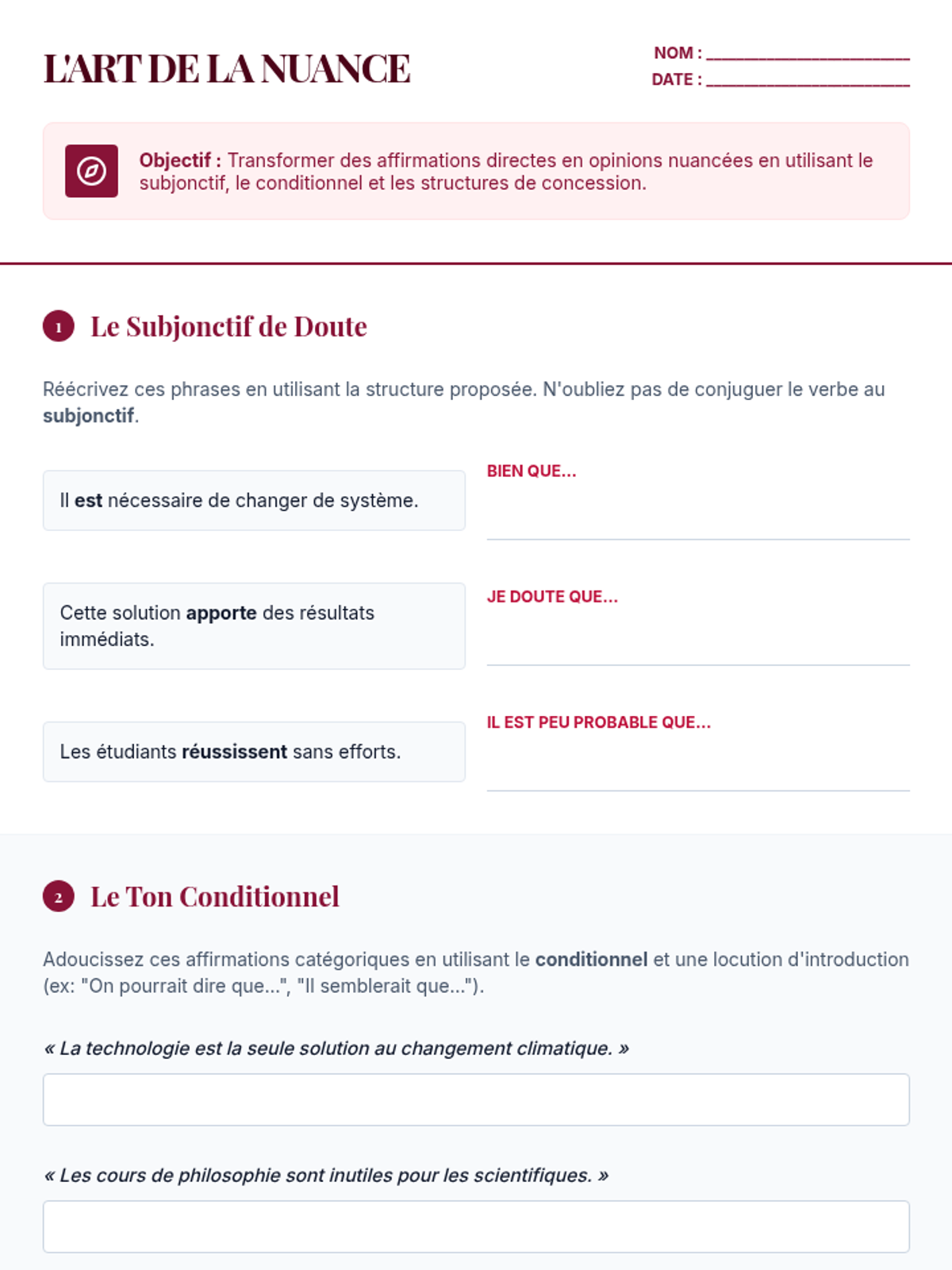
Students master the art of nuanced debate, using advanced grammatical structures like the subjunctive and conditional to express complex opinions beyond simple agreement.