This lesson teaches students how to use Google Translate's speech-to-text and text-to-speech features to self-evaluate their spoken language. Focus areas include pronunciation clarity, grammatical accuracy of transcribed text, and oral fluency.
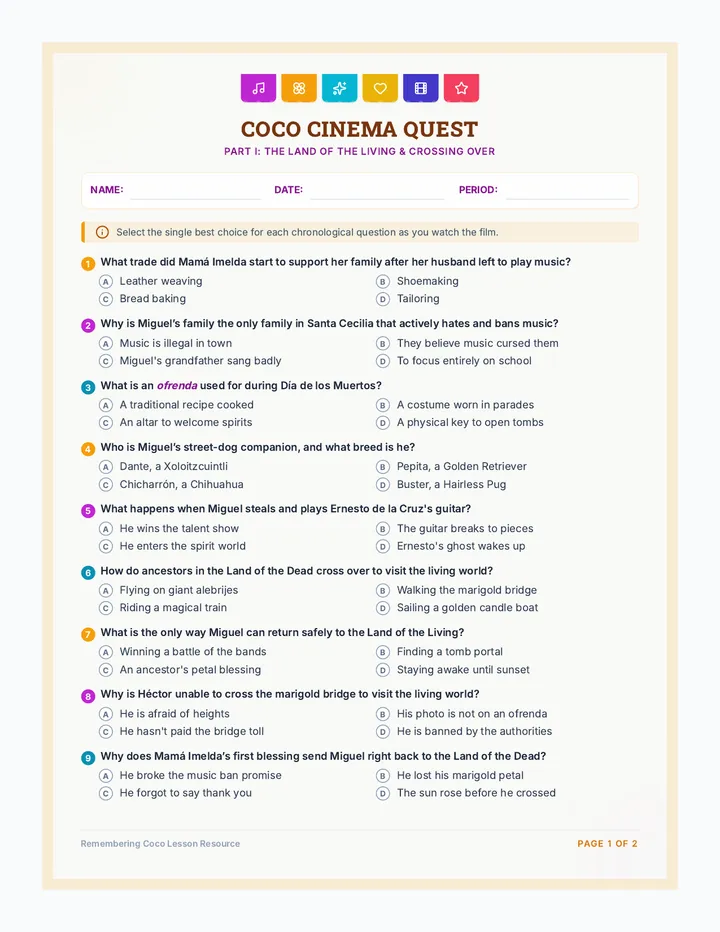
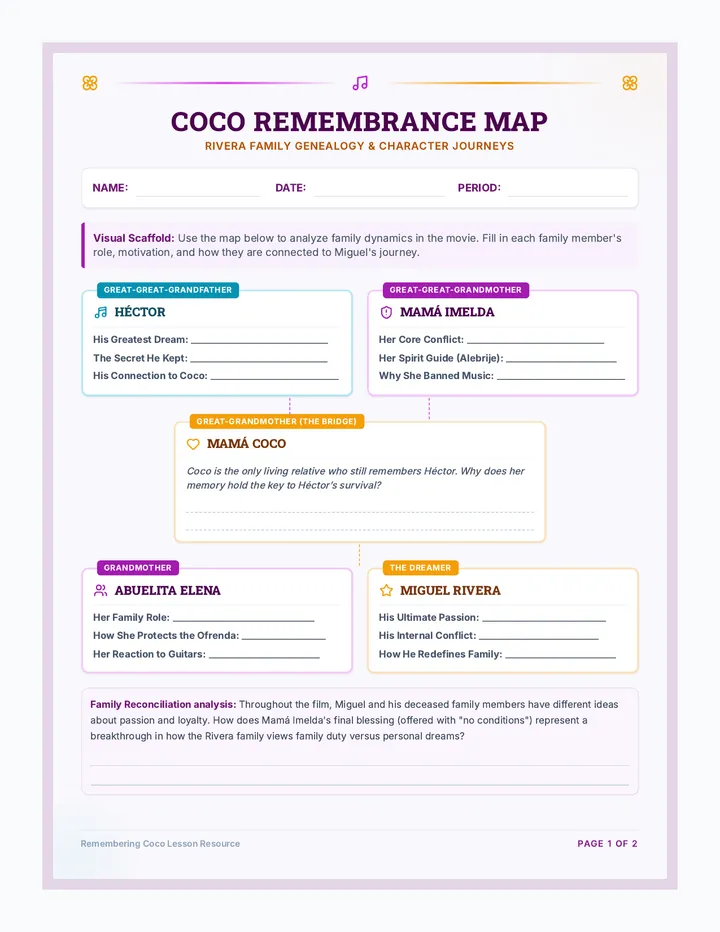
An exploration of the Pixar film Coco, focusing on Día de los Muertos cultural traditions, character choices, and key themes like family, memory, and forgiveness.
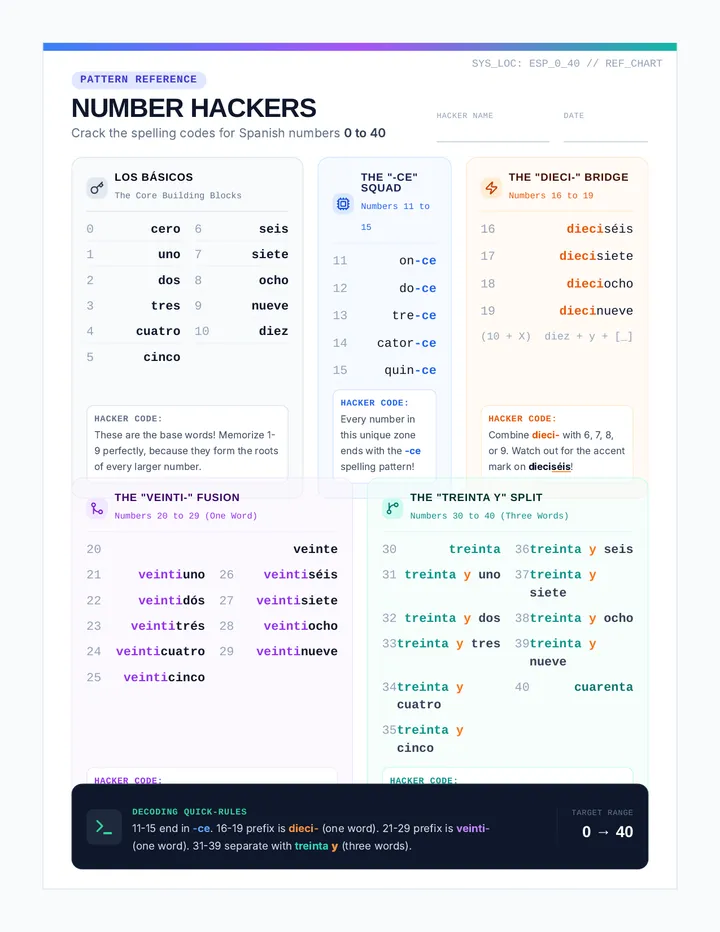
A lesson focused on mastering Spanish numbers 0-40 through pattern recognition, emphasizing key spelling transitions like -ce, dieci-, veinti-, and the conjunction 'treinta y'. Includes a highly visual pattern-coded anchor chart and a targeted spelling practice worksheet.
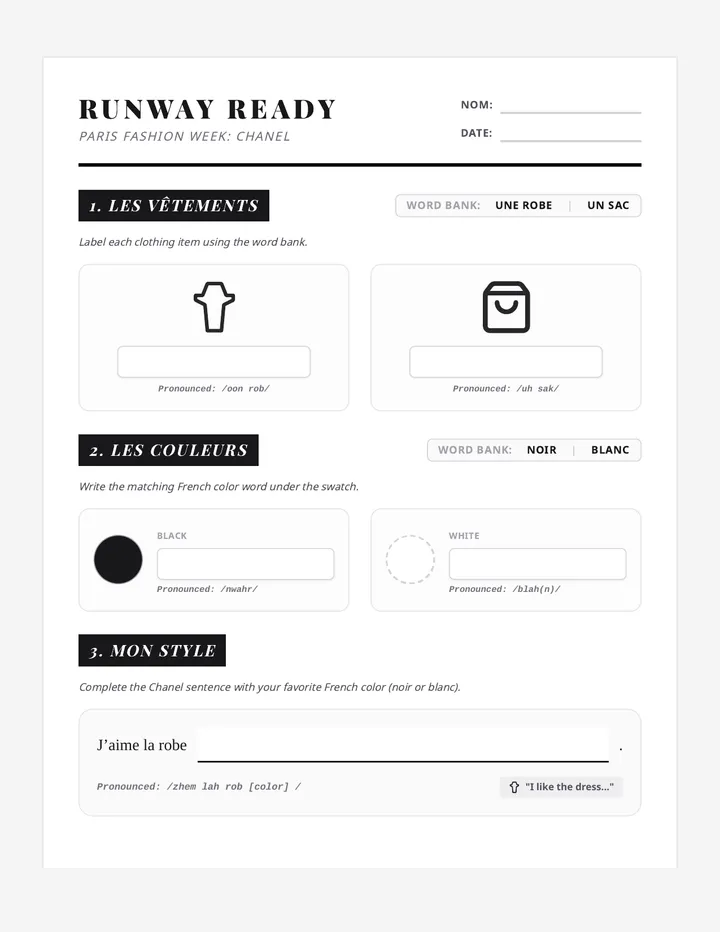
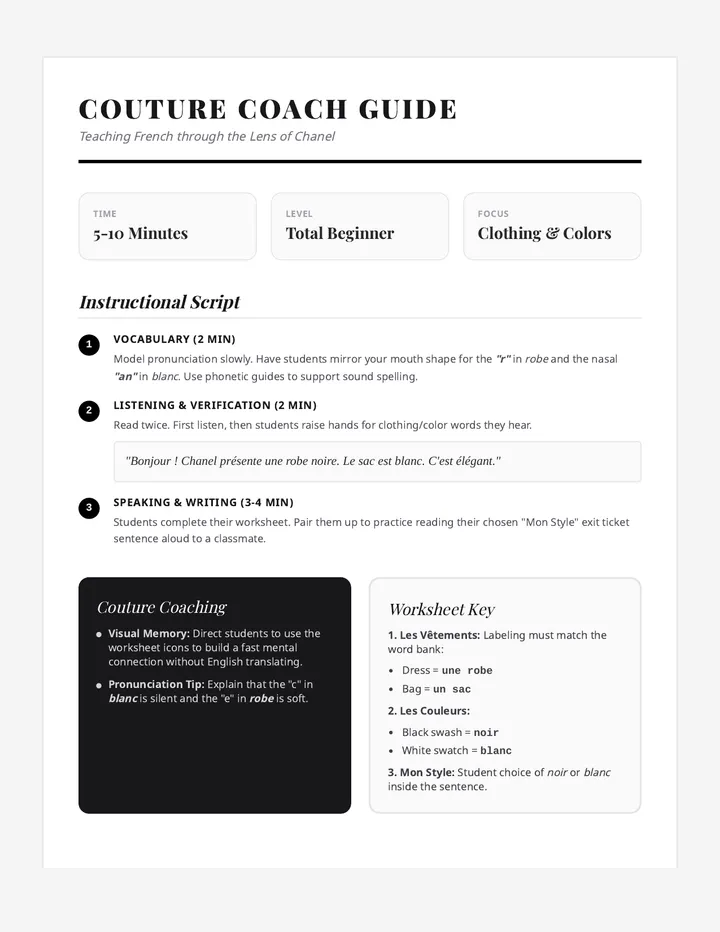
A 5-minute introductory lesson on French fashion vocabulary and basic colors. Students practice listening, speaking, and writing simple sentences about Chanel's iconic style.
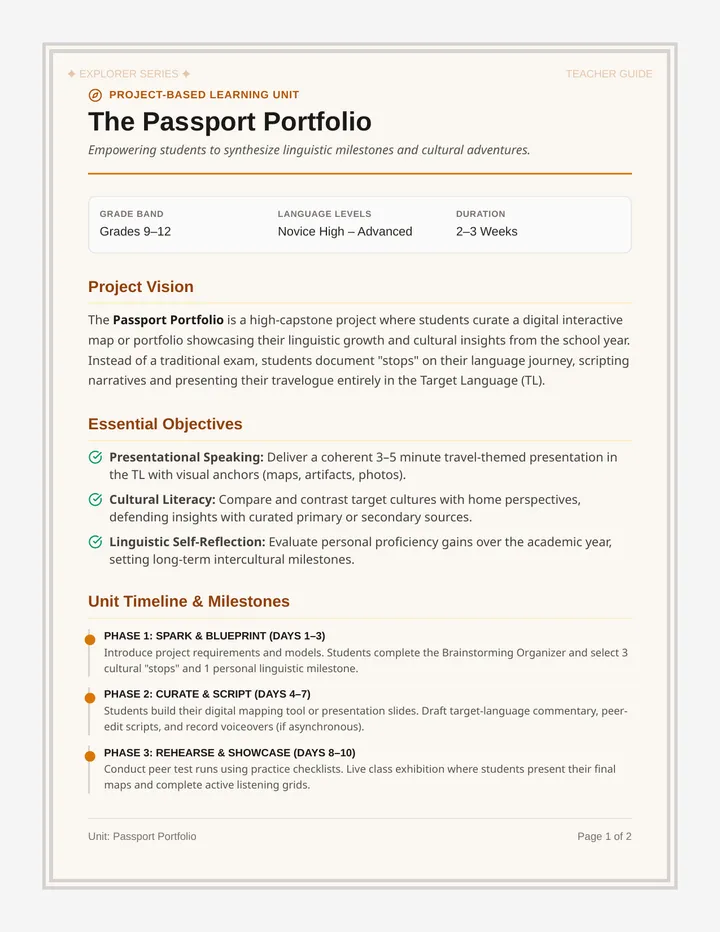
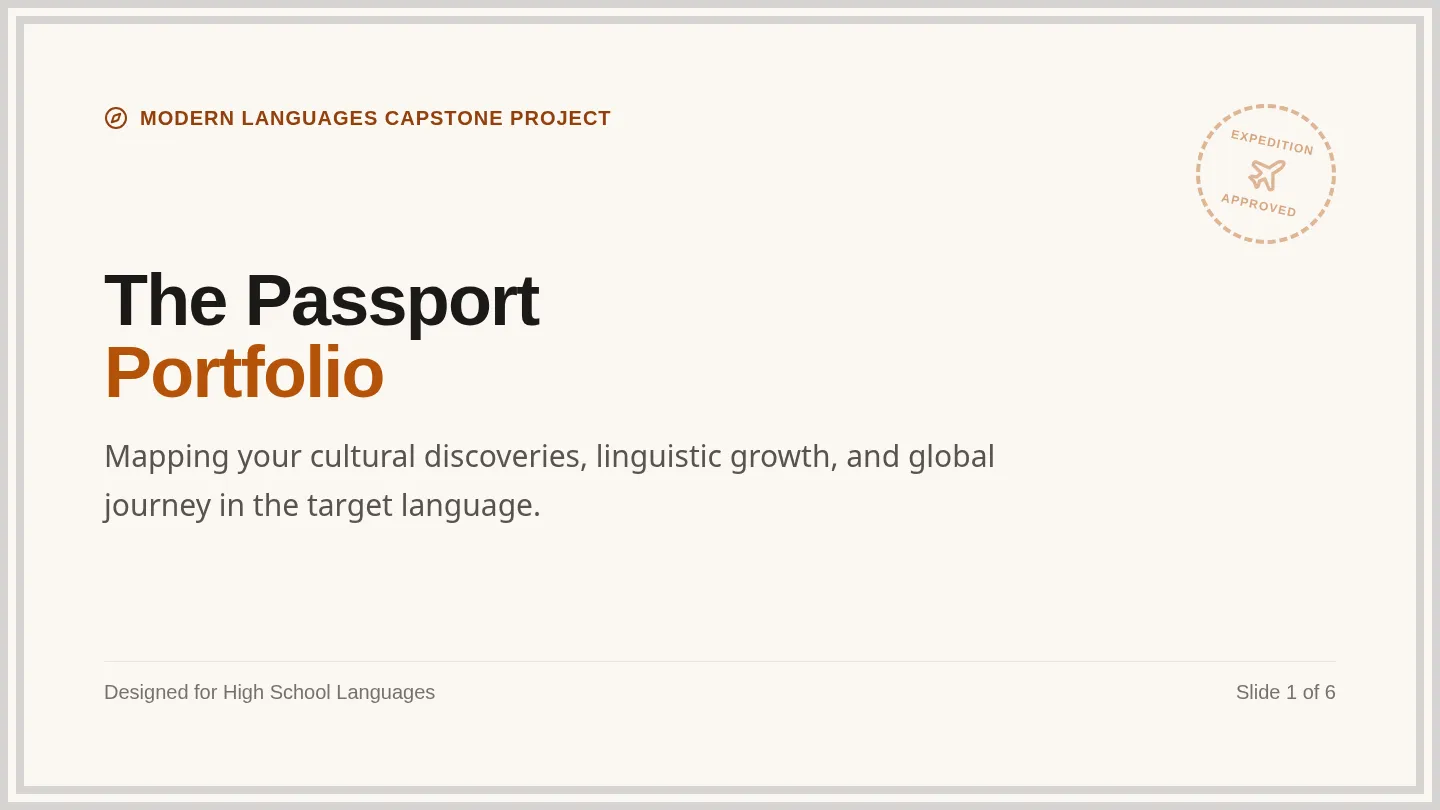
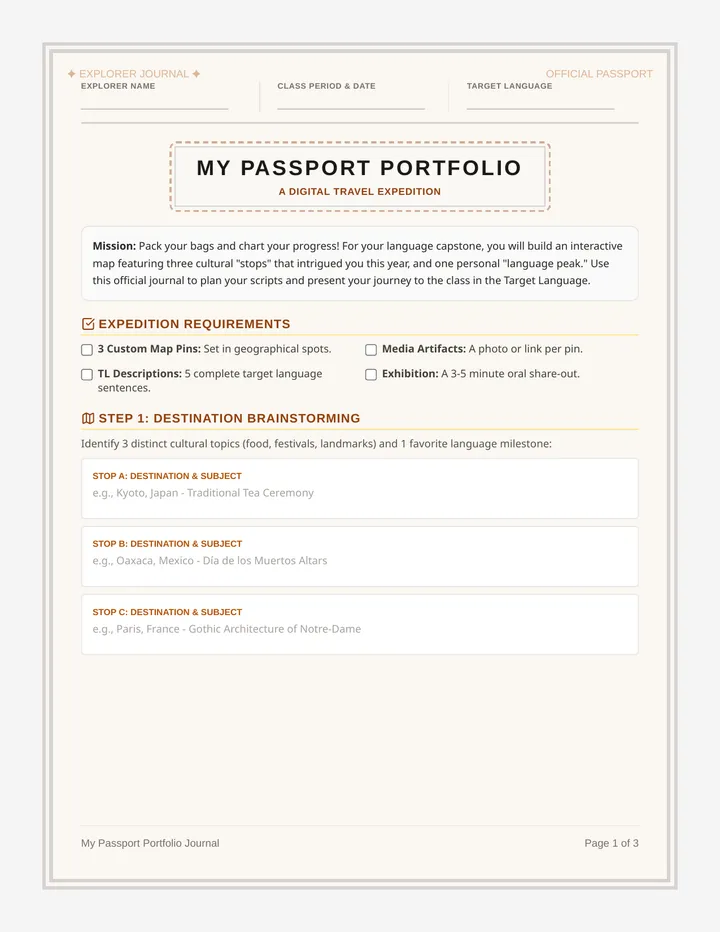
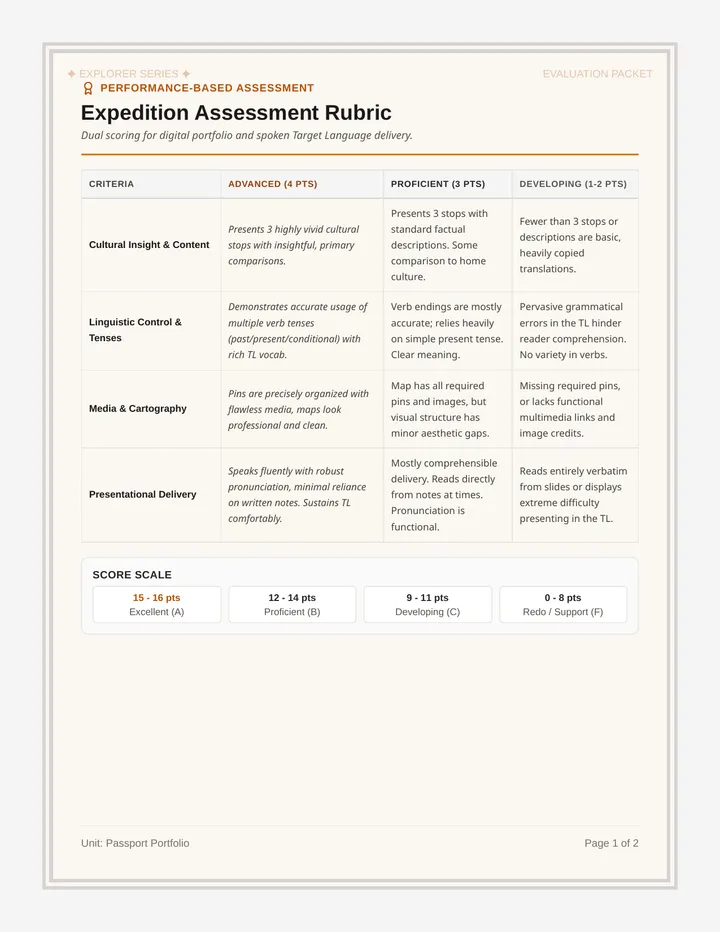
A project-based lesson where high school students design a digital travel map or portfolio of their cultural and linguistic discoveries, presenting their work in the target language.
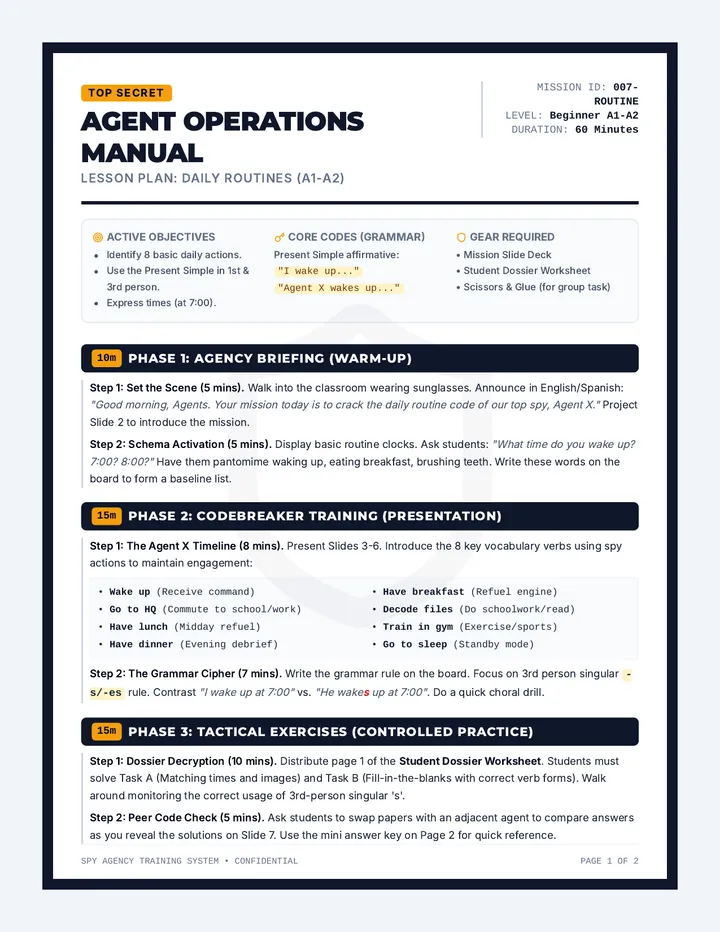
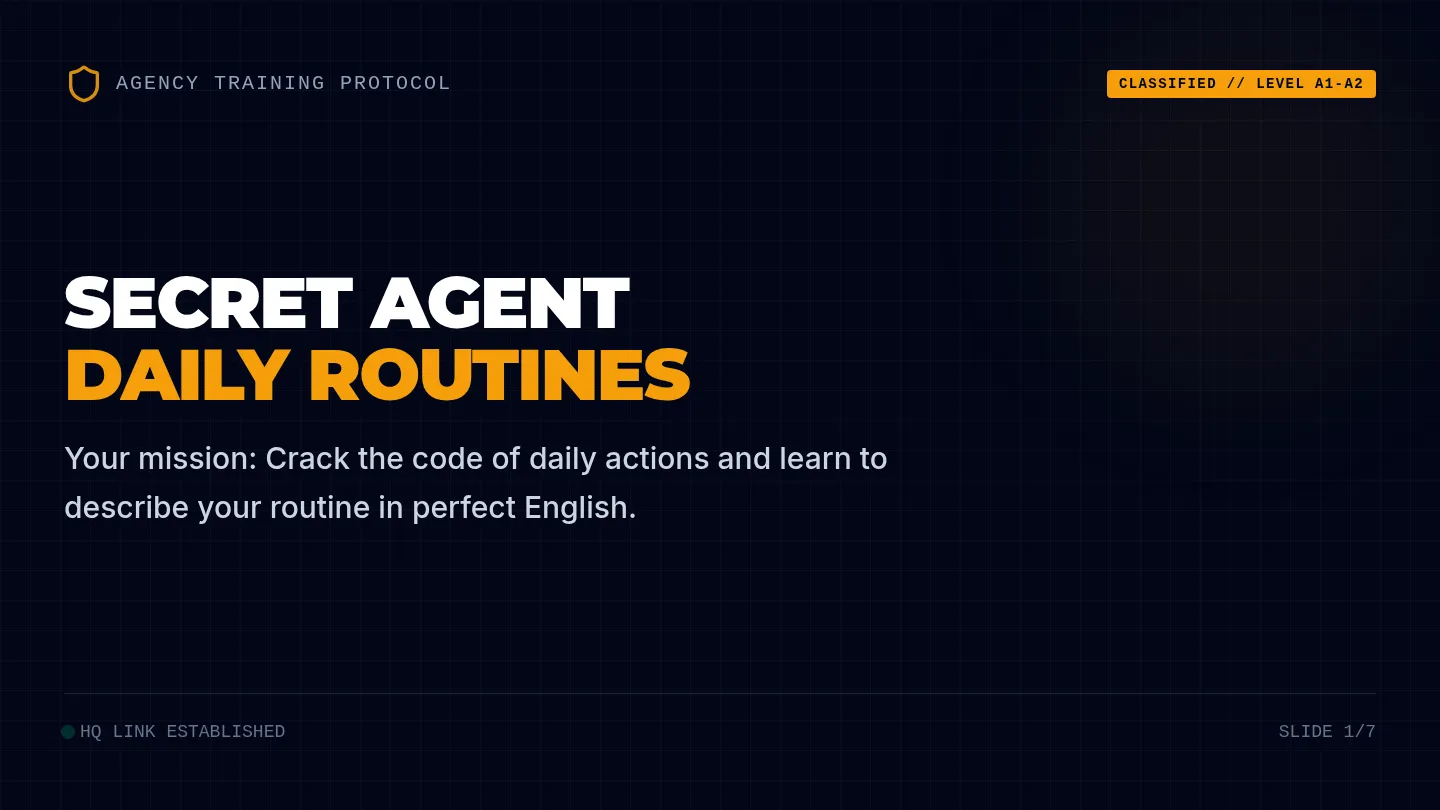
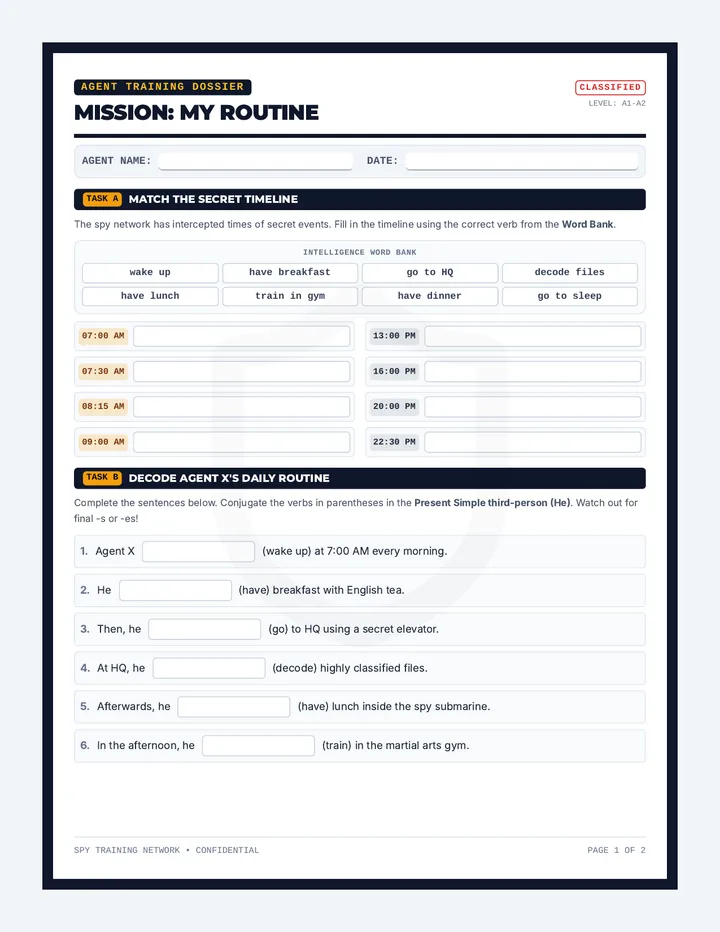
A high-engagement A1-A2 English lesson about daily routines using the exciting theme of secret agents. Includes a comprehensive step-by-step teacher lesson plan, an instructional slide deck, and printable student worksheets with daily routine practice.
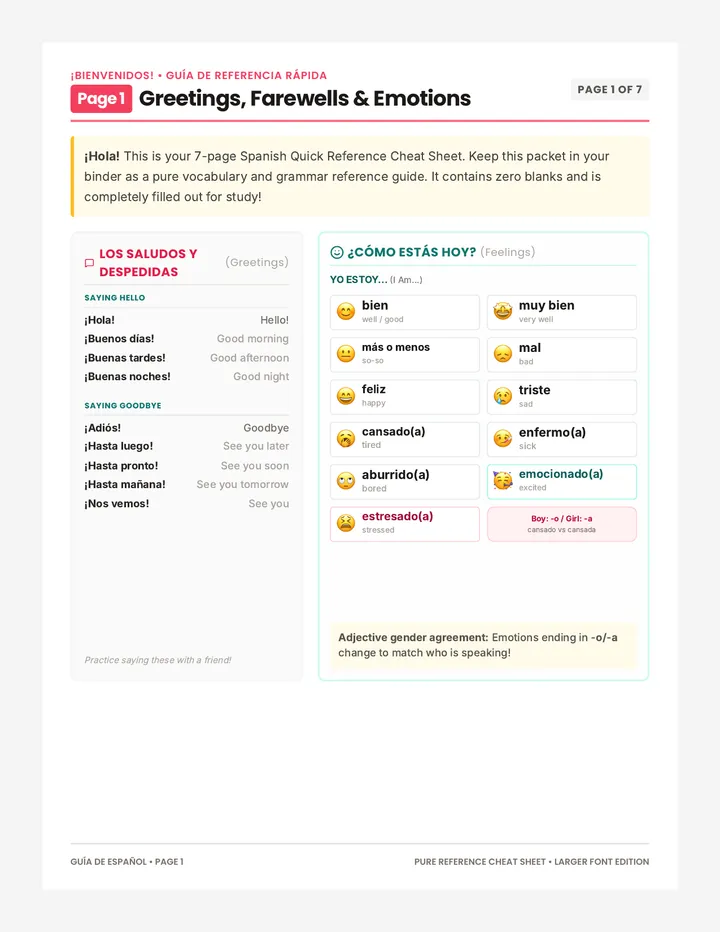
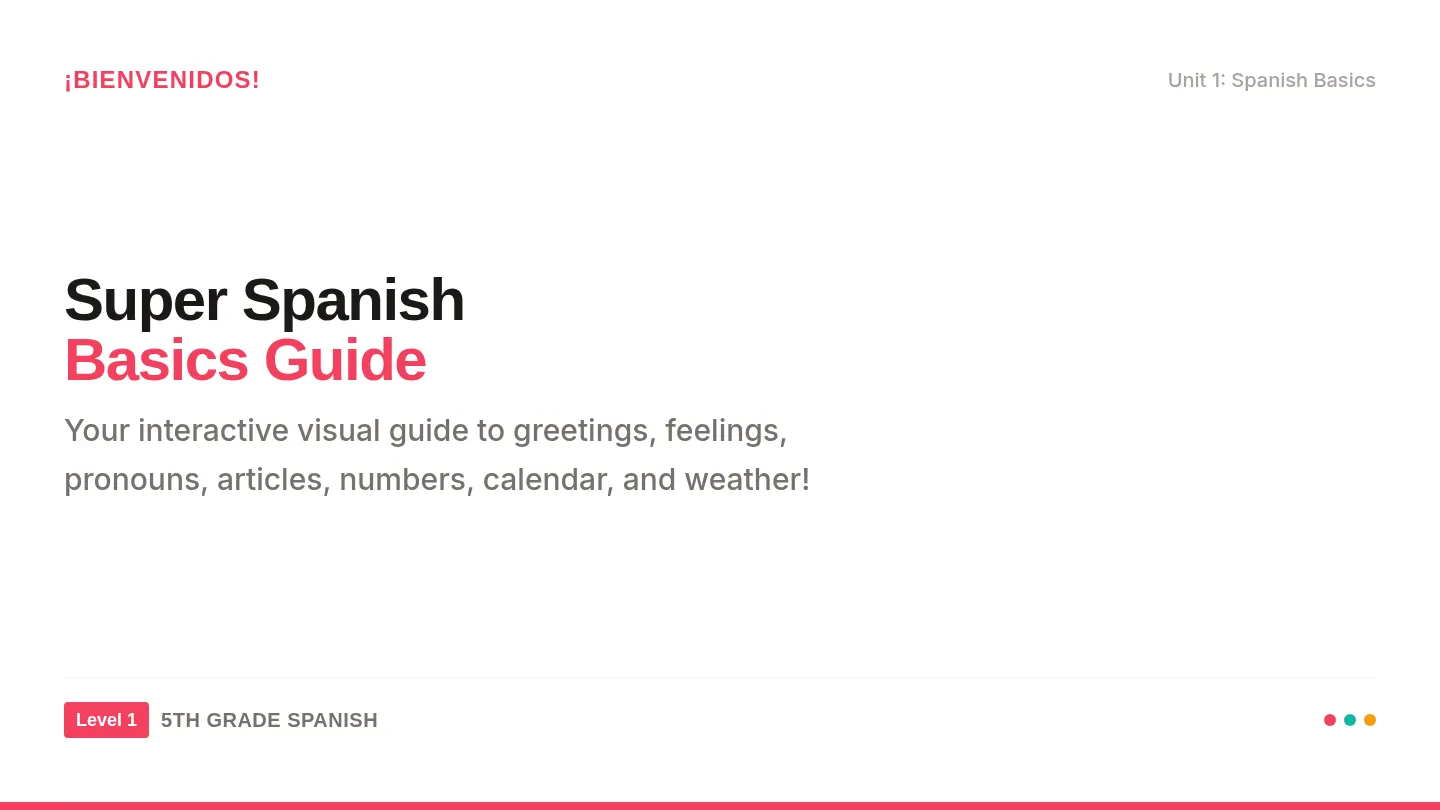
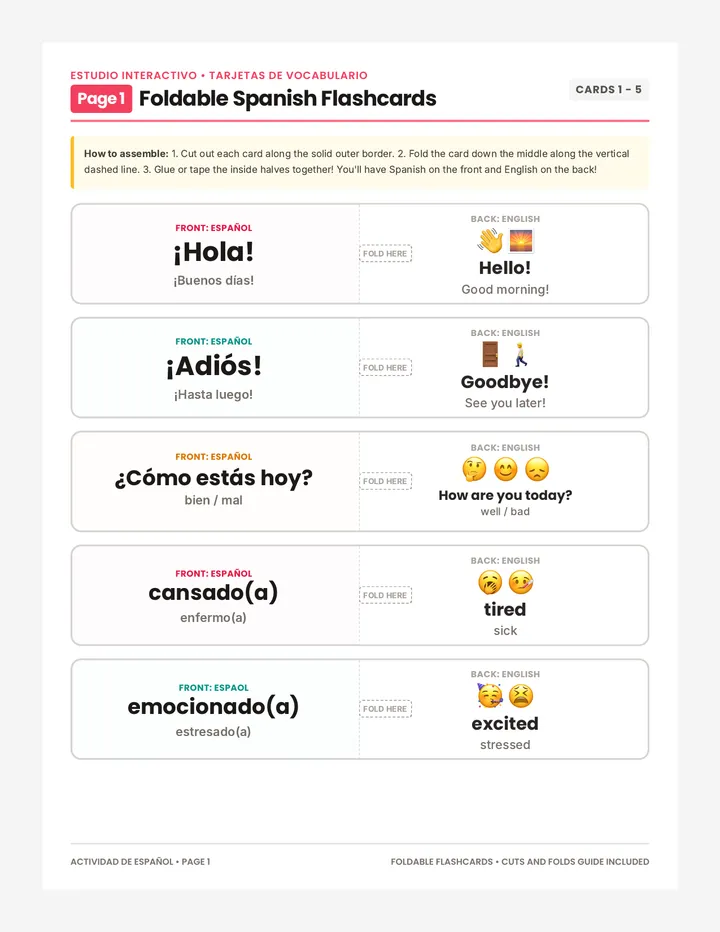
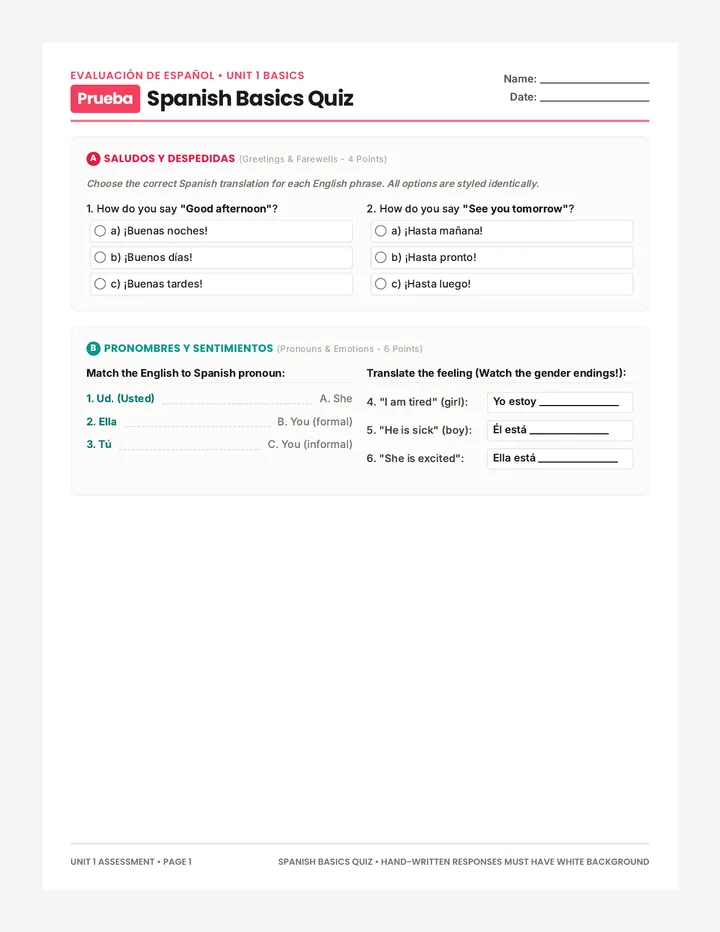
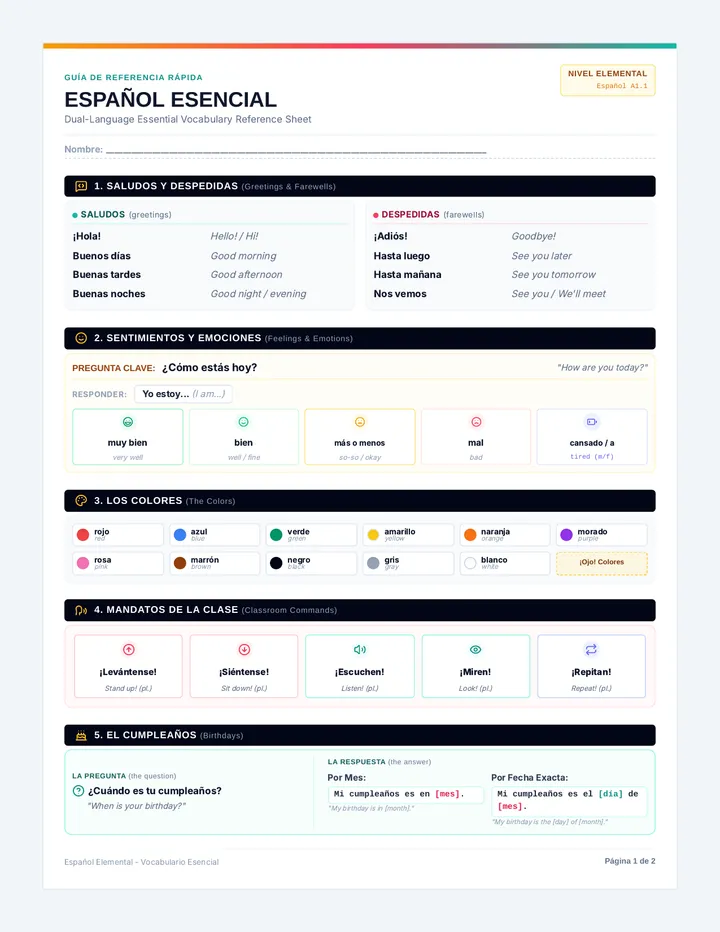
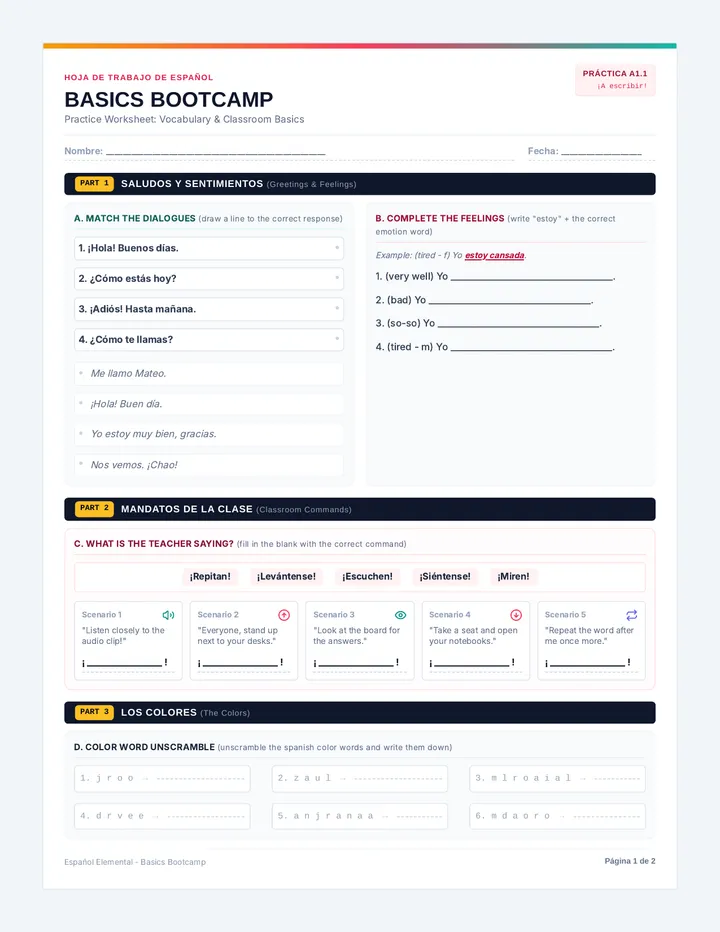
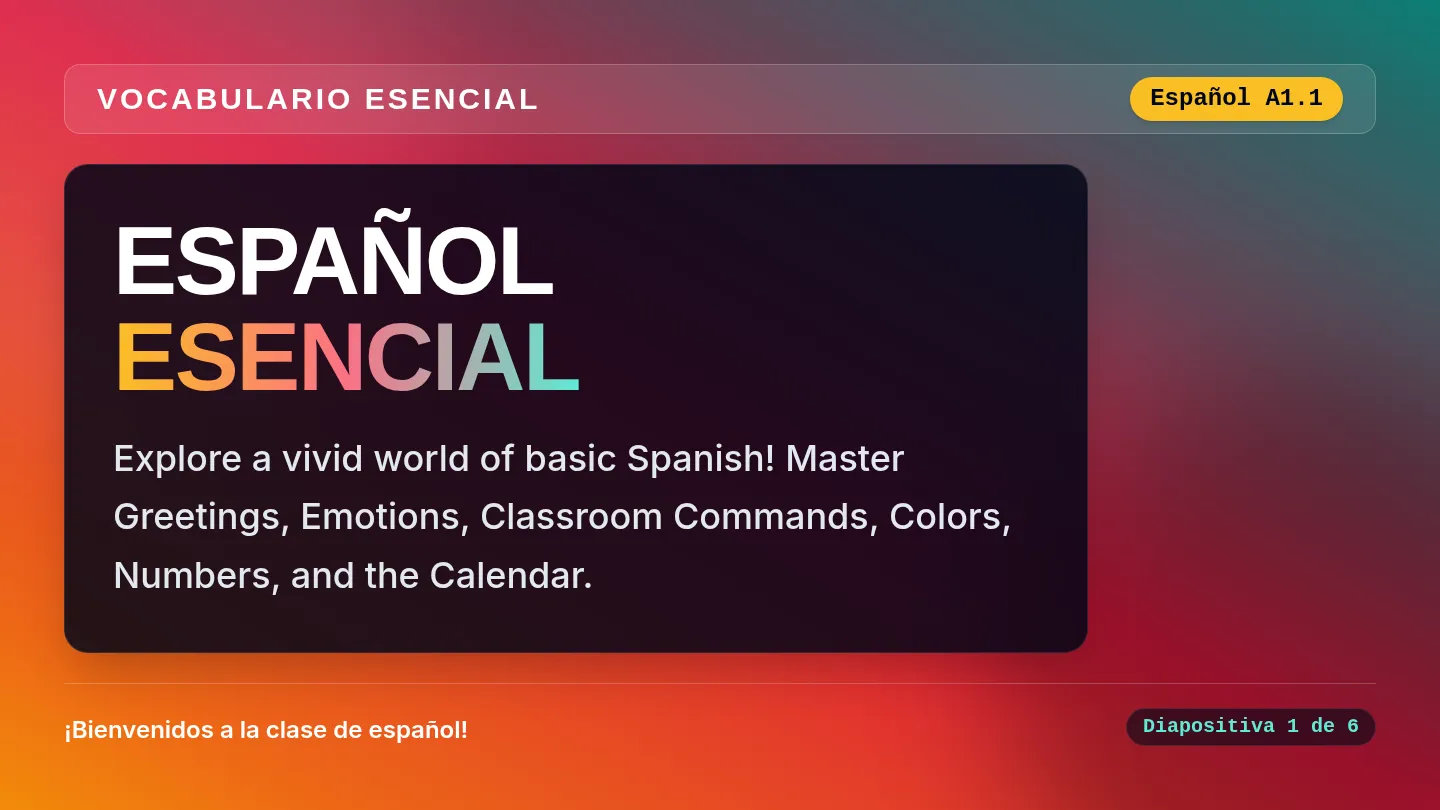
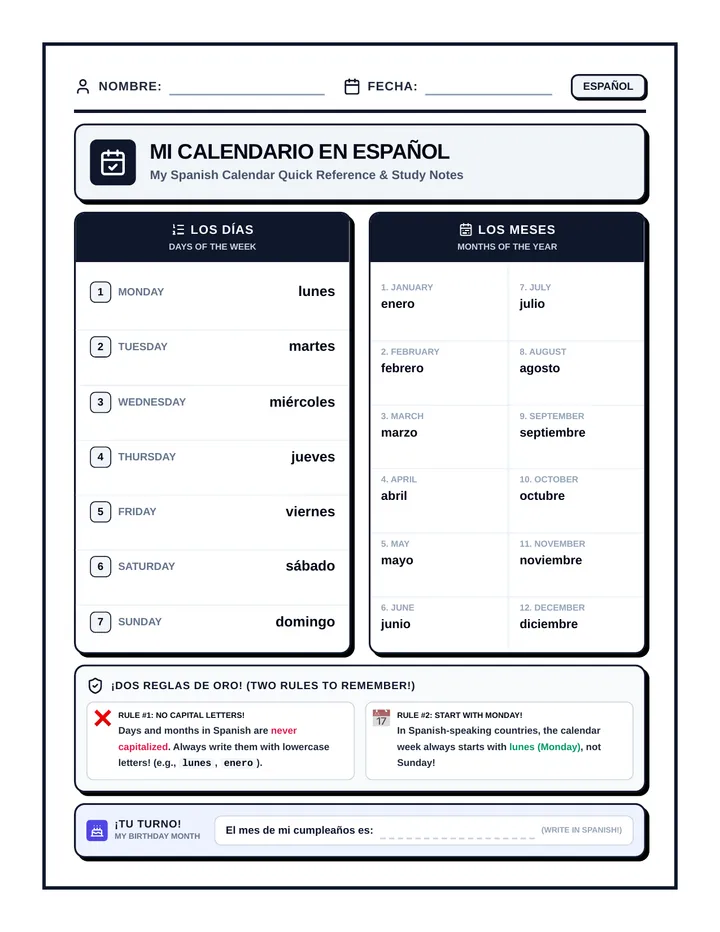
A comprehensive introductory Spanish unit designed for 5th-grade students. It covers greetings, personal information, emotions, grammar essentials (pronouns and articles), numbers, colors, the calendar, weather, and real-world conversations.
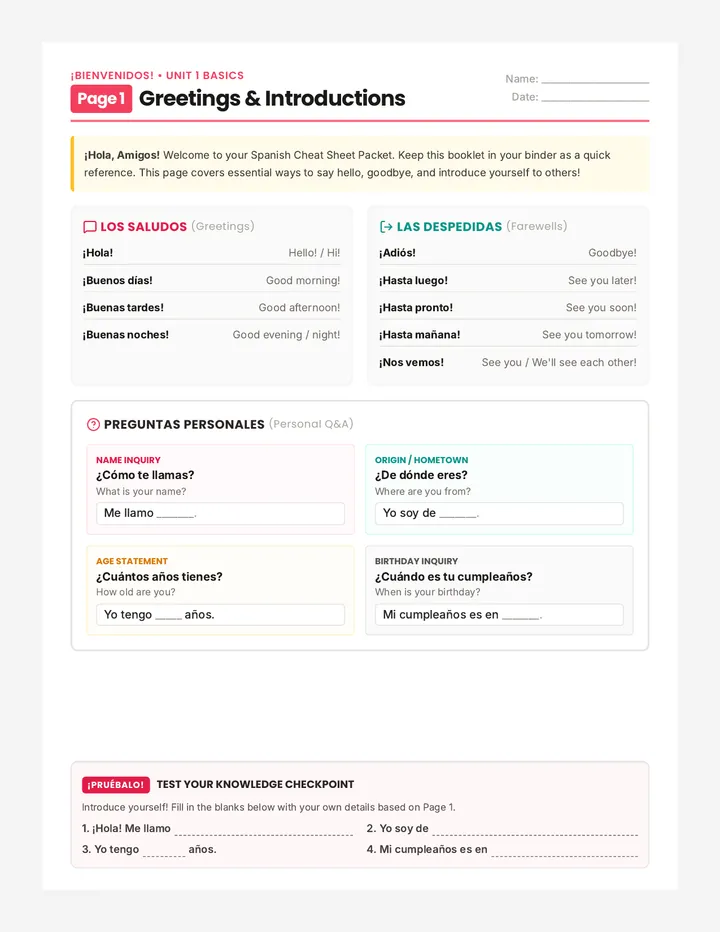
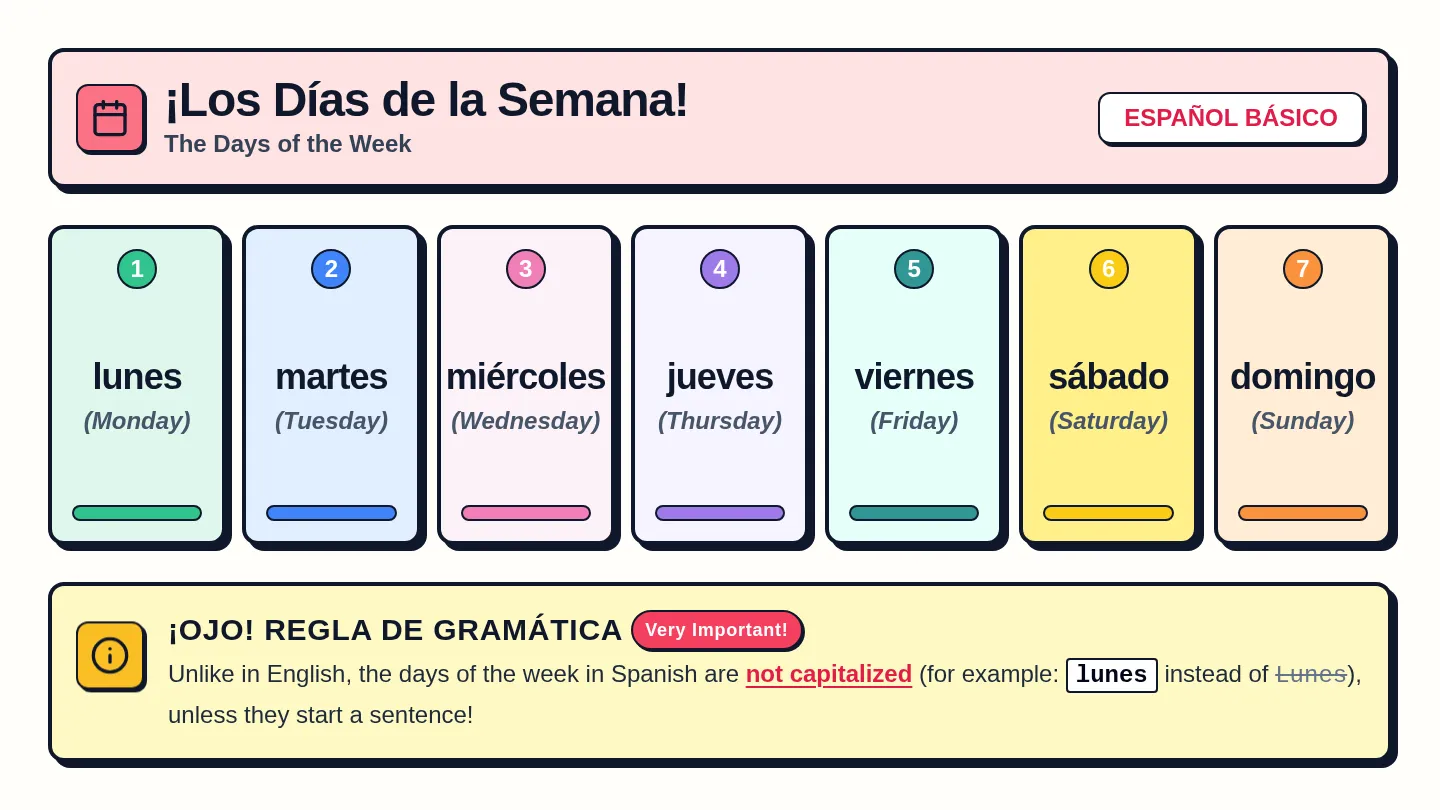
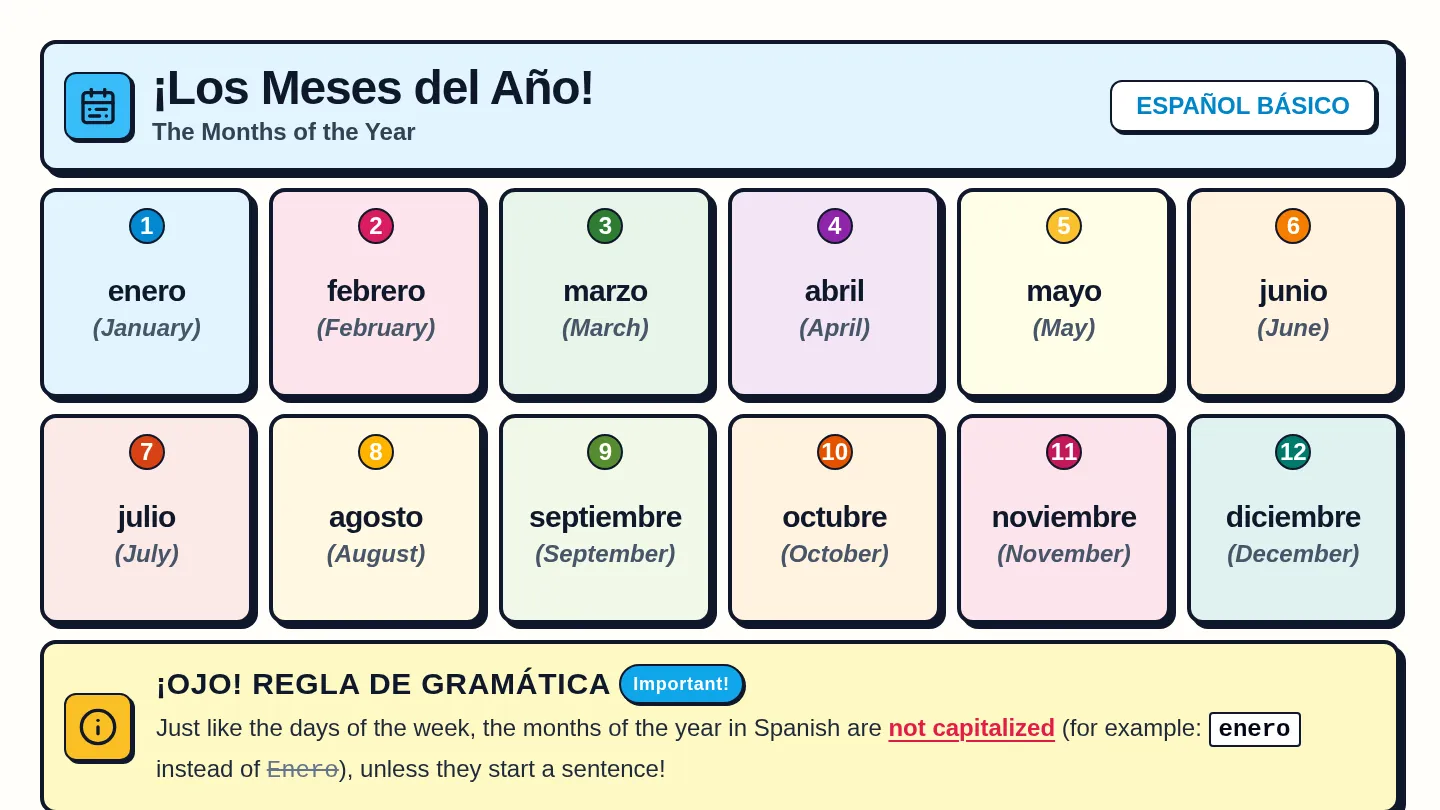
A foundational Spanish lesson covering basic conversational items: greetings, emotions, colors, numbers 0 to 40, and calendar systems (days of the week, months, and birthdays).
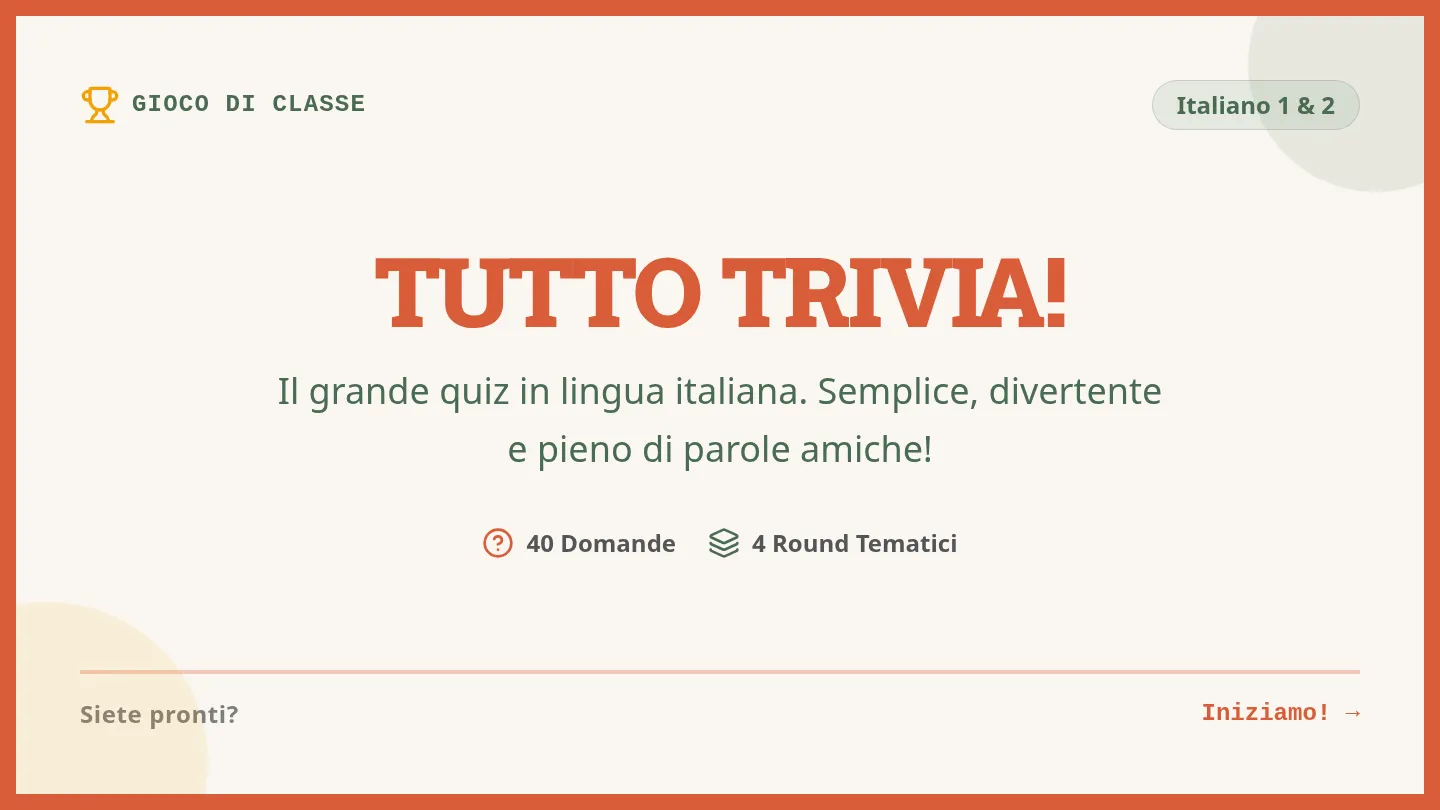
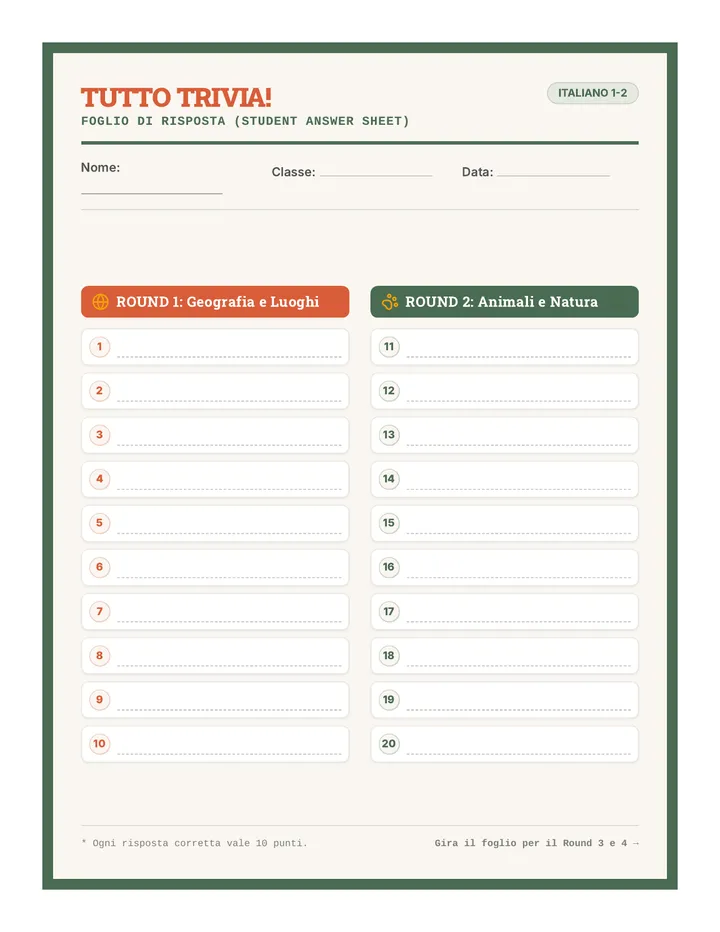
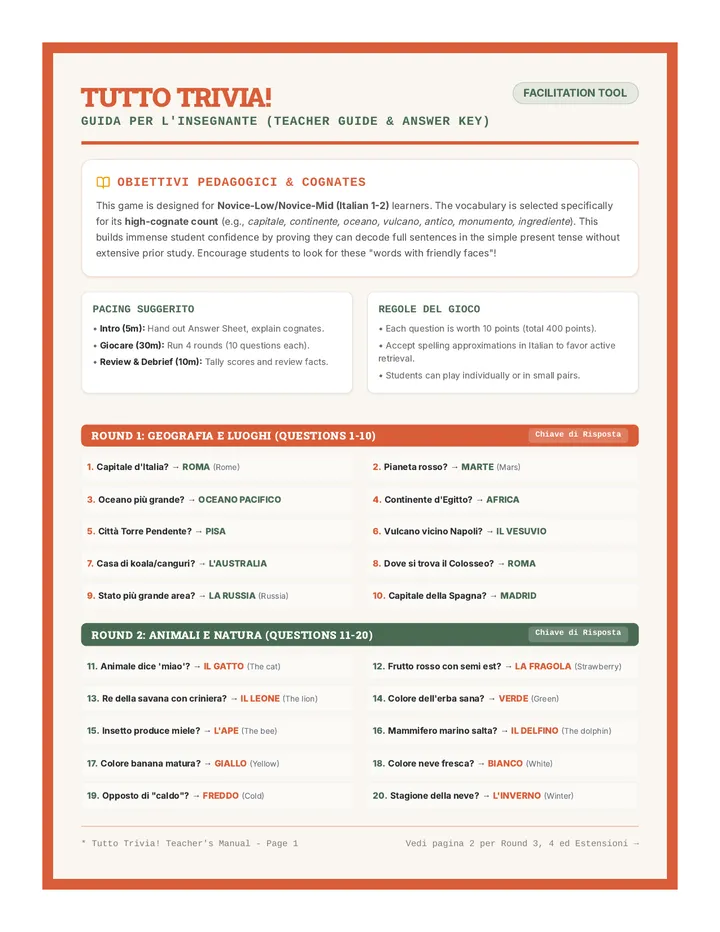
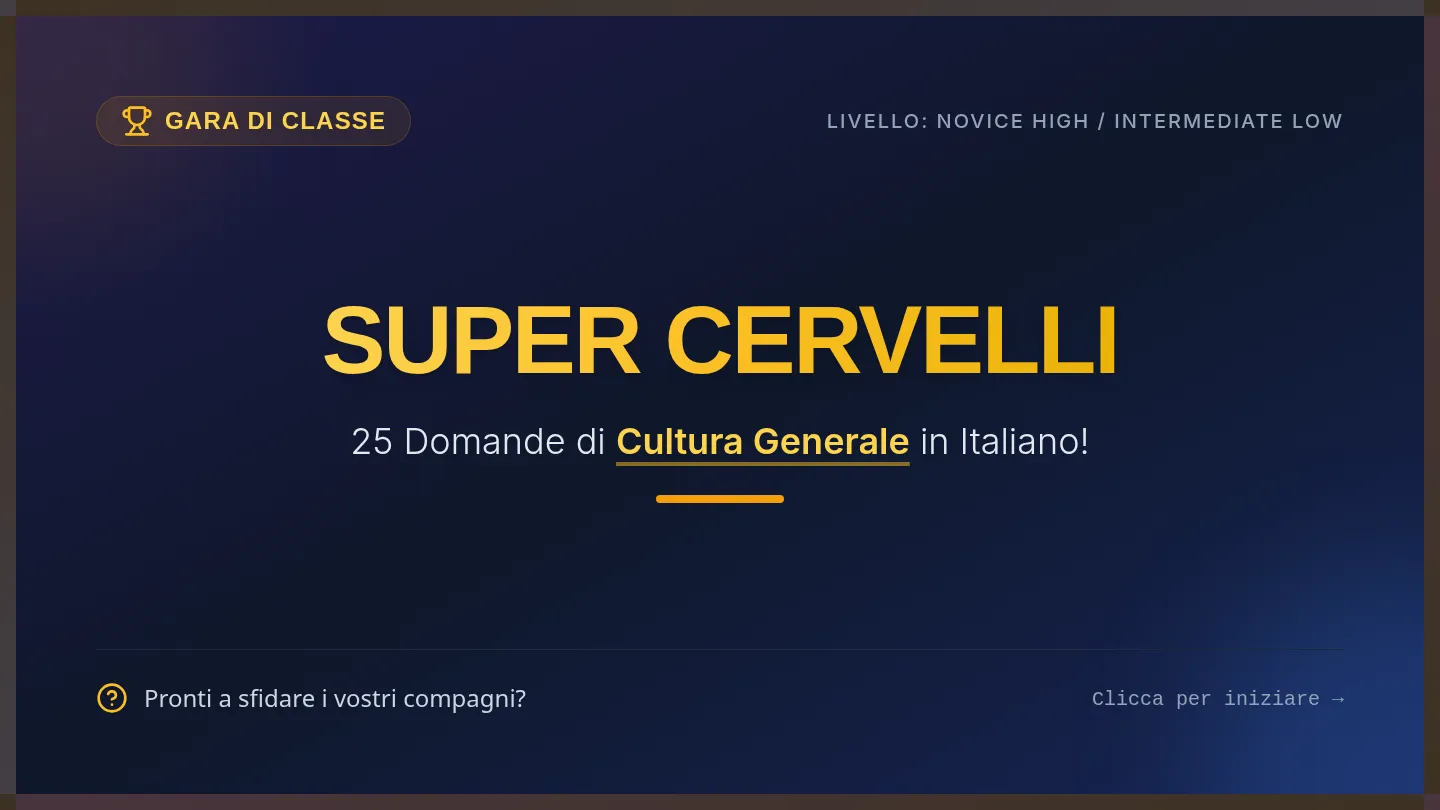
A comprehensive classroom trivia game featuring 40 highly cognate-rich questions in simple present tense. Students listen, read, and write down their answers, building confidence in Italian vocabulary, grammar, and sentence structure.
Una lezione divertente e interattiva focalizzata sul vocabolario di cultura generale in lingua italiana per studenti di livello Novice High / Intermediate Low.
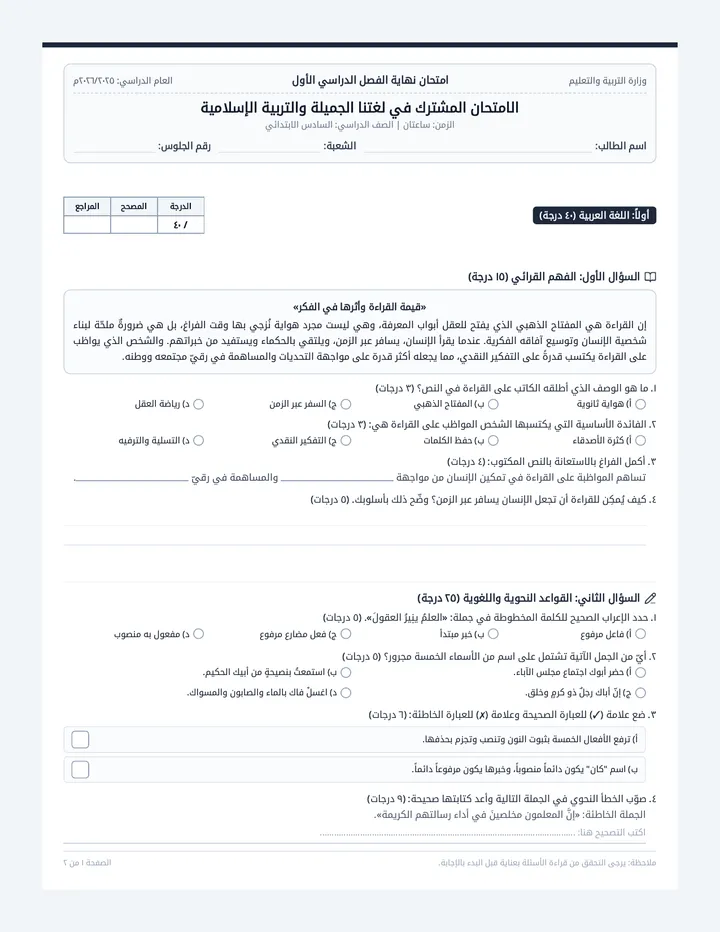
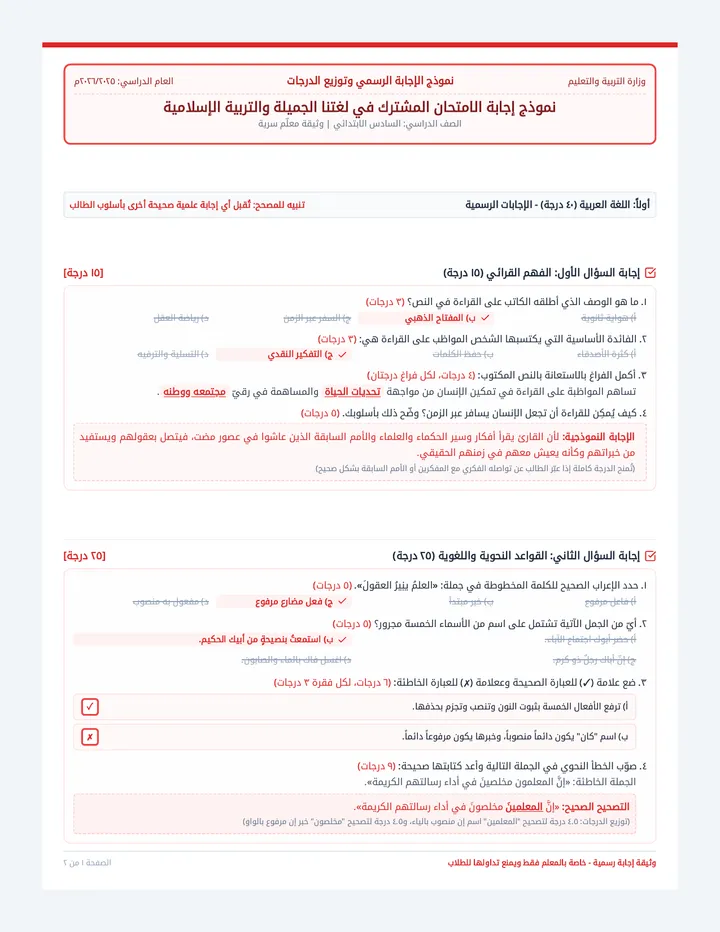
امتحان شامل وممنهج لمادتي اللغة العربية والتربية الإسلامية، يحتوي على نصوص قرائية، قواعد نحوية، أسئلة مقالية، وفراغات، مصمم بطريقة مرتبة ومحاكية للاختبارات الرسمية.
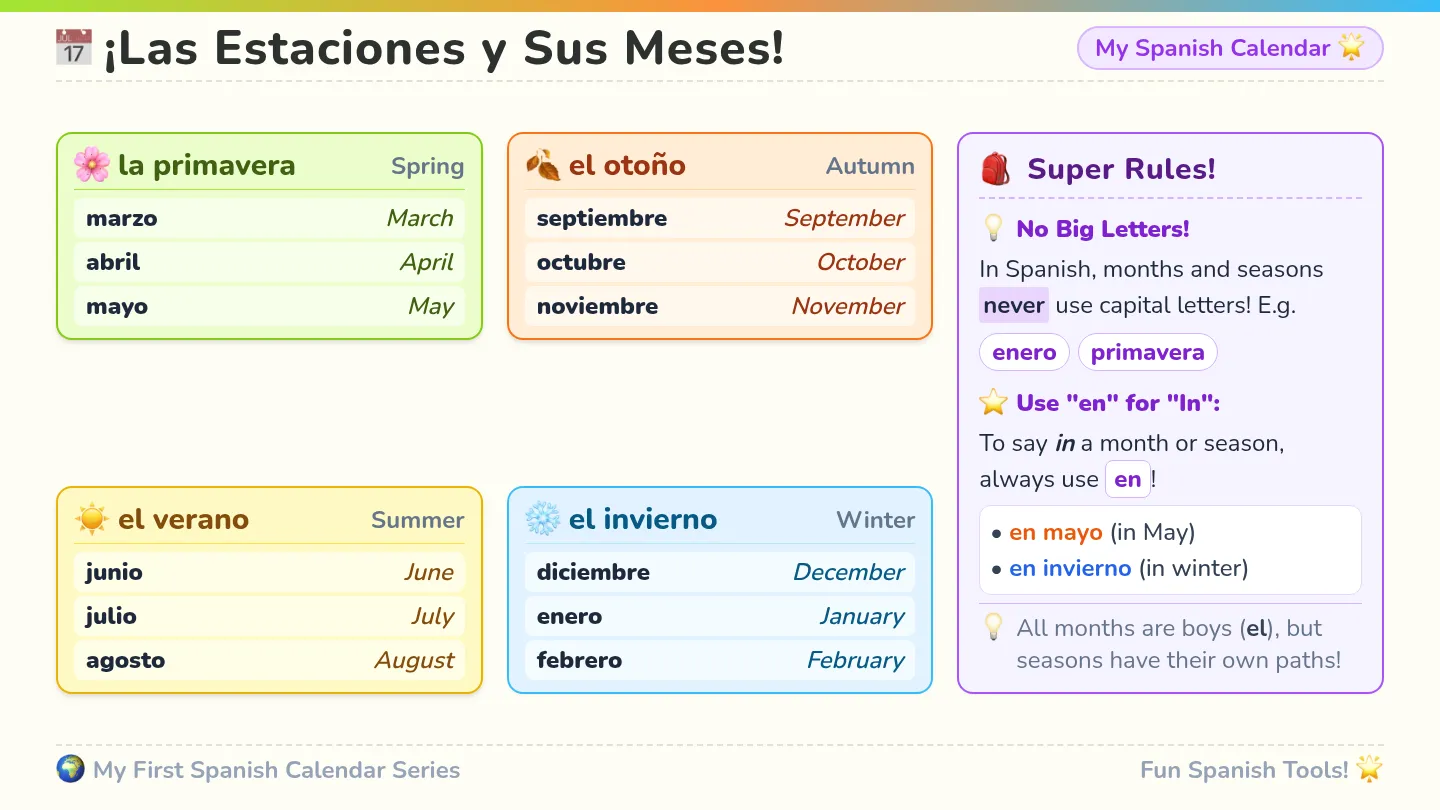
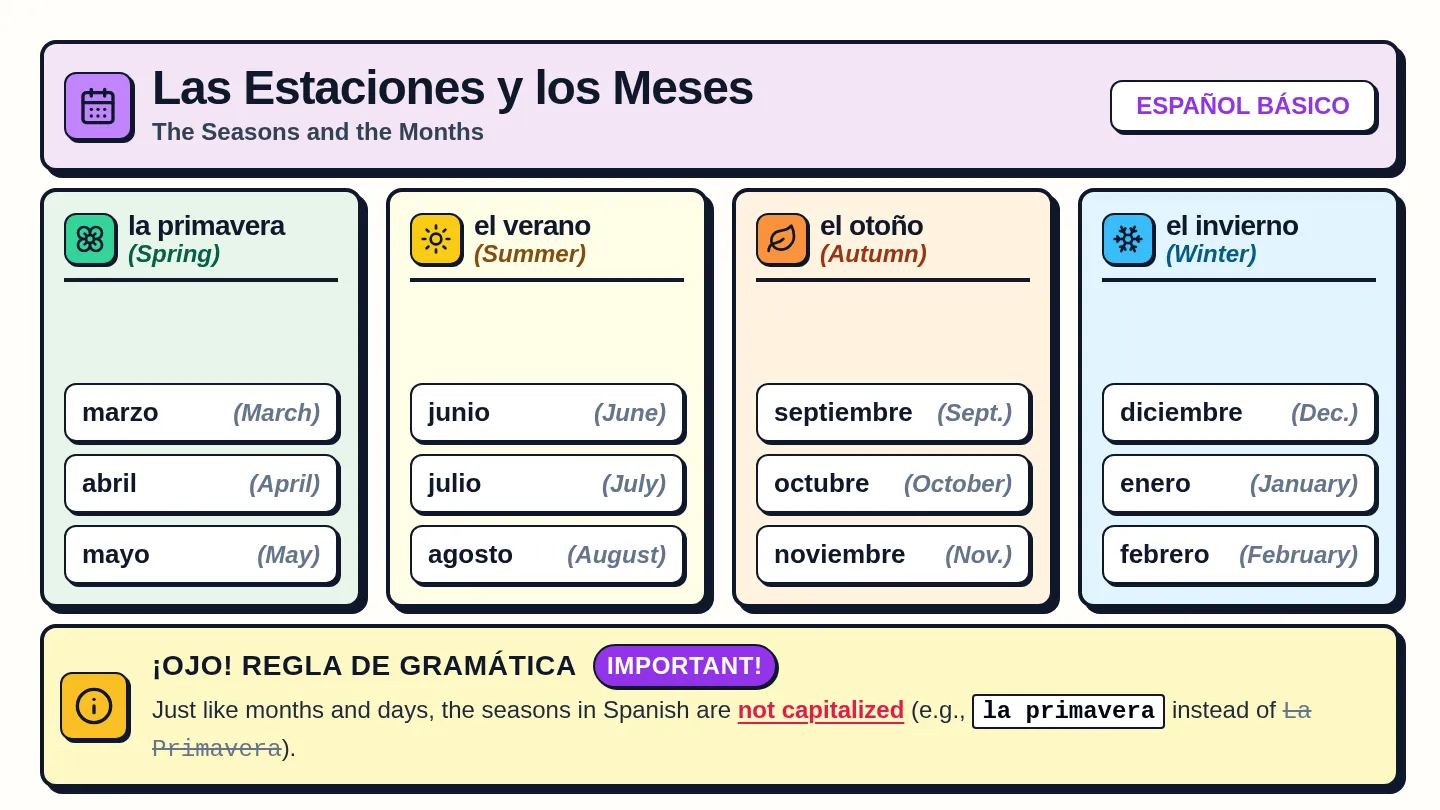
An academic lesson on Spanish months, seasons, and key capitalization rules, tailored specifically for older beginners and adult learners.
An introductory lesson on Spanish calendar vocabulary, teaching students the days of the week, correct pronunciation, and important capitalization rules.
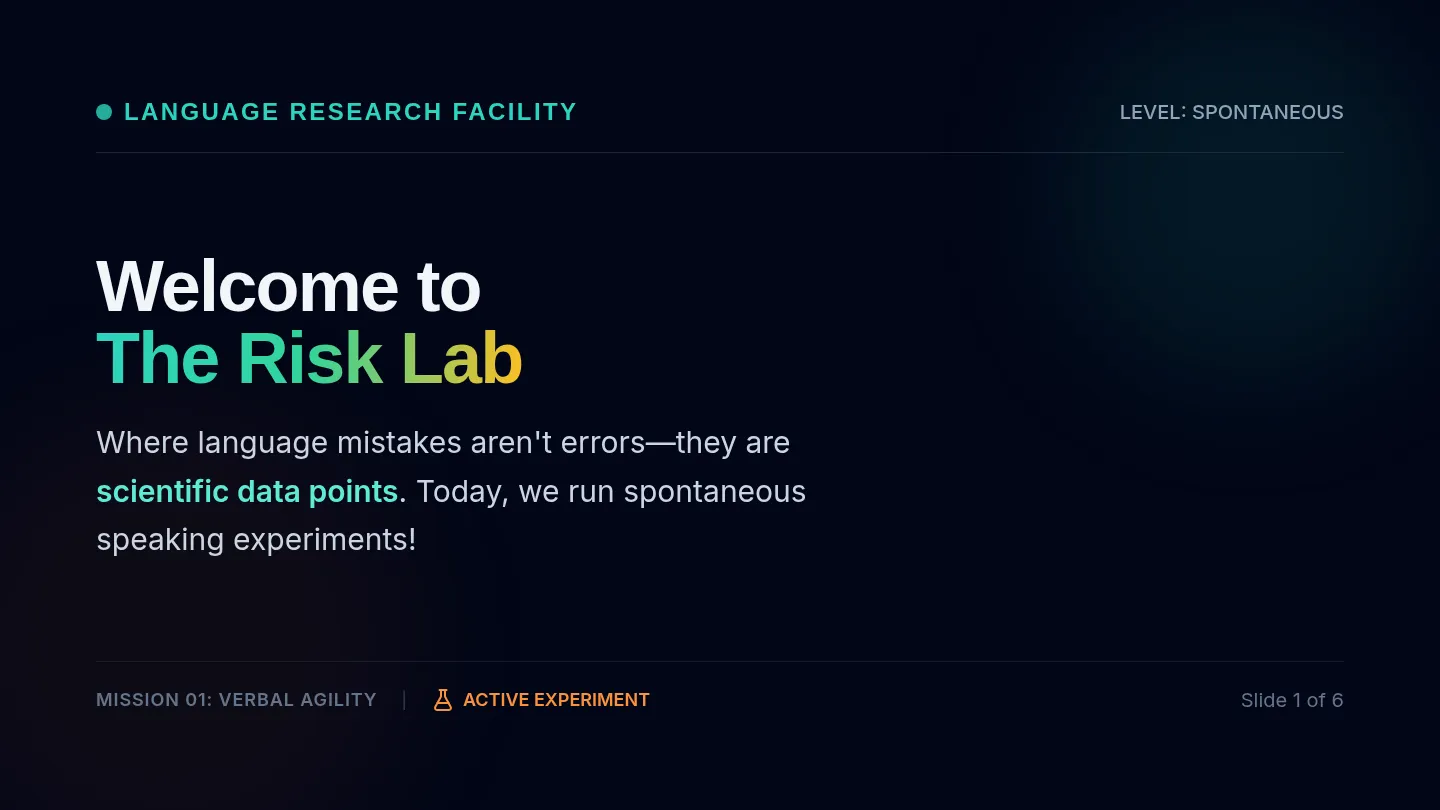
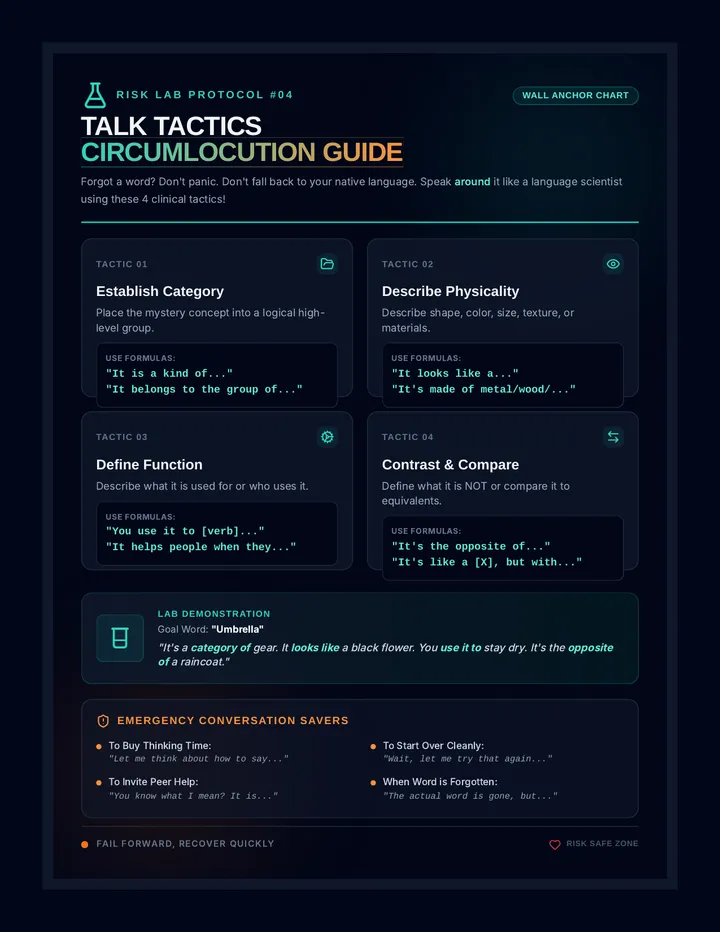
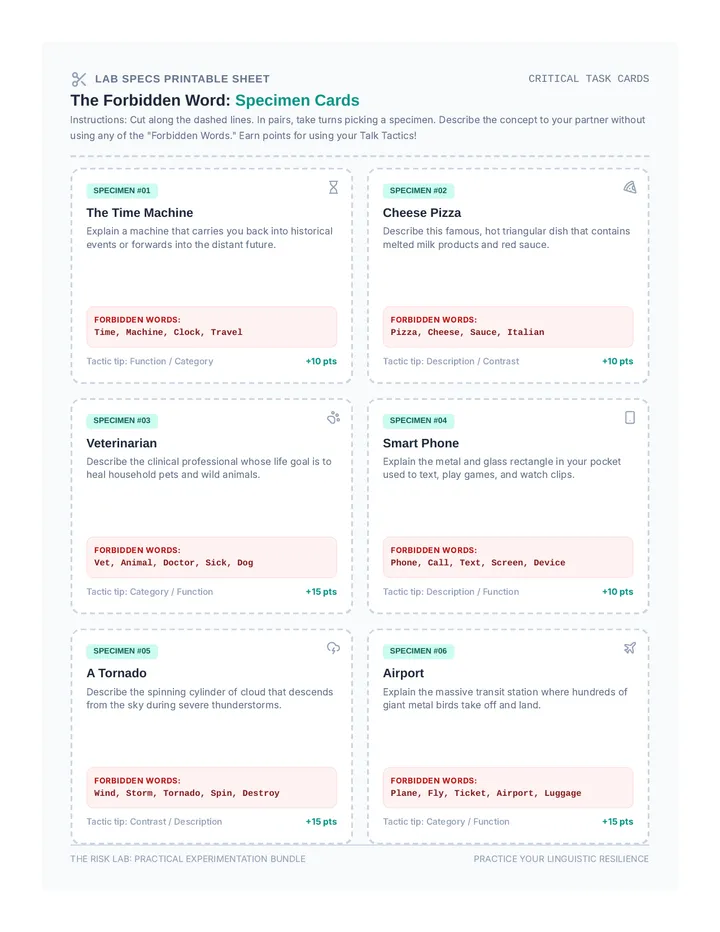
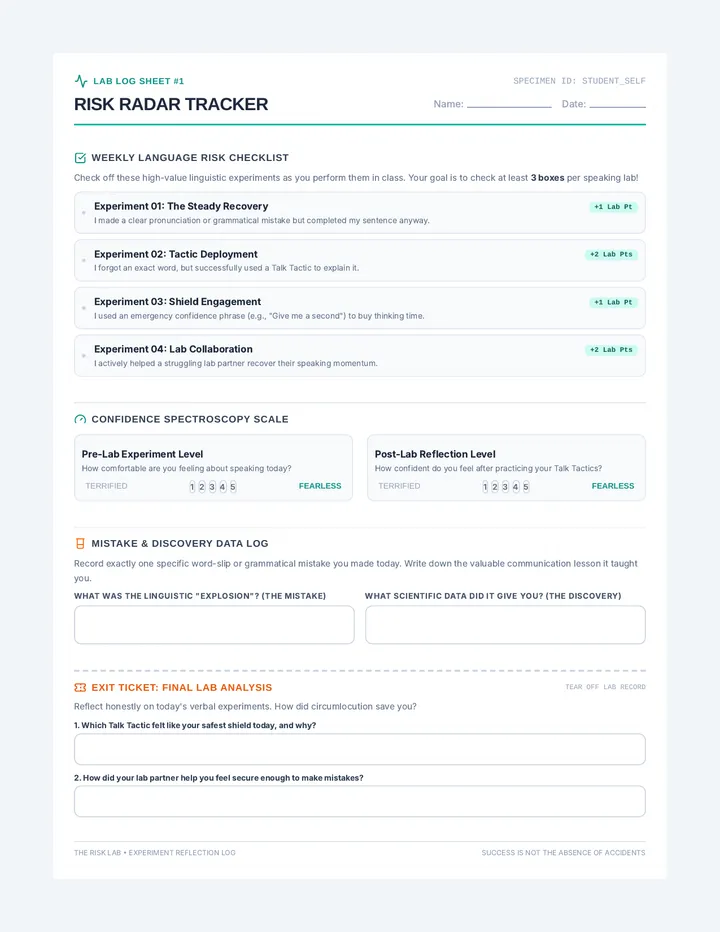
A confidence-boosting speaking lesson that reframes linguistic mistakes as scientific data points, training students in circumlocution and spontaneous conversation through the metaphor of a chemistry laboratory.
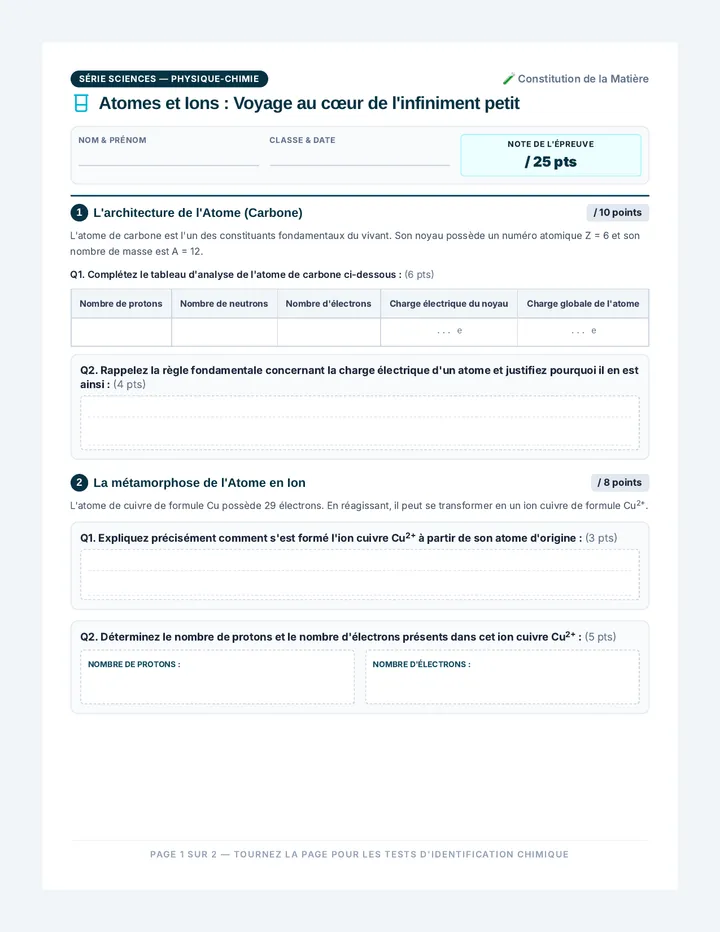
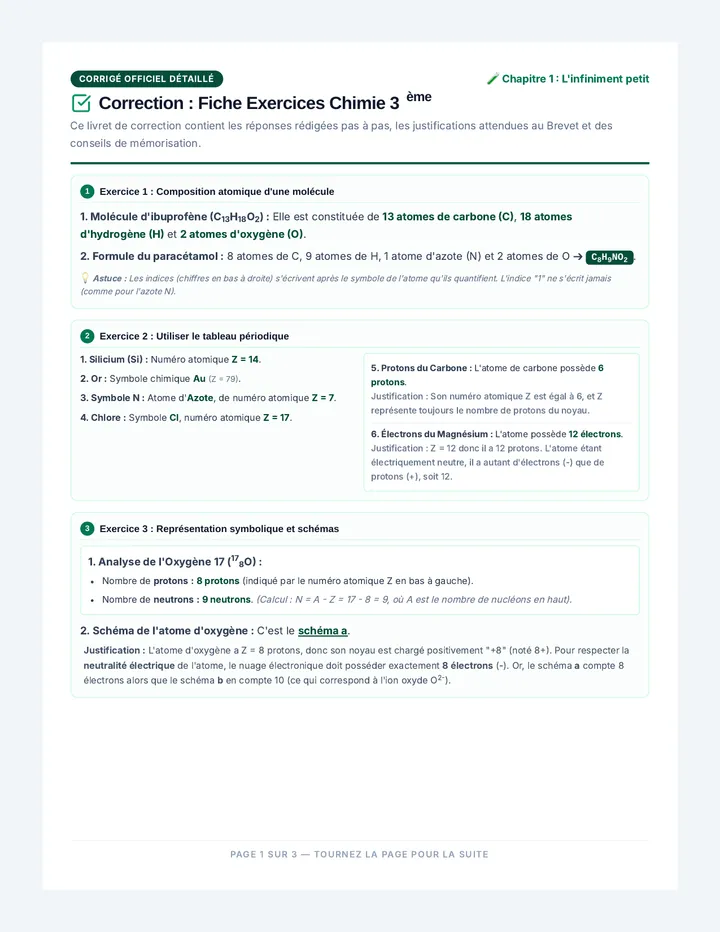
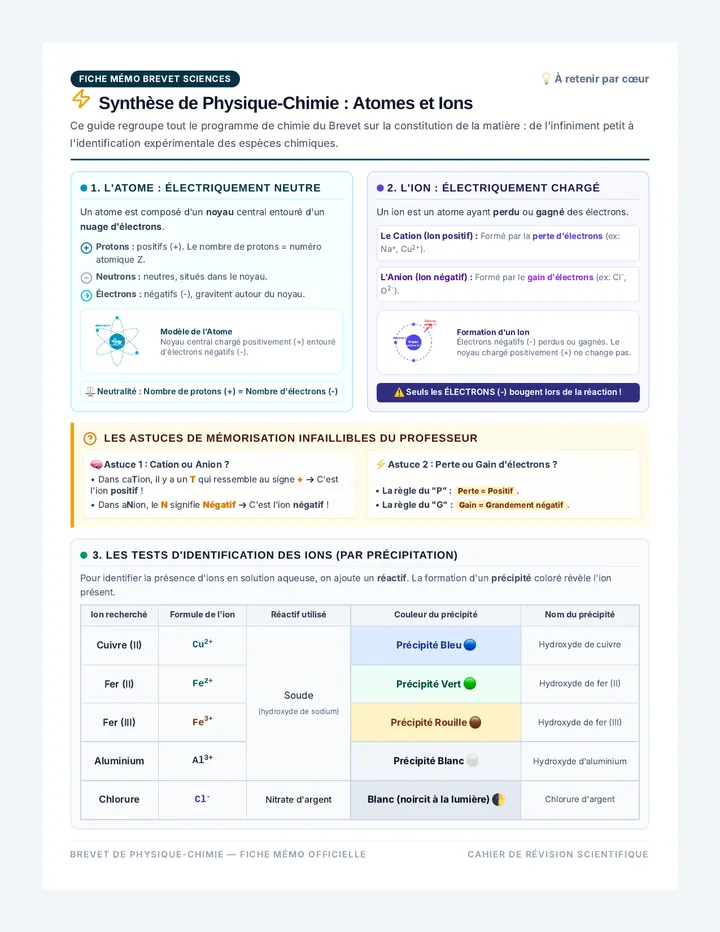
Une leçon de physique-chimie de niveau 3ème pour maîtriser la structure des atomes, la formation des ions et les tests d'identification chimique du Brevet.
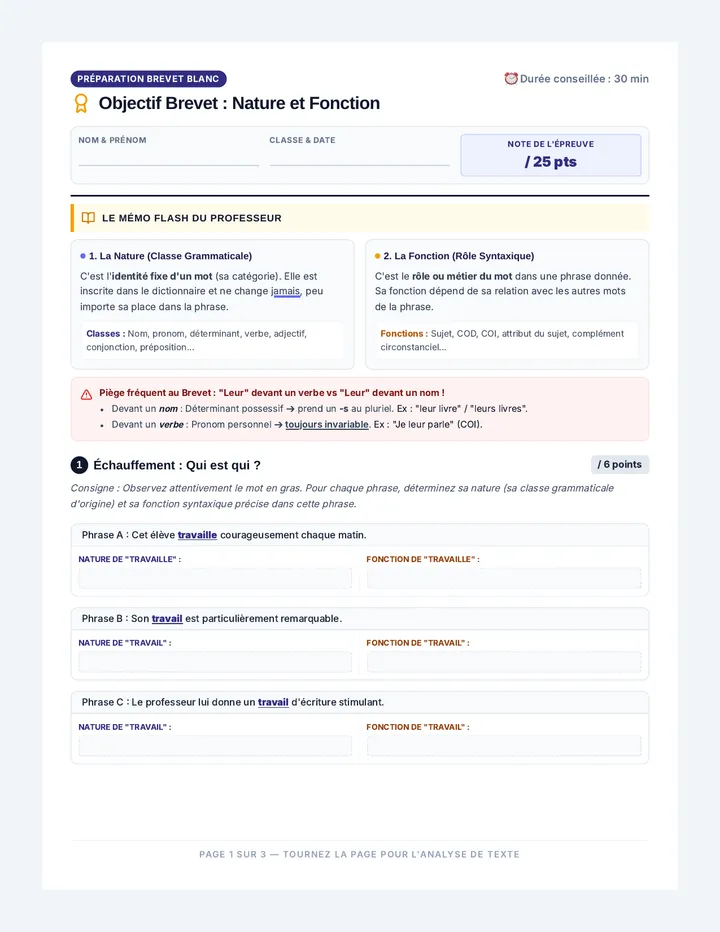
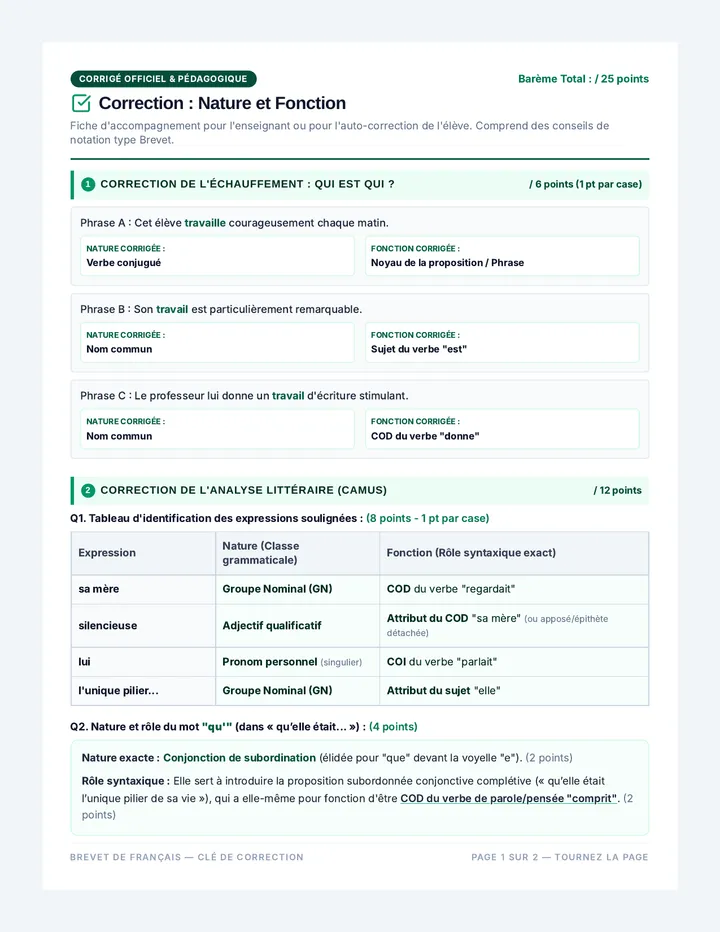
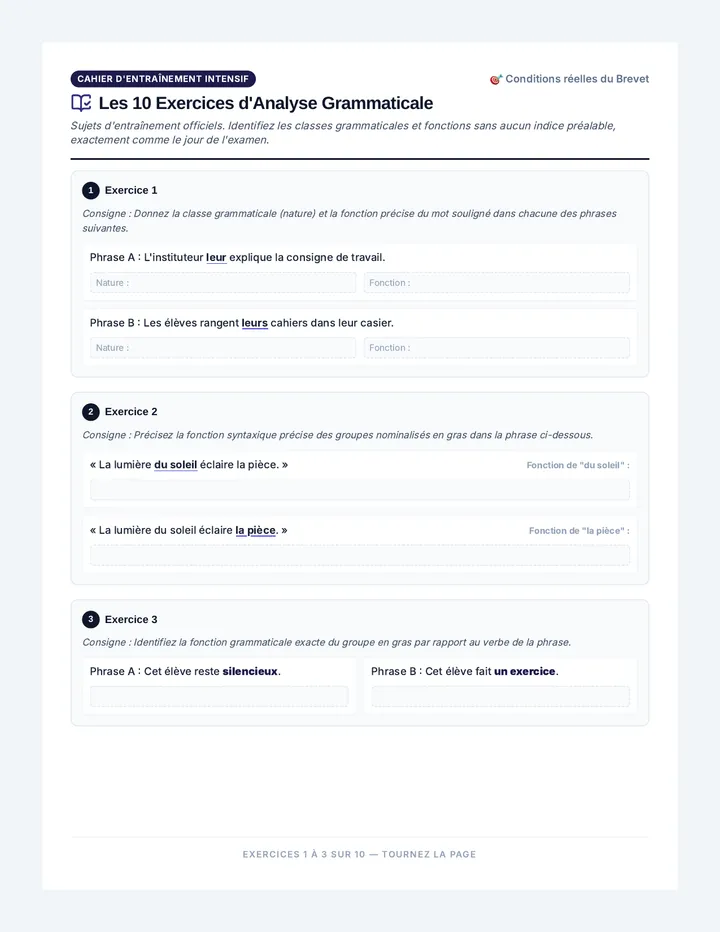
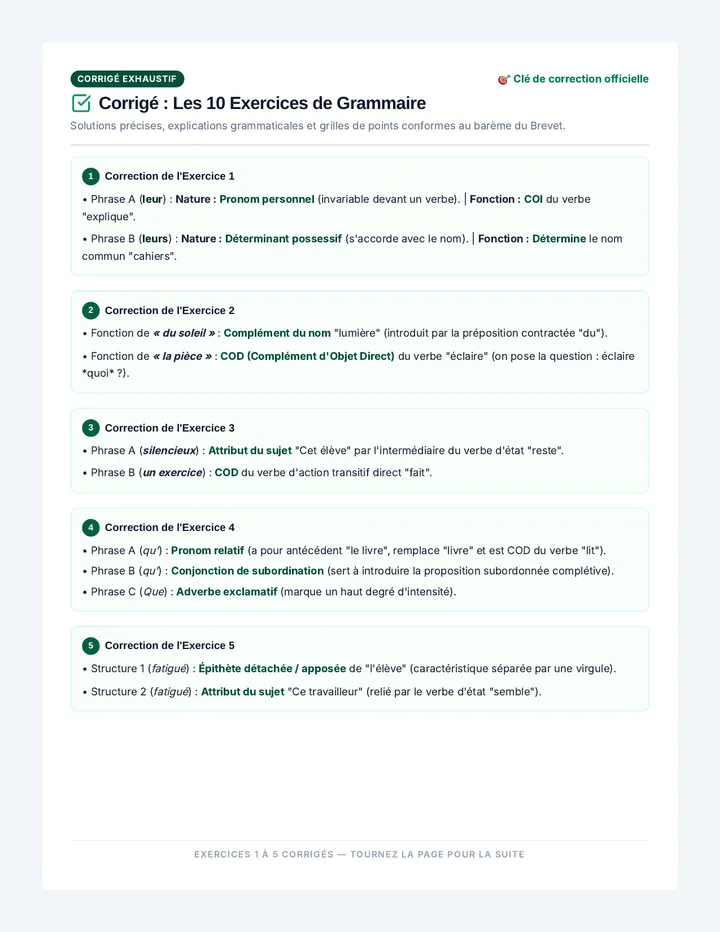
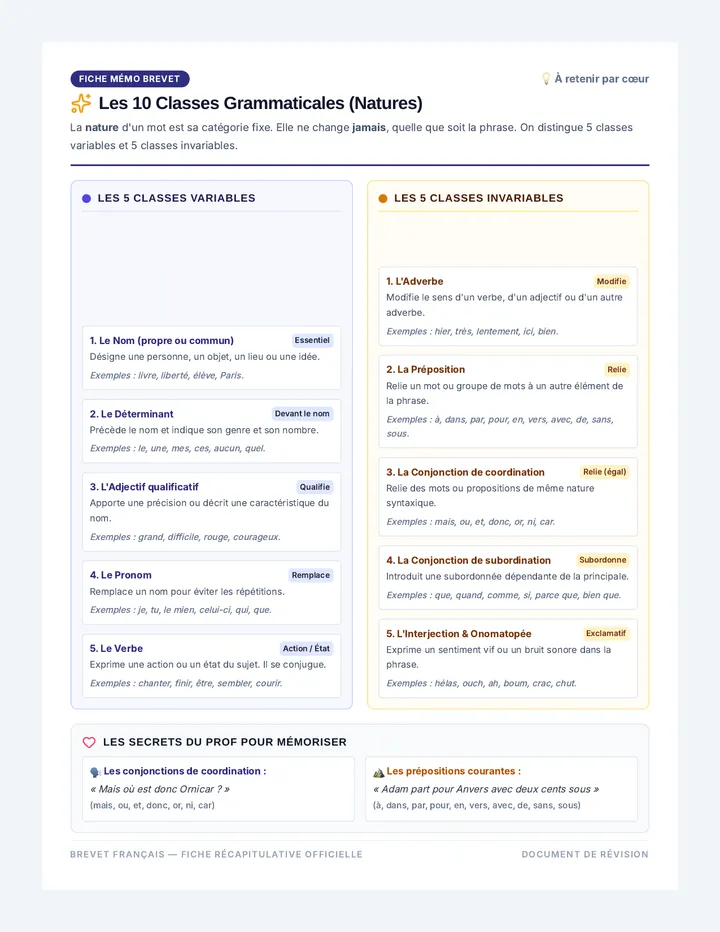
Séance d'entraînement intensive de 30 minutes conçue par un professeur pour maîtriser la distinction cruciale entre nature et fonction au brevet de français, accompagnée de sa correction détaillée.
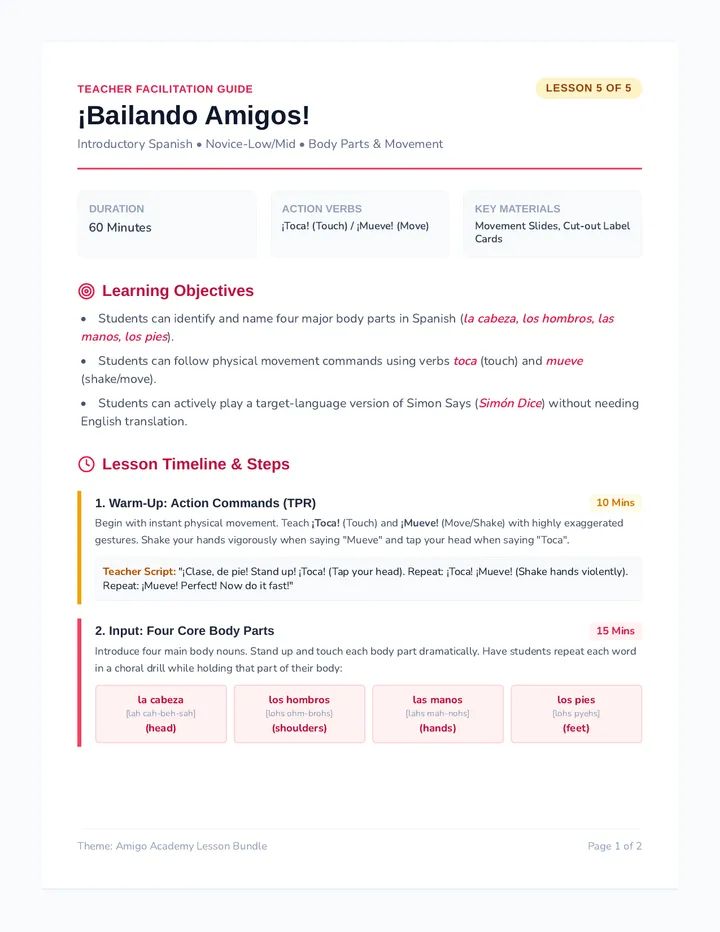
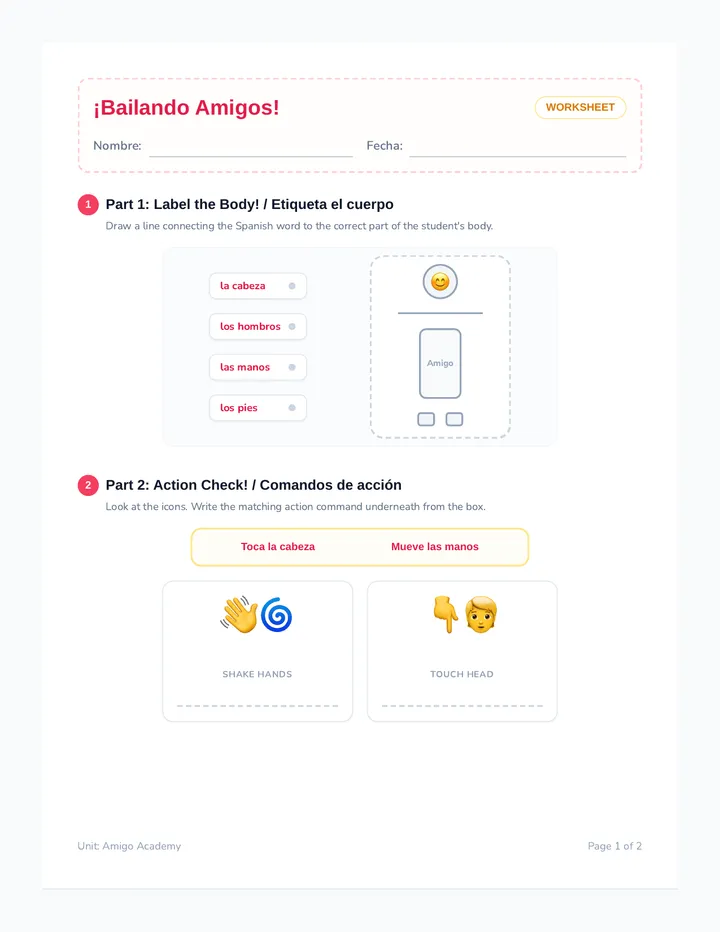
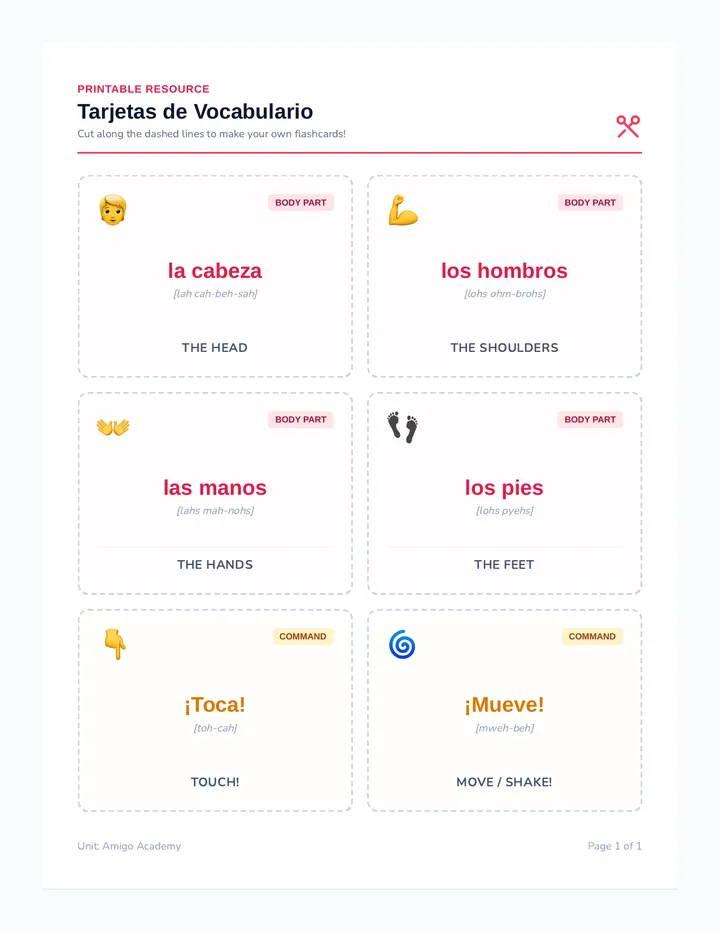
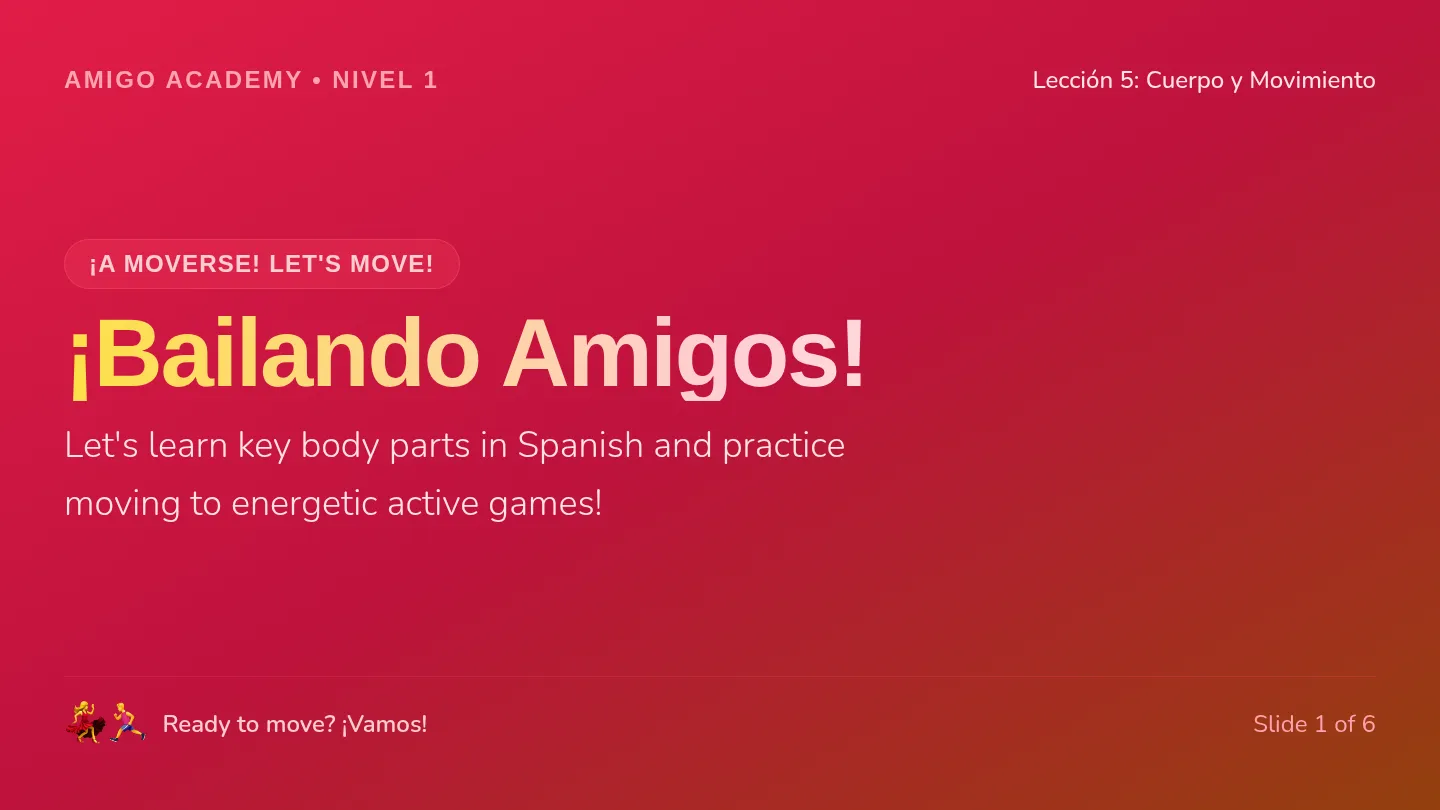
An active, movement-based beginner Spanish lesson teaching high-frequency body parts (cabeza, hombros, manos, pies) and physical action verbs (toca, mueve) through rhythmic dances and interactive 'Simón Dice' games.
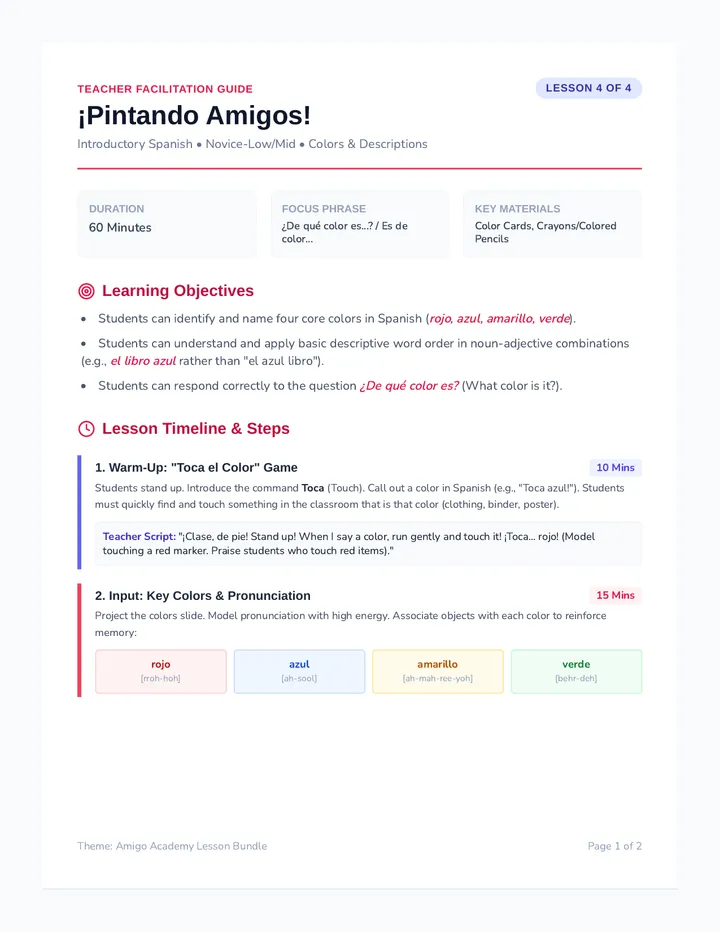
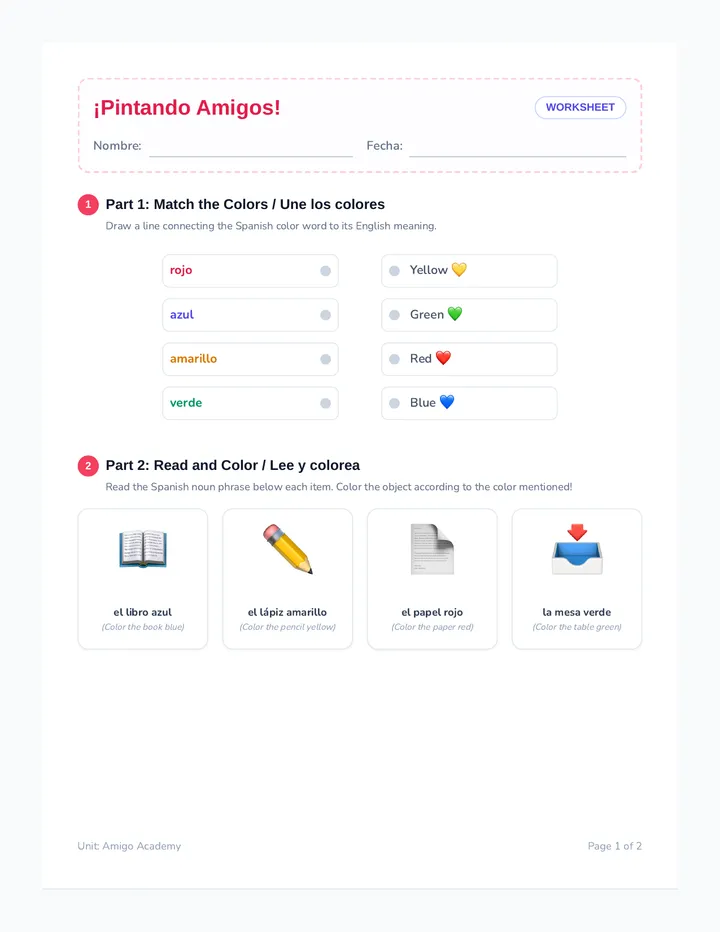
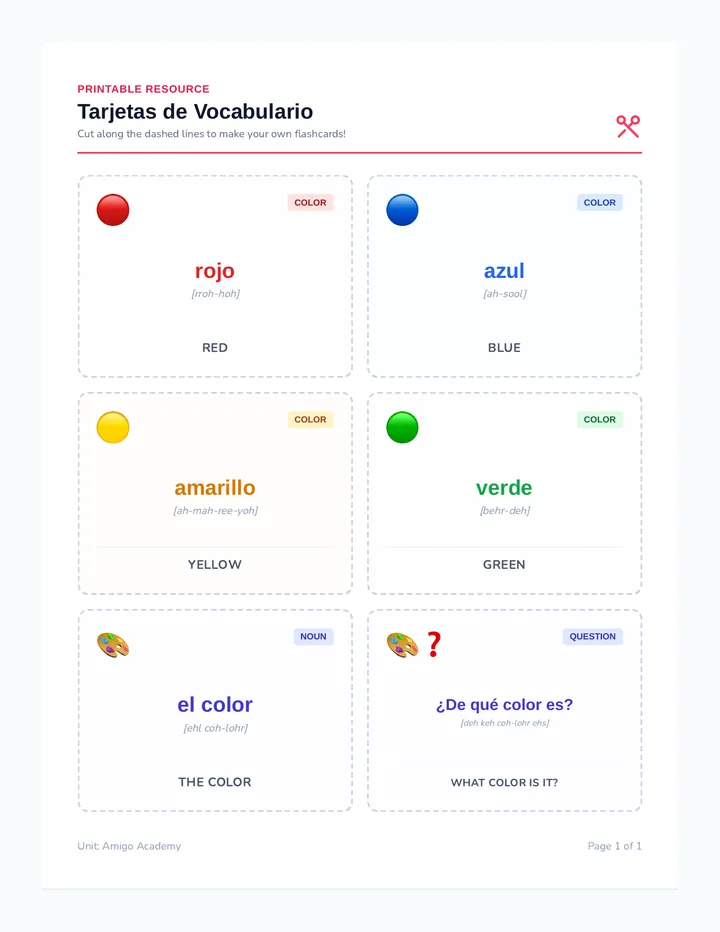
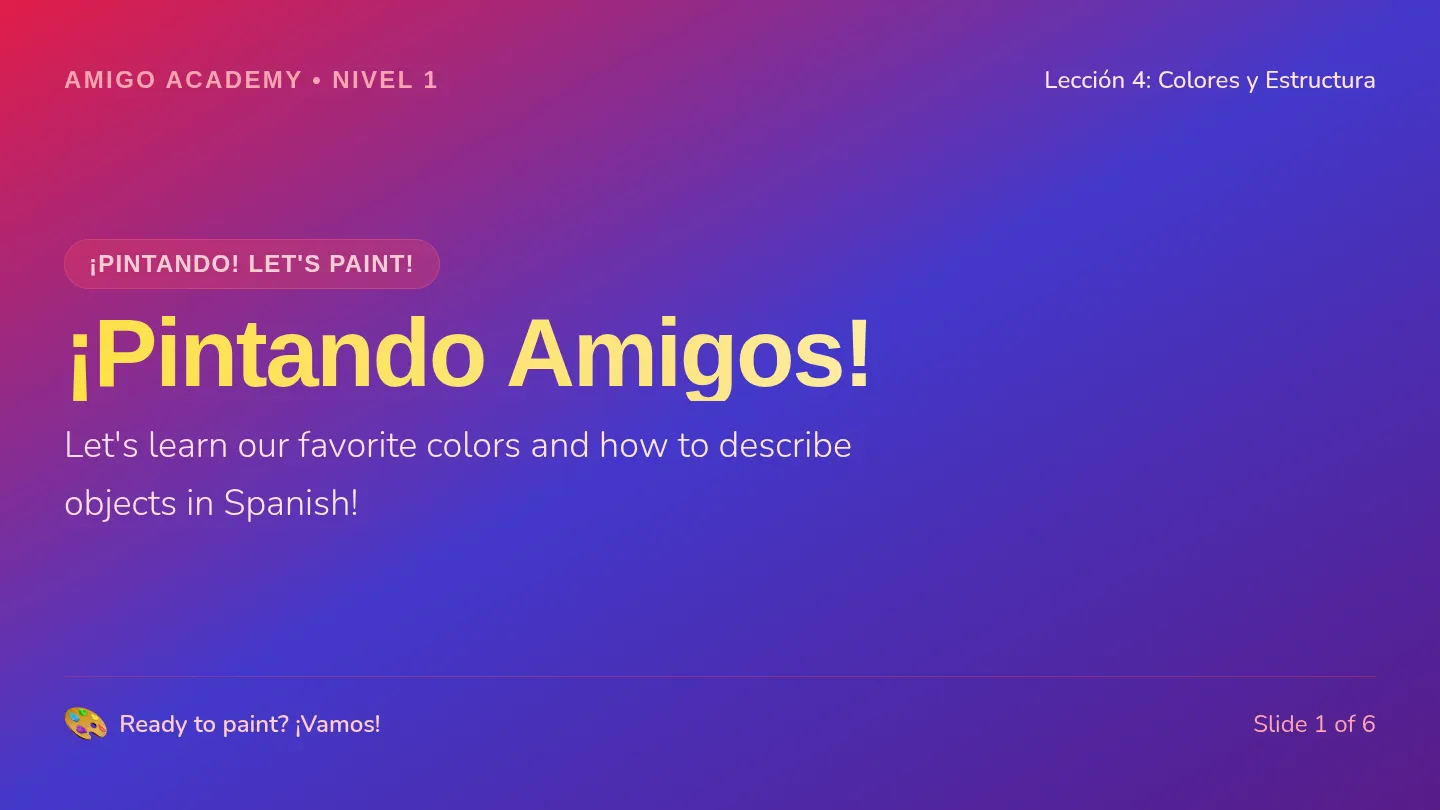
A vibrant beginner Spanish lesson teaching high-frequency colors (rojo, azul, amarillo, verde) and basic agreement/descriptive word order (e.g., 'el libro azul') through active color hunts and creative sorting activities.