A beginner-level English lesson for 2nd grade Multilingual Learners focused on 'Is it...?' questions using school, food, and house vocabulary.
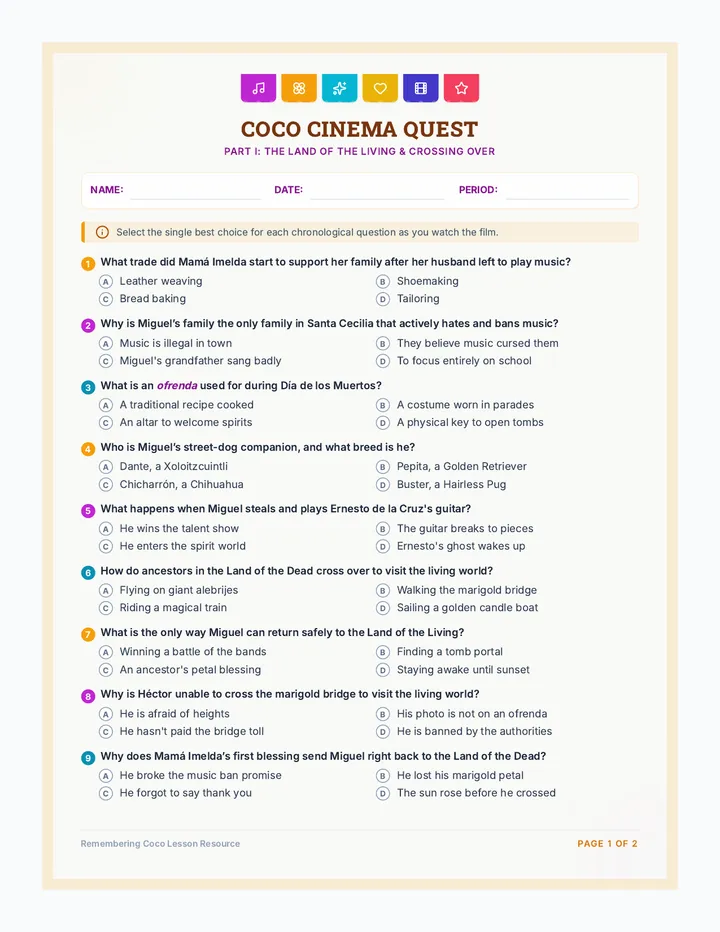
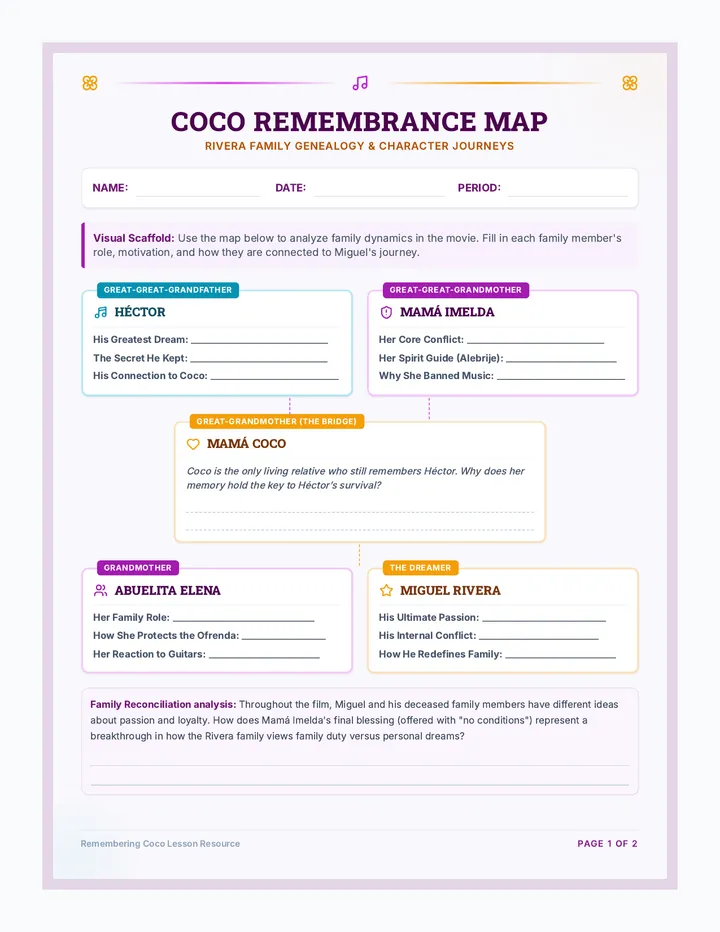
An exploration of the Pixar film Coco, focusing on Día de los Muertos cultural traditions, character choices, and key themes like family, memory, and forgiveness.
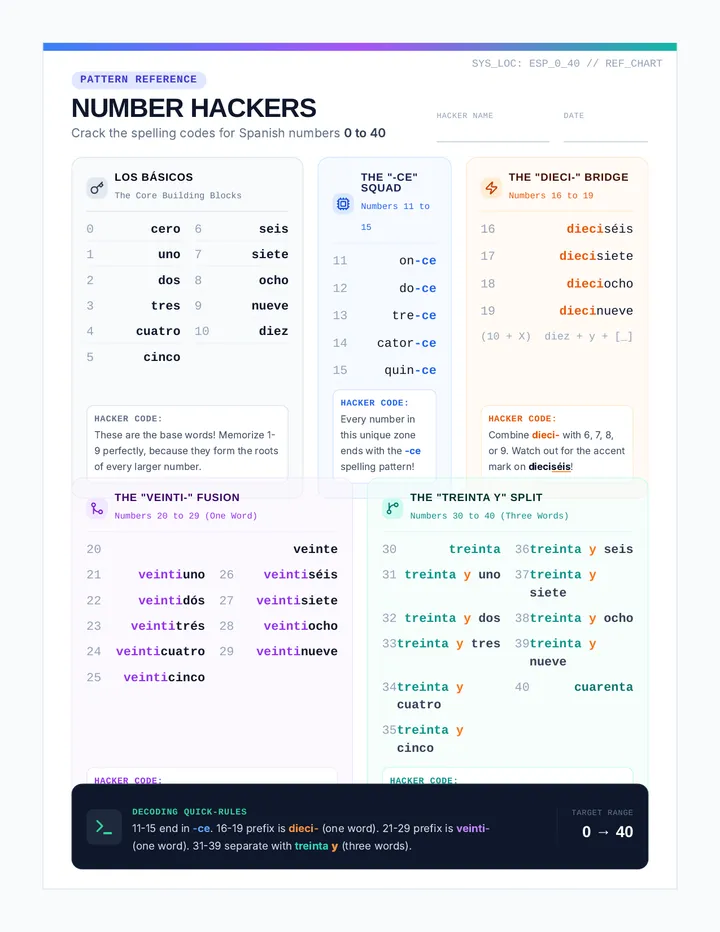
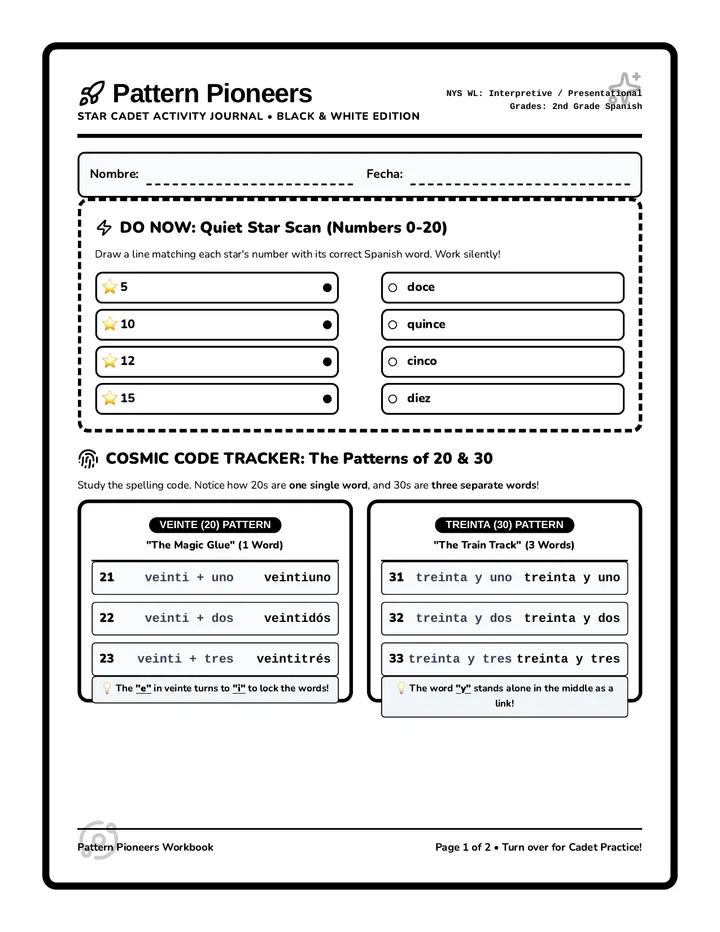
A lesson focused on mastering Spanish numbers 0-40 through pattern recognition, emphasizing key spelling transitions like -ce, dieci-, veinti-, and the conjunction 'treinta y'. Includes a highly visual pattern-coded anchor chart and a targeted spelling practice worksheet.
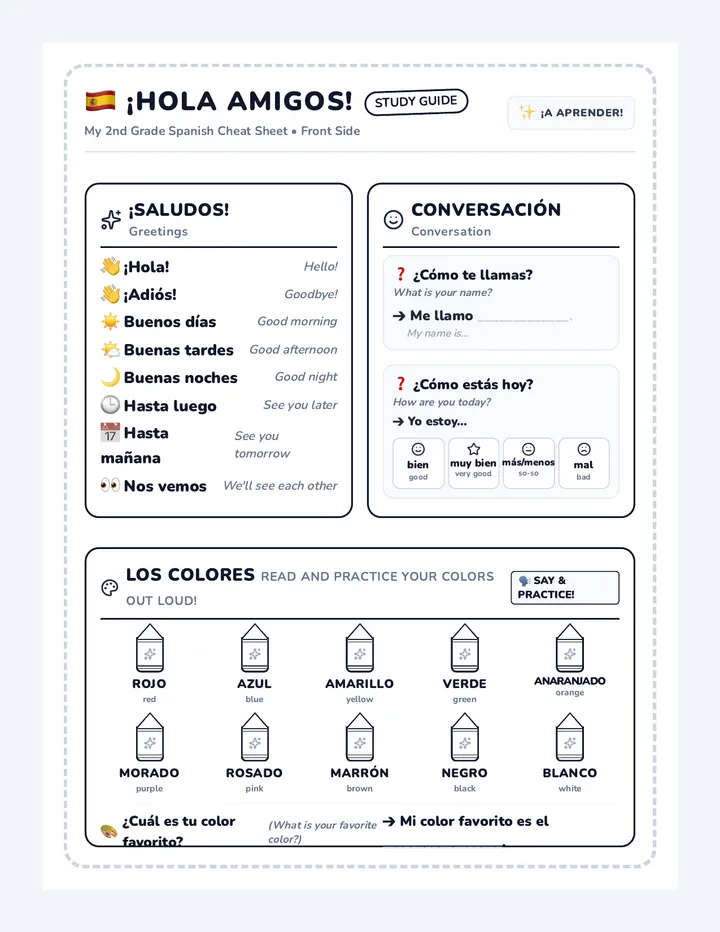
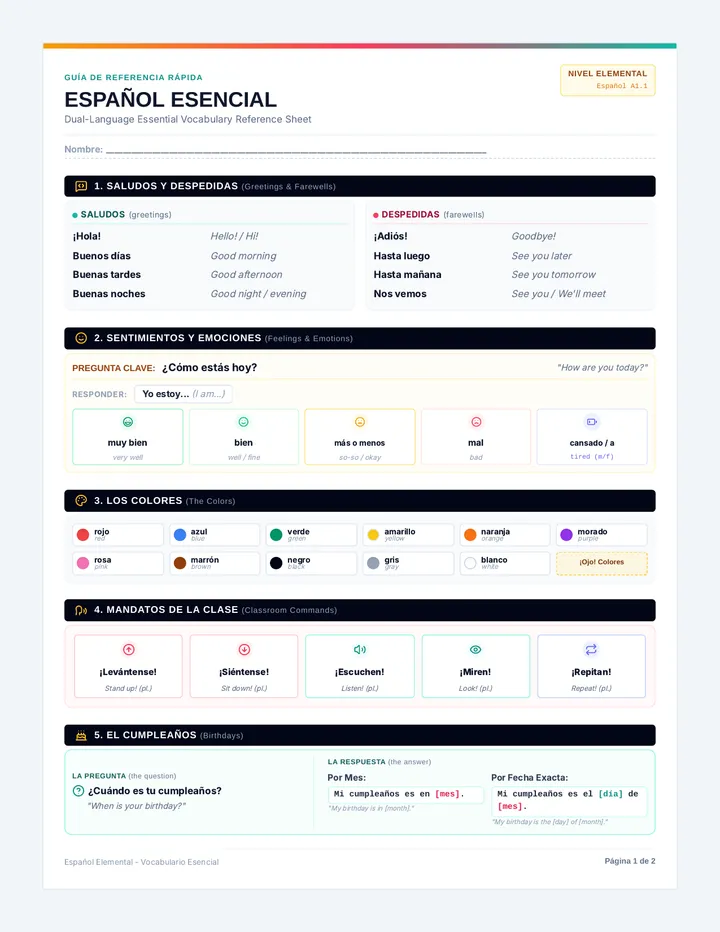
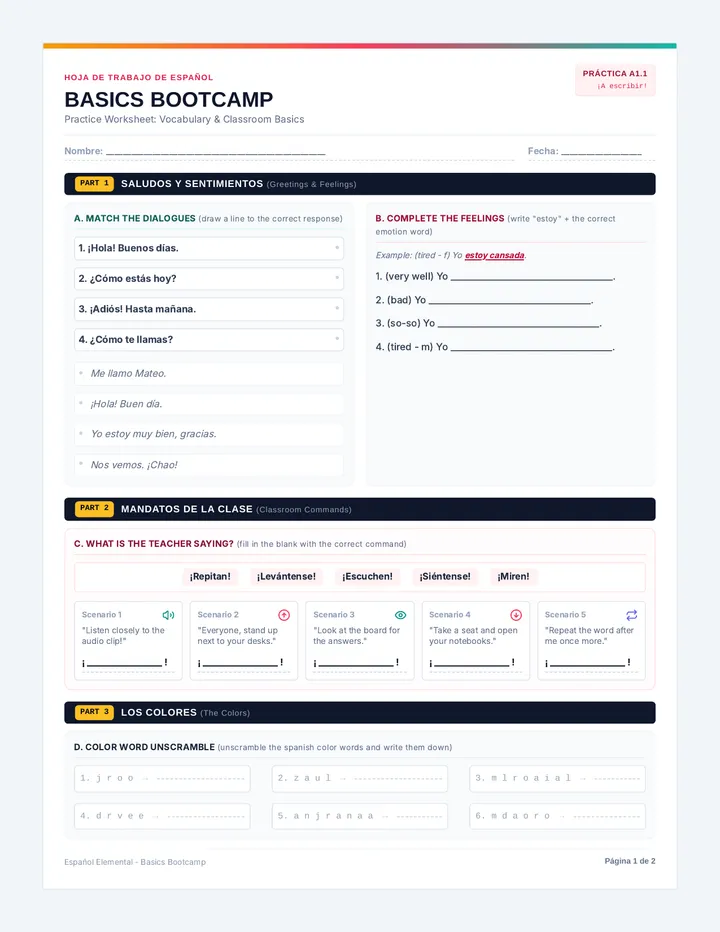
An introductory Spanish lesson for 2nd graders covering basic greetings, colors, numbers 0-30, and simple questions. Includes a beautiful, double-sided coloring study guide.
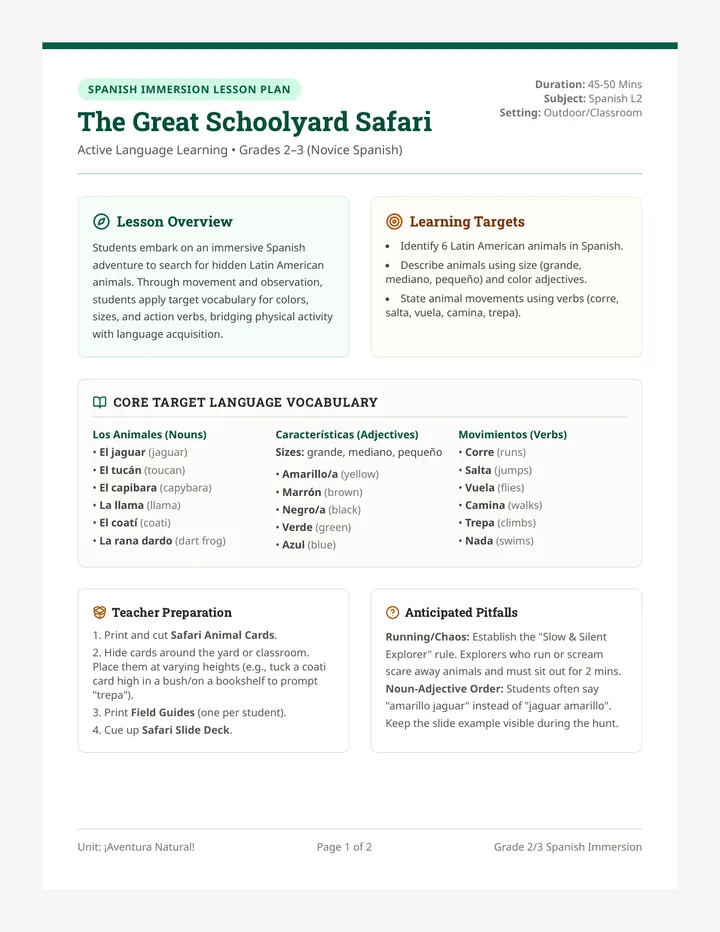
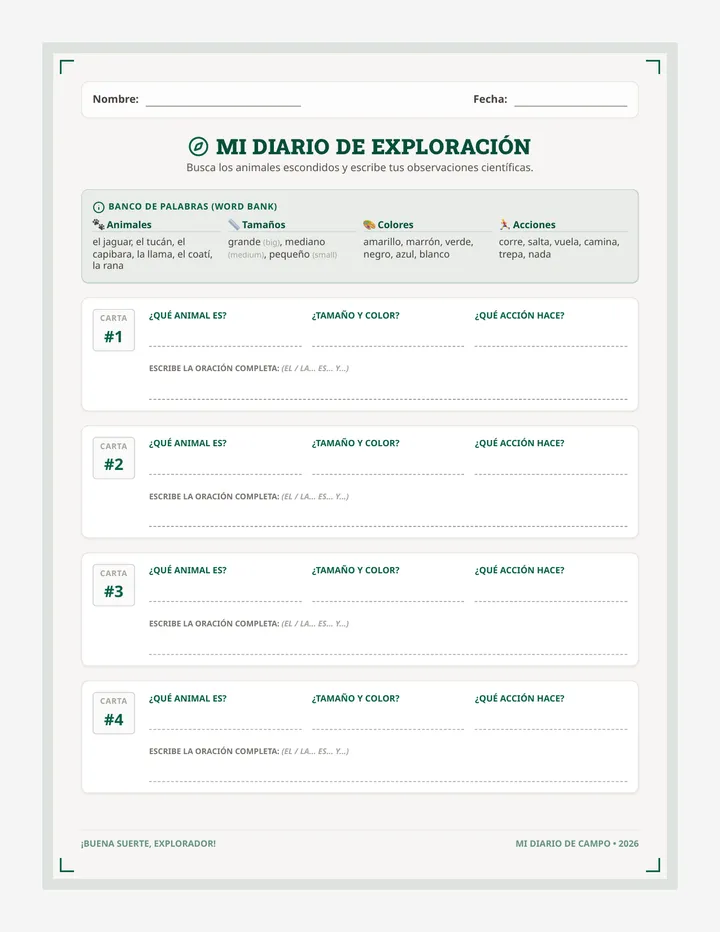
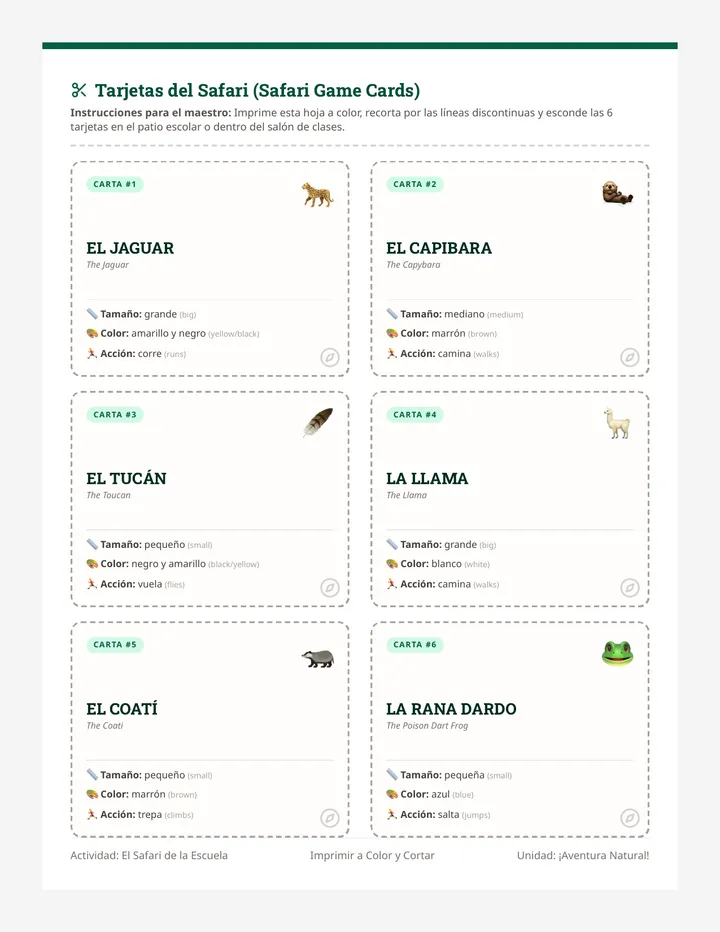
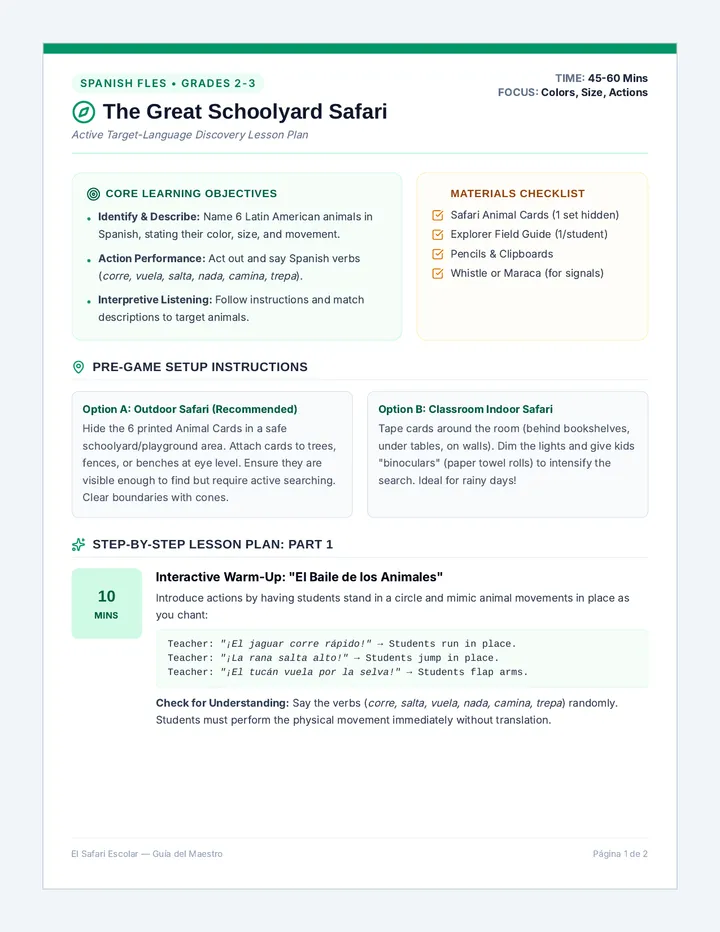
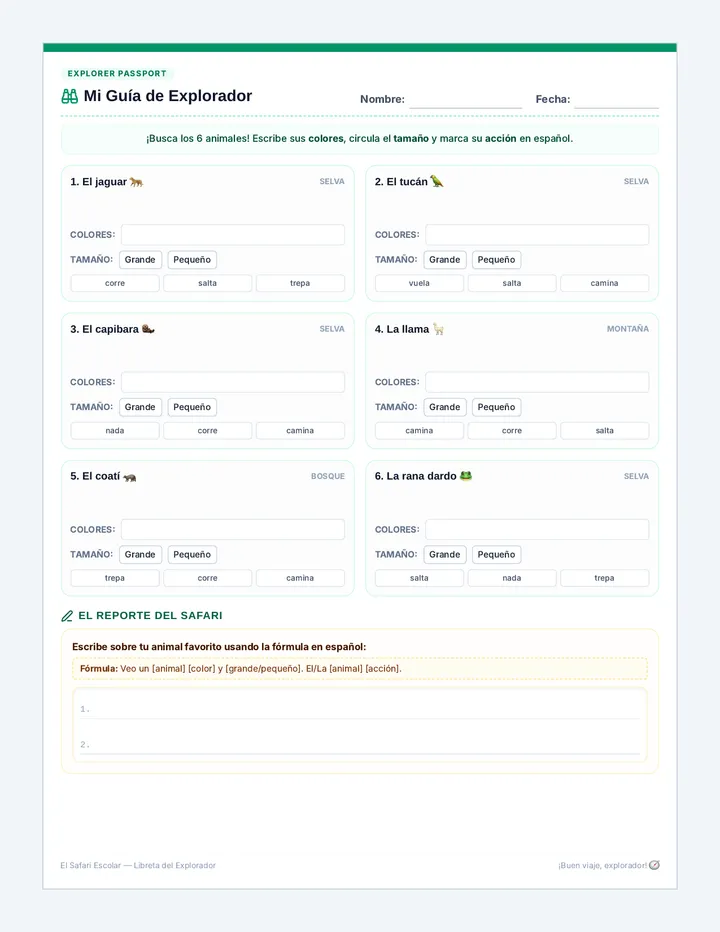
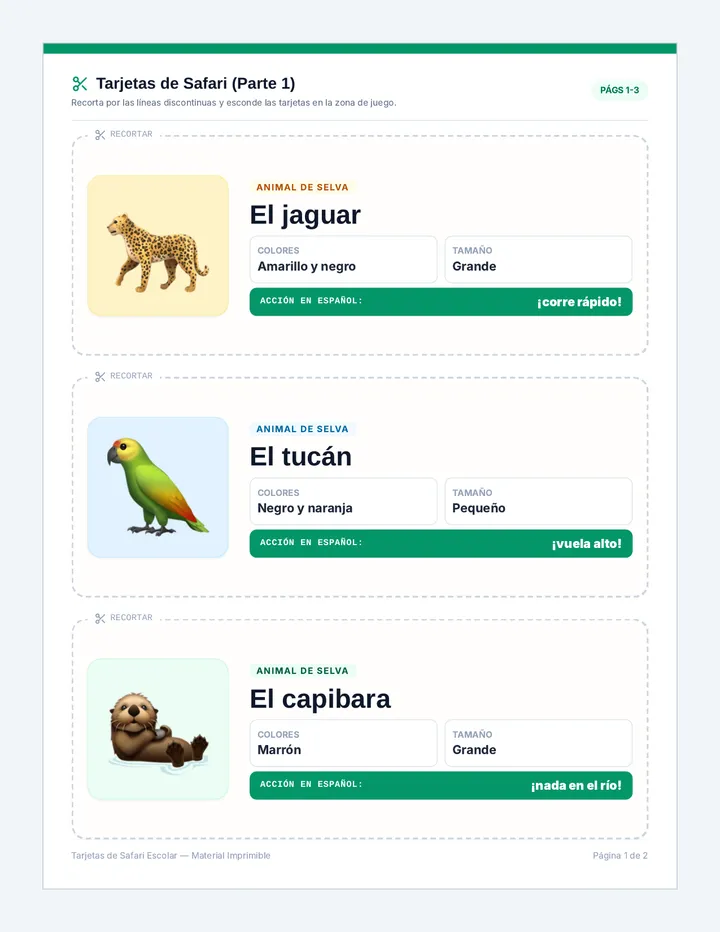
An active Spanish immersion lesson where 2nd and 3rd-grade students search outdoor spaces or the classroom for hidden Latin American animals. Students practice target language vocabulary for colors, sizes, and action verbs to describe physical features and movements.
An active, immersive elementary Spanish lesson where 2nd and 3rd graders search for target-culture animals in outdoor or indoor spaces. Students describe animal colors, sizes, and action verbs through movement and discovery.
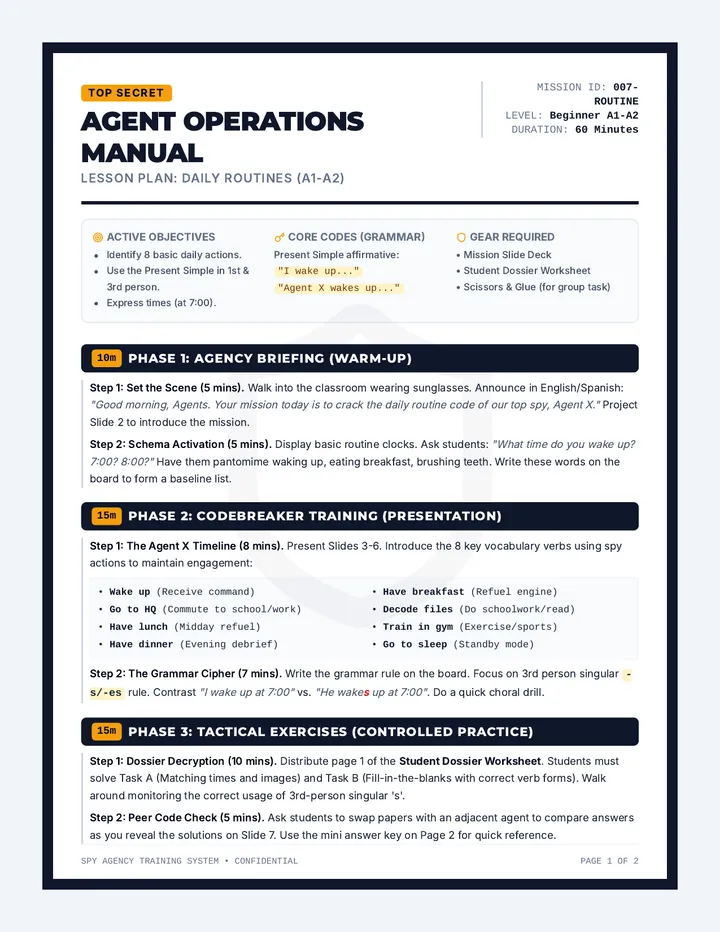
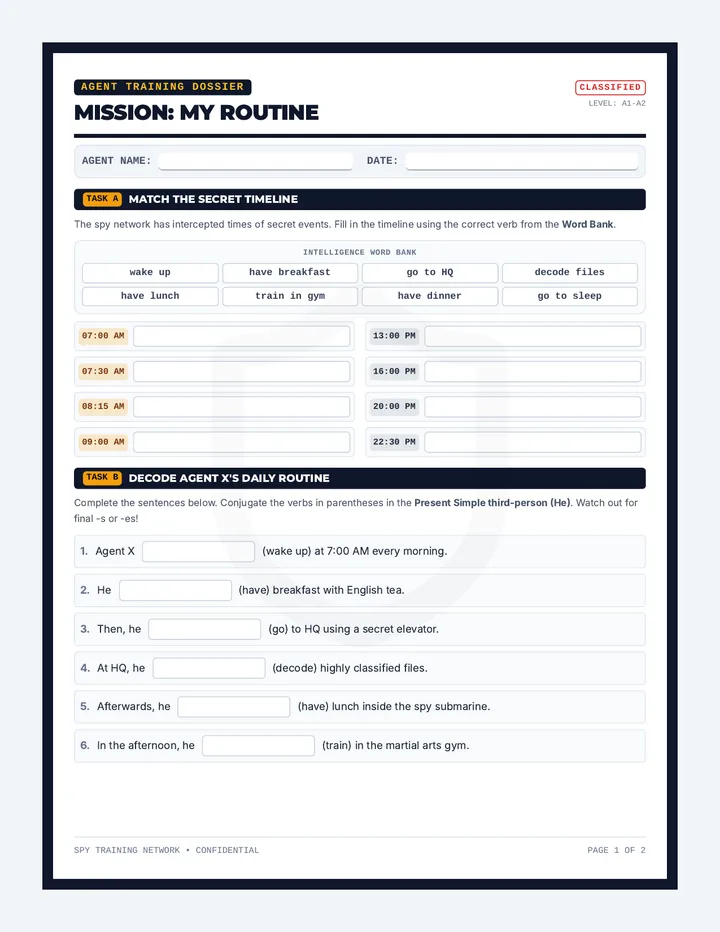
A high-engagement A1-A2 English lesson about daily routines using the exciting theme of secret agents. Includes a comprehensive step-by-step teacher lesson plan, an instructional slide deck, and printable student worksheets with daily routine practice.
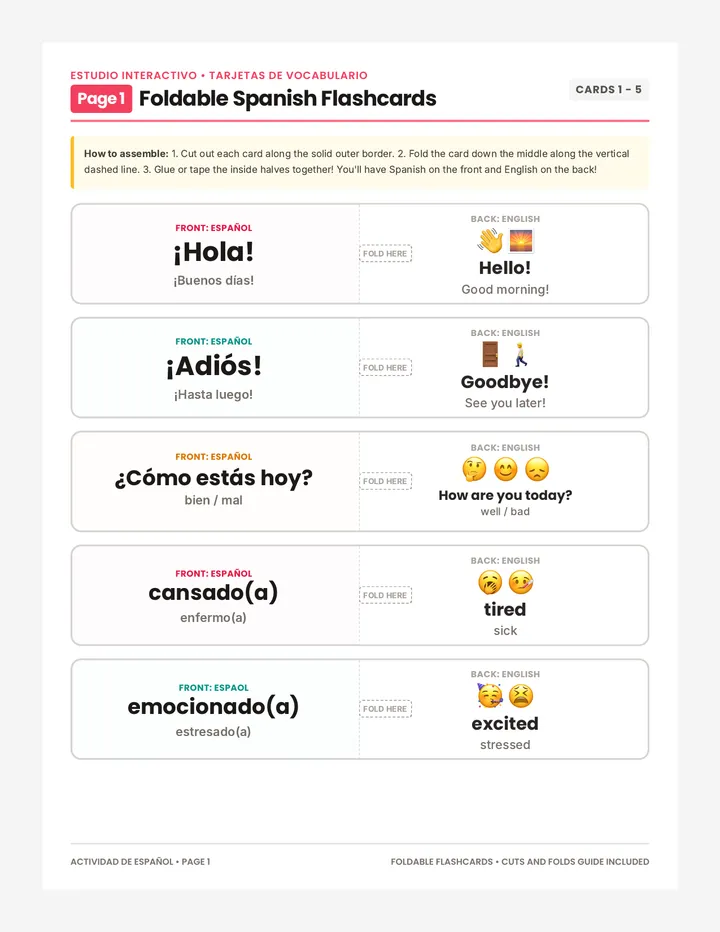
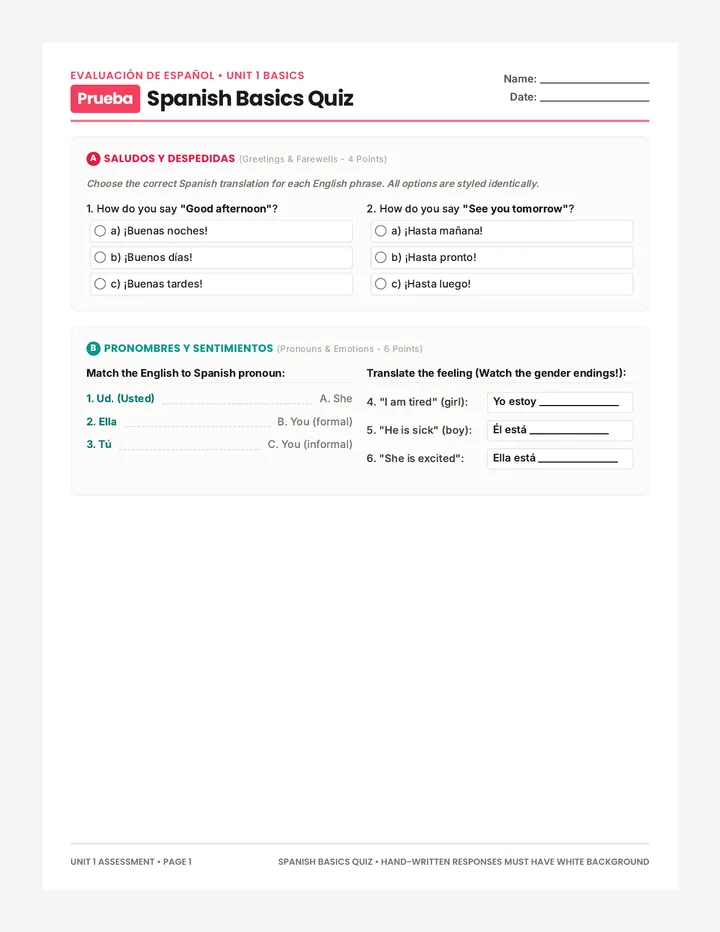
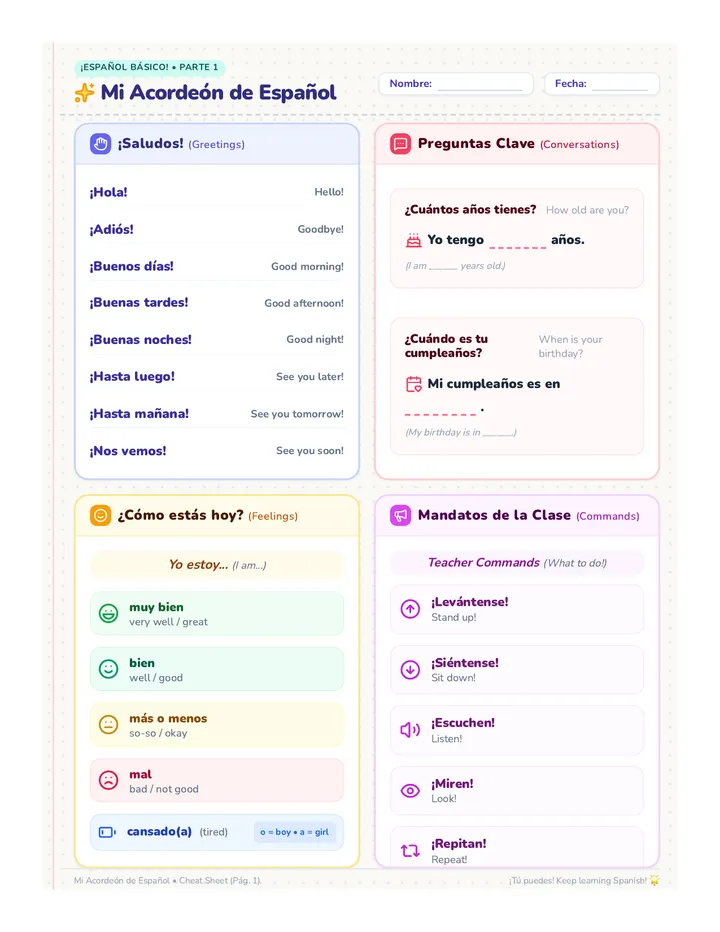
A comprehensive introductory Spanish unit designed for 5th-grade students. It covers greetings, personal information, emotions, grammar essentials (pronouns and articles), numbers, colors, the calendar, weather, and real-world conversations.
A foundational introductory lesson for 2nd grade Spanish learners, focusing on essential daily vocabulary including greetings, feelings, numbers 0-30, colors, days, months, and basic personal questions.
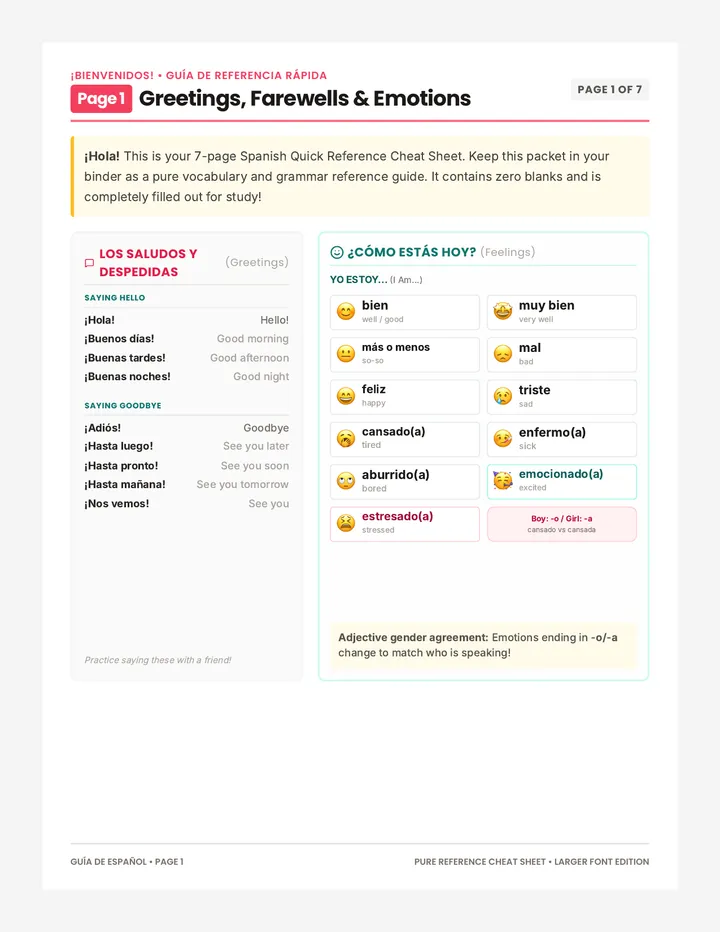
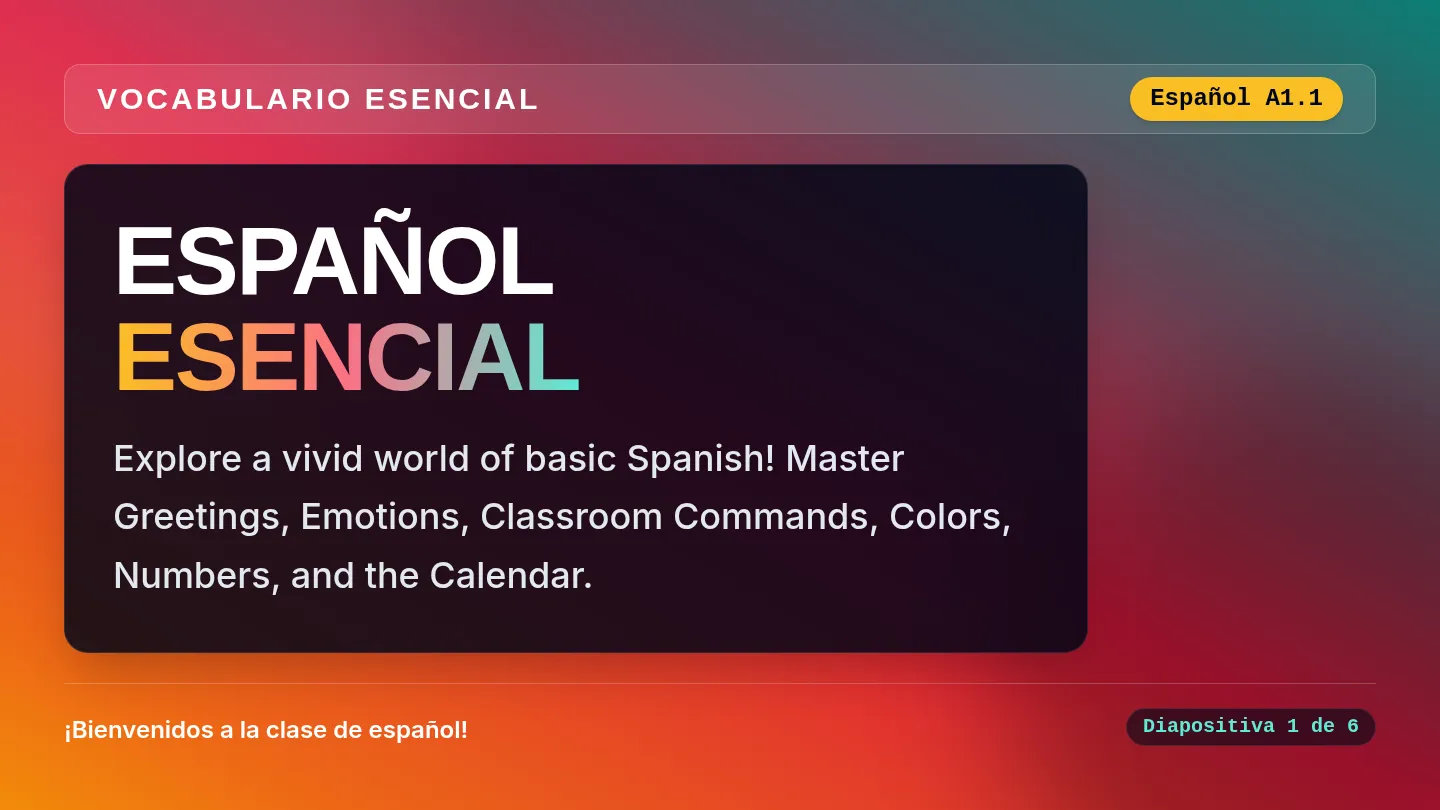
A foundational Spanish lesson covering basic conversational items: greetings, emotions, colors, numbers 0 to 40, and calendar systems (days of the week, months, and birthdays).
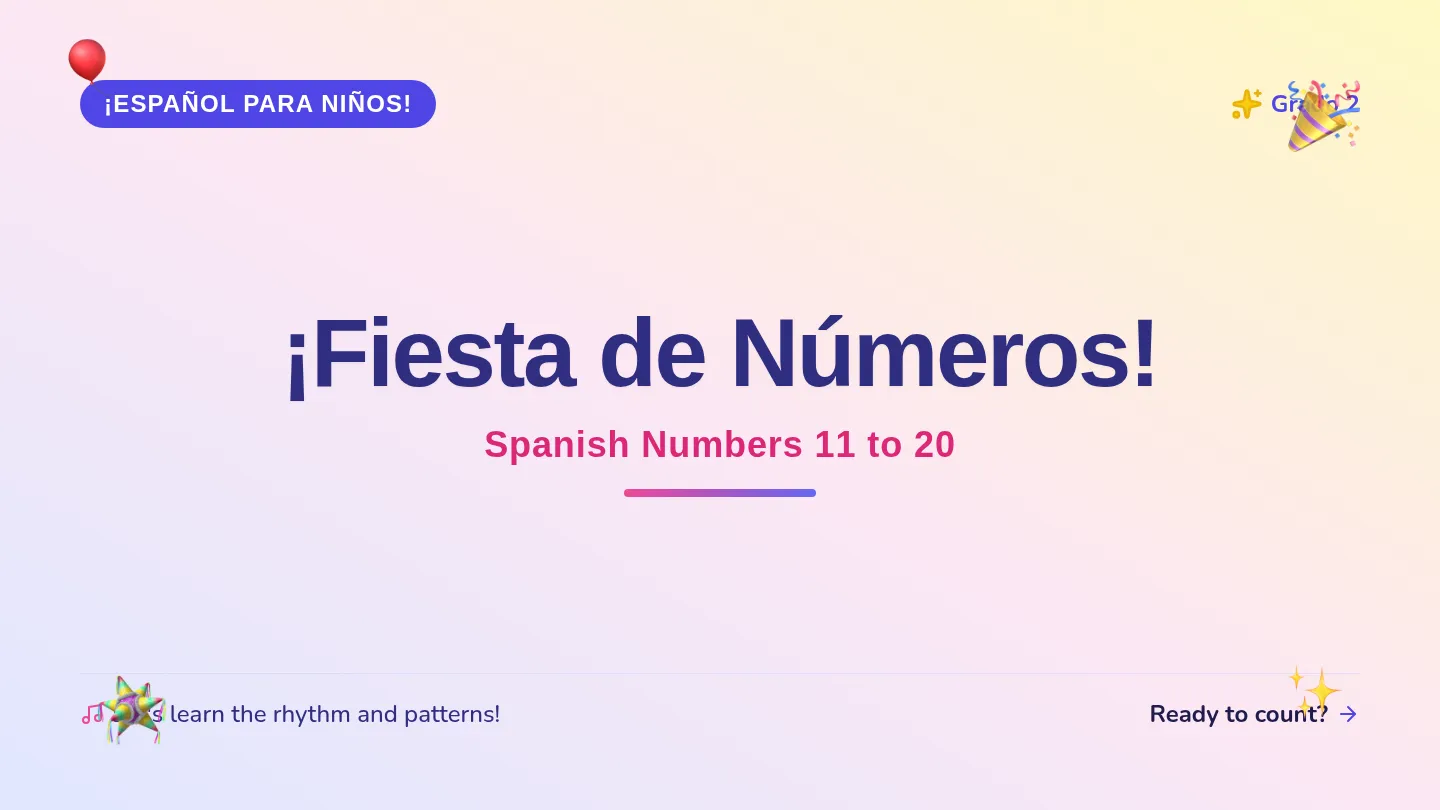
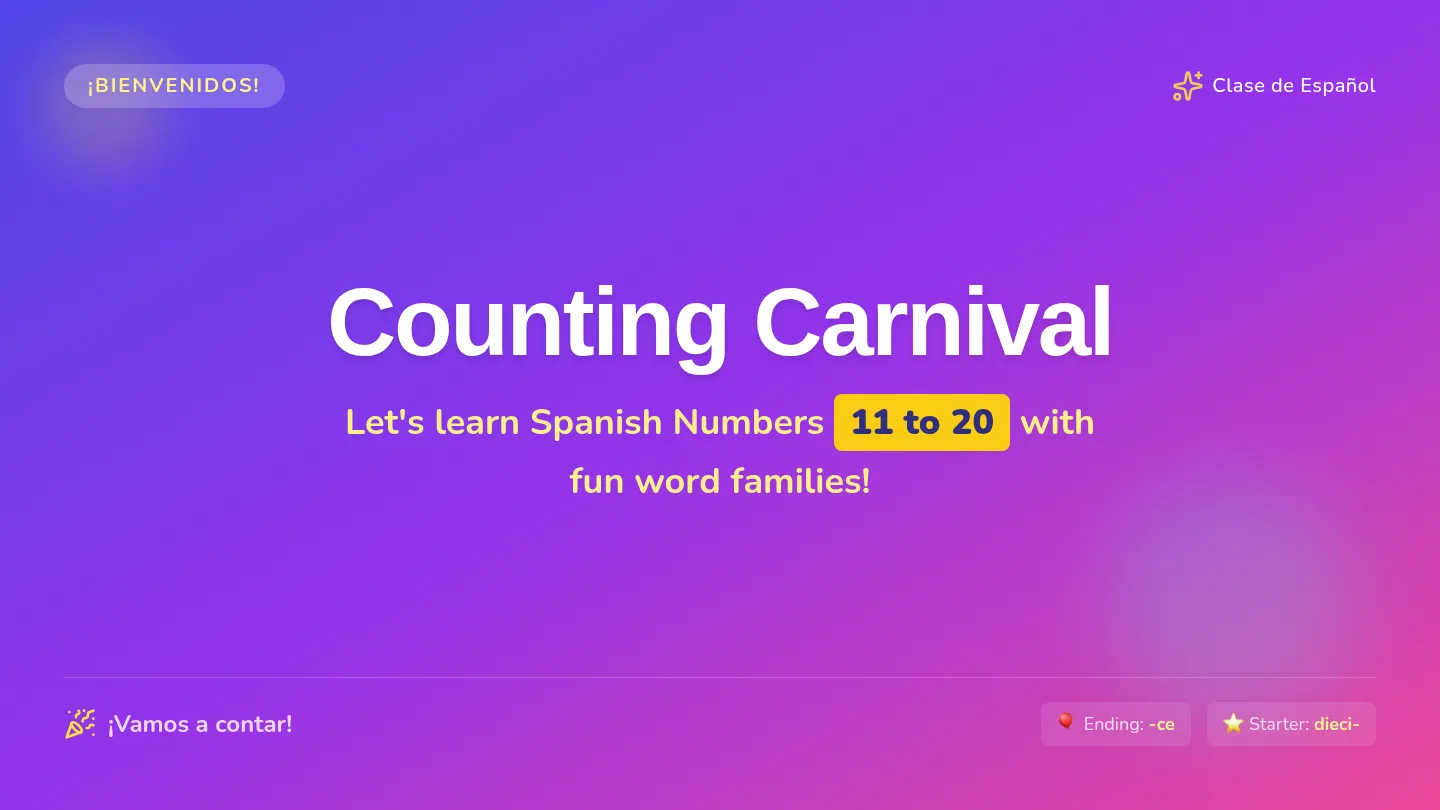
An interactive and visually engaging Spanish lesson for 2nd grade students focused on learning numbers 11 to 20. The lesson emphasizes patterns in spelling, highlighting the '-ce' suffix for numbers 11-15 and the 'dieci-' prefix for numbers 16-19 through colorful visual slides.
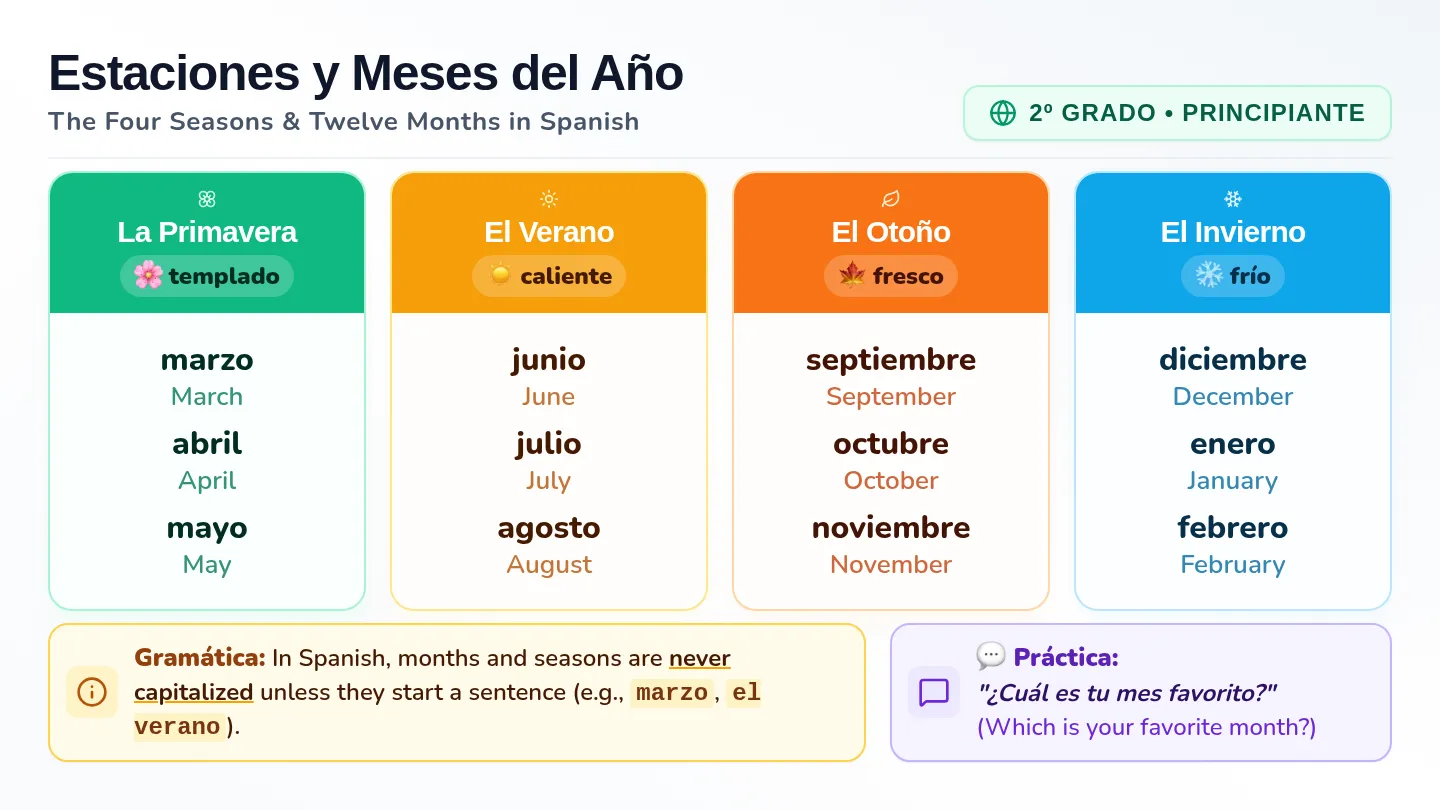
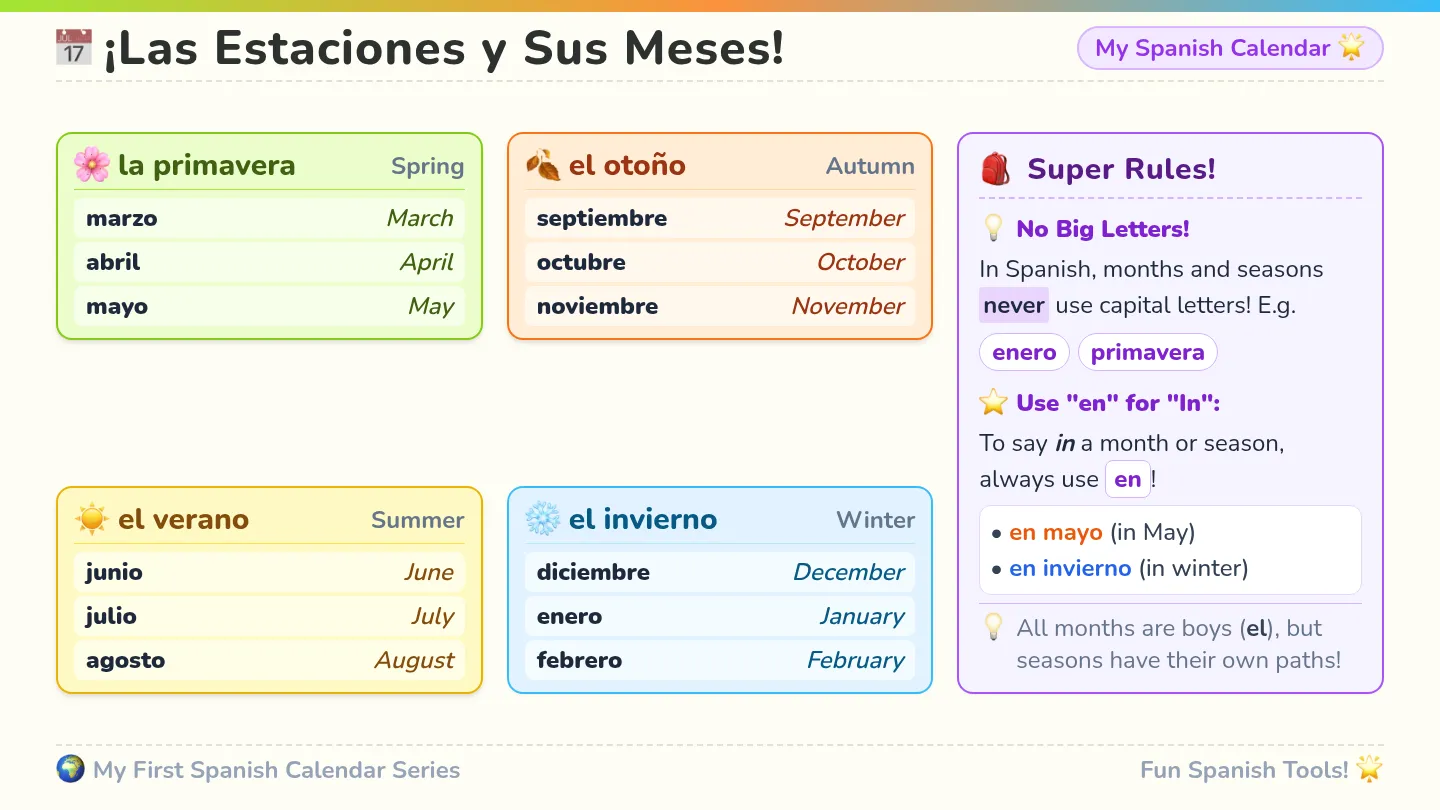
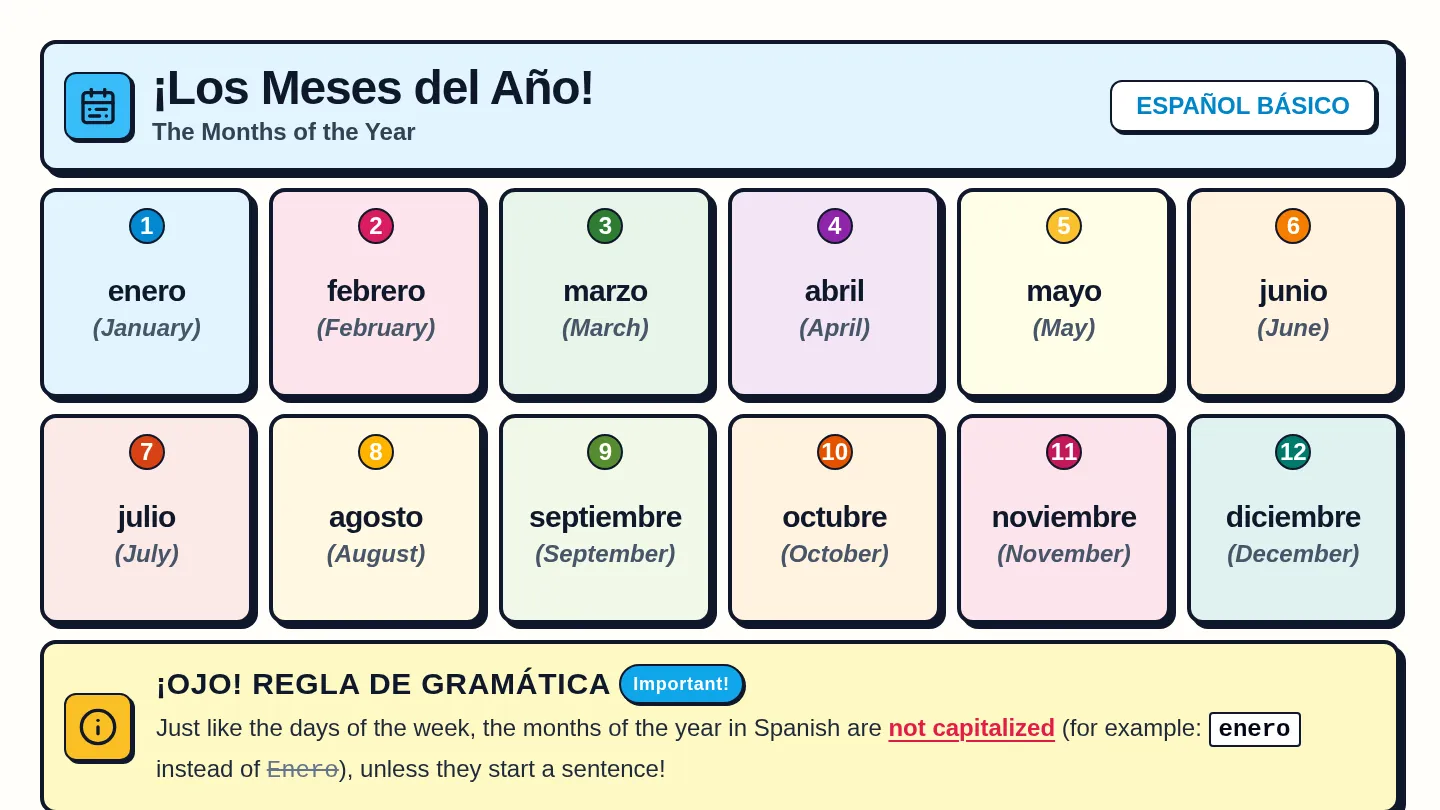
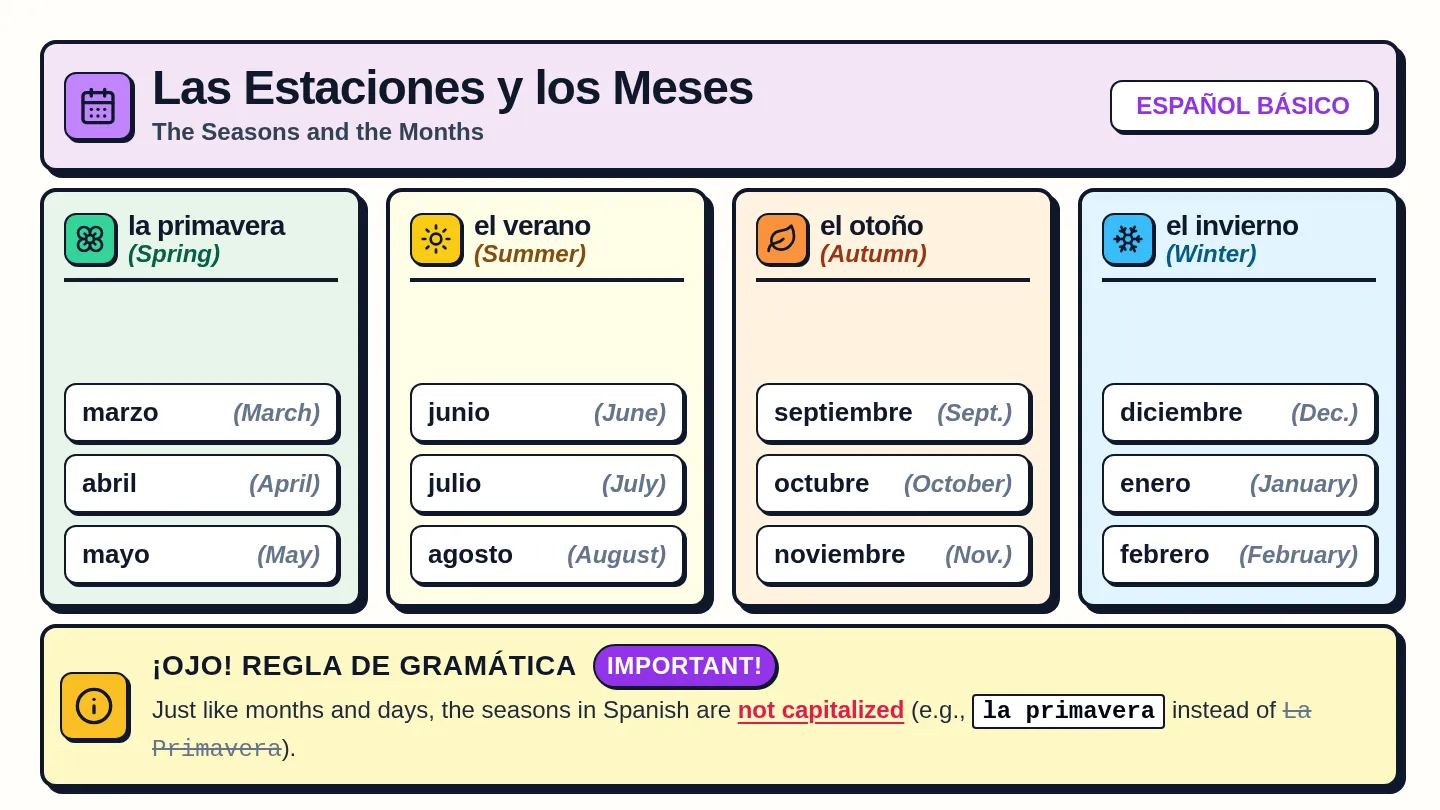
A beginner-friendly lesson introducing the four seasons and twelve months of the year in Spanish, emphasizing capitalization rules and basic vocabulary.
An academic lesson on Spanish months, seasons, and key capitalization rules, tailored specifically for older beginners and adult learners.
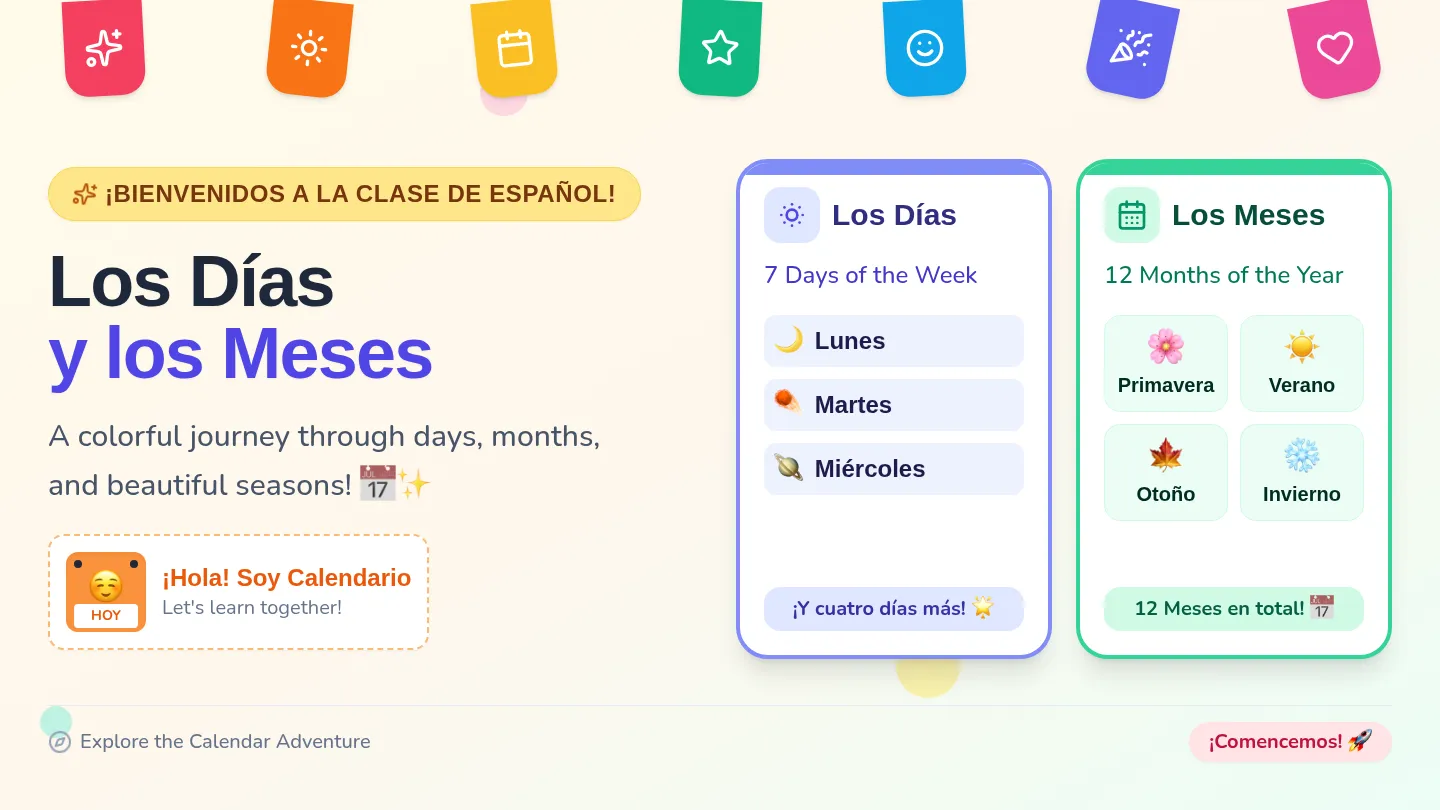
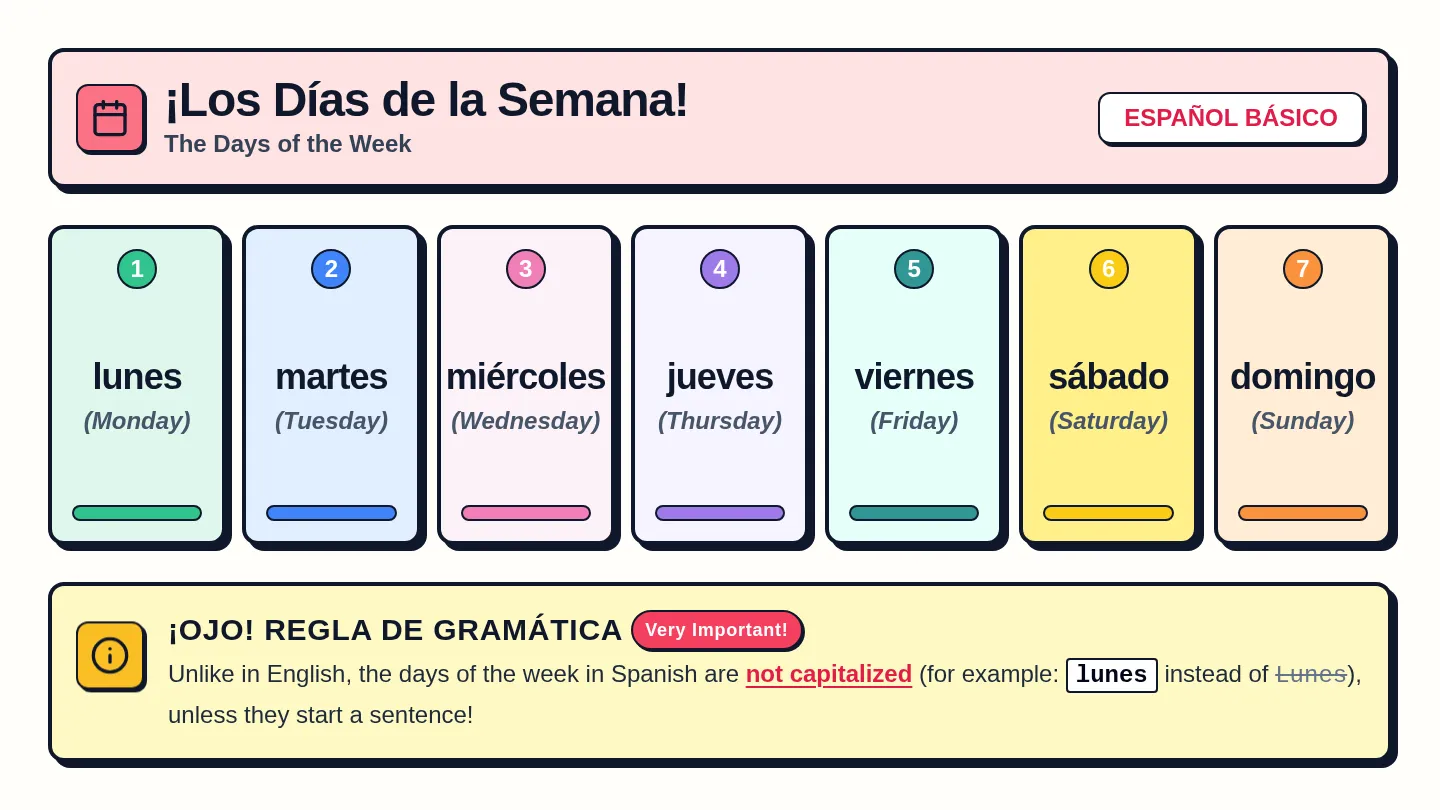
An engaging and vibrant introductory lesson to help young learners master the days of the week and months of the year in Spanish through high-impact, visual, and thematic play.
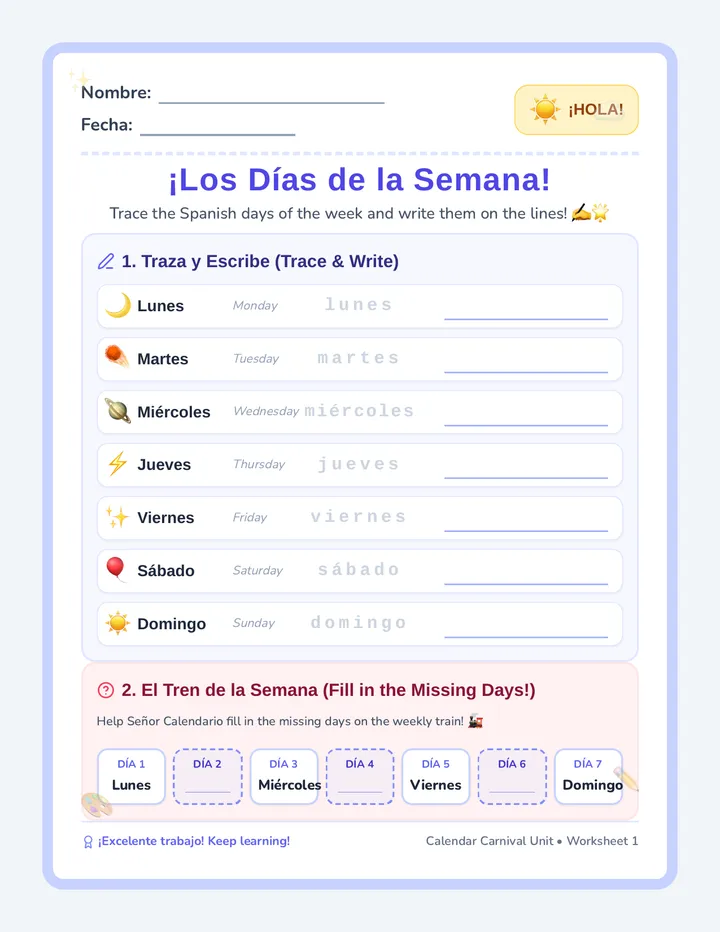
An introductory lesson on Spanish calendar vocabulary, teaching students the days of the week, correct pronunciation, and important capitalization rules.
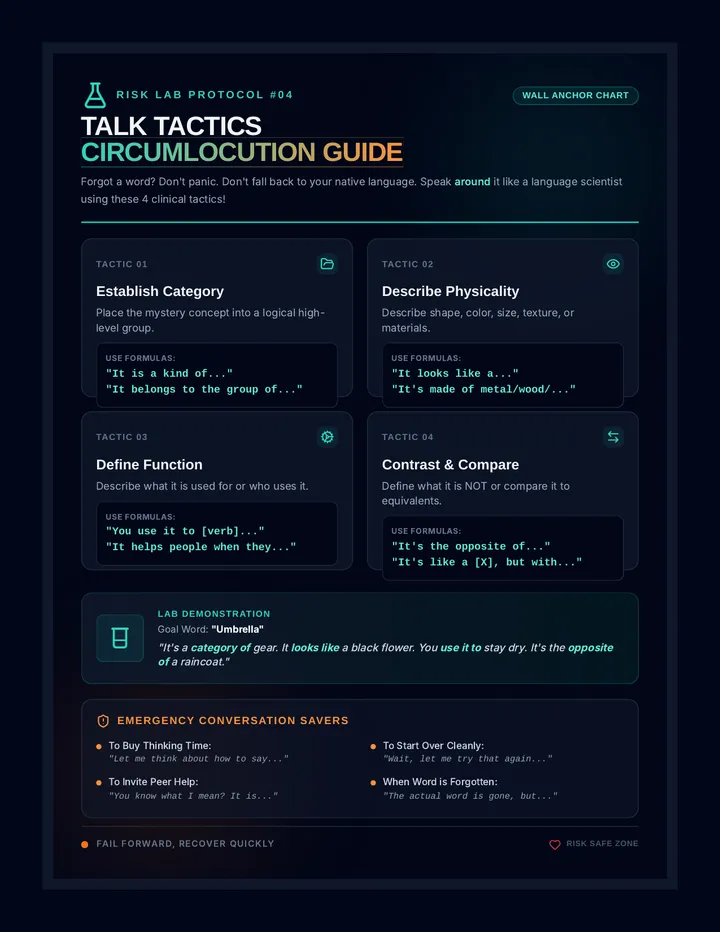
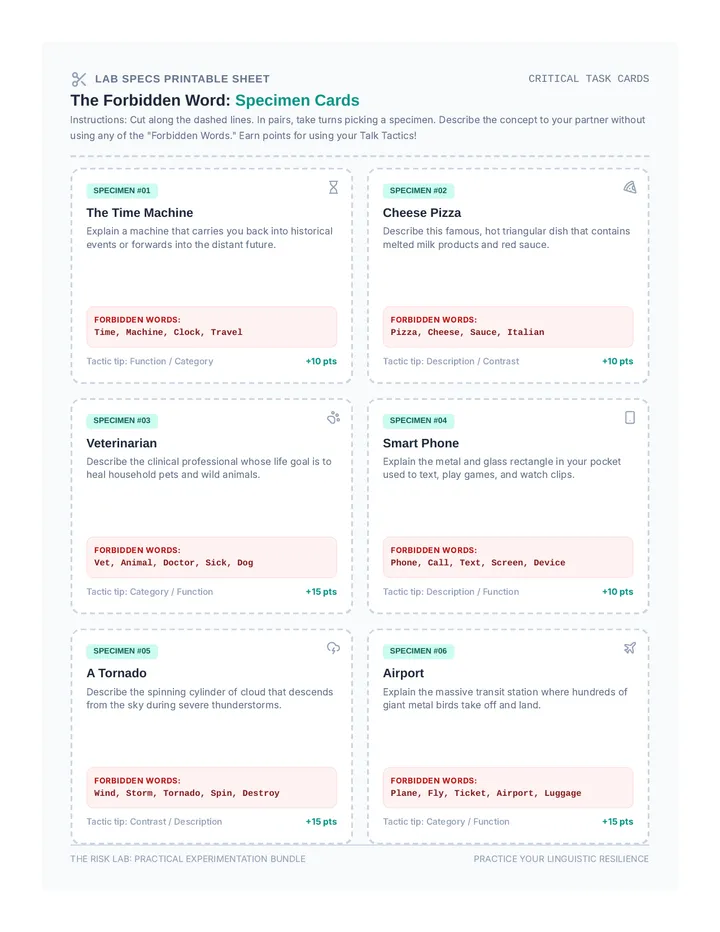
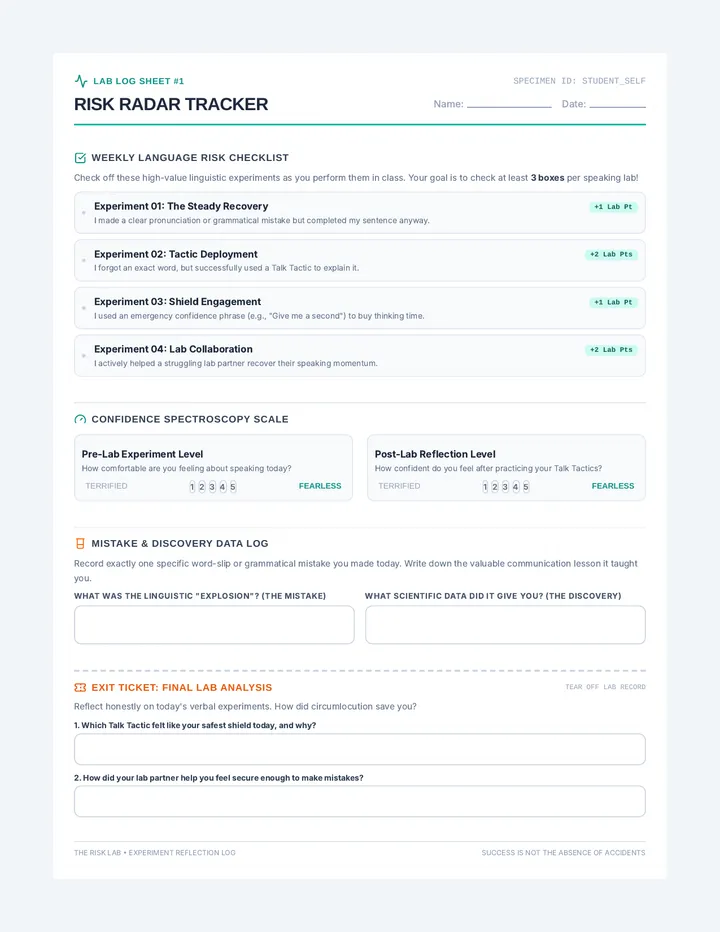
A confidence-boosting speaking lesson that reframes linguistic mistakes as scientific data points, training students in circumlocution and spontaneous conversation through the metaphor of a chemistry laboratory.
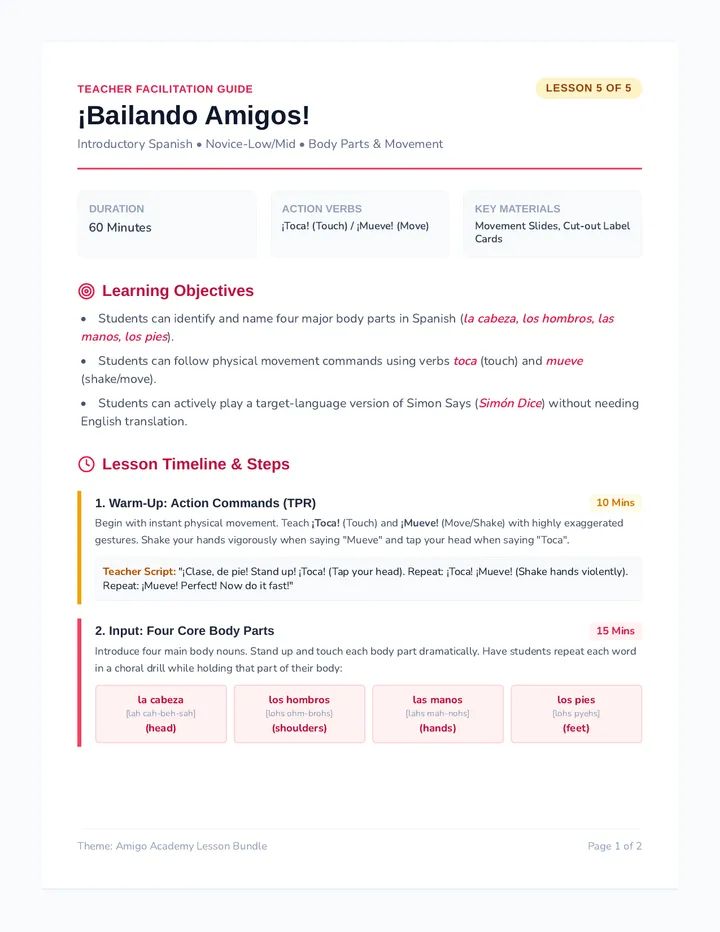
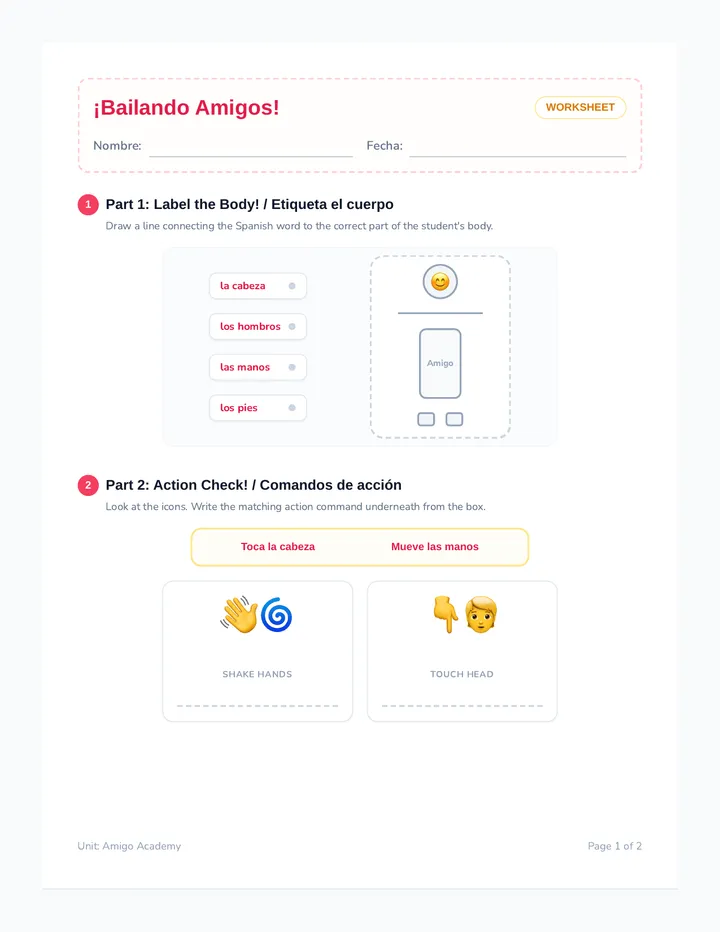
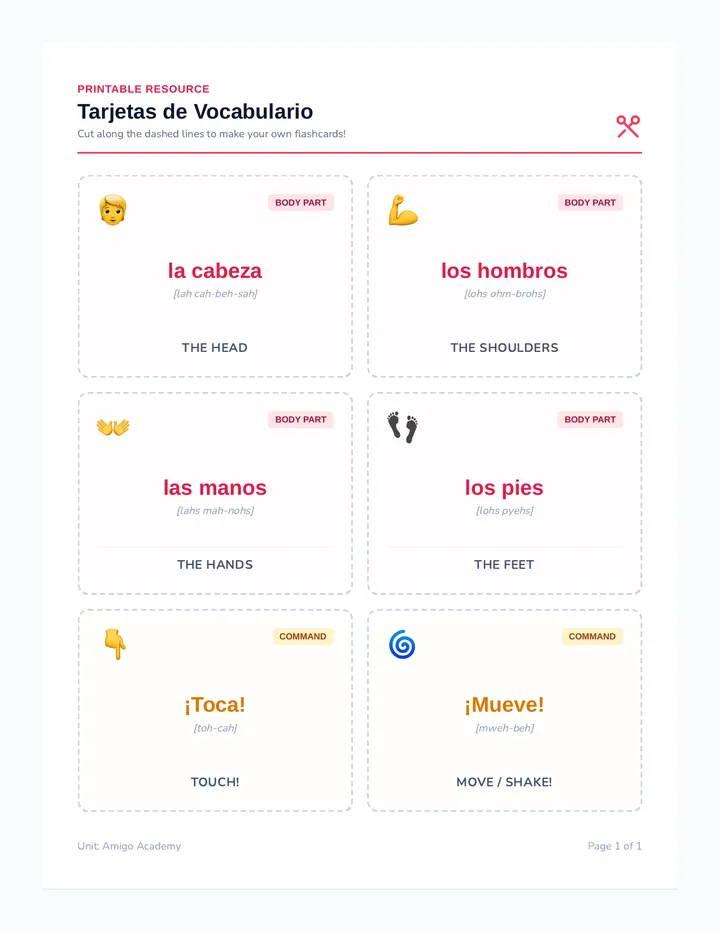
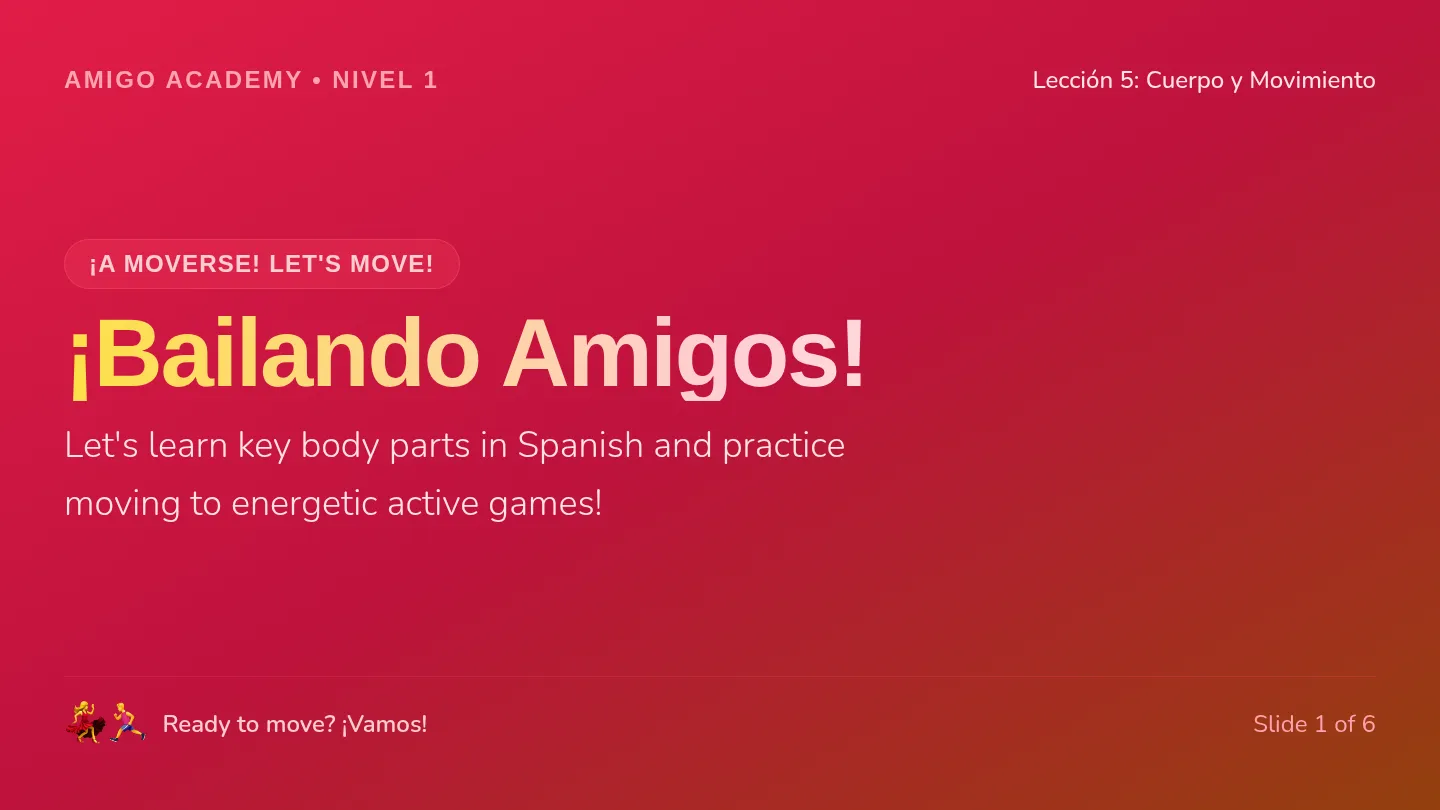
An active, movement-based beginner Spanish lesson teaching high-frequency body parts (cabeza, hombros, manos, pies) and physical action verbs (toca, mueve) through rhythmic dances and interactive 'Simón Dice' games.
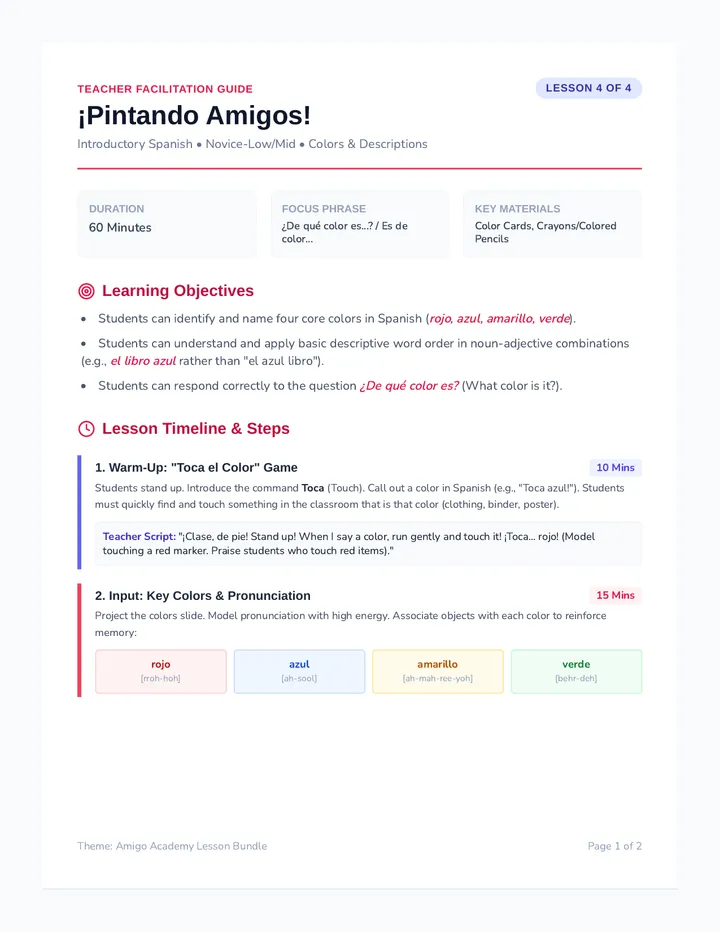
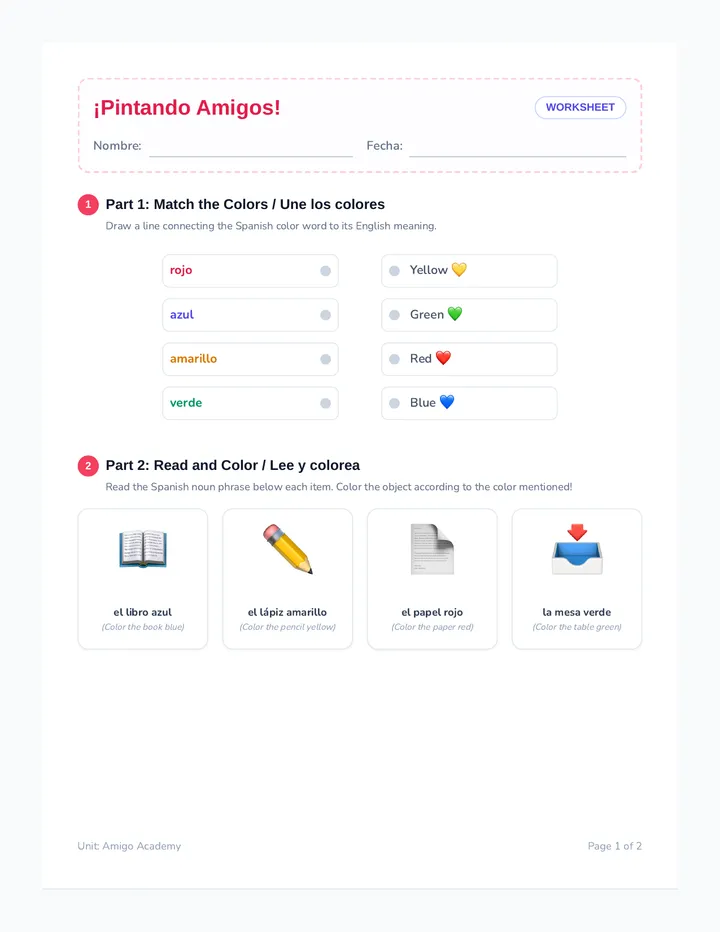
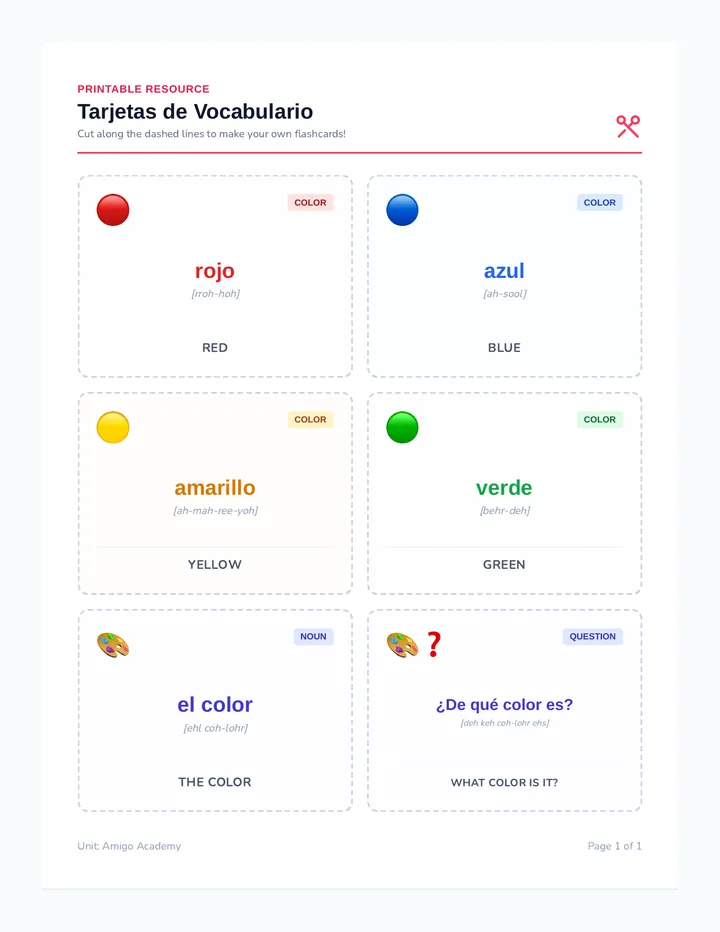
A vibrant beginner Spanish lesson teaching high-frequency colors (rojo, azul, amarillo, verde) and basic agreement/descriptive word order (e.g., 'el libro azul') through active color hunts and creative sorting activities.
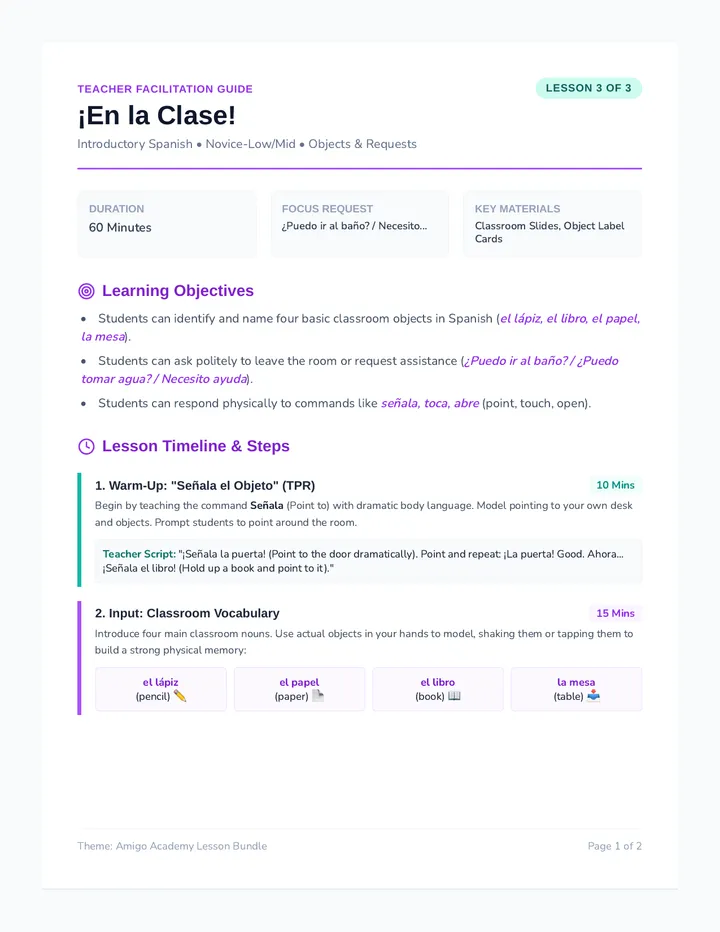
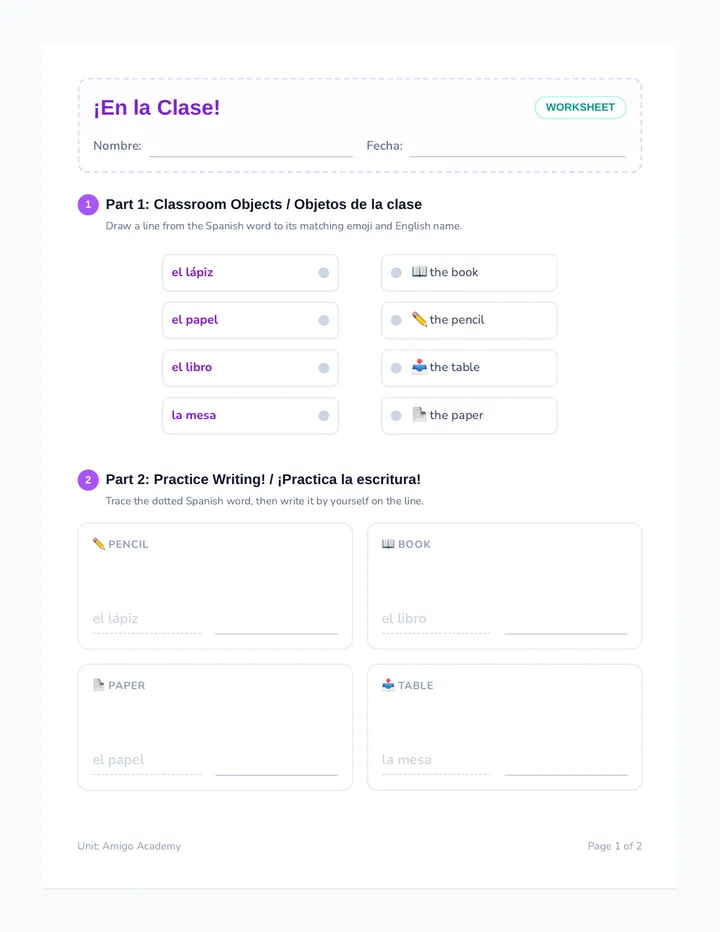
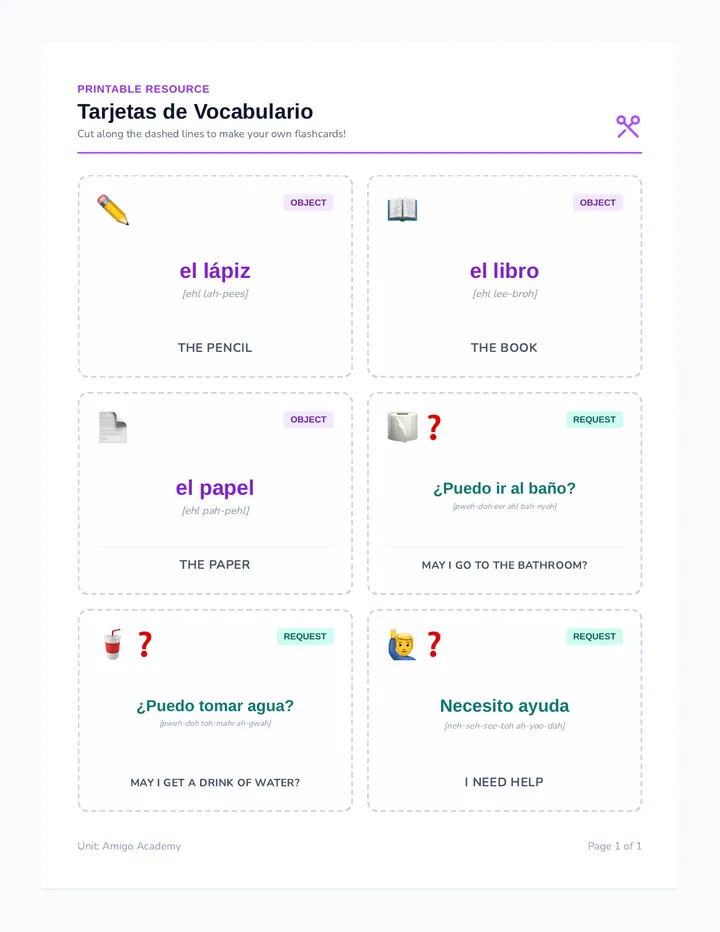
A beginner Spanish lesson teaching high-frequency classroom objects (lápiz, papel, libro) and essential classroom requests (¿Puedo ir al baño?, Necesito un lápiz) using physical pointing activities and visual matching cards.
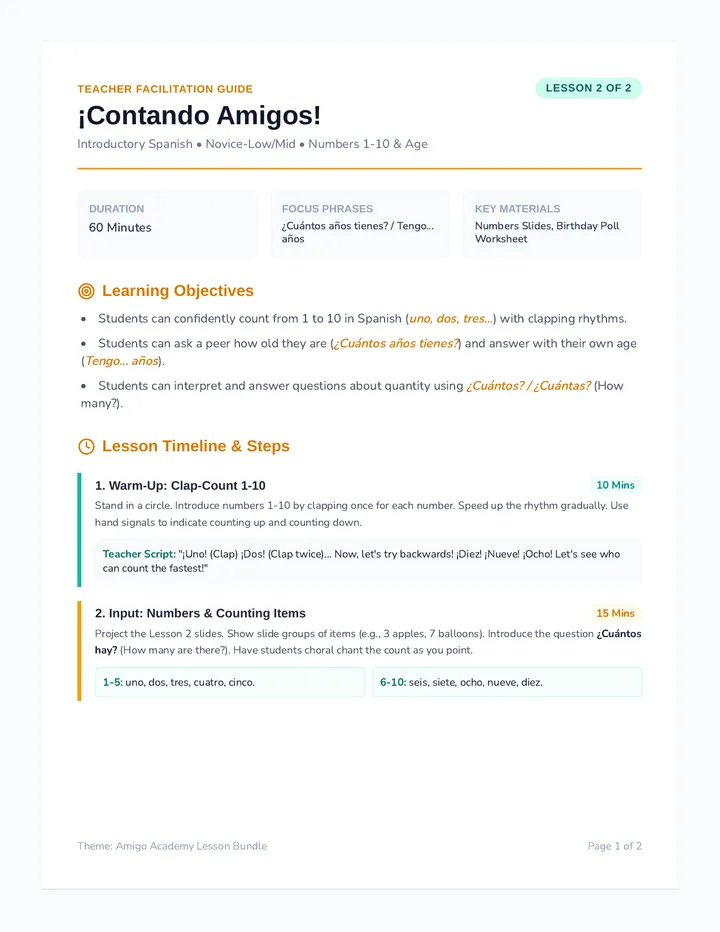
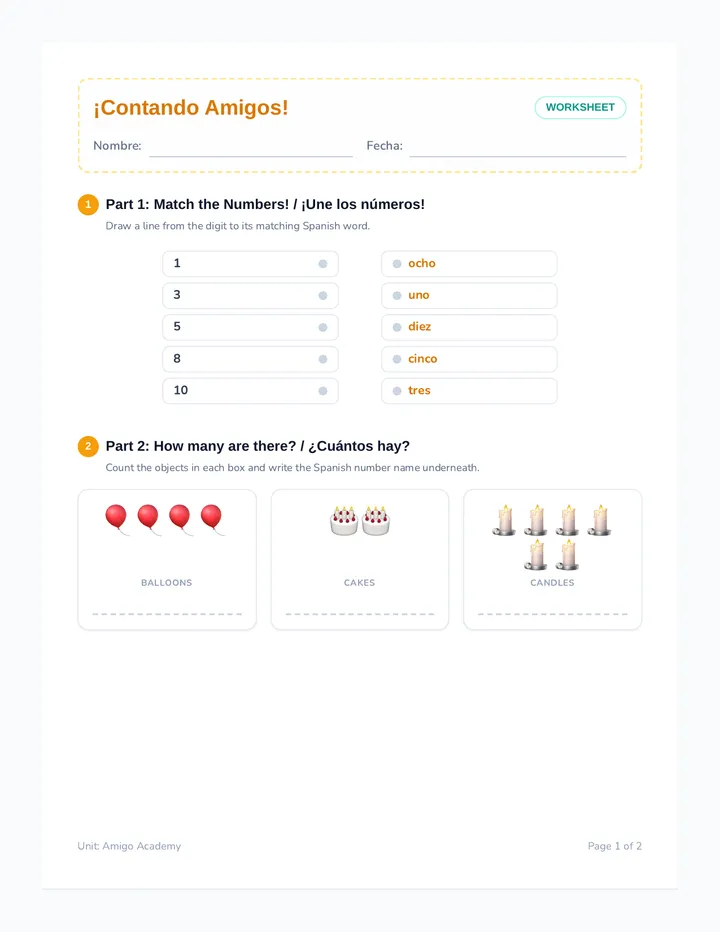
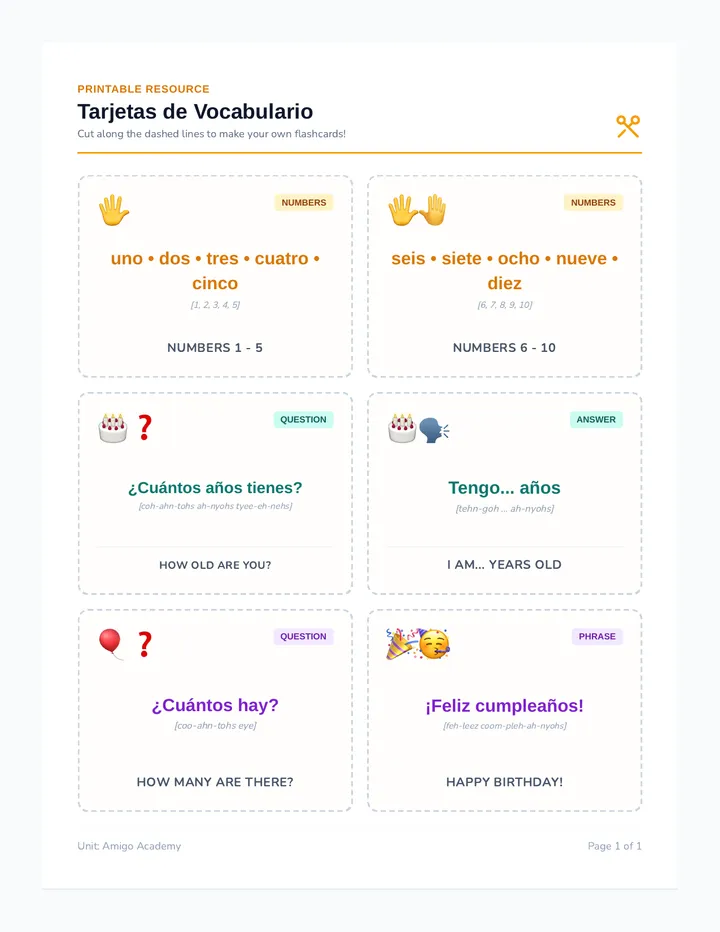
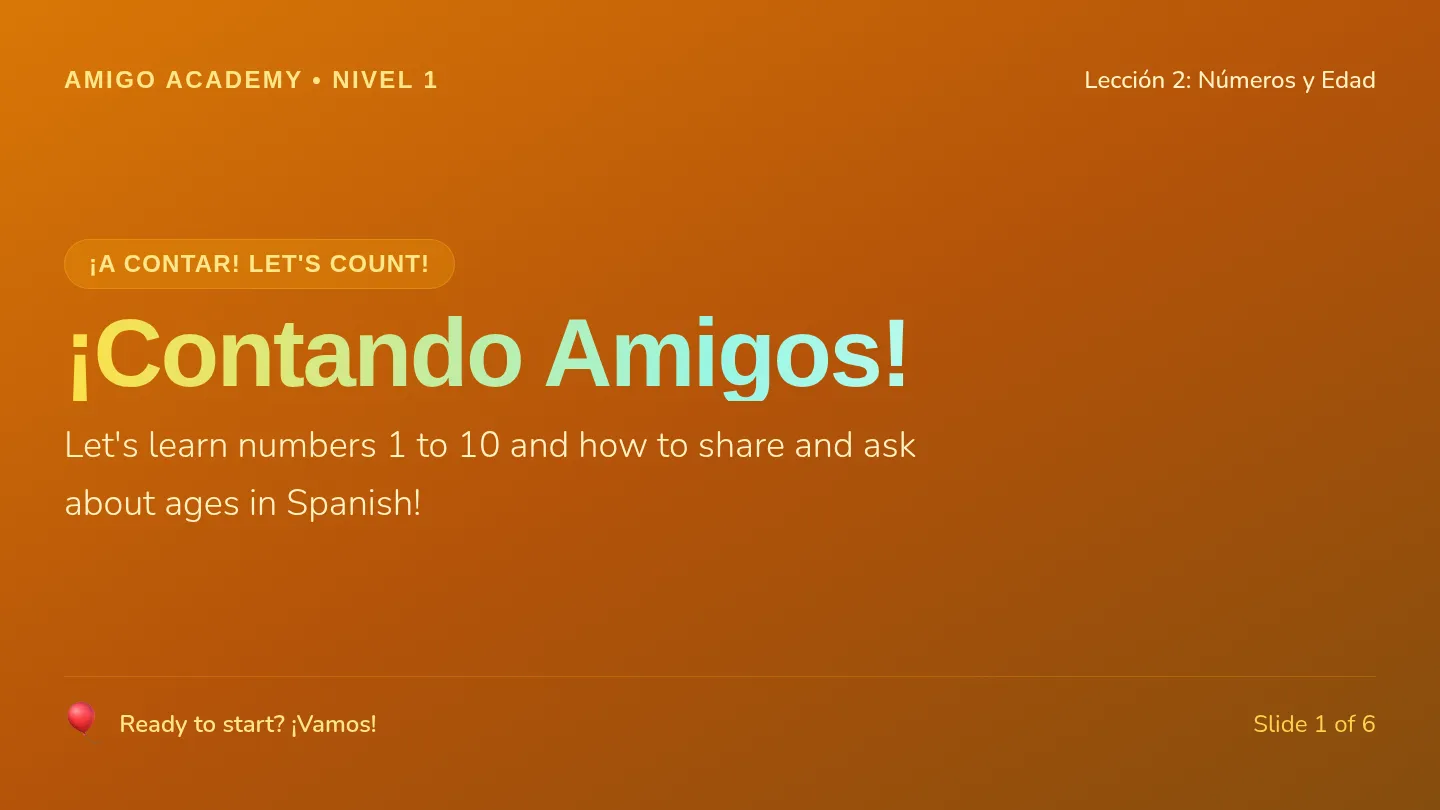
An engaging beginner Spanish lesson focusing on numbers 1-10, asking and answering age questions (¿Cuántos años tienes? Tengo... años), and conducting a classroom birthday/age poll.
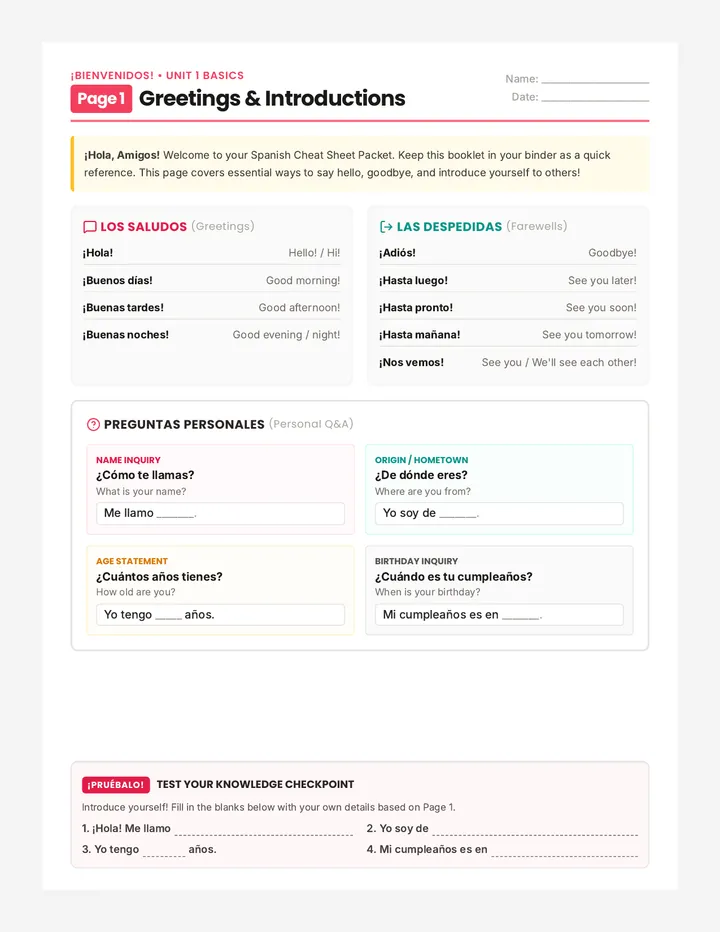
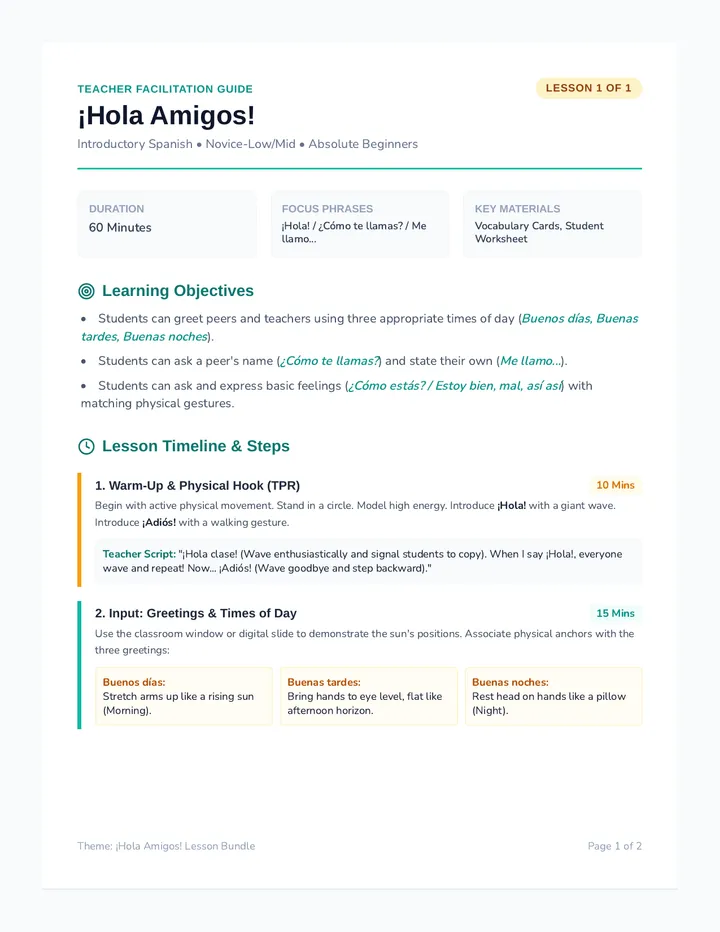
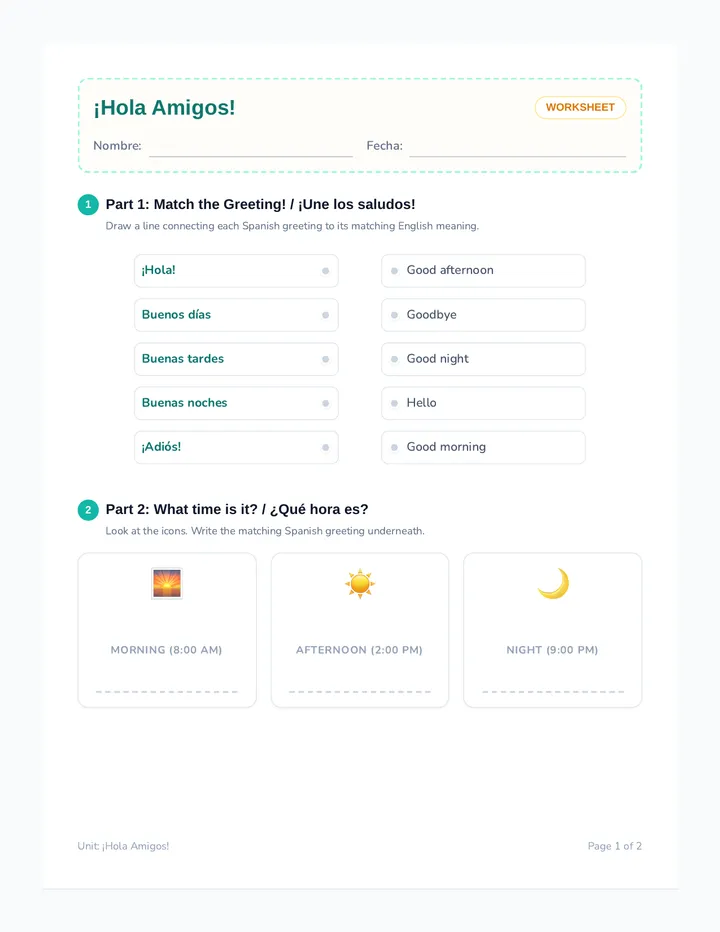
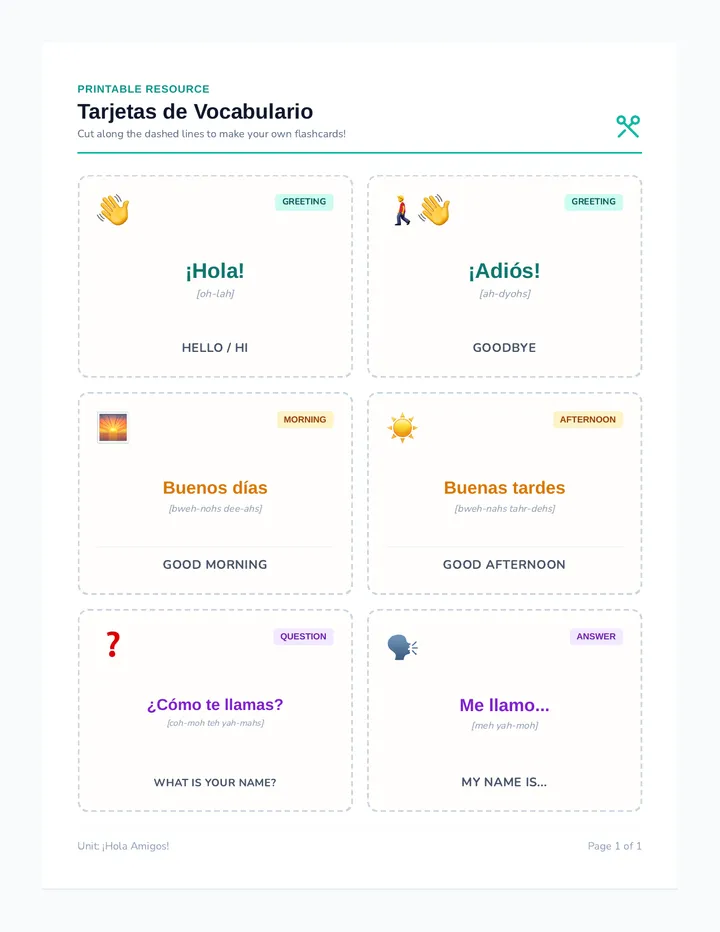
An introductory Spanish lesson for absolute beginners (Novice-Low/Mid) focusing on high-frequency greetings, self-introductions (¿Cómo te llamas? Me llamo...), and basic feelings expression through active physical response (TPR) and collaborative speaking activities.
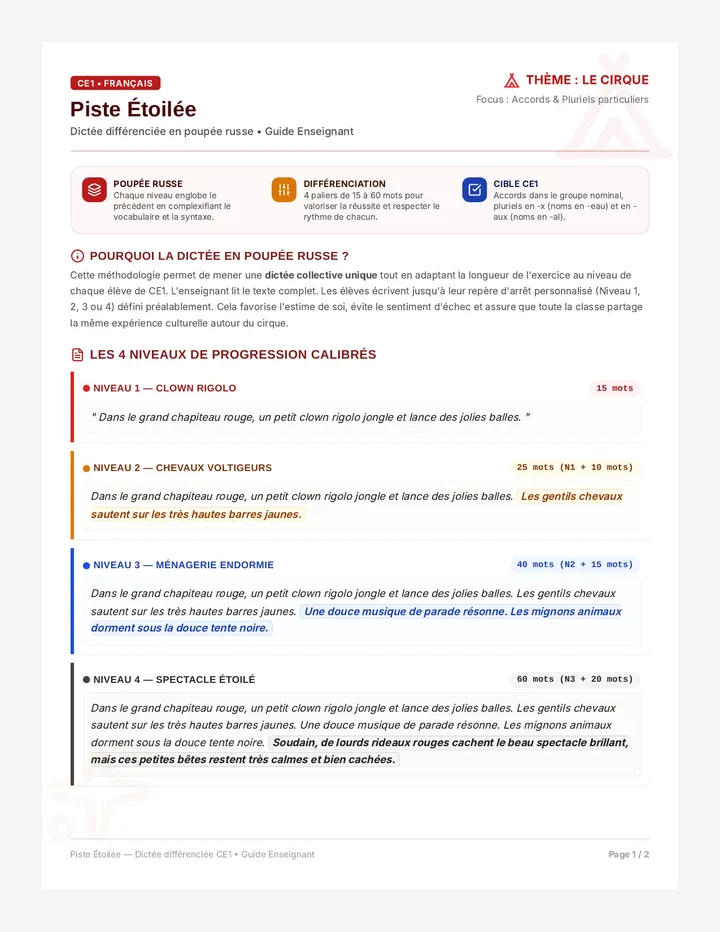
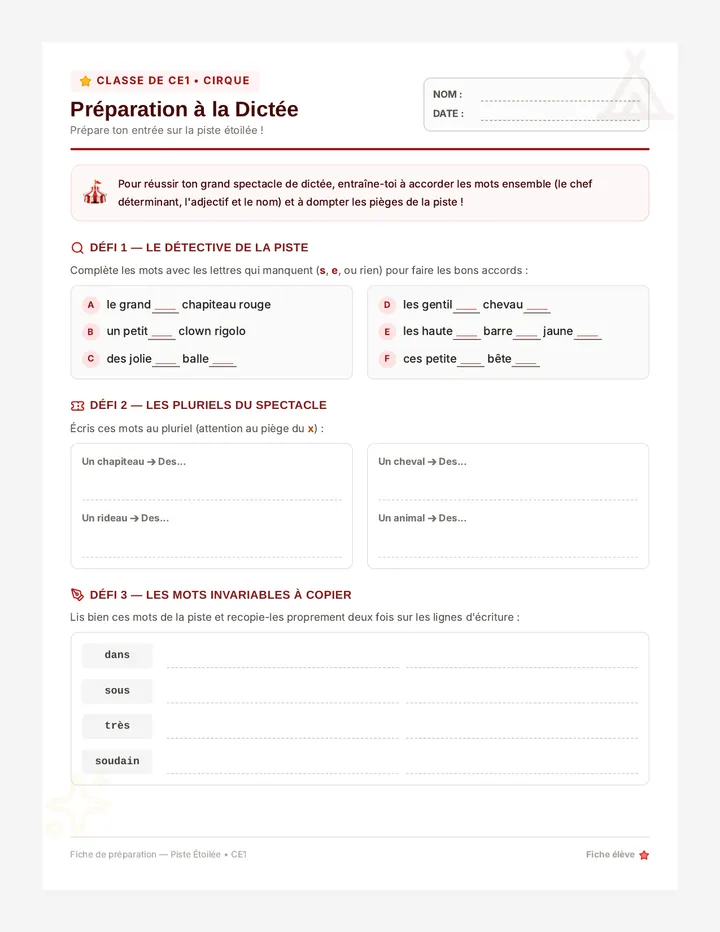
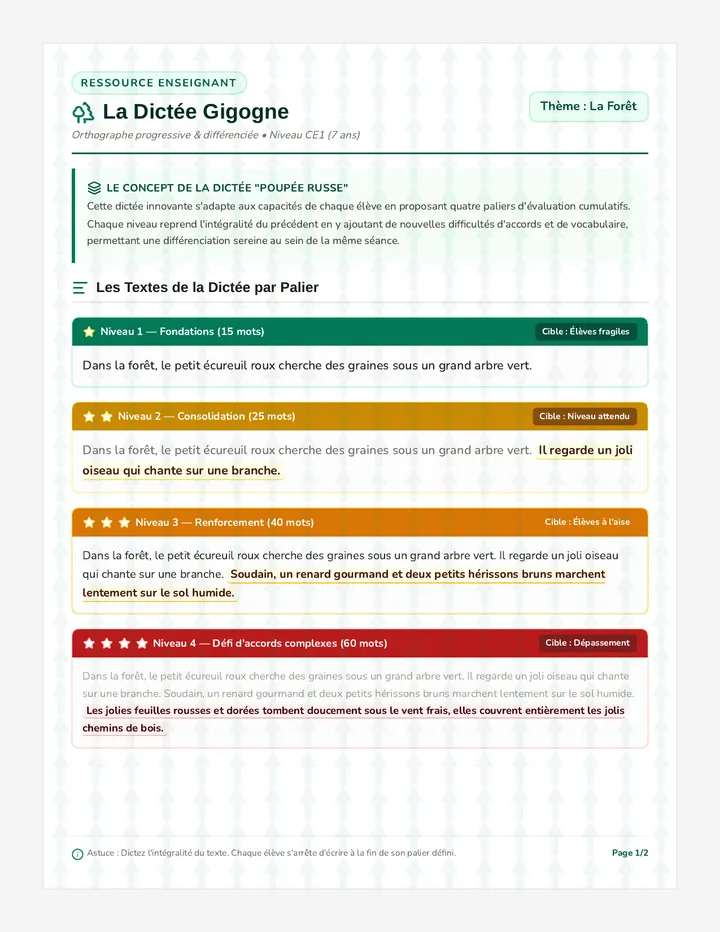
Une dictée différenciée en poupée russe sur le thème du cirque pour les élèves de CE1. Ce guide complet pour l'enseignant permet de travailler l'accord dans le groupe nominal à travers 4 niveaux de progression cumulatifs.
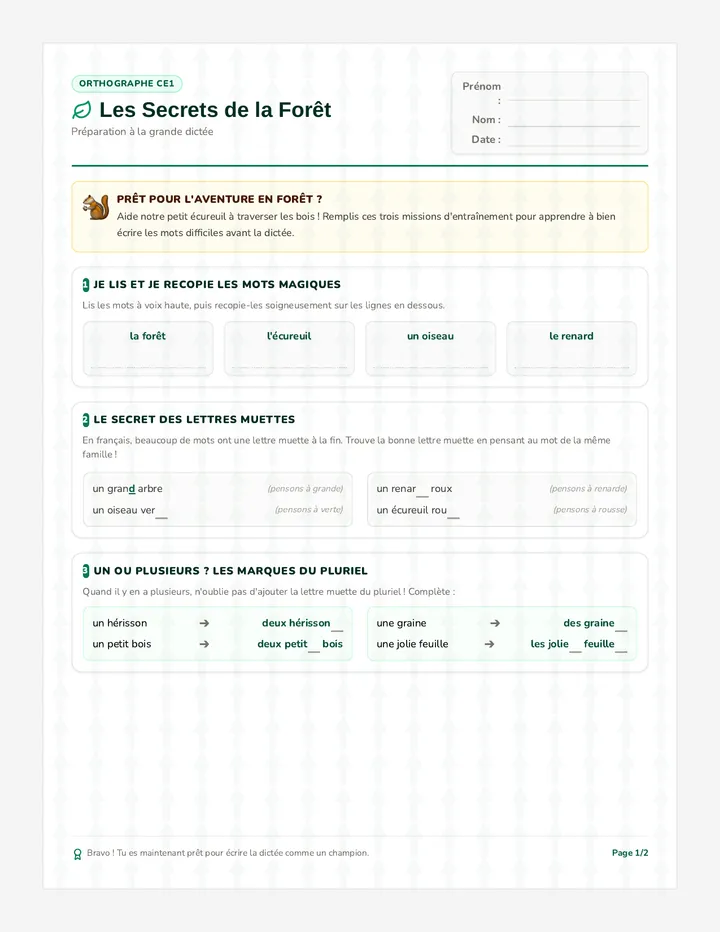
Séquence d'orthographe et de vocabulaire pour le CE1 autour de la faune et de la flore des bois, s'appuyant sur une dictée innovante à 4 niveaux de progression et une grille d'évaluation simplifiée.
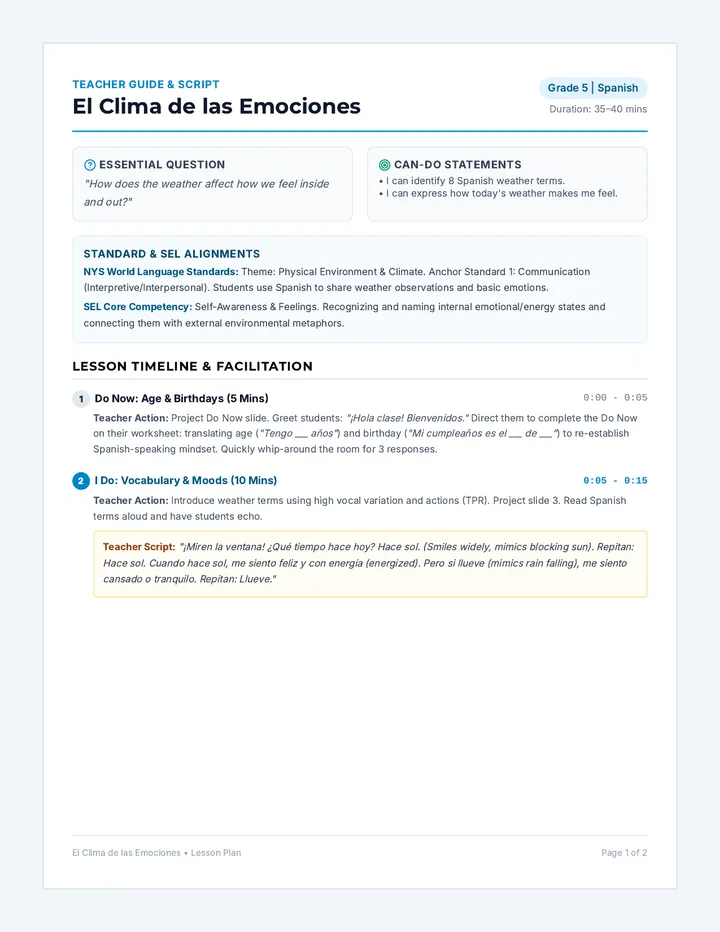
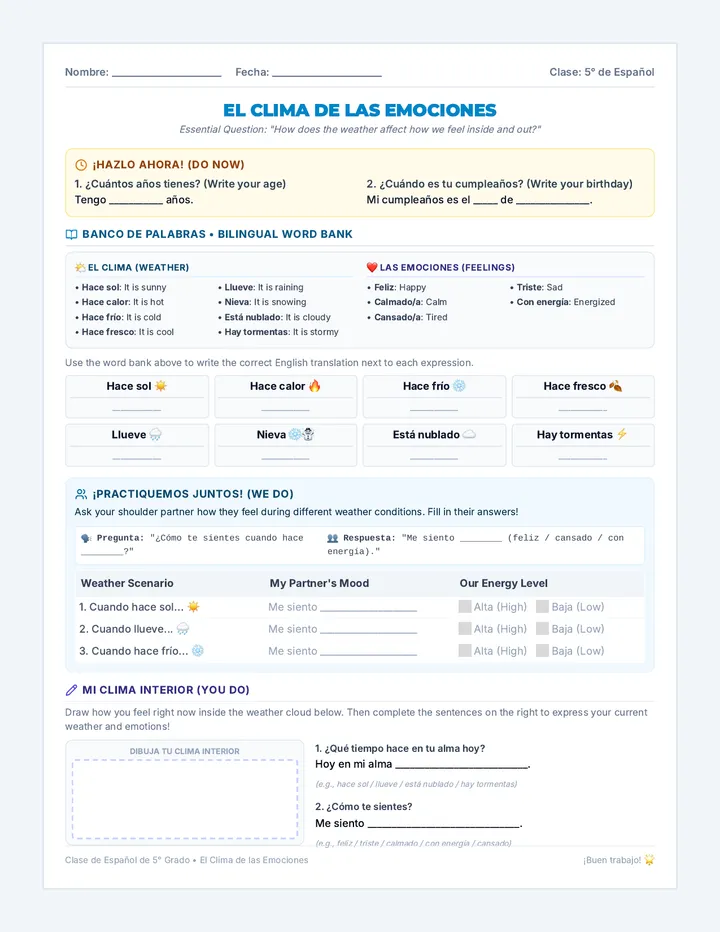
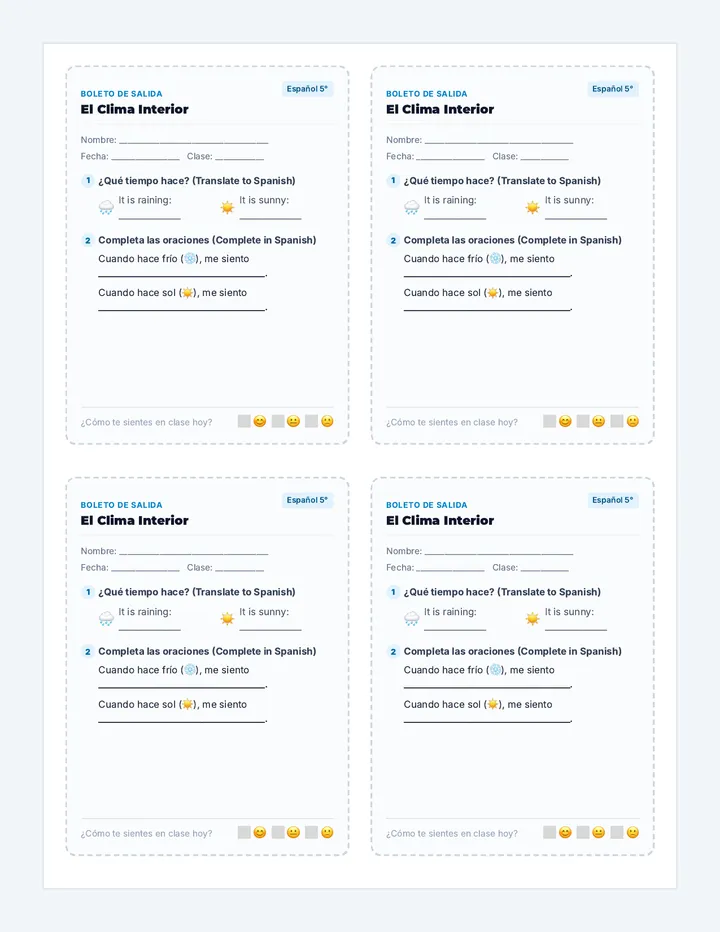
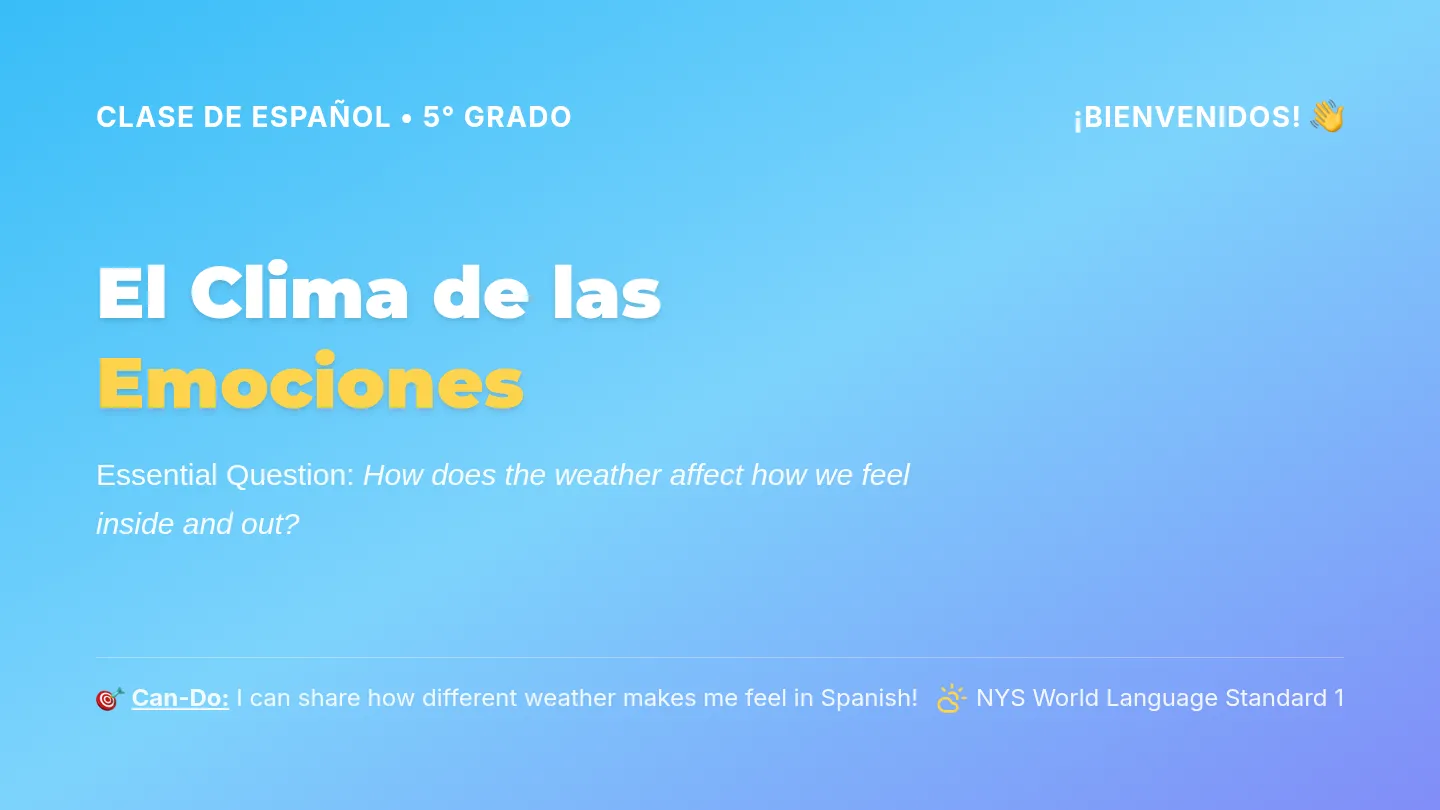
An introductory 5th-grade Spanish lesson exploring weather vocabulary connected with emotional self-awareness. Students practice expressing daily weather and how it affects their mood and energy using the 'I Do, We Do, You Do' model, designed for a 35-40 minute class in a small space.
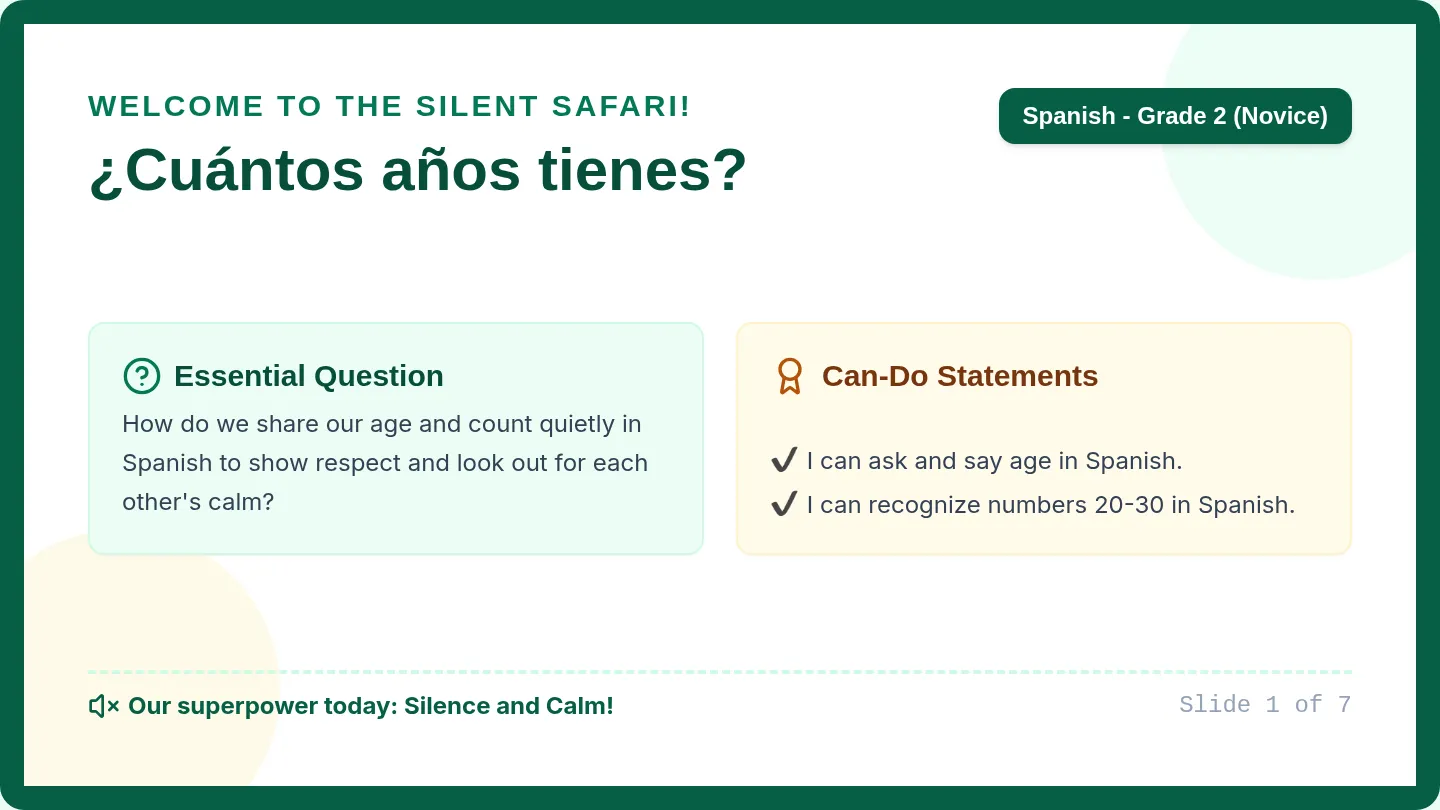
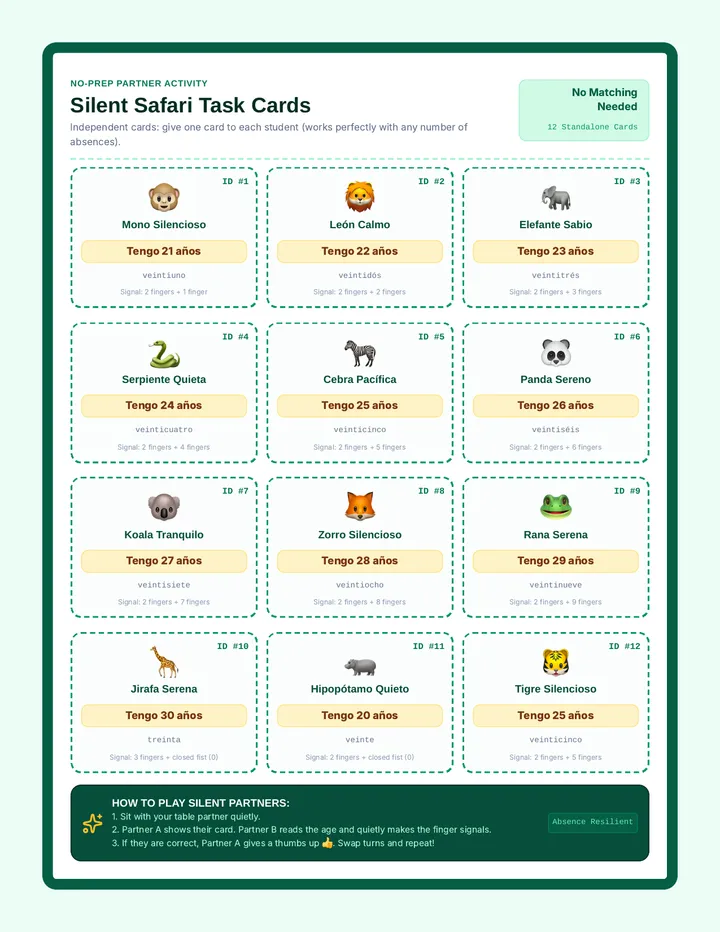
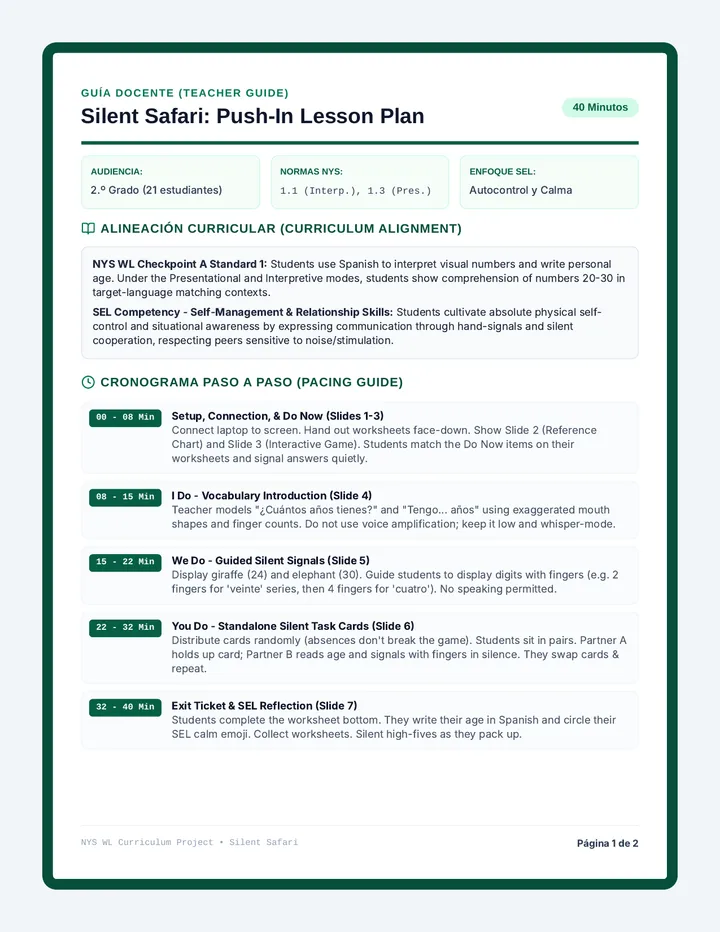
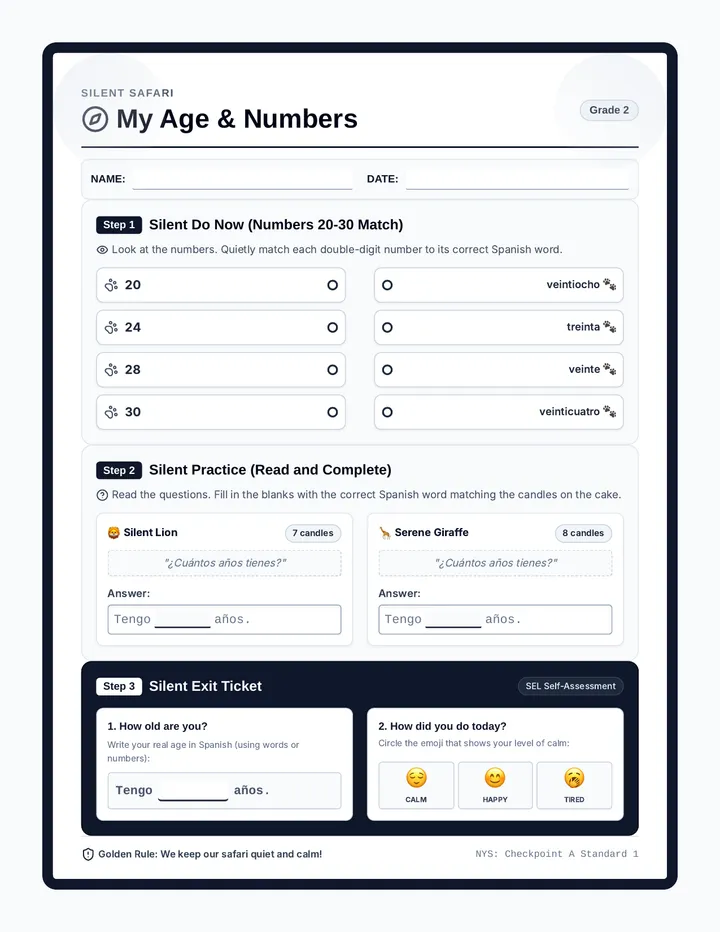
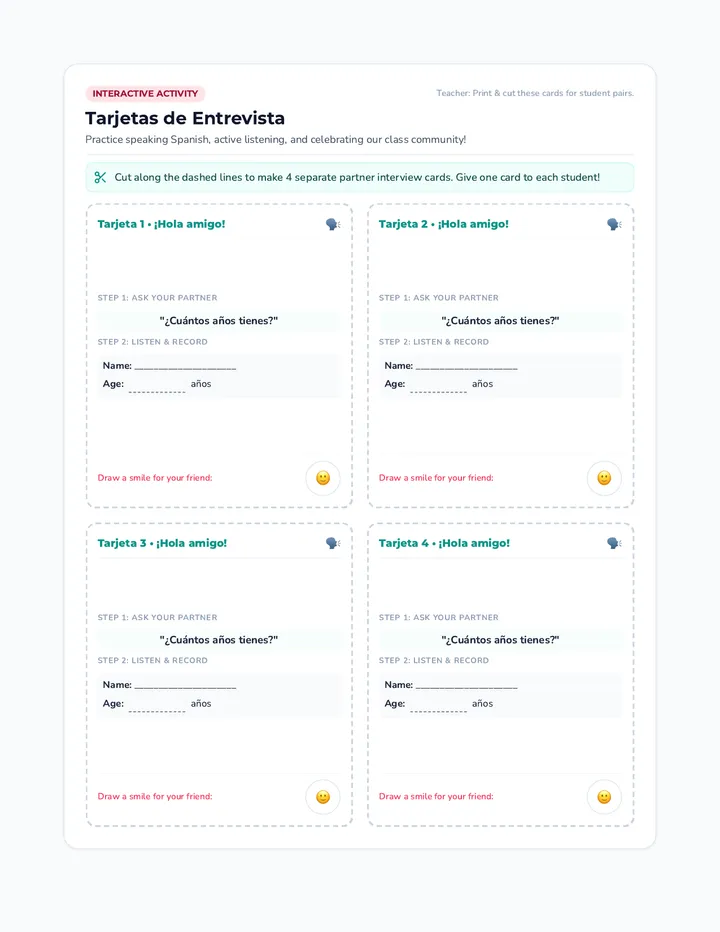
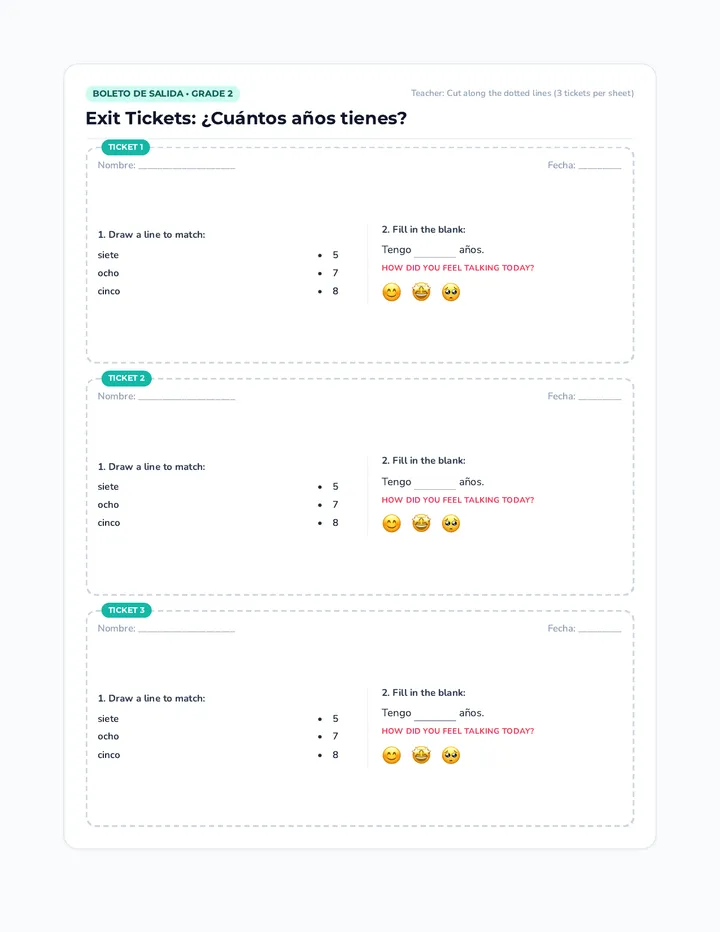
A calm, highly visual Spanish lesson for 2nd graders to learn and practice asking and stating age, plus numbers 20-30, using silent signals and partner matching to respect low-stimulation classroom needs. This lesson aligns with NYS World Language Standards and incorporates SEL elements through self-reflection and cooperative quiet sharing.
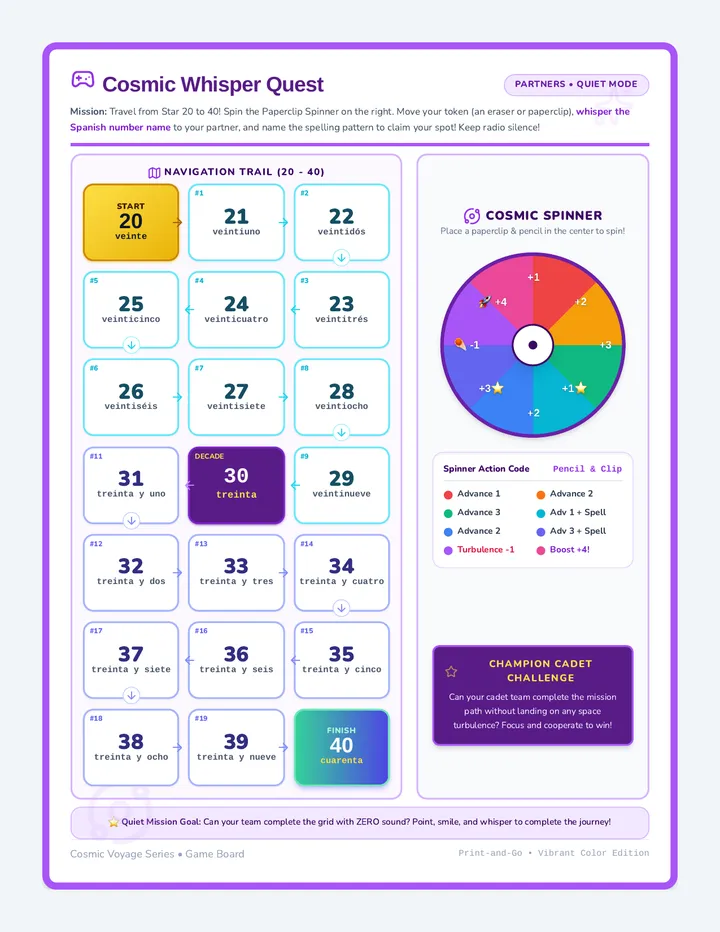
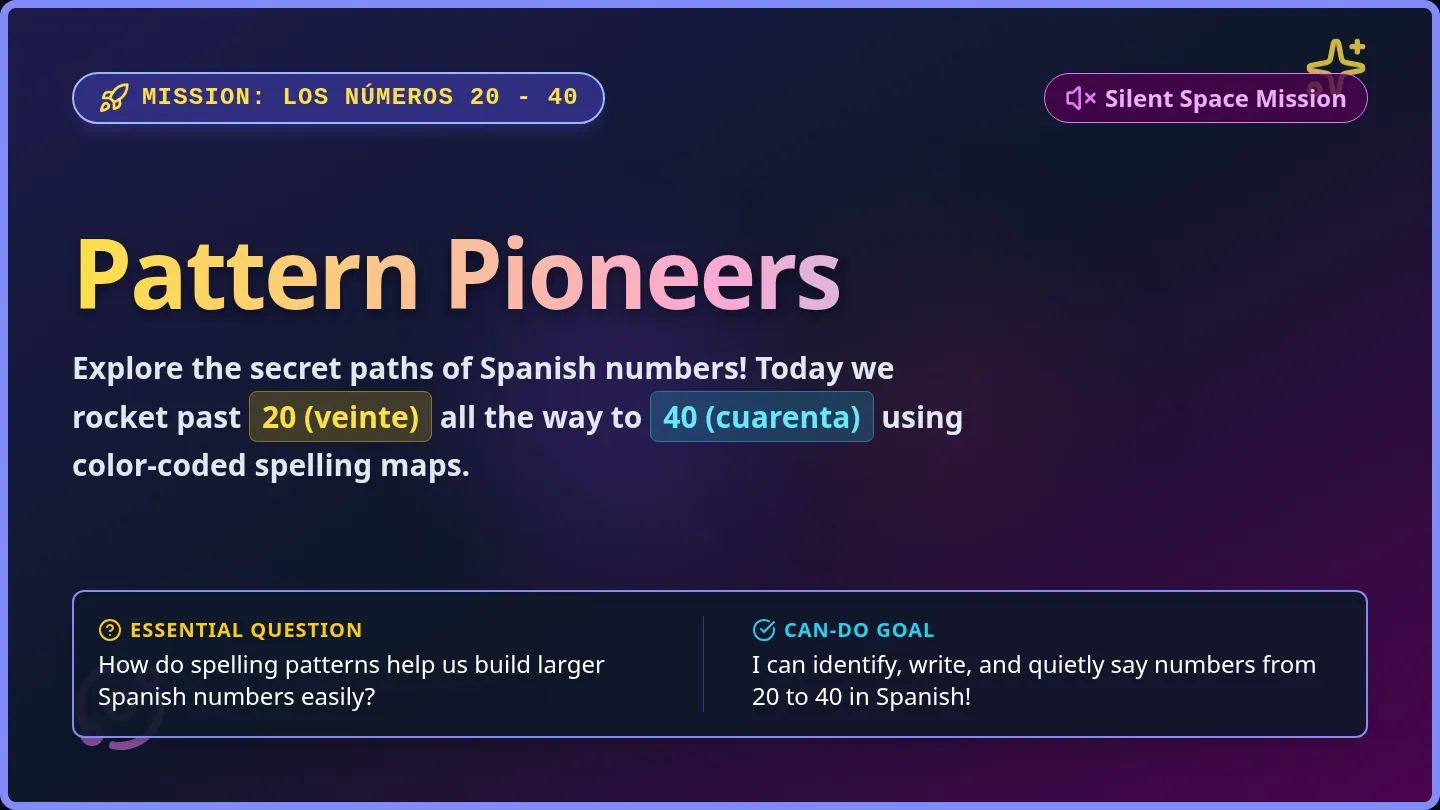
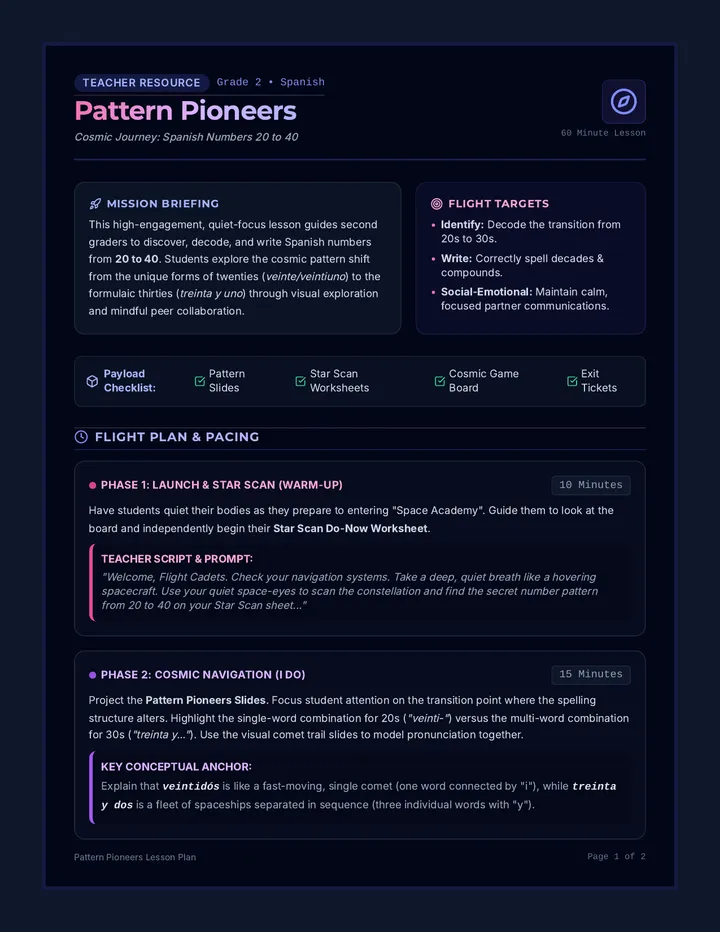
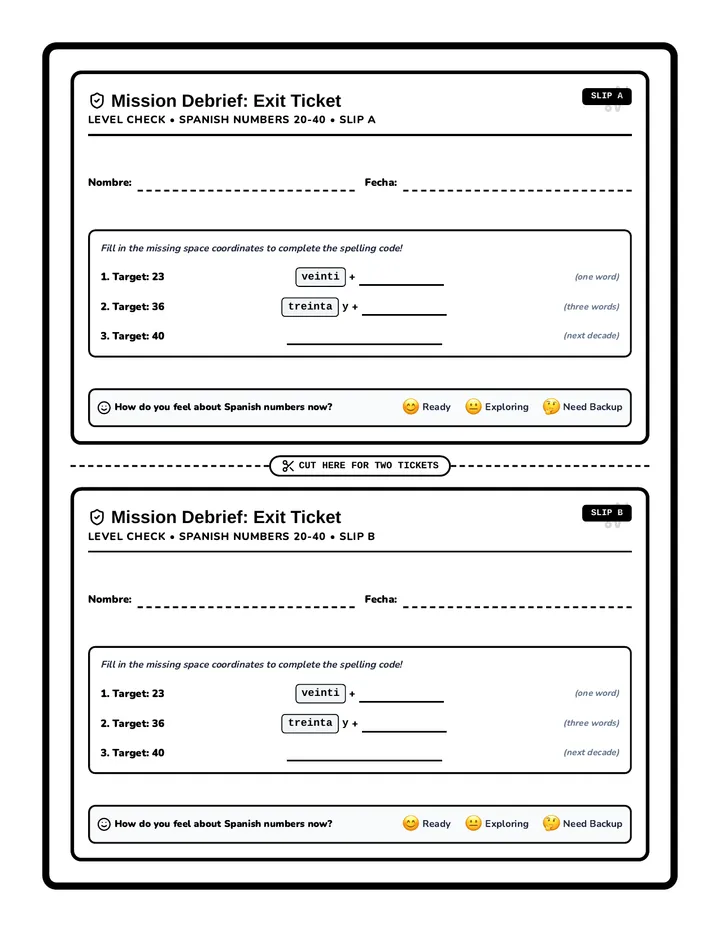
A Spanish numbers lesson for 2nd graders focusing on decades and patterns from 20 to 40. The lesson follows the I Do, We Do, You Do framework, integrates social-emotional learning, and uses quiet, high-engagement visual activities.
A playful and colorful introductory lesson on Spanish numbers 11 to 20 designed for young learners, highlighting key suffix and prefix spelling patterns.
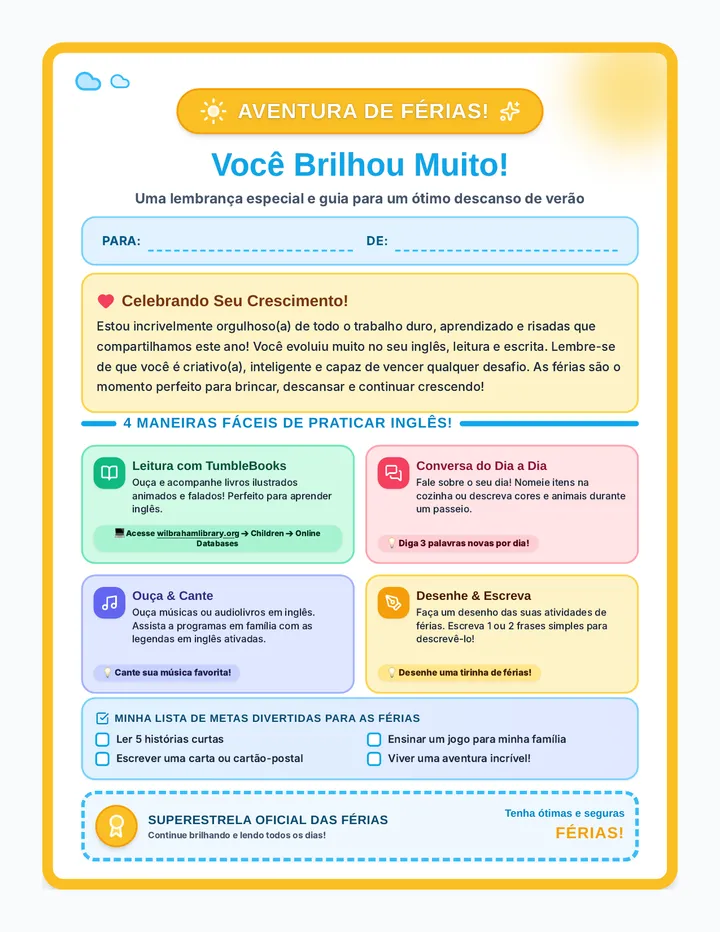
A lesson designed to celebrate student growth and guide families with actionable, low-stress English practice tips over the summer break.
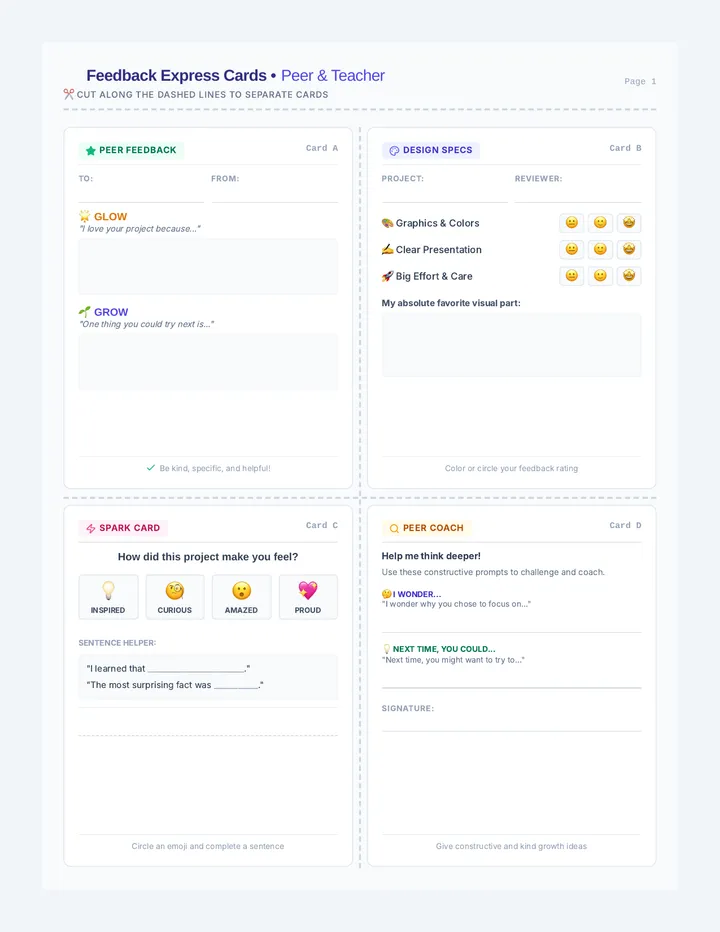
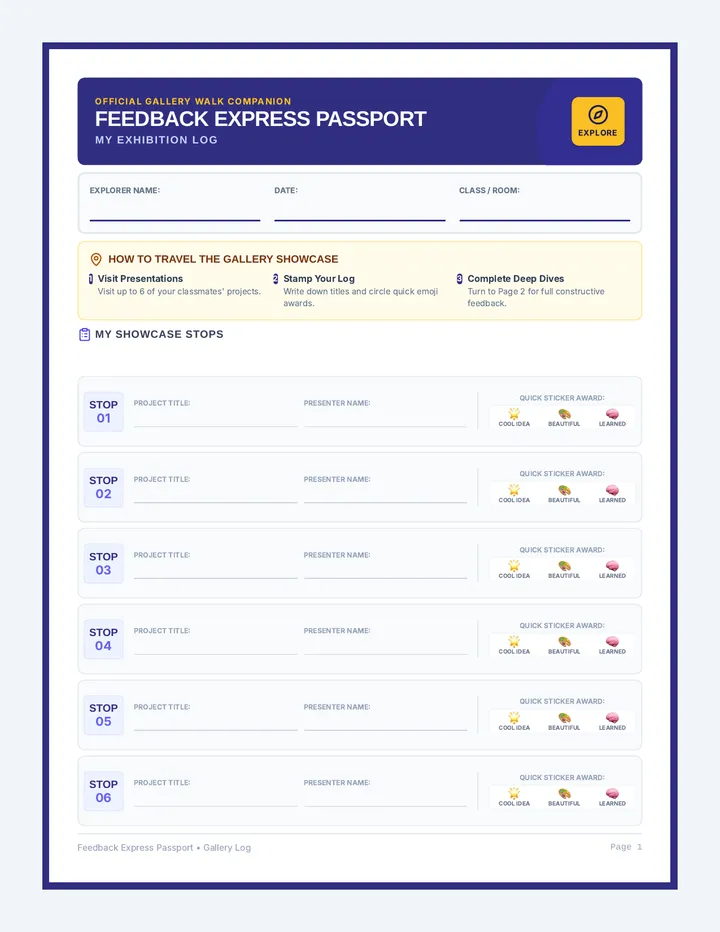
A visual feedback toolkit designed for elementary and middle school classrooms, families, and peers to provide meaningful project feedback. Includes emoji-rich rating systems, structured review guides, and sentence starter frames.
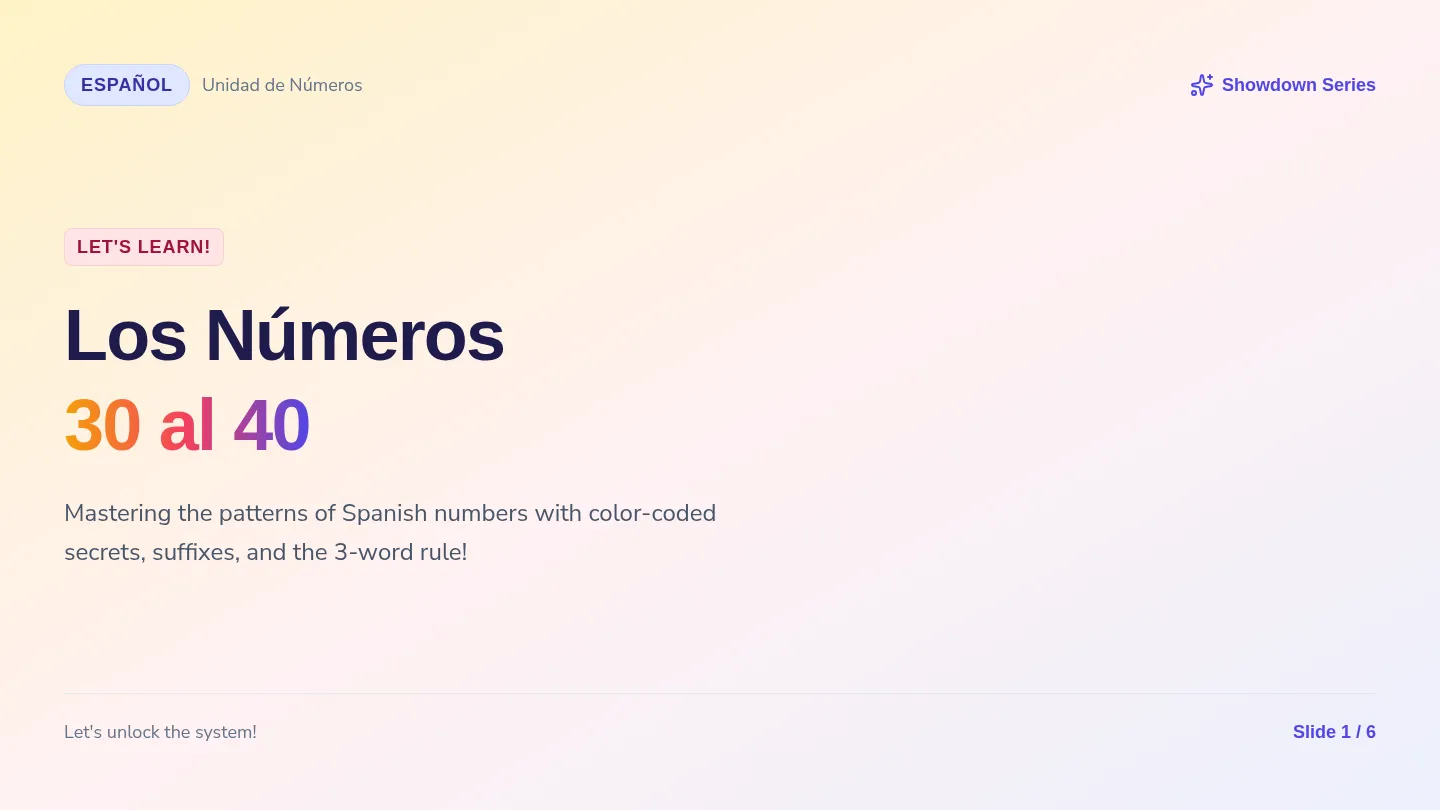
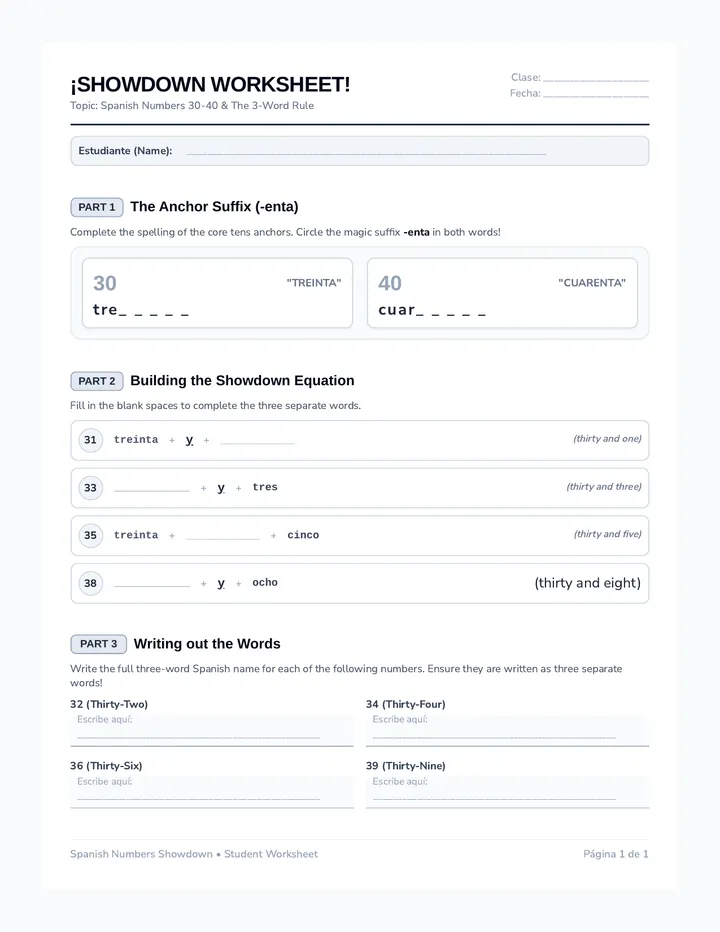
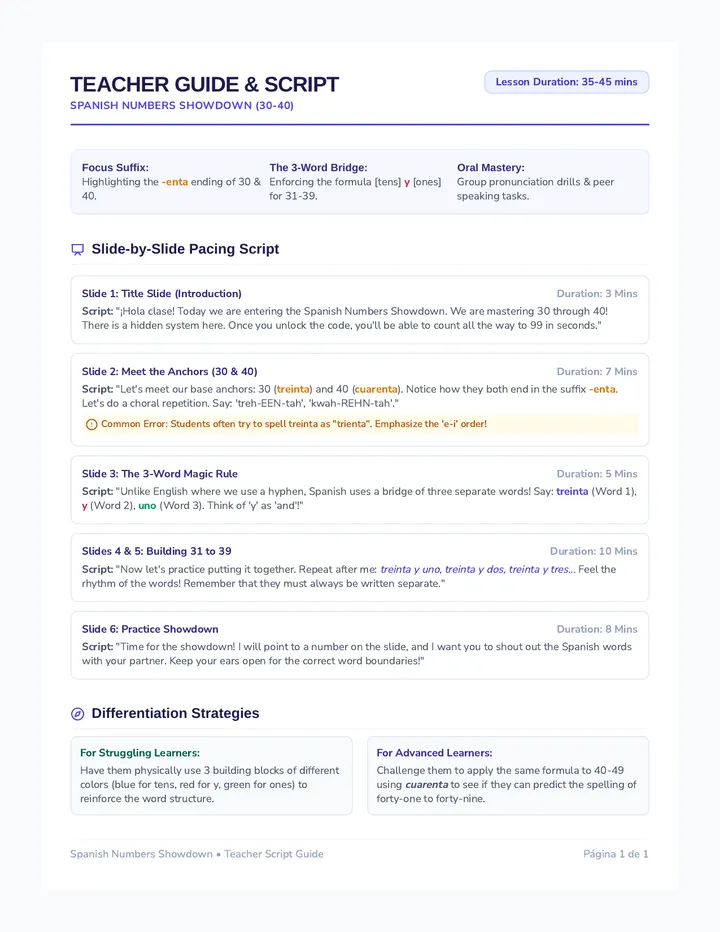
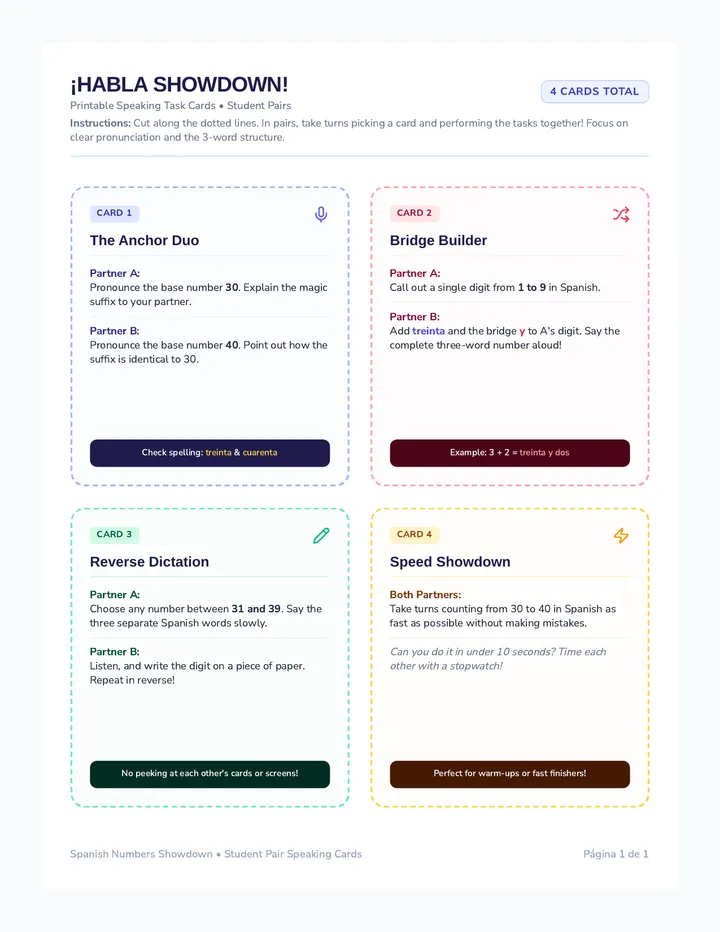
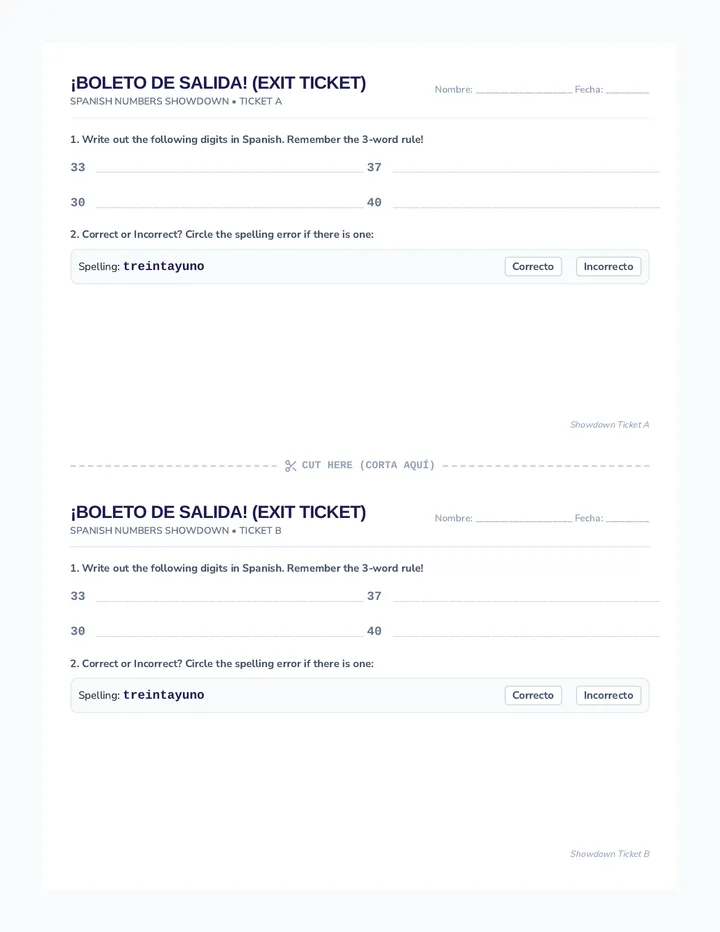
A structured, color-coded lesson introducing Spanish numbers 30 to 40, highlighting key linguistic rules like the "-enta" suffix and the three-word structure of numbers 31-39.
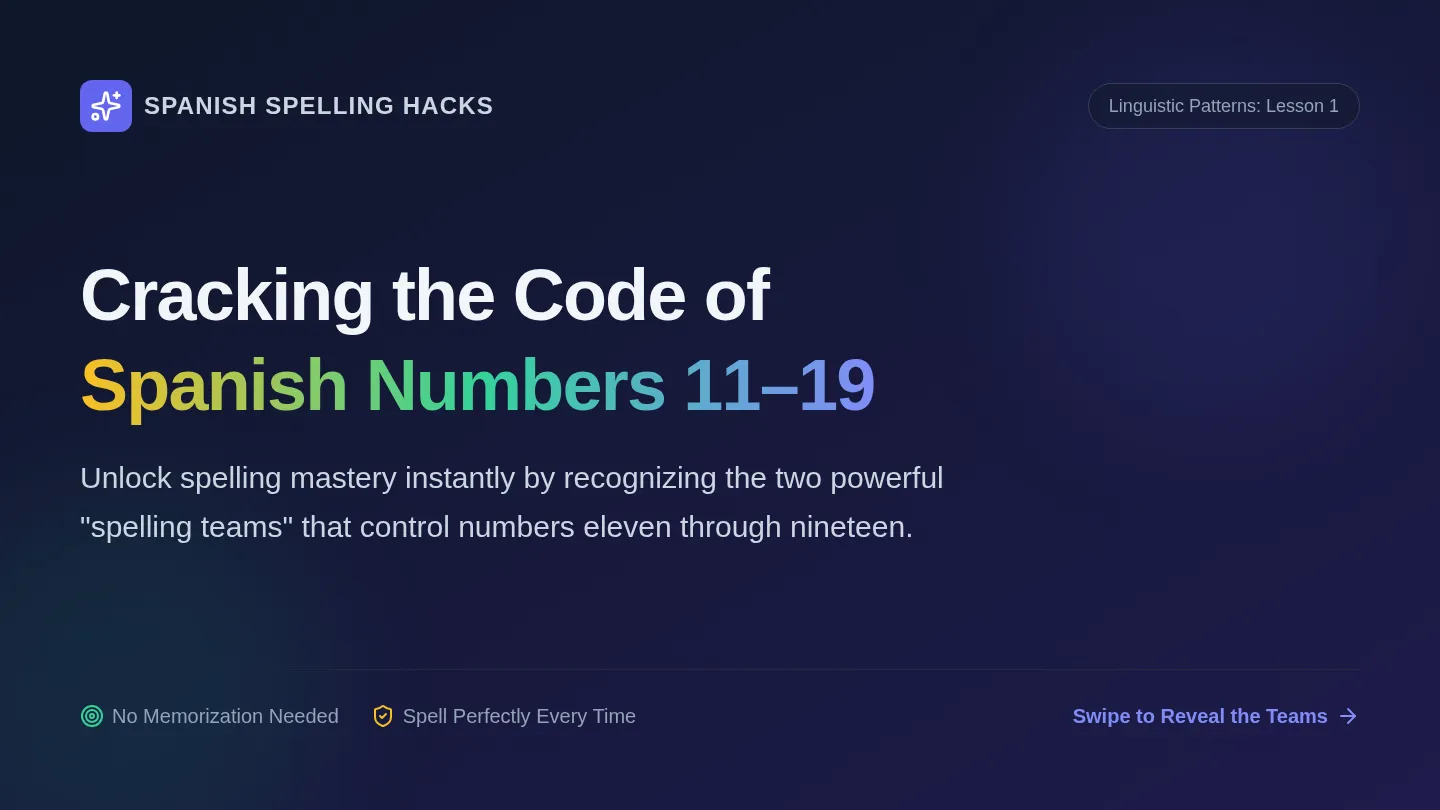
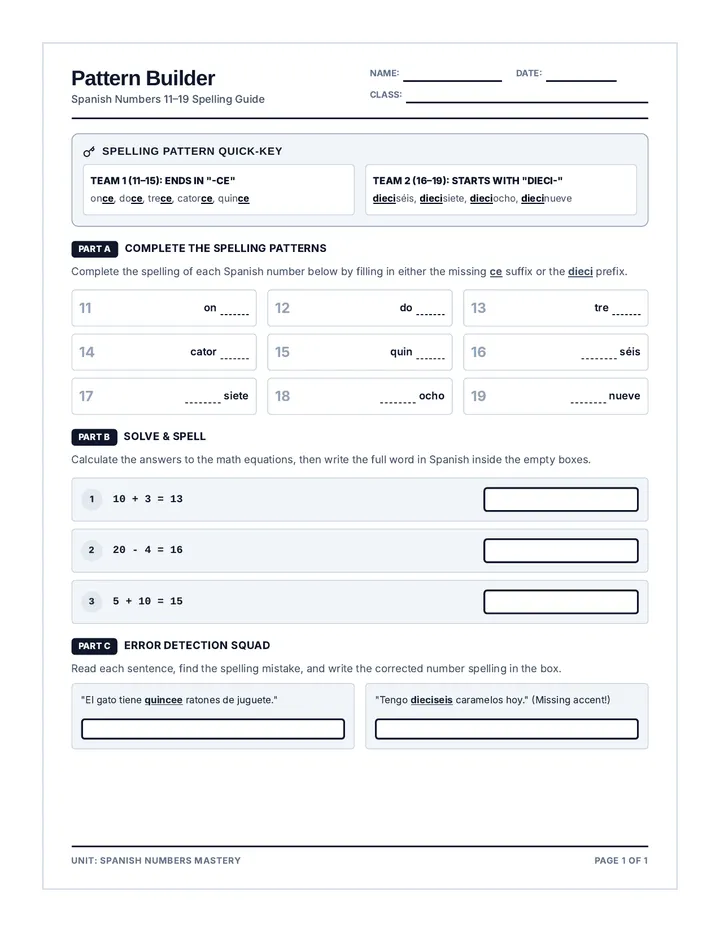
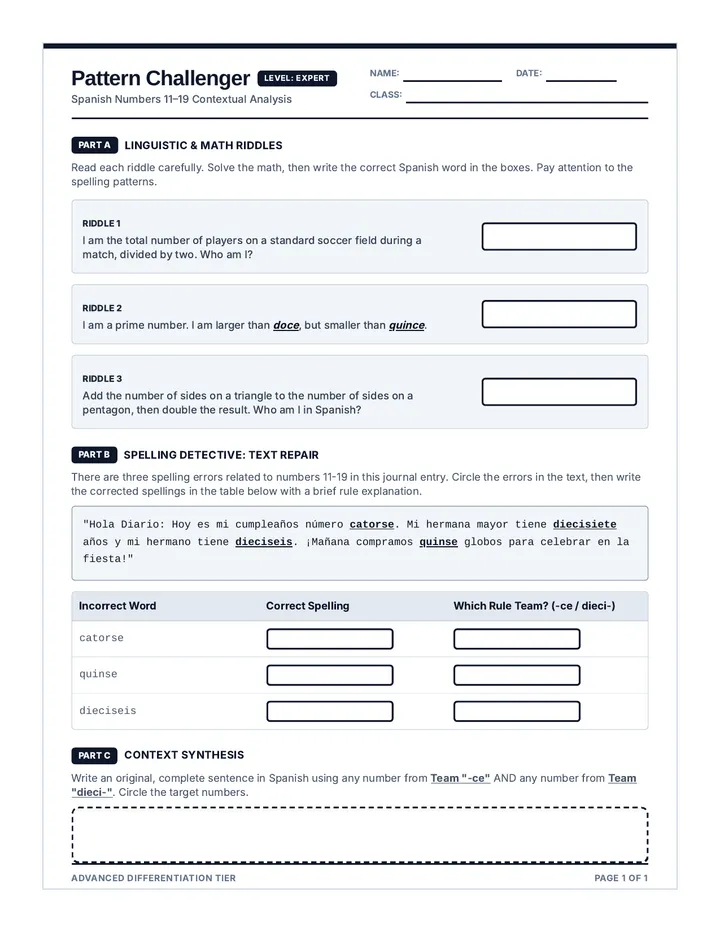
A focused lesson on Spanish numbers 11-19, highlighting the spelling patterns of '-ce' (11-15) and 'dieci-' (16-19) to improve spelling accuracy, pronunciation, and linguistic patterns.
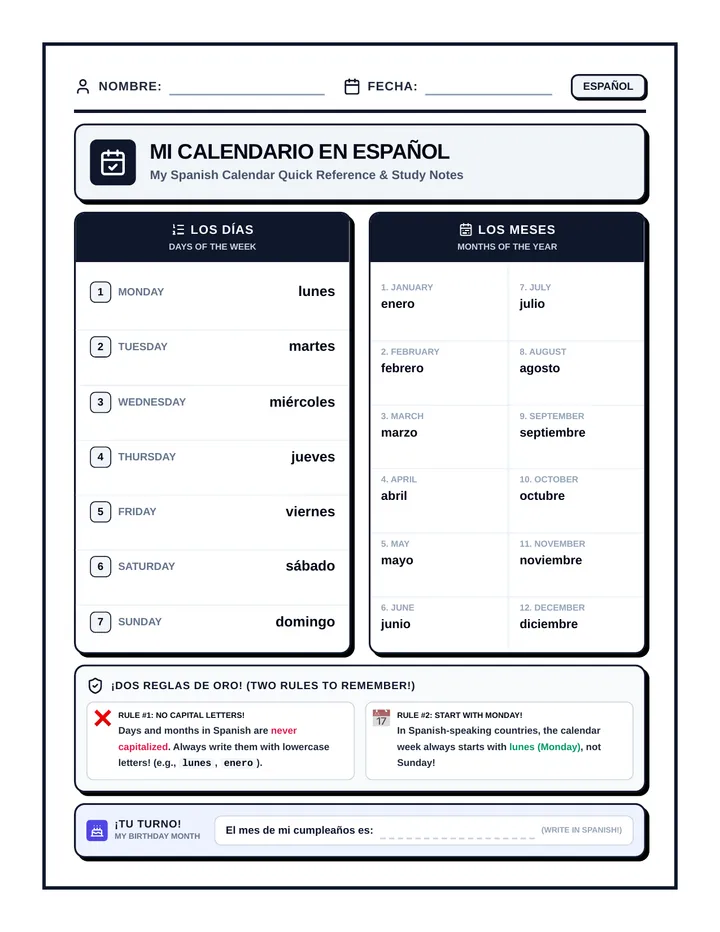
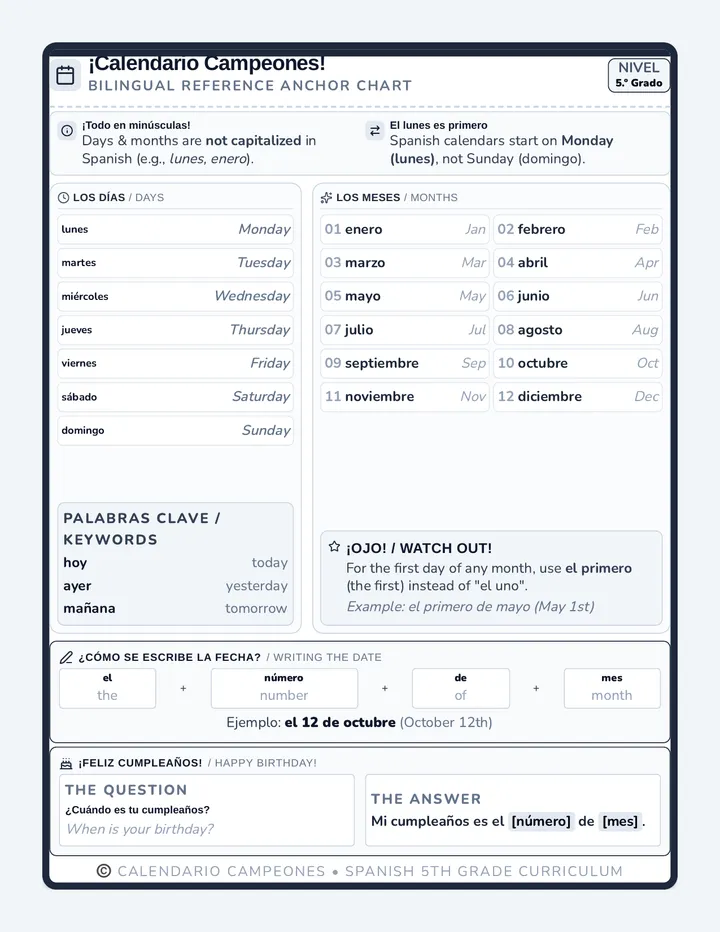
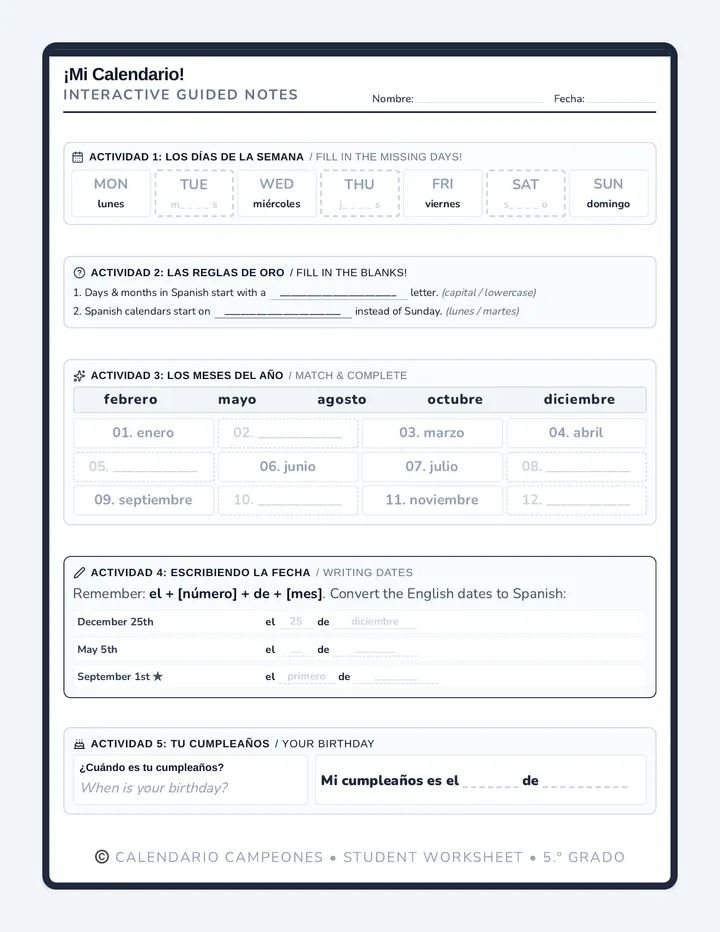
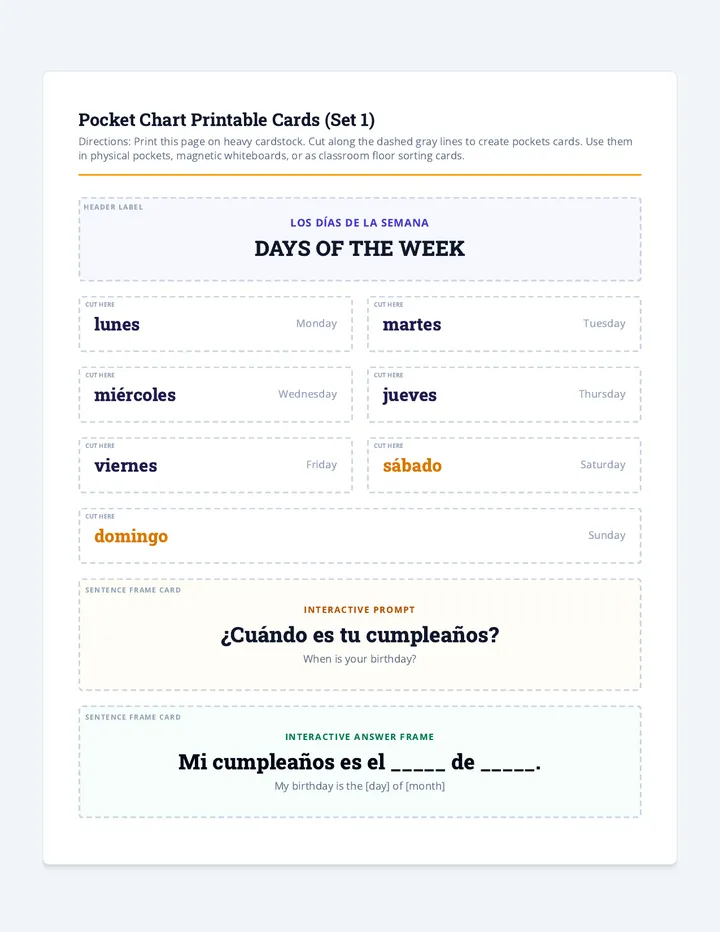
A comprehensive, highly visual introductory lesson on days, months, and birthdays in Spanish for 5th-grade students. It features a bilingual anchor chart for reference and a corresponding interactive guided notes page for classroom application.
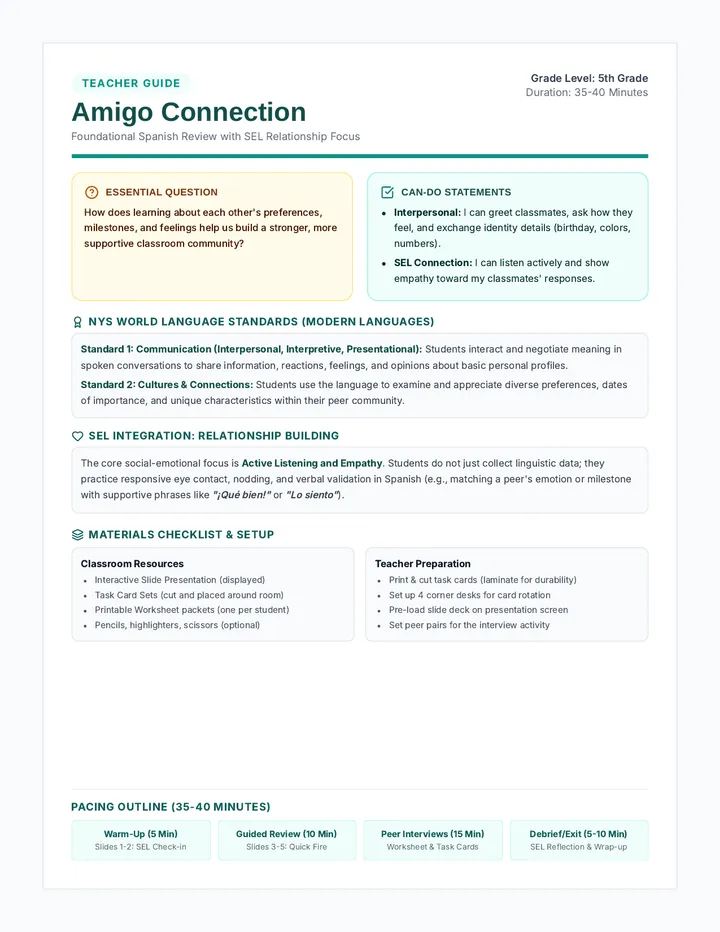
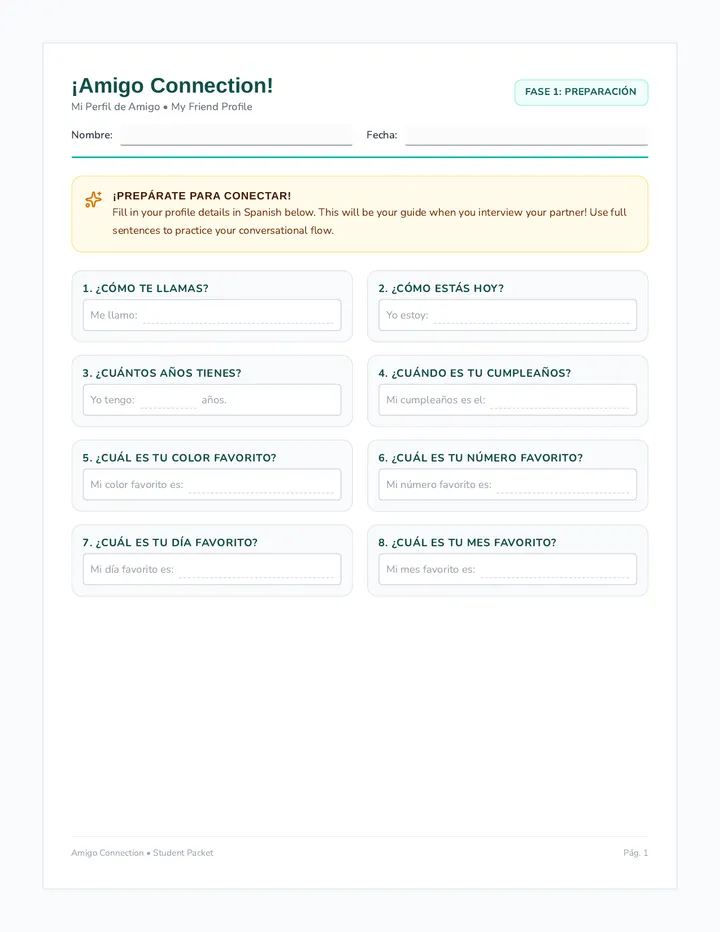
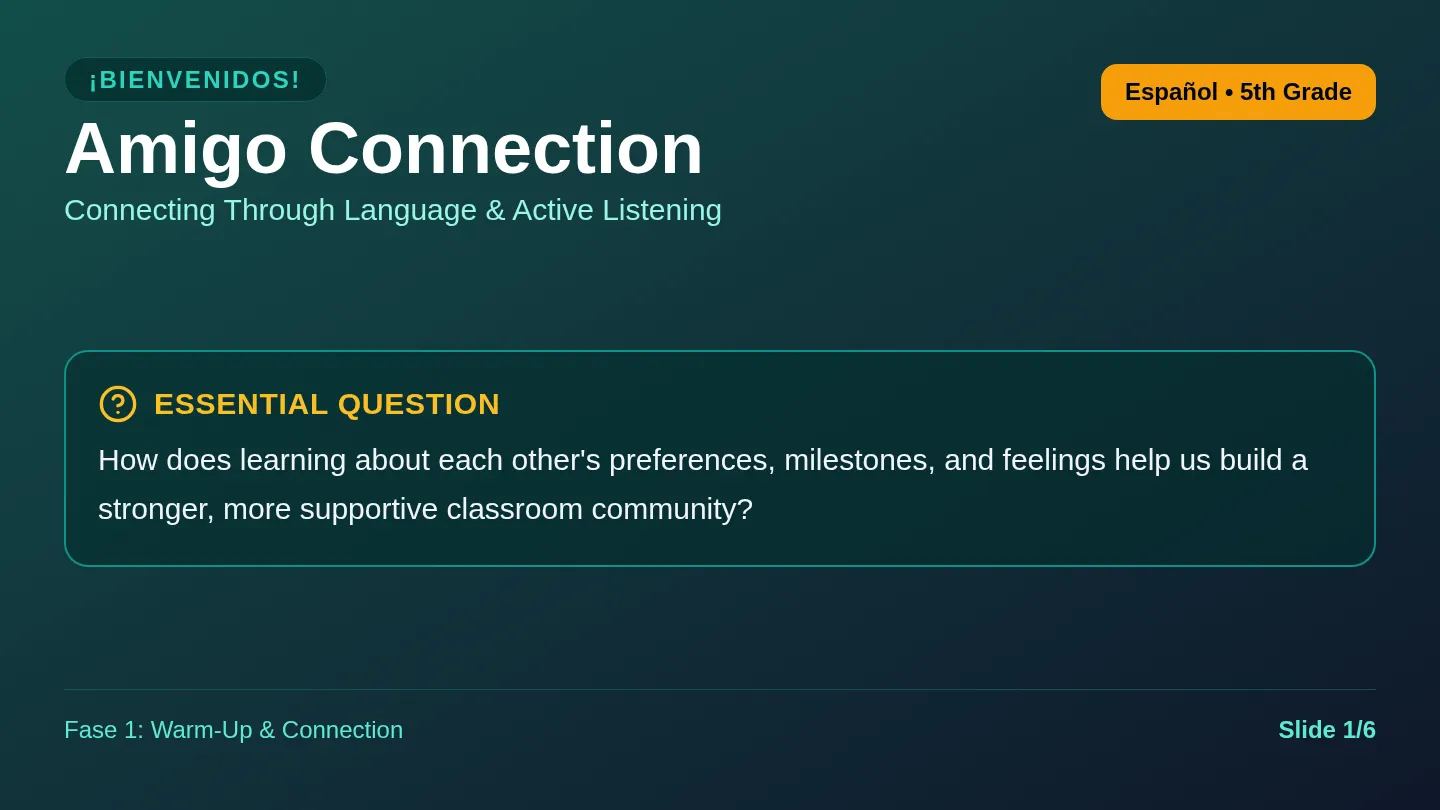
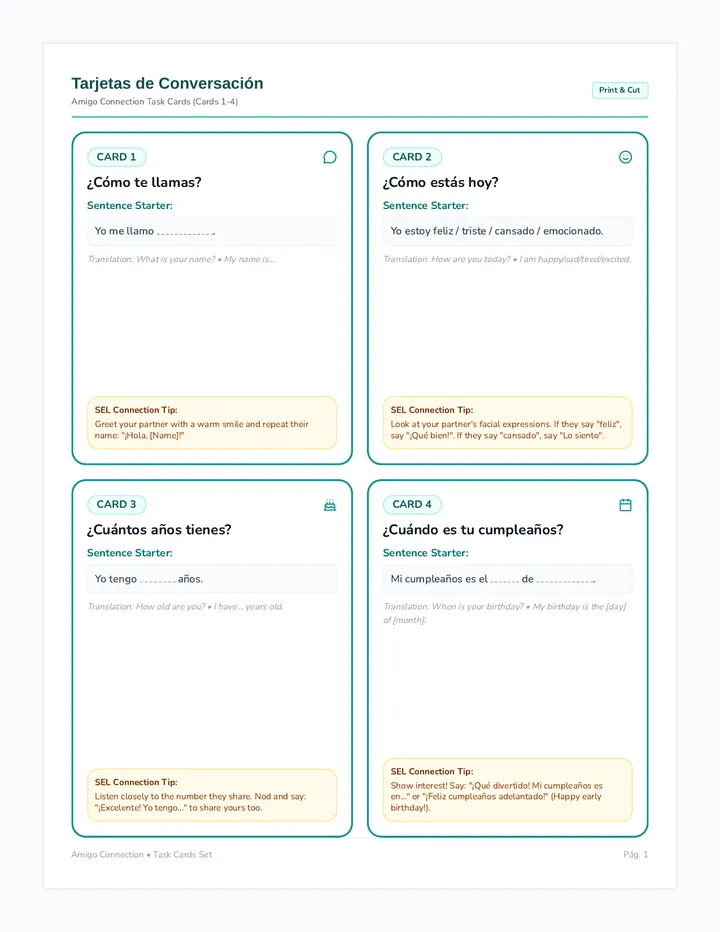
A 35-40 minute Spanish review lesson for 5th grade focused on foundational conversational prompts (greetings, feelings, colors, age, birthday, numbers, calendar). This lesson integrates NYS World Language Standards and a Relationship Building SEL focus to foster active listening and empathy.
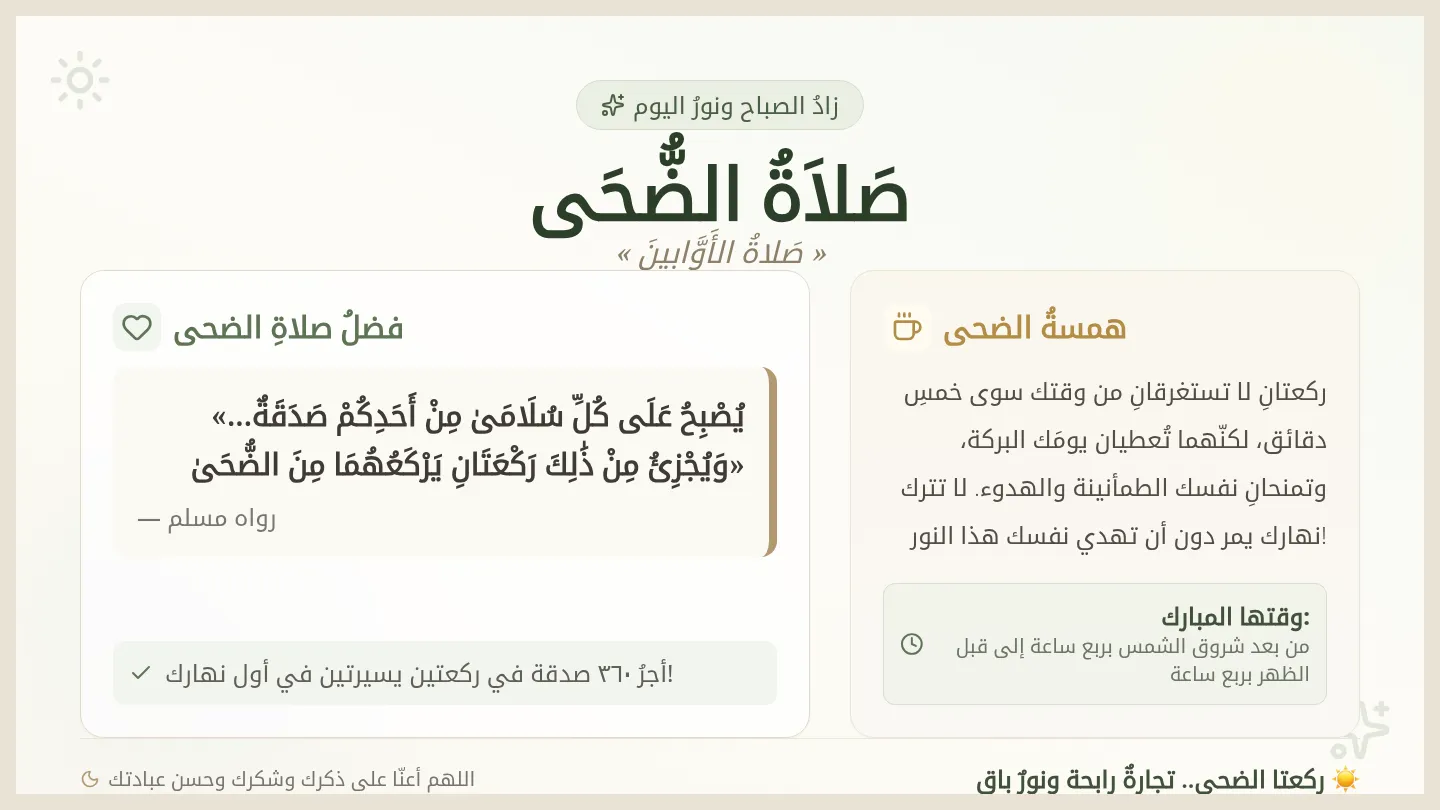
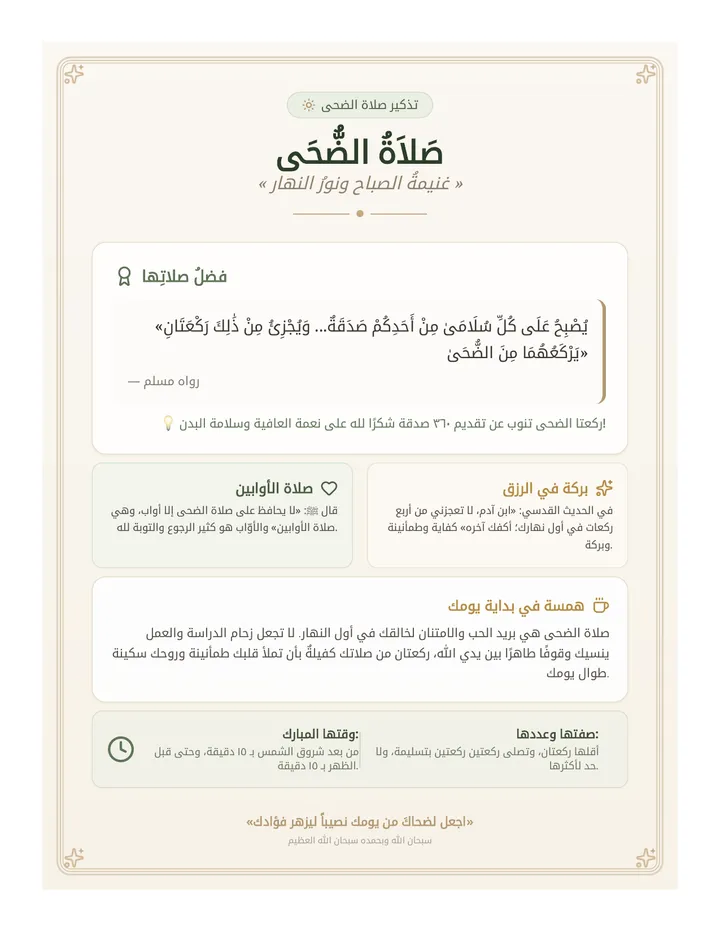
A lesson focusing on the Duha prayer reminder, offering both a digital slide for morning screens and a printable classroom poster to foster a peaceful, spiritual morning routine.
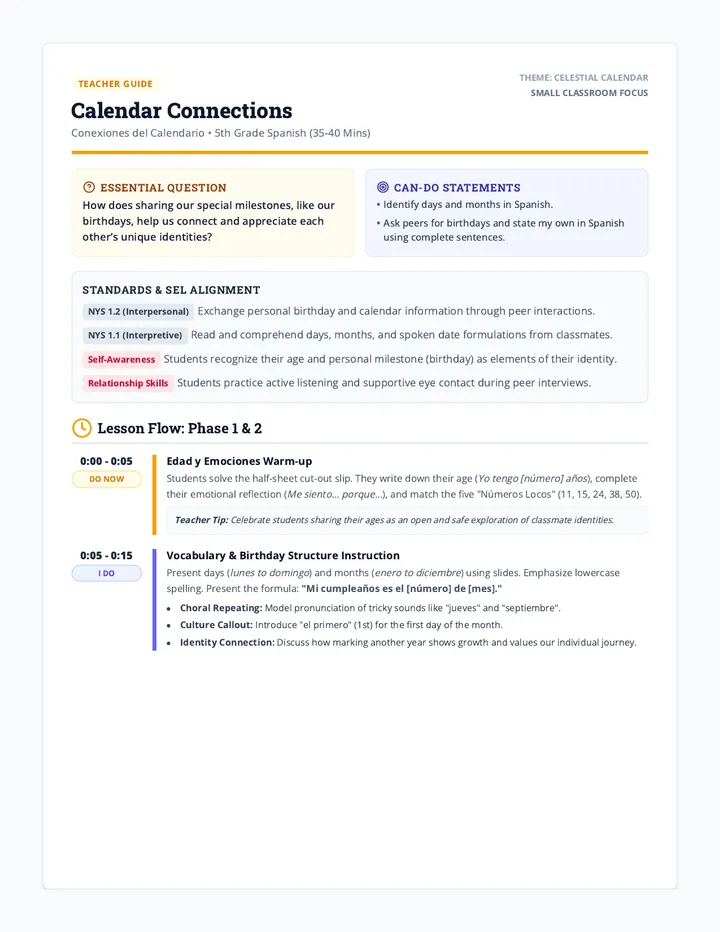
A comprehensive 35-40 minute Spanish lesson for 5th graders connecting days of the week, months of the year, and personal birthdays. Integrates NYS World Language Standards and SEL competencies (Self-Awareness, Relationship Skills) through structured instruction, active listening, and peer-to-peer sharing.
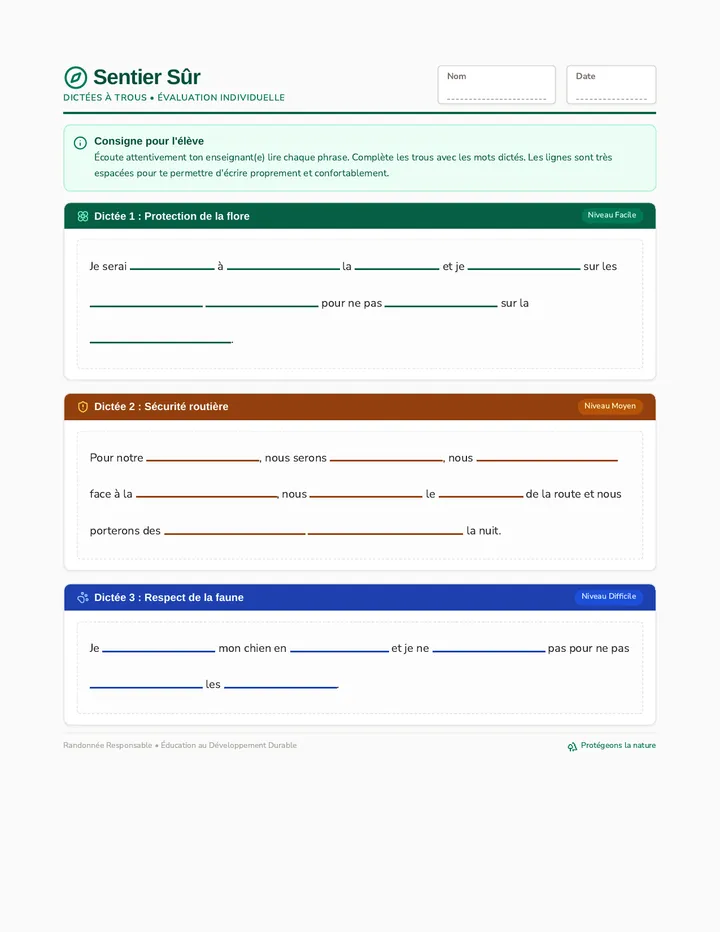
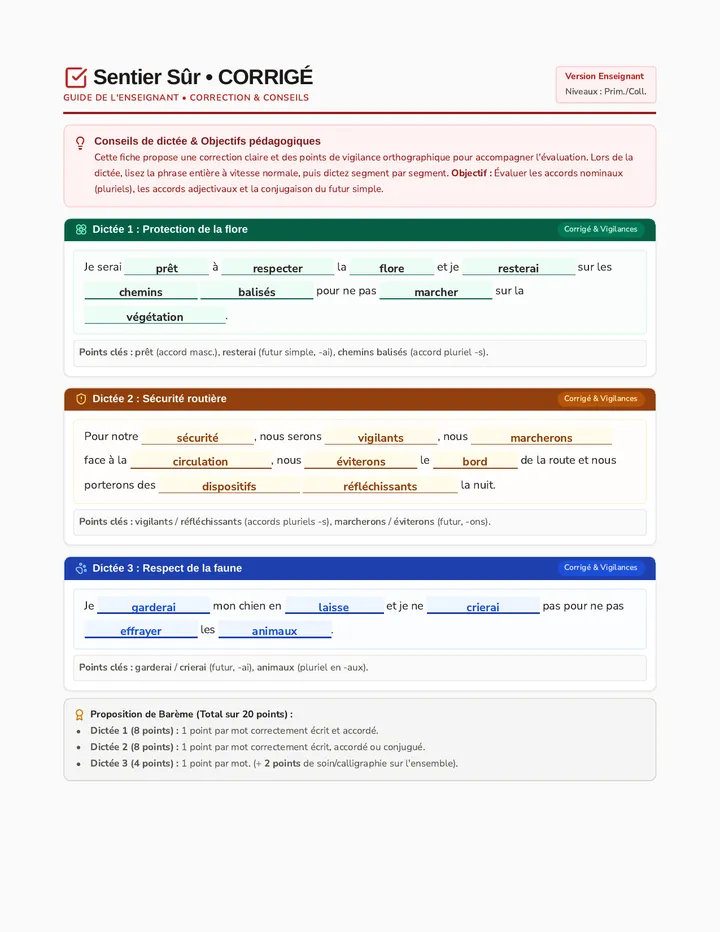
Une leçon de français et de civisme pour apprendre à respecter la nature et les règles de sécurité lors d'une randonnée à travers trois dictées à trous thématiques.
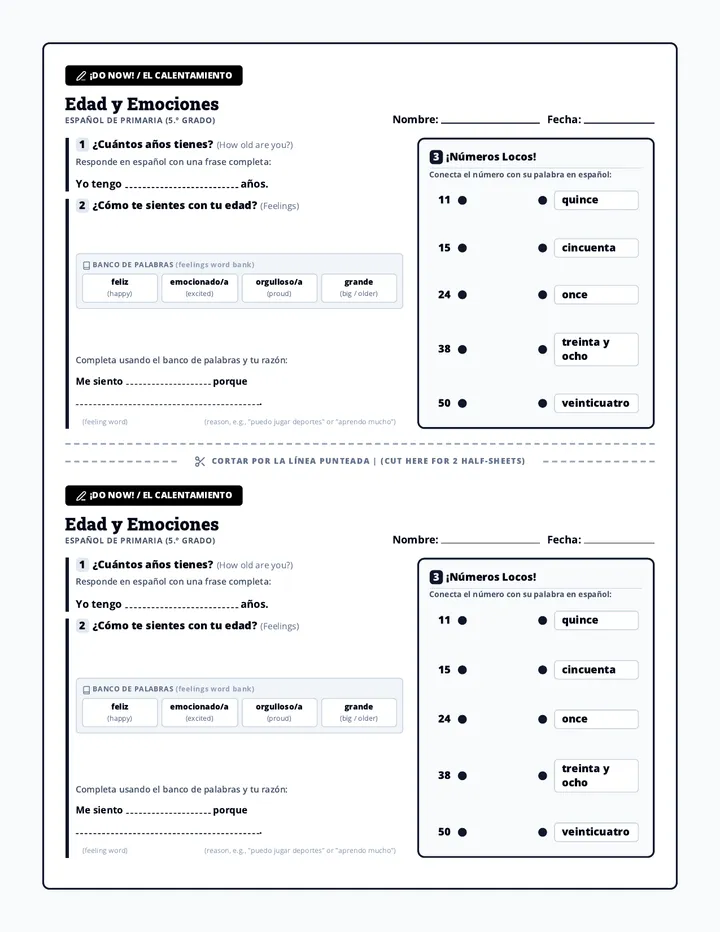
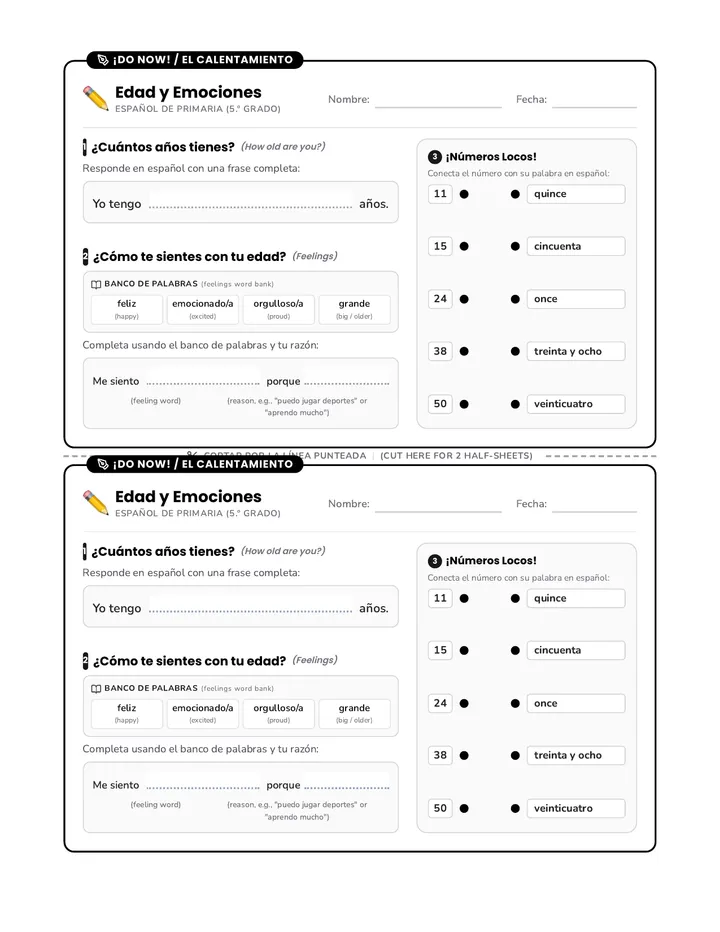
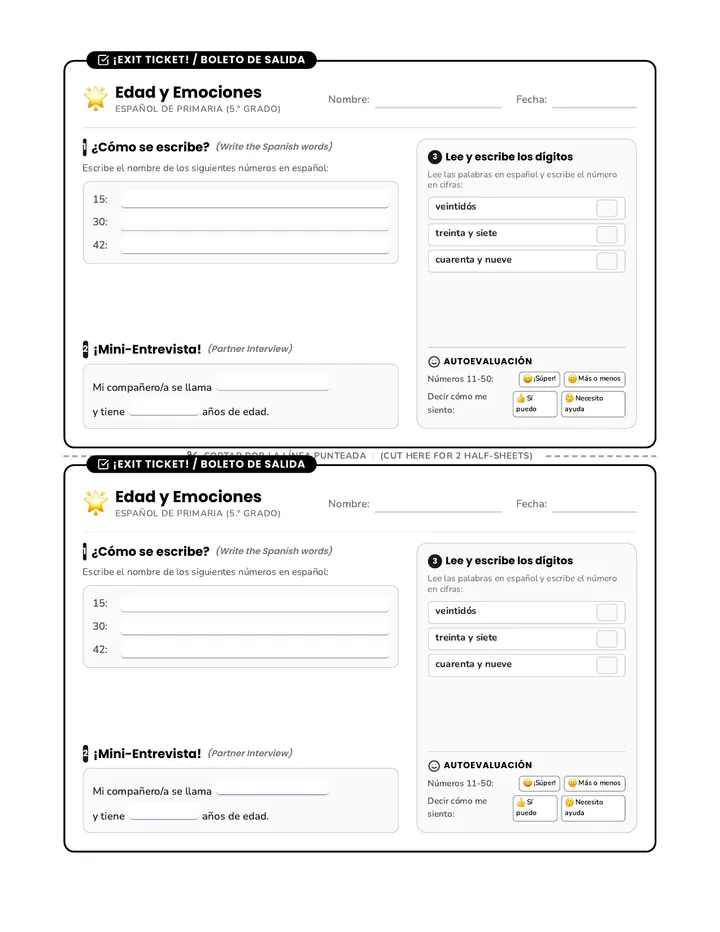
A interactive introductory Spanish lesson for 5th graders to practice asking and answering age, matching numbers 11-50, and expressing feelings about their age.
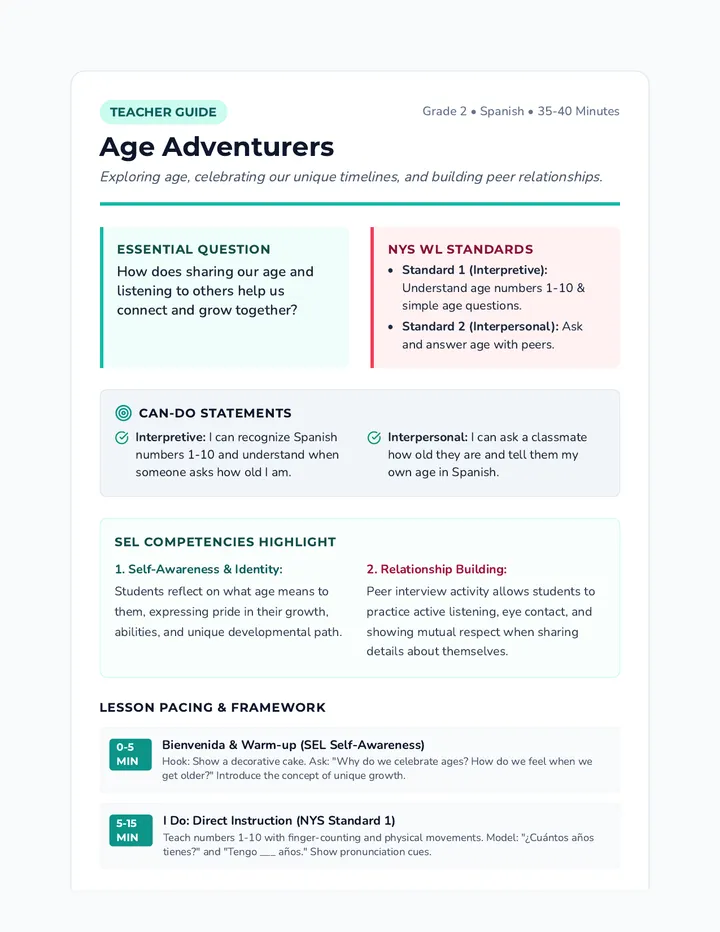
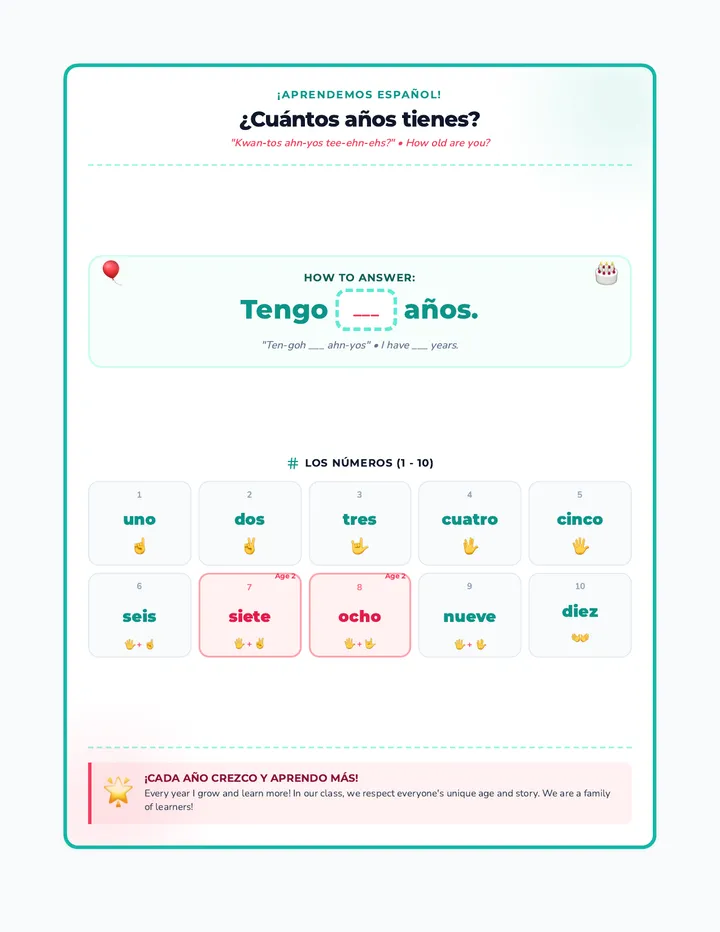
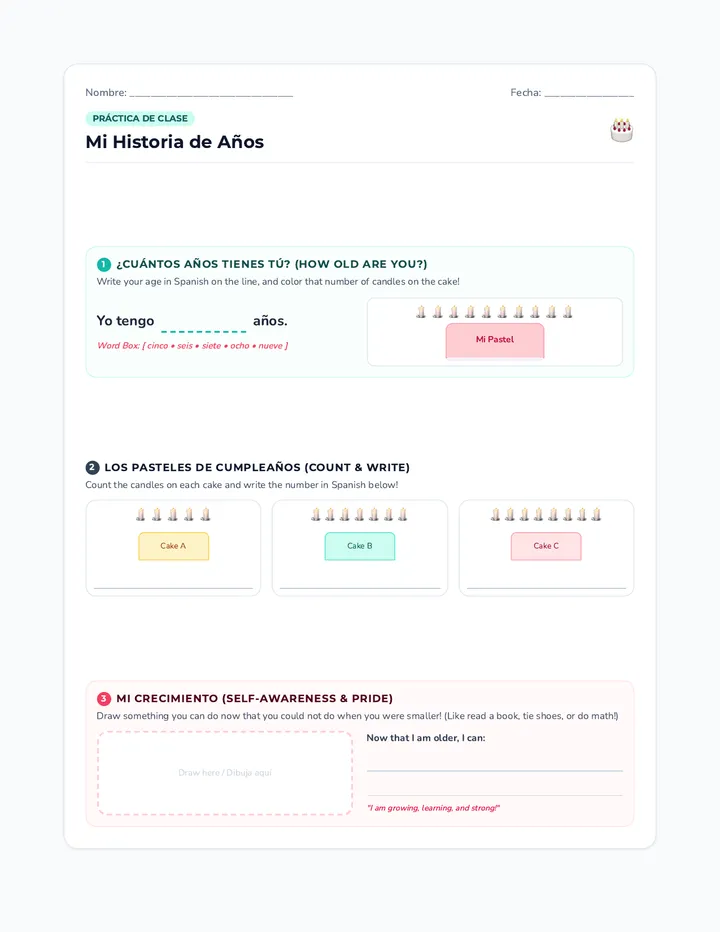
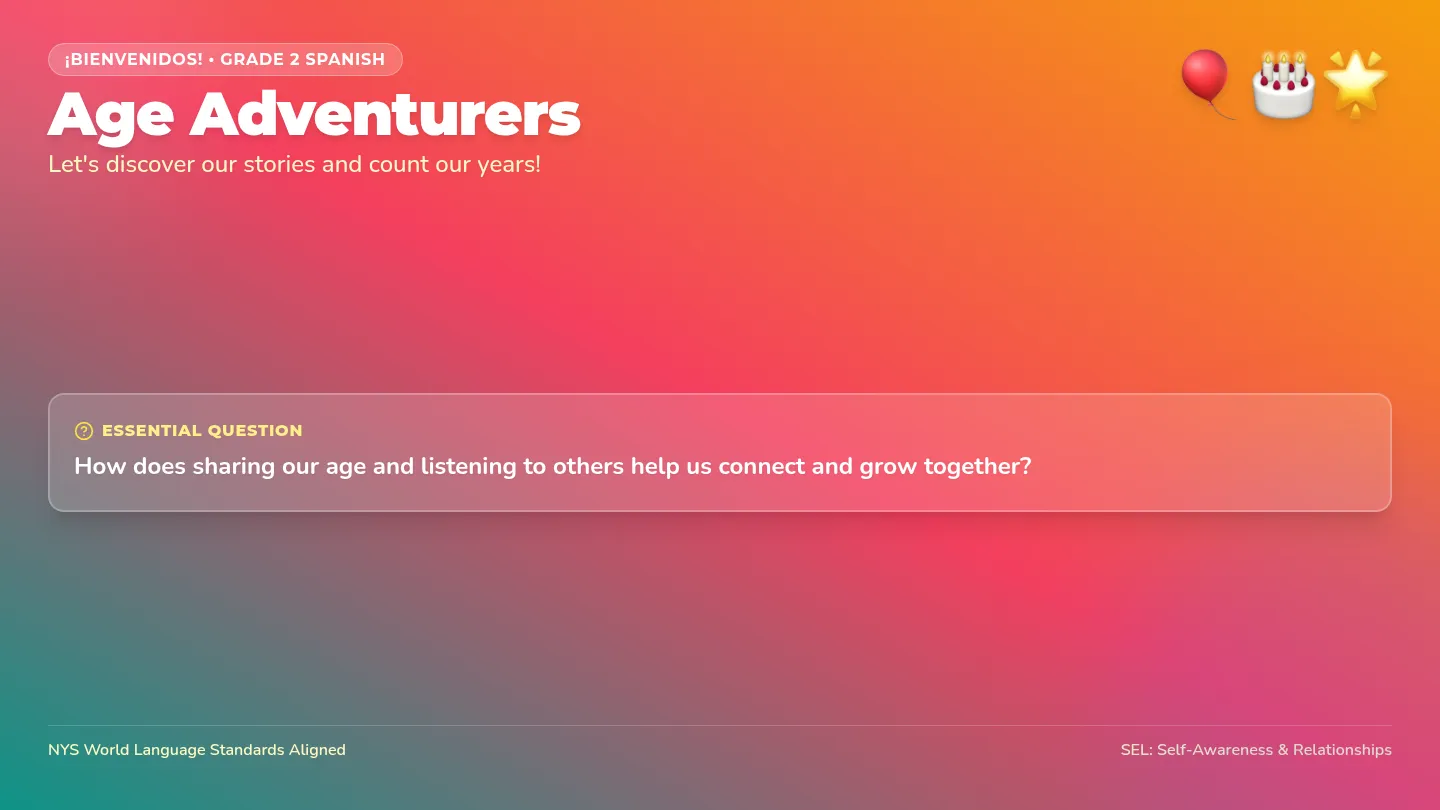
A Spanish lesson for 2nd graders to learn asking and telling age, integrating SEL self-awareness and relationship-building. Follows the I Do, We Do, You Do framework with NYS World Language Standards and Can-Do statements.
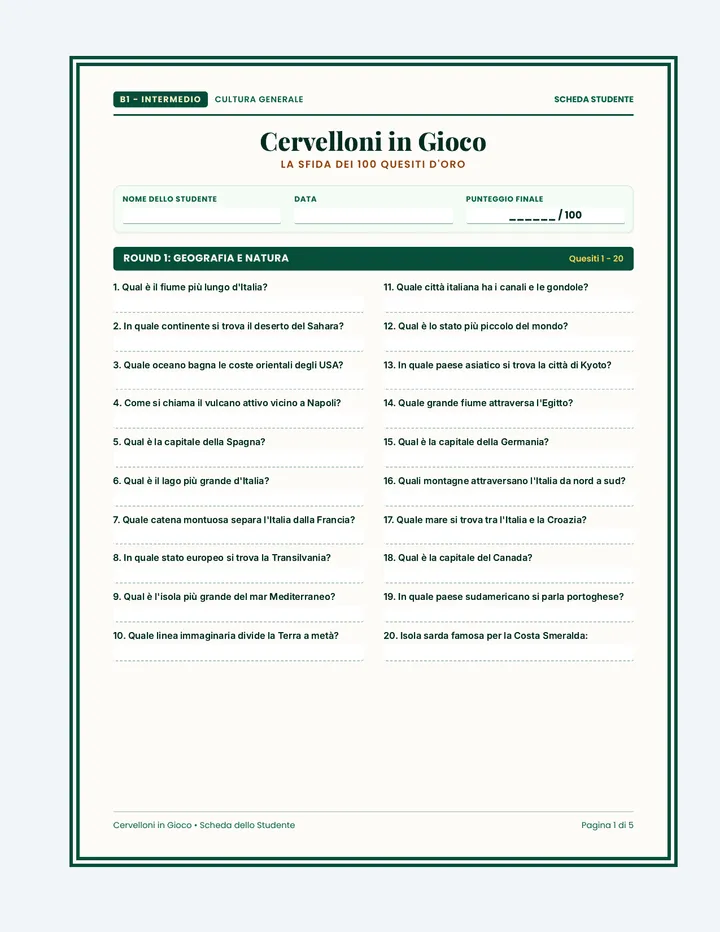
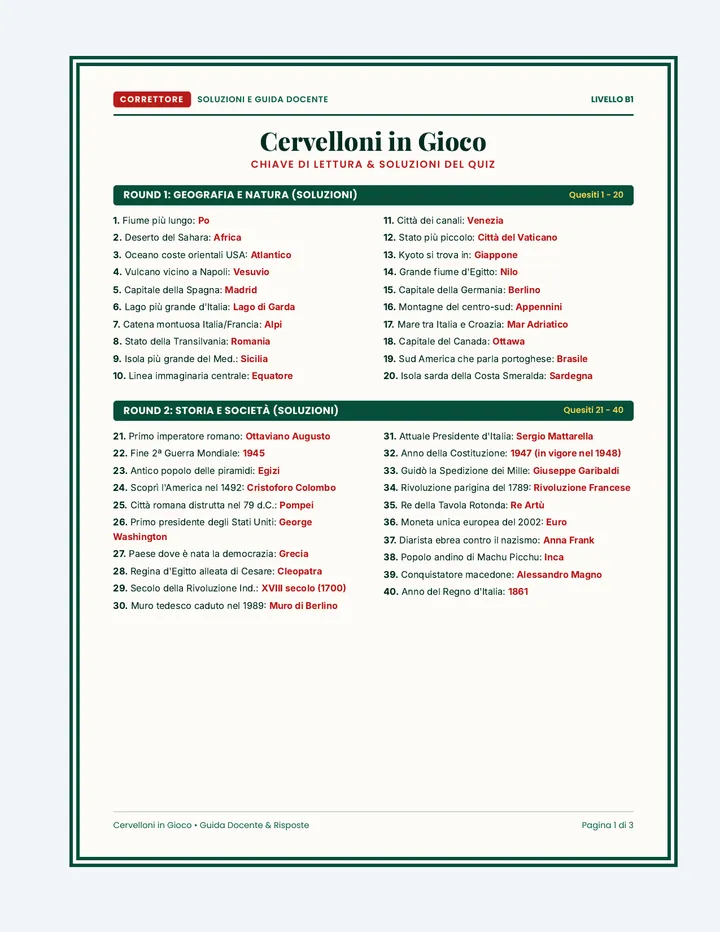
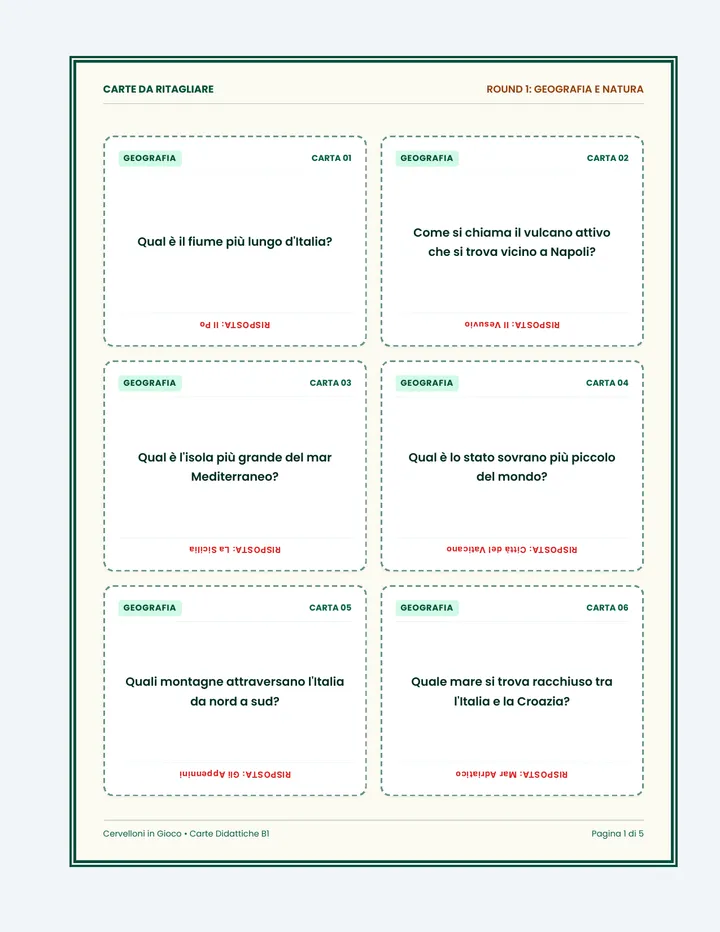
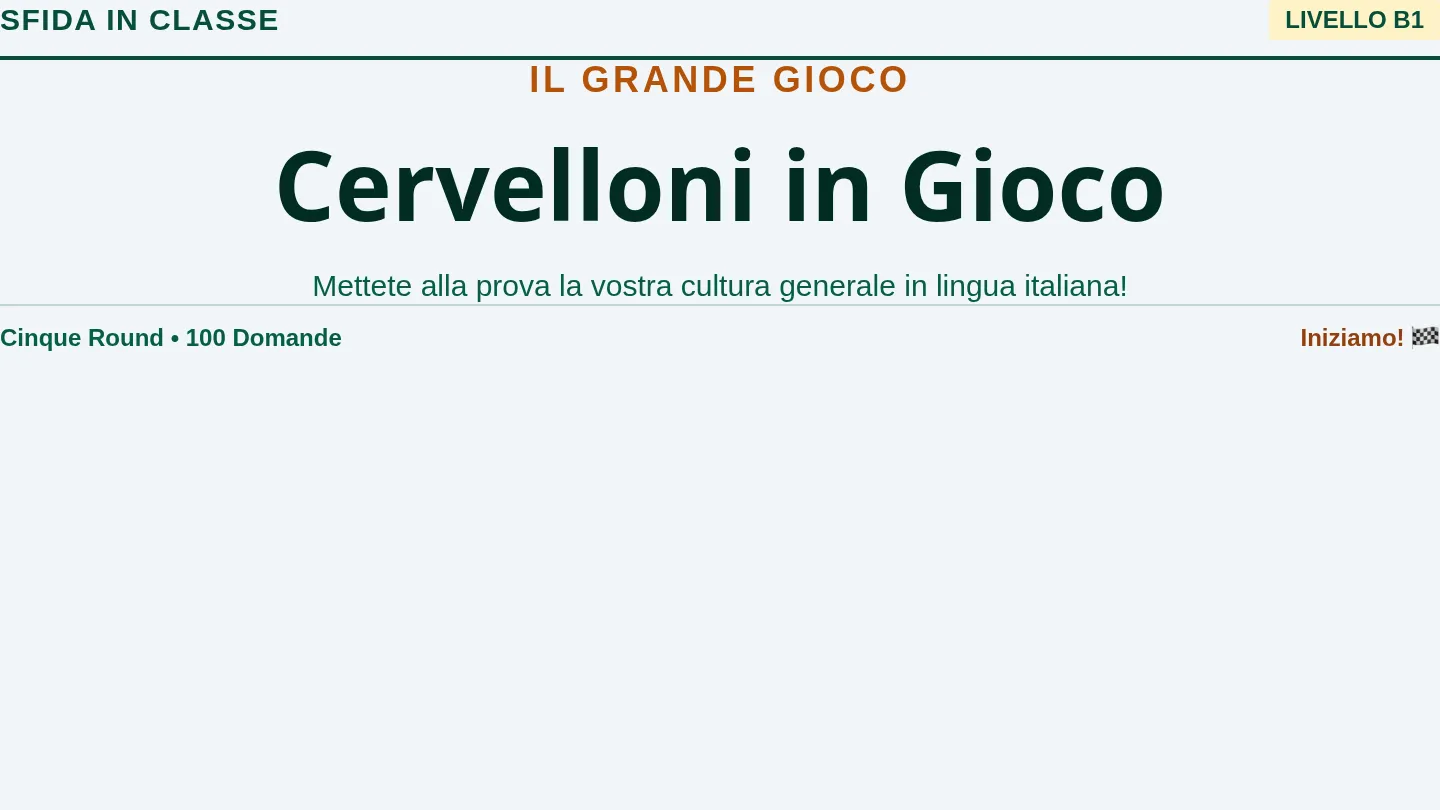
Un'entusiasmante sfida di cultura generale in lingua italiana per studenti di livello B1. Include un quiz di 100 domande con foglio risposte, carte da ritagliare e una presentazione interattiva per la classe.
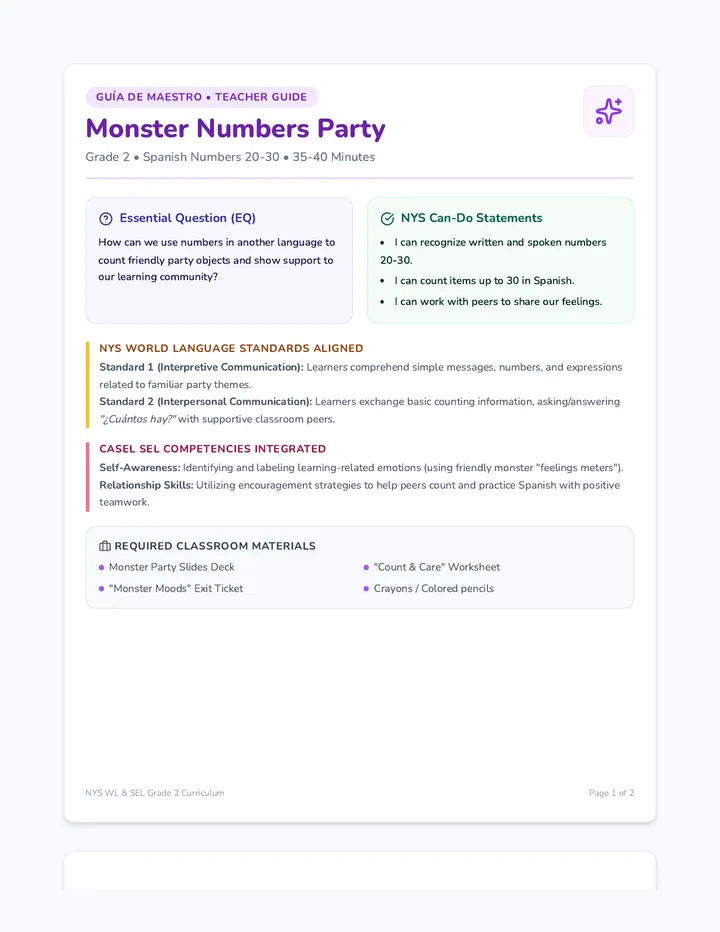
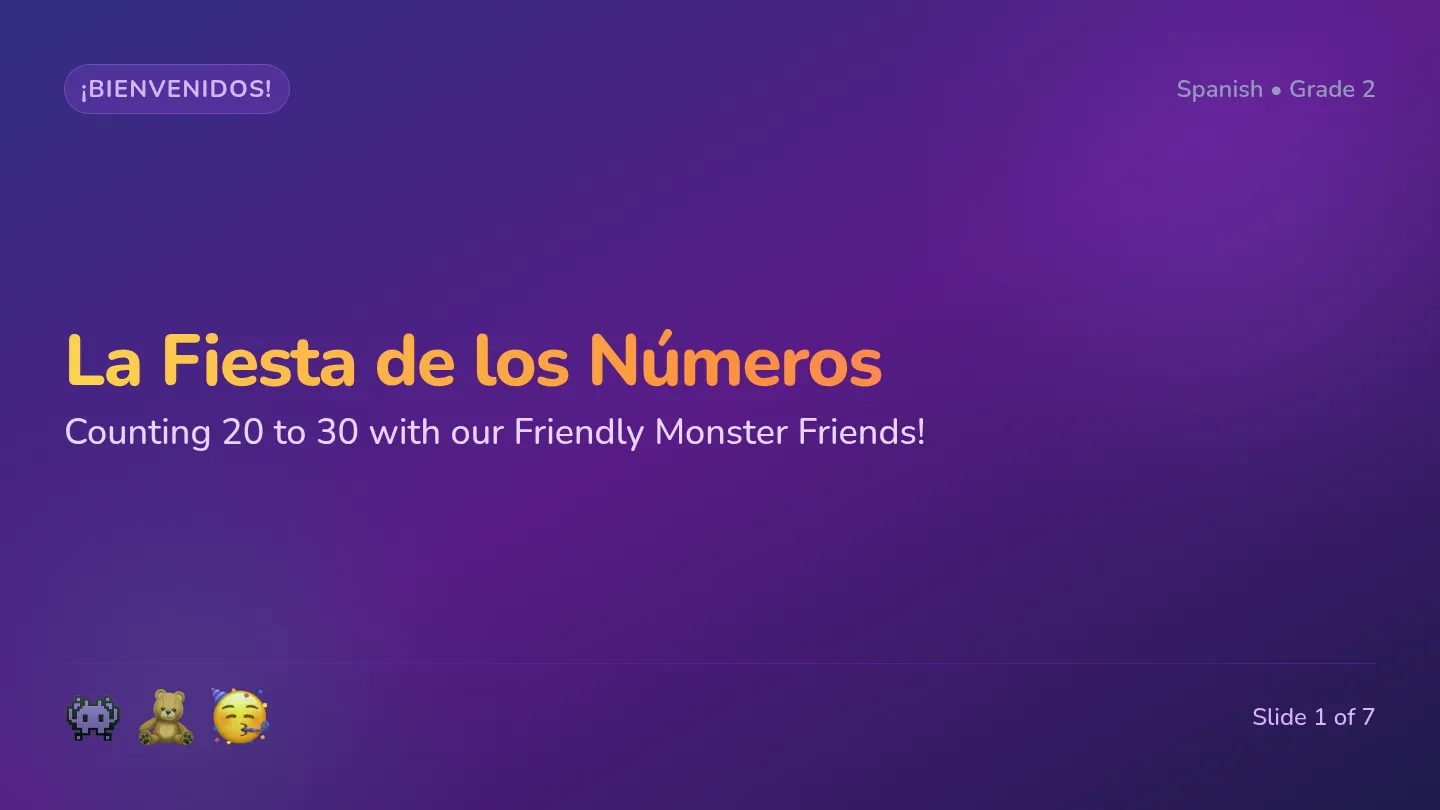
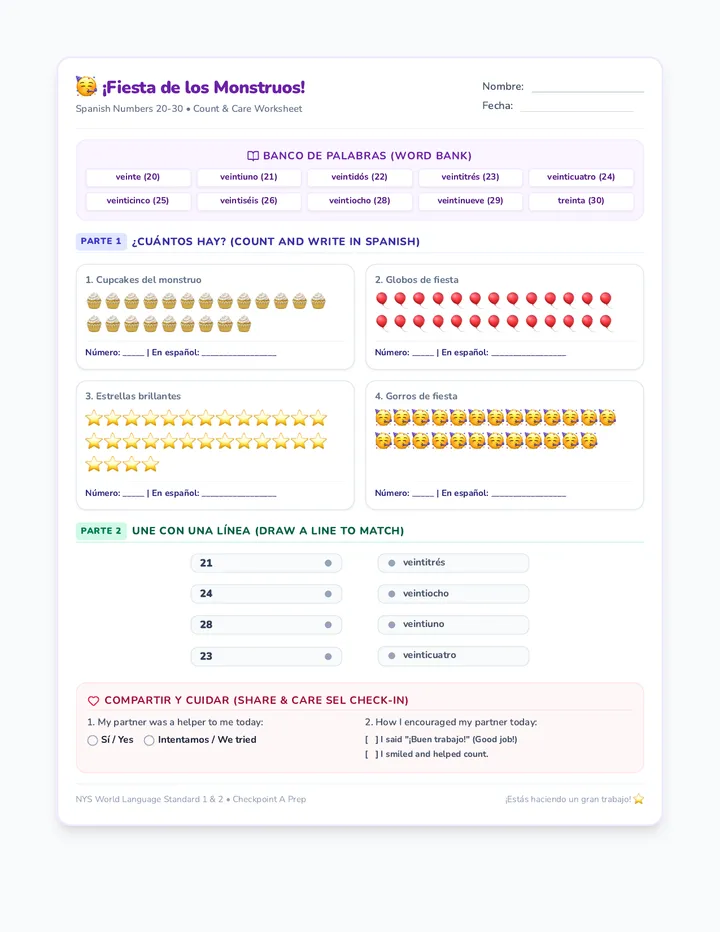
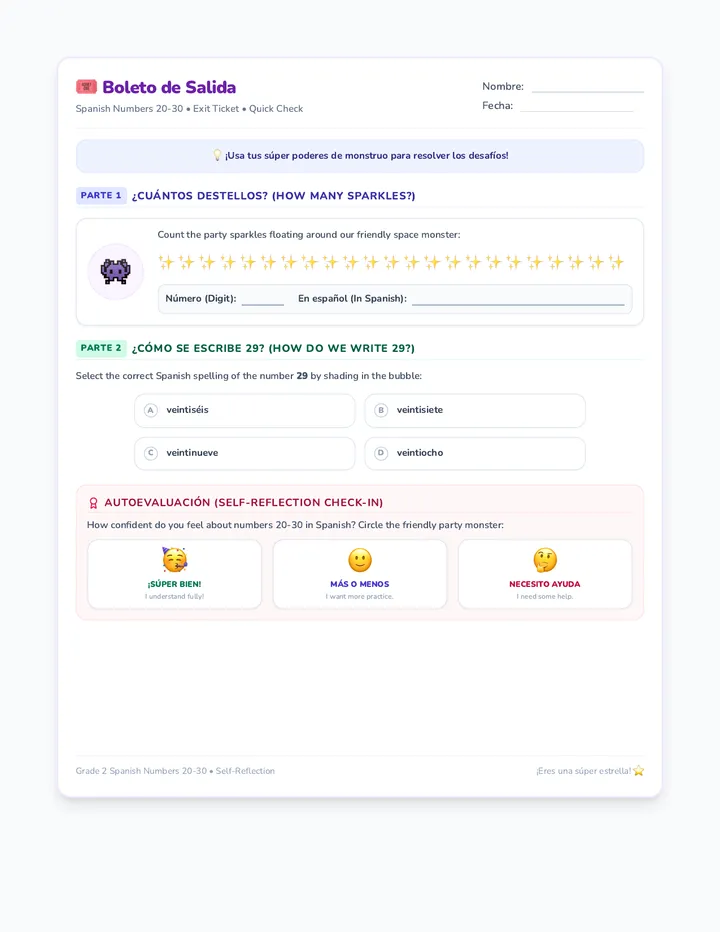
An engaging 35-40 minute Spanish lesson for 2nd grade focusing on numbers 20-30. Aligned with NYS World Language Standards and incorporating CASEL Social-Emotional Learning competencies through a friendly 'Monster Party' theme and the gradual release of responsibility (I Do, We Do, You Do) framework.
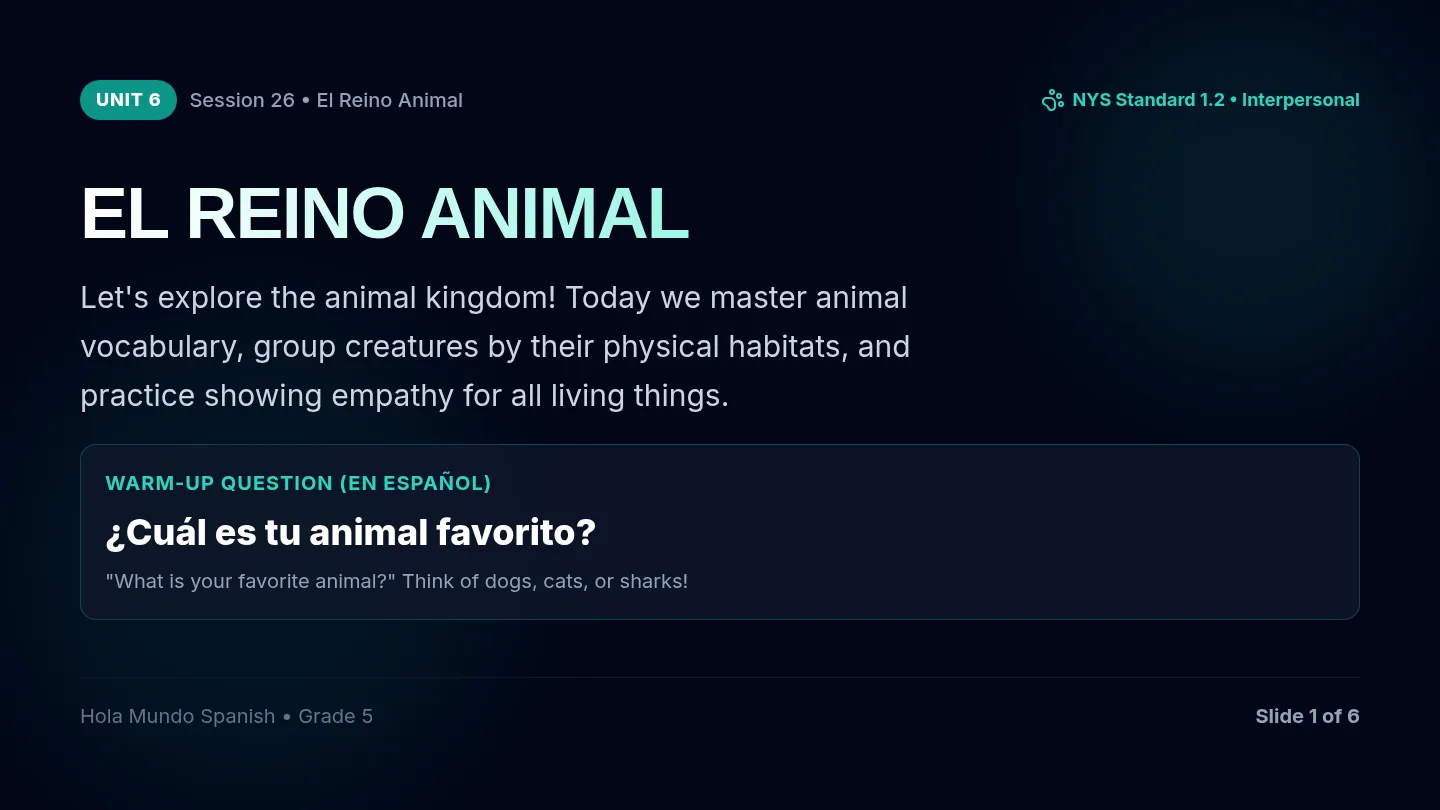
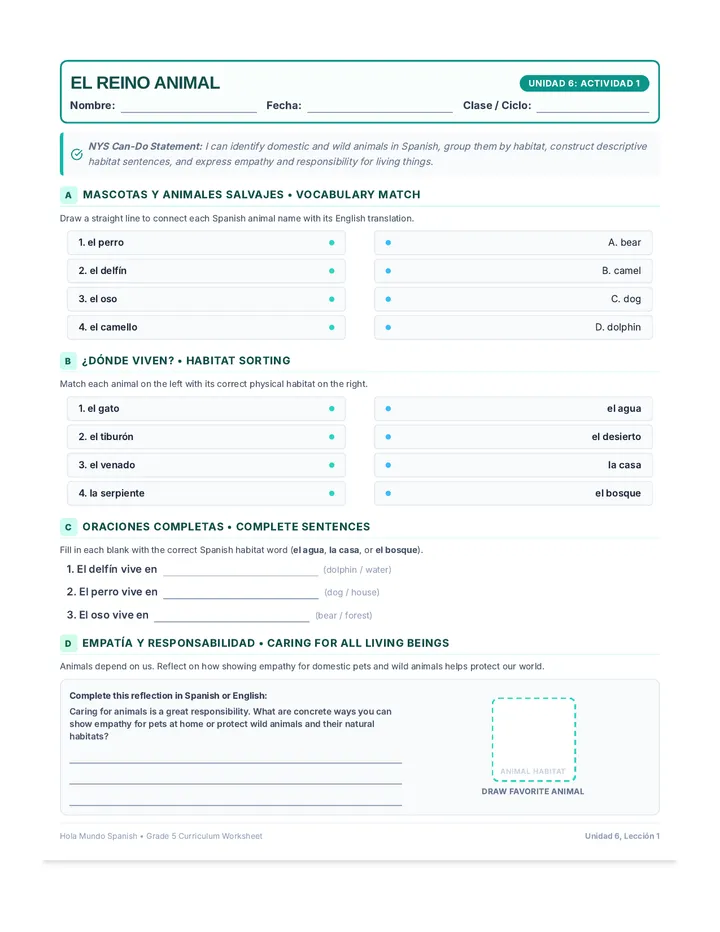
Unit 6 kickoff lesson materials targeting animal vocabulary, classifications by habitat (water, forest, desert, domestic), and animal welfare, with integrated Social Awareness & Empathy (SEL).
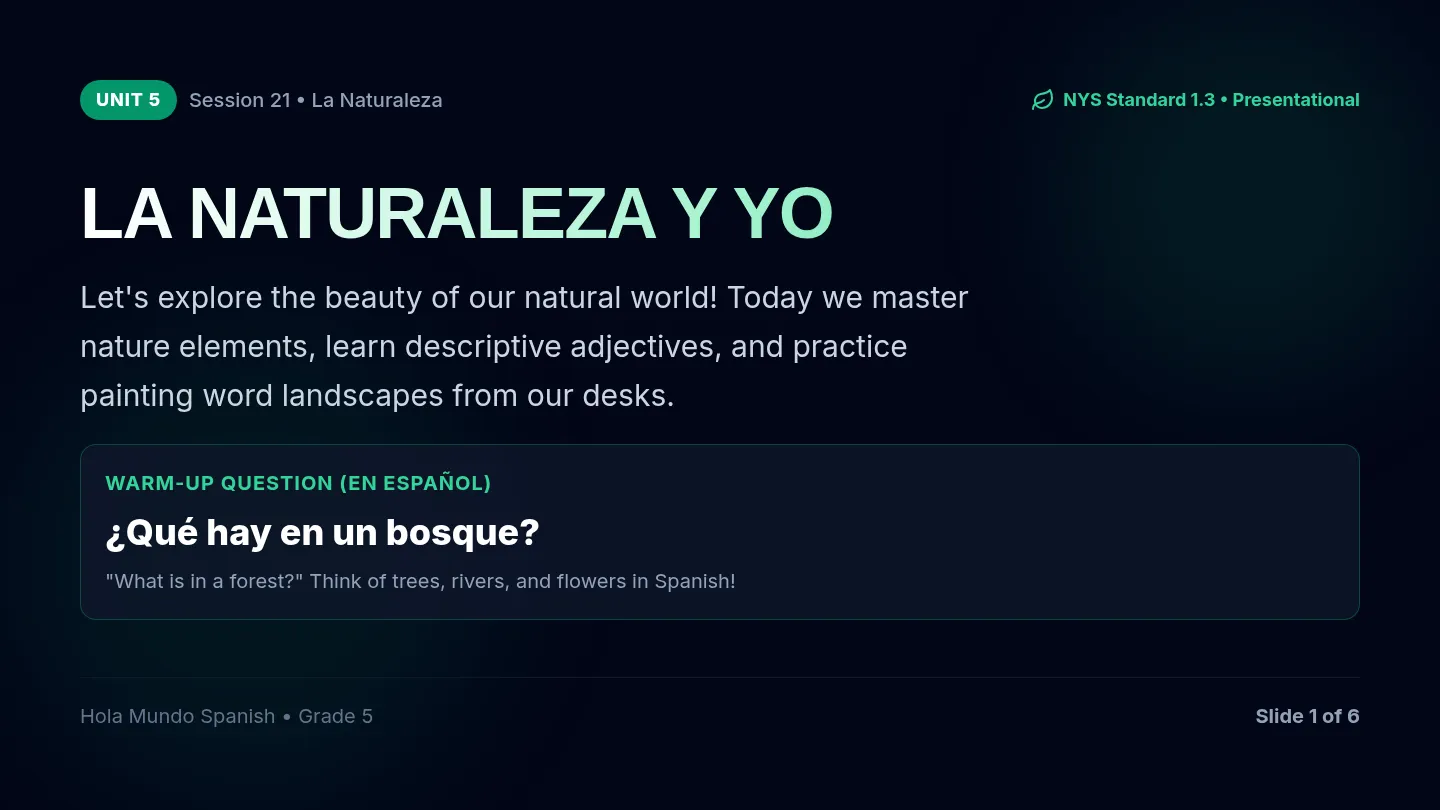
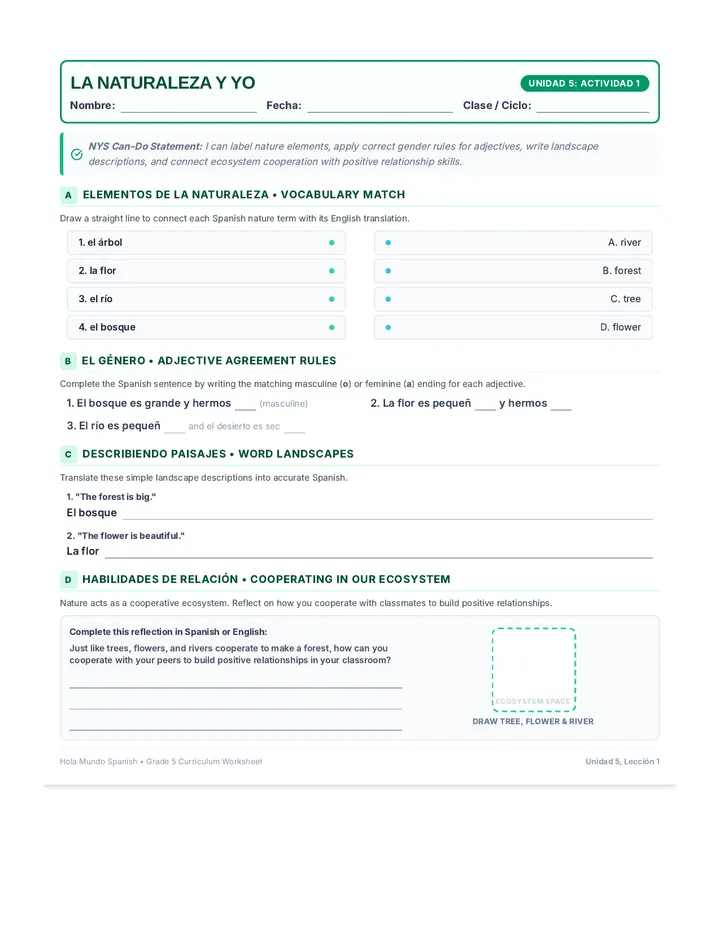
Unit 5 kickoff lesson materials targeting nature elements, descriptive adjectives, and landscapes, with integrated Relationship Skills (SEL).
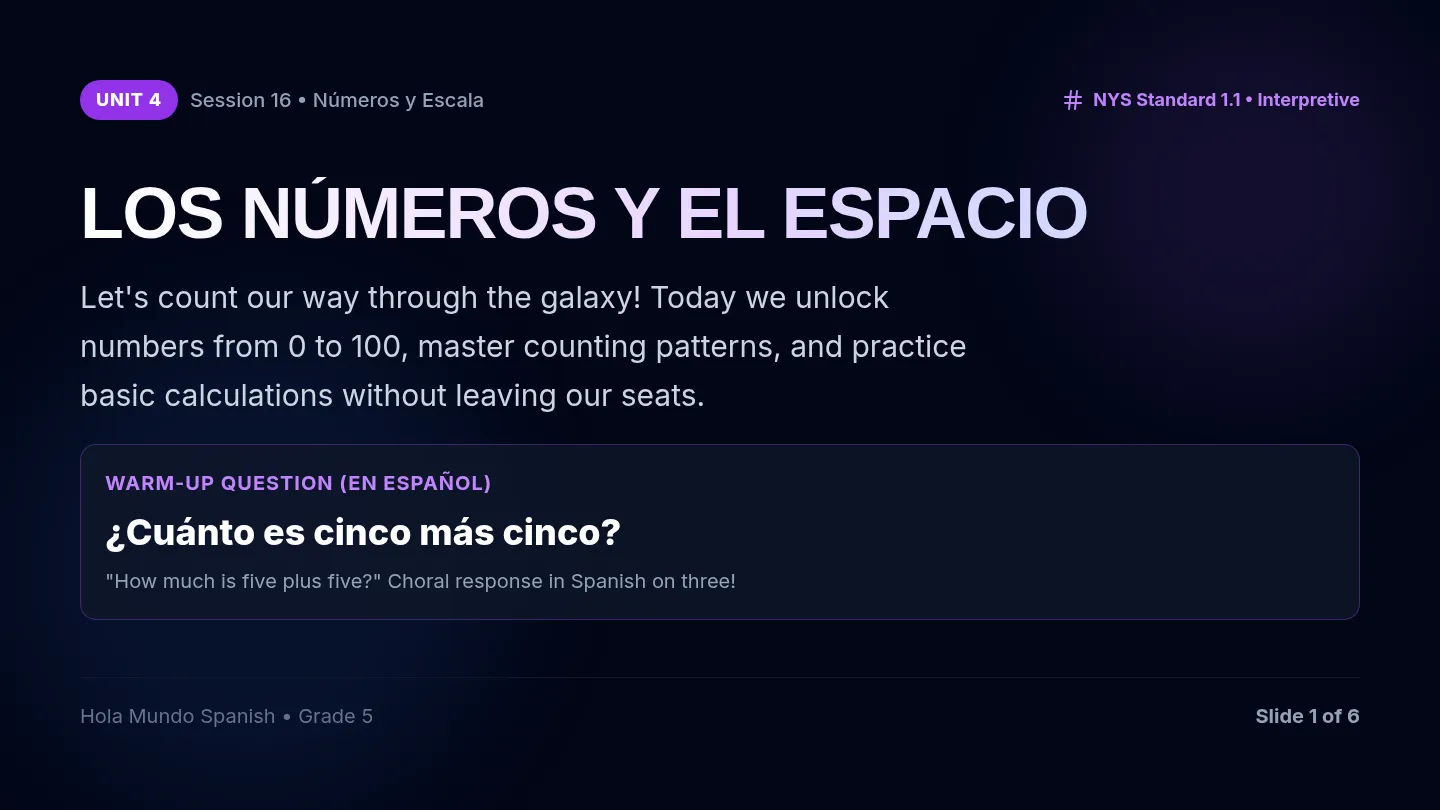
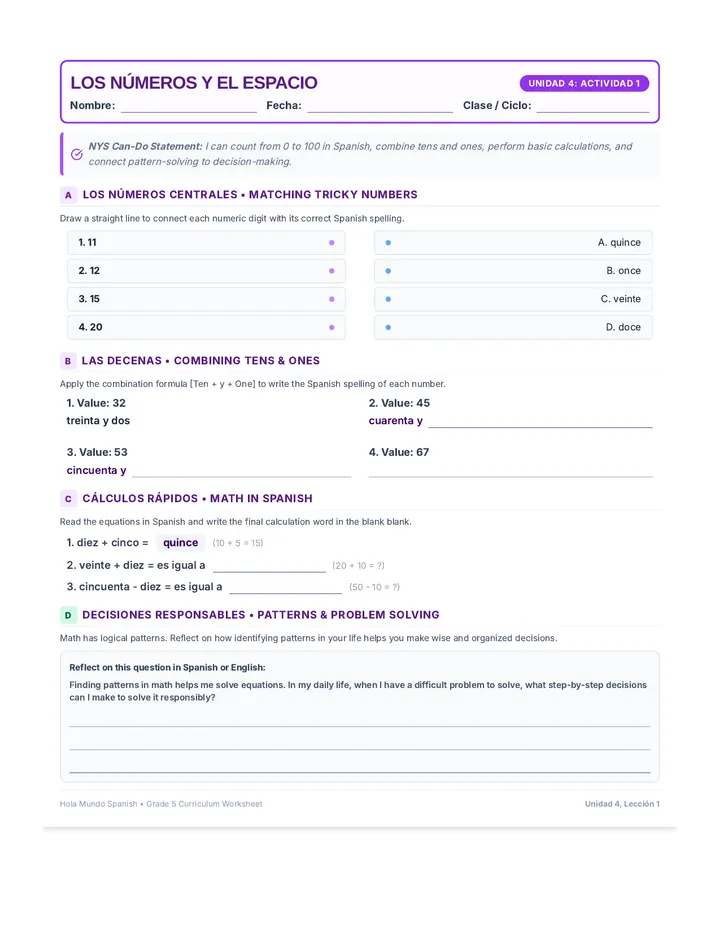
Unit 4 kickoff lesson materials targeting numbers 0 to 100, skip-counting, basic math calculations, and quantity mapping, with integrated Responsible Decision-Making (SEL).
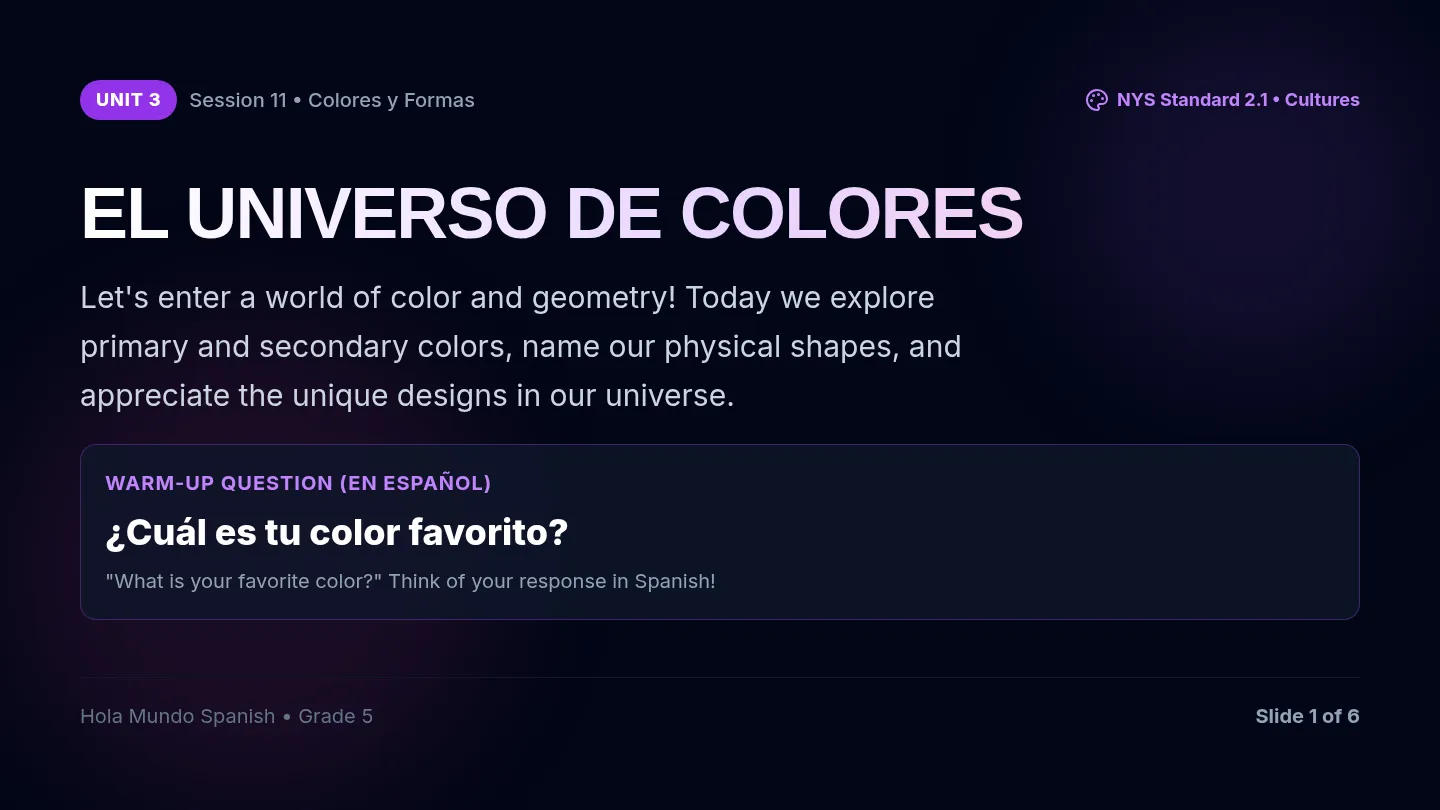
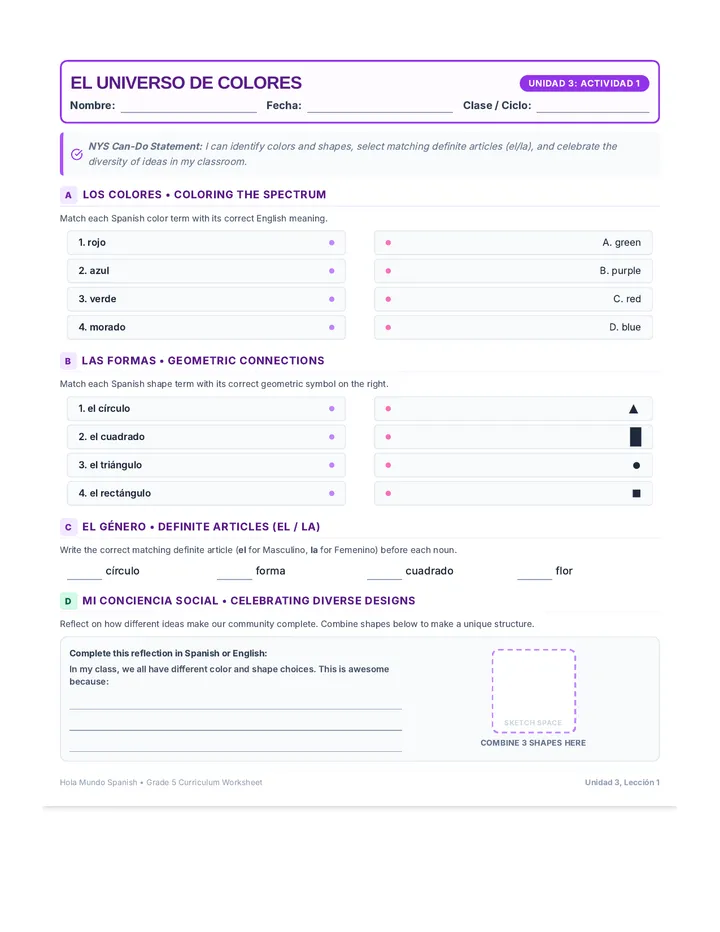
Unit 3 kickoff lesson materials targeting primary and secondary colors, shapes, gender agreement, and definite/indefinite articles, with integrated Social Awareness (SEL).
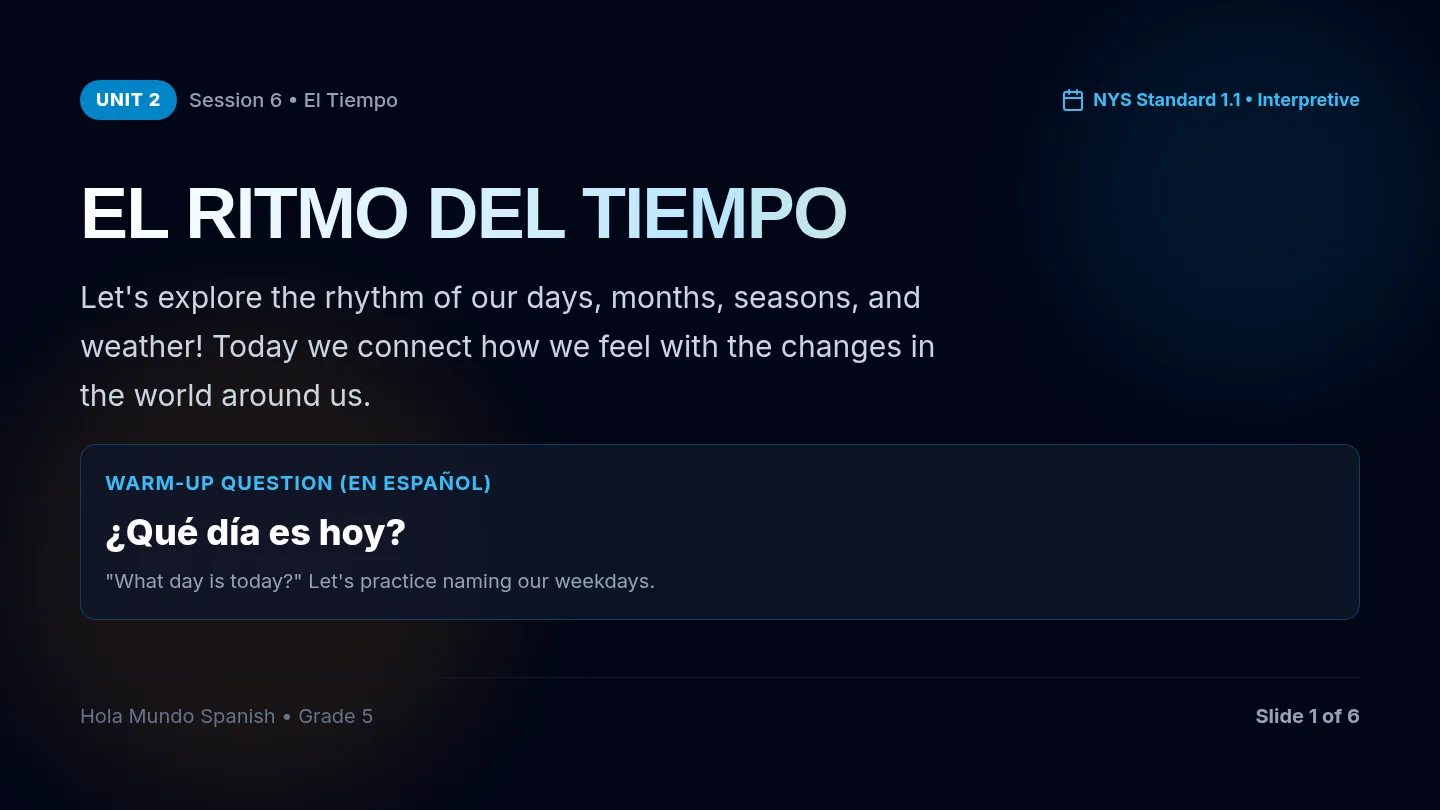
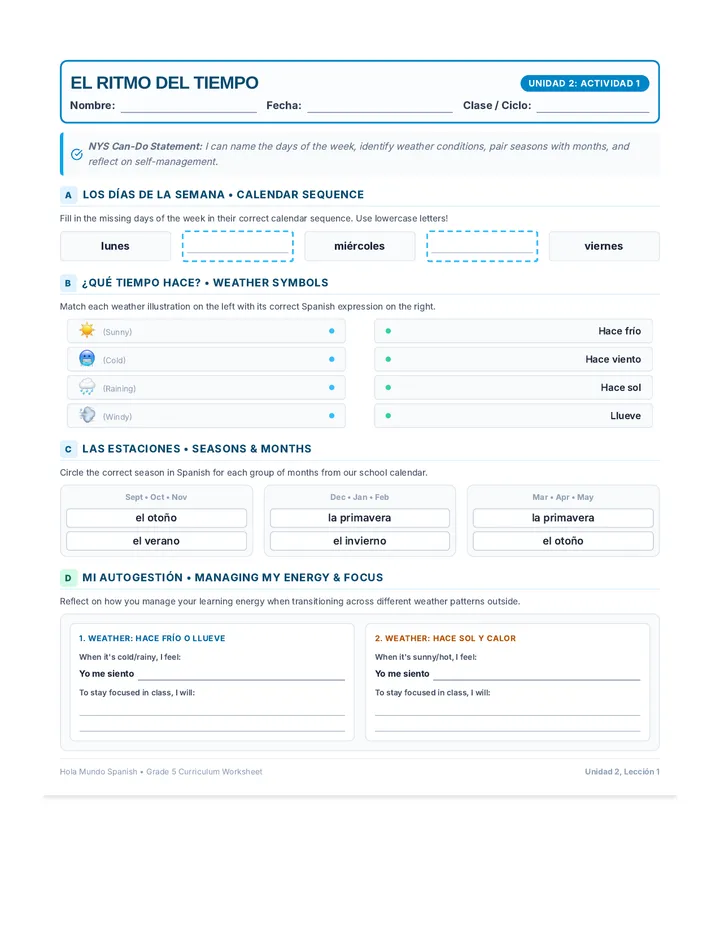
Unit 2 lesson materials targeting days of the week, months, seasons, and weather expressions, with calendar connections to the school year and integrated self-management (SEL).
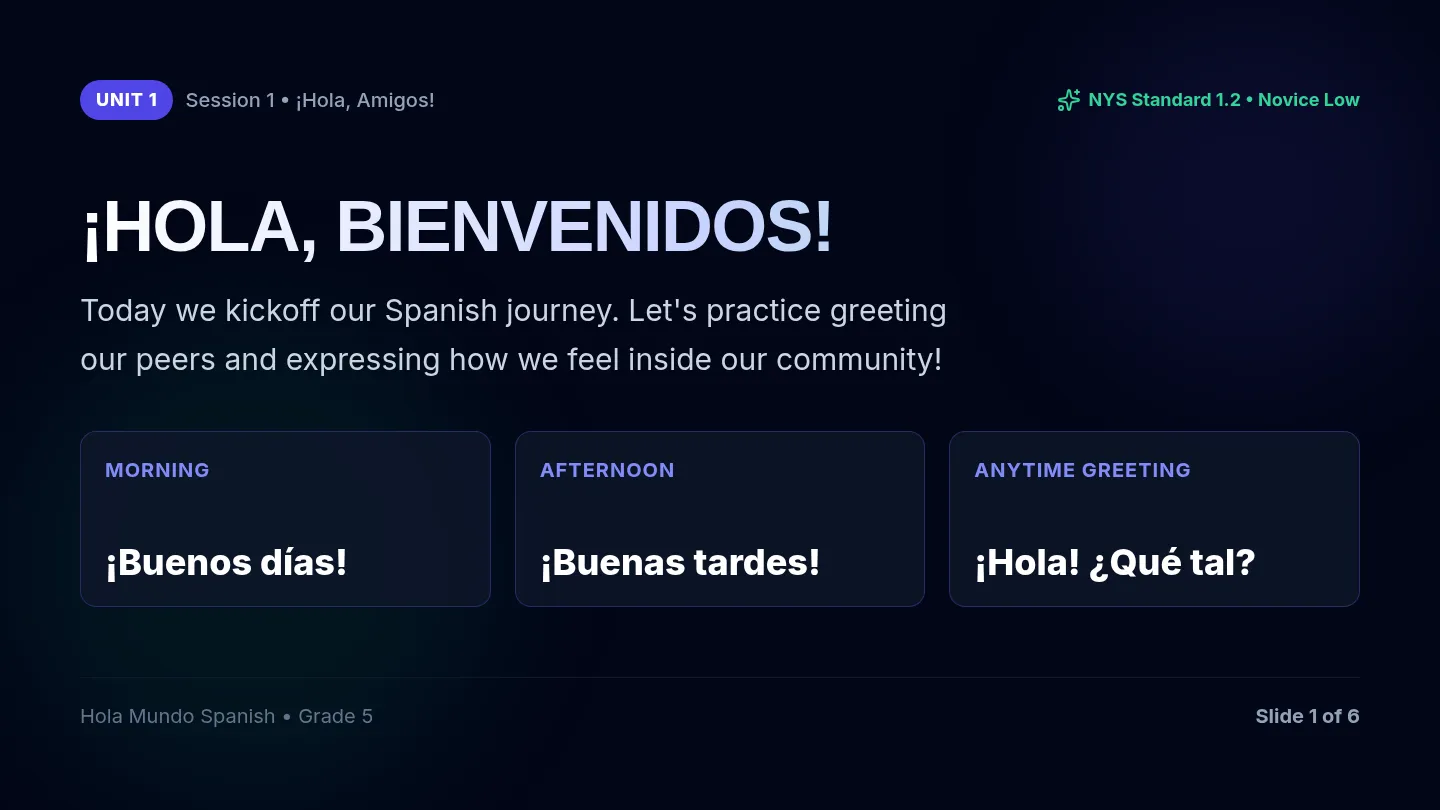
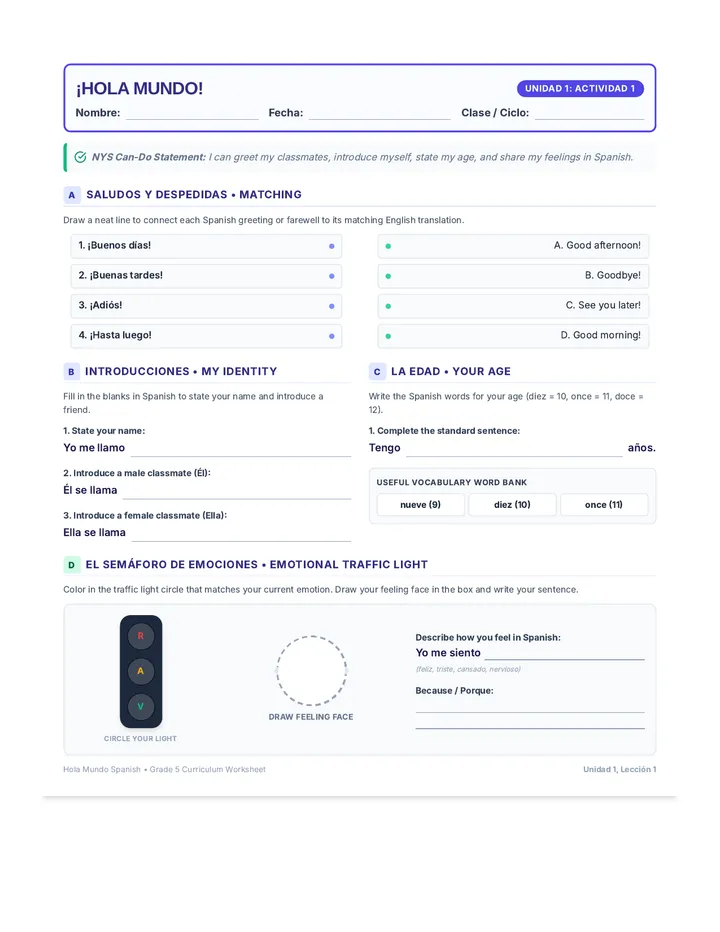
Unit 1 kickoff lesson materials targeting basic greetings, introductions, pronouns, age, and feelings with integrated SEL self-checks for small spaces.
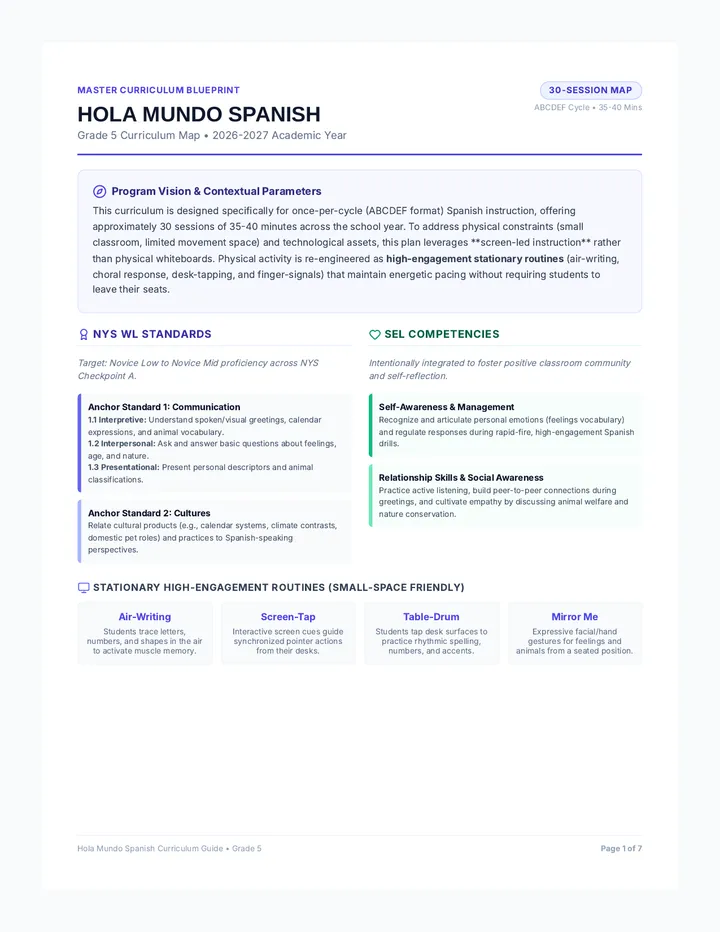
The master curriculum map and pacing guide spanning 30 sessions of 5th-grade Spanish, mapping NYS Standards, SEL competencies, and screen-optimized classroom strategies.
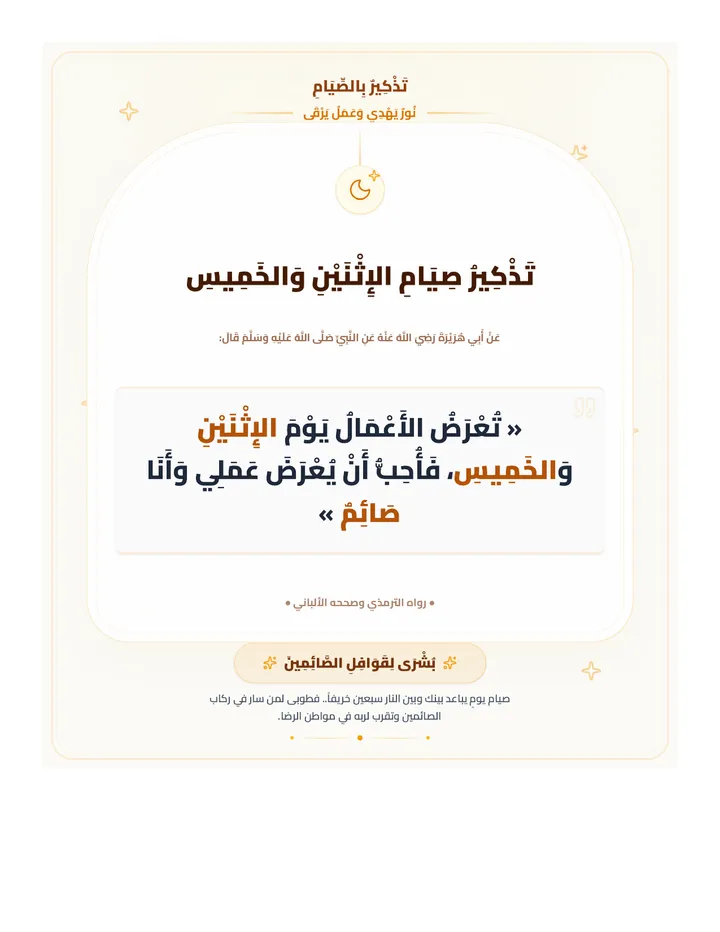
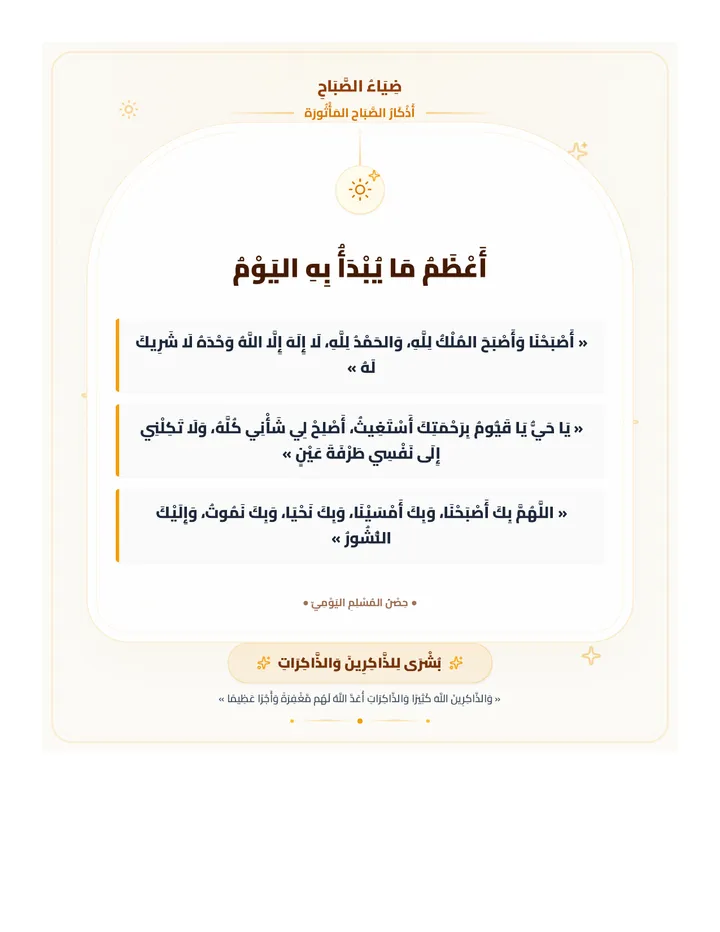
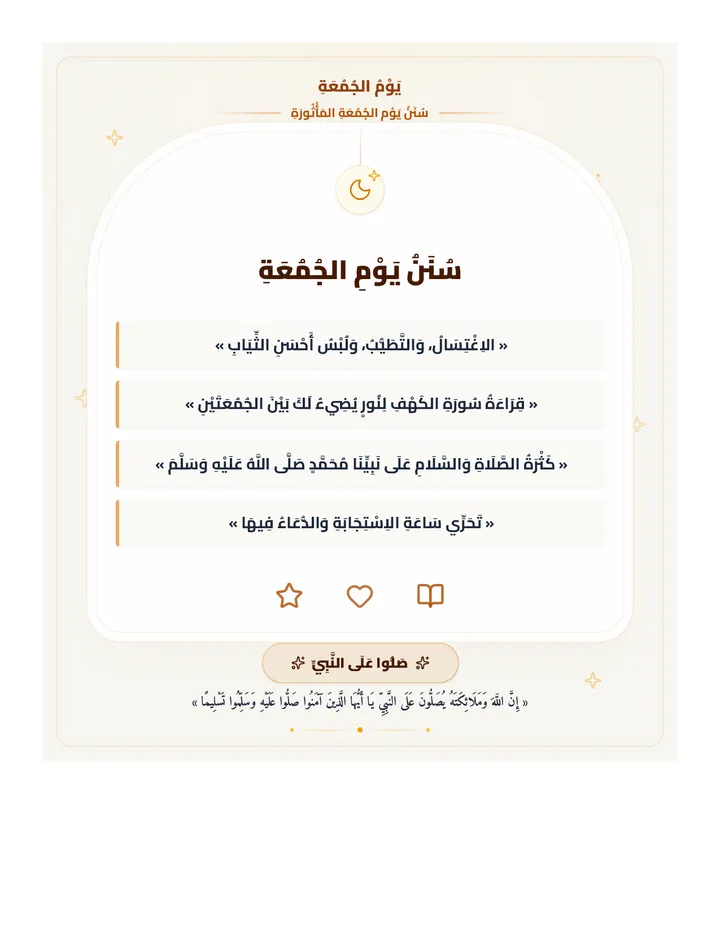
A premium, cohesive collection of beautifully designed spiritual and religious reminders for daily, weekly, and seasonal practices, featuring high-contrast connected Arabic typography, elegant arches, and glowing celestial themes.
A highly focused, 20-minute introductory lesson designed for young beginner English Language Learners from Syria and DR Congo, centering on belonging, kindness, and writing practice within a supportive classroom community.
A 45-minute lesson for 5th-grade novice Spanish students to explore school and sports introductions, analyze skit dialogues, and brainstorm a 1-minute podcast advertisement project.
Day 3 focuses on responsible decision-making regarding domestic and wild animal care. Students use descriptive adjectives and caring verbs in Spanish to create an action-oriented 'cuidado' (care) guide.