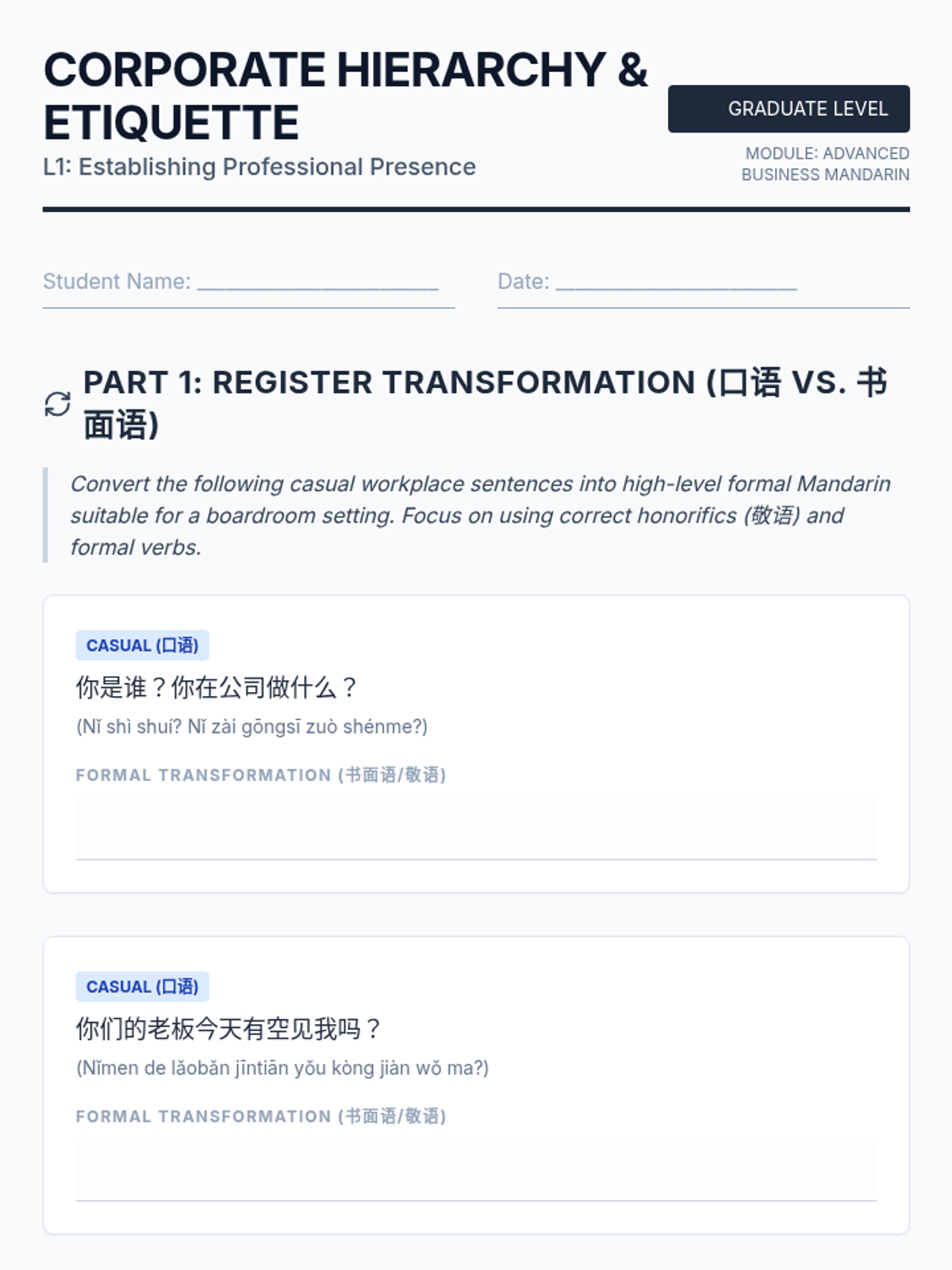
A comprehensive unit for advanced Mandarin learners focusing on the transition from colloquial speech to formal academic and bureaucratic written Chinese (Shumianyu). Students will master formal vocabulary, complex syntax, and stylistic registers.
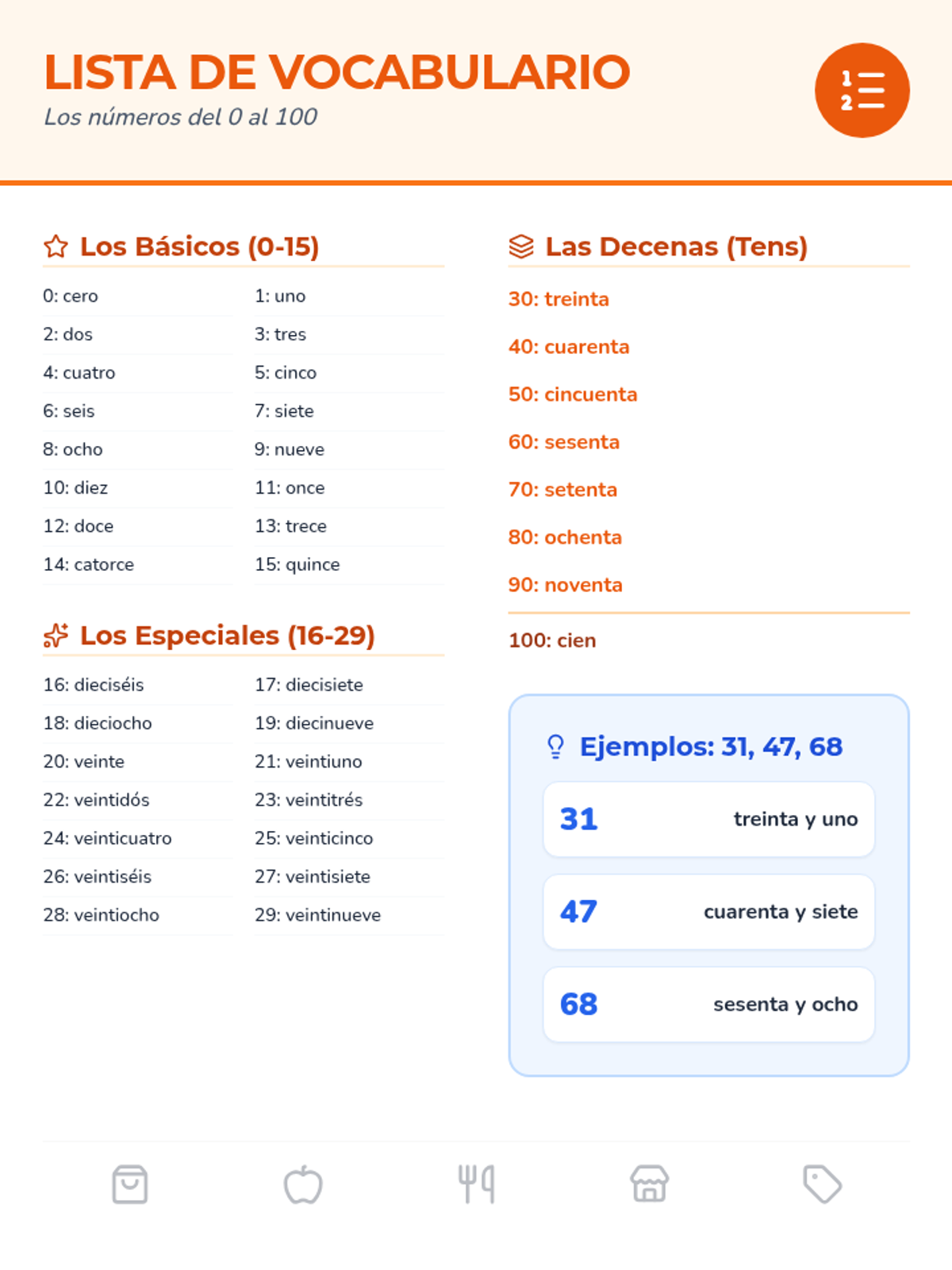
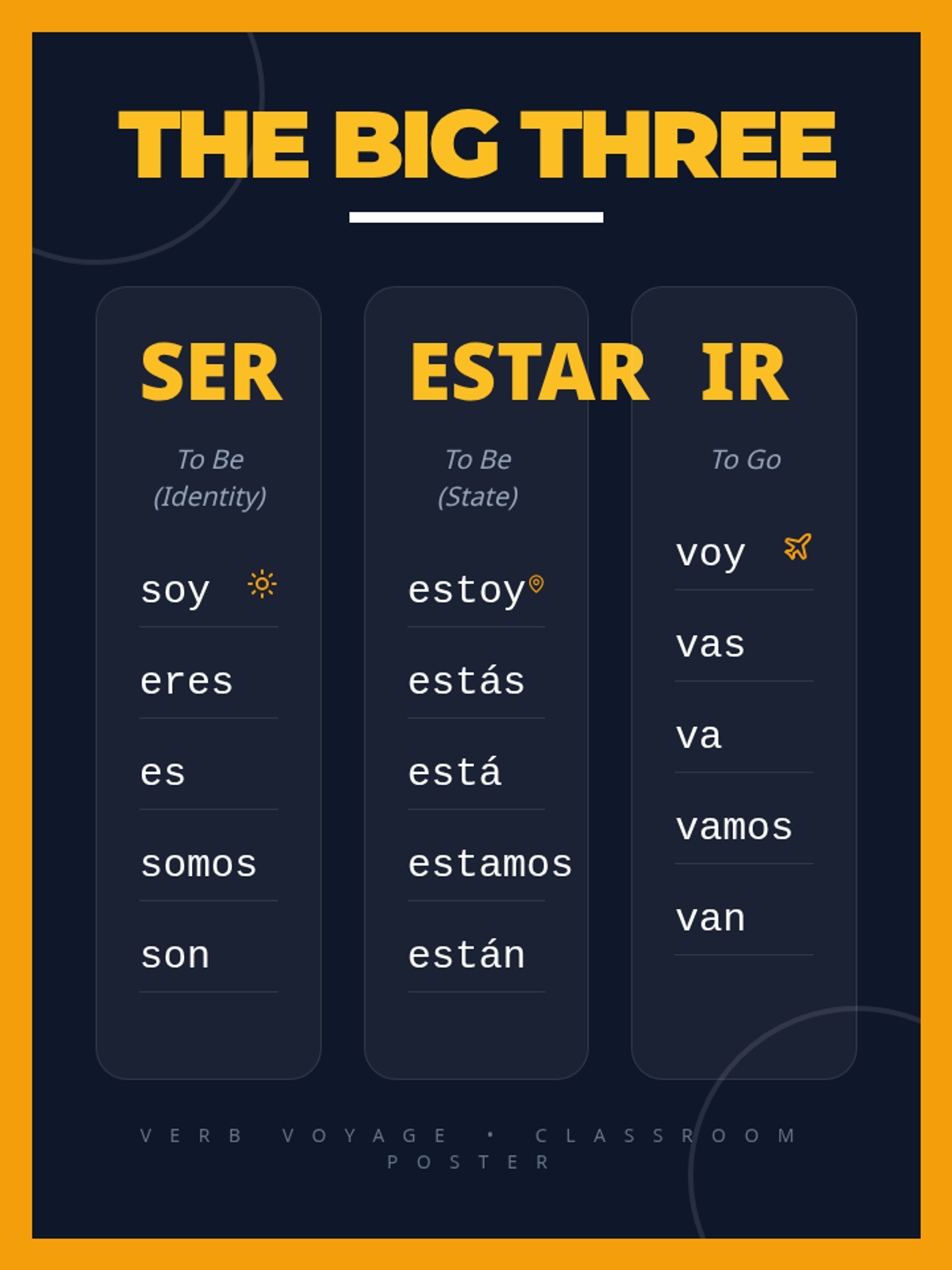
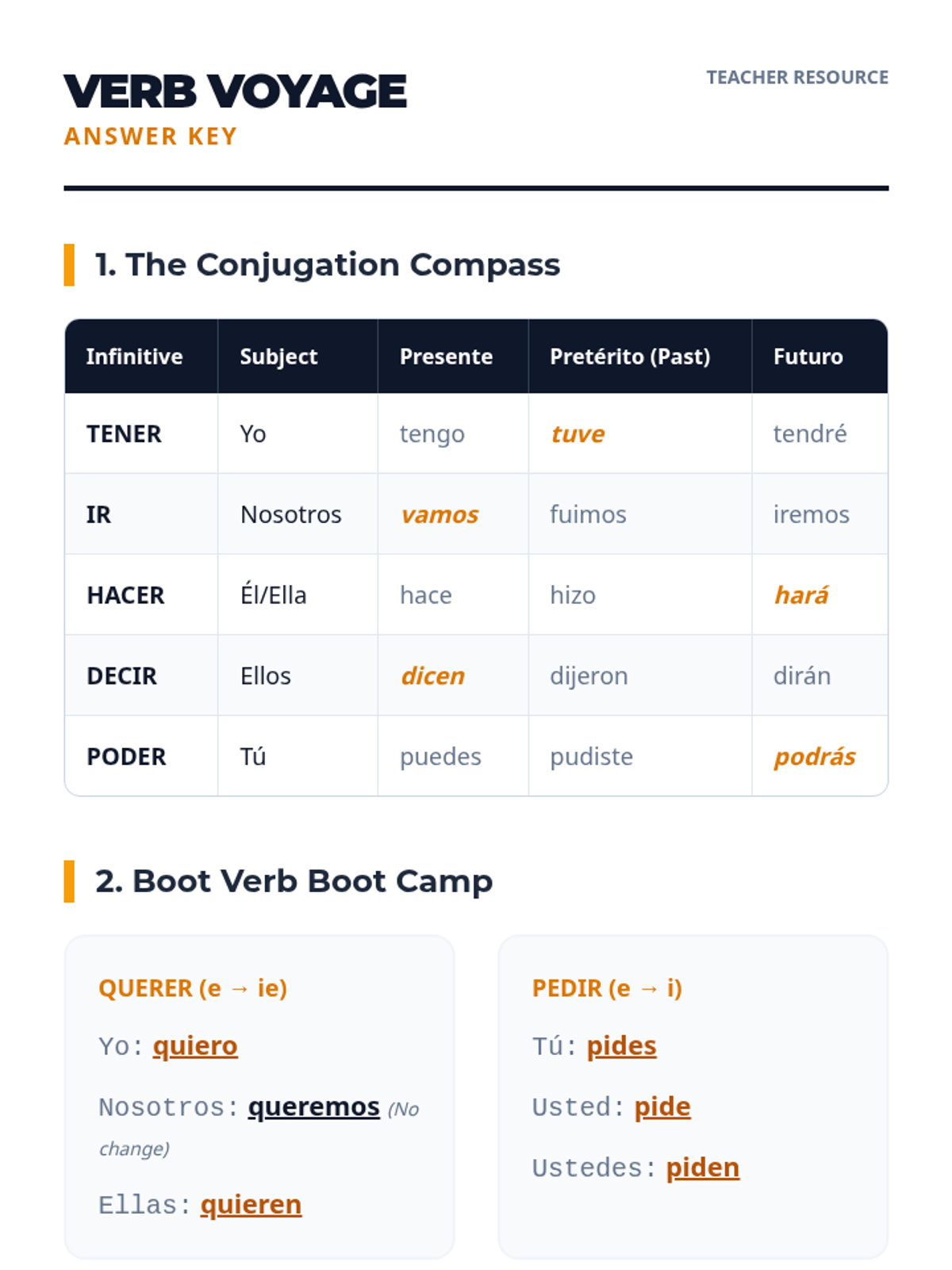
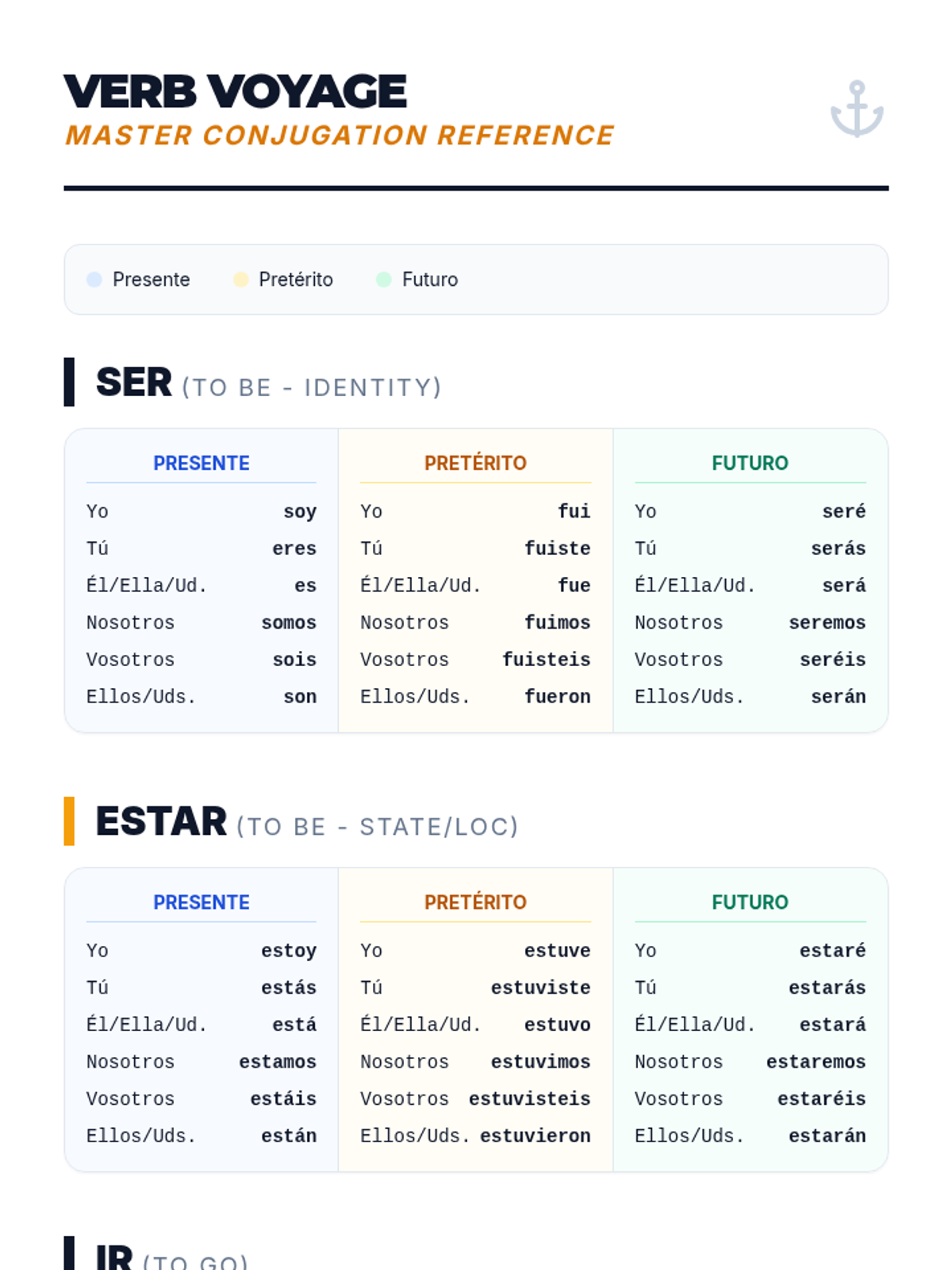
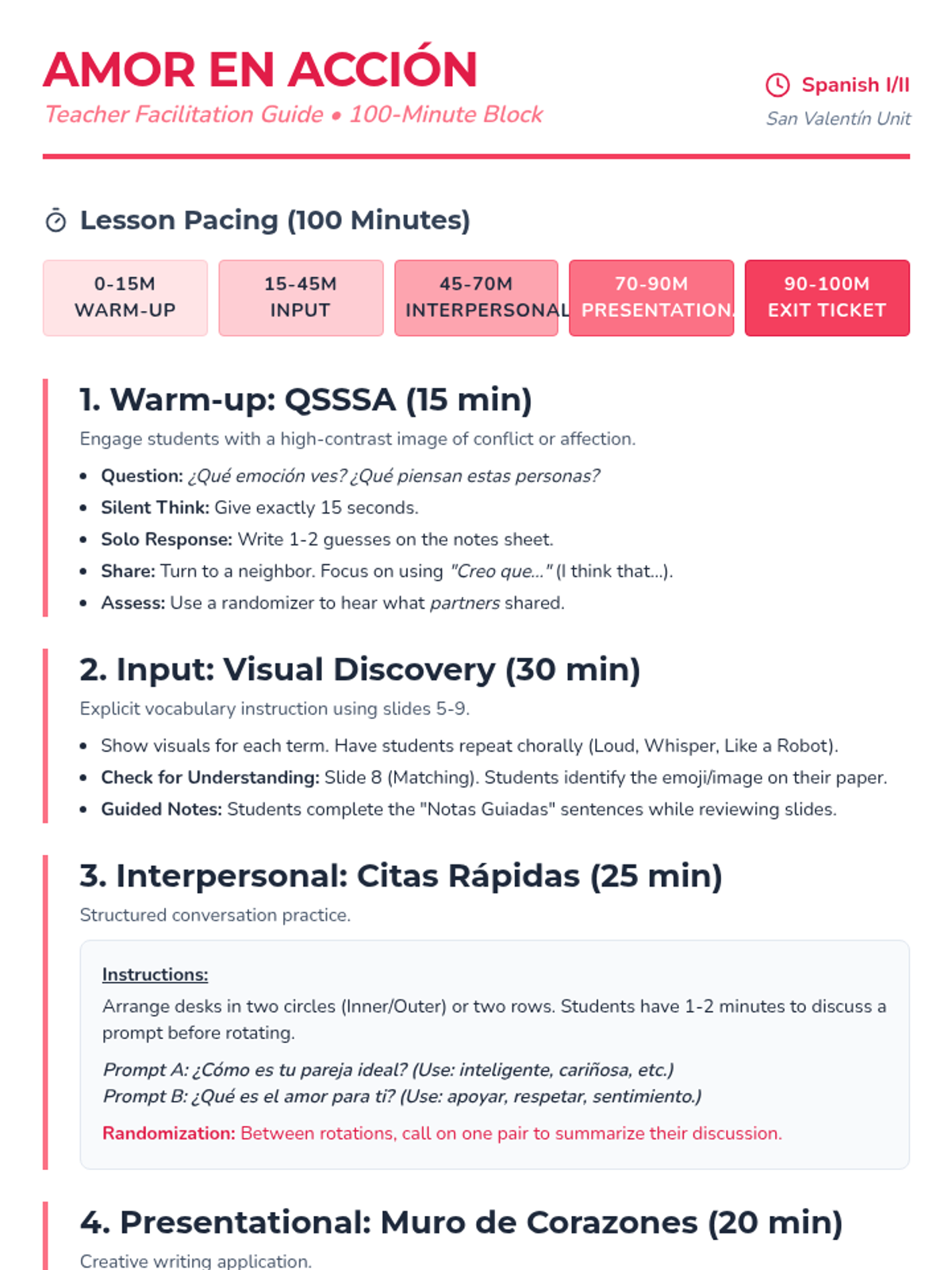
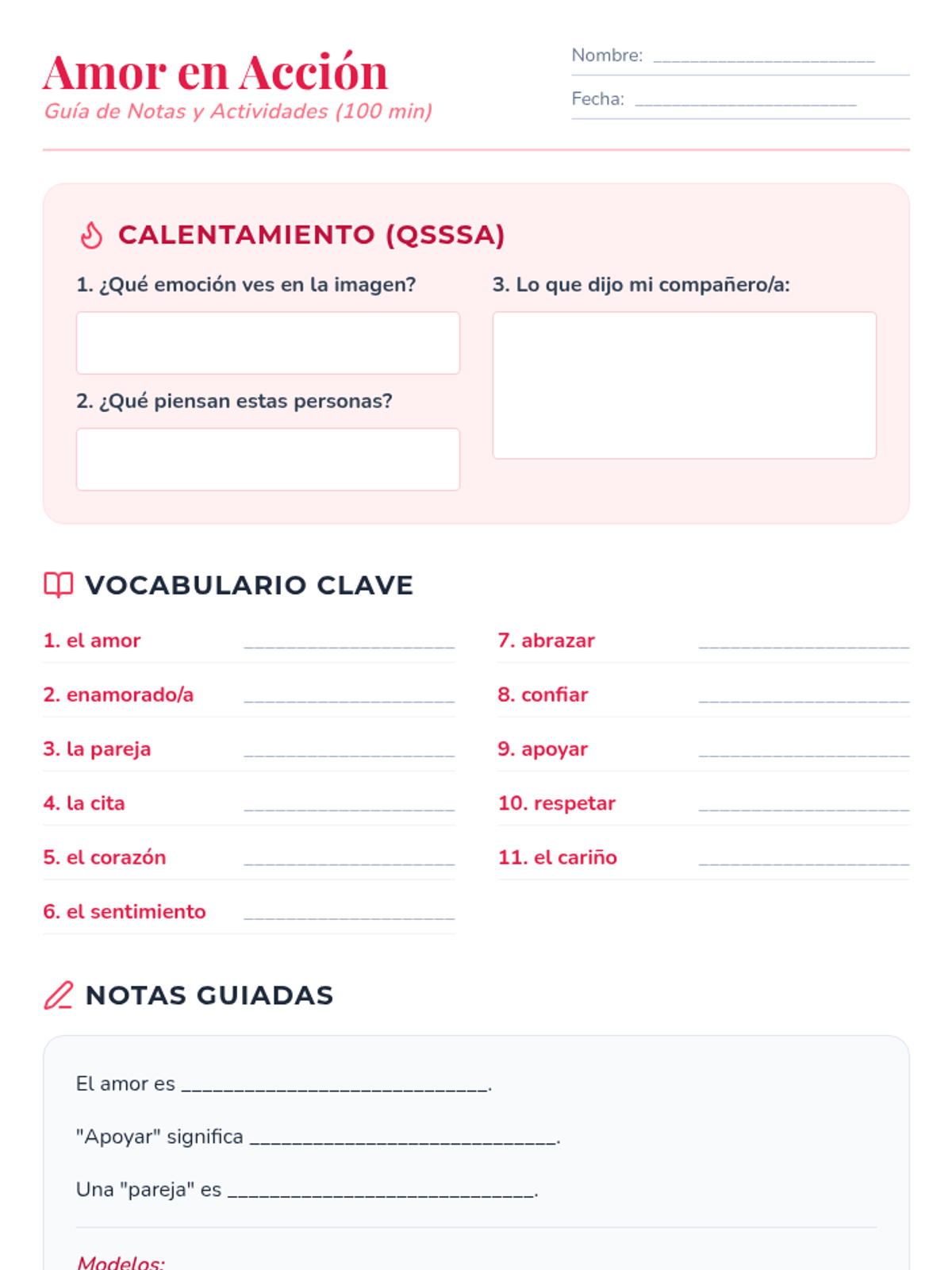
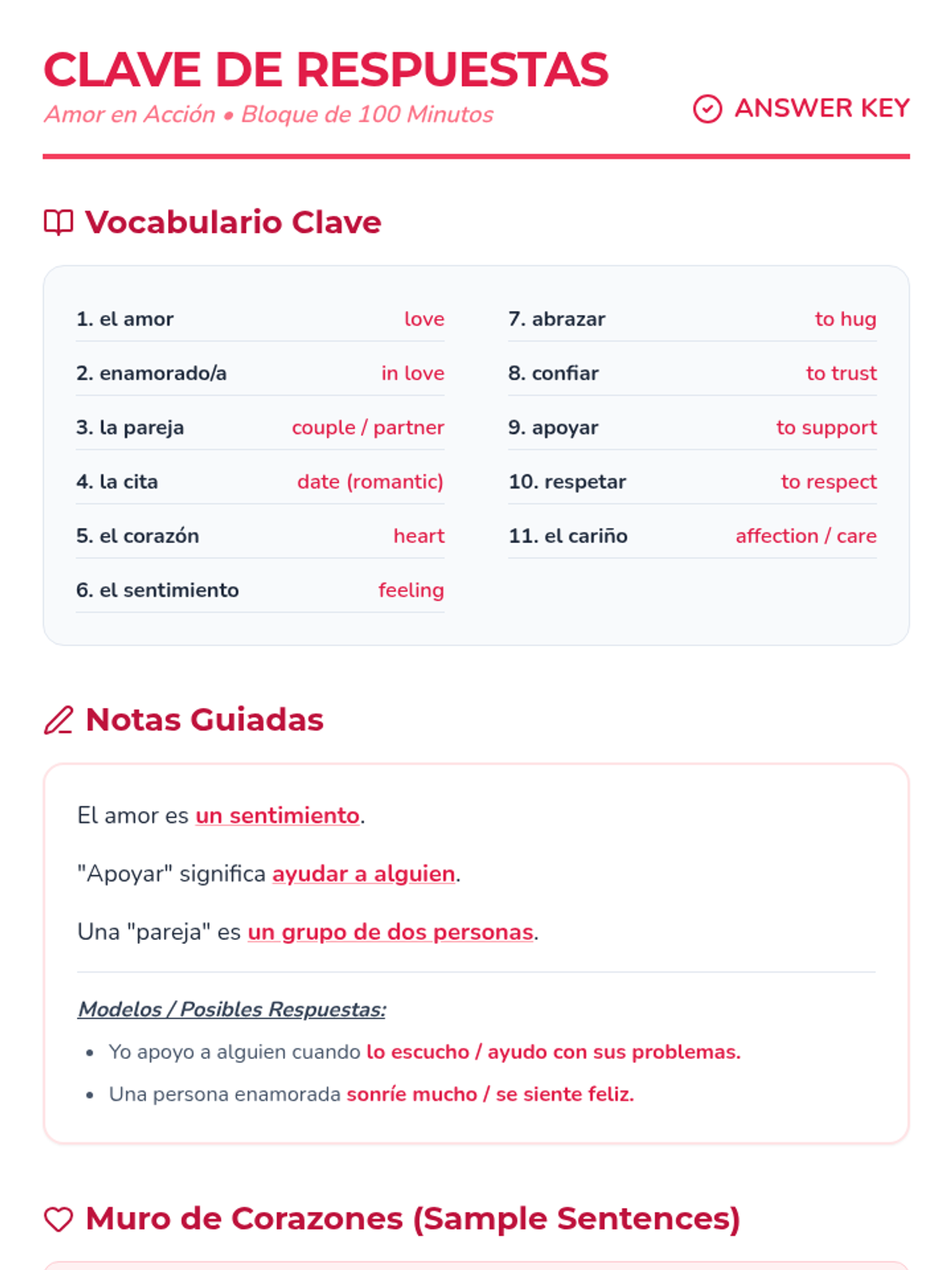
A Spanish I/II unit focused on Valentine's Day, covering vocabulary related to love, relationships, and emotions through interactive activities and communicative practice.
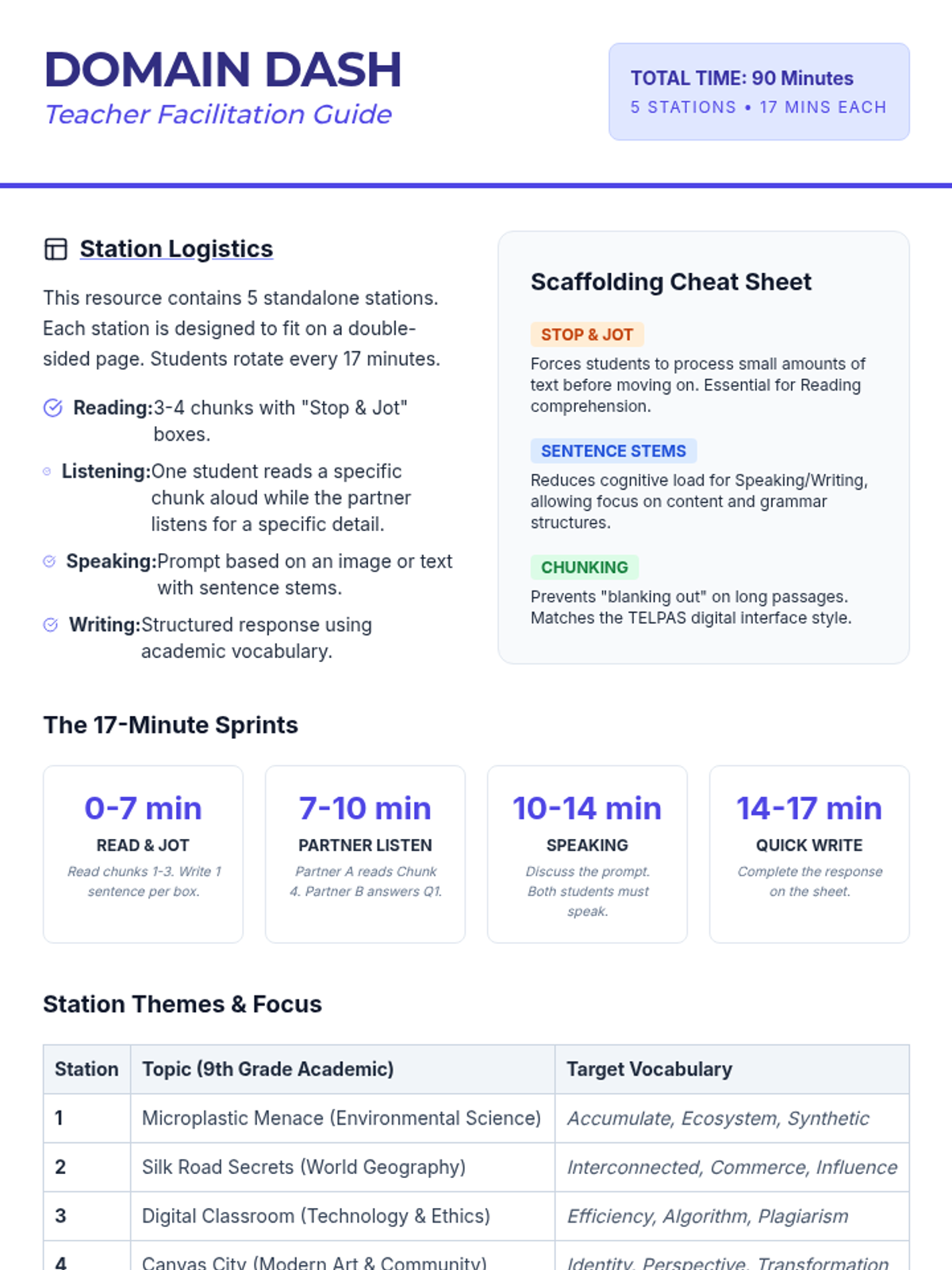
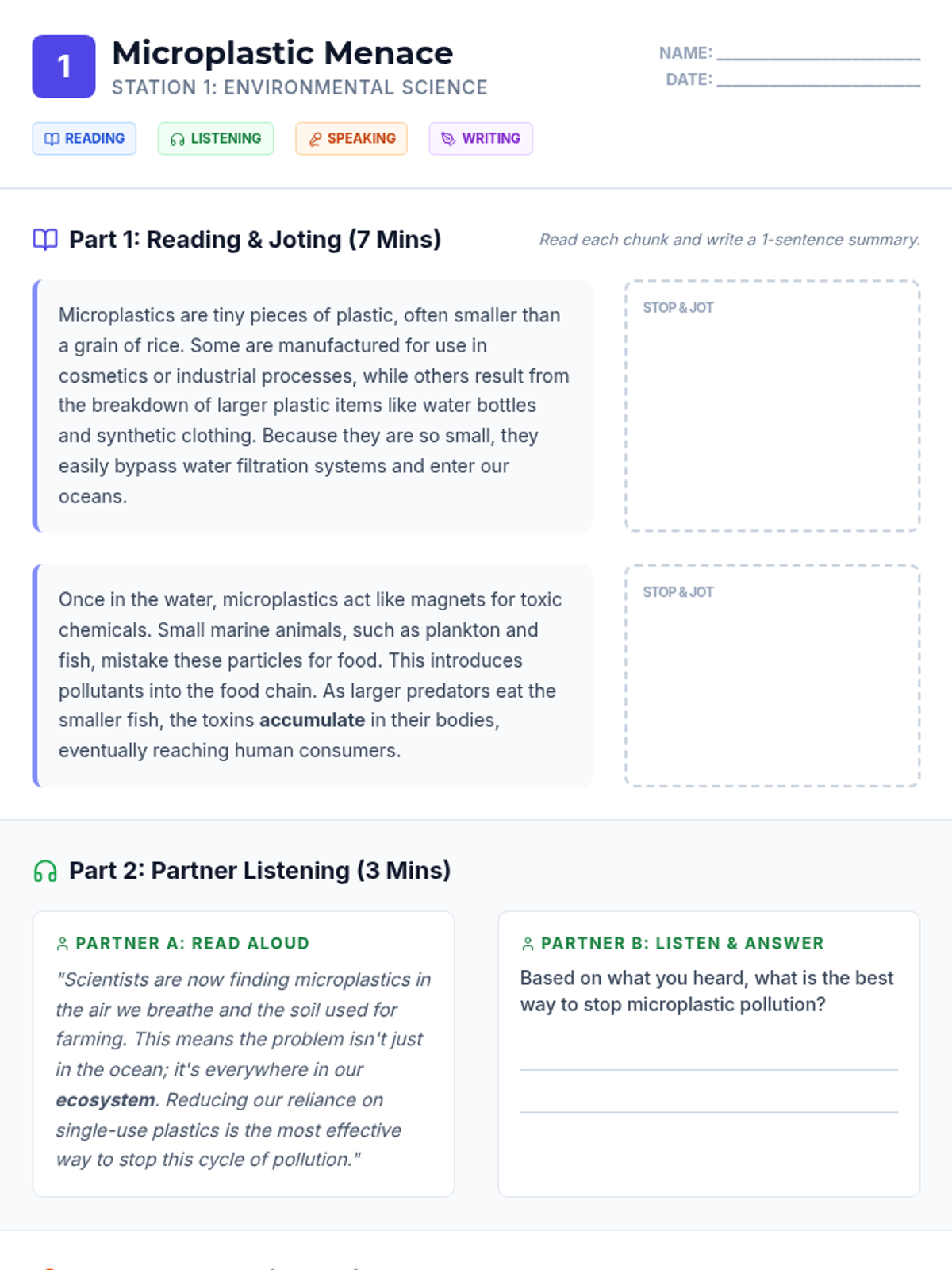
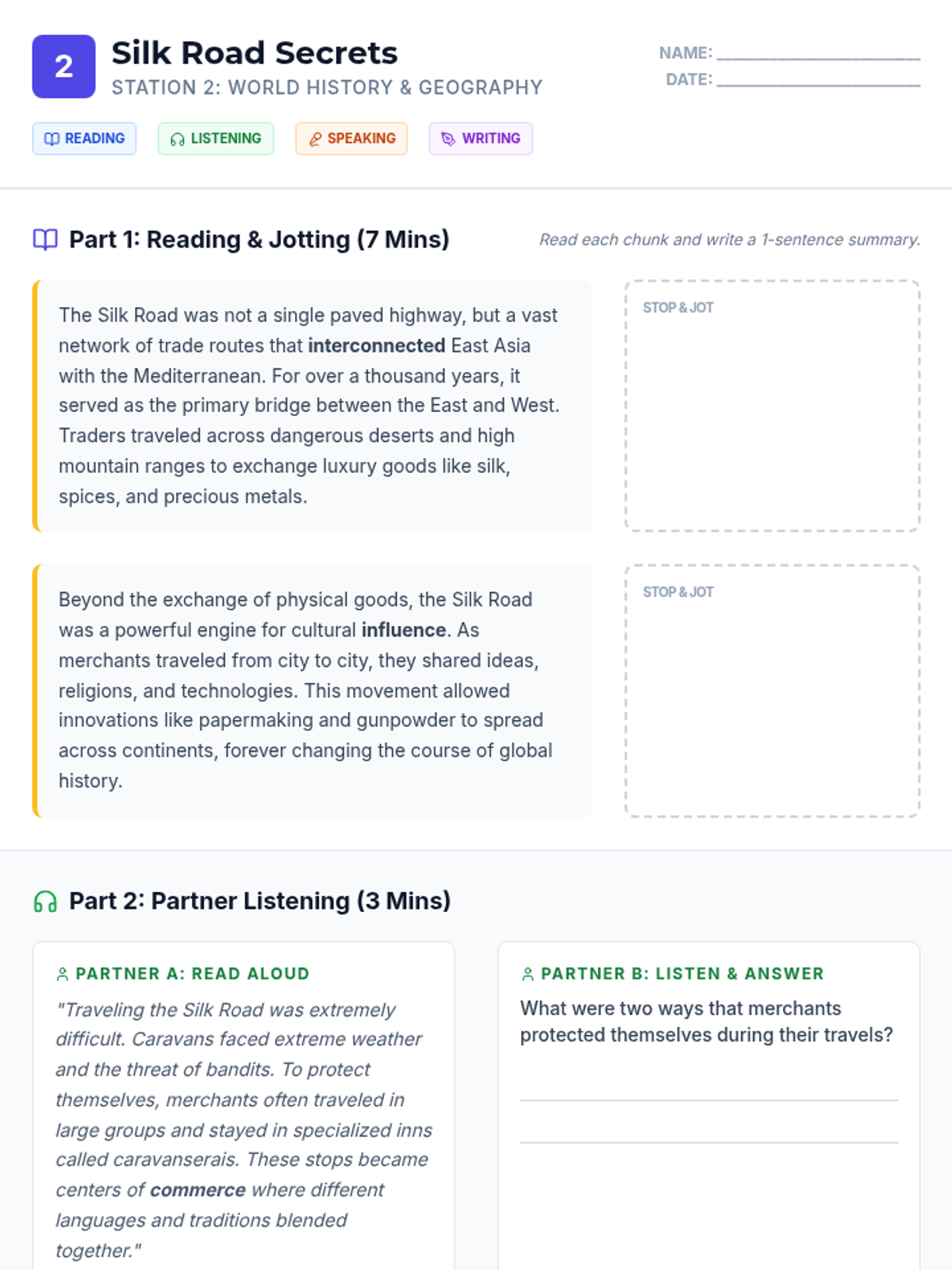
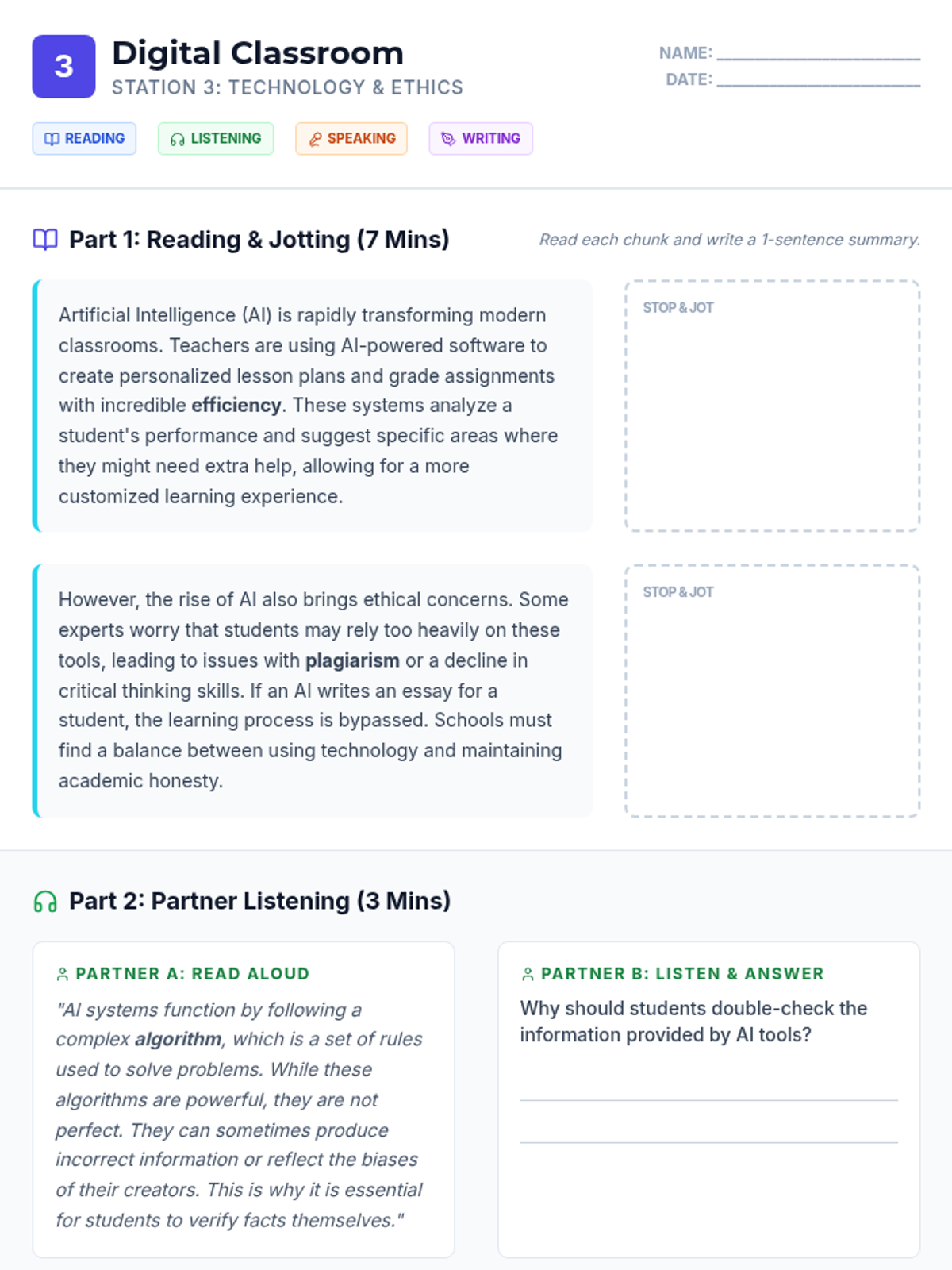
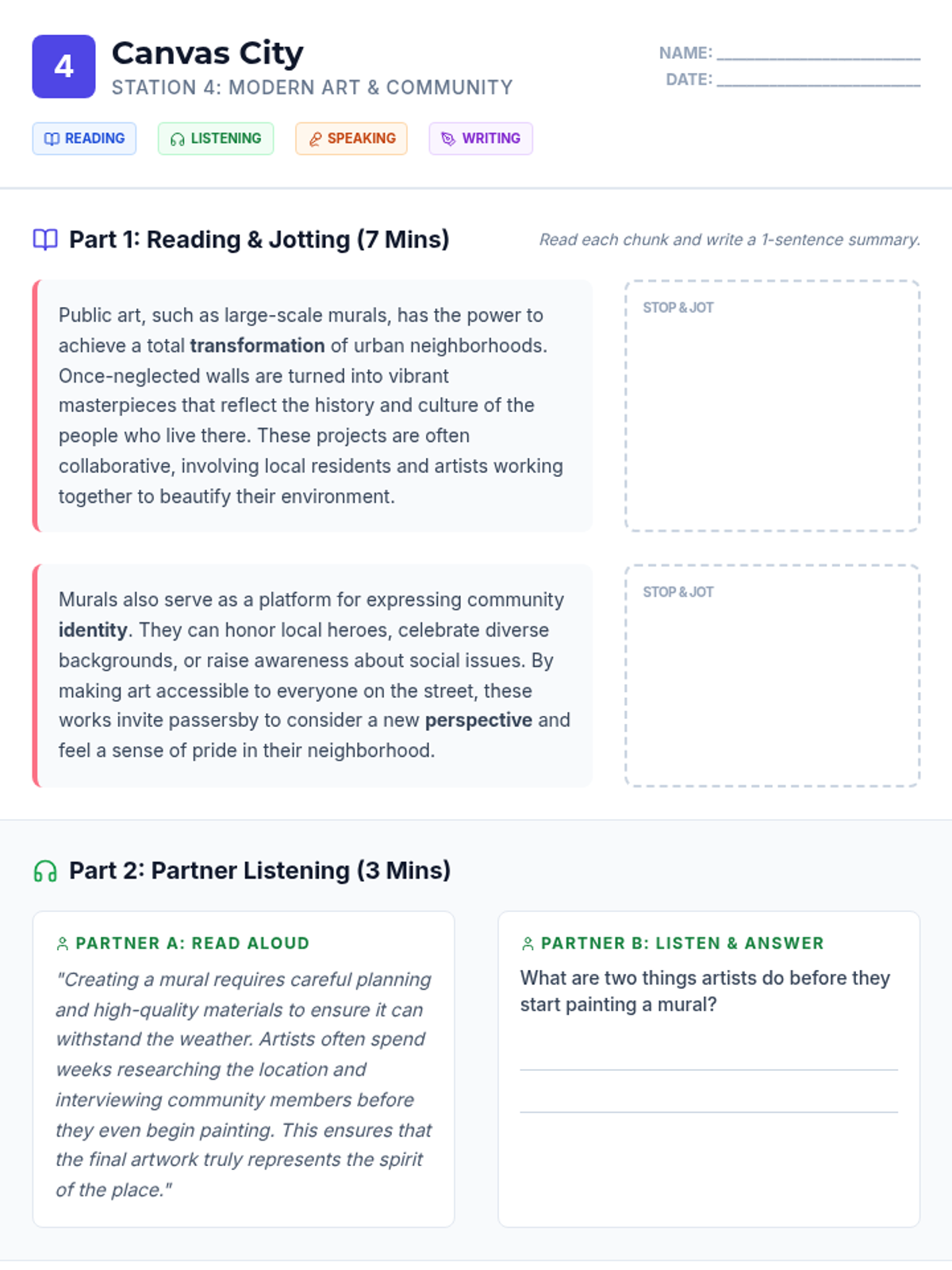
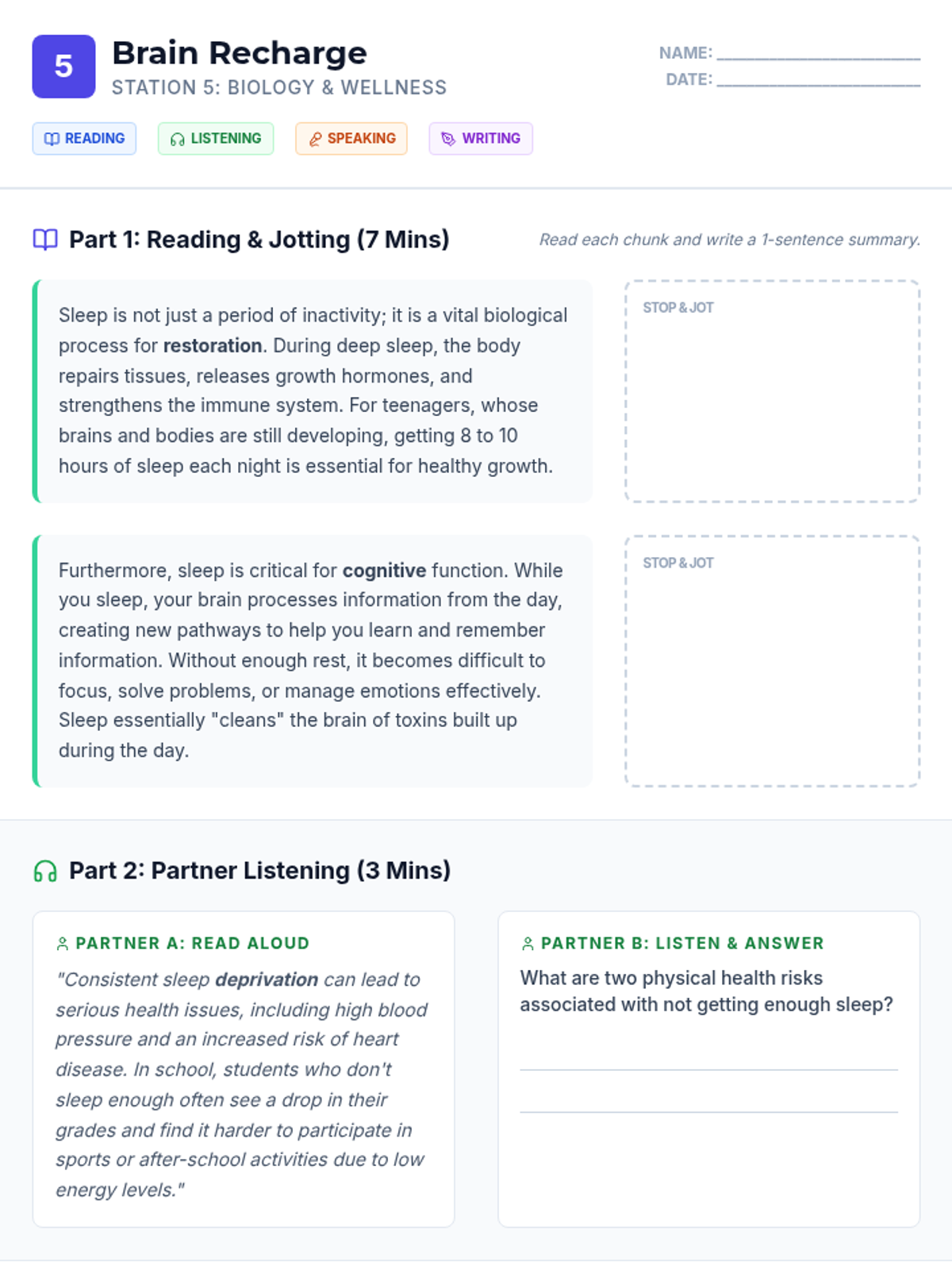
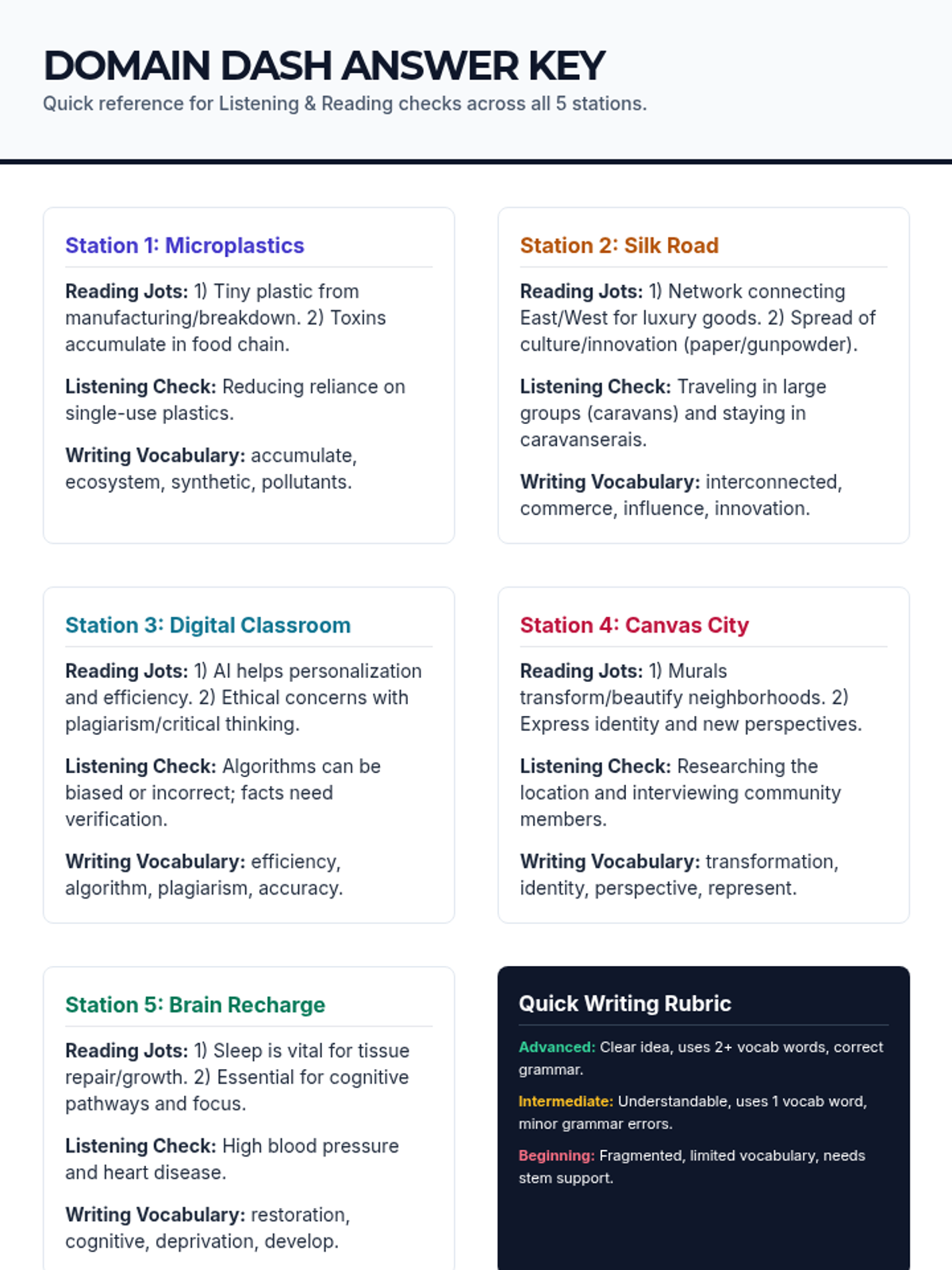
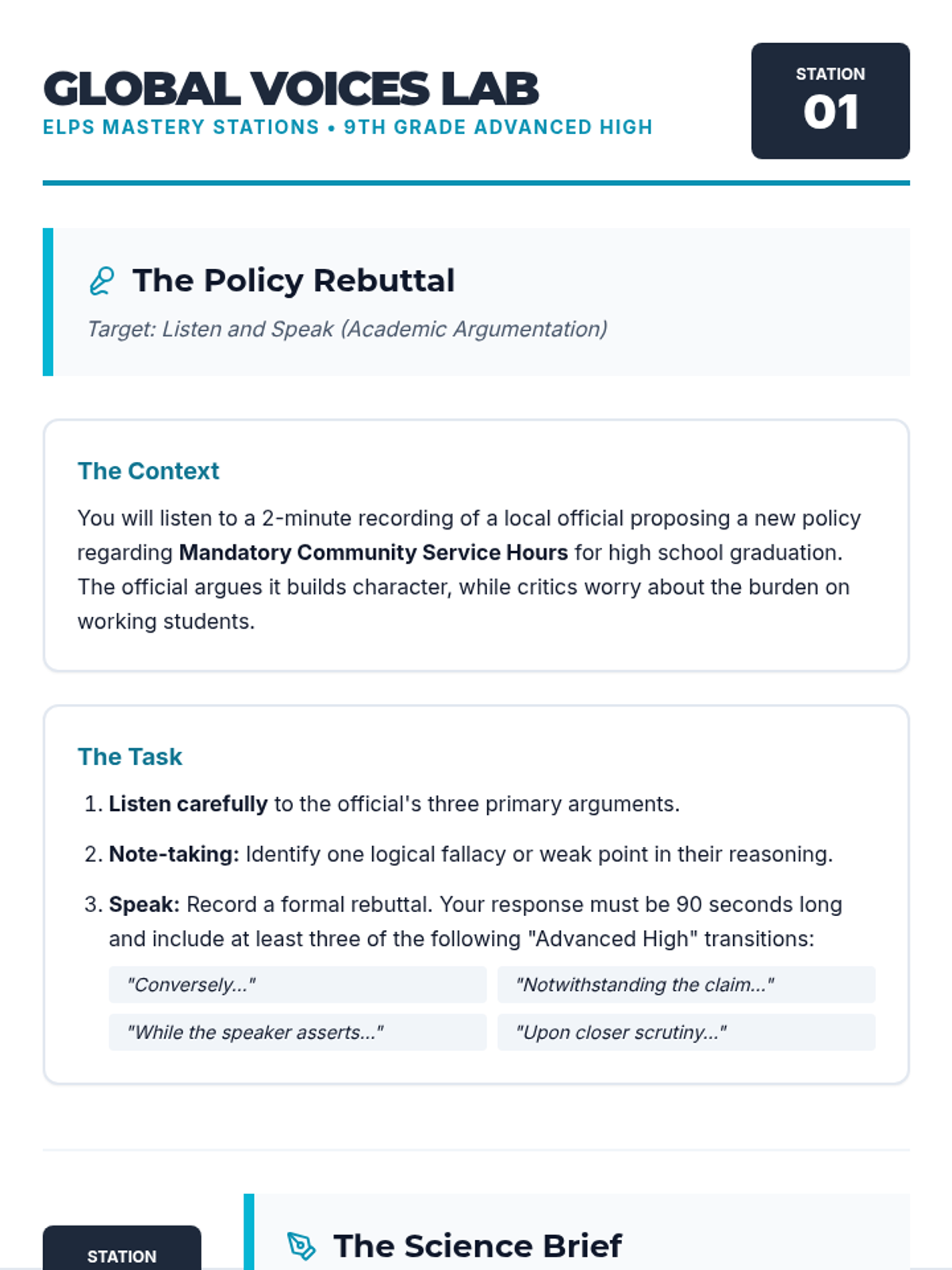
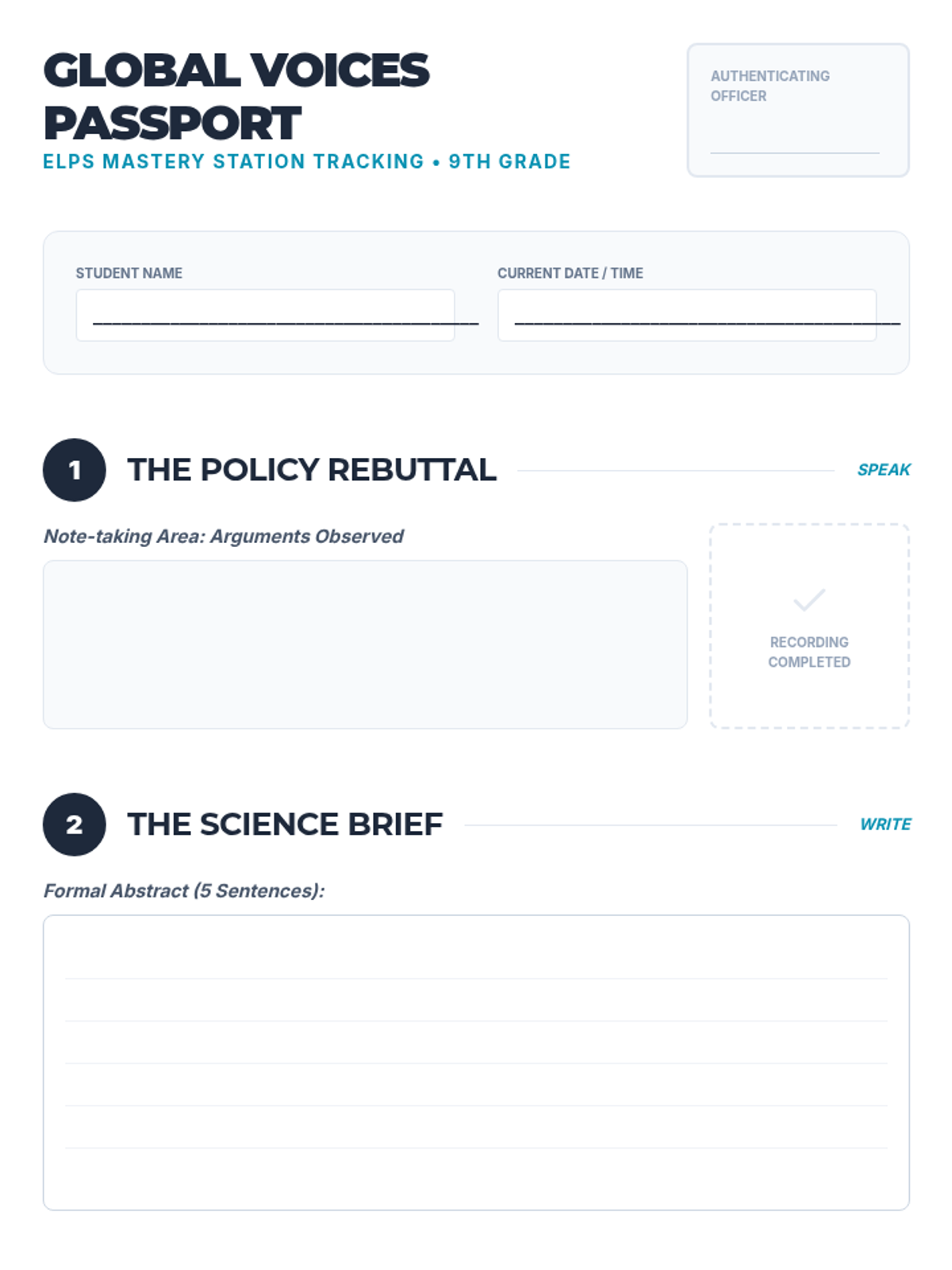
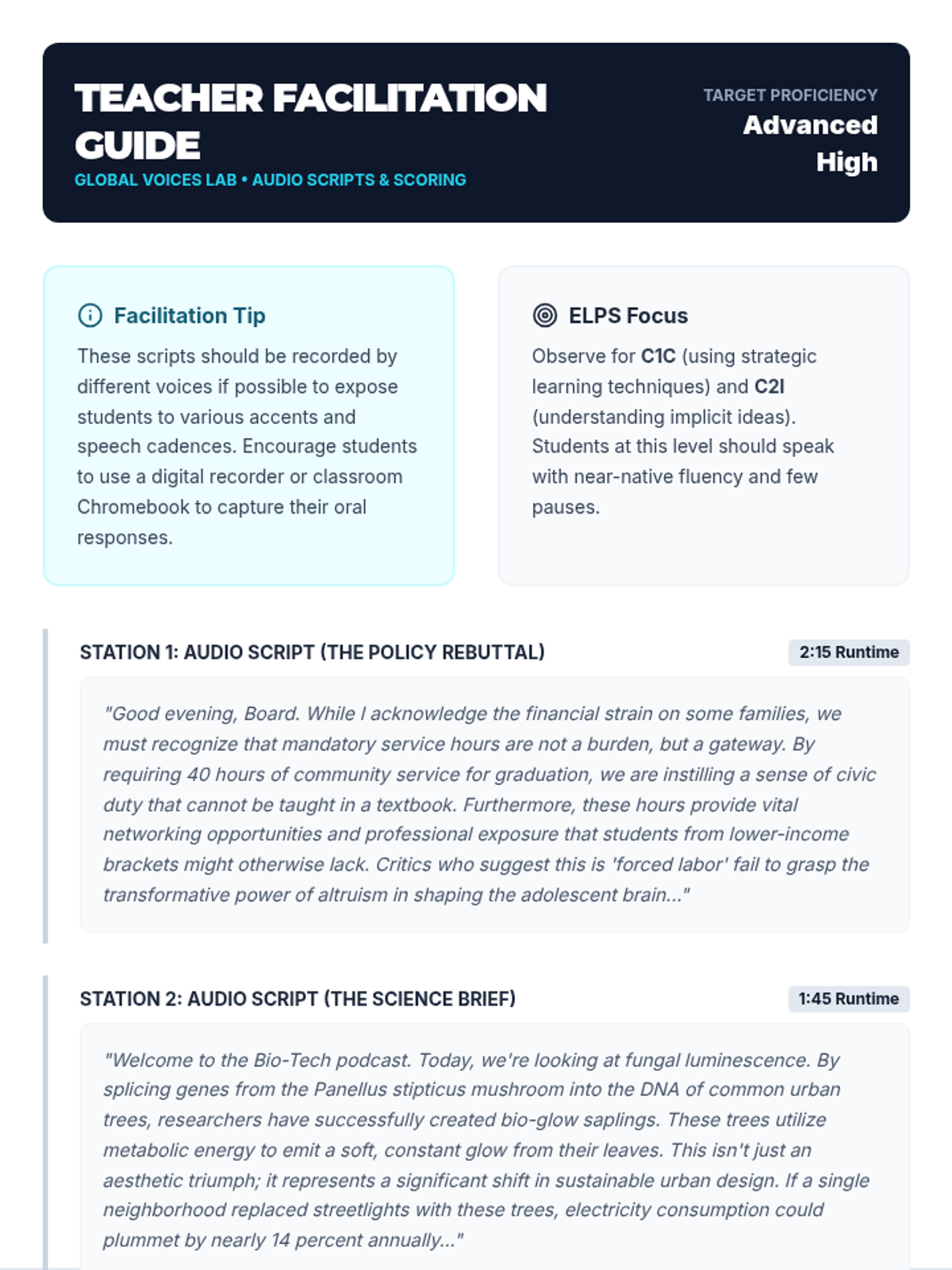
A comprehensive 9th-grade TELPAS preparation sequence focused on Advanced High ELPS proficiency through five rigorous listening, speaking, and writing stations. Students engage with academic content including policy debates, scientific briefs, and data analysis to refine their linguistic precision.
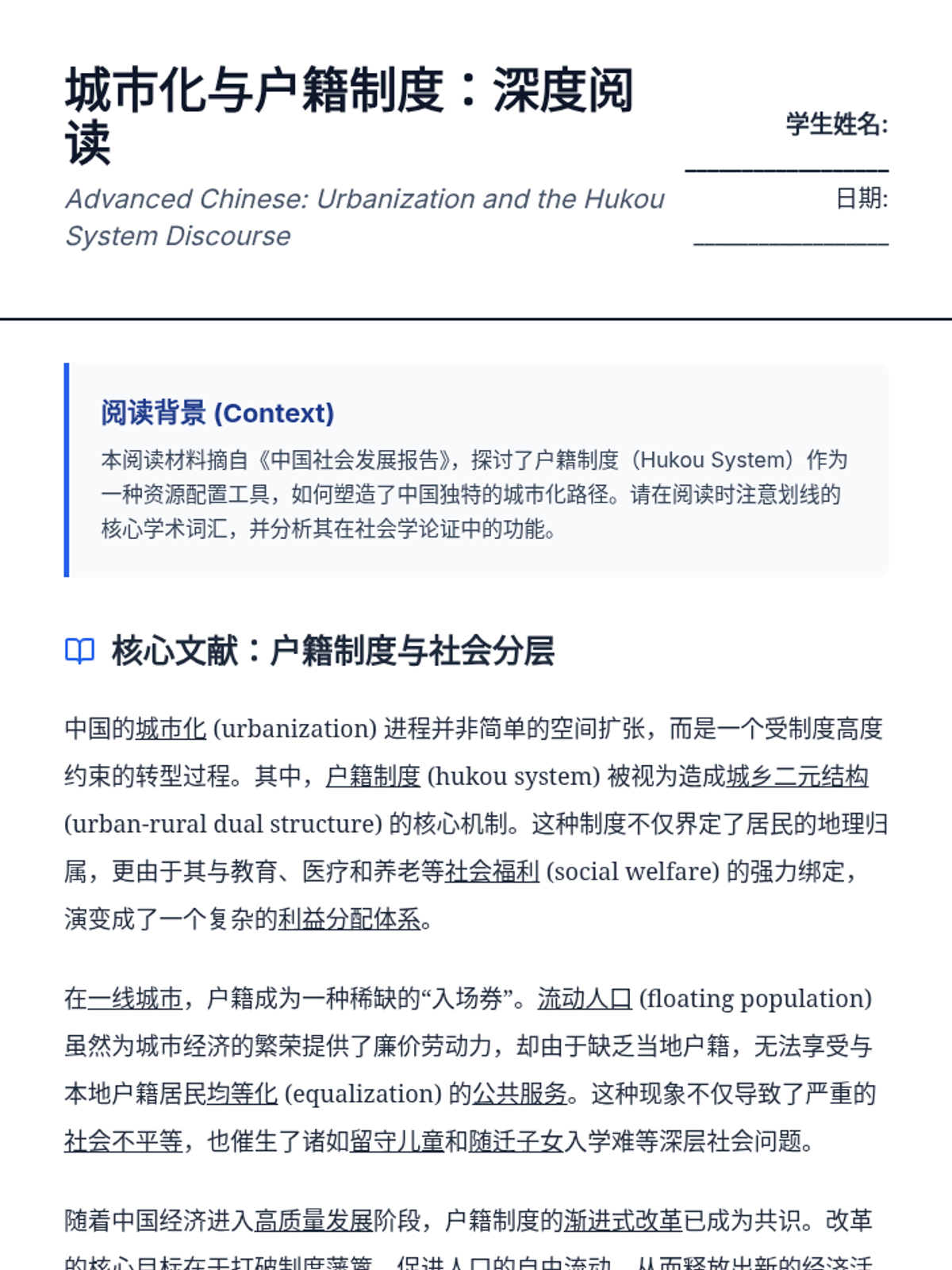
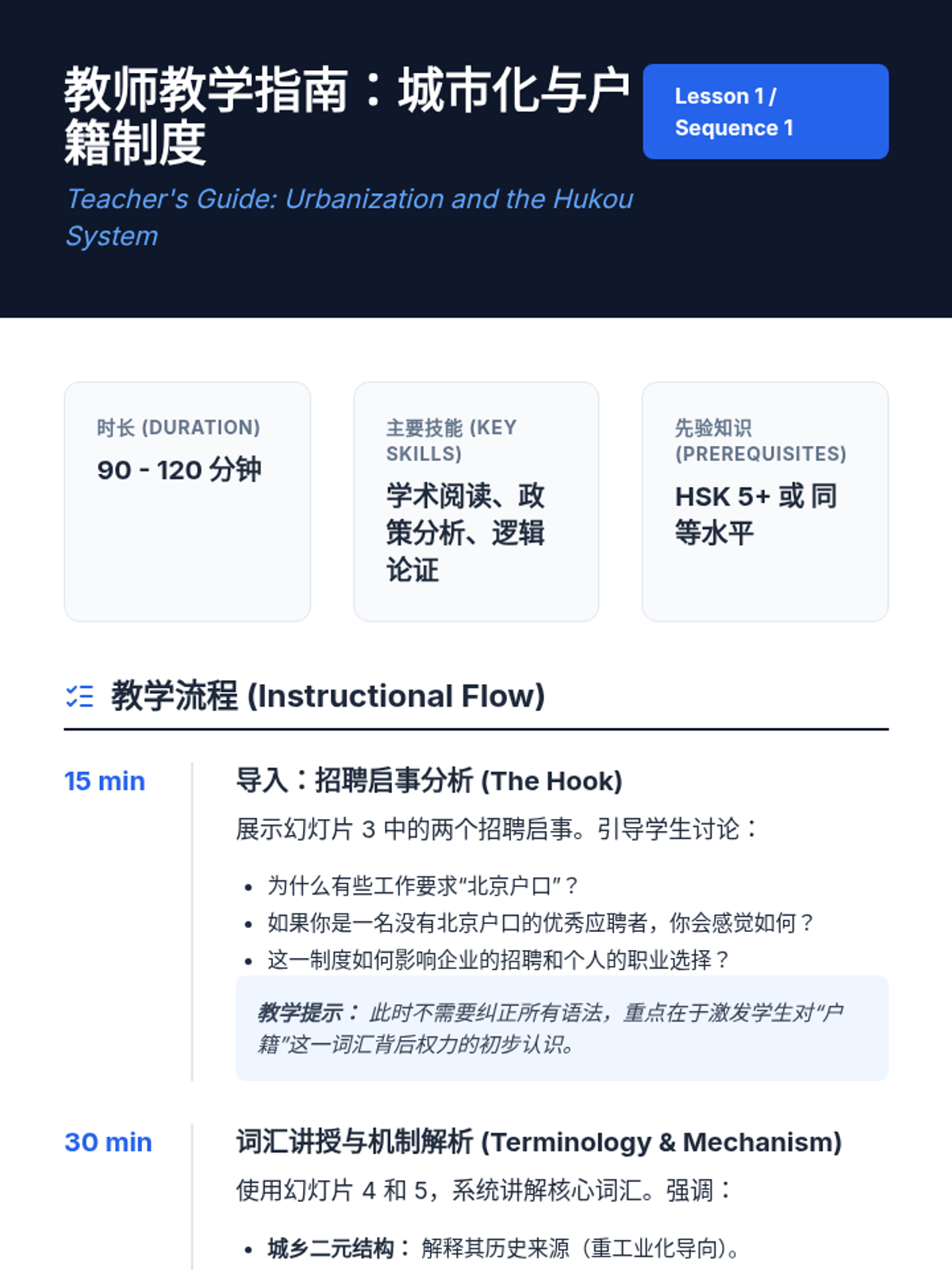
This advanced Mandarin Chinese sequence for graduate students focuses on analyzing contemporary social issues through the lens of sophisticated rhetoric and four-character idioms (chengyu). Students explore urbanization, demographic shifts, and environmental policy to build a high-level academic vocabulary and persuasive argumentation skills.
This sequence immerses graduate students in the lexical and cultural nuances of professional Mandarin. Students will progress from mastering formal etiquette and financial reporting to navigating legal contracts and complex business negotiations.
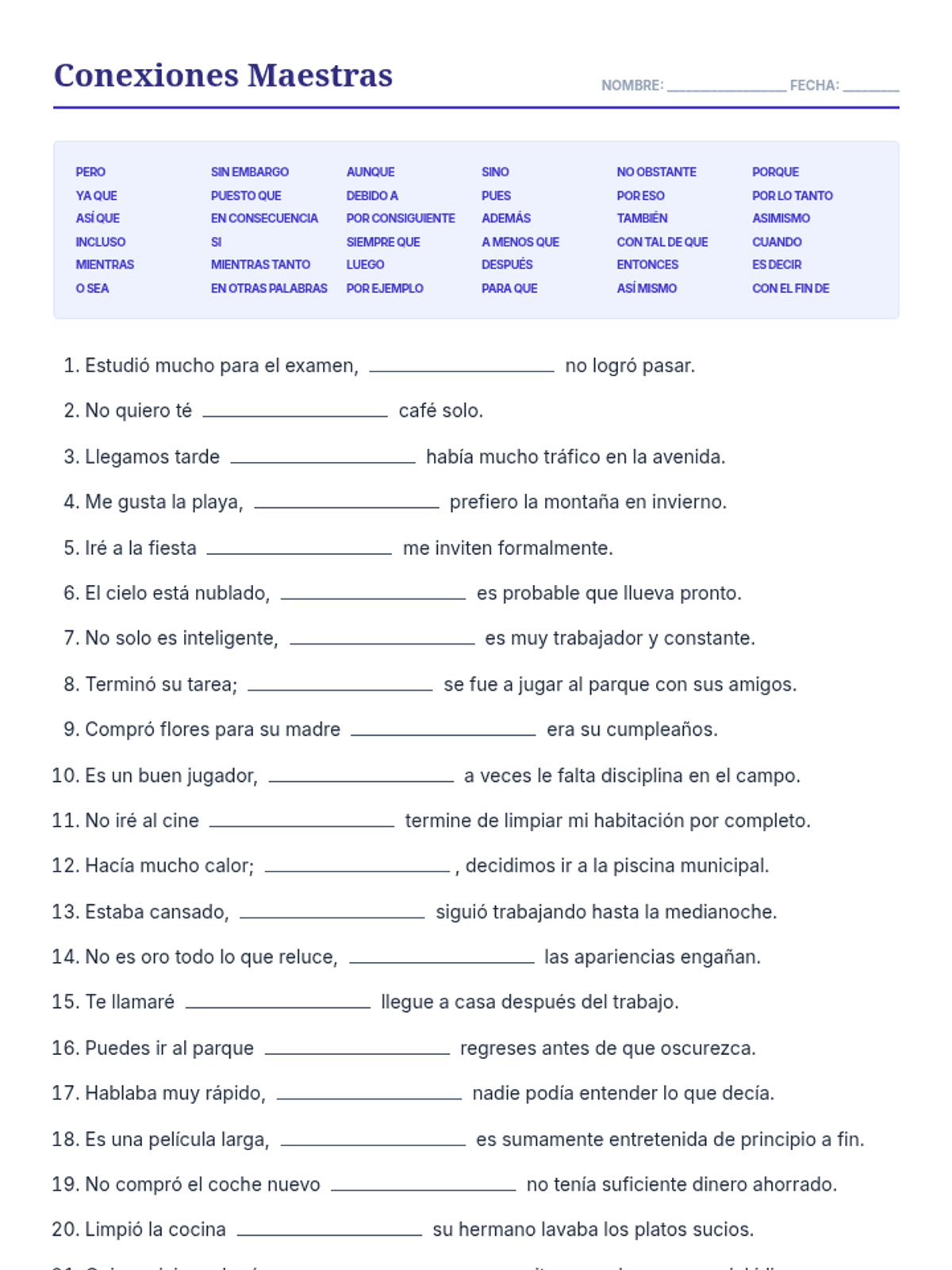
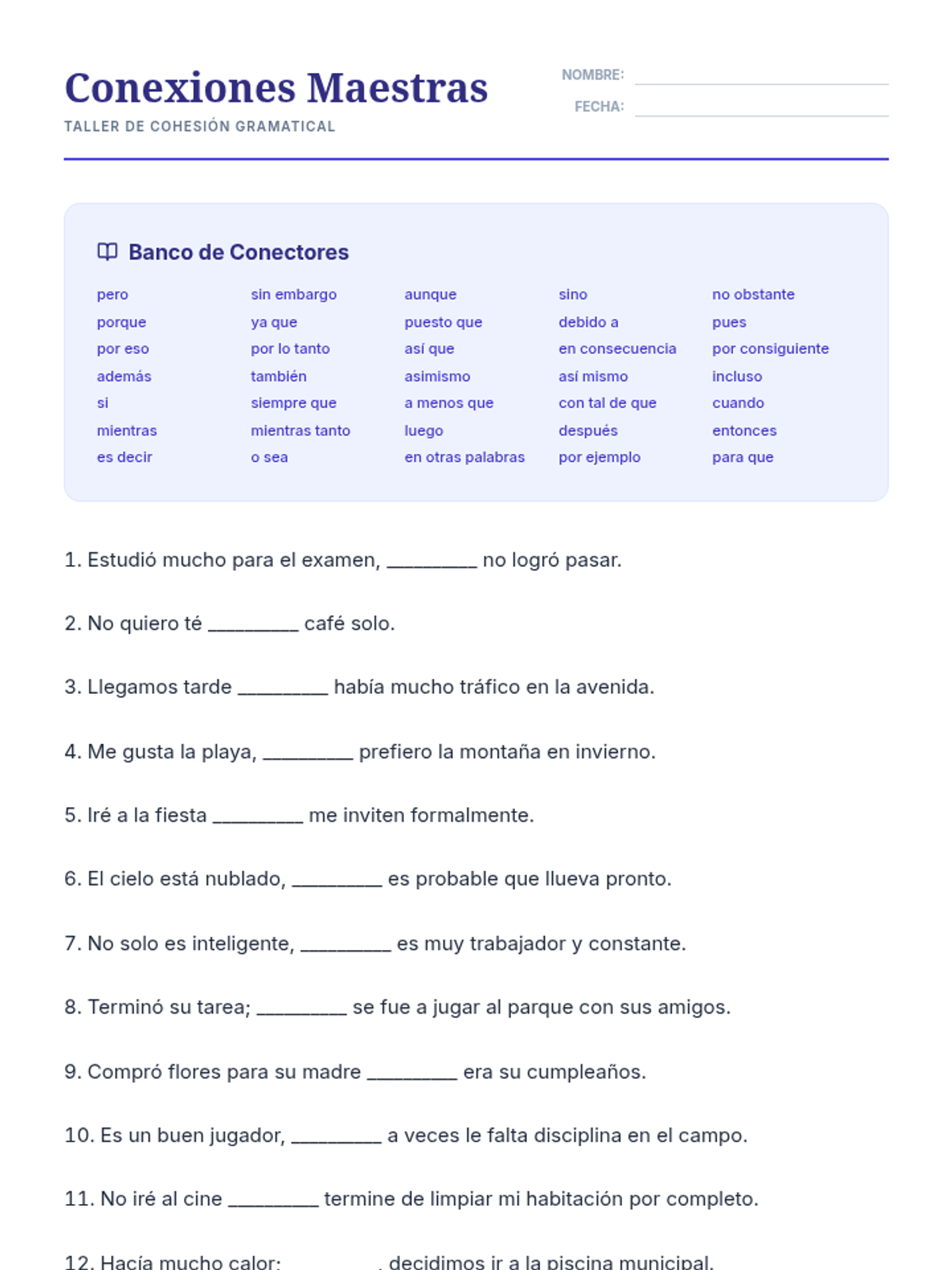
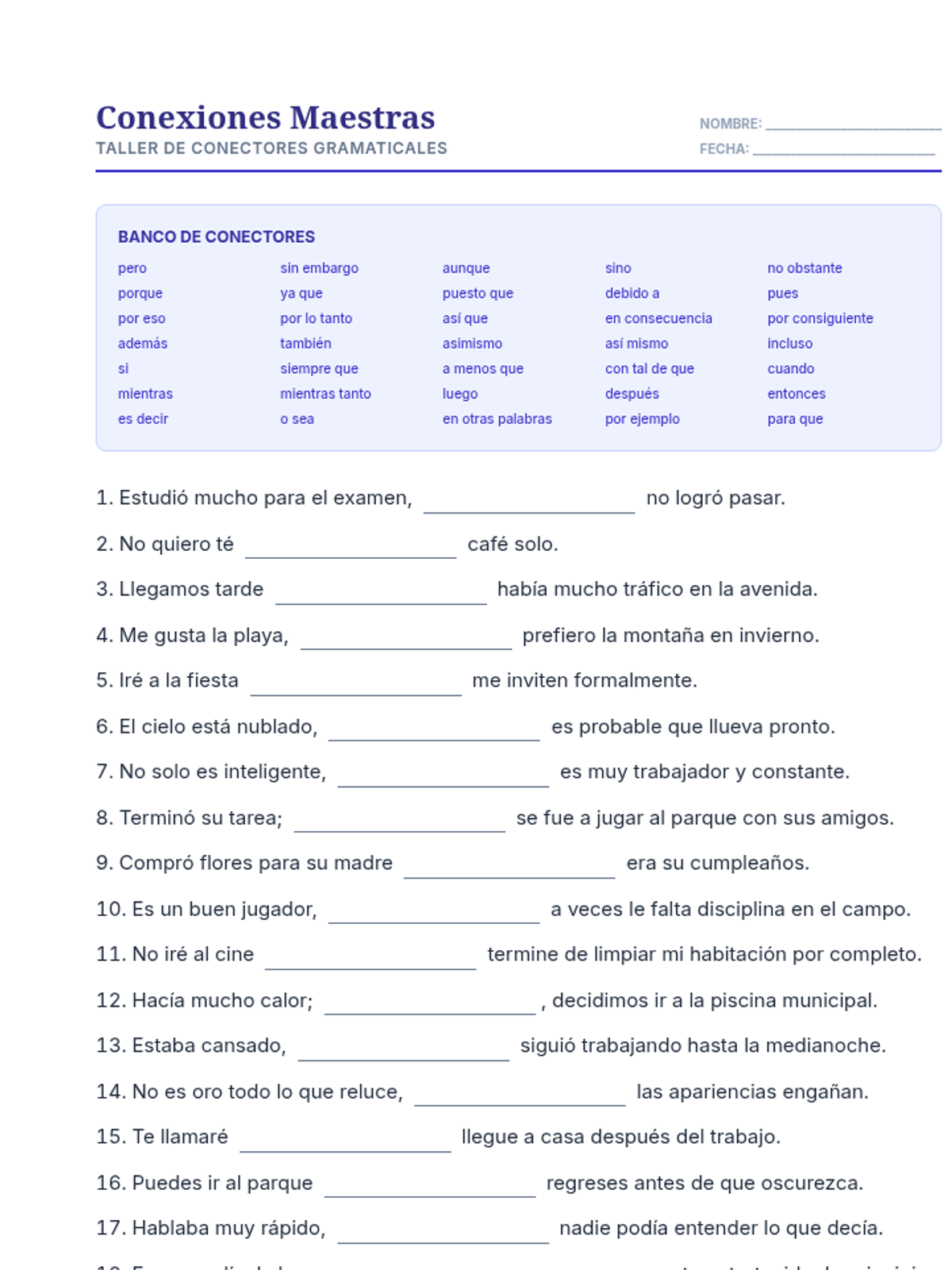
This advanced Spanish sequence transitions 9th-grade students from intermediate proficiency to professional linguistic precision. It focuses on academic register, workplace vocabulary, logical connectors, and sociolinguistic etiquette through authentic simulations and analysis.
This sequence bridges the gap between classroom character learning and real-world application for graduate-level learners. By analyzing authentic artifacts like signage, menus, and business cards, students develop the 'environmental literacy' needed to navigate Mandarin-speaking urban and professional spaces.
A high-intensity sequence designed for graduate students to achieve functional literacy in Mandarin Chinese through the top 100 high-frequency characters, focusing on sentence construction, grammatical particles, and digital input methods.
A deep analytical dive into the etymology and structural logic of the Chinese writing system for graduate-level adult learners. The sequence moves from basic mechanics and stroke order to complex phono-semantic decoding and aesthetic synthesis through calligraphy.
An immersive intermediate French sequence where students navigate travel scenarios in Paris, Dakar, and Montreal, mastering future, past, and conditional tenses through simulated real-world interactions.
This sequence explores the diversity of the Spanish language through a sociolinguistic lens, focusing on how culture, geography, and class influence communication for intermediate learners at the graduate level. Students analyze registers, regional slang, humor, and digital communication to understand the link between identity and language.
A specialized sequence for graduate students focused on decoding and synthesizing complex academic and technical texts in Spanish, covering article structure, syntax, argumentation, and data interpretation.
A comprehensive graduate-level sequence exploring the intersection of Spanish grammar and literary analysis. Students analyze the works of Boom and Post-Boom authors to master narrative timeframes, descriptive imagery, the subjunctive of uncertainty, and character voice, culminating in a formal literary critique.
This graduate-level sequence examines how linguistic choices, syntax, and grammatical structures like the subjunctive mood shape political narratives in Spanish-language journalism. Students analyze authentic texts from various Hispanic regions to deconstruct bias, recognize regionalisms, and synthesize conflicting perspectives.
A comprehensive exploration of classical morphology and technical etymology for undergraduate students, bridging the gap between ancient roots and modern technical, medical, and literary terminology.
This sequence immerses undergraduate students in the specific lexicon of Latin terminology frequently encountered in academic research, legal documents, and formal logic. Students progress from scholarly abbreviations to complex phrases used in argumentation and legal theory, emphasizing contextual application to enhance academic precision.
A linguistic and sociological exploration of how English absorbs and adapts words from diverse global sources, focusing on etymology, cultural exchange, and the evolution of language.
Students act as linguistic anthropologists creating a specialized 'Field Guide to Foreign Expressions' for a chosen professional or cultural domain. They investigate the etymology, usage, and visual representation of foreign terminology to explain their chosen field's linguistic history to a lay audience.
This sequence equips graduate students with high-efficiency strategies for reading and synthesizing academic French research. Students progress from rapid scanning techniques to deep syntactical analysis and precise translation of abstract theoretical concepts.
An advanced French literature sequence for graduate students, exploring the stylistic and philosophical depths of Francophone authors from Camus to Djebar. Students analyze the 'passé simple', 'écriture blanche', and themes of post-colonialism and Negritude to master literary interpretation in French.
This sequence immerses graduate students in the landscape of contemporary French journalism, focusing on current events and social debates. Students move from identifying the structural components of news articles to analyzing complex opinion pieces and synthesizing multiple perspectives on sensitive topics like secularism.
A specialized sequence for graduate students to master the formal register of Chinese news media. The course covers headline syntax, economic reporting logic, passive structures in incident reports, bias in editorials, and cross-regional news synthesis.
A graduate-level sequence exploring contemporary Chinese literature, focusing on 'Sanwen' essays, Chengyu integration, sociolinguistic subtext, and thematic analysis to build advanced reading and interpretation skills.
A comprehensive sequence for graduate students to master strategic reading of Mandarin Chinese academic texts, focusing on abstract structure, complex syntax, data interpretation, and research synthesis.