Essential food groups, nutrient functions, and balanced meal planning. Develops skills for interpreting nutrition labels and adopting lifelong healthy eating patterns.
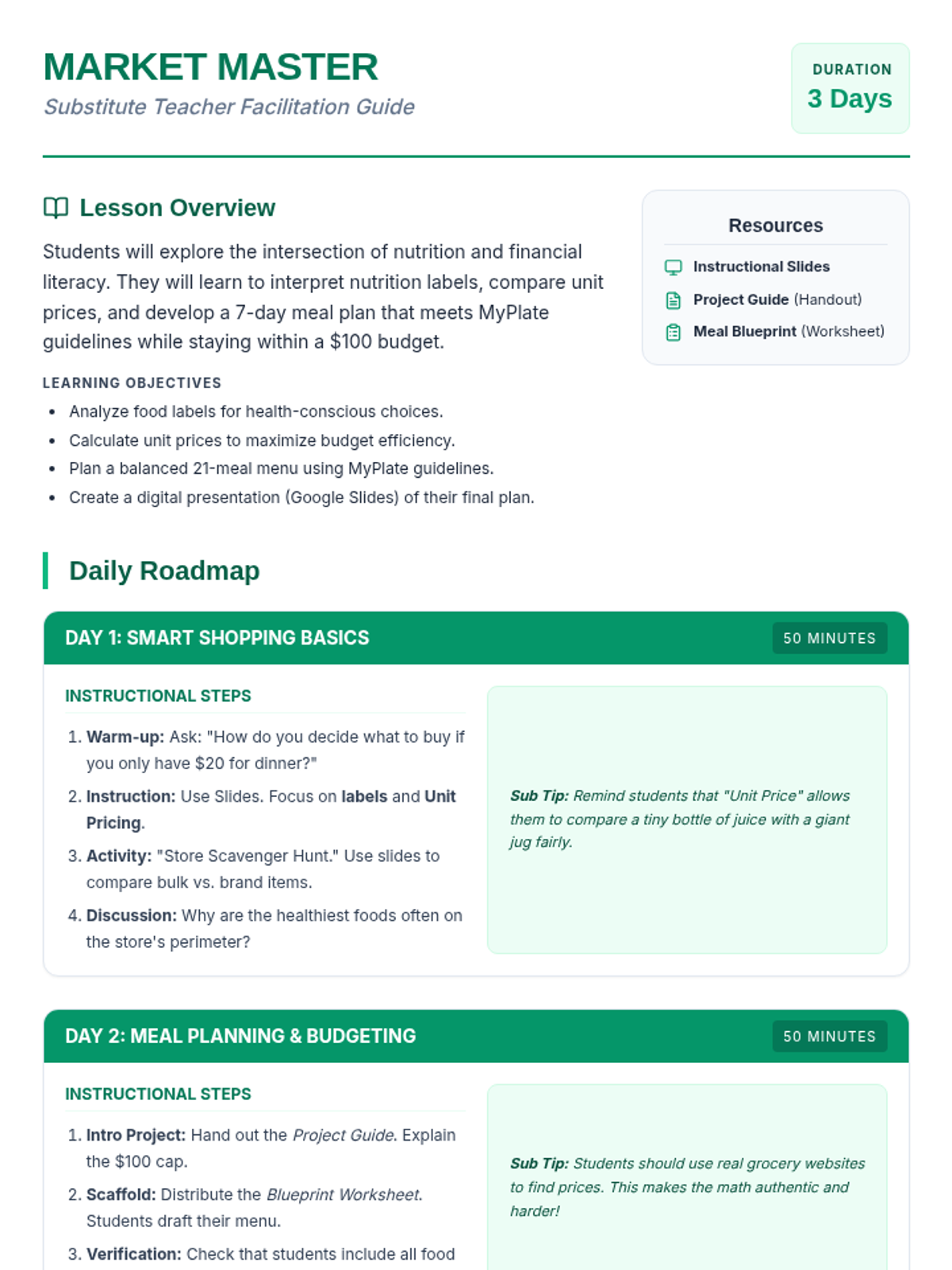
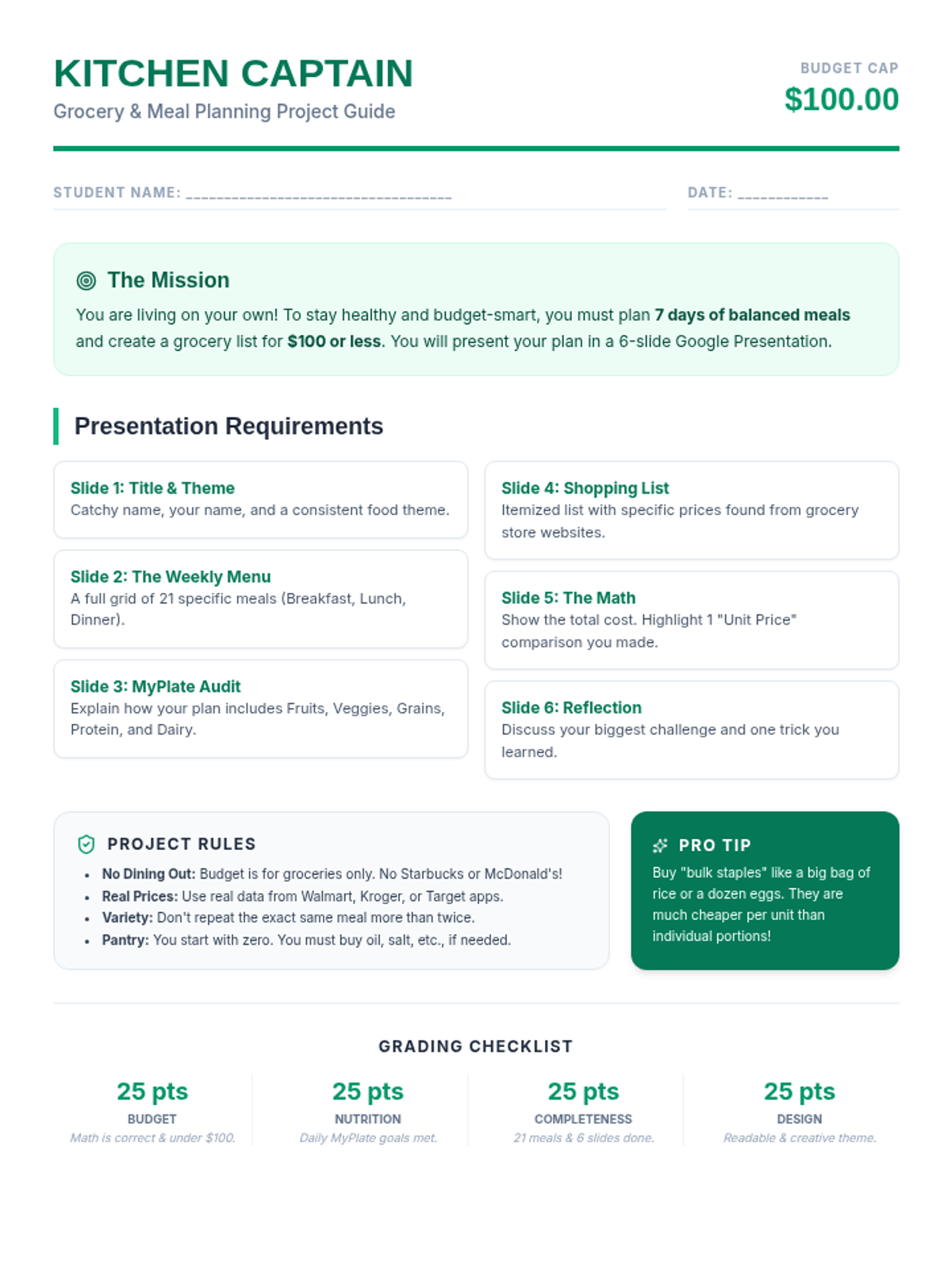
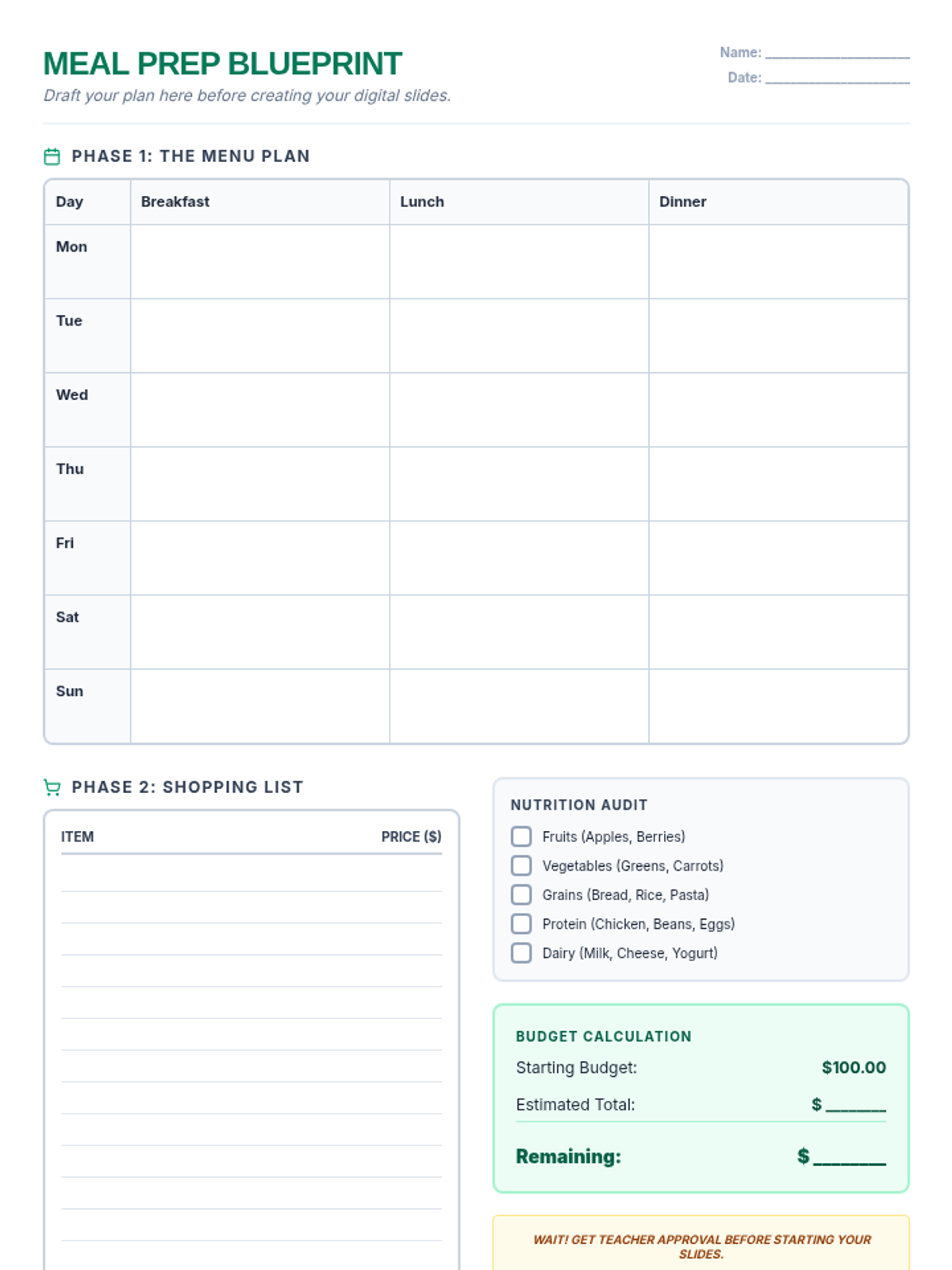
A comprehensive 3-day health lesson teaching students how to balance nutritional needs with a budget through meal planning and smart grocery shopping.
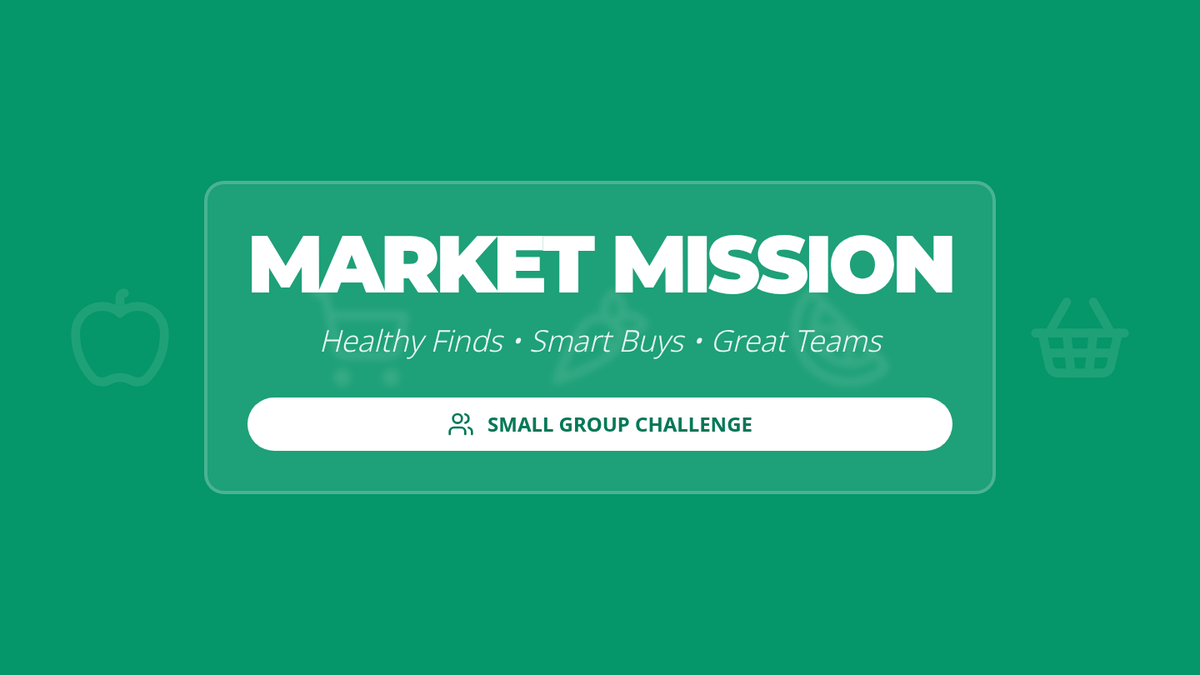
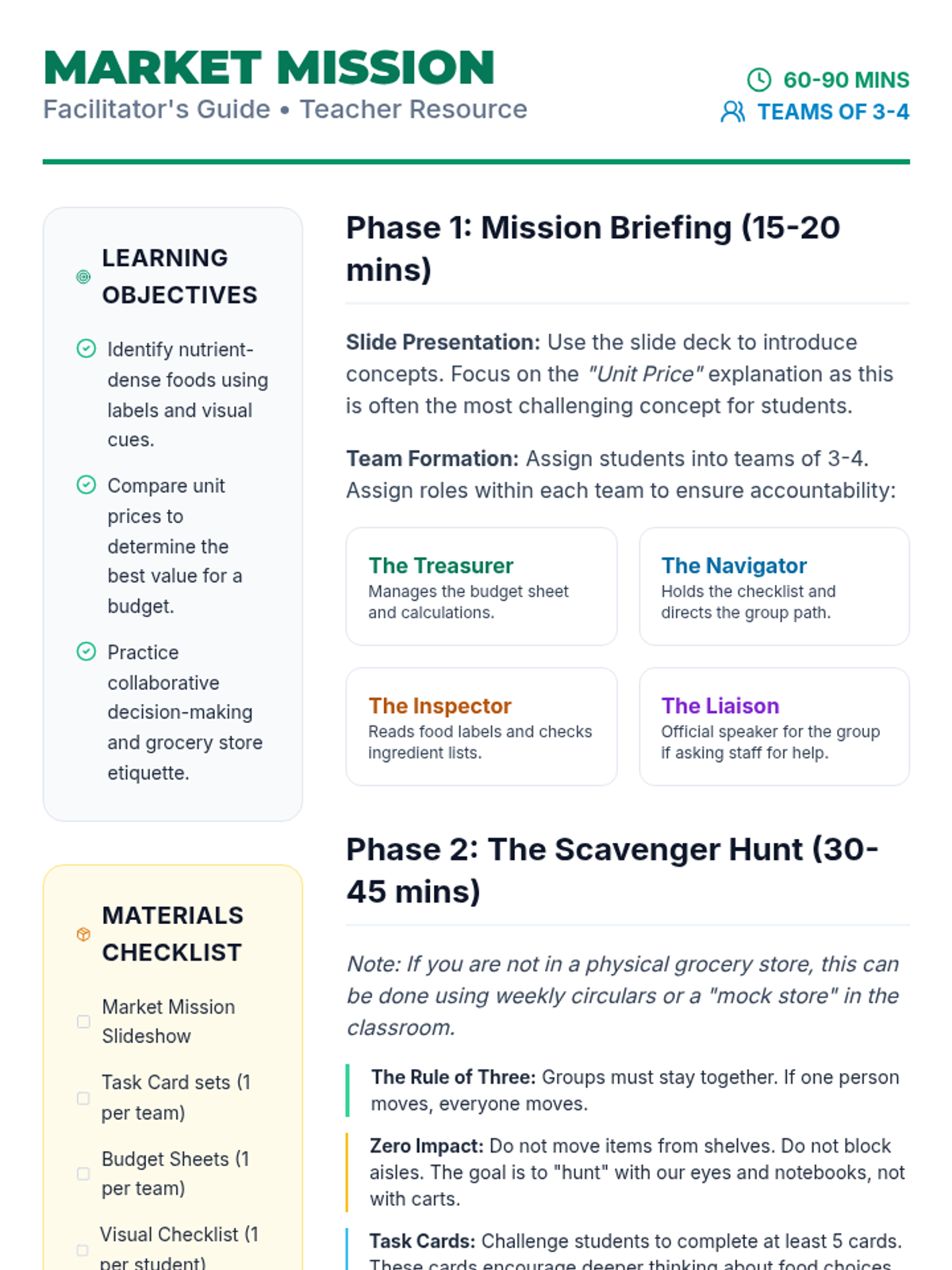
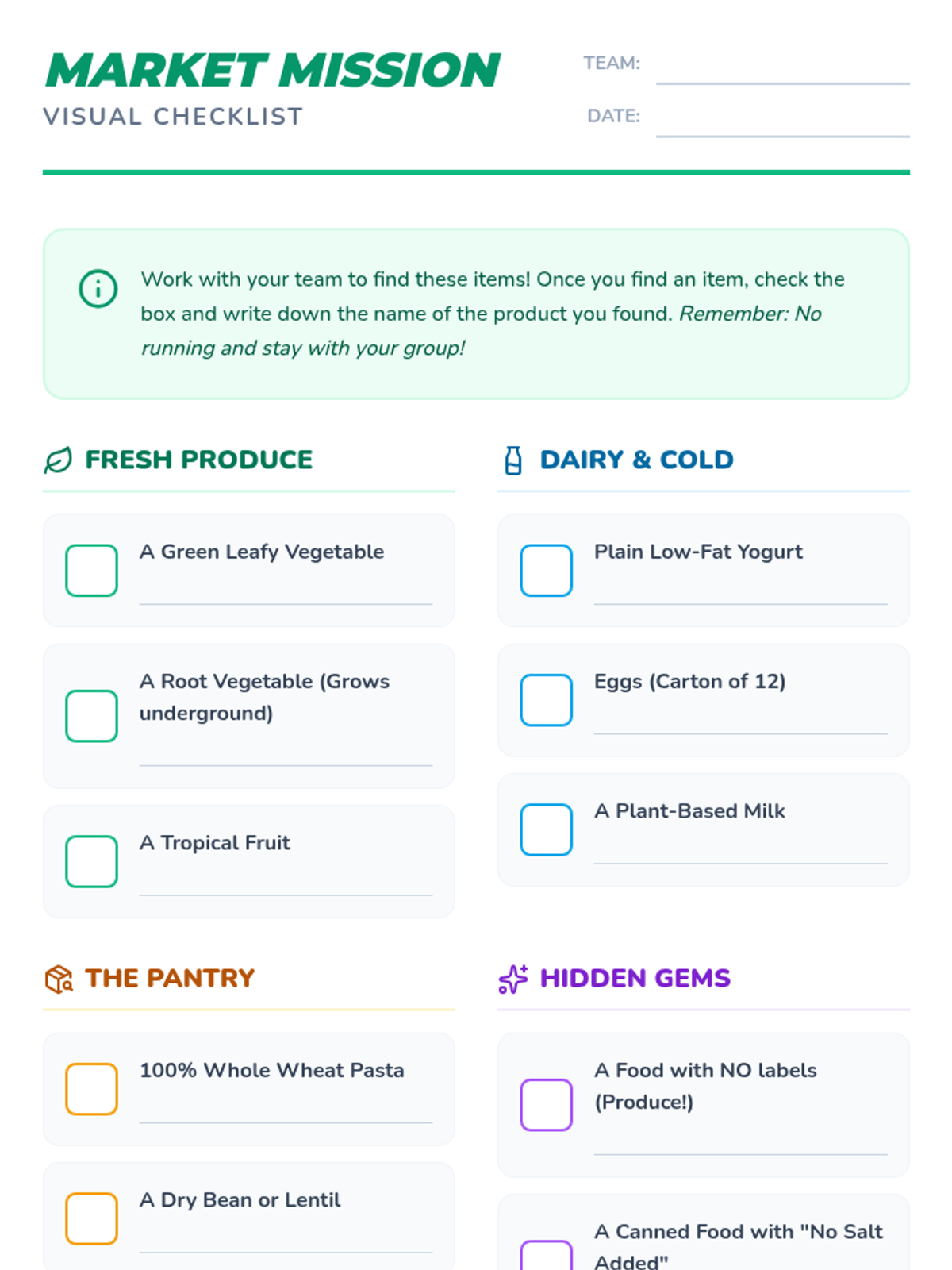
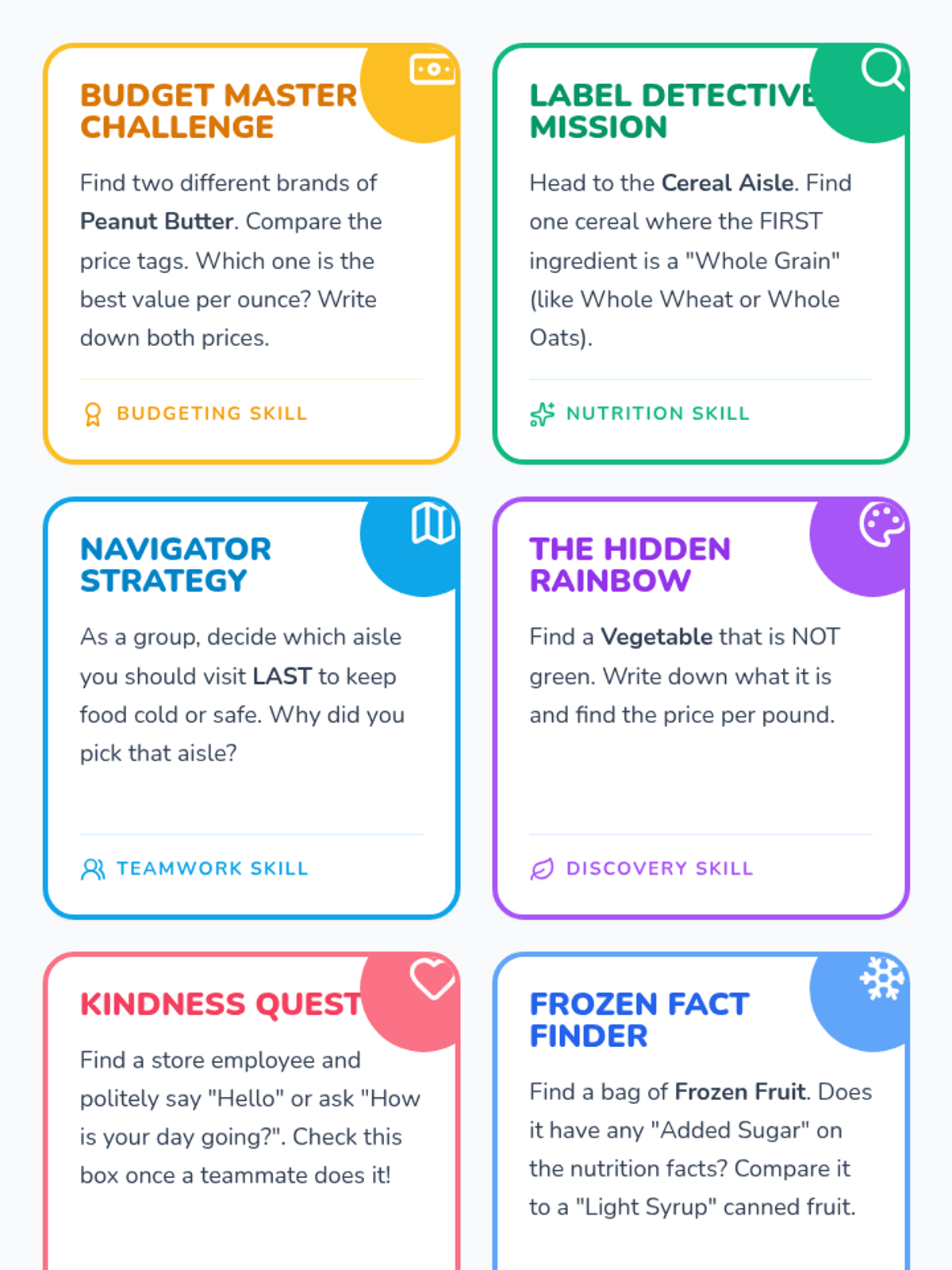
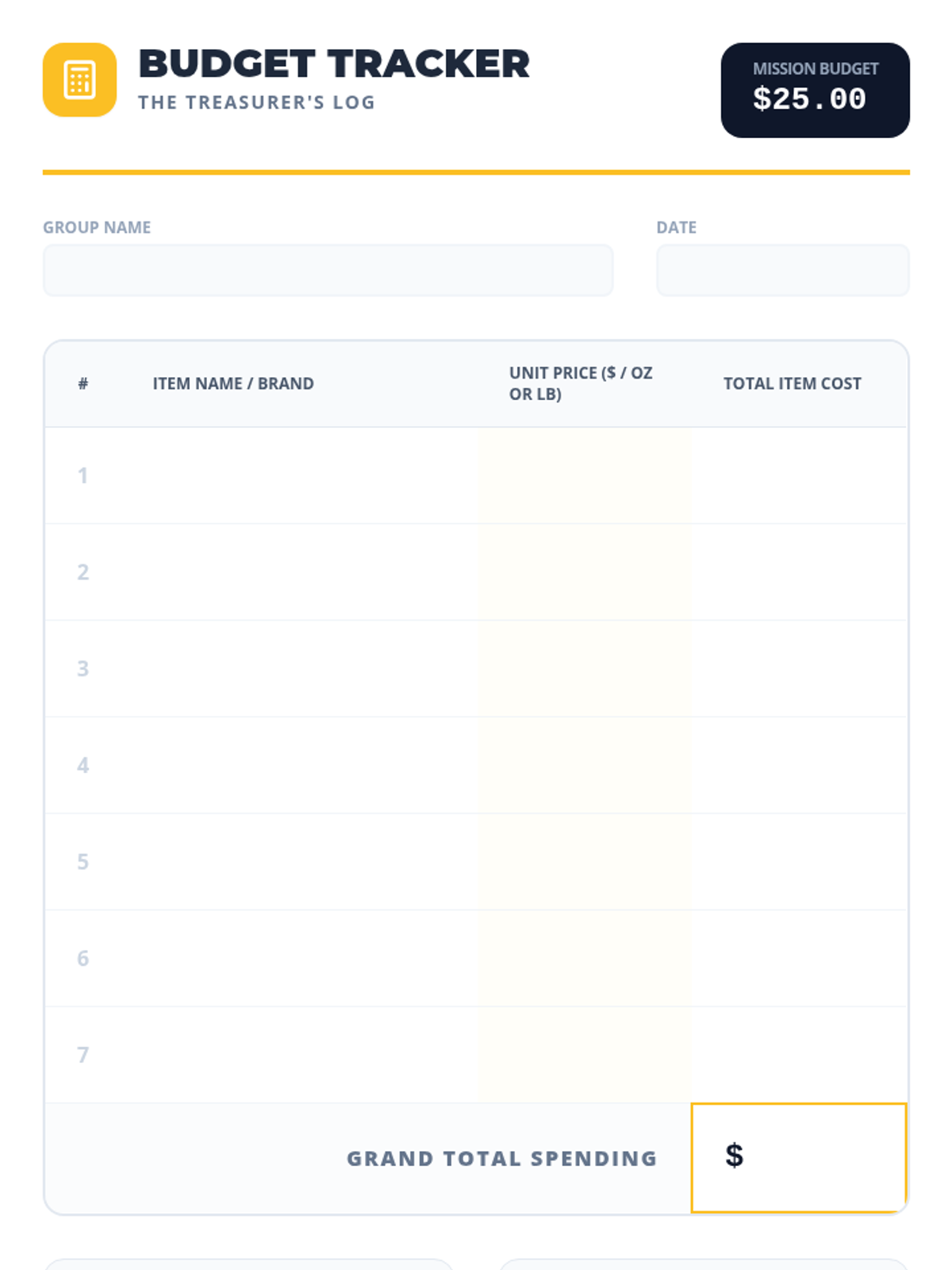
A group-building scavenger hunt where students work in teams to identify healthy foods, manage a budget, and practice social skills in a real-world grocery setting.
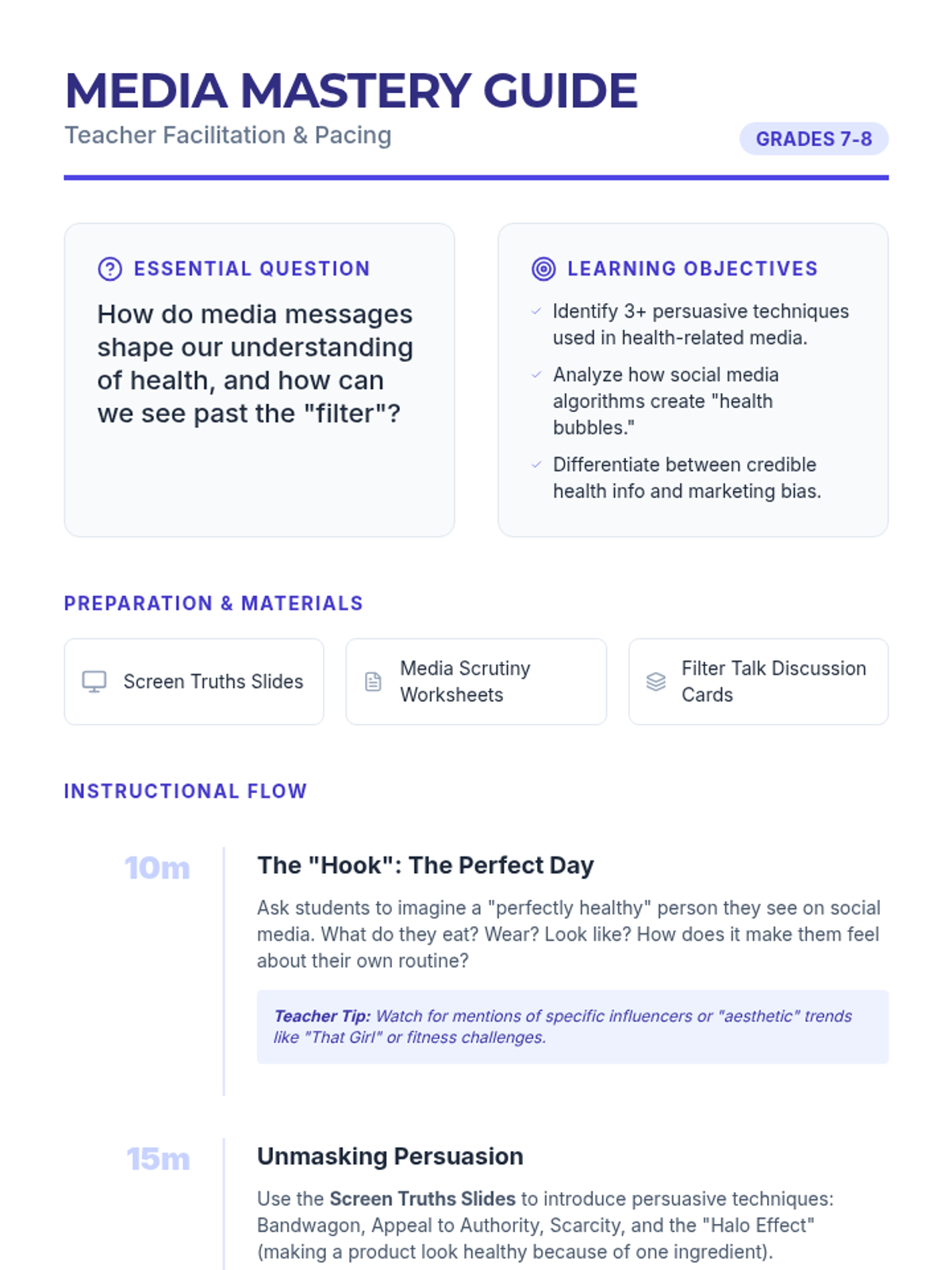
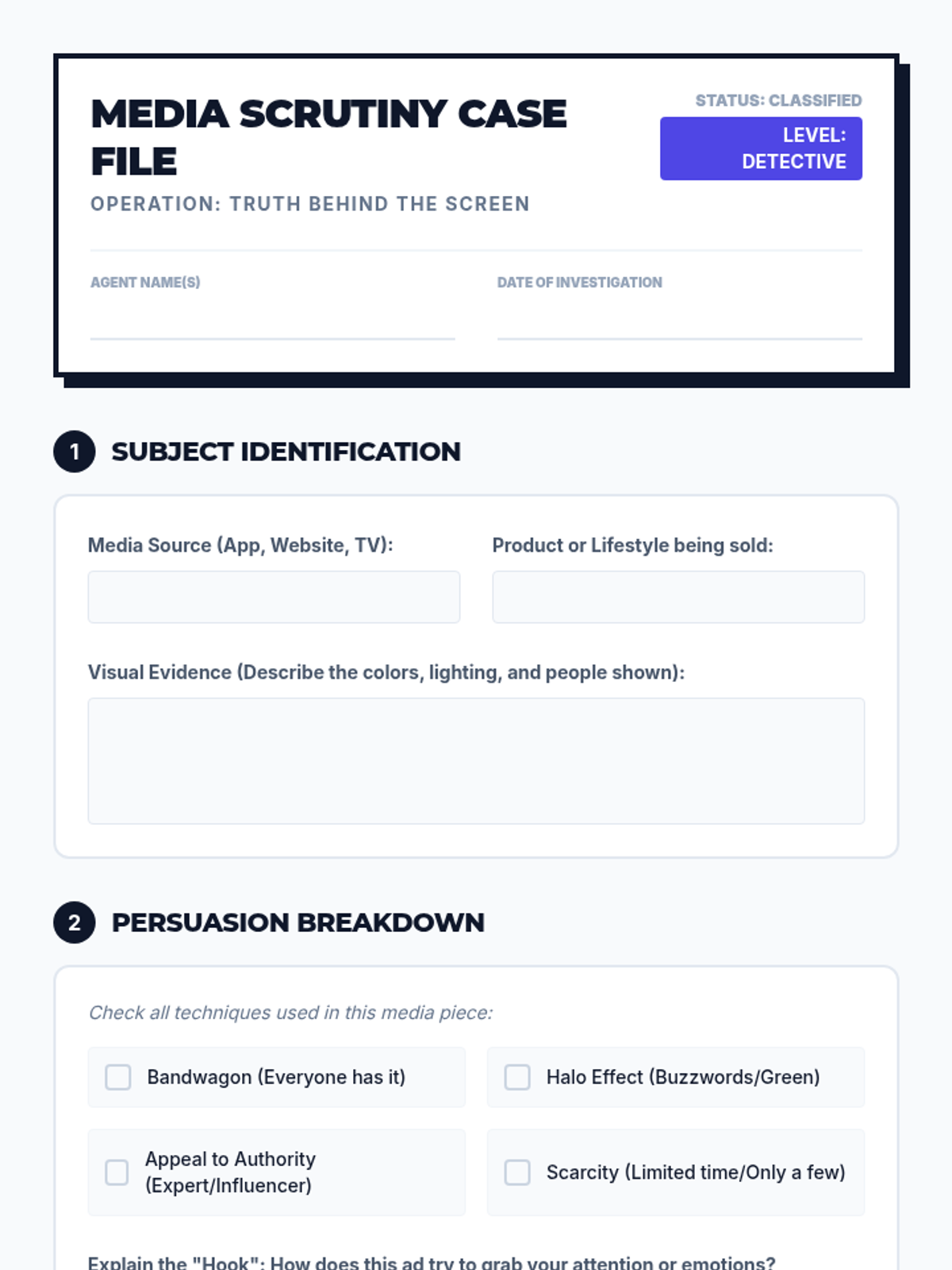
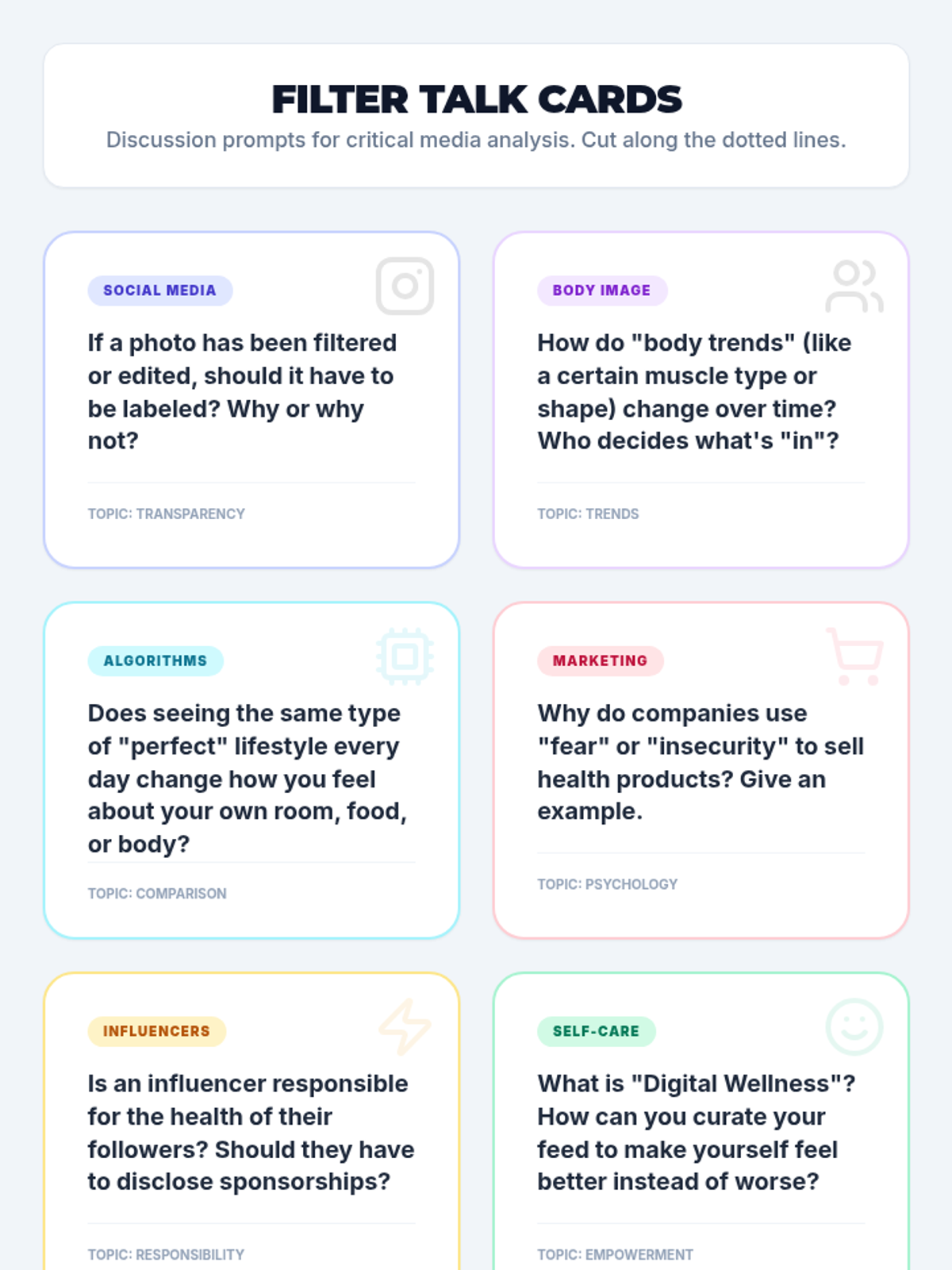
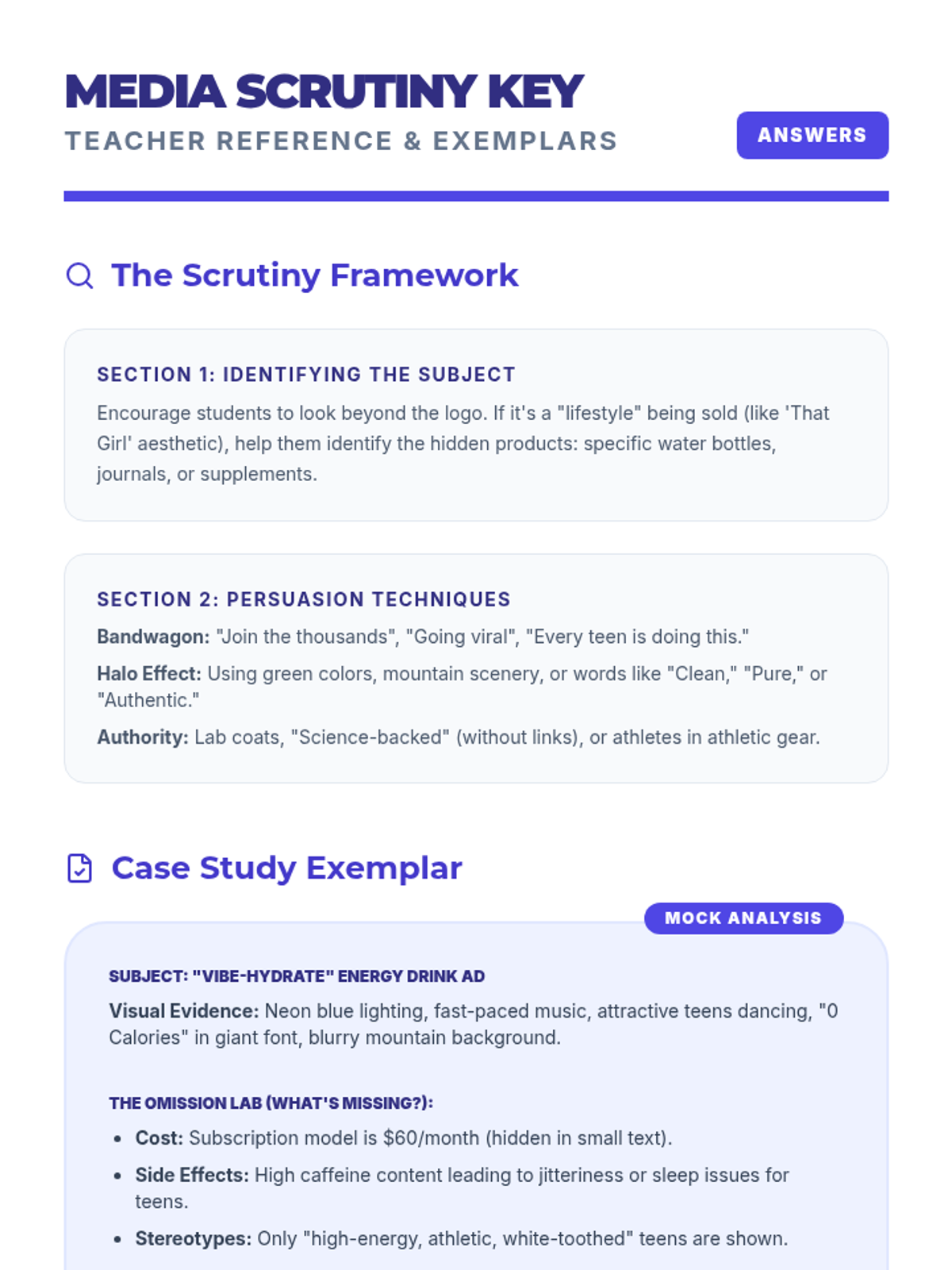
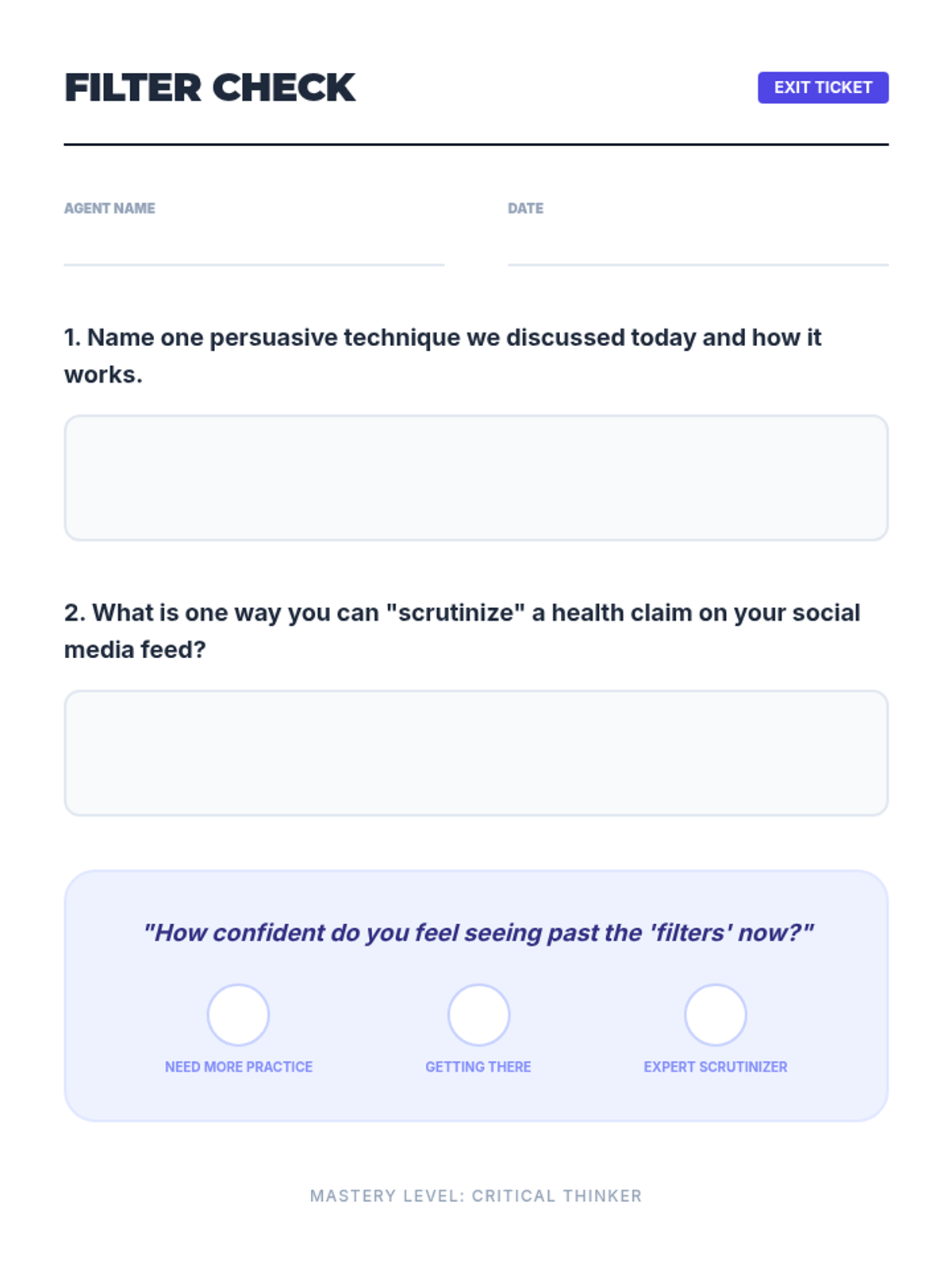
A comprehensive lesson for 7th and 8th graders to critically analyze media's impact on health, body image, and lifestyle choices through investigative activities and discussion.
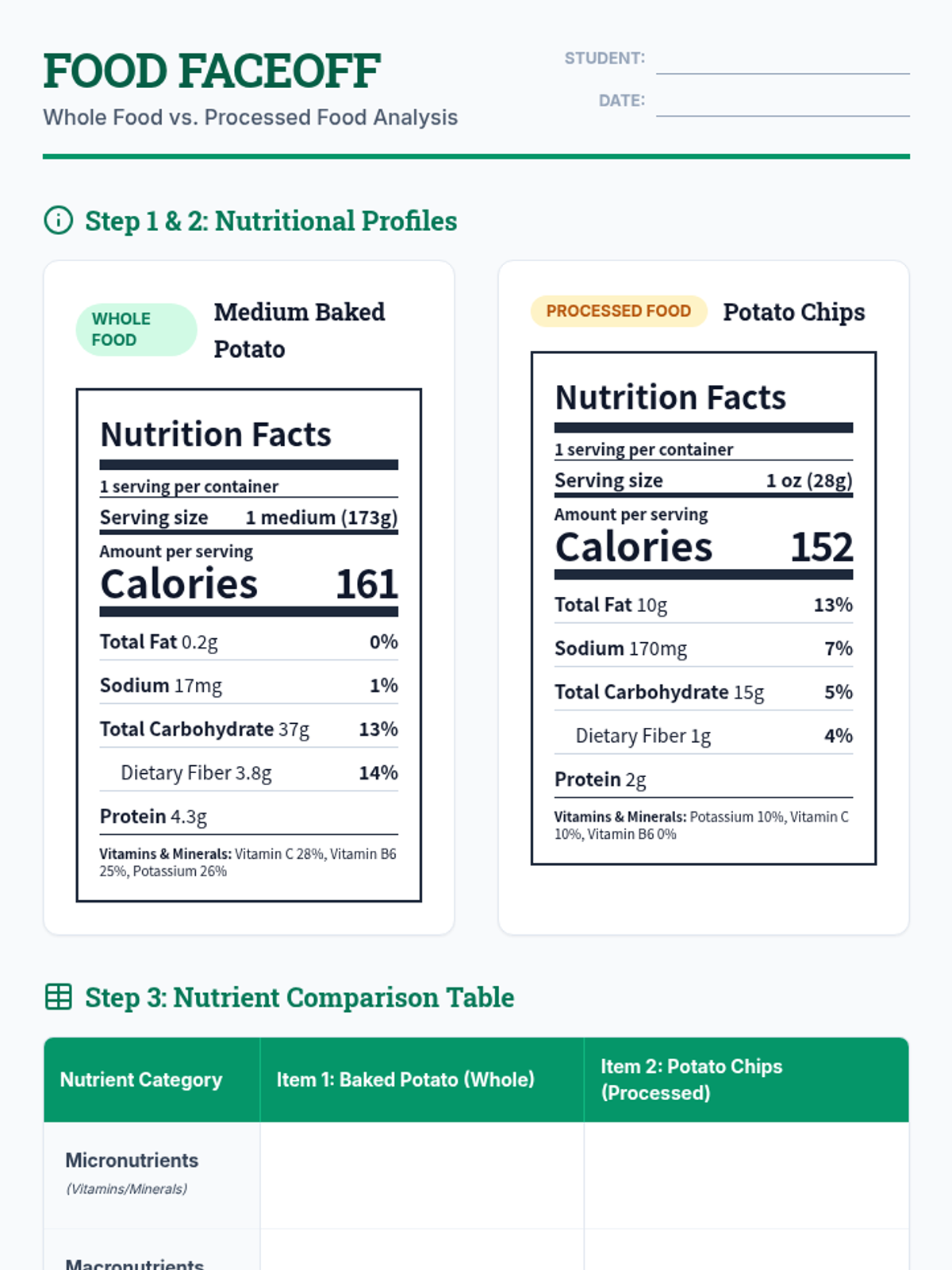
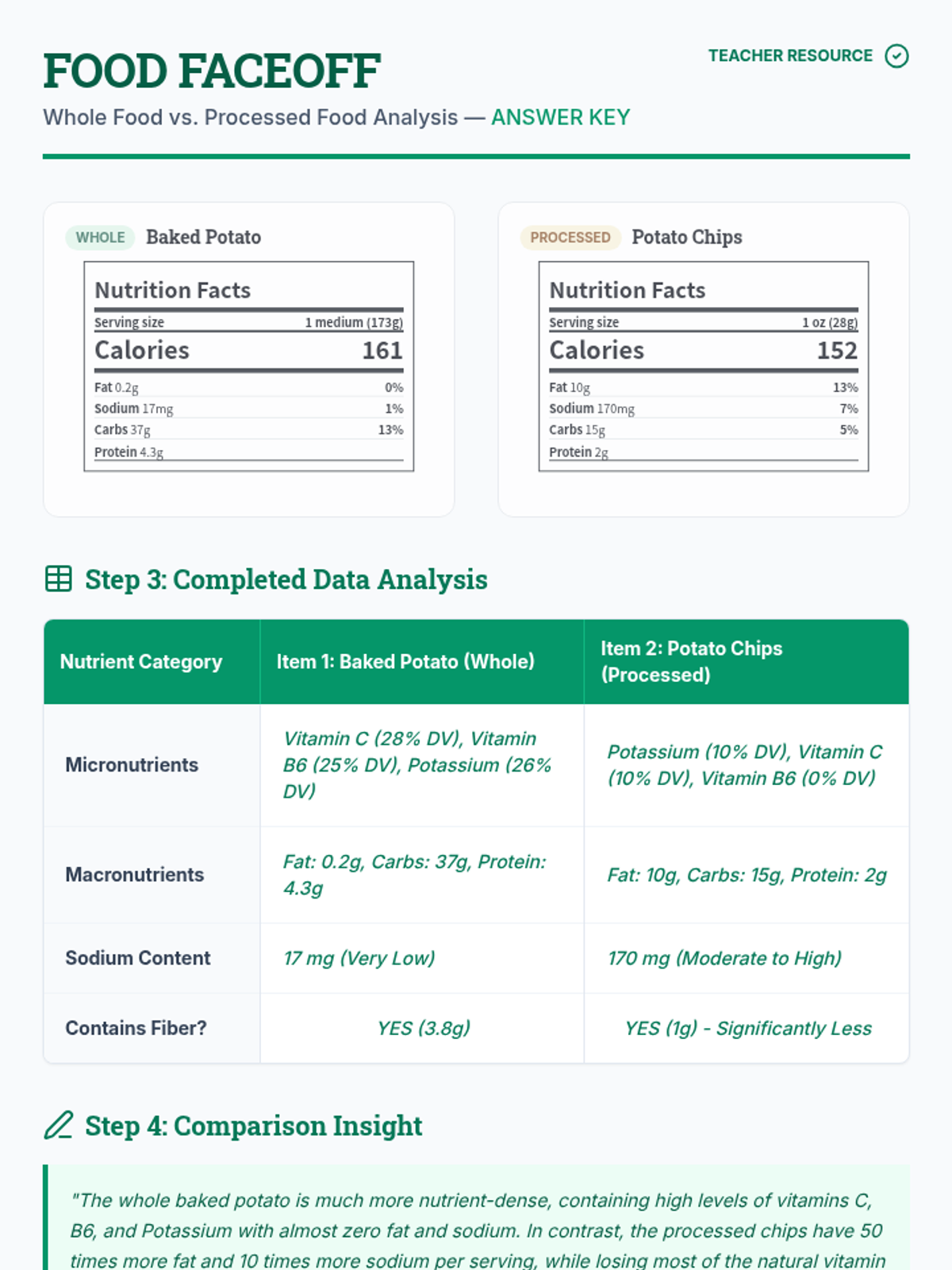
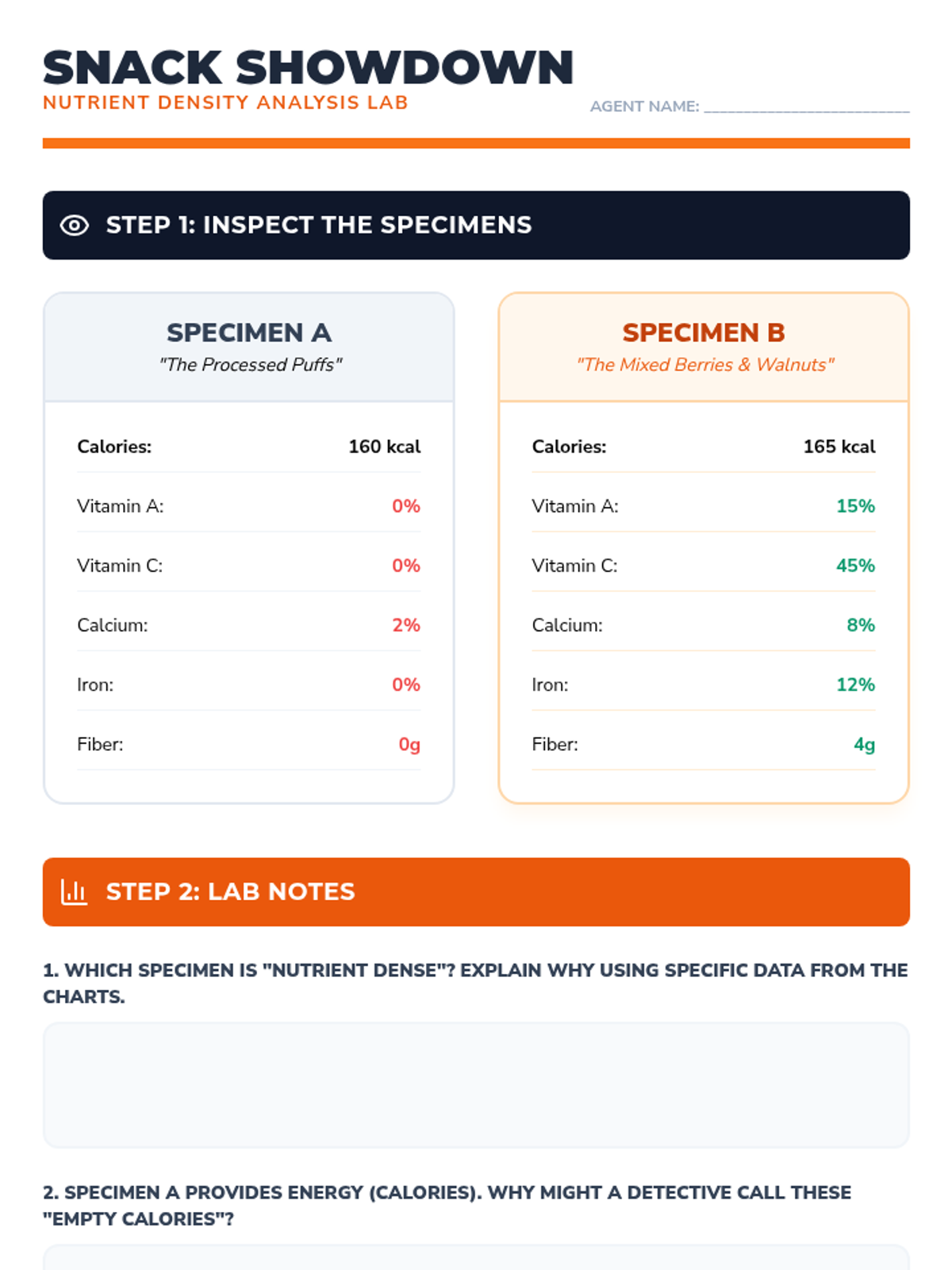
A lesson exploring the nutritional differences between whole and processed foods through data analysis and calorie calculations. Students compare a whole baked potato to processed potato chips to understand how processing affects nutrient density.
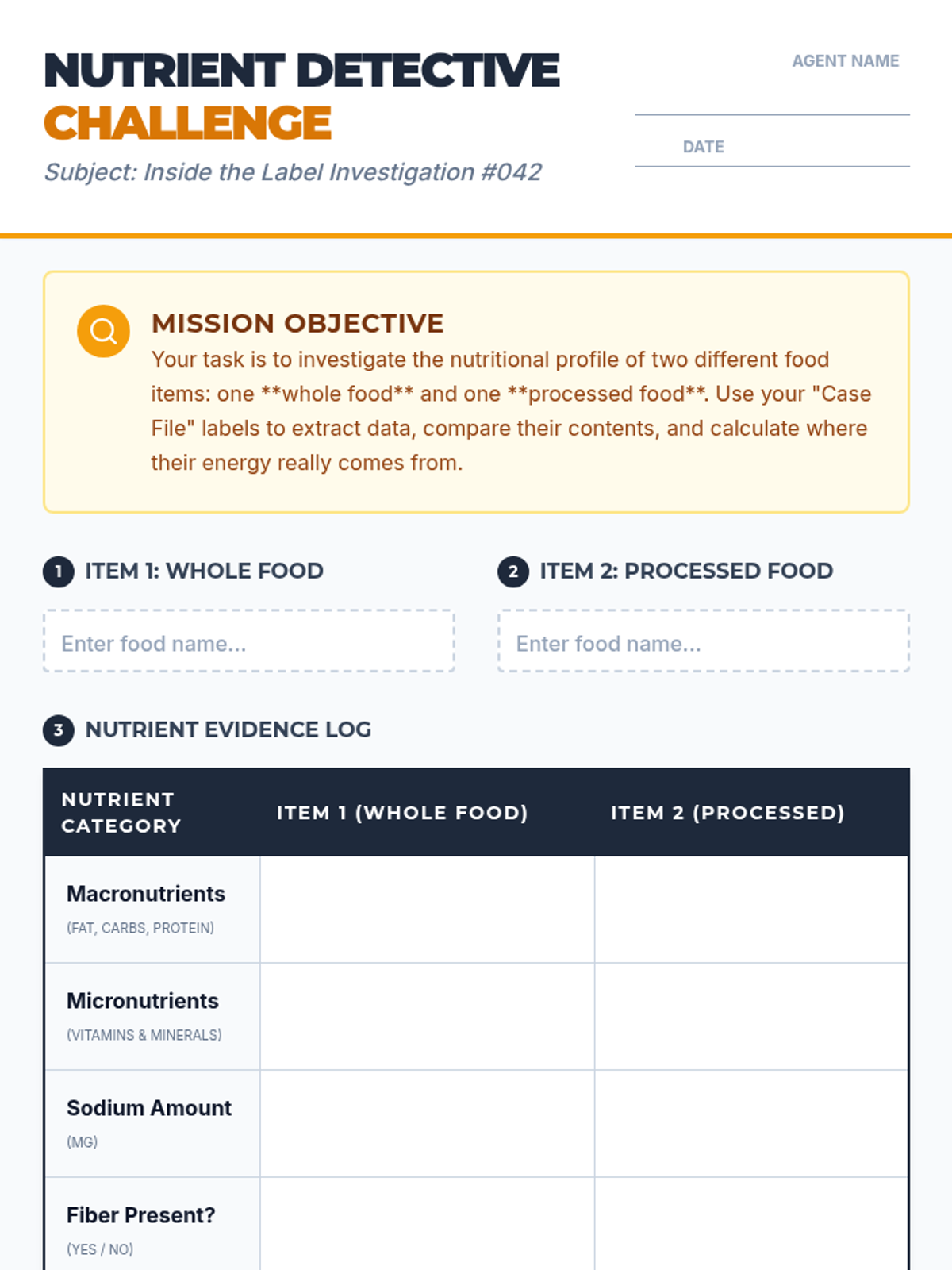
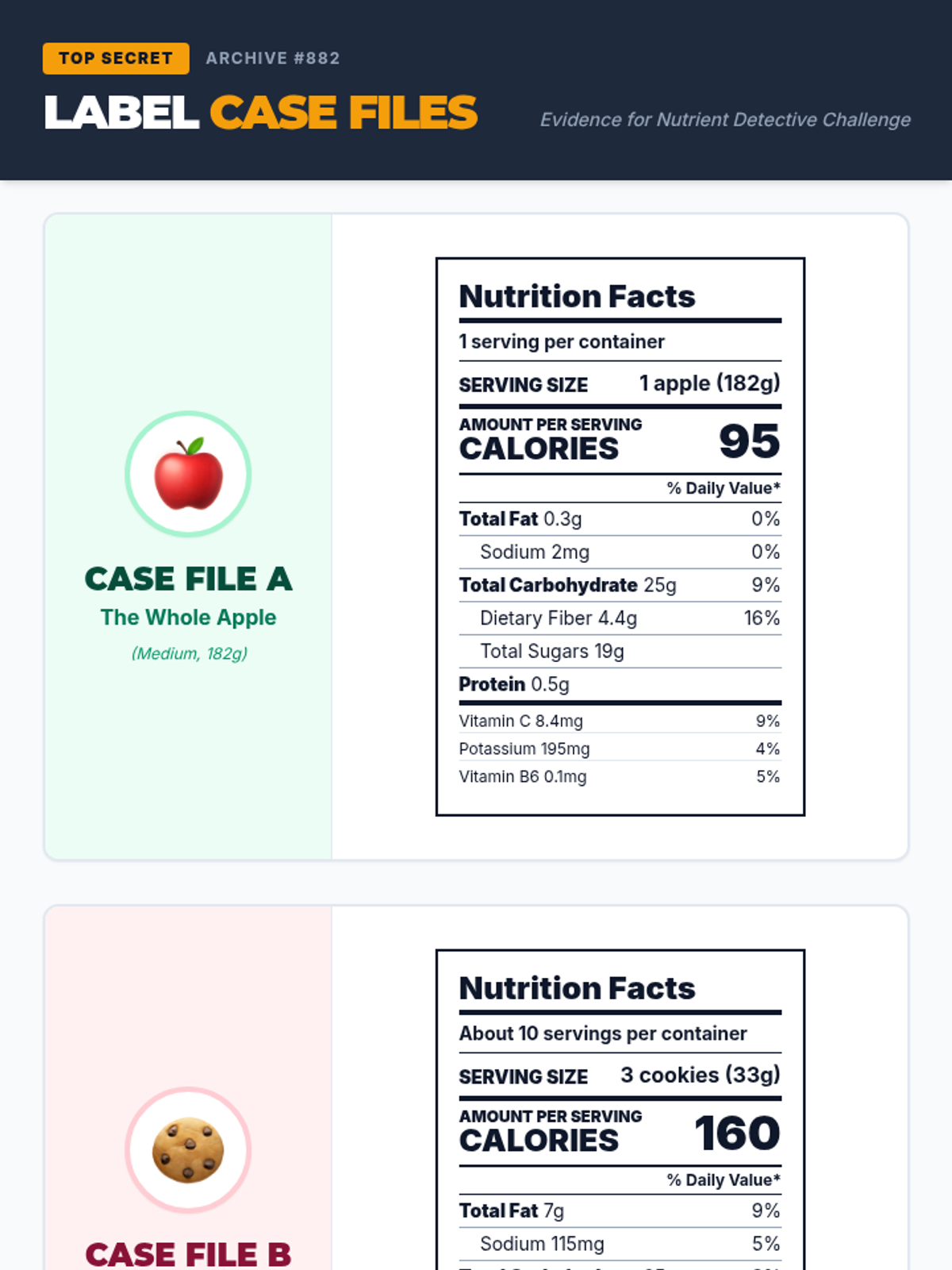
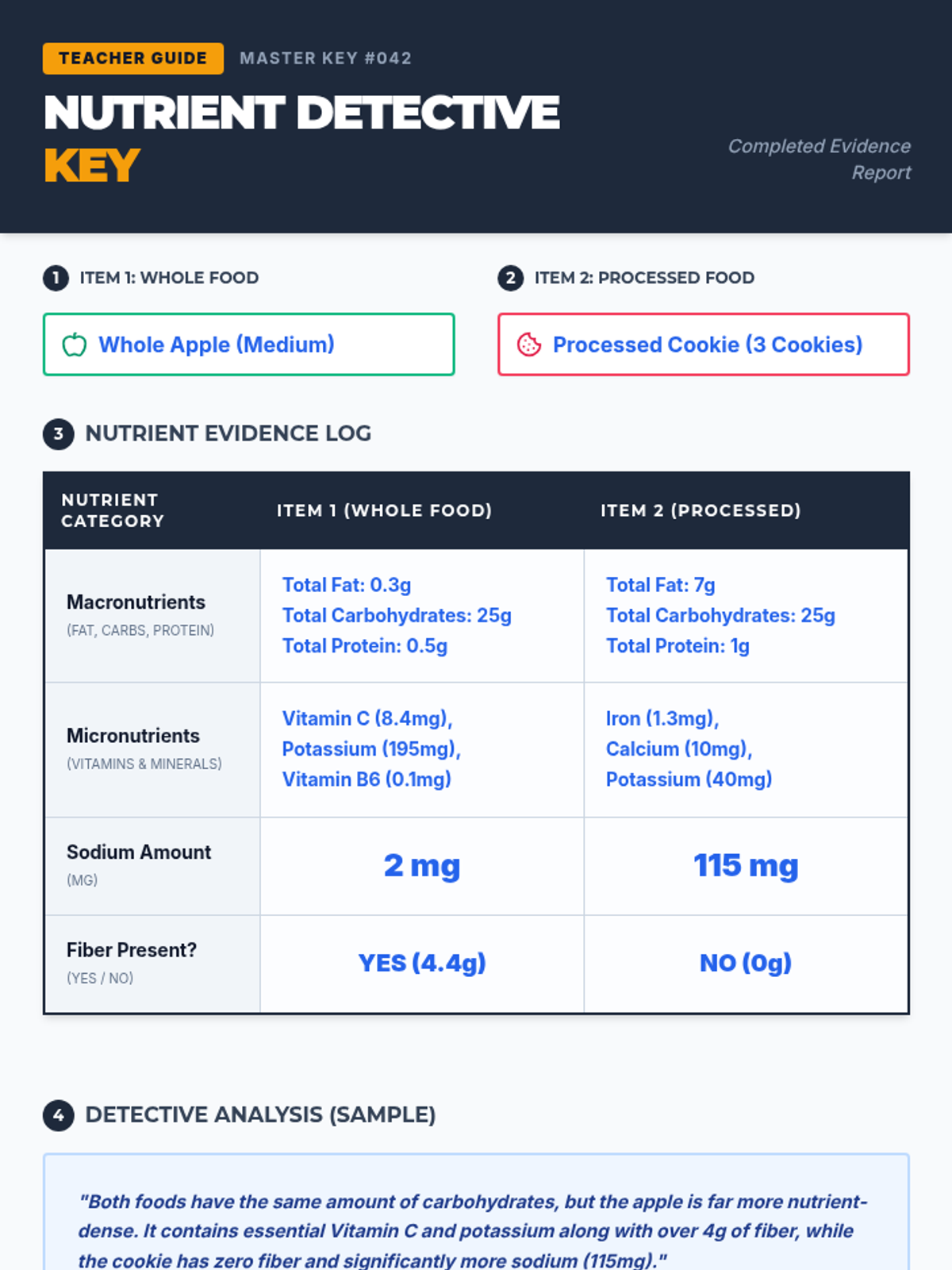
A hands-on investigation into nutrition labels where students compare whole and processed foods to understand nutrient density and calorie composition.
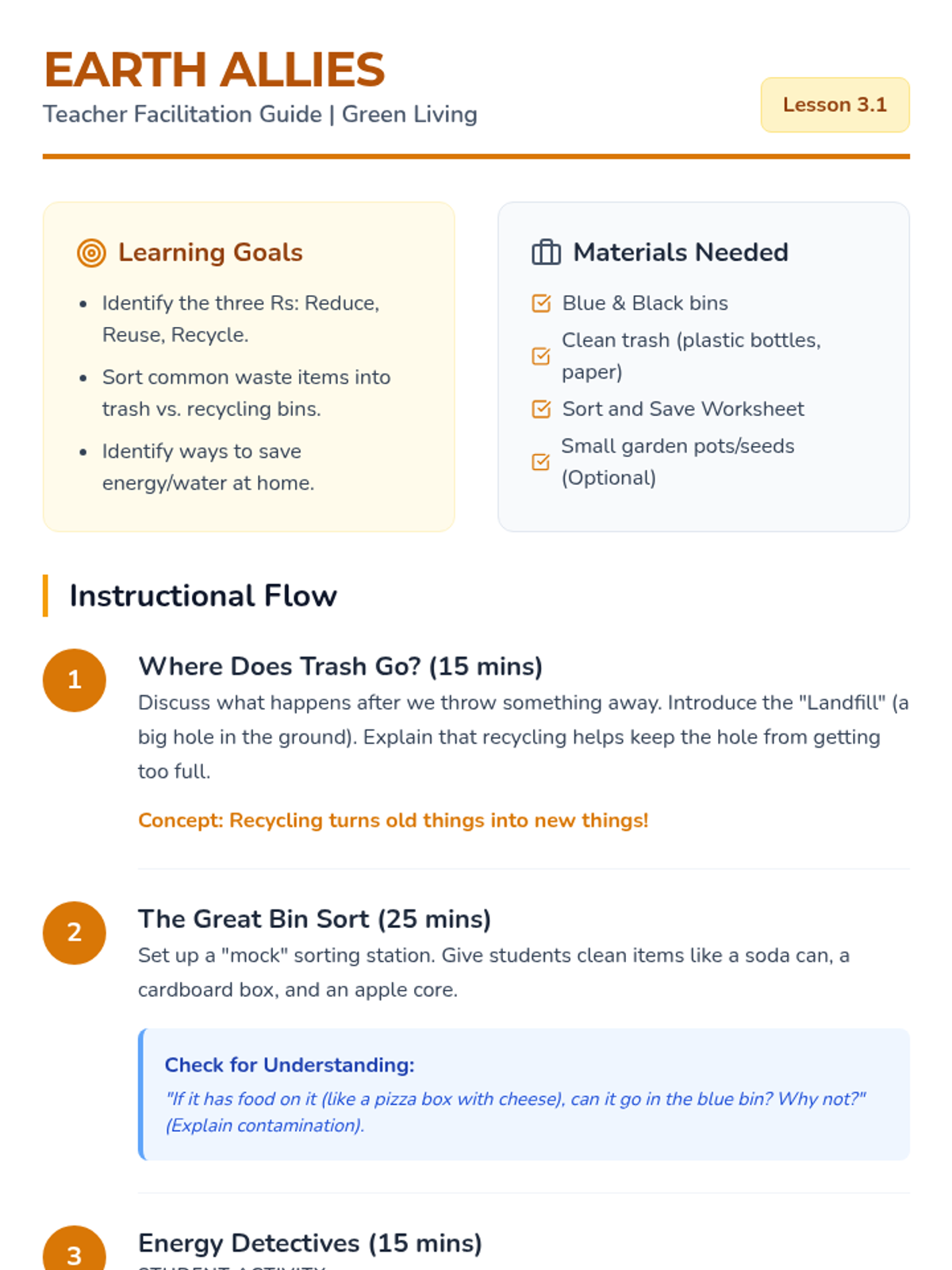
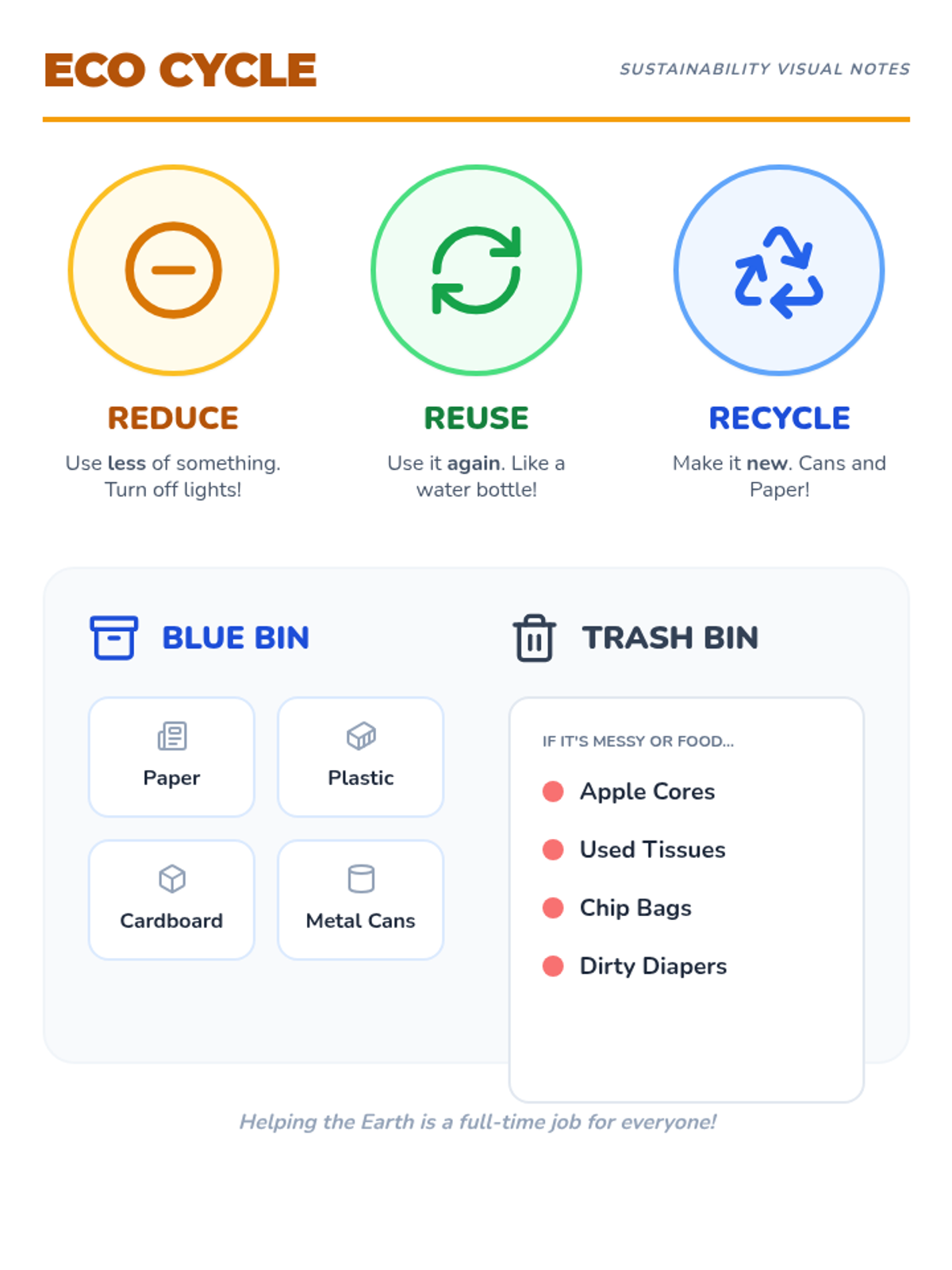
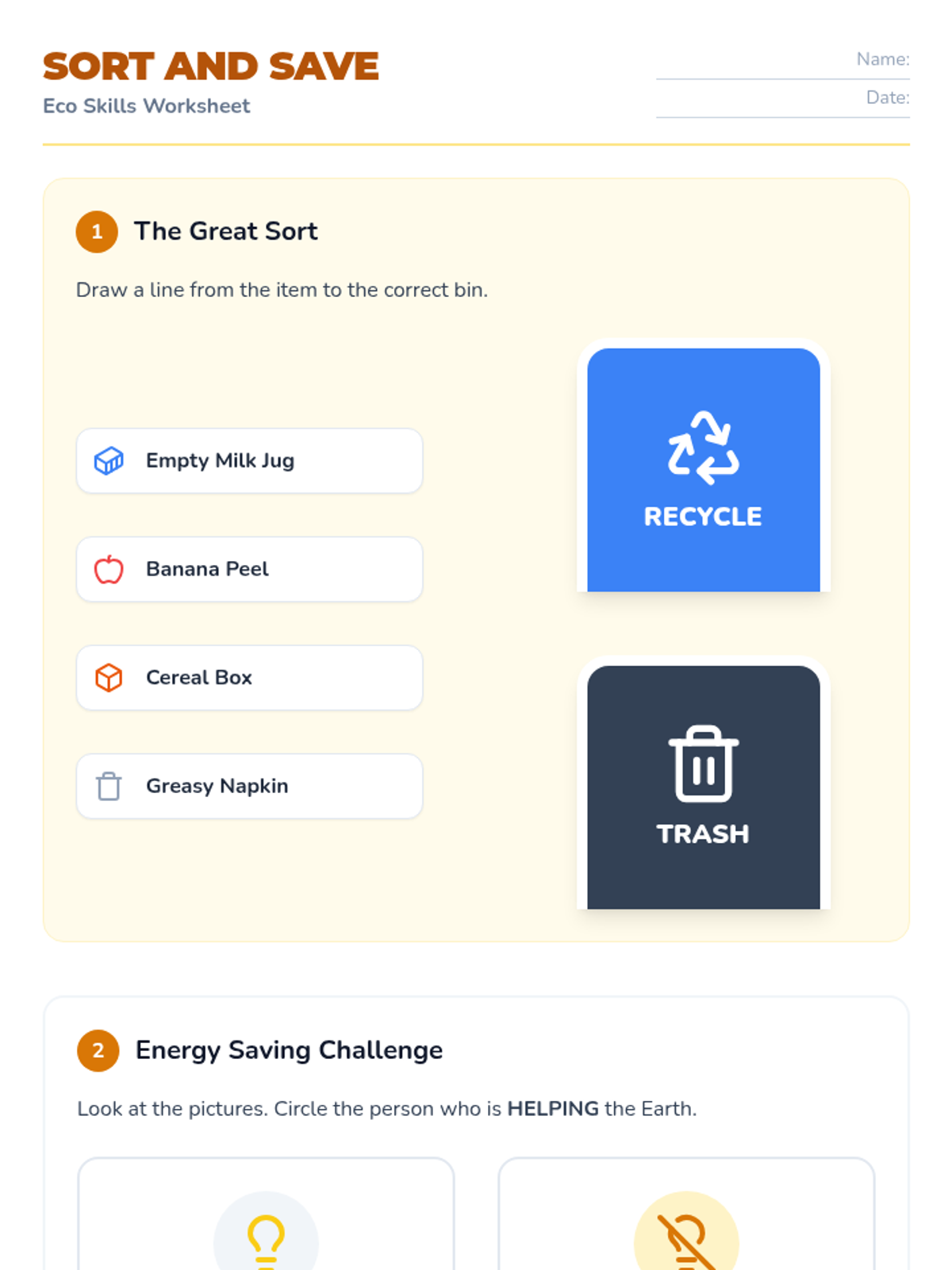
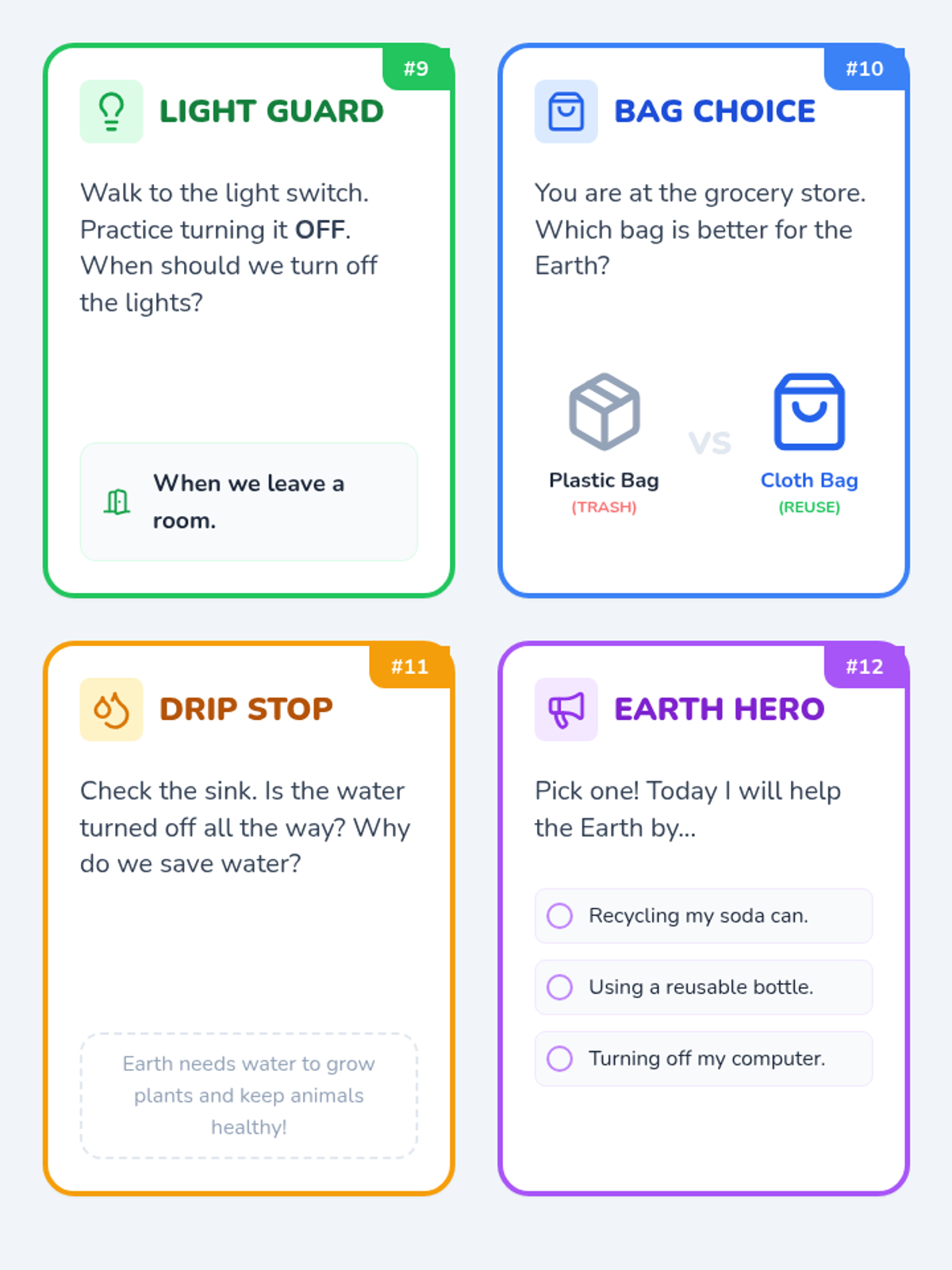
Introduces sustainability through waste reduction, recycling, and understanding how personal choices impact the local environment.
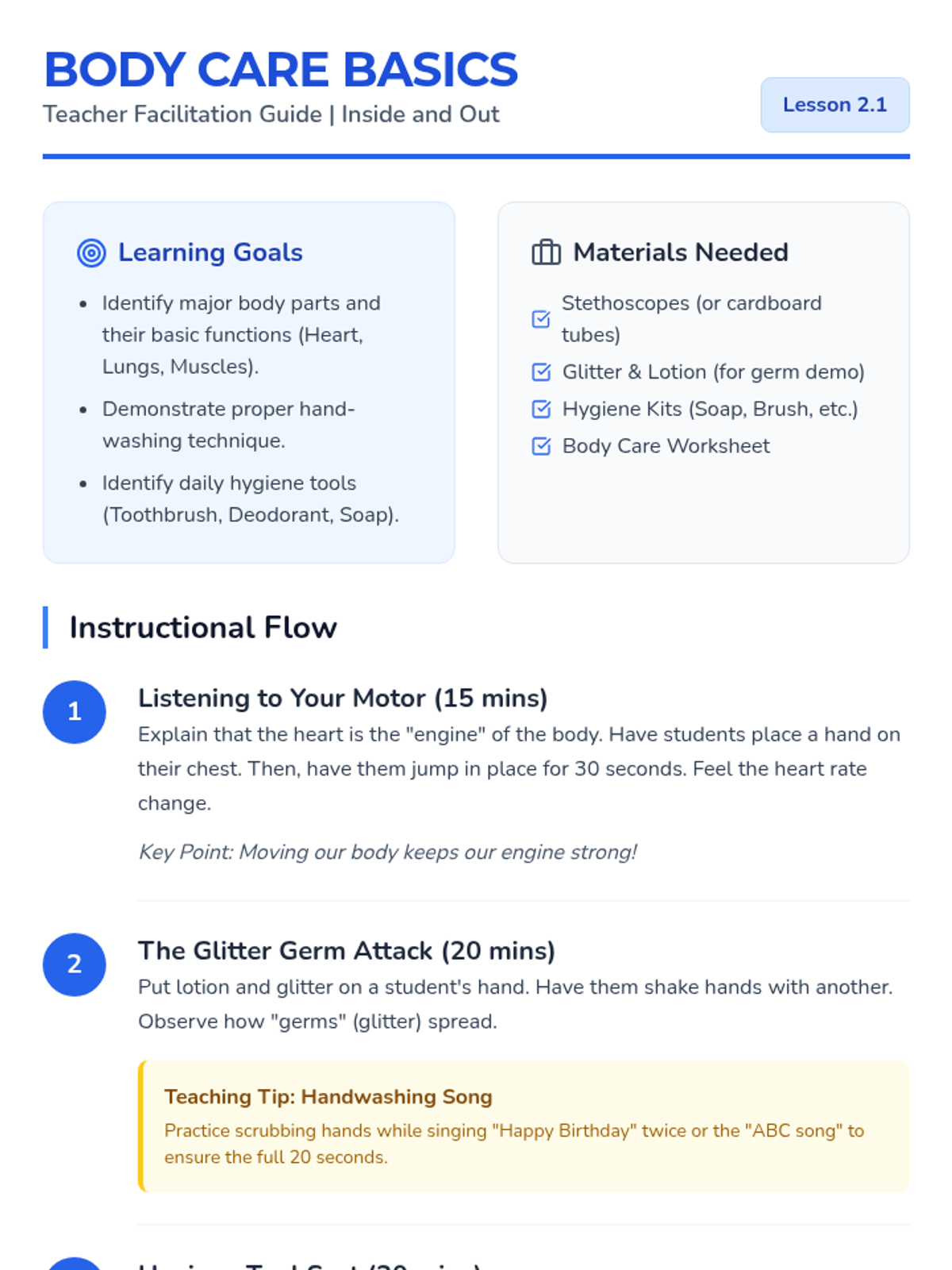
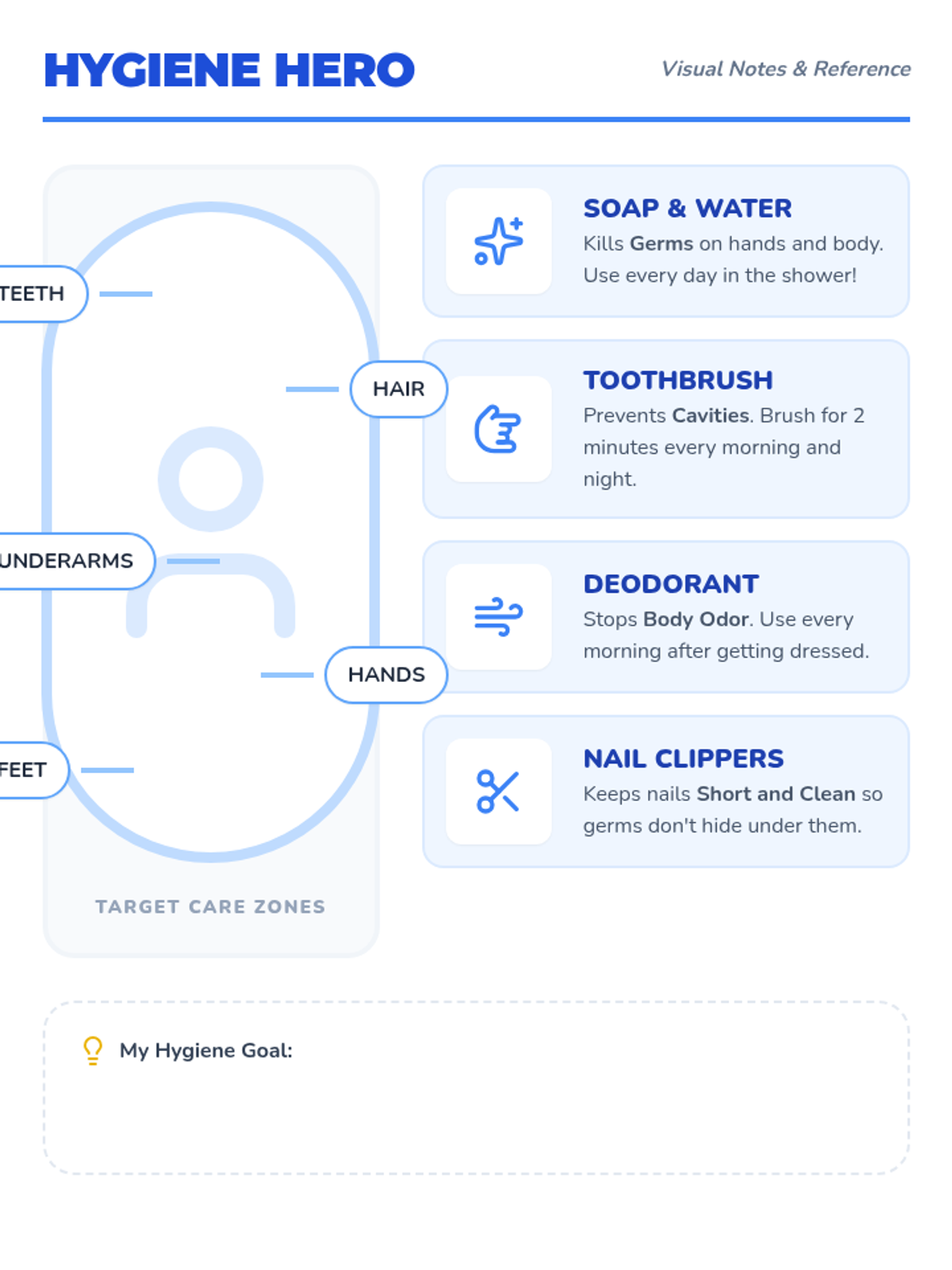
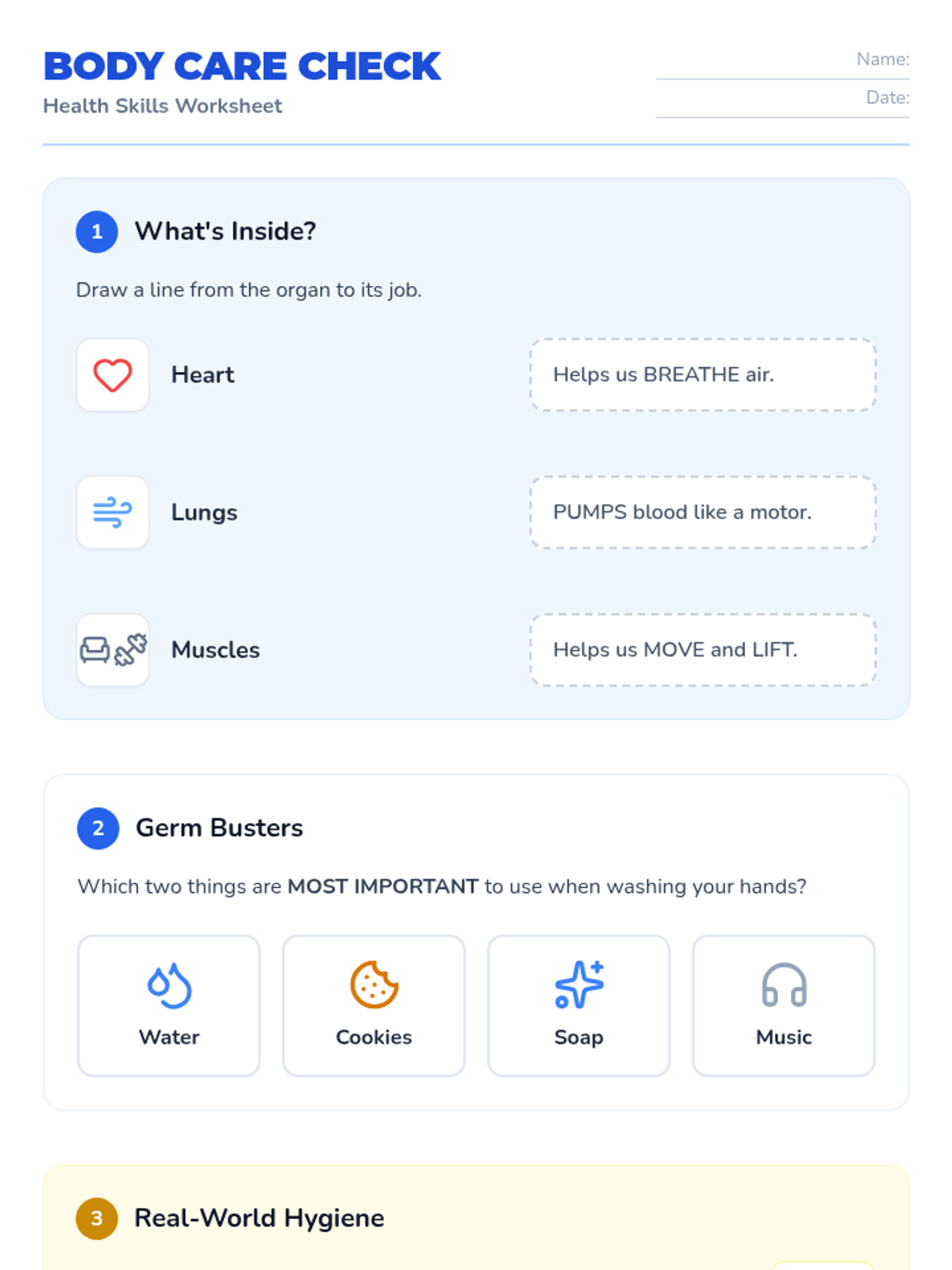
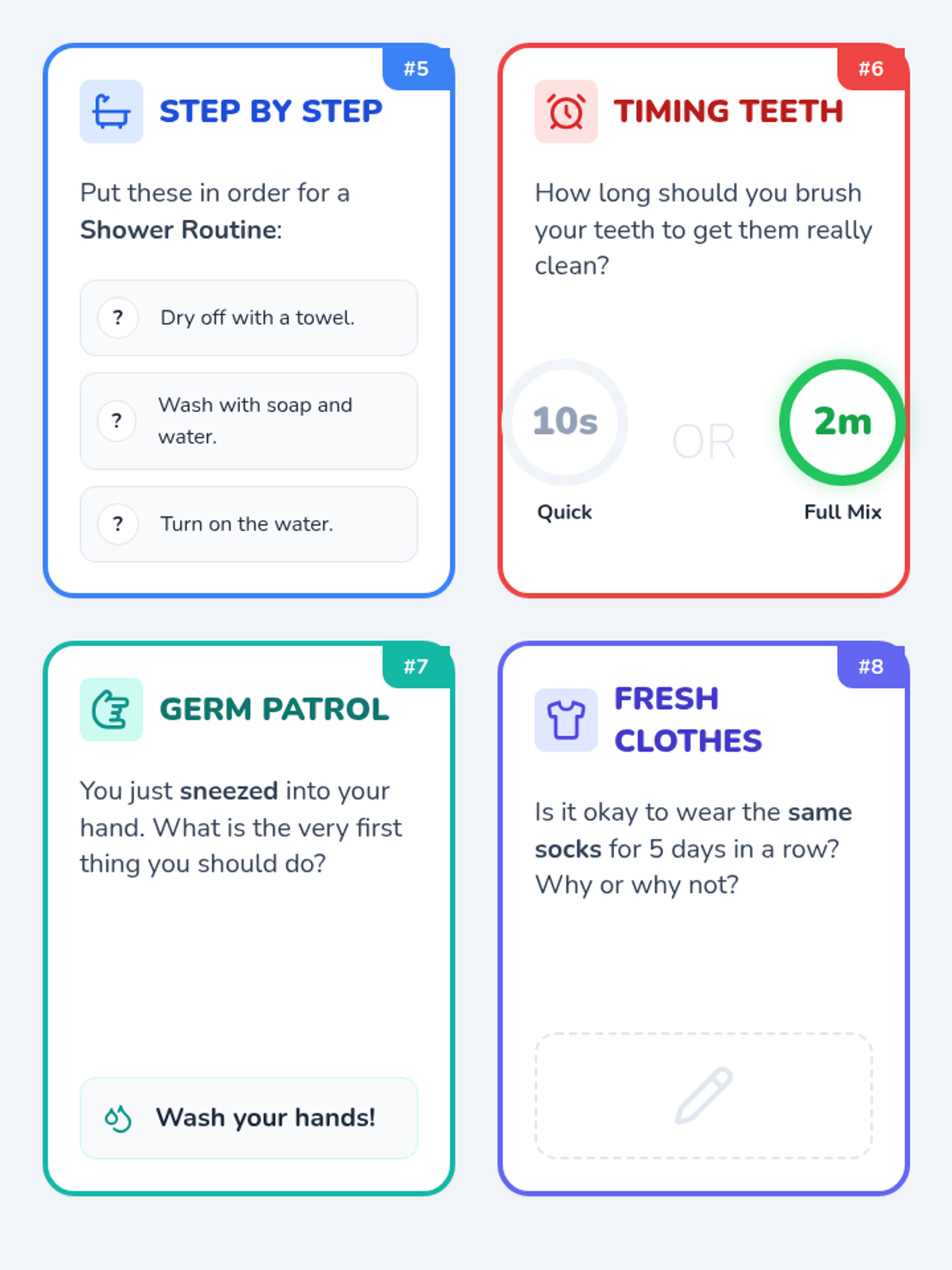
Covers basic human anatomy related to movement and health, alongside essential personal hygiene routines for daily living.
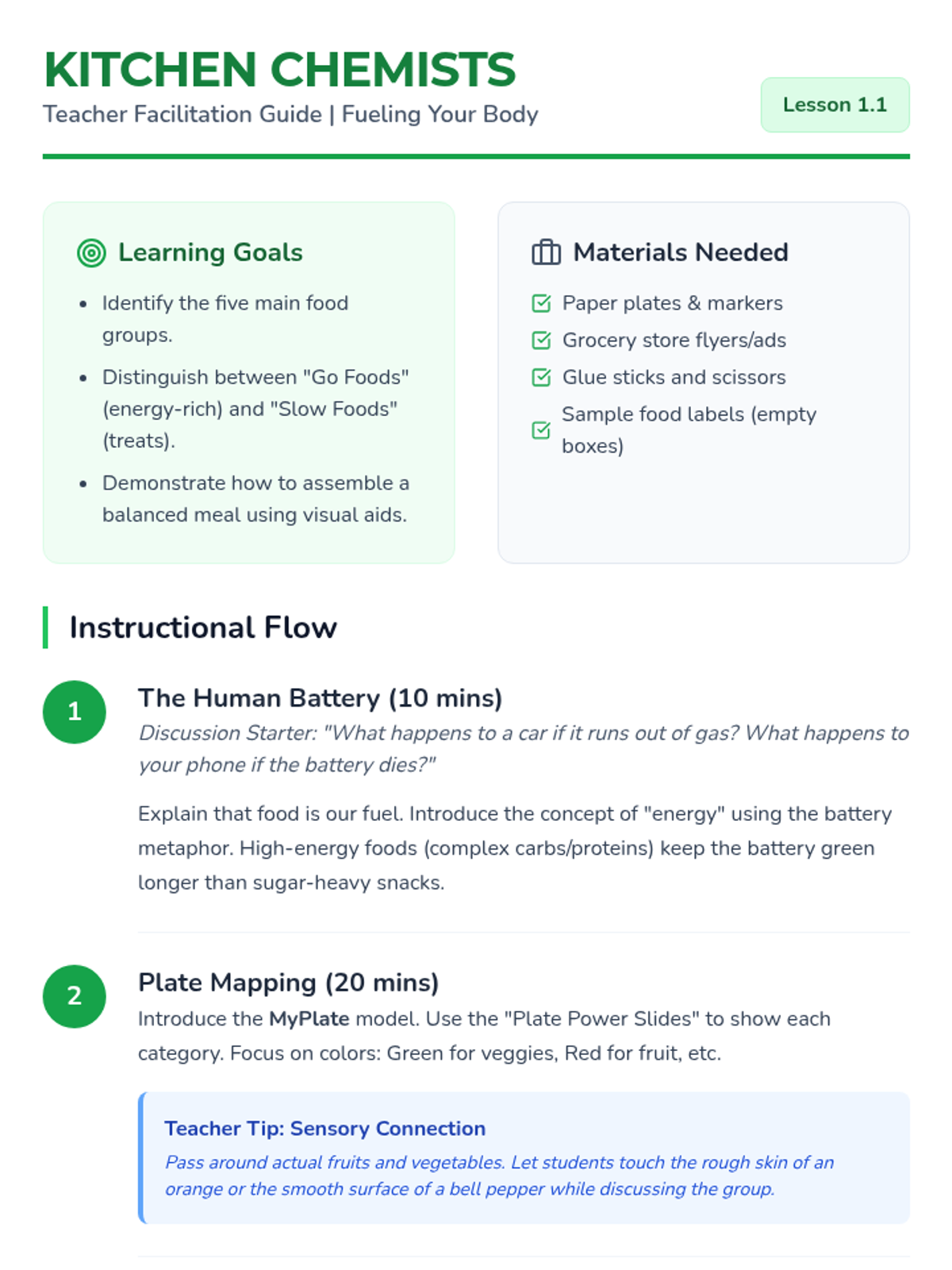
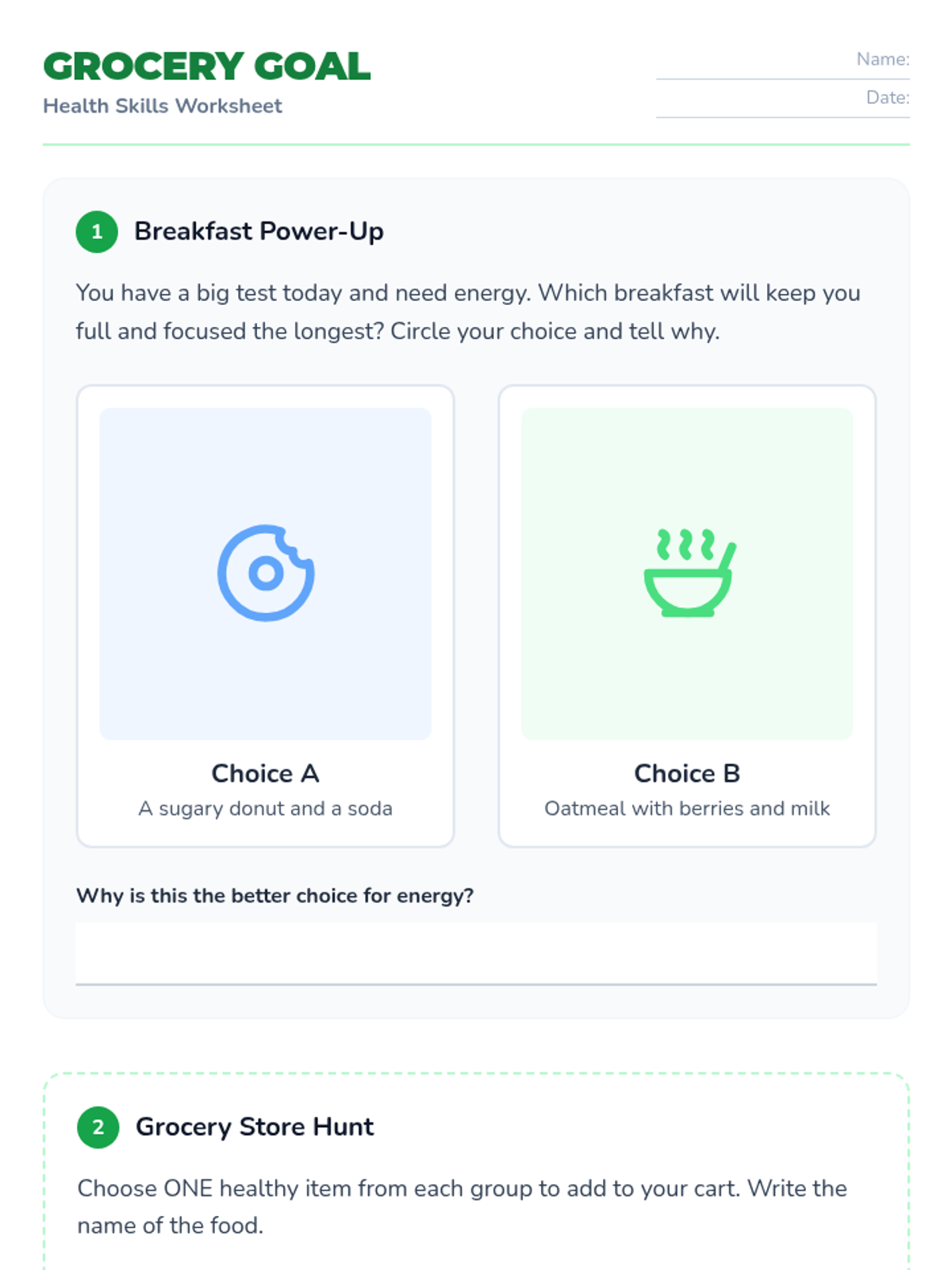
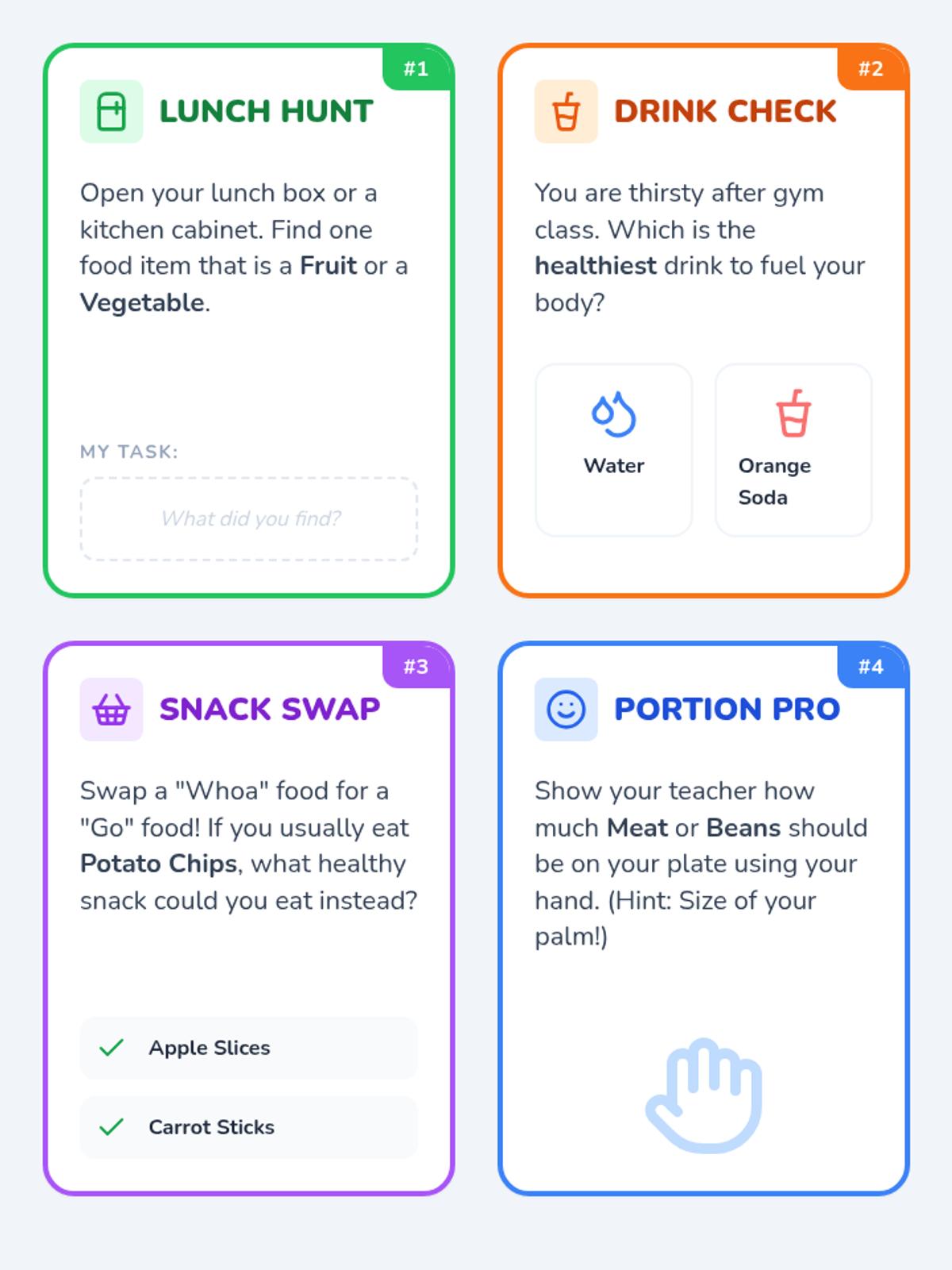
Focuses on identifying healthy food groups, reading simple food labels, and making informed nutritional choices for daily energy.
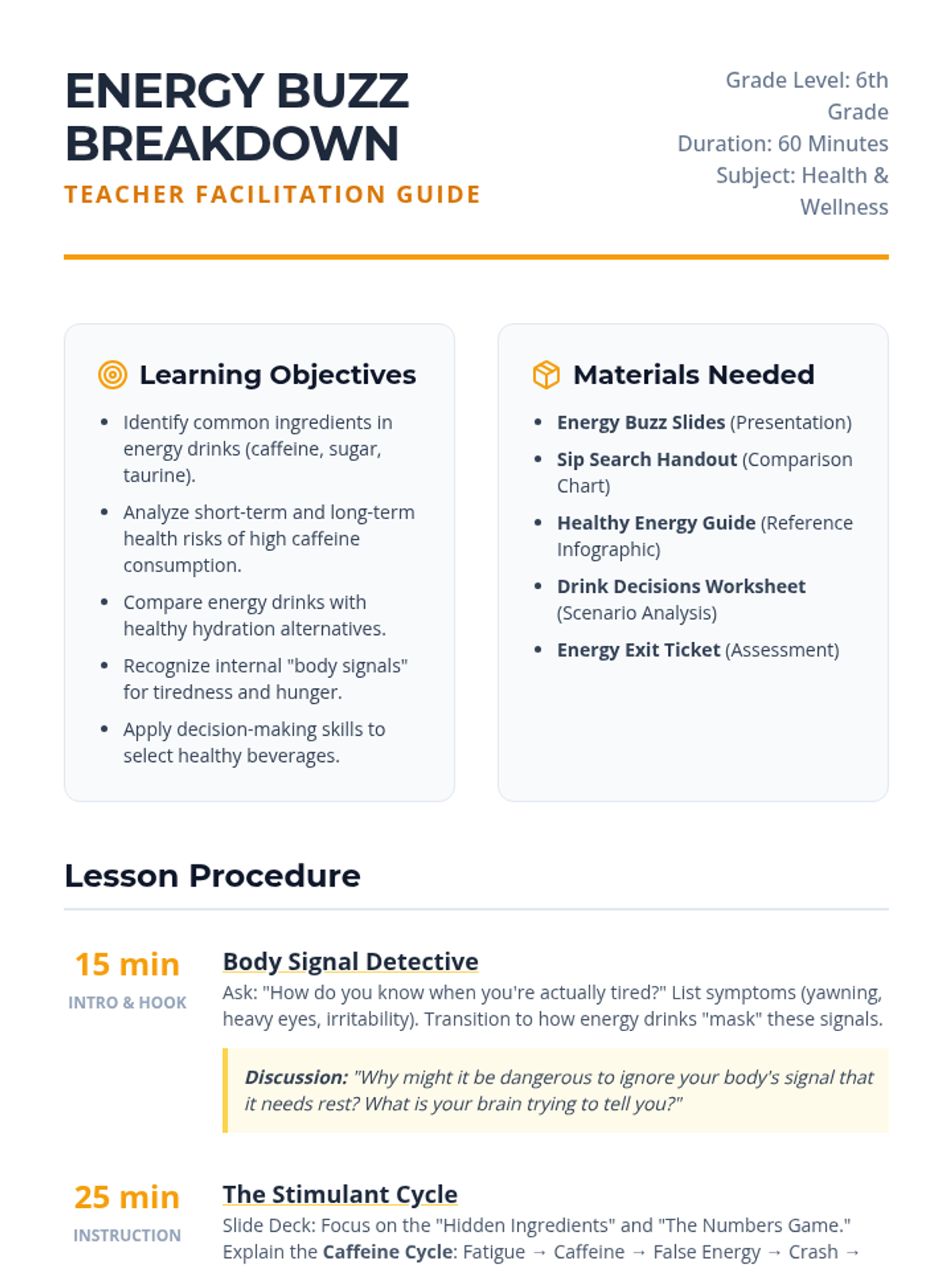
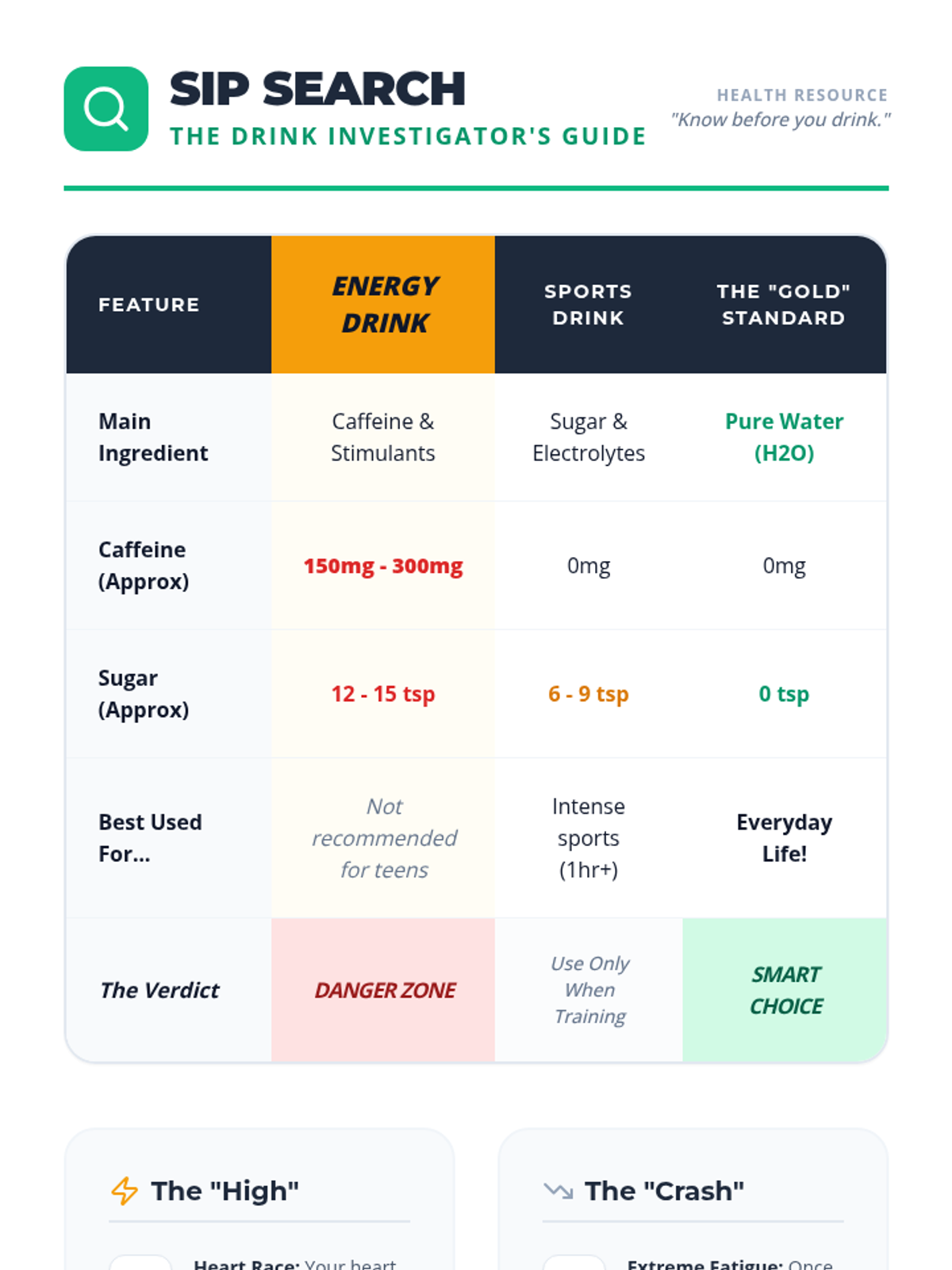
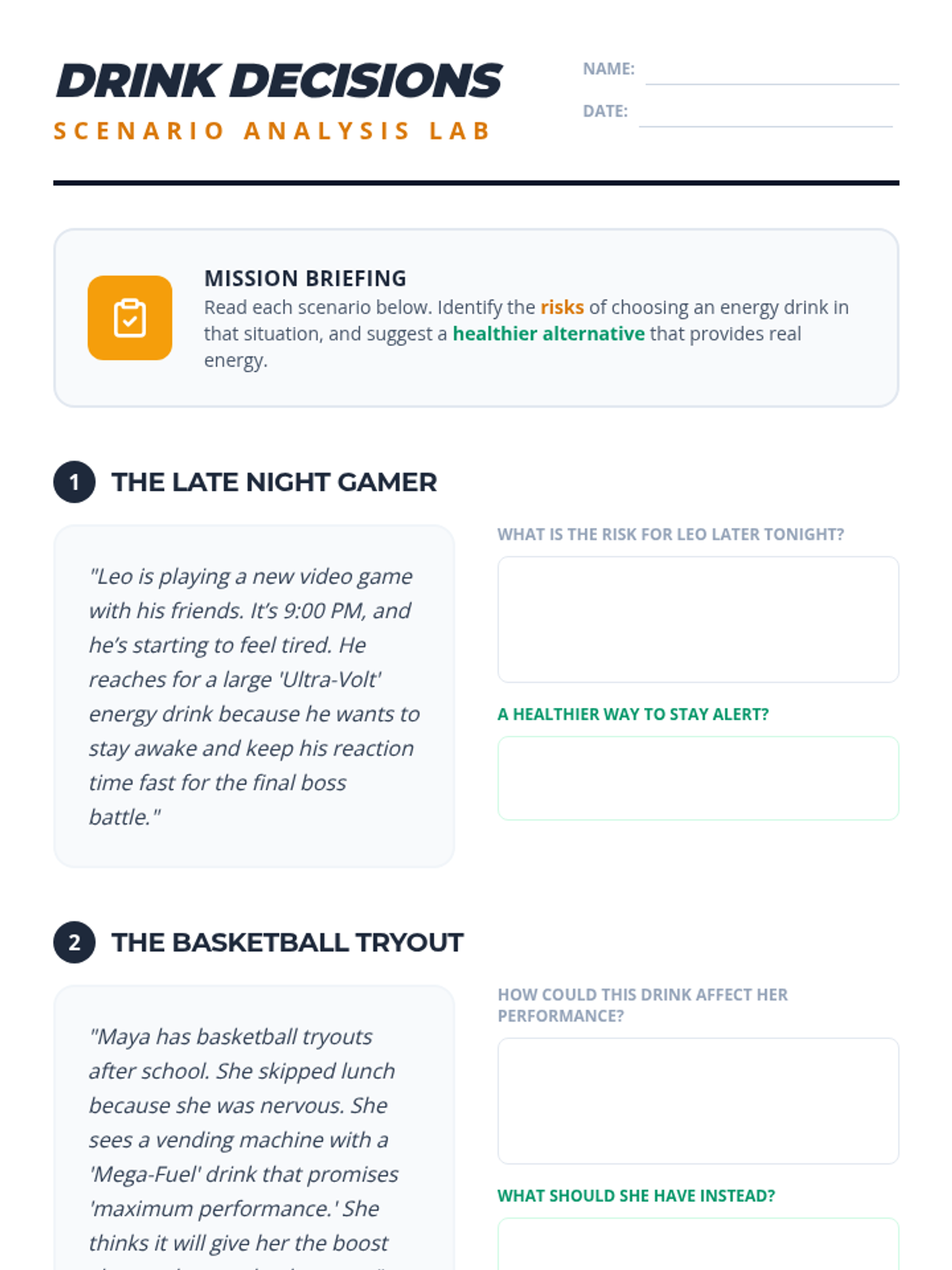
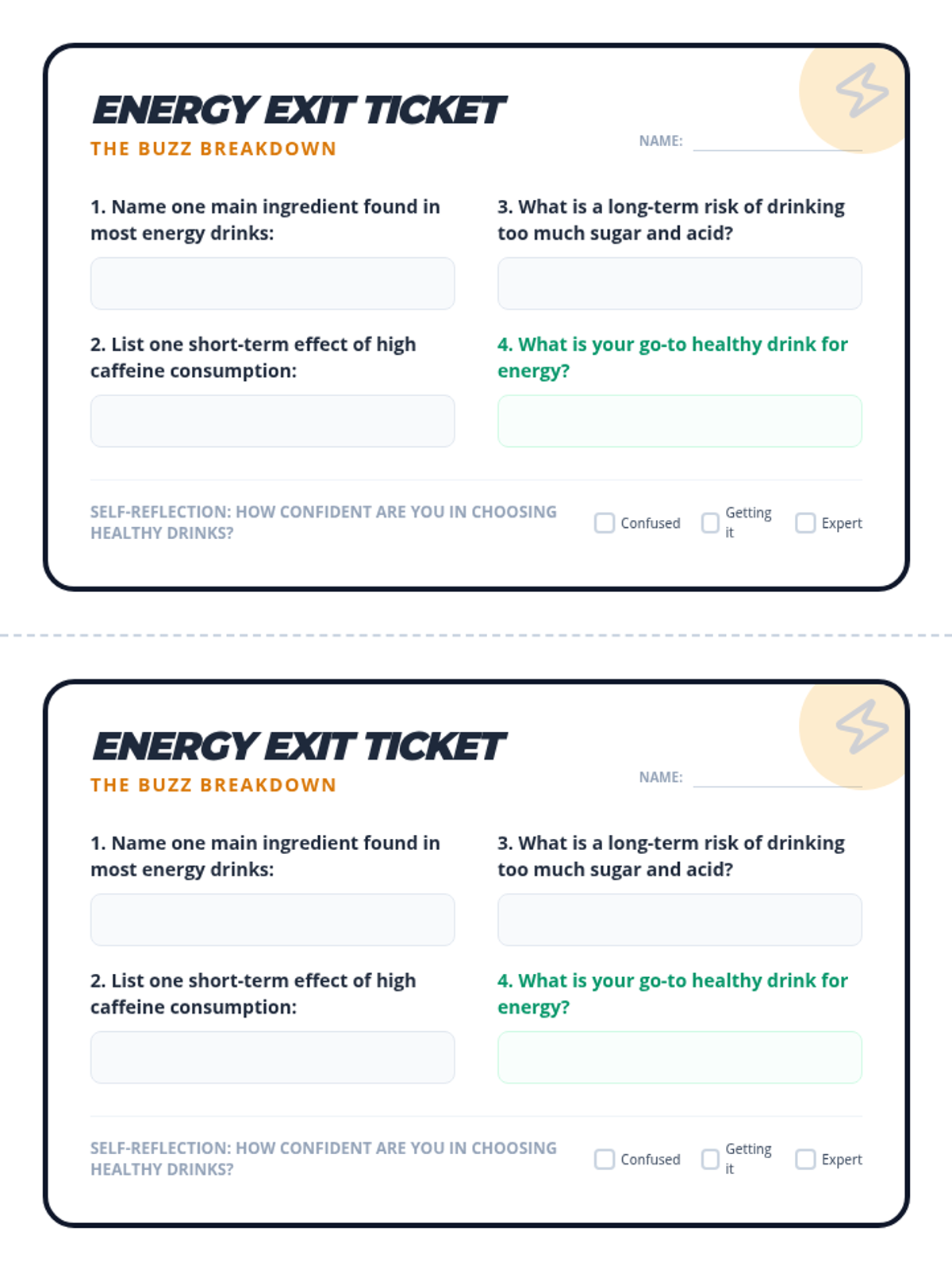
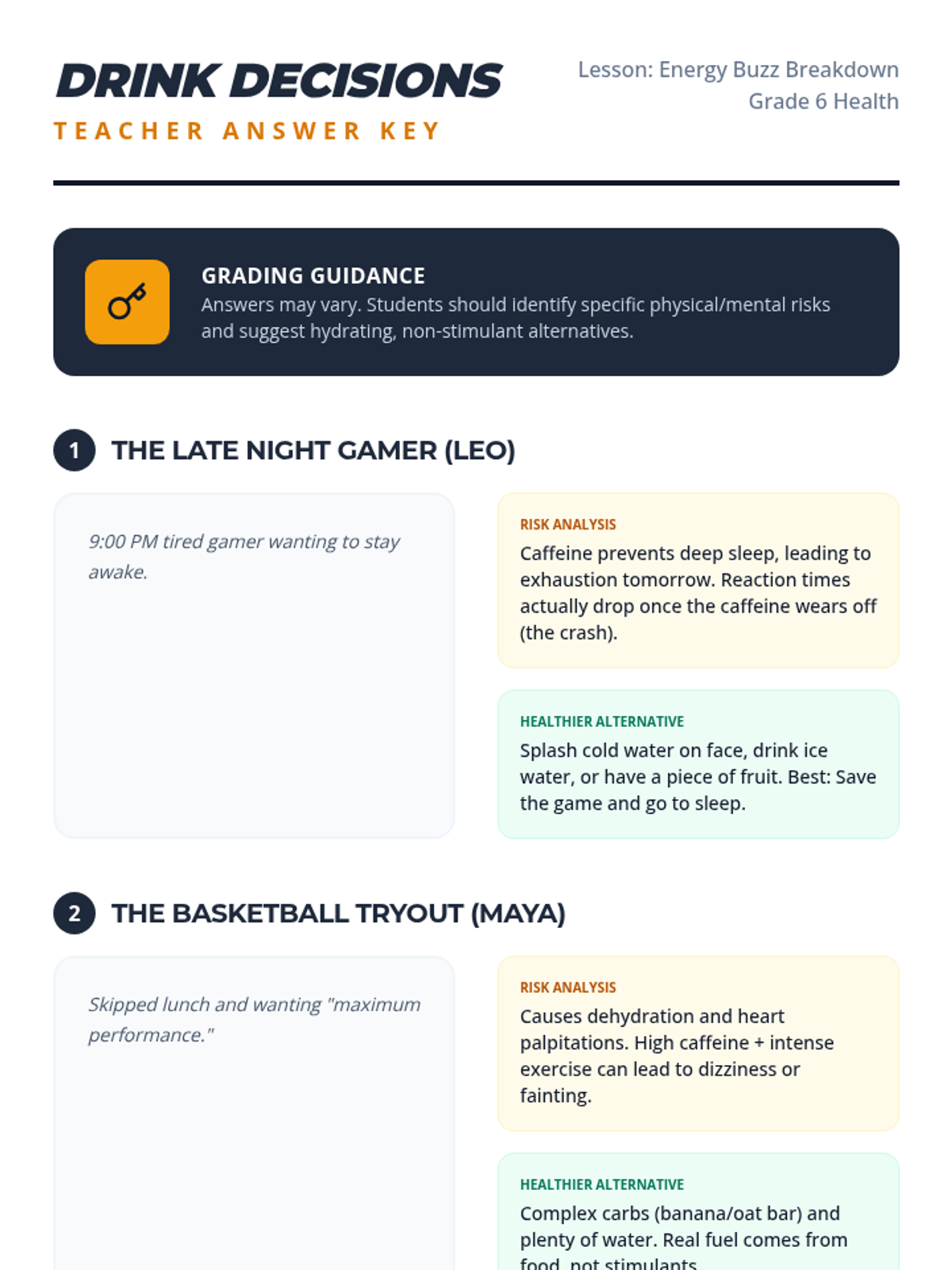
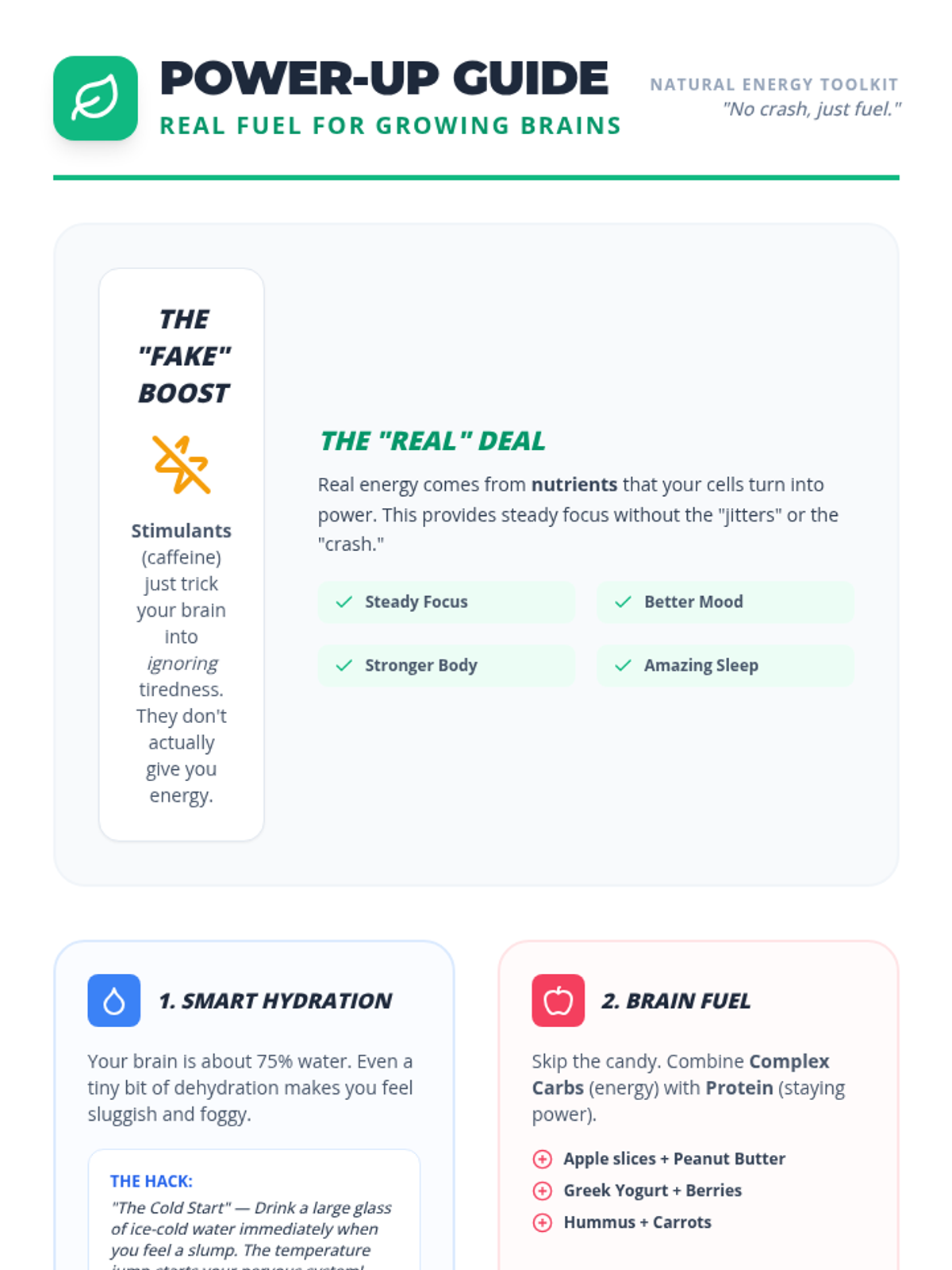
A comprehensive lesson exploring the science of energy drinks, their health impacts, and how to make better beverage choices through scenario analysis and data comparison.
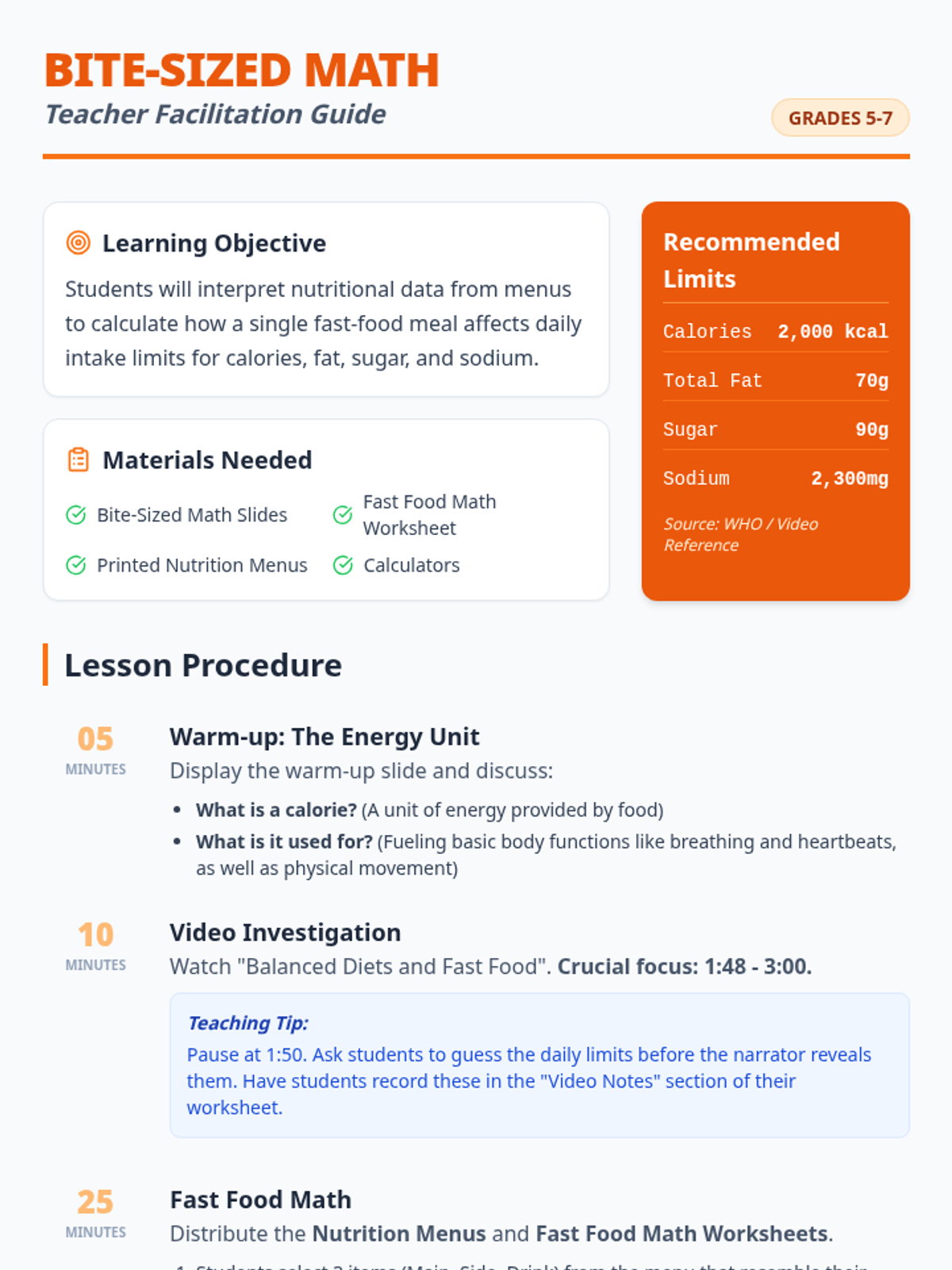
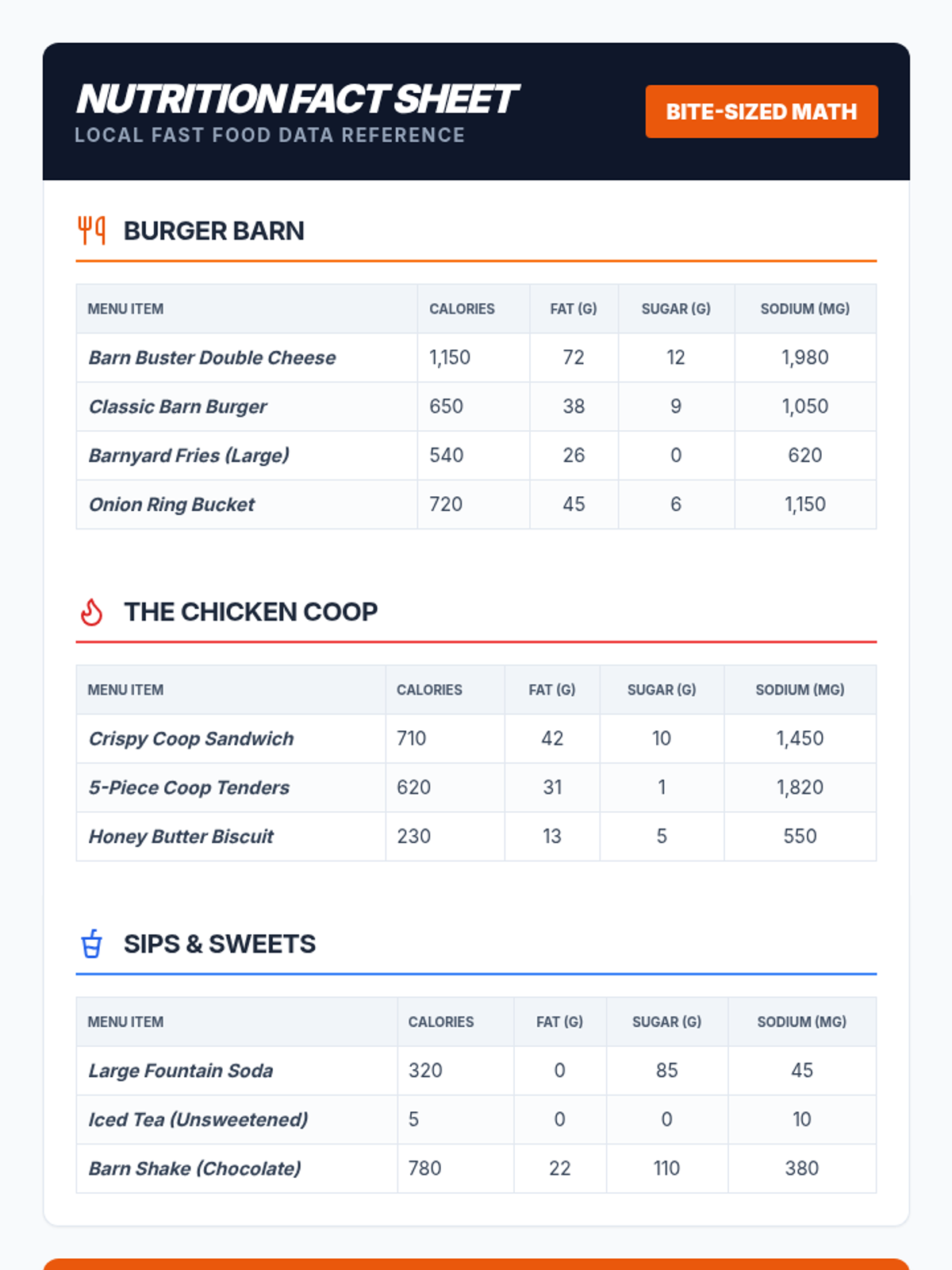
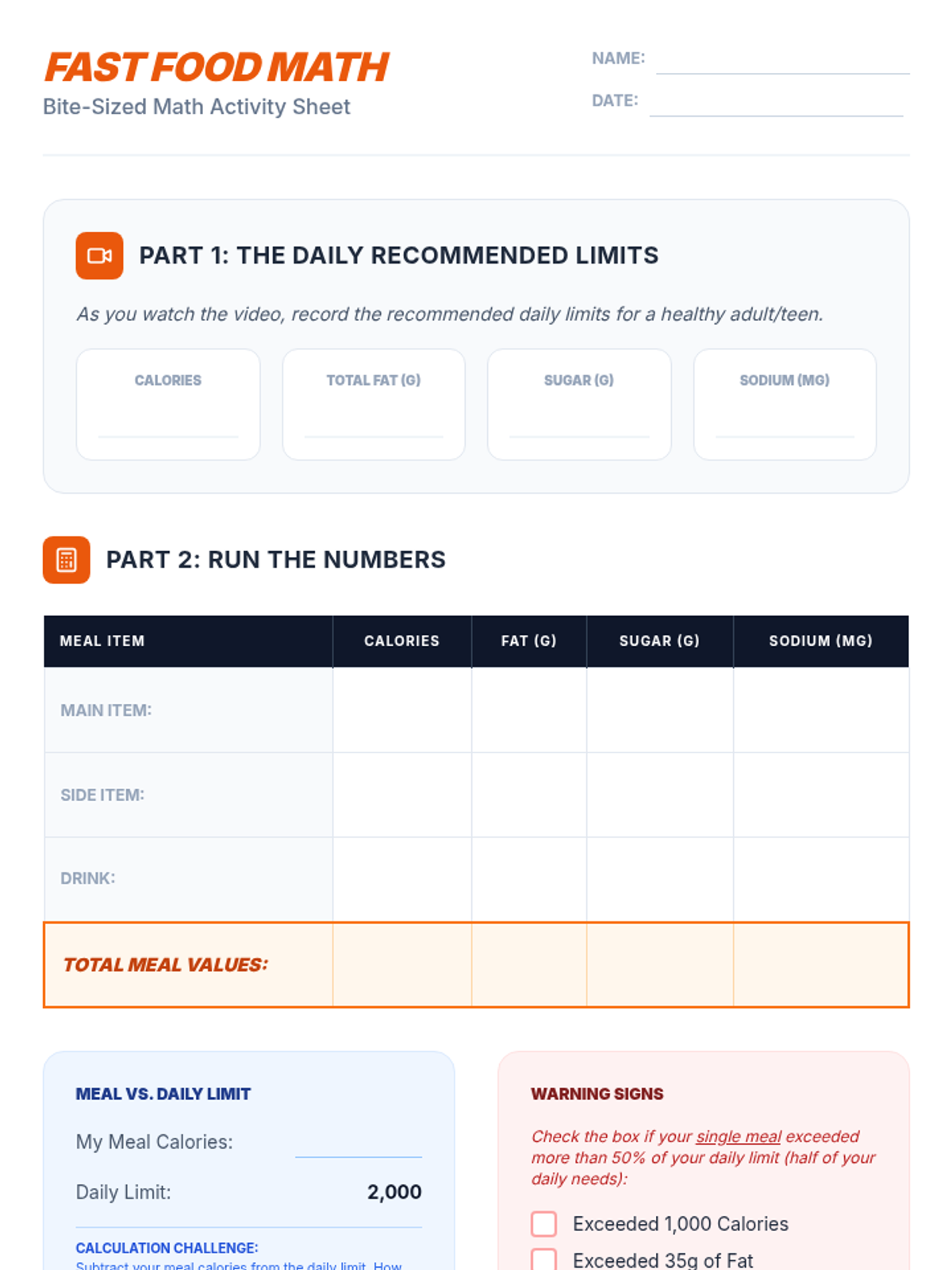
A math-integrated health lesson where students analyze the nutritional content of fast food meals and calculate their impact on daily recommended intake limits.
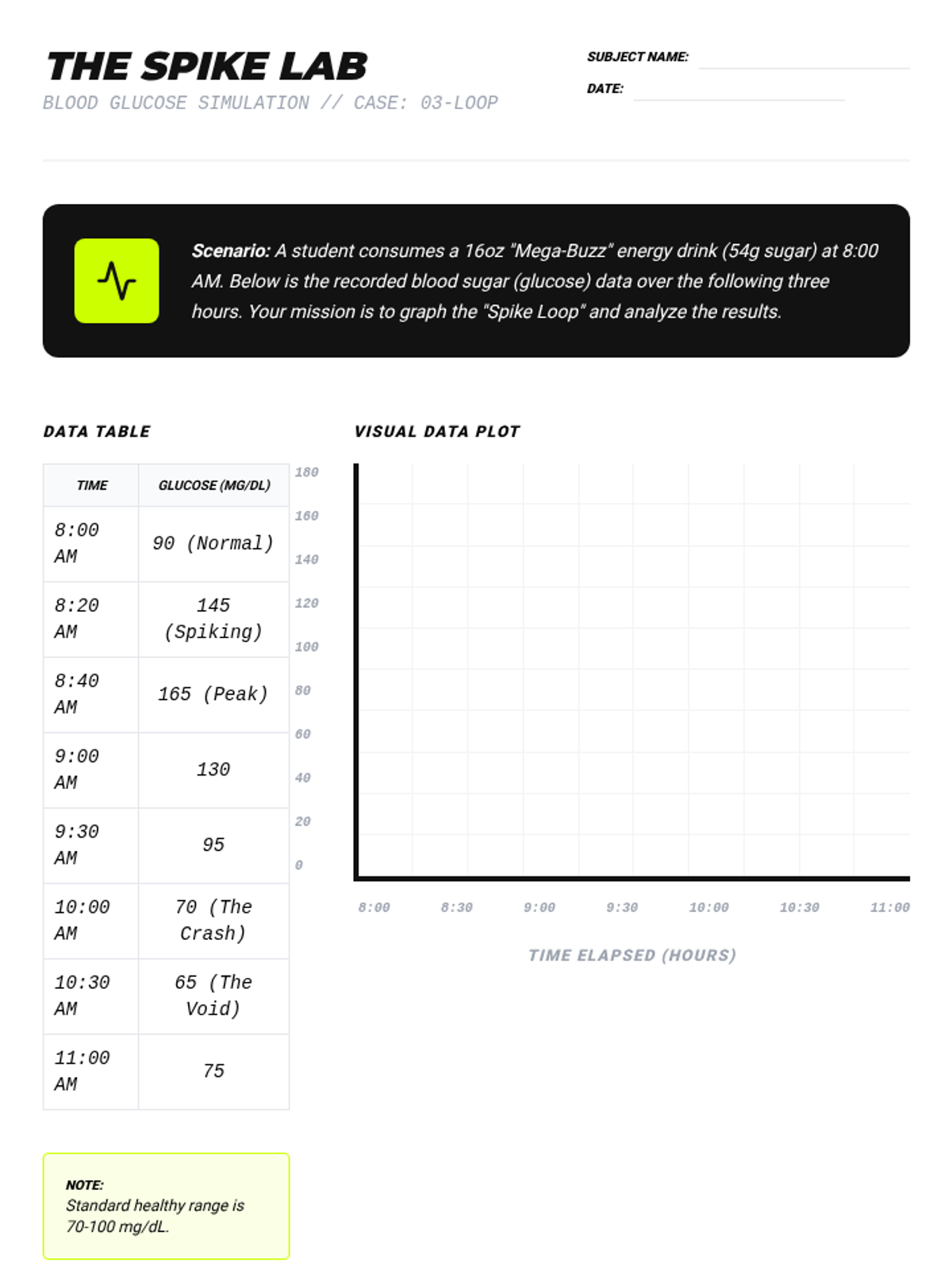
An examination of the combined effects of sugar and caffeine on the body, including blood sugar spikes, crashes, and impacts on school performance.
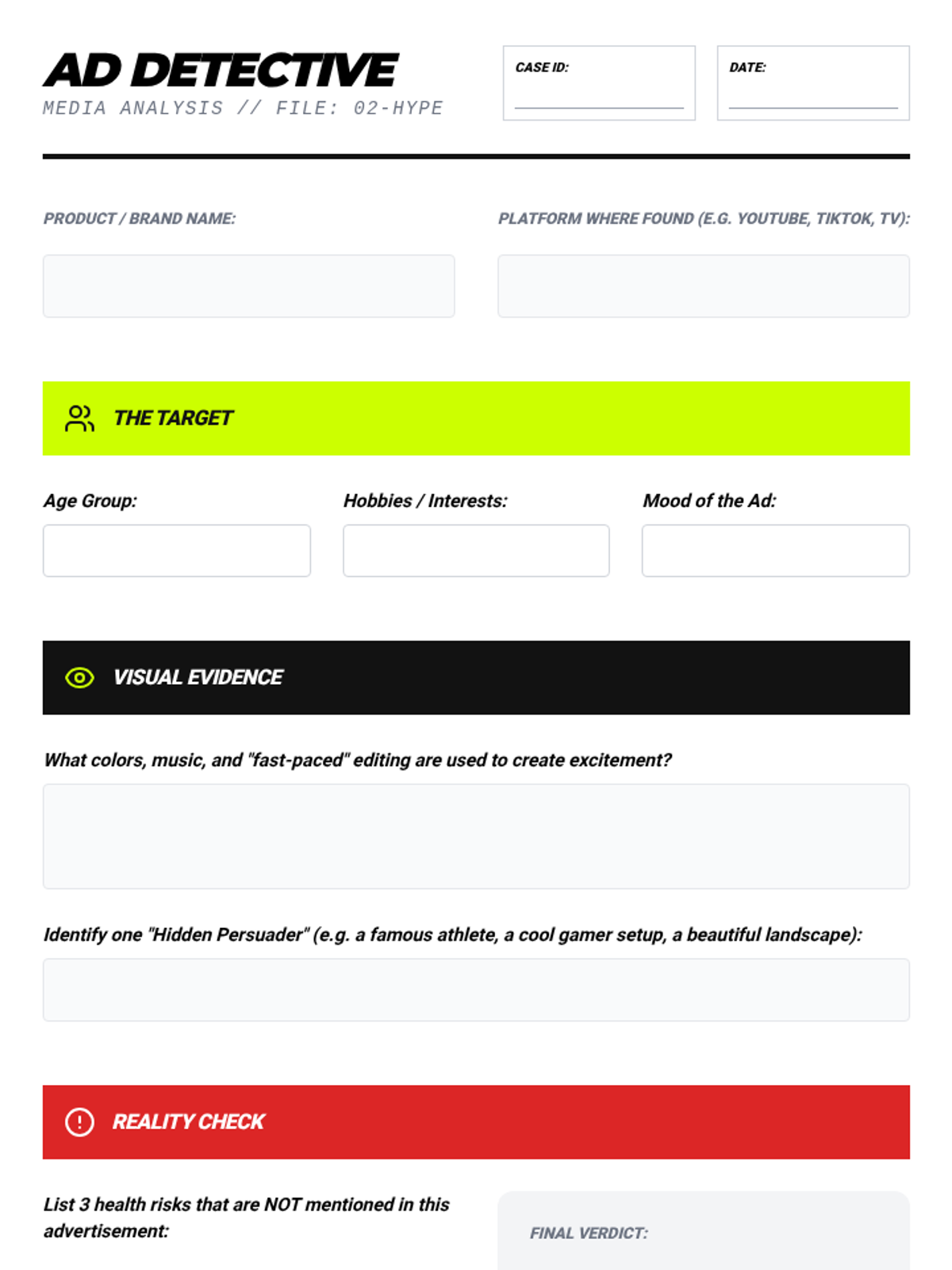
Students analyze marketing tactics used by energy drink companies to target teens and discuss how these strategies distract from health risks.
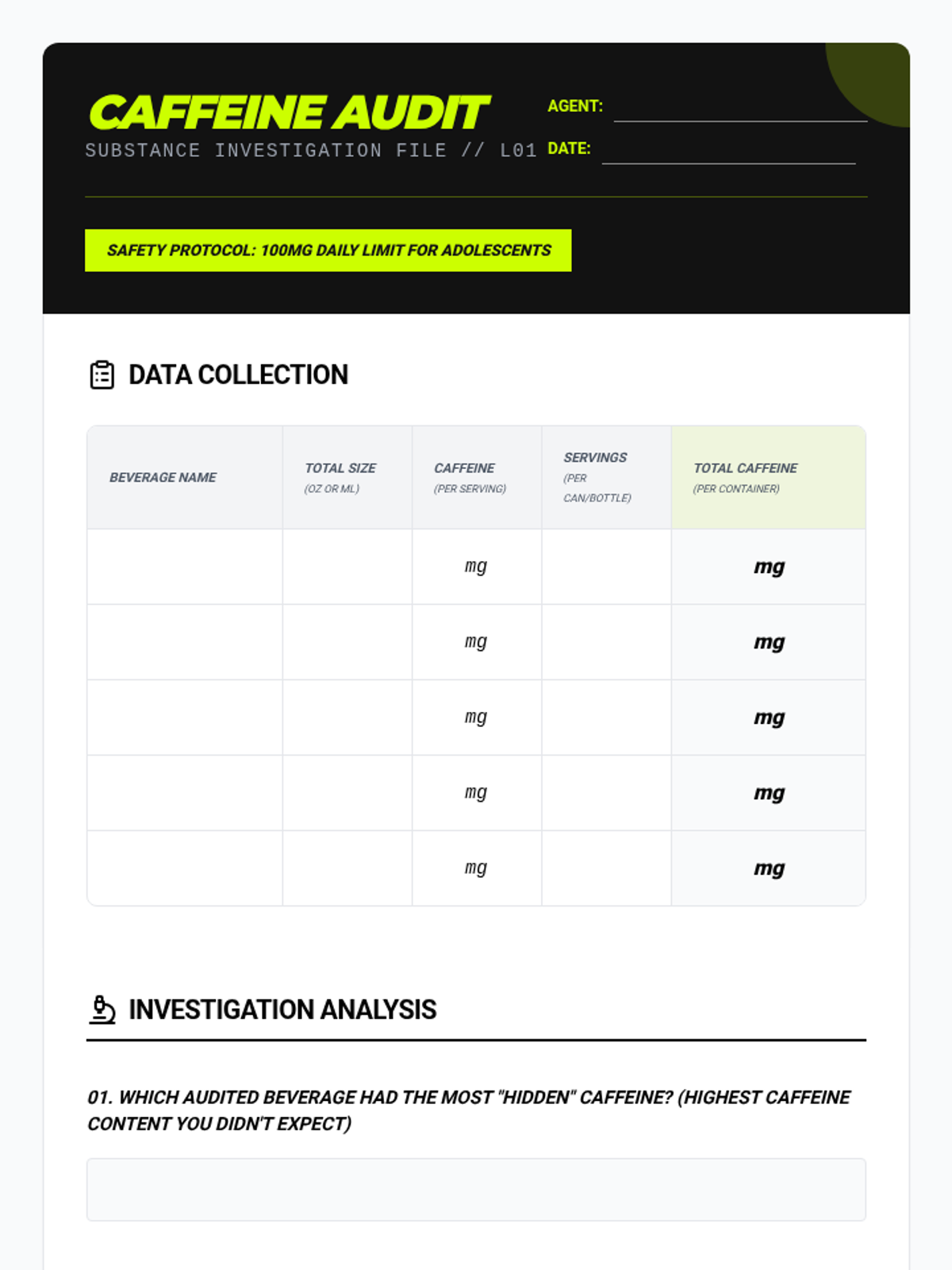
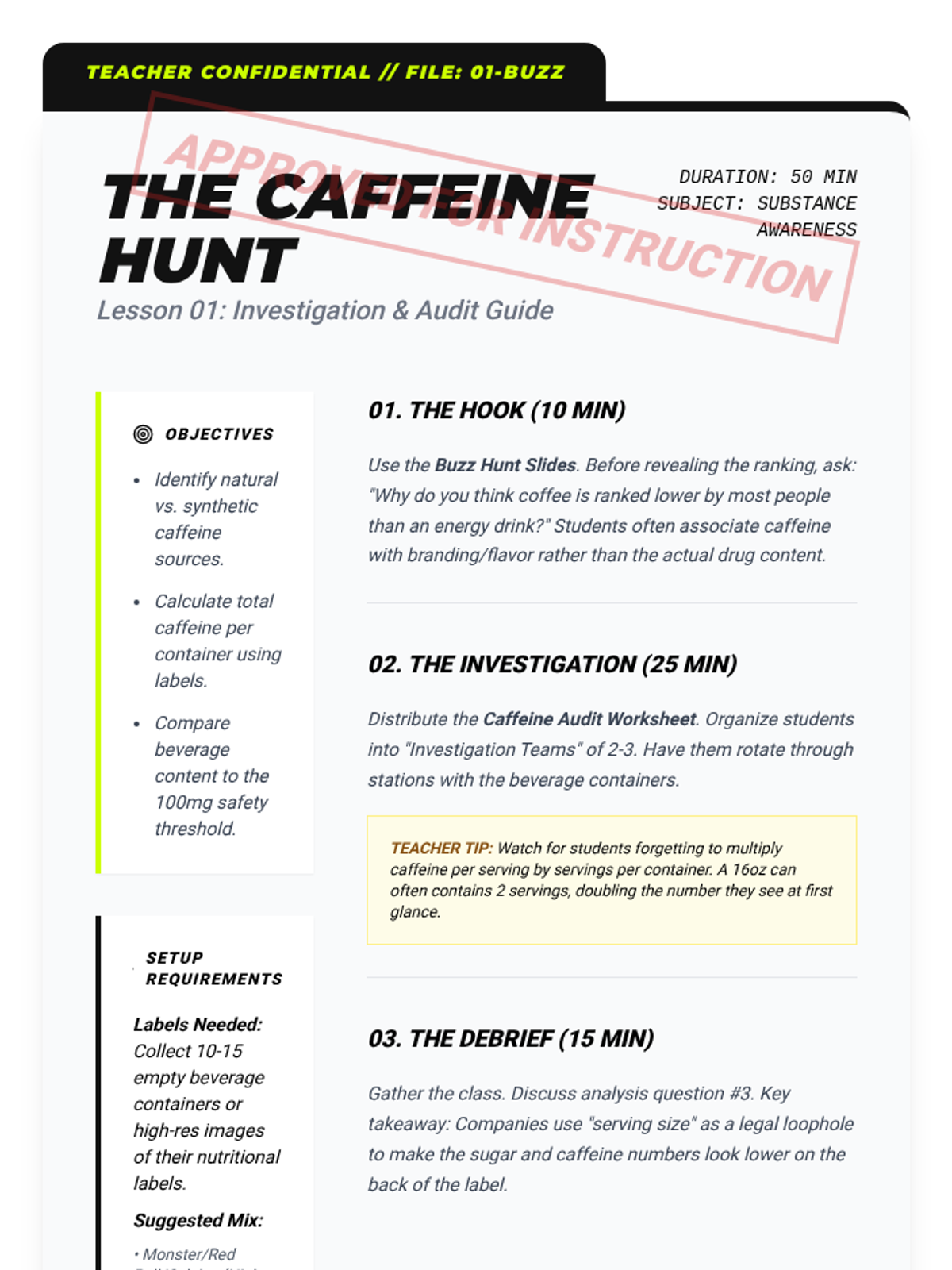
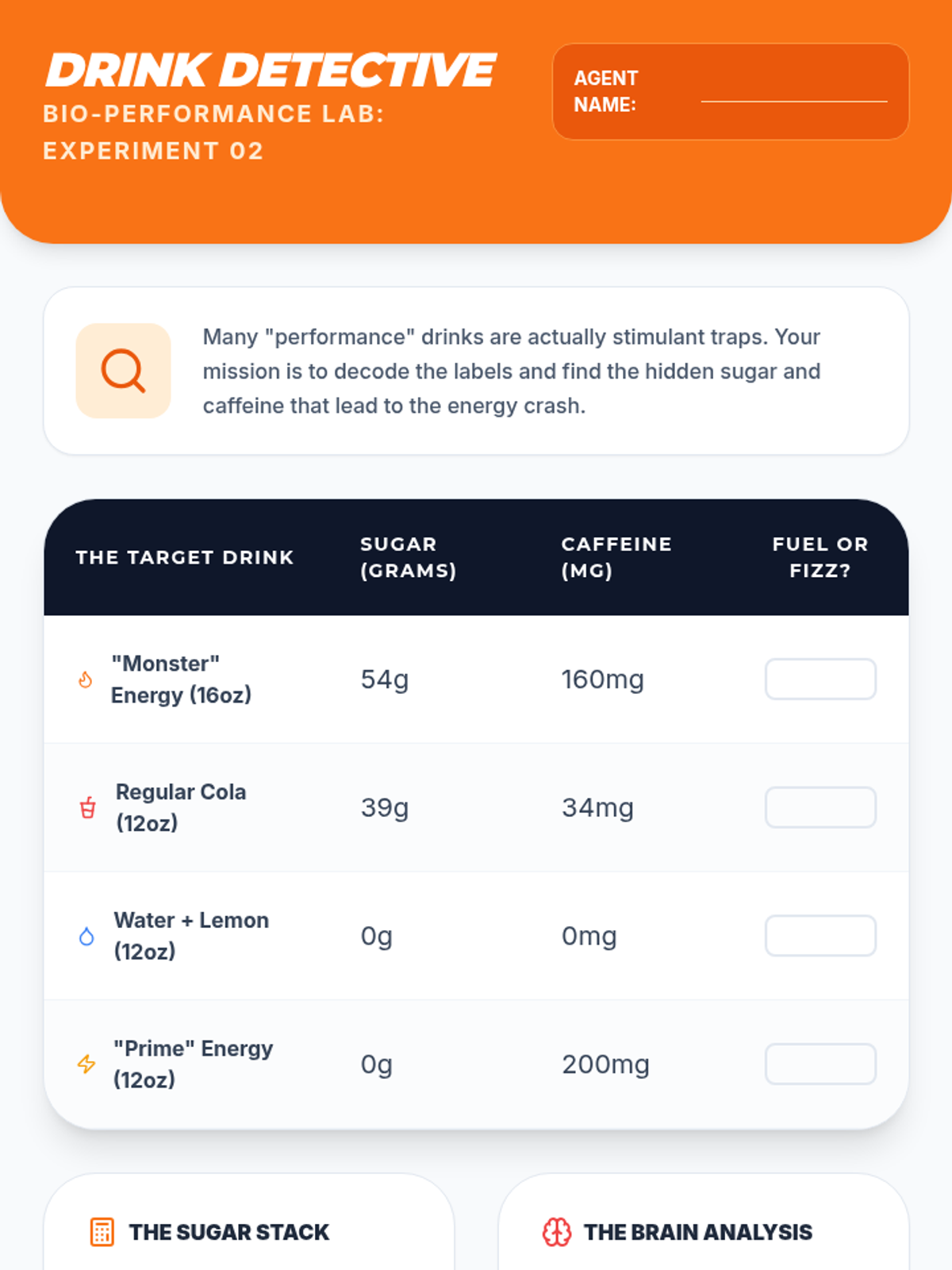
Students identify various sources of caffeine and compare their content to recommended daily limits for adolescents through an audit of popular beverages.
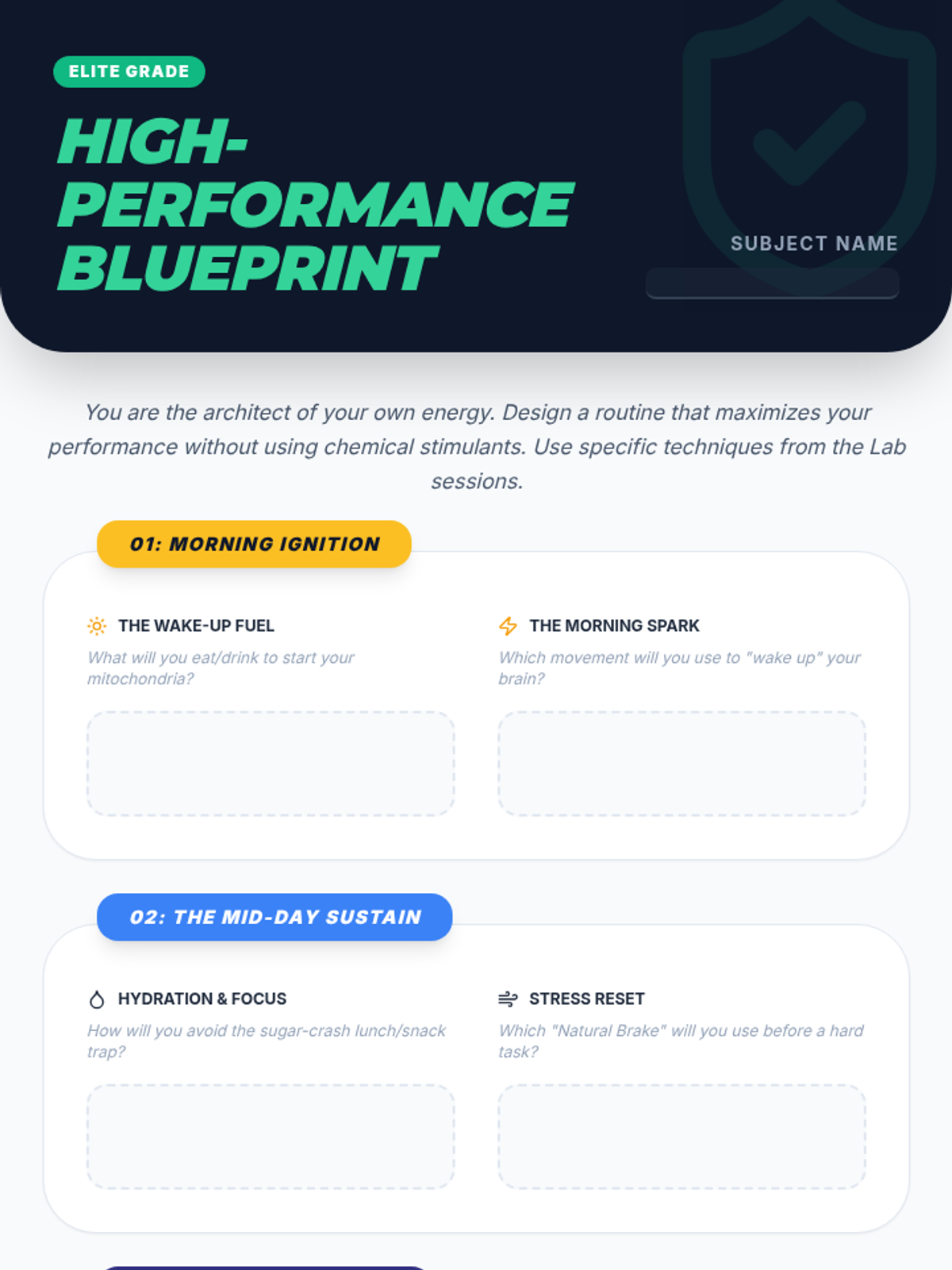
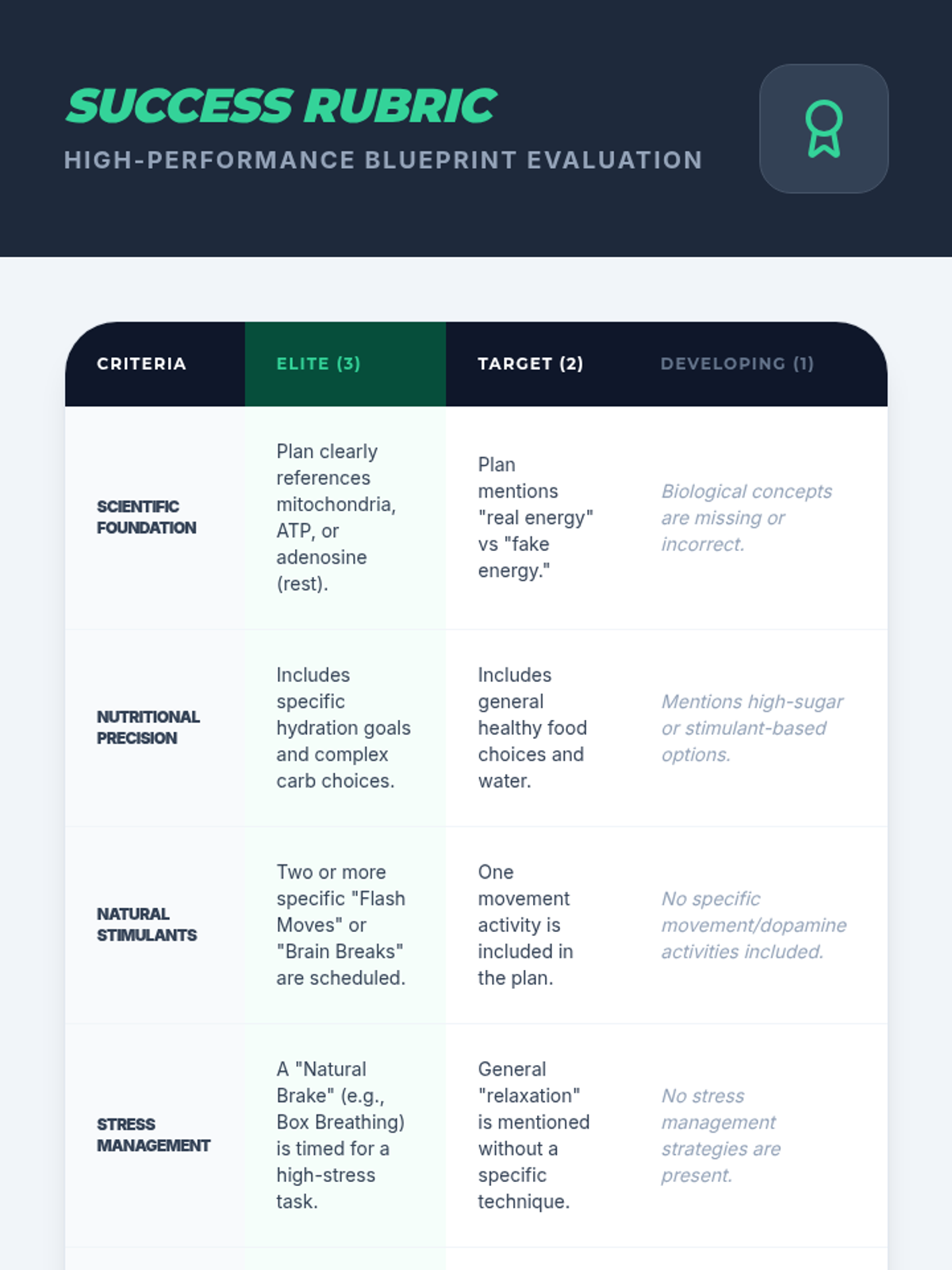
Students synthesize their learning into a personalized routine that optimizes energy and performance without the need for substances.
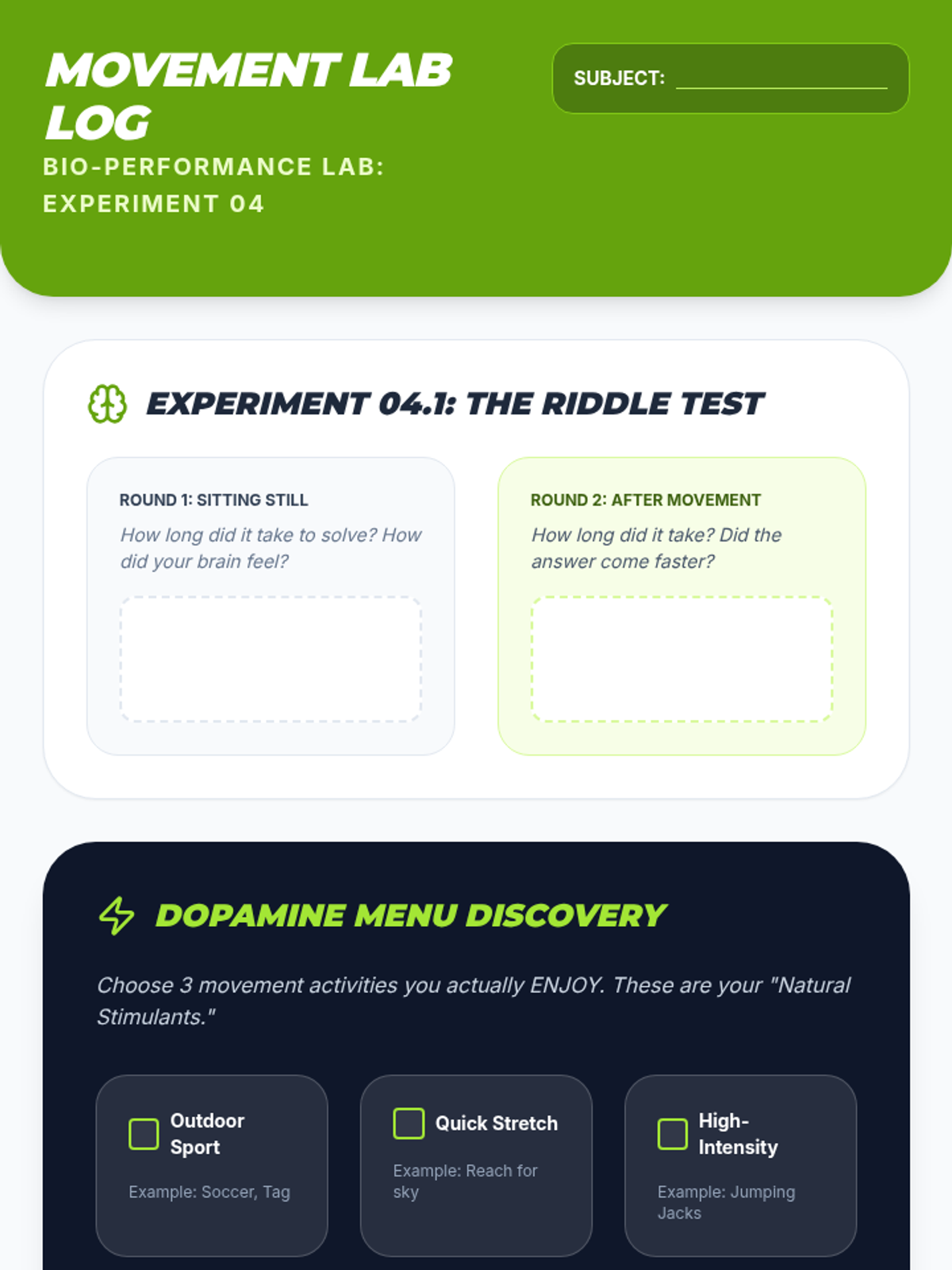
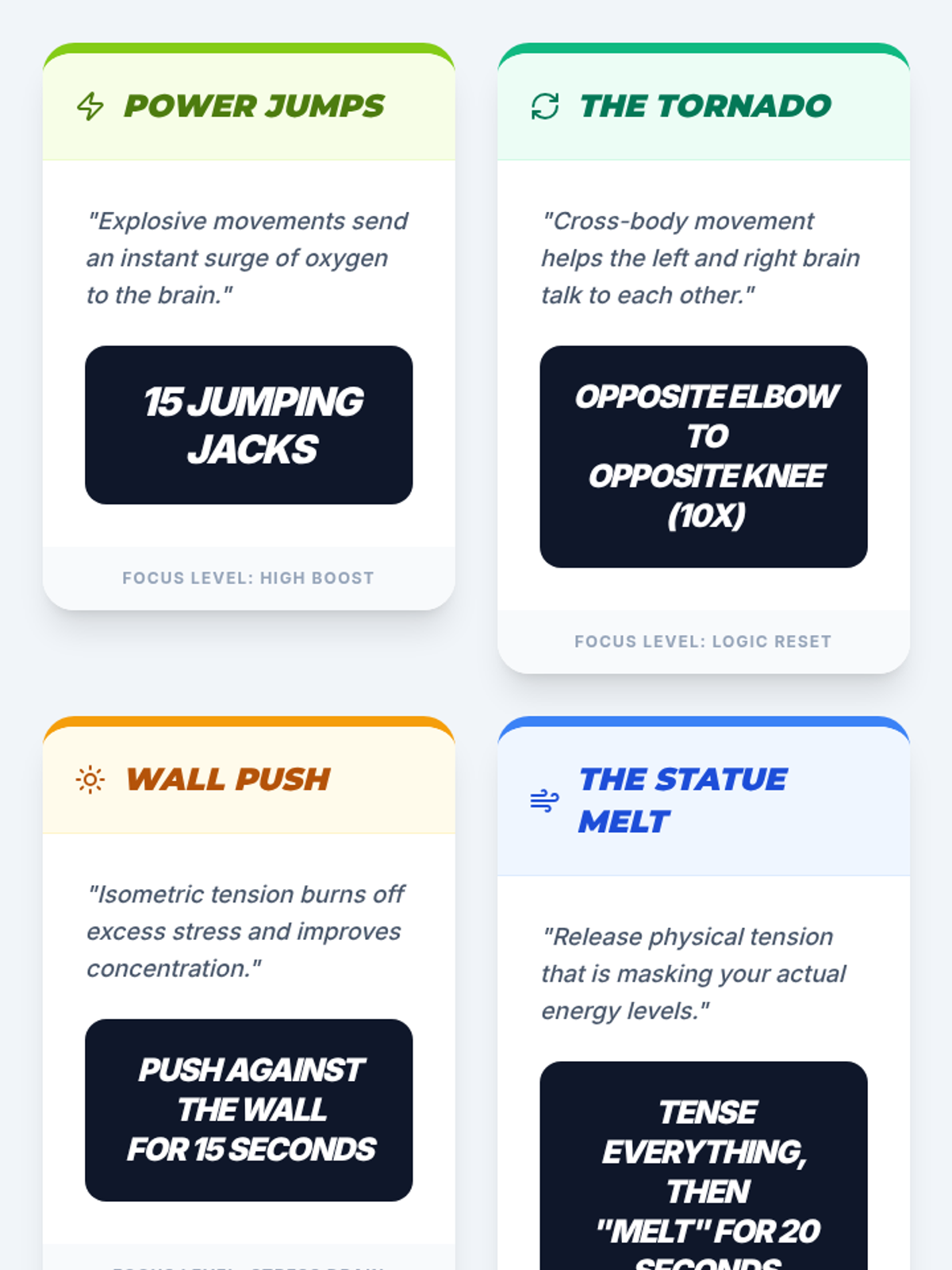
Explores the link between physical activity and brain function, using 'brain breaks' to demonstrate how movement naturally increases dopamine and focus.
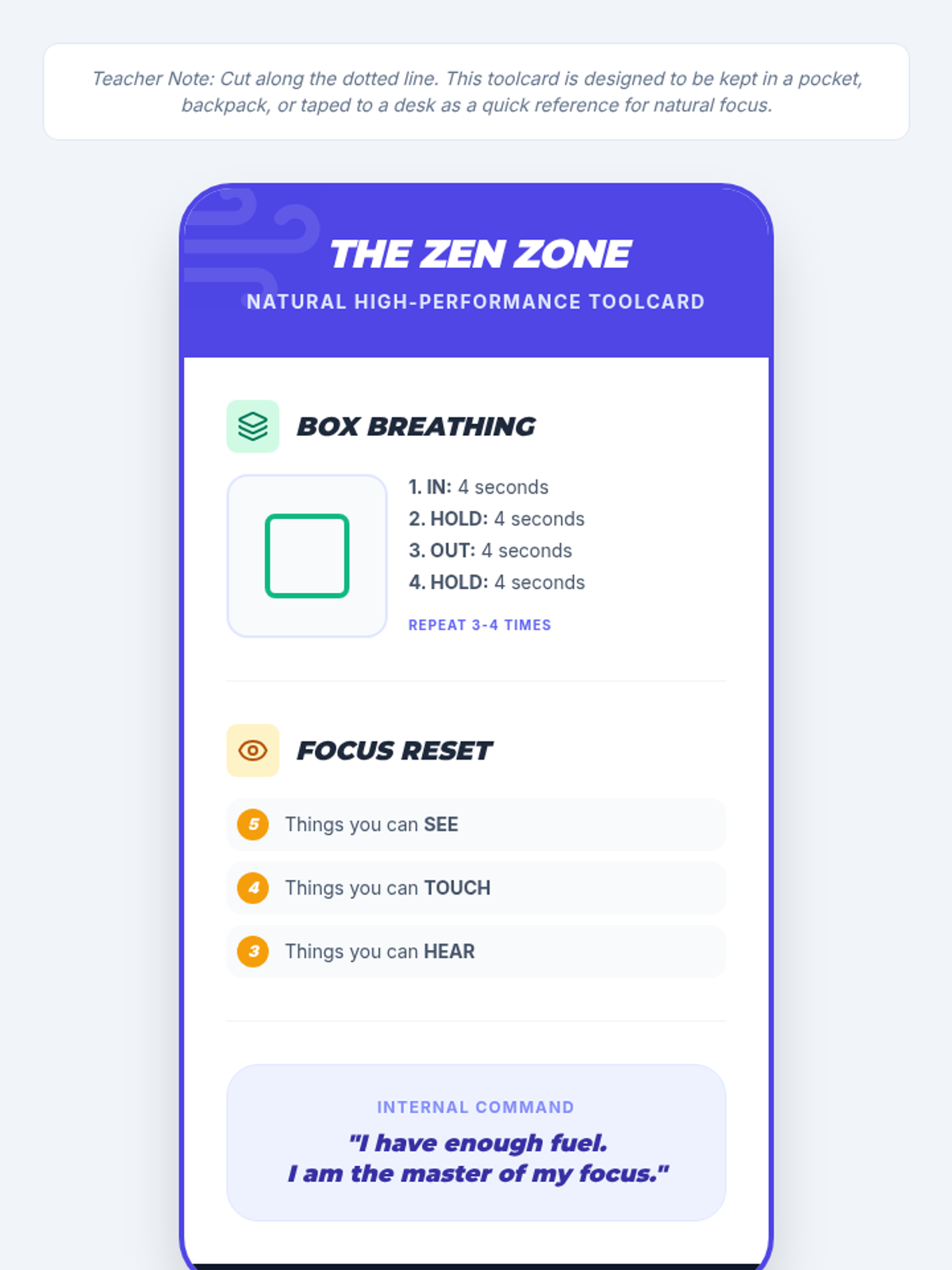
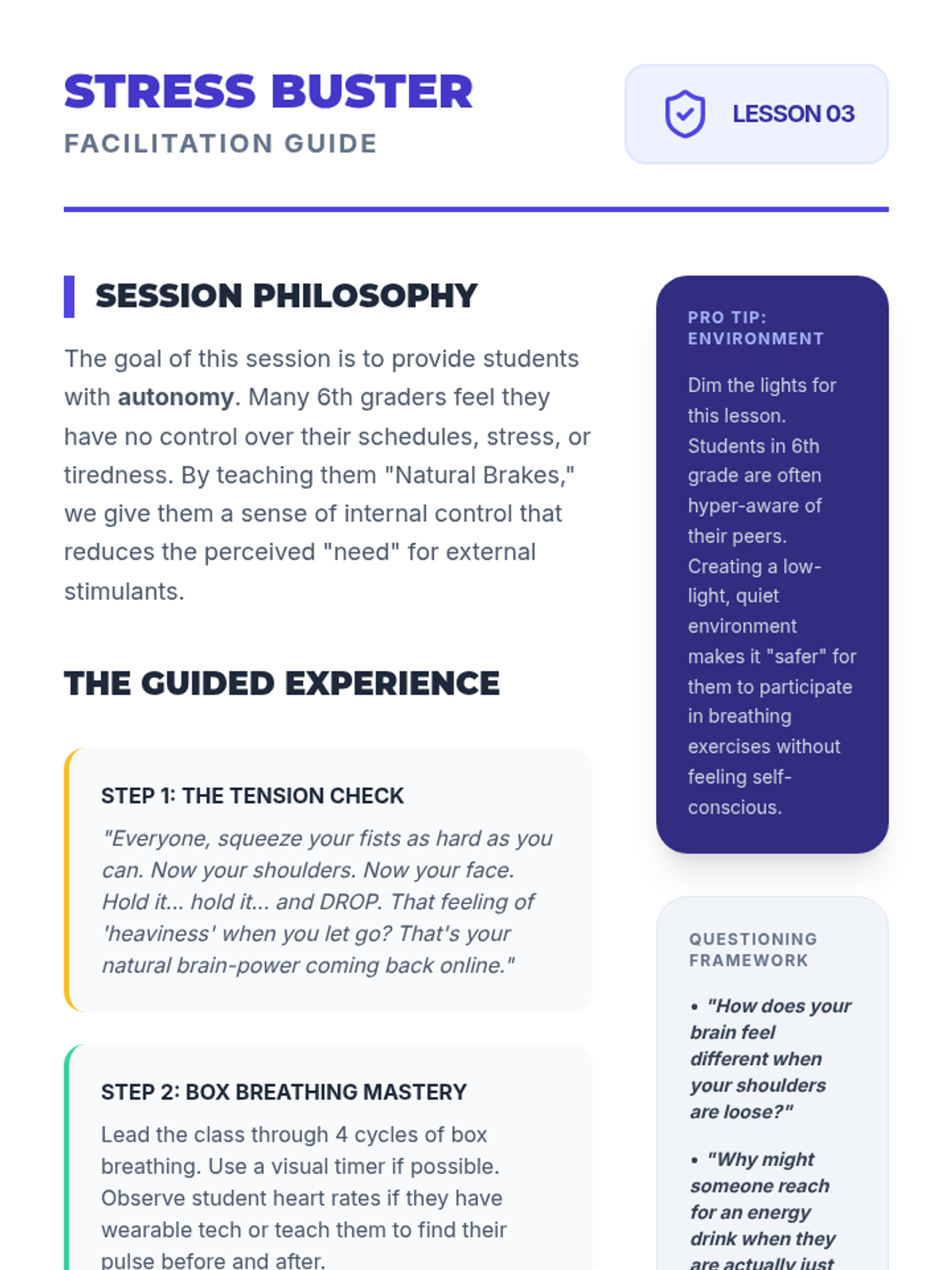
Students practice active coping mechanisms like deep breathing and progressive muscle relaxation to manage the stress that often drives substance use.
An investigation into how complex carbohydrates and hydration sustain focus while energy drinks and high-sugar snacks lead to detrimental blood sugar crashes.
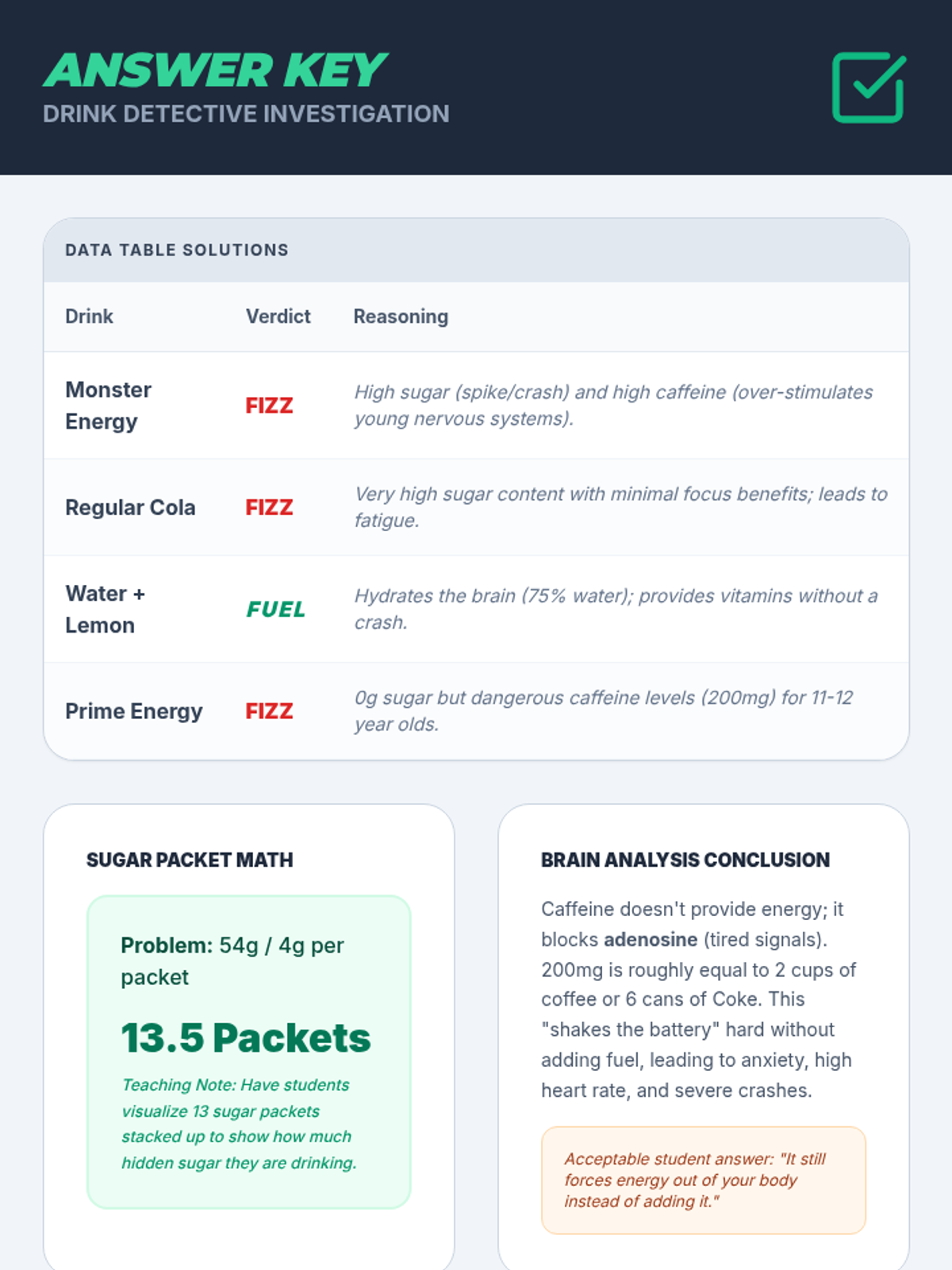
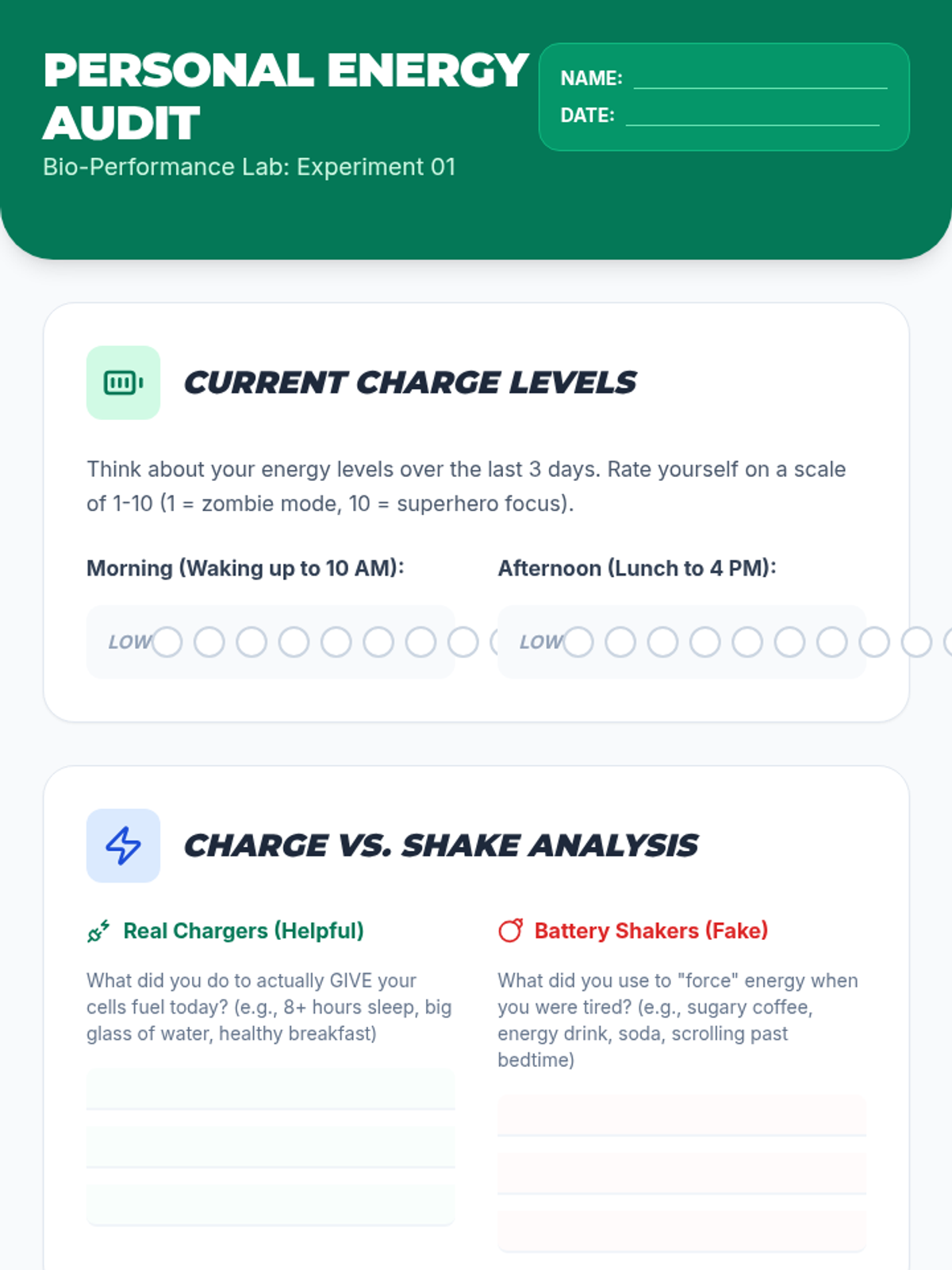
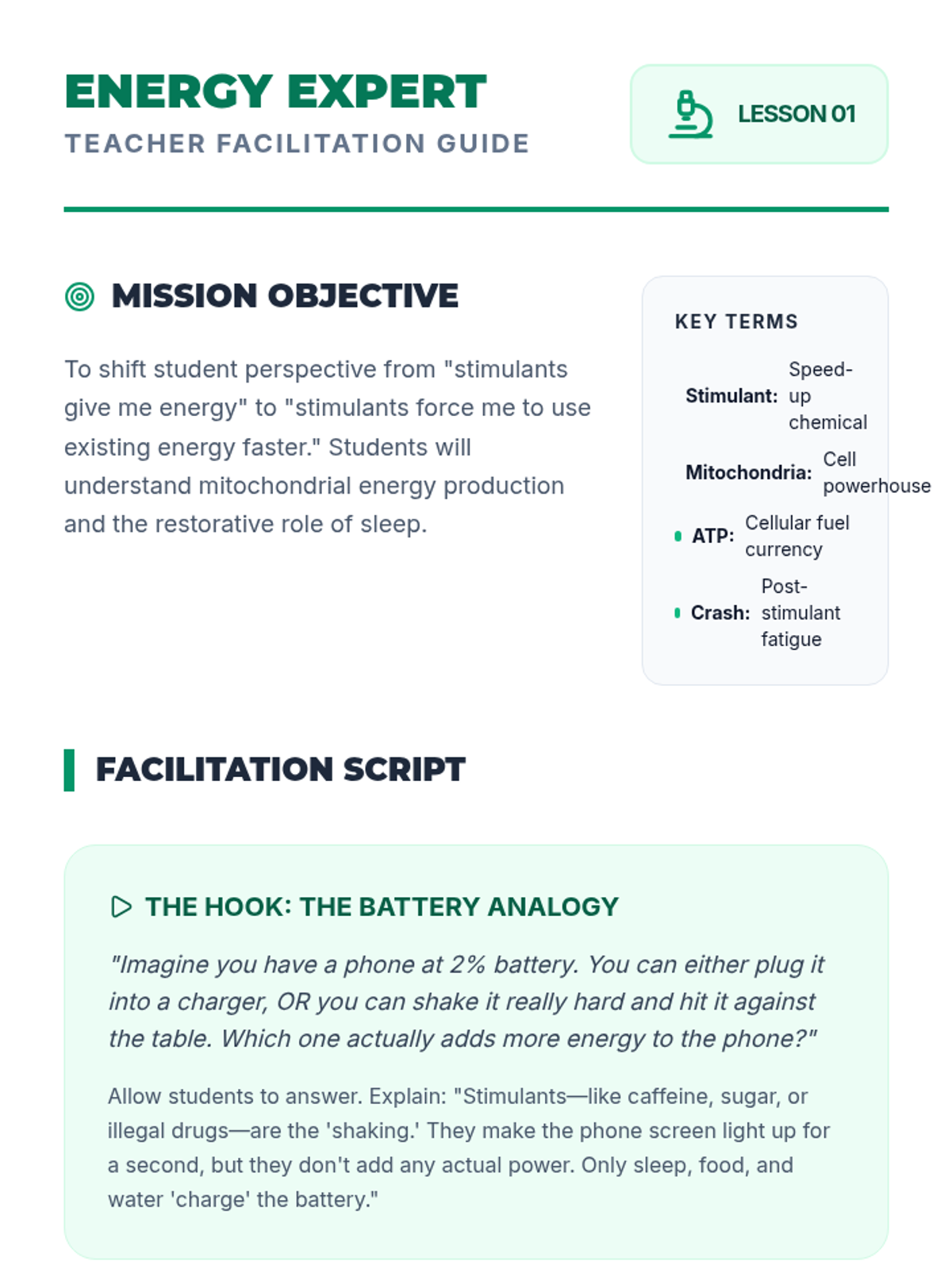
Students explore the biological foundations of energy, contrasting mitochondrial 'cellular fuel' and sleep cycles with the temporary 'shaking the battery' effect of stimulants.
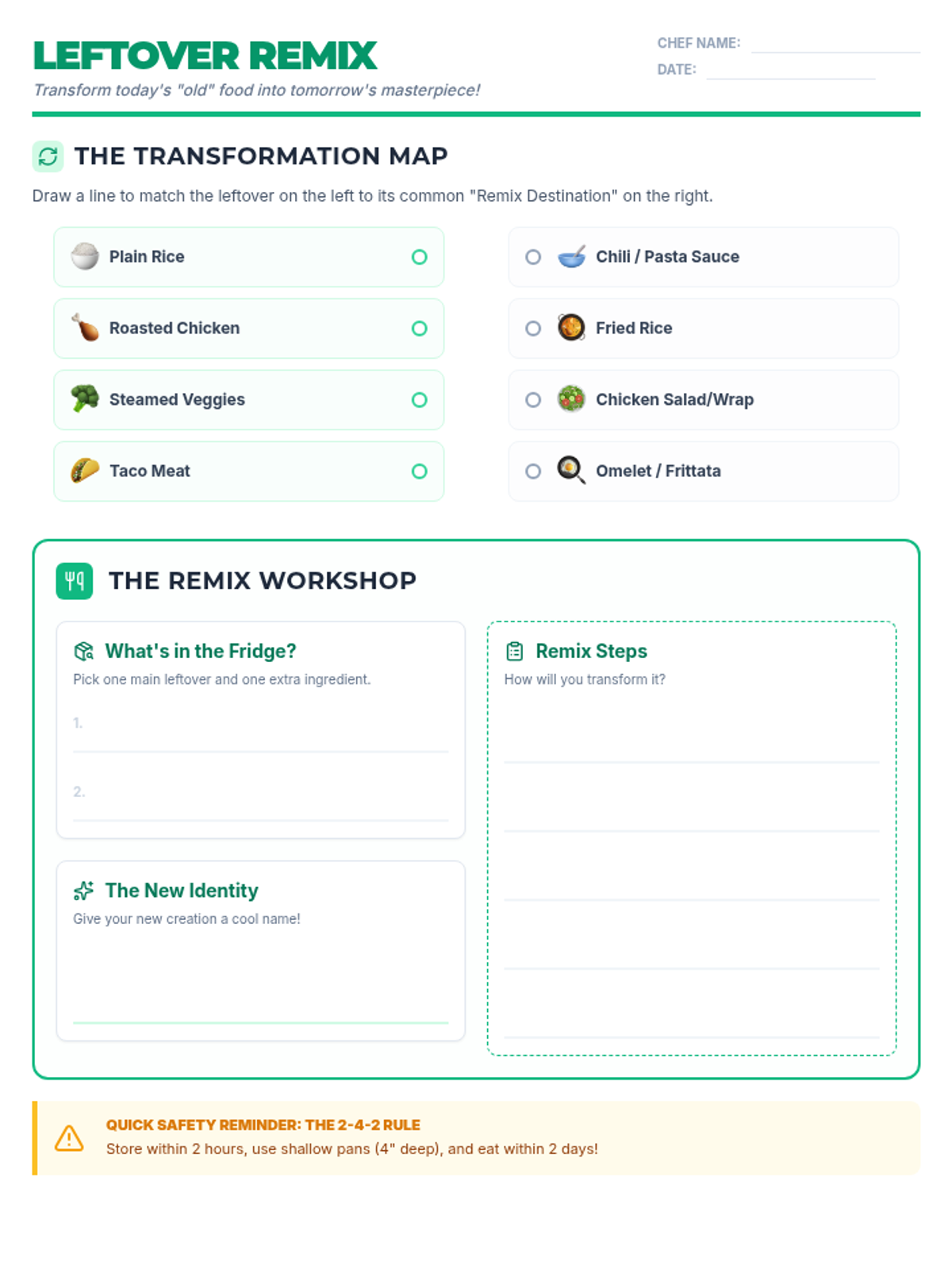
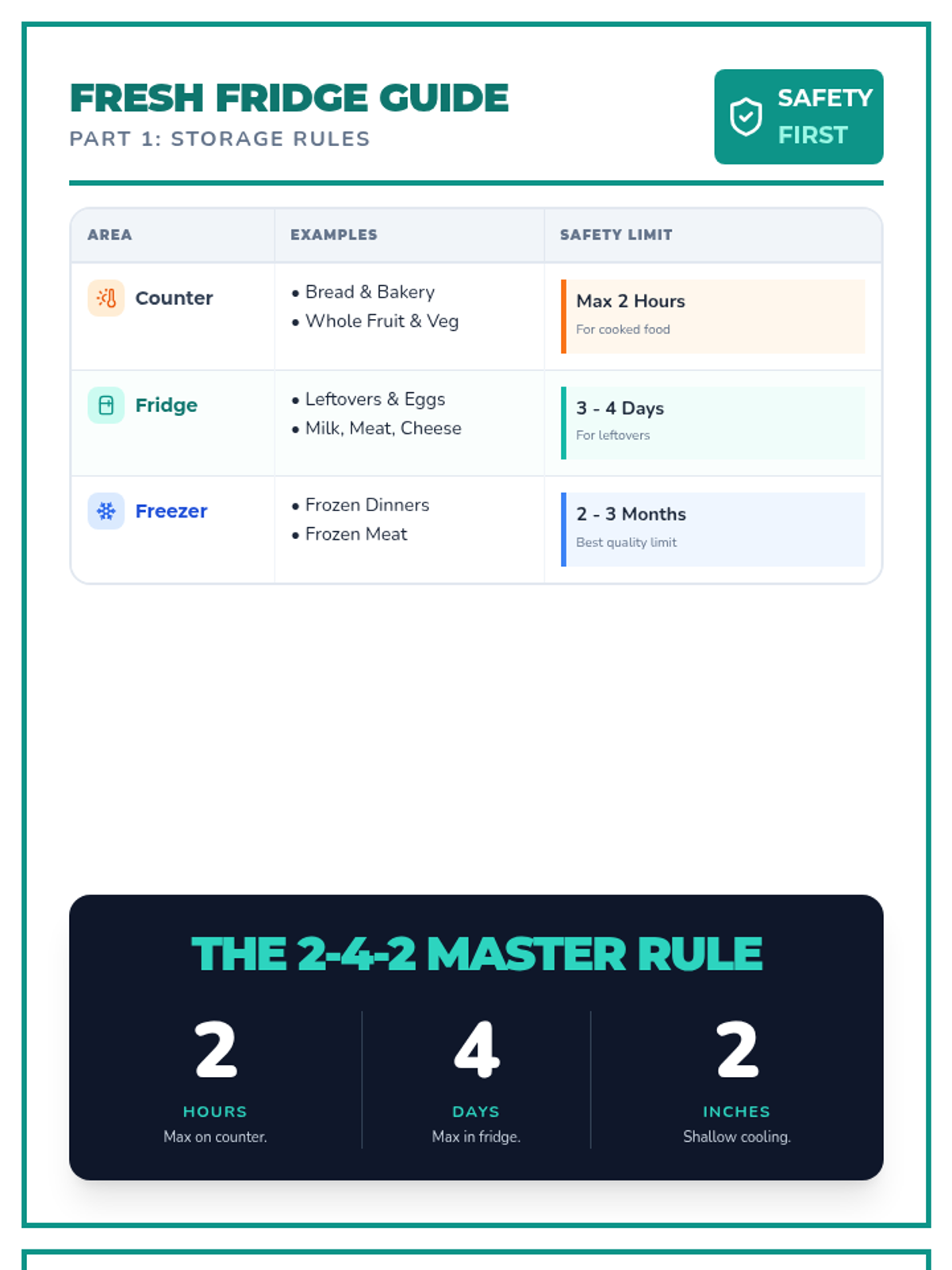
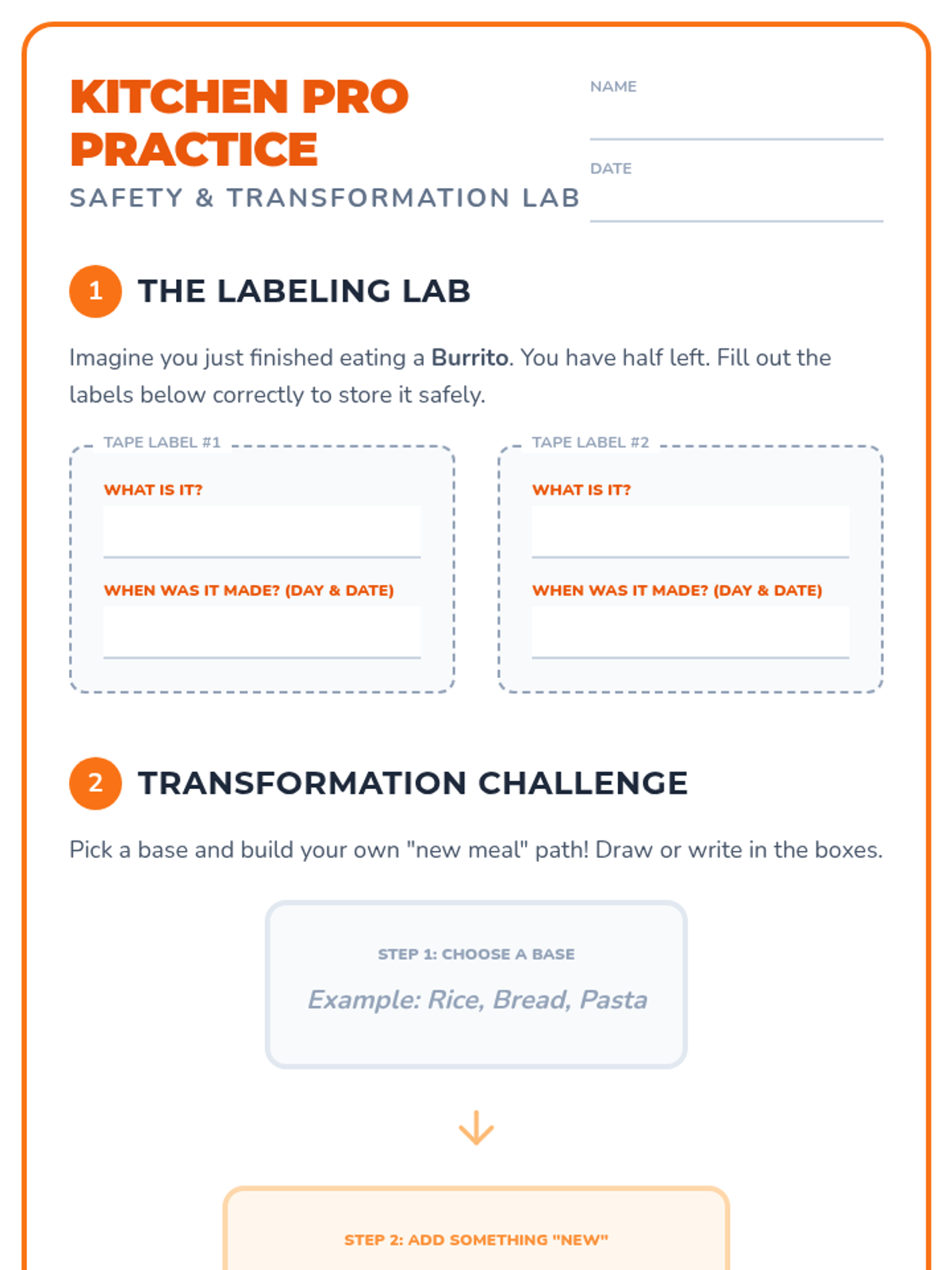
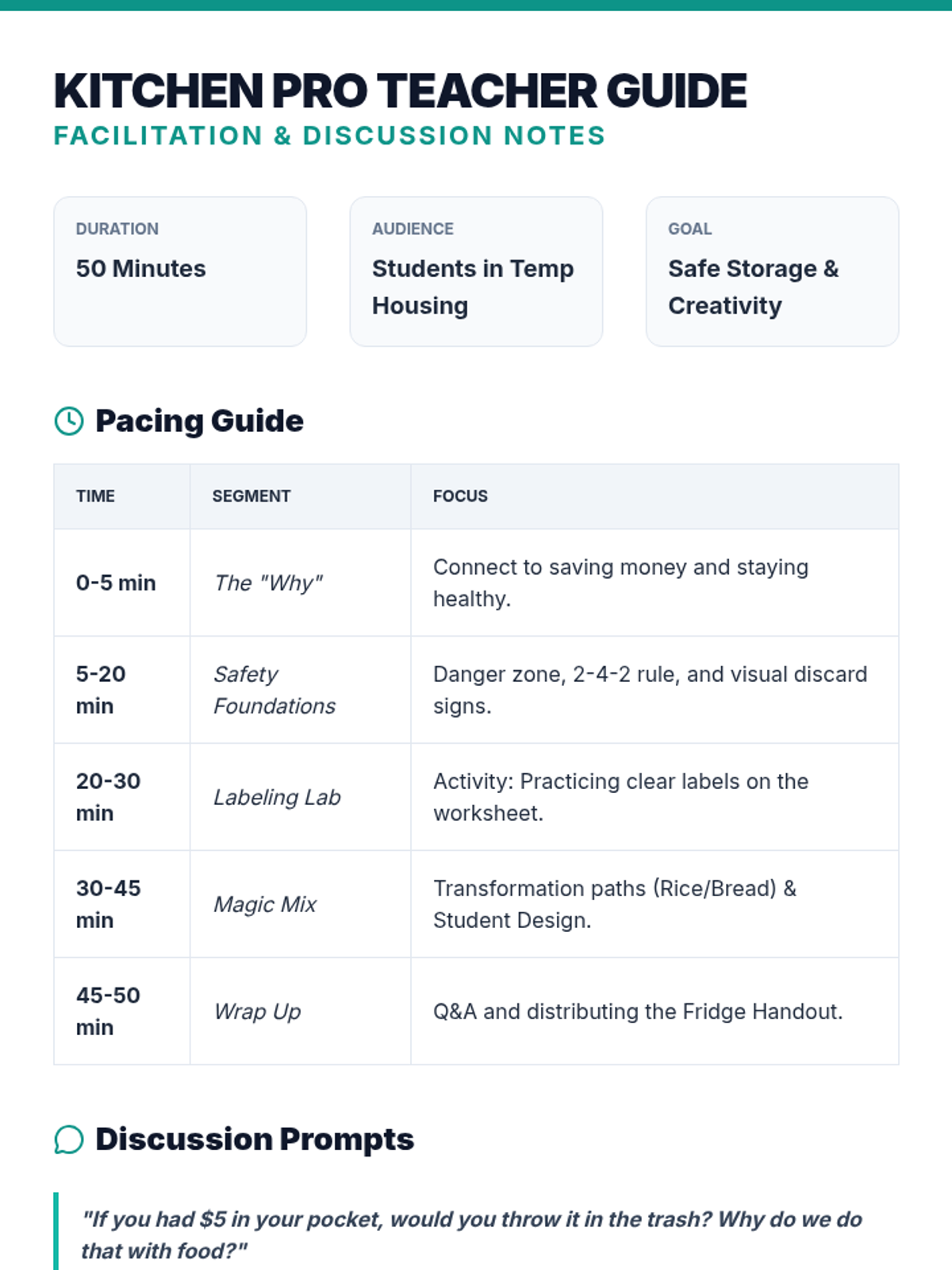
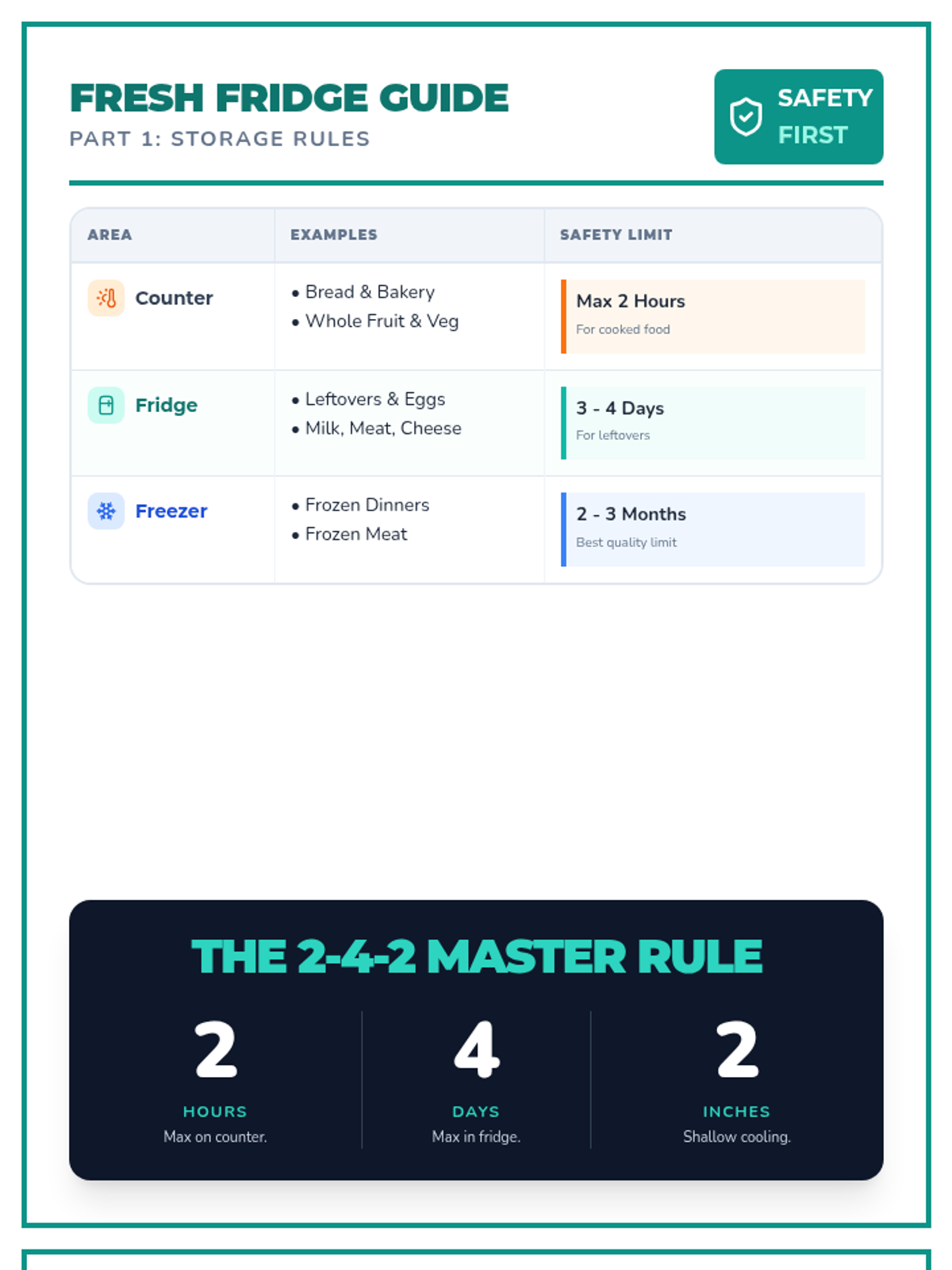
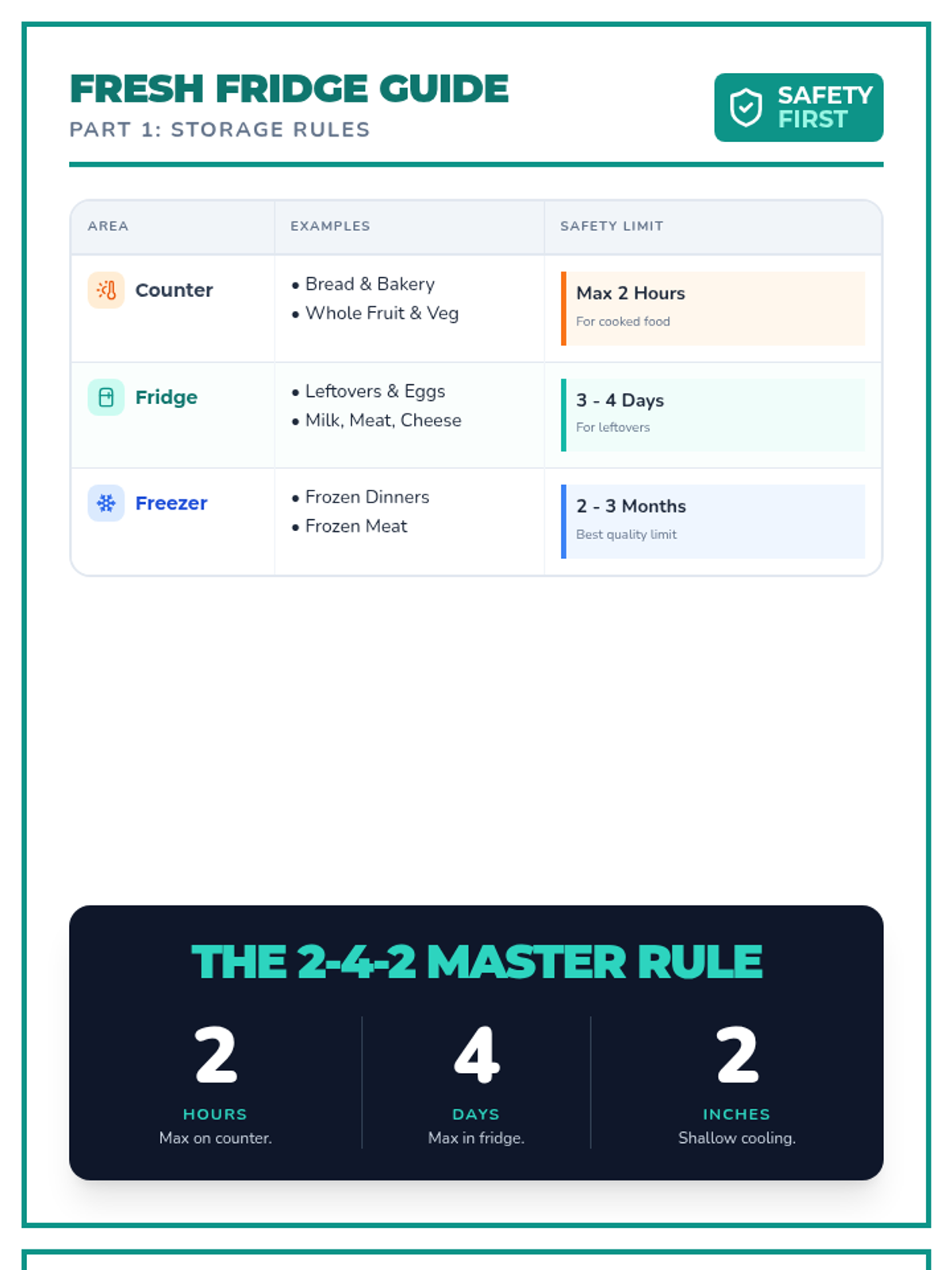
A 50-minute instructional session for students in temporary housing, focusing on safe food storage and creative leftover use through visual guides and sequence flowcharts.
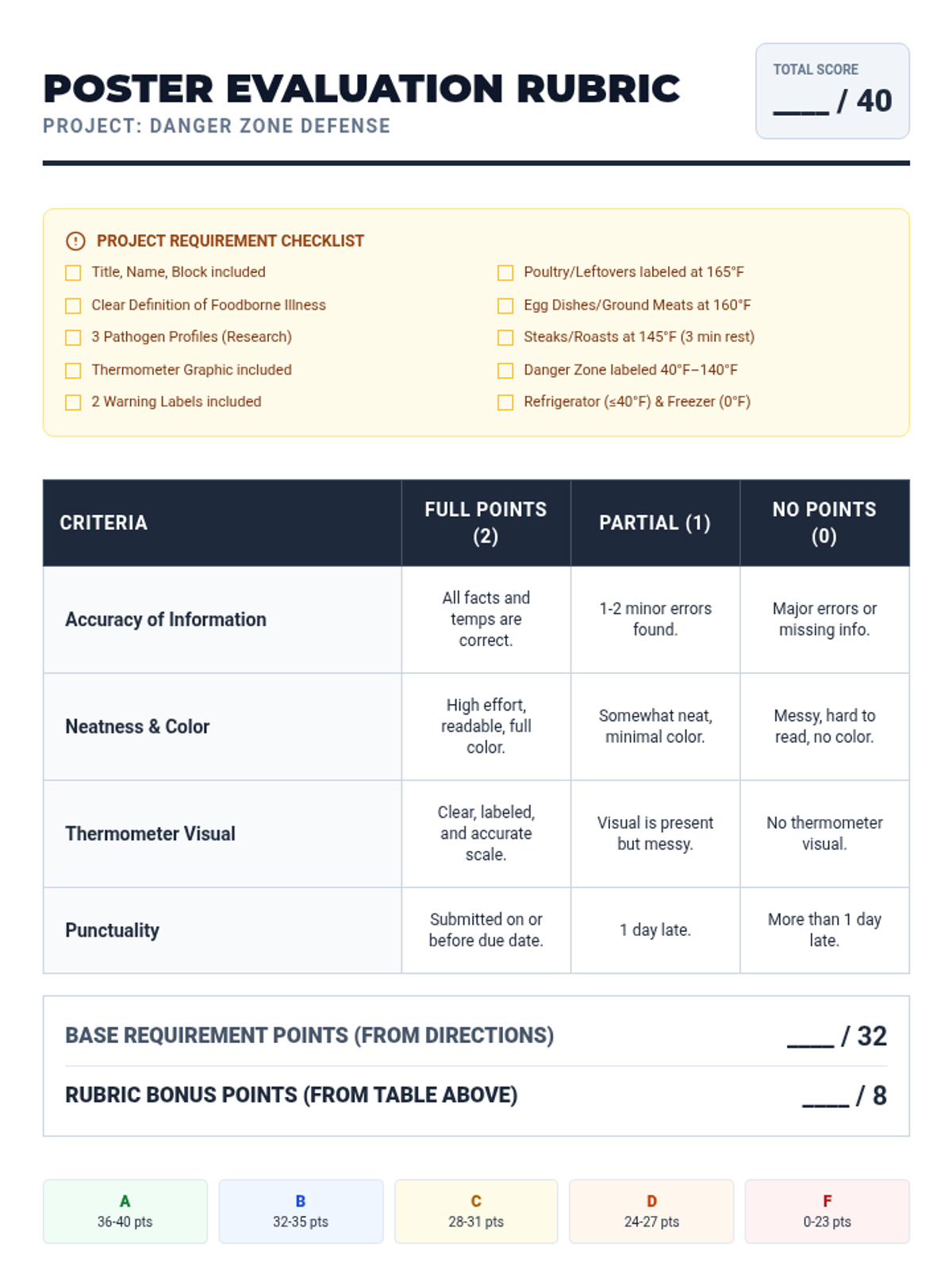
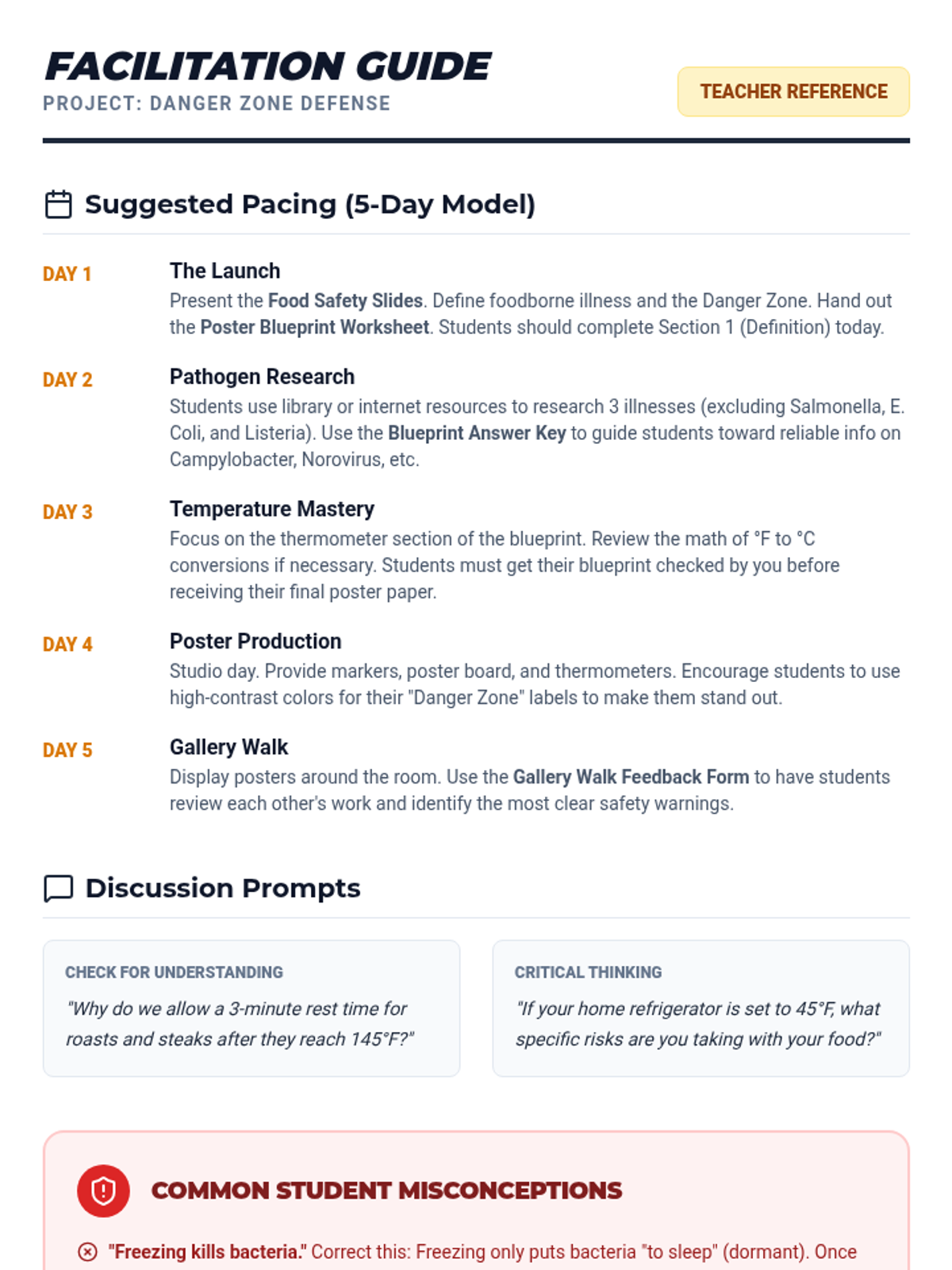
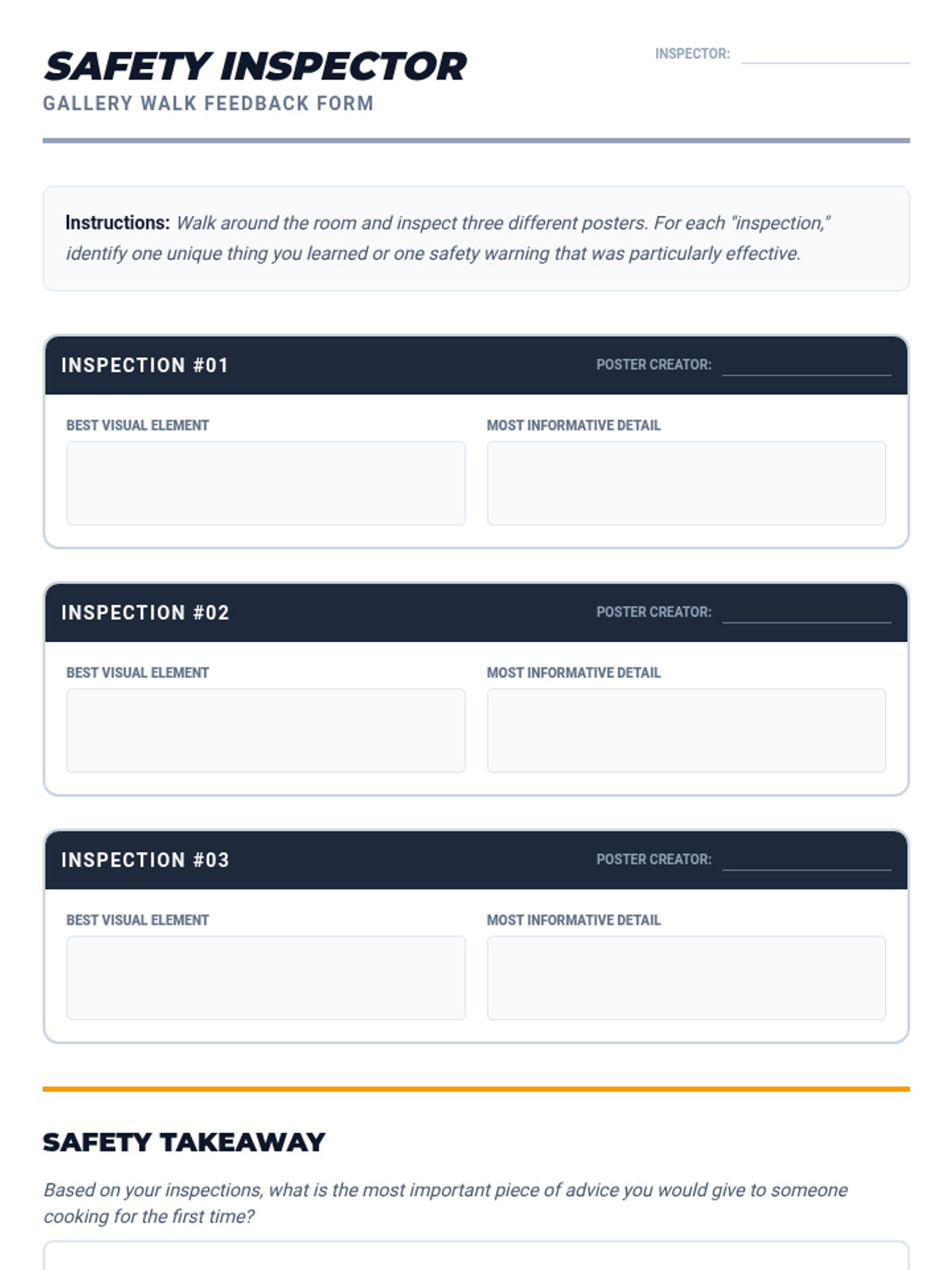
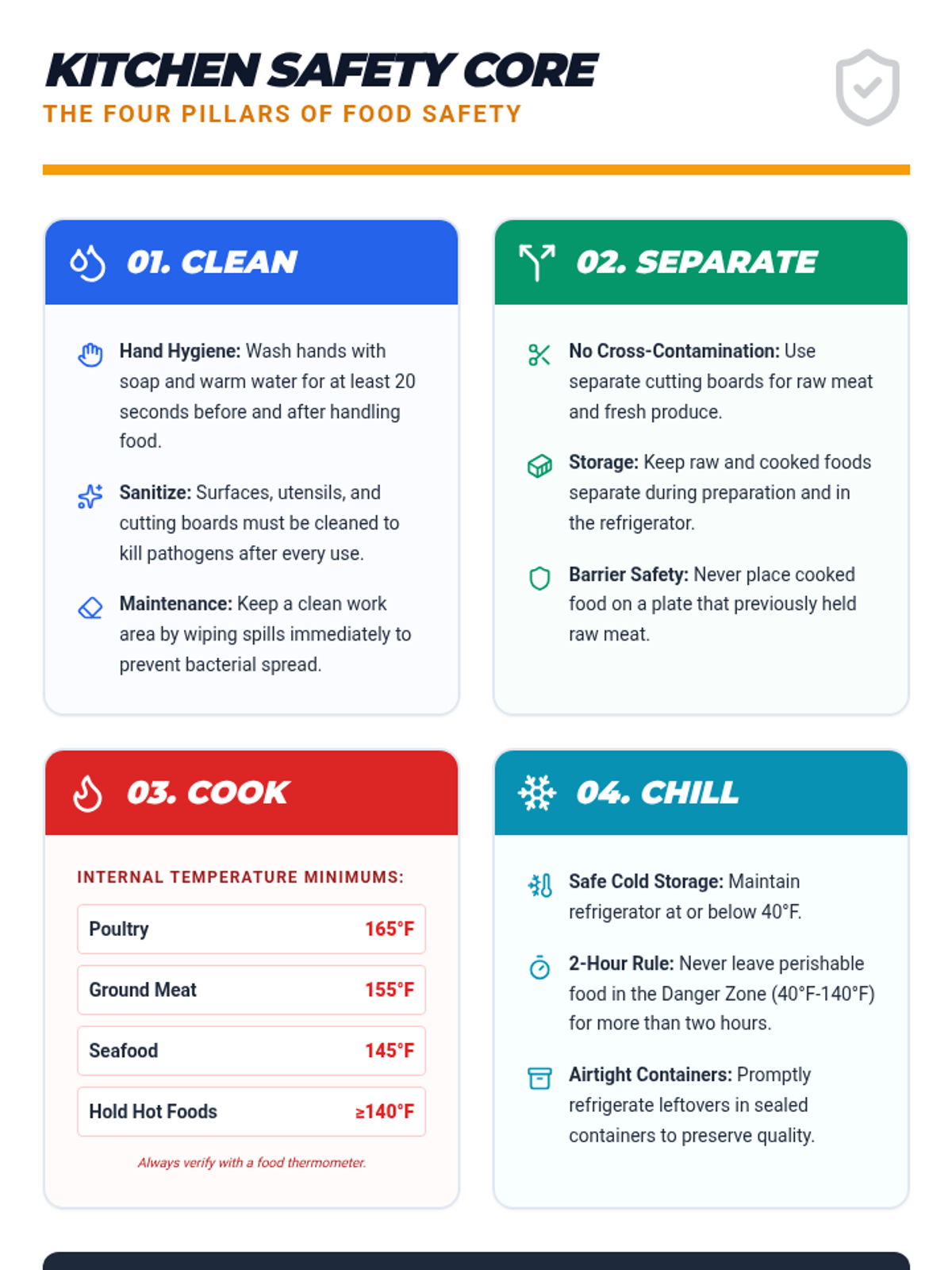
A multi-day project where students research foodborne illnesses and create a visual safety poster centered around proper heating and cooling temperatures. Students will investigate specific pathogens, master temperature guidelines, and understand the science of the 'Danger Zone.'
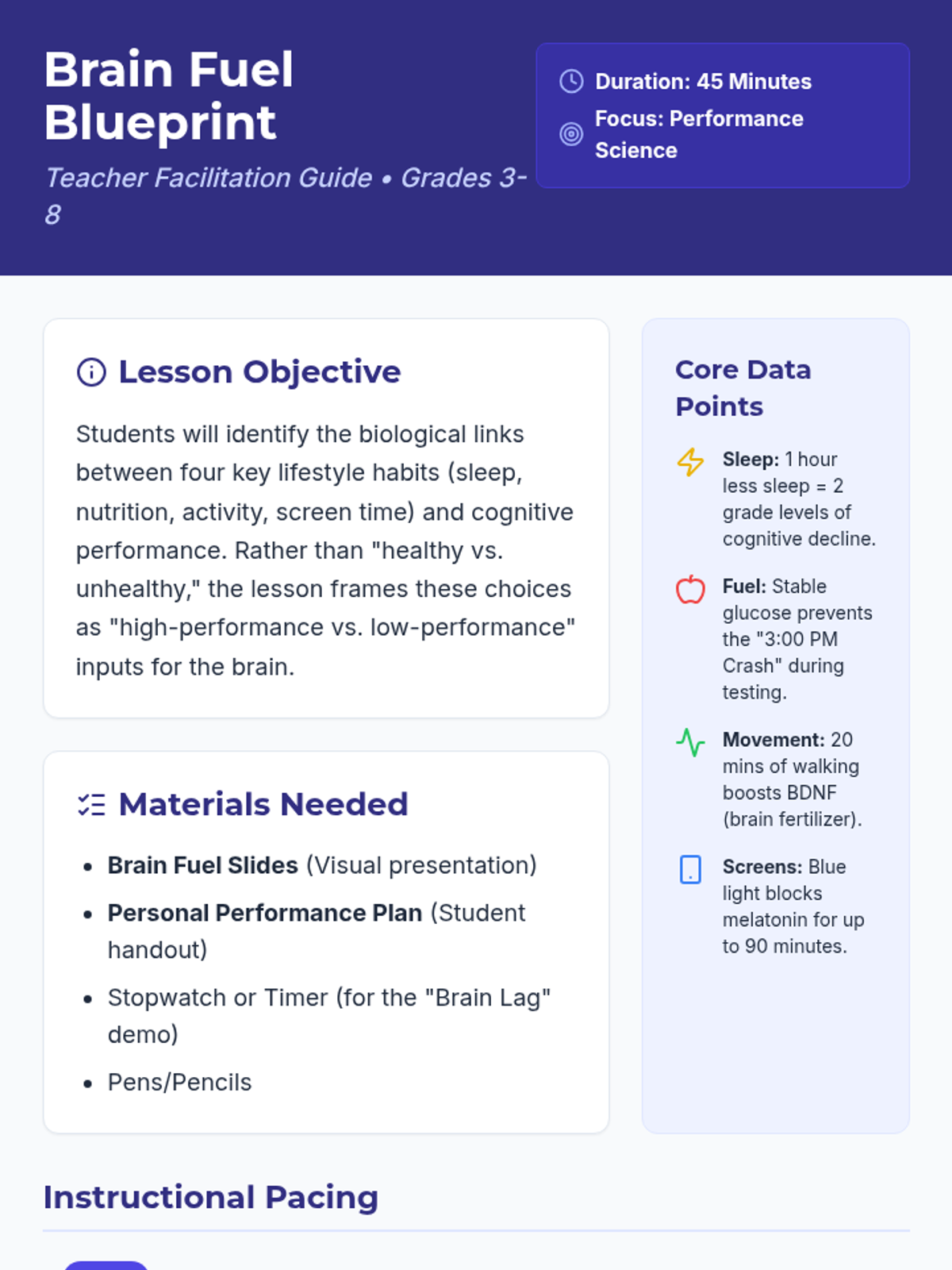
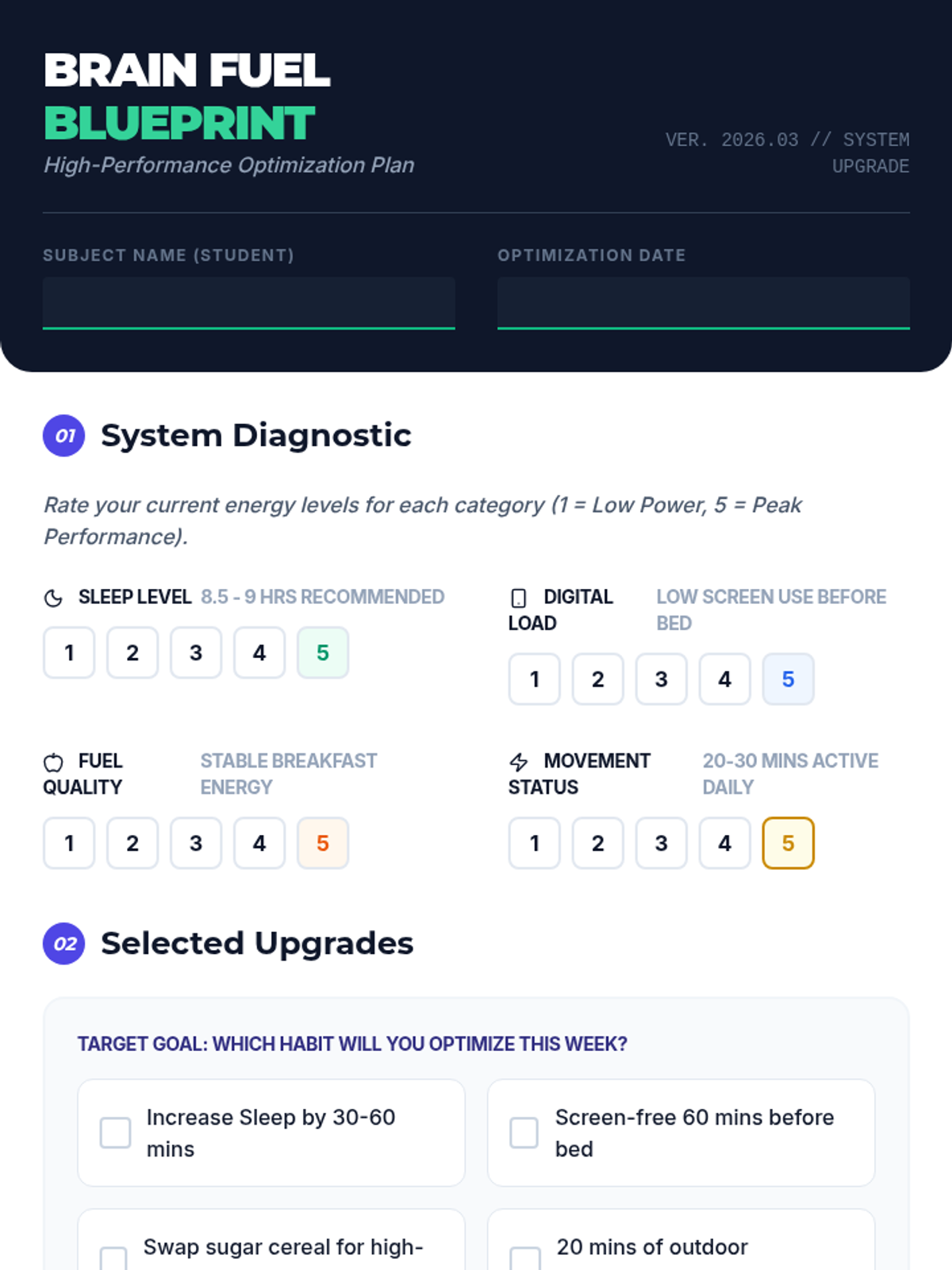
A practical, data-driven lesson for grades 3-8 exploring how sleep, nutrition, physical activity, and screen time directly impact brain function and academic success. Students analyze real-world performance metrics and create their own 'Brain Fuel Blueprint' for personal wellness.
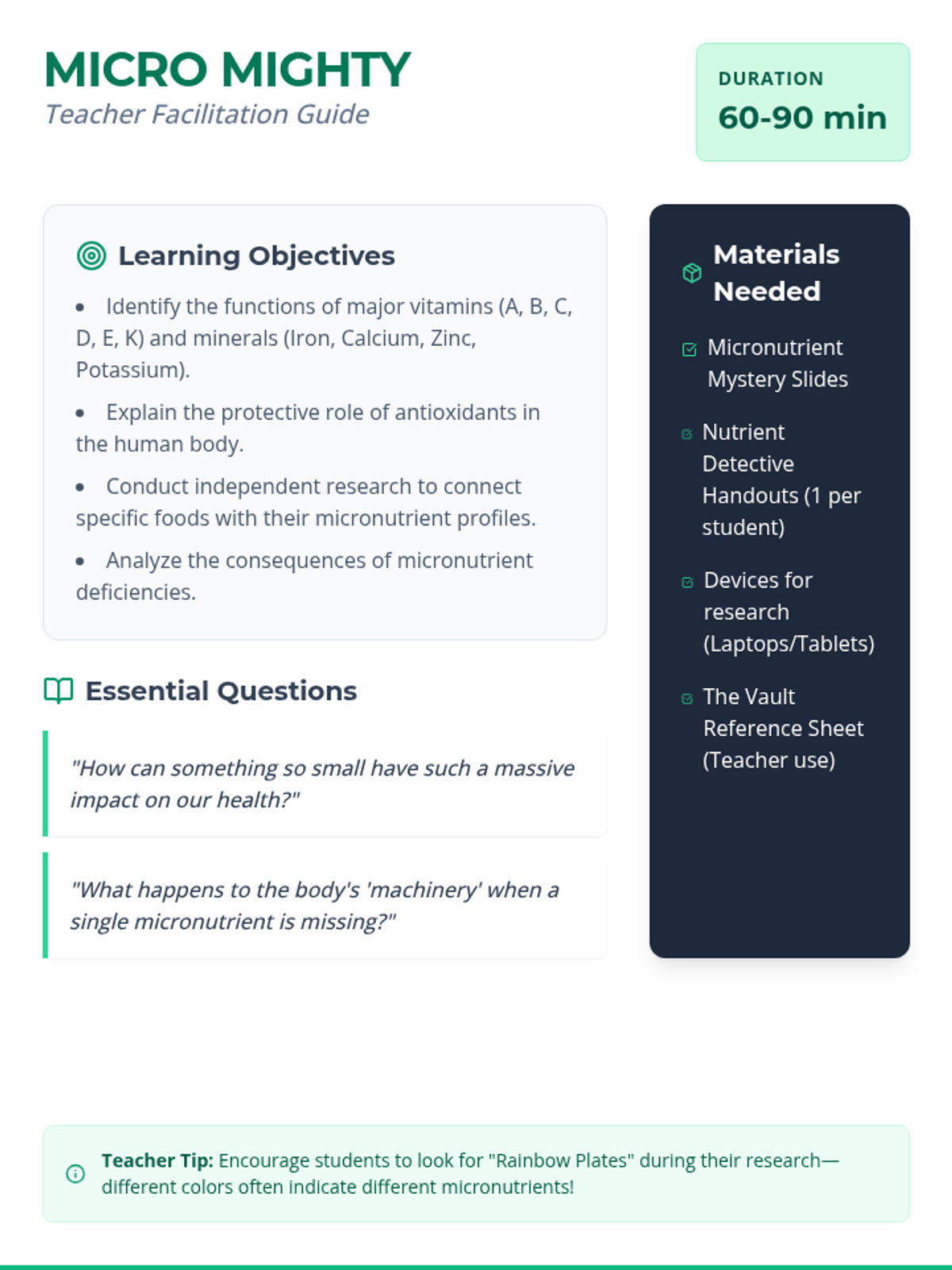
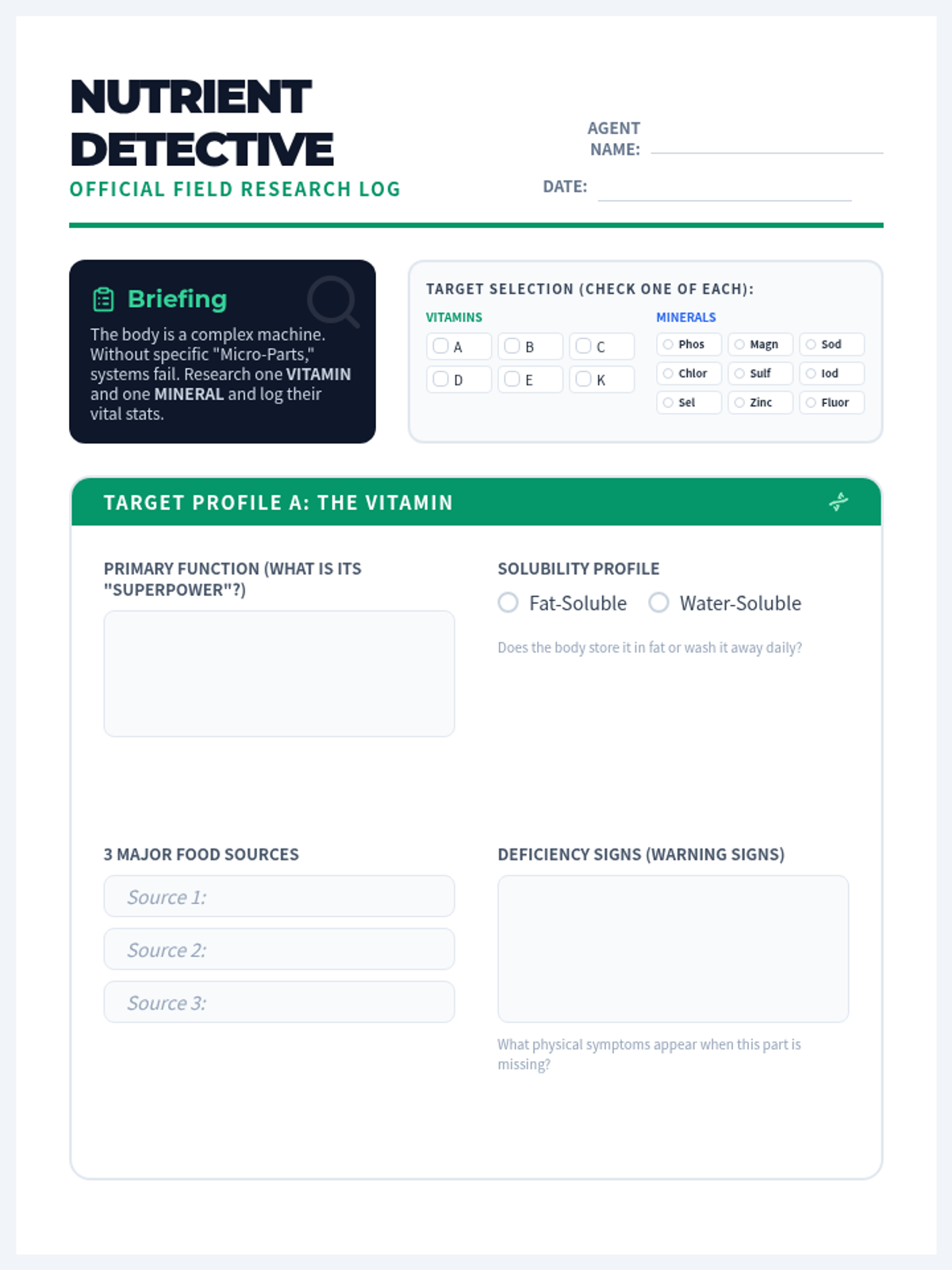
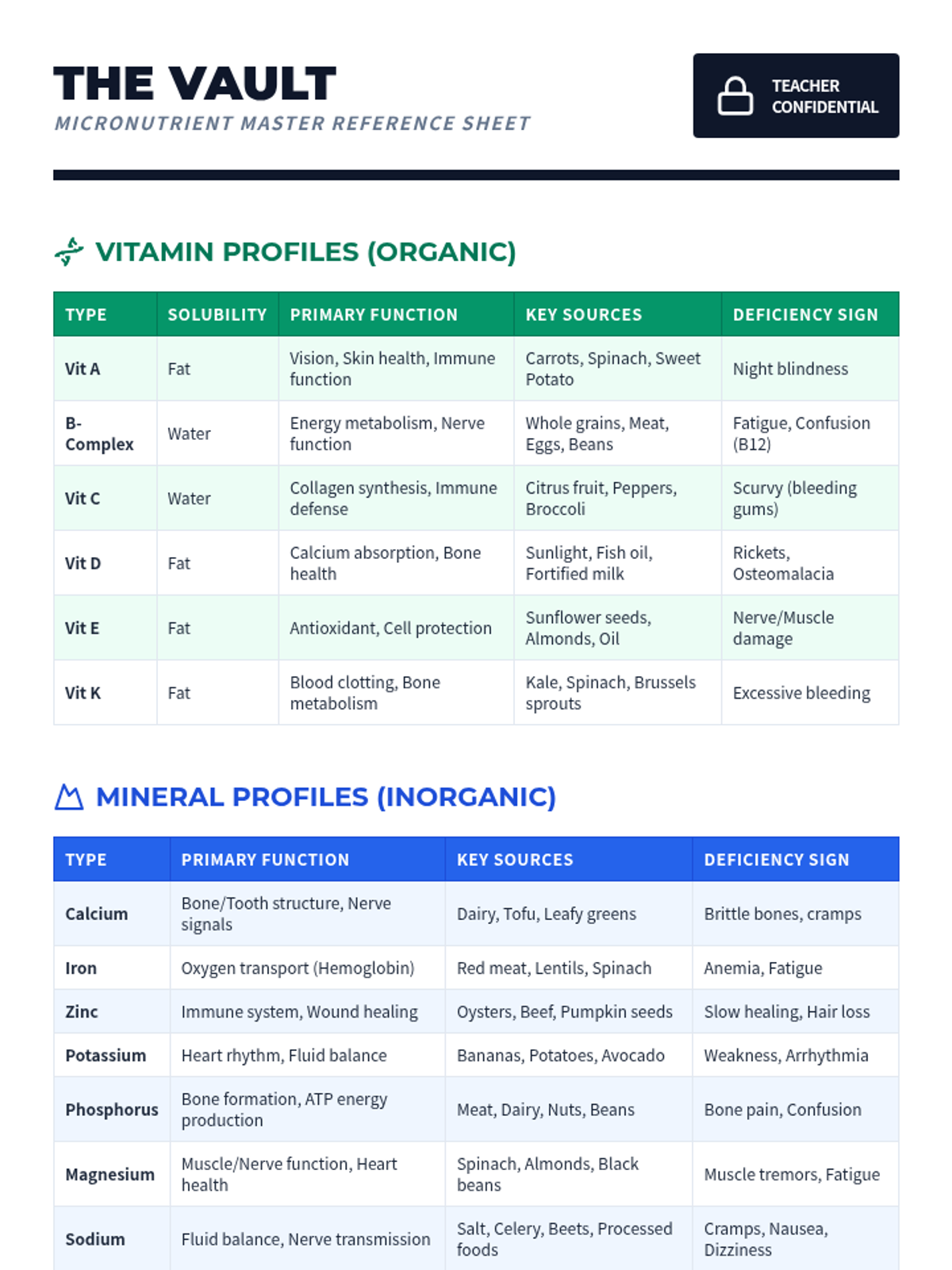
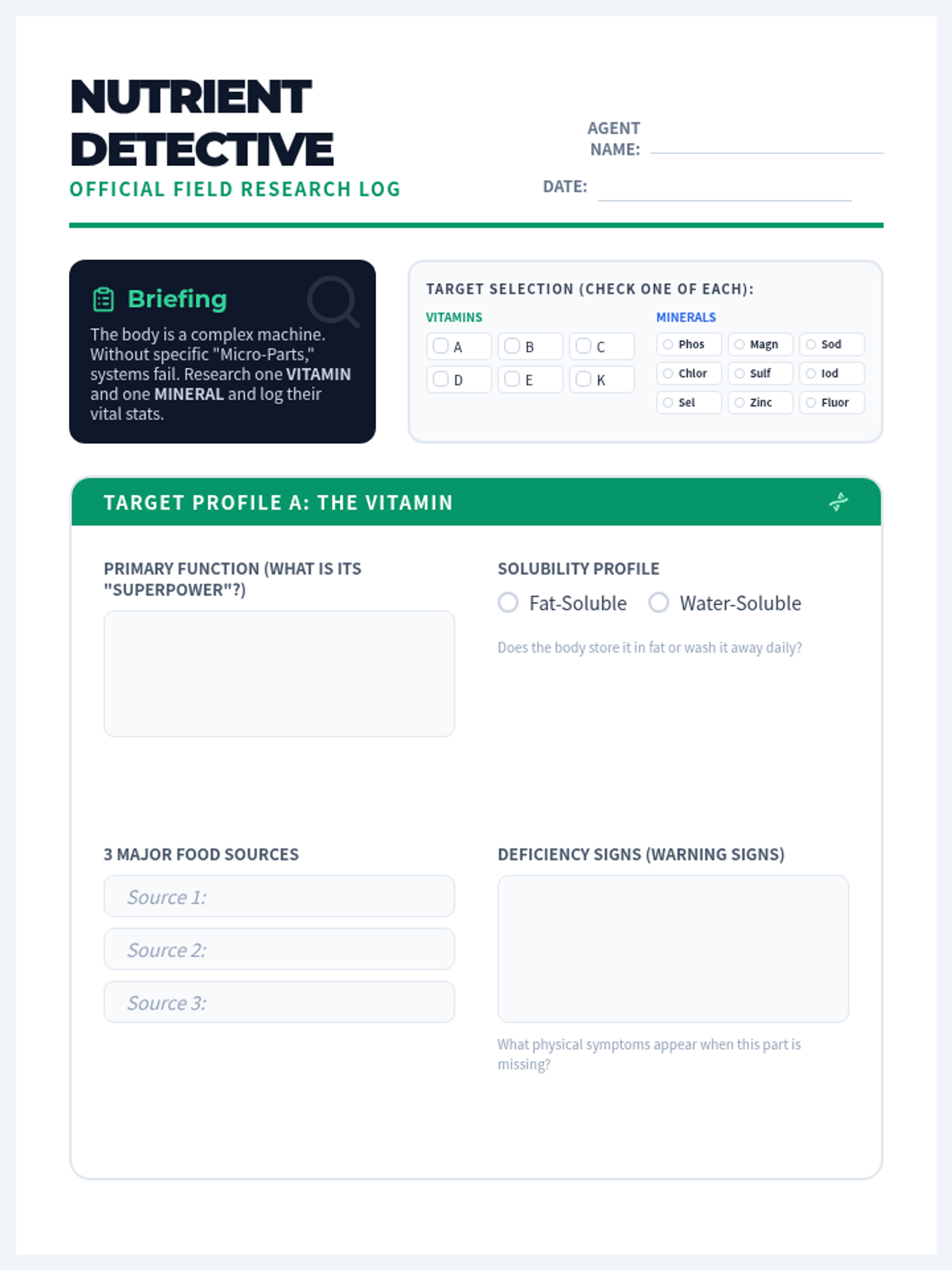
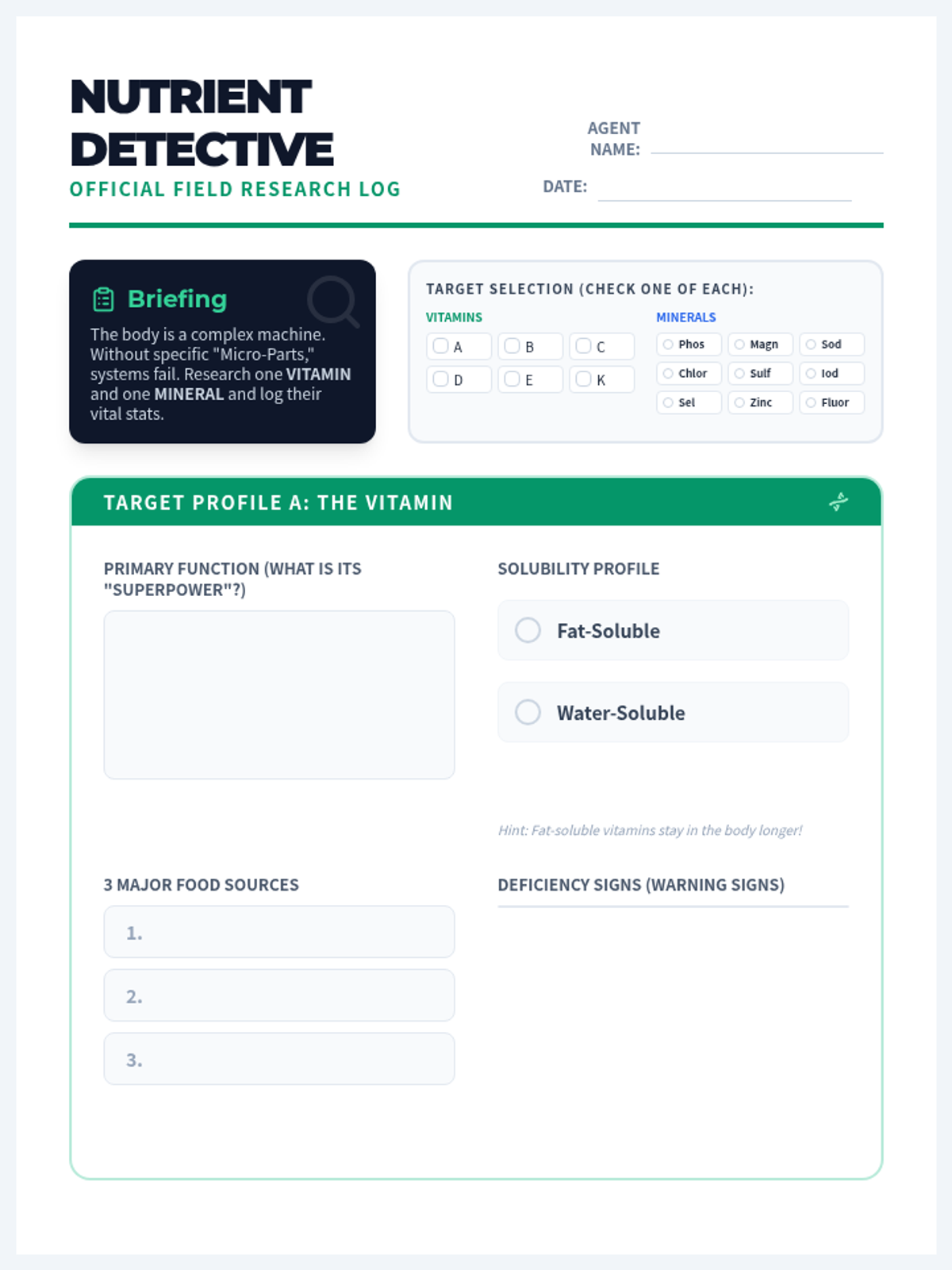
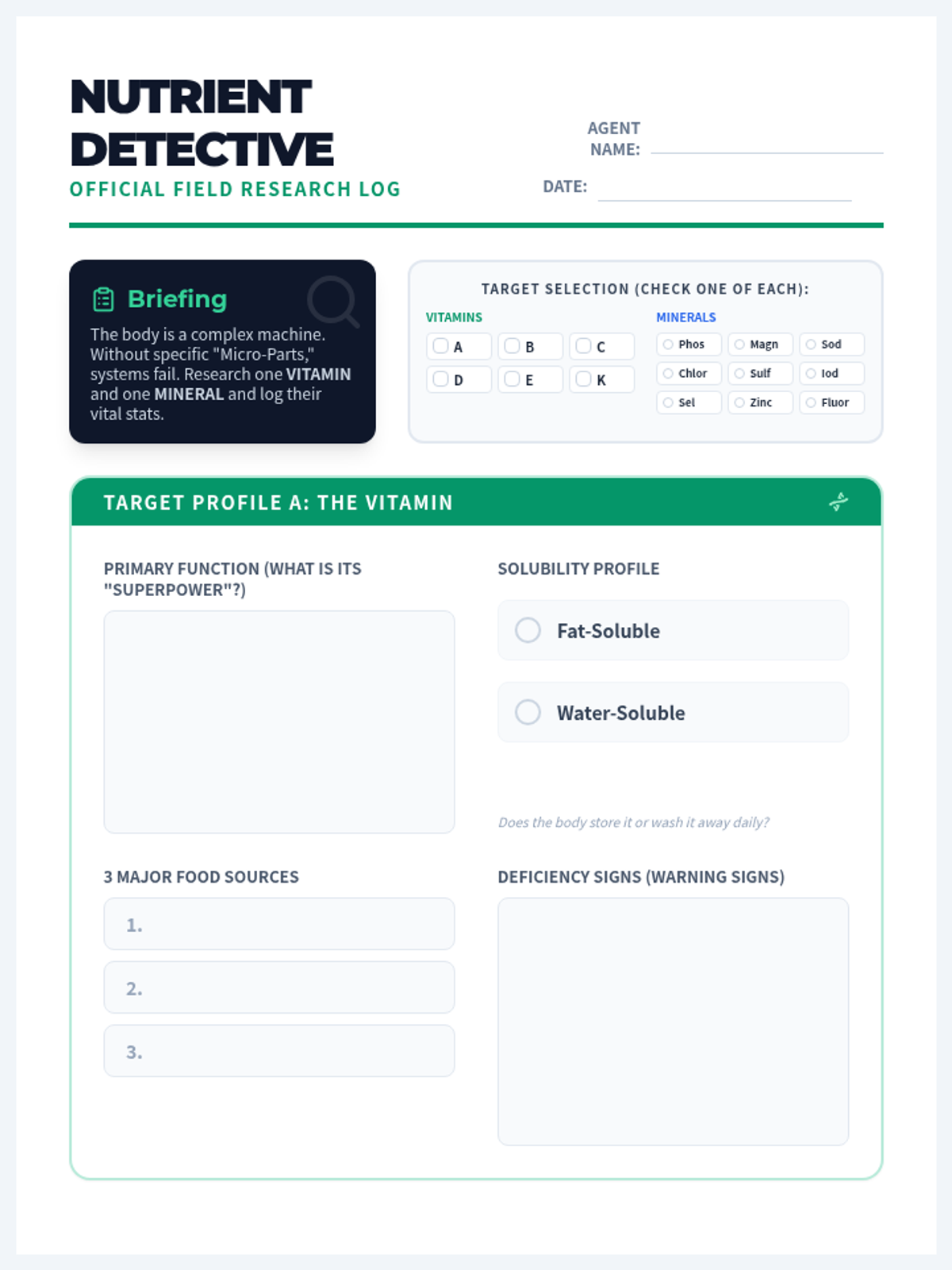
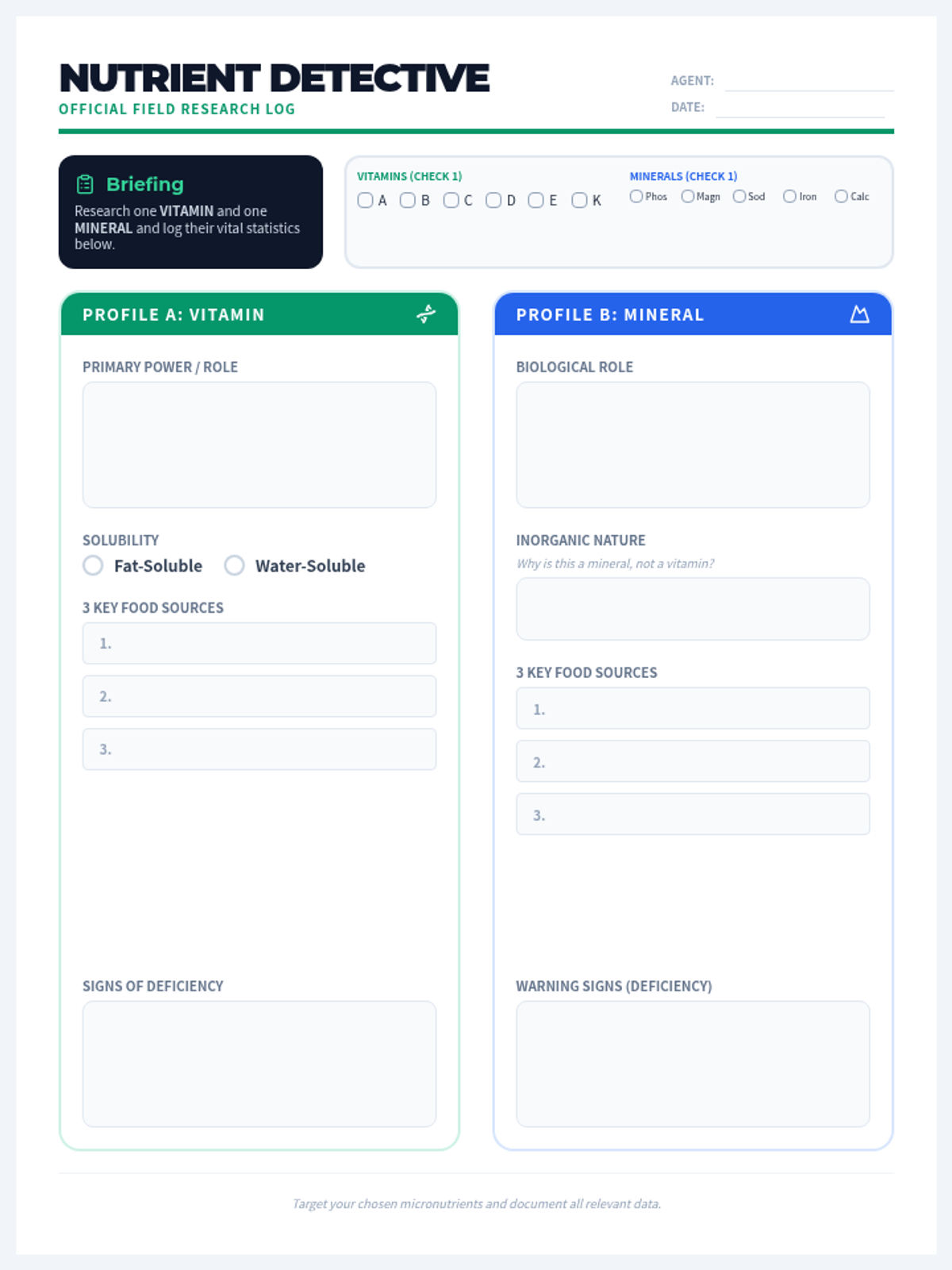
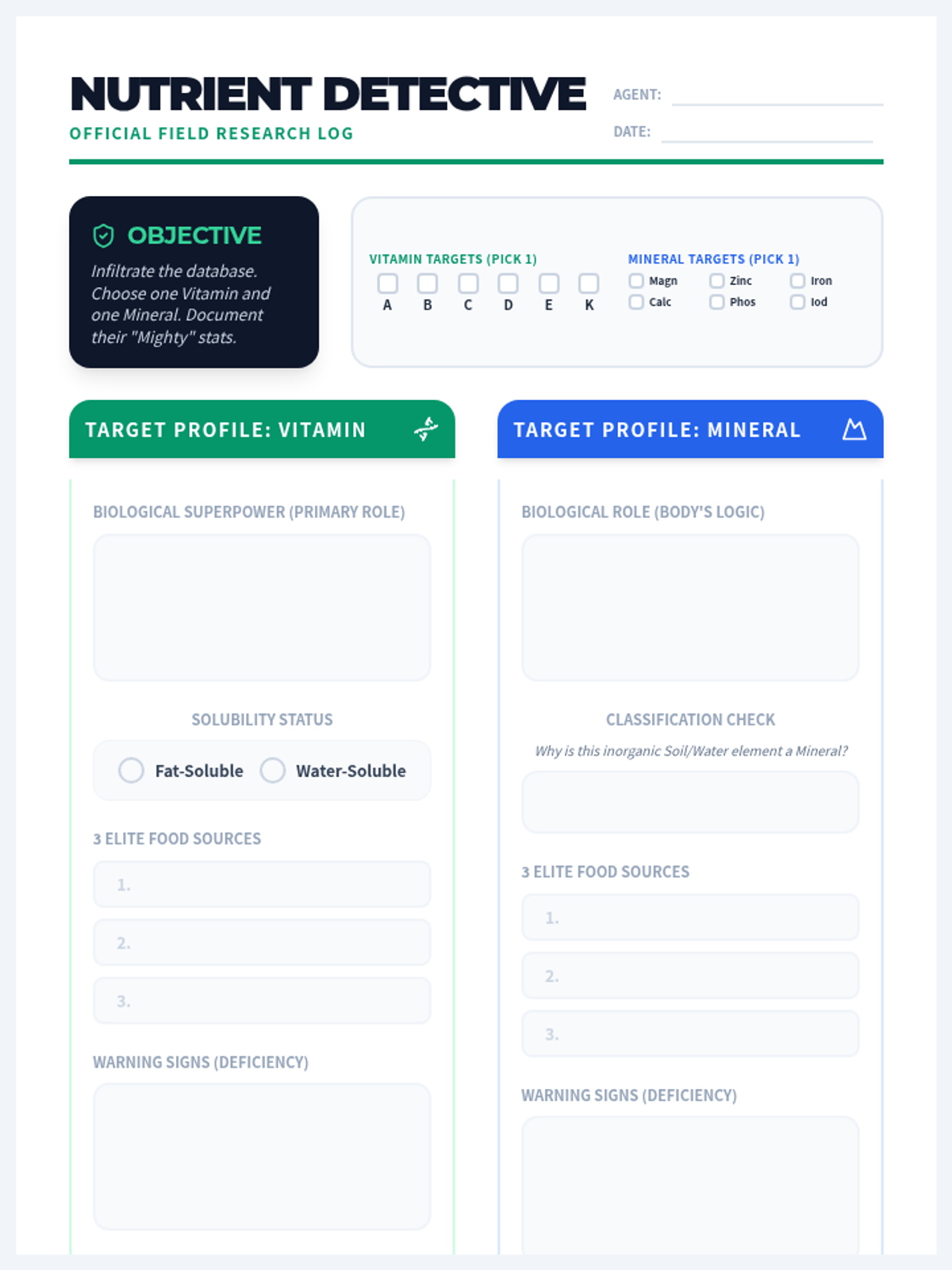
A comprehensive lesson exploring the essential roles of vitamins, minerals, and antioxidants in human health, featuring a guided research activity.
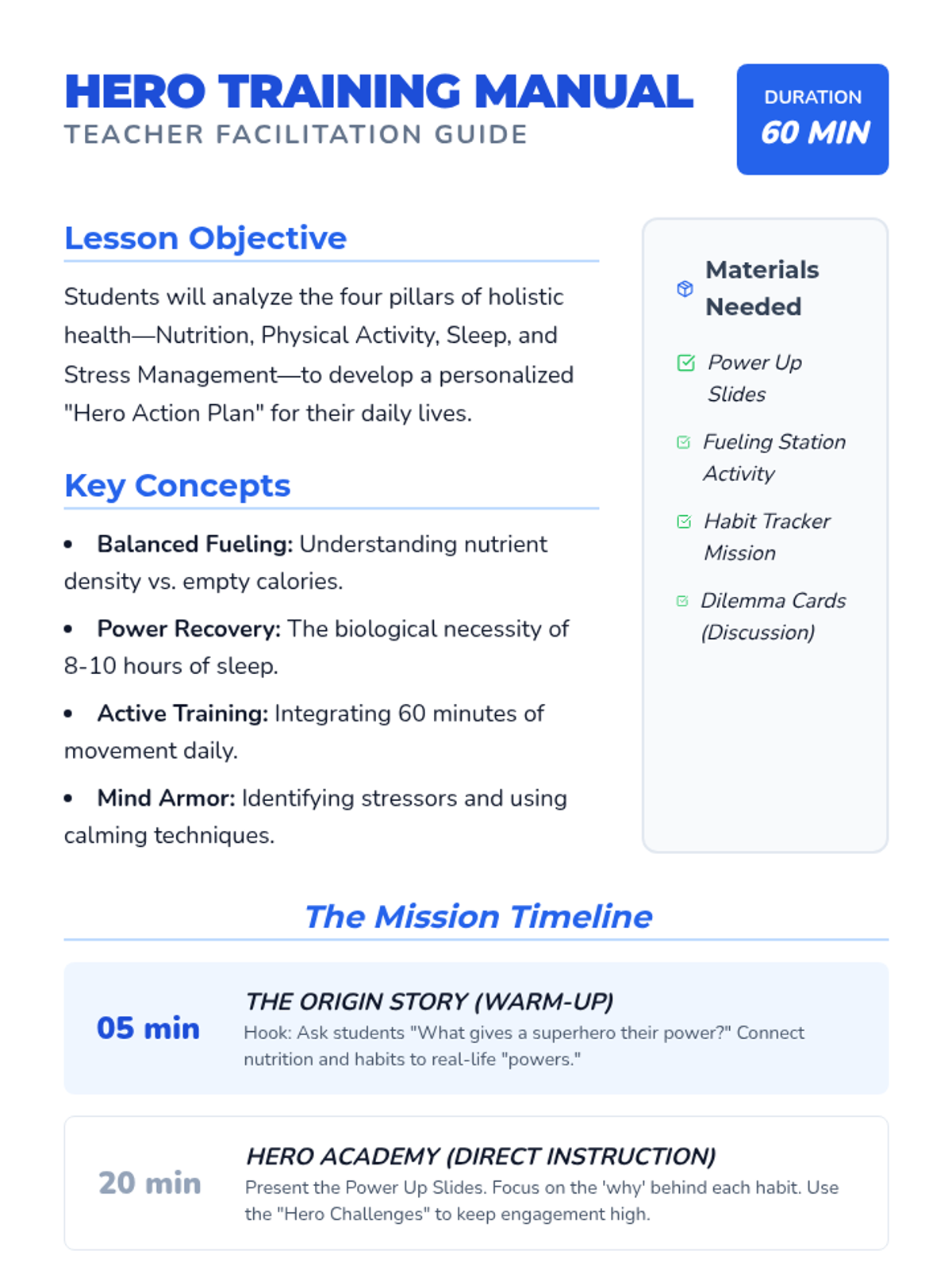
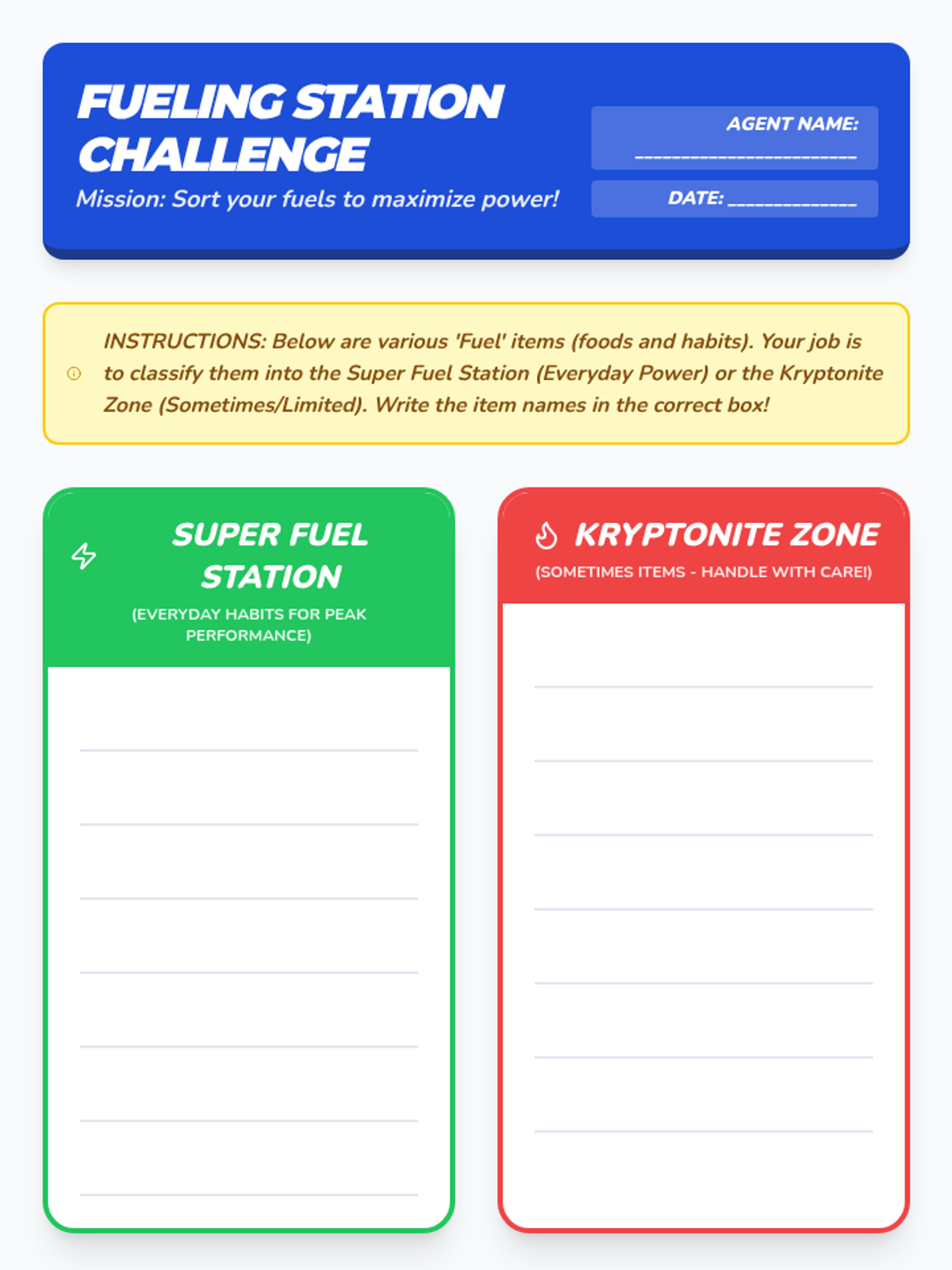
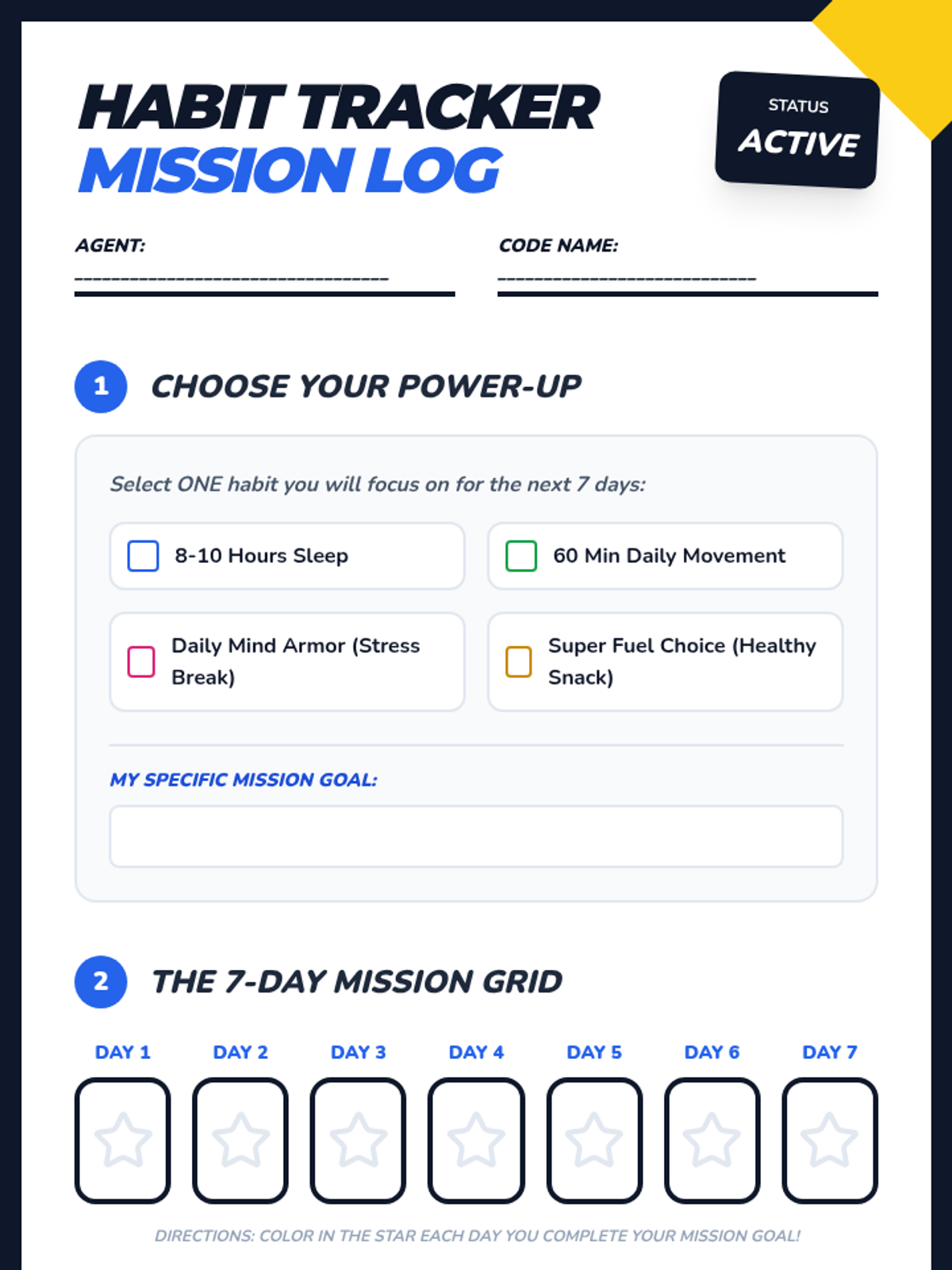
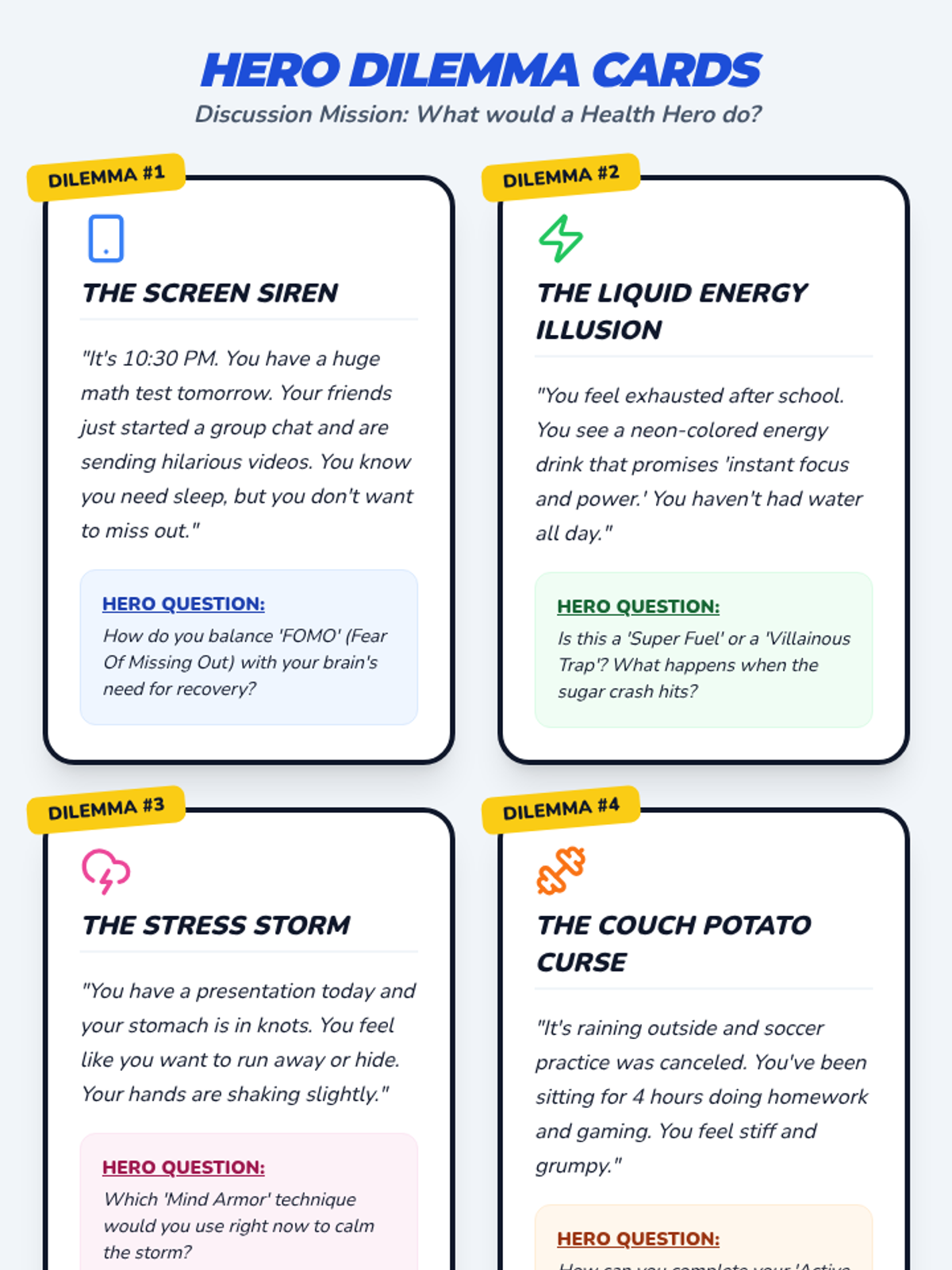
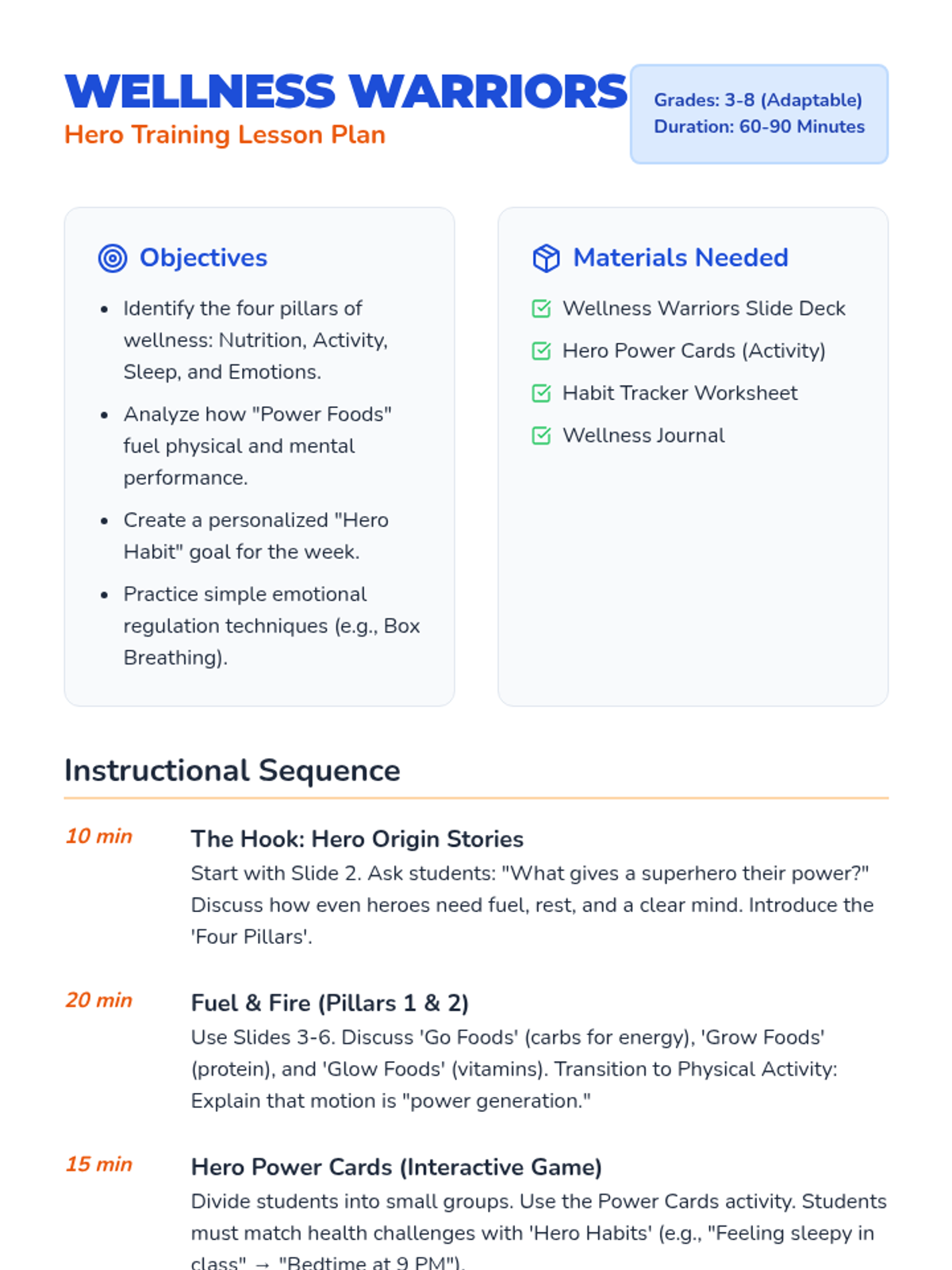
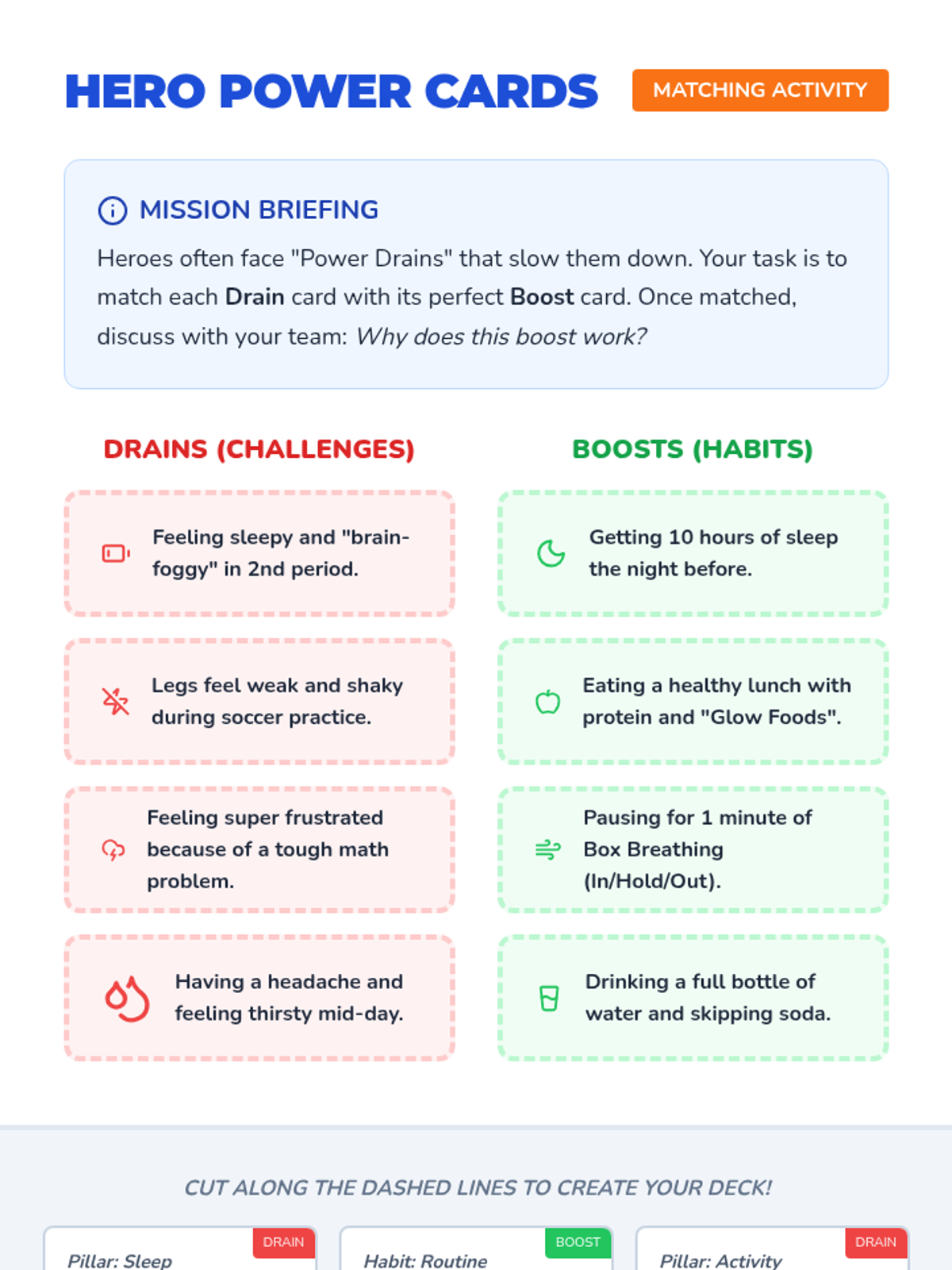
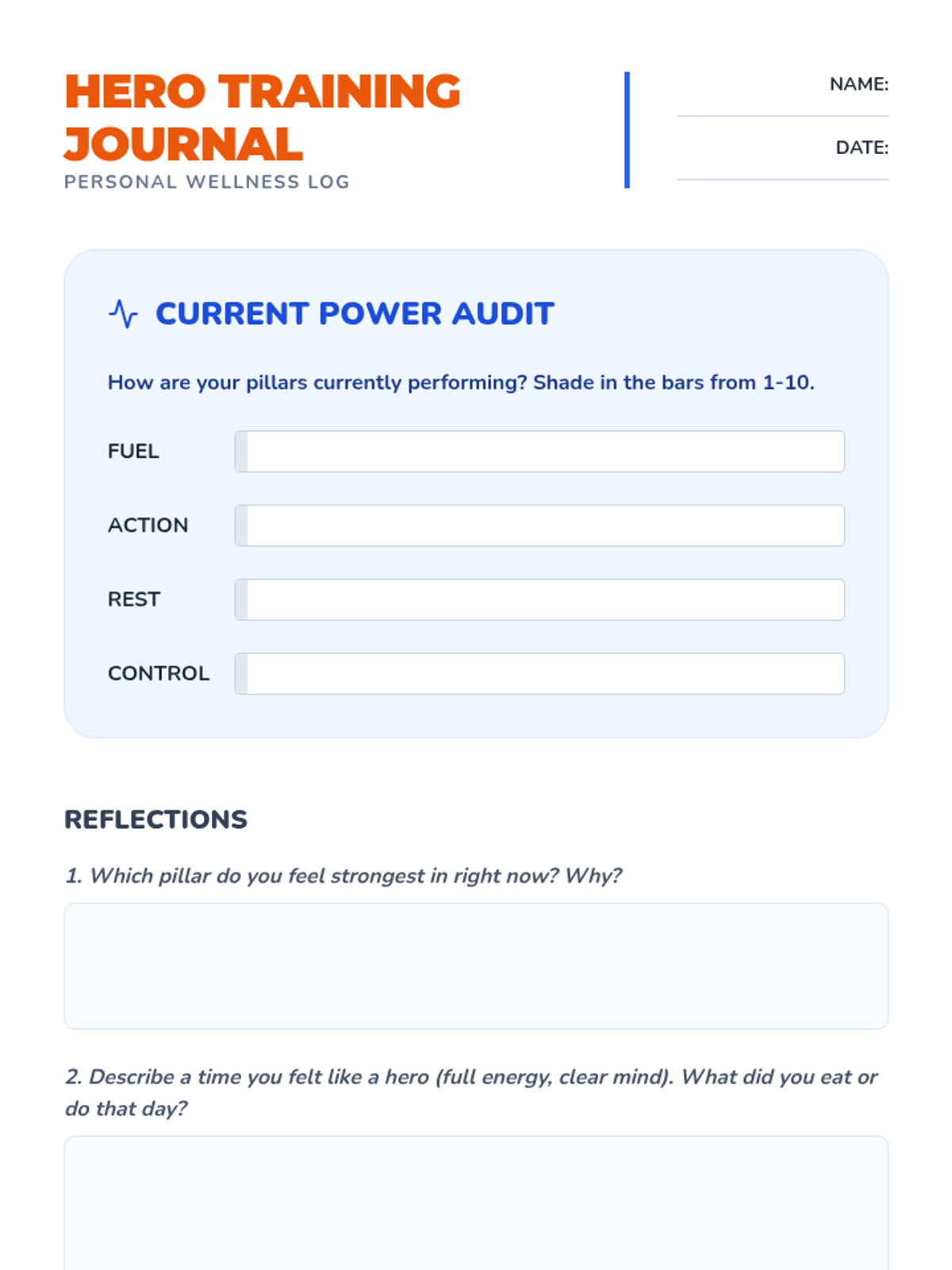
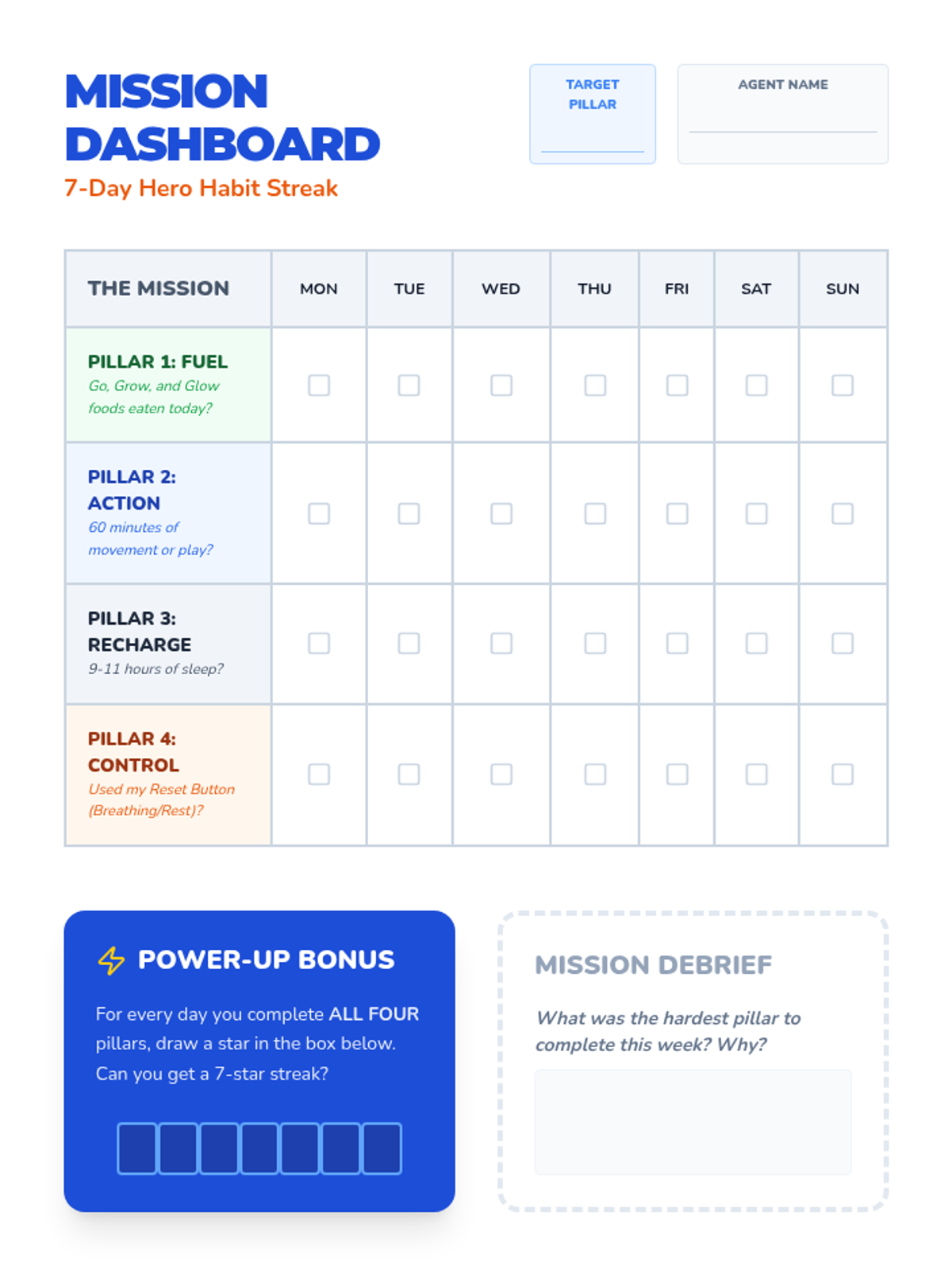
This lesson empowers middle school students to become 'Health Heroes' by mastering nutrition, activity, sleep, and stress management through interactive missions and self-reflection.
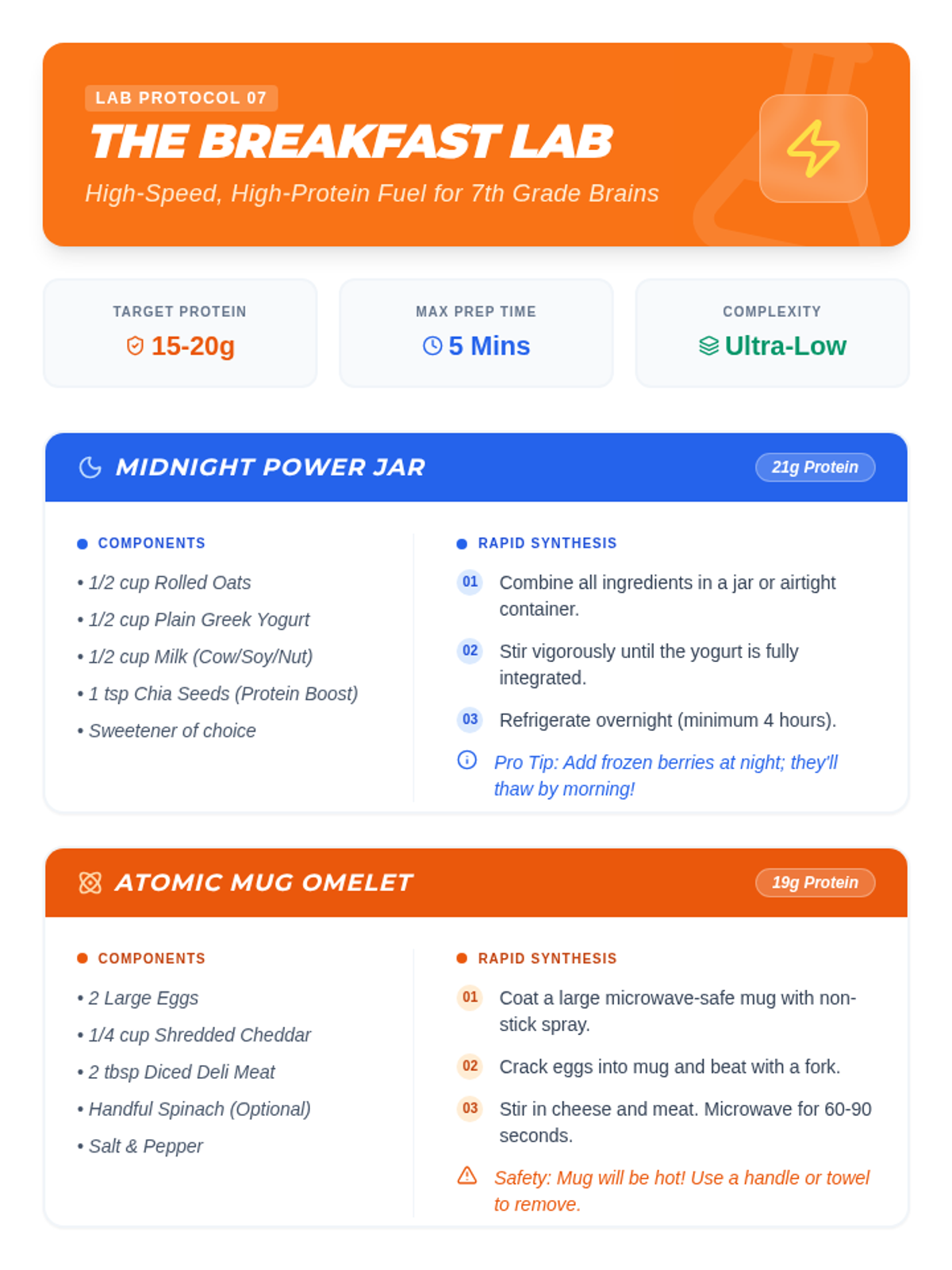
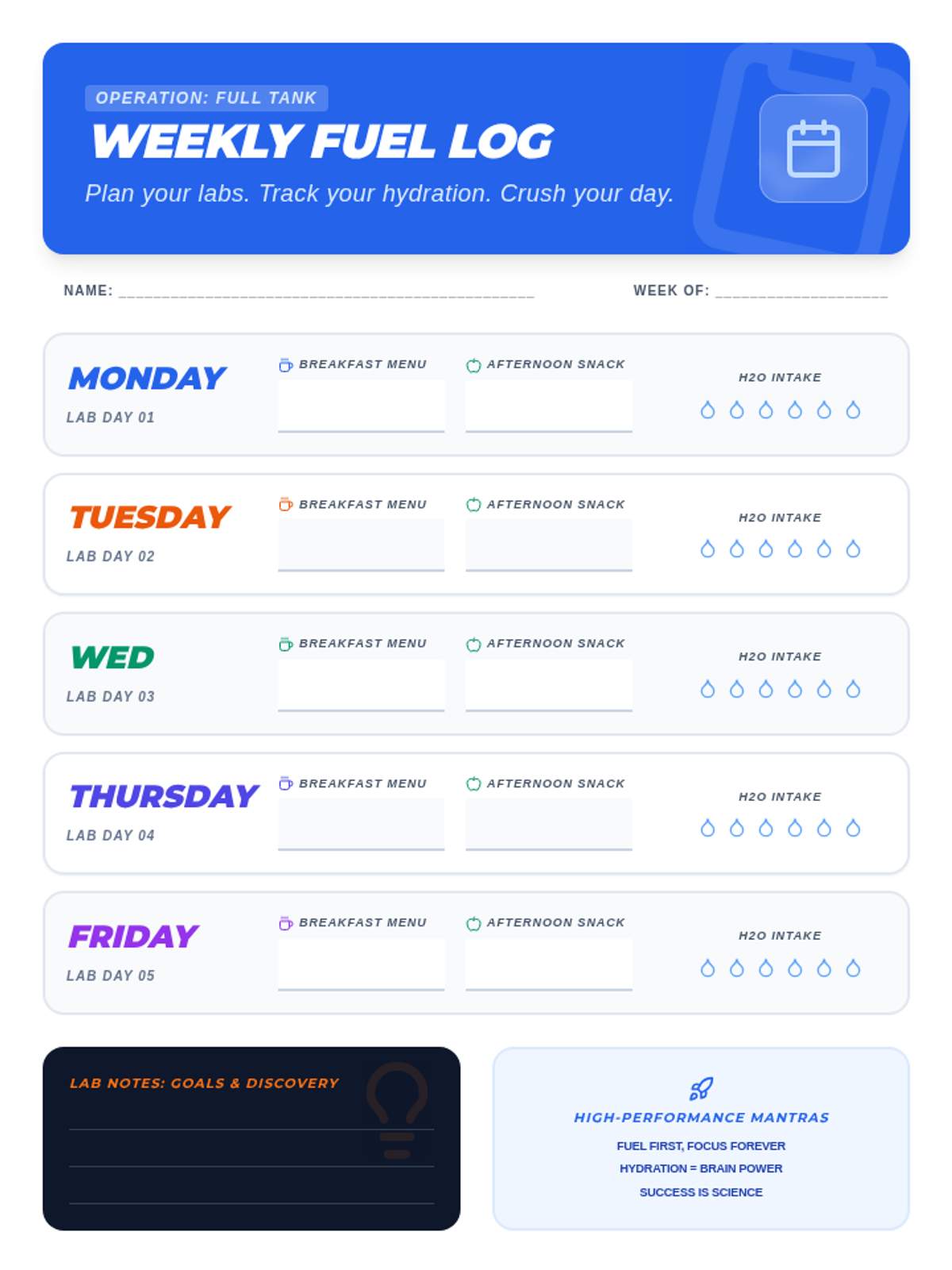
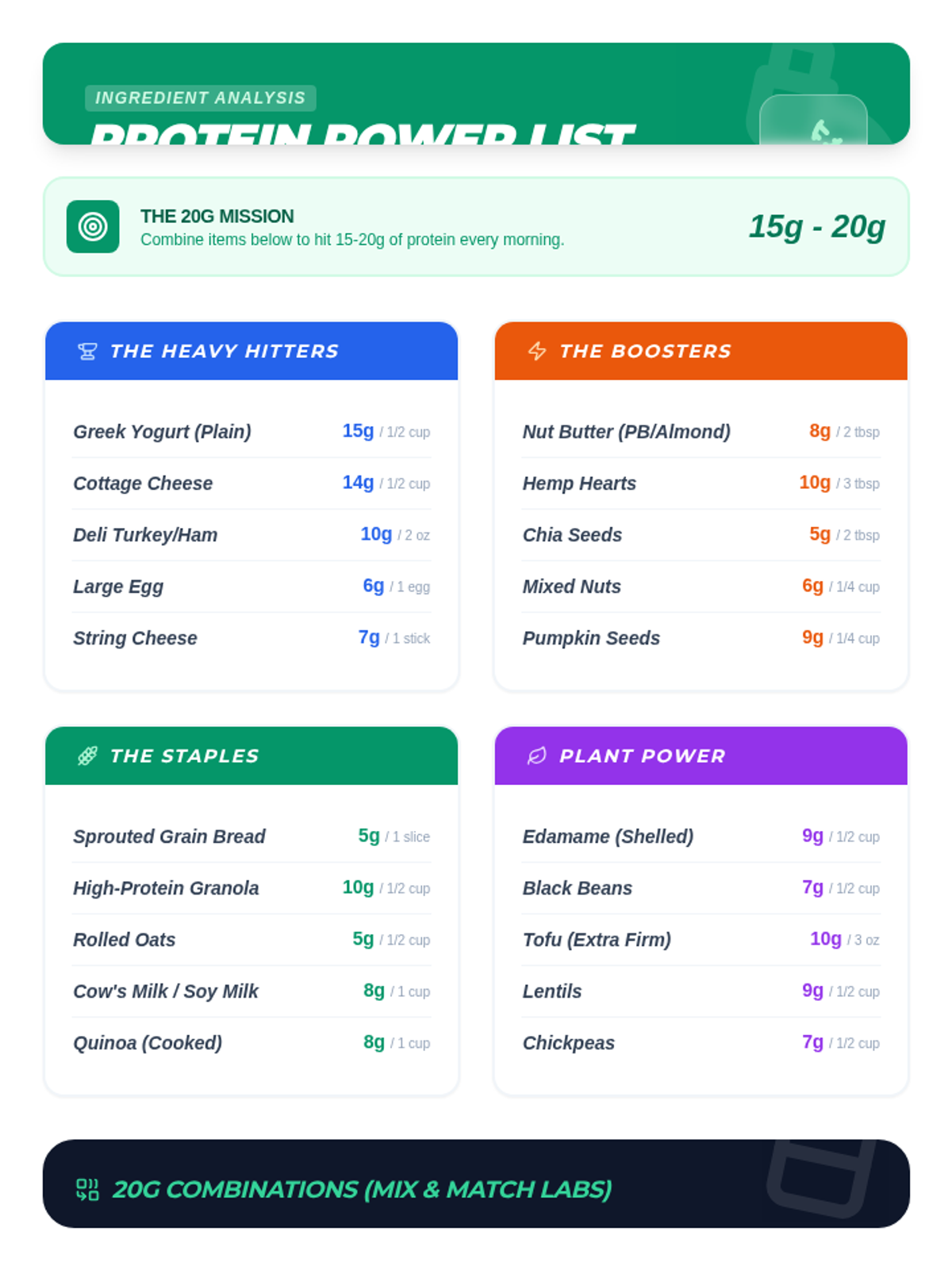
A high-energy breakfast planning resource for 7th graders, featuring fast, protein-packed recipes and a weekly hydration and meal tracking system.
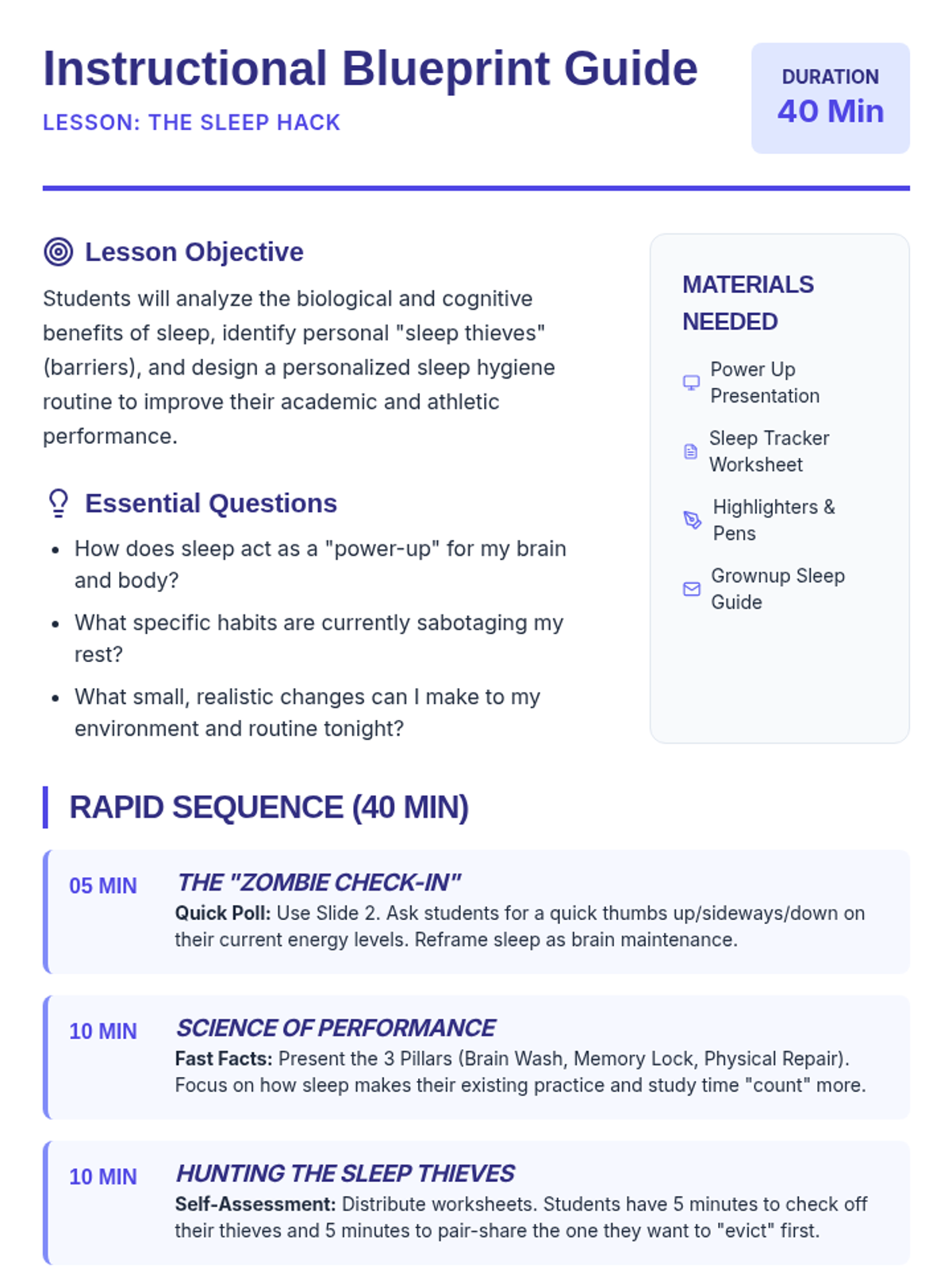
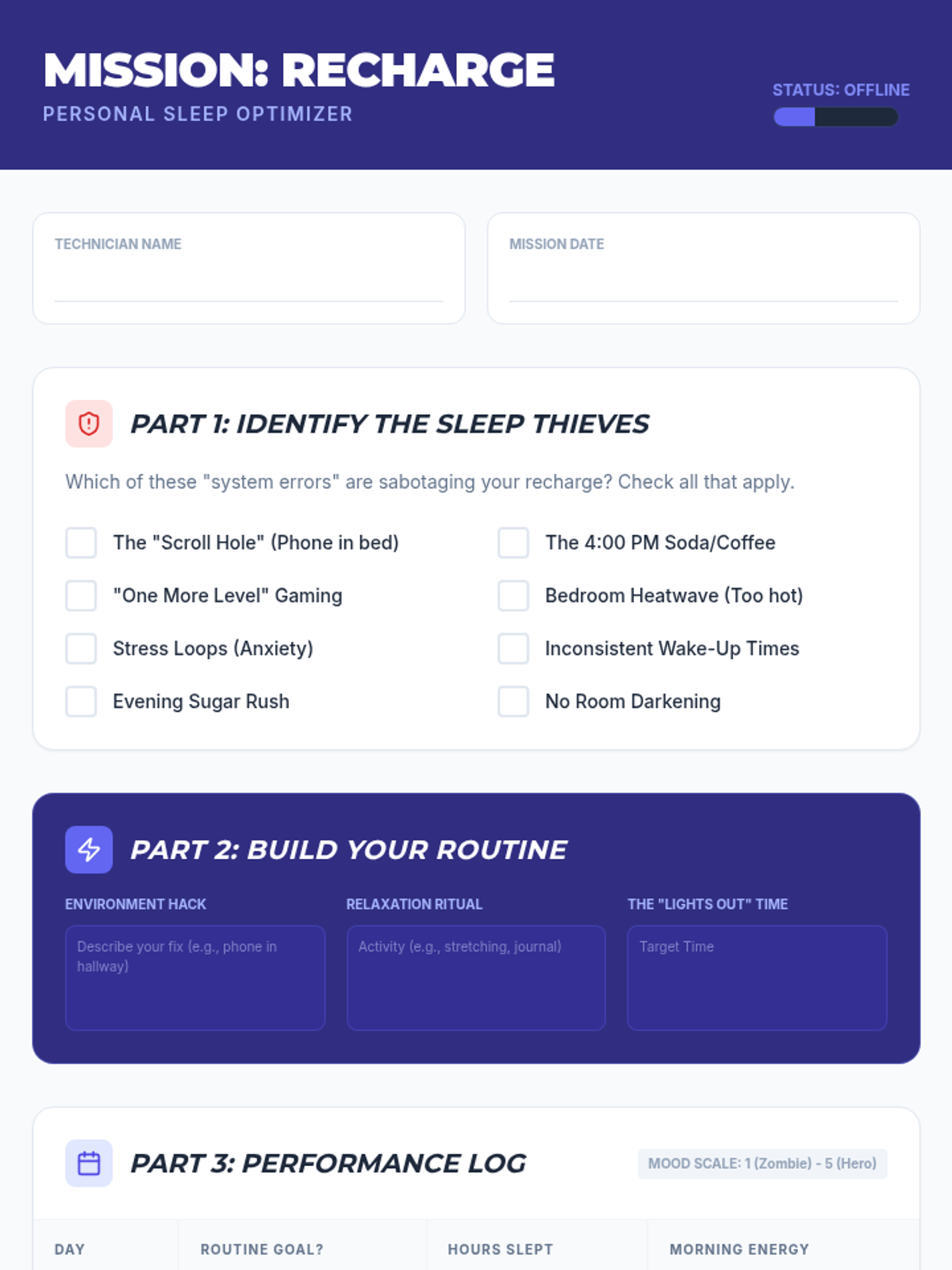
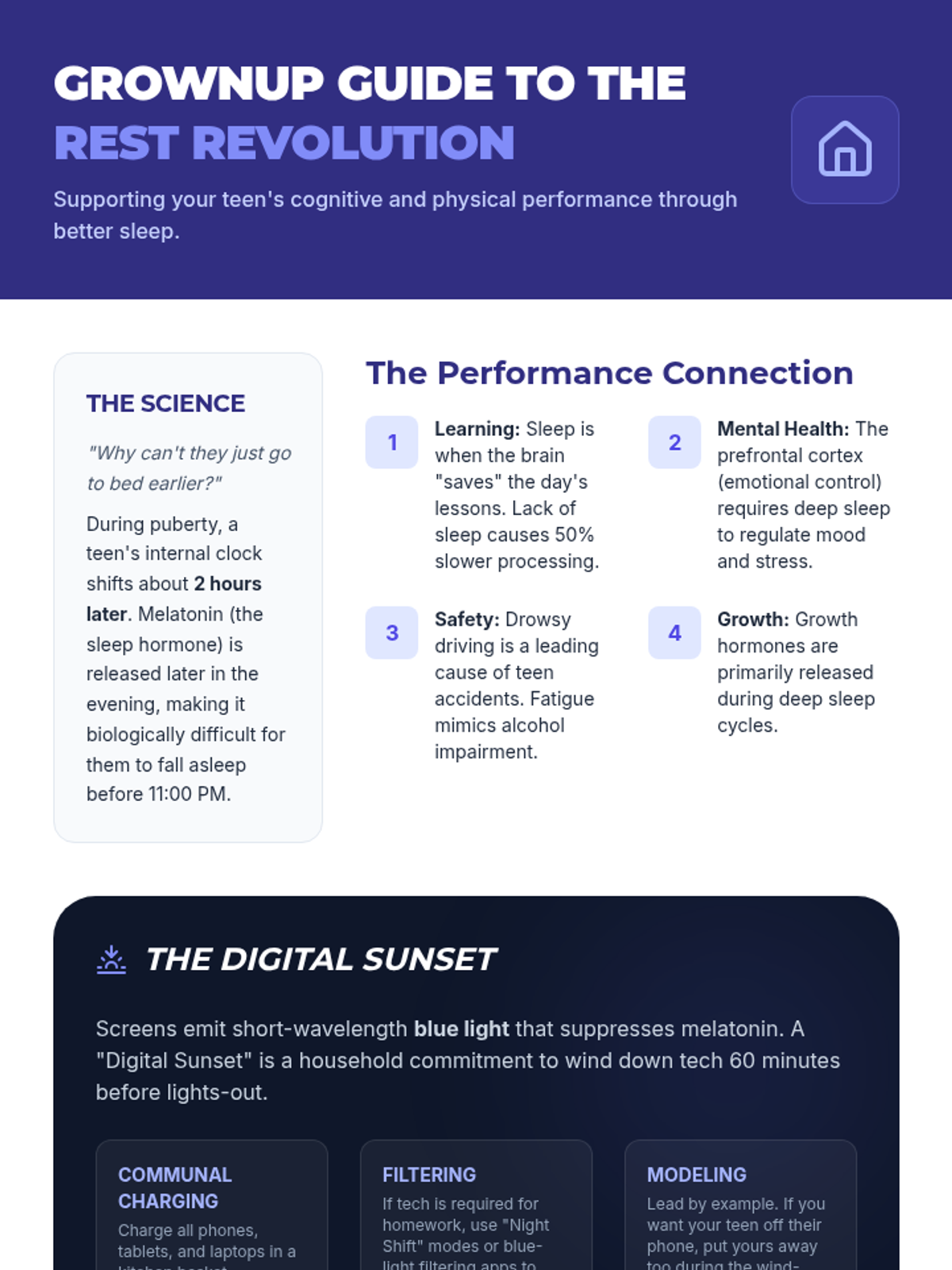
An engaging lesson that breaks down why sleep is a performance-enhancing 'hack' for students and provides practical tools for building a better bedtime routine.
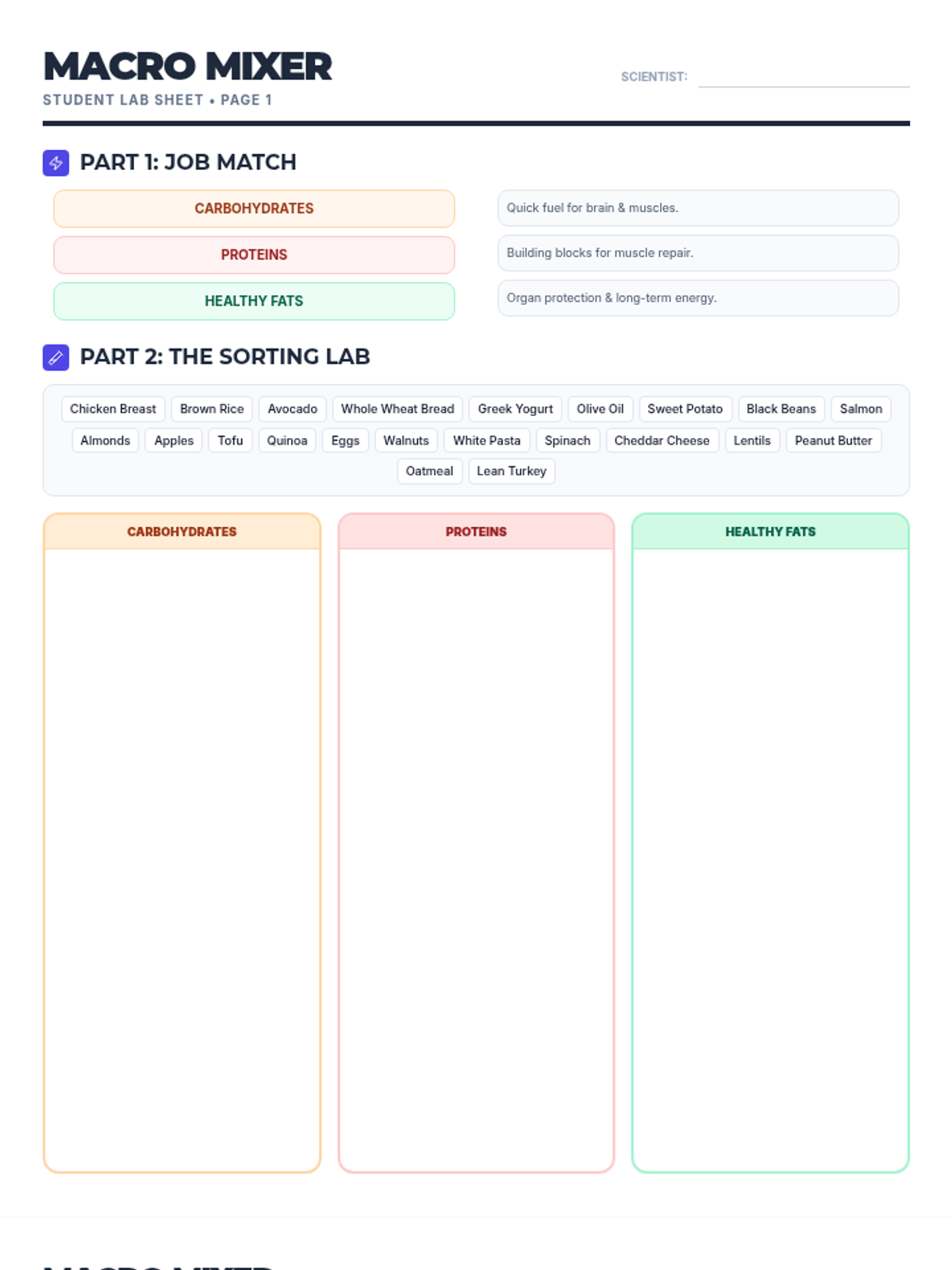
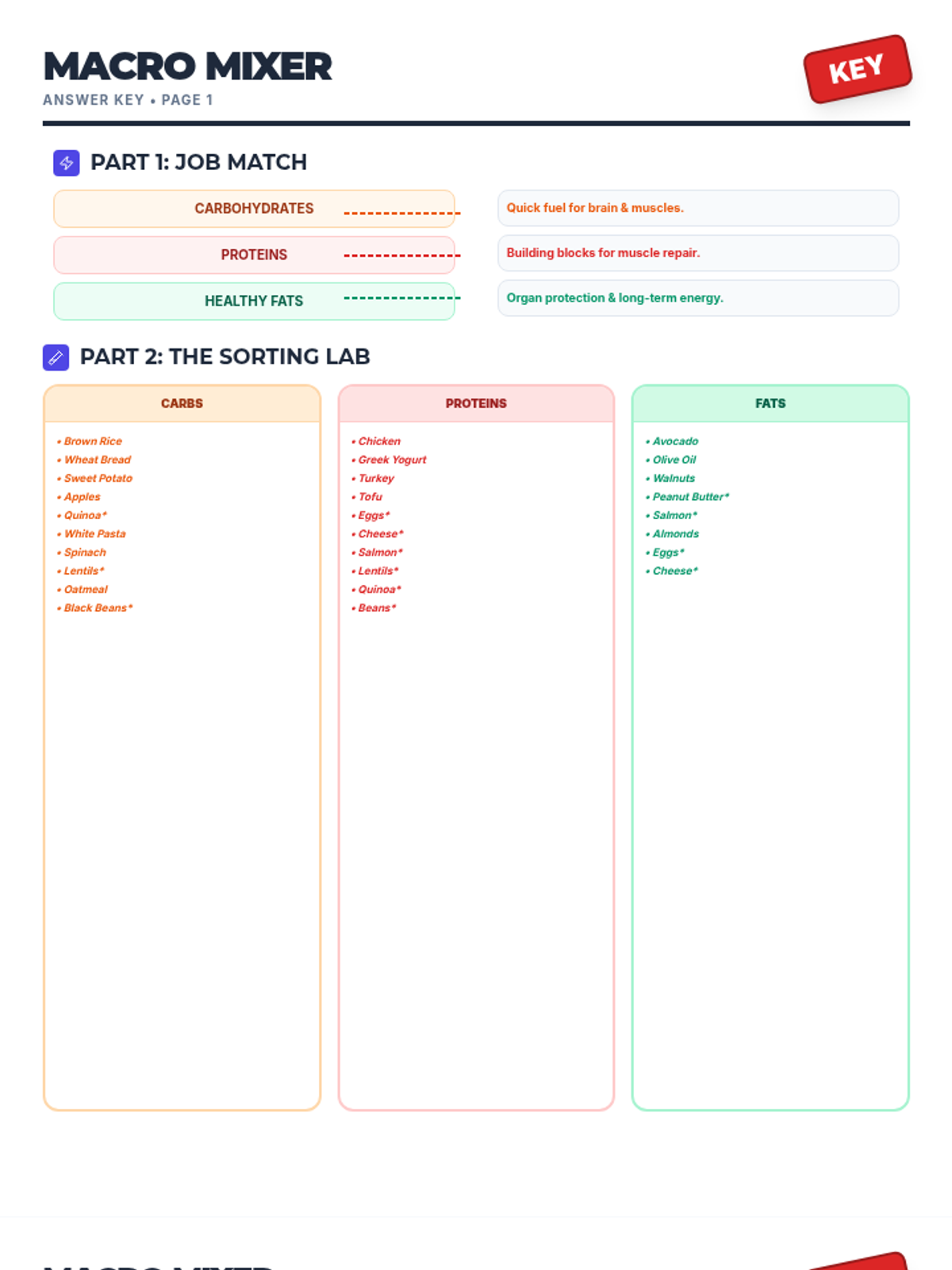
This lesson explores the three primary macronutrients—carbohydrates, proteins, and fats. Students will discover how these 'big nutrients' provide energy and support vital body functions through engaging visuals and a hands-on meal-building activity.
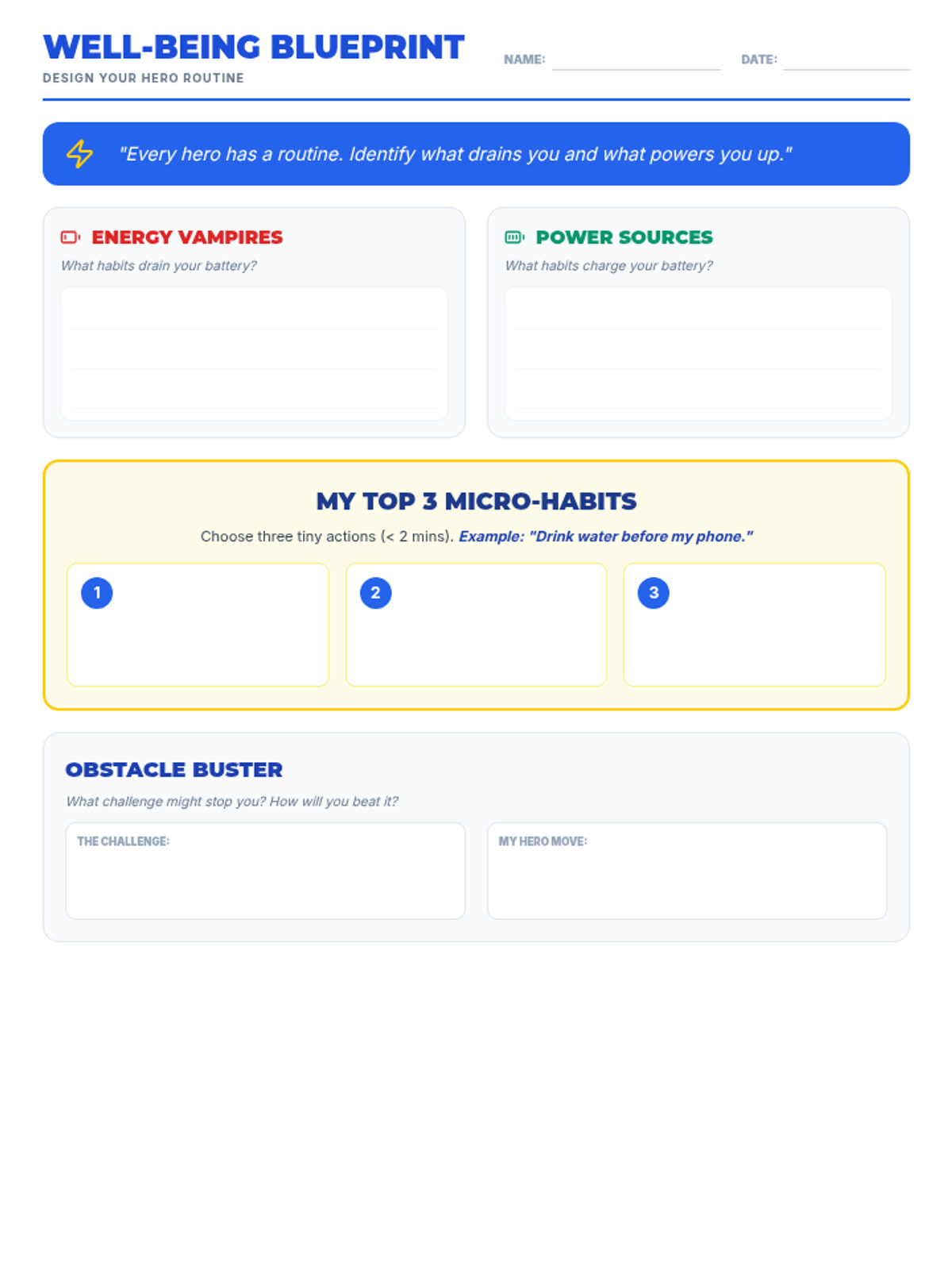
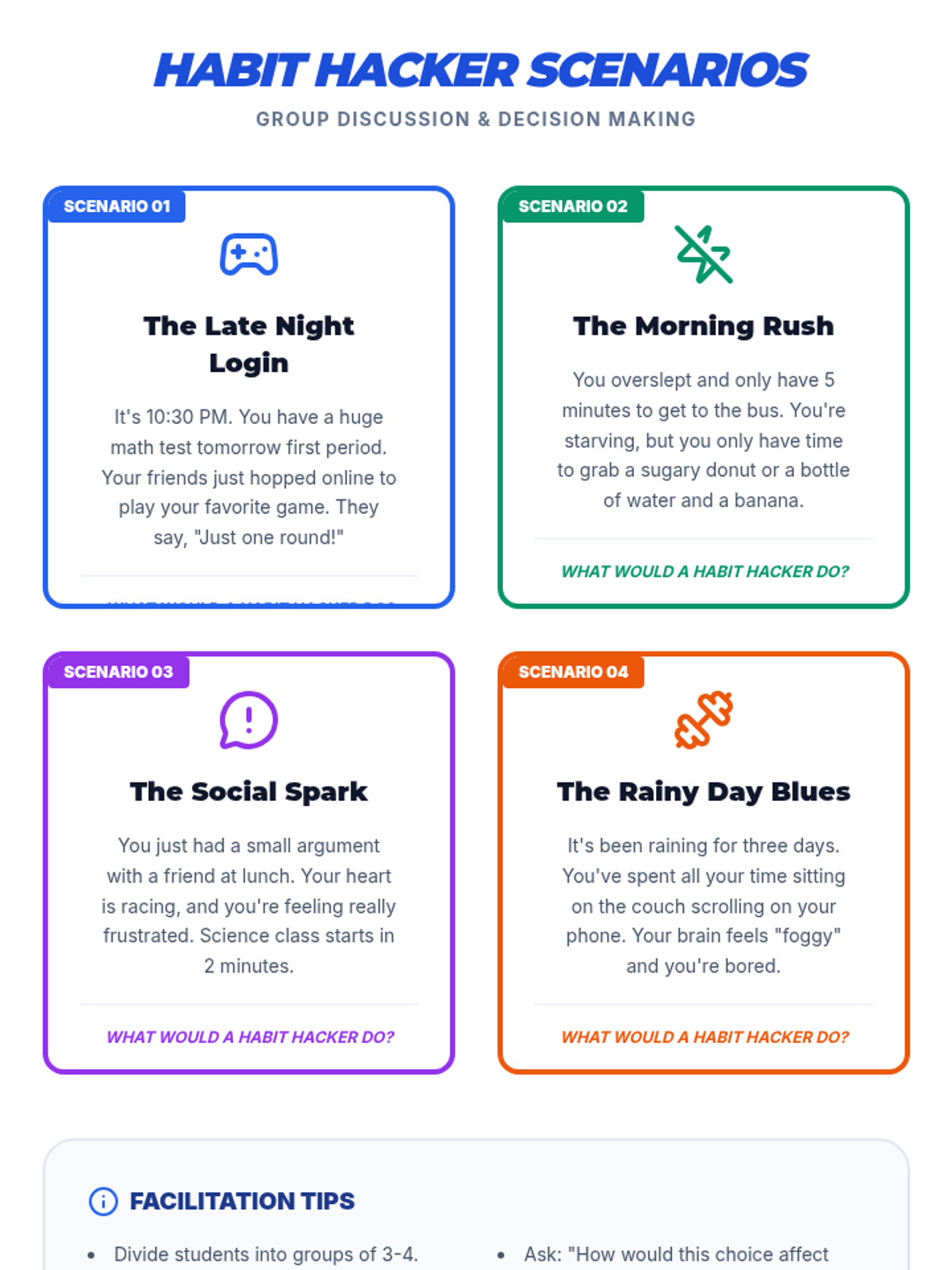
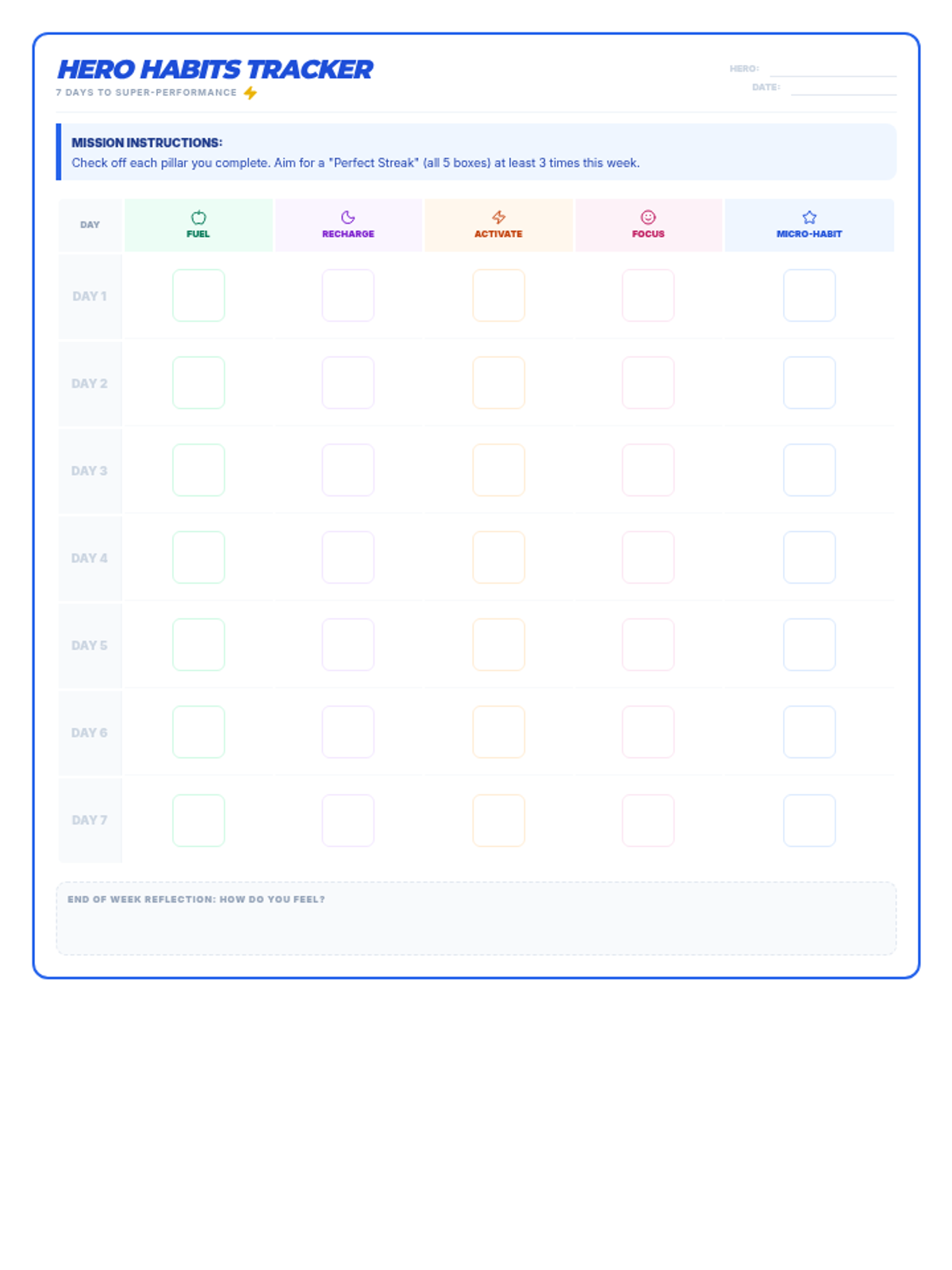
A dynamic lesson where 7th graders explore the link between physical habits and mental performance, designing their own 'hero' routines for success.
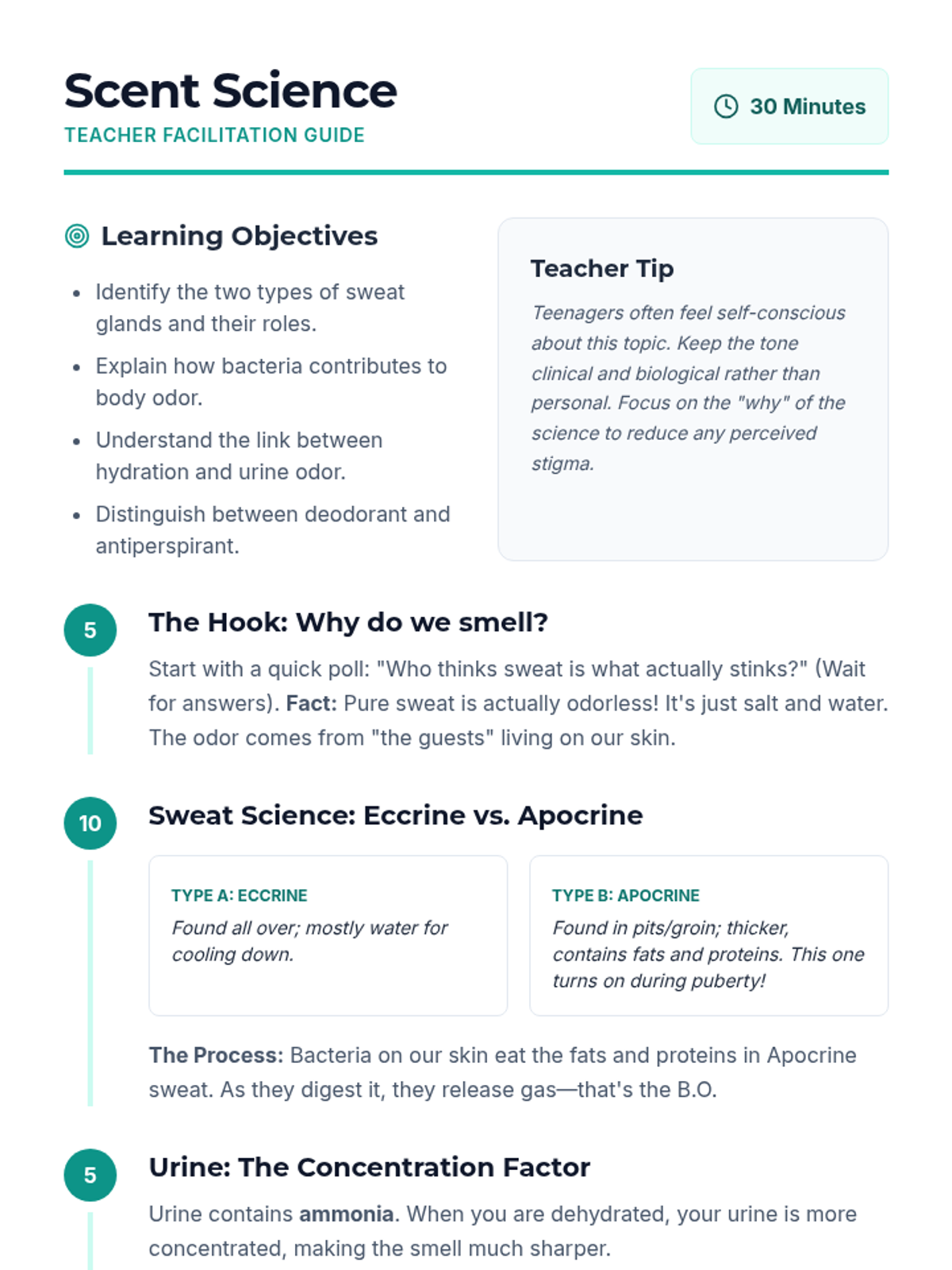
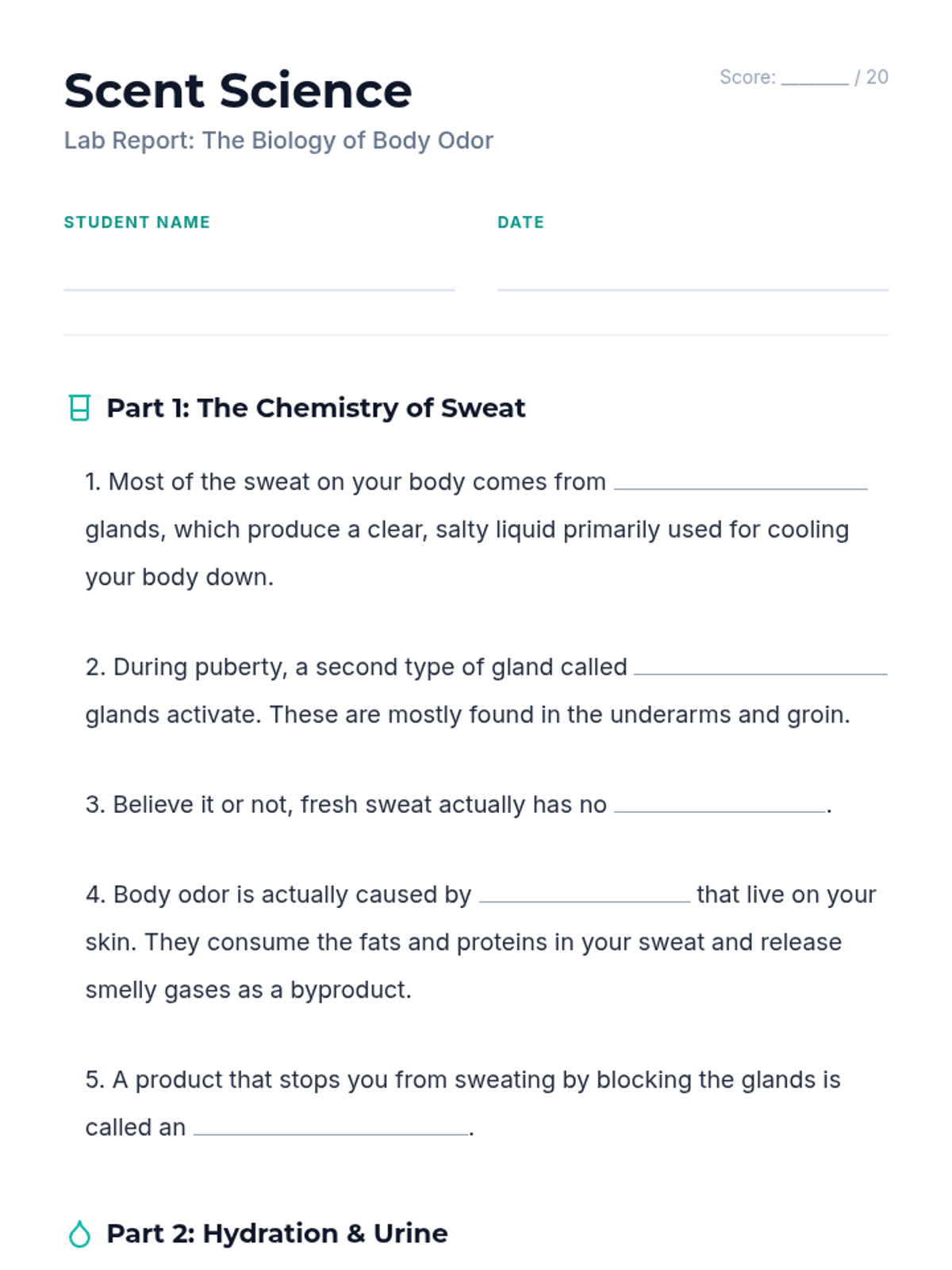
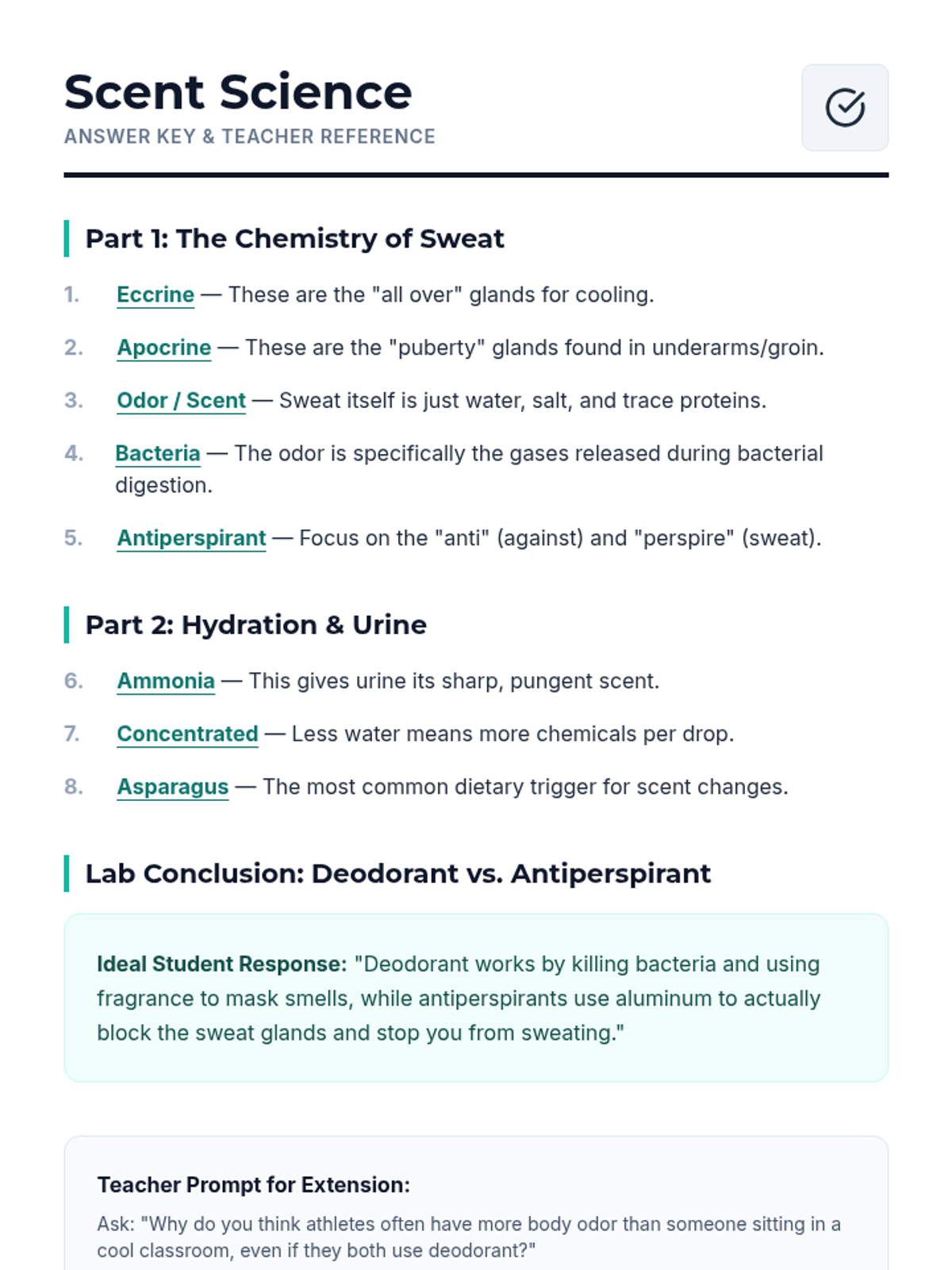
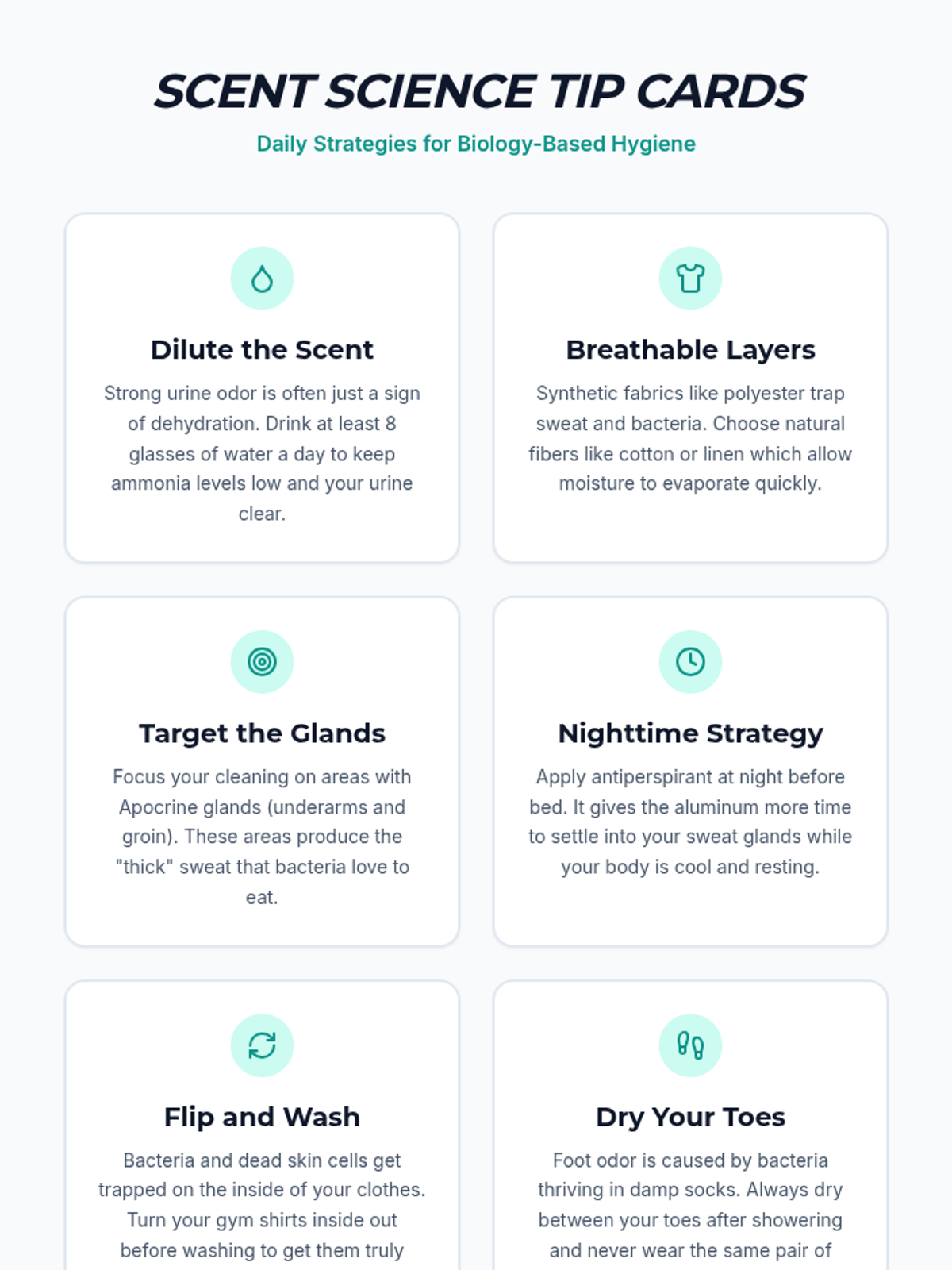
A quick, evidence-based lesson designed to help teenagers understand the biological causes of body odor related to sweat and urine, along with practical management strategies.
A comprehensive introduction to the six dimensions of health, focusing on how they interact to create overall well-being through the 'Wellness Wheel' model.
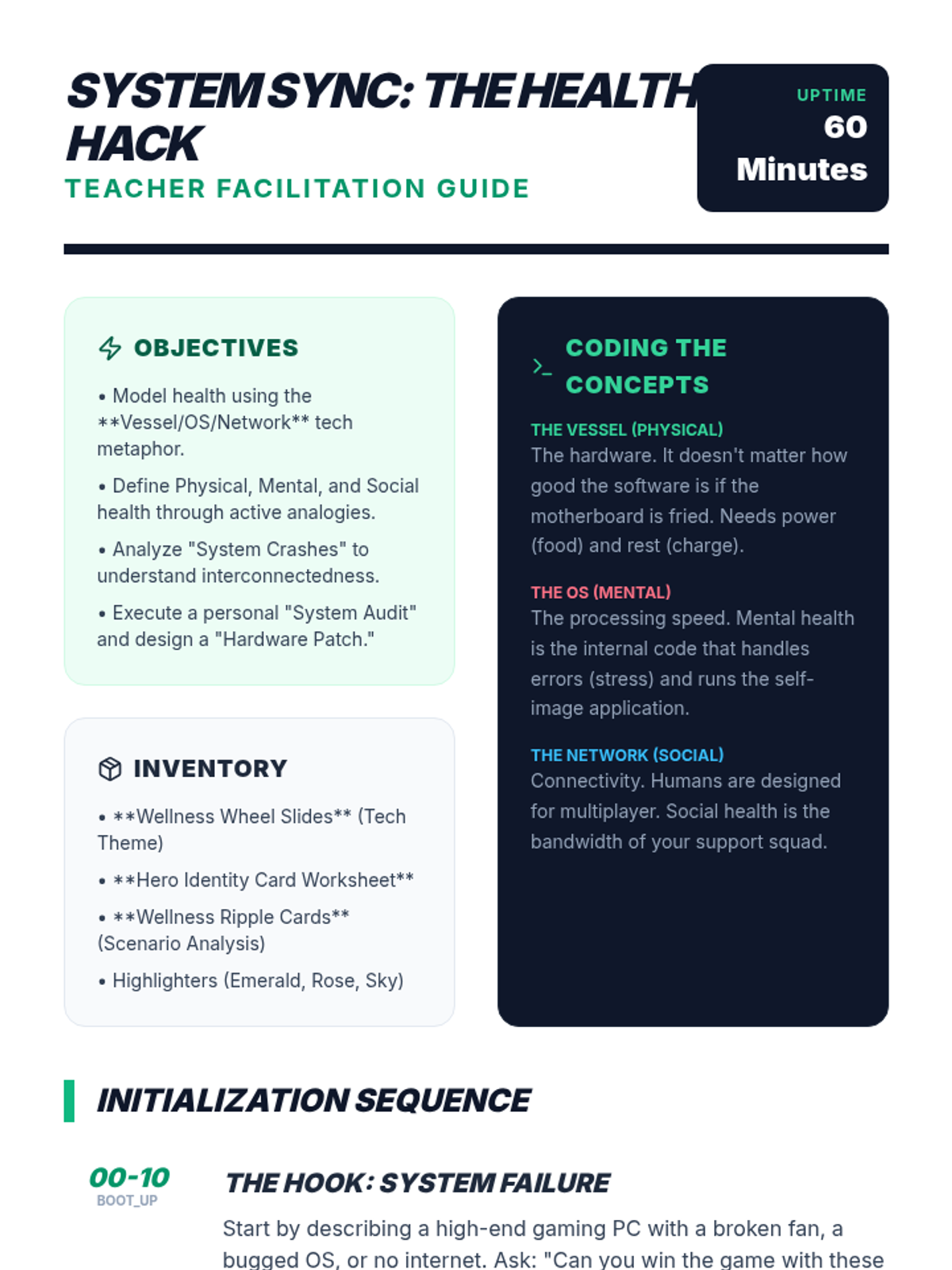
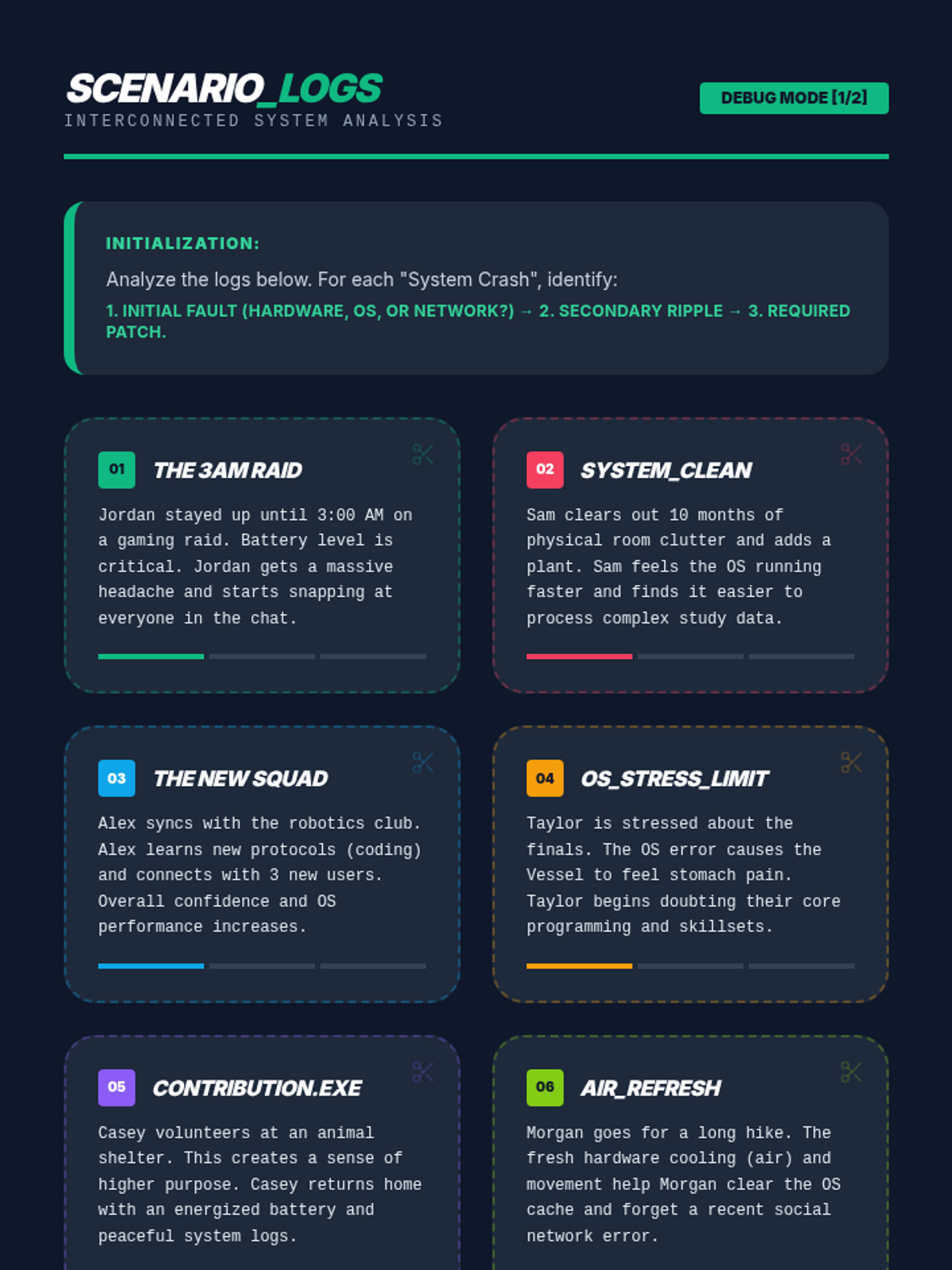
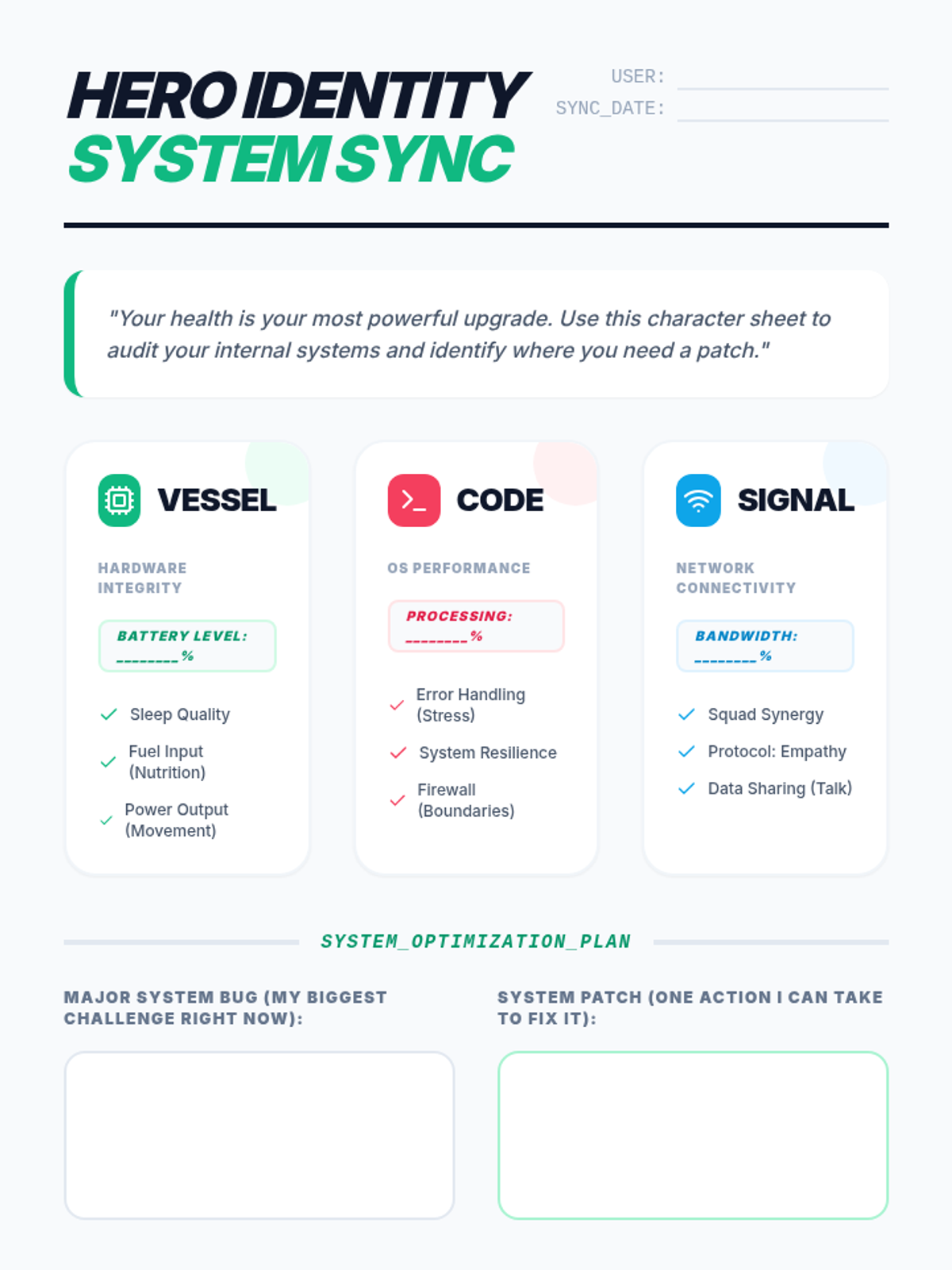
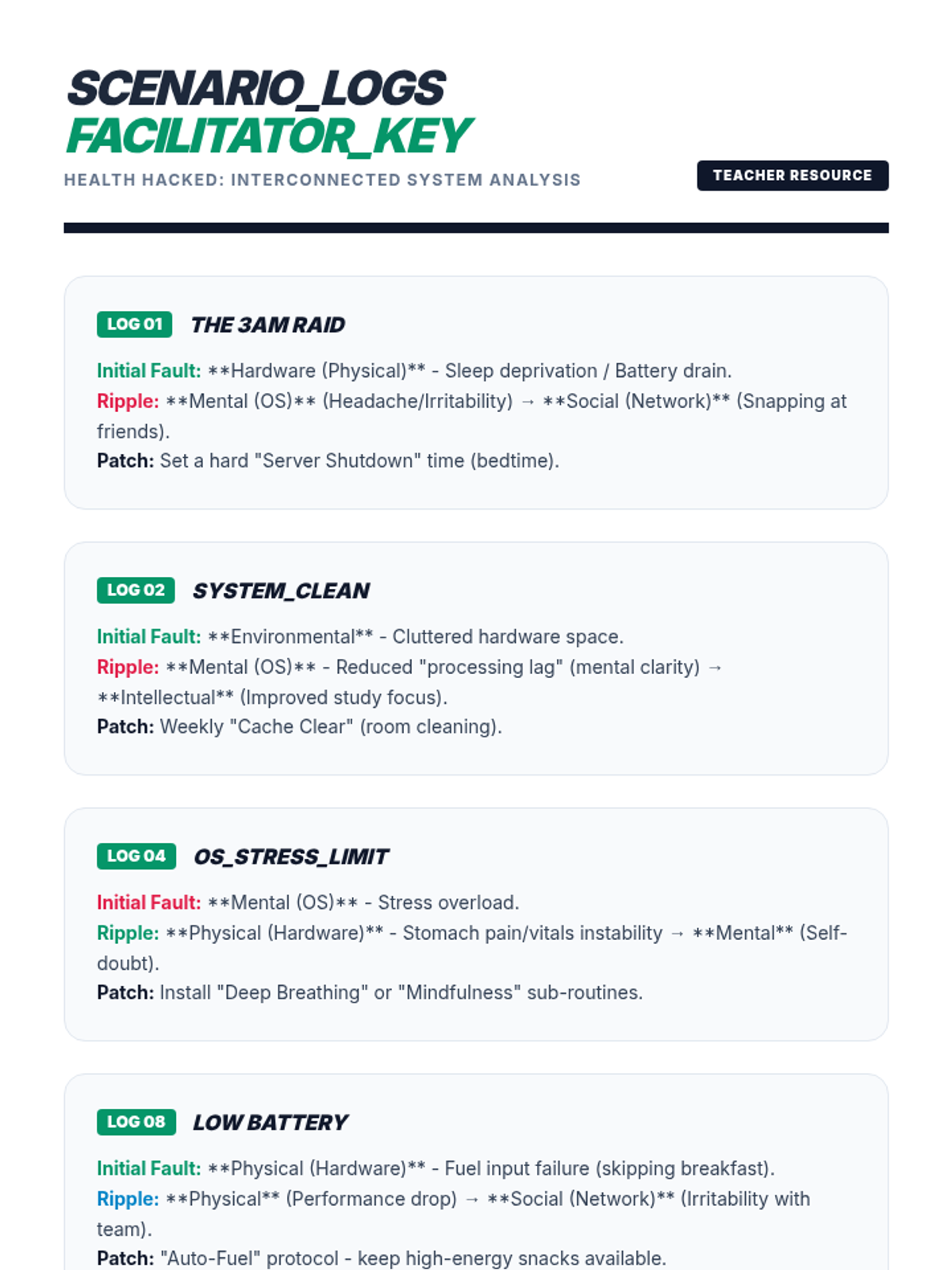
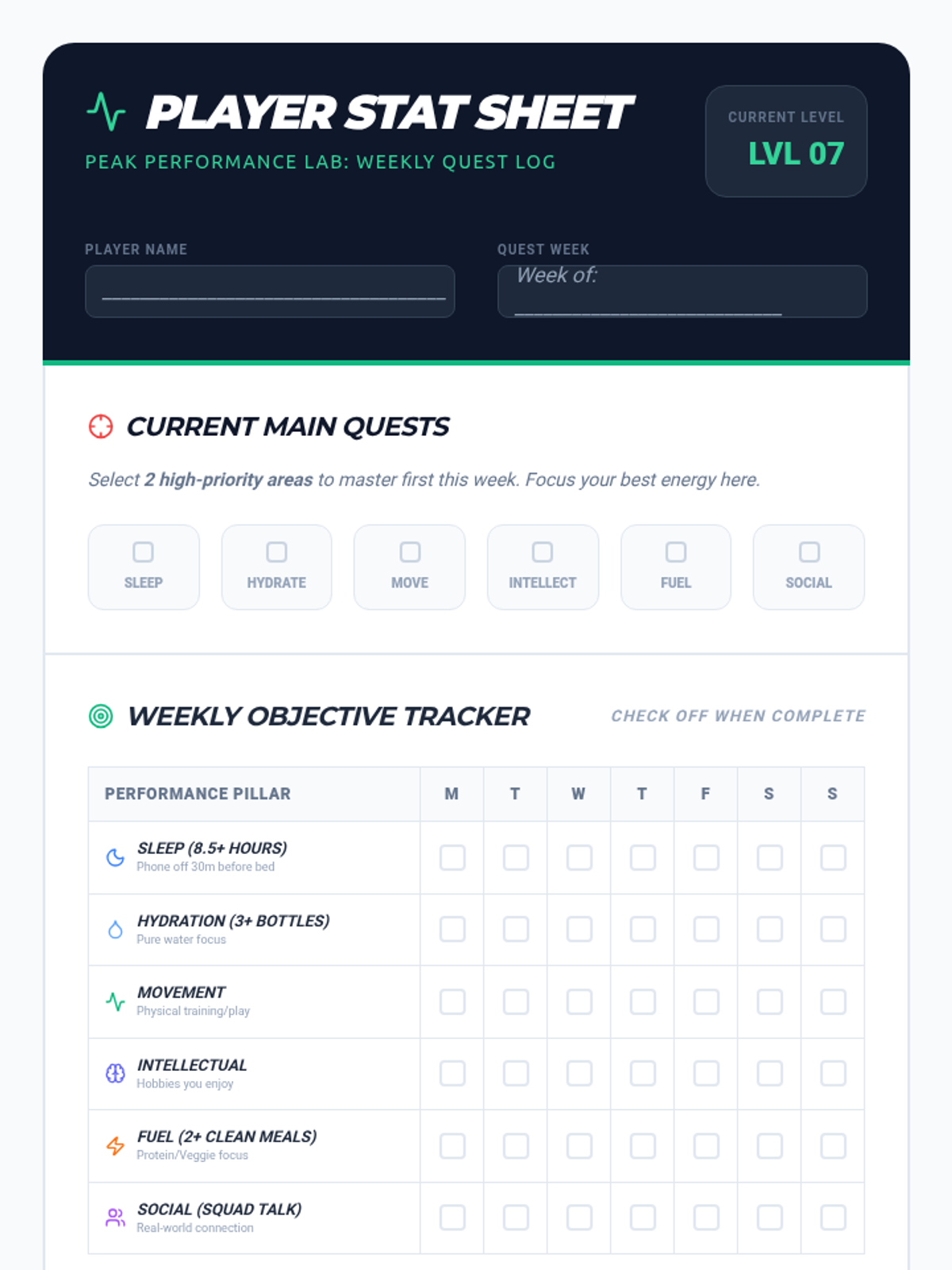
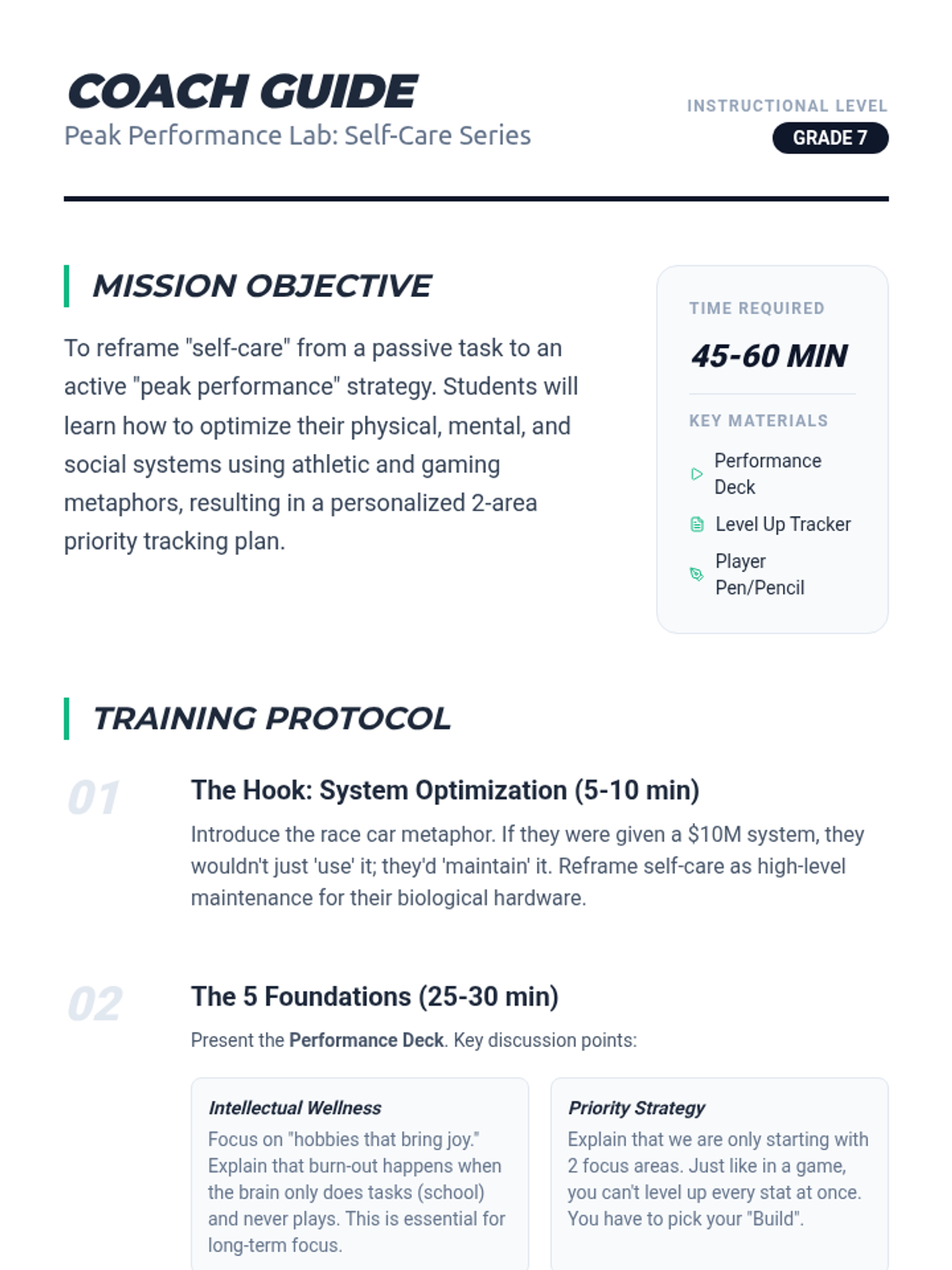
A high-performance themed lesson for 7th grade boys that reframes self-care as 'system optimization' for peak physical, mental, and social performance. Students will learn the science behind sleep, nutrition, exercise, and social connection while building a personalized weekly tracking plan.
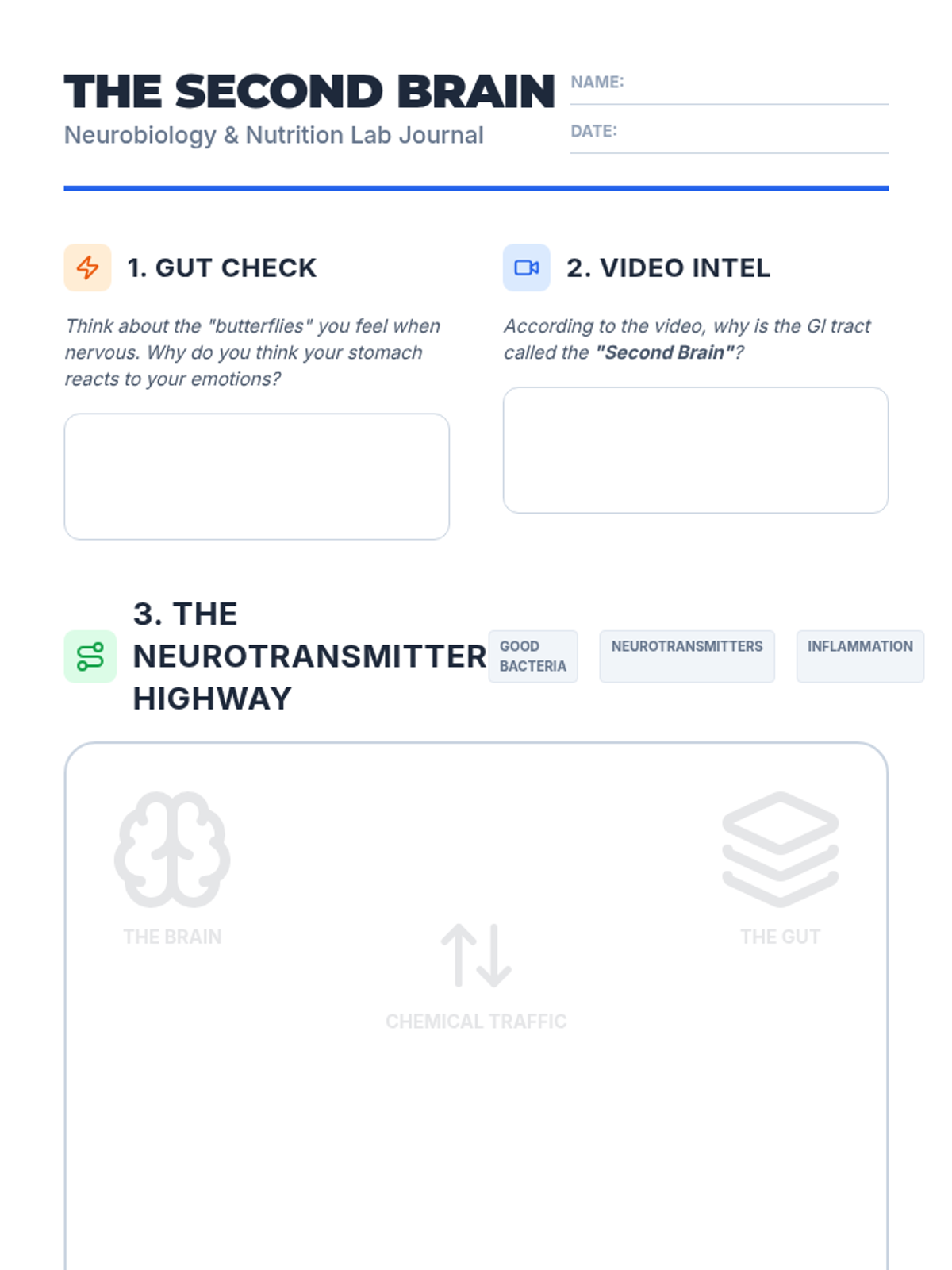
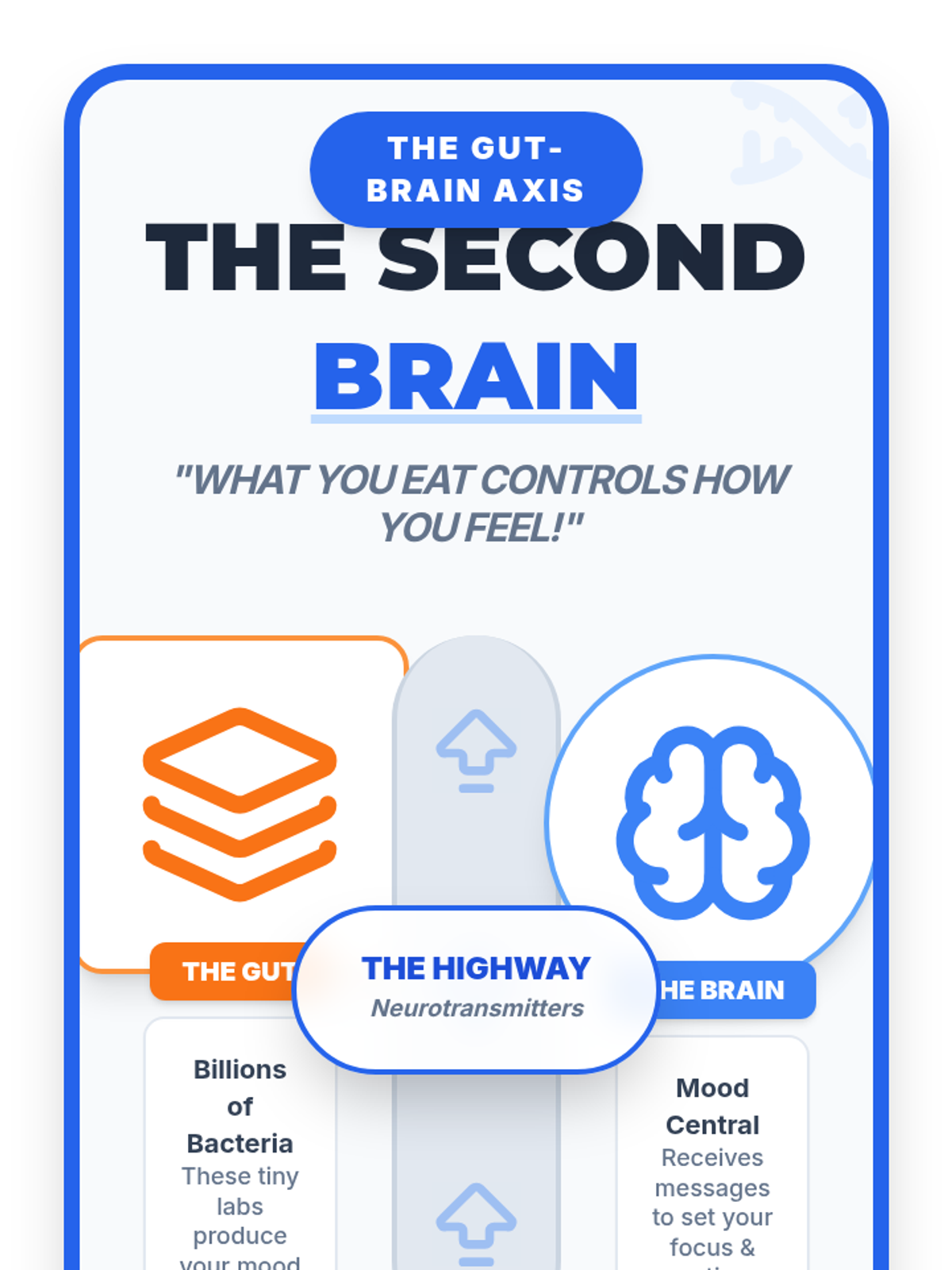
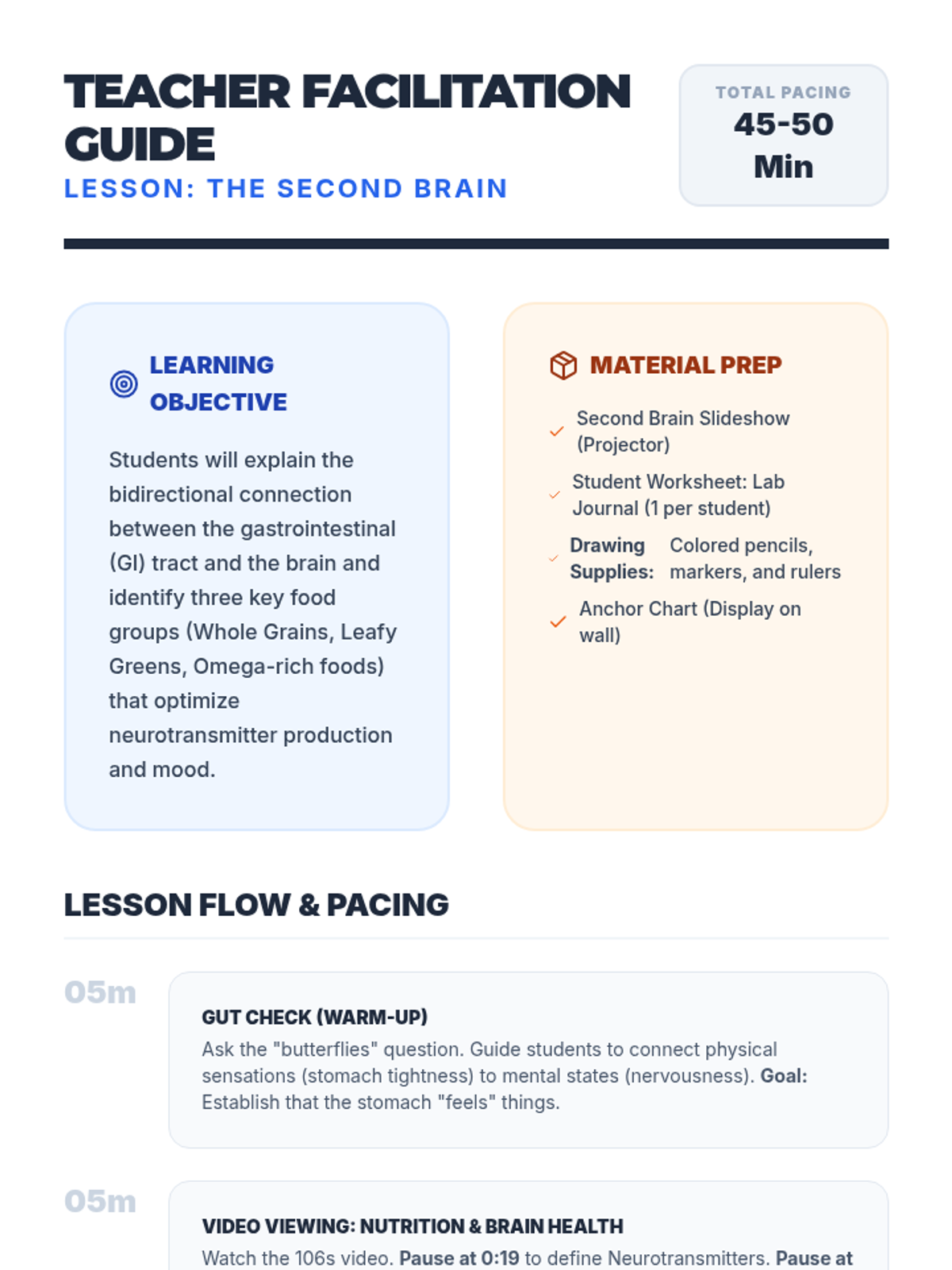
A comprehensive lesson exploring the bidirectional communication between the gut and the brain, focusing on how diet influences neurotransmitter production and mood. Students will visualize the biological 'highway' and identify key food groups that optimize brain function.
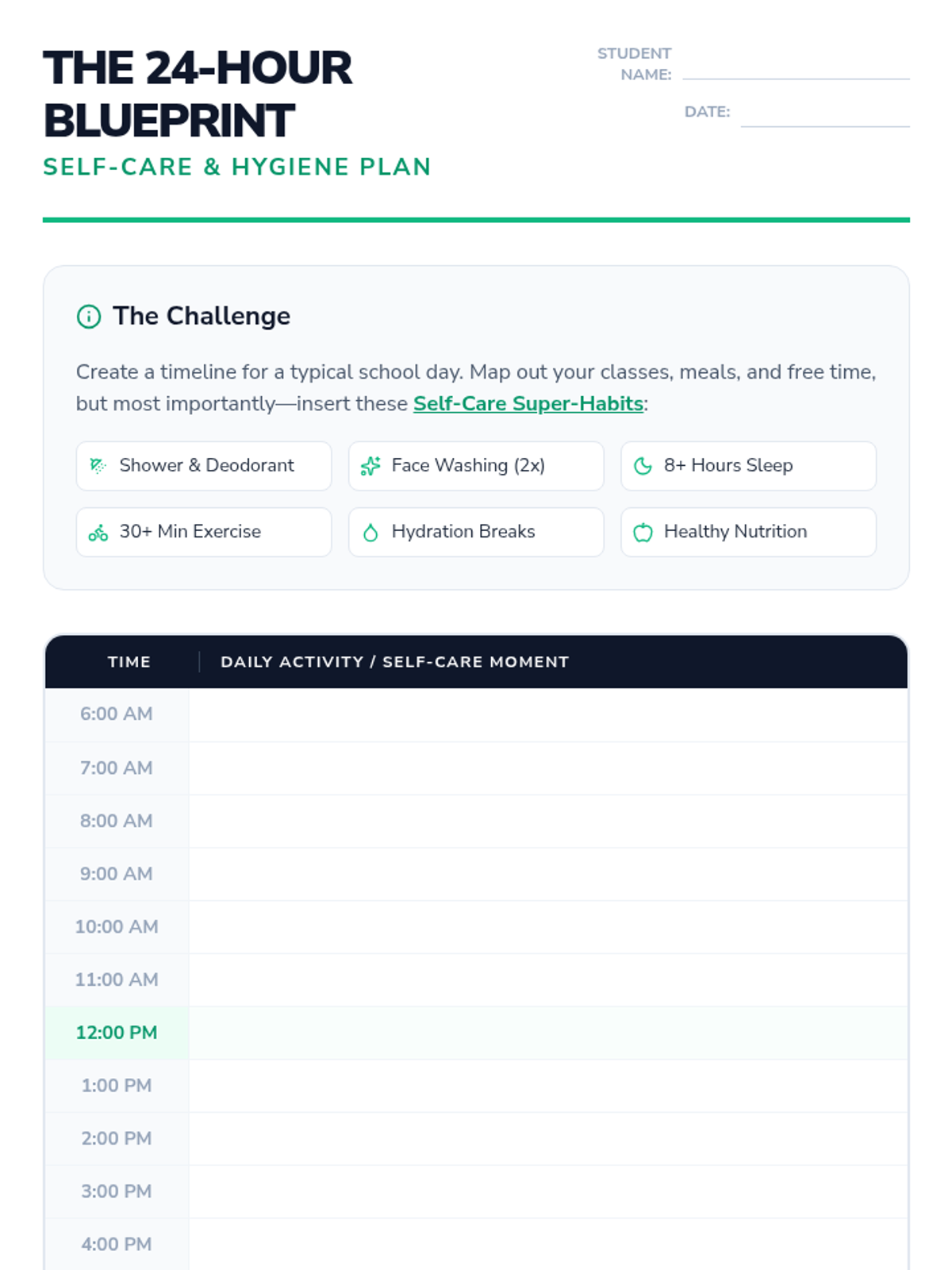
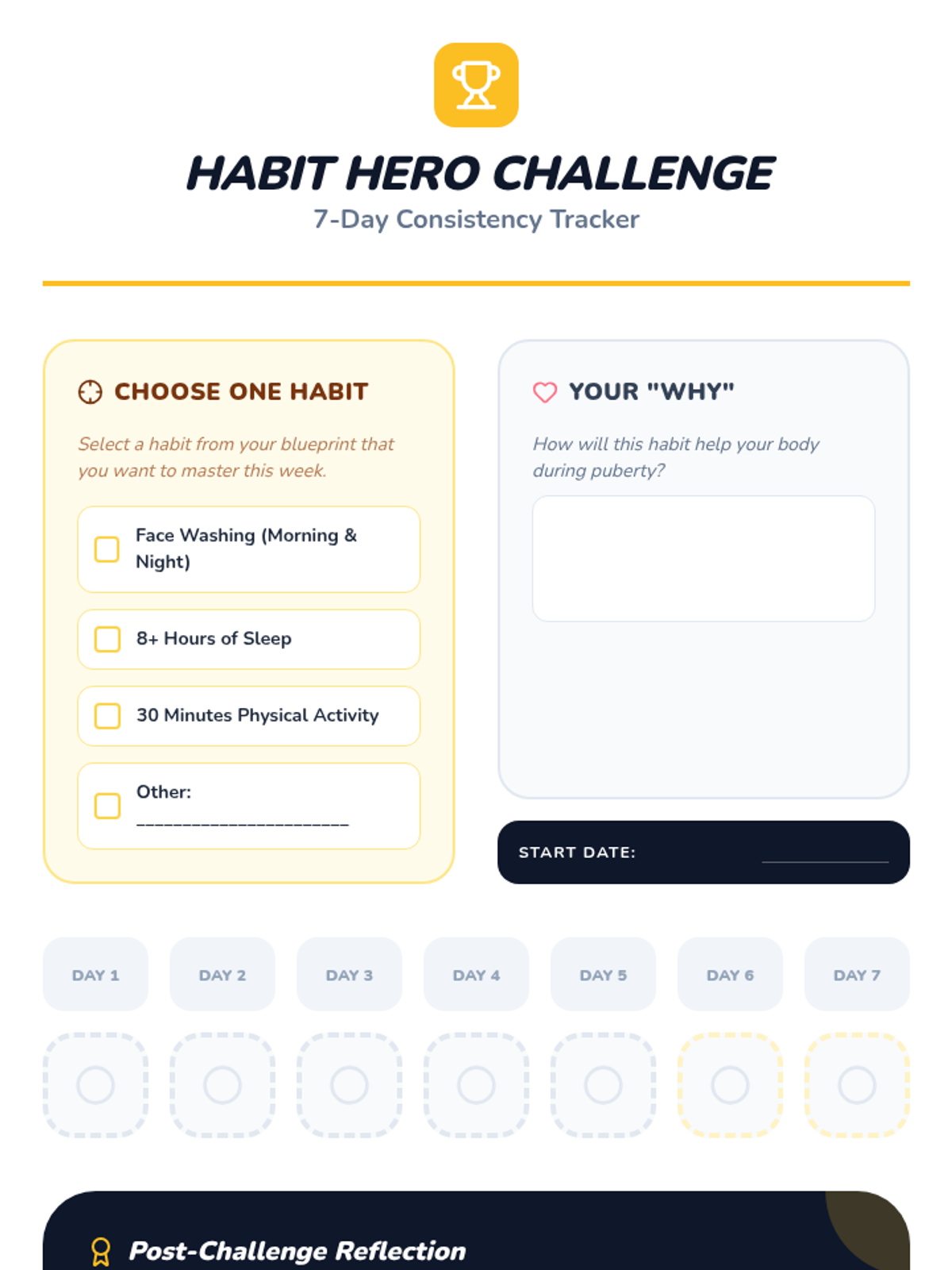
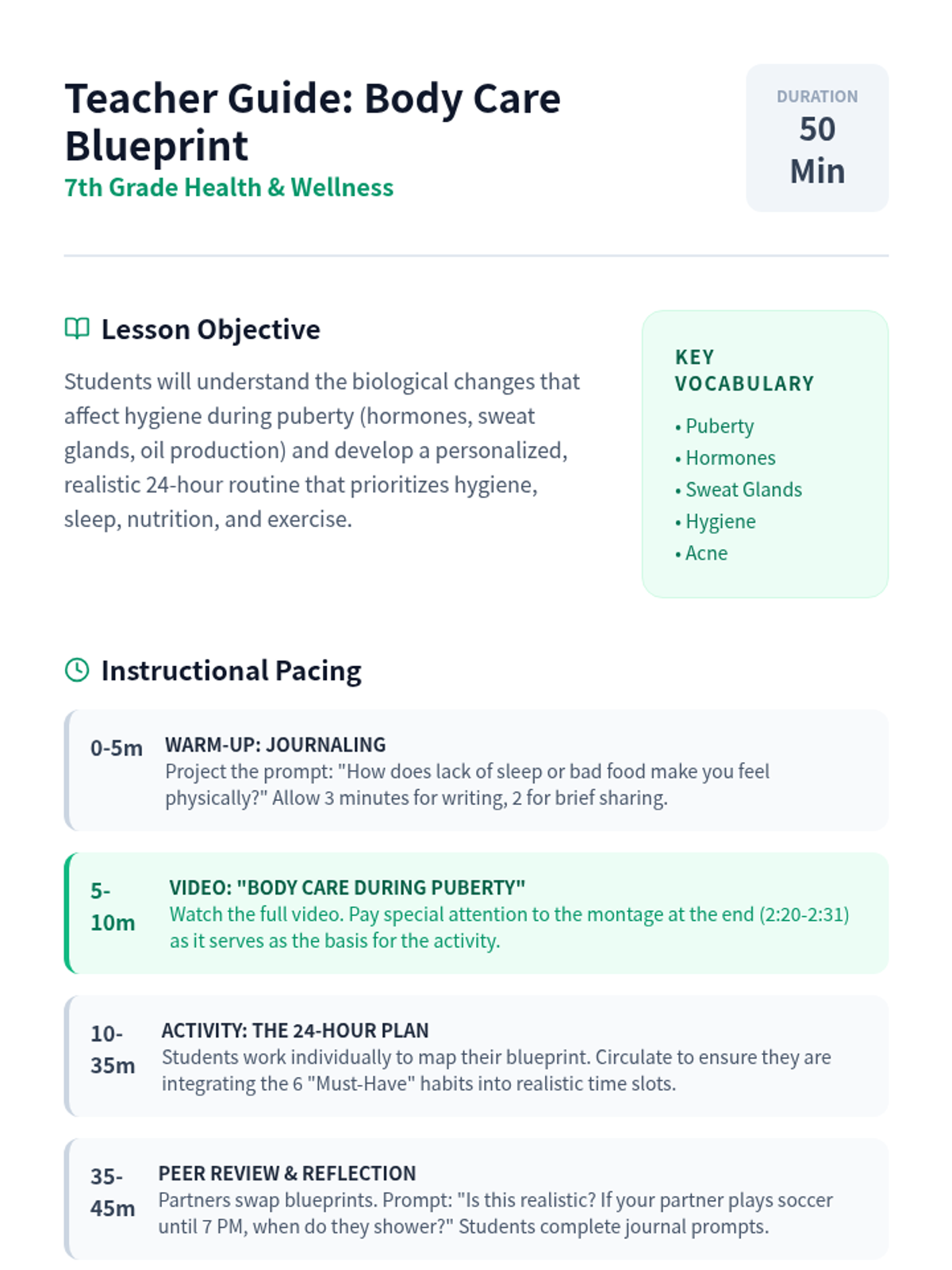
This lesson focuses on personal hygiene, sleep, and nutrition during puberty. Students watch an informative video and then design a realistic 24-hour self-care routine, incorporating essential habits like skin care, exercise, and adequate rest.
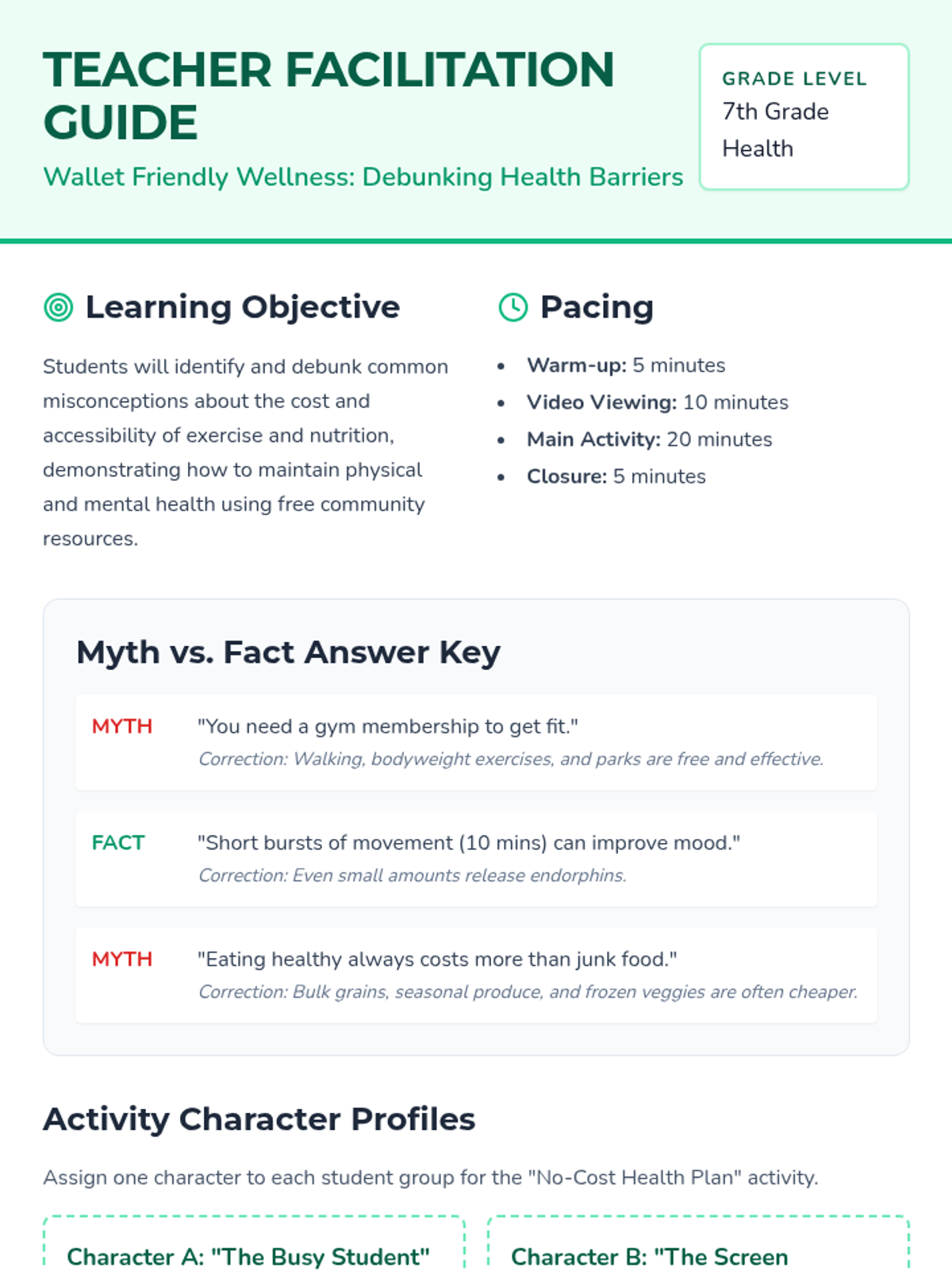
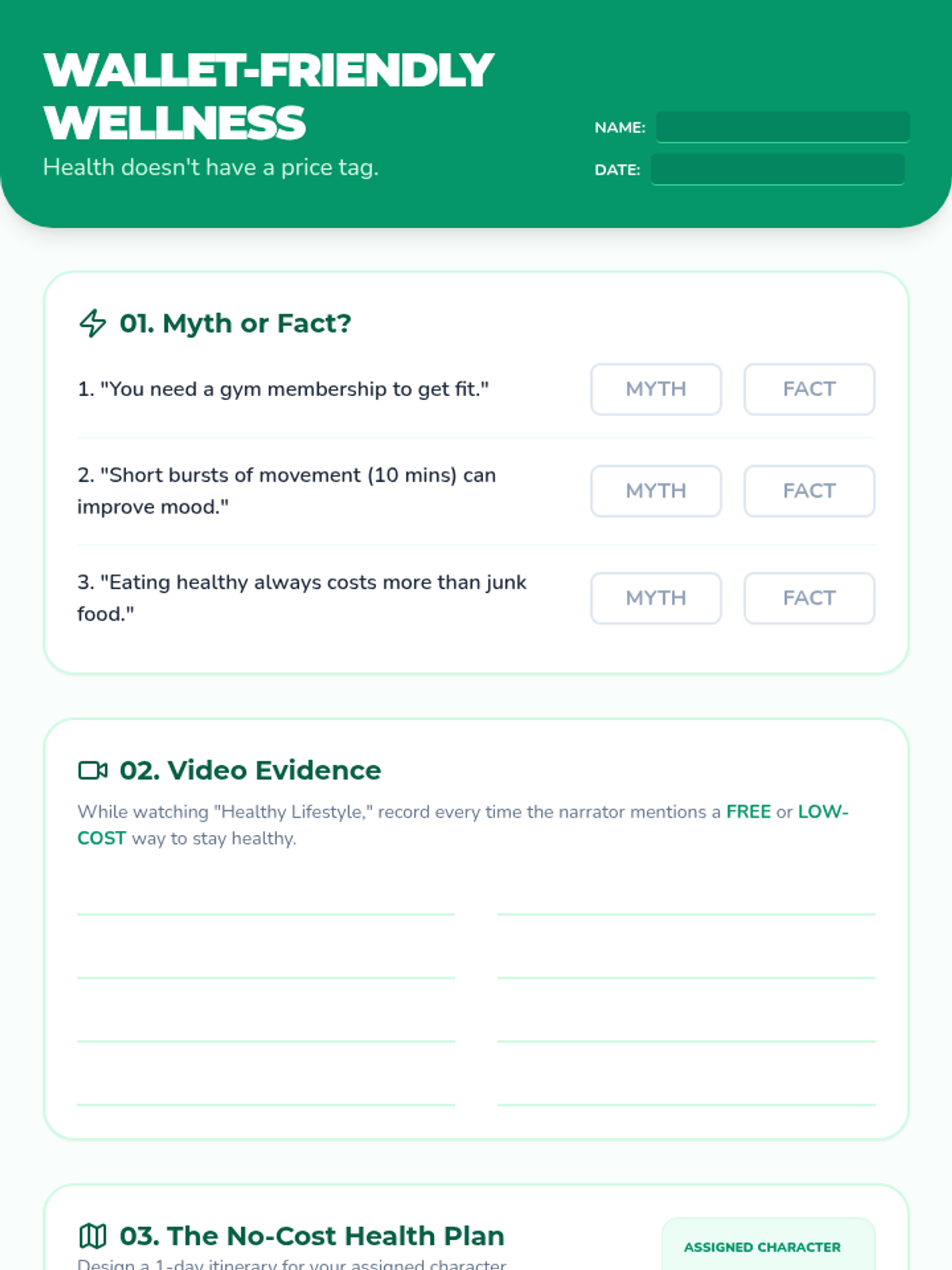
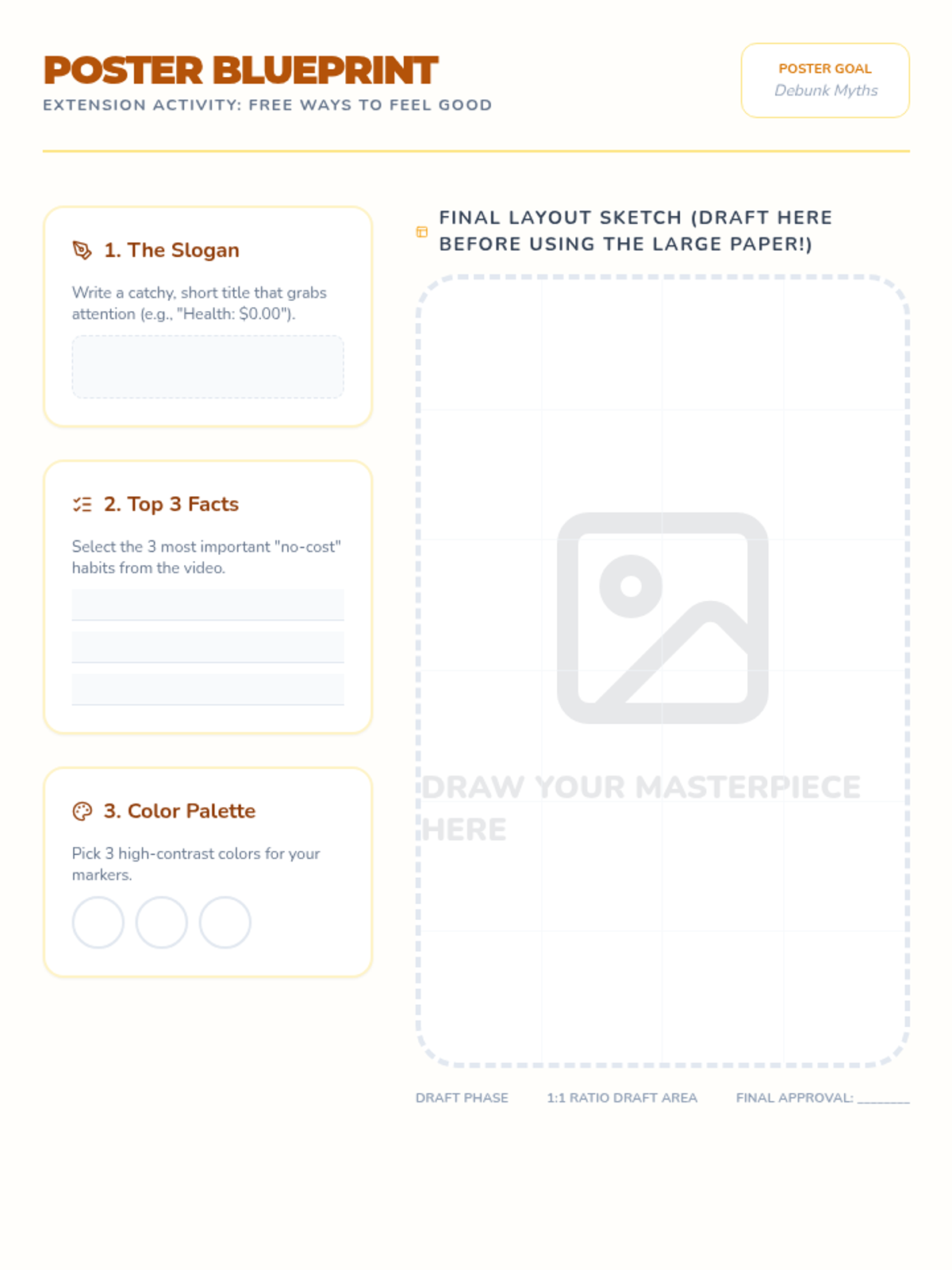
Students will debunk health myths related to cost and access while designing a 1-day itinerary using only free or low-cost resources. The lesson centers on a video about the body-mind connection and the accessibility of healthy habits.
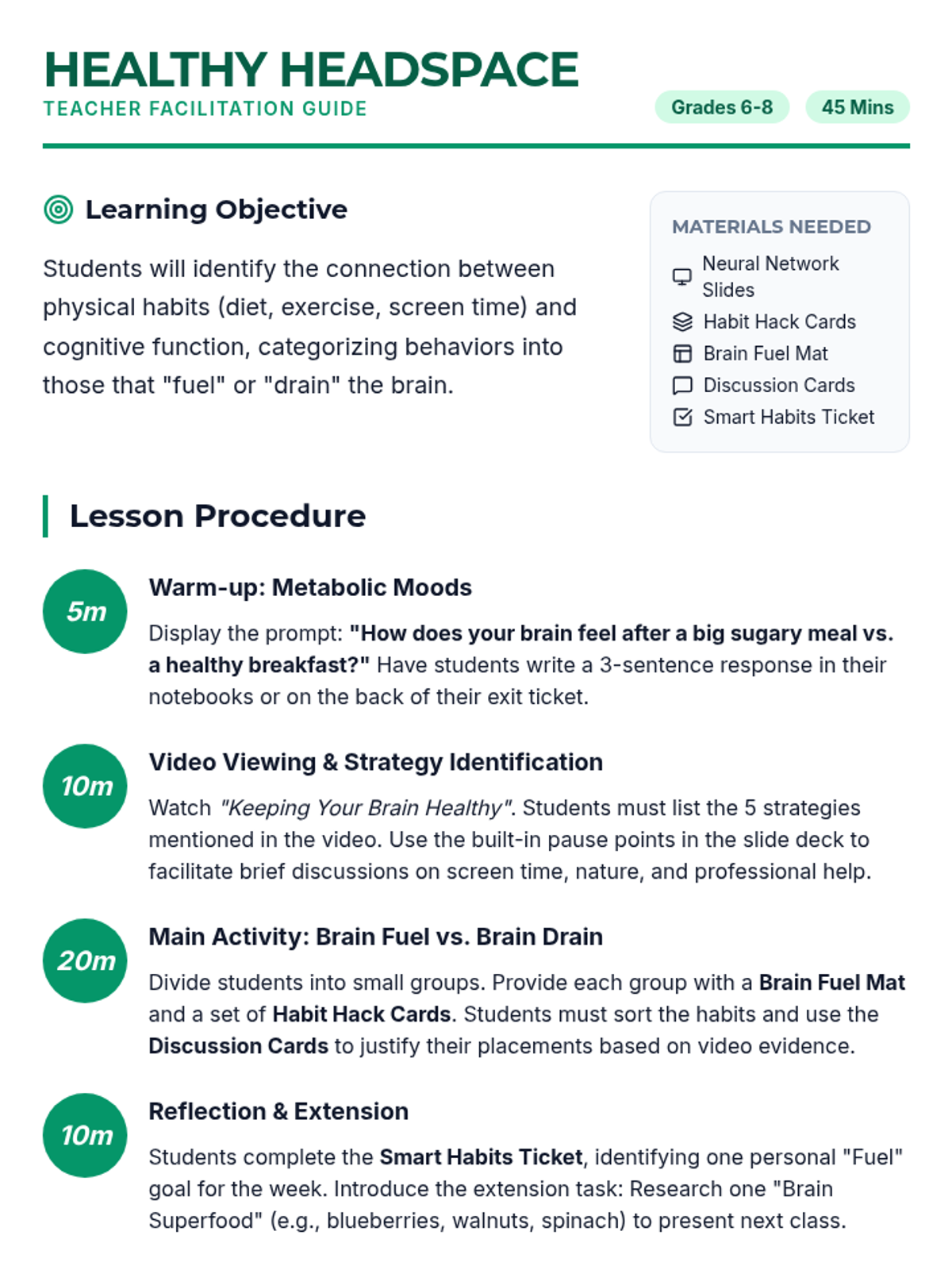
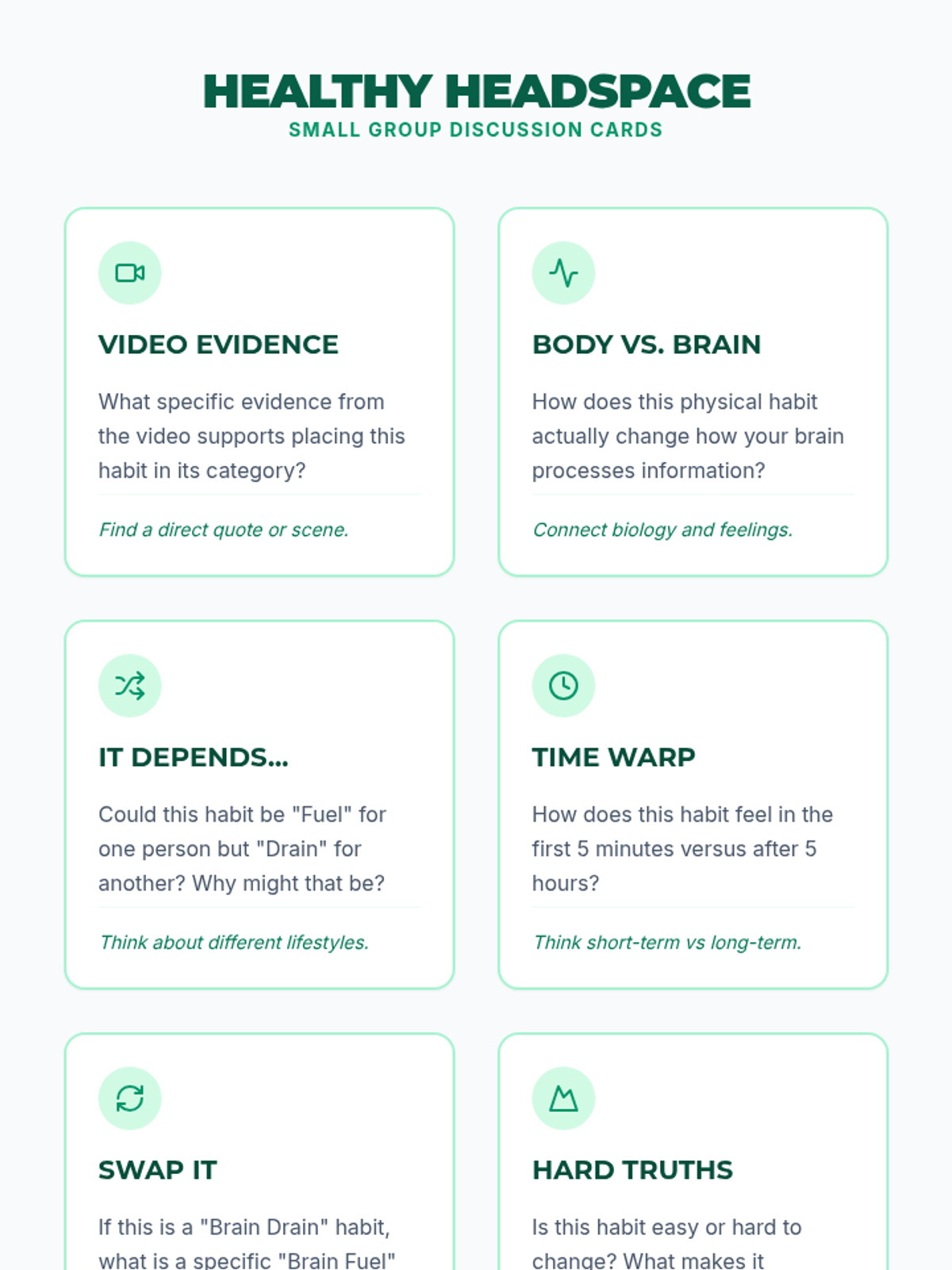
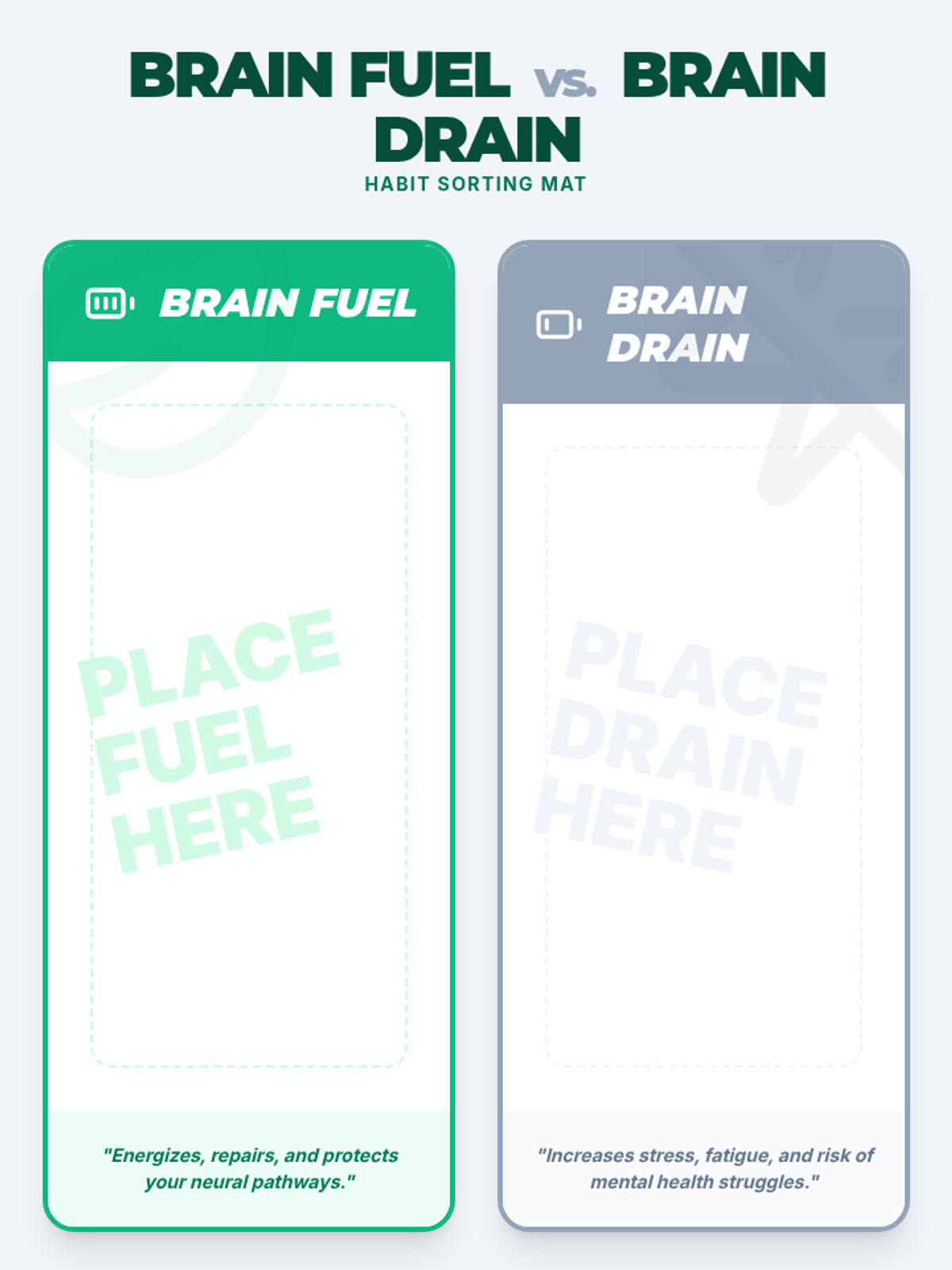
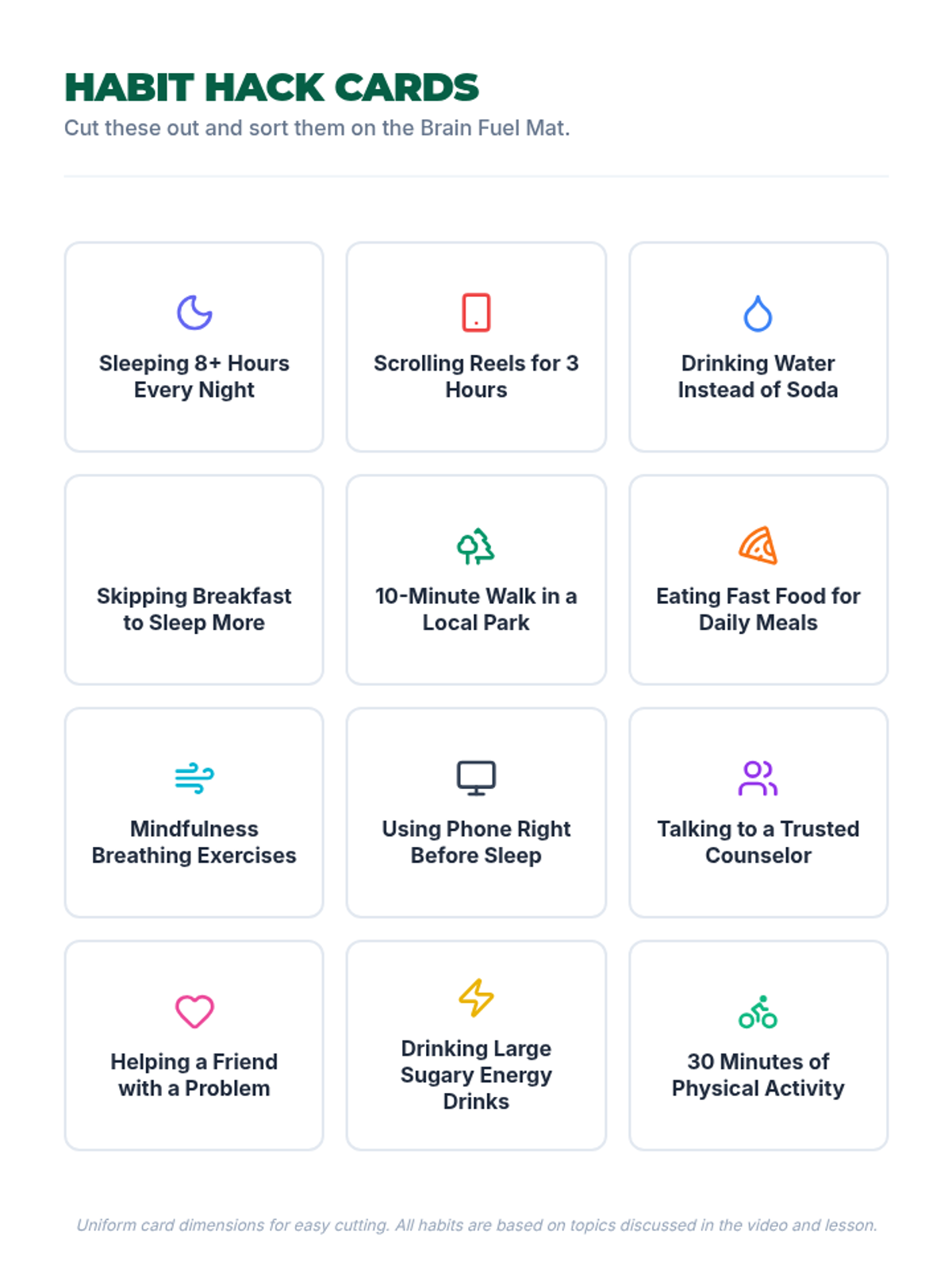
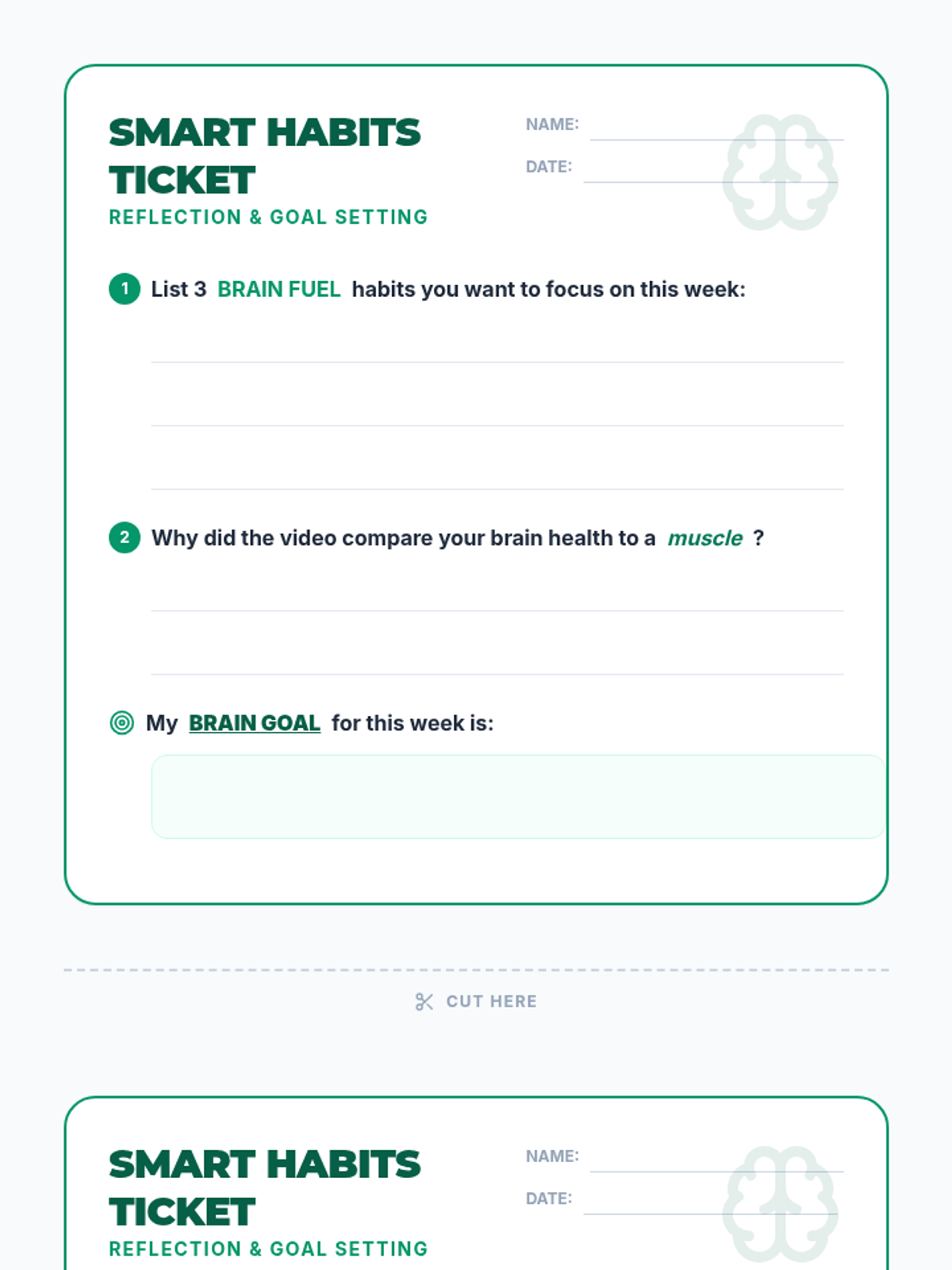
This lesson explores the biological and psychological links between daily habits—such as diet, exercise, and screen time—and brain function. Students will watch a video on brain health, categorize habits into 'Brain Fuel' or 'Brain Drain,' and set a personal goal for the week.
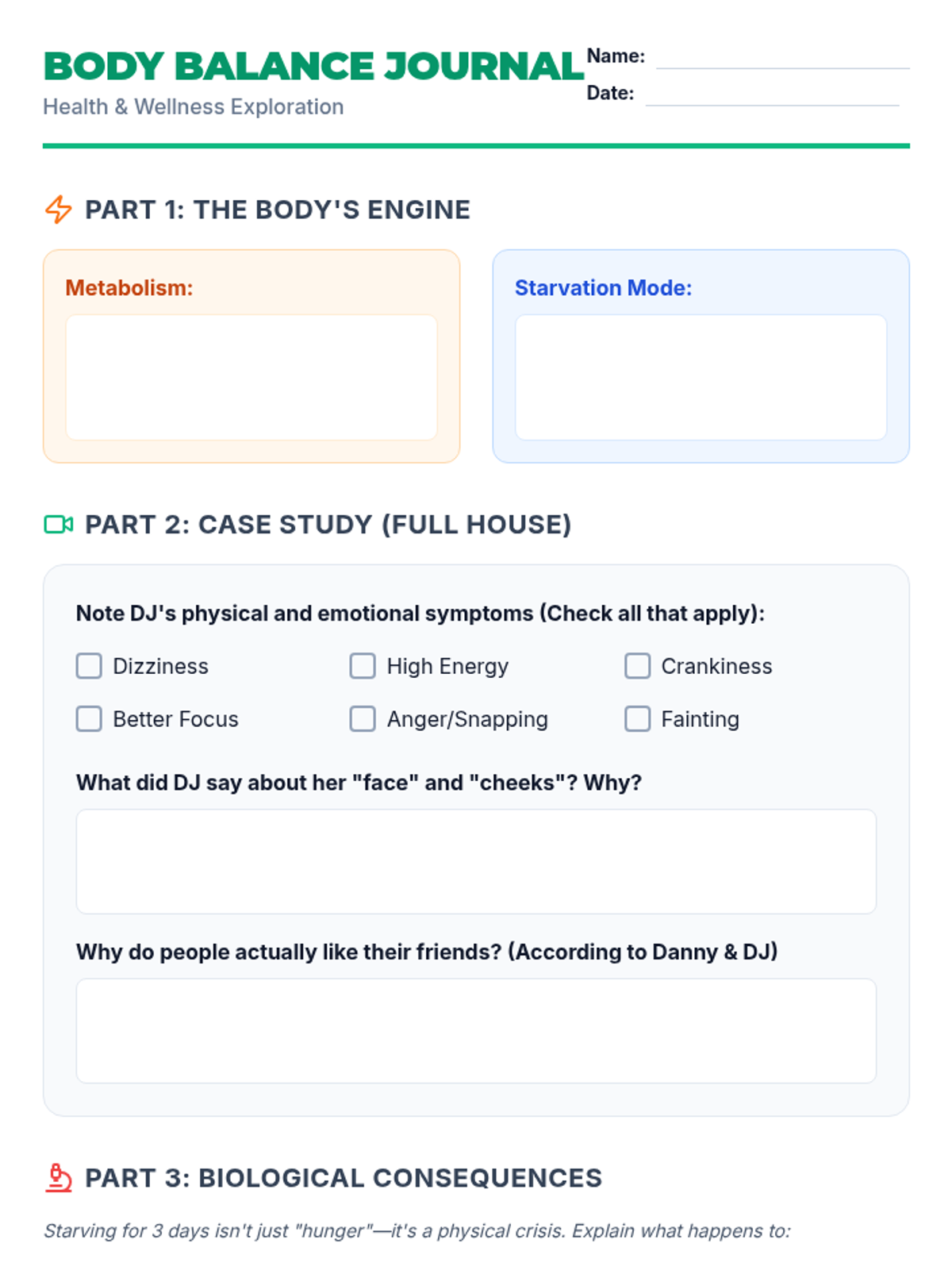
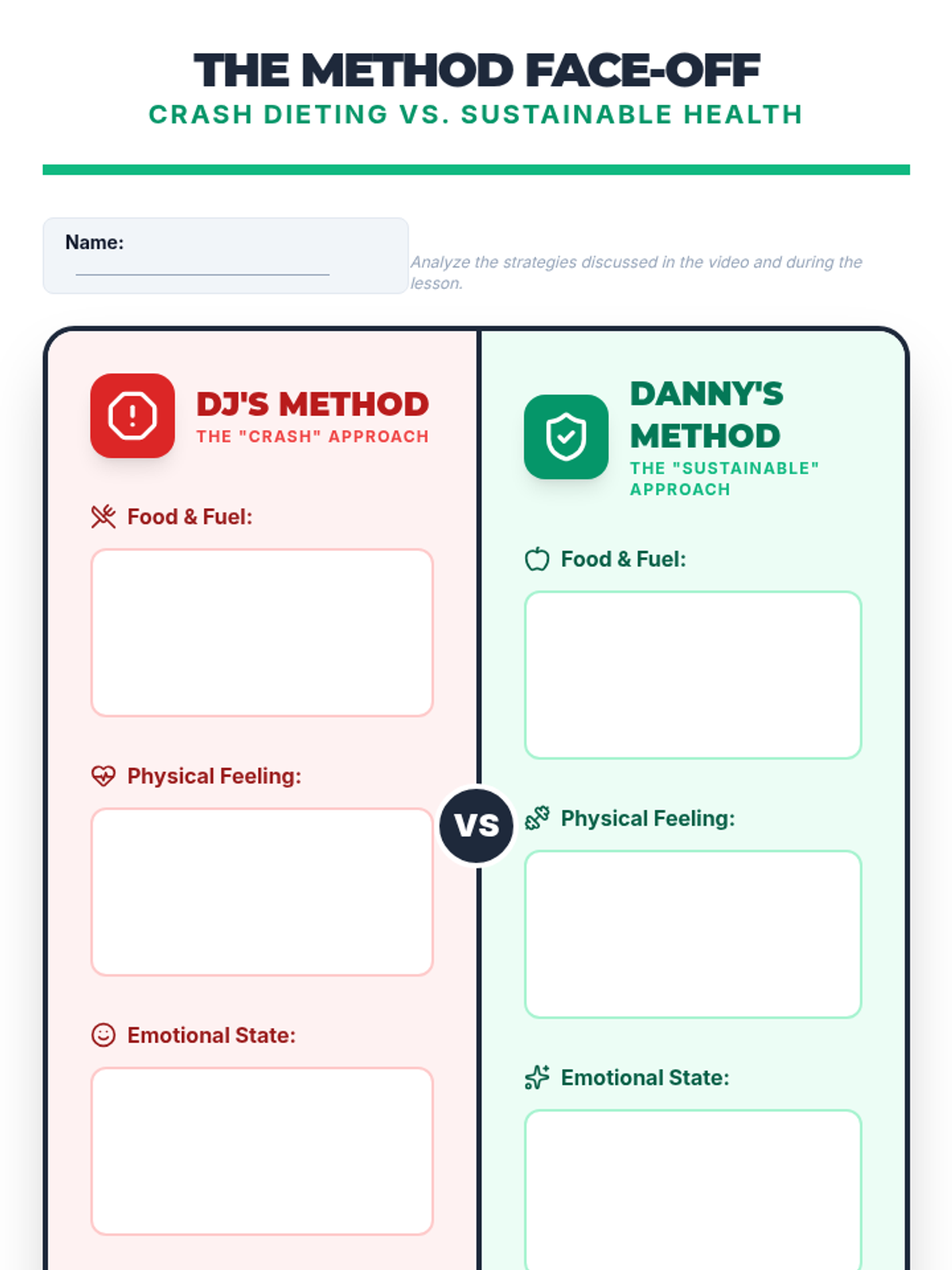
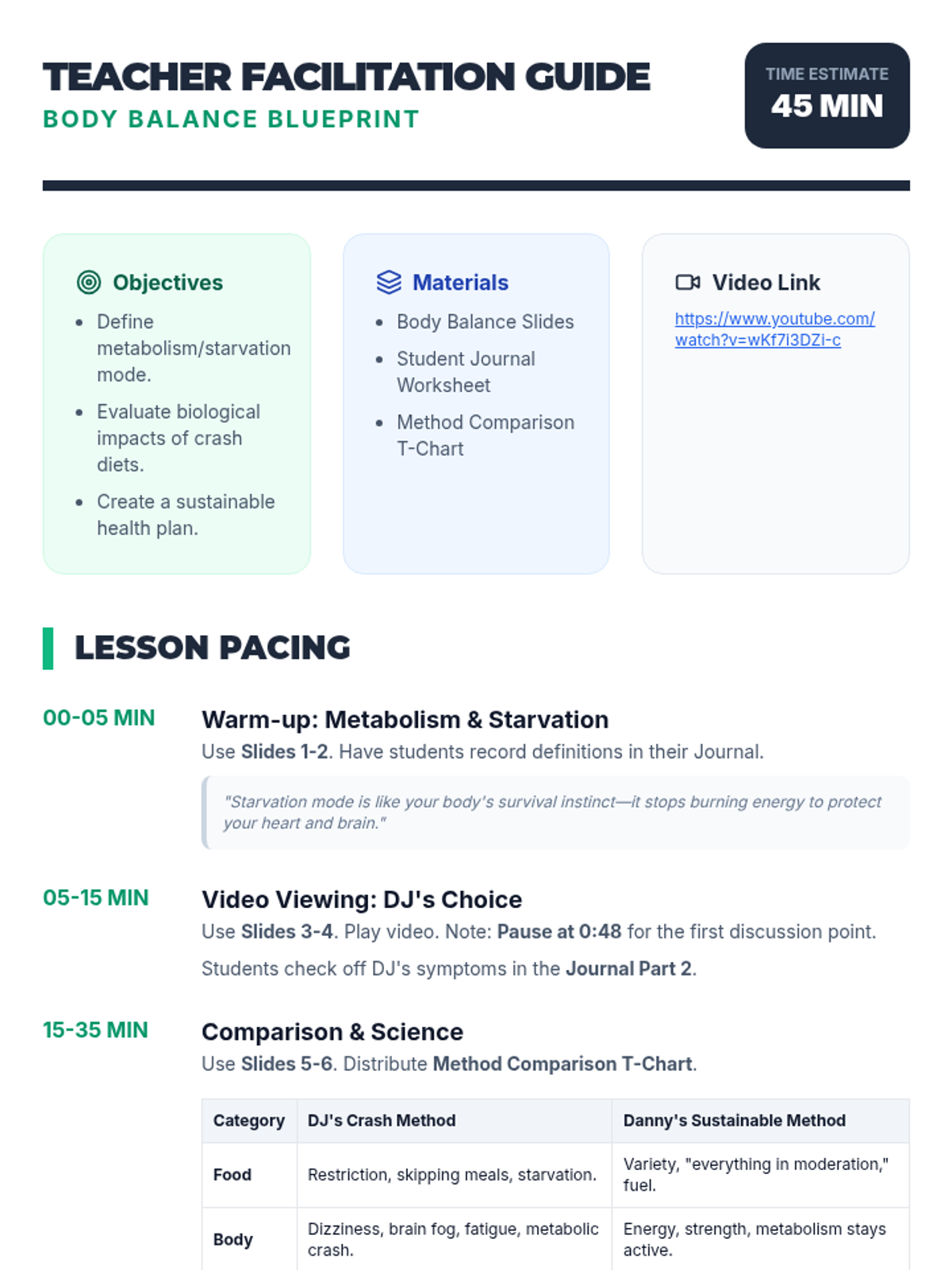
A comprehensive health lesson for middle school students exploring the biological and psychological dangers of crash dieting versus sustainable health, centered around a classic Full House video clip.
Students learn how to fuel their bodies and keep them moving while mastering the art of rest and emotional balance. Includes interactive discussions, goal-setting, and practical habit-building activities.
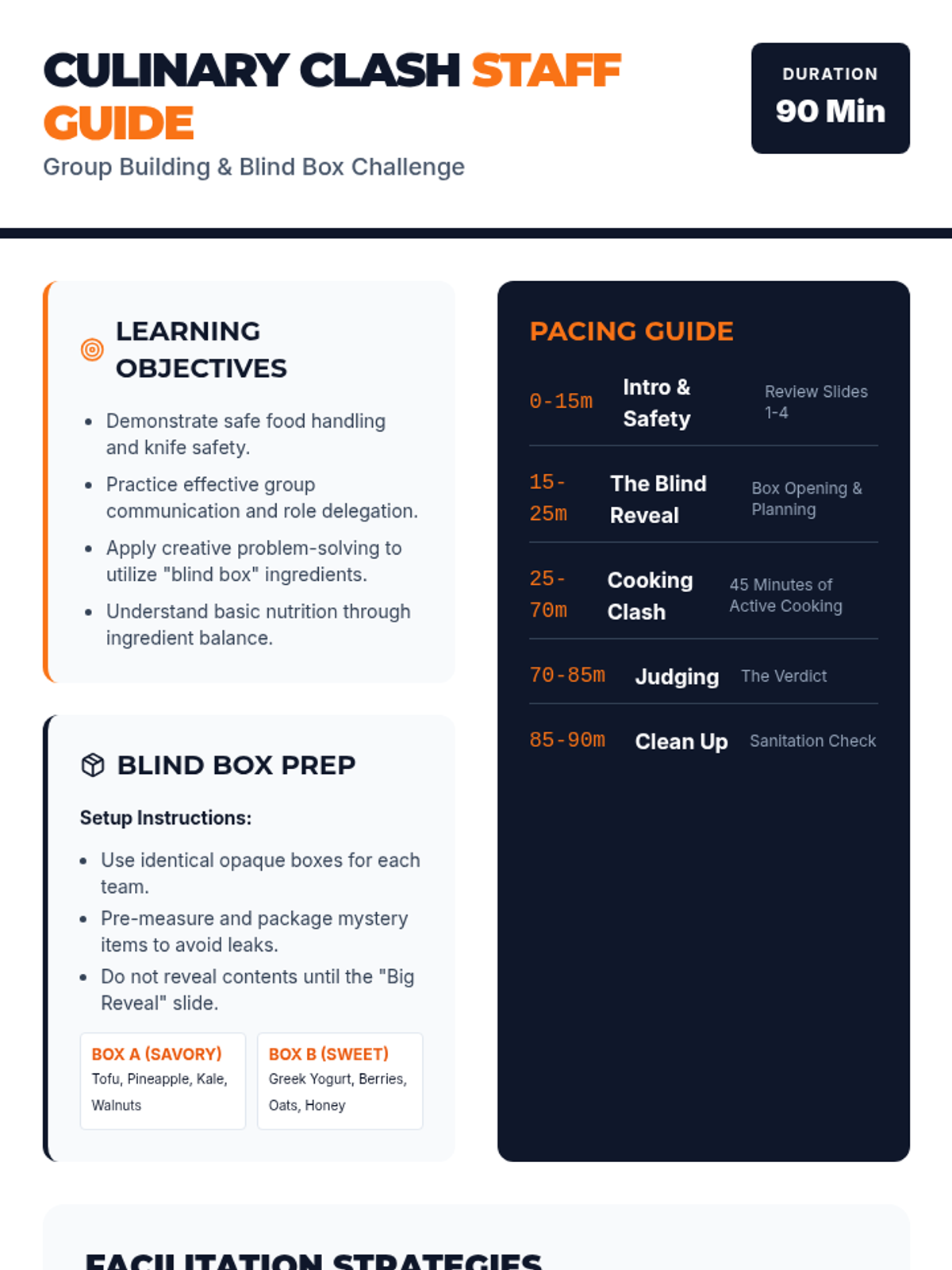
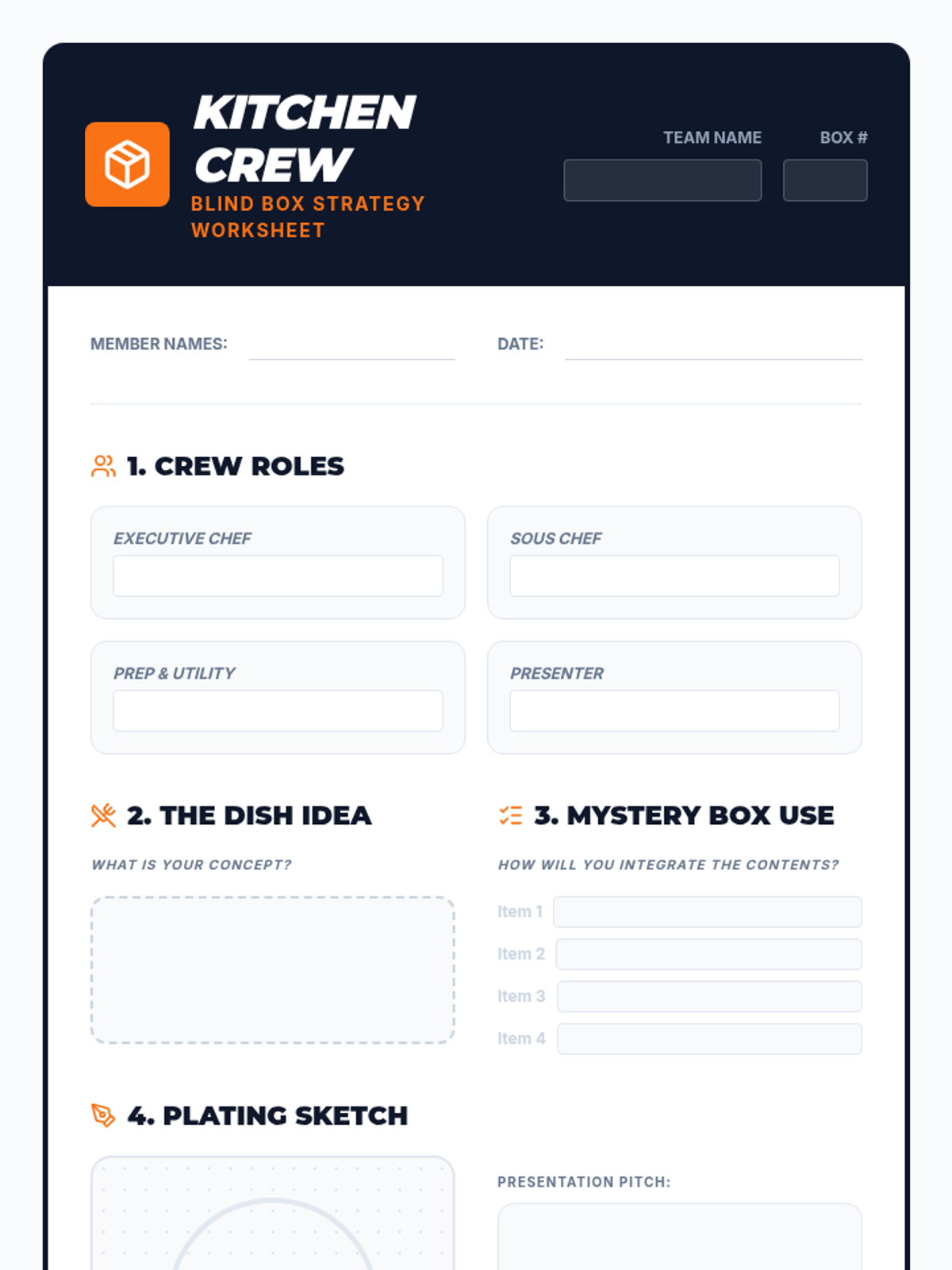
A team-building culinary challenge inspired by the "Chopped" competition style, designed to foster cooperation, creativity, and kitchen safety skills.
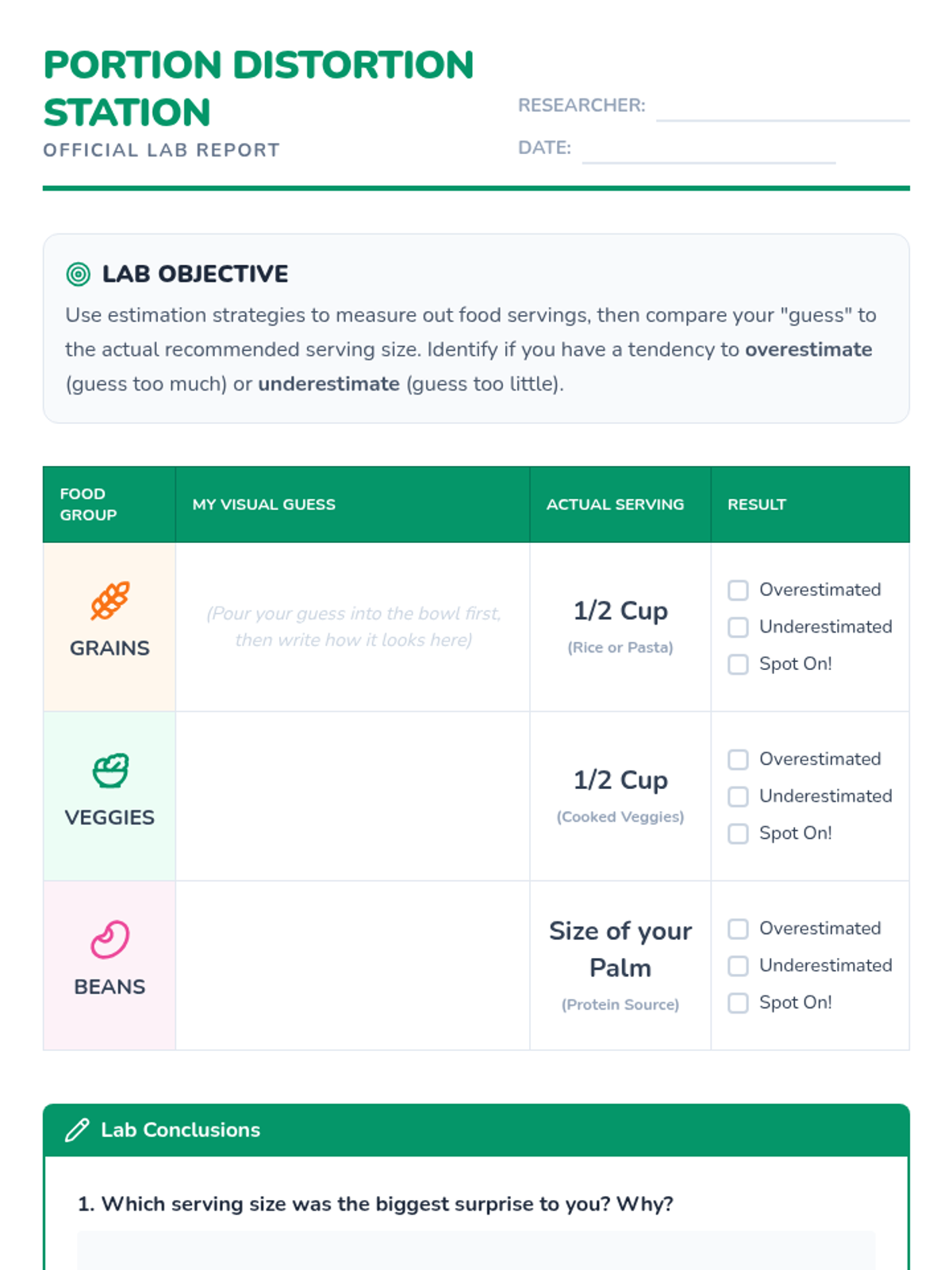
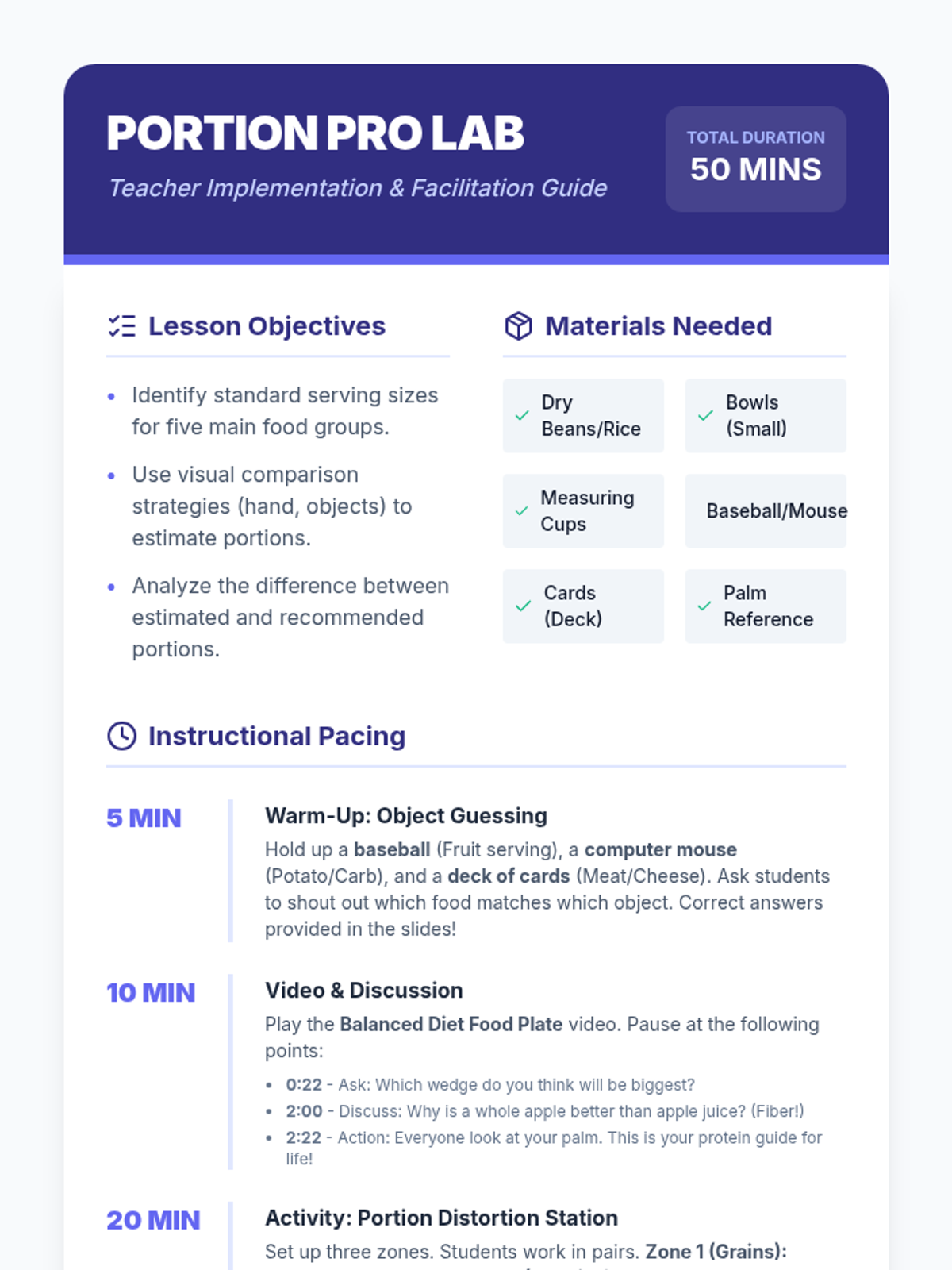
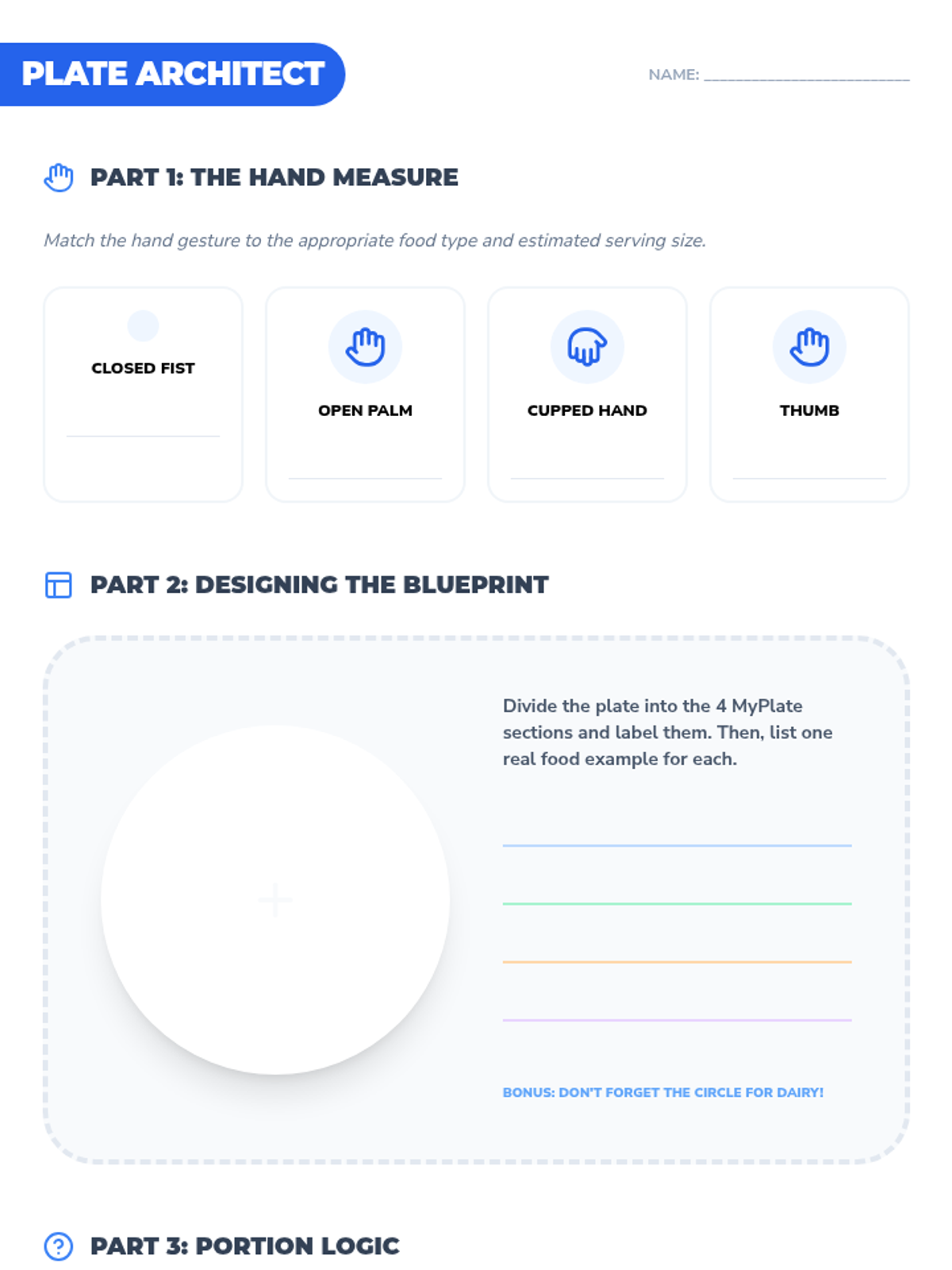
A hands-on nutrition lesson where students use visual estimation and physical measurement to understand serving sizes. Includes a video exploration of the balanced diet plate and a 'Portion Distortion' station activity.
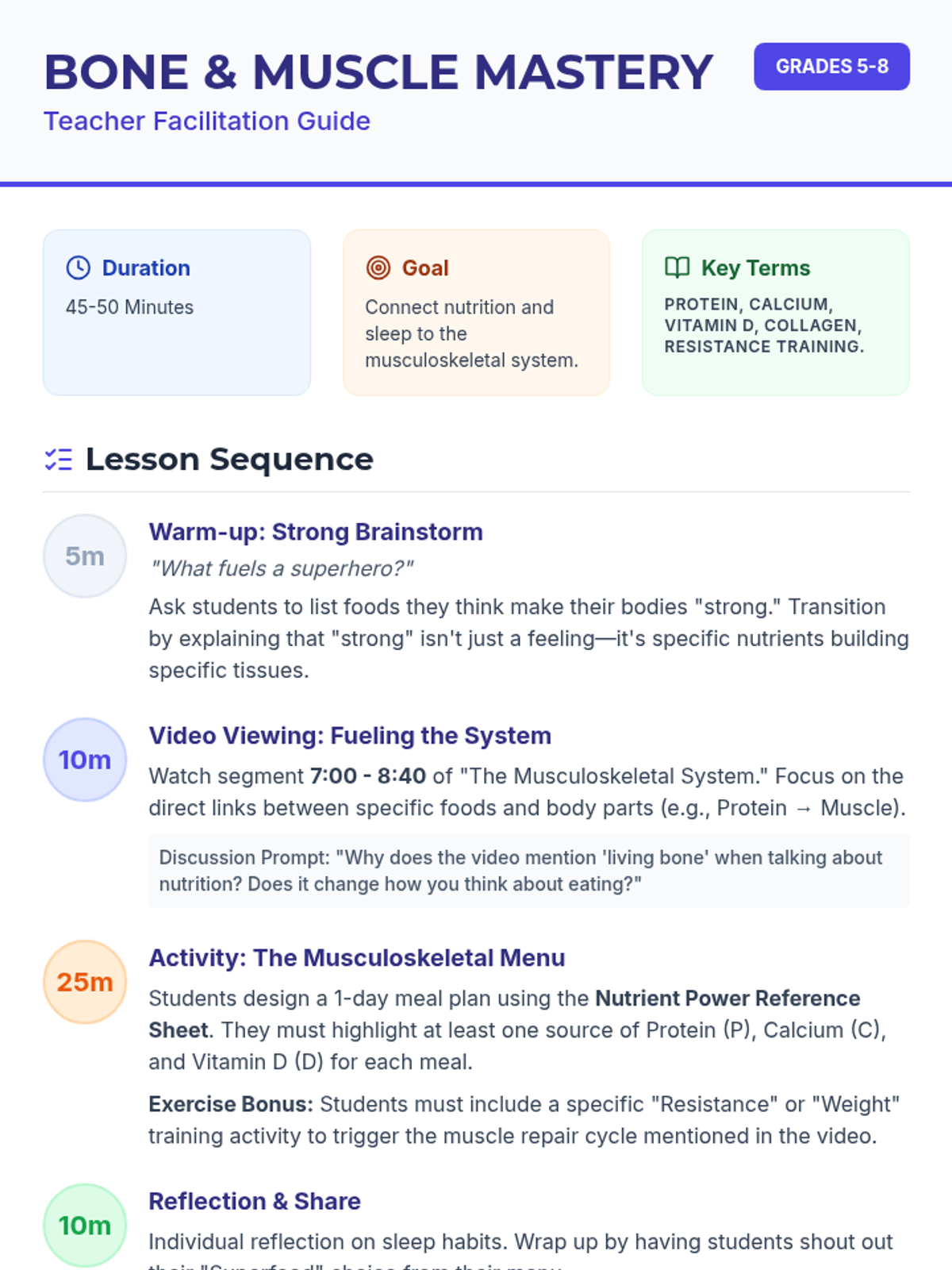
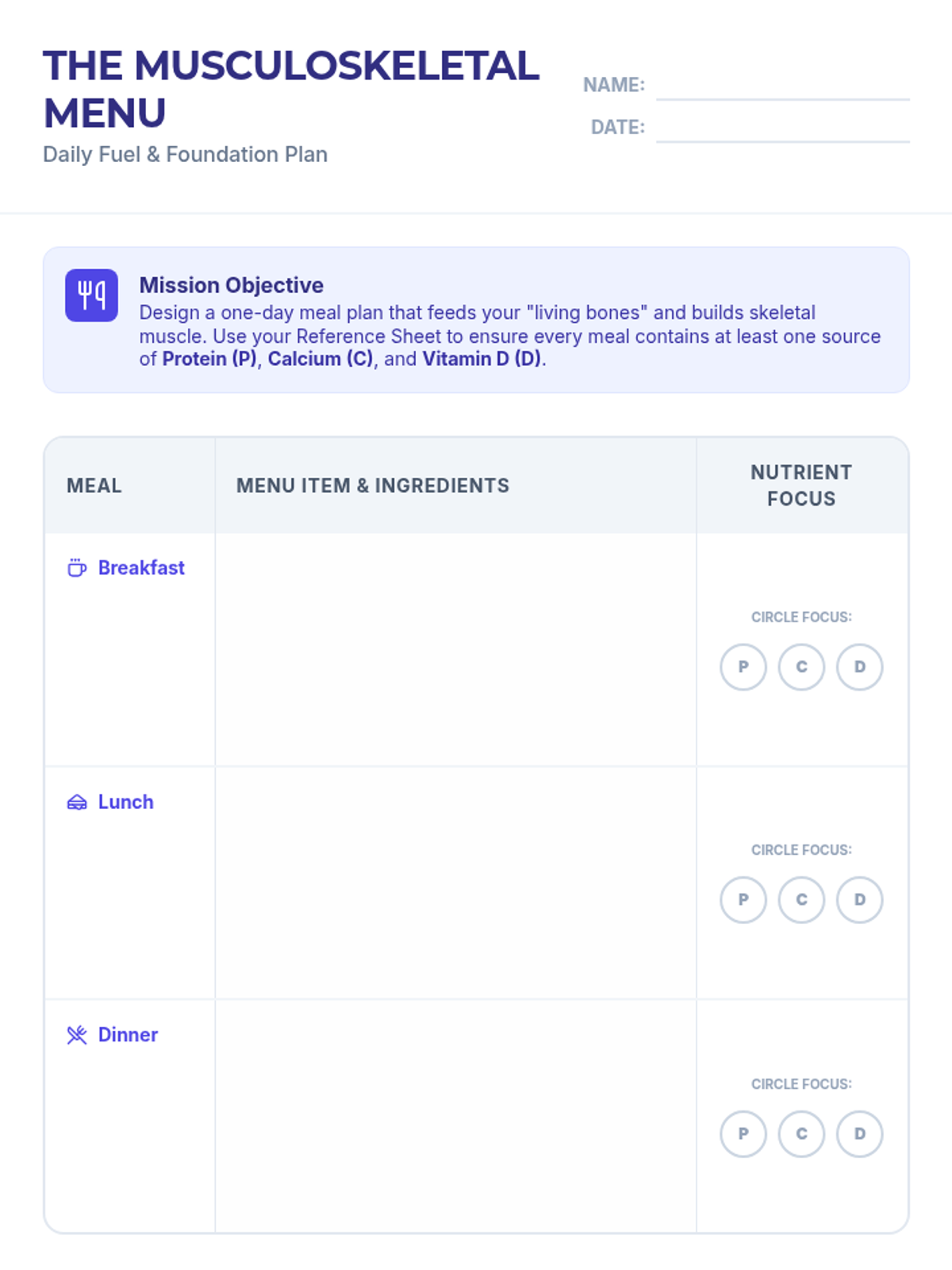
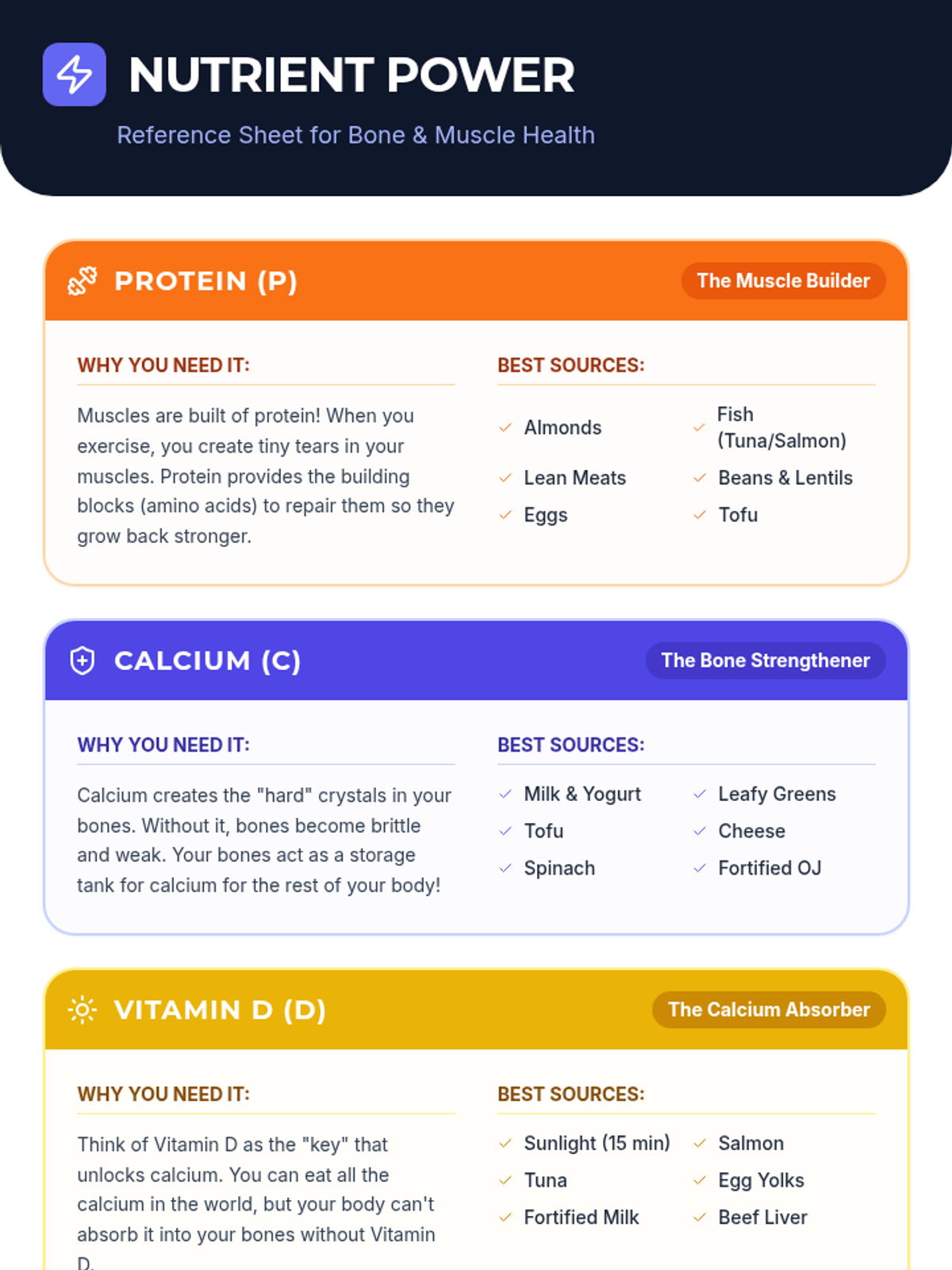
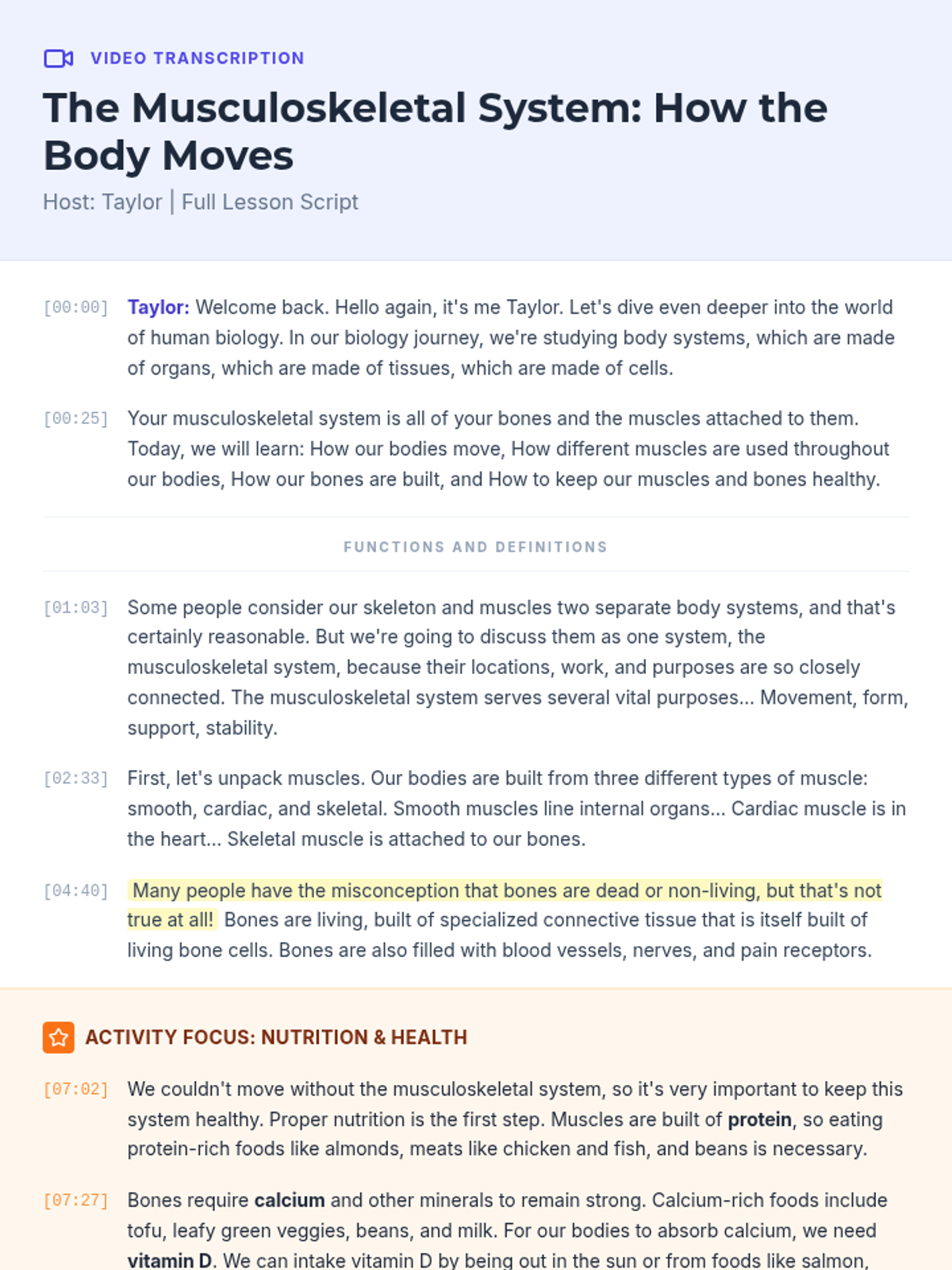
A comprehensive lesson for grades 5-8 focusing on the nutritional and lifestyle needs of the musculoskeletal system, featuring a meal planning activity and video-based learning.
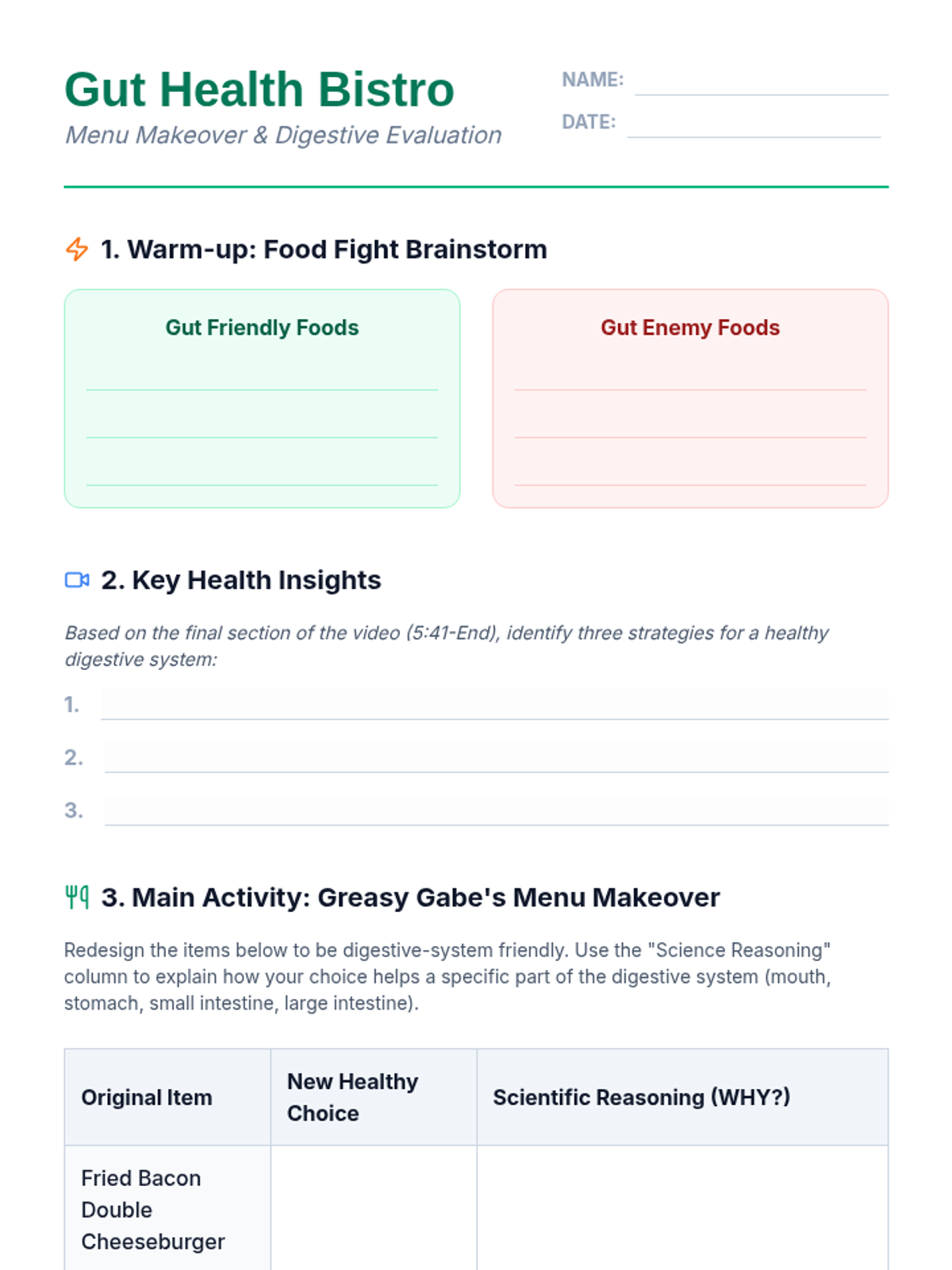
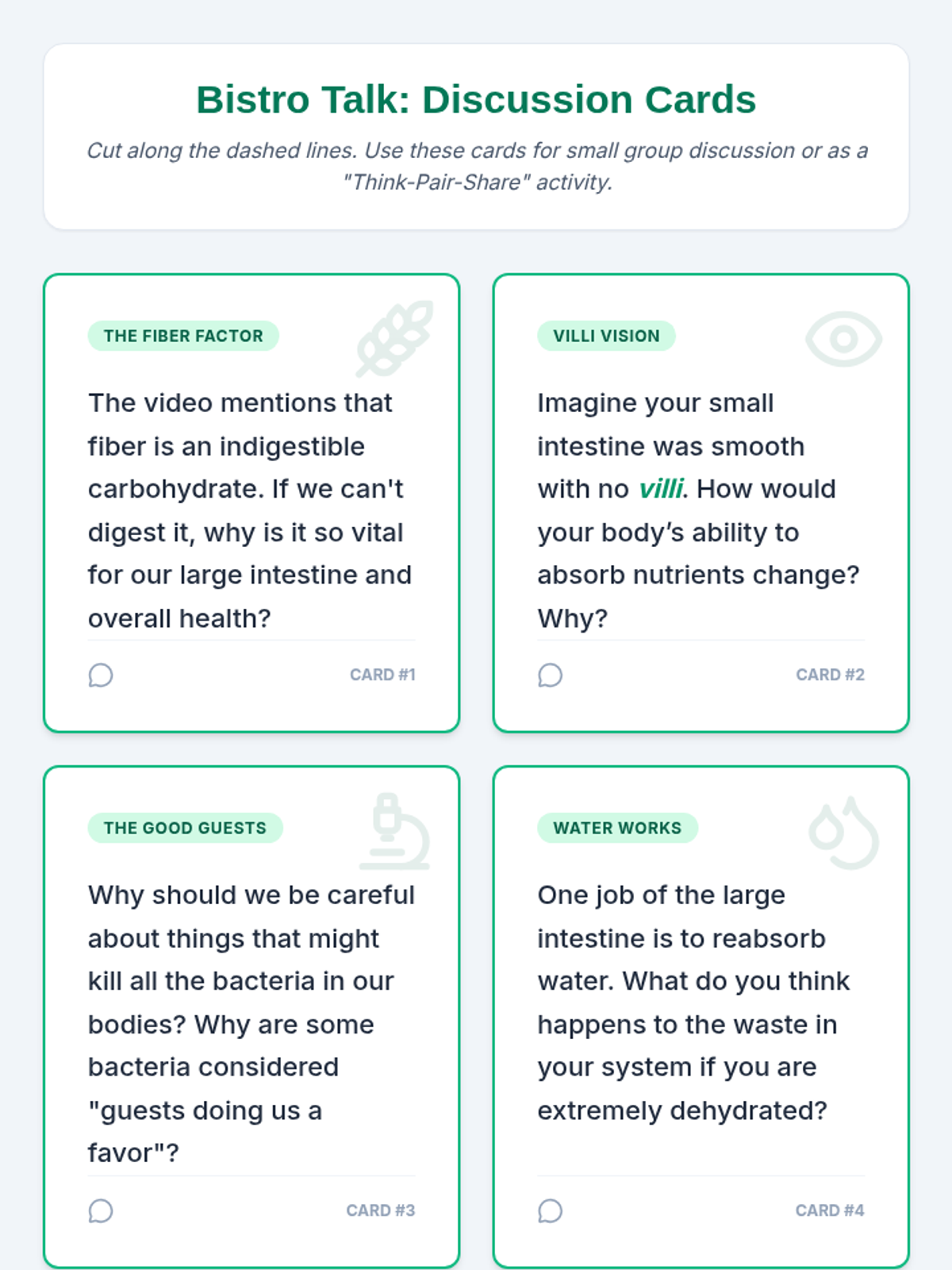
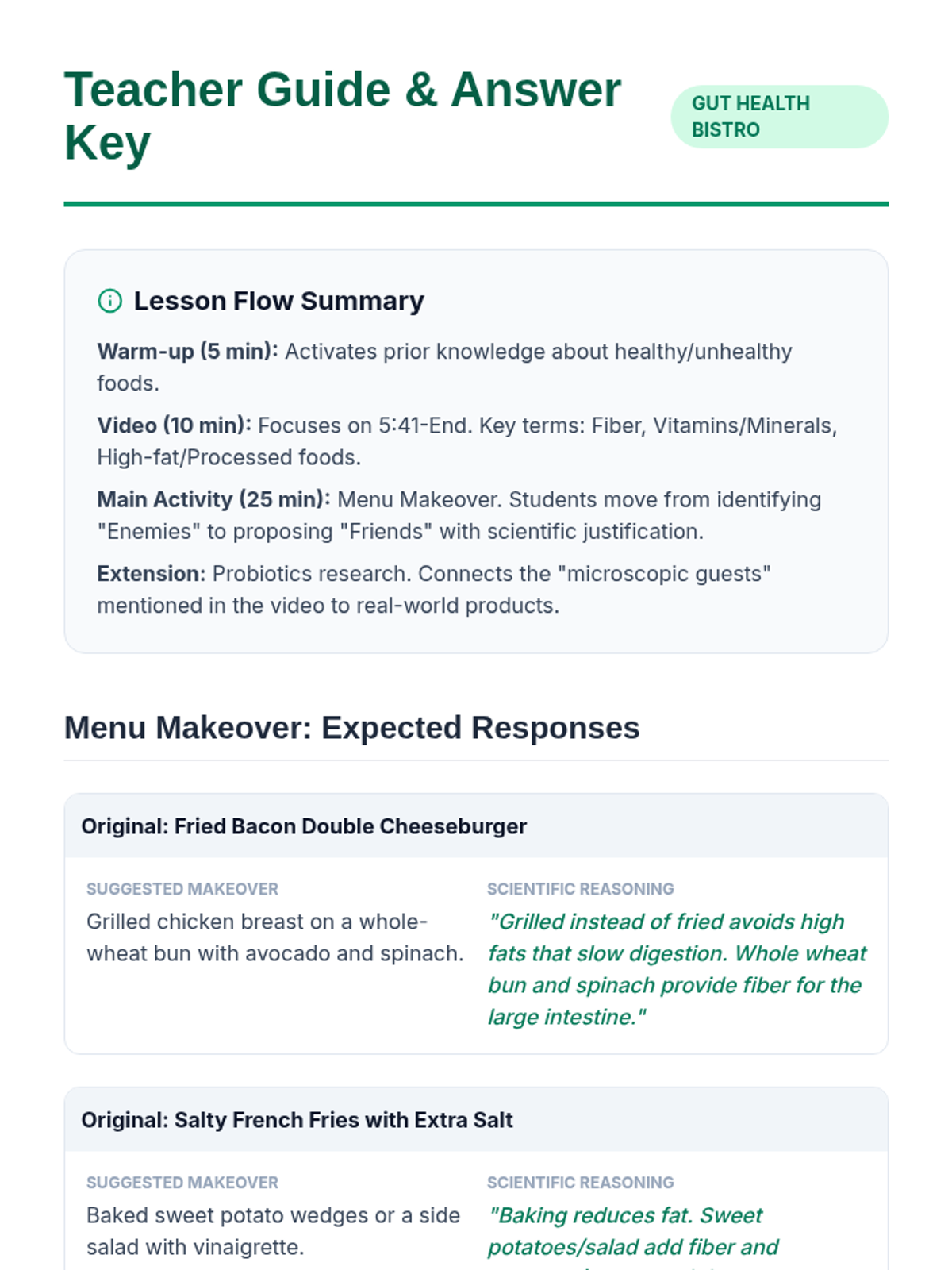
A lesson focused on evaluating dietary choices for digestive health. Students analyze food impacts, redesign a menu for optimal digestion, and explore the role of probiotics.
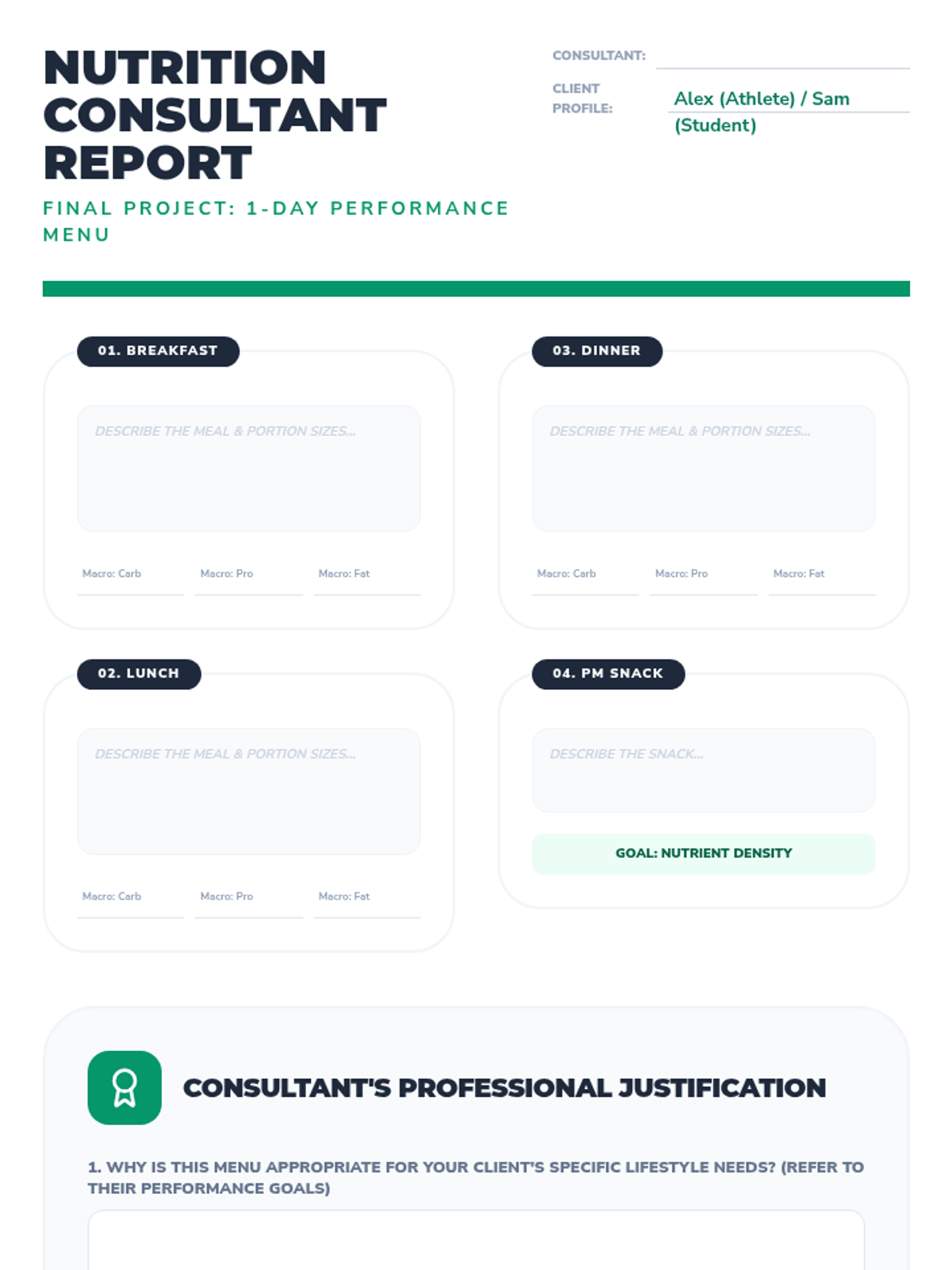
As 'Nutrition Consultants,' students synthesize their knowledge to create a justified one-day meal plan for a specific lifestyle case study.
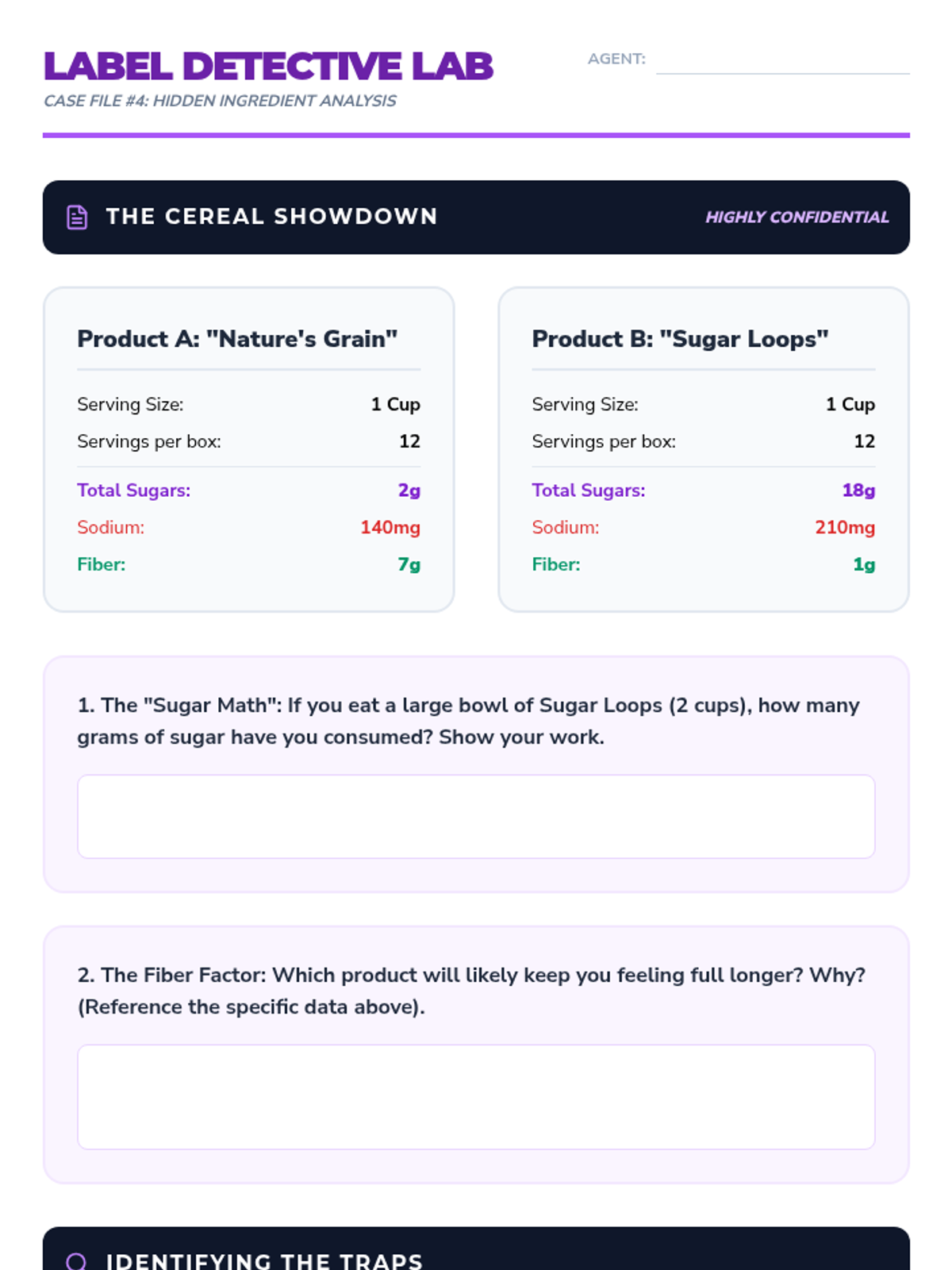
Students gain technical skills in reading Nutrition Facts labels to identify hidden sugar, sodium, and realistic serving sizes.
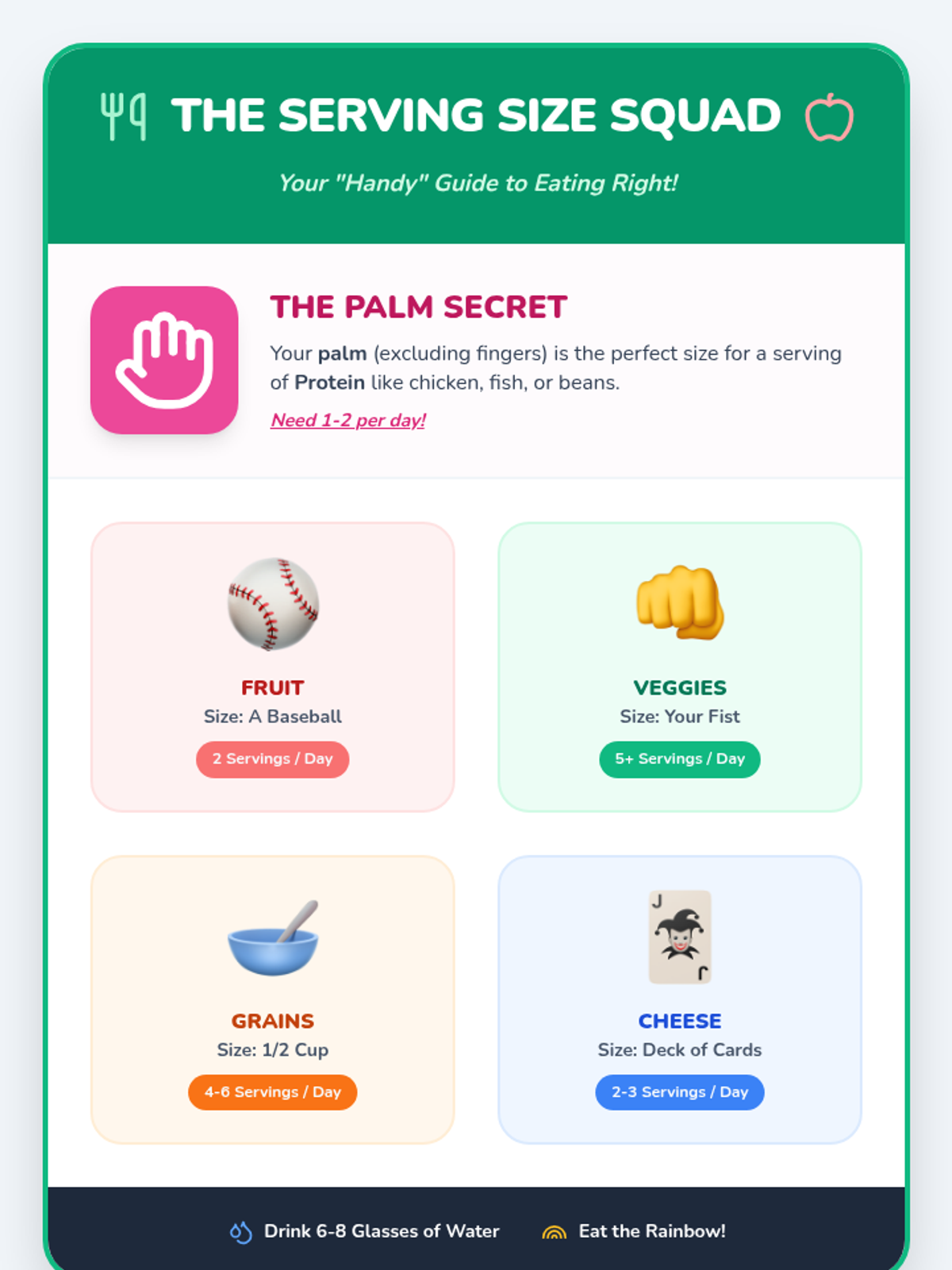
Students learn to estimate serving sizes using visual hand cues and apply the MyPlate framework to visualize ideal meal ratios.
Focusing on the five food groups and micronutrients, students compare nutrient density between whole and processed foods to understand 'empty calories.'
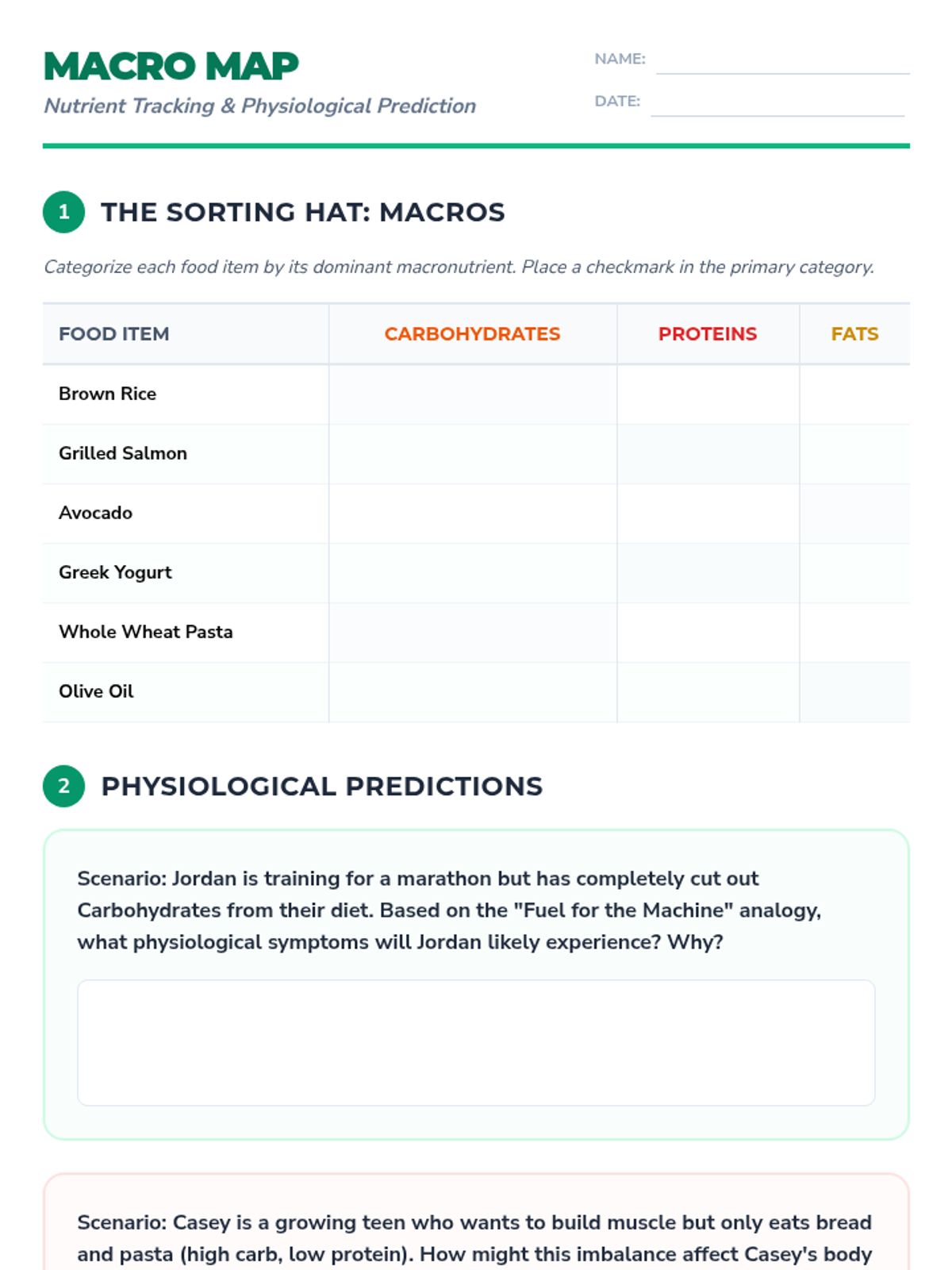
Students investigate carbohydrates, proteins, and fats, mapping common foods to their dominant macronutrient and predicting the effects of nutrient imbalances.
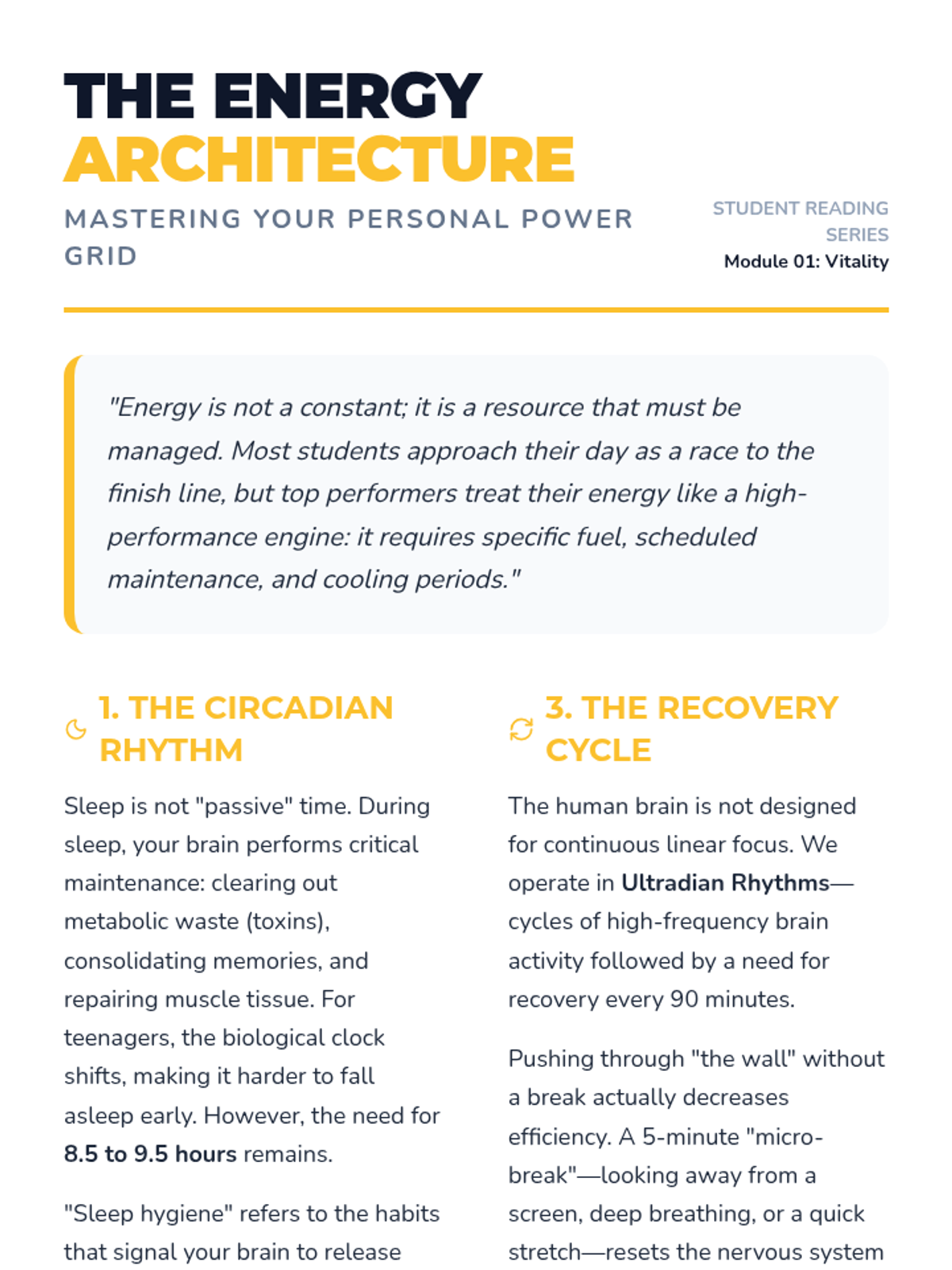
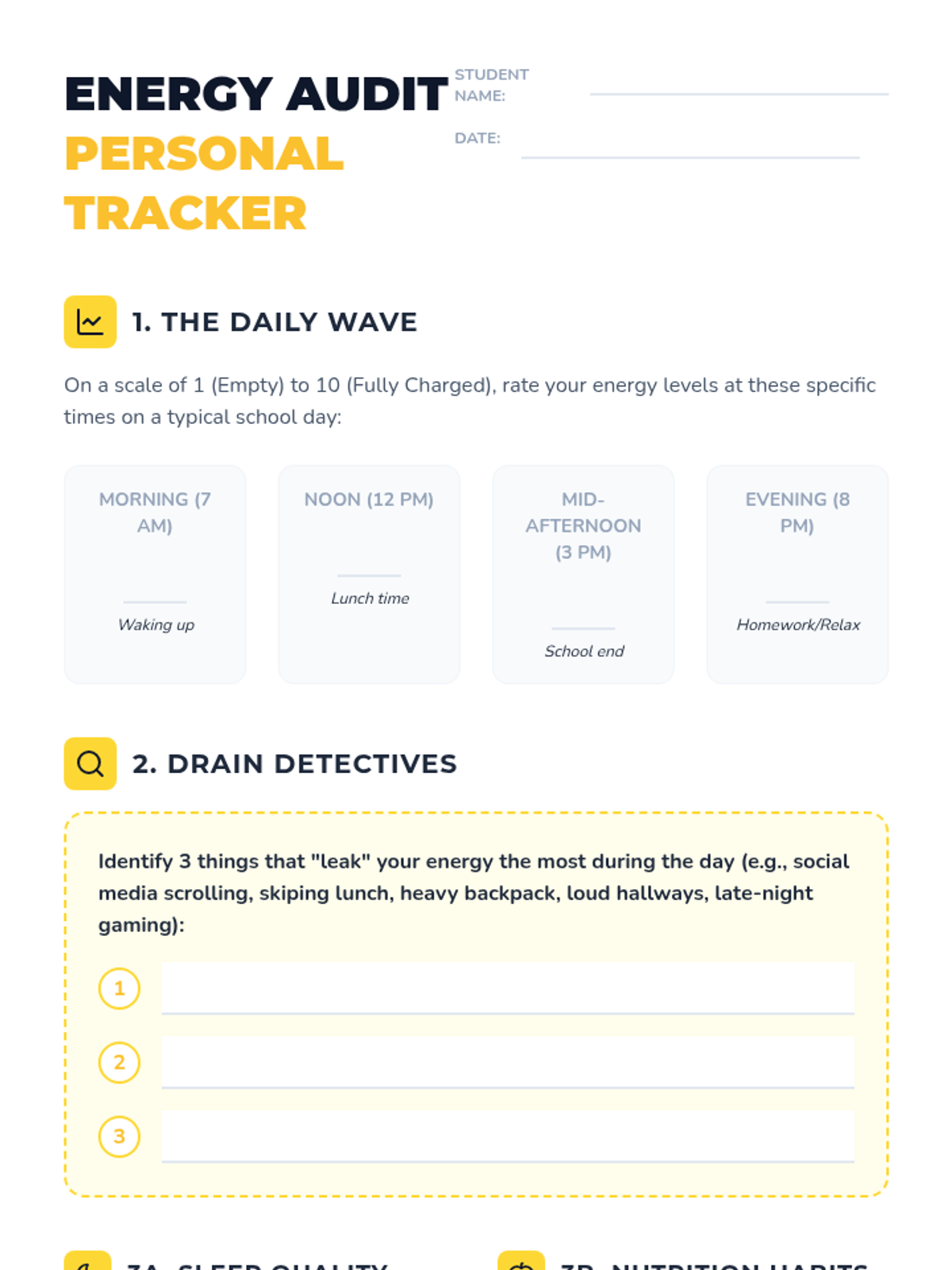
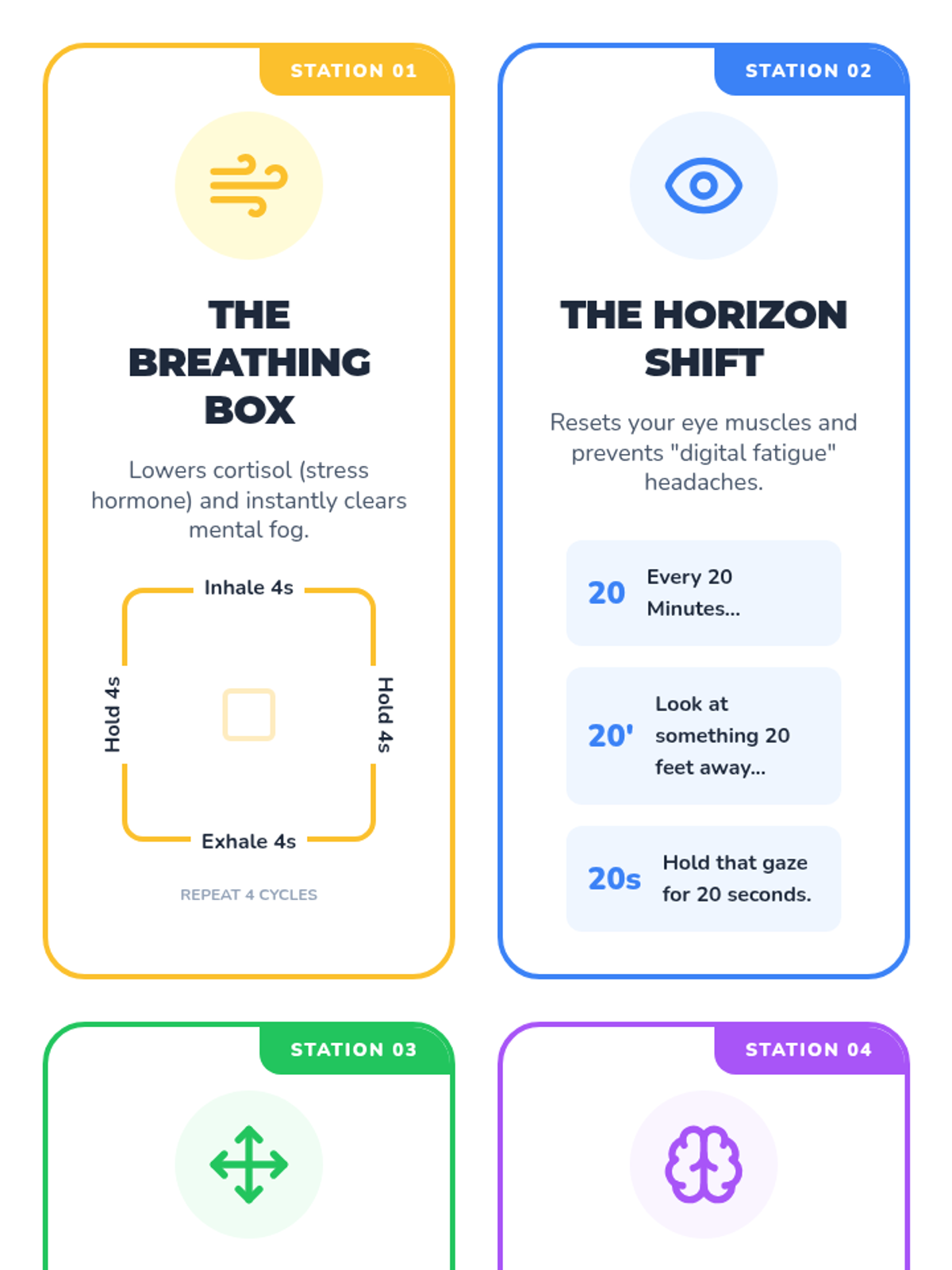
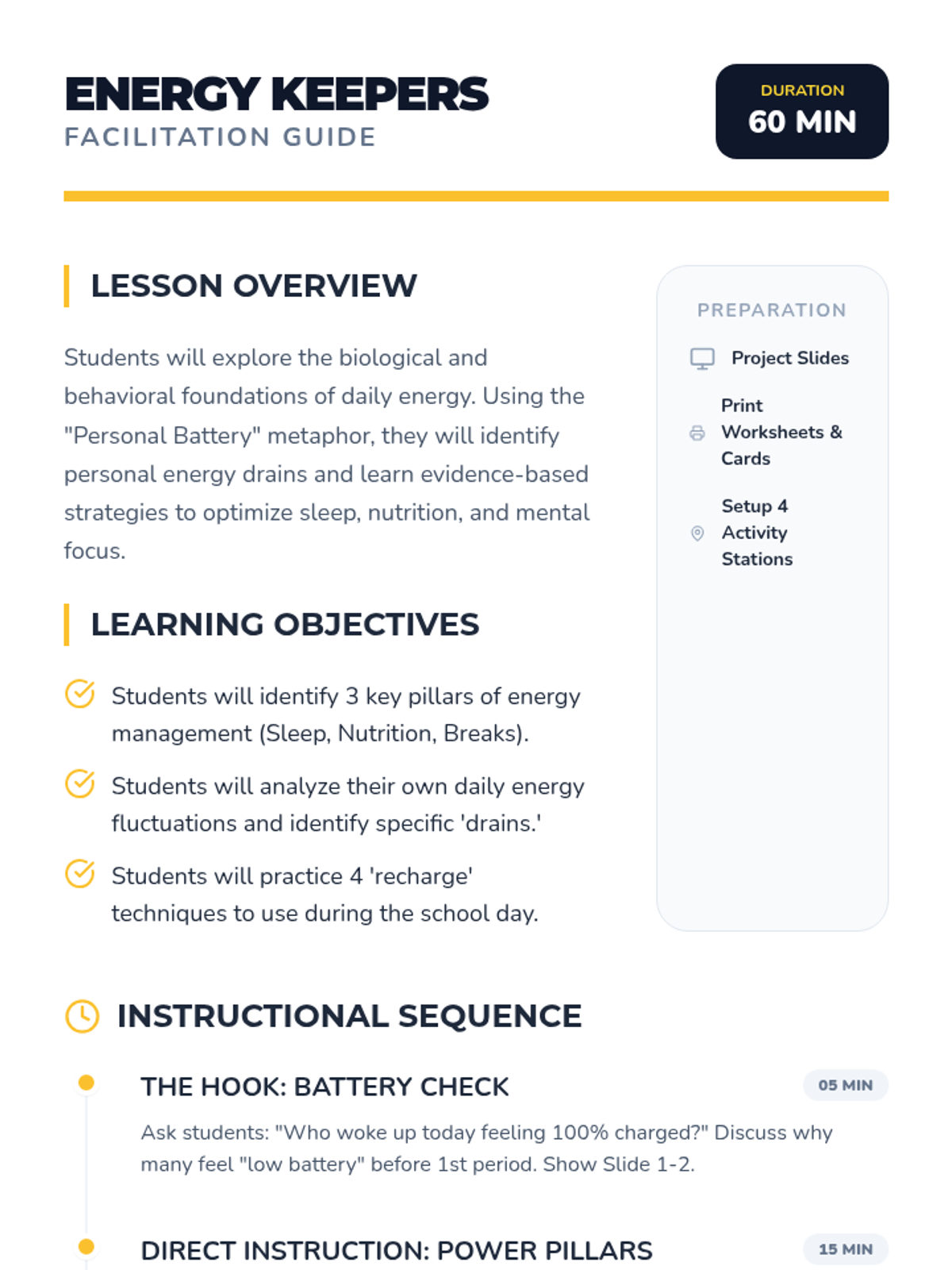
A comprehensive lesson designed for middle and high school students to master their daily energy. Through sleep hygiene, nutrition, and mindful breaks, students learn to monitor their 'personal battery' and optimize their performance and well-being.