Essential food groups, nutrient functions, and balanced meal planning. Develops skills for interpreting nutrition labels and adopting lifelong healthy eating patterns.
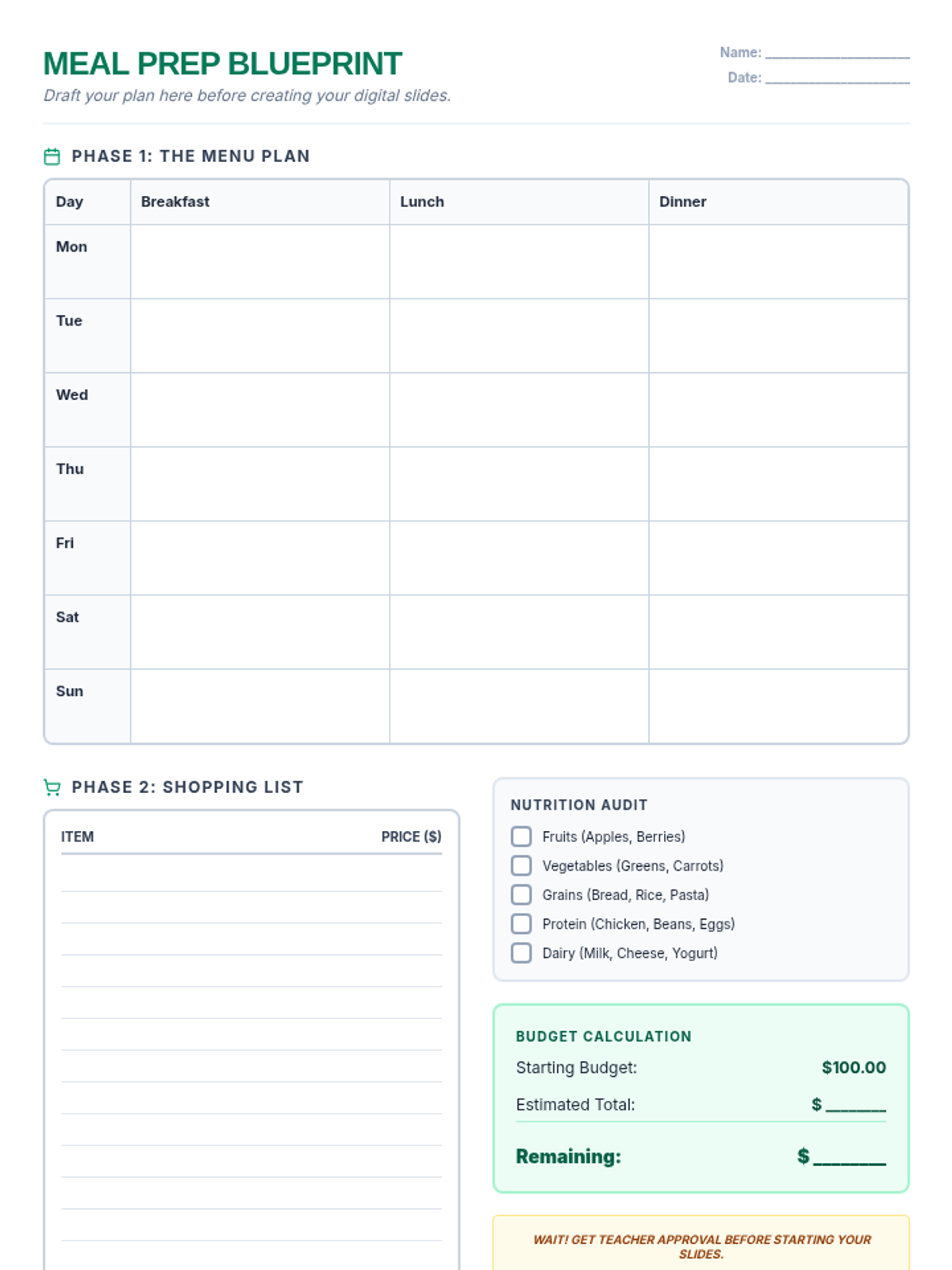
A scaffolding worksheet for students to draft their 7-day menu, shopping list, and budget calculations before moving to a digital format.
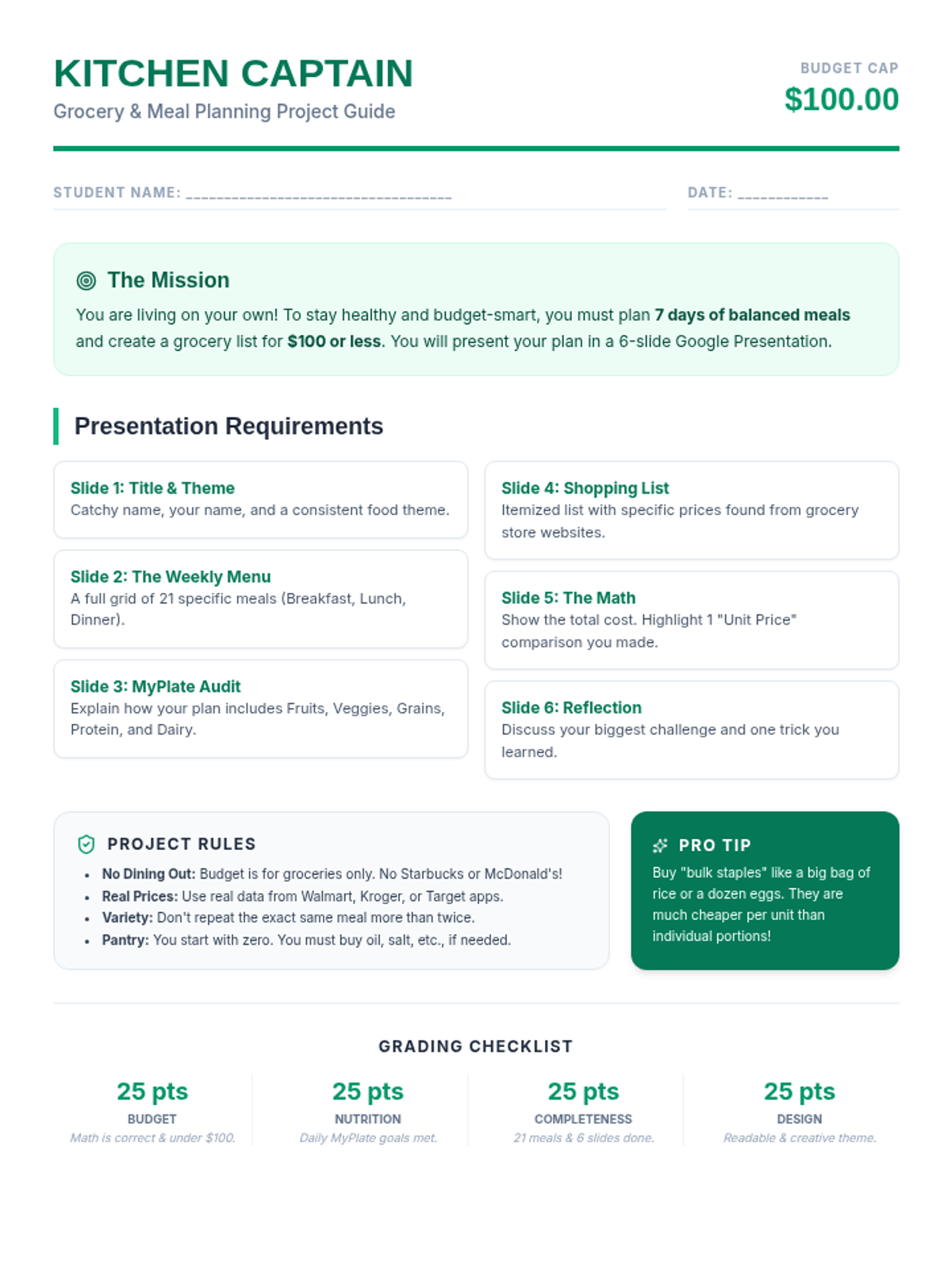
A student-facing guide and rubric for the Kitchen Captain project, outlining slide requirements, budget constraints, and grading criteria.
Instructional slide deck for the Market Master lesson, covering nutrition labels, unit pricing, and the final project introduction.
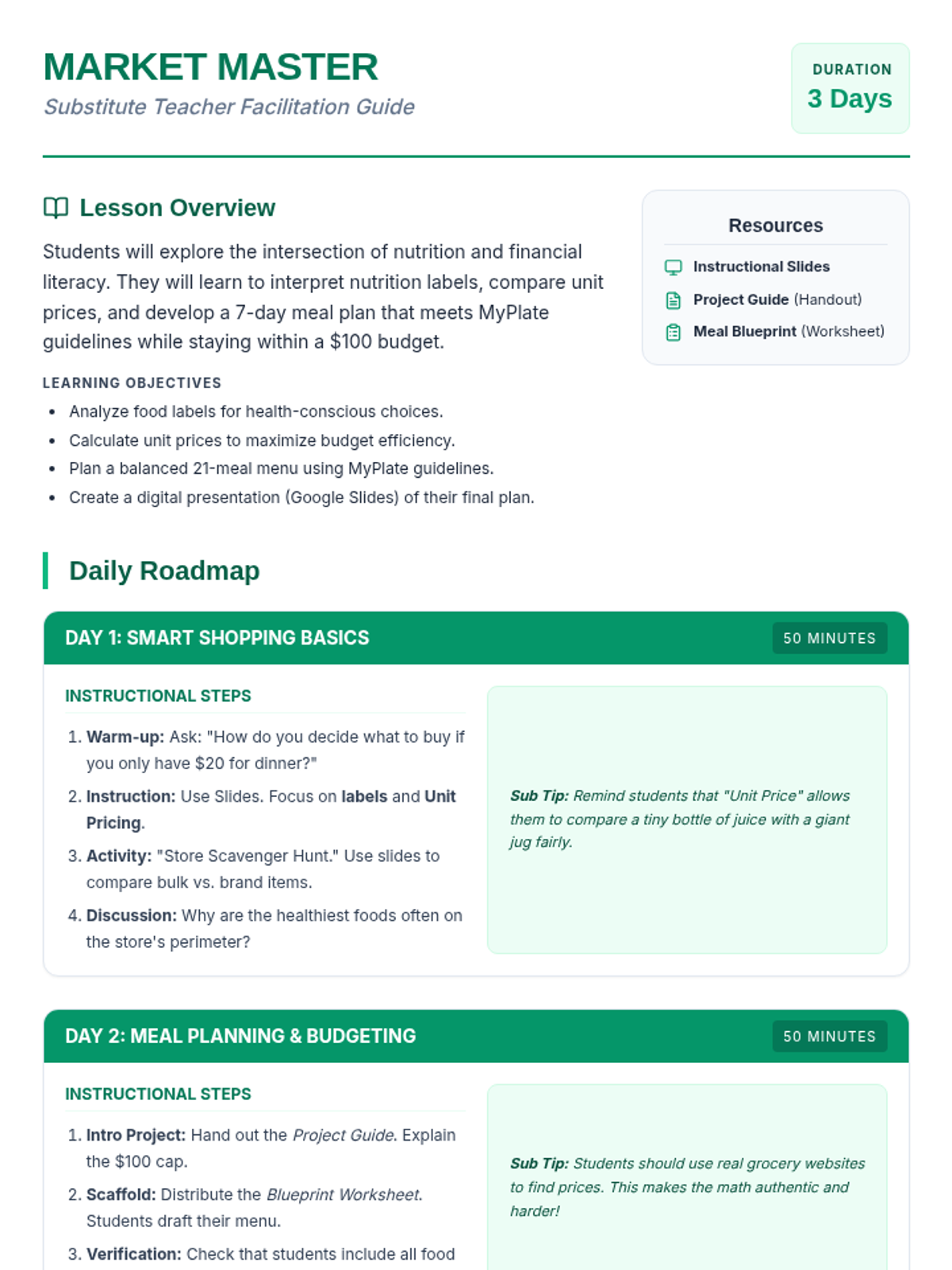
A detailed 3-day facilitation guide for a substitute teacher, including lesson objectives, daily procedures, and grading criteria for the Market Master unit.
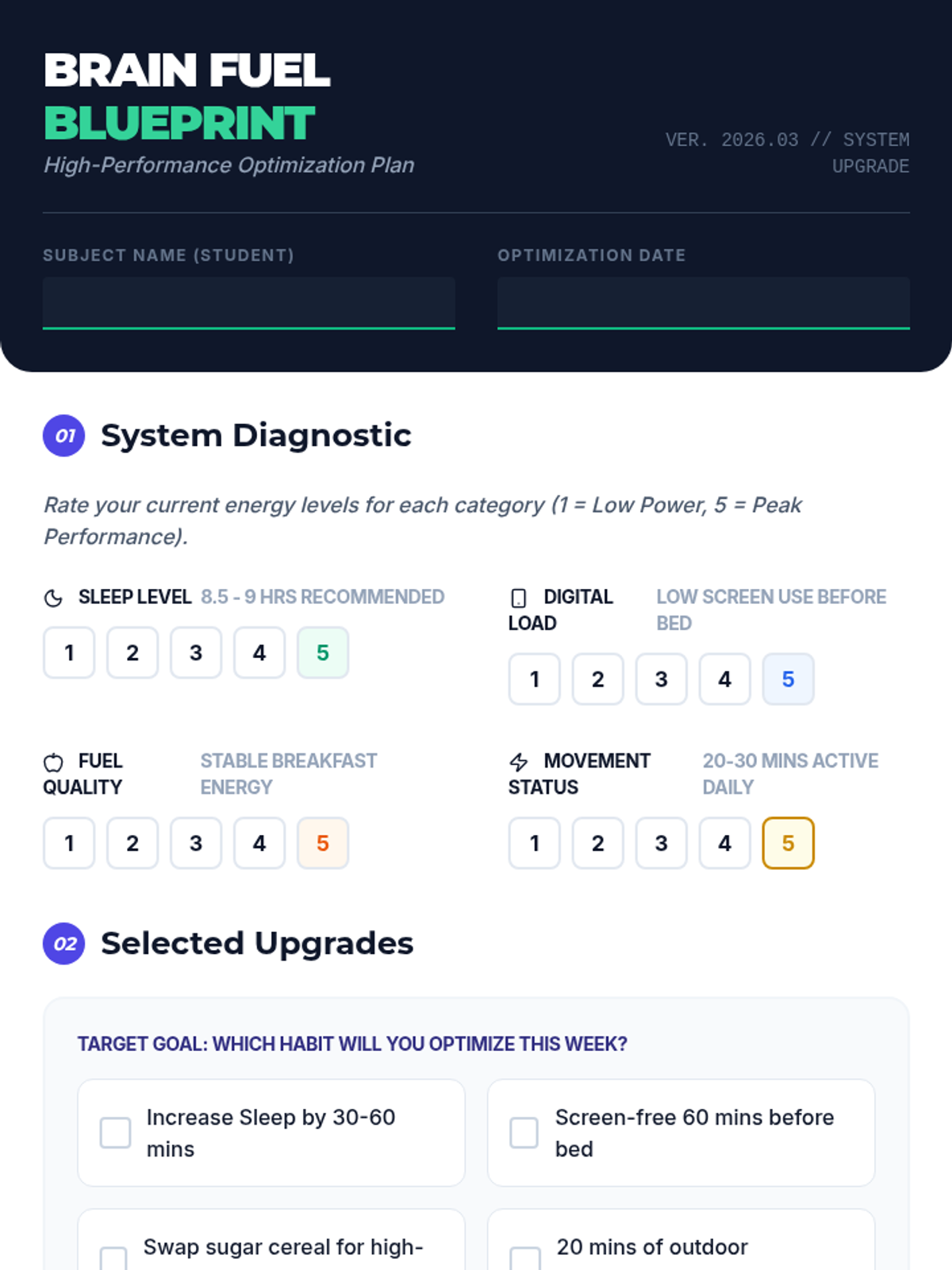
A personal wellness planning document for students to self-assess their habits and commit to specific 'brain upgrades' to improve their academic and cognitive performance.
A visually striking, data-driven slide presentation for grades 3-8 that frames healthy habits as 'system upgrades' for peak academic and cognitive performance.
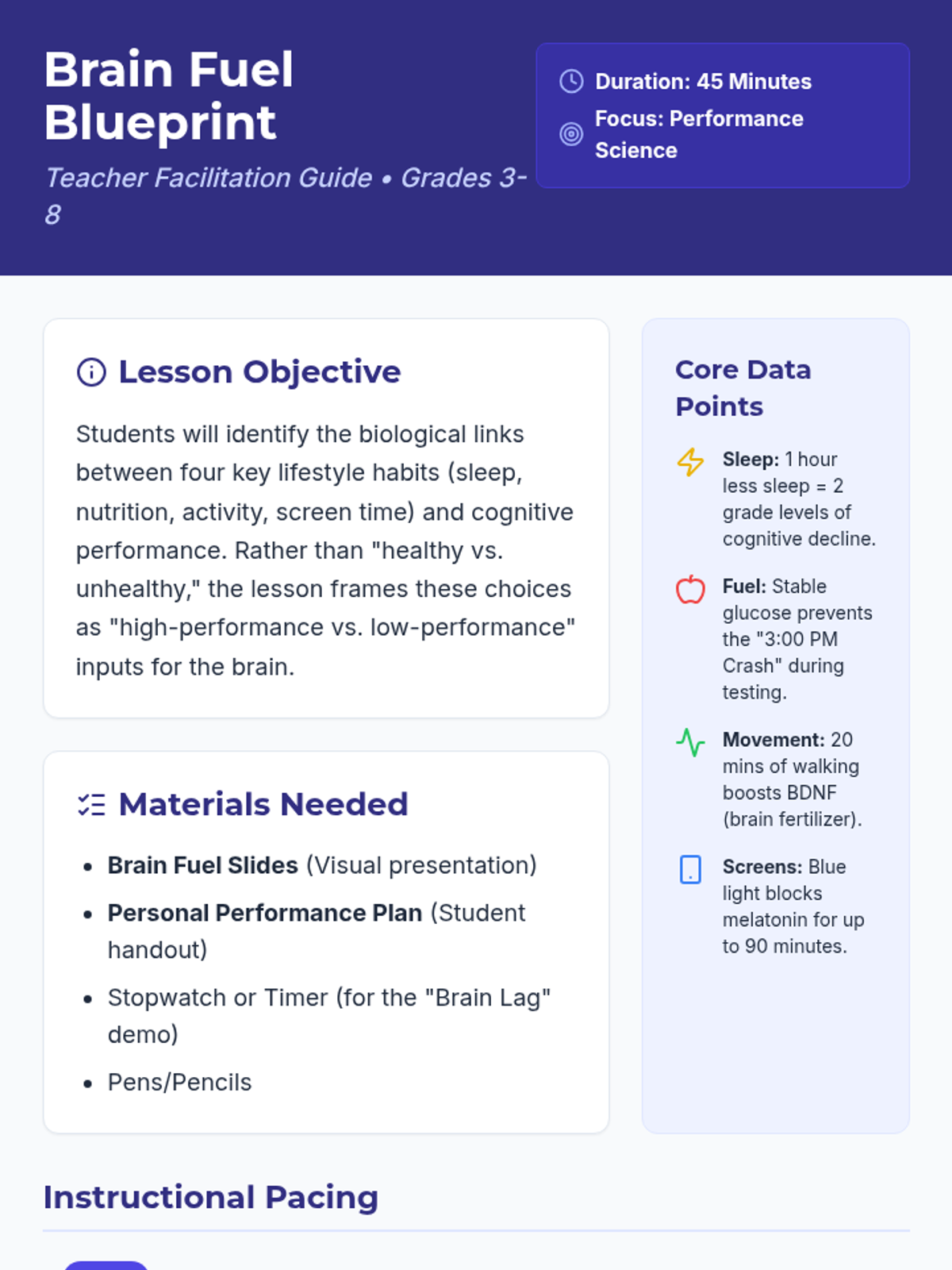
A comprehensive teacher facilitation guide for the Brain Fuel Blueprint lesson, featuring a 45-minute instructional sequence, performance-based framing strategies, and core data points for grades 3-8.
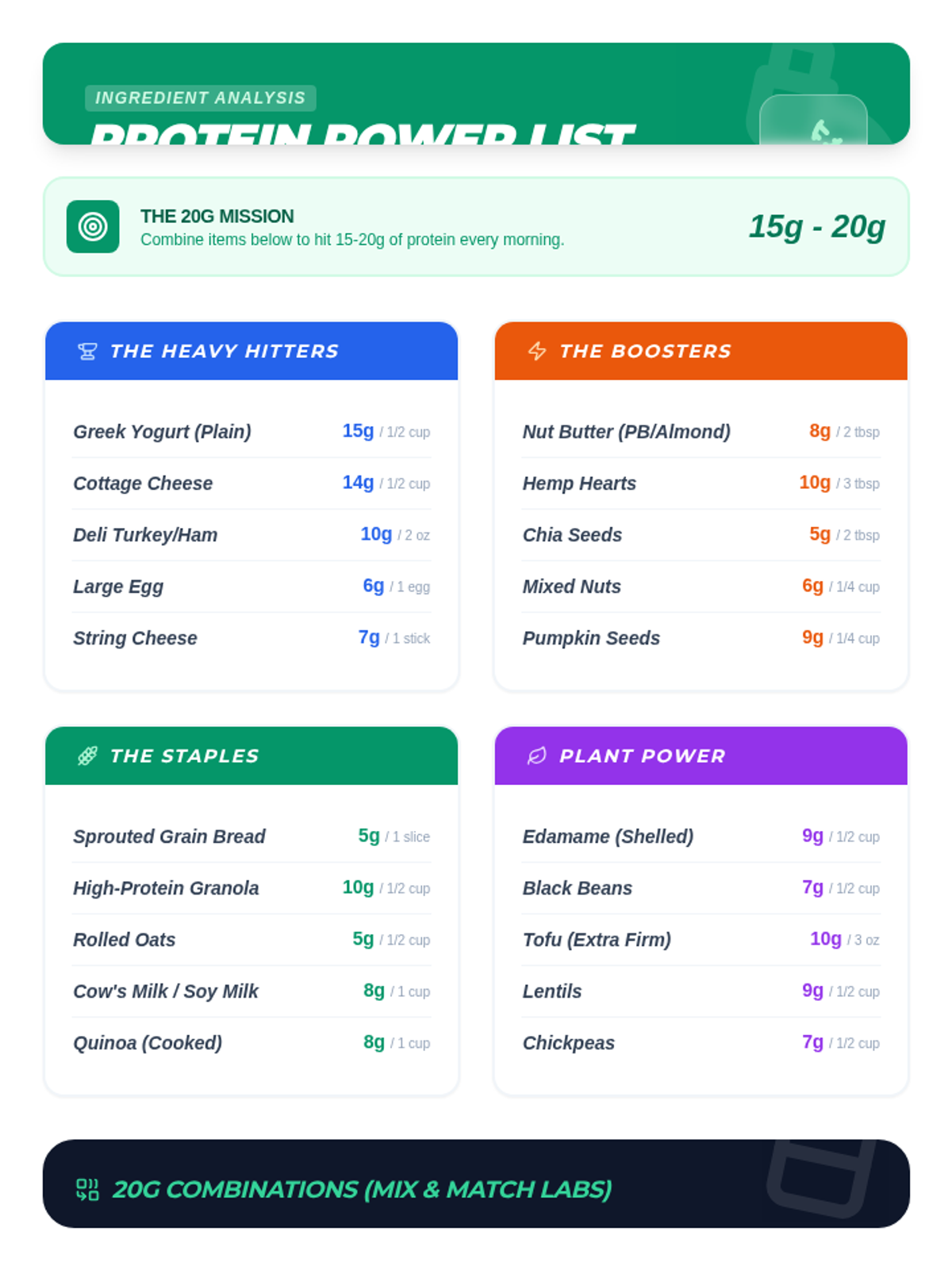
A comprehensive protein reference sheet for 7th graders and parents, listing protein counts for common breakfast foods categorized by type. Includes "Mix & Match Labs" to help hit 20g protein targets easily.
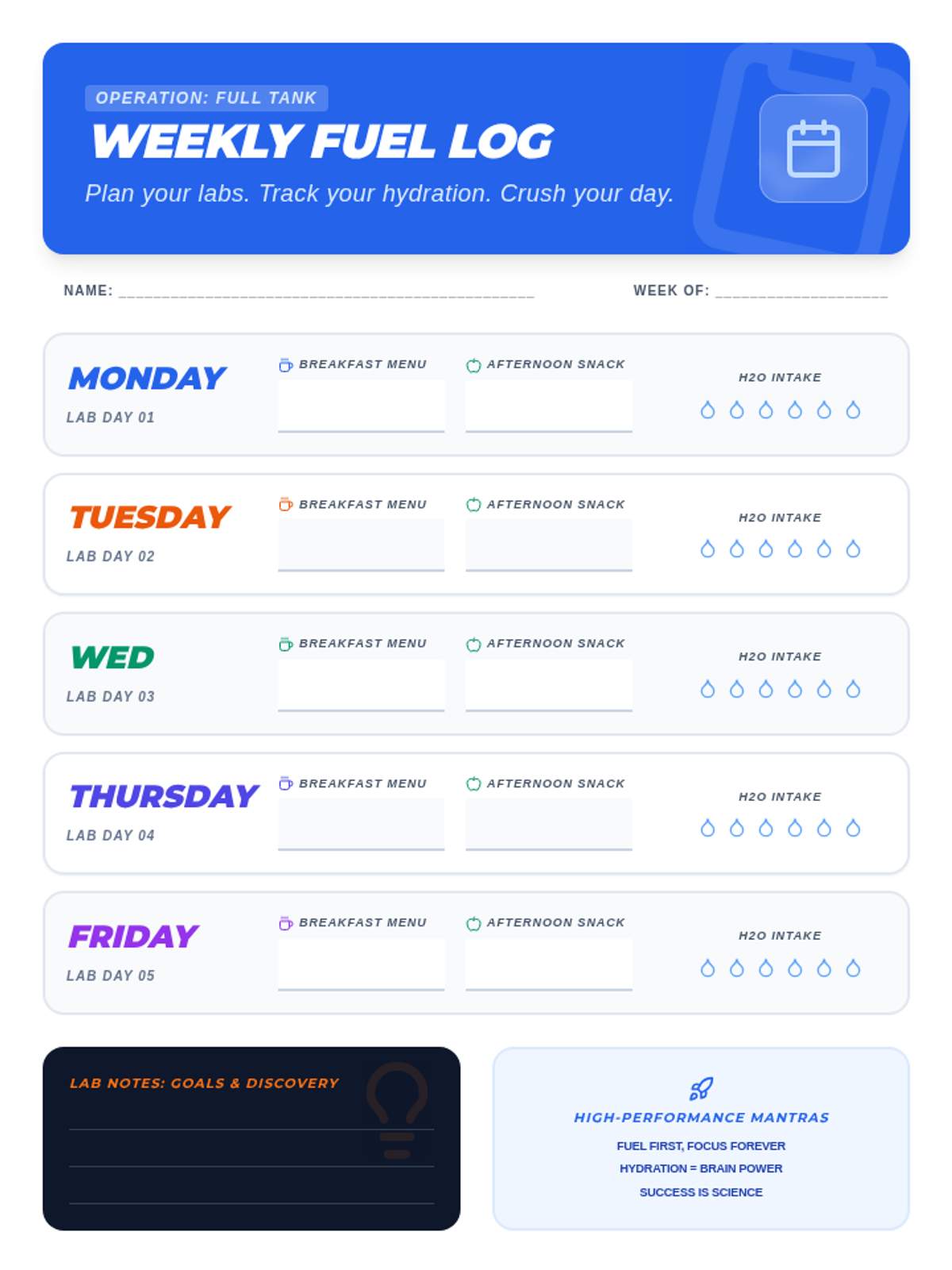
A weekly Monday-Friday planning checklist and water tracker for 7th graders. Includes space for daily breakfast and snack entries, a droplet-based water log, and "Lab Notes" for goal setting.
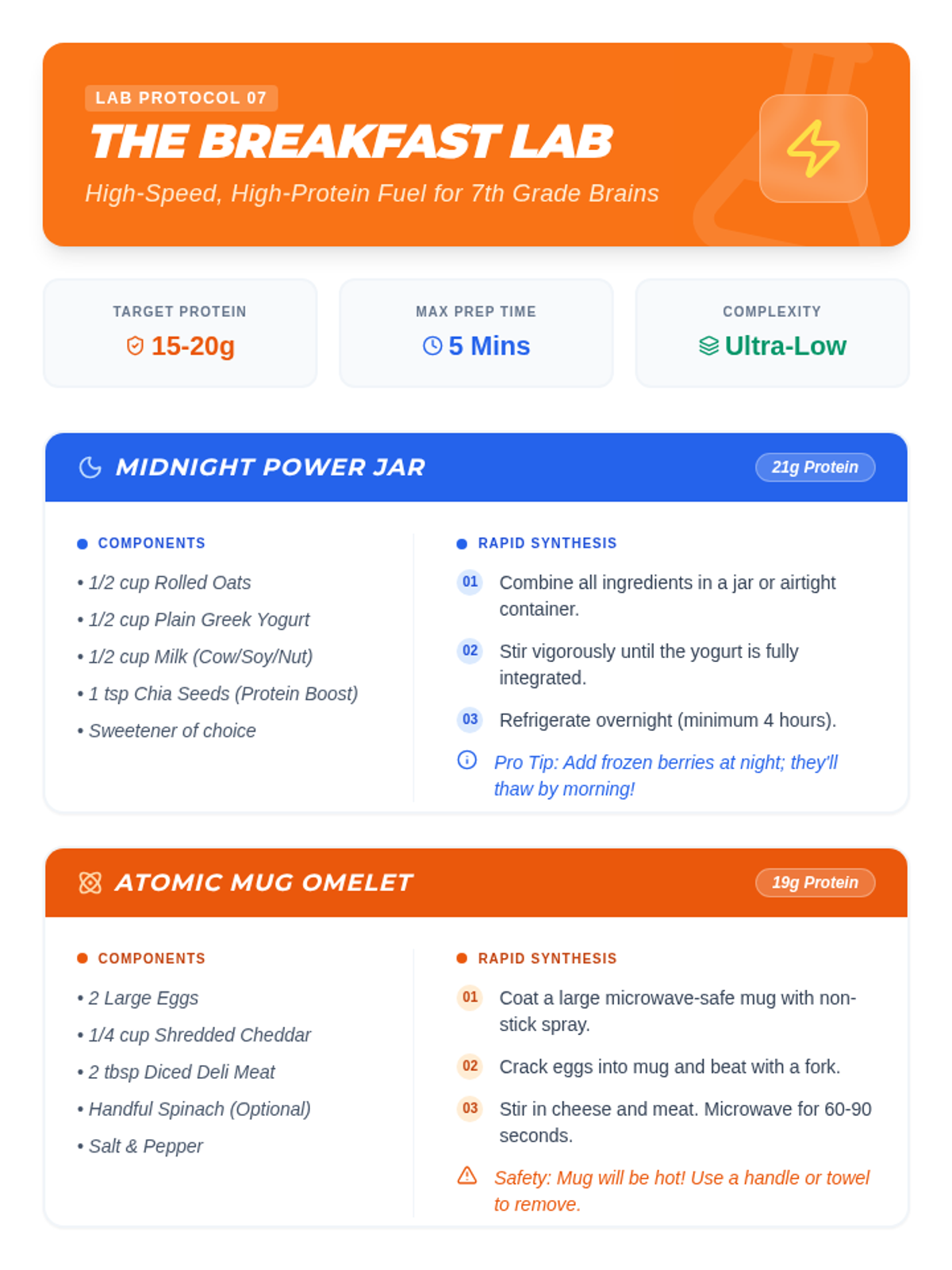
A high-energy recipe guide for 7th graders featuring four fast, protein-packed breakfast options with 15-20g of protein. It includes prep times, protein counts, and rapid-prep instructions to streamline school mornings.
A high-impact printable presentation document where each slide is a full 8.5x11 page. Designed for robust printing with strict page break controls and bold, clear visuals.
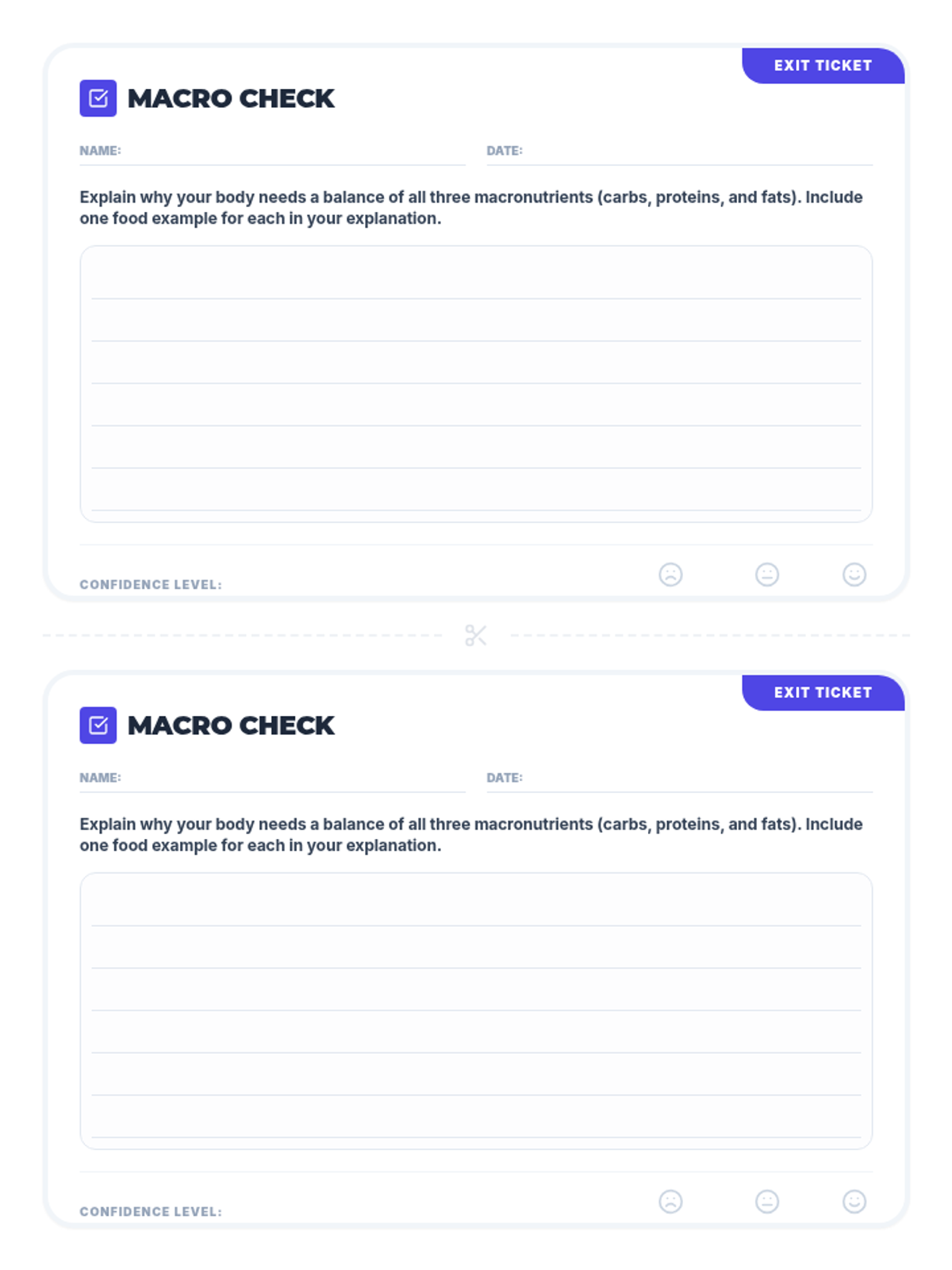
A quick, two-per-page exit ticket with a single open-ended prompt asking students to explain the importance of a balanced macronutrient intake. Redesigned with a cleaner layout and consistent writing lines.
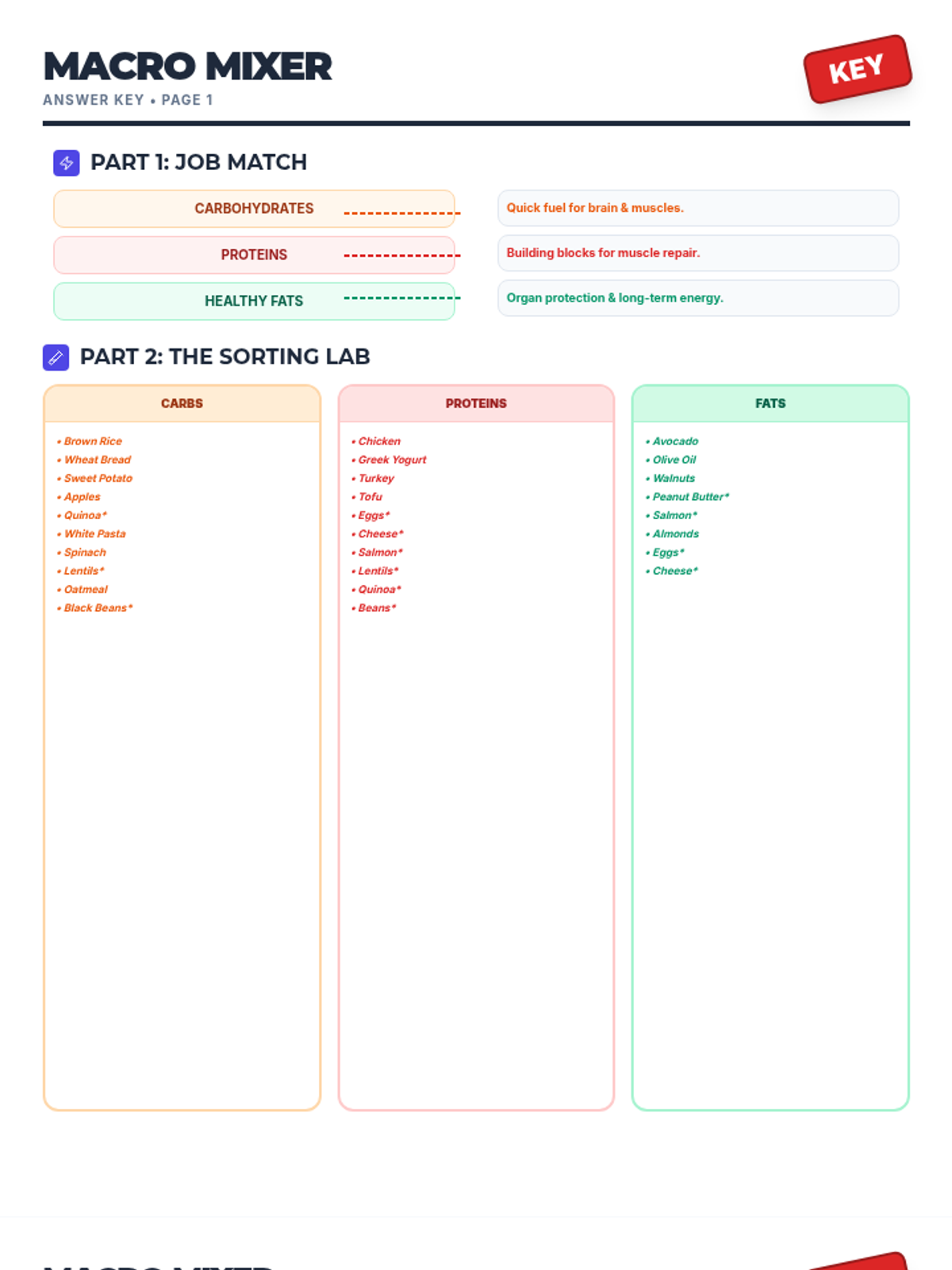
Updated teacher-facing answer key for the Macro Mixer worksheet, now including sample answers across two pages with strict page break controls and section protection.
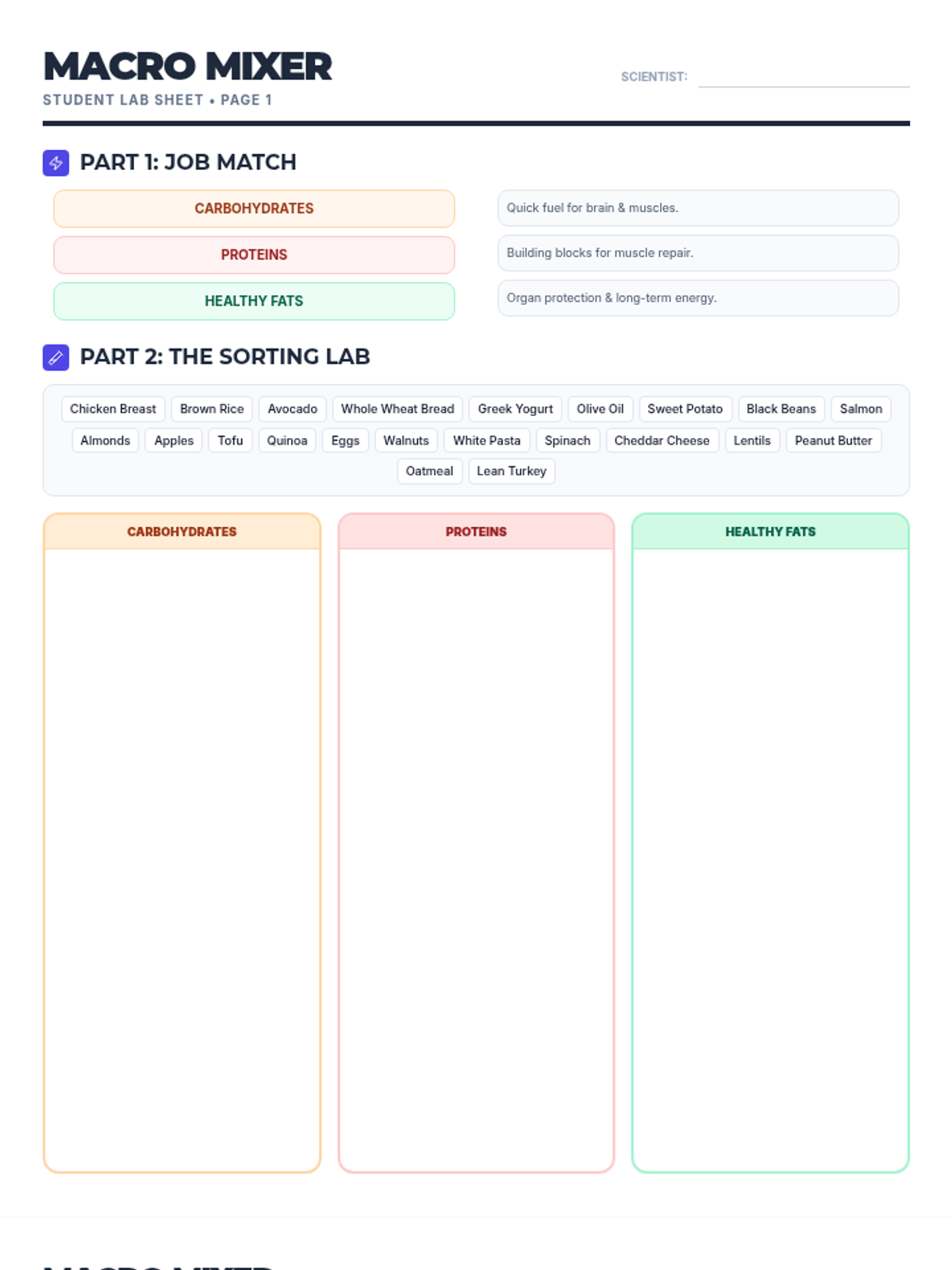
An expanded student worksheet with an extended food categorization lab (22 items) and two separate meal-building exercises. Spaced across two pages with strict page break controls and internal section protection for reliable printing.
An upgraded, high-impact slide deck with consistent 48px+ titles, minimum 24px body text, and vibrant custom-themed slides for macronutrients. Includes a refactored balanced plate model for maximum legibility.
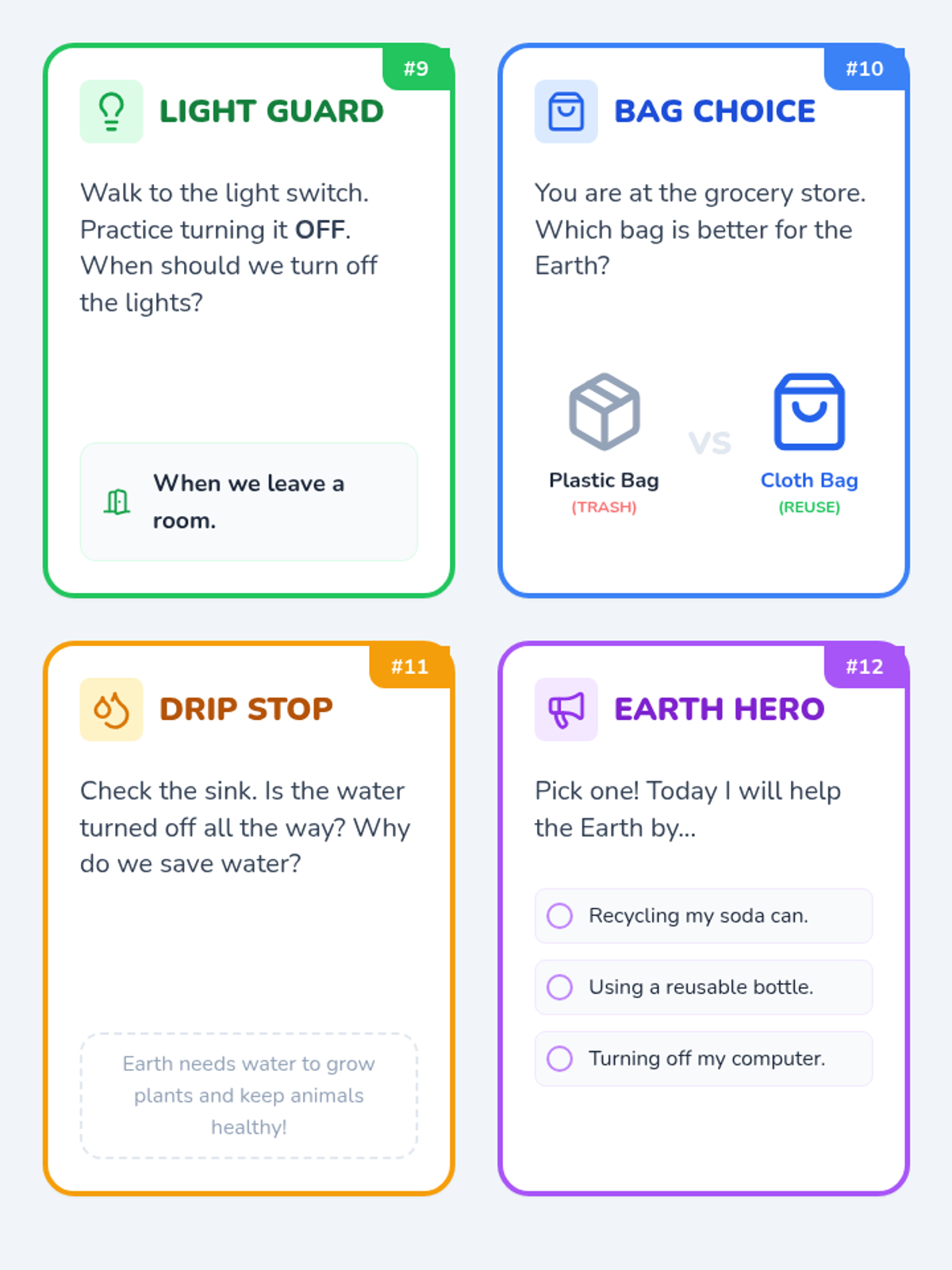
Task cards for Lesson 3 focusing on daily environmental habits like turning off lights, using reusable bags, and saving water.
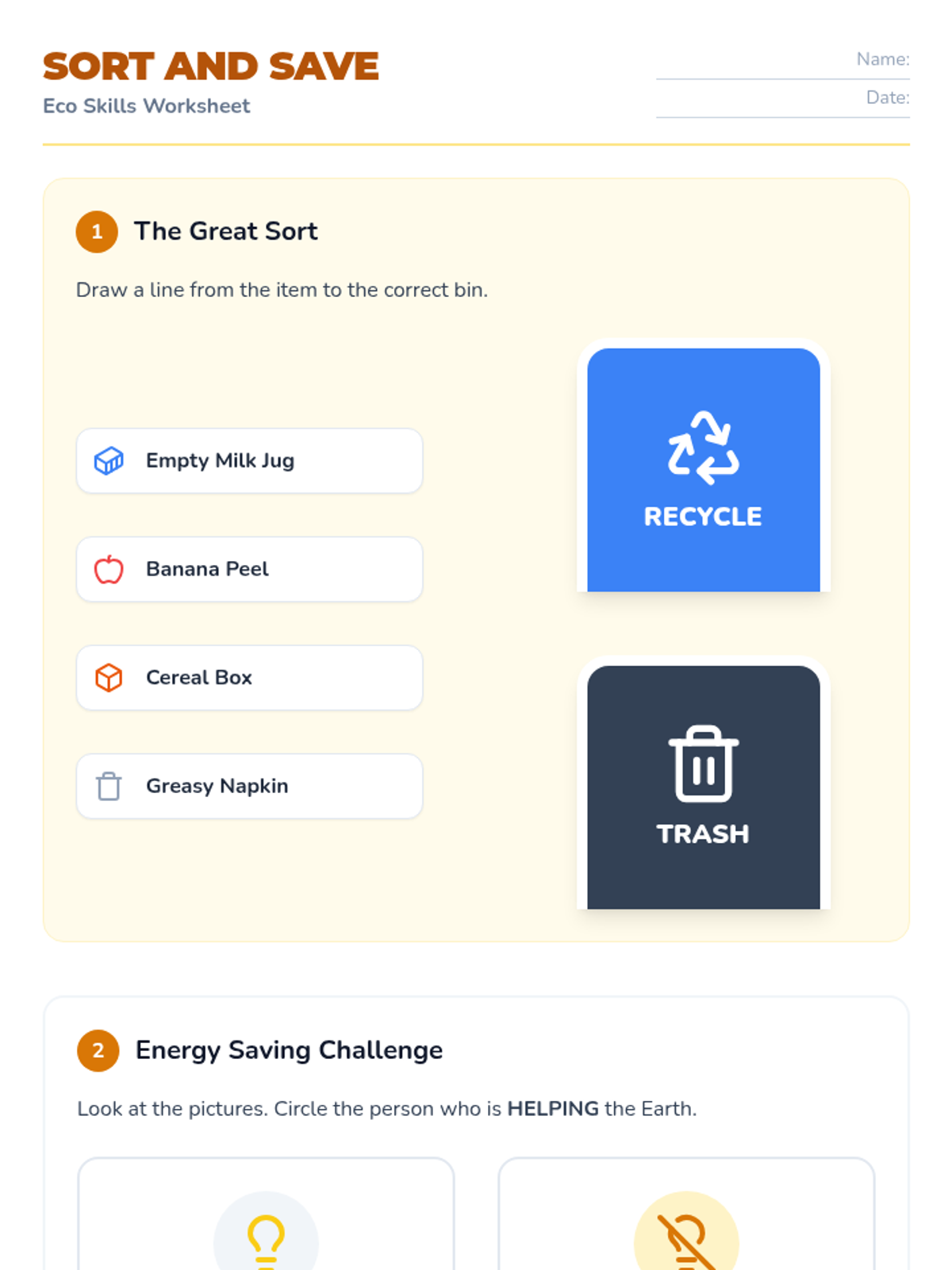
A worksheet for Lesson 3 involving recycling sorting (blue bin vs trash) and identifying energy and water-saving habits.
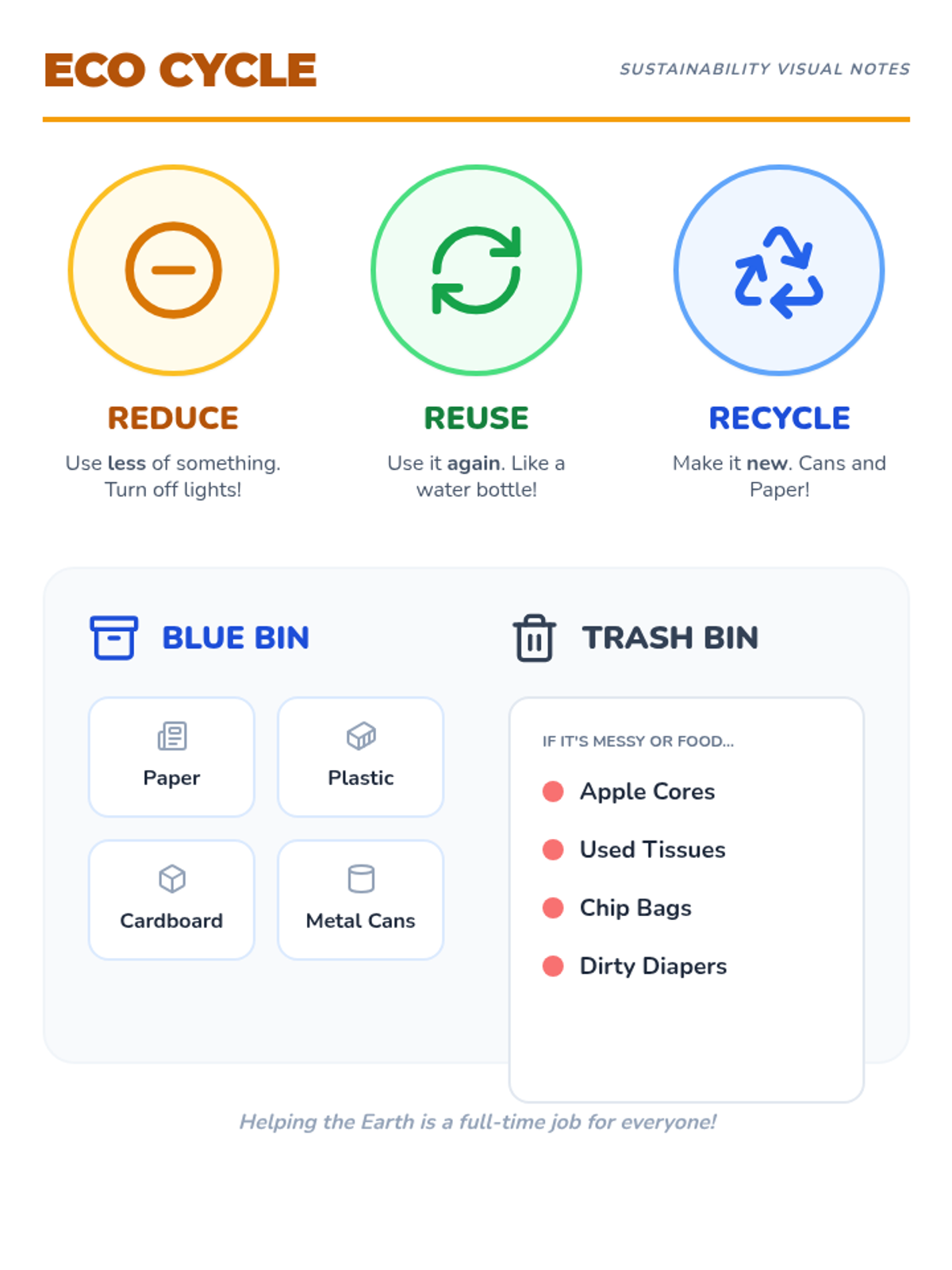
Visual notes for Lesson 3 detailing the "3 Rs" (Reduce, Reuse, Recycle) and a visual sorting guide for blue bins versus trash cans.
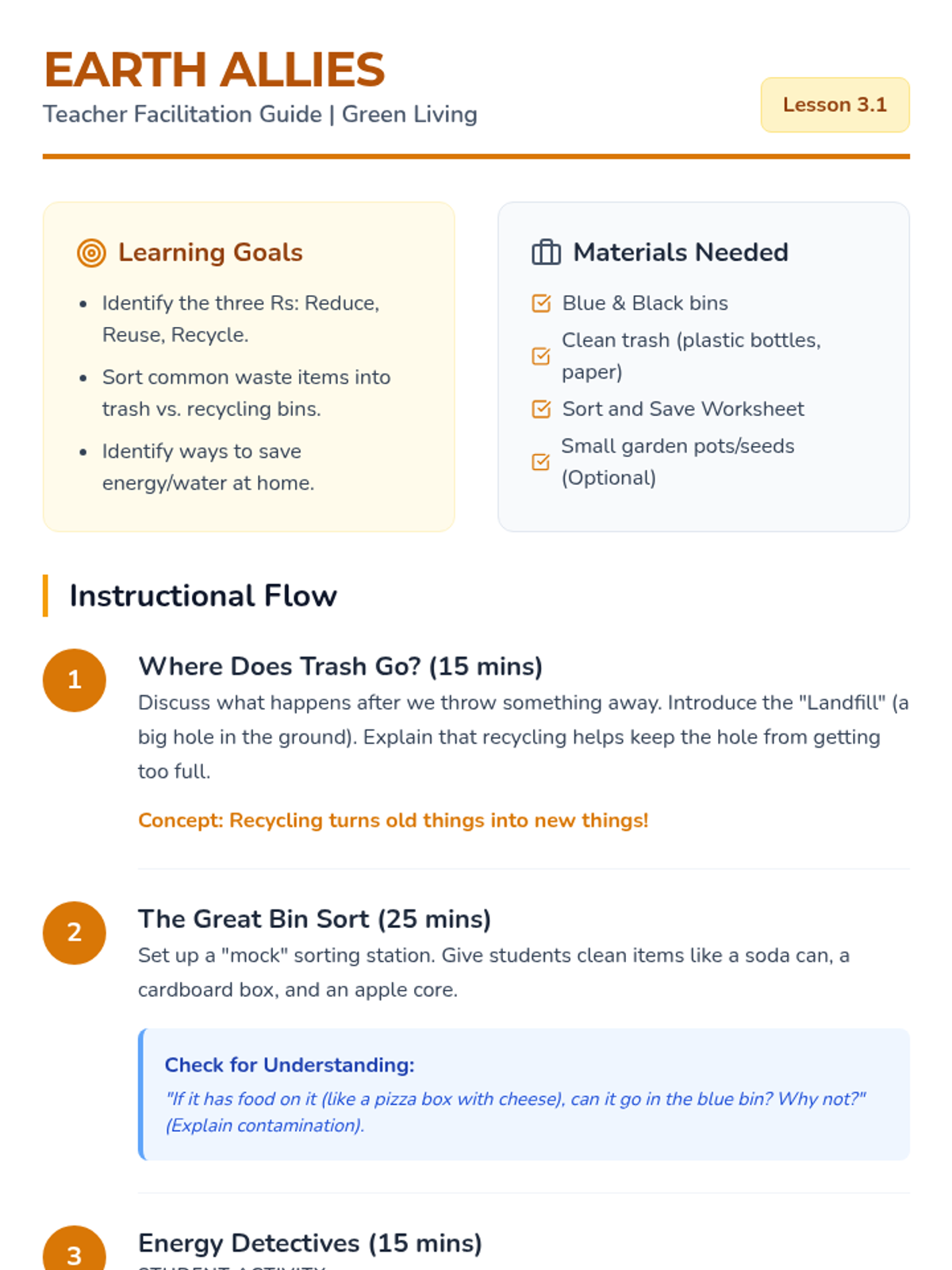
A teacher facilitation guide for Lesson 3 focusing on sustainability, recycling sorting activities, and energy conservation practices for life skills students.
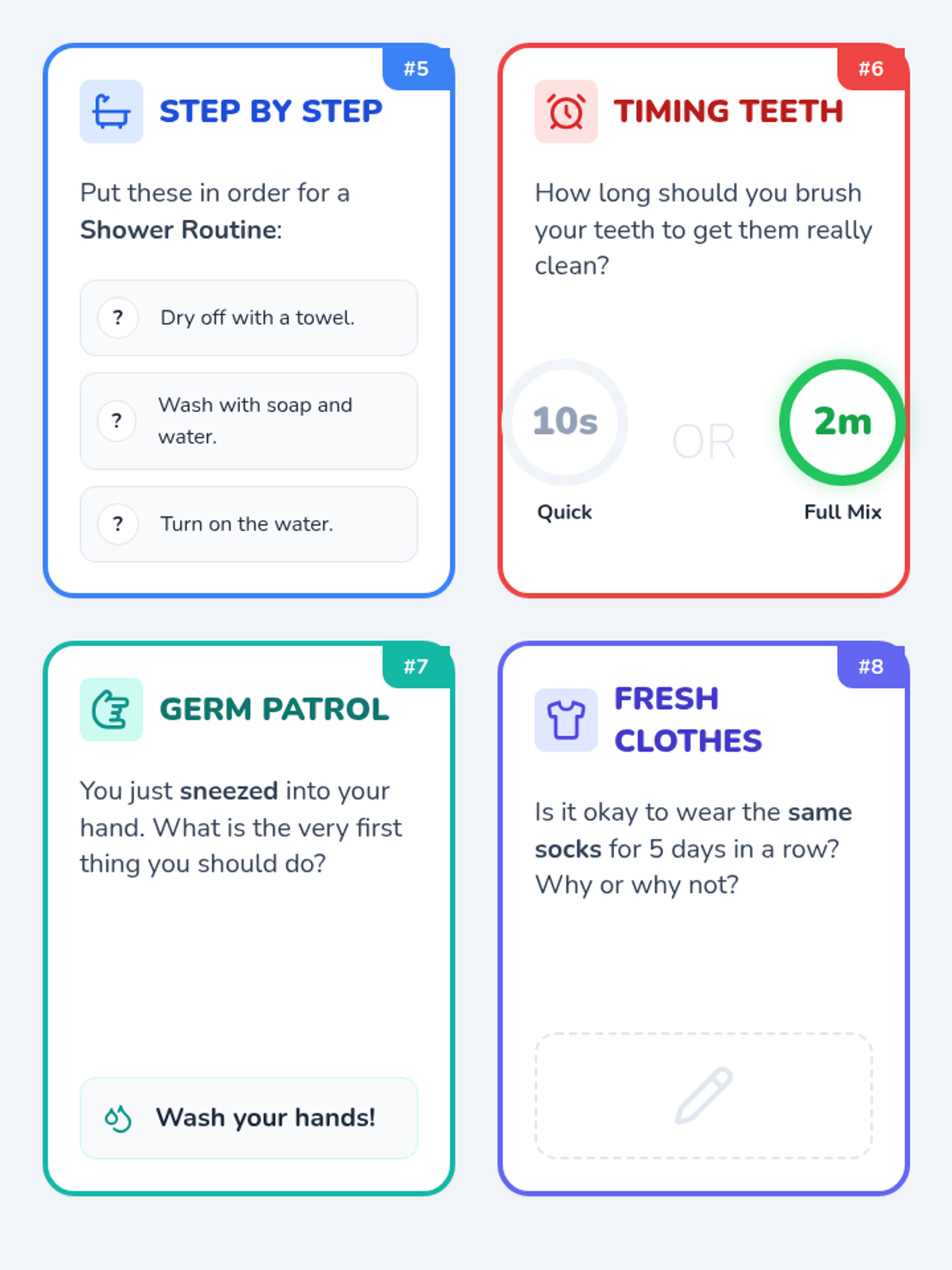
Task cards for Lesson 2 focusing on daily living hygiene skills like the steps of a shower routine, tooth brushing duration, and germ management.
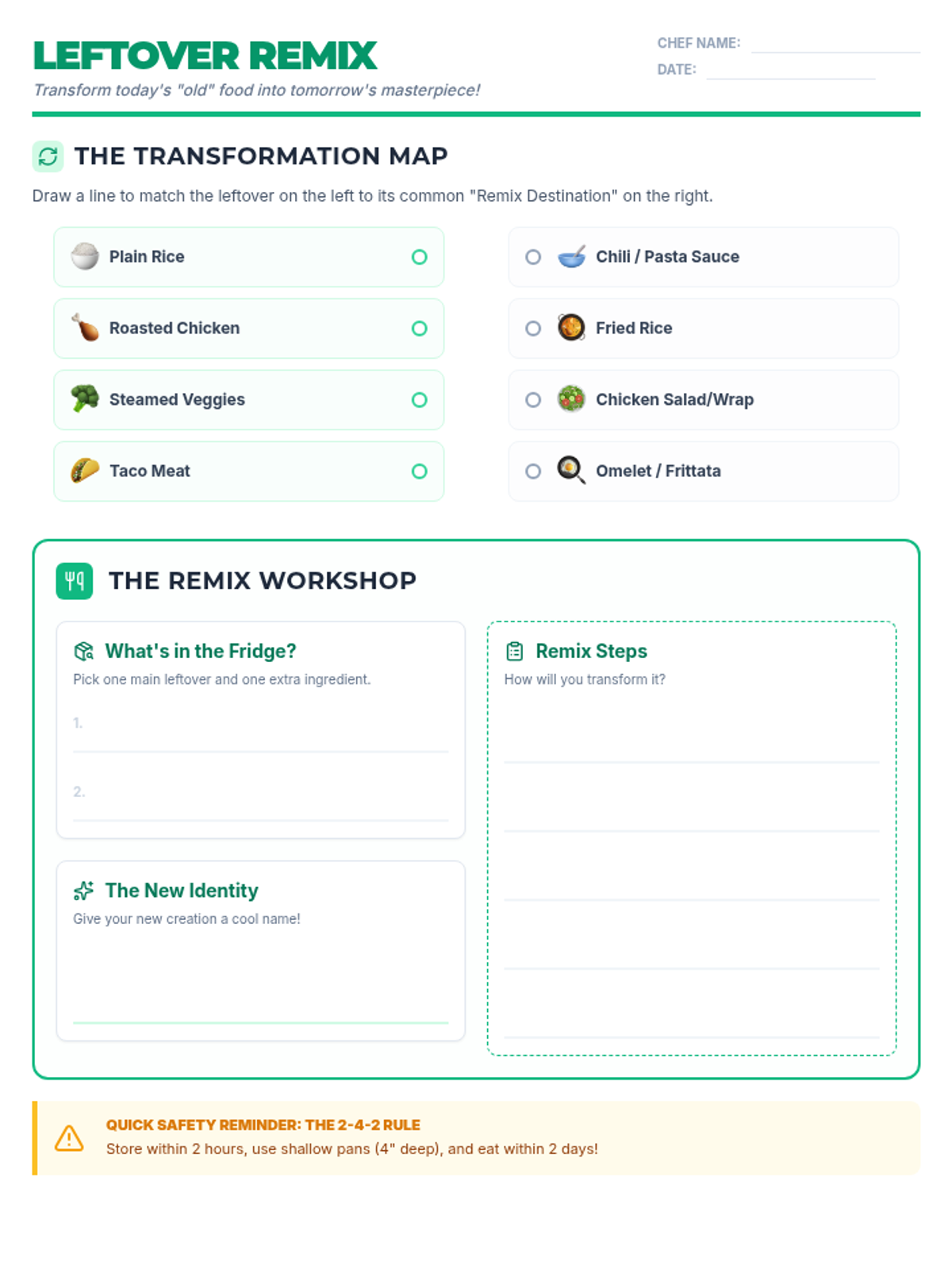
A creative student worksheet for repurposing leftovers, featuring a matching activity for food transformations and a planning section for creating a 'Remix Recipe' with safety reminders. Optimized for single-page printing with generous handwriting space.
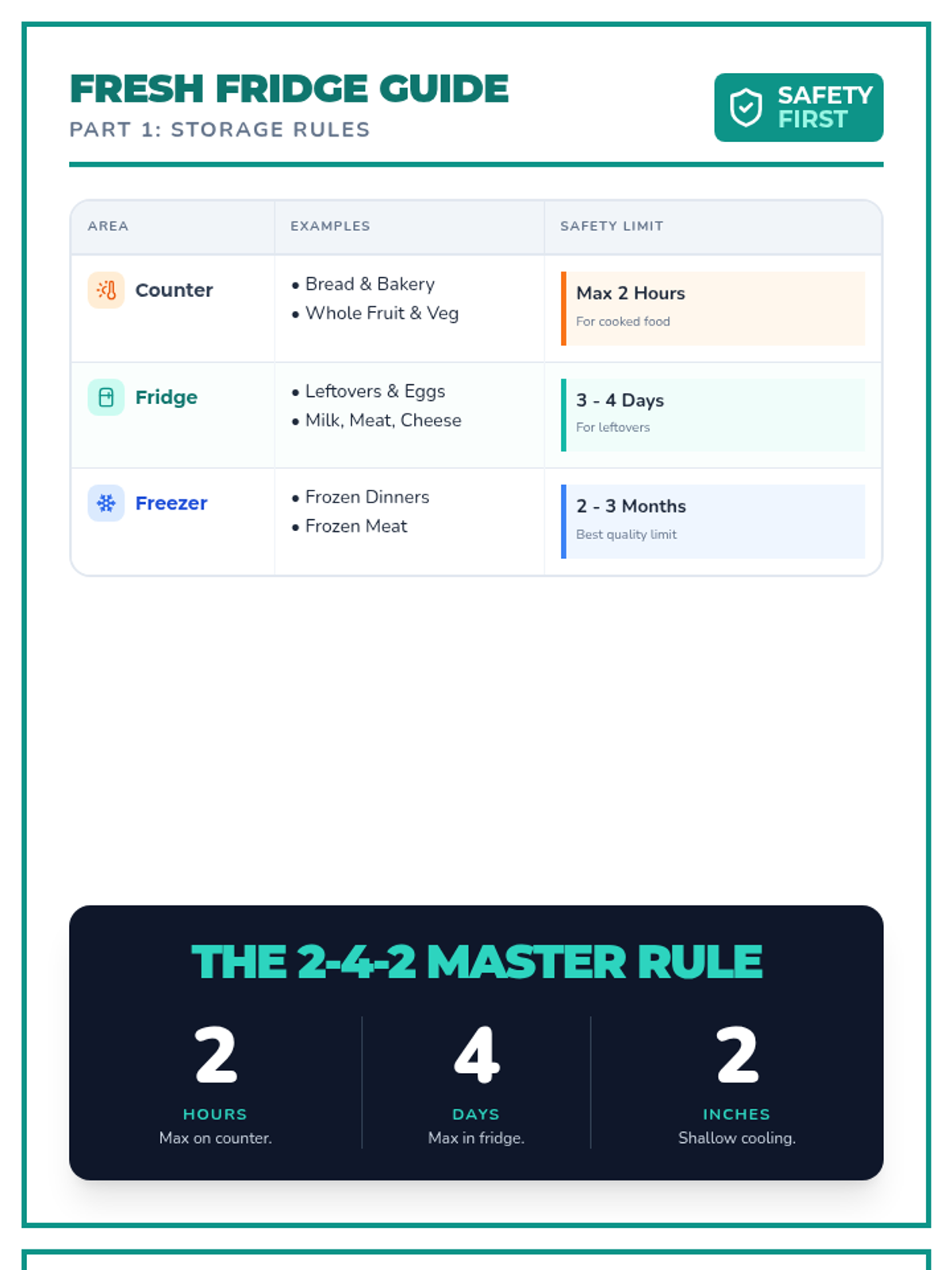
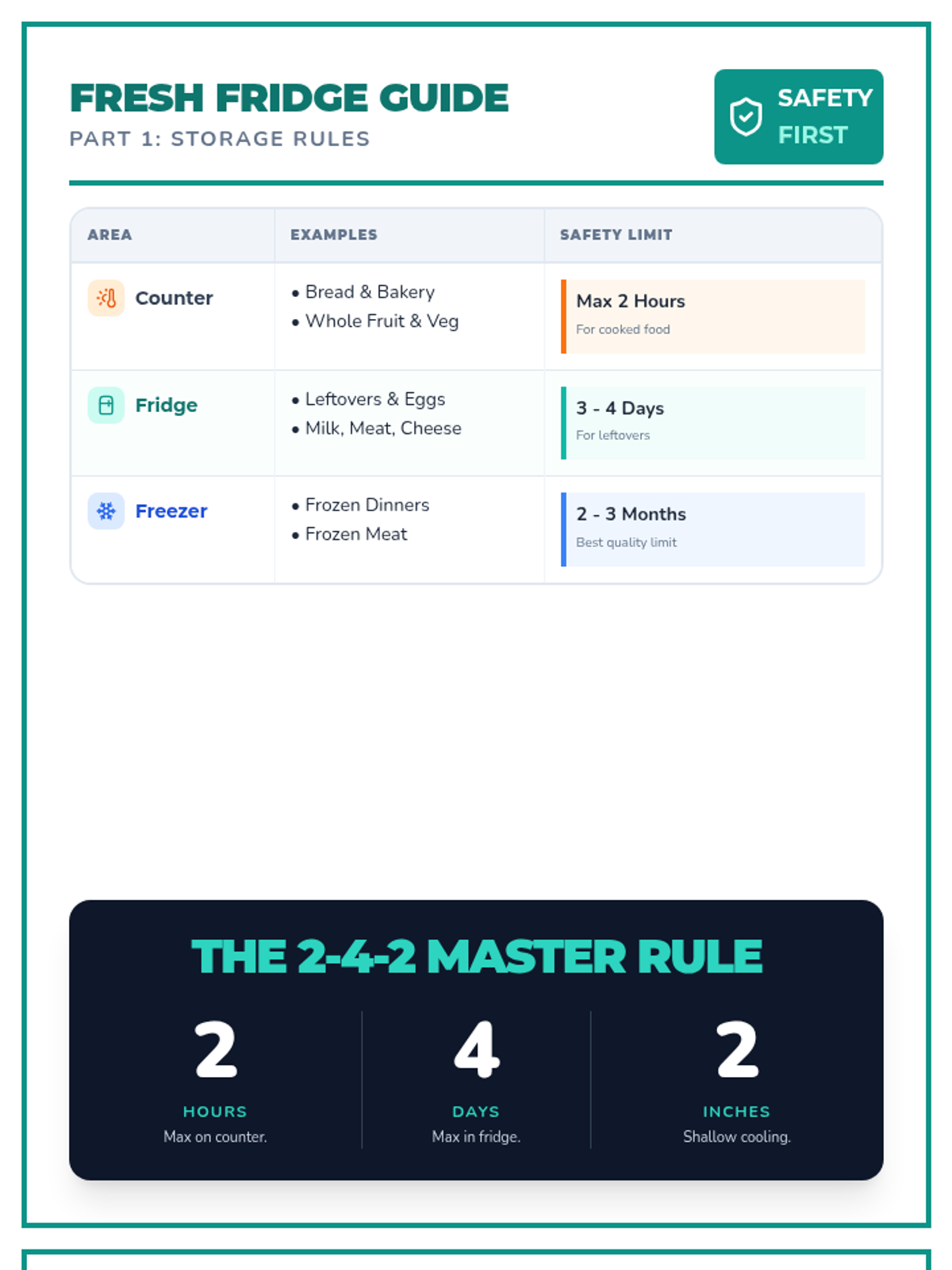
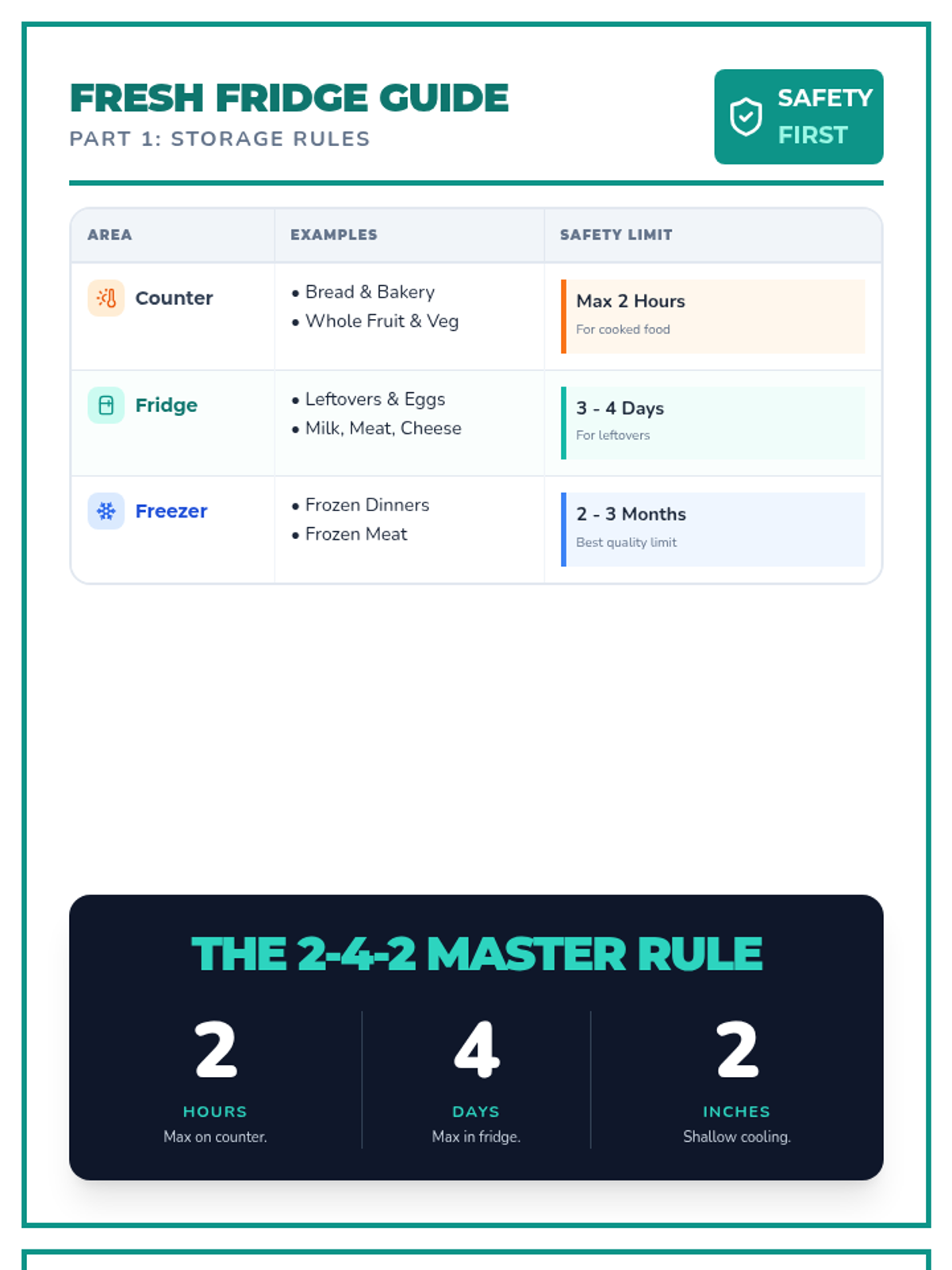
A reorganized visual guide for food storage and safety, featuring a clear tabular storage chart, the '2-4-2' rule, discard criteria, and a labeling tutorial with significantly increased font sizes for maximum readability.
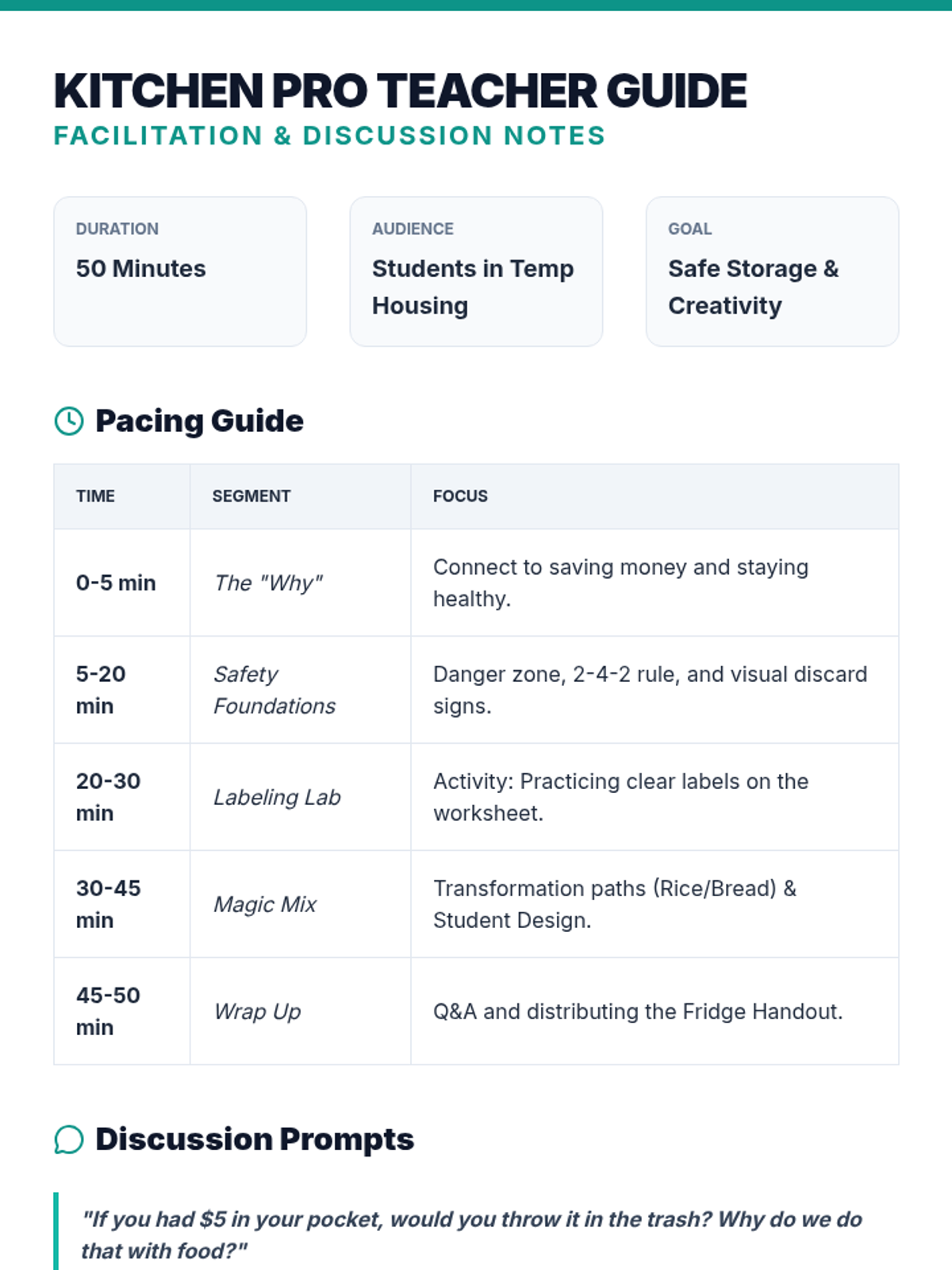
A comprehensive teacher's guide for the Kitchen Hacks lesson, including a 50-minute pacing guide, discussion prompts, and strategies for neurodiverse learners and students in temporary housing.
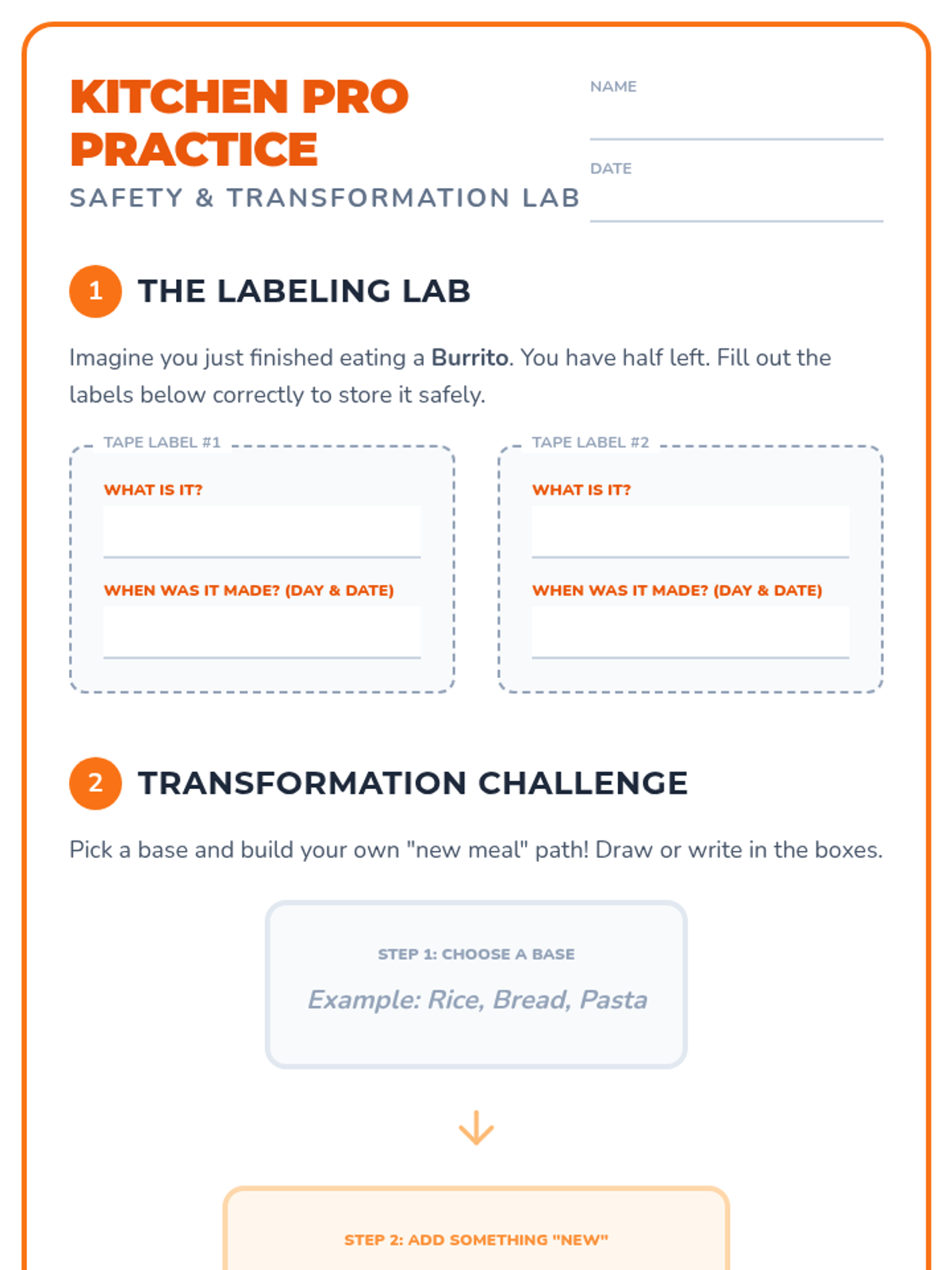
A student practice sheet for applying kitchen safety skills, including labeling exercises and a transformation flowchart activity.
A visually-driven slide deck for a 50-minute session on kitchen safety and food transformation, featuring the 2-4-2 rule and leftover flowcharts.
A reorganized visual guide for food storage and safety, featuring a clear tabular storage chart, the '2-4-2' rule, discard criteria, and a labeling tutorial with increased font sizes for readability.
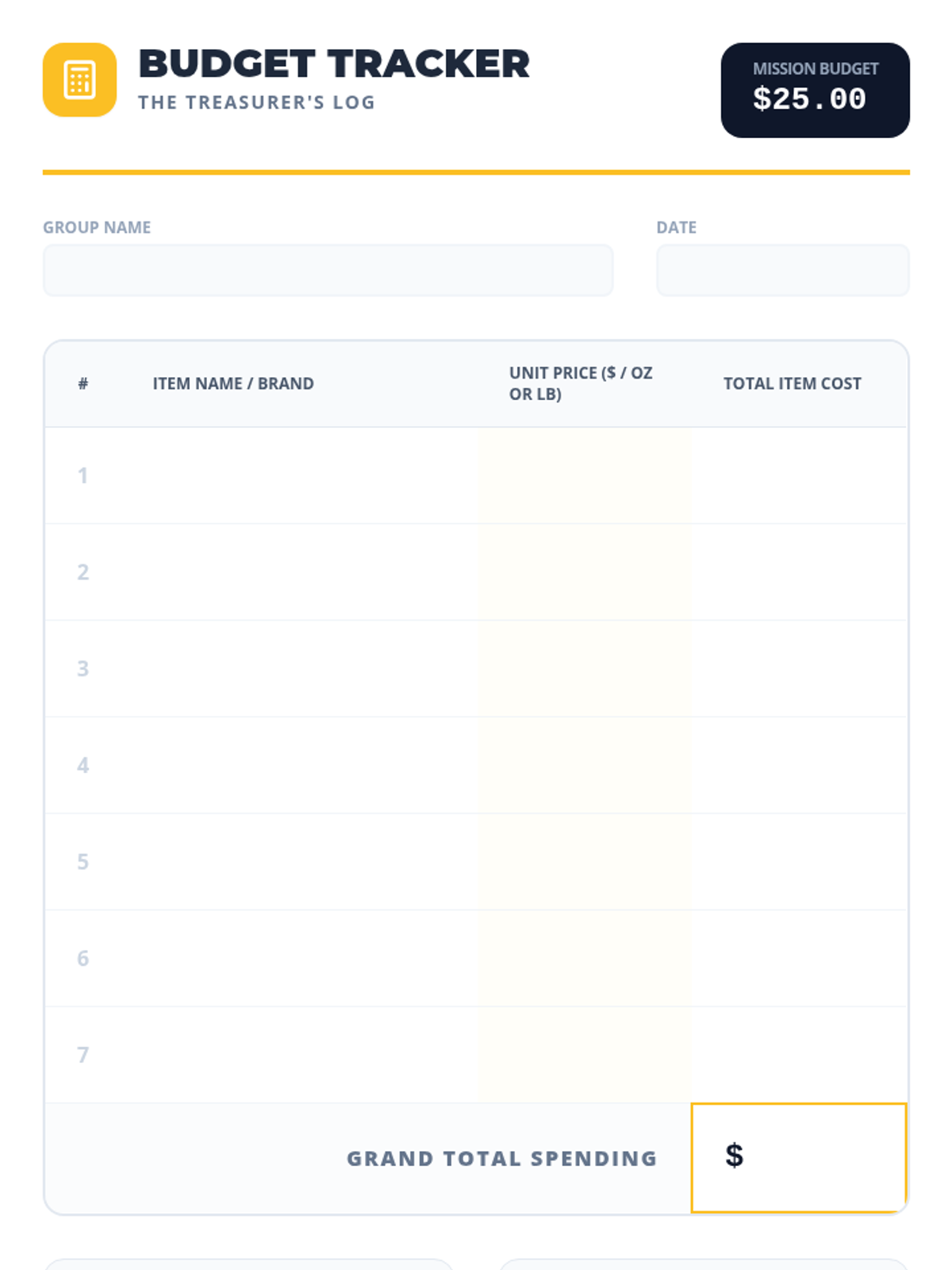
A specialized tracking sheet for the team 'Treasurer' to log grocery items, record unit prices, and calculate total spending within a $25 budget.
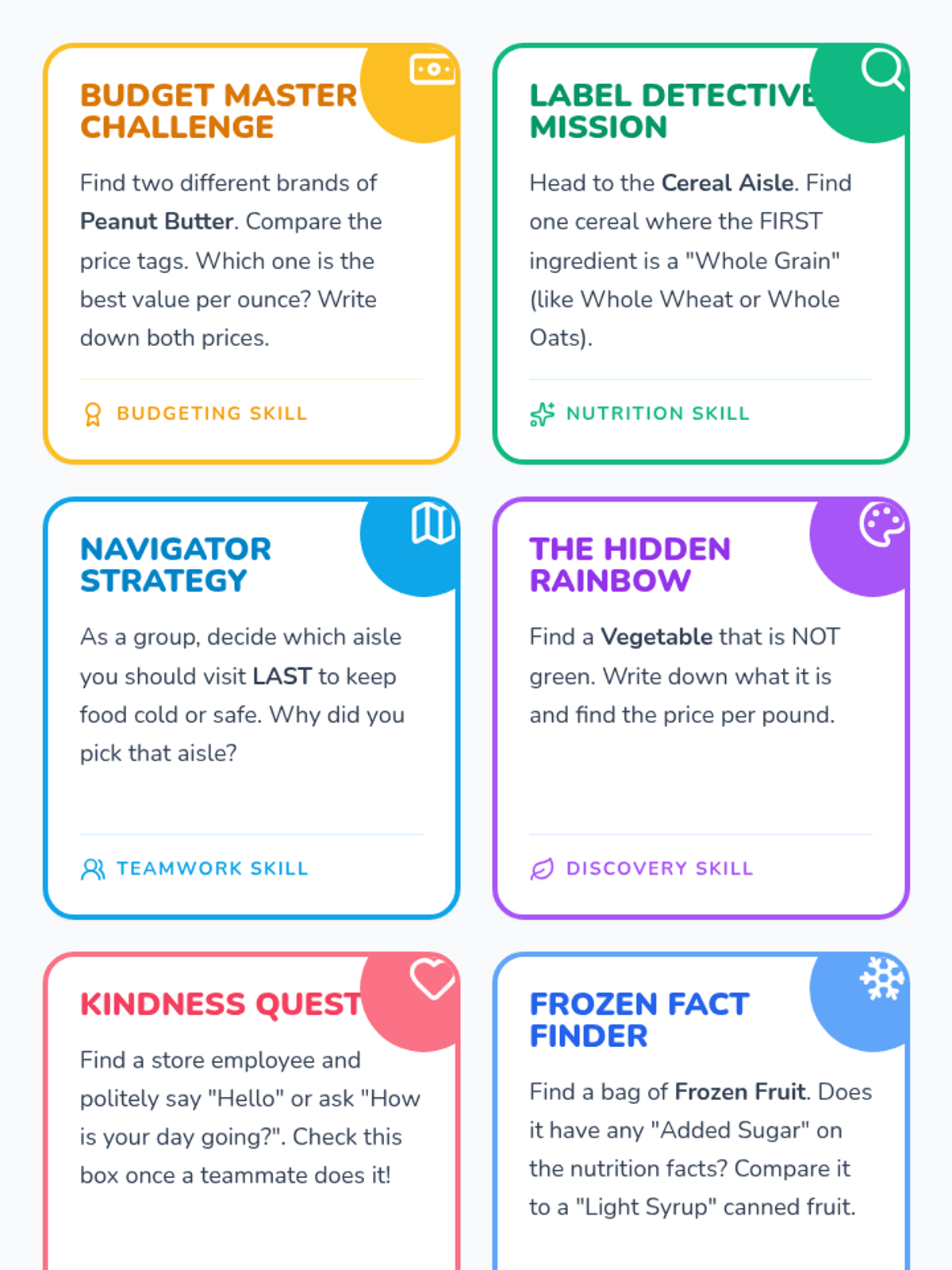
A set of 6 printable task cards that challenge student teams to perform specific missions involving nutrition, budgeting, and social skills in an online setting.
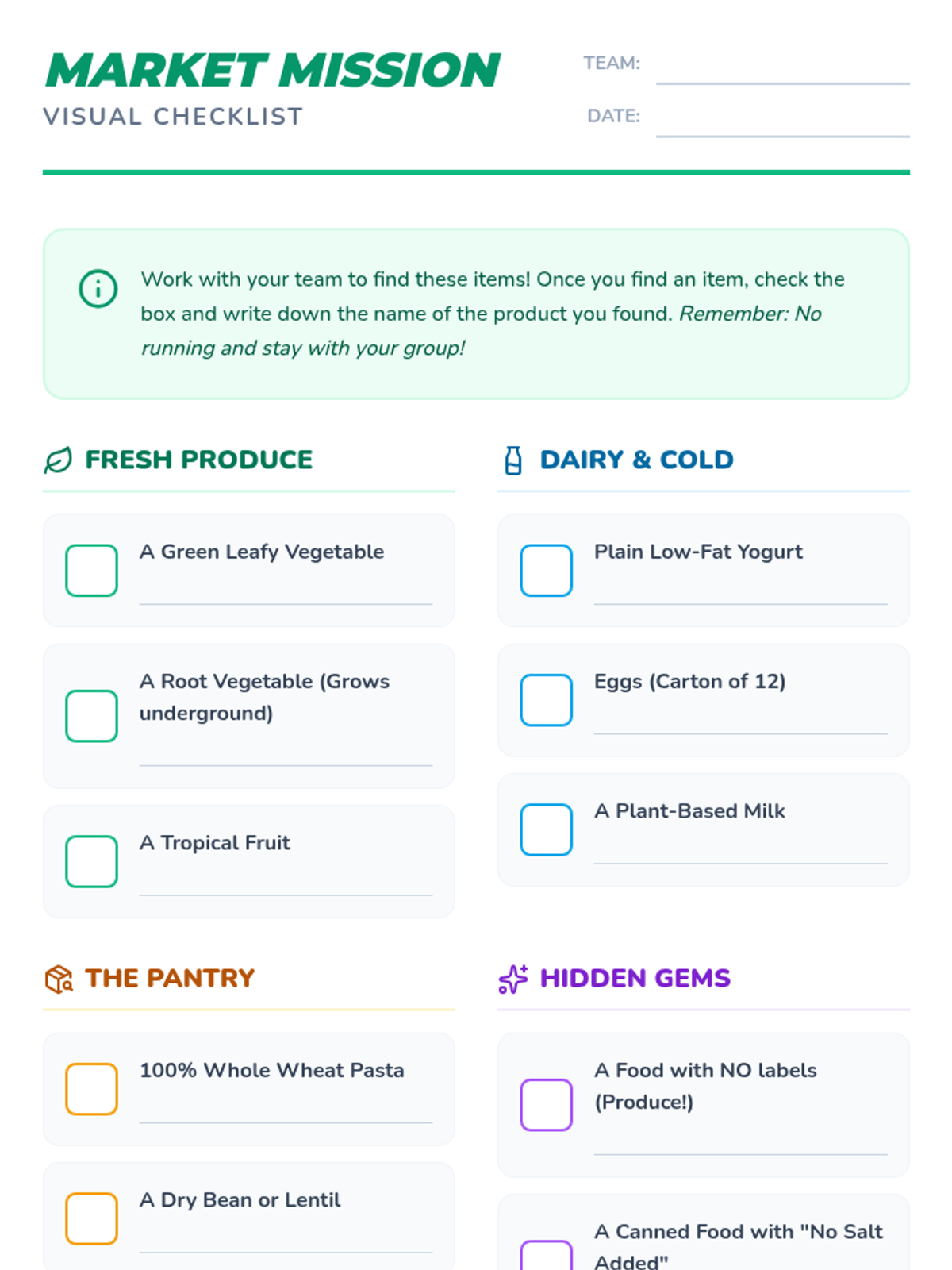
A visual checklist with icons and checkboxes for students to identify healthy grocery items across various departments.
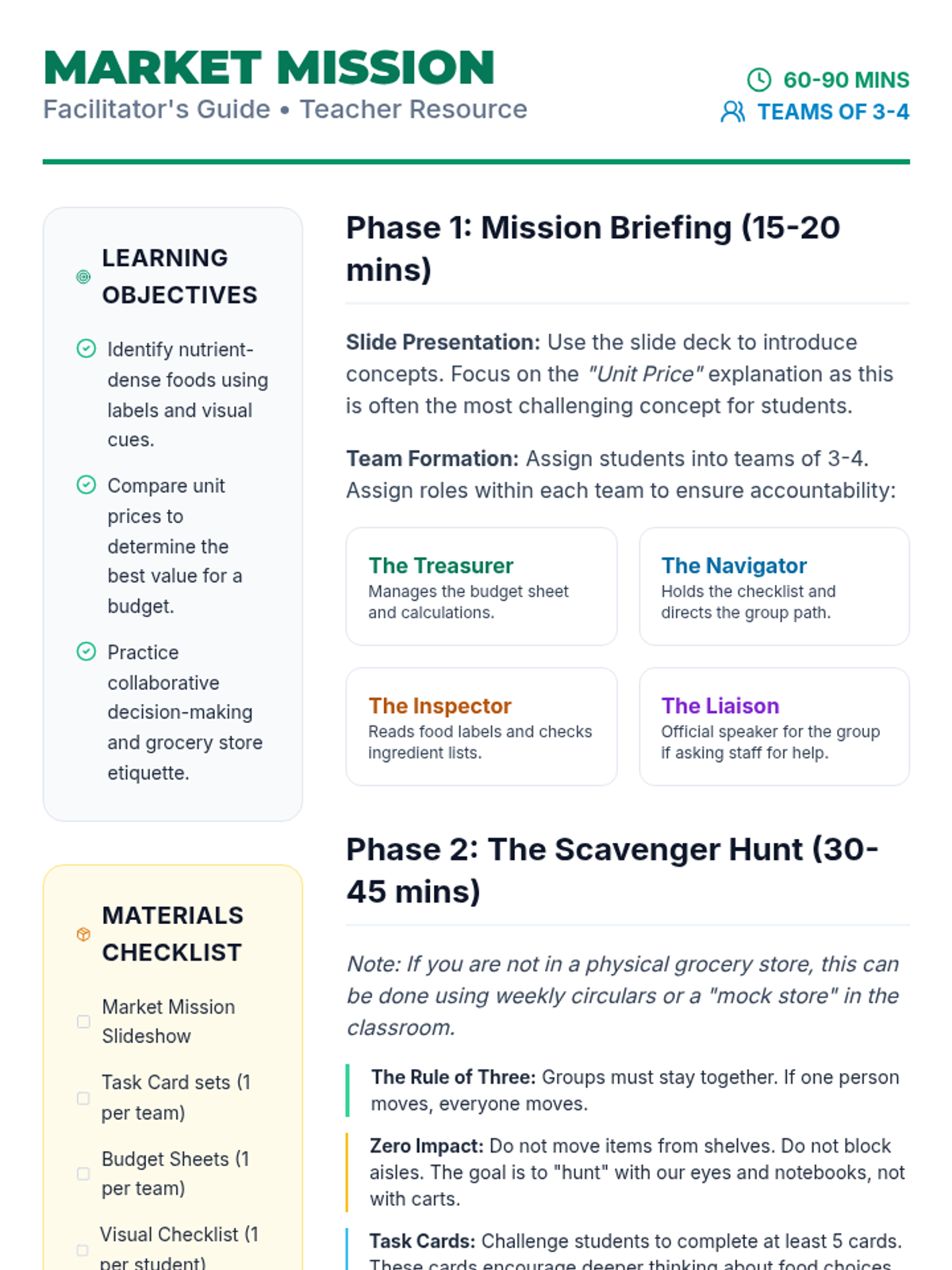
A comprehensive guide for teachers and facilitators to lead the Market Mission online scavenger hunt, including learning objectives, team roles, and debrief questions.
A vibrant, visual slide deck that introduces the Market Mission online scavenger hunt, covering digital searching tips, budgeting basics, and online teamwork expectations.
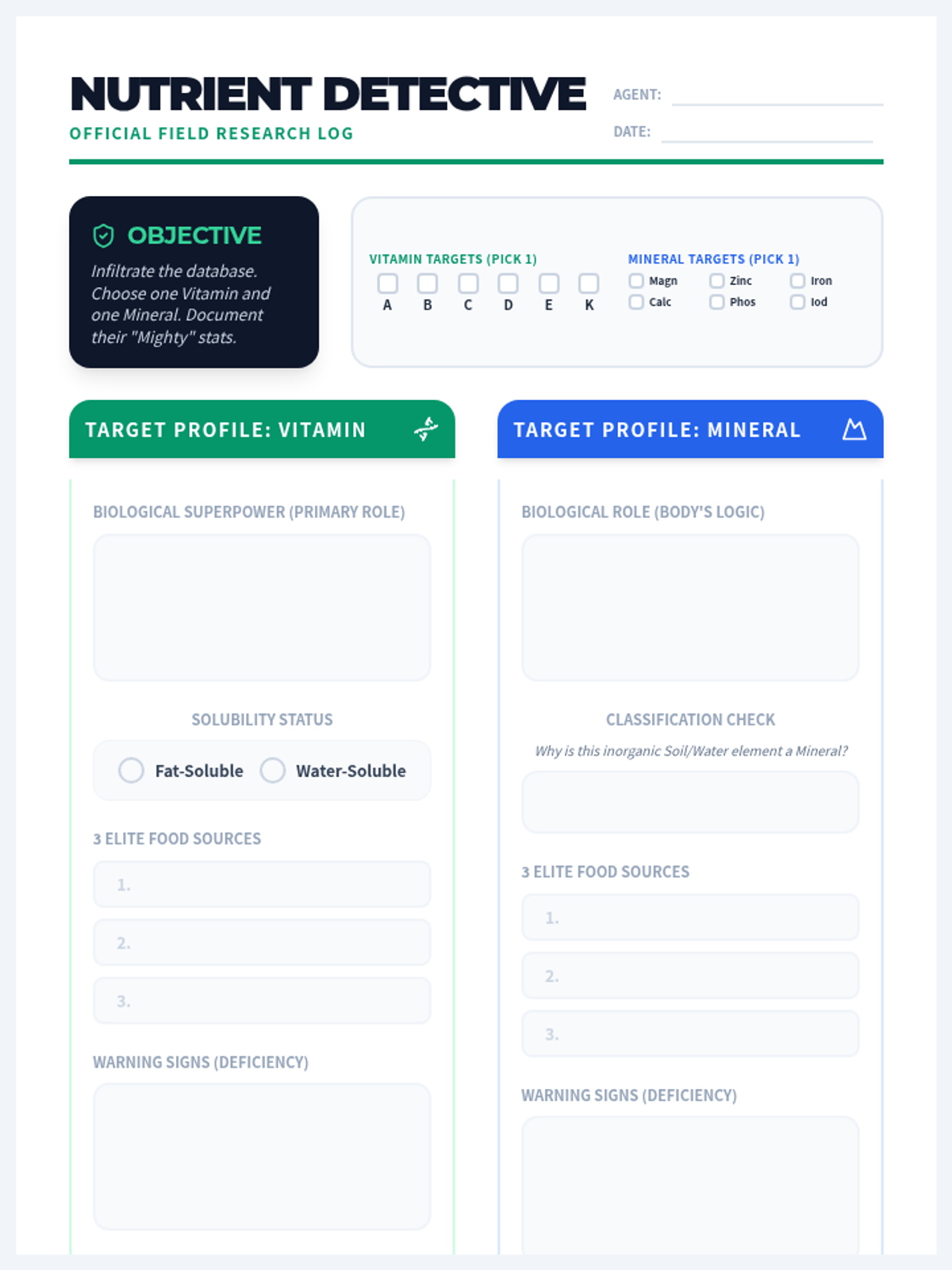
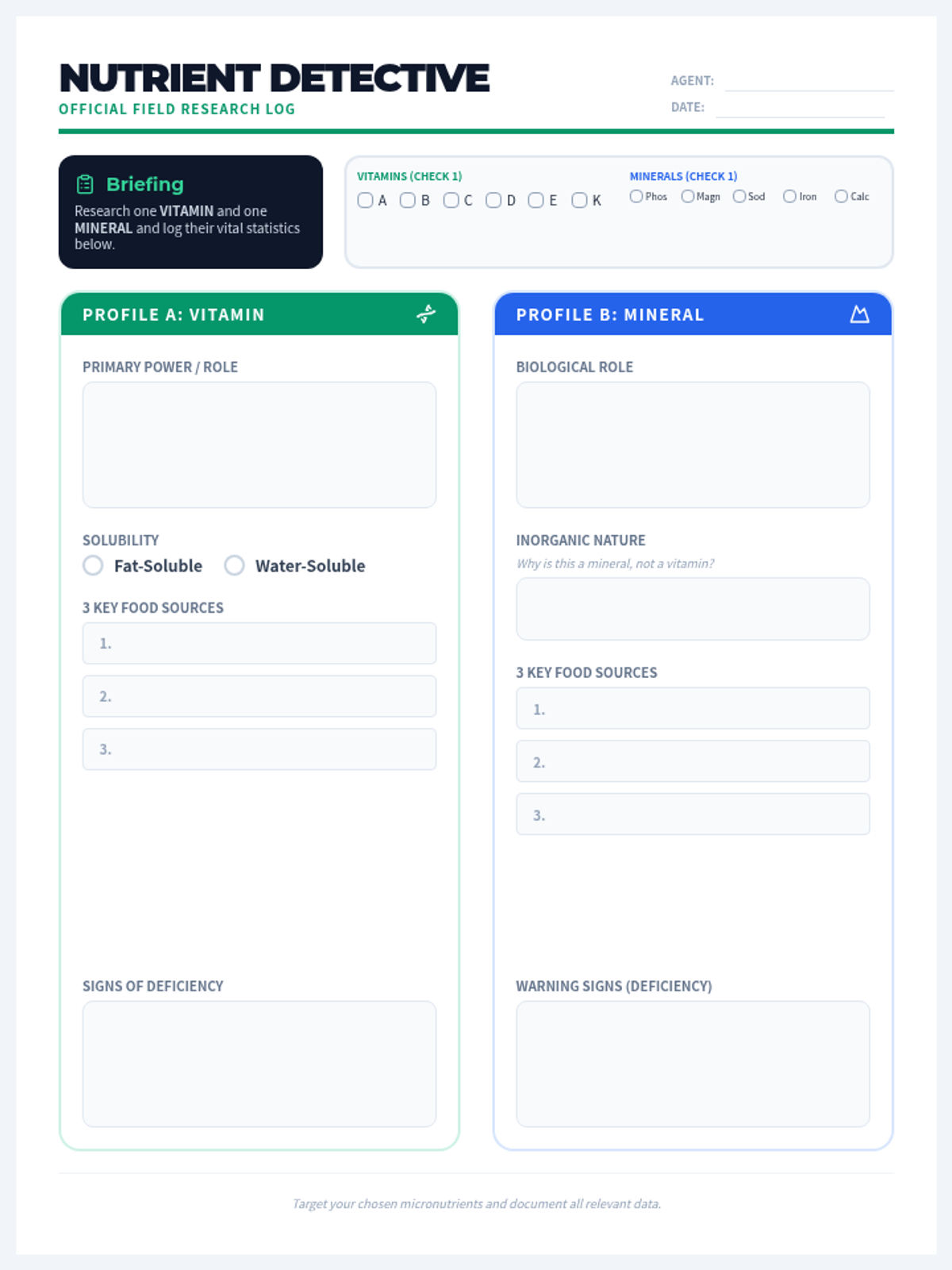
A condensed 2-page version of the Nutrient Detective Handout perfectly fitted for standard printing. Page 1 contains both the Vitamin and Mineral research profiles, and Page 2 contains all 15 peer presentation log boxes in a dense, efficient grid.
A condensed 2-page version of the Nutrient Detective Handout. Page 1 contains both the Vitamin and Mineral research profiles, and Page 2 contains all 15 peer presentation log boxes in a structured grid.
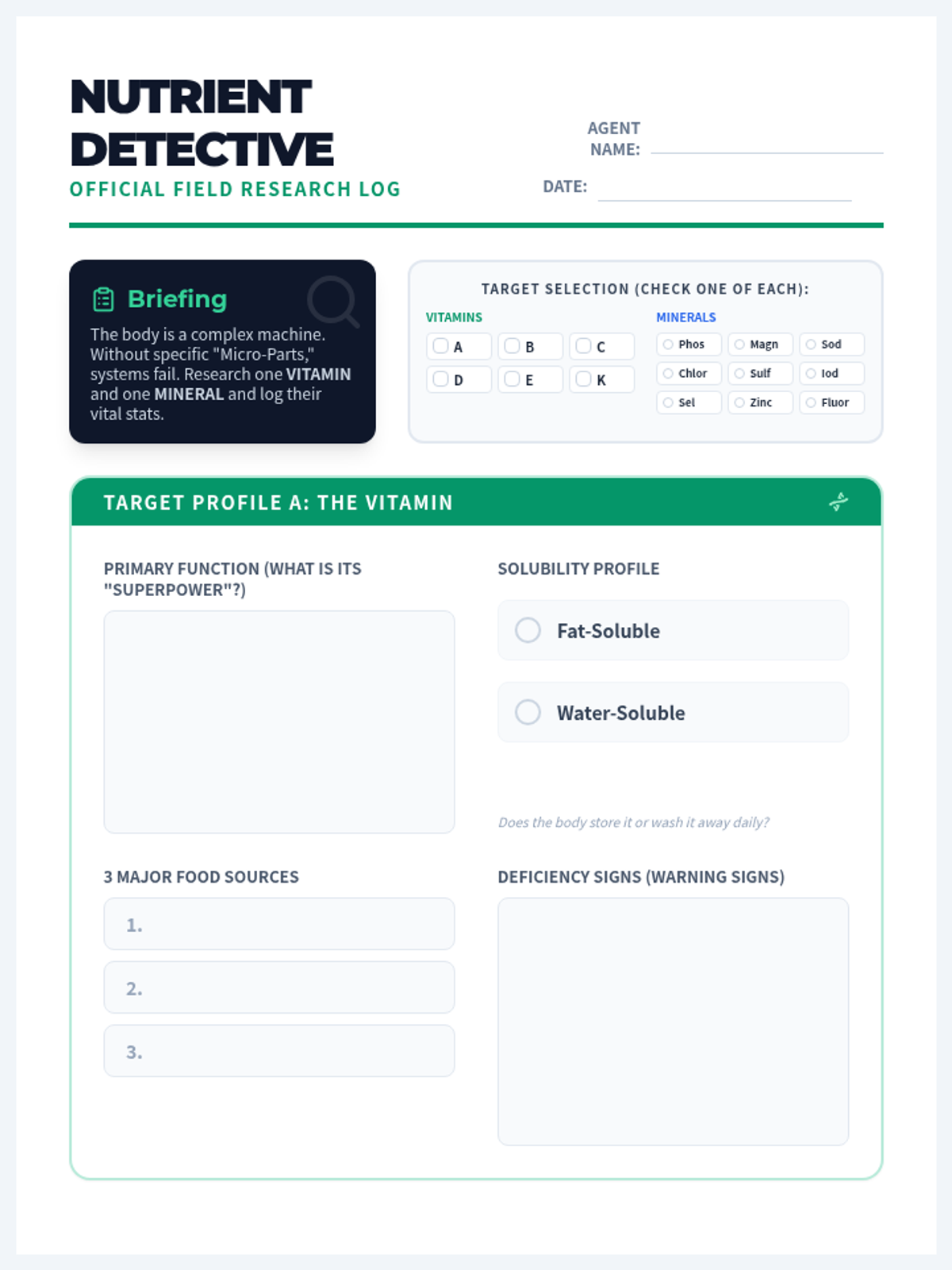
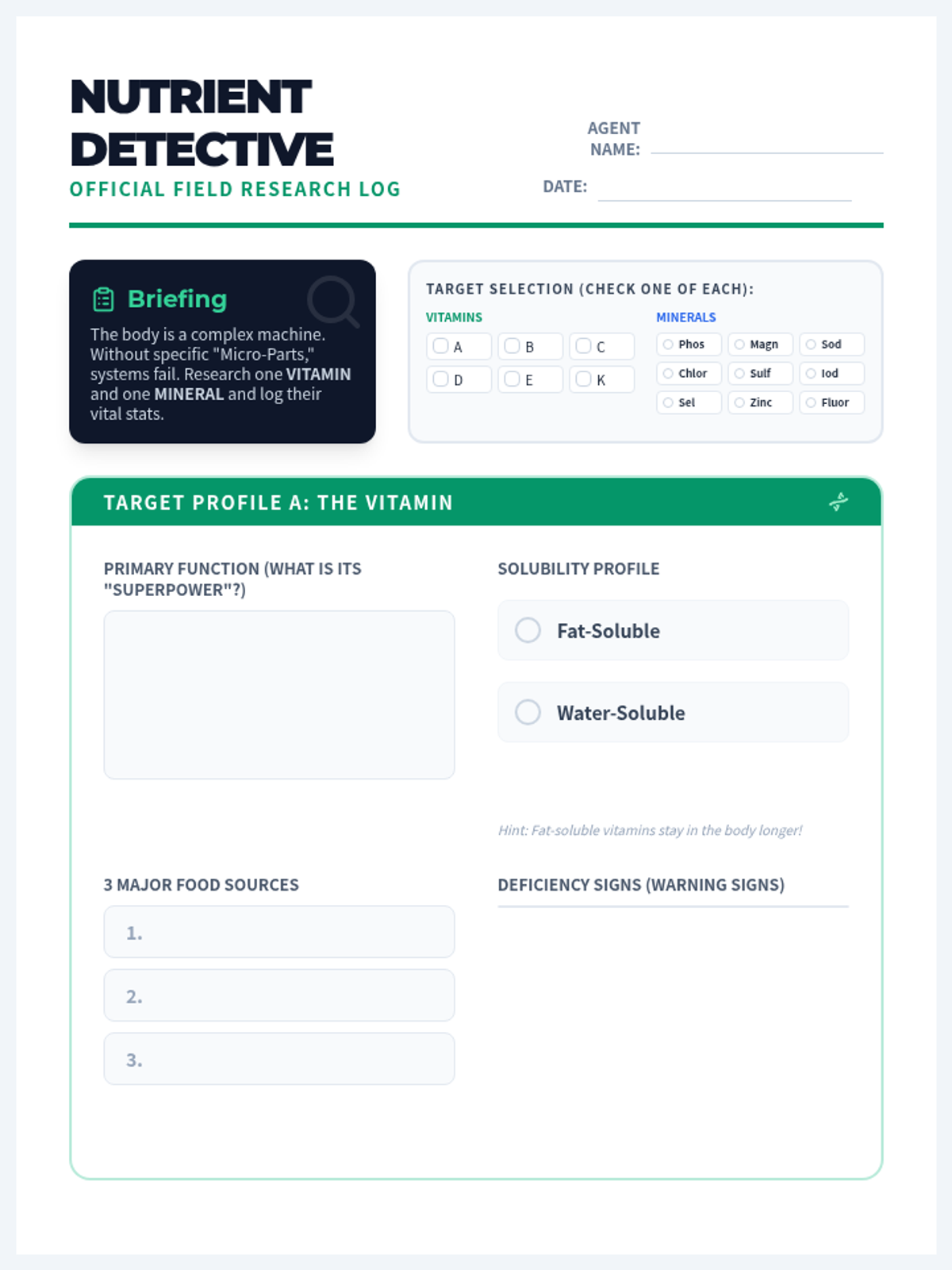
The corrected Nutrient Detective Handout with the antioxidant section completely removed. It features research profiles for one vitamin and one mineral, followed by a peer presentation log with 15 boxes spread across three pages.
An updated Nutrient Detective worksheet with the antioxidant section completely removed. It features research profiles for a vitamin and mineral, along with a peer presentation log containing 15 individual boxes across three pages.
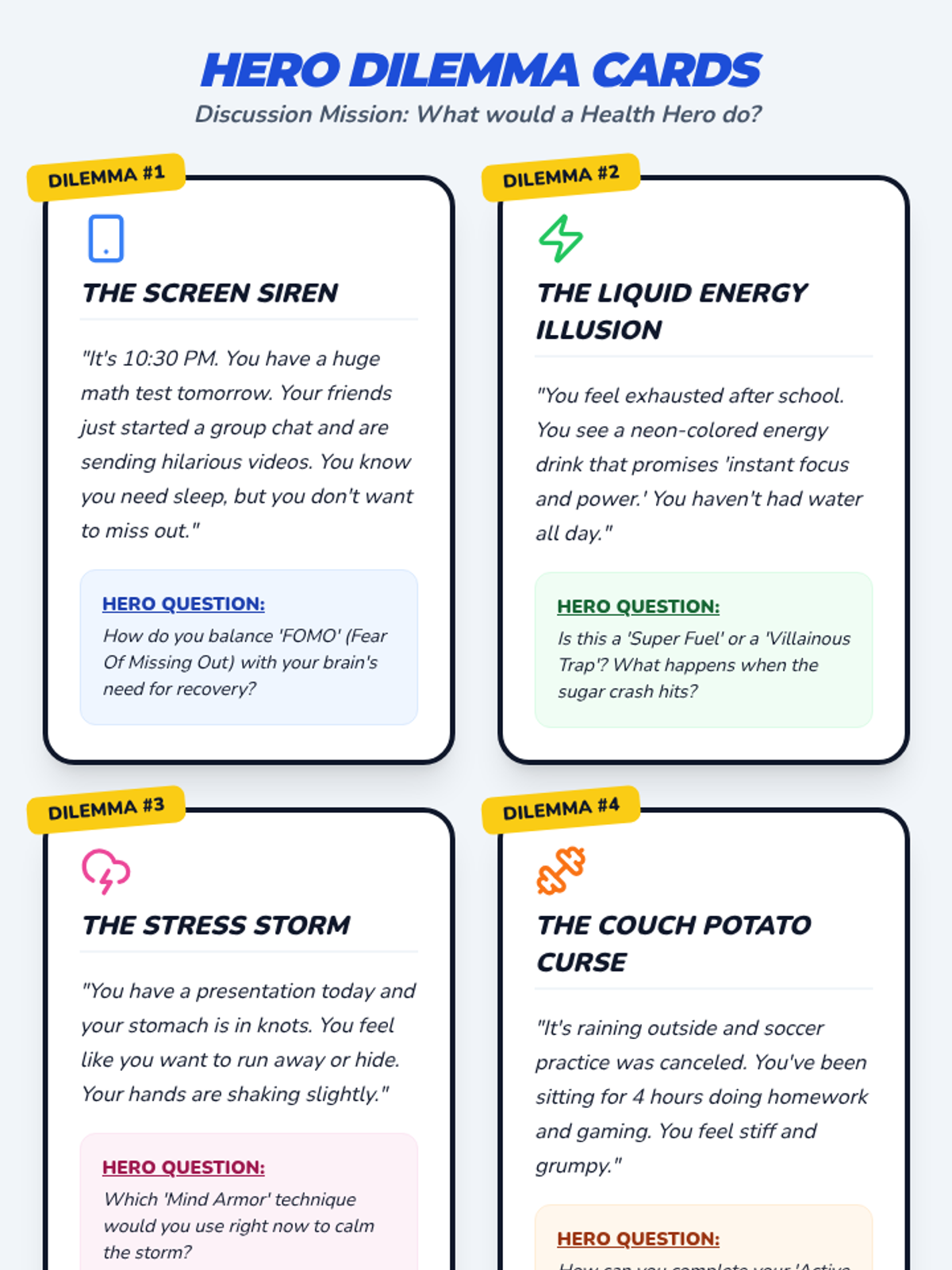
Scenario-based discussion cards that challenge students to apply healthy habit strategies to common middle school dilemmas like late-night screen time, stress, and poor nutrition choices.
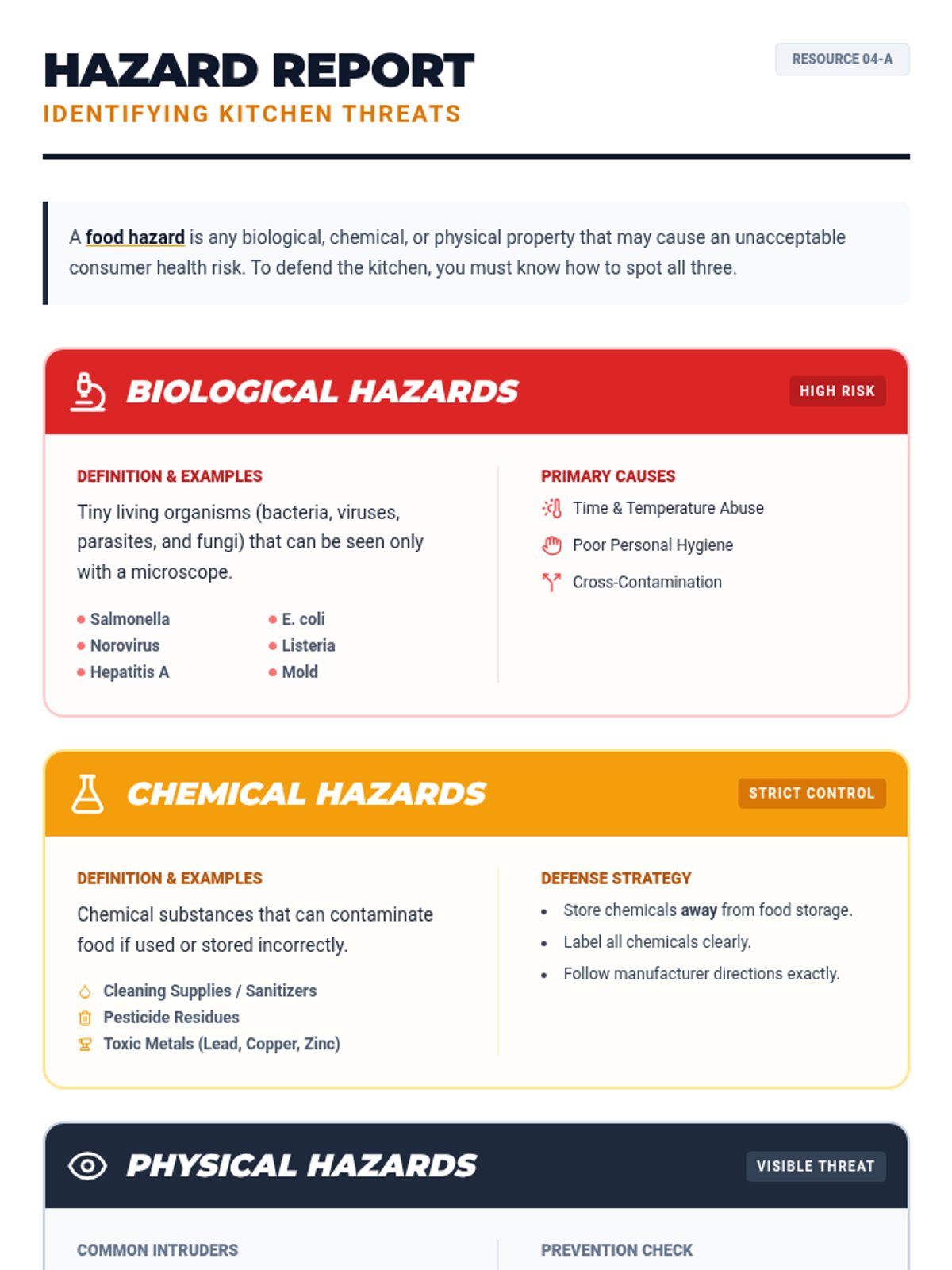
A comprehensive handout identifying the three main categories of food hazards—Biological, Chemical, and Physical—including specific examples of pathogens, contaminants, and foreign objects to watch for in the kitchen.
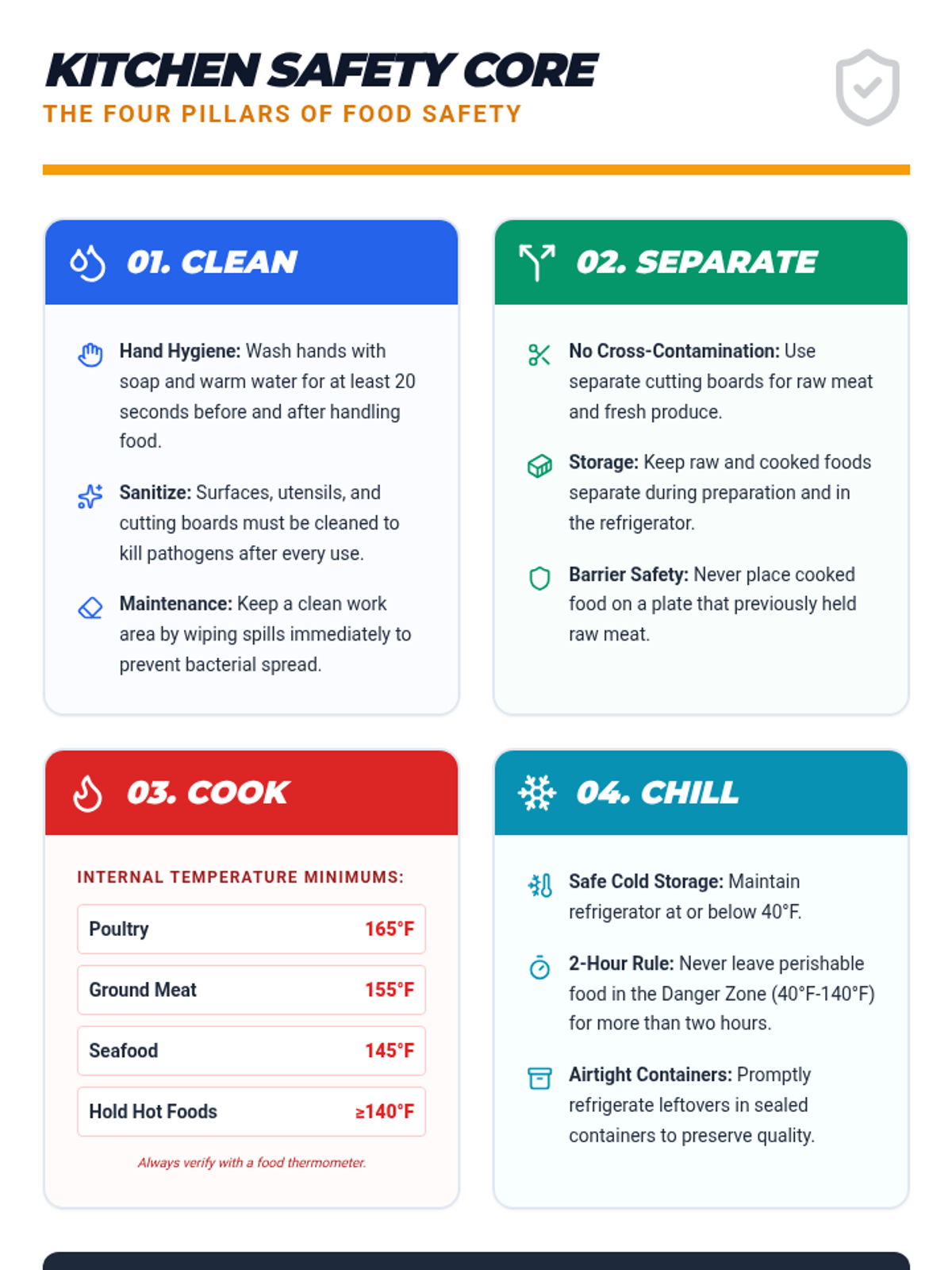
A visual reference sheet detailing the 'Four Pillars of Food Safety'—Clean, Separate, Cook, and Chill—with specific temperature guidelines and procedural steps for students to follow.
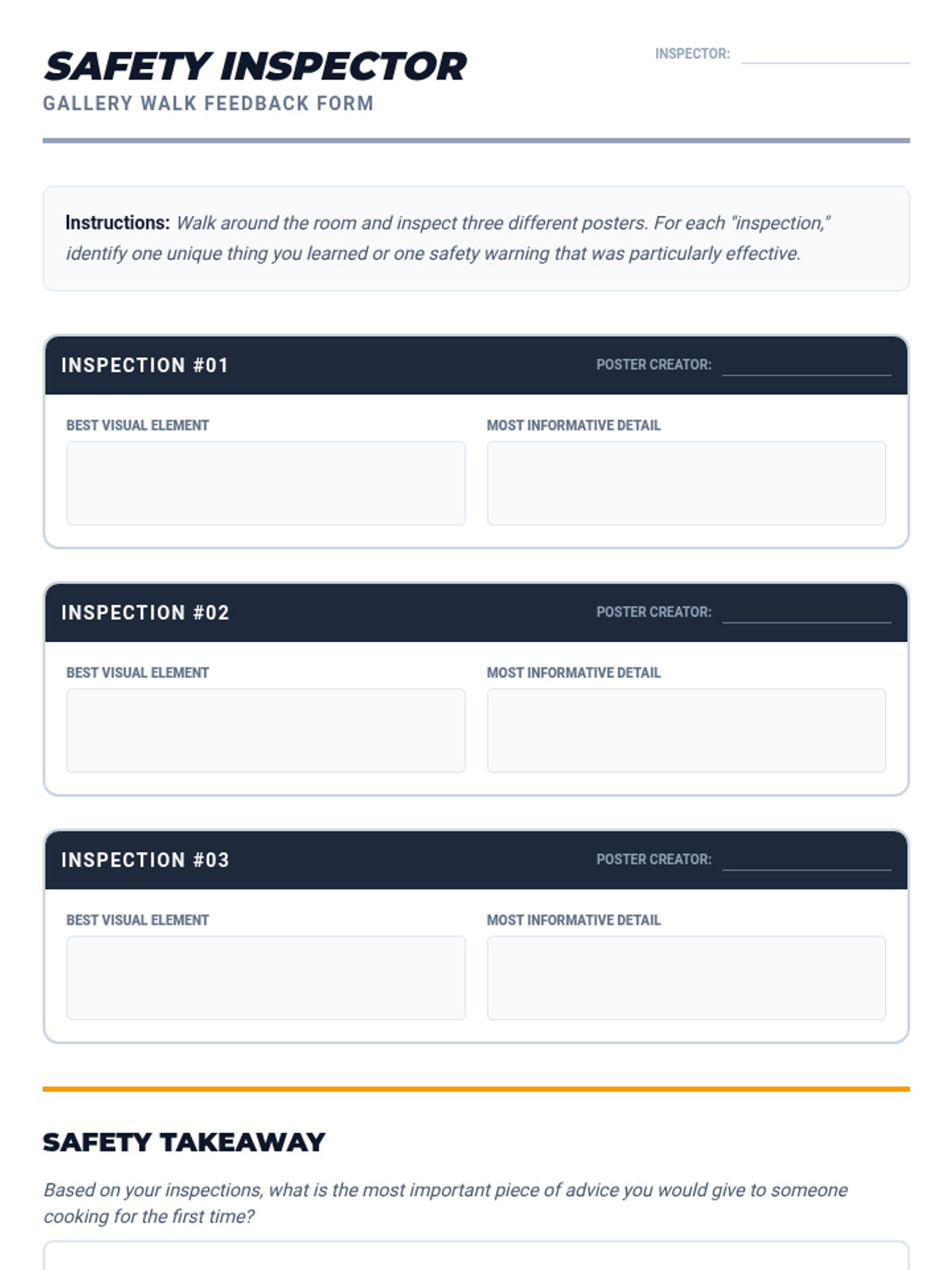
A student-facing peer review form for the Gallery Walk phase of the project, allowing students to "inspect" their classmates' posters and reflect on key food safety takeaways.
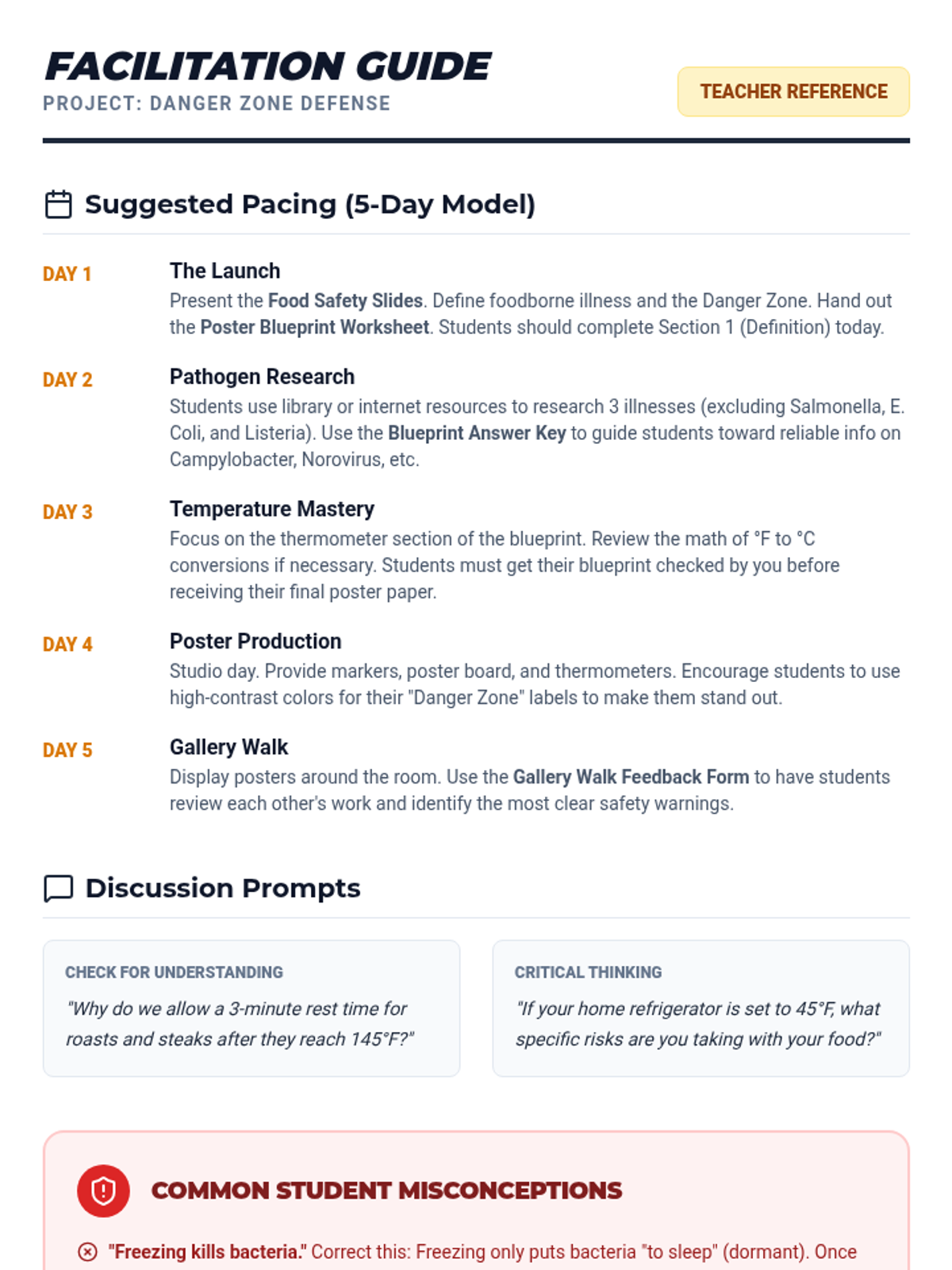
A comprehensive teacher's guide for managing the Danger Zone Defense project, including a 5-day pacing schedule, discussion prompts, and a guide to common student misconceptions about food safety.
An answer key for the Poster Blueprint Worksheet, providing teacher references for definitions, required temperatures, and research examples for foodborne illnesses.
Instructional slides featuring high-impact visuals and key concepts on media literacy, persuasive techniques, and the algorithm loop. Updated with larger font sizes for better visibility.
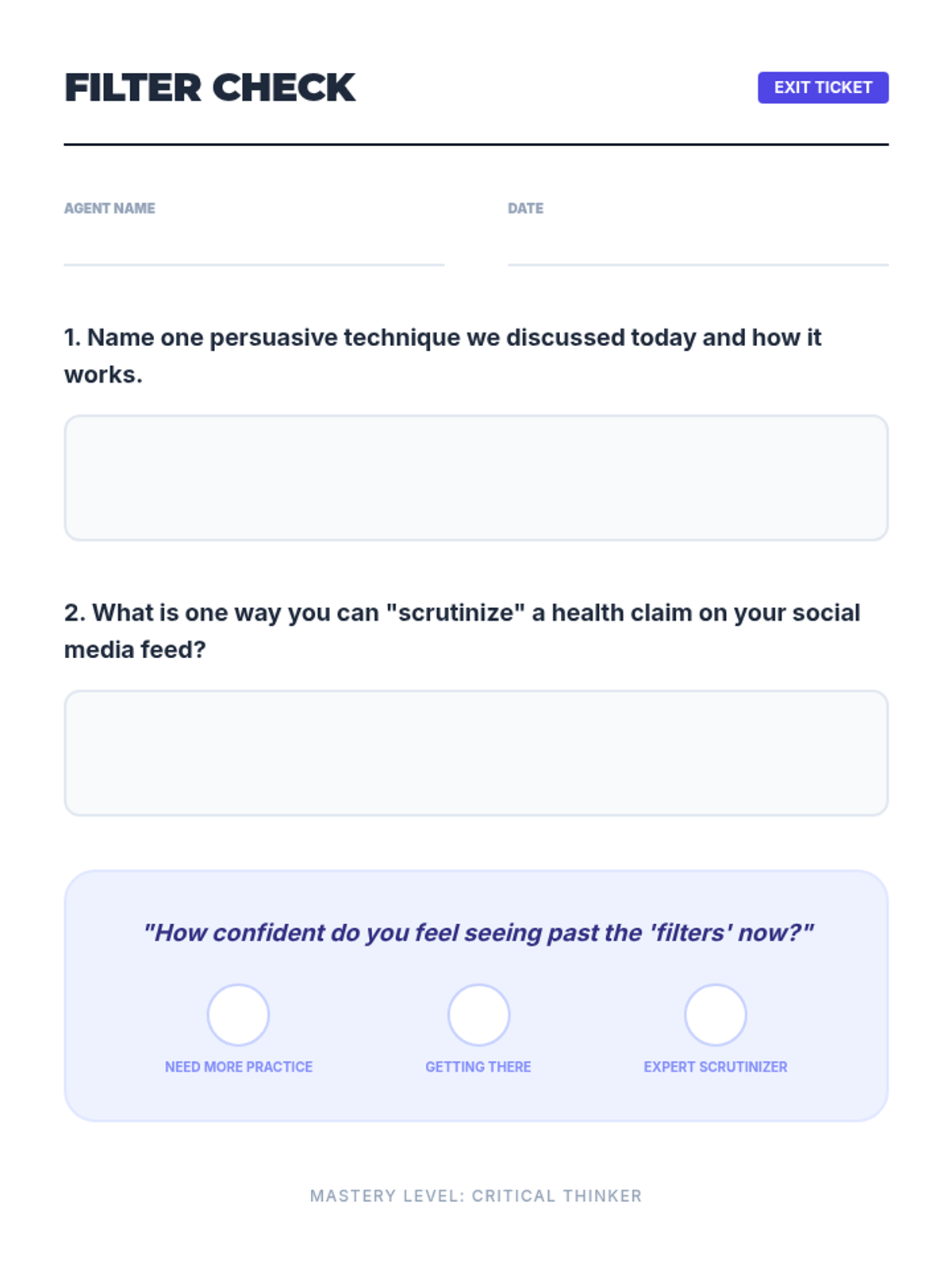
A quick exit ticket for students to reflect on the lesson's key concepts and evaluate their own media literacy confidence.
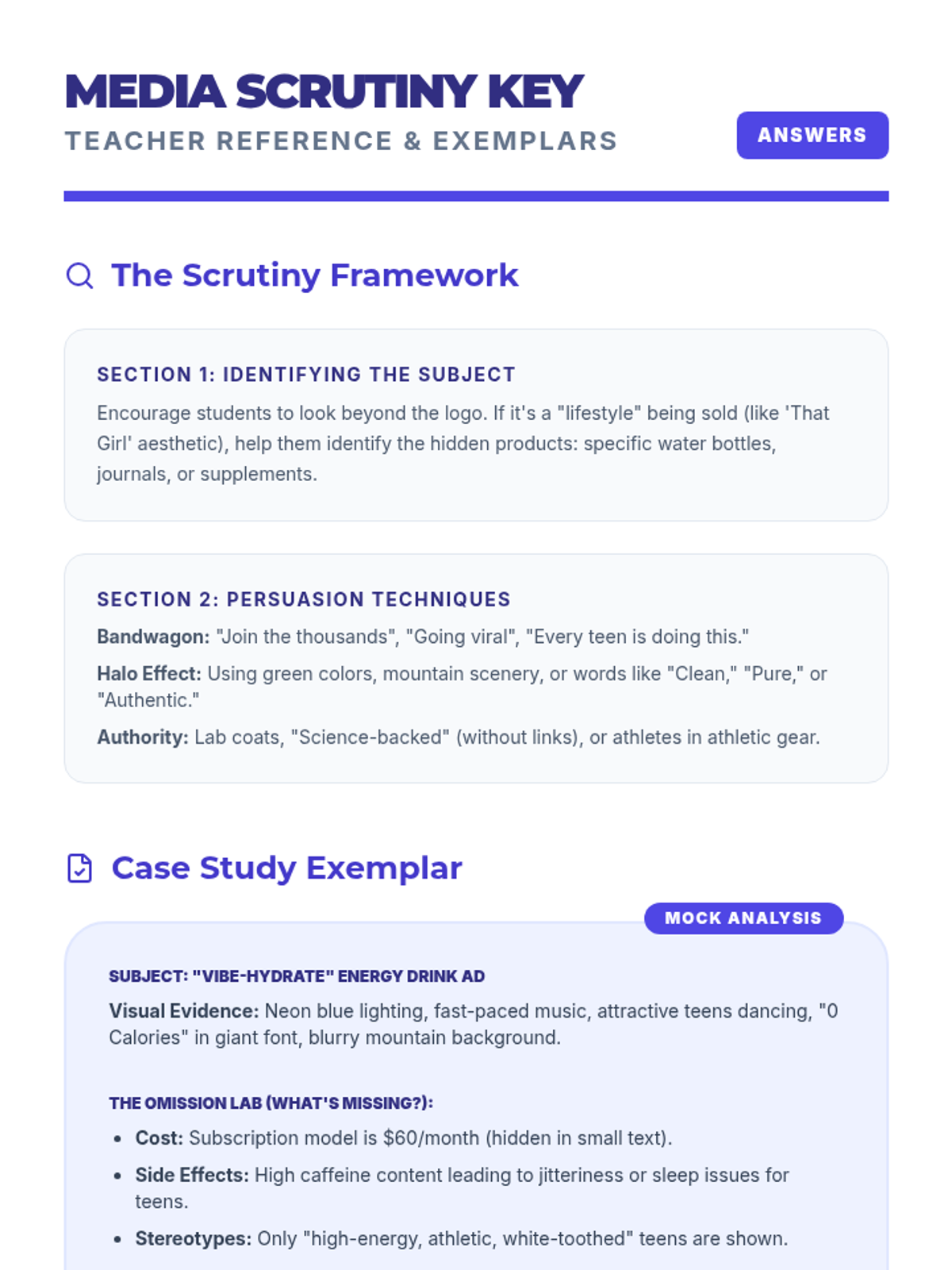
A teacher's reference guide and answer key for the Media Scrutiny Challenge, including exemplars and facilitation tips.
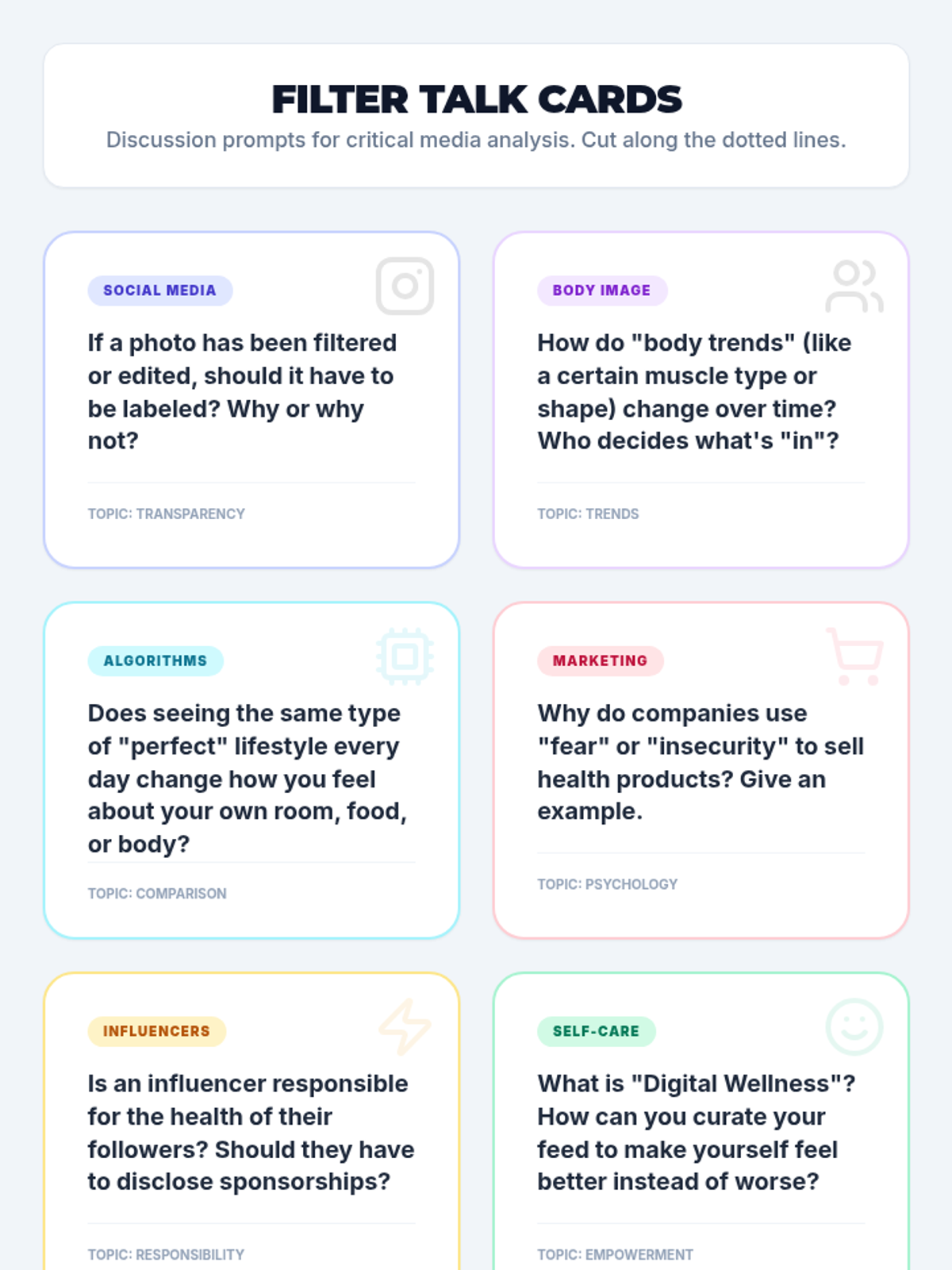
A set of printable discussion cards with thought-provoking prompts on media literacy, body image, and digital health.
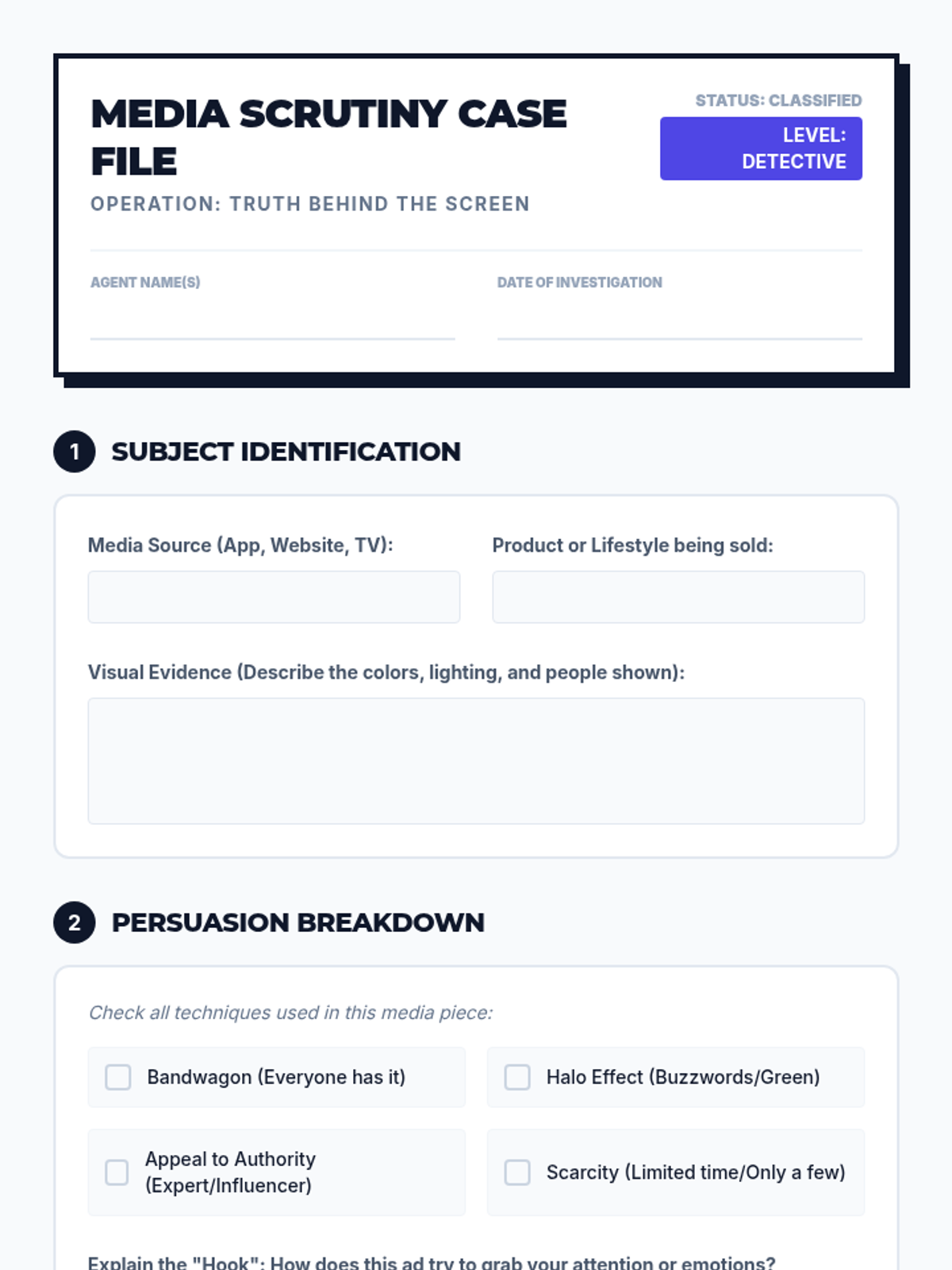
A student-facing investigative worksheet designed for analyzing health-related media using the 'Detective Case File' framework.
Instructional slides featuring high-impact visuals and key concepts on media literacy, persuasive techniques, and the algorithm loop.
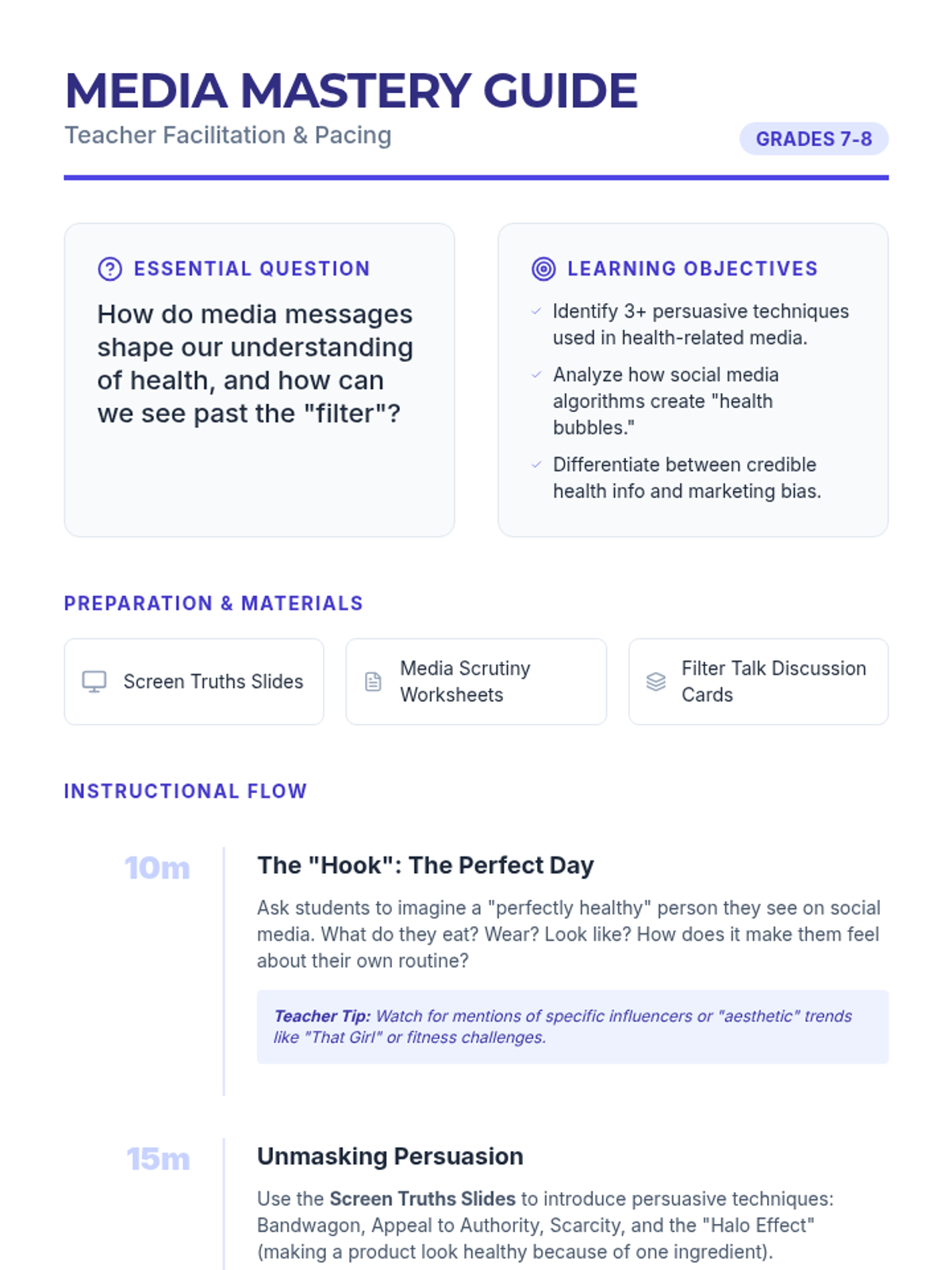
A detailed lesson plan for teachers, outlining the instructional flow, learning objectives, and pacing for the Media Message Mastery lesson.
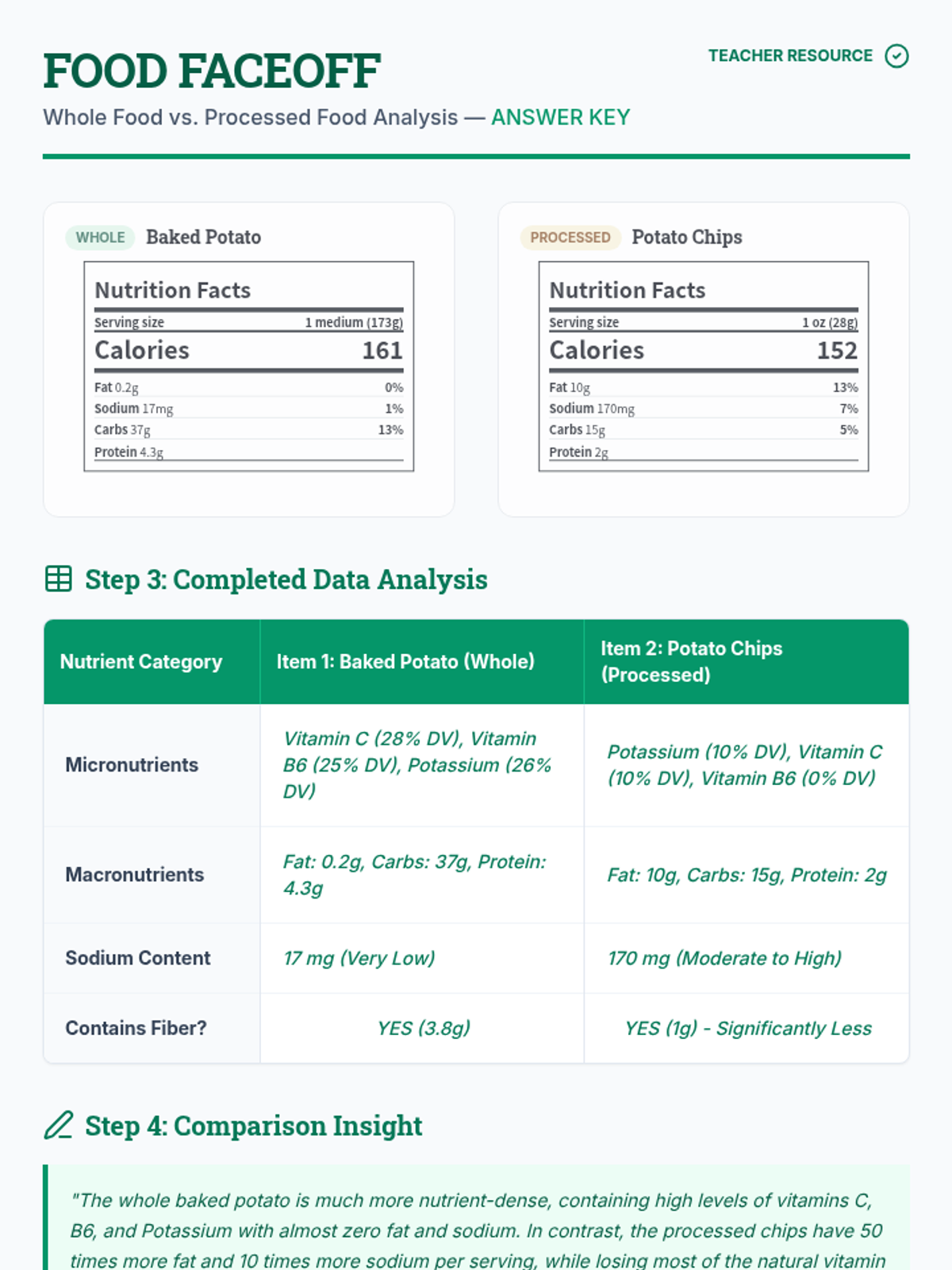
The completed answer key for the Food Faceoff Worksheet, containing all nutritional data, a specific comparison between the two foods, and detailed calorie calculations.
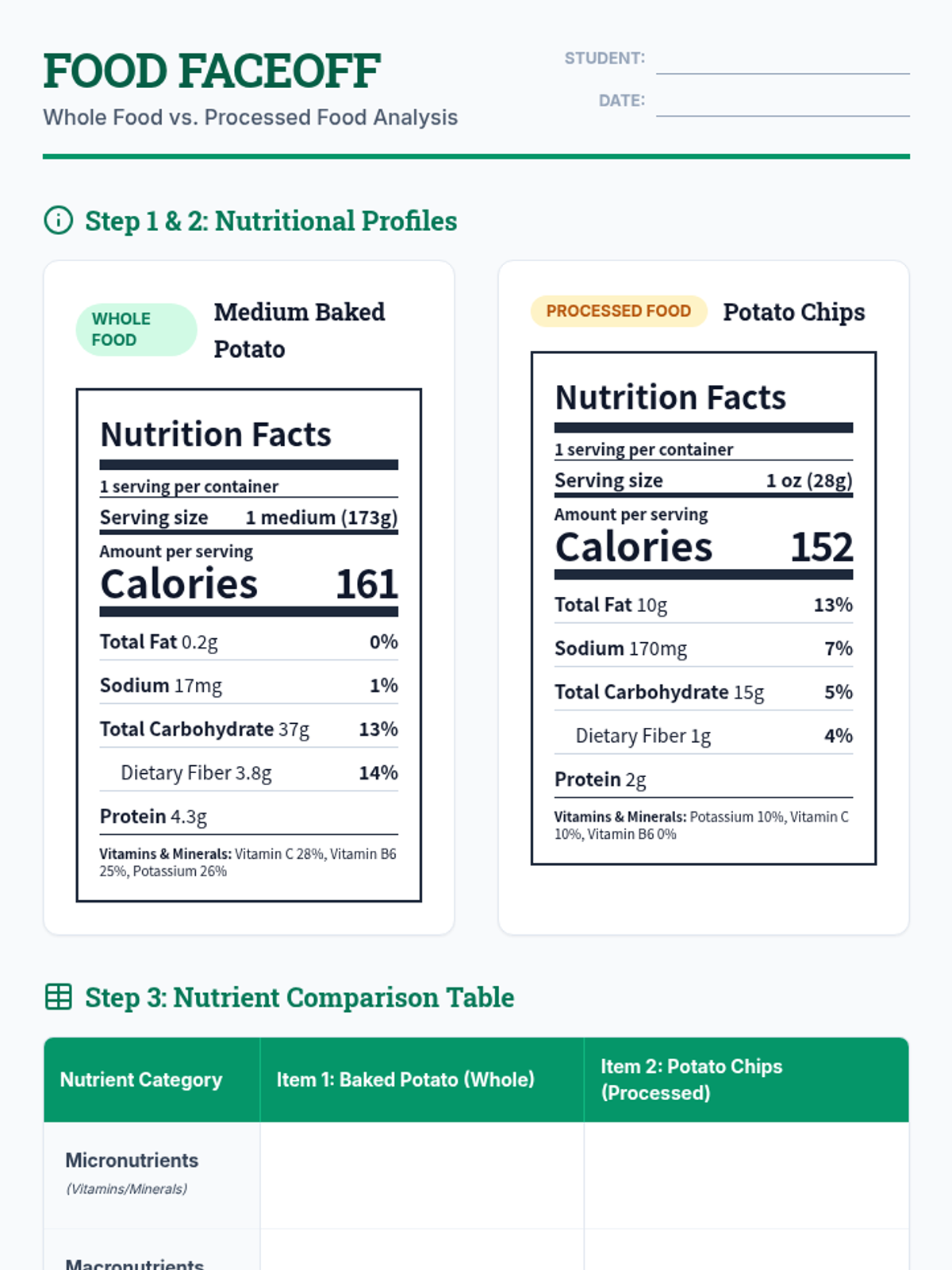
A worksheet for comparing the nutritional value of a whole baked potato vs. processed potato chips. It includes nutrition labels, a data table, writing prompts, and a calorie calculation section.
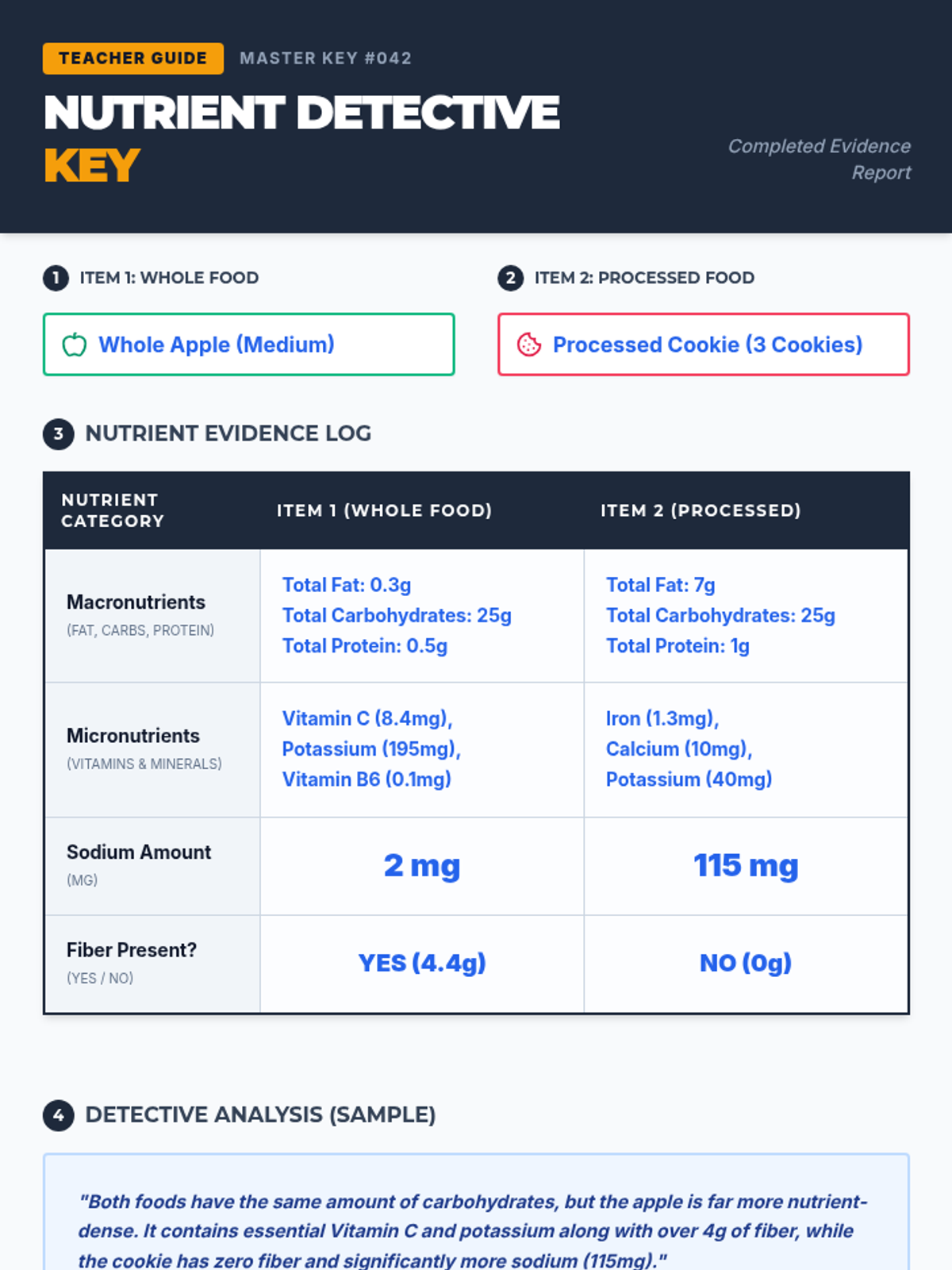
An answer key and teacher guide for the Nutrient Detective Challenge, providing sample data and calculations based on the provided label reference sheet.