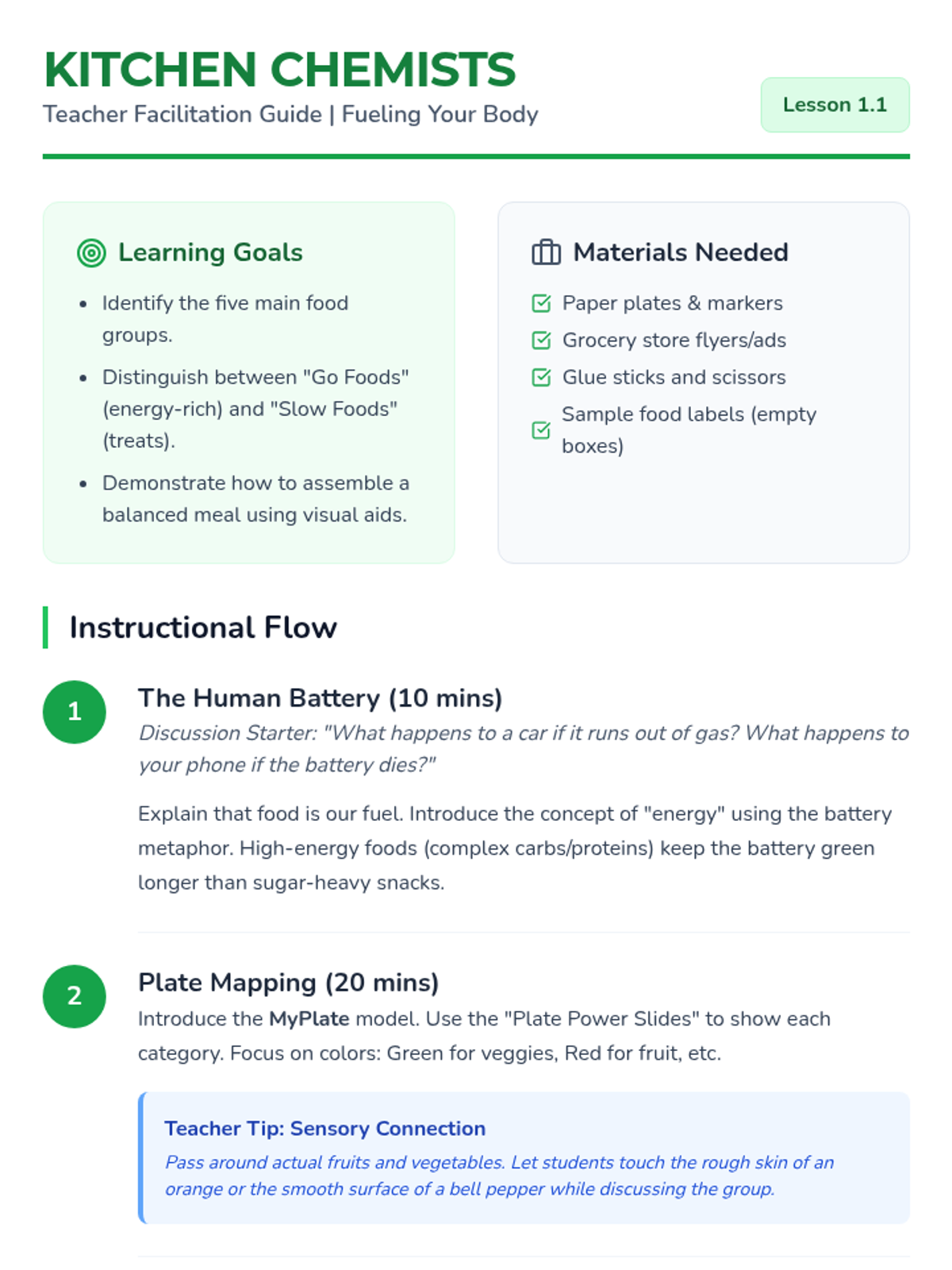
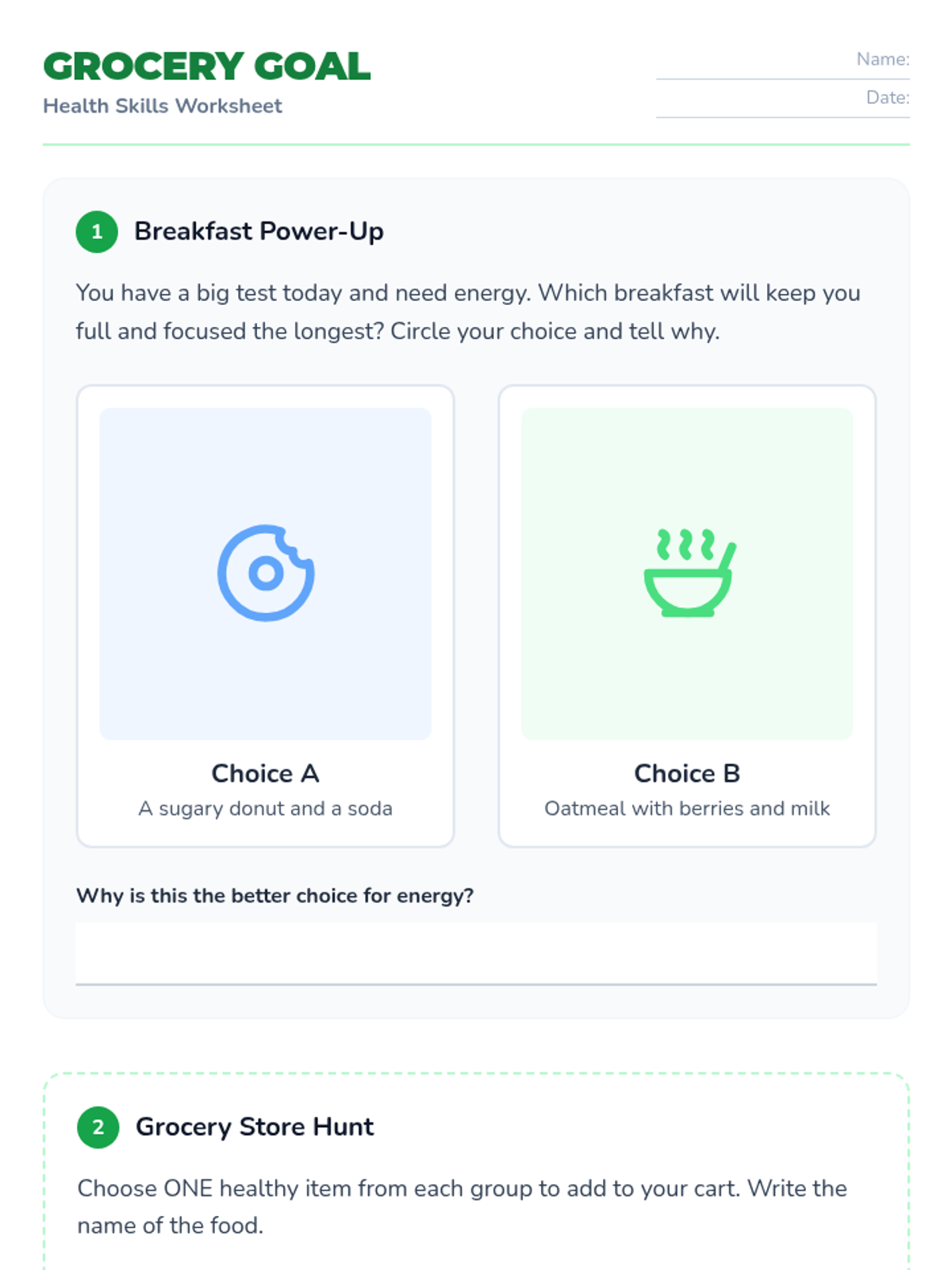
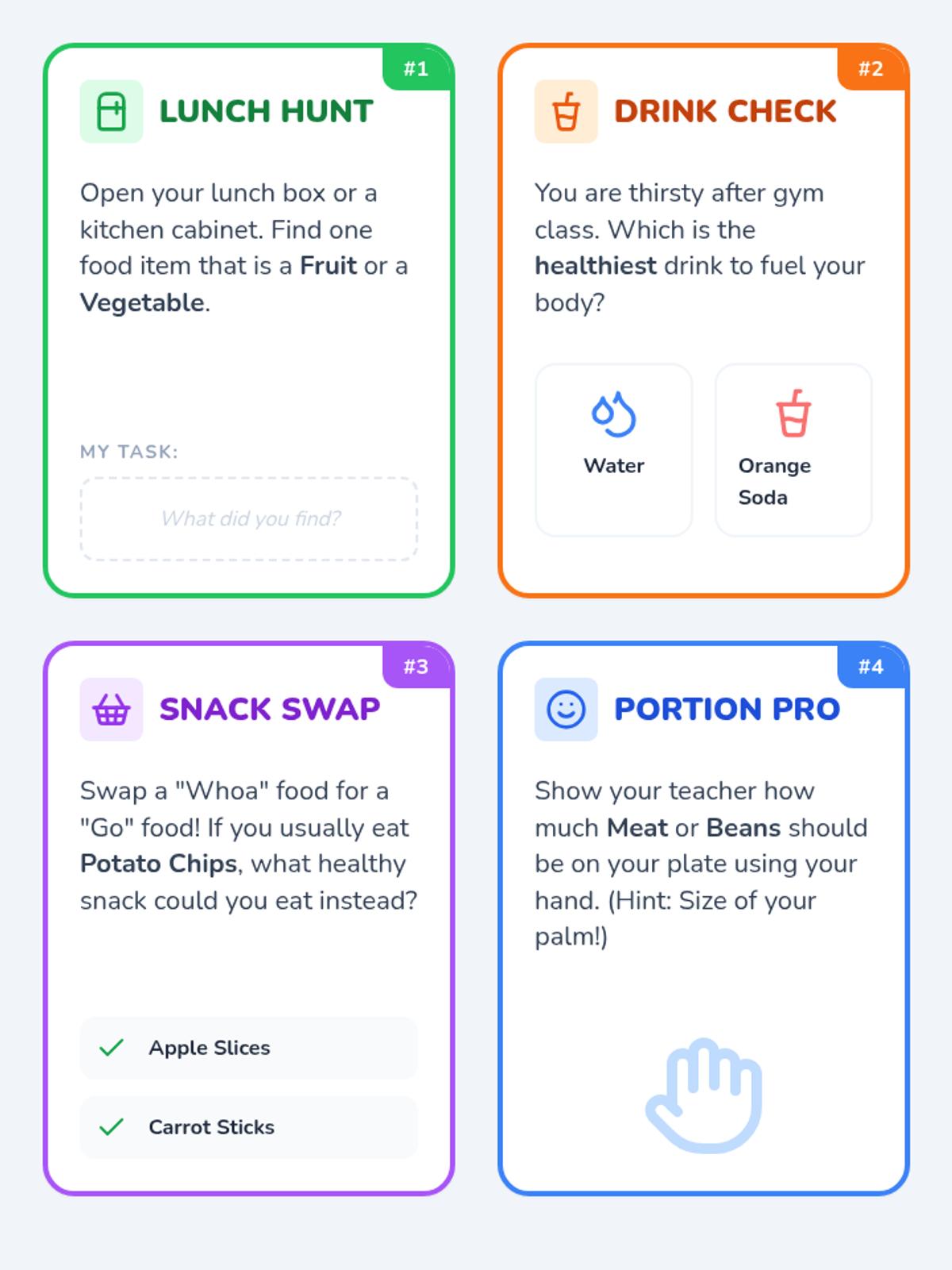
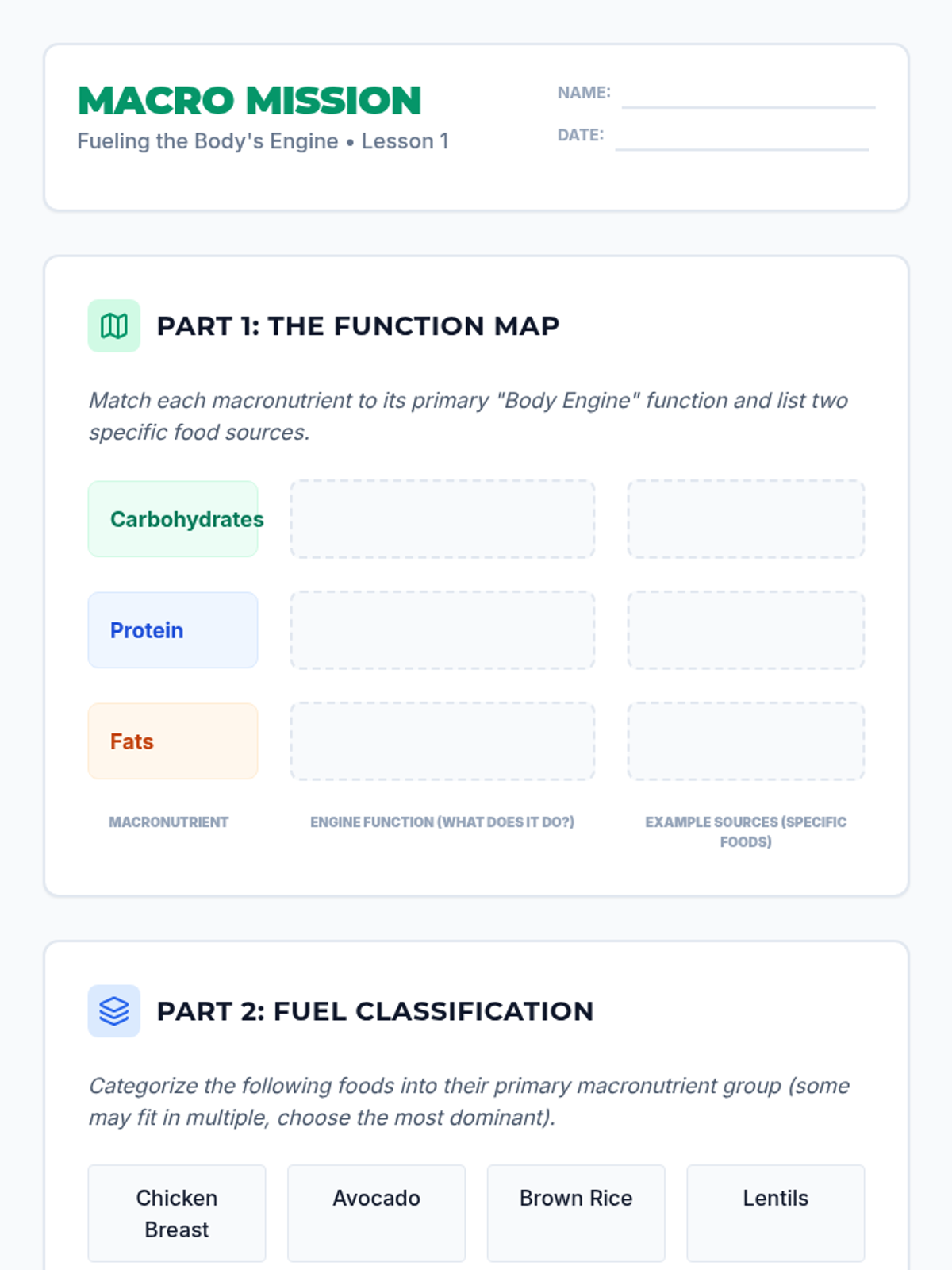
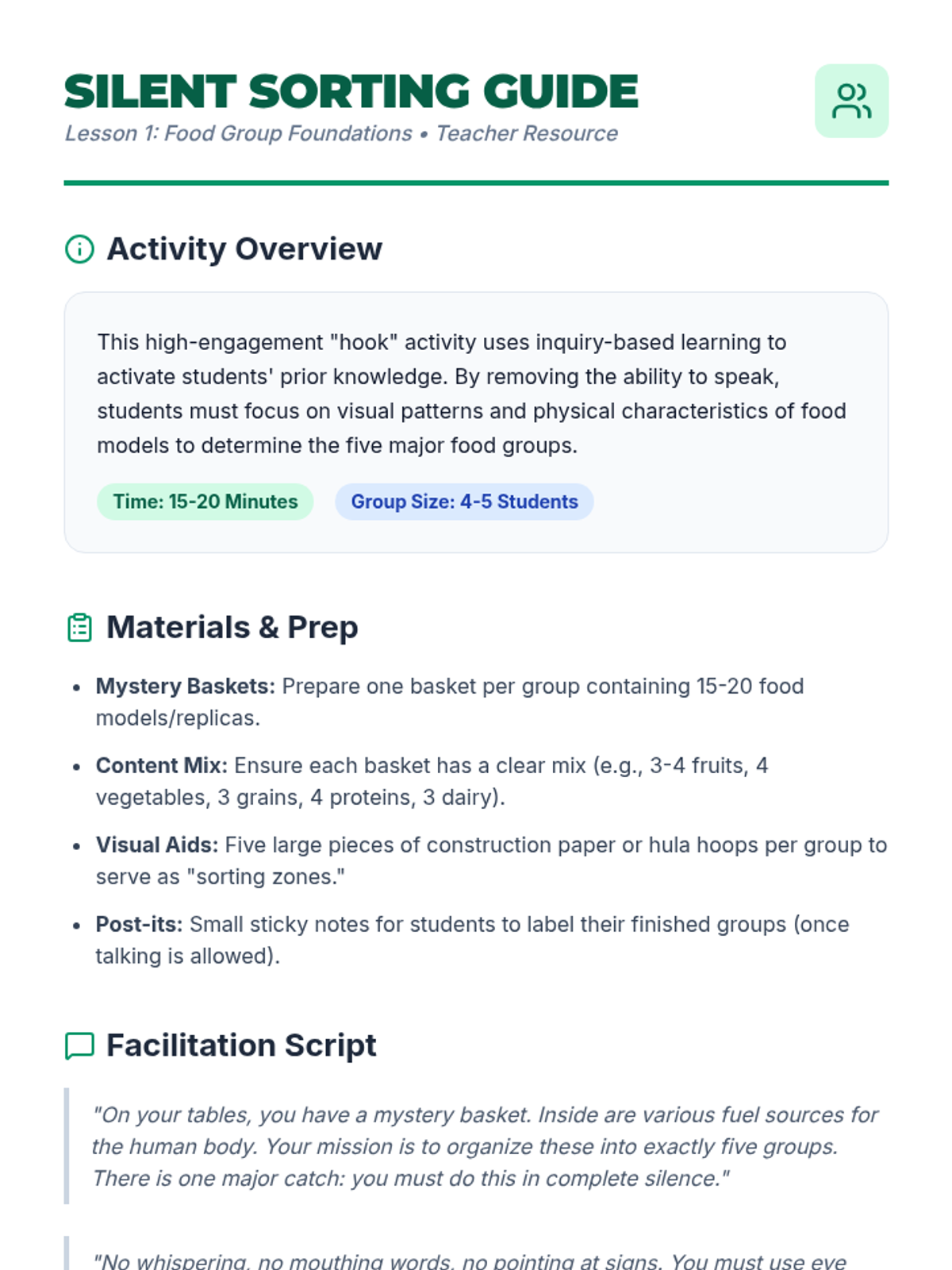
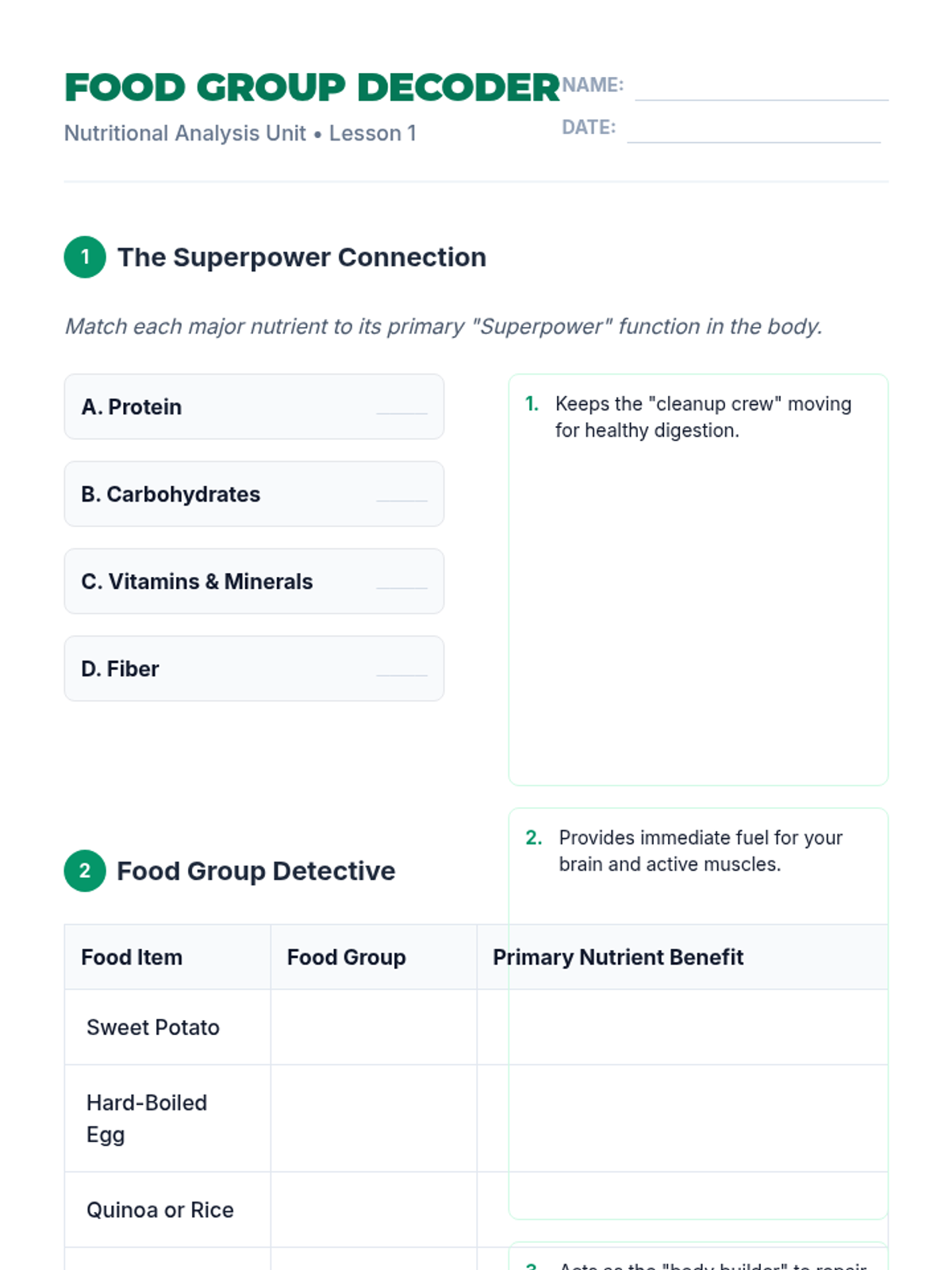
Essential food groups, nutrient functions, and balanced meal planning. Develops skills for interpreting nutrition labels and adopting lifelong healthy eating patterns.
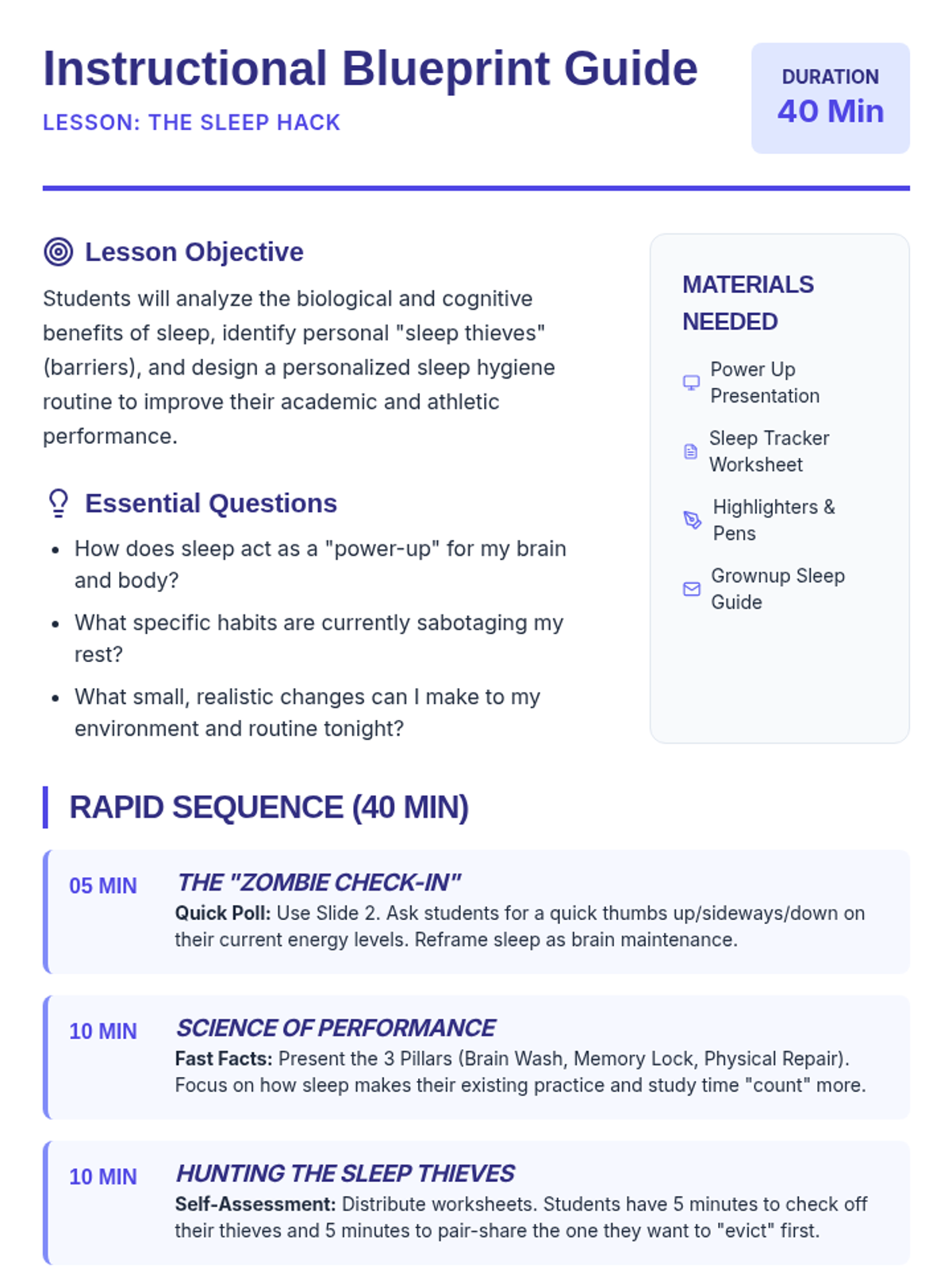
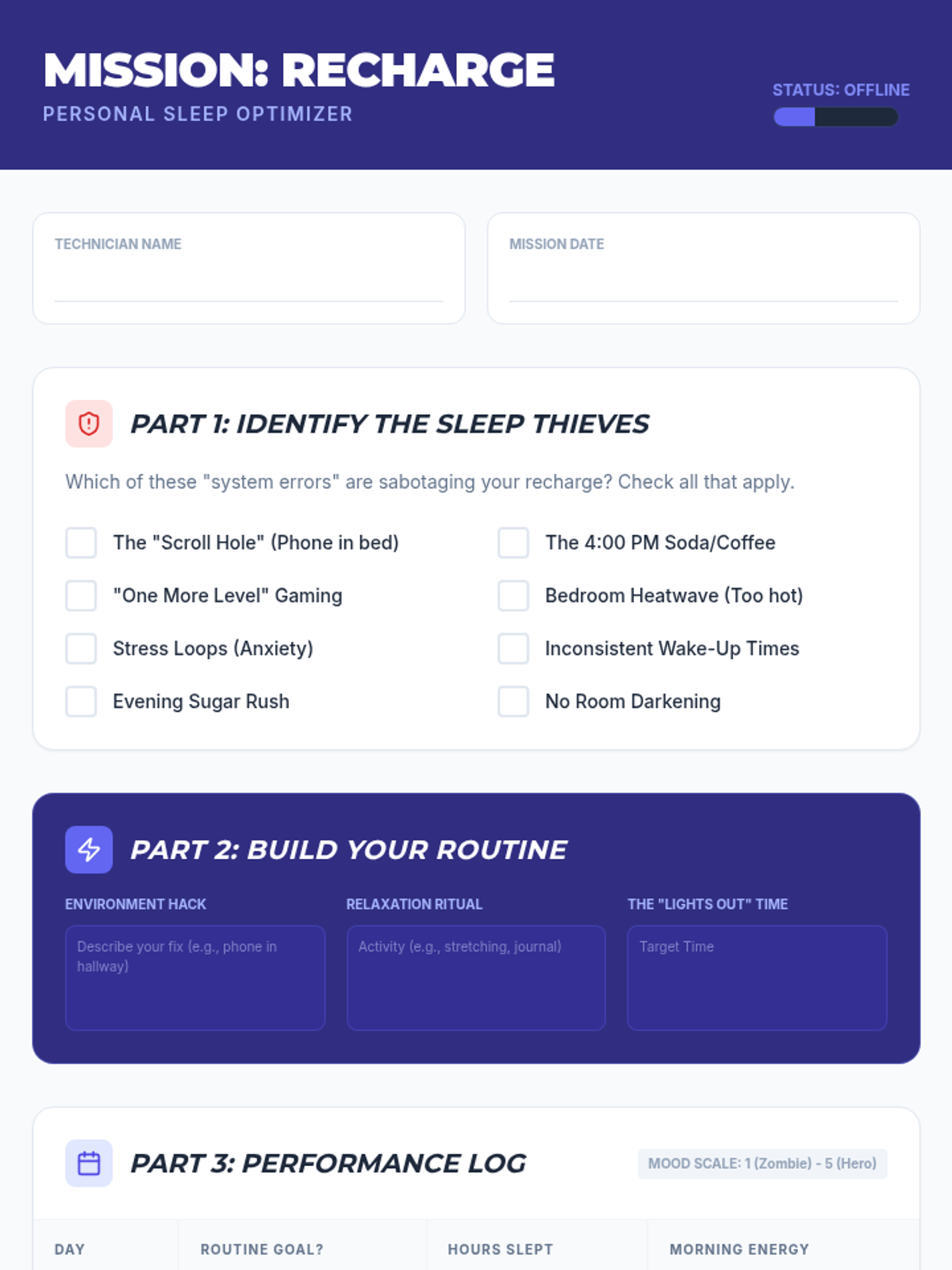
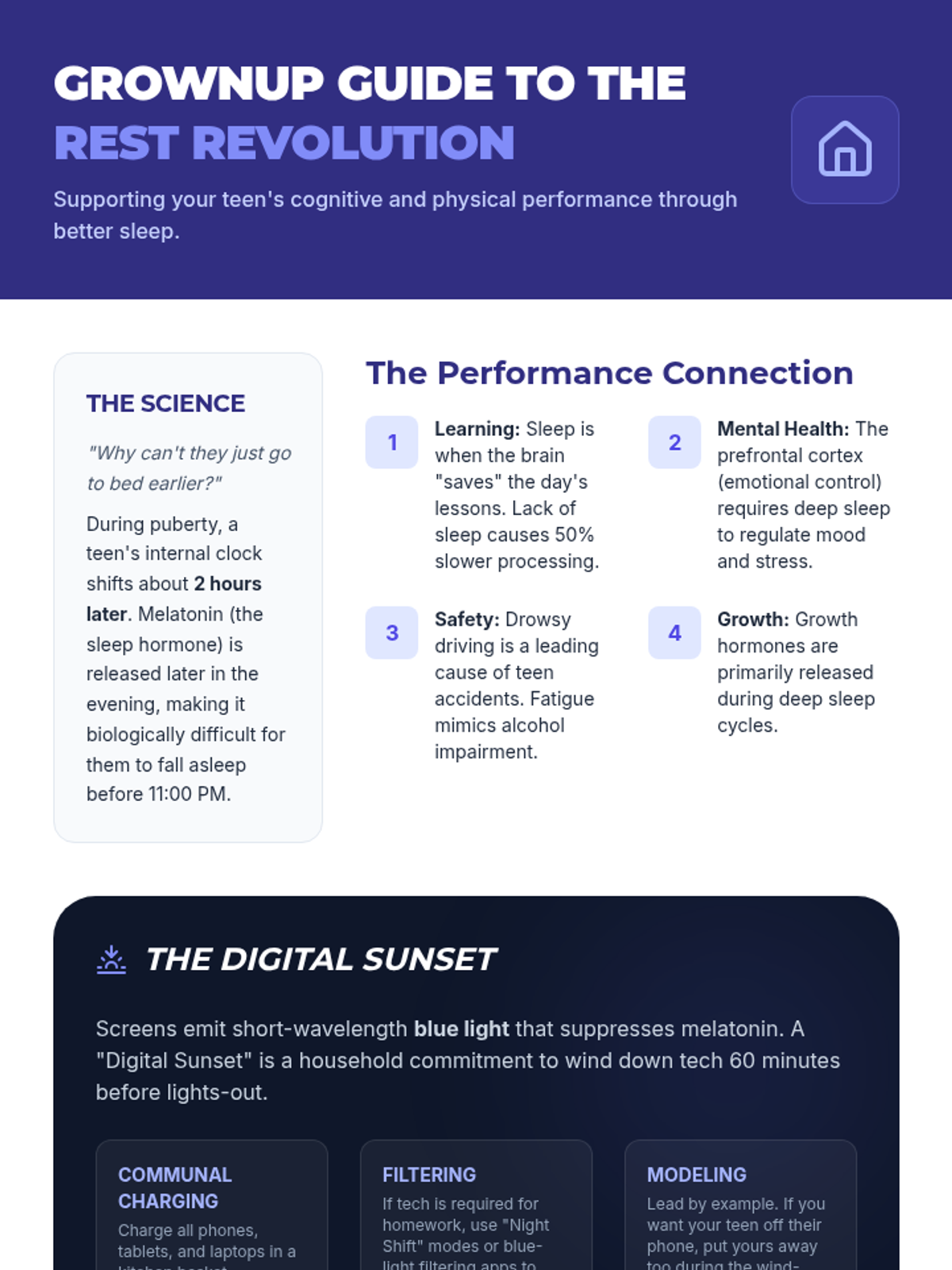
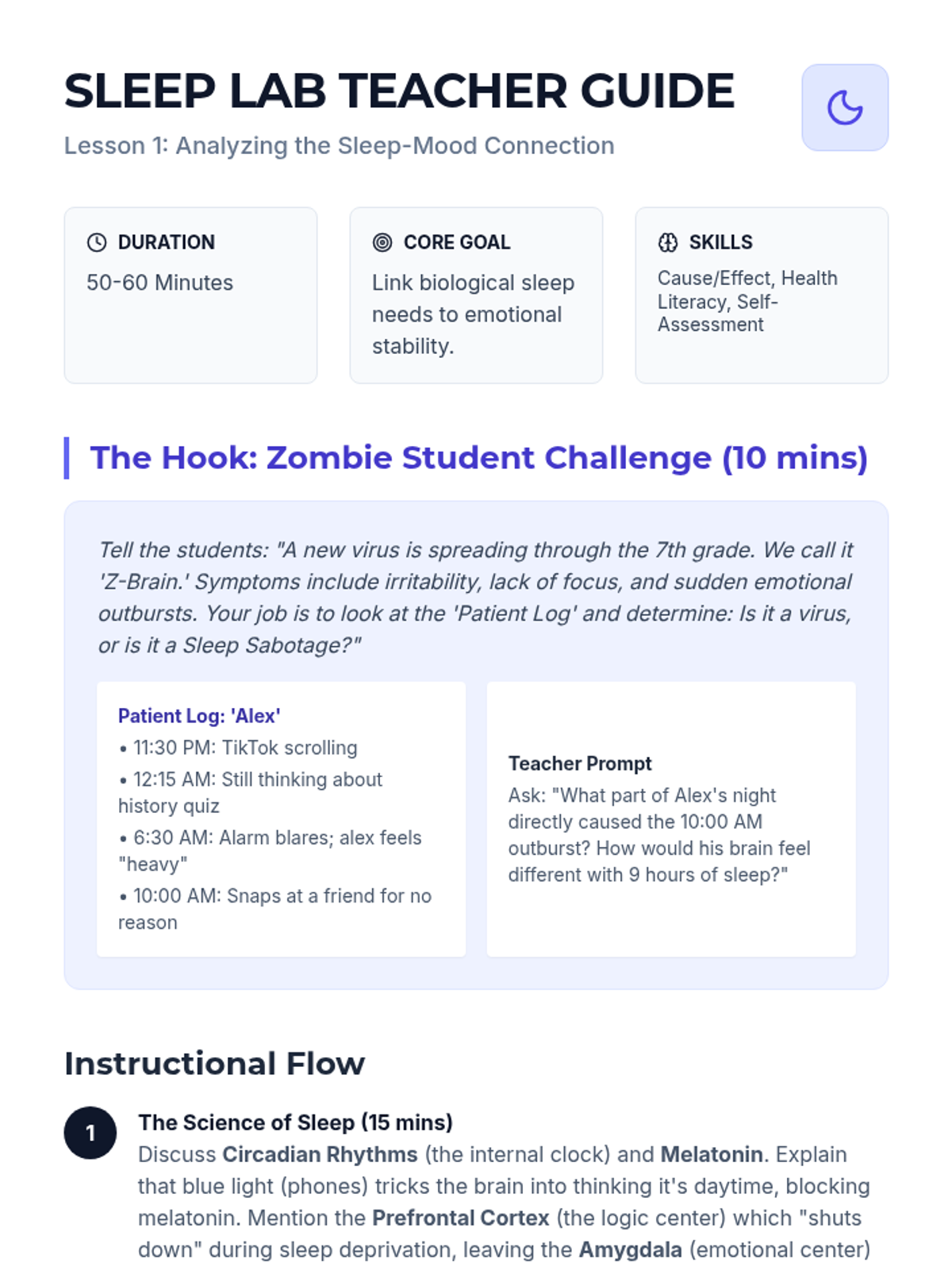
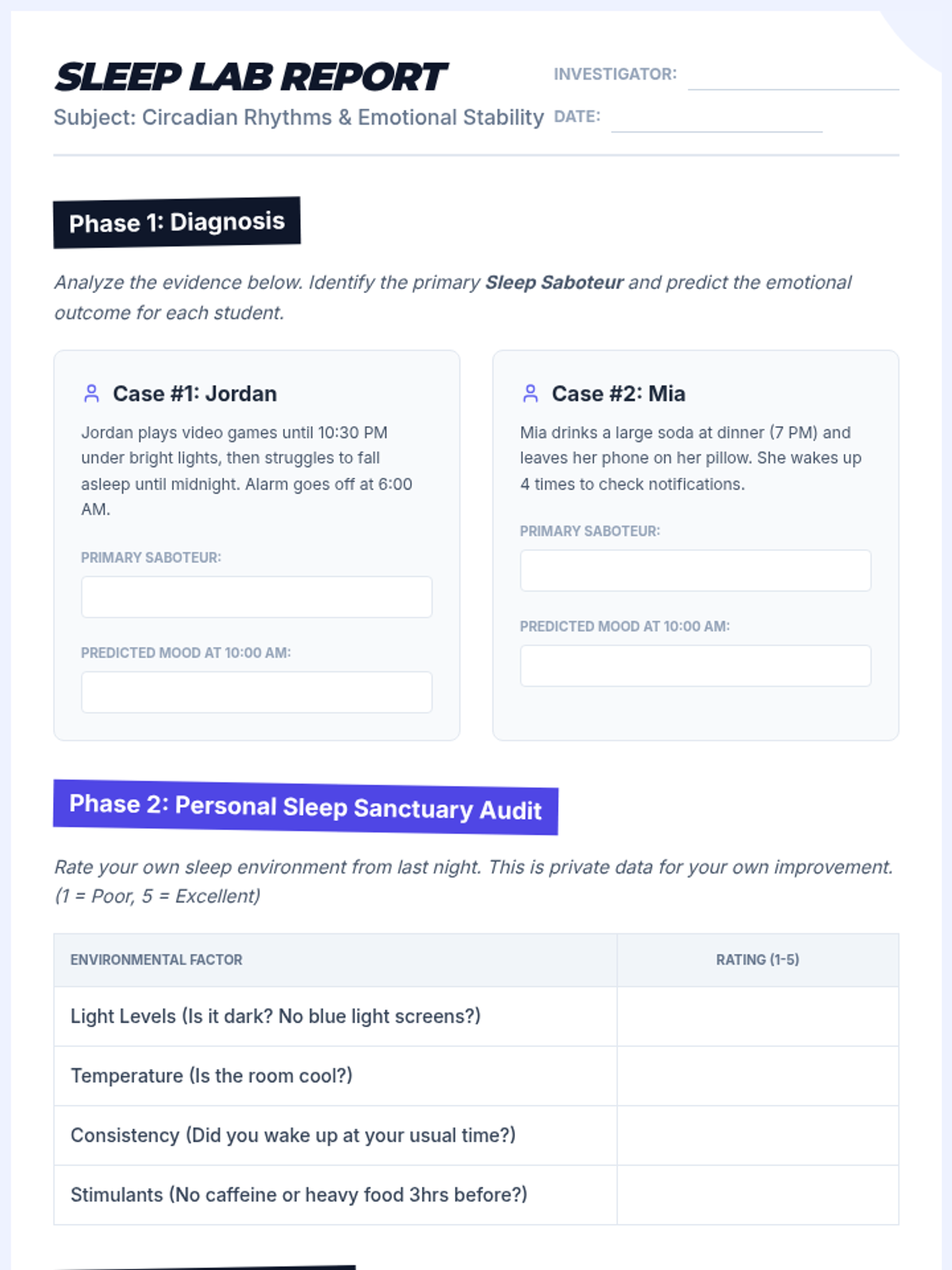
A comprehensive unit designed to help students understand the science of sleep, identify personal sleep barriers, and implement effective sleep hygiene habits for better physical and mental well-being.
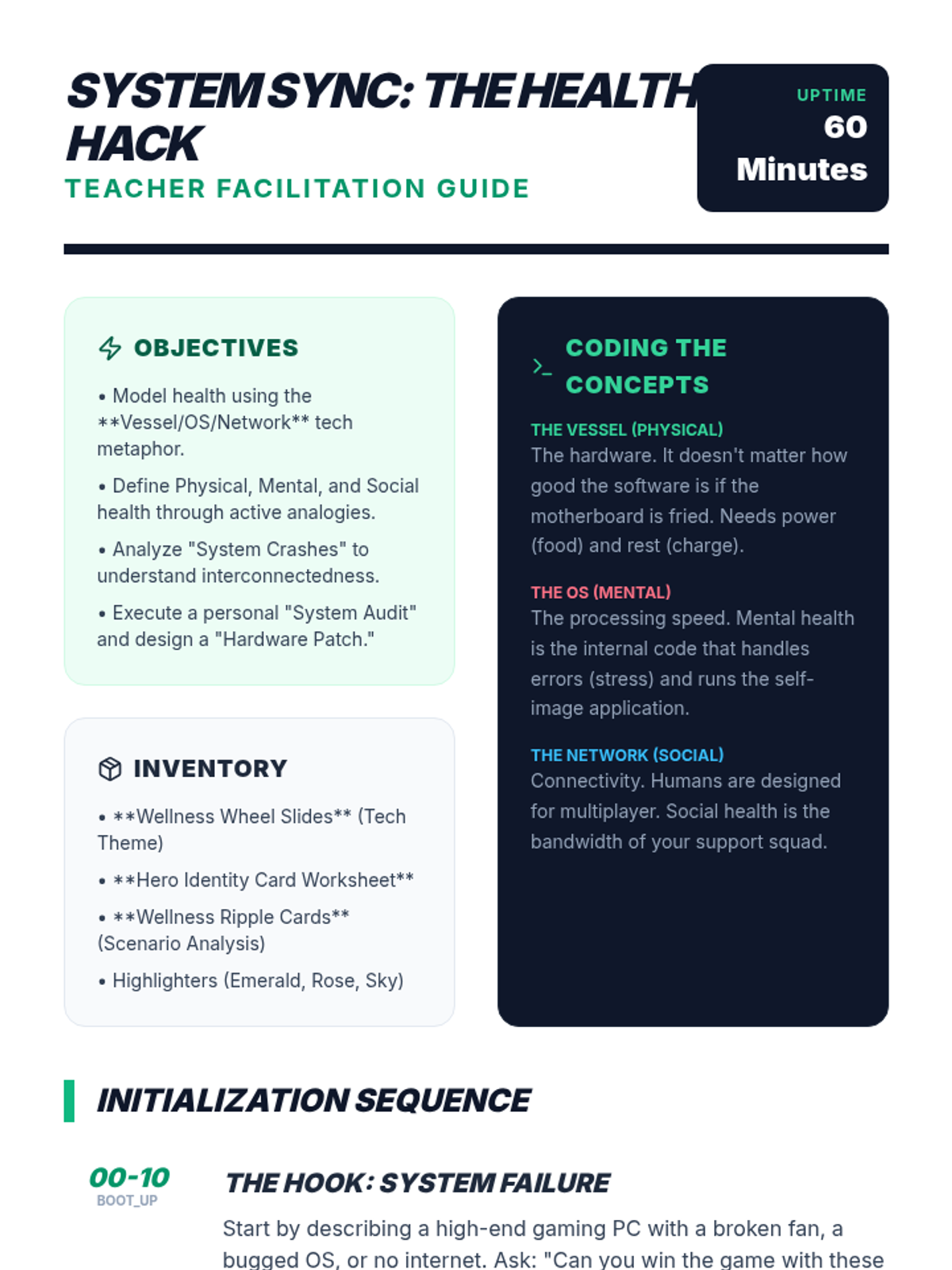
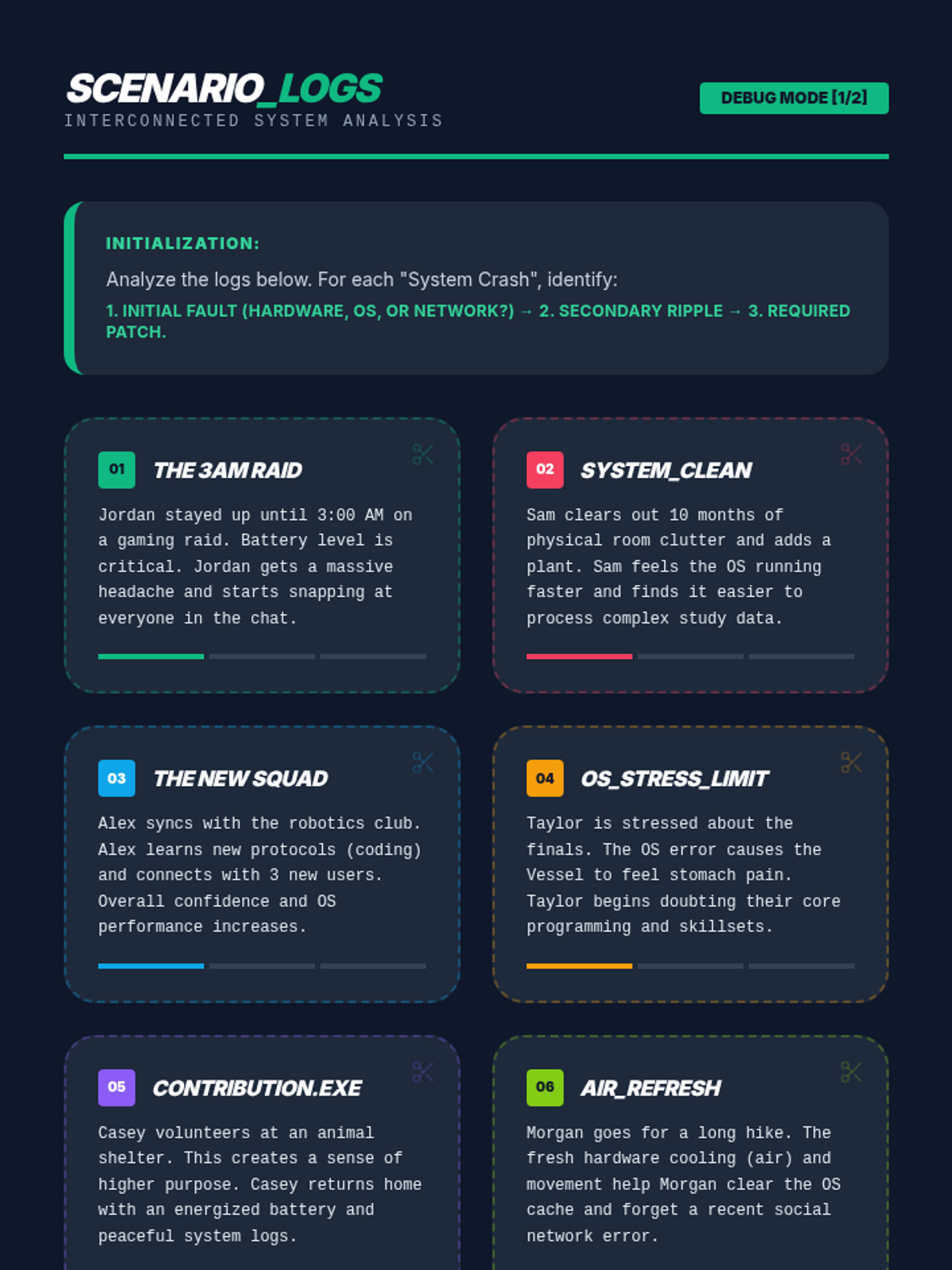
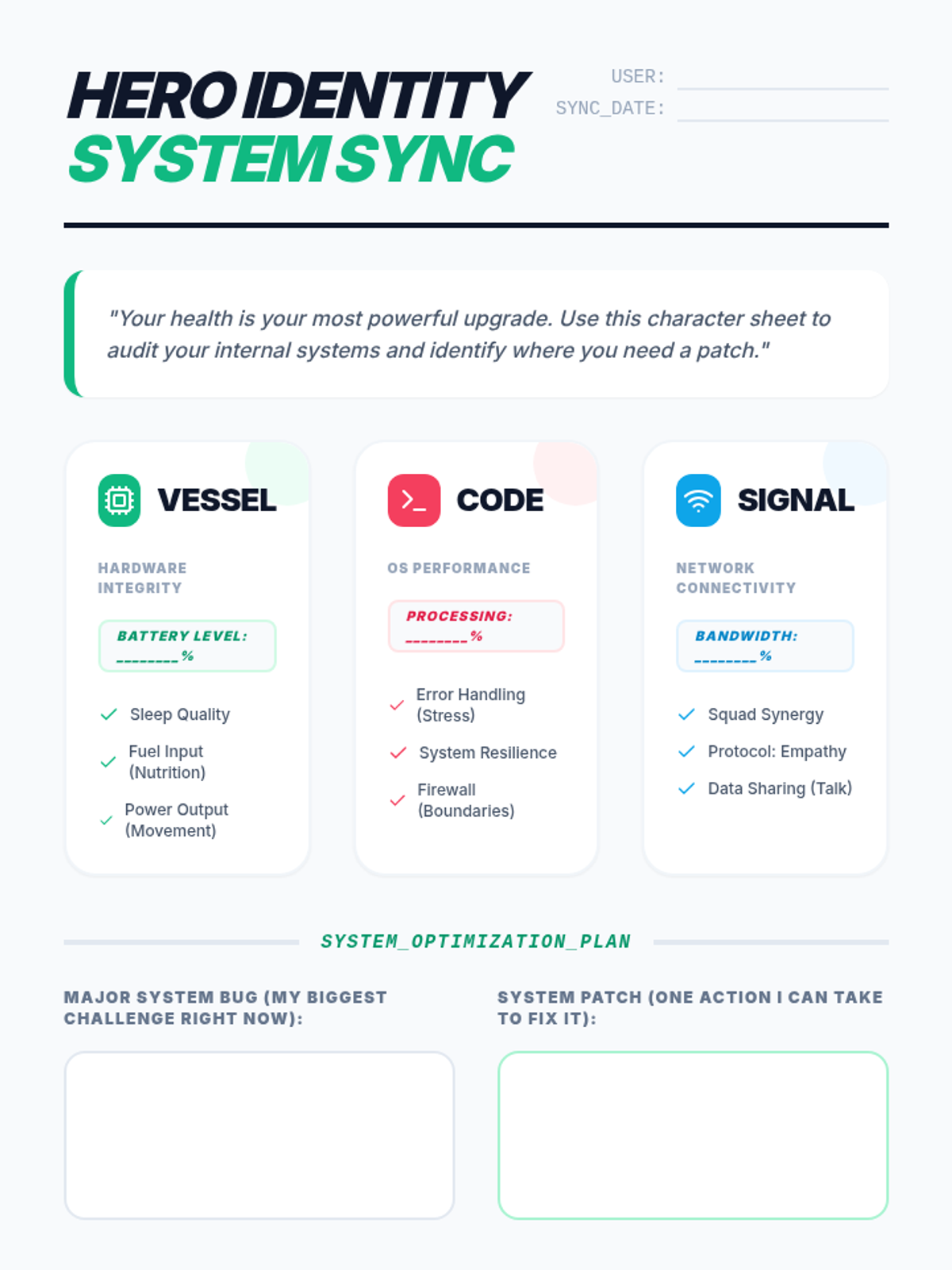
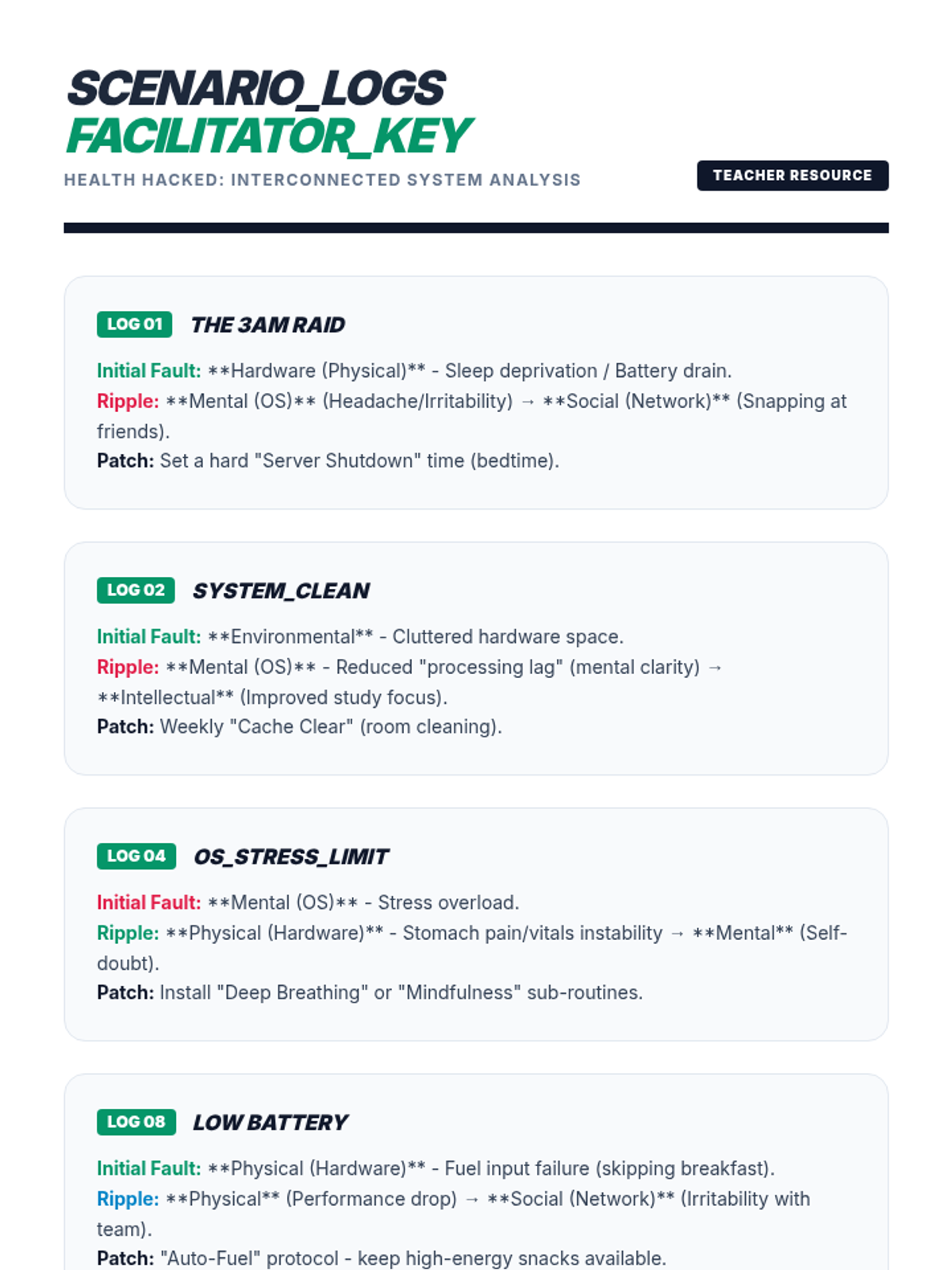
An exploration of personal health and wellness, moving from defining health to implementing sustainable healthy habits.
A functional biology curriculum designed for life skills students, focusing on practical knowledge of nutrition, personal hygiene, and environmental stewardship through hands-on activities and visual aids.
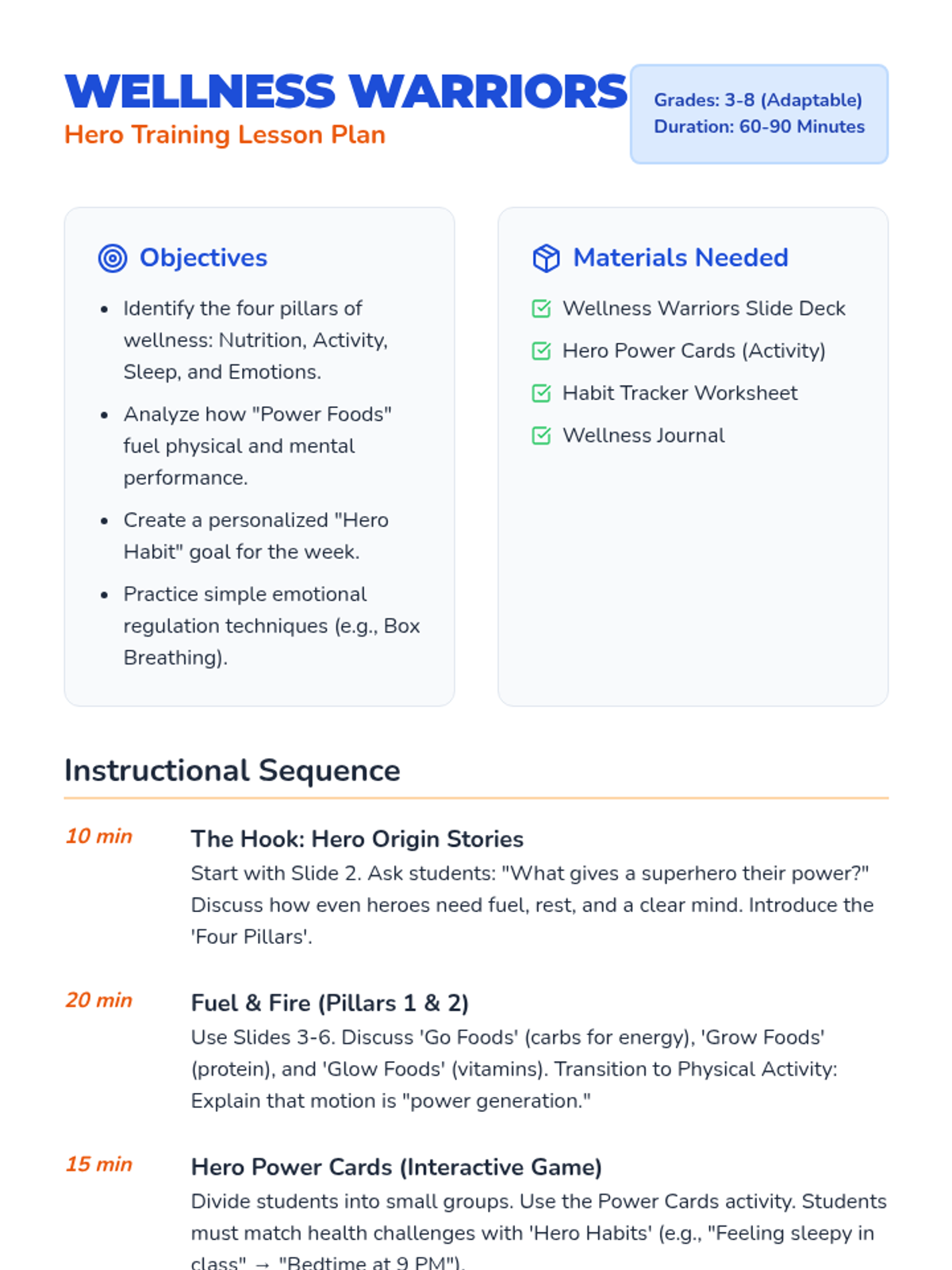
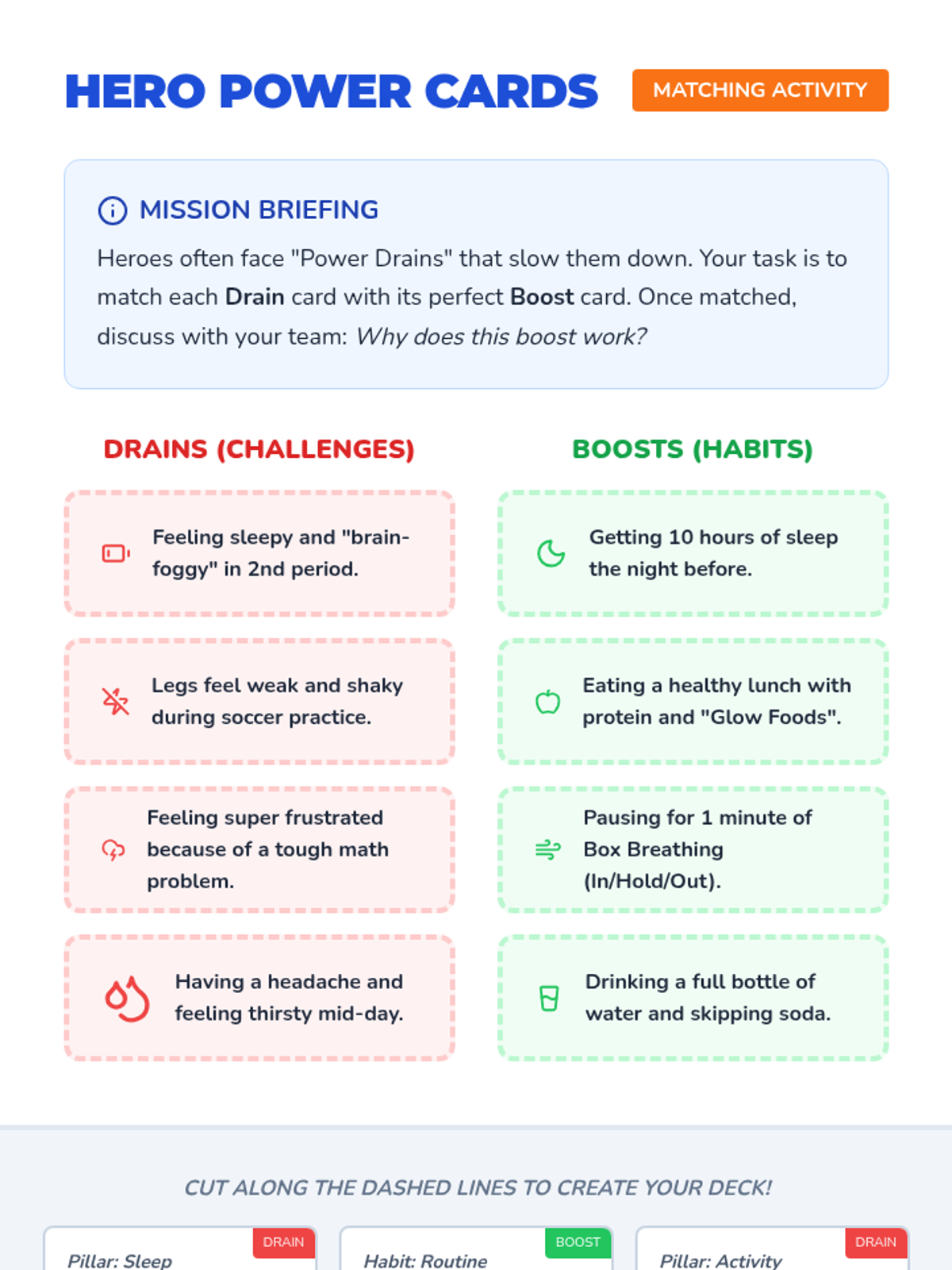
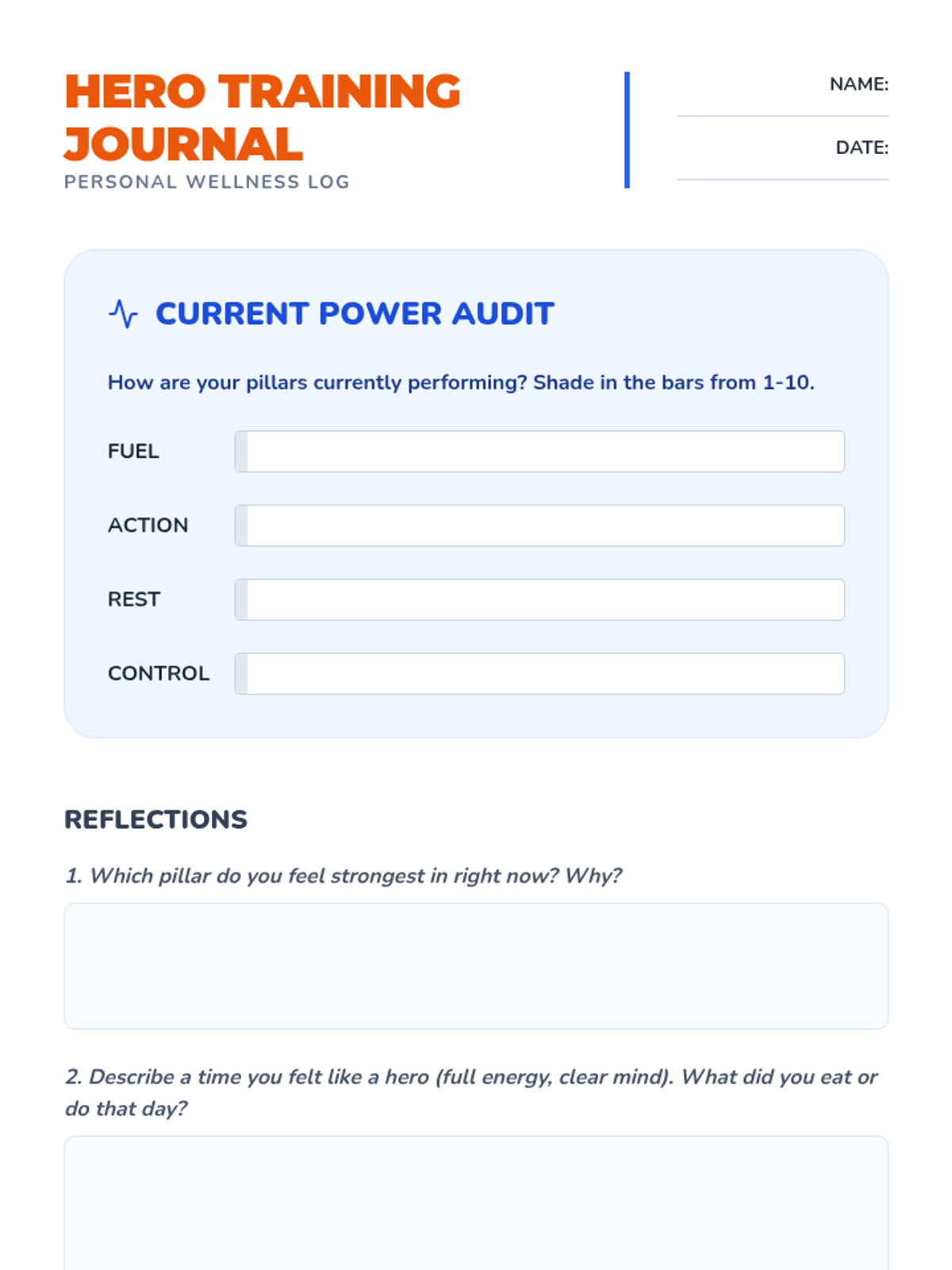
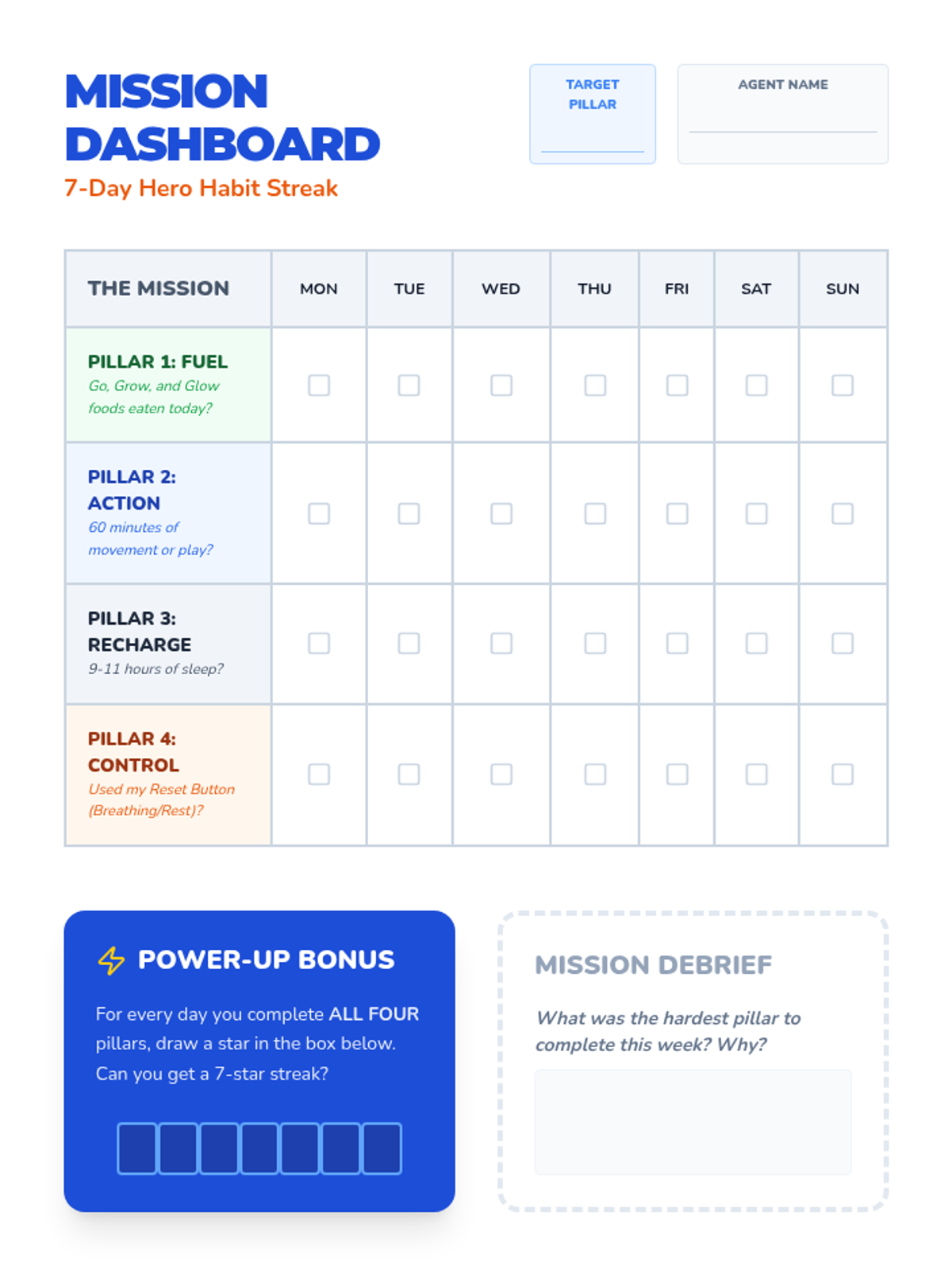
A comprehensive wellness unit designed to empower students with lifelong healthy habits. Students explore nutrition, exercise, sleep, and emotional regulation through the lens of 'hero training'.
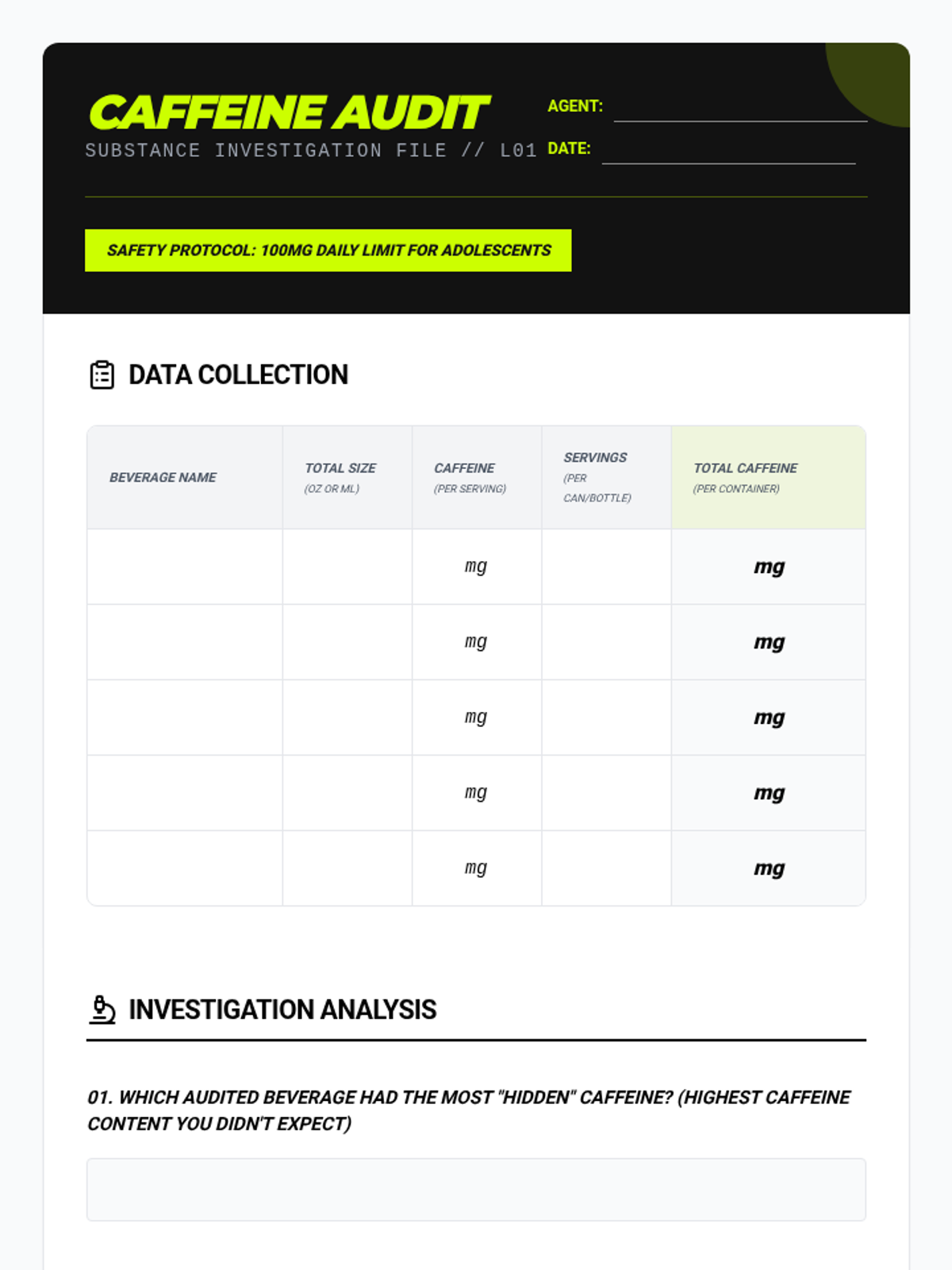
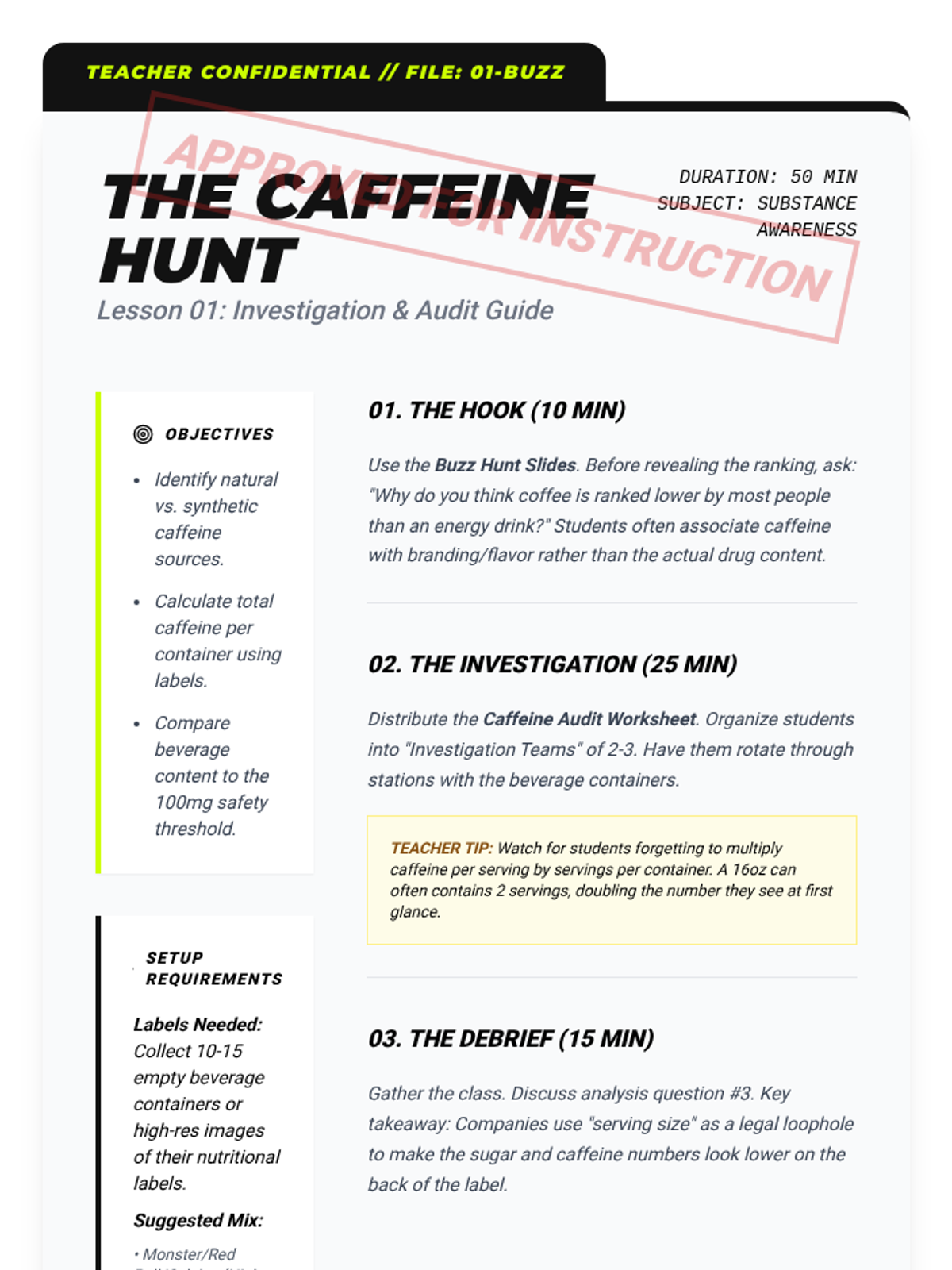
A comprehensive investigation into caffeine consumption, marketing tactics, and physiological effects, designed to transform 7th-grade students into critical analysts of the energy drink industry.
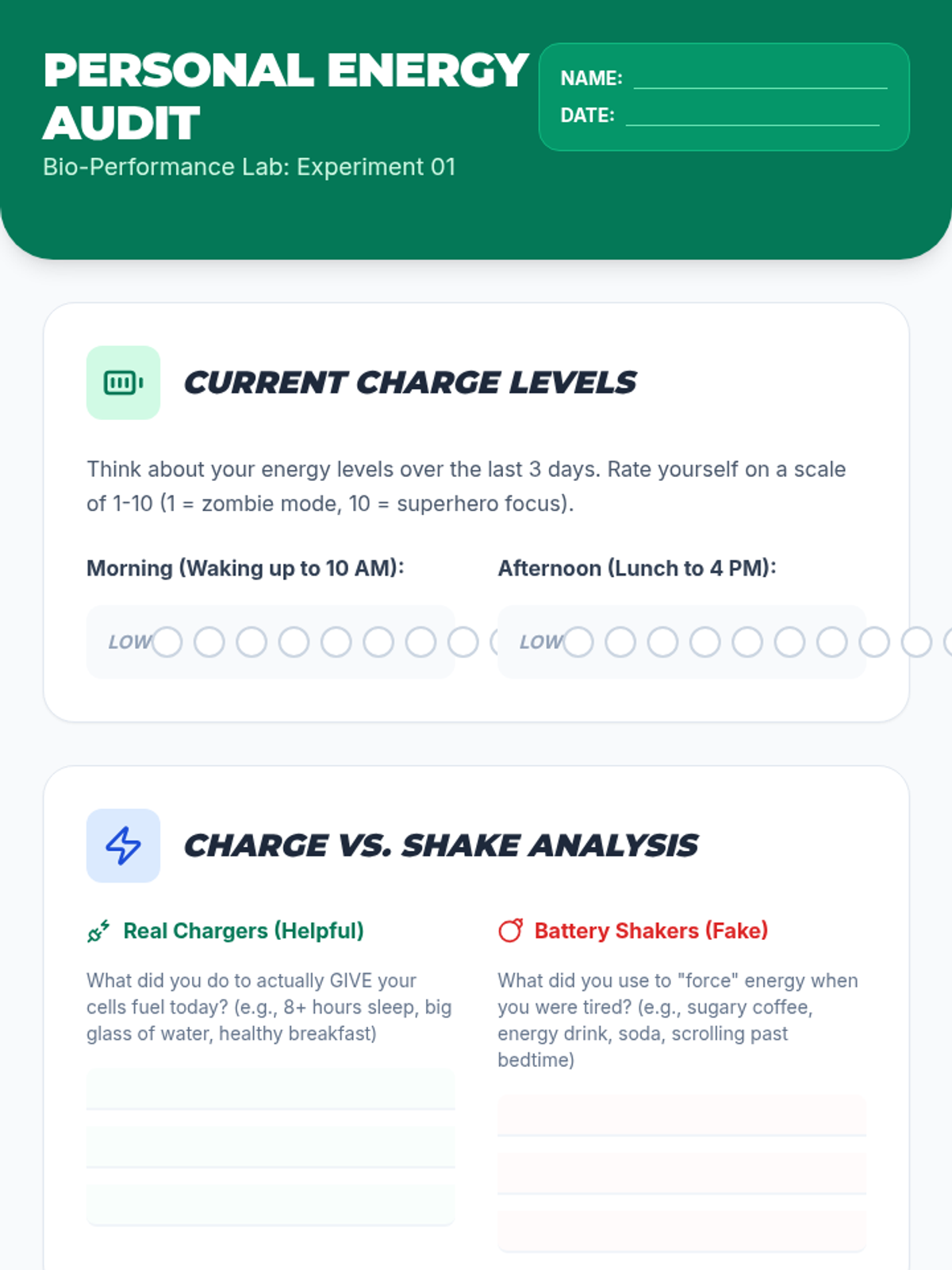
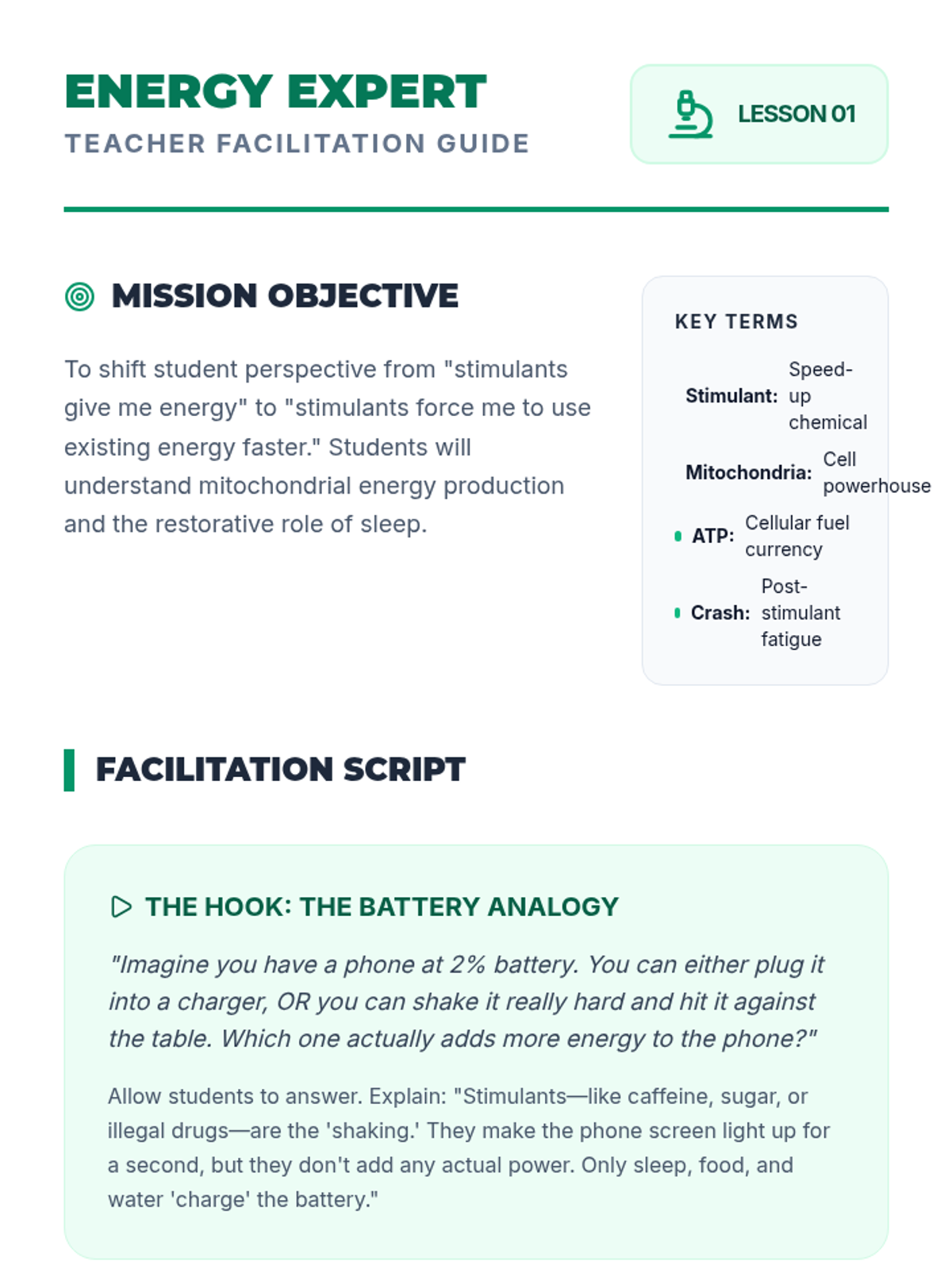
A positive-focused health sequence for 6th graders that teaches natural energy strategies—sleep, nutrition, movement, and stress management—as sustainable alternatives to chemical stimulants. Students develop a personal 'High Performance Plan' to optimize their energy and focus.
This sequence guides 7th-grade students through the biological and psychological links between daily habits and emotional stability. Students explore sleep hygiene, nutritional energy, and physical activity, culminating in a personalized habit-stacking wellness plan.
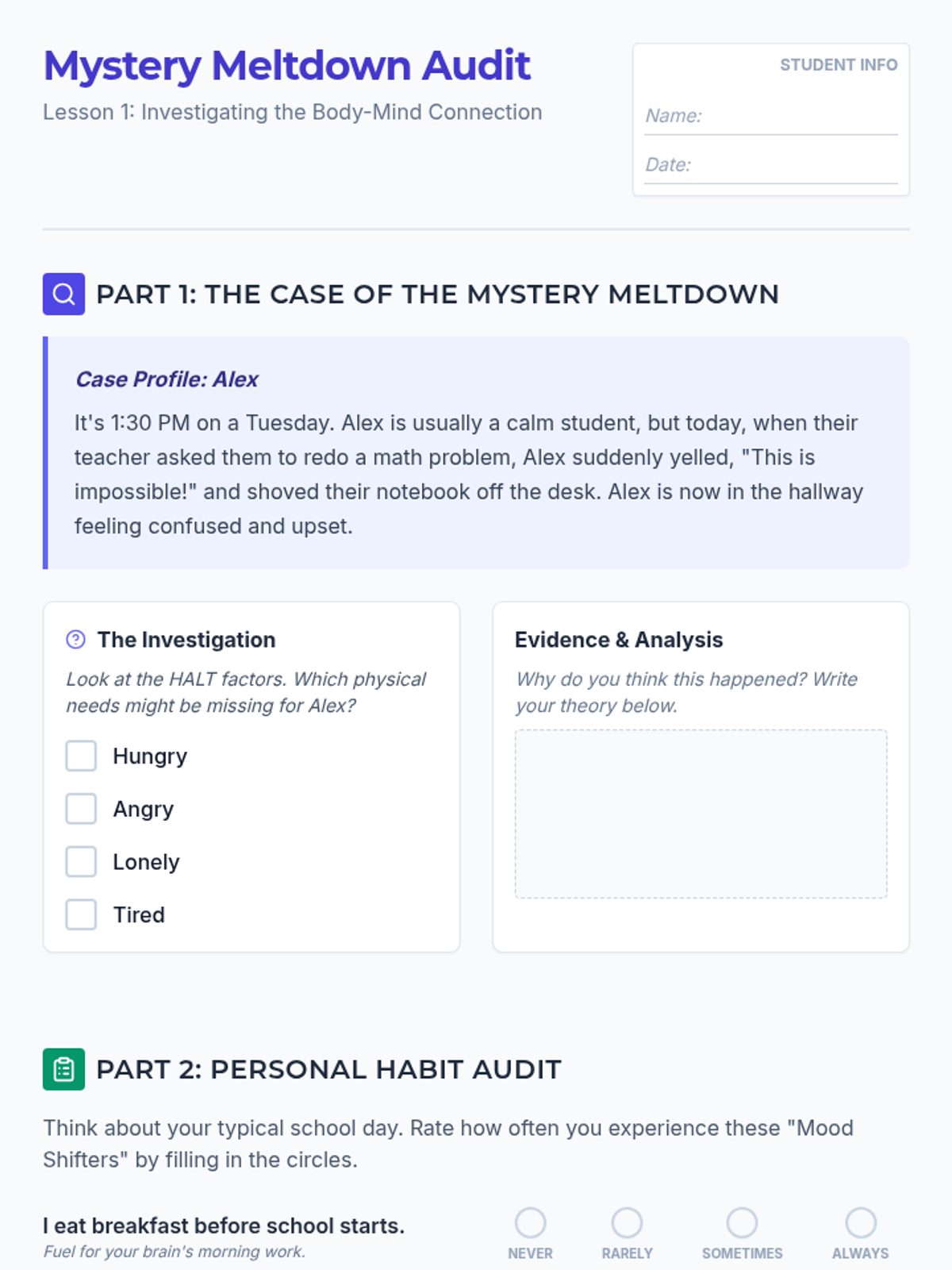
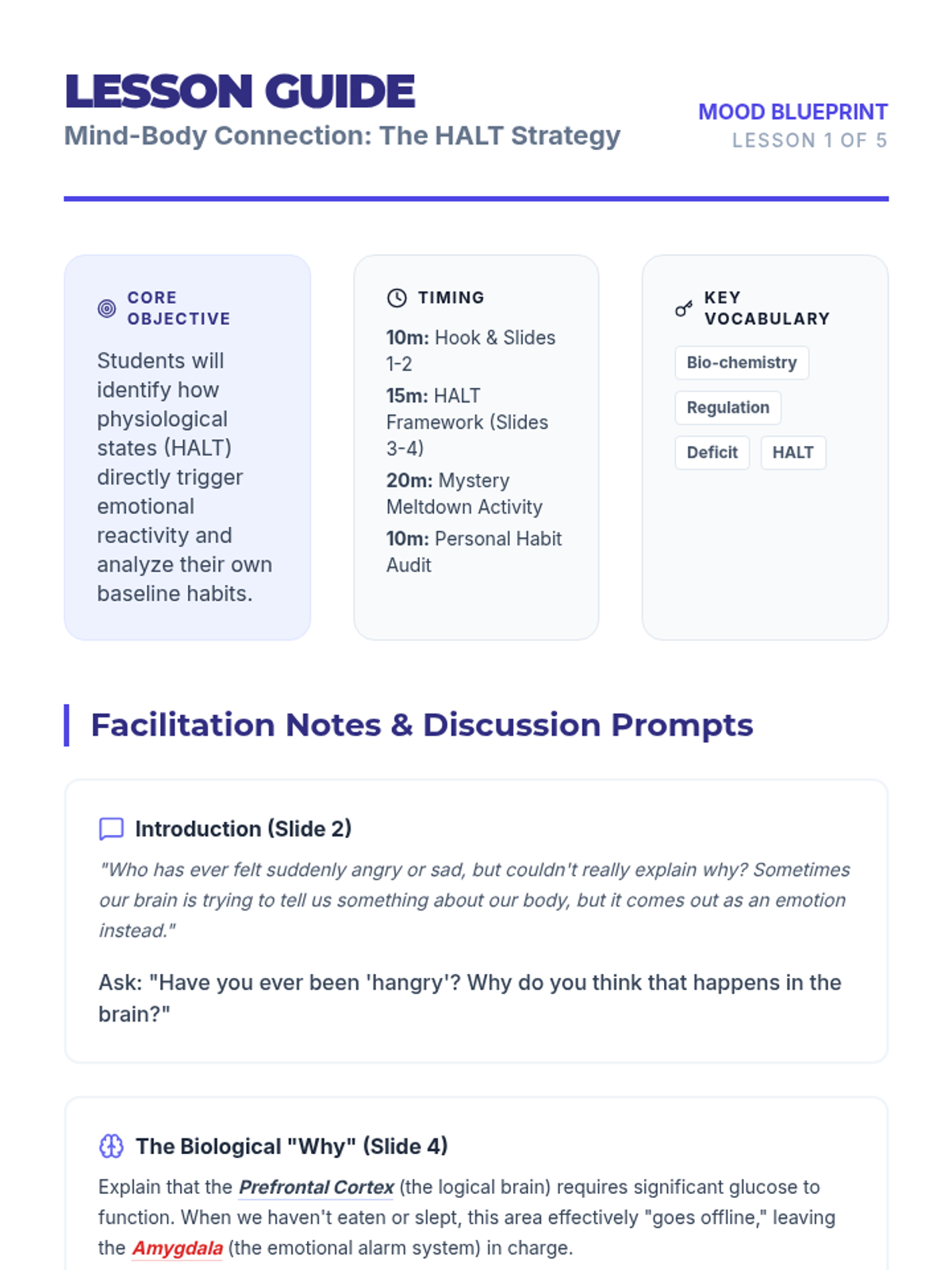
A 5-lesson sequence for 6th-grade students focusing on the biological and behavioral foundations of emotional regulation through daily routines, culminating in a personalized Wellness Blueprint.
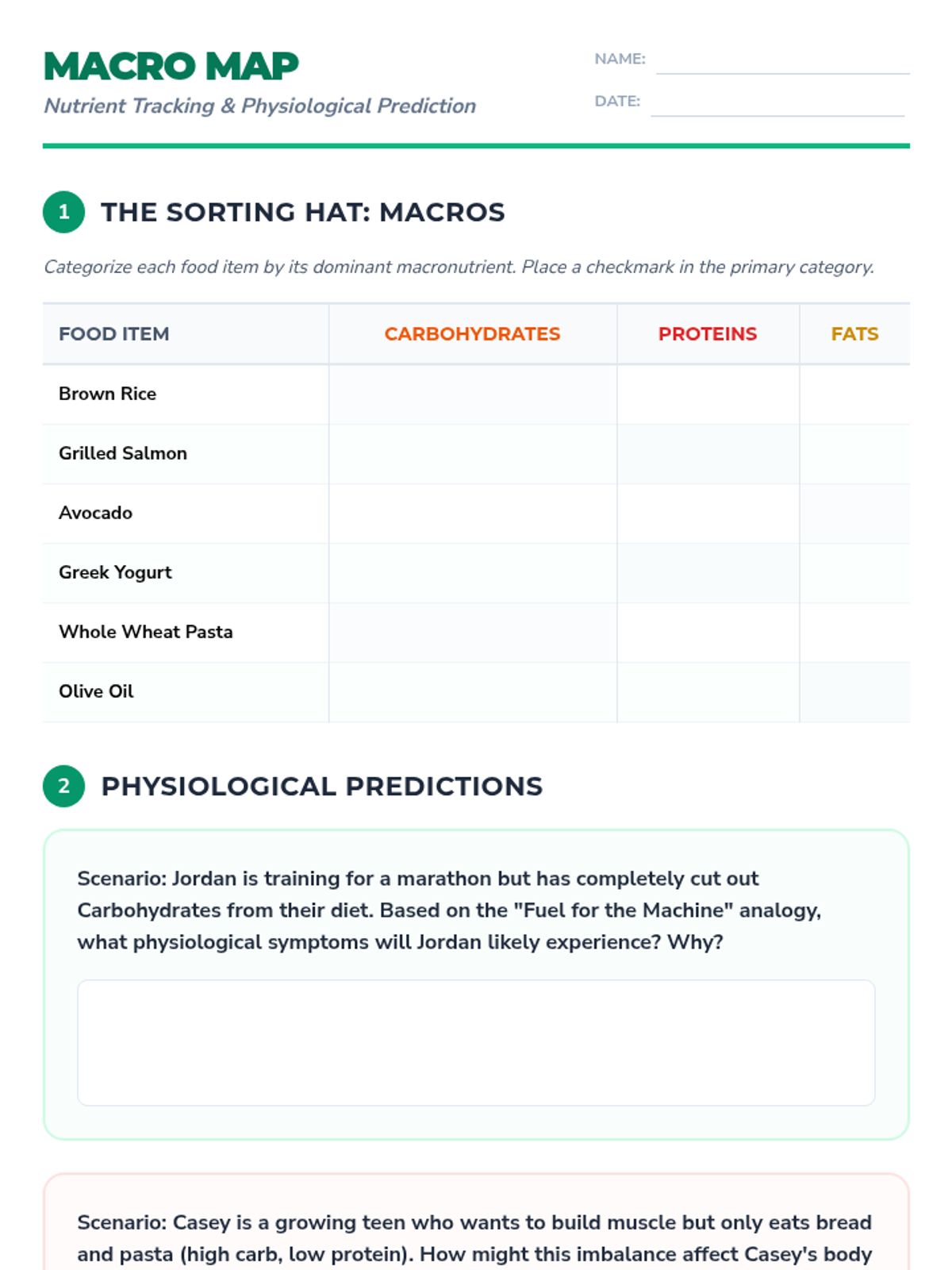
This sequence guides seventh-grade students from identifying macronutrients to designing nutritionally complete daily menus through hands-on analysis and visual estimation.
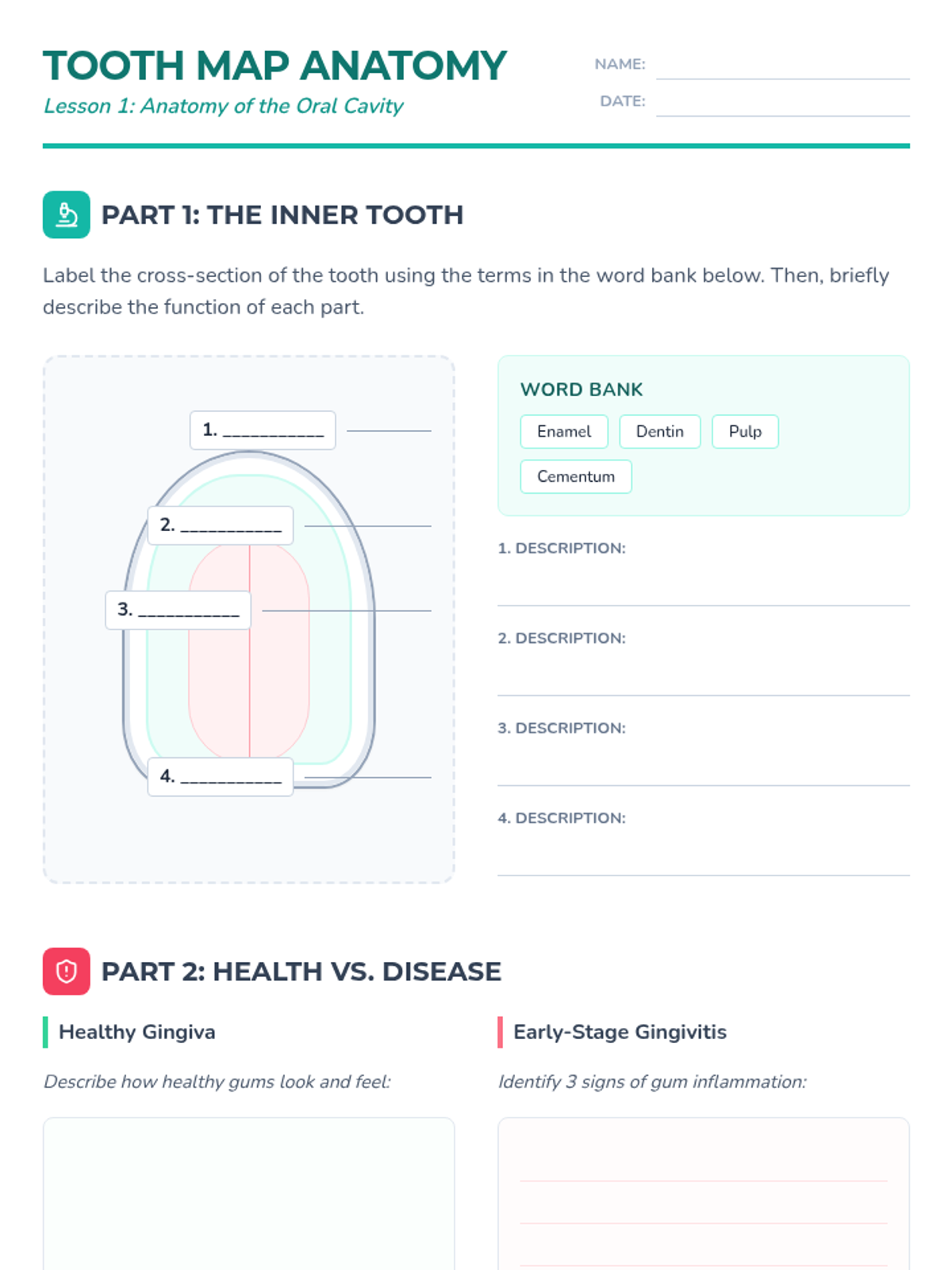
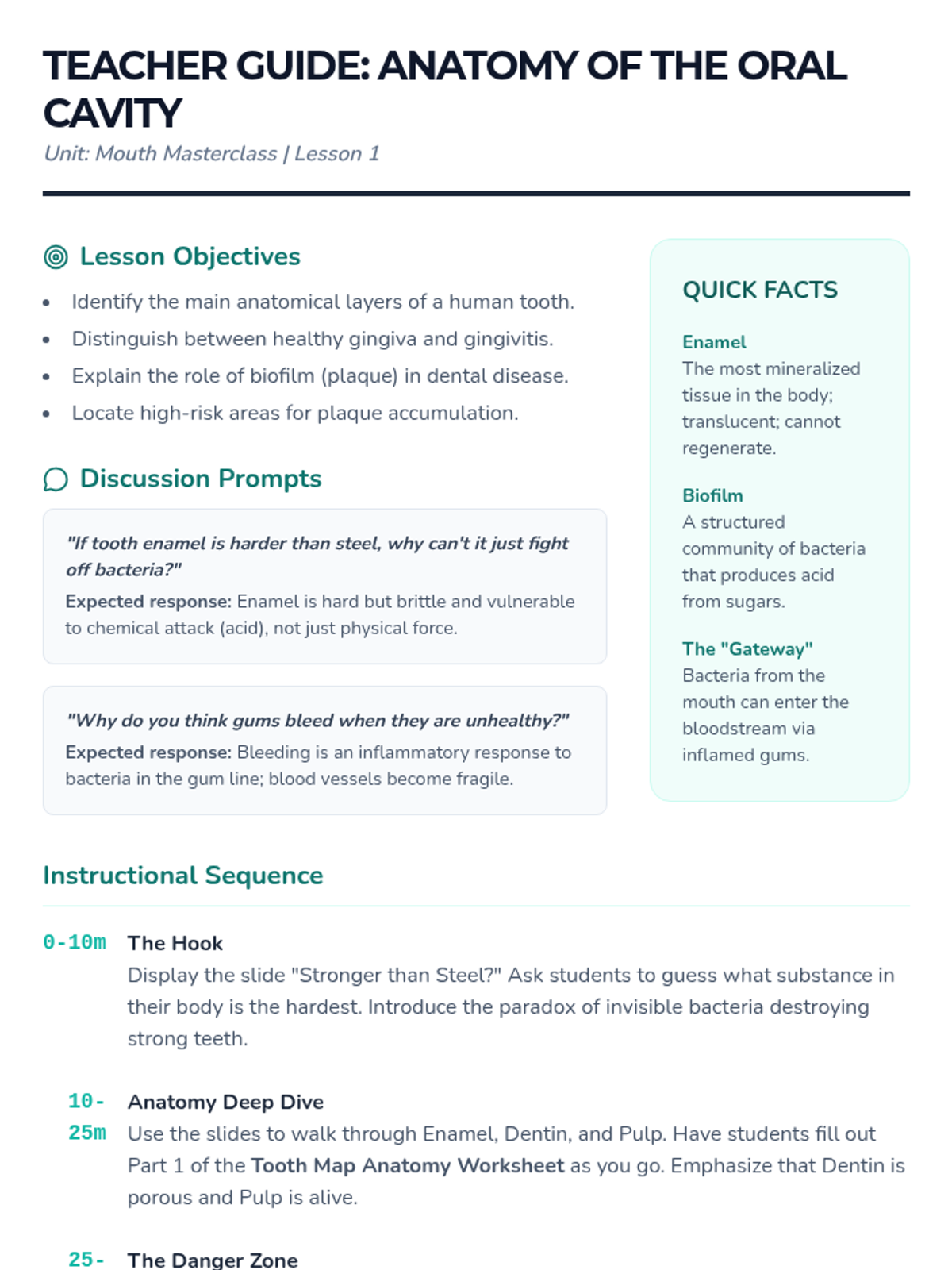
A comprehensive 6th-grade health sequence exploring oral anatomy, plaque removal techniques, the chemistry of enamel erosion, orthodontic care, and the systemic links between oral health and overall body wellness.
Students move beyond basic identification of nutritional data to critically evaluate the relationship between front-of-package marketing and back-of-package realities through quantitative analysis and chemical investigation.
A comprehensive health sequence where students become nutritional detectives, learning to decode nutrition facts and ingredient lists to make informed dietary choices in a marketing-driven world.
Students transition from understanding basic food groups to applying nutritional science in real-world scenarios. The unit covers macronutrients, portion control, label reading, and activity-based needs, culminating in a meal plan design project.
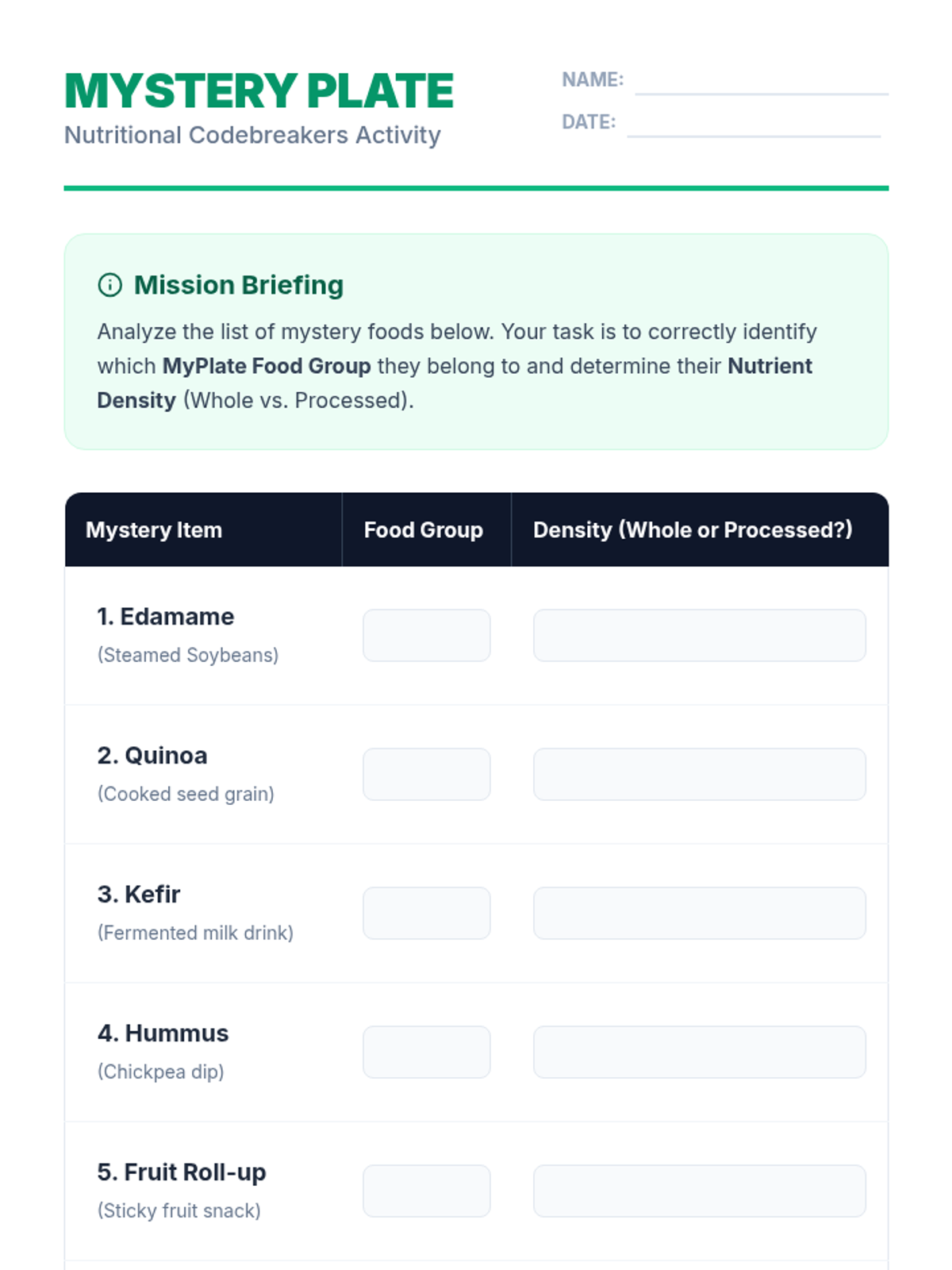
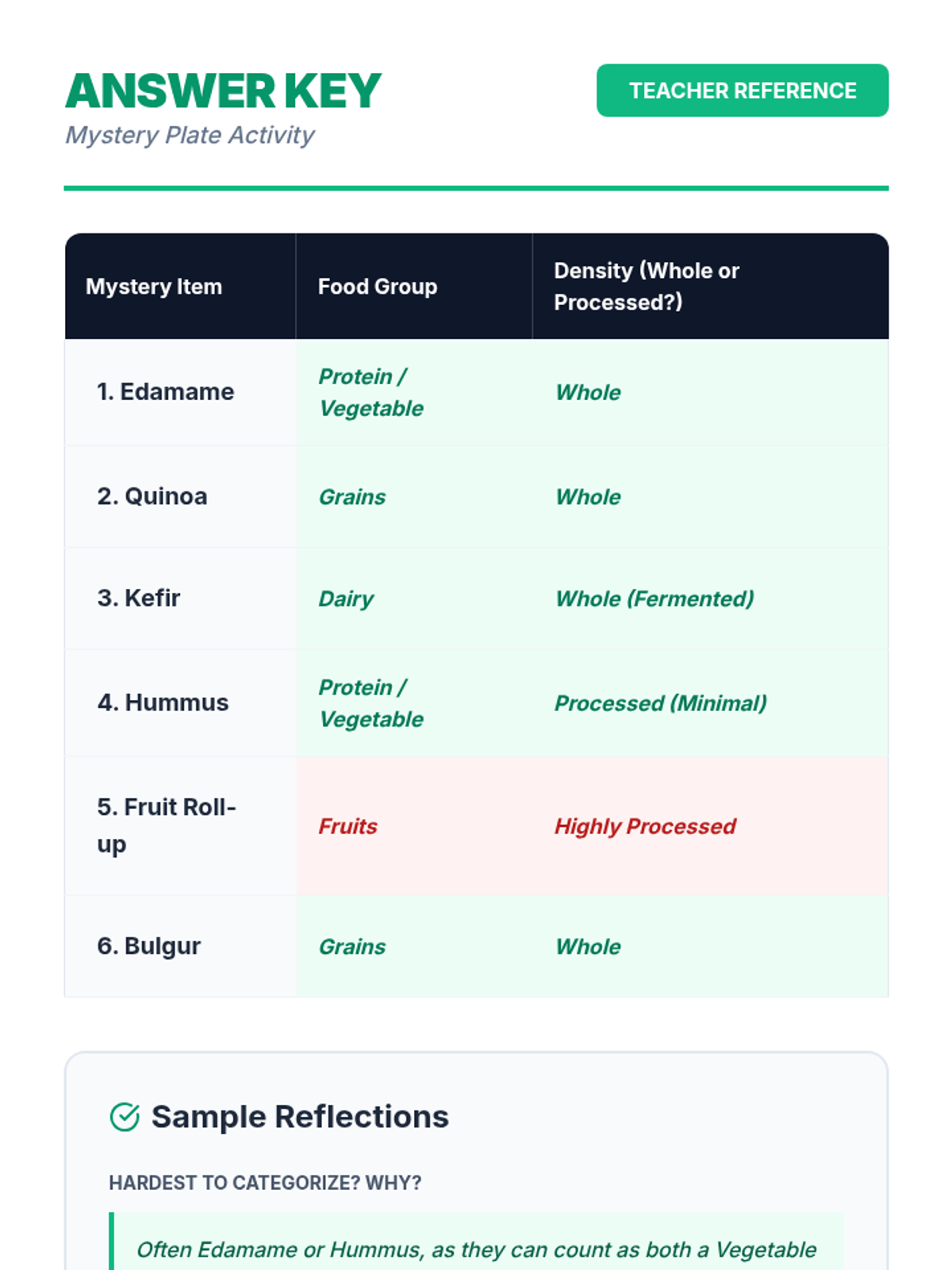
This sequence guides students through an in-depth exploration of the five major food groups and their specific physiological benefits for the adolescent body. Students progress from identifying food classifications to analyzing food labels and caloric density, culminating in the creation of a balanced, 3-day meal plan tailored to specific energy needs.
Students explore the five major food groups to understand how nutrients fuel the body. They move from basic classification to analyzing macronutrients and micronutrients, estimating portion sizes, and ultimately designing balanced meal plans.
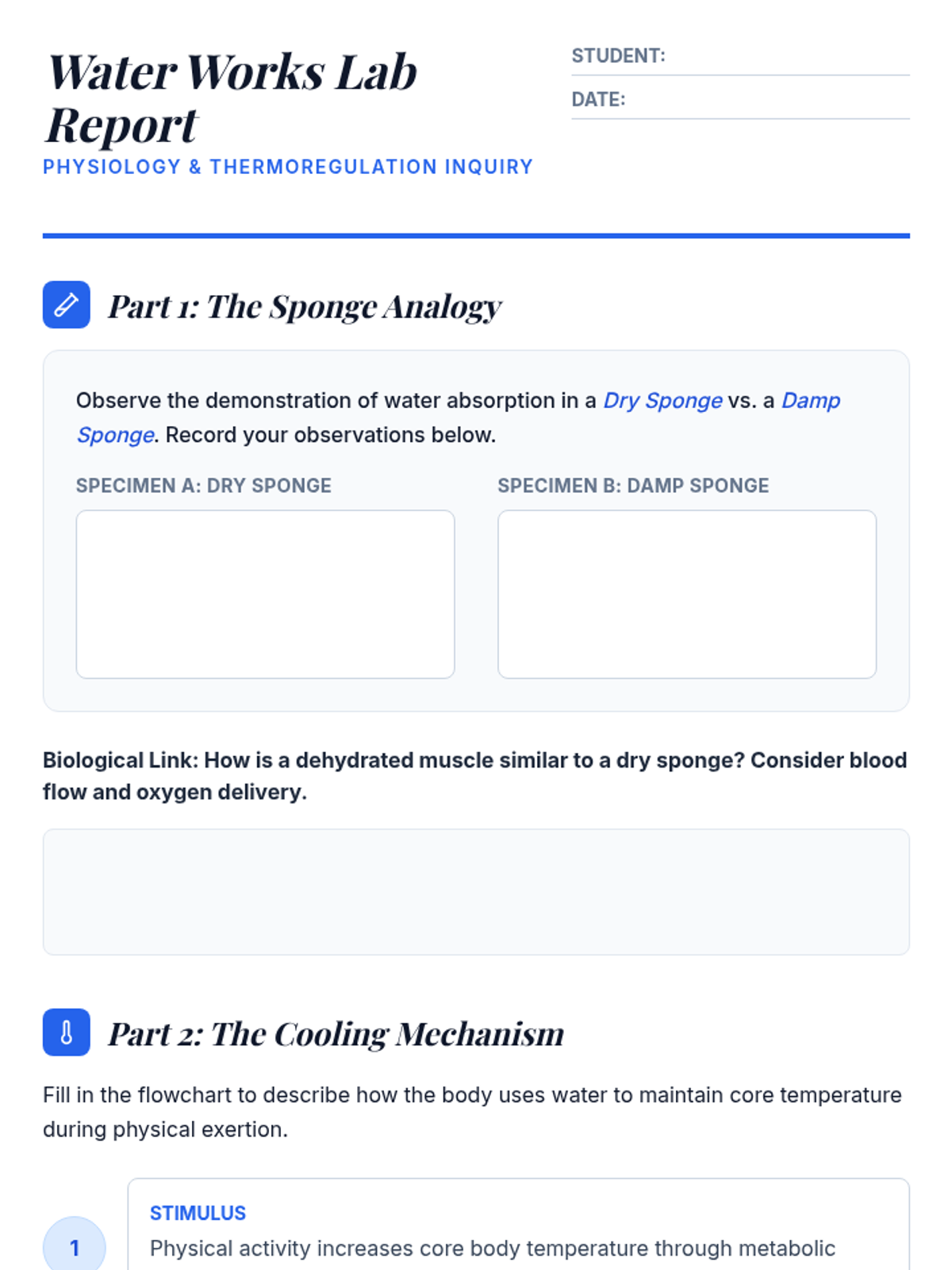
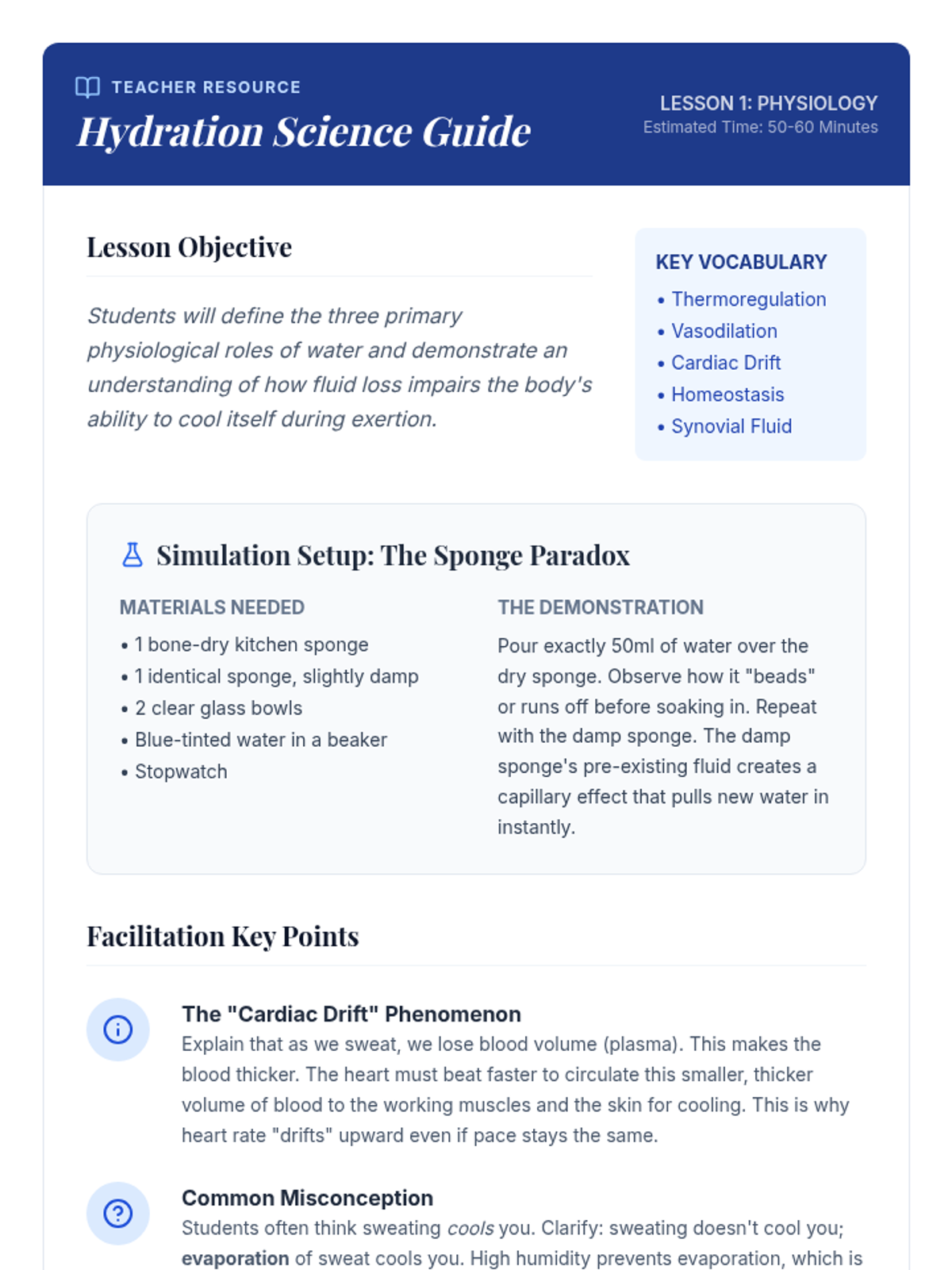
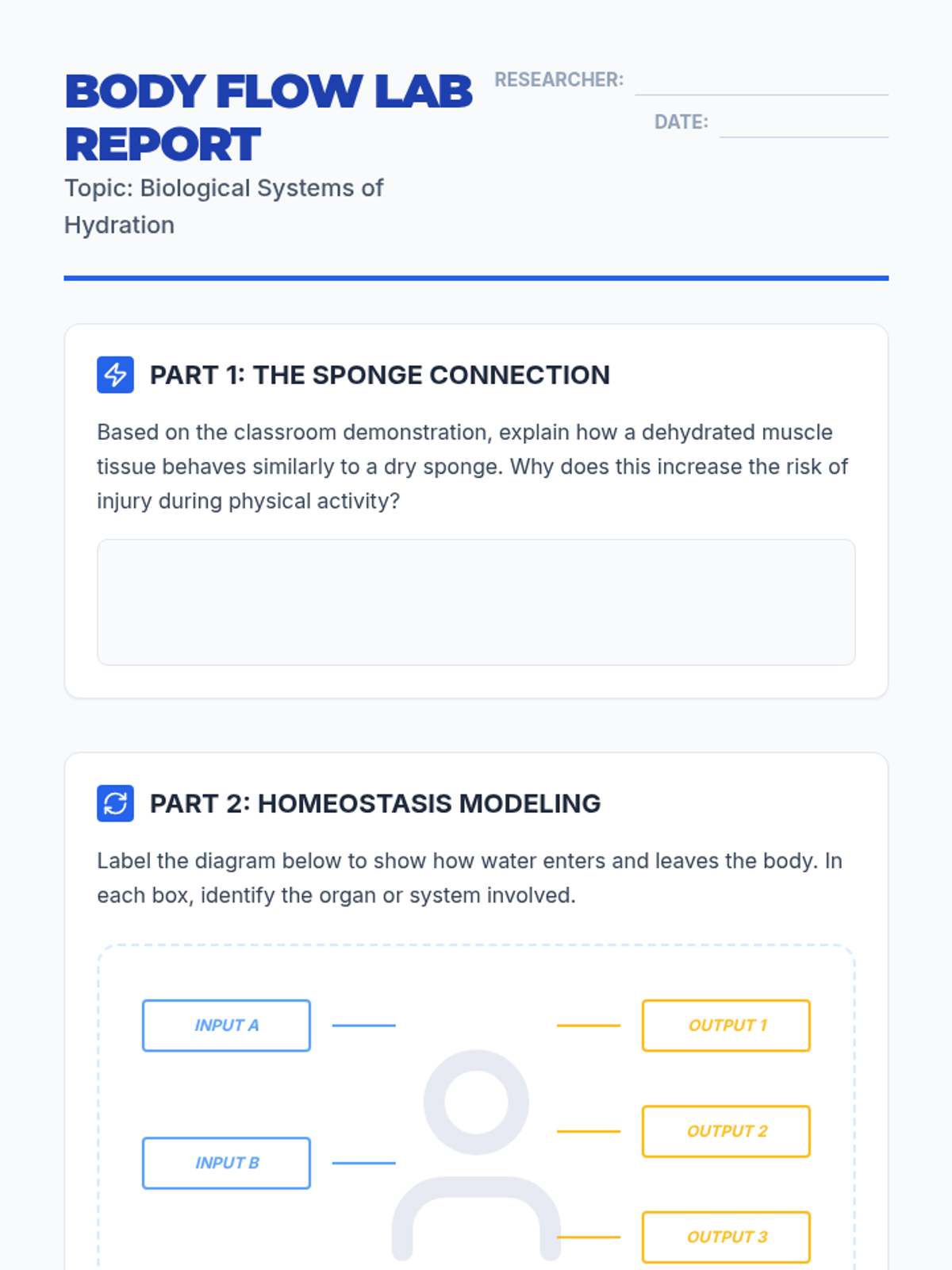
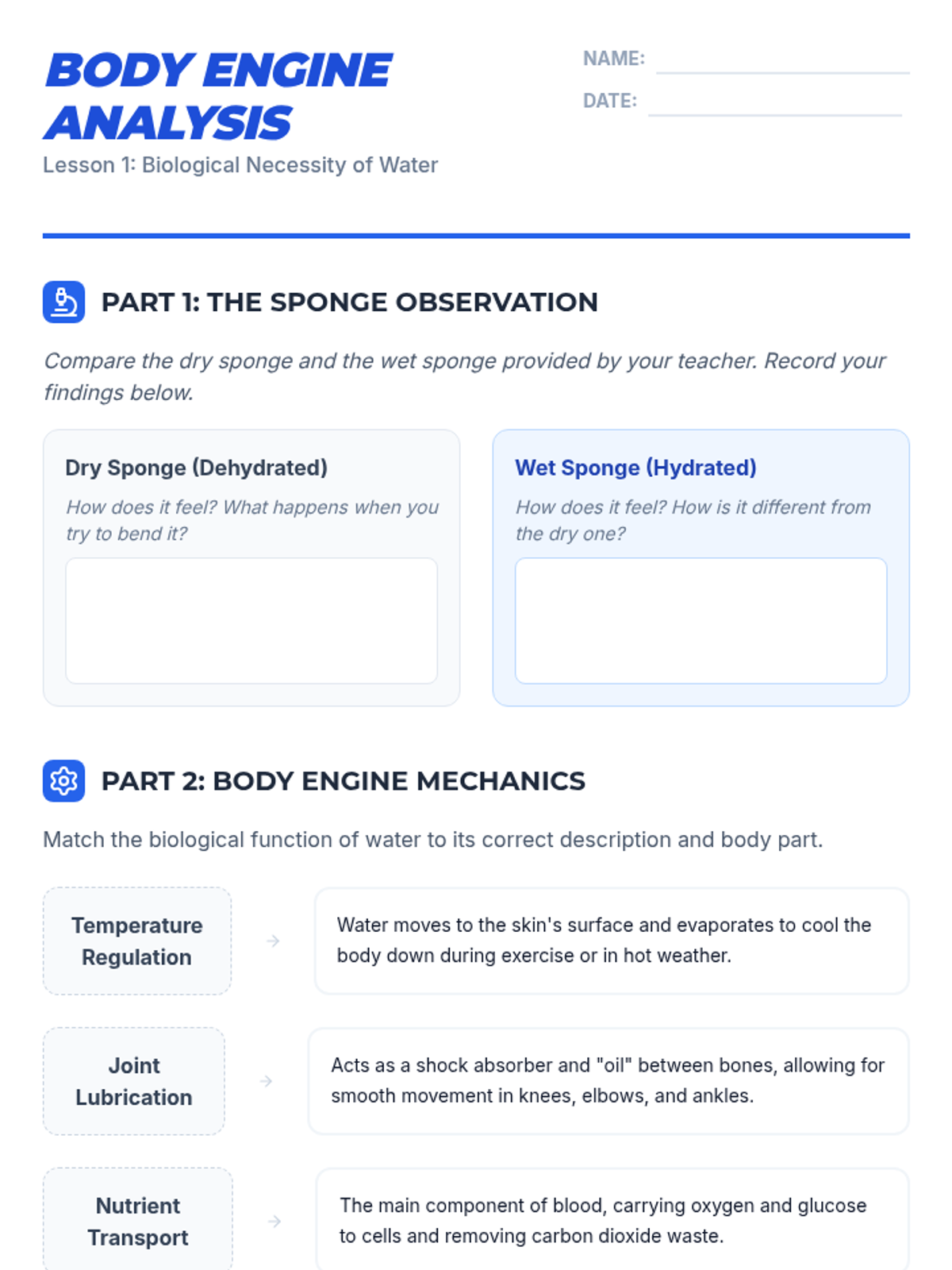
This sequence investigates the biological necessity of water and the physiological consequences of fluid imbalance, moving from biological mechanisms to practical application and personalized hydration planning.
Students investigate the critical role of water in maintaining homeostasis and maximizing physical performance. They explore physiological mechanisms, analyze dehydration symptoms through case studies, compare water with electrolyte beverages, and design personalized hydration strategies.
A comprehensive 6th-grade unit exploring the biological necessity of hydration, symptom recognition, beverage analysis, and personalized fluid intake planning. Students move from physiological understanding to practical daily strategies for maintaining optimal health and performance.
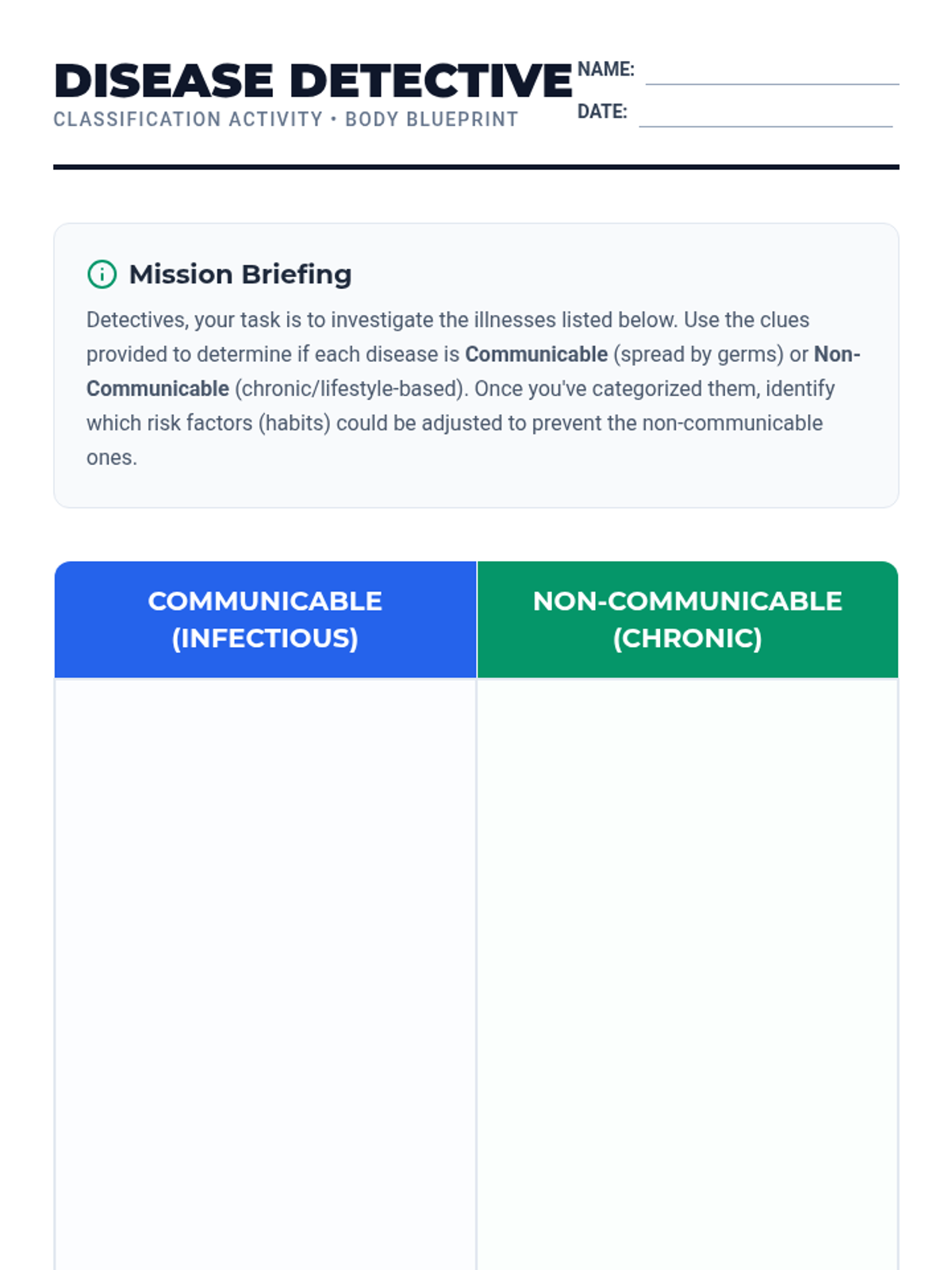
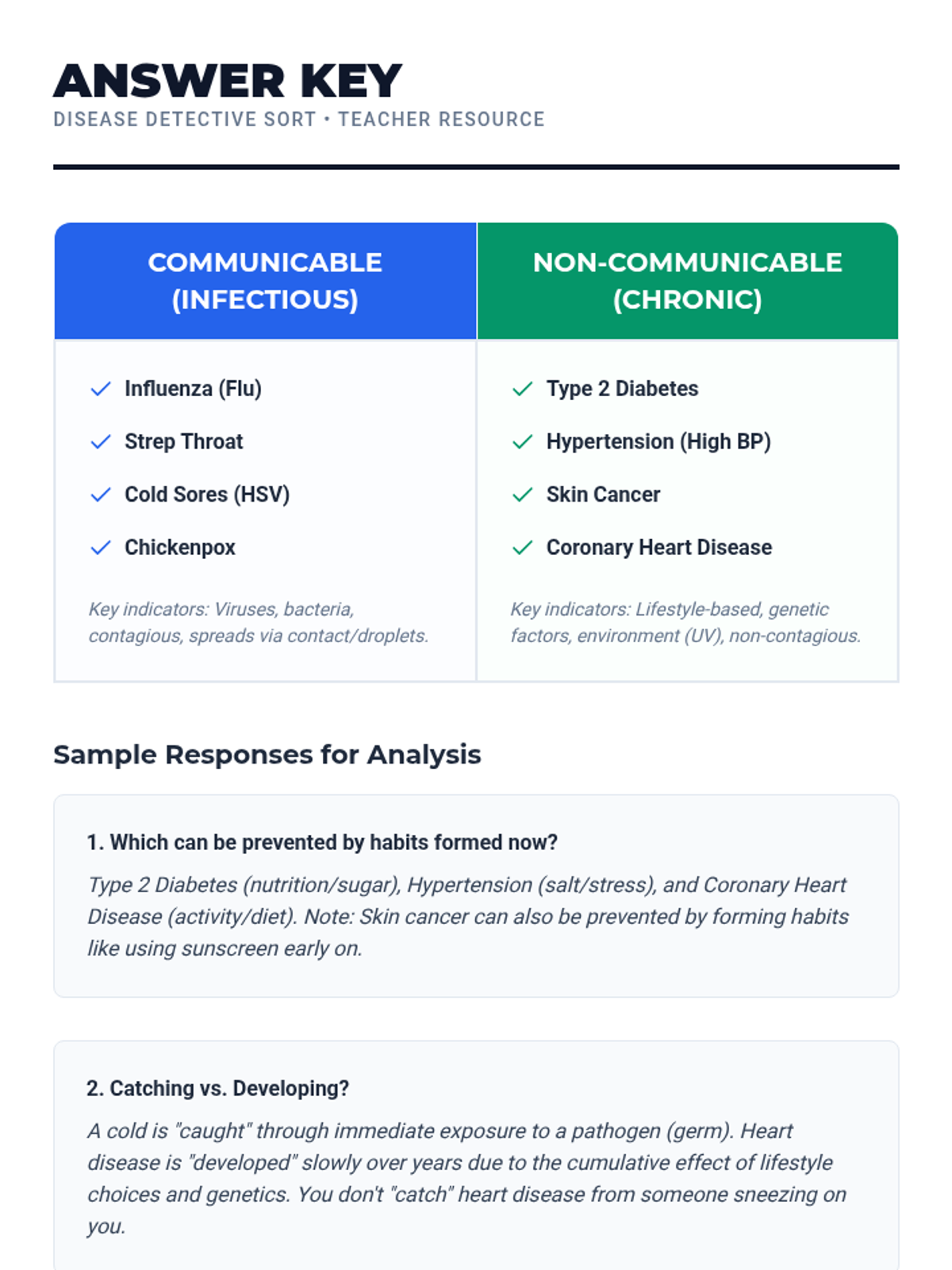
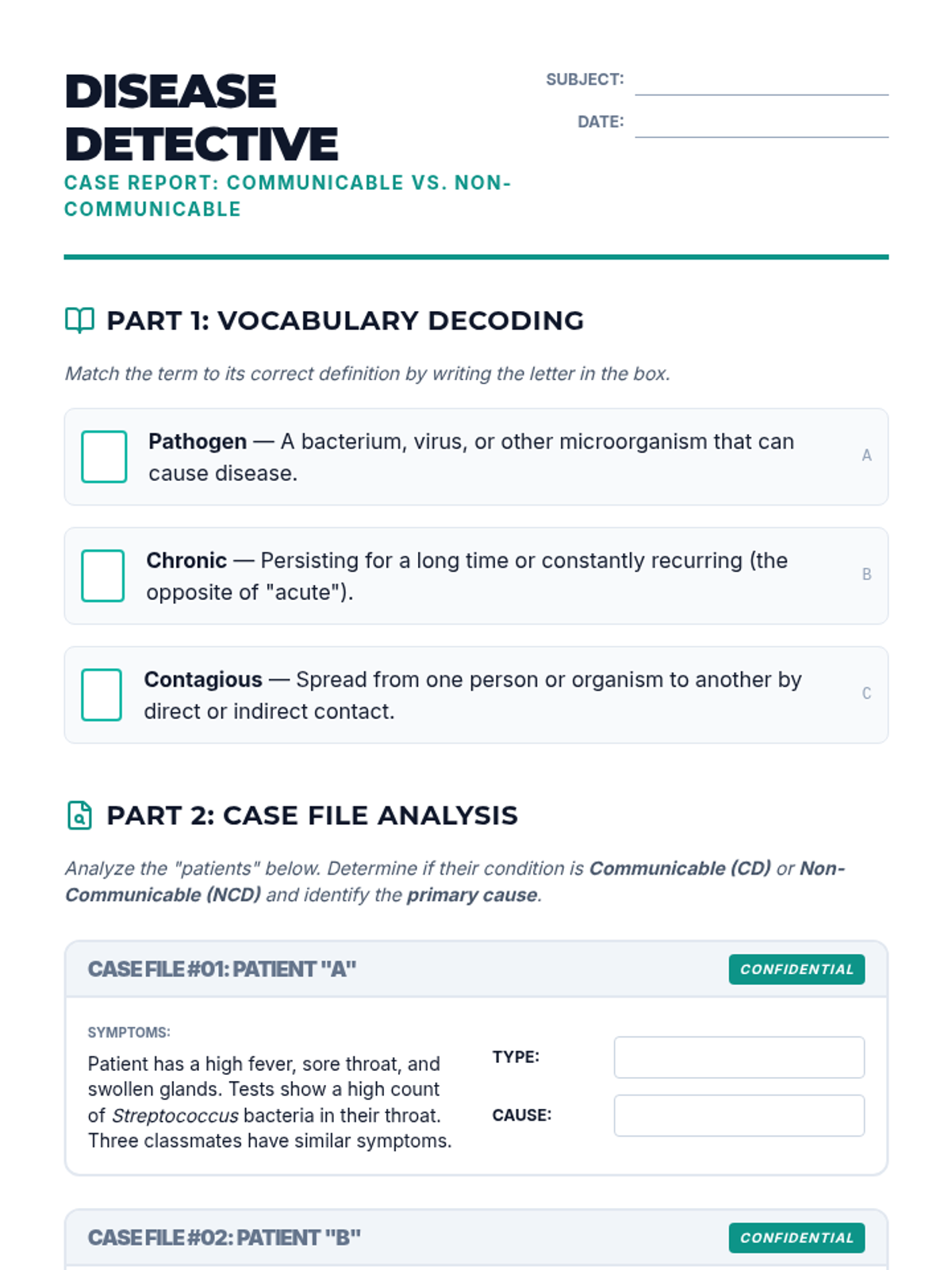
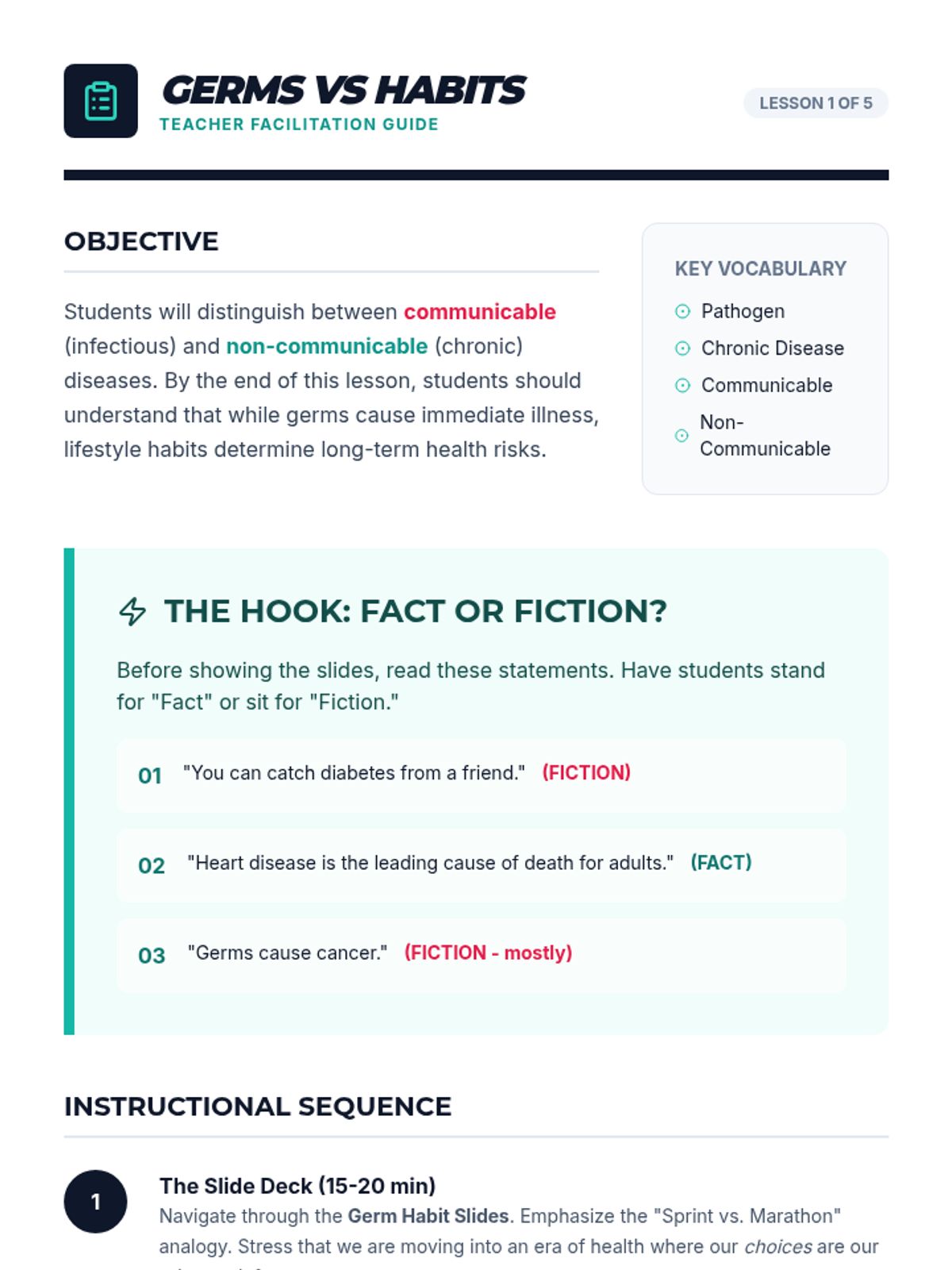
A comprehensive 7th-grade health sequence that explores the differences between infectious and chronic diseases, emphasizing how lifestyle choices in adolescence—nutrition, activity, sleep, and stress management—shape long-term wellness and prevent non-communicable diseases.
This sequence explores the prevention of non-communicable, chronic diseases through lifestyle choices, shifting focus from germs to long-term habits. Students analyze nutrition, sleep, activity, and stress to create a personalized wellness plan for lifelong health.
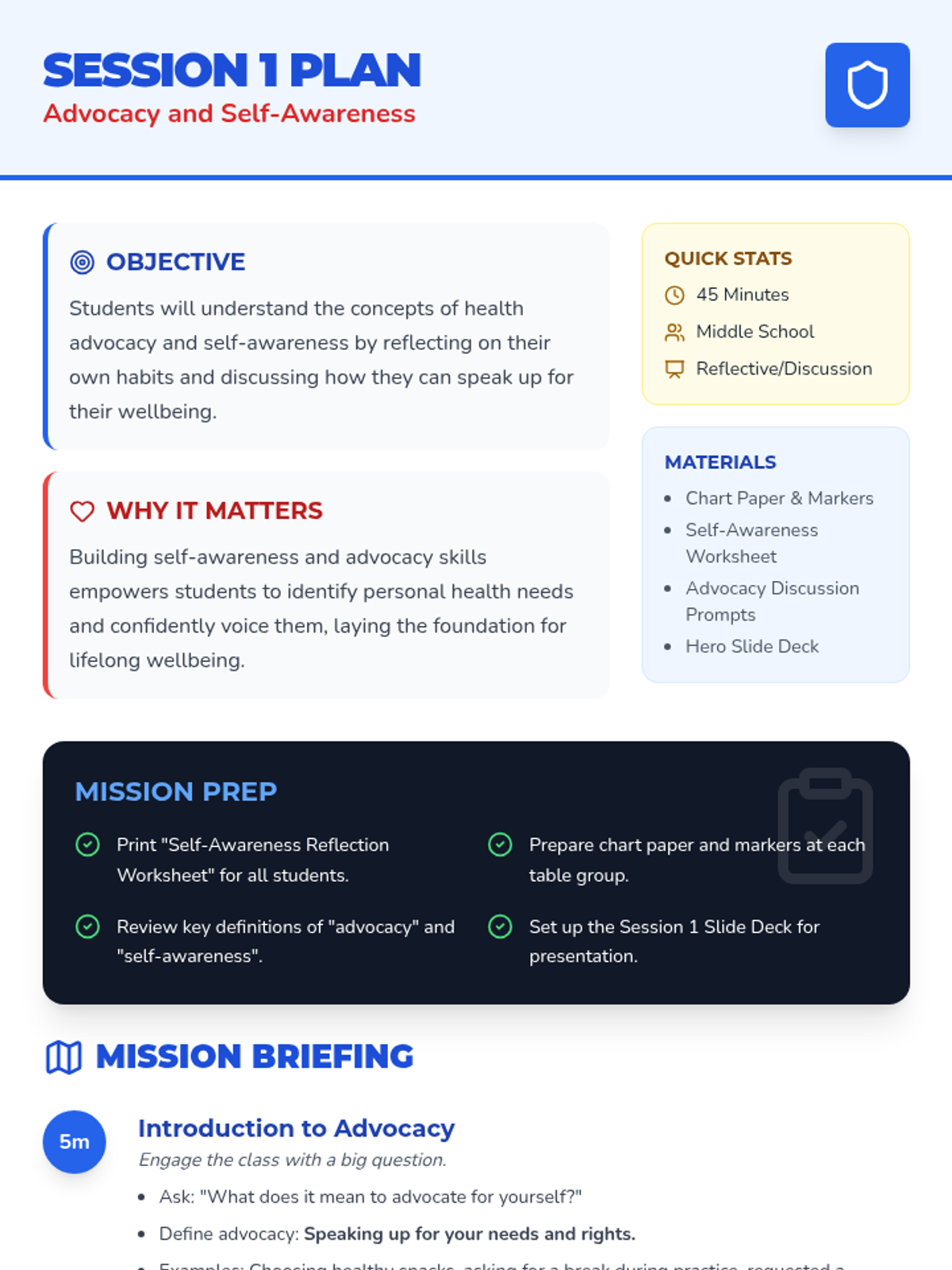
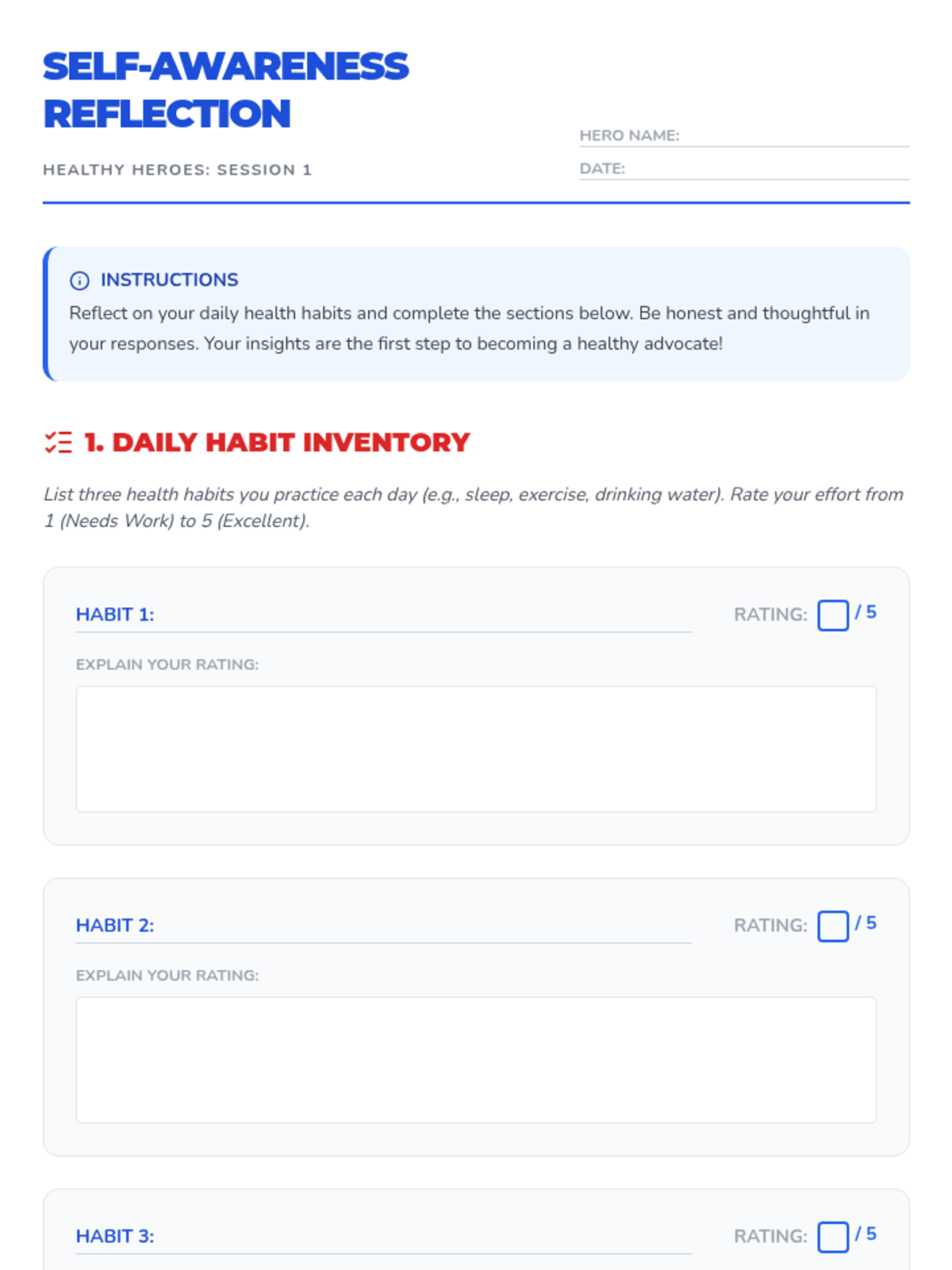
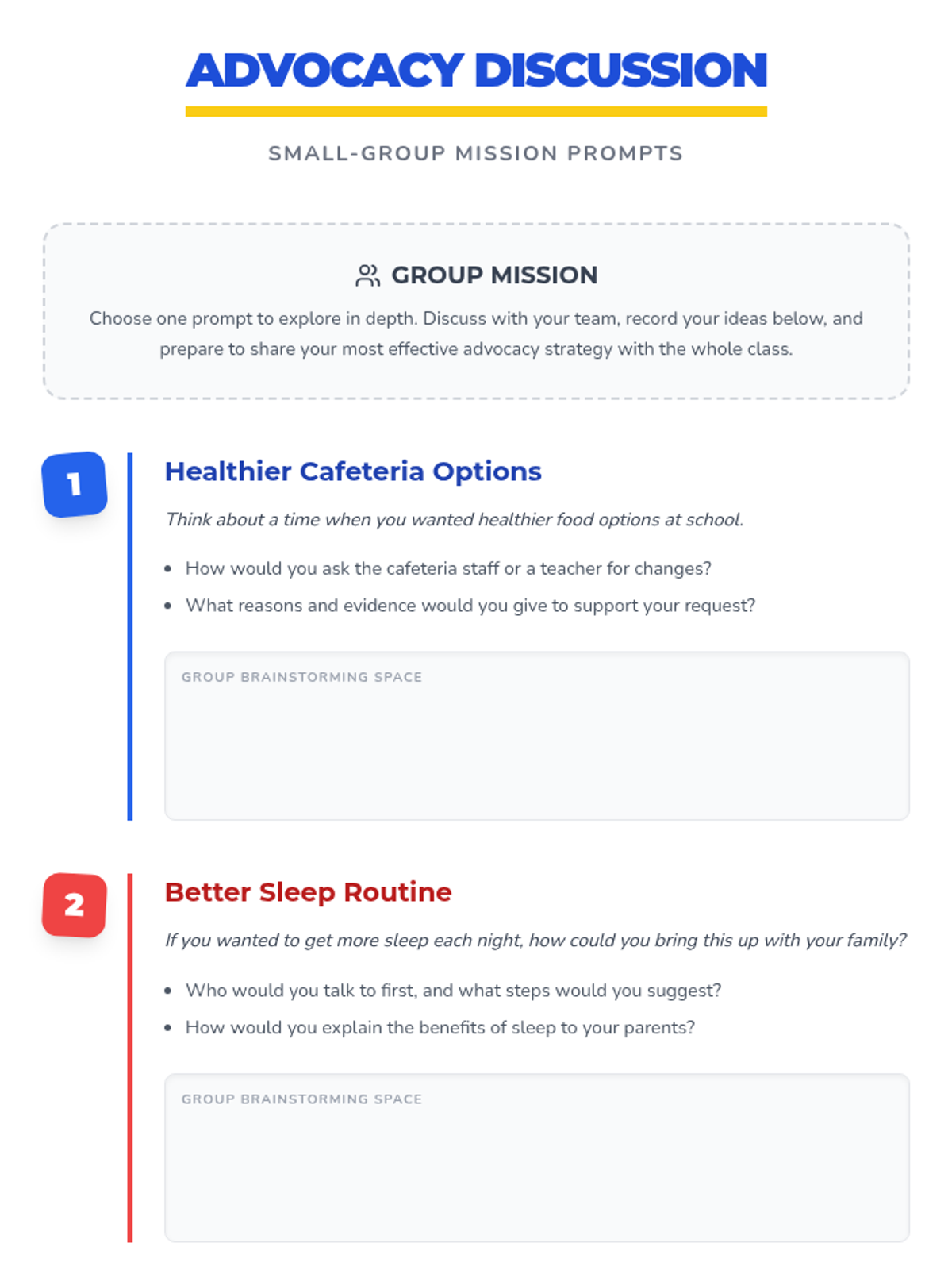
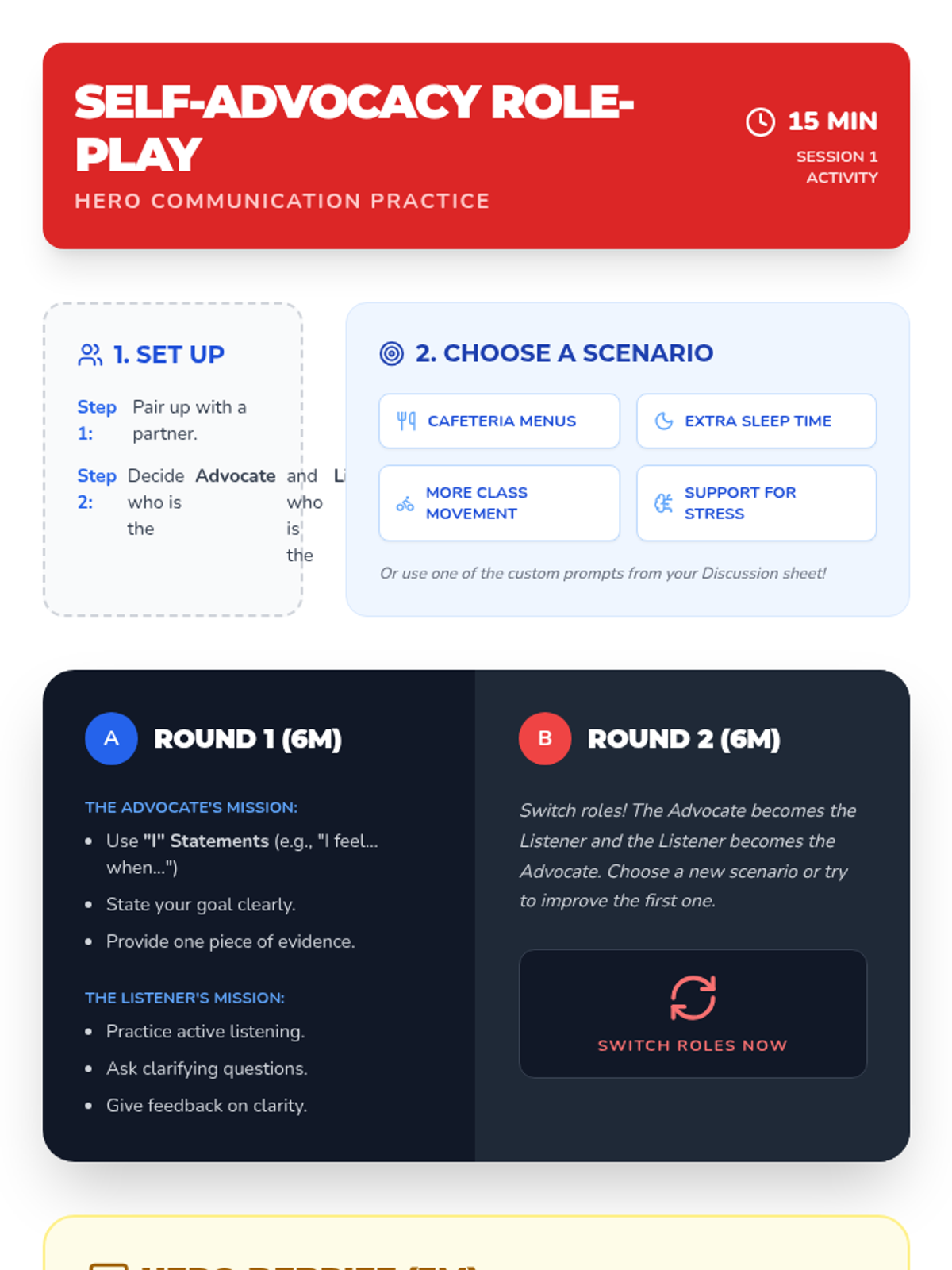
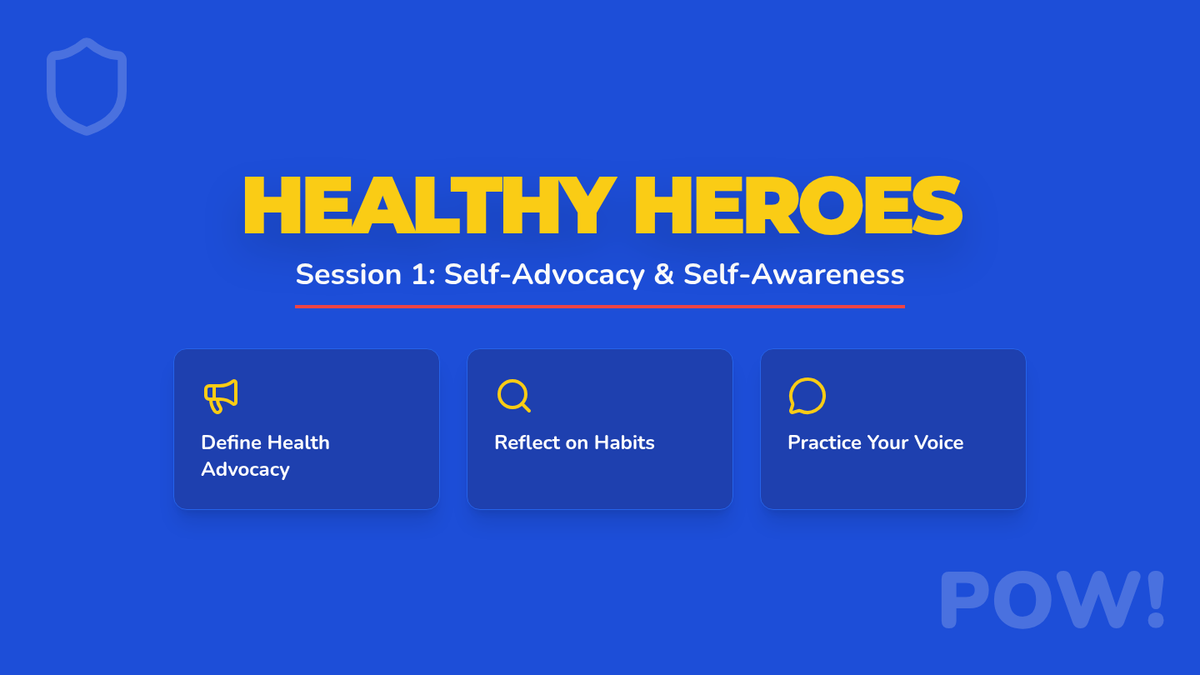
A comprehensive 8-session health advocacy program for middle schoolers, focusing on self-awareness, nutrition, fitness, mental health, sleep, and community influence. Students develop SMART goals and practical advocacy skills to become 'Healthy Heroes' in their own lives and communities.
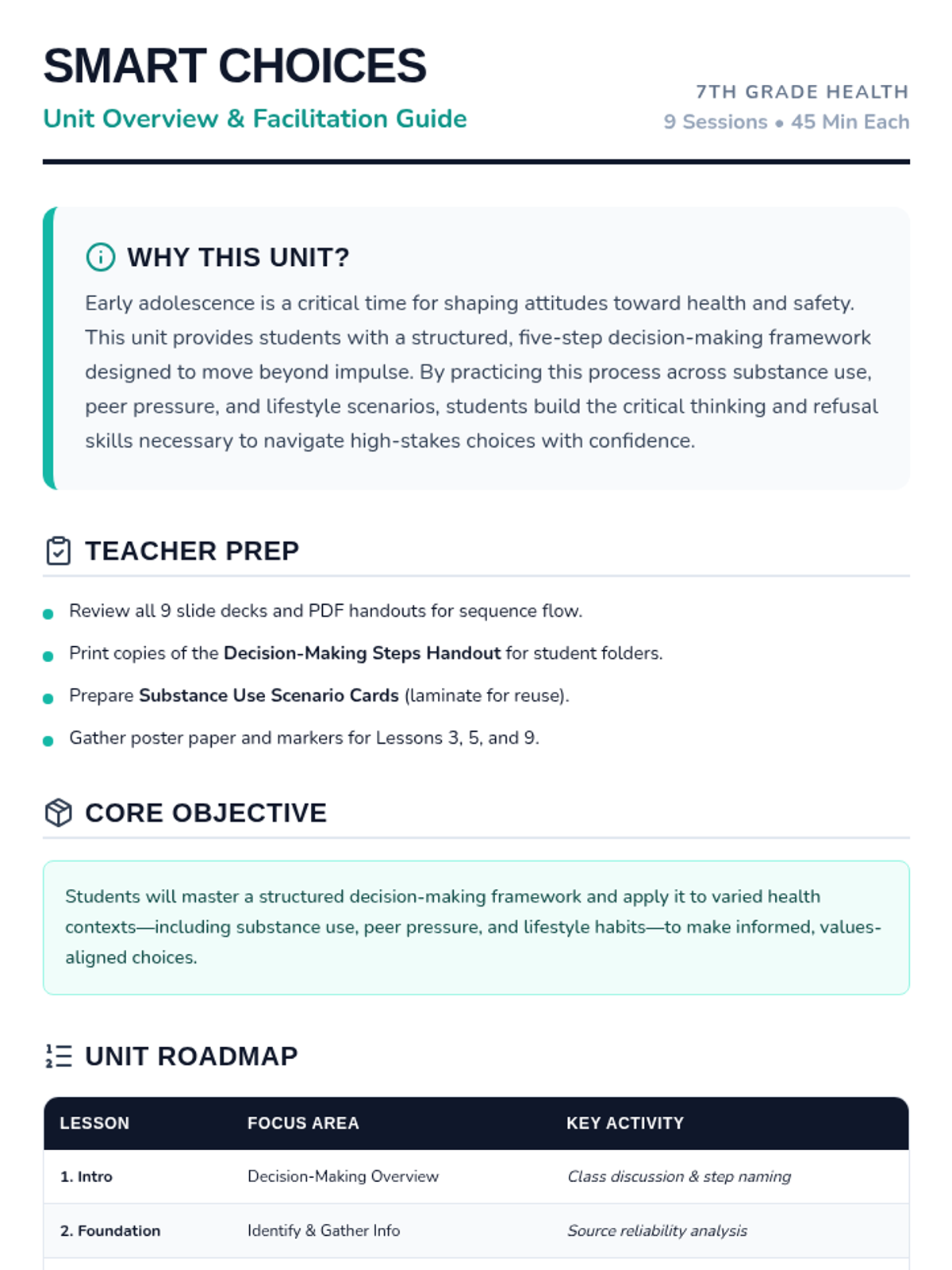
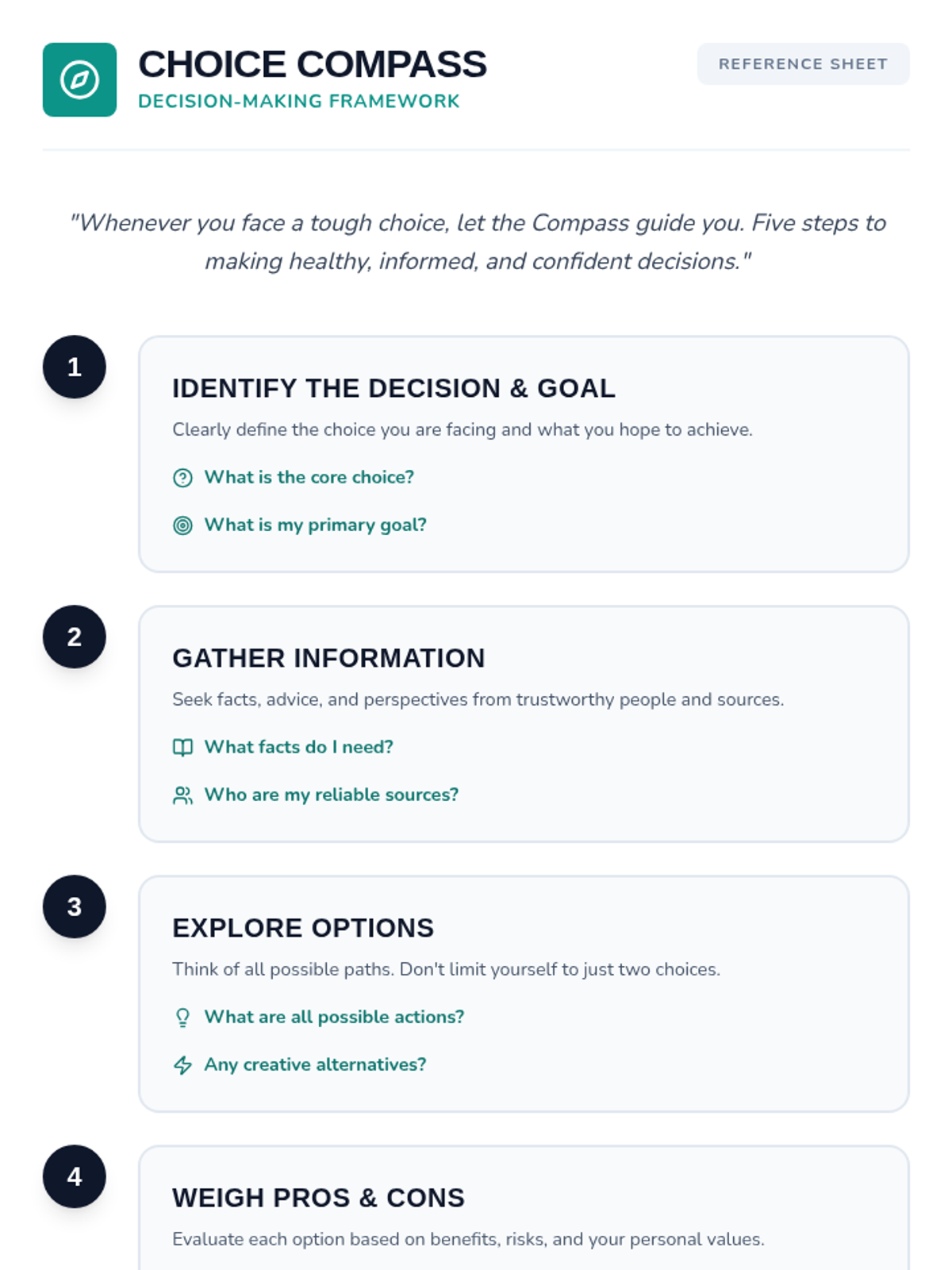
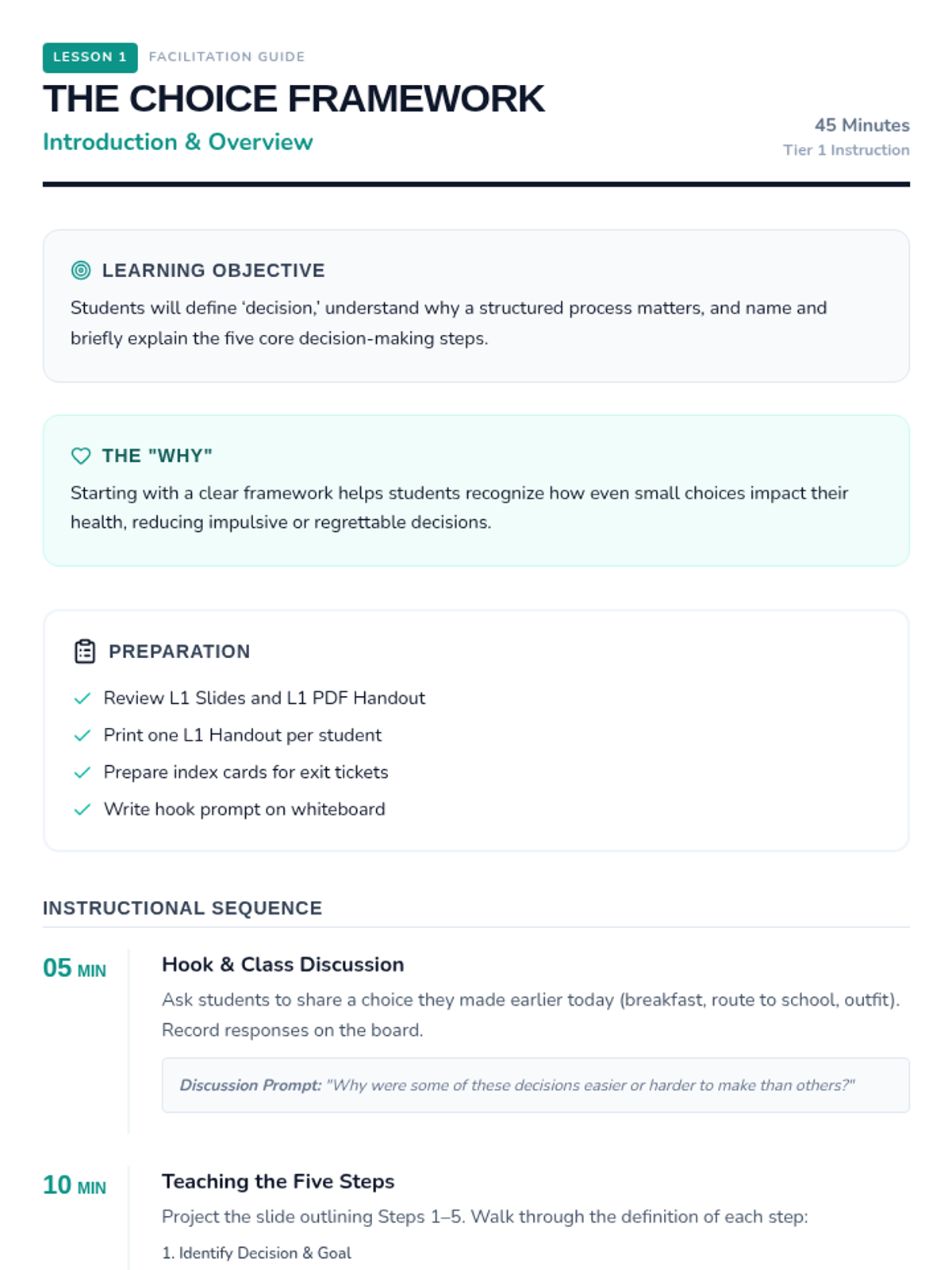
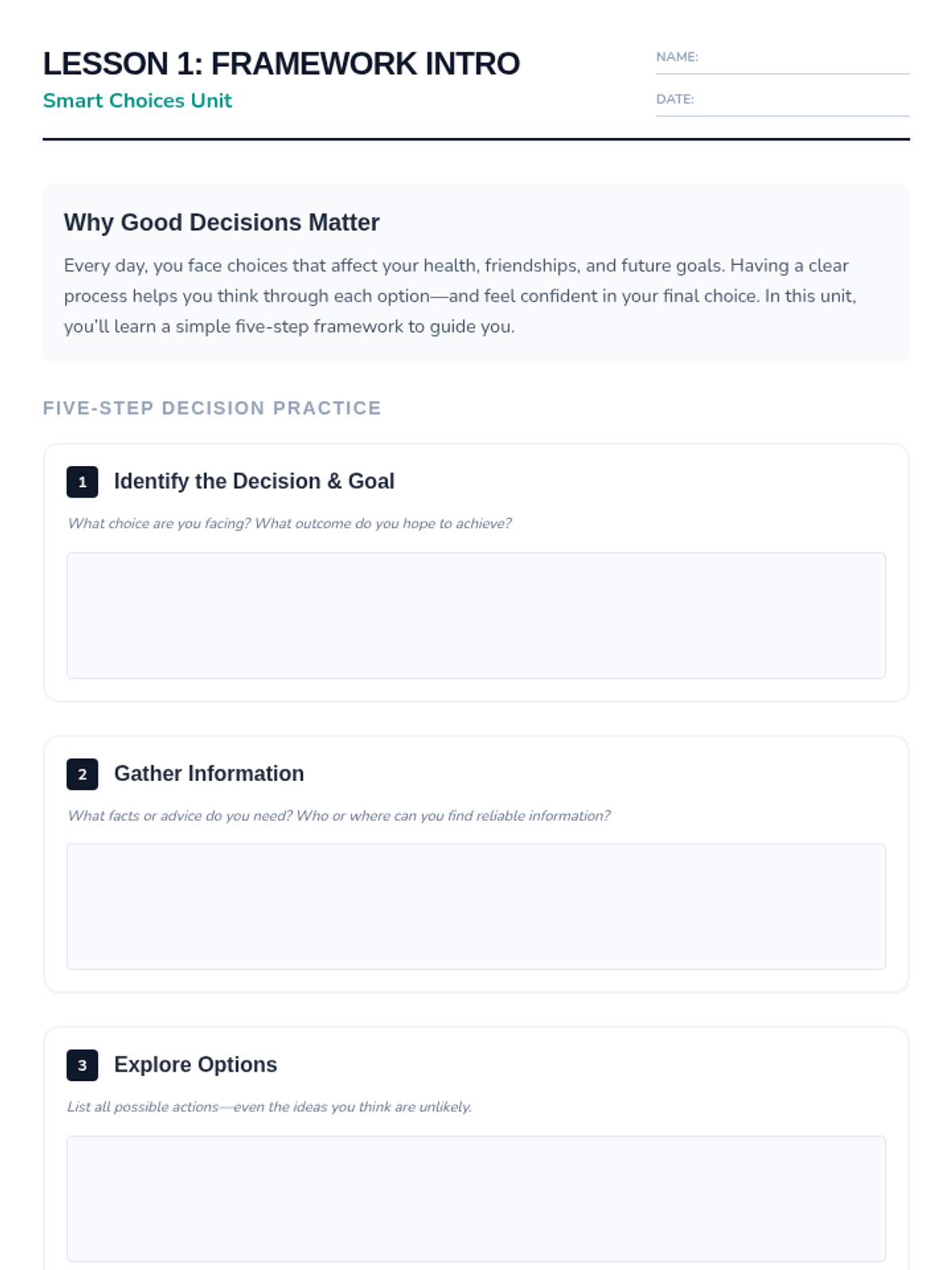
A comprehensive 9-lesson 7th-grade health unit focusing on a structured five-step decision-making process applied to substance use, peer pressure, and healthy lifestyle habits.
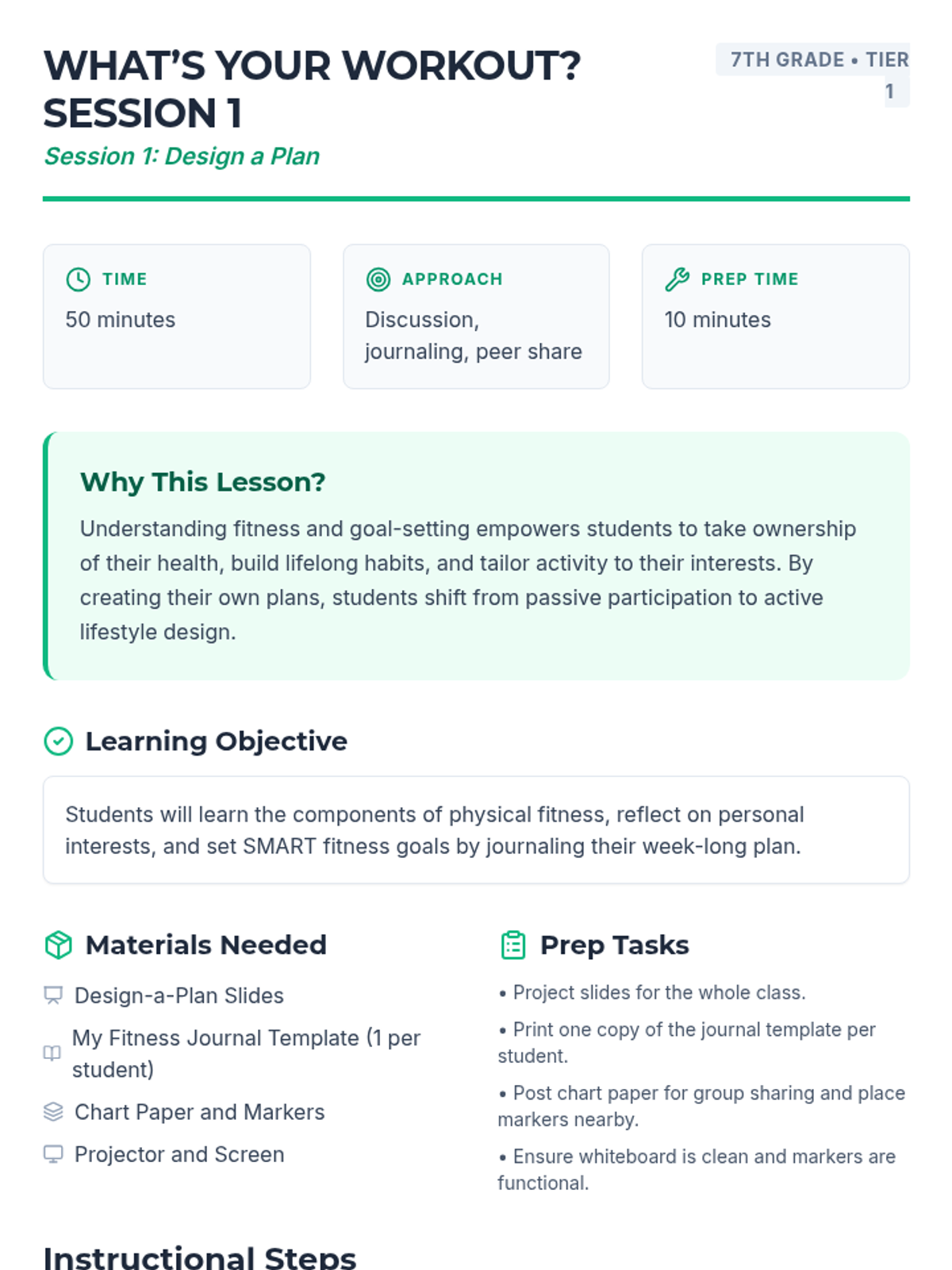
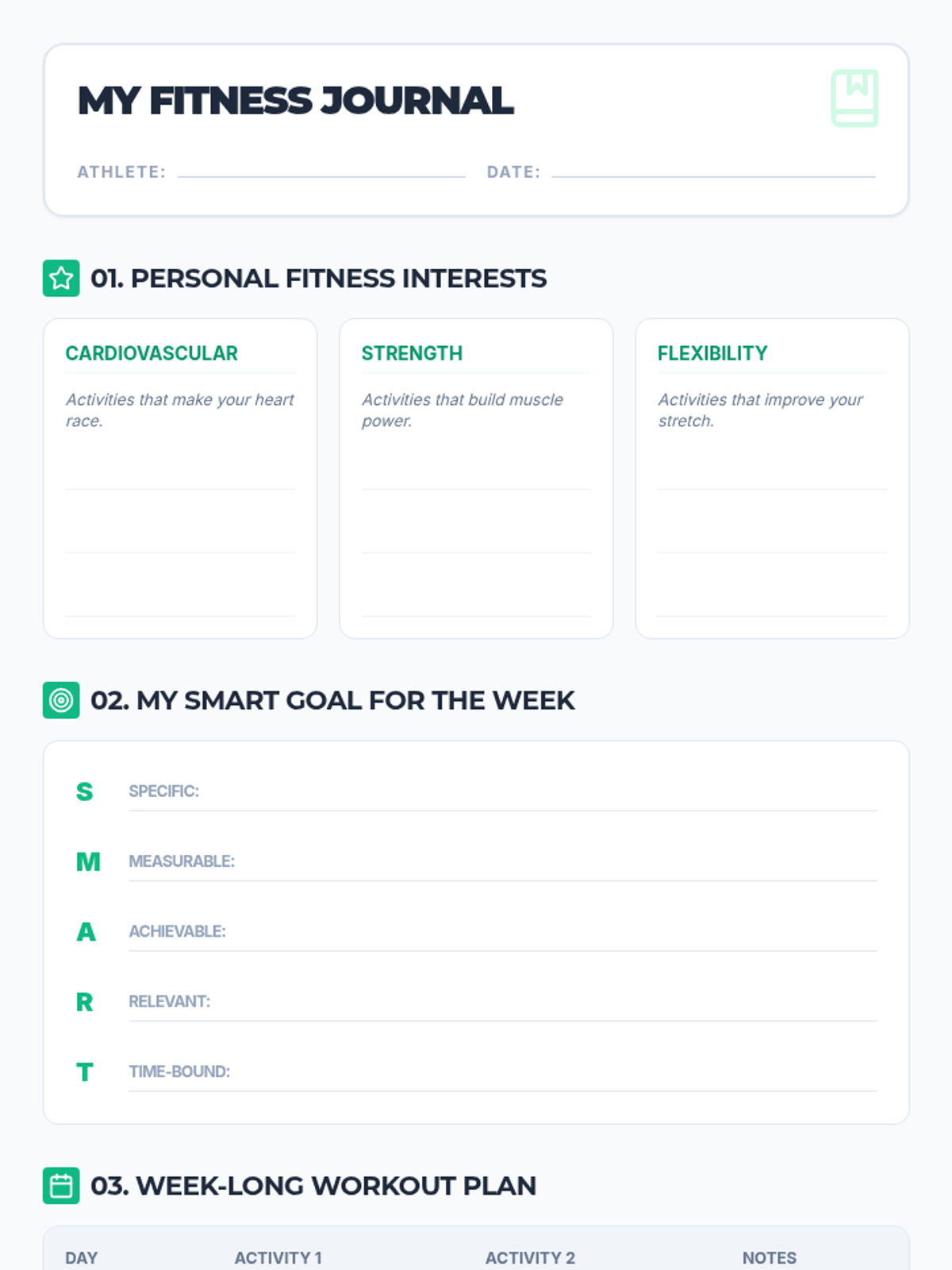
A 2-session sequence for seventh graders to explore physical fitness and nutrition. Students create personalized week-long workout plans, pair them with healthy meals, and practice goal-setting and peer feedback.
A comprehensive 6th-grade health sequence exploring the physiological effects of stimulants on the central nervous system, from caffeine to high-potency substances. Students investigate anatomy, neurotransmission, and the cycle of addiction through hands-on activities and scientific modeling.
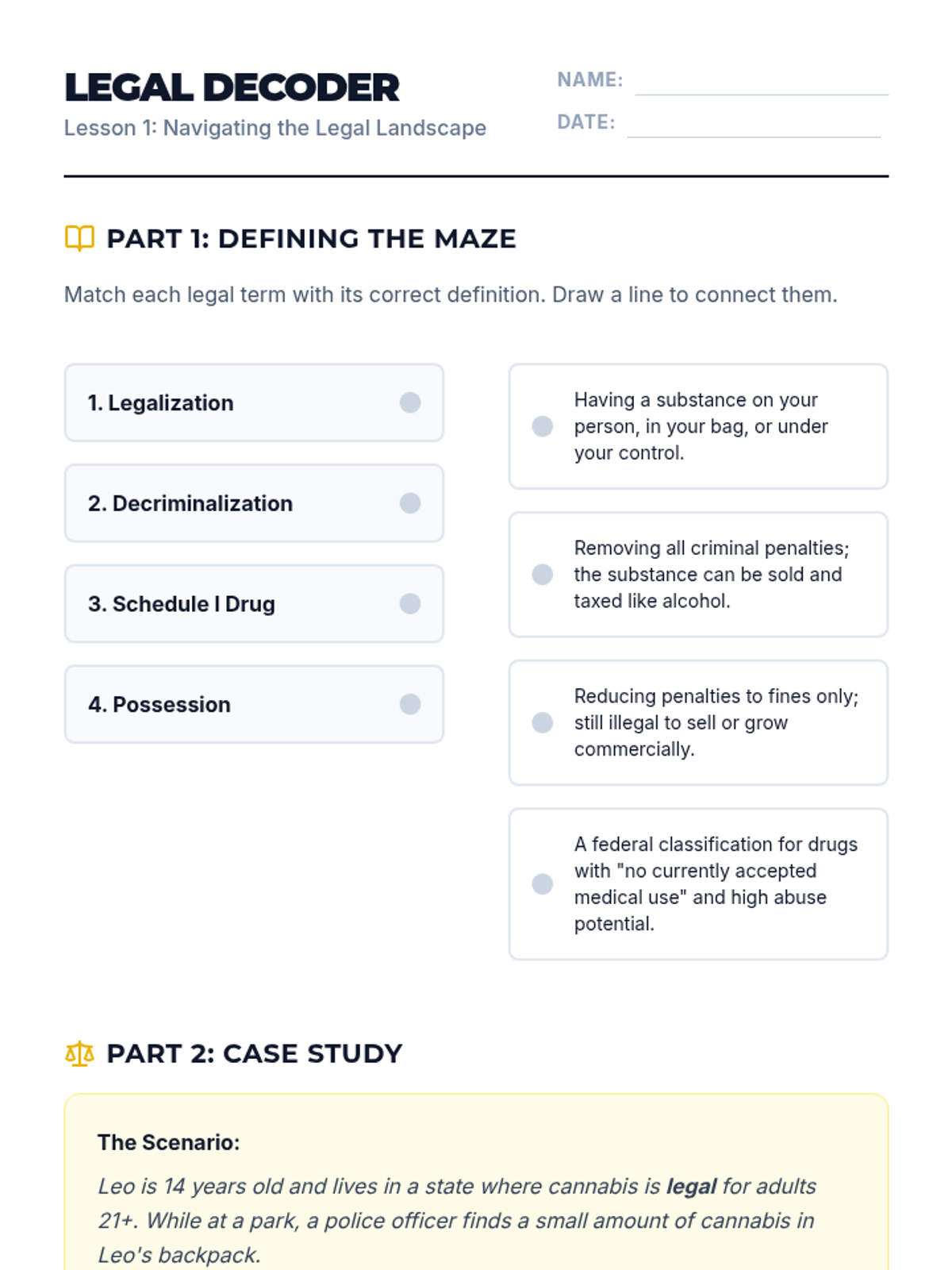
A comprehensive 5-lesson unit for 7th-grade students exploring the legal, physical, and safety implications of cannabis use, focusing on harm reduction and health literacy.
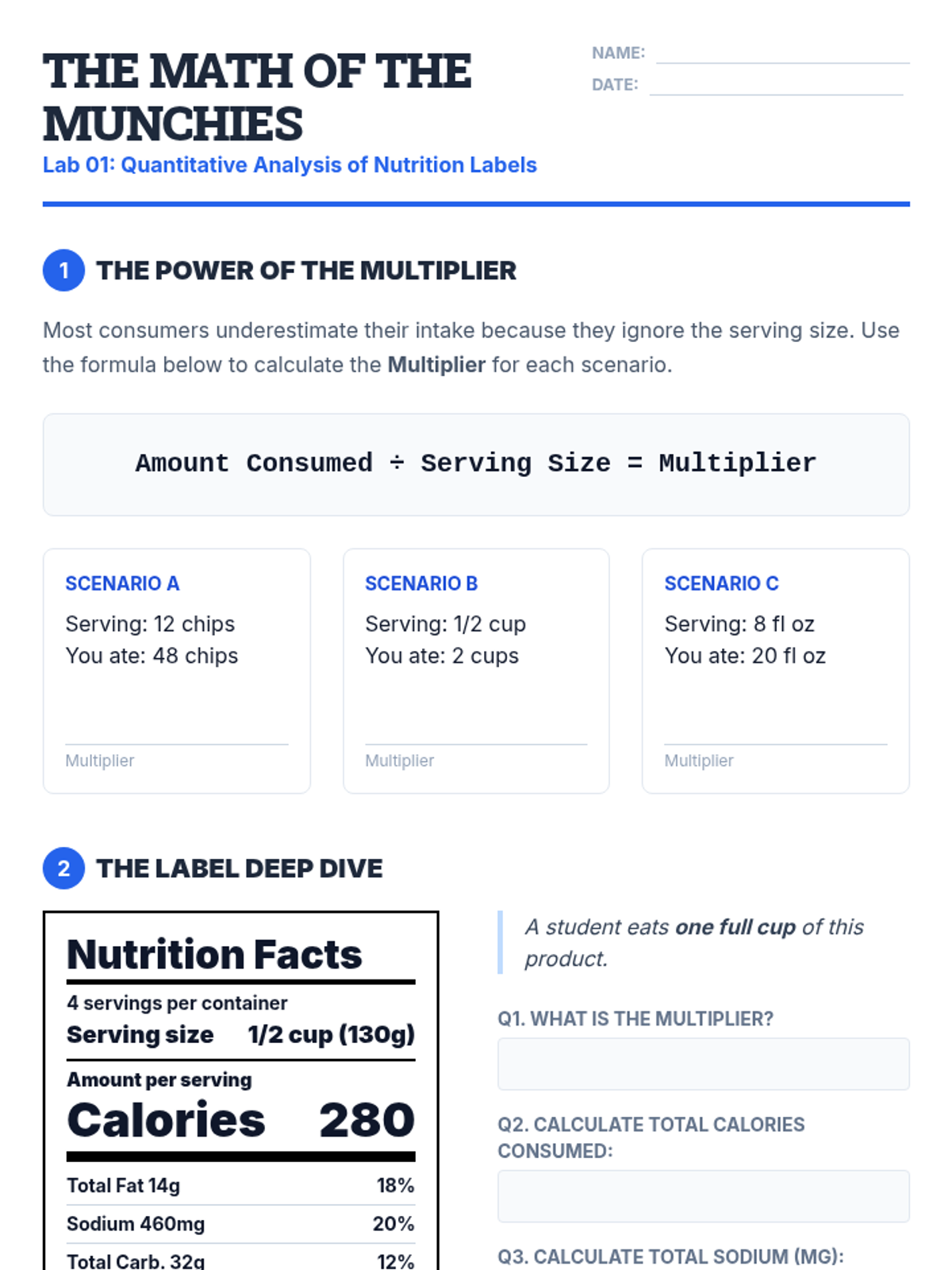
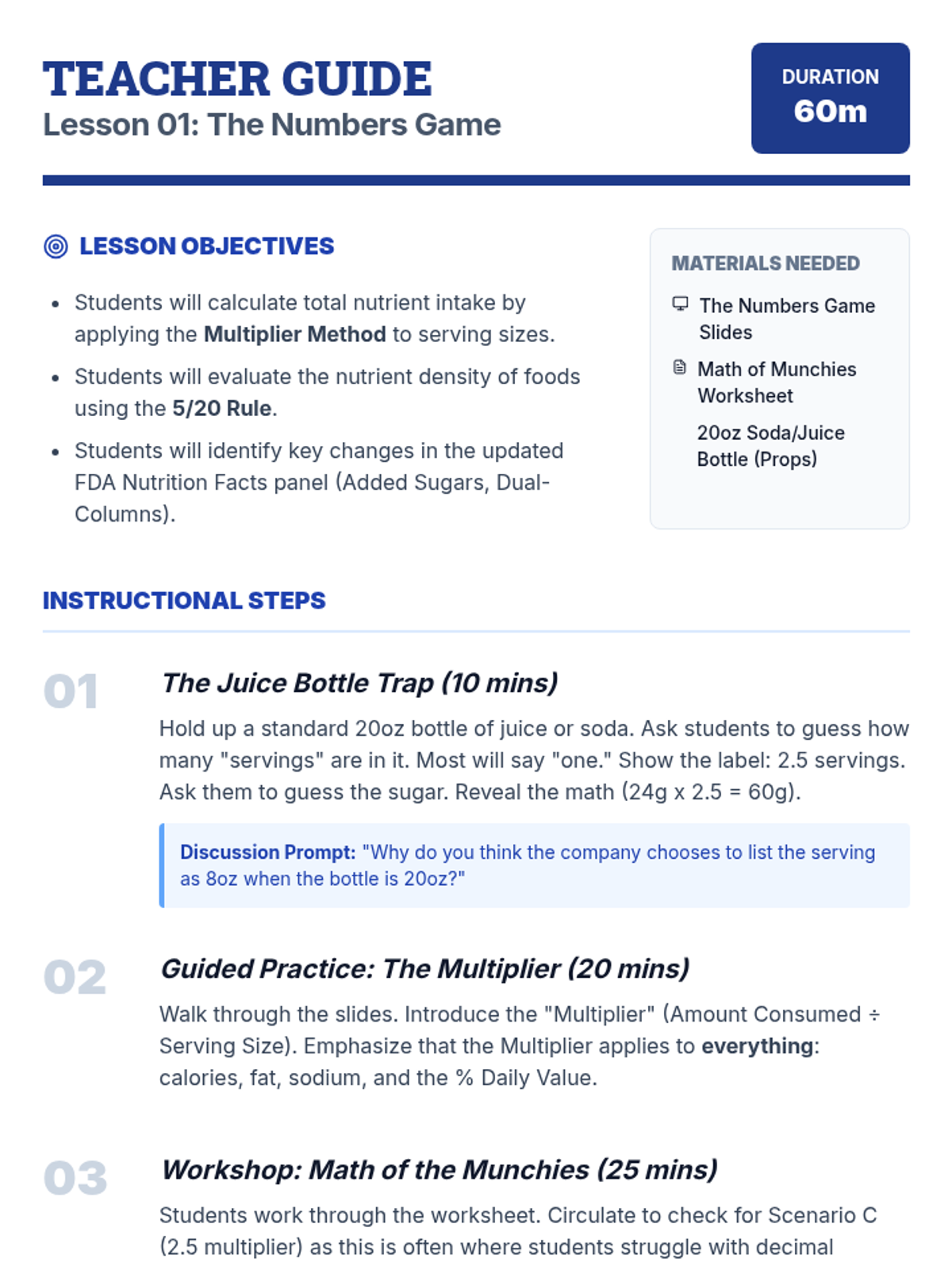
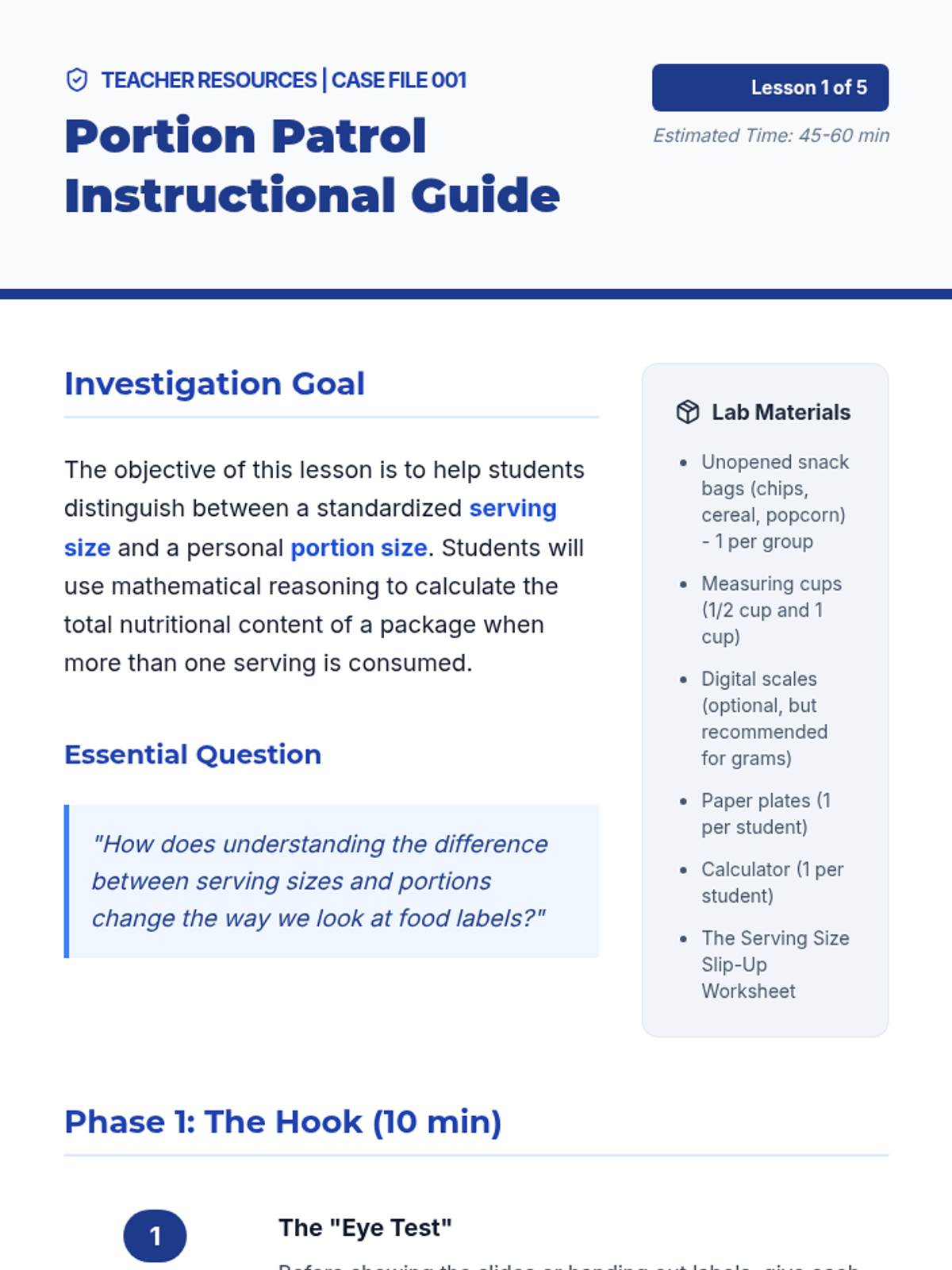
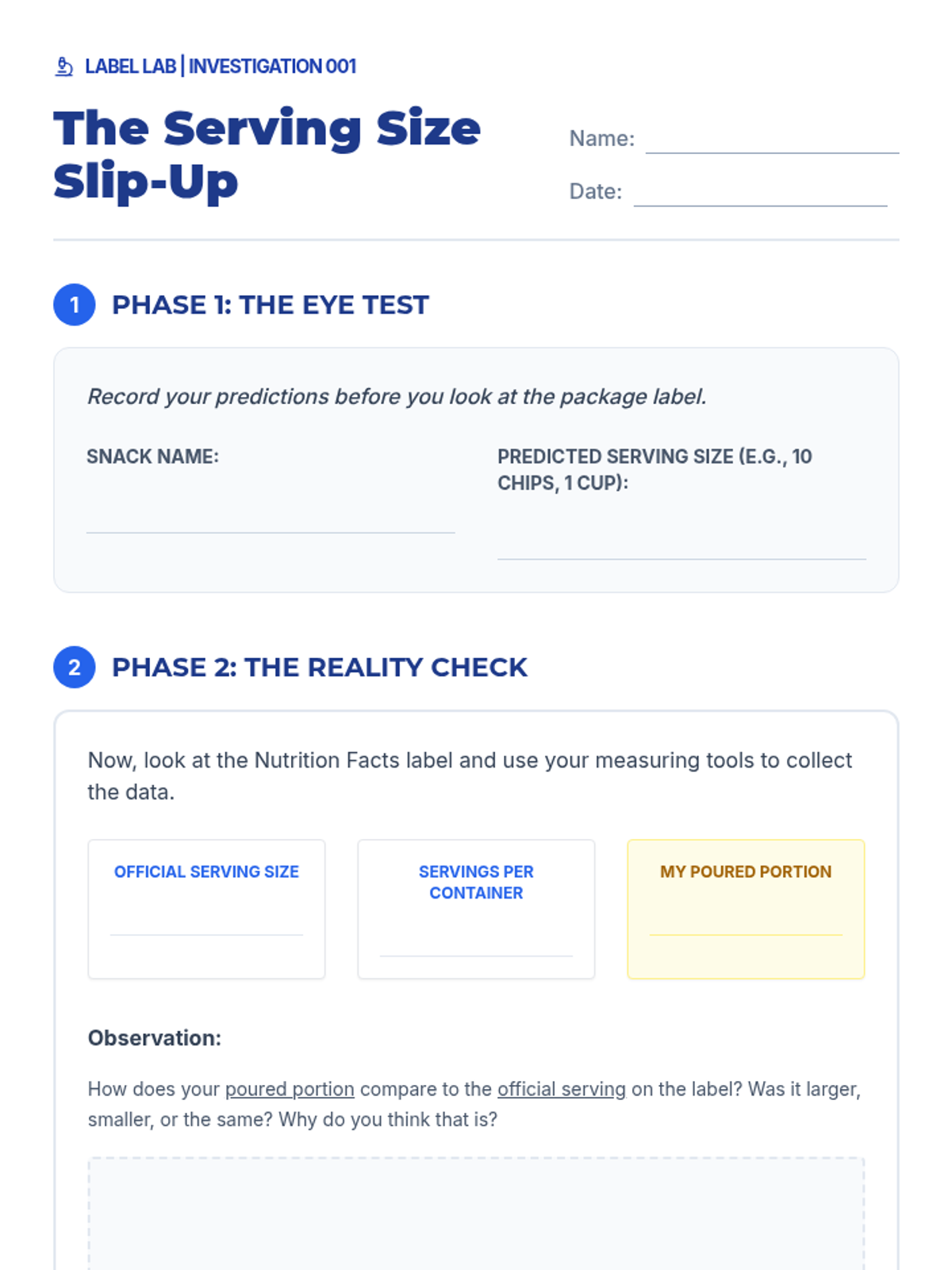
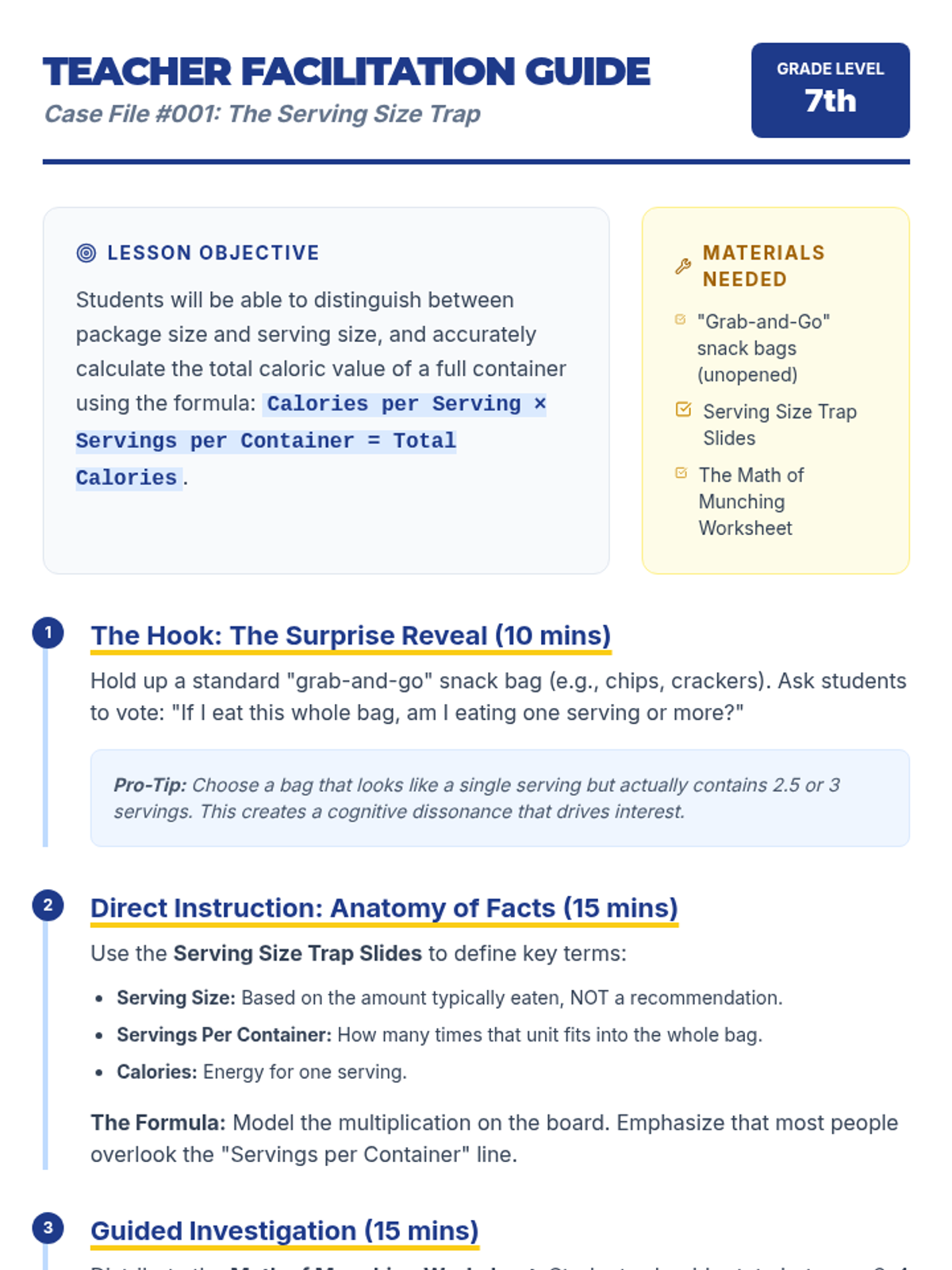
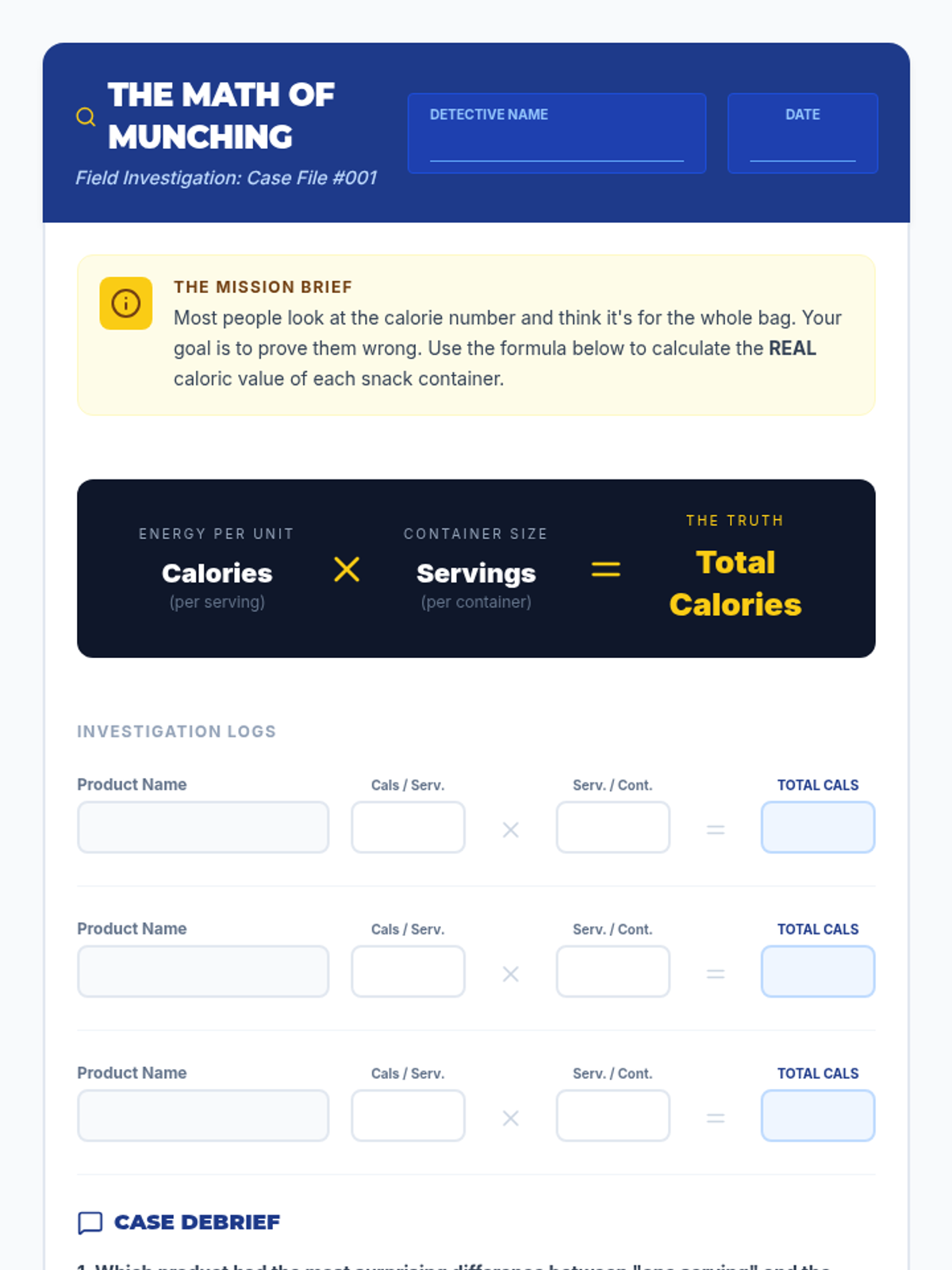
A 5-lesson inquiry-based sequence for 7th graders to master the art of reading and interpreting Nutrition Facts panels. Students progress from basic serving size math to analyzing complex ingredient lists and conducting comparative nutritional audits.