Fundamental concepts of emotional intelligence, stress reduction, and relaxation exercises. Develops skills for healthy relationships, digital balance, and resilience while establishing pathways for help-seeking and support systems.
A masterclass slide deck for the Zen Chair Masterclass updated with two new practice videos and optimized font sizes (minimum 24px) for accessibility. Includes restorative and functional mobility components.
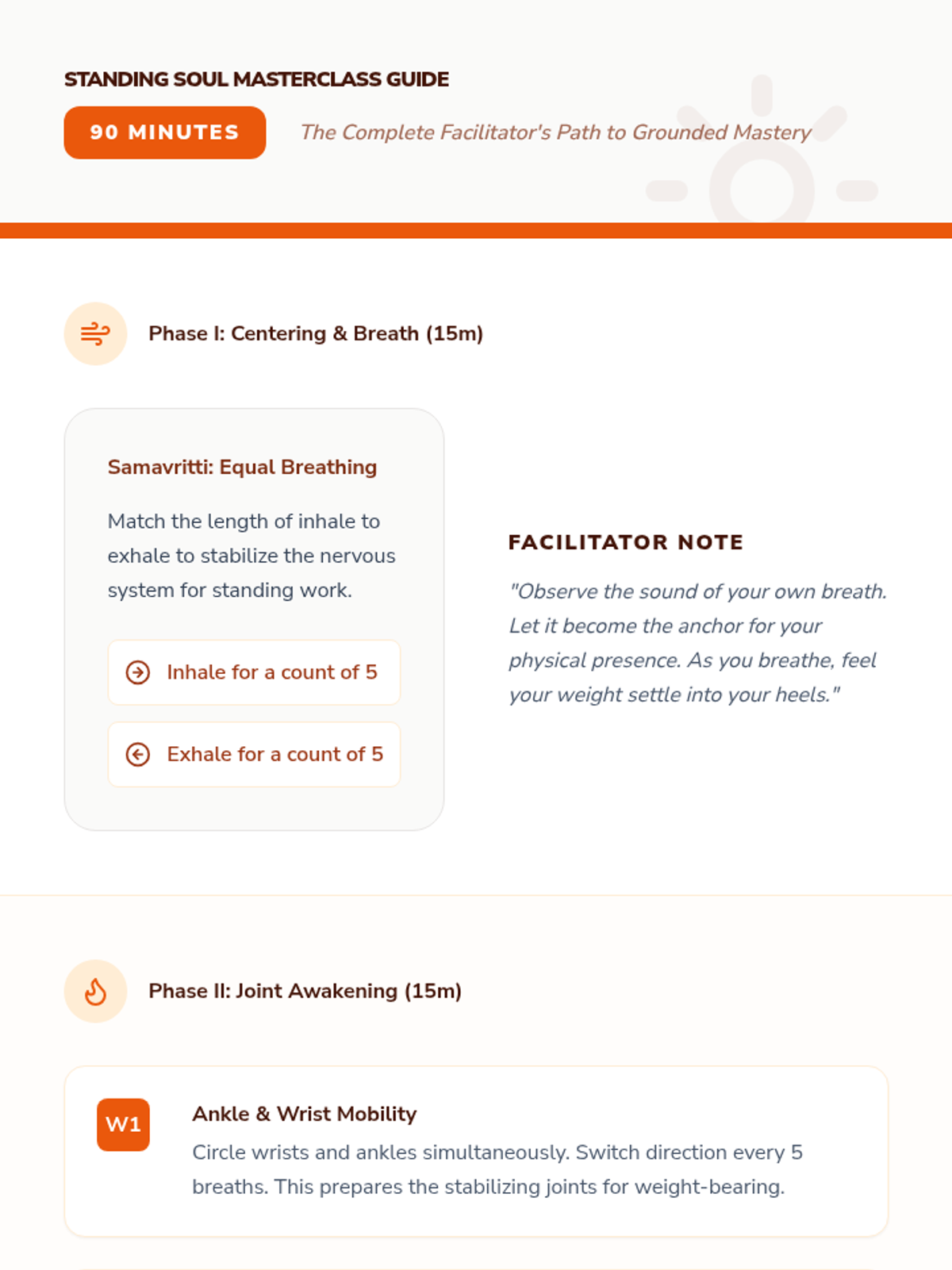
A comprehensive 90-minute facilitator's manual for the Standing Soul Masterclass. Includes pranayama, joint warm-ups, step-by-step postural alignment for key standing poses, and a restorative cool-down phase.
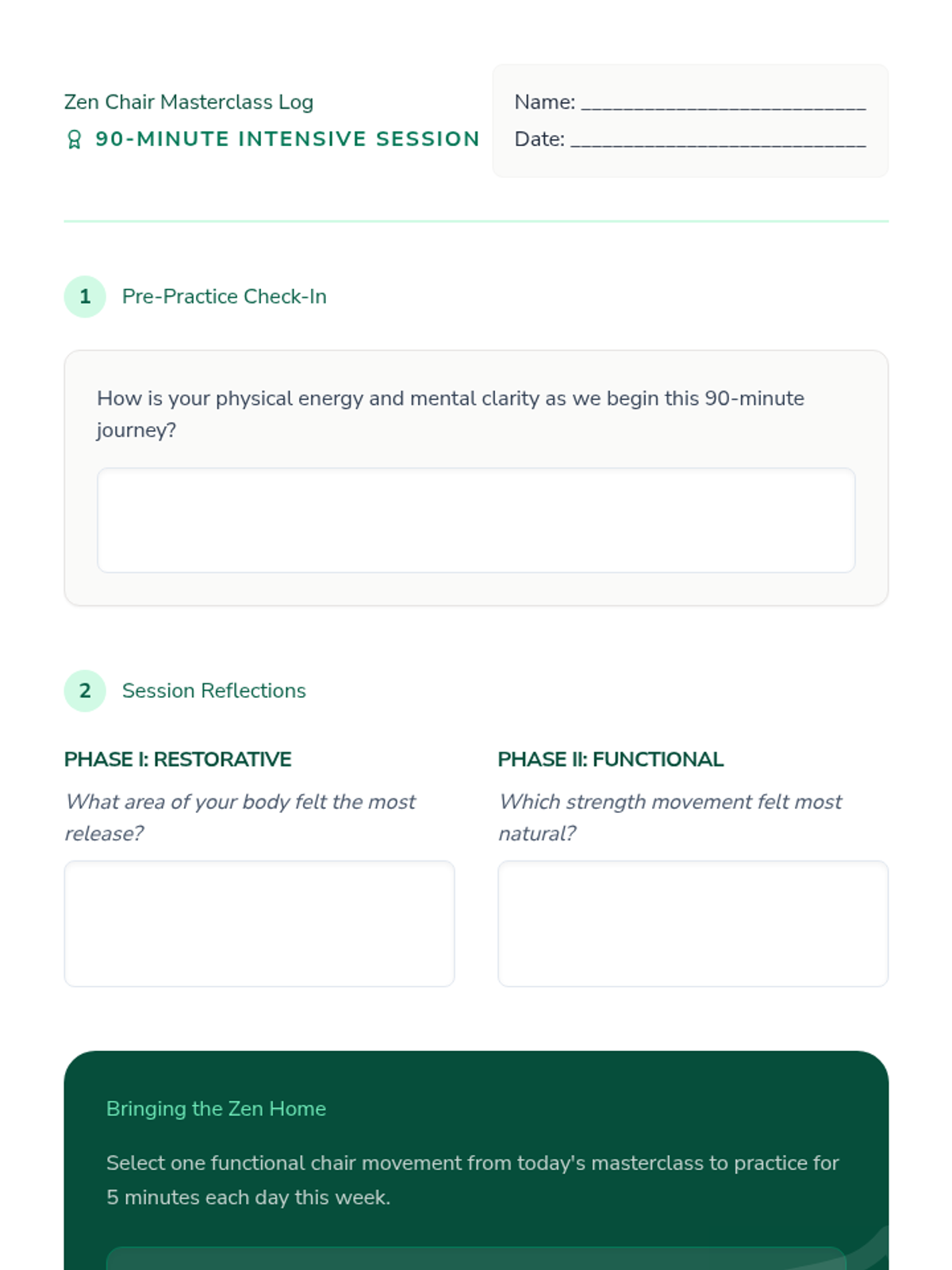
A student reflection log for the combined Zen Chair Masterclass session. Updated for the 90-minute intensive format with phase-specific reflection areas.
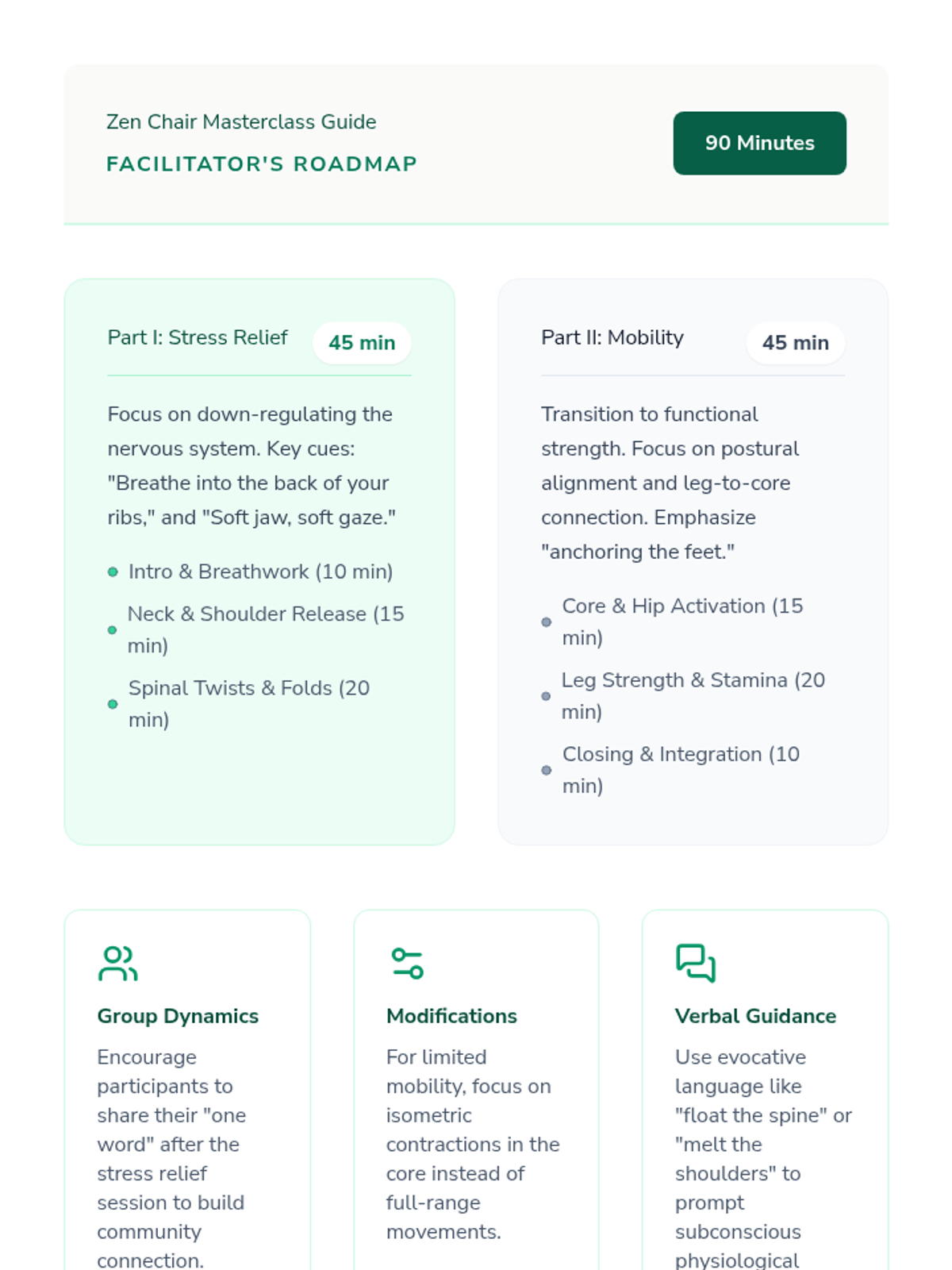
A 90-minute facilitator's guide for the Zen Chair Masterclass, featuring a split-session roadmap for stress relief and functional mobility with detailed pacing and instructional tips.
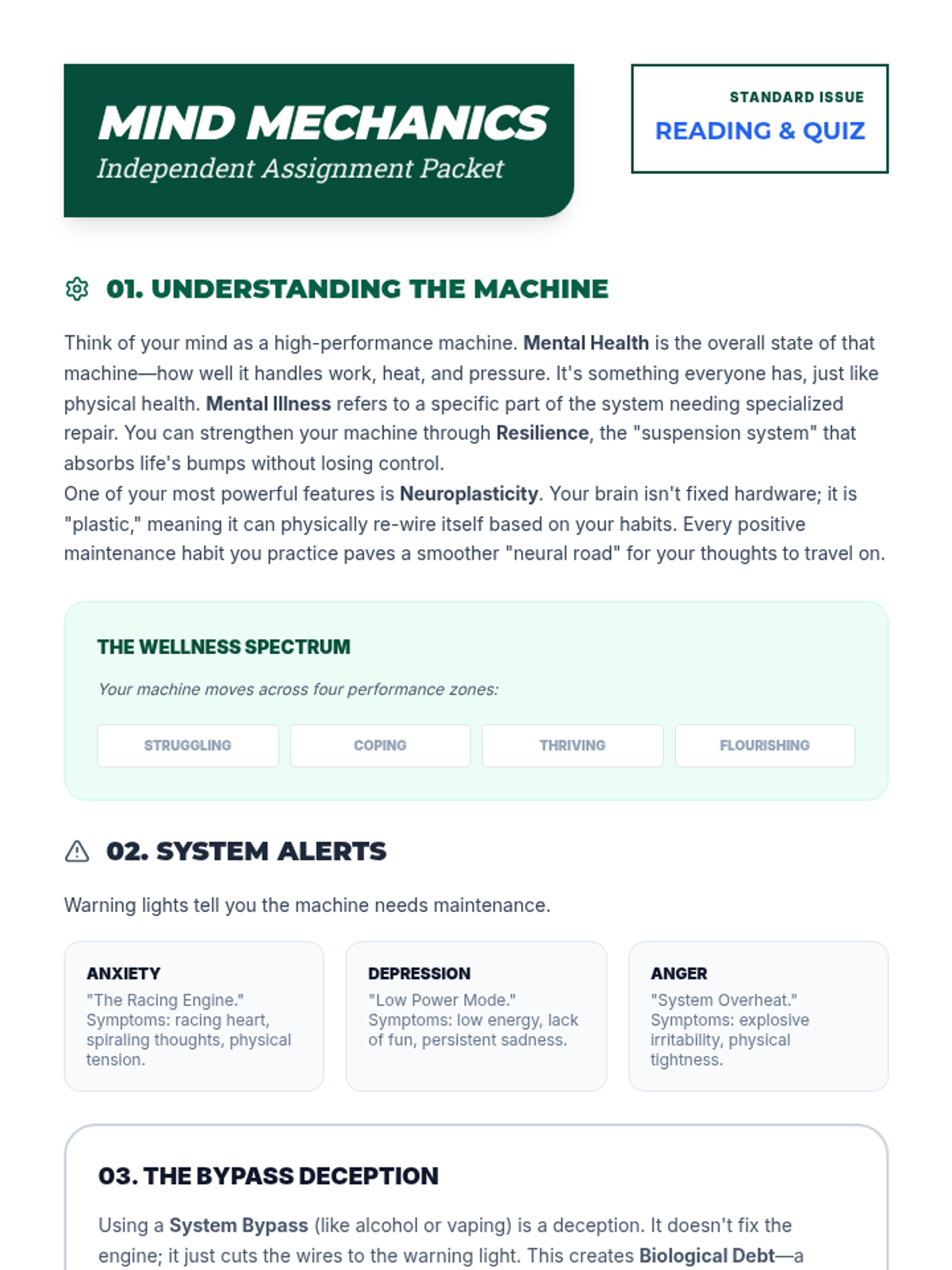
A single consolidated 4-page assignment for the Mind Mechanics unit. Page 1 & 2 provide comprehensive reading on the machine analogy, neuroplasticity, stigma, and internal alerts. Page 3 features the detailed visual Coping Toolbox. Page 4 features a 10-question quiz (9 MC/TF and 1 high-quality short answer). Terminology updated to 'Good Coping' and 'Bad Coping' throughout. No red backgrounds. All answer options share identical styling. Updated to be printer-friendly with white and very light gray backgrounds. Q8 corrected to have two options. Q10 provided with a large white handwriting area.
A straightforward, all-in-one independent assignment packet for the Mind Mechanics unit. Page 1 contains a concise reading text covering the machine analogy and neuroplasticity, Page 2 provides a visual tool reference, and Page 3 features a 10-question multiple-choice/true-false assessment. All red backgrounds removed for clear printing. Part of the comprehensive Mind Mechanics unit.
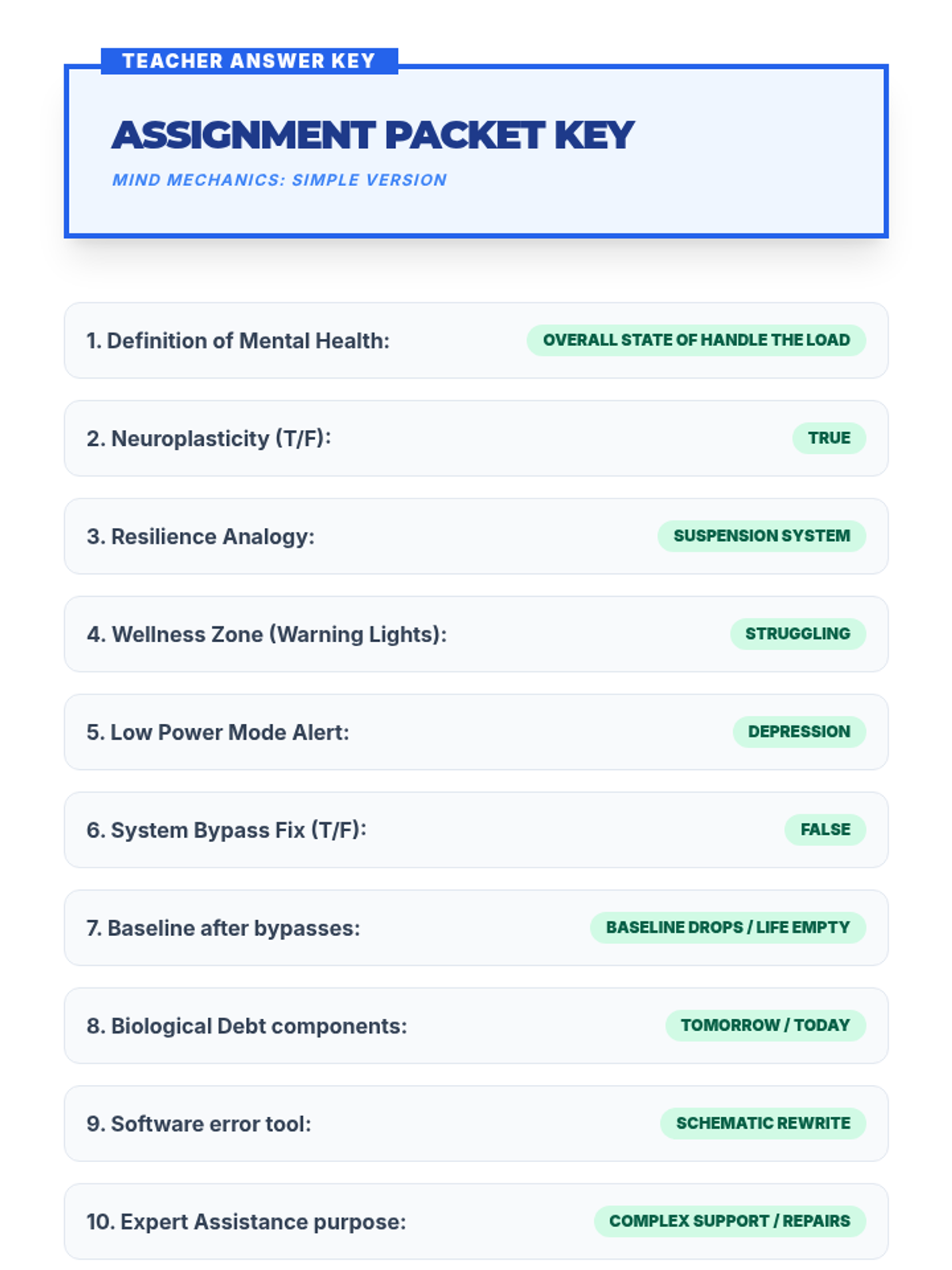
Complete answer key for the simple 10-question Mind Mechanics assignment packet. Provides clear, easy-to-grade answers for the multiple-choice and true/false questions. Updated to match the revised assignment quiz questions.
The master slideshow for the comprehensive Mind Mechanics unit. Covers the Machine Analogy, Wellness Spectrum, Neuroplasticity, detailed System Alerts (Anxiety, Depression, Anger), the Bypass Deception (substances/Biological Debt), and all 4 Proactive Tools aligned with the Coping Toolbox. Updated with "Good Coping" and "Bad Coping" terminology.
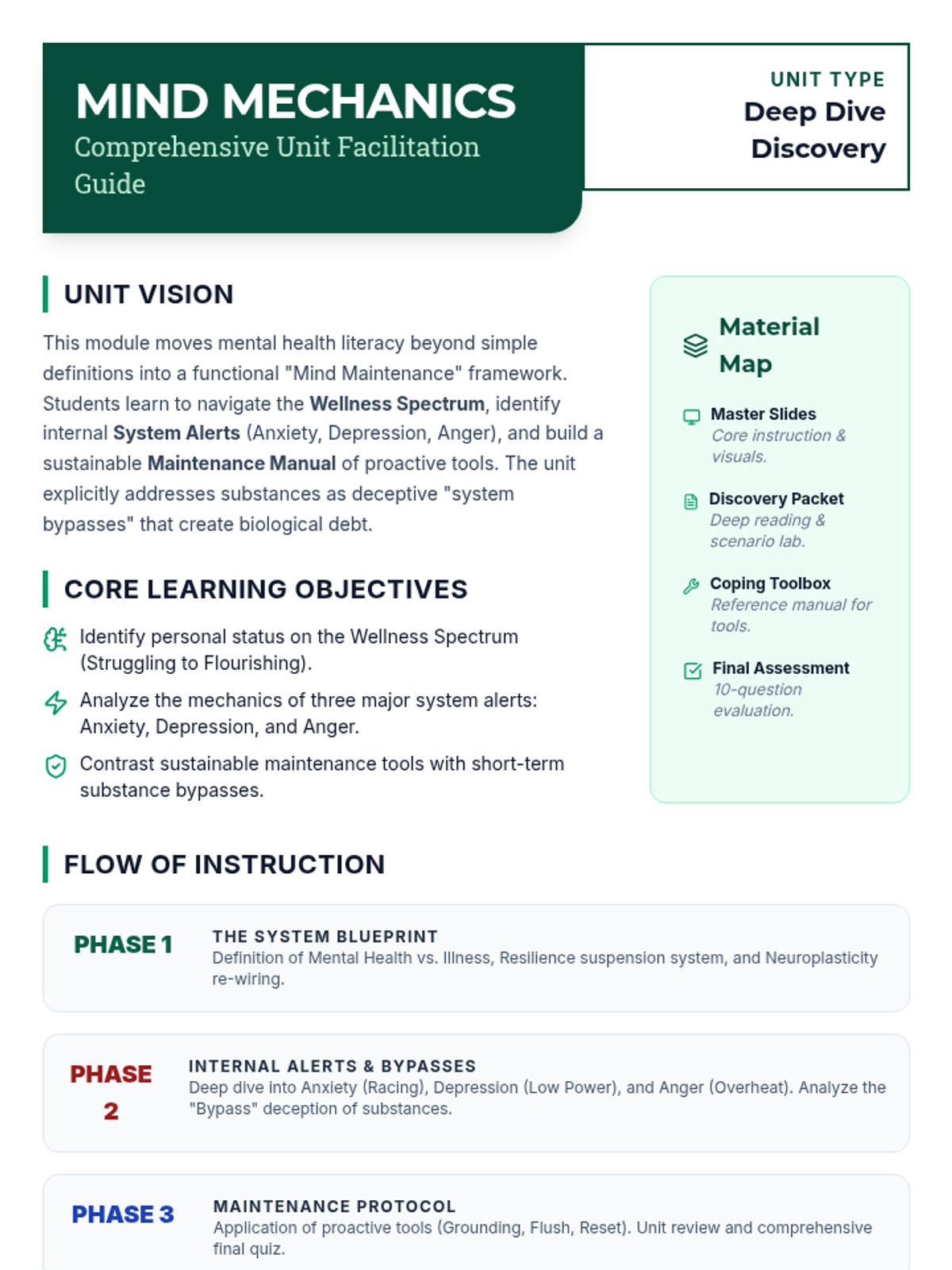
A master facilitation guide for the comprehensive Mind Mechanics unit, updated with "Good Coping" and "Bad Coping" terminology. Covers the Wellness Spectrum, internal alerts, and biological debt.
An answer key for the Stress Free Slumber Quiz, including rationales for each answer and teaching tips.
A 10-question multiple-choice quiz focusing on stress management techniques for better sleep hygiene, designed for student use.
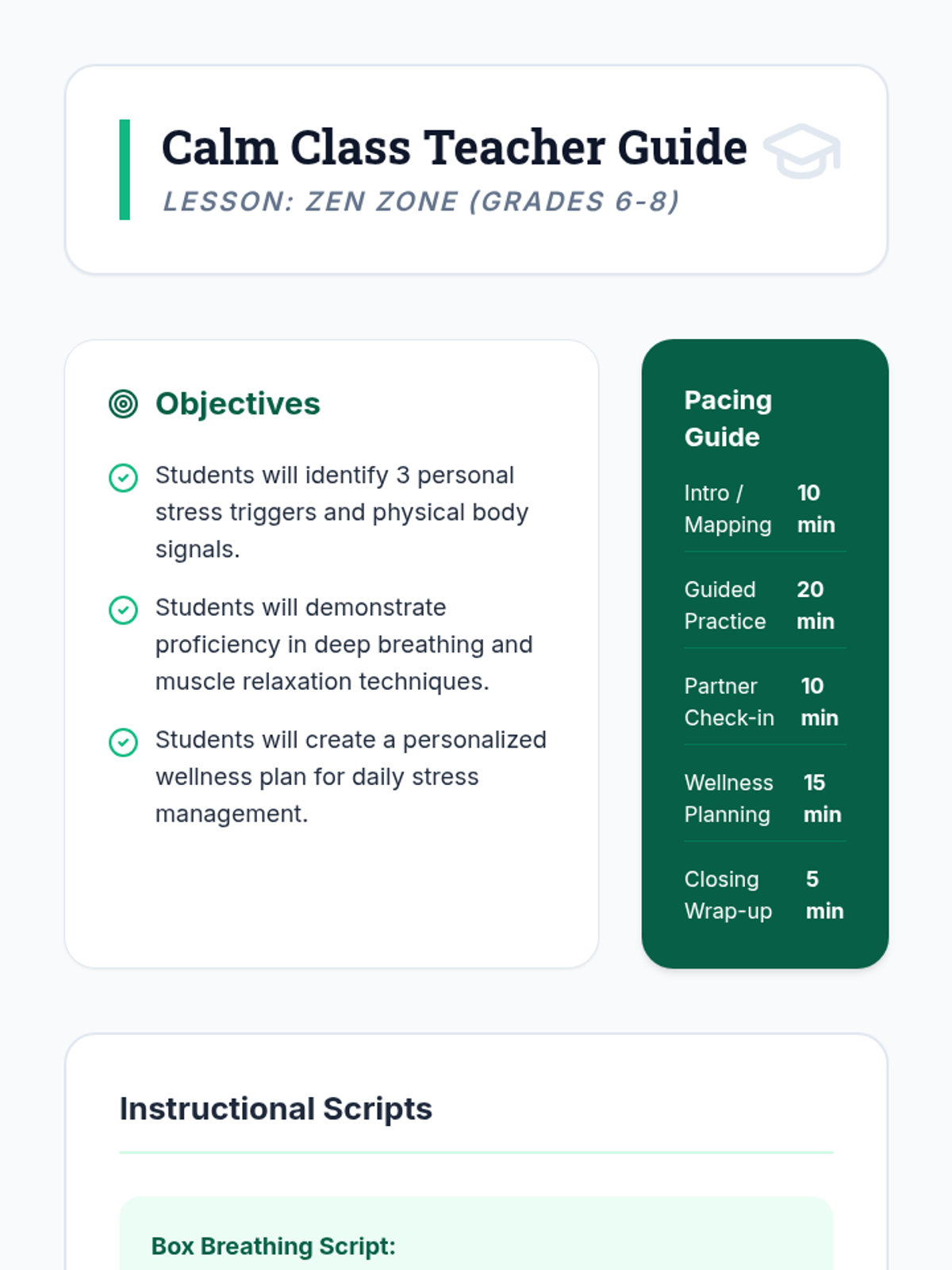
A comprehensive teacher guide for leading a middle school stress management lesson, including guided scripts, pacing, and adaptations for sensory needs.
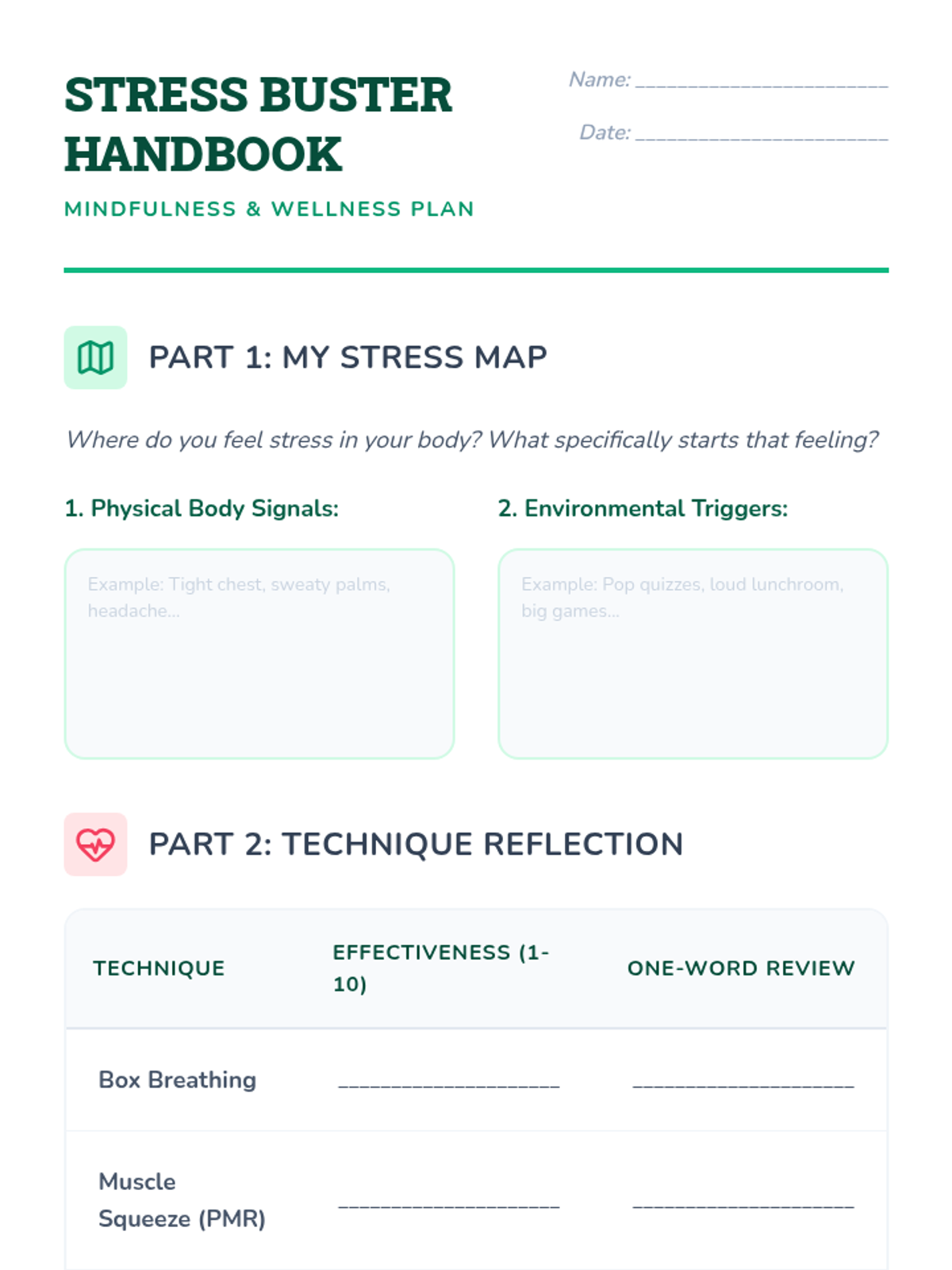
A student workbook for stress management, including a "Stress Map" to identify triggers and a customizable personal wellness plan.
A visual presentation for a middle school health lesson on stress management, featuring guided breathing, progressive muscle relaxation, and mindful movement techniques.
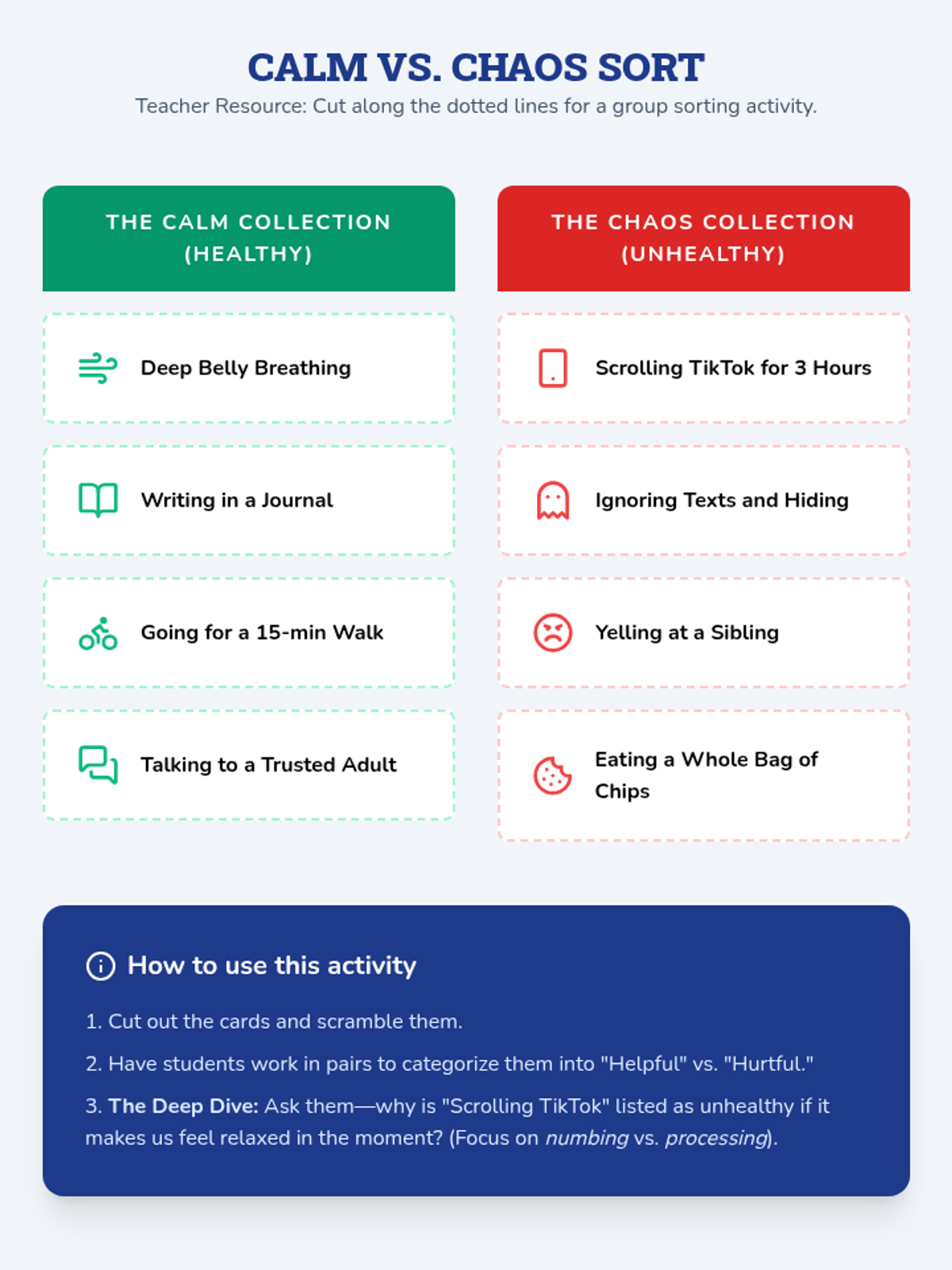
A set of sorting cards for a group activity to help students differentiate between healthy and unhealthy coping mechanisms.
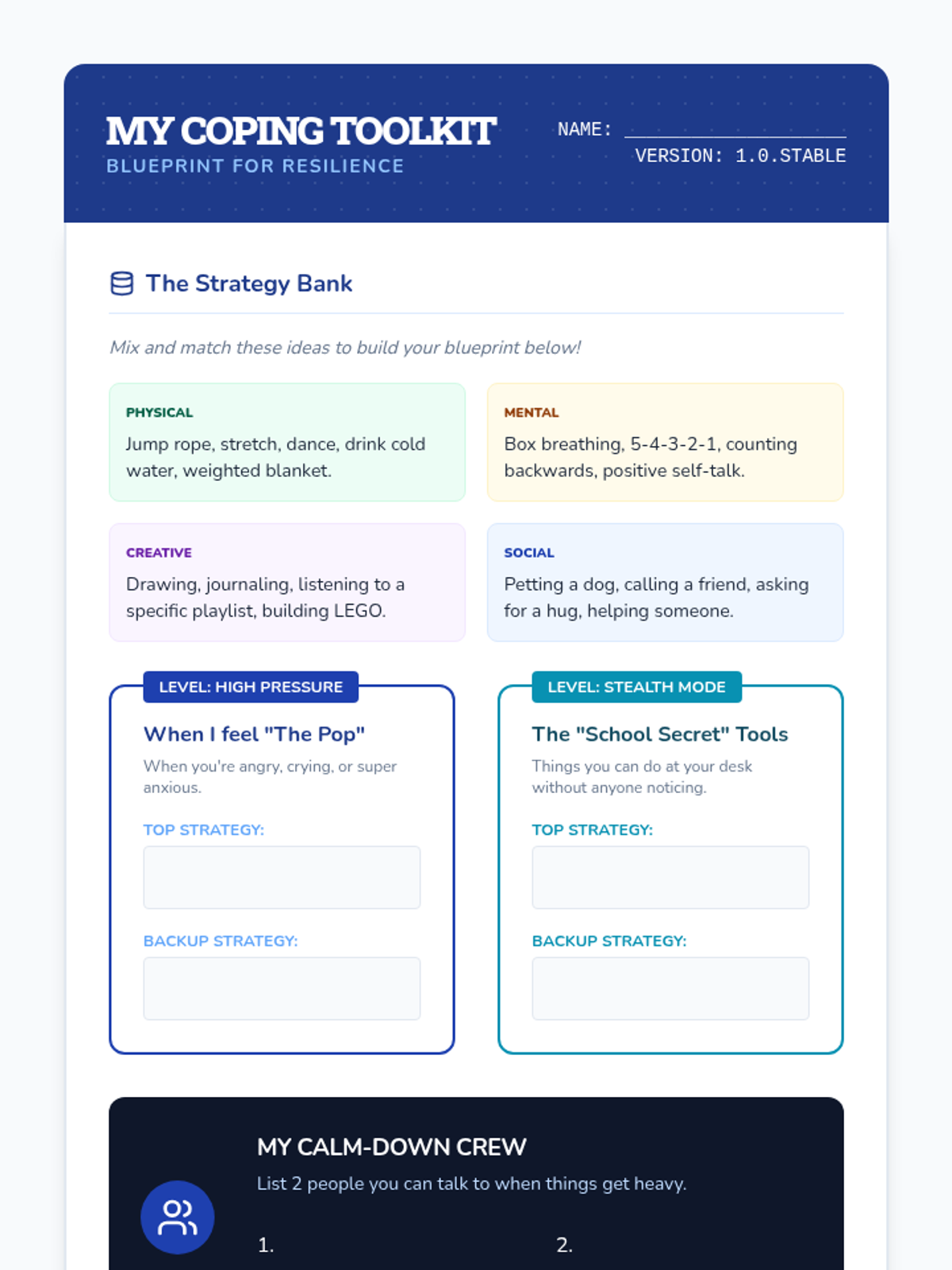
A creative, blueprint-themed worksheet where students design their own personalized stress-management plan with specific strategies for different situations.
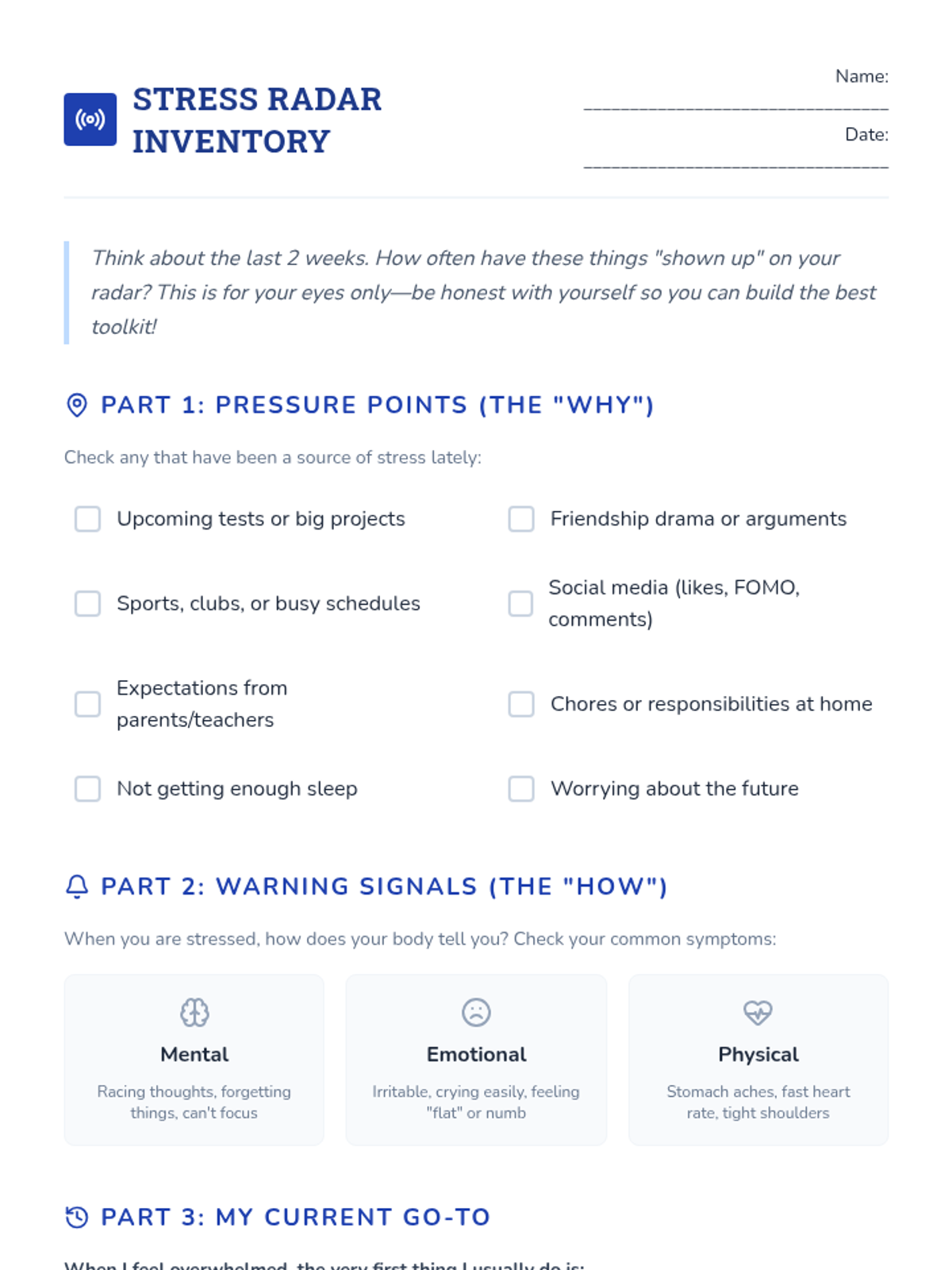
A student self-assessment worksheet to identify stressors, physical warning signs, and current coping habits.
Interactive slides for the stress management lesson, featuring the science of stress, healthy vs. unhealthy coping, and two guided mindfulness techniques.
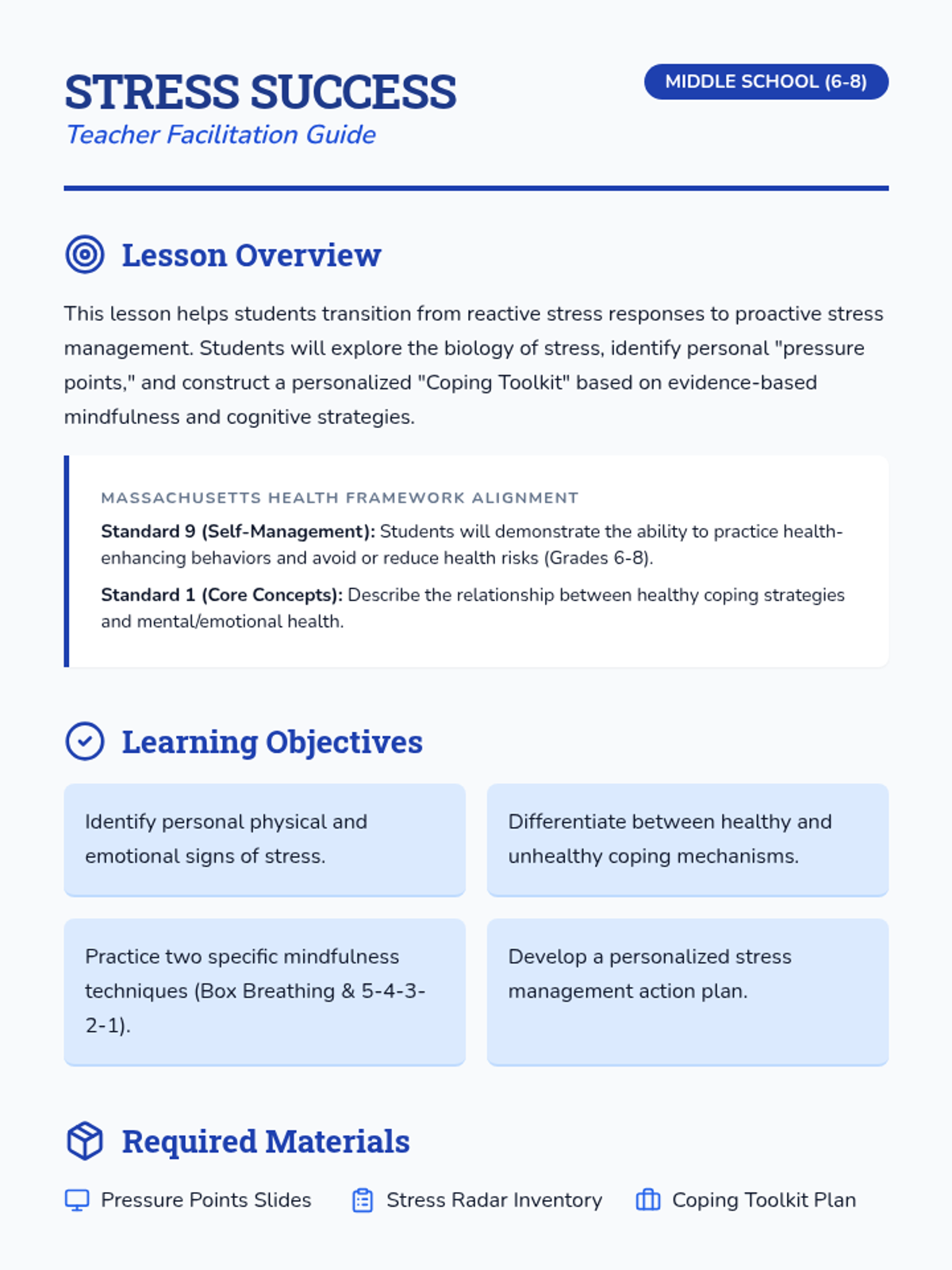
A comprehensive teacher facilitation guide for the stress management lesson, including Massachusetts framework alignment, pacing, and discussion prompts.
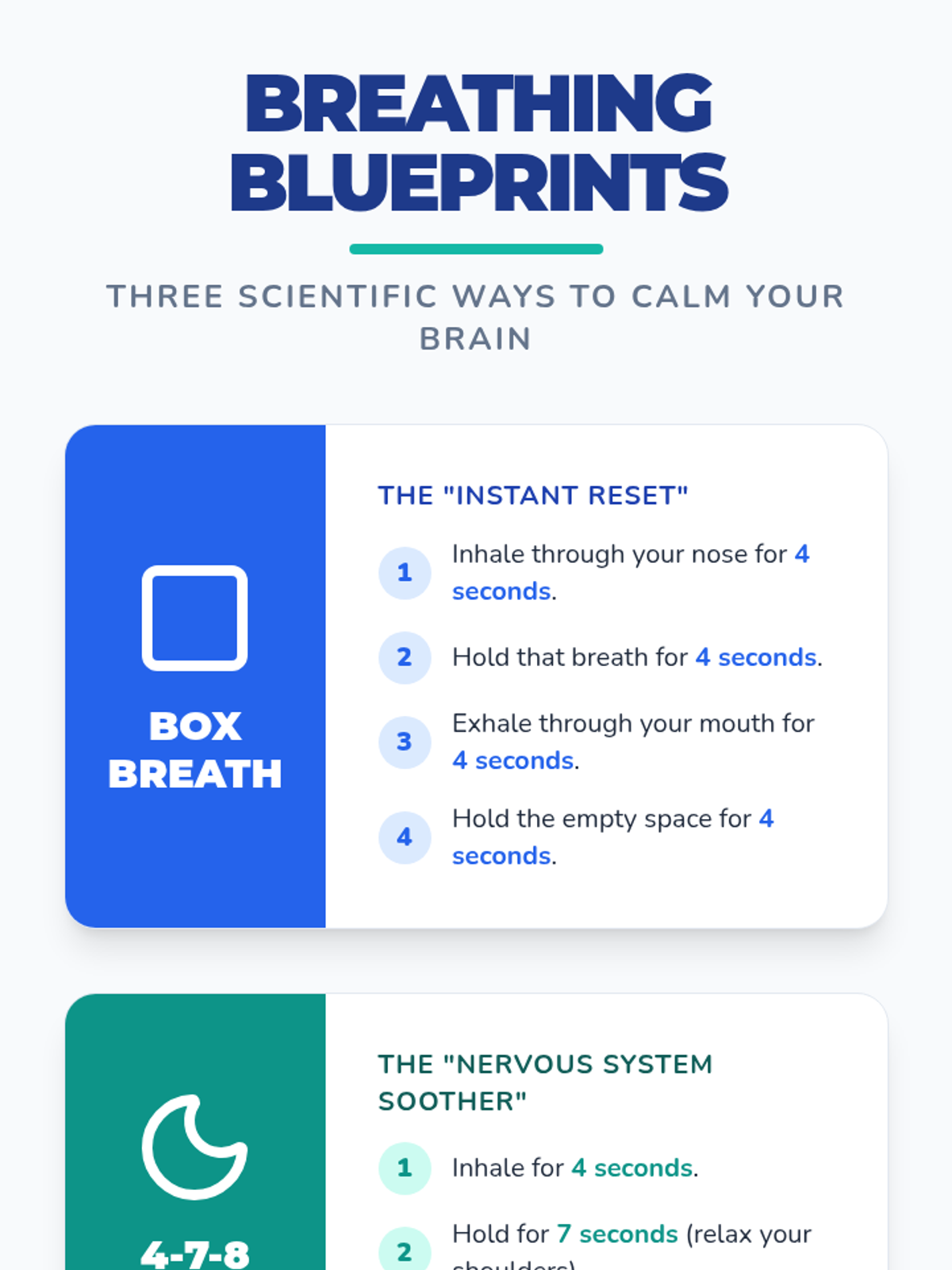
A high-impact visual anchor chart for the classroom or student reference, detailing three effective breathing techniques for stress management.
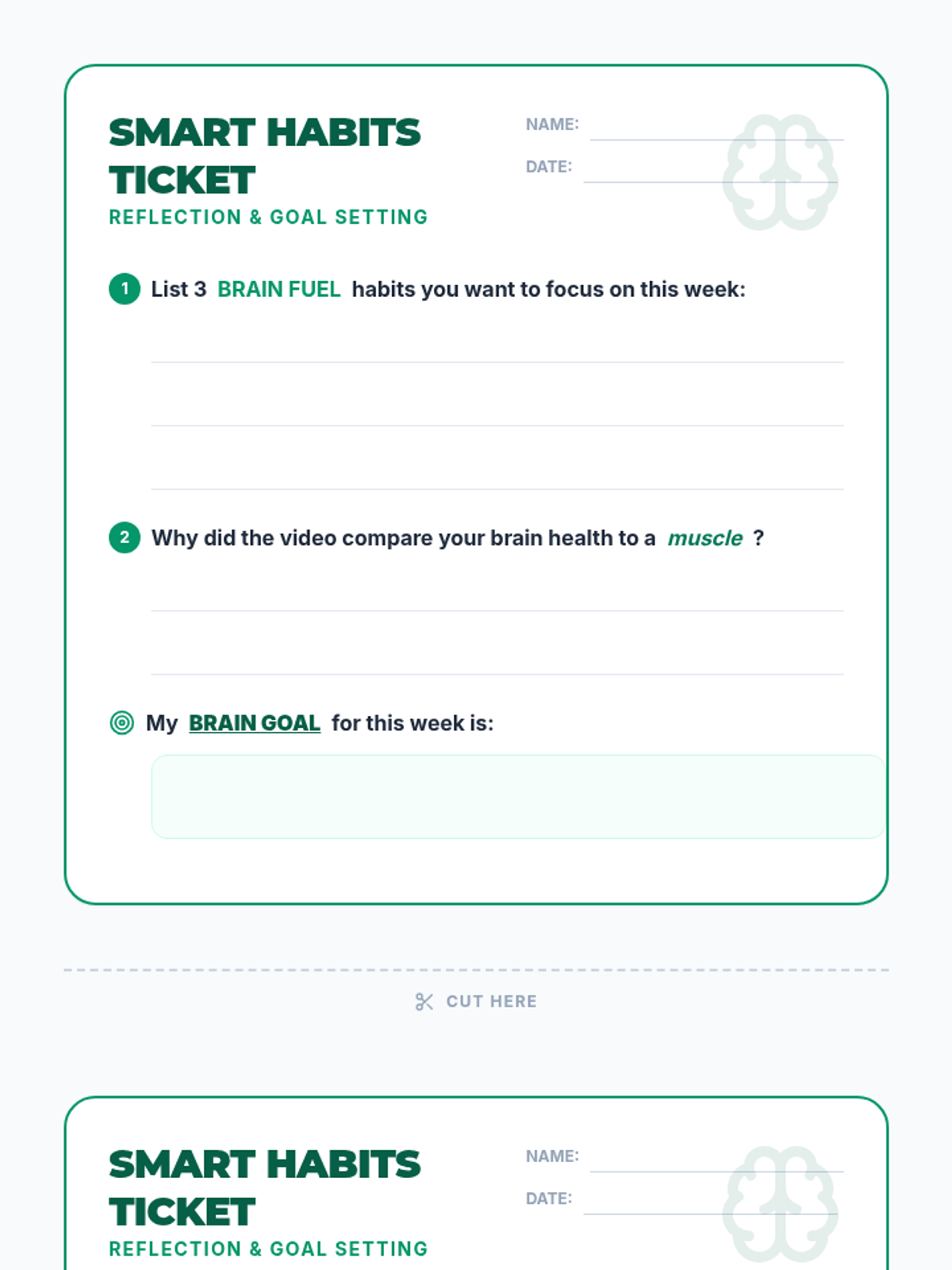
A printable double-sided exit ticket for students to reflect on brain health concepts and set a personal 'Brain Fuel' habit goal for the week.
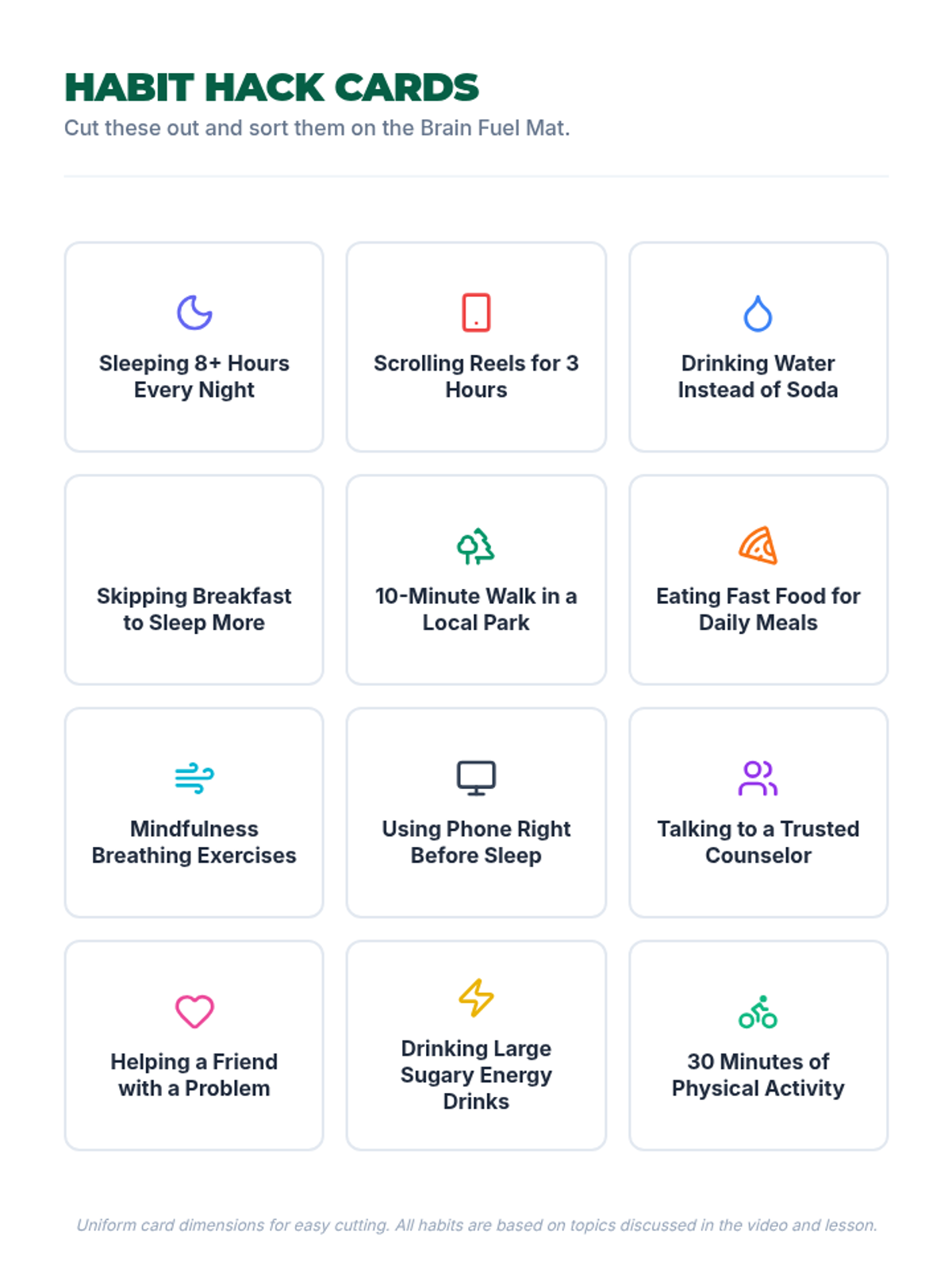
A set of 12 habit cards (e.g., 'Scrolling Reels,' 'Drinking Water,' 'Nature Walk') for students to cut and sort during the lesson activity.
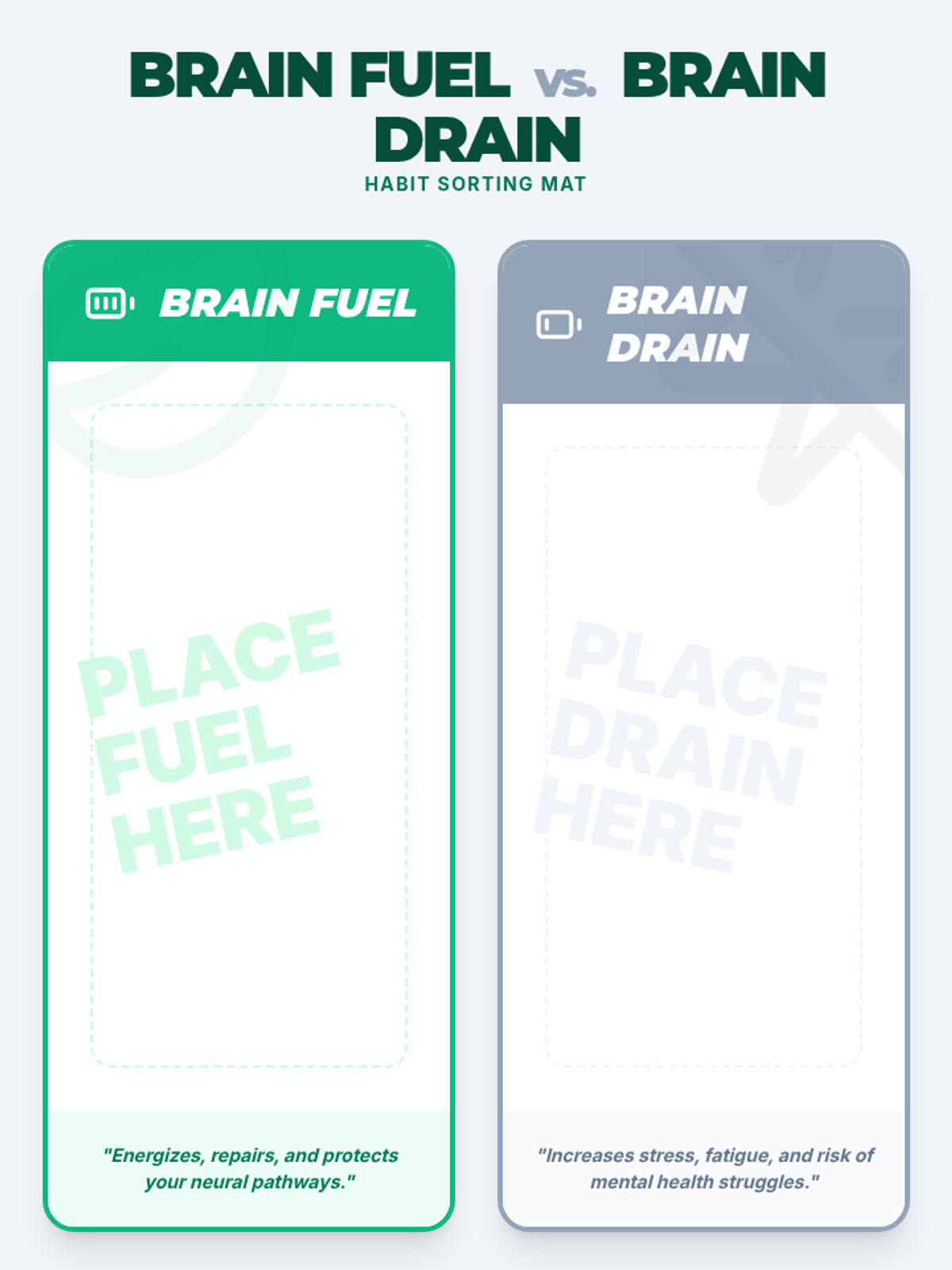
A large printable sorting mat with 'Brain Fuel' and 'Brain Drain' categories for students to categorize different daily habits.
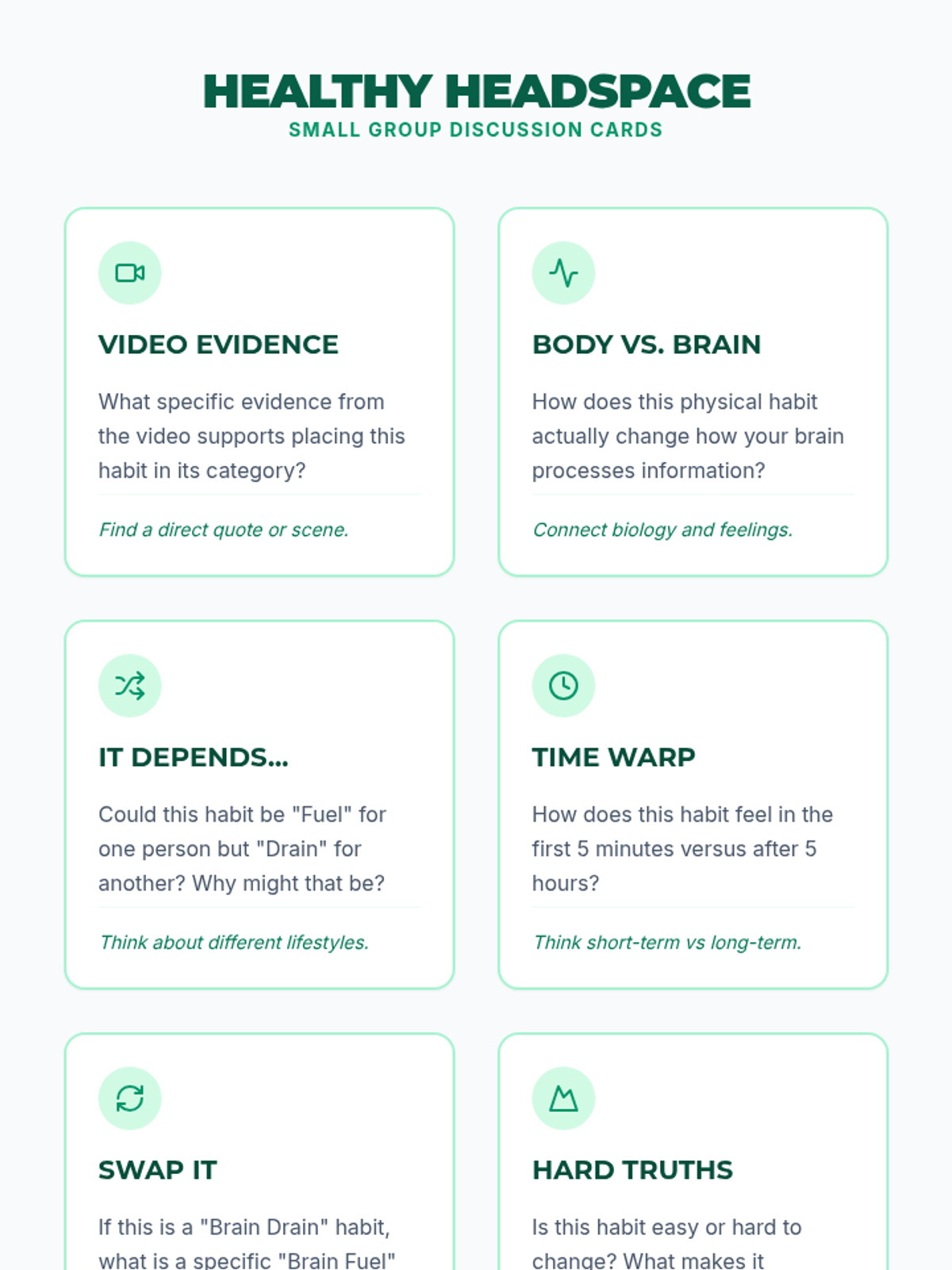
A set of six printable discussion prompt cards to guide student small-group conversations during the 'Brain Fuel vs. Brain Drain' sorting activity.
A visual presentation for the 'Neural Network Habits' lesson, including a video embed, interactive discussion prompts about screen time and nature, and activity instructions.
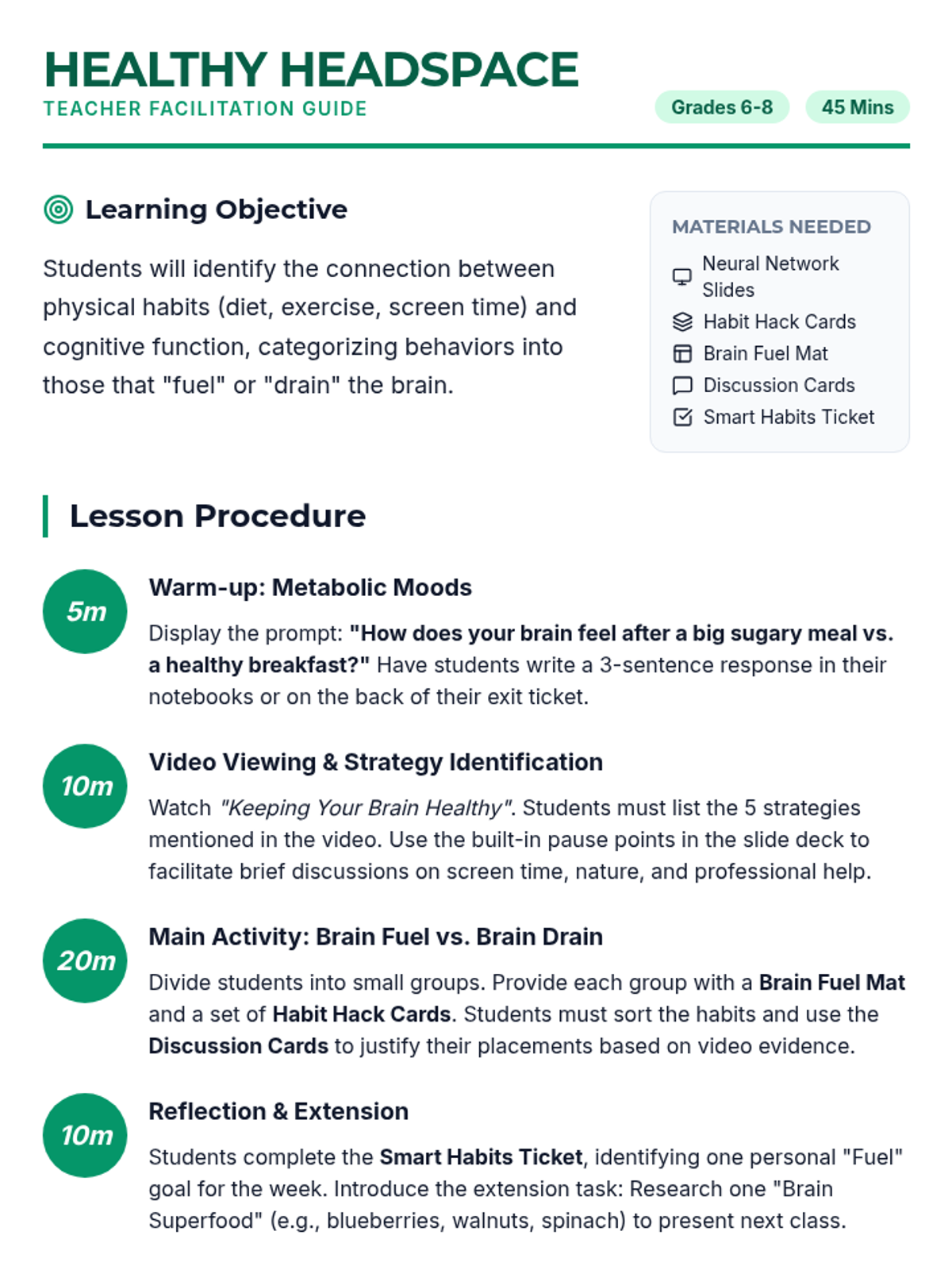
A comprehensive teacher facilitation guide for the 'Neural Network Habits' lesson, including a 45-minute lesson plan, materials list, vocabulary, and addressing common misconceptions.
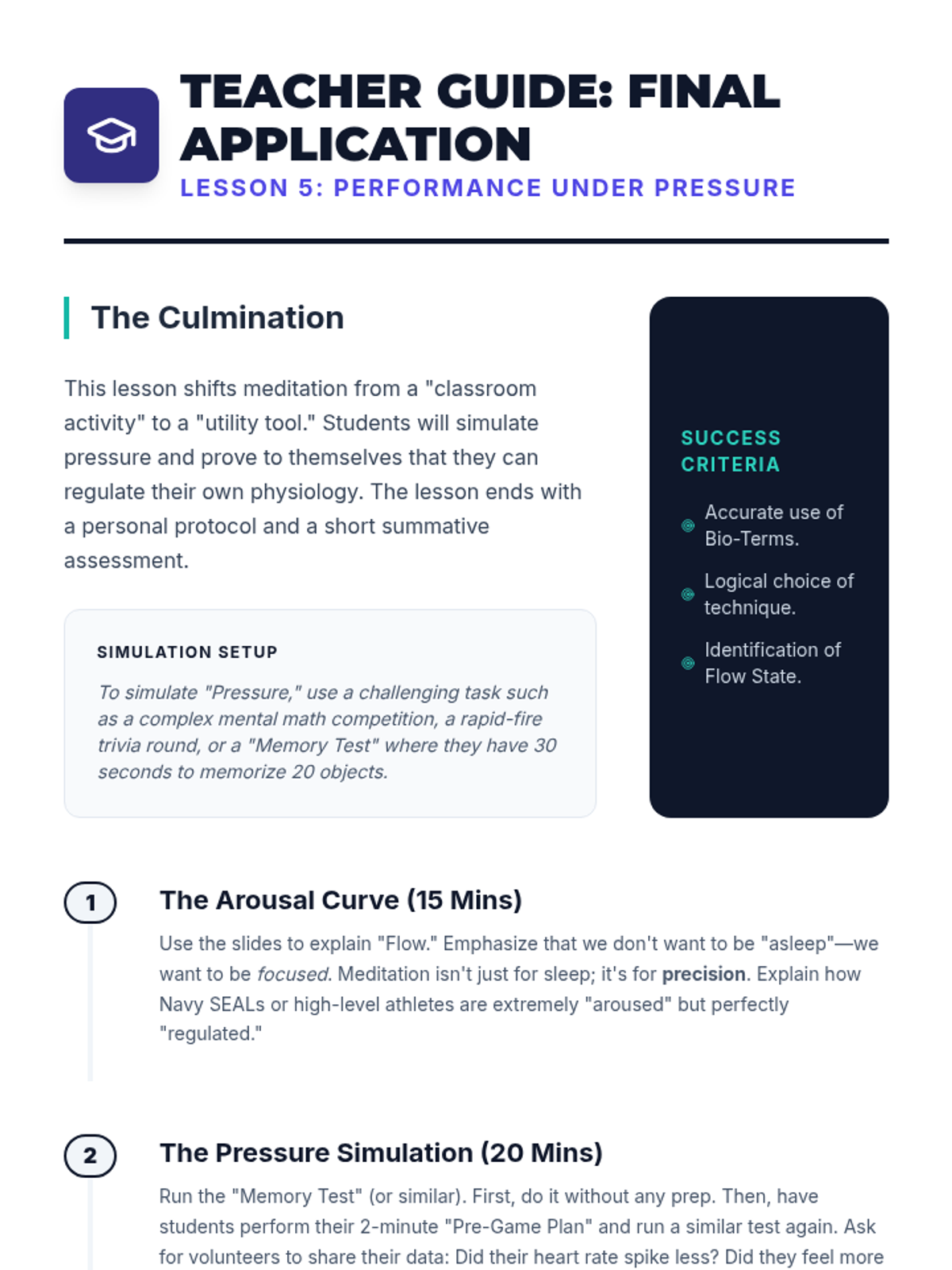
Teacher guide for the final lesson, including simulation ideas, arousal curve explanation, and an answer key for the final assessment.
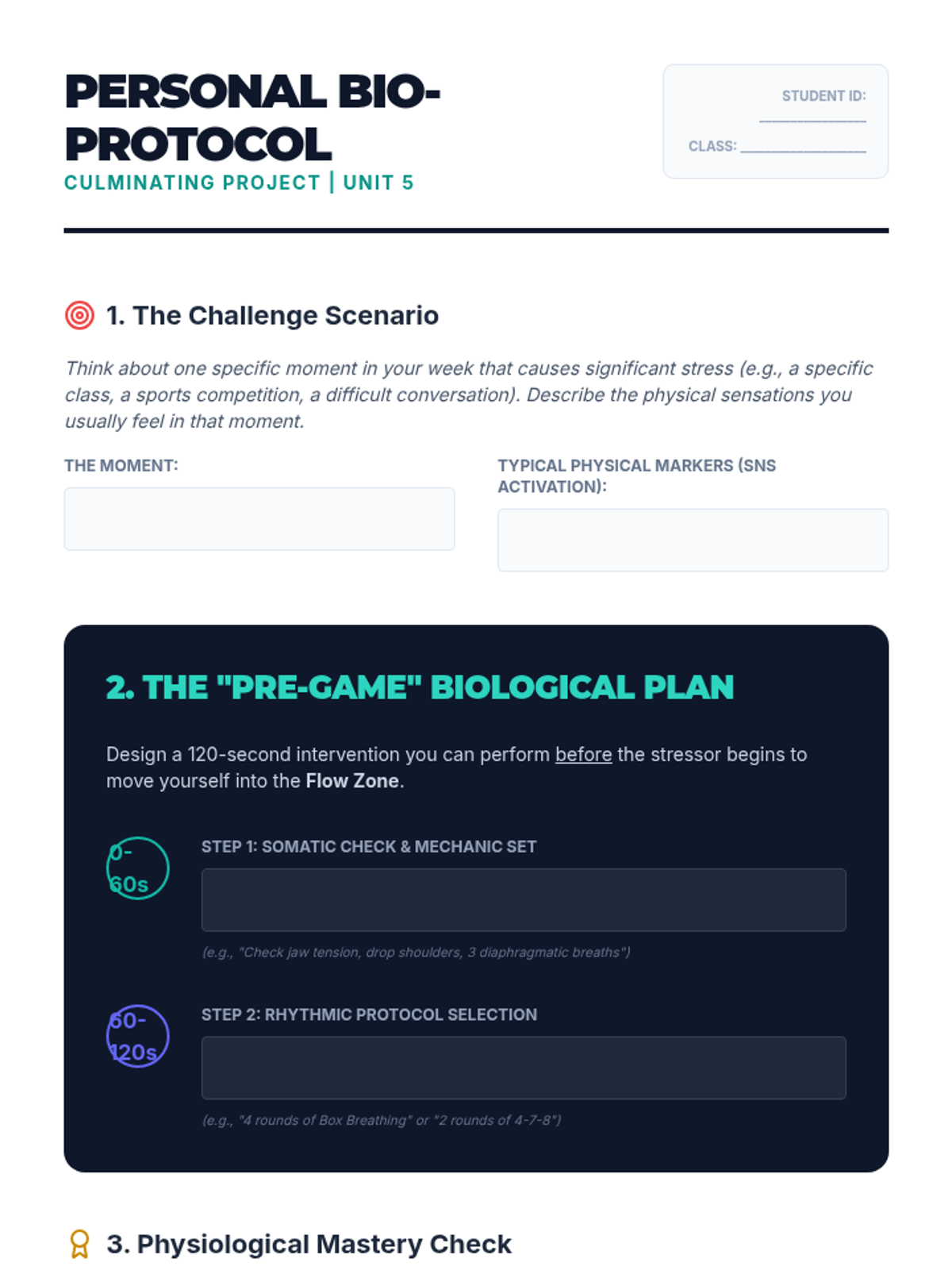
A culminating project template for students to create a personal stress management plan and a short assessment on the biological principles of meditation.
Final slides for Lesson 5, focusing on real-world application, the Arousal Curve (Flow State), and a "Pressure Test" simulation.
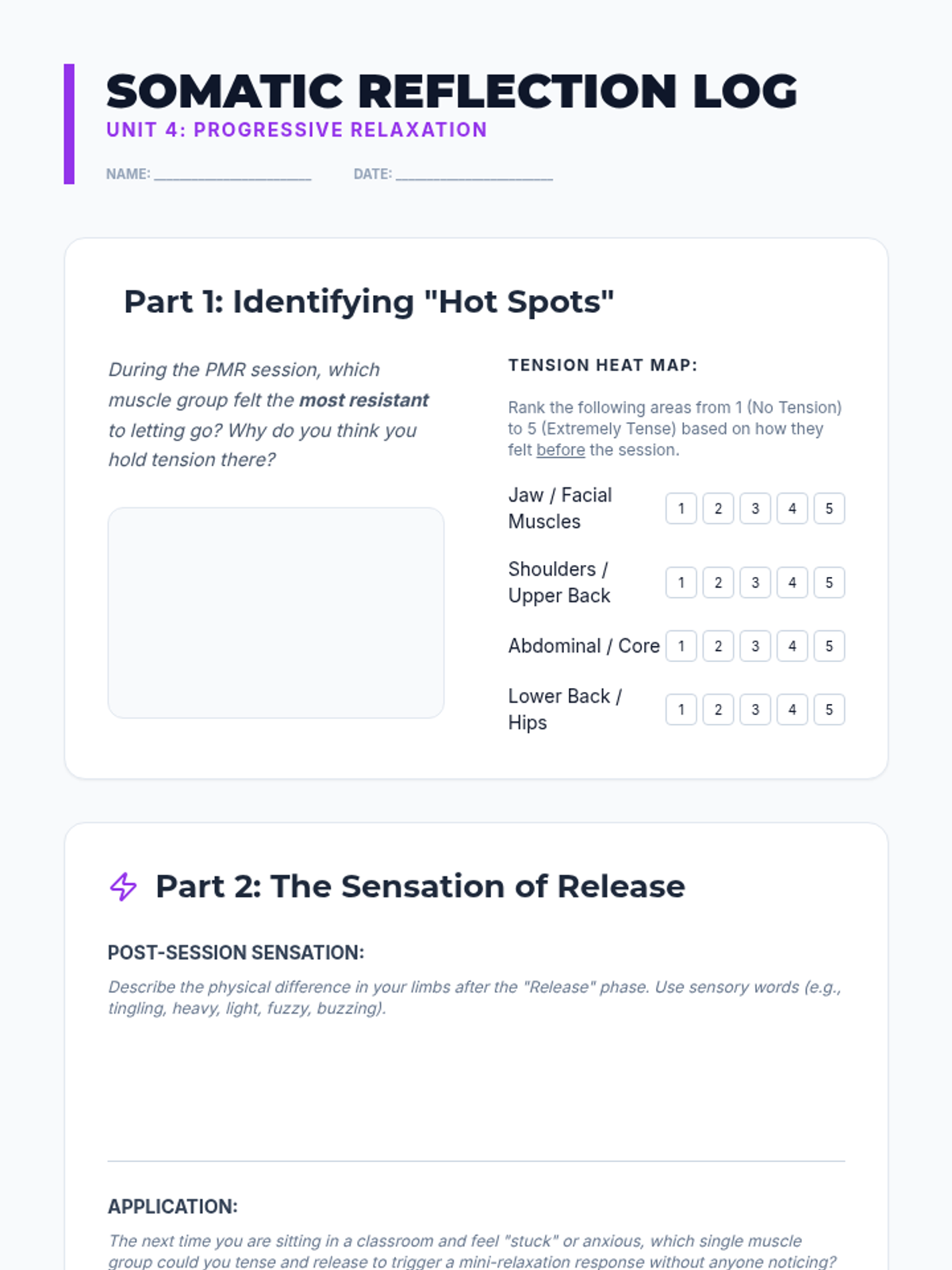
A student worksheet for mapping physical tension and reflecting on the somatic sensations experienced during Progressive Muscle Relaxation.
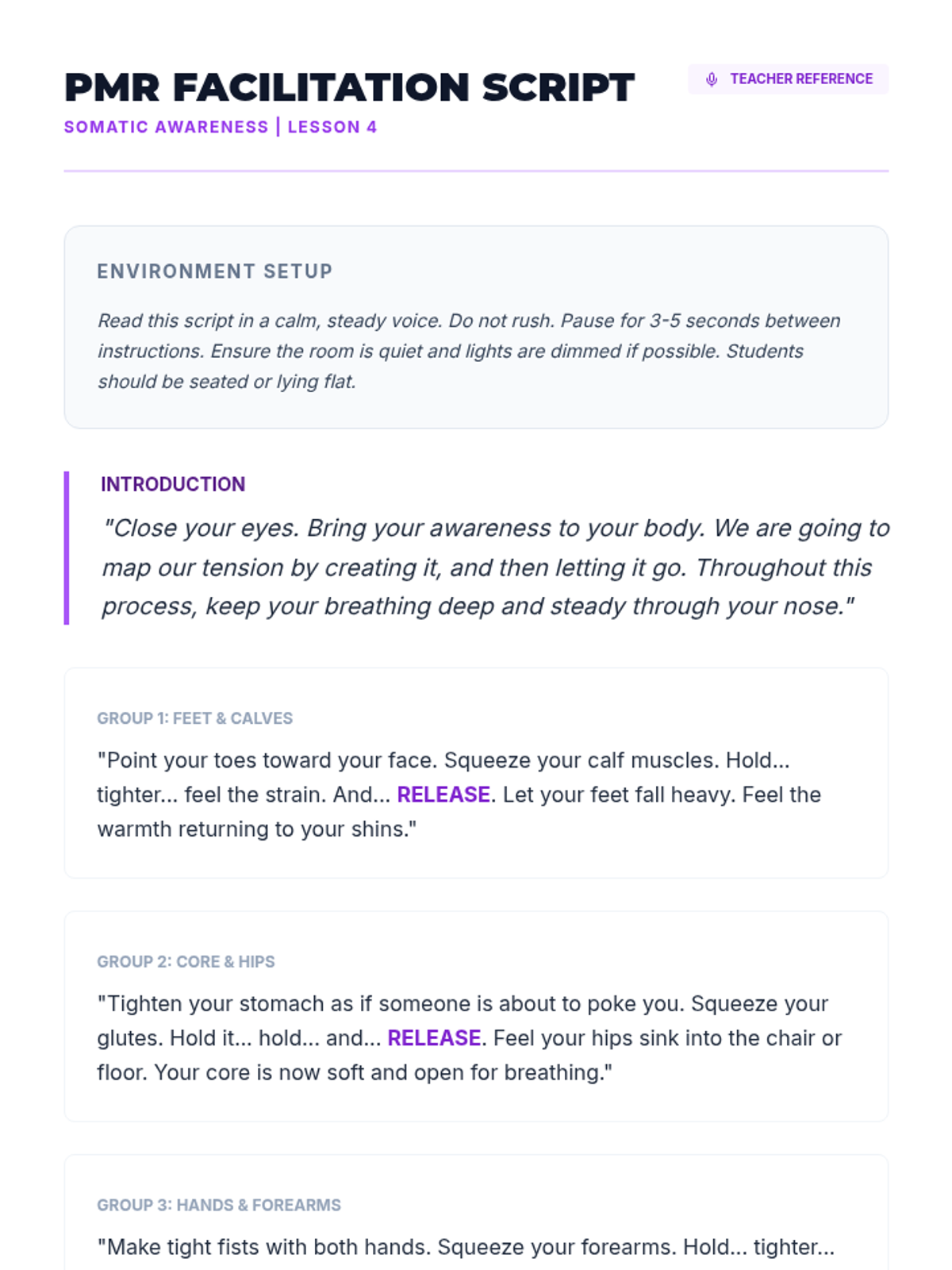
A scripted guide for teachers to lead students through a Progressive Muscle Relaxation (PMR) session, organized by muscle groups.
Slide materials for Lesson 4 on Progressive Muscle Relaxation (PMR), defining residual tension and introducing the "Fist Test" hook.
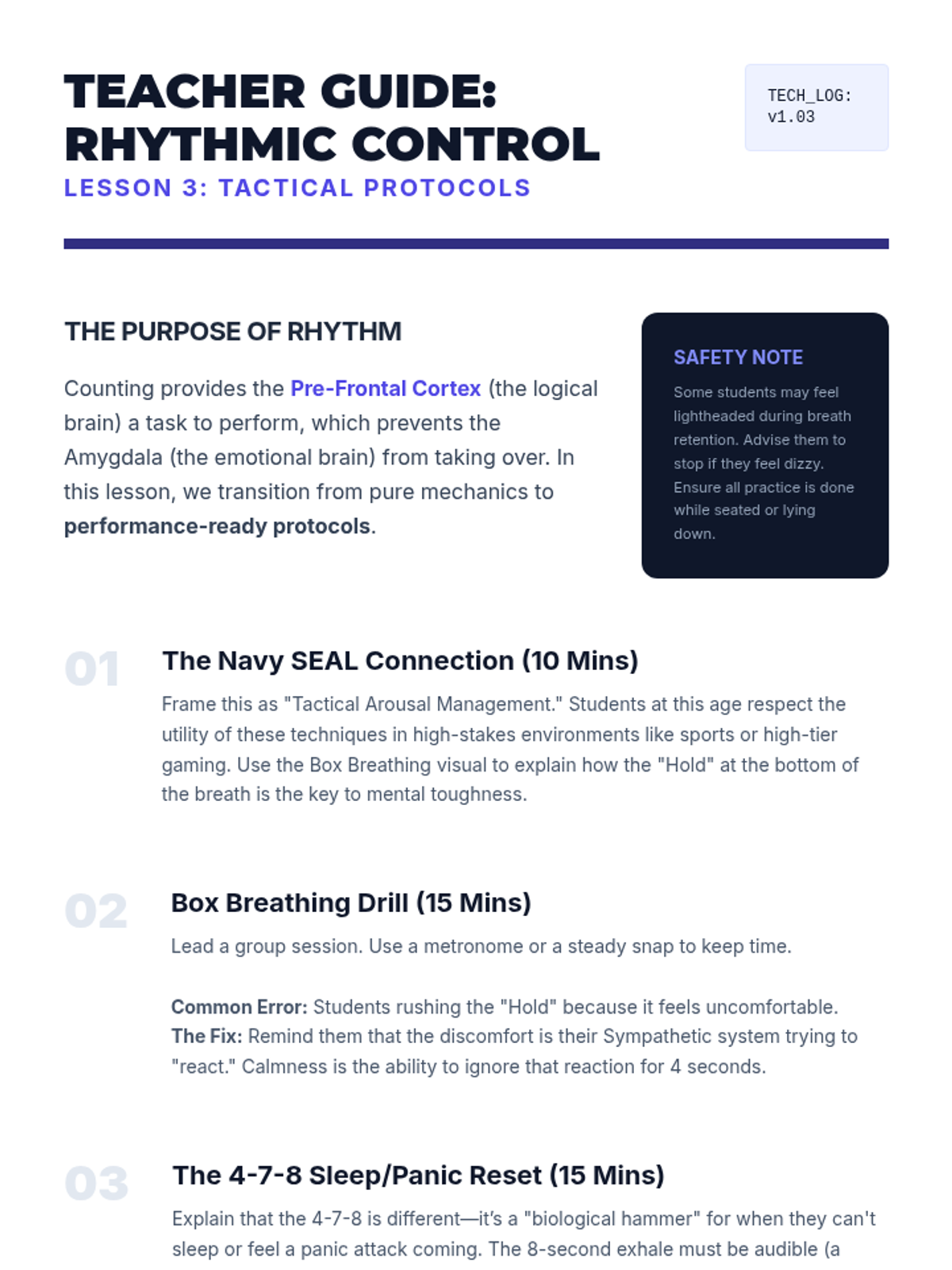
Teacher's guide for rhythmic breathing protocols, detailing the psychological benefits of counting and safety guidelines for breath retention.
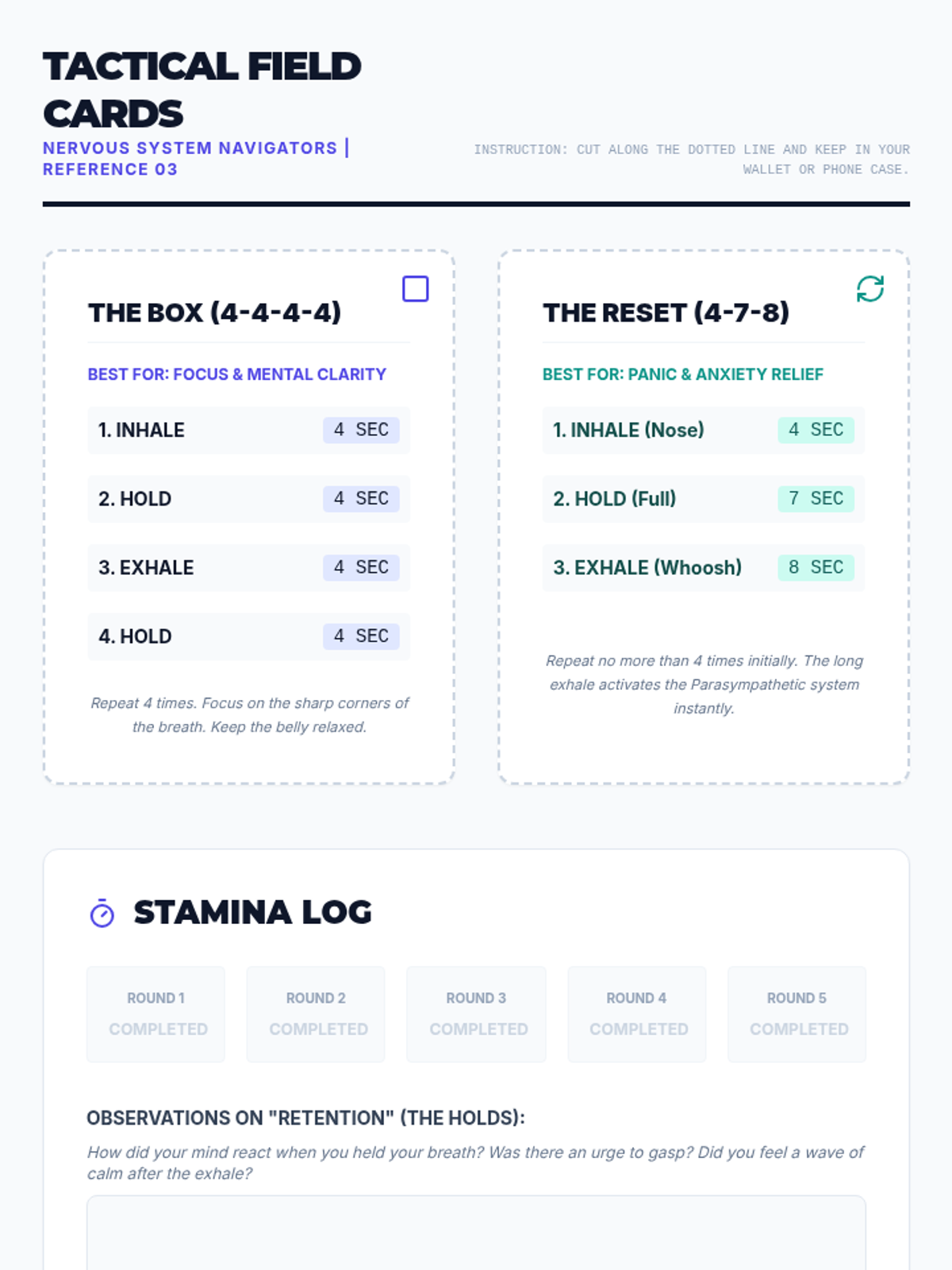
Reference cards for Box Breathing and 4-7-8 techniques along with a stamina log for student practice.
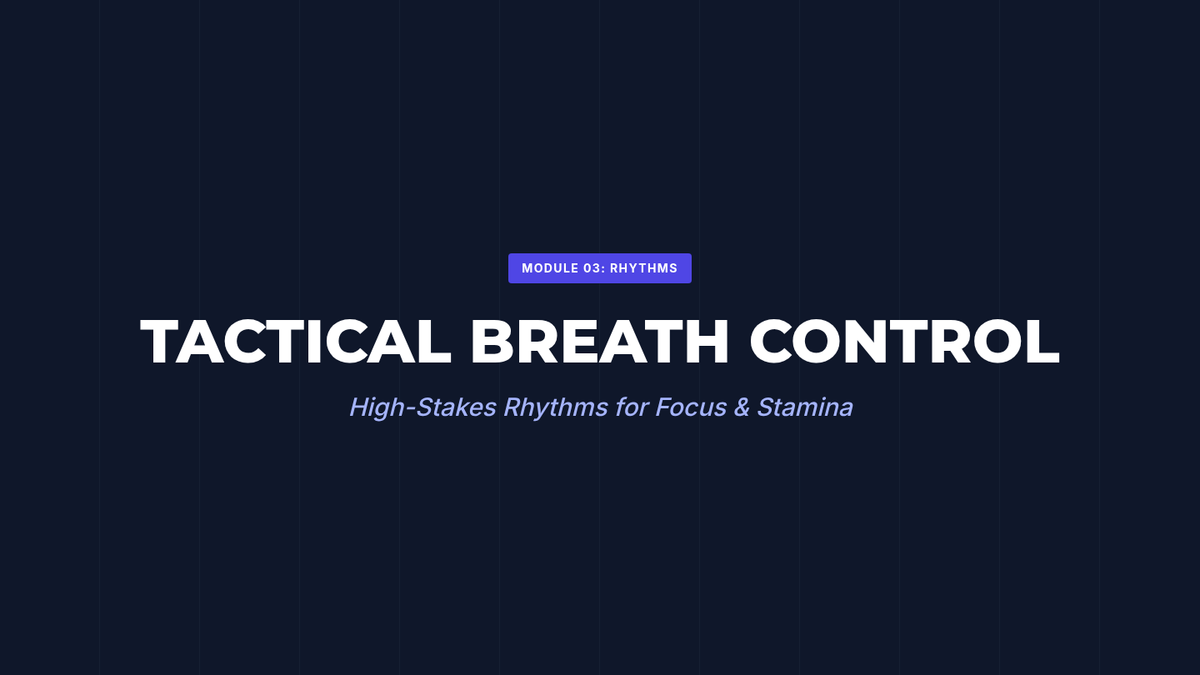
Visual aids for rhythmic breathing protocols, focusing on Navy SEAL context, Box Breathing (4-4-4-4), and the 4-7-8 technique.
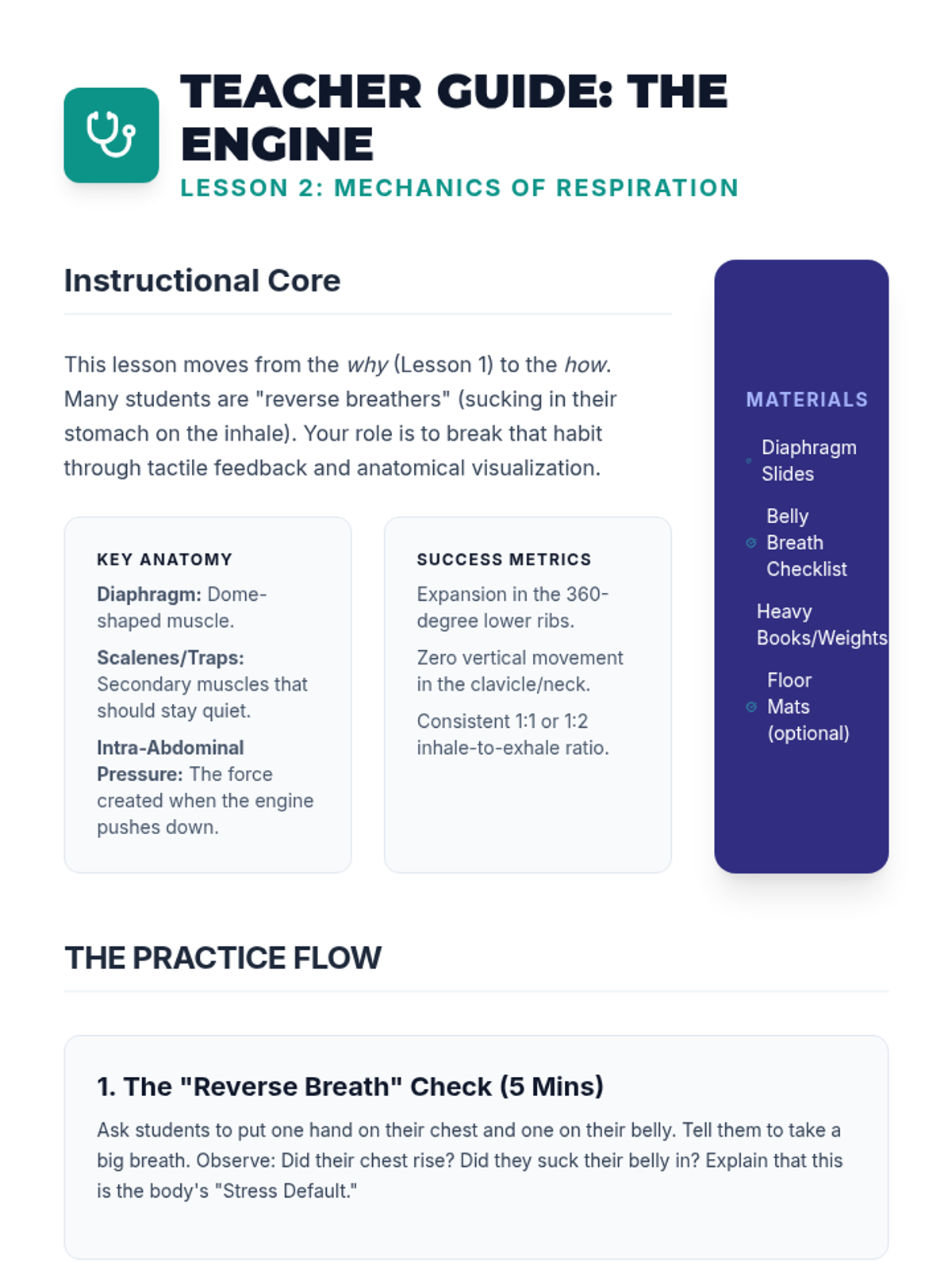
Teacher guide for Lesson 2, including anatomy focus points, postural cues, and facilitation instructions for the floor-based breathing activity.
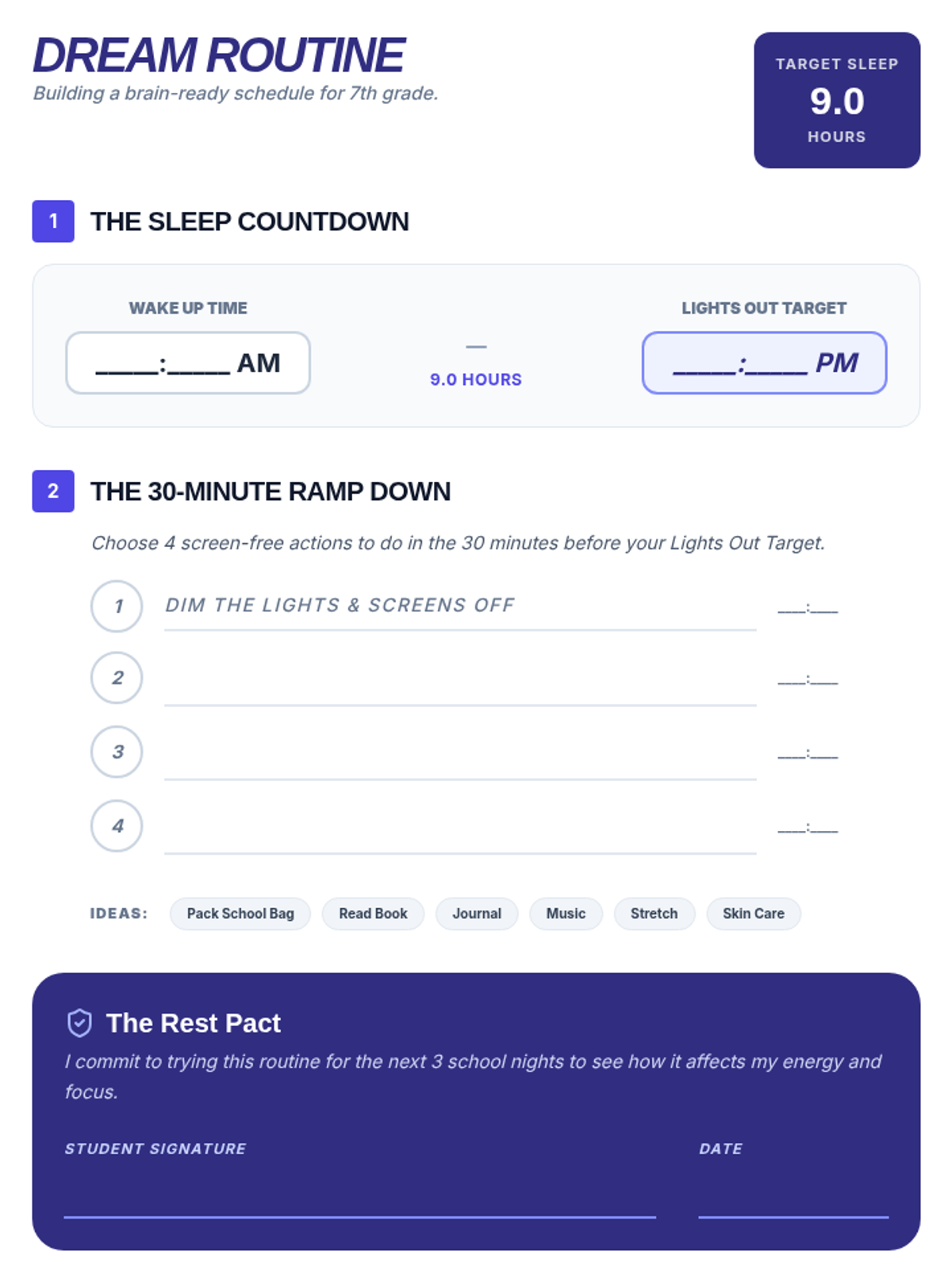
A student worksheet for calculating a sleep schedule and designing a 30-minute wind-down routine. Updated with a 9.0-hour sleep target.
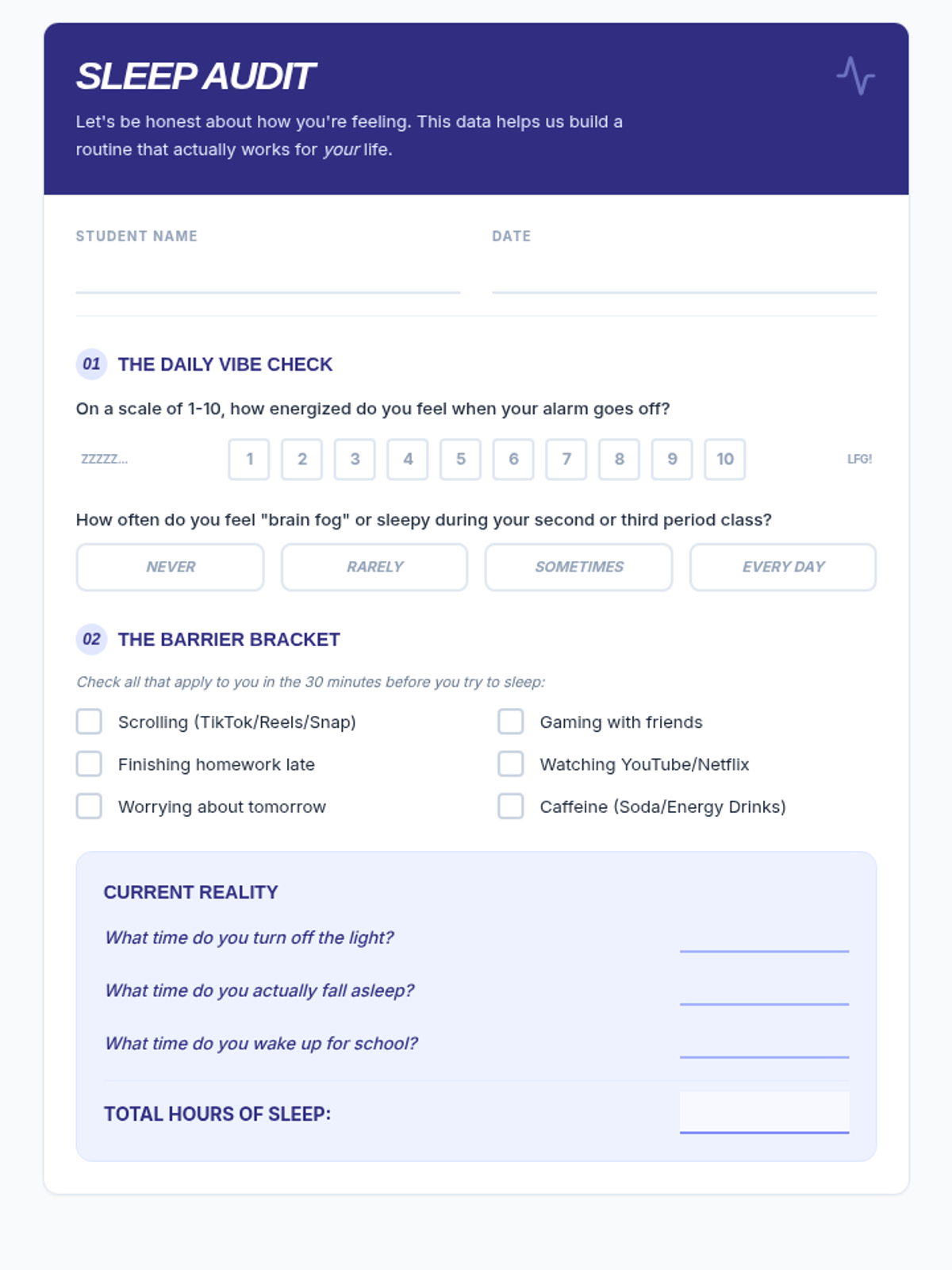
A student-facing survey to audit current sleep habits, morning energy levels, and common barriers to getting enough rest.
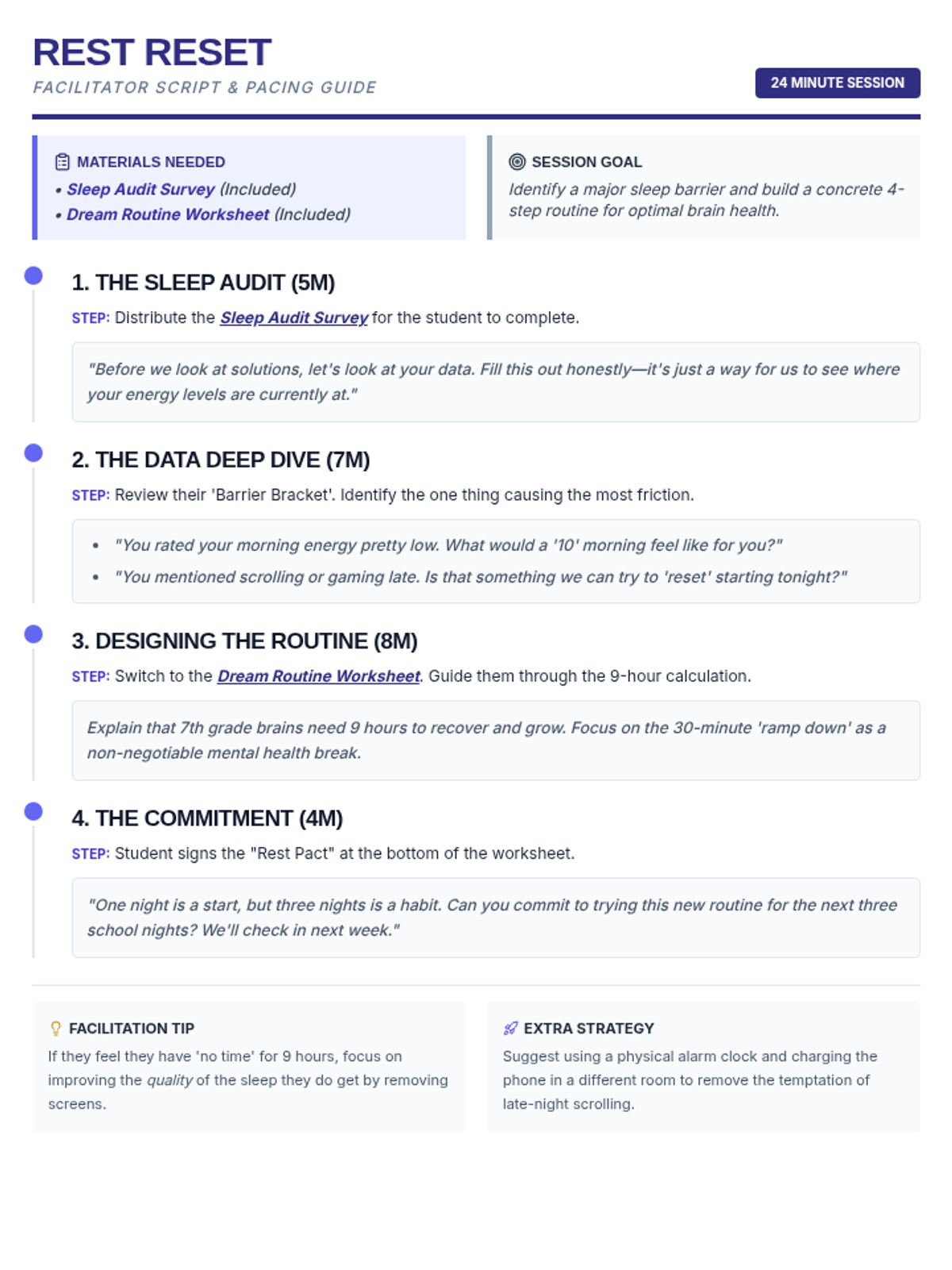
A structured 24-minute instructional script for teachers to facilitate a sleep hygiene session with a 7th-grade student, including pacing, talking points, and guiding questions. Updated to reflect a 9-hour target.
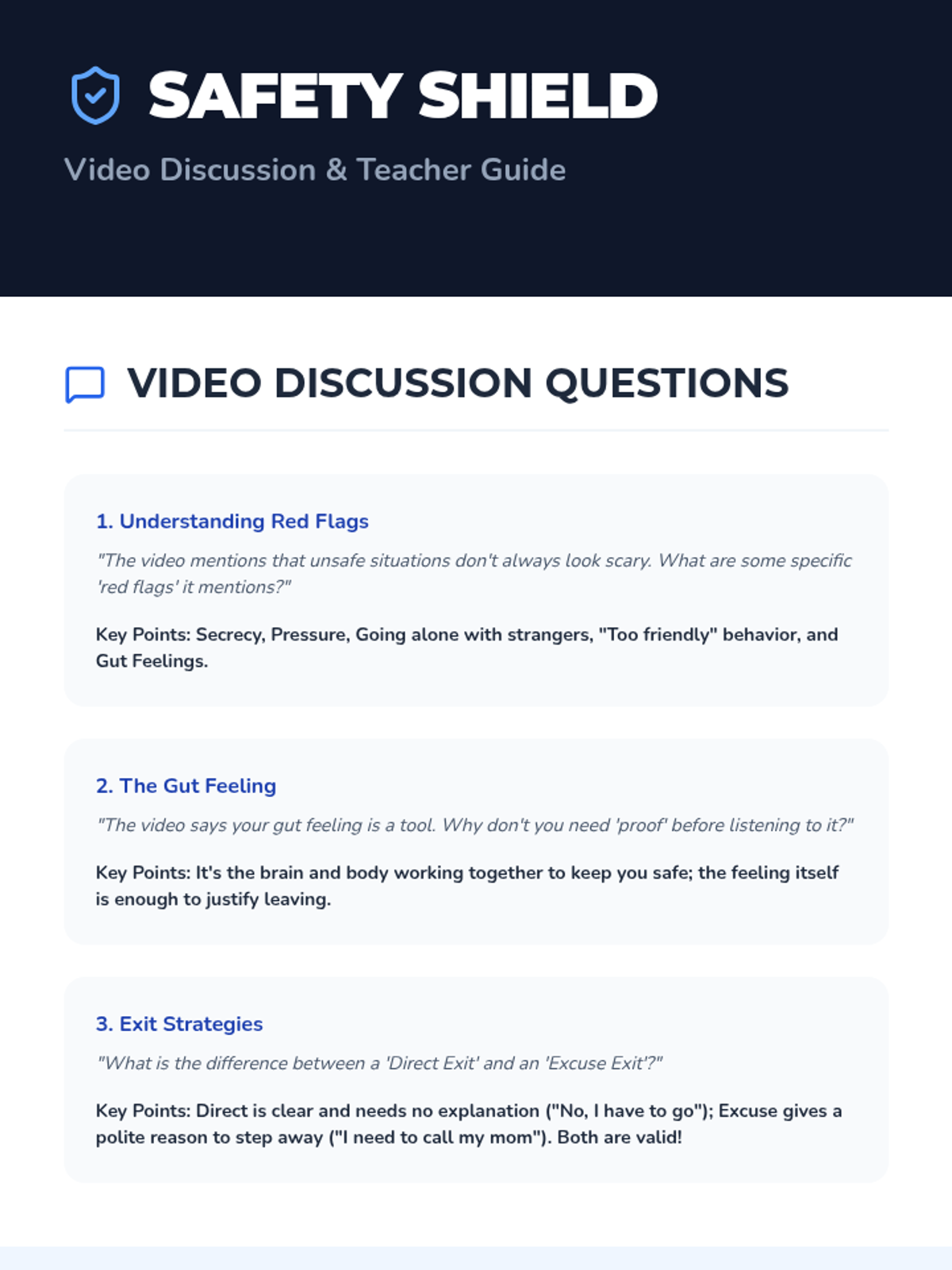
A comprehensive teacher guide updated with video discussion questions, a detailed summary of exit strategies (Direct, Excuse, Distraction, Help-seeking), and an answer key for the worksheet.
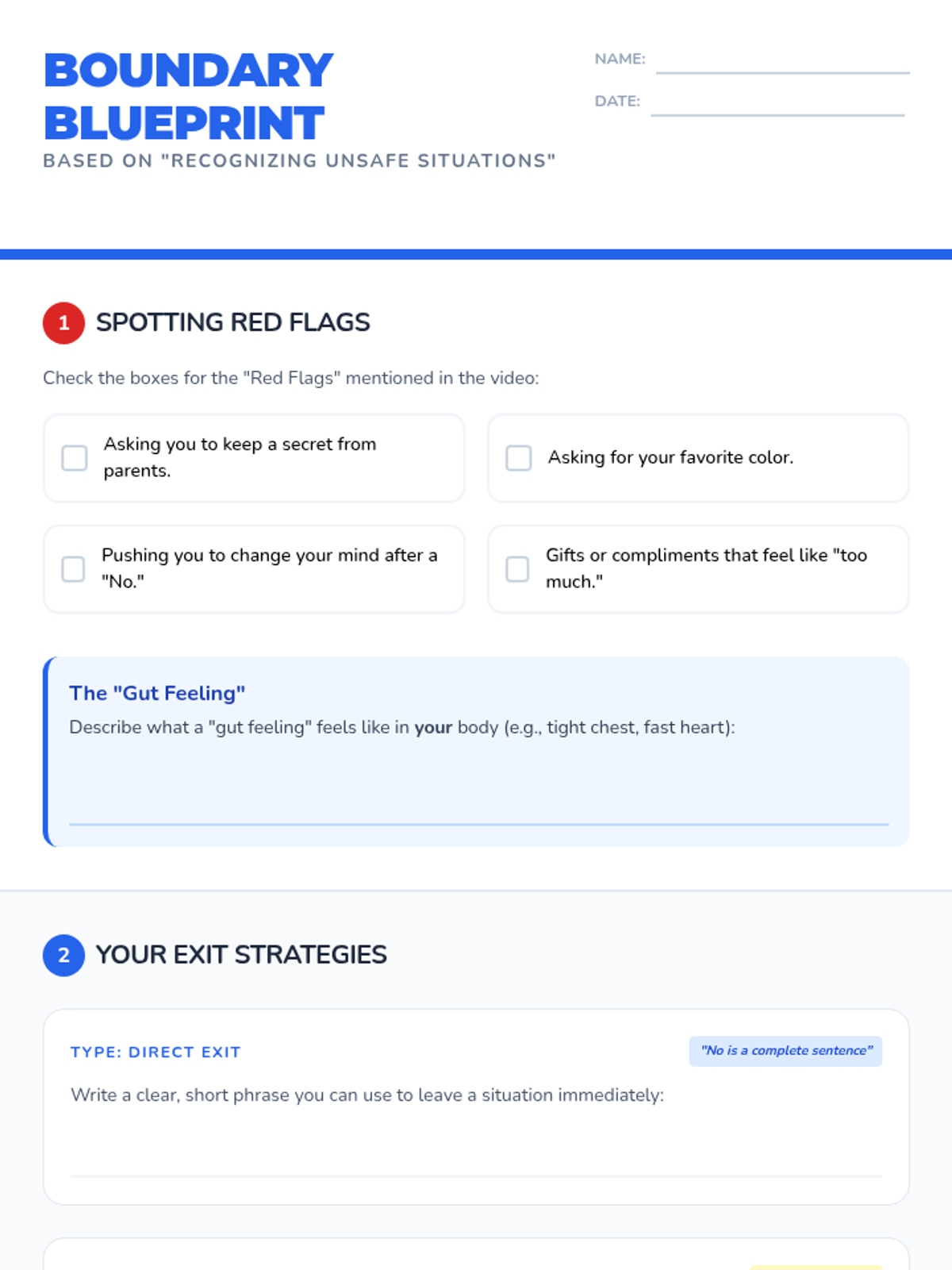
An updated student worksheet aligned with the video's framework, including red flag checklists, exit strategy practice (Direct, Excuse, Help-seeking), and a trusted adult identification section.
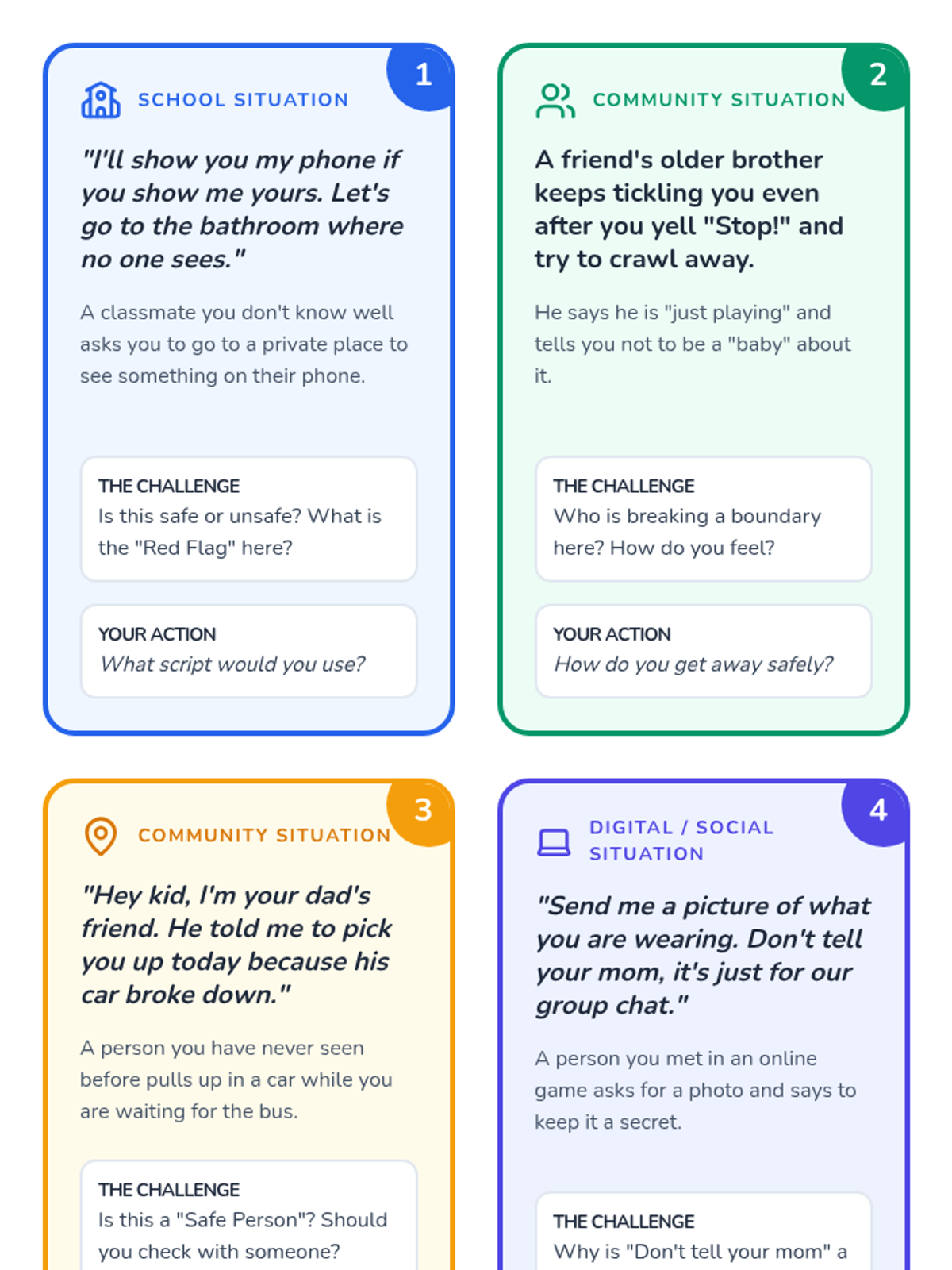
A set of 8 printable scenario-based task cards focusing on social safety, physical boundaries, and community safety for school-aged children.
An updated presentation based on the safety video transcript, featuring red flags, gut feelings, specific exit strategies (Direct, Excuse, Help-seeking), and trusted adult identification.
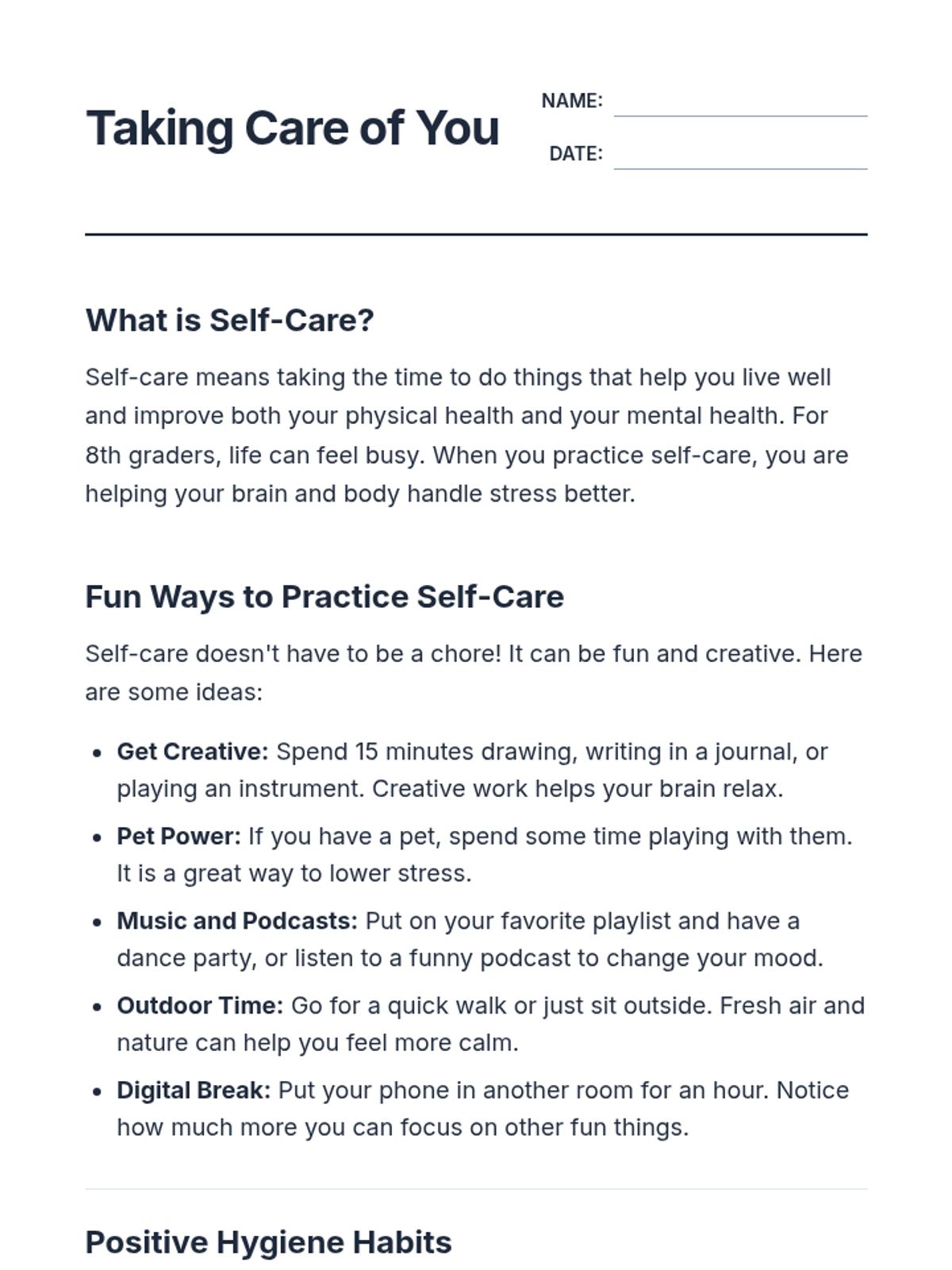
An updated text-focused article for 8th graders with expanded fun self-care tips and positive hygiene habits, plus 10 updated reflection questions.
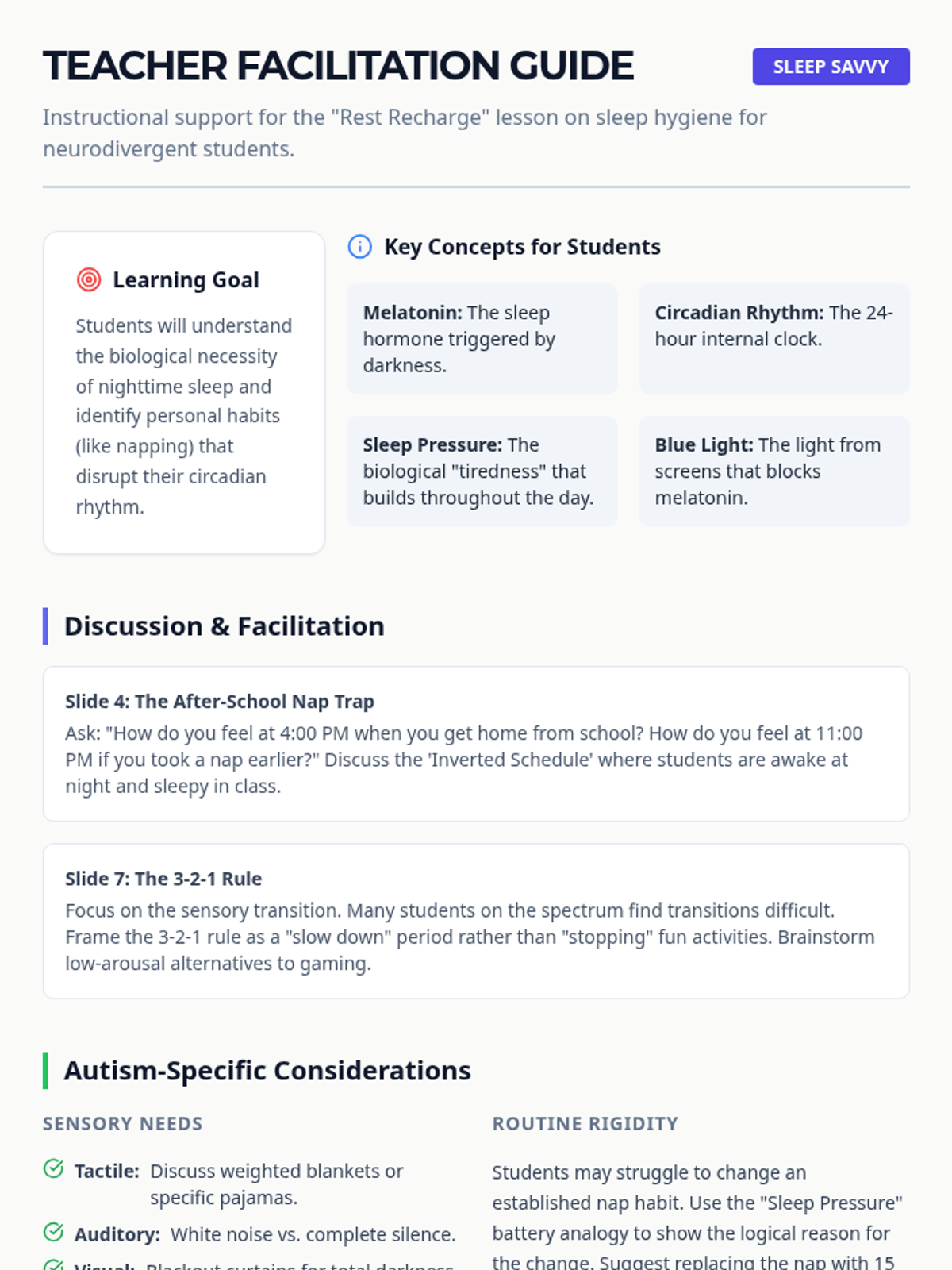
A teacher facilitation guide for the Sleep Savvy lesson, including discussion prompts, autism-specific sensory considerations, and an answer key for the student handout. Updated for a 6:00 AM wake-up schedule.
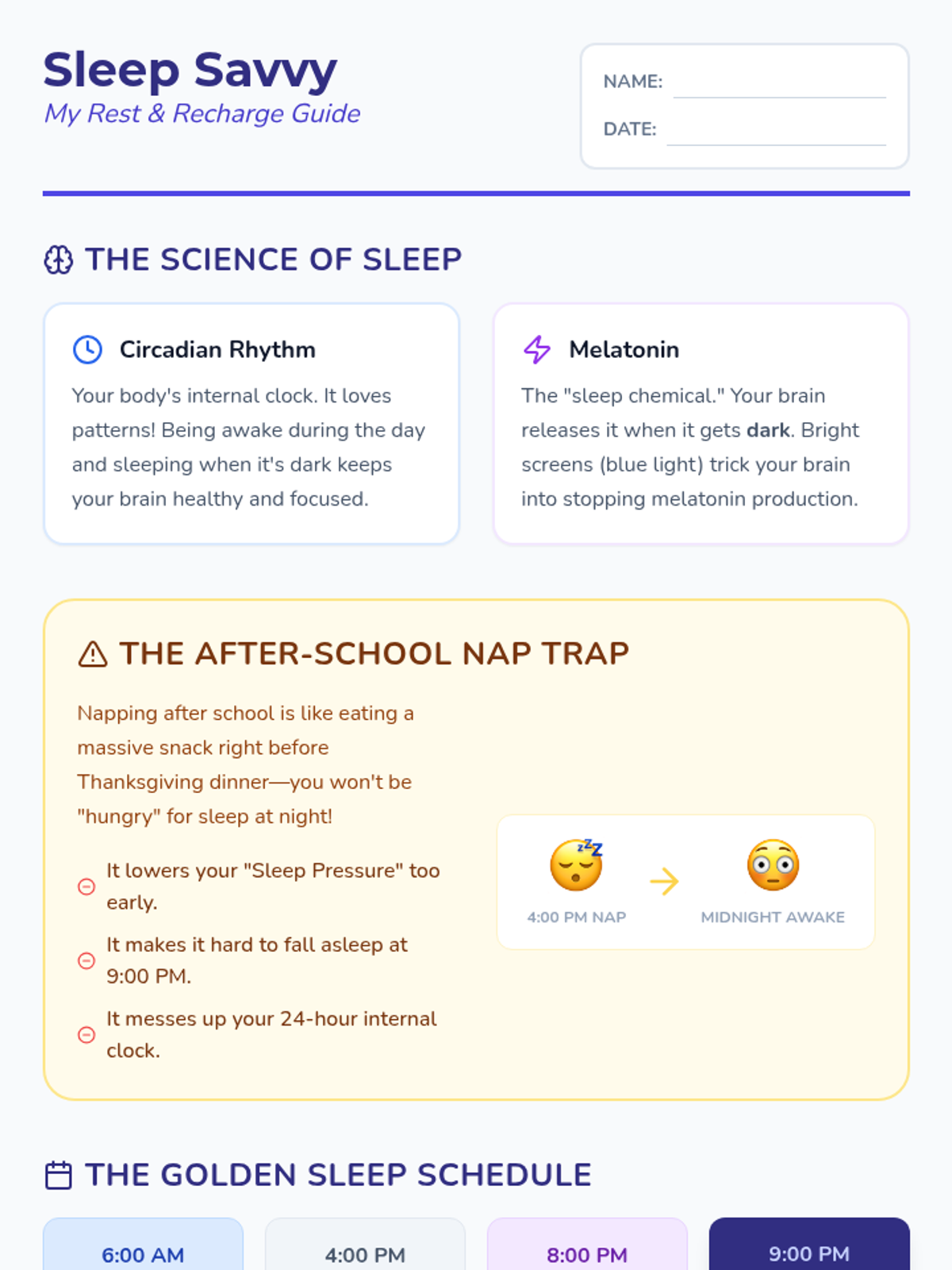
A student handout explaining the science of sleep hygiene, the risks of afternoon napping, and a visual schedule with reflection questions. Updated for a 6:00 AM wake-up schedule.
A visual guide for teenagers on the autism spectrum explaining the science of circadian rhythms, melatonin, and why napping after school can disrupt healthy sleep patterns. Updated for a 6:00 AM wake-up schedule.
An answer key and grading guide for the Rest Reset Quiz, providing correct answers and marking criteria for short-answer questions.
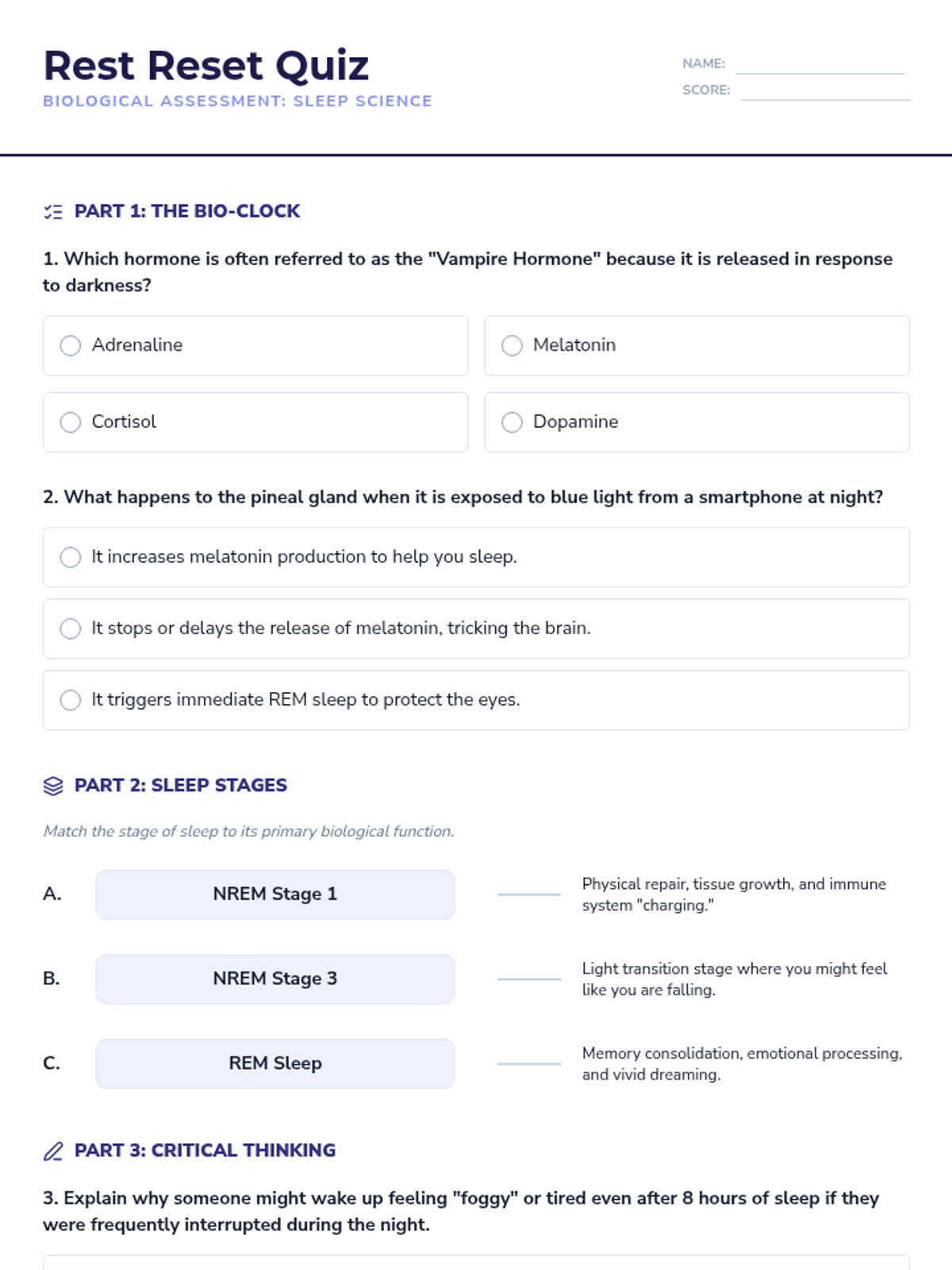
A short assessment for students to demonstrate their understanding of sleep cycles, hormones, and hygiene principles.
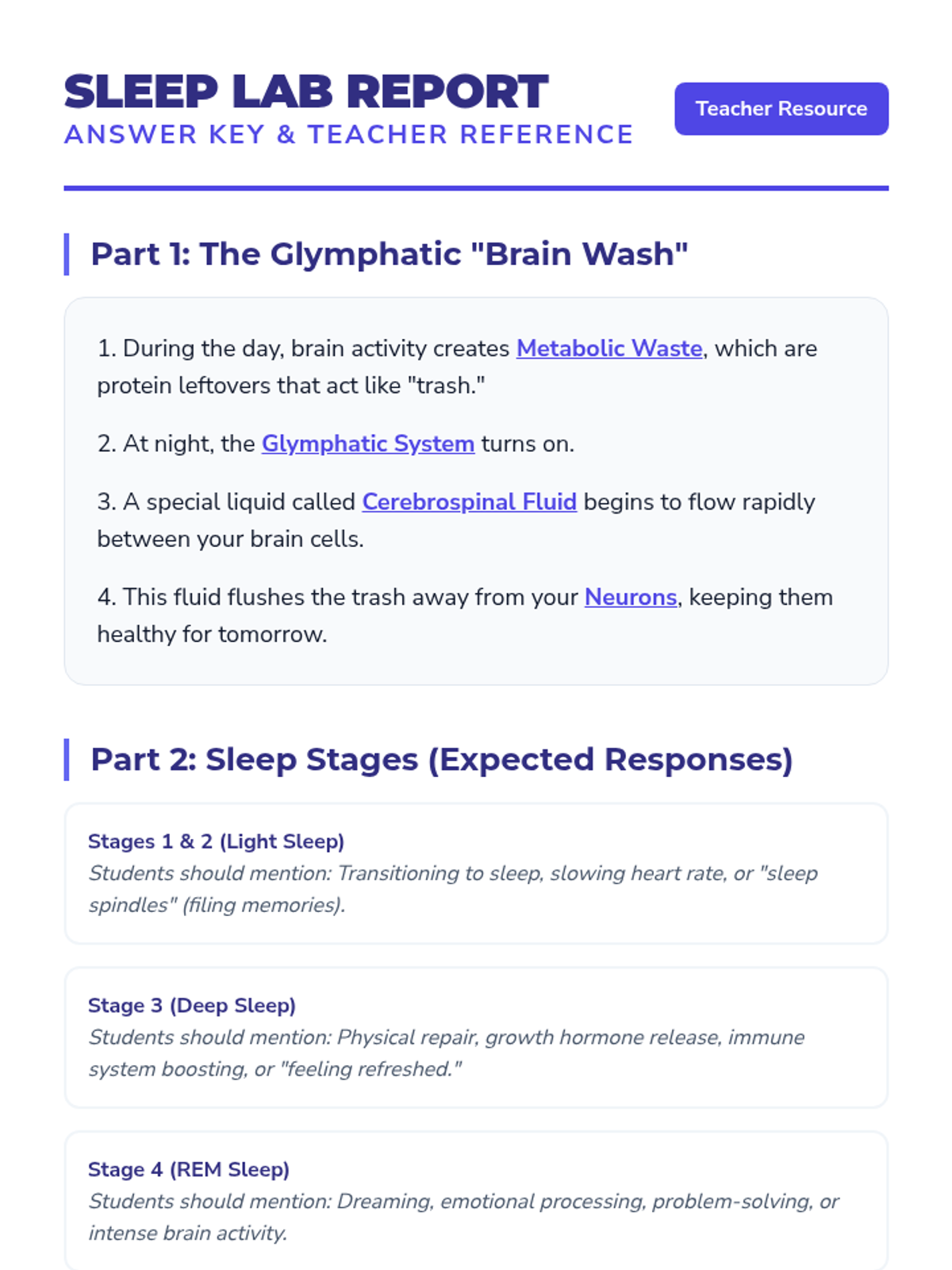
An answer key for the Sleep Lab Report, providing teachers with the correct terms for the biological cleaning process and expected responses for the sleep stages.
A personalized goal-setting template for students to design their optimal sleep environment and routine based on their hygiene audit.
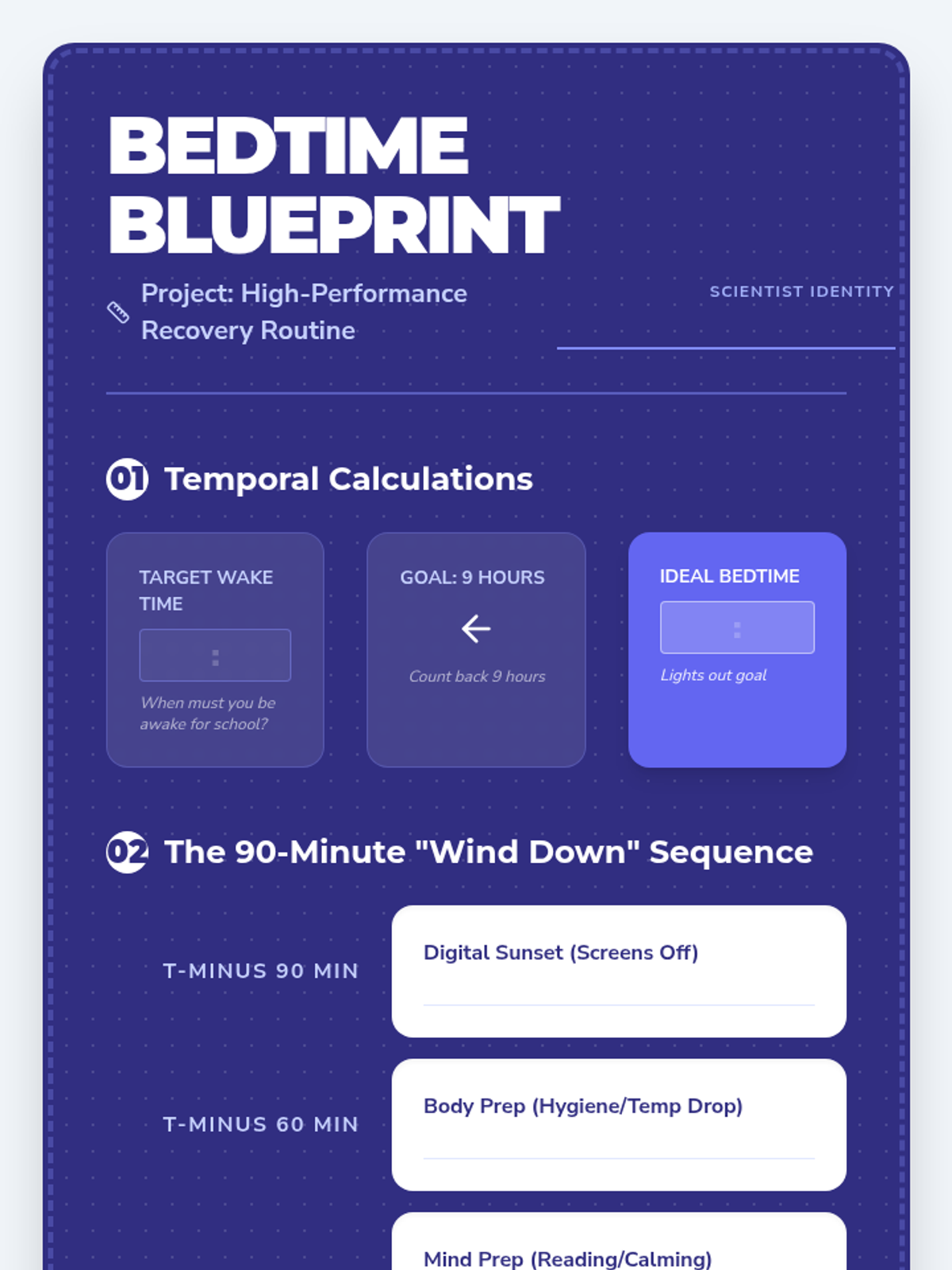
A specialized capstone activity where students design a personalized 'Bedtime Blueprint'. It includes time calculations for a 9-hour sleep window, a 90-minute wind-down timeline, and an environmental checklist.
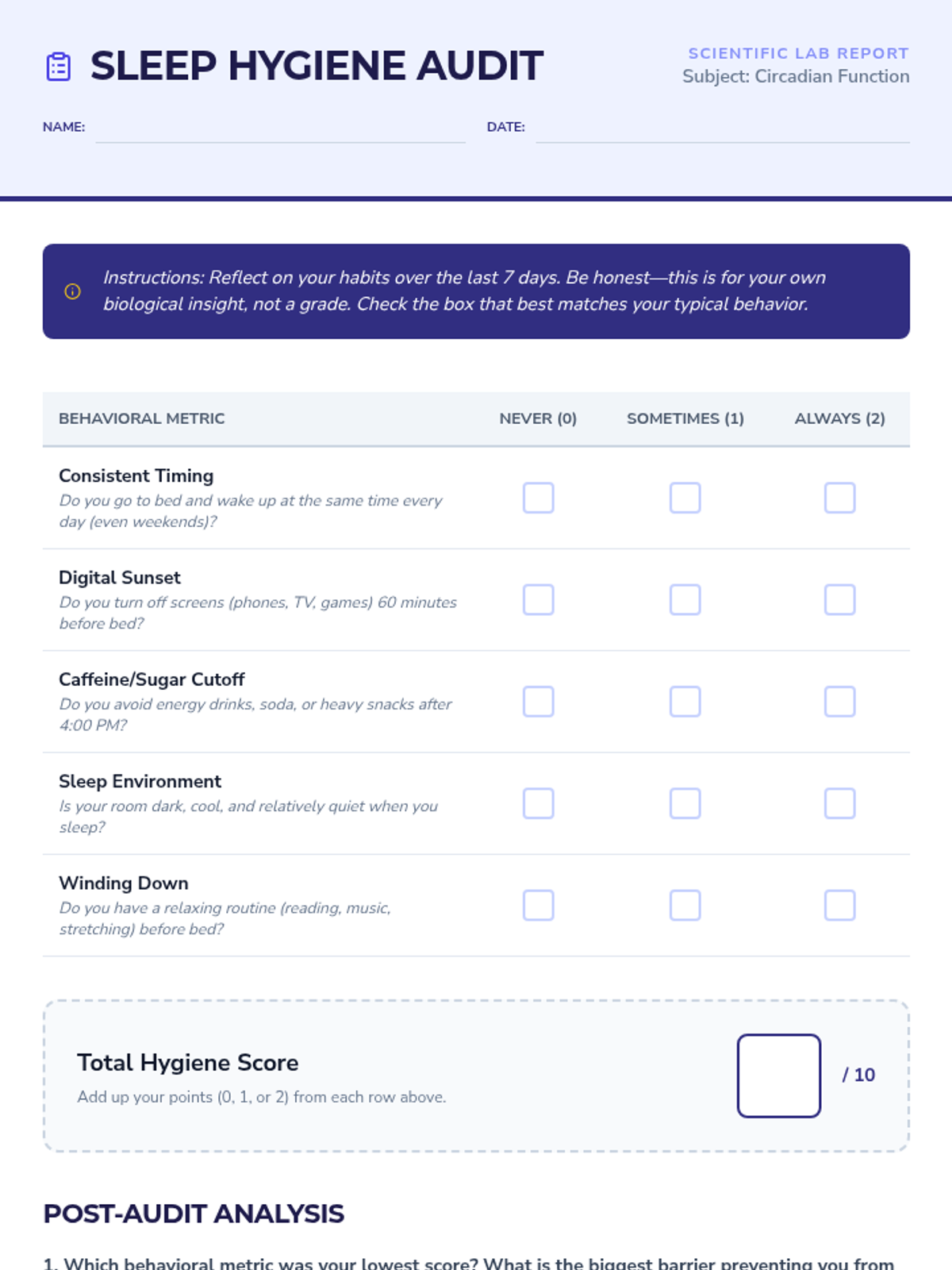
A structured self-assessment worksheet for students to evaluate their current sleep habits and reflect on barriers to restorative rest.
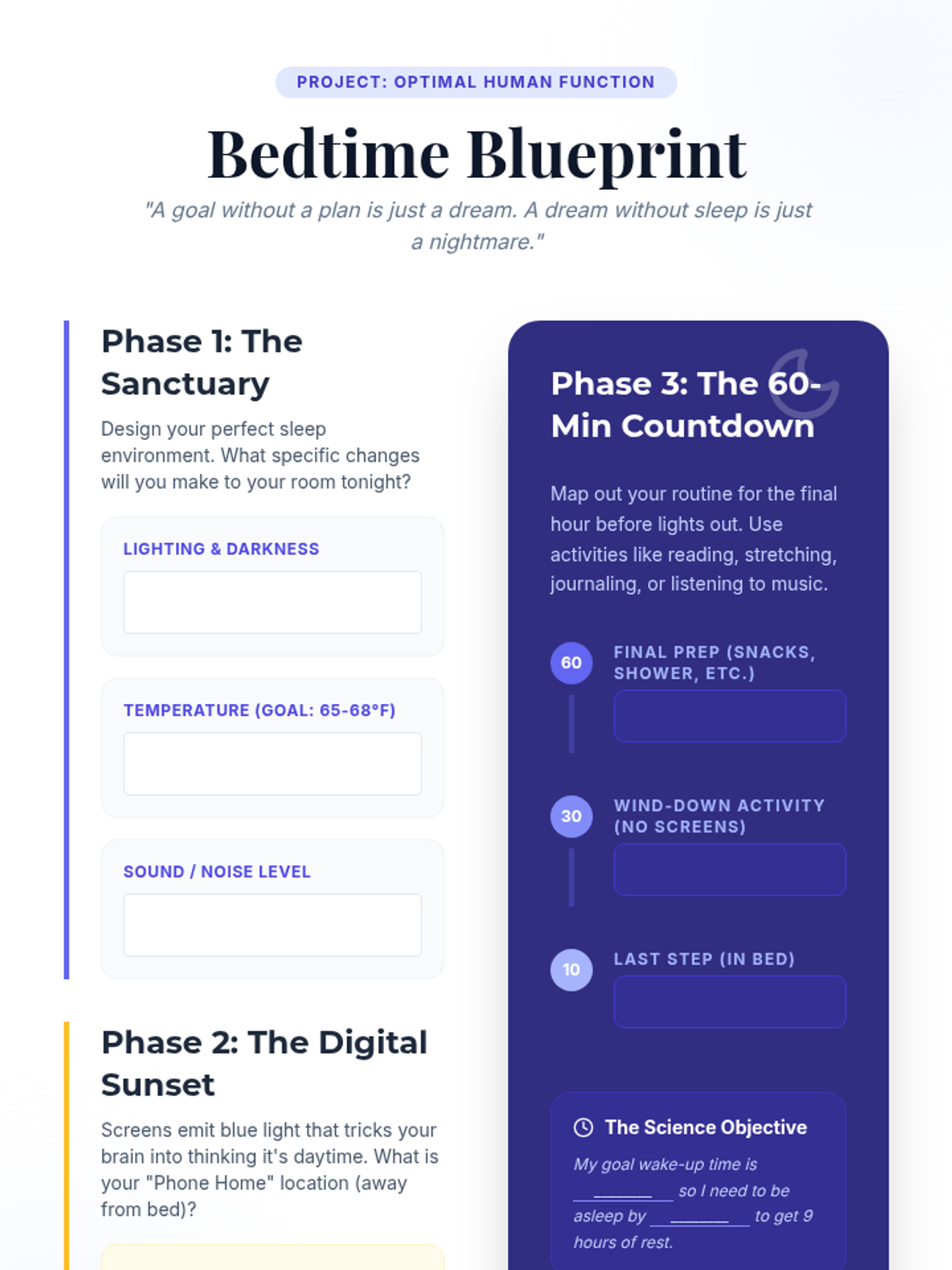
A creative 'Bedtime Blueprint' activity sheet where students design their ideal sleep sanctuary and map out a 60-minute wind-down routine to optimize their rest and biological recovery.
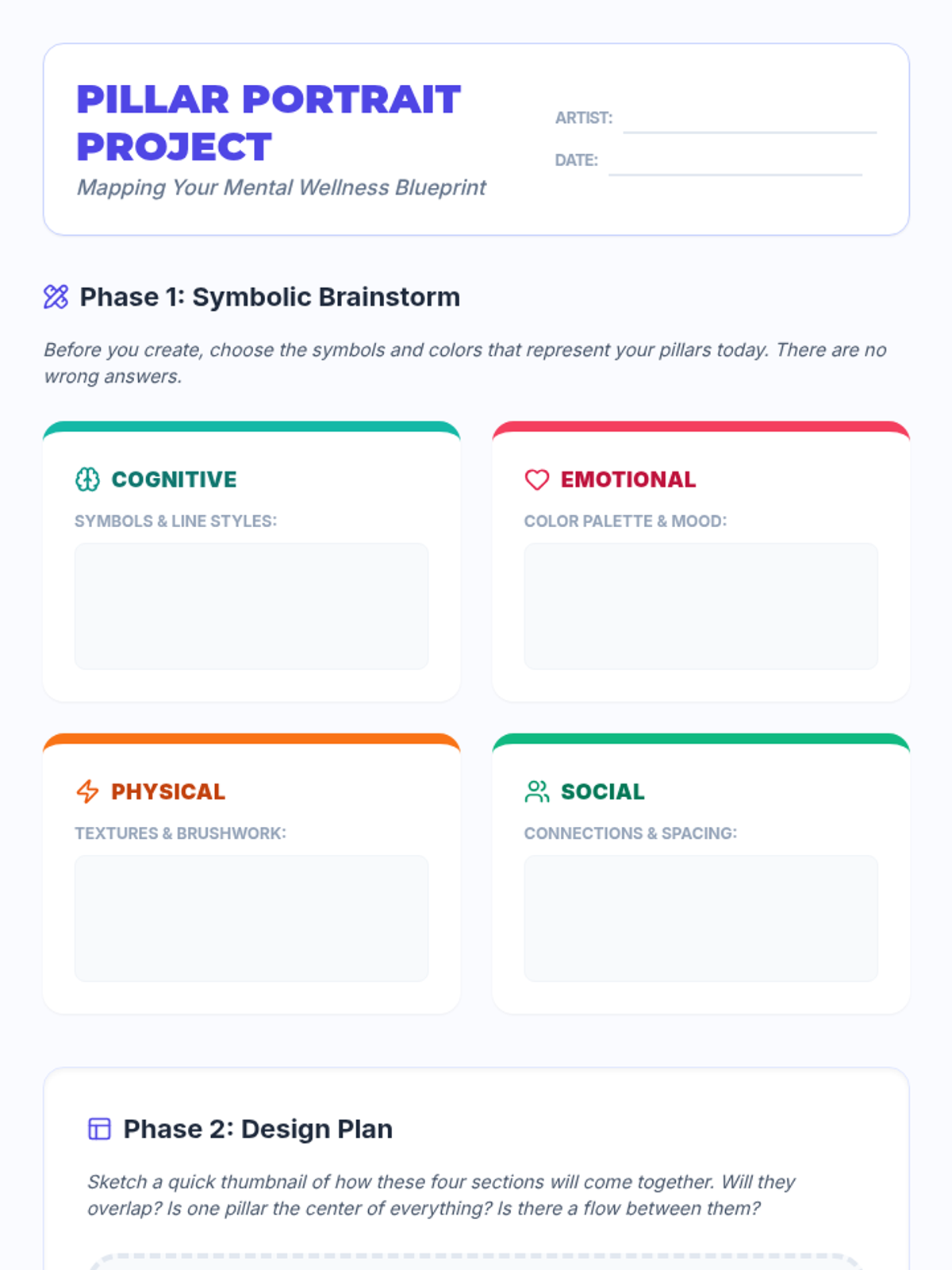
A planning worksheet for Art students to brainstorm symbolism, color palettes, and textures for their four-pillar mental health artwork.
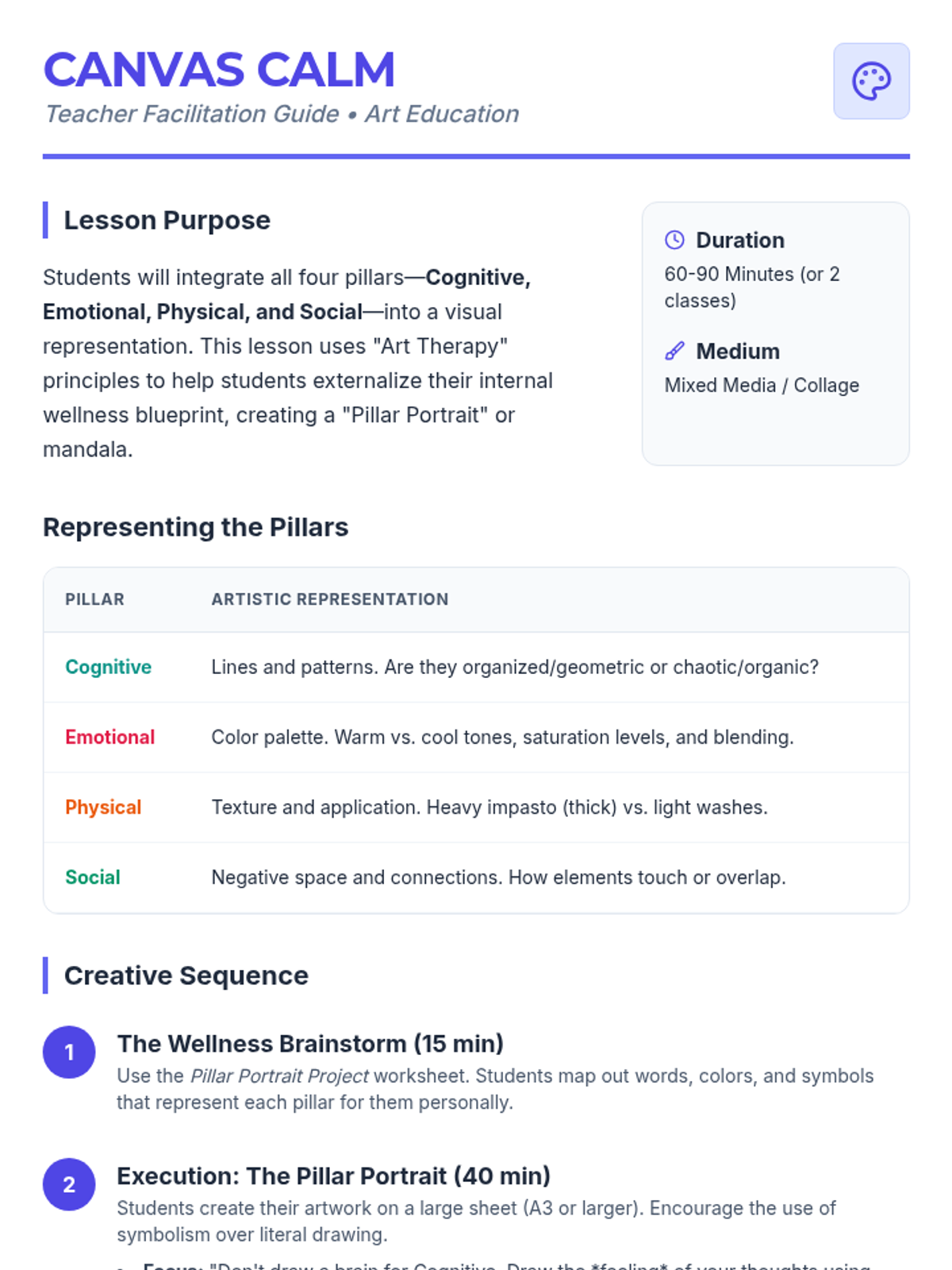
A teacher guide for Art instructors to facilitate a creative project that visualizes the four pillars of mental health through symbolism and color theory.
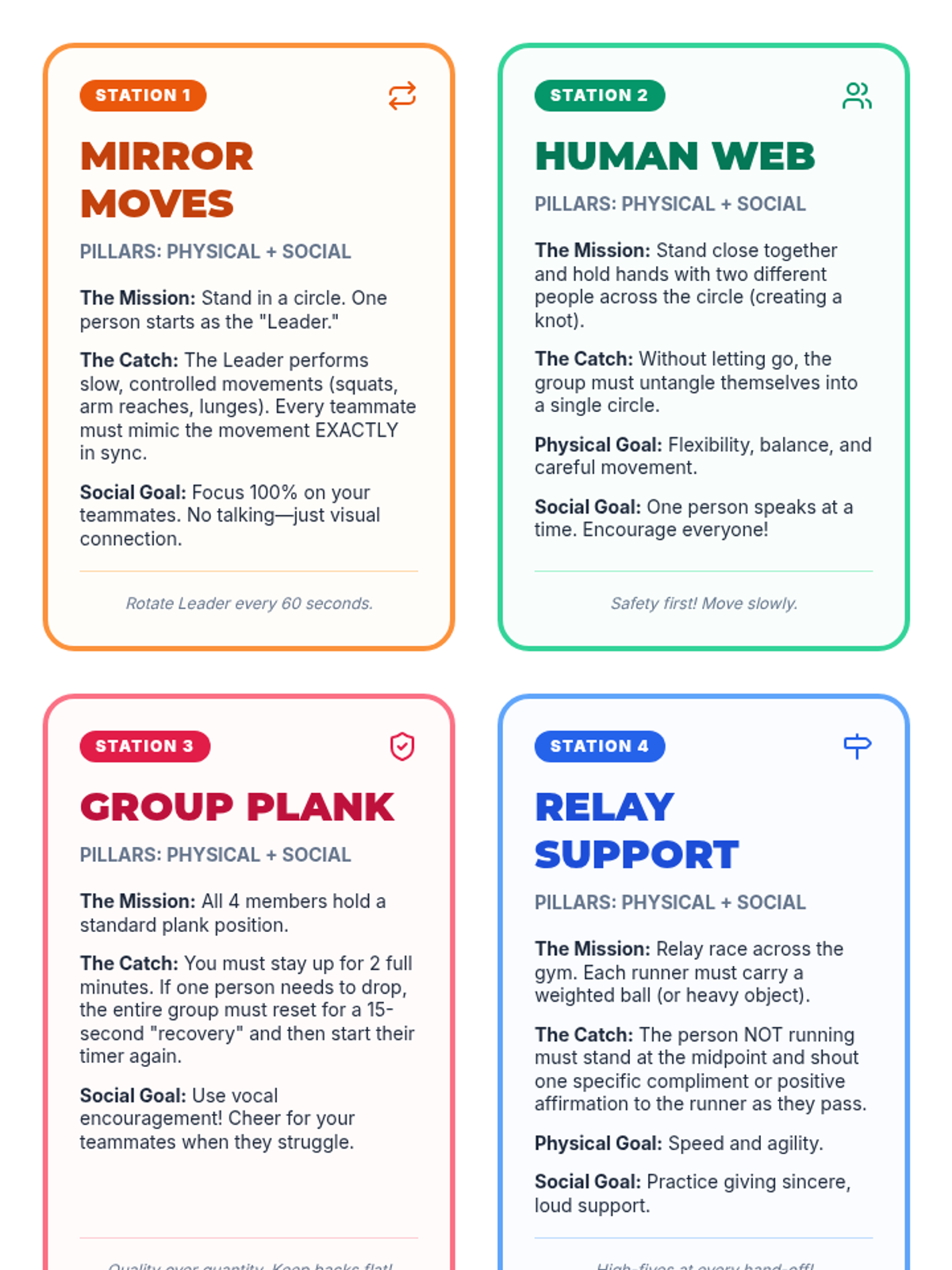
Printable station cards for PE cooperative activities that emphasize the Physical and Social pillars of mental health.
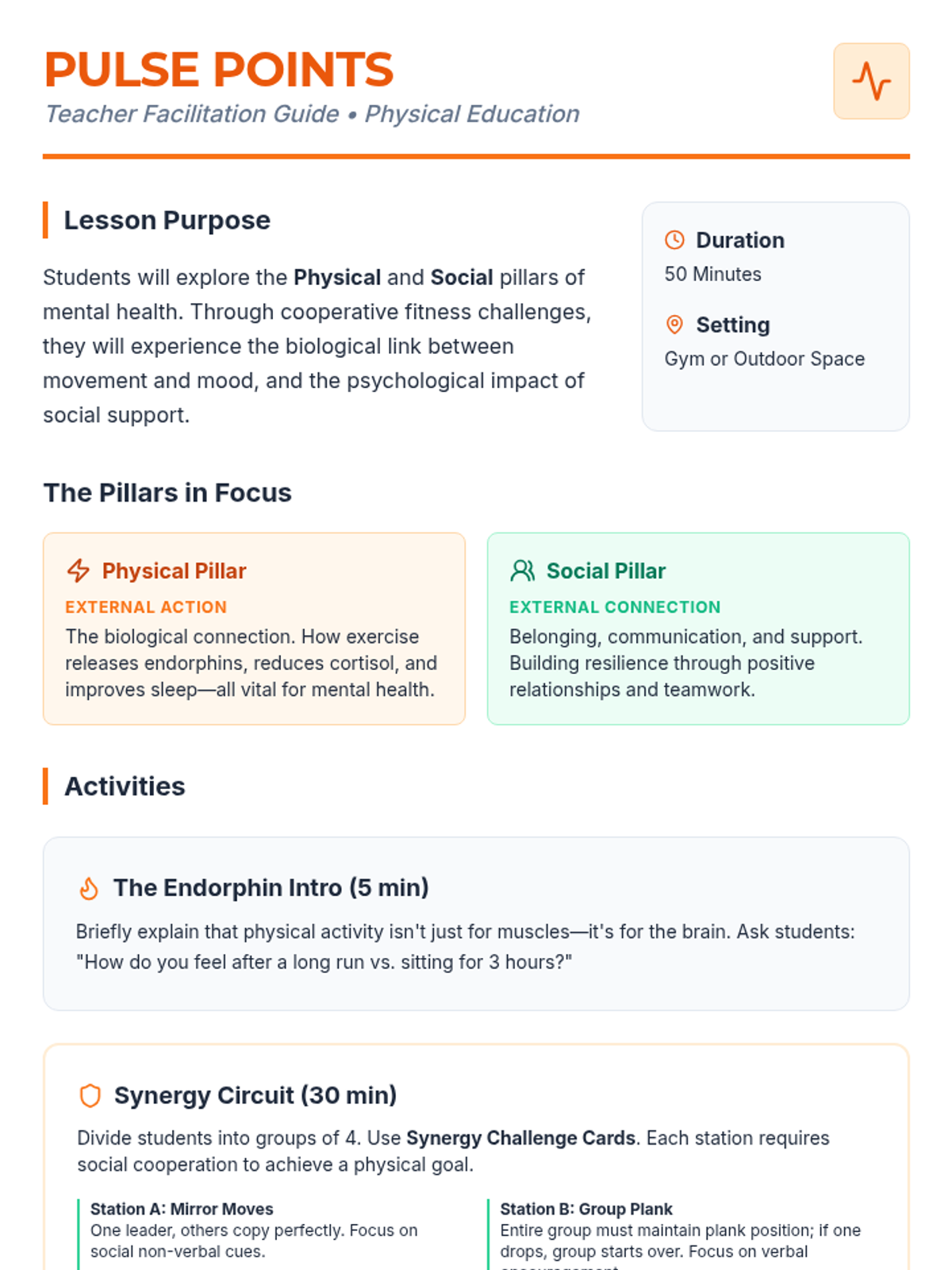
A teacher guide for PE instructors to lead a 50-minute high-energy lesson on the Physical and Social pillars of mental health through cooperative movement.
A dynamic slide deck for Health teachers to introduce the Cognitive and Emotional pillars, focusing on thinking traps and the power of reframing.
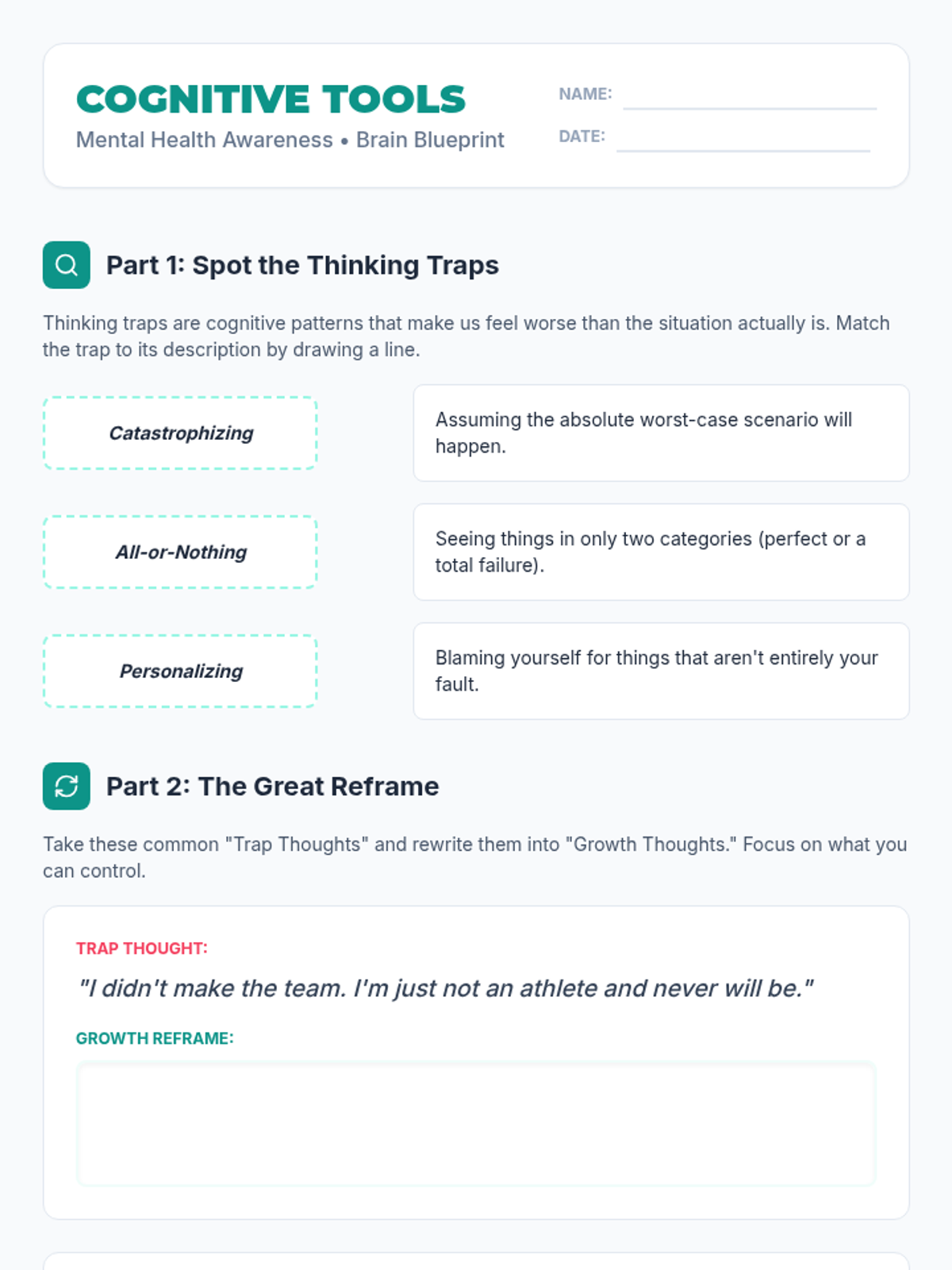
A student activity sheet for identifying cognitive thinking traps and practicing reframing techniques, supporting the Emotional and Cognitive pillars.
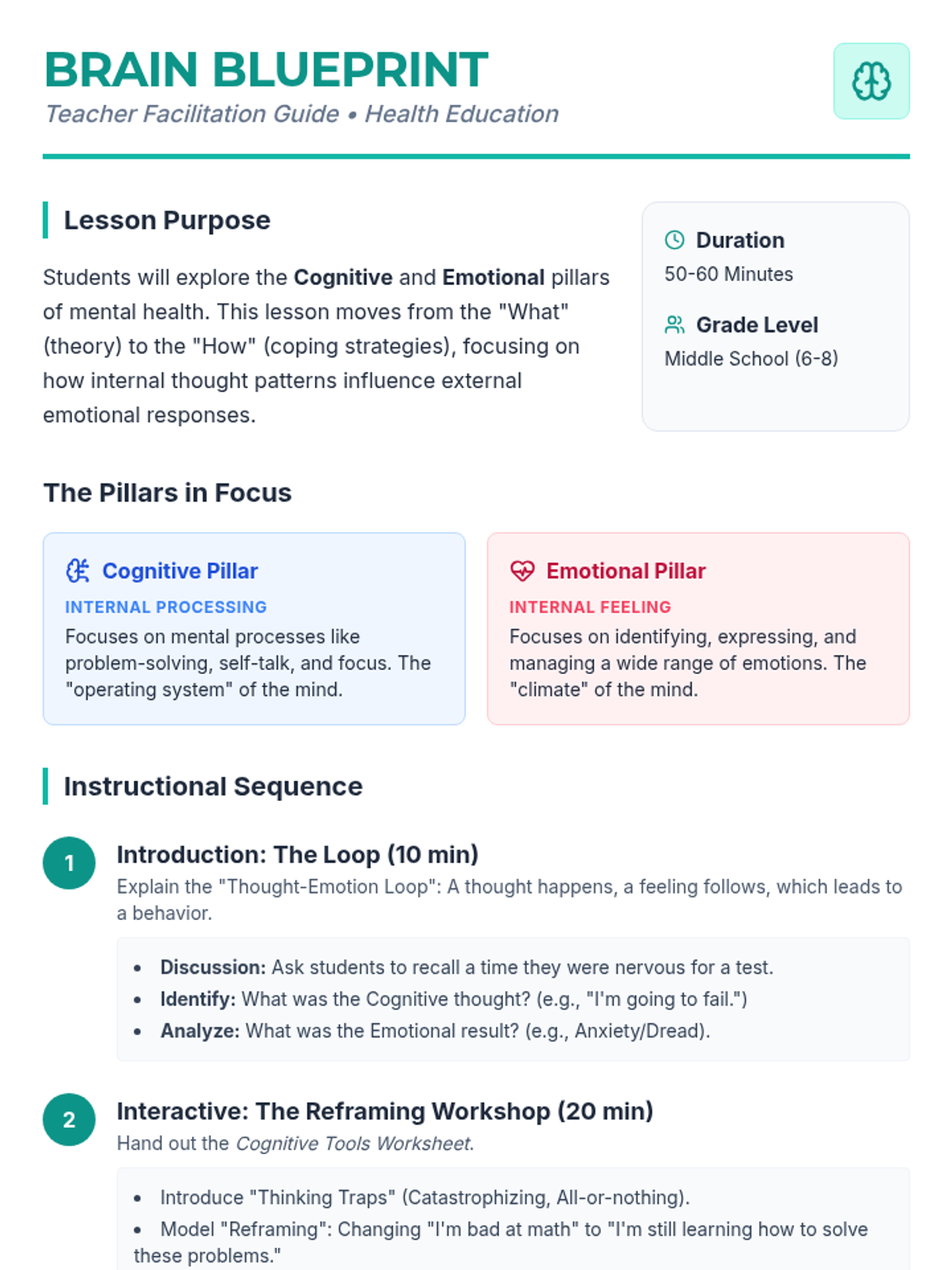
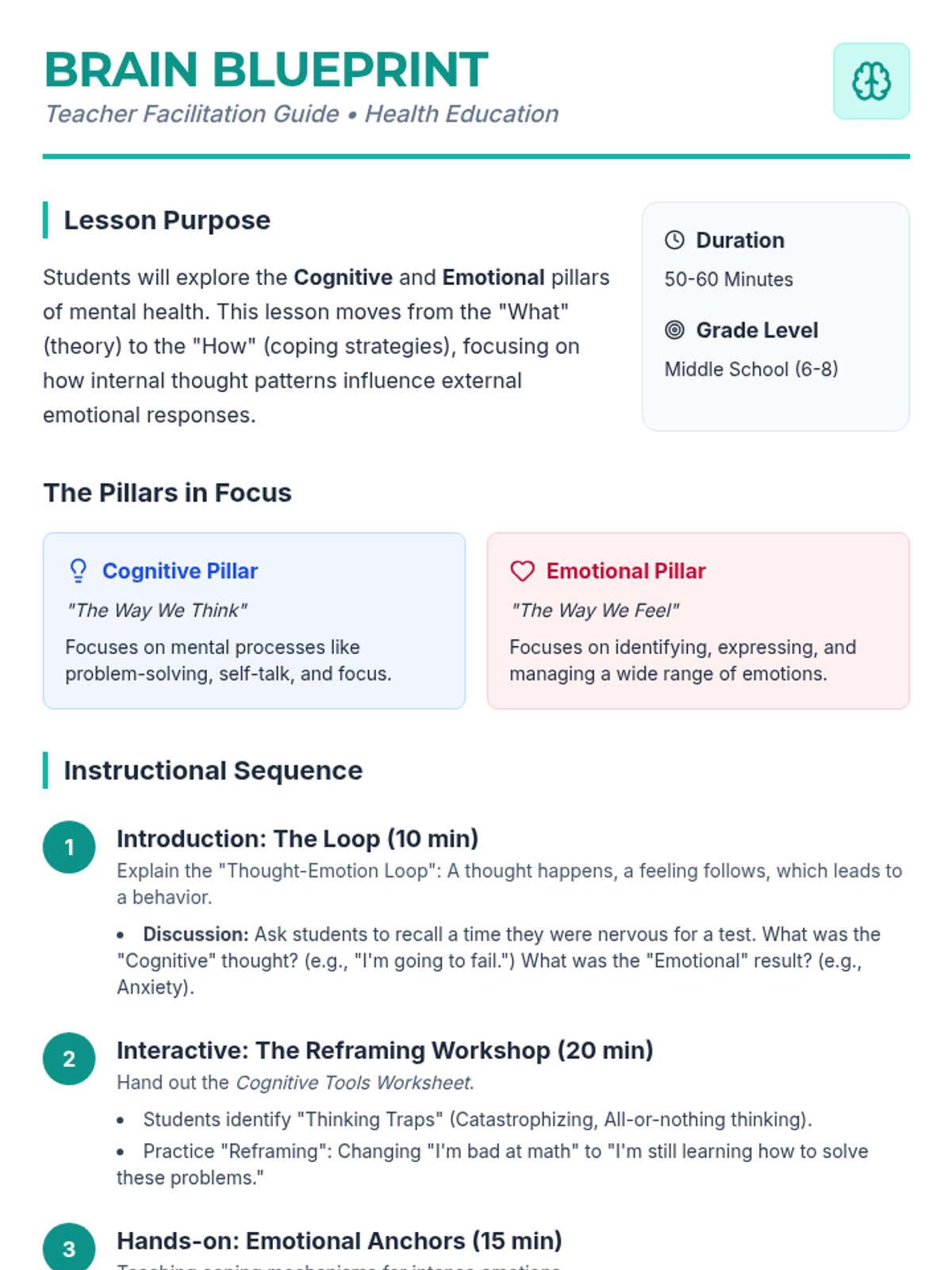
A comprehensive facilitation guide for Health teachers to lead a 50-60 minute lesson on the Cognitive and Emotional pillars of mental health, including lesson sequences and discussion prompts.
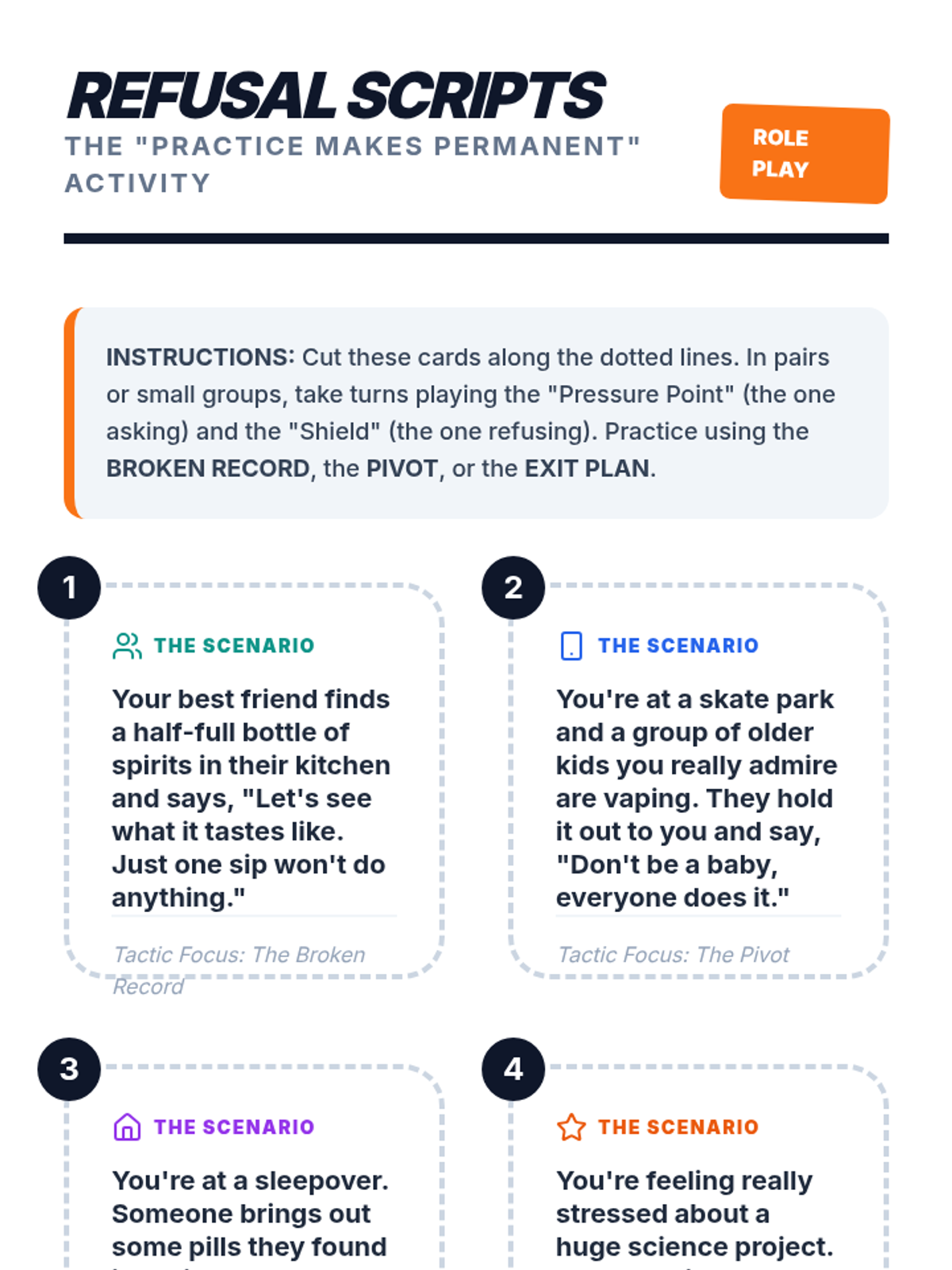
A set of role-play scenario cards designed to help students practice specific refusal tactics (Broken Record, Pivot, Exit Plan) in realistic social situations involving substances.
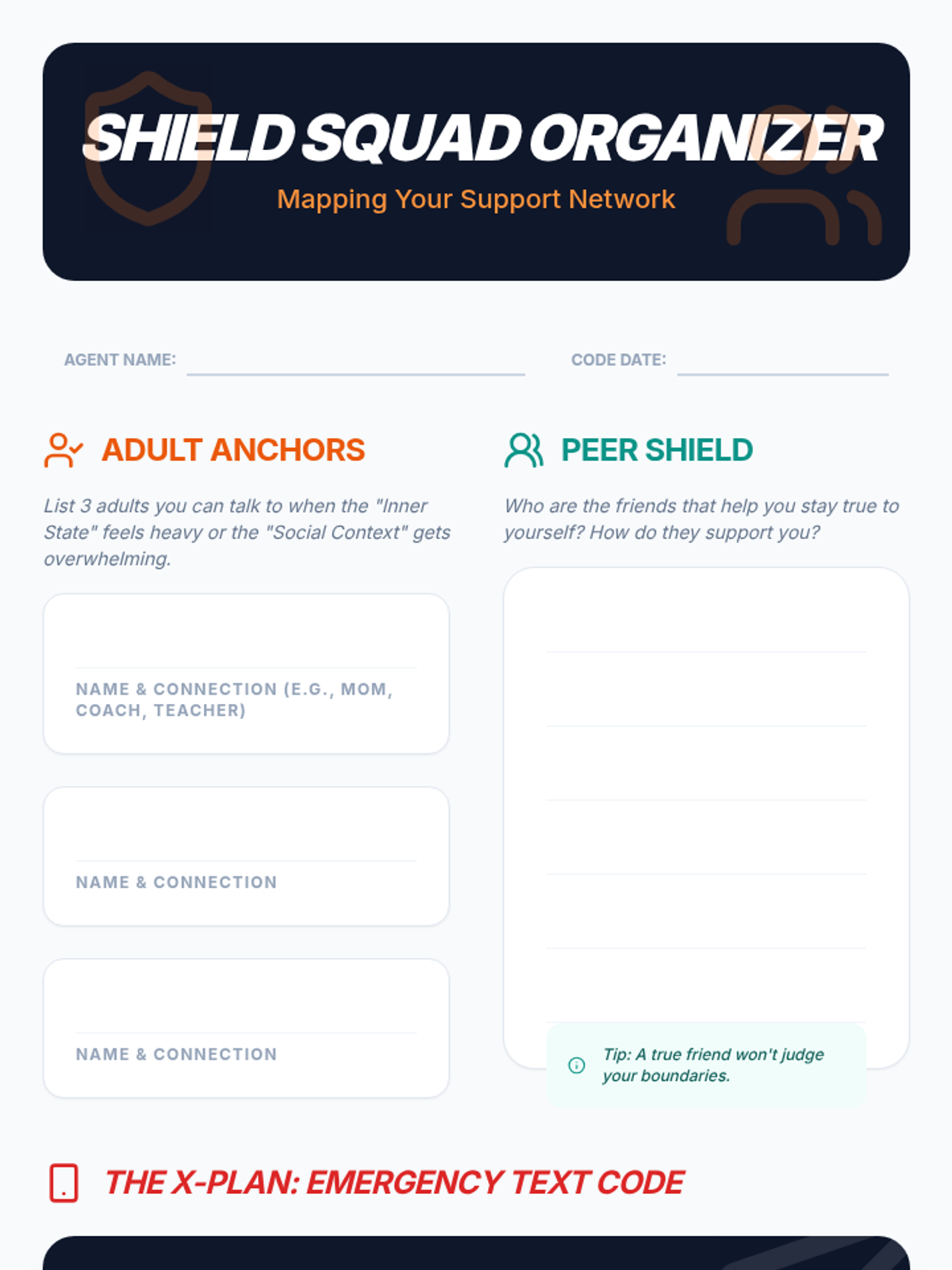
A strategic planning worksheet where students identify trusted adults and supportive peers, and establish an 'X-Plan' (a secret code for emergency pickup) as a practical safety tool.
A high-energy presentation teaching students three core refusal tactics (Broken Record, Pivot, Exit Plan) and the importance of having a supportive 'Shield Squad'.
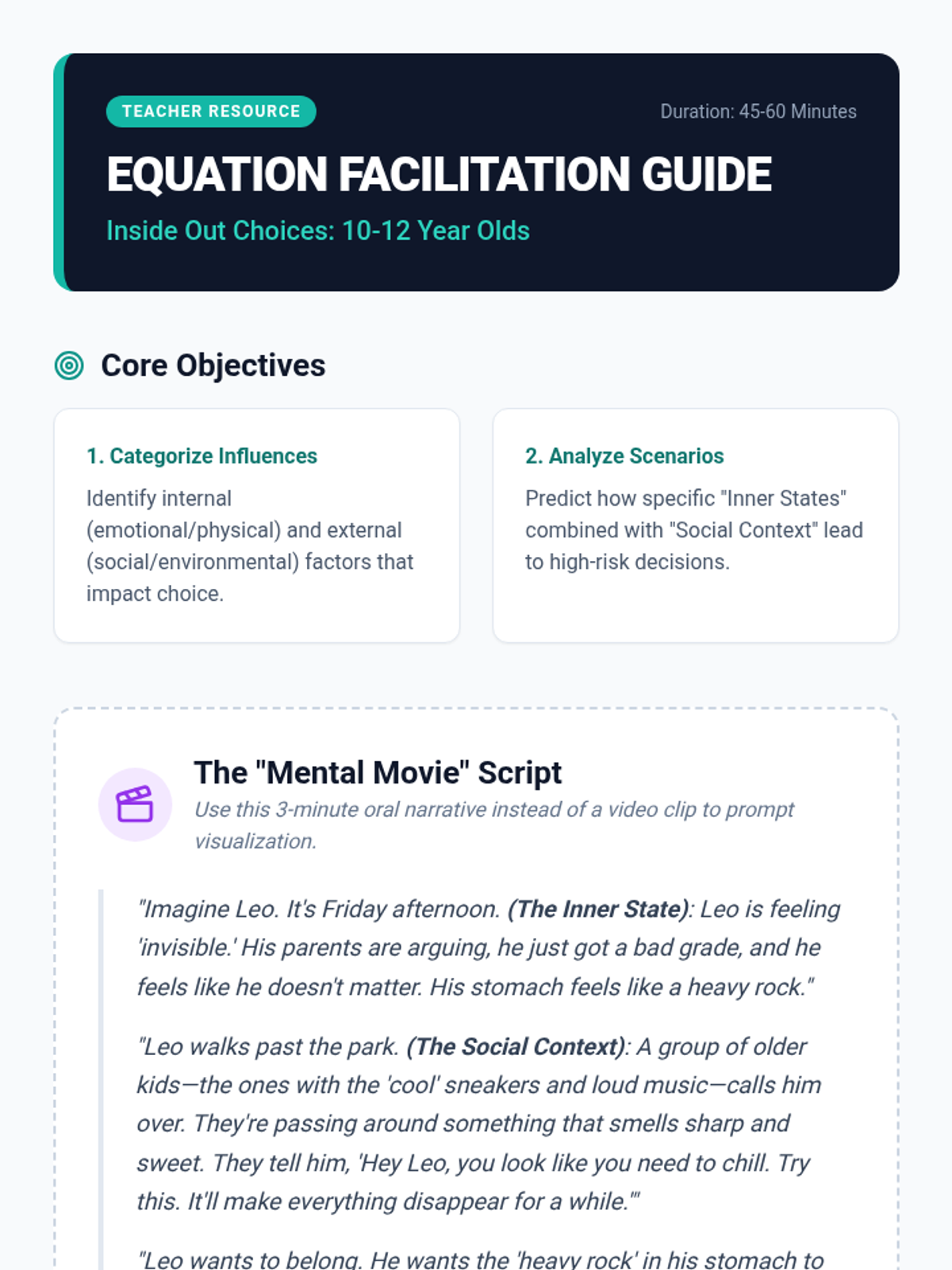
A teacher-facing resource providing learning objectives, a script for a guided visualization activity, discussion prompts, and an answer key for the student worksheet.
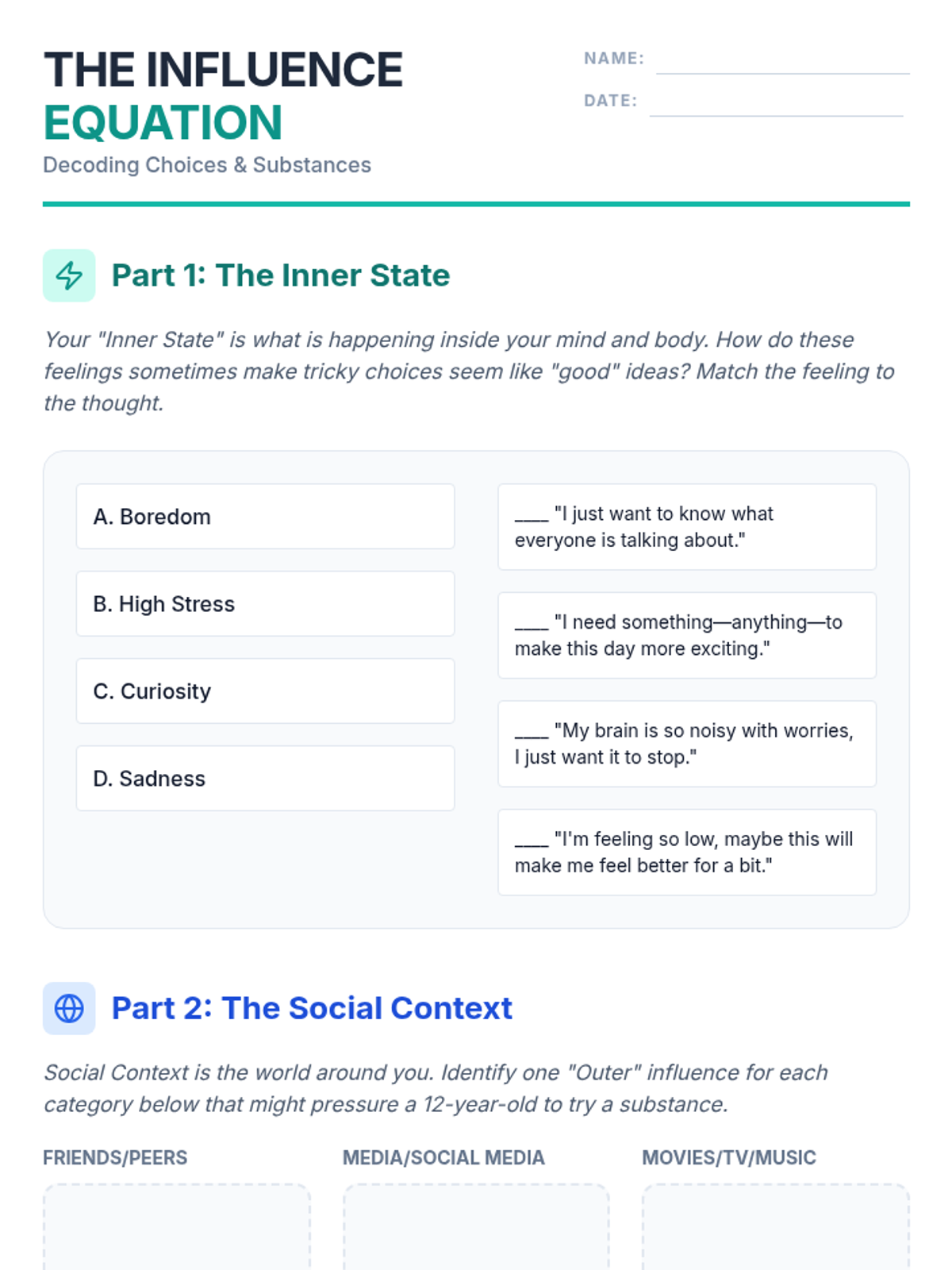
A student-facing worksheet designed for 10-12 year olds to practice identifying internal emotions and external social pressures that influence choices. Includes a matching activity and a scenario-based reflection.
A visual slide deck for 10-12 year olds explaining the internal and external factors that influence choices about substance use. It breaks down complex psychological concepts into simple 'Inner' and 'Outer' categories.
A visual presentation for introducing the biological and psychological benefits of physical activity, structured around the three health pillars.
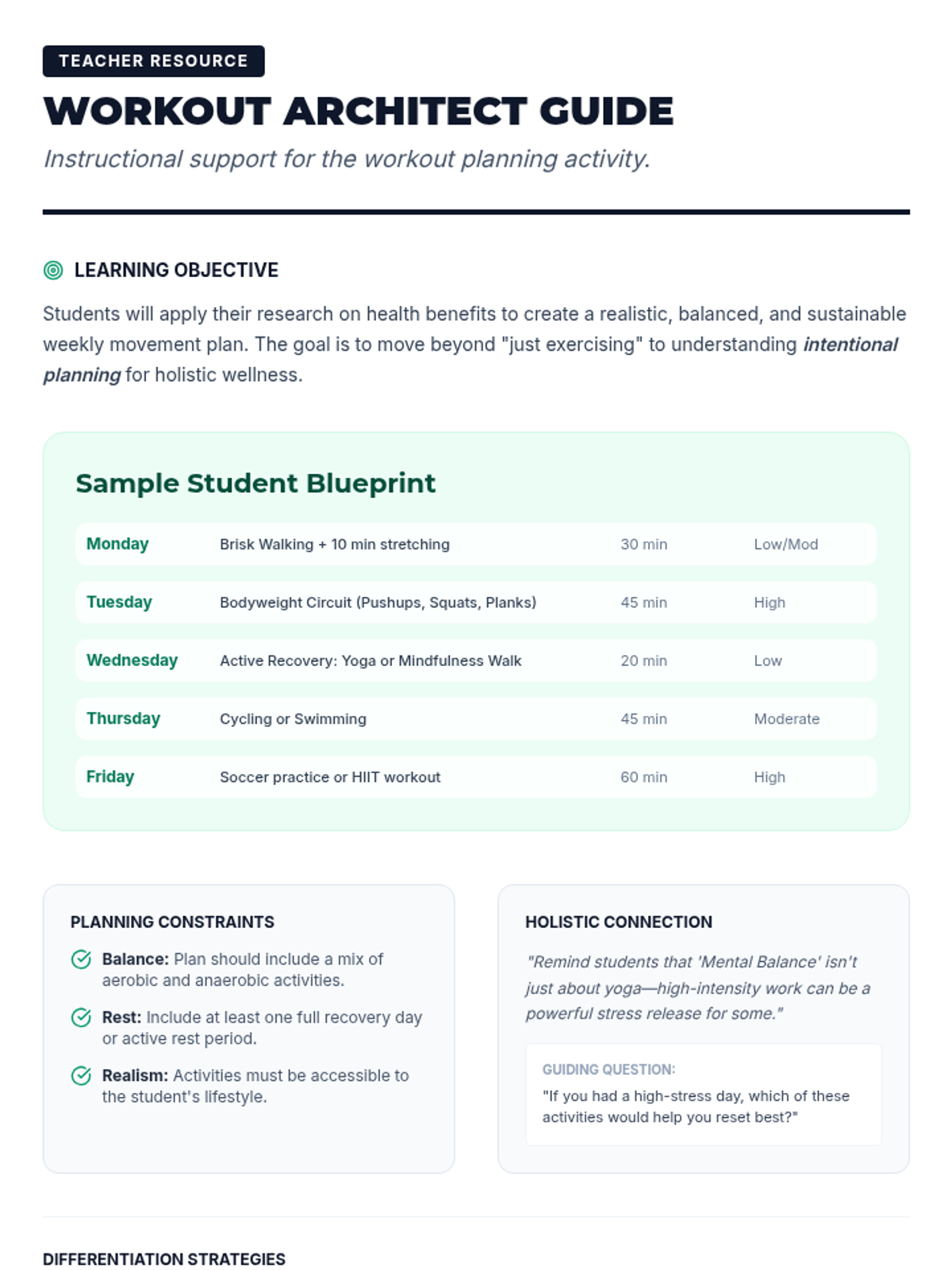
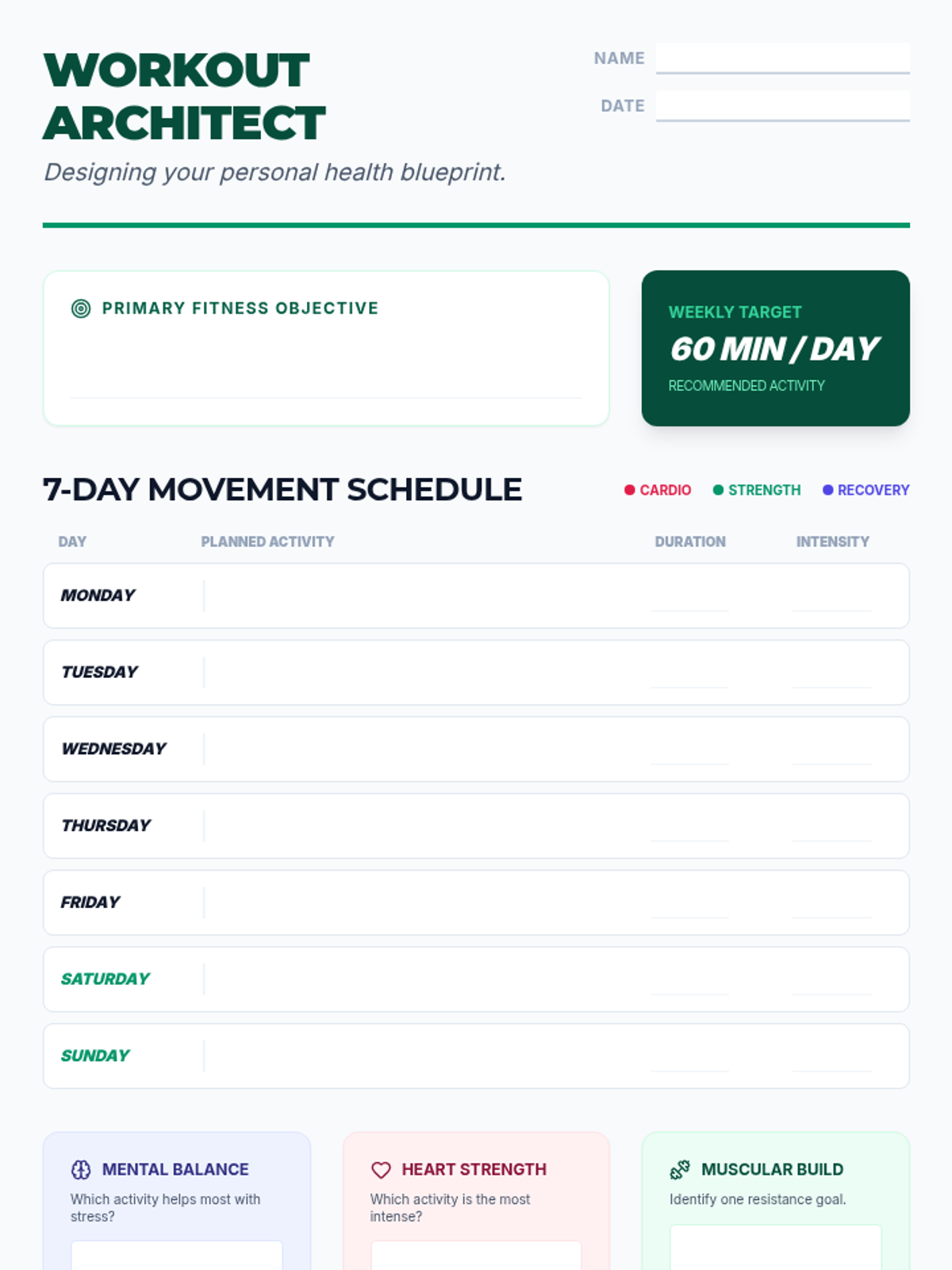
A teacher guide for the Workout Architect planner, including sample regimens, planning constraints, and differentiation strategies.
A student planner for designing a personalized weekly workout regimen, integrating mental, cardiovascular, and muscular health goals.
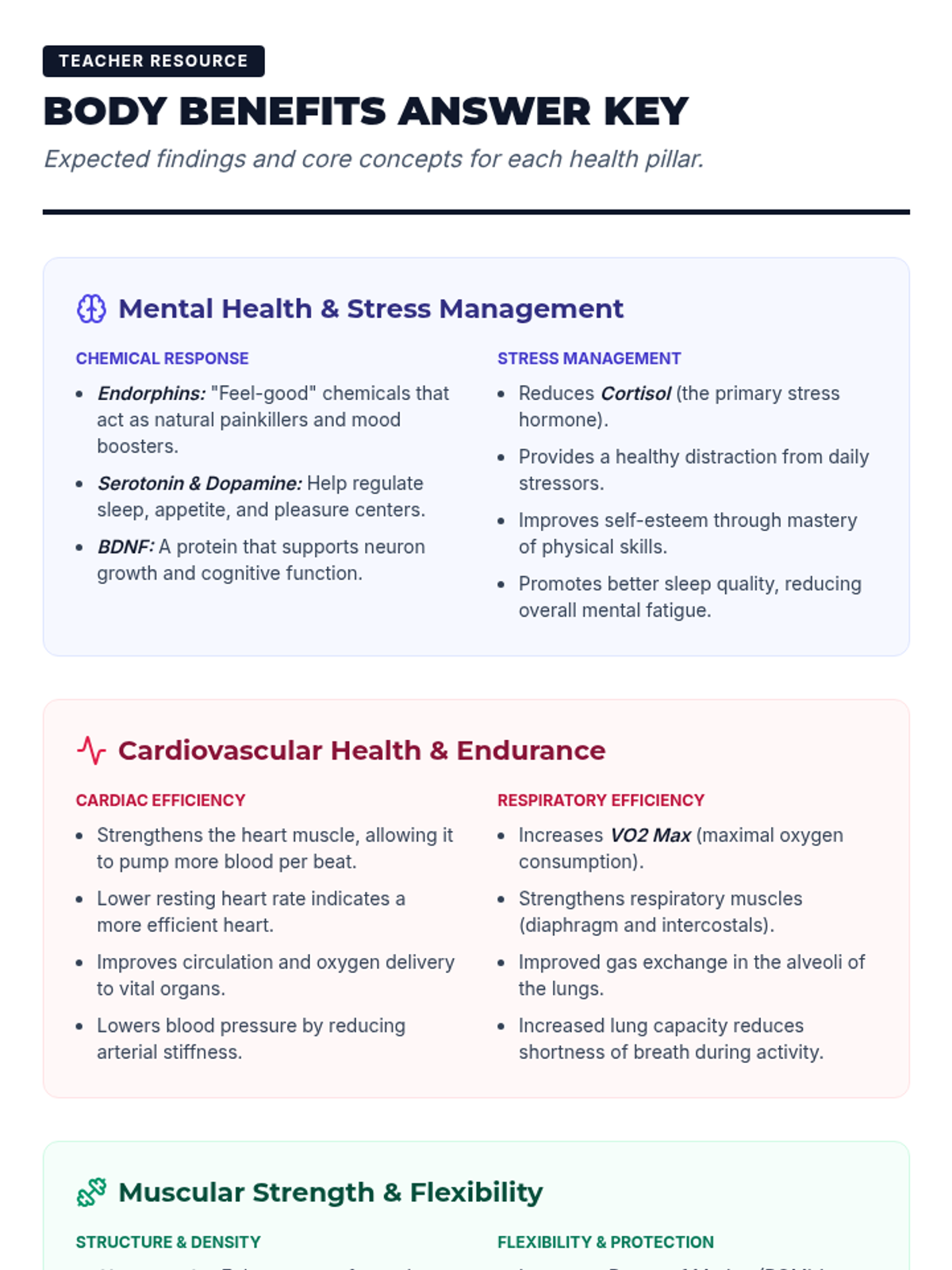
An answer key and teacher resource providing key facts and implementation tips for the Body Benefits Blueprint research activity.
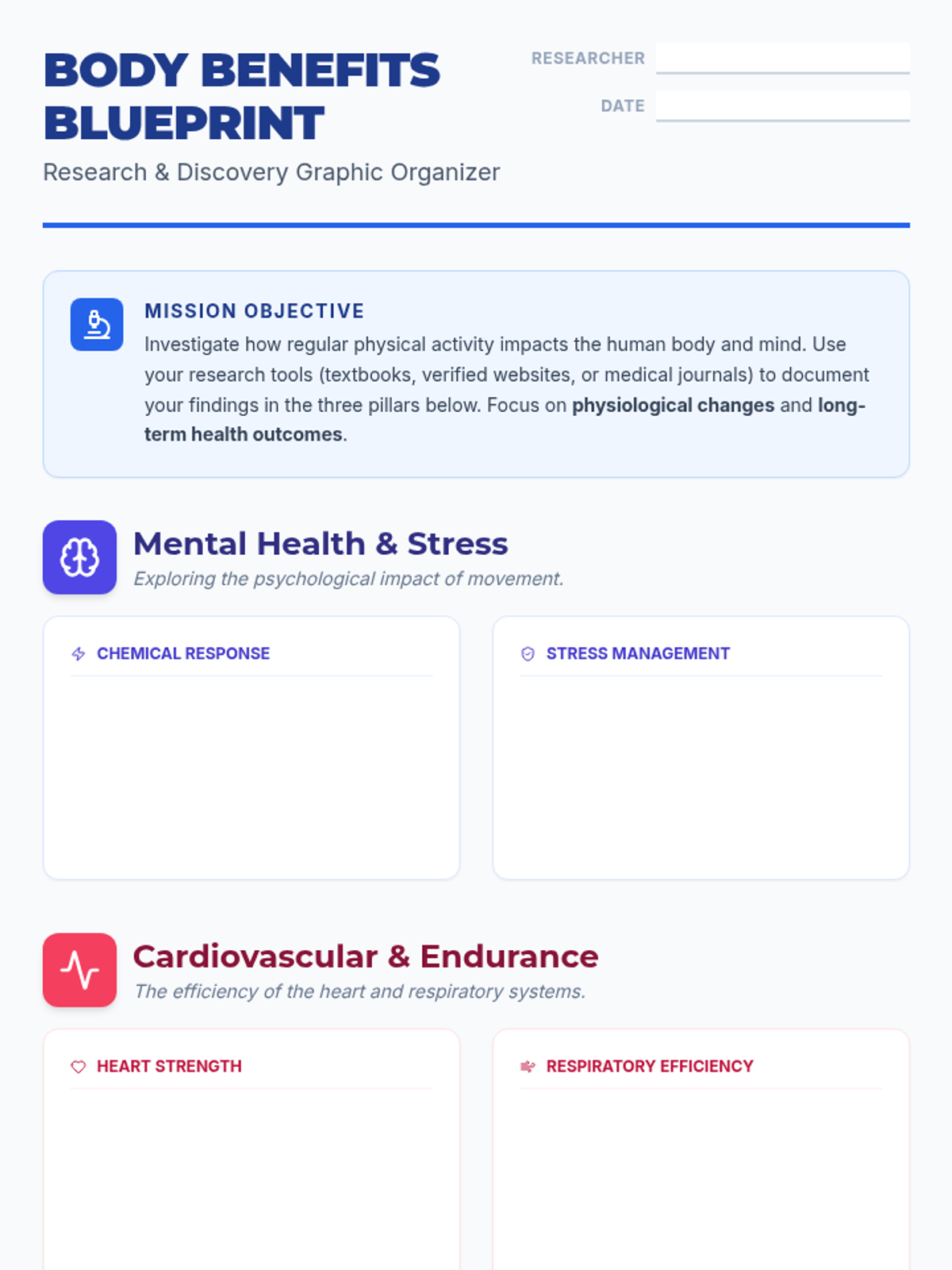
A high-quality graphic organizer for students to research and record the mental, cardiovascular, and muscular benefits of daily physical activity.
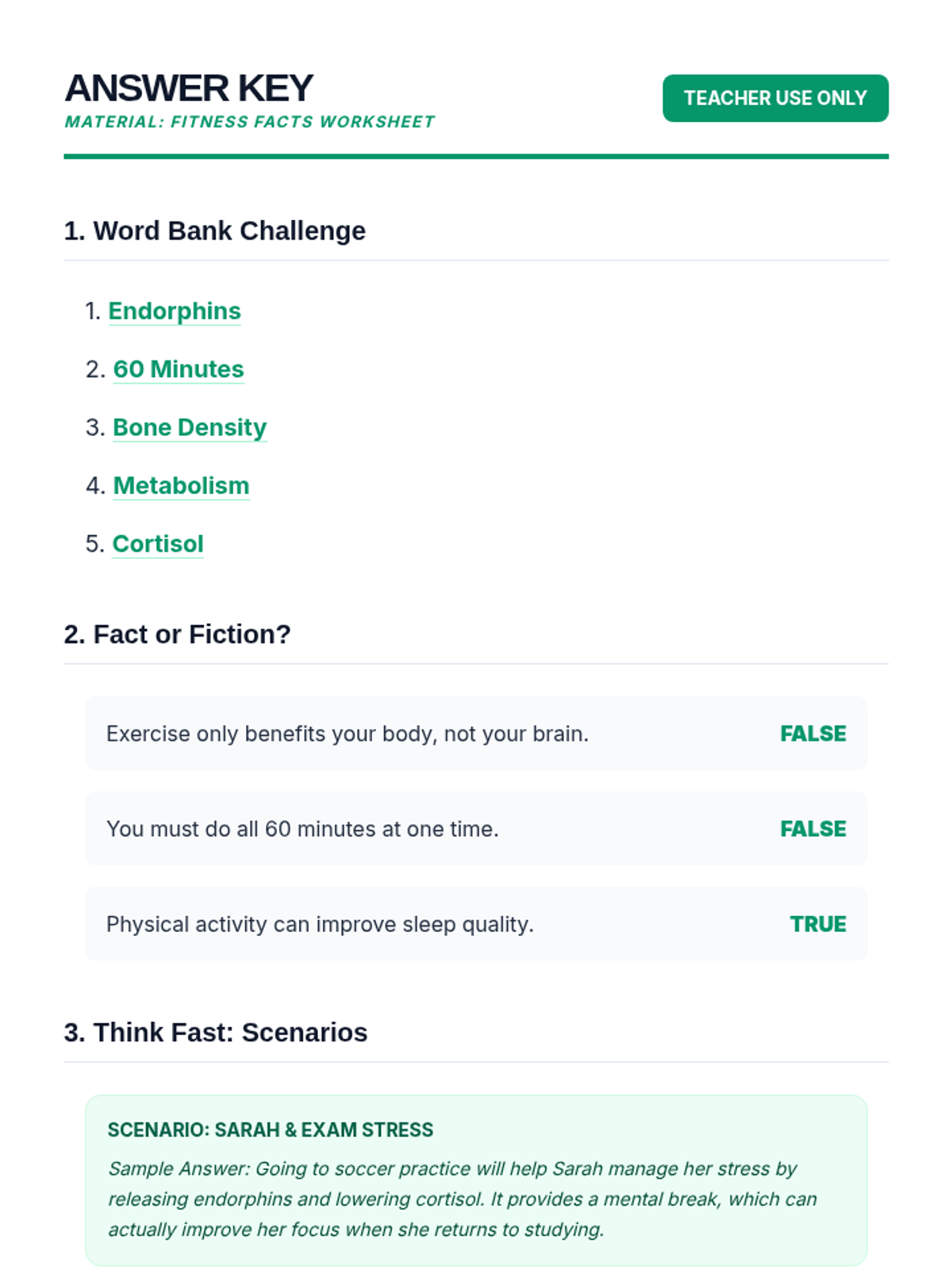
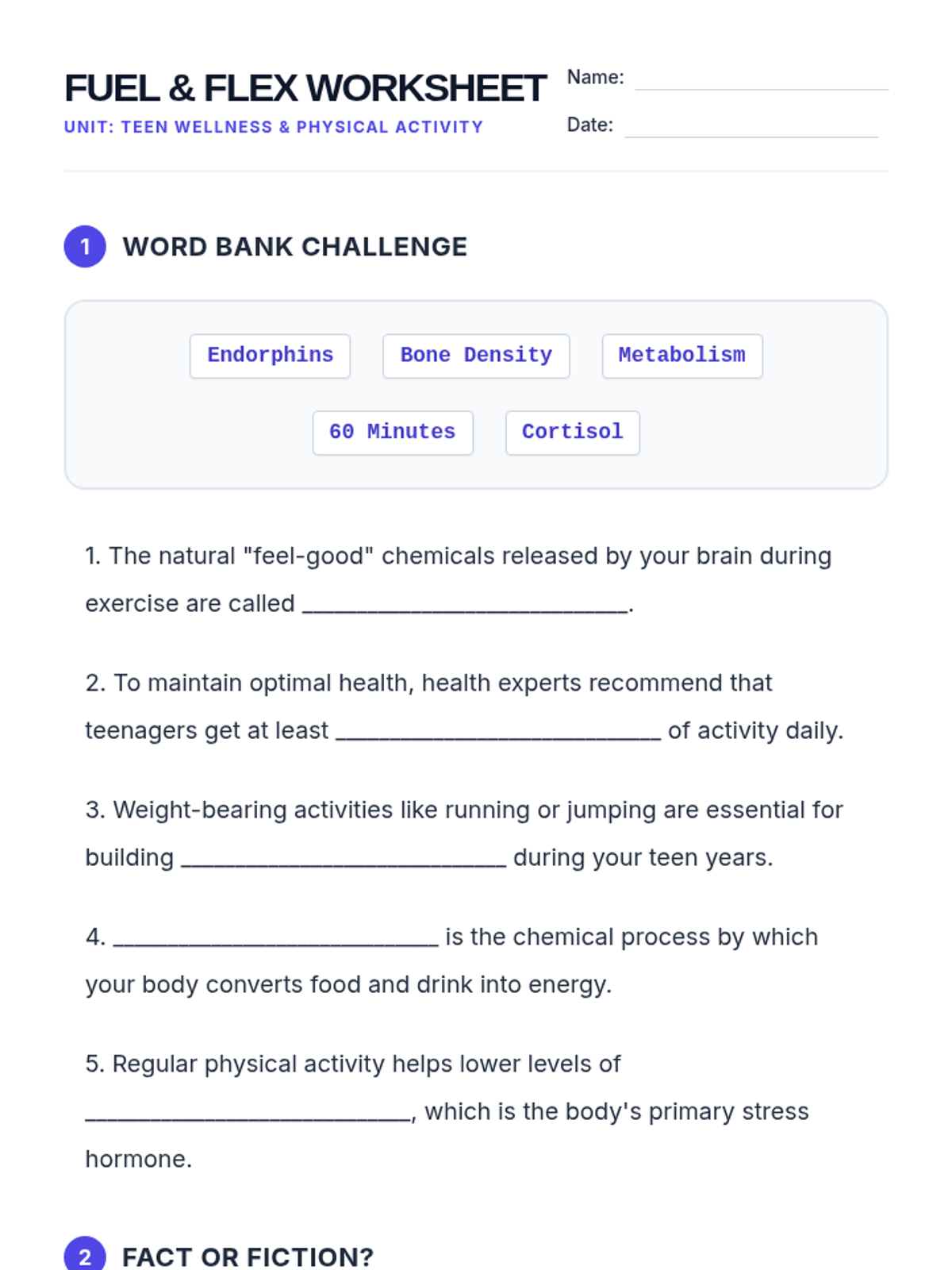
An answer key for the Fitness Facts Worksheet, providing correct answers for the word bank and sample responses for scenarios.
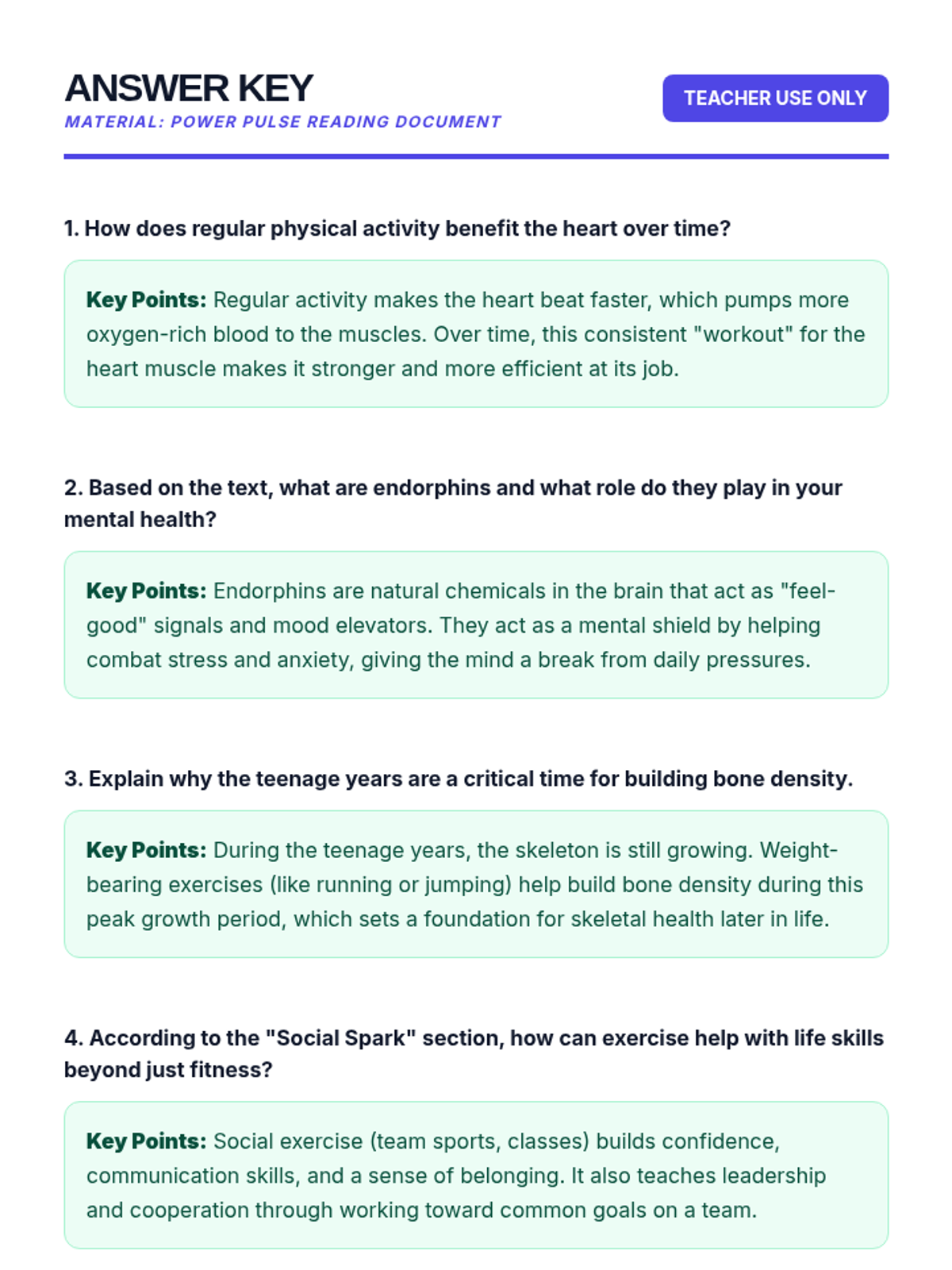
An answer key for the Power Pulse Reading Document, providing sample answers and key points for teachers to use when grading student work.
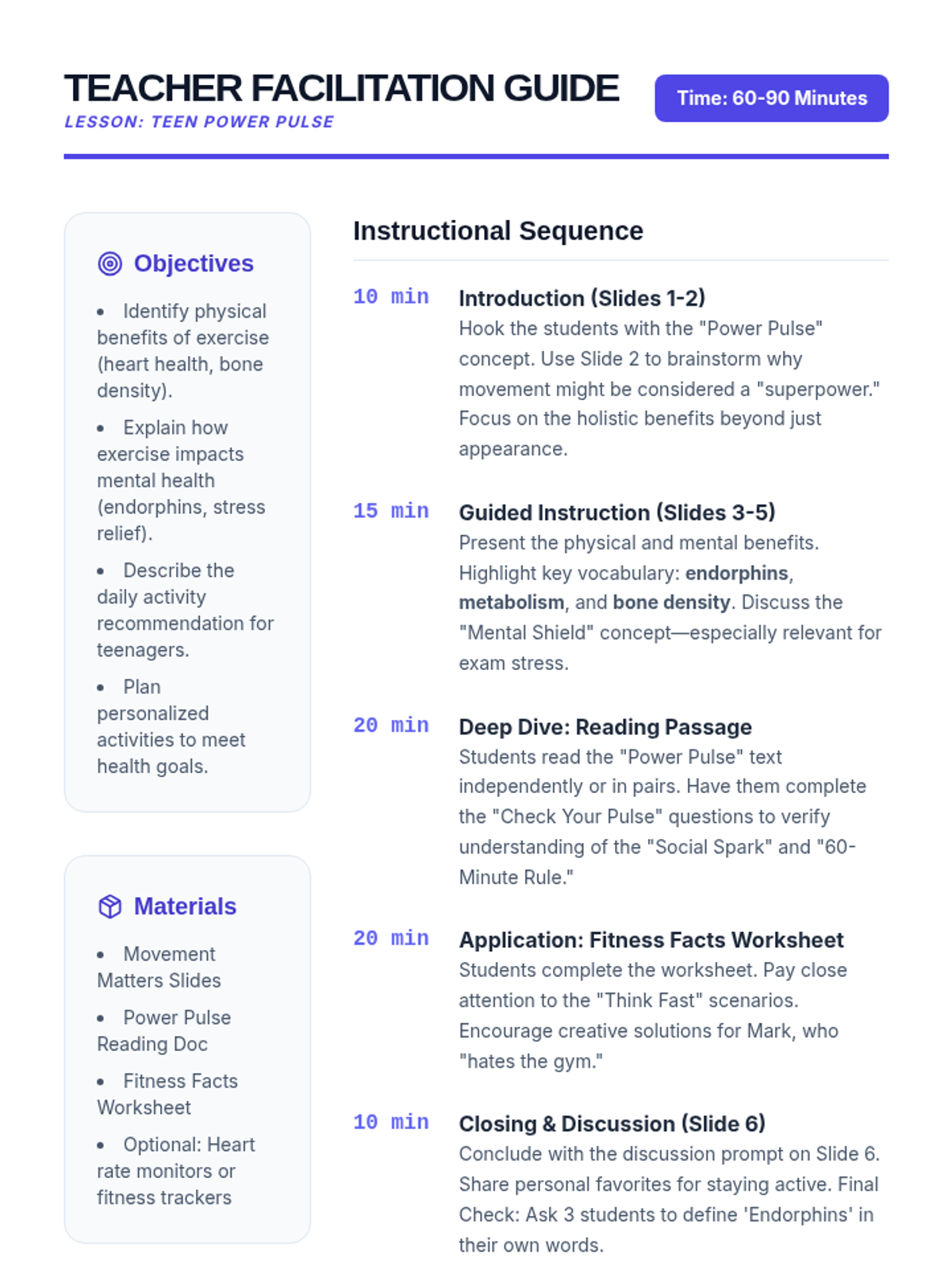
A comprehensive teacher guide for the Teen Power Pulse lesson, including instructional sequencing, differentiation strategies, and extension activities.
A comprehensive worksheet for students to practice vocabulary and apply concepts of physical activity through fill-in-the-blanks, true/false questions, and scenario-based short answers.
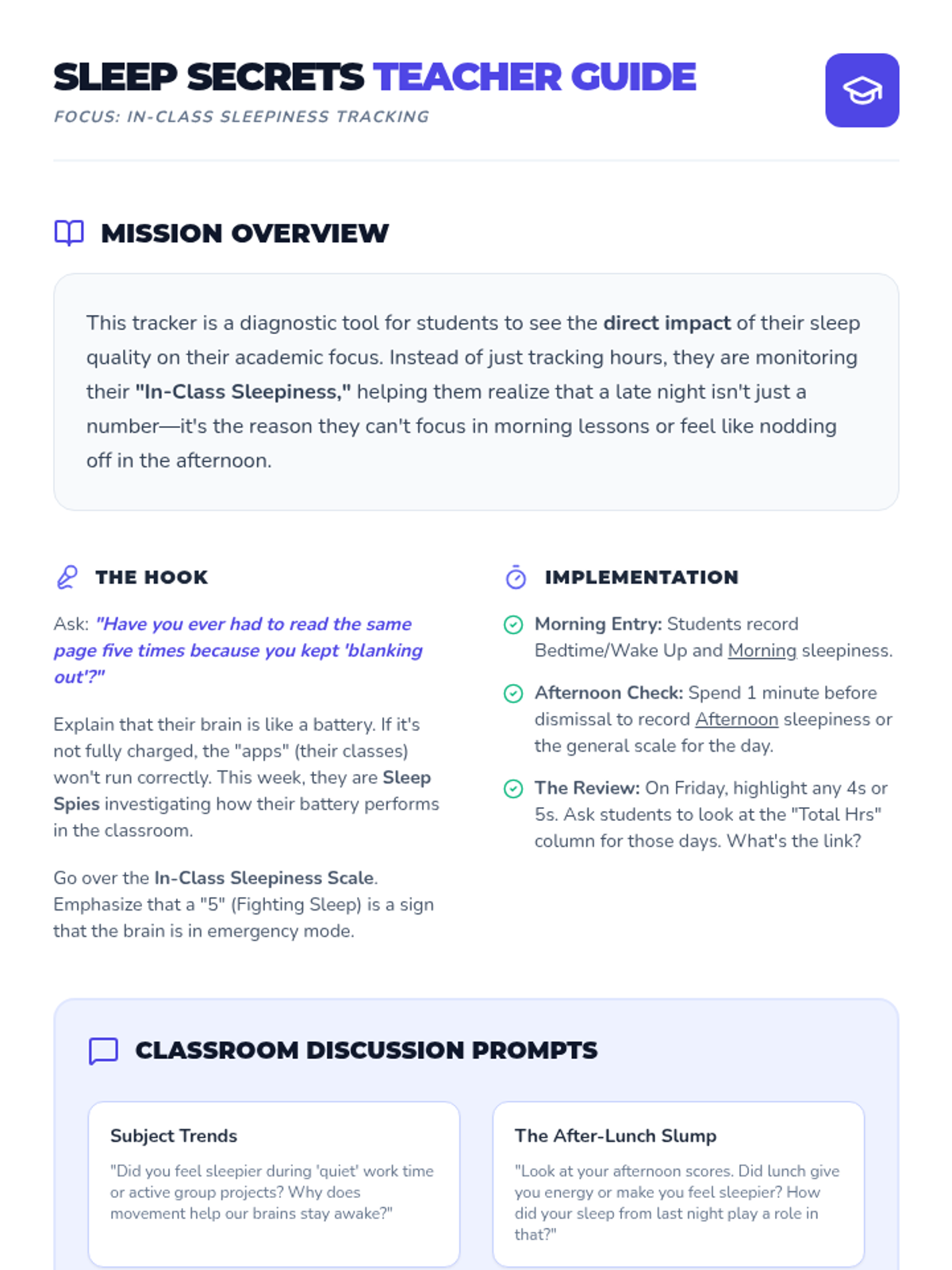
A facilitator guide for teachers to effectively implement the Sleep Spy Tracker, including discussion prompts, hook ideas, and pacing tips.
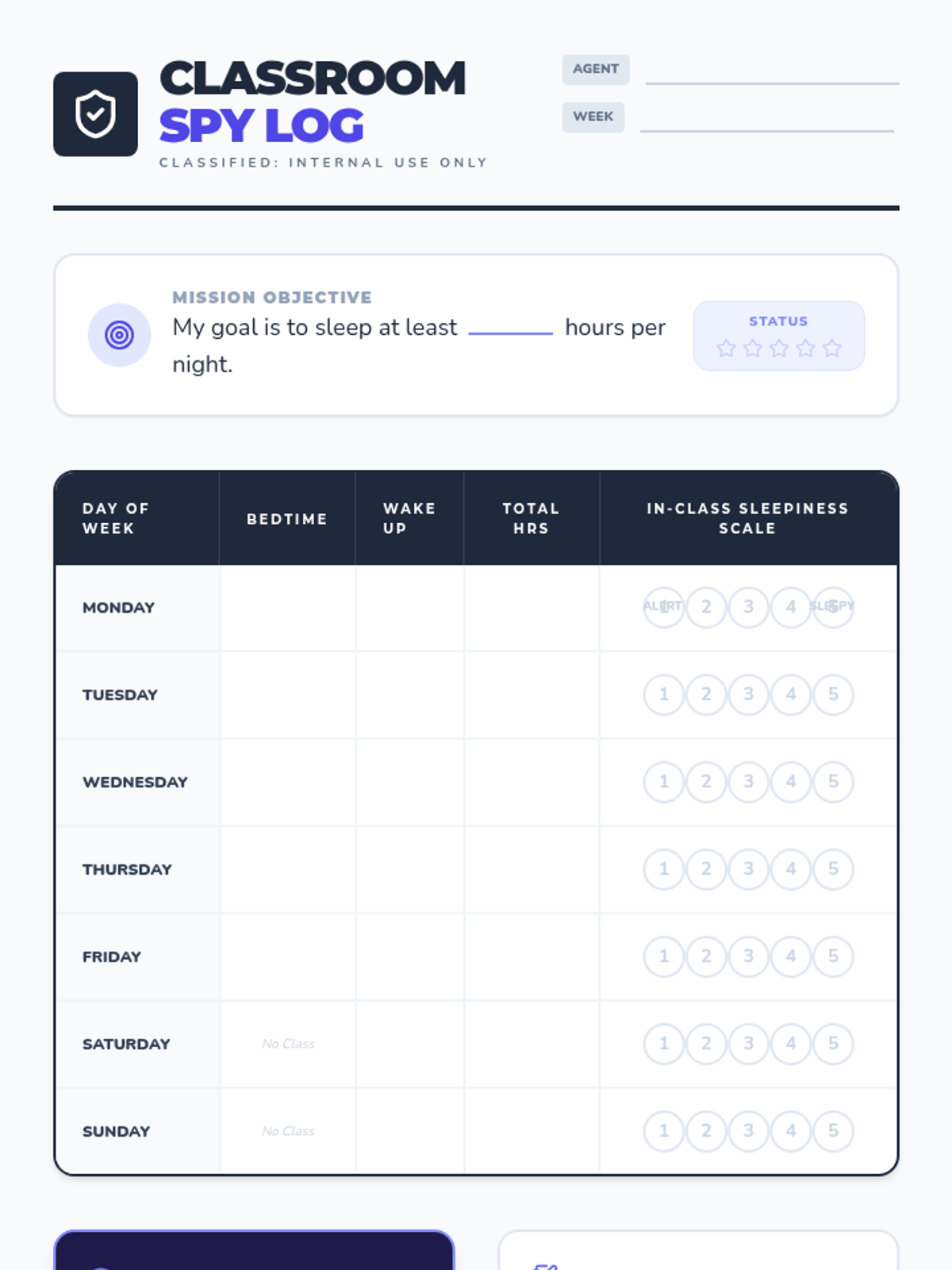
An updated weekly sleep tracker specifically focusing on monitoring in-class sleepiness levels to help students connect their rest with academic focus.
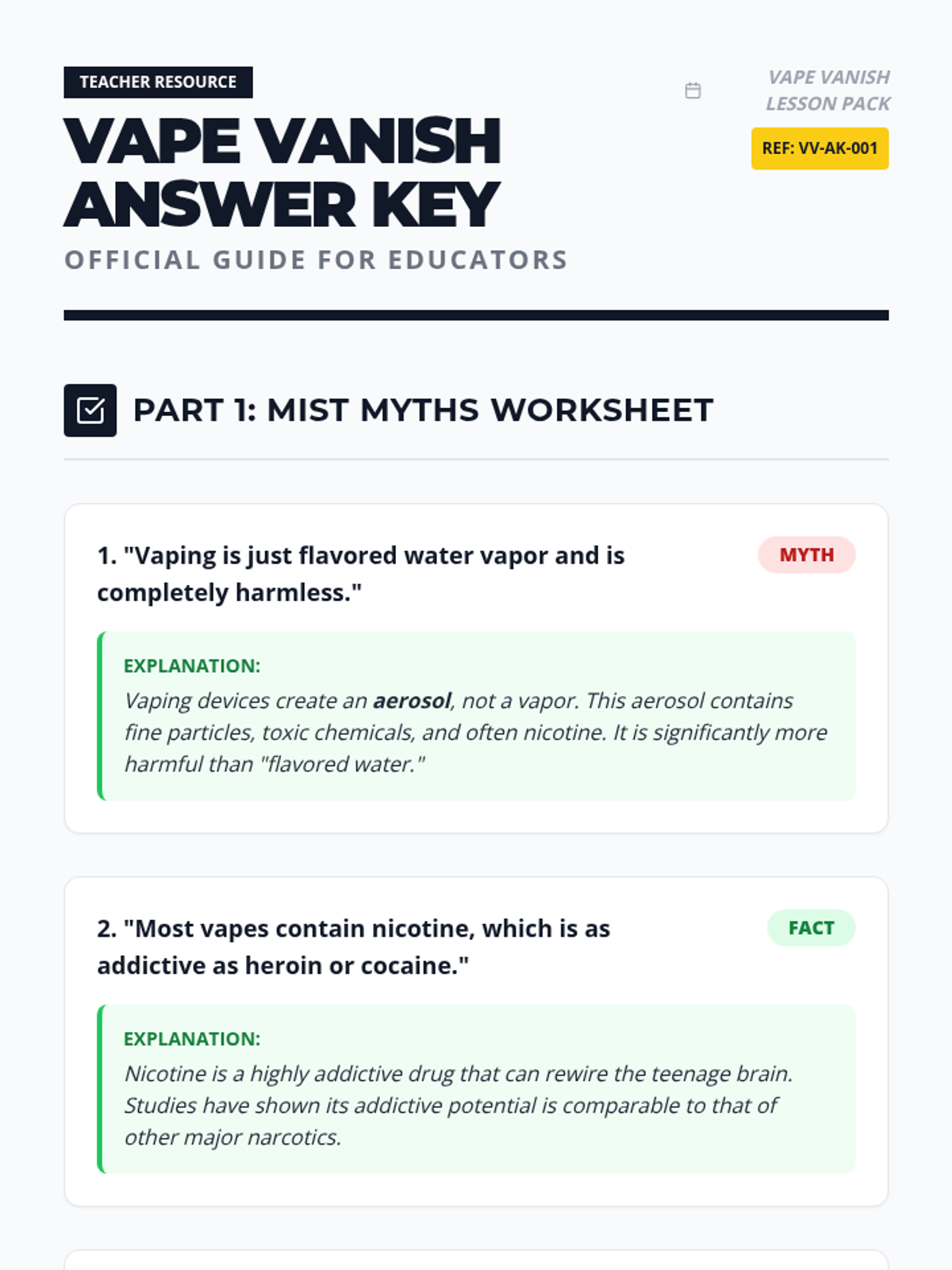
A teacher's answer key for both the Mist Myths and Pressure Points worksheets, including explanations and sample refusal responses.
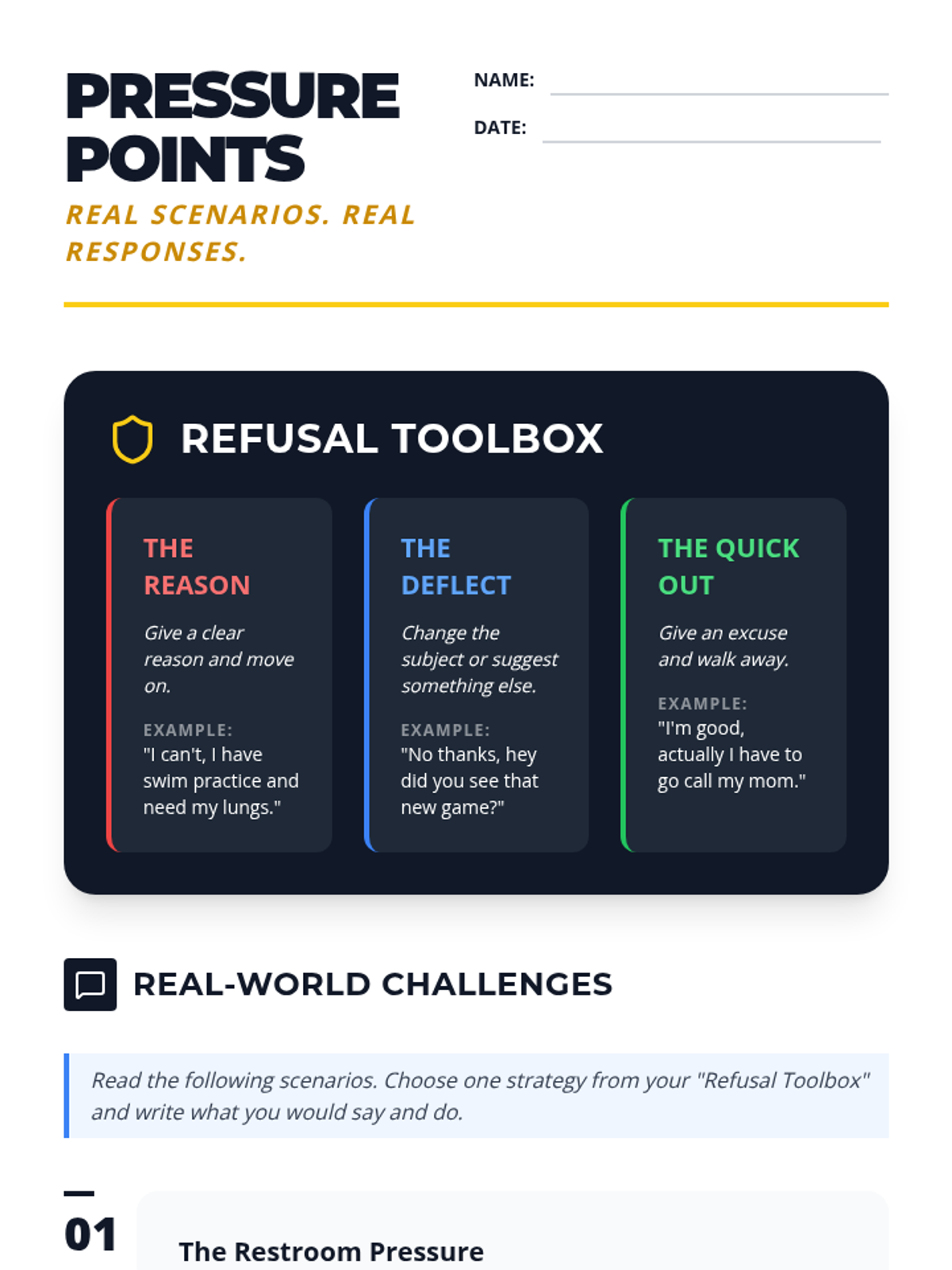
A scenario-based worksheet where students practice refusal skills and navigate peer pressure situations related to vaping.
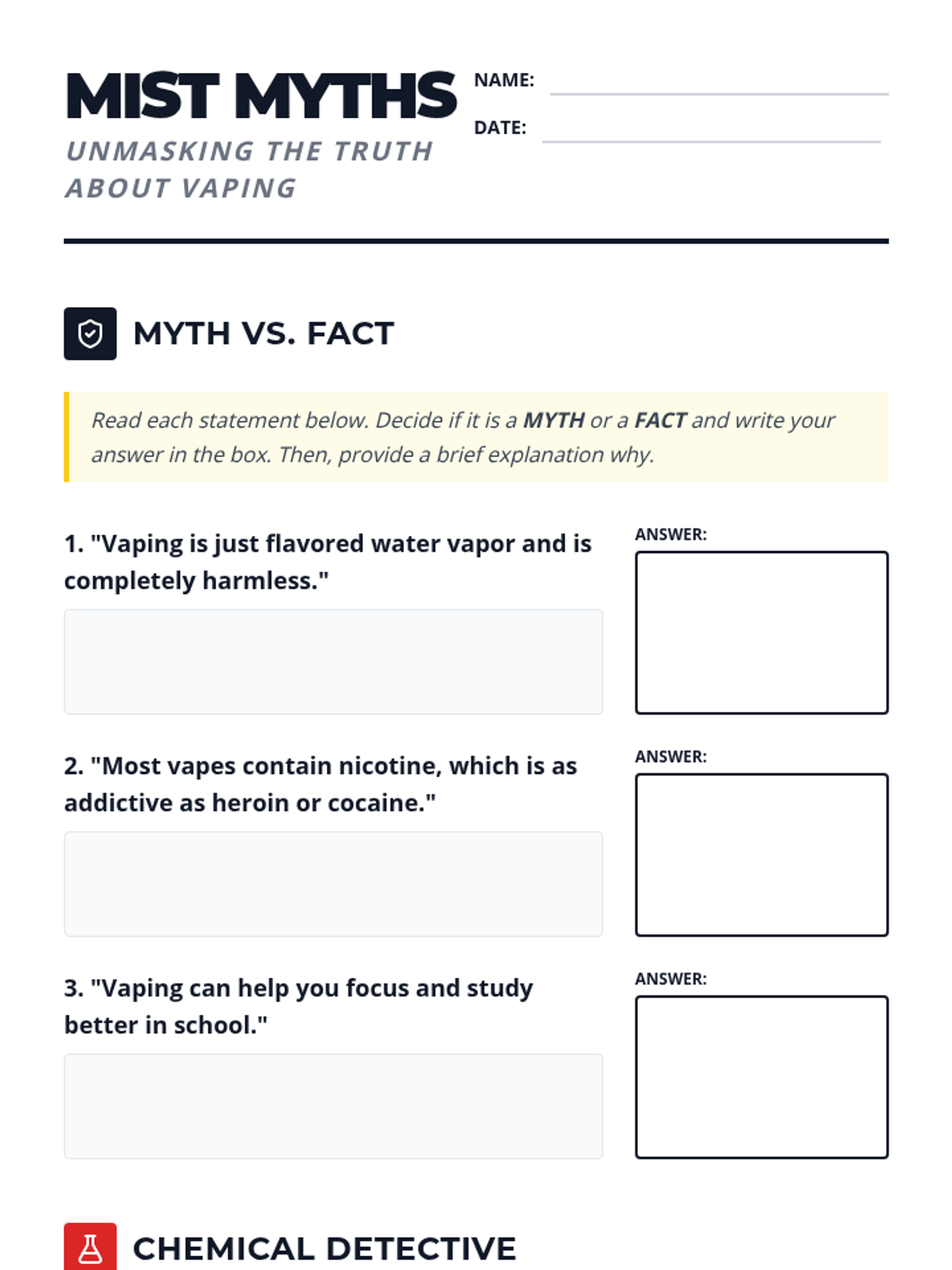
A student worksheet for identifying myths versus facts about vaping and analyzing the chemicals and brain impacts discussed in the lesson.
A visual presentation for health class exploring the facts, chemicals, and brain impacts of vaping, including refusal skill scenarios.
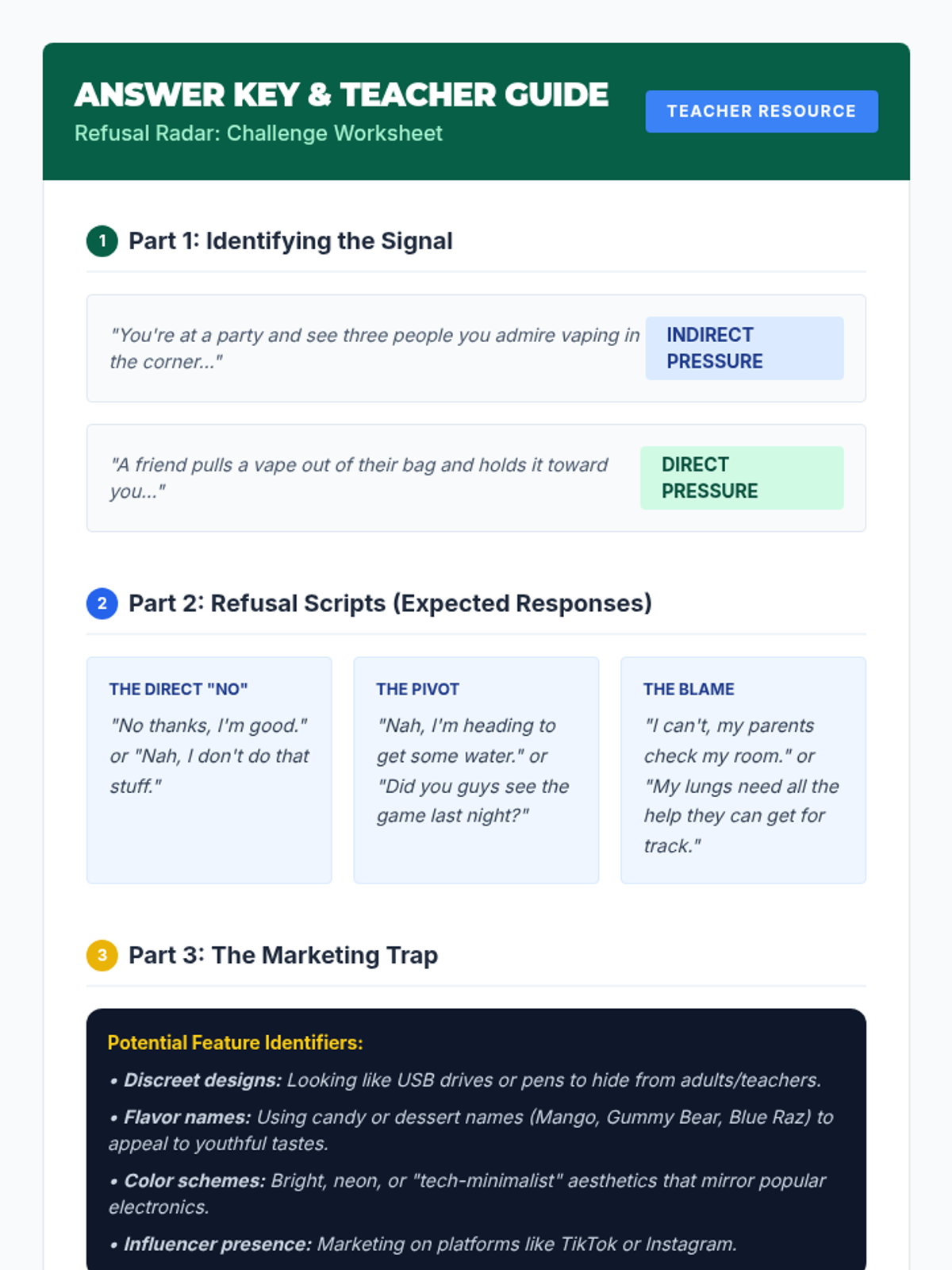
A teacher-facing answer key and instructional guide for the Refusal Radar Challenge Worksheet.
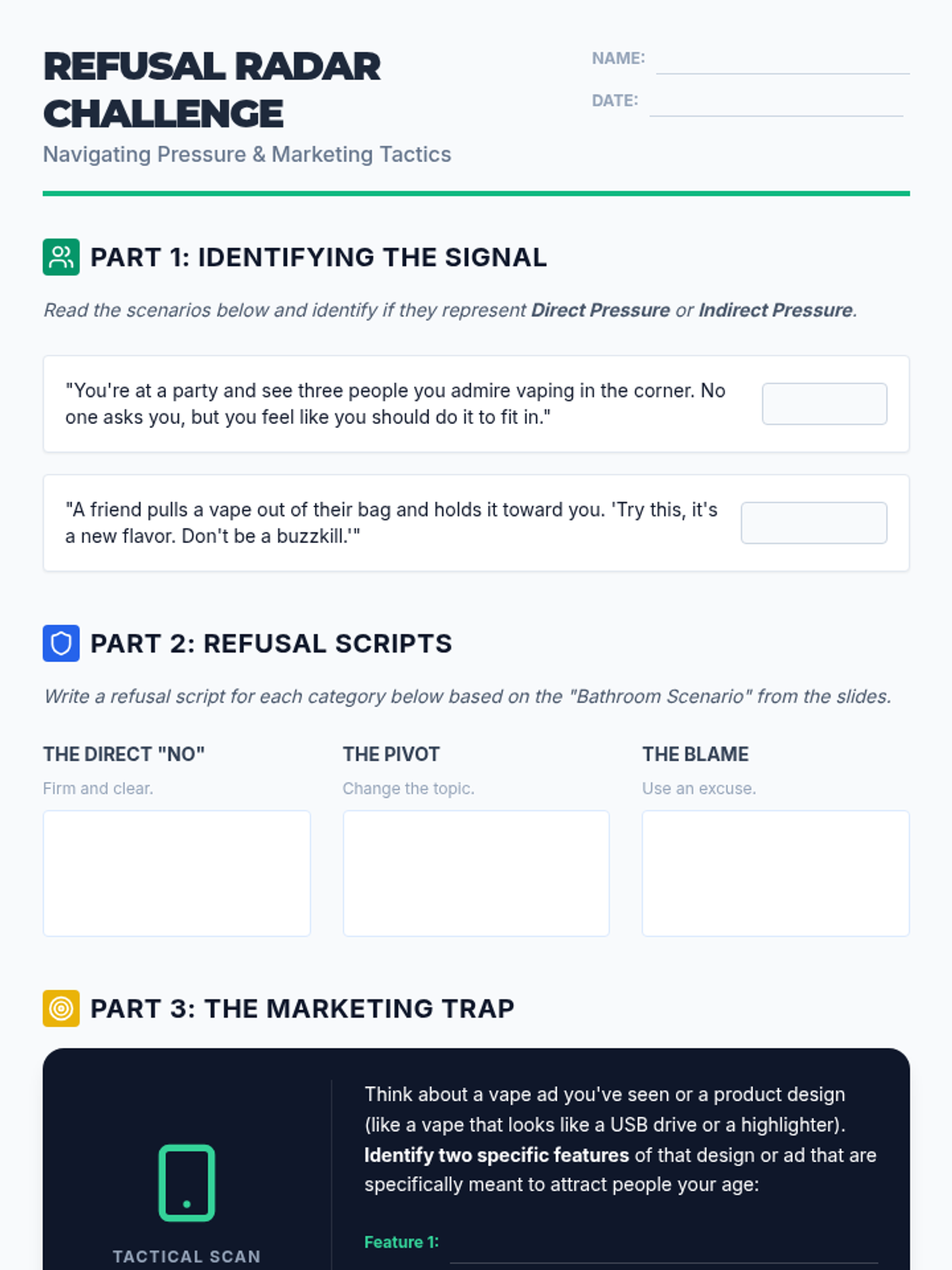
A student-facing worksheet for practicing refusal strategies, identifying types of social pressure, and analyzing marketing tactics.
A comprehensive slide deck for teaching refusal strategies, identifying types of social pressure, and understanding marketing manipulation in vaping.
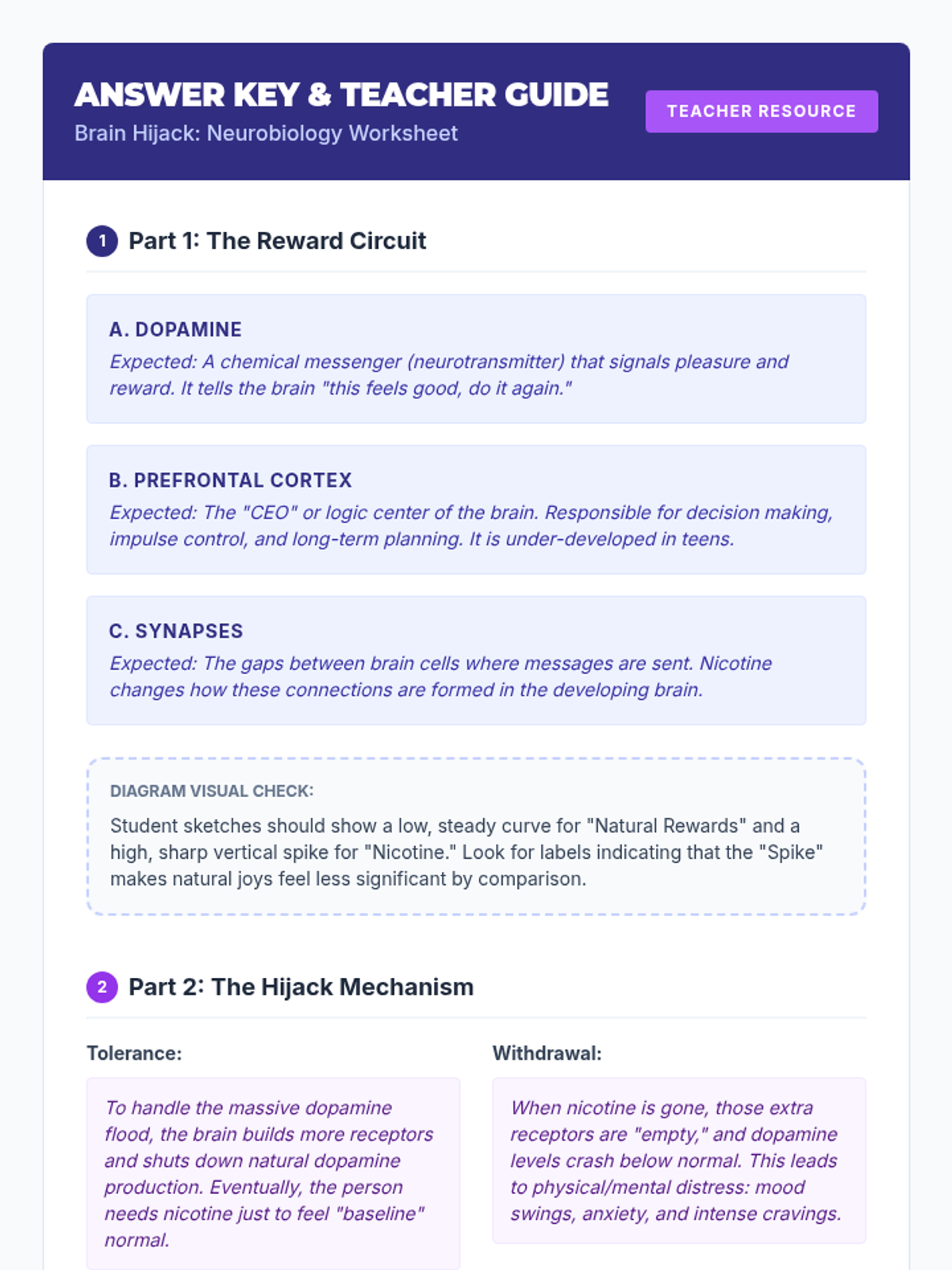
A teacher-facing answer key and instructional guide for the Brain Hijack Diagram Worksheet.
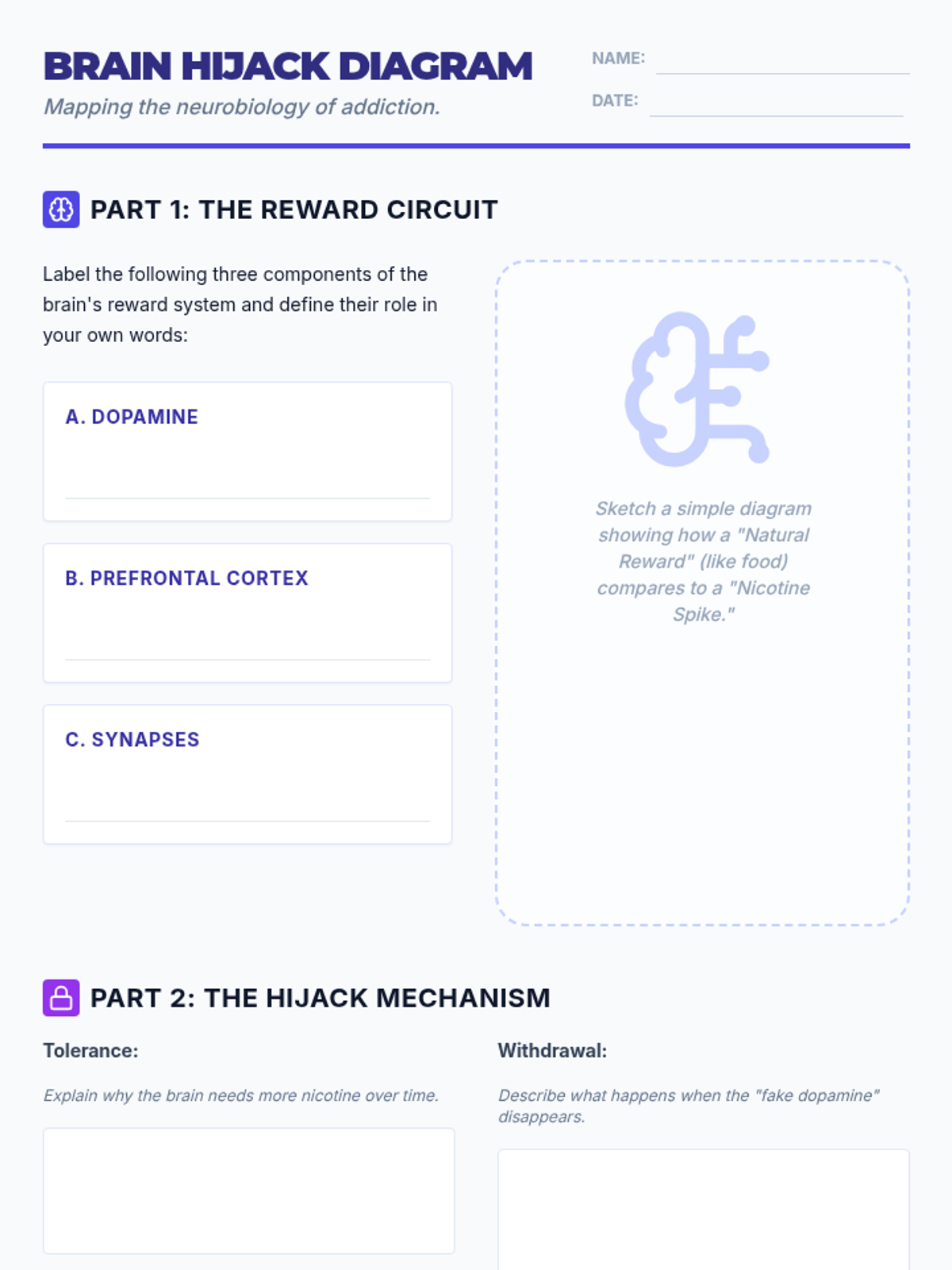
A student-facing worksheet for mapping the brain's reward system and exploring the neurobiological impact of nicotine addiction.
A comprehensive slide deck exploring the neurobiology of nicotine addiction, specifically focusing on the dopamine reward system and adolescent brain development.
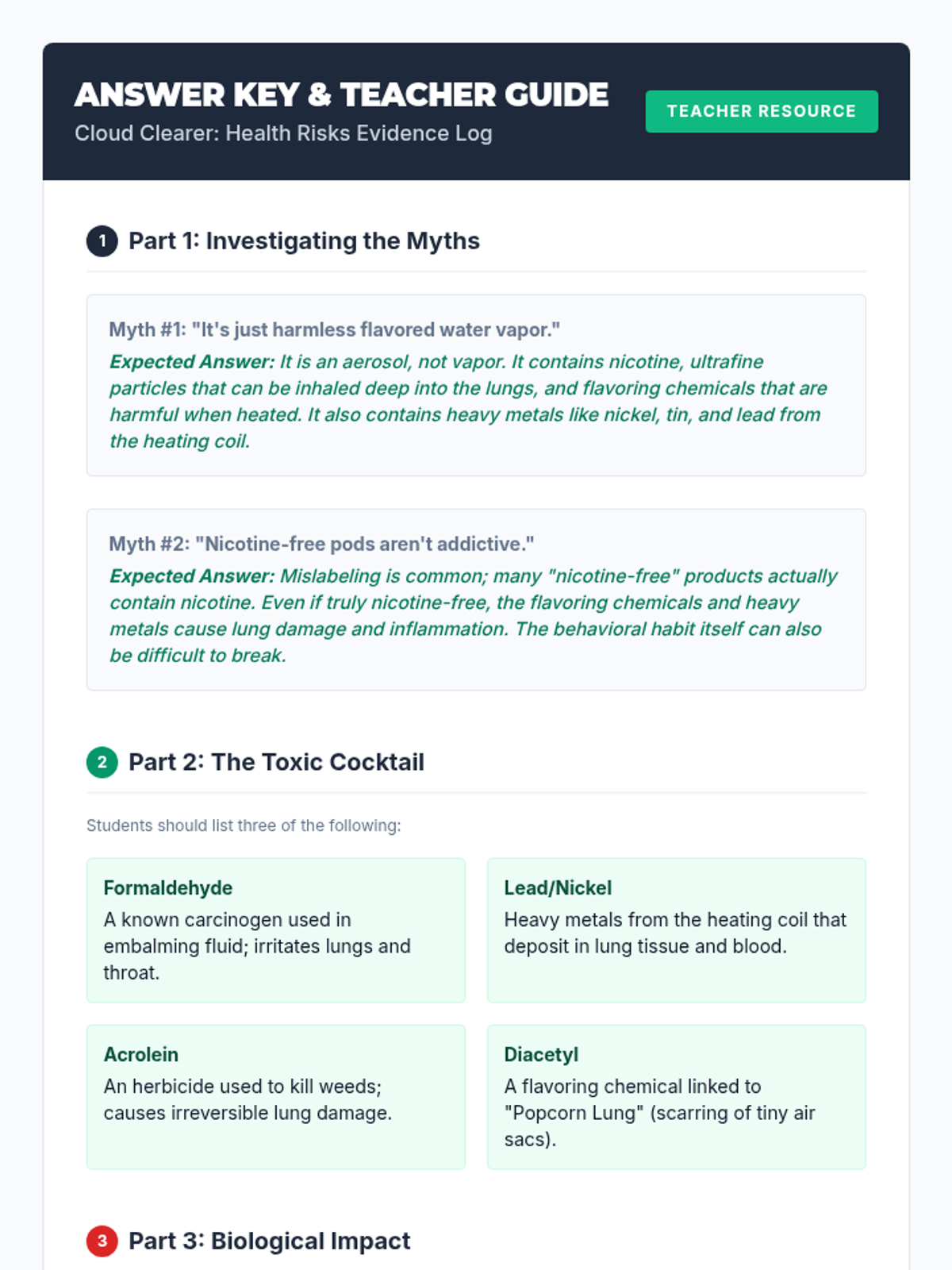
A teacher-facing answer key and instructional guide for the Cloud Clearer Evidence Log.
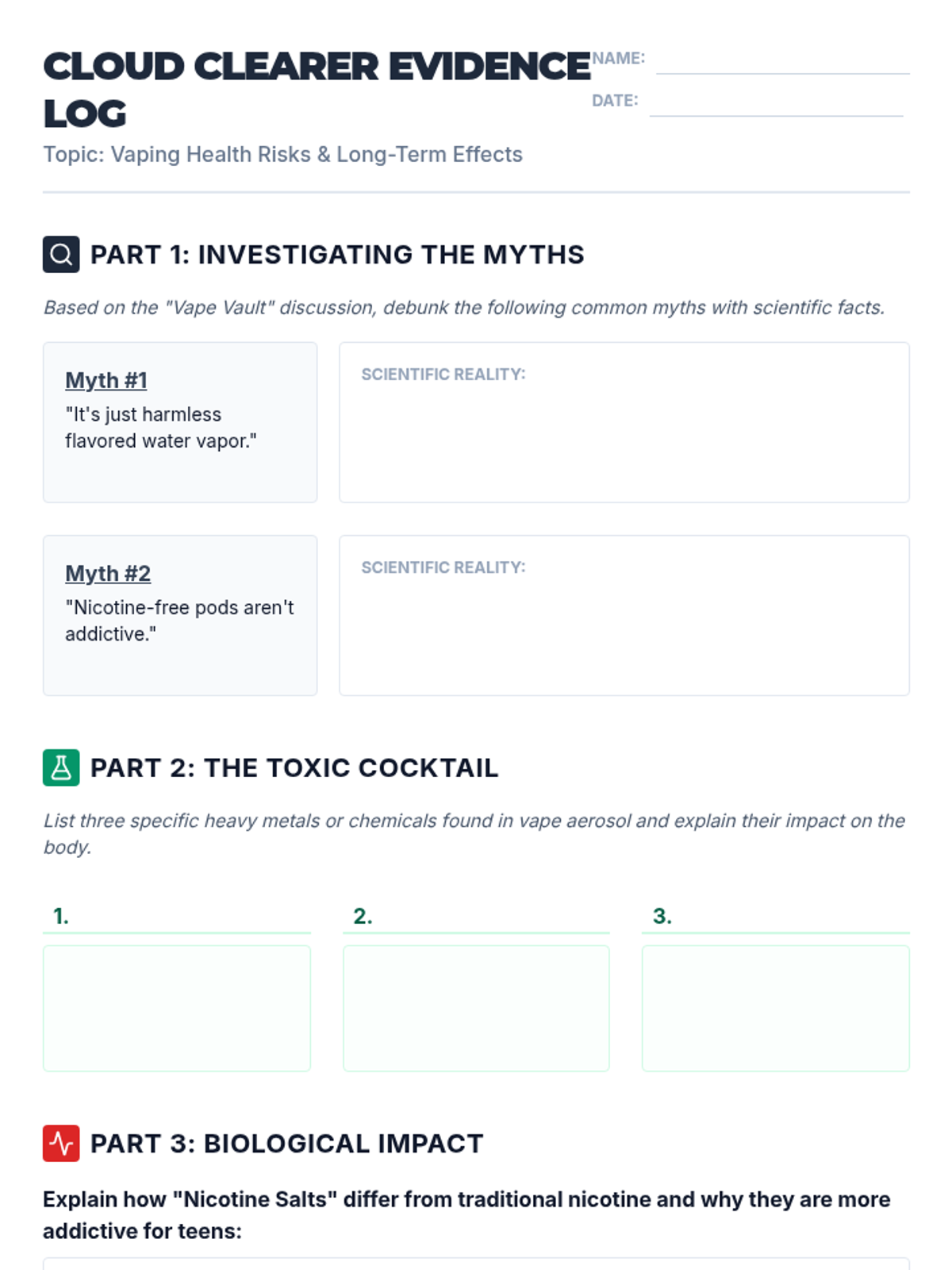
A student-facing evidence log for note-taking and reflection during the Cloud Clearer lesson.
A comprehensive slide deck for teaching the health risks of vaping, the science of nicotine addiction, and lung injury.
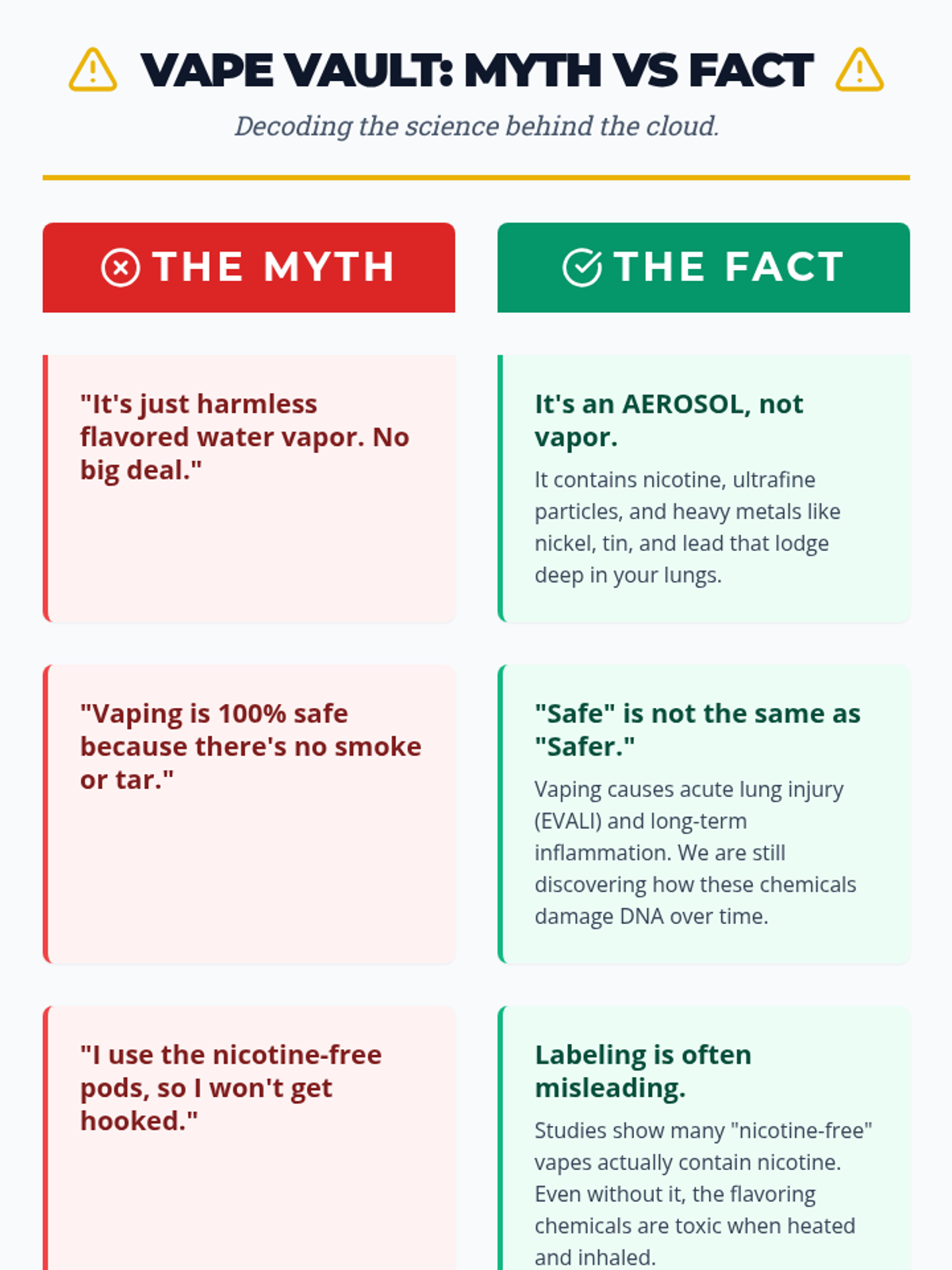
A visually bold anchor chart comparing common vaping myths with scientific facts regarding health risks and chemicals.
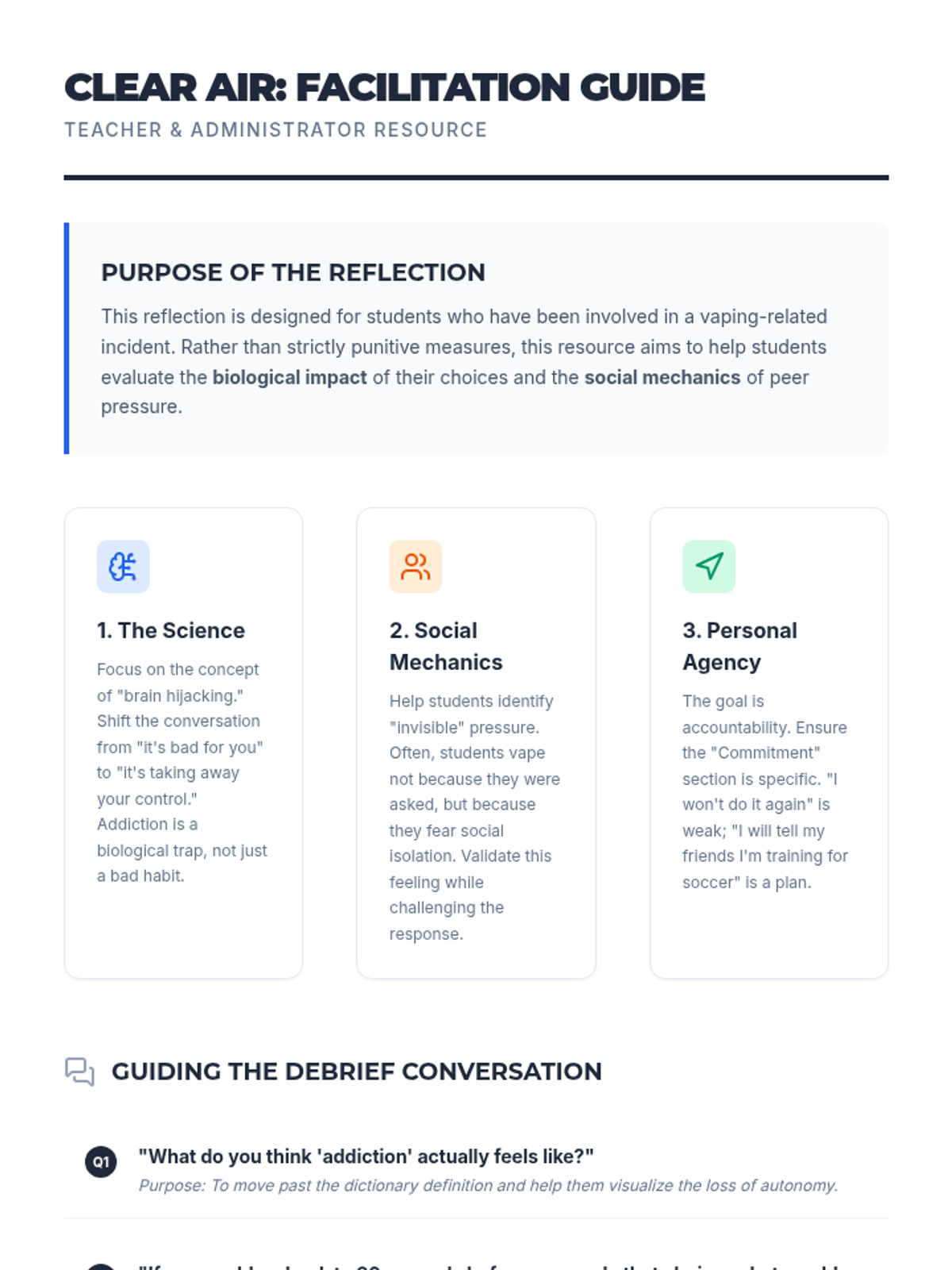
A facilitation guide for teachers and administrators to use when debriefing the vaping reflection worksheet with students, providing guiding questions and success indicators.
A minimalist reflection worksheet that maximizes the writing area by condensing health facts and peer pressure information into a small top ribbon, providing nearly 80% of the page for student response.
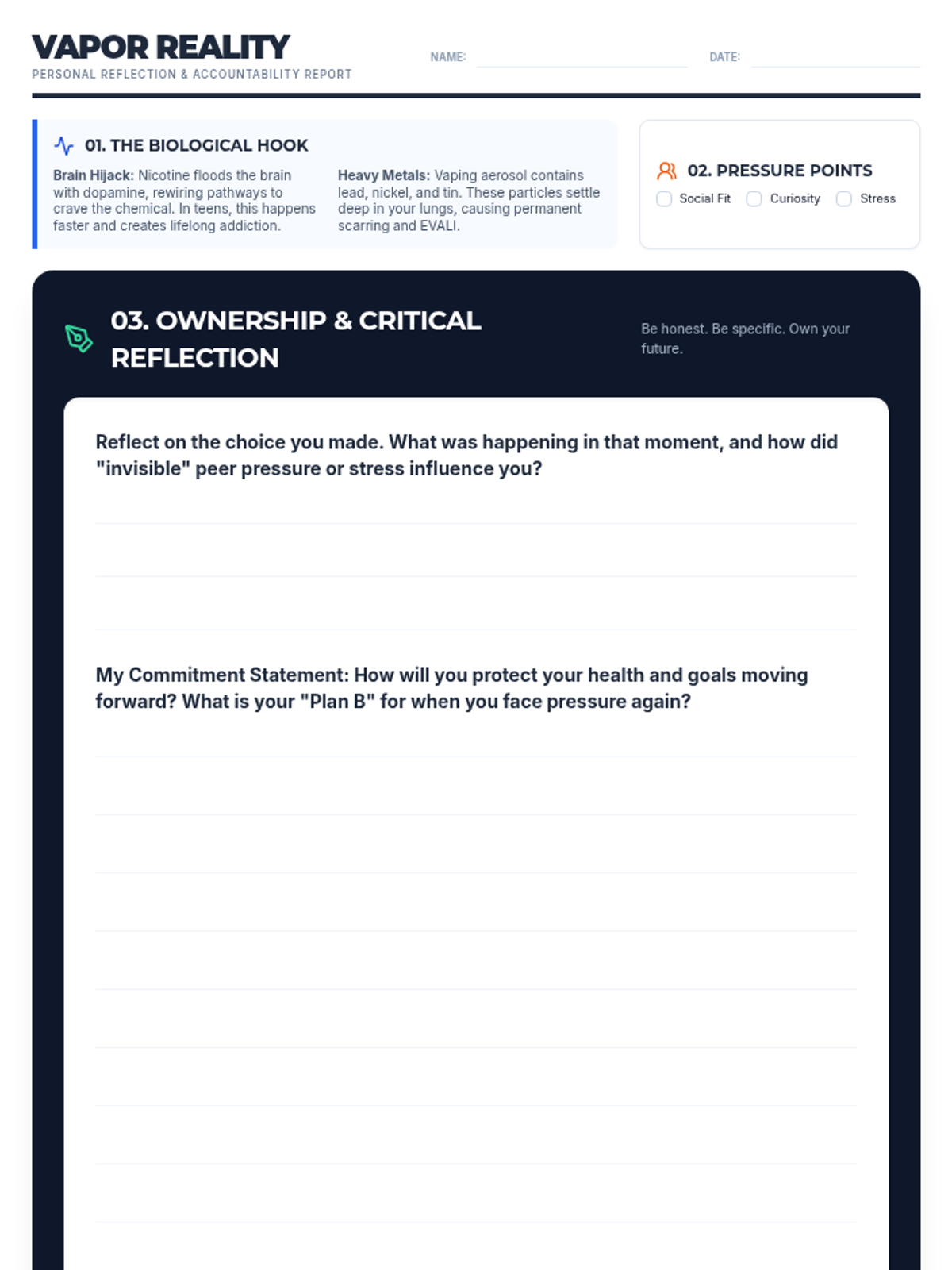
A comprehensive one-page reflection worksheet for students focused on the science of addiction, peer pressure strategies, and personal accountability after a vaping incident, with a maximized full-page writing area and integrated reflection prompts.
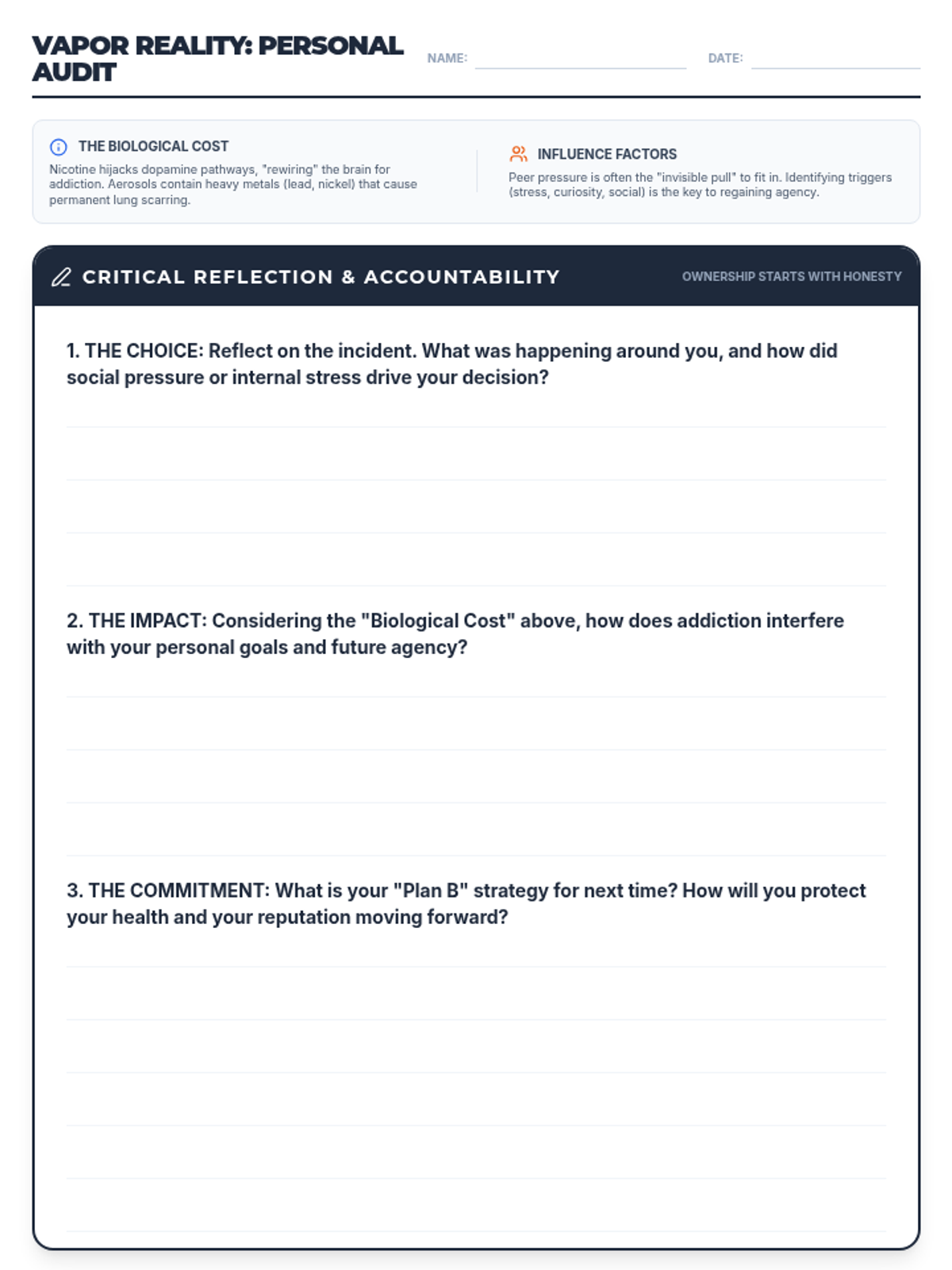
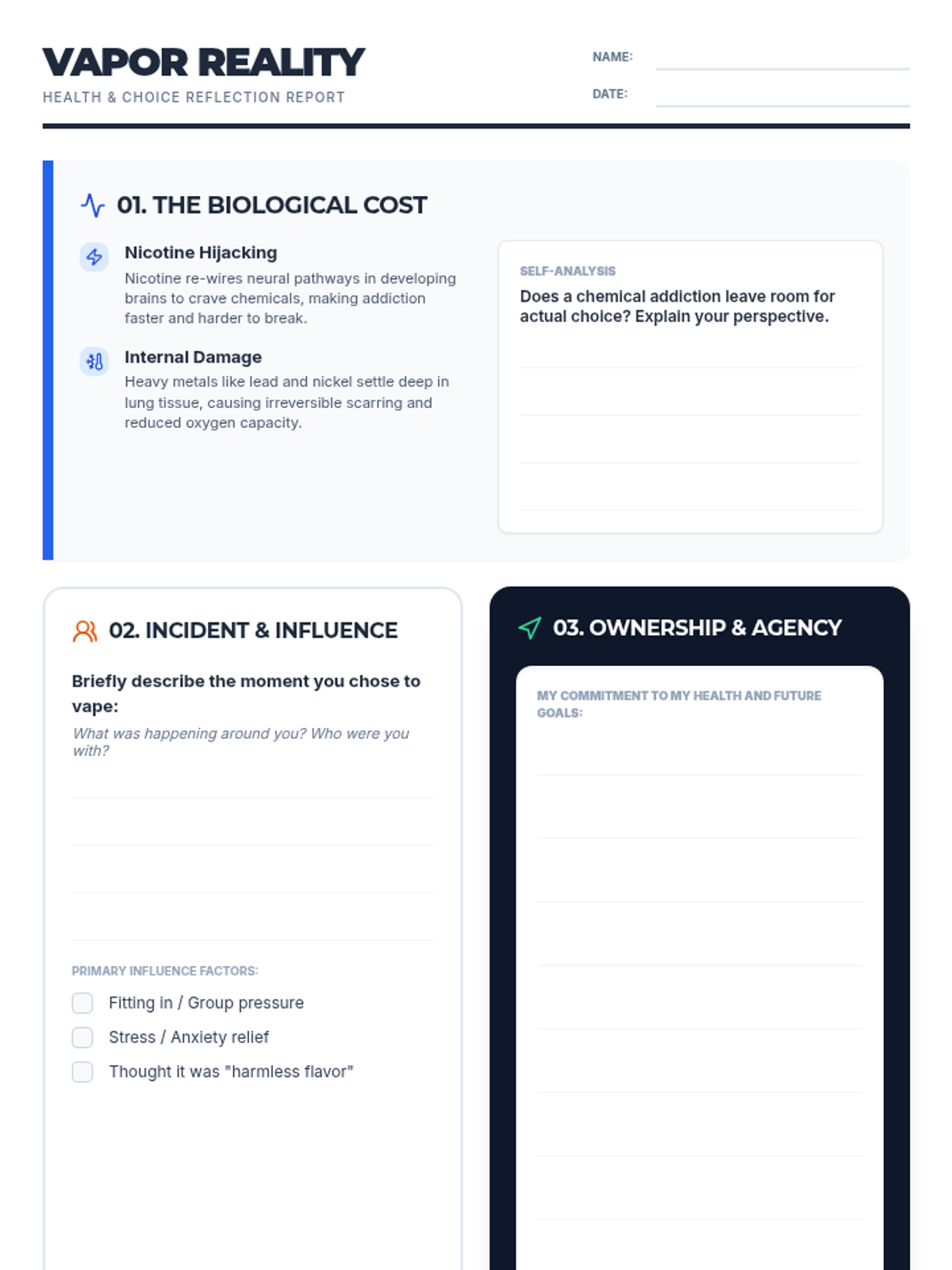
A comprehensive one-page reflection worksheet for students focused on the science of addiction, peer pressure strategies, and personal accountability after a vaping incident, with a maximized full-width writing area for reflection.
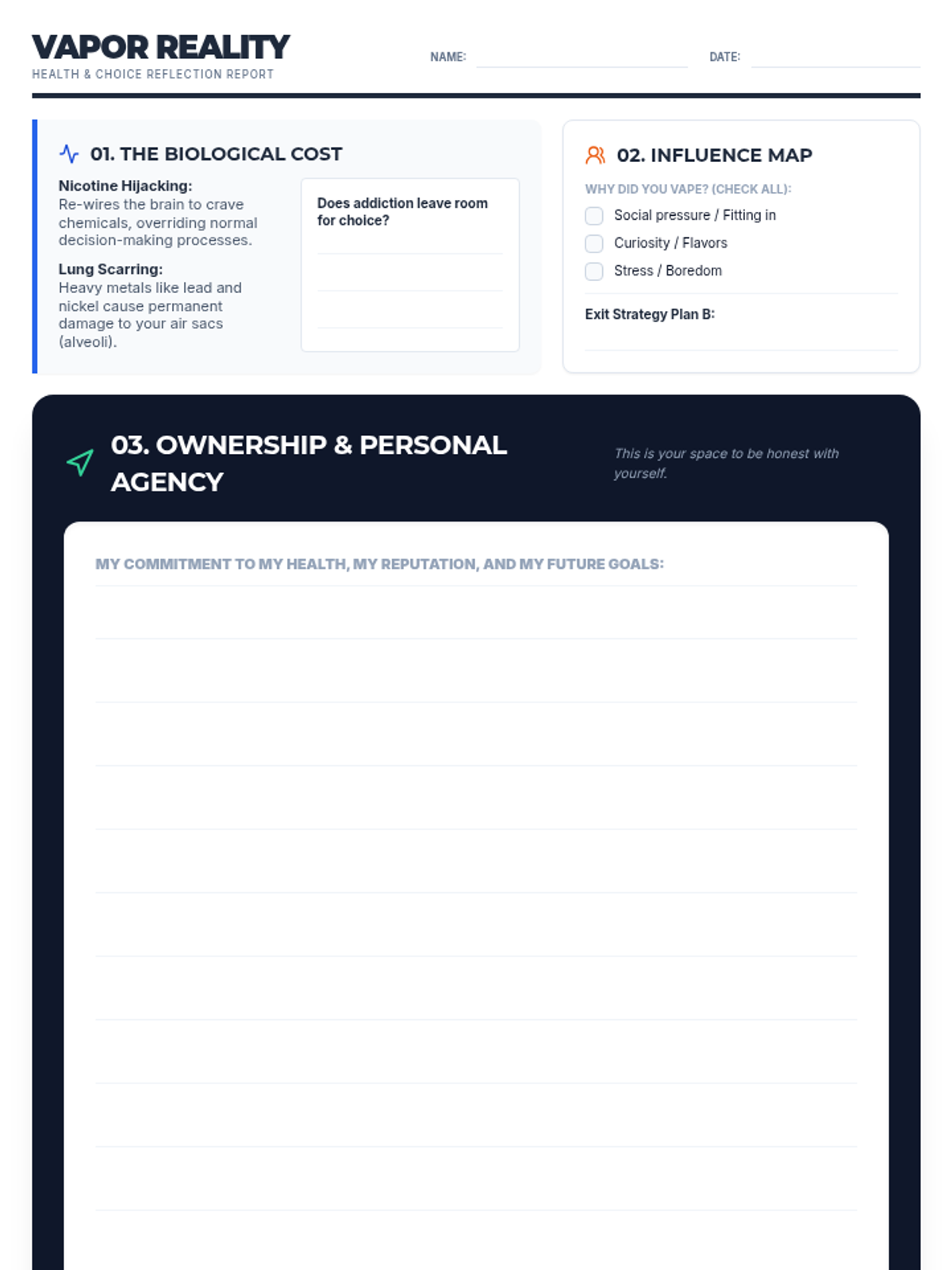
A comprehensive one-page reflection worksheet for students focused on the science of addiction, peer pressure strategies, and personal accountability after a vaping incident, with maximized writing areas for student reflection.
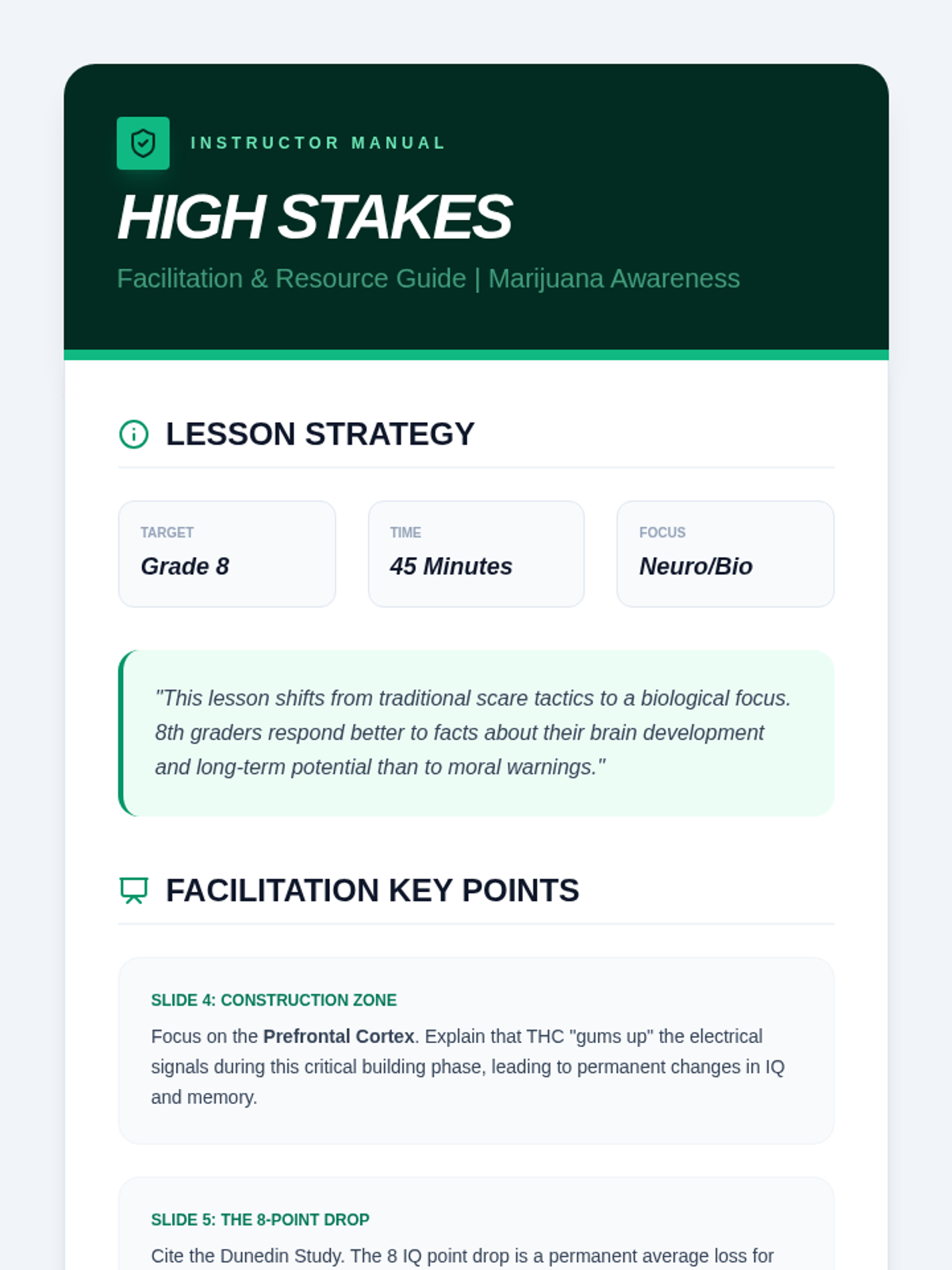
A facilitator guide for teachers delivering the High Stakes marijuana awareness lesson, featuring talking points, study references, and a worksheet answer key. Revision: Improved page layout and contrast.
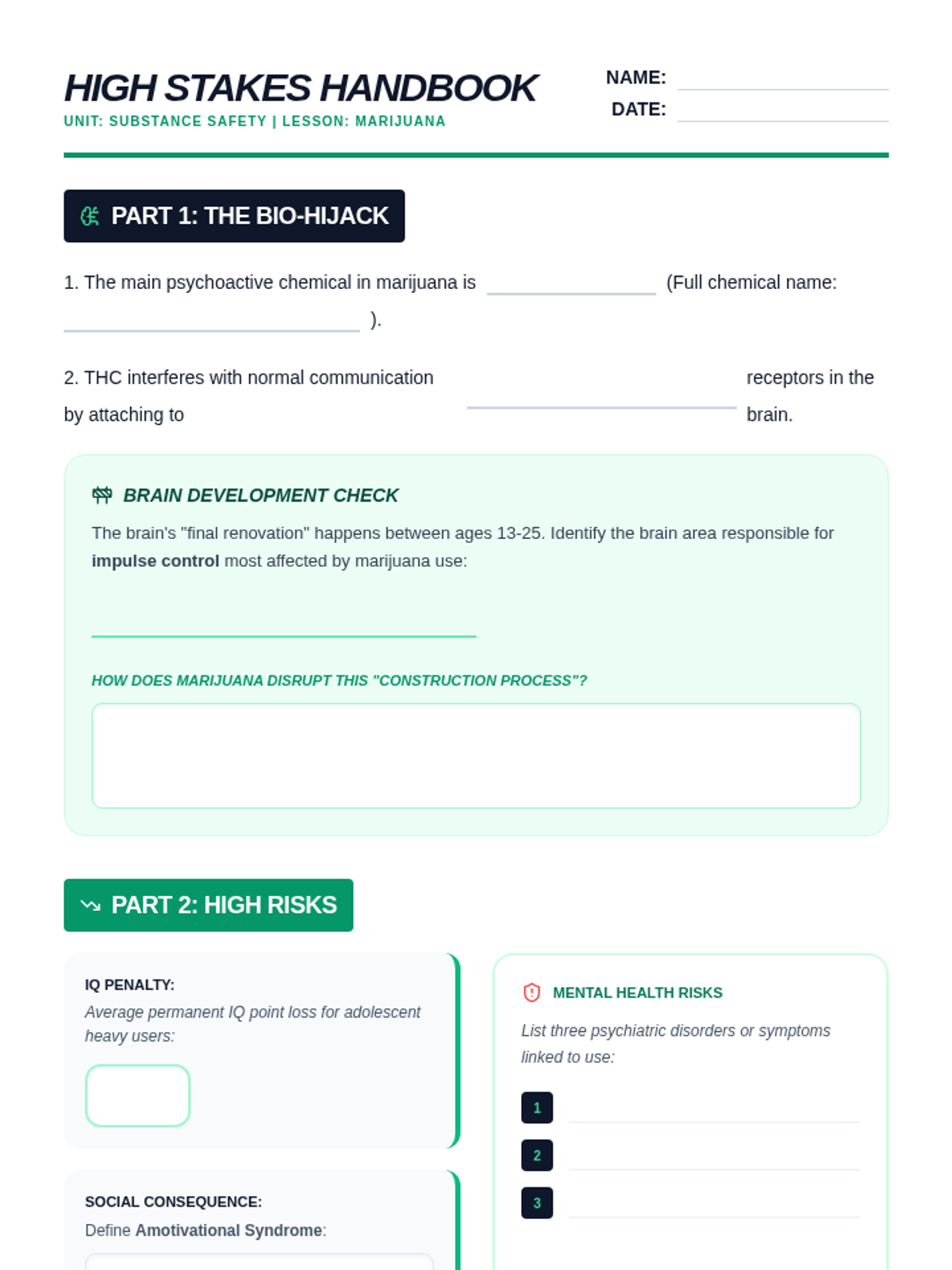
An 8th grade worksheet covering the chemical components of marijuana (THC), its impact on the prefrontal cortex, academic risks, mental health dangers, and the specific hazards of edibles. Revision: Consolidated layout and improved work areas.
An 8th grade slide presentation exploring the risks and dangers of marijuana use, with a heavy focus on the developing brain, academic impact, and mental health. Revision: Fixed content visibility and layout issues.
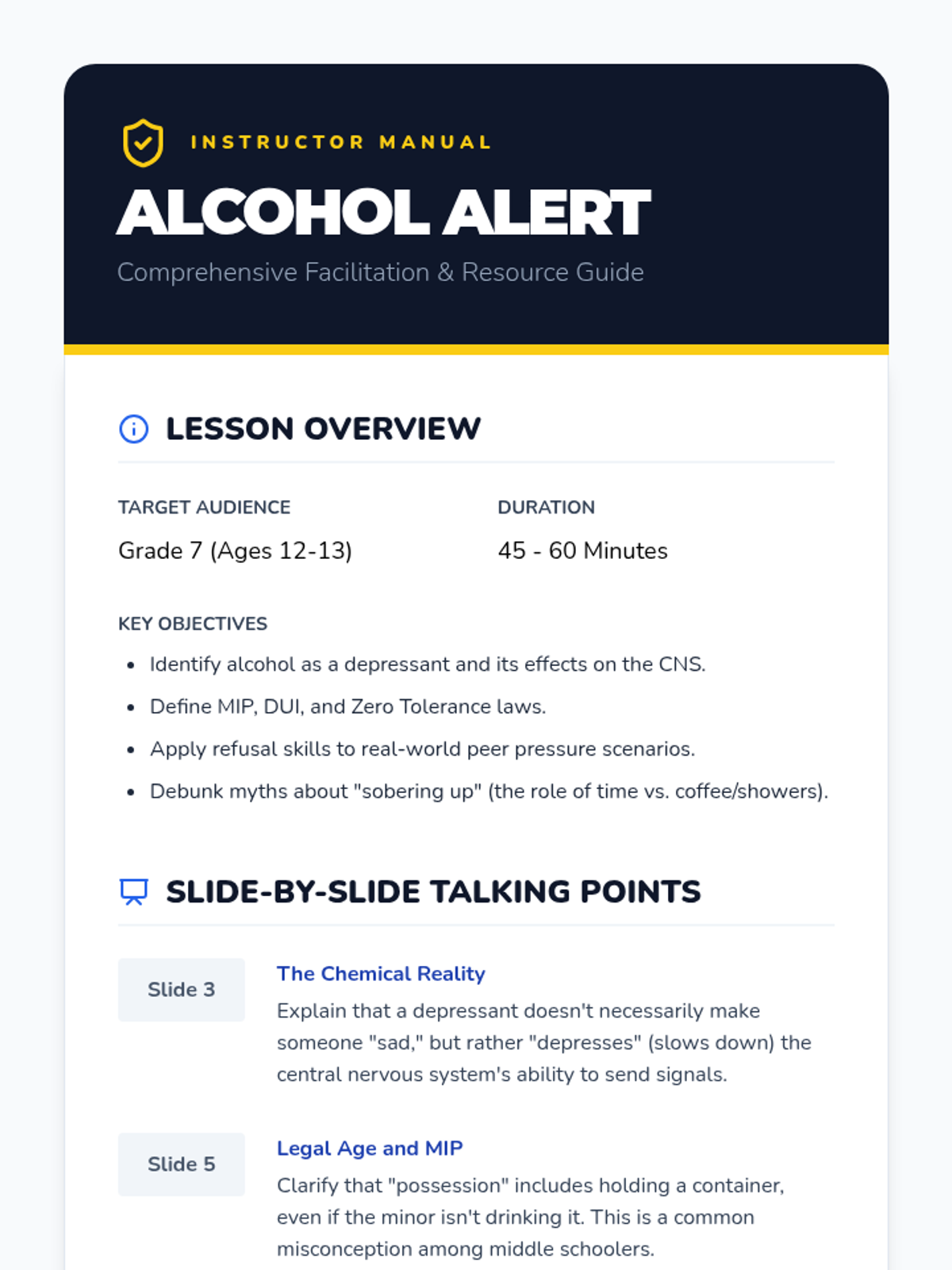
A facilitator guide for teachers, providing slide-by-slide instructional notes, classroom discussion prompts, and a comprehensive answer key for the student worksheet.
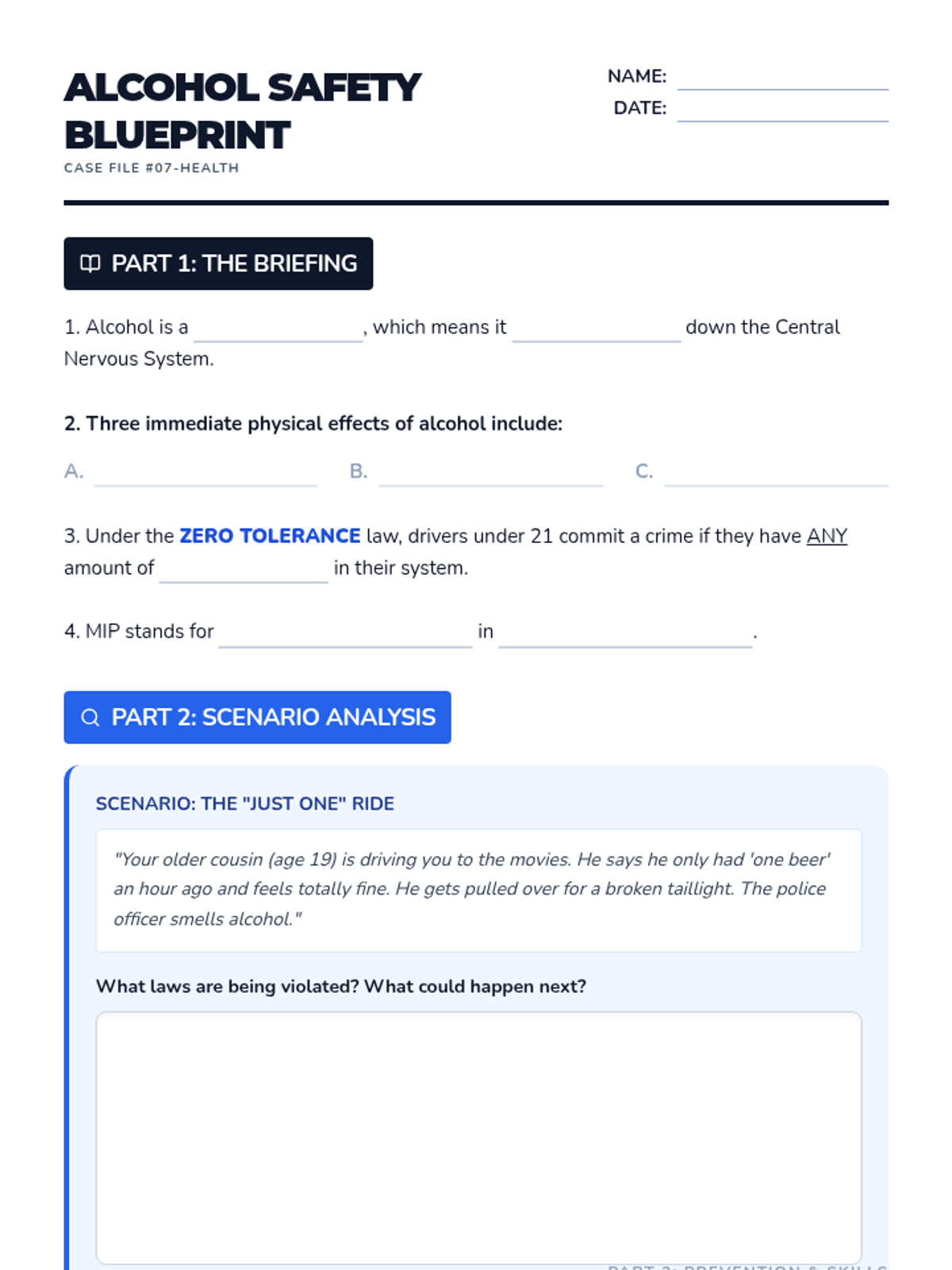
A student-facing worksheet designed to accompany the Alcohol Alert presentation. It includes guided notes, a legal scenario analysis, and a creative refusal script activity. Revision: Improved page breaks and writing space.
A comprehensive slide deck for 7th grade students covering the basics of alcohol, its physical risks, legal consequences like MIP and DUI, and practical refusal skills.