Fundamental techniques for soccer, volleyball, football, and basketball alongside strategic gameplay and communication skills. Emphasizes sportsmanship and collaborative tactics within a competitive team environment.
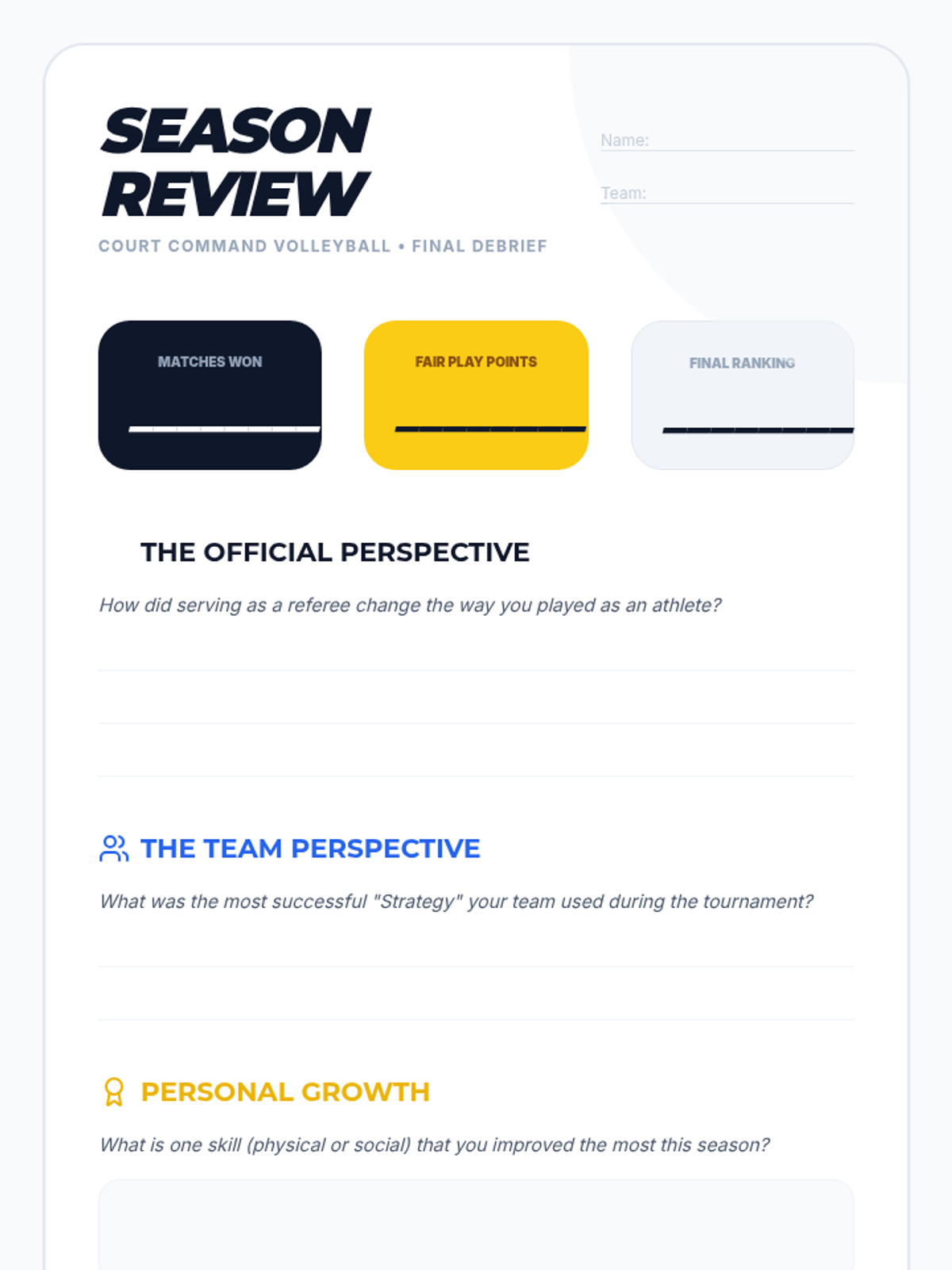
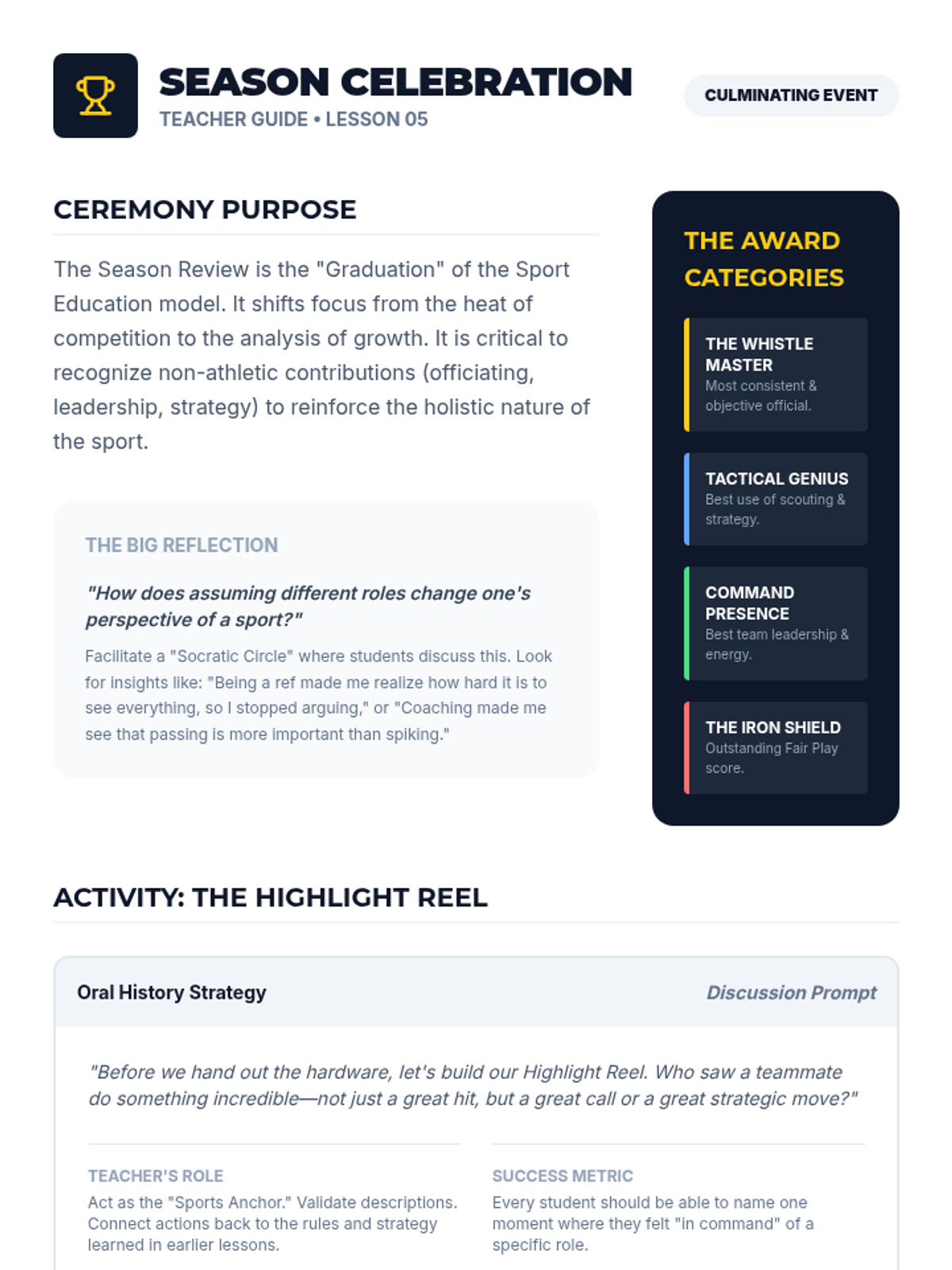
A culminating celebration of growth, sportsmanship, and performance through data analysis and an awards ceremony.
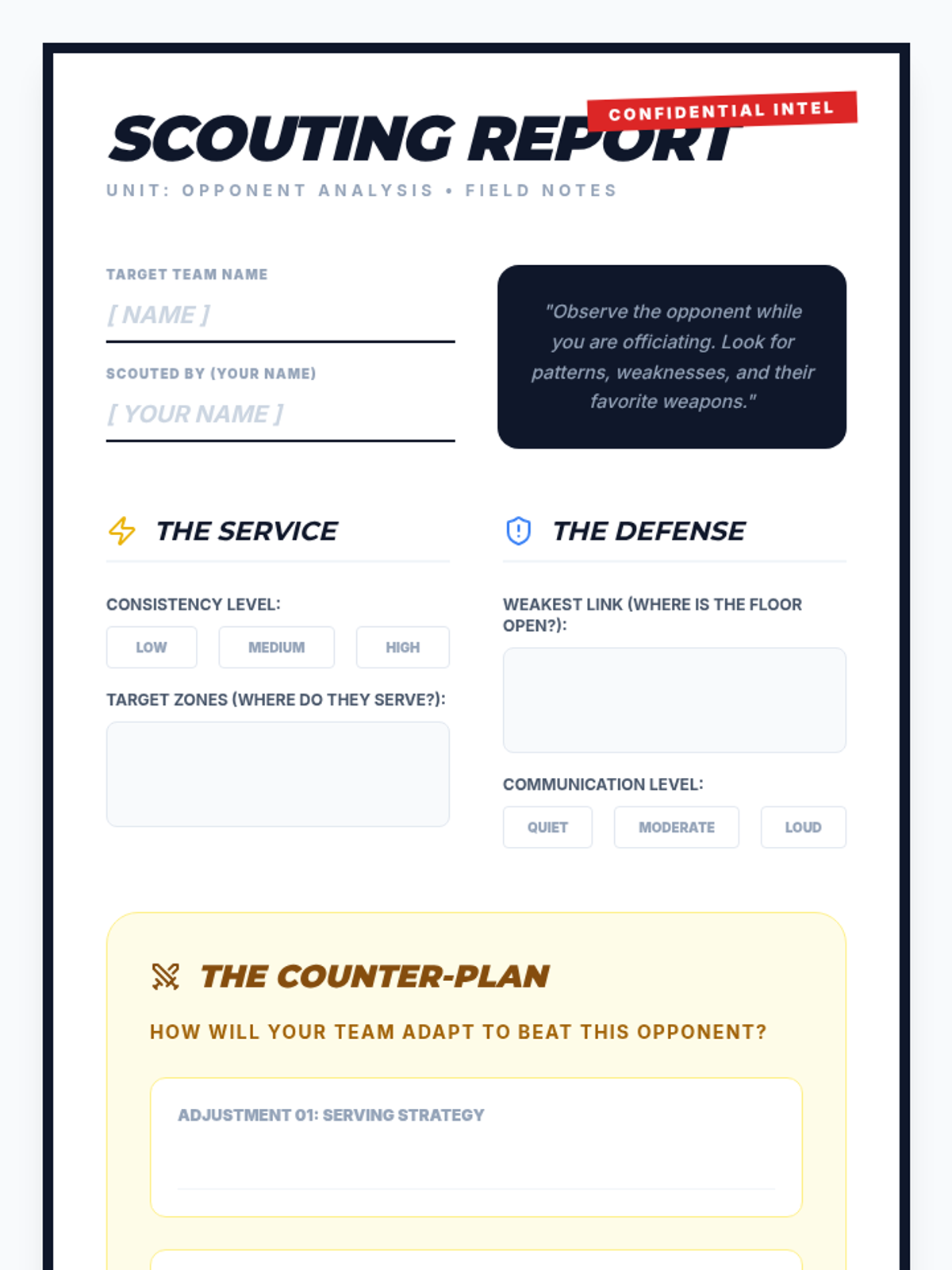
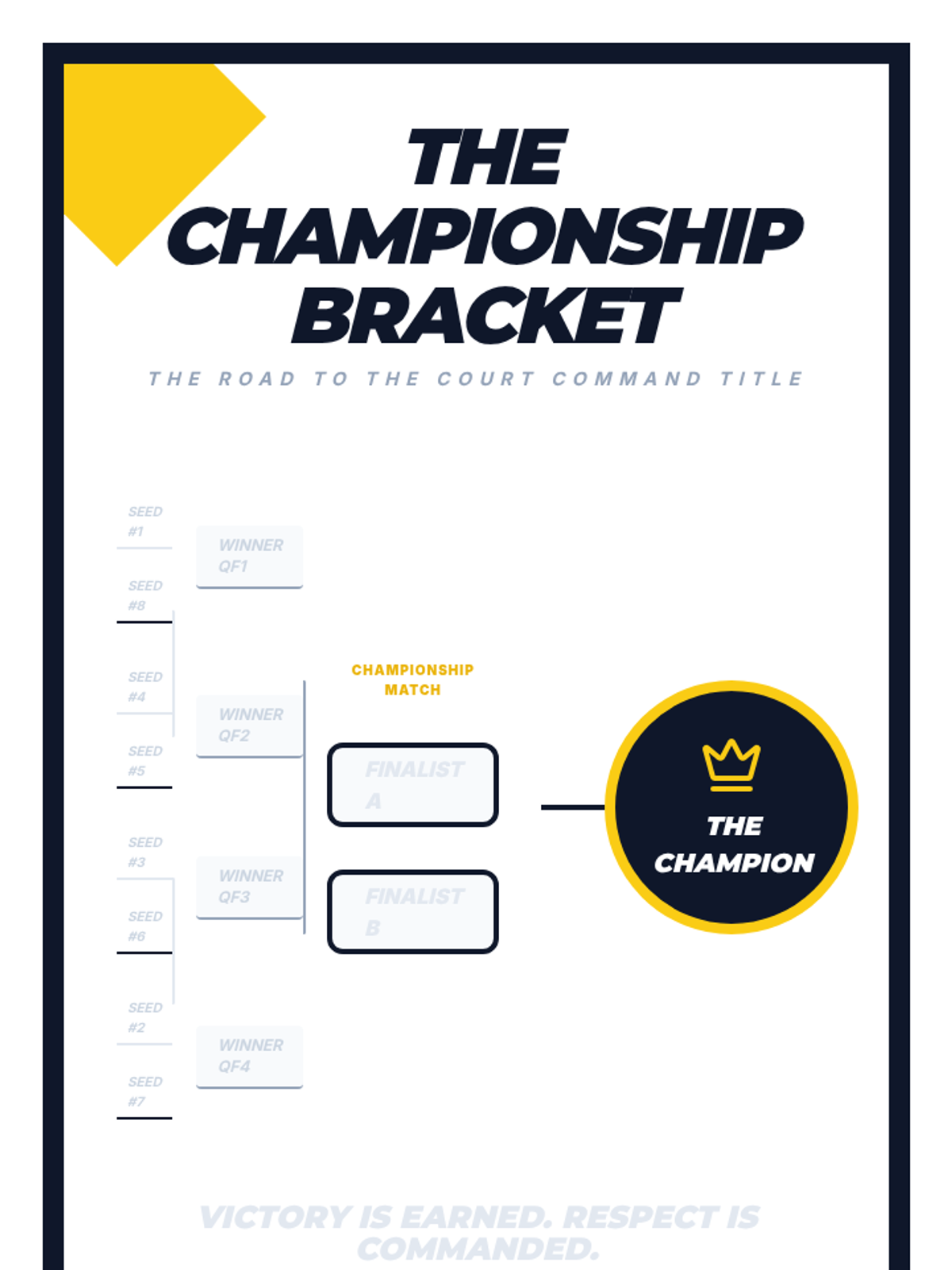
The tournament reaches its peak with seeded bracket play, requiring teams to apply scouting and tactical adjustments.
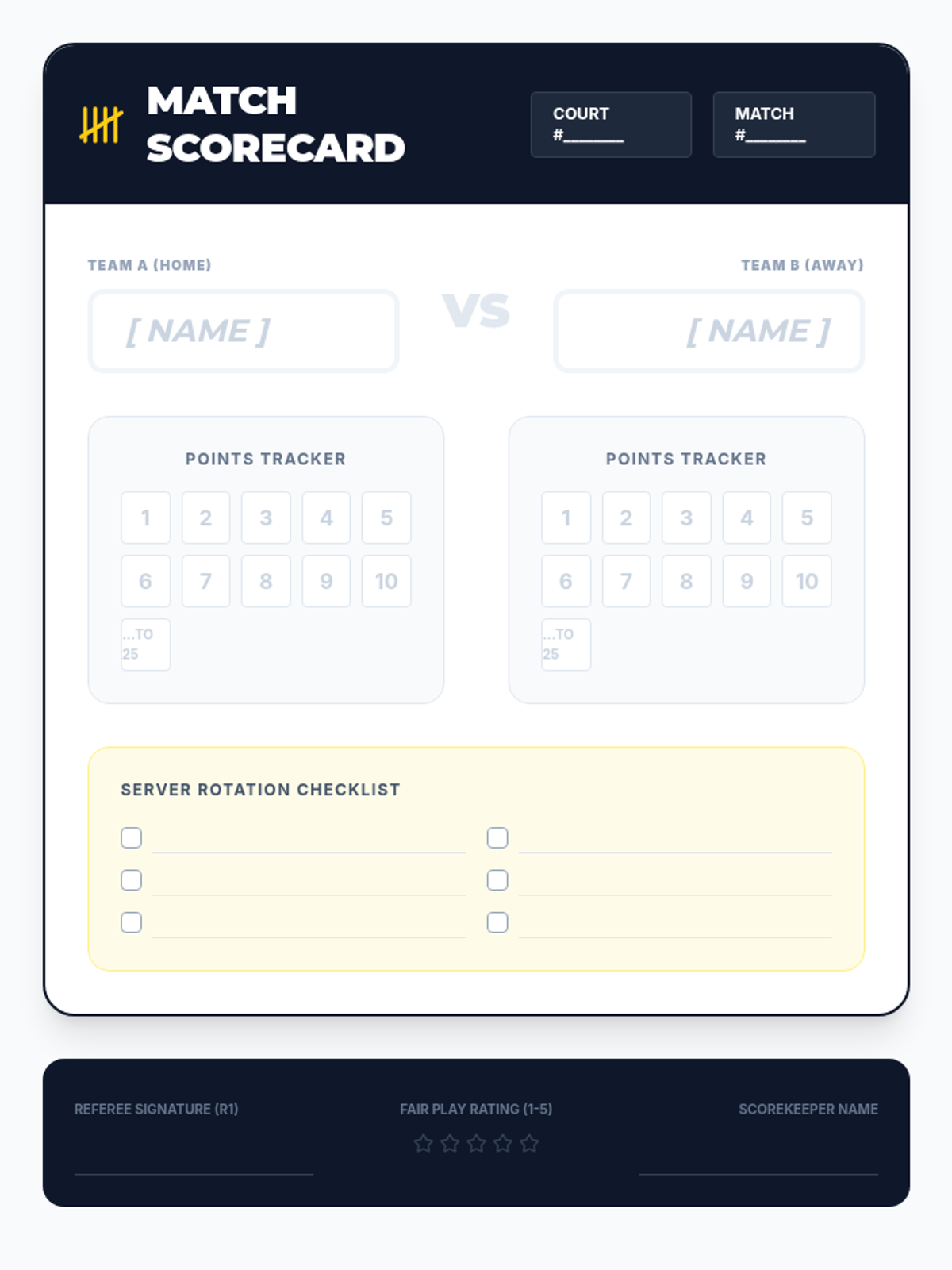
The round-robin phase begins, where students rotate between playing matches and performing official duties.
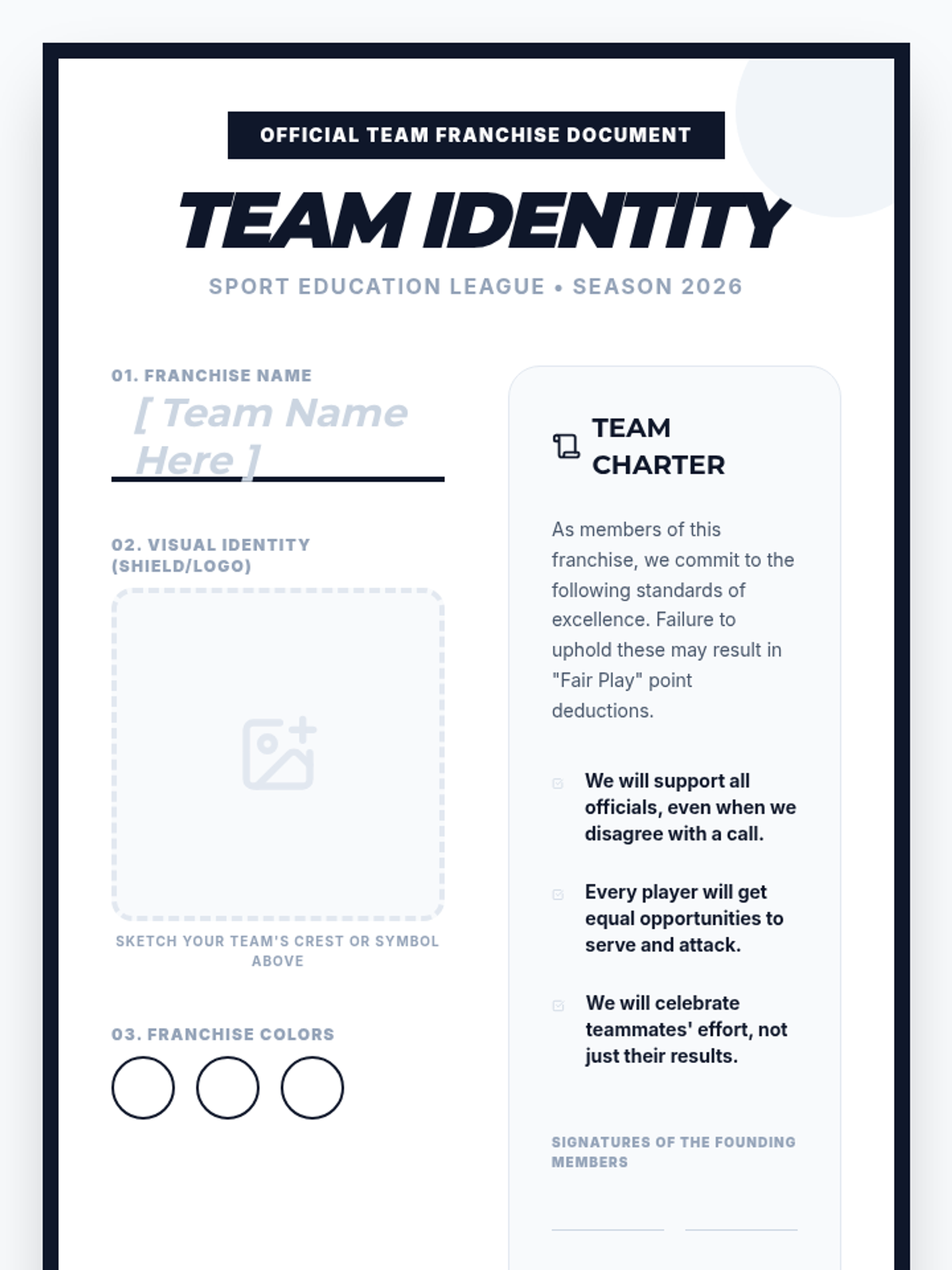
Teams establish their identity through naming and contracting, while developing basic offensive and defensive strategies.
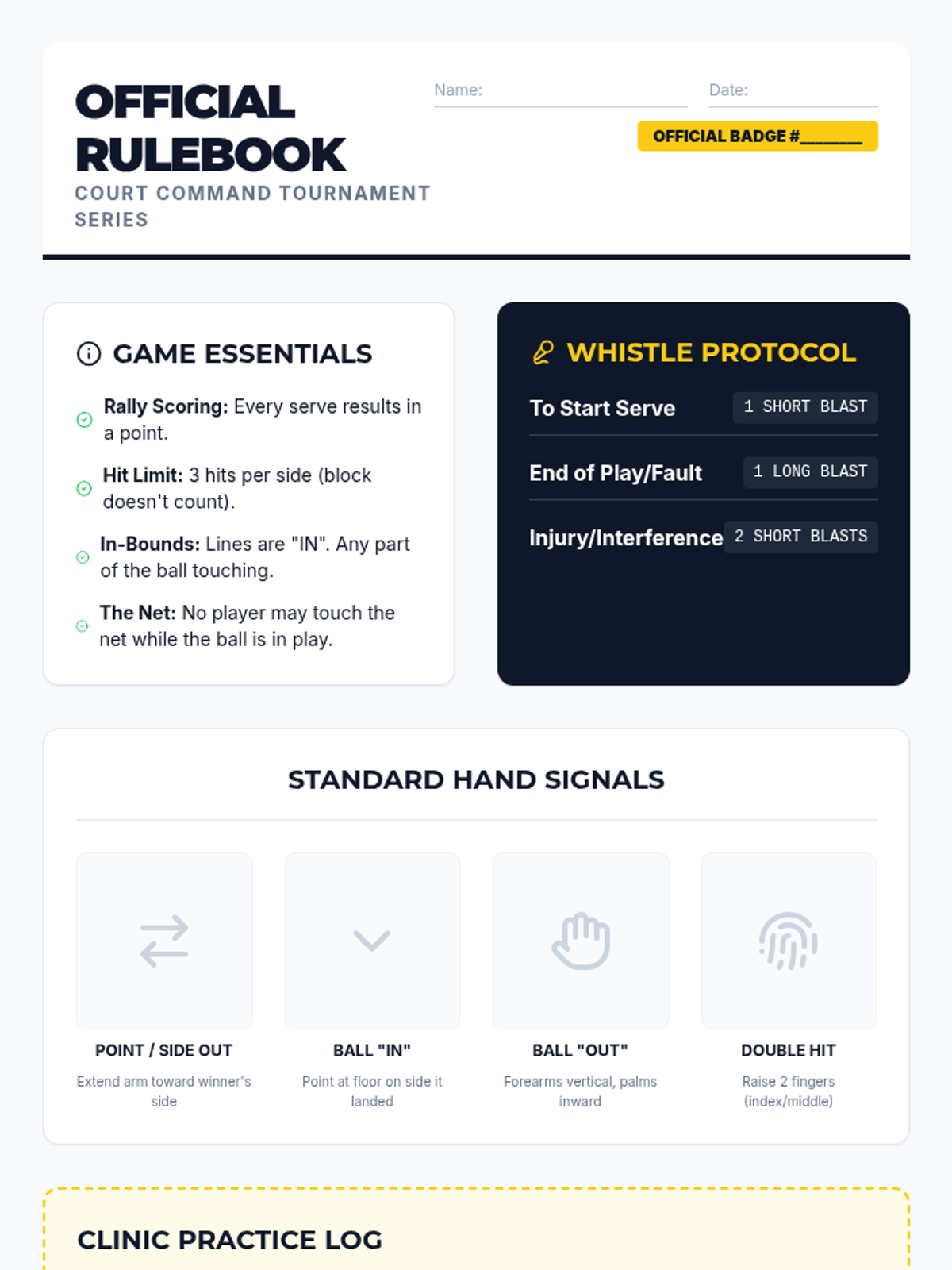
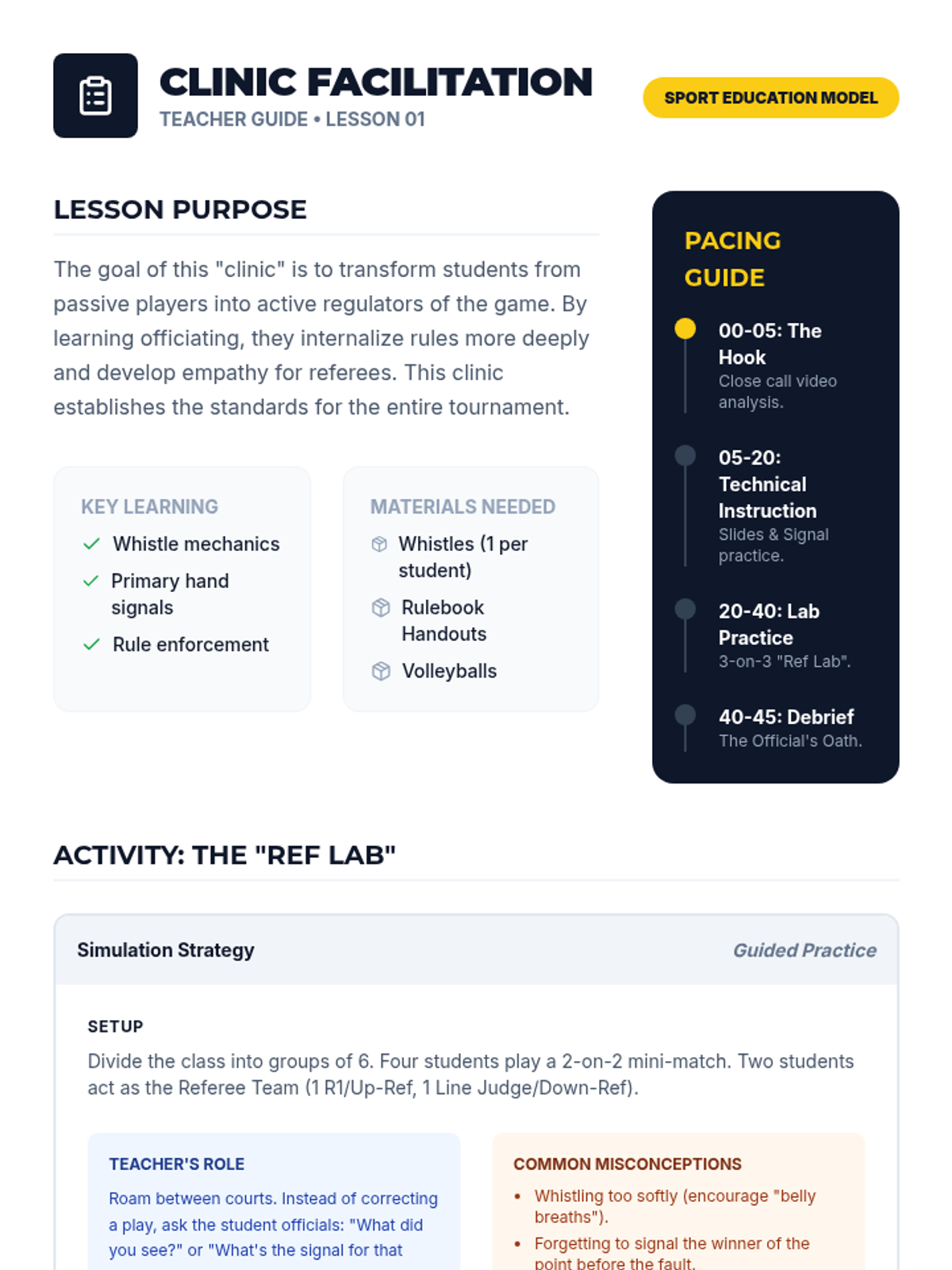
Students train as officials, learning hand signals, whistle protocols, and rule enforcement to gain a fair-play perspective.
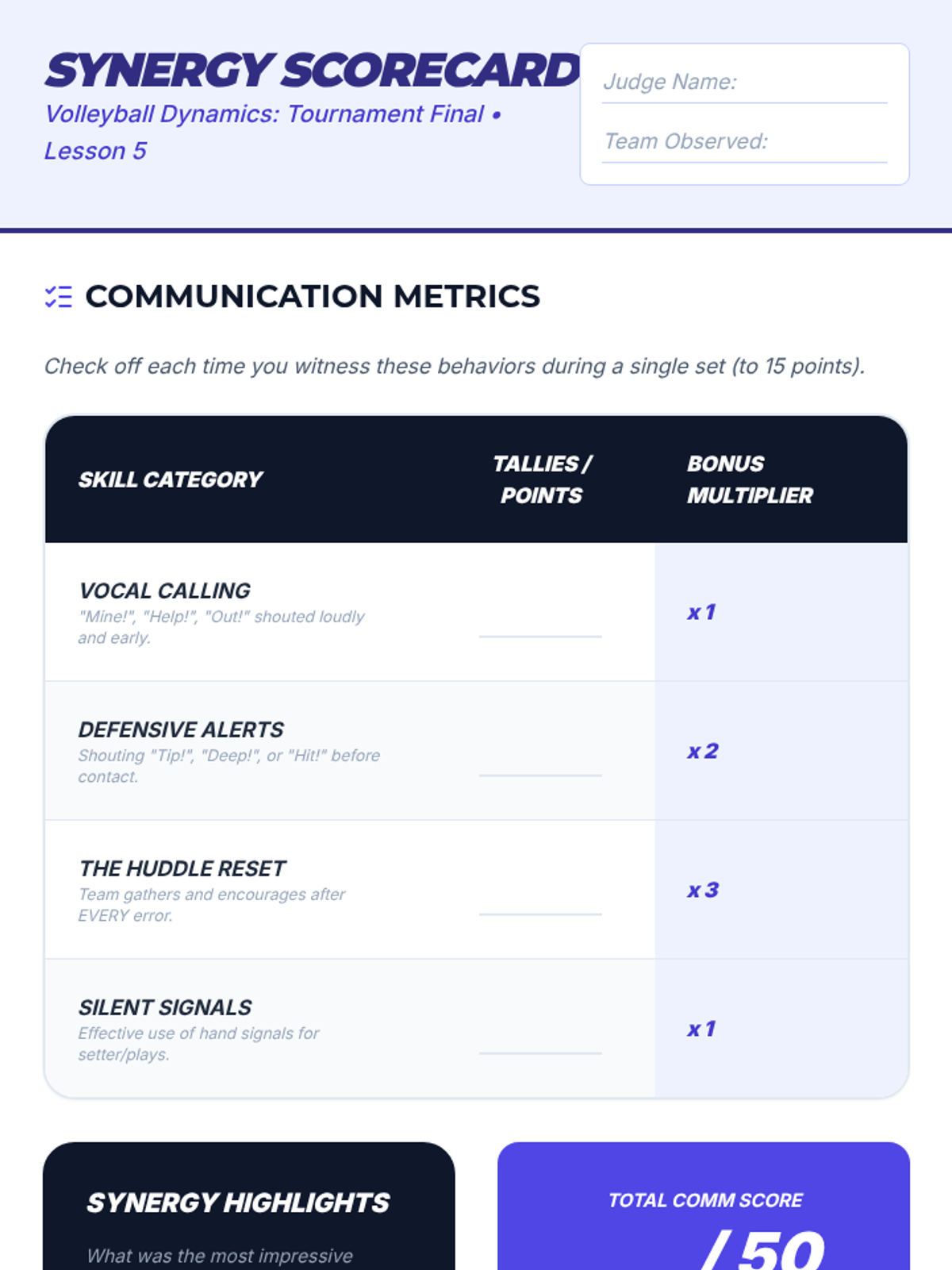
The sequence culminates in a tournament where teams are judged and scored primarily on their communication clarity and frequency. A final debrief explores how these skills transfer beyond the court.
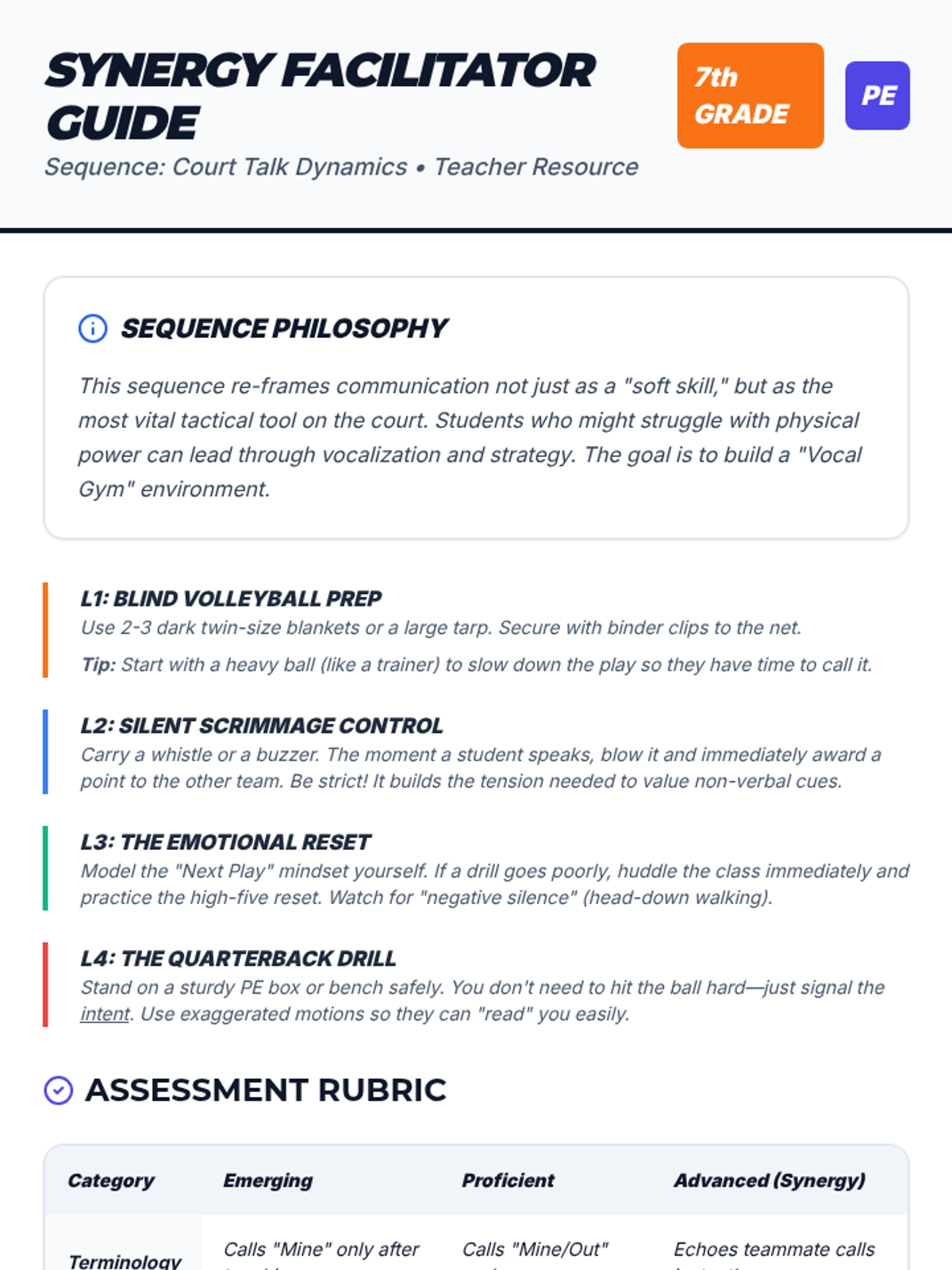
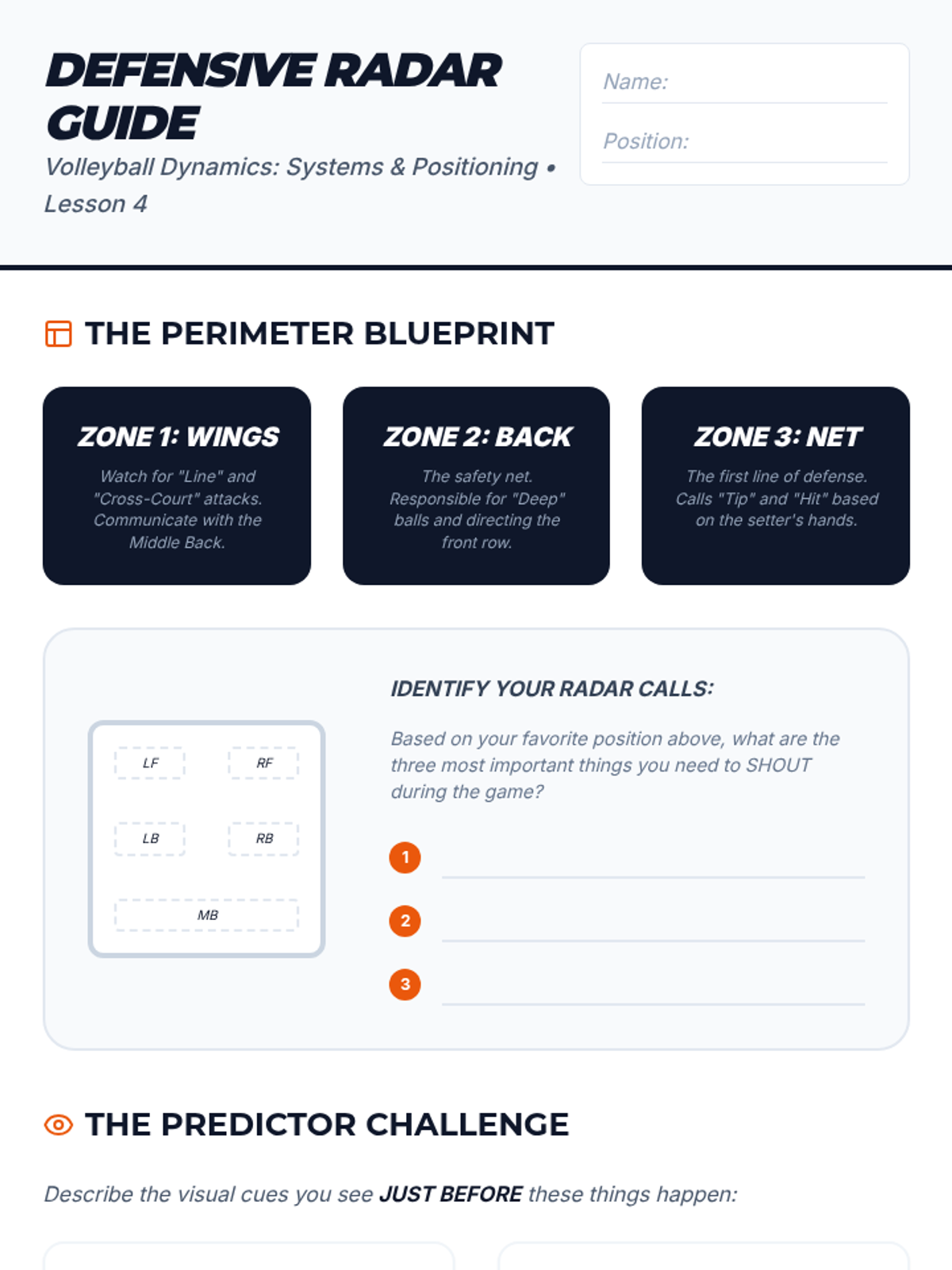
Students are introduced to defensive formations like Perimeter and Man-Up, learning to communicate tactical switches and opponent intentions in real-time. Drills focus on reacting to the 'Quarterback's' signals.
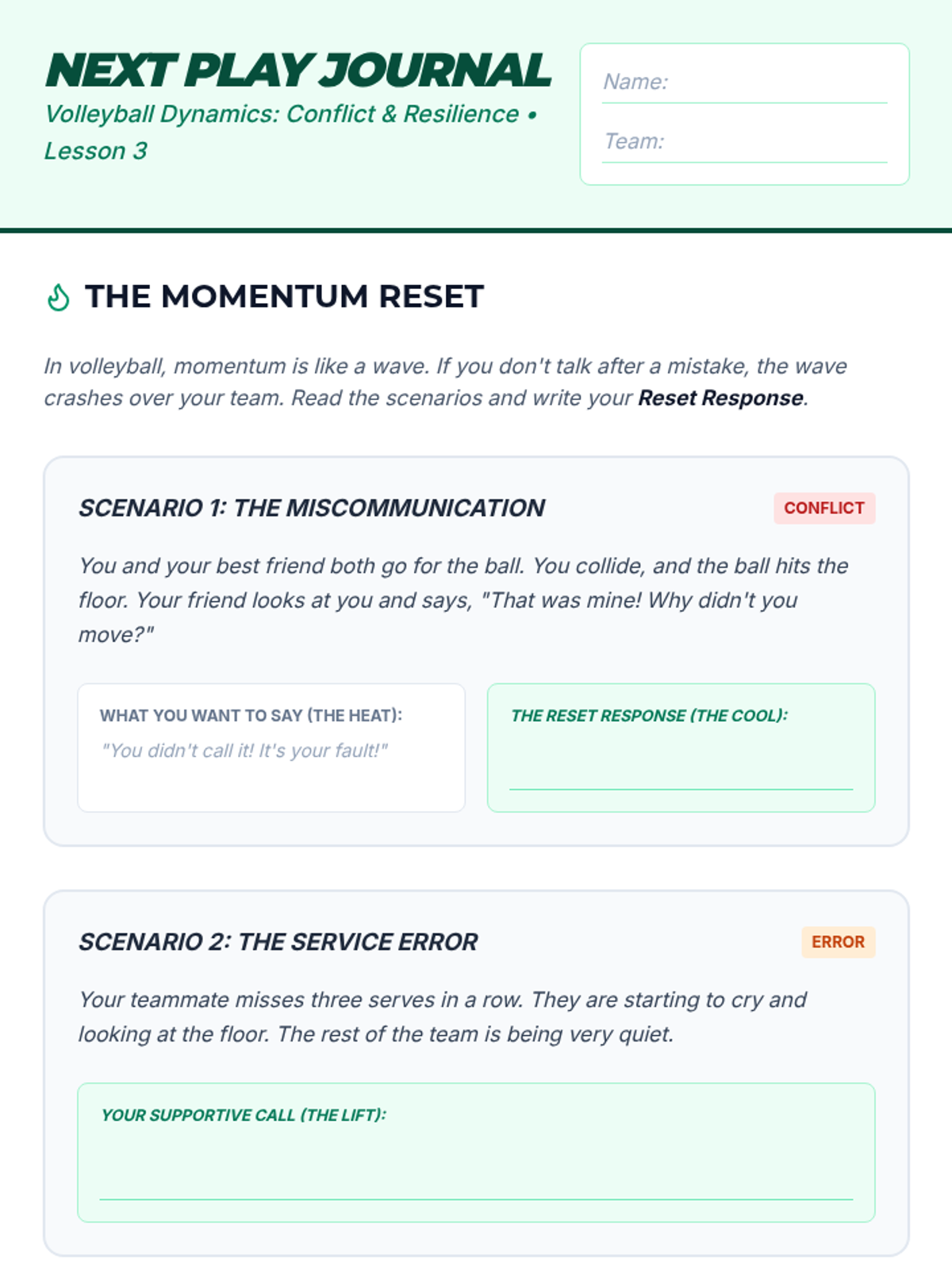
This lesson addresses the psychological side of teamwork, teaching students how to handle errors and maintain positive momentum. Students role-play conflict resolution and practice supportive reinforcement techniques.
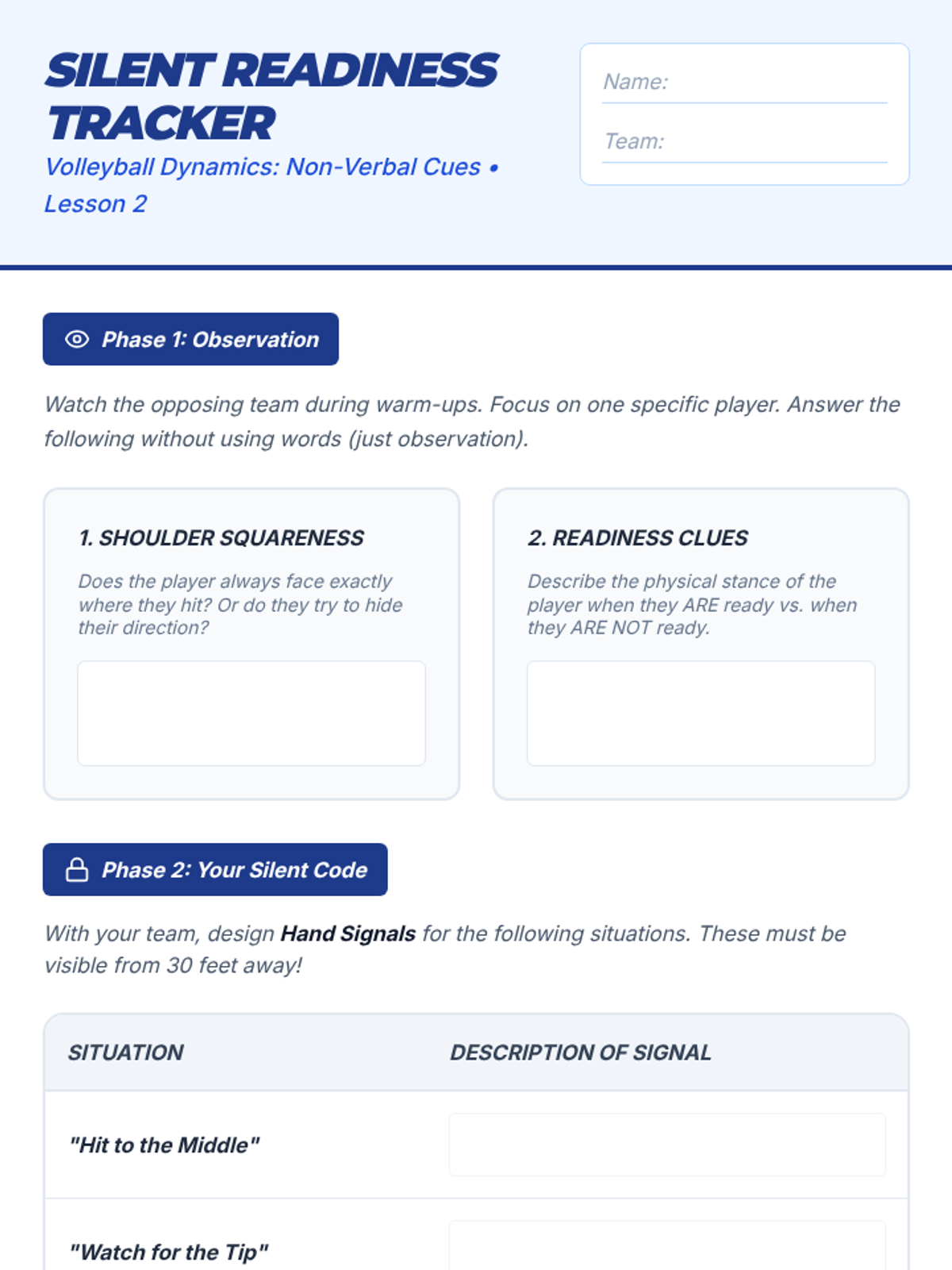
Shifting focus to visual cues, students learn to read body language and use non-verbal signals like hand gestures and eye contact. A silent scrimmage reinforces reliance on visual readiness and anticipation.
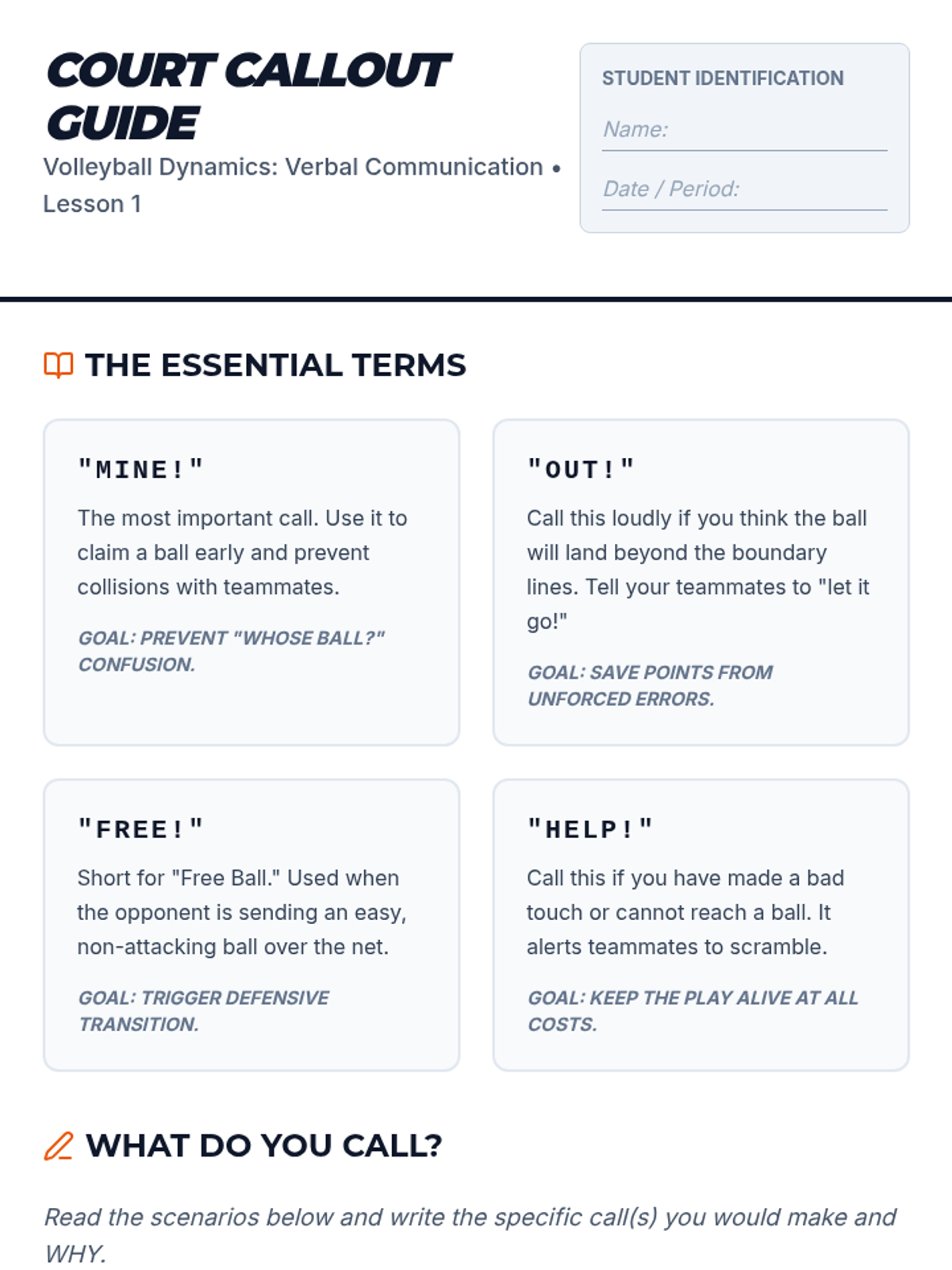
Students learn the foundational verbal terminology of volleyball (Mine, Out, Free, Help) through drills that emphasize loud, early communication. The lesson features the 'Blind Volleyball' hook to demonstrate the necessity of vocalizing ball movement.
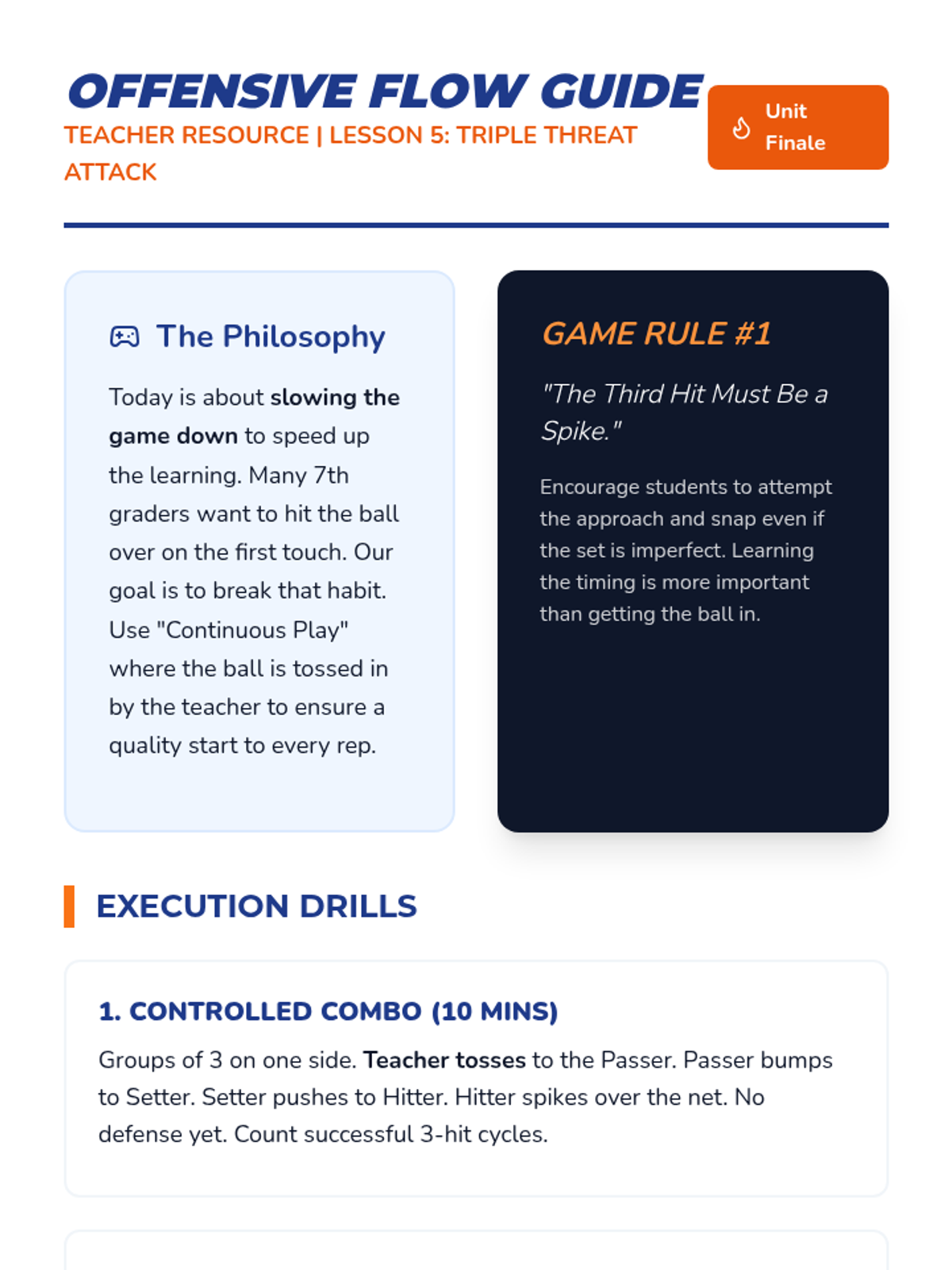
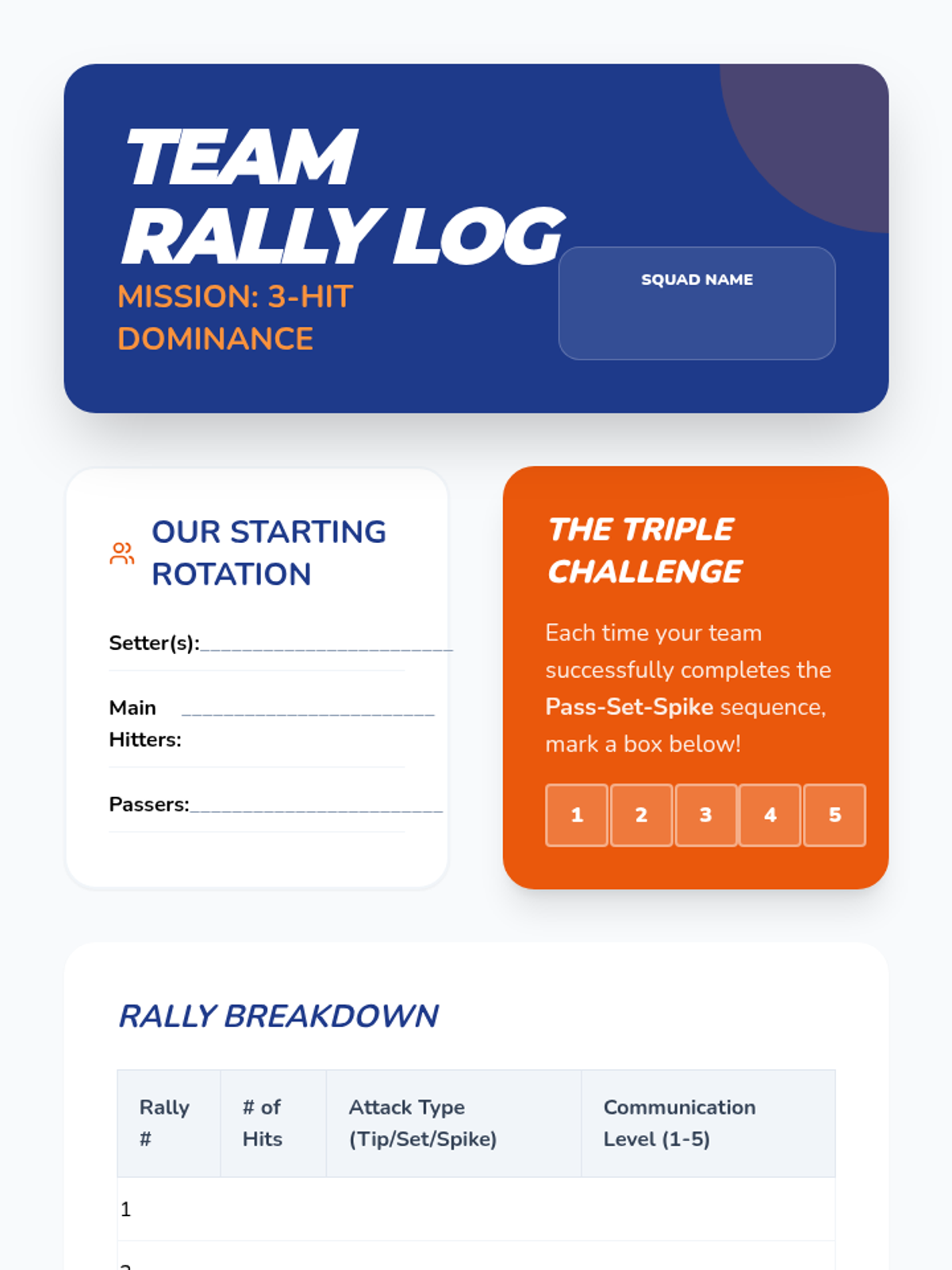
The culmination of the unit where students integrate passing, setting, and attacking into a cohesive three-hit offensive sequence.
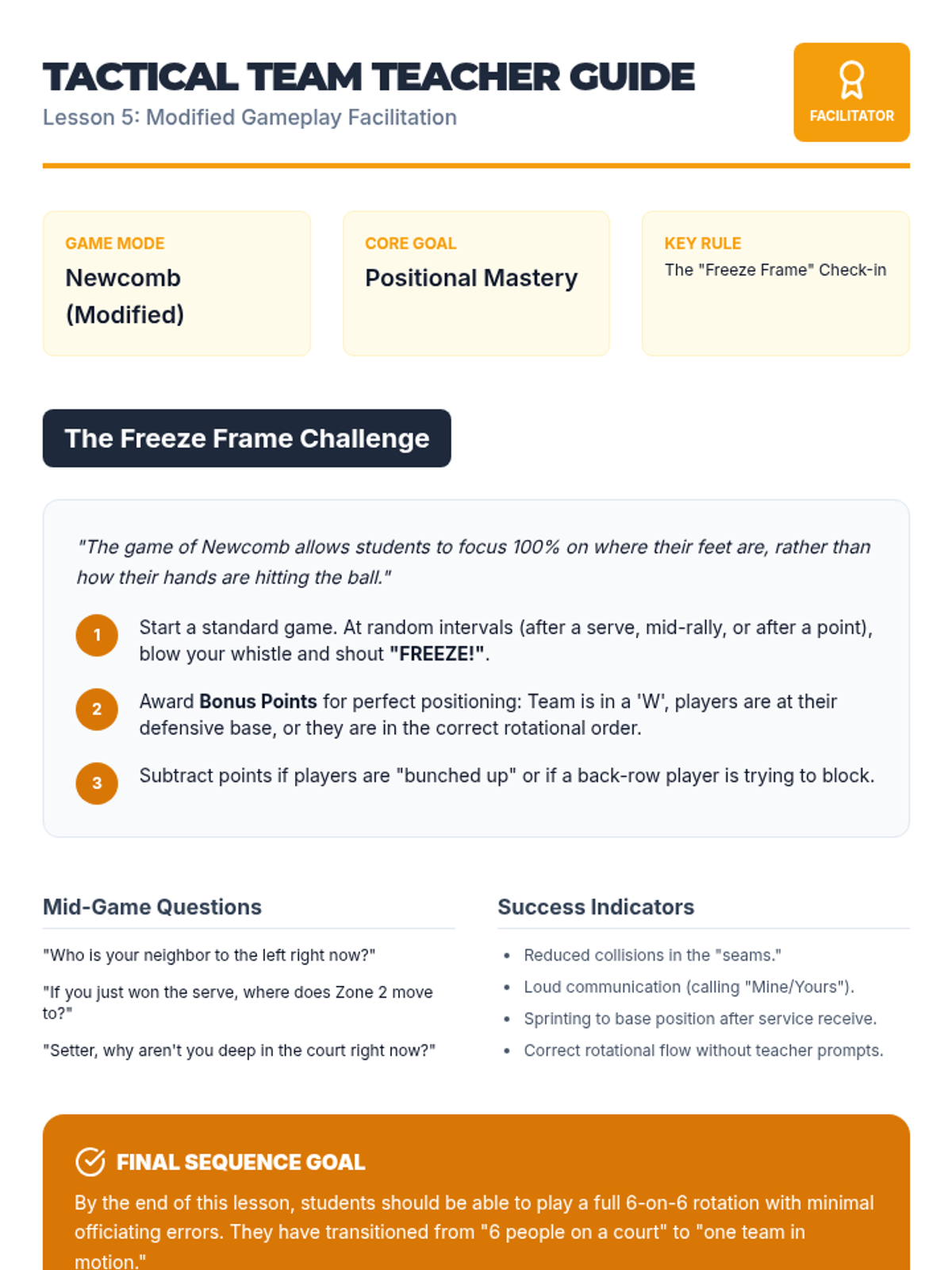
Synthesizes rotation and positioning through modified Newcomb games, allowing students to focus on tactical movement without high-pressure ball skills.
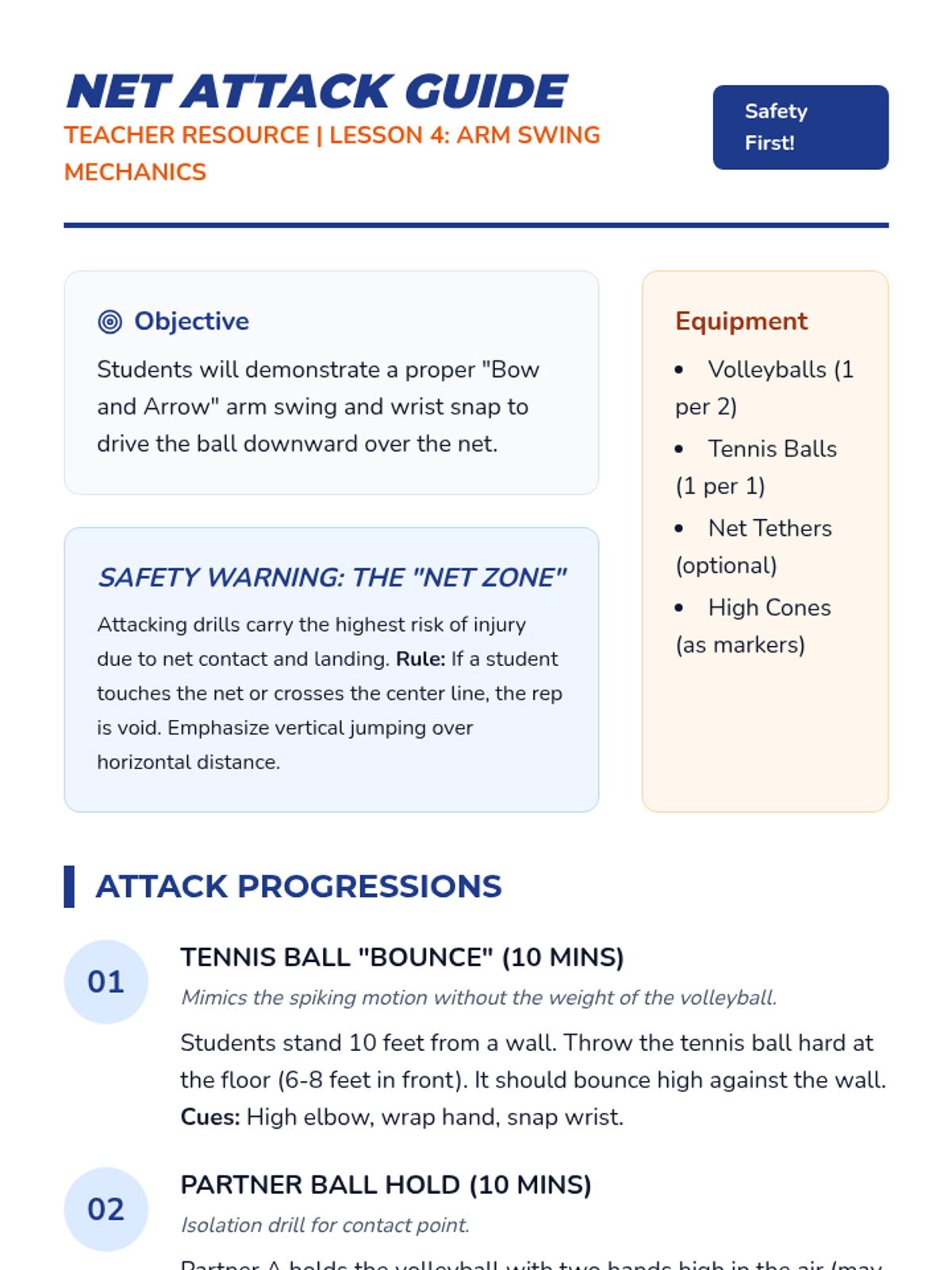
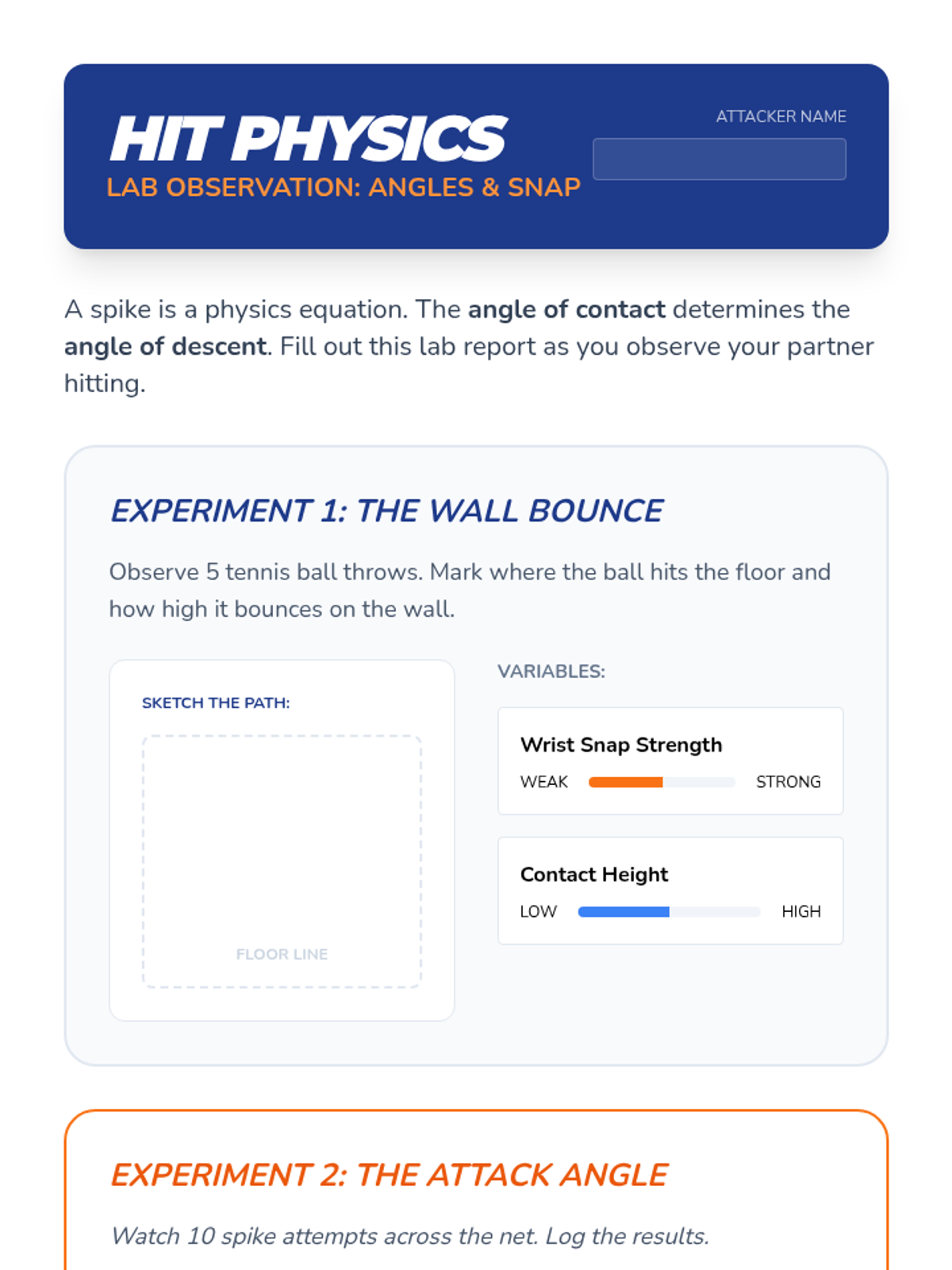
Students master the arm swing and wrist snap mechanics for attacking, progressing from stationary contact to hitting tossed balls.
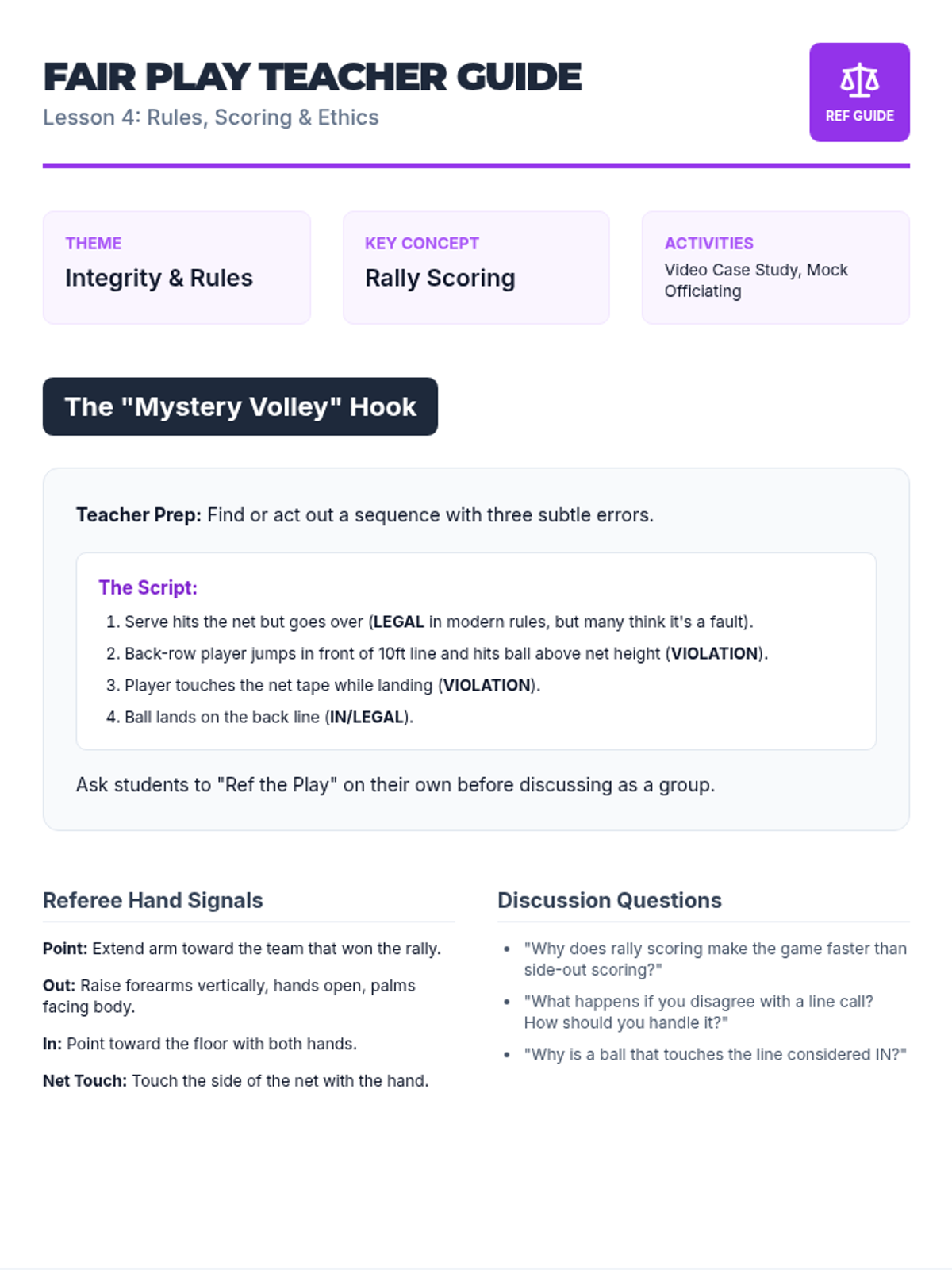
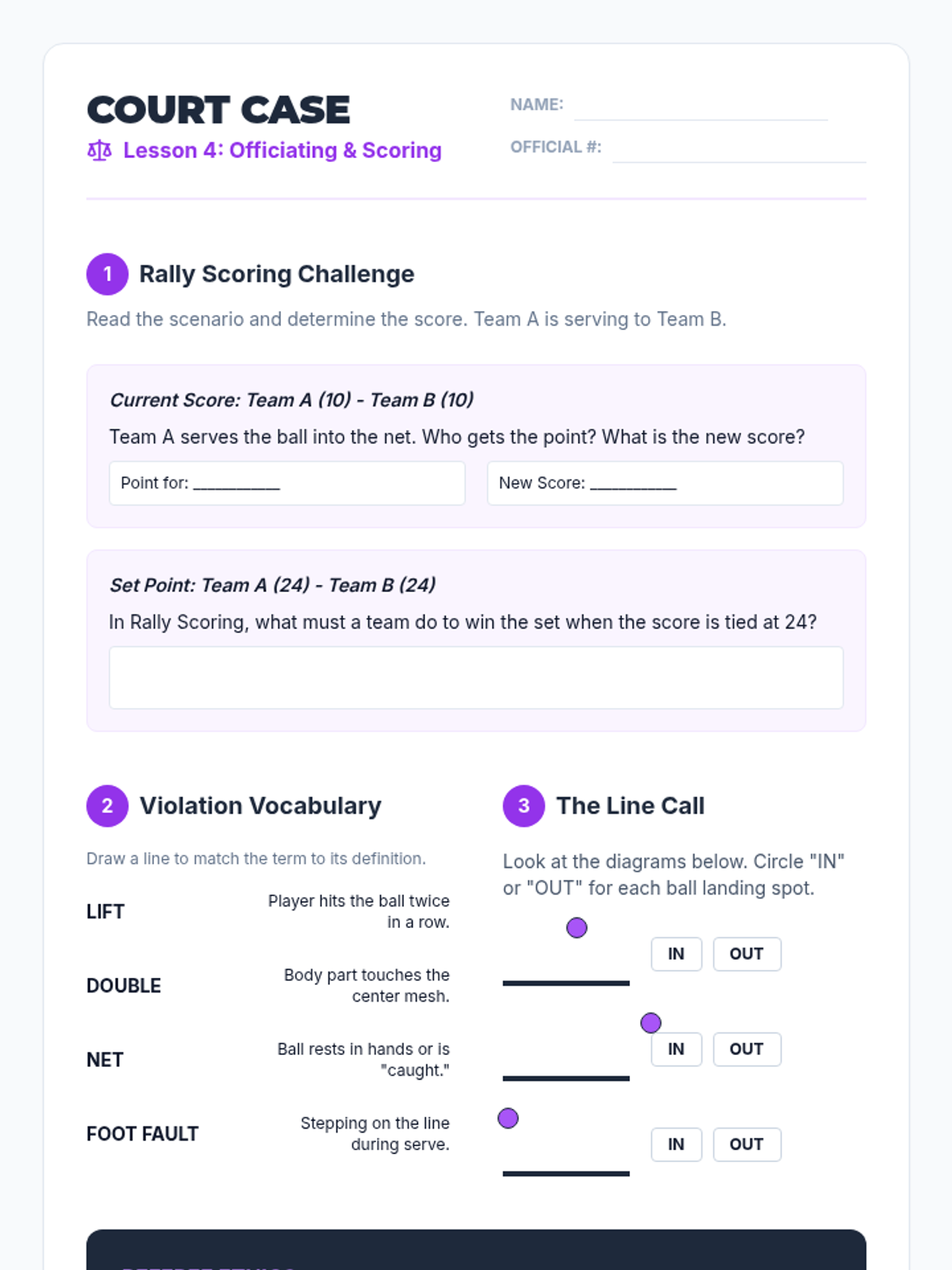
Covers rally scoring, boundary rules, and common technical violations like net touches and lifting, preparing students to officiate and play fairly.
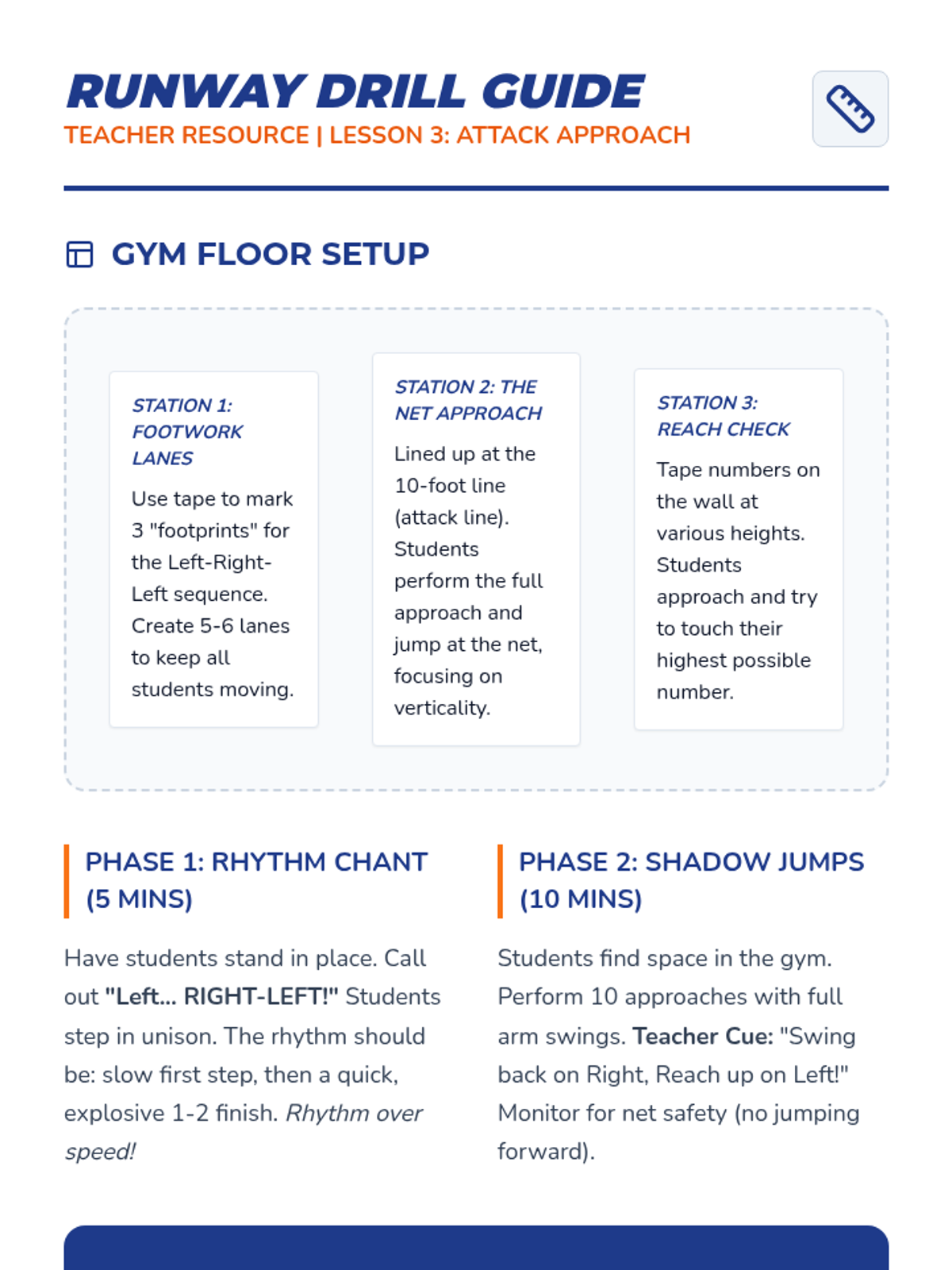
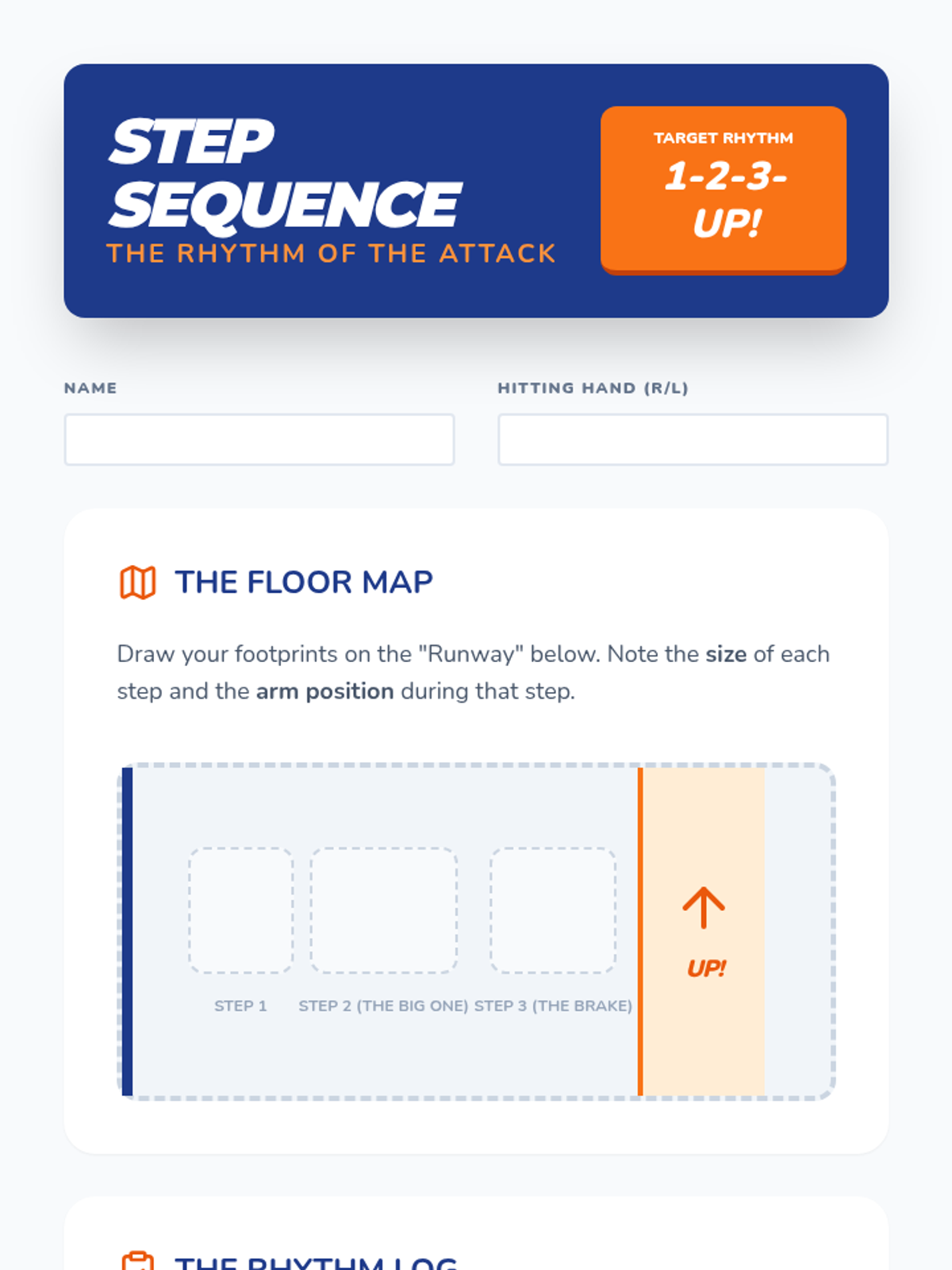
Focuses on the three-step approach footwork and explosive vertical jump required to transition into an effective attack.
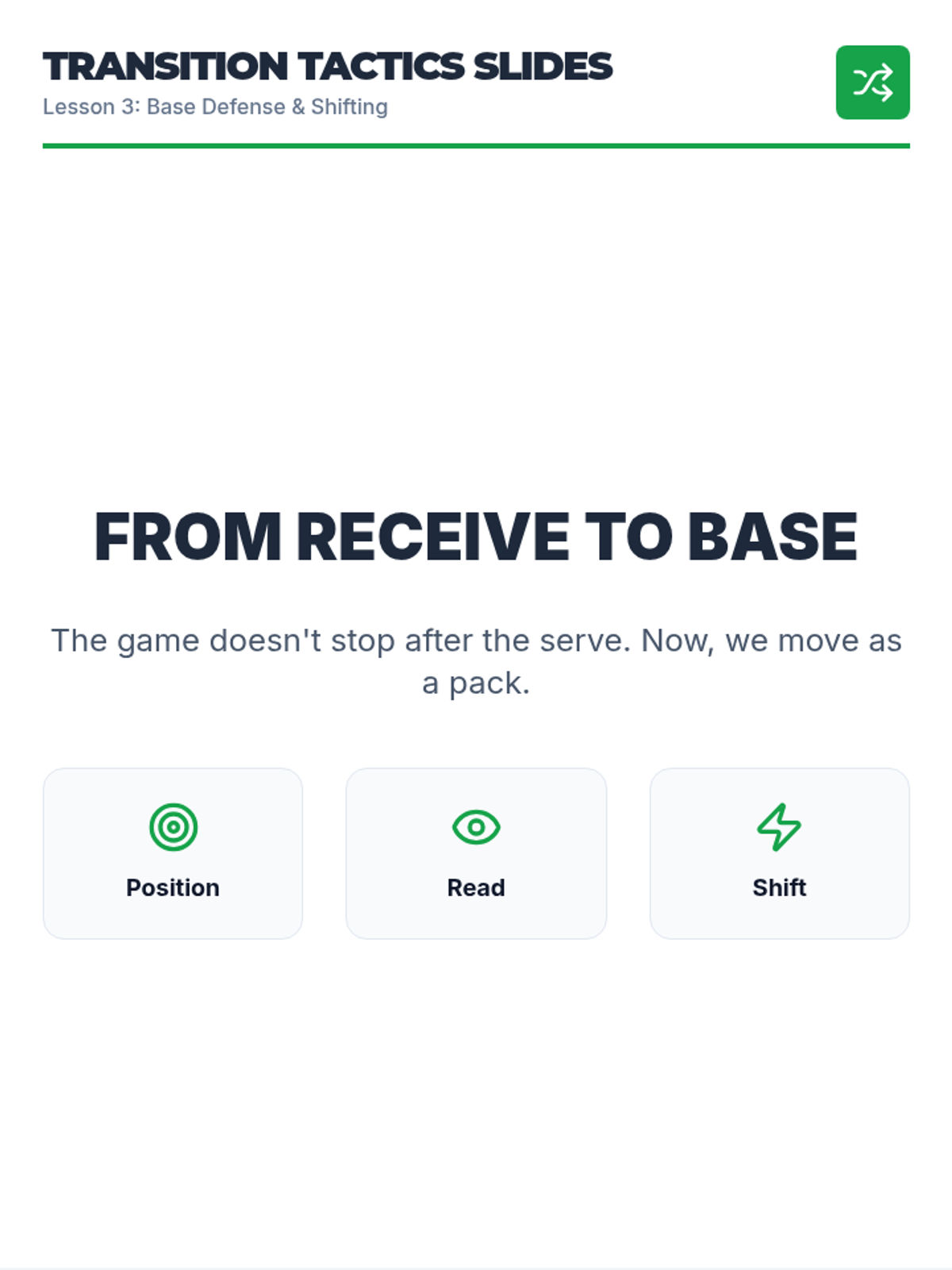
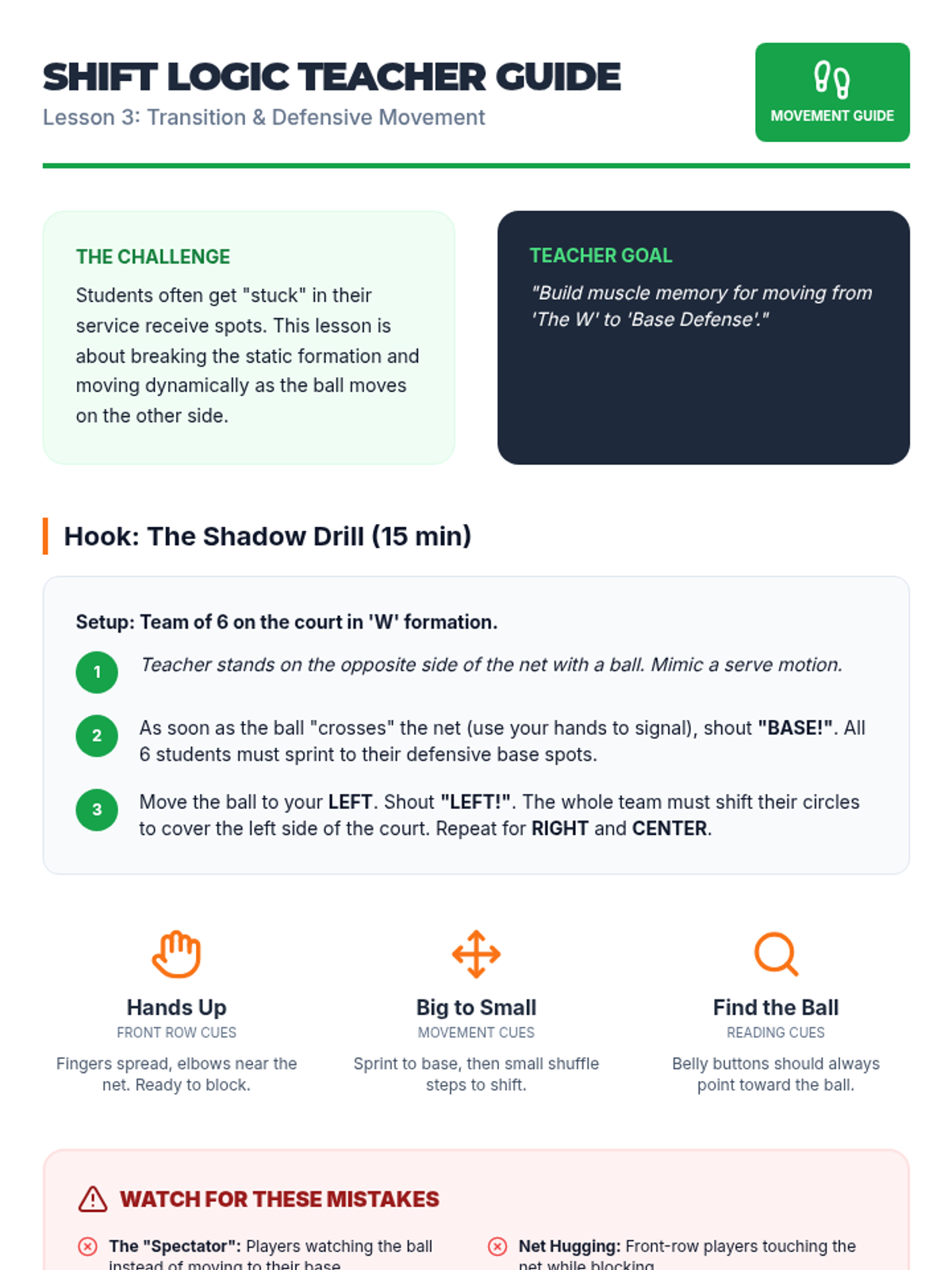
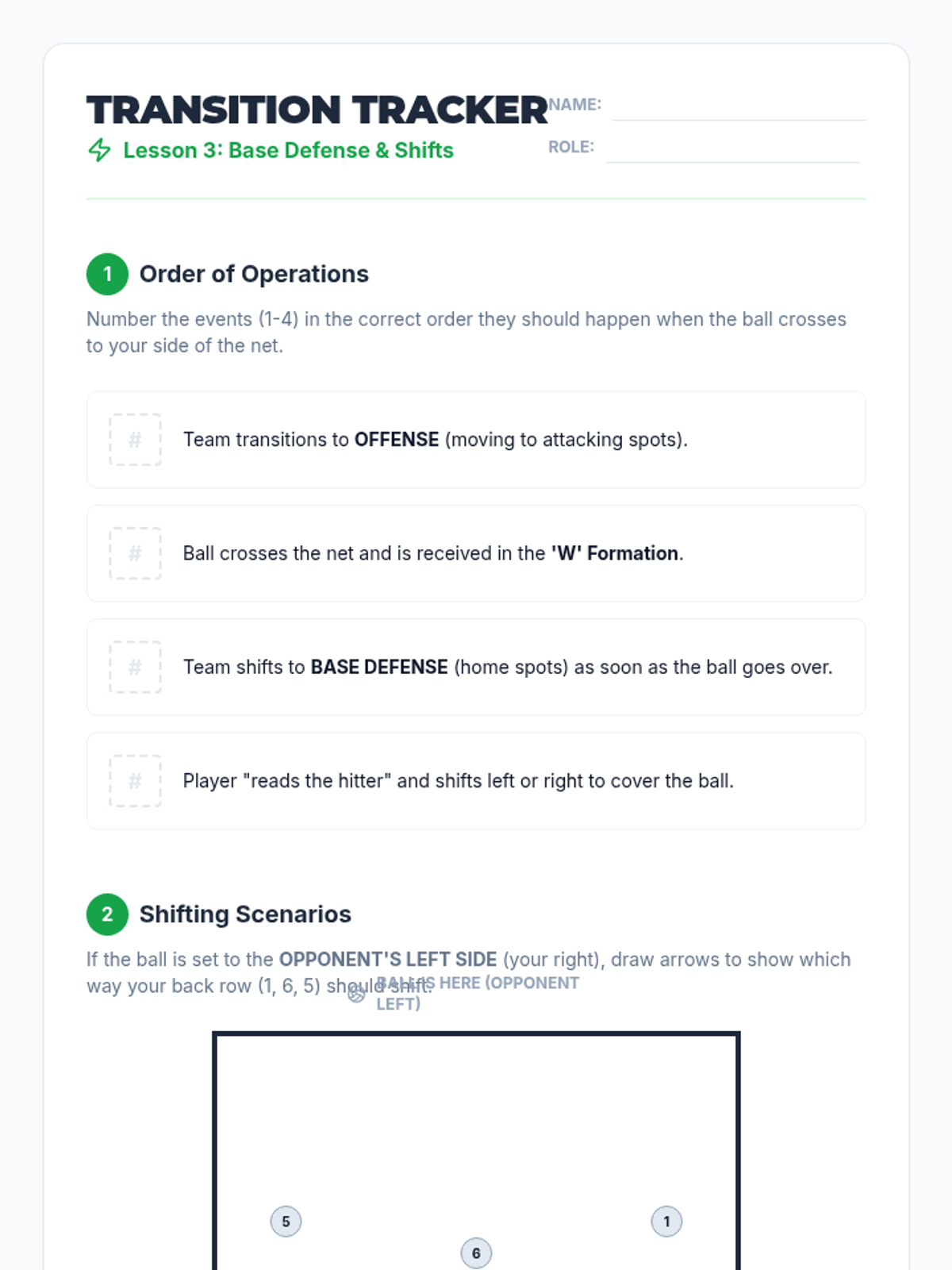
Introduces base defensive positions and the mechanics of transitioning to offense, emphasizing reading the opponent and shifting as a cohesive unit.
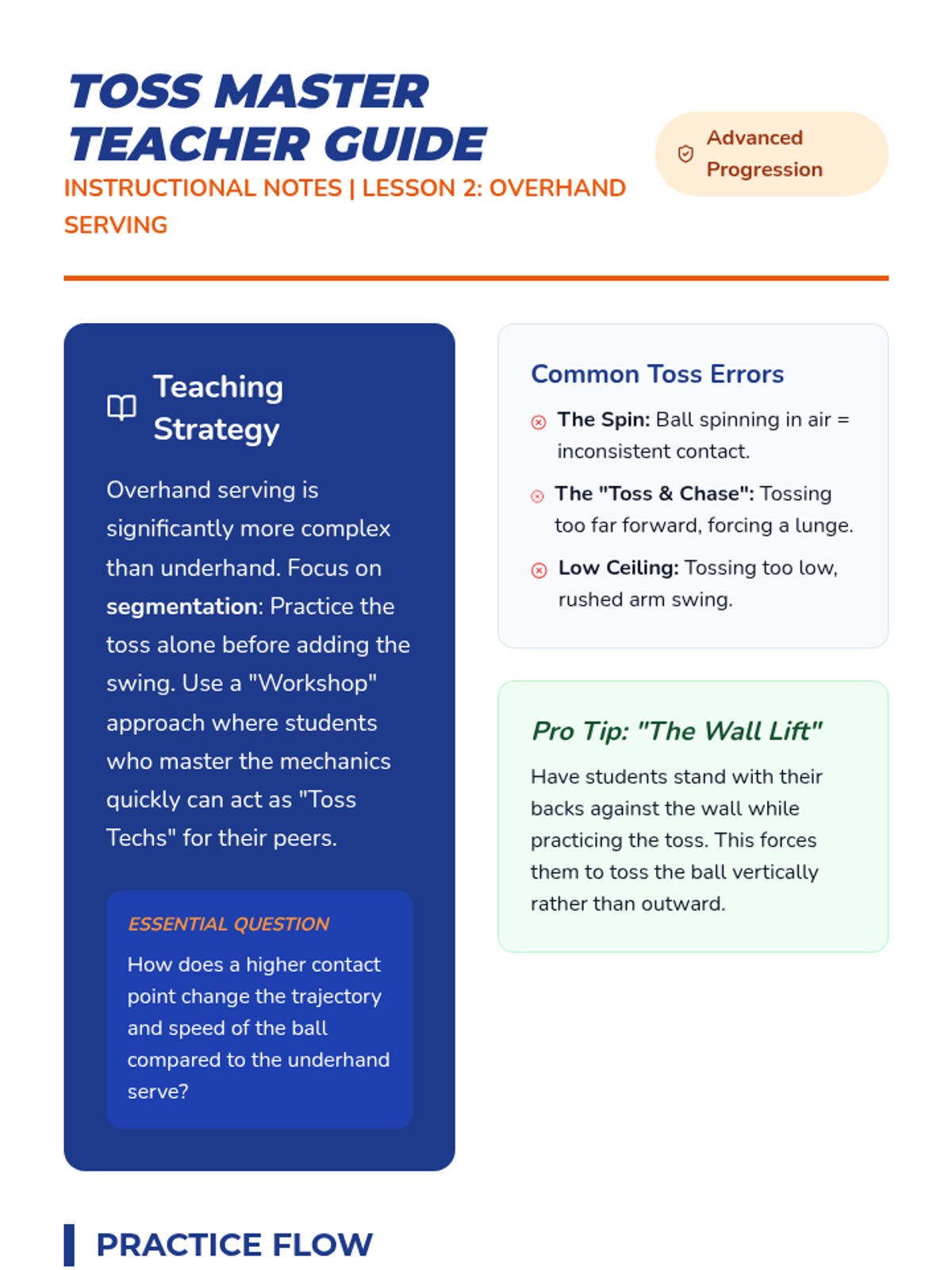
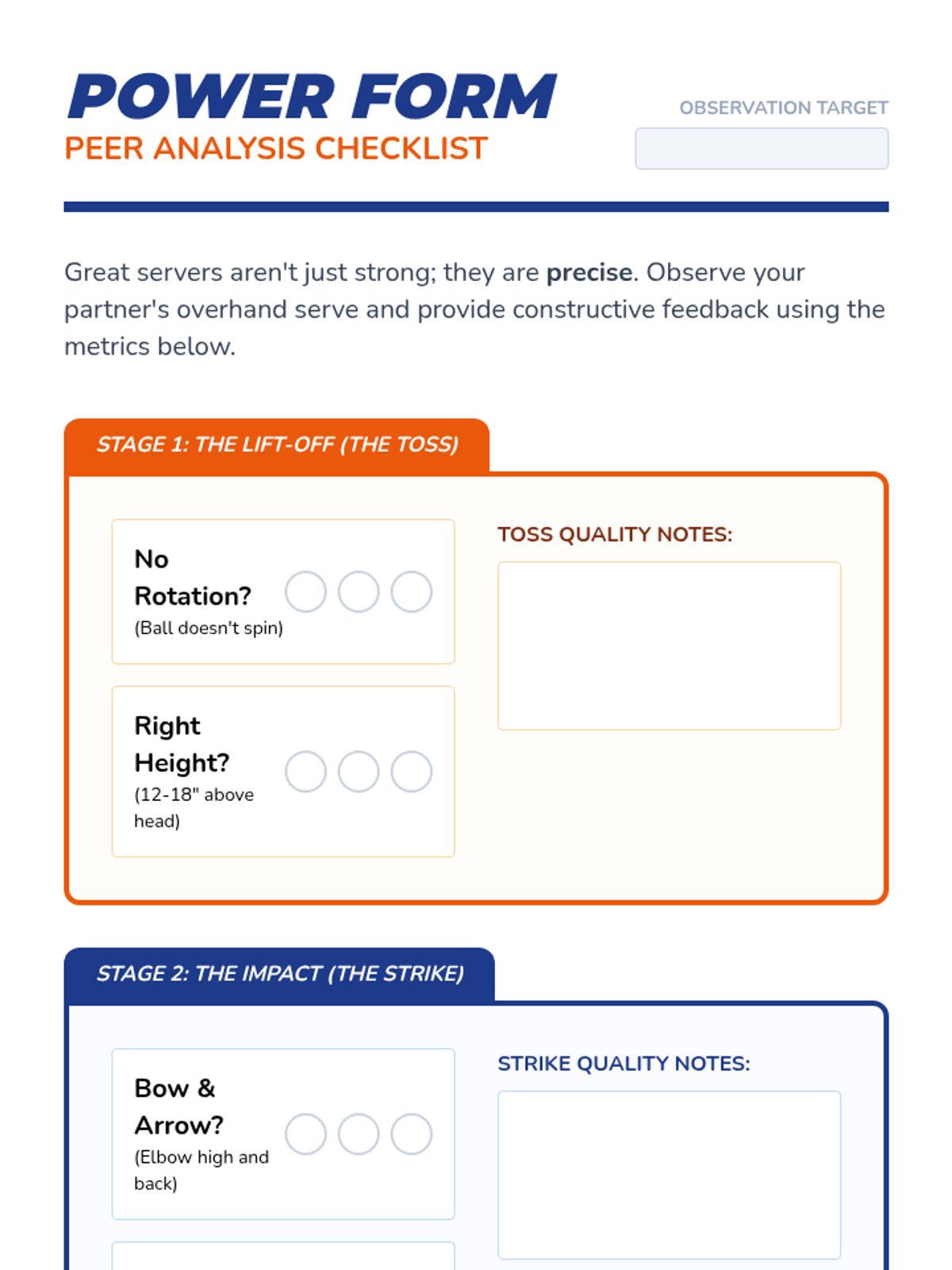
Introduction to overhand serving mechanics, emphasizing the toss, bow-and-arrow arm positioning, and the high contact point for power.
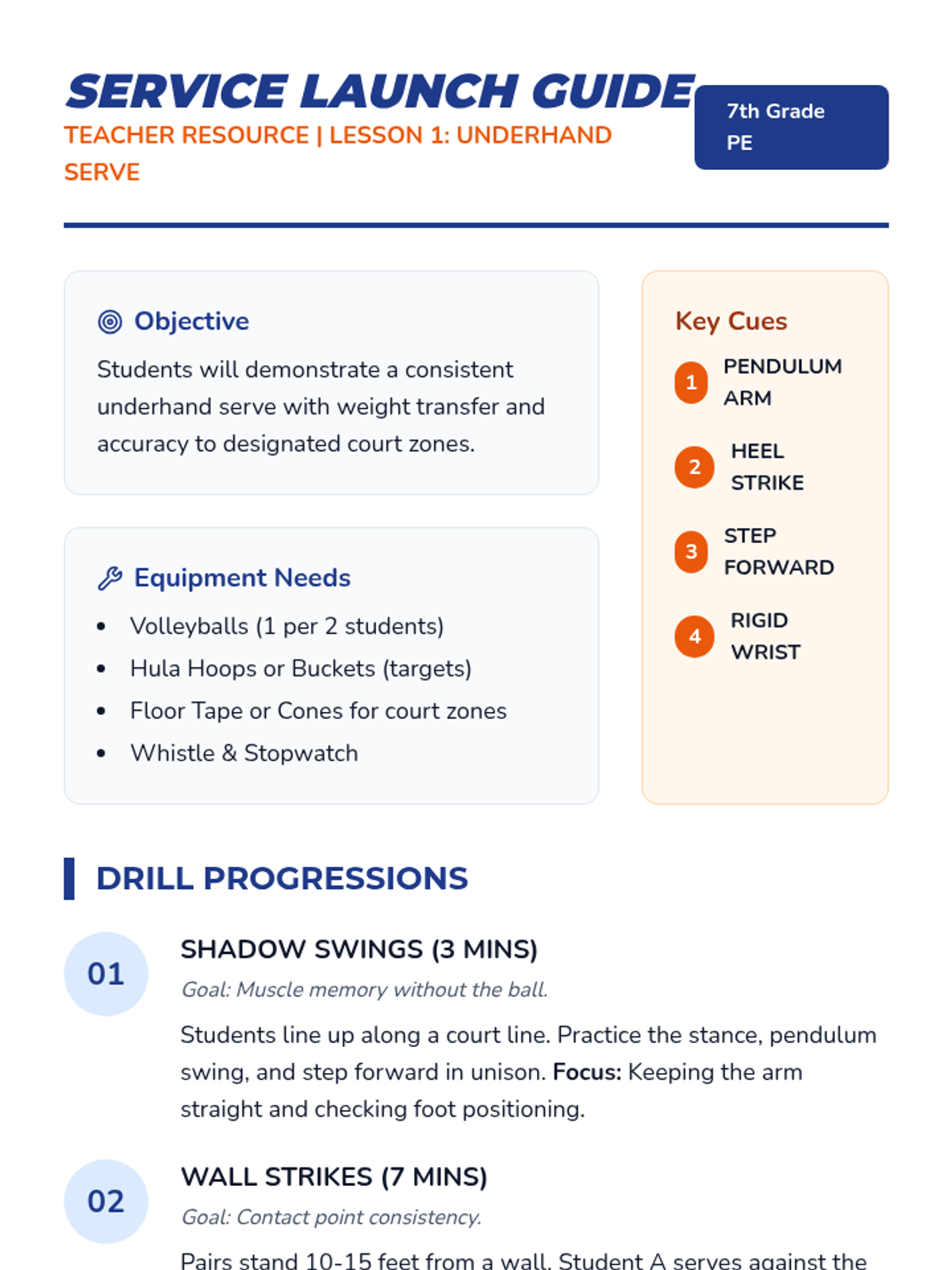
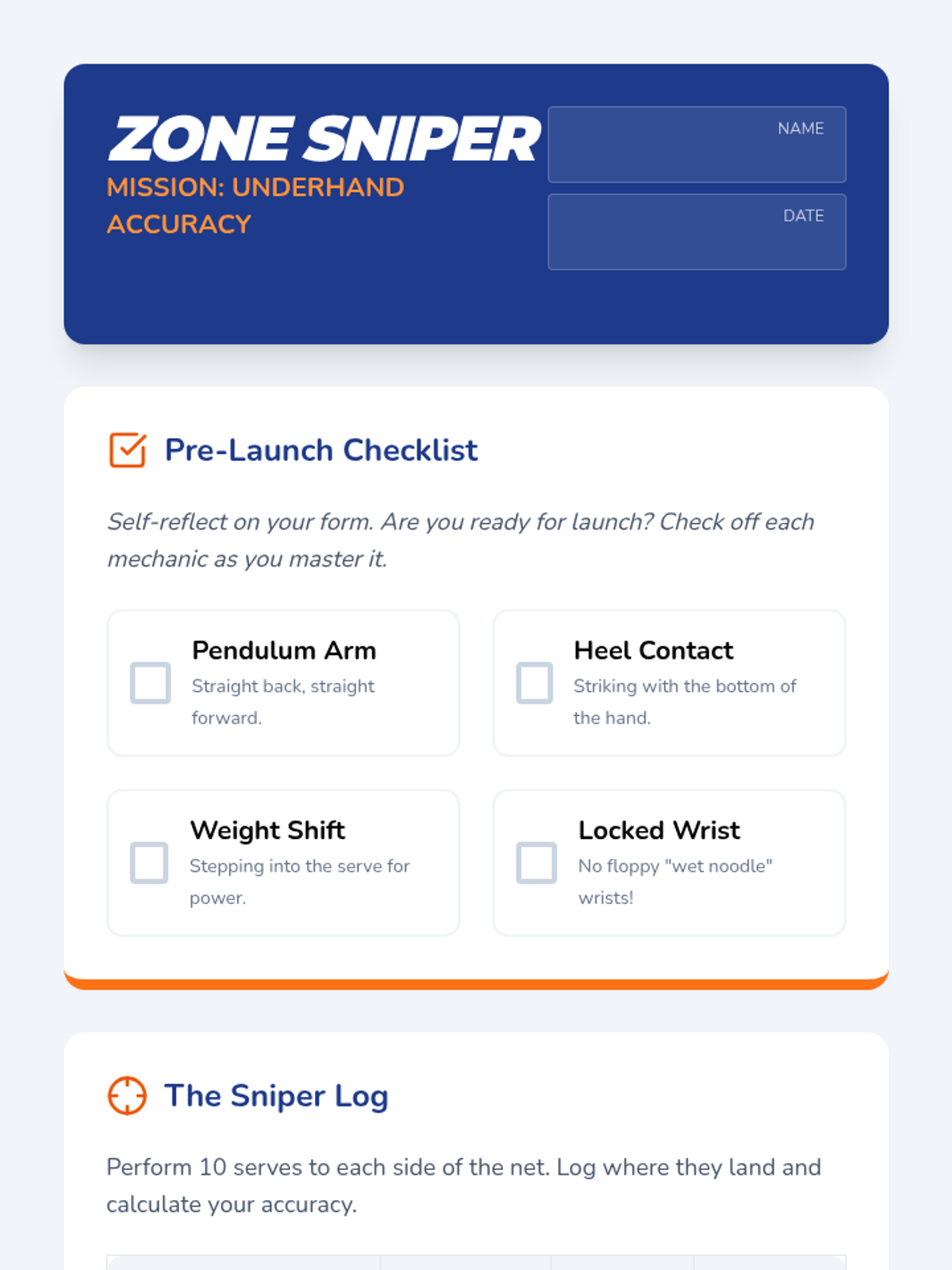
Students deconstruct the underhand serve, focusing on the pendulum arm swing, weight transfer, and consistent contact for accuracy.
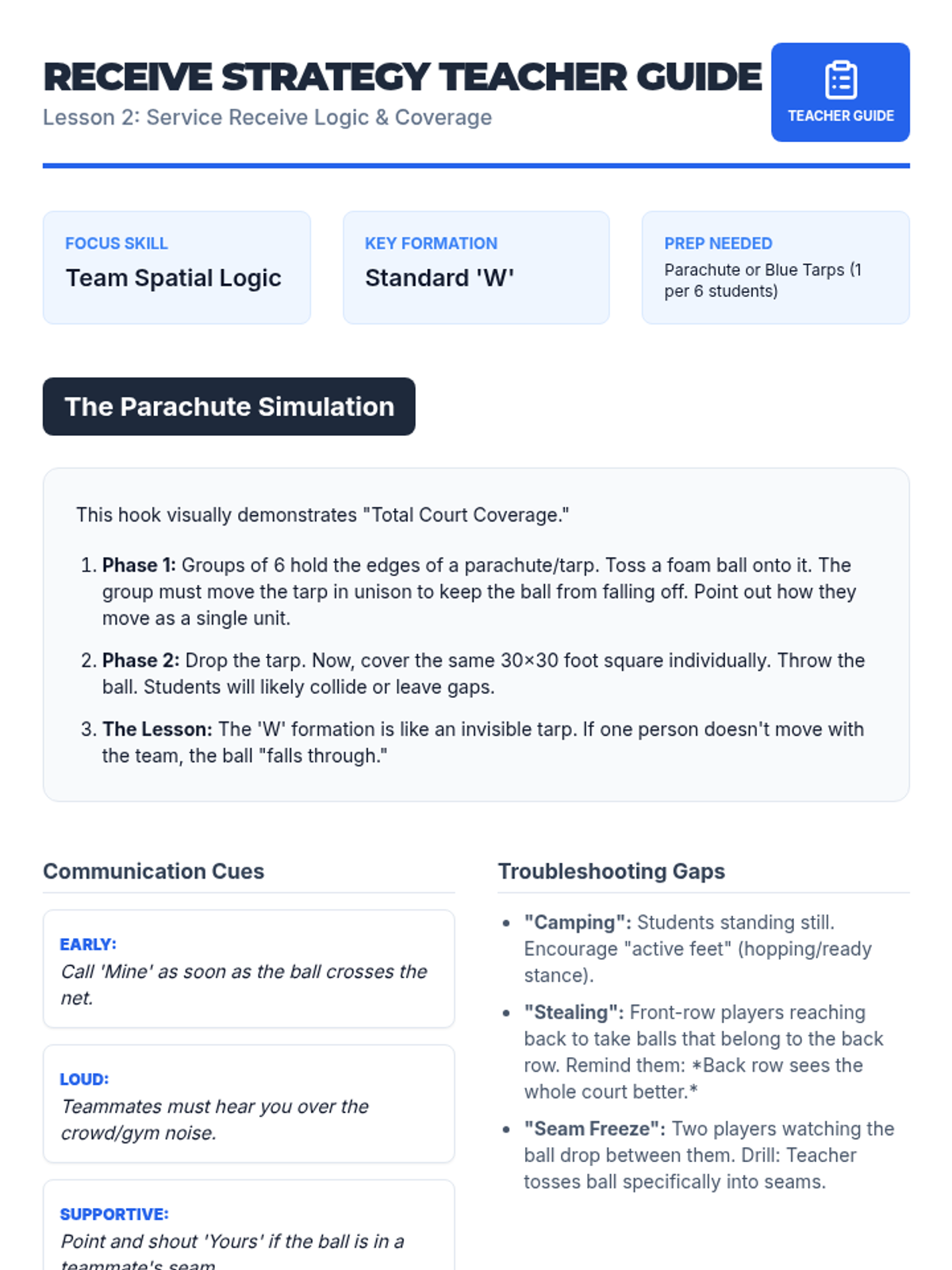
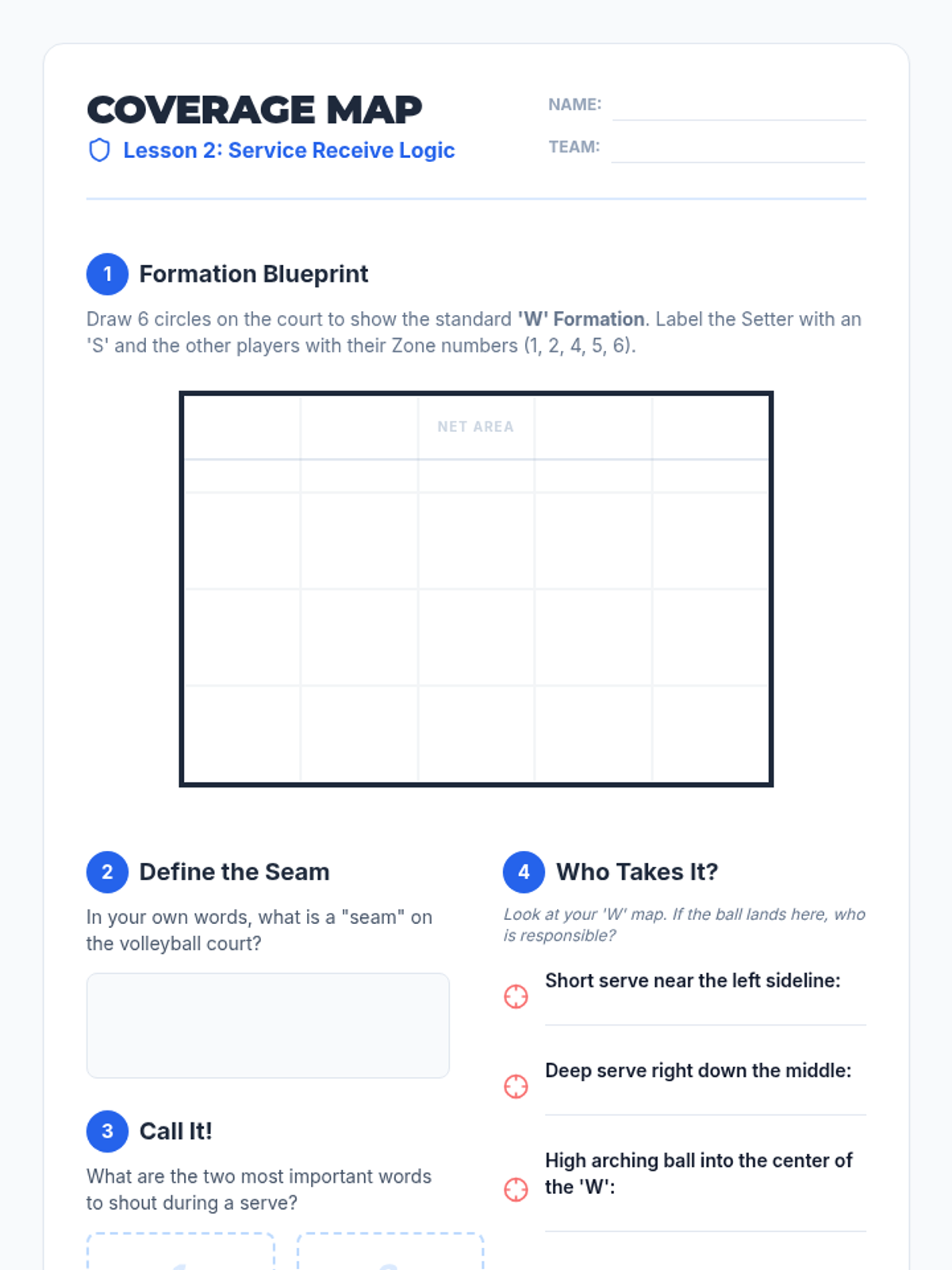
Focuses on the standard 'W' formation for service reception, teaching students how to identify seams and coordinate coverage with teammates.
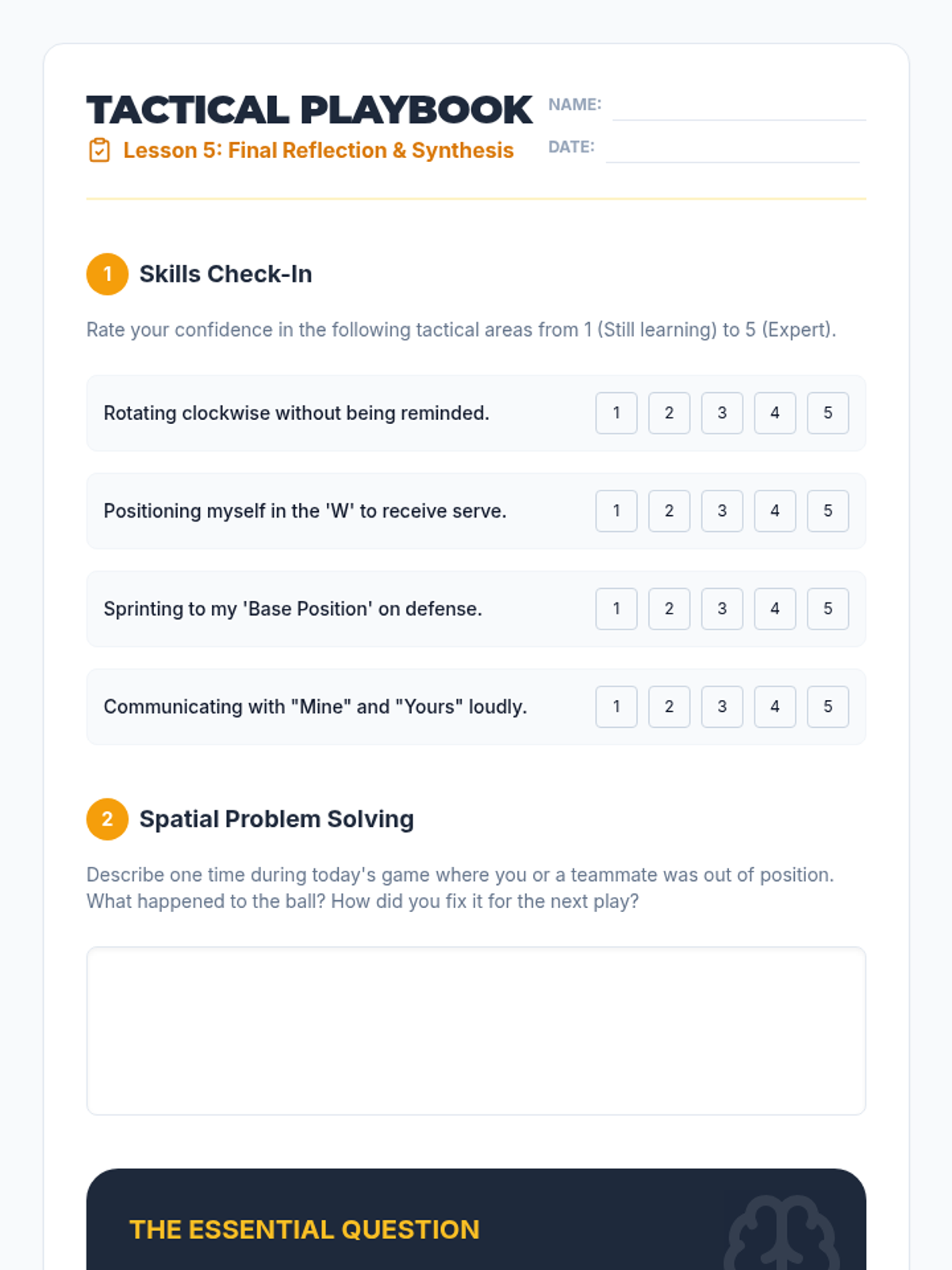
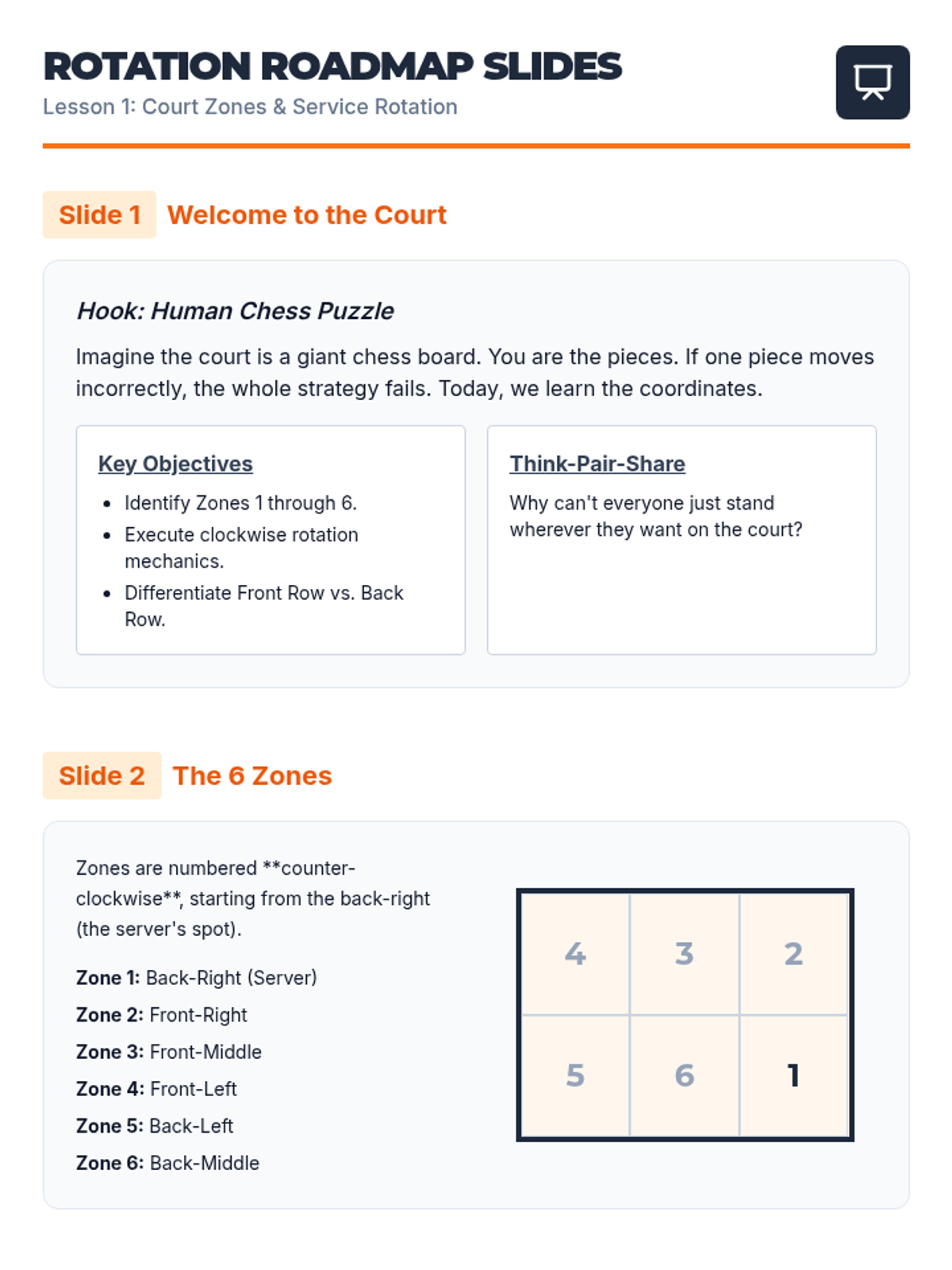
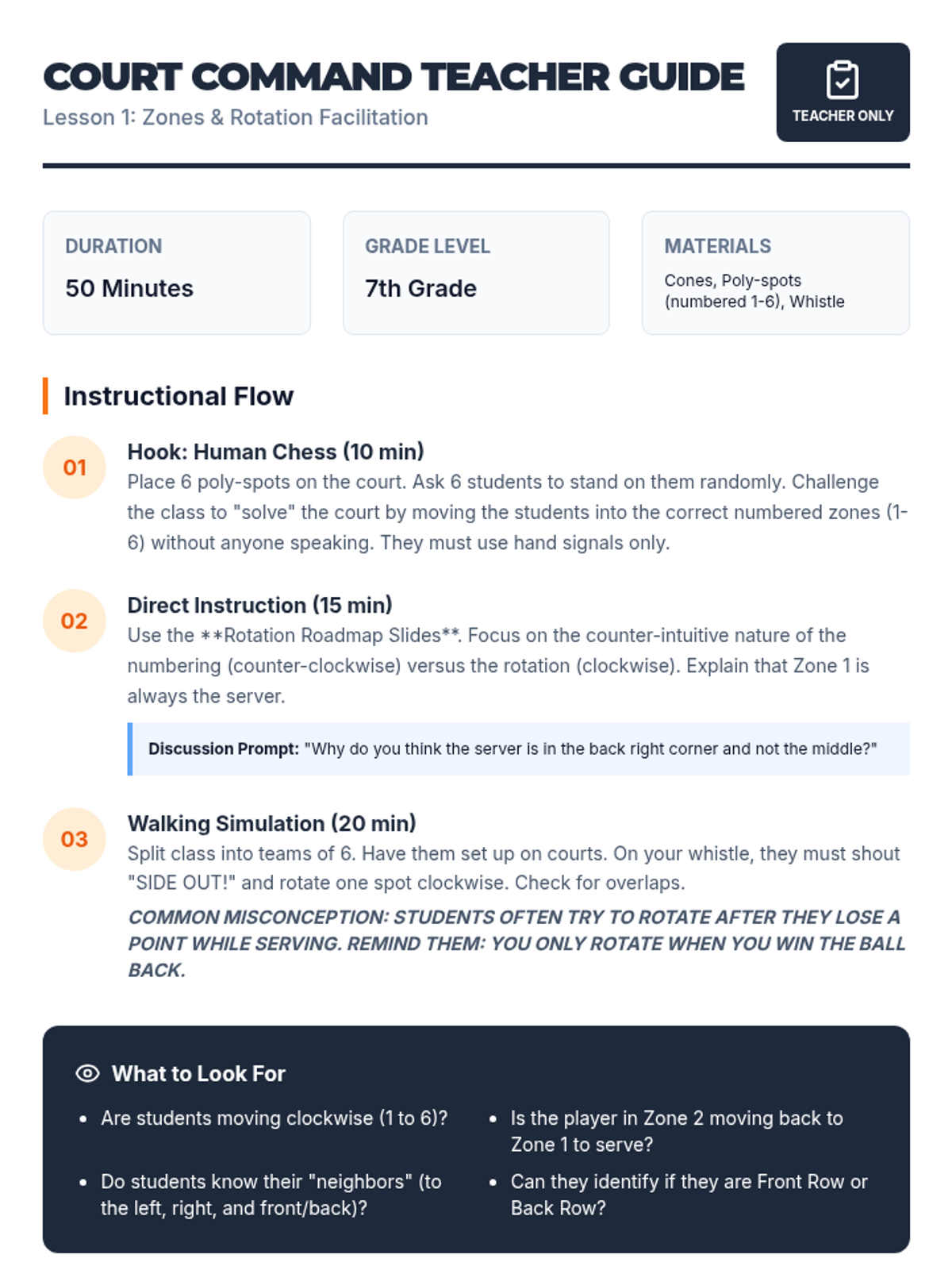
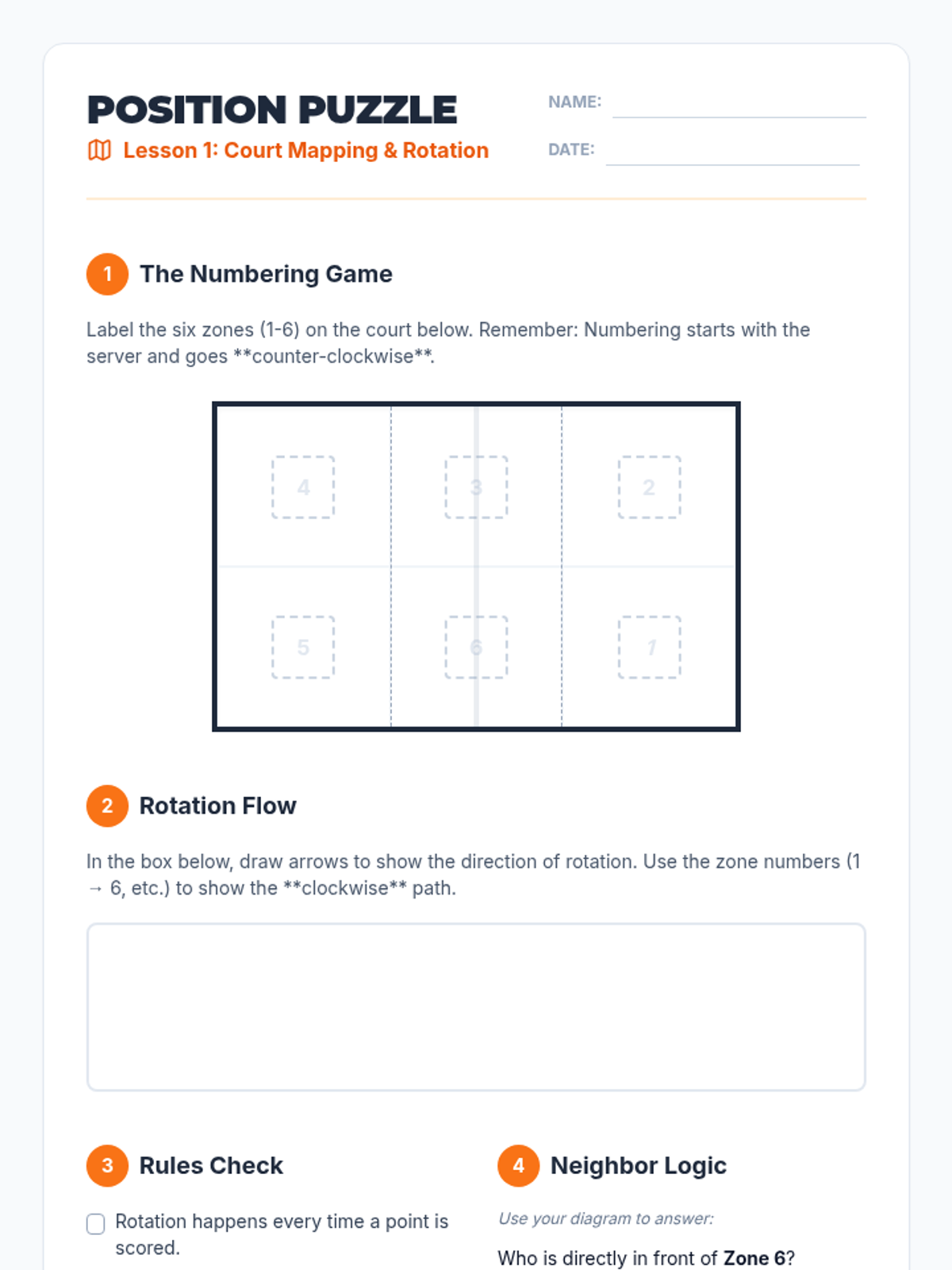
Students map out the six court zones and learn the mechanics of clockwise rotation, distinguishing between front-row and back-row responsibilities through simulations.
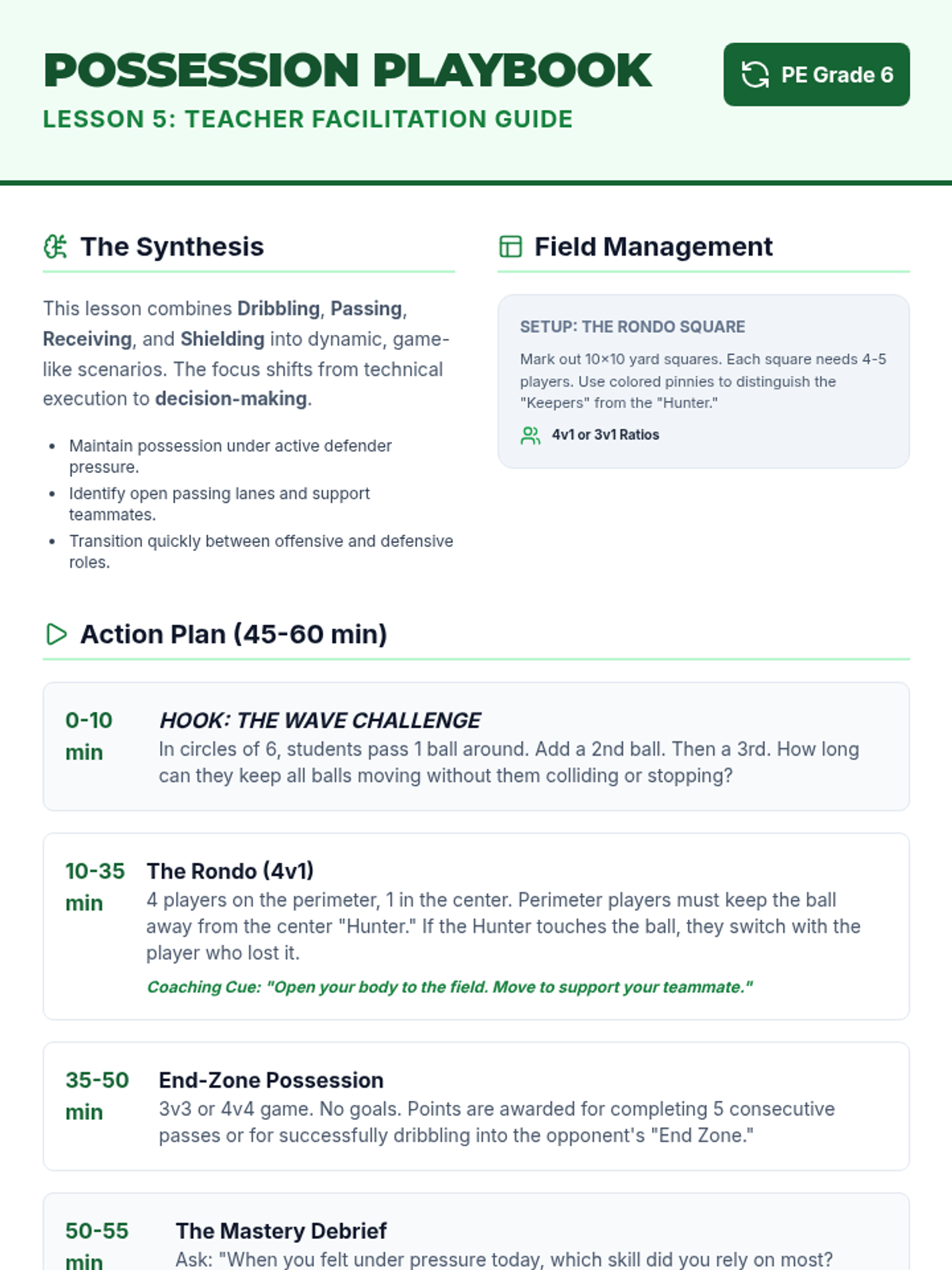
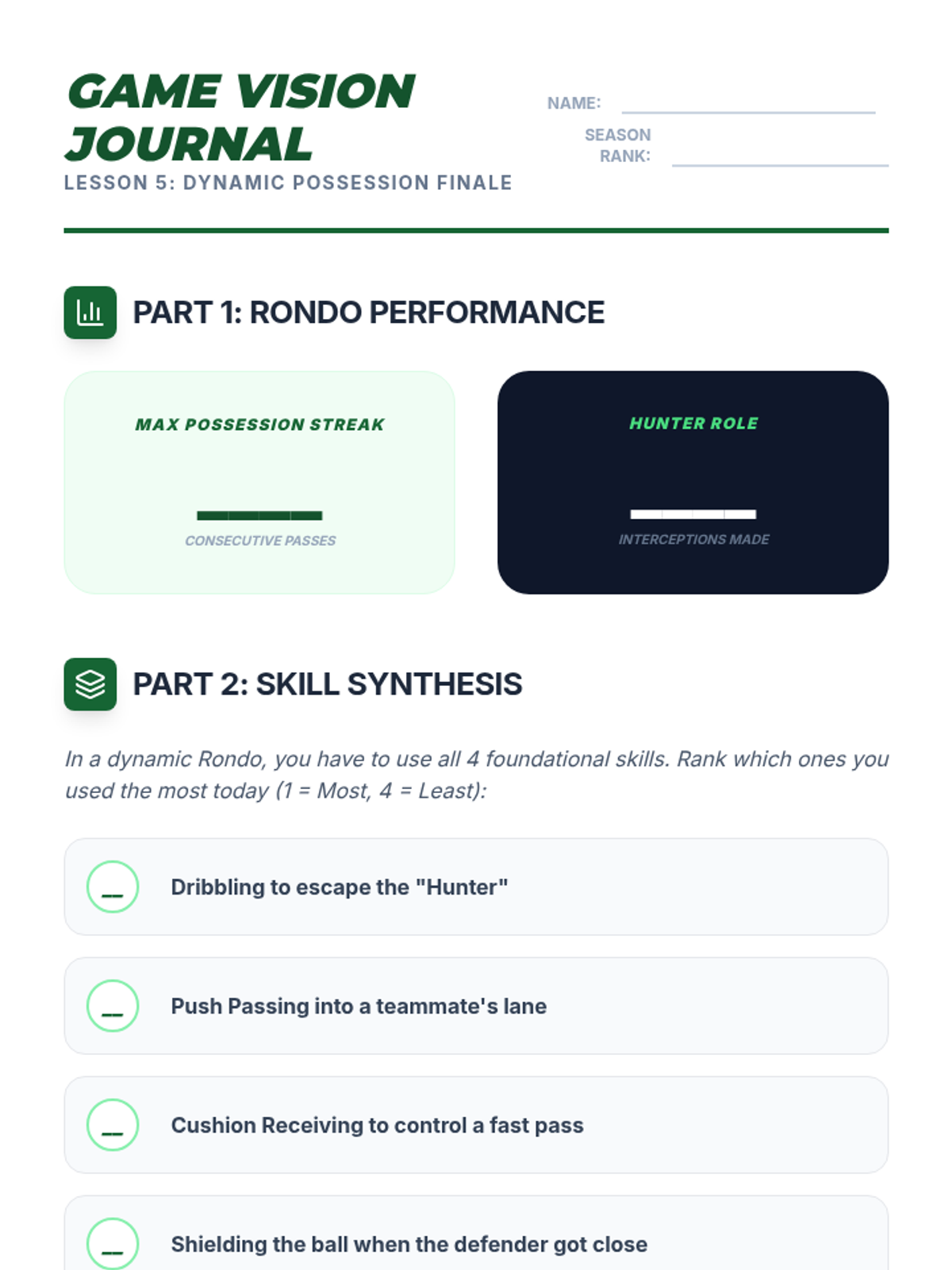
A culmination of skills applied in small-sided possession games focusing on decision-making.
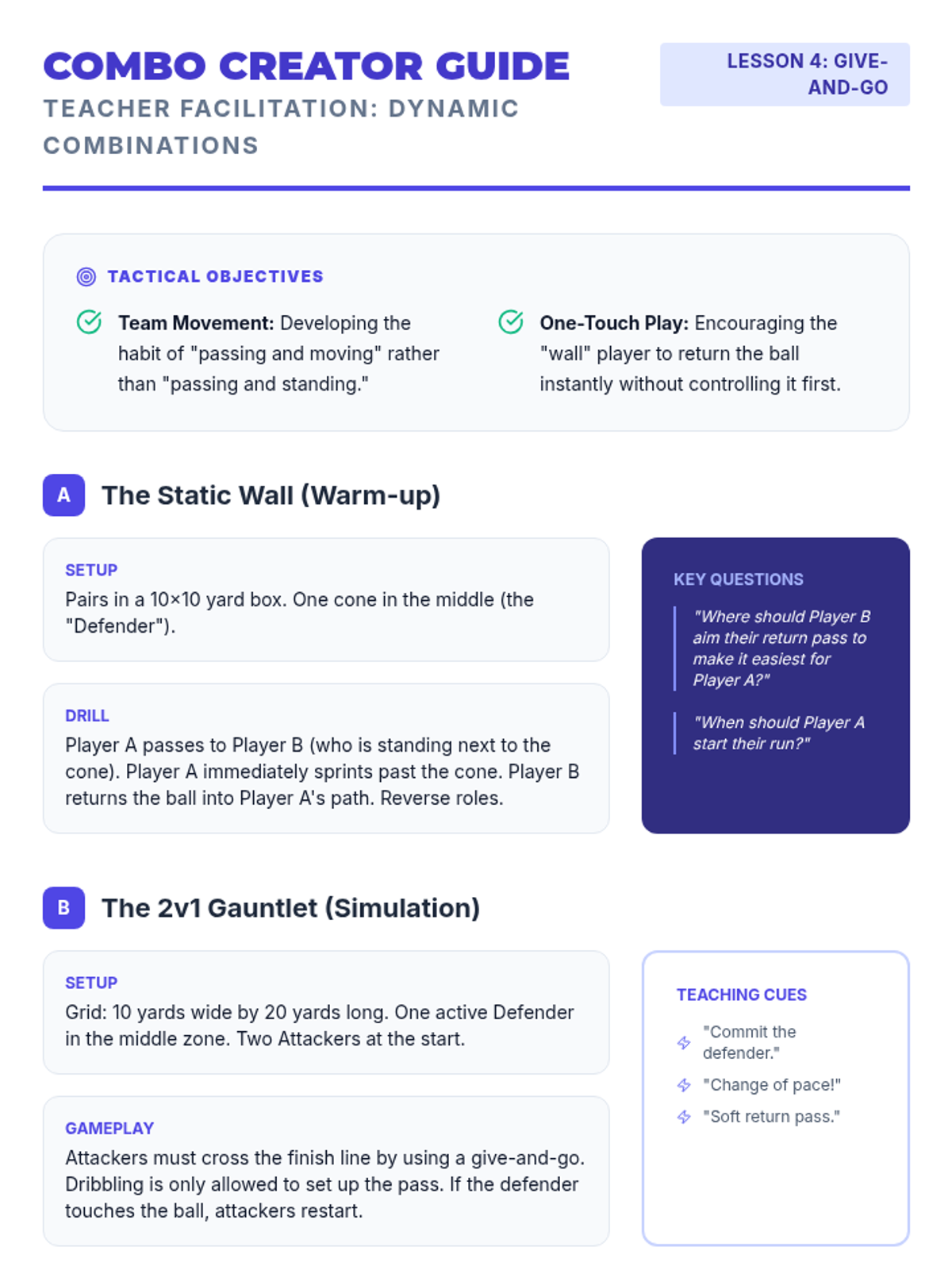
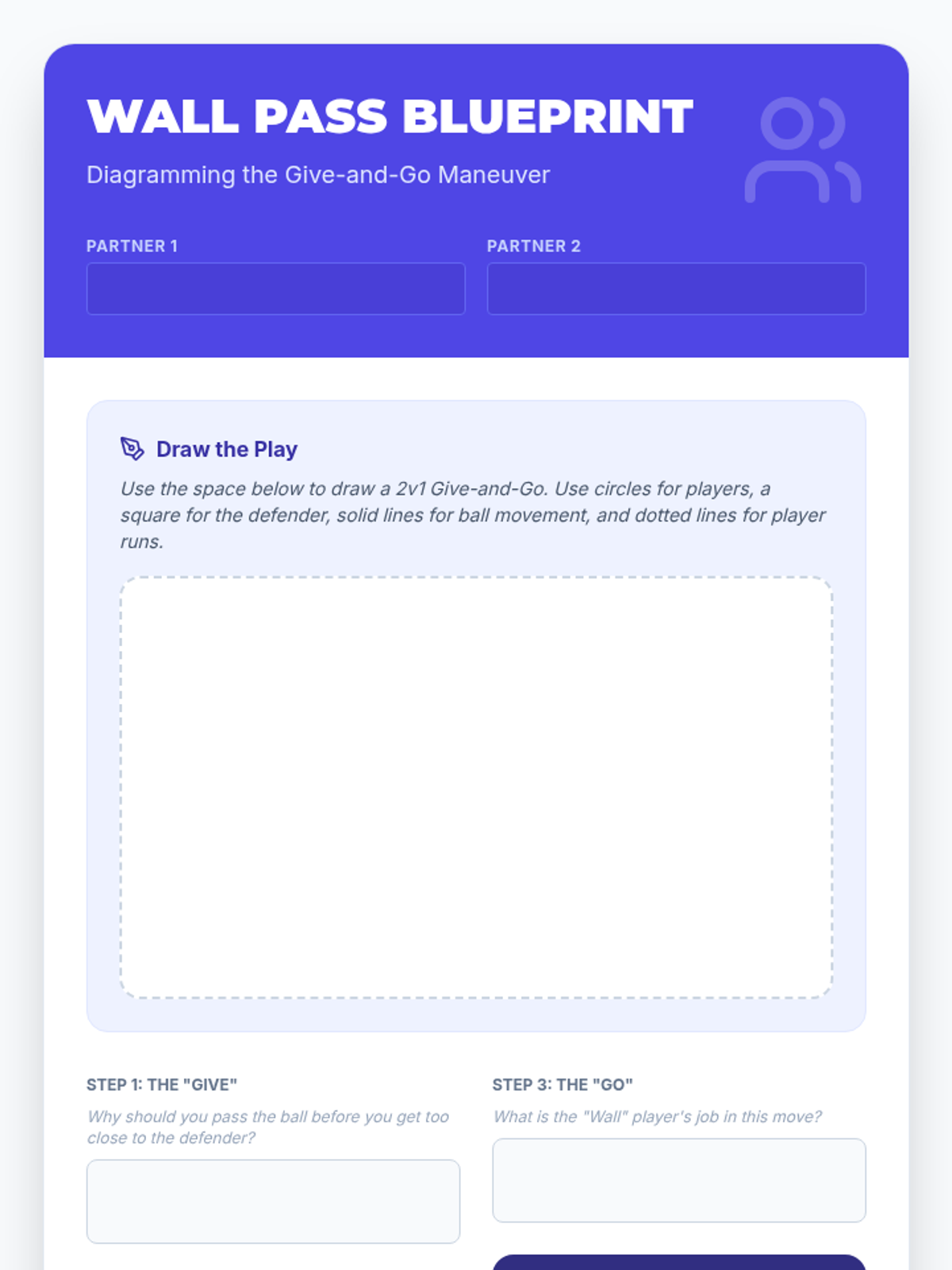
Introduces the wall pass or give-and-go as a way to bypass defenders through teamwork.
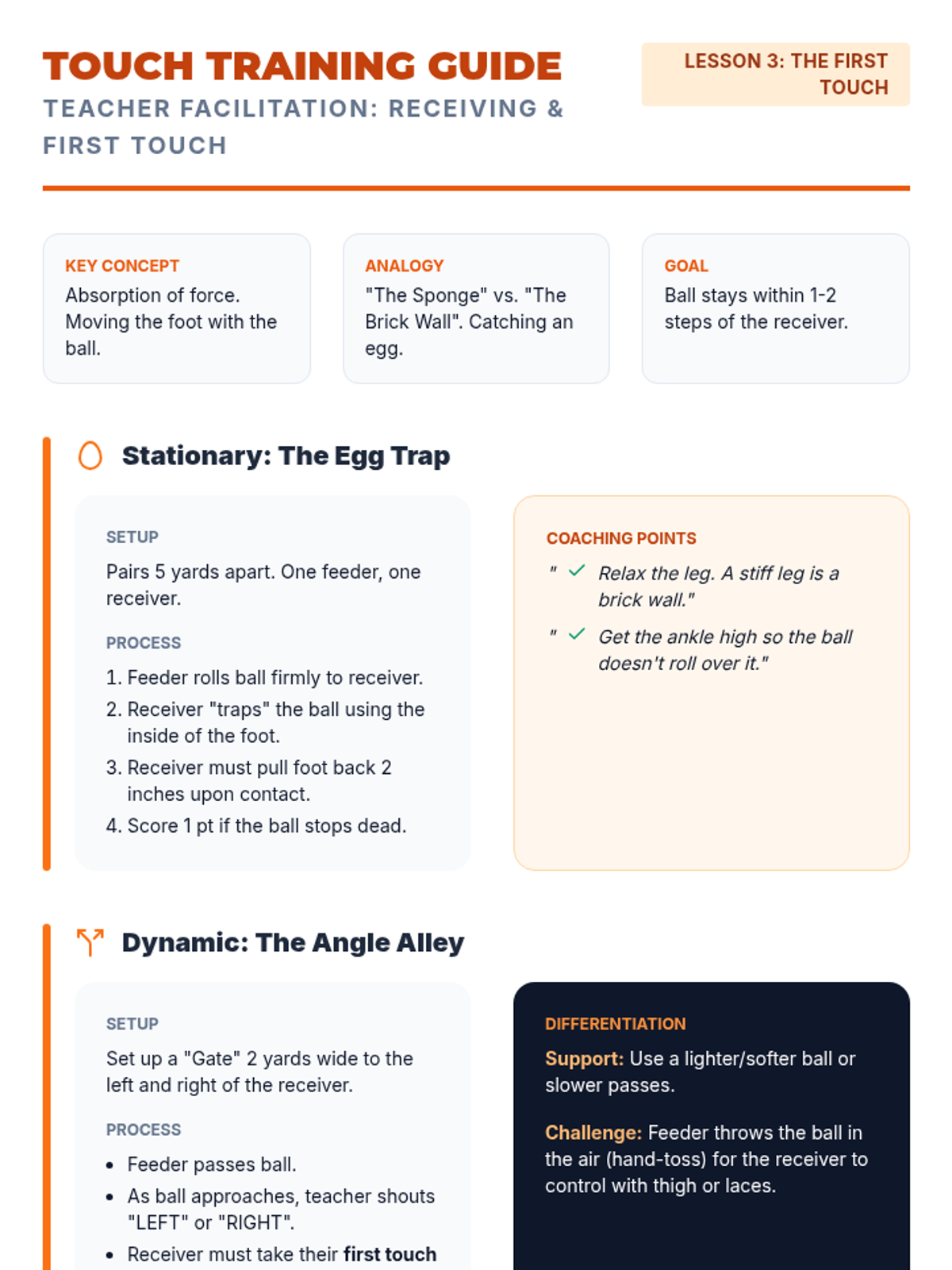
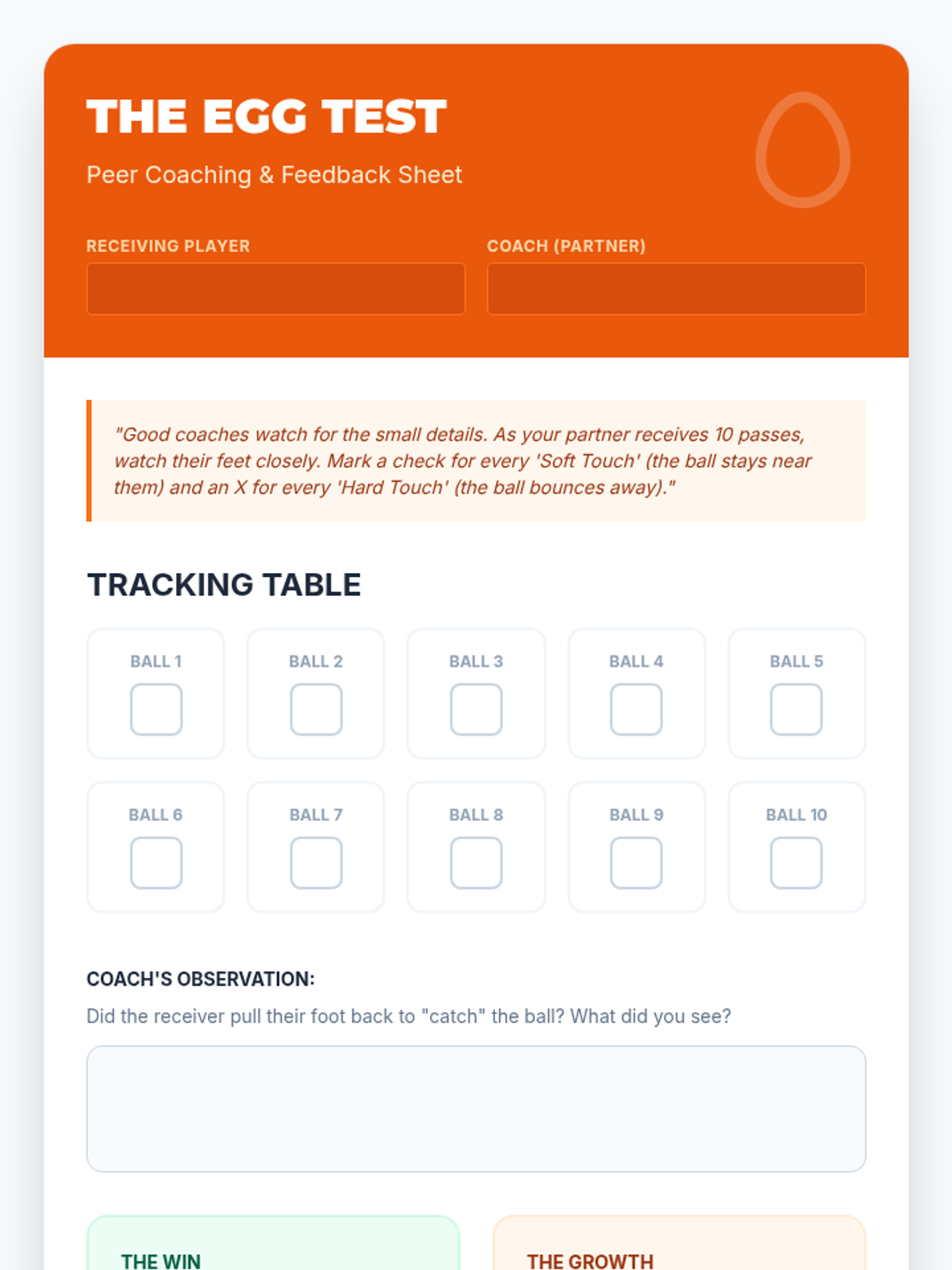
Teaches students how to cushion the ball's impact to maintain control during the first touch.
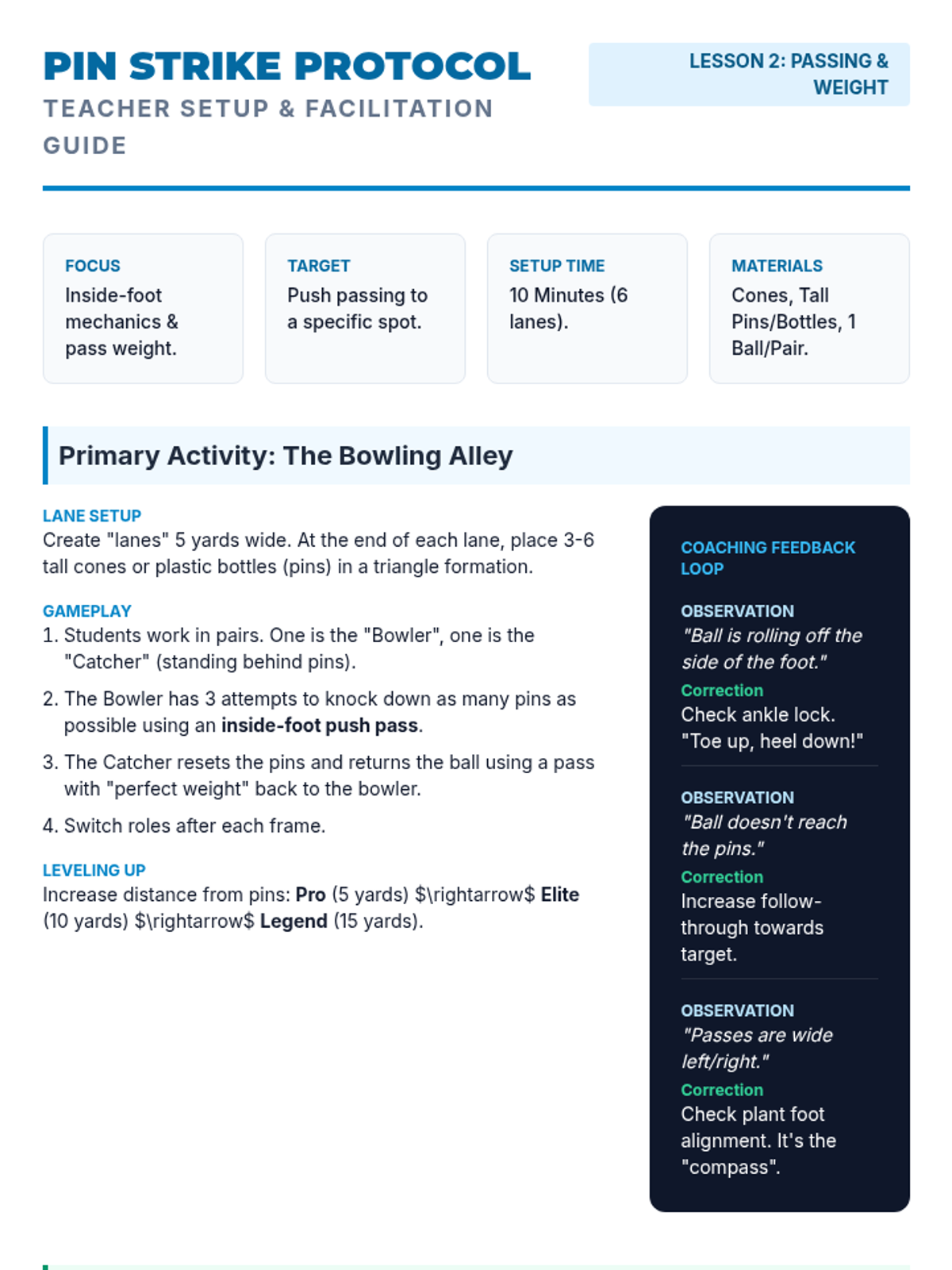
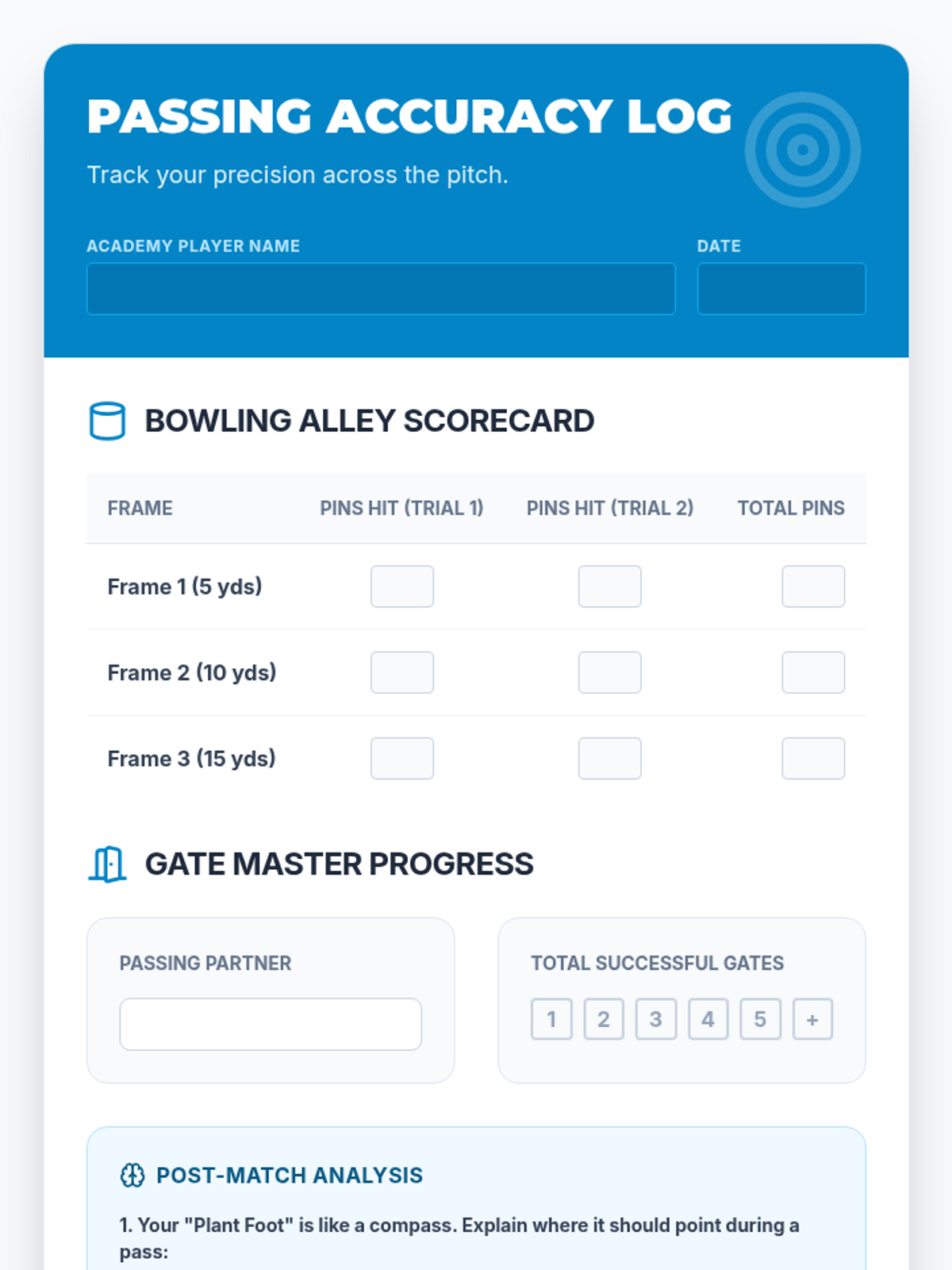
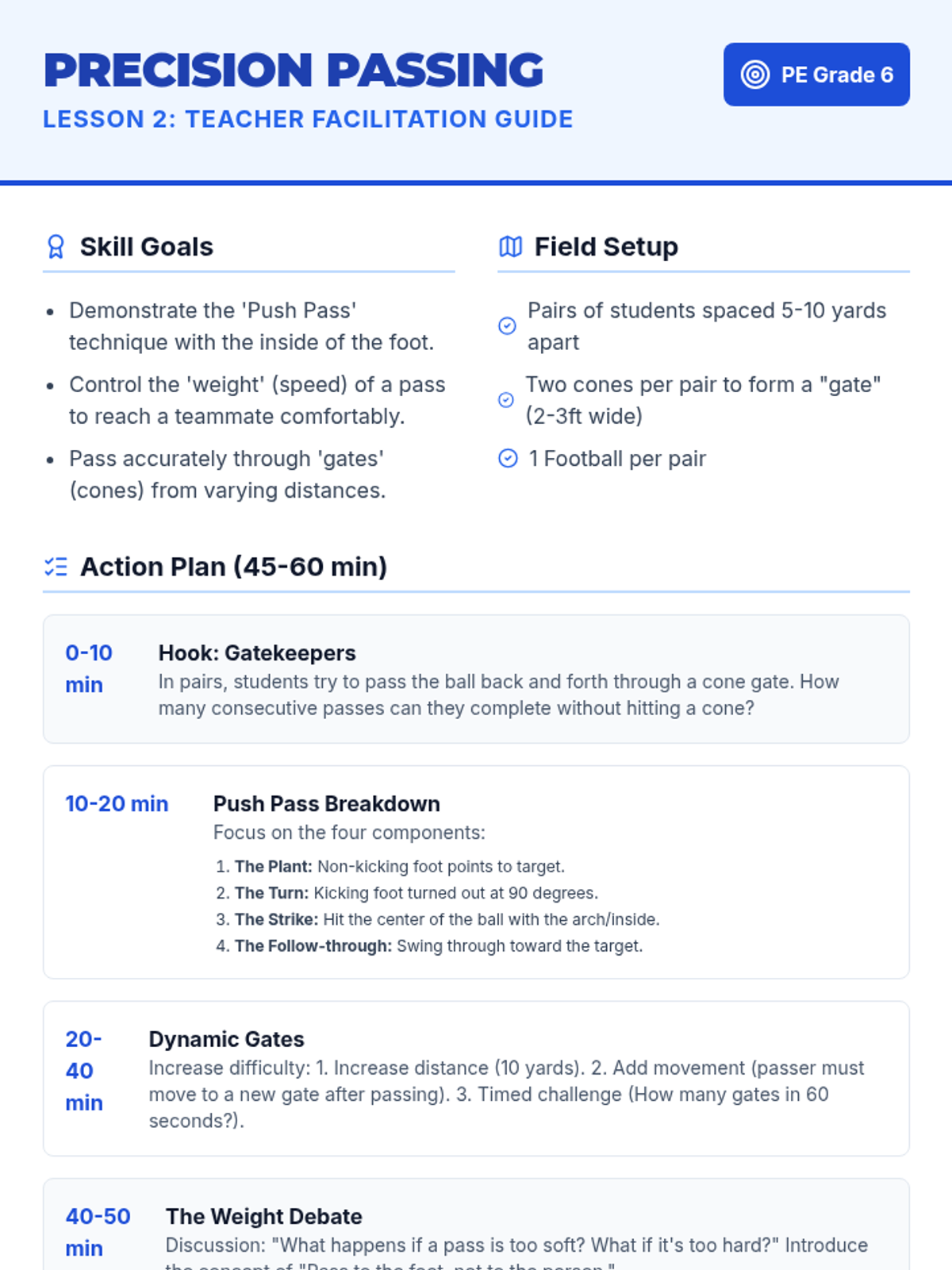
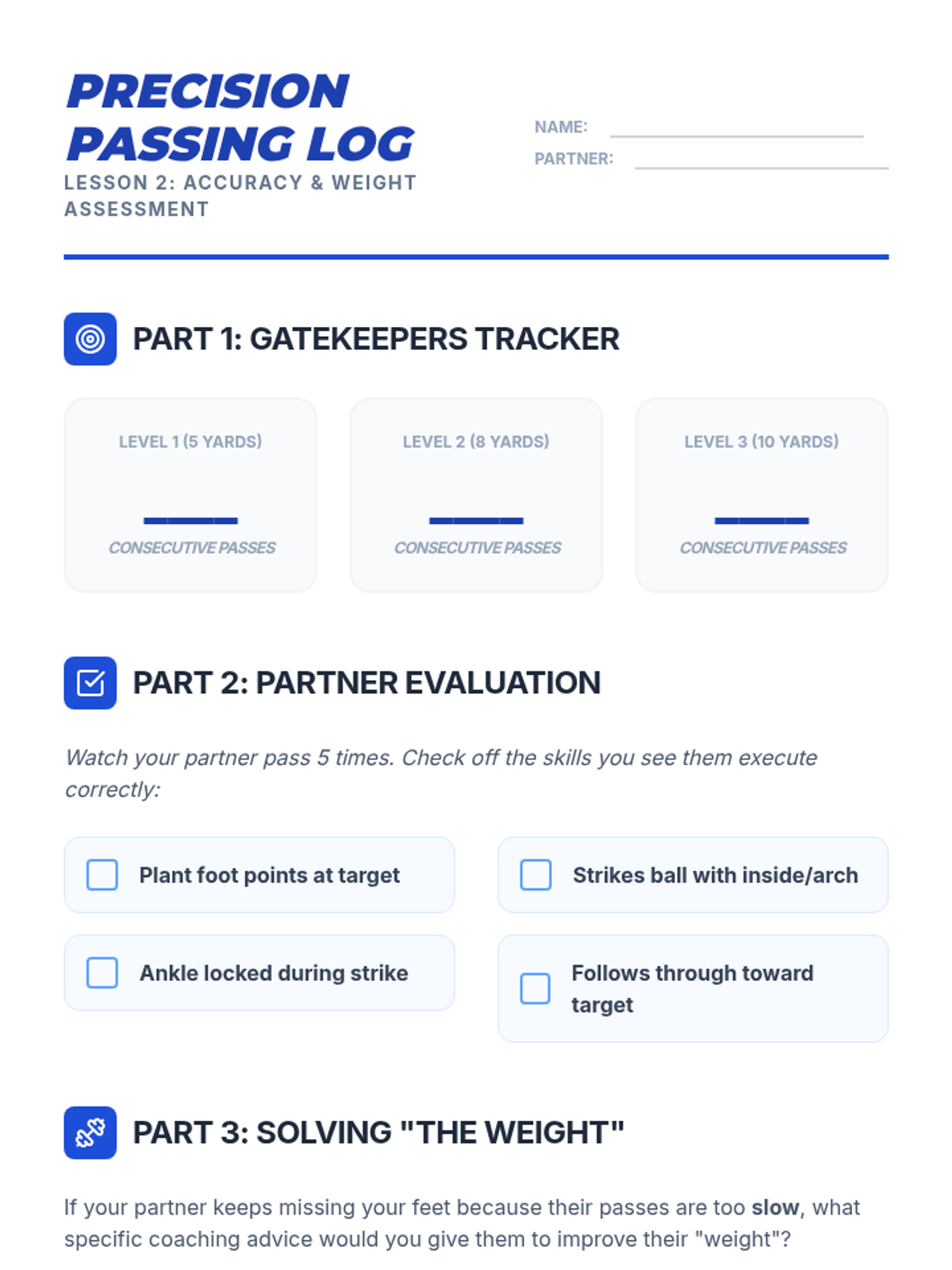
Focuses on the mechanics of the push pass for accuracy and the concept of 'weight' in passing.
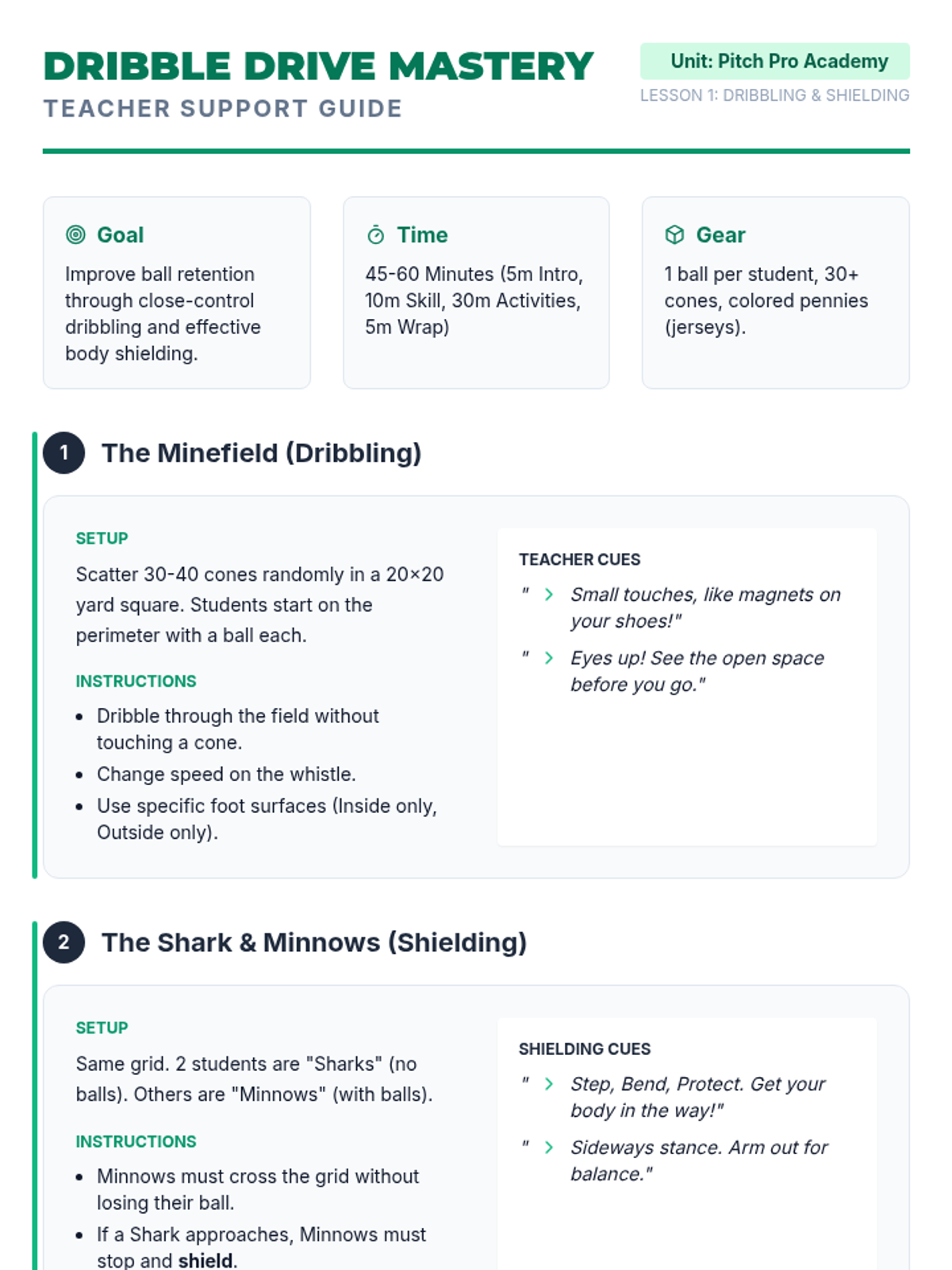
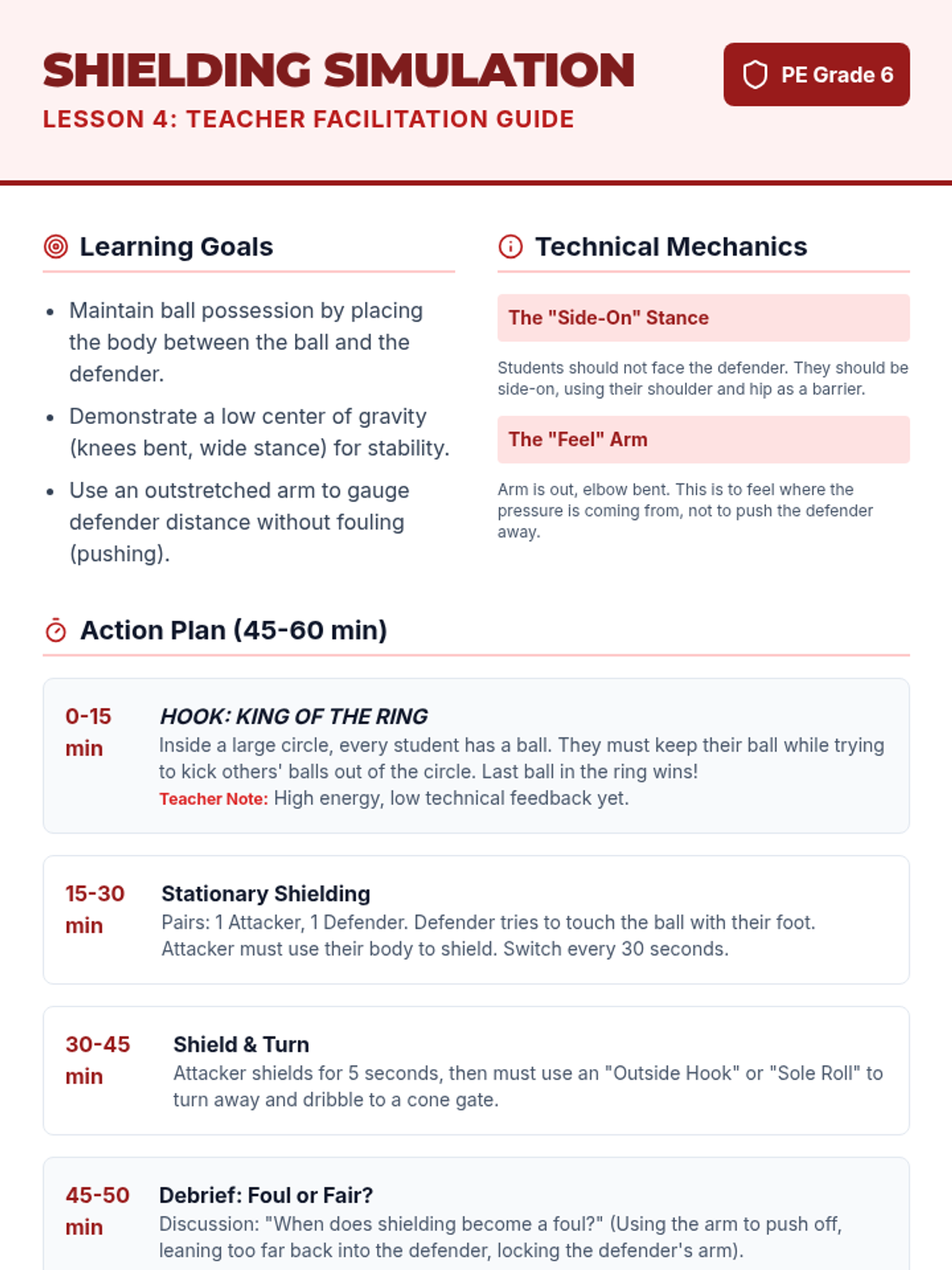
Students focus on keeping the ball close while moving and using their body to protect the ball from opponents.
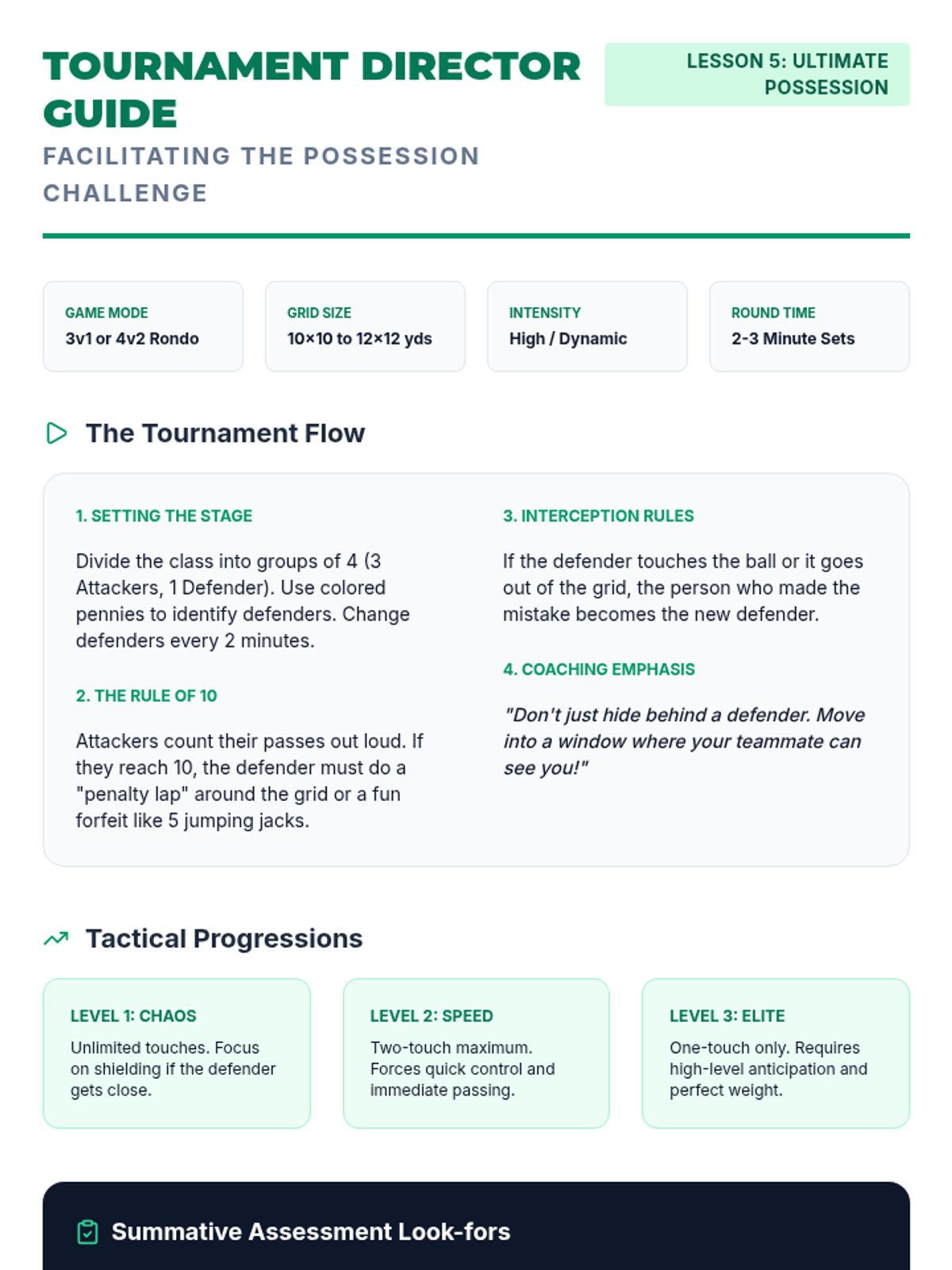
Combining all previous skills, students participate in dynamic 'keep-away' drills and Rondo circles to apply techniques under pressure.
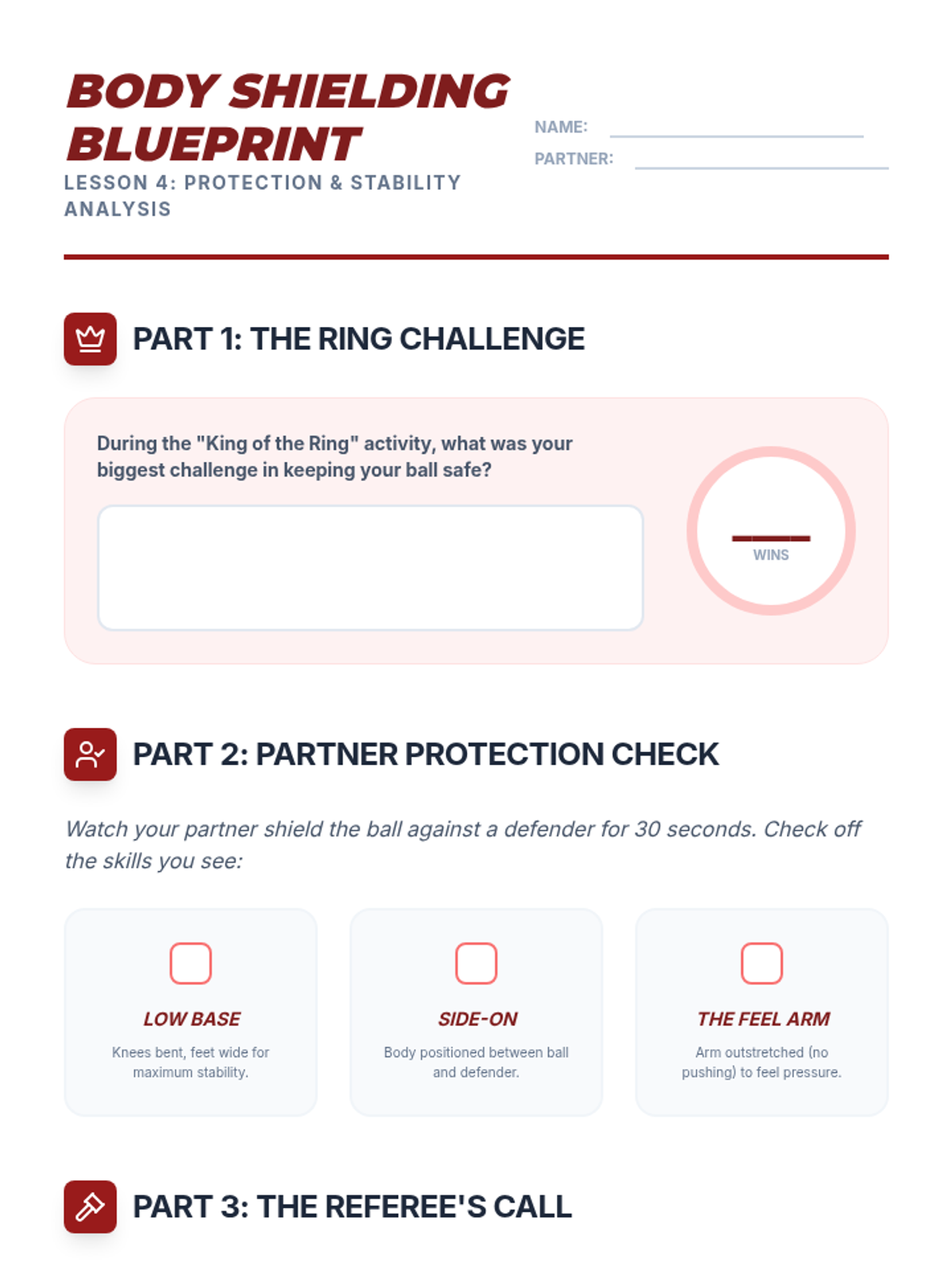
This lesson introduces body positioning to protect the ball from defenders, focusing on balance and shielding mechanics.
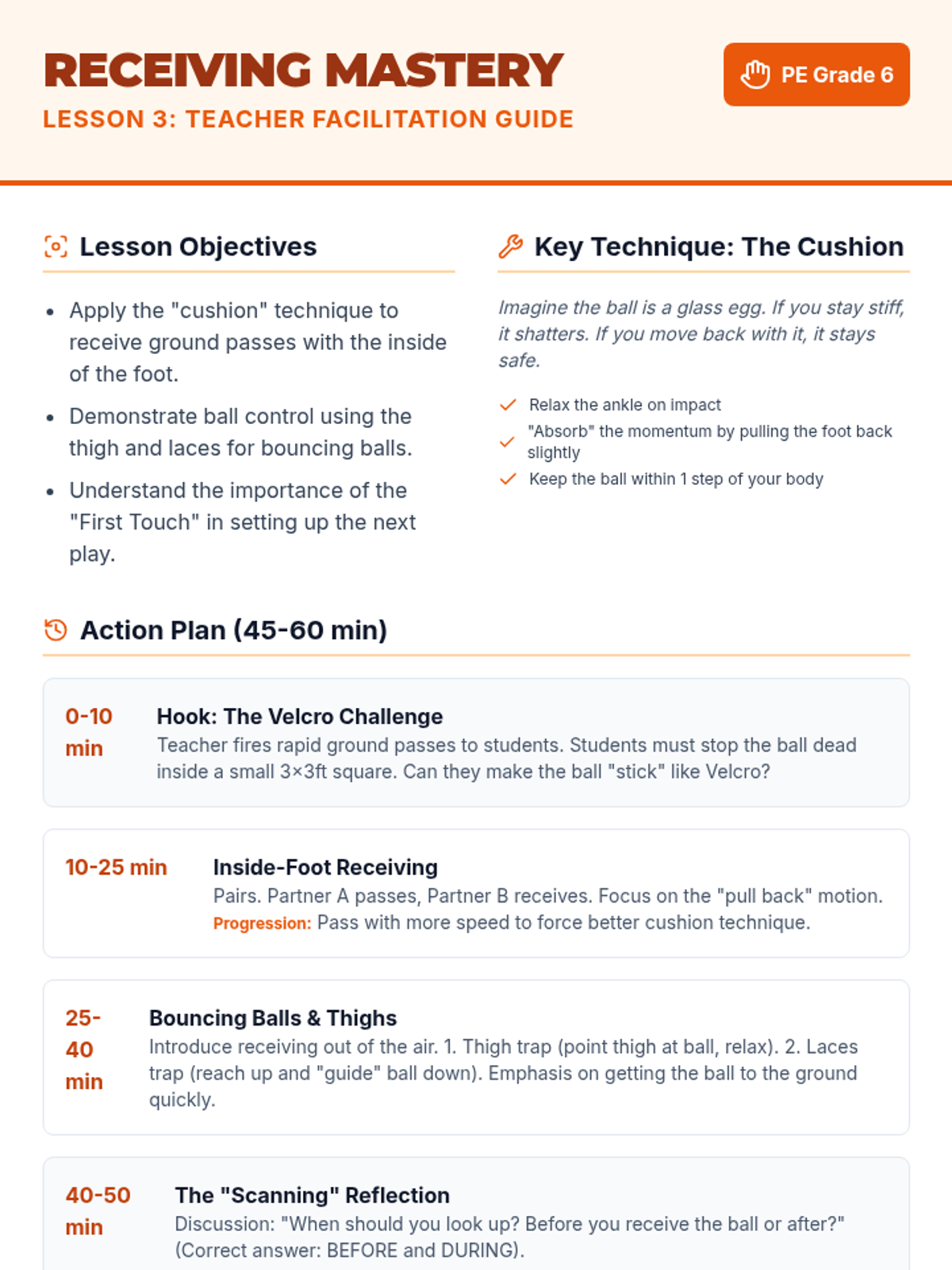
Students learn the 'cushion' technique to bring the ball under immediate control, covering ground passes and bouncing balls.
Focusing on the push pass with the inside of the foot, students practice accuracy and weight of pass in both stationary and dynamic drills.
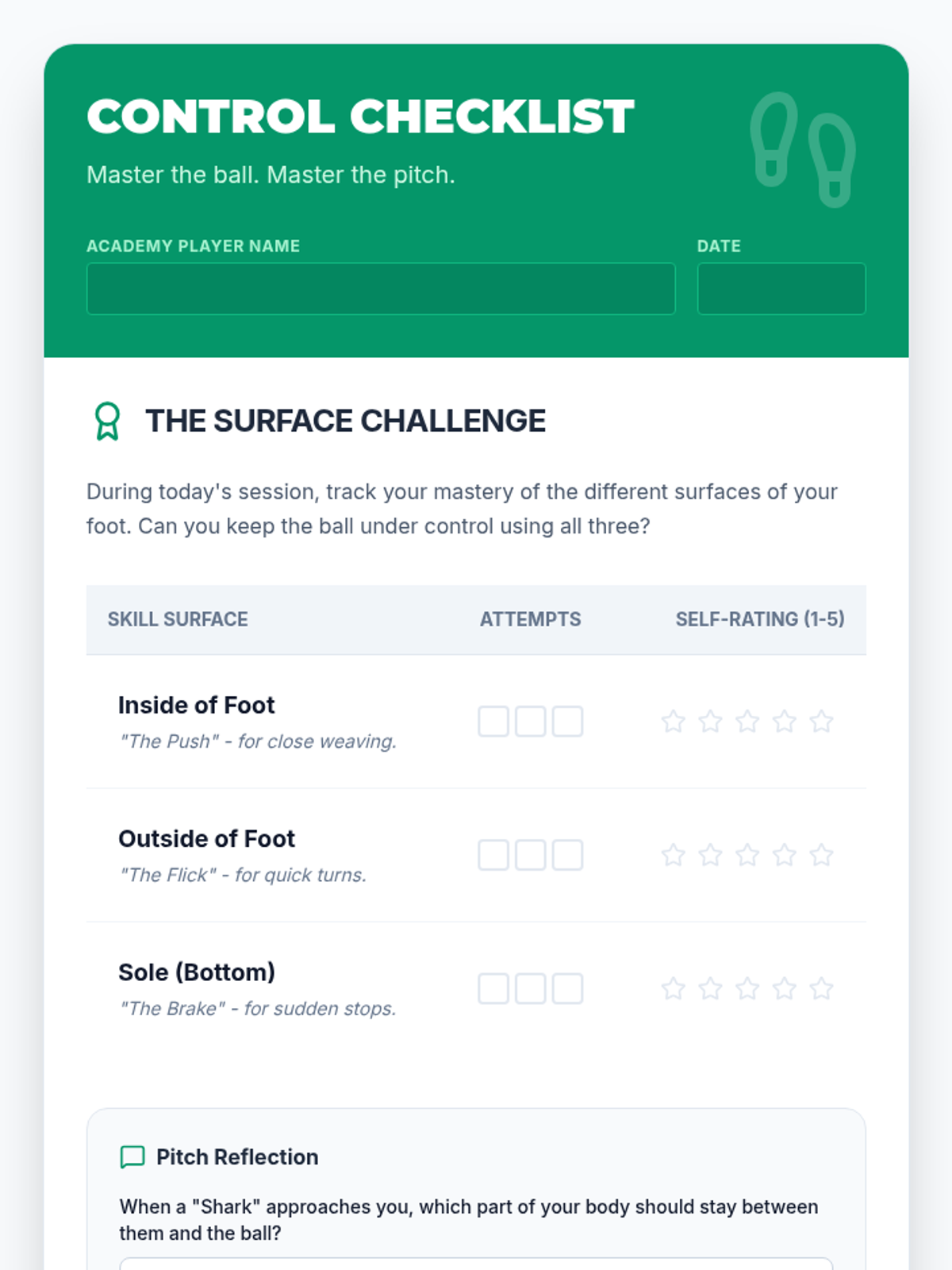
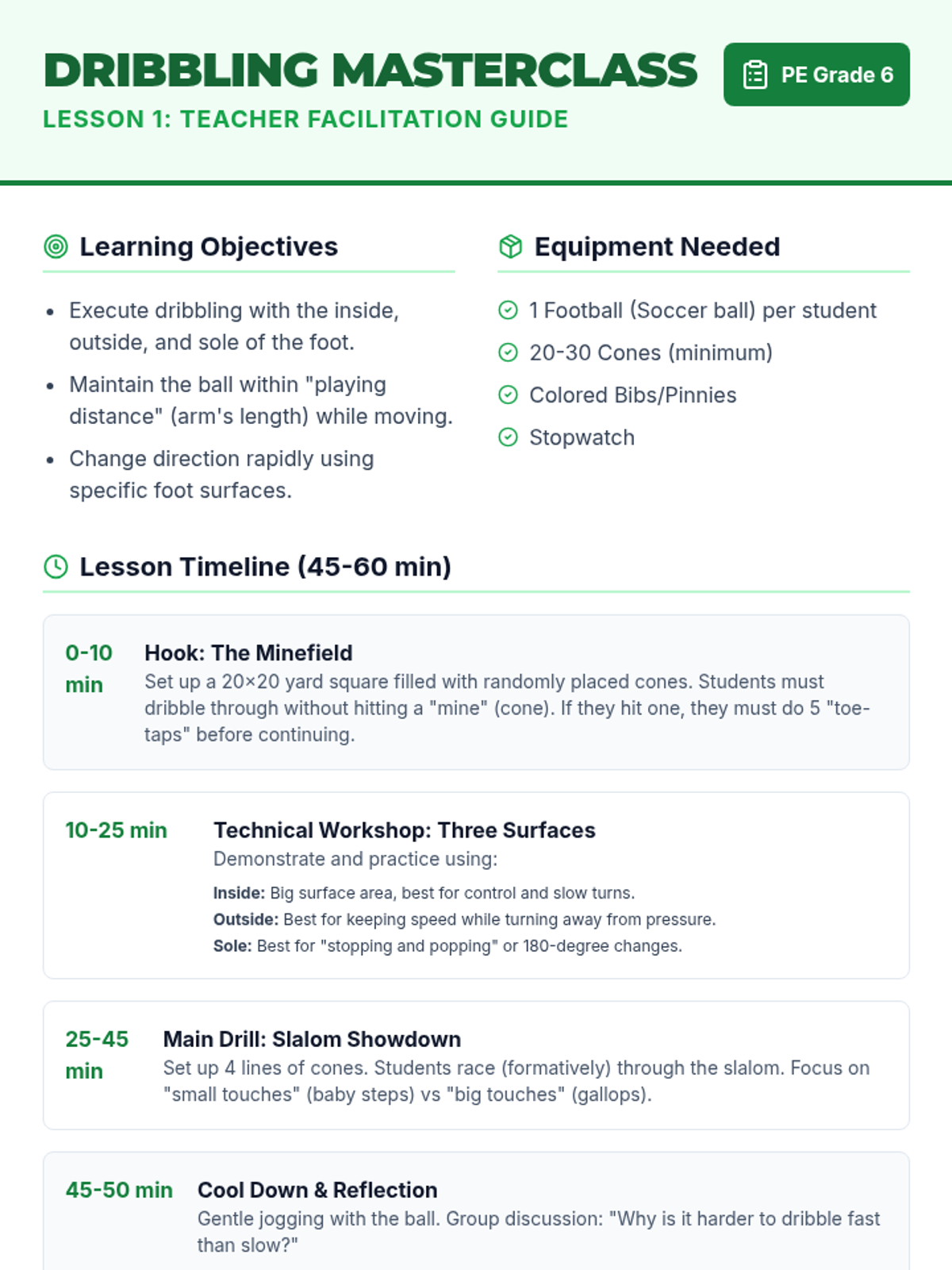
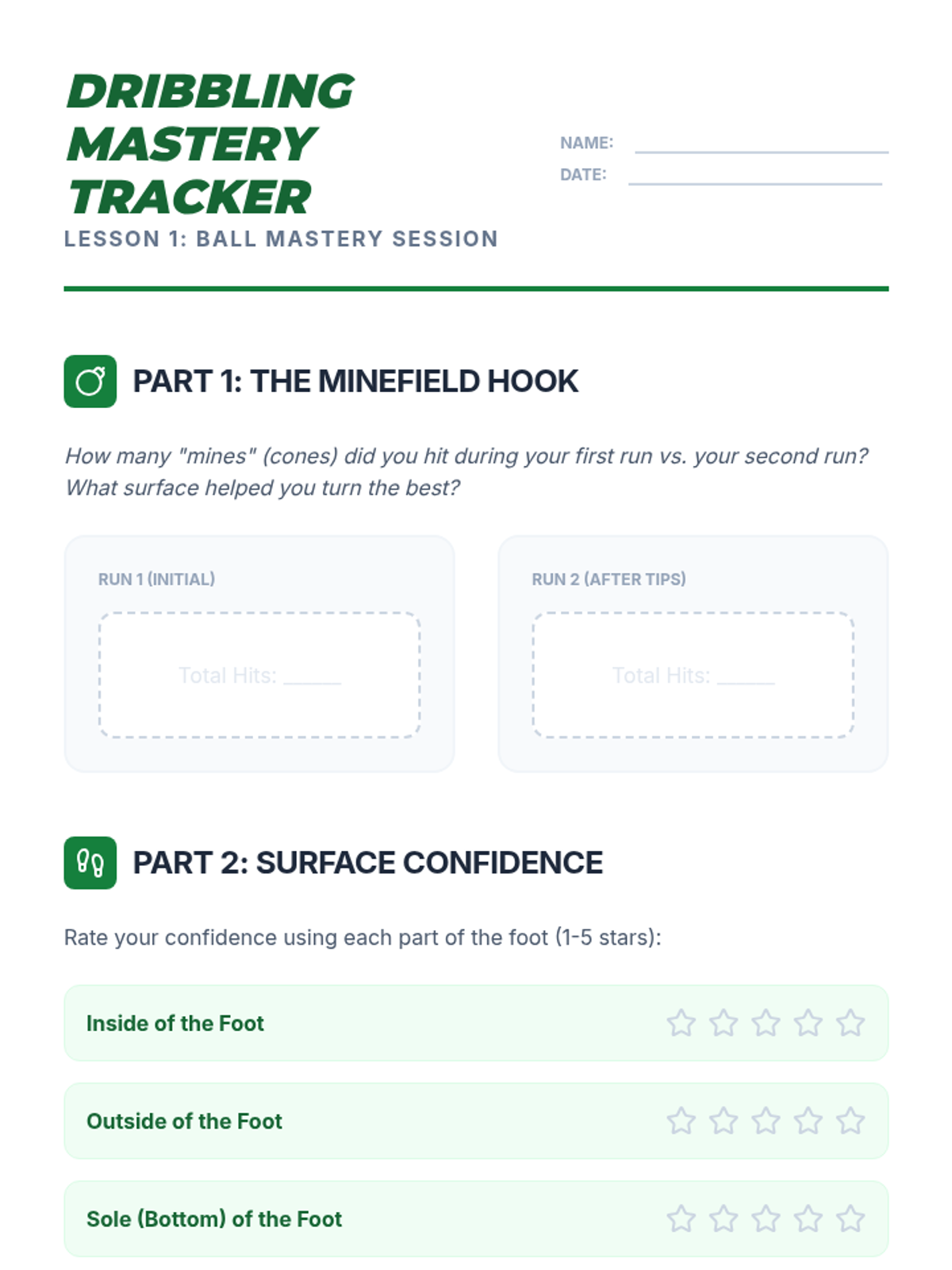
Students refine dribbling techniques using the inside, outside, and sole of the foot to maintain close control under varying speeds and directions.
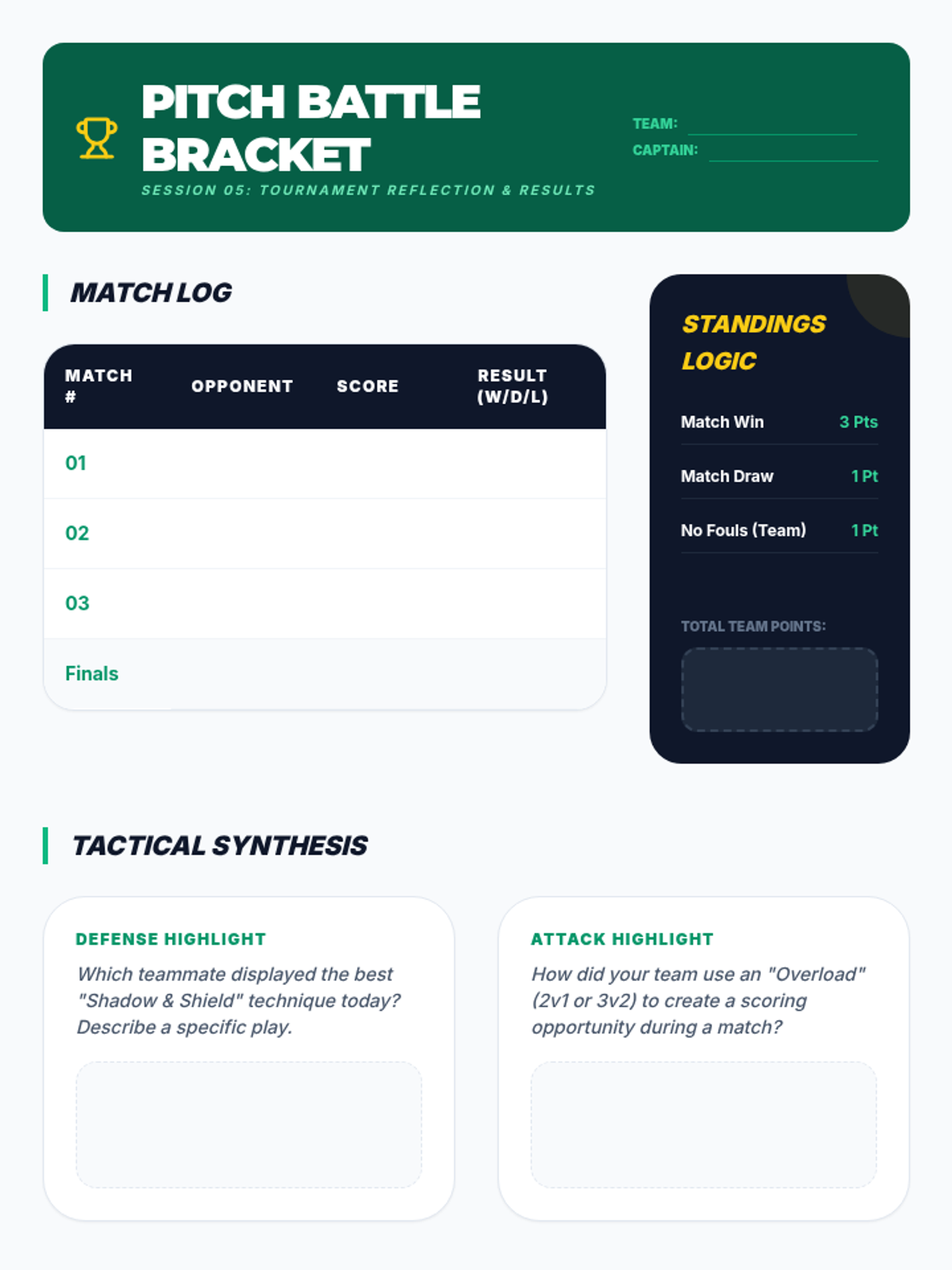
A culminating small-sided tournament where students synthesize all skills learned in a high-energy, competitive environment.
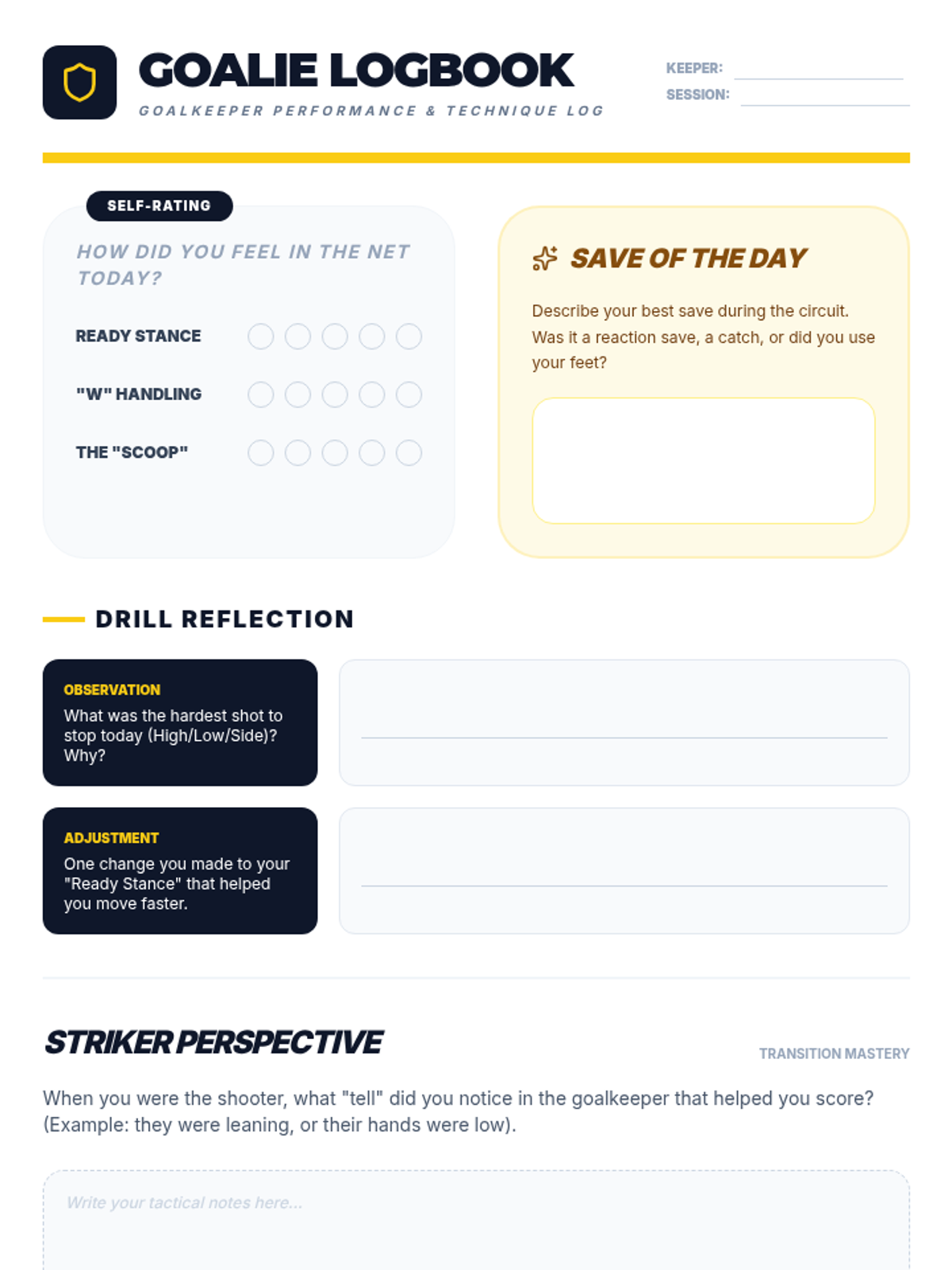
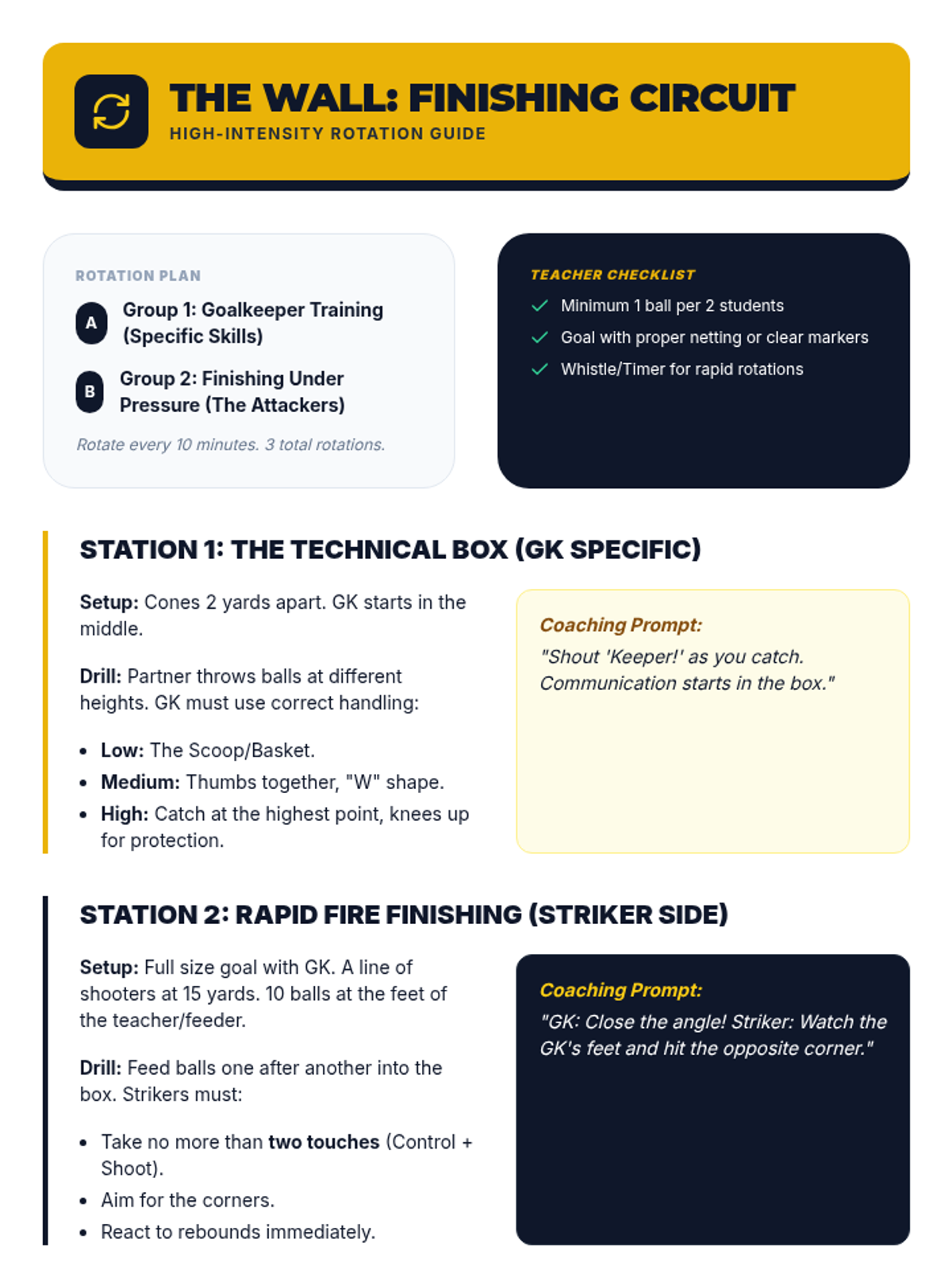
An introduction to goalkeeping fundamentals combined with finishing practice under pressure, exploring the duel between shooter and stopper.
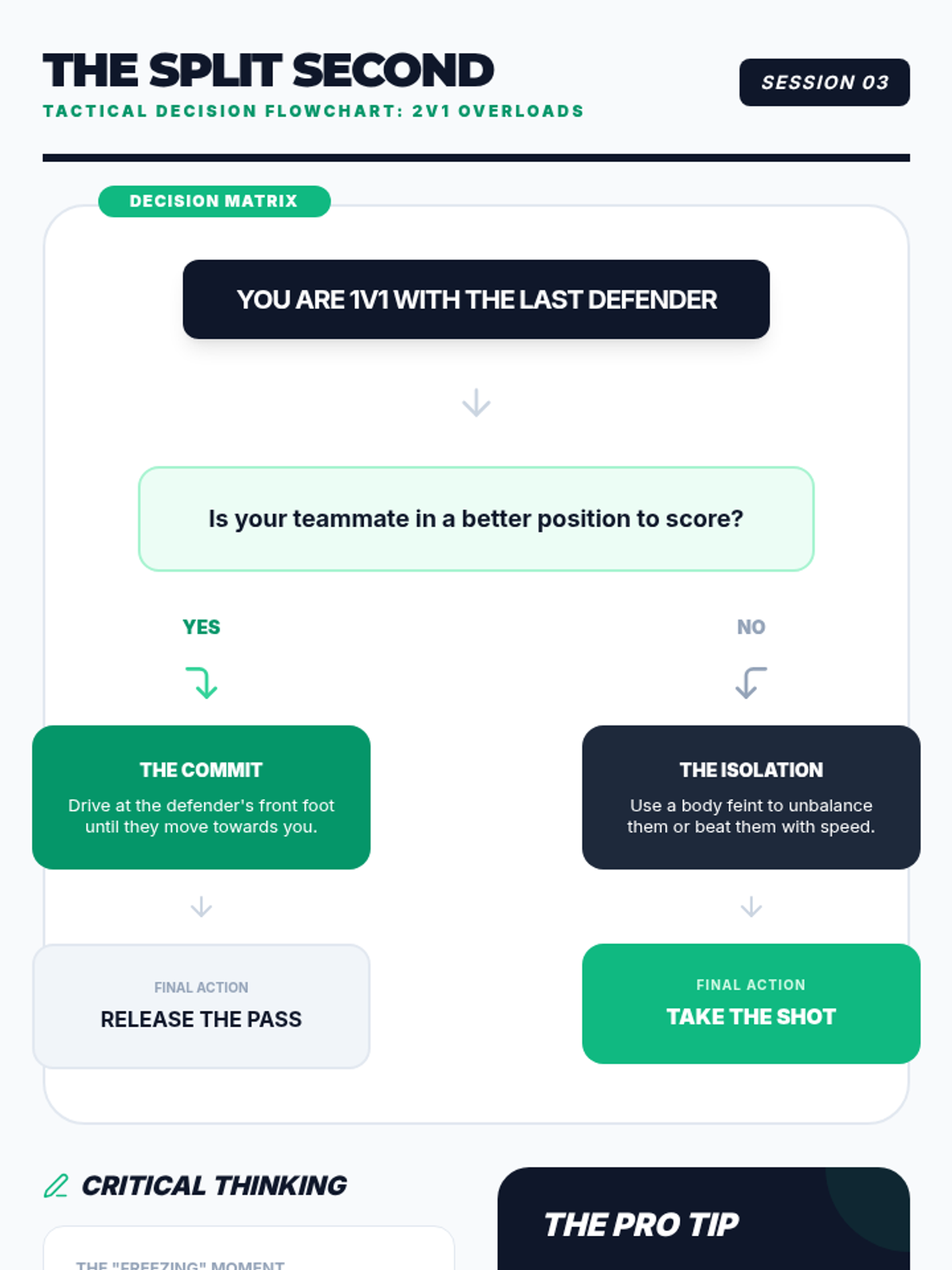
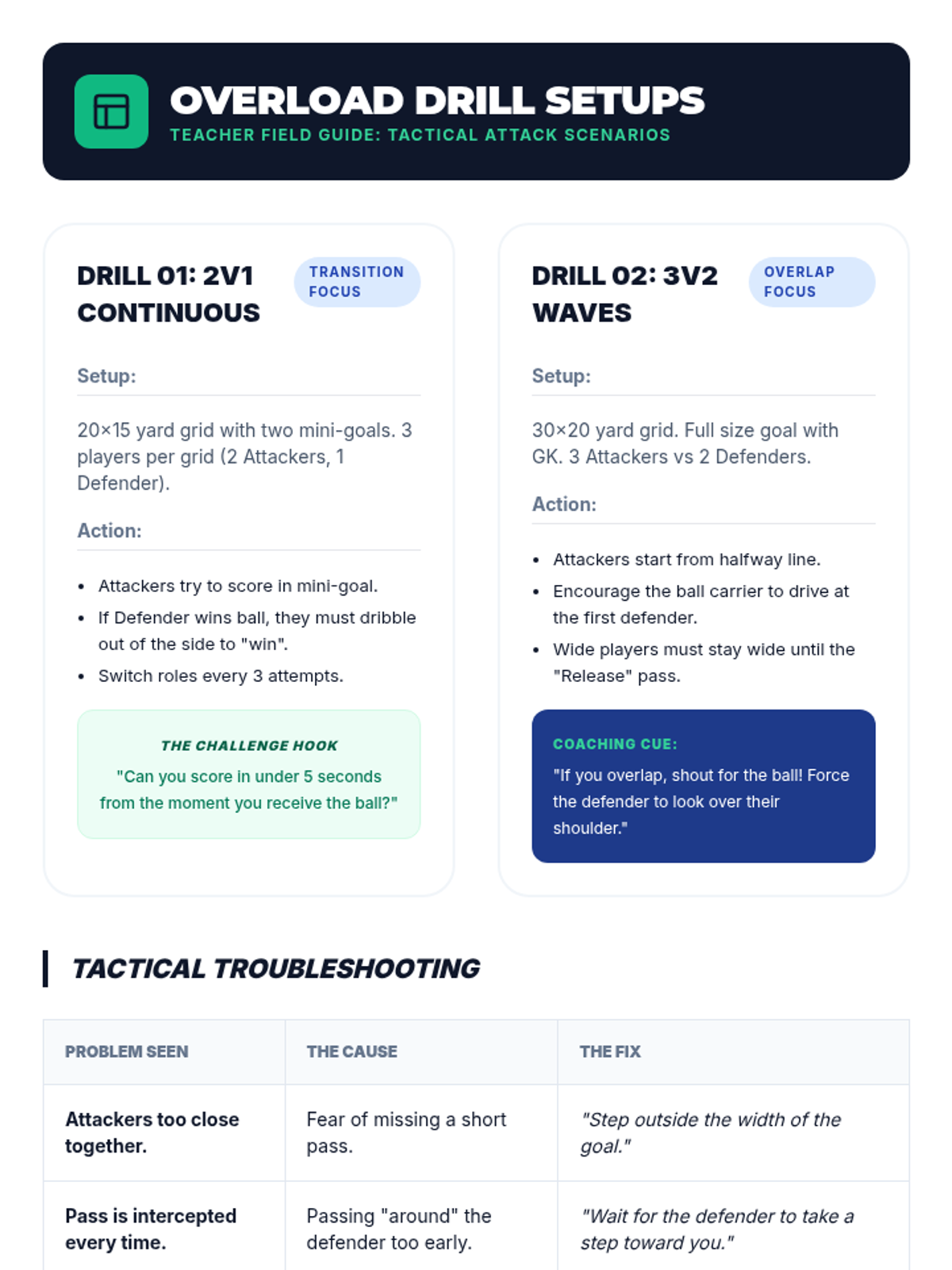
Students explore how to exploit numerical advantages (2v1, 3v2) to create scoring opportunities through tactical movement and quick passing.
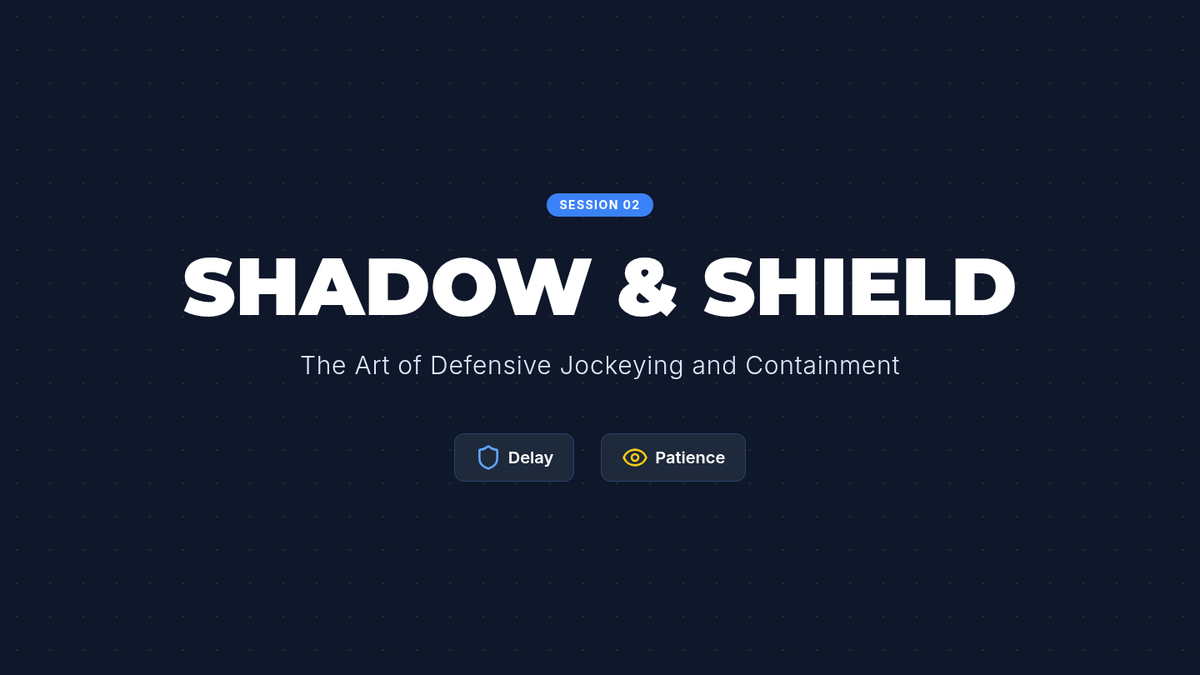
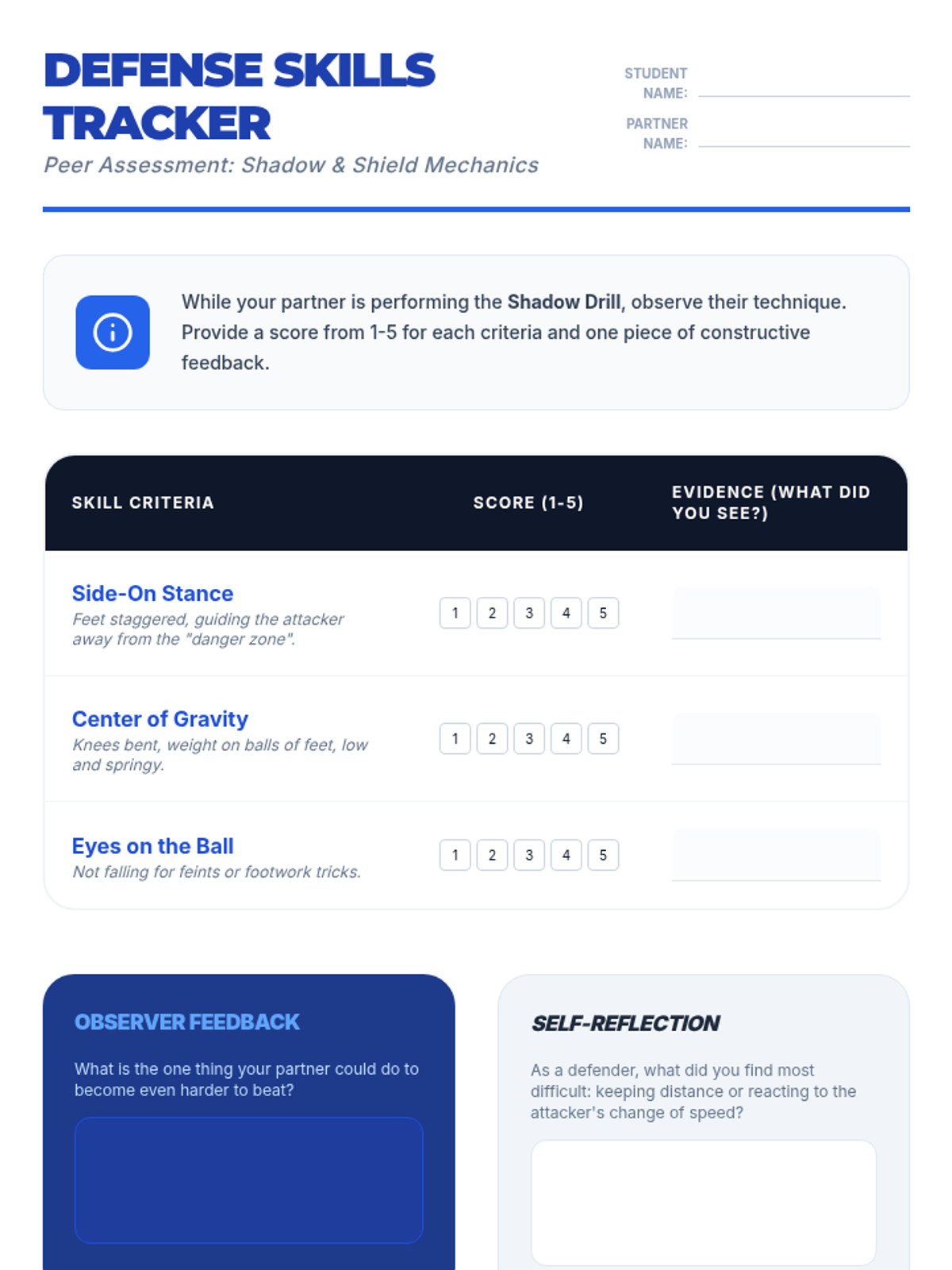
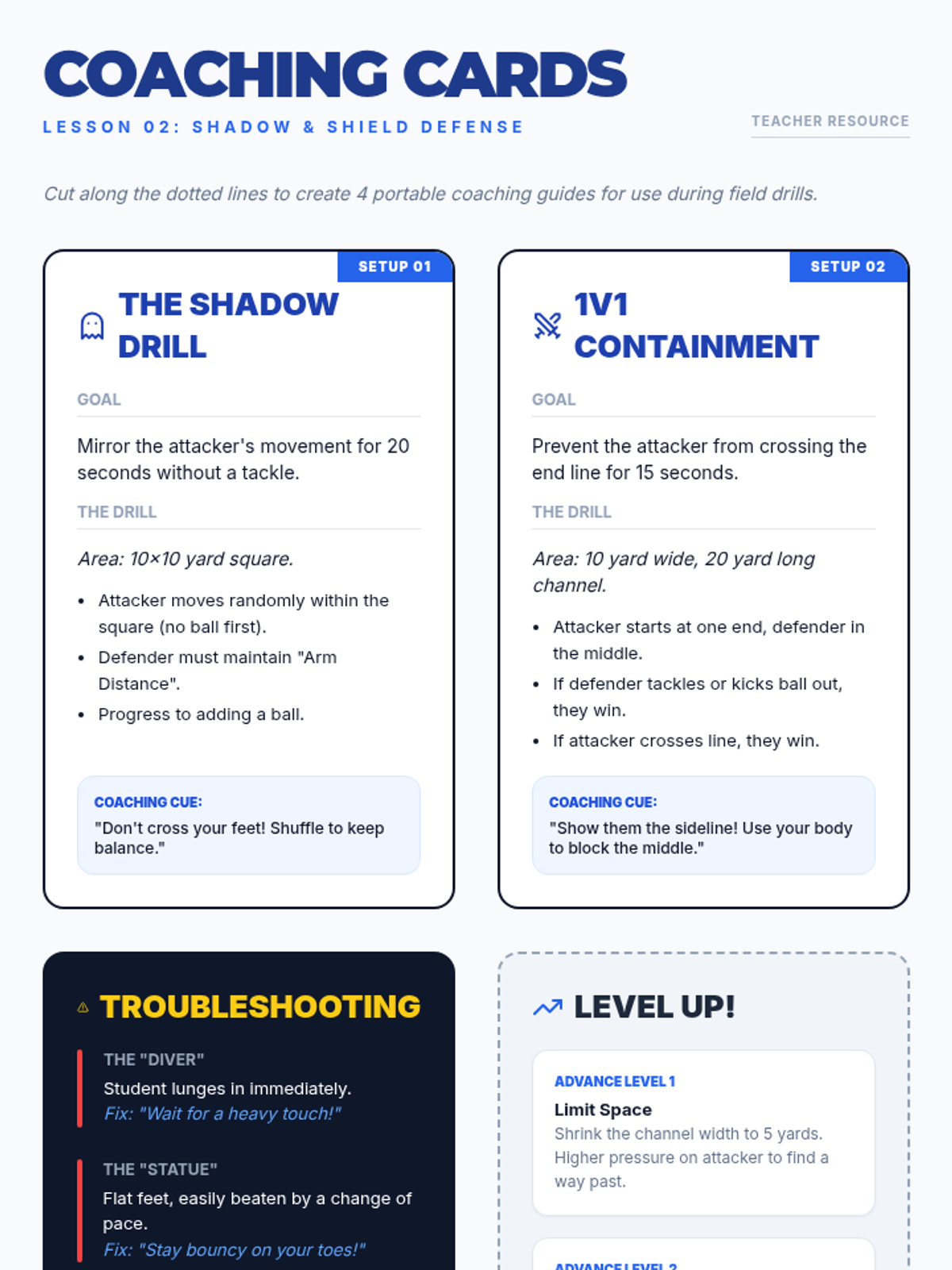
Focusing on 'containment' over 'tackling,' students learn the art of jockeying, body orientation, and patience to delay attackers.
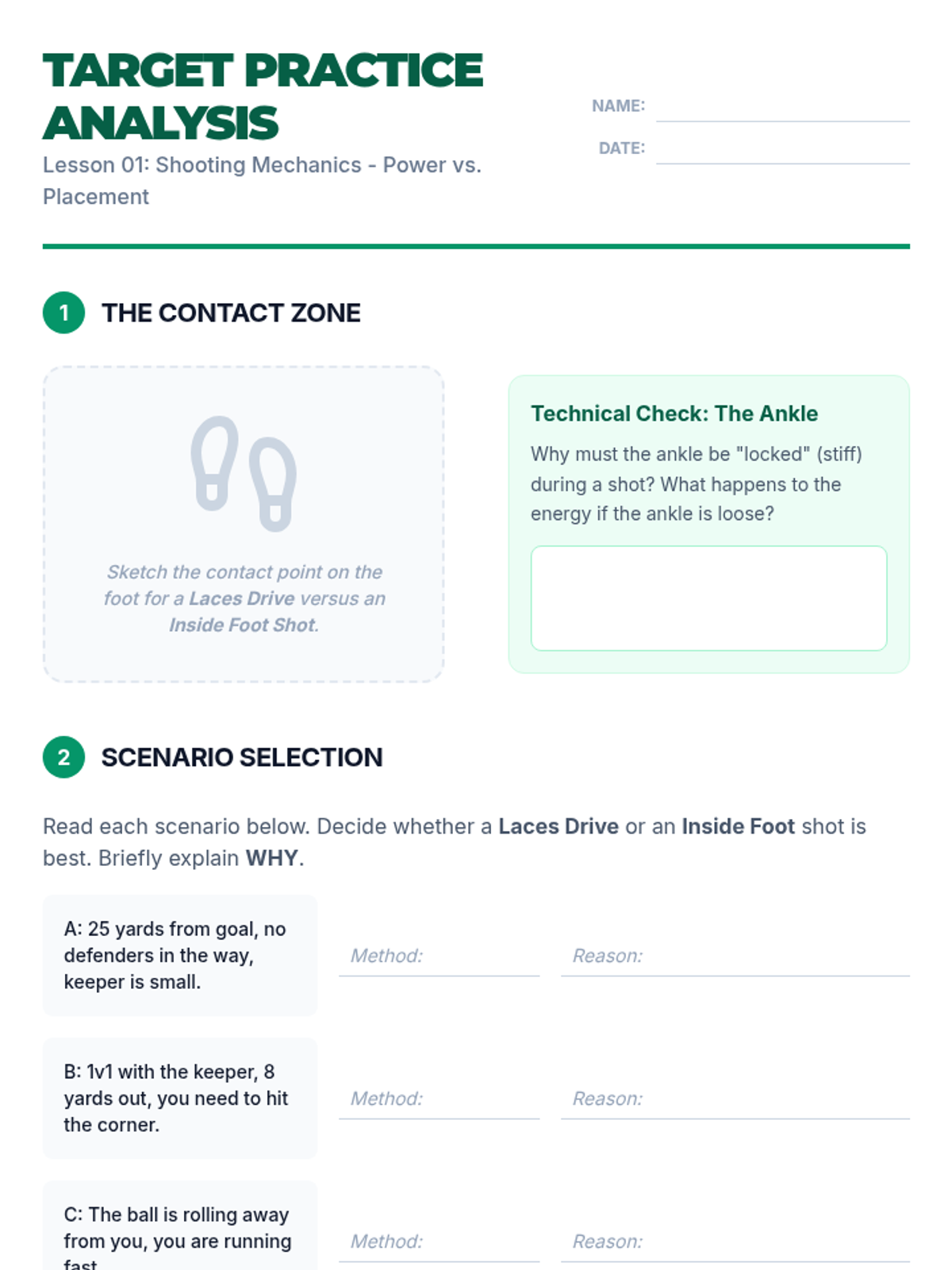
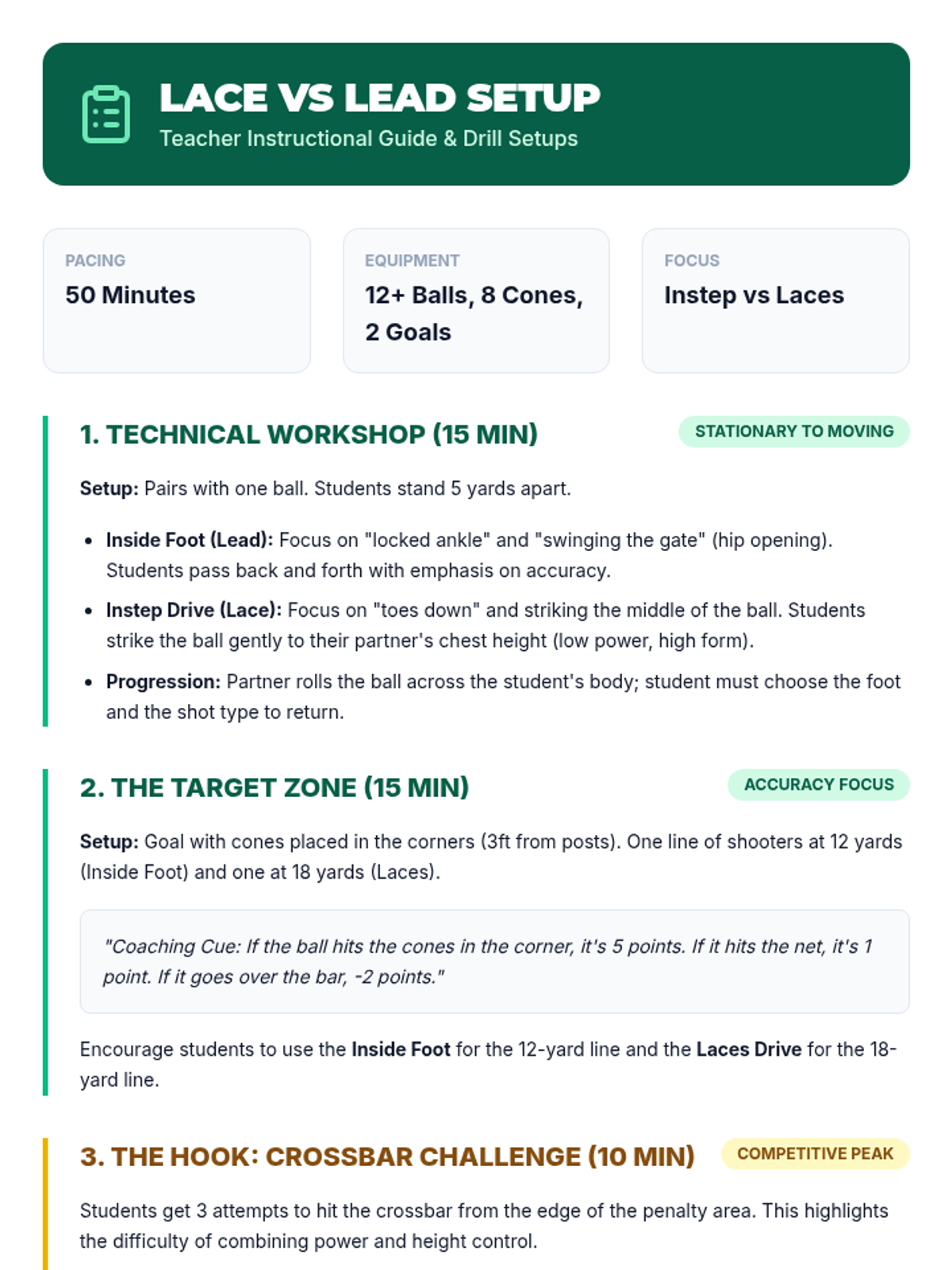
Students master the mechanical differences between the instep drive (power) and the inside foot shot (accuracy), applying them in target-based drills.
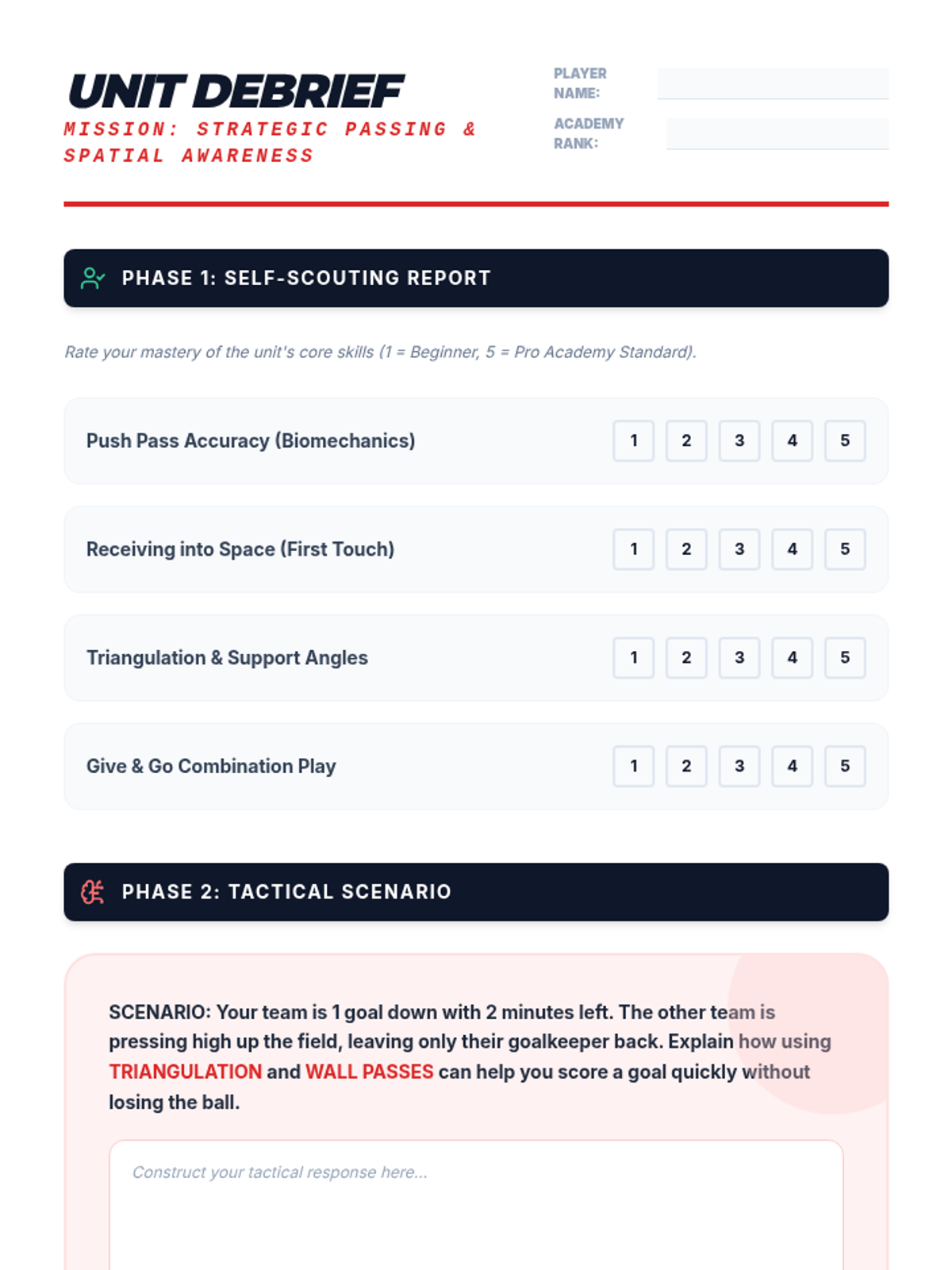
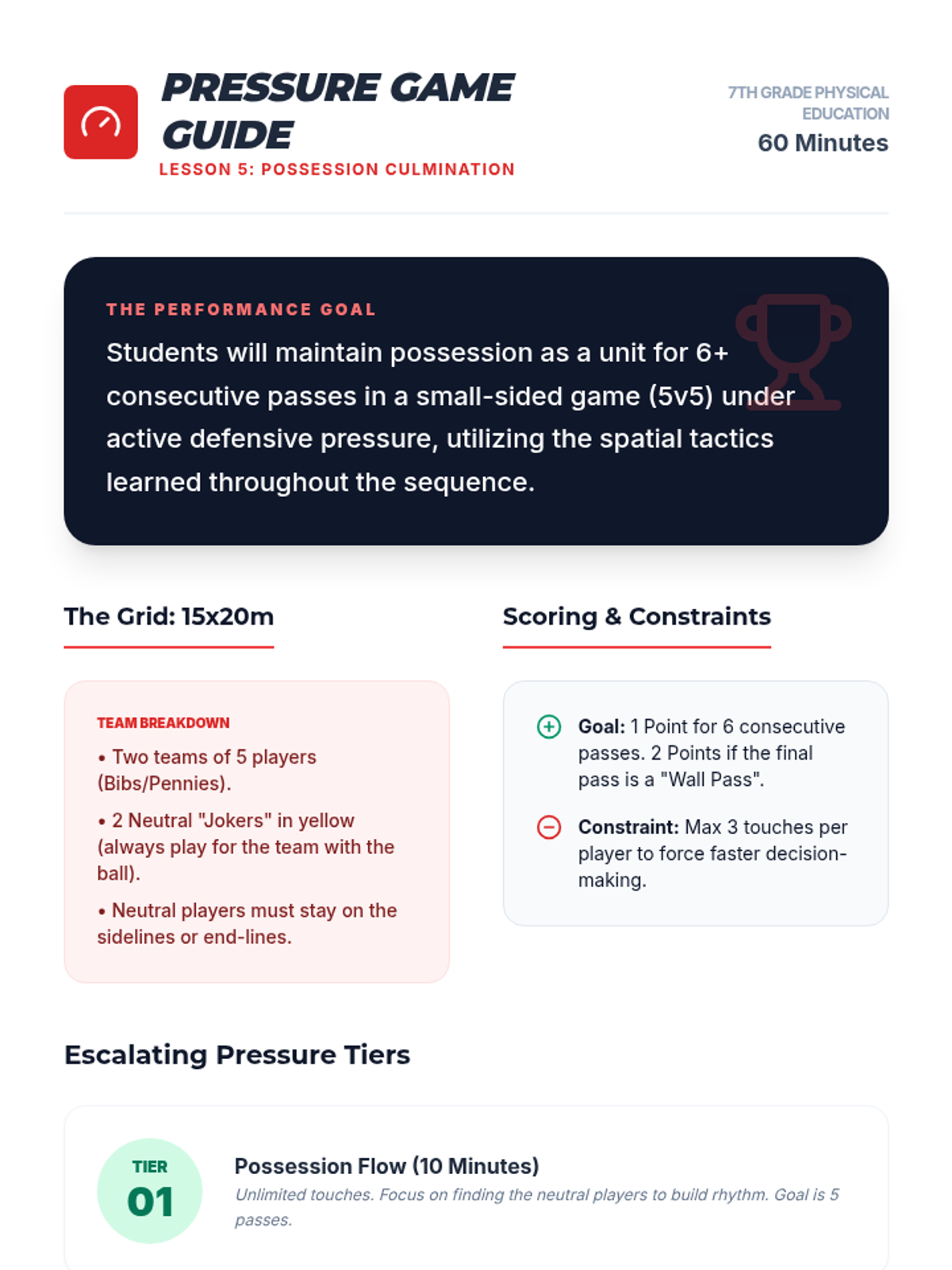
The culmination of the unit where students maintain possession under high defensive pressure, focusing on decision-making speed and field vision.
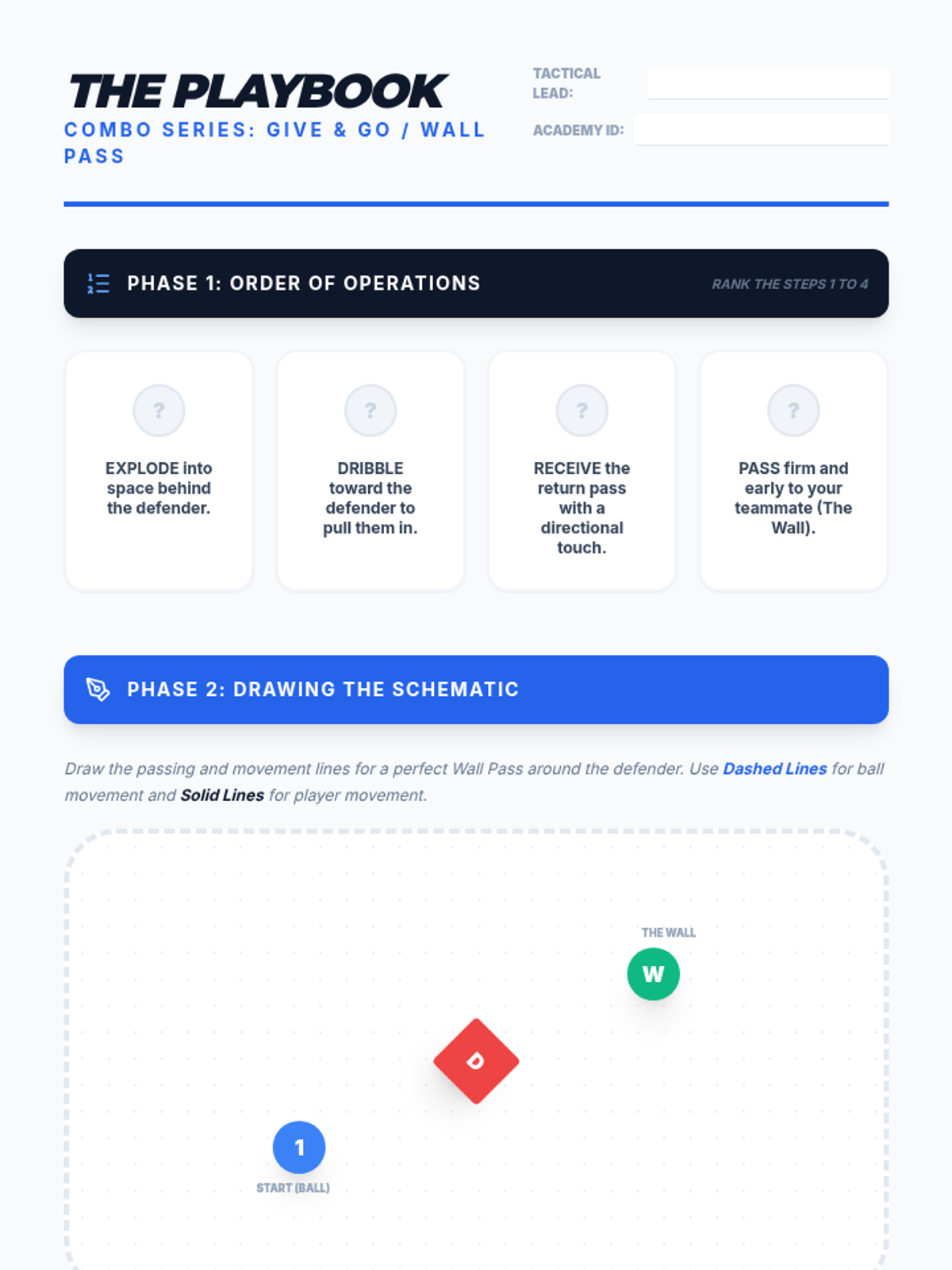
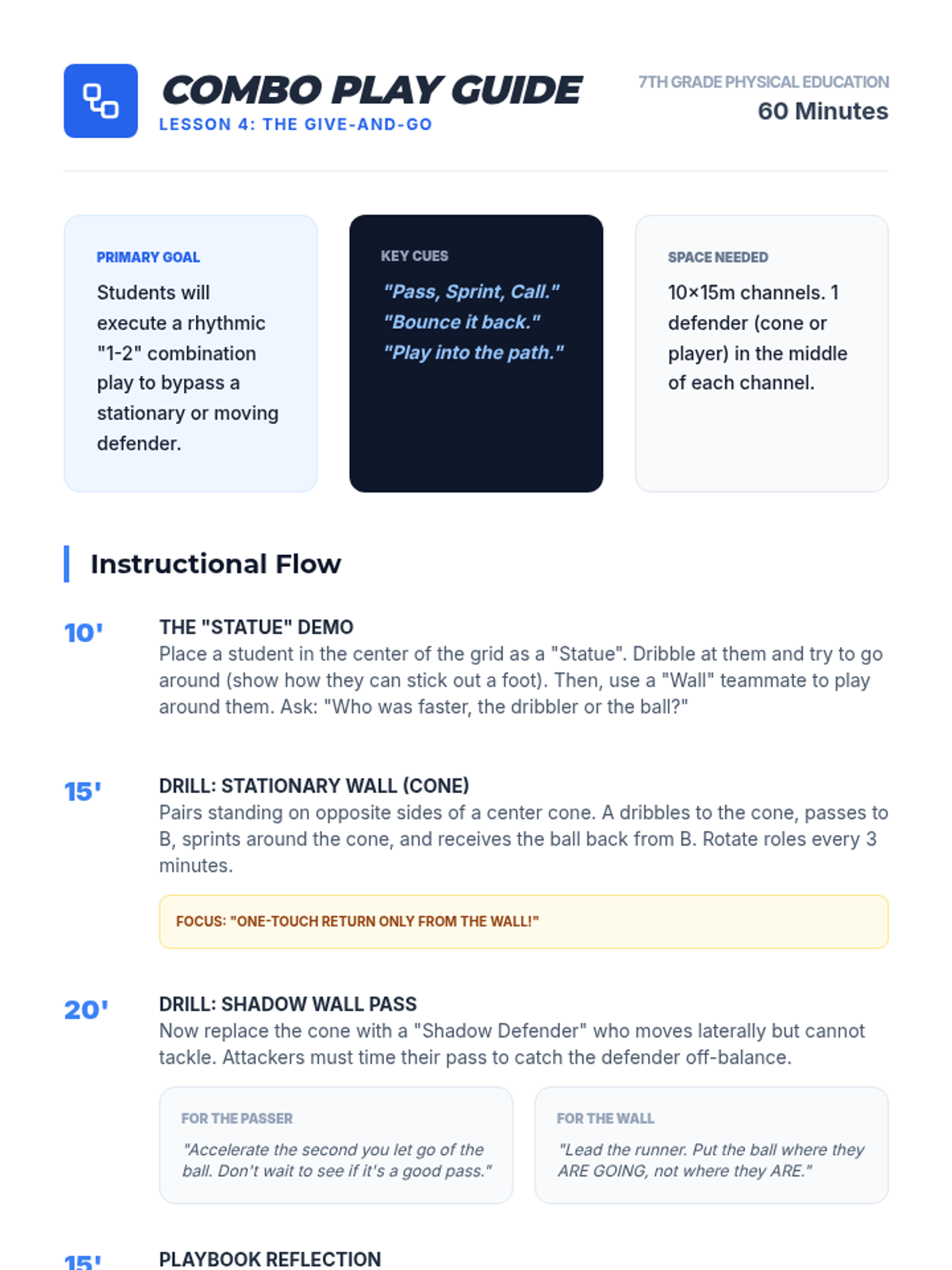
Teaches students the 'Give-and-Go' or 'Wall Pass' to bypass defenders through quick, rhythmic passing and off-ball movement.
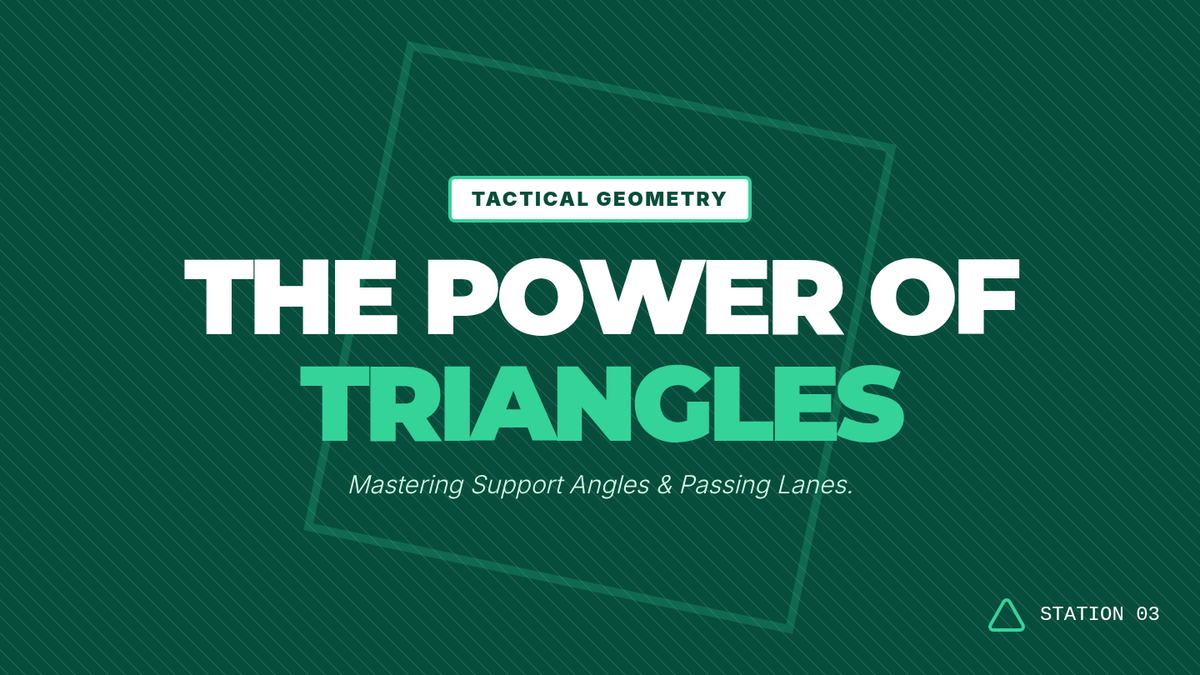
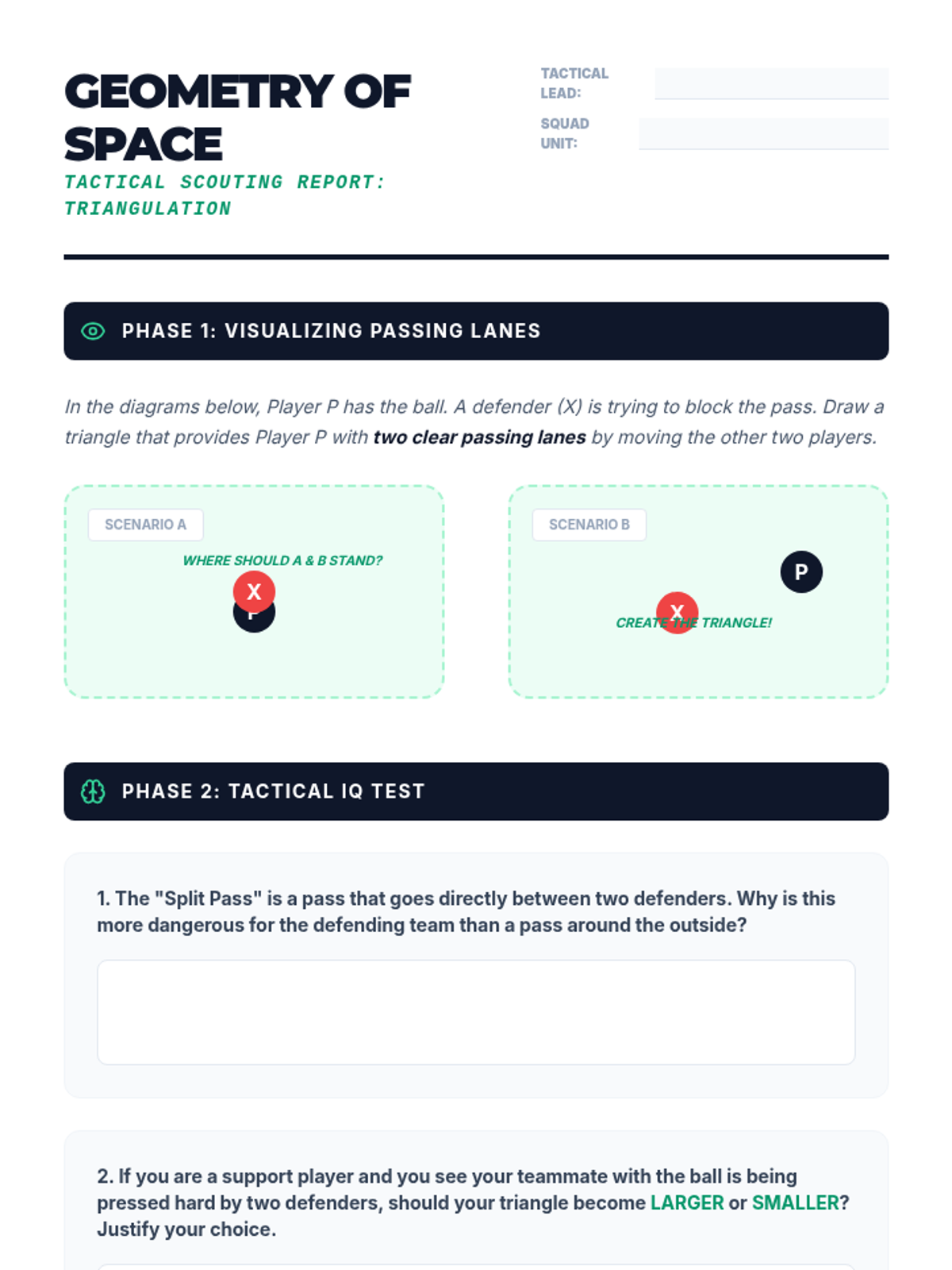
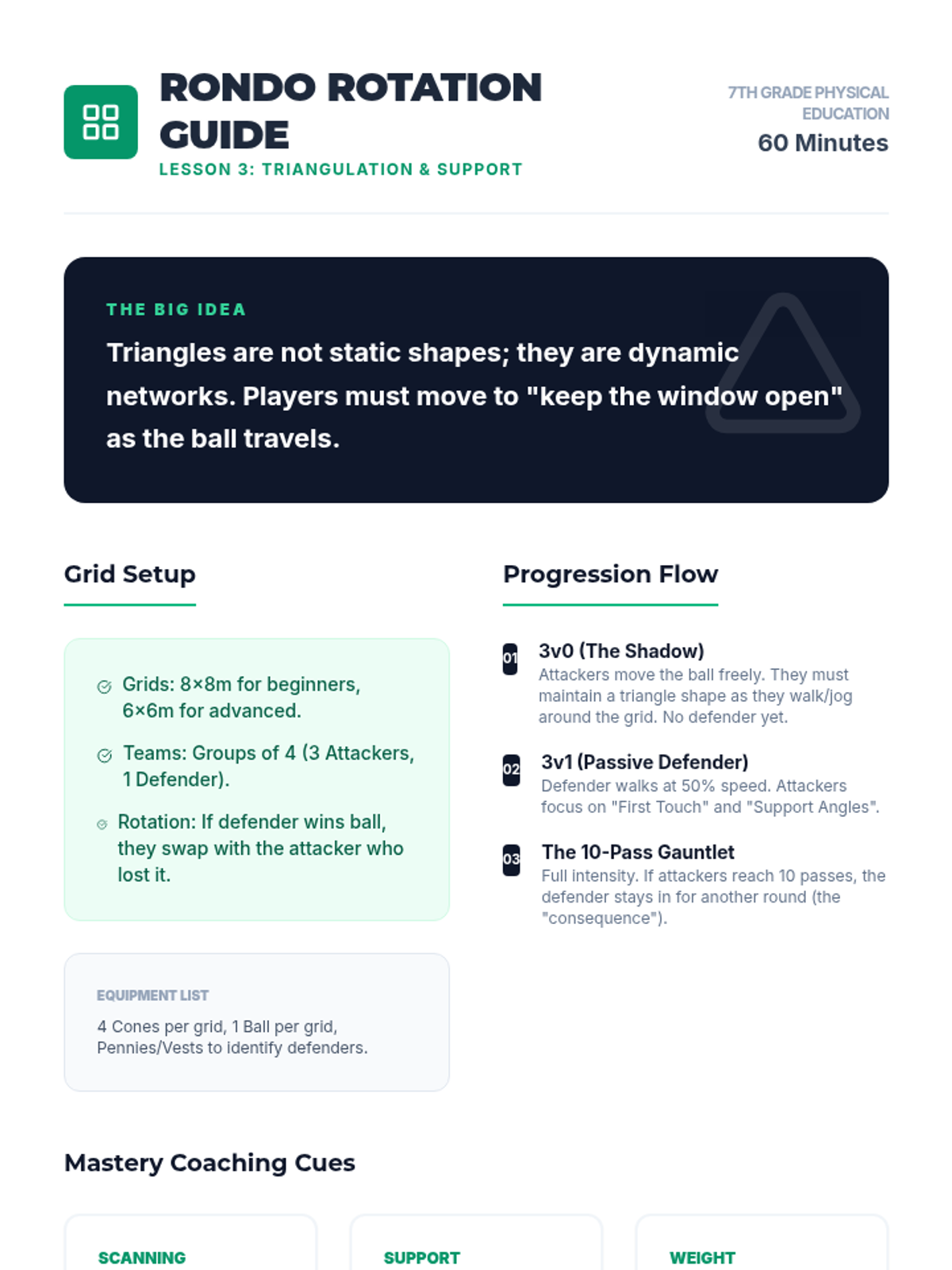
Explores the tactical use of triangles on the field to create passing lanes and support options, utilizing 3v1 Rondo games.
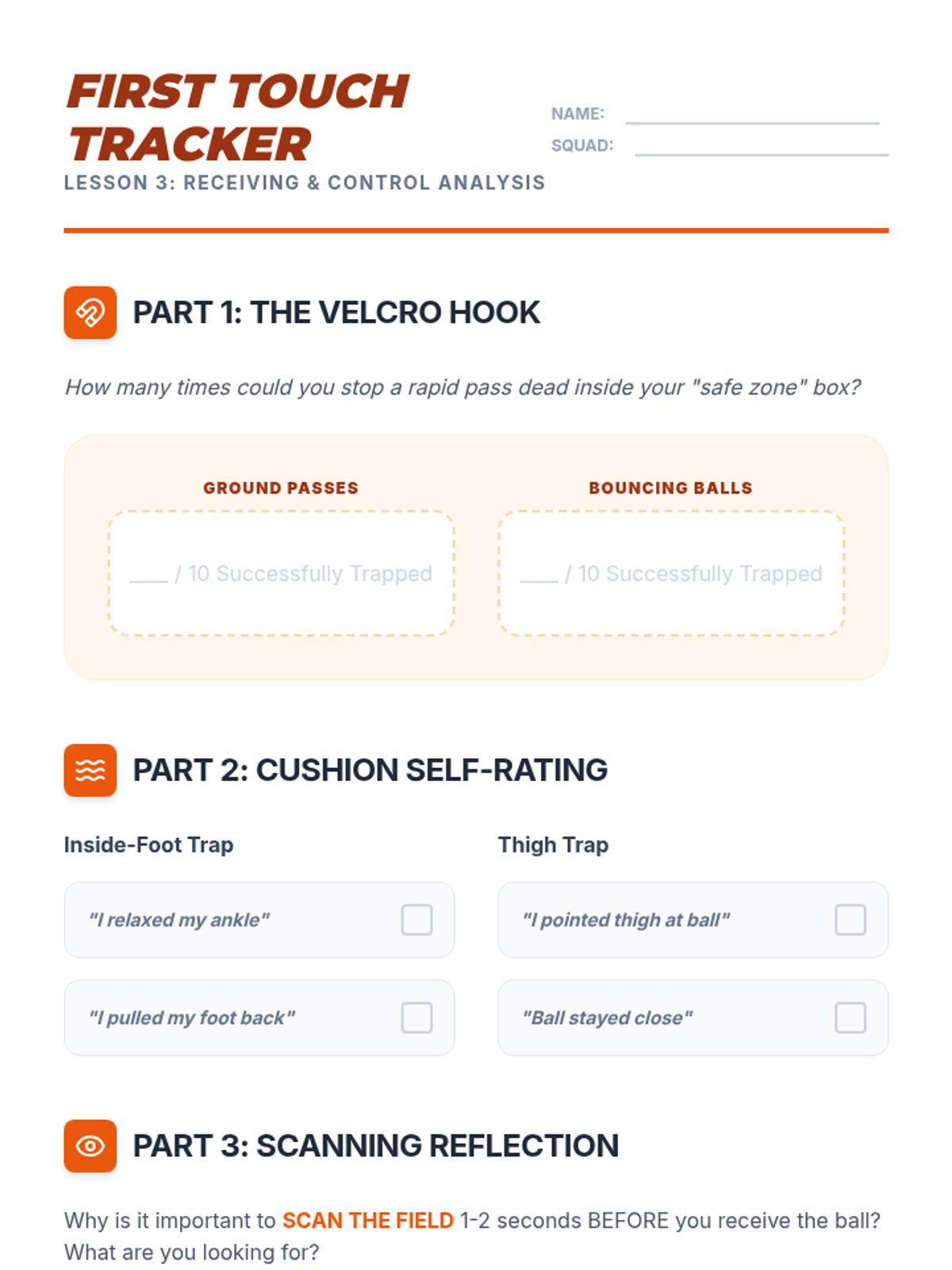
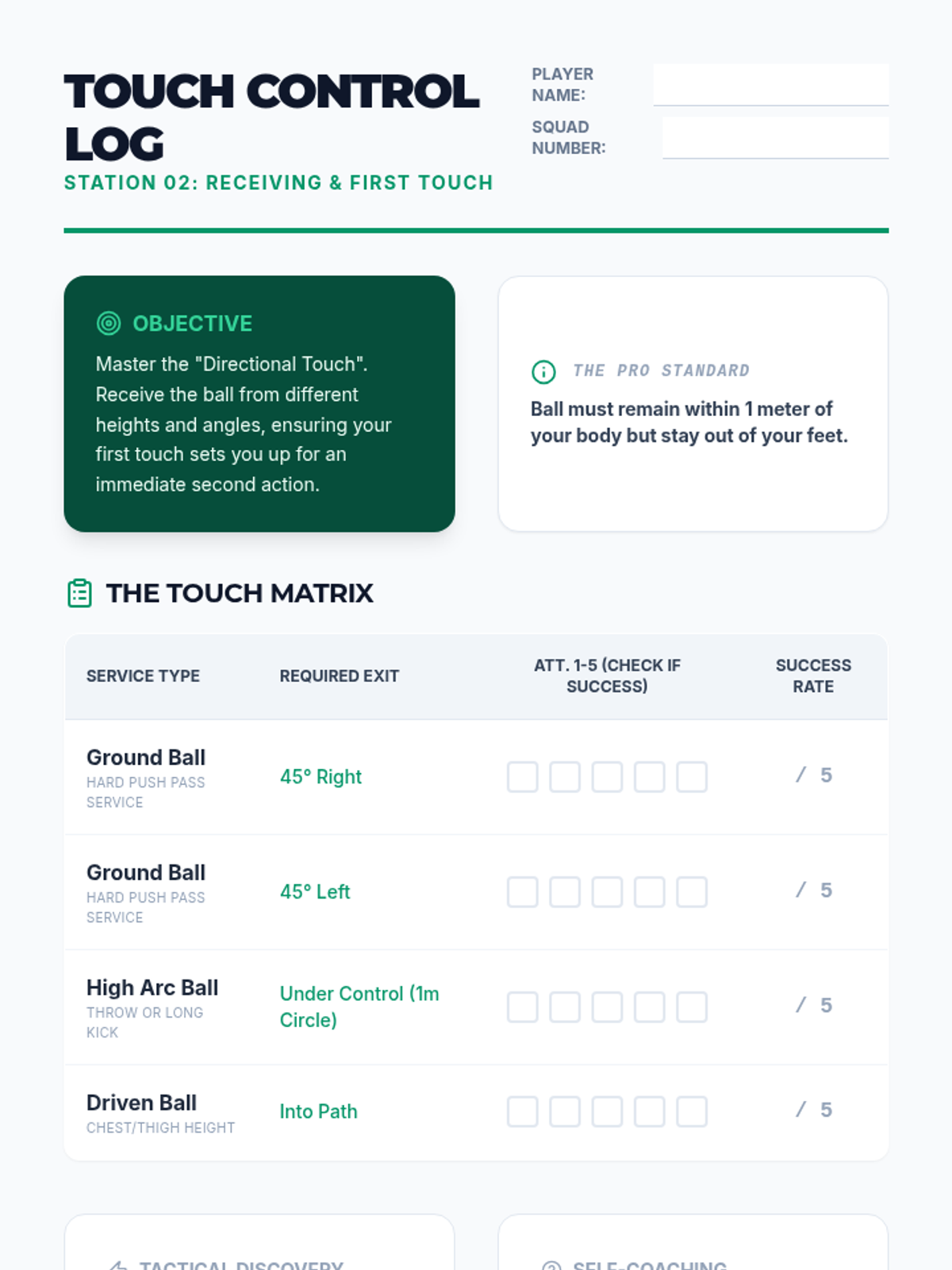
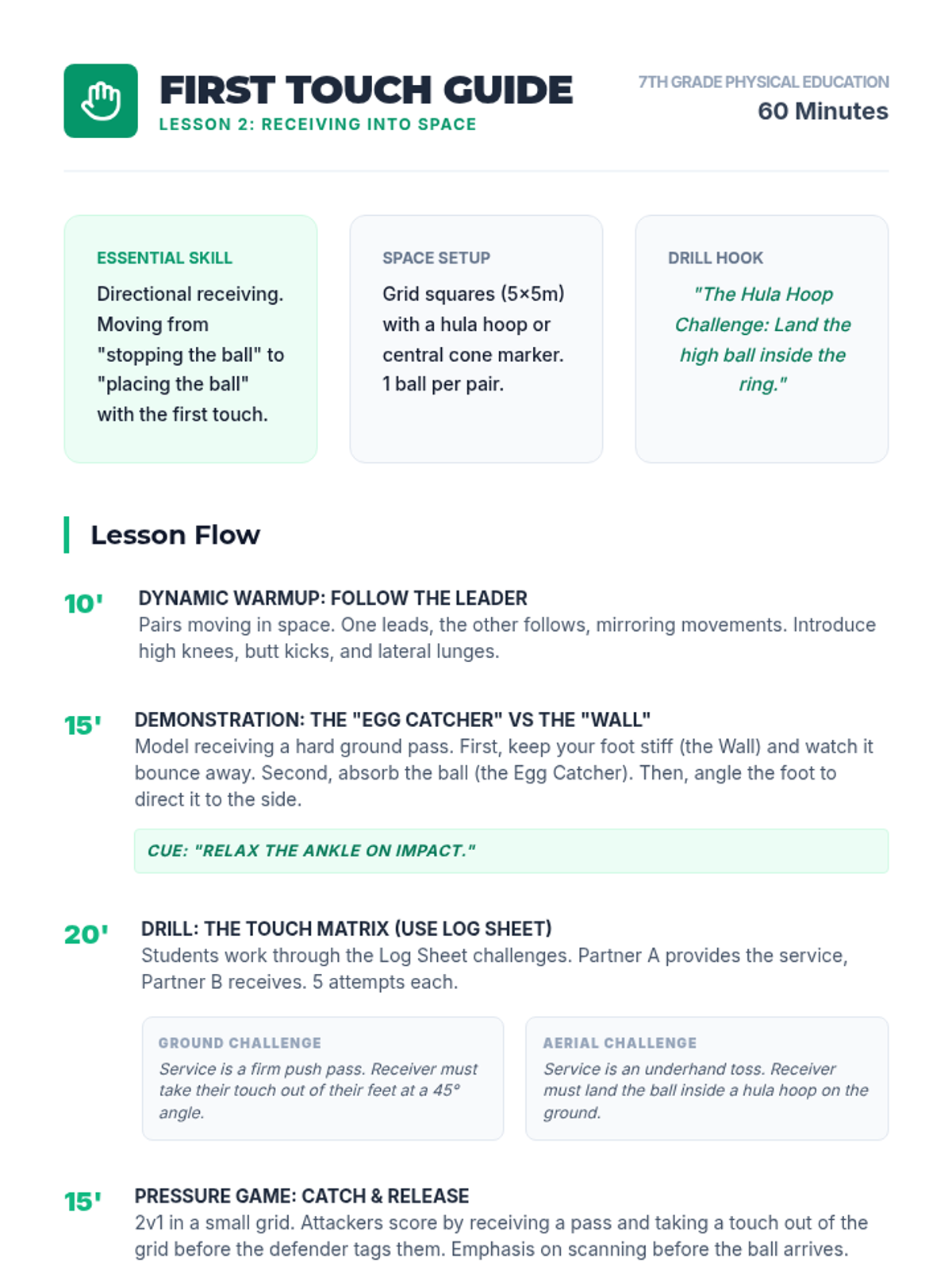
Focuses on the critical 'first touch' to maintain momentum, teaching students to receive the ball into space and prepare for their next move.
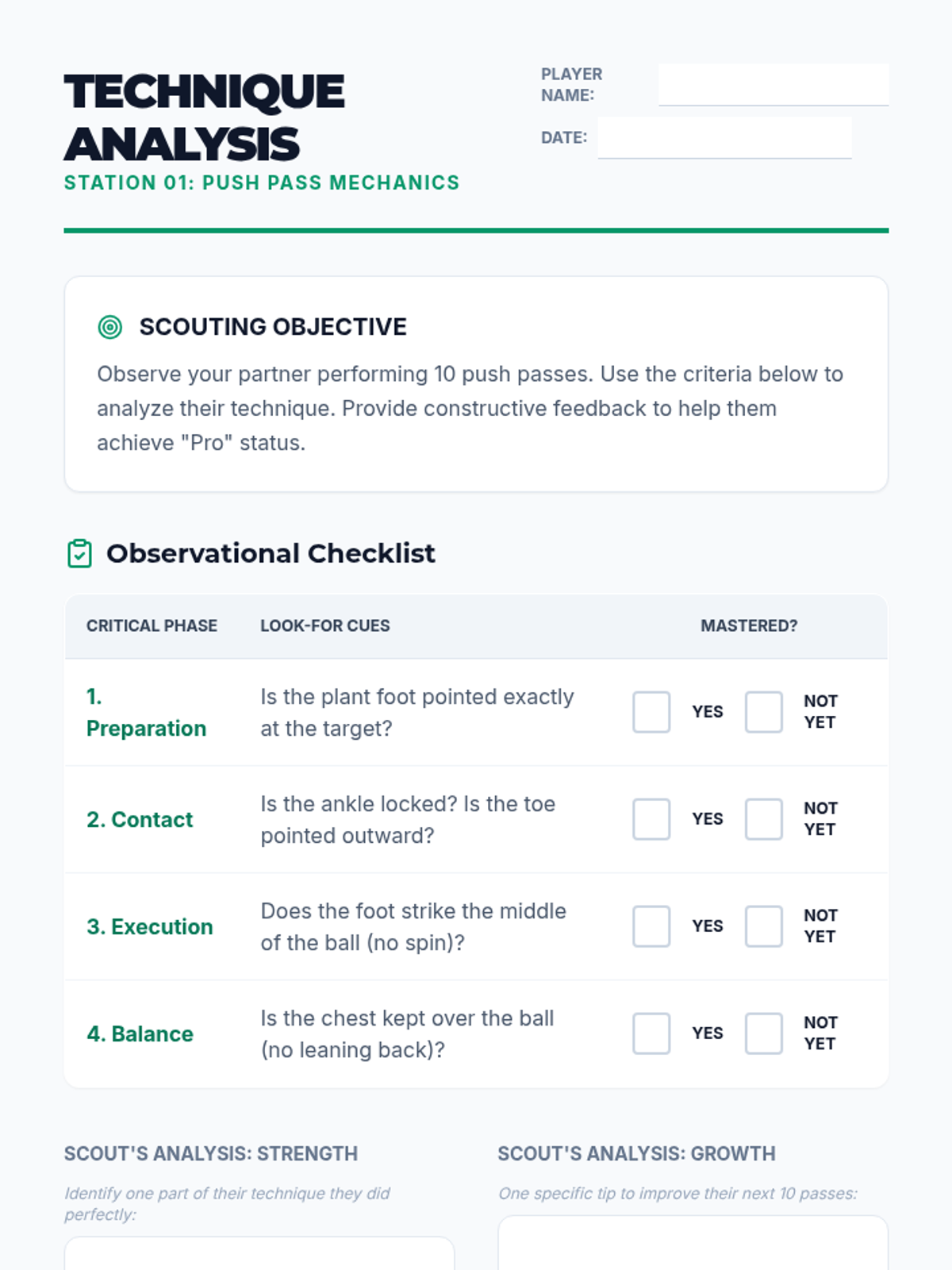
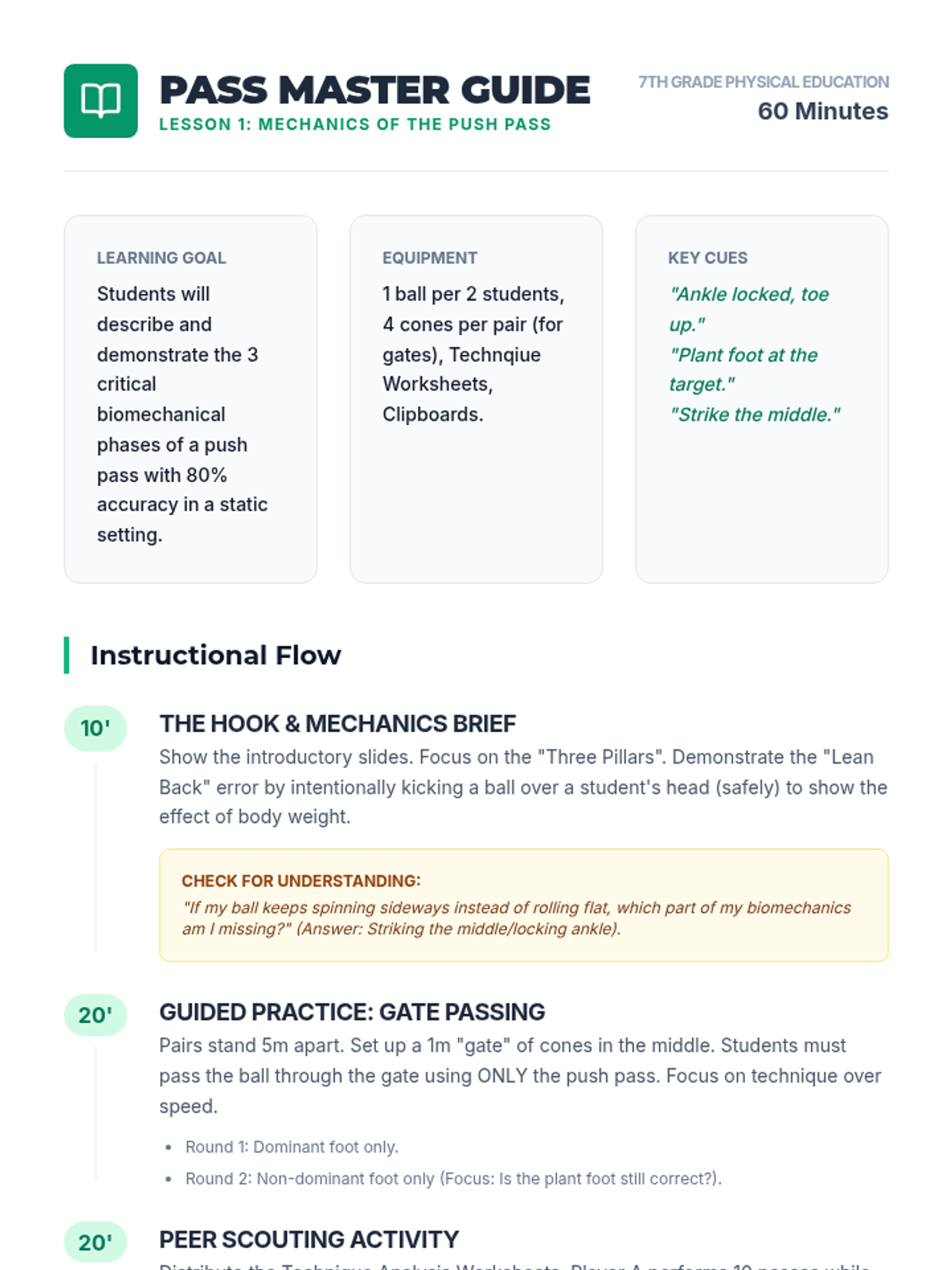
Students master the push pass by breaking down its biomechanics, focusing on the plant foot, foot strike, and follow-through for maximum accuracy.
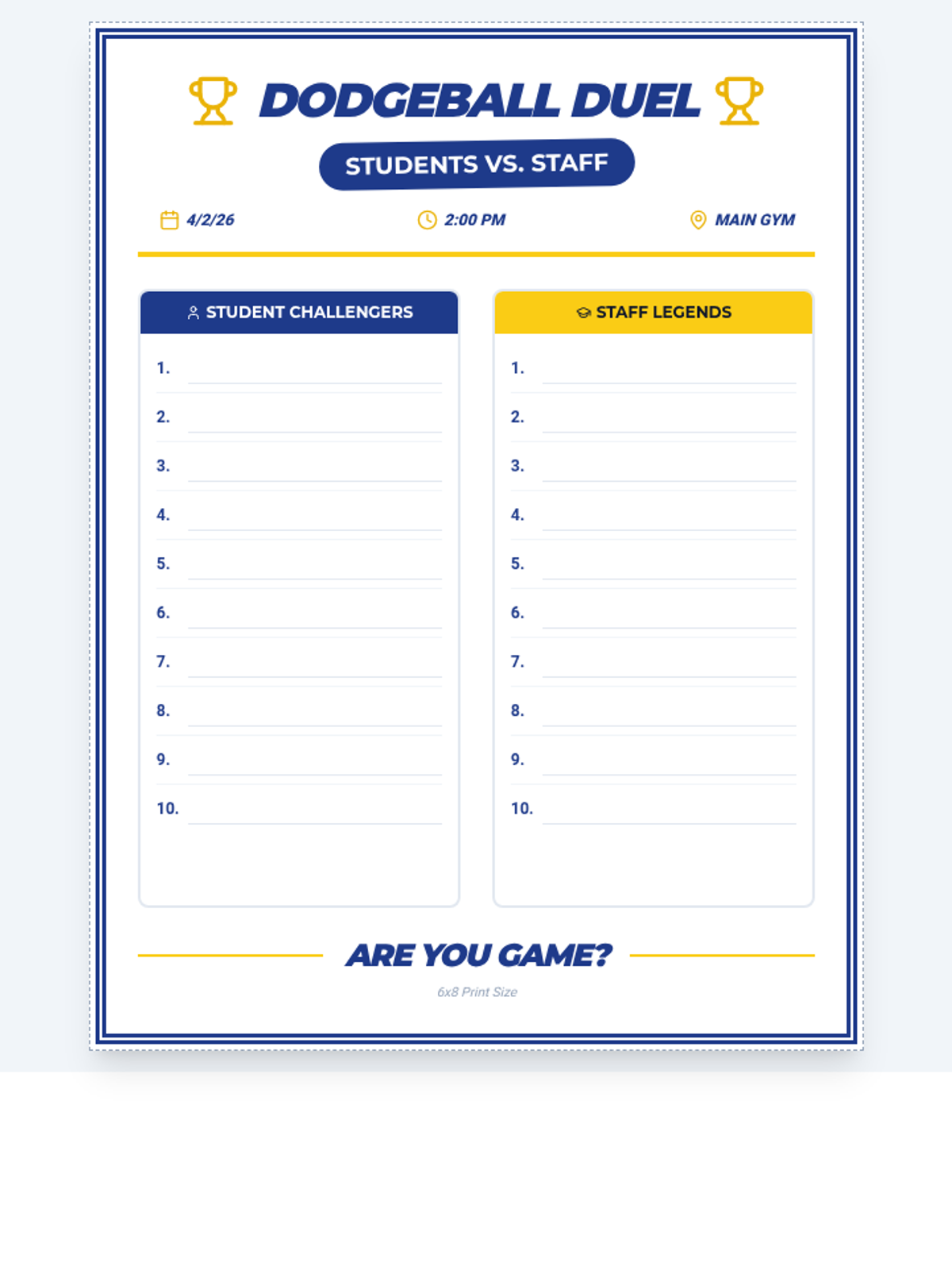
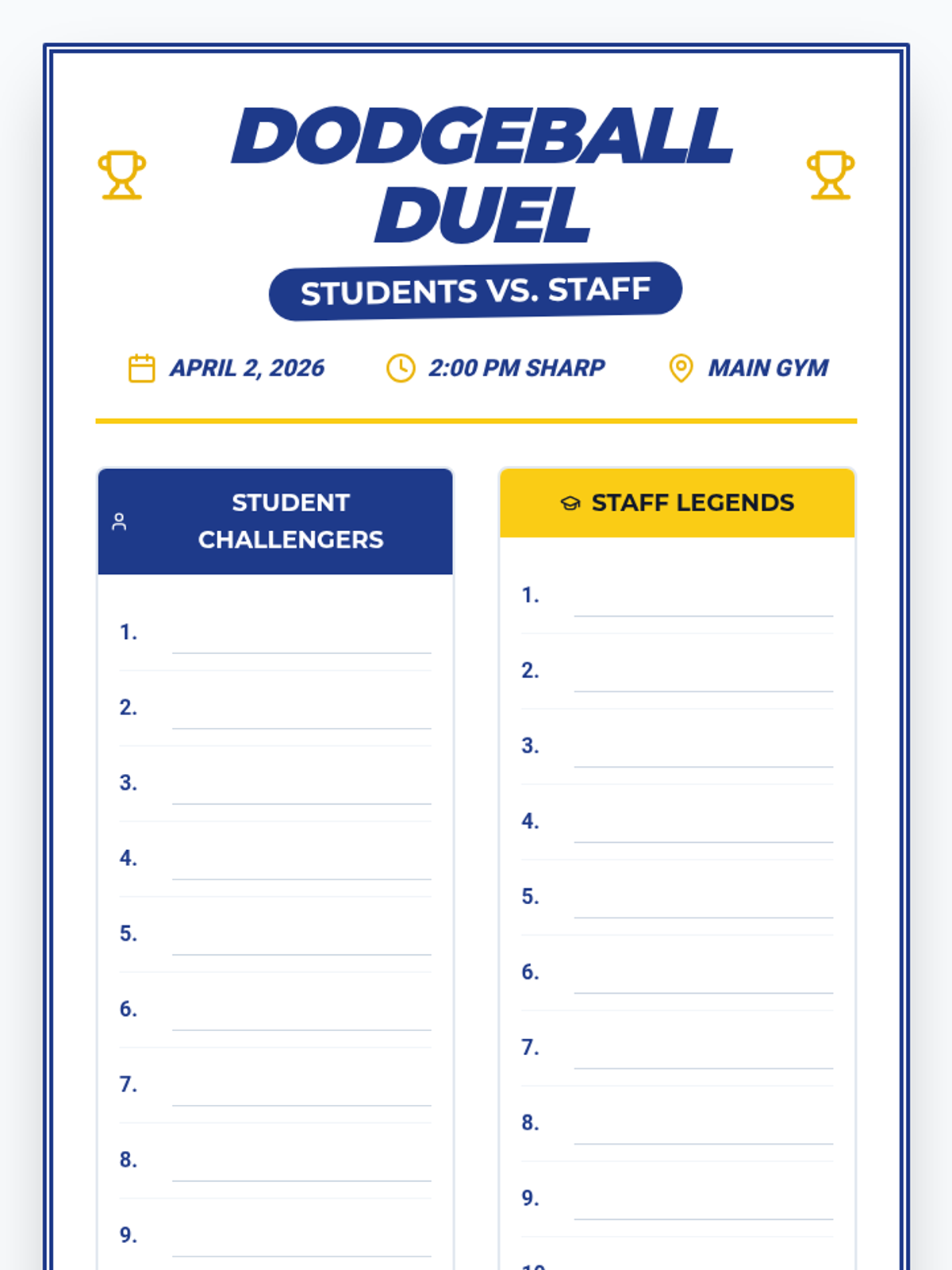
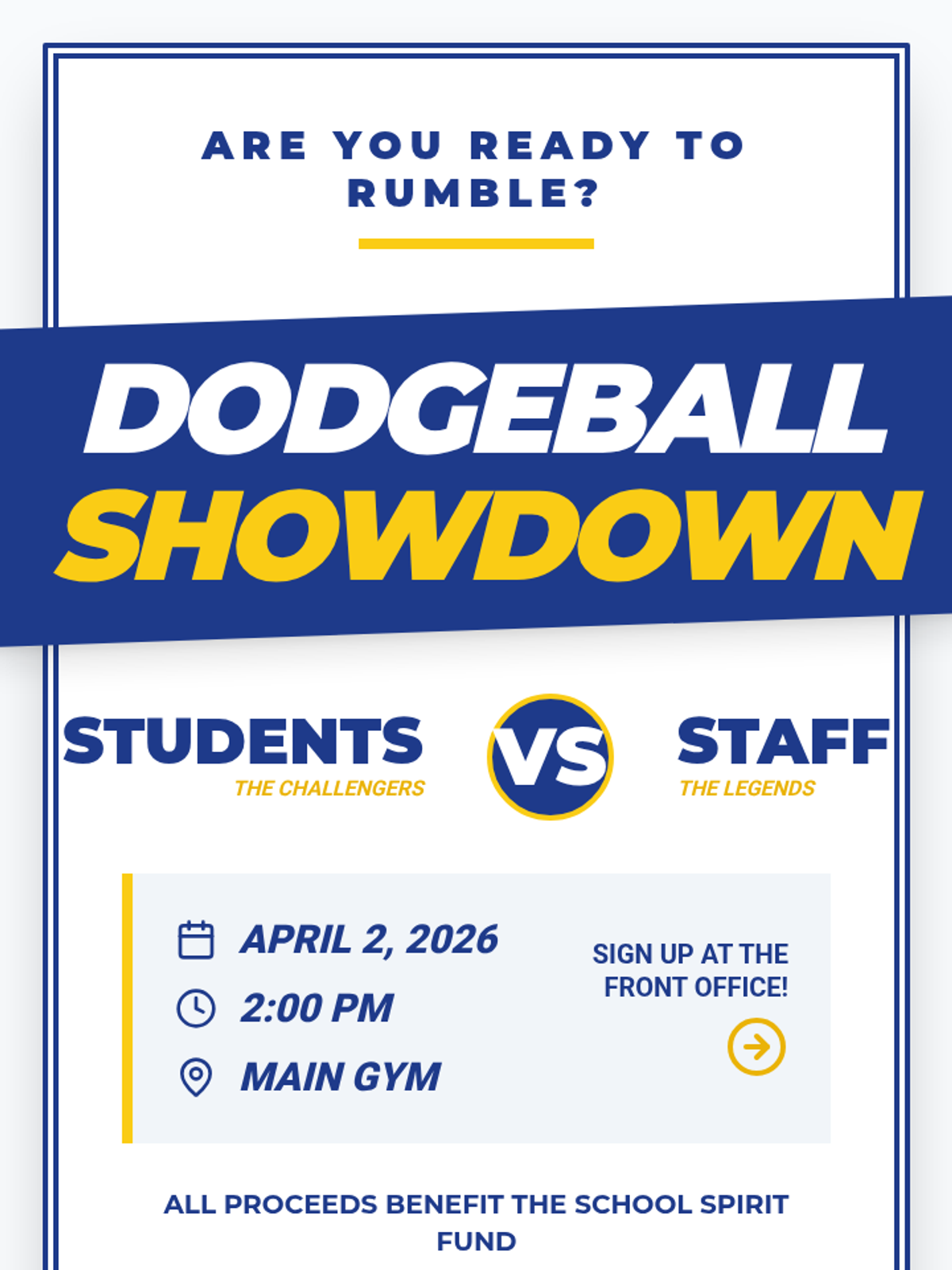
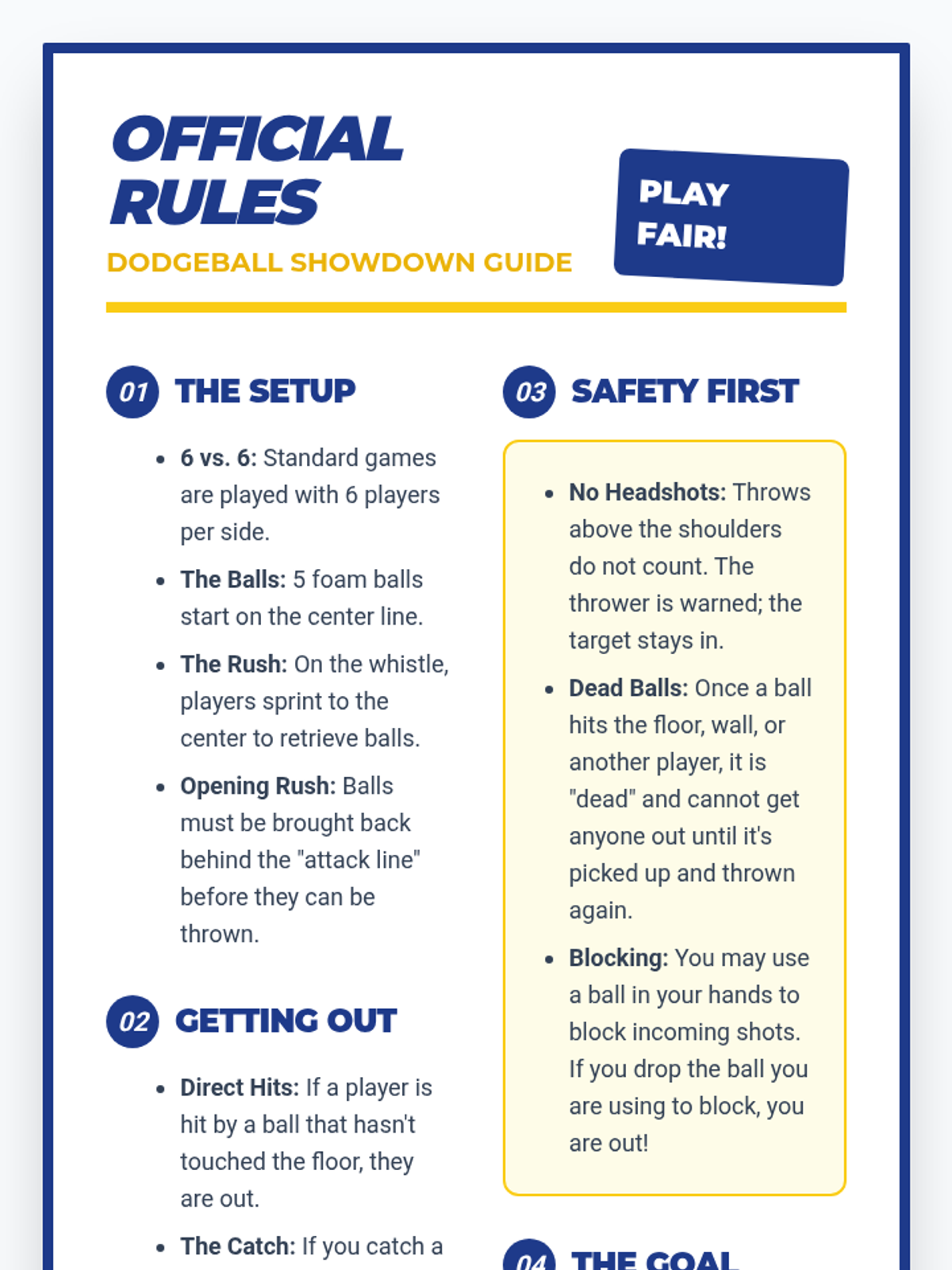
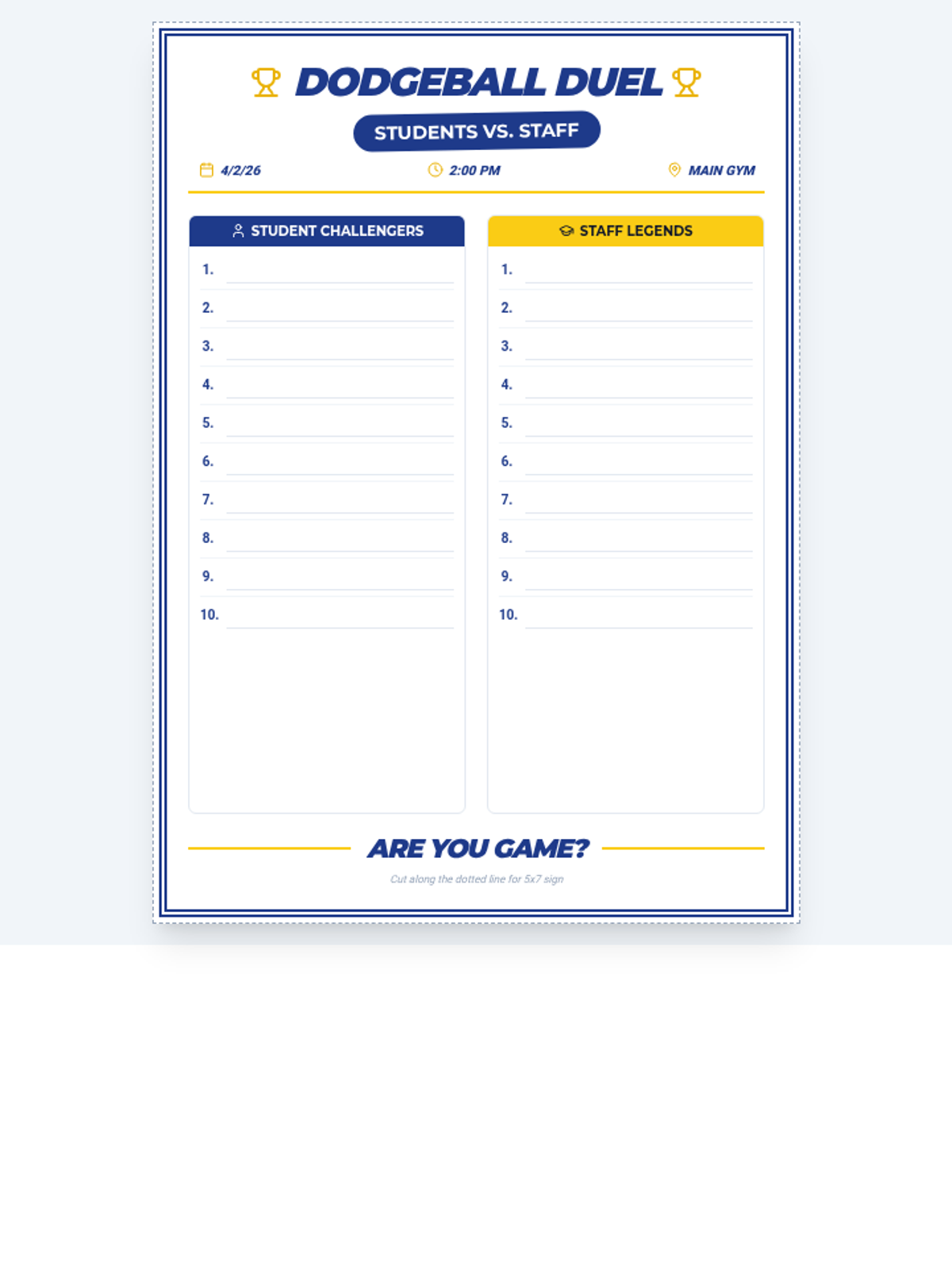
A collection of resources for organizing and promoting the annual Students vs. Staff dodgeball event, fostering school spirit and healthy competition.
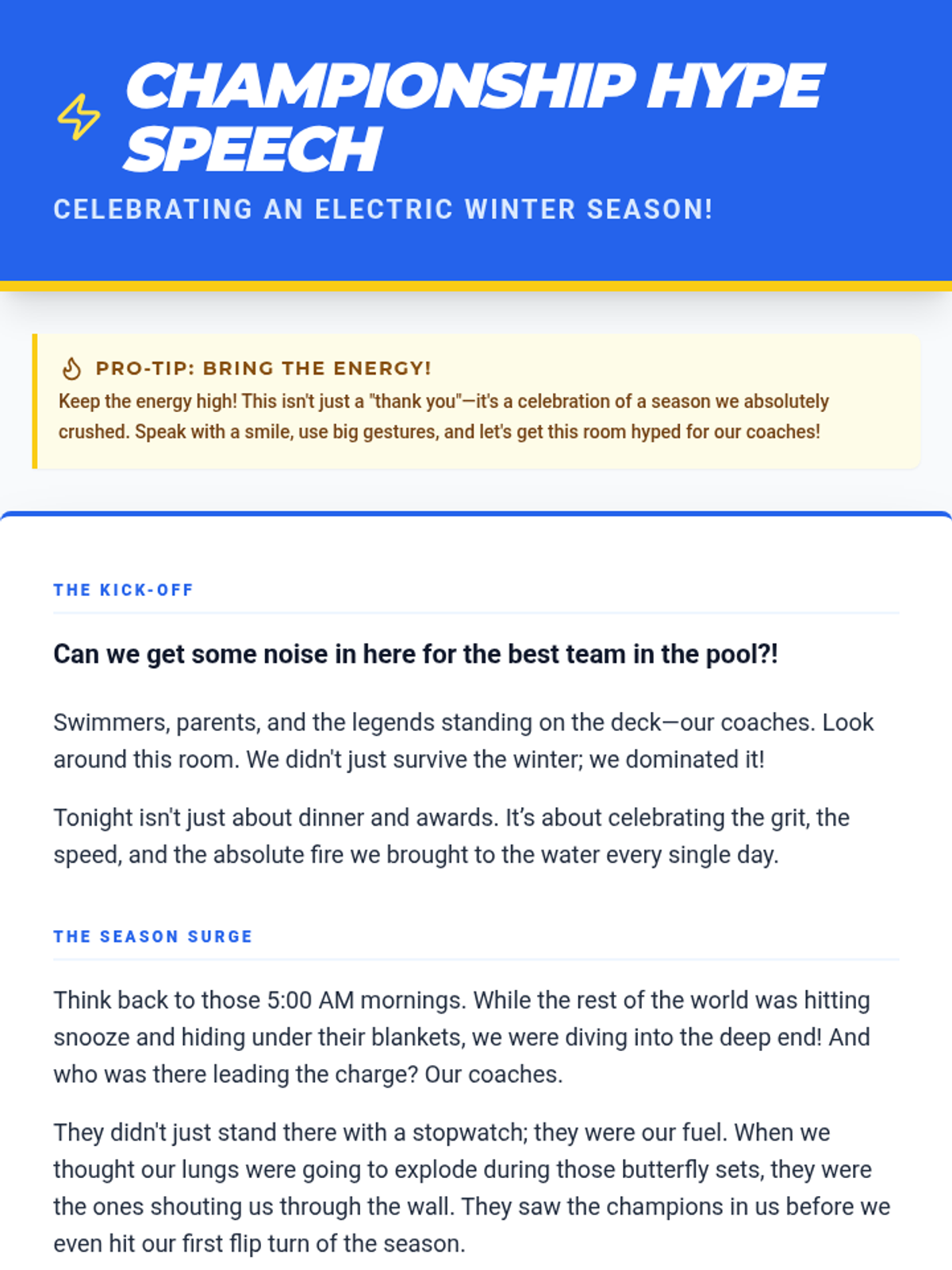
A collection of resources to celebrate and thank swim coaches at a winter banquet, including a heartfelt speech, a visual presentation of season highlights, and personalized thank-you cards for athletes to sign.
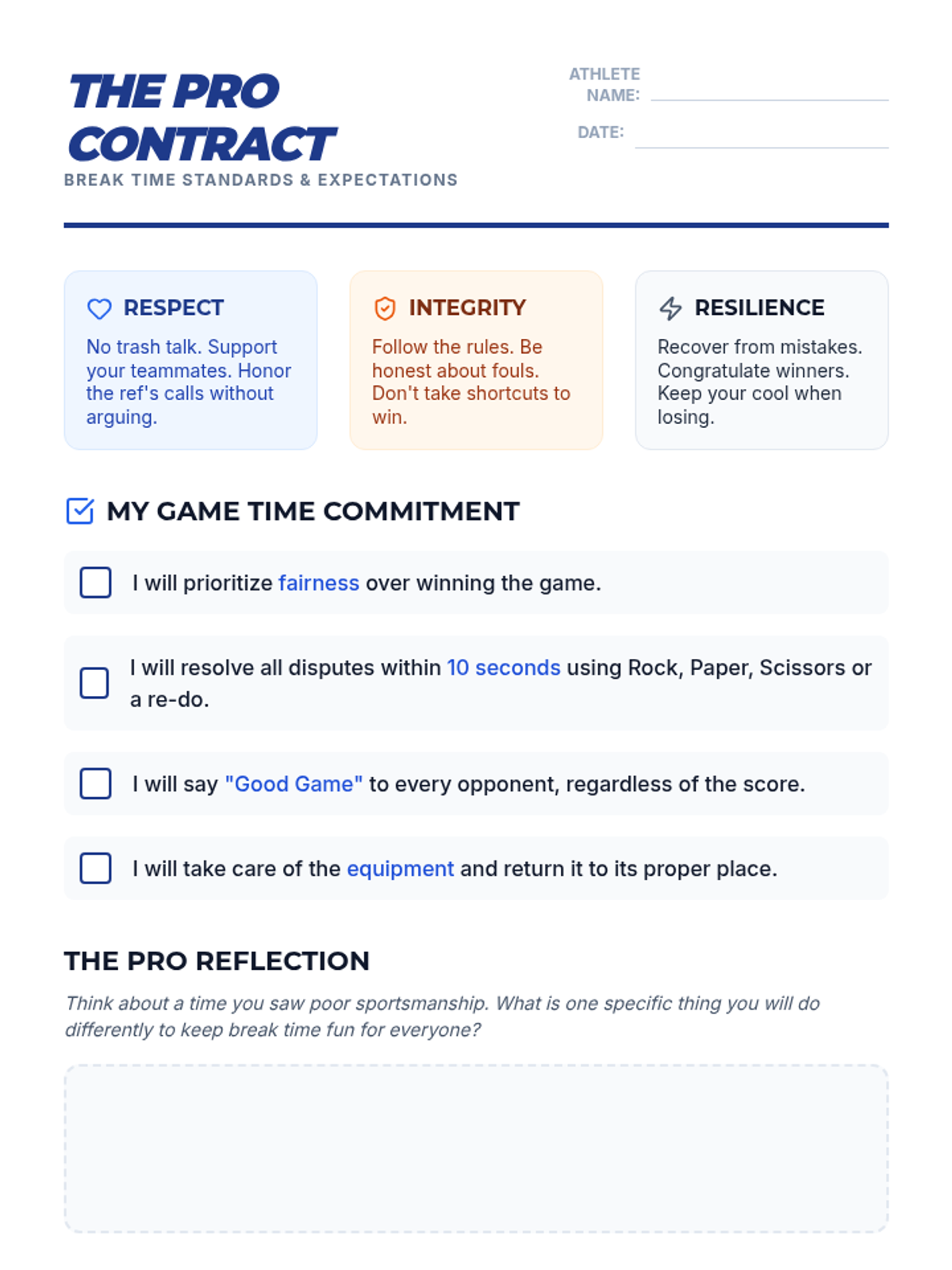
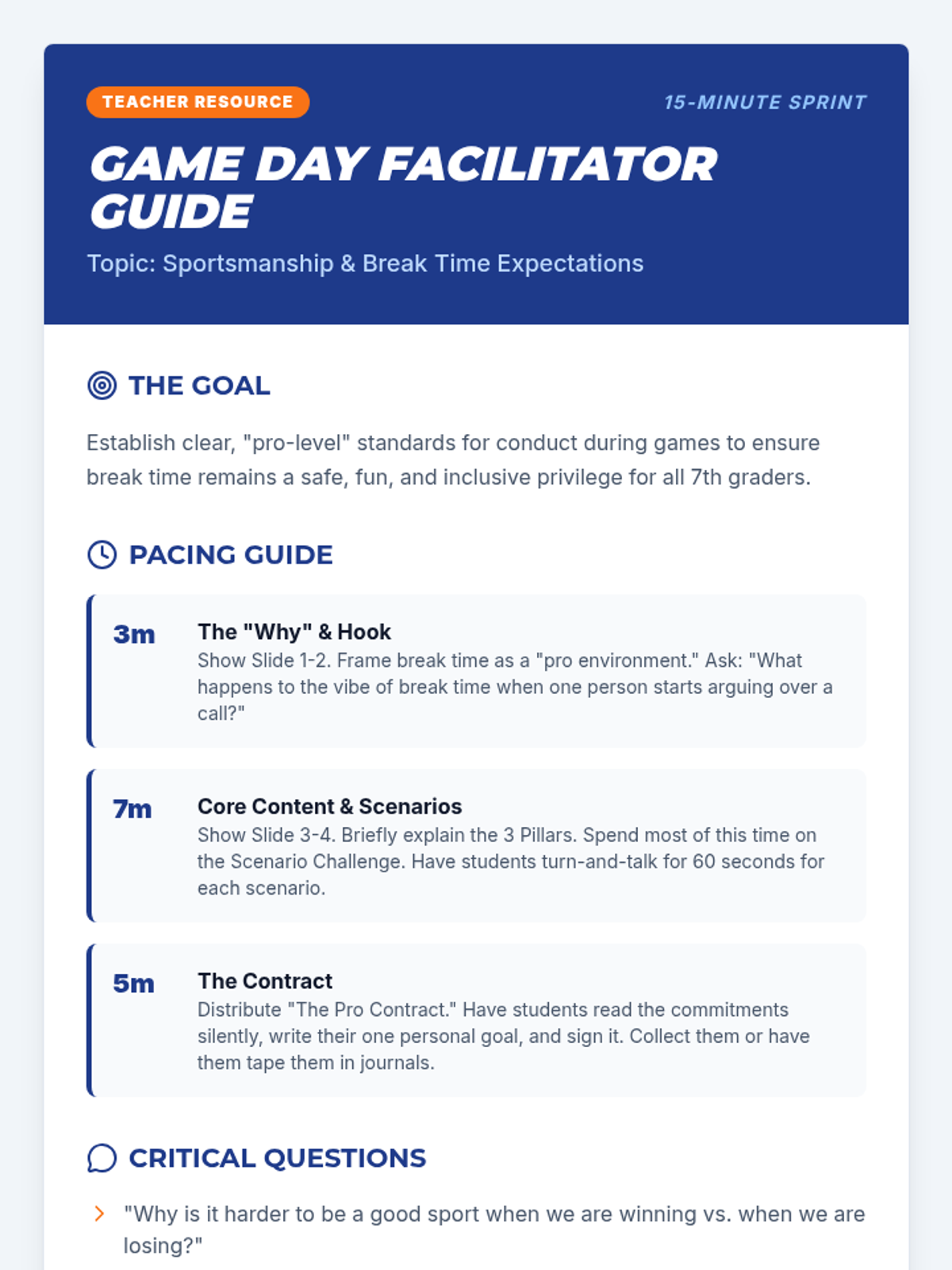
A high-impact 15-minute lesson for 7th graders focused on establishing professional standards for sportsmanship and conduct during earned break time activities.
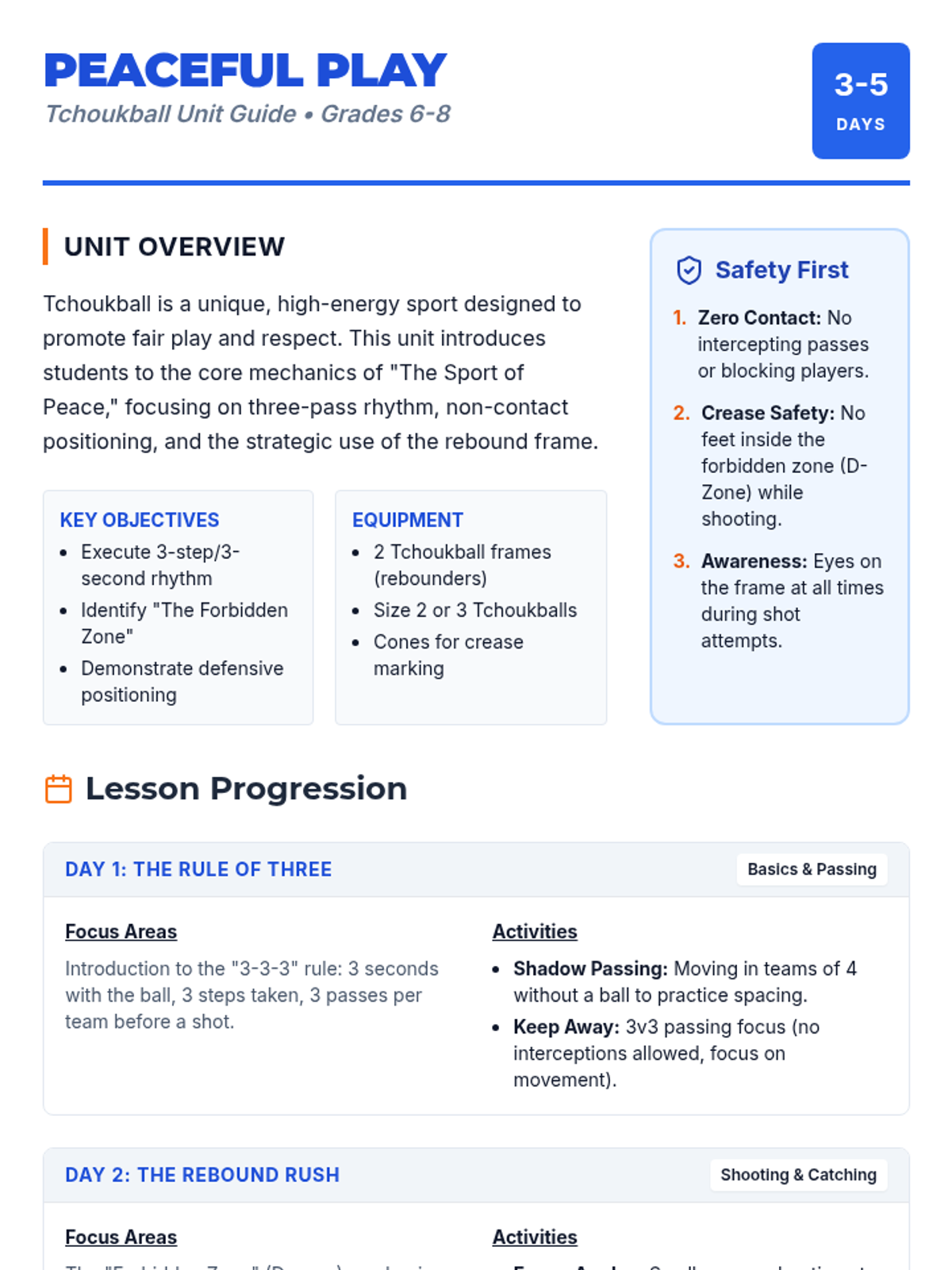
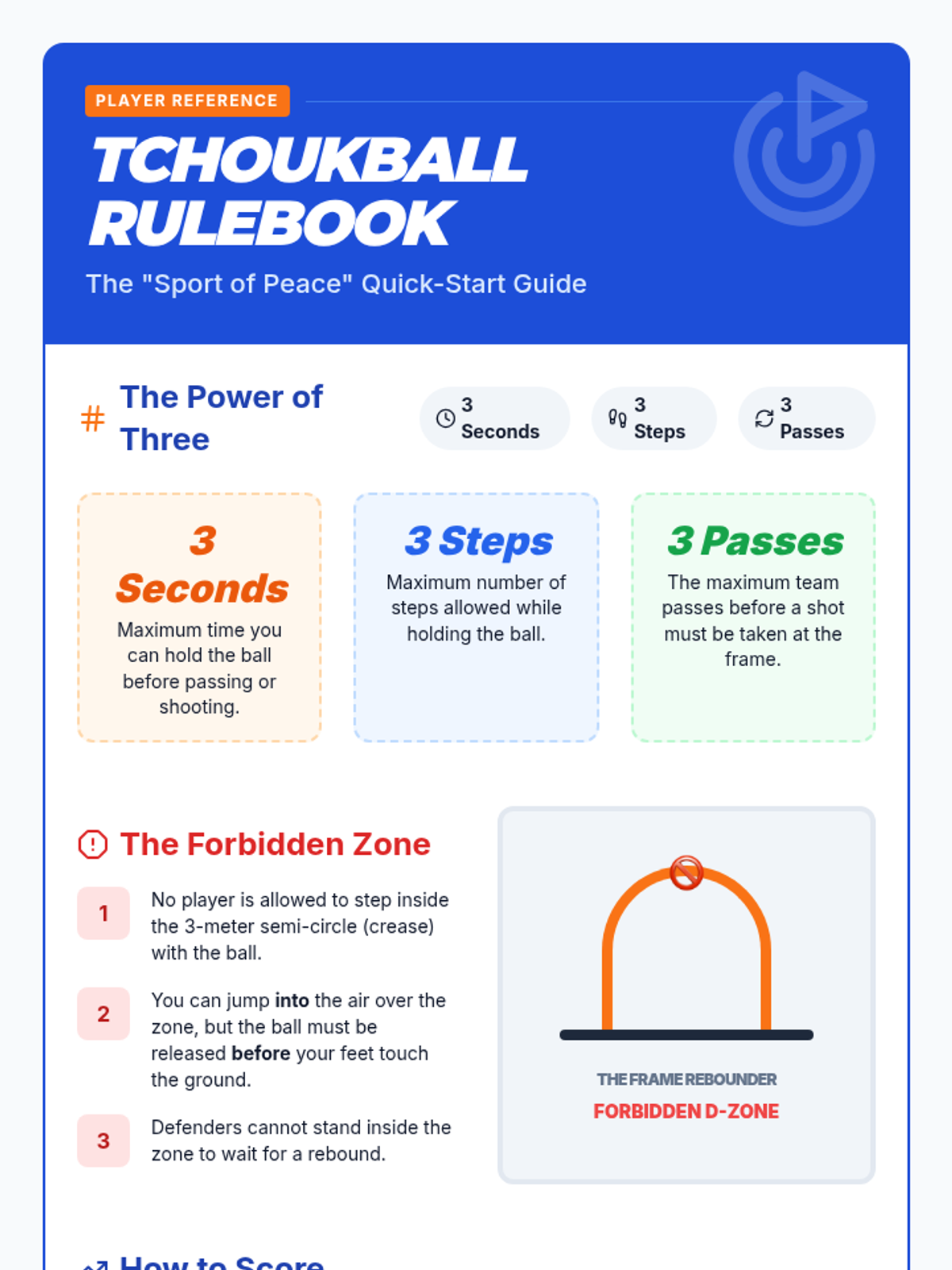
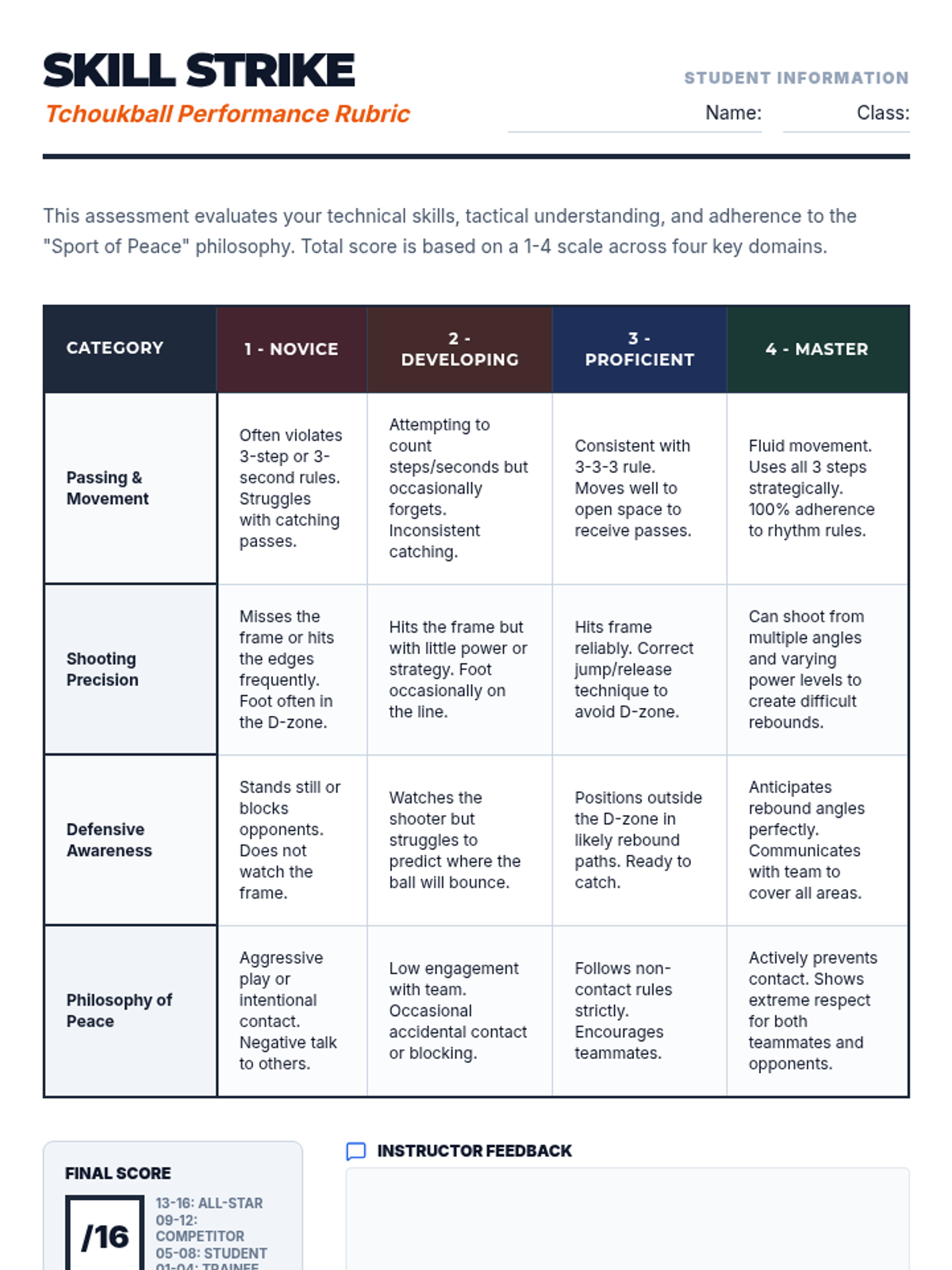
A comprehensive 3-day unit covering the fundamentals, rules, and tactical gameplay of Tchoukball, the 'Sport of Peace.' Designed for middle school students to develop coordination, teamwork, and fair play.
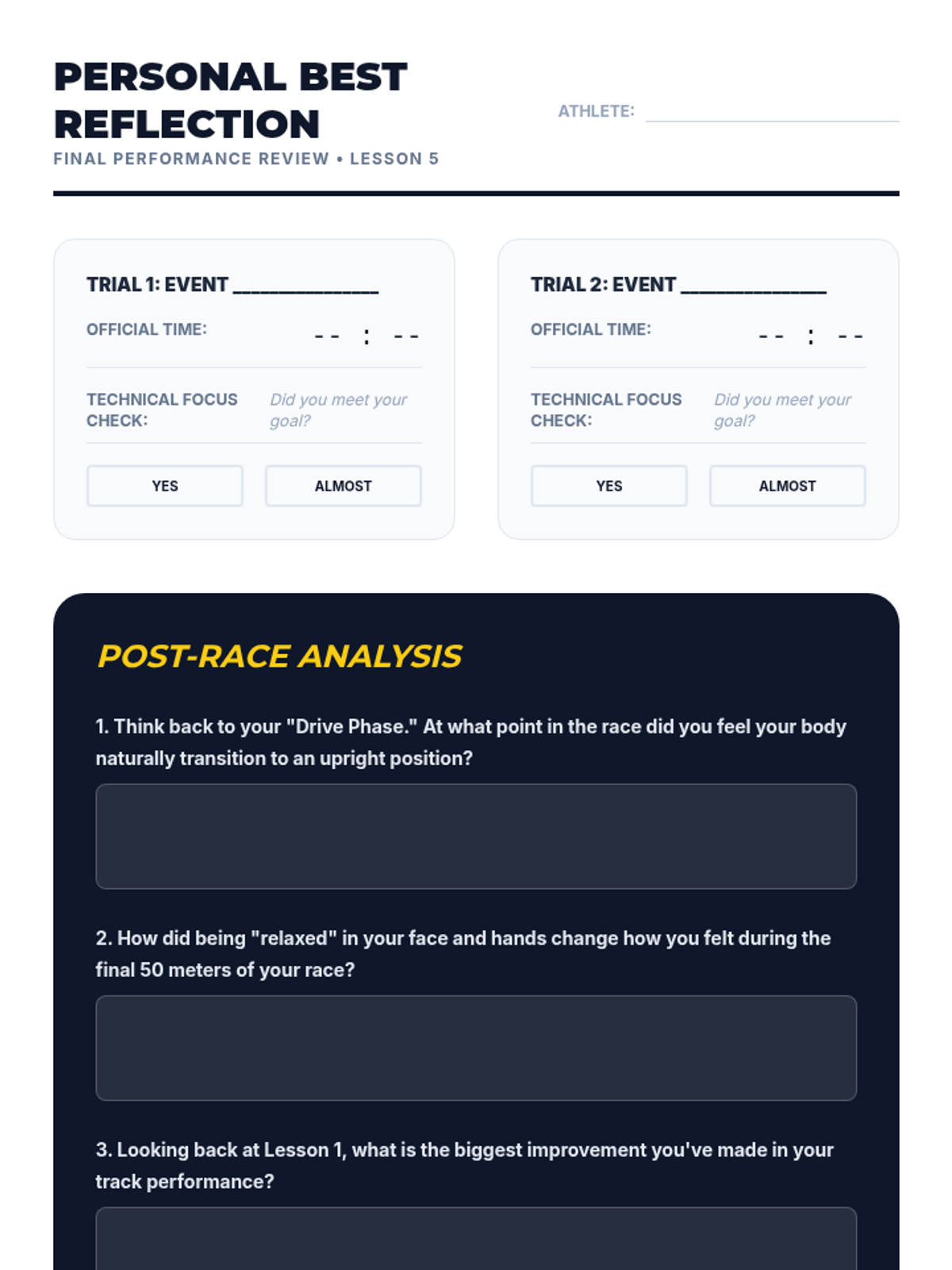
A culminating session where students apply technical skills in timed trials and reflect on their progress.
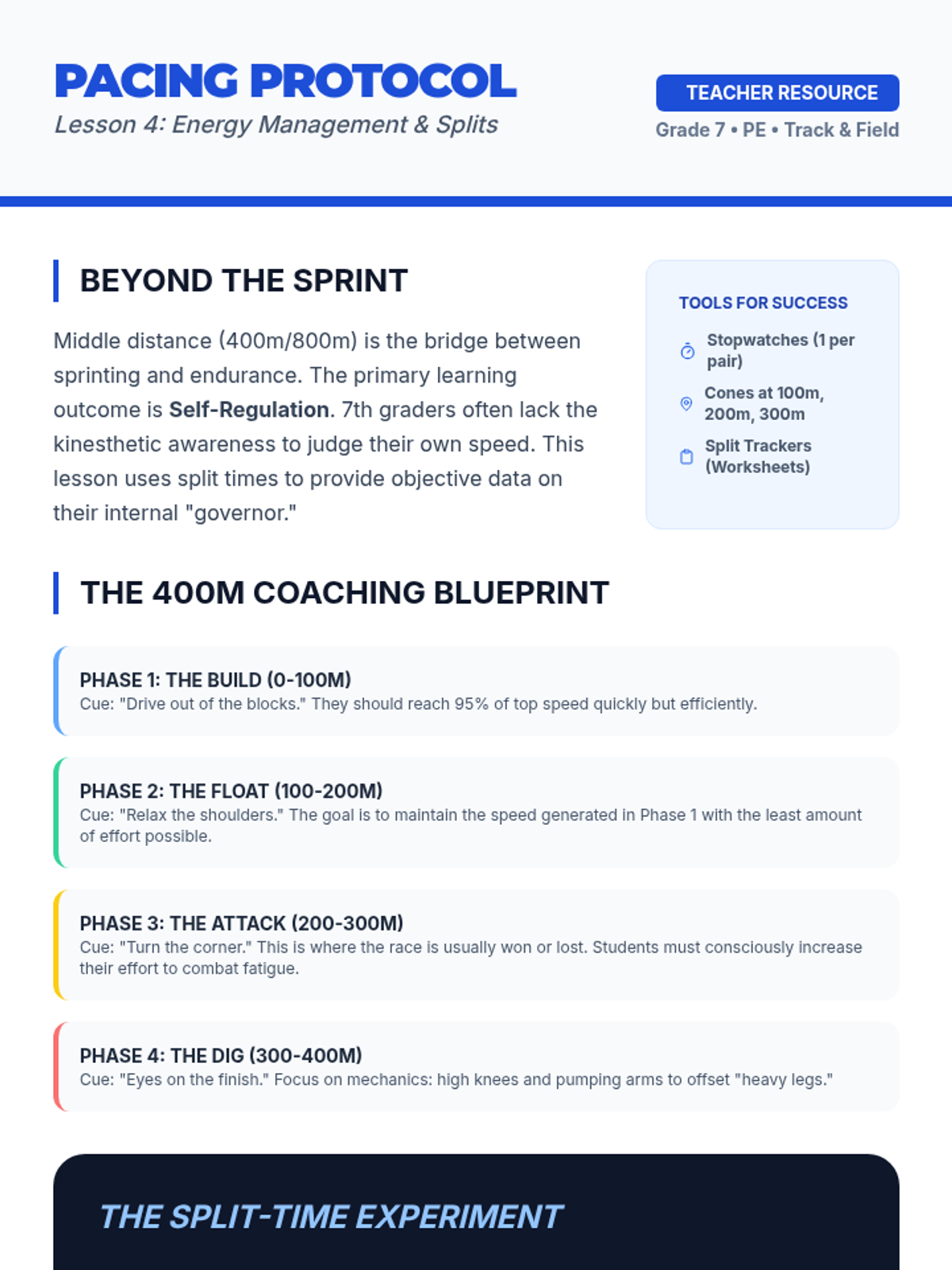
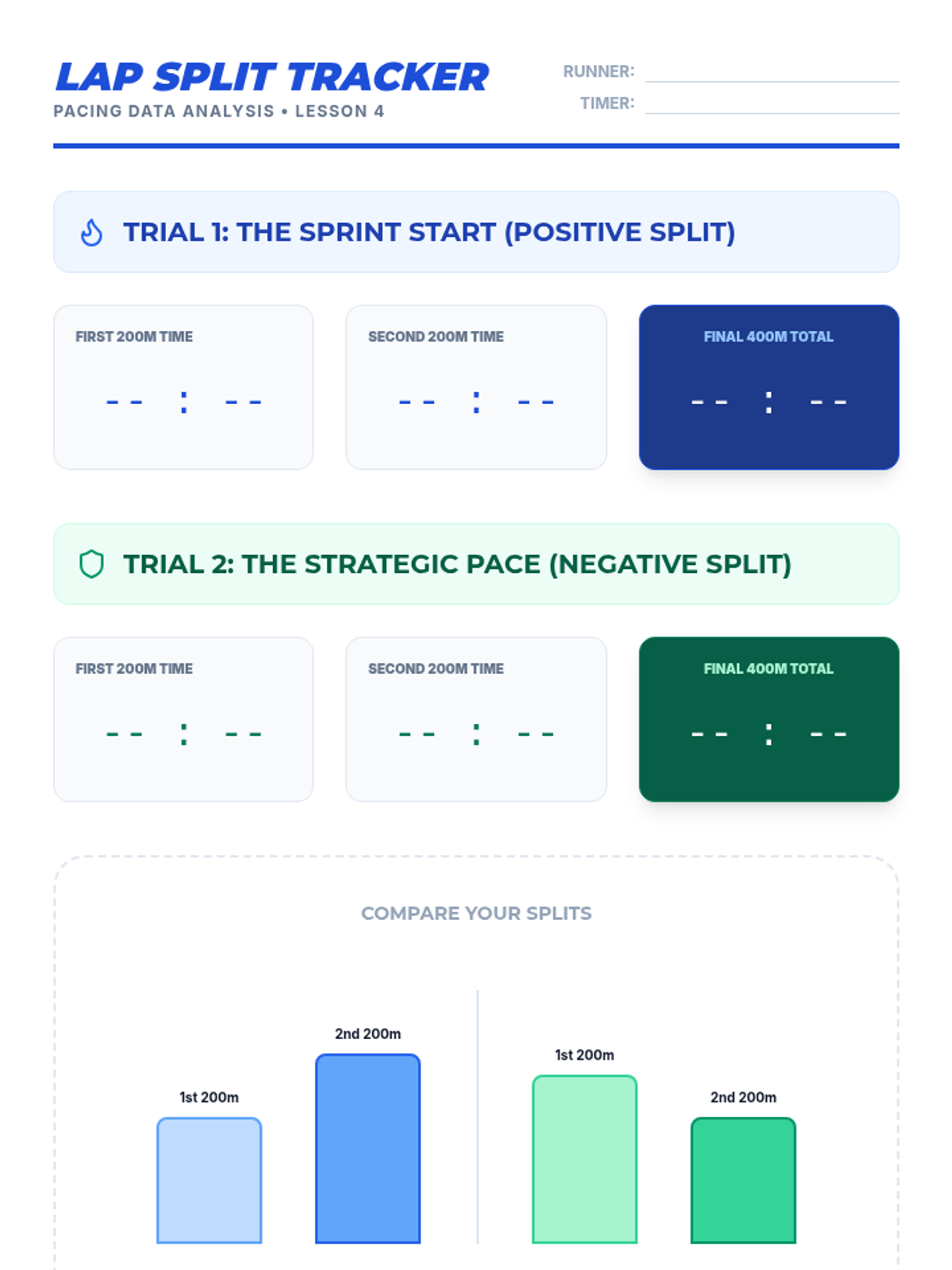
Understanding energy distribution and negative splits for the 400m and 800m events.
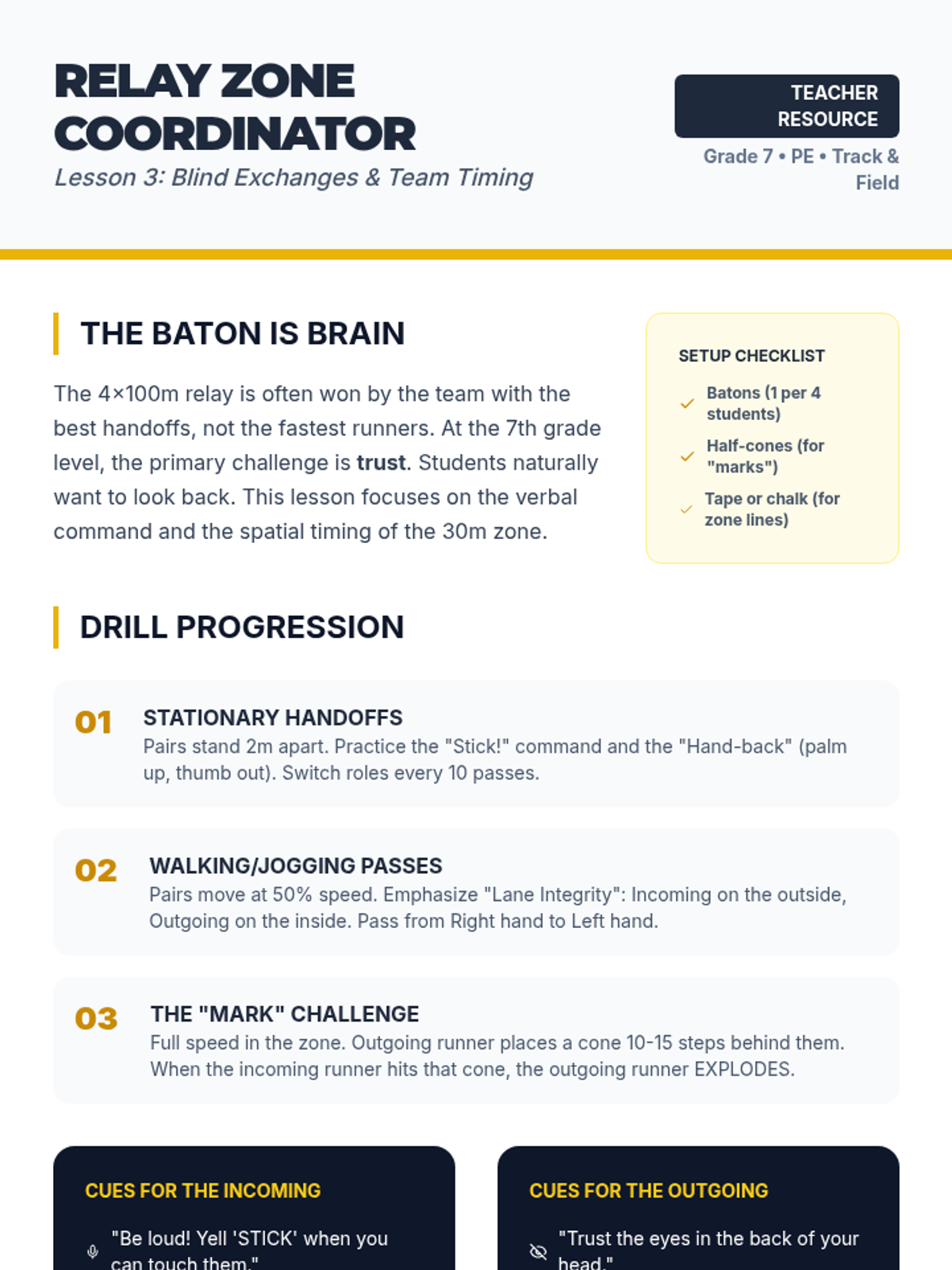
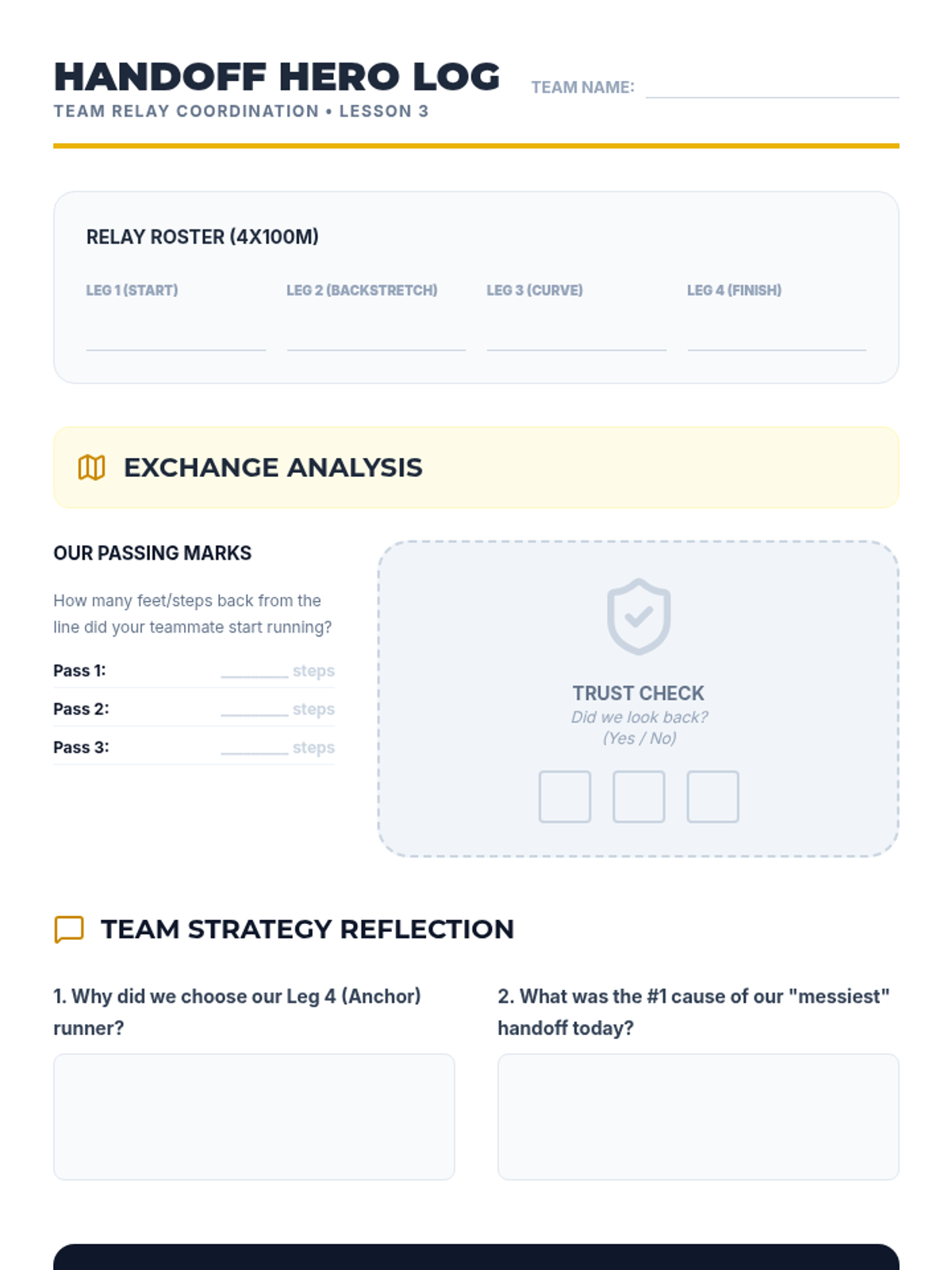
Technical mastery of the 4x100m relay handoff, emphasizing timing, communication, and blind exchanges.
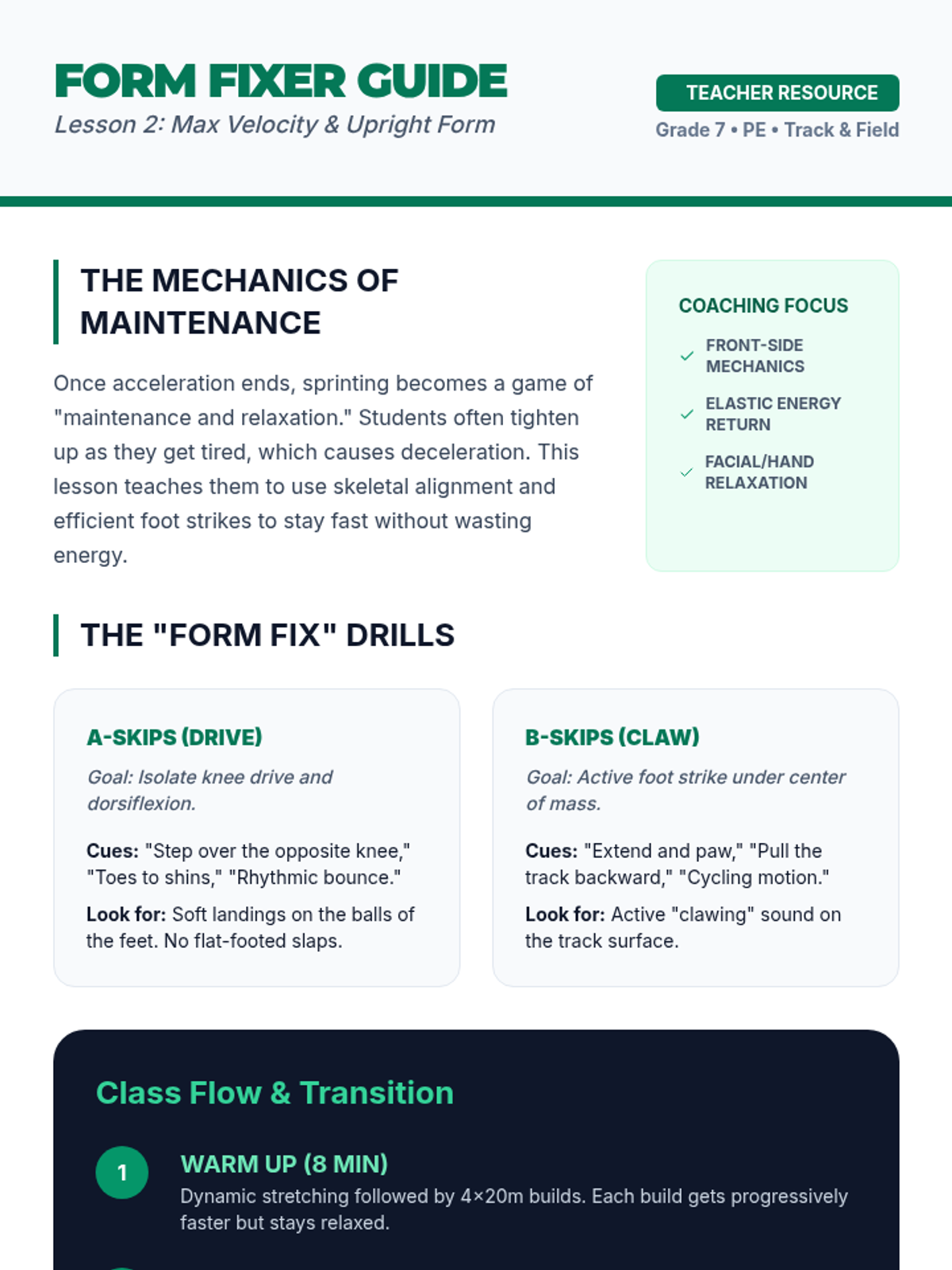
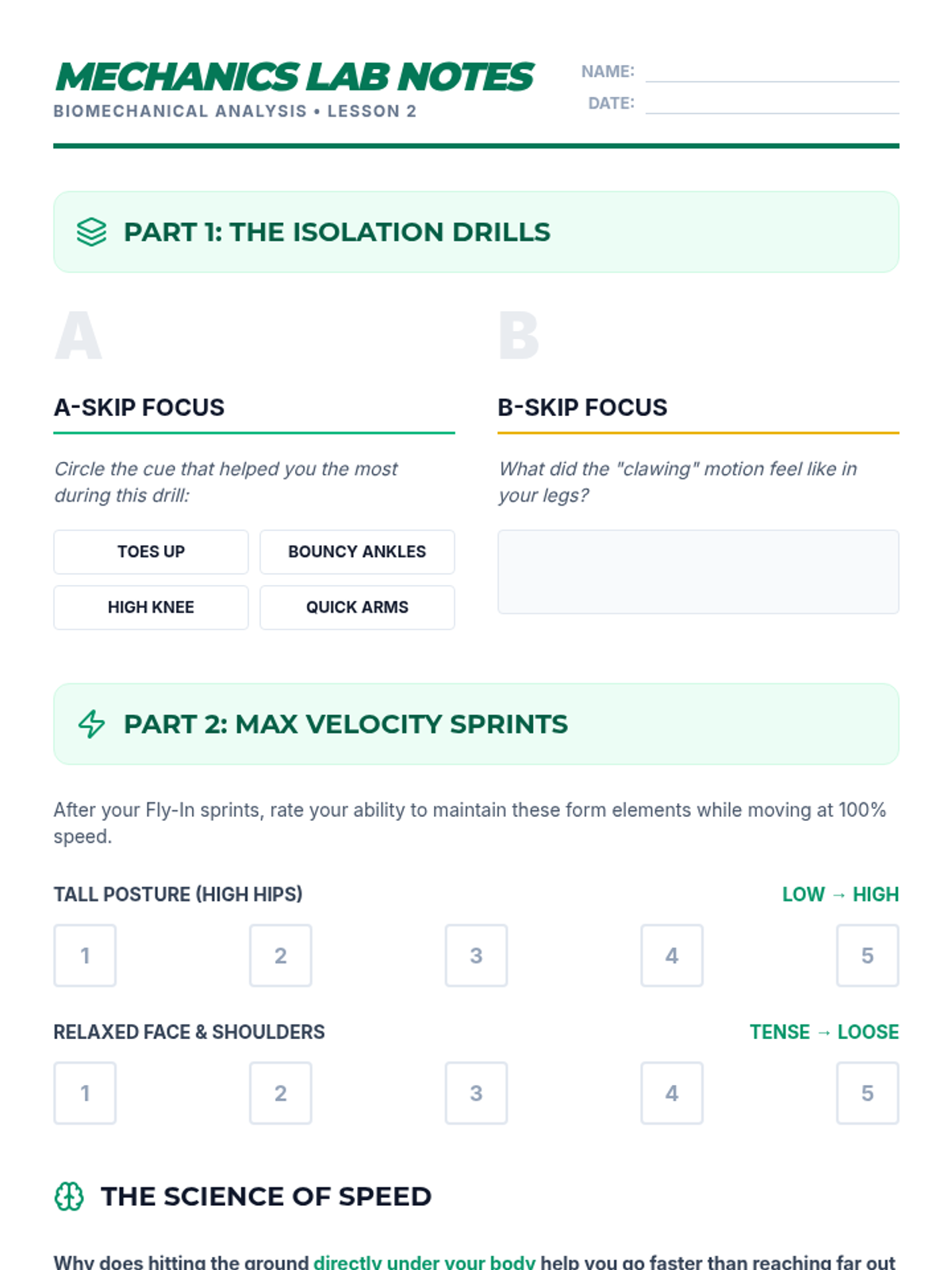
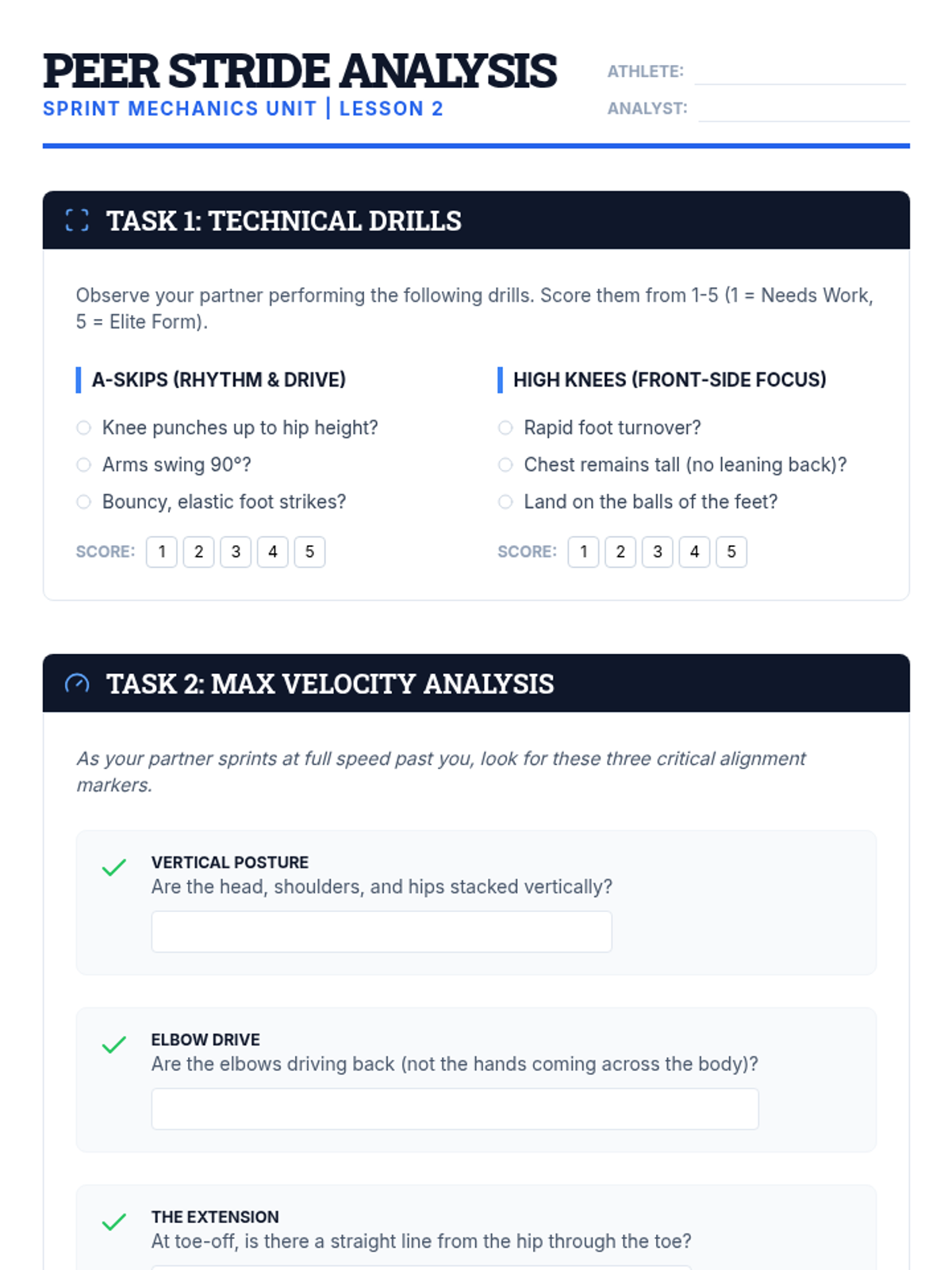
Transitioning from acceleration to upright running, focusing on knee drive, arm action, and maintaining relaxation at high speeds.
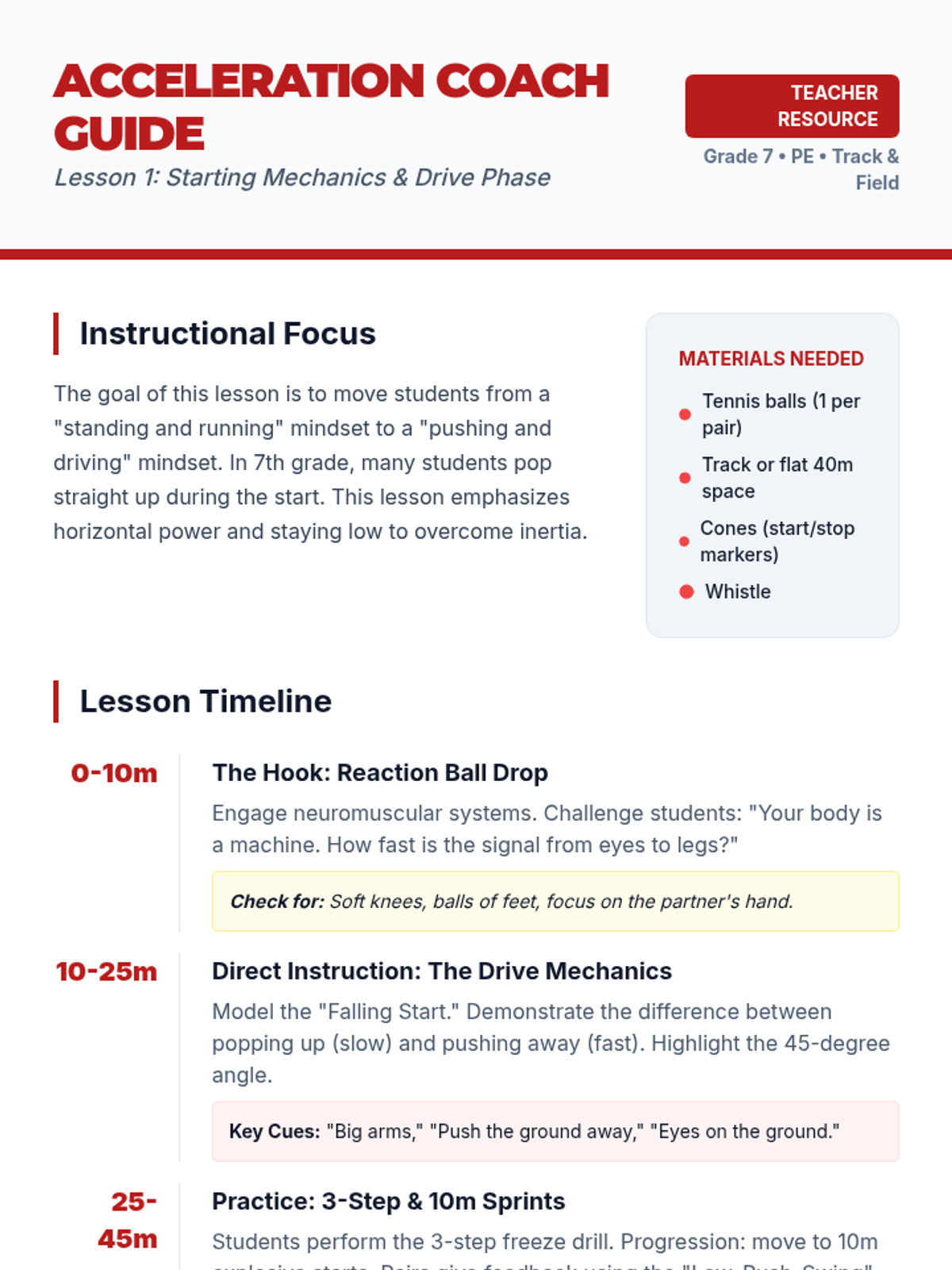
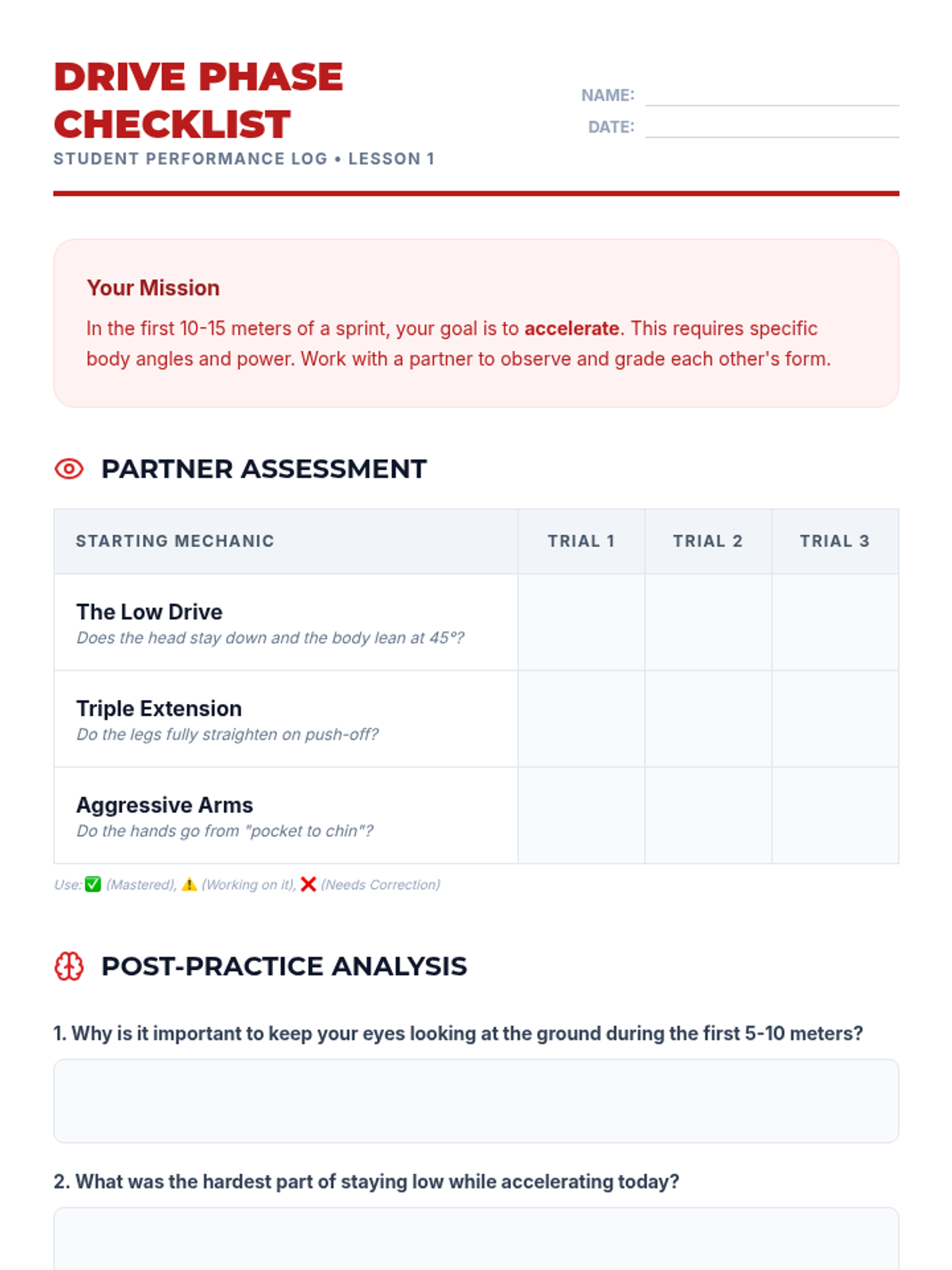
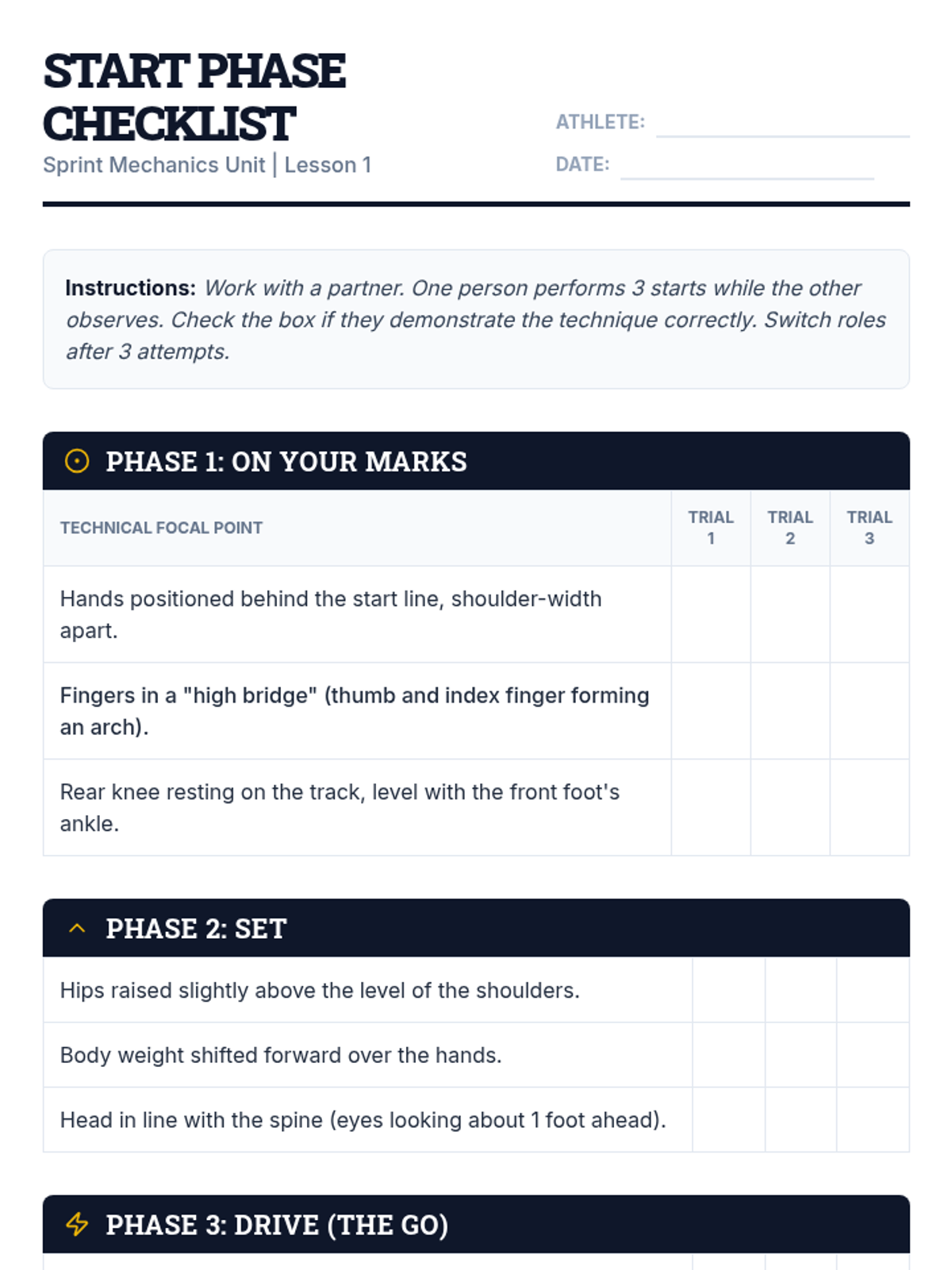
Focuses on the biomechanics of the start, specifically the crouch position and the drive phase to maximize initial acceleration.
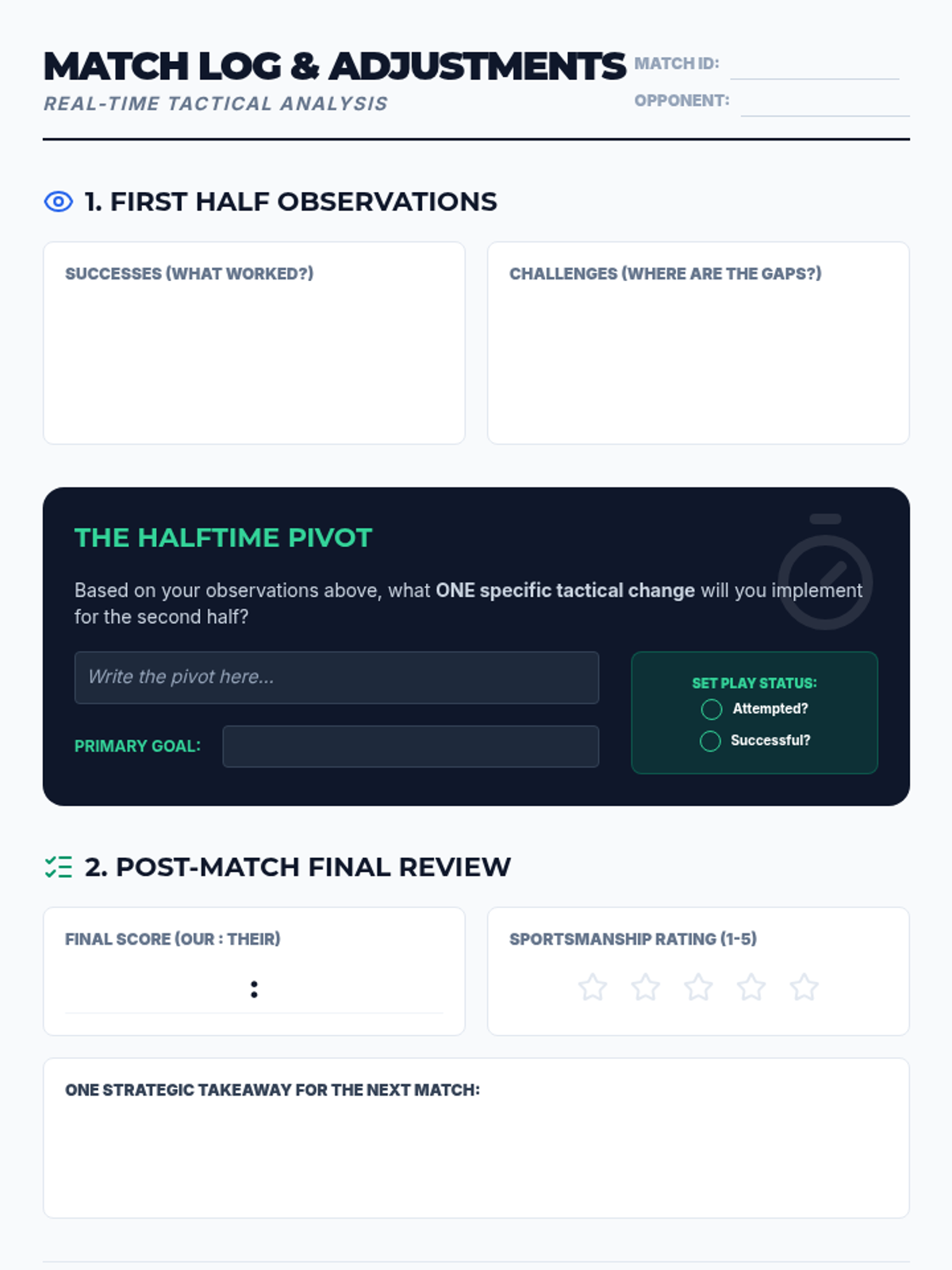
The class tournament begins with a focus on implementing the practiced strategies. Between games, teams conduct brief 'halftime talks' to discuss what is working and what needs to change.
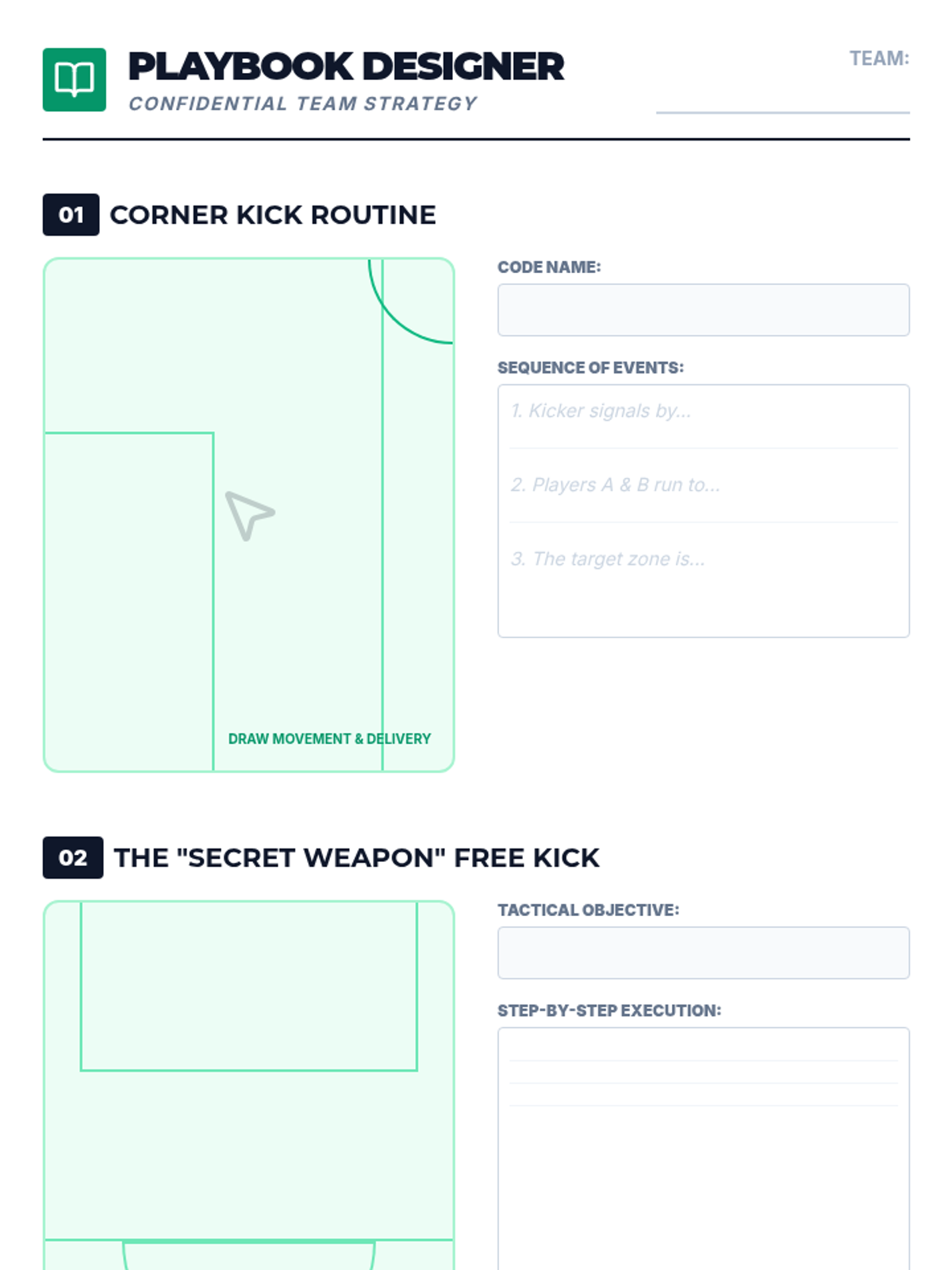
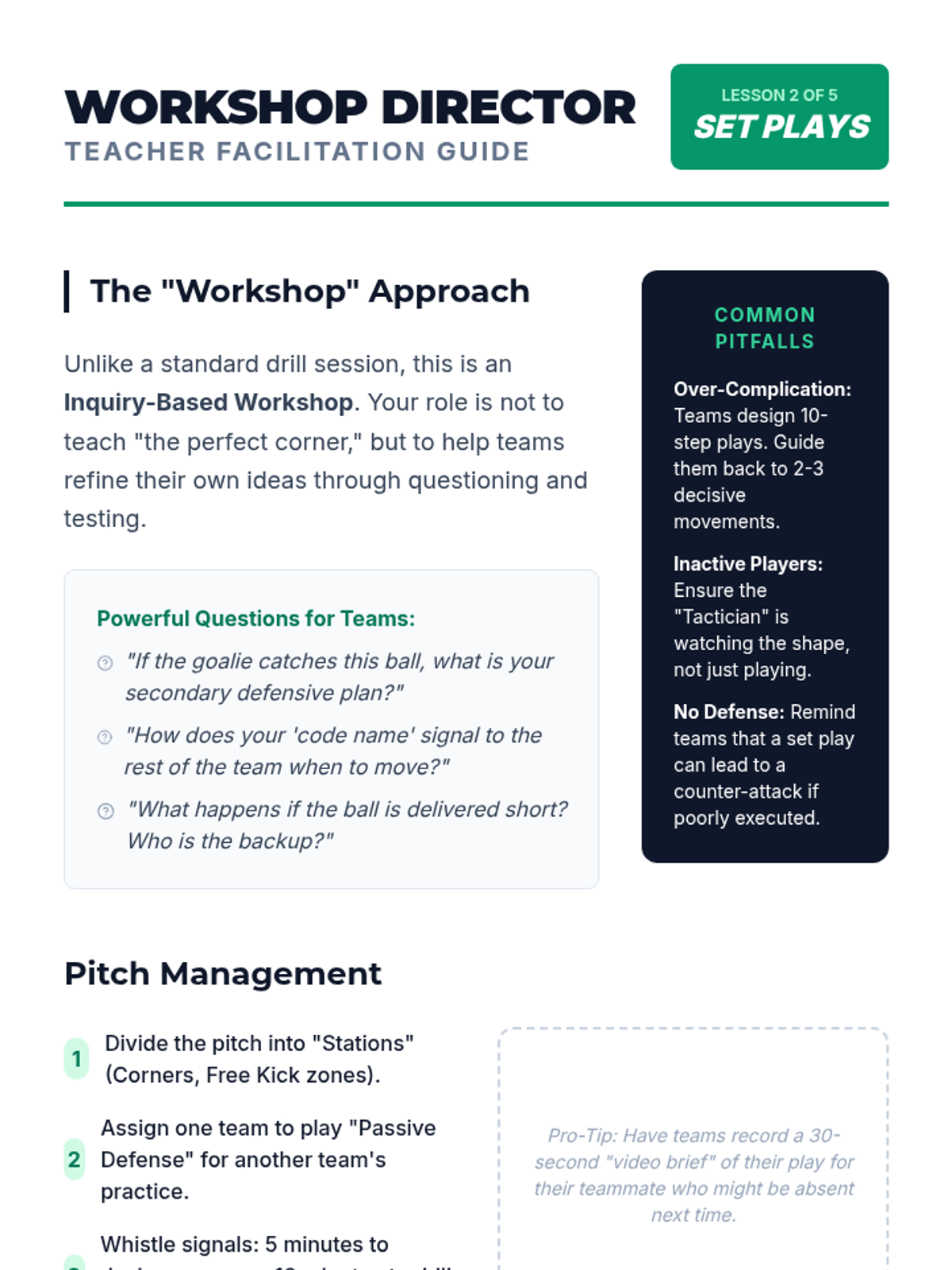
Teams spend the lesson designing and practicing two specific set plays (one corner kick, one free kick) and one defensive protocol. They document these plays to be used in the upcoming tournament.
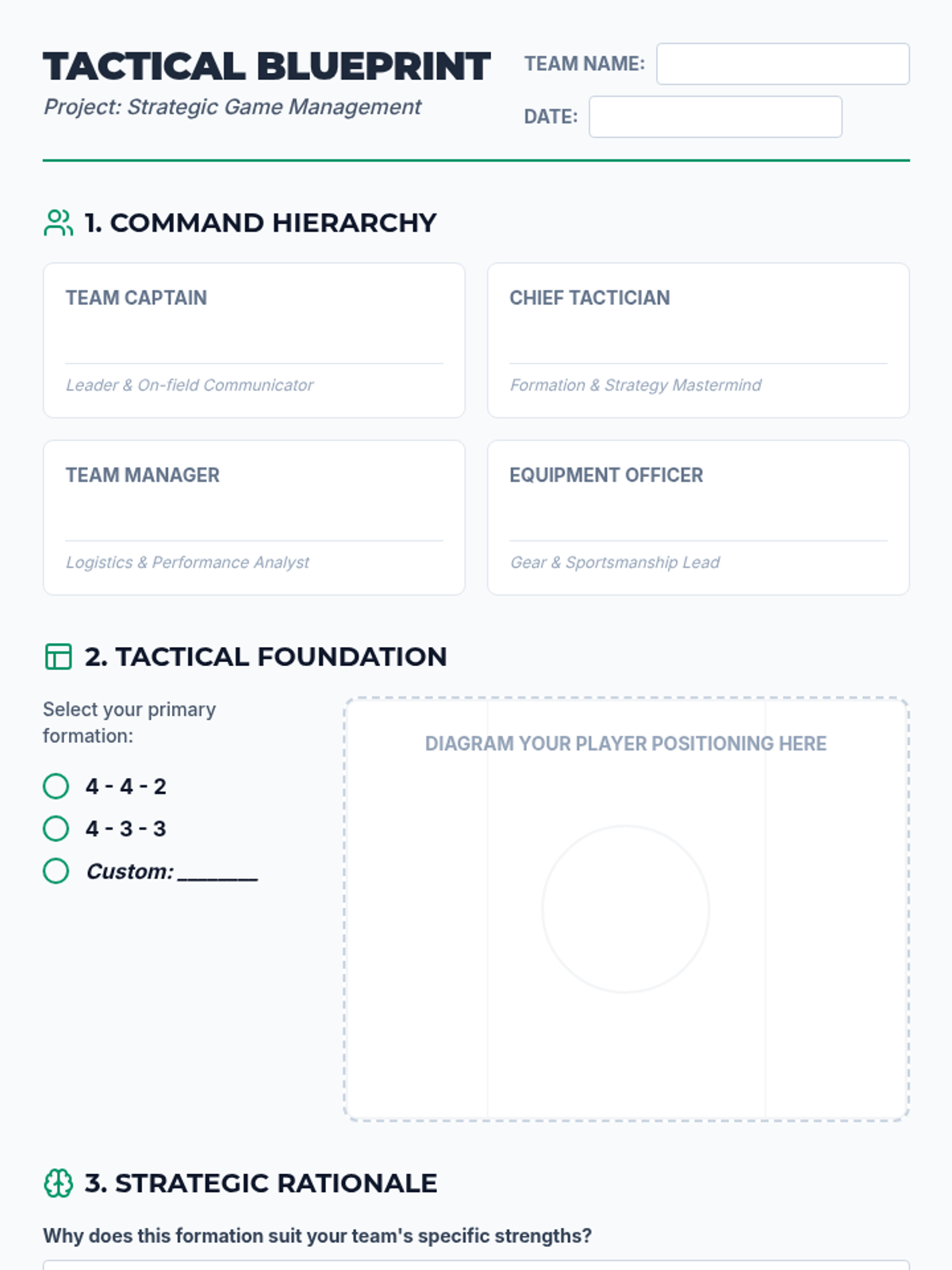
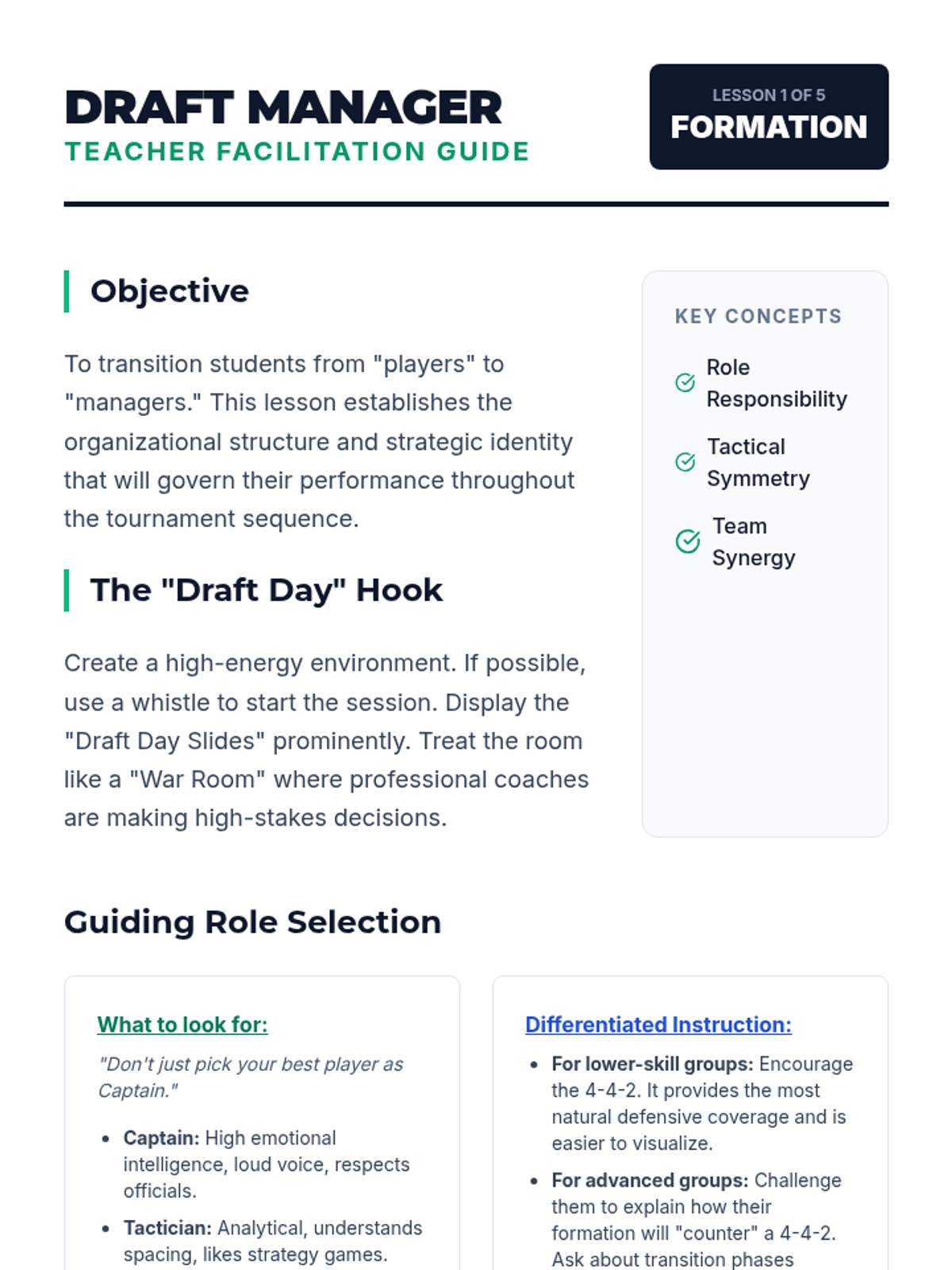
Students form teams and assume roles such as captain, tactician, and manager. They draft a team charter and choose a formation (e.g., 4-4-2, 4-3-3) that best suits their players' strengths.
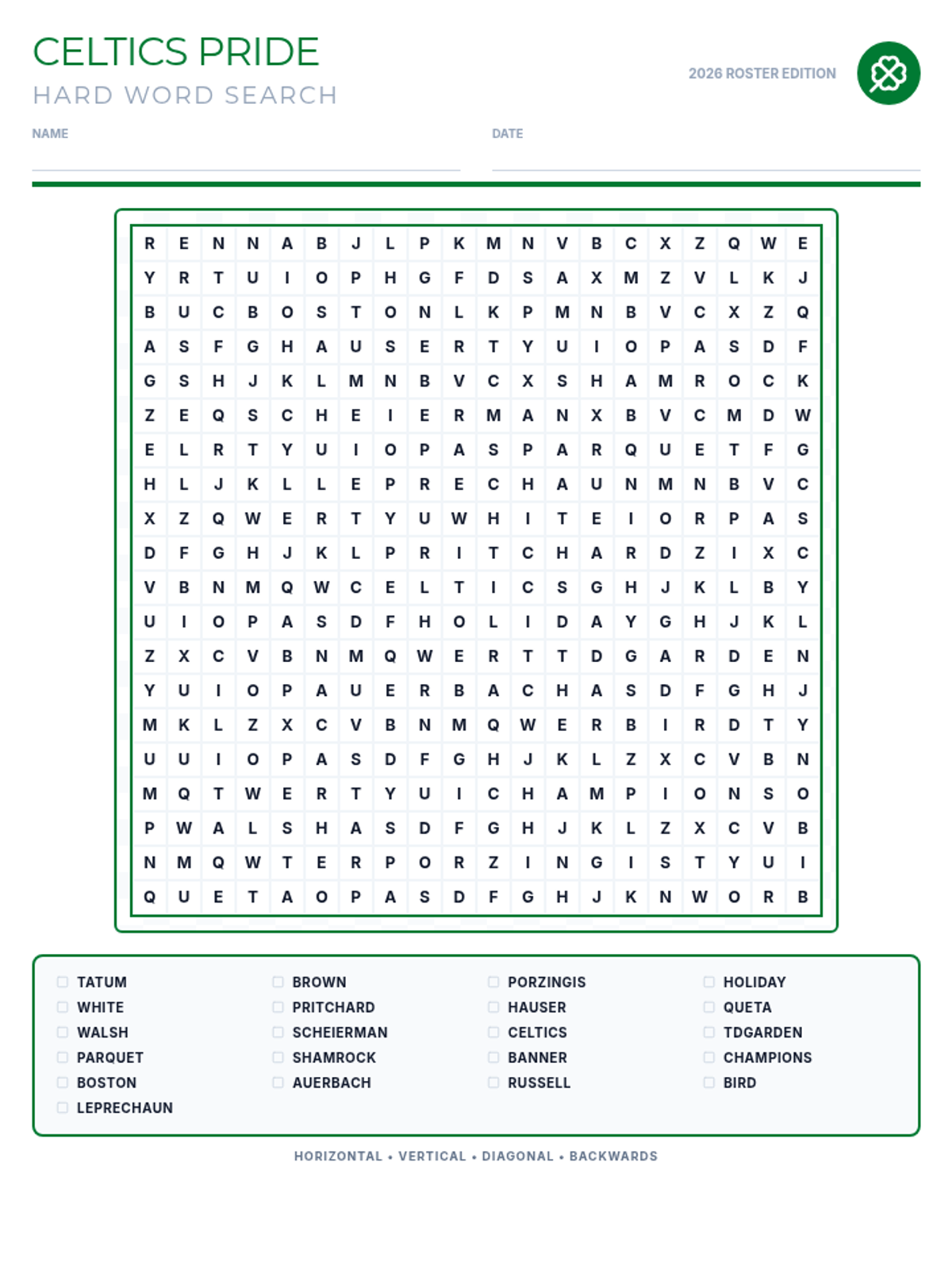
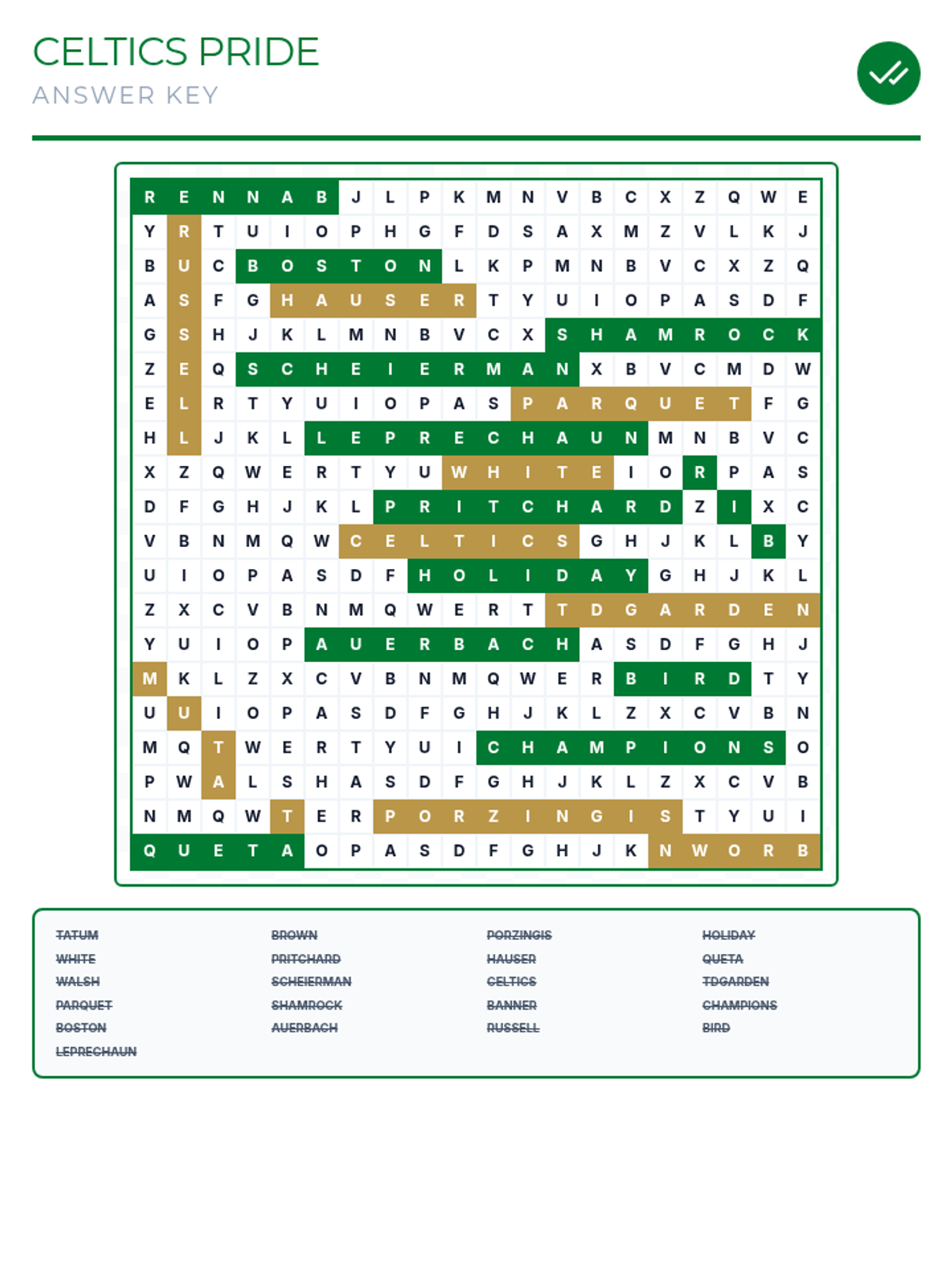
A challenging word search activity focused on the Boston Celtics, featuring 2026 roster players and franchise terminology.
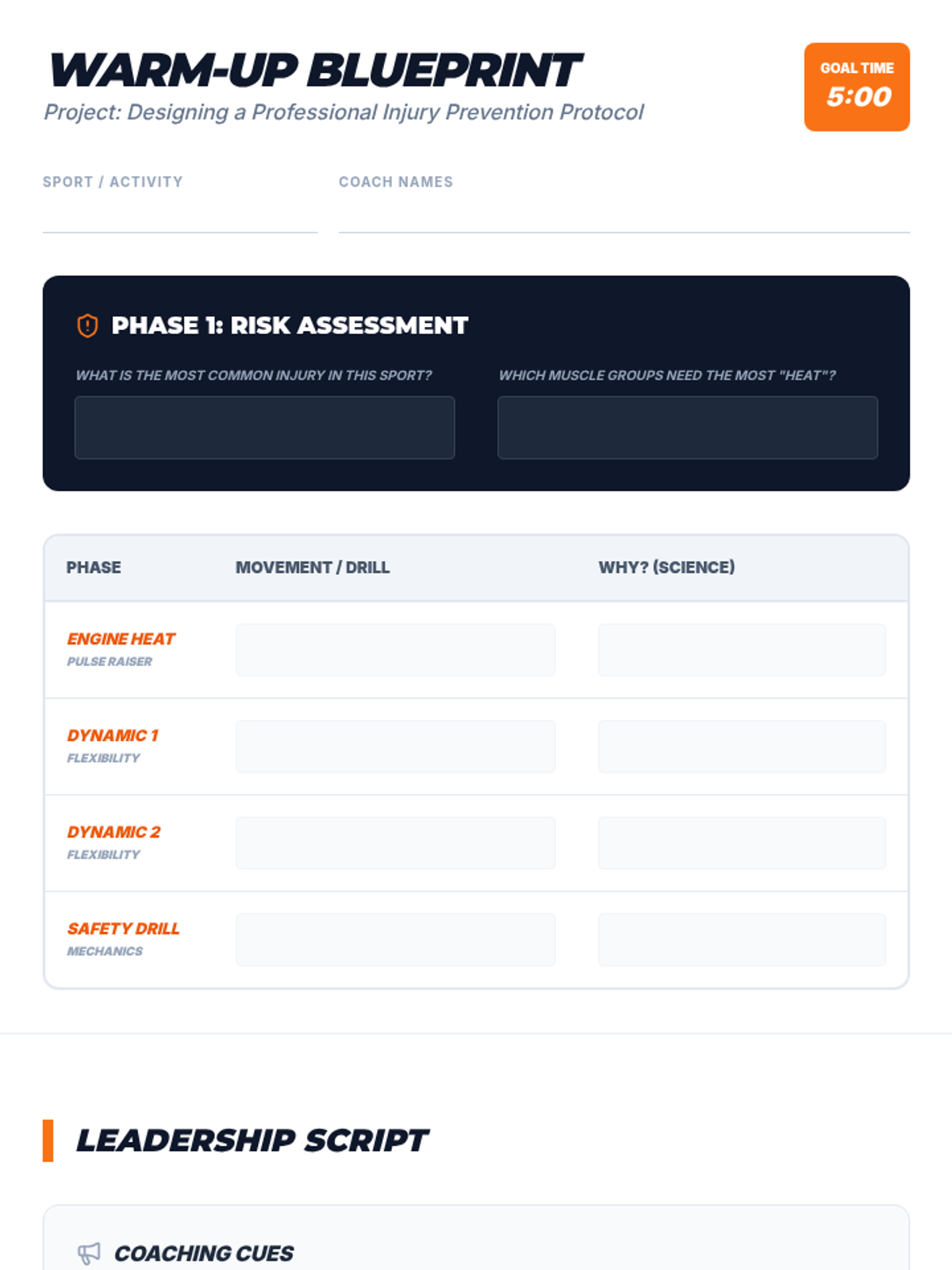
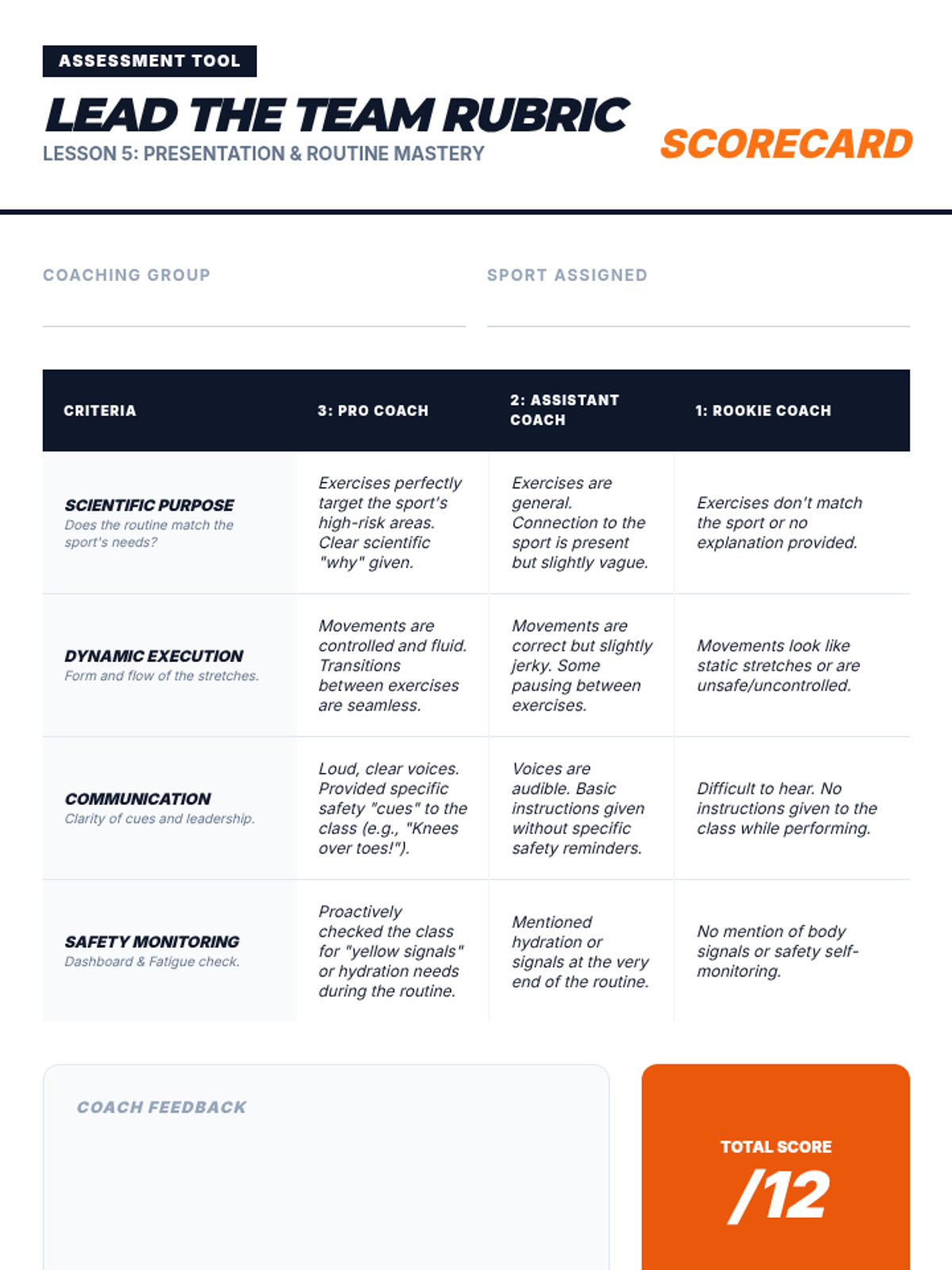
Synthesizing the previous lessons, students work in small groups to create a 5-minute warm-up routine tailored to a specific sport or activity. They present and lead the class through their routine, explaining how each movement prevents injuries common to that sport.
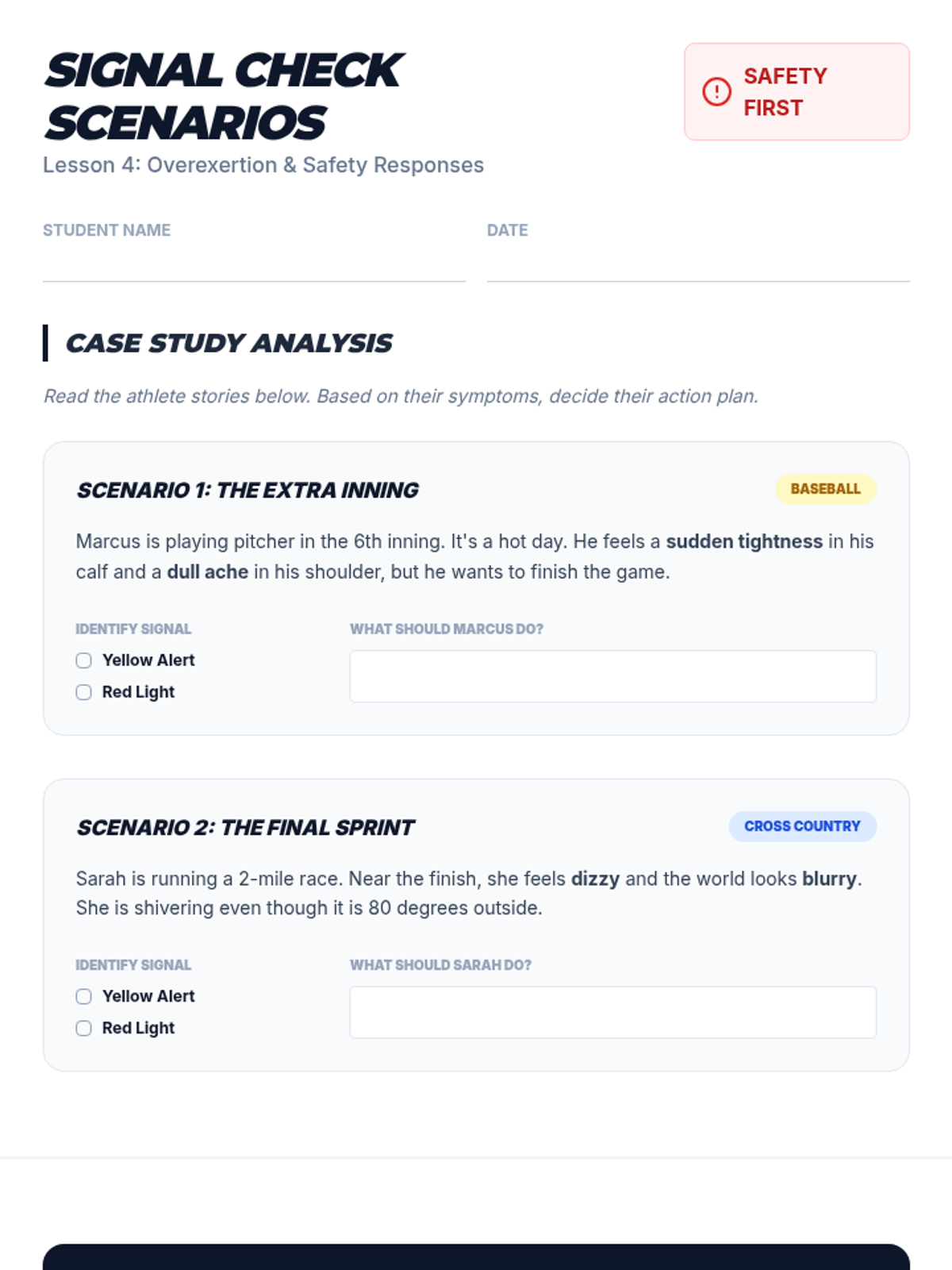
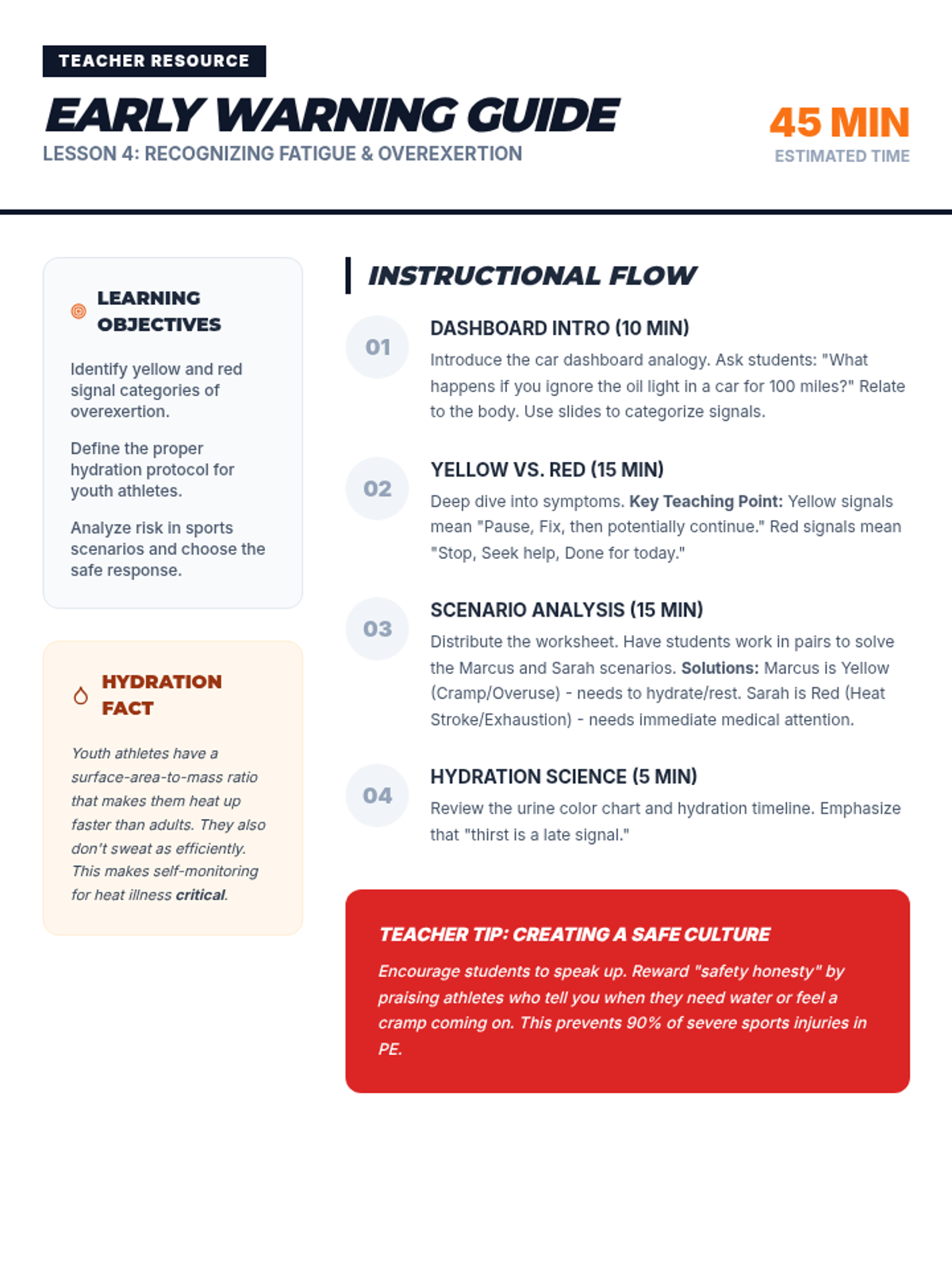
Students learn to identify the body's warning signals, such as cramps, dizziness, or pain, that indicate a need for rest or hydration. Through scenario analysis, they determine the appropriate response to various symptoms to prevent heat illness or overuse injuries.
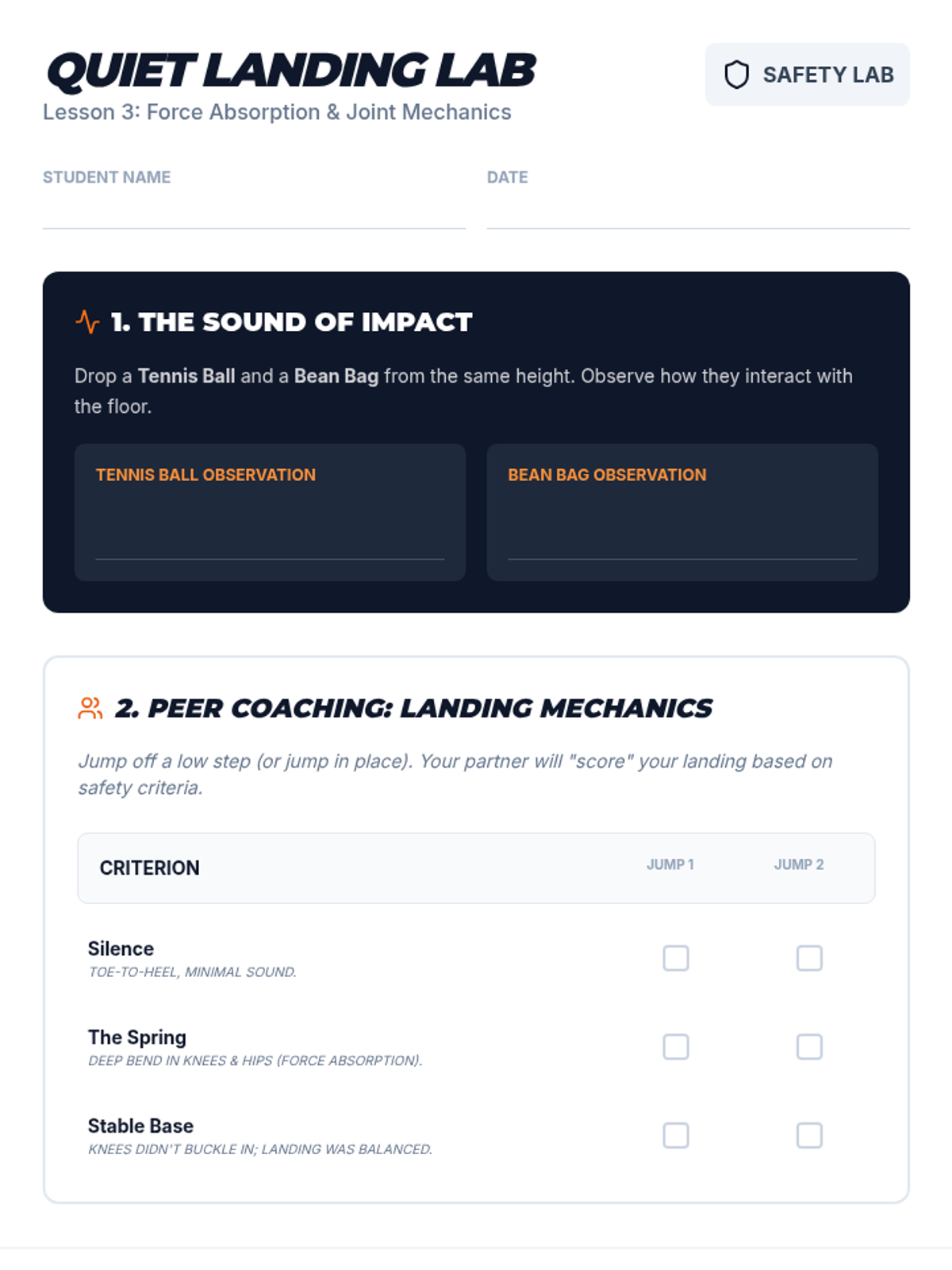
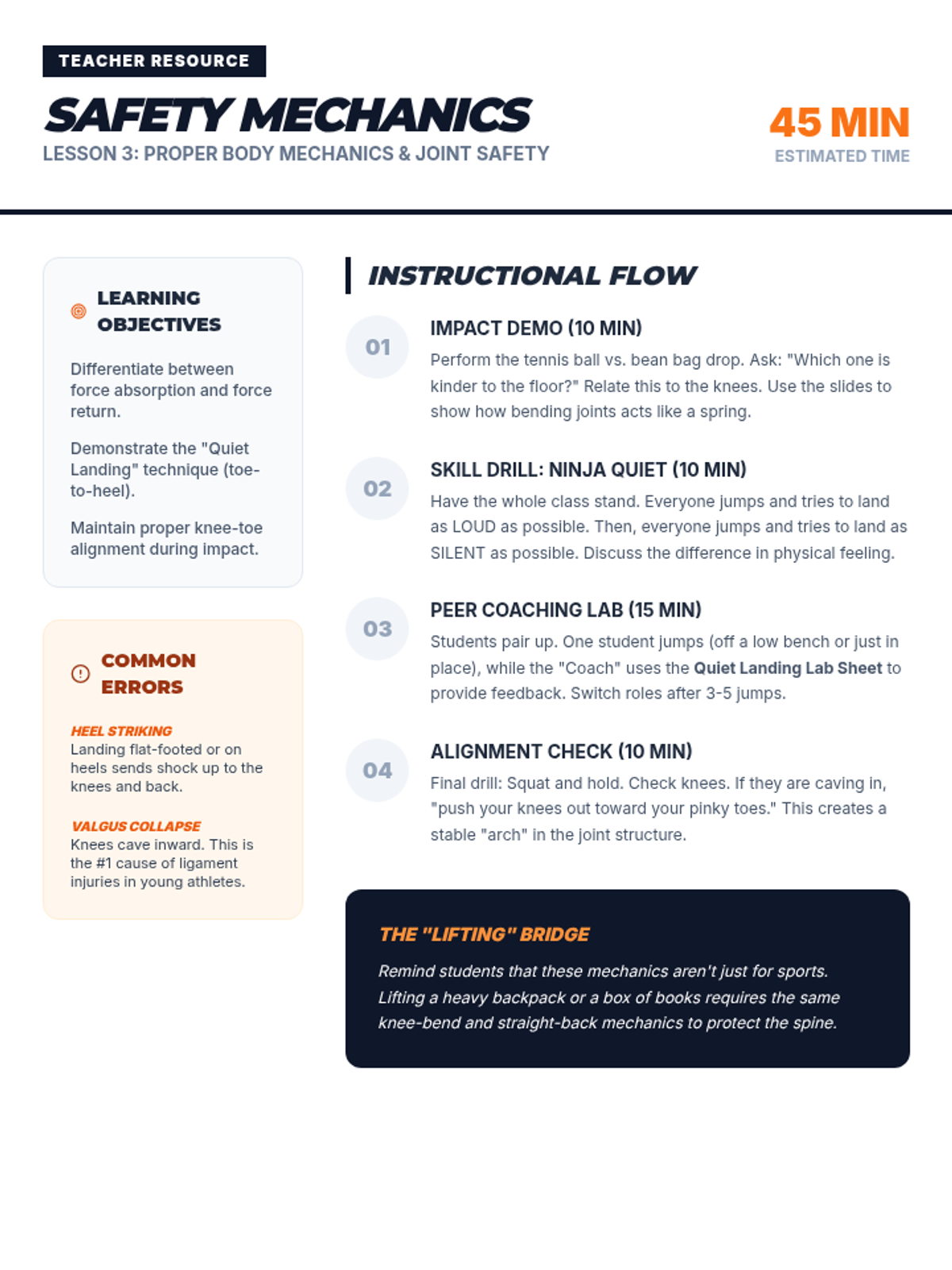
Focusing on joint safety, this lesson covers correct alignment for landing, jumping, and lifting. Students practice 'quiet landings' to reduce impact on knees and ankles, receiving peer feedback on their form to ensure structural safety.
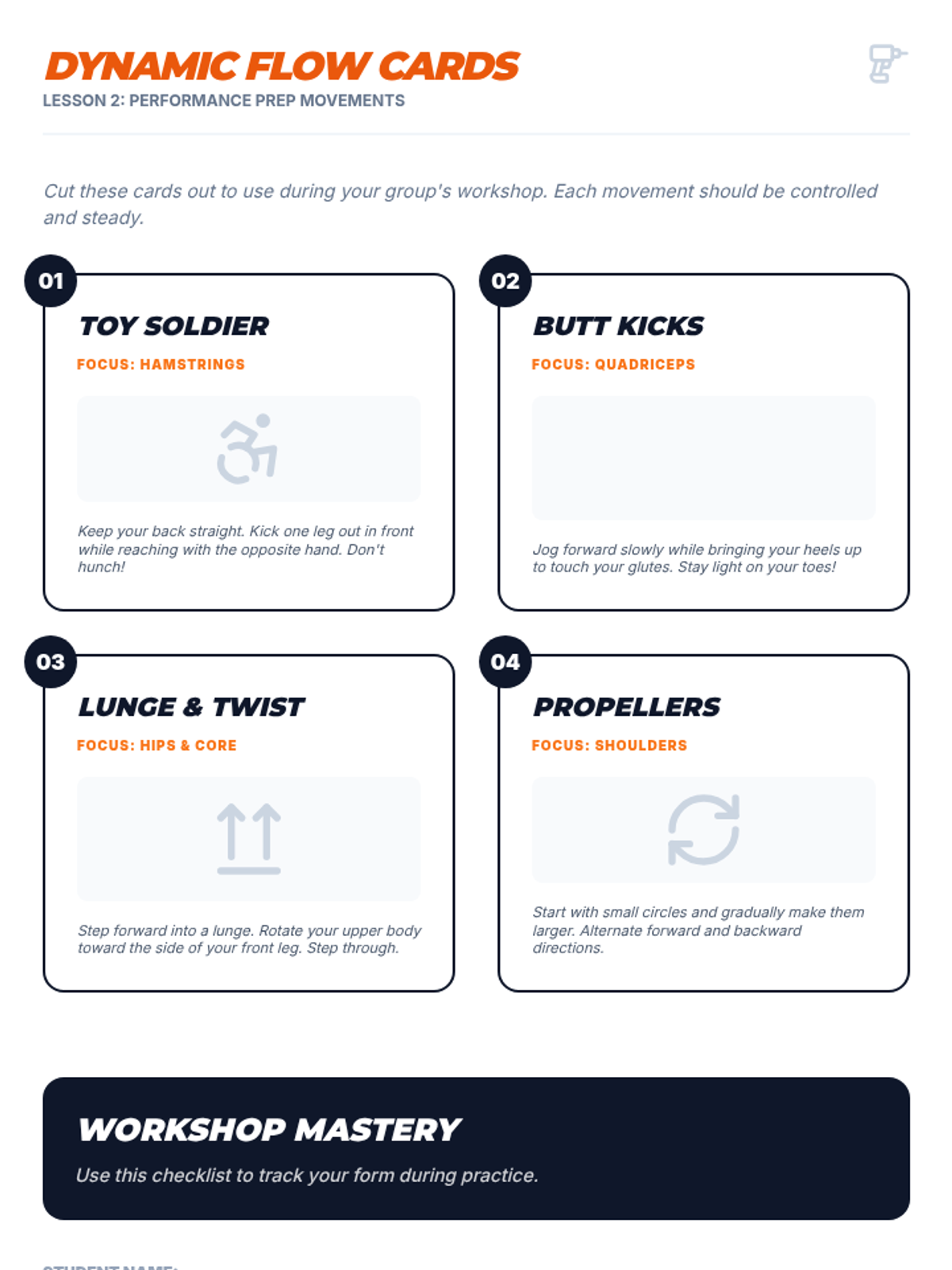
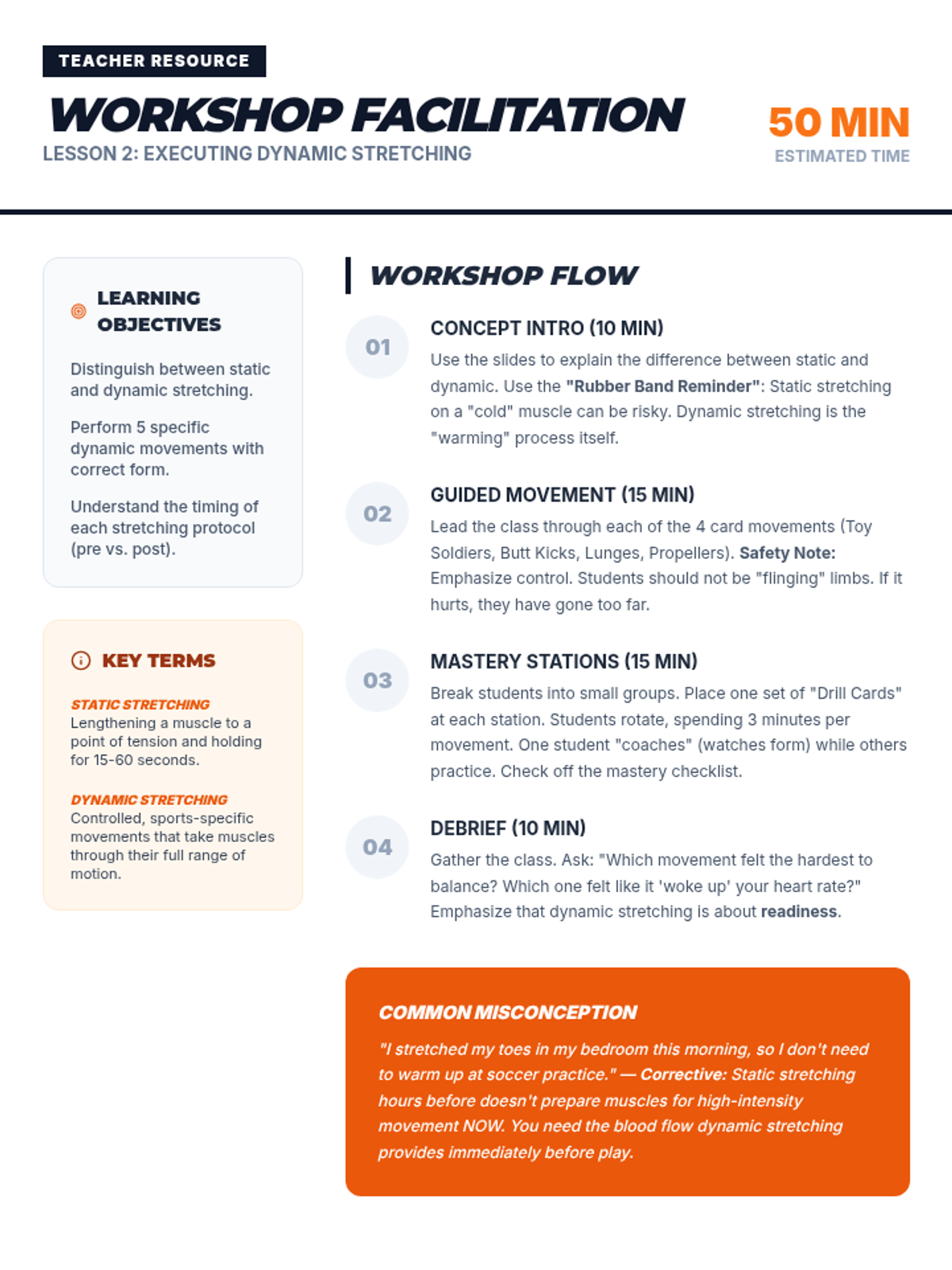
Students participate in a guided workshop to learn and practice dynamic stretching movements suitable for pre-activity preparation. The lesson distinguishes these active movements from static stretching, emphasizing when each type is appropriate to prevent muscle strain.
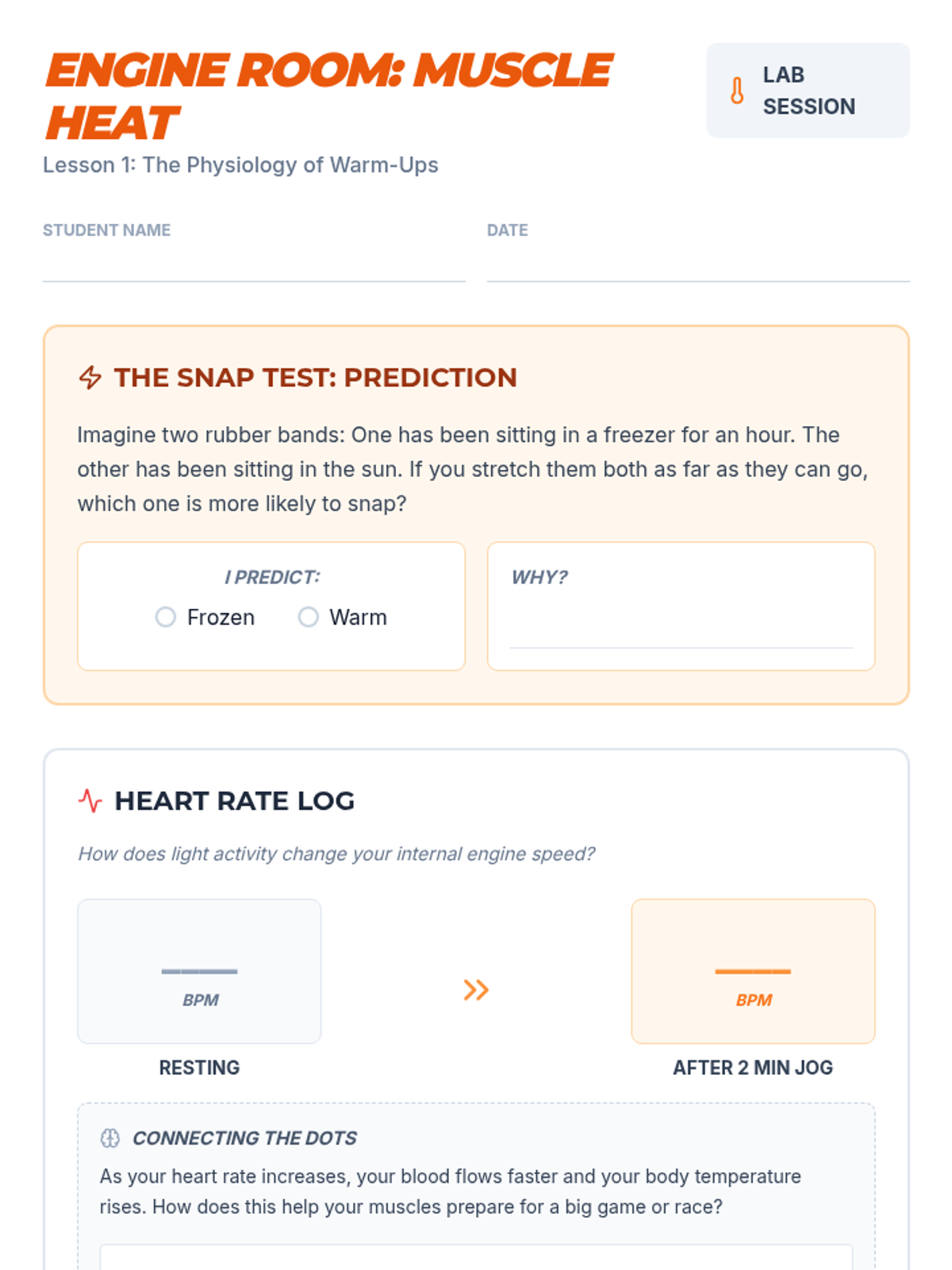
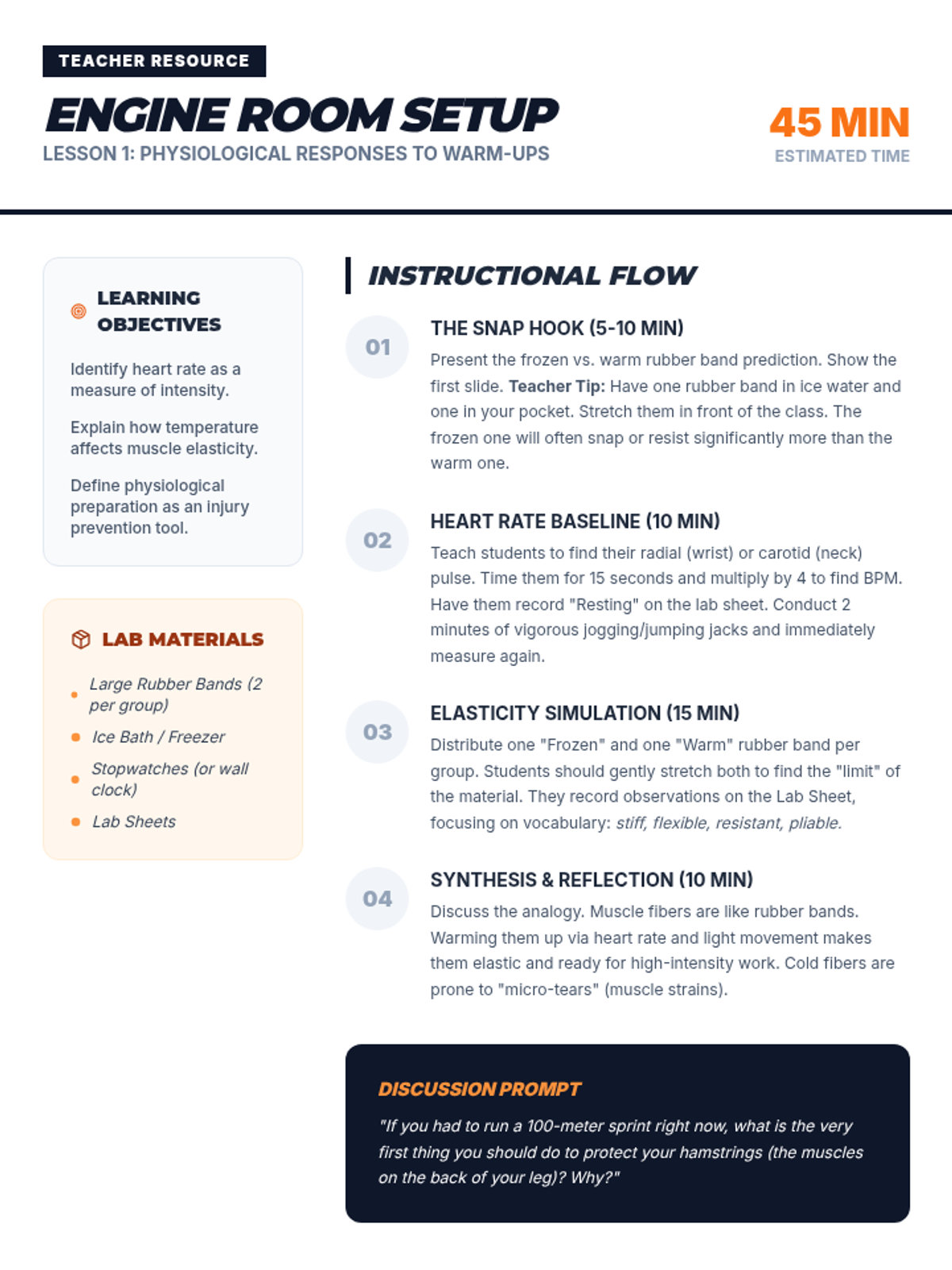
Students investigate the physiology of warm-ups, using a rubber band simulation to understand muscle elasticity and tracking heart rate changes during activity.
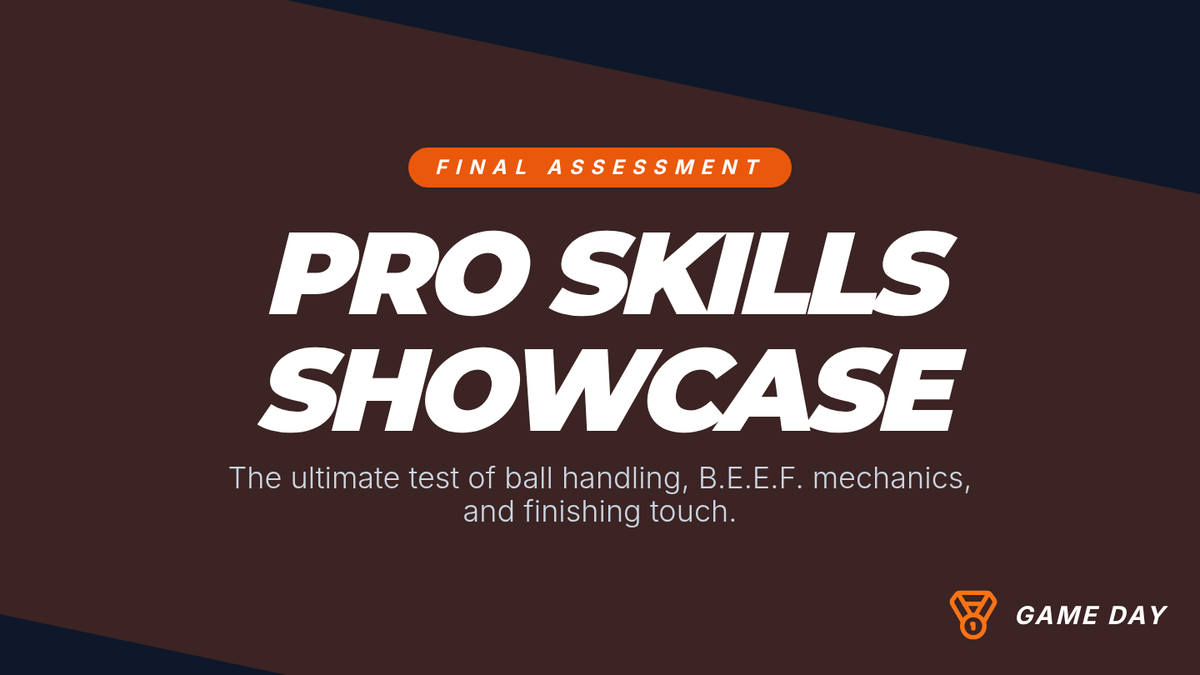
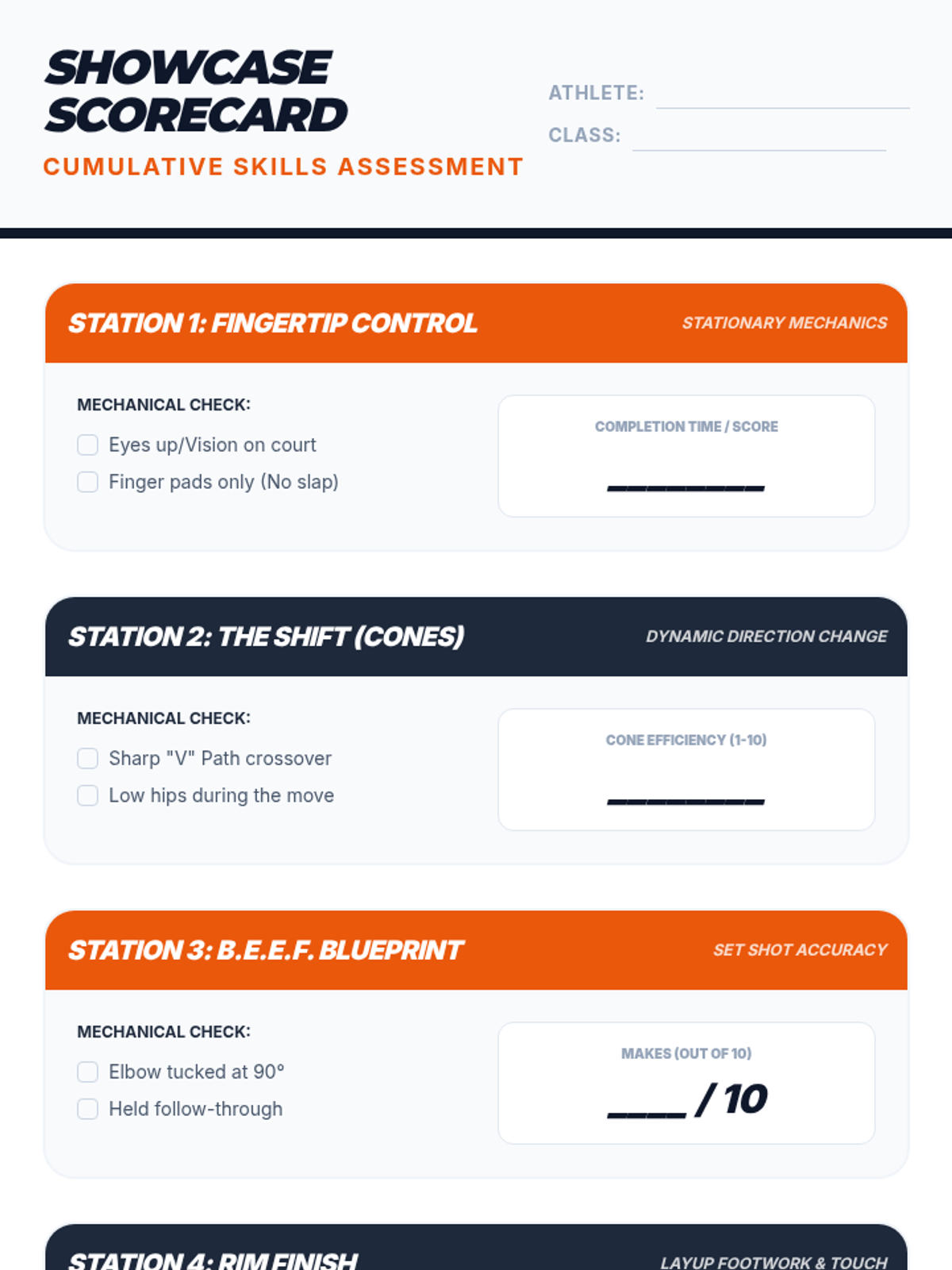
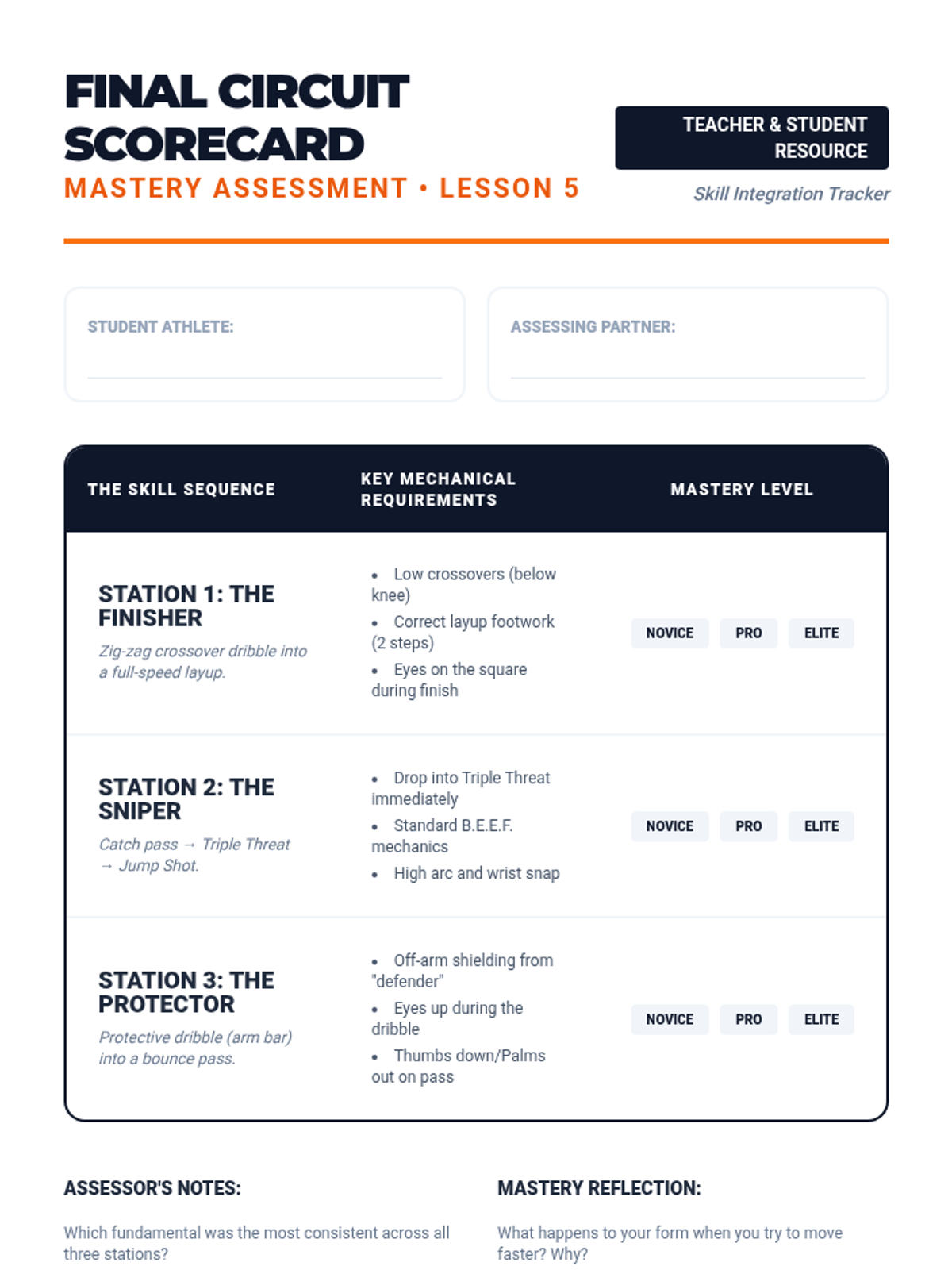
A cumulative assessment where students demonstrate their mastery of dribbling, shooting, and layups through a structured skills circuit.
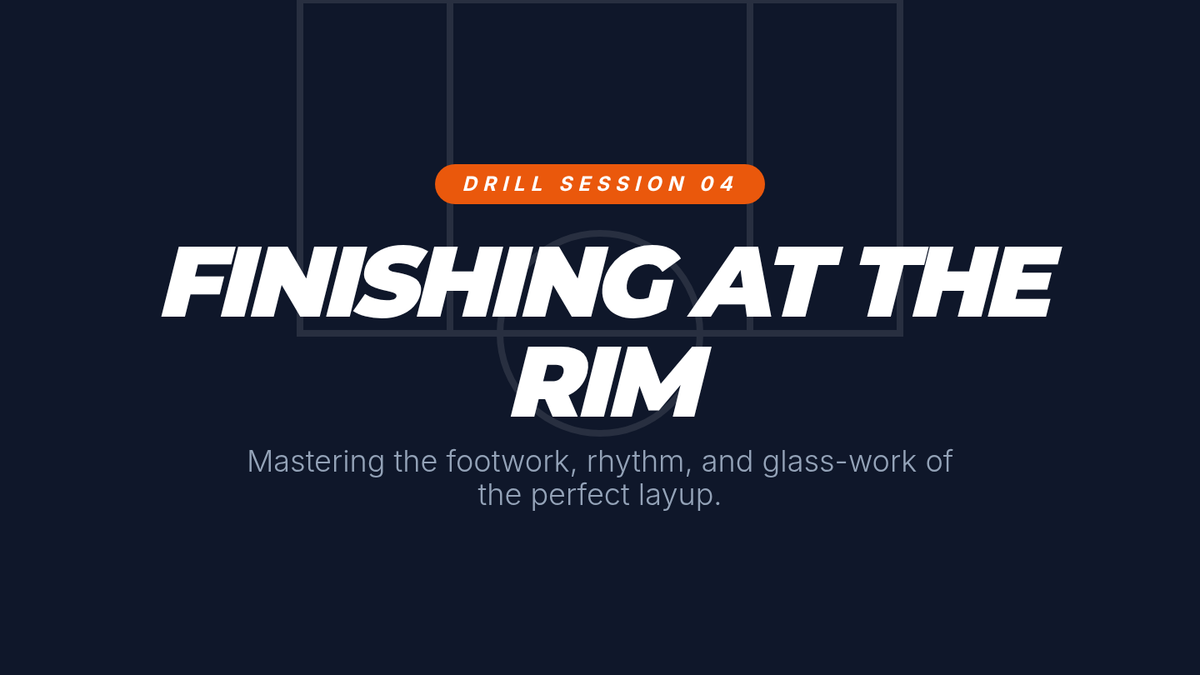
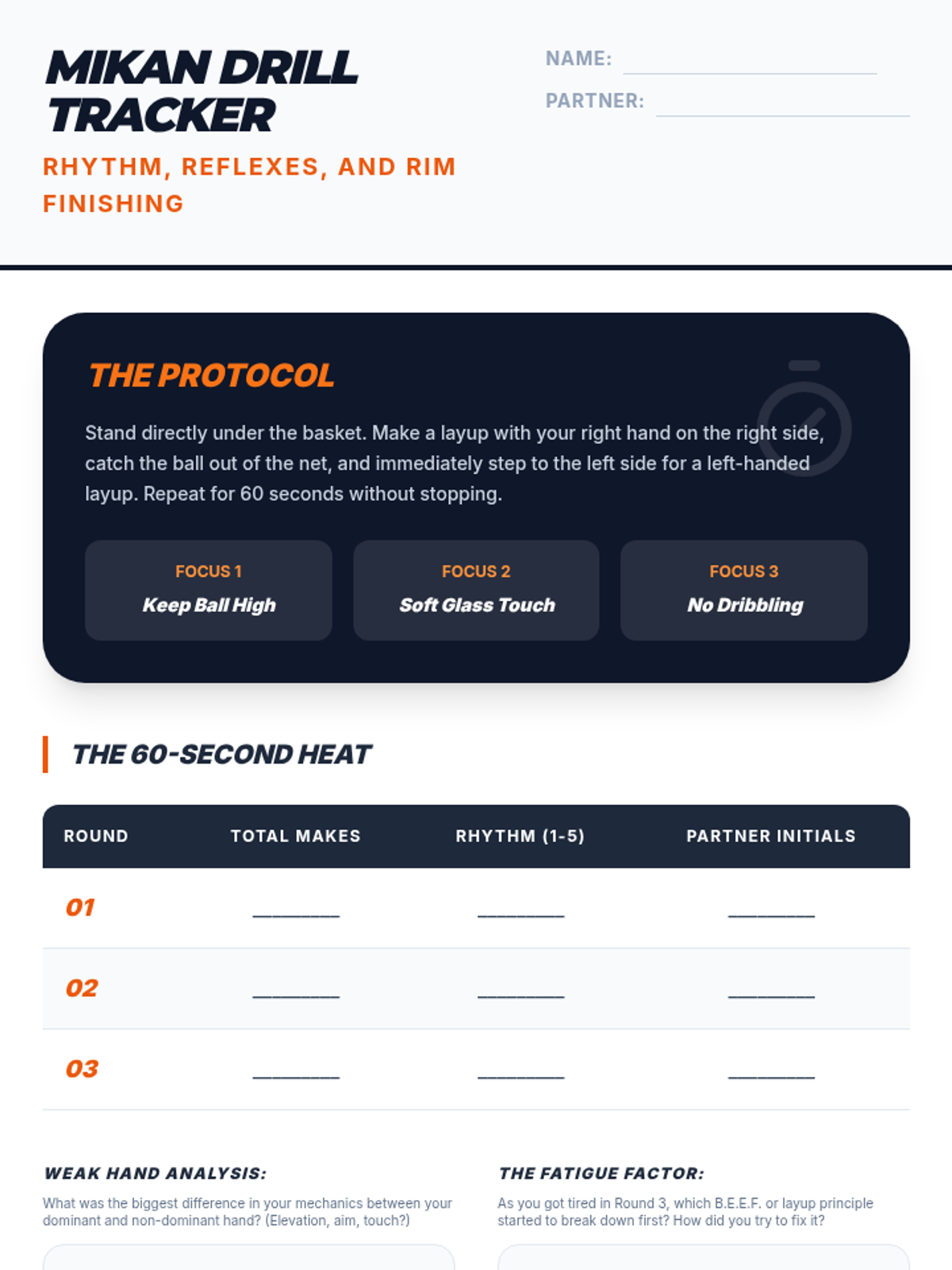
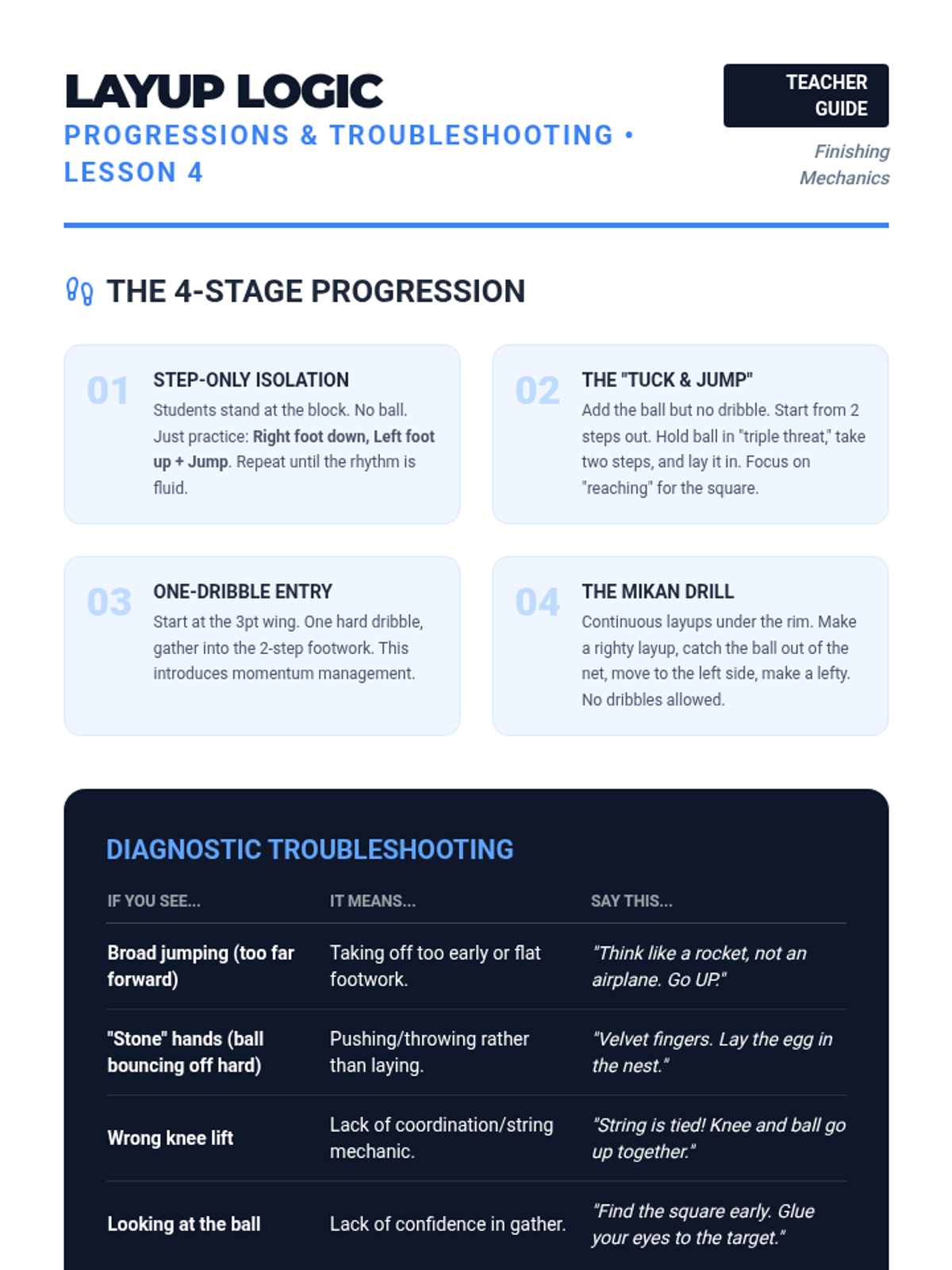
Connects ball handling to scoring by teaching the specific footwork and rhythm required for effective layups.
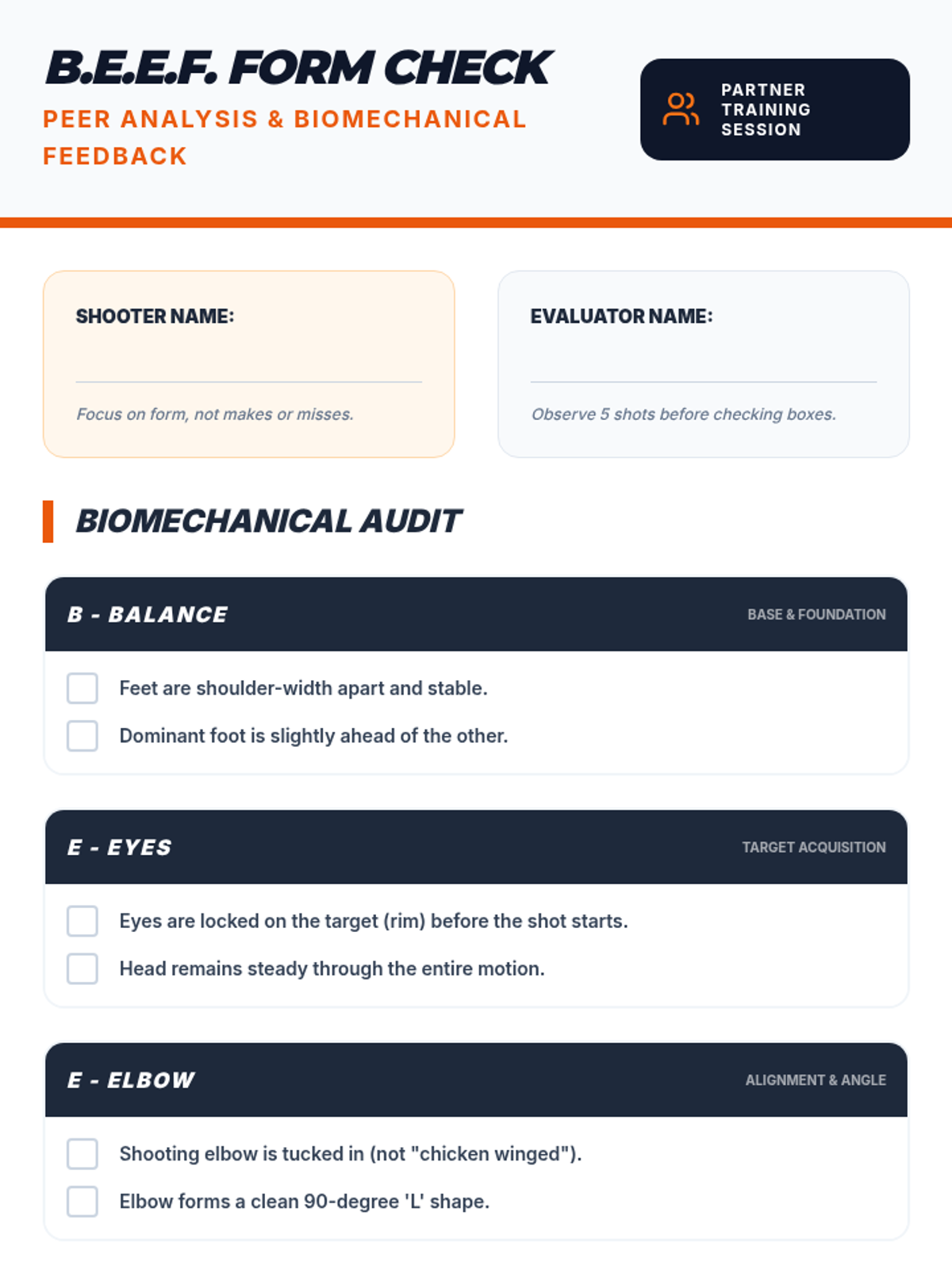
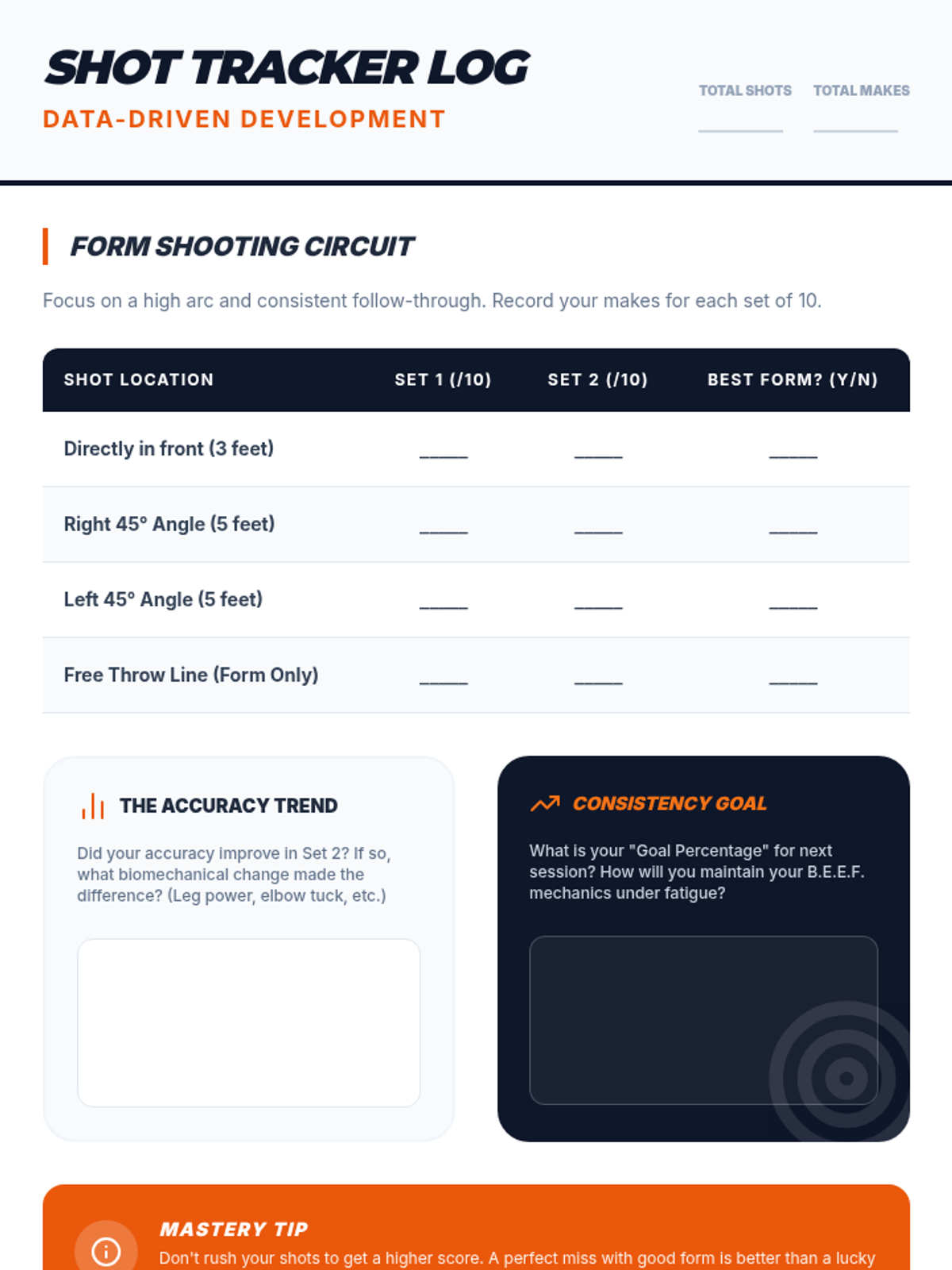
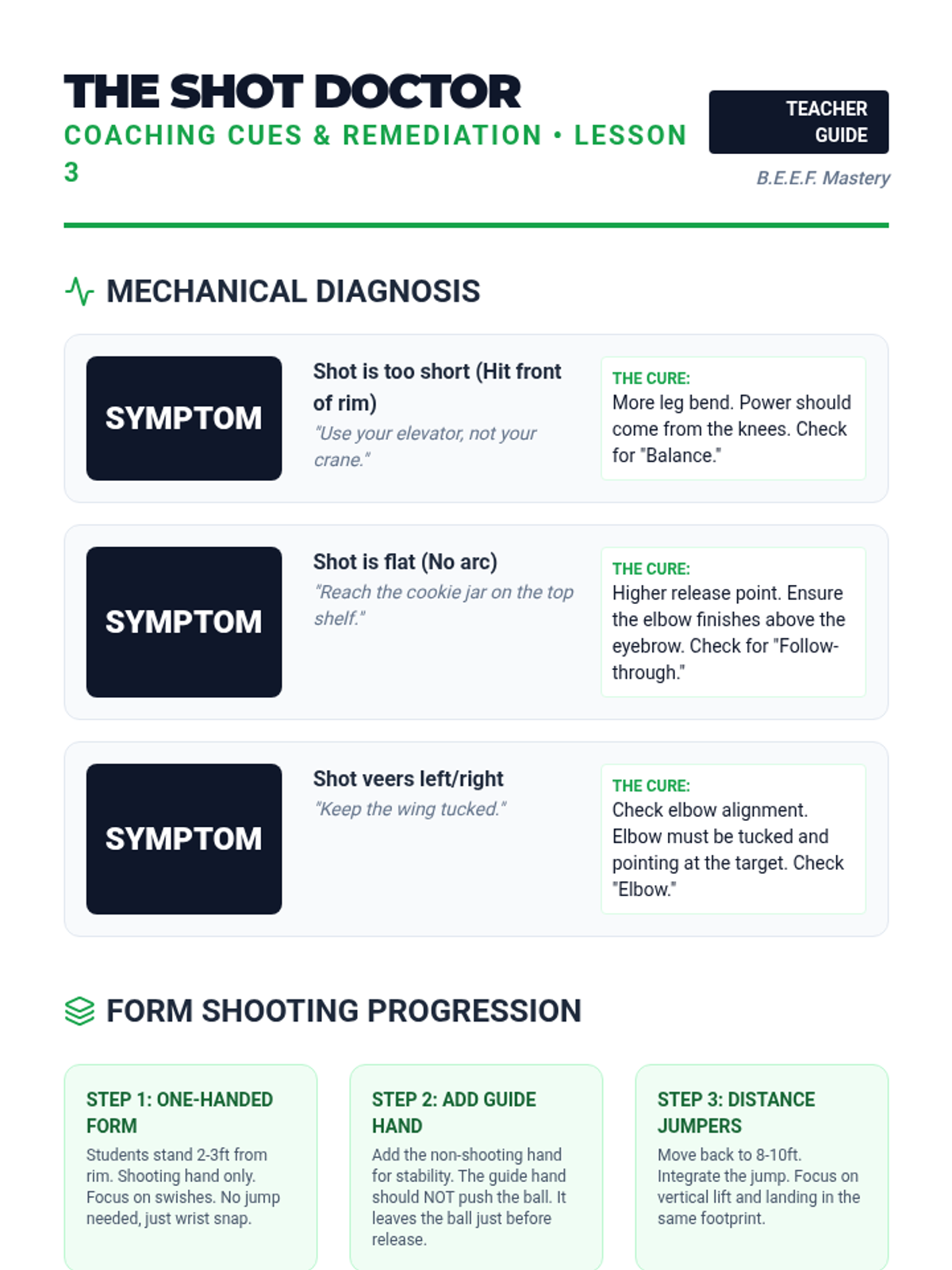
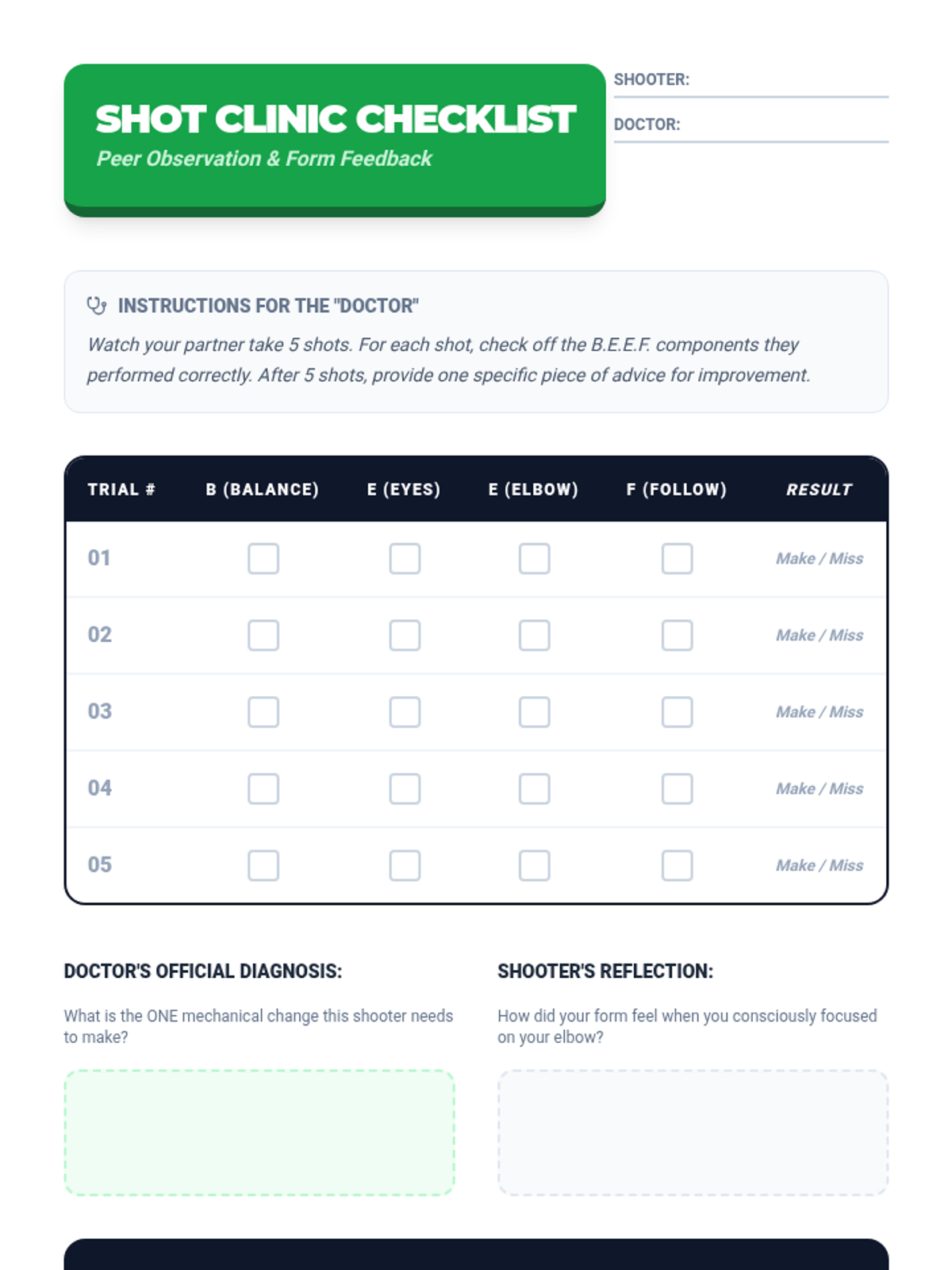
Deconstructs the mechanics of a set shot using the B.E.E.F. acronym to build consistent, repeatable shooting form.
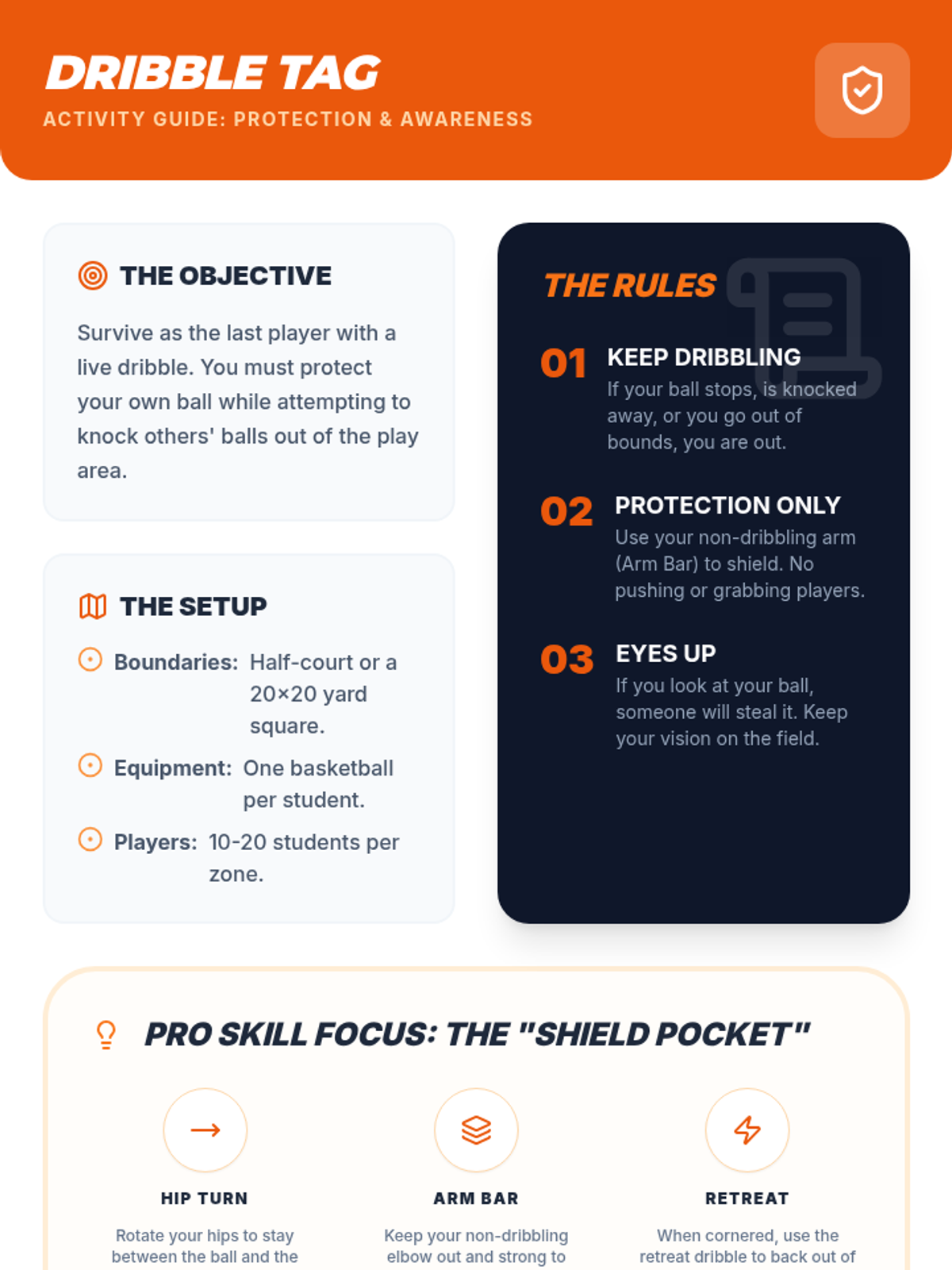
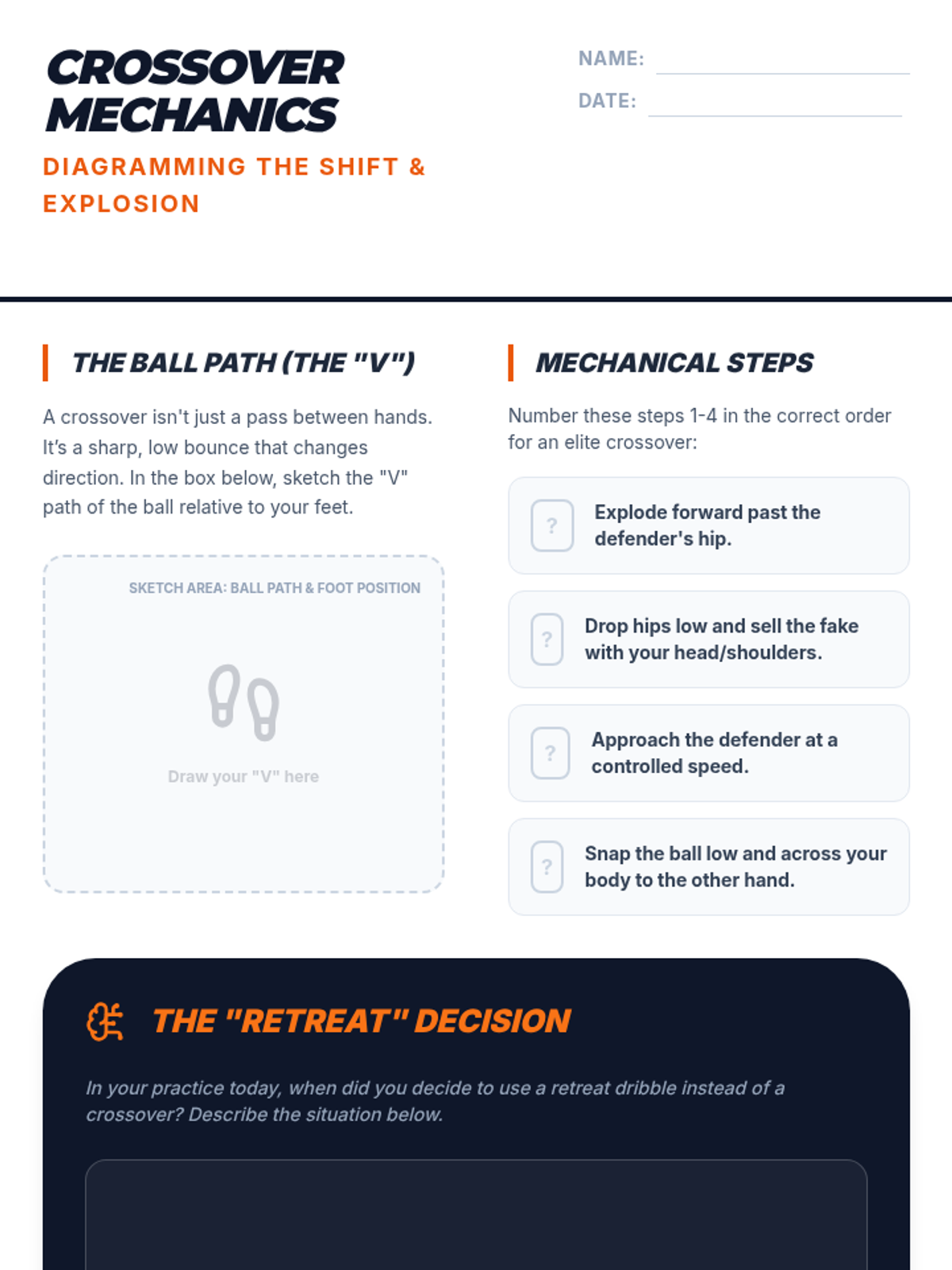
Transitioning from static to dynamic dribbling, students learn to move with the ball while using their body as a shield and practicing directional changes.
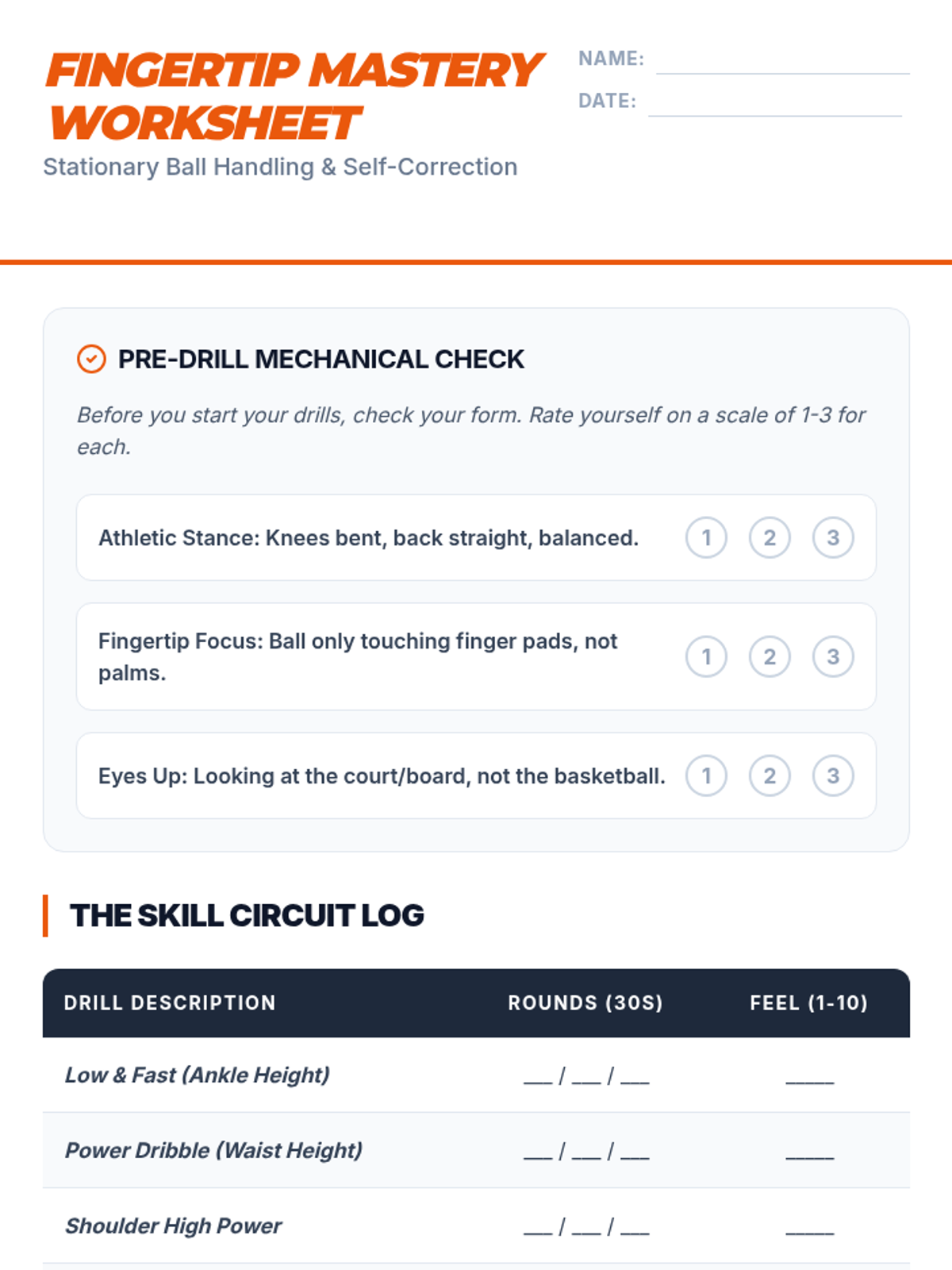
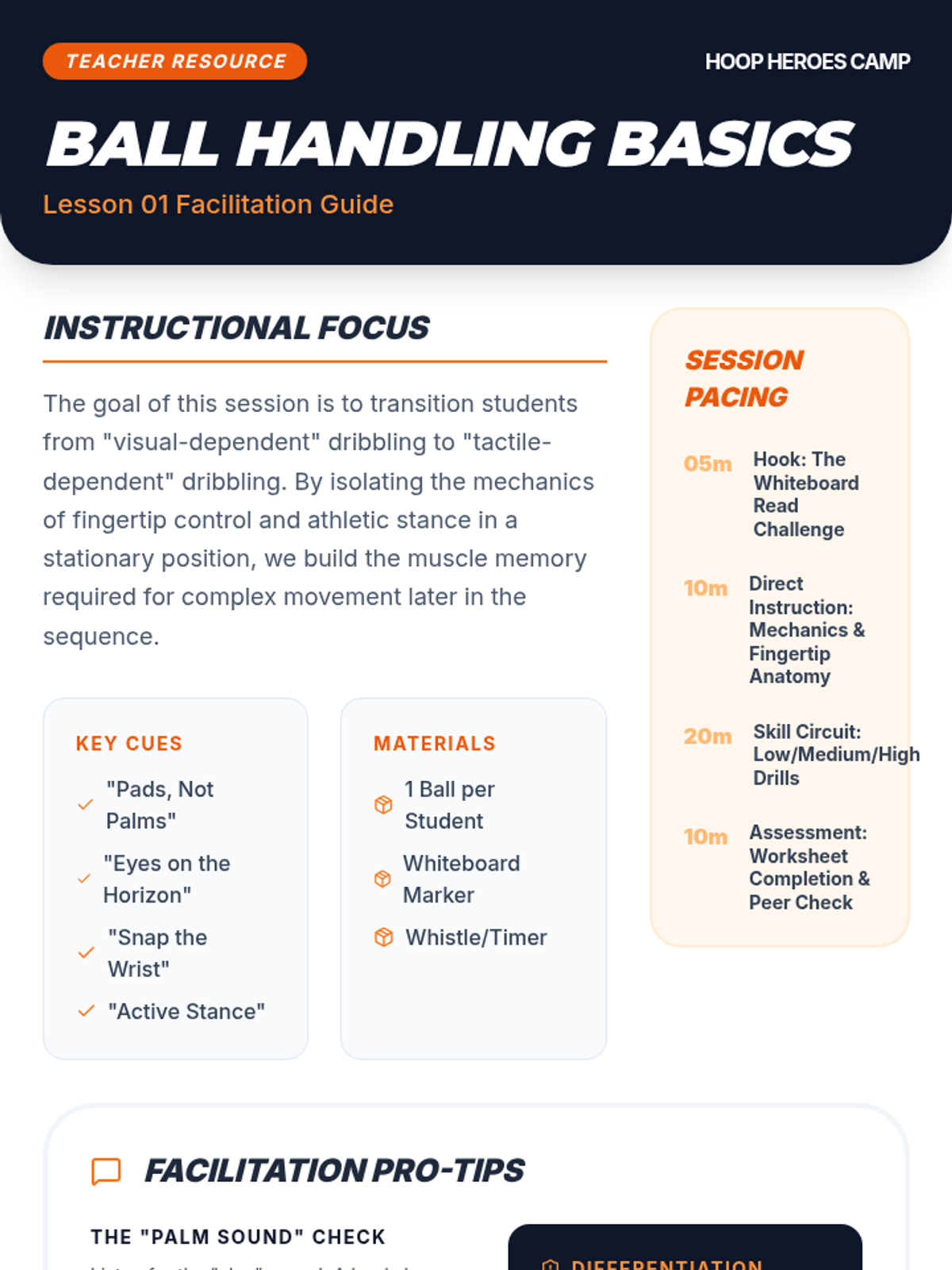
Focuses on fingertip control and ball handling in a stationary position, emphasizing 'feel' for the ball and maintaining vision on the court.
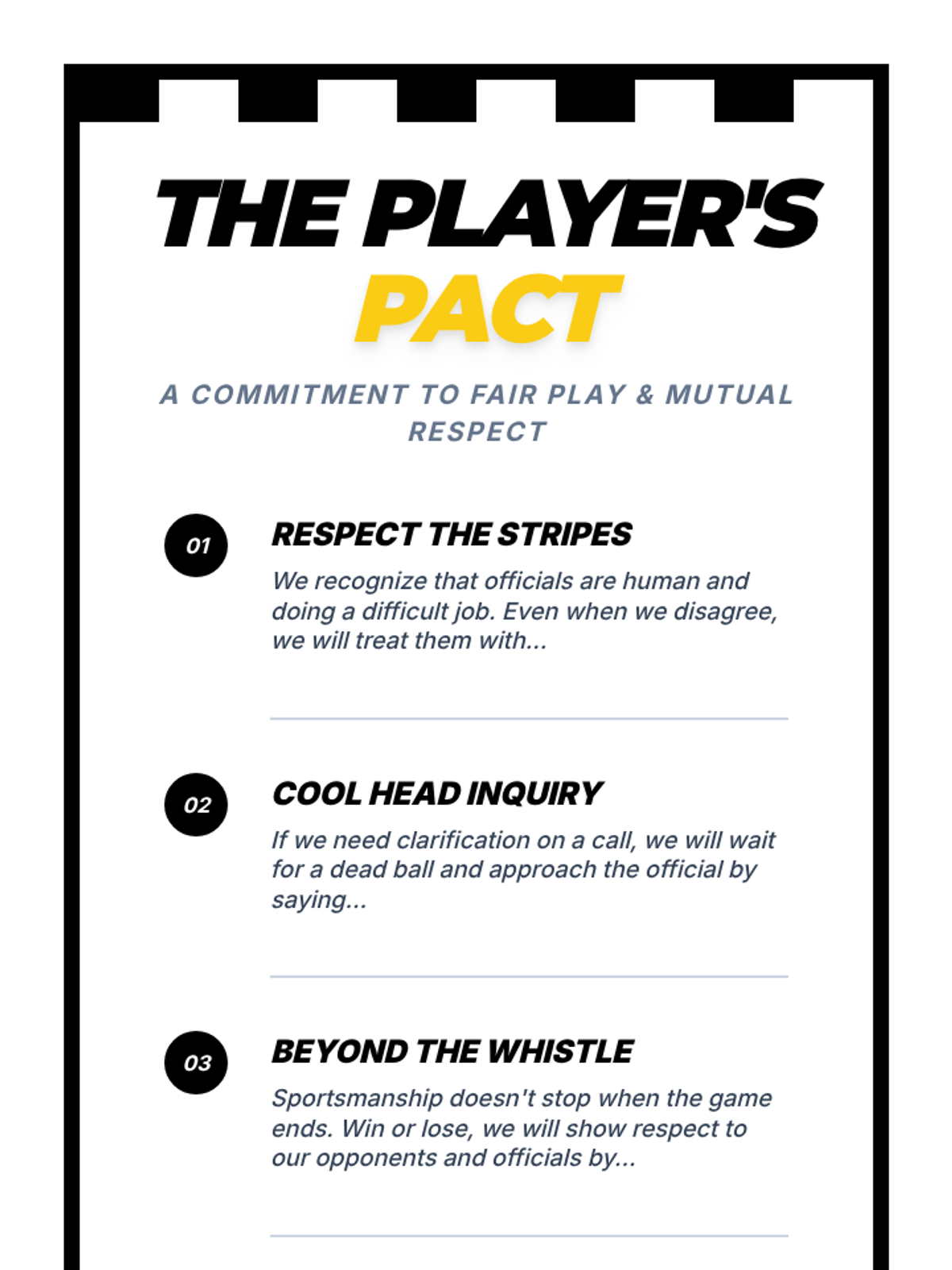
Students debrief their experiences as officials and collaborate to create a 'Player's Pact' that defines how they will treat referees and peers in future competitive settings.
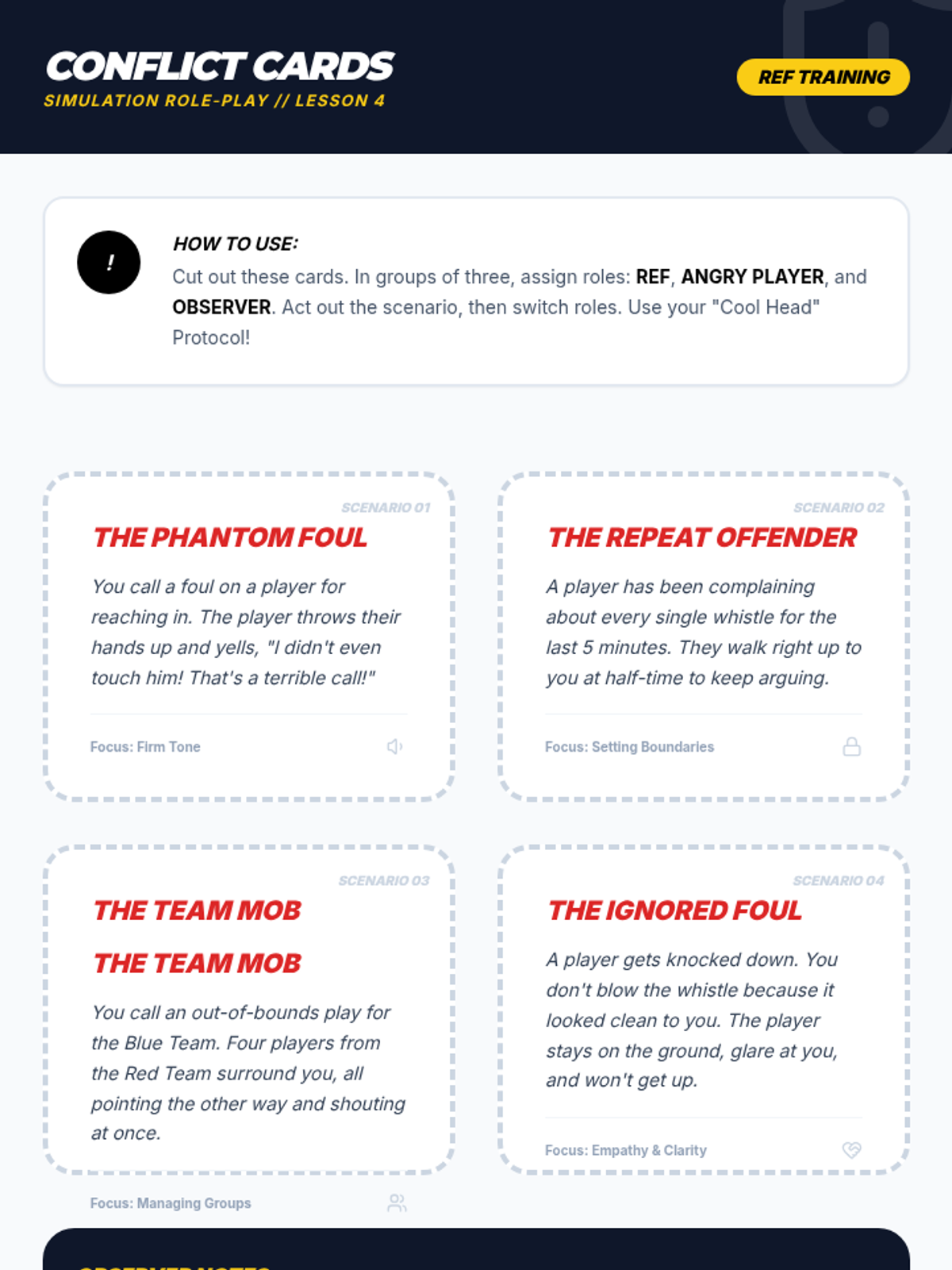
Students practice de-escalation techniques and respectful communication through role-play scenarios involving disputed calls and high-pressure game situations.
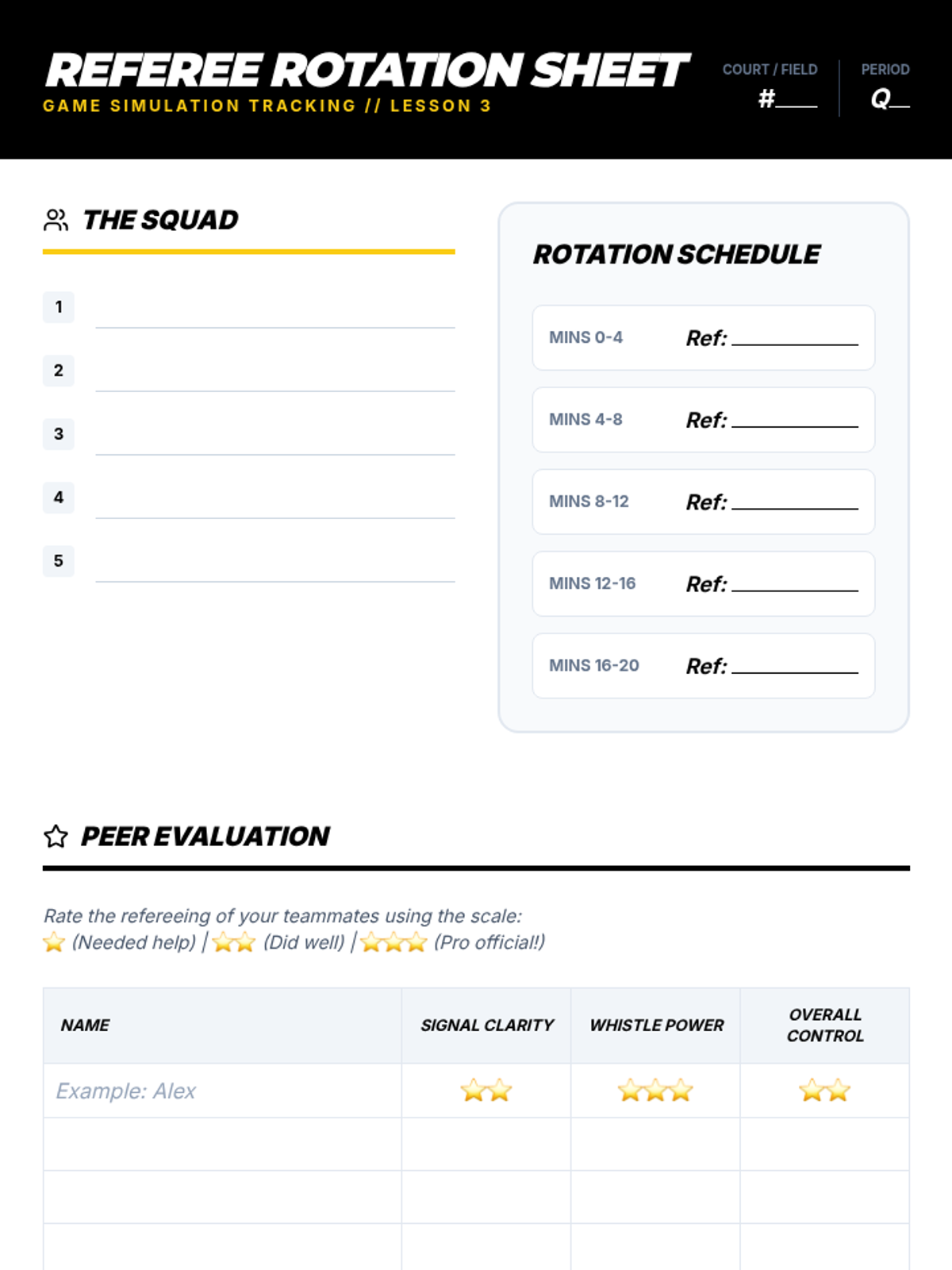
Students step into the active official role during small-sided games, experiencing the pressure of decision-making and the responsibility of maintaining game flow.
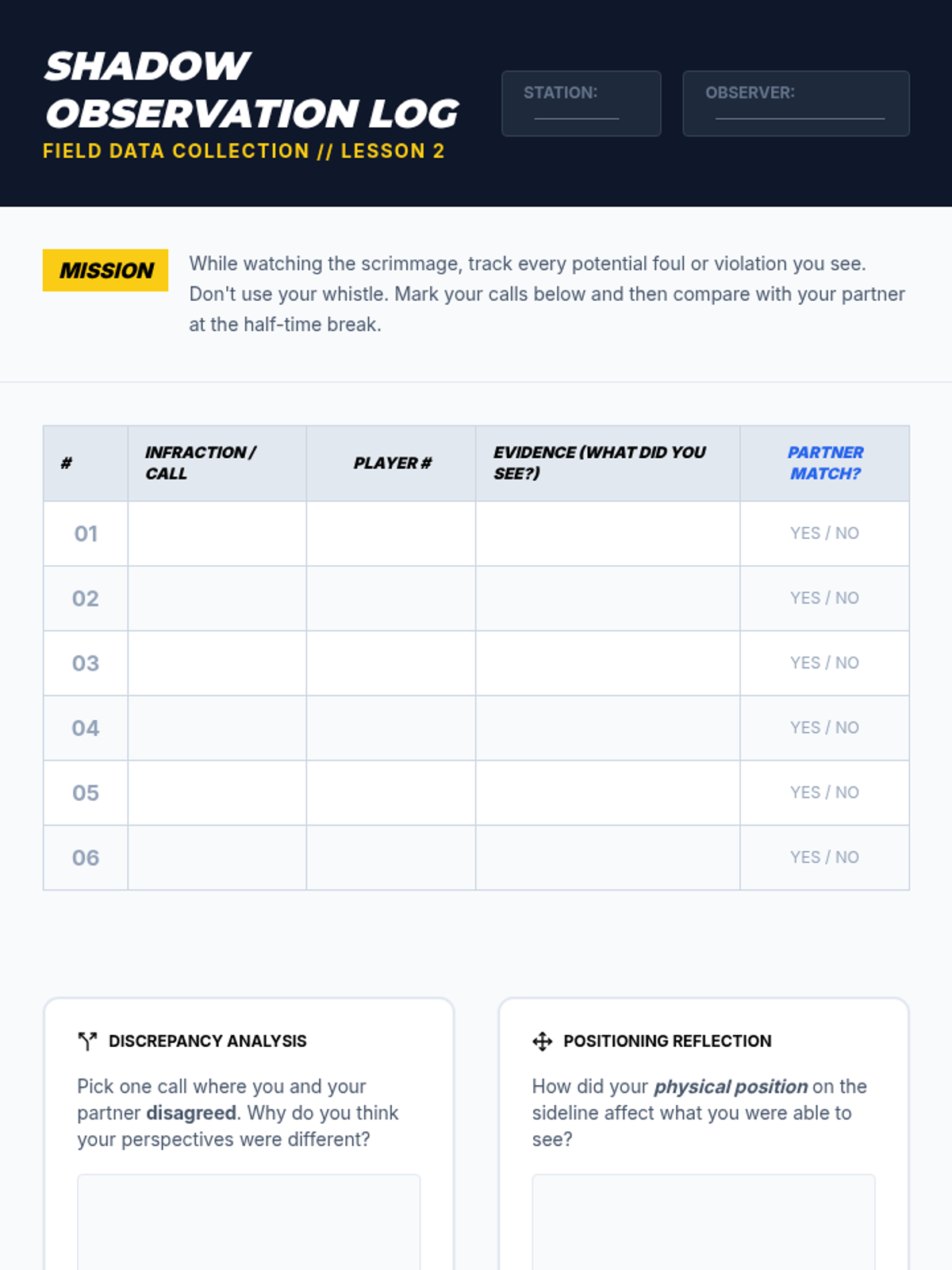
Students practice observing active play from the sidelines, making 'shadow calls' to understand how positioning and perspective influence an official's perception of the game.
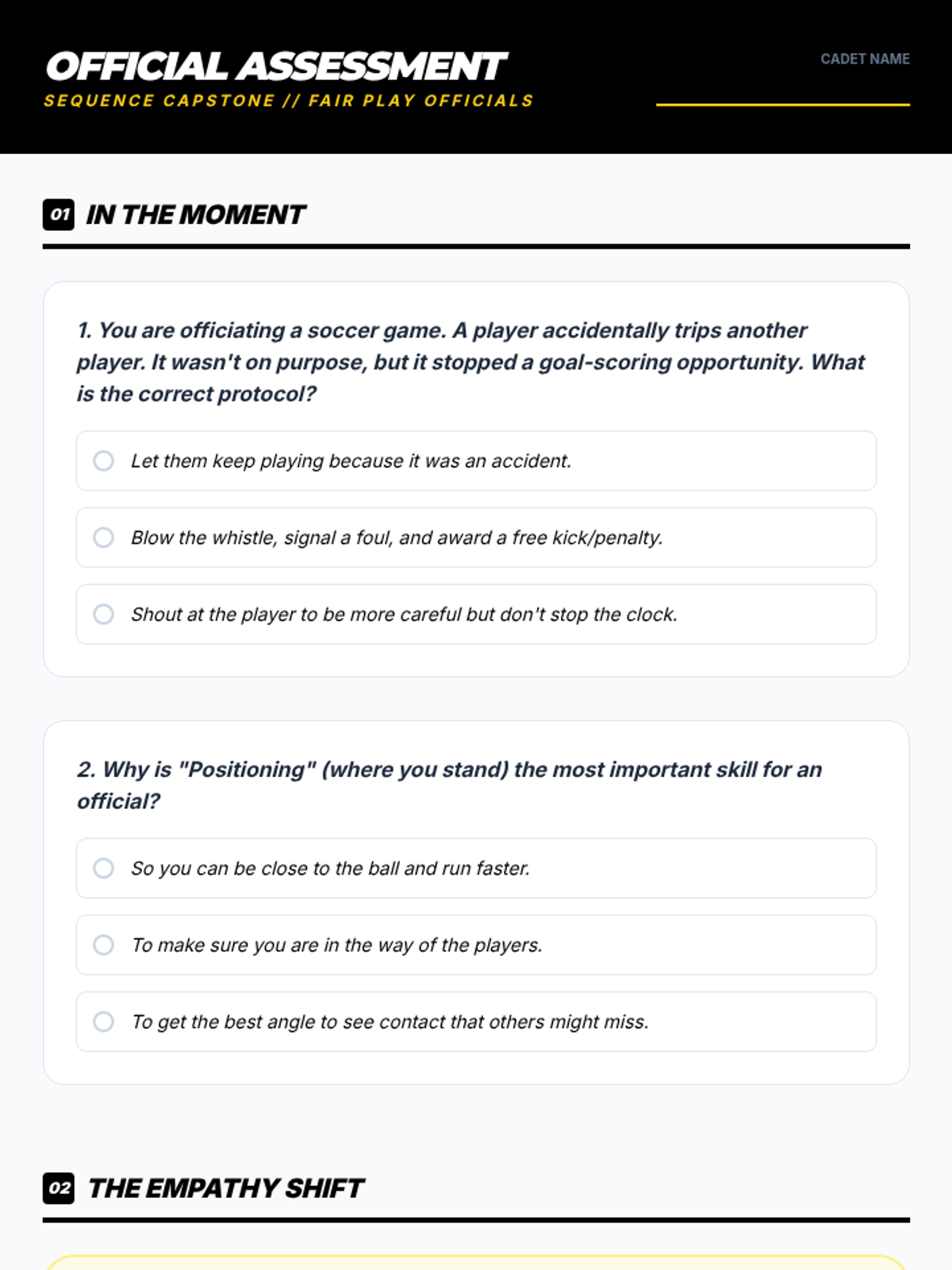
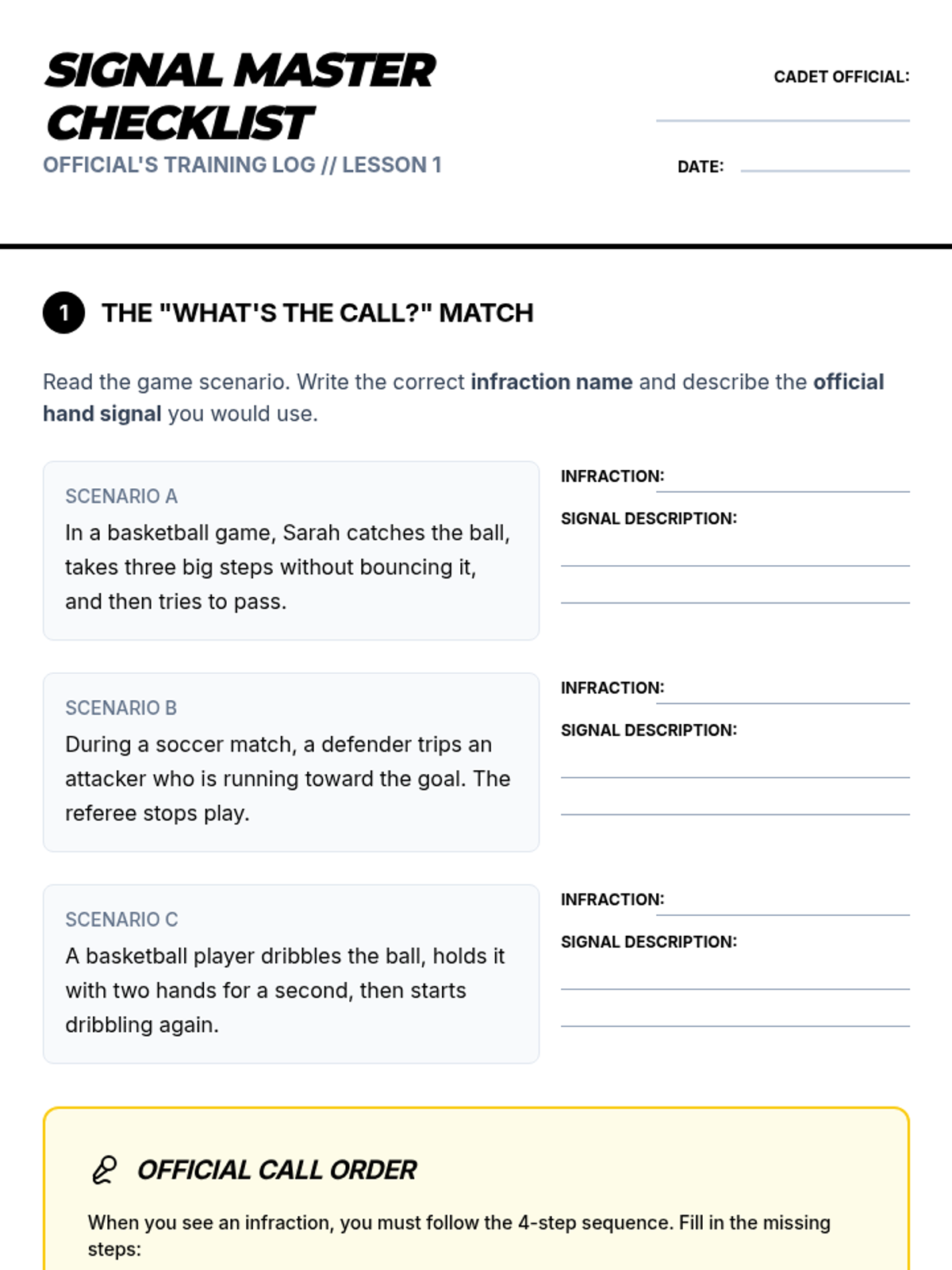
Students learn the fundamentals of officiating by mastering the hand signals and verbal calls for common infractions in basketball and soccer. The lesson focuses on clear communication and the importance of knowing the rules.
A cumulative circuit-based lesson where students integrate dribbling, passing, and shooting into fluid game-like sequences.
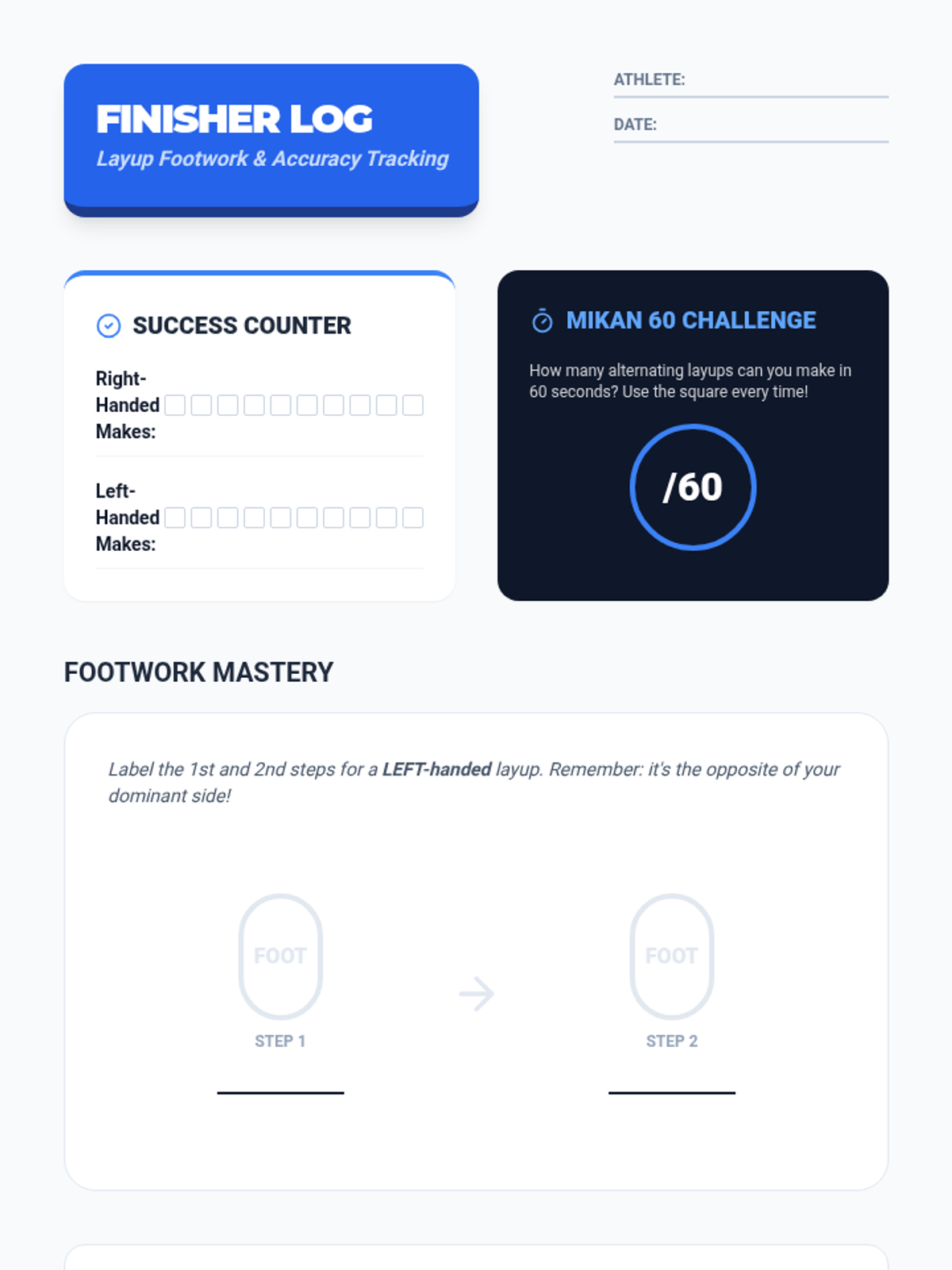
Breaking down the footwork and coordination required for effective right and left-handed layups.
Introduction to the B.E.E.F. shooting principle, focusing on standardized mechanics and peer feedback for form improvement.
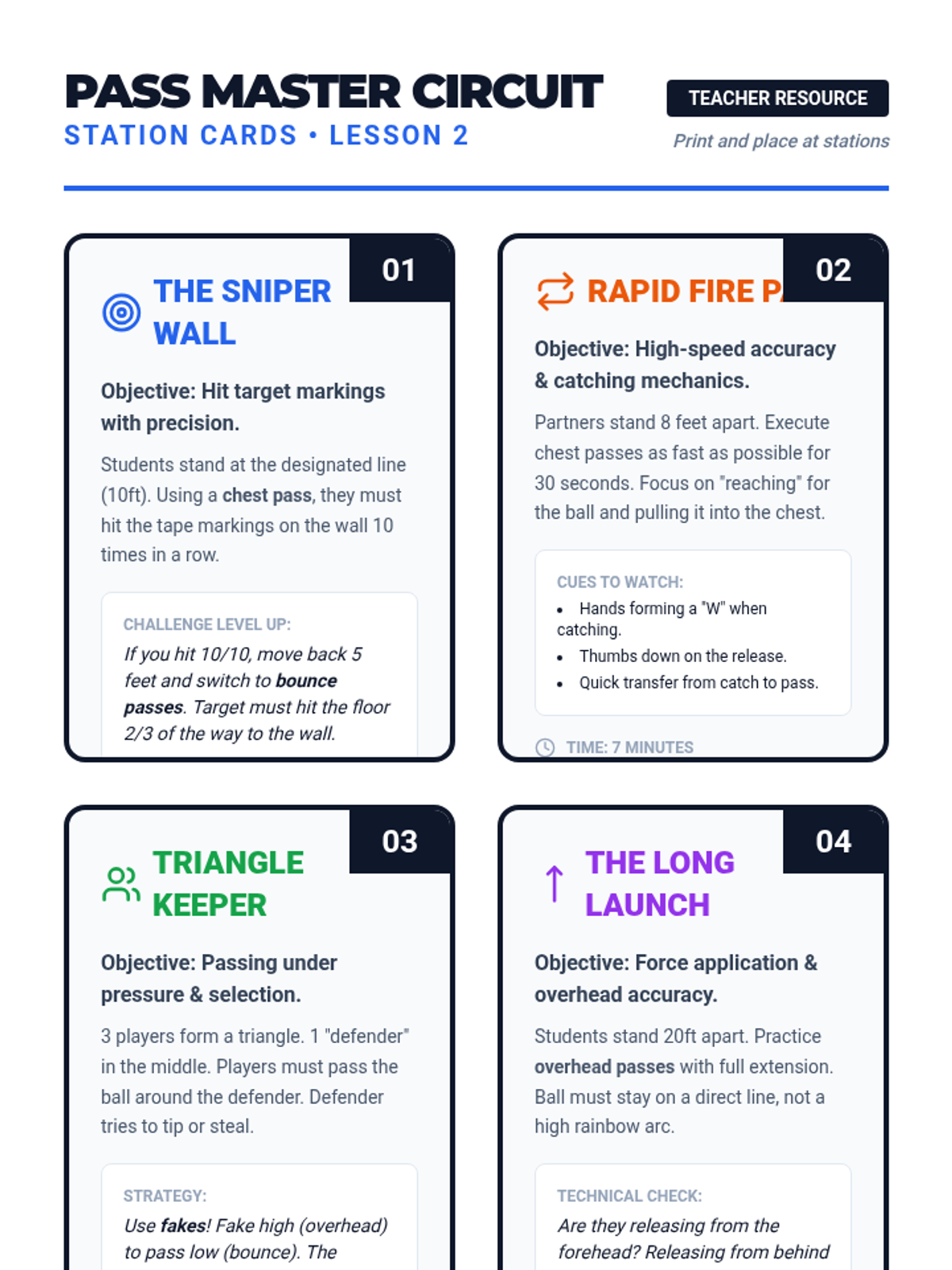
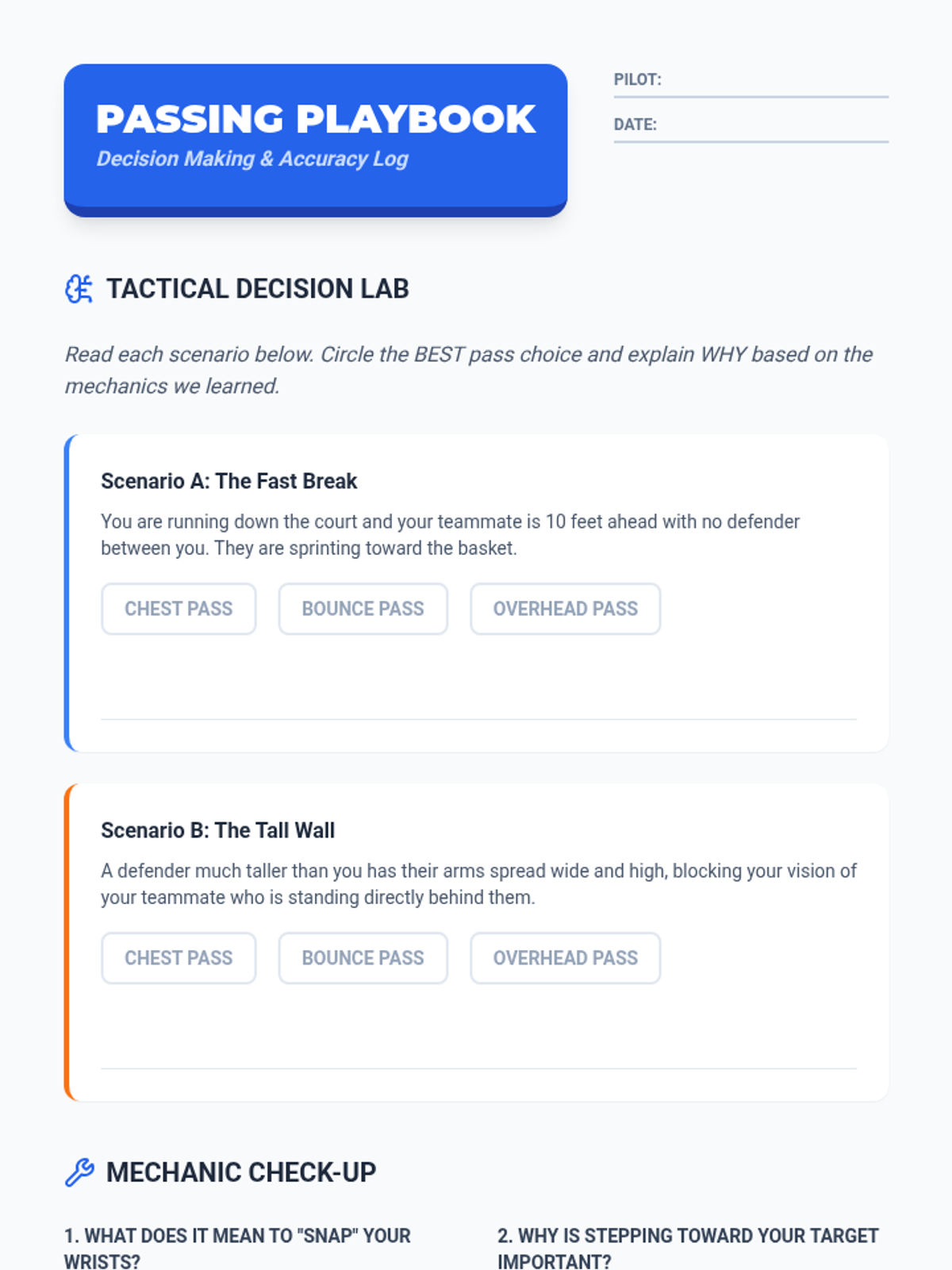
An exploration of passing techniques, focusing on accuracy, force application, and choosing the right pass for the situation.
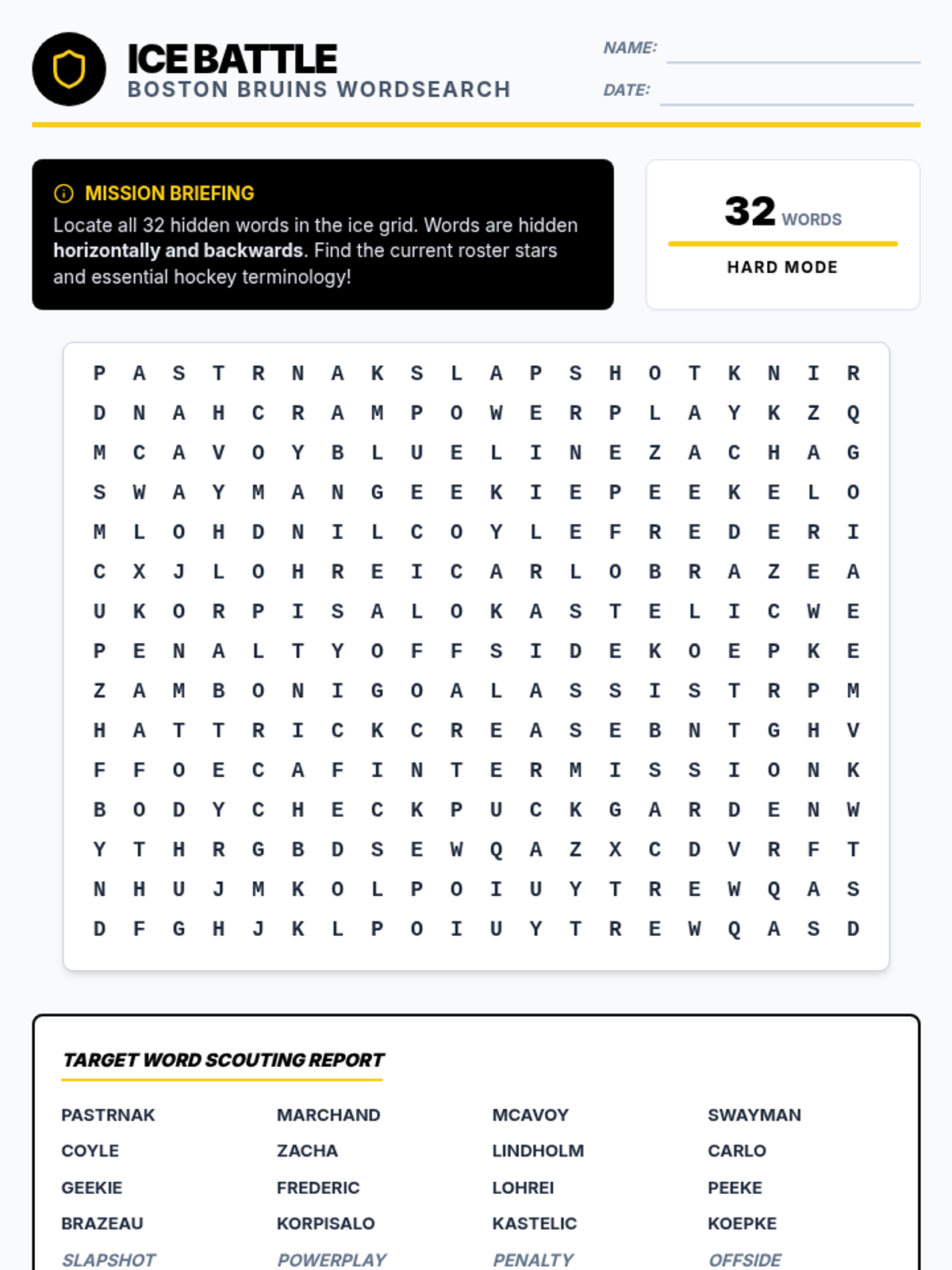
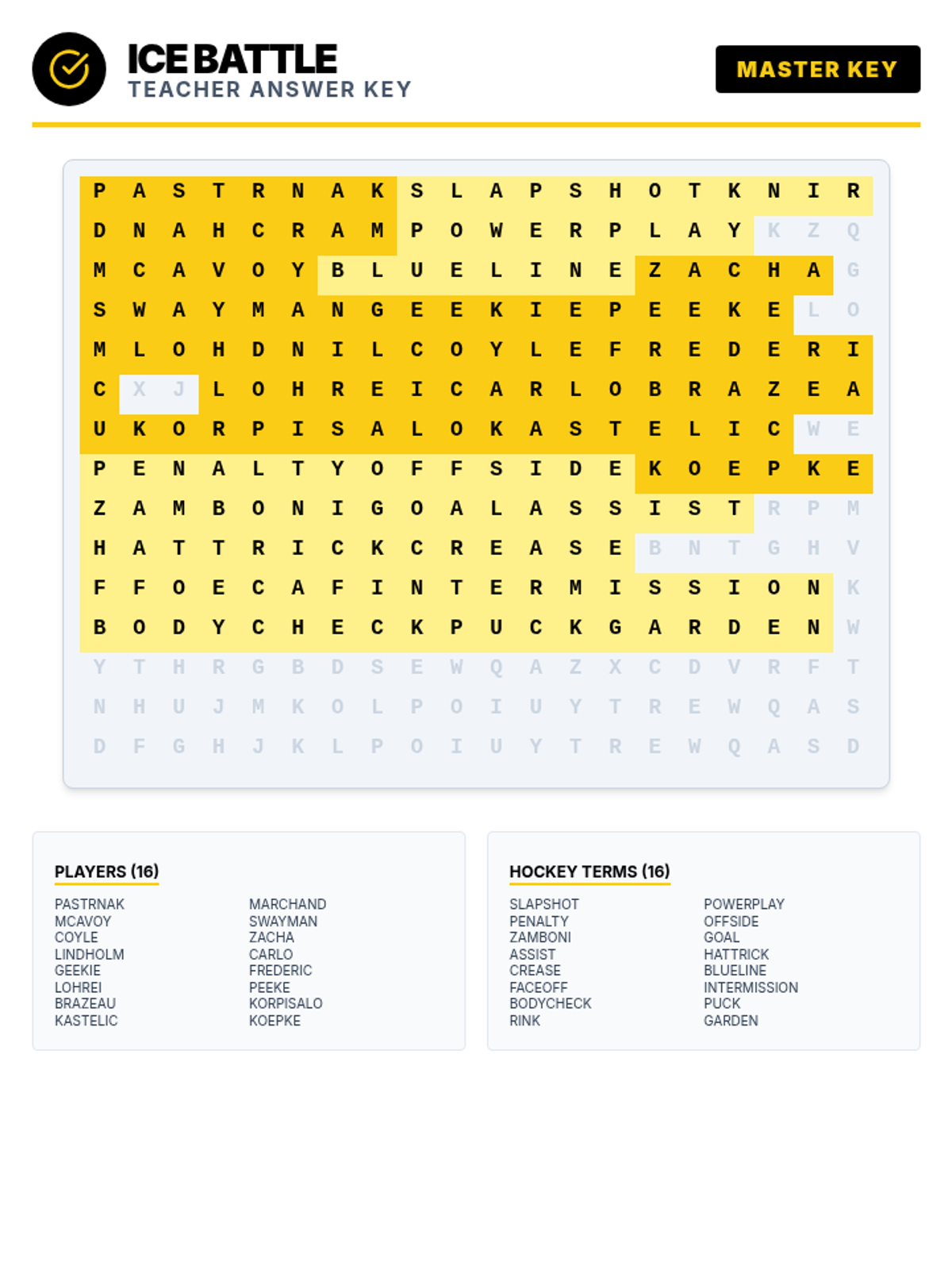
A challenging vocabulary activity focused on the Boston Bruins hockey team, including current roster players and essential hockey terminology. Students will identify key figures and concepts while navigating a complex grid.
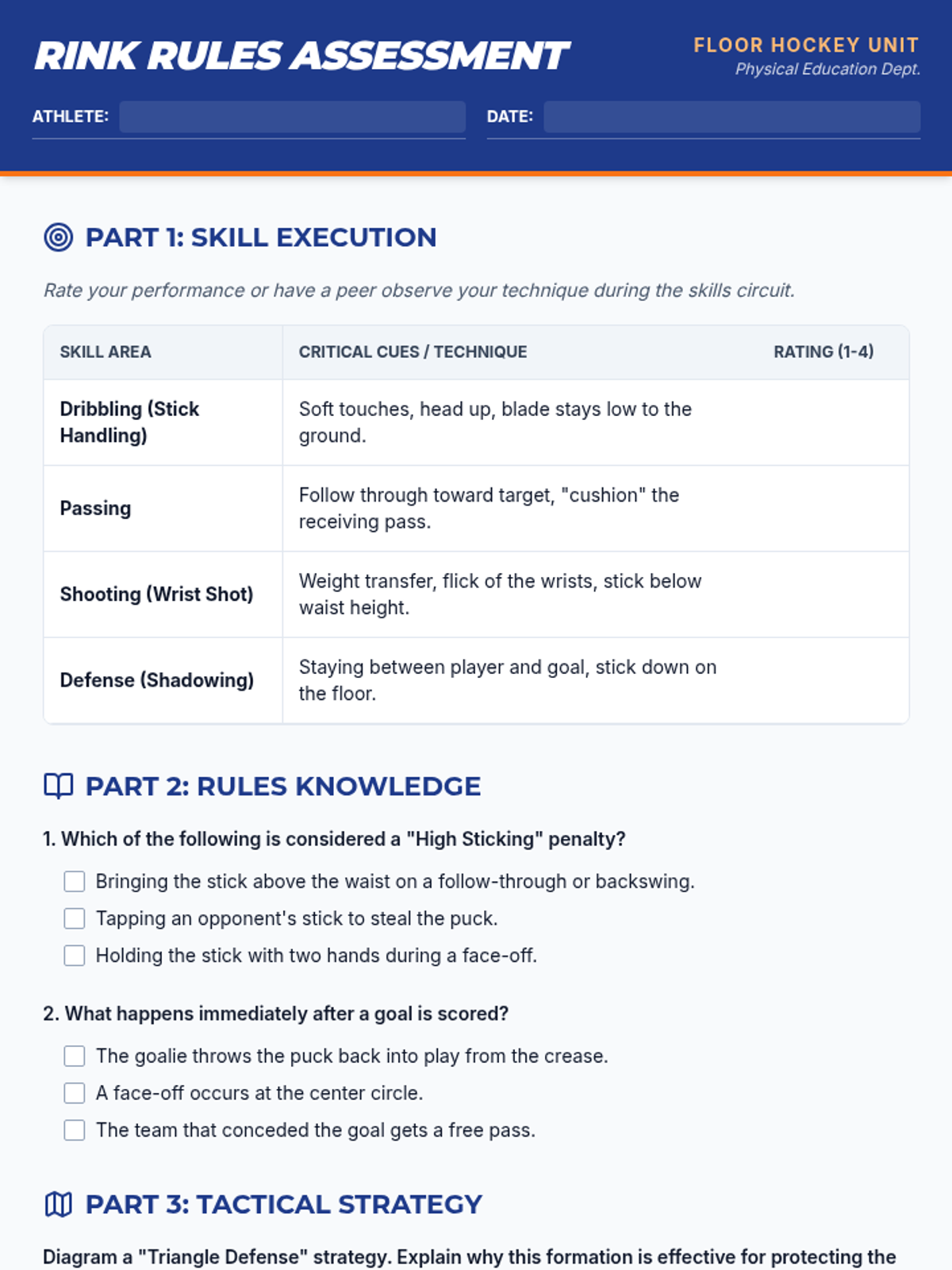
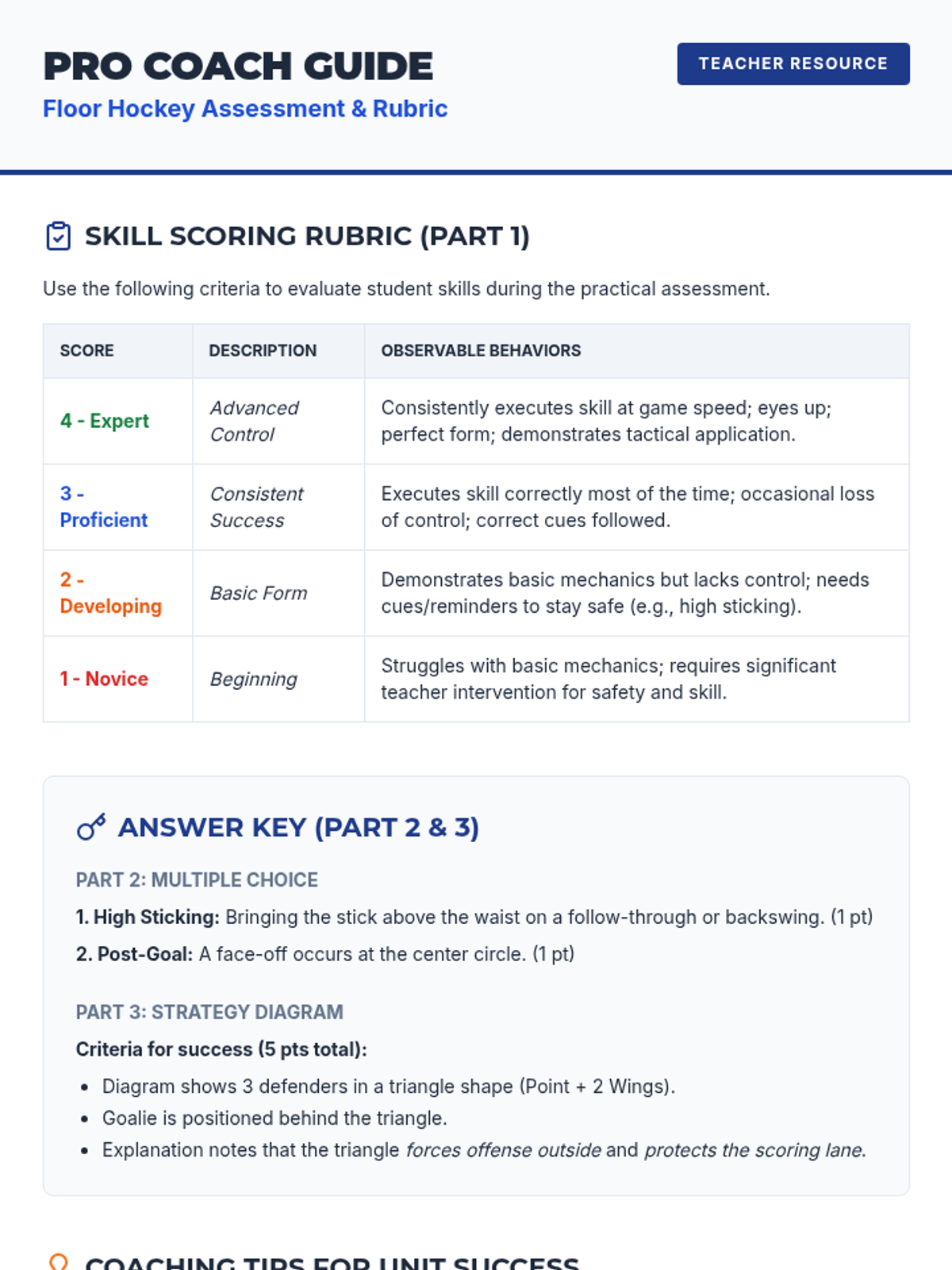
A comprehensive assessment and instructional set for middle school floor hockey, focusing on core skills, game rules, and tactical strategies.
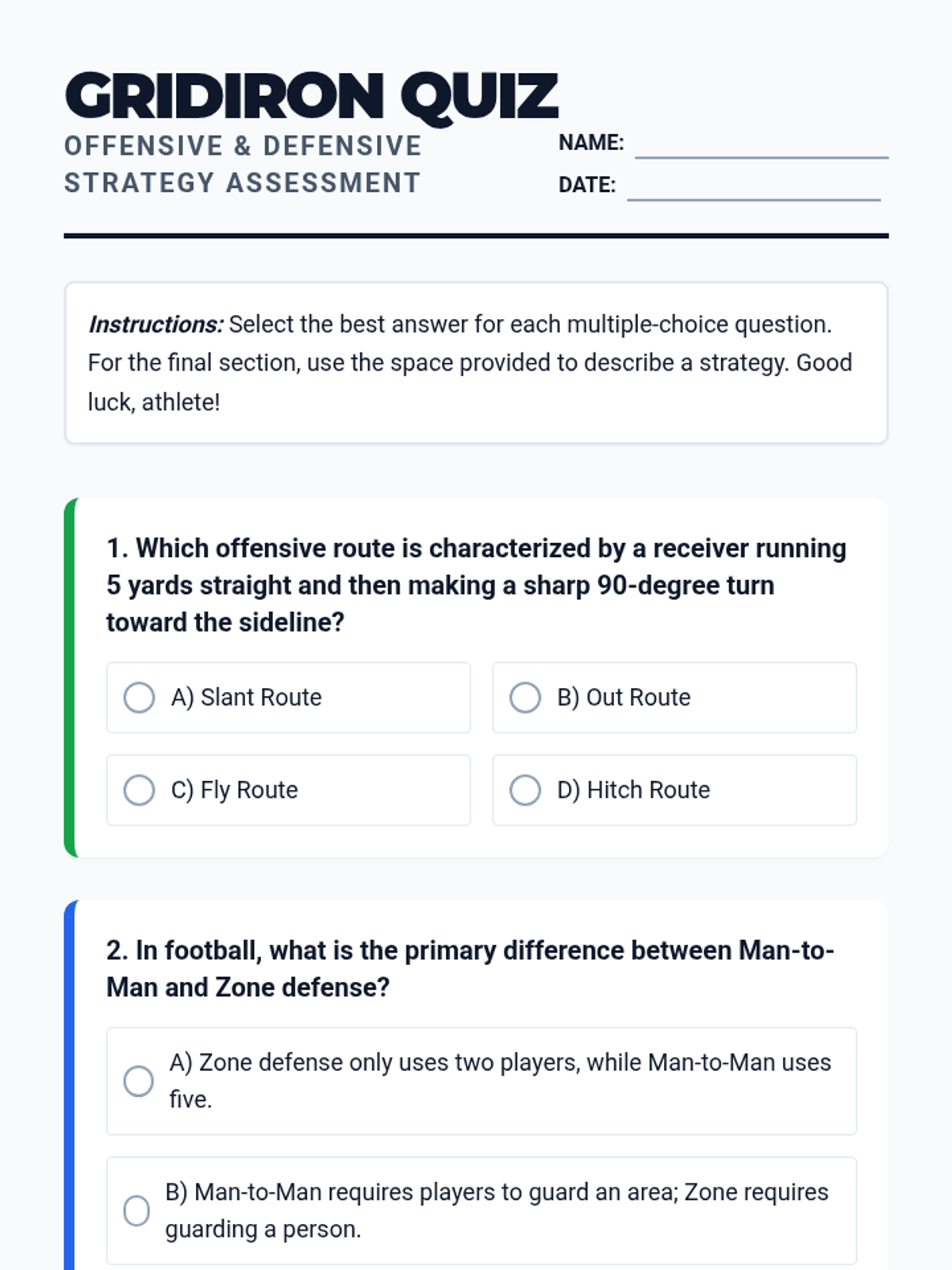
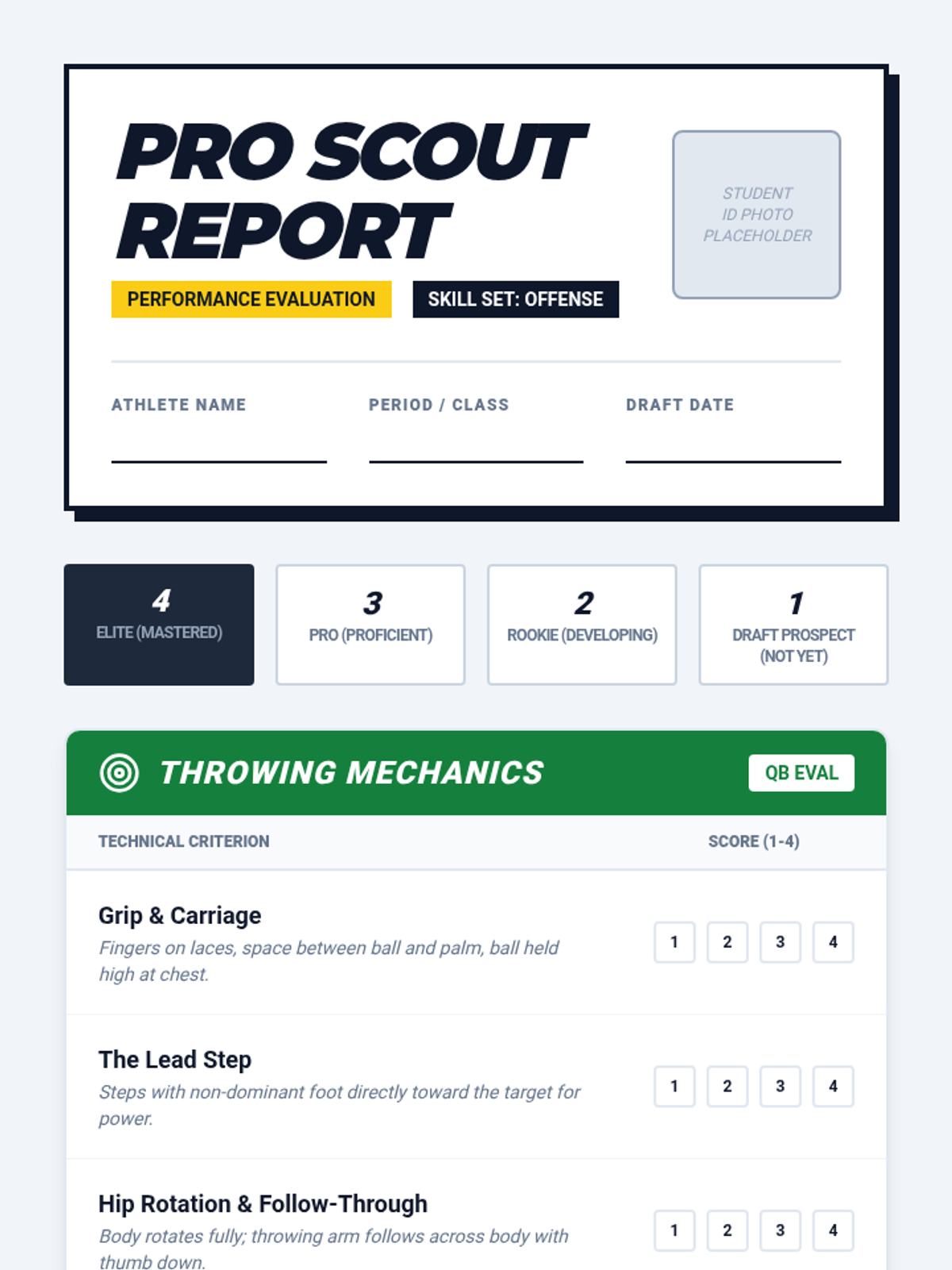
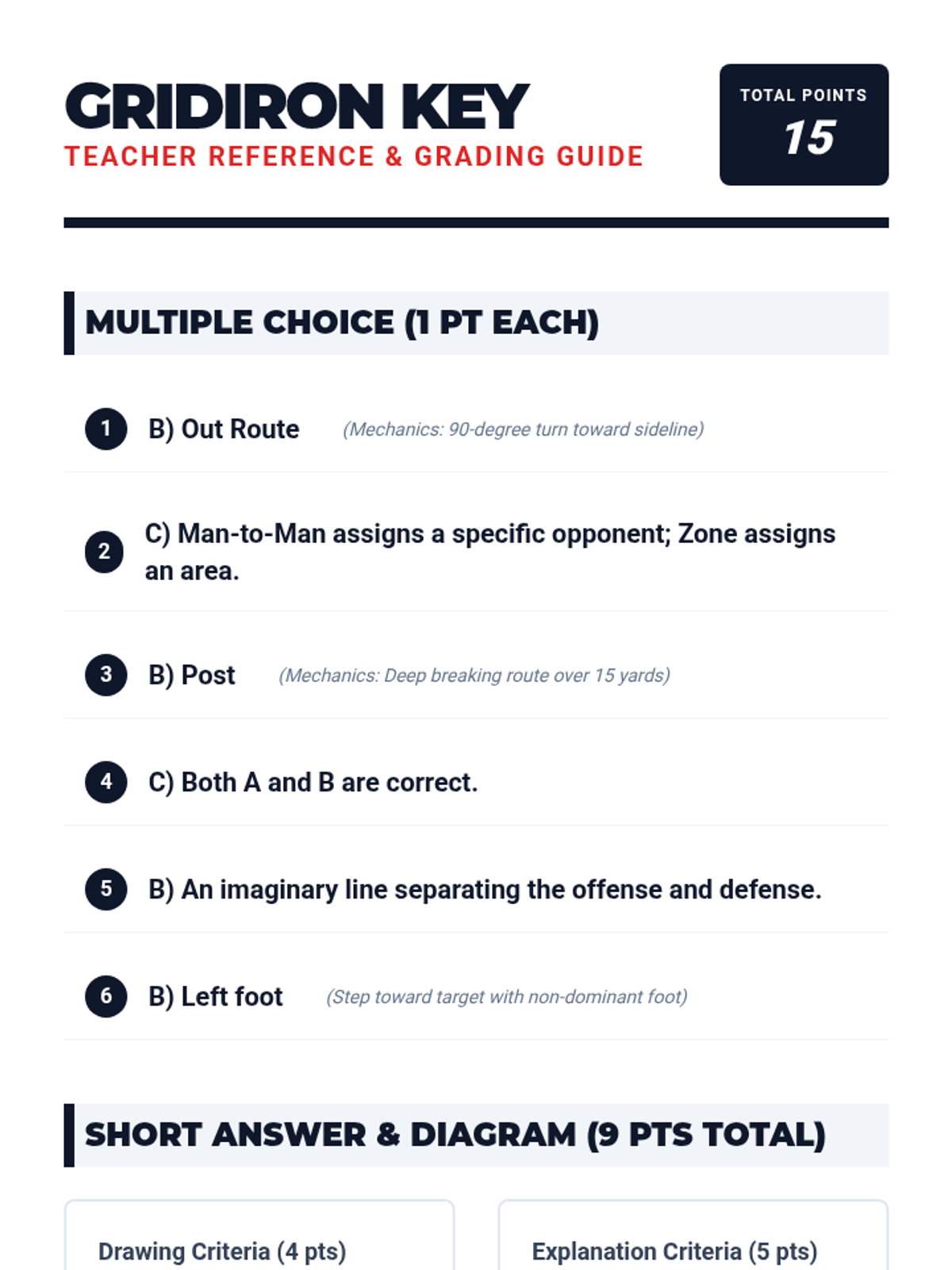
A comprehensive assessment package for middle school football, covering offensive/defensive strategies and technical throwing/catching skills.
A 10-slide presentation exploring the history, rules, and legendary moments of Team USA hockey in the Winter Olympics.
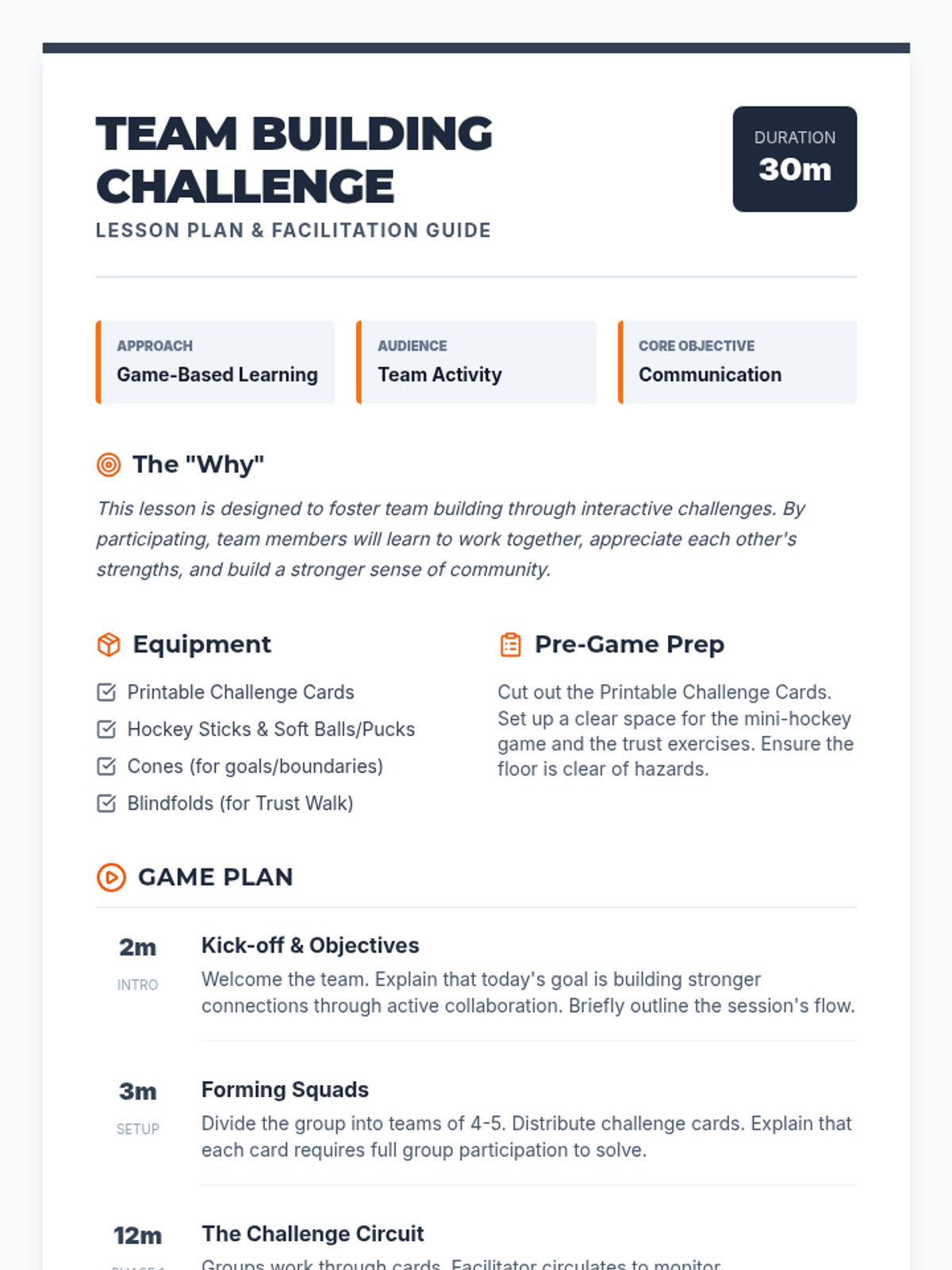
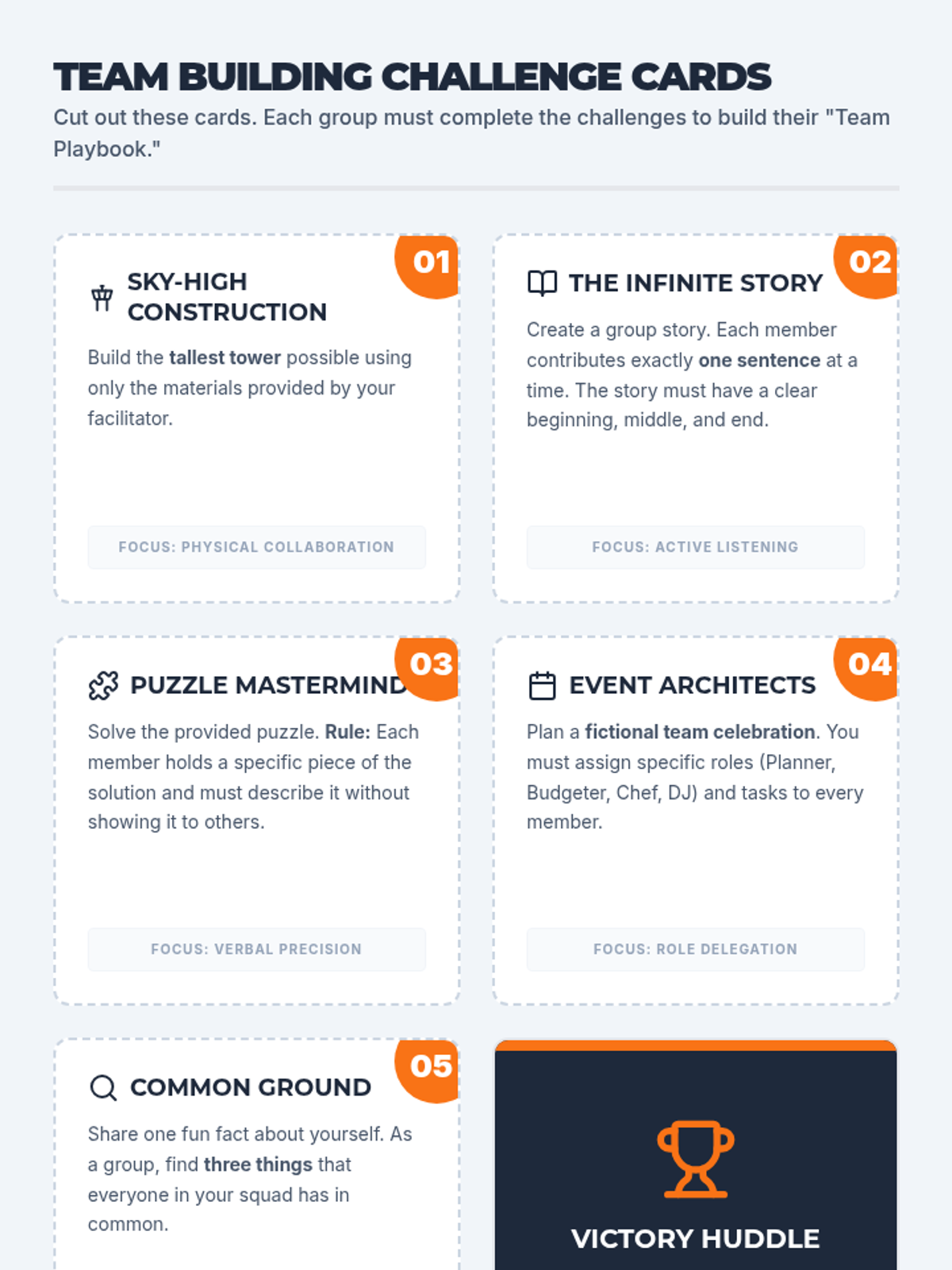
A high-energy team-building lesson focused on communication, trust, and collaboration through interactive challenges and a hockey-themed strategy game.
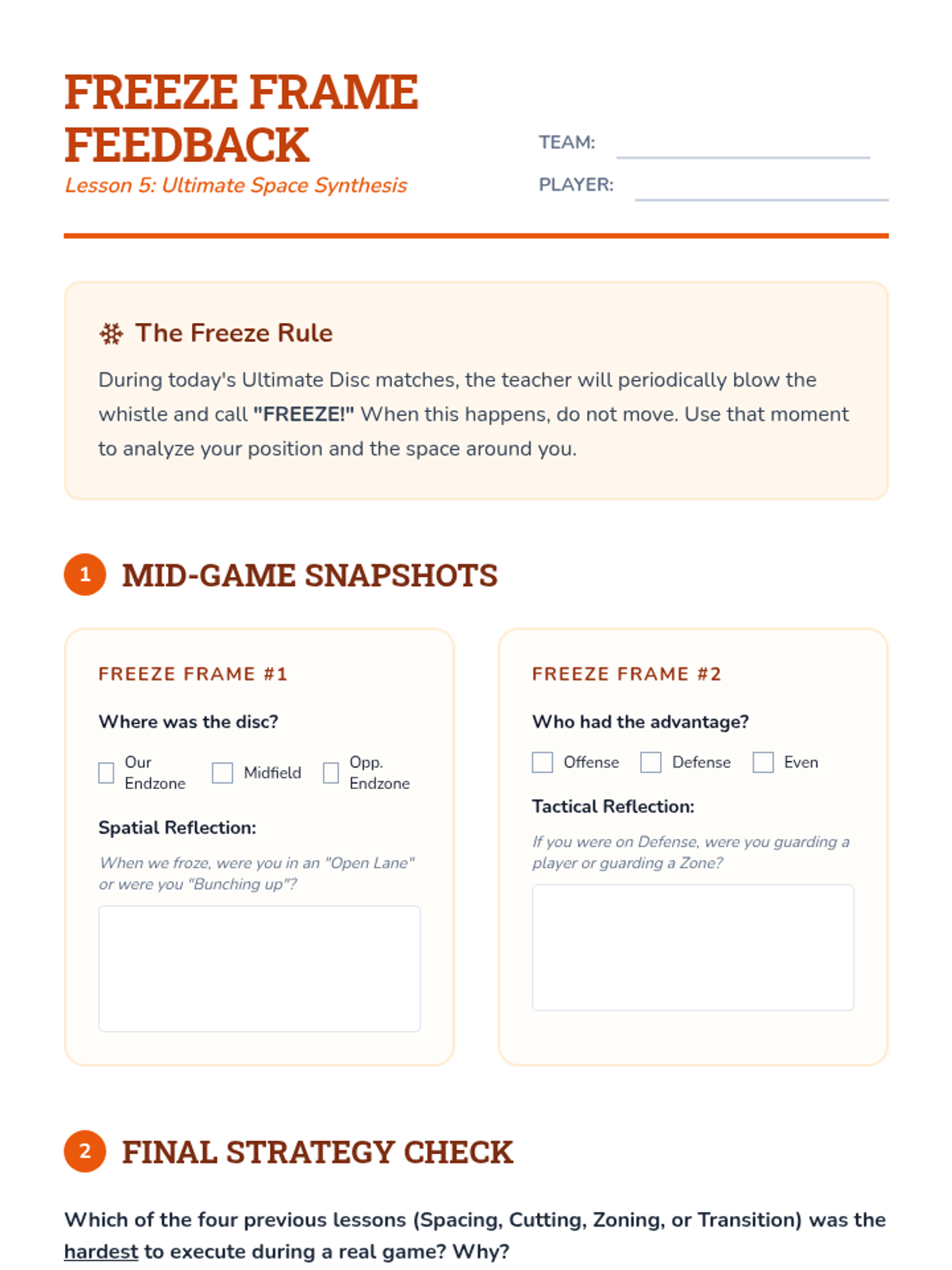
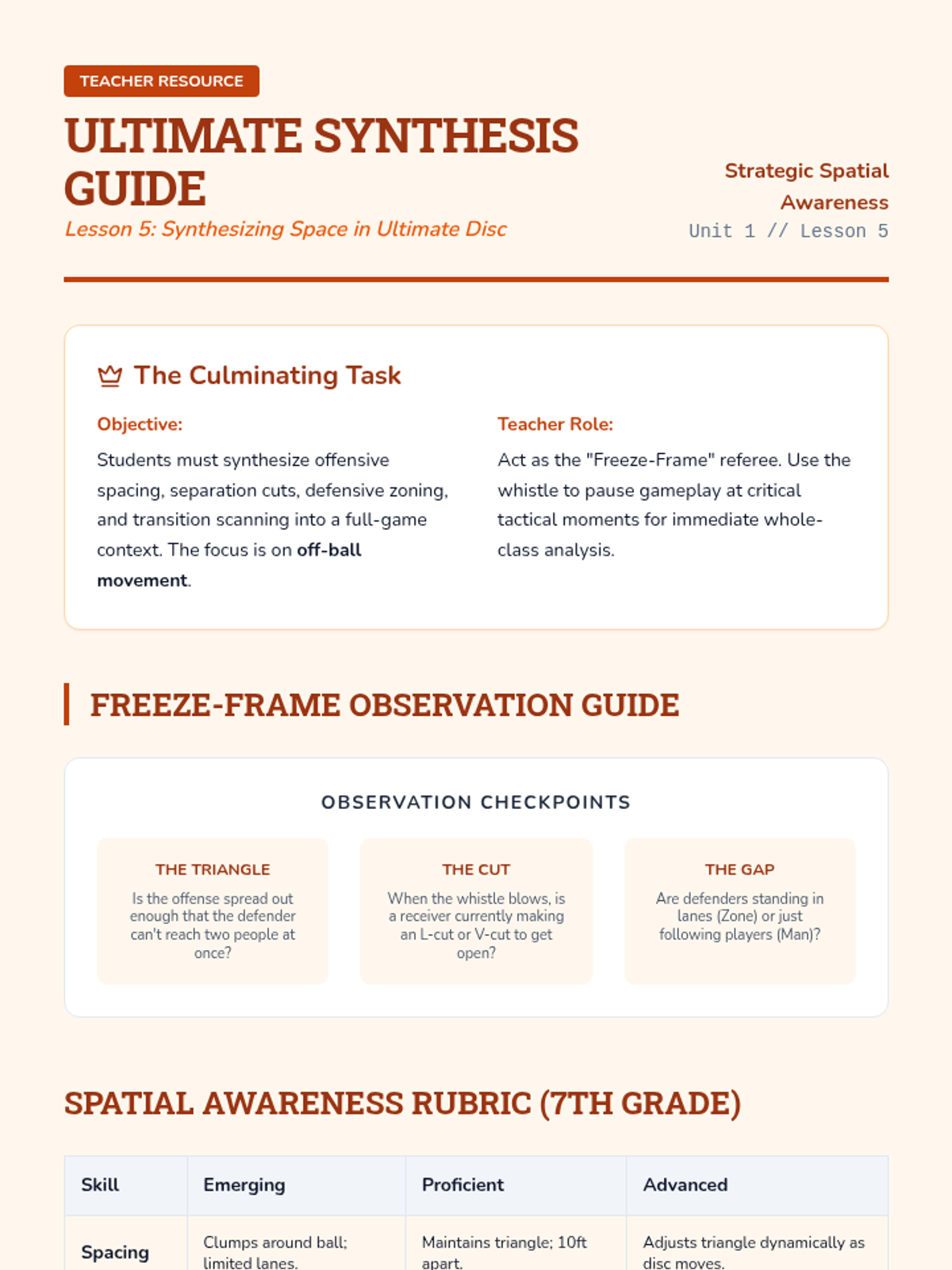
A culminating game experience using Ultimate Disc to apply all spatial concepts, featuring 'freeze-frame' coaching moments to analyze real-time decision-making.
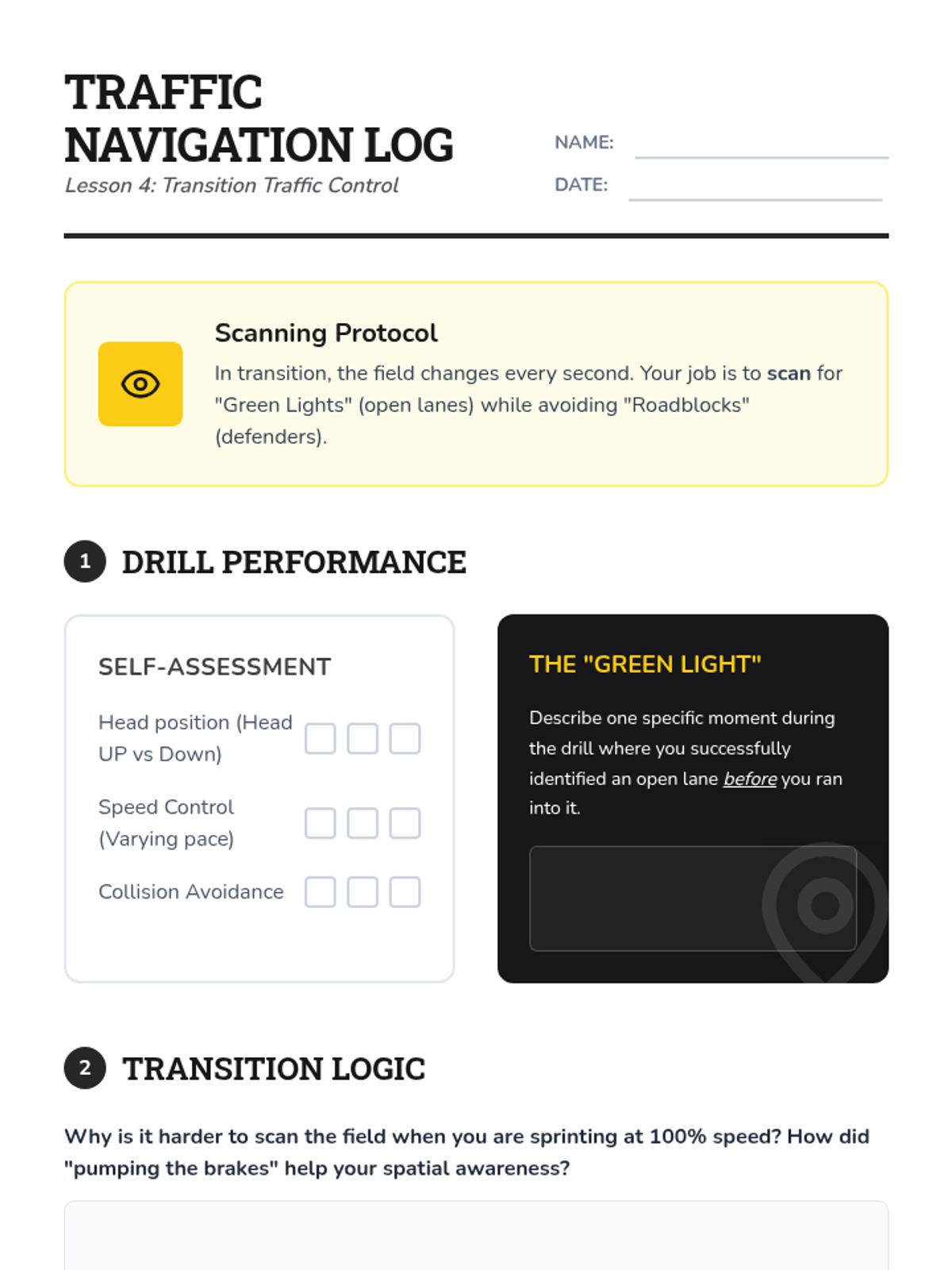
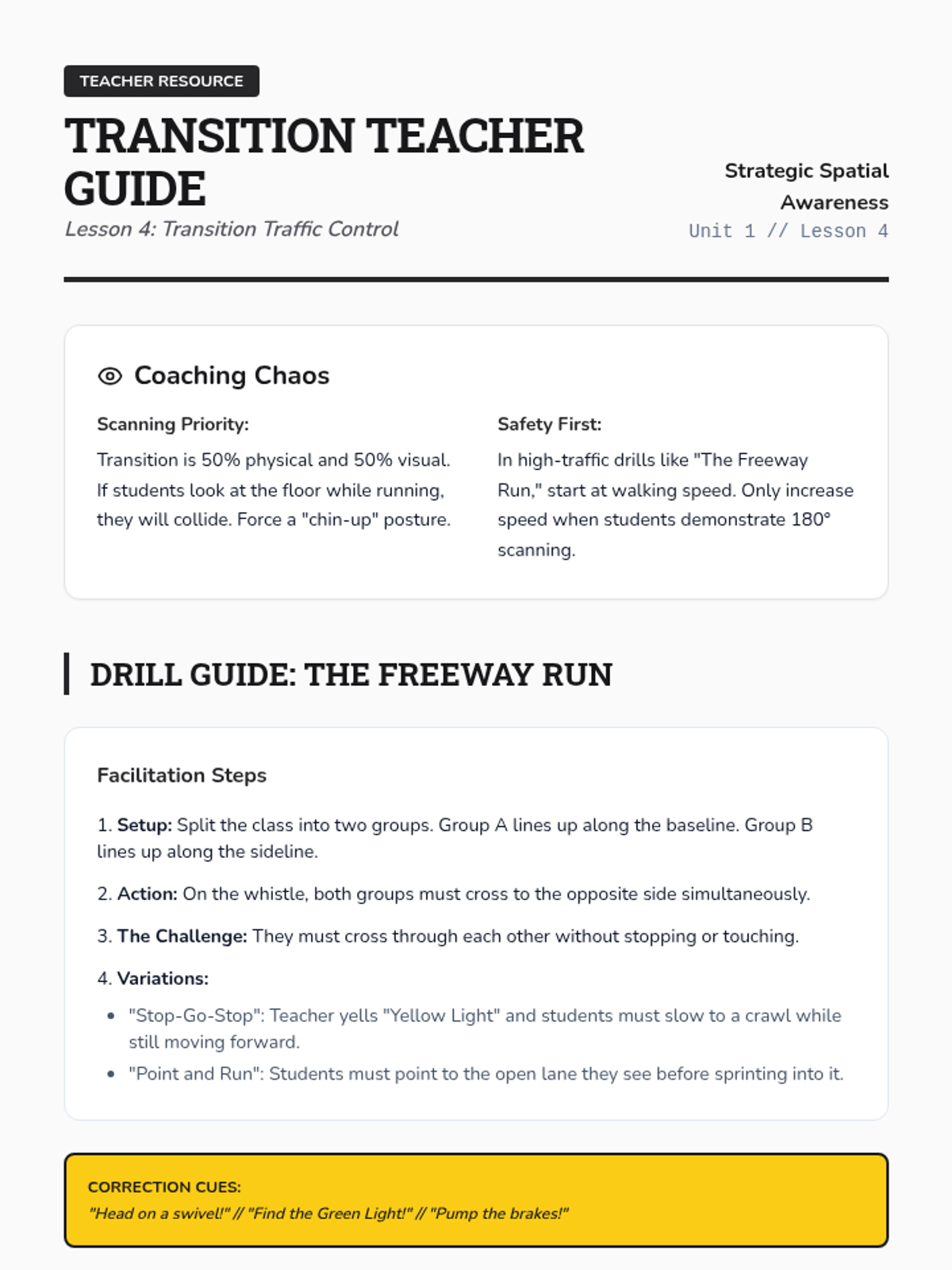
Focuses on the high-speed spatial dynamics of turnovers and transition play, emphasizing field scanning and collision avoidance in chaotic environments.
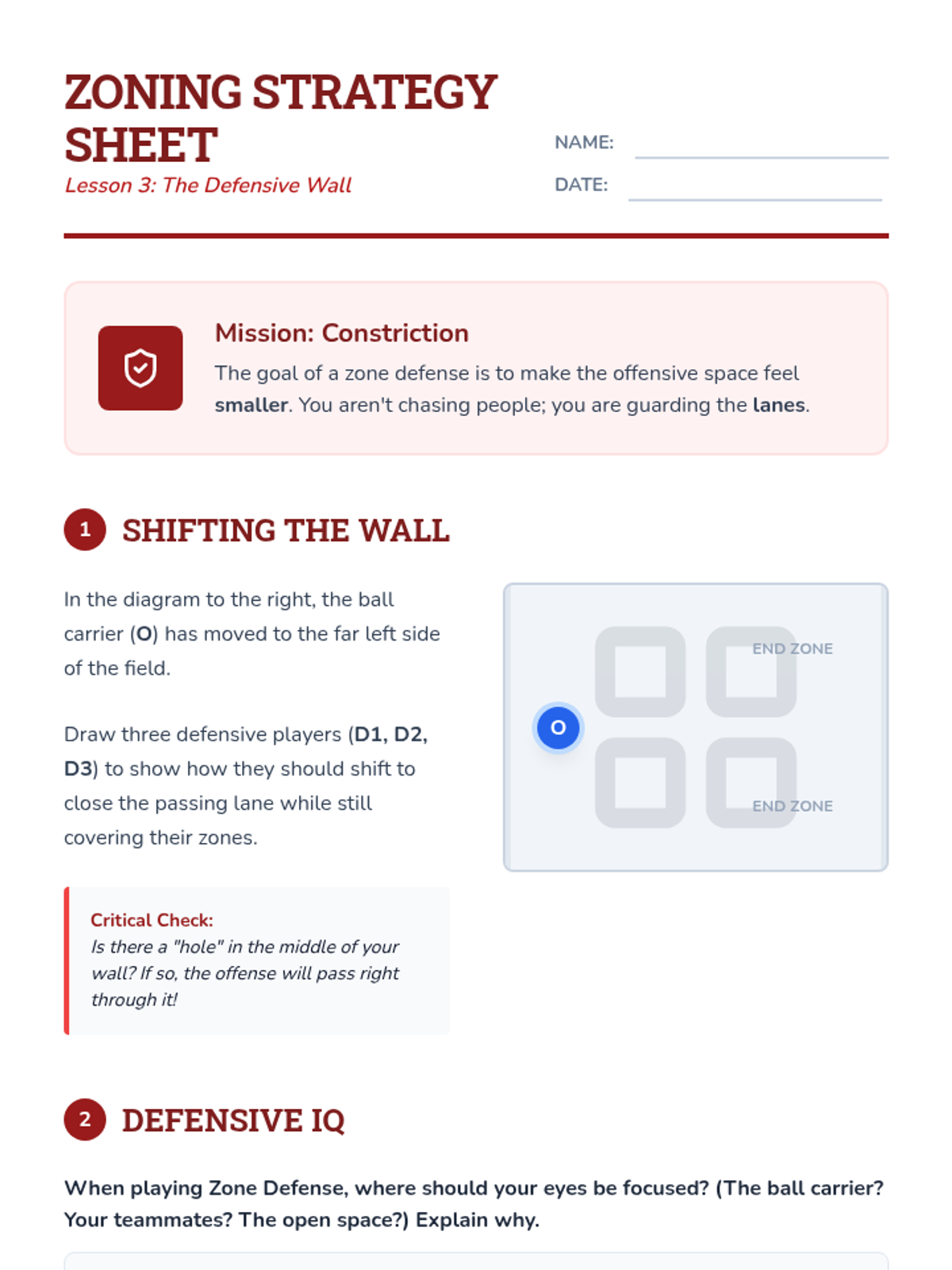
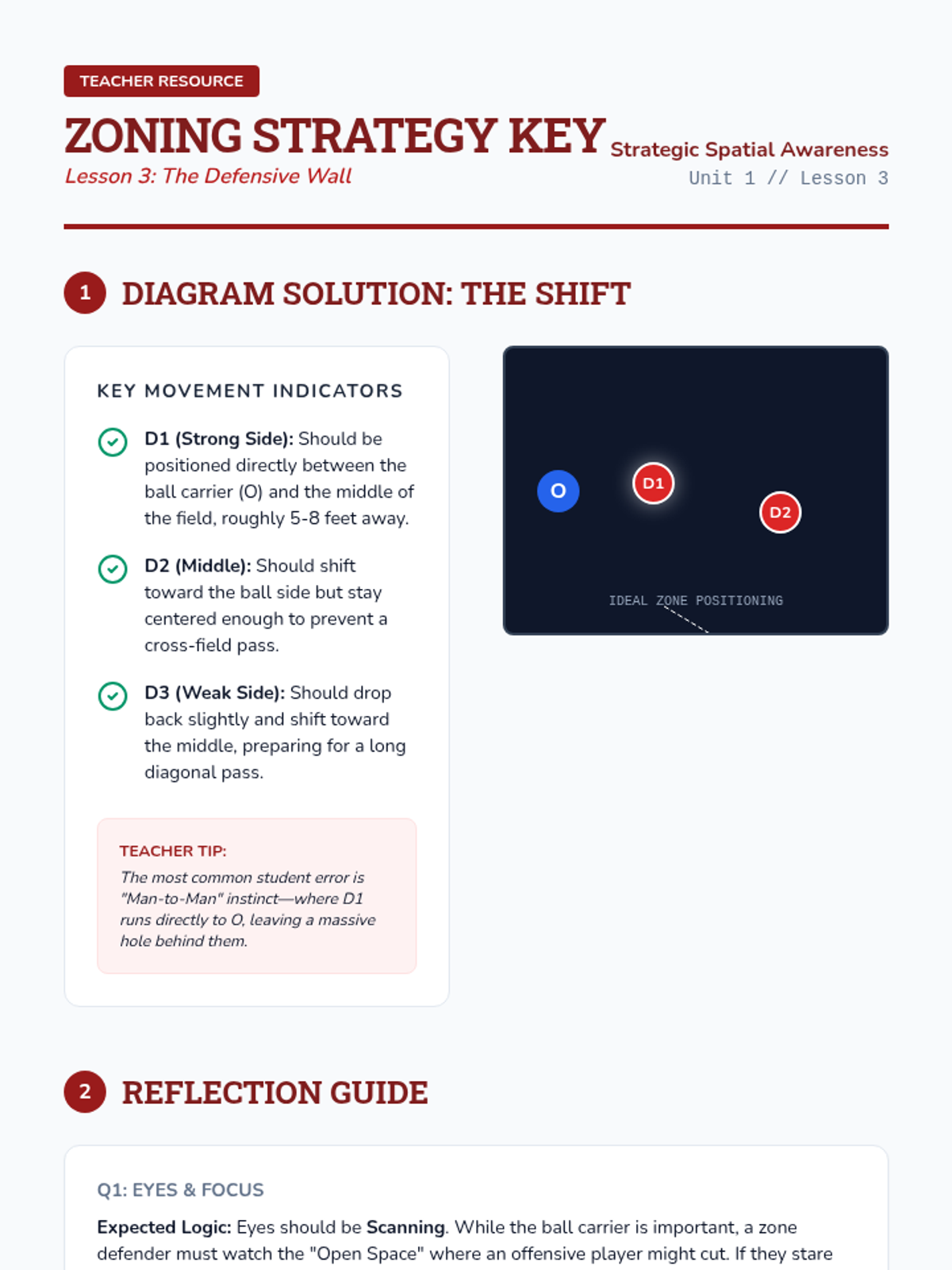
A shift to the defensive perspective, where students learn to constrict space and move as a cohesive unit to shut down offensive passing lanes.
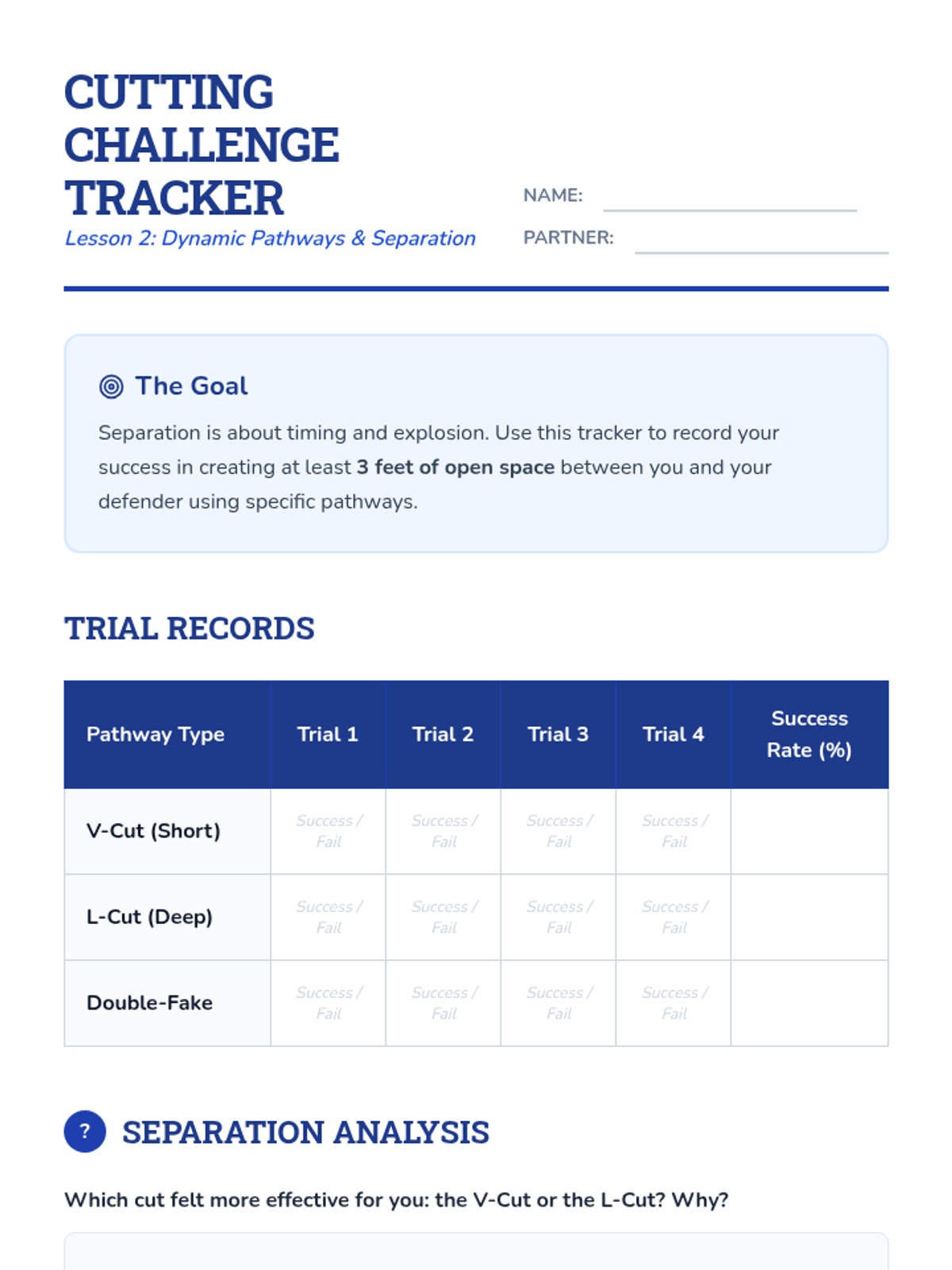
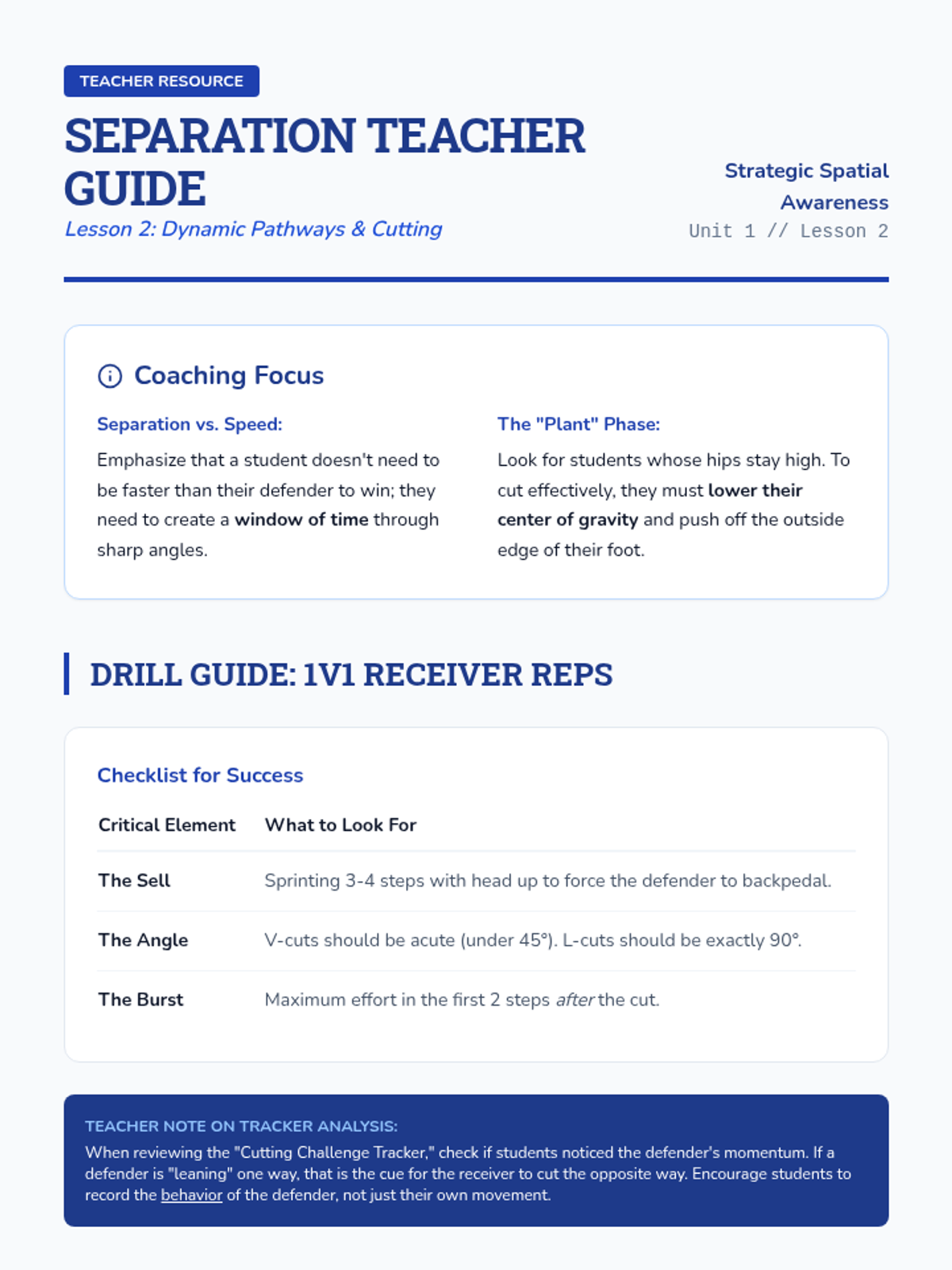
Learners master agility and separation techniques, focusing on V-cuts and L-cuts to create windows of opportunity in crowded game environments.
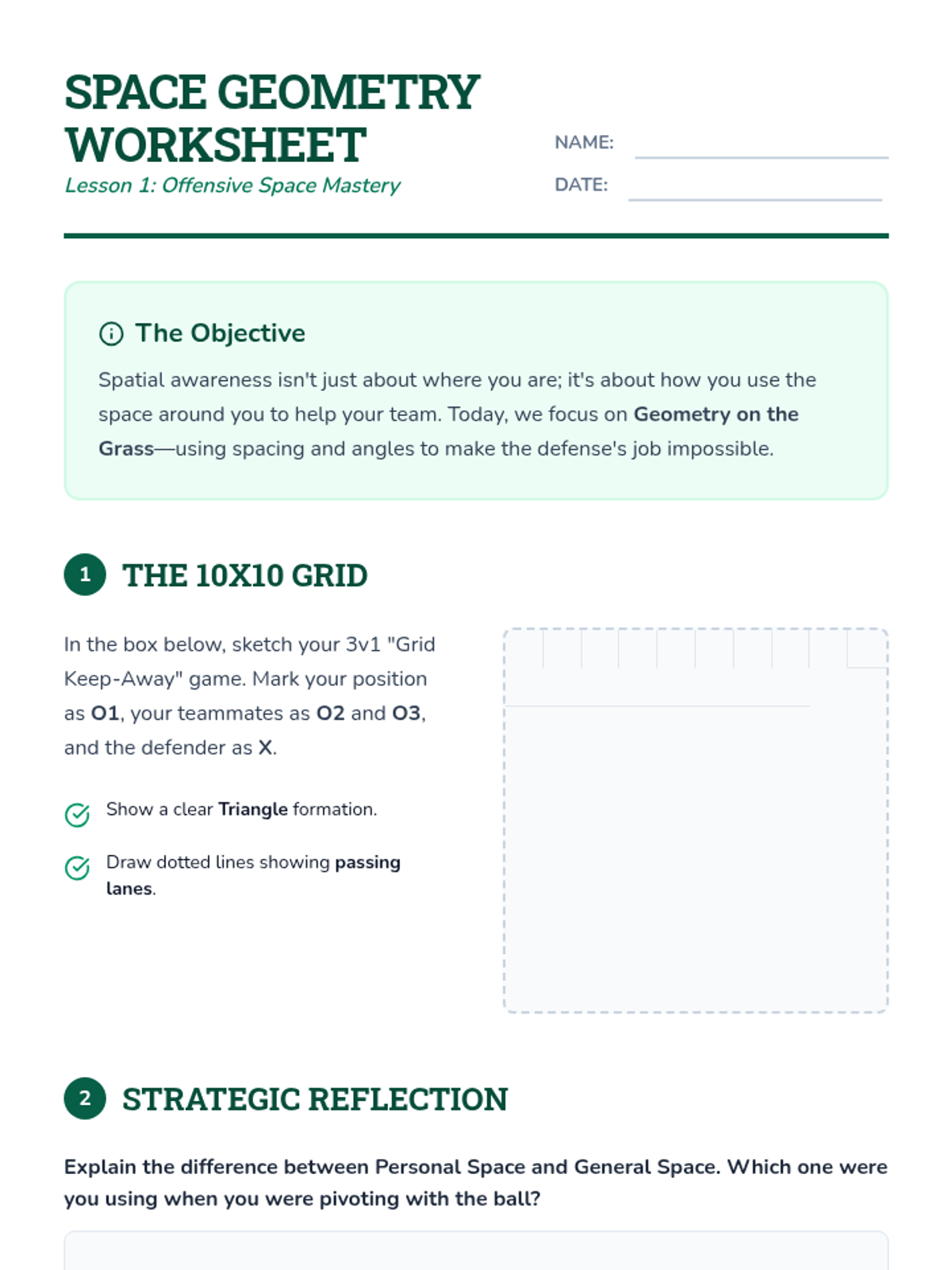
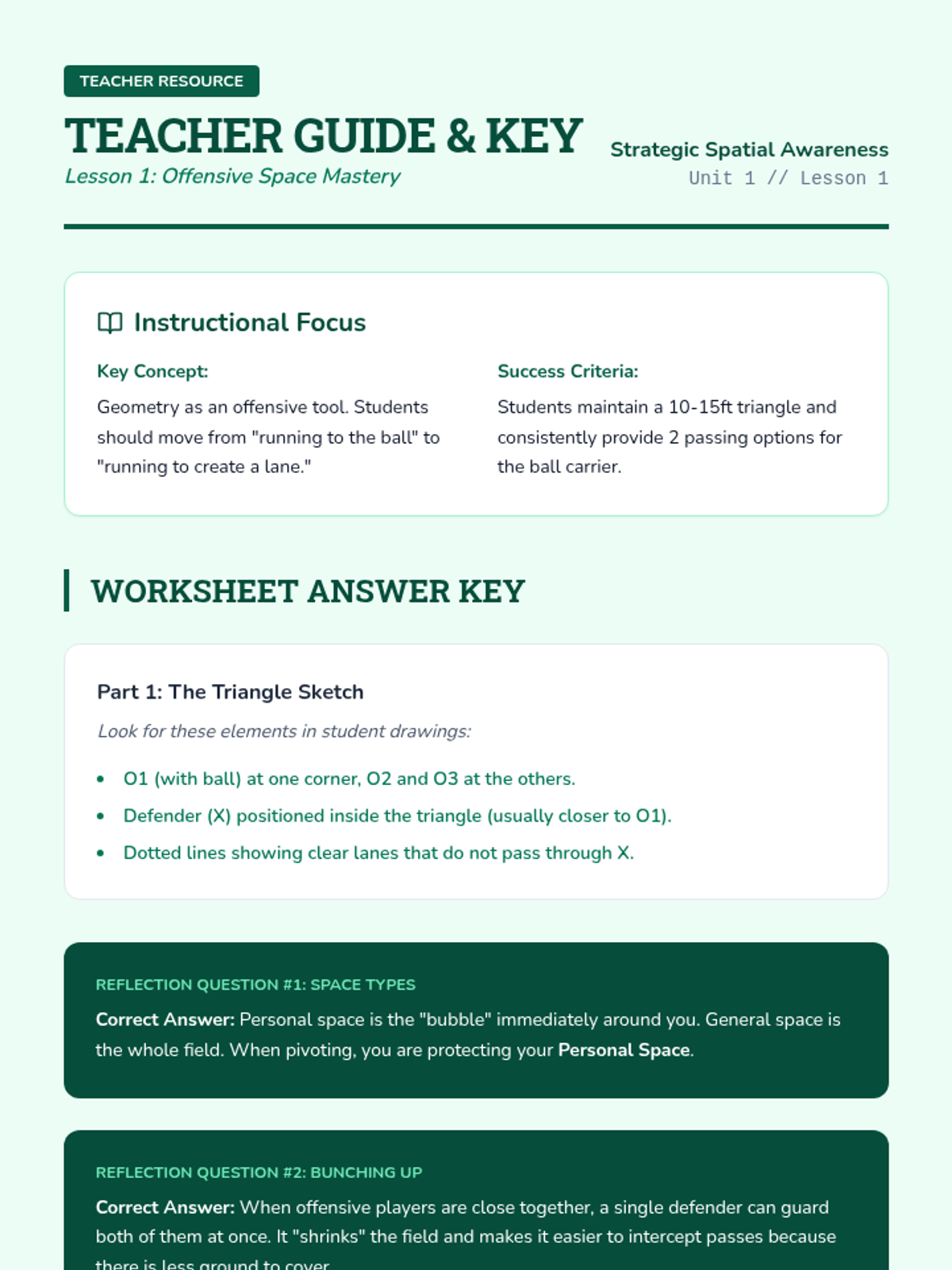
Students explore the geometry of offensive space through grid-based games, learning how to maximize passing lanes and reduce defensive pressure by maintaining effective spacing.
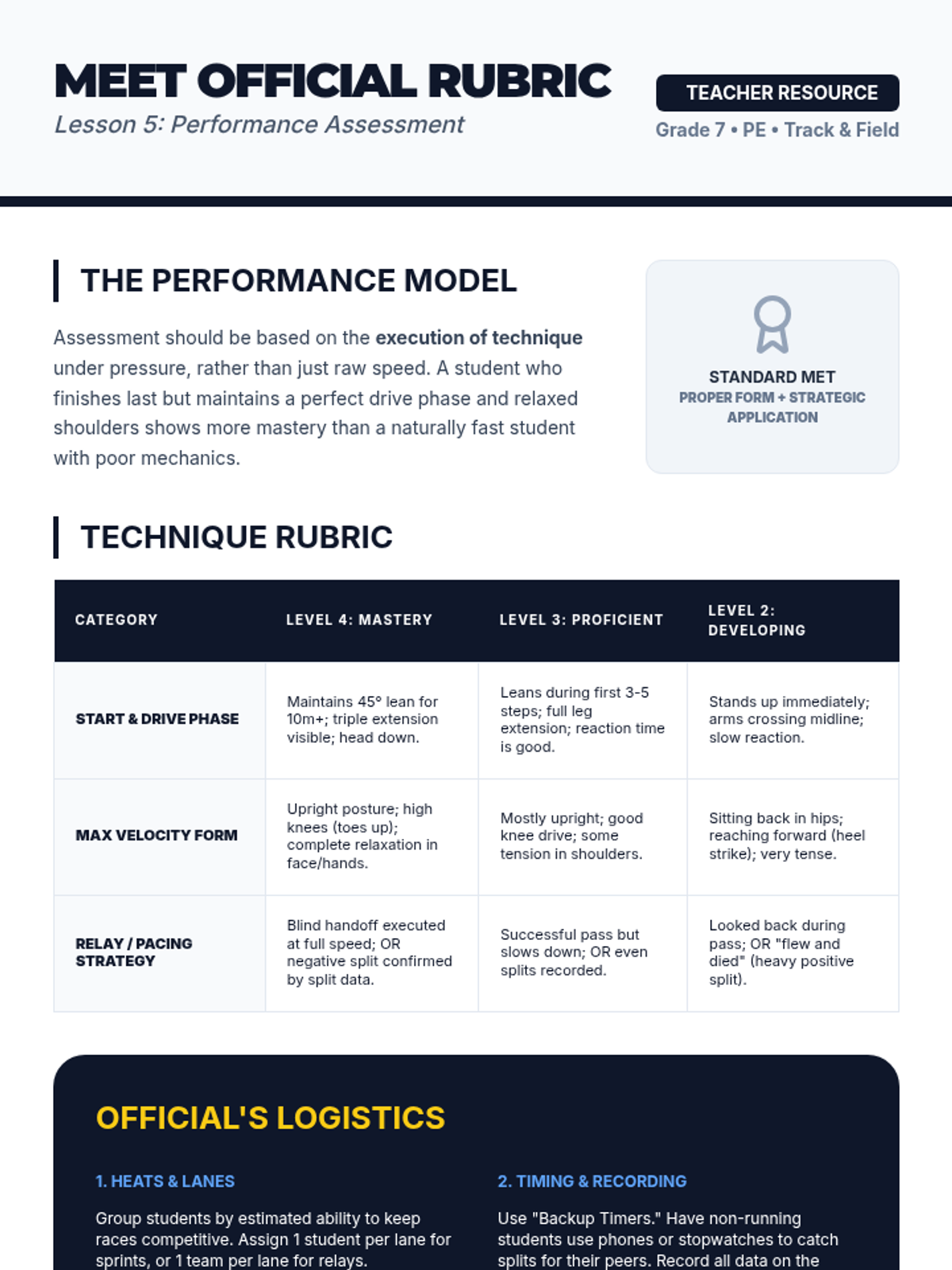
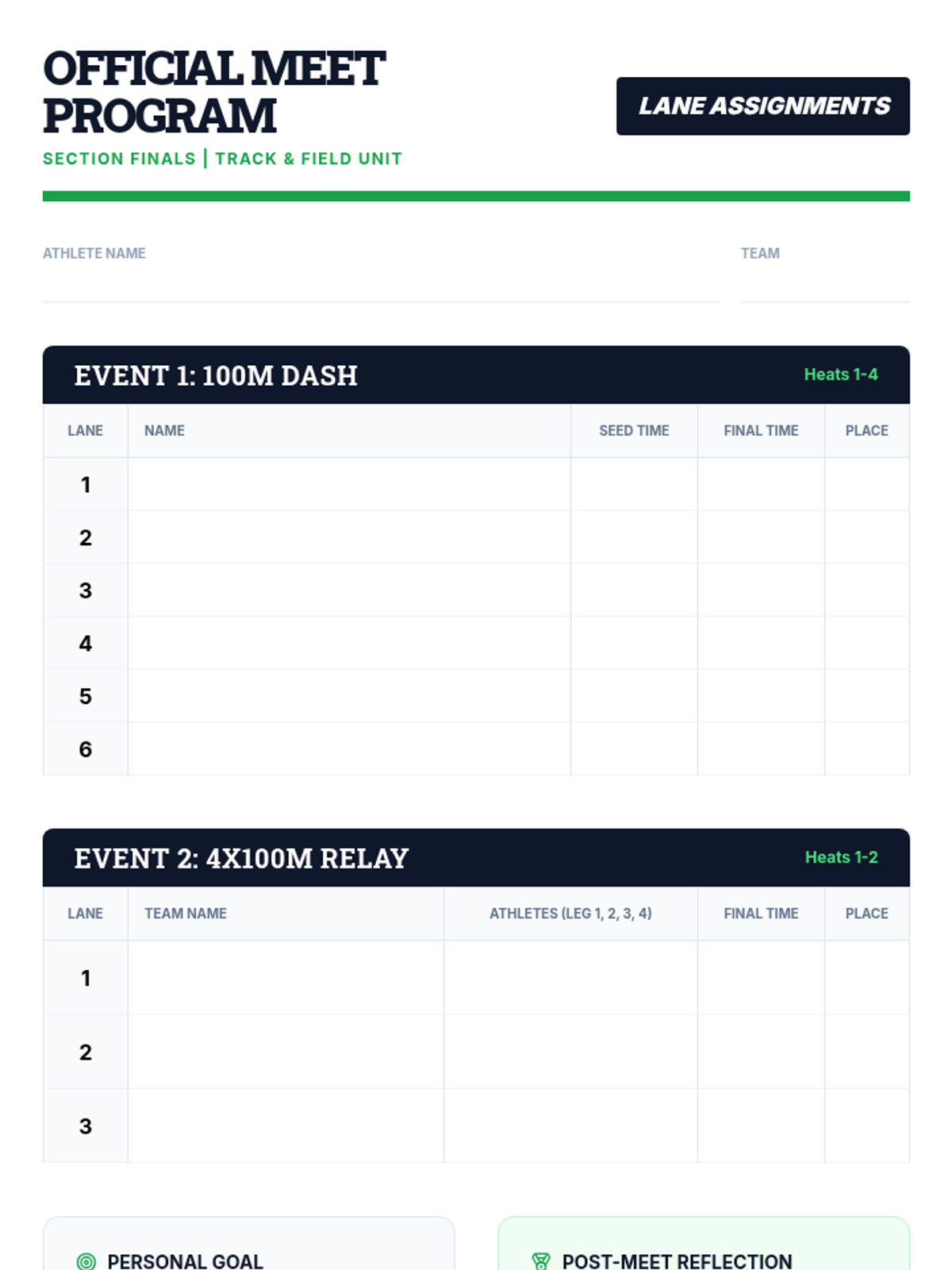
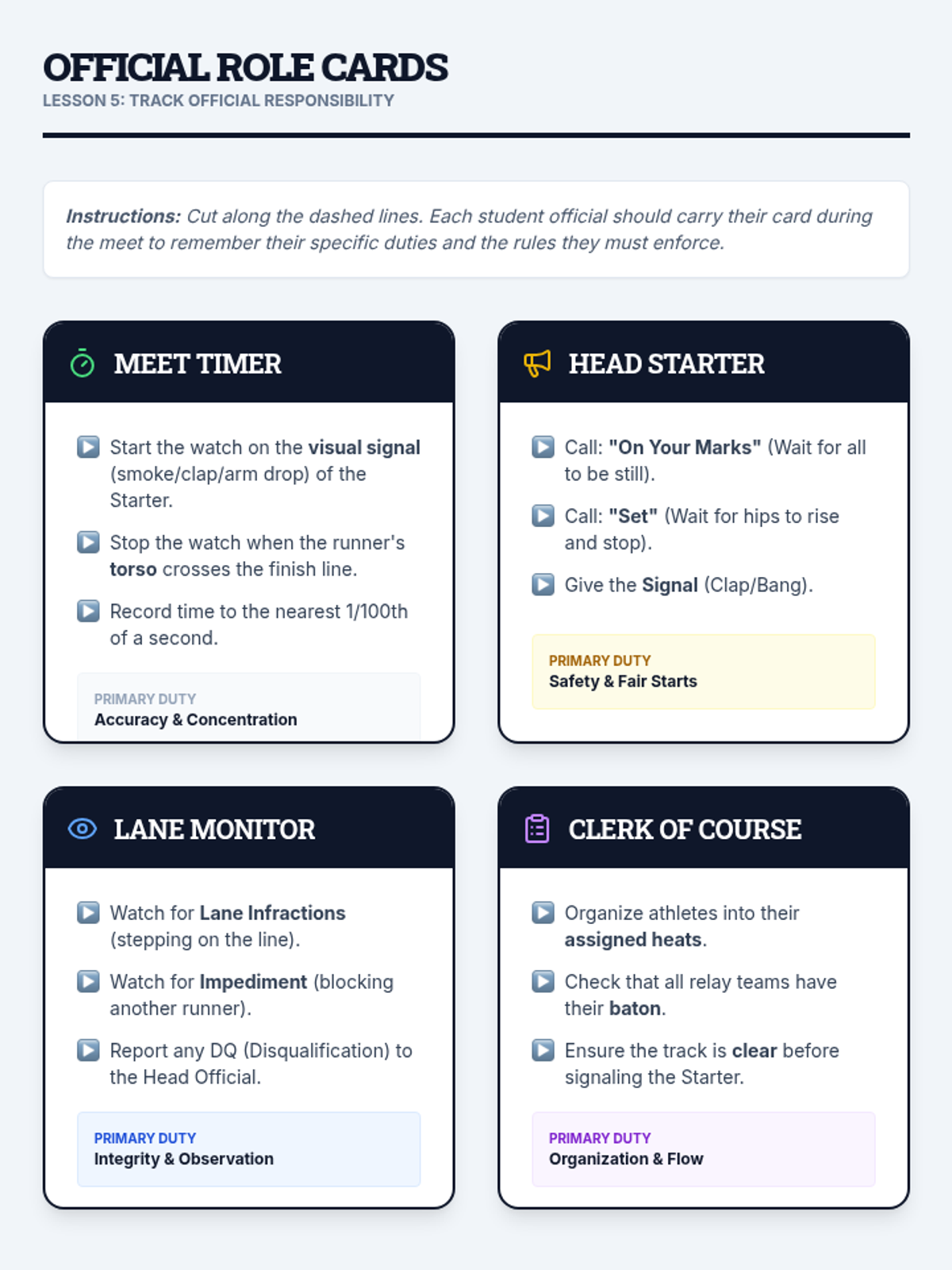
A culminating mini-meet where students compete in dashes and relays while also serving as officials and timers to understand the rules of track competition.
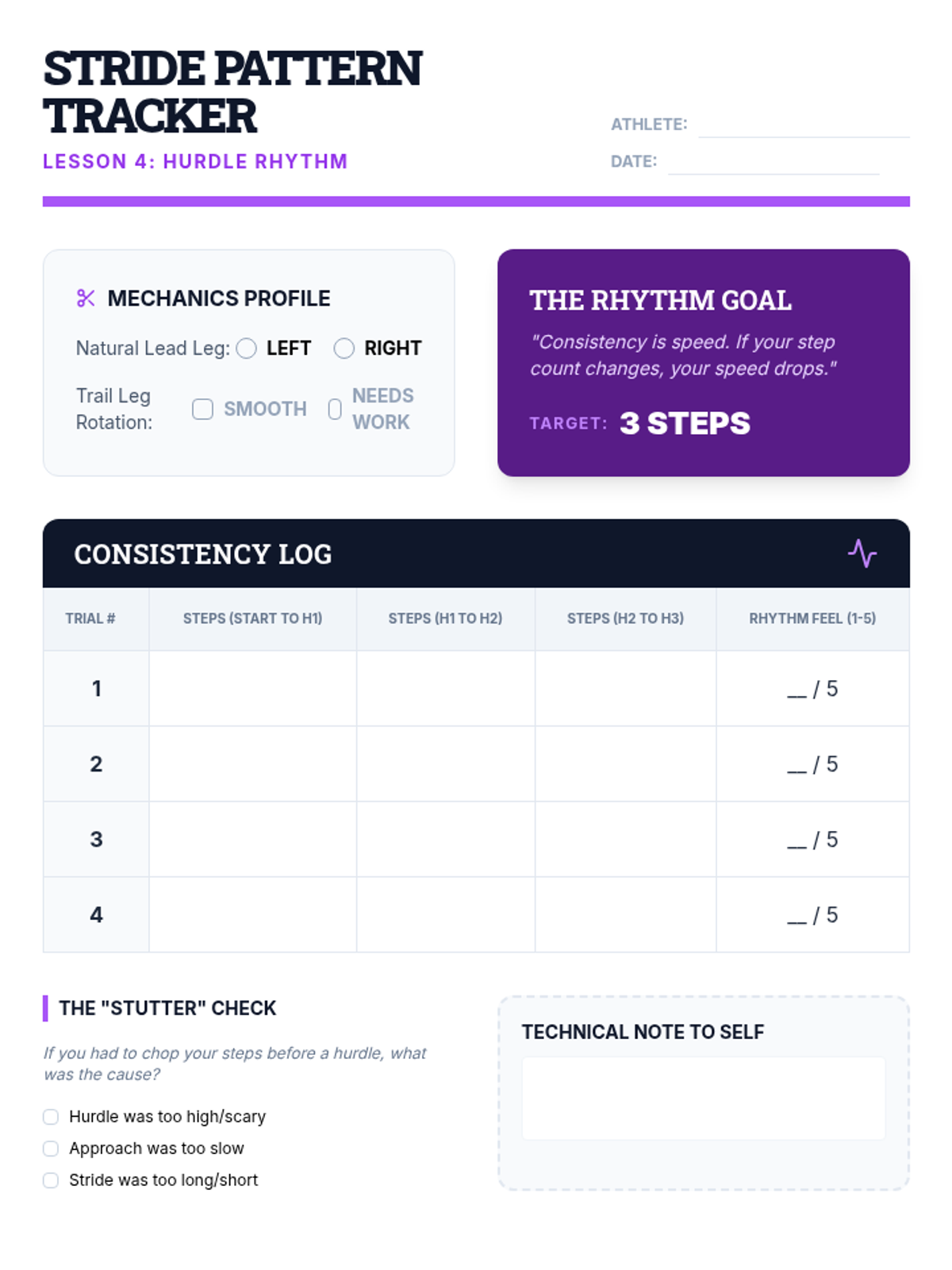
Introduction to hurdling rhythm and stride consistency using safety barriers, focusing on lead and trail leg mechanics.
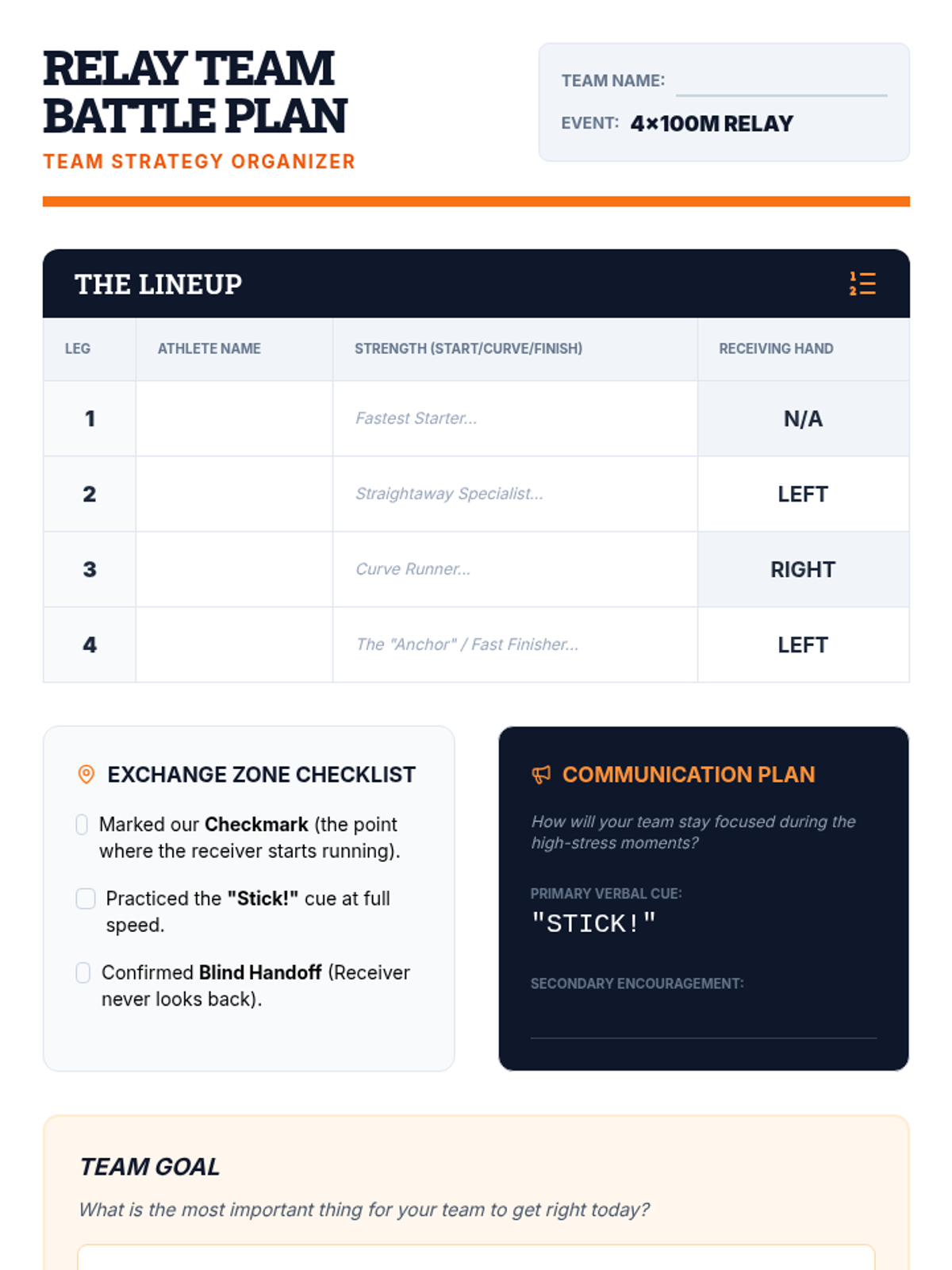
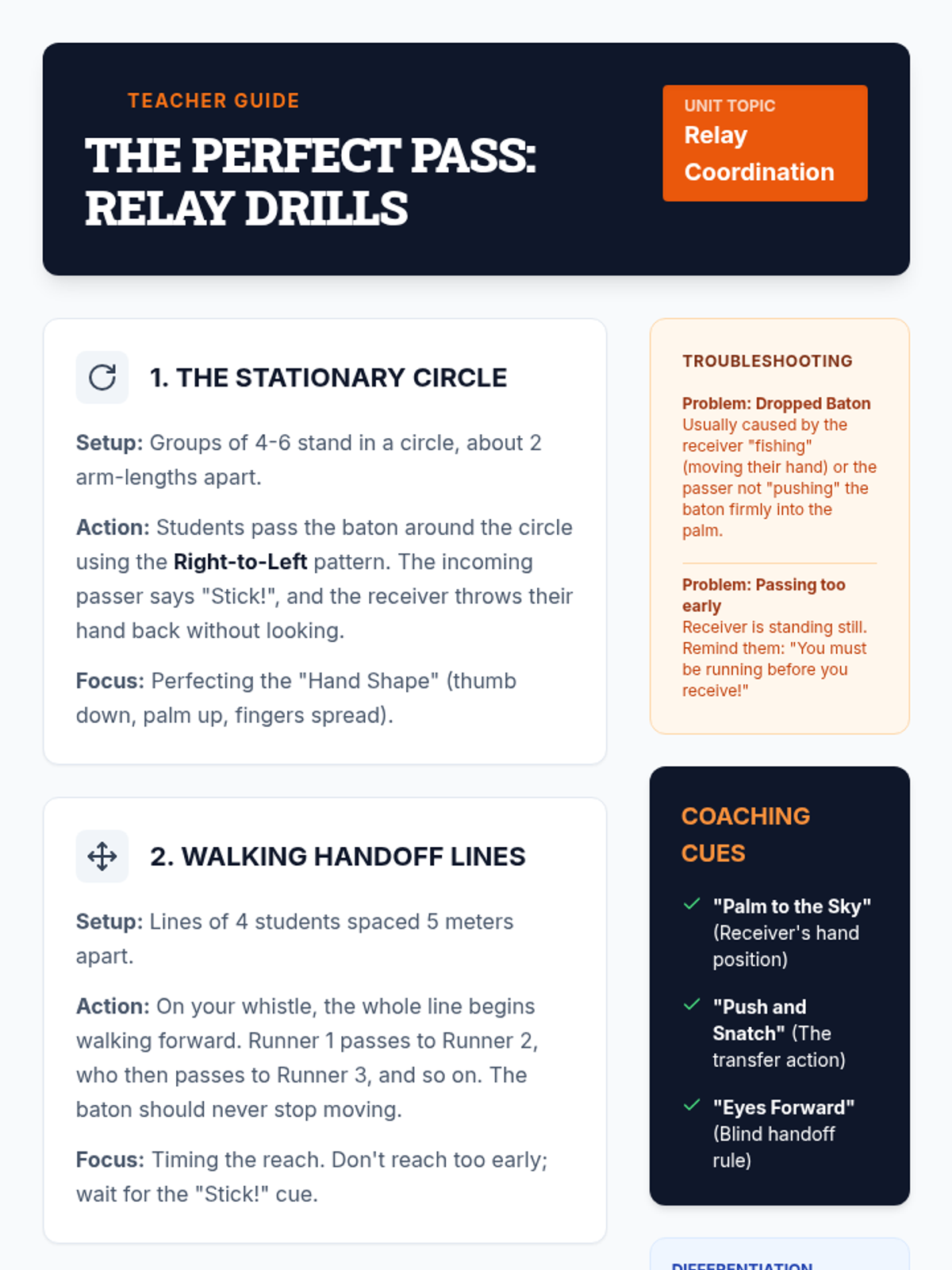
Students master the 'blind handoff' for 4x100m relays, focusing on the 'push and snatch' technique and verbal communication within the exchange zone.
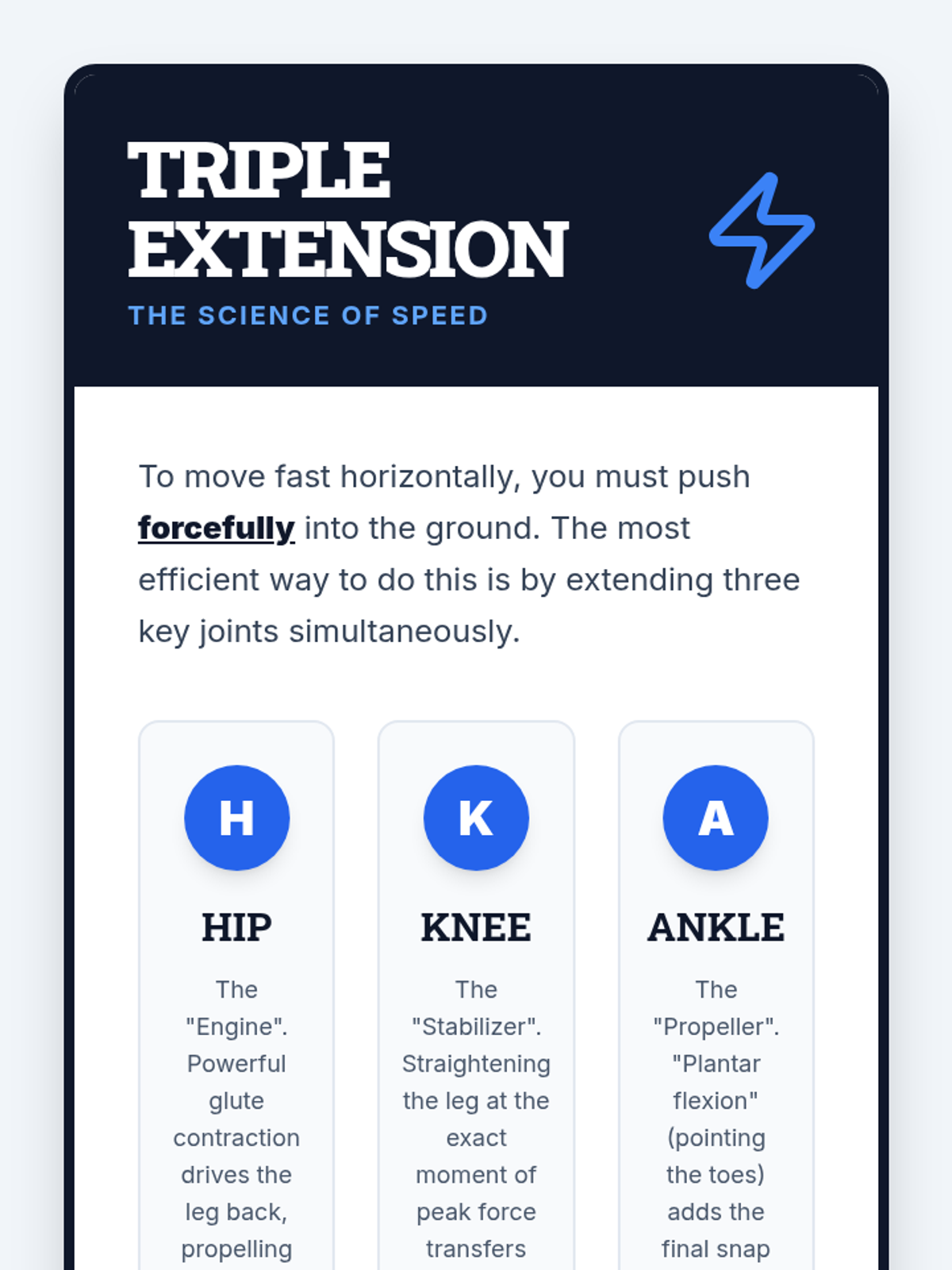
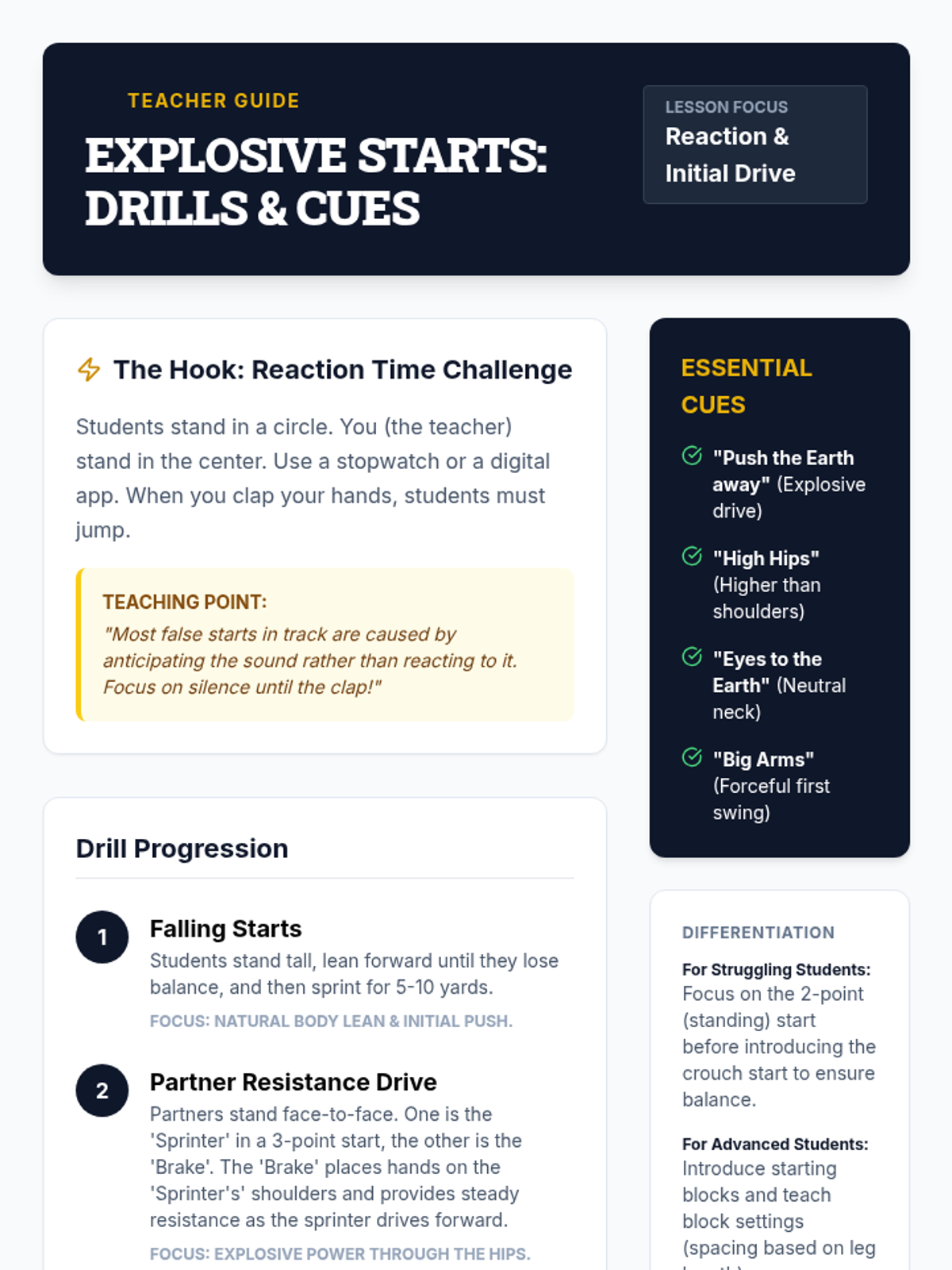
This lesson focuses on the transition from the drive phase to maintenance, emphasizing high knees, arm drive, and the 'triple extension' of the hip, knee, and ankle.
Students learn the mechanics of the crouch start, focusing on weight distribution, explosive drive, and reacting to auditory signals.
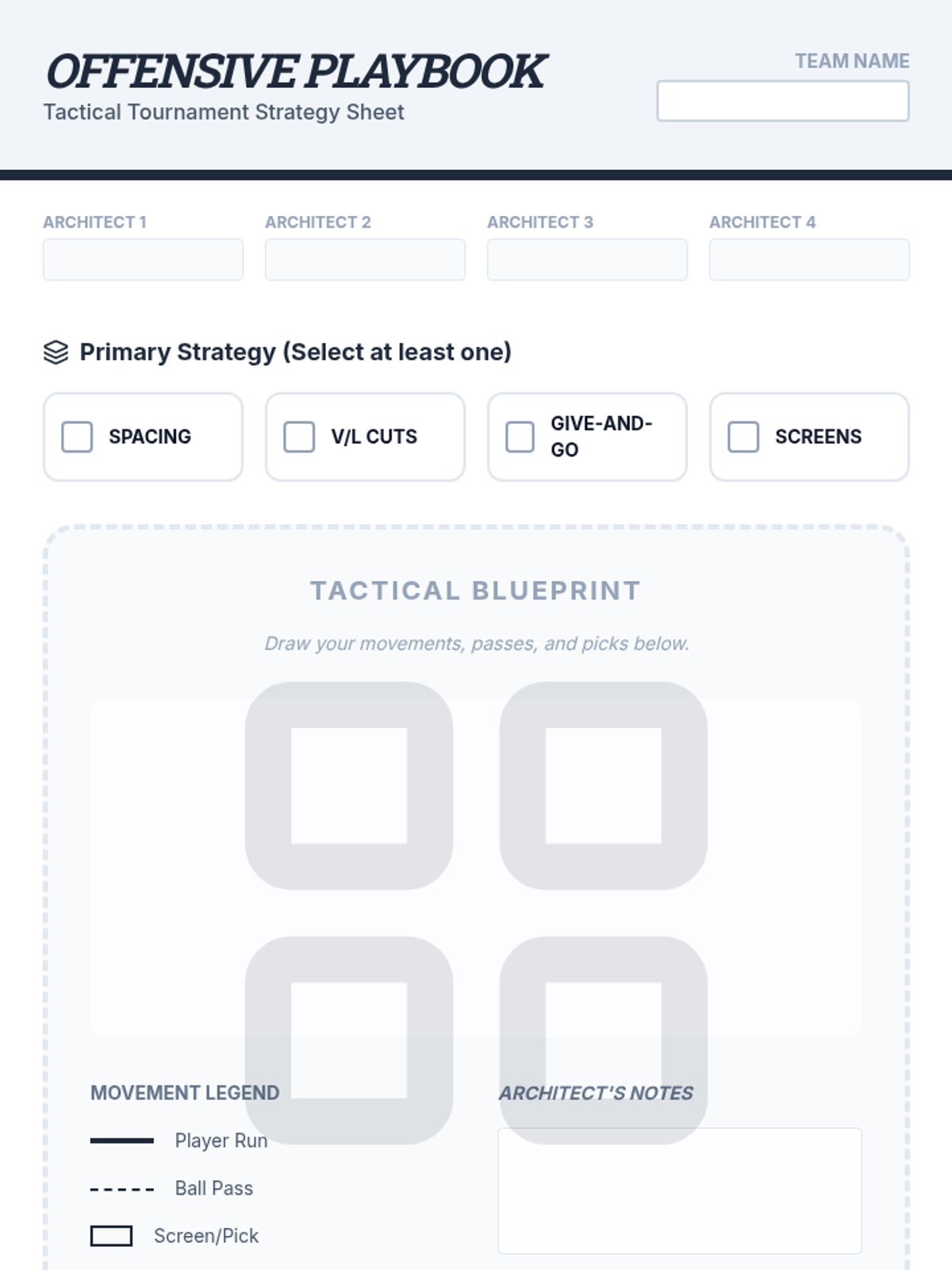
A culminating tournament where students design, diagram, and execute their own offensive plays in small-sided game situations.
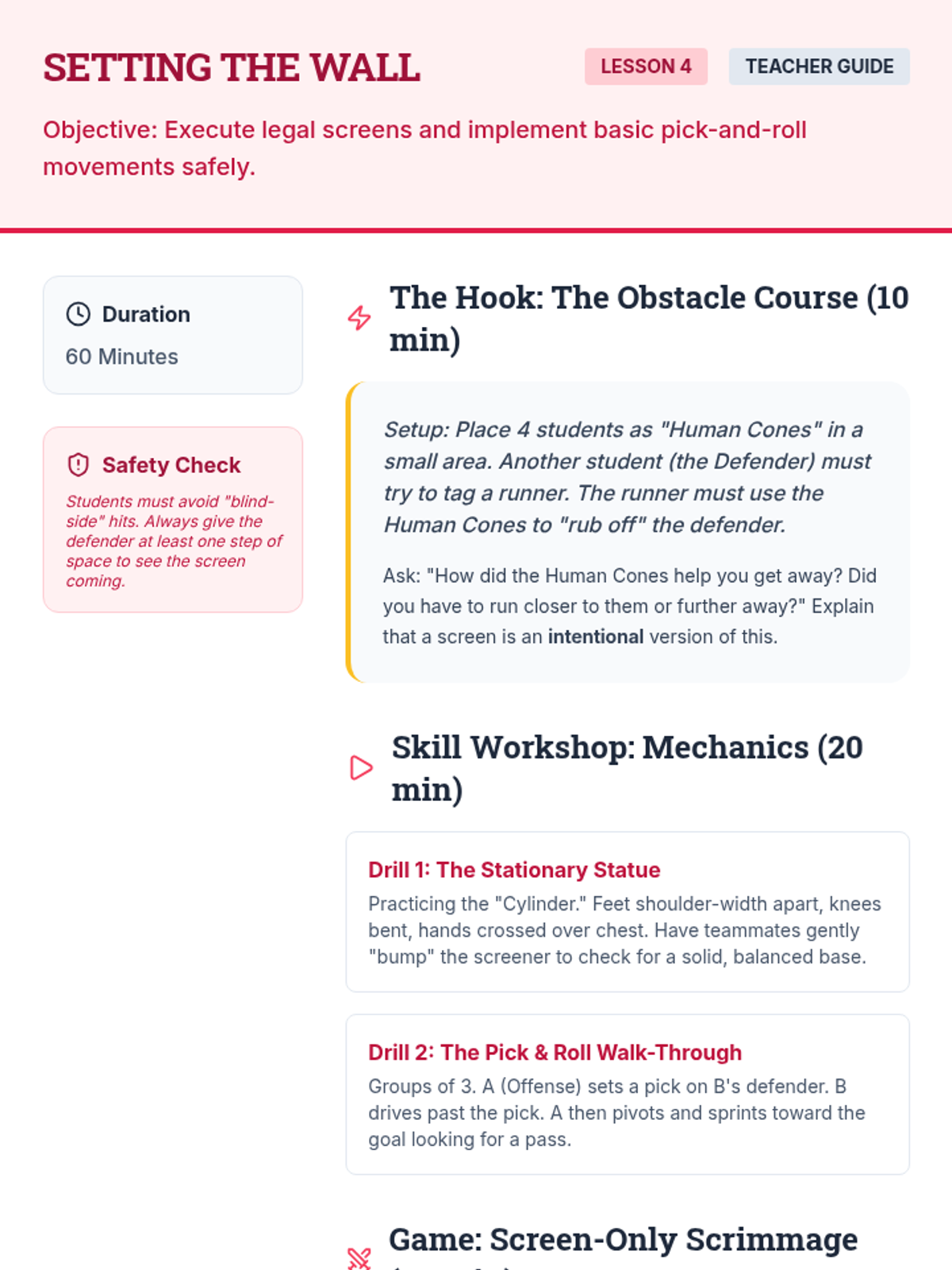
Introduces the mechanics and safety of setting screens and the basic pick-and-roll dynamic to free up teammates.