A 3-page narrative summary and analysis of the history of Eatonville, Florida, and the legacy of author Zora Neale Hurston. Designed for a 7th-grade reading level with a focus on community identity and historical preservation.
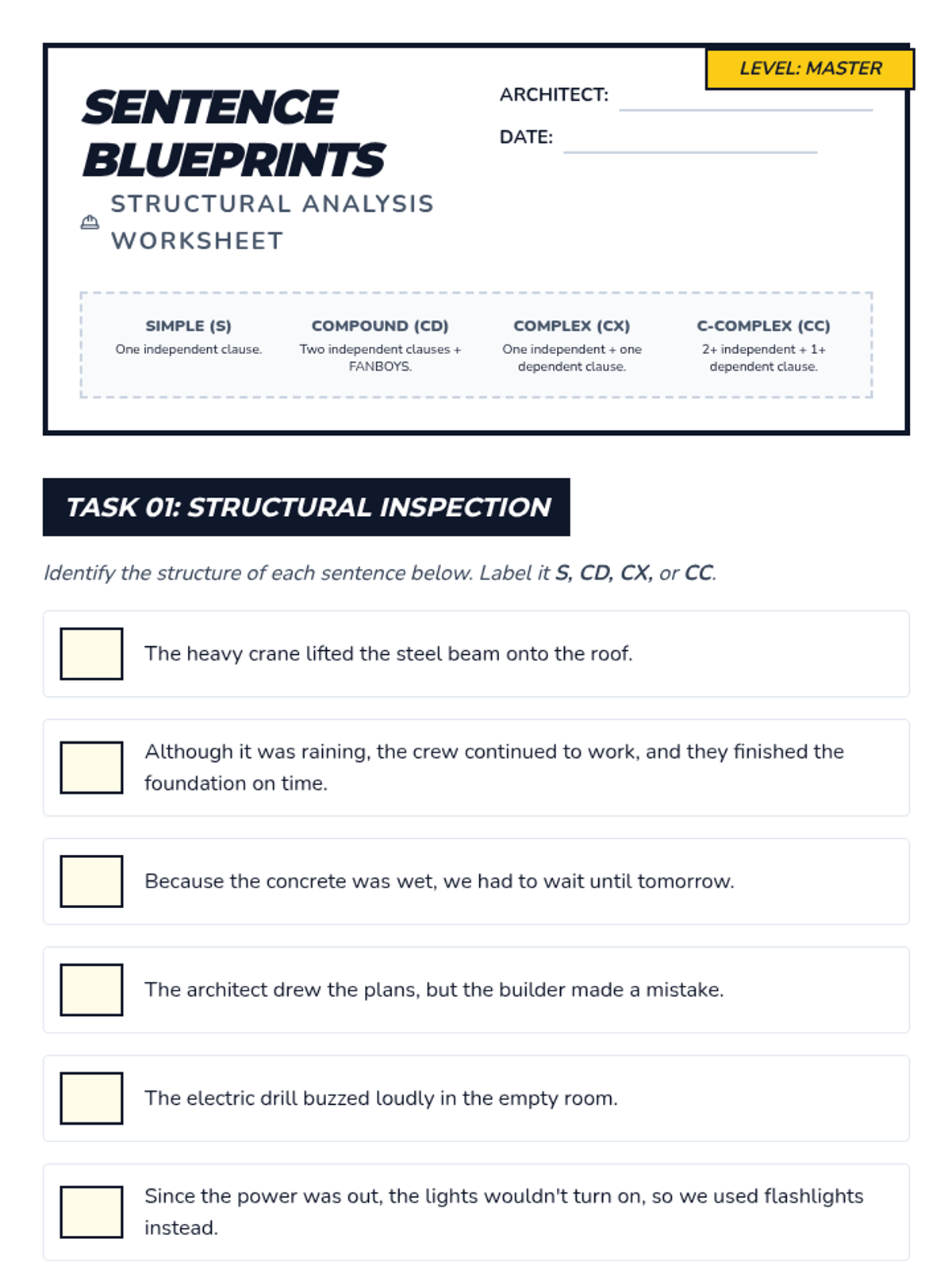
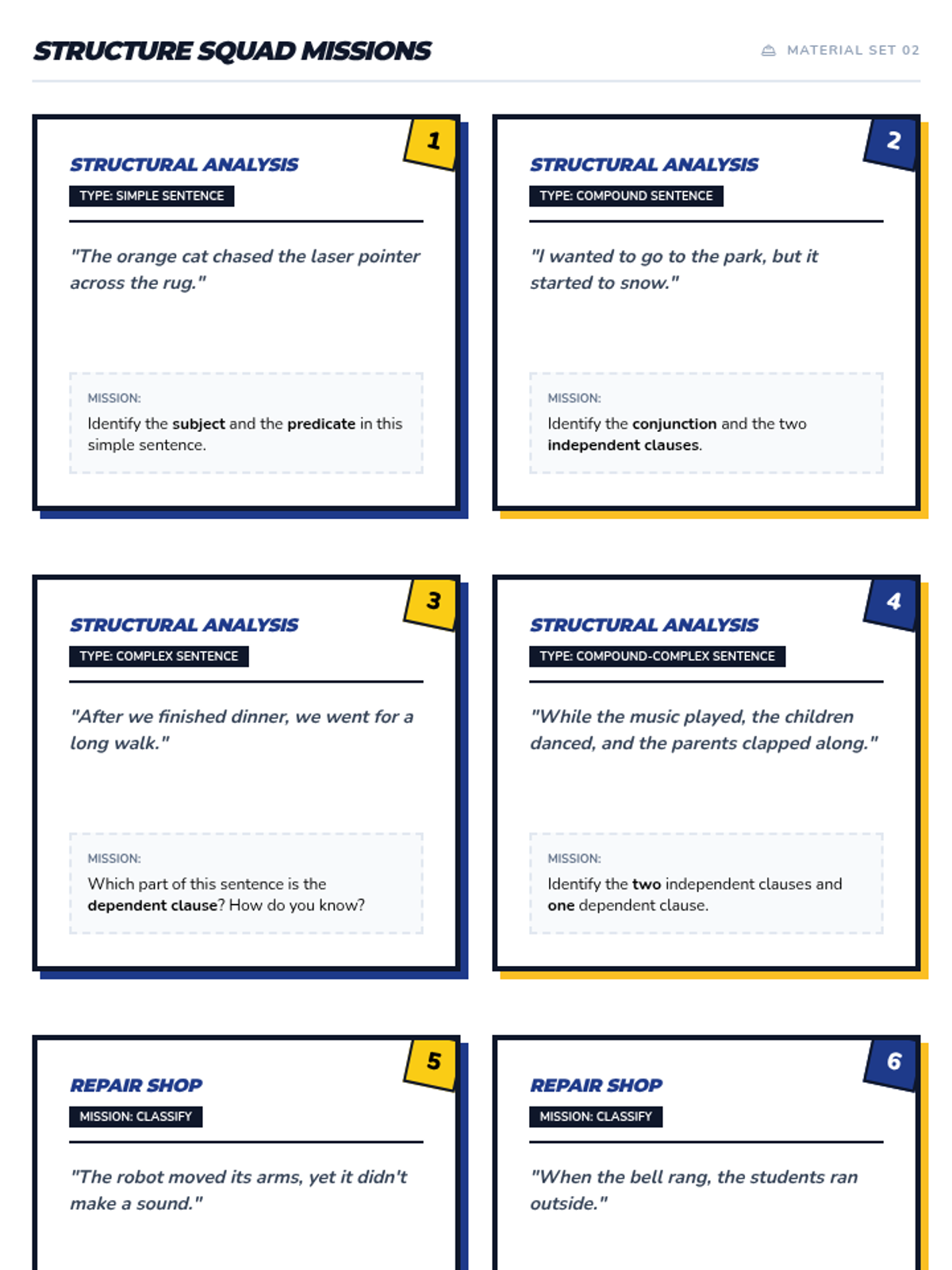
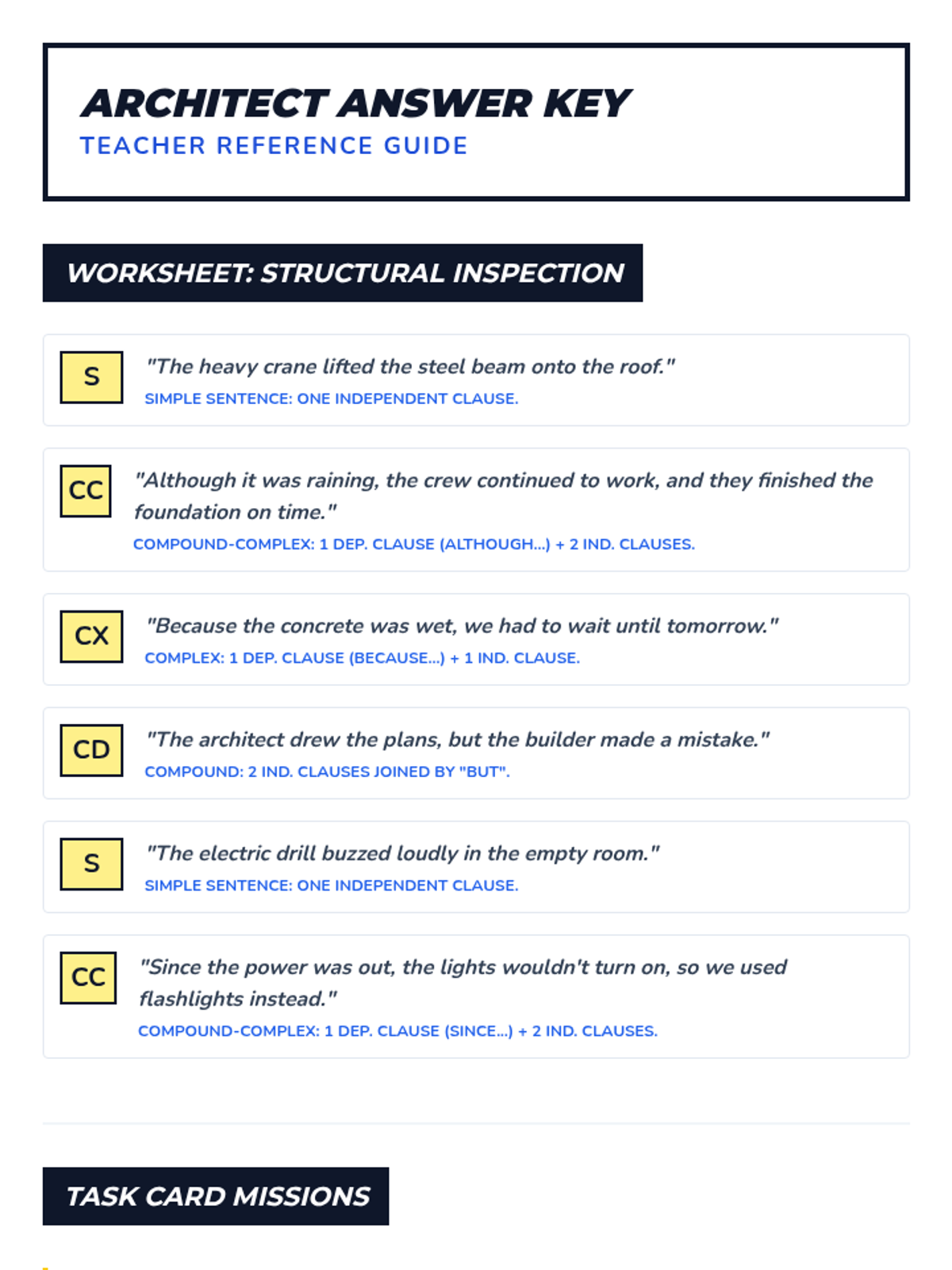
A comprehensive review of sentence structures including simple, compound, complex, and compound-complex sentences using a construction-themed approach. Students will analyze blueprints of sentences and build their own using specific grammatical tools.
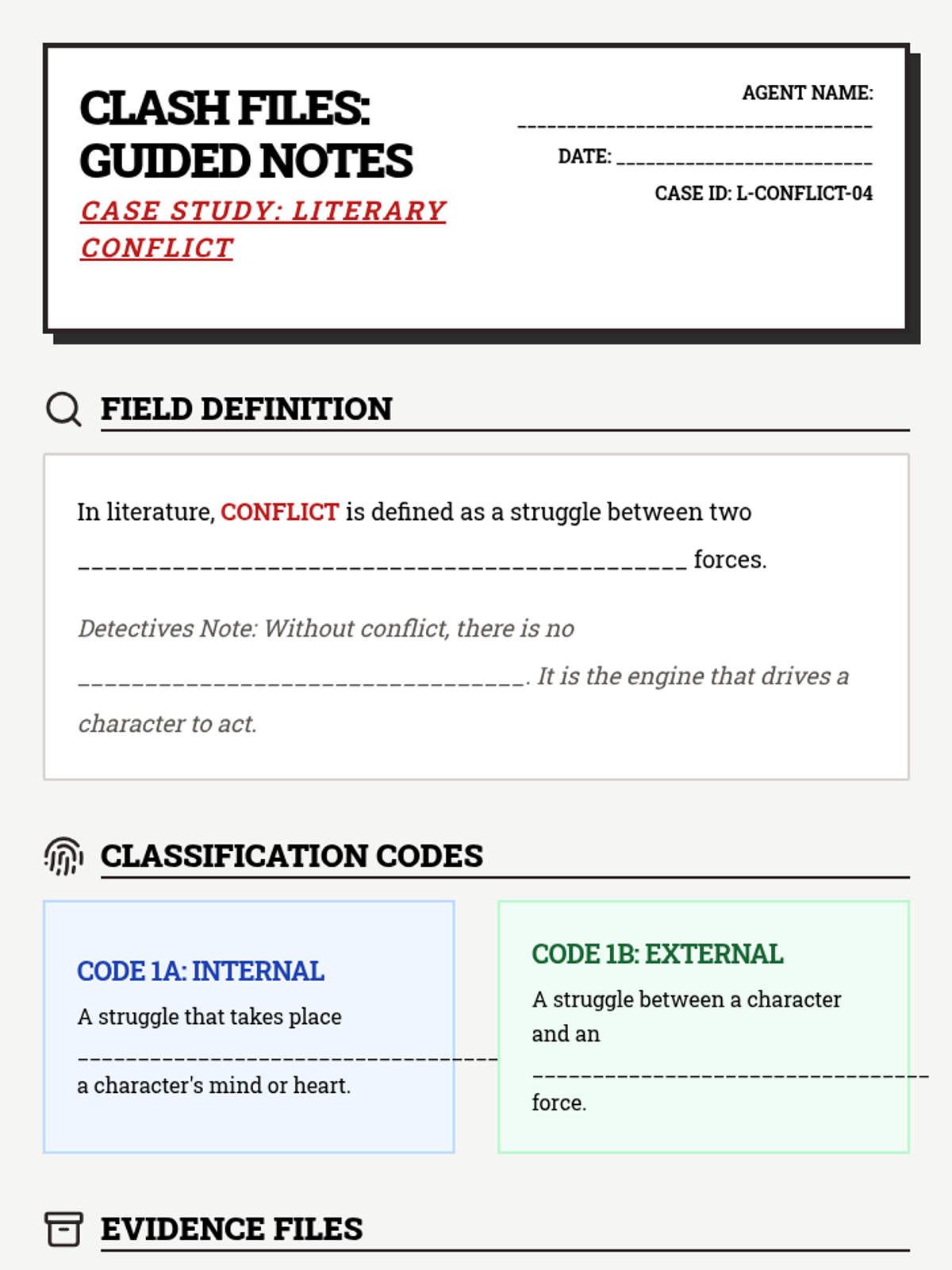
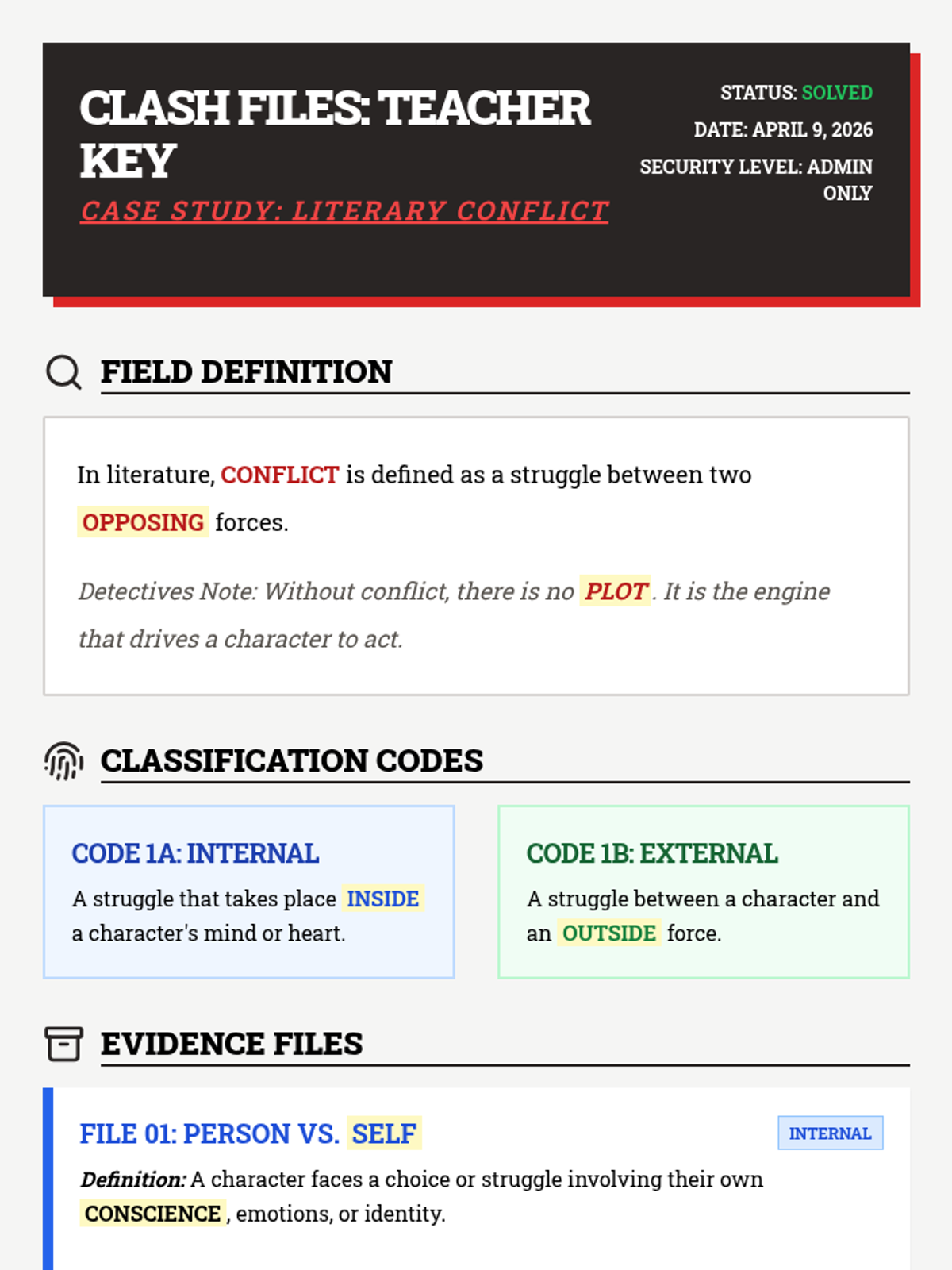
A lesson exploring the primary types of literary conflict, categorized by internal and external forces, using a detective-themed 'case file' approach.
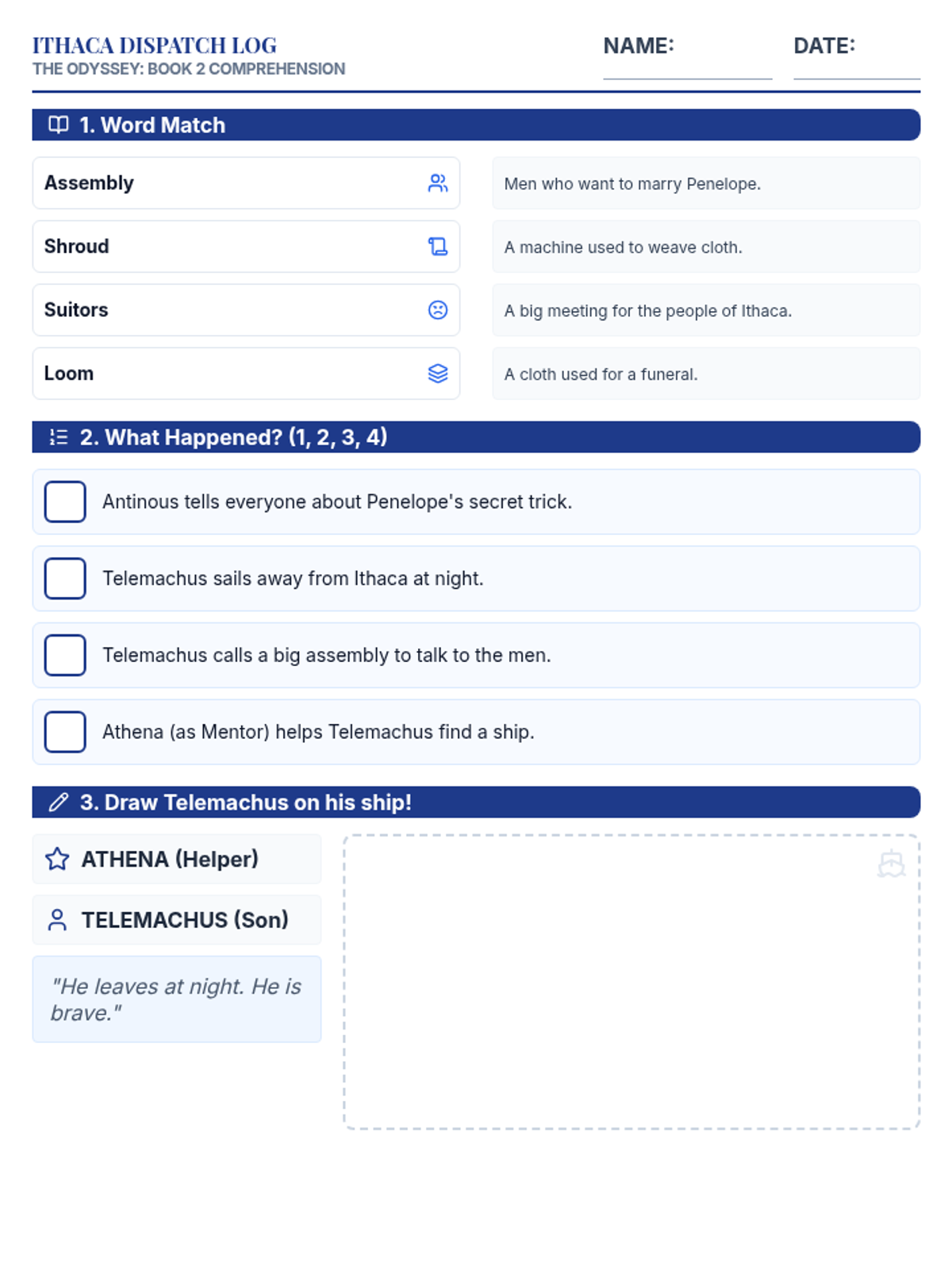
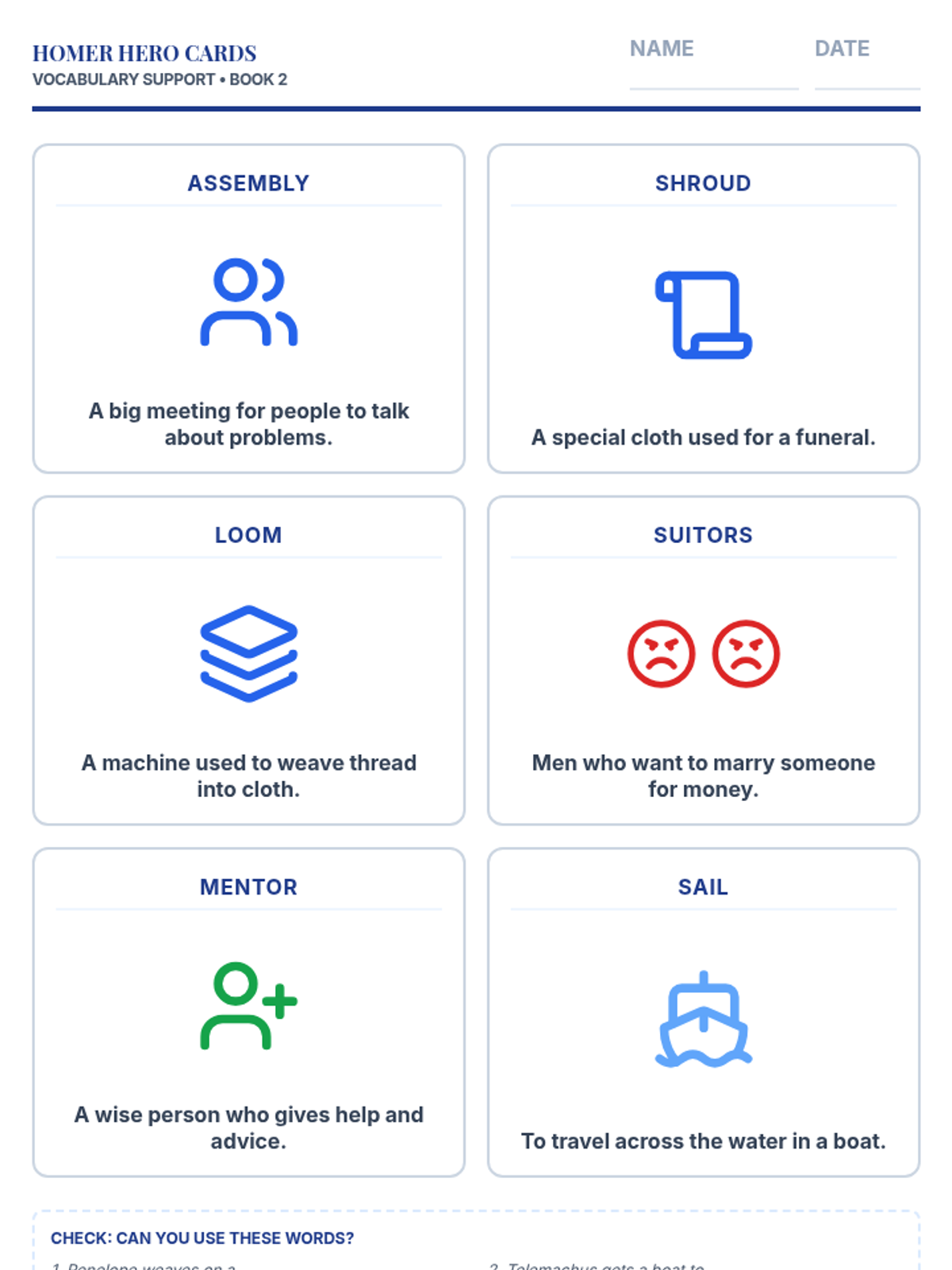
A lesson focused on Telemachus's growth and the events of Book 2 of The Odyssey, specifically designed with high visual support for ELL students at WIDA levels 1-2.
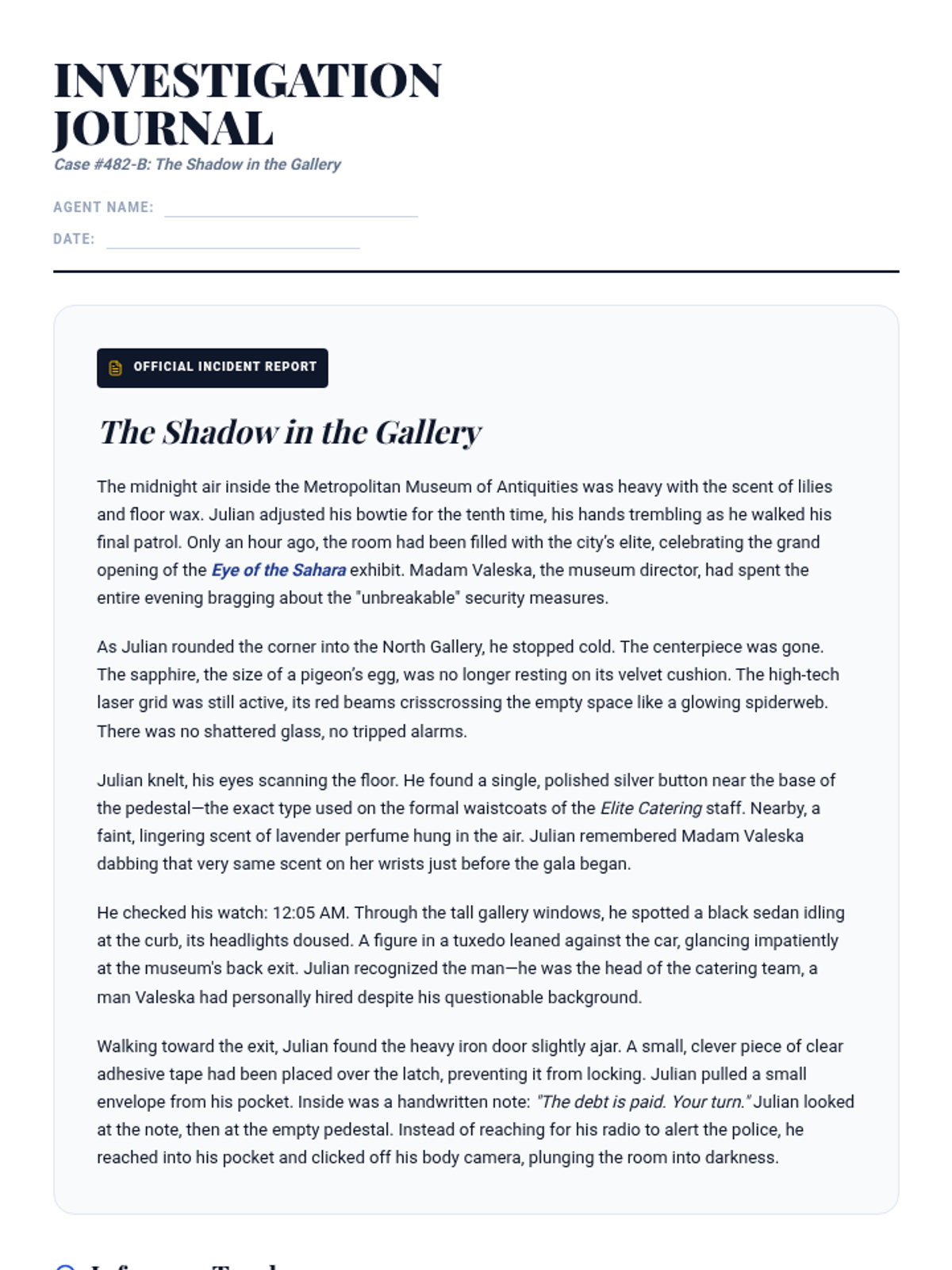
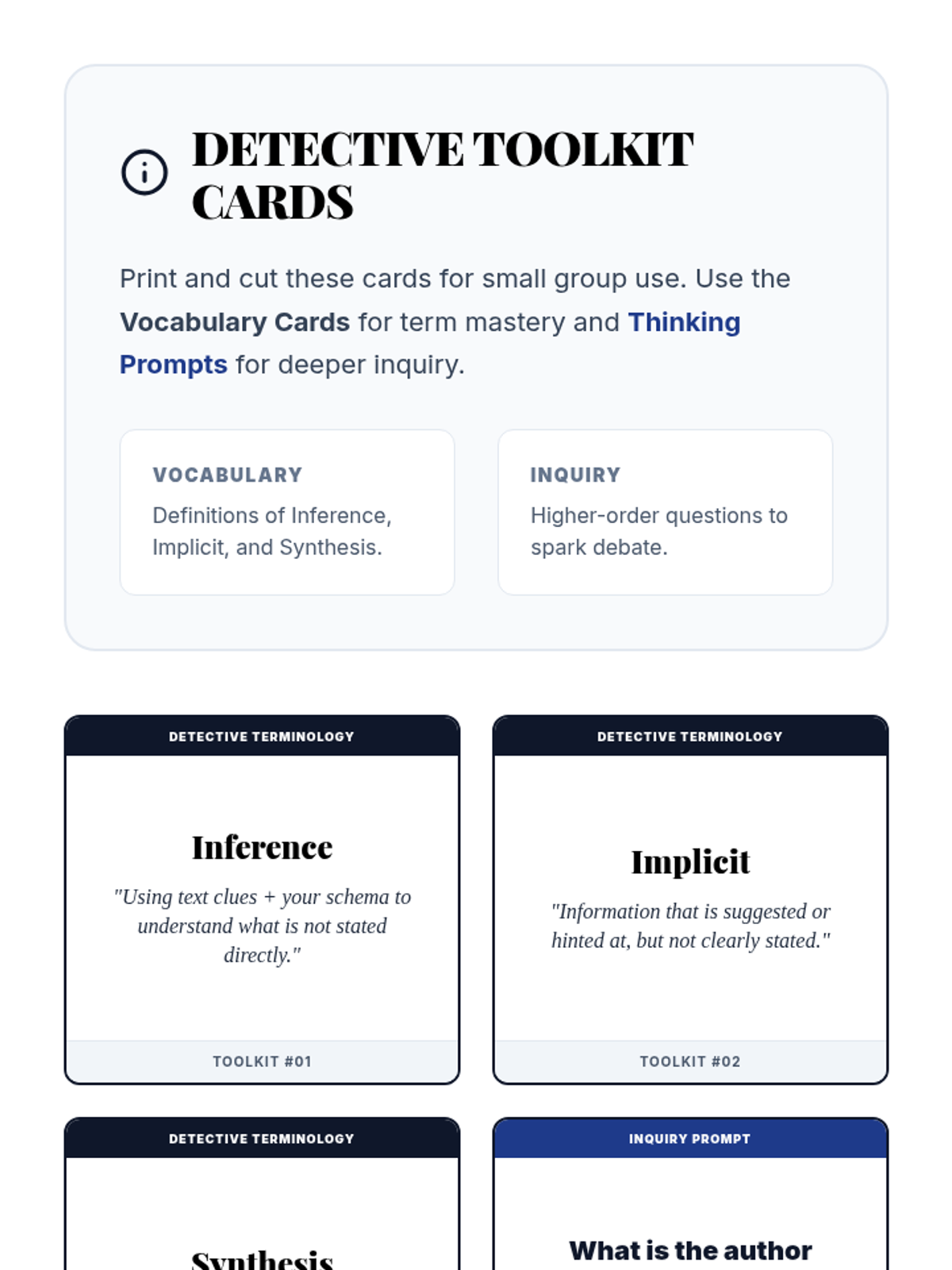
A mystery-themed lesson where students act as detectives to master making inferences and summarizing main ideas through a short story investigation.

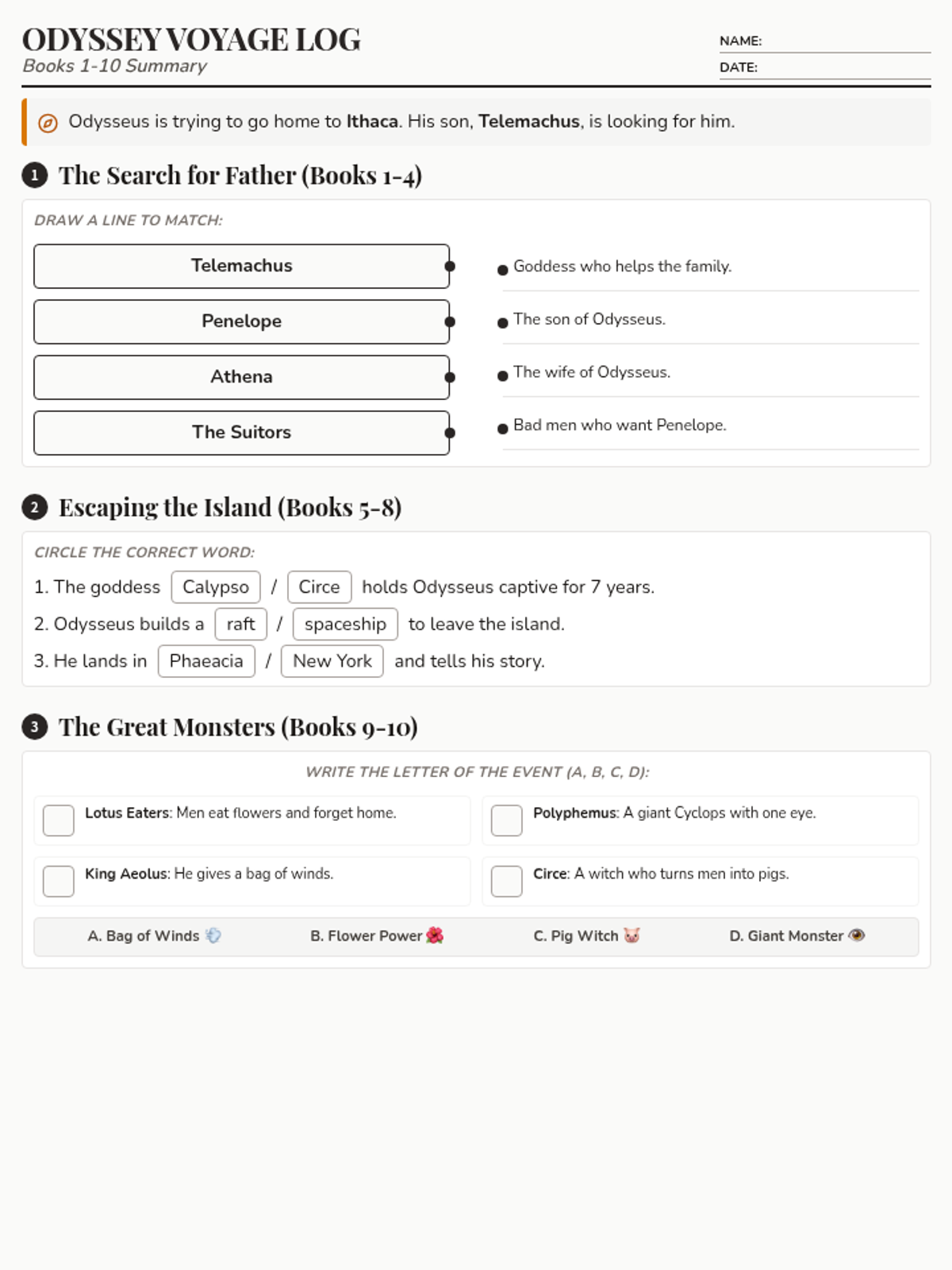
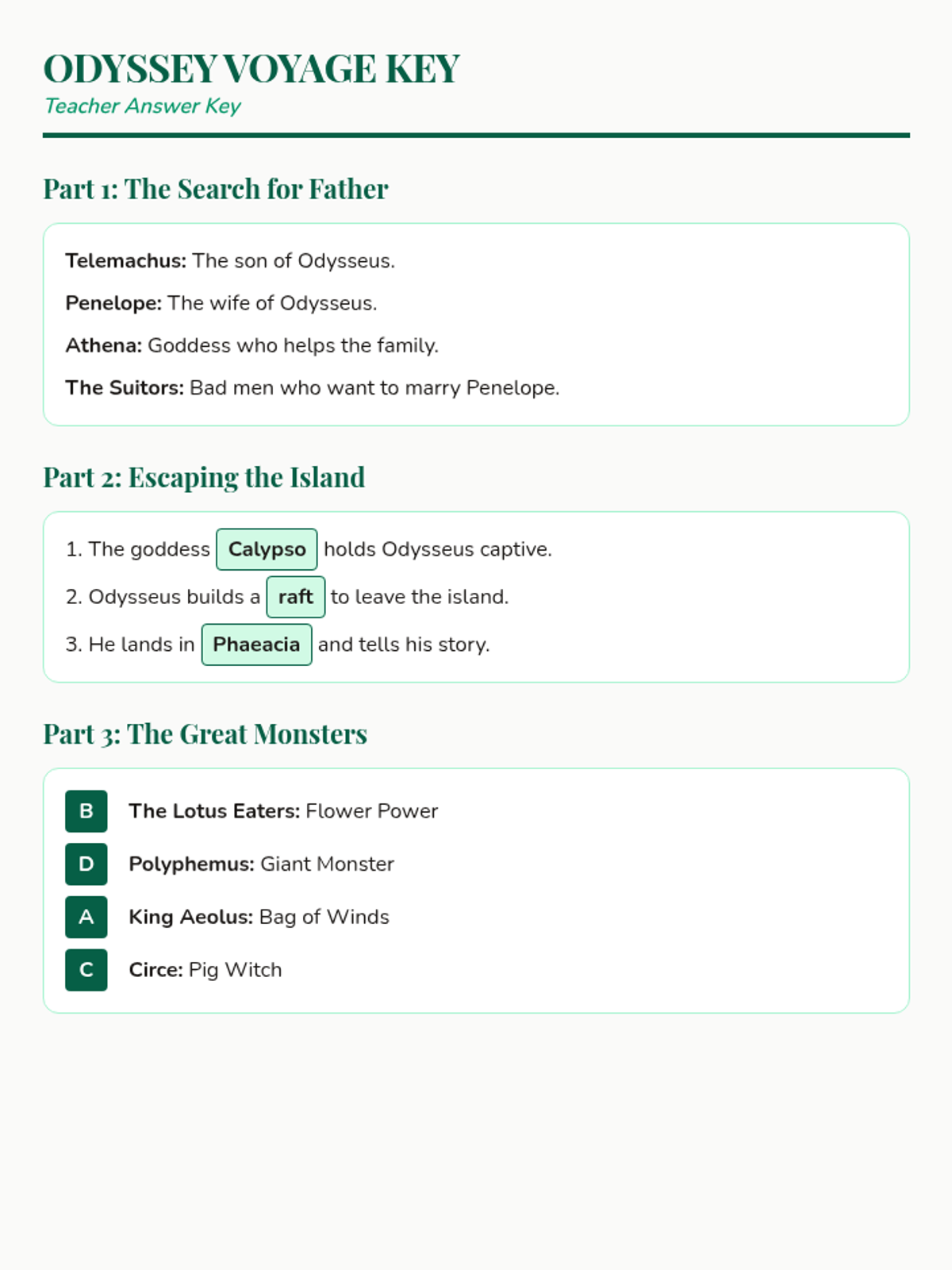
A lesson focused on summarizing the key events of Books 1-10 of Homer's Odyssey for English Language Learners, using visual supports and simplified language.
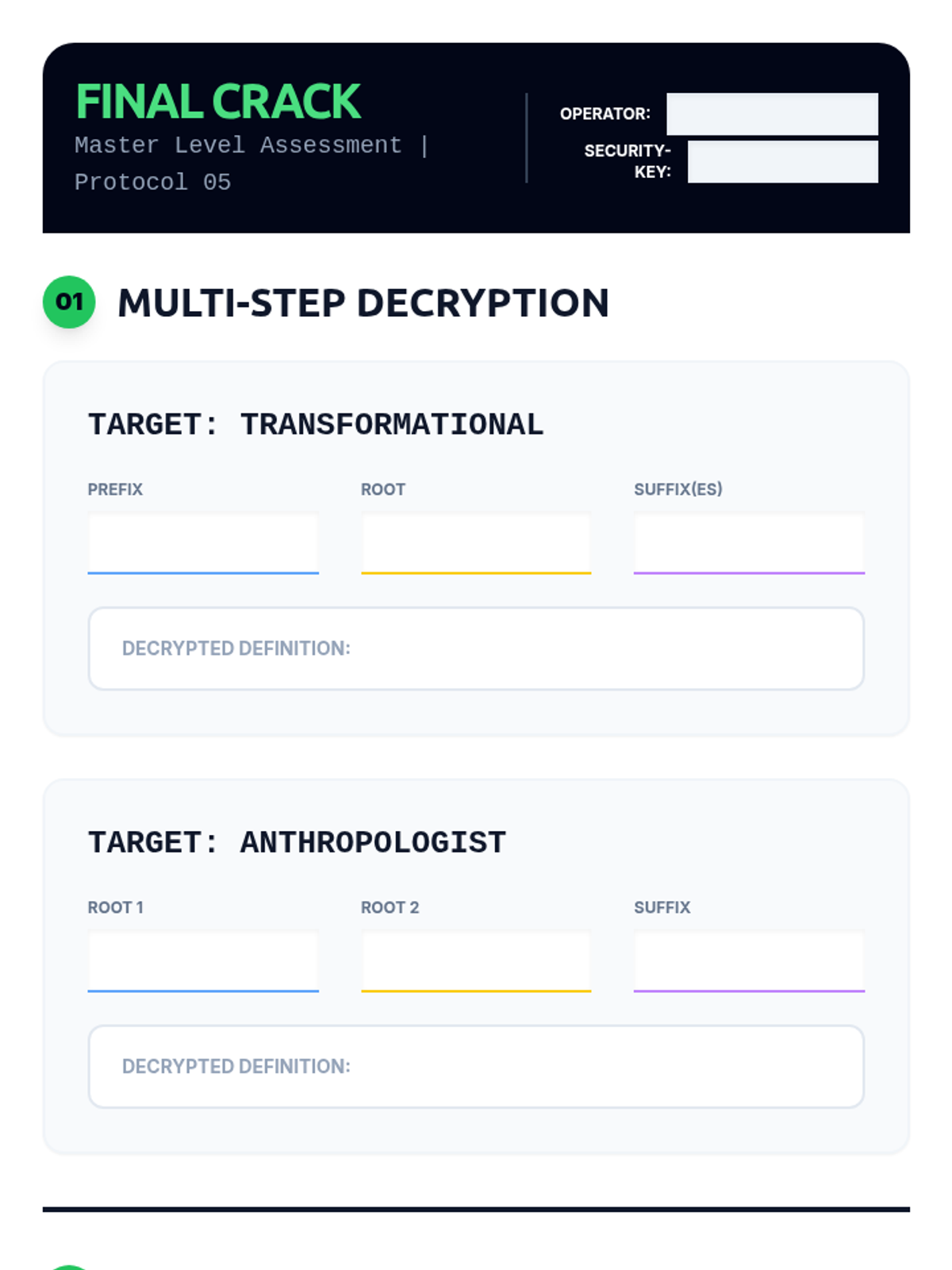
Combining prefixes, roots, and suffixes to decode complex multi-syllabic academic words.
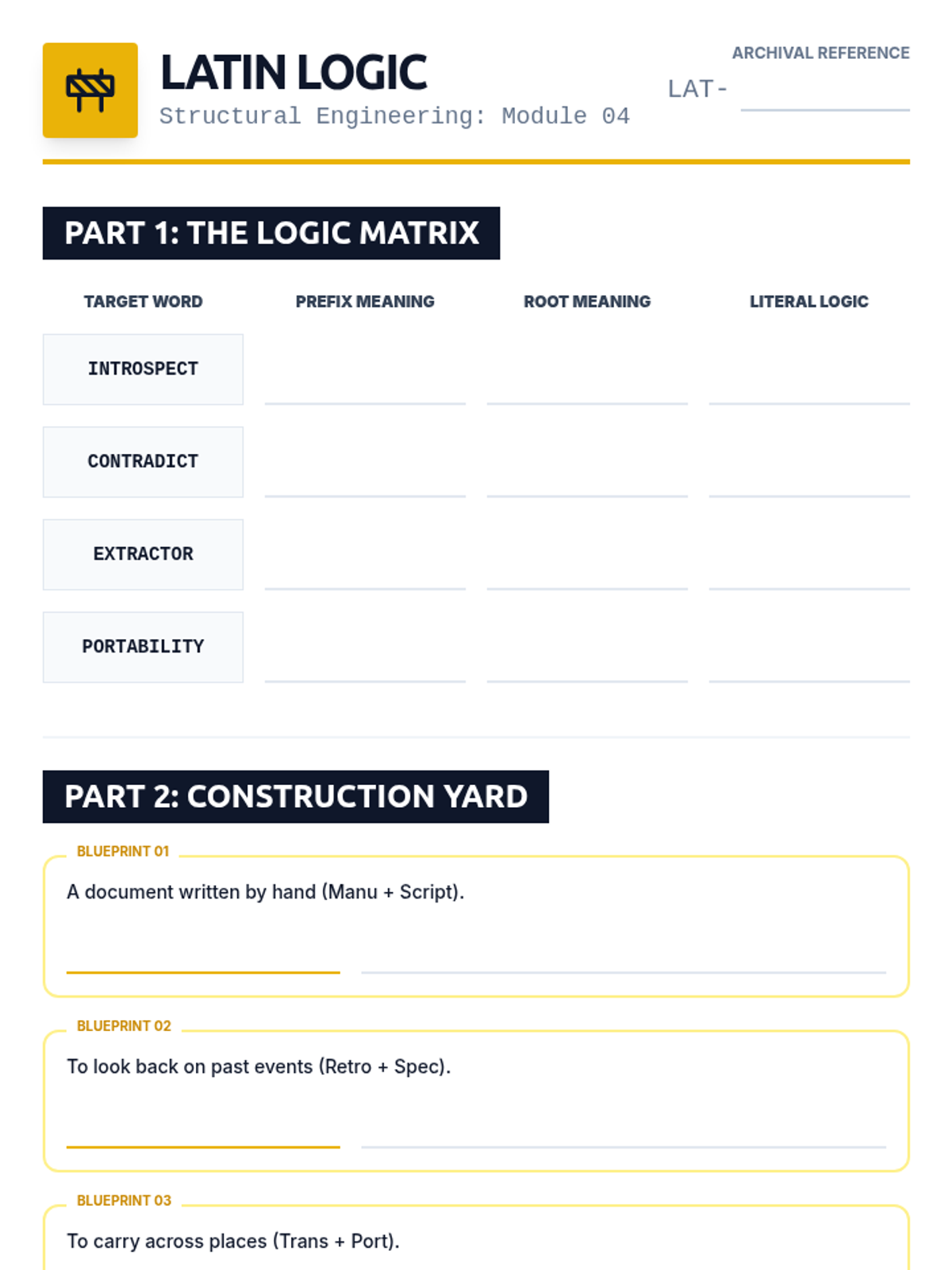
Mastering Latin roots commonly found in academic literature and formal writing.
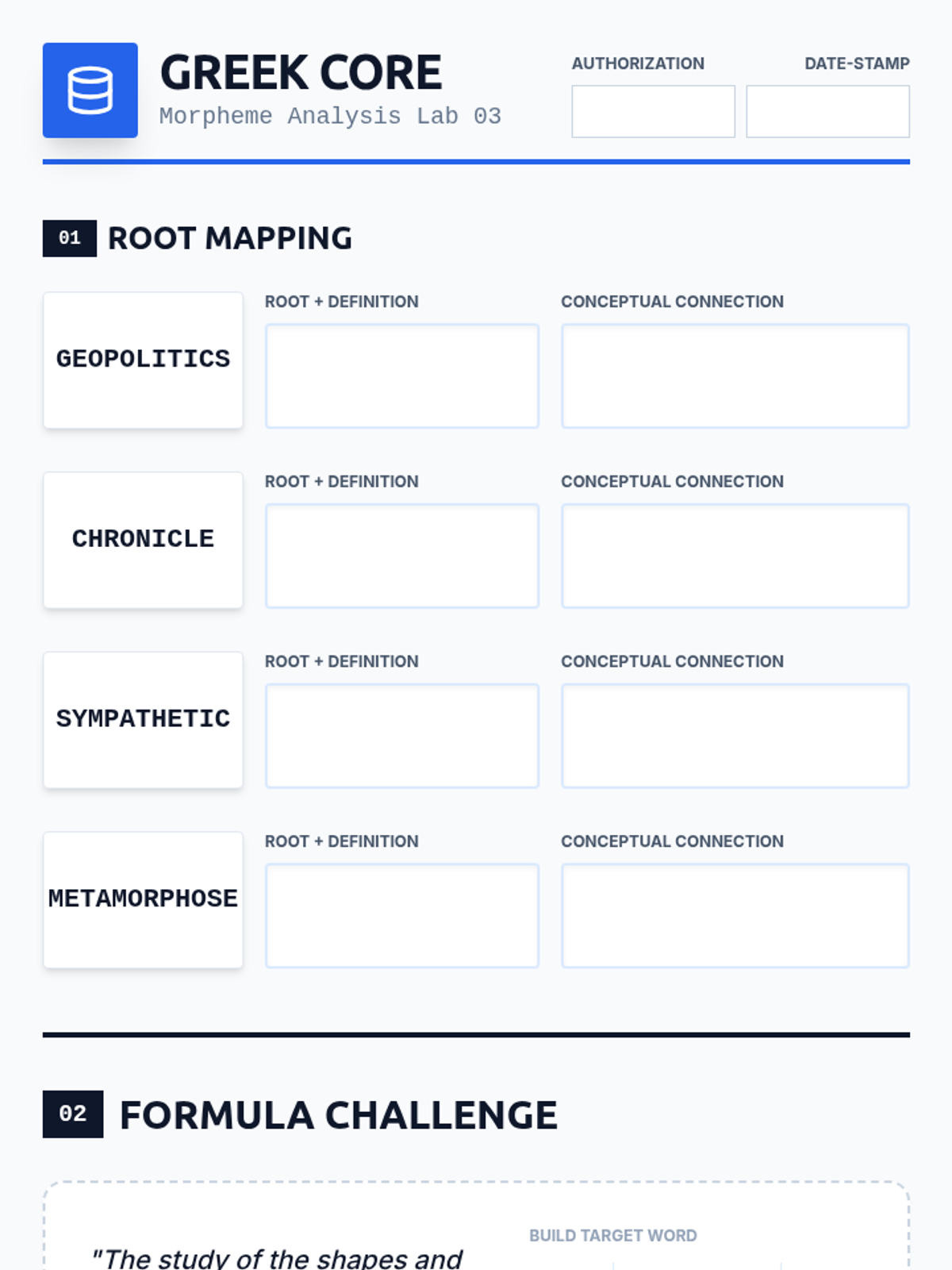
Identifying and defining core Greek roots that form the foundation of scientific and technical vocabulary.
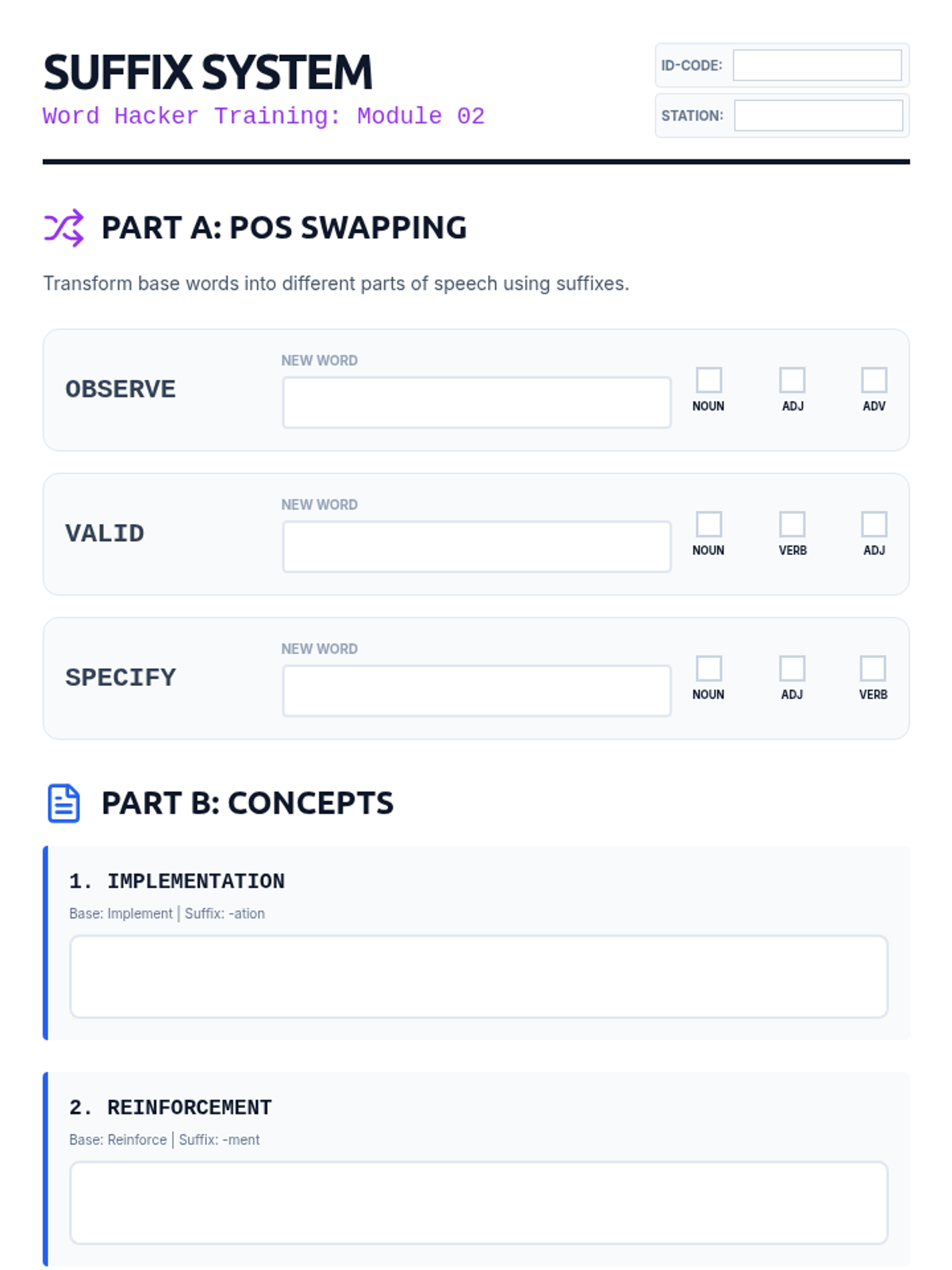
Exploring high-frequency academic suffixes and their role in determining a word's part of speech.
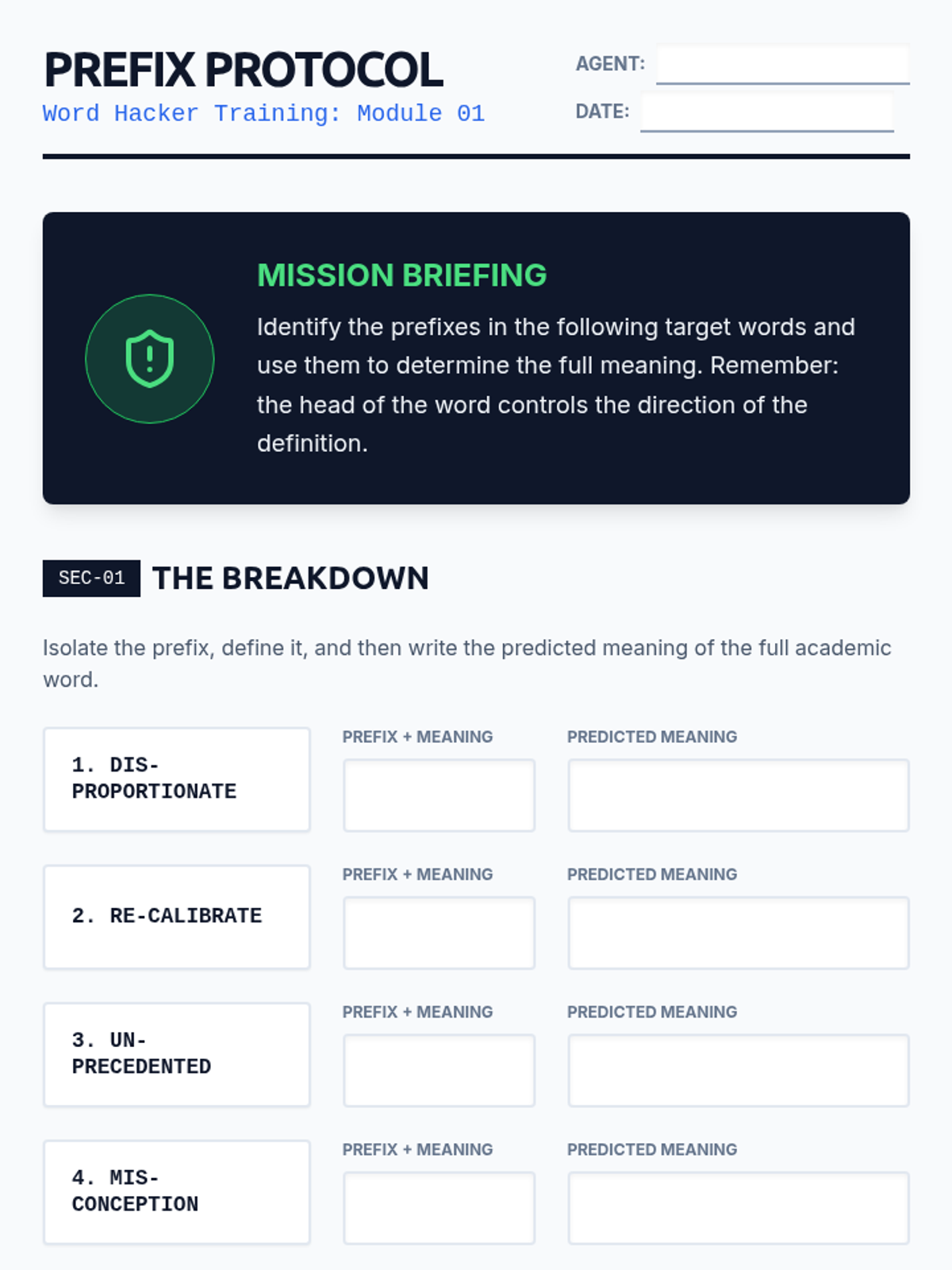
Introduction to common academic prefixes and how they modify the meaning of base words.
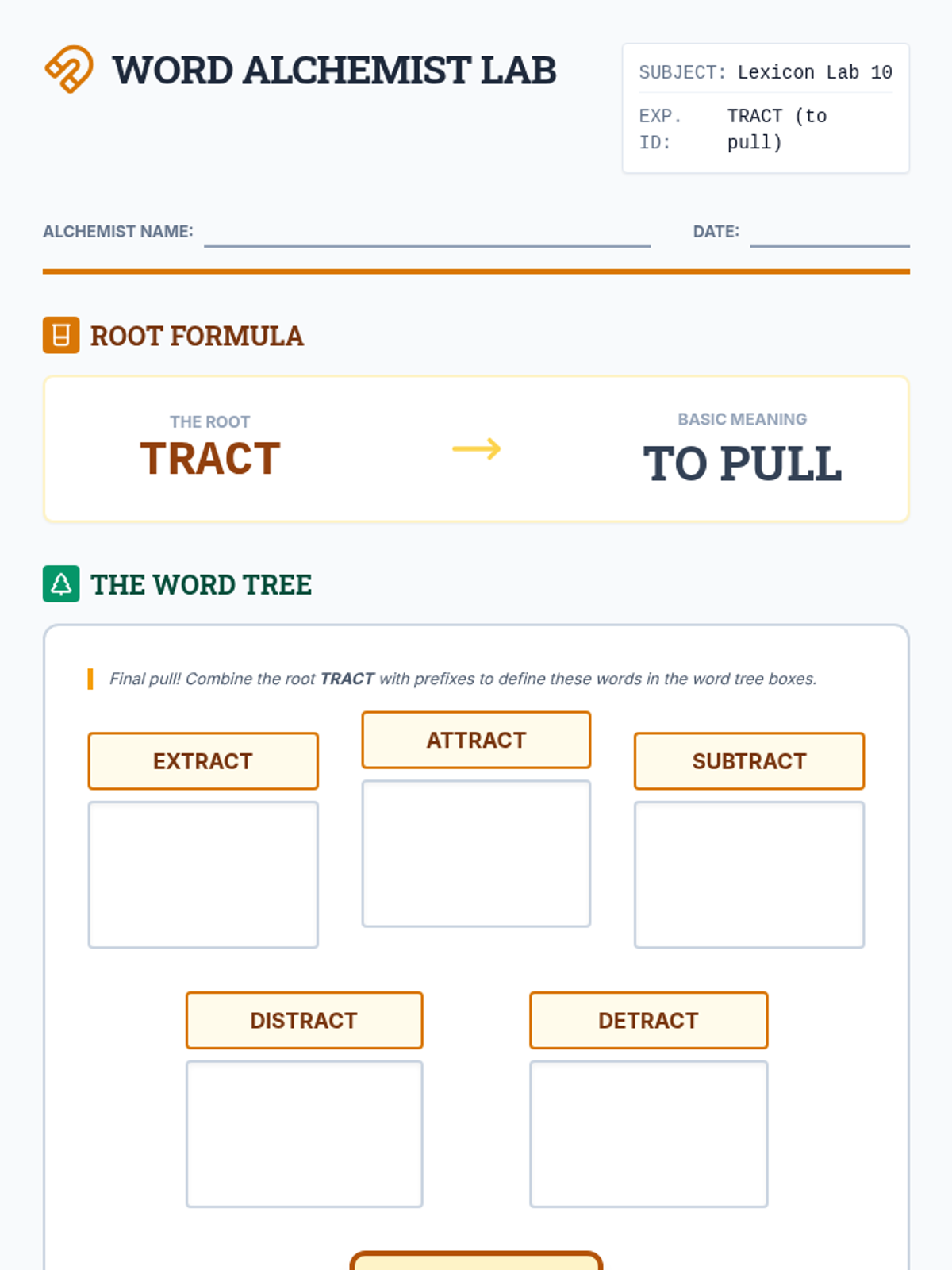
Focus on the root 'TRACT' (to pull) and a final review of the Word Alchemist principles.
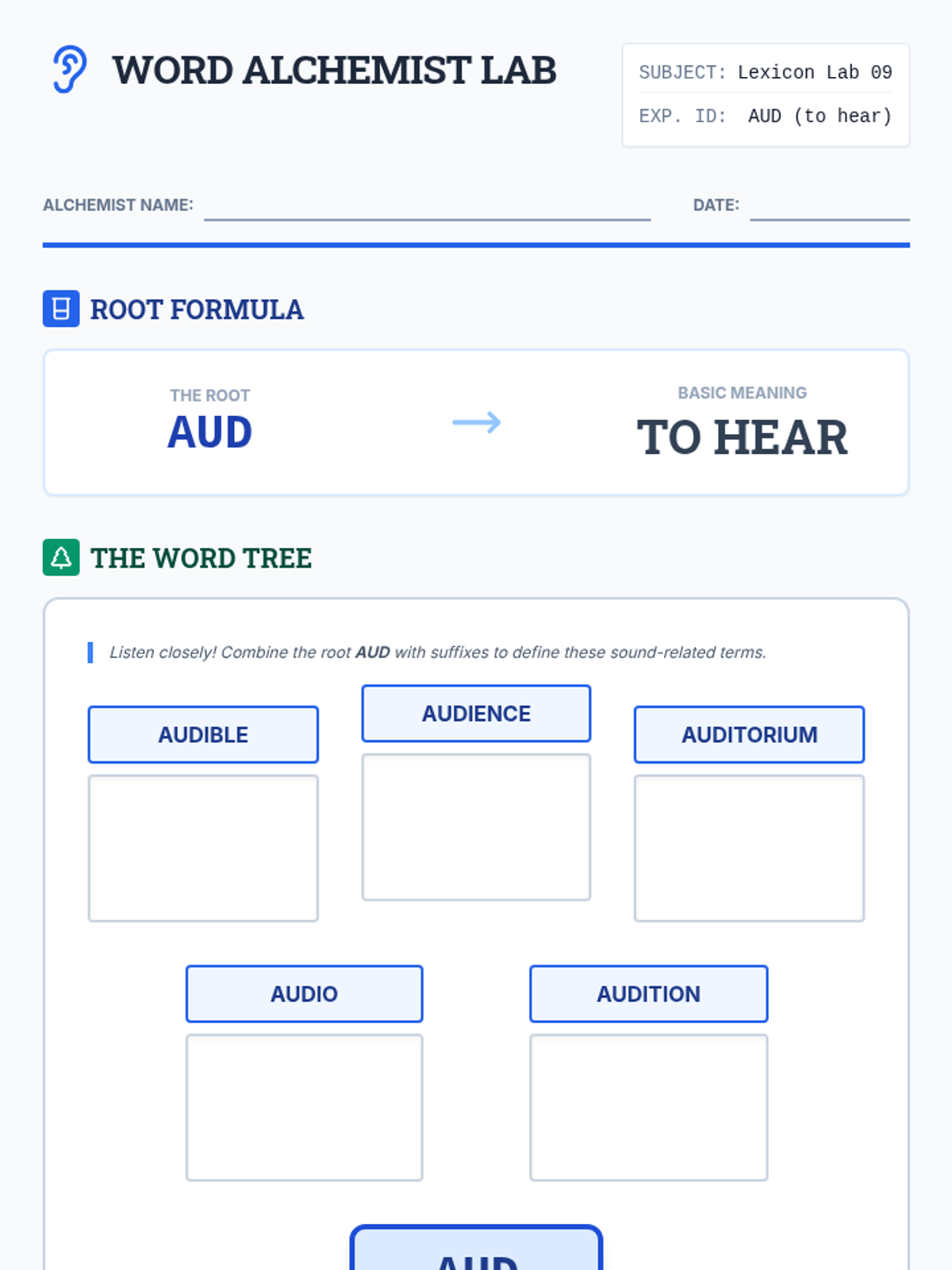
Focus on the root 'AUD' (to hear) and words related to sound and listening.
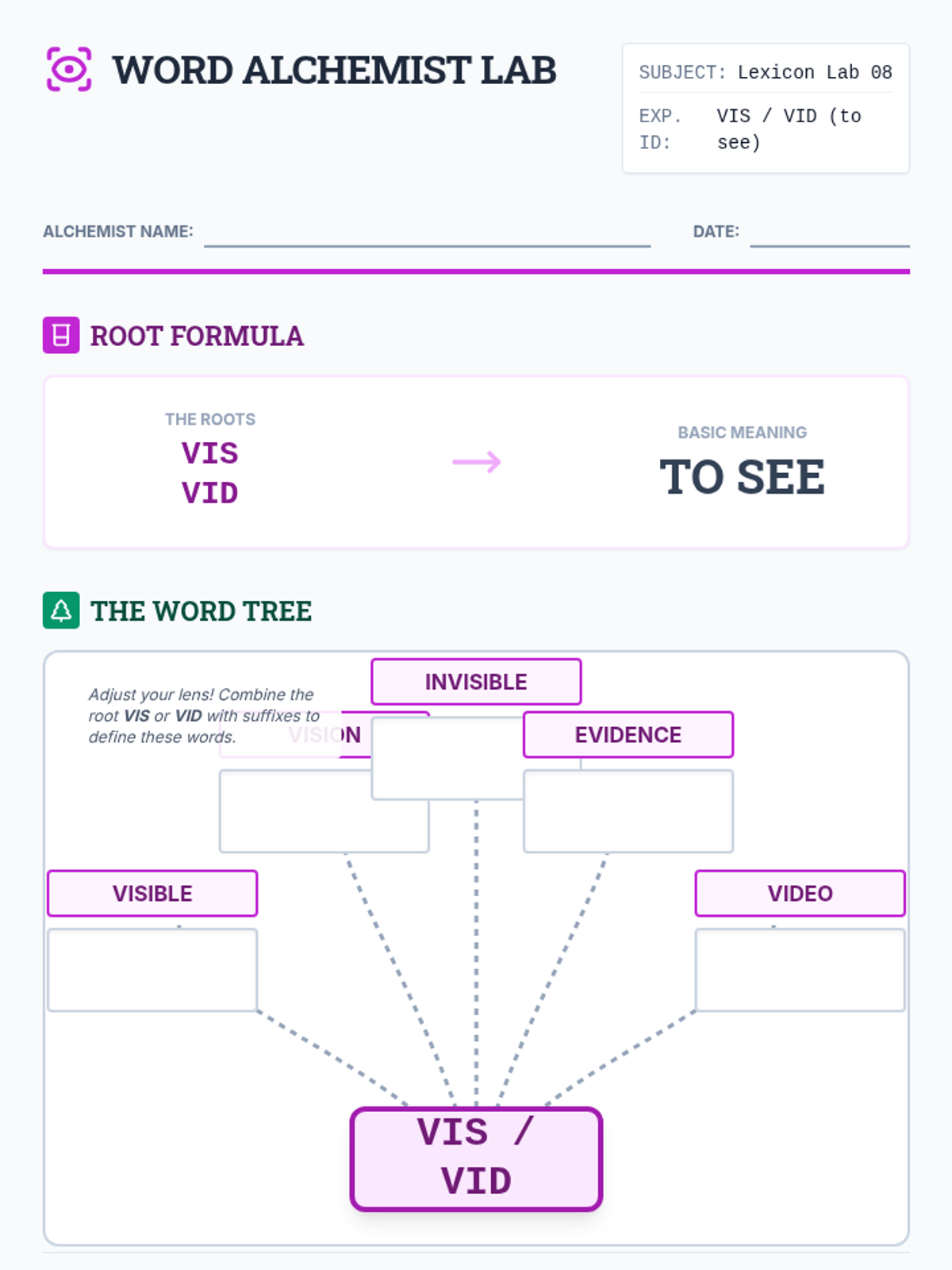
Focus on the roots 'VIS' and 'VID' (to see) and their distinction from 'SPECT'.
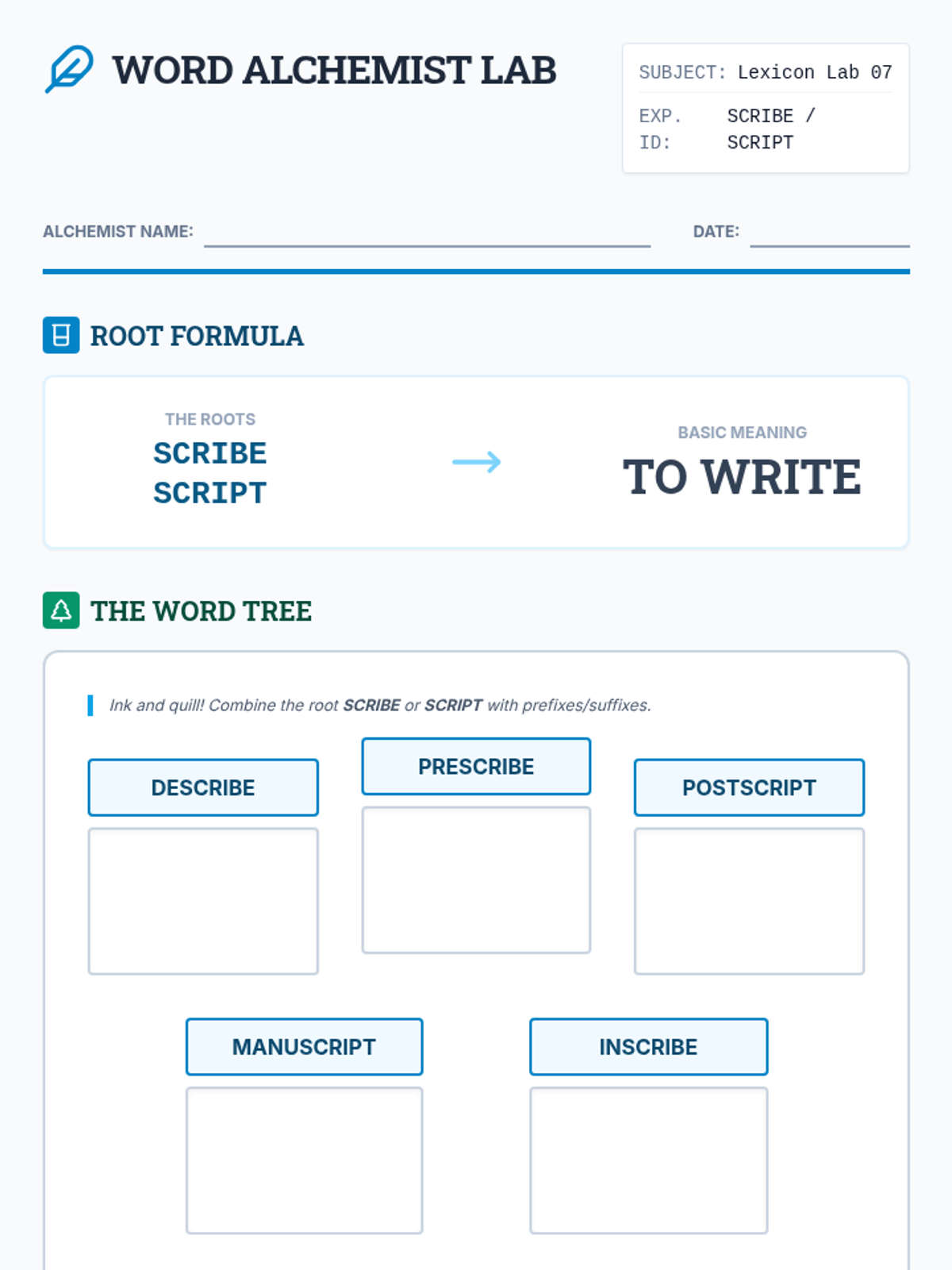
Focus on the roots 'SCRIBE' and 'SCRIPT' (to write) and their presence in modern documentation.
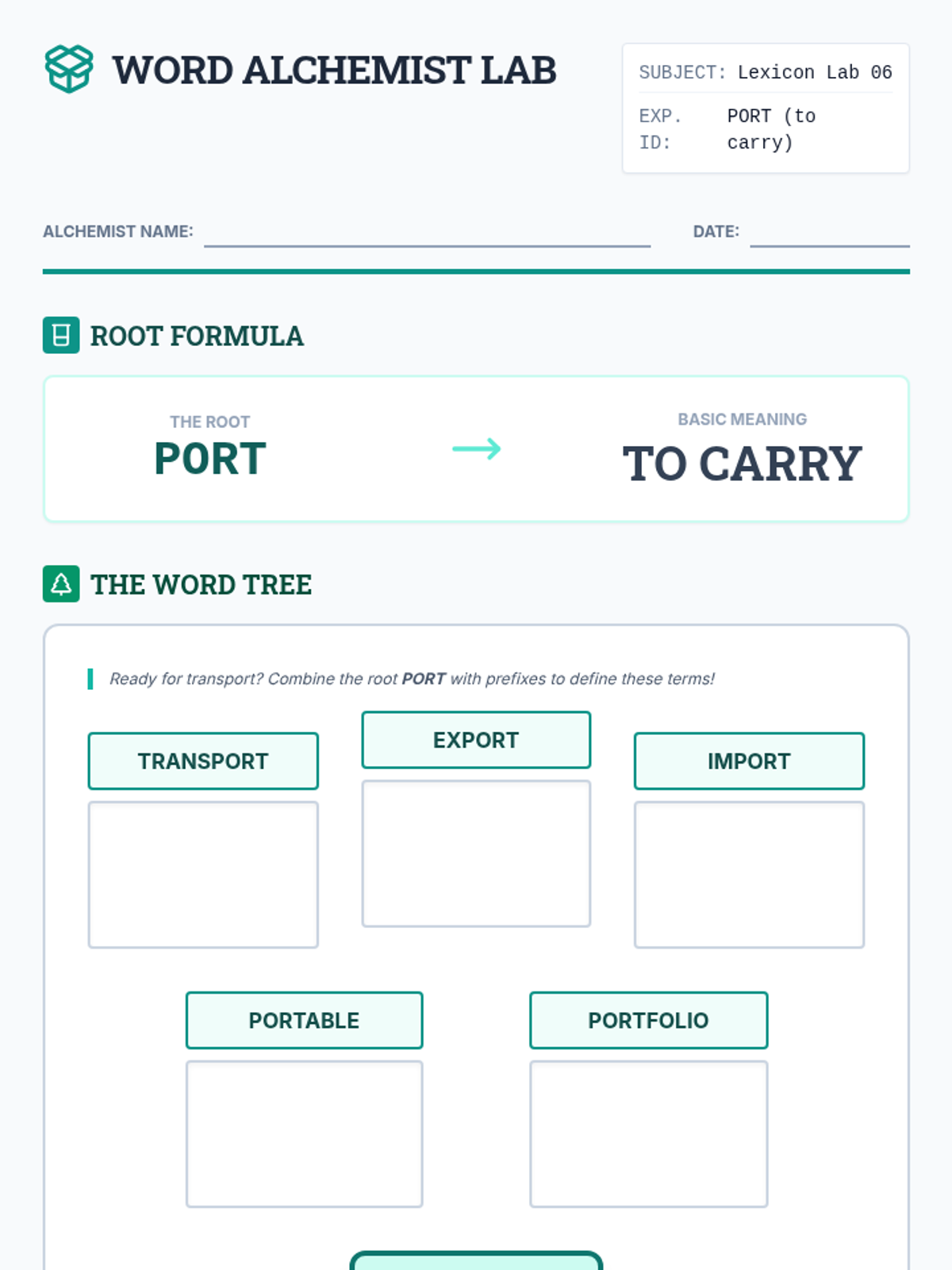
Focus on the root 'PORT' (to carry) and its role in movement and trade vocabulary.
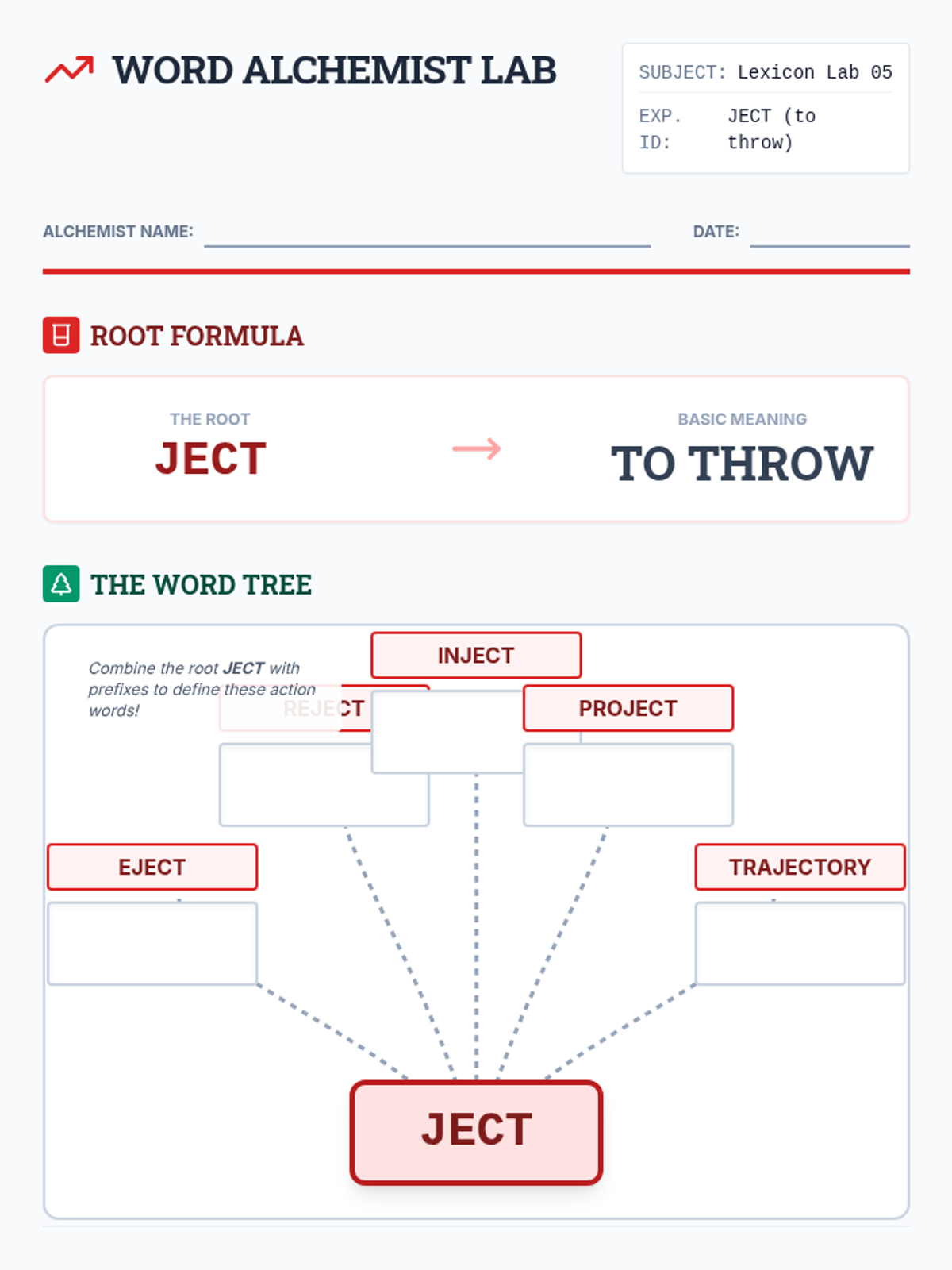
Focus on the root 'JECT' (to throw) and how it creates dynamic action words.
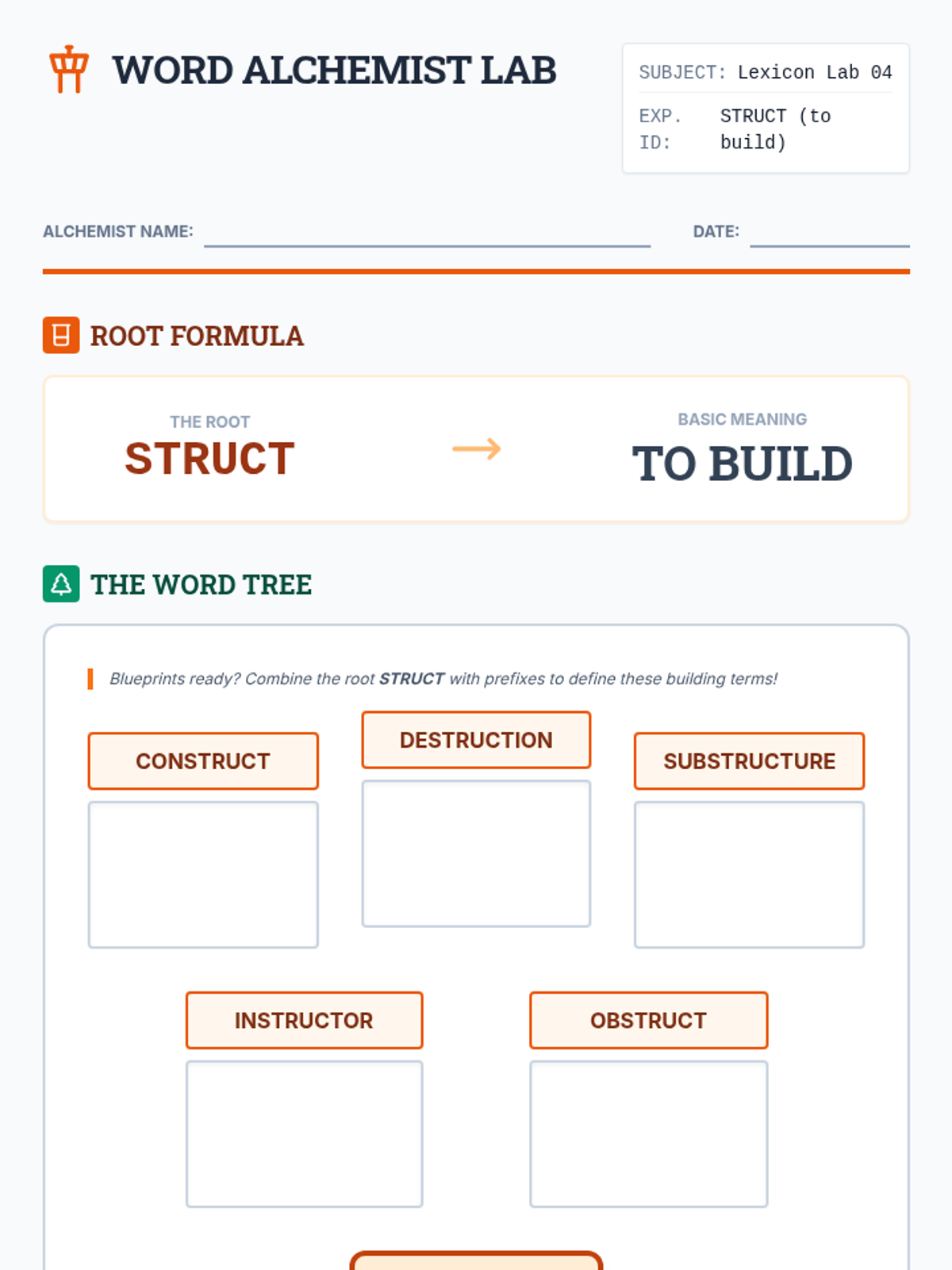
Focus on the root 'STRUCT' (to build) and prefixes that change the direction or nature of building.
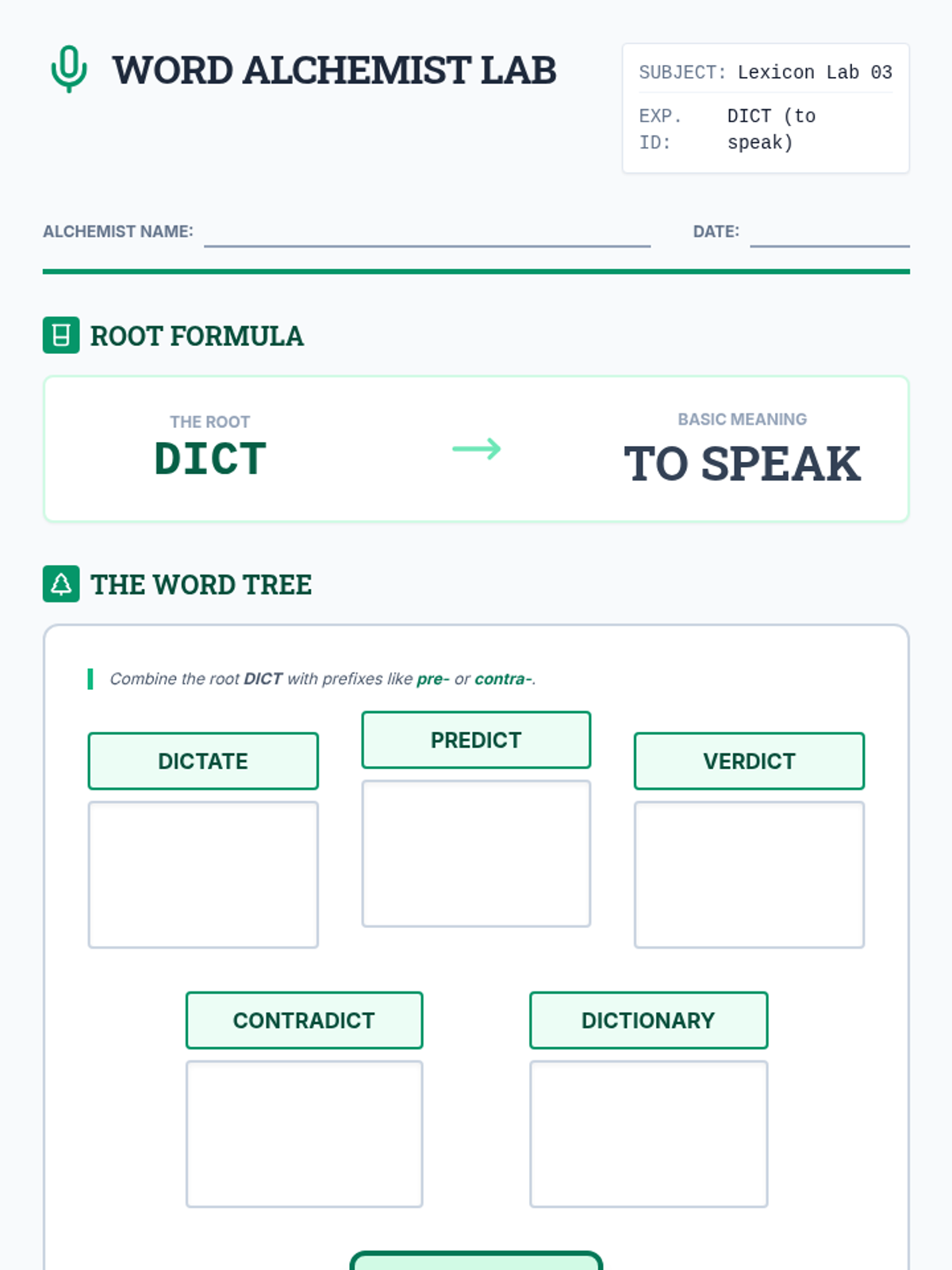
Focus on the root 'DICT' (to speak) and common suffixes used for speech and action.