Using the Standing Rock protests as a focal point, students examine the intersection of treaty rights, environmental protection, and the power of modern digital activism.
An application-based assessment focusing on Maslow's Hierarchy of Needs, featuring a labeling section, scenario analysis, and character evaluation from literature.
A unit assessment covering prominent African American leaders, their roles as agents of change, and the systemic barriers they worked to dismantle within their communities.
A collection of resources for an educational information booth about Peru at a cultural fair, including a fact sheet and interactive trivia cards.
This lesson explores the Homestead Act of 1862 and the logistical realities of settling the American West, focusing on the grid system and survival challenges.
A structured research phase where students choose a focus area—either an ethical teaching or a significant practice—and map its connection to core Jewish tenets and contemporary life.
A comprehensive guide to structuring an informative essay on the social, economic, and religious consequences of the Black Death in medieval Europe.
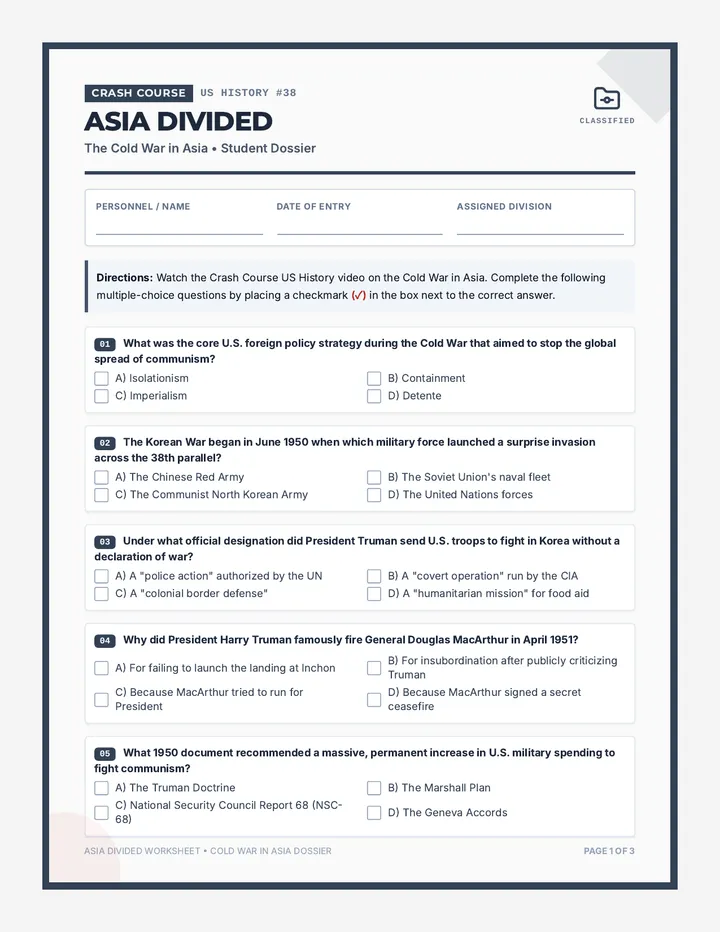
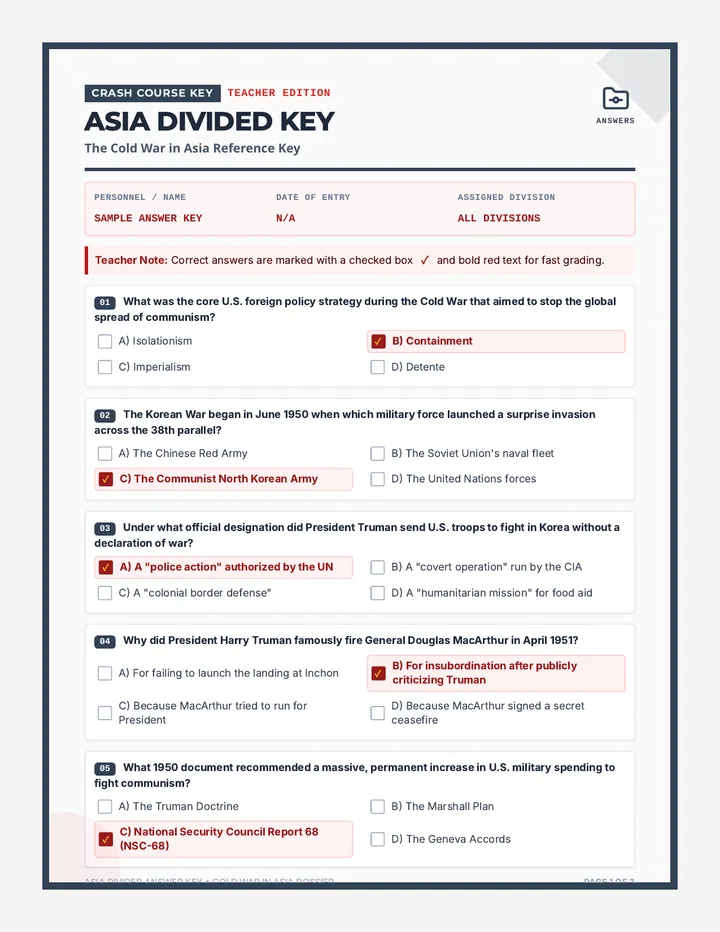
A comprehensive review of the Cold War era (1945–1991), focusing on key leaders, proxy wars, nuclear tension, and the eventual collapse of the Soviet Union. Includes a detailed student dossier assignment and teacher answer key.
A collection of reference materials, background readings, and primary source excerpts that support all the independent assignments in the unit.
An AP World History lesson exploring the technological innovations and environmental consequences of the Green Revolution in the mid-20th century.