Students review short and long vowel sounds using vocabulary related to school supplies and classroom objects. They practice distinguishing sounds in minimal pairs and reading single-syllable words rapidly.

Students engage in a 'shadowing' technique, repeating audio immediately after hearing it to internalize the rhythm and flow of connected speech. This active processing reinforces their ability to predict and process sound streams.
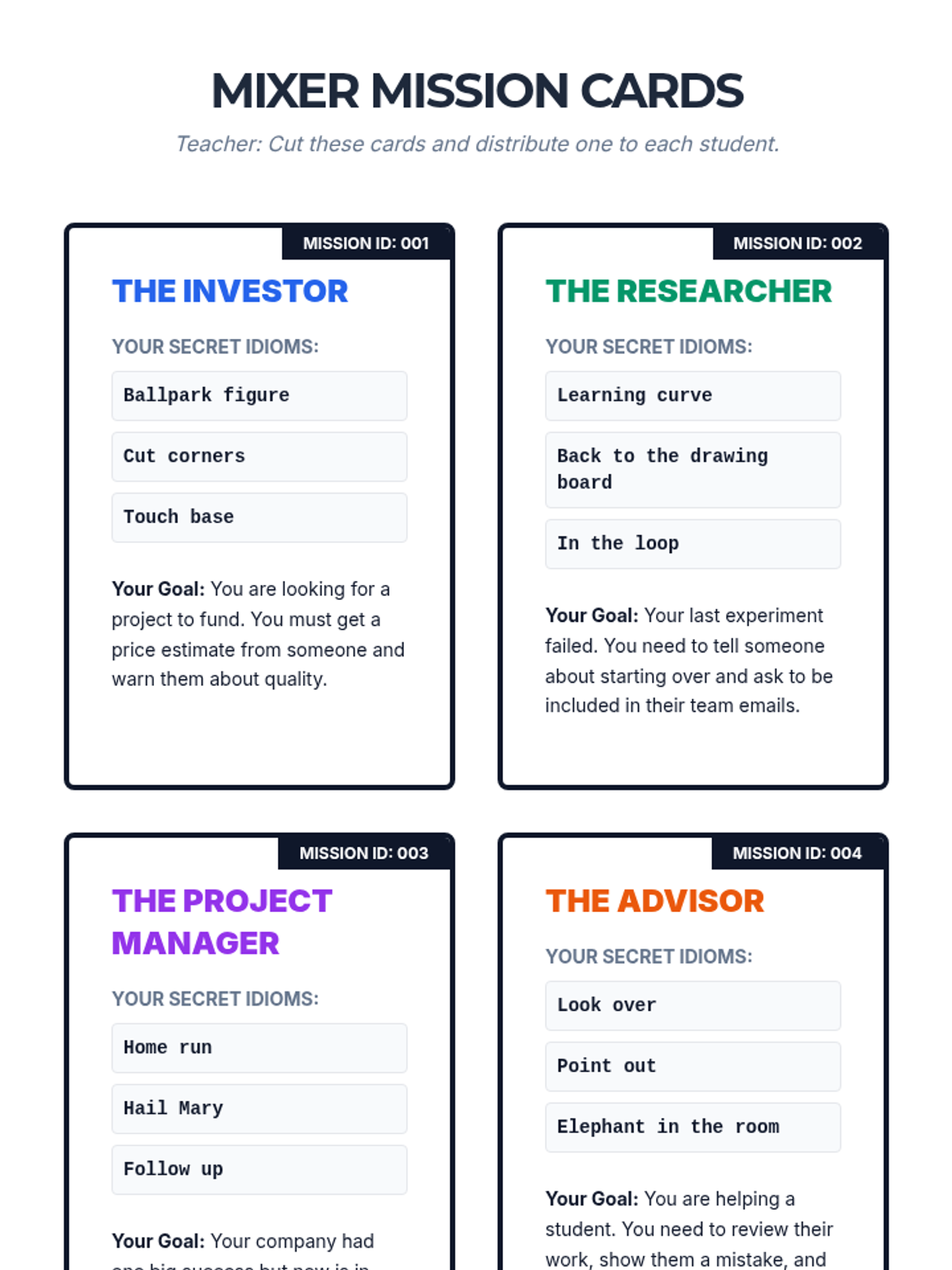
A high-stakes simulated networking mixer where students must apply their knowledge of idioms, phrasal verbs, and social listening to complete specific "missions."
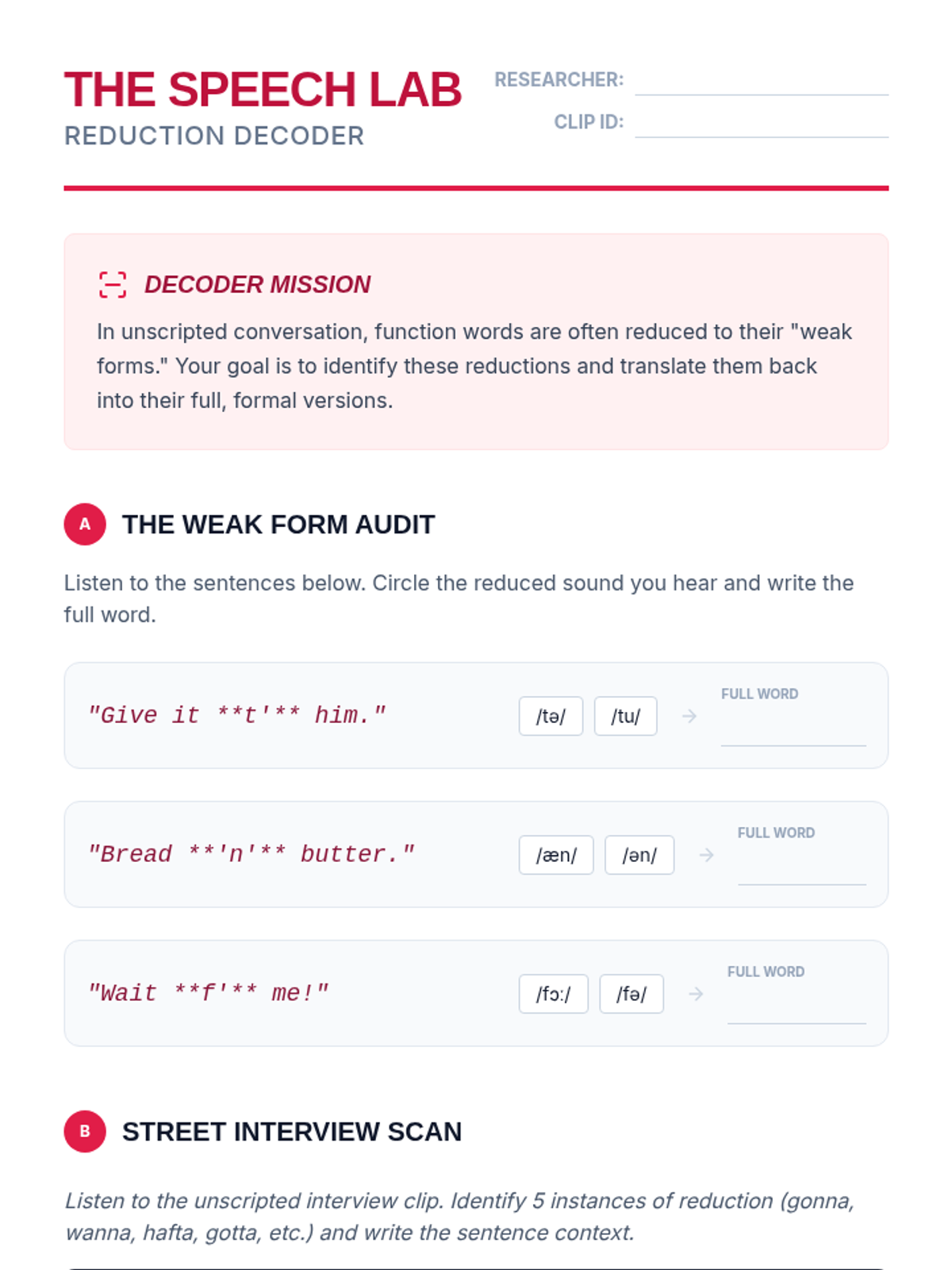
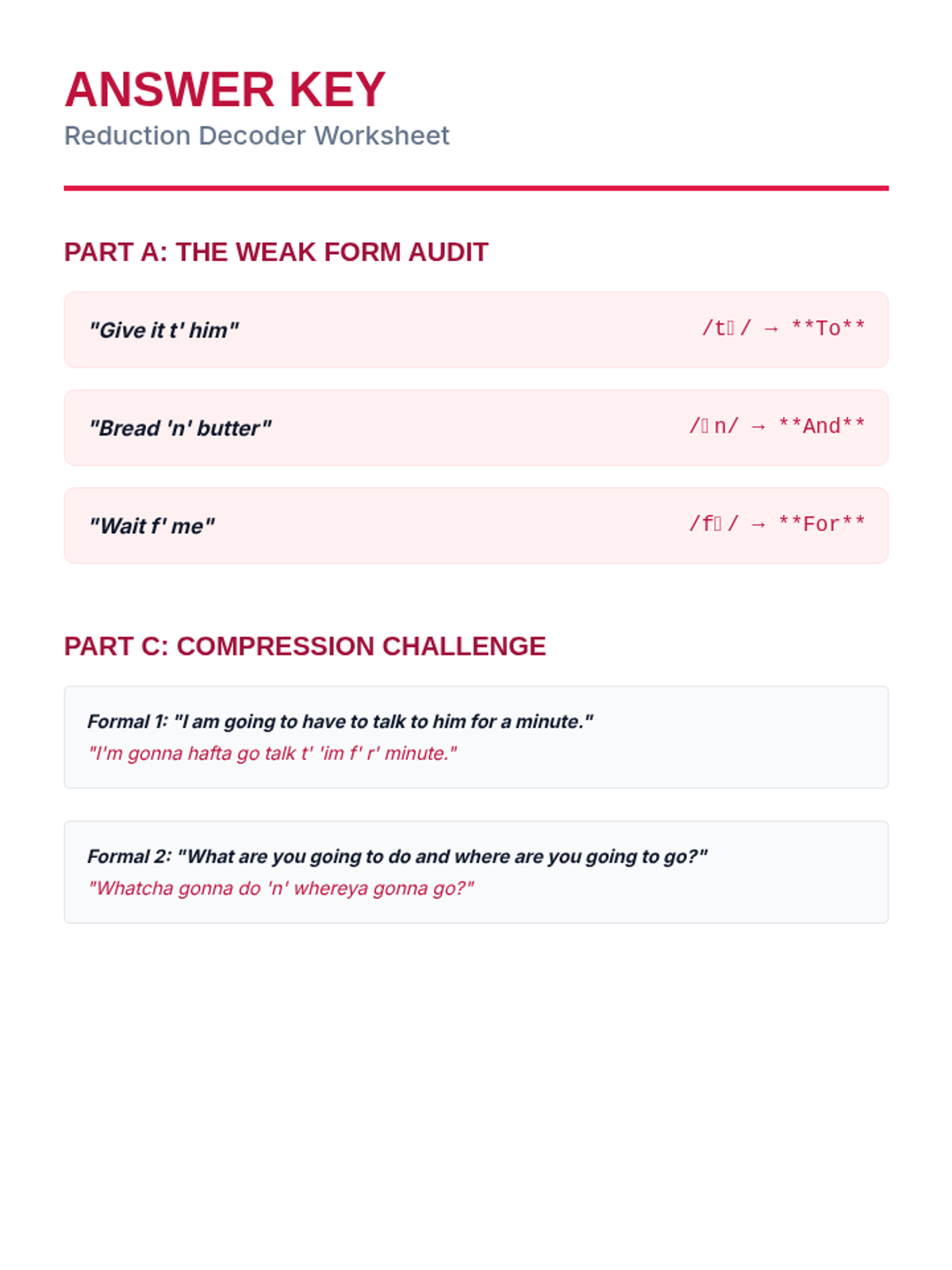
Focusing on function words, this lesson tackles common reductions like 'gonna,' 'wanna,' and weak forms of auxiliary verbs. Students analyze unscripted interviews to catch these reductions in context.
Focuses on the structural and social aspects of casual professional conversations, emphasizing the role of fillers, backchanneling, and small talk in building rapport.
Students analyze how speakers use shorthand references to history, pop culture, and sports to convey complex ideas, and develop strategies for asking for clarification when references are missed.
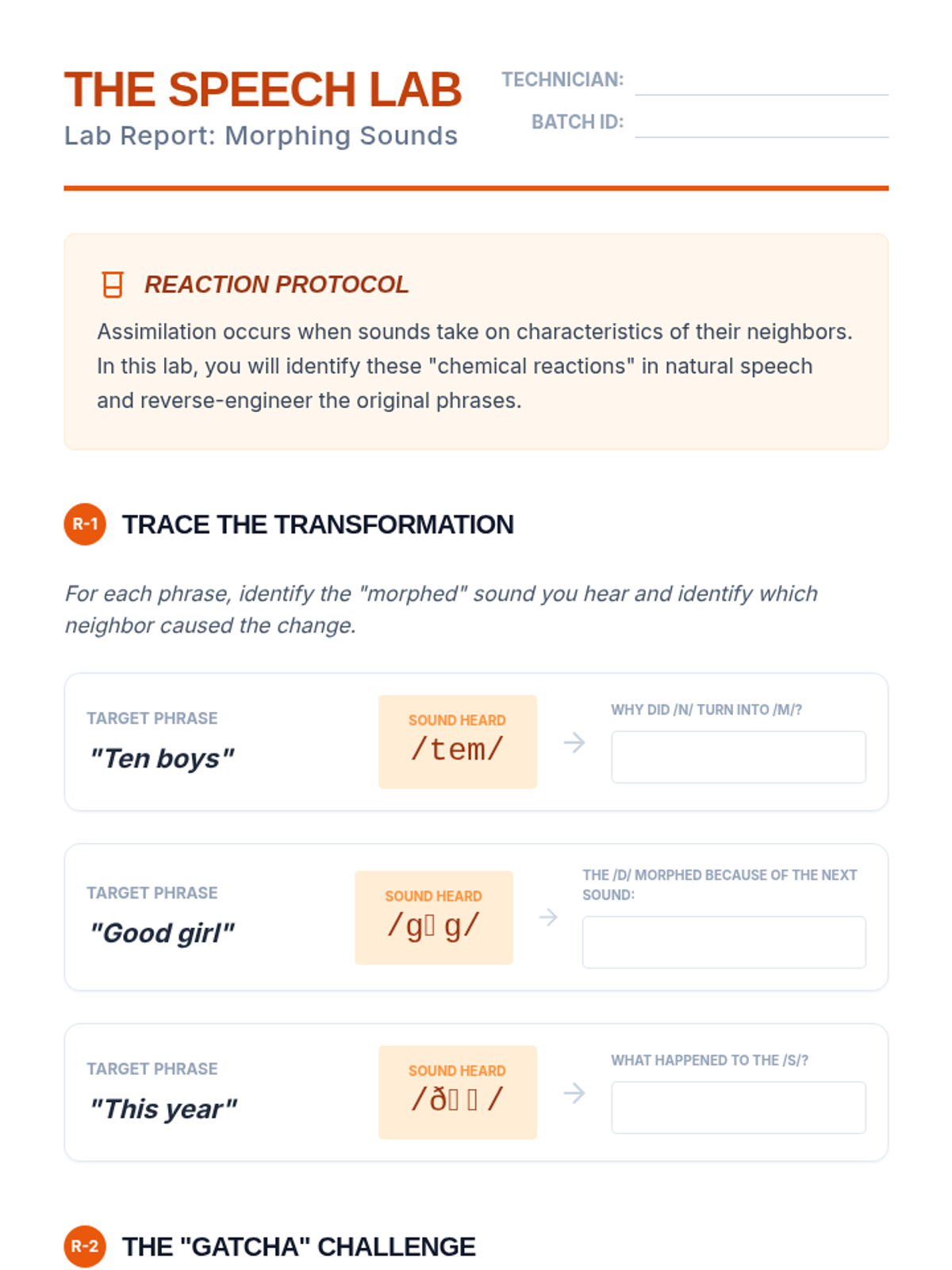
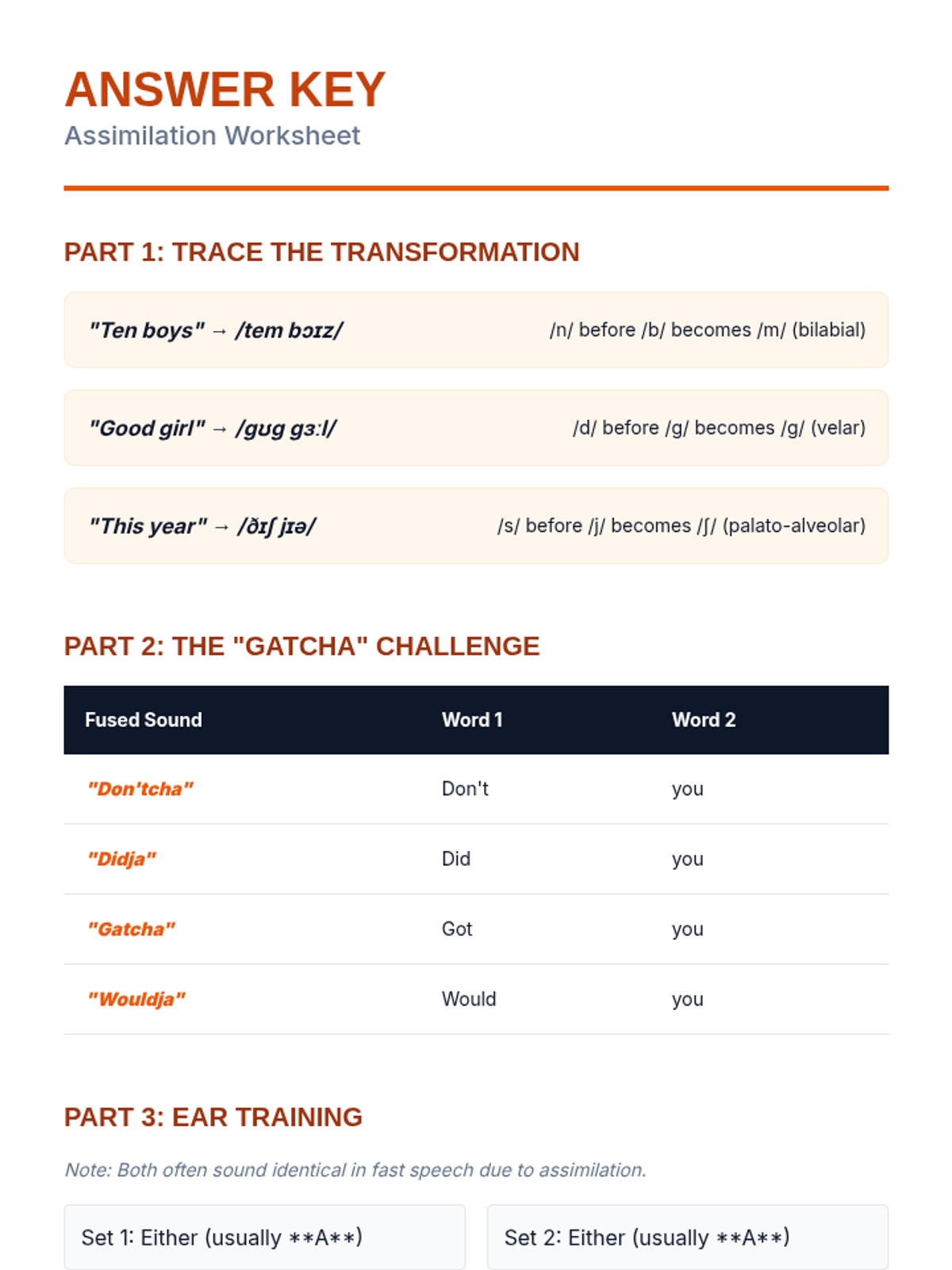
Students learn how sounds influence their neighbors (e.g., 'hand bag' becoming 'hambag'). The lesson uses minimal pair discrimination and dictation exercises to train ears to recognize words despite phonological changes.
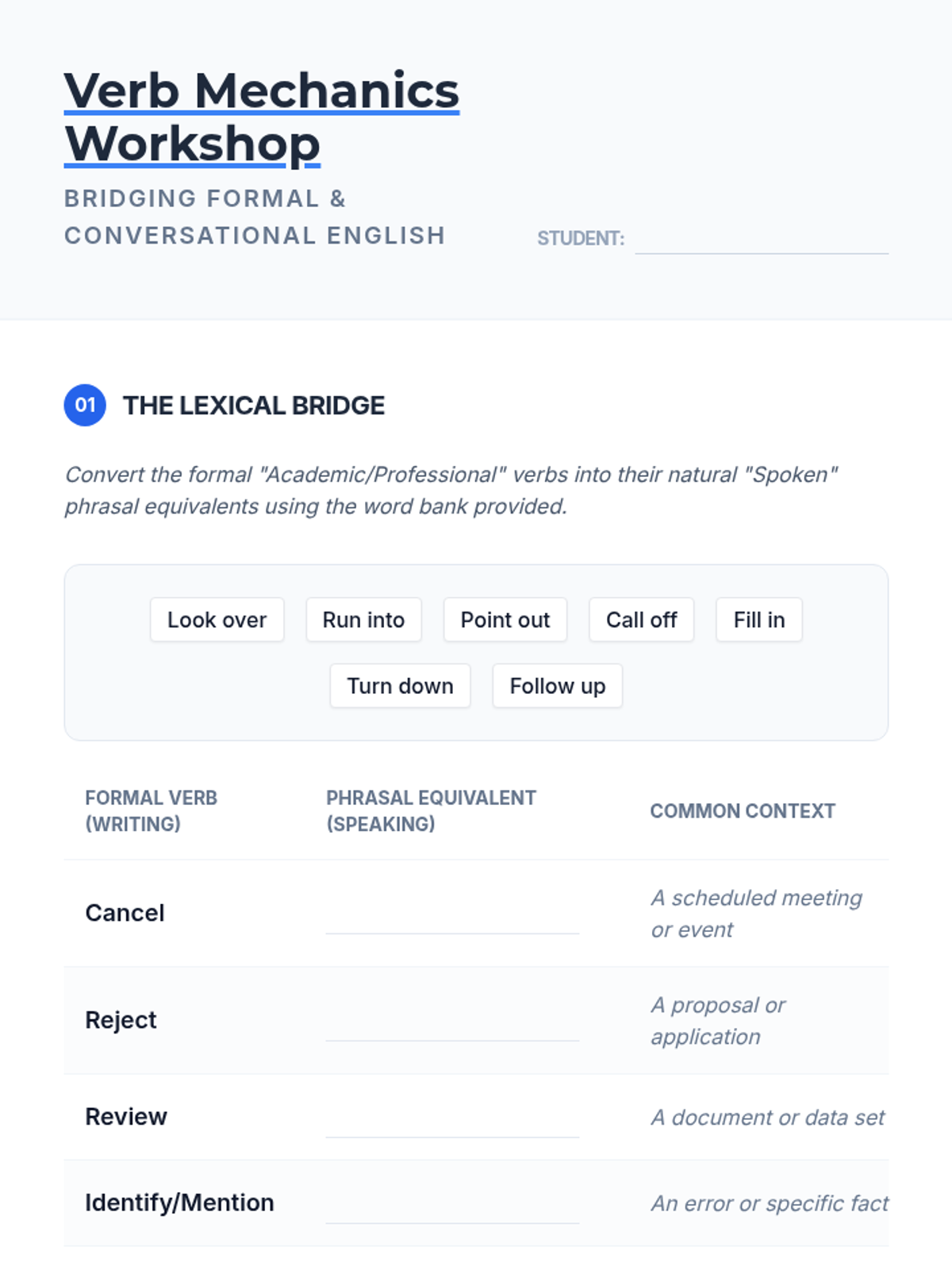
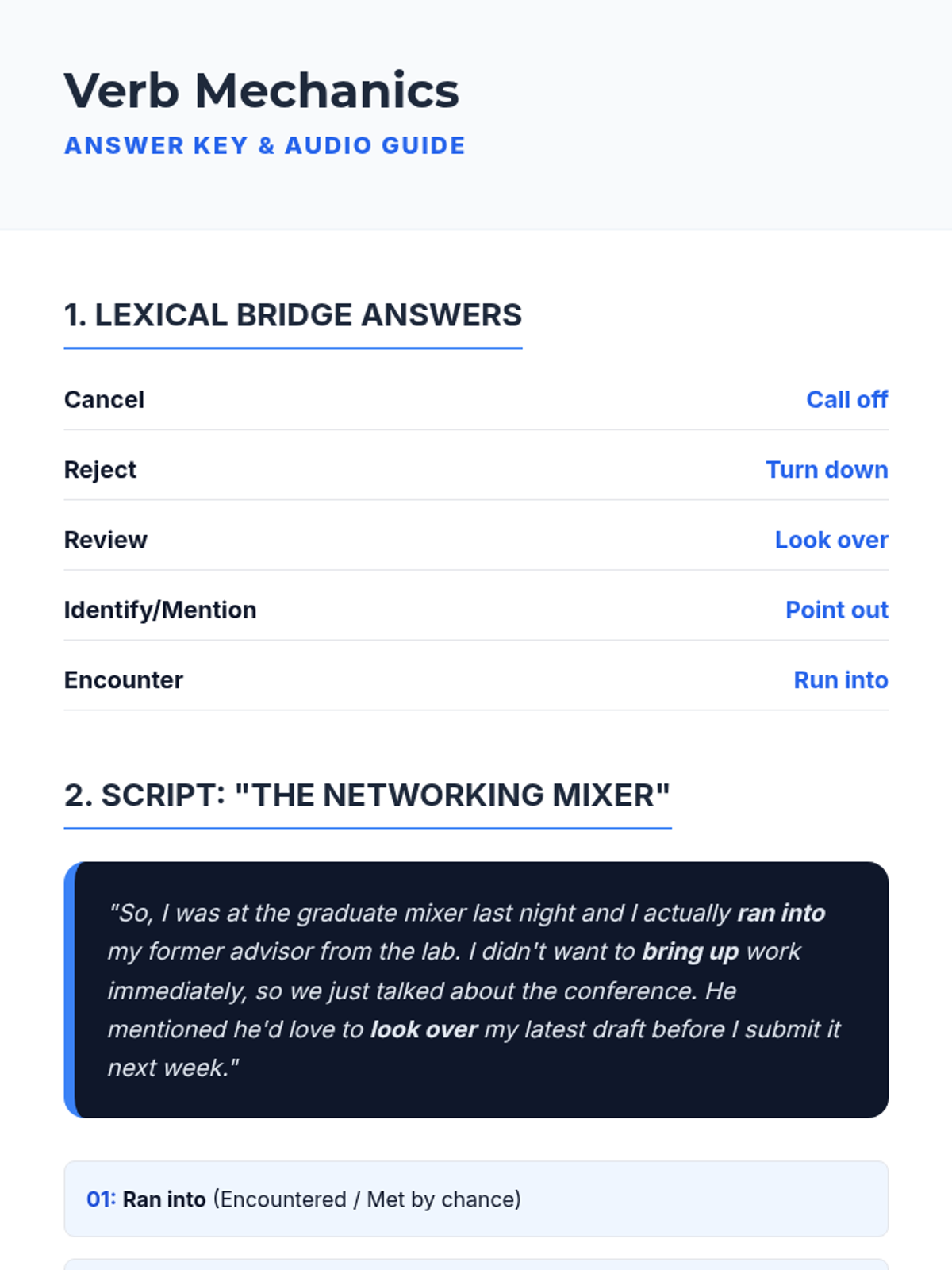
Focuses on the transition from formal to informal spoken English by identifying and decoding phrasal verbs in narrative segments.
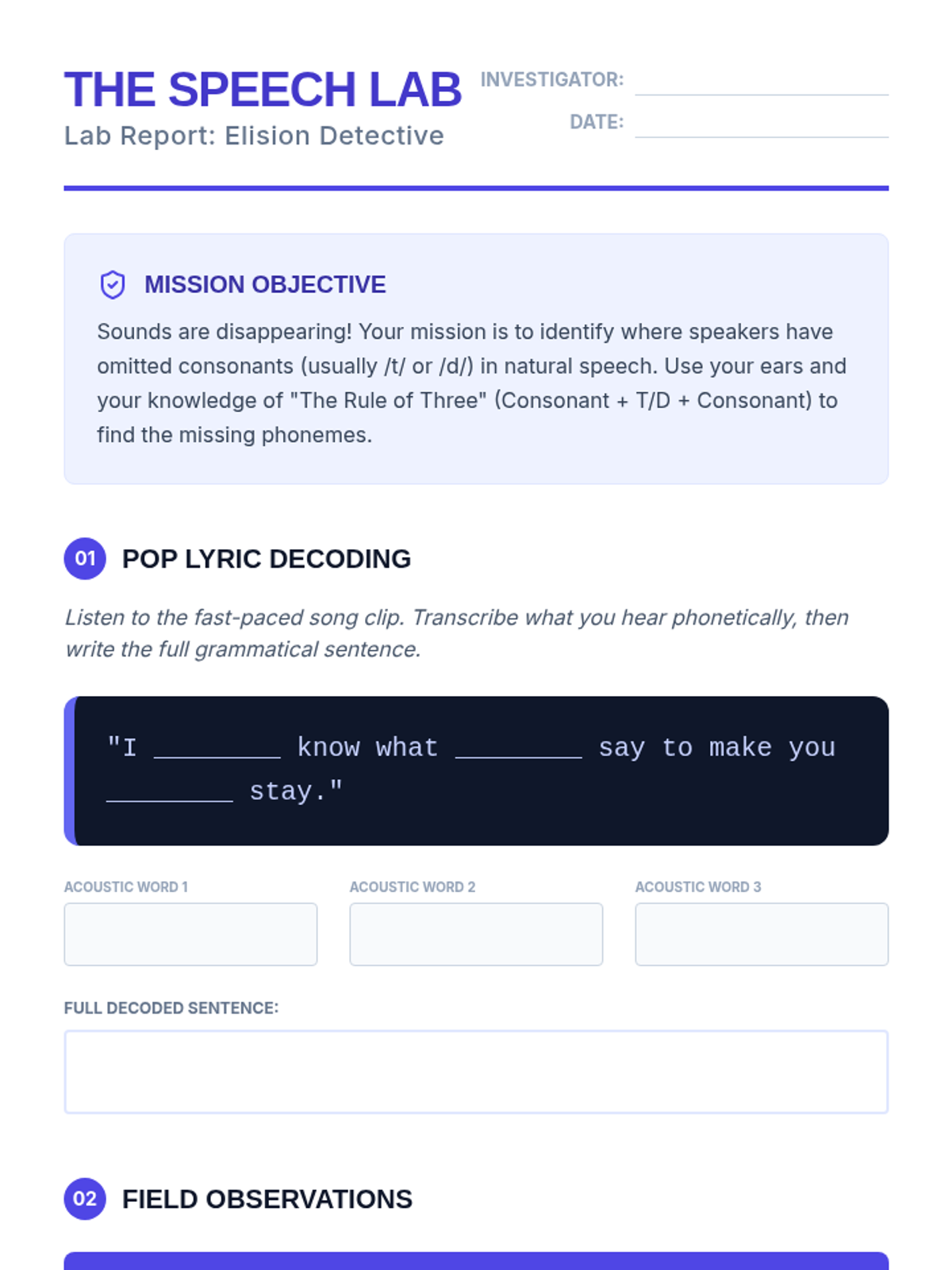
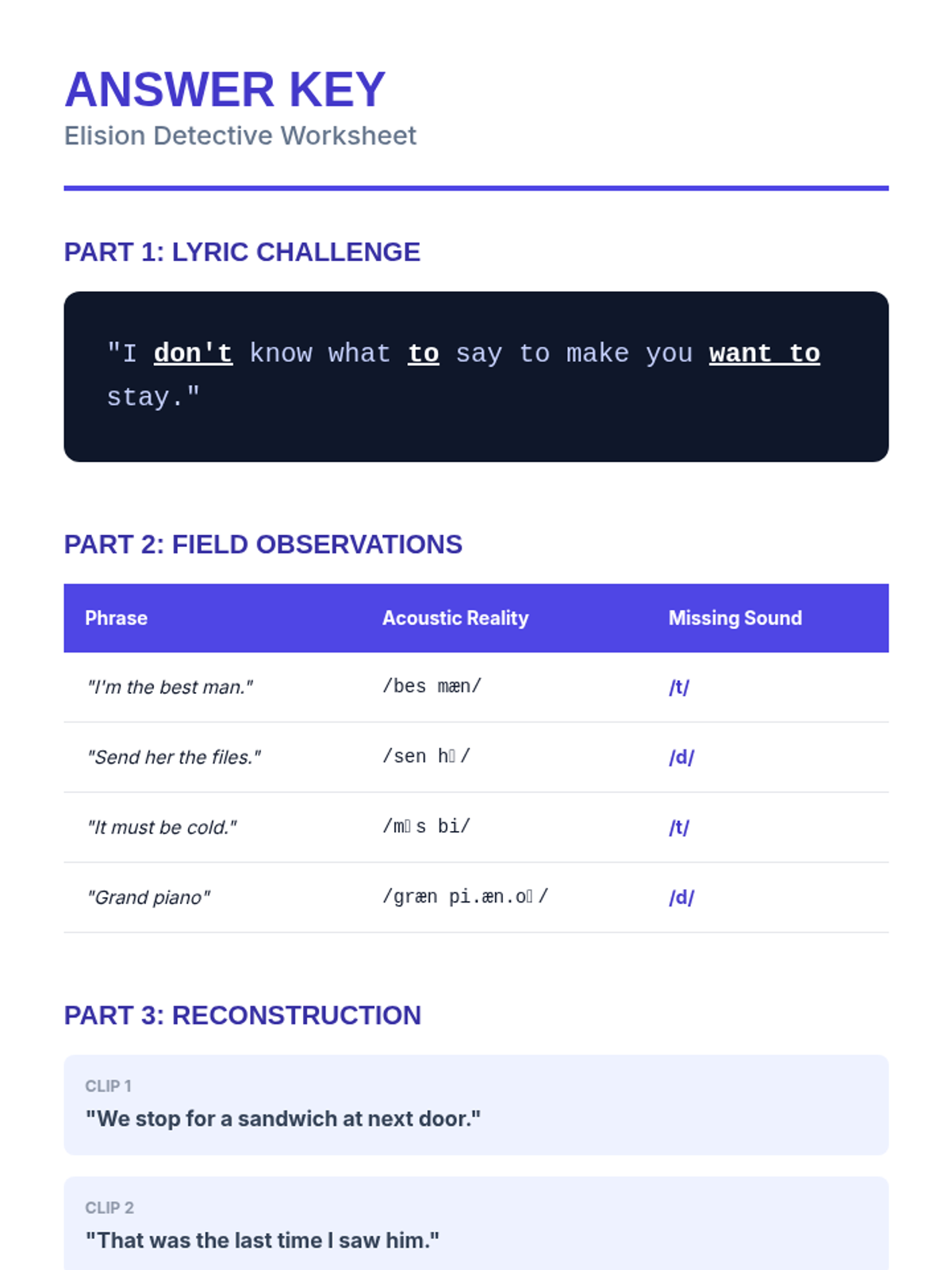
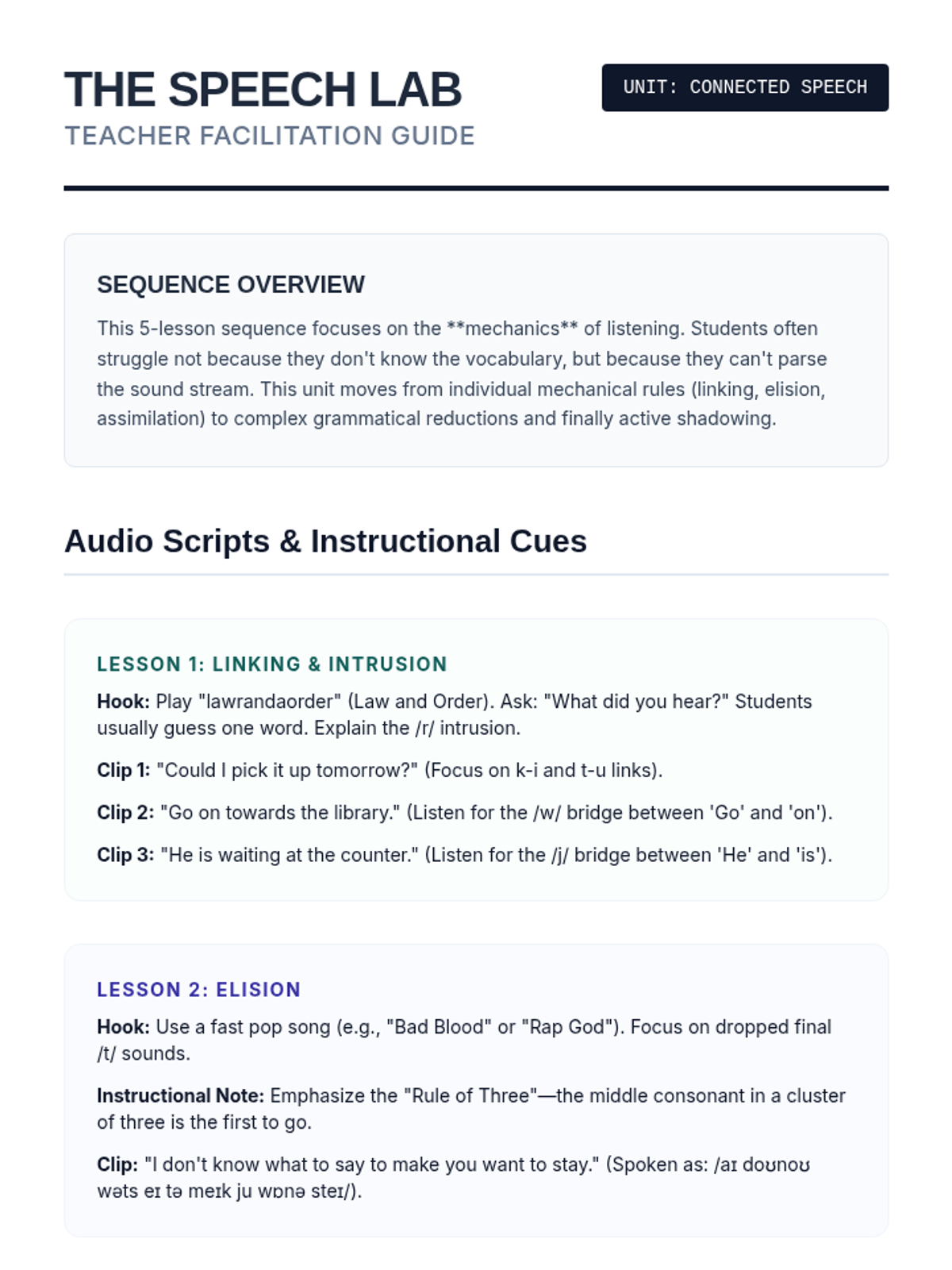
This lesson covers the phenomenon of elision, where sounds (particularly /t/ and /d/) disappear in rapid speech. Students practice listening to high-speed dialogues to identify words that have been 'swallowed' by the speaker.
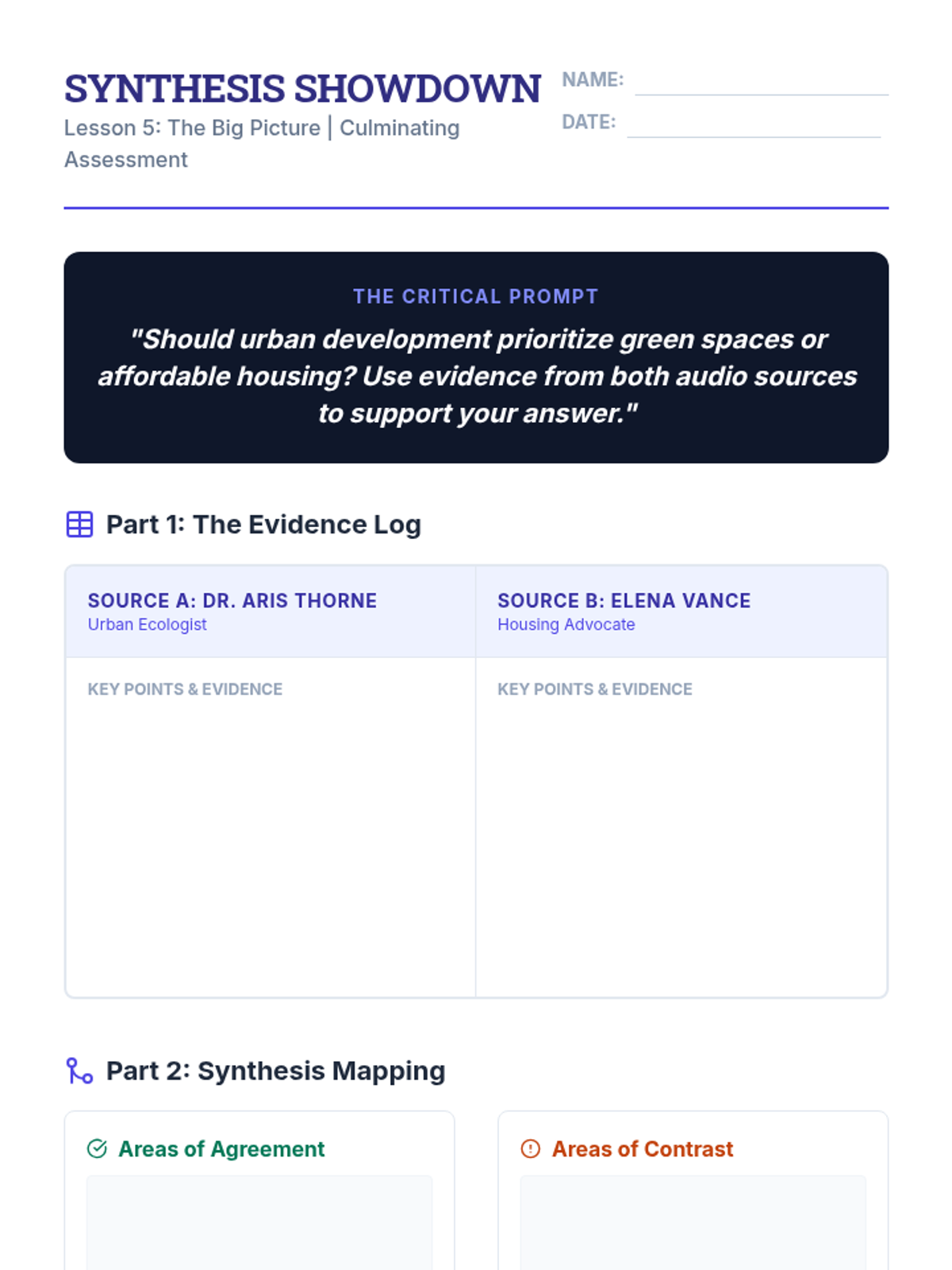
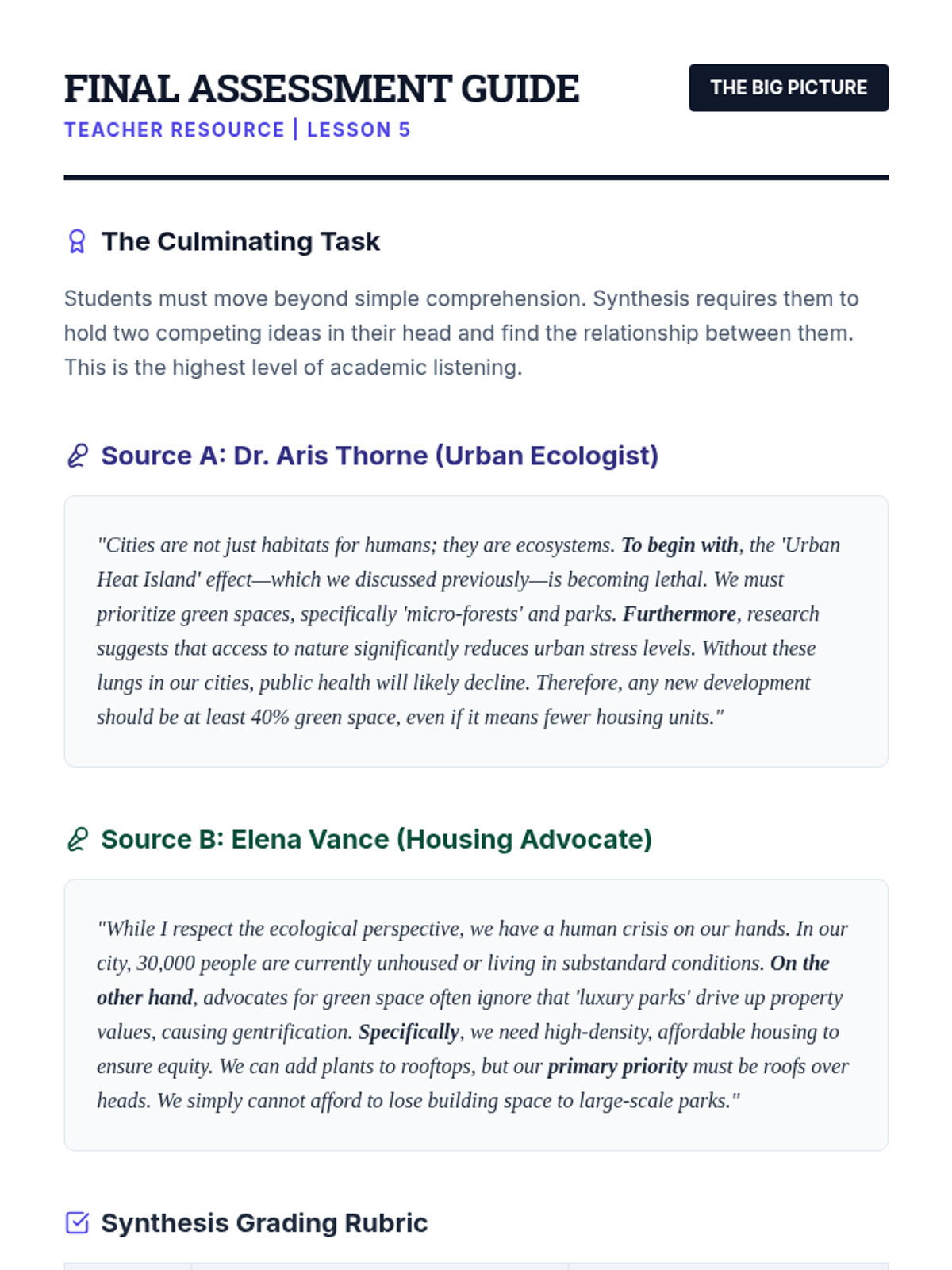
In this culminating lesson, students listen to two contrasting viewpoints on a single global issue. They must synthesize the information to answer a prompt, citing specific details from both audio sources to support their conclusion.
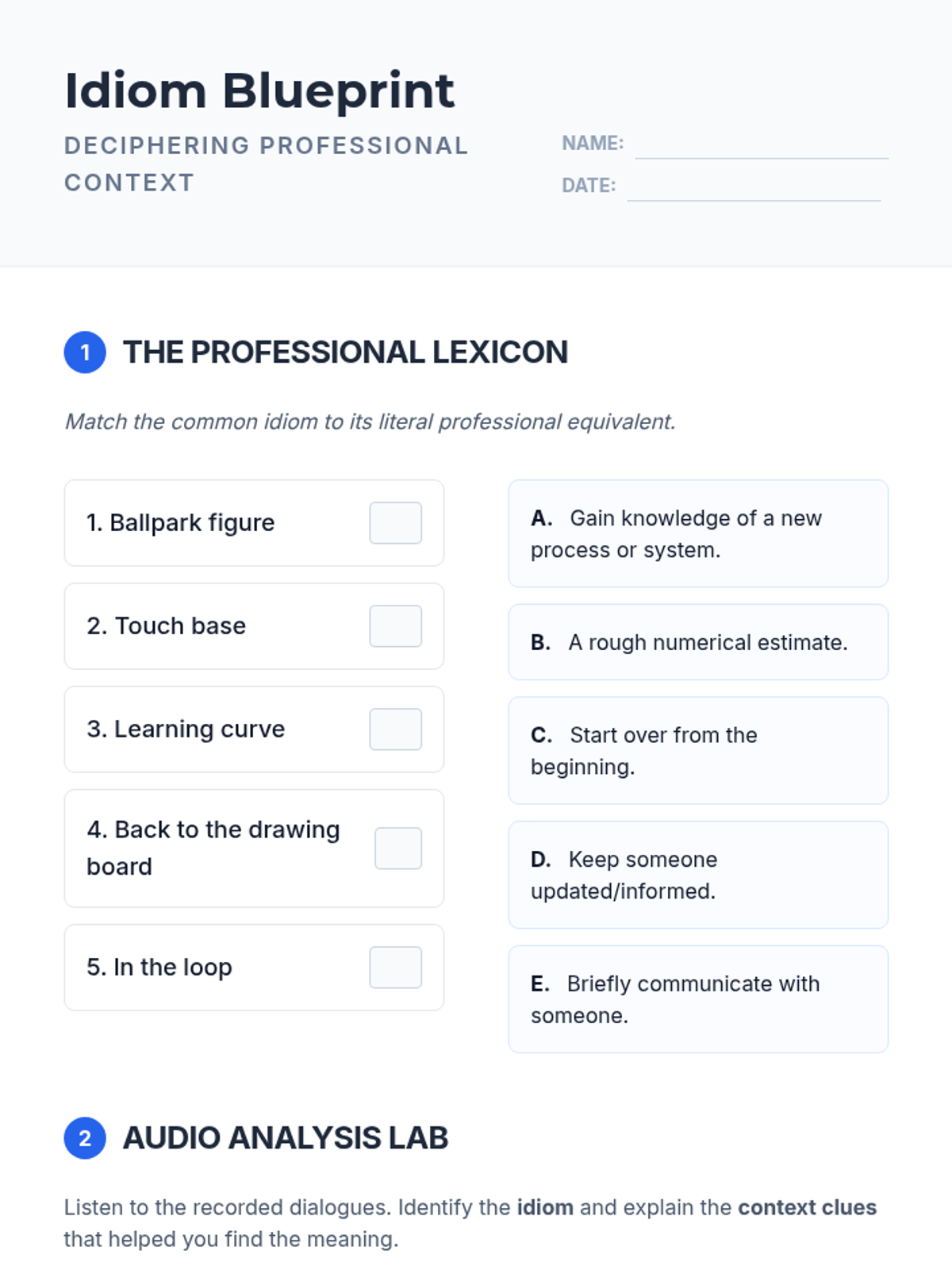
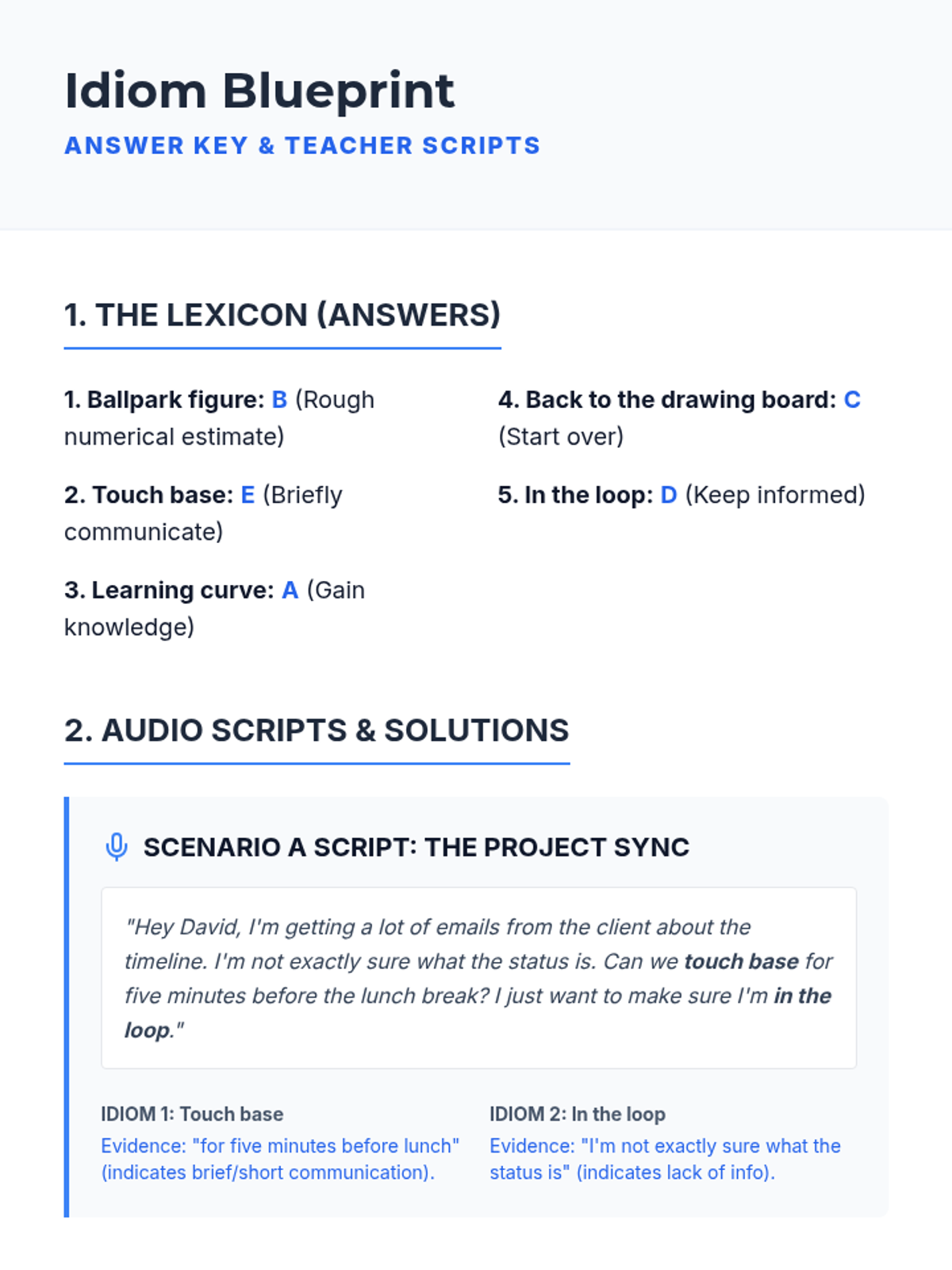
Students encounter high-frequency idioms used in professional settings through context-rich audio simulations, moving beyond rote memorization to contextual inference.
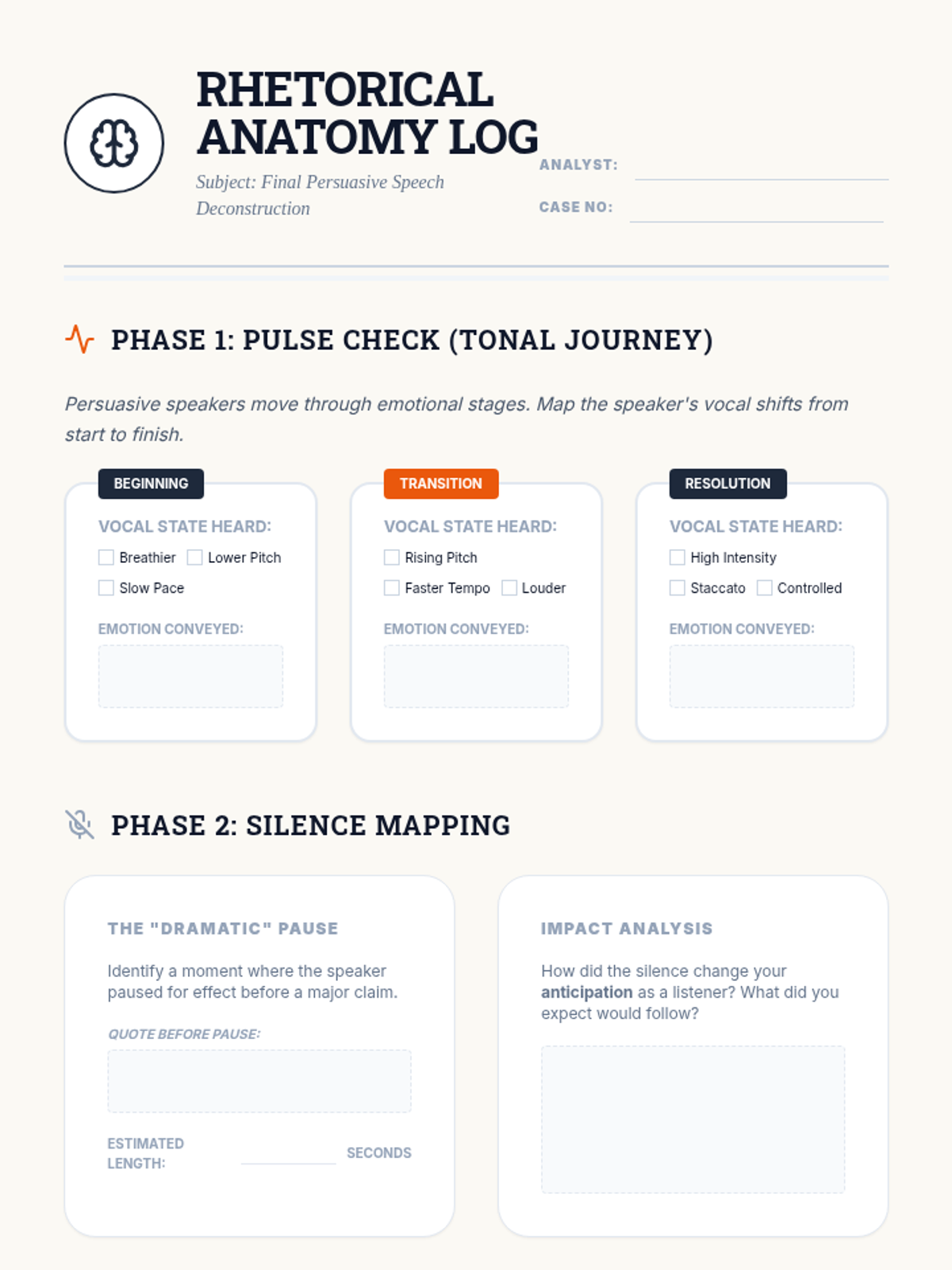
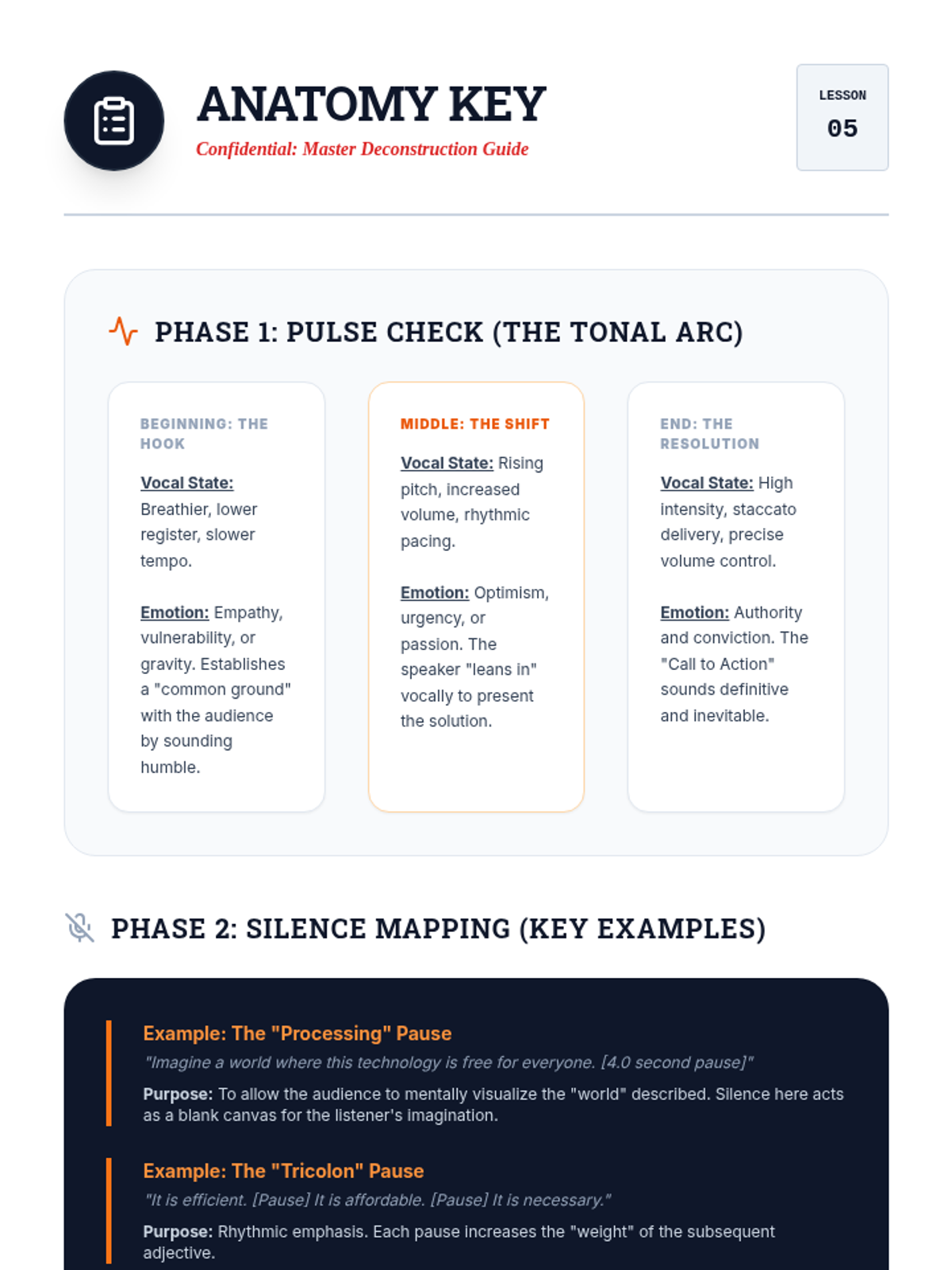
Deconstructs persuasive speech to identify rhetorical strategies, tonal journeys, and the use of strategic pauses for emotional impact.
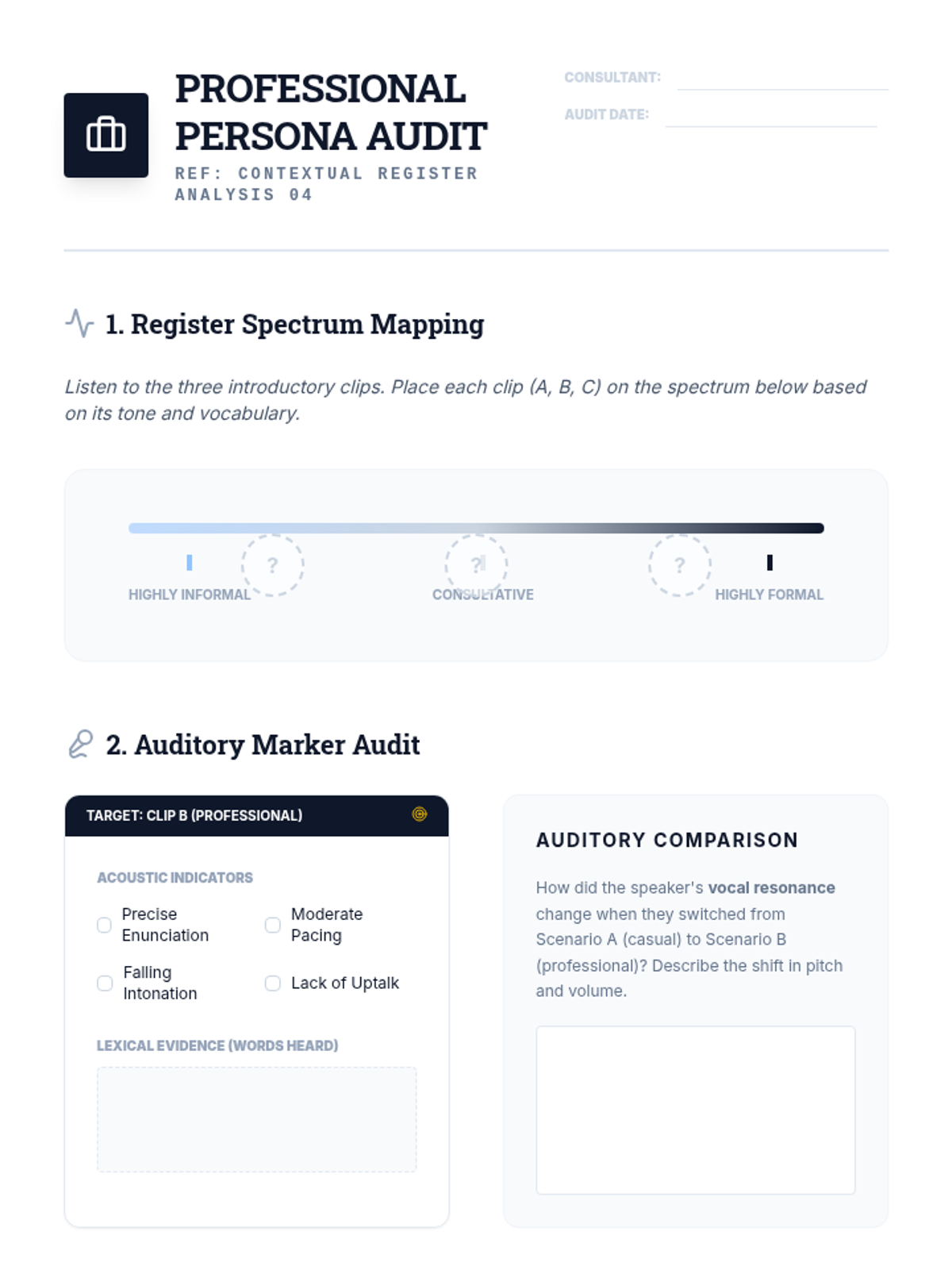
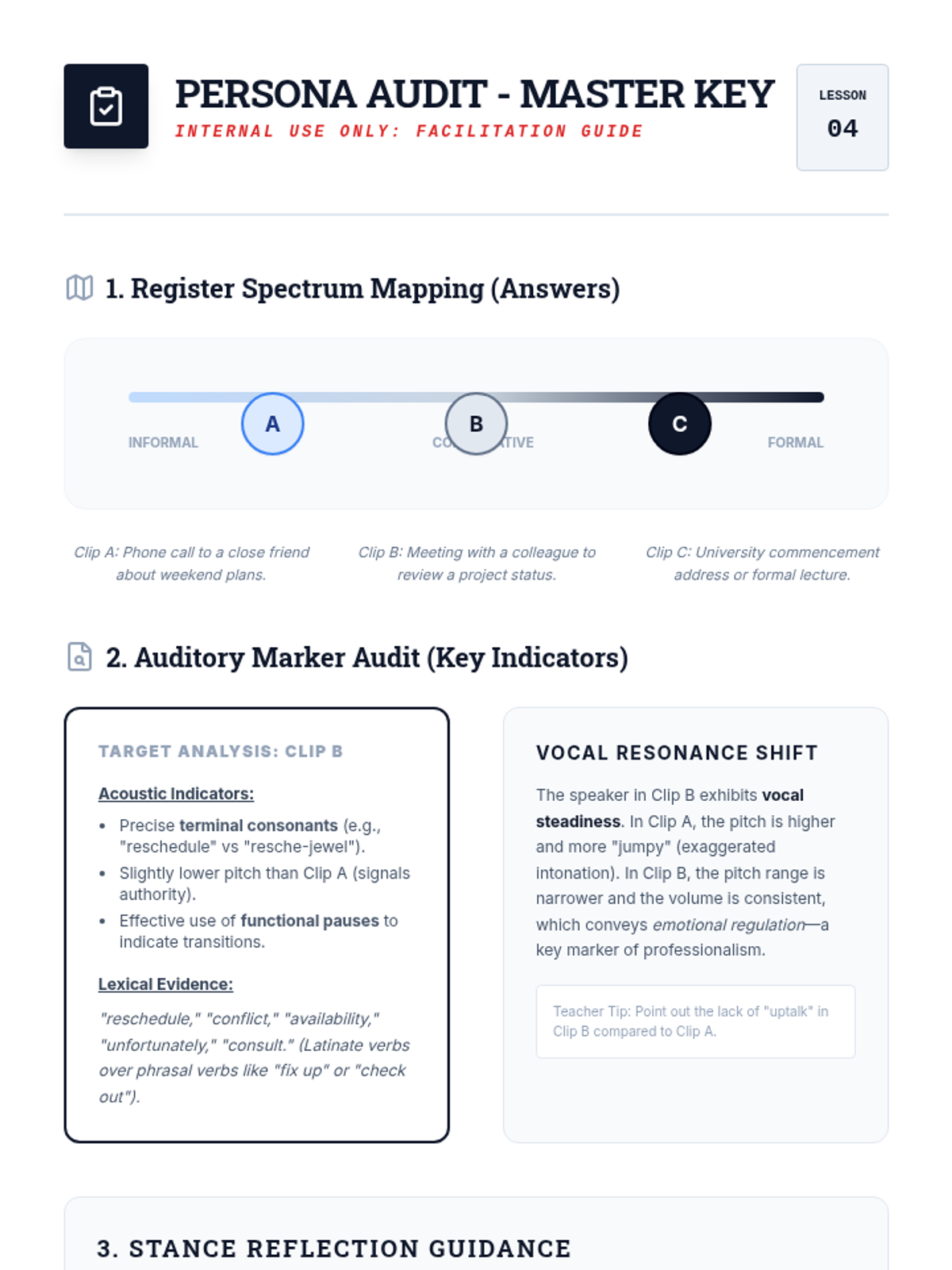
Examines how speakers adjust their register and tone based on audience and context, focusing on professional vs. informal markers.
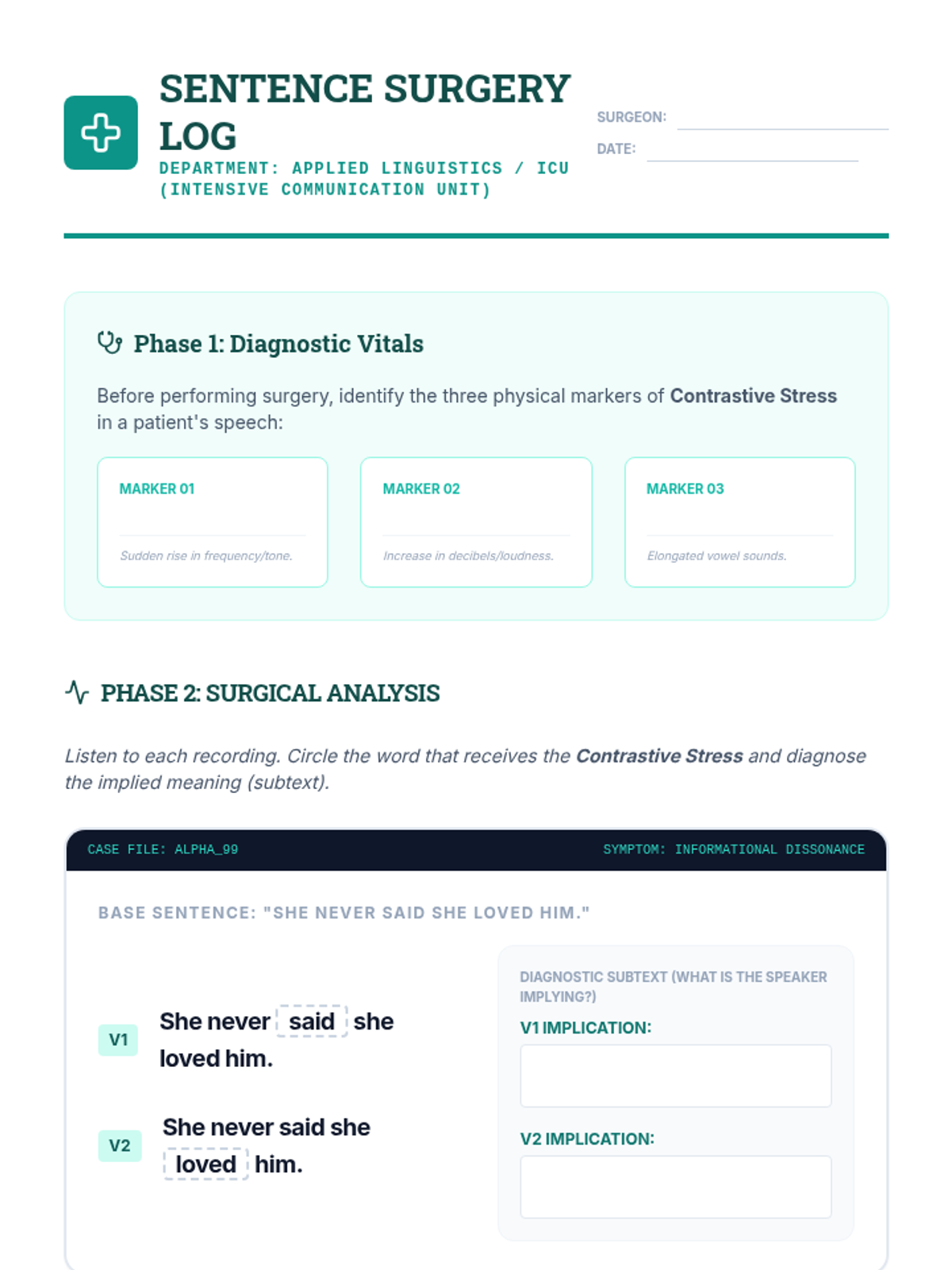
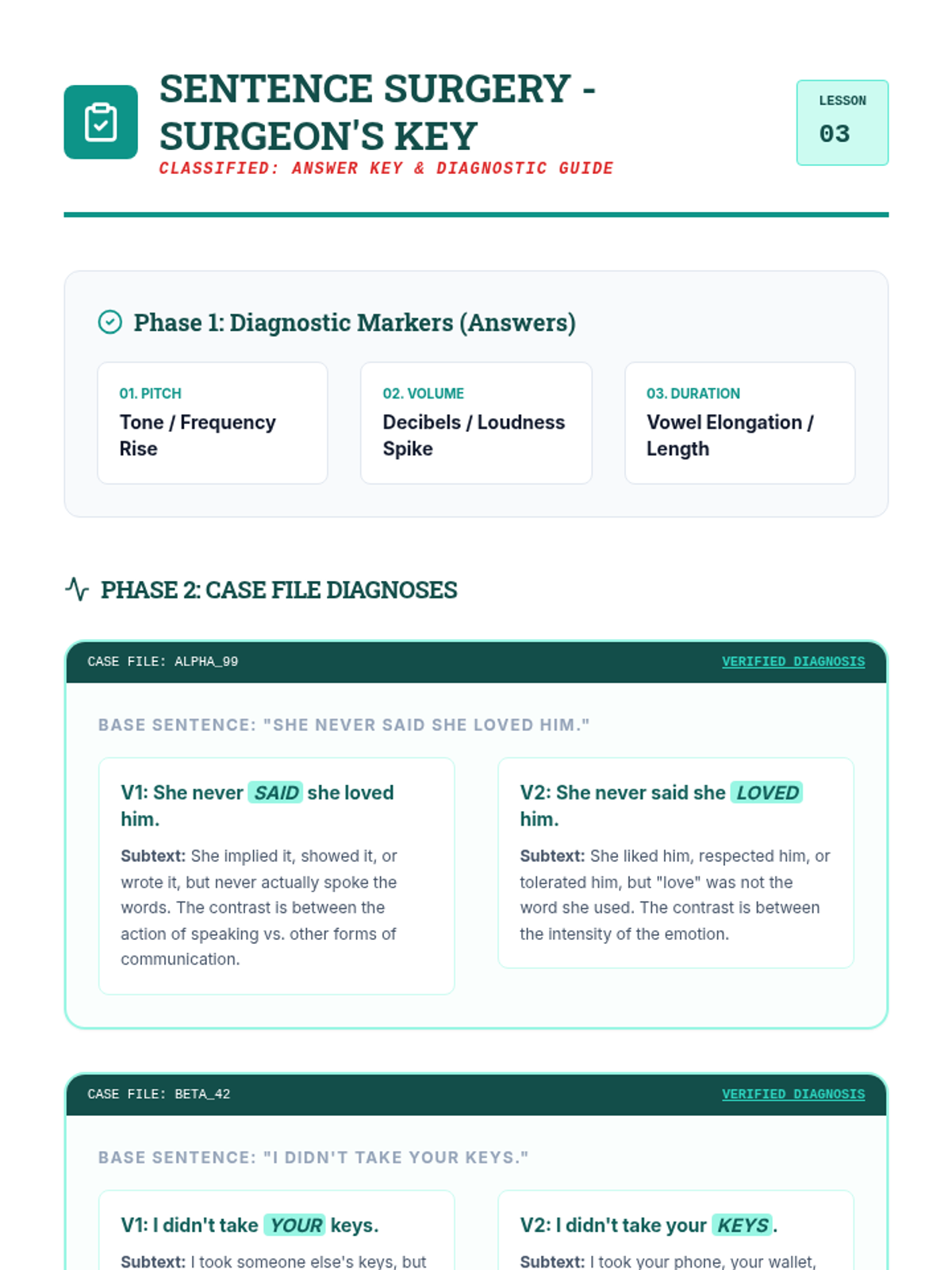
Explores how shifting stress within a single sentence radically alters its implied meaning and subtext.
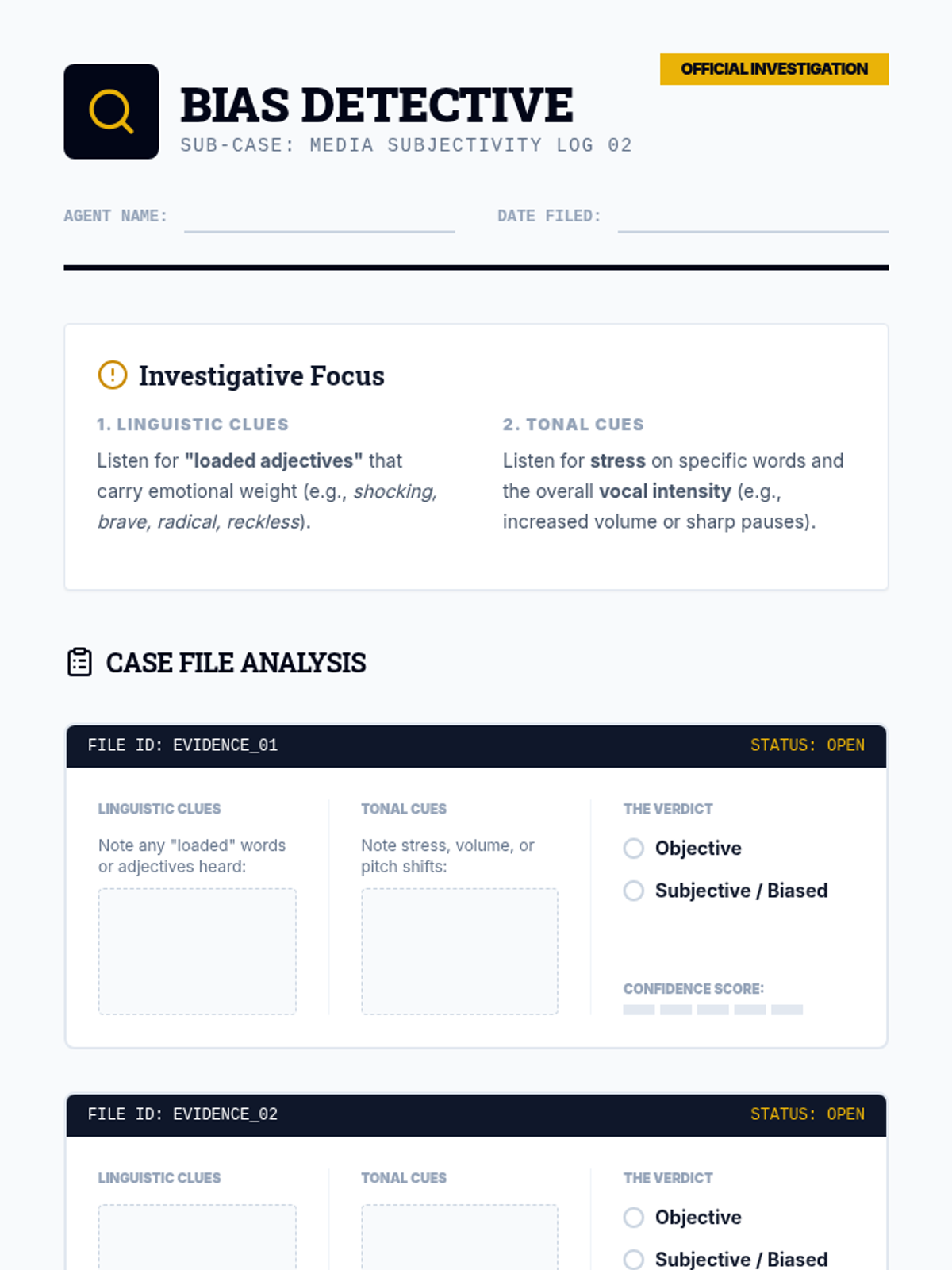
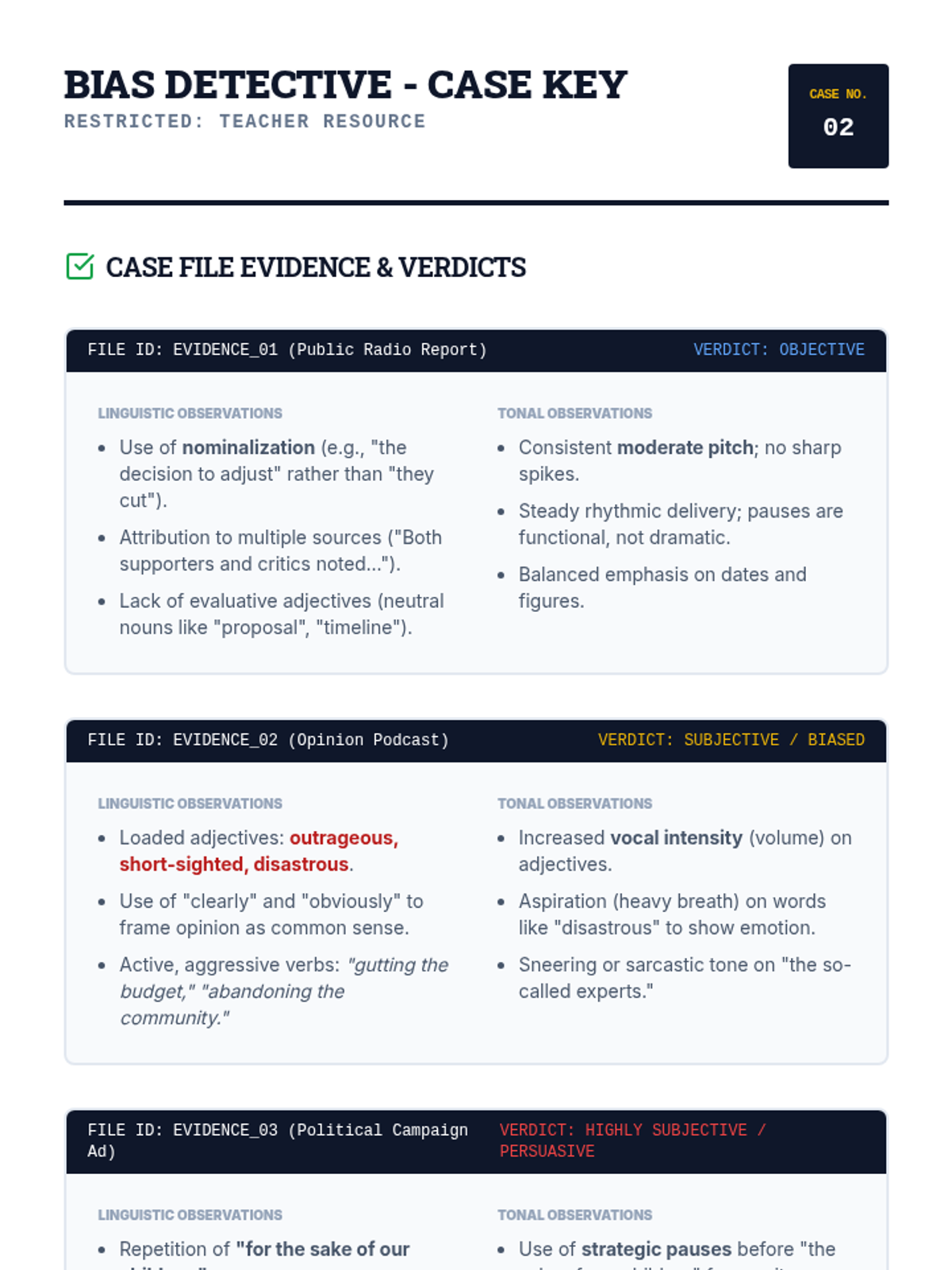
Focuses on identifying bias and subjectivity in media and speeches by analyzing word choice, emotional tone, and selective emphasis.
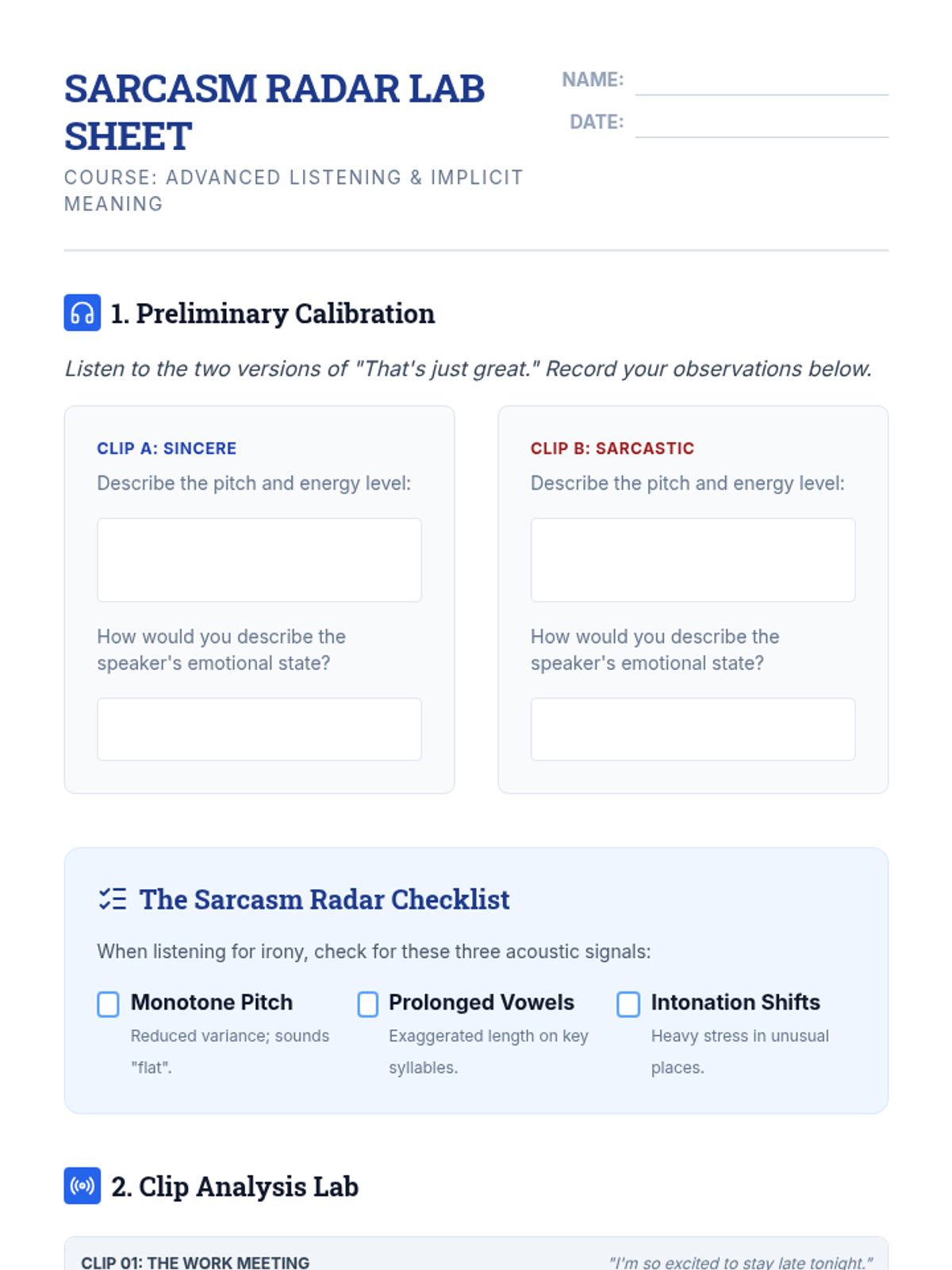
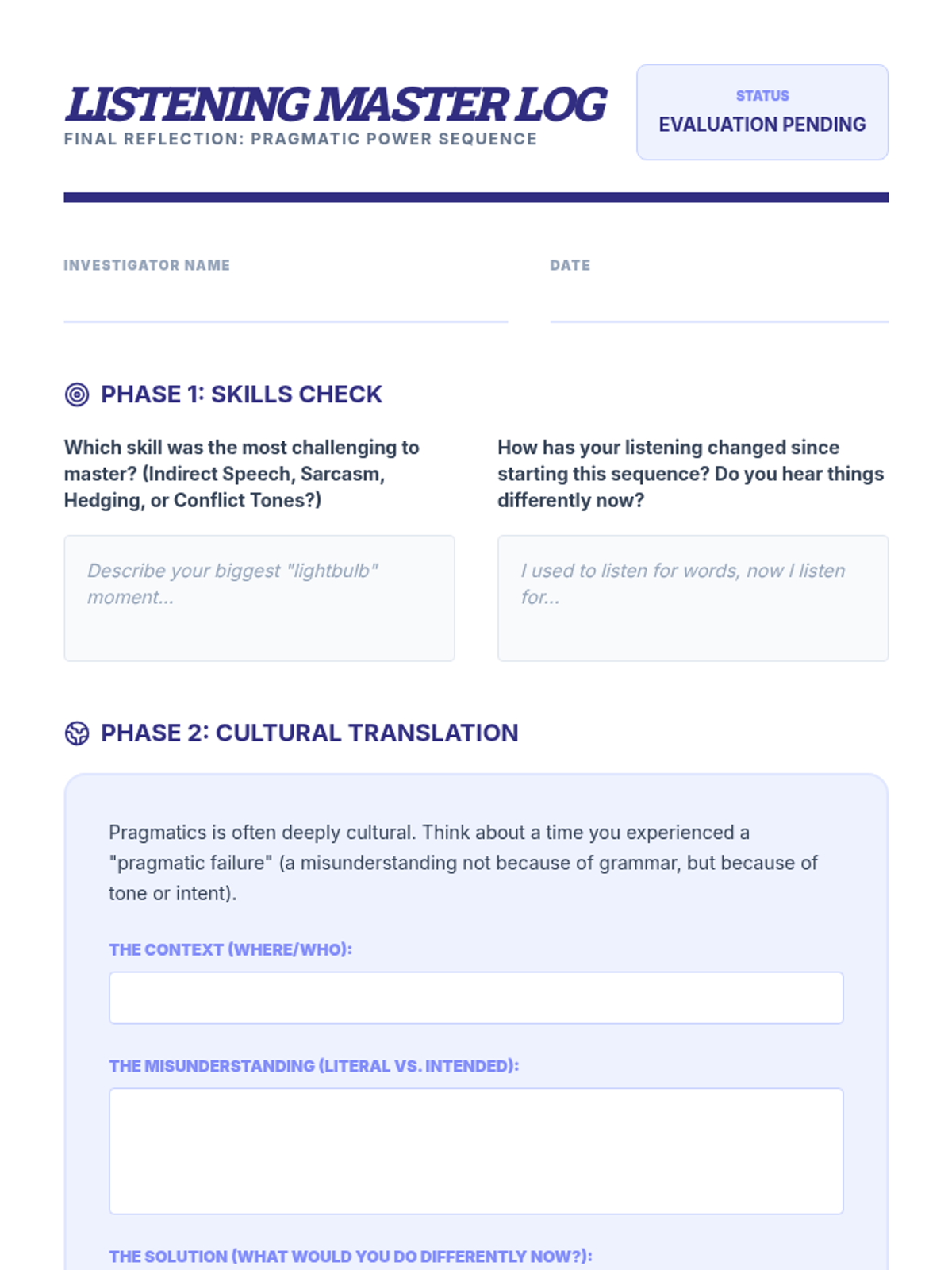
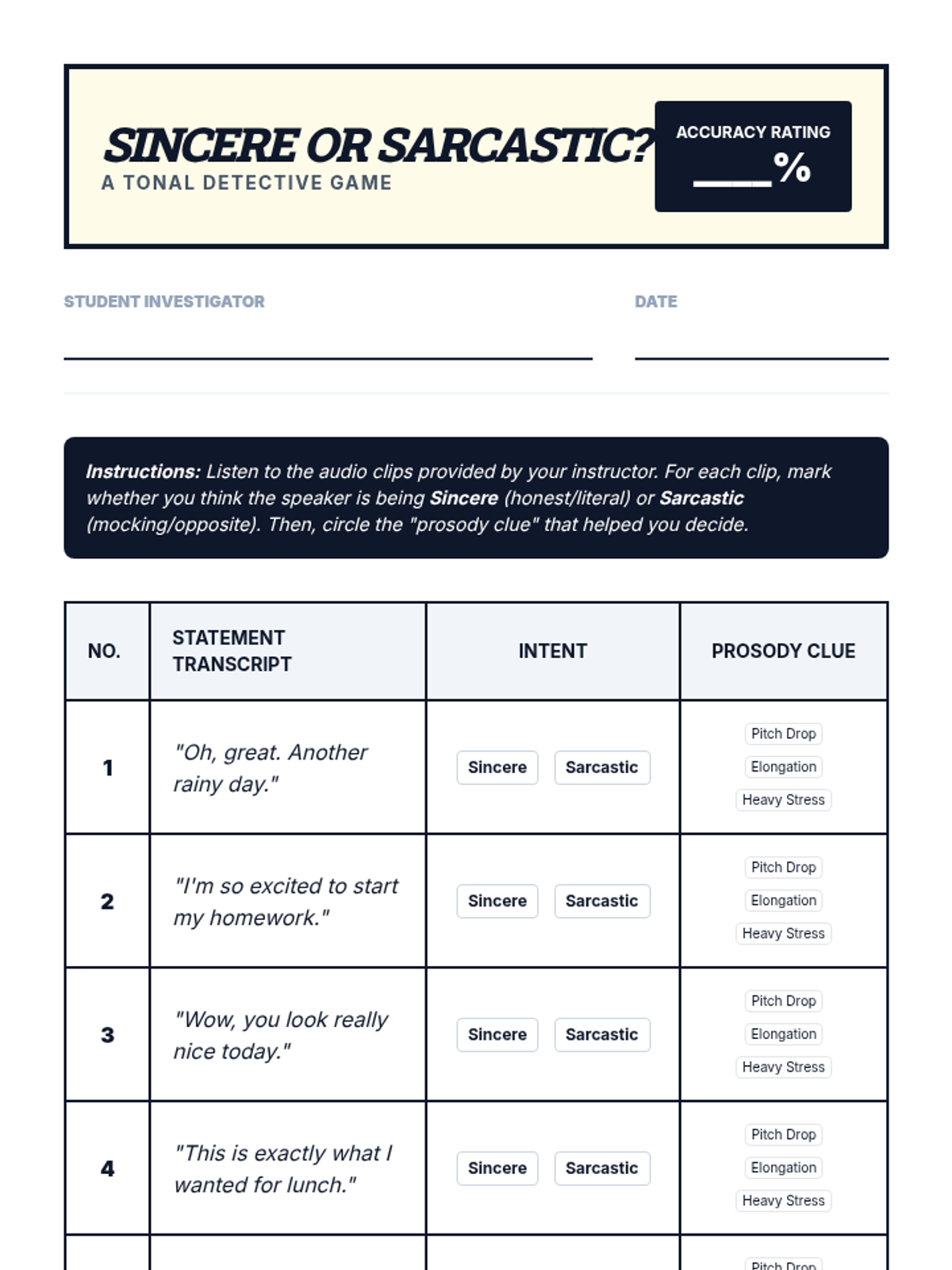
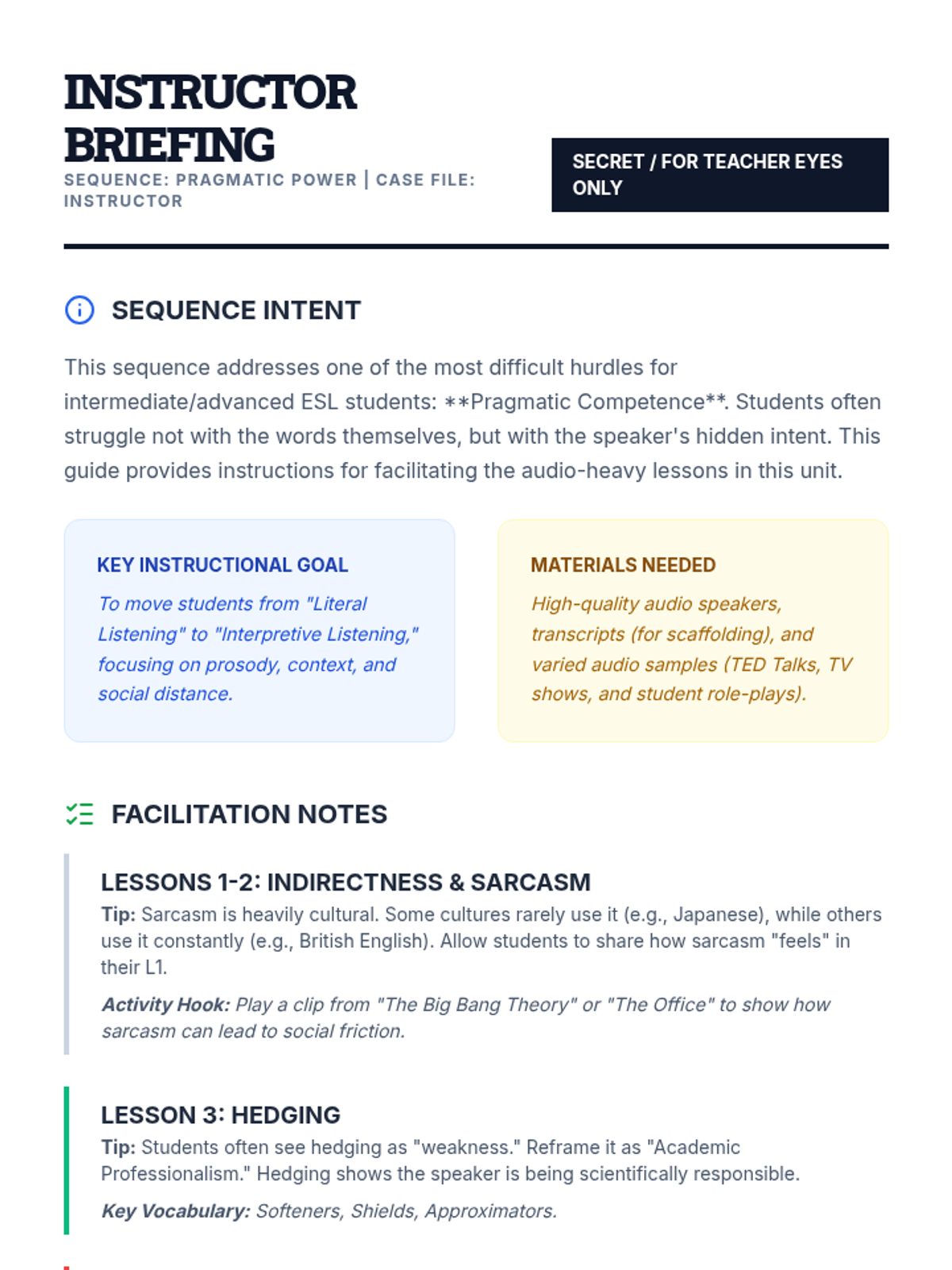
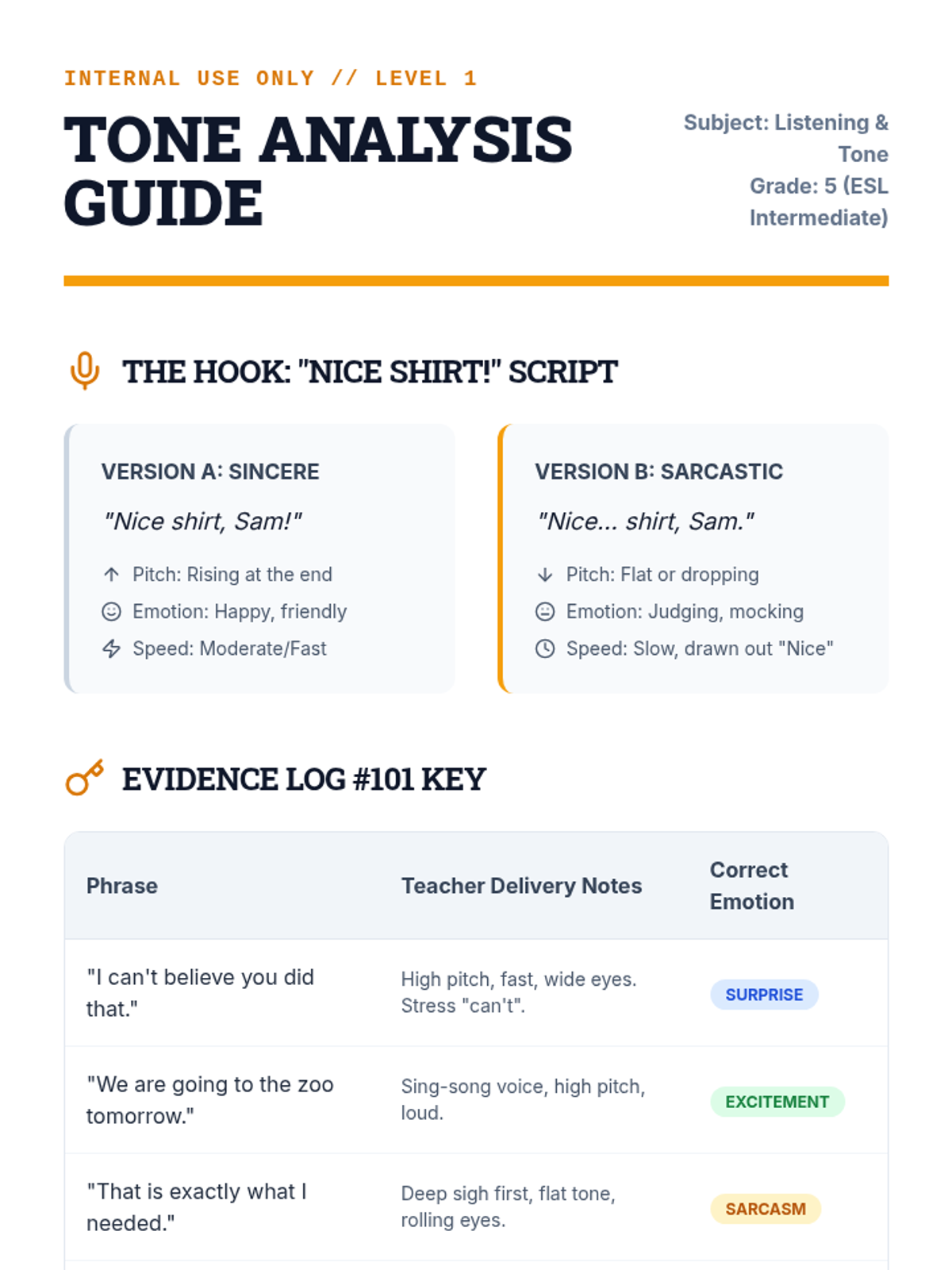
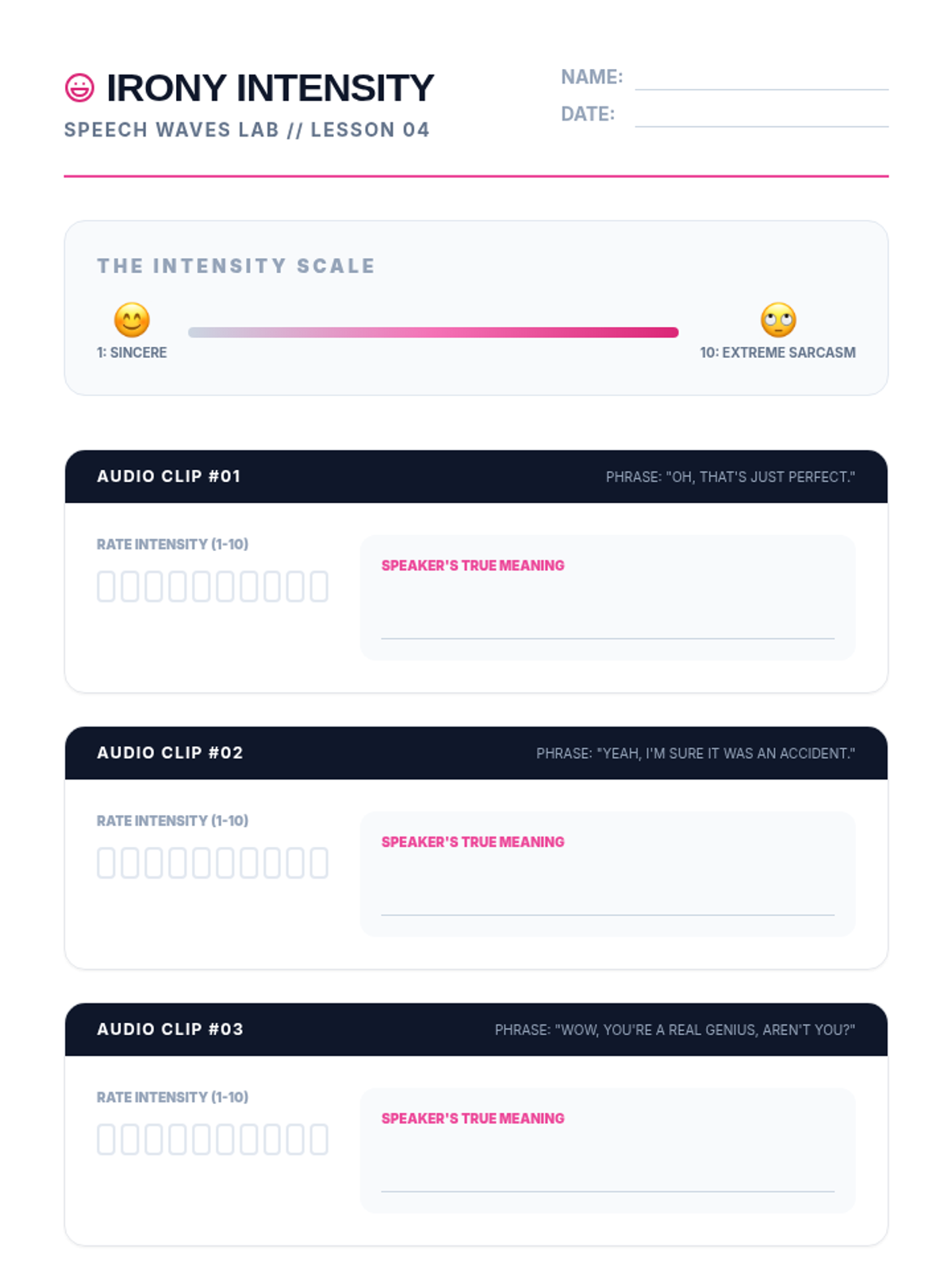
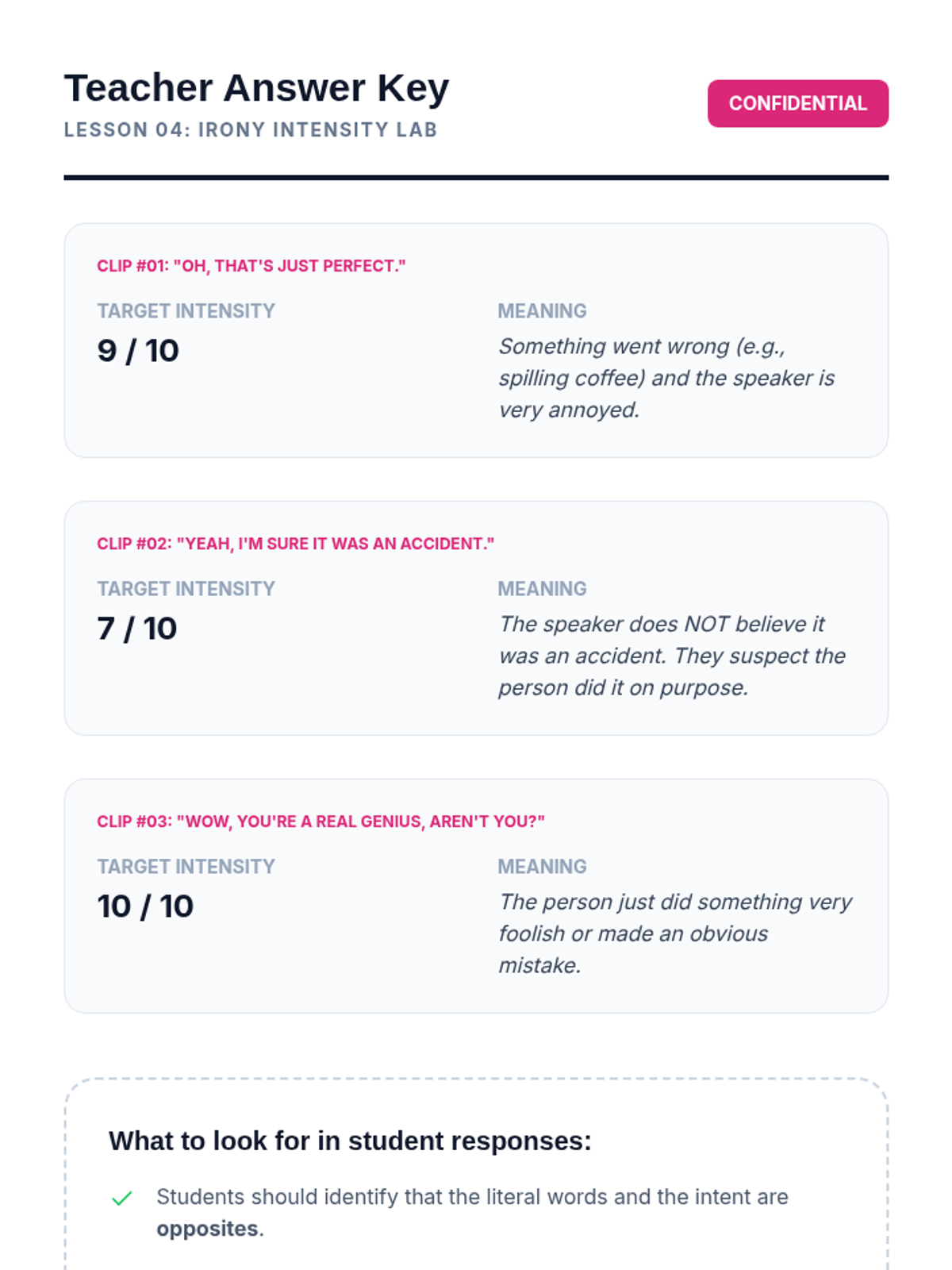
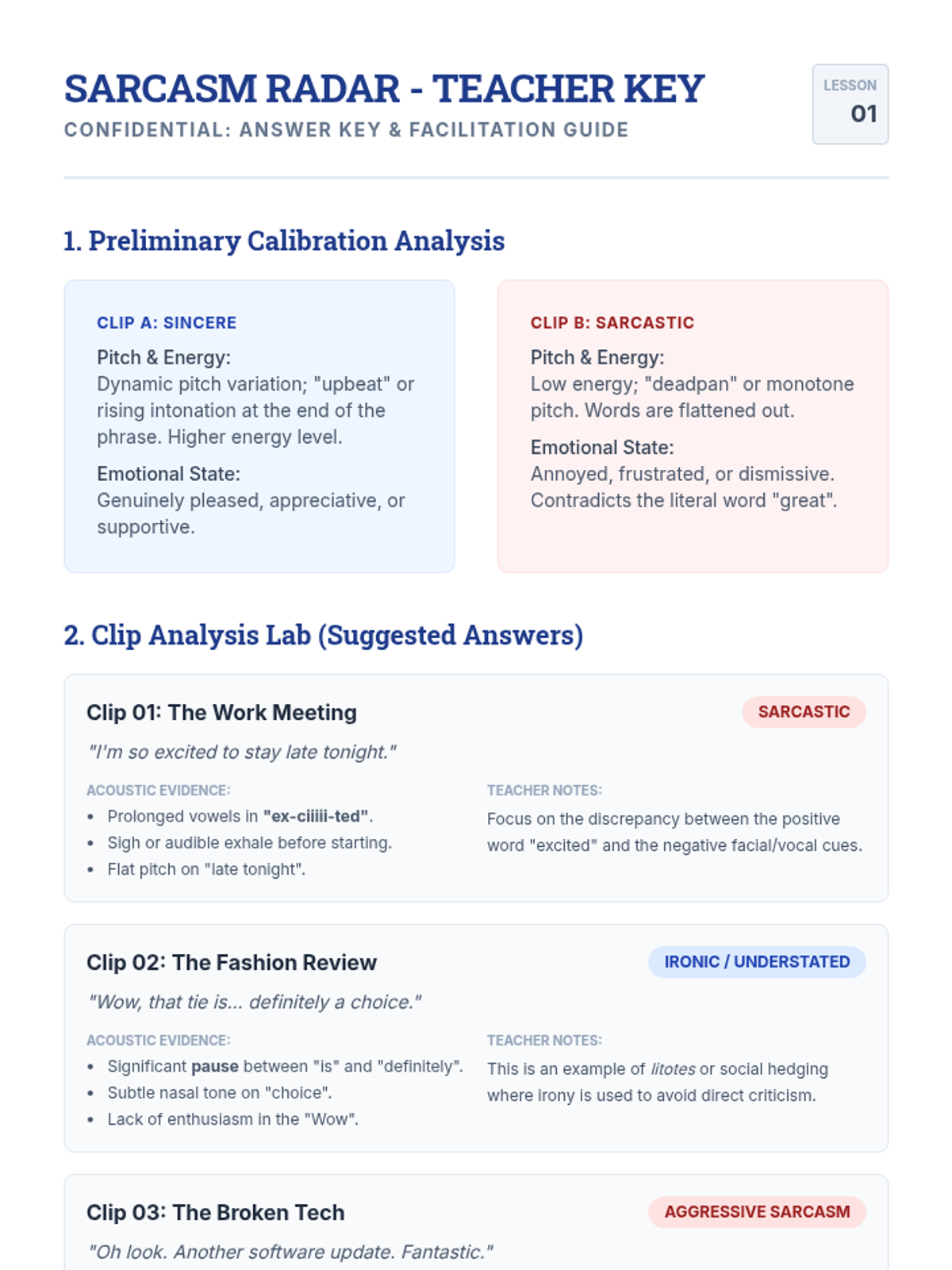
Students analyze the acoustic cues of irony and sarcasm—such as pitch, length, and intonation—to distinguish between literal and intended meaning in spoken English.
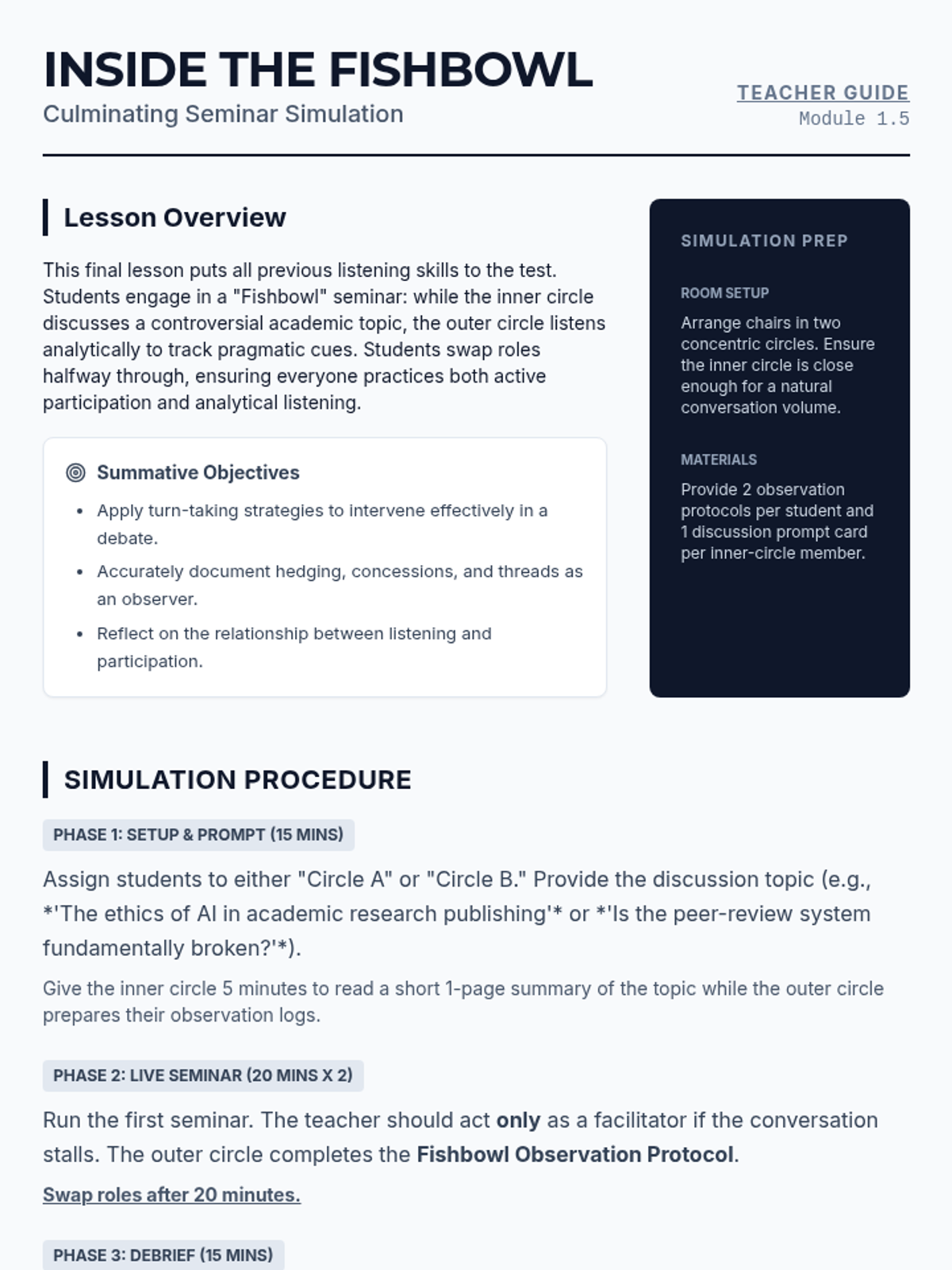
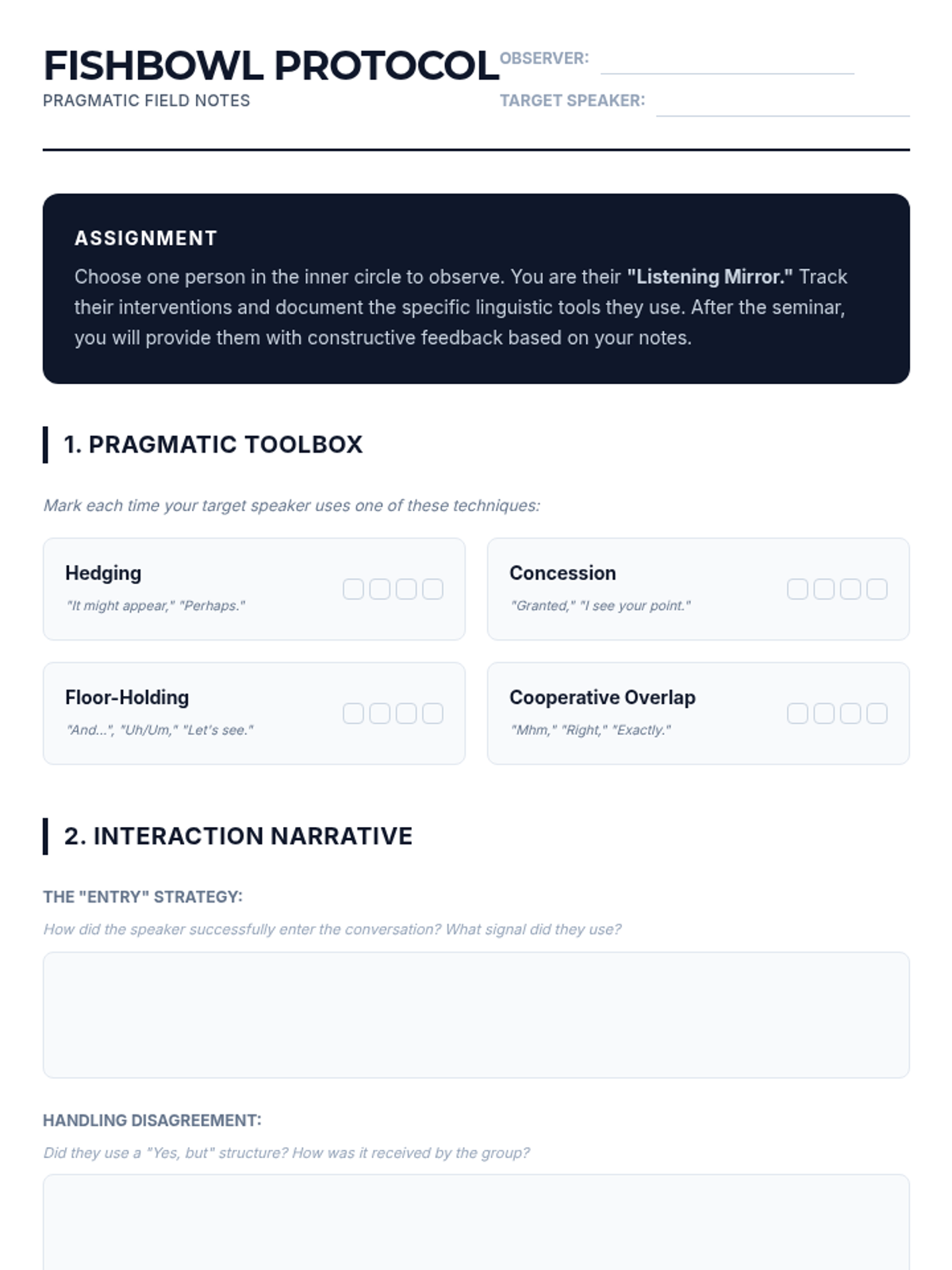
A culminating simulation where students alternate between active participation and observational analysis using the fishbowl method. Focuses on applying all previously learned listening skills.
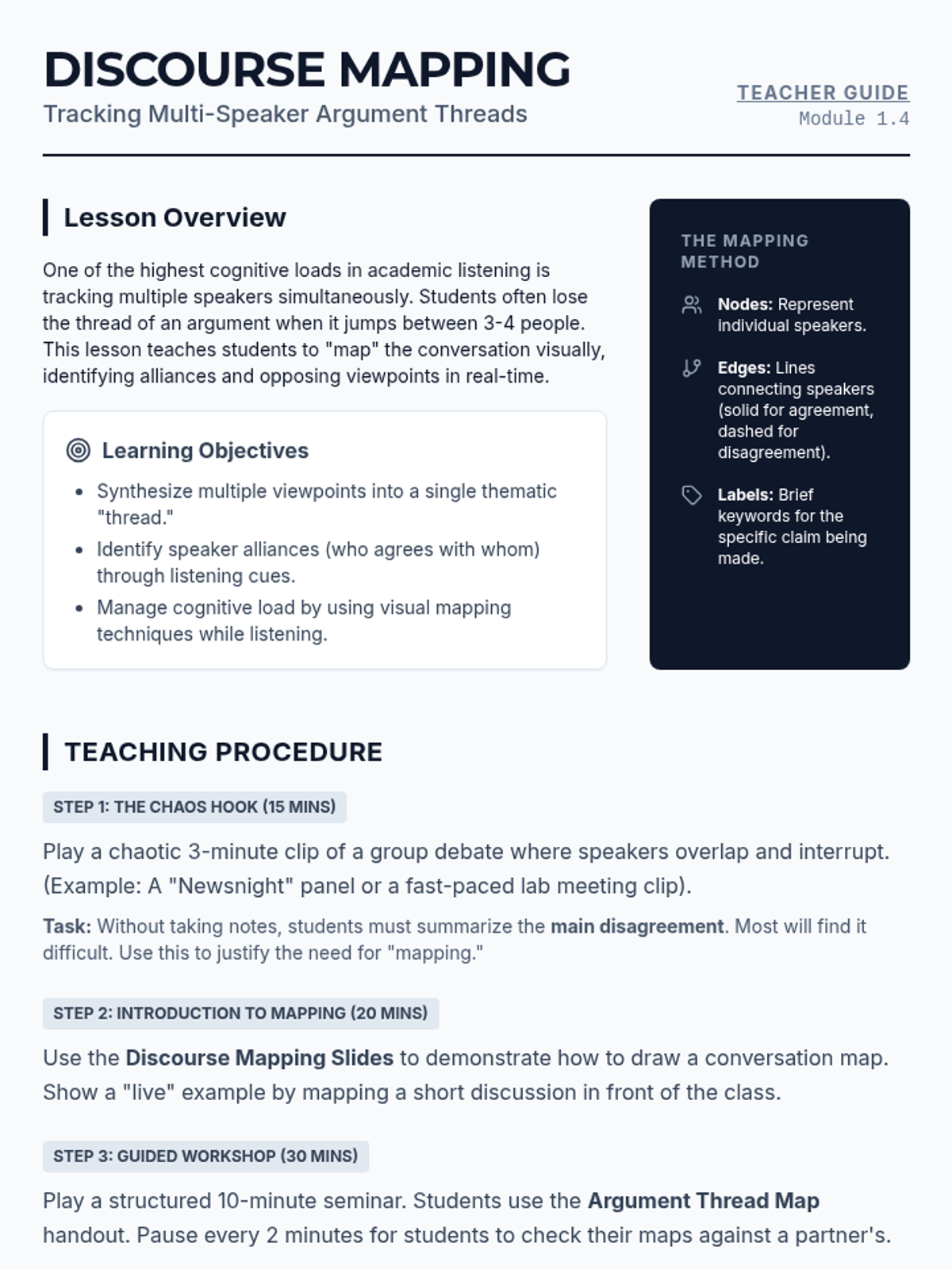
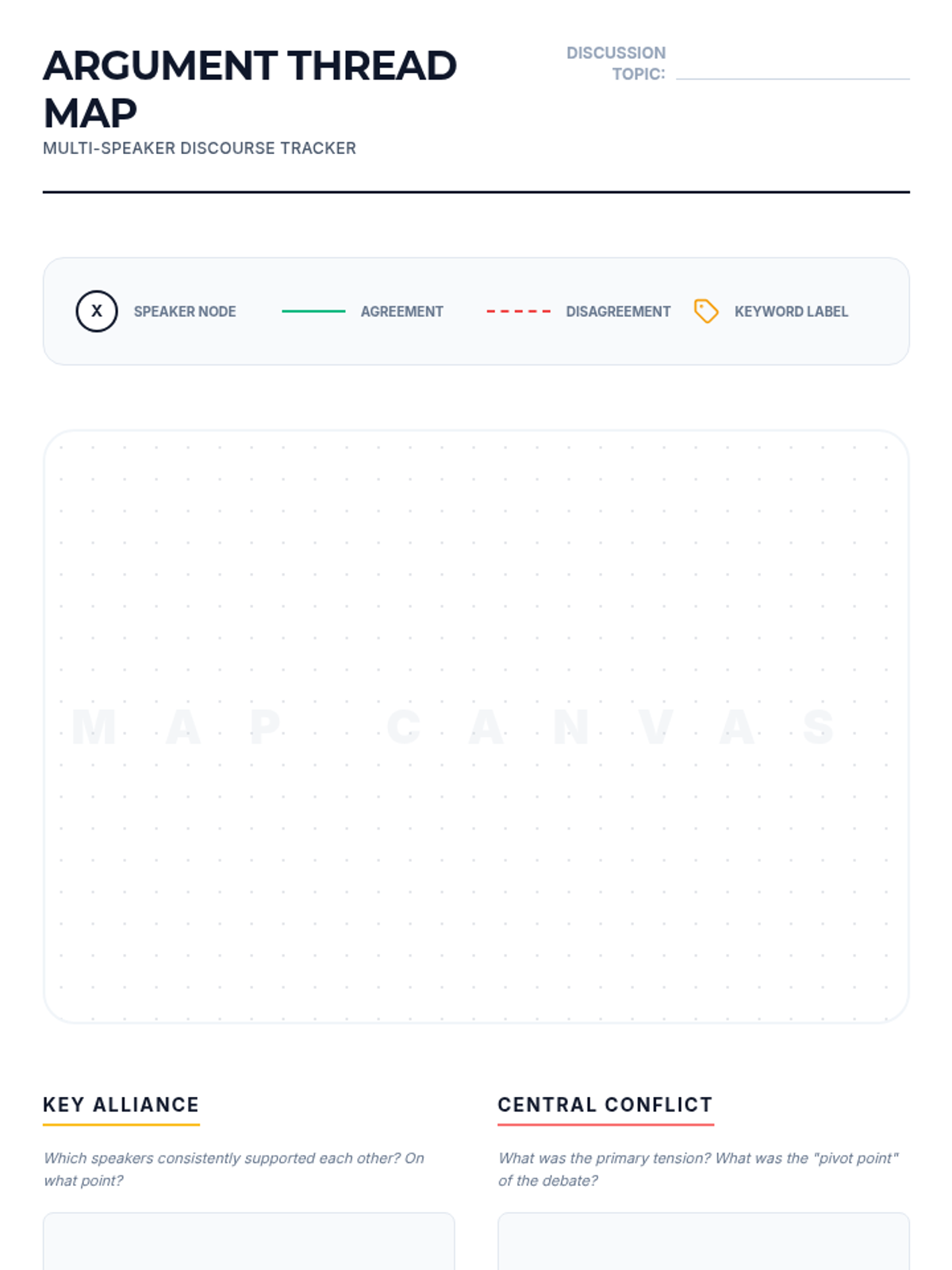
Focuses on the cognitive load of tracking multiple speakers in a fast-paced environment. Students practice mapping argument threads and identifying alliances in group discourse.
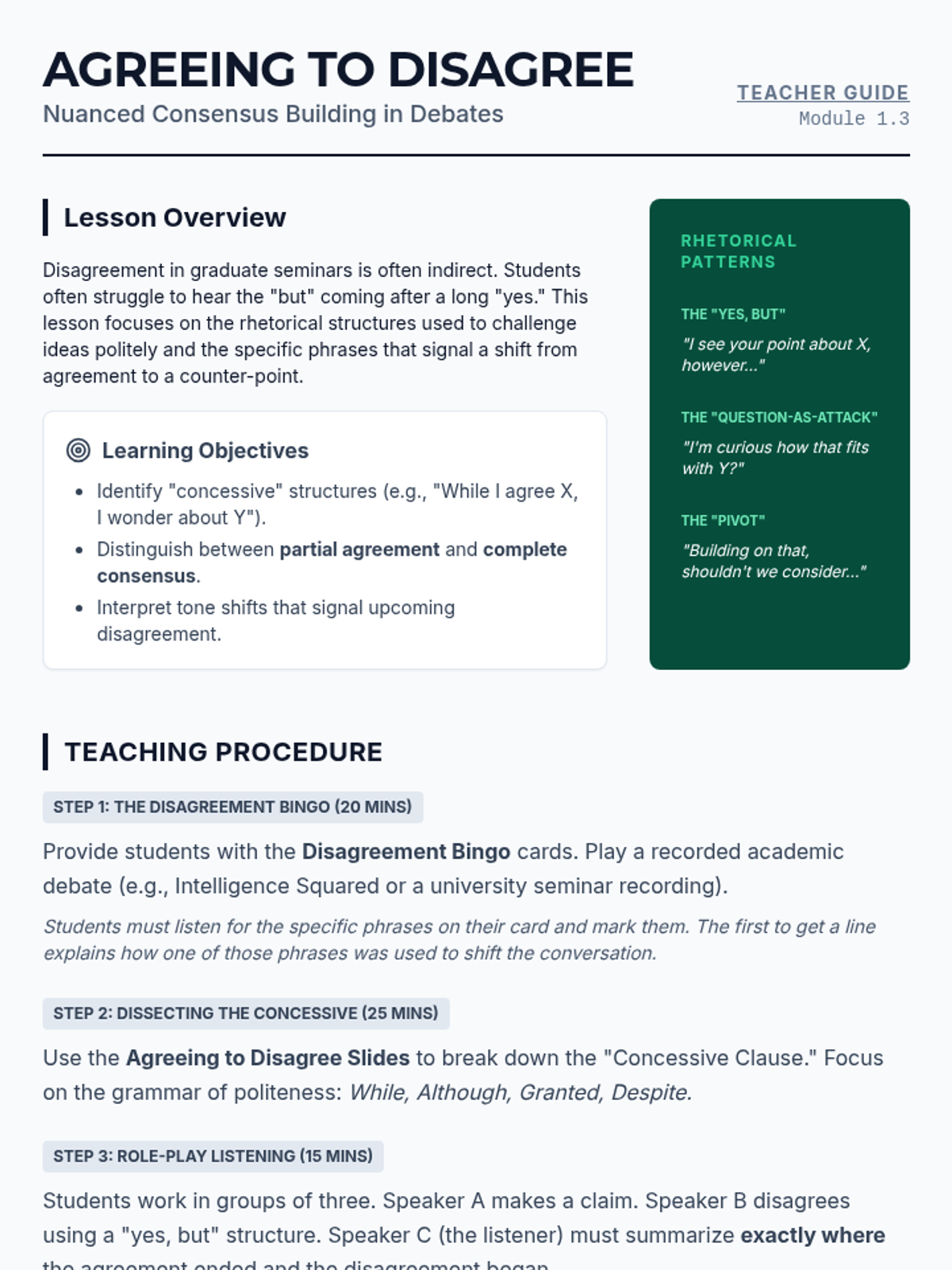
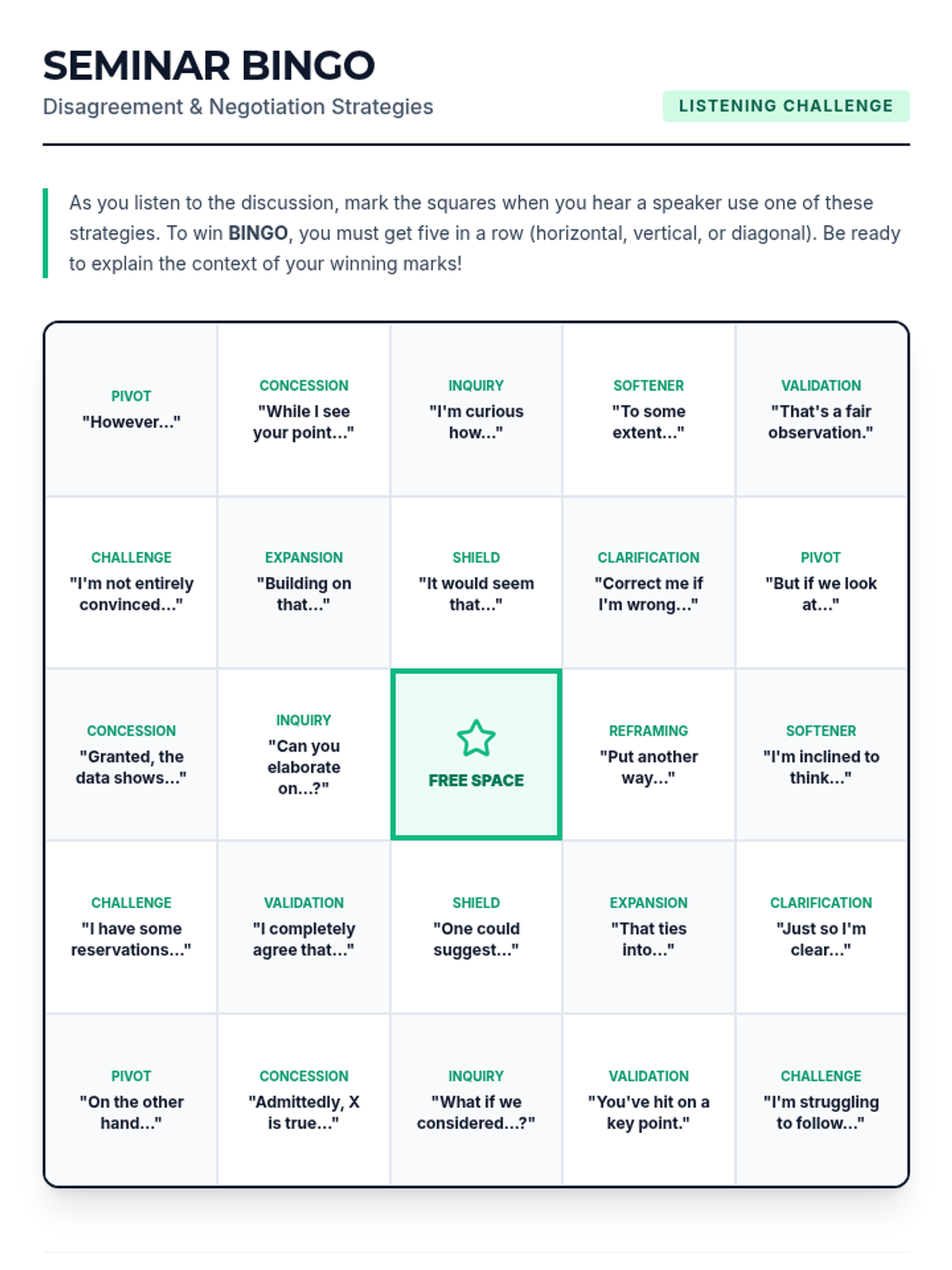
Students identify the rhetorical structures used to agree and disagree in intellectual debates. The lesson focuses on 'yes, but' constructions and nuanced consensus building.
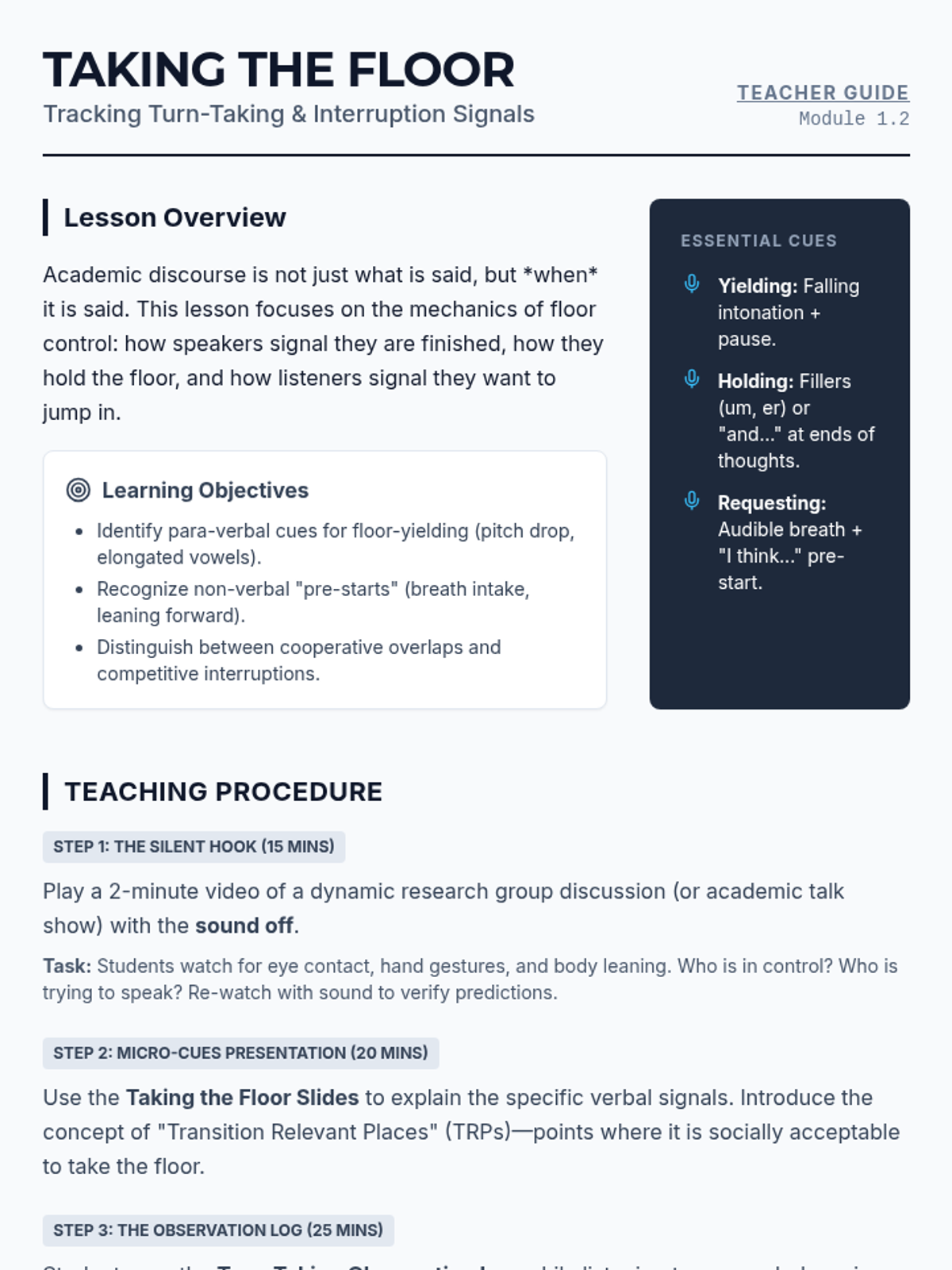
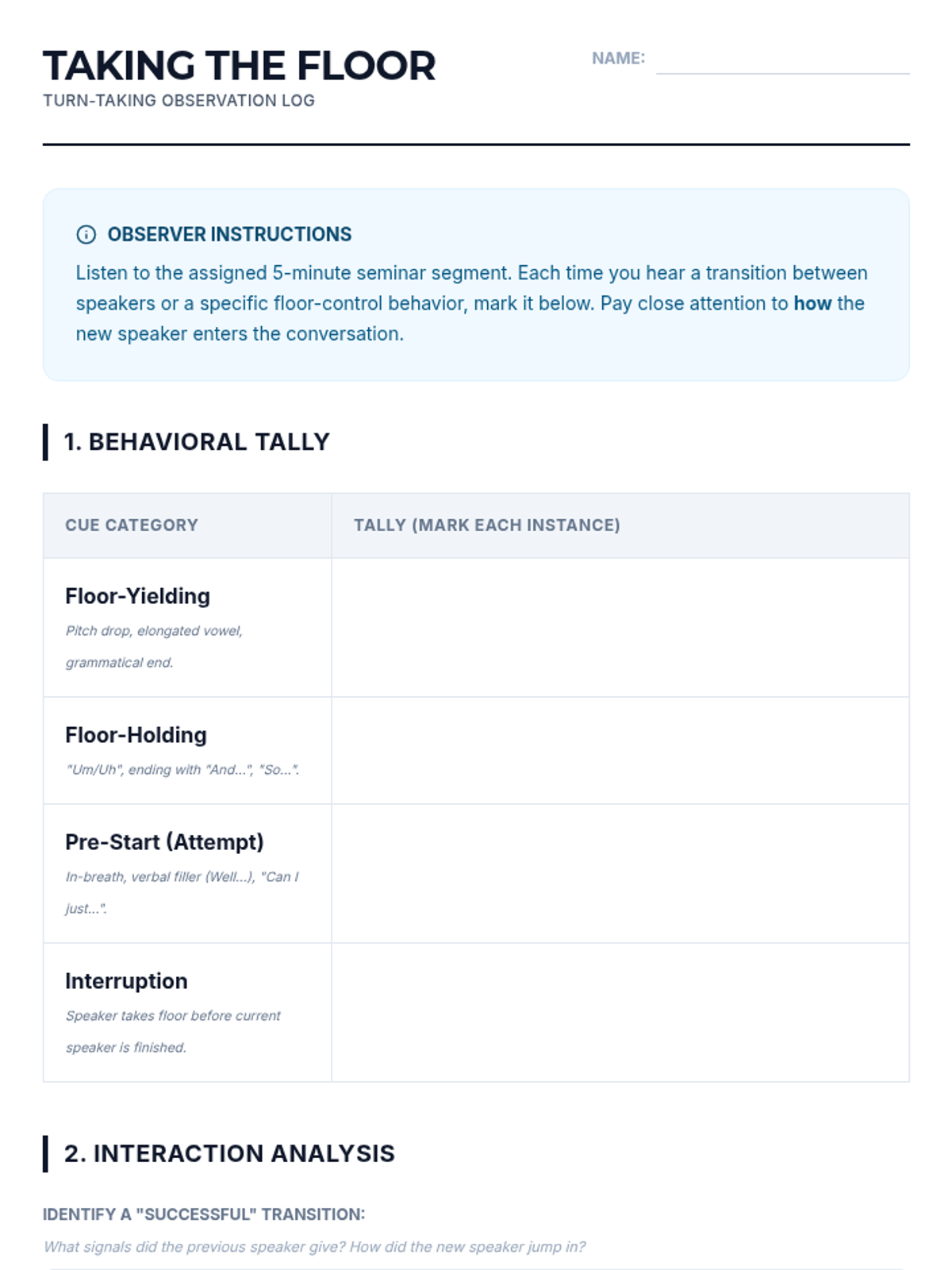
An analysis of the verbal and non-verbal cues used to manage floor control in academic discussions. Students learn to predict and identify transitions between speakers.
A culminating simulation where students apply all strategies during a mock academic lecture assessment.
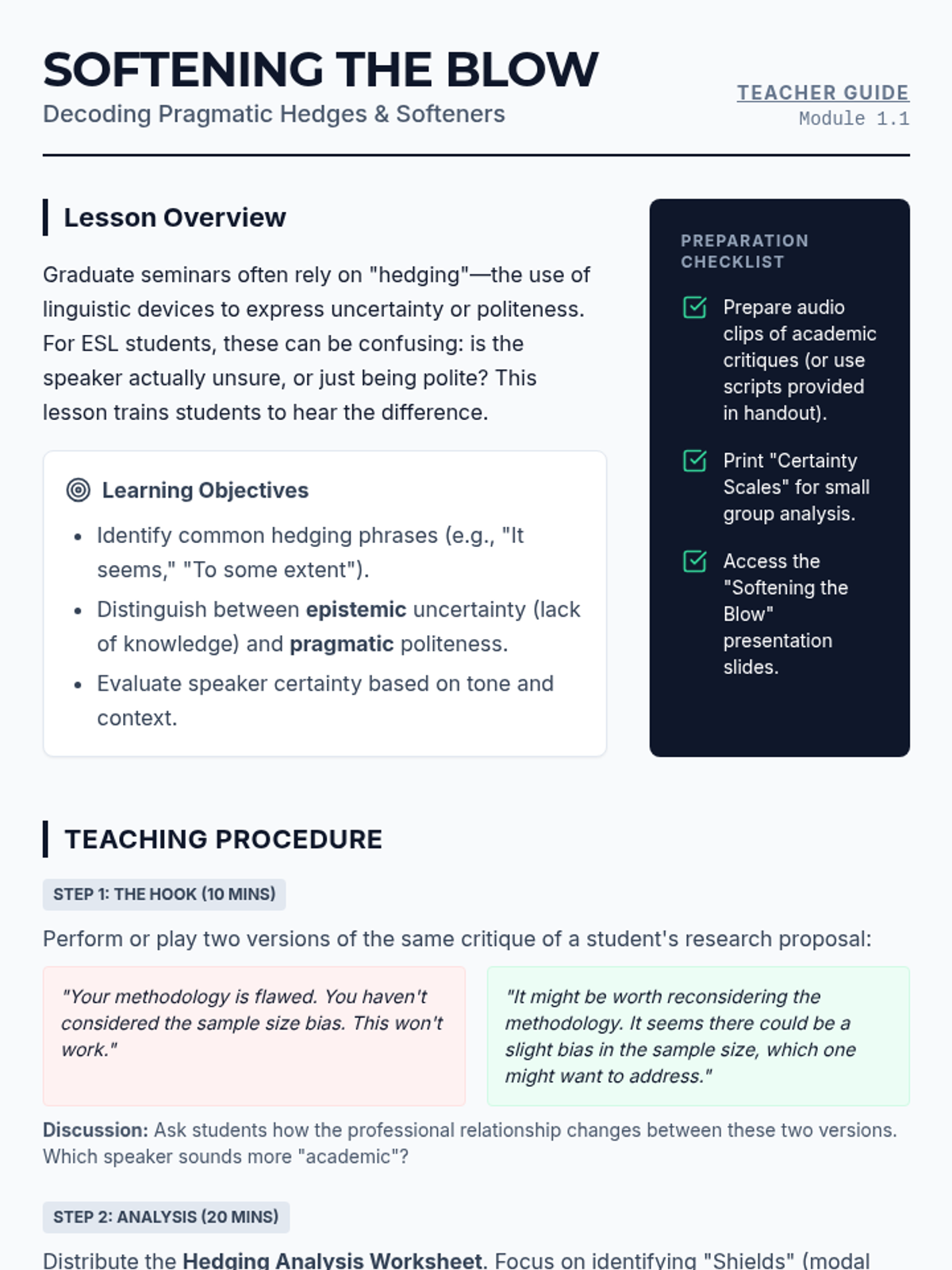
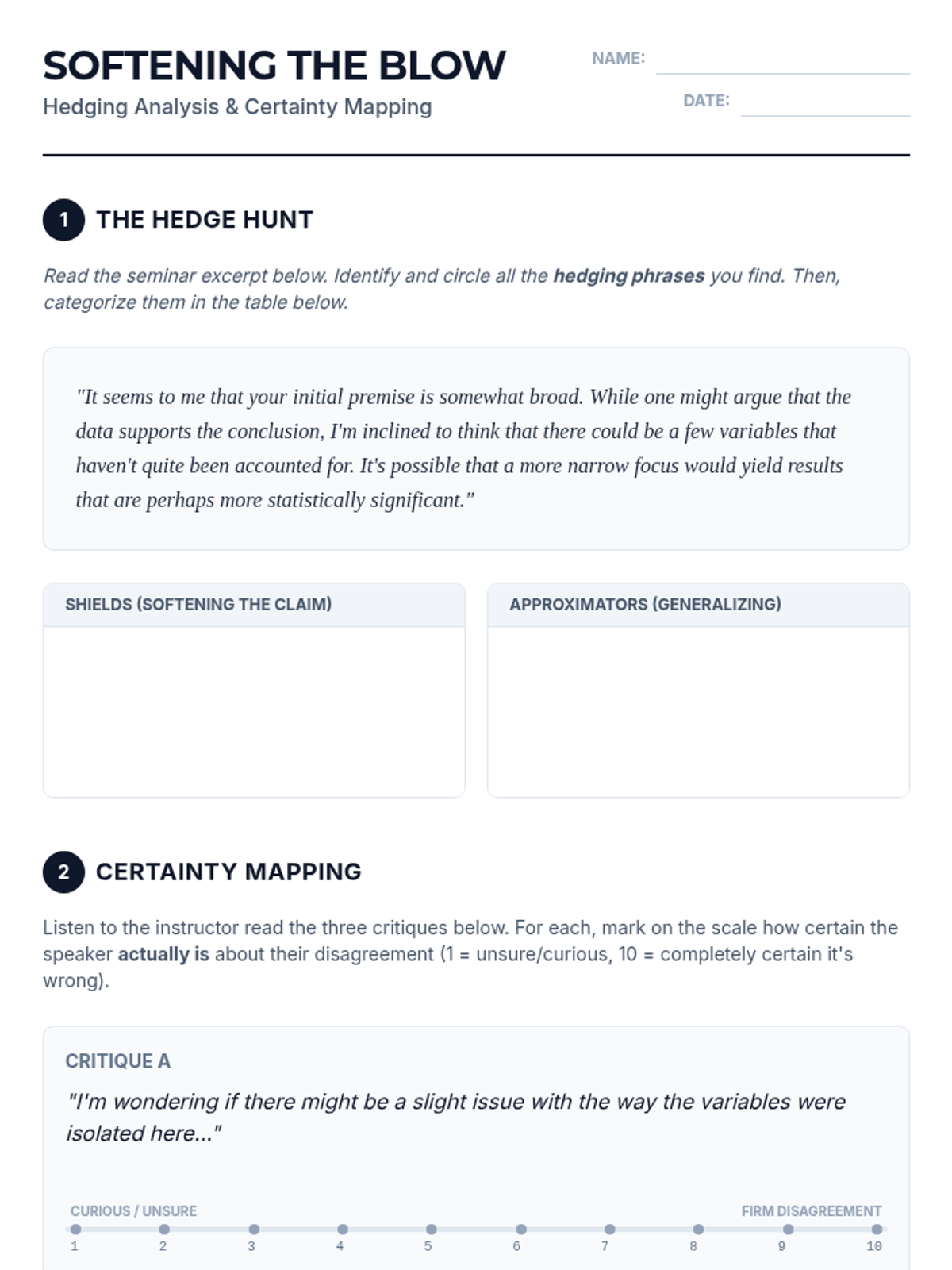
Students explore how academic speakers use hedging language to soften assertions and maintain professional relationships. Activities focus on distinguishing between literal meaning and pragmatic intent.
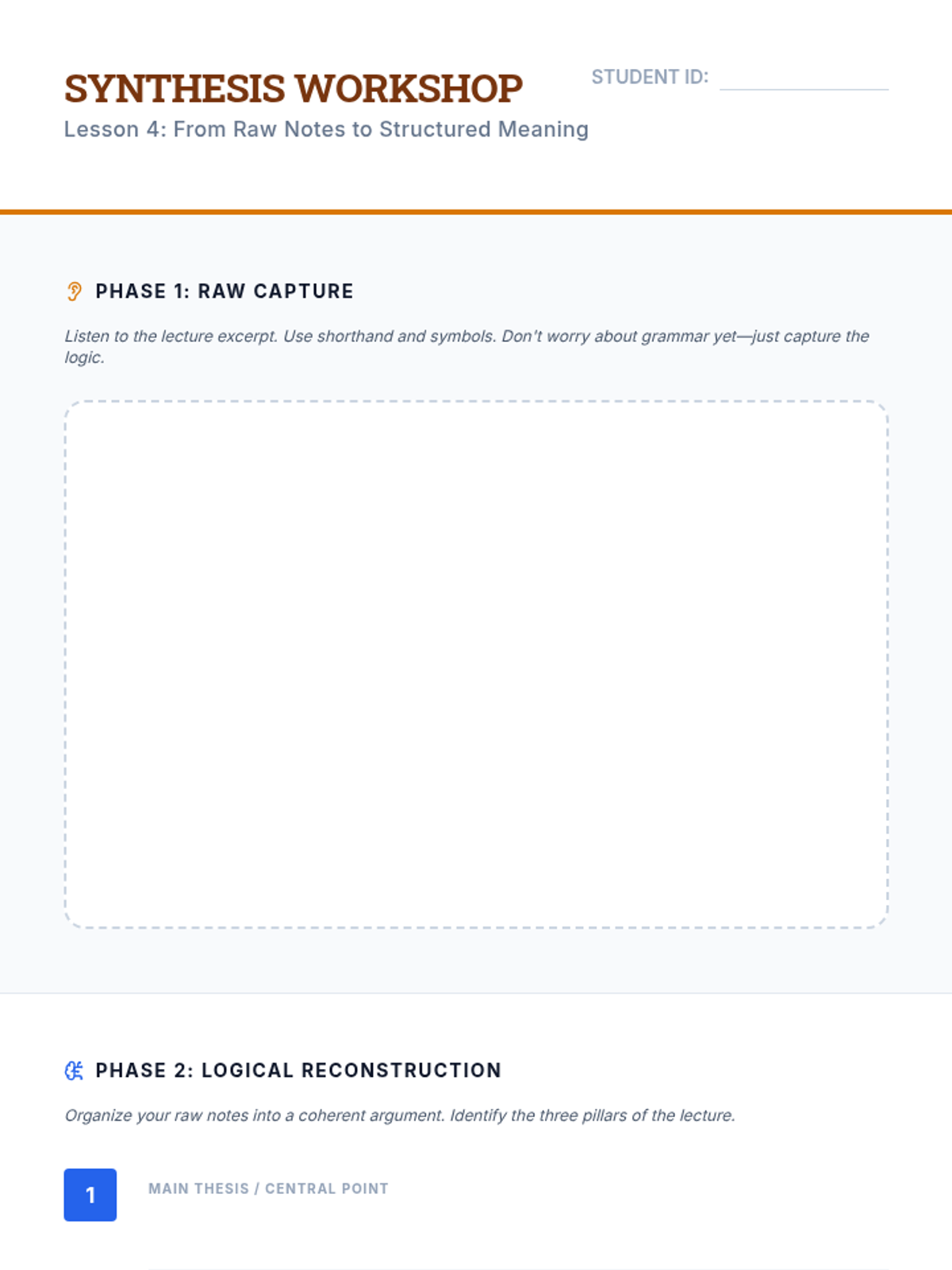
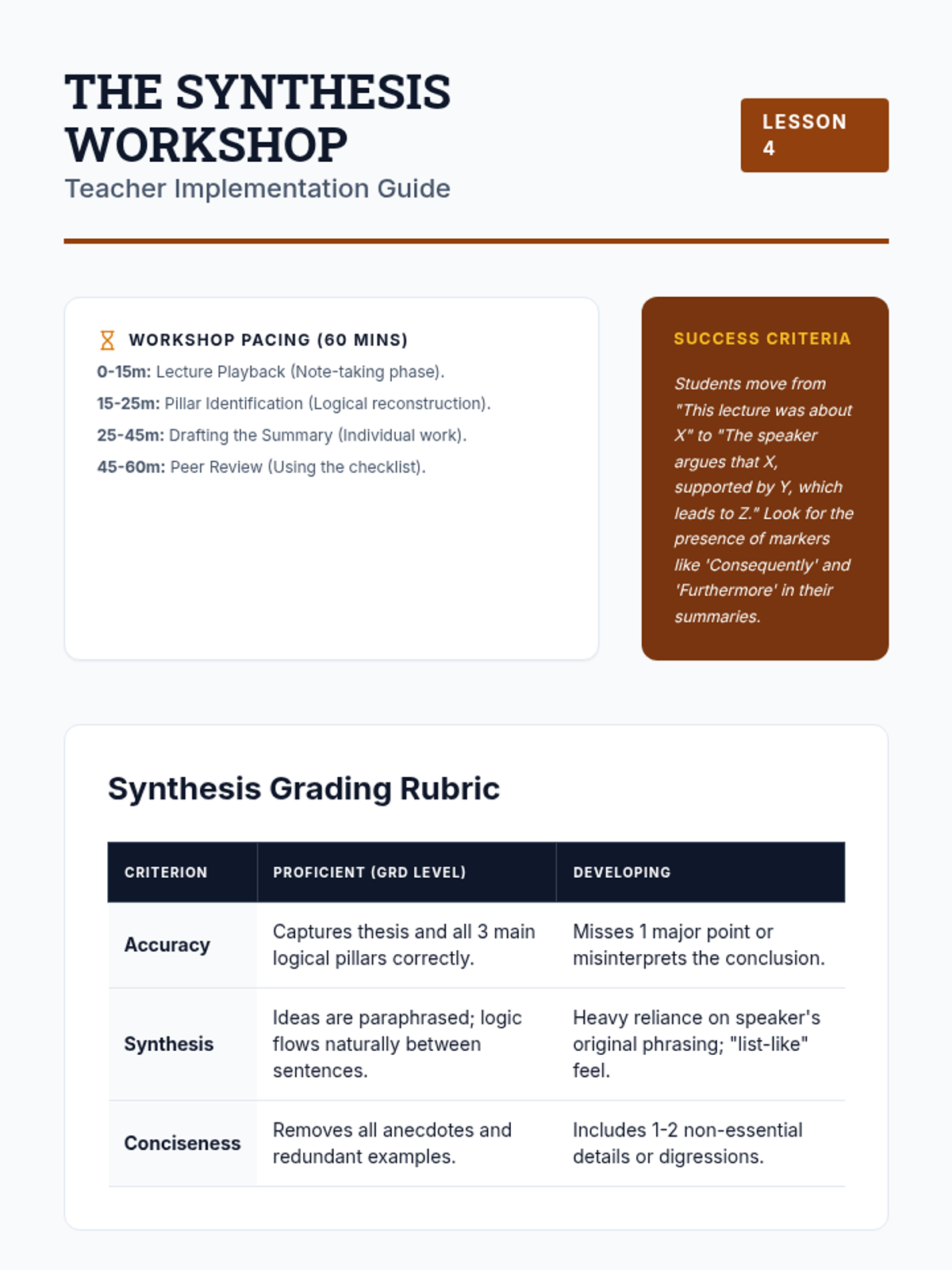
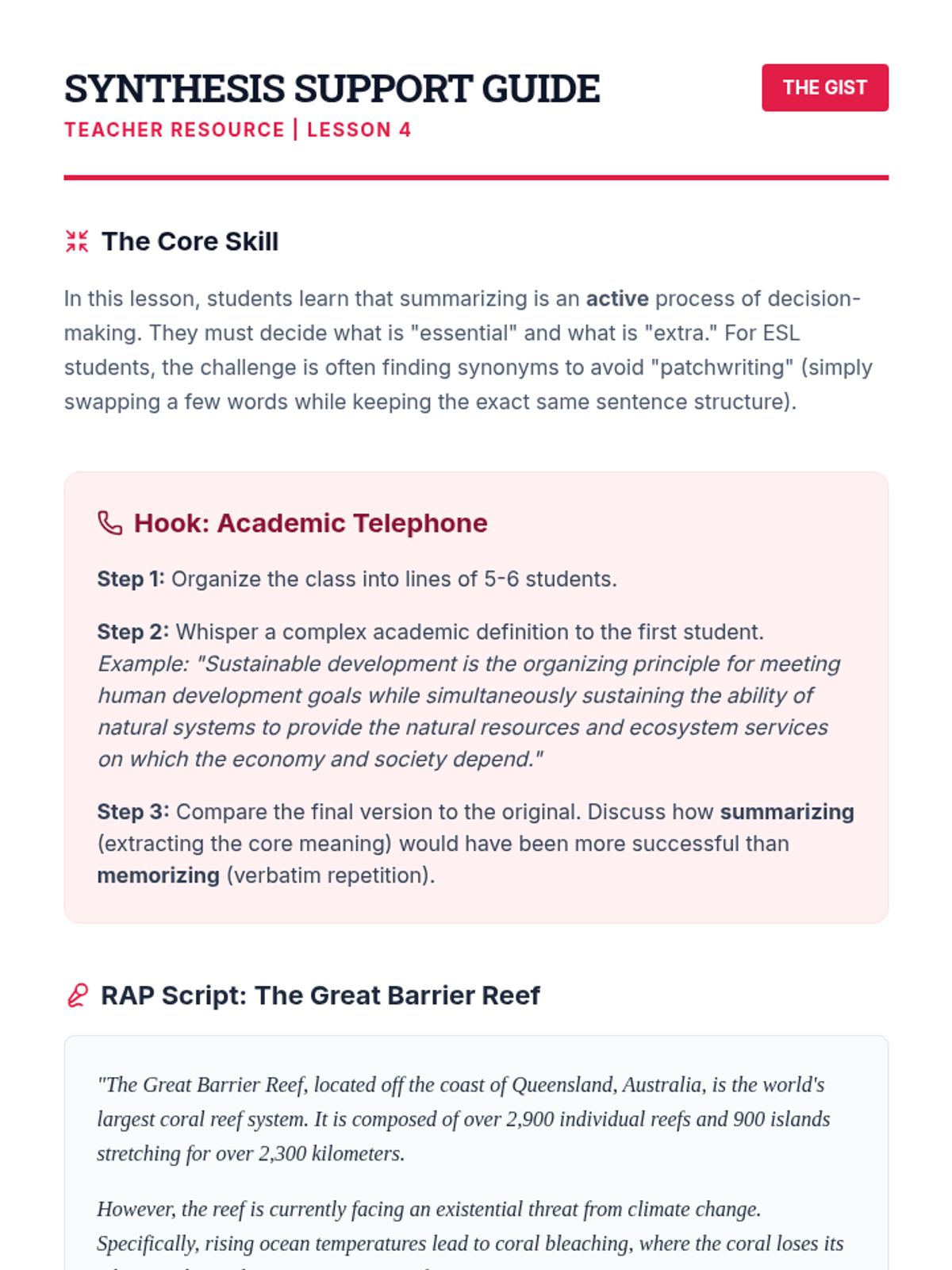
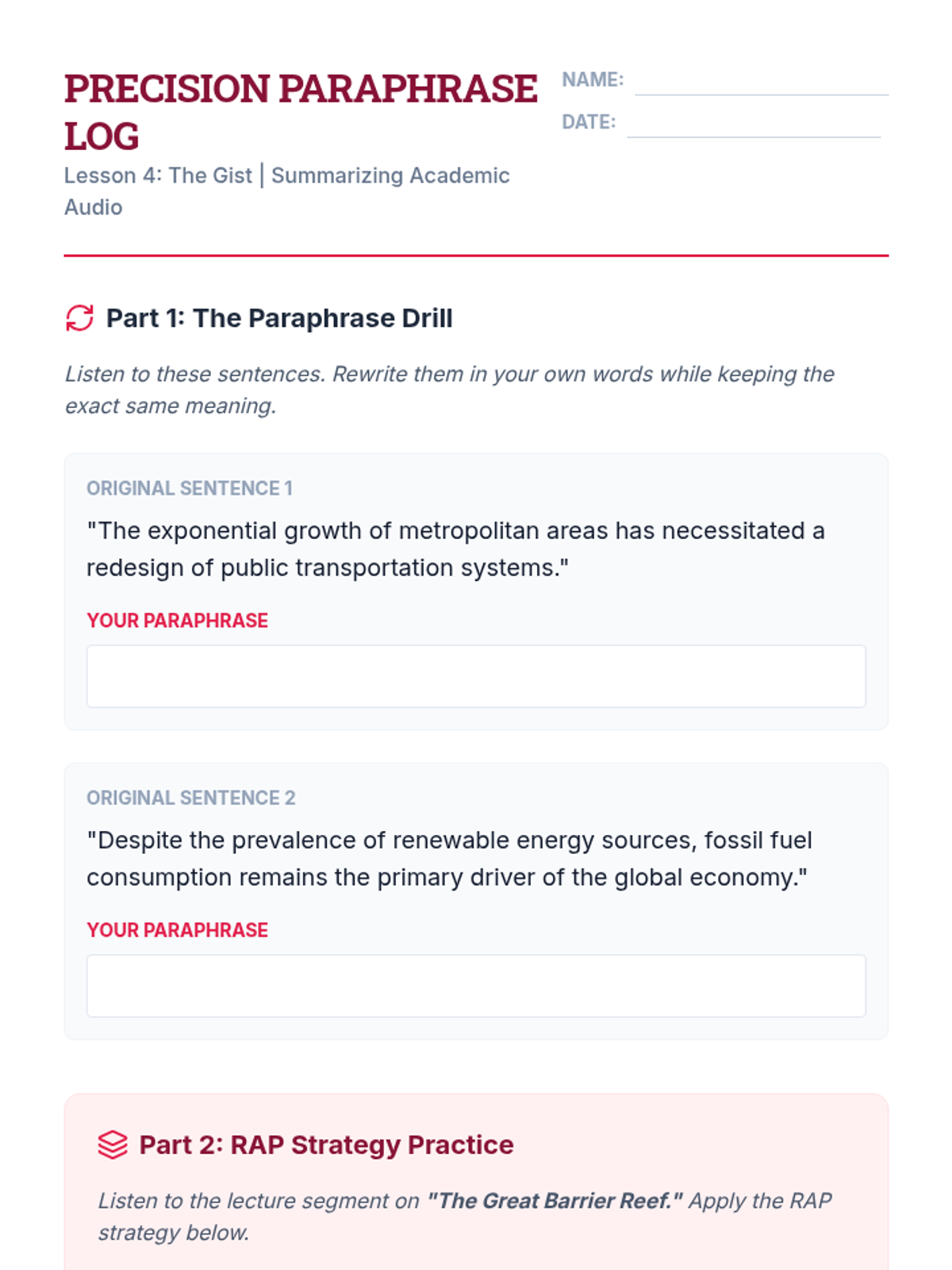
Students practice synthesizing auditory information into concise, logical summaries and paraphrasing key points.
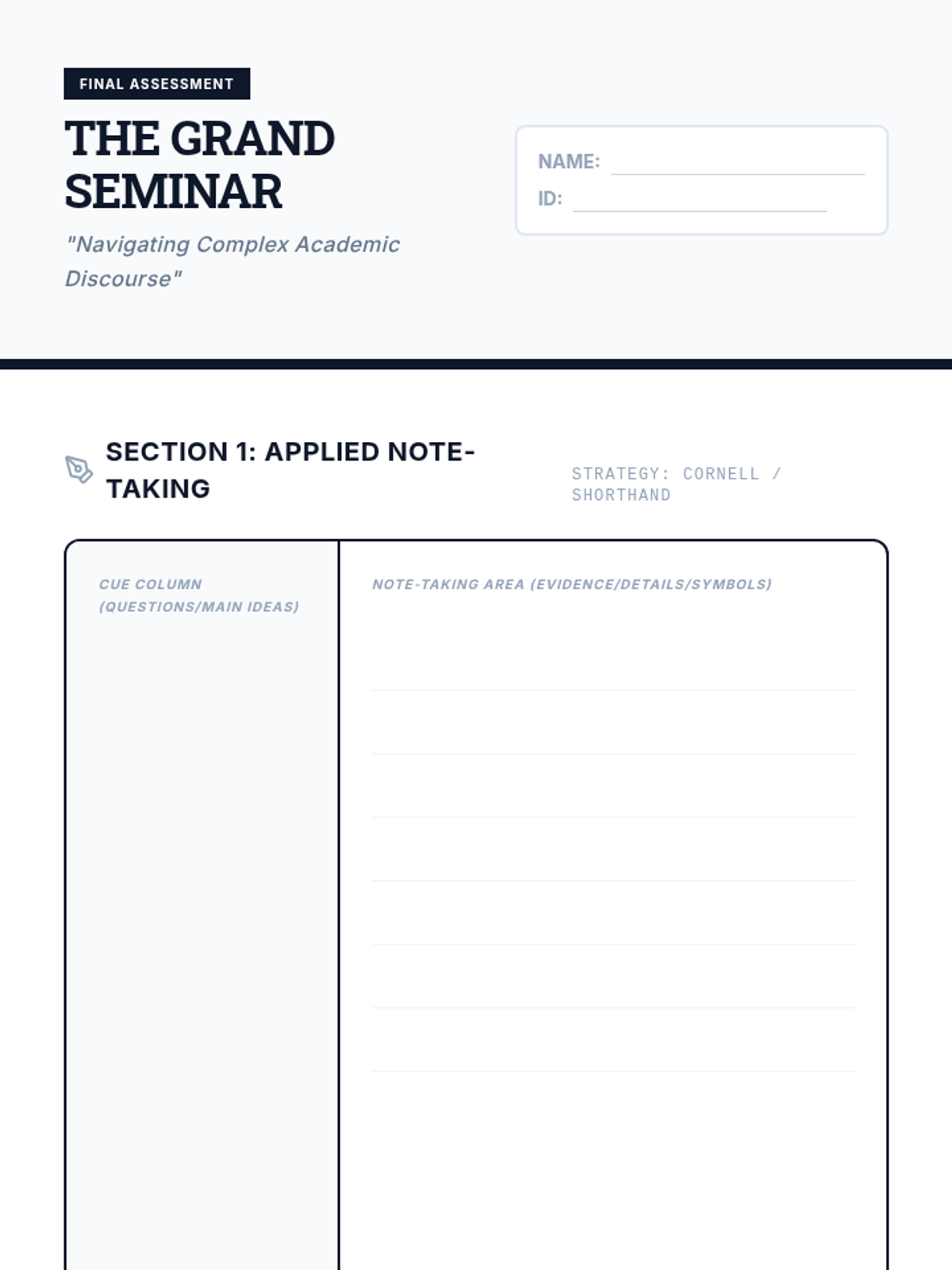
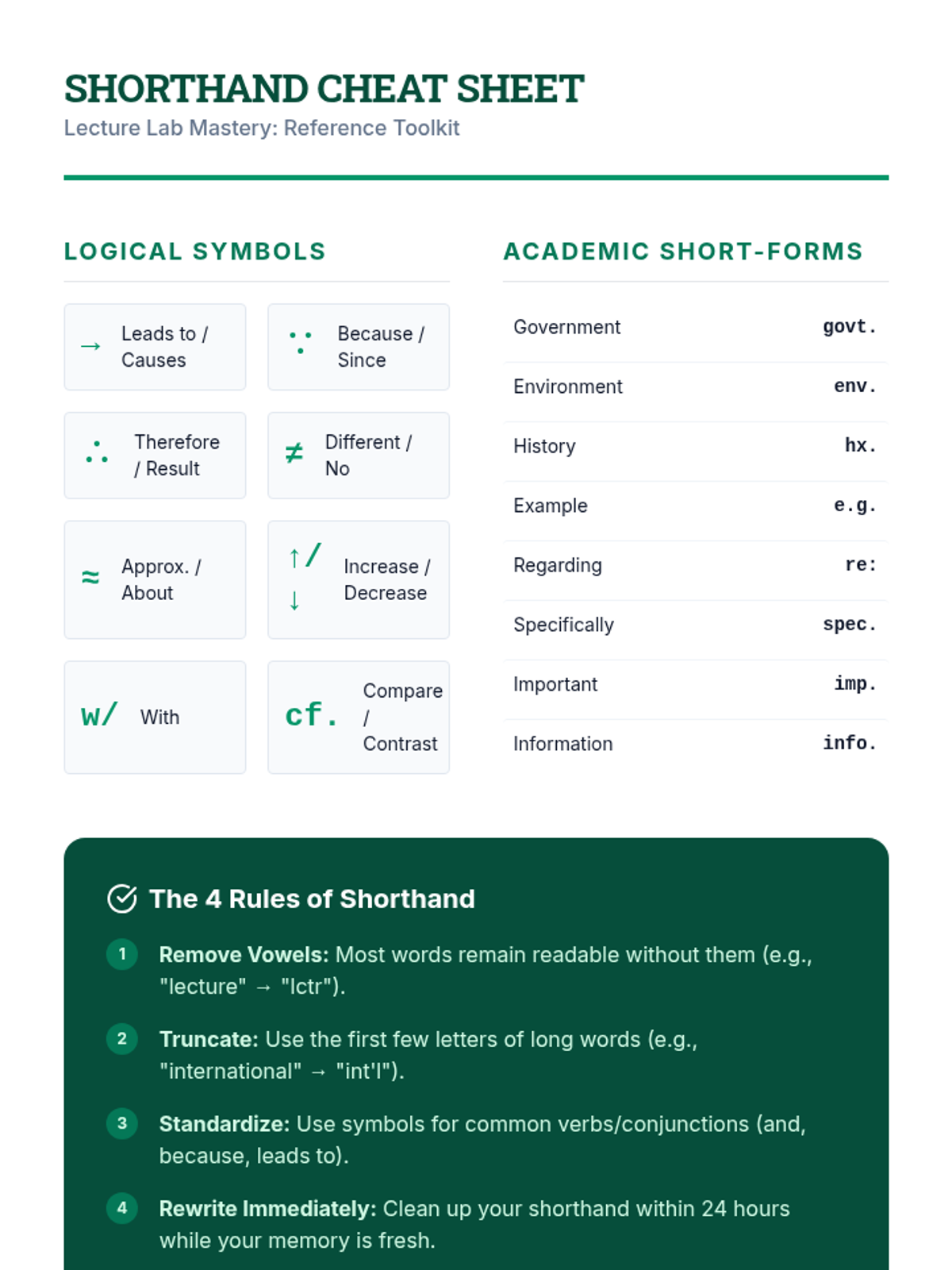
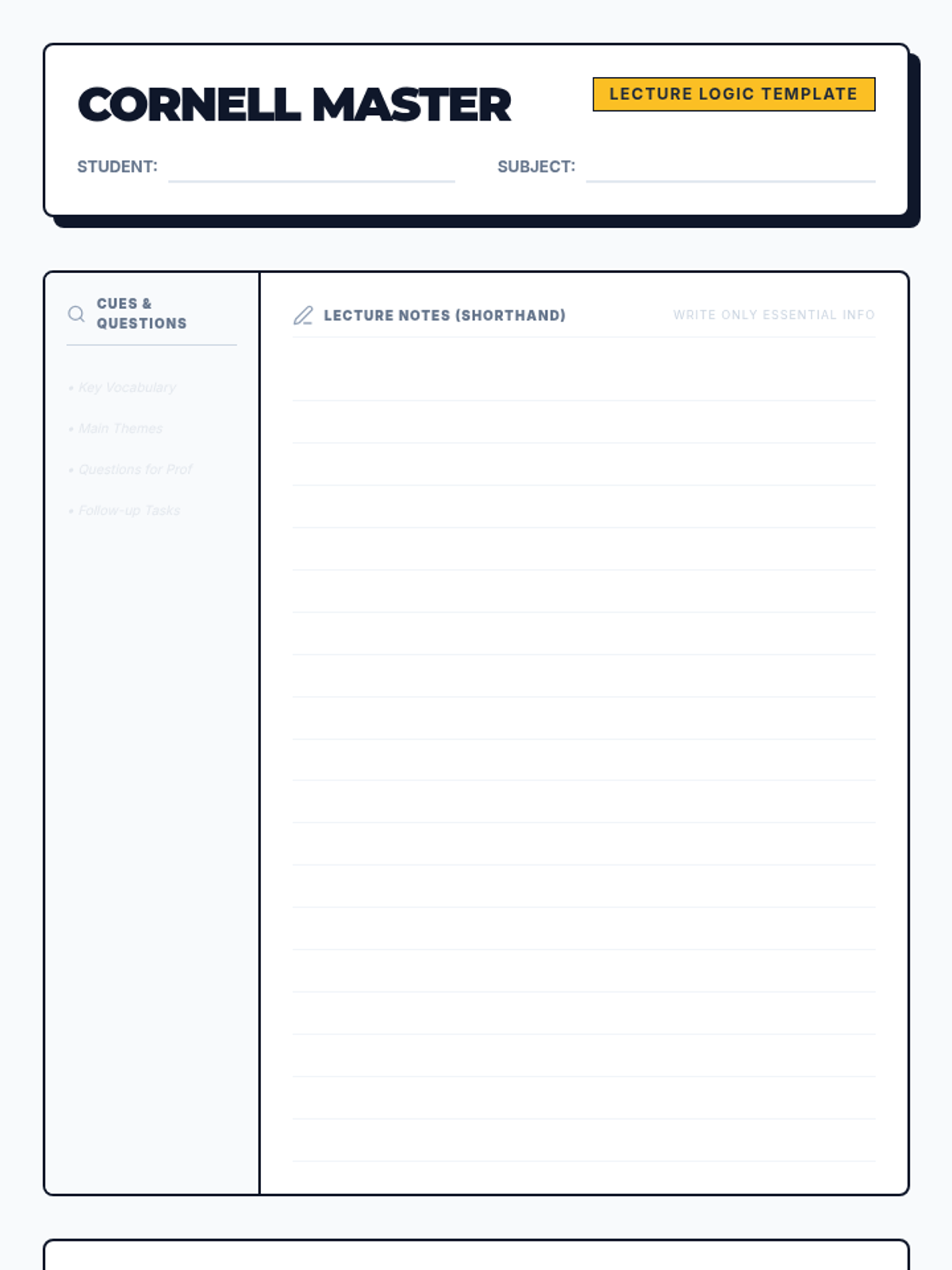
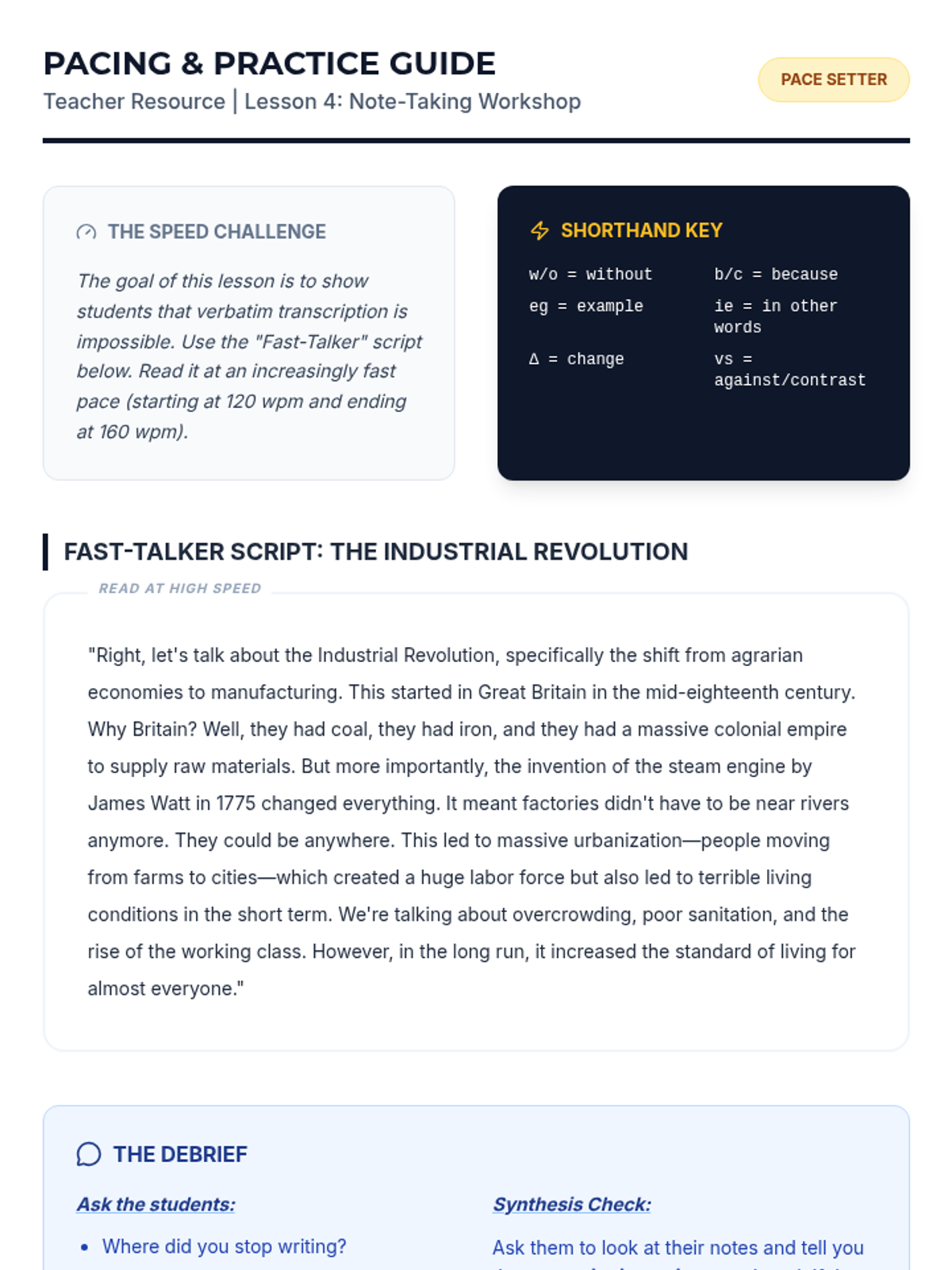
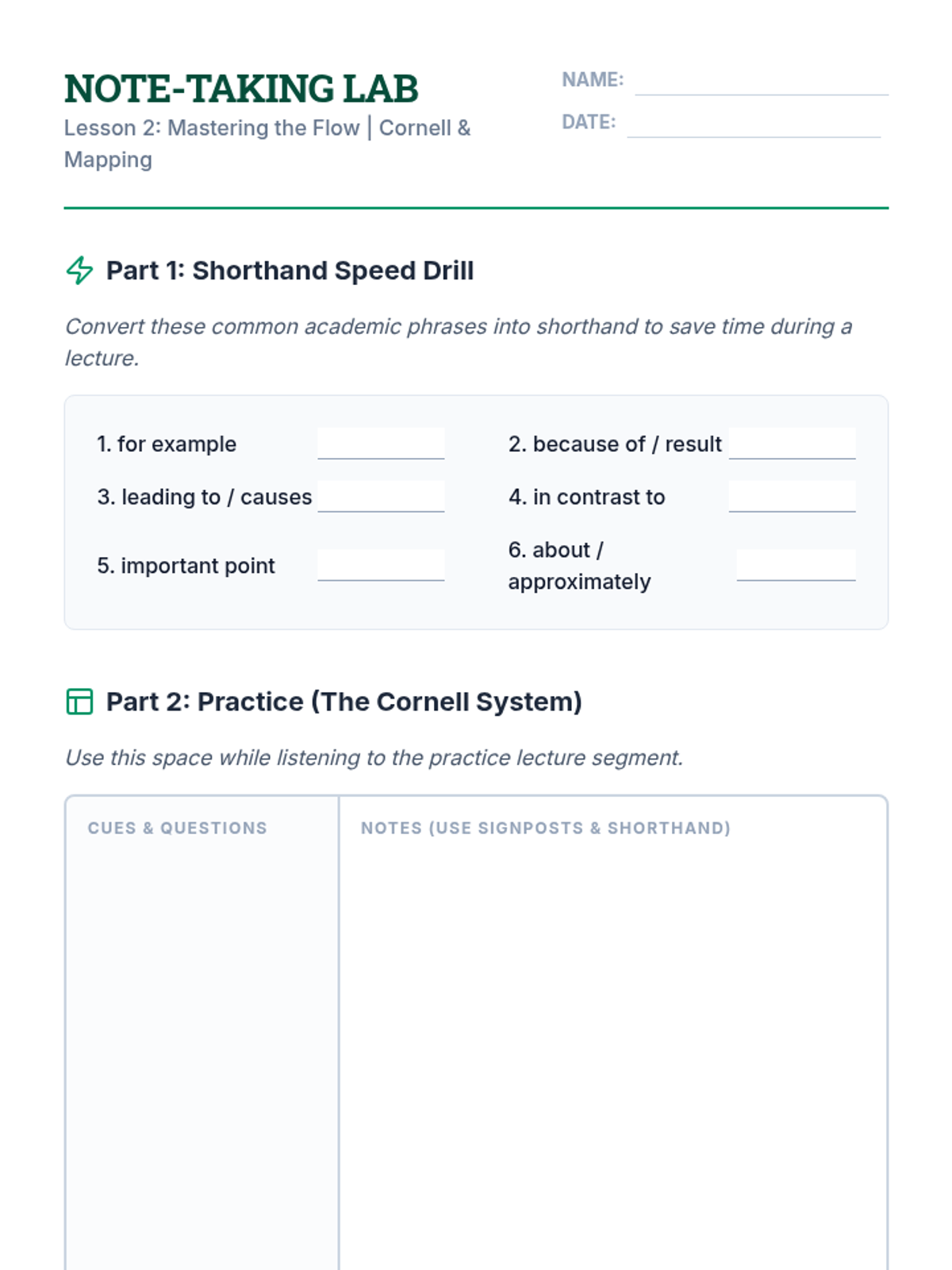
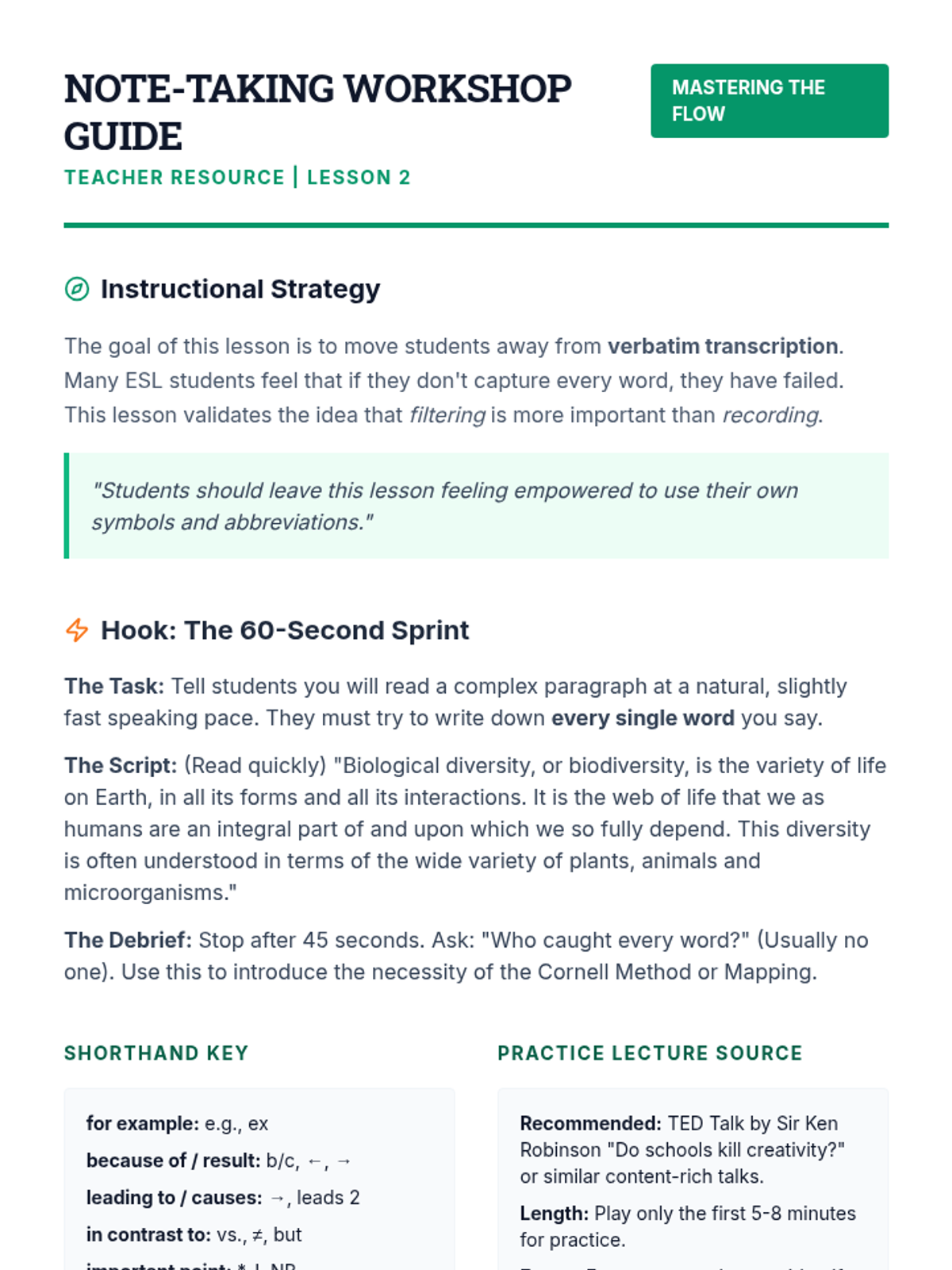
Introduction to shorthand, symbols, and the Cornell note-taking method for capturing information in real-time.
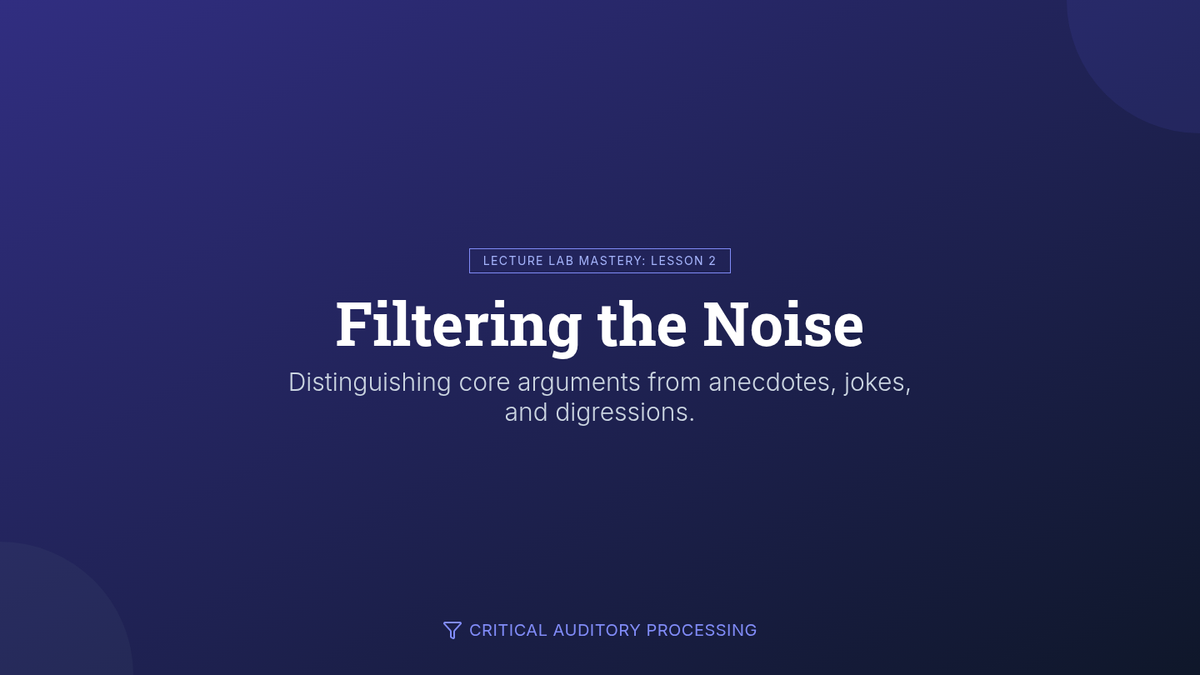
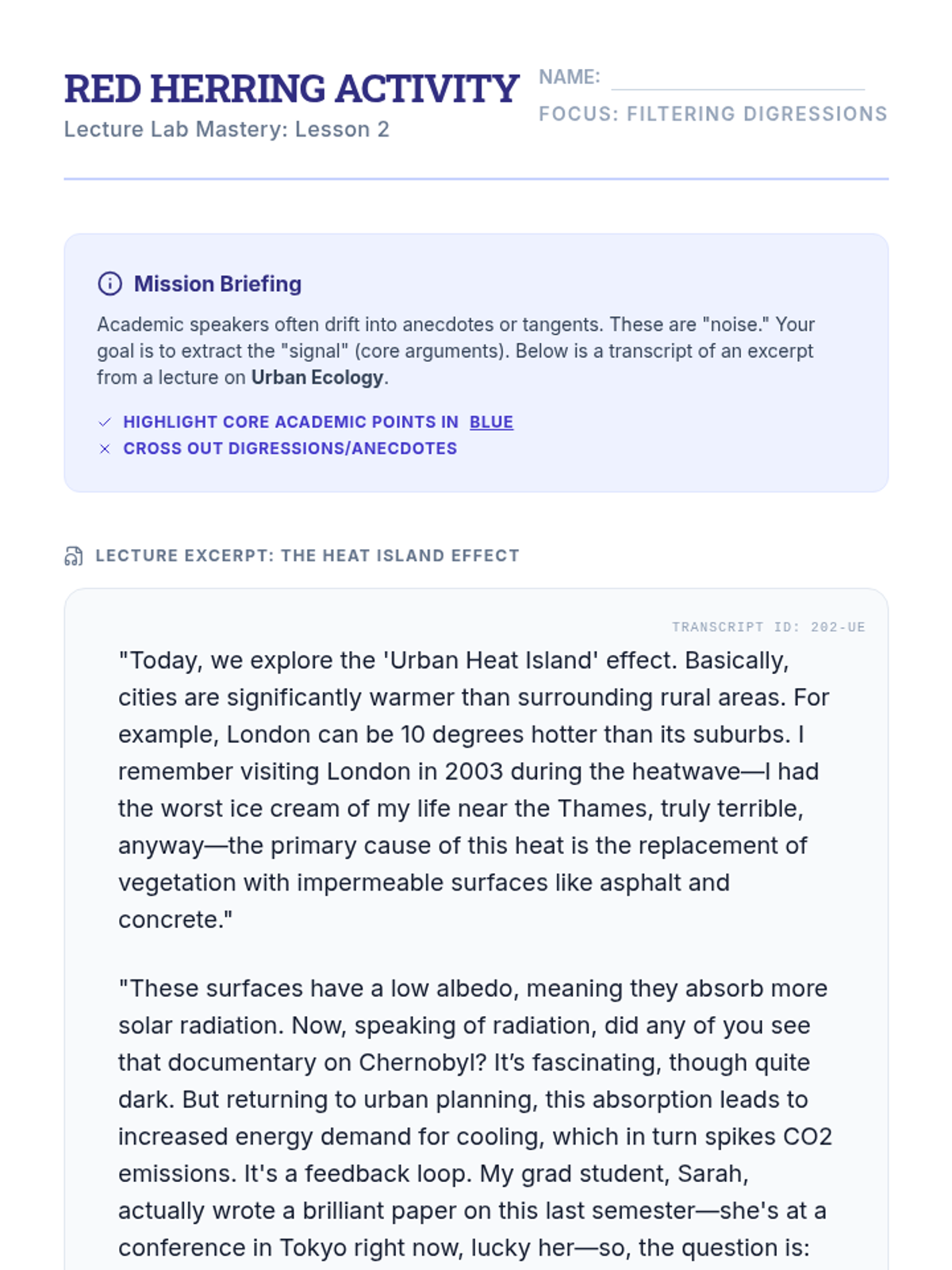
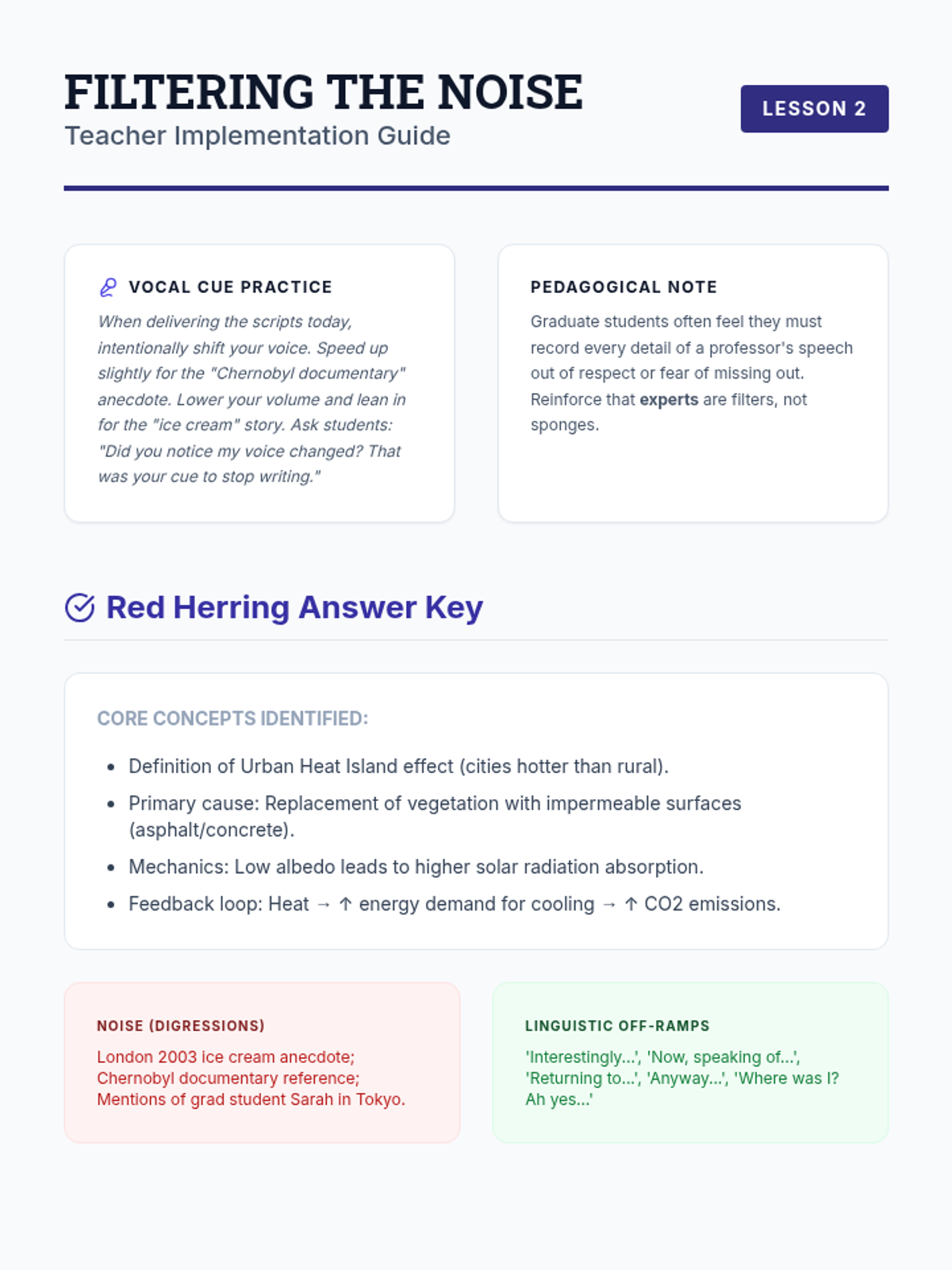
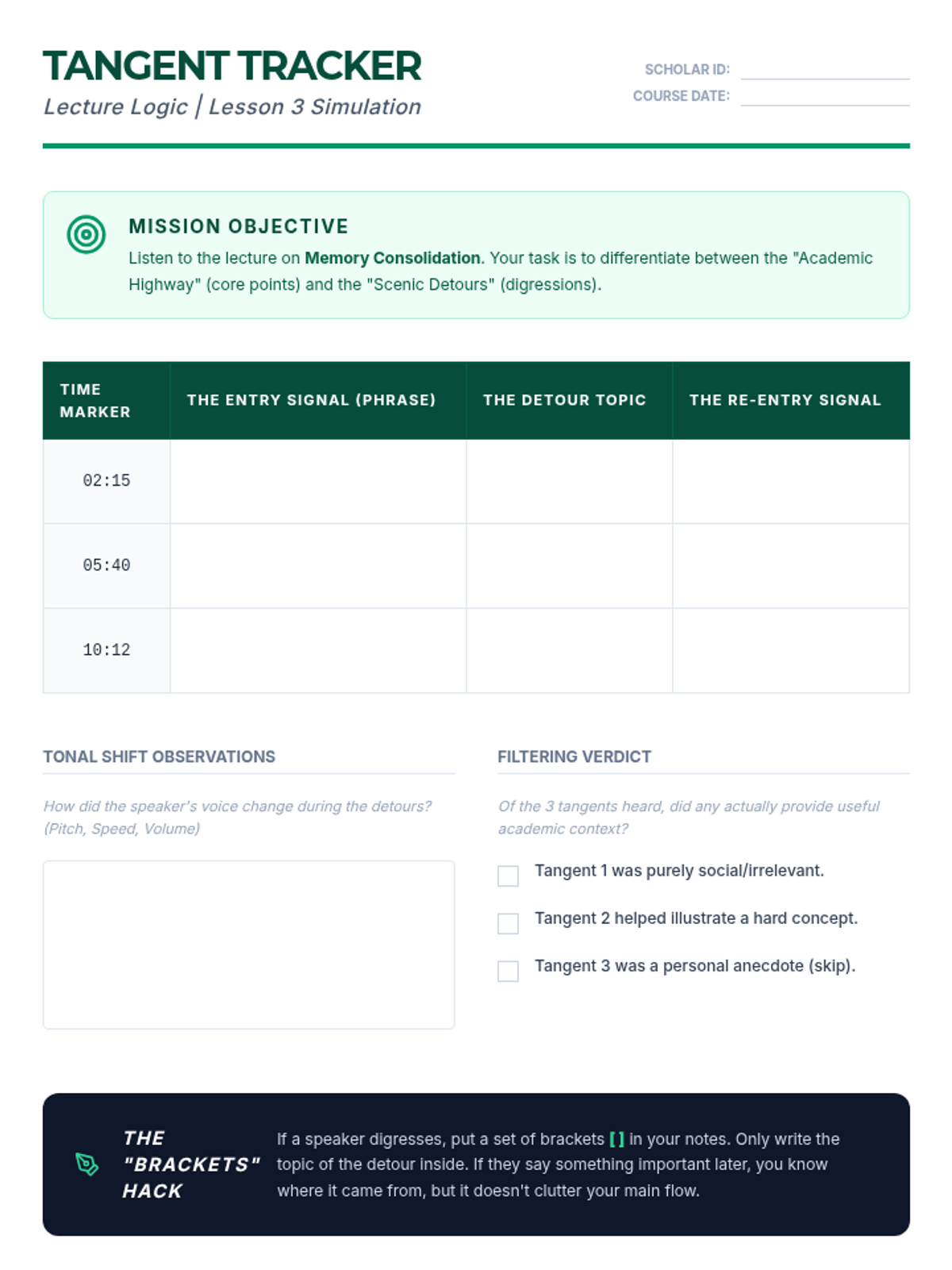
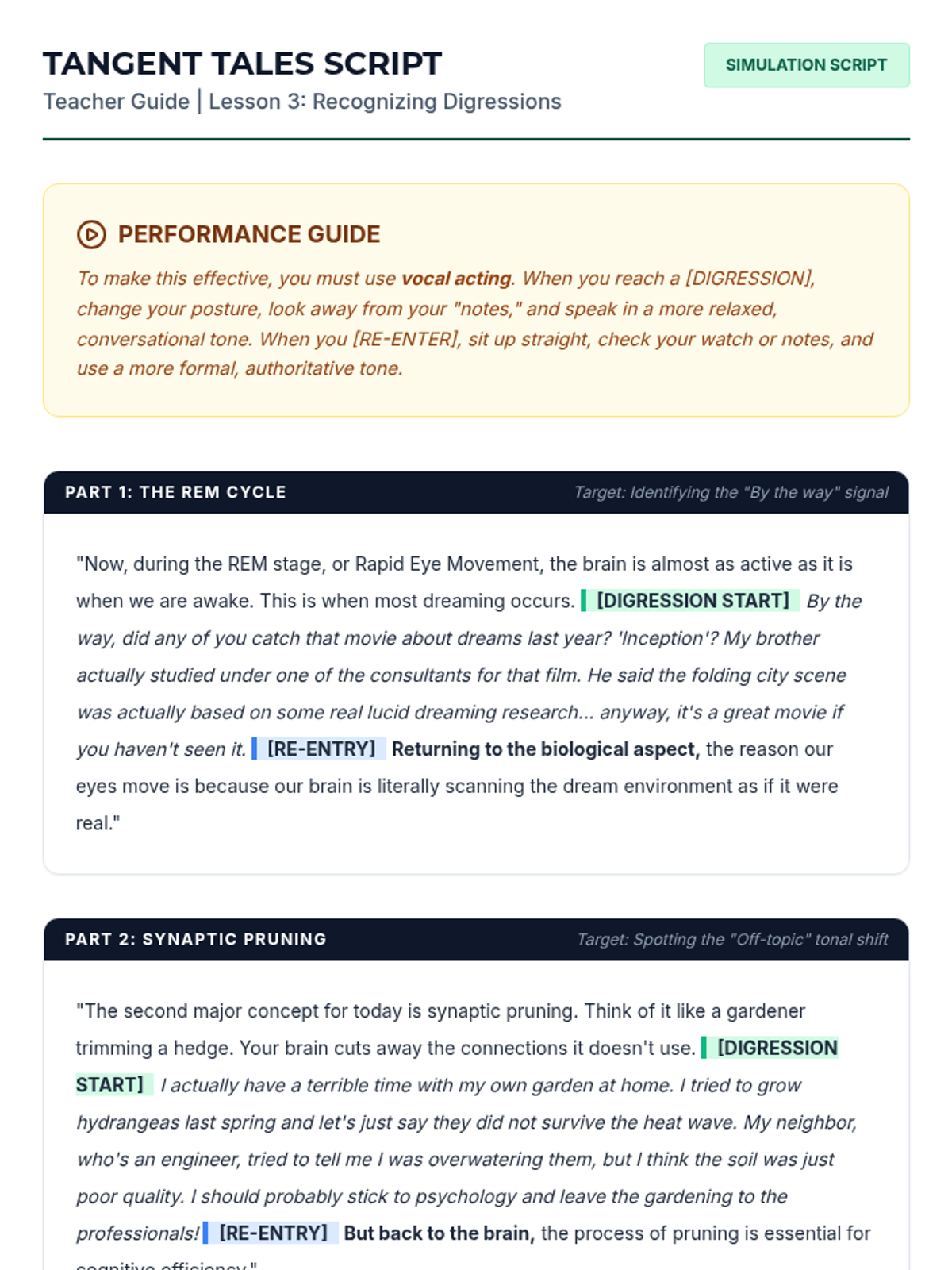
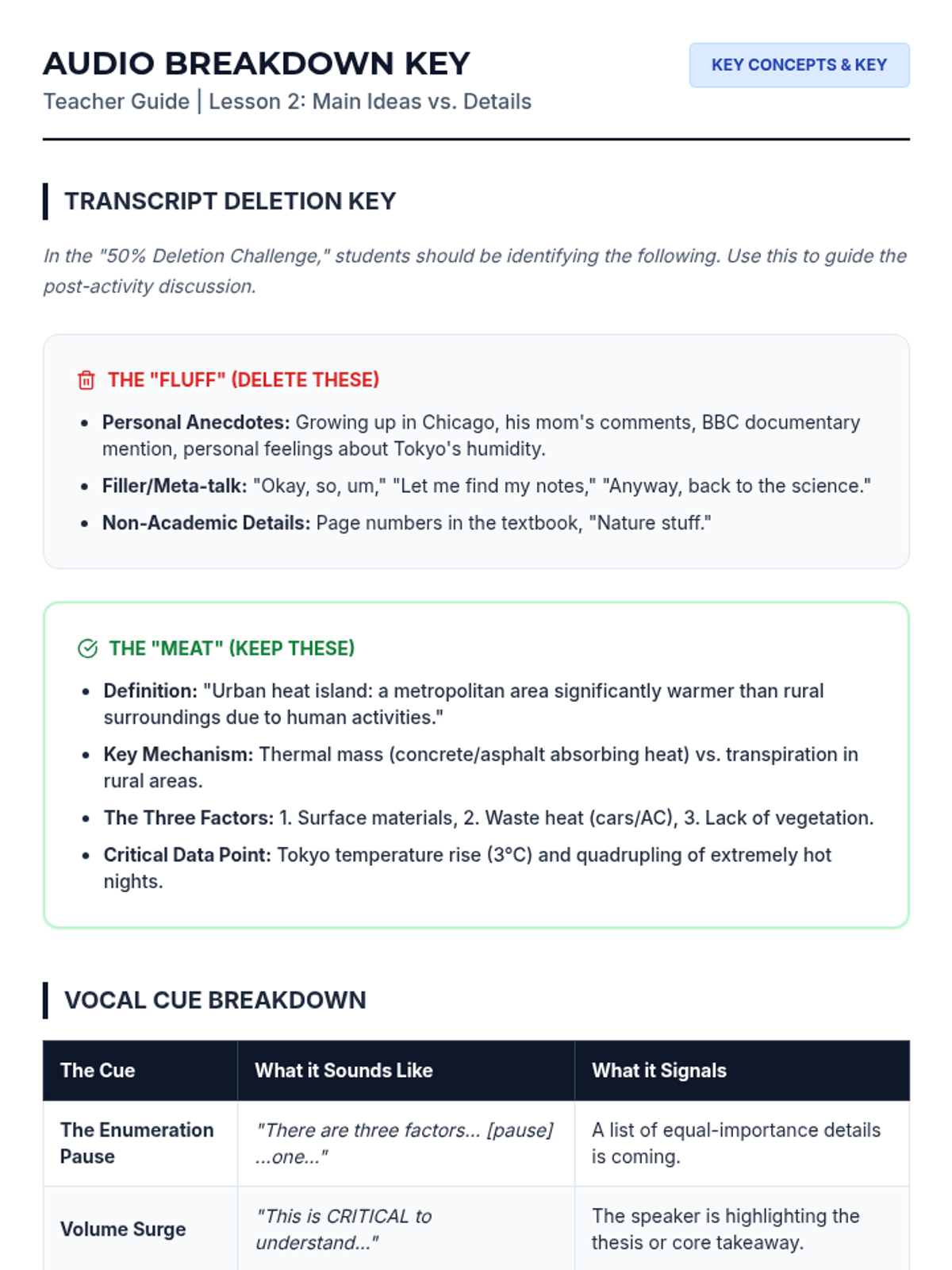
Focuses on distinguishing core academic arguments from anecdotes and digressions using linguistic and vocal cues.
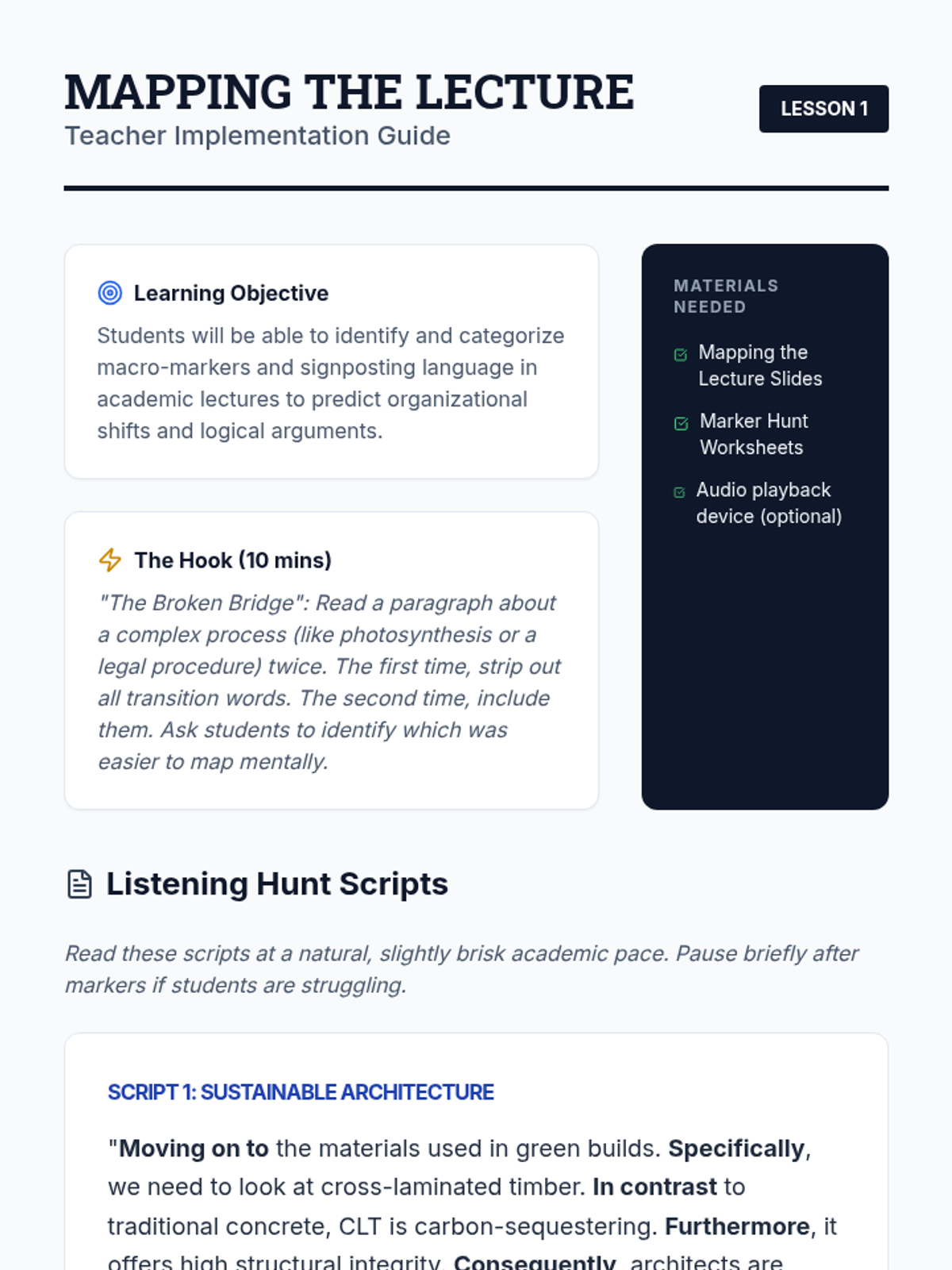
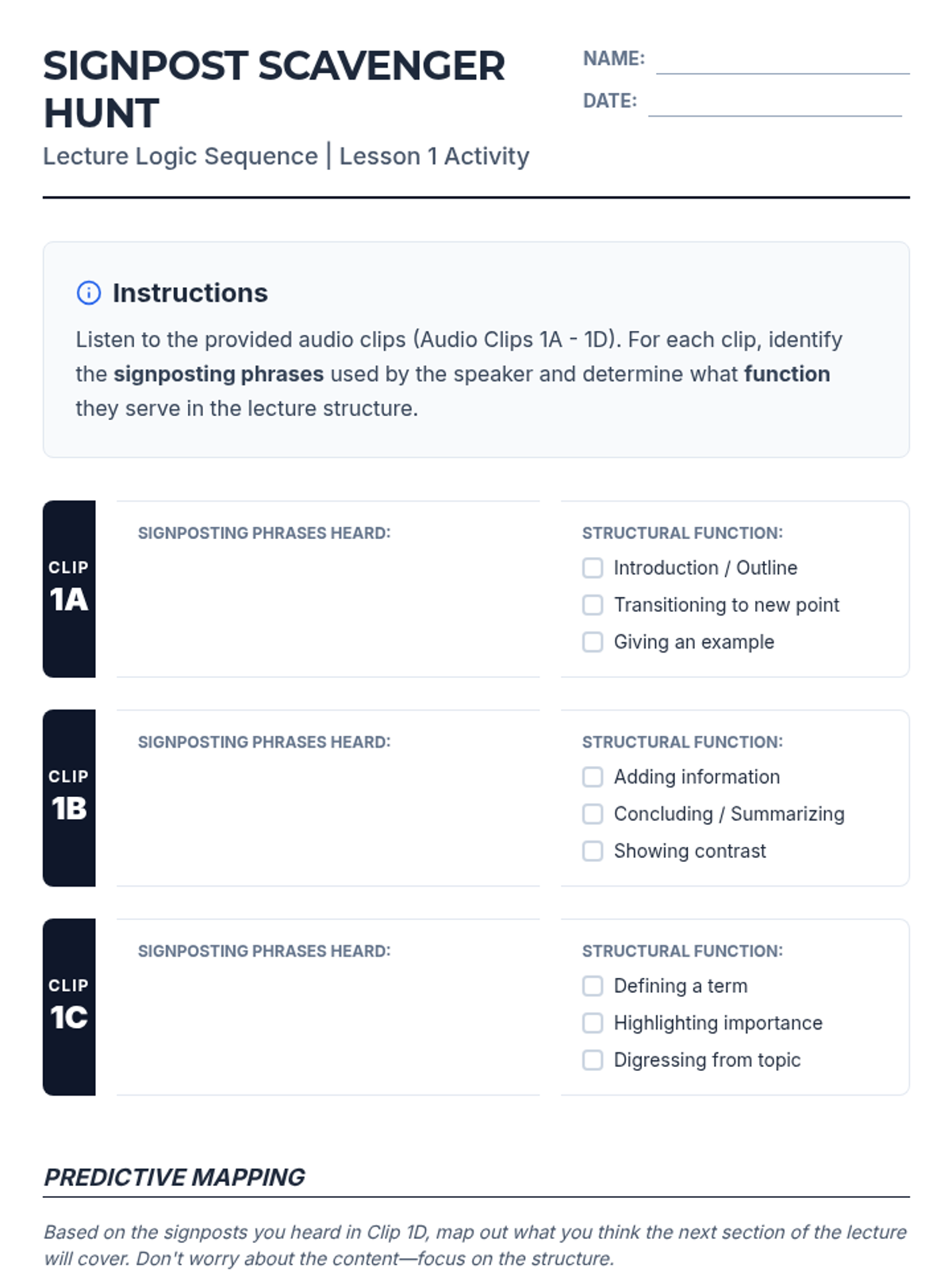
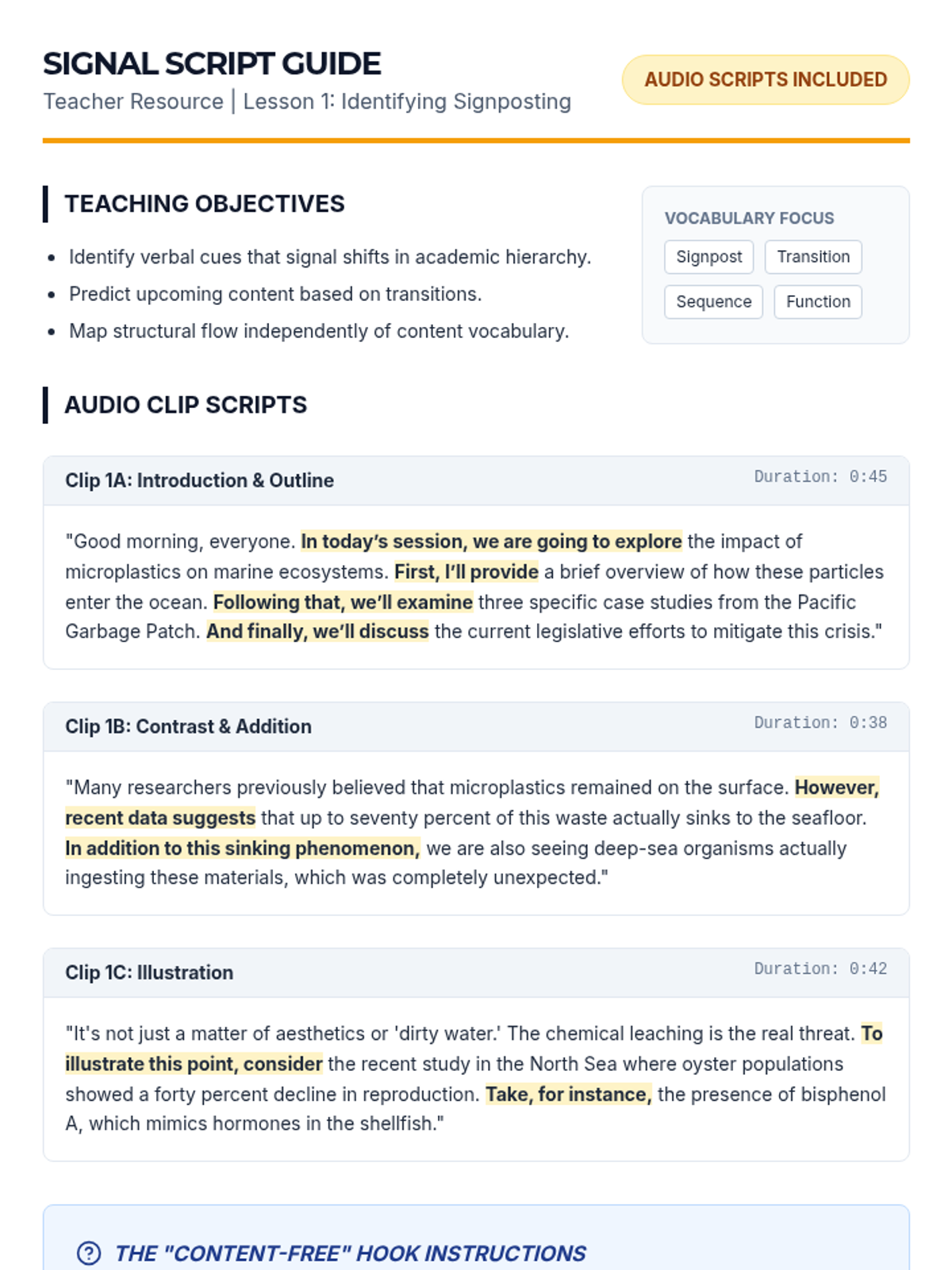
Students learn to identify macro-markers and signposting language that signal organizational structure in academic lectures.
An exploration of how cultural backgrounds influence communication styles, focusing on silence, interruption, and pragmatic markers.
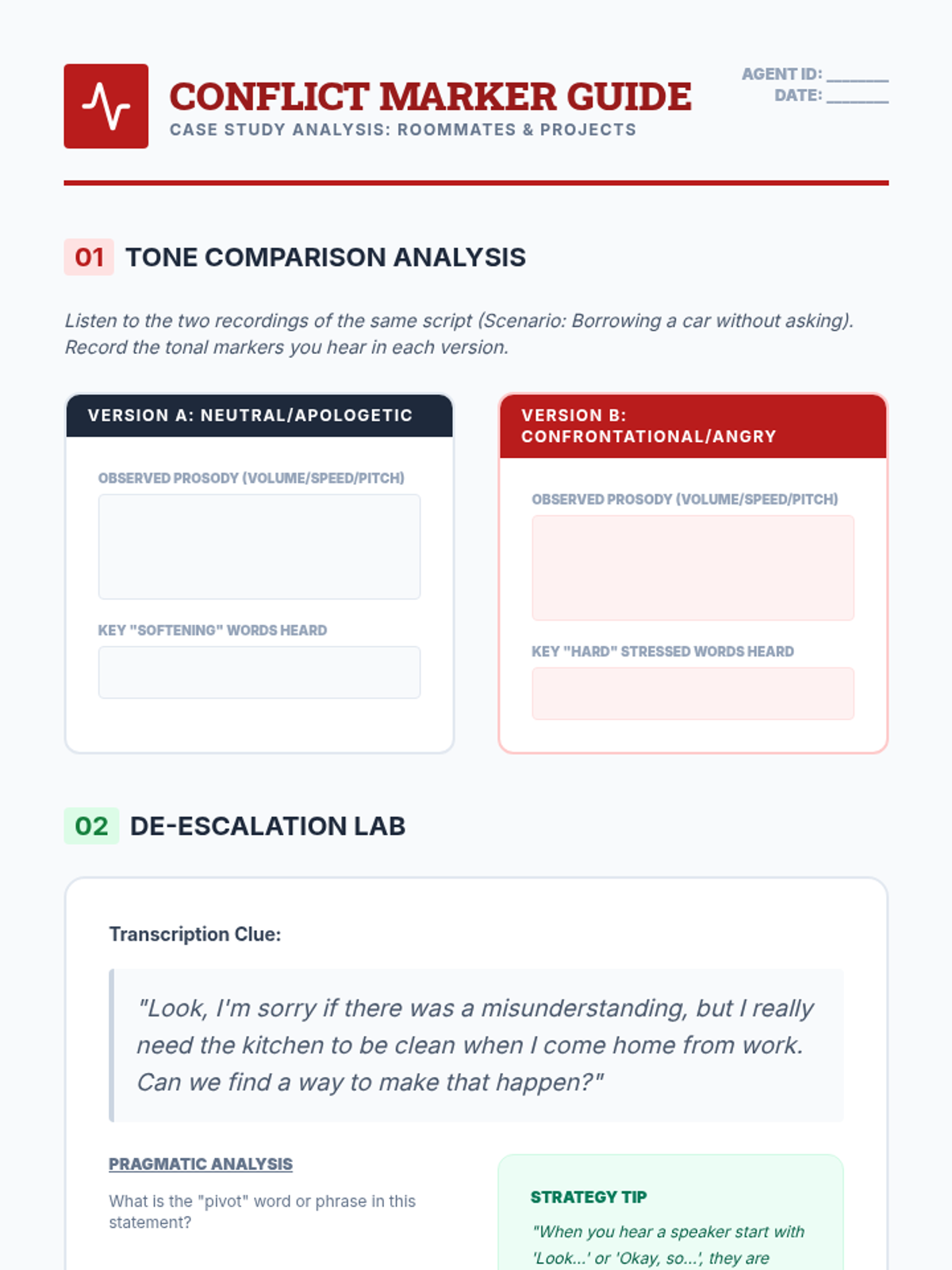
Students analyze tone in high-stakes social interactions, identifying markers of escalation, de-escalation, and negotiation in conflict scenarios.
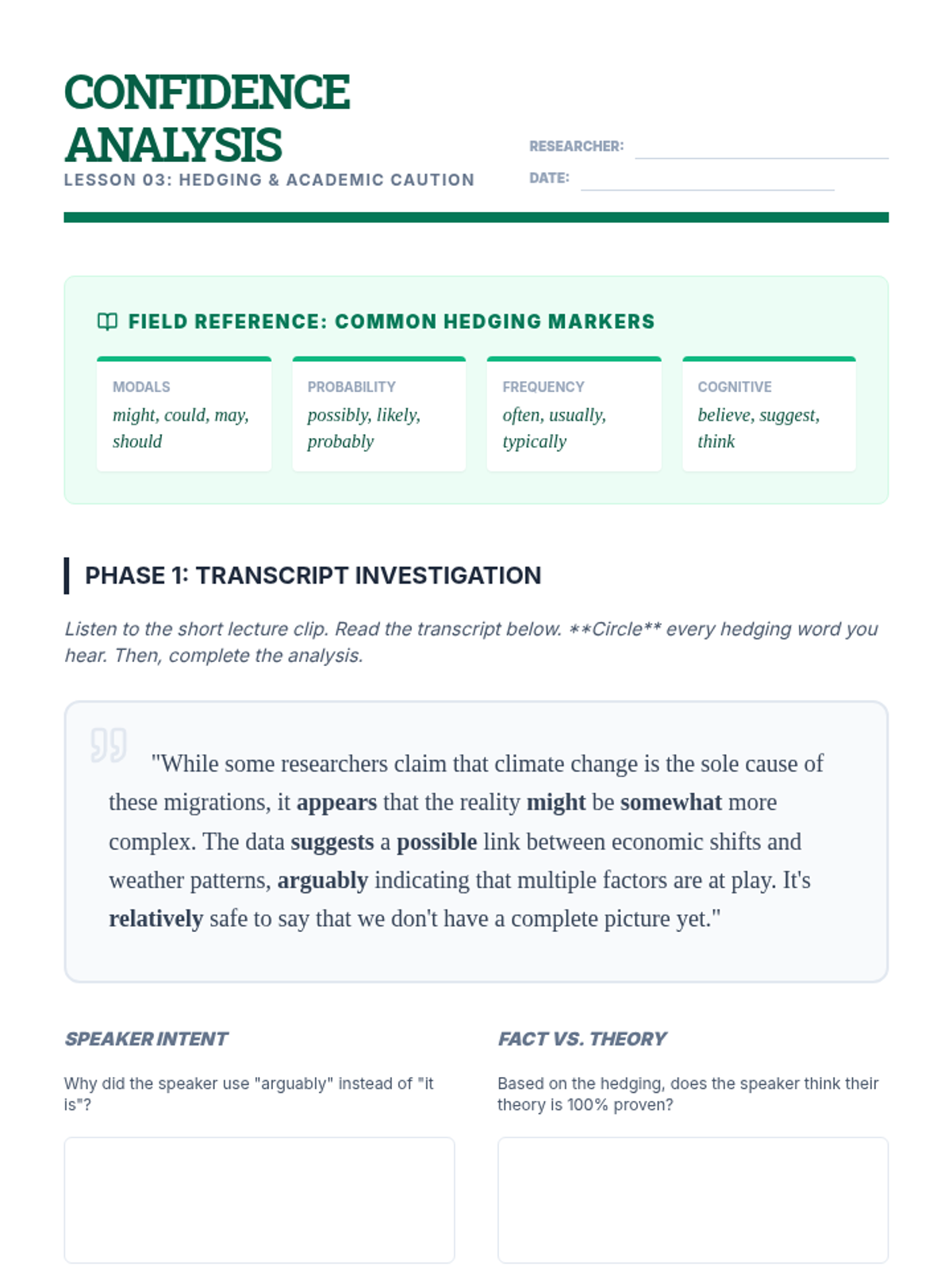
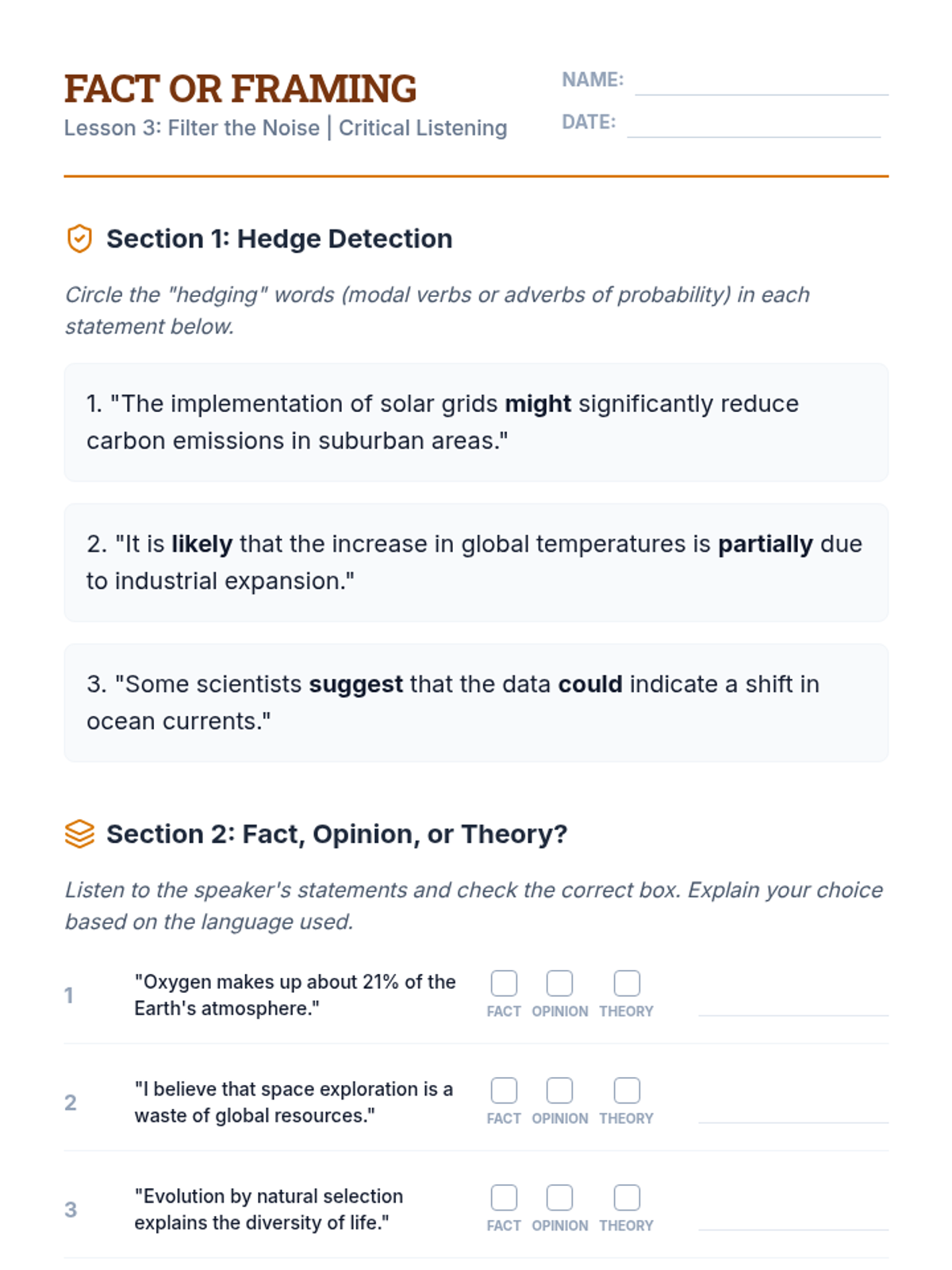
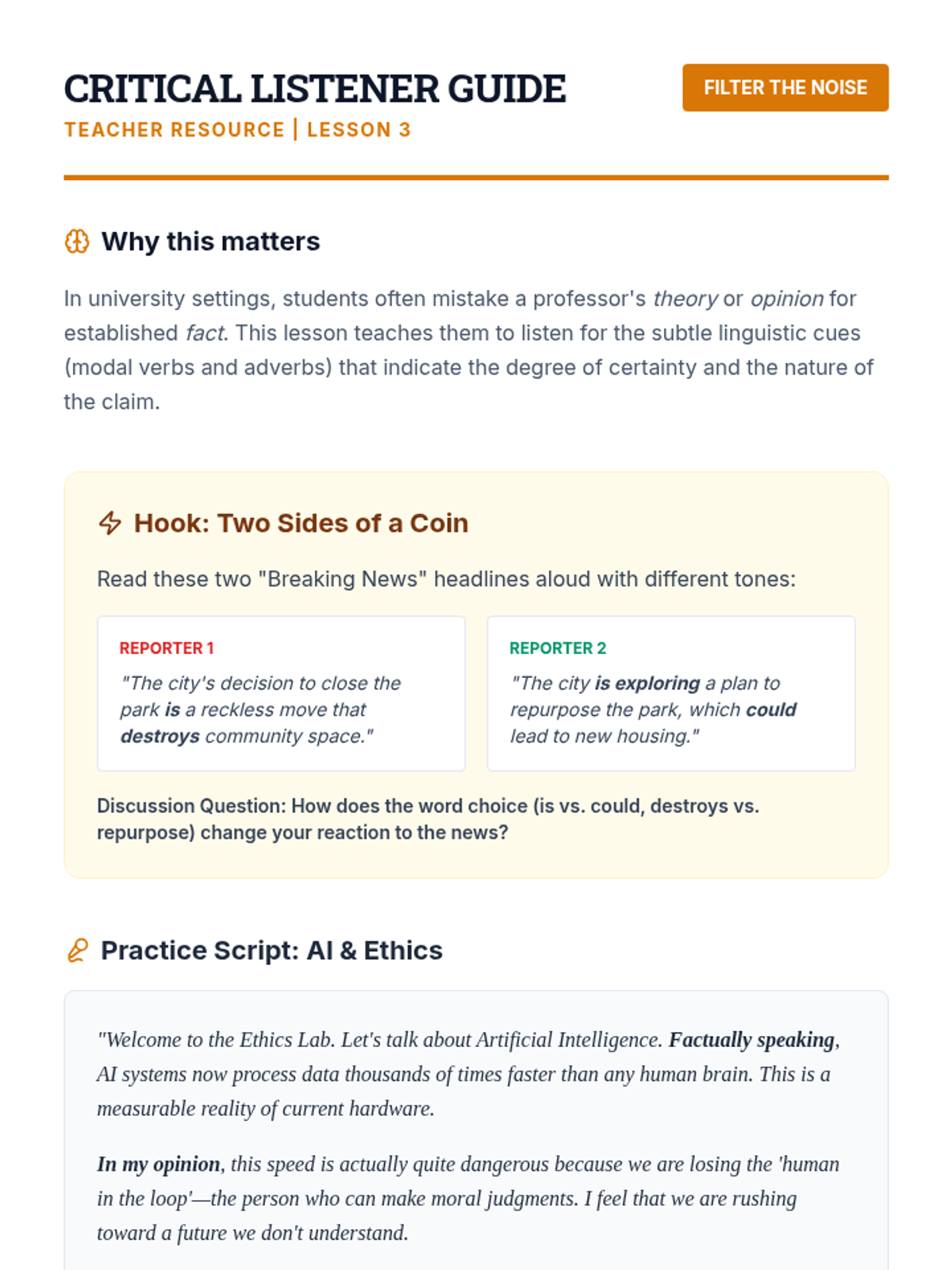
Students learn to identify hedging language (e.g., 'somewhat', 'it appears') to gauge a speaker's confidence and distinguish between facts and cautious opinions.
This lesson focuses on identifying sarcasm and irony through prosody, pitch, and context clues, helping students avoid literal misinterpretations.
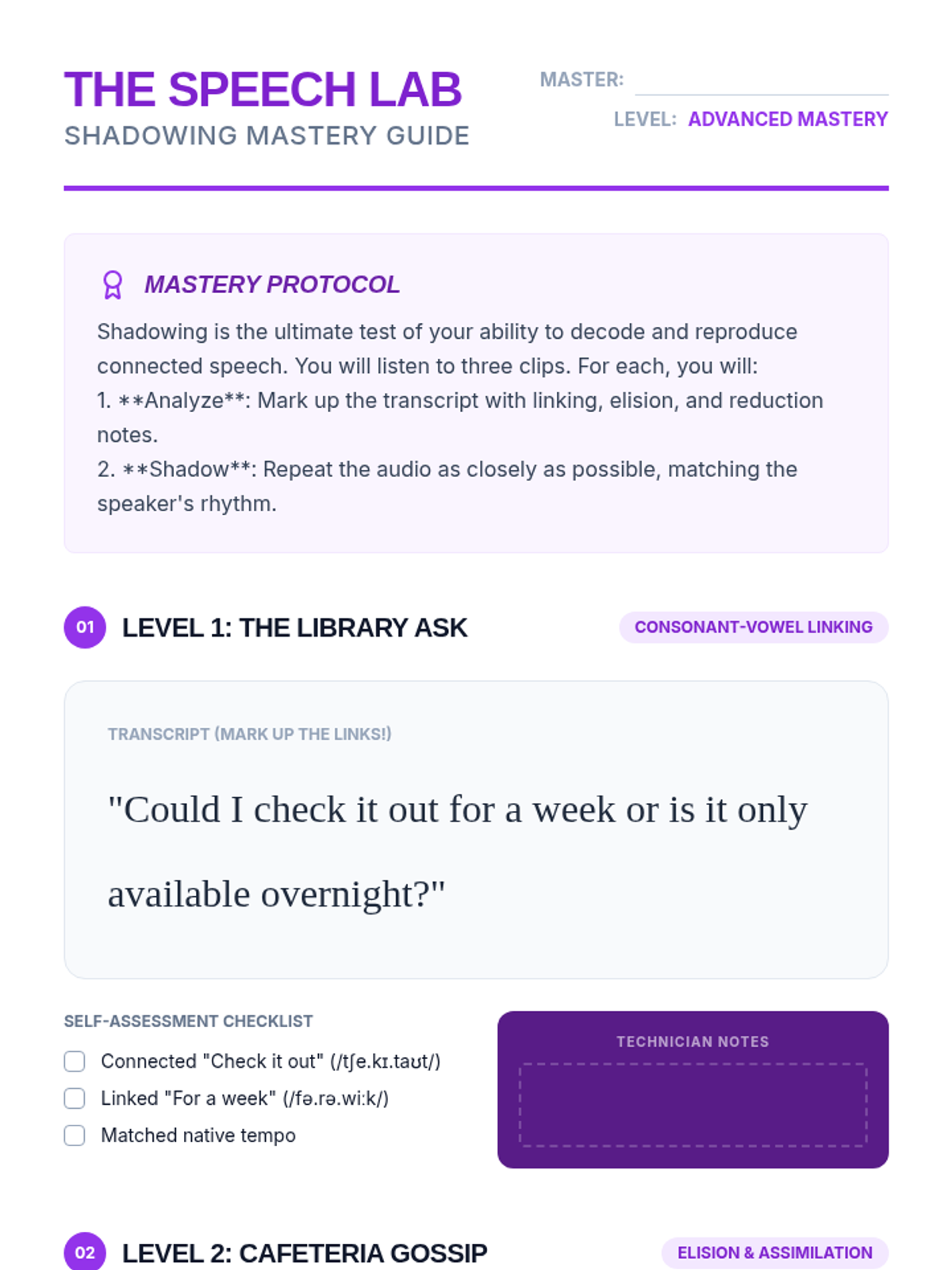
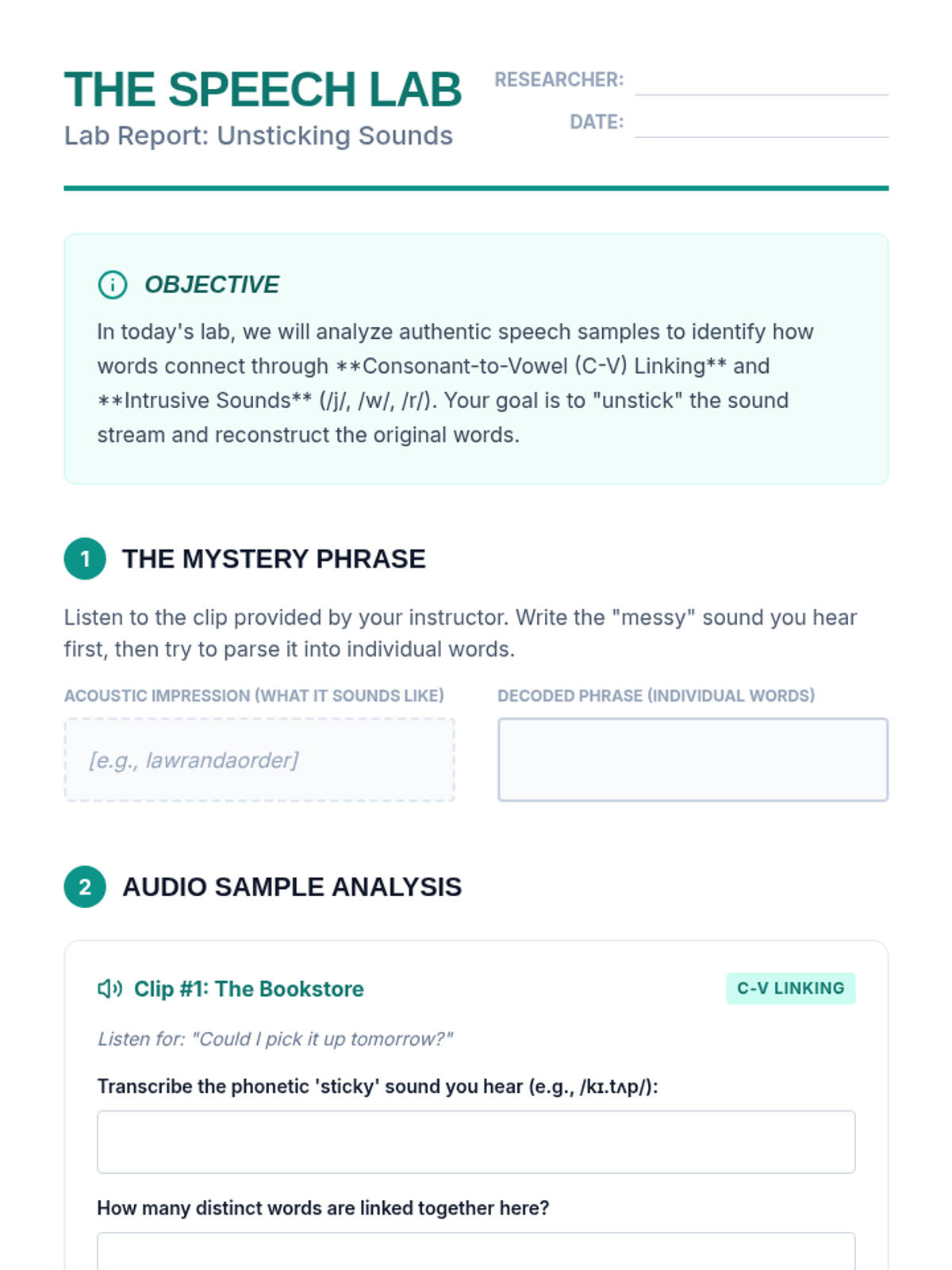
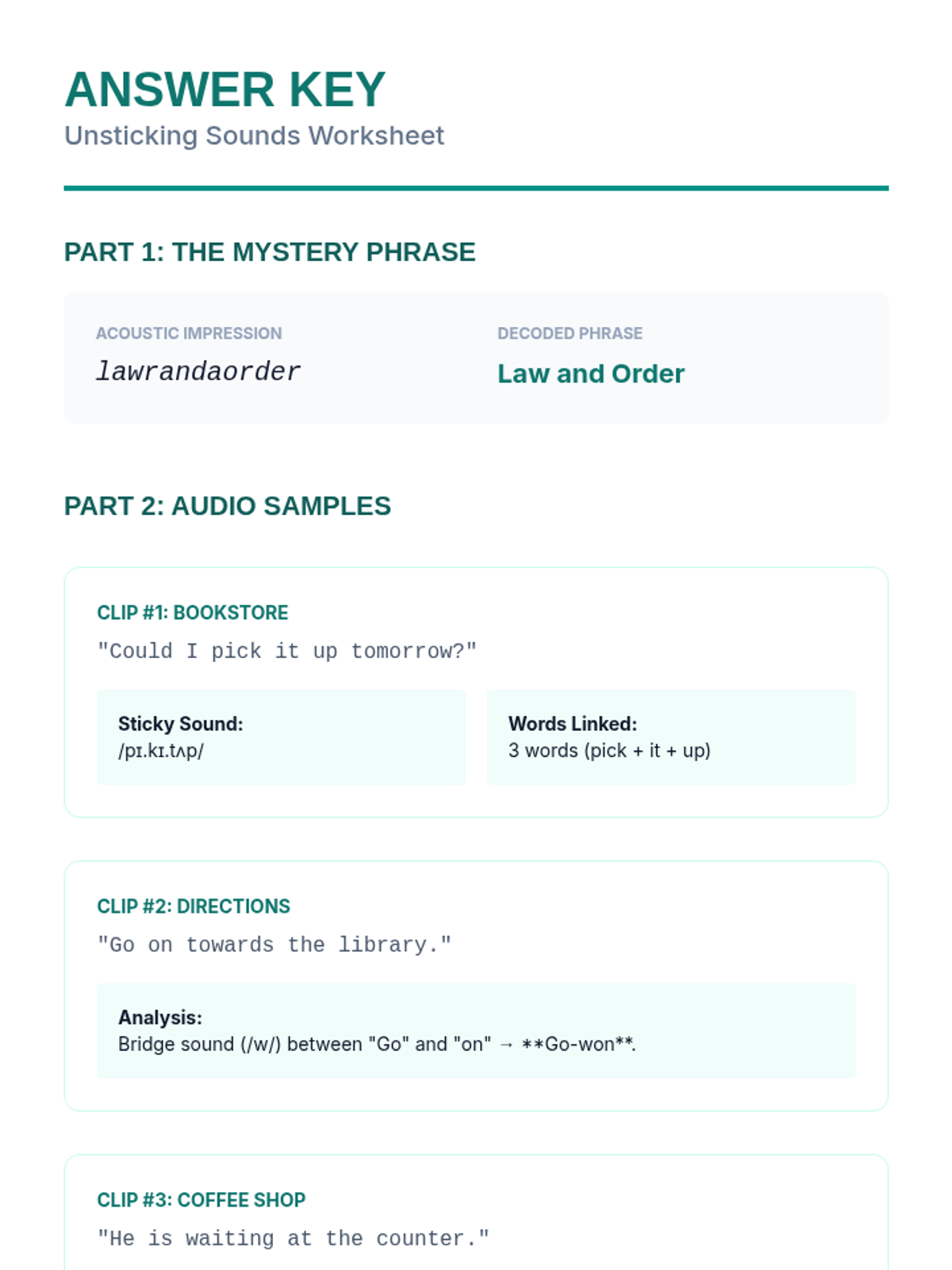
Students investigate how words flow together in natural speech, specifically focusing on consonant-vowel linking and intrusive sounds (/r/, /w/, /j/). They analyze audio samples to 'unstick' connected words.
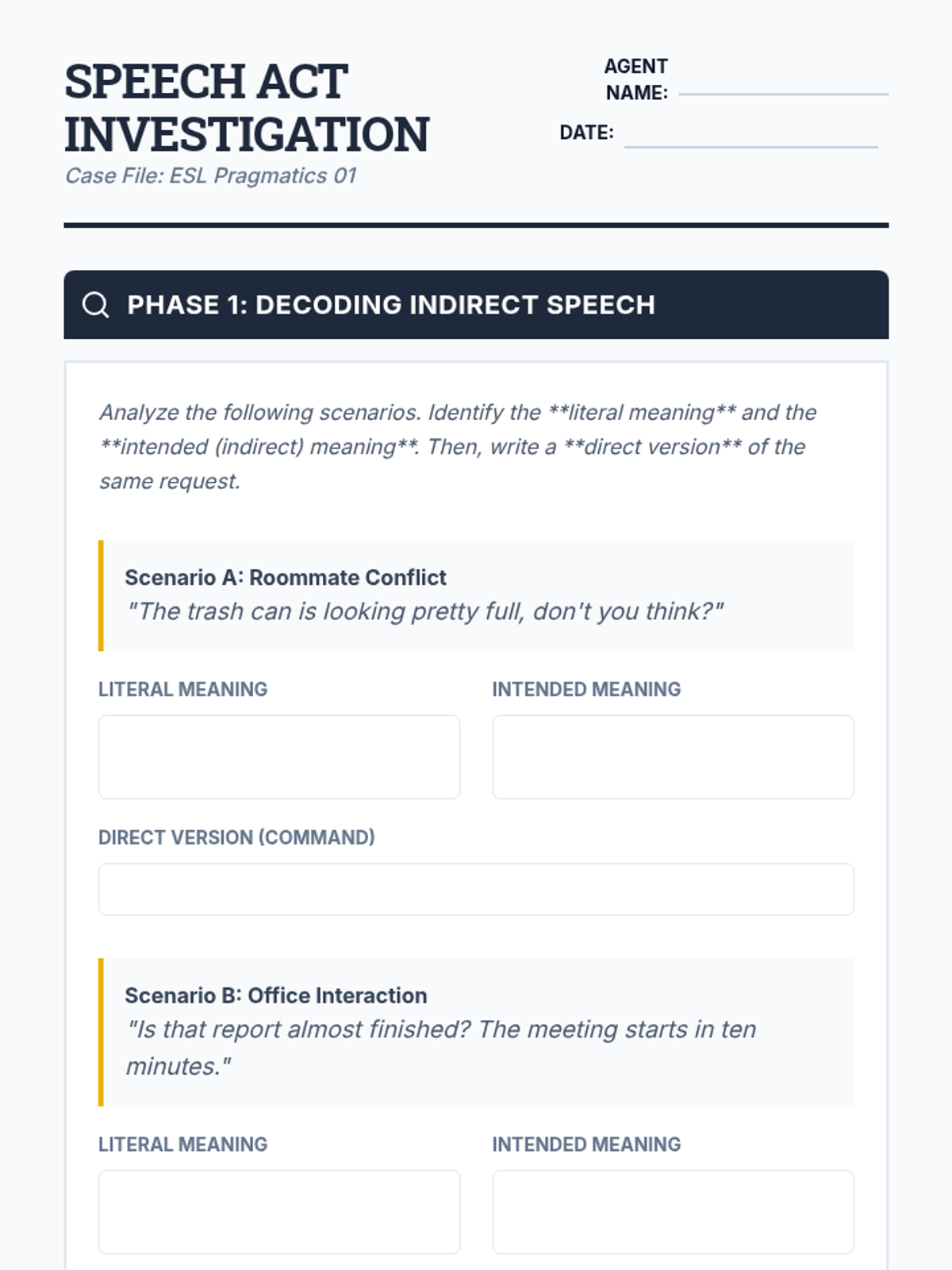
Students explore the difference between what is said and what is meant by analyzing indirect speech acts and politeness strategies in everyday scenarios.
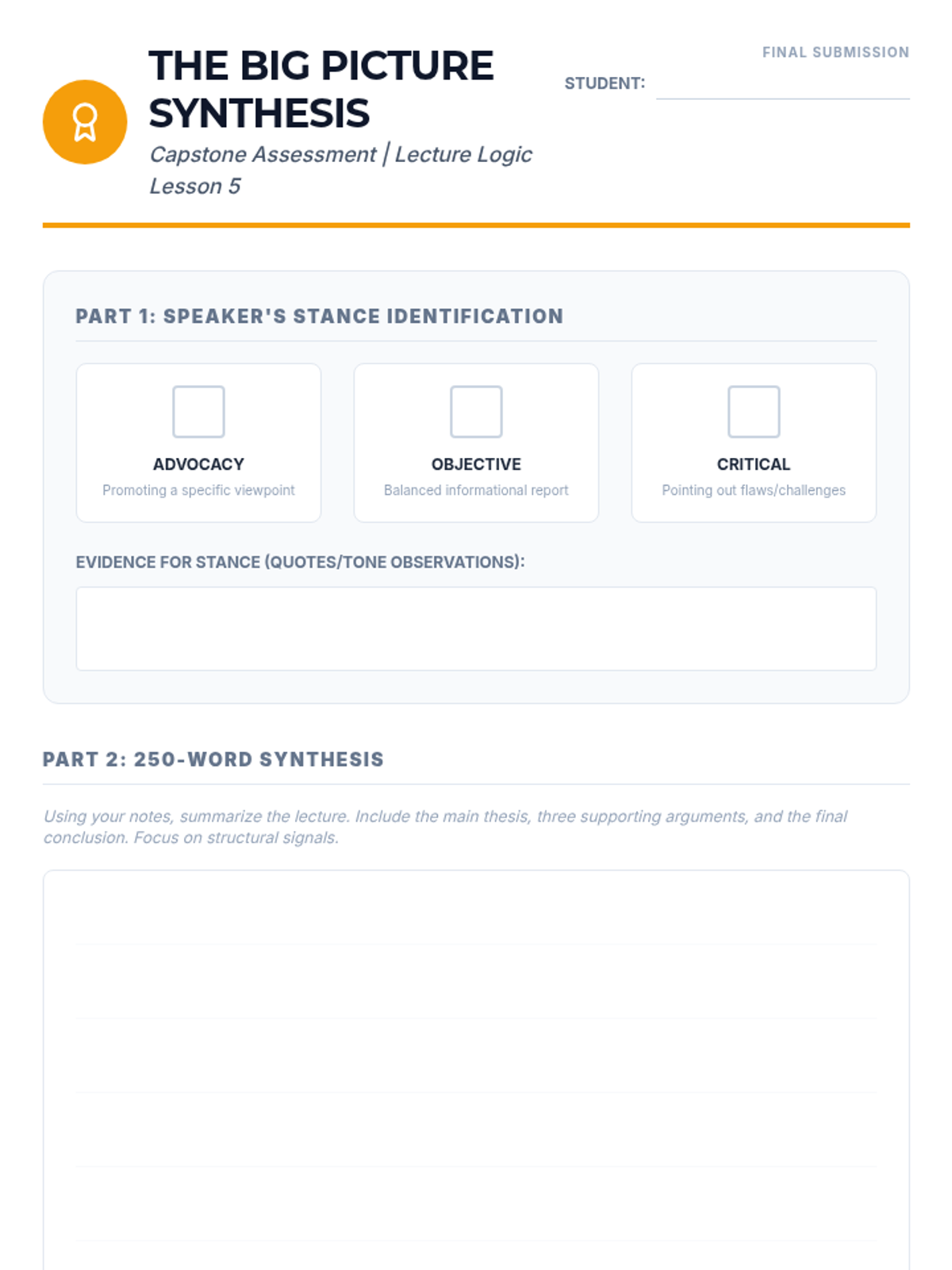
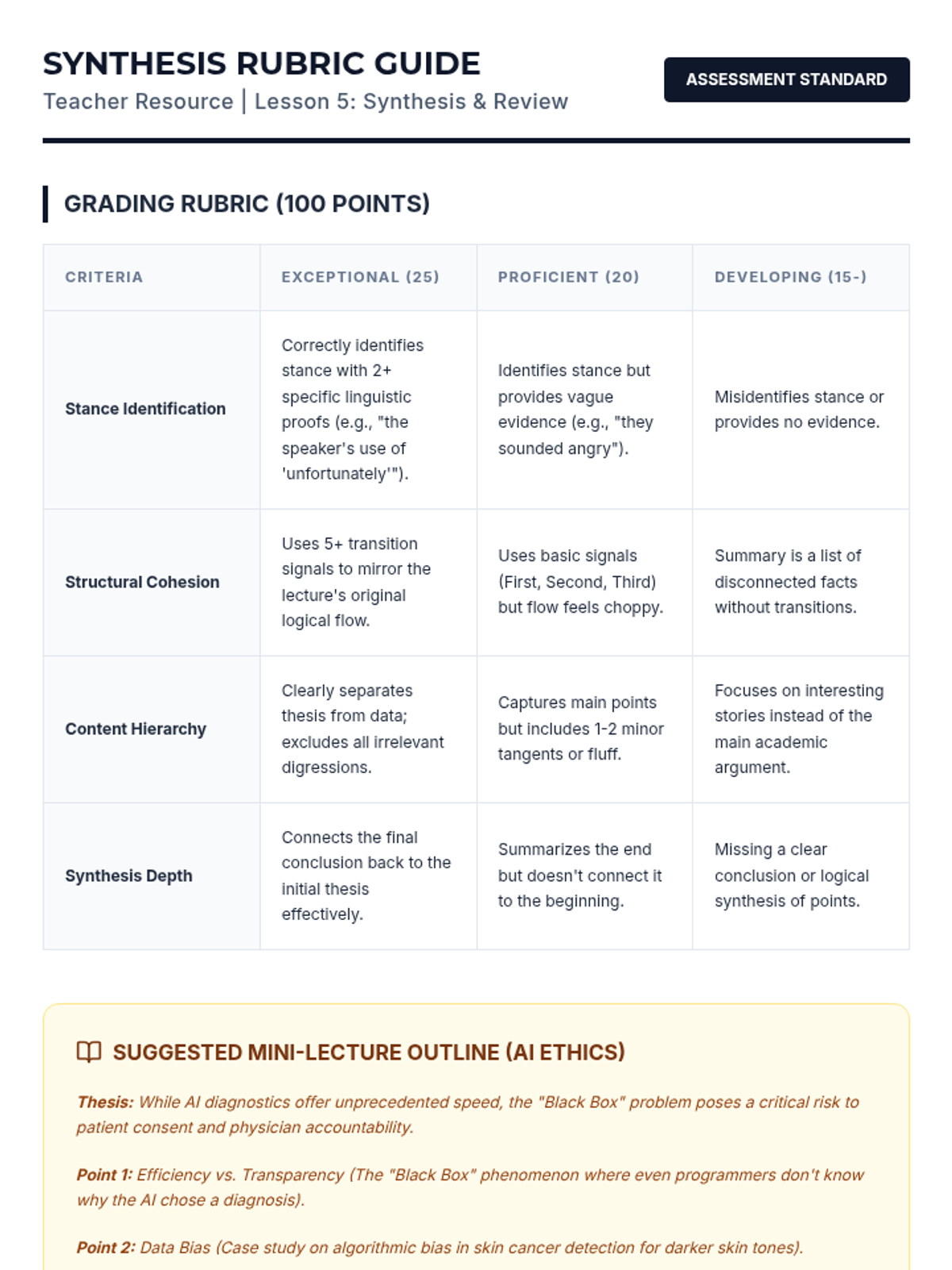
Students synthesize a full mini-lecture into a coherent summary, identifying stance and major takeaways.
A workshop on the Cornell, Outline, and Mapping methods, emphasizing shorthand and relationship visualization.
This lesson trains students to identify tonal shifts and linguistic markers that signal tangents or personal asides.
Learners differentiate between core arguments and supporting examples using vocal cues and structural patterns.
Students analyze signposting language to predict content and map the structural flow of academic talks.
Using their notes from previous lessons, students practice reconstructing the main argument of an auditory text. They work in pairs to verbally summarize a lecture segment to a partner who has not heard it, checking for accuracy and completeness.
Students analyze an audio segment on a controversial scientific or social topic to categorize statements as verifiable facts, speaker opinions, or theoretical propositions. The lesson emphasizes listening for modal verbs and qualifying language.
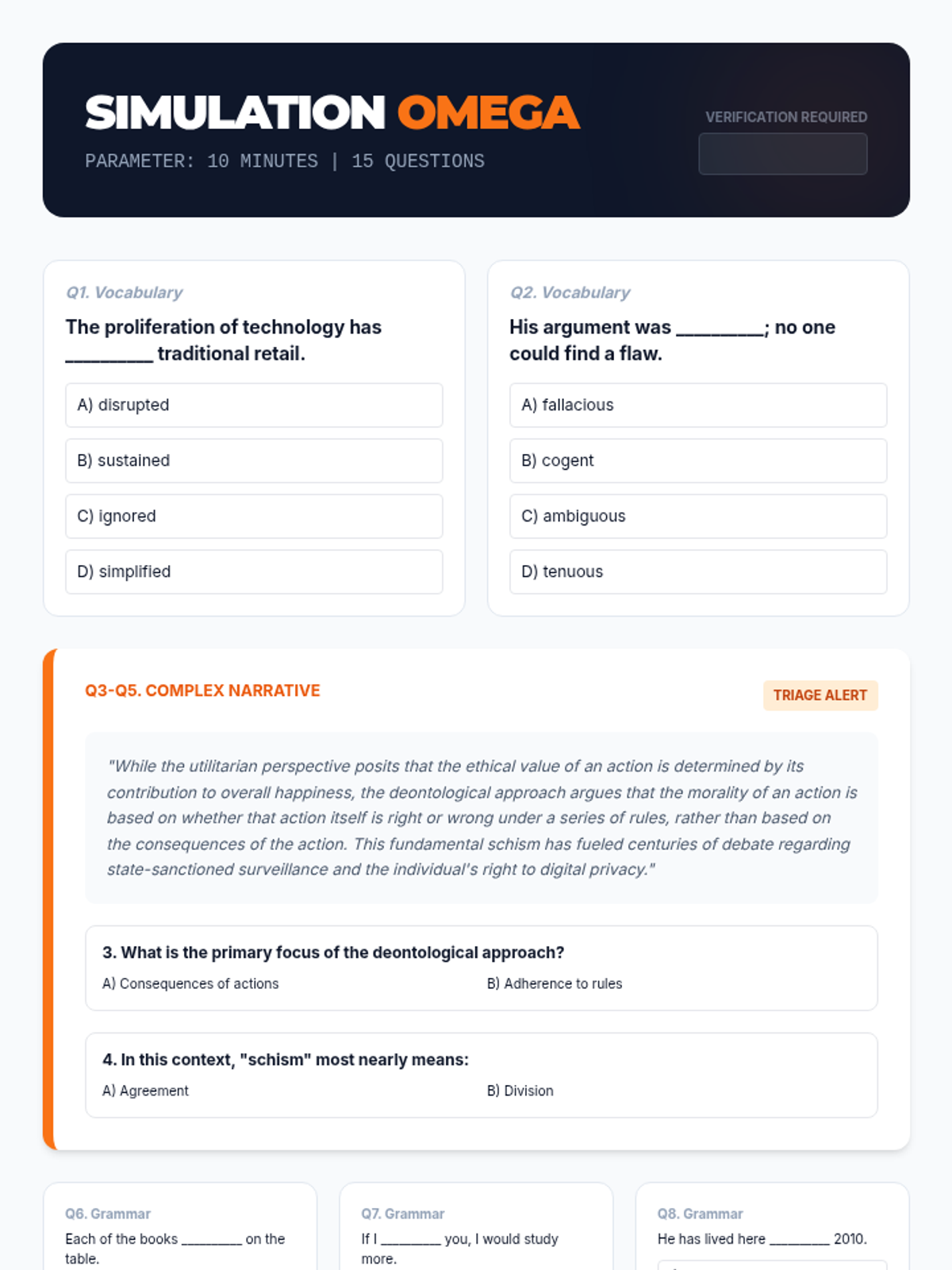
A final simulation where students complete a test section with slightly less time than standard allowed. The focus is on maintaining composure and adhering to the triage strategy strictly.

Learners are introduced to the Cornell Note-Taking System and concept mapping, practicing these methods while listening to extended discourse.
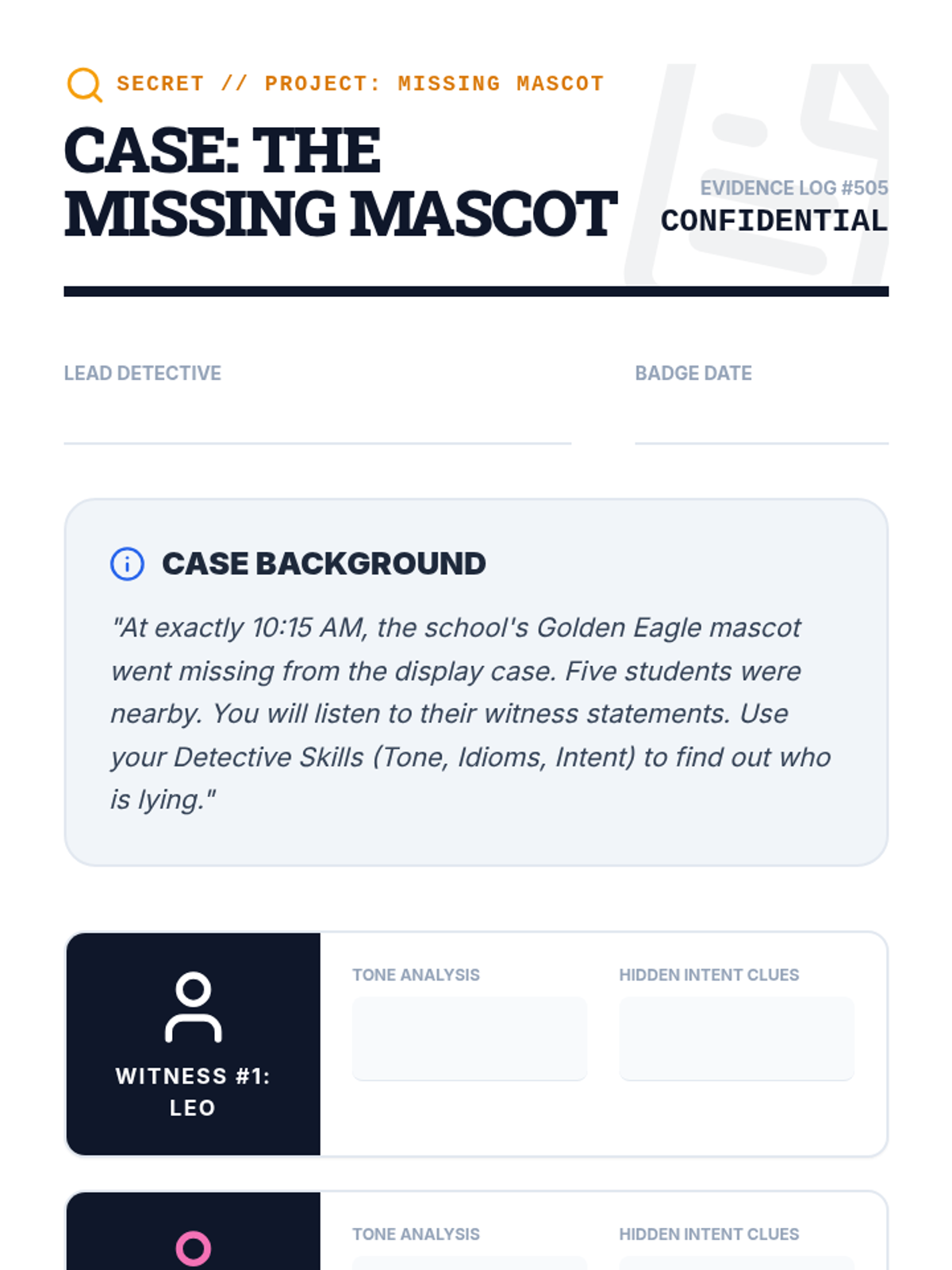
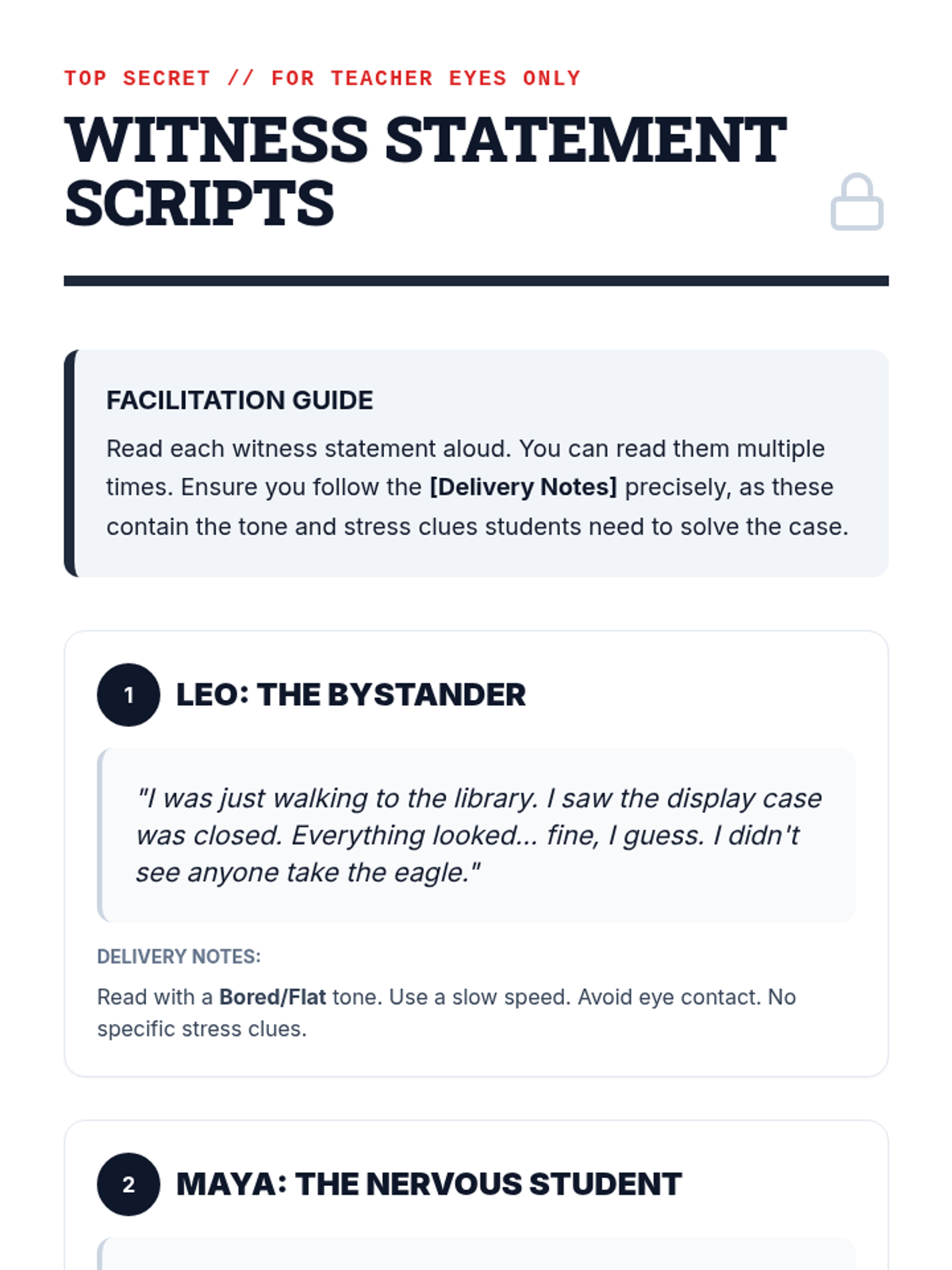
In this final simulation, students listen to witness statements regarding a missing mascot. They must apply all previously learned skills—tone, idioms, and fact-checking—to identify the culprit.
Learners analyze speaker motivation and intent by focusing on word stress and hidden messages. They practice identifying if a speaker is complaining, persuading, or apologizing without using those specific words.
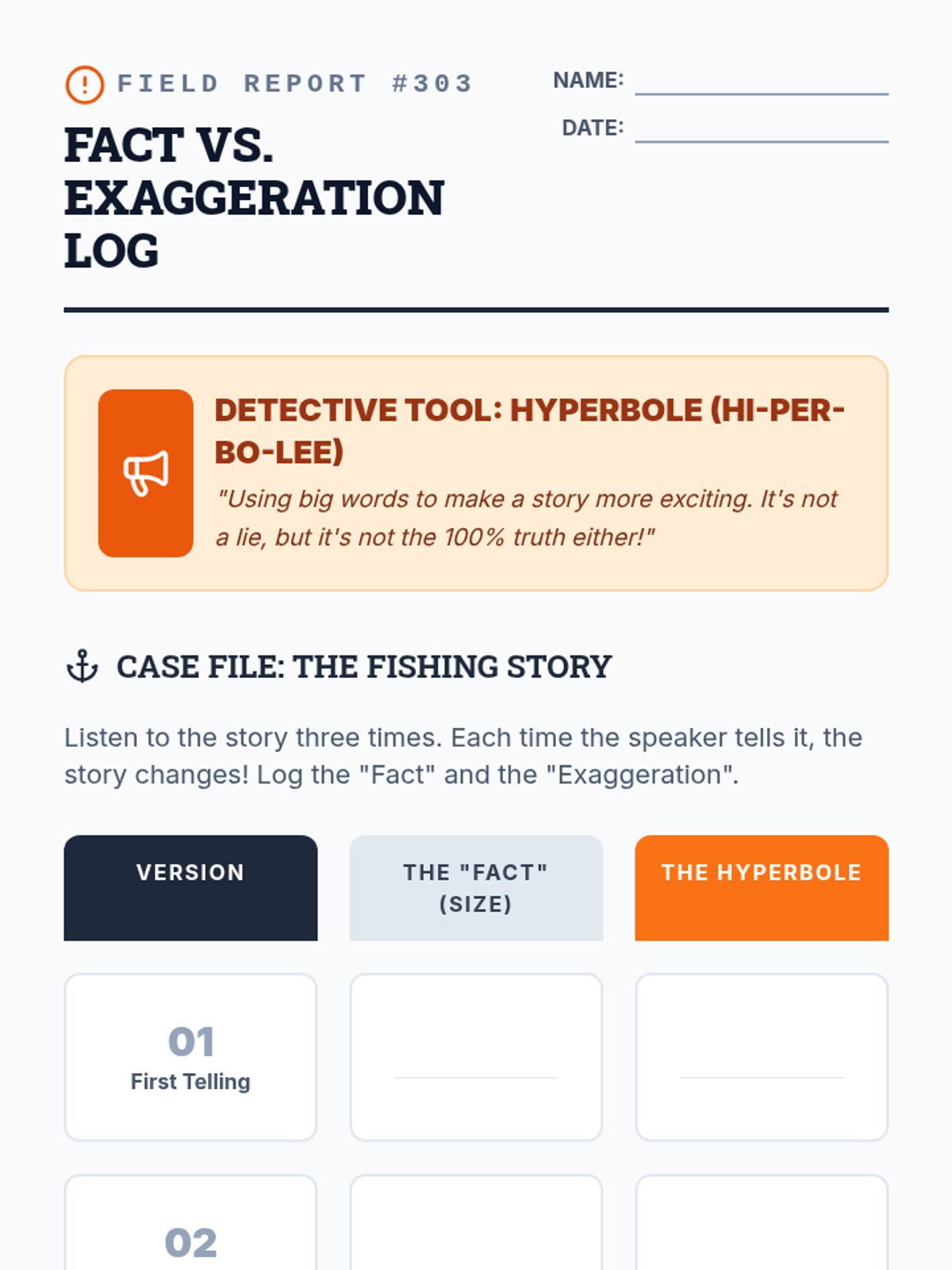
Students practice identifying hyperbole and distinguishing factual information from emotional exaggeration in storytelling. They learn to recognize the 'fishing story' effect in casual conversation.
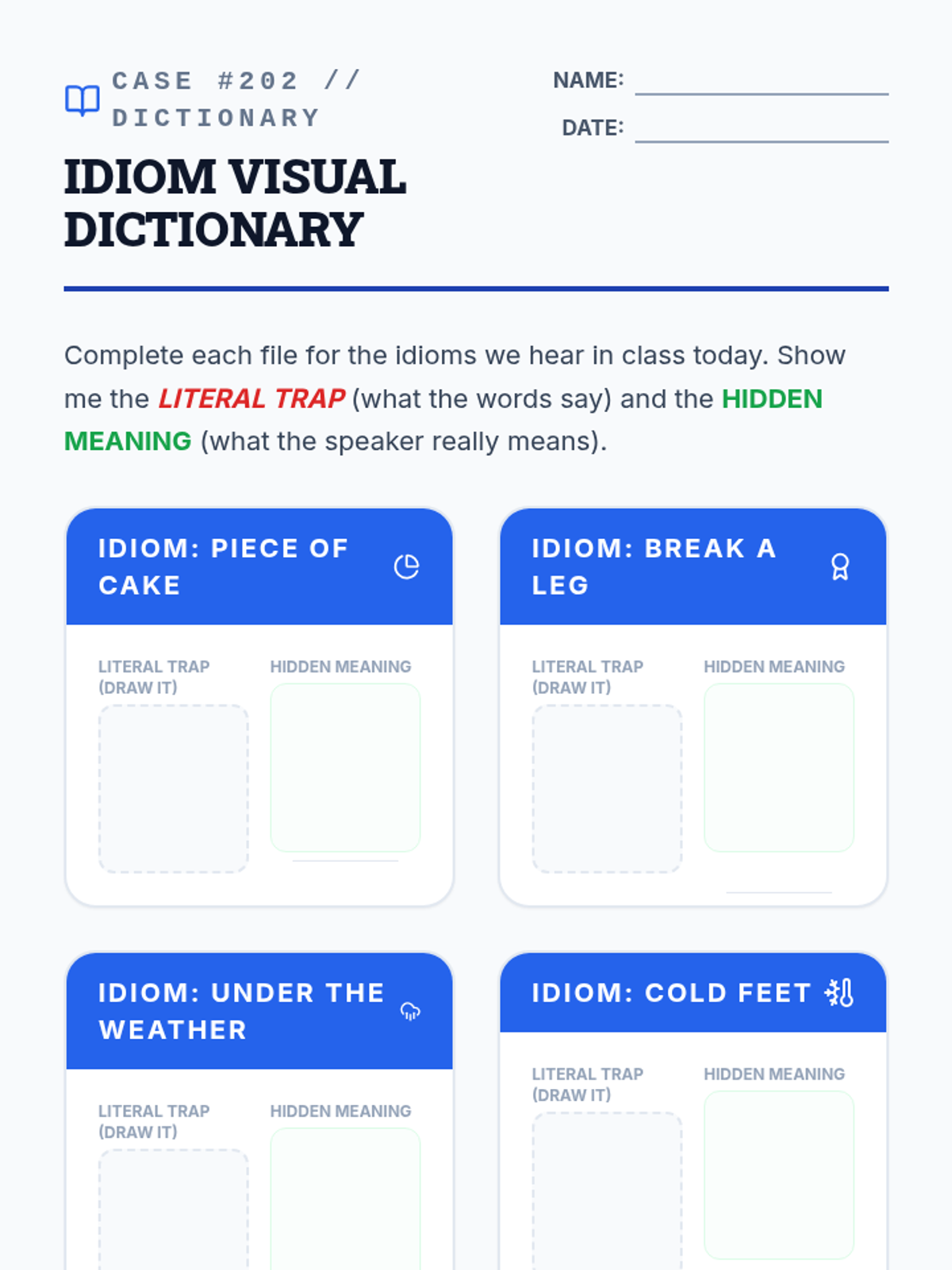
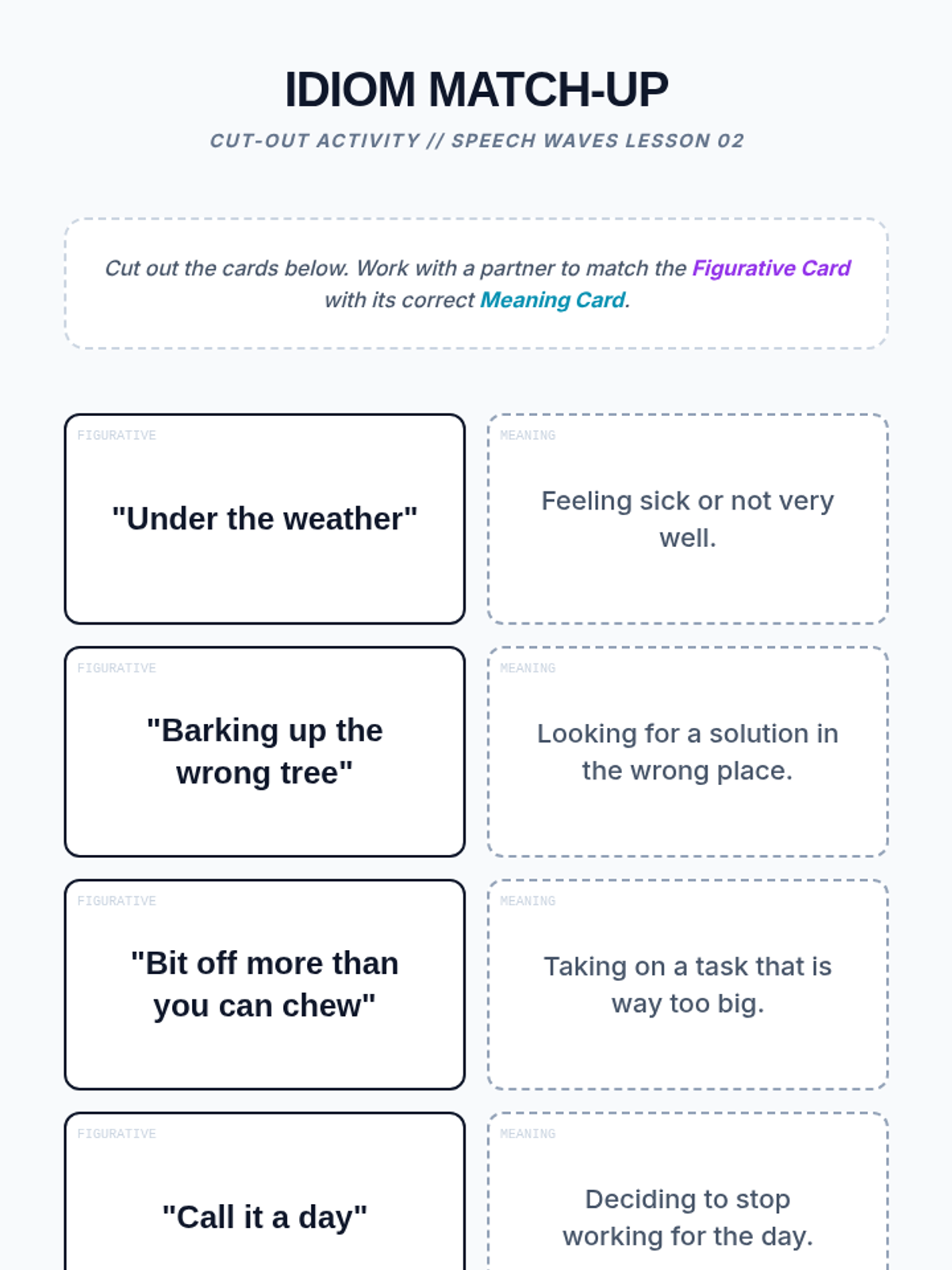
Students decode common American idioms by listening to them in context. They distinguish between literal and figurative meanings and create a visual dictionary of non-literal language.
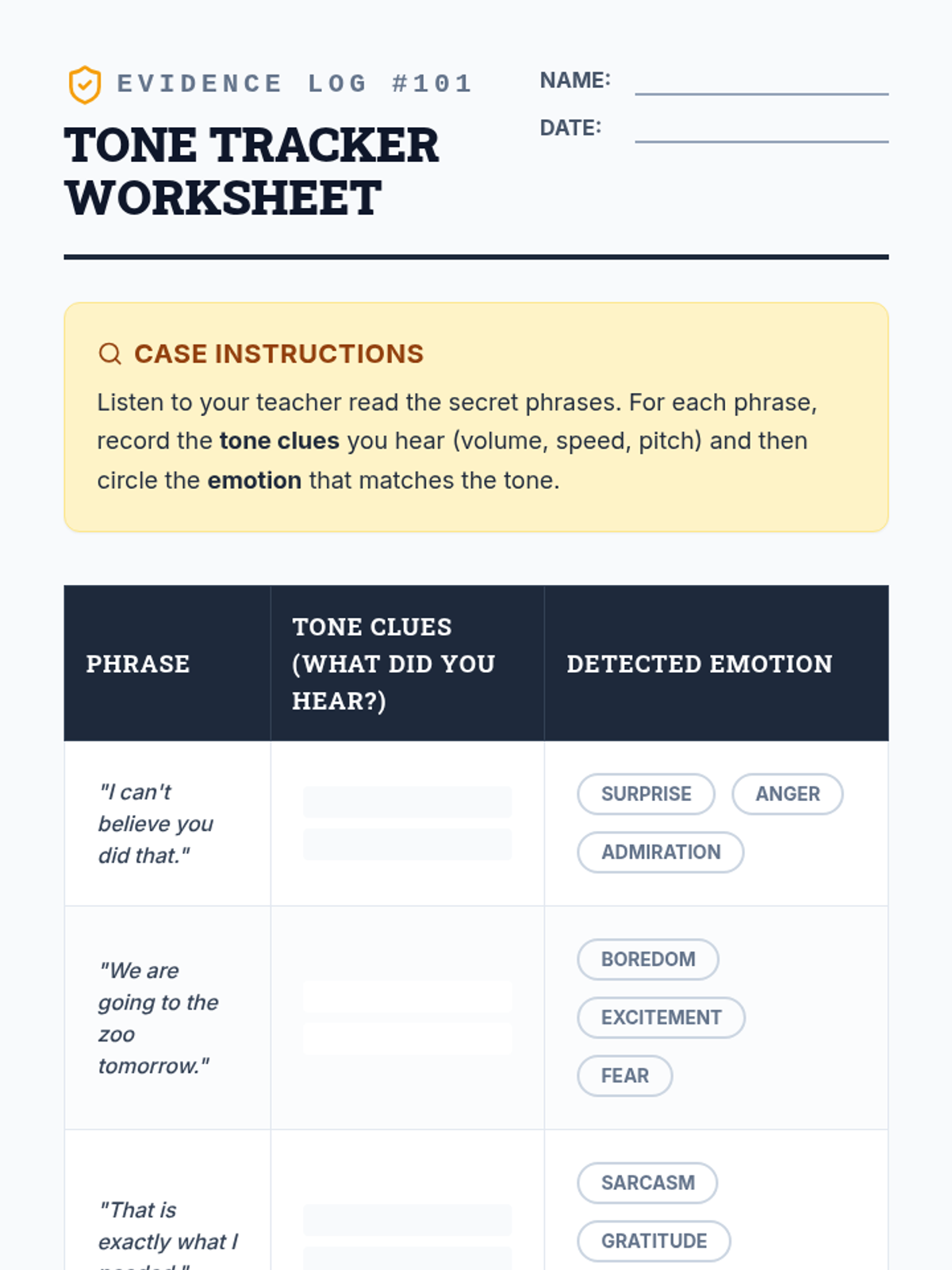
Students explore how pitch, volume, and intonation change the meaning of a sentence. They learn to identify emotional cues in spoken English, such as sarcasm, surprise, and anger.
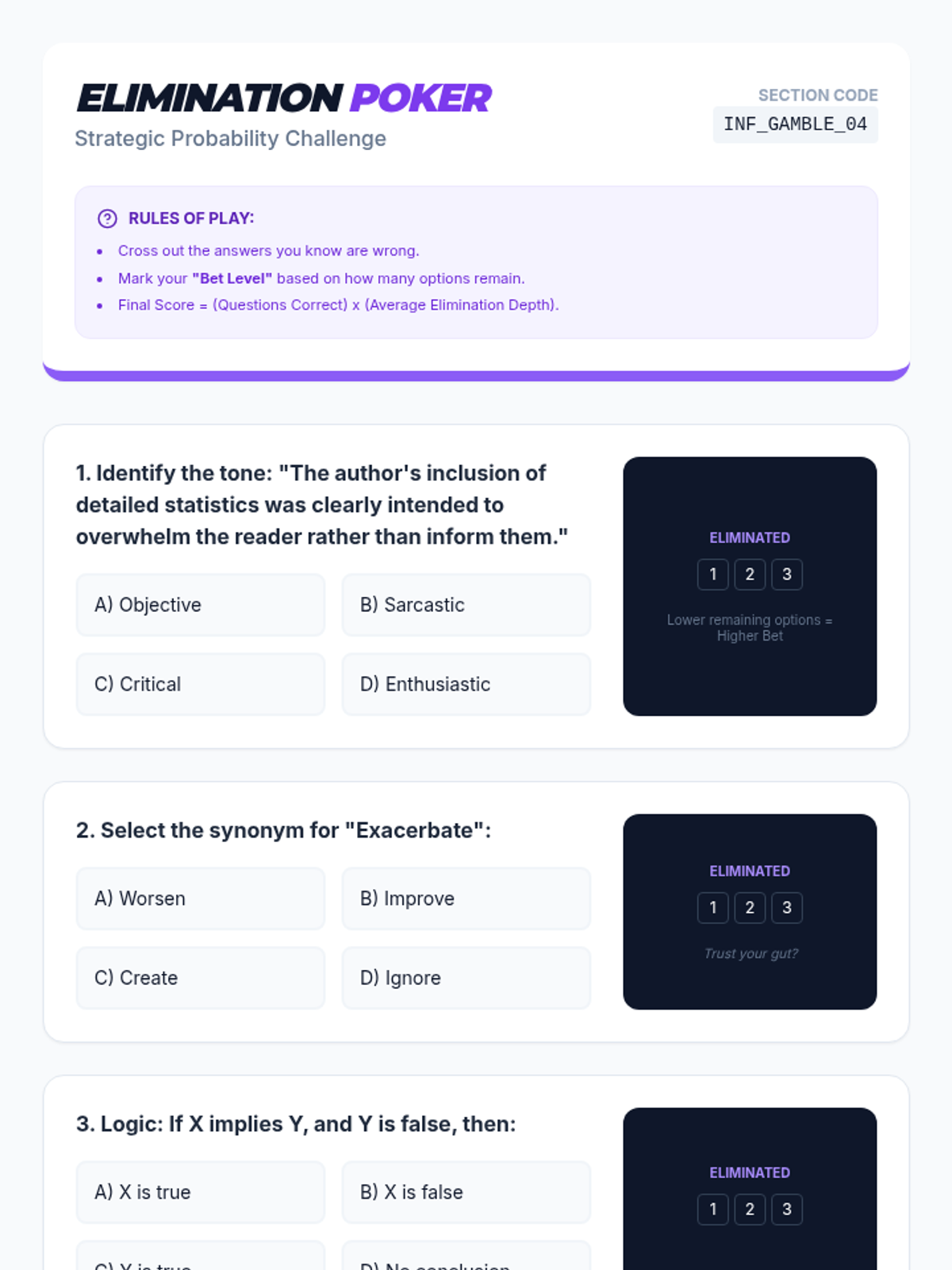
Students learn how to guess intelligently when time runs out or the answer is unknown. This includes 'letter of the day' strategies and making educated guesses based on partial knowledge.
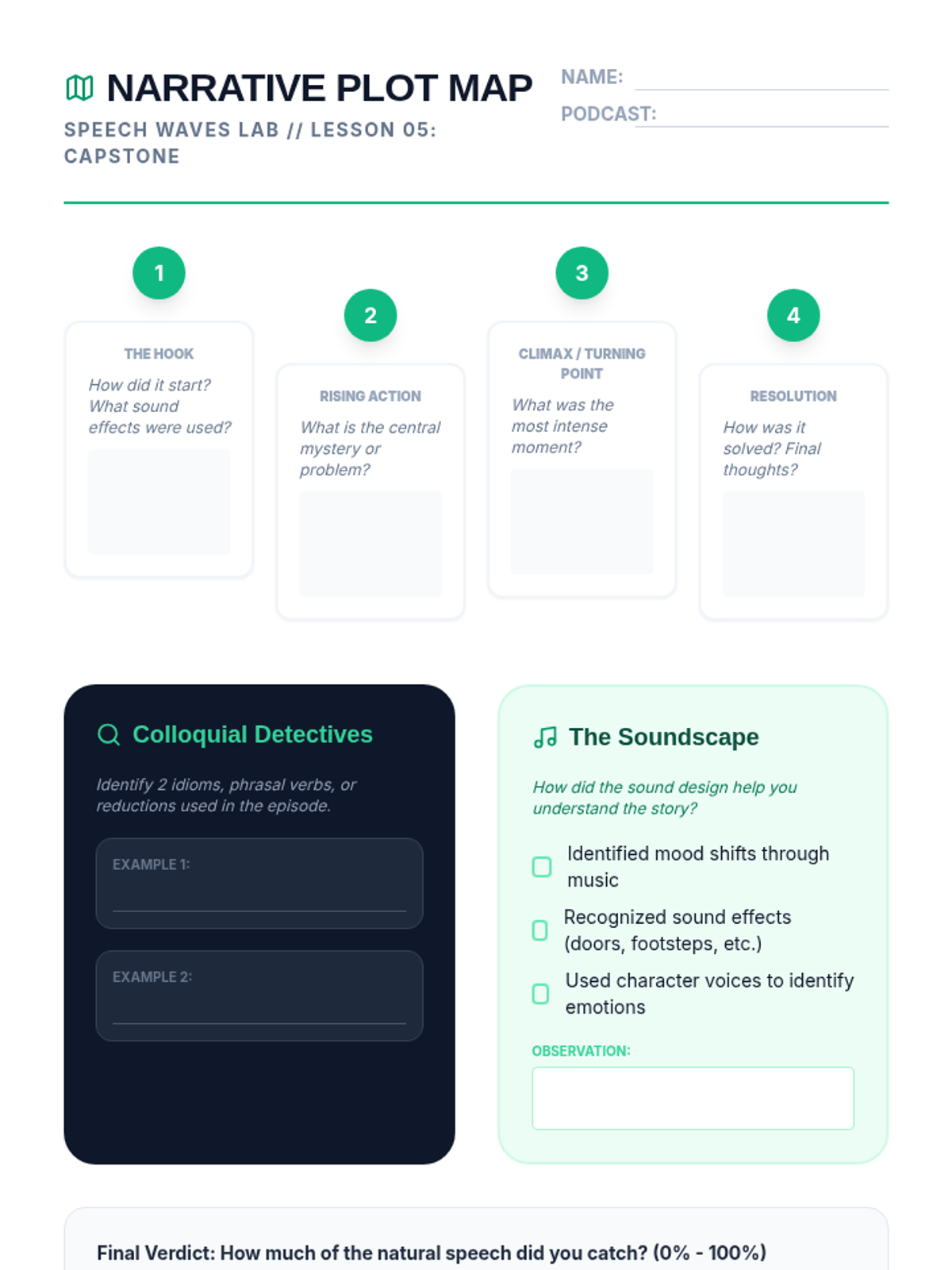
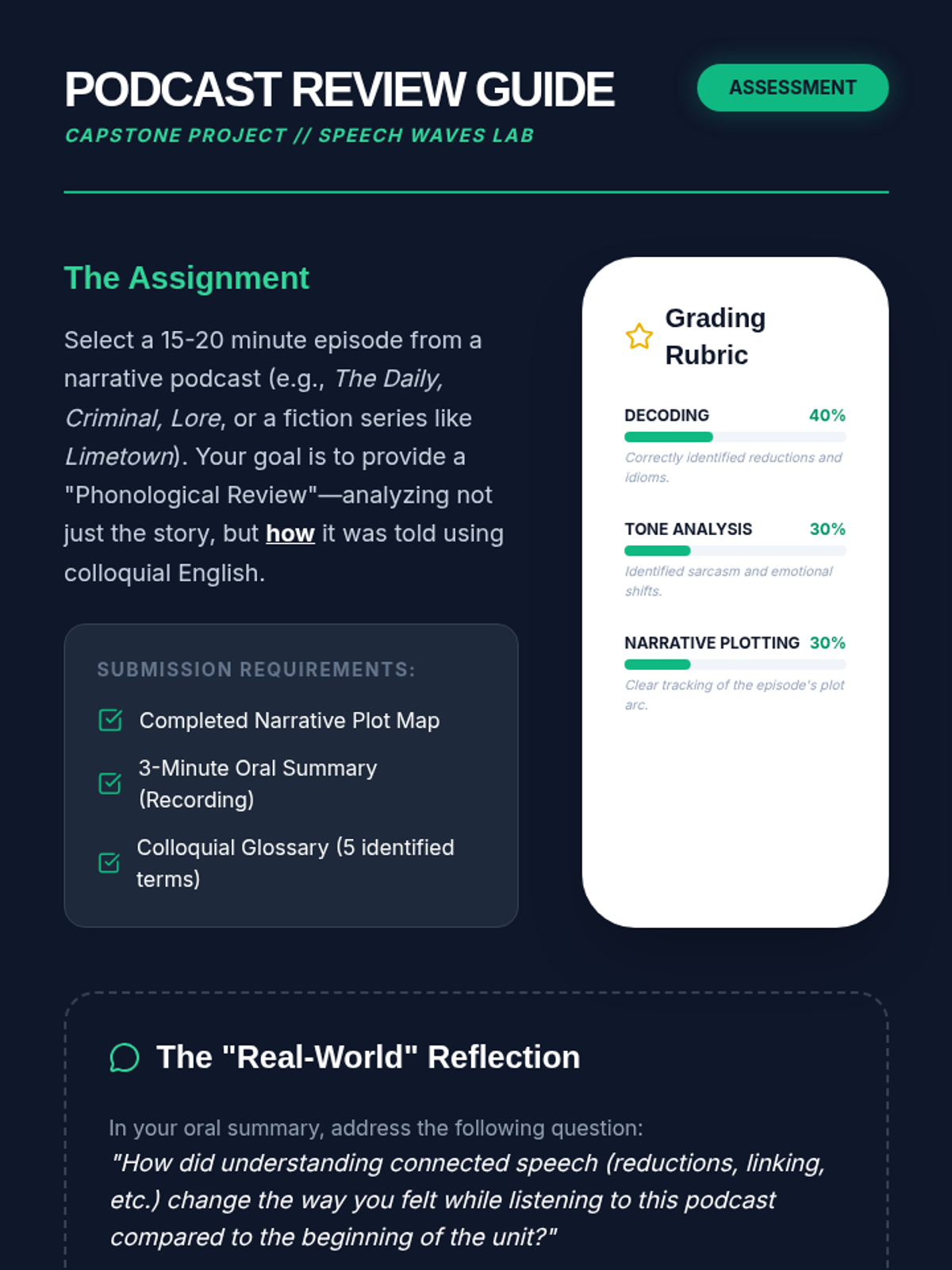
The final lesson applies all previous skills to a sustained narrative format. Students listen to a podcast episode, mapping the plot and identifying colloquial nuances to demonstrate comprehensive understanding.
Students learn to identify sarcasm, irony, and humor by focusing on intonation and stress patterns rather than just literal word choice. They analyze how the same phrase can convey multiple meanings.
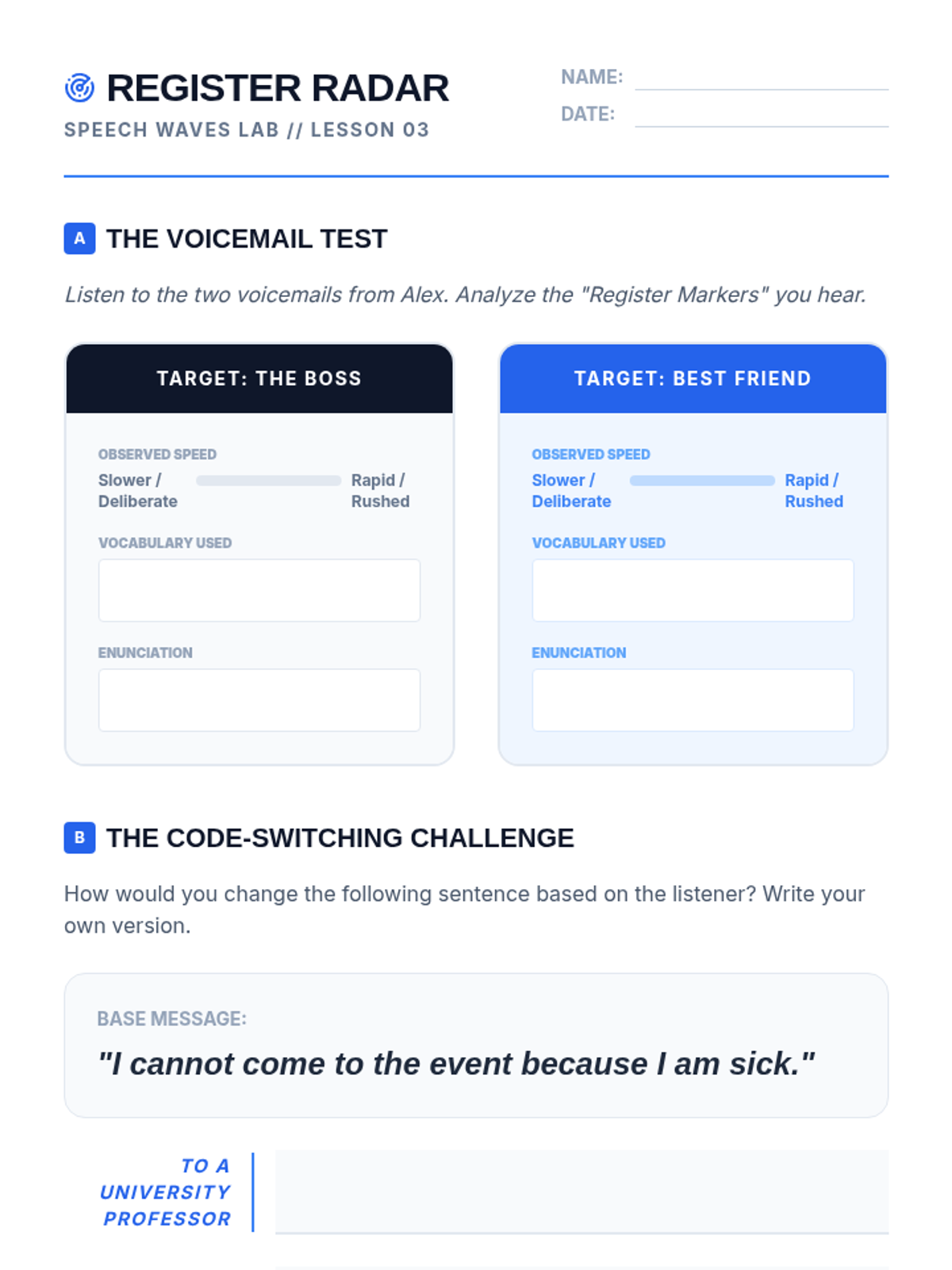
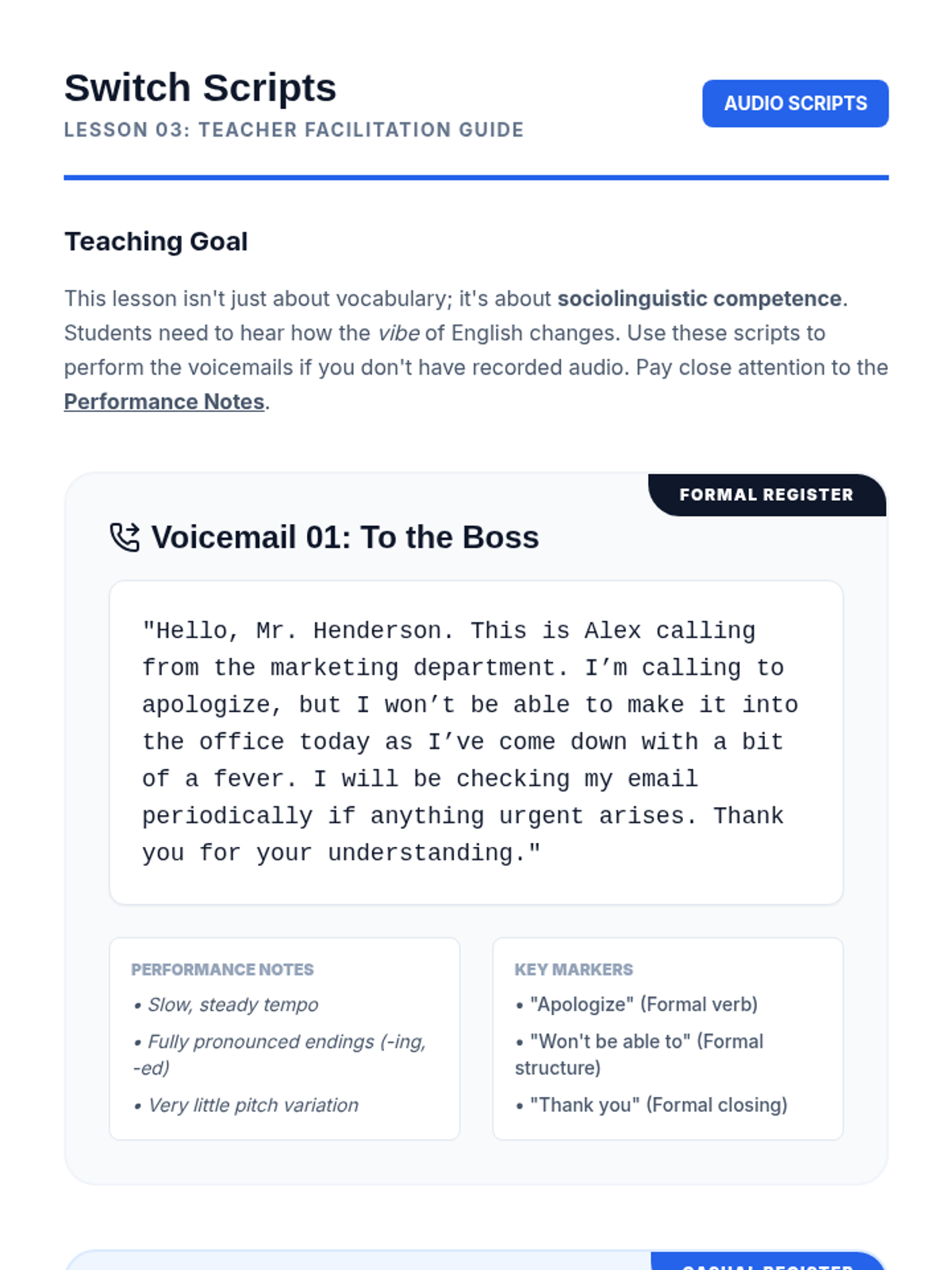
This lesson focuses on sociolinguistic awareness, teaching students how speakers adjust their speed, vocabulary, and tone based on their audience. Students compare formal and informal registers in various contexts.
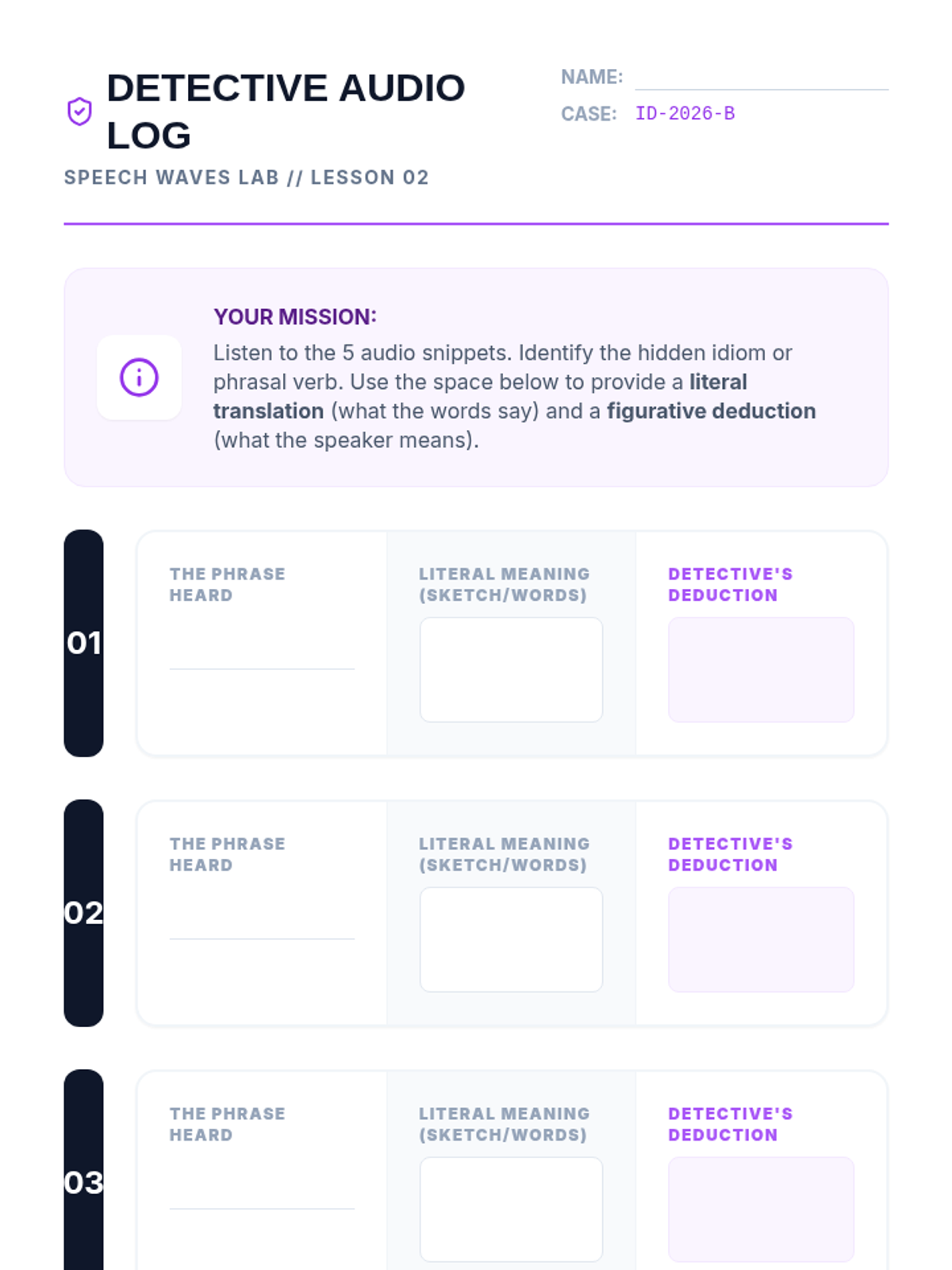
Learners explore the difference between literal and figurative language through idiomatic expressions and phrasal verbs. Using context clues and tone, they decode meaning in authentic audio snippets.