The final lesson applies all previous skills to a sustained narrative format. Students listen to a podcast episode, mapping the plot and identifying colloquial nuances to demonstrate comprehensive understanding.
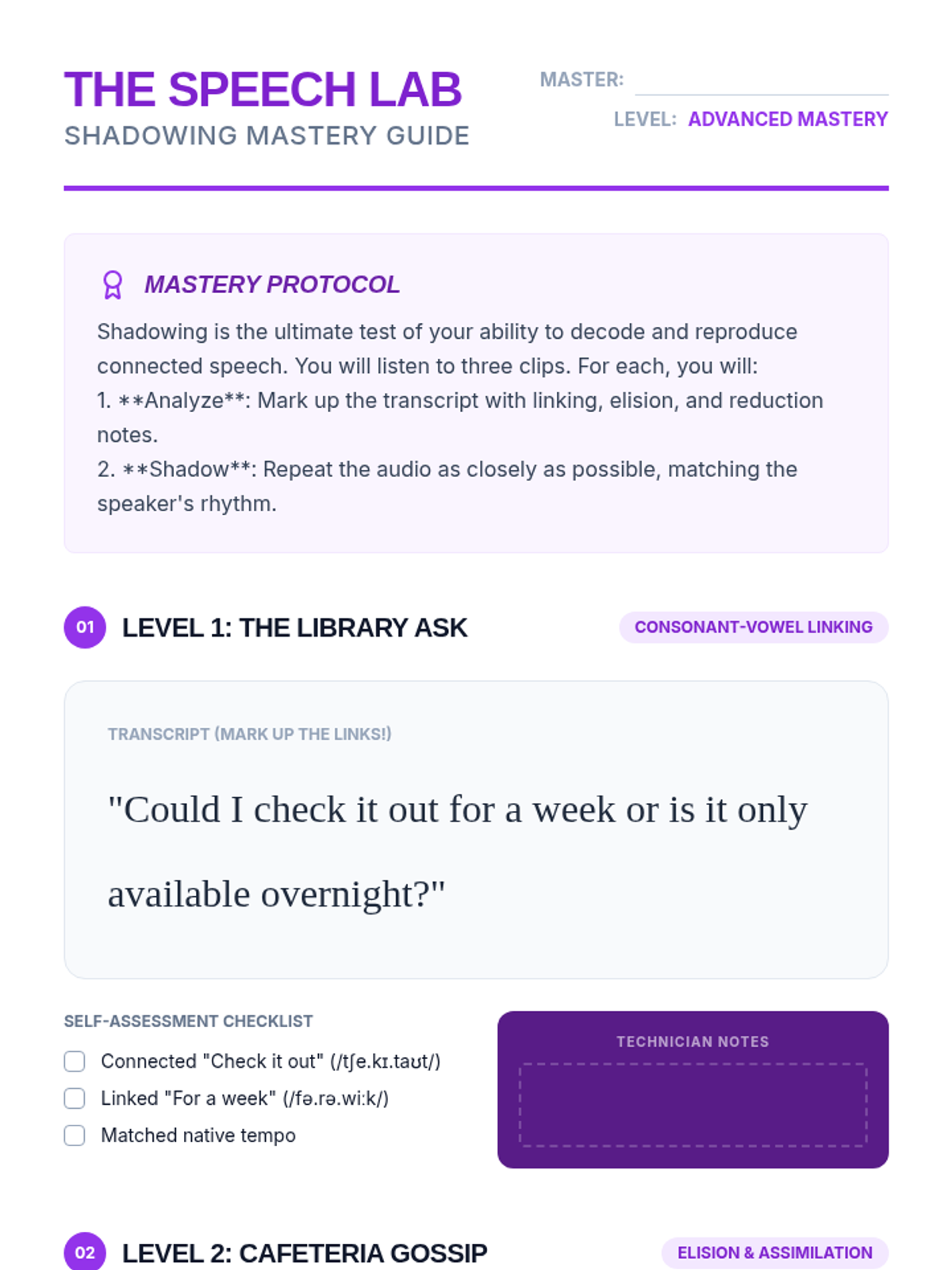
Students engage in a 'shadowing' technique, repeating audio immediately after hearing it to internalize the rhythm and flow of connected speech. This active processing reinforces their ability to predict and process sound streams.
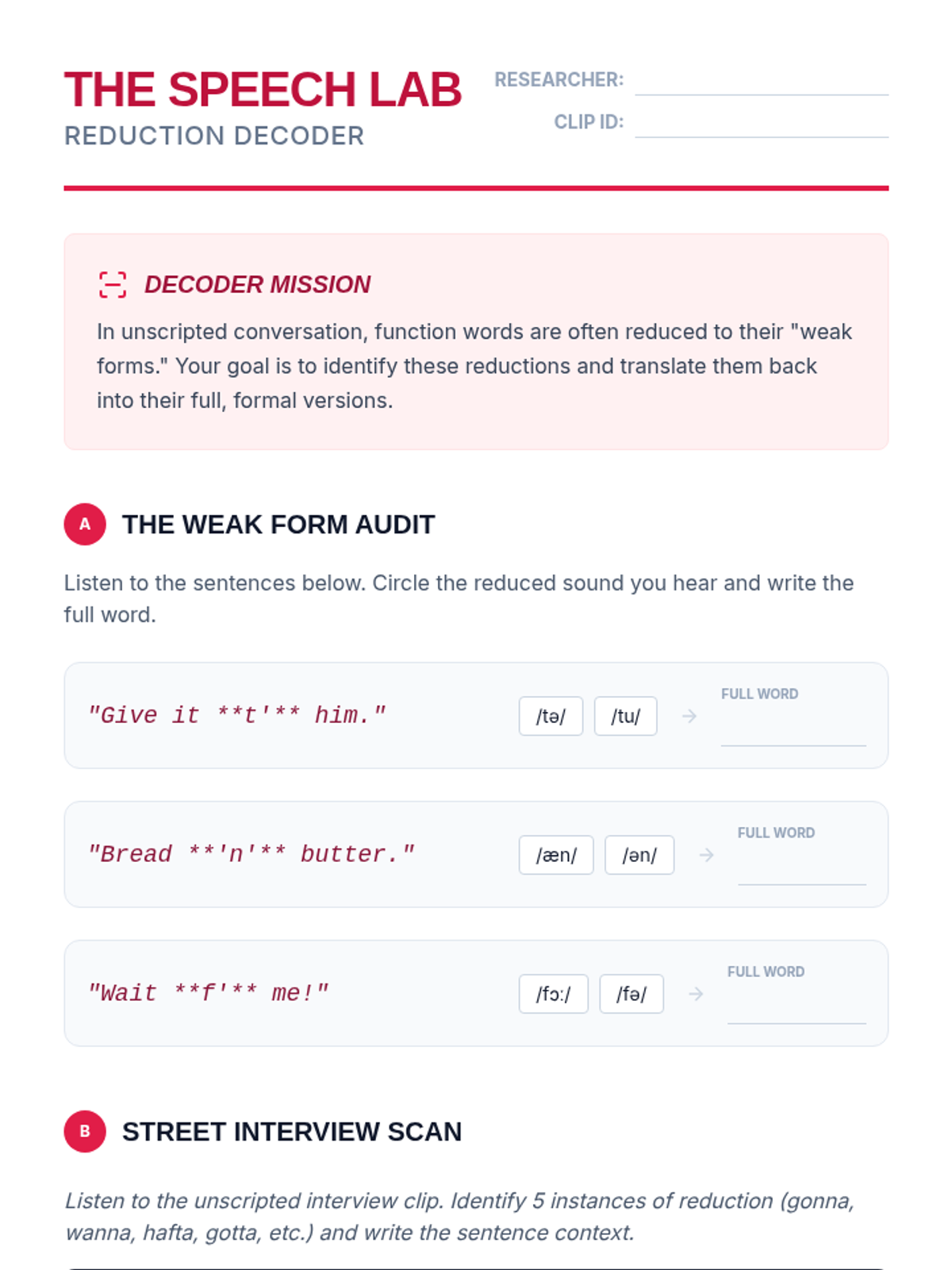
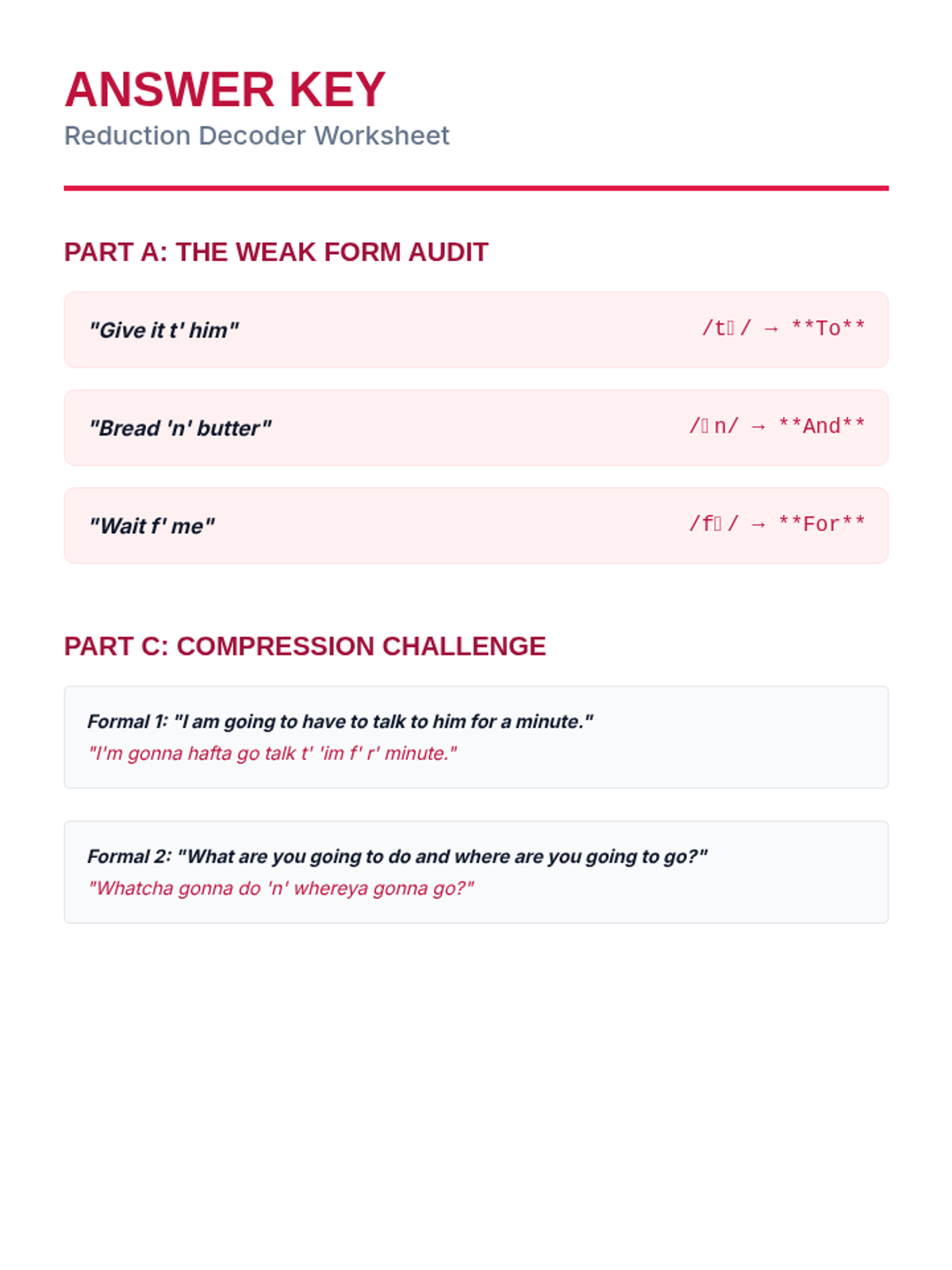
Focusing on function words, this lesson tackles common reductions like 'gonna,' 'wanna,' and weak forms of auxiliary verbs. Students analyze unscripted interviews to catch these reductions in context.
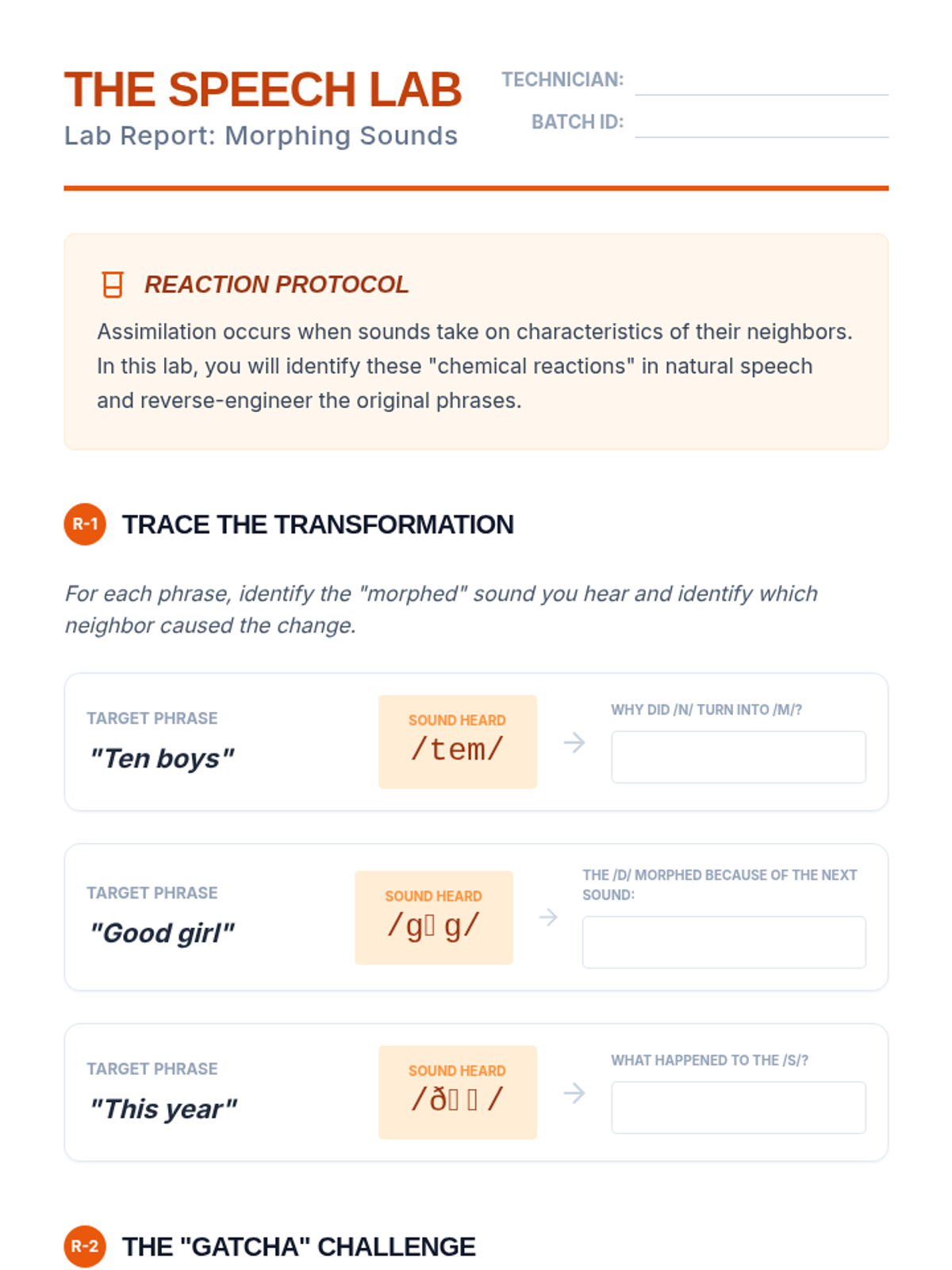
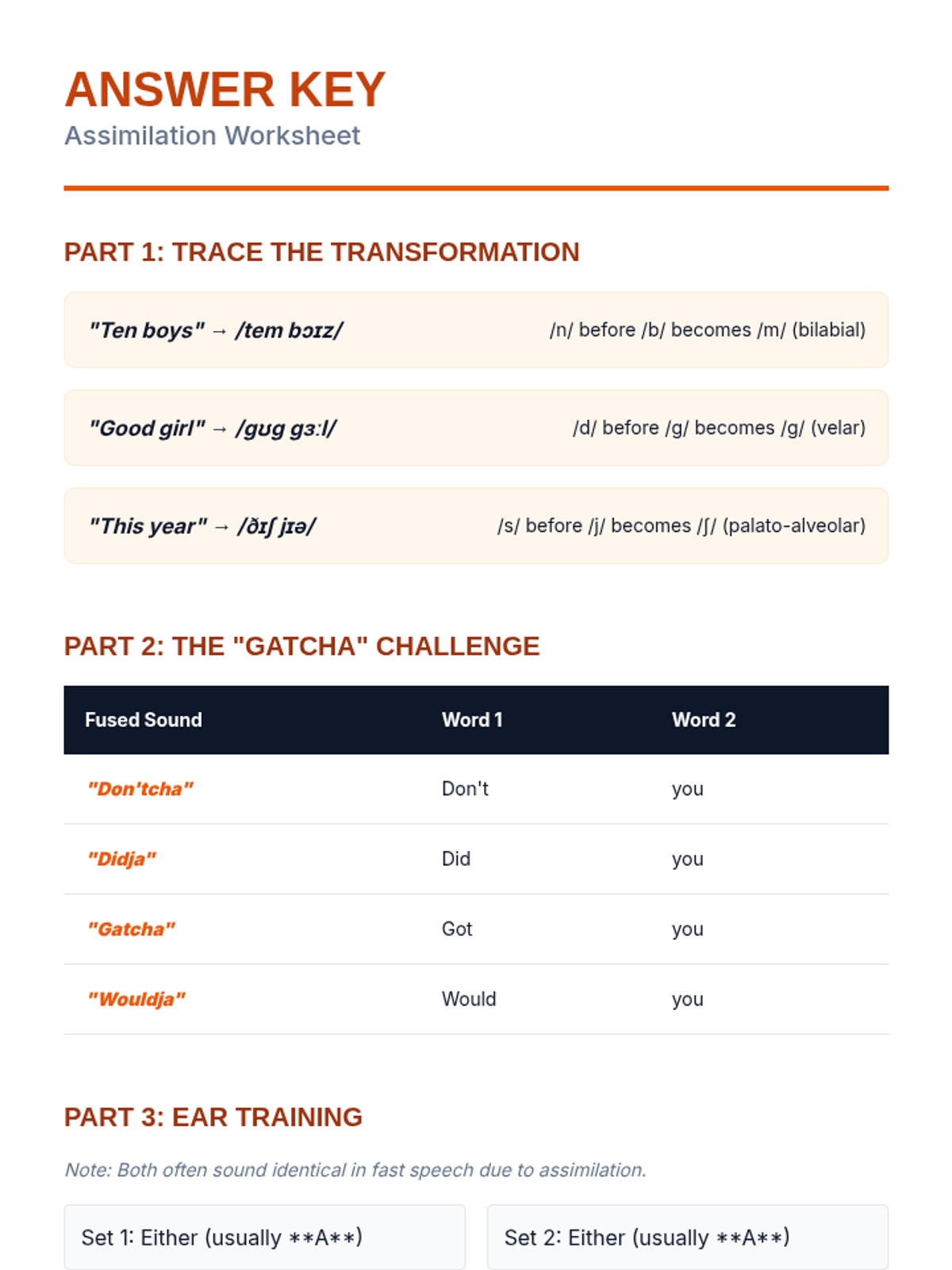
Students learn how sounds influence their neighbors (e.g., 'hand bag' becoming 'hambag'). The lesson uses minimal pair discrimination and dictation exercises to train ears to recognize words despite phonological changes.
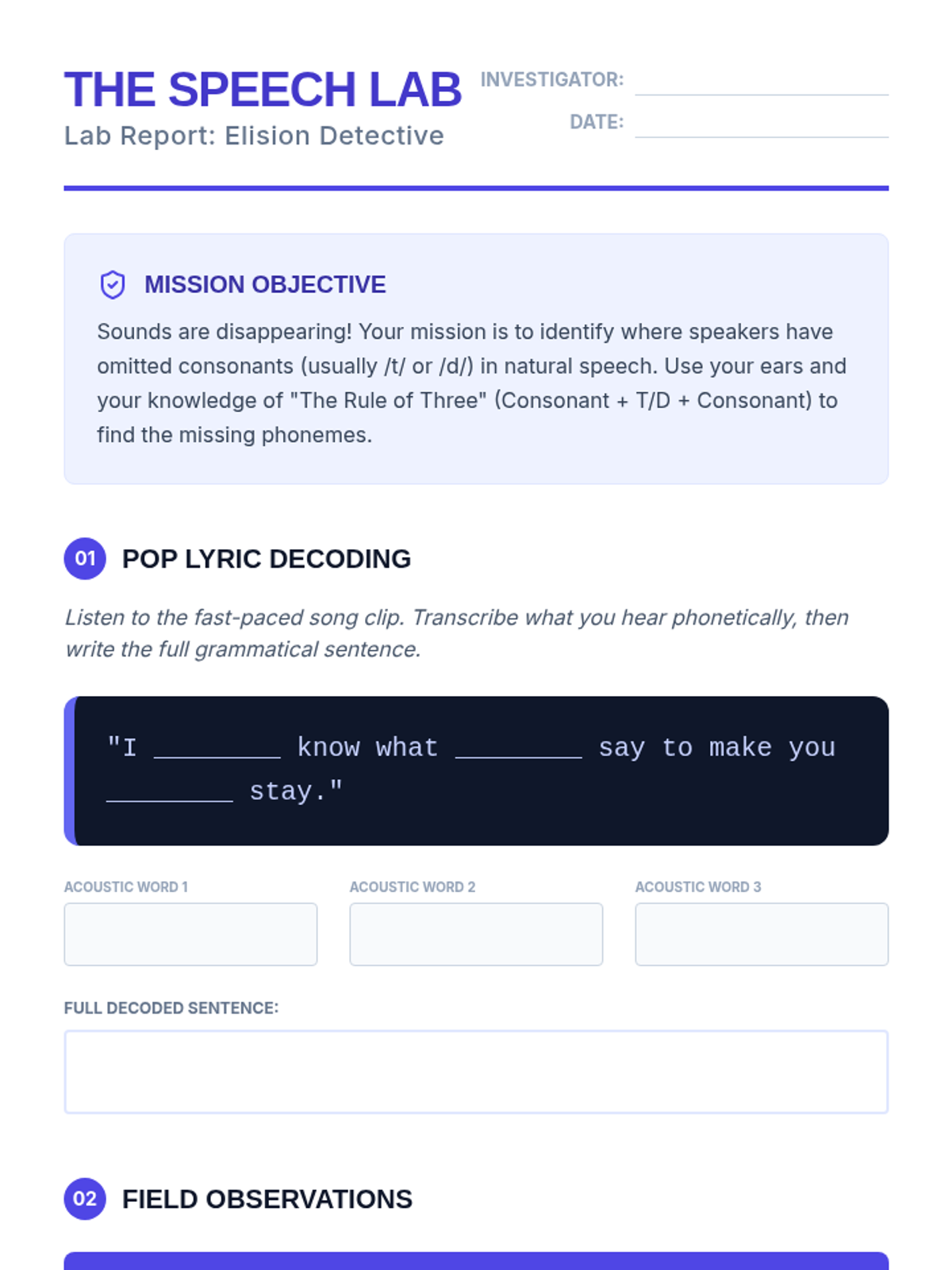
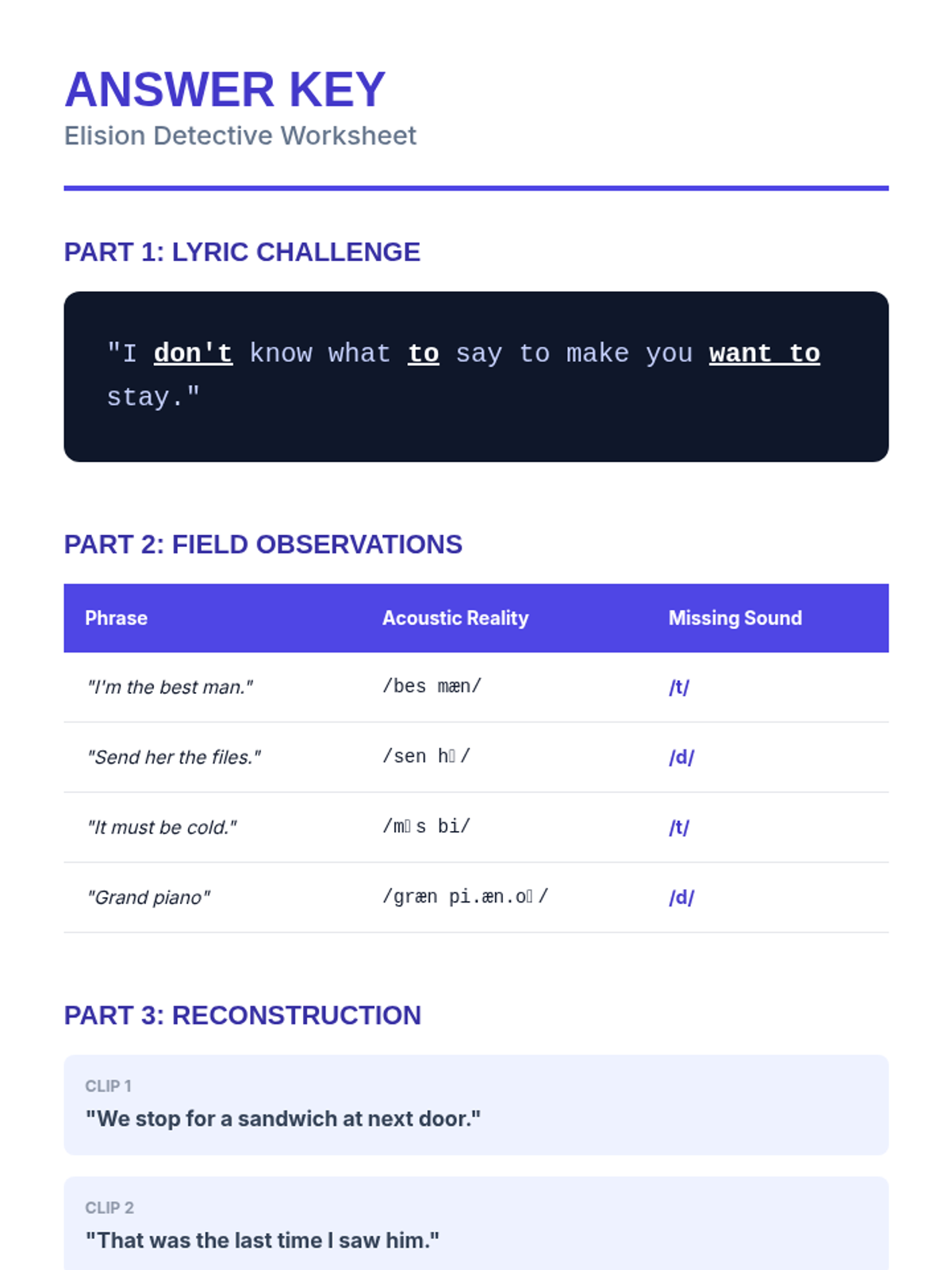
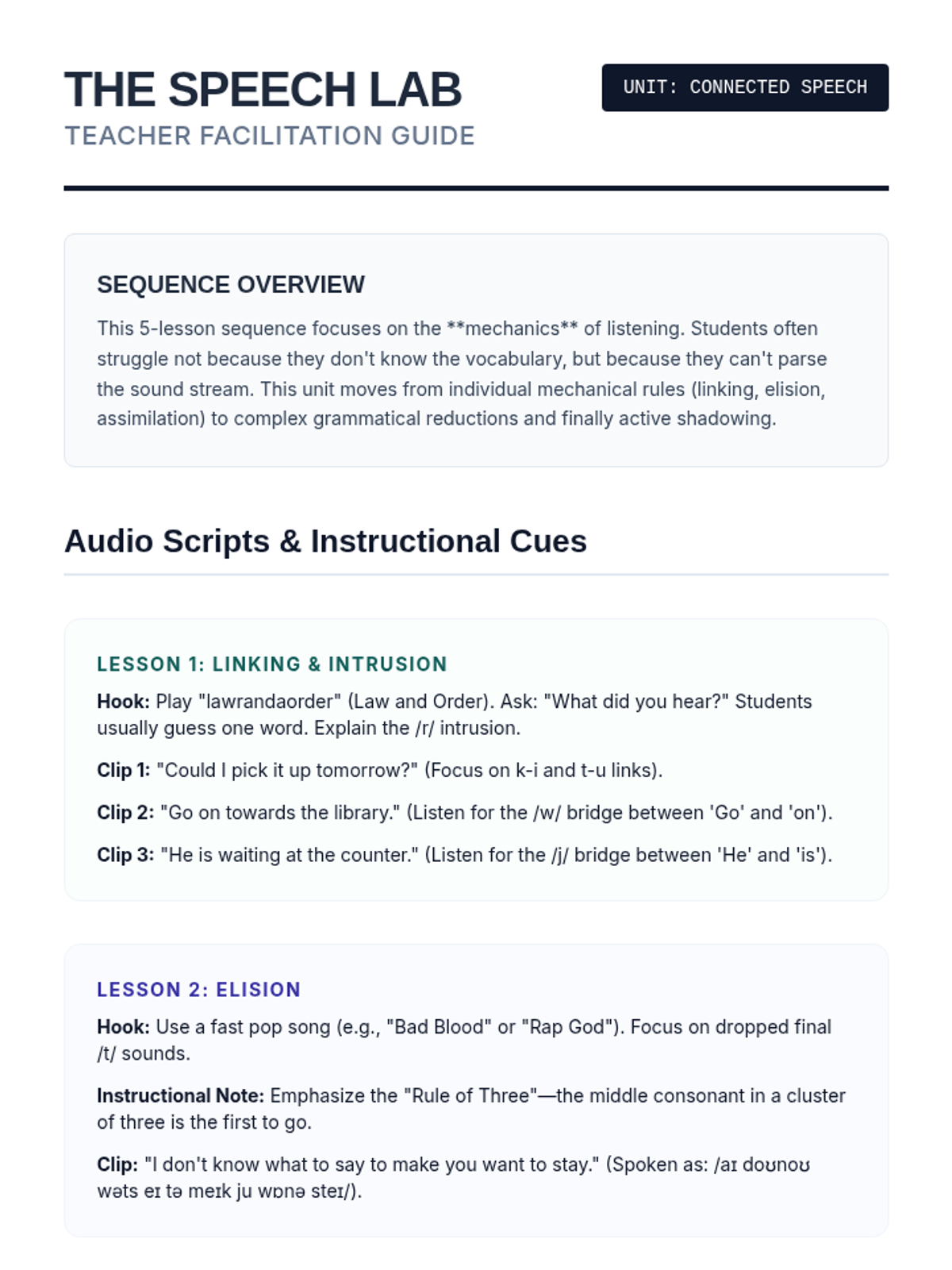
This lesson covers the phenomenon of elision, where sounds (particularly /t/ and /d/) disappear in rapid speech. Students practice listening to high-speed dialogues to identify words that have been 'swallowed' by the speaker.
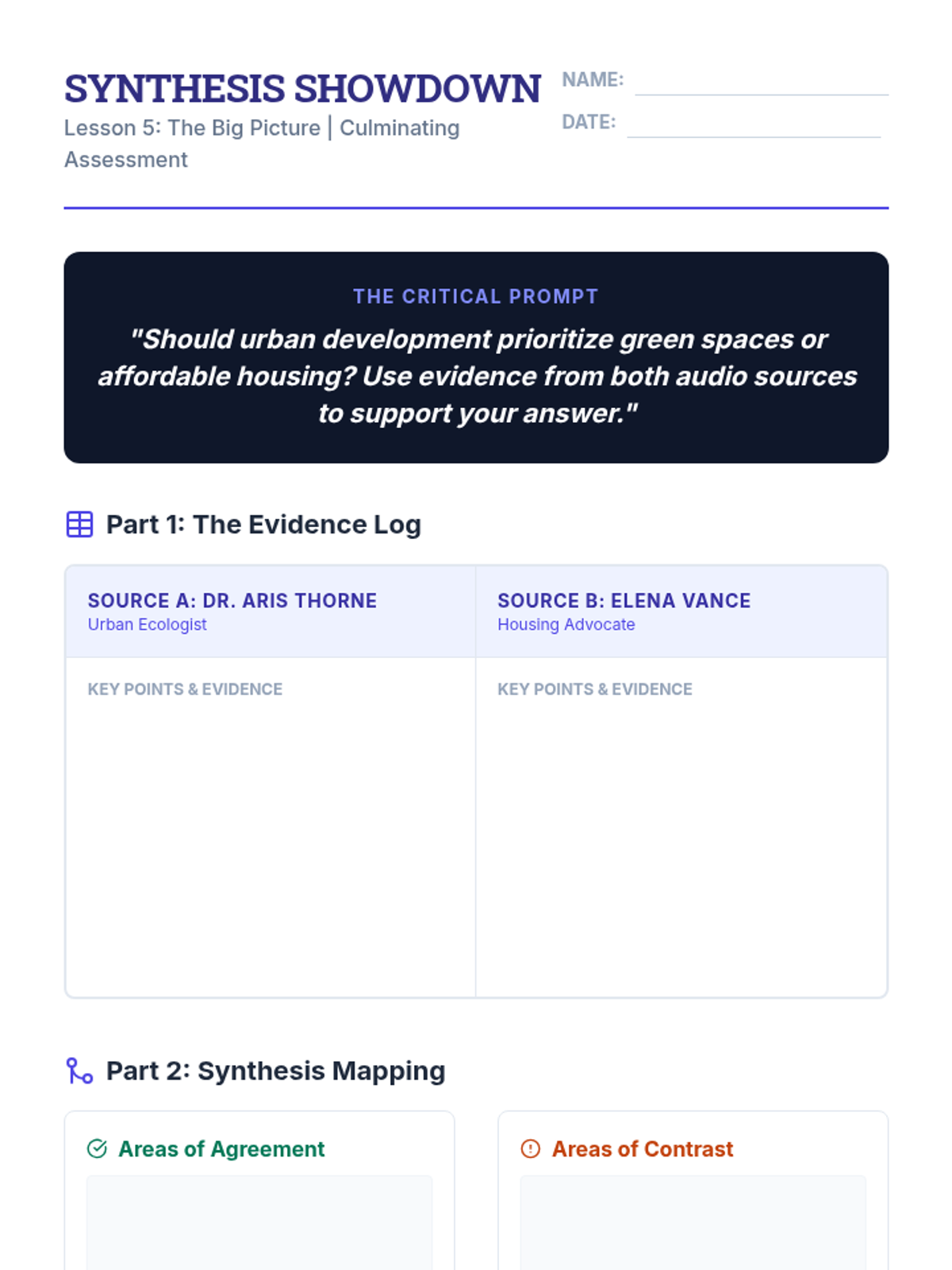
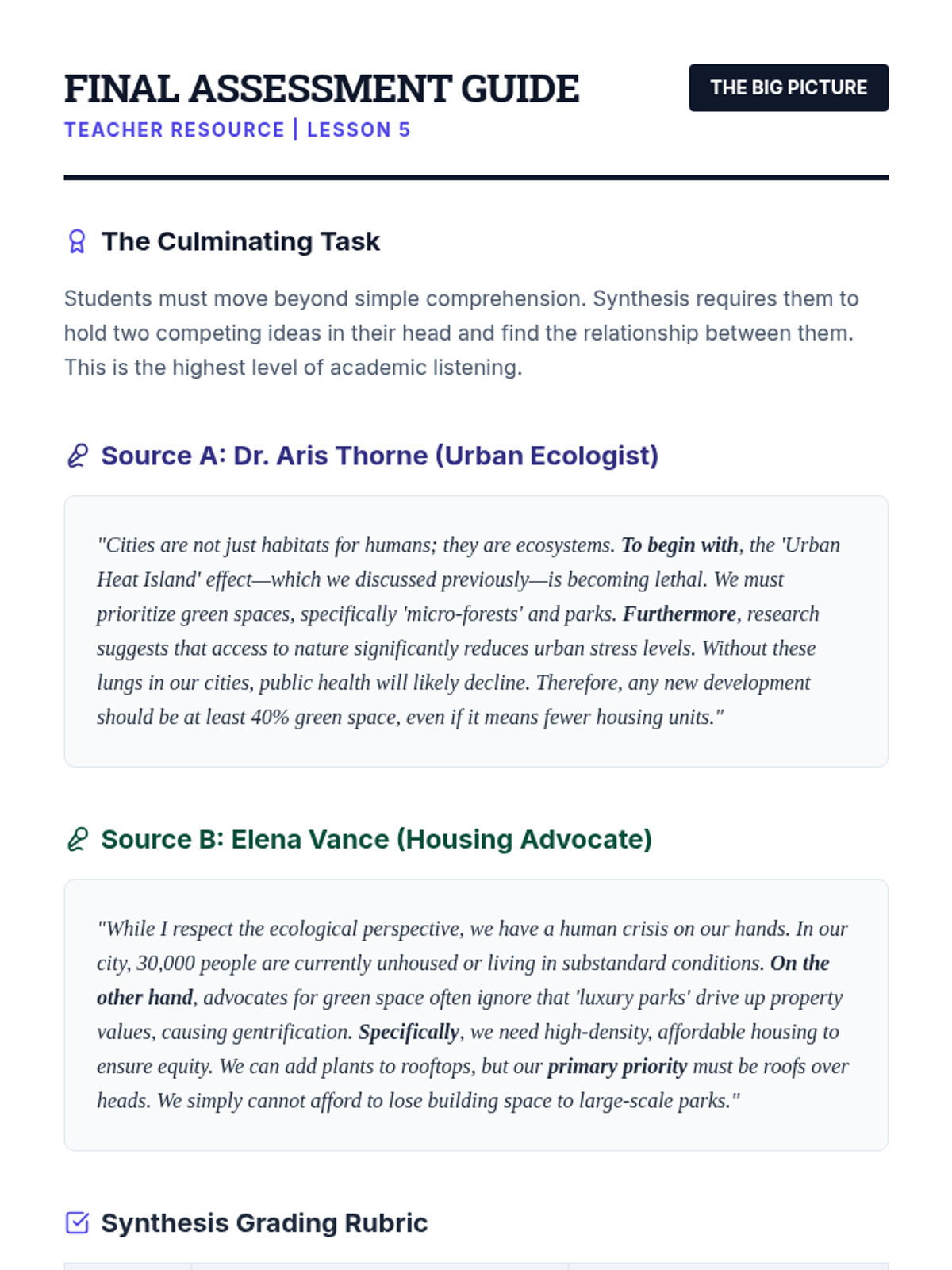
In this culminating lesson, students listen to two contrasting viewpoints on a single global issue. They must synthesize the information to answer a prompt, citing specific details from both audio sources to support their conclusion.
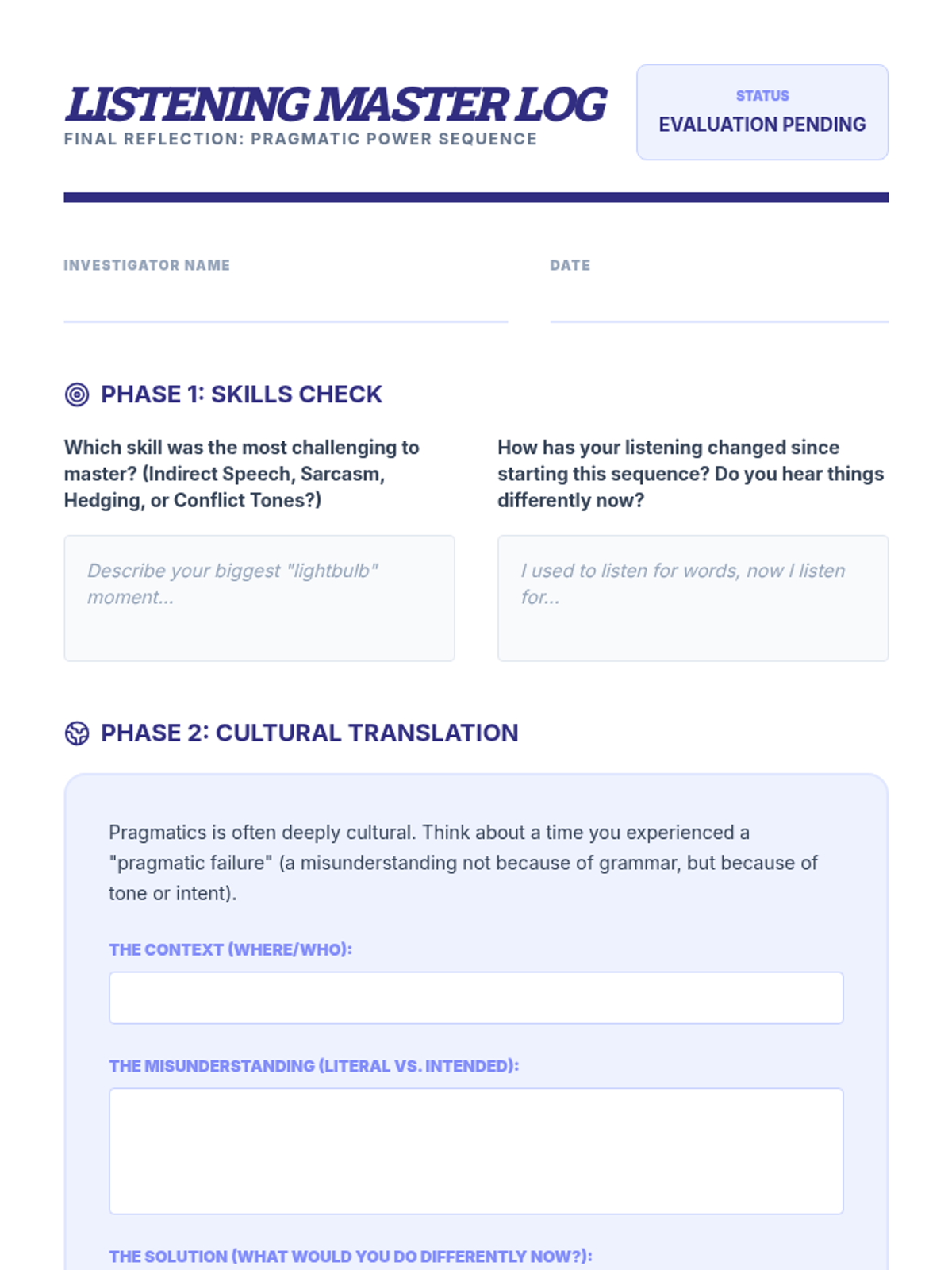
An exploration of how cultural backgrounds influence communication styles, focusing on silence, interruption, and pragmatic markers.
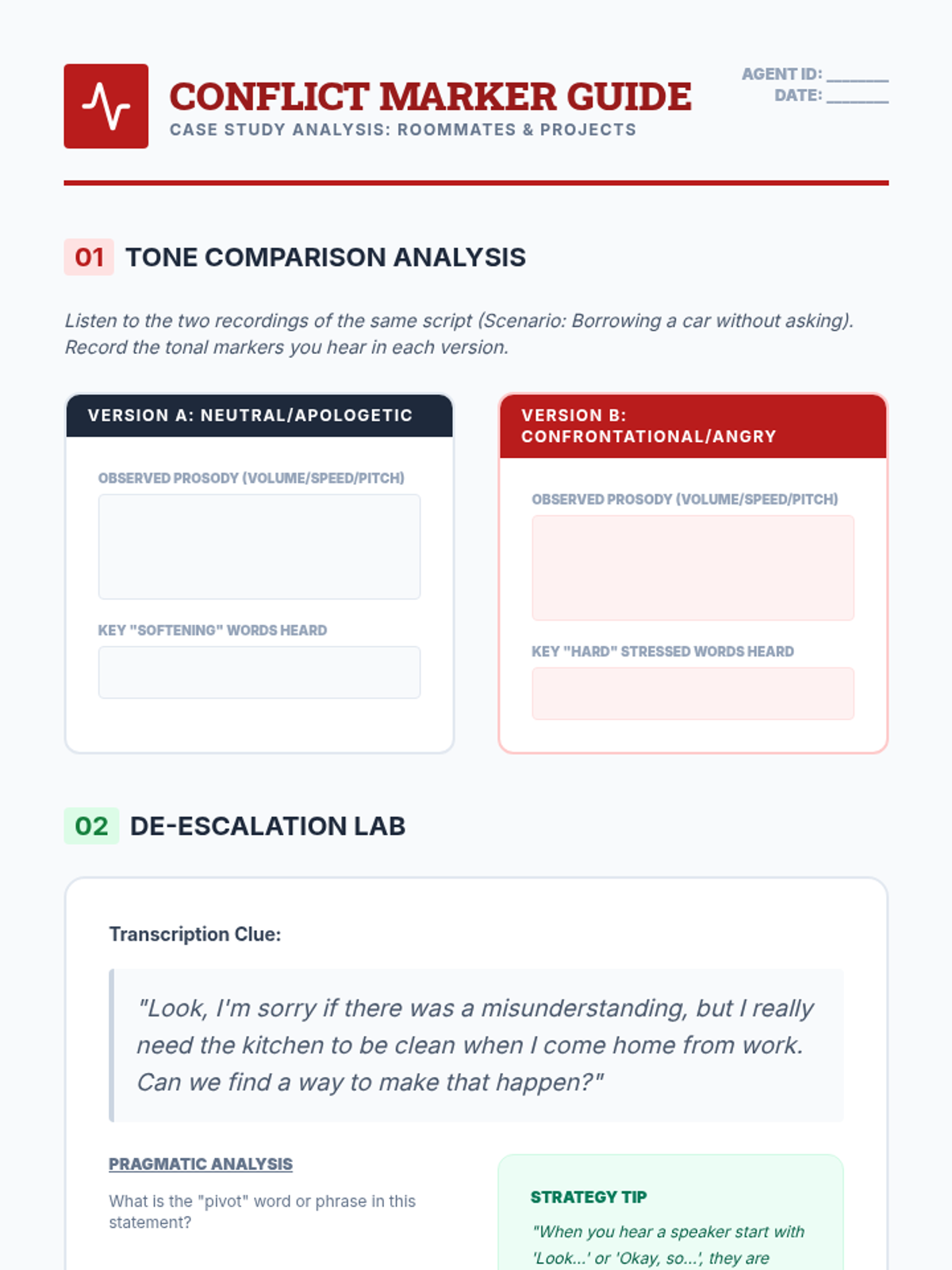
Students analyze tone in high-stakes social interactions, identifying markers of escalation, de-escalation, and negotiation in conflict scenarios.
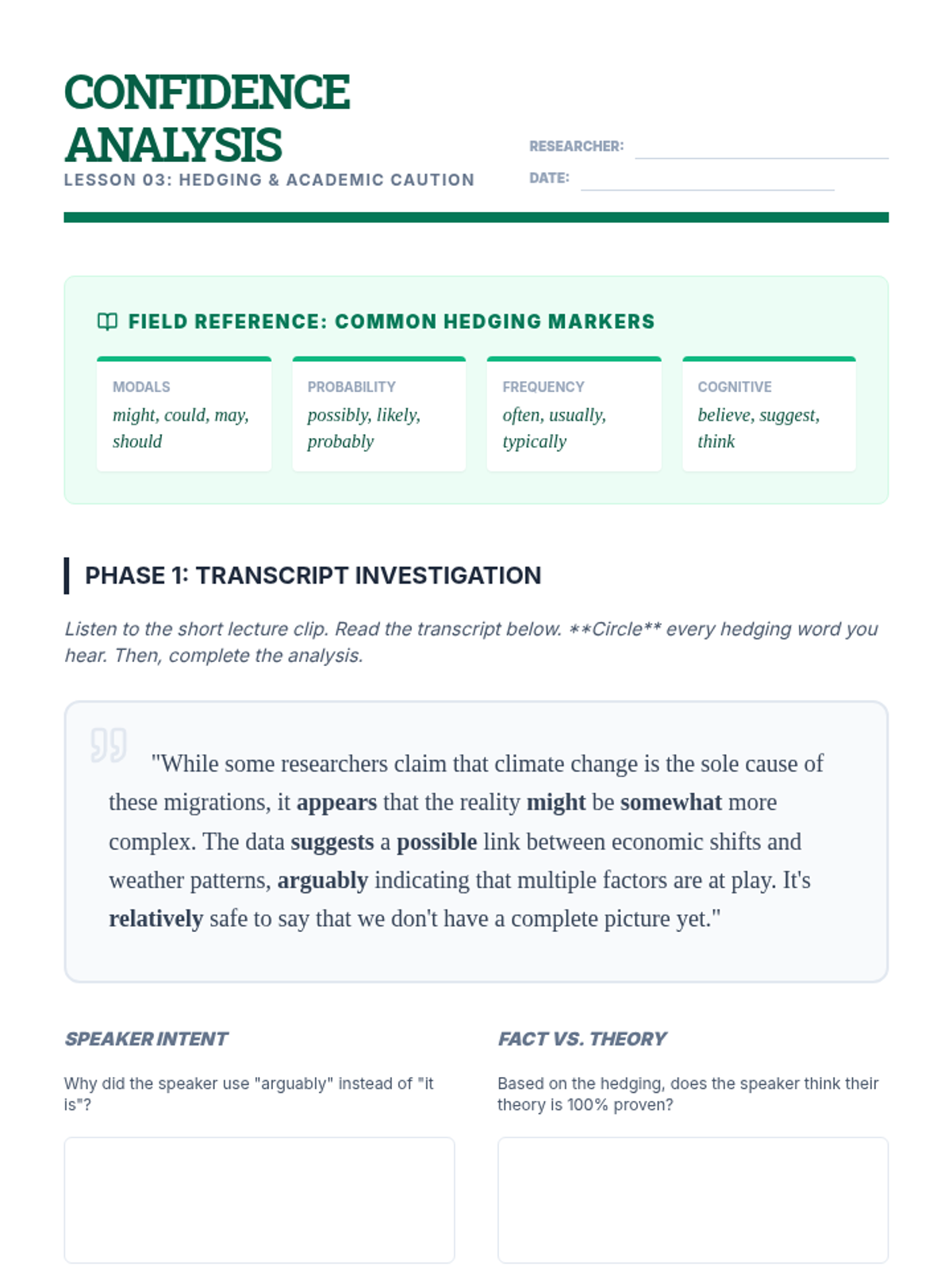
Students learn to identify hedging language (e.g., 'somewhat', 'it appears') to gauge a speaker's confidence and distinguish between facts and cautious opinions.
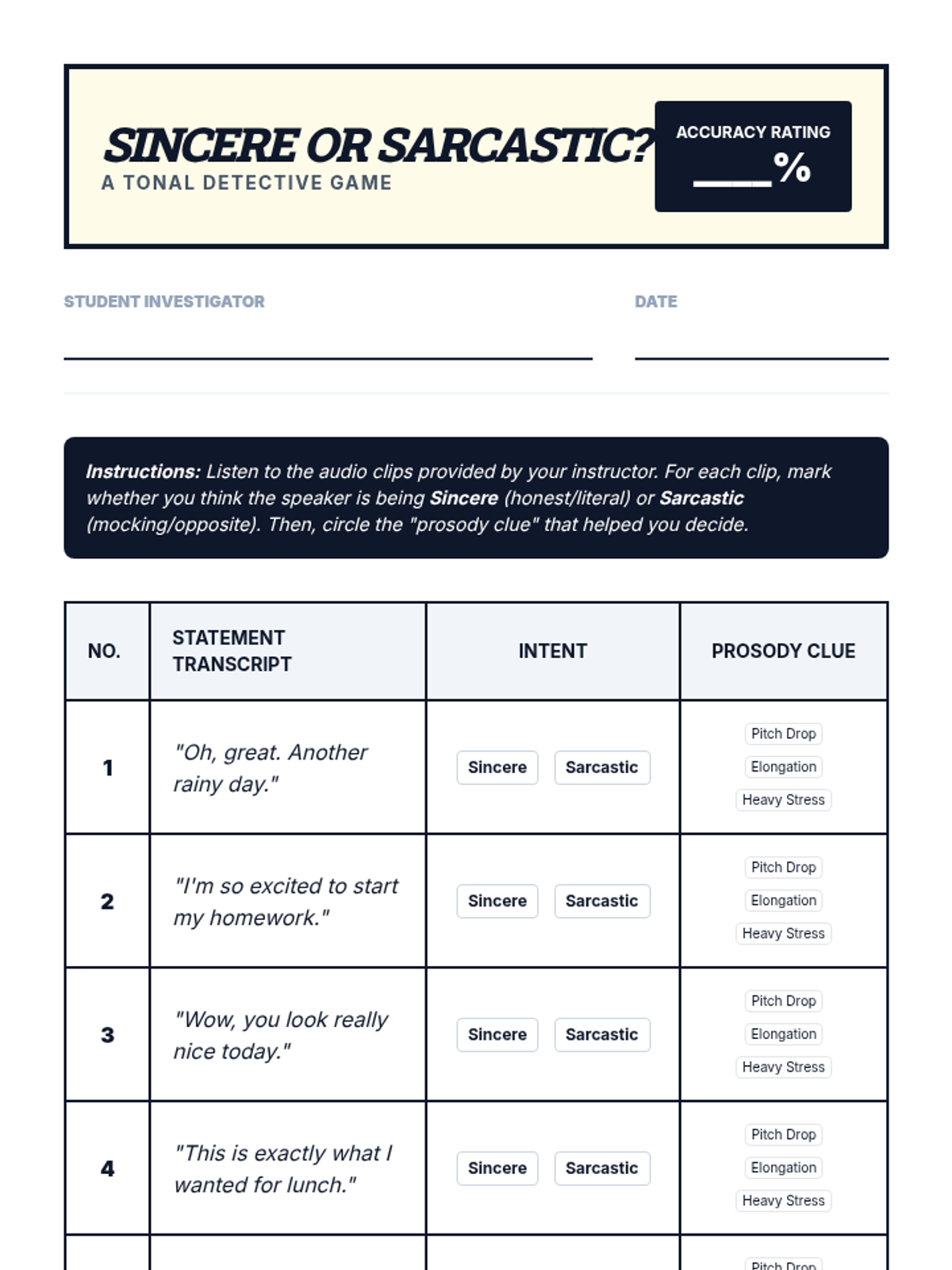
This lesson focuses on identifying sarcasm and irony through prosody, pitch, and context clues, helping students avoid literal misinterpretations.
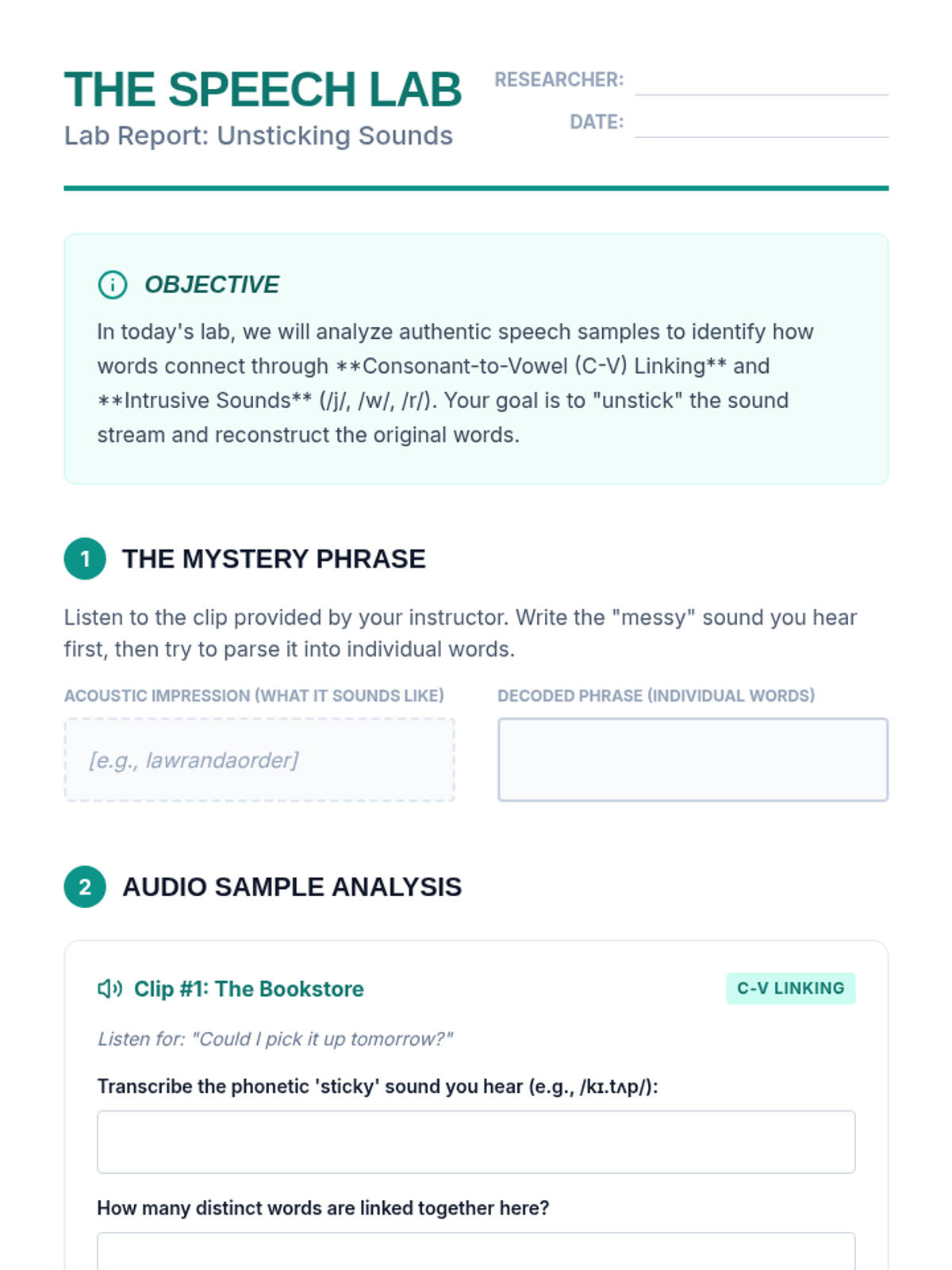
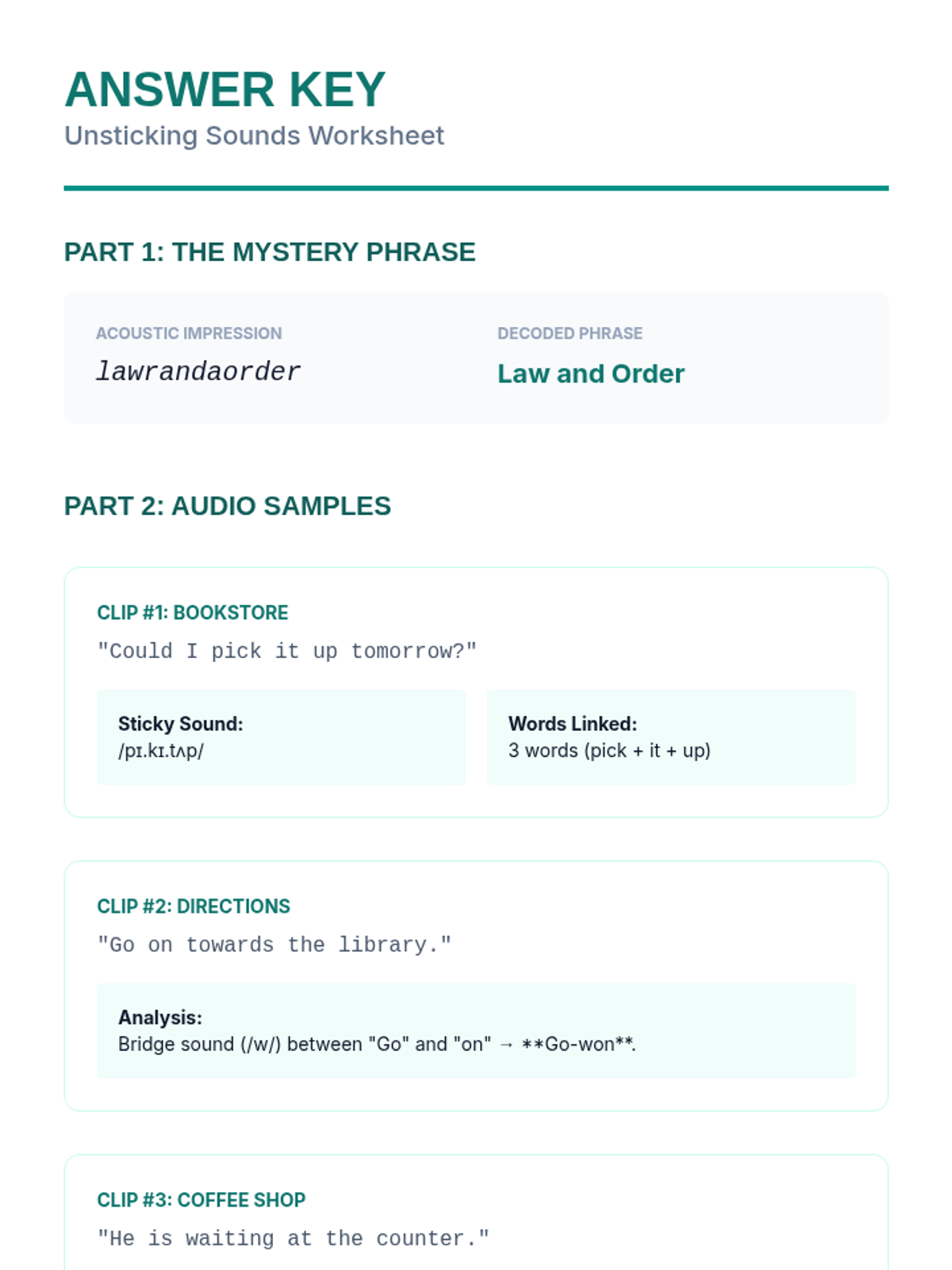
Students investigate how words flow together in natural speech, specifically focusing on consonant-vowel linking and intrusive sounds (/r/, /w/, /j/). They analyze audio samples to 'unstick' connected words.