Complex grammar structures, idiomatic expressions, and phrasal verbs. Strengthens reading and listening comprehension while building conversational fluency for varied social and professional settings.
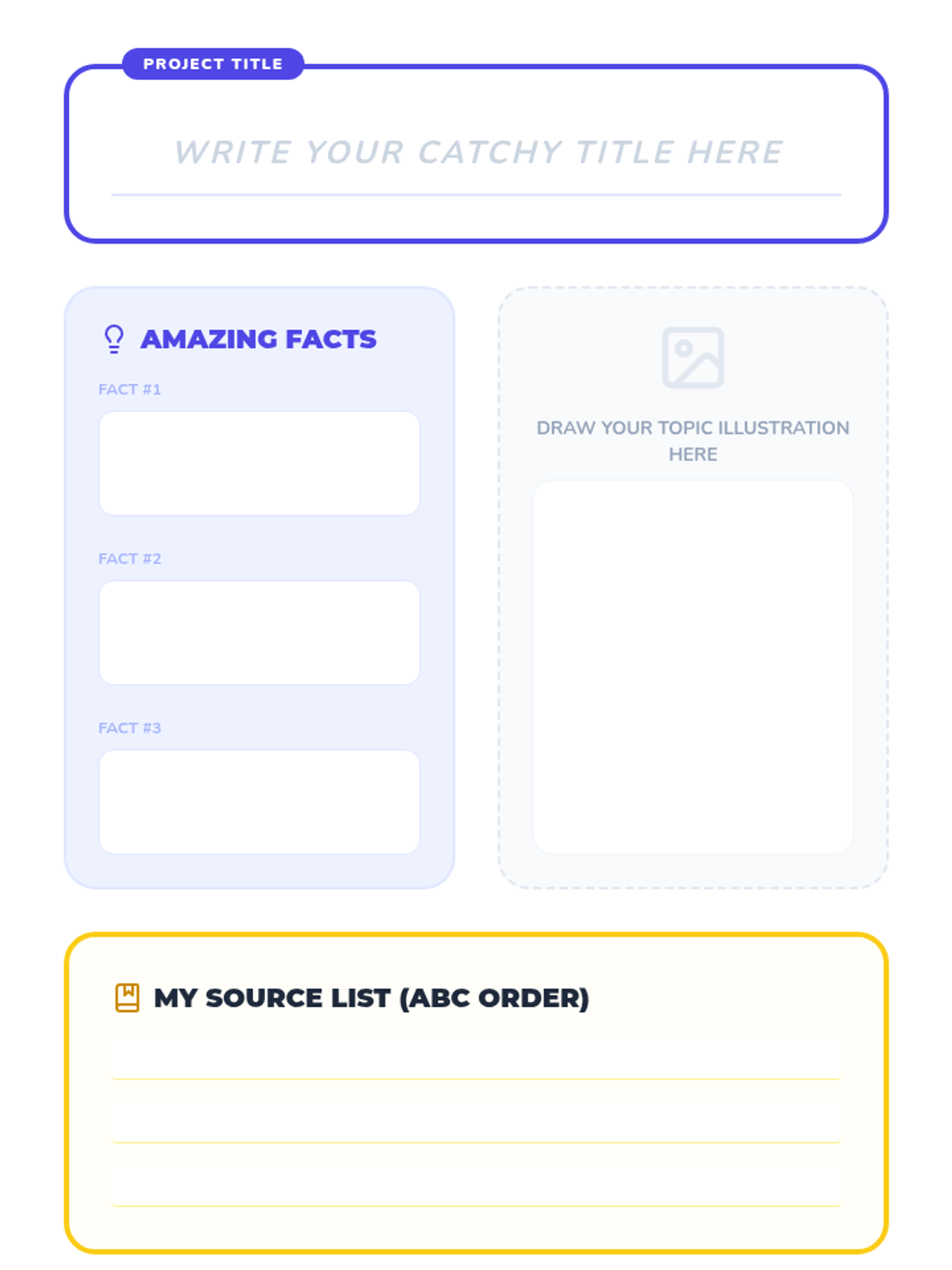
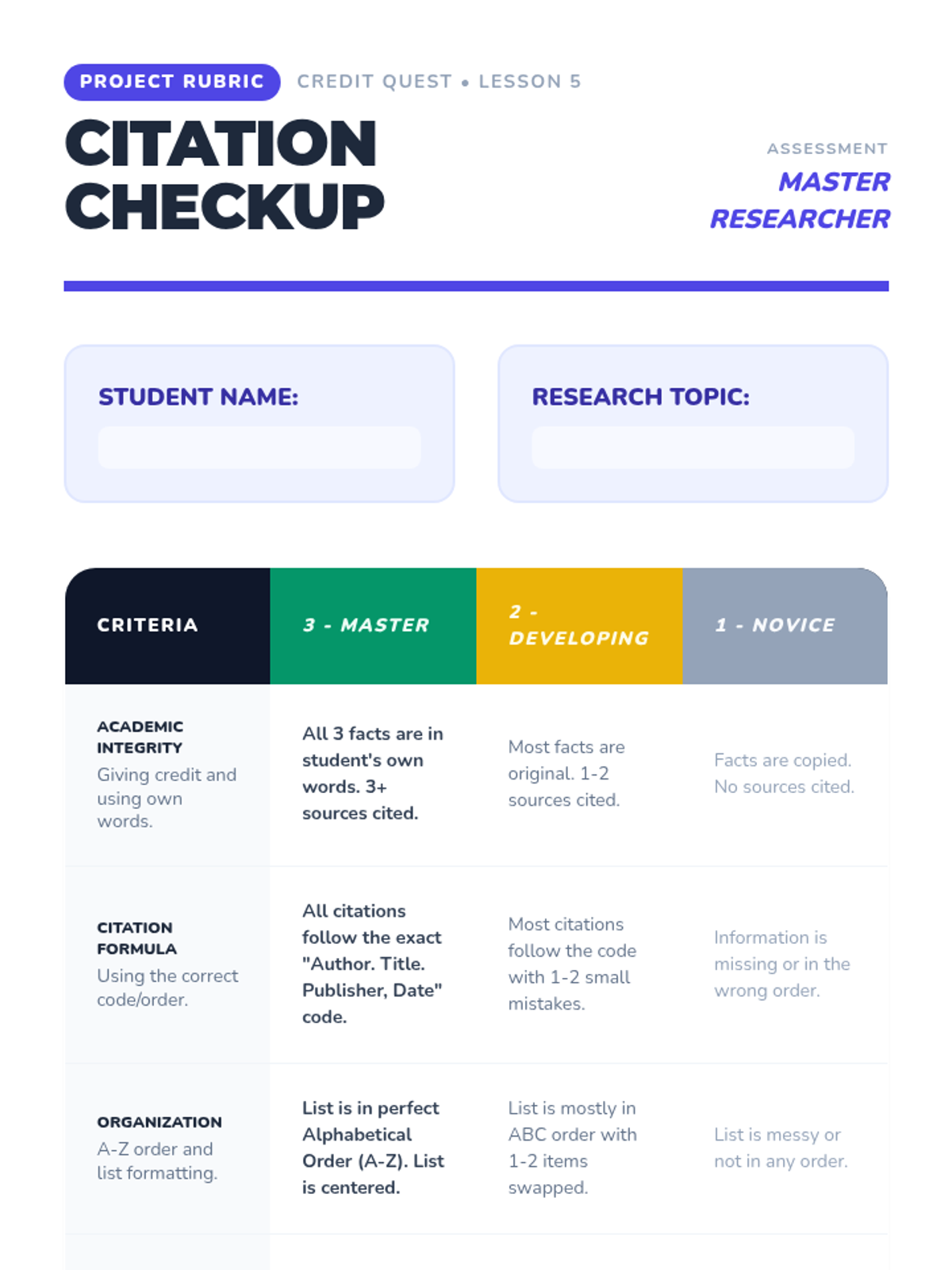
Students create a mini-research poster on a topic of their choice. They apply their knowledge by including three facts and a correctly formatted, alphabetized bibliography with at least three sources. The lesson includes a gallery walk for peer feedback.
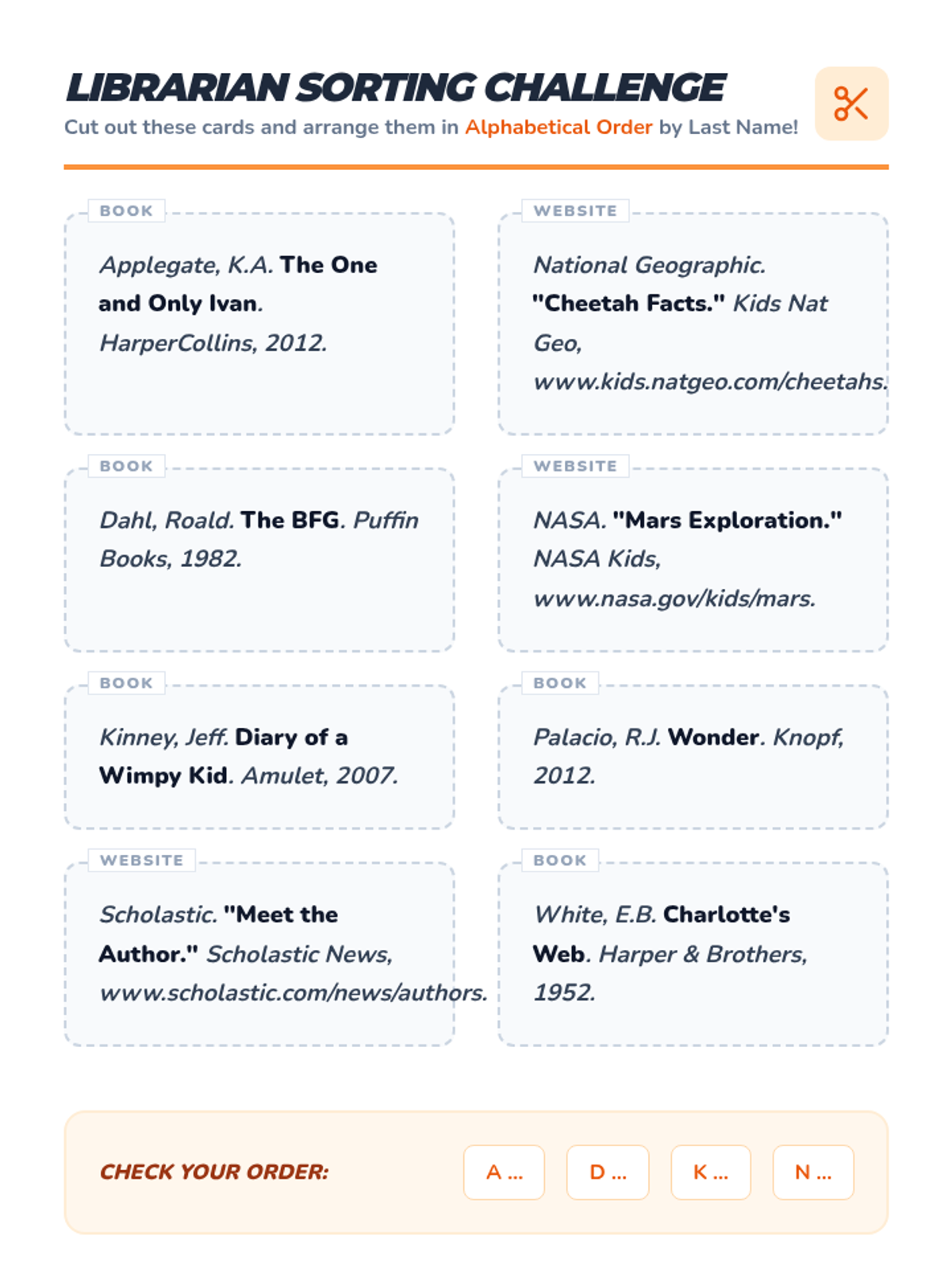
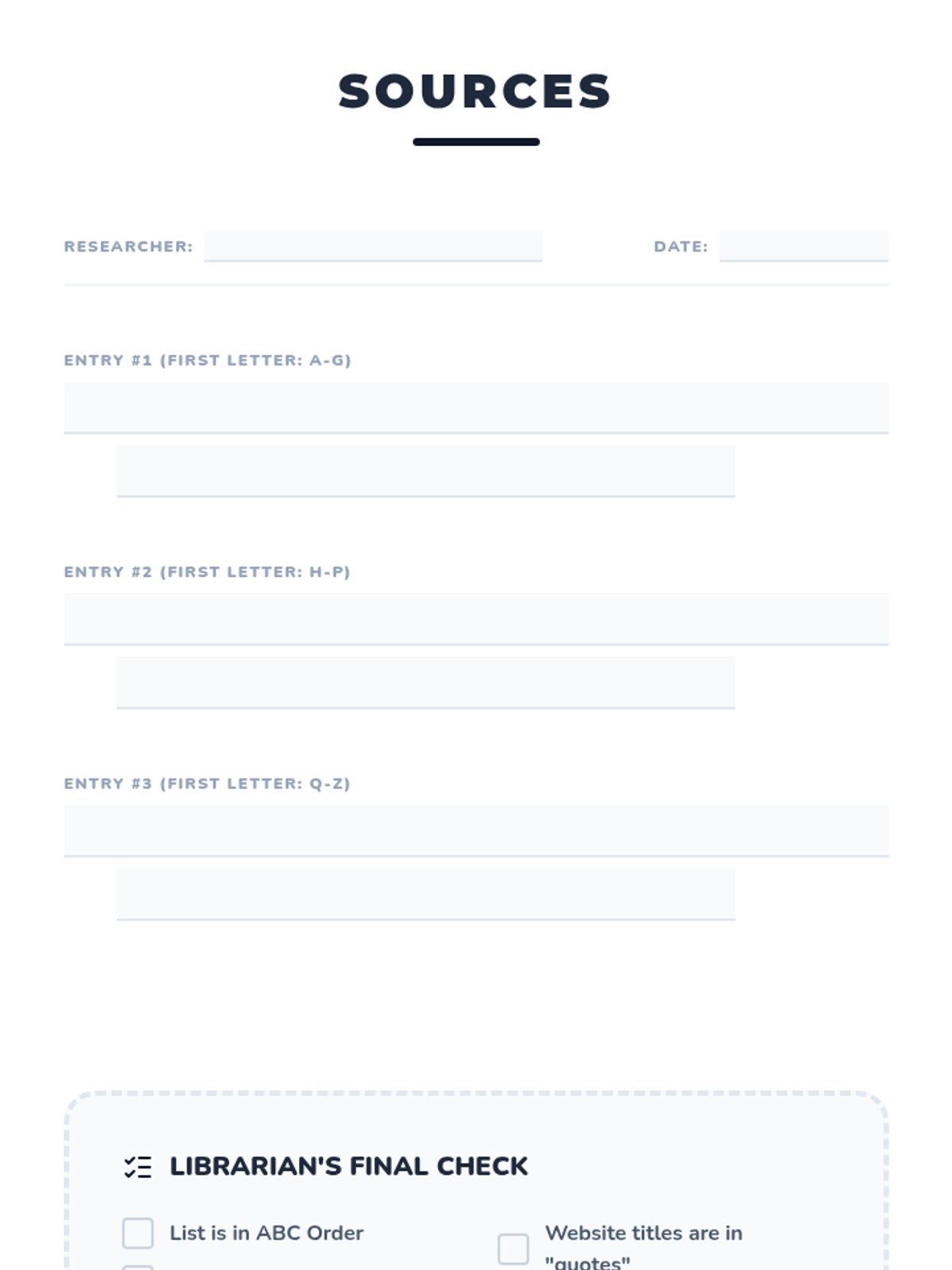
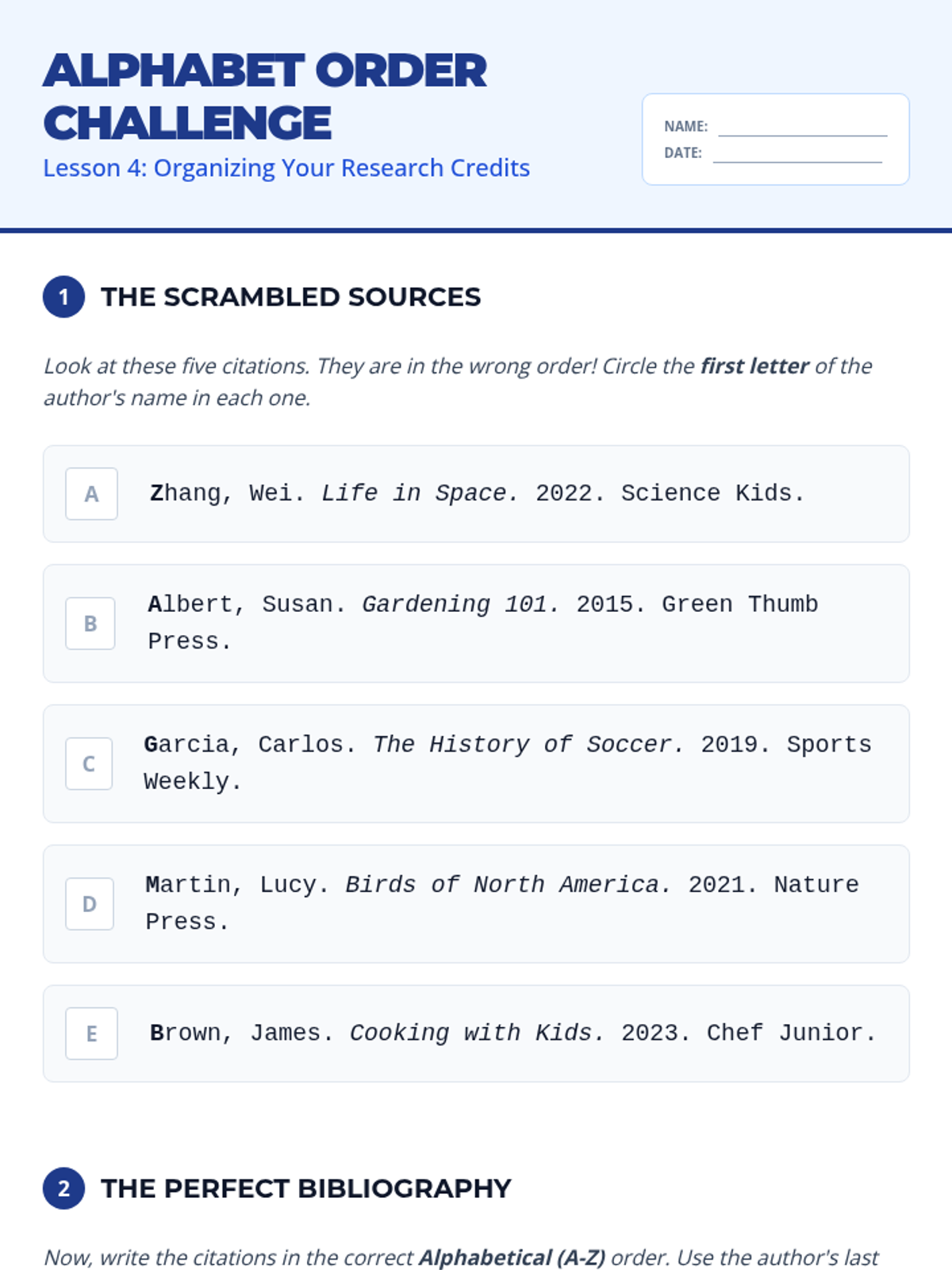
Students learn how to organize individual citations into a list, emphasizing alphabetical order. They practice formatting a simple bibliography page using citations generated in previous lessons. This prepares them for the final structural requirement of research papers.
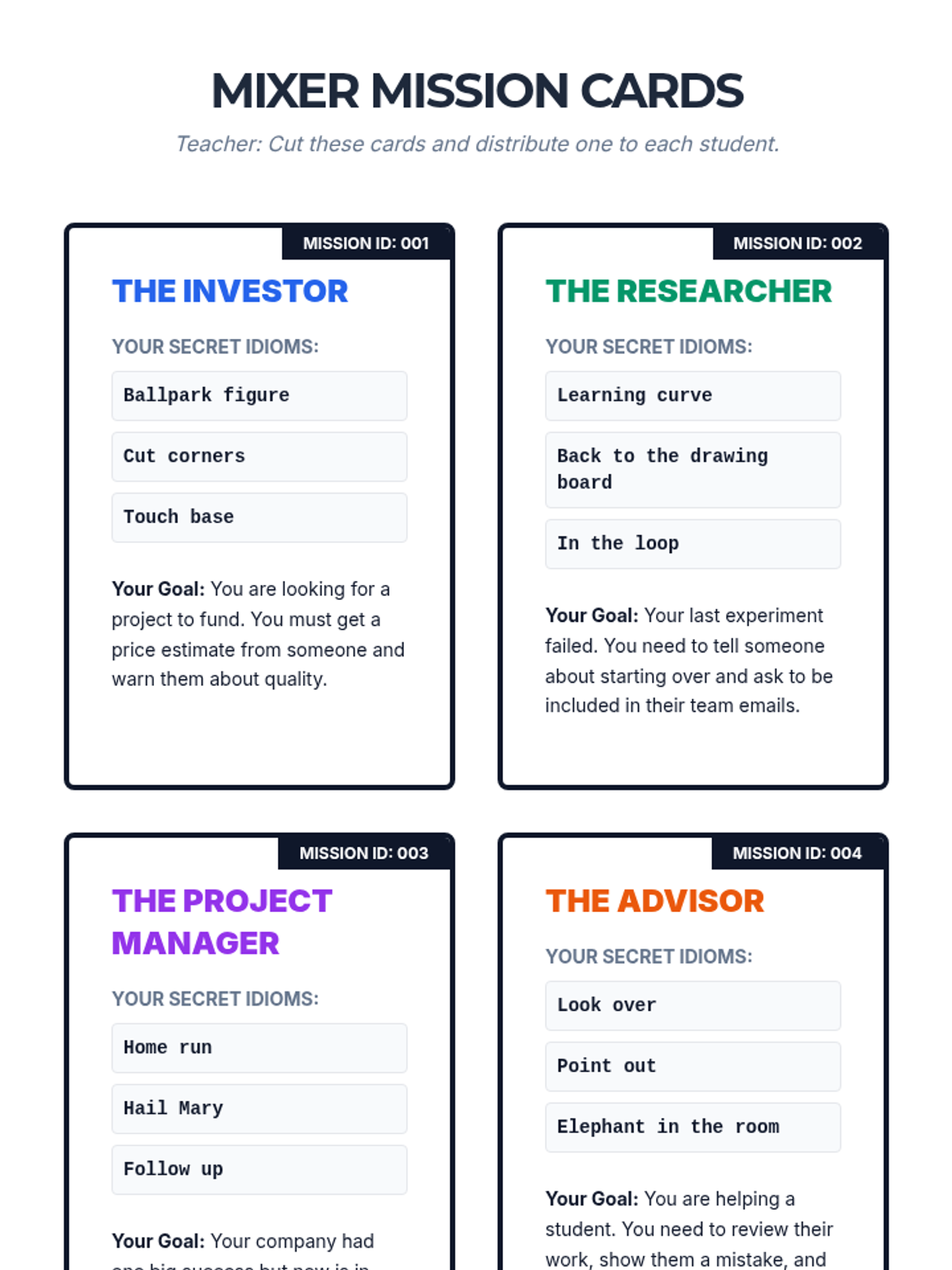
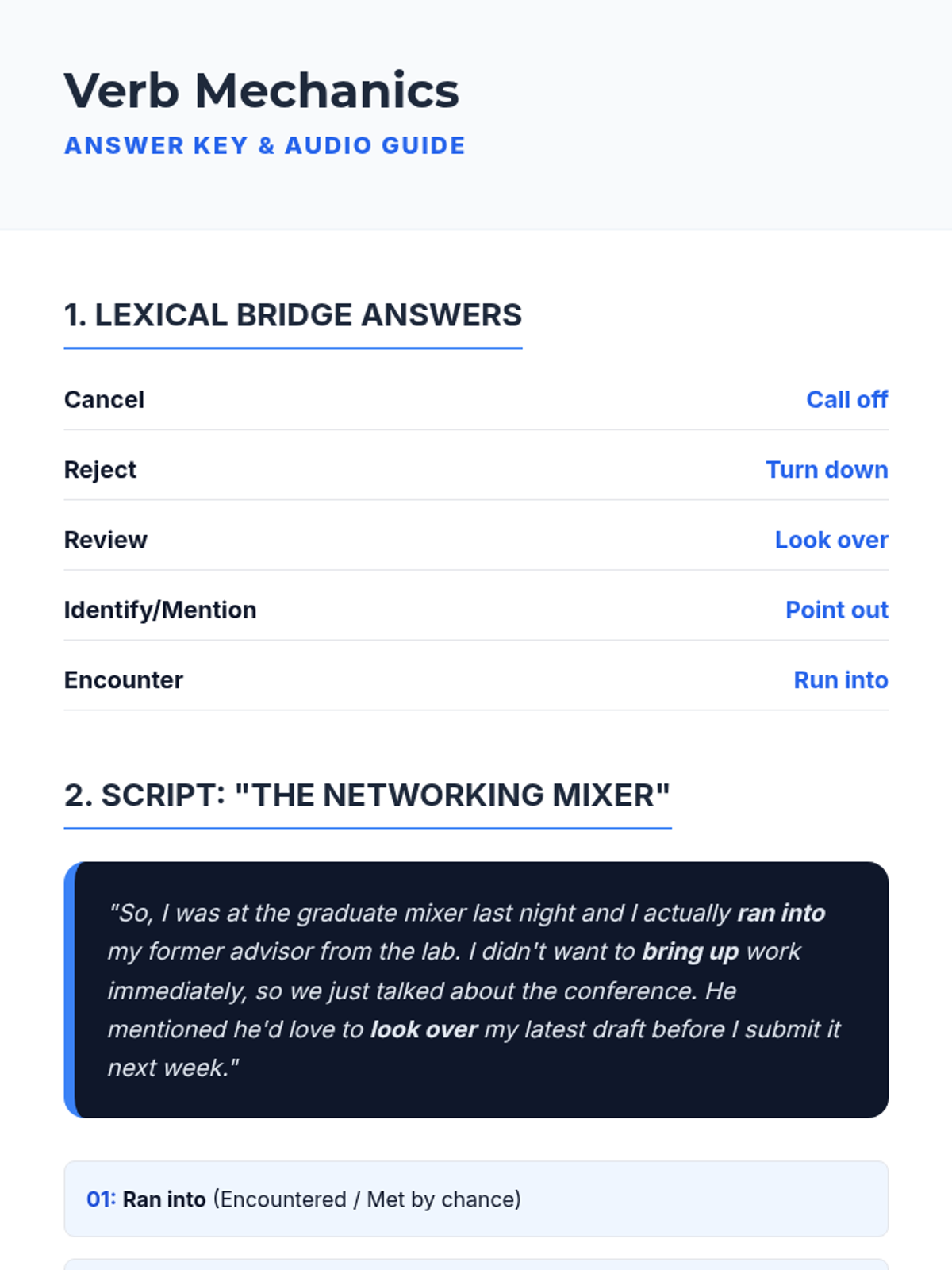
A high-stakes simulated networking mixer where students must apply their knowledge of idioms, phrasal verbs, and social listening to complete specific "missions."
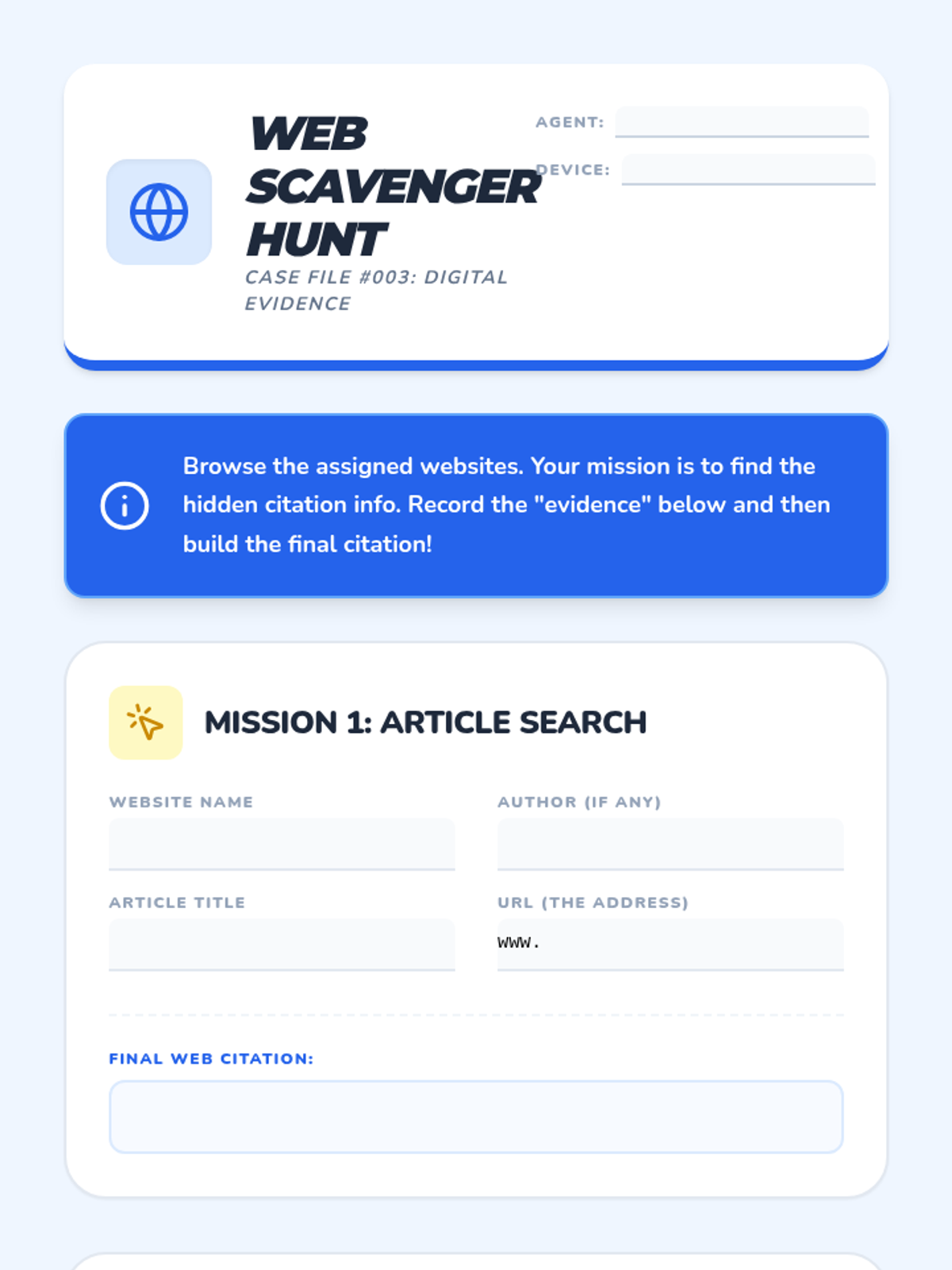
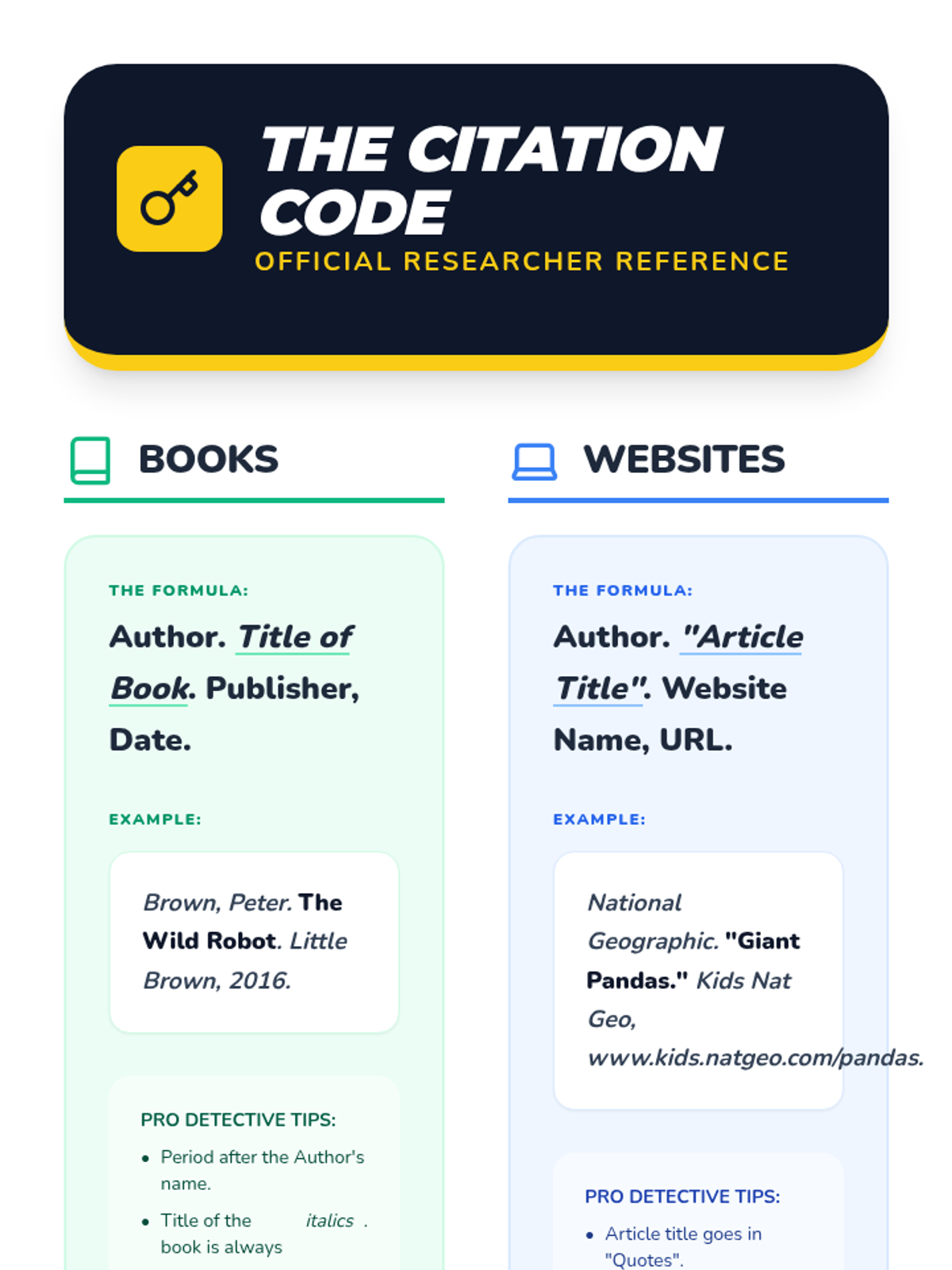
Students learn how to find citation information on websites, which is often harder to locate. They practice finding the URL, site name, and access date. Students compare the differences between book and website citations.
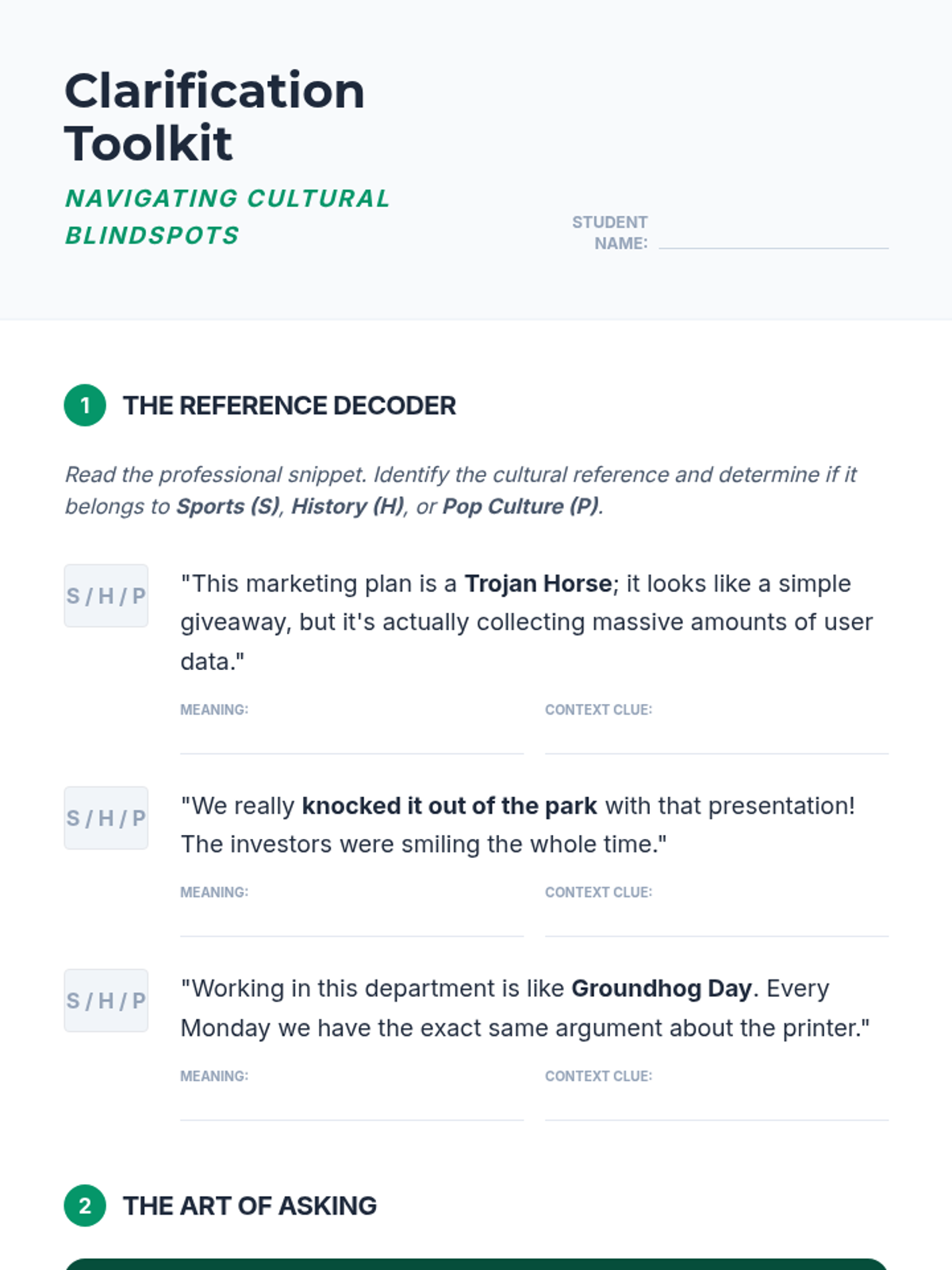
Students analyze how speakers use shorthand references to history, pop culture, and sports to convey complex ideas, and develop strategies for asking for clarification when references are missed.
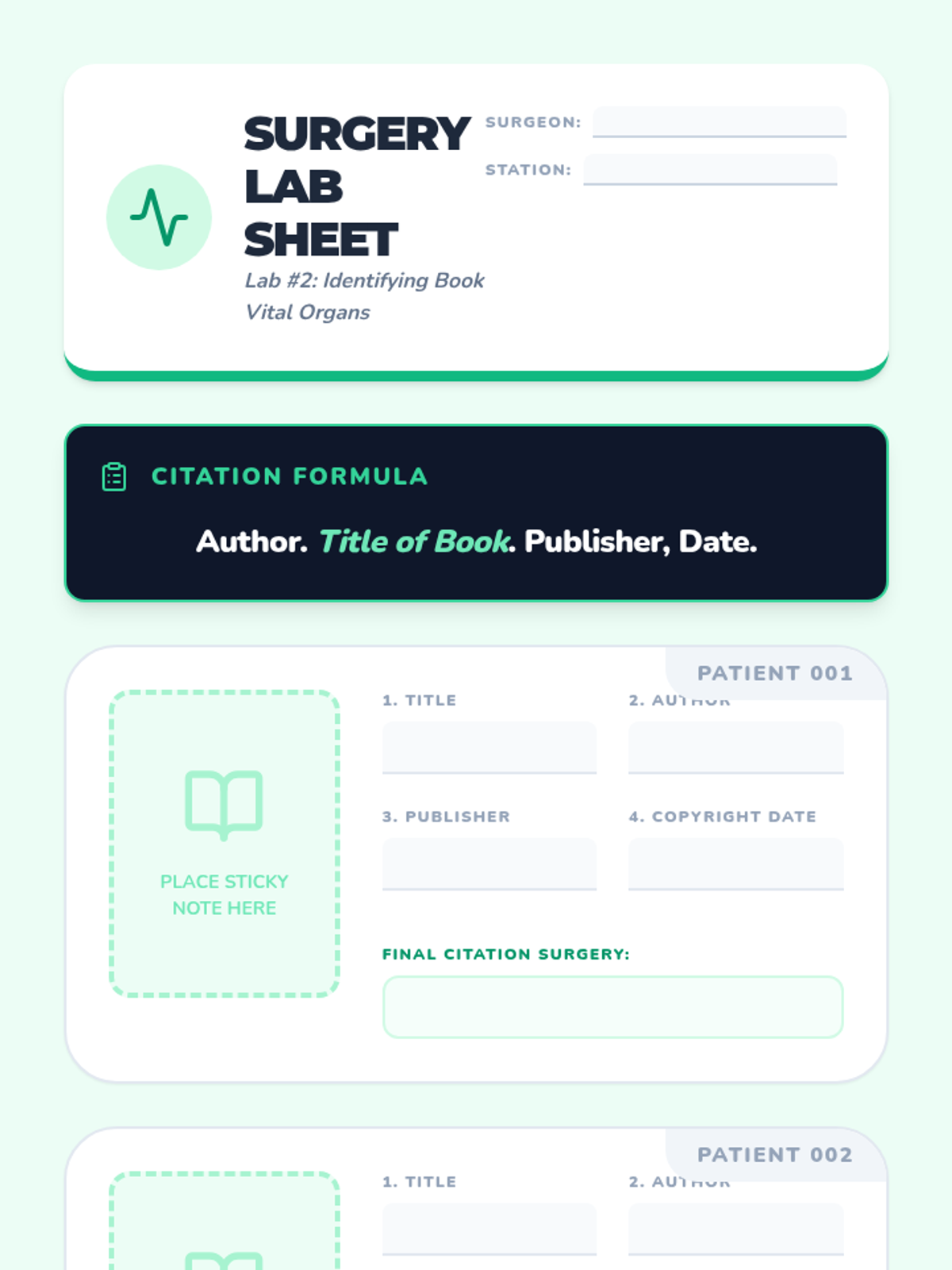
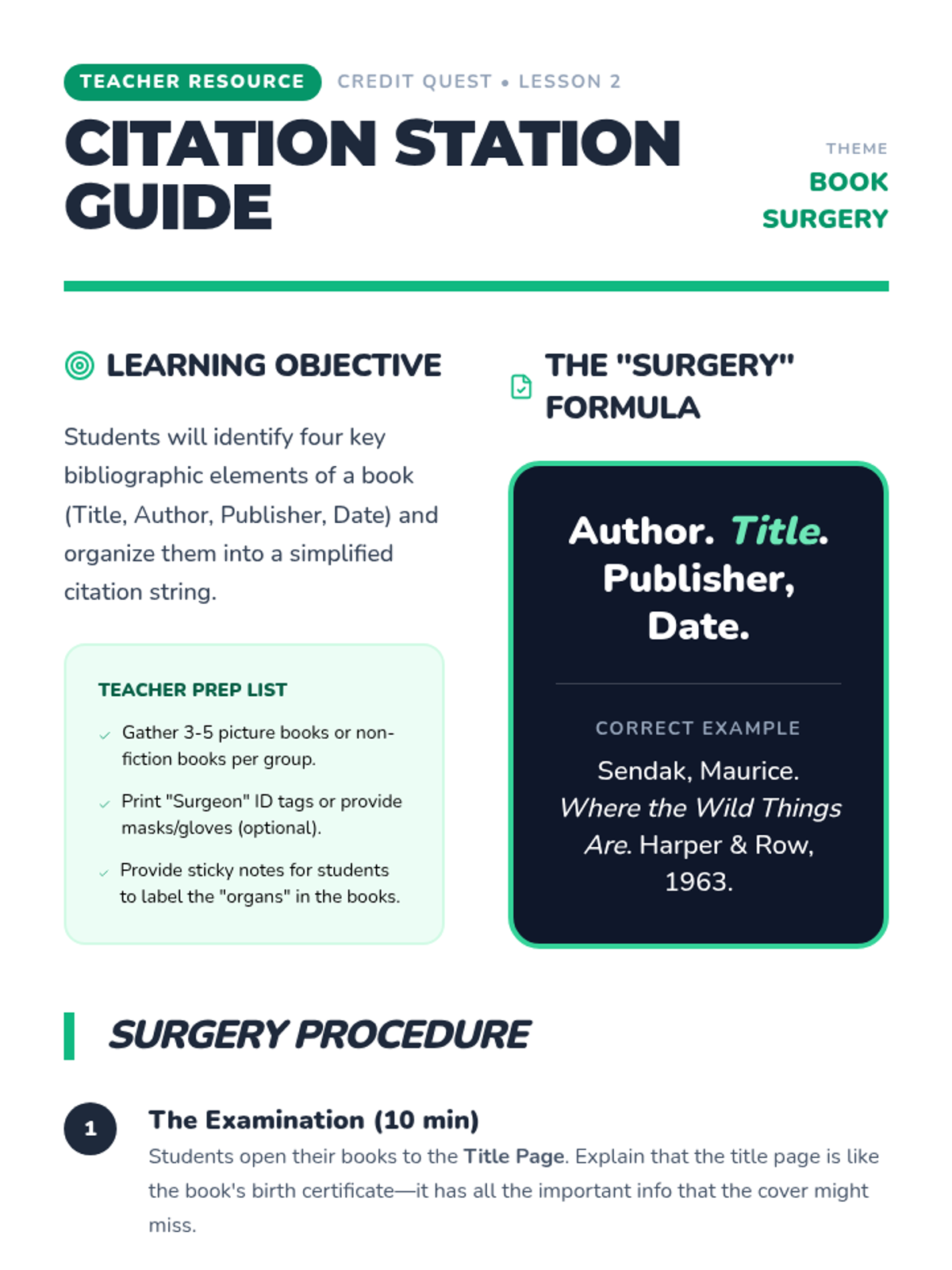
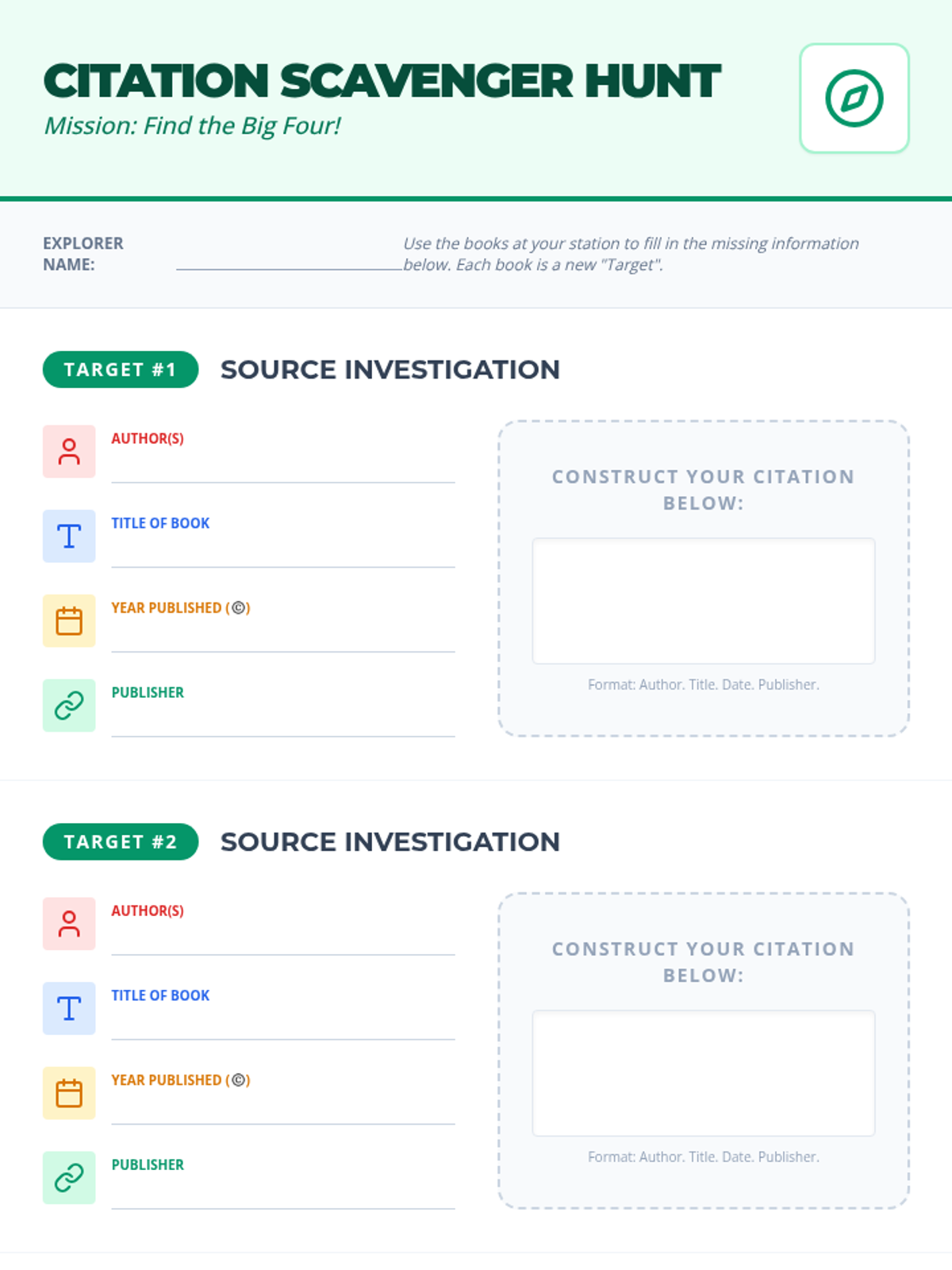
Students handle physical books to locate the title page, author, publisher, and copyright date. They learn a simplified citation format and practice finding bibliographic data.
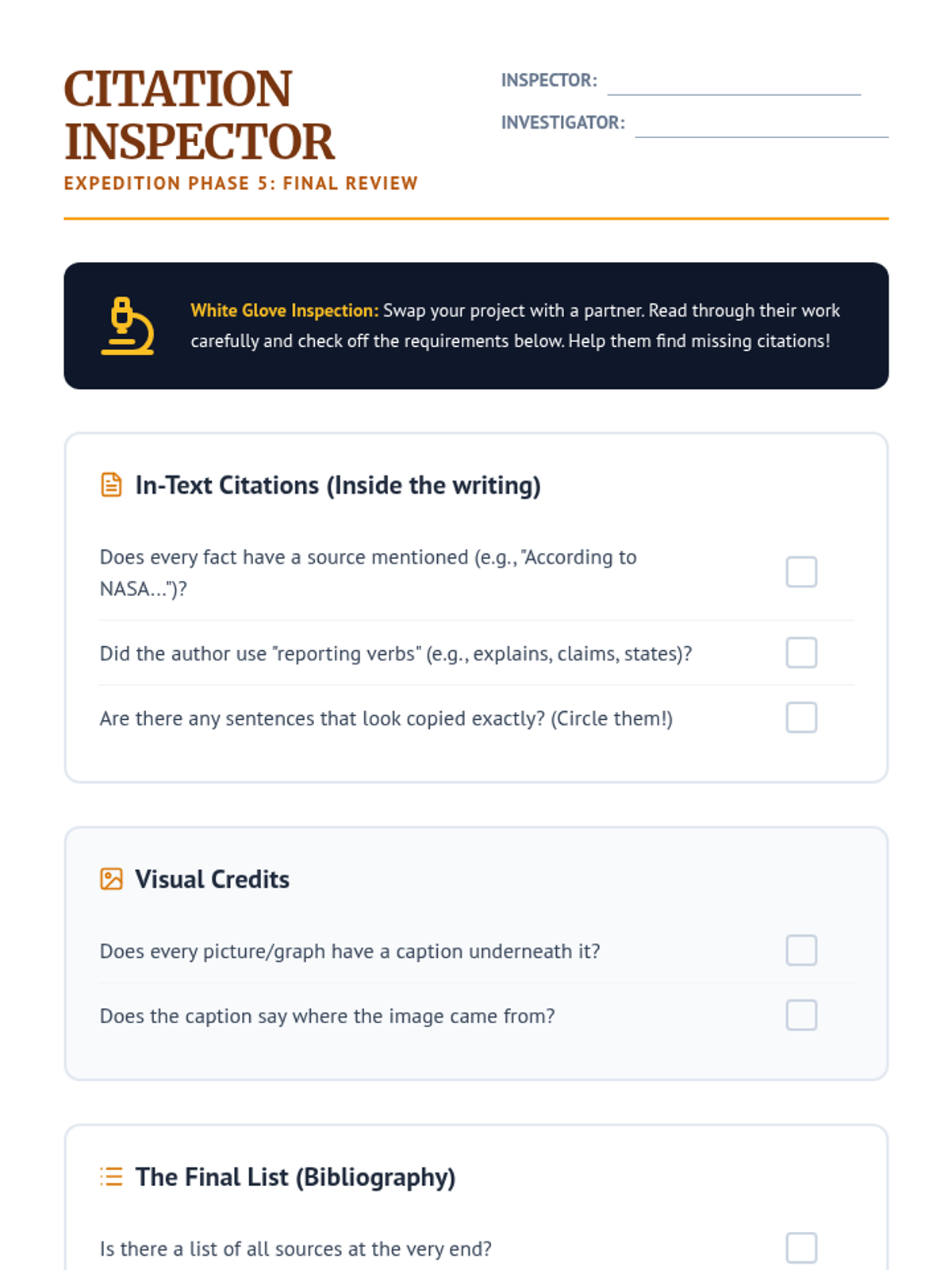
The final stage where students review citations, credit images, and finalize their bibliography for presentation.
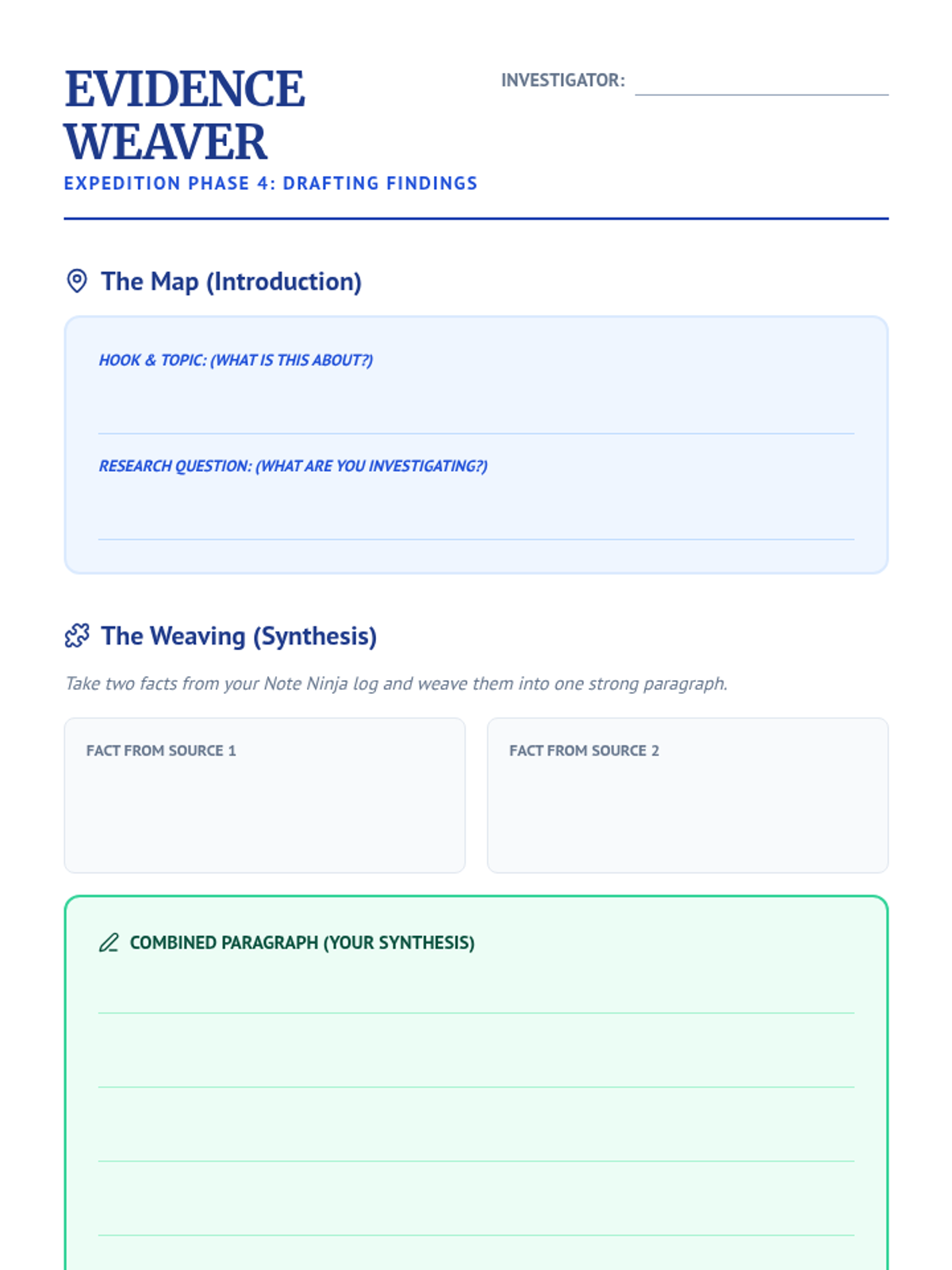
Students synthesize their research notes into a cohesive draft, focusing on using attribution verbs and clear sentence structures.
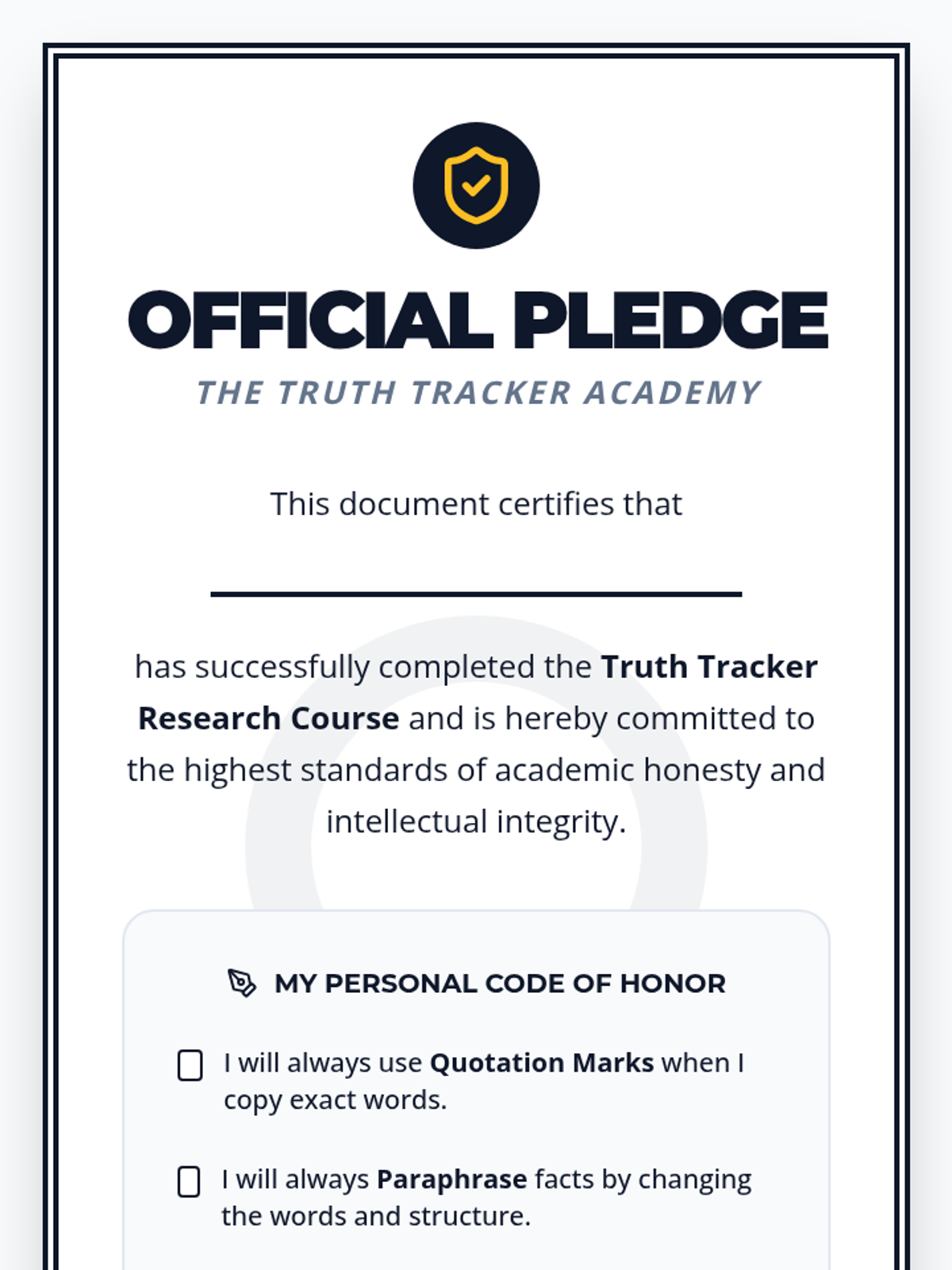
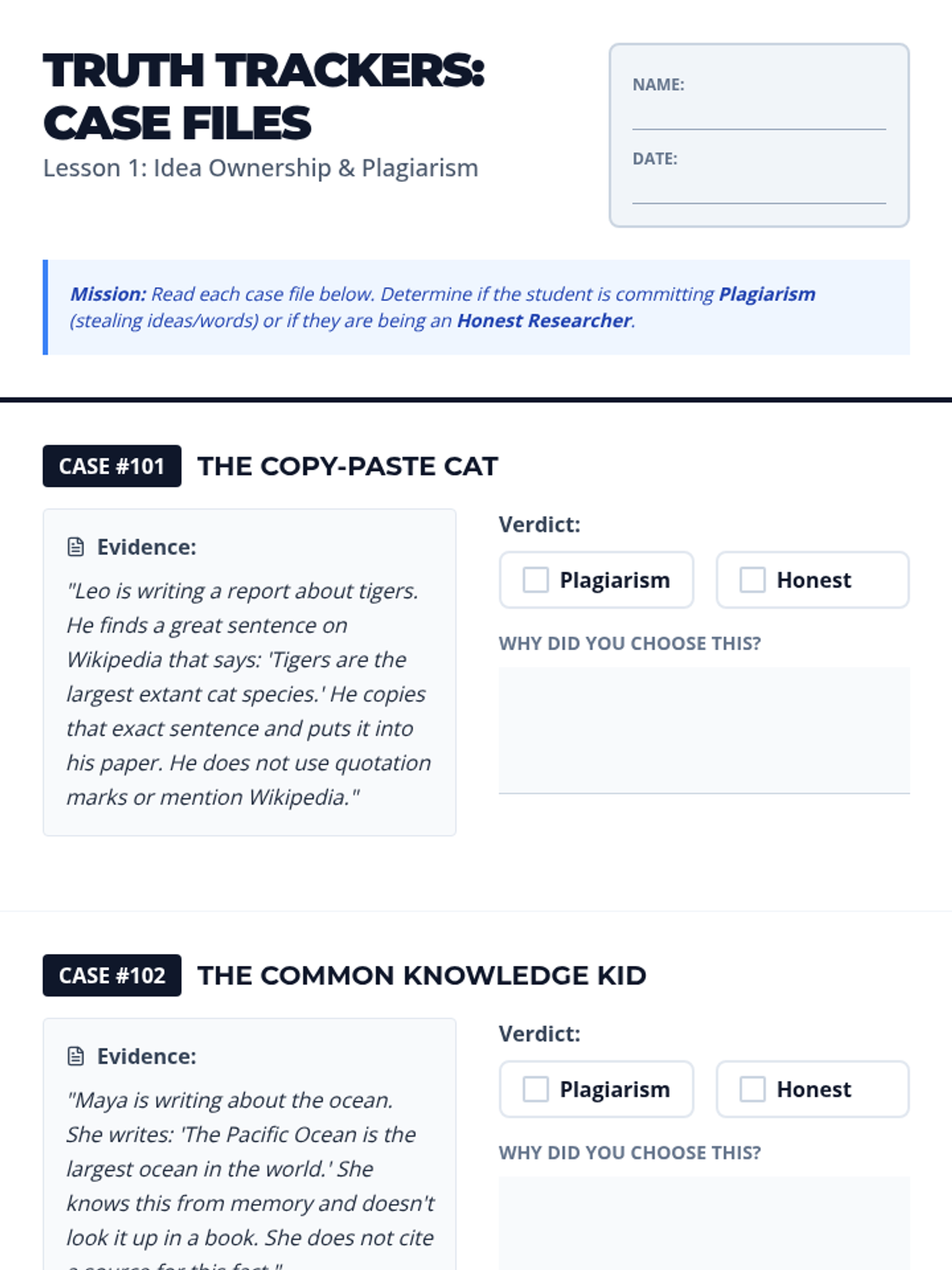
Synthesizes learning through case studies of intentional vs. accidental plagiarism and concludes with an academic integrity pledge.
Teaches students how to compile individual citations into a cohesive, alphabetized reference list.
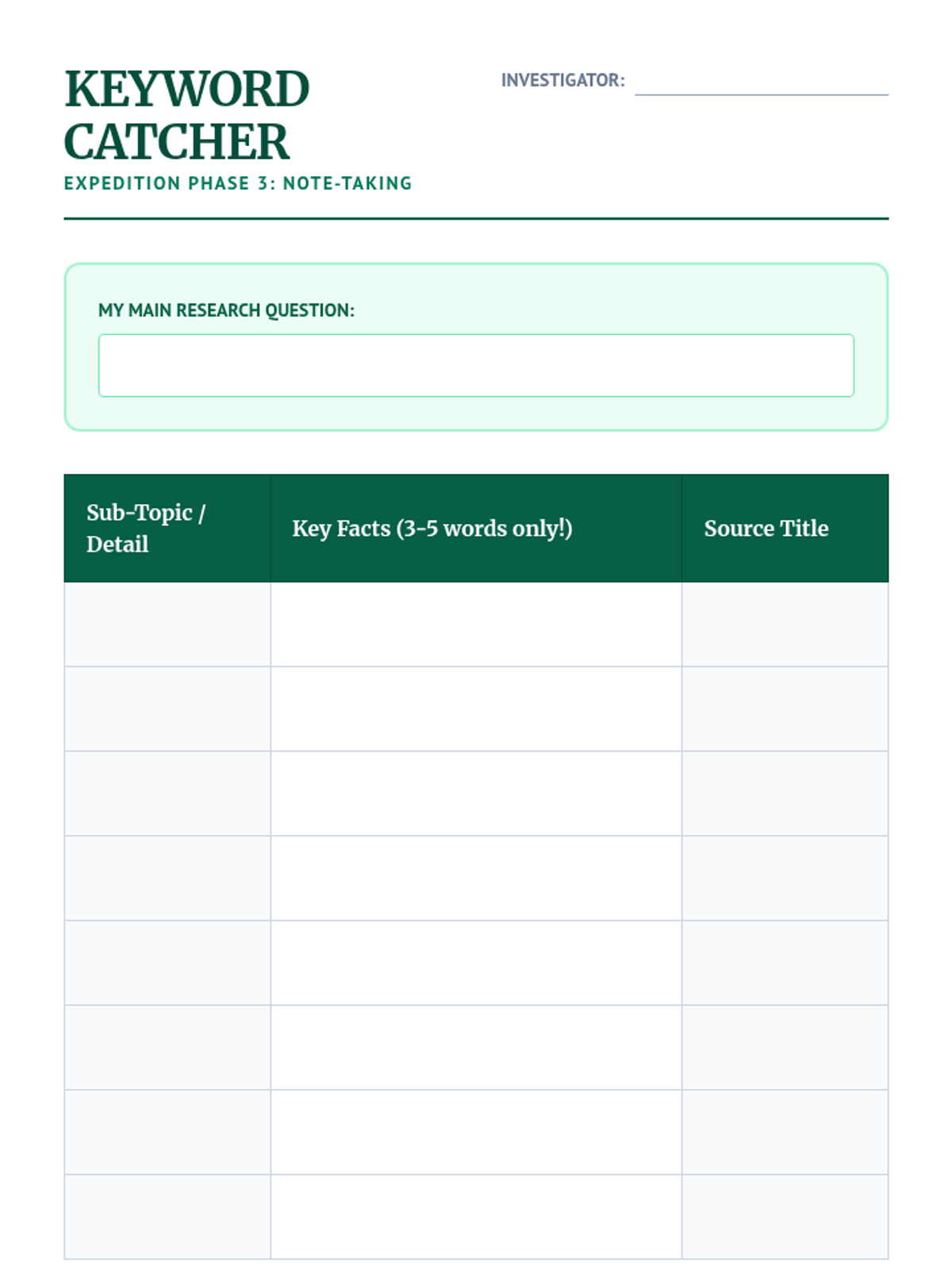
Focuses on extracting key facts and paraphrasing using keywords to avoid plagiarism and organize information effectively.
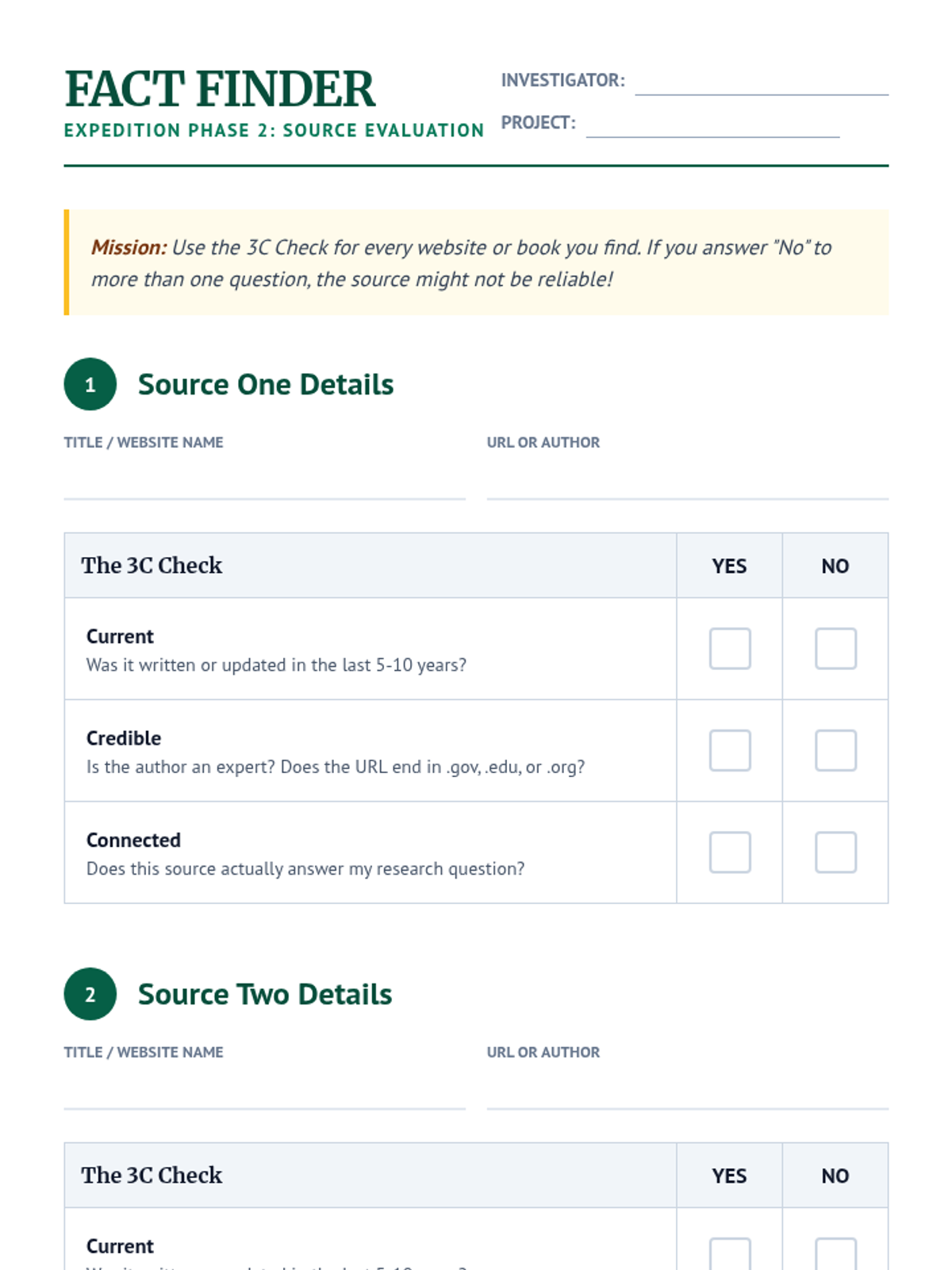
Students learn to find and validate credible sources using search strategies and a simplified evaluation checklist.
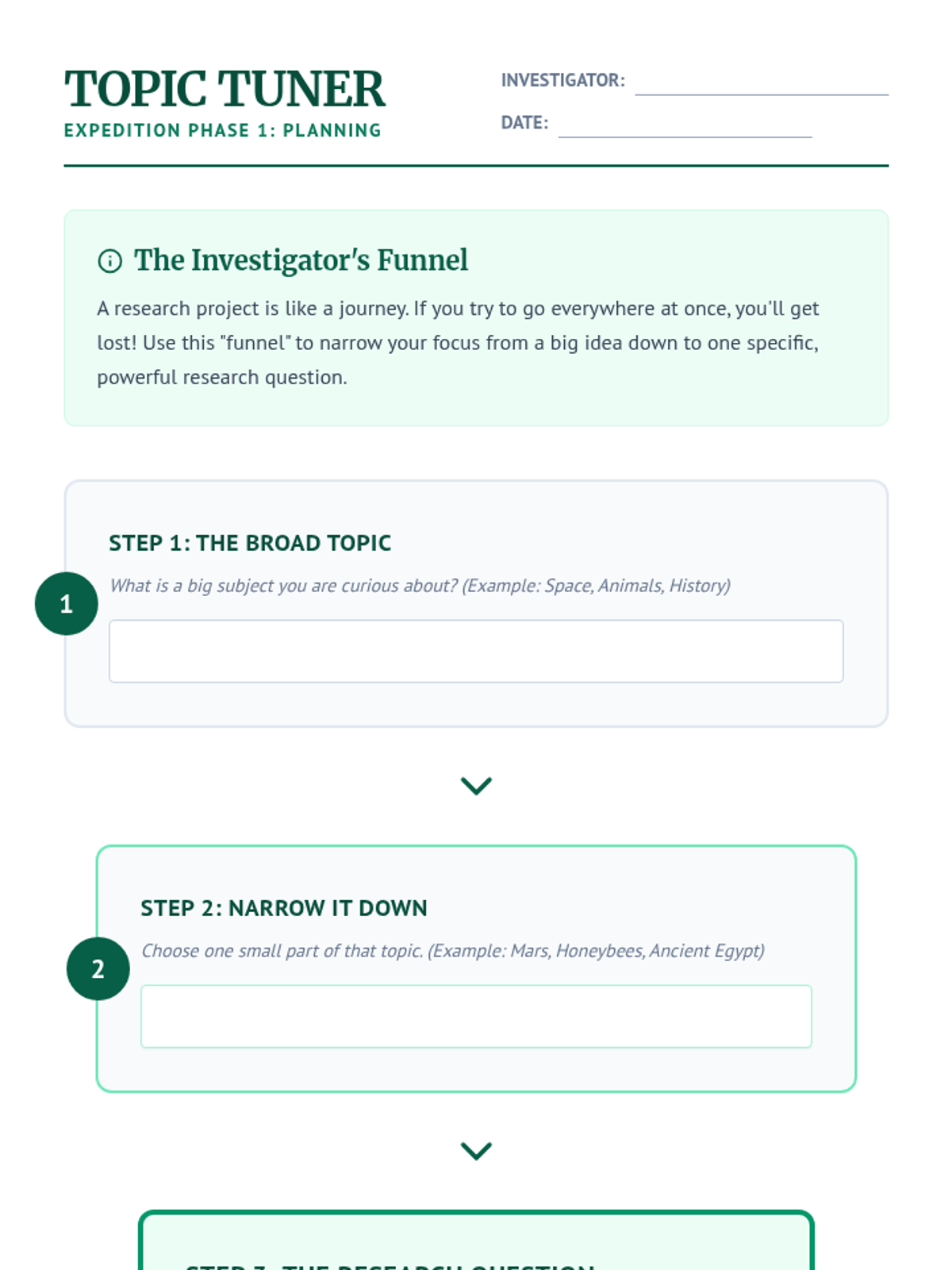
Students transition from broad topics to focused, open-ended research questions through a 'Wonder Wall' activity and peer review.
Introduces the four core elements of a basic citation (Author, Title, Date, Source) and provides practice in locating this information.
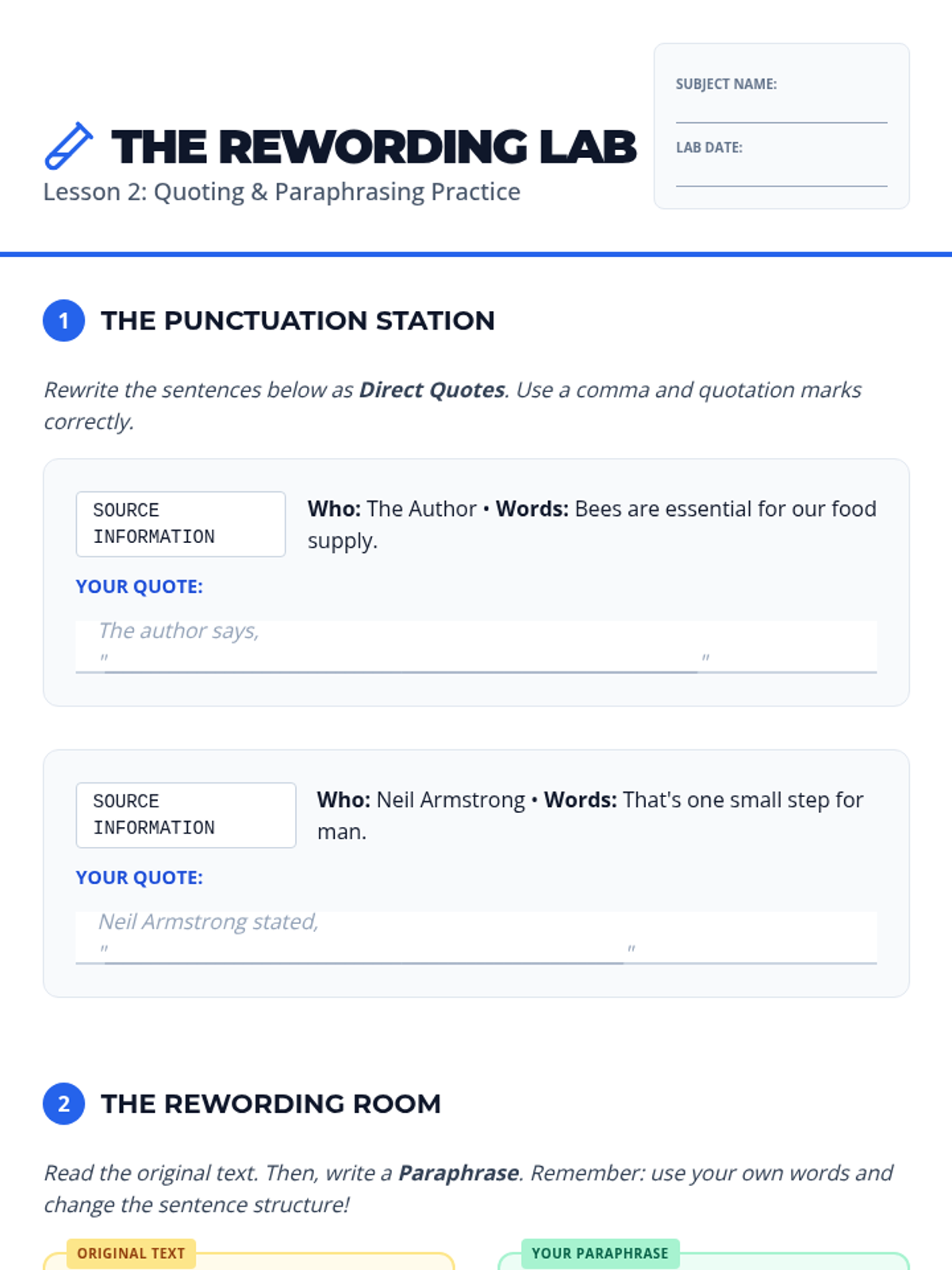
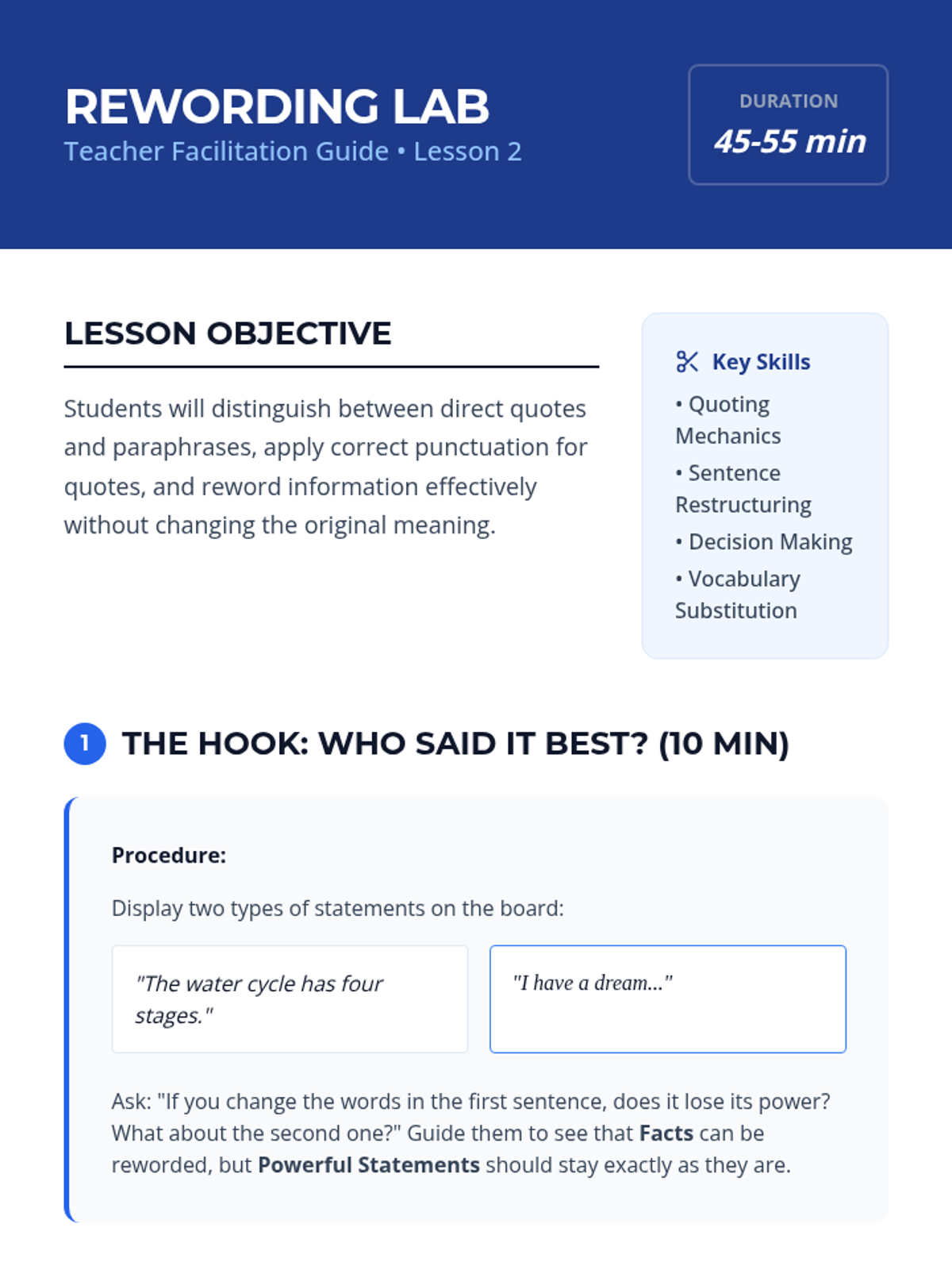
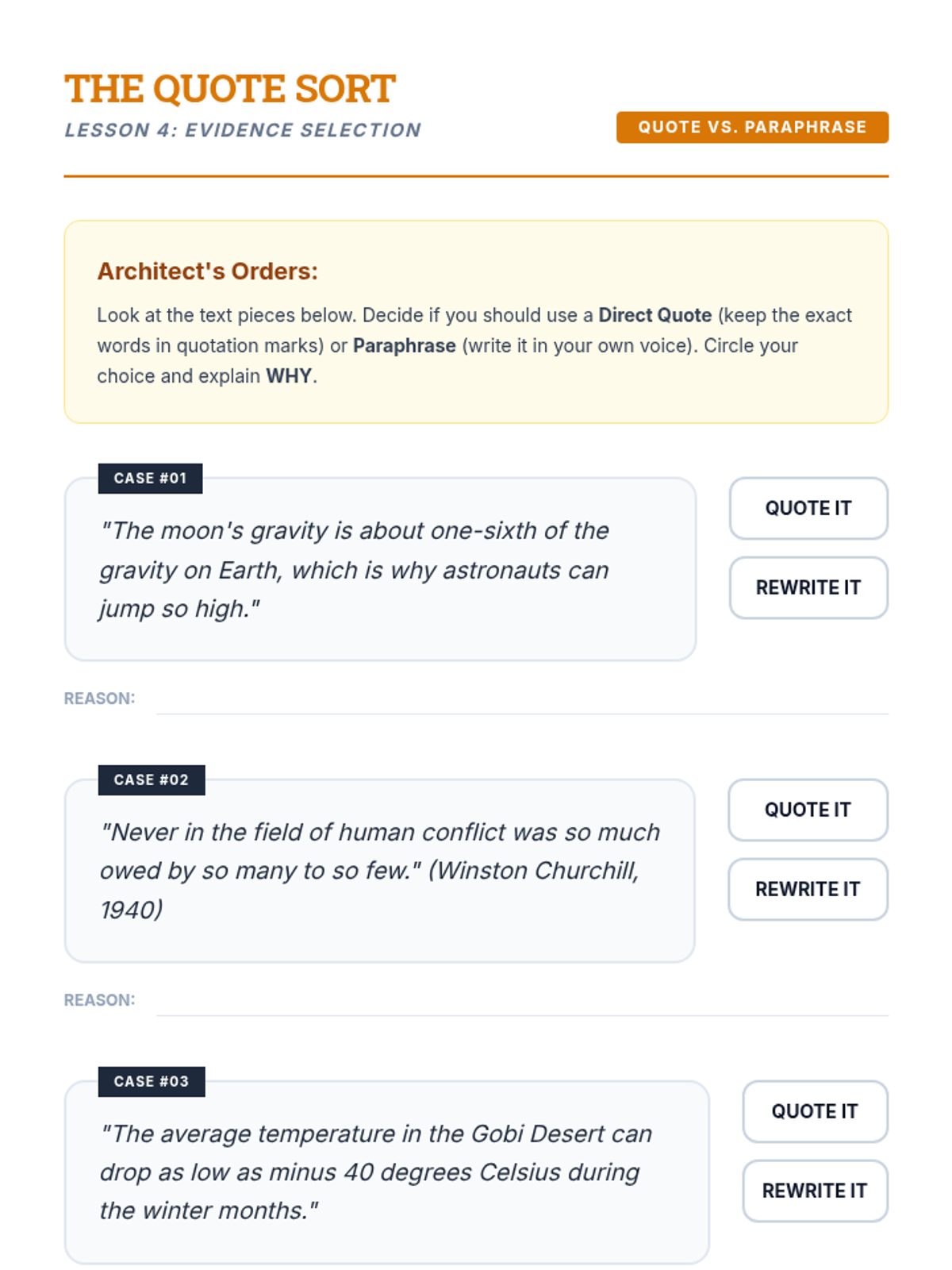
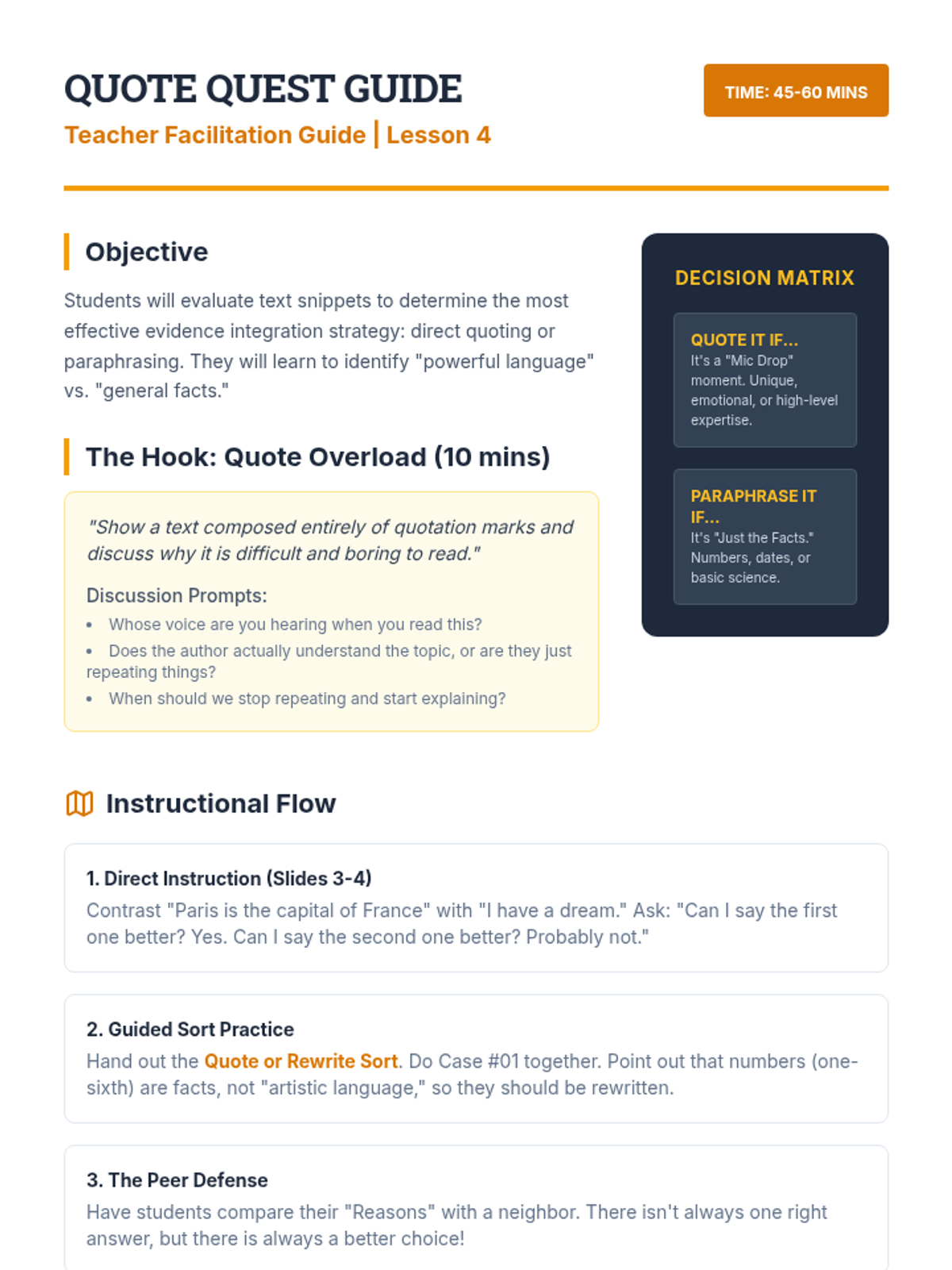
Students learn the mechanical and logical differences between direct quotes and paraphrasing, focusing on when to use each.
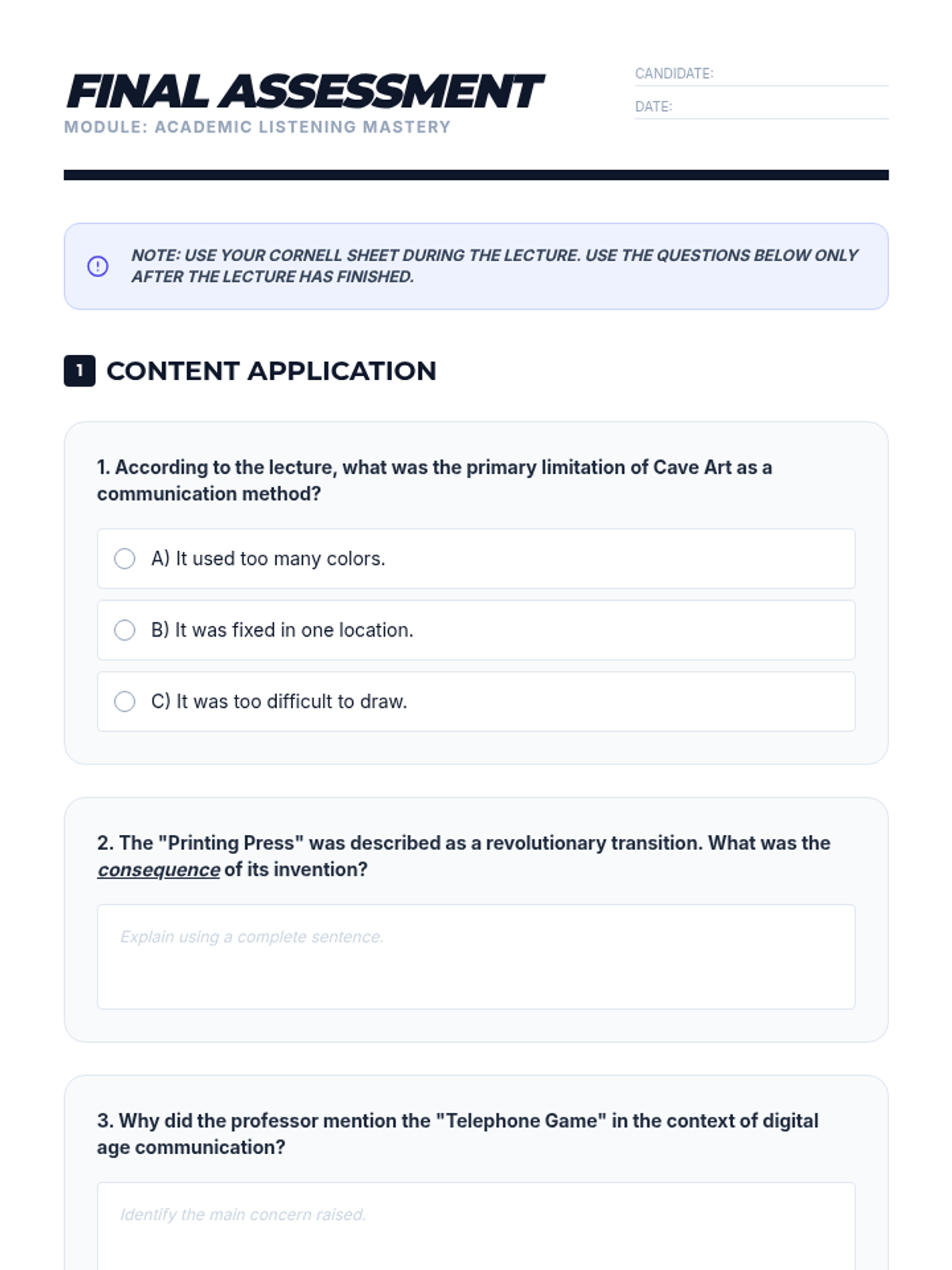
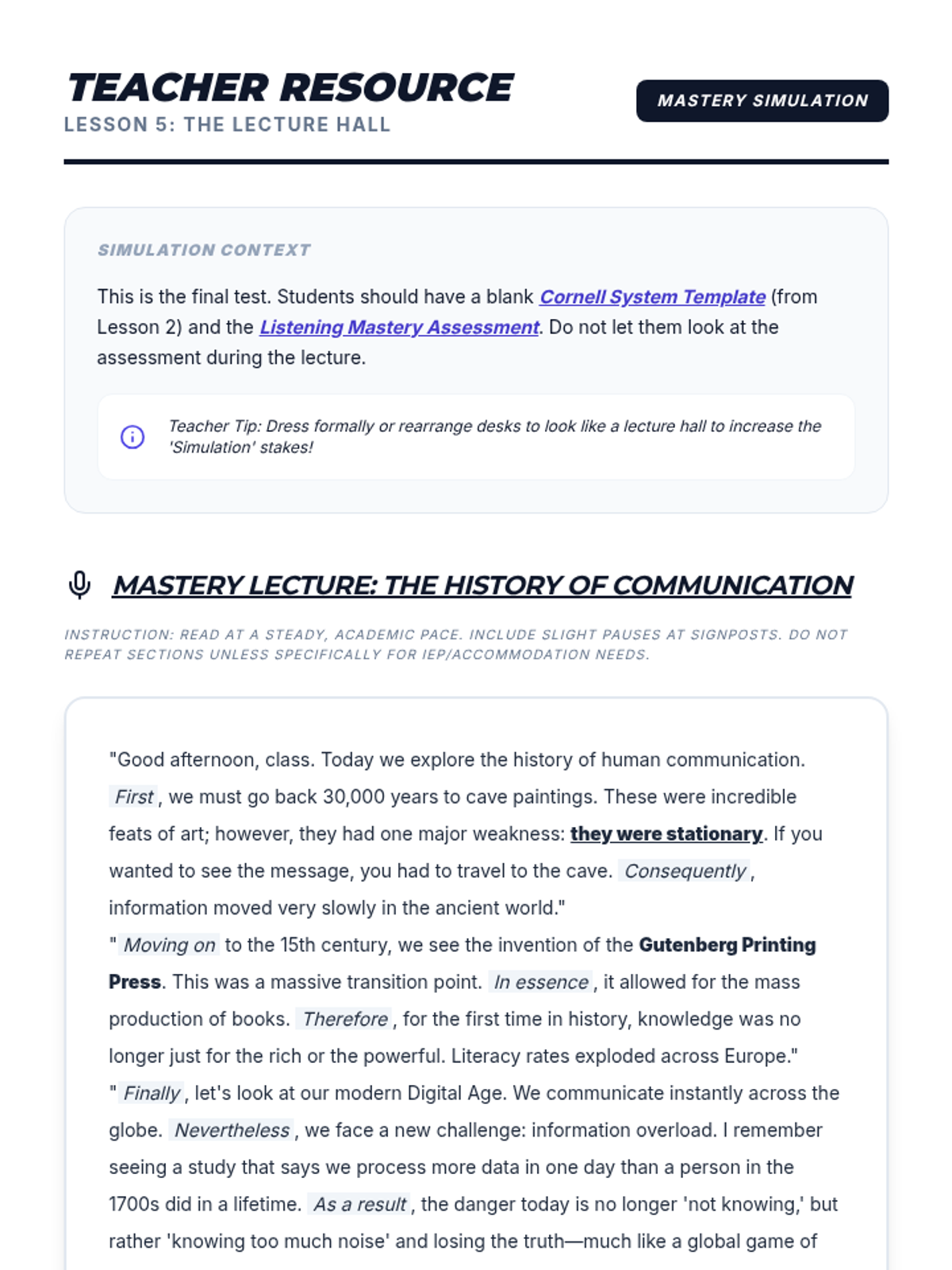
Students participate in a university-style mini-lecture simulation. They apply all learned strategies—signpost identification, Cornell note-taking, and synthesis—to capture information and complete a formal assessment.
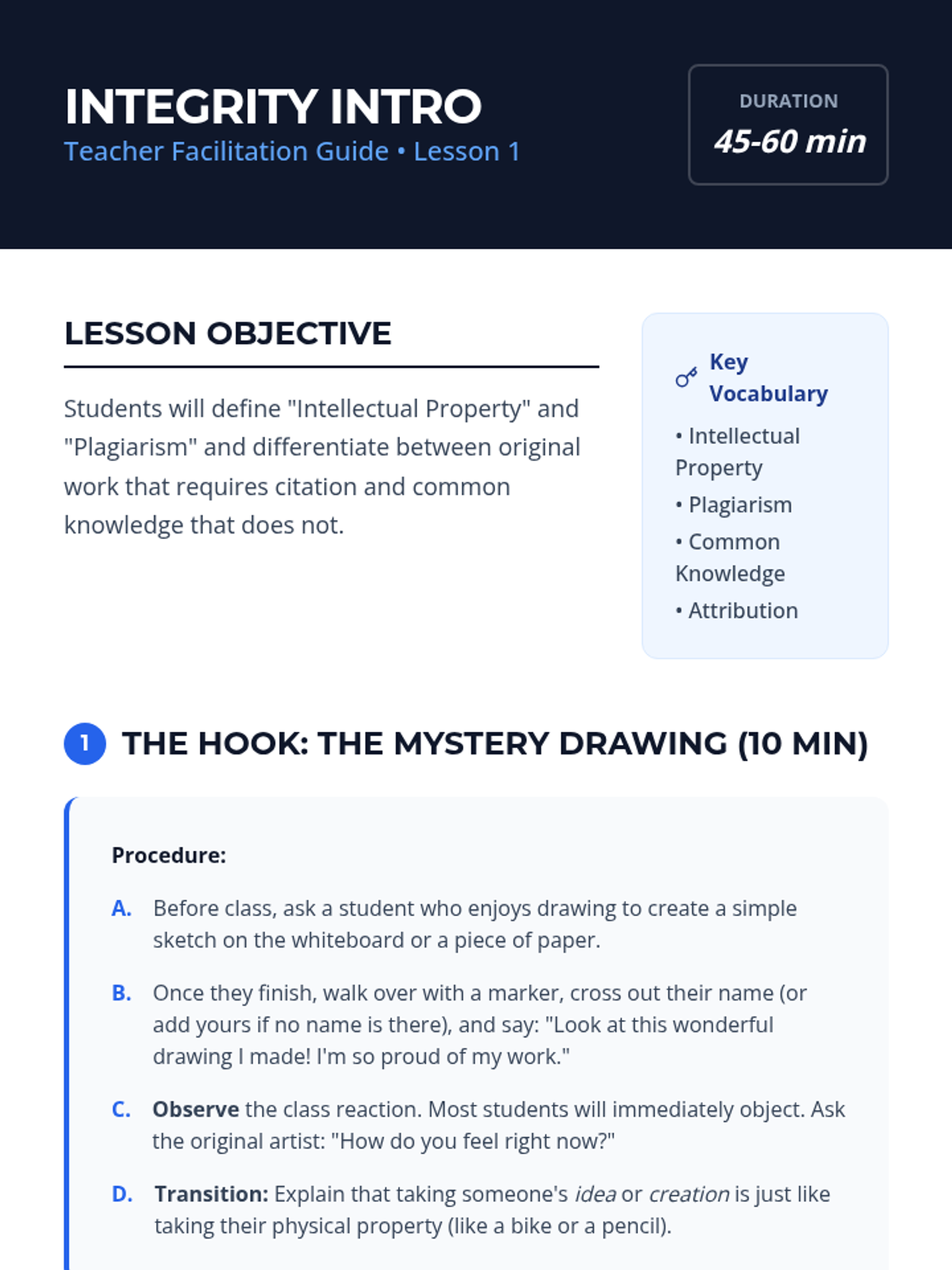
Students explore the concept of intellectual property through physical analogies and define plagiarism in an academic context.
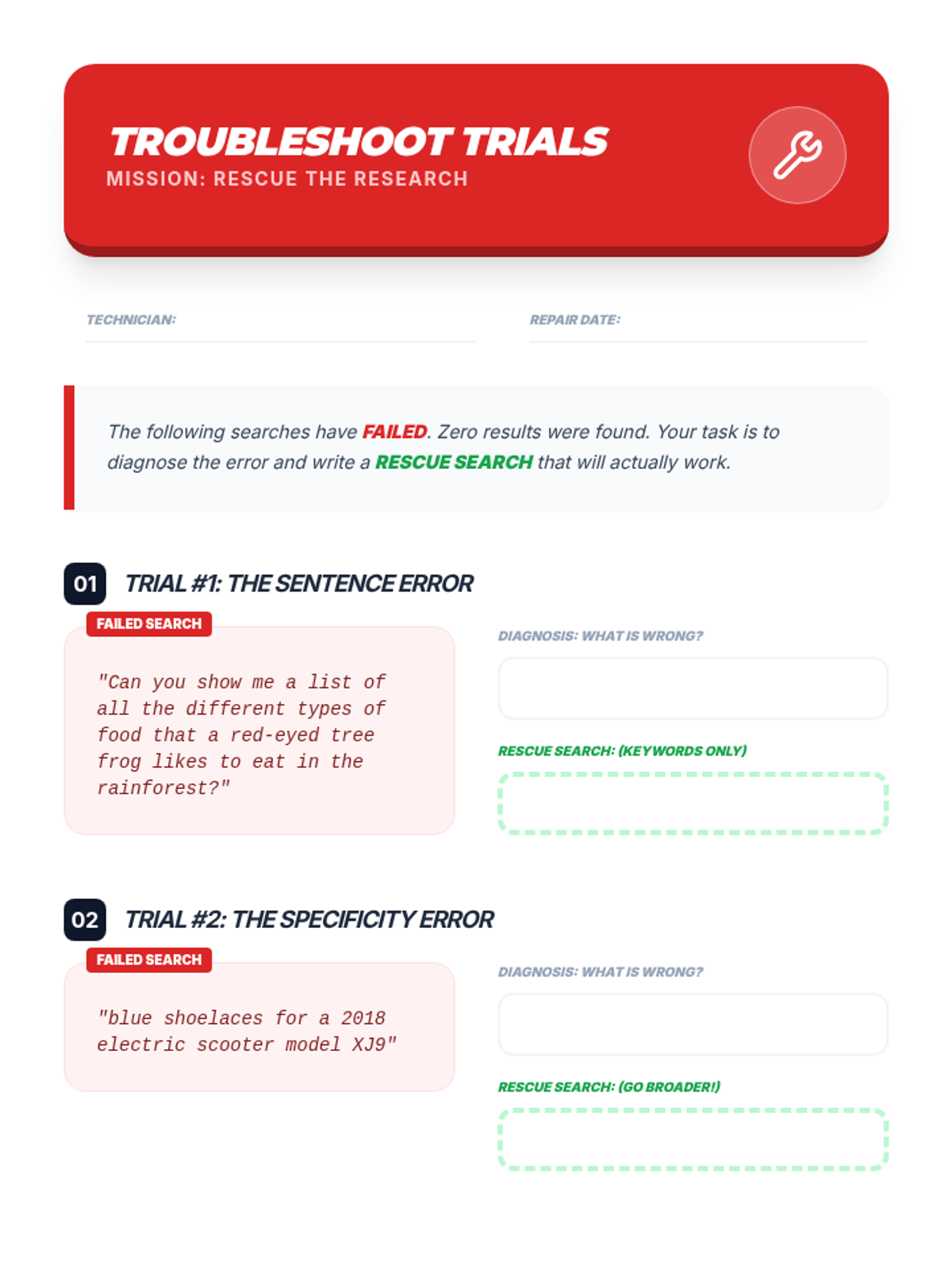
Students analyze search failures and practice iterative strategies to refine their inquiries when initial attempts don't yield the desired results.
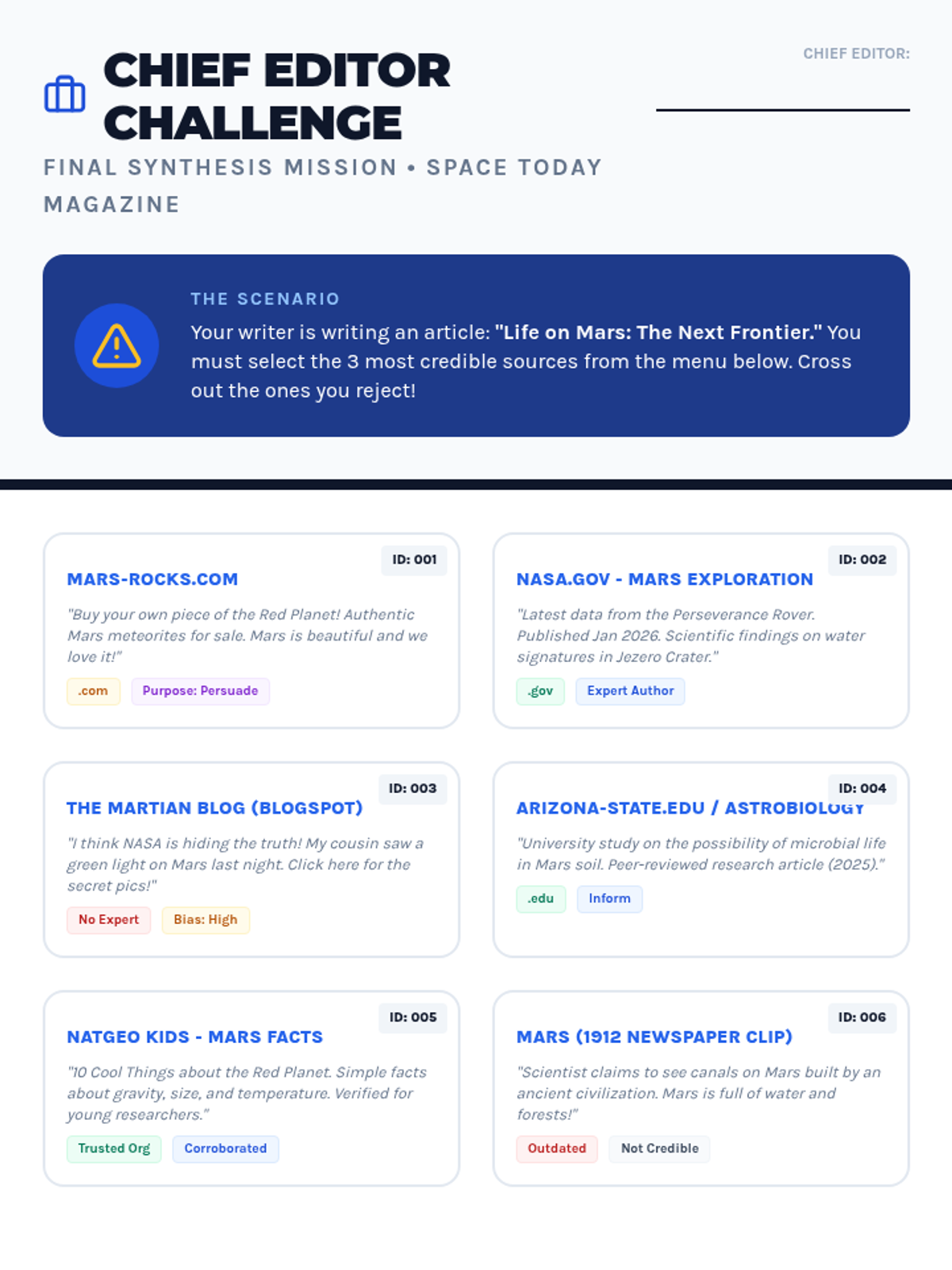
Students synthesize their evaluation skills to select the best resources for a hypothetical research scenario. They curate a small bibliography of trusted sources and justify their choices.
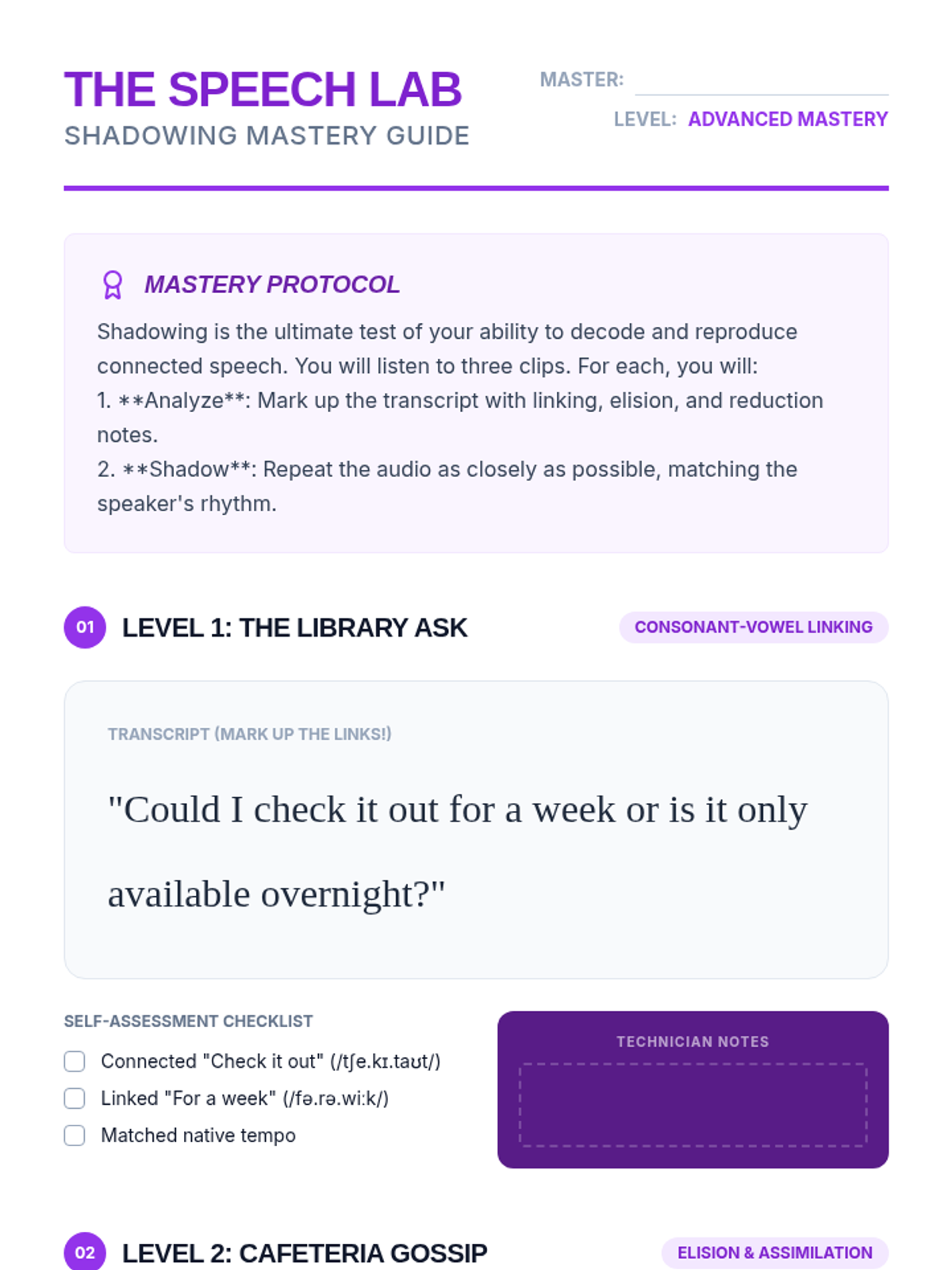
Students engage in a 'shadowing' technique, repeating audio immediately after hearing it to internalize the rhythm and flow of connected speech. This active processing reinforces their ability to predict and process sound streams.
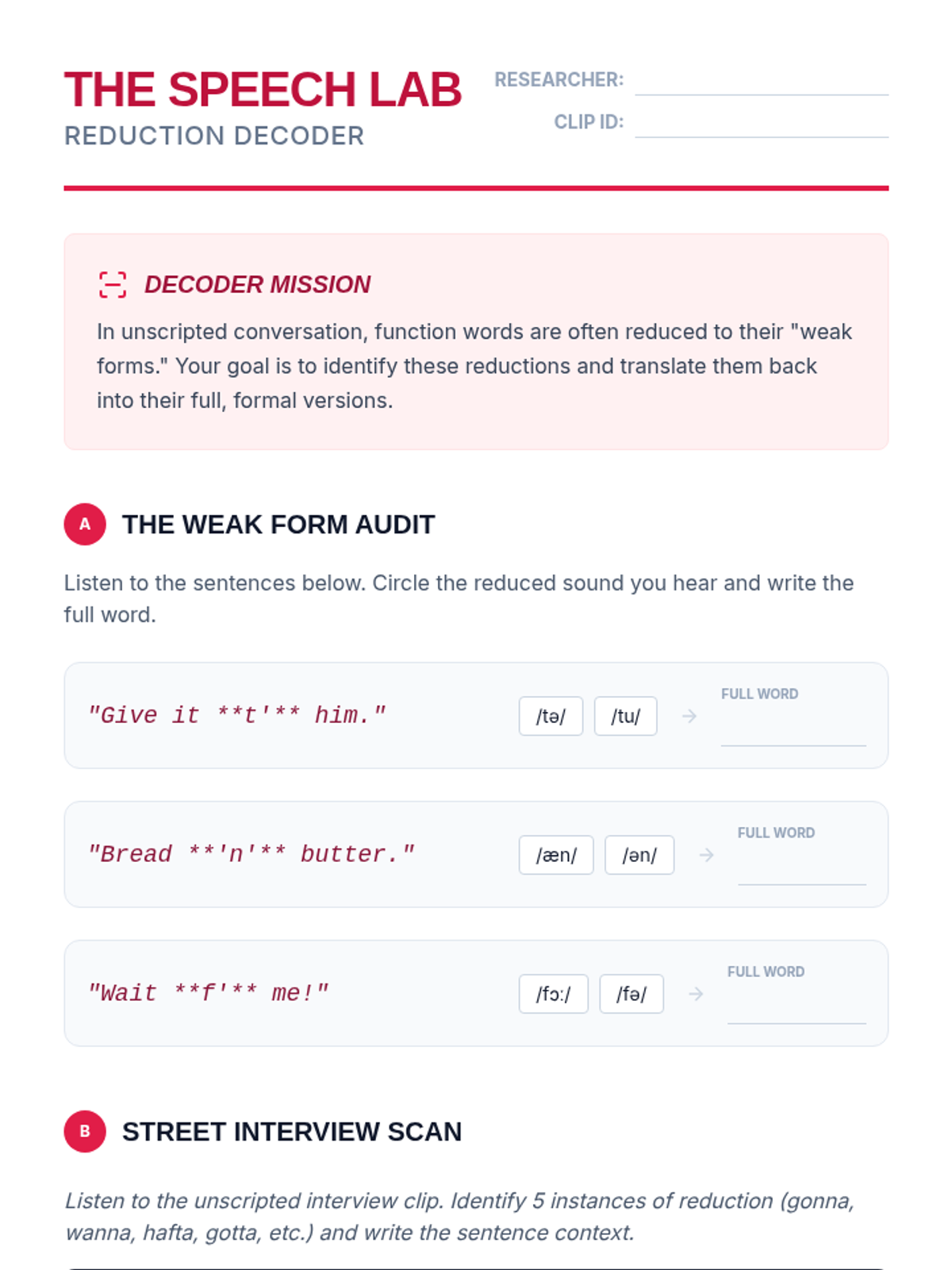
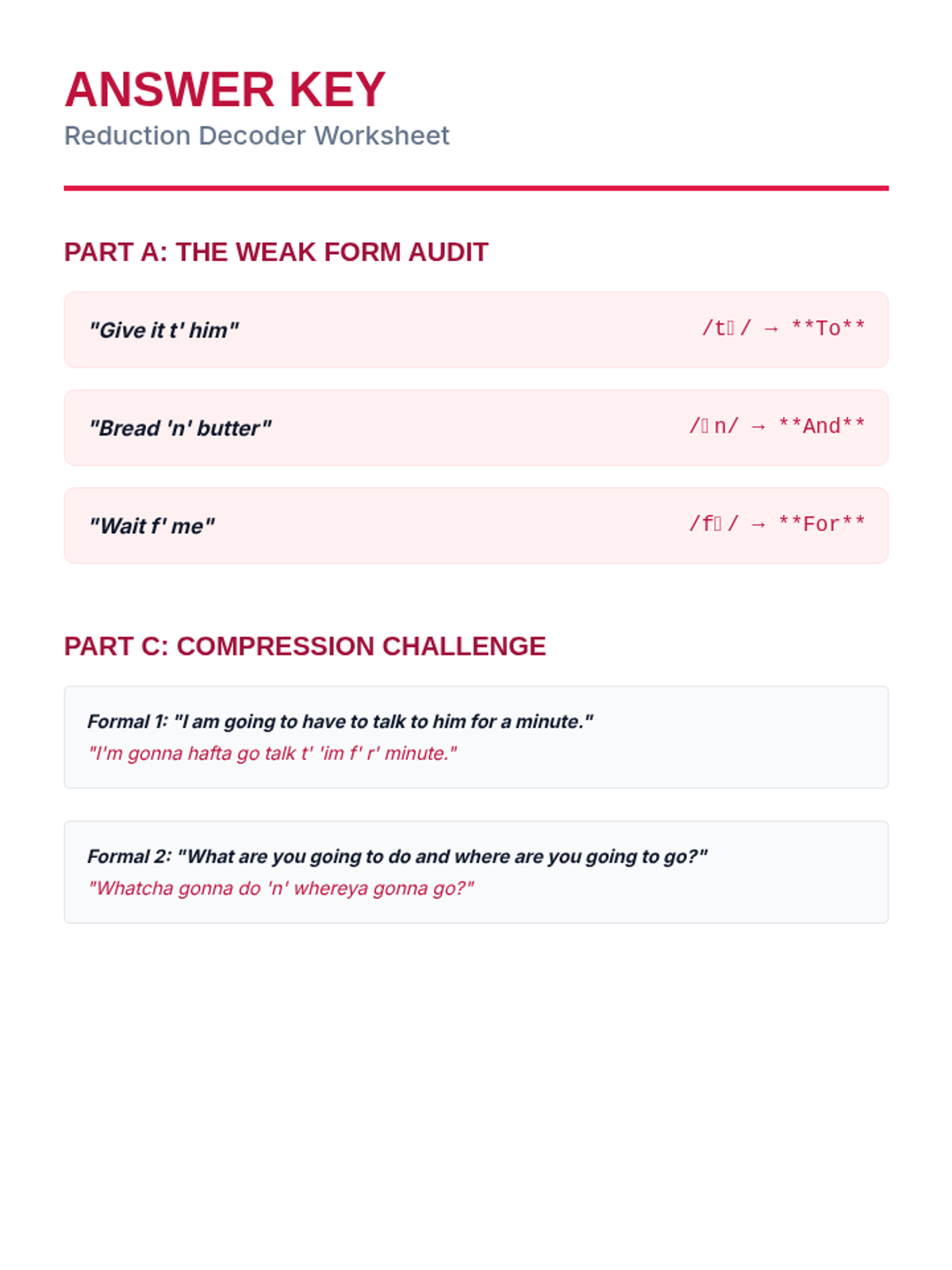
Focusing on function words, this lesson tackles common reductions like 'gonna,' 'wanna,' and weak forms of auxiliary verbs. Students analyze unscripted interviews to catch these reductions in context.
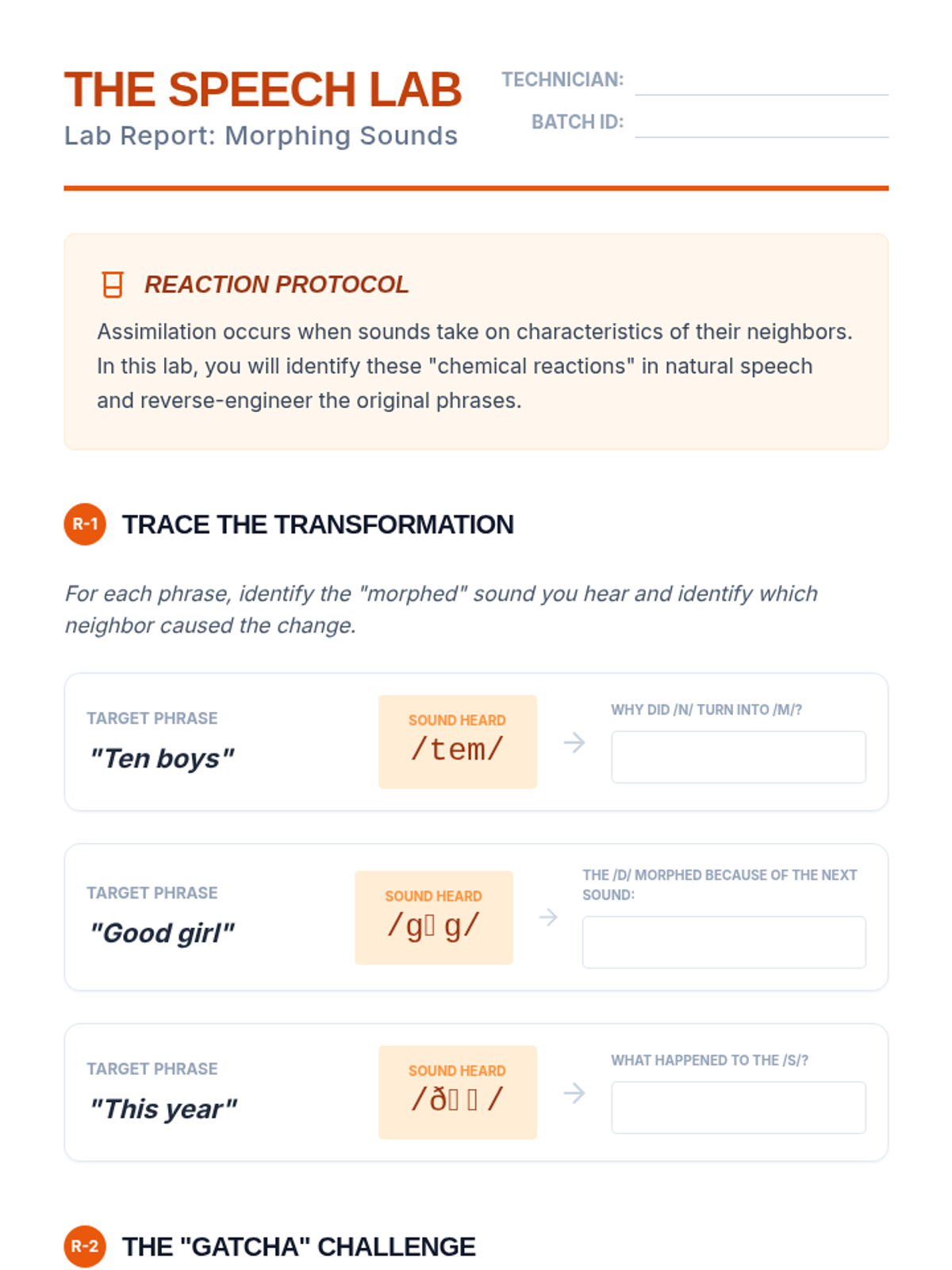
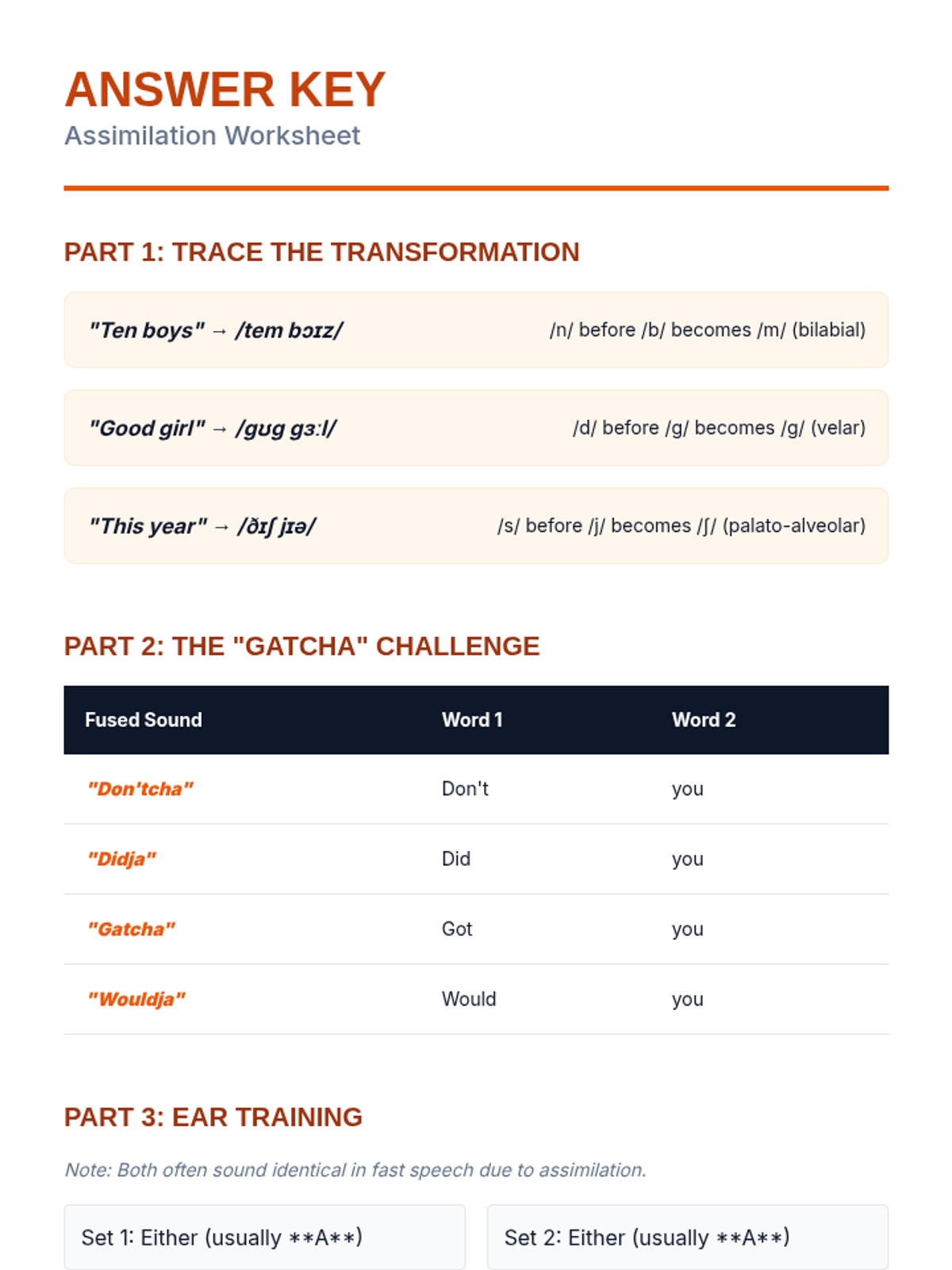
Students learn how sounds influence their neighbors (e.g., 'hand bag' becoming 'hambag'). The lesson uses minimal pair discrimination and dictation exercises to train ears to recognize words despite phonological changes.
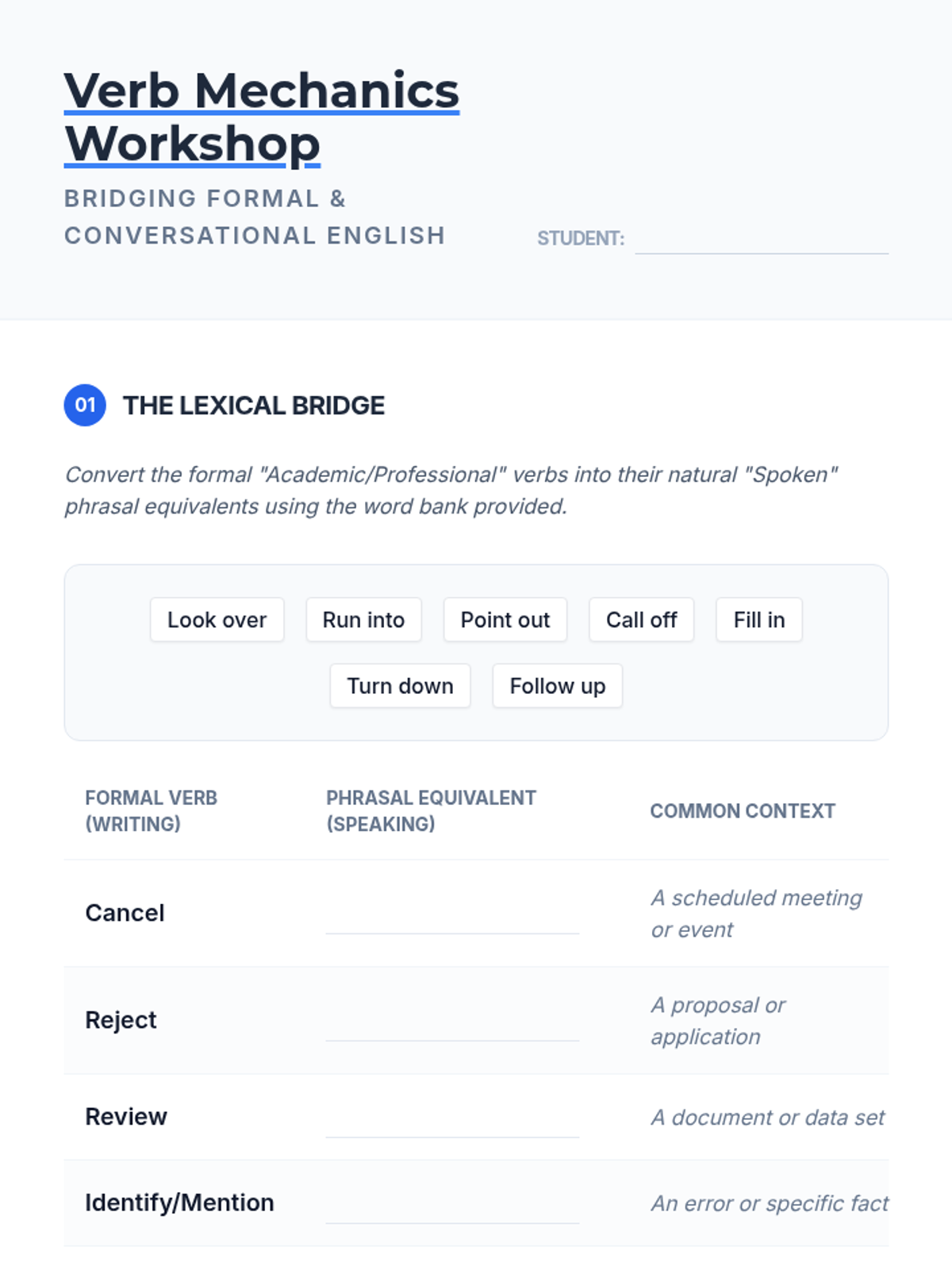
Focuses on the transition from formal to informal spoken English by identifying and decoding phrasal verbs in narrative segments.
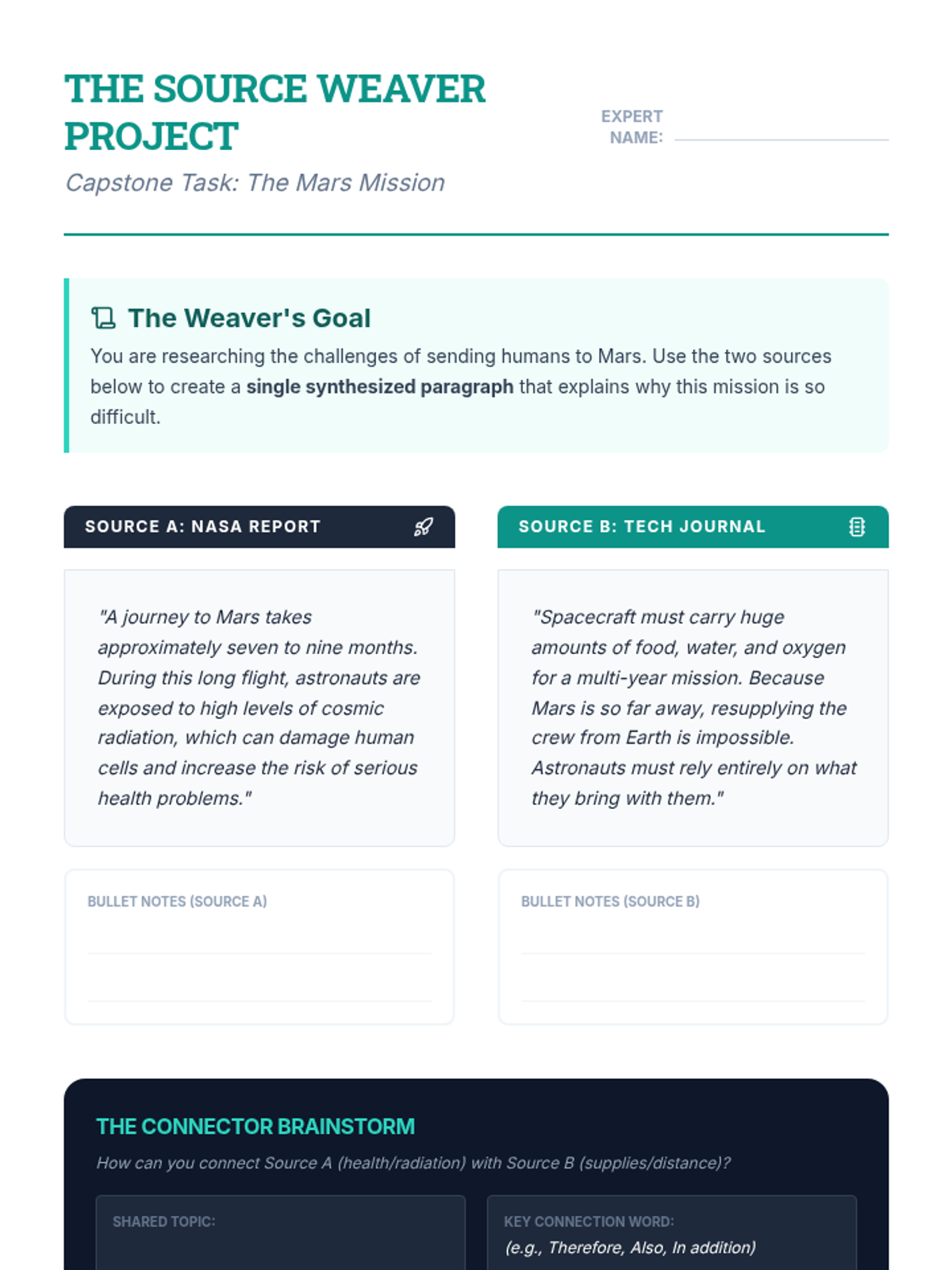
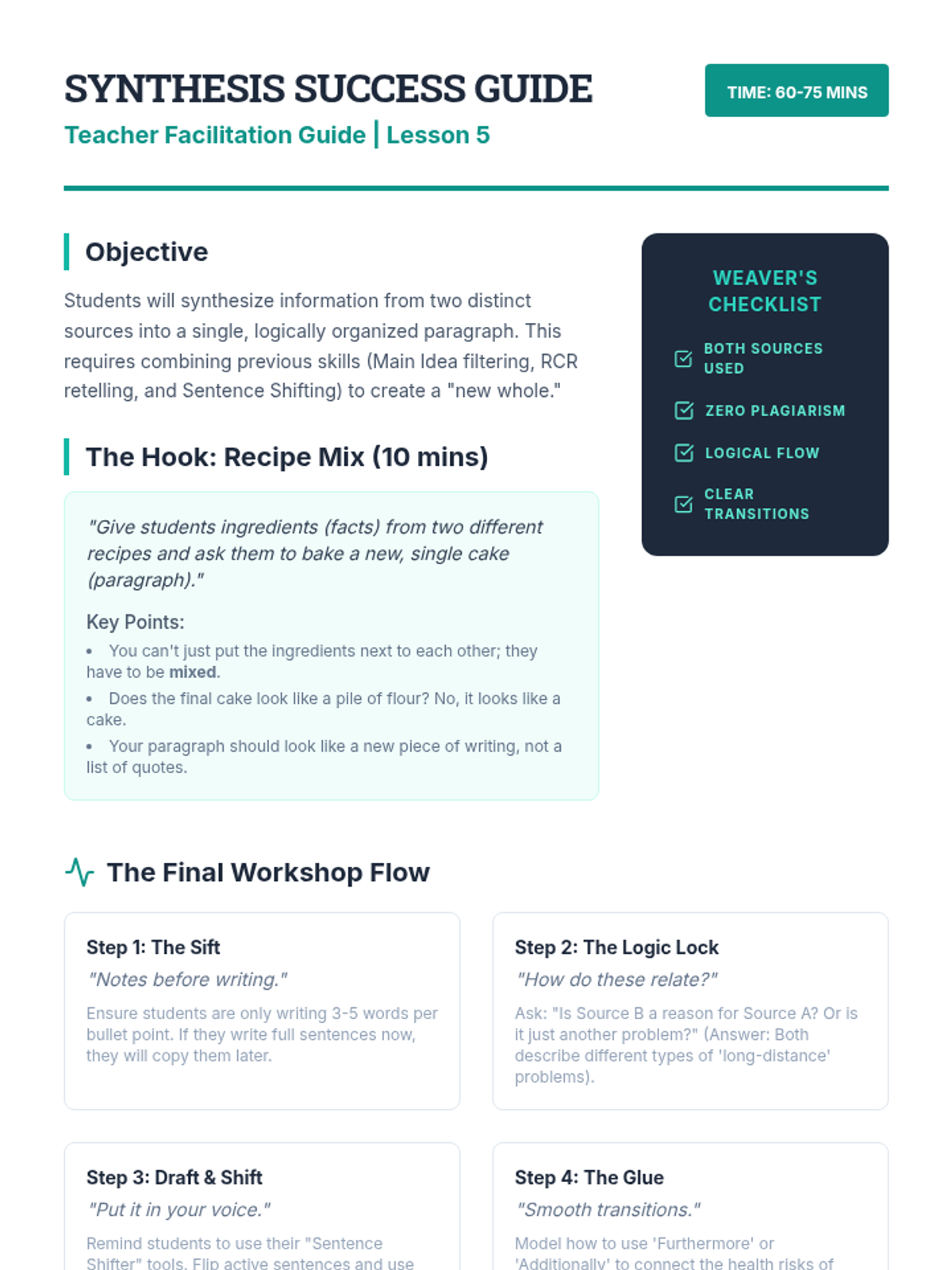
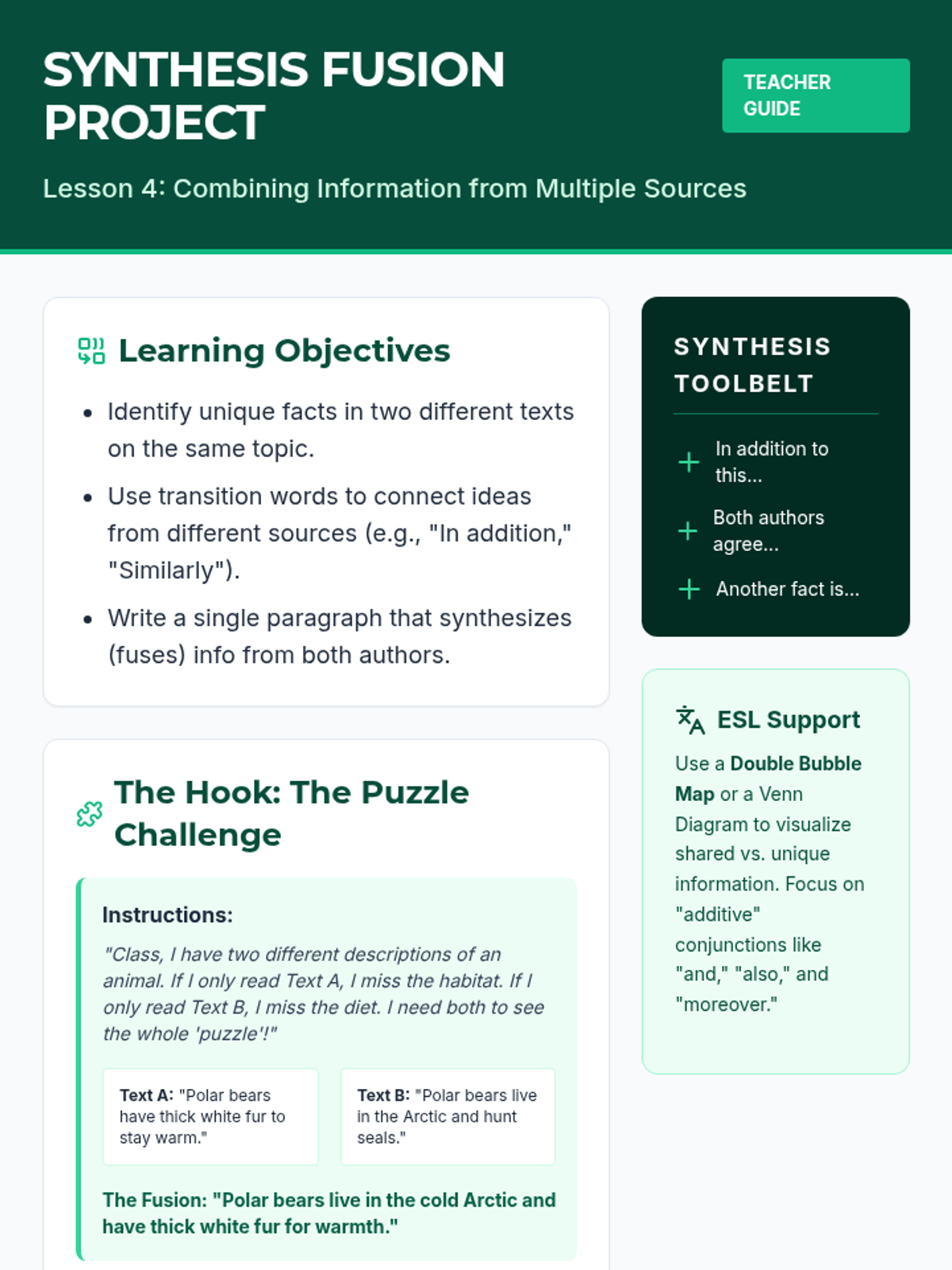
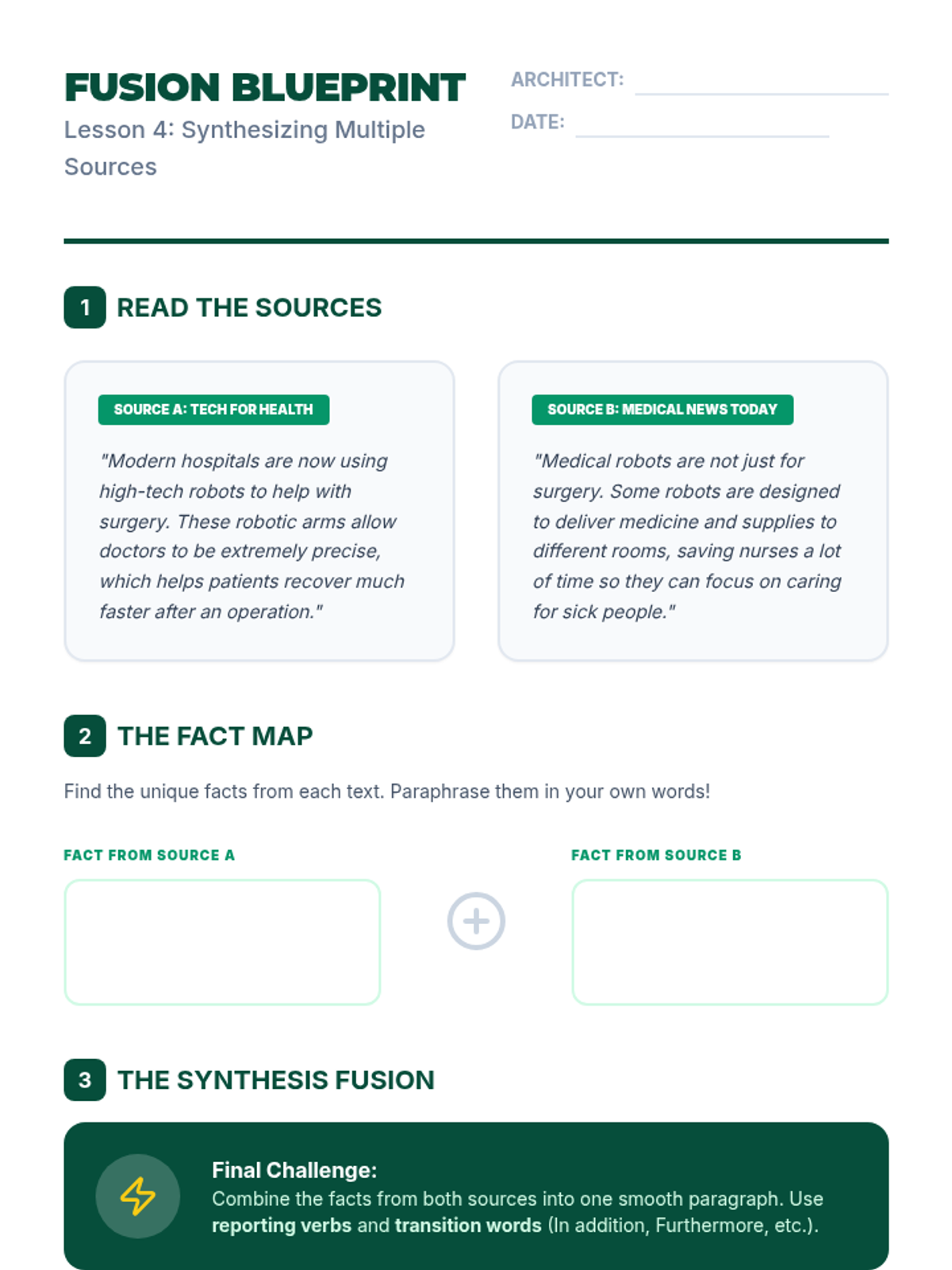
The capstone activity where students combine information from two different sources into a single, logically organized paragraph.
Distinguishes between when to use direct quotes for impact and when to paraphrase for factual clarity.
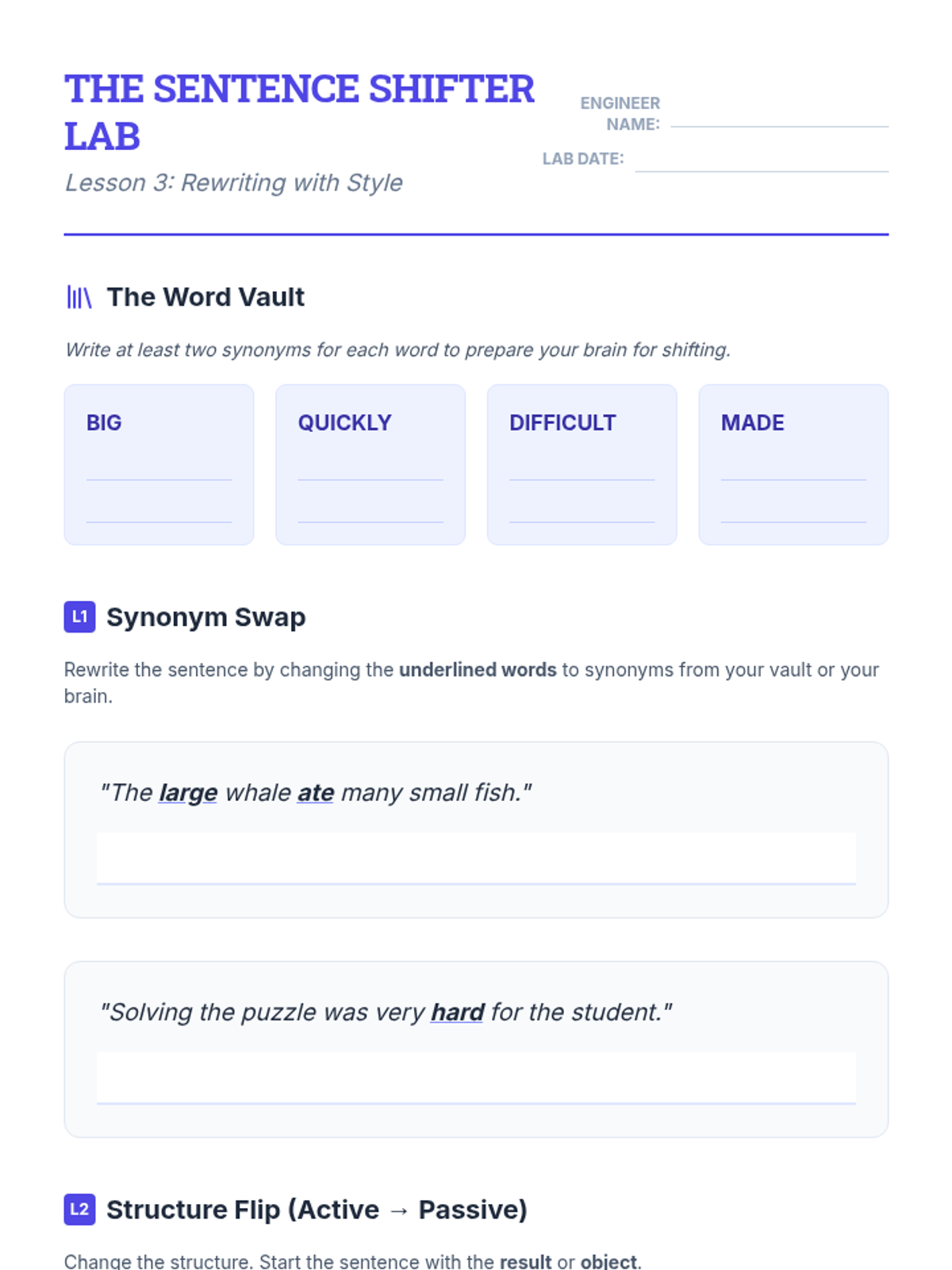
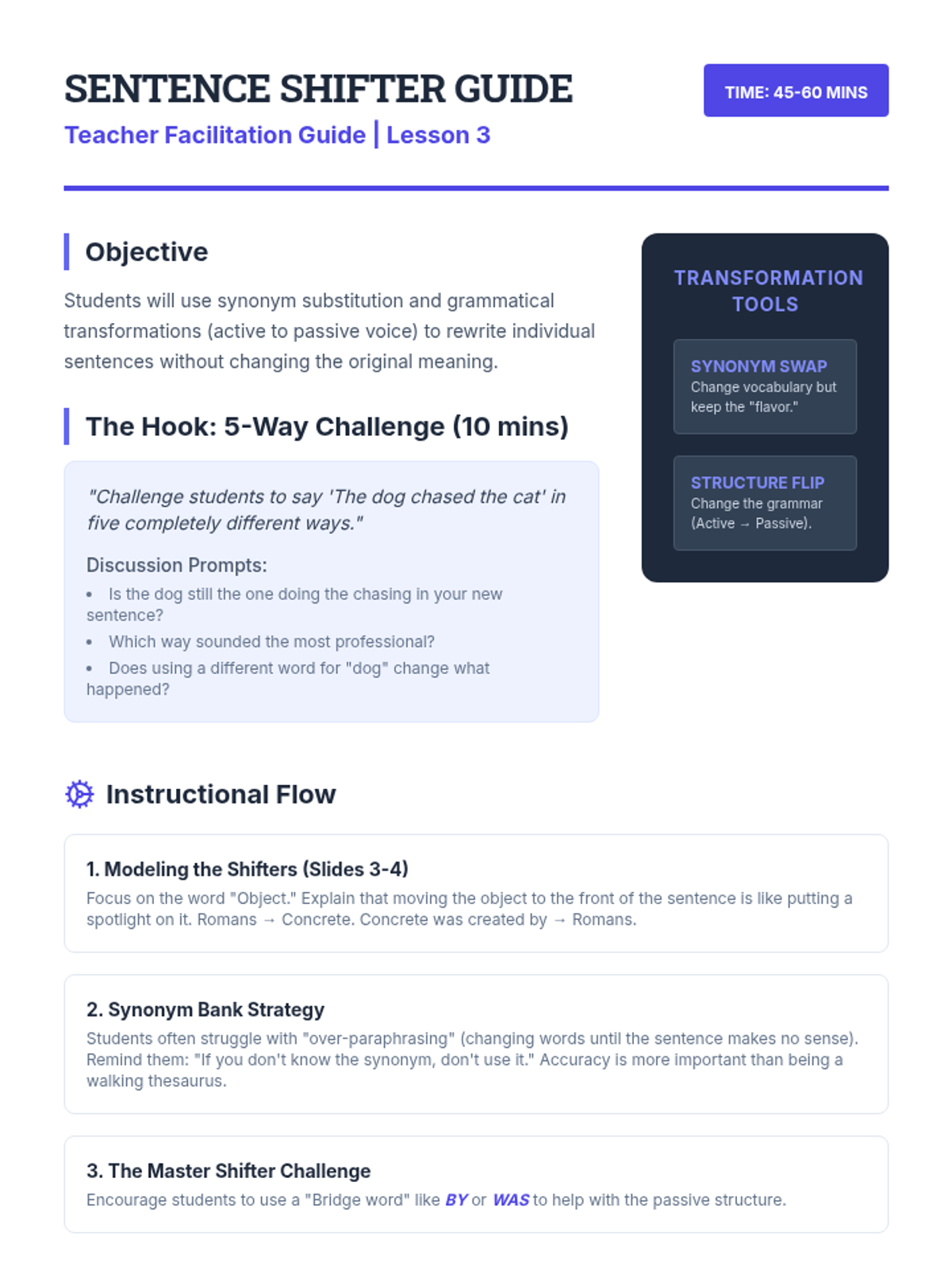
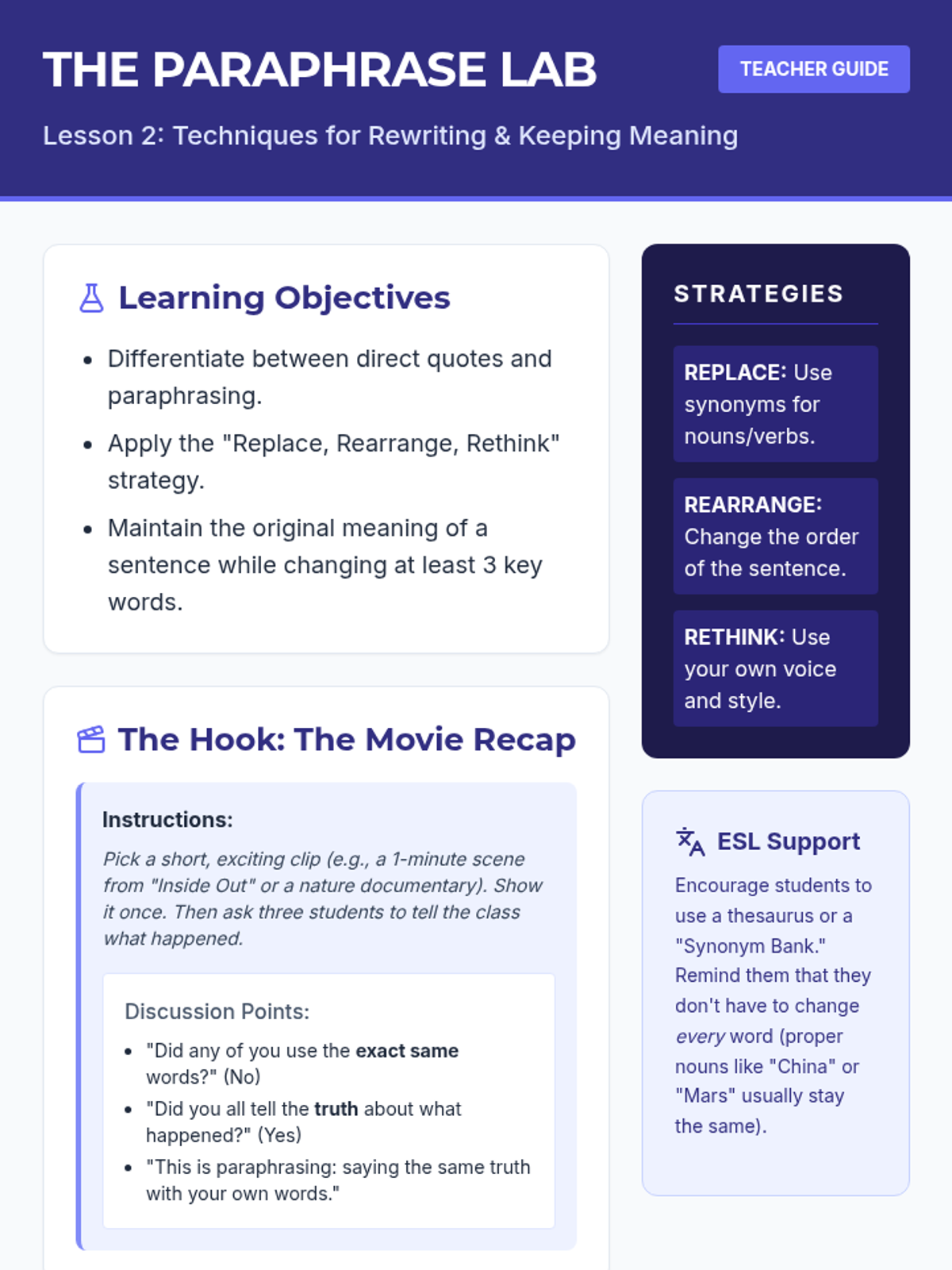
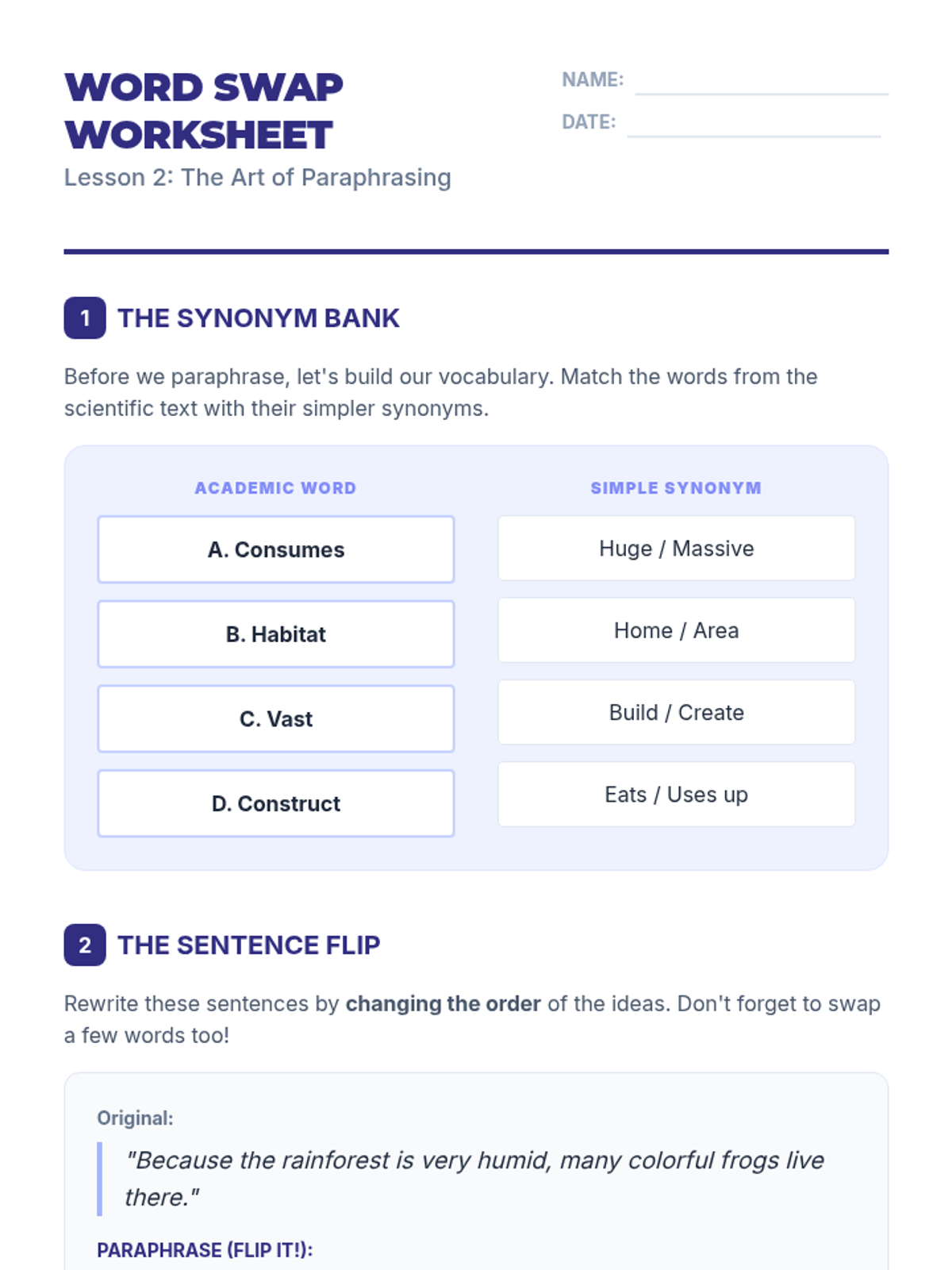
Guided practice in rewriting sentences using synonyms and grammatical shifts, such as changing active to passive voice, while maintaining original meaning.
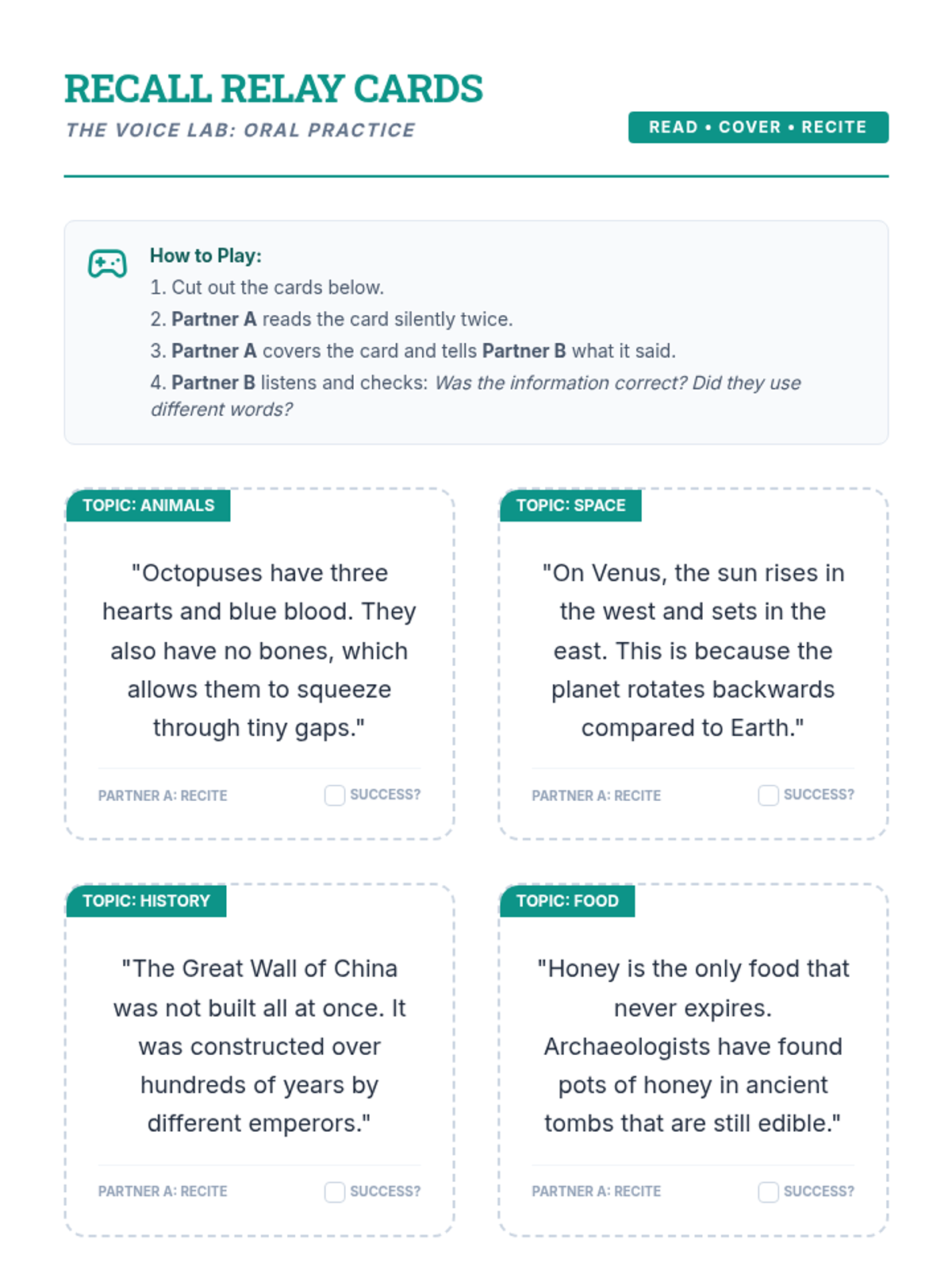
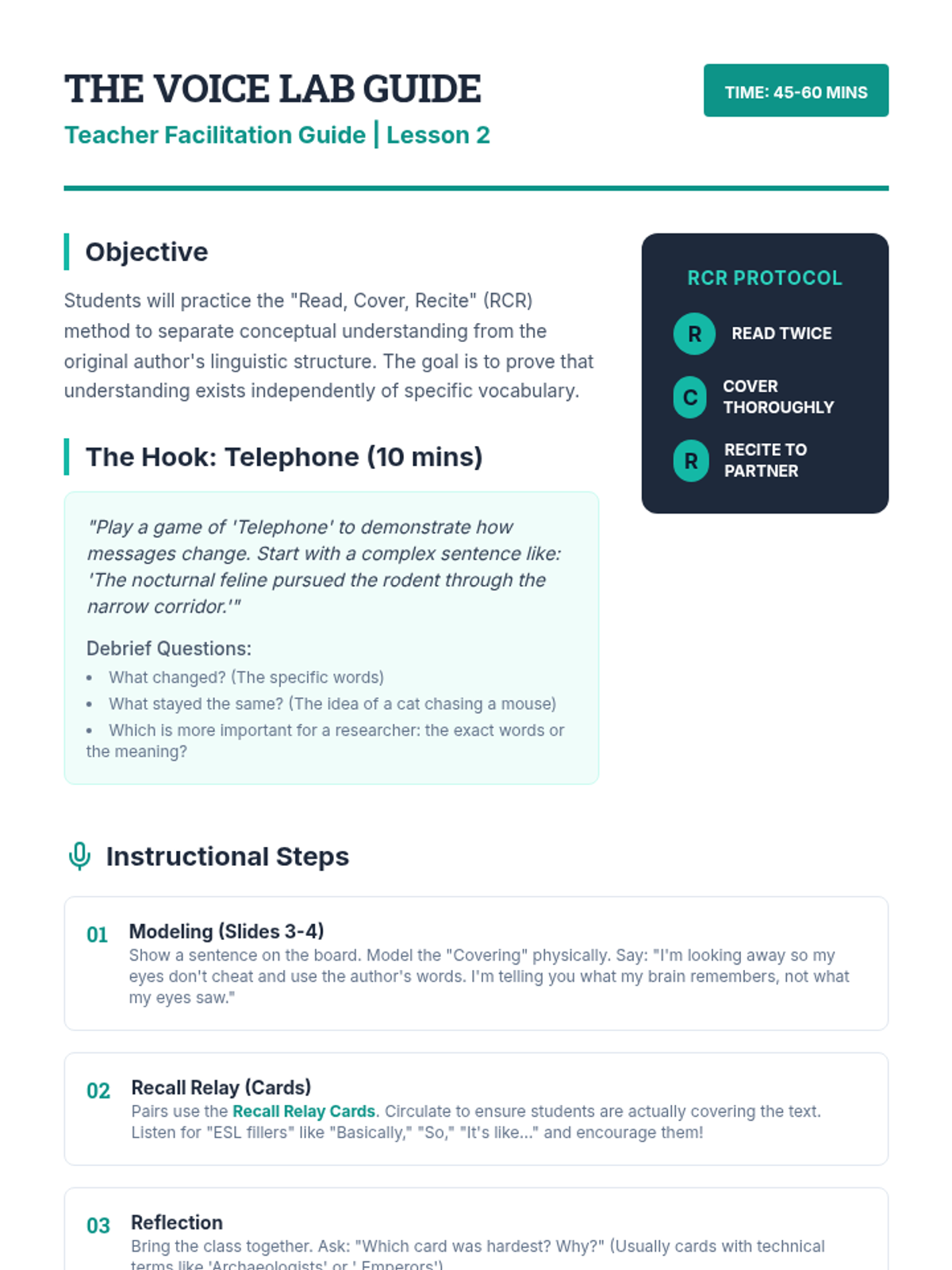
Focuses on the 'Read, Cover, Recite' method to separate conceptual understanding from the original text's linguistic structure through oral retelling.
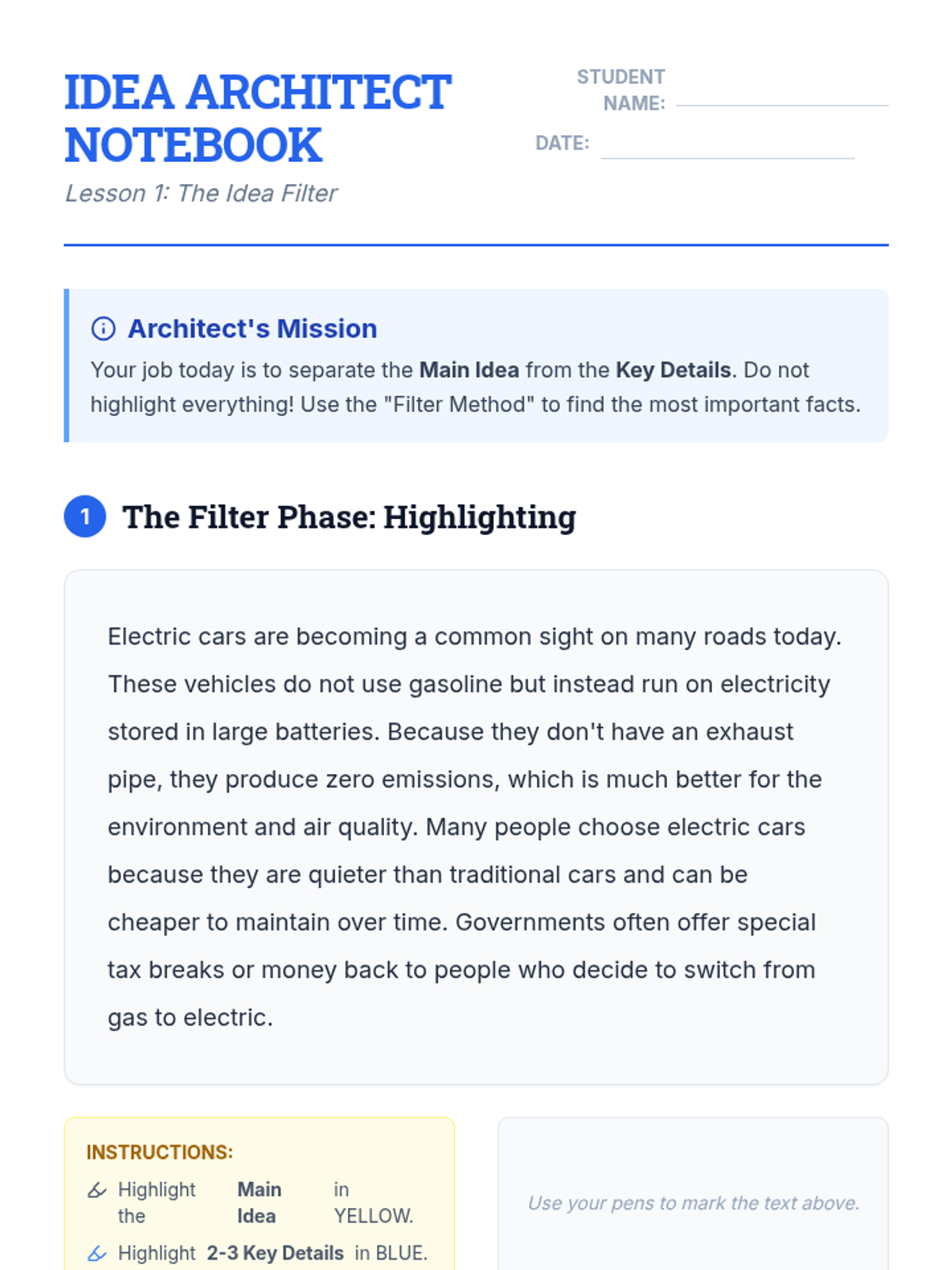
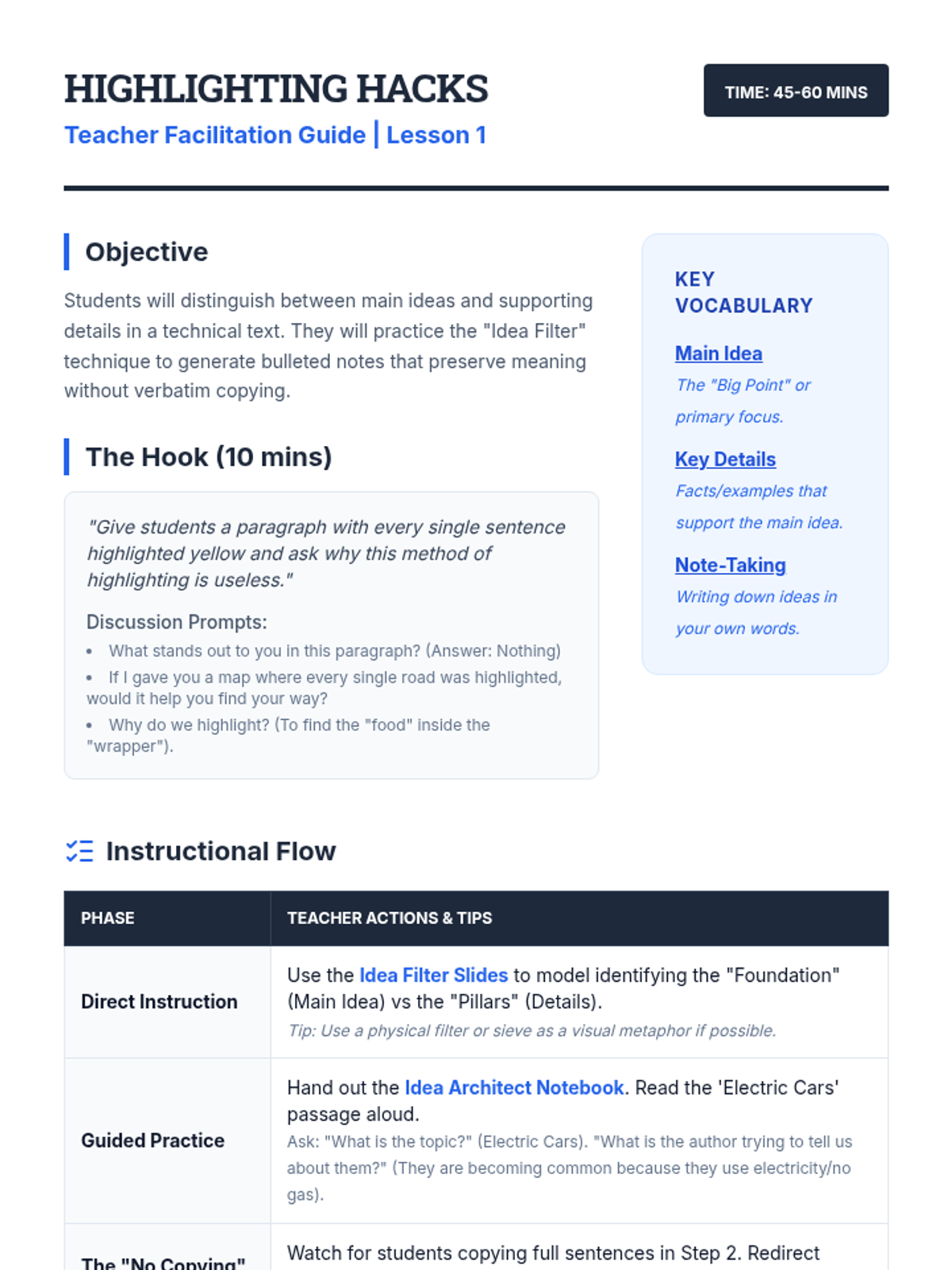
Students learn to separate core concepts from 'fluff' using effective highlighting and note-taking strategies, moving away from copying full sentences.
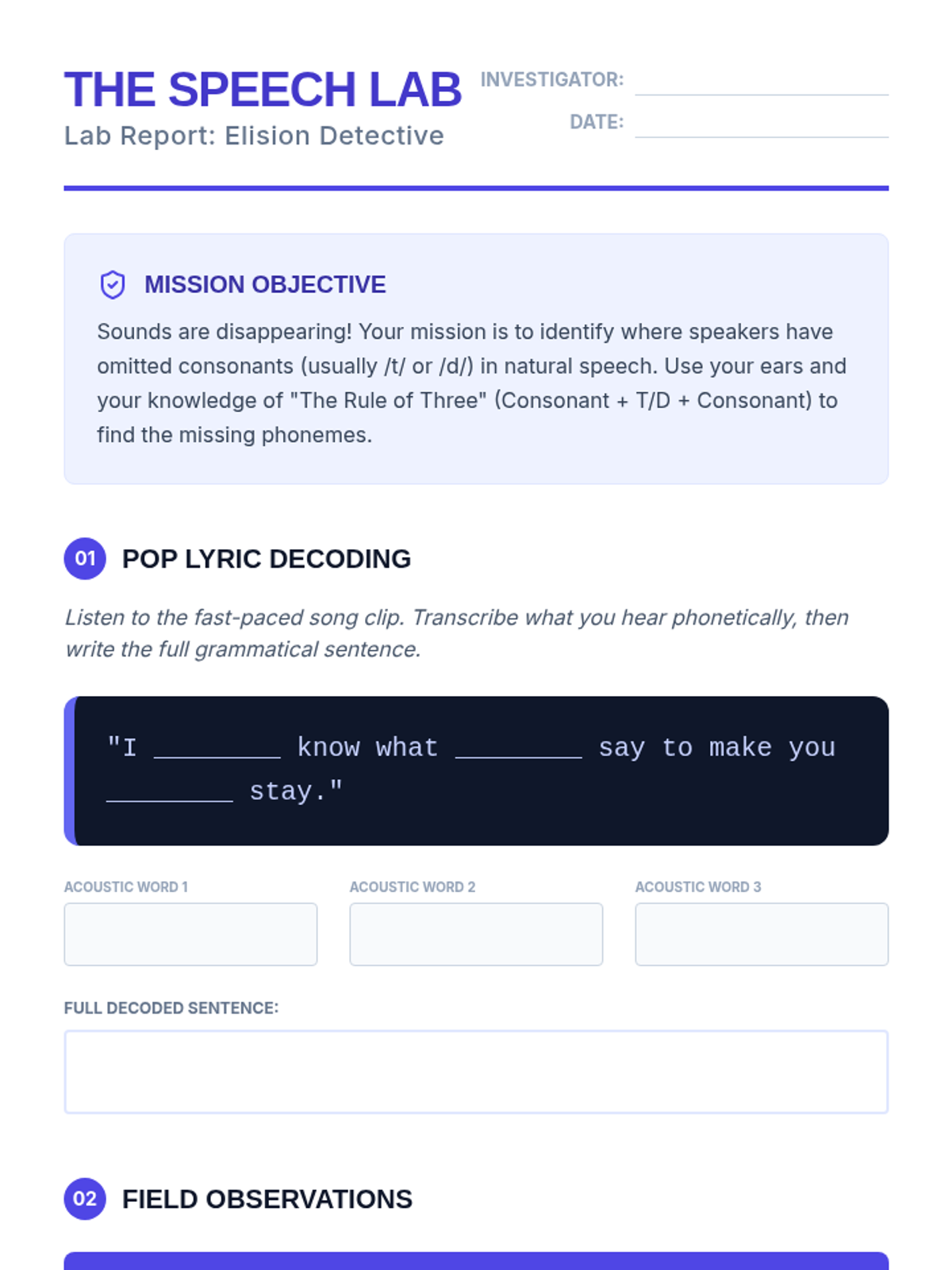
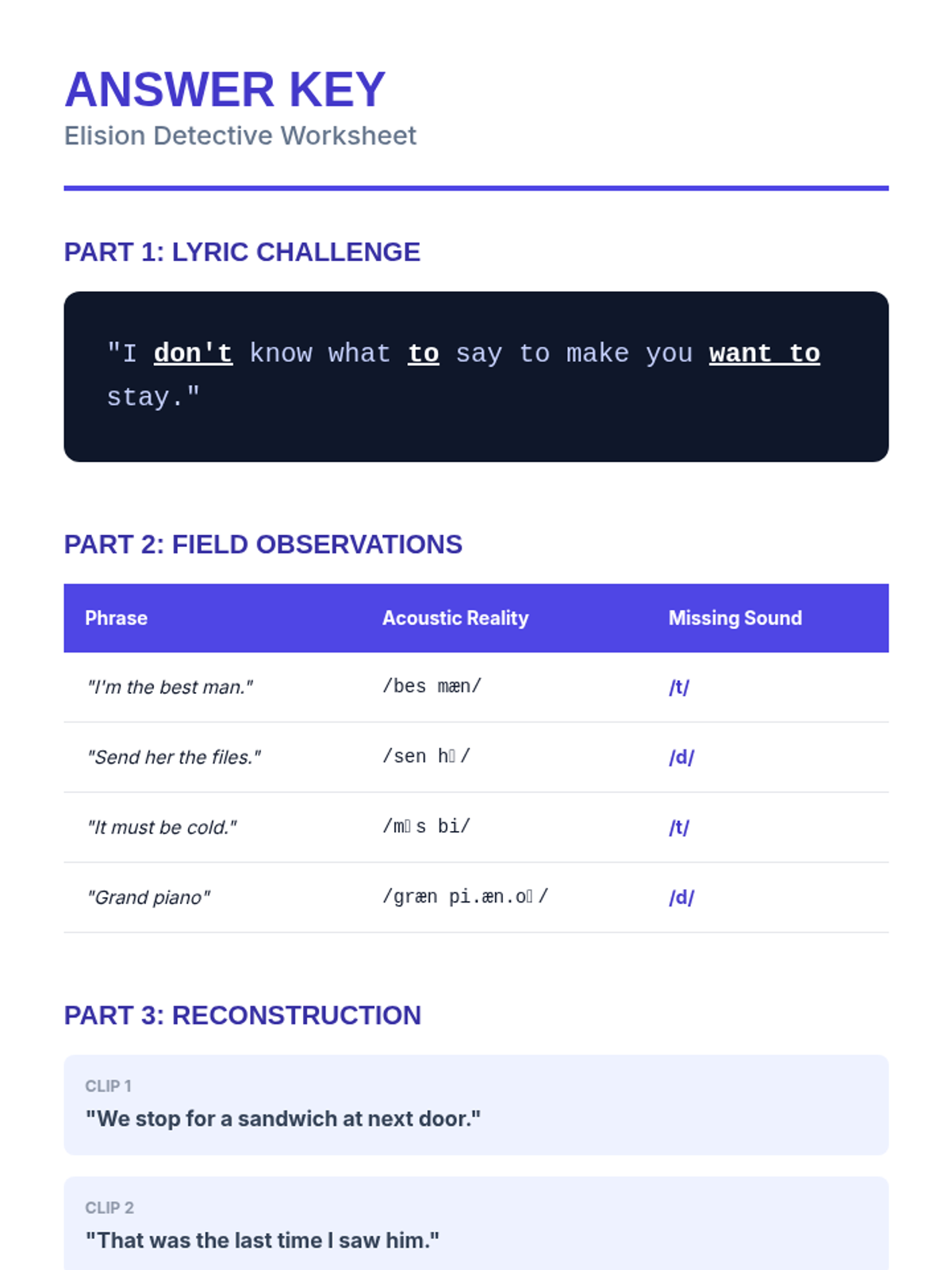
This lesson covers the phenomenon of elision, where sounds (particularly /t/ and /d/) disappear in rapid speech. Students practice listening to high-speed dialogues to identify words that have been 'swallowed' by the speaker.
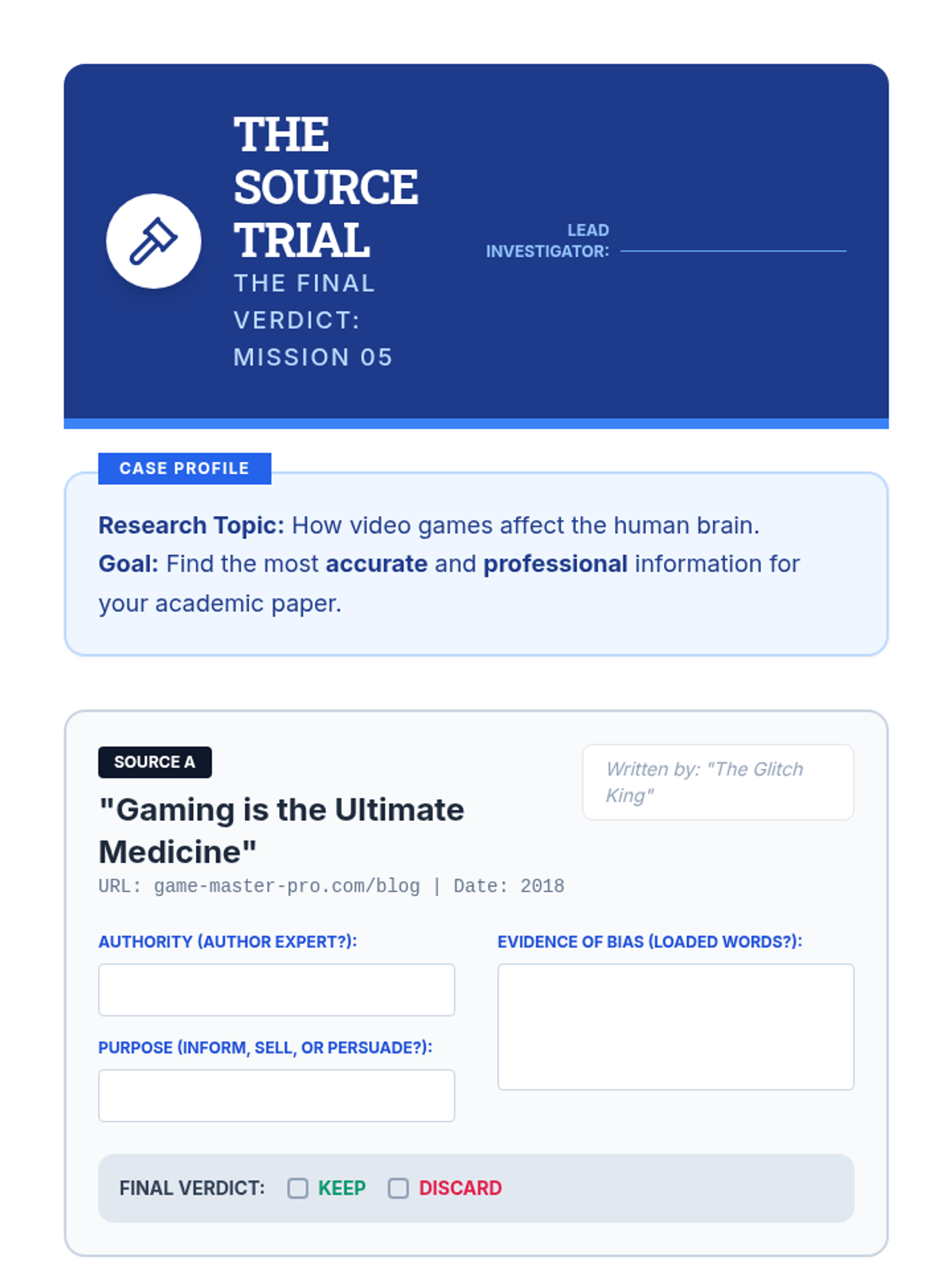
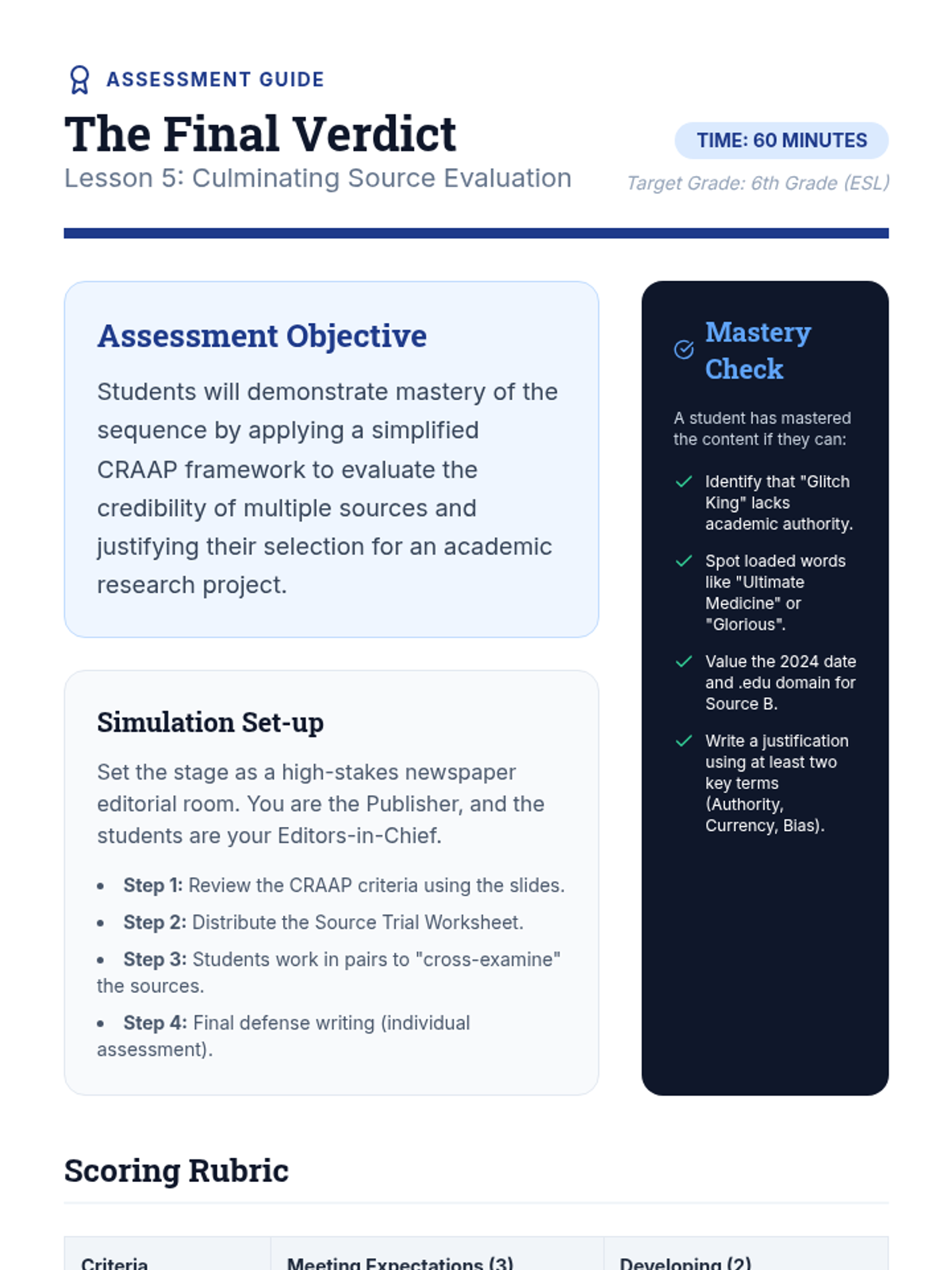
A culminating simulation where students apply an evaluation framework to judge the credibility of sources for a hypothetical research project.
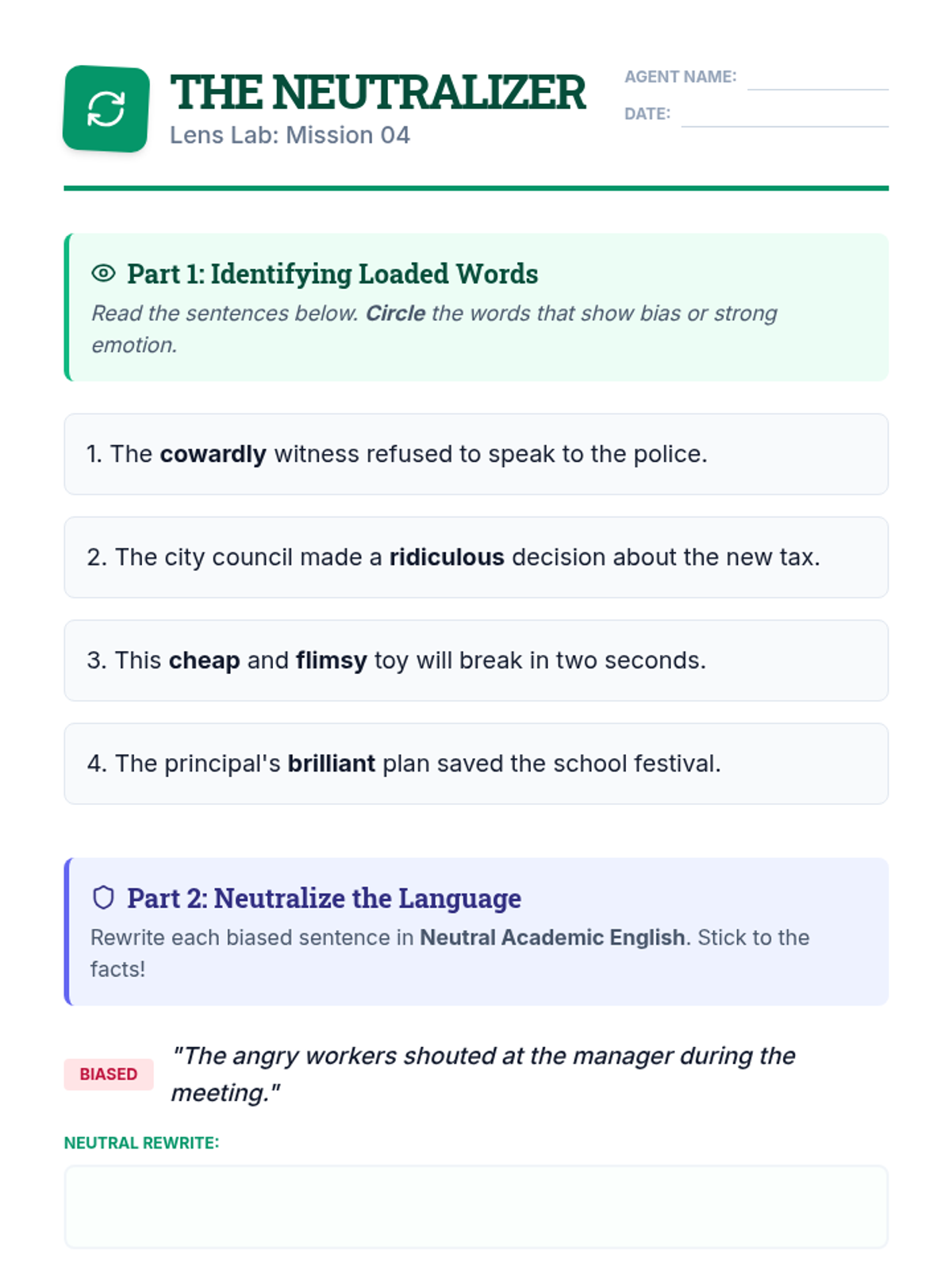
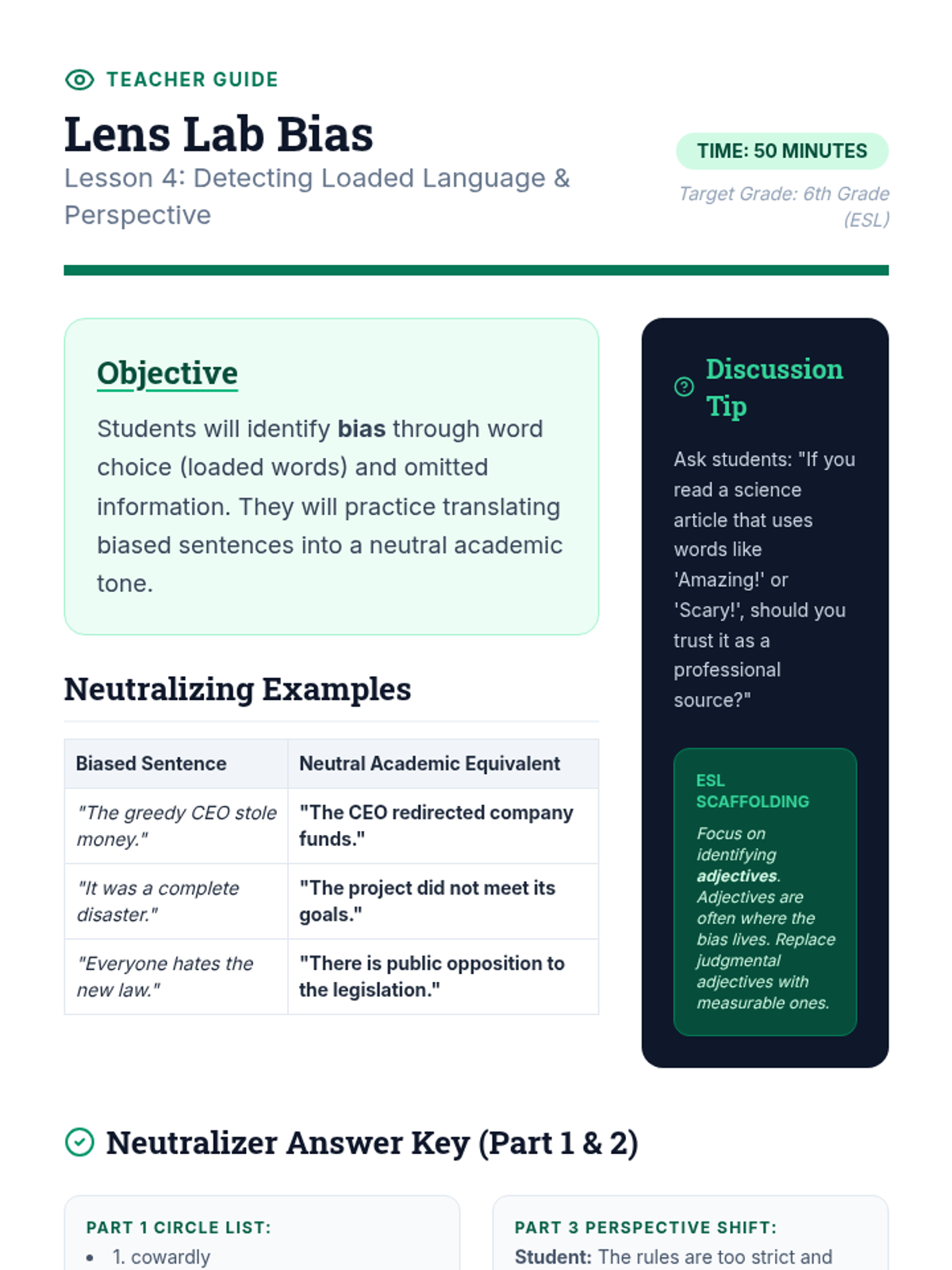
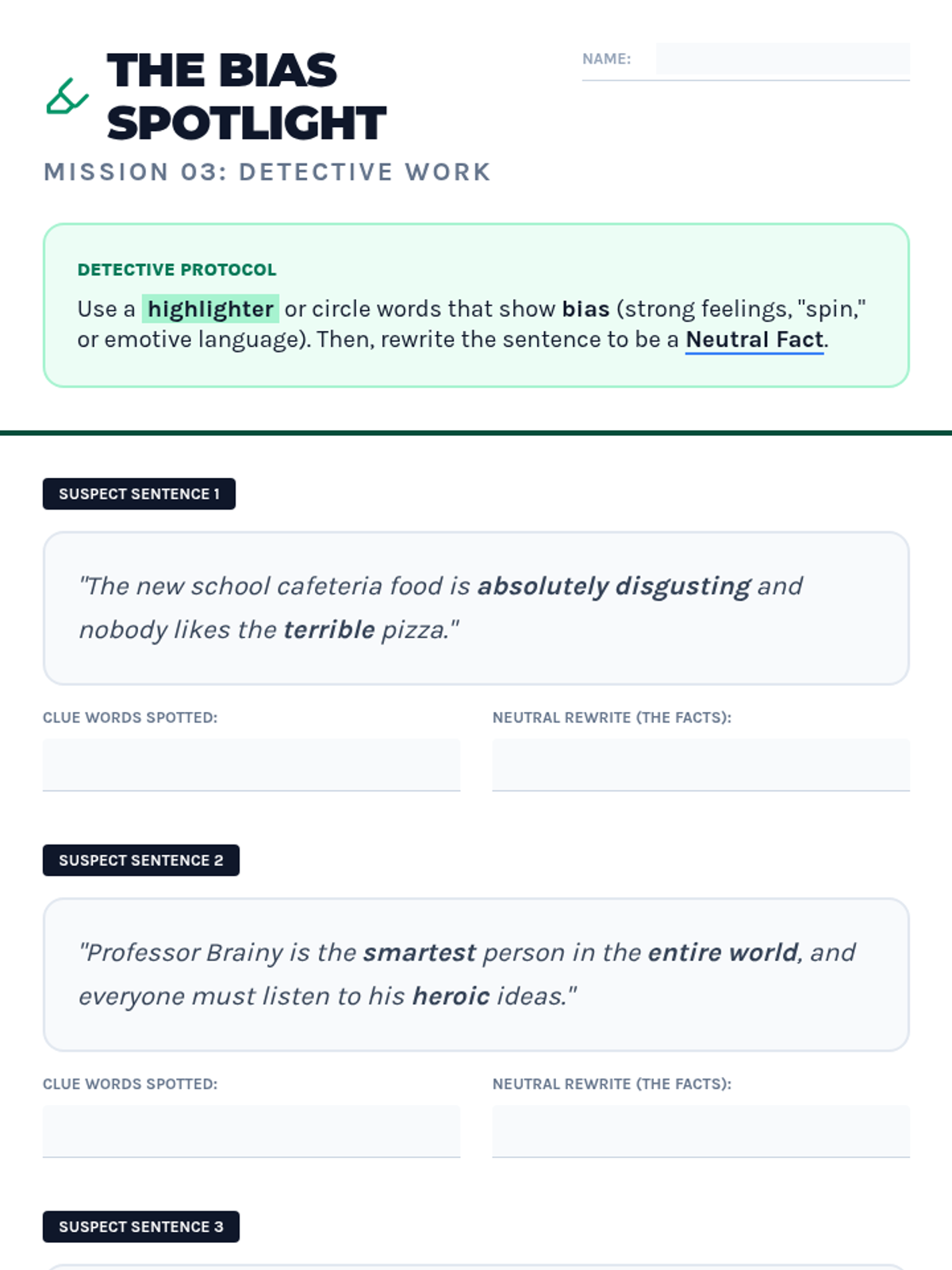
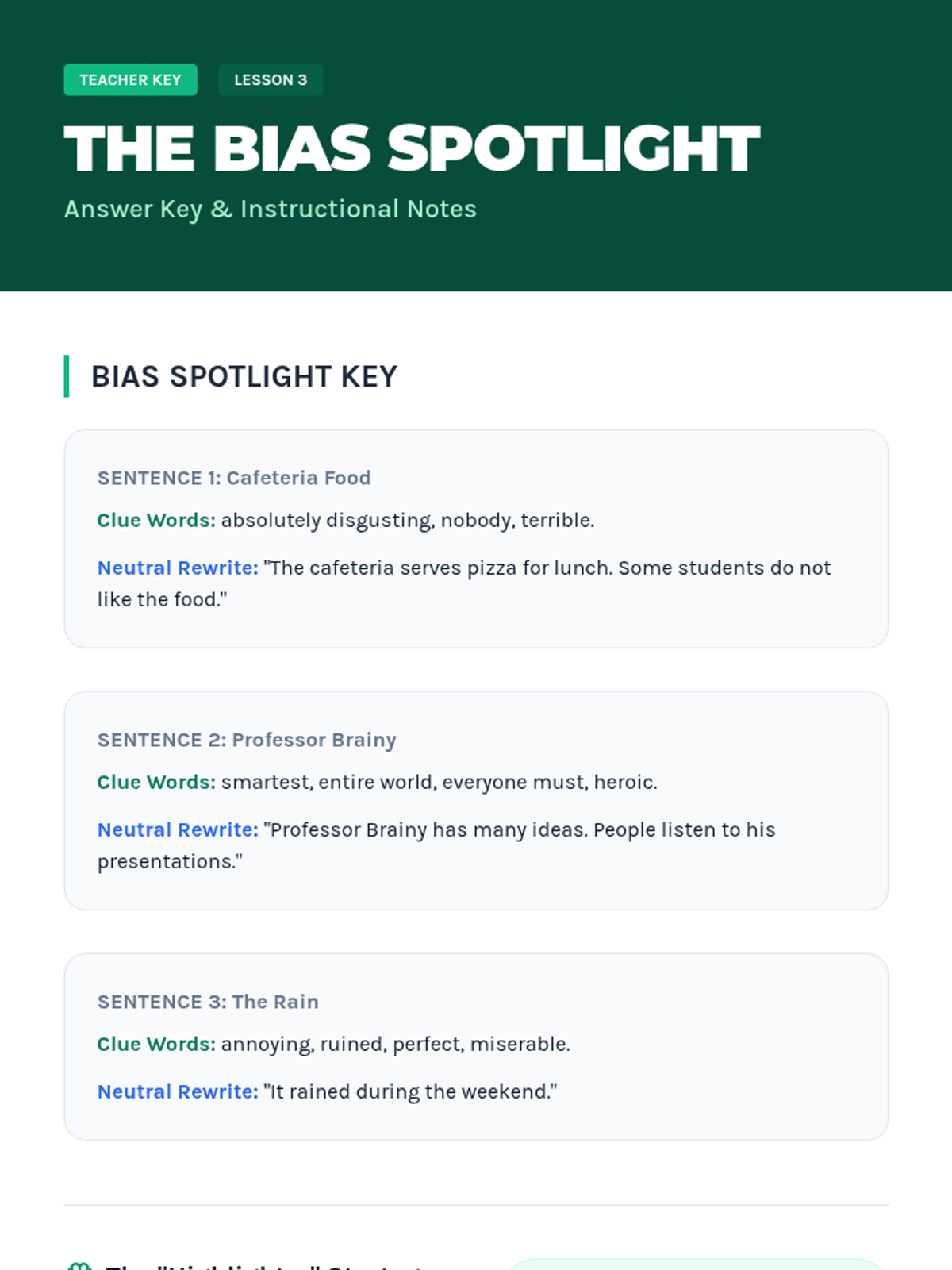
Students identify bias through word choice and perspective, practicing how to transform biased language into neutral academic tone.
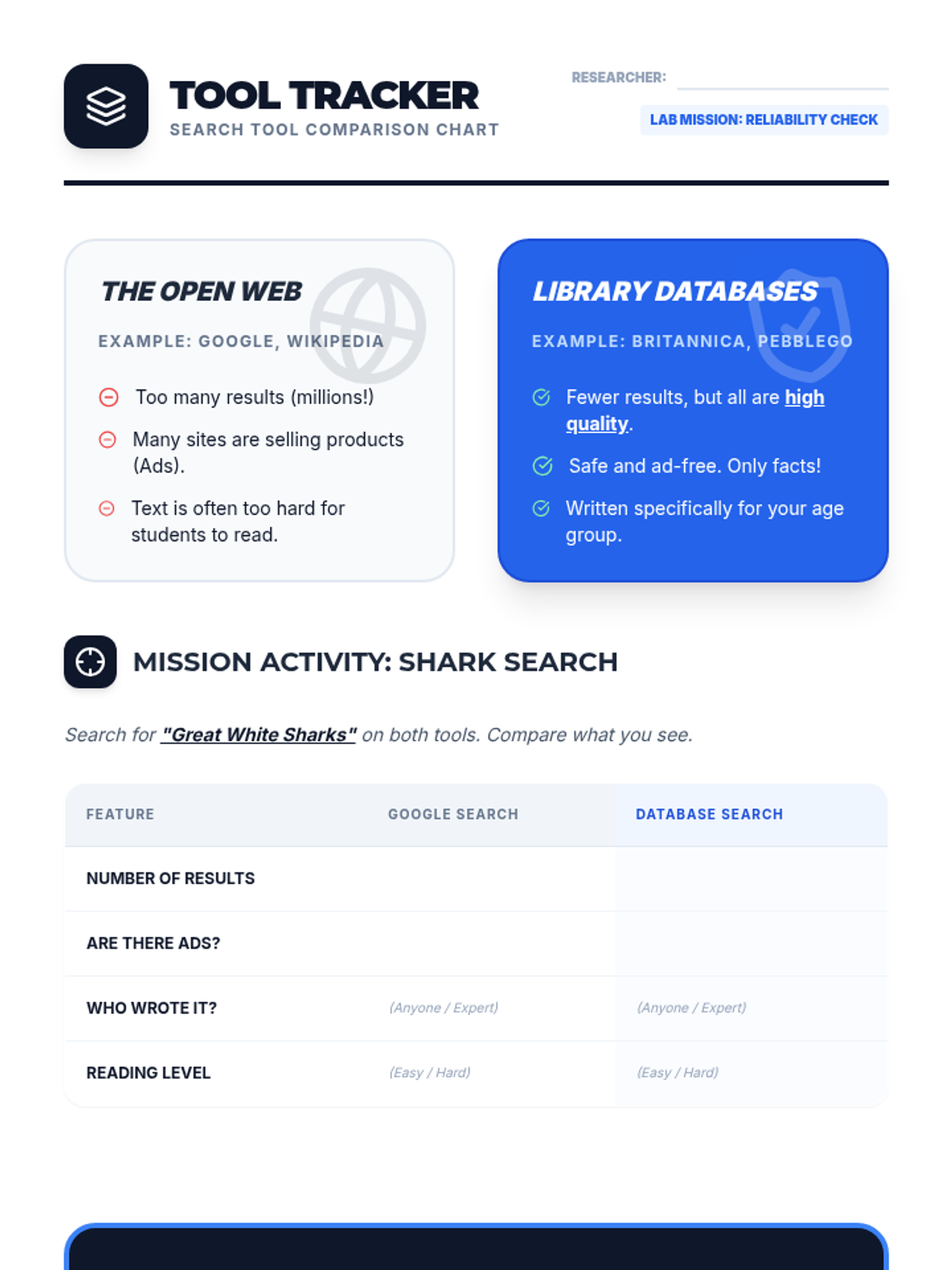
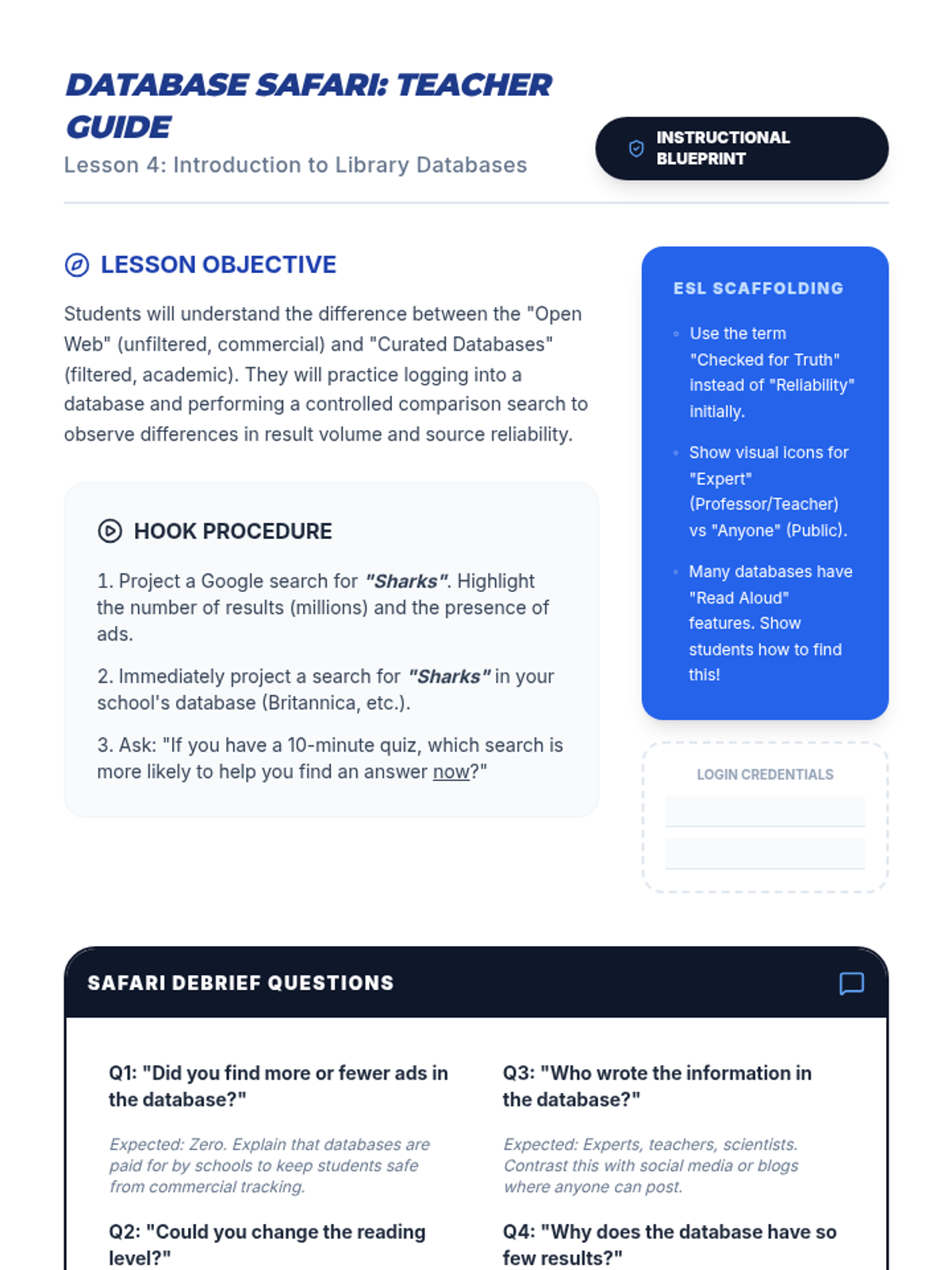
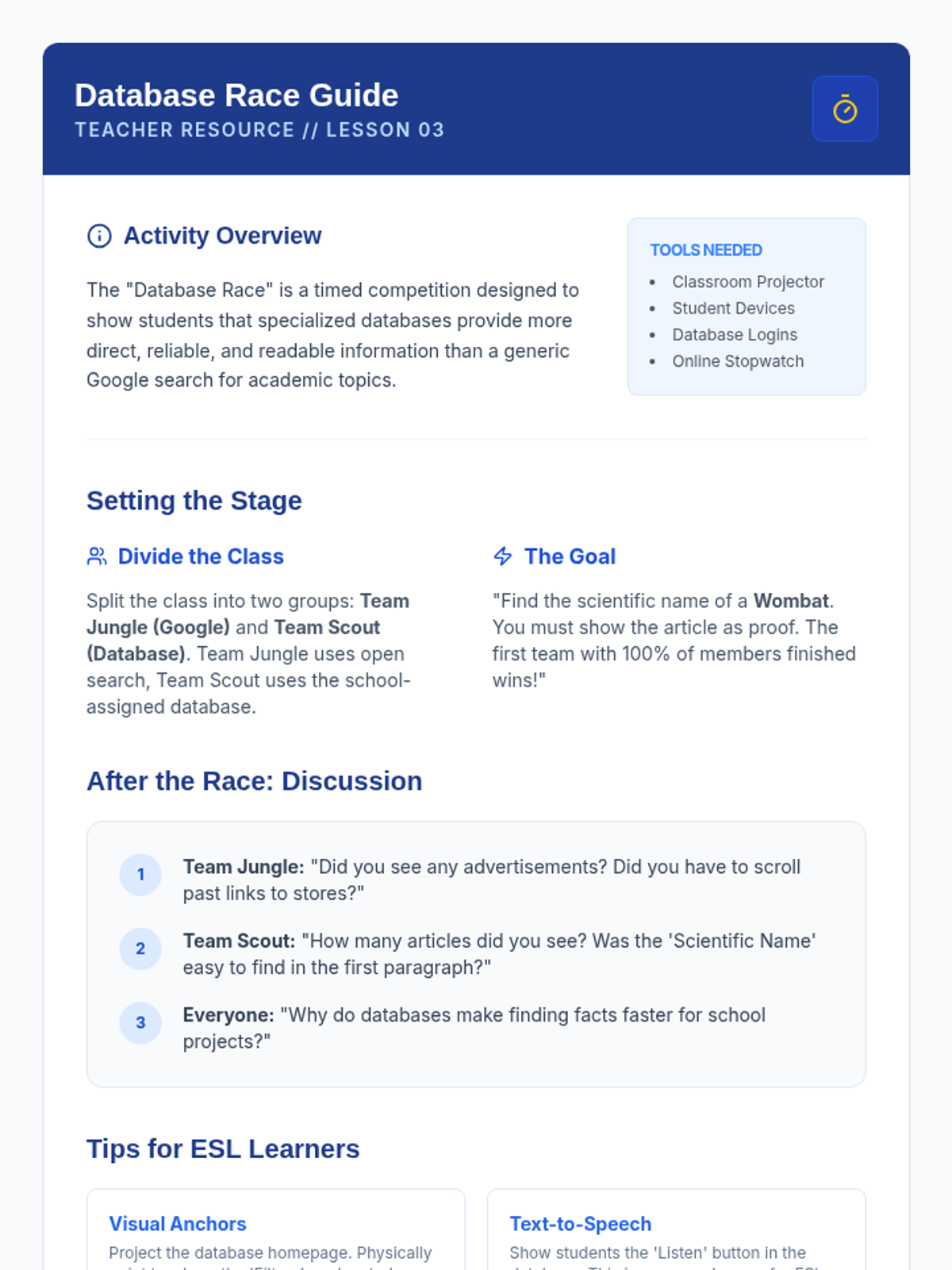
Students transition from open web searches to curated databases, comparing the reliability and organization of professional search tools.
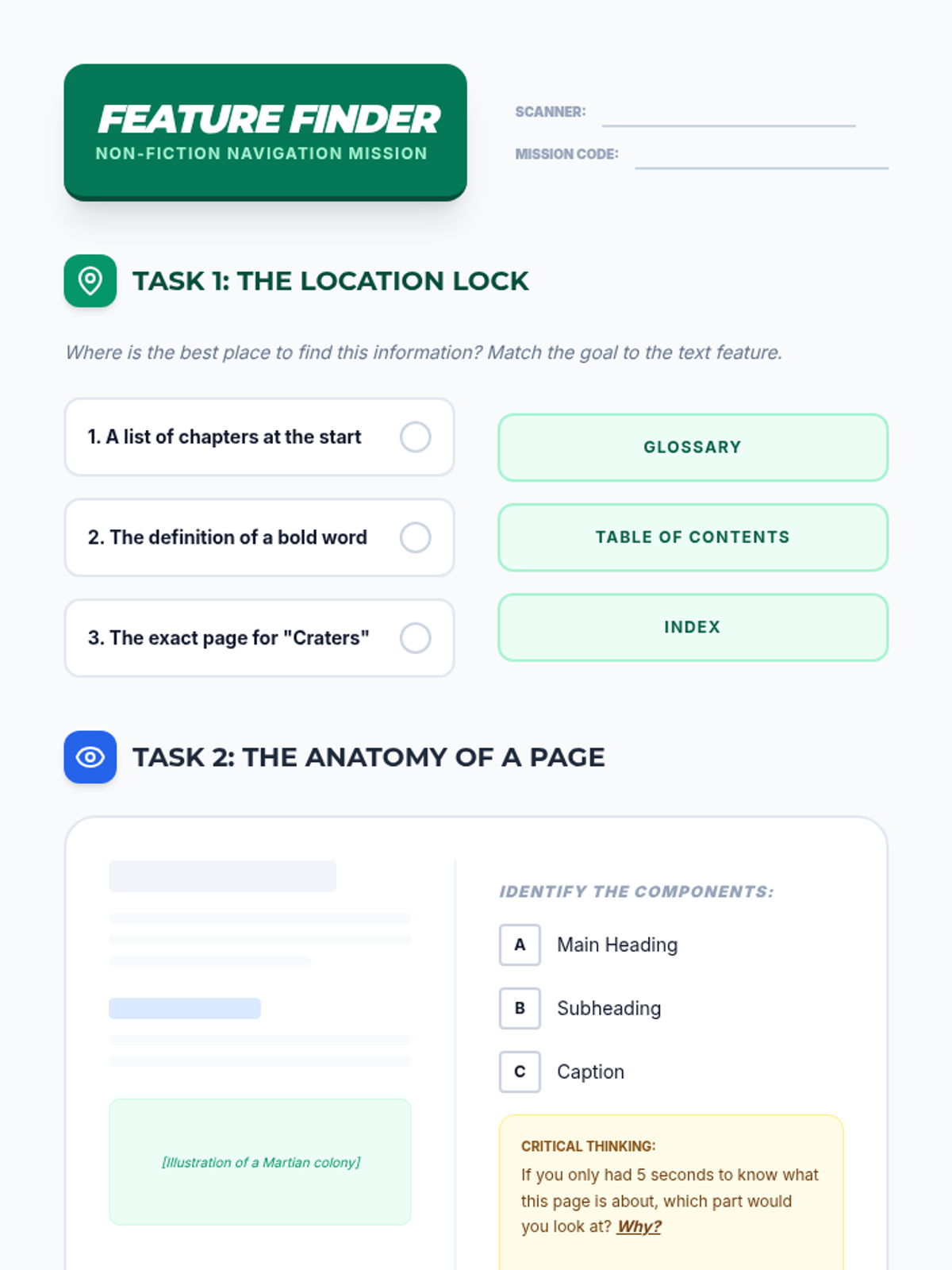
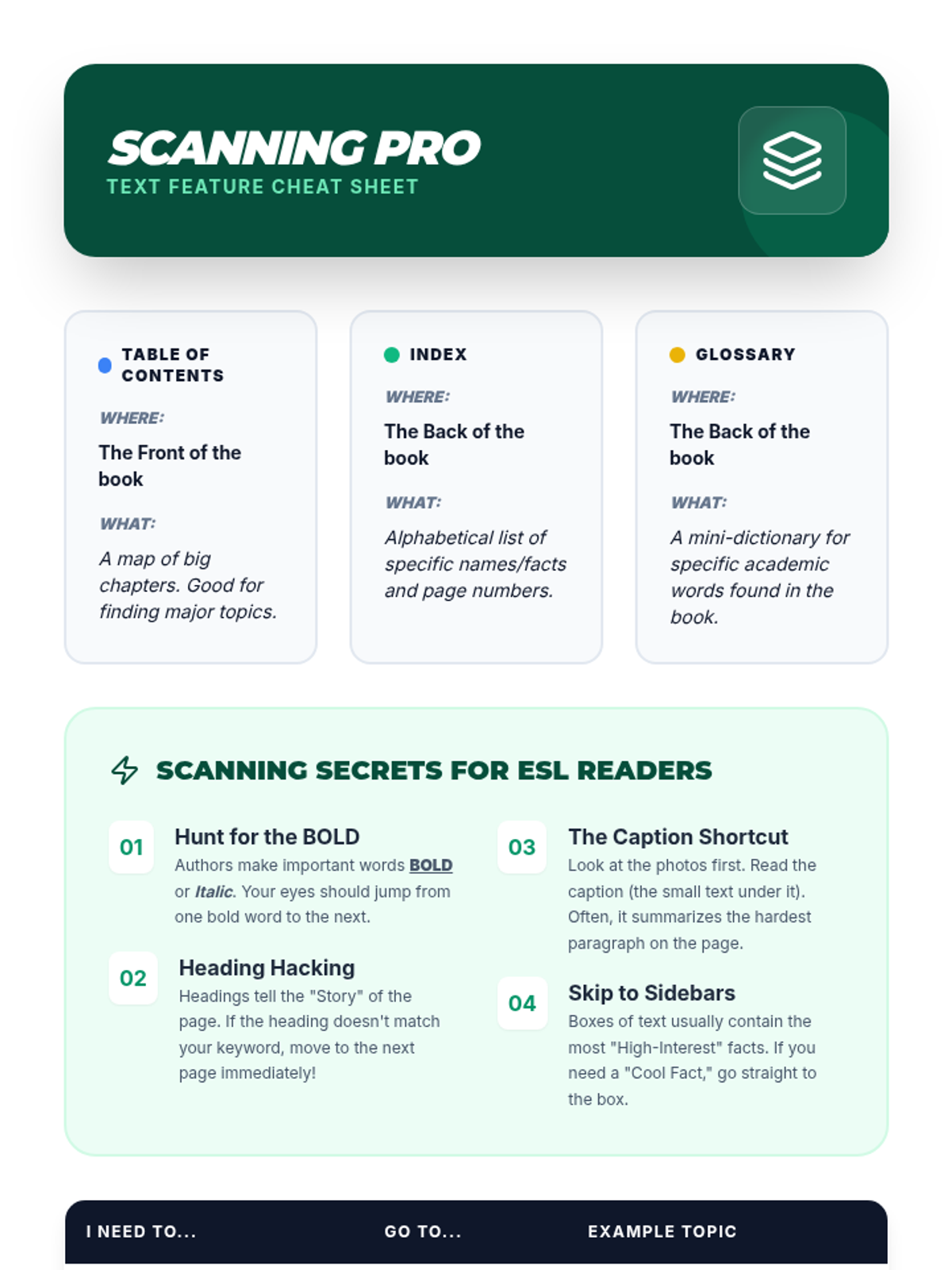
Students practice using text features like indices, headings, and sidebars to locate information quickly through skimming and scanning techniques.
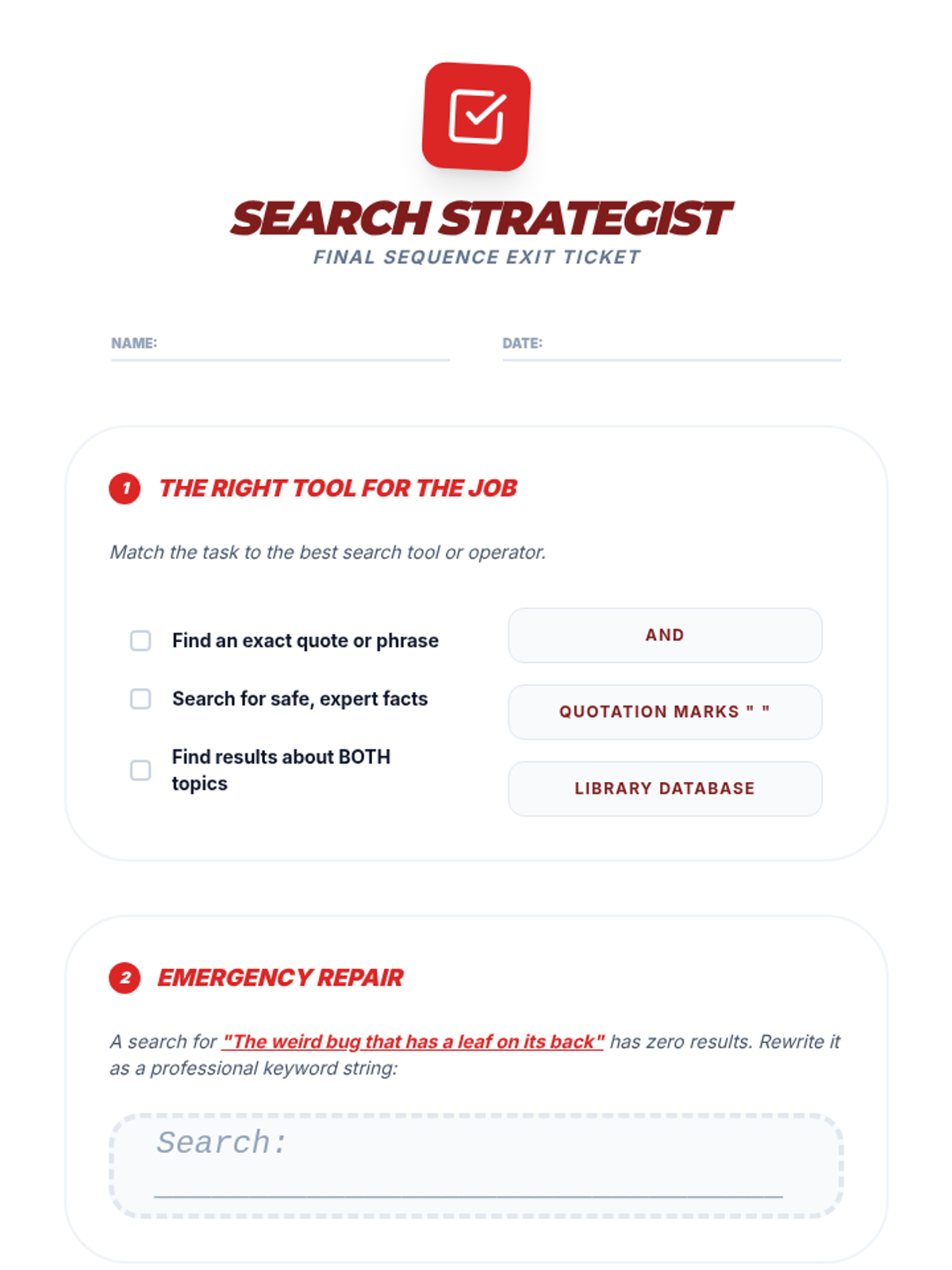
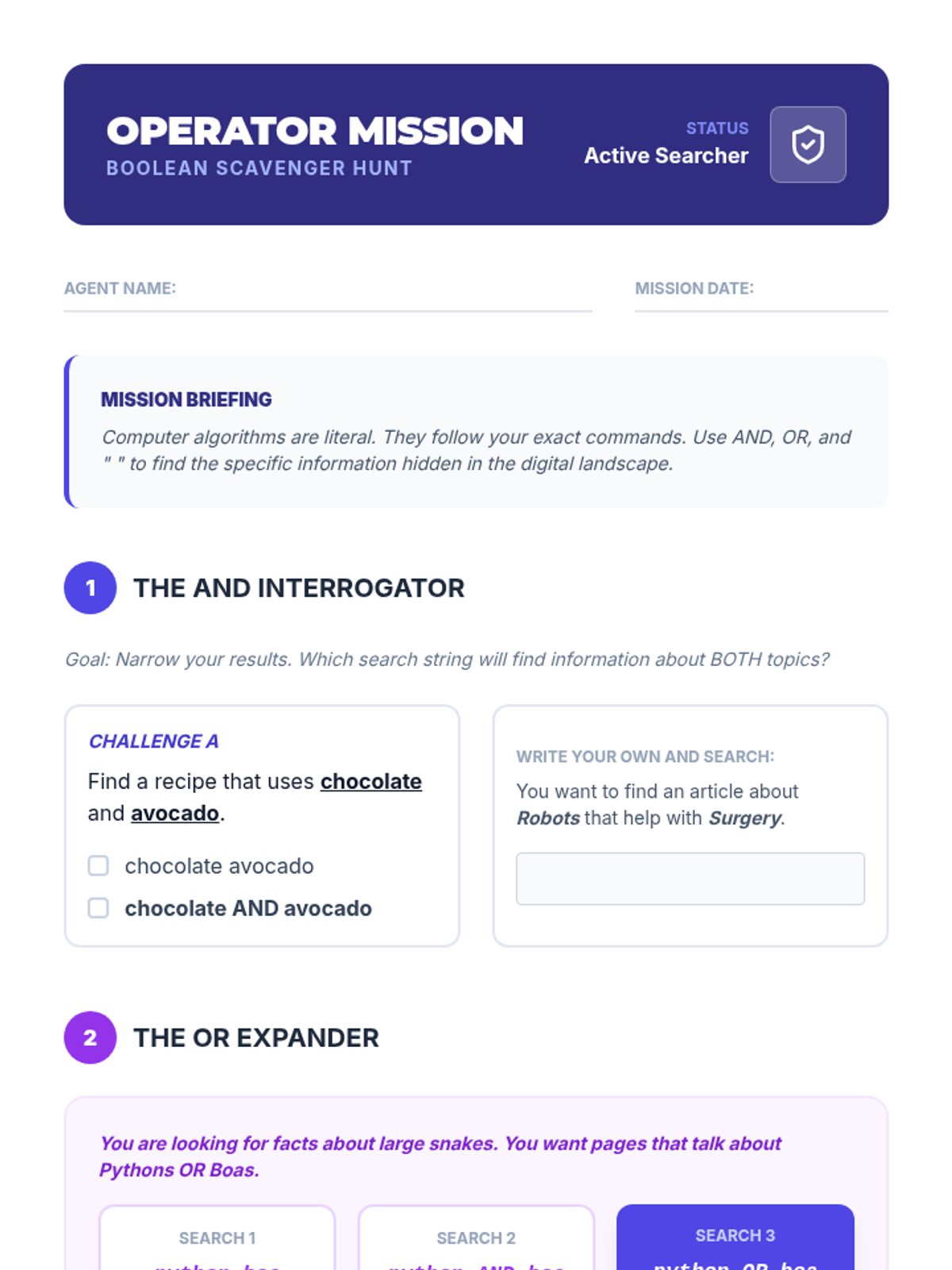
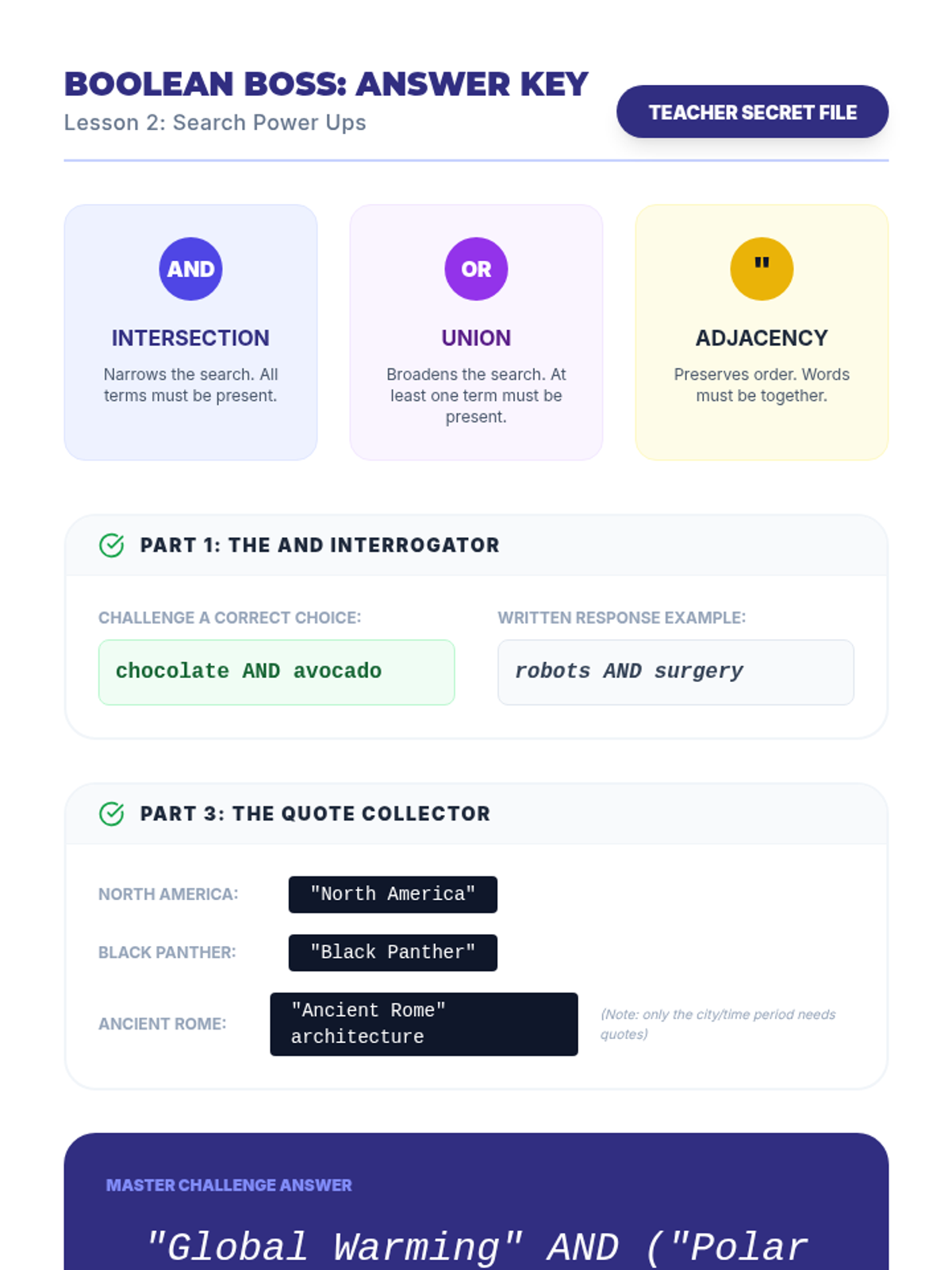
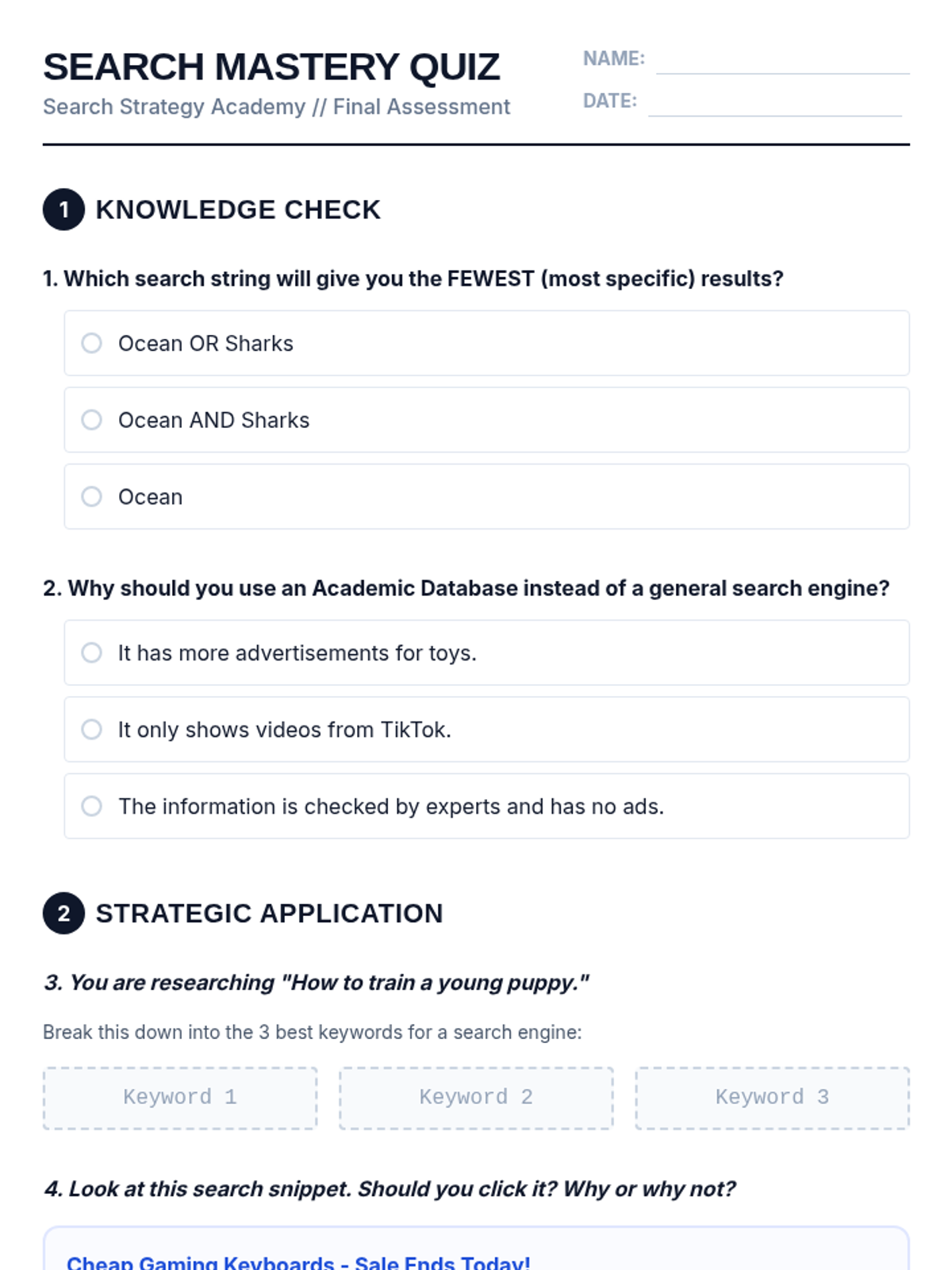
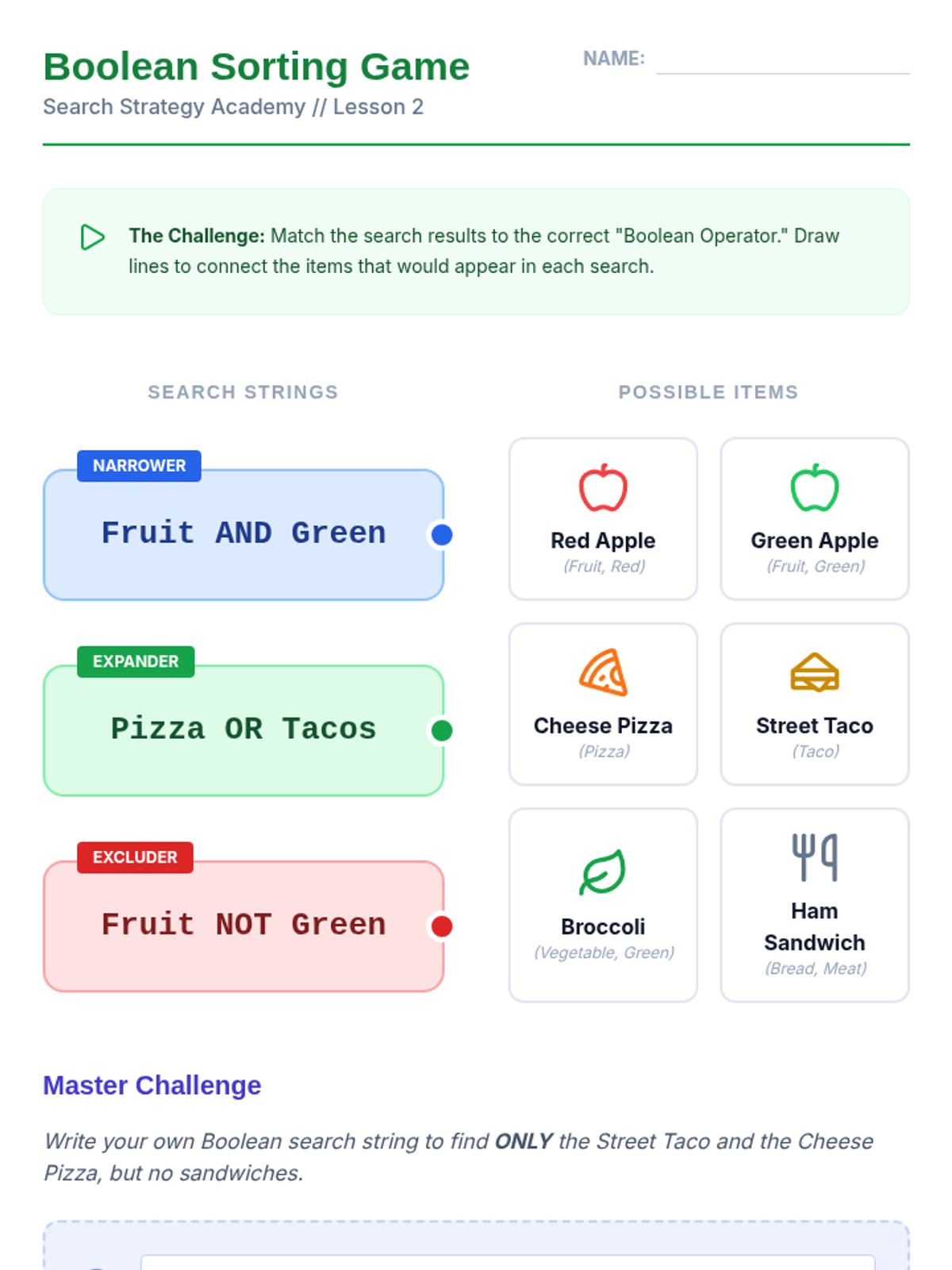
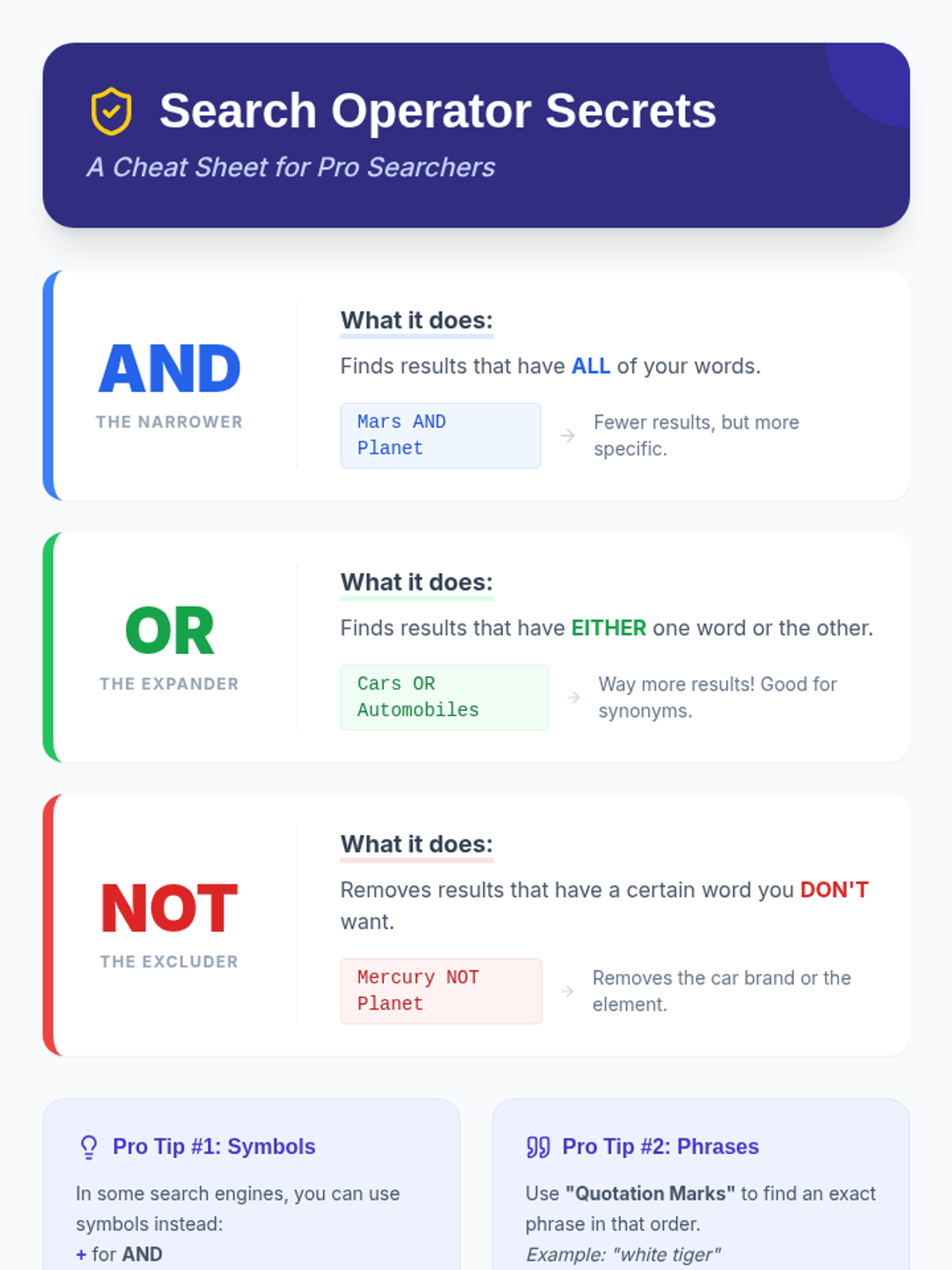
Learners use Boolean operators like AND, OR, and quotation marks to narrow or broaden search results in a digital scavenger hunt.
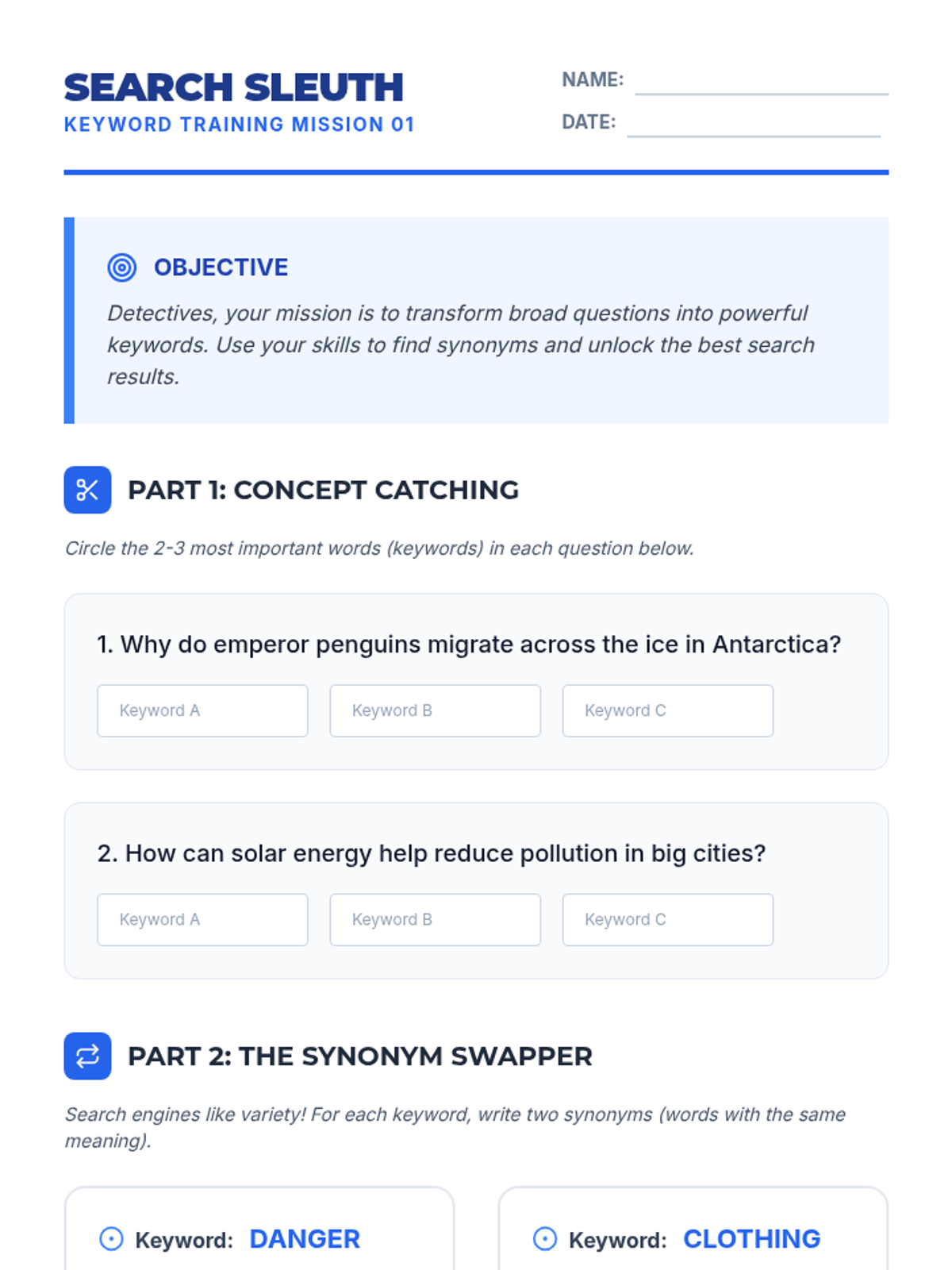
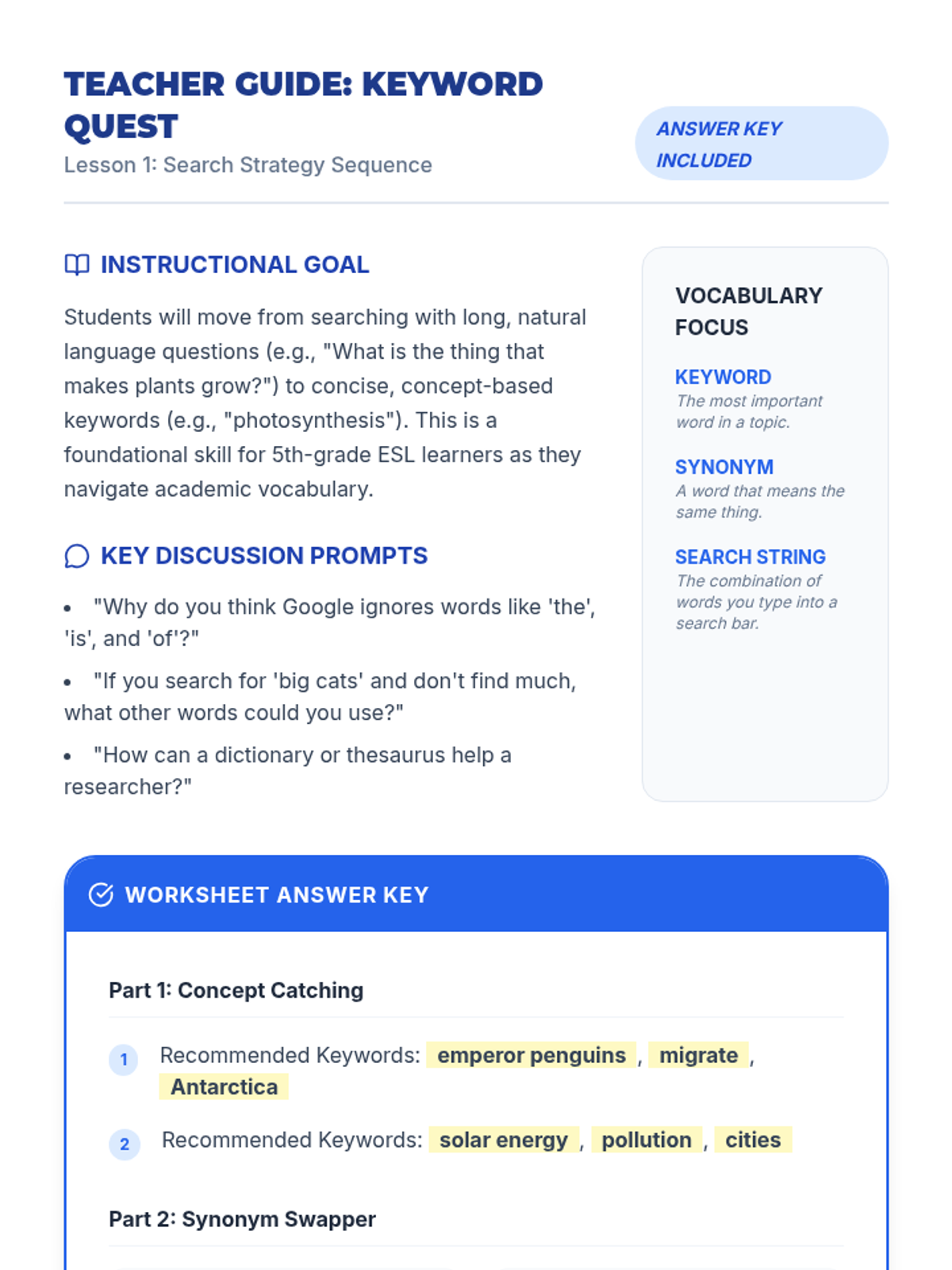
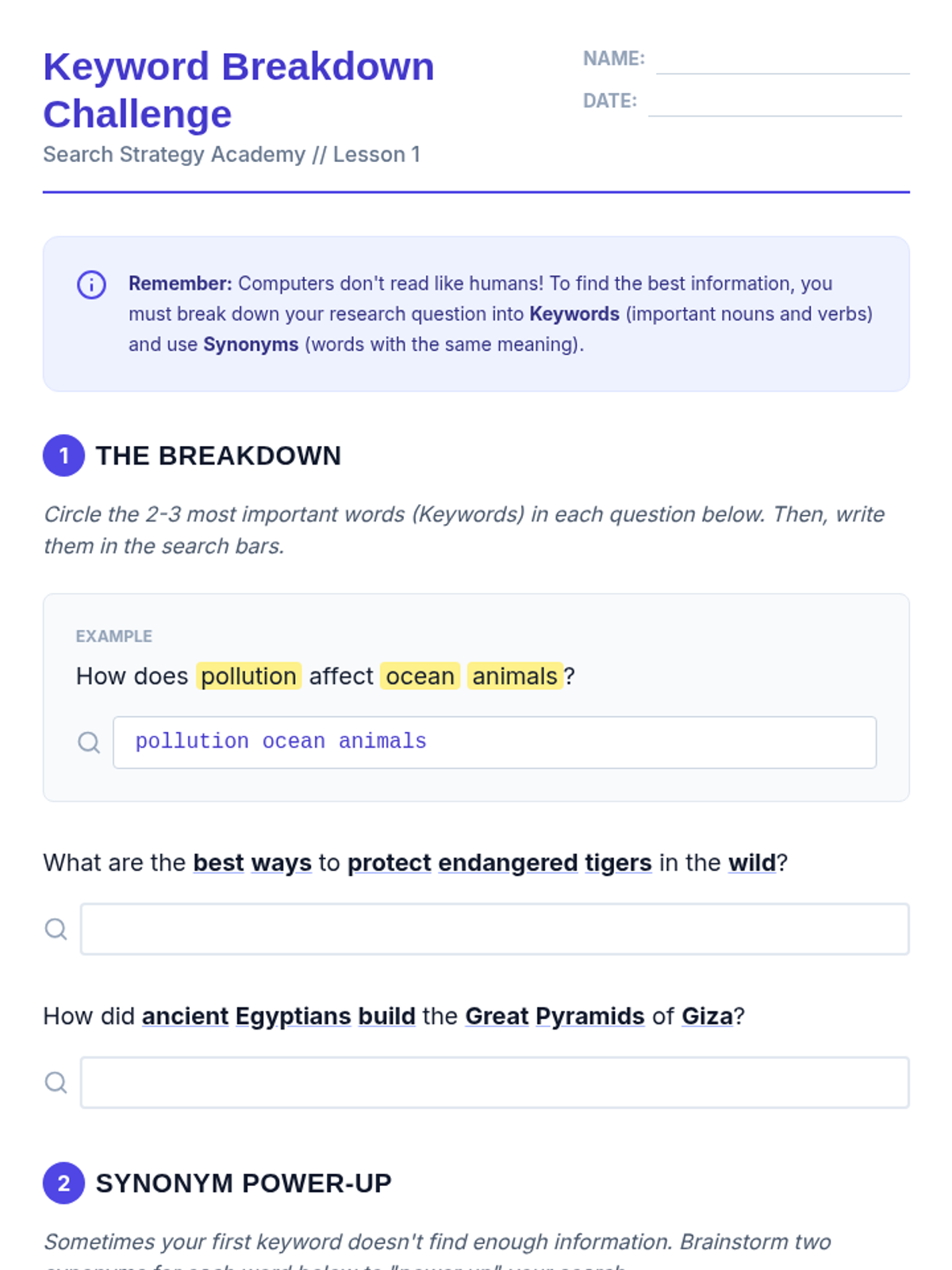
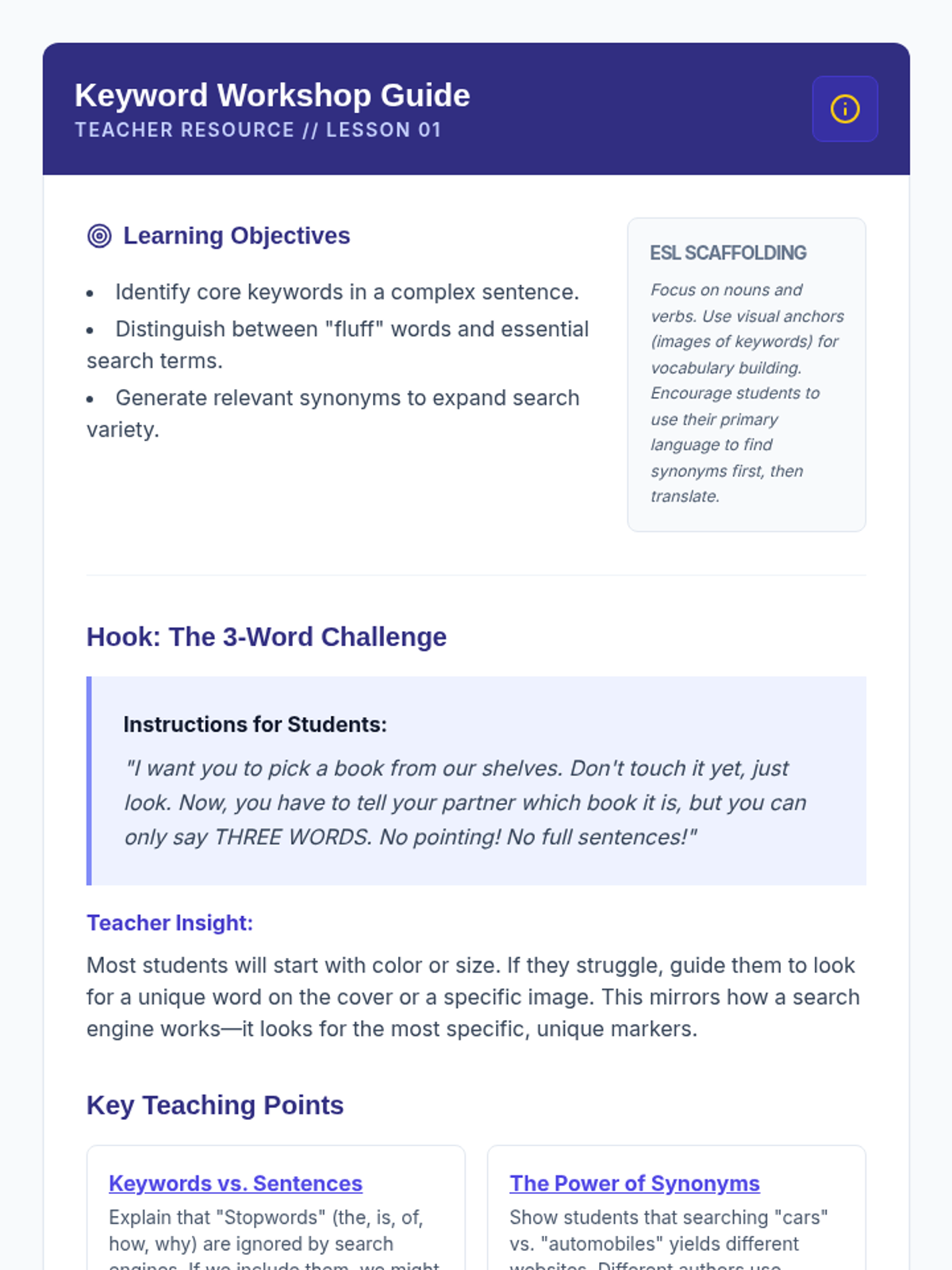
Students learn to break down research questions into core concepts and generate synonyms, transforming natural language into effective search strings.
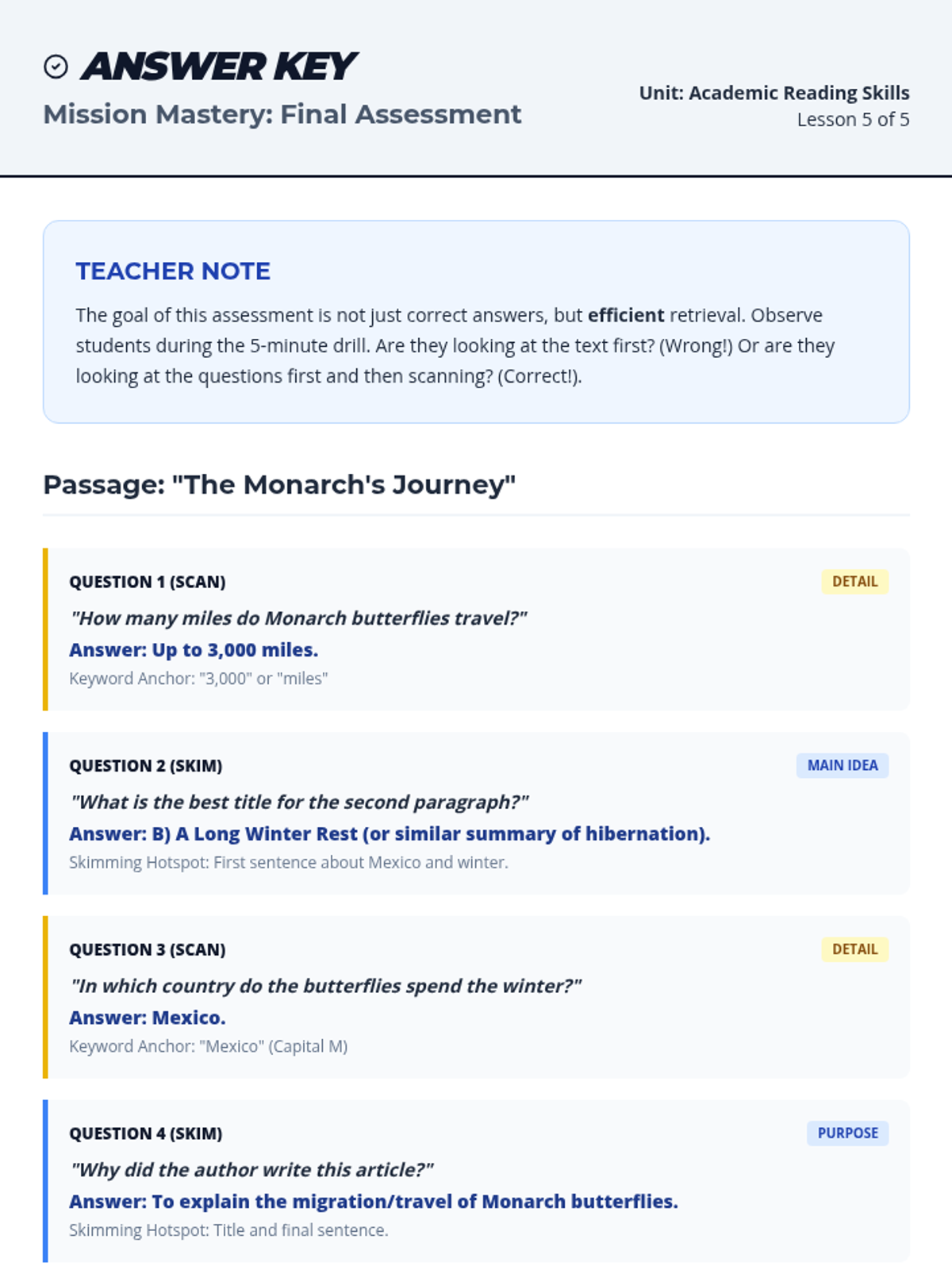
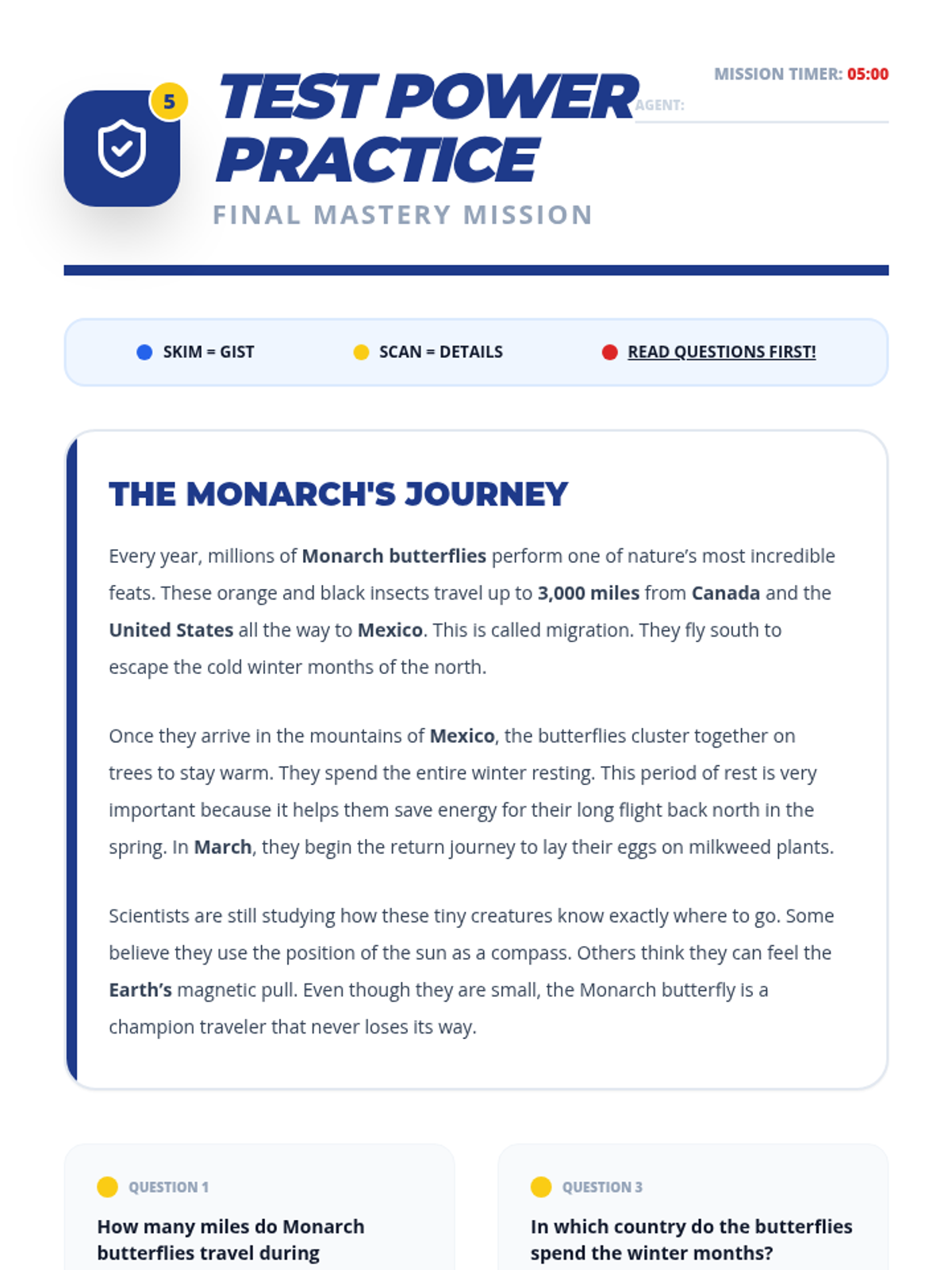
In the final lesson, students apply their skimming and scanning skills to a sample standardized test passage and reflect on their growth in reading speed and comprehension efficiency.
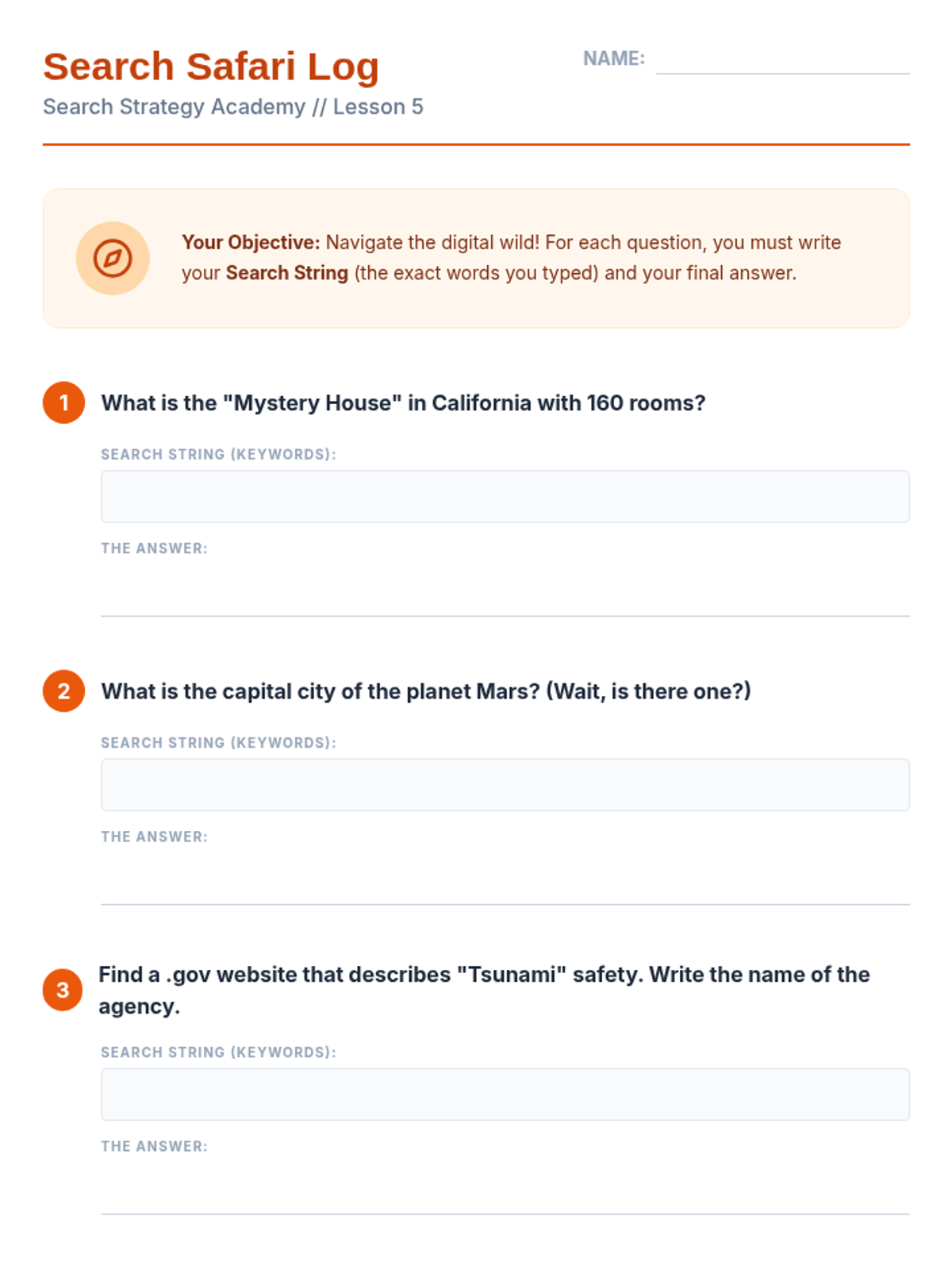
A culminating scavenger hunt challenge where students apply all previous skills to find obscure information and document their search paths.
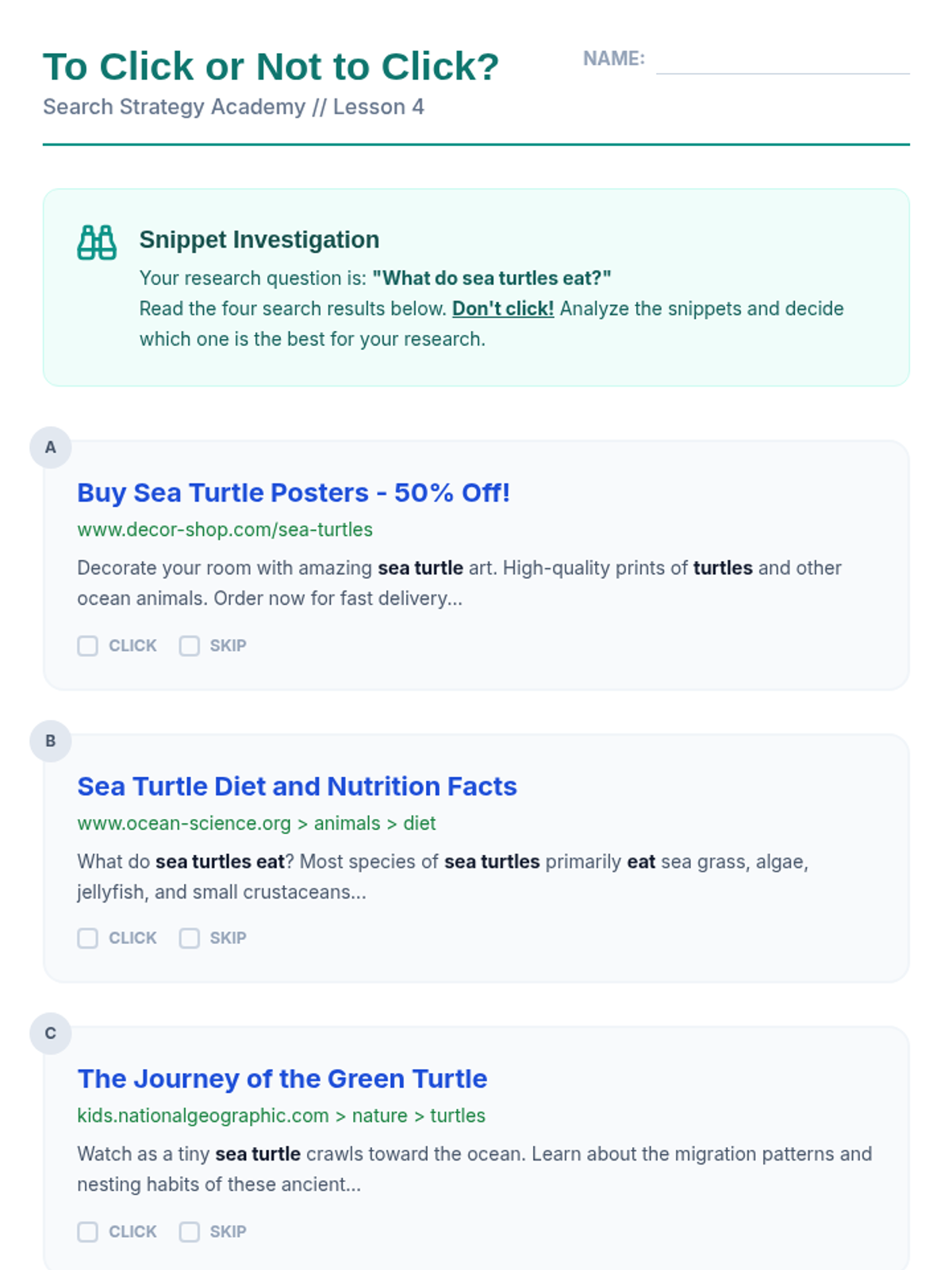
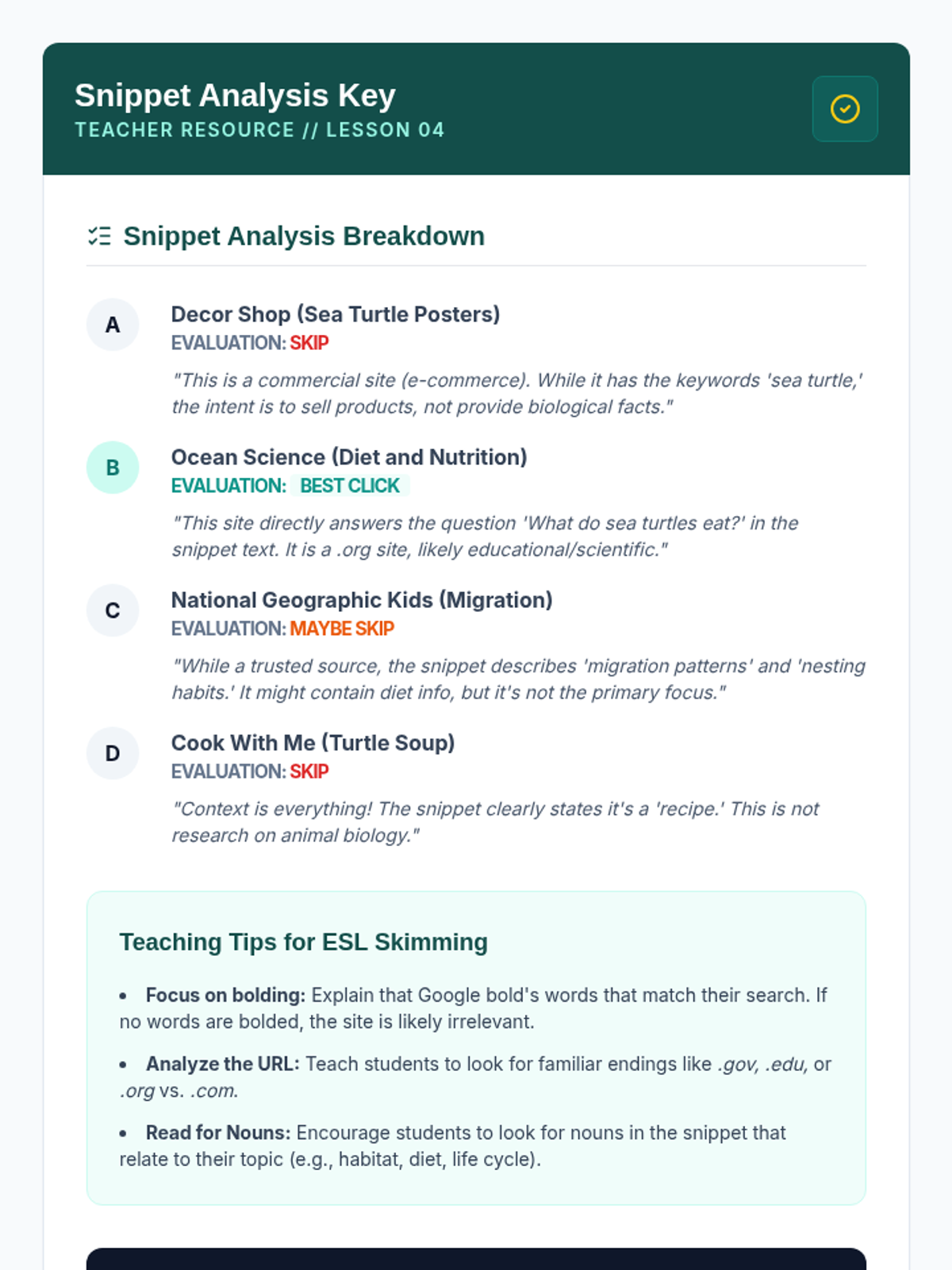
Focuses on the skill of rapid appraisal by teaching students how to read and interpret search result snippets, titles, and bolded terms before clicking.
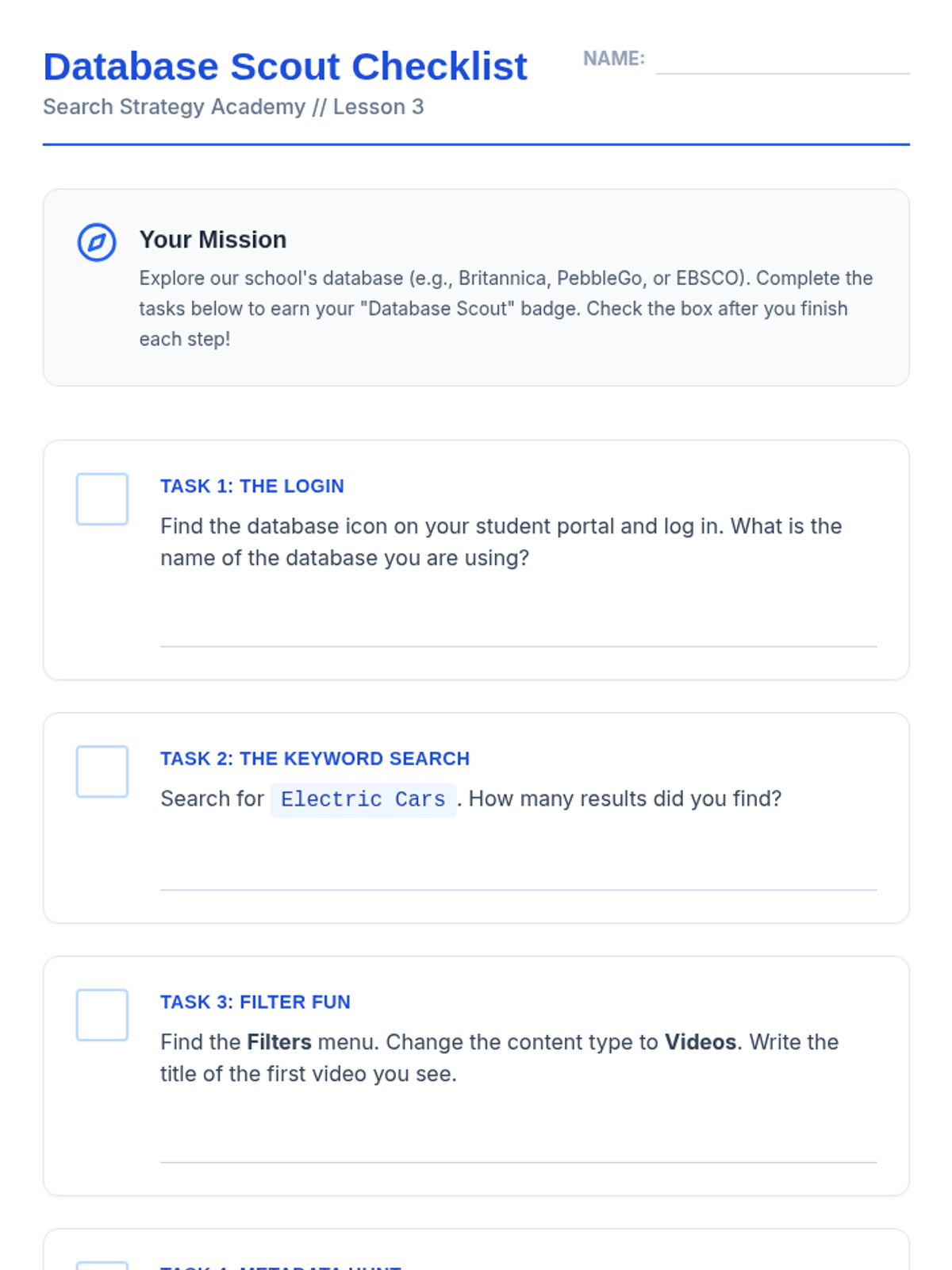
Students explore the specific features of academic databases, including filters, metadata, and specialized search bars, comparing them to general search engines.
Introduces Boolean operators (AND, OR, NOT) through visual and physical activities to help students understand how to narrow or expand their search results.
Students learn to deconstruct complex questions into core keywords and brainstorm synonyms to expand their search potential, moving away from typing full sentences into search engines.
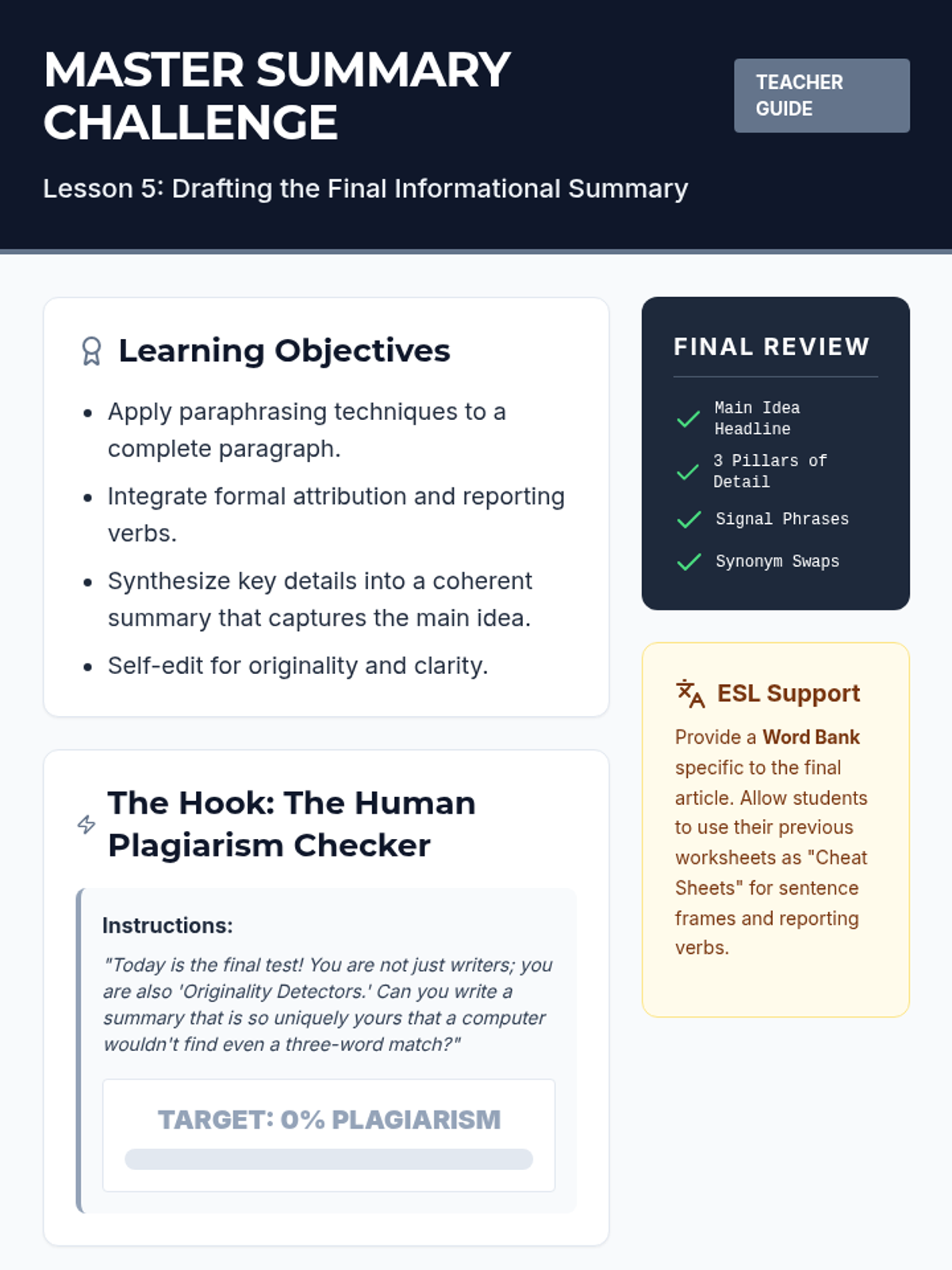
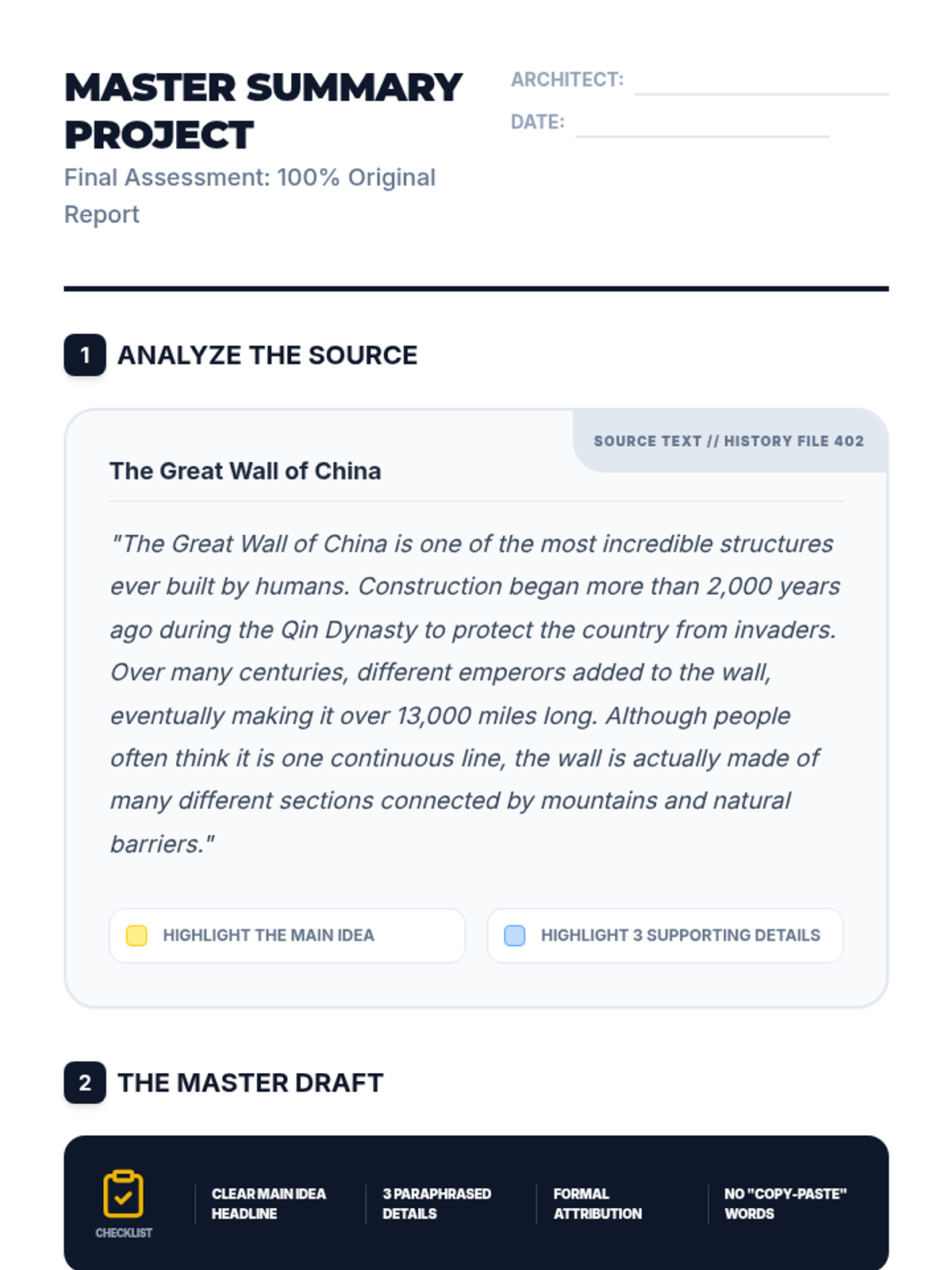
The culminating lesson where students apply all previous skills to write an original summary report based on an informational article.
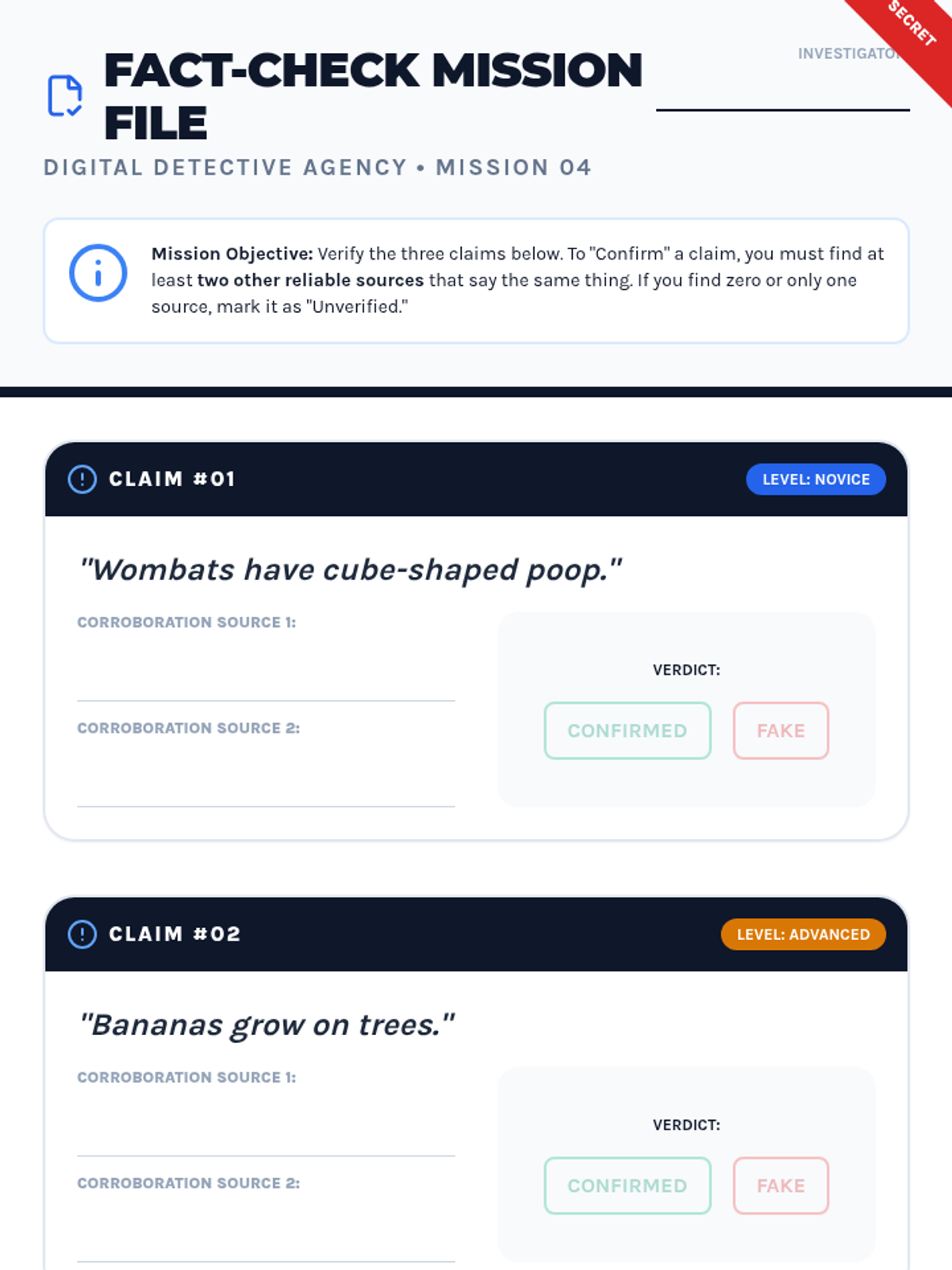
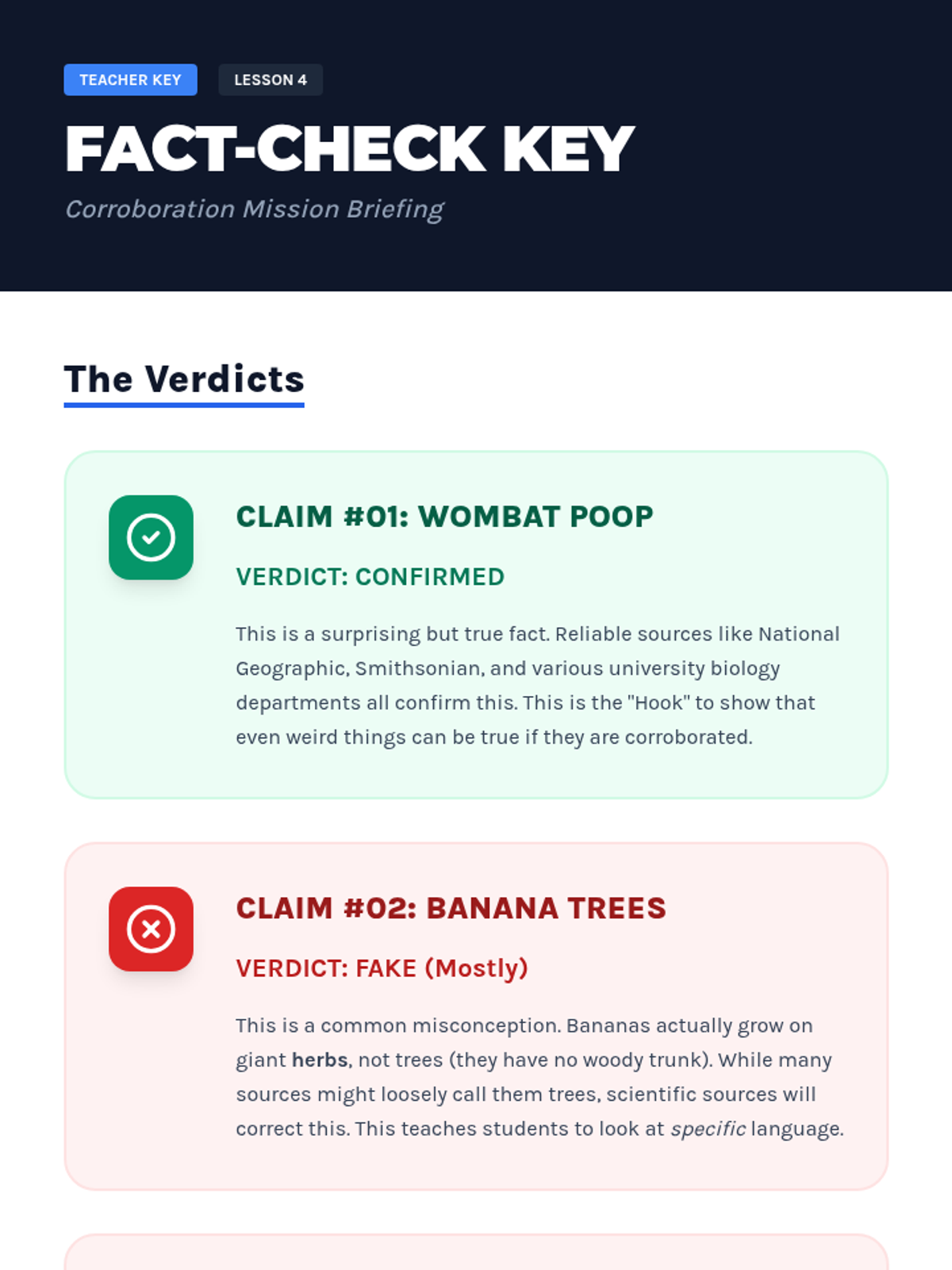
This lesson teaches the strategy of verifying information by finding it in multiple reliable sources. Students engage in a 'Fact-Check Challenge' to confirm or debunk specific claims.
Students read and combine facts from two different texts on the same topic into a single, coherent paragraph.
Students examine texts to differentiate between objective facts and subjective opinions or bias. They practice highlighting emotive language and unsupported claims within informational texts.
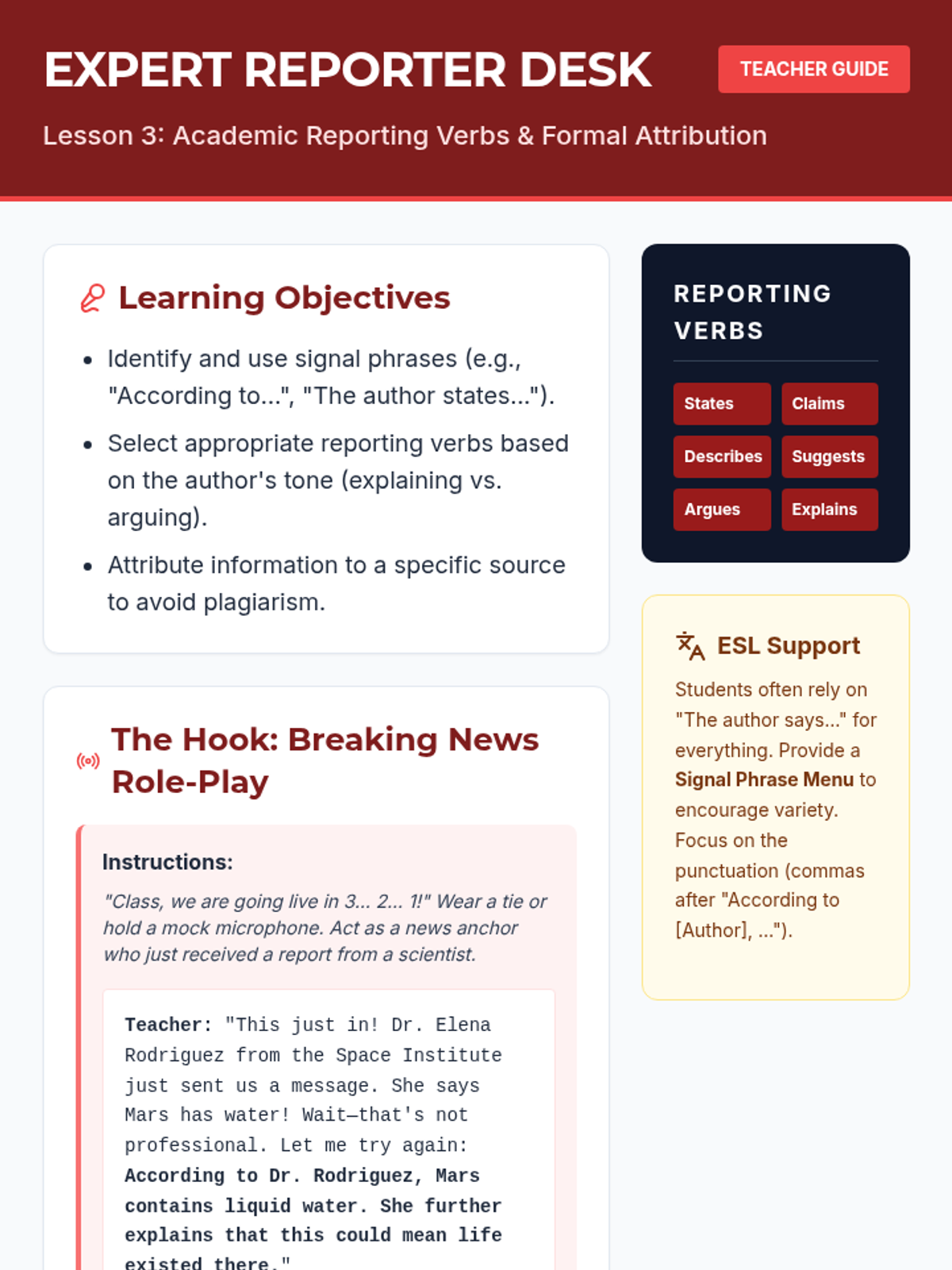
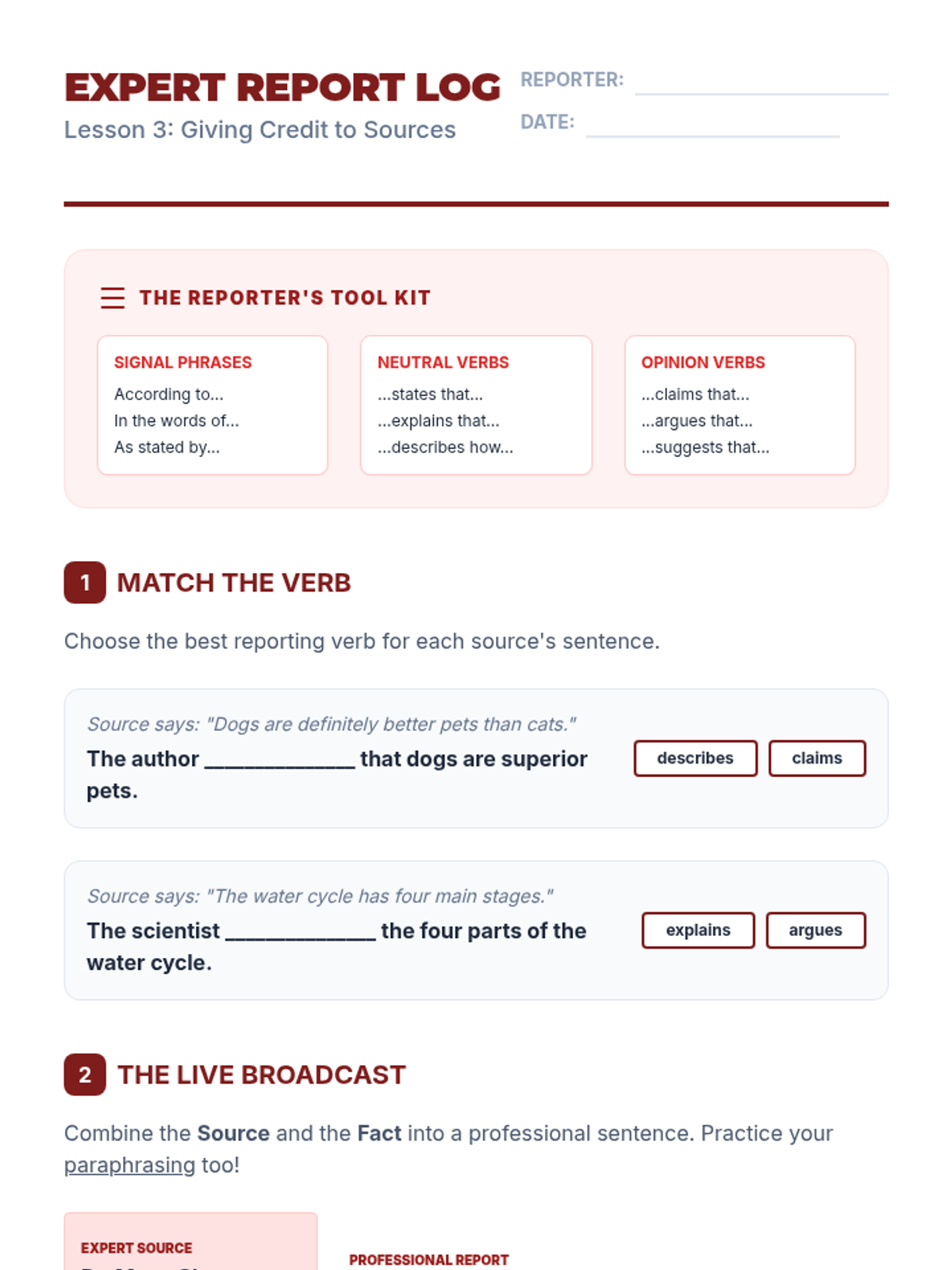
Students learn and practice using academic reporting verbs and formal attribution to credit authors in their writing.
Learners study techniques for rewriting sentences while maintaining original meaning, focusing on vocabulary substitution and structural changes.