Essential grammar structures, high-frequency vocabulary, and foundational literacy skills. Equips learners with basic speaking and listening abilities for everyday interactions and introductory text comprehension.
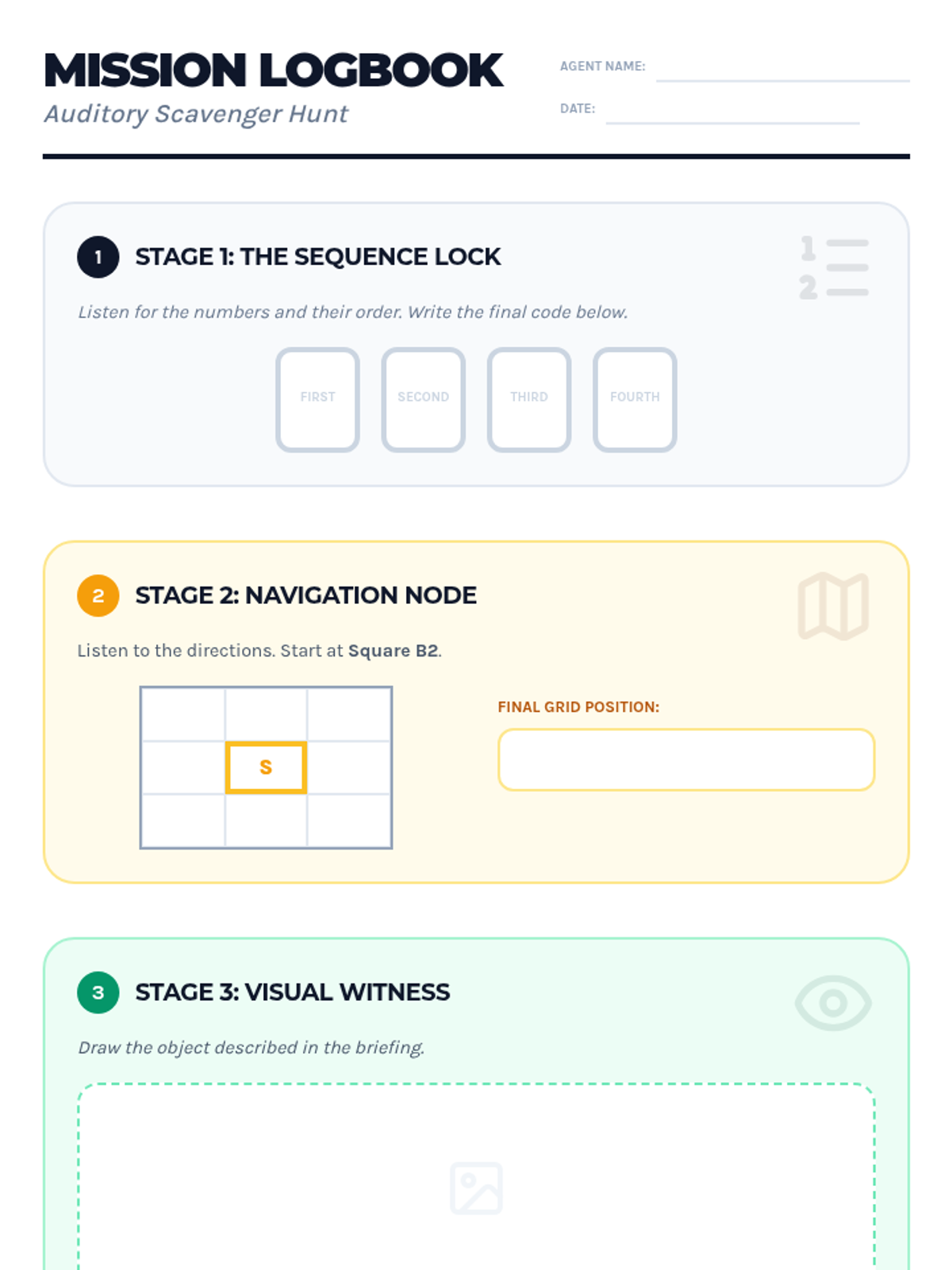
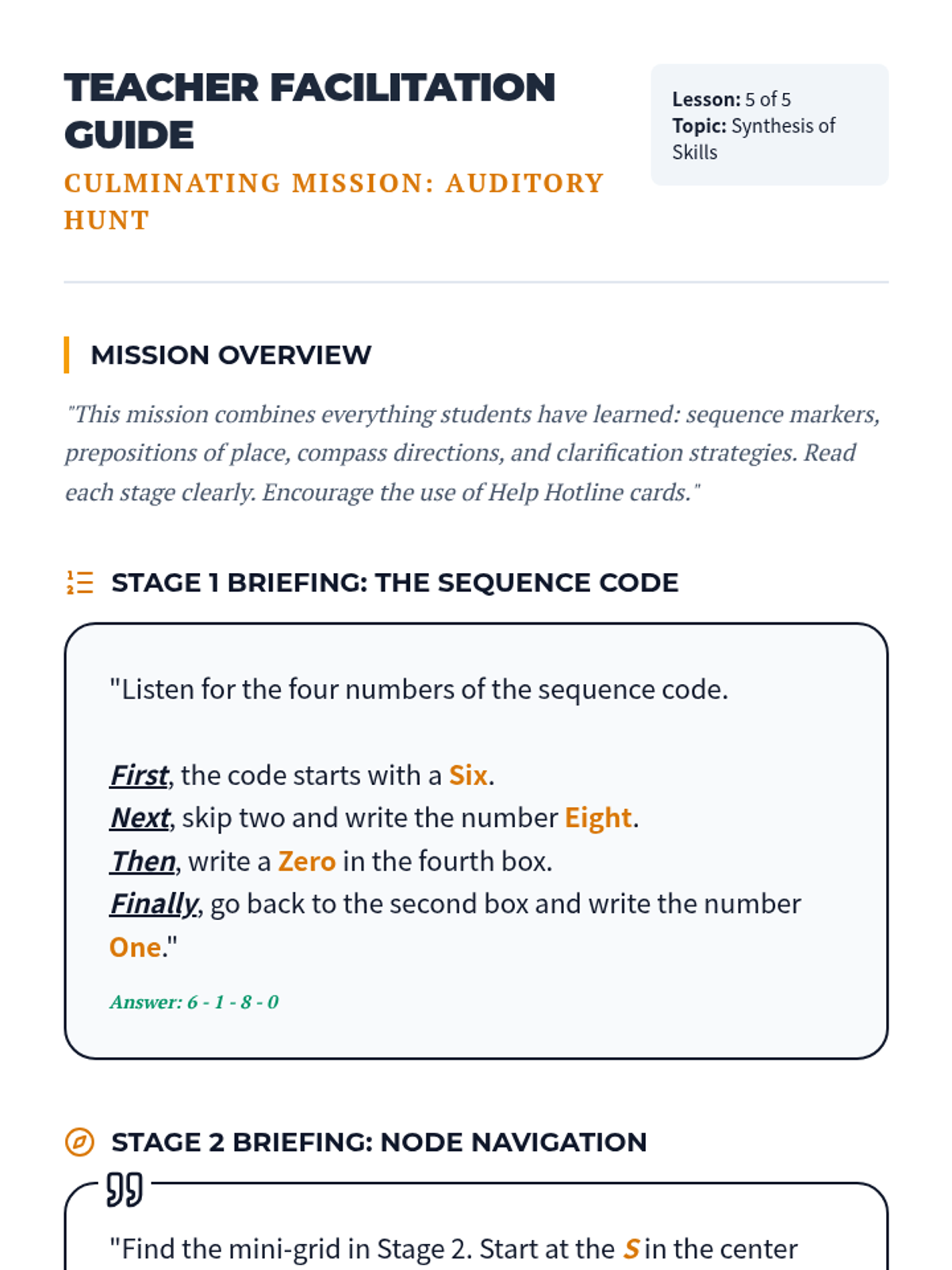
In this culminating activity, students solve a series of puzzles where the clues are delivered via audio recordings. Success depends on synthesizing sequence markers, spatial details, and specific vocabulary.
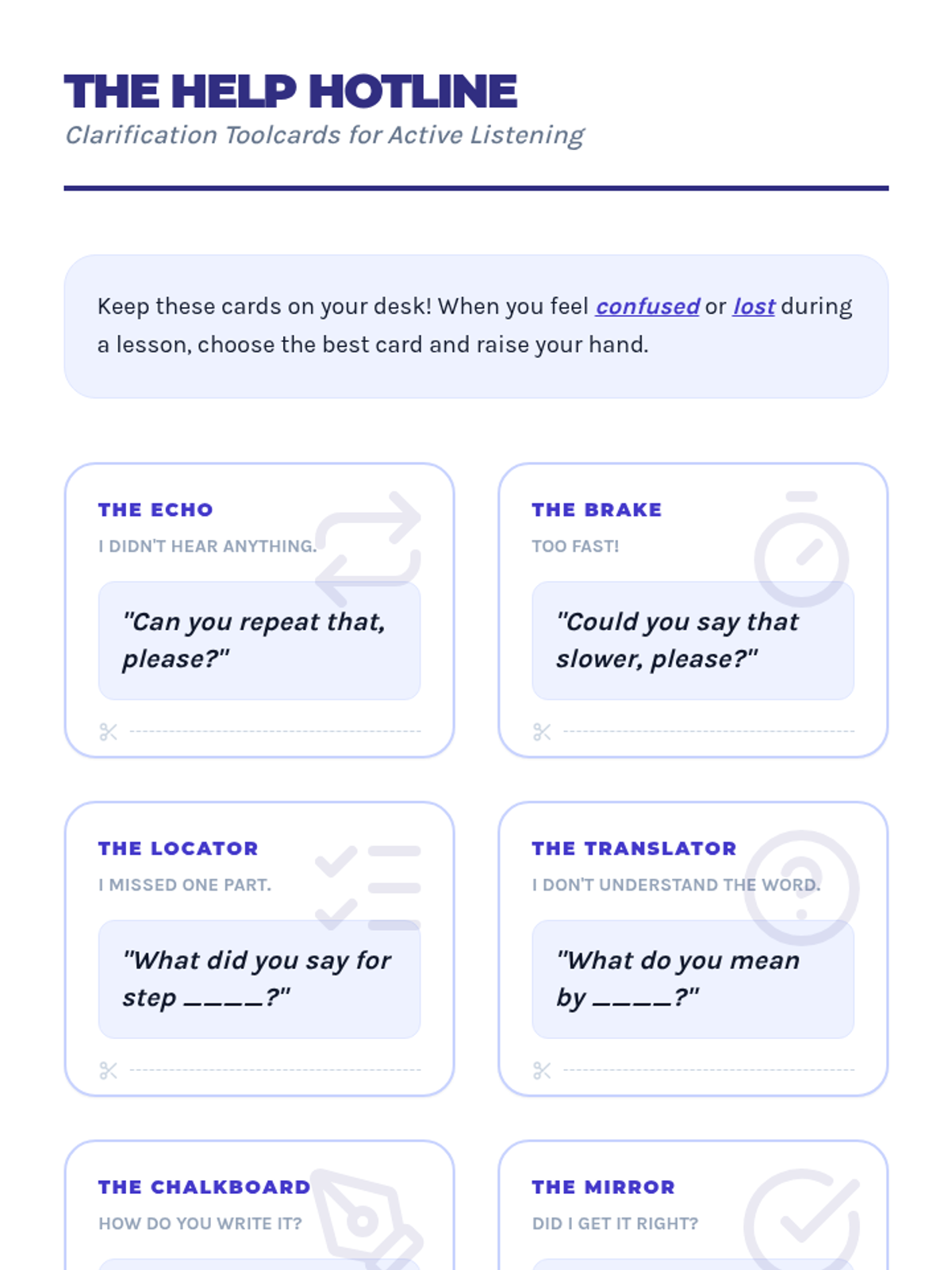
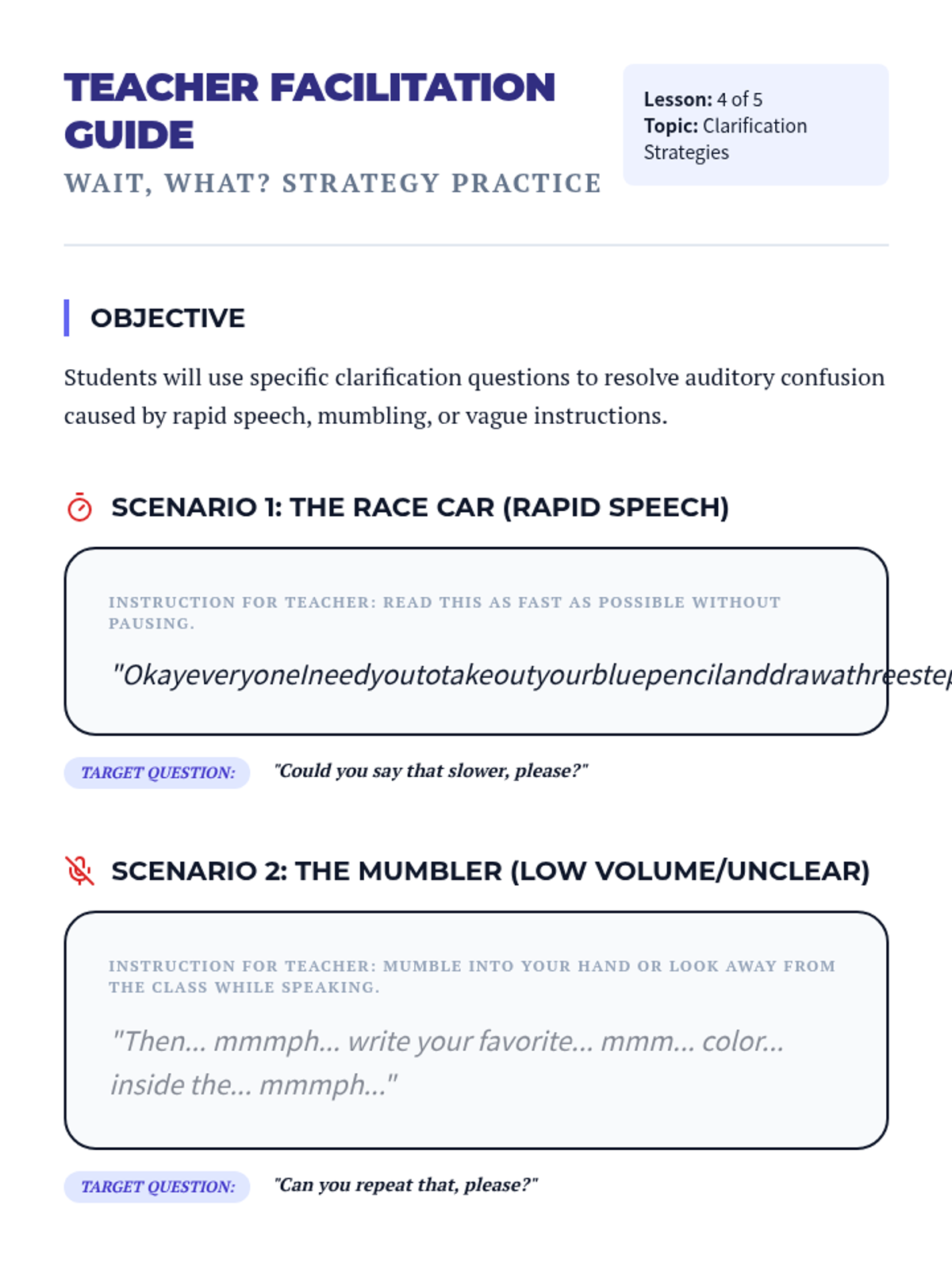
Students are given intentionally vague or rapid instructions and must use specific question structures to ask for repetition or clarification. The class analyzes which questions yield the best information.
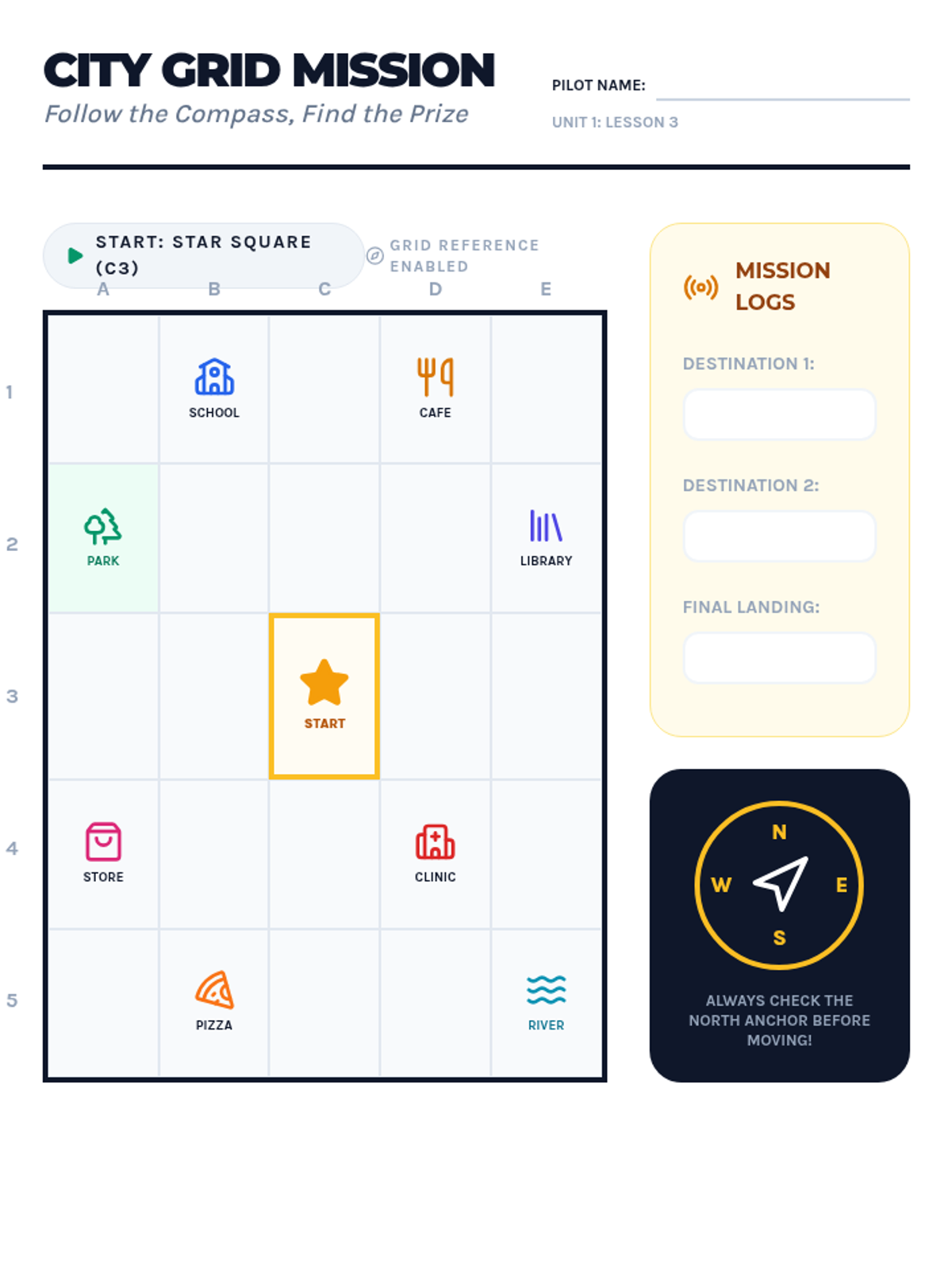
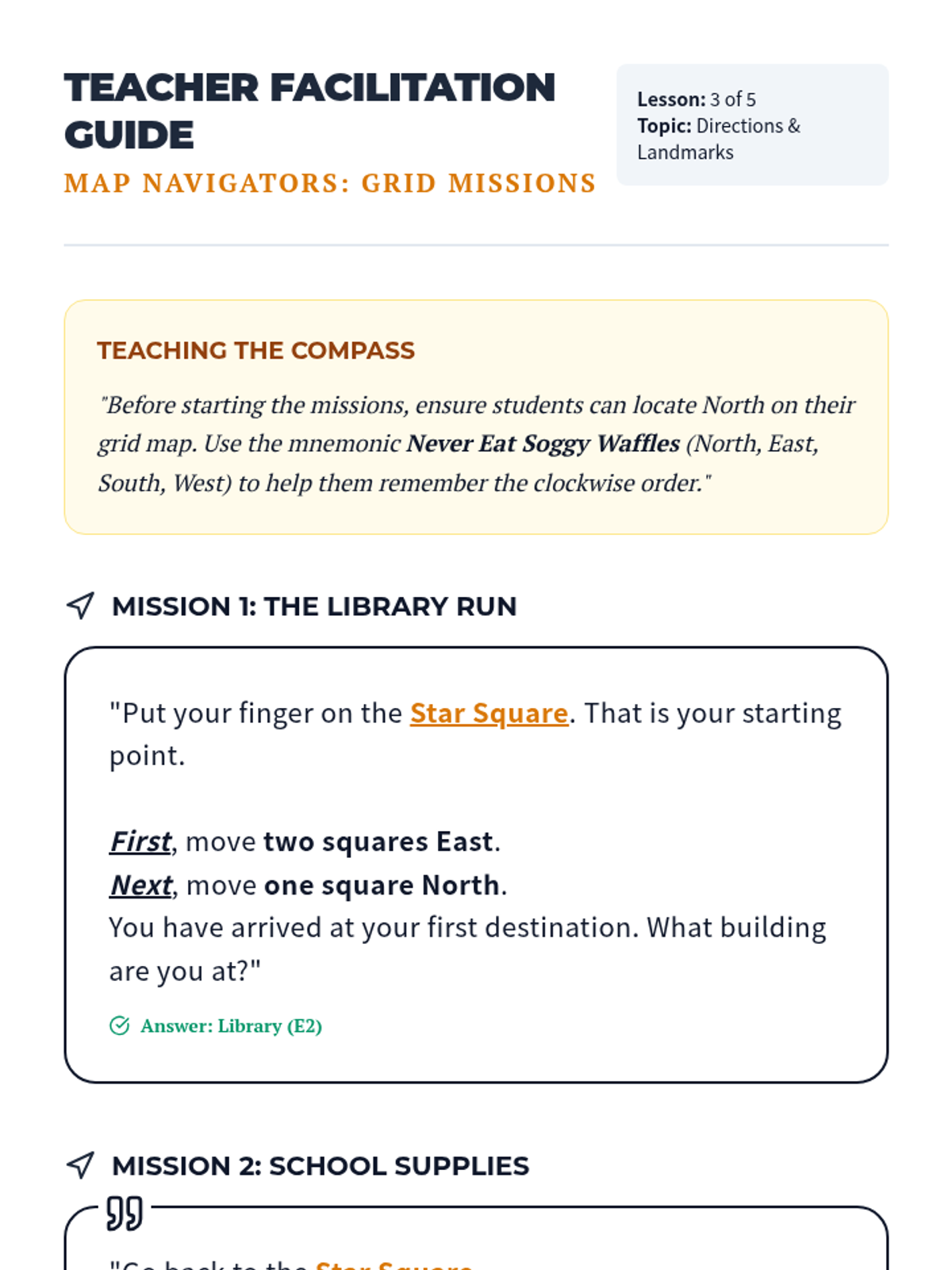
Using a grid map, students follow oral directions to navigate from a starting point to a destination. The lesson introduces compass directions and landmarks as key listening anchors.
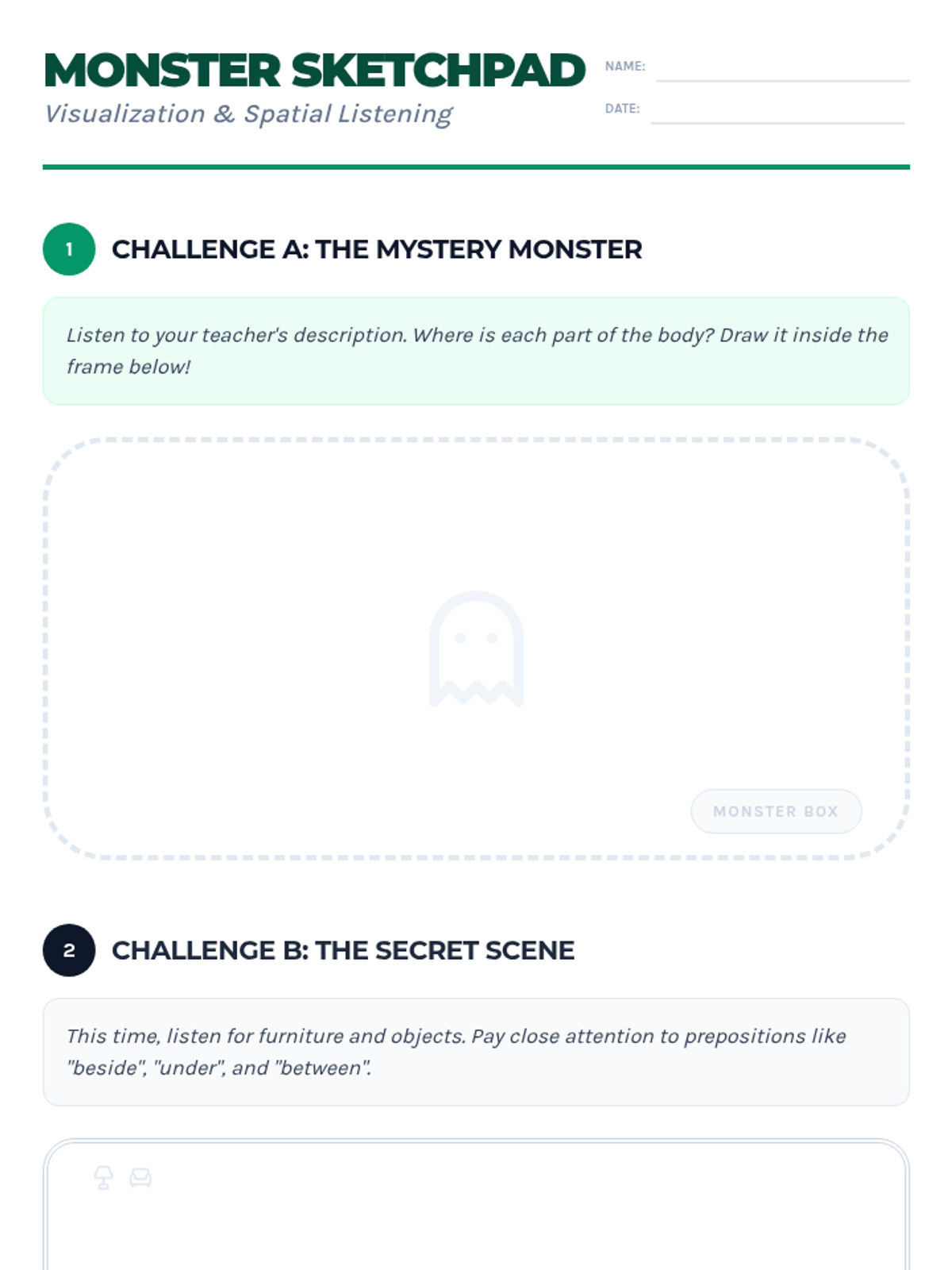
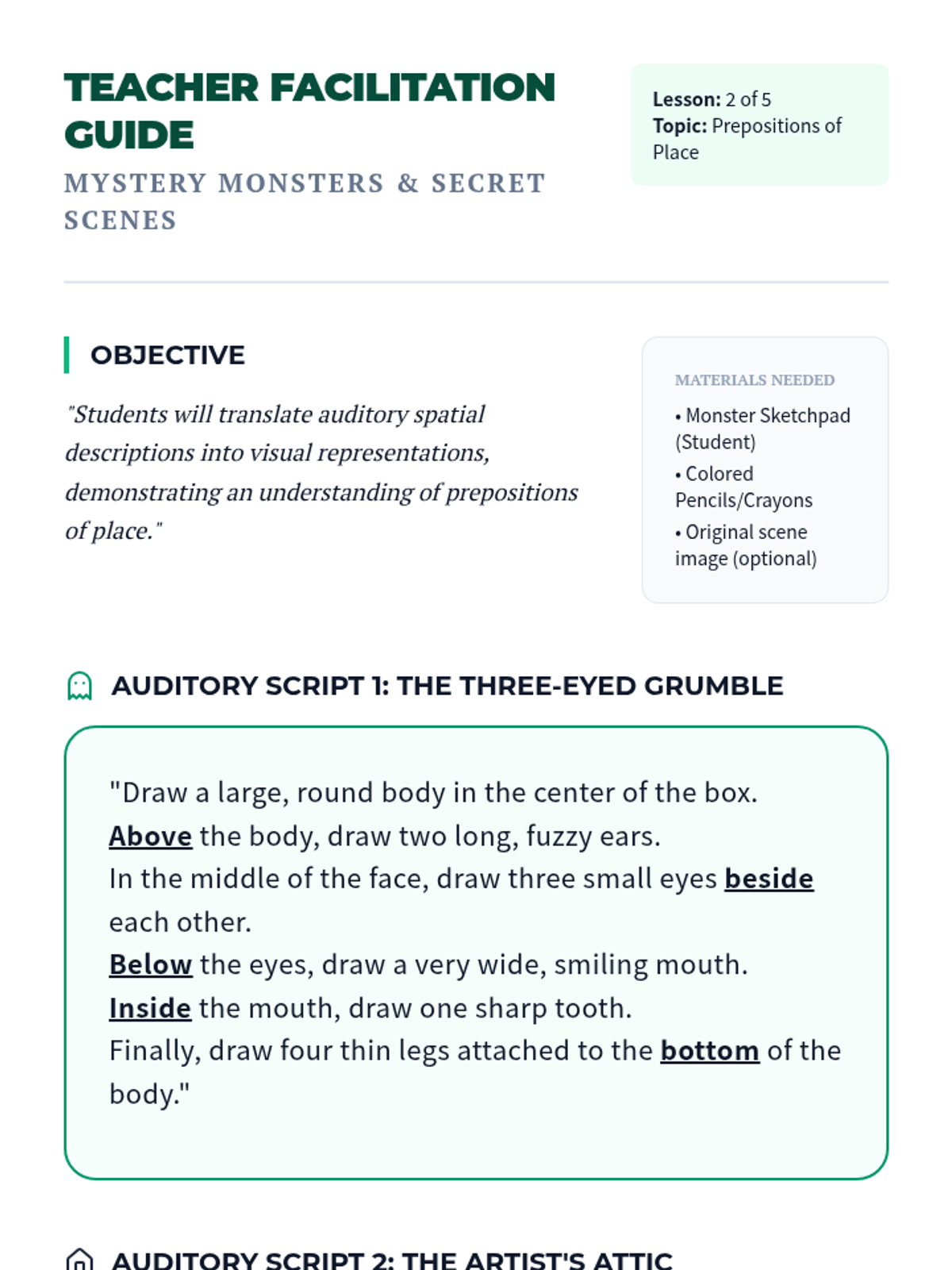
Students listen to descriptions of a room or scene and draw what they hear, focusing on prepositions of place. They compare their drawings to the original image to identify listening gaps.
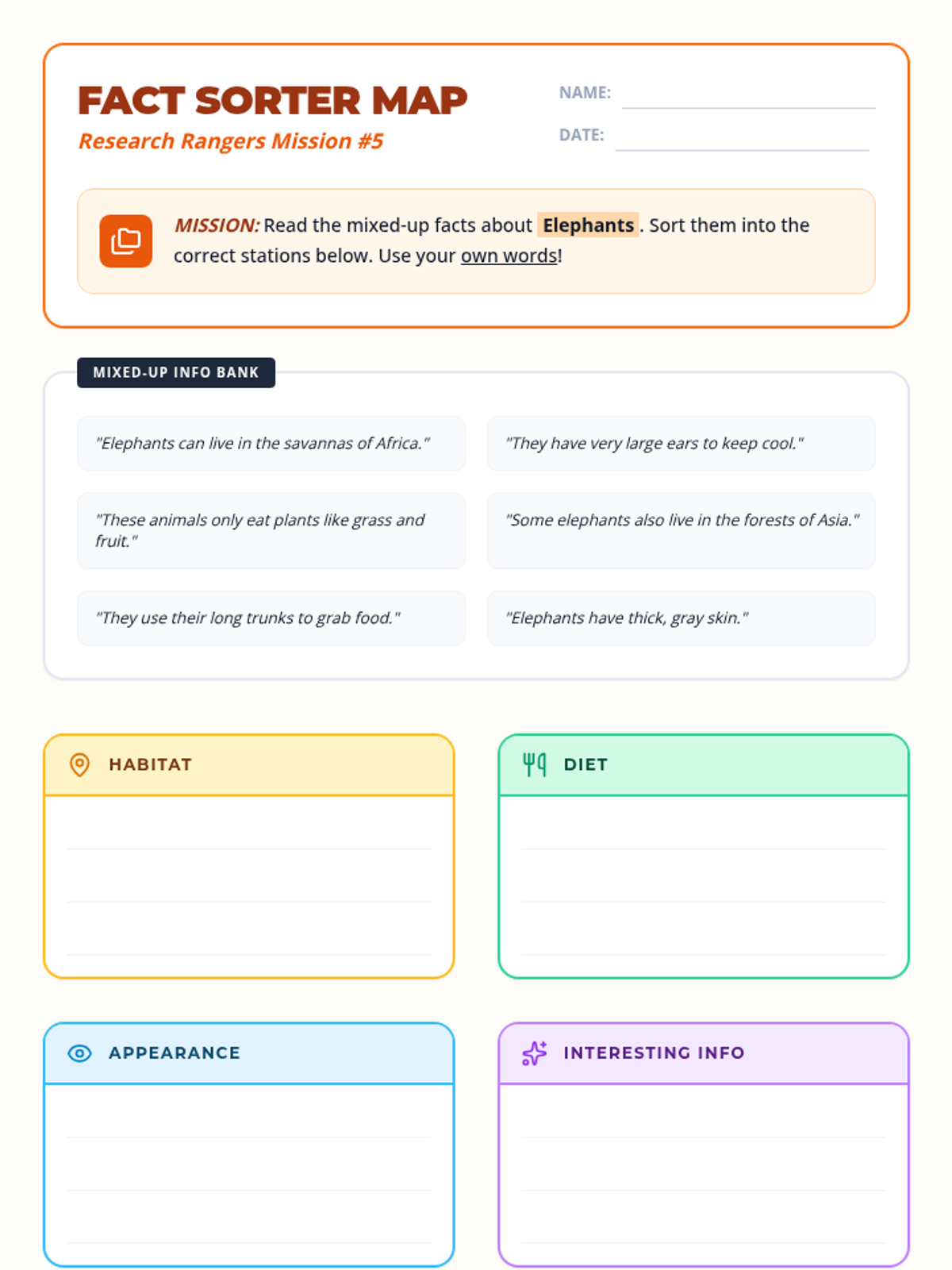
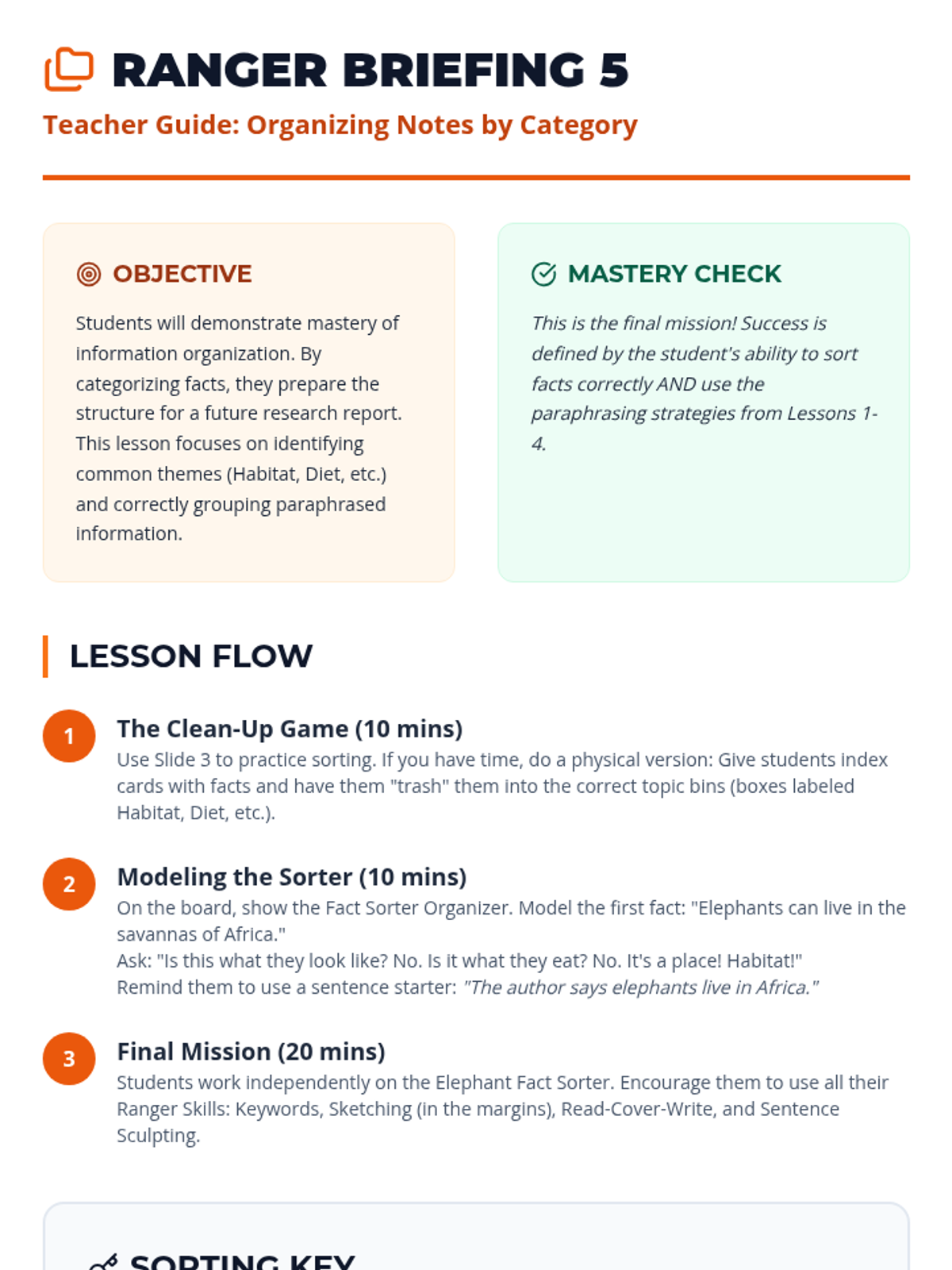
Students organize loose facts into logical categories using a graphic organizer. They learn to group information by topic to prepare for structured writing.
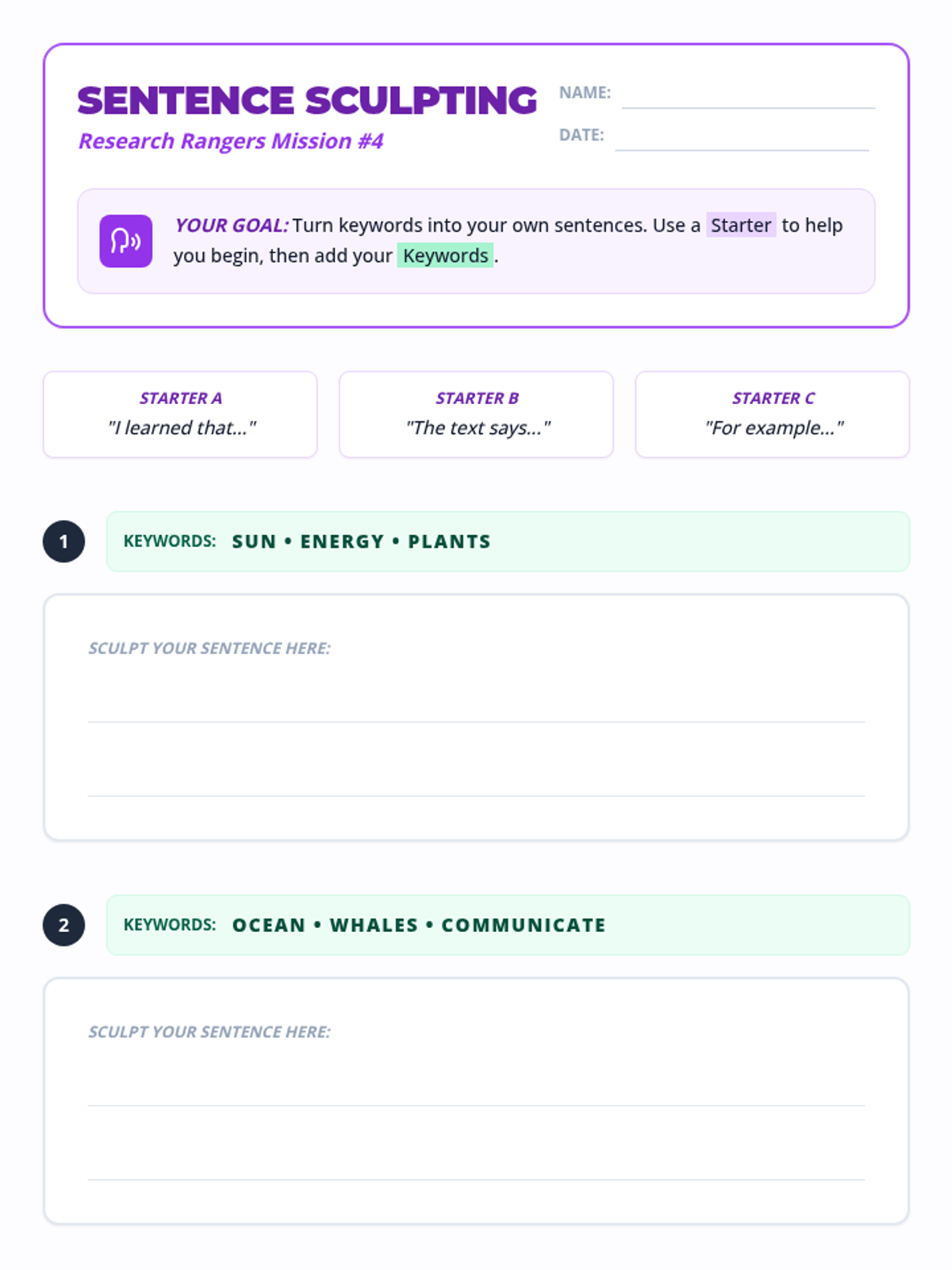
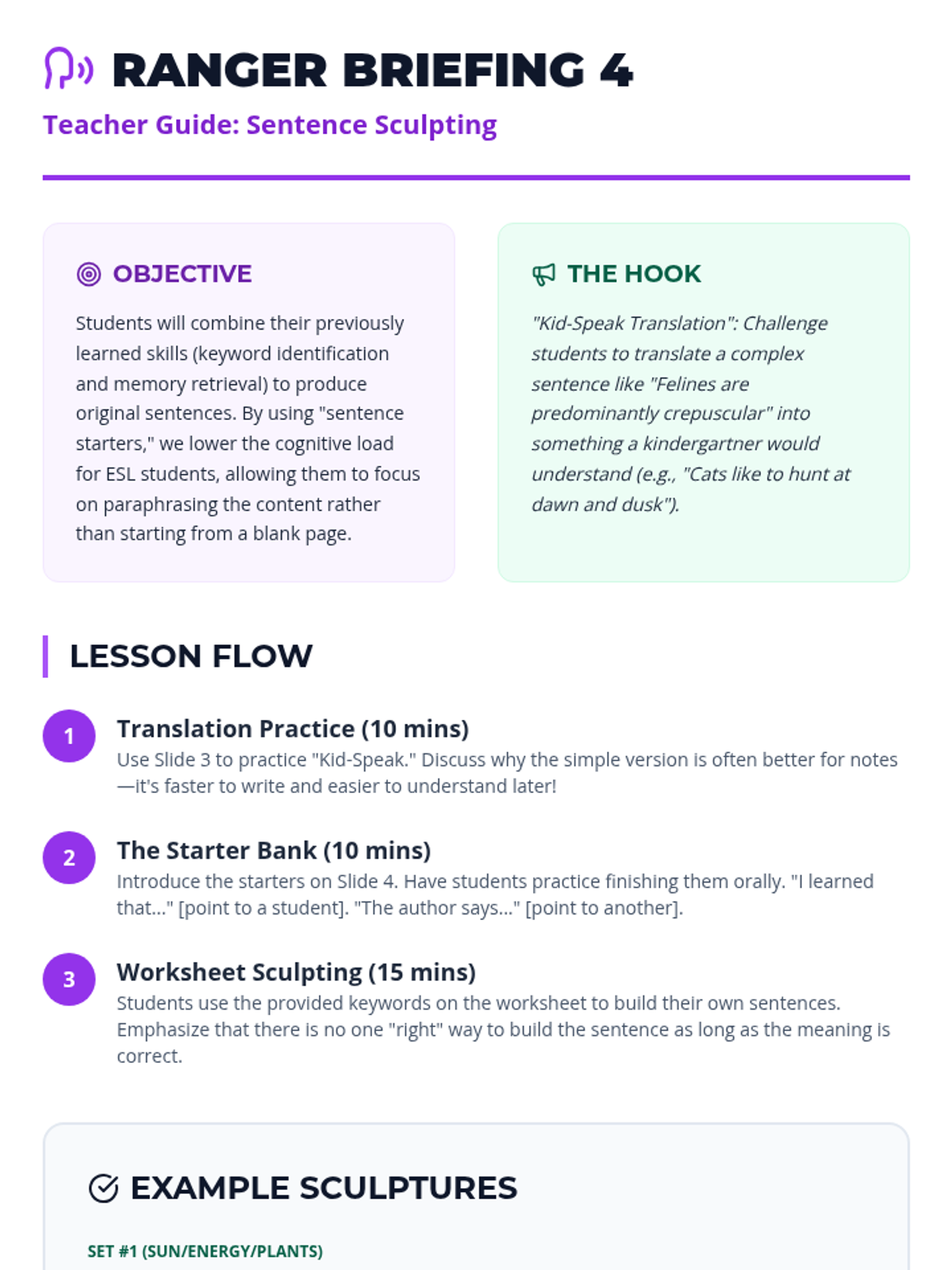
Using keywords and visual notes, students use sentence frames to construct complete sentences in their own voice. They 'translate' complex text into simpler language.
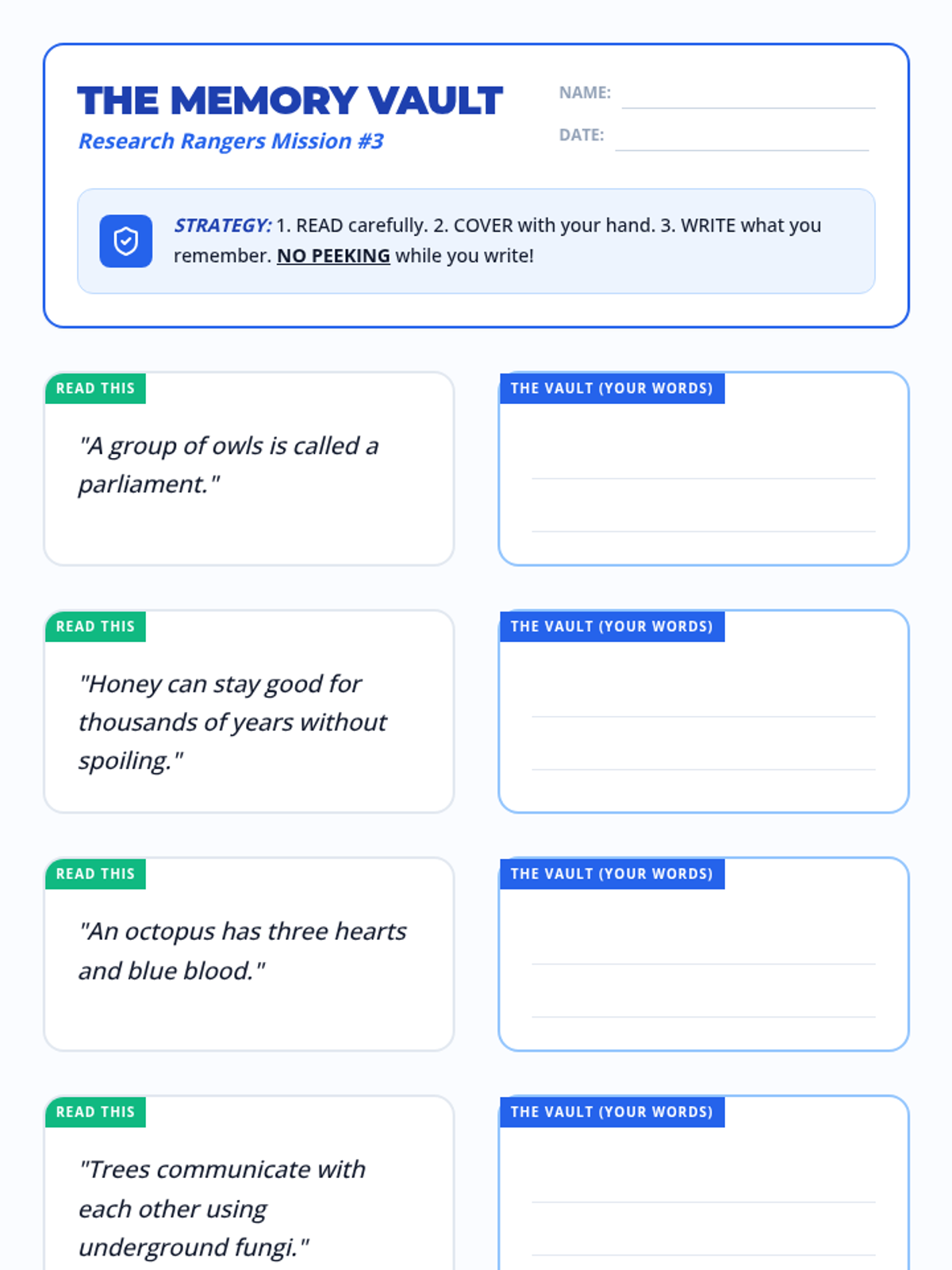
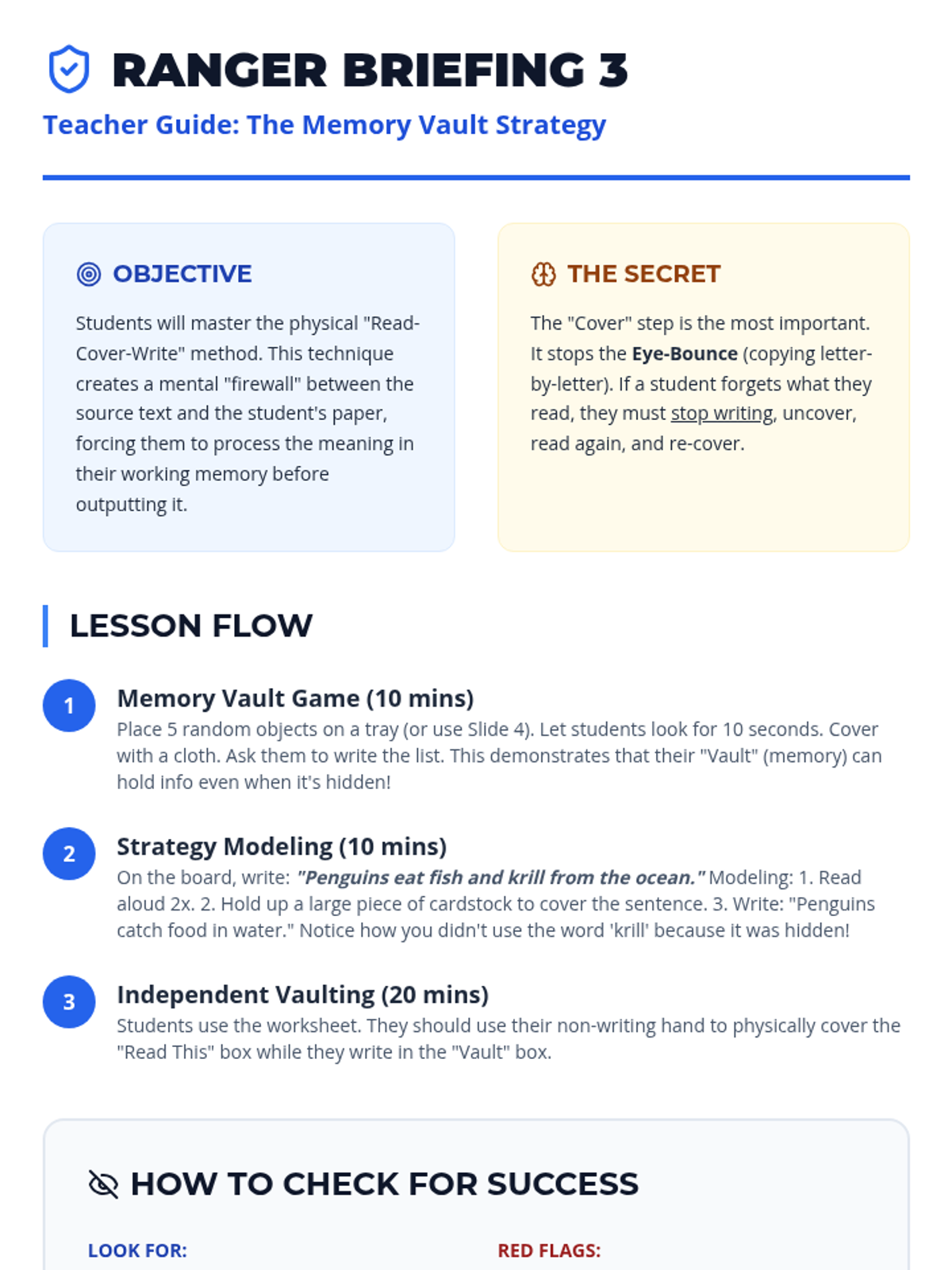
Students learn the 'Read-Cover-Write' strategy to prevent plagiarism. They practice reading a sentence, covering it, and writing what they remember in their own words.
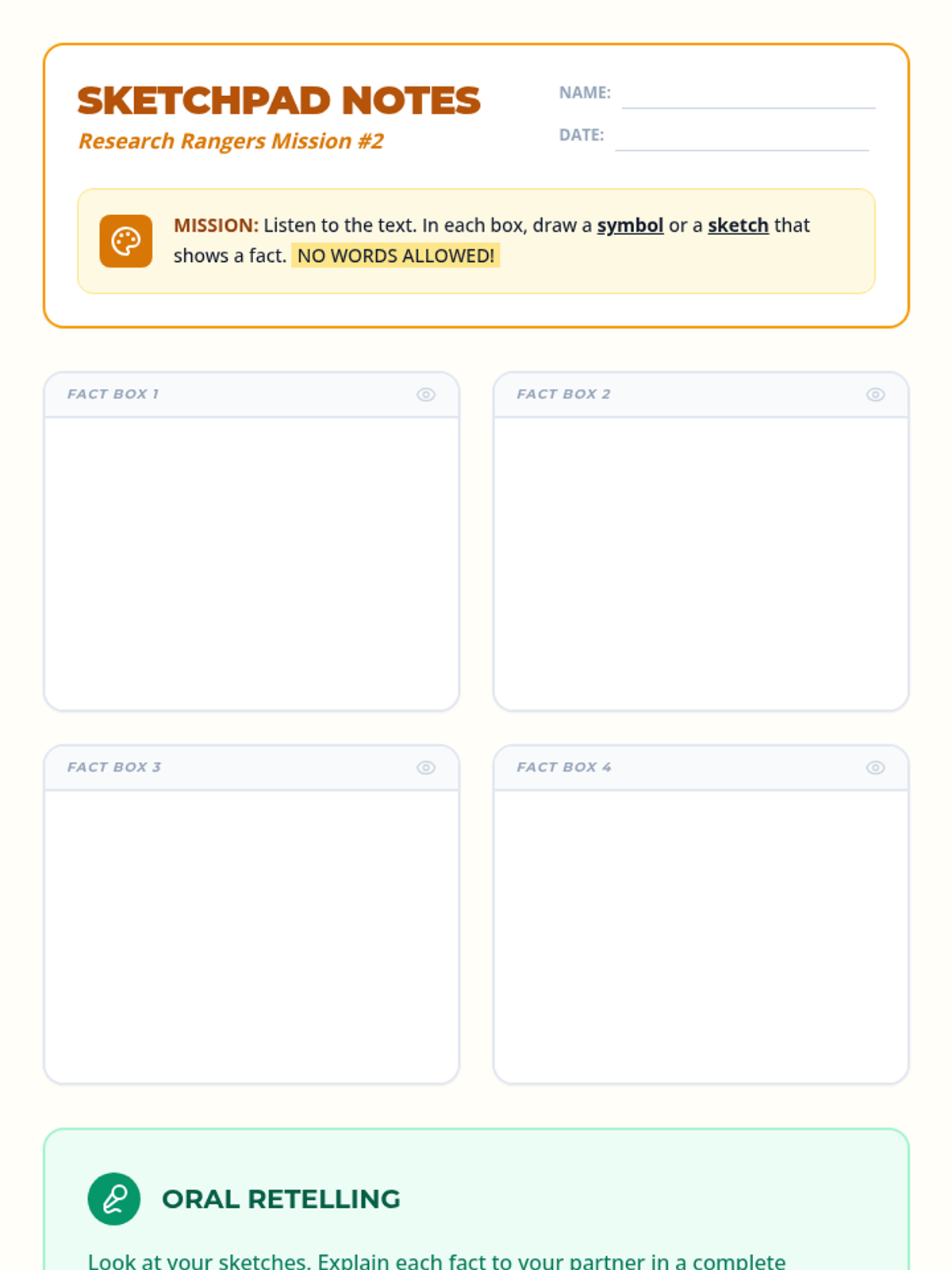
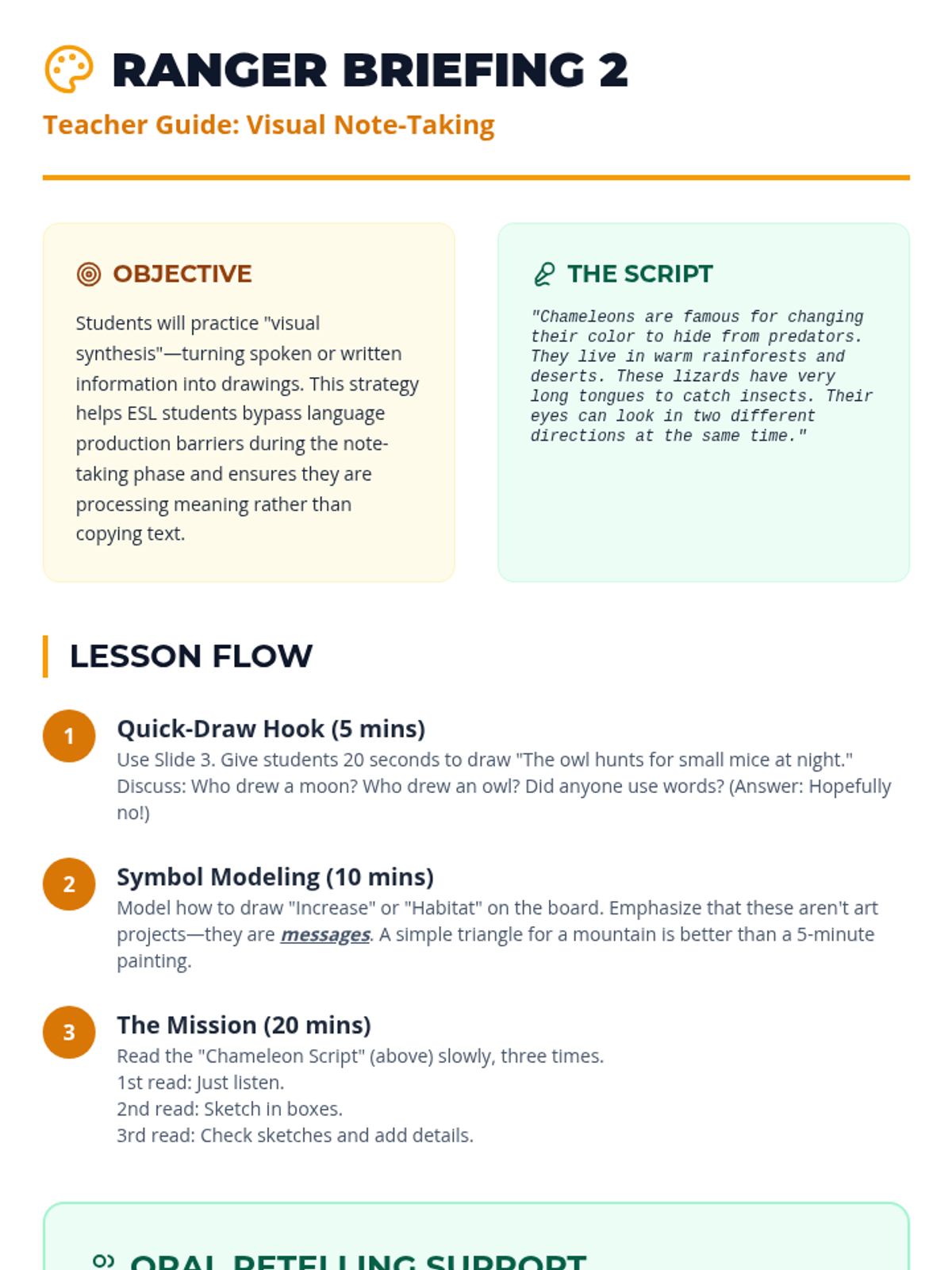
Students take notes using only drawings and symbols to bypass language barriers and prevent copying. They practice oral retelling by explaining their sketches to a partner.
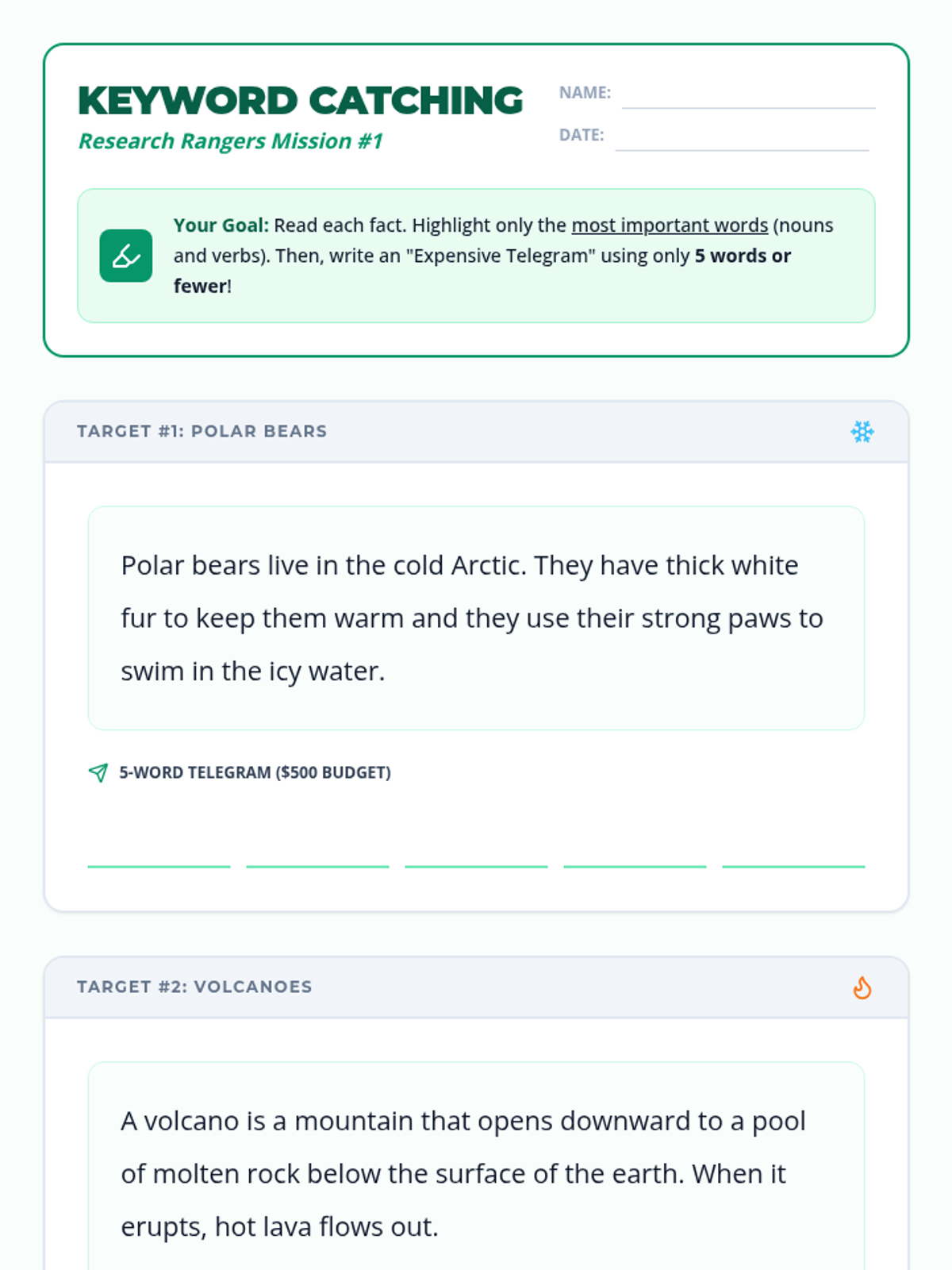
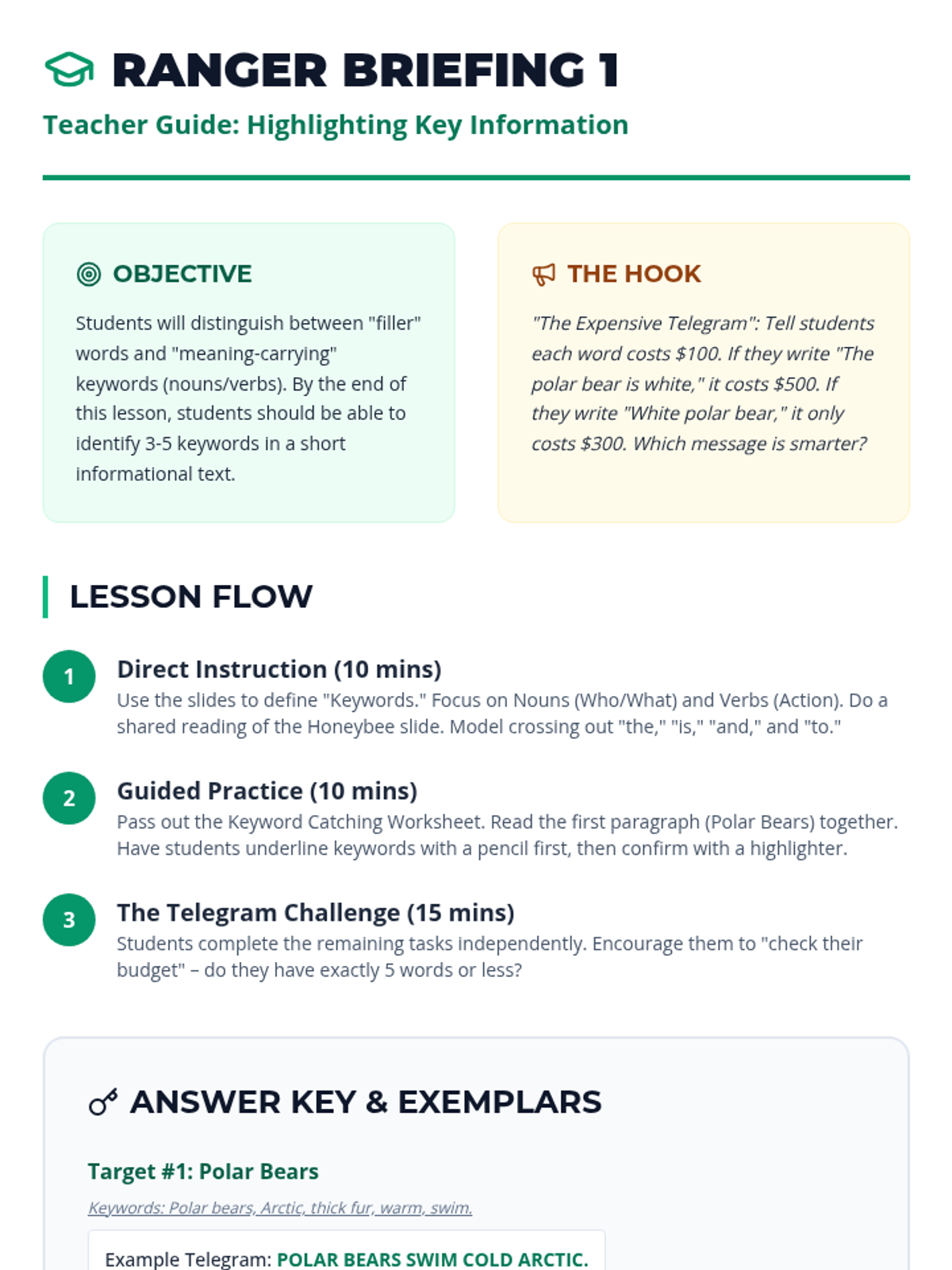
Students practice reading short paragraphs and highlighting only the most important words (nouns and verbs). They use the 'Expensive Telegram' game to learn how to summarize with a strict word limit.
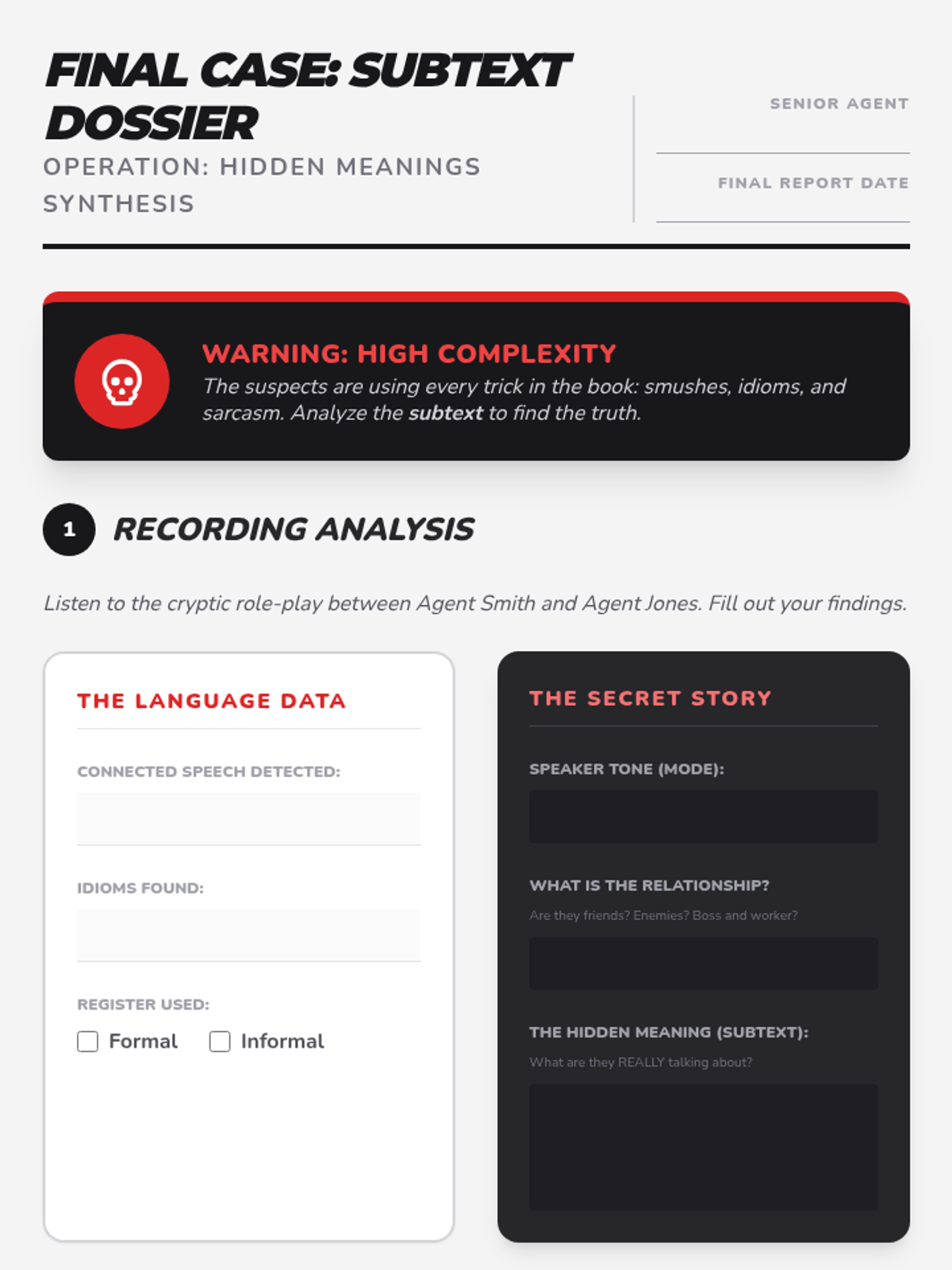
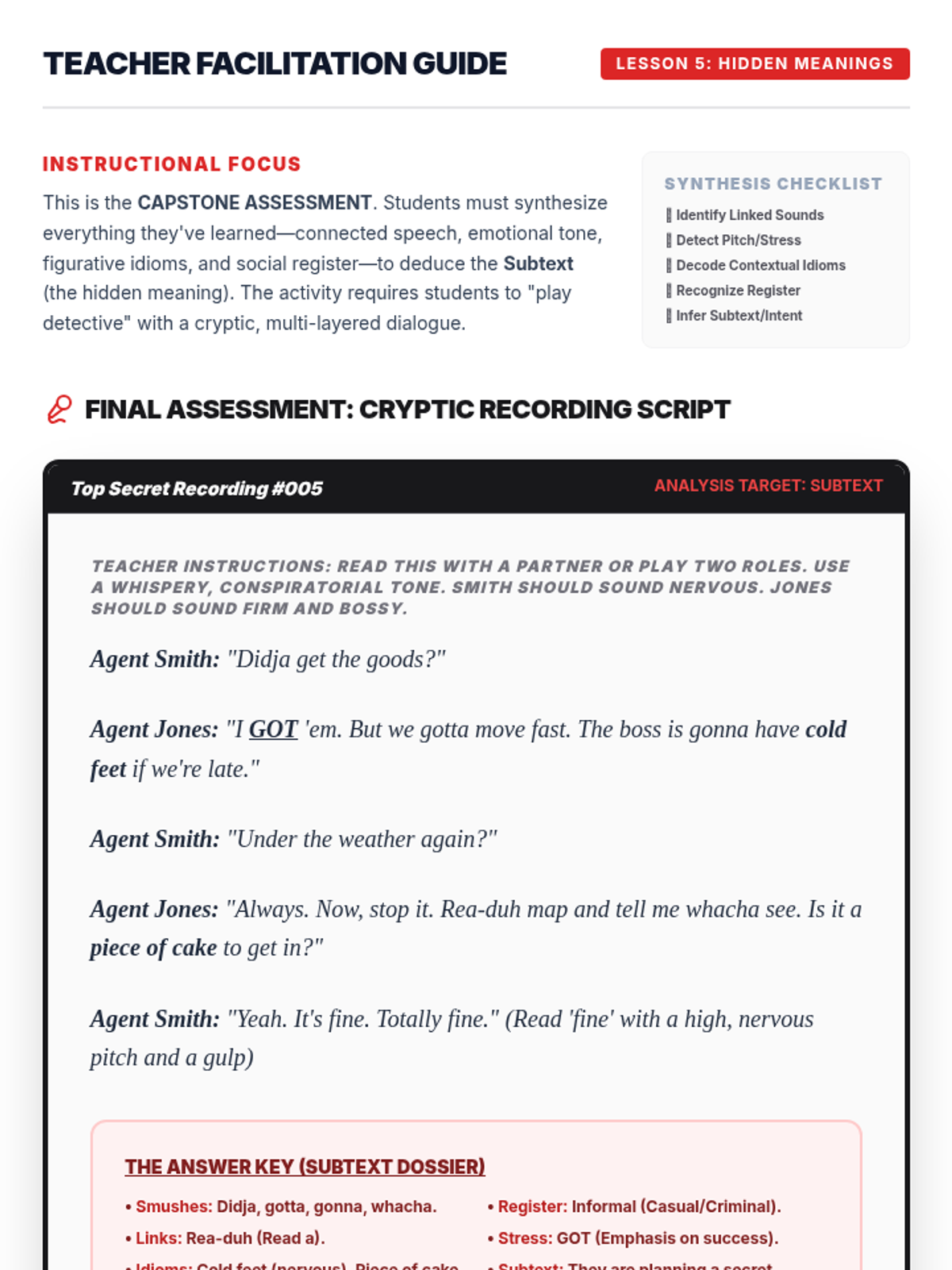
In this capstone lesson, students analyze subtext and speaker relationships through role-play and synthesis of tone and content.
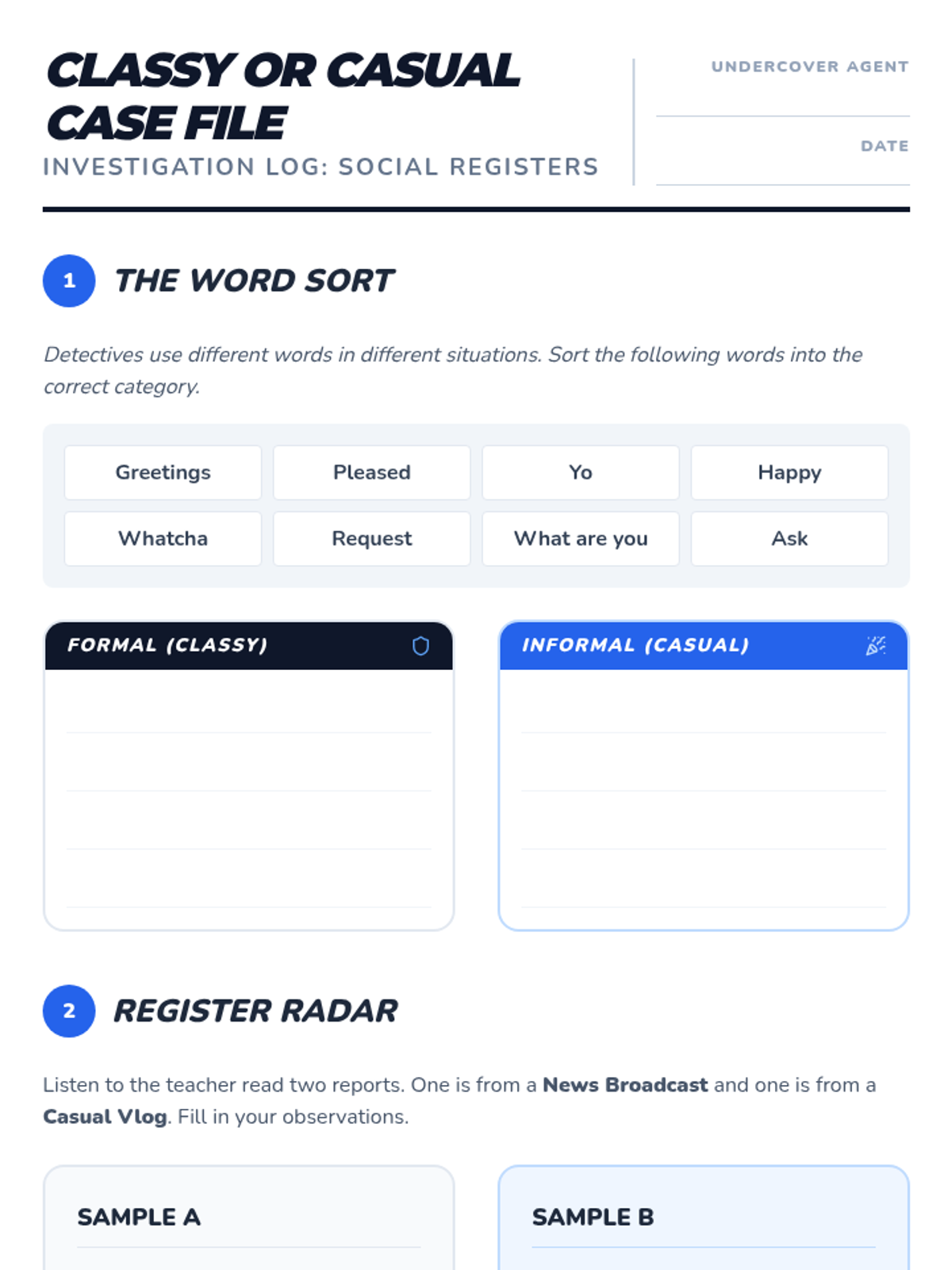
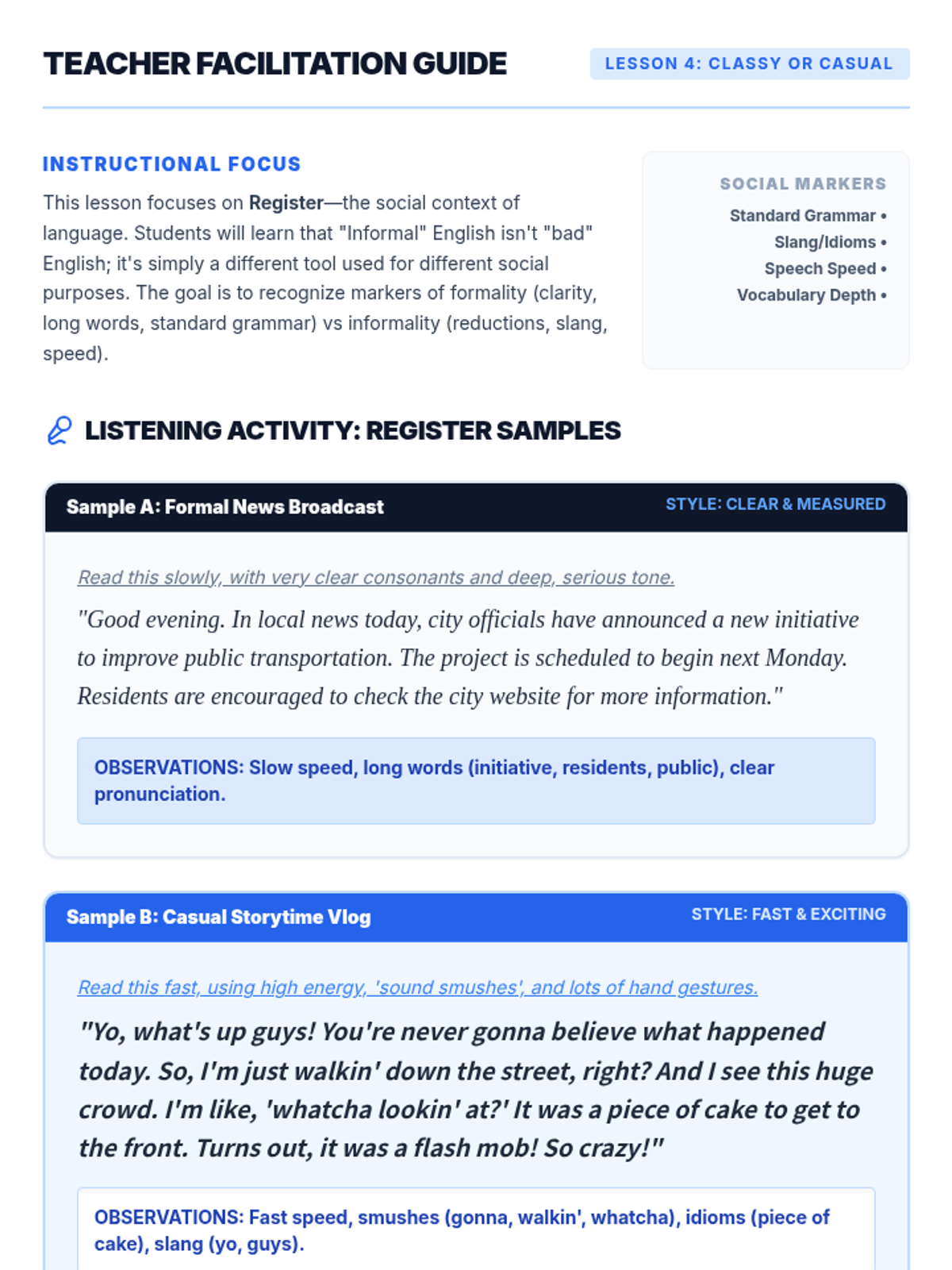
Students compare formal and informal English registers to understand how social context dictates speech patterns and vocabulary.
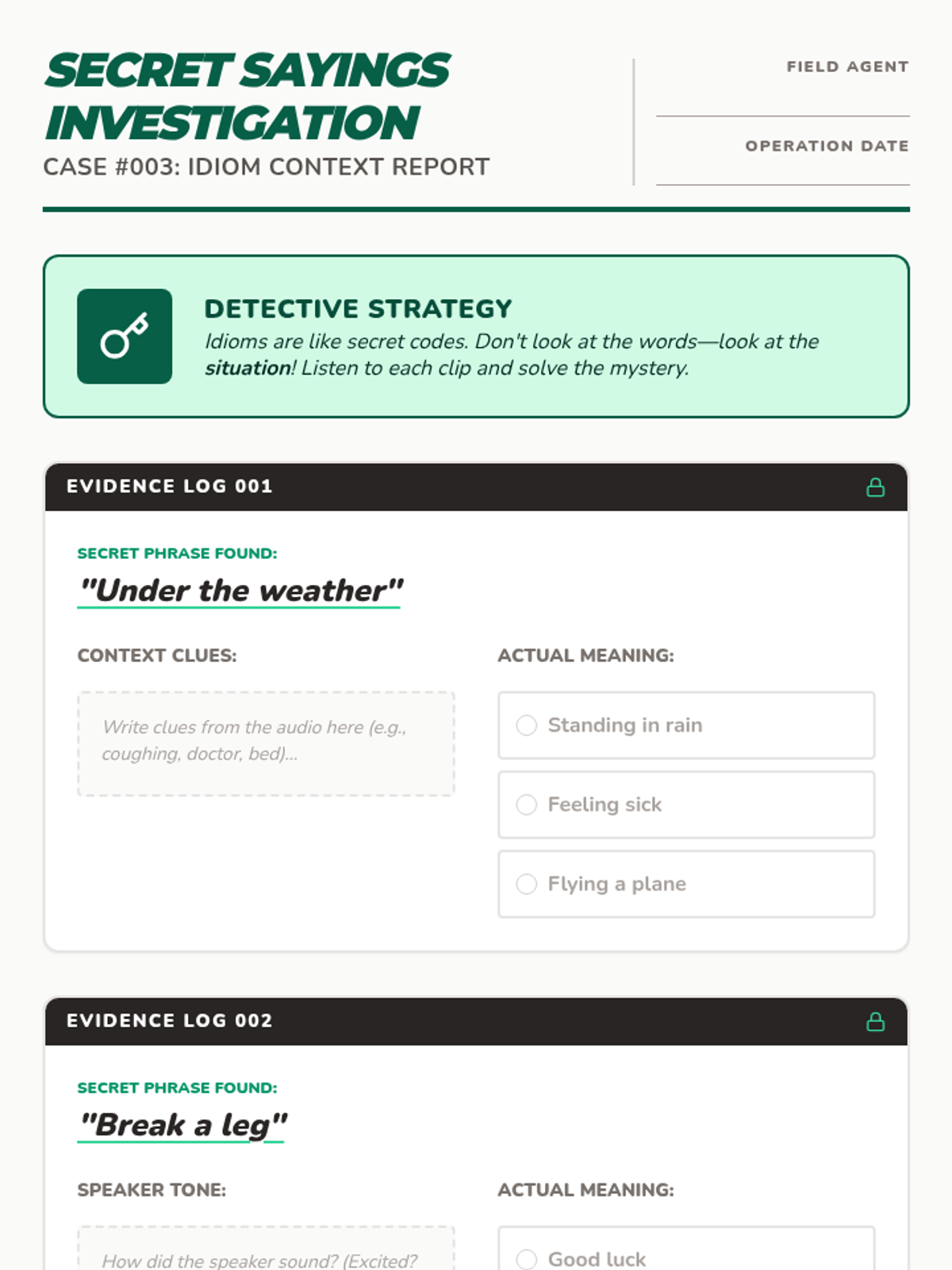
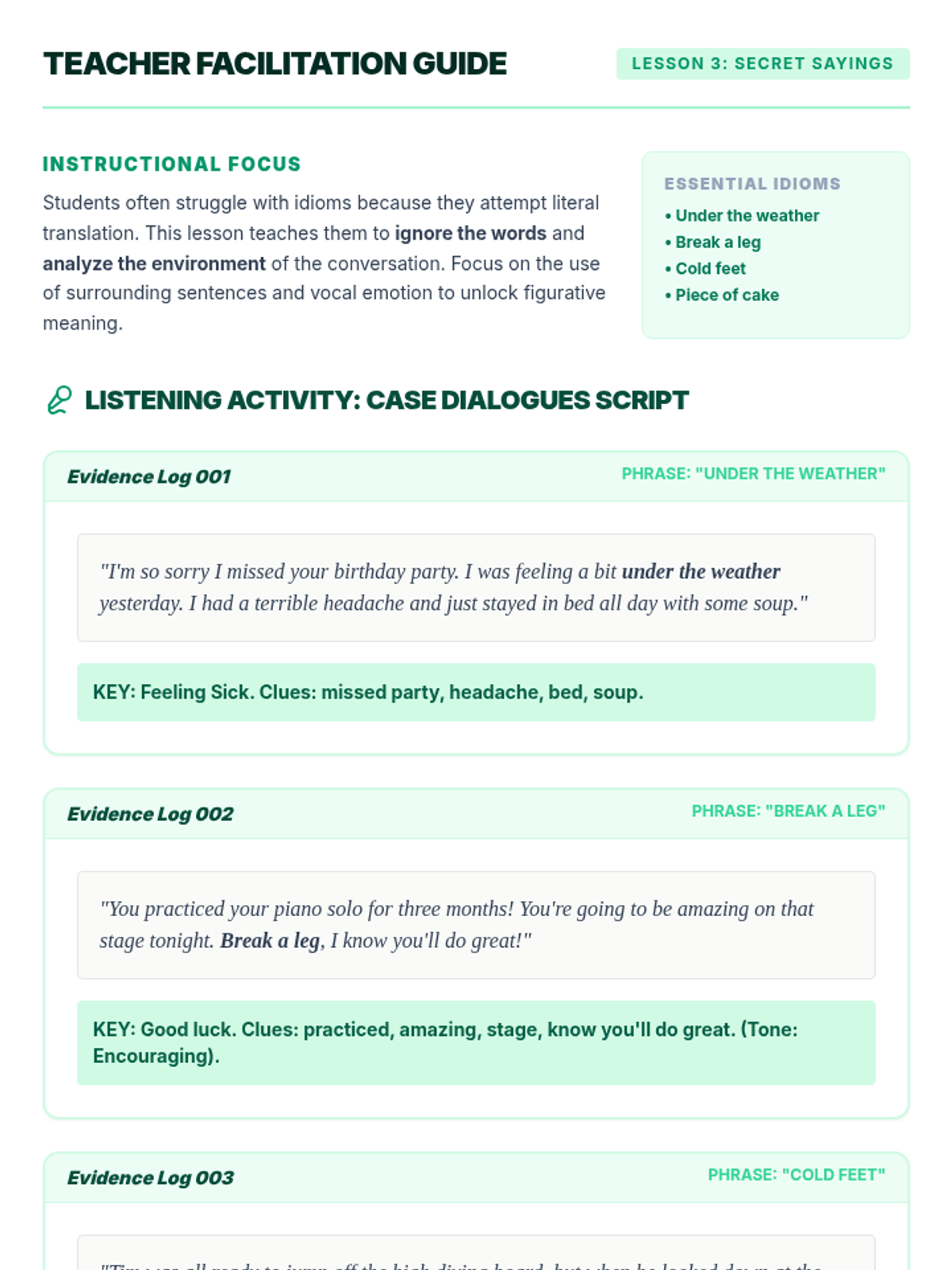
Students use context clues and speaker tone to deduce the meaning of common English idioms without relying on literal translation.
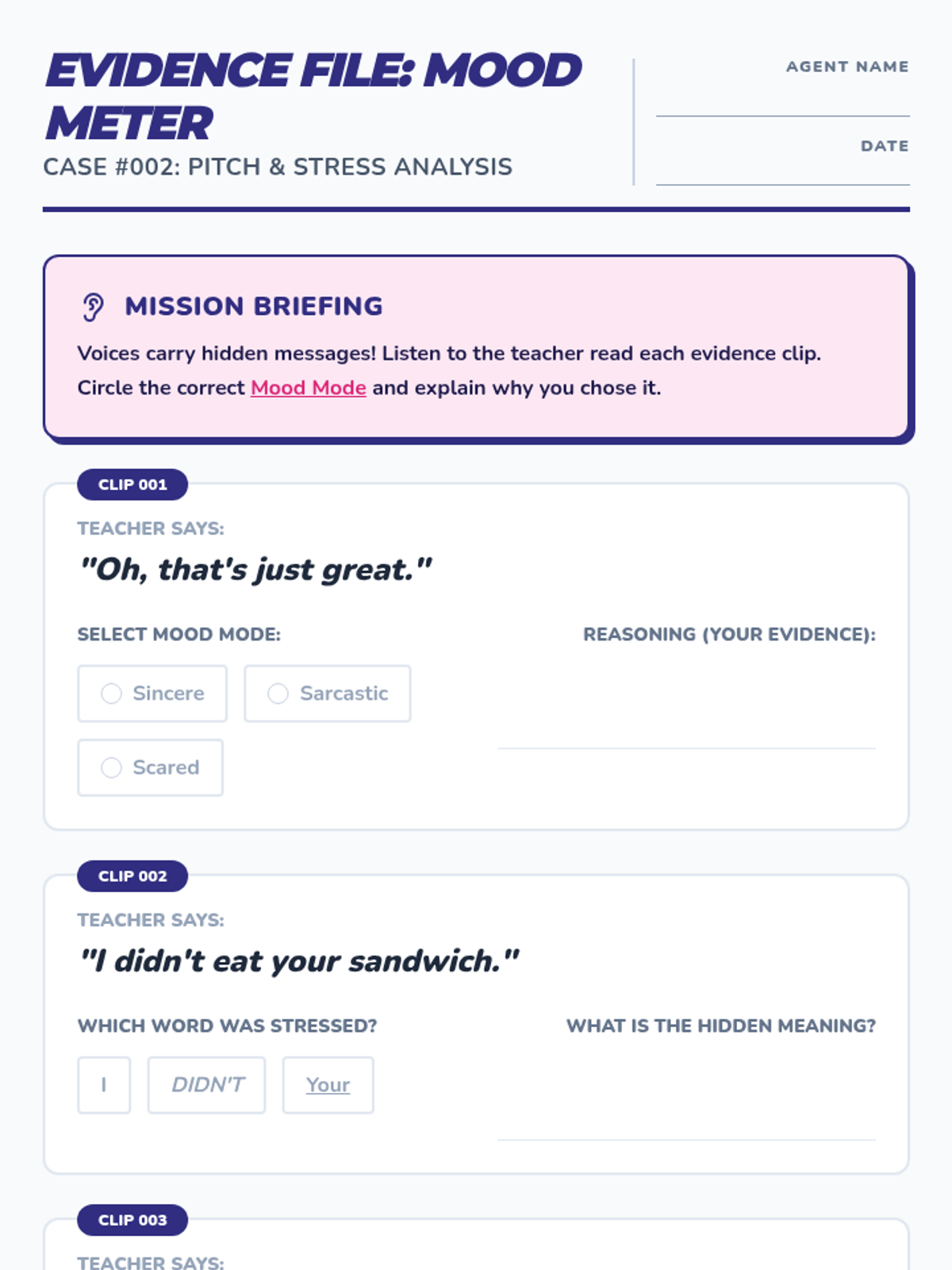
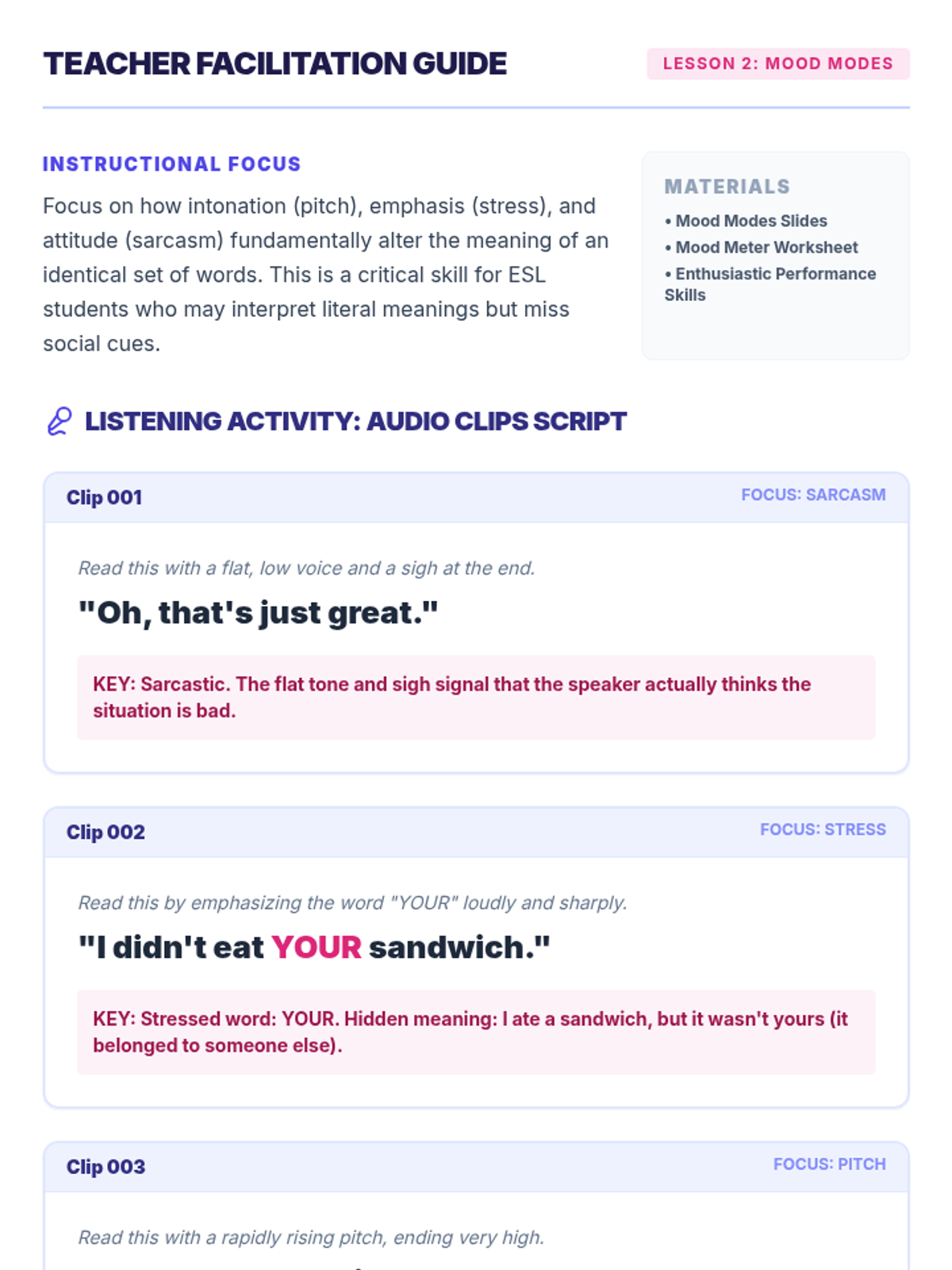
Learners analyze how pitch, stress, and volume change the emotional meaning of a sentence, focusing on sarcasm and attitude.
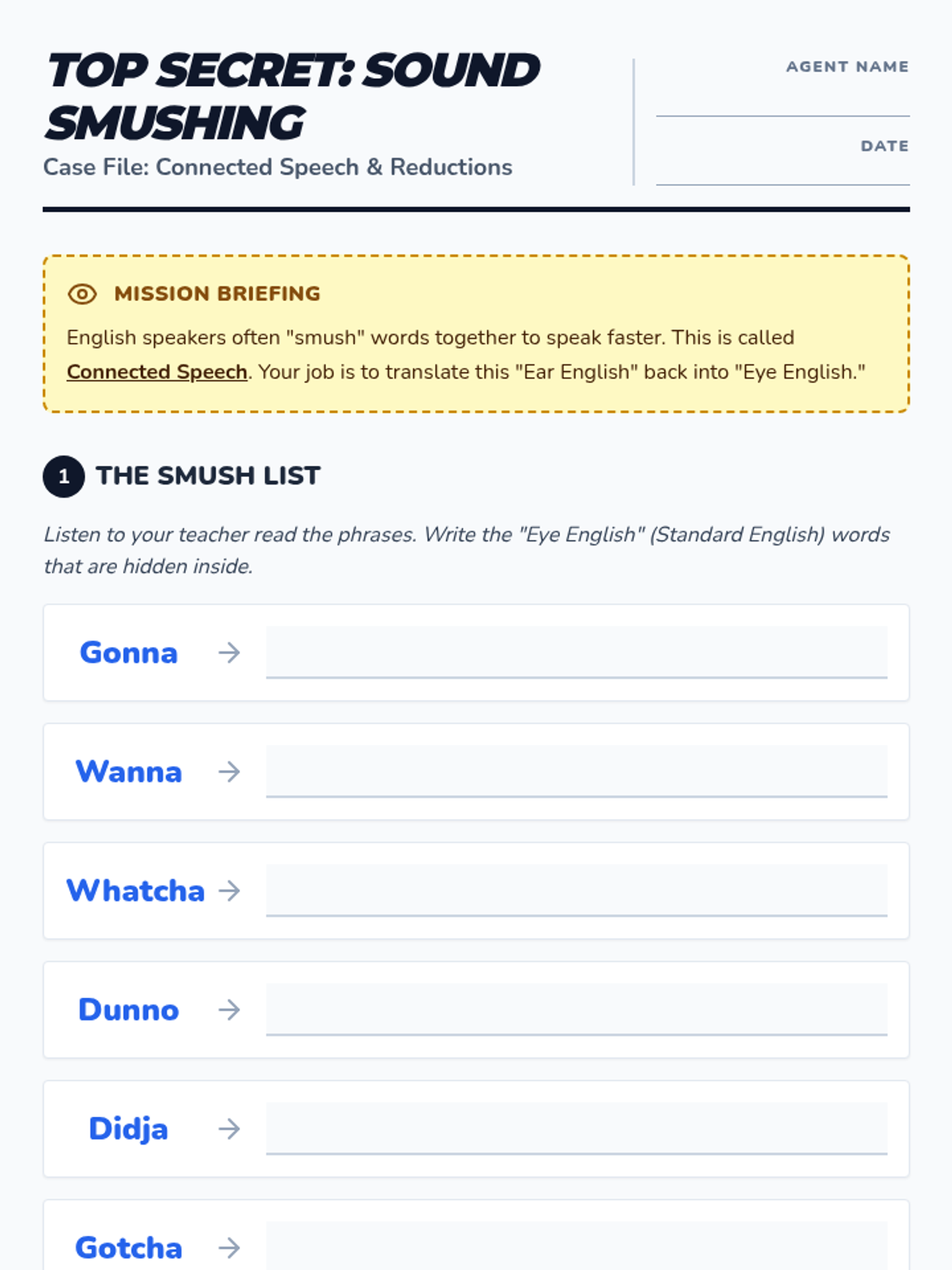
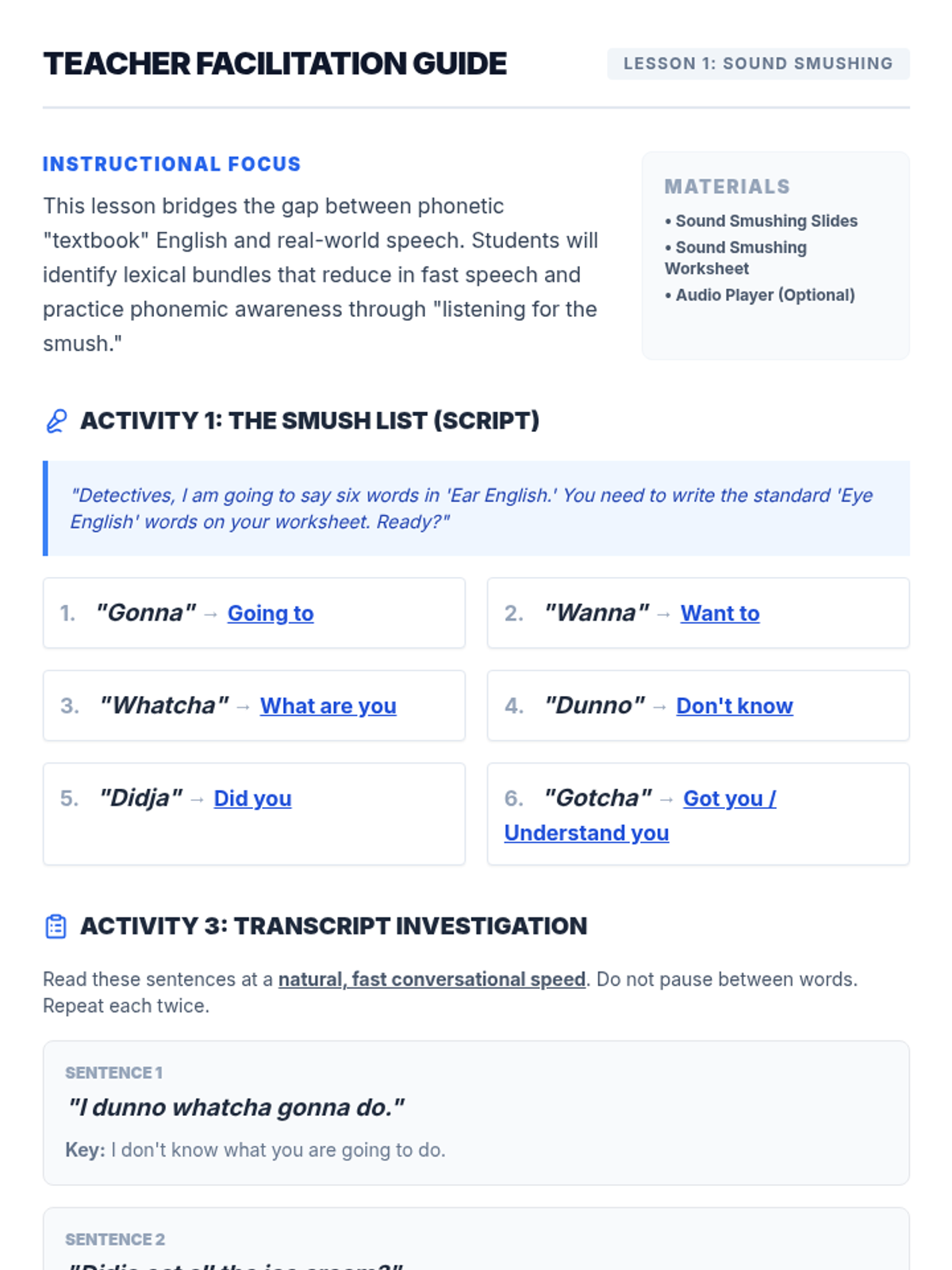
Students learn to identify and decode connected speech and common reductions like 'gonna' and 'wanna' to bridge the gap between written and spoken English.
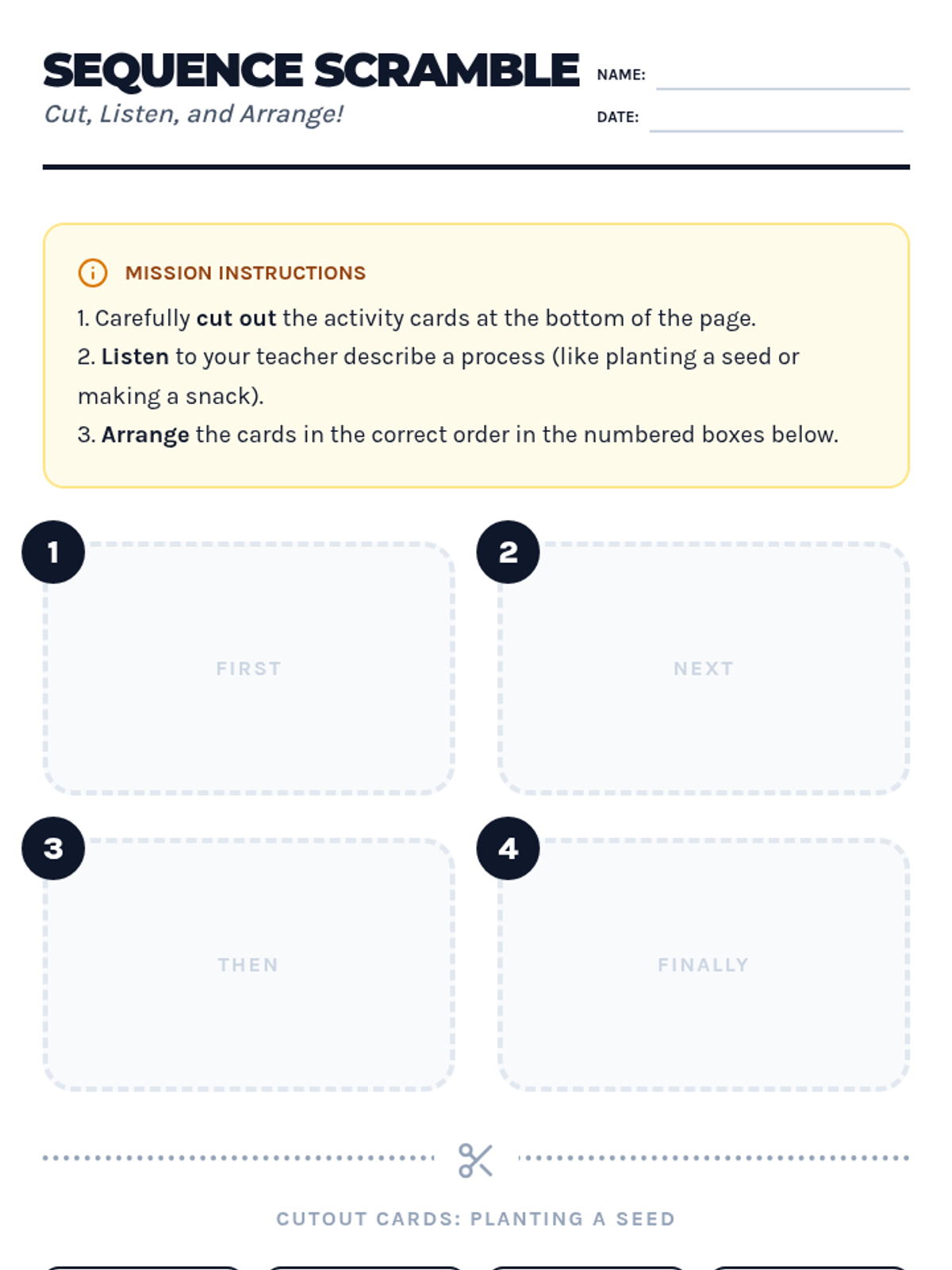
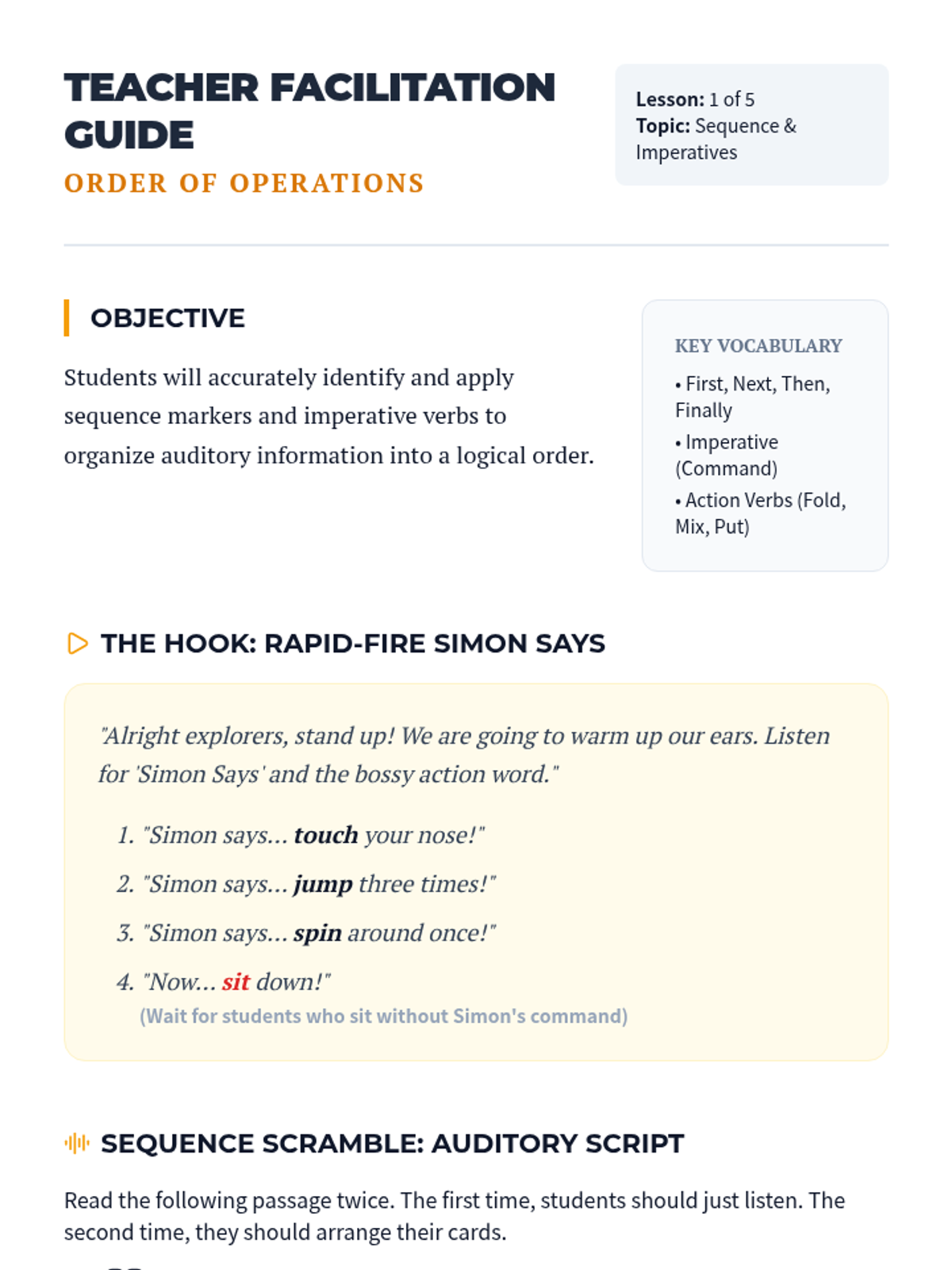
Students listen to instructions to identify transition words and imperative verbs, then practice ordering events based on auditory cues.
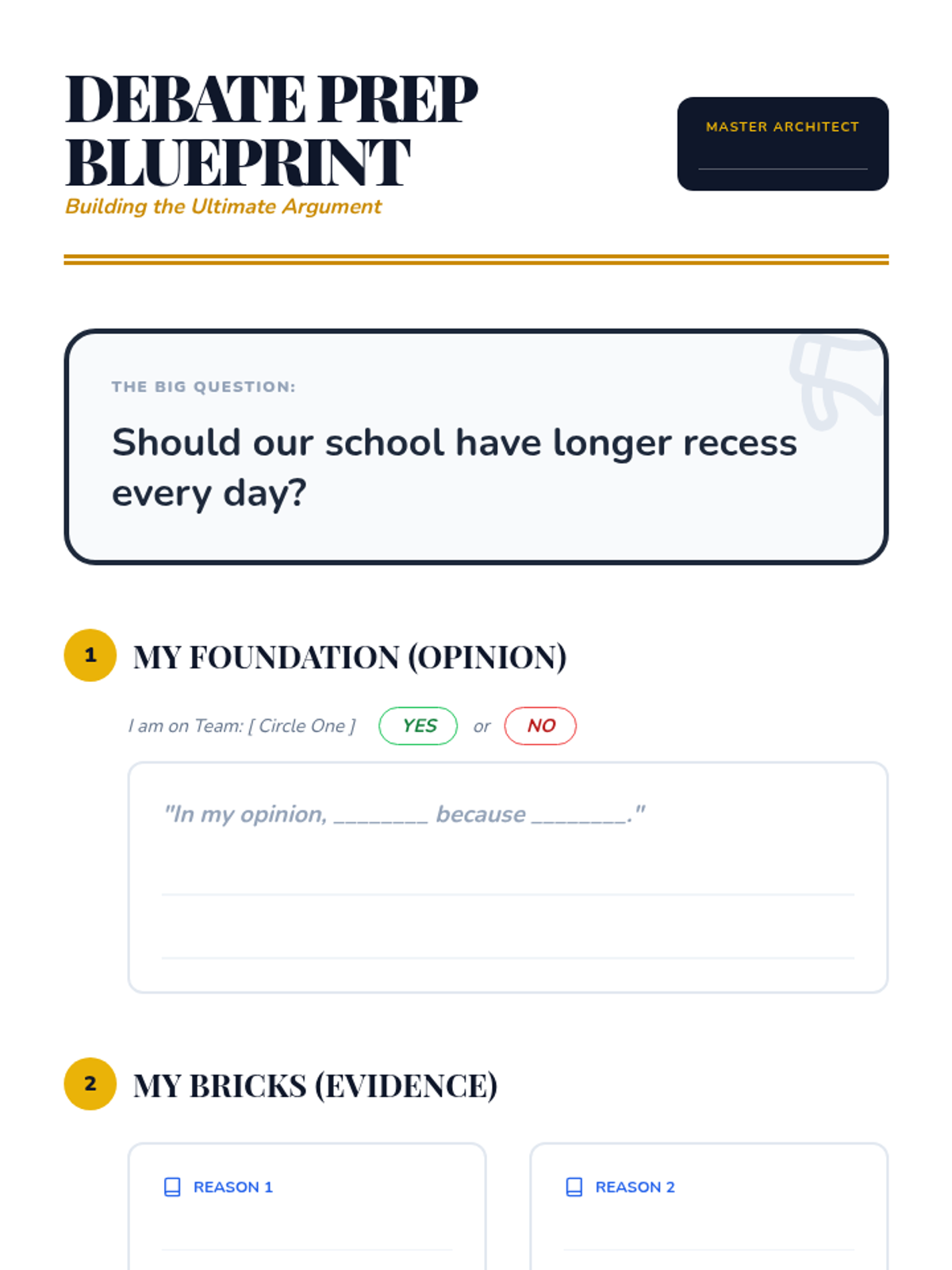
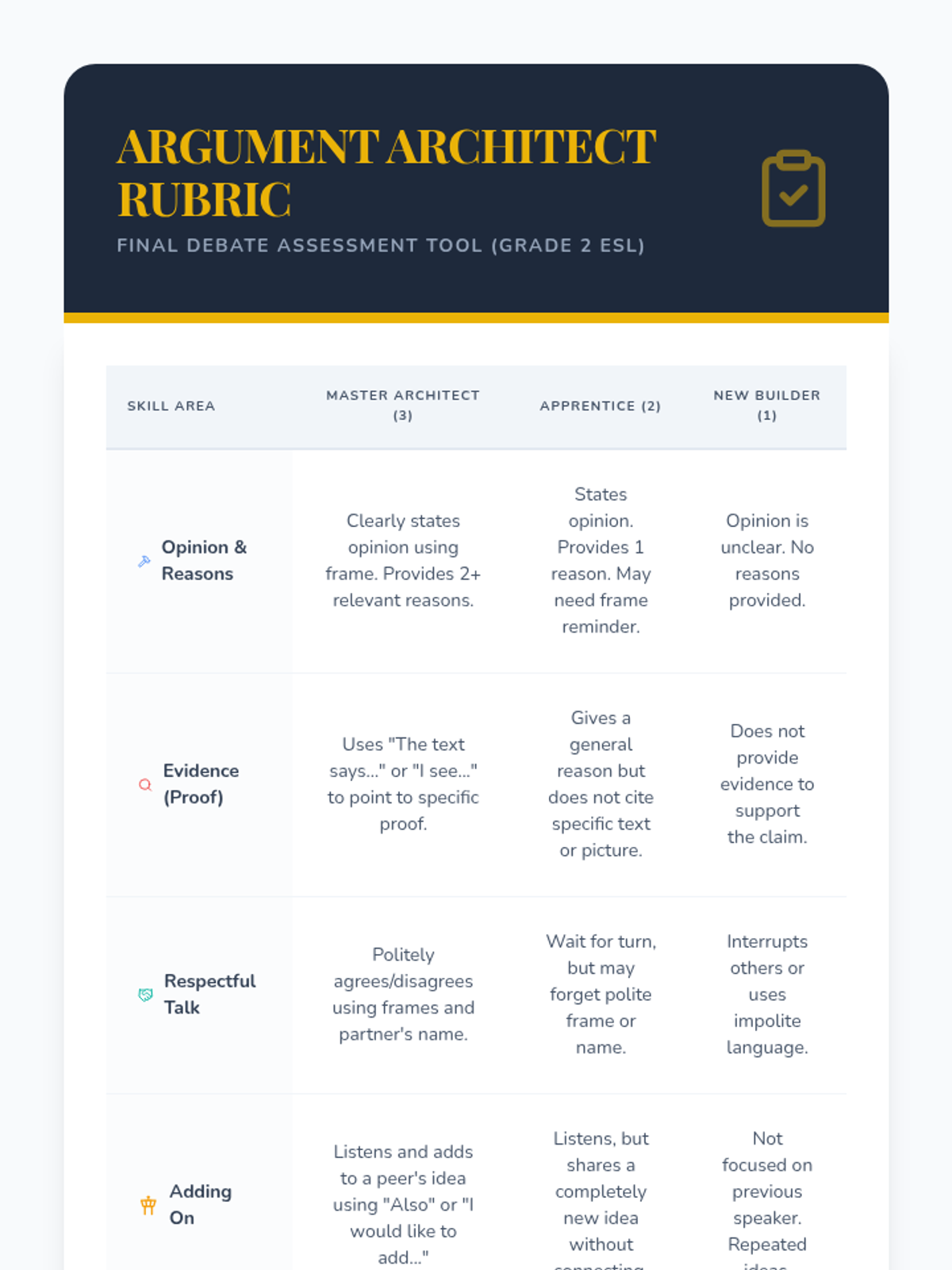
The sequence culminates in a structured debate where students apply all learned skills to argue for or against a school-related topic using evidence and respectful discourse.
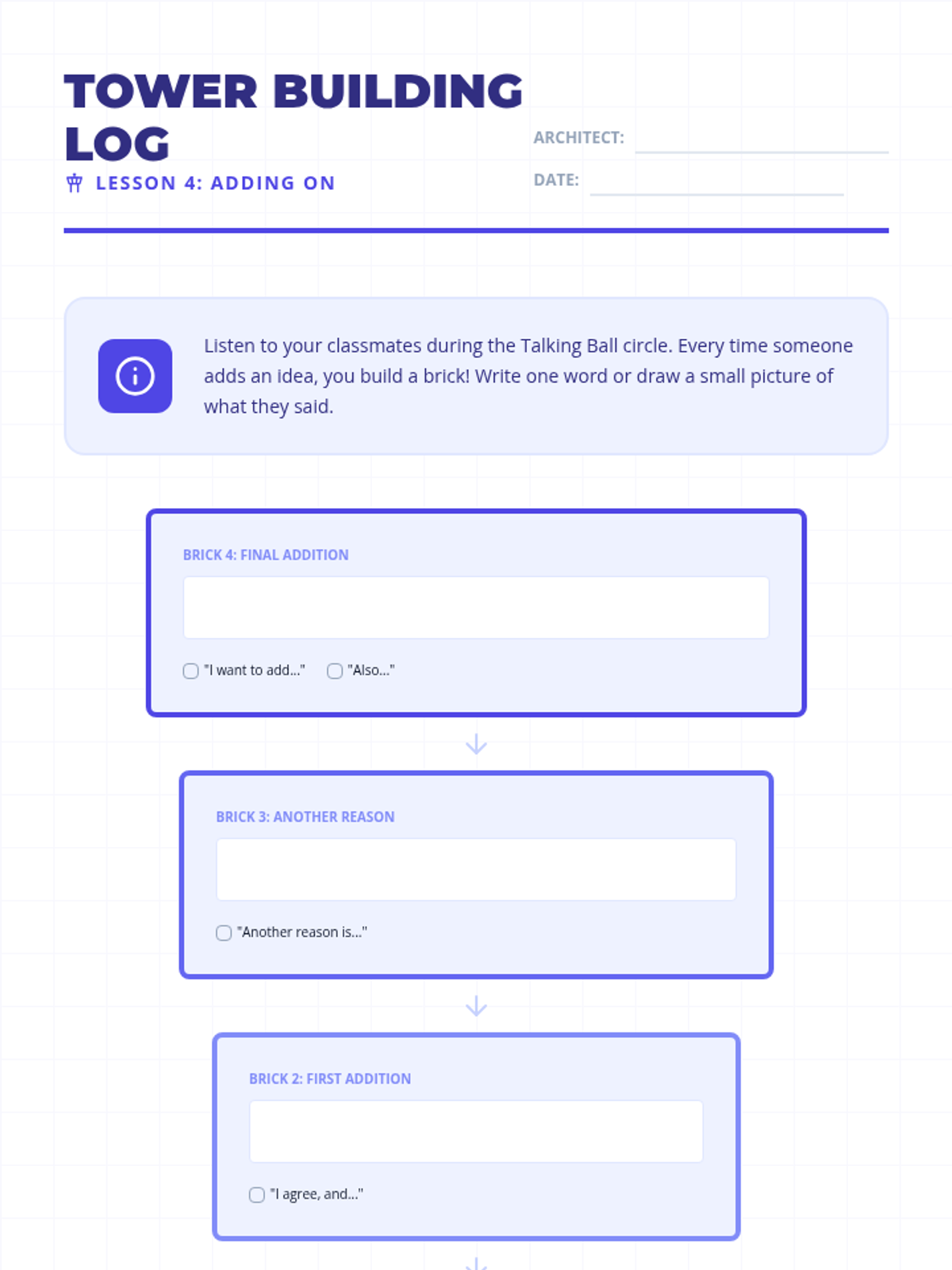
Students practice extending conversations by adding to what classmates have said, using connectors like 'Also' and 'Another reason is' to build a collaborative dialogue.
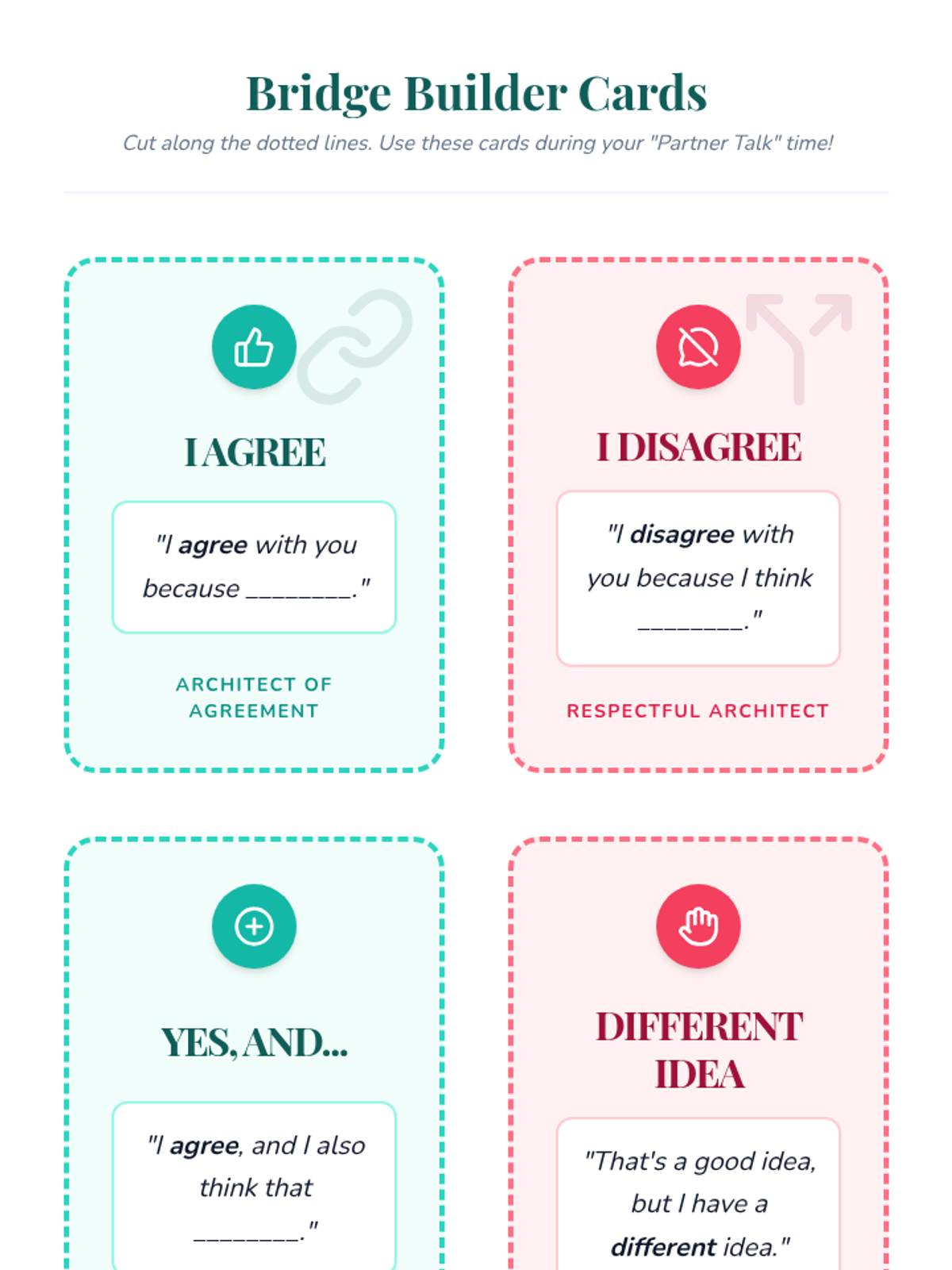
Students learn polite disagreement and agreement frames to maintain respectful academic conversations during group work and discussions.
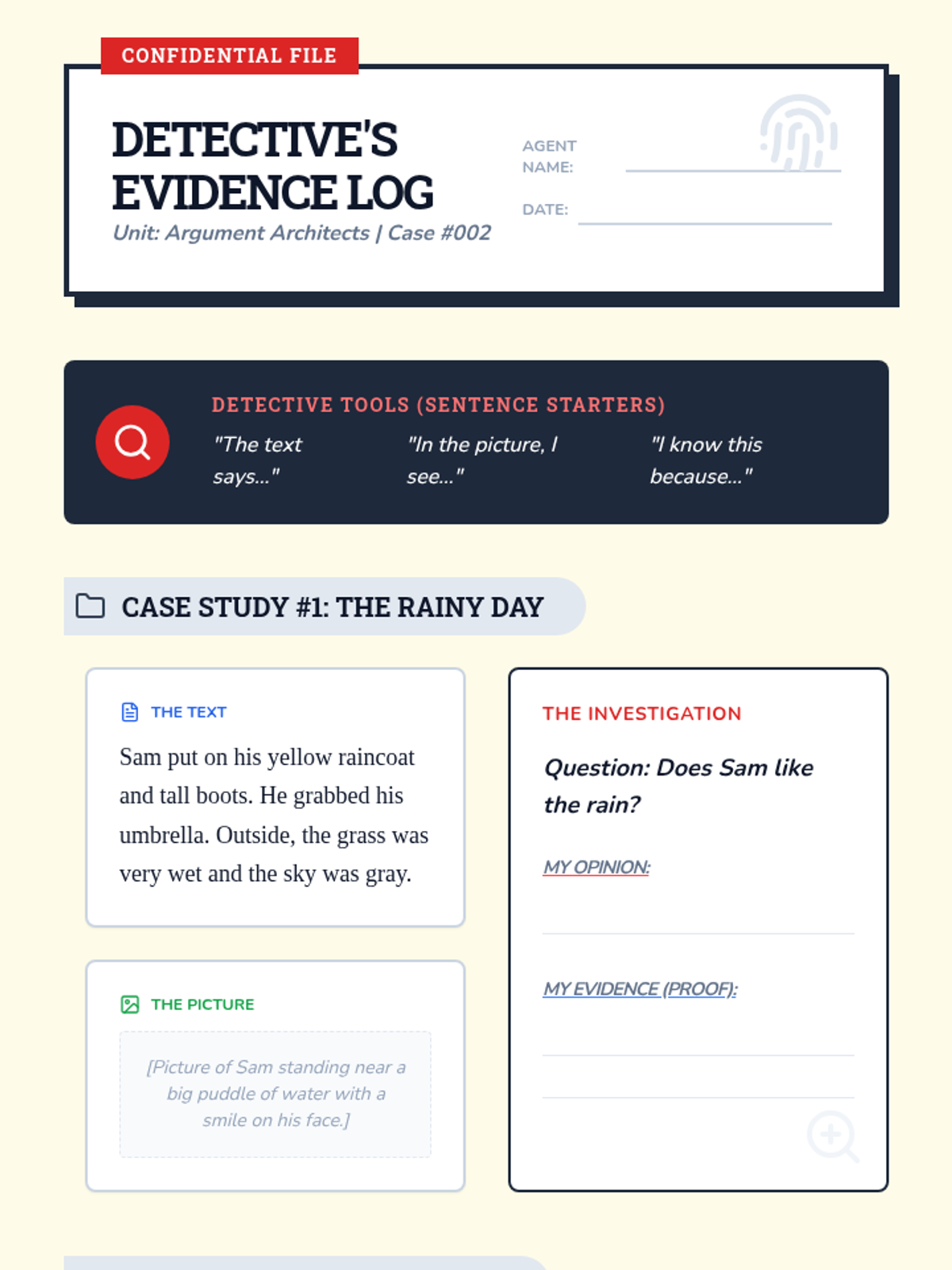
Learners practice finding evidence in texts and pictures to support their claims, using phrases like 'The text says...' or 'I know this because...' to ground their arguments.
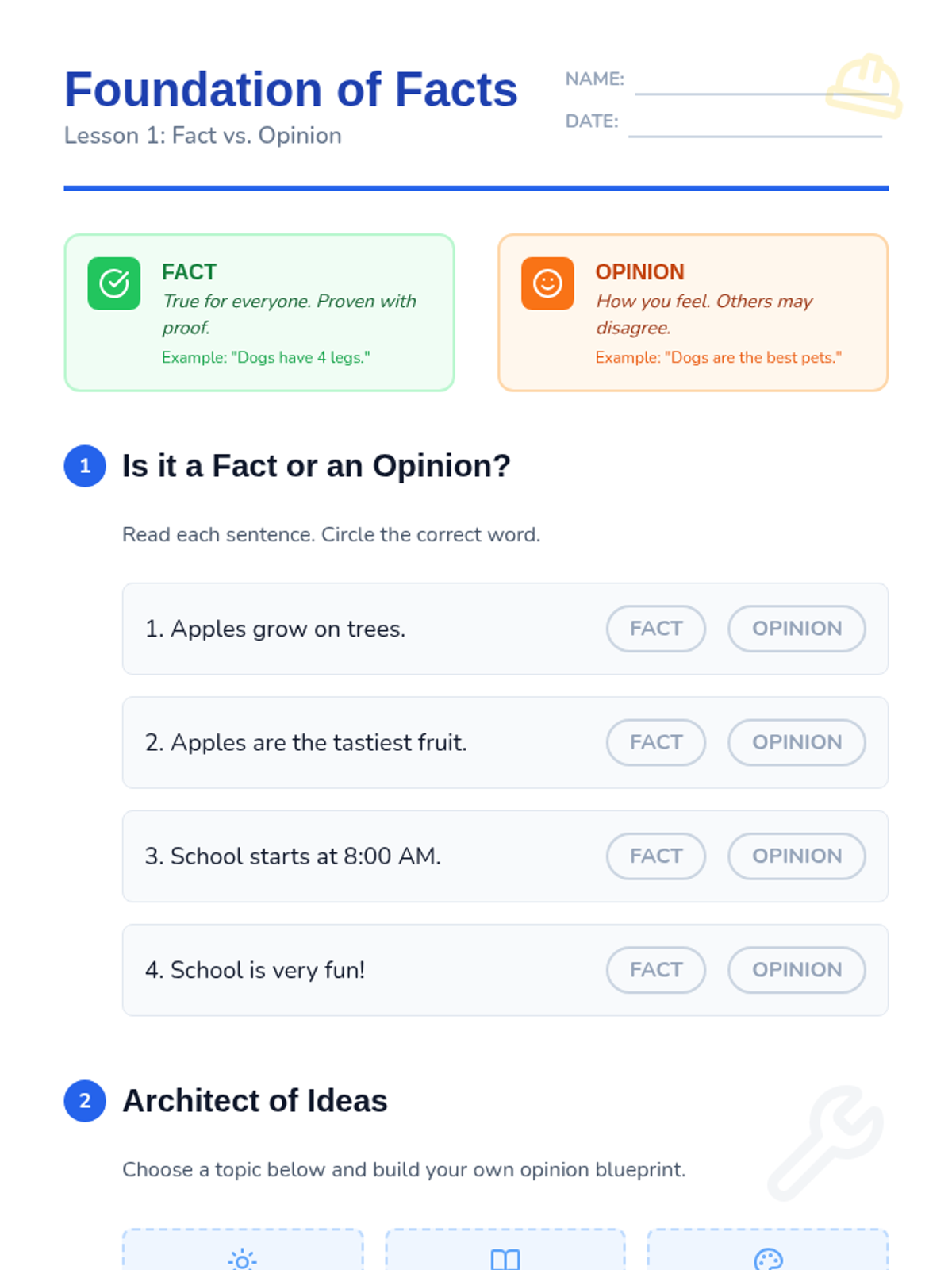
Students distinguish between fact and opinion and practice stating their own views using the frame 'In my opinion... because...' using familiar topics like food and toys.
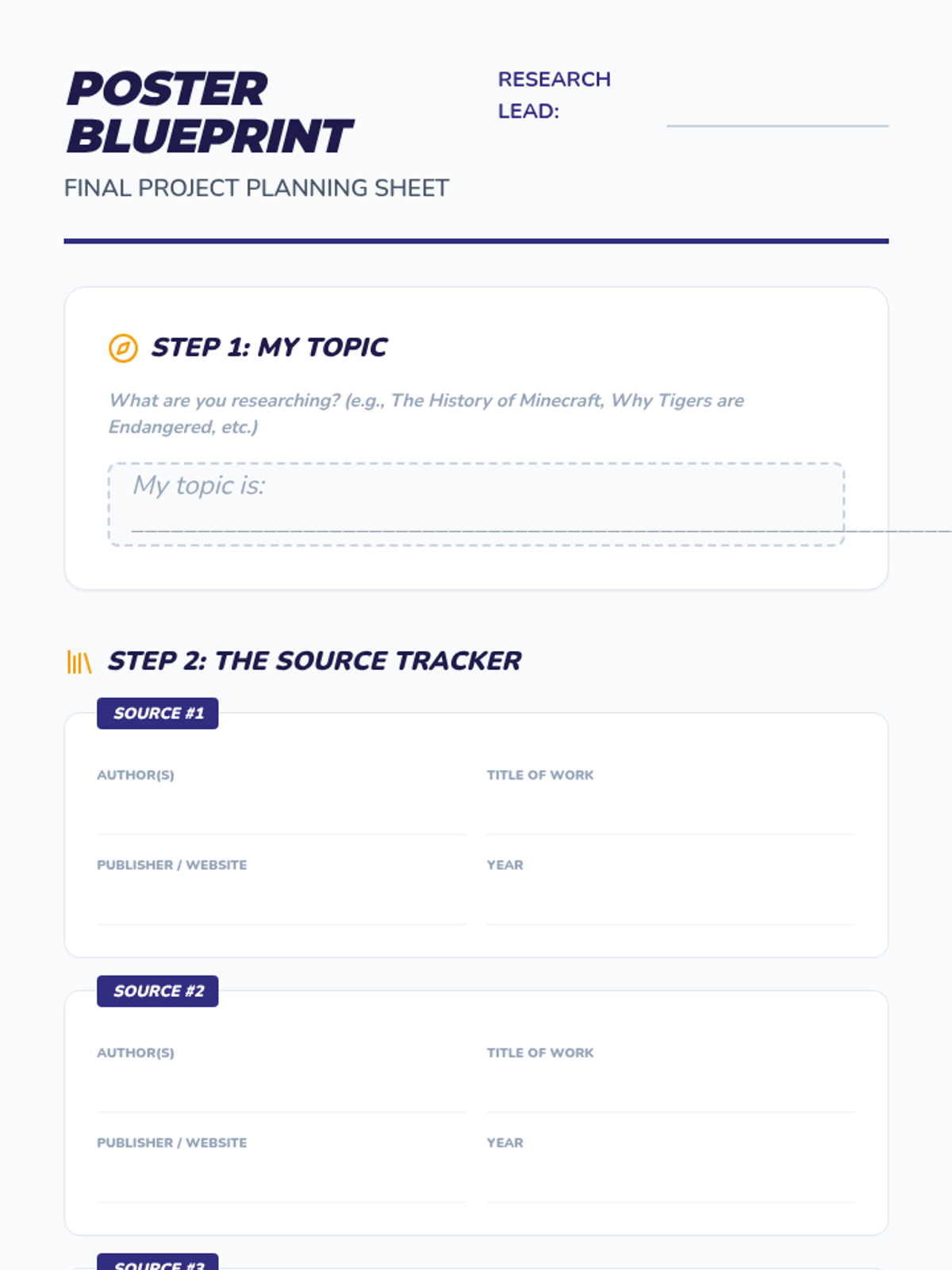
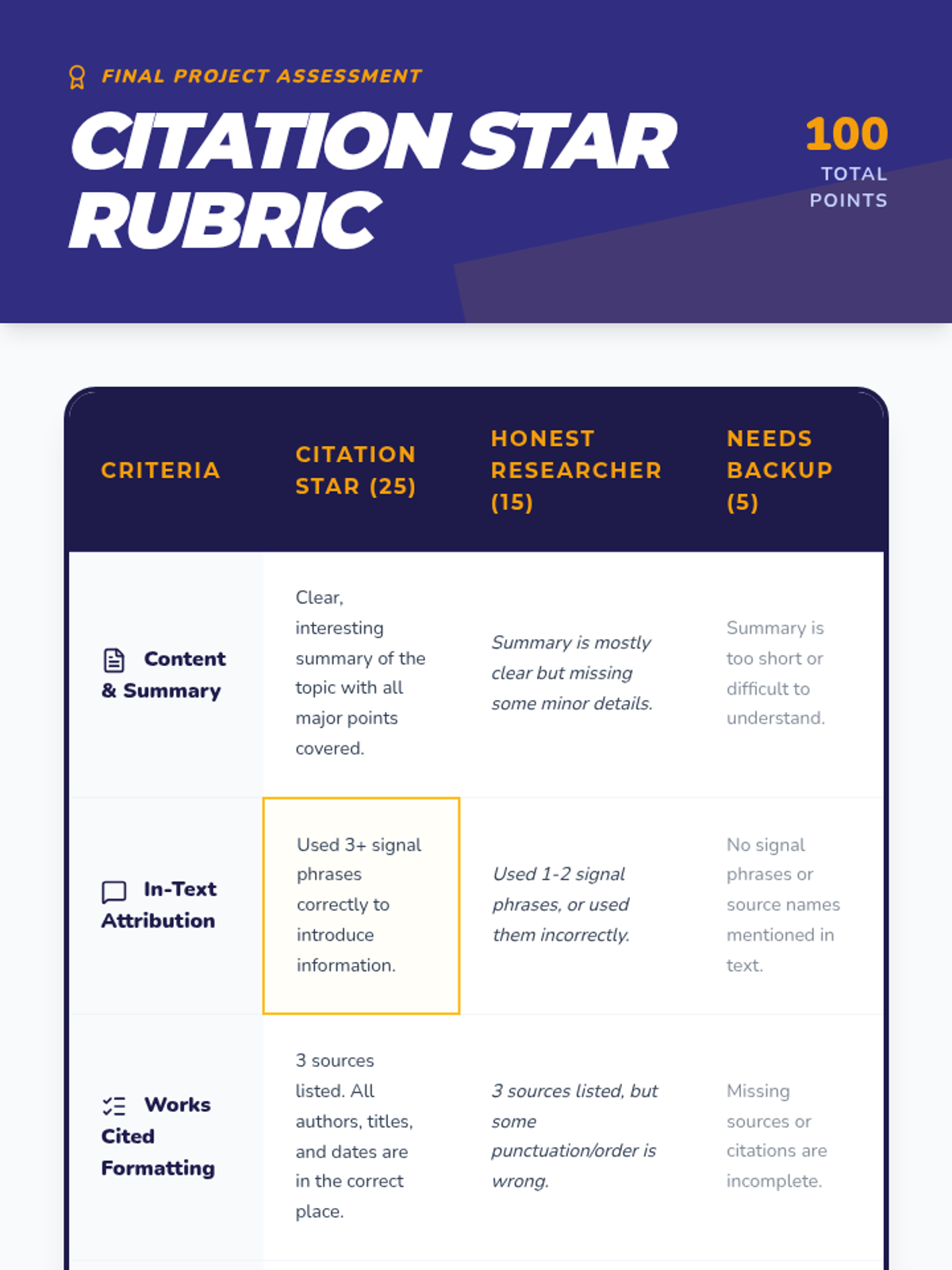
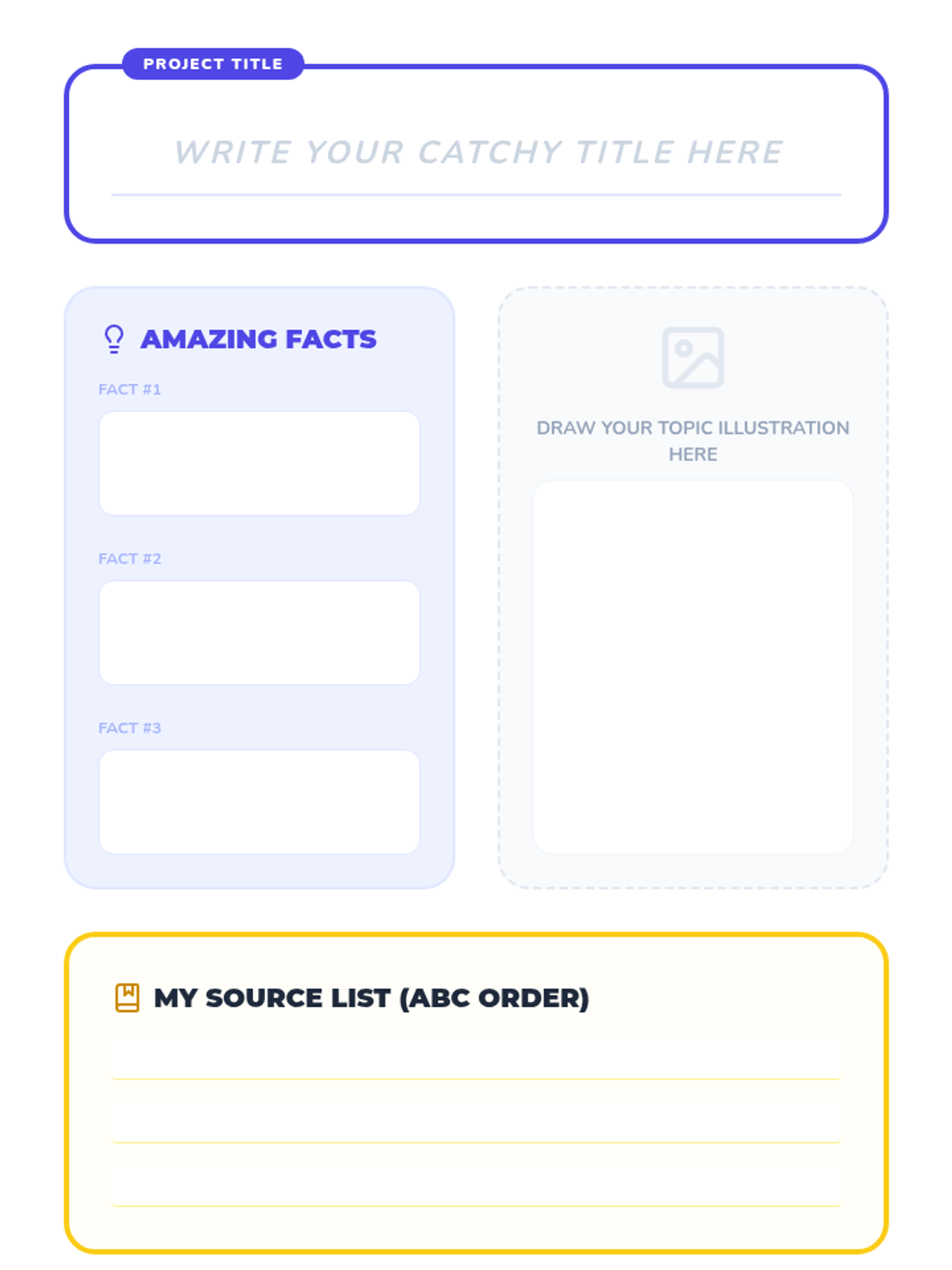
In this final project-based lesson, students synthesize their learning by creating a "Research Credits" poster. They select a topic of interest, find three sources, summarize key information, and produce a perfectly formatted Works Cited section.
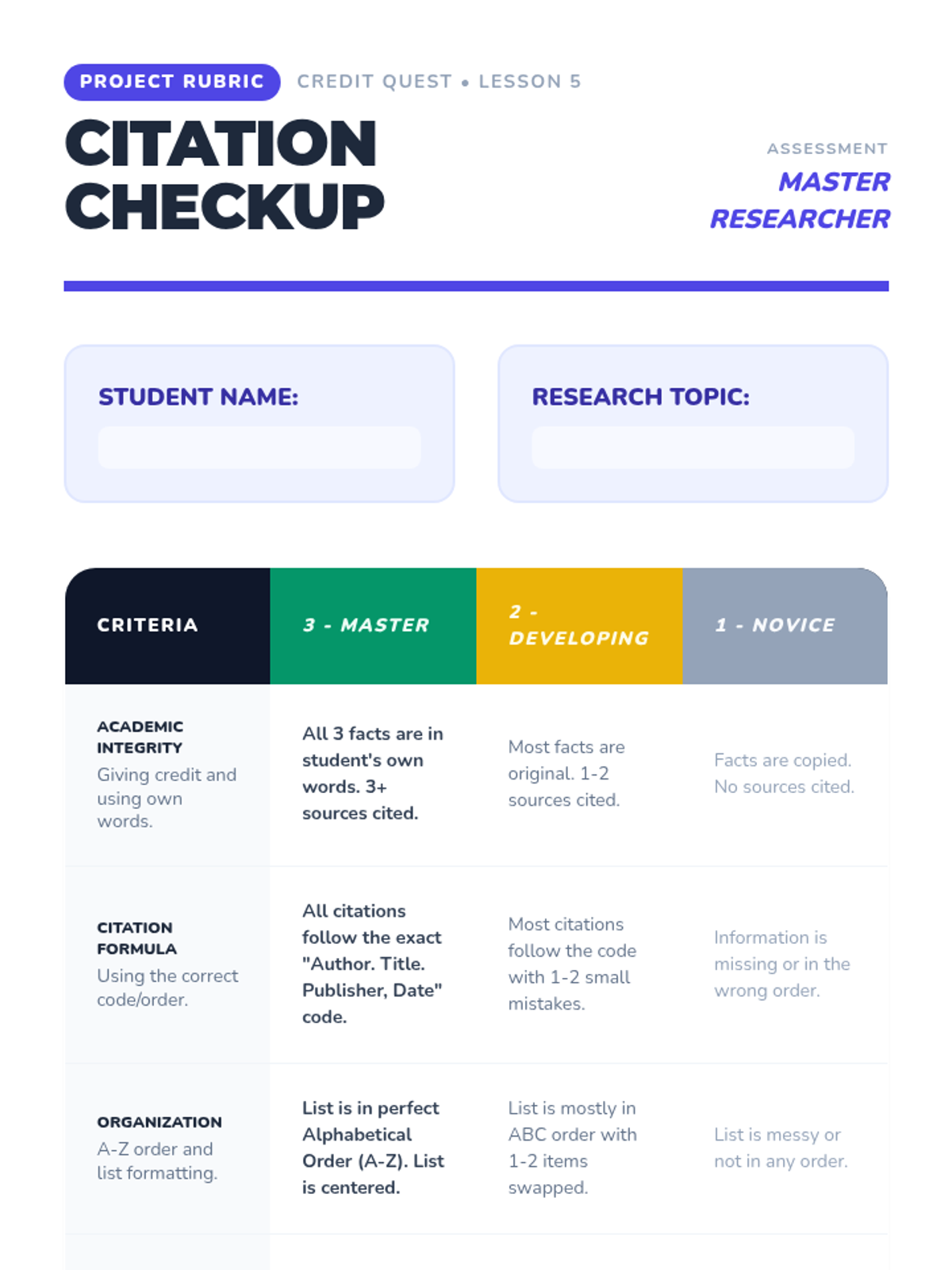
Students create a mini-research poster on a topic of their choice. They apply their knowledge by including three facts and a correctly formatted, alphabetized bibliography with at least three sources. The lesson includes a gallery walk for peer feedback.
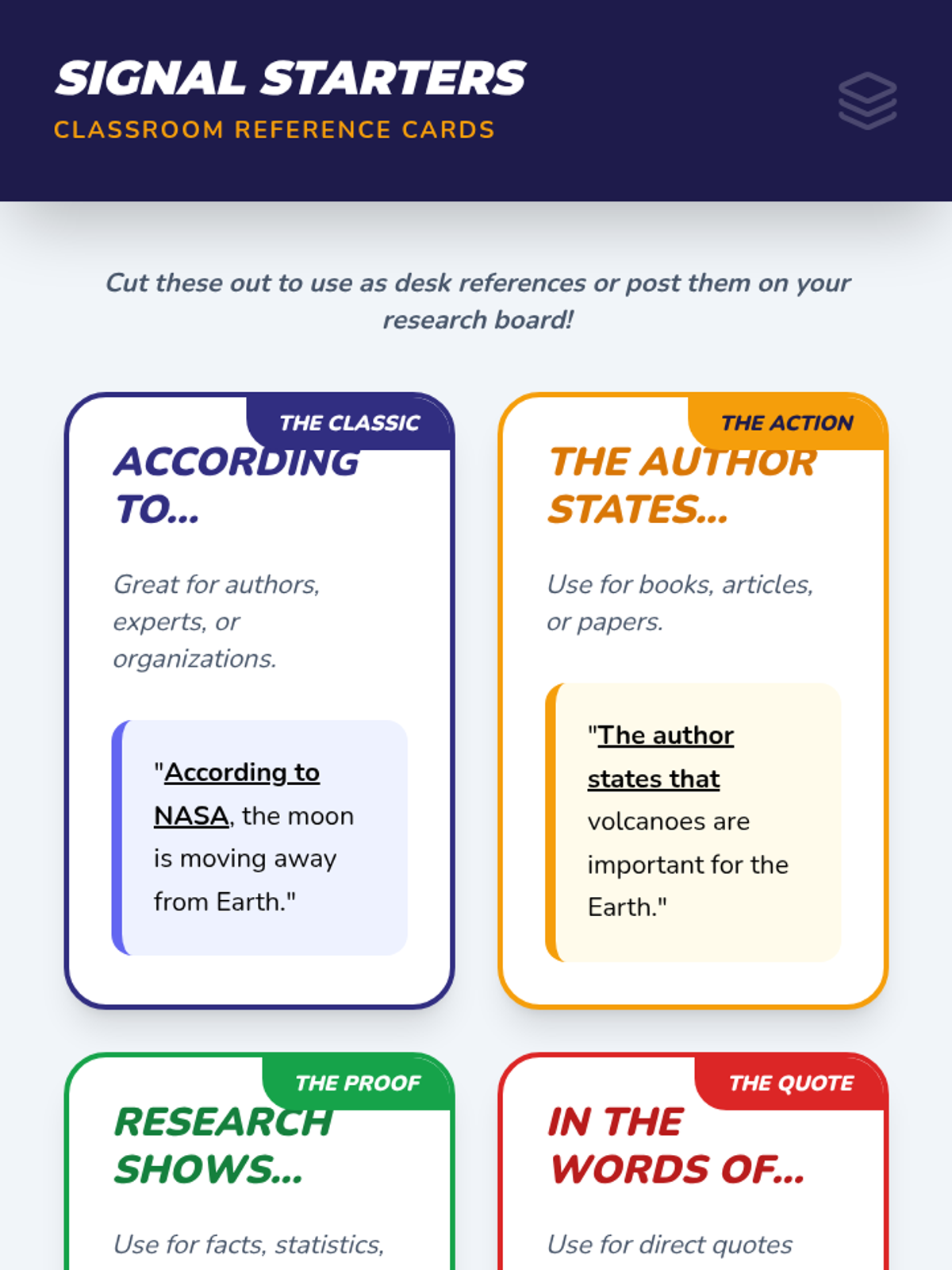
Students learn the mechanics of in-text attribution, practicing how to introduce sources using "signal phrases" (e.g., 'According to...'). They understand how to bridge the gap between their own ideas and those of external experts.
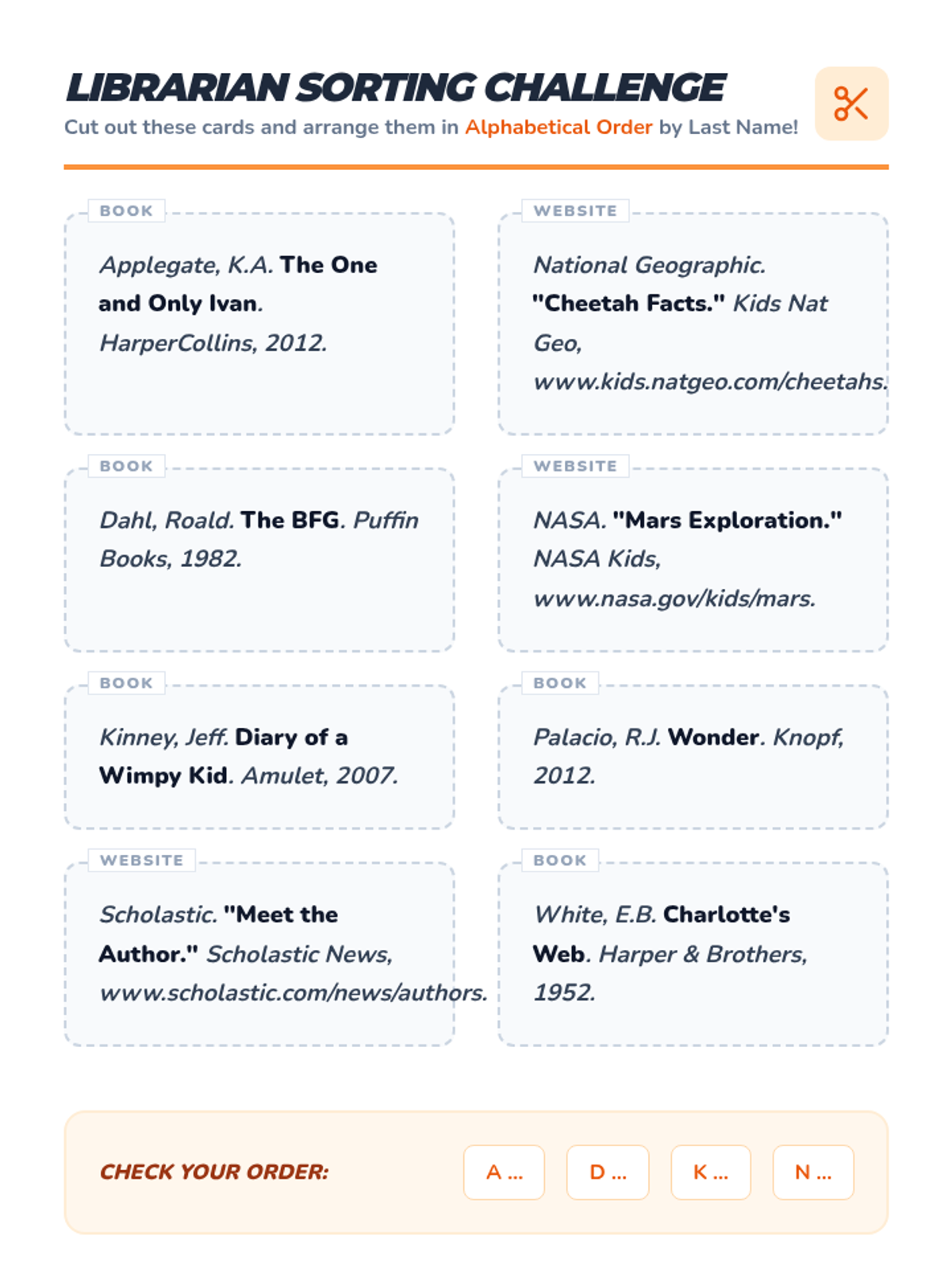
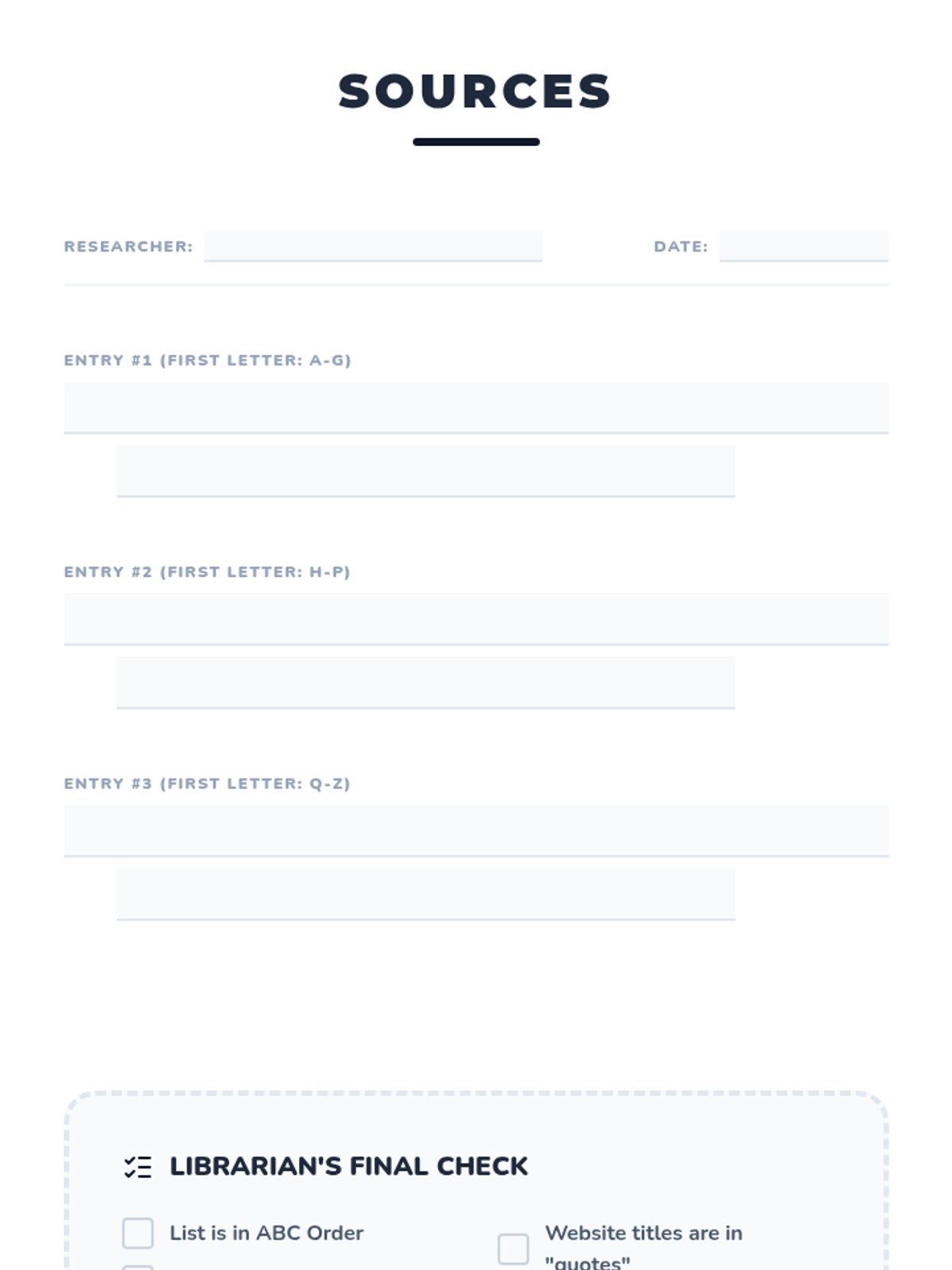
Students learn how to organize individual citations into a list, emphasizing alphabetical order. They practice formatting a simple bibliography page using citations generated in previous lessons. This prepares them for the final structural requirement of research papers.
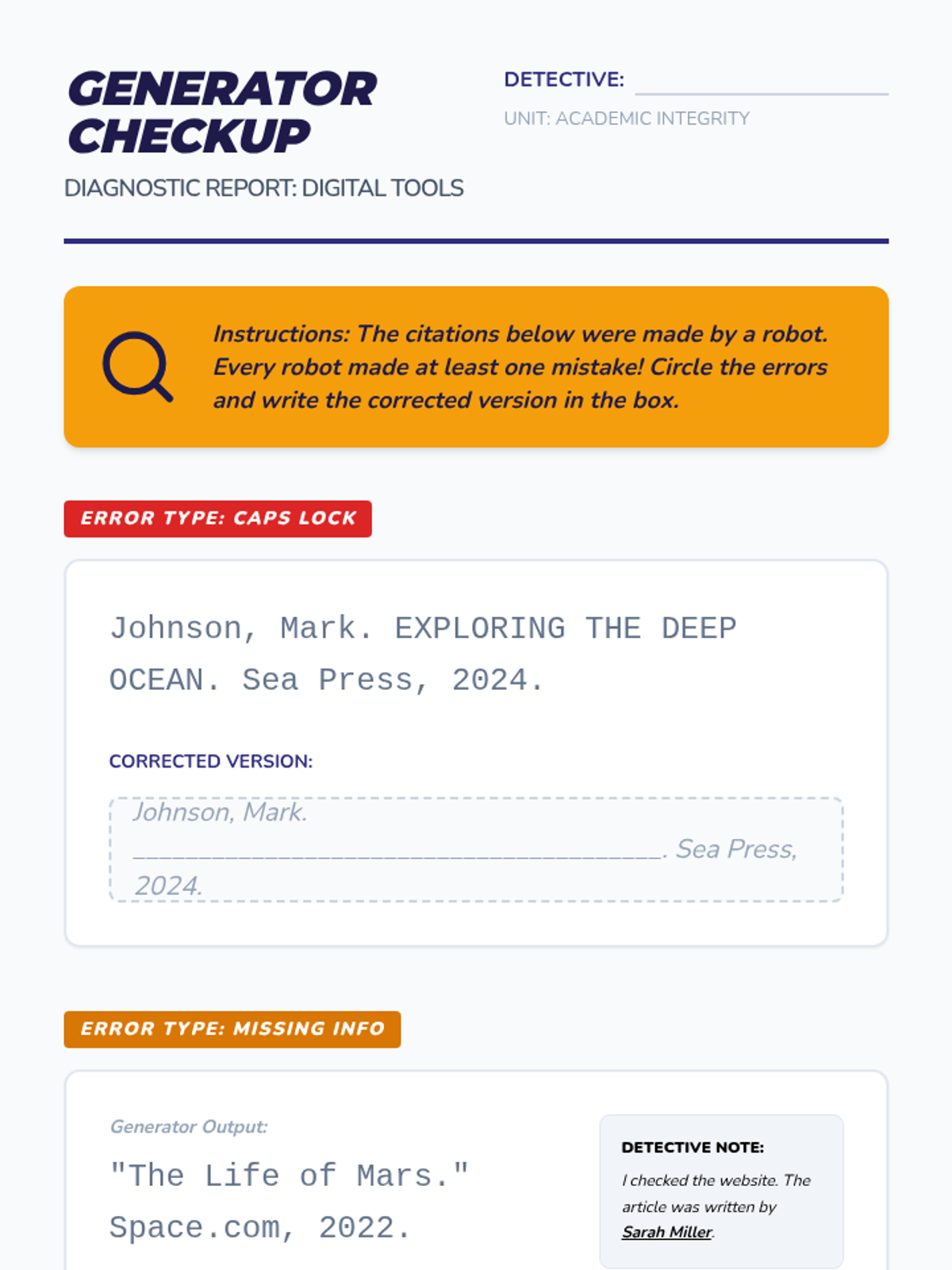
Students learn the benefits and risks of using digital citation tools. This lesson focuses on identifying common machine errors, such as capitalization issues and missing data, and emphasizes student accountability for final accuracy.
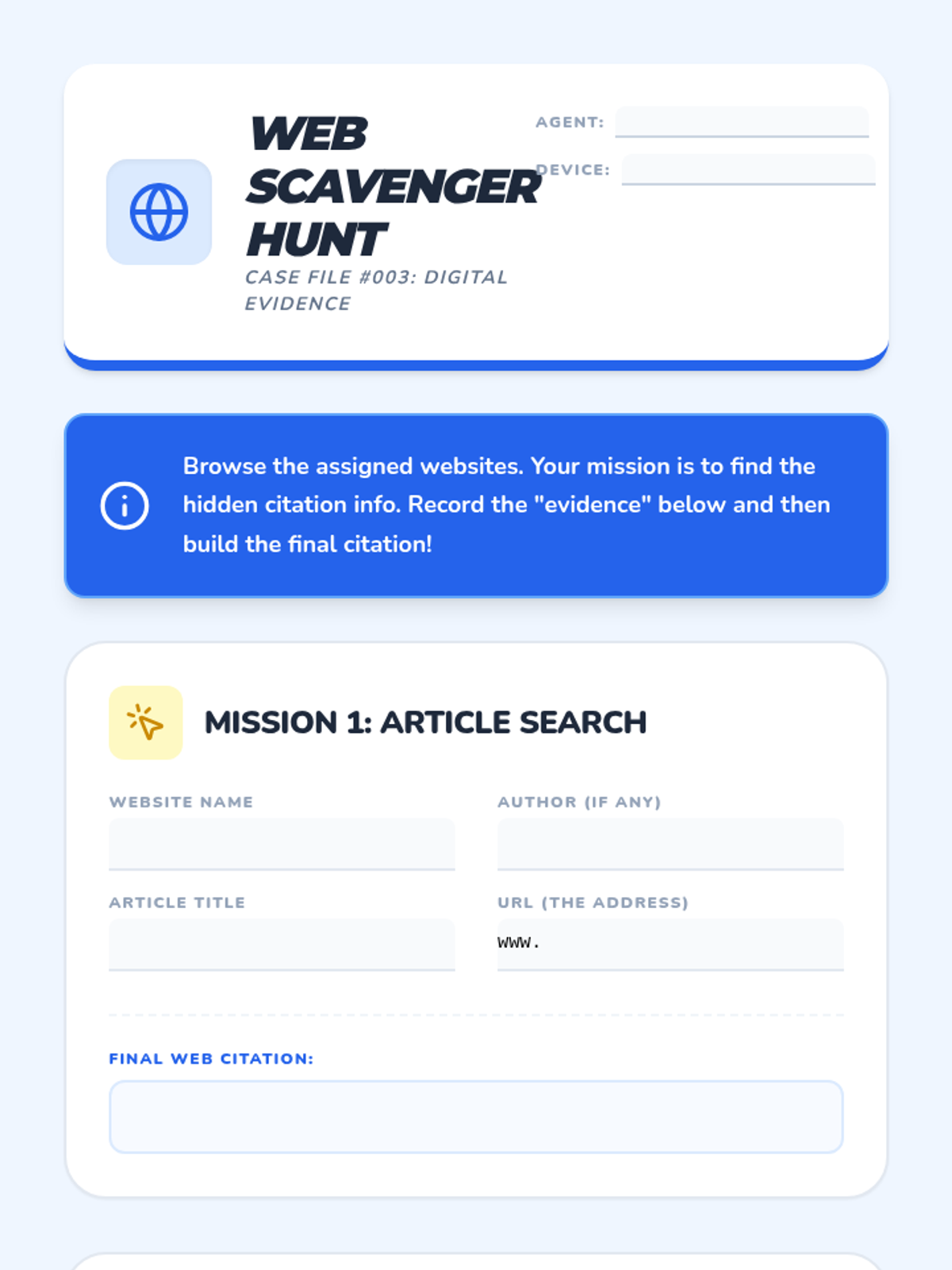
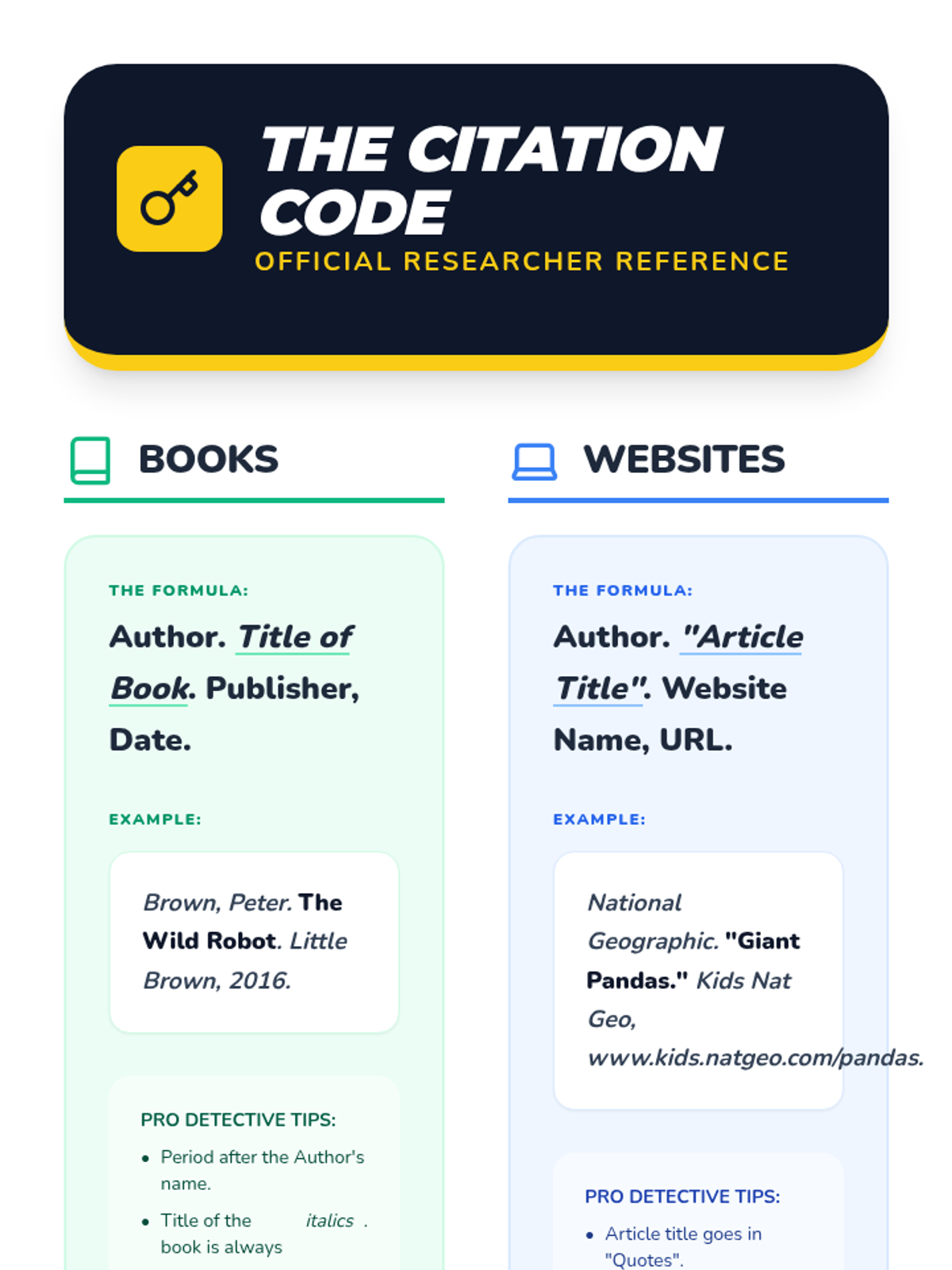
Students learn how to find citation information on websites, which is often harder to locate. They practice finding the URL, site name, and access date. Students compare the differences between book and website citations.
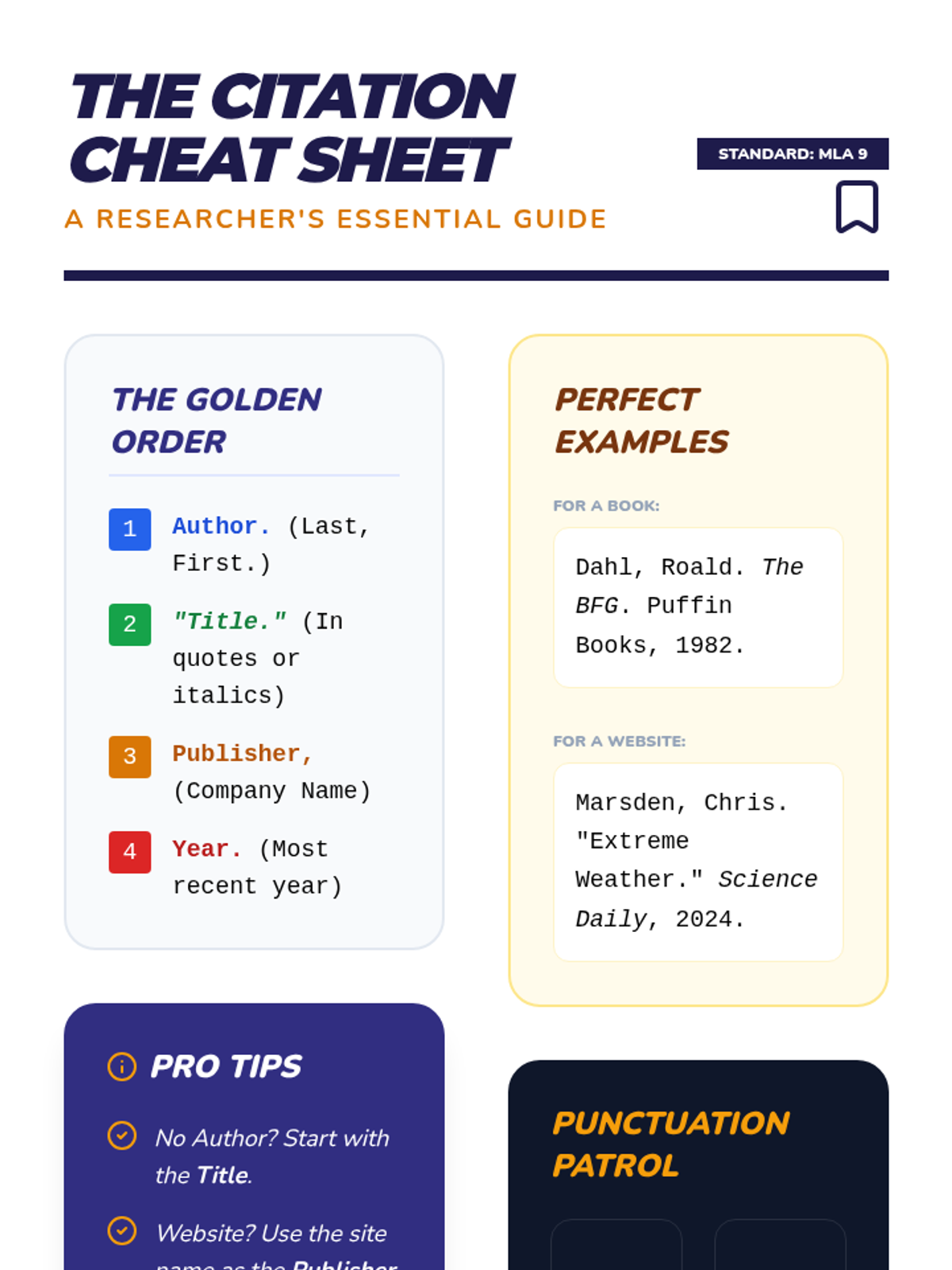
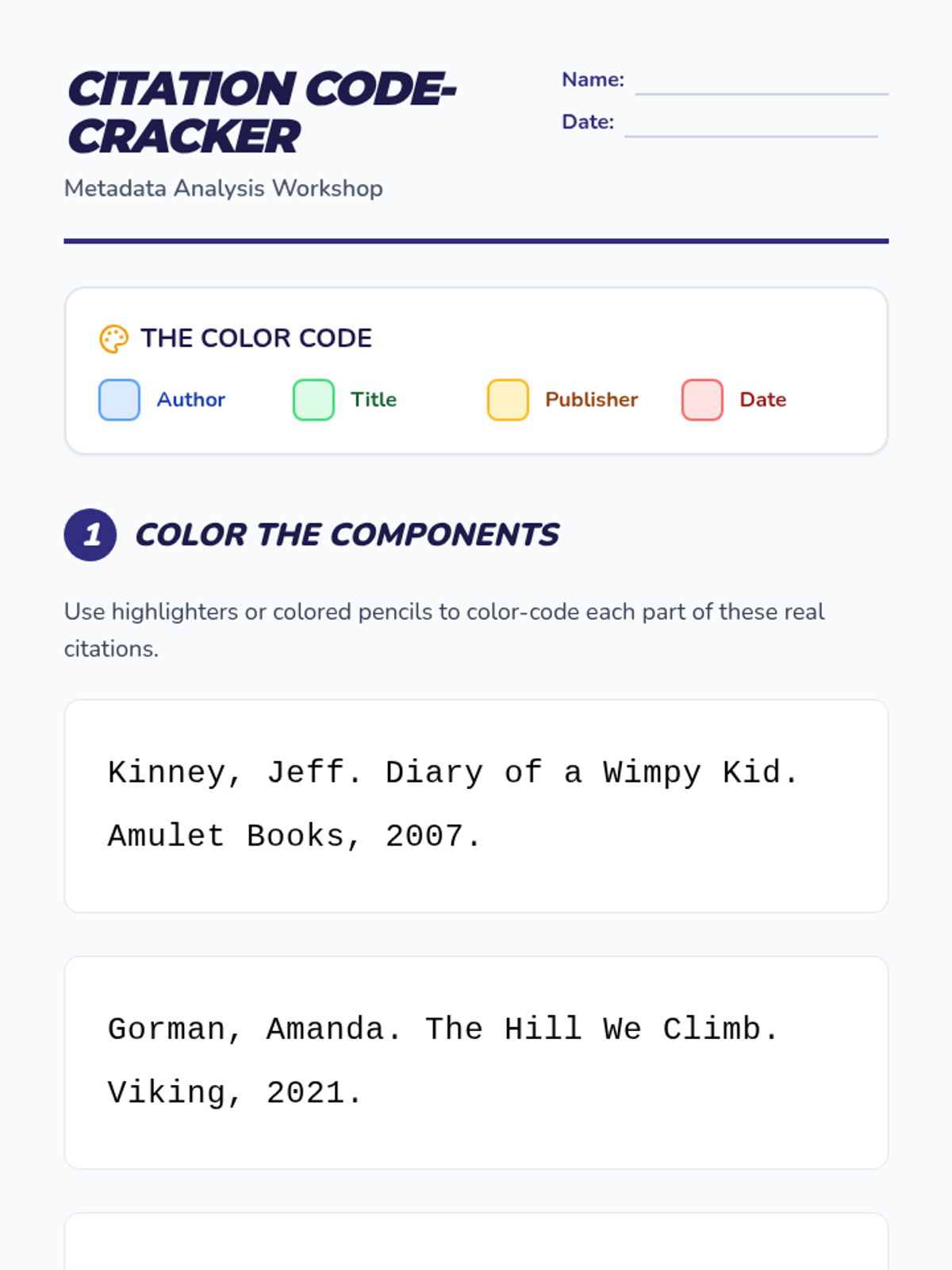
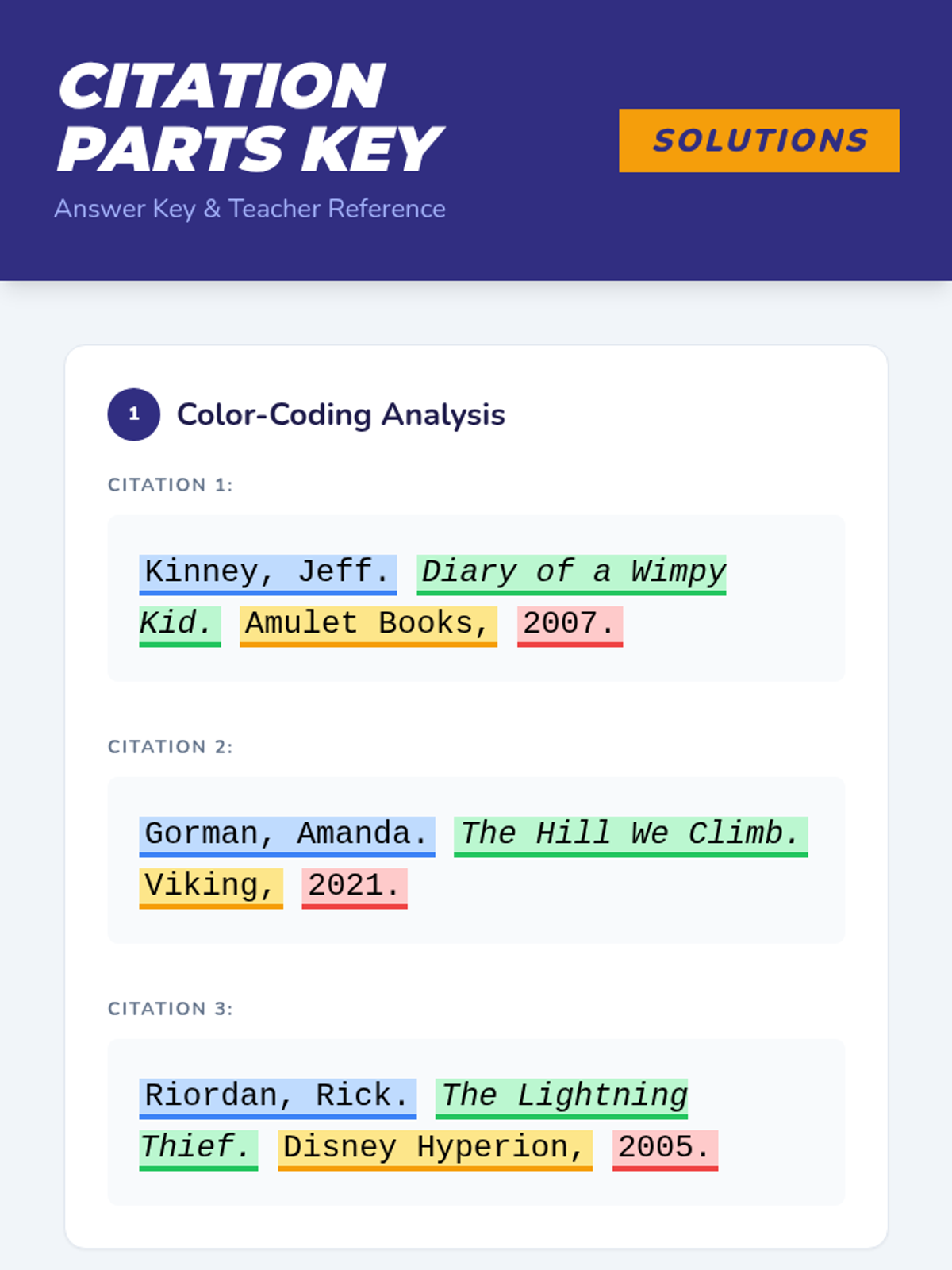
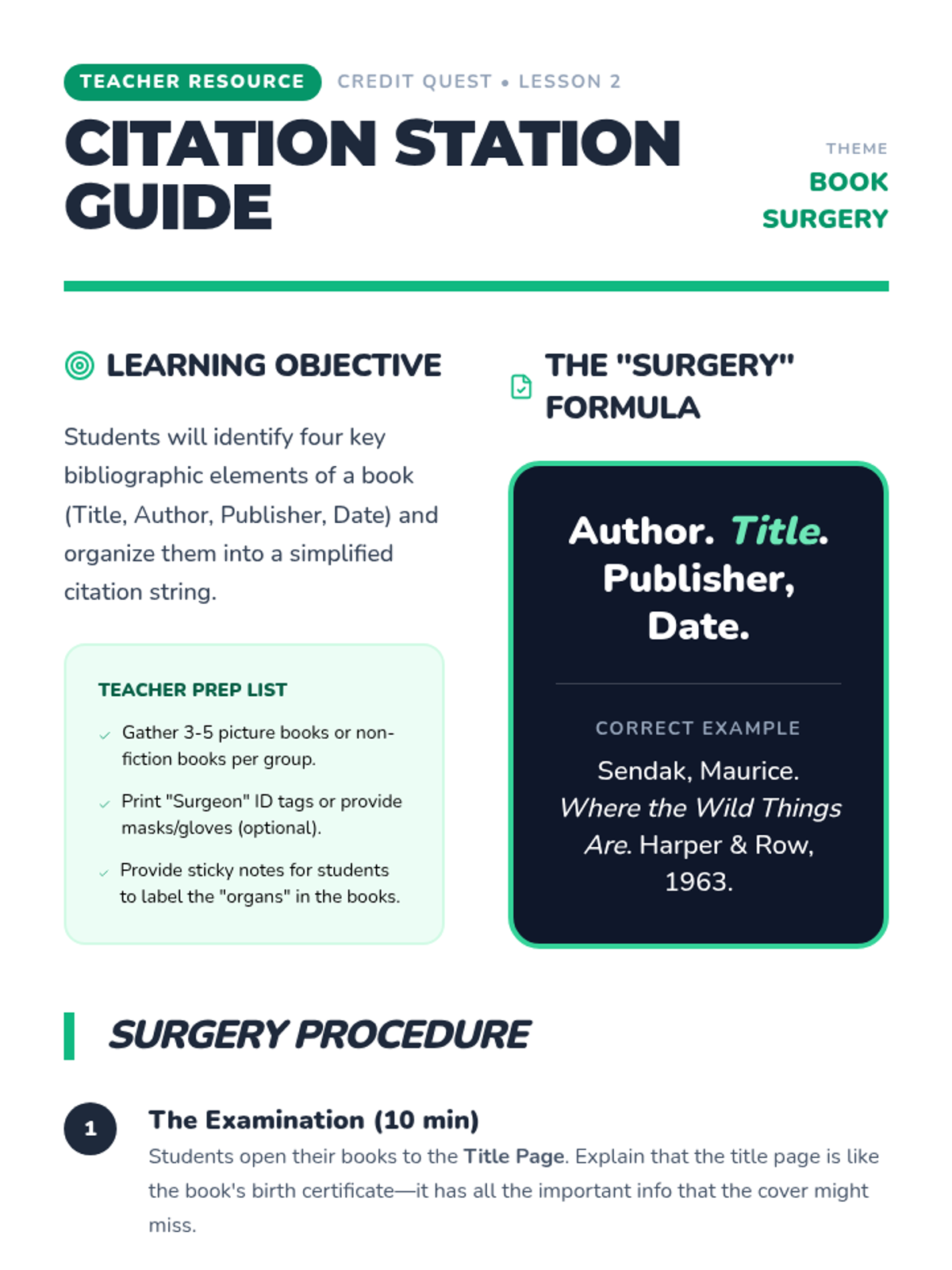
Students learn to identify and format the four core elements of an MLA citation: Author, Title, Publisher, and Date. They use color-coding to demystify the punctuation and structure of citations.
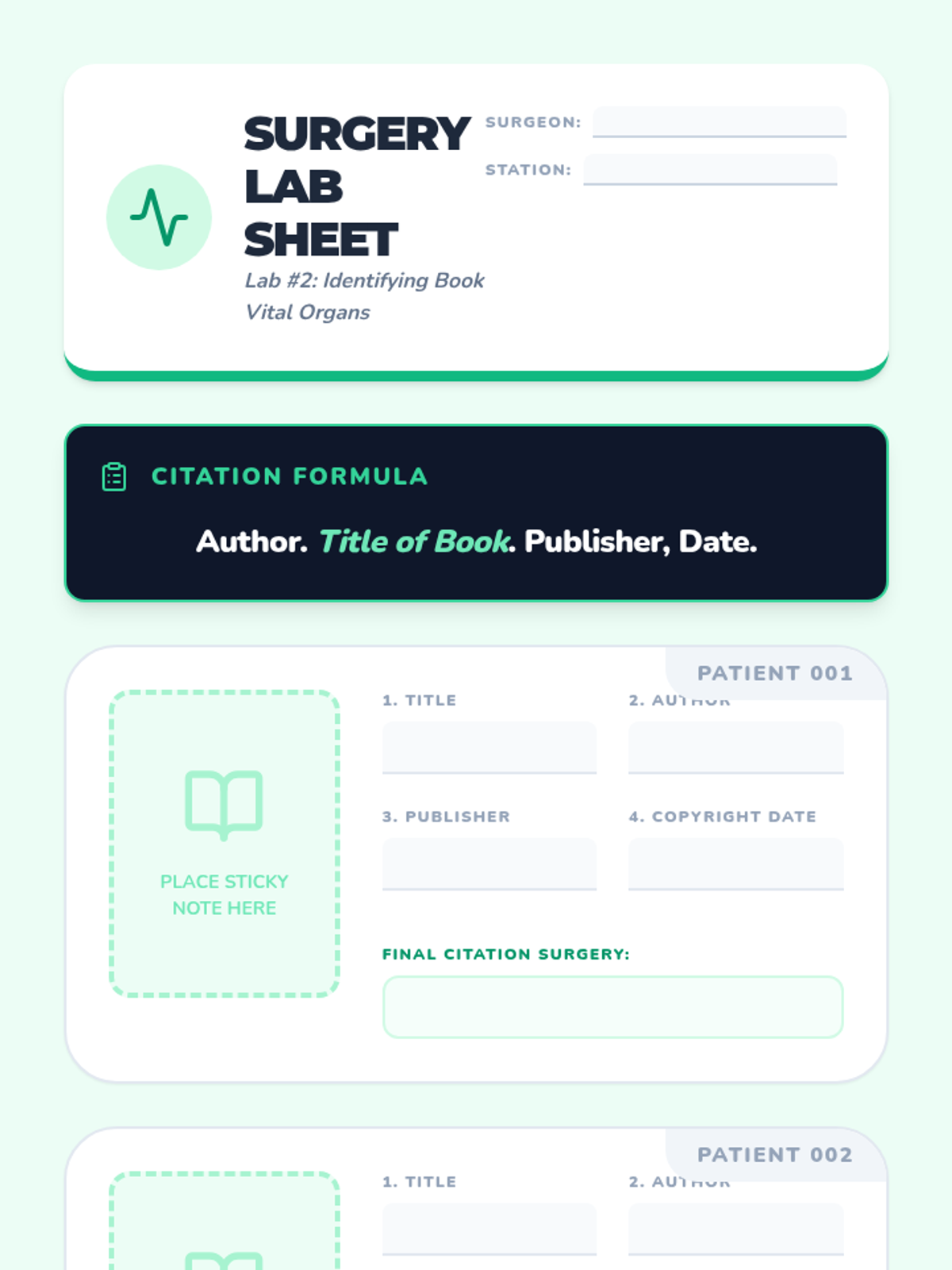
Students handle physical books to locate the title page, author, publisher, and copyright date. They learn a simplified citation format and practice finding bibliographic data.
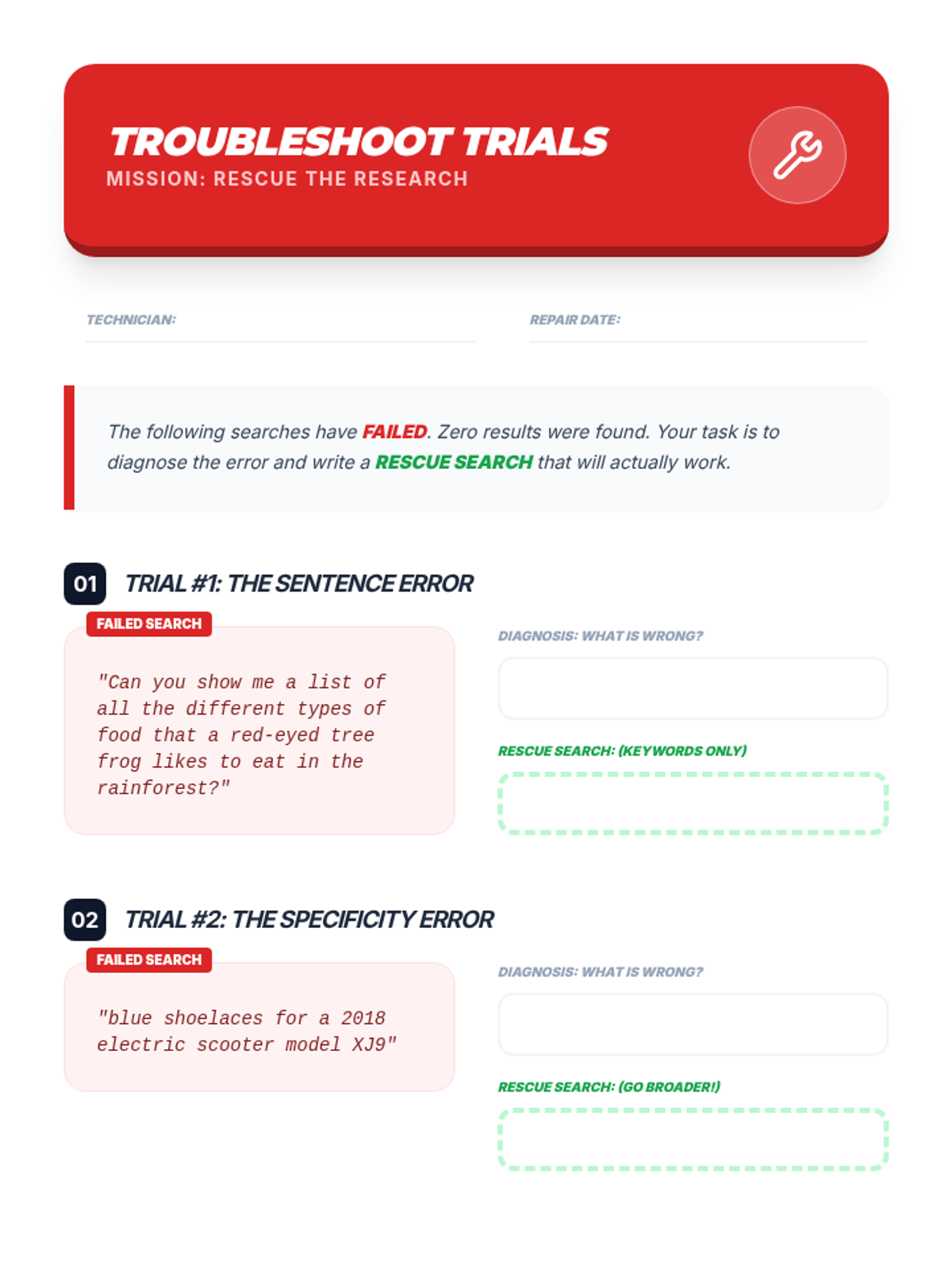
Students analyze search failures and practice iterative strategies to refine their inquiries when initial attempts don't yield the desired results.
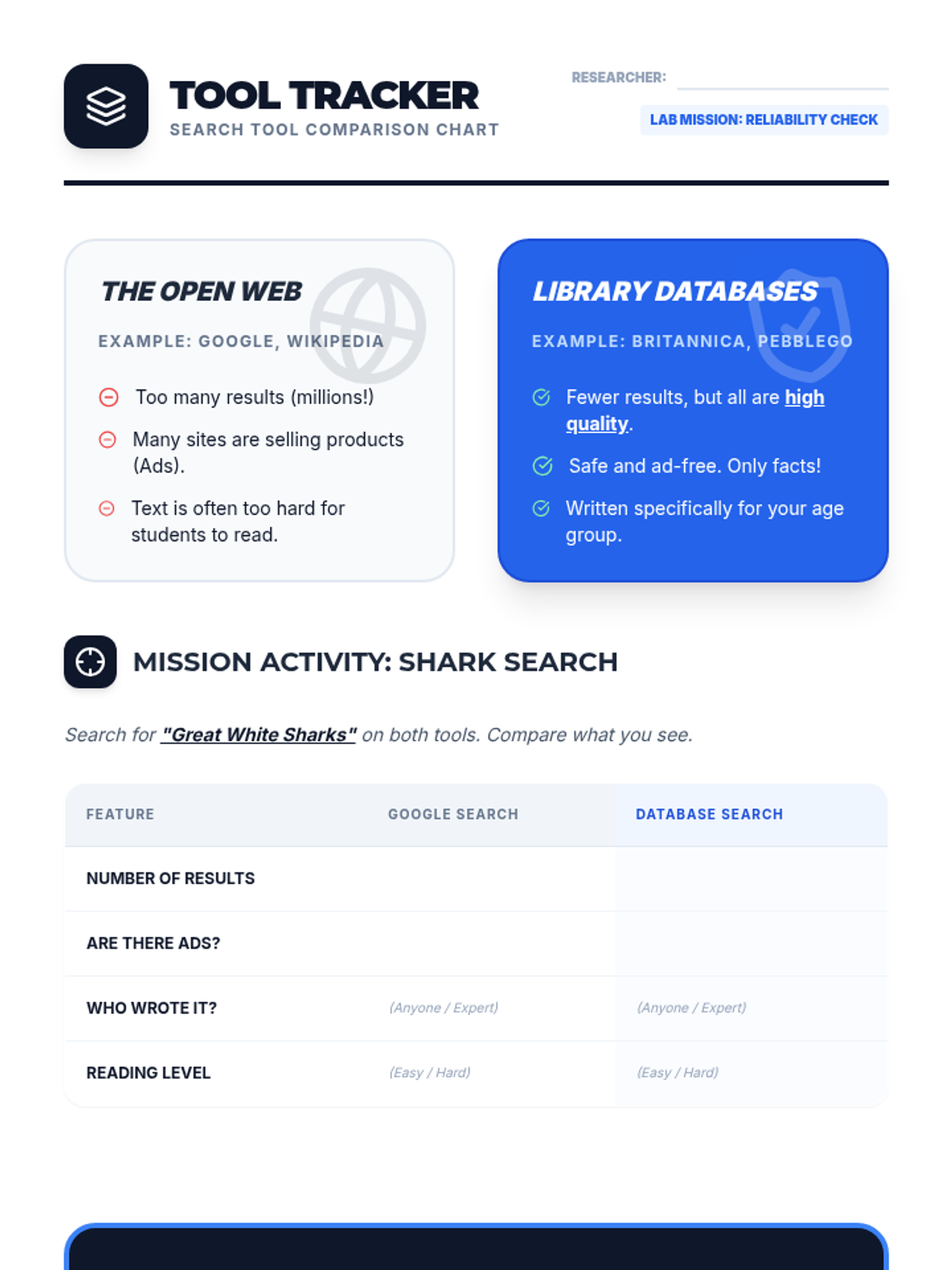
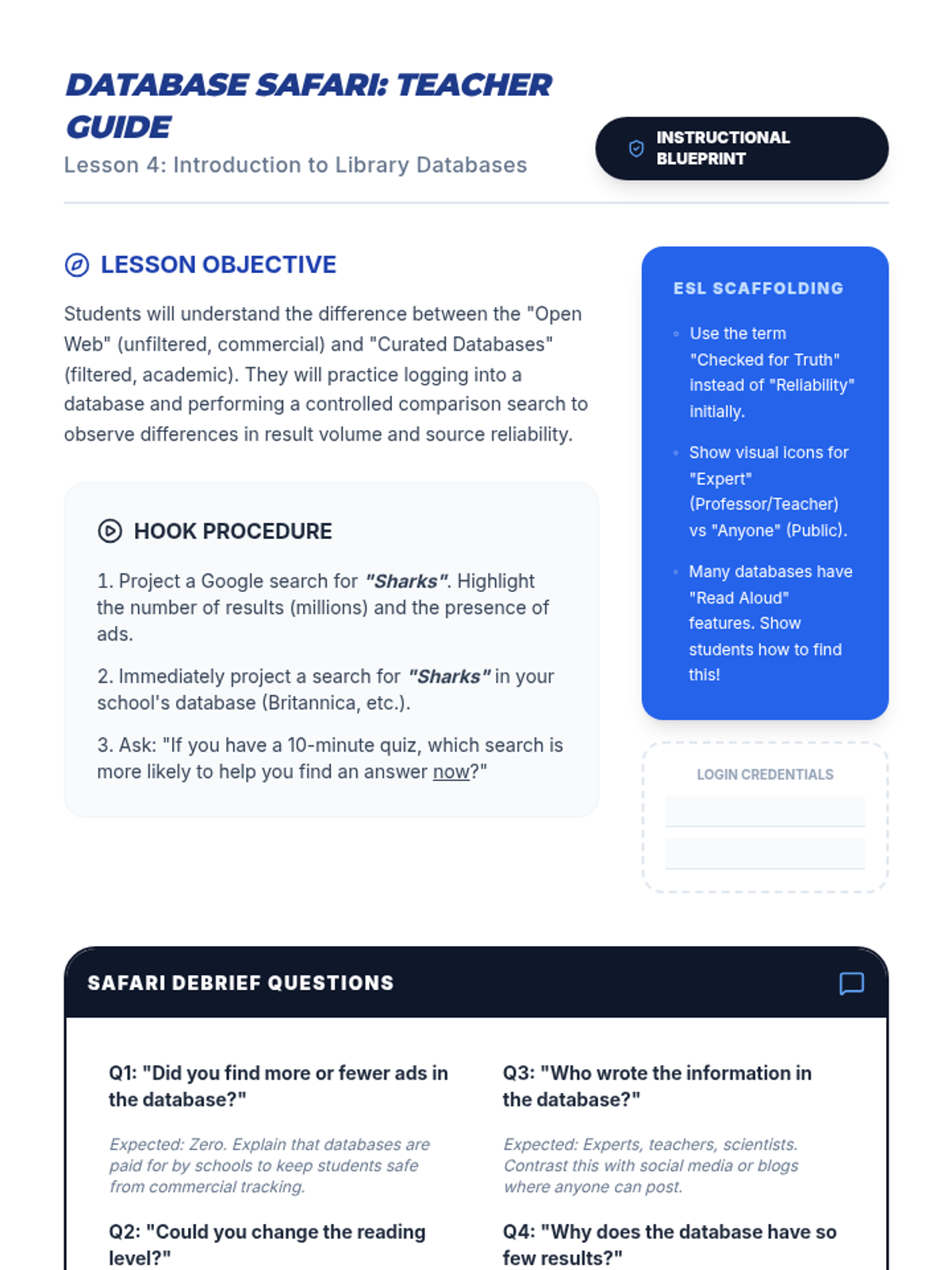
Students transition from open web searches to curated databases, comparing the reliability and organization of professional search tools.
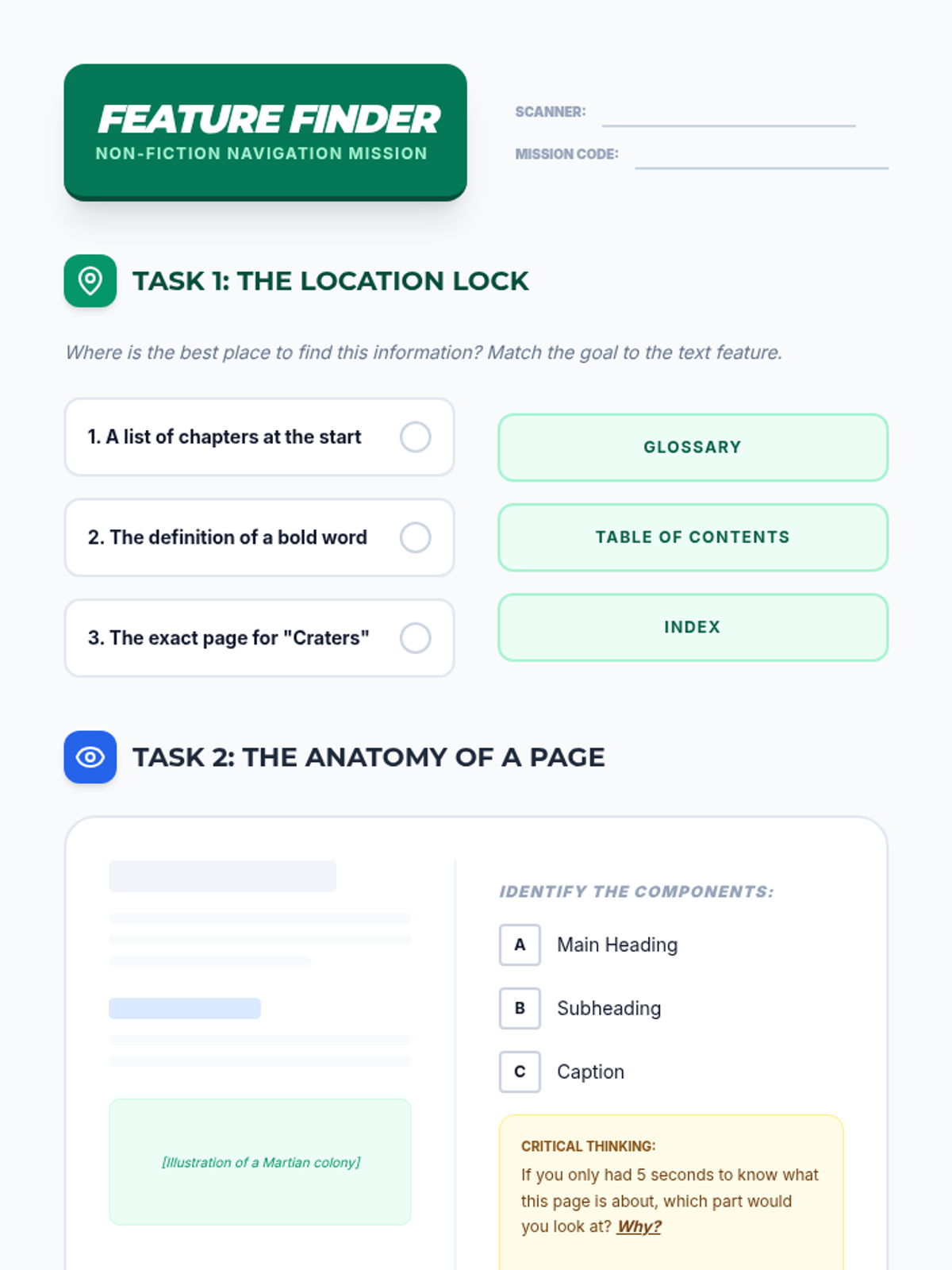
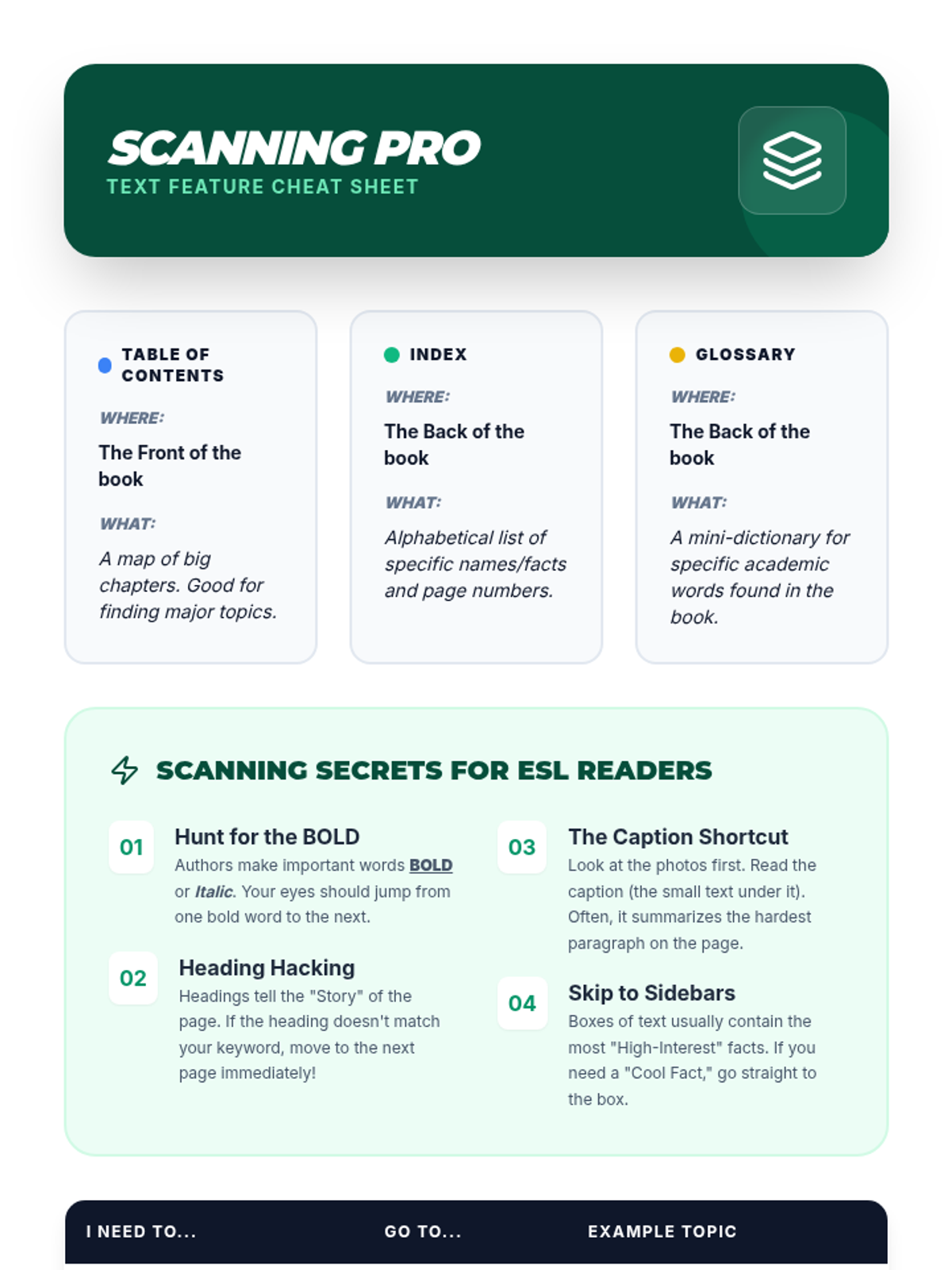
Students practice using text features like indices, headings, and sidebars to locate information quickly through skimming and scanning techniques.
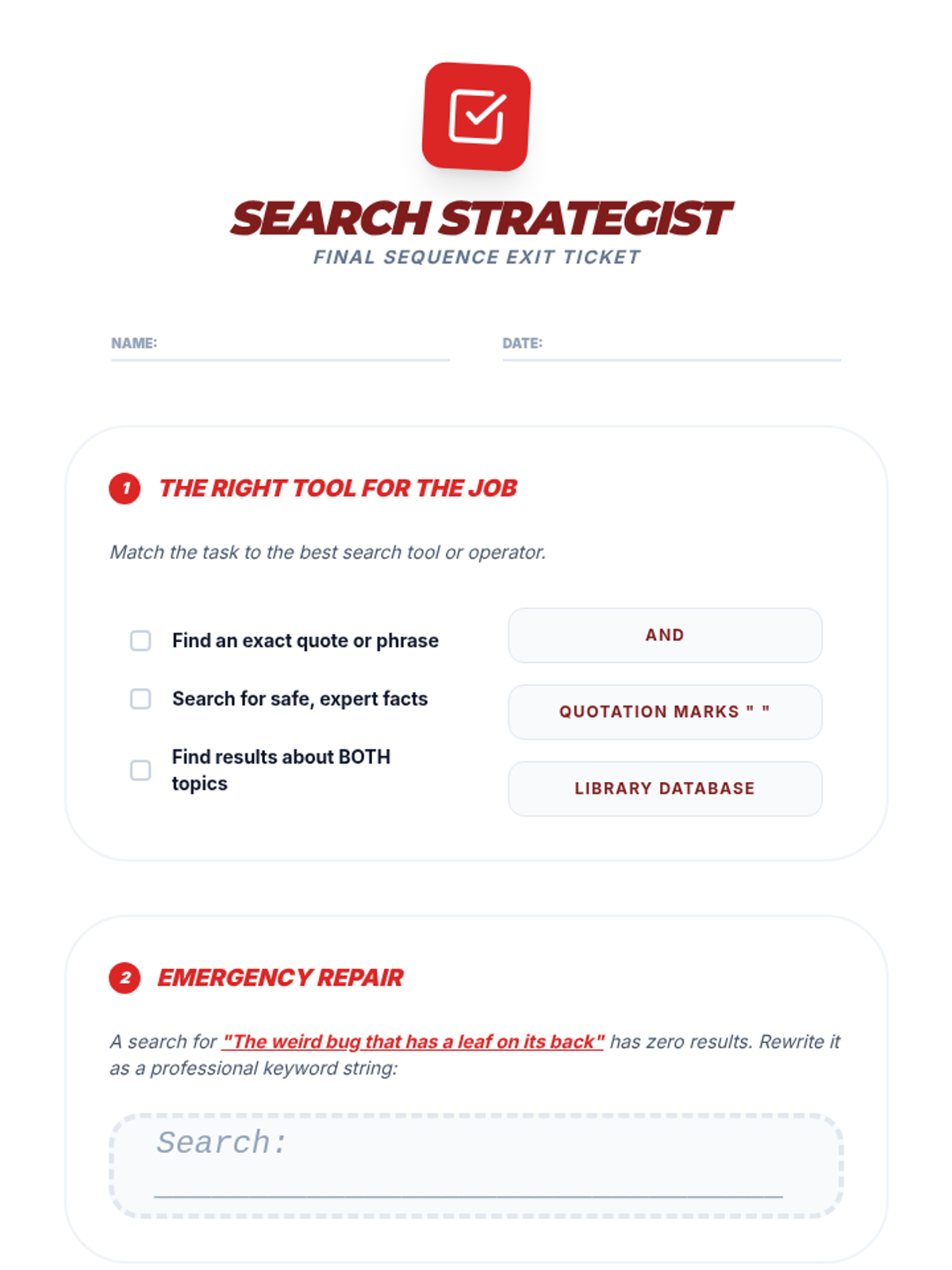
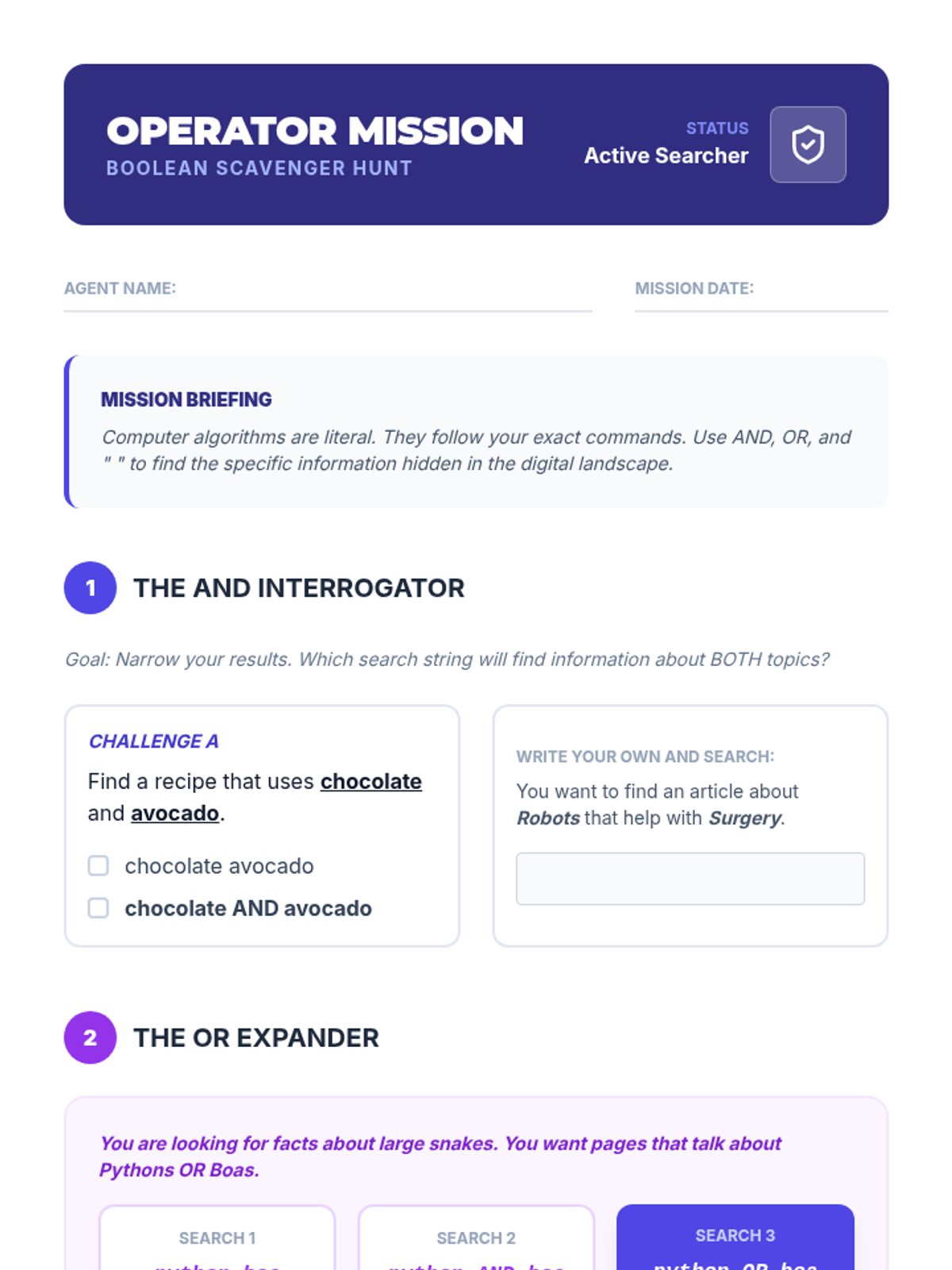
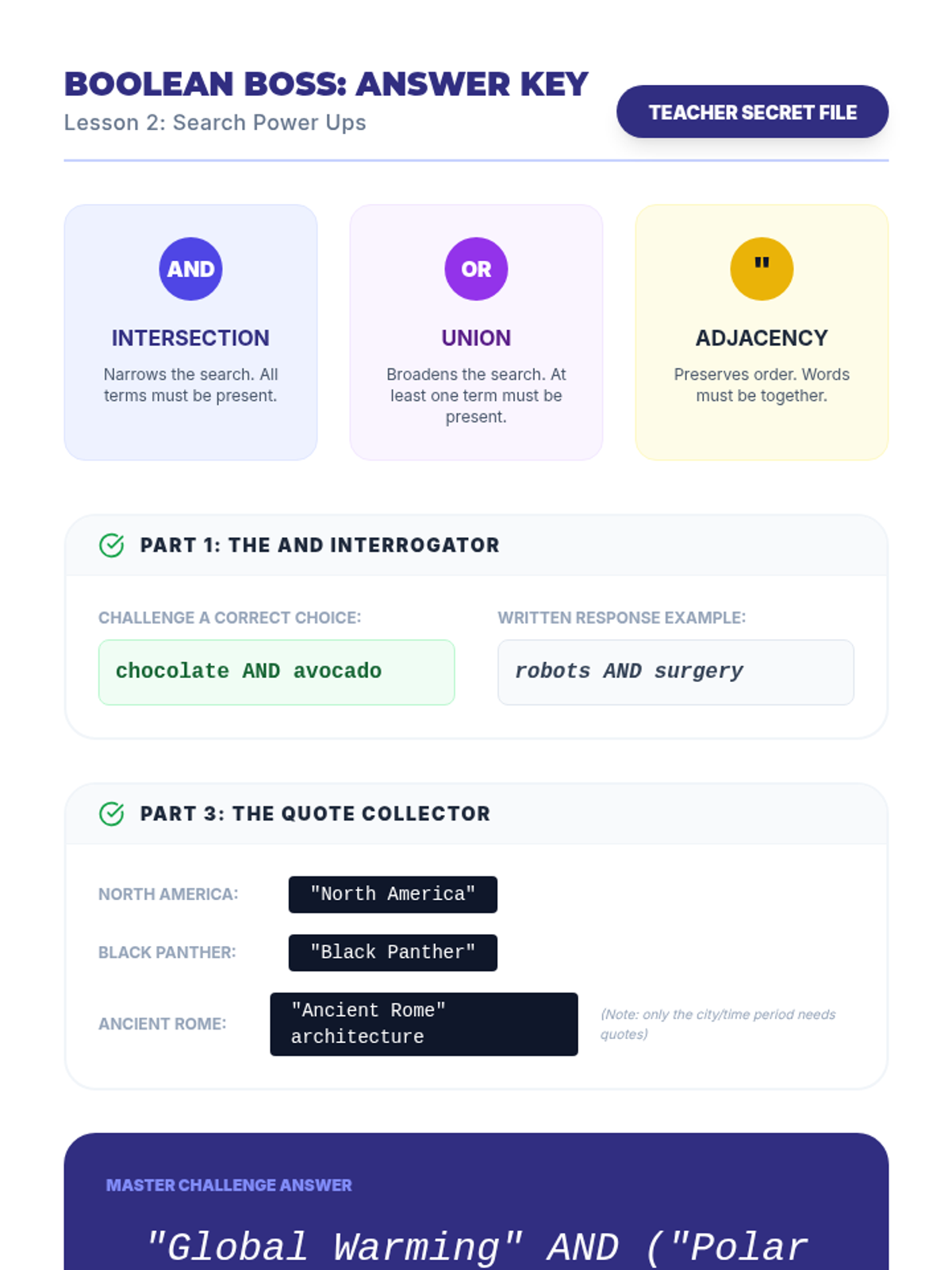
Learners use Boolean operators like AND, OR, and quotation marks to narrow or broaden search results in a digital scavenger hunt.
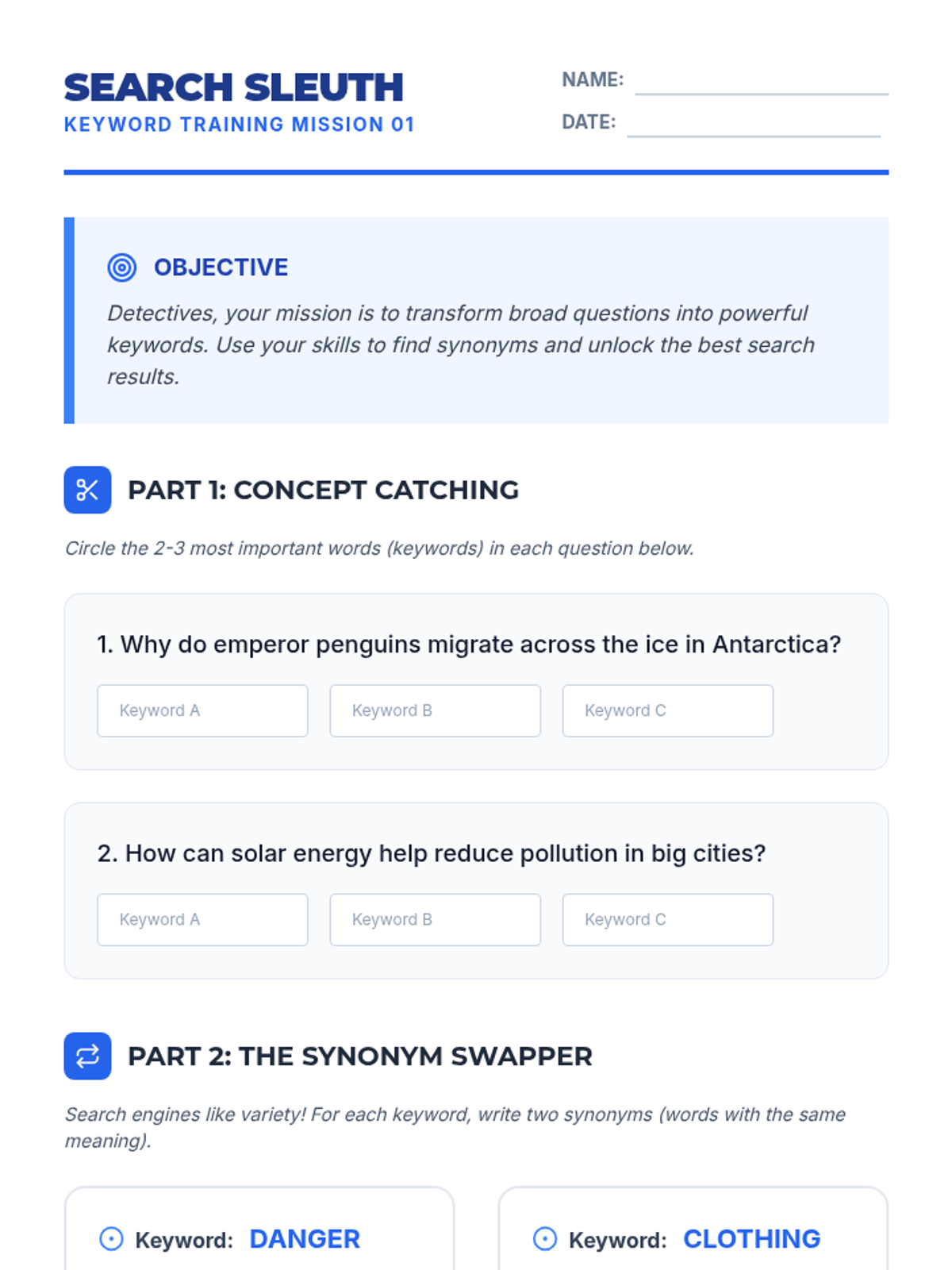
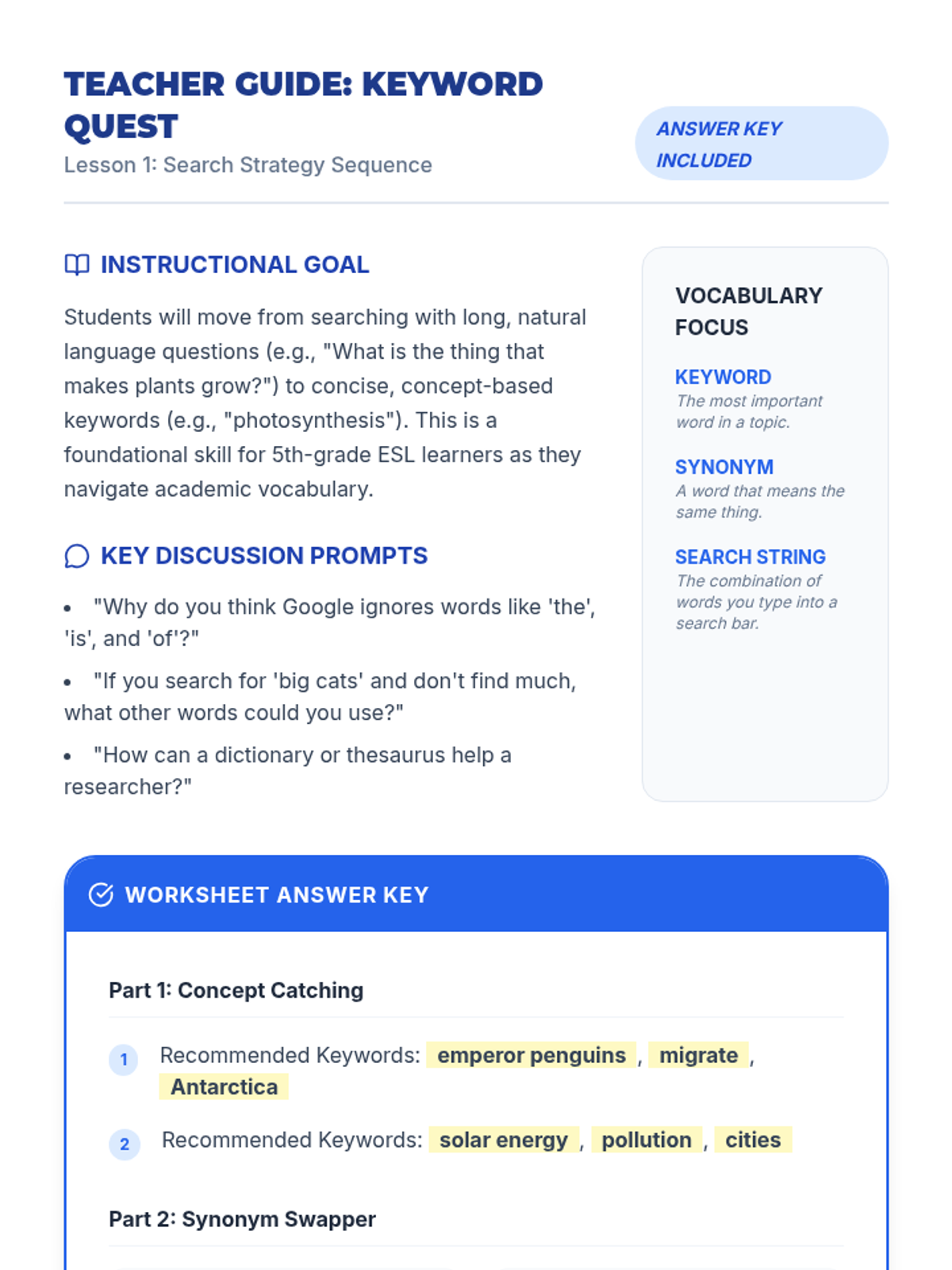
Students learn to break down research questions into core concepts and generate synonyms, transforming natural language into effective search strings.
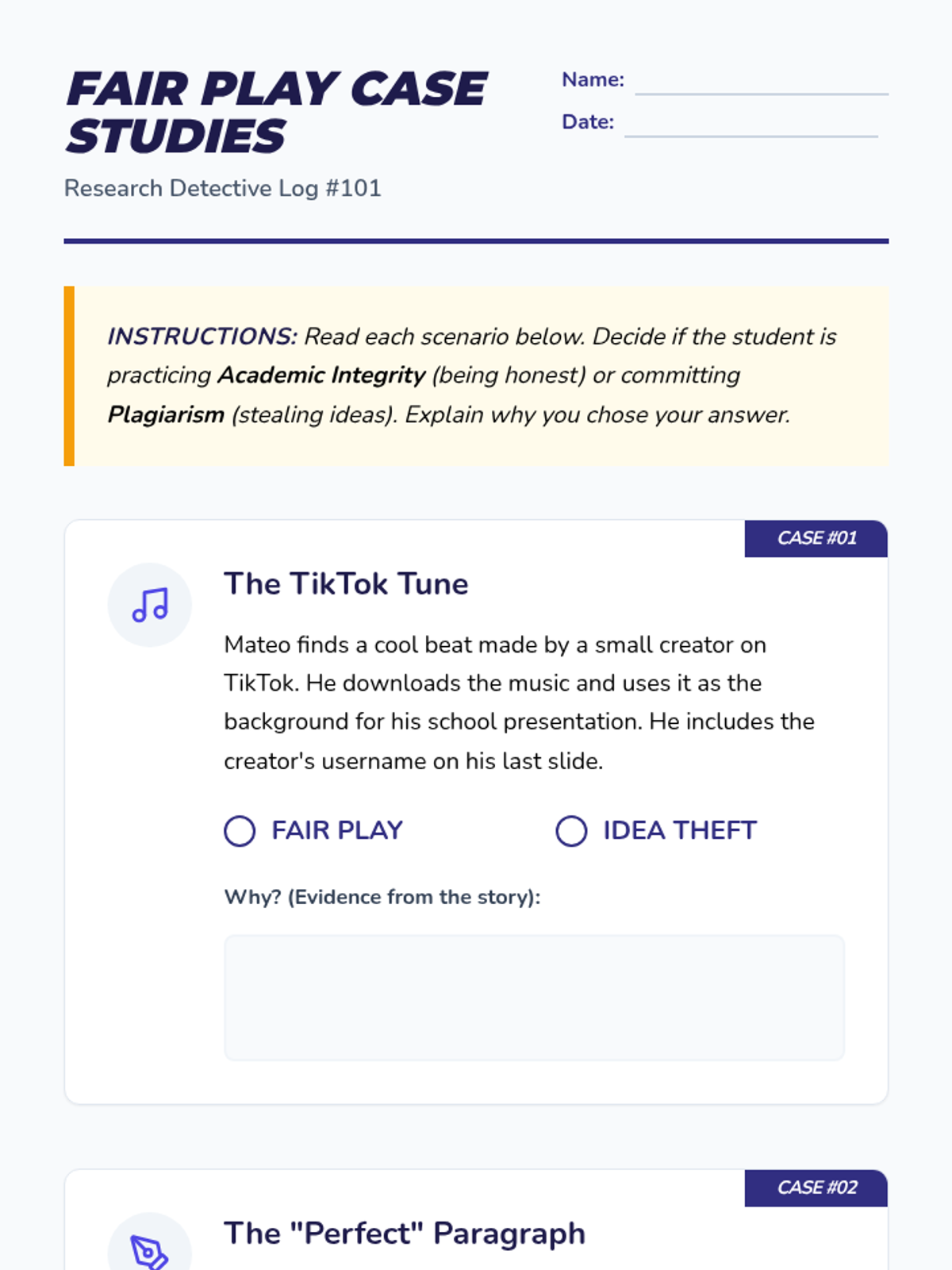
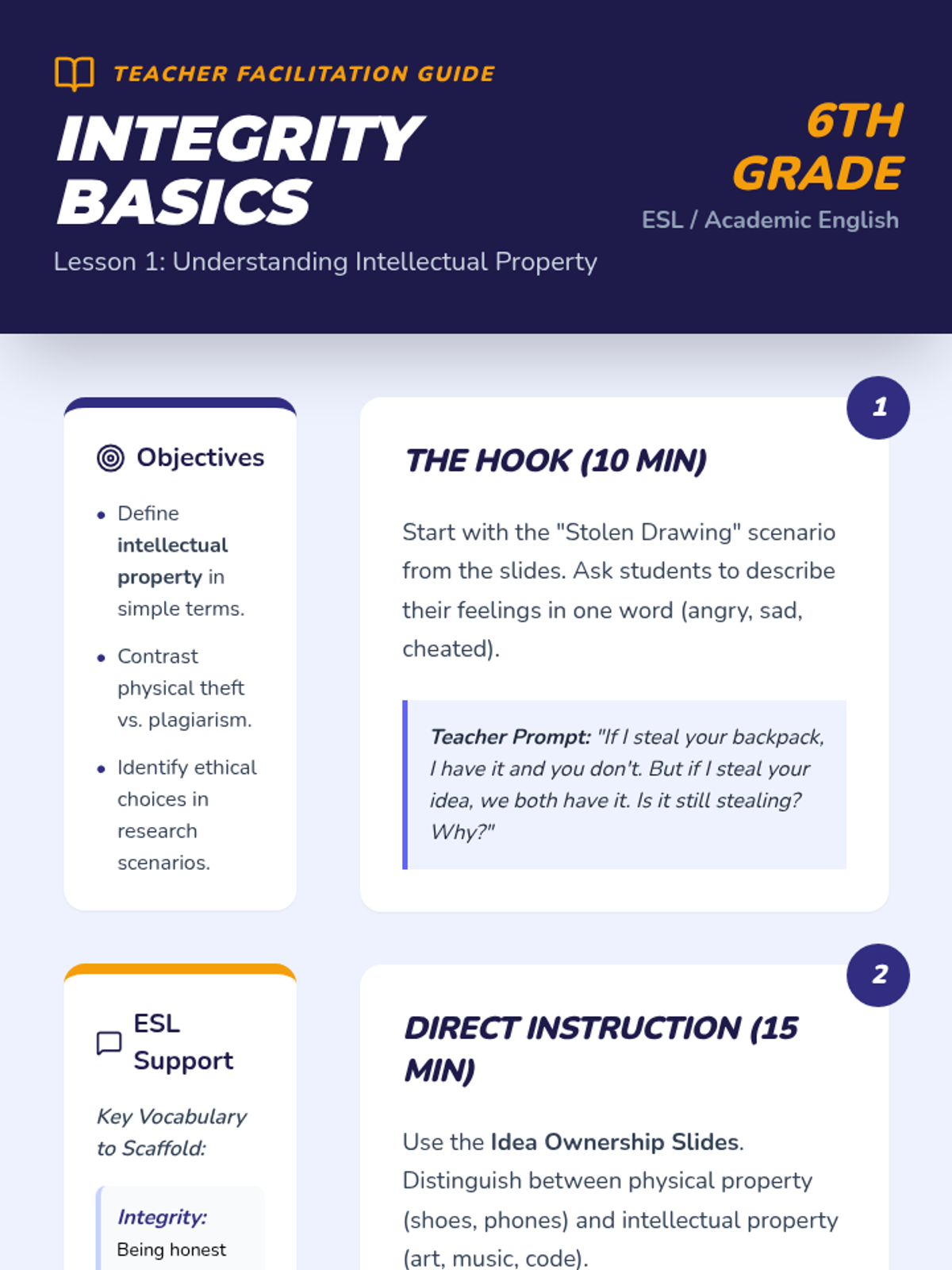
Students explore the concept of intellectual property and ownership of ideas. They discuss why creators deserve credit and how stealing ideas differs from stealing physical objects.
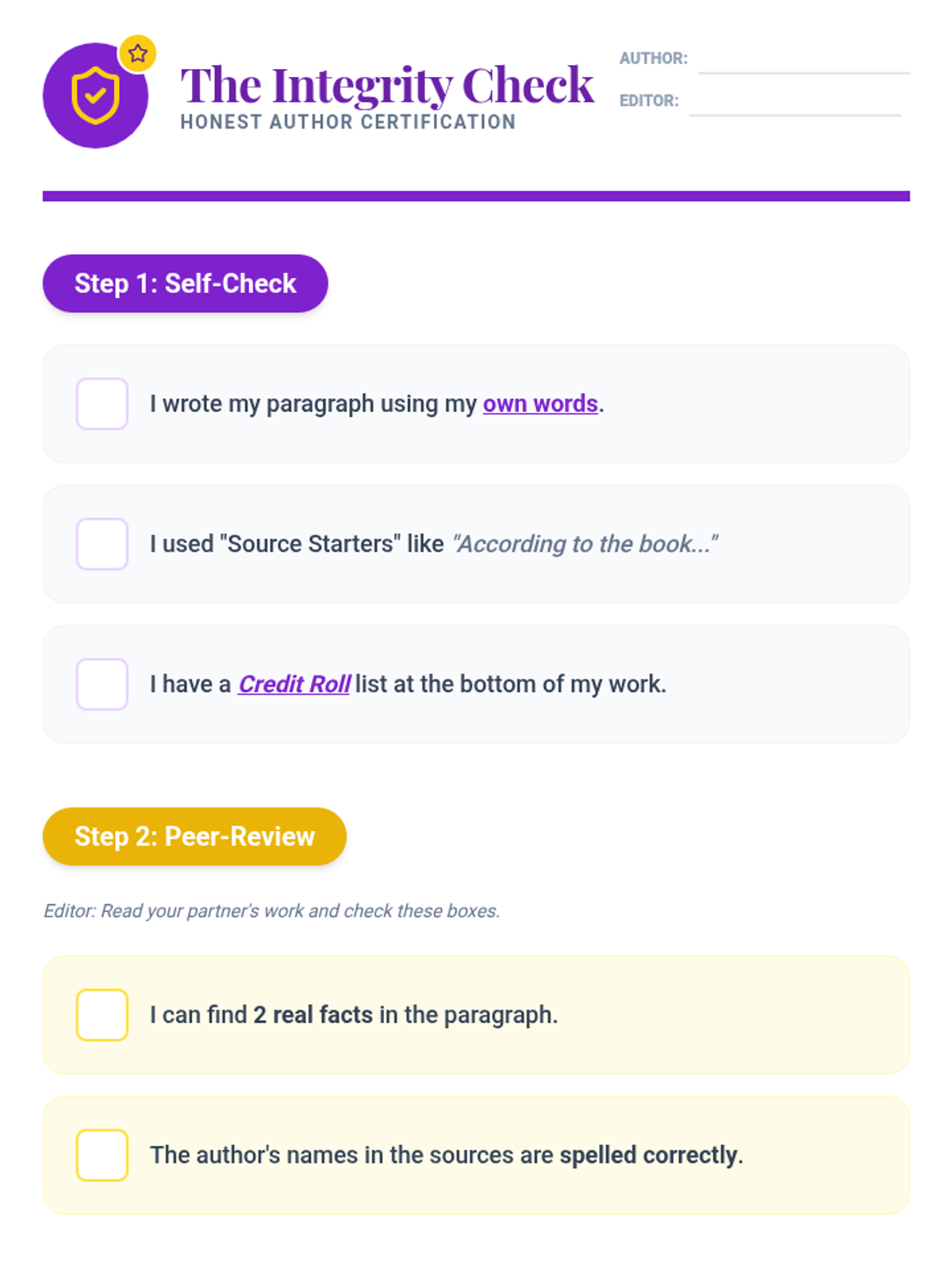
In the final phase, students use an 'Integrity Checklist' to peer-review their work for originality, accuracy, and proper sourcing.
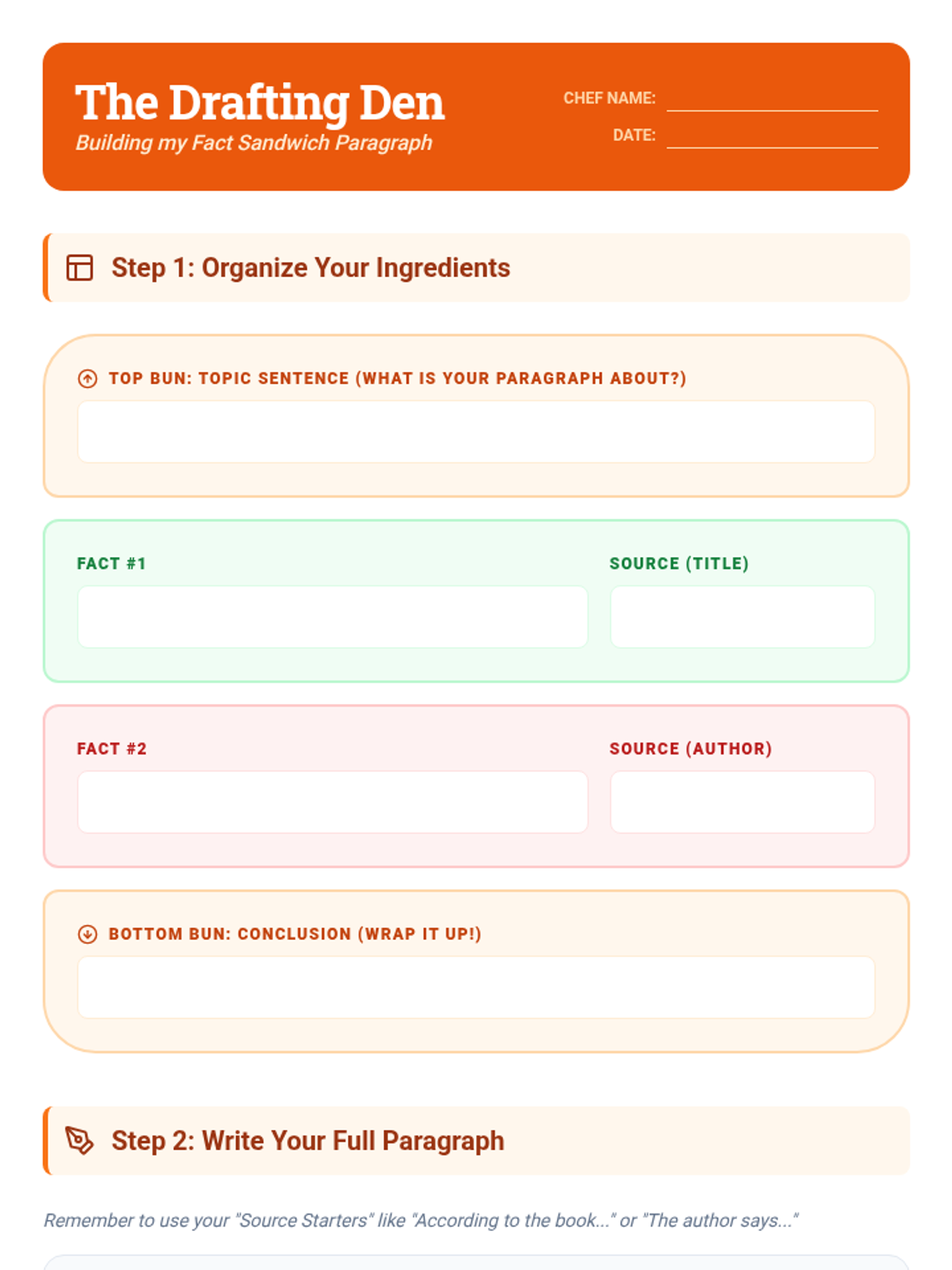
Students combine their research notes into a logical paragraph, using a 'Fact Sandwich' structure to organize their thoughts.
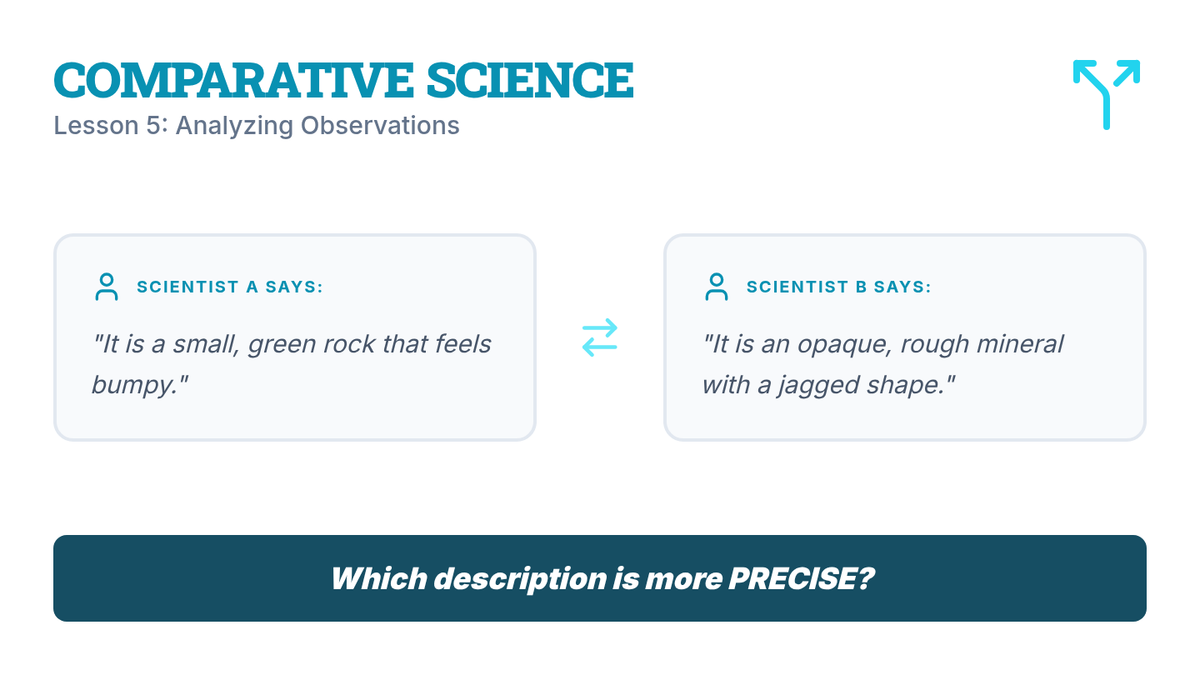
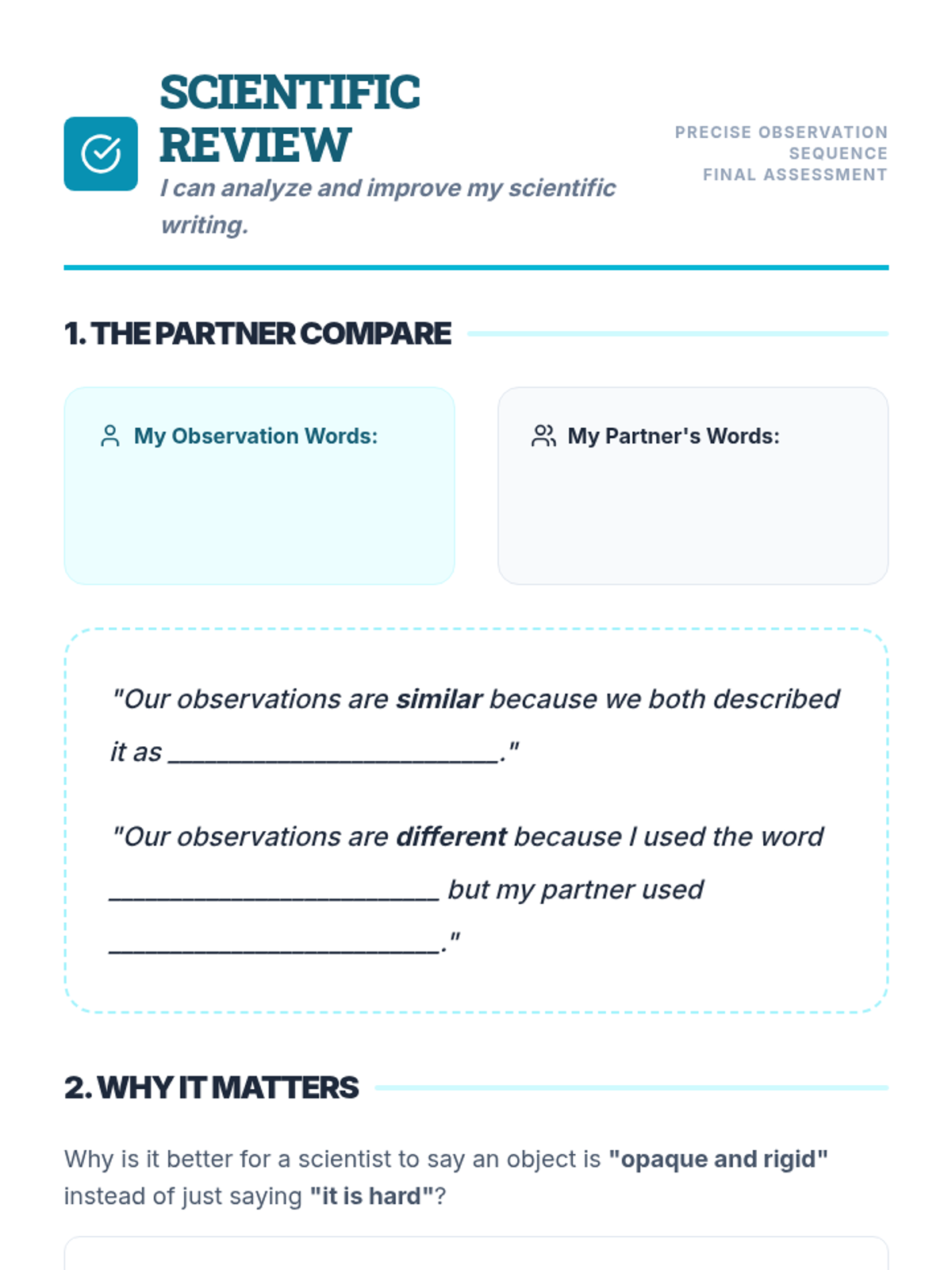
Students compare their observations with peers to discuss why scientists need standardized vocabulary. They use comparative language to analyze similarities and differences in their descriptions.
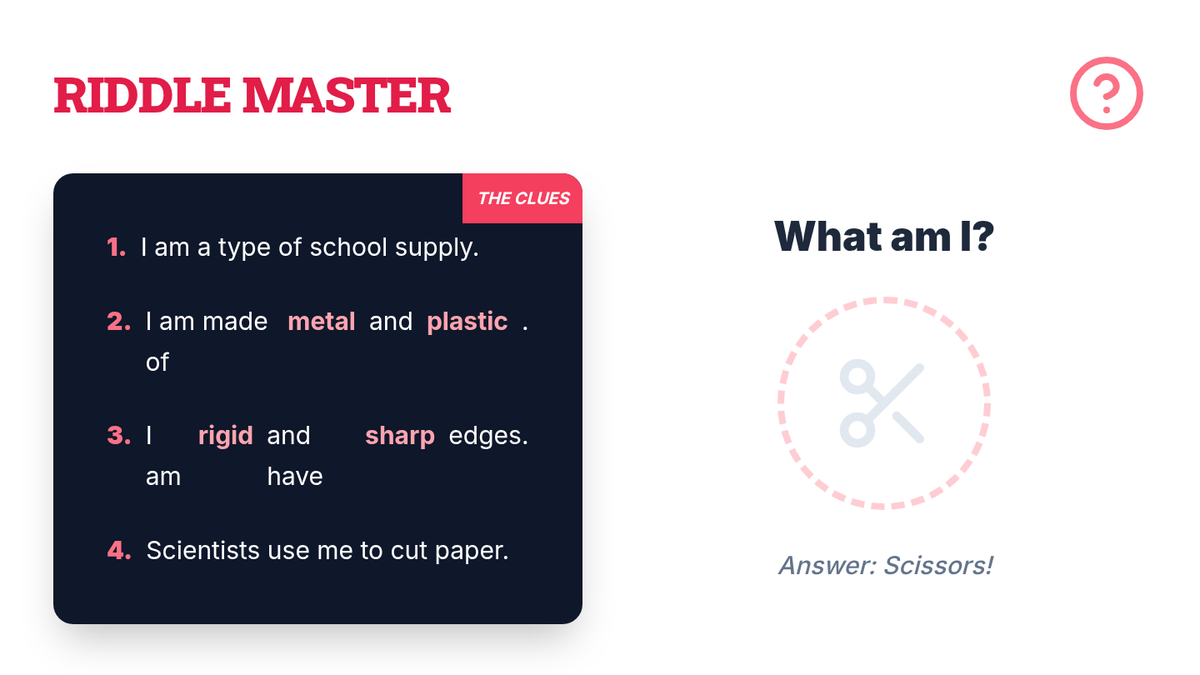
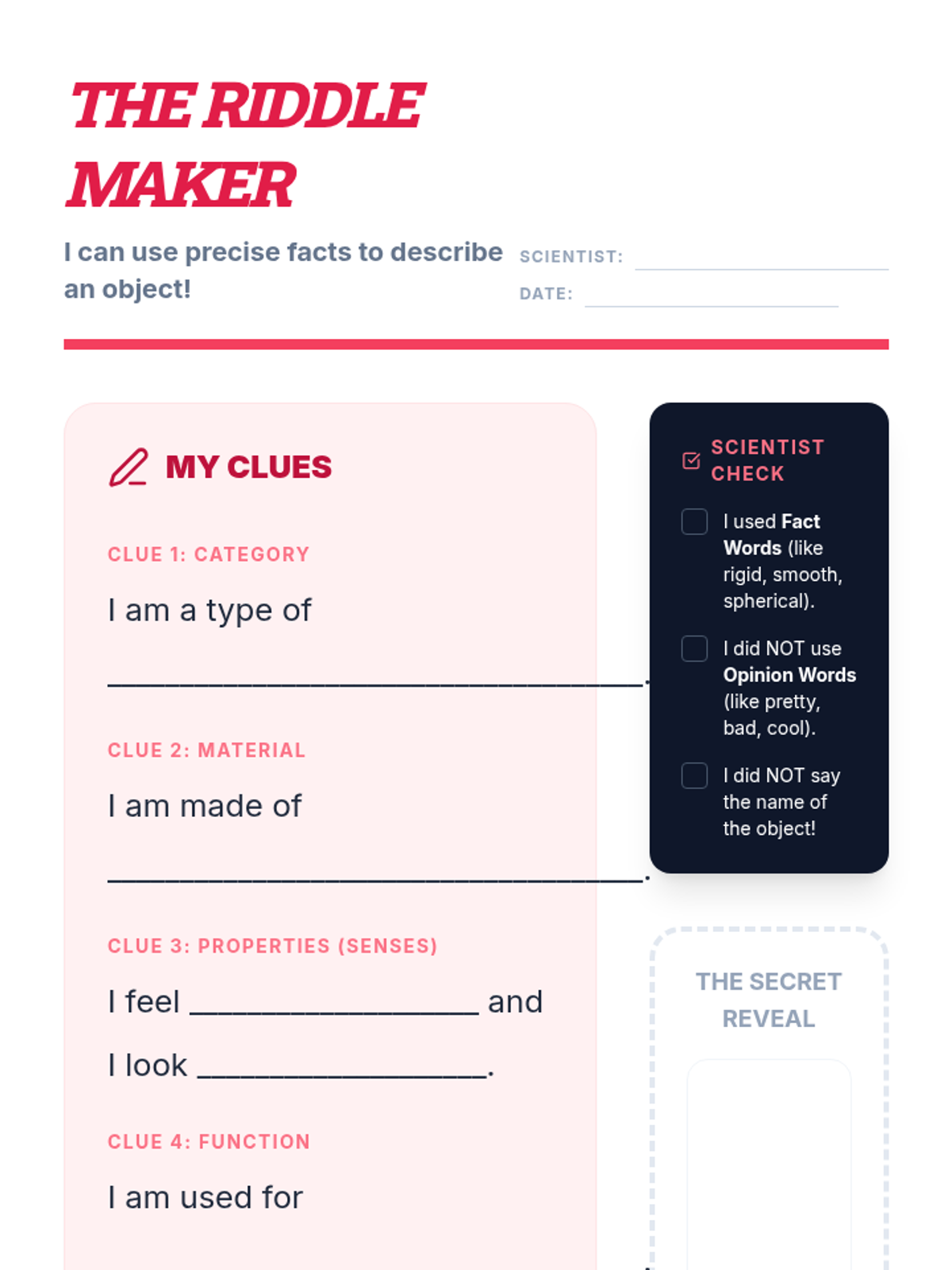
Students write descriptive riddles for animals or objects using specific vocabulary. This workshop-style lesson encourages precision and audience awareness in descriptive writing.
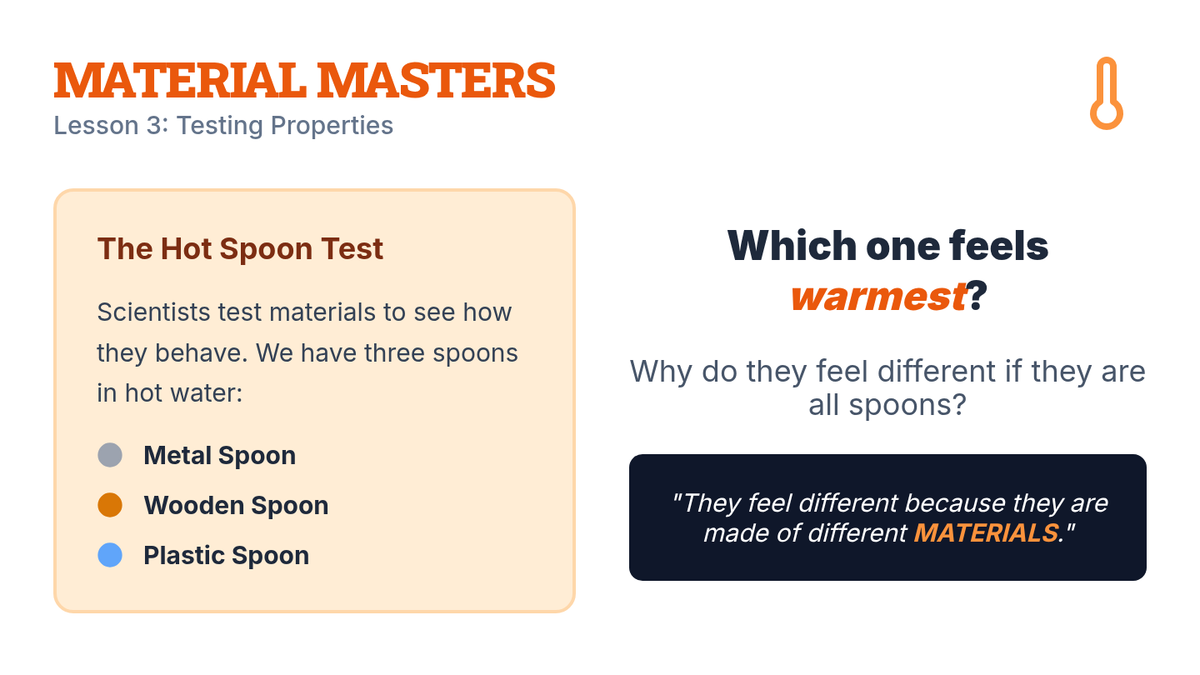
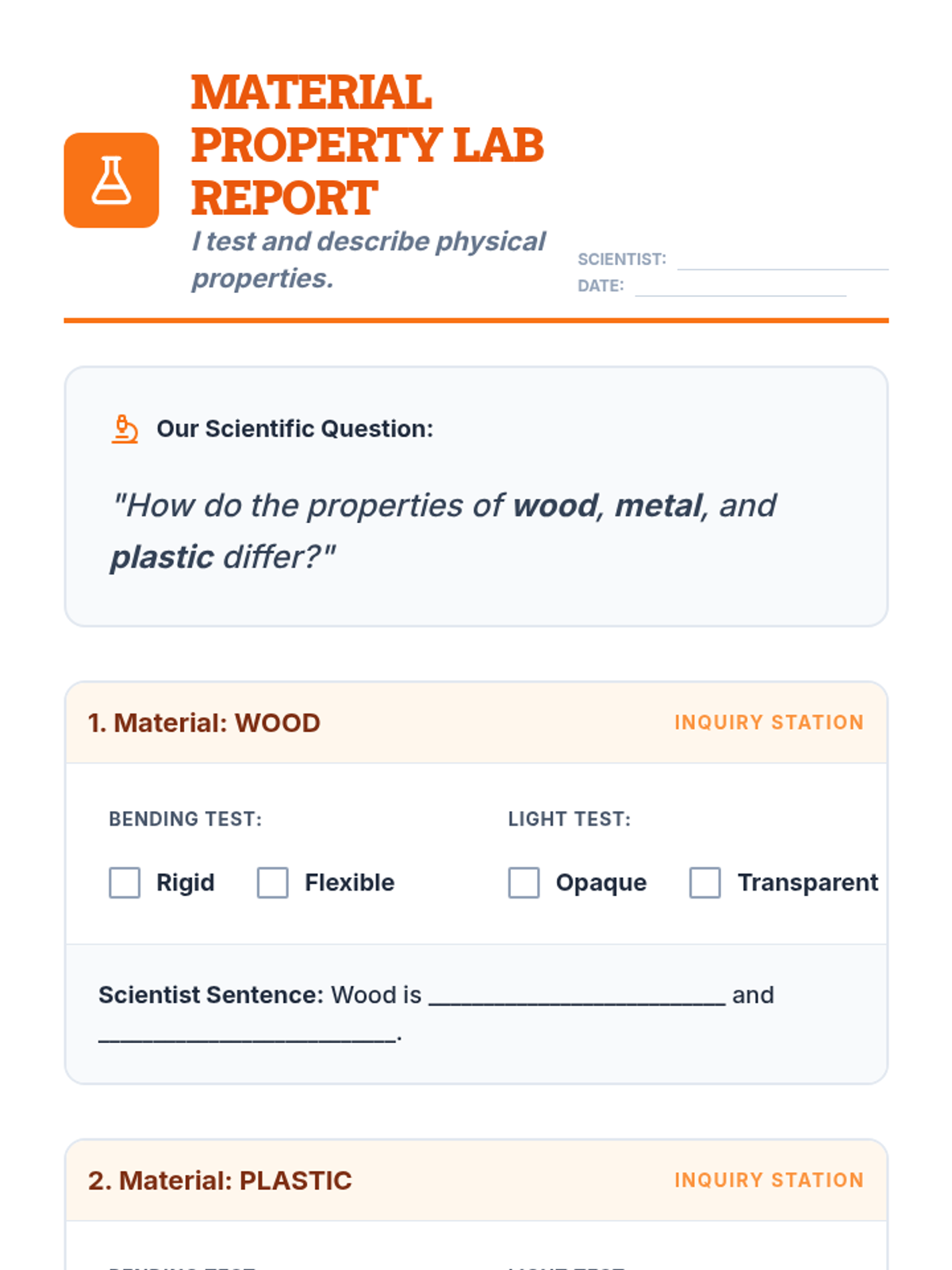
Students investigate wood, plastic, and metal to describe their properties using scientific terms like 'rigid' and 'opaque'. They record observations in a lab report to link material names with physical characteristics.
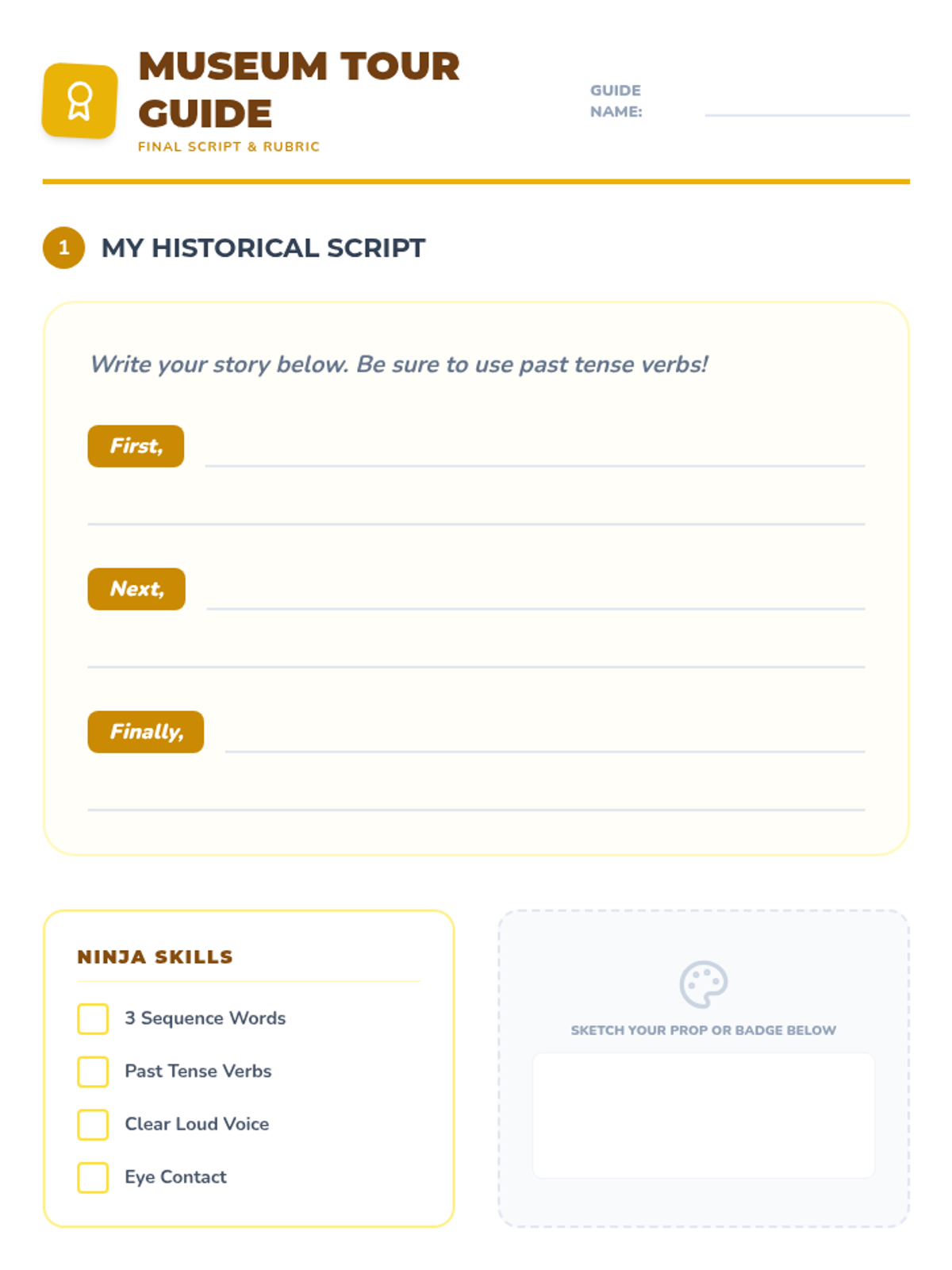
Students select a historical figure or event and present a short narrative using the sequence and temporal language practiced.
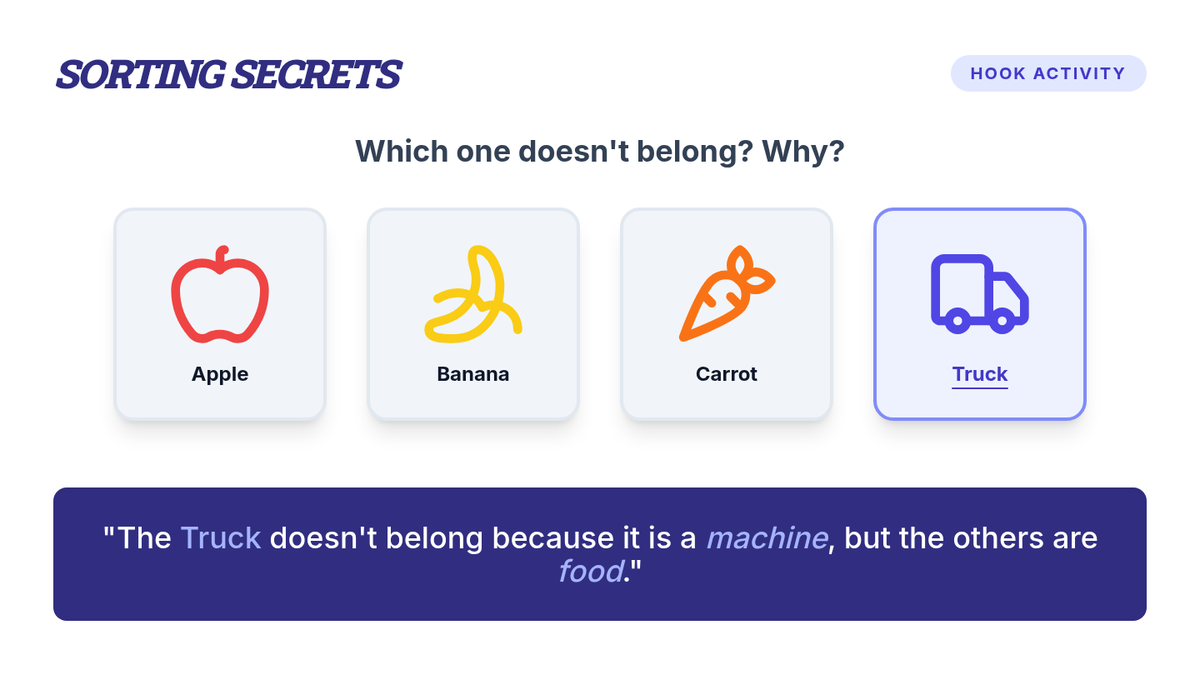
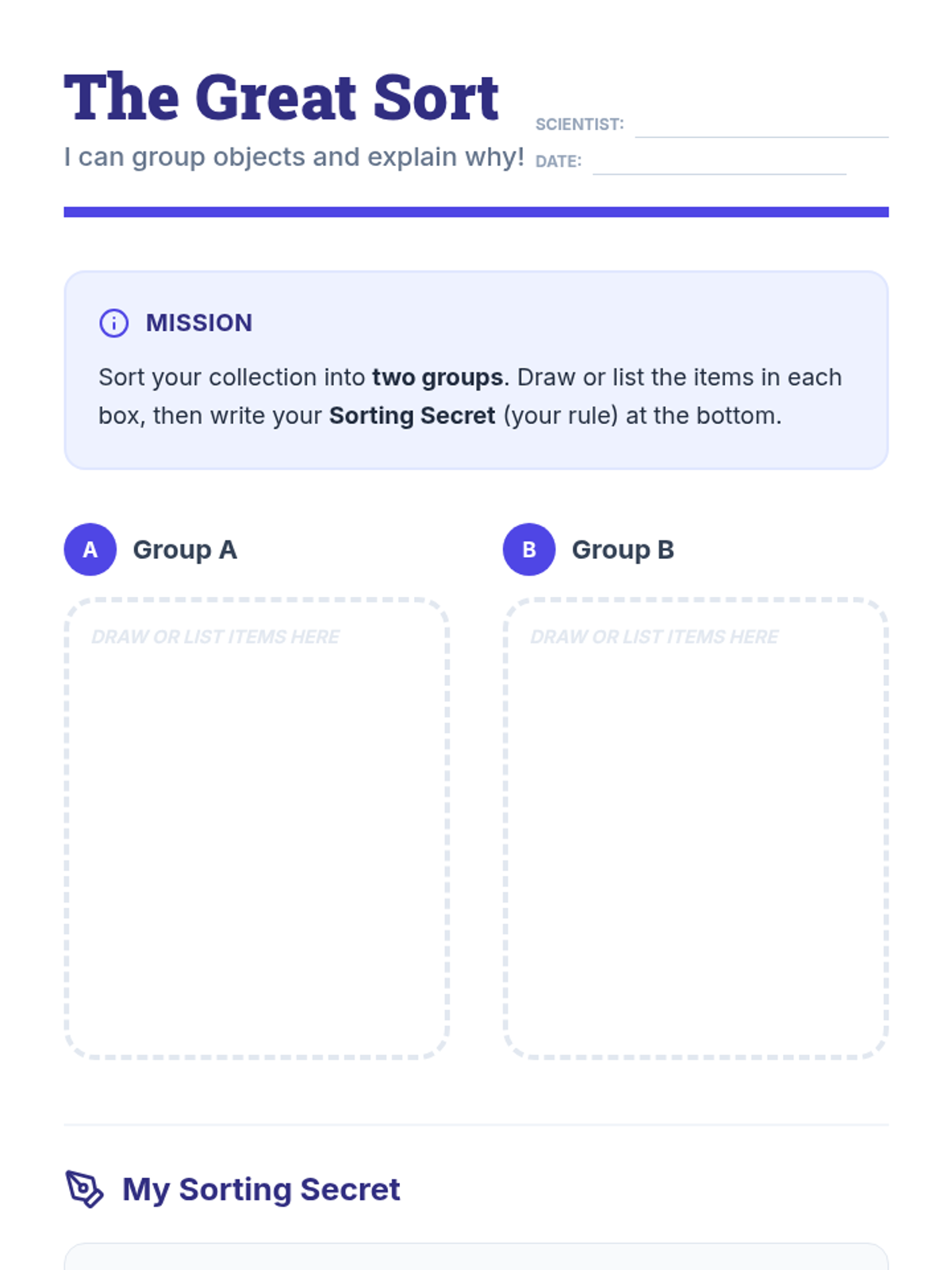
Learners sort collections of objects based on shared attributes and explain their sorting rules using justifying sentences. They practice using category labels to develop cognitive grouping and linguistic justification skills.
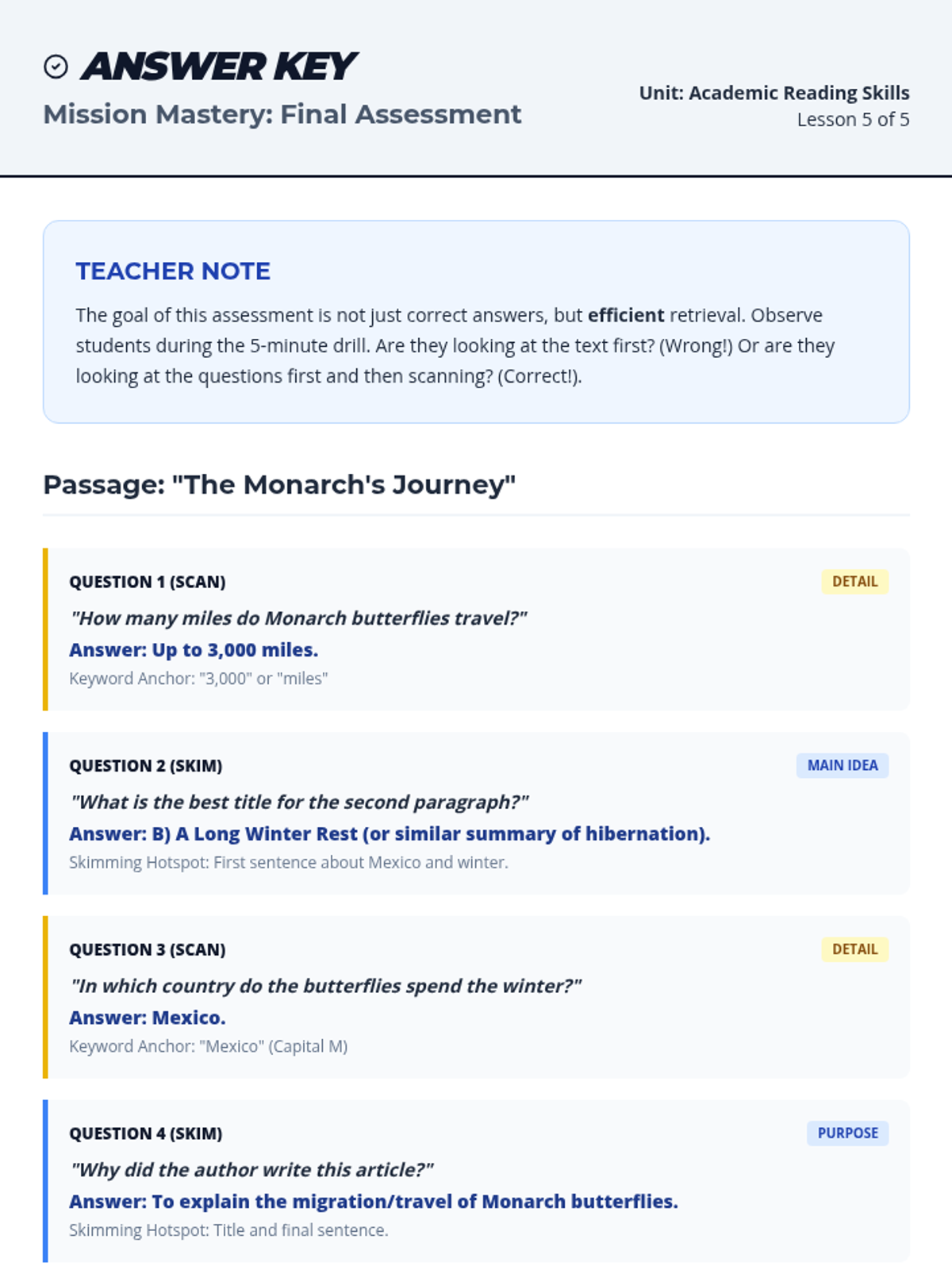
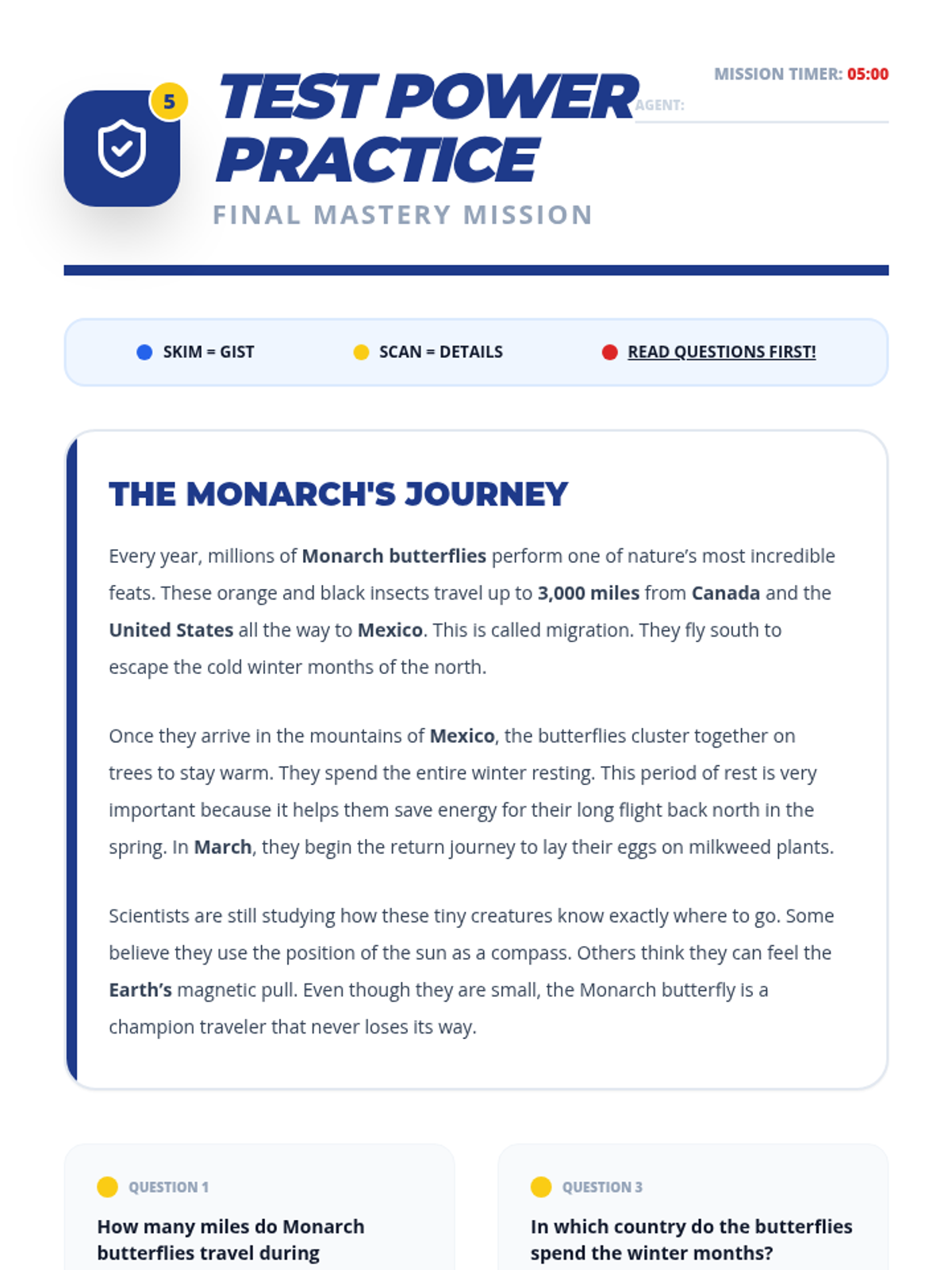
In the final lesson, students apply their skimming and scanning skills to a sample standardized test passage and reflect on their growth in reading speed and comprehension efficiency.
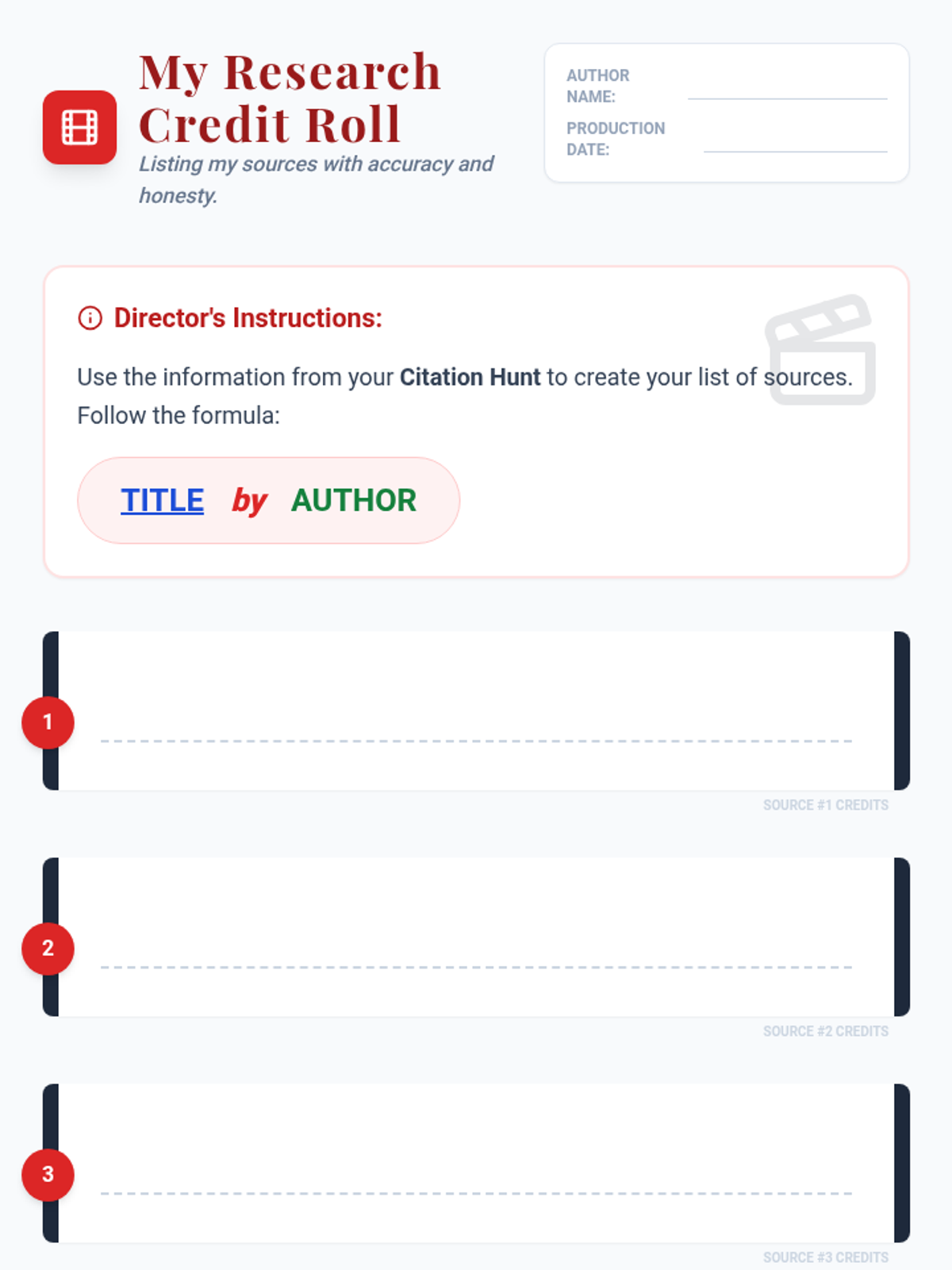
Students practice the mechanics of creating a simplified bibliography using the 'Title by Author' format to credit their sources.
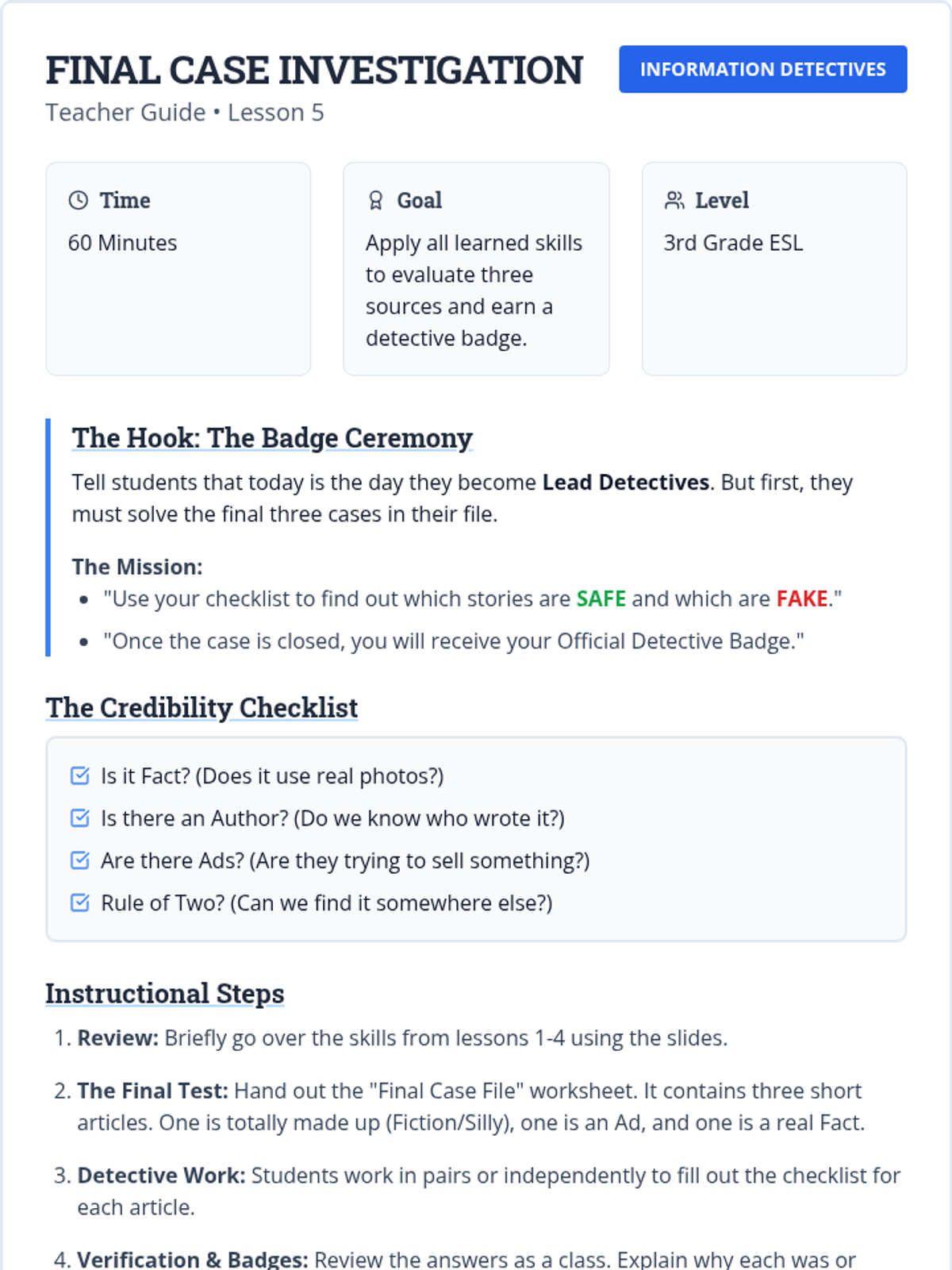
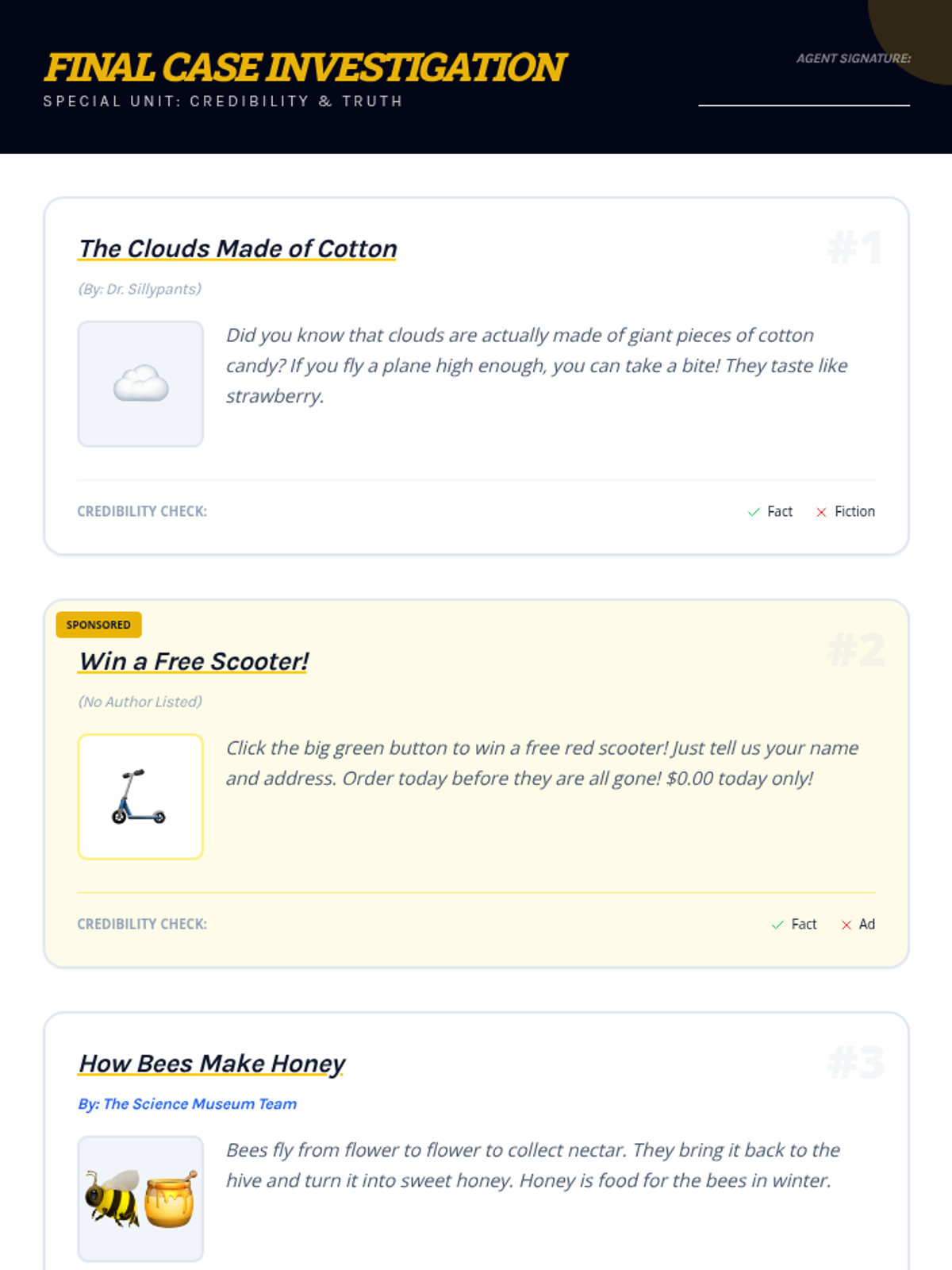
Students use a credibility checklist to investigate three suspect articles and determine which are true, earning their detective badges.