Learners sort collections of objects based on shared attributes and explain their sorting rules using justifying sentences. They practice using category labels to develop cognitive grouping and linguistic justification skills.
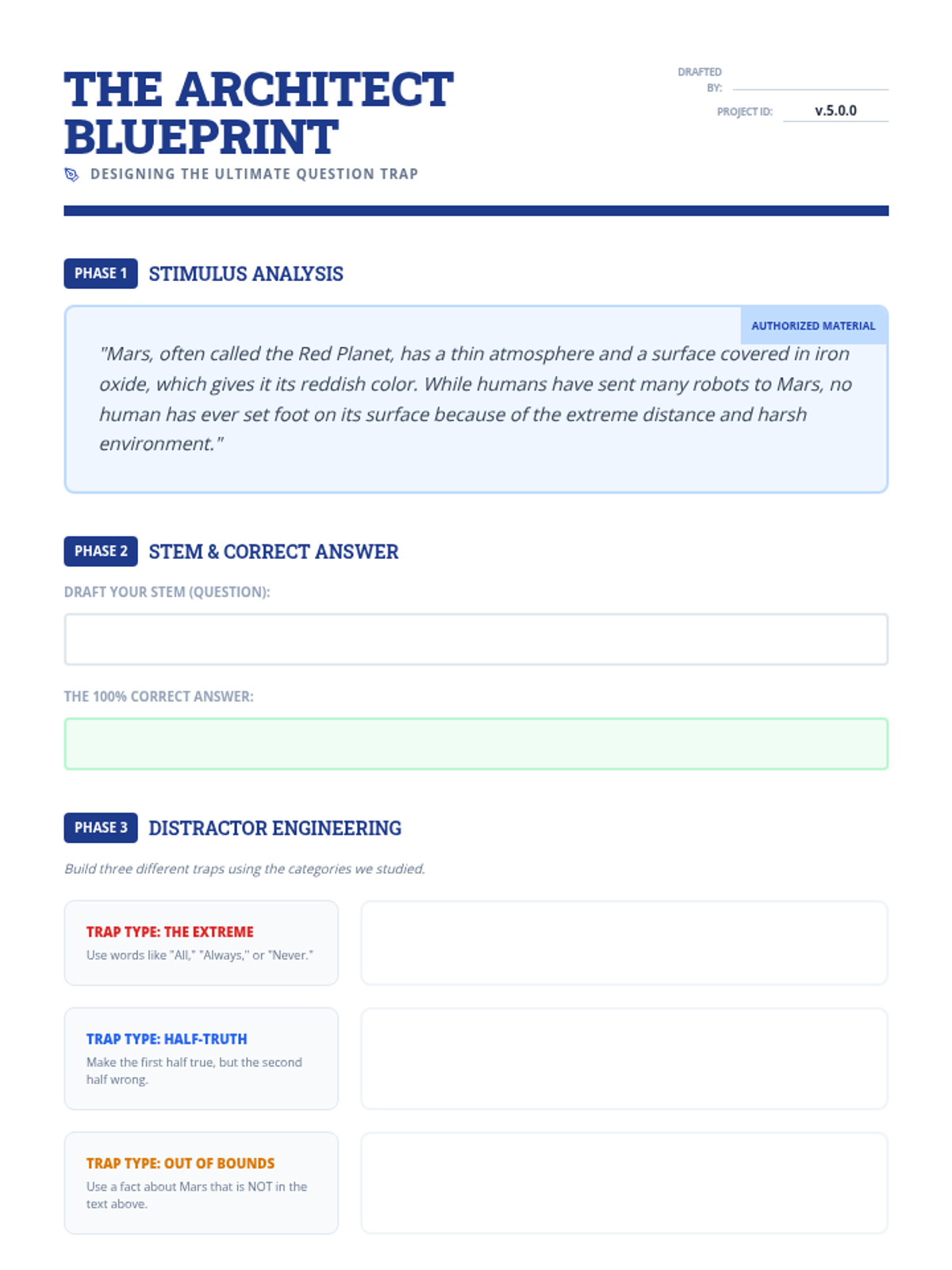
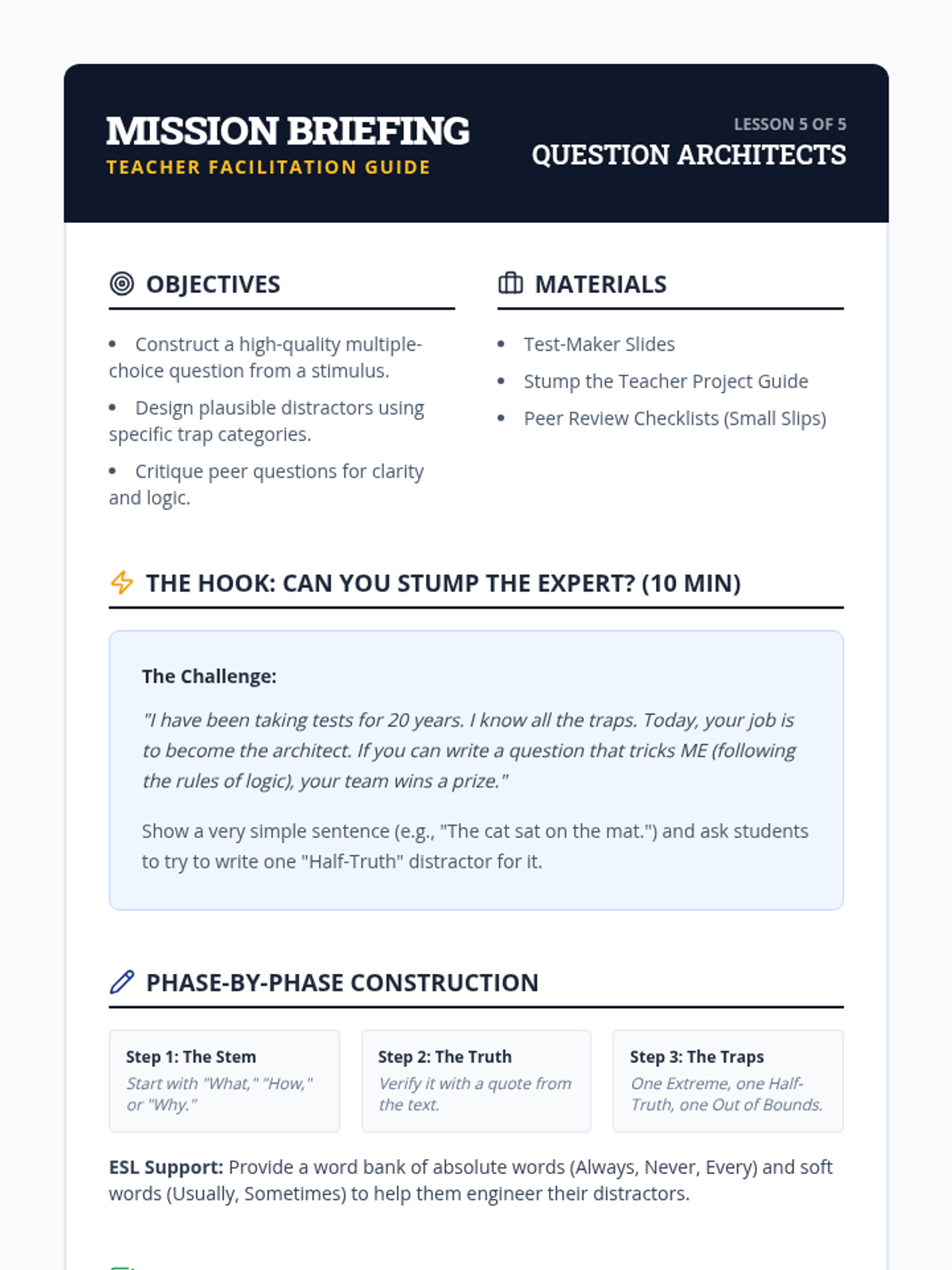
Students switch roles and become the test-makers. They write their own multiple-choice questions based on a shared text, intentionally creating plausible distractors.
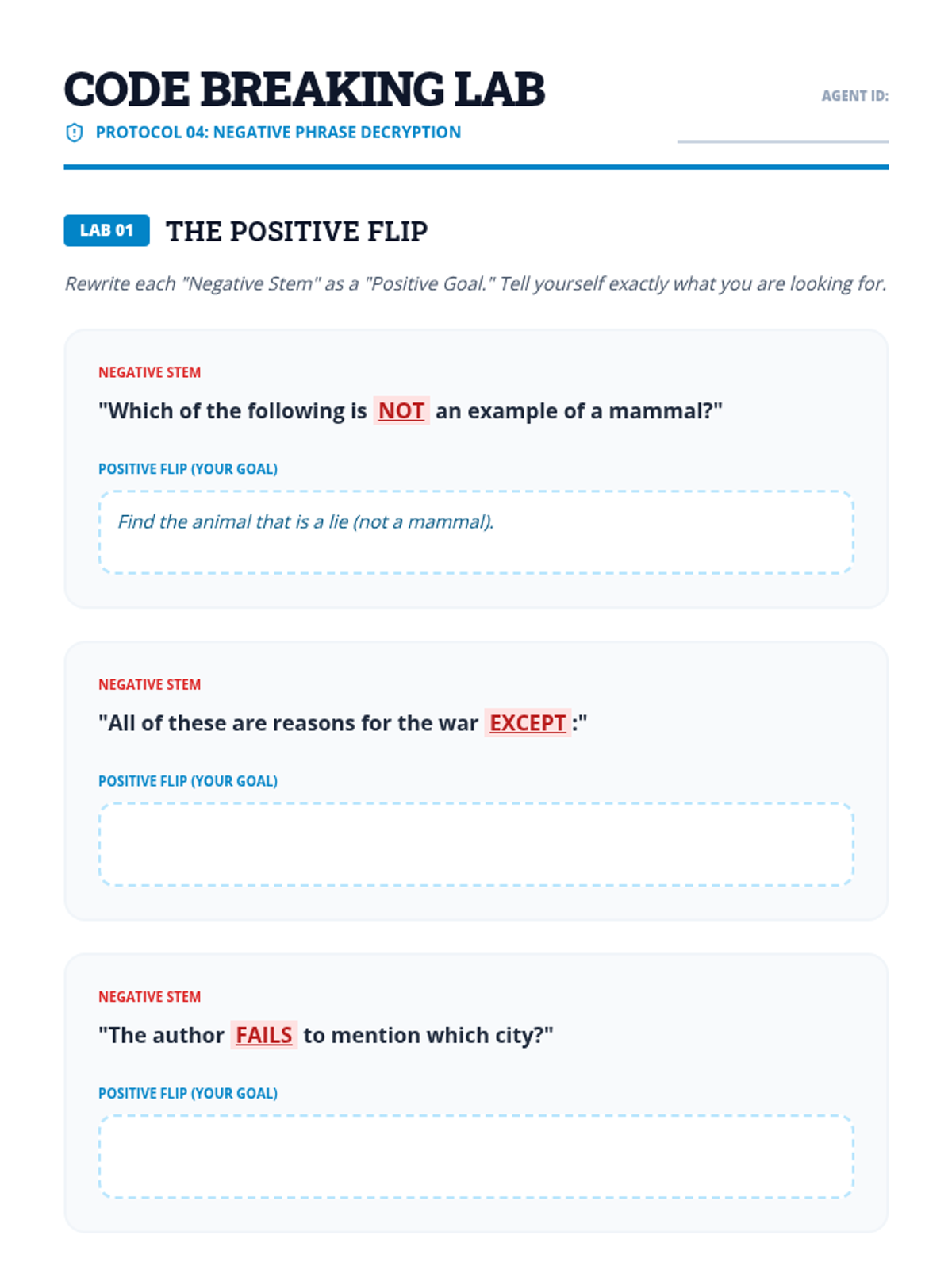
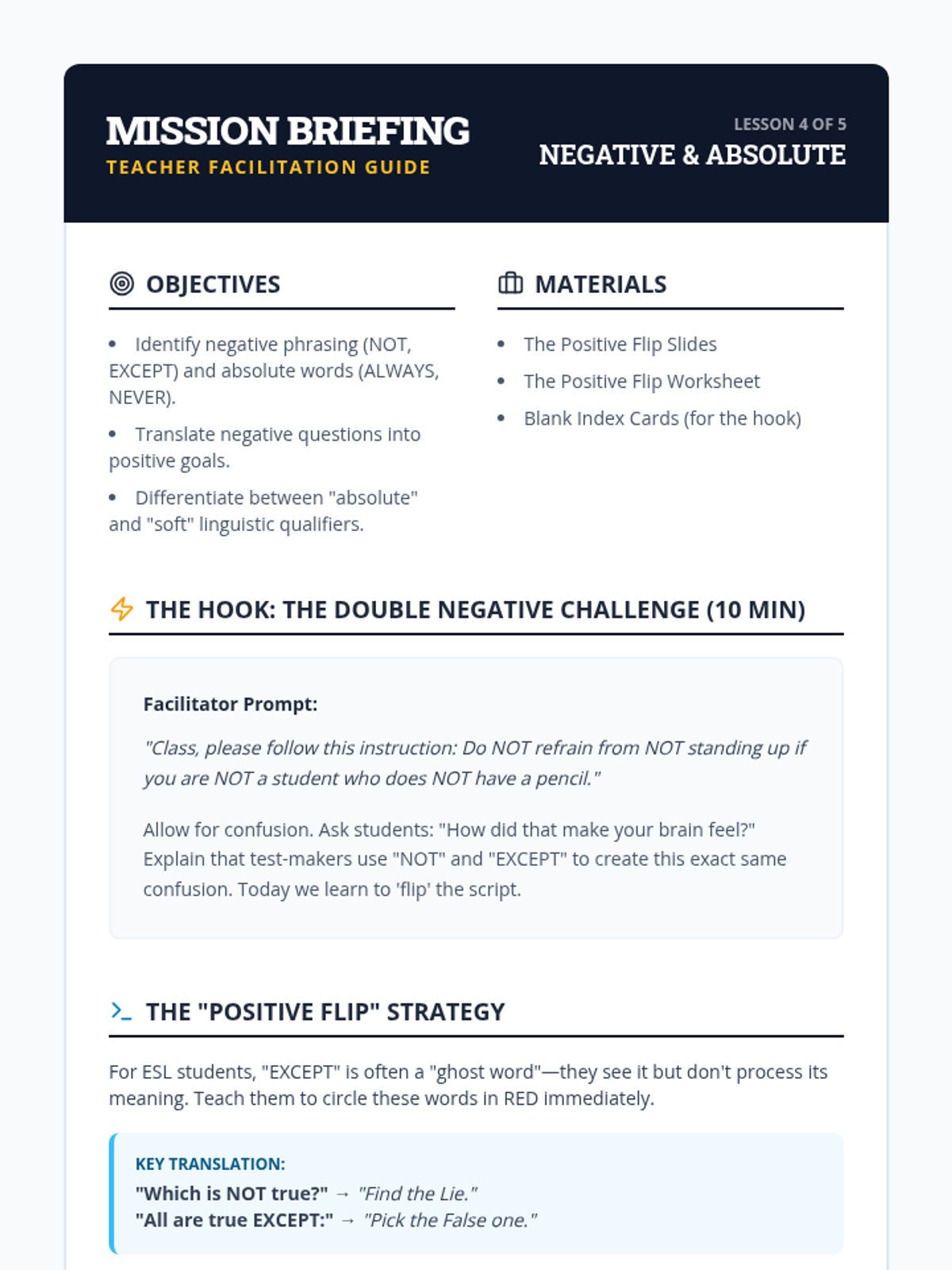
Students specifically target questions using words like 'NOT,' 'EXCEPT,' 'ALWAYS,' or 'NEVER.' They rewrite these questions in positive terms to clarify meaning.
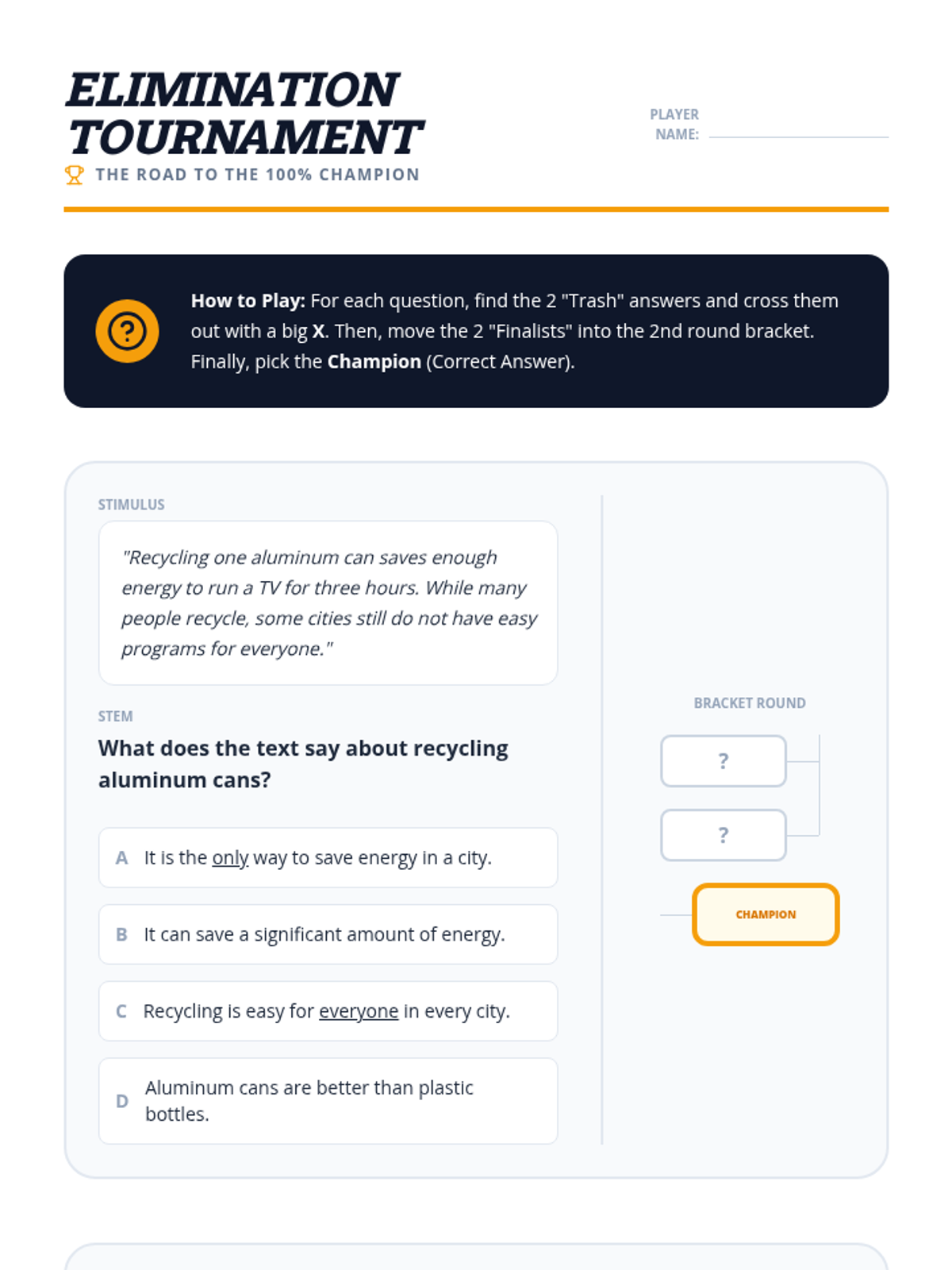
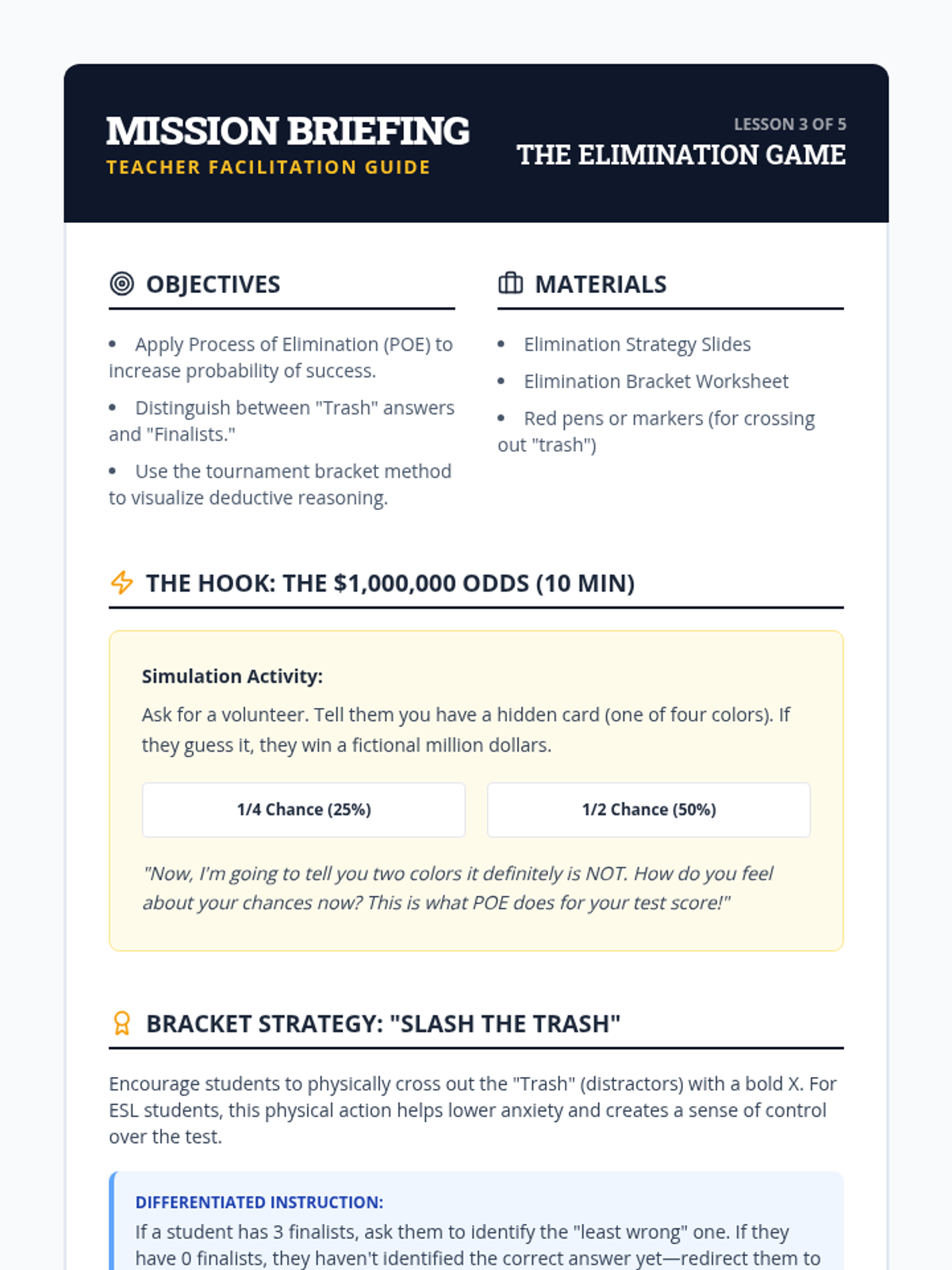
Students practice the physical and mental habit of crossing out clearly wrong answers to increase their probability of success. The lesson focuses on narrowing choices down to two options and using text evidence to make the final selection.
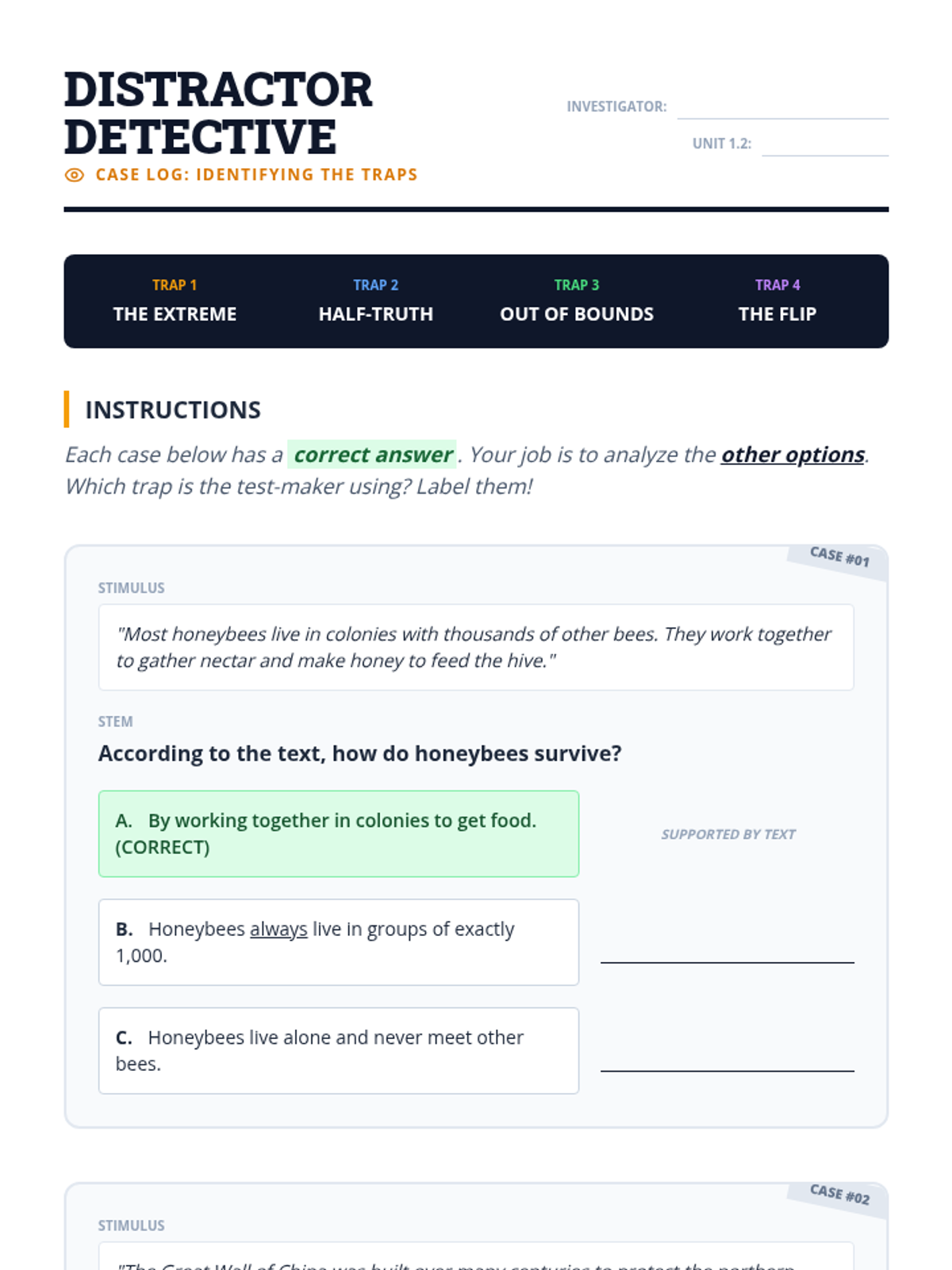
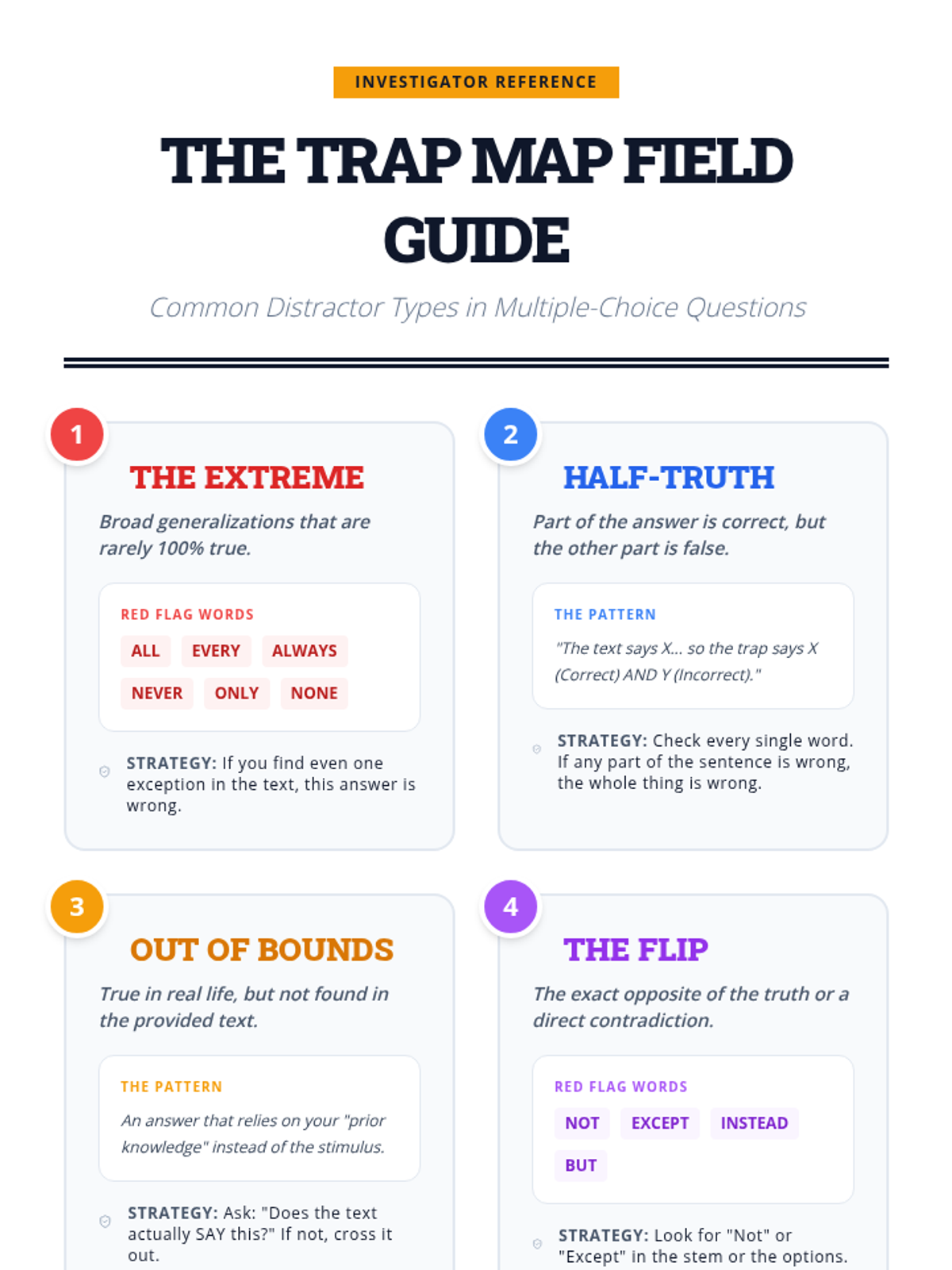
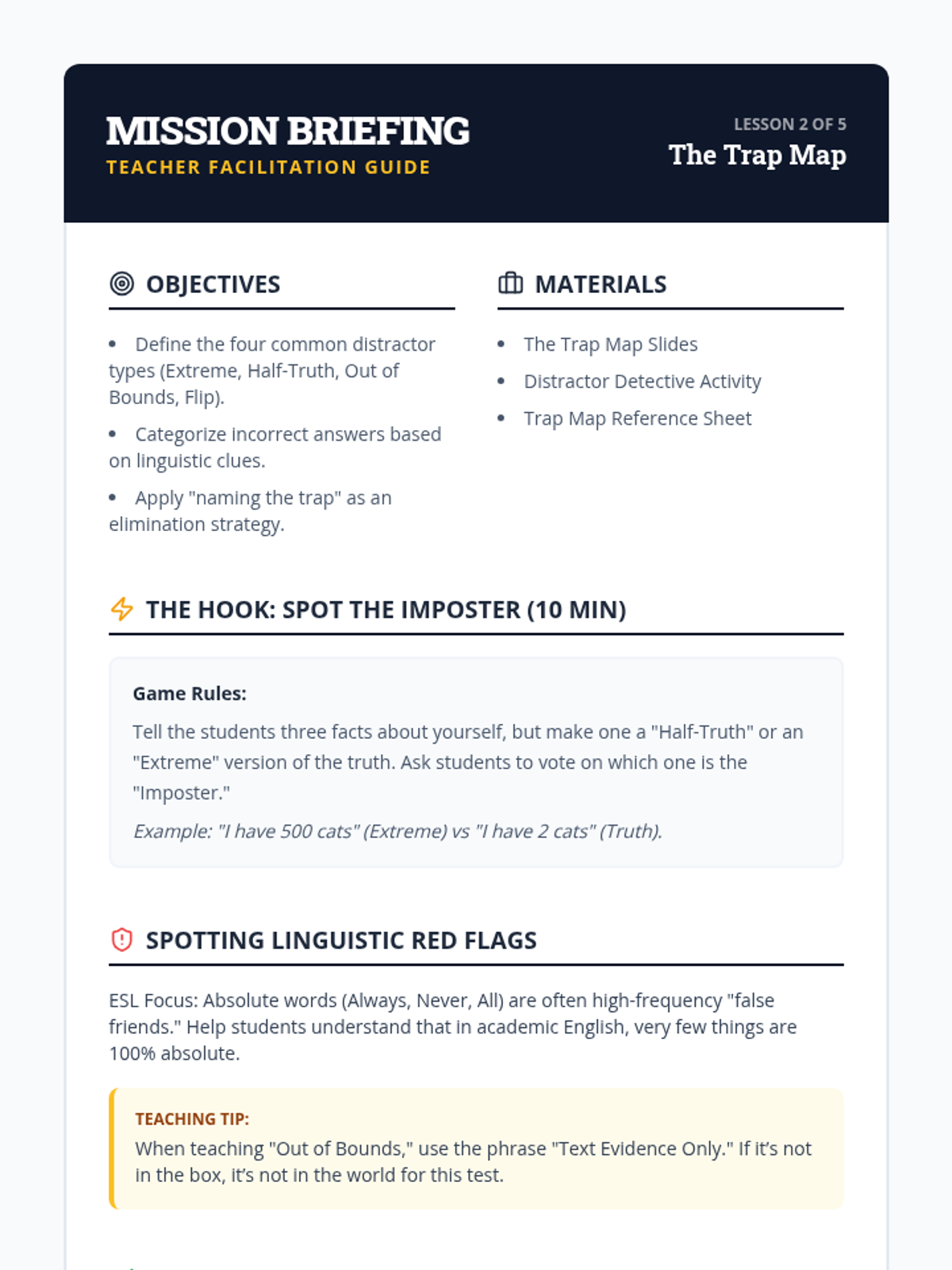
This lesson categorizes common types of wrong answers, such as 'too extreme,' 'partially true,' or 'irrelevant info.' Students label incorrect answers in sample questions with these categories.
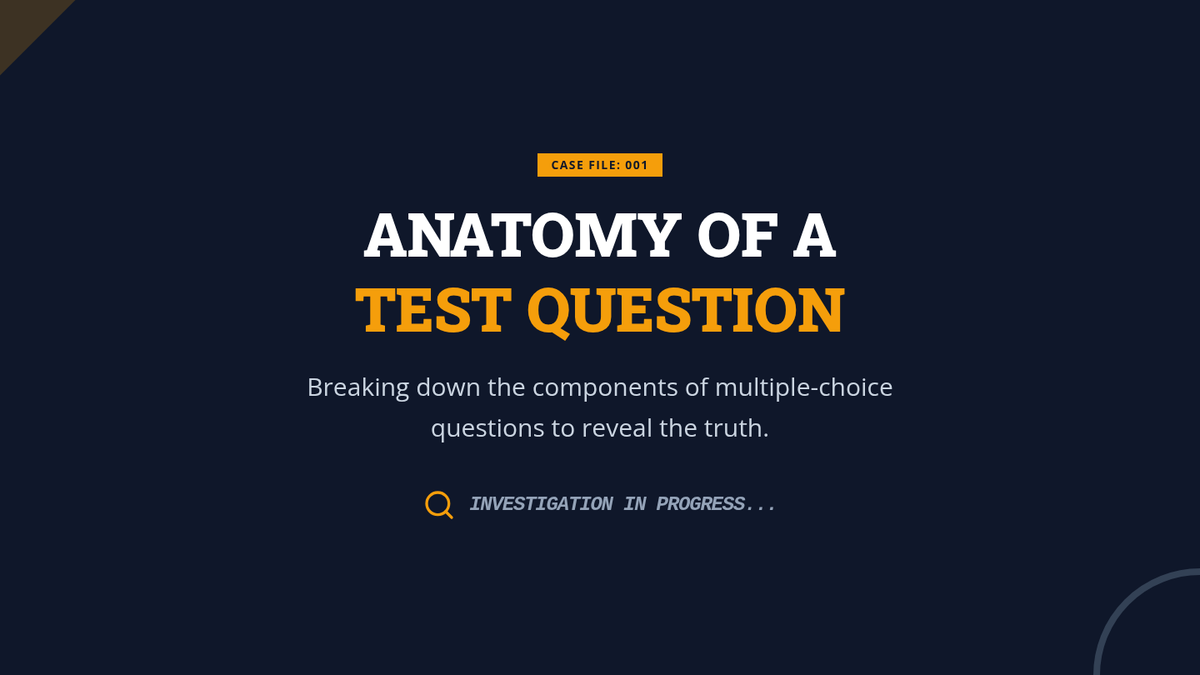
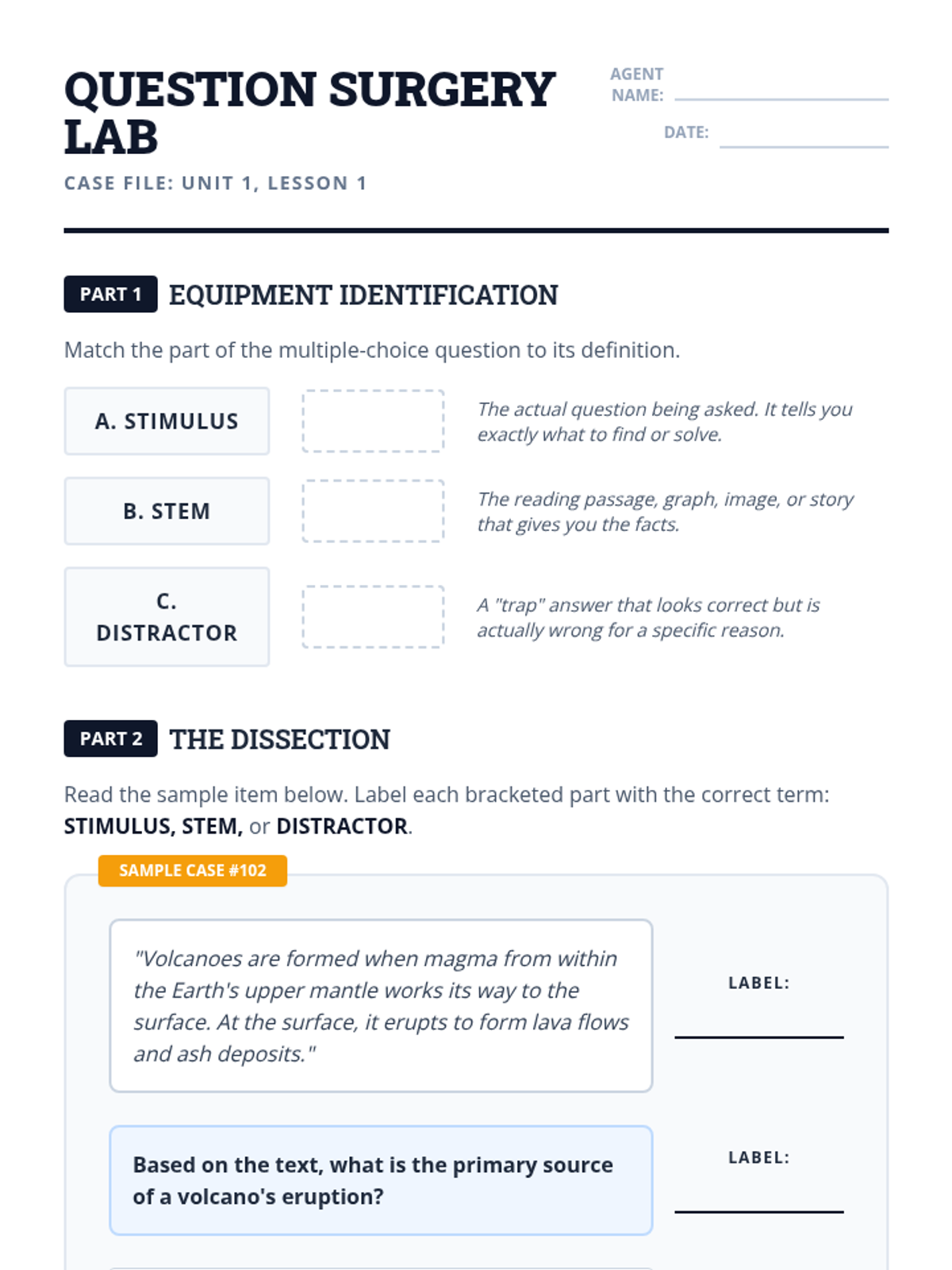
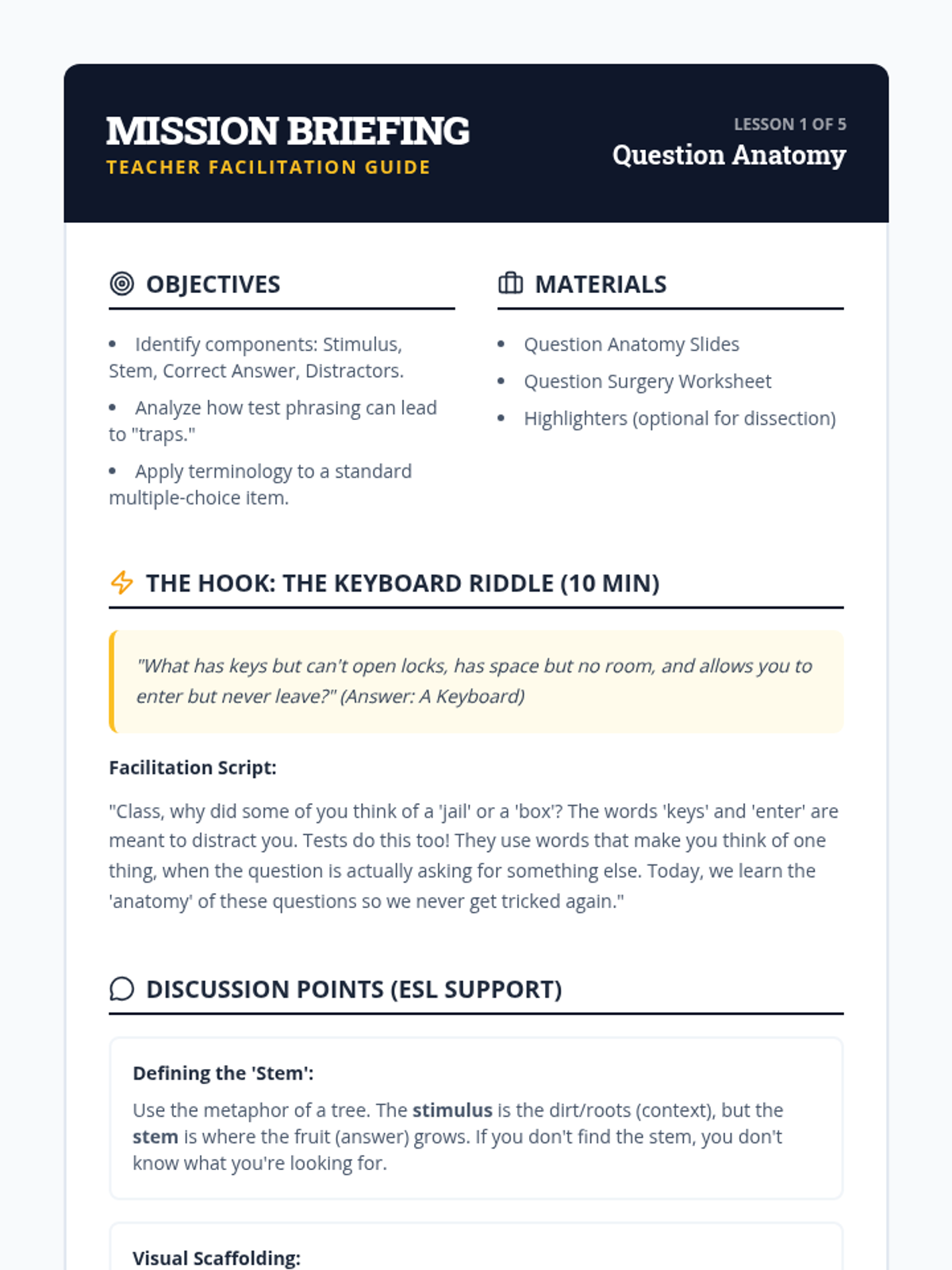
Students break down the components of a test item: the stimulus, the stem (question), the correct answer, and the distractors. They learn to identify what the stem is actually asking before looking at the options.
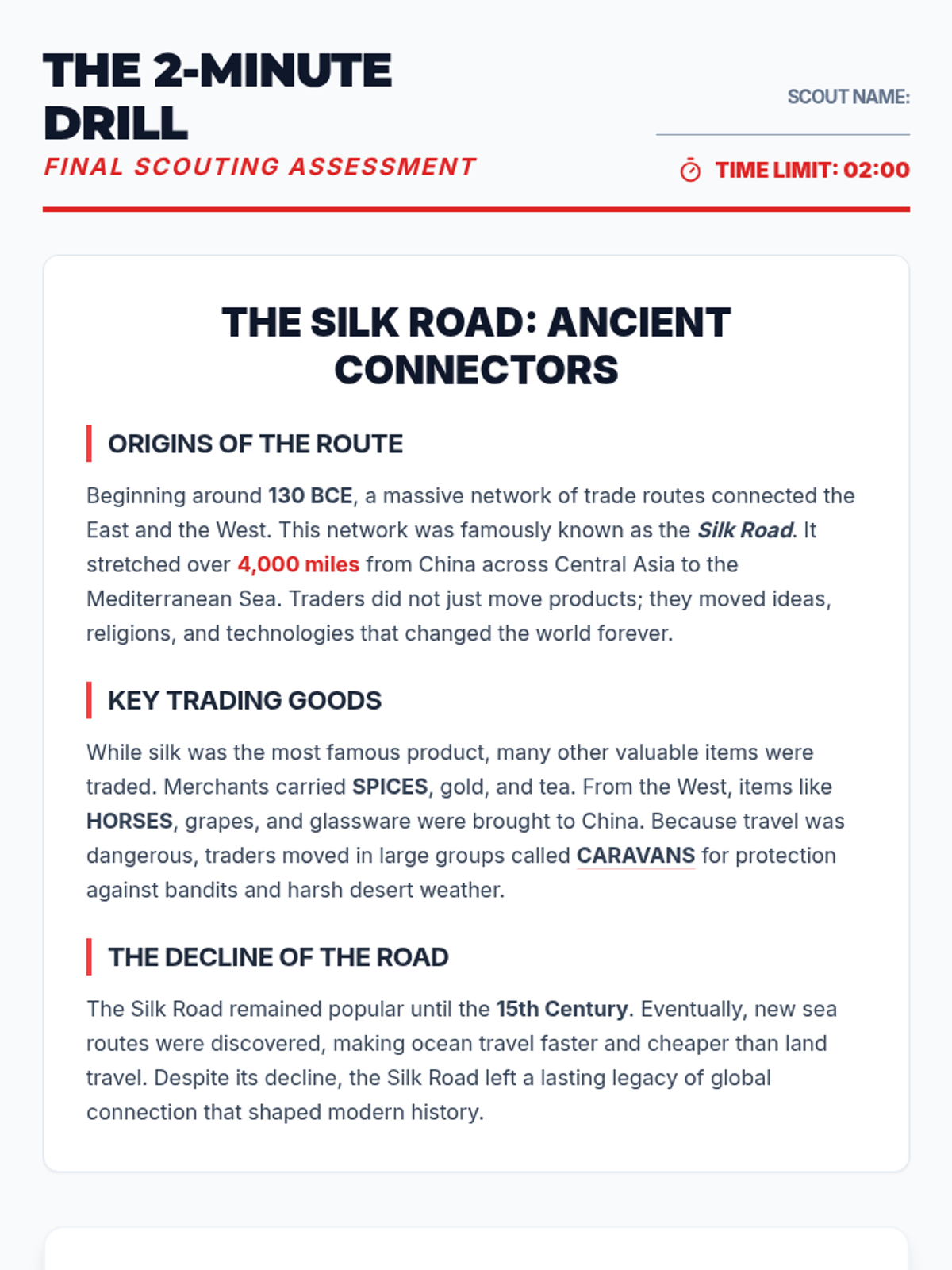
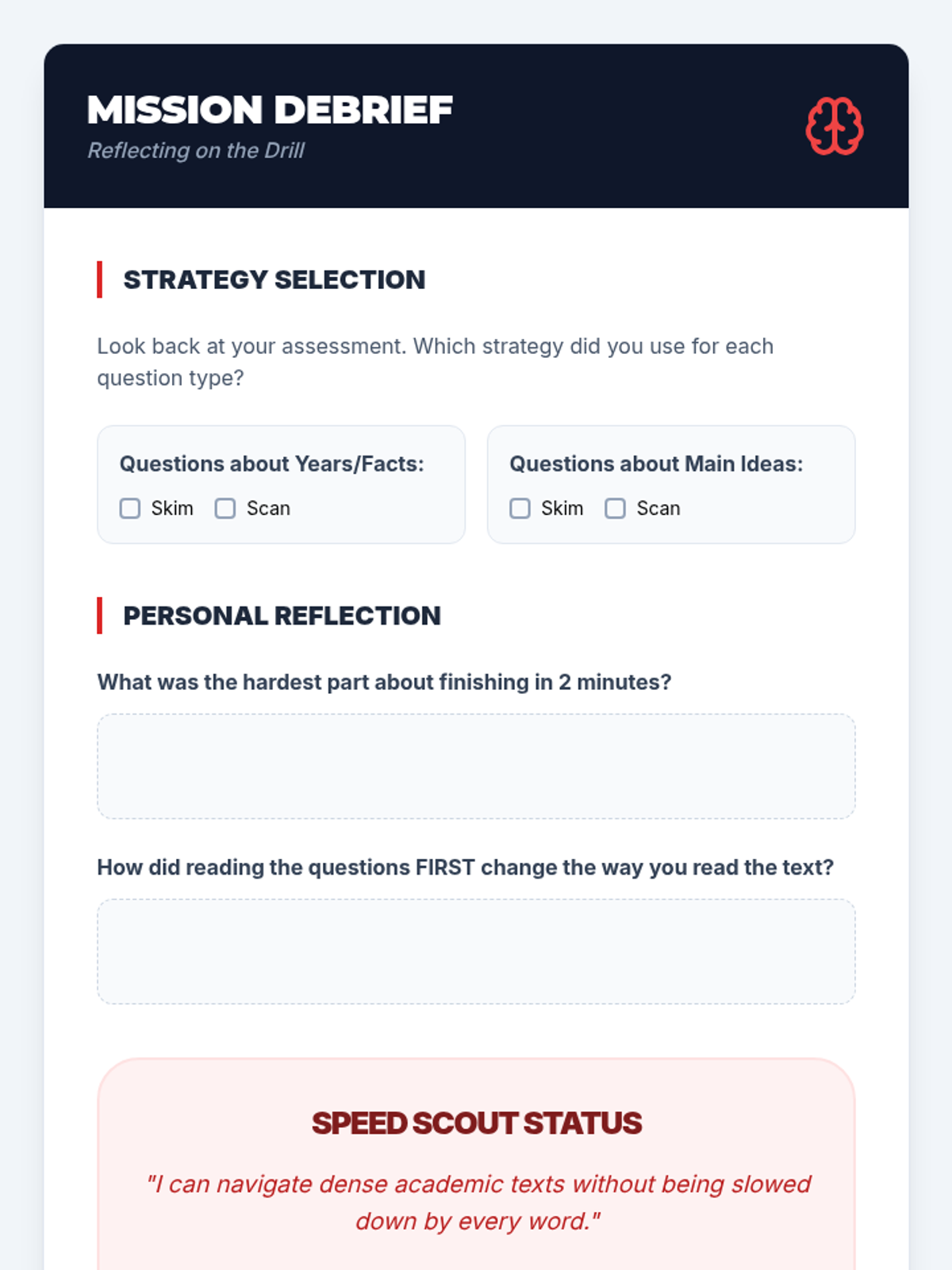
A culminating simulation where students apply their skimming and scanning skills to a timed reading comprehension challenge, followed by a metacognitive reflection.
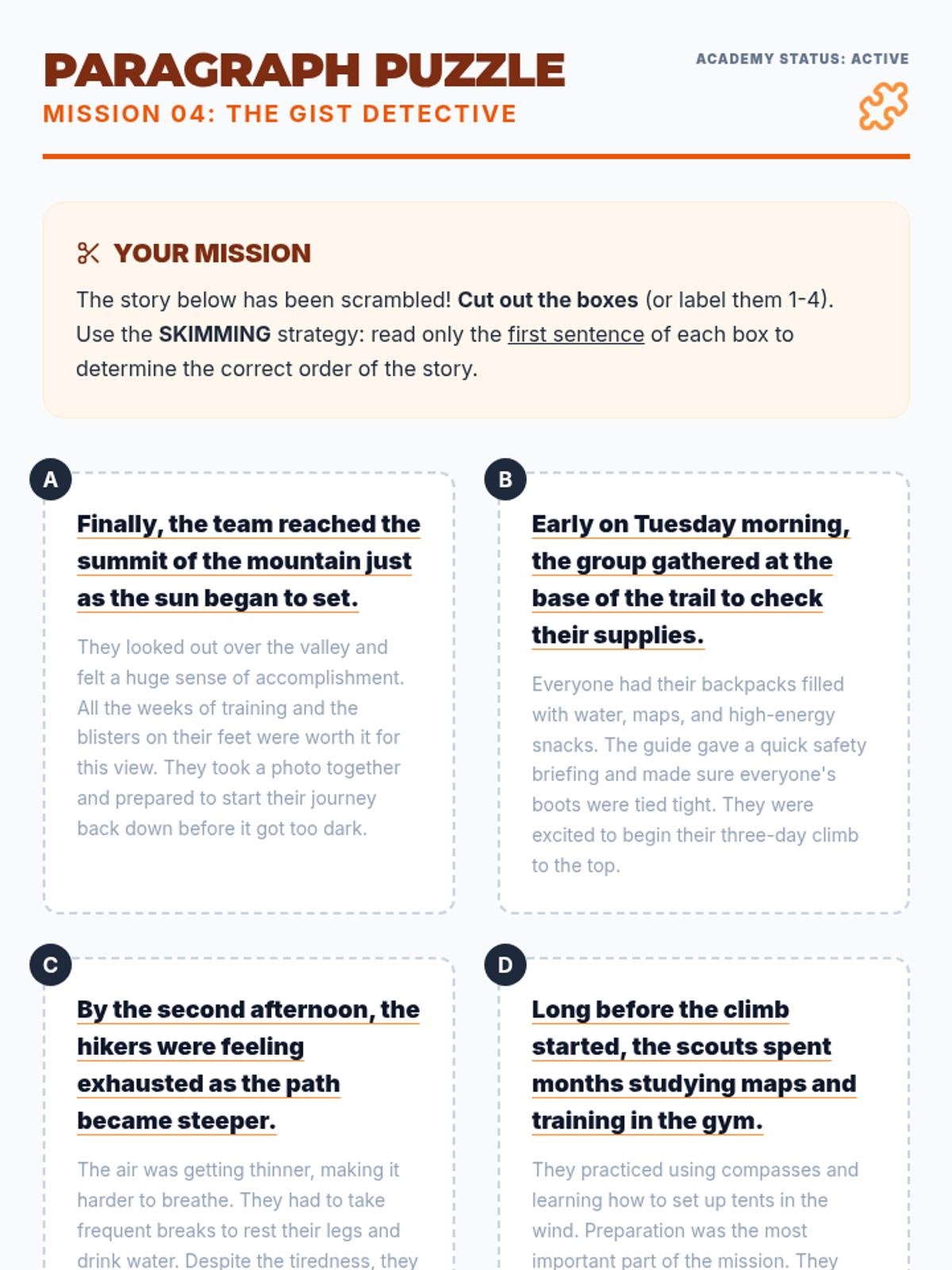
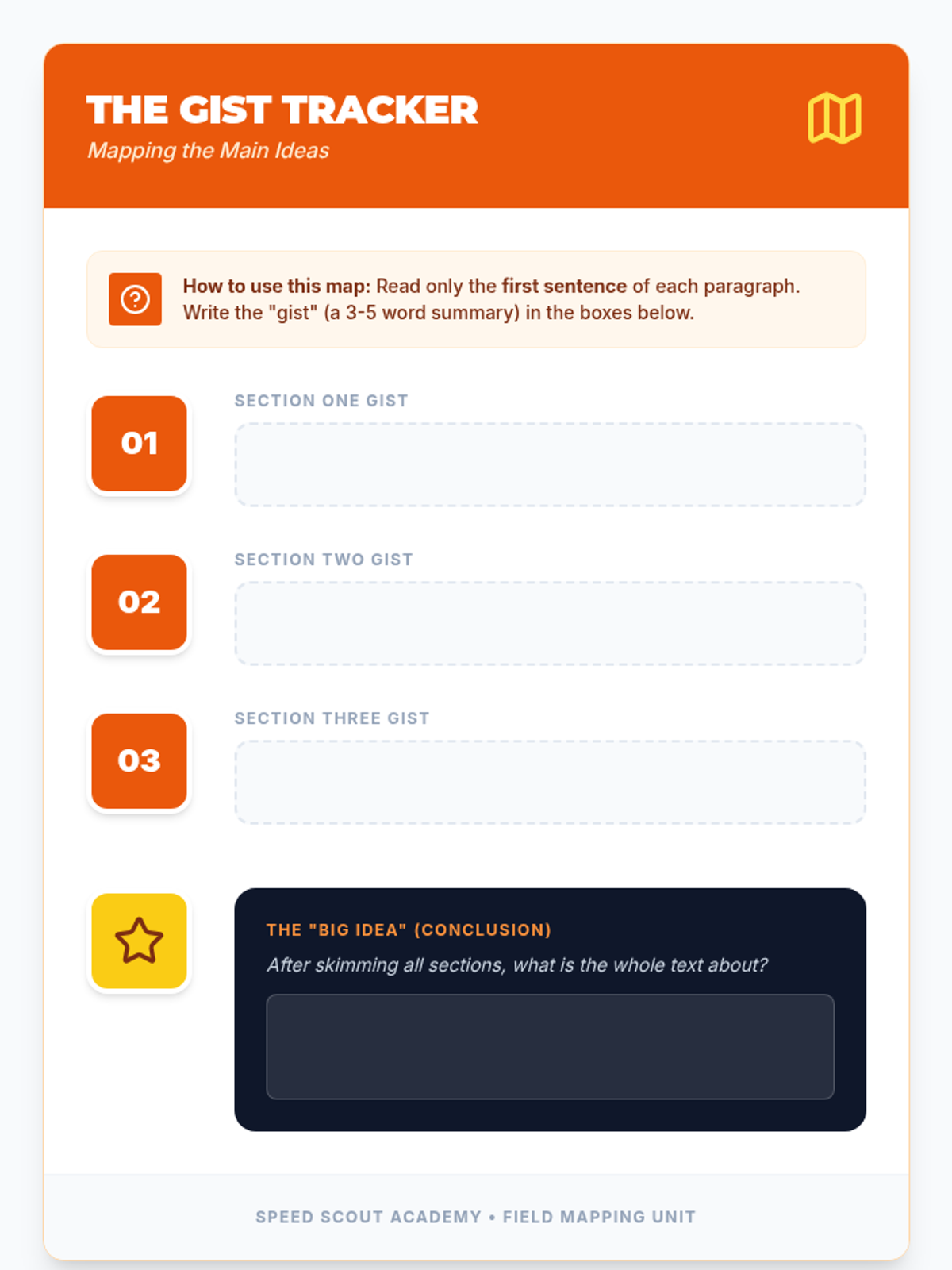
Focuses on the 'first and last' strategy to identify main ideas and topic sentences, allowing students to map out the structure of a text quickly.
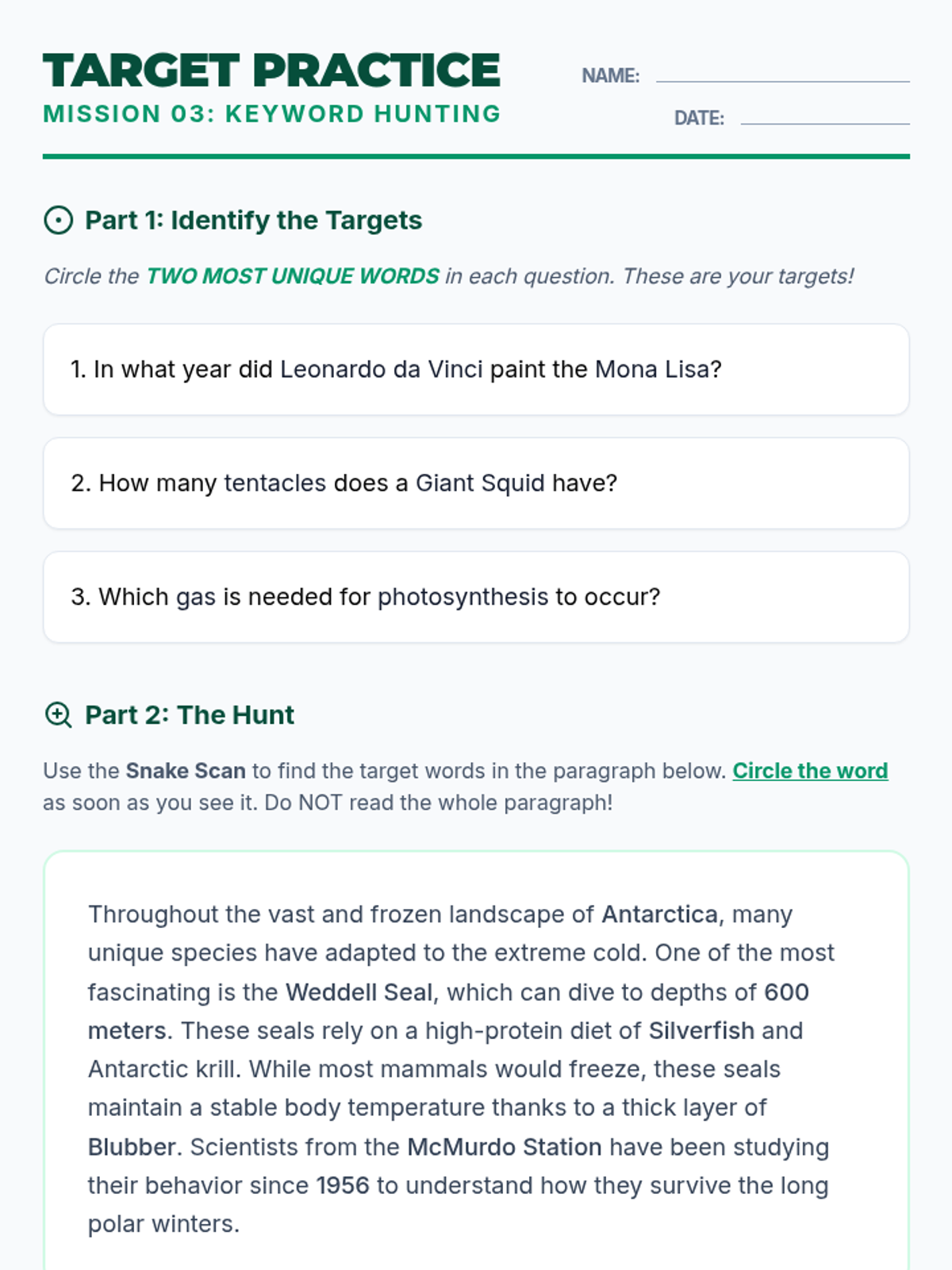
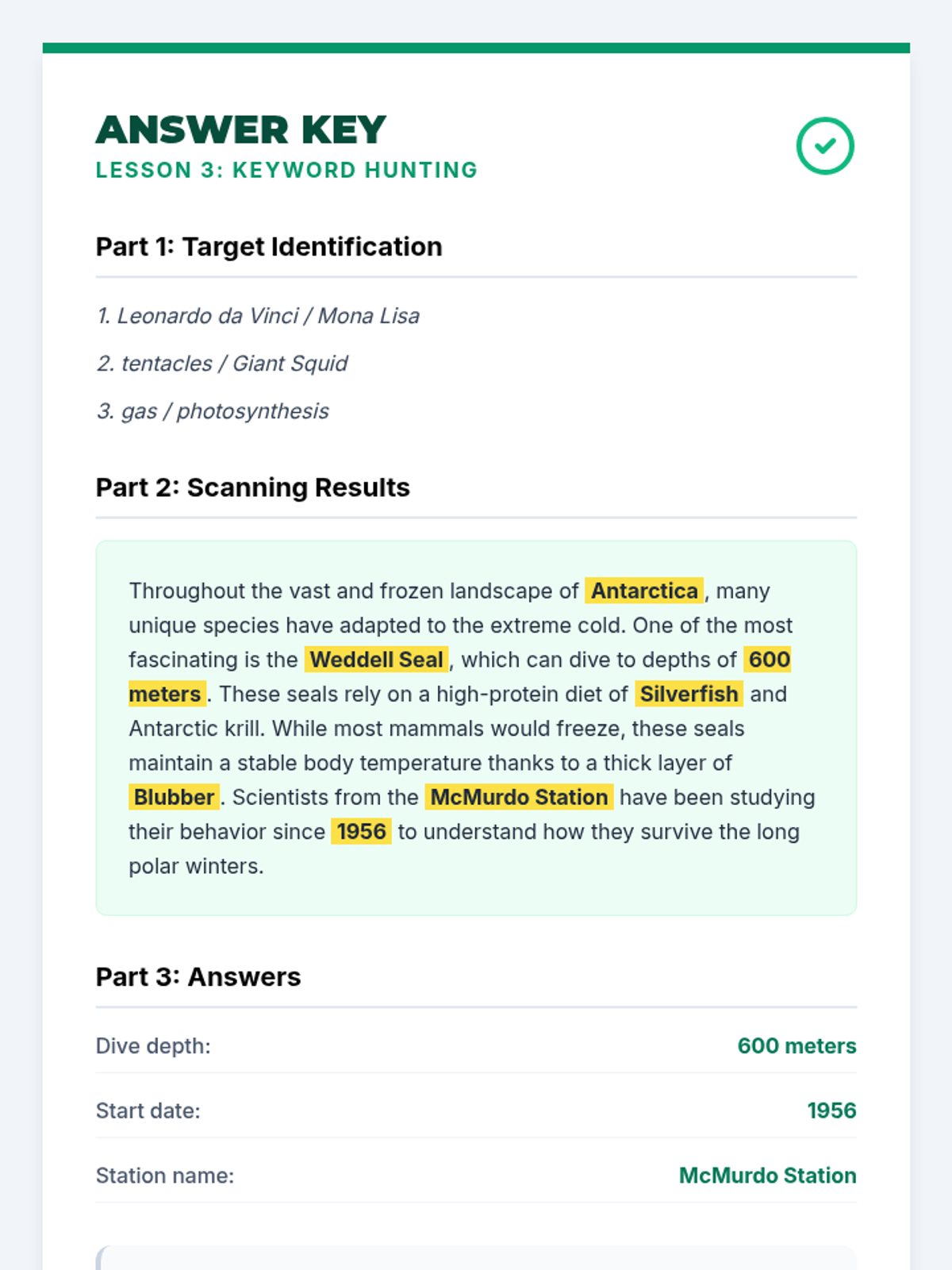
Students master the art of identifying high-value keywords in questions and quickly locating them within dense academic passages.
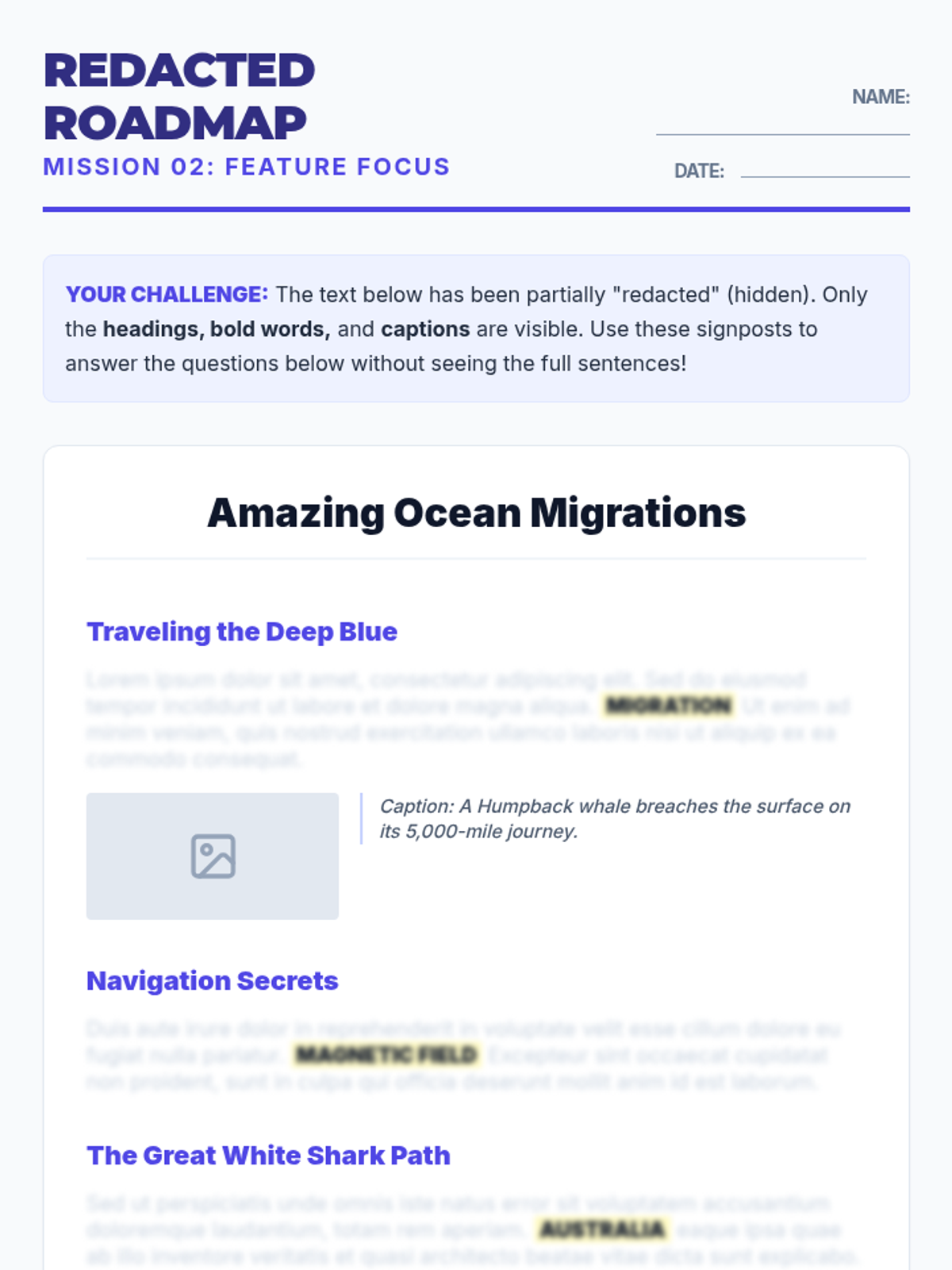
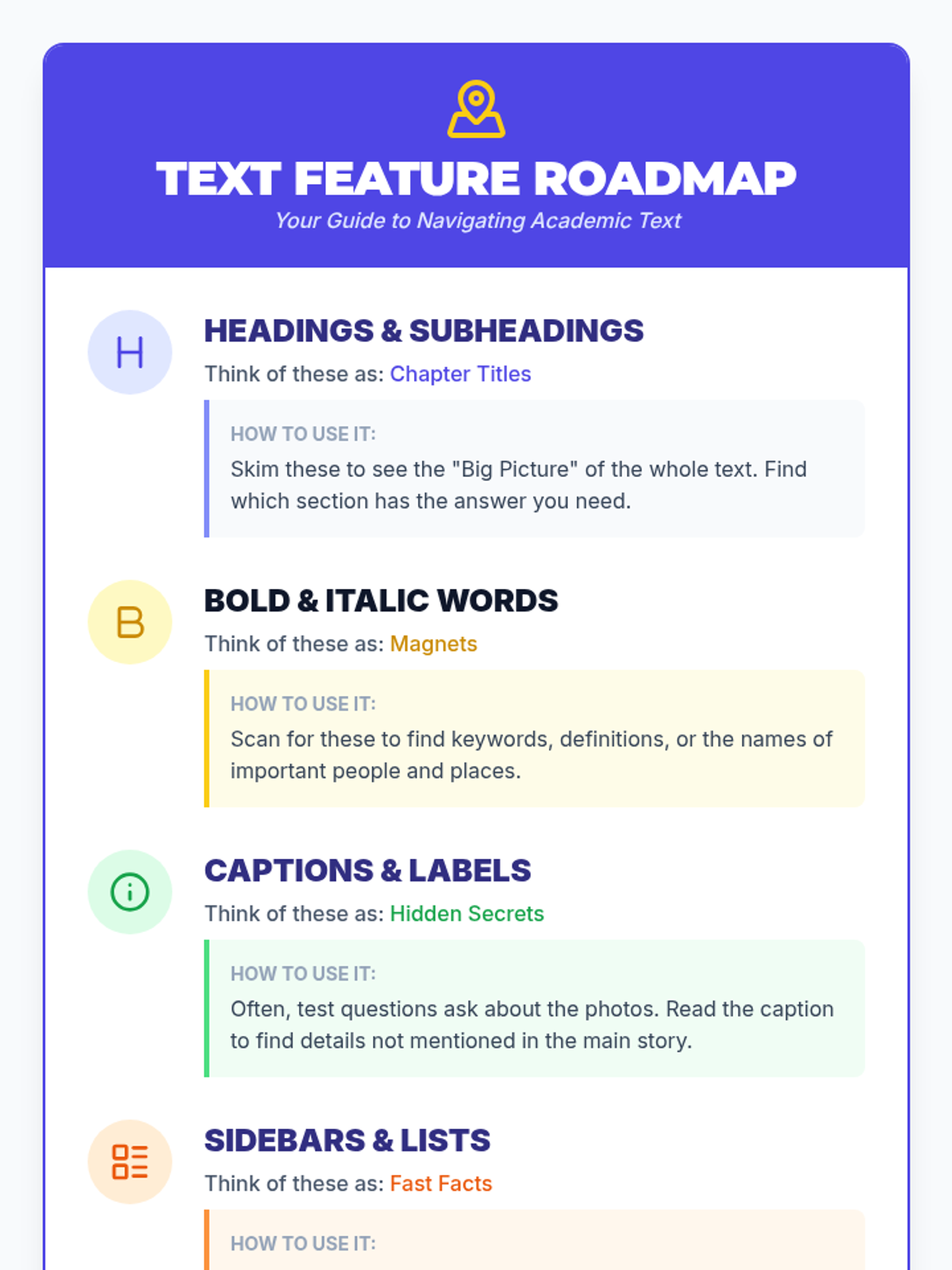
Learners practice using text features like headings, bold words, and captions as navigation tools to predict content and locate information without reading every word.
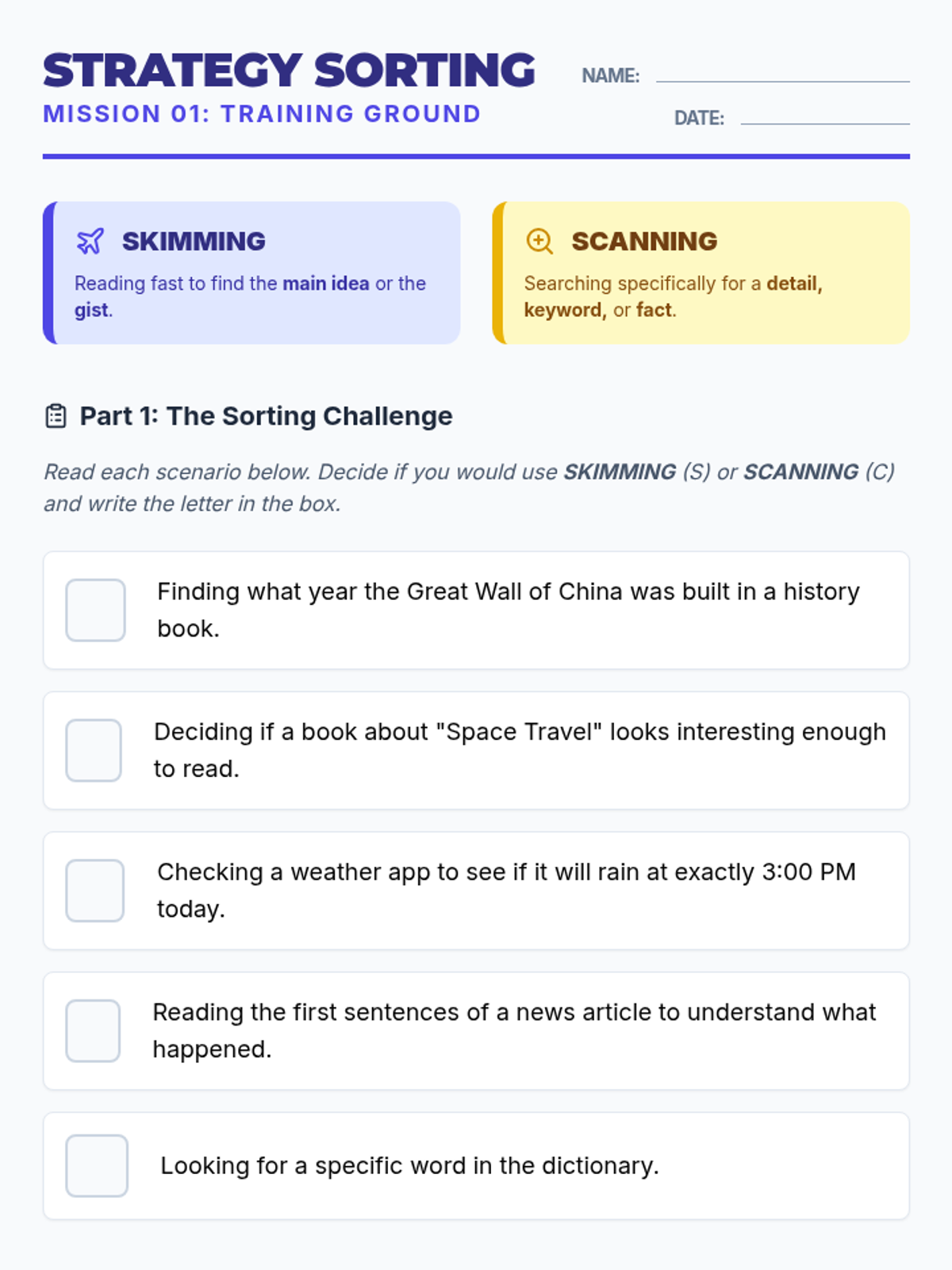
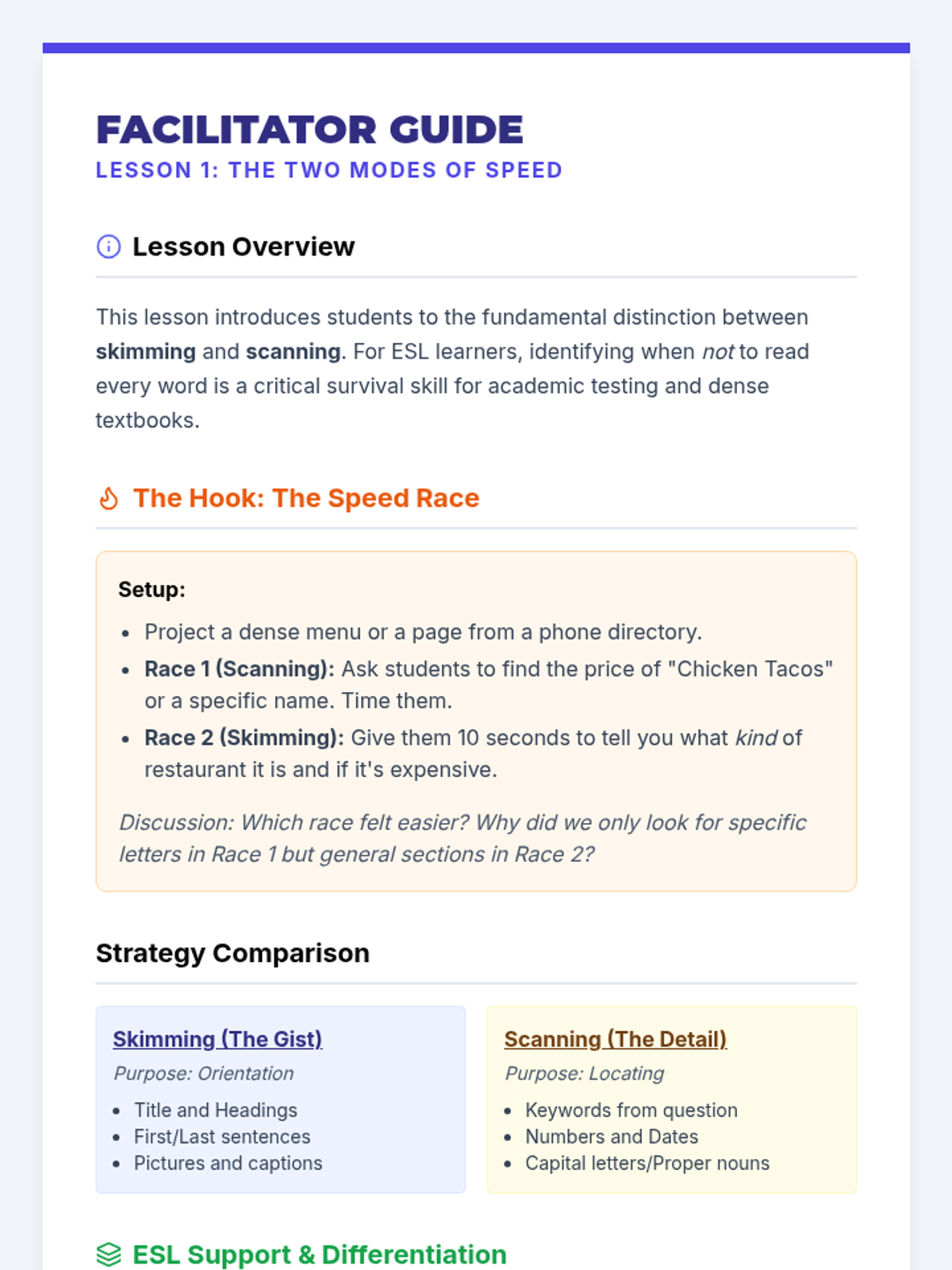
Students explore the fundamental differences between skimming for a general overview and scanning for specific information through interactive sorting and rapid-fire exercises.
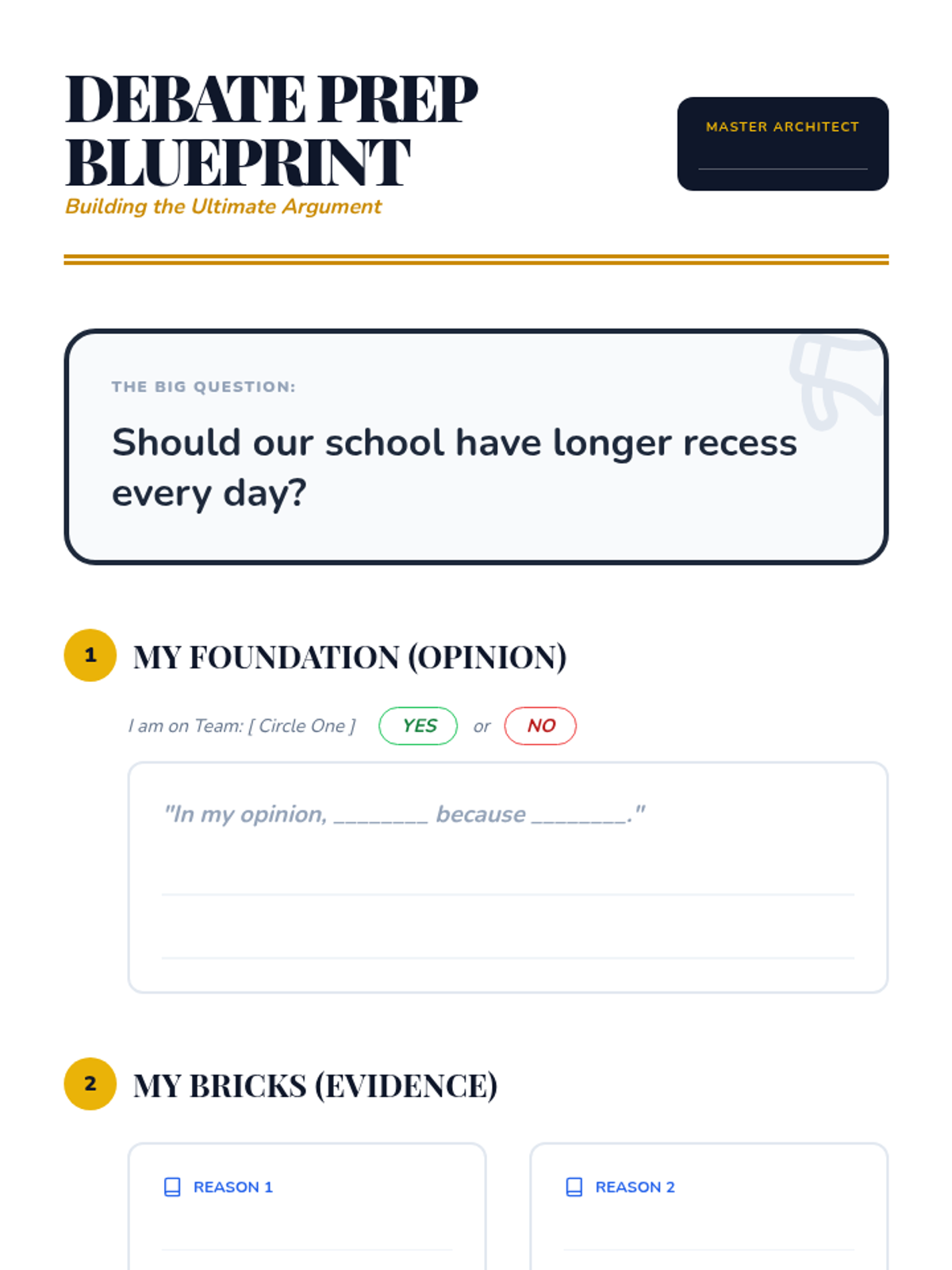
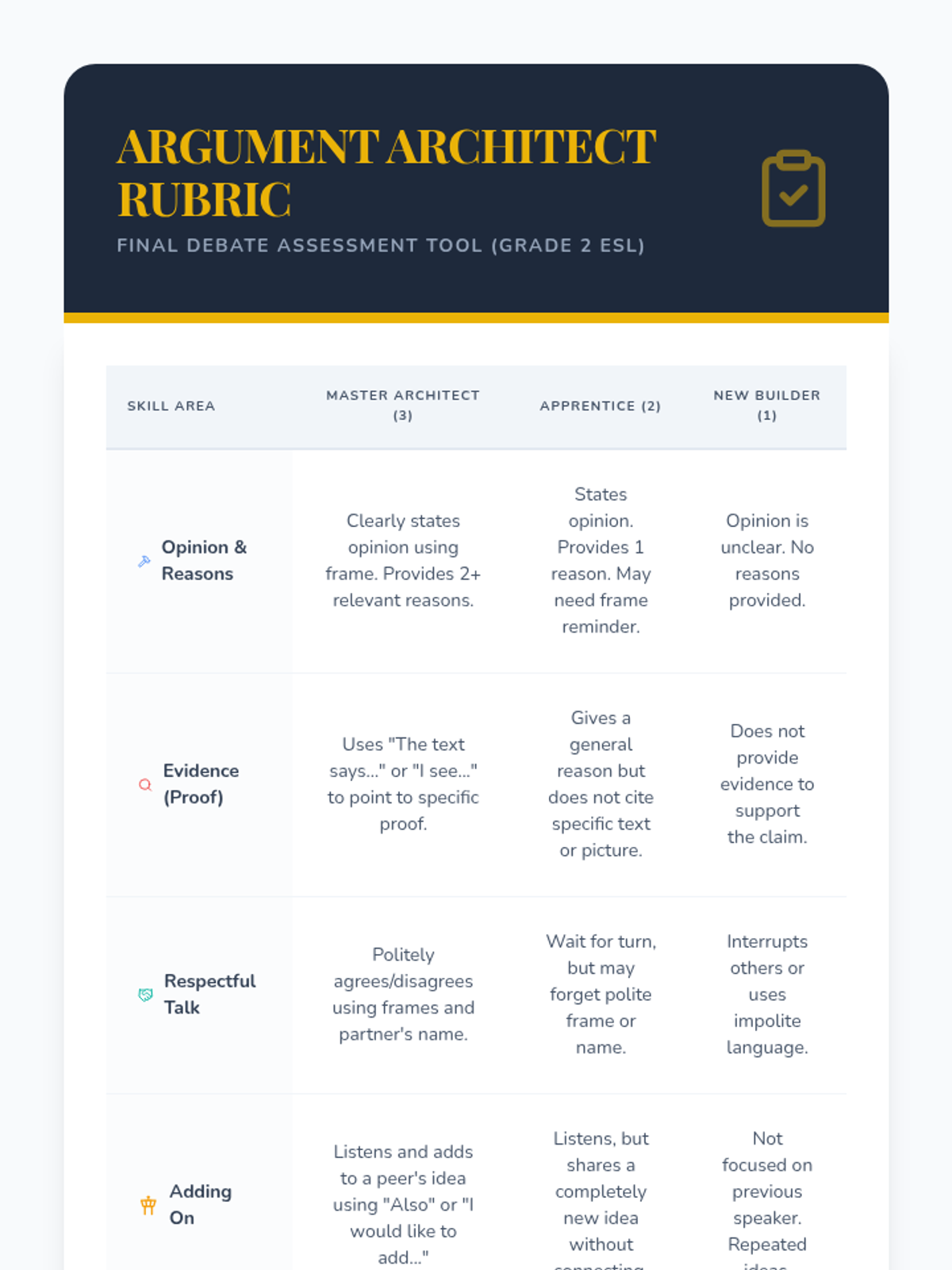
The sequence culminates in a structured debate where students apply all learned skills to argue for or against a school-related topic using evidence and respectful discourse.
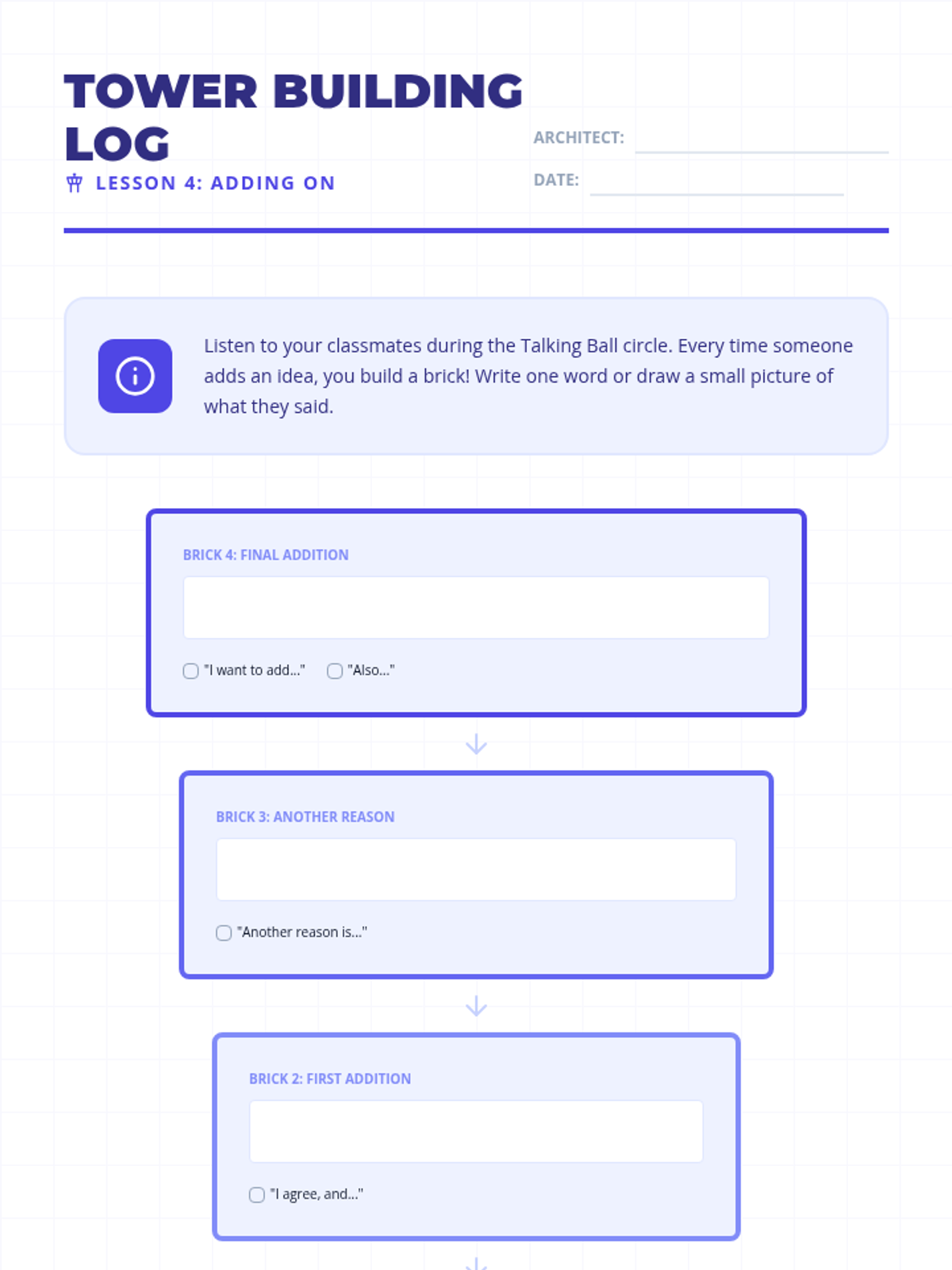
Students practice extending conversations by adding to what classmates have said, using connectors like 'Also' and 'Another reason is' to build a collaborative dialogue.
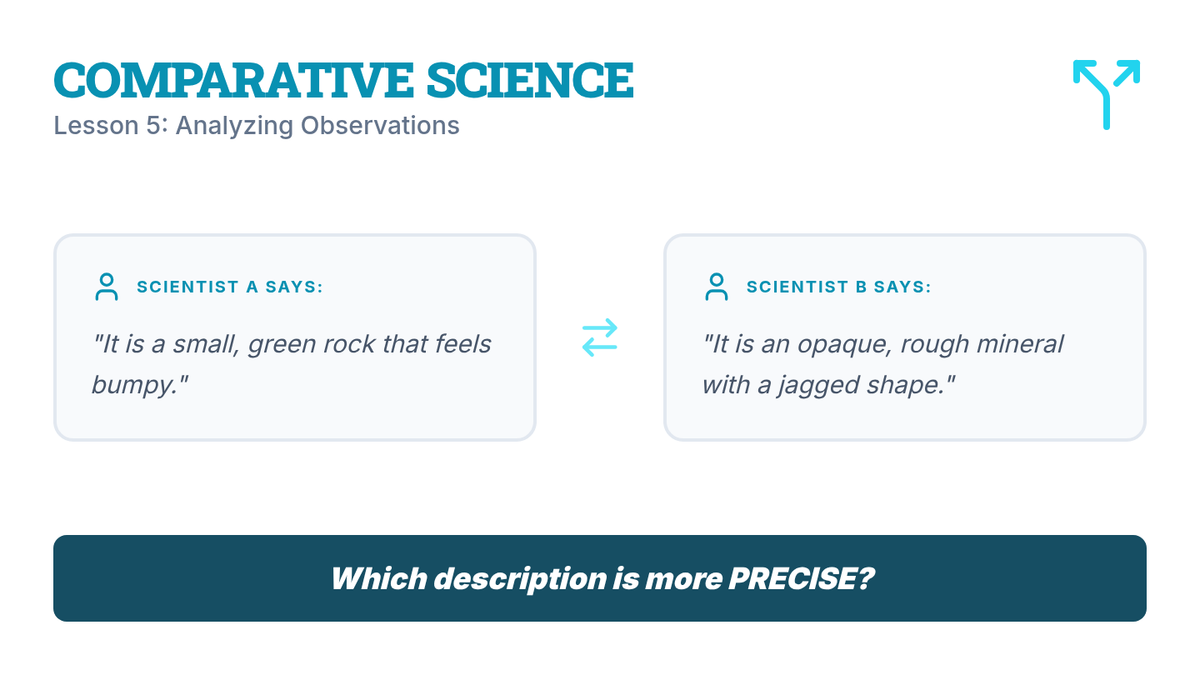
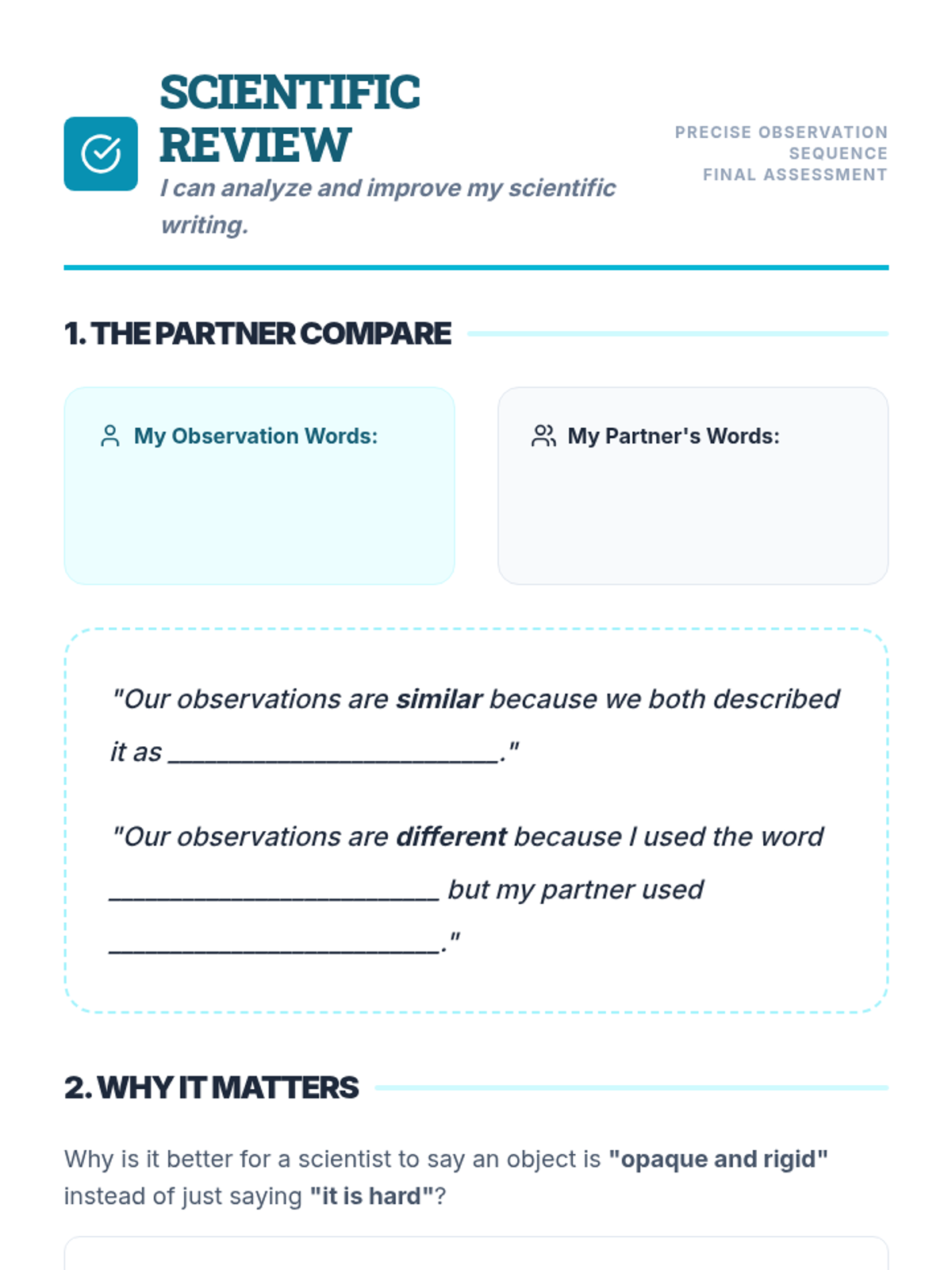
Students compare their observations with peers to discuss why scientists need standardized vocabulary. They use comparative language to analyze similarities and differences in their descriptions.
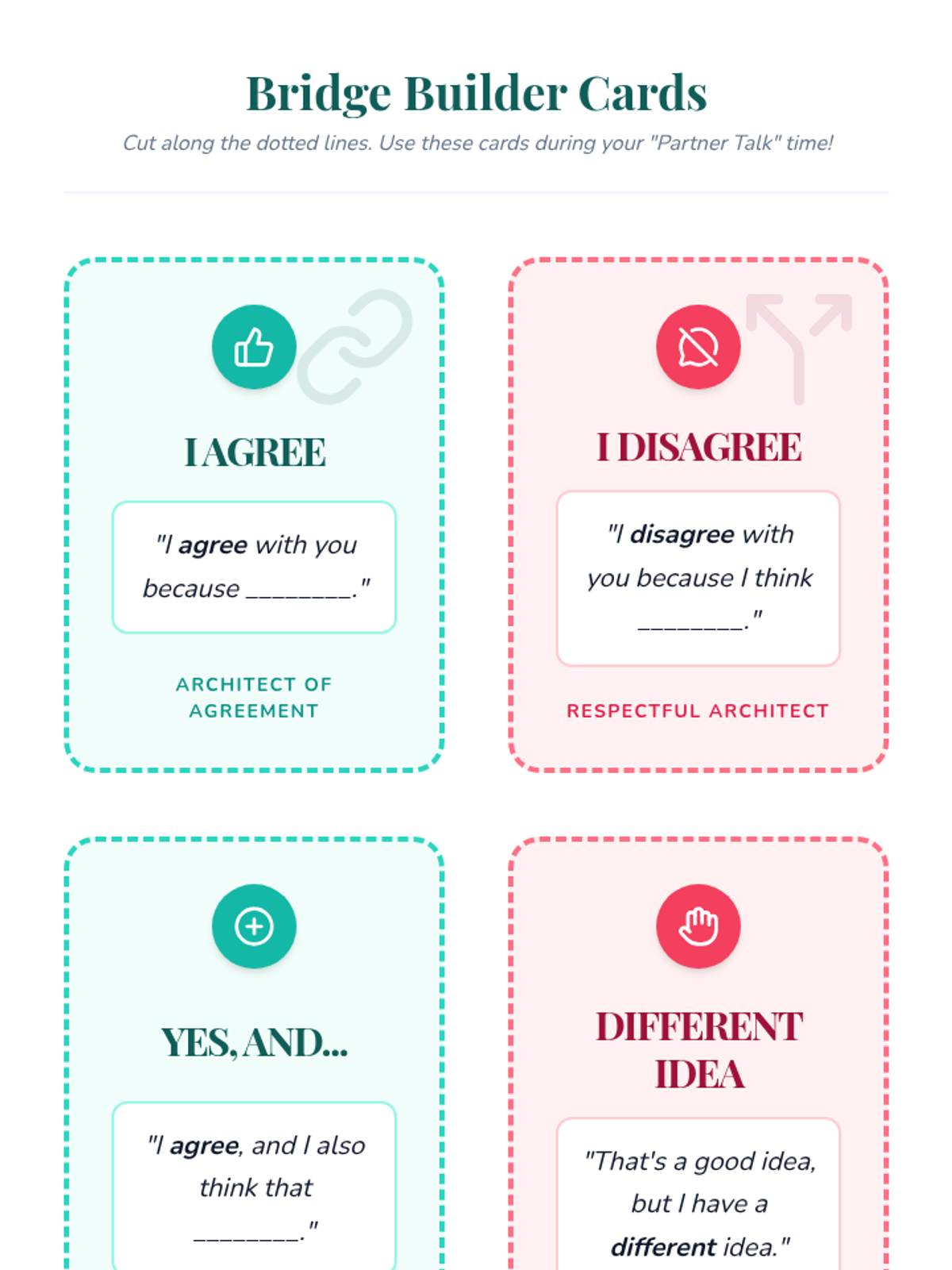
Students learn polite disagreement and agreement frames to maintain respectful academic conversations during group work and discussions.
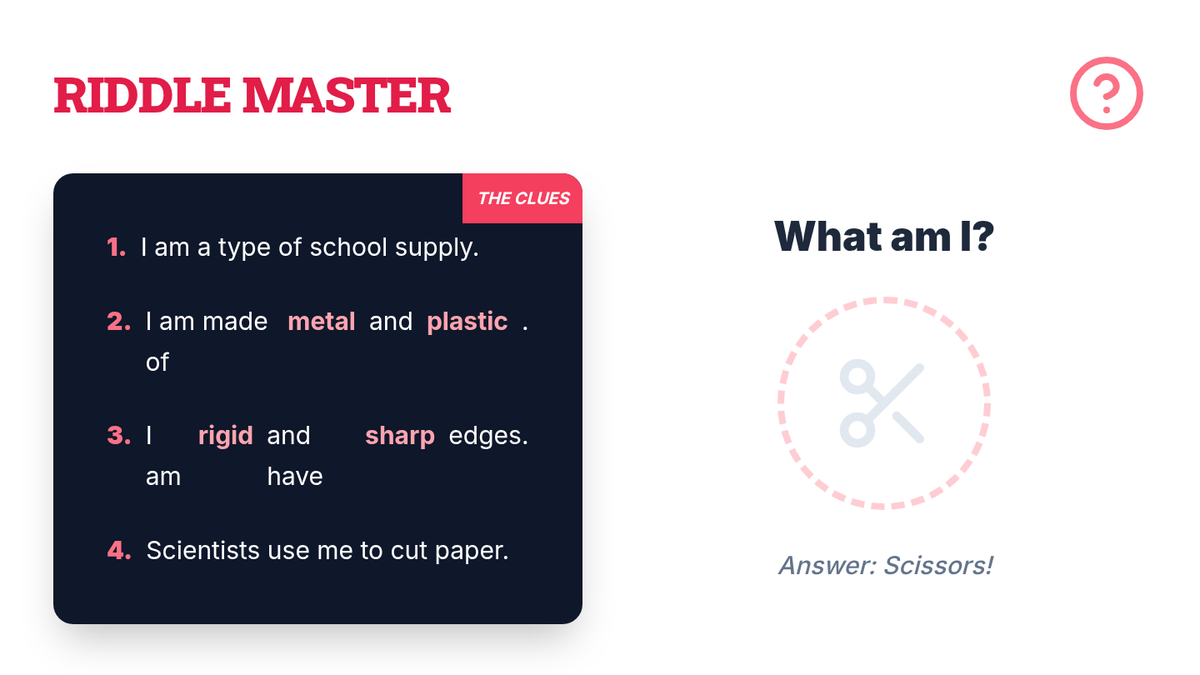
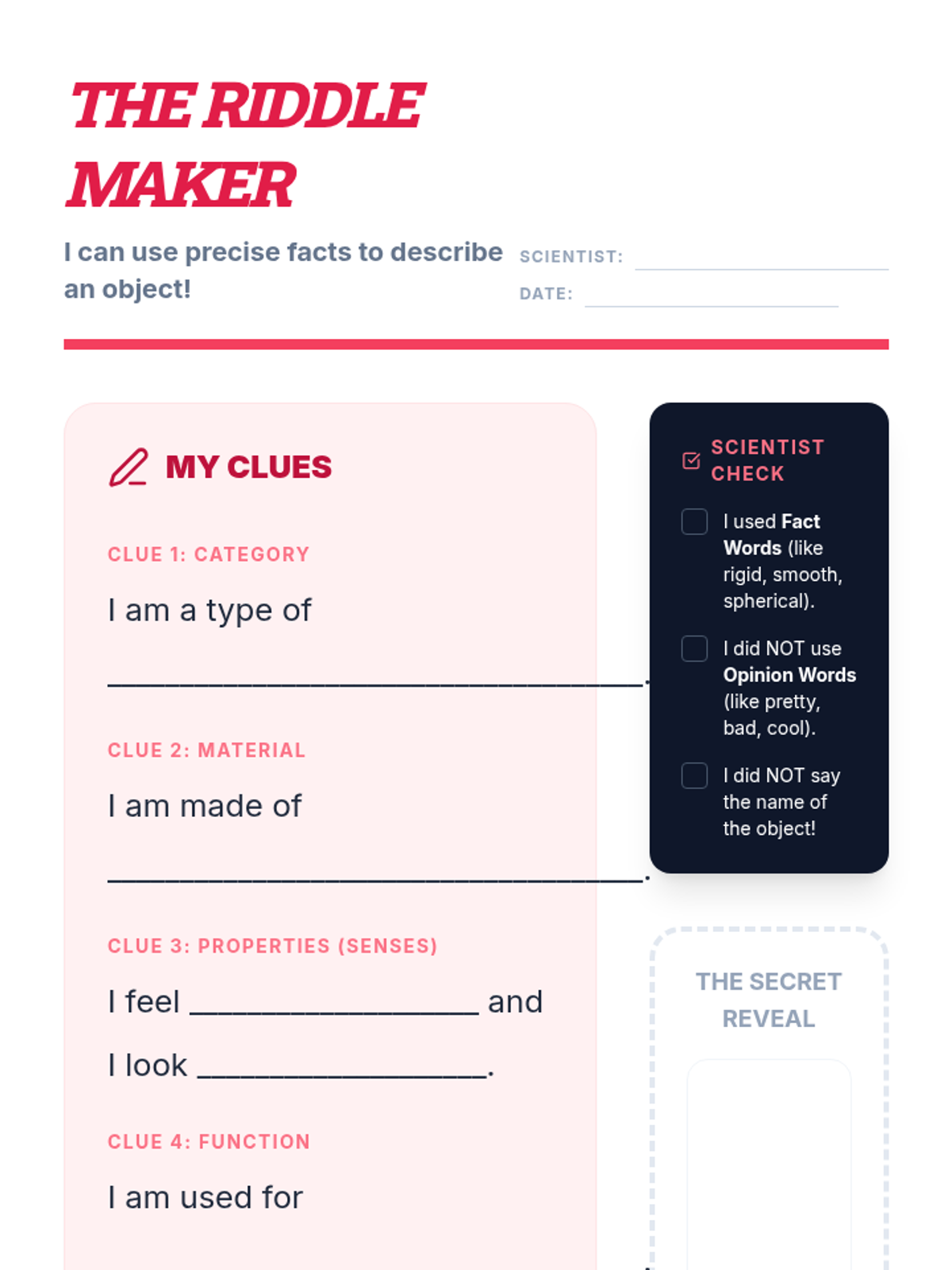
Students write descriptive riddles for animals or objects using specific vocabulary. This workshop-style lesson encourages precision and audience awareness in descriptive writing.