Essential grammar structures, high-frequency vocabulary, and foundational literacy skills. Equips learners with basic speaking and listening abilities for everyday interactions and introductory text comprehension.
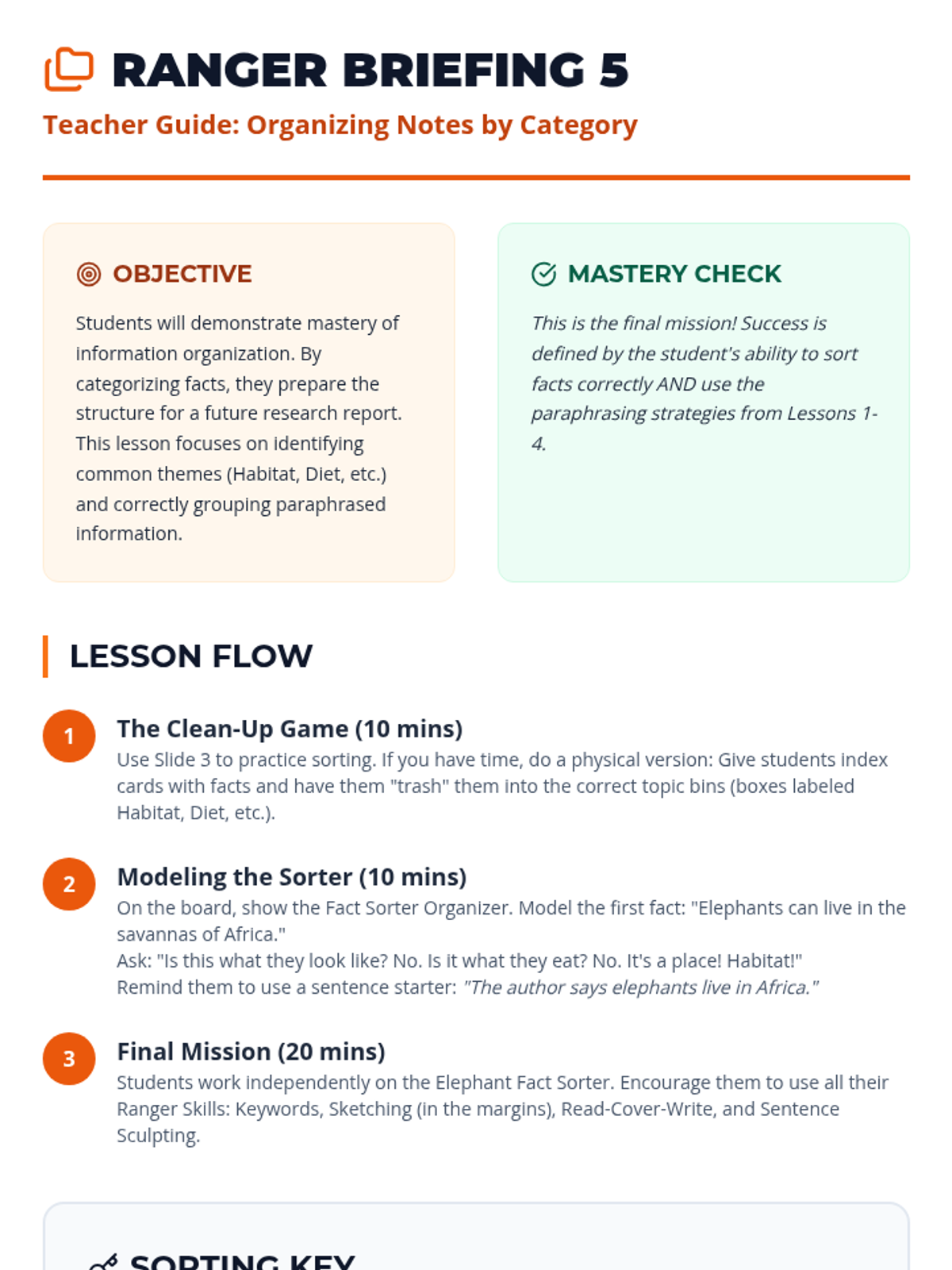
Teacher guide for Lesson 5. Features category sorting challenges, instructional tips for using graphic organizers, and a summary of the Research Ranger sequence.
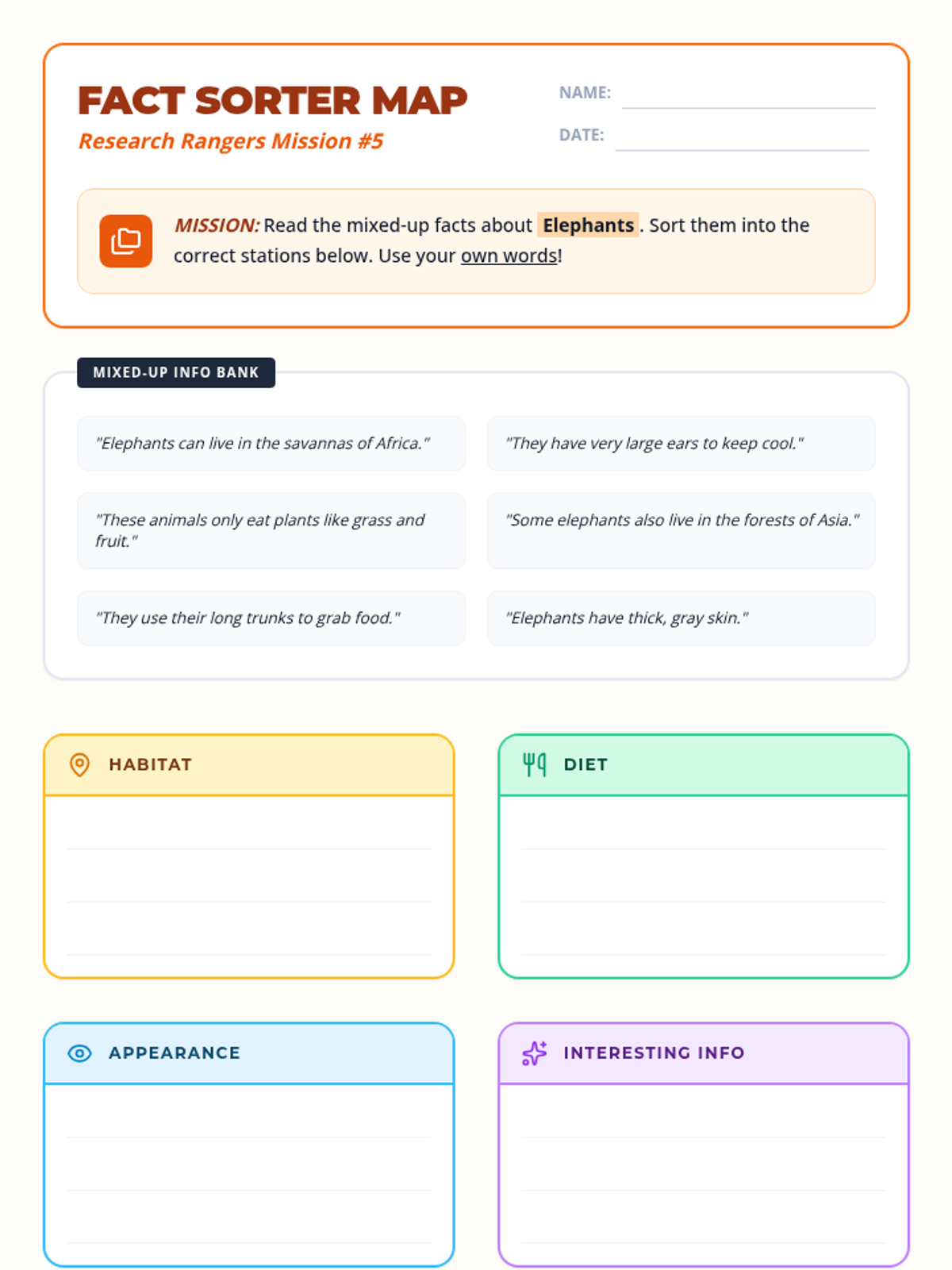
A student graphic organizer for sorting informational facts into categories (Habitat, Diet, Appearance, Interesting Info). Features a bank of elephant facts for sorting practice.
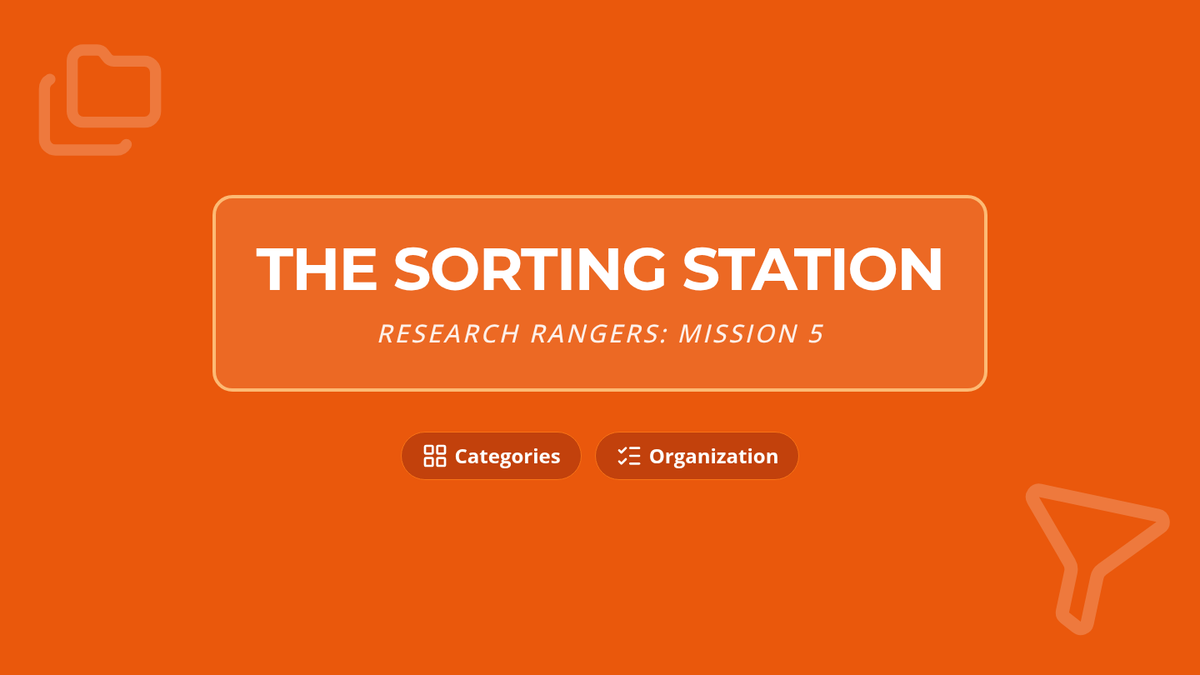
Educational slides for teaching students how to organize information into categories using a graphic organizer. Includes a sorting hook and visual guide for the 'Fact Sorter' activity.
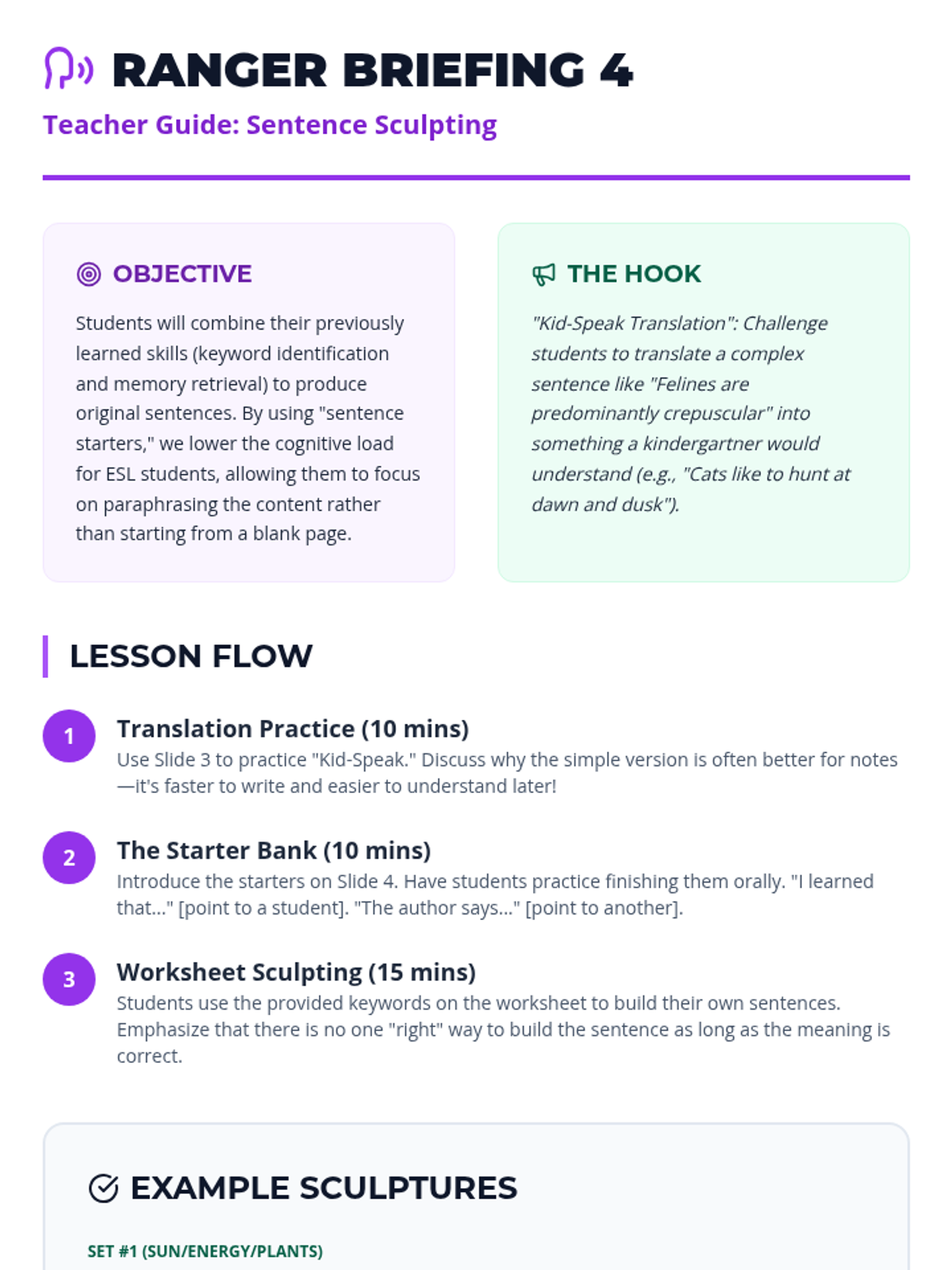
Teacher guide for Lesson 4. Features kid-speak translation challenges, exemplar paraphrased sentences, and instructional tips for using sentence starters effectively.
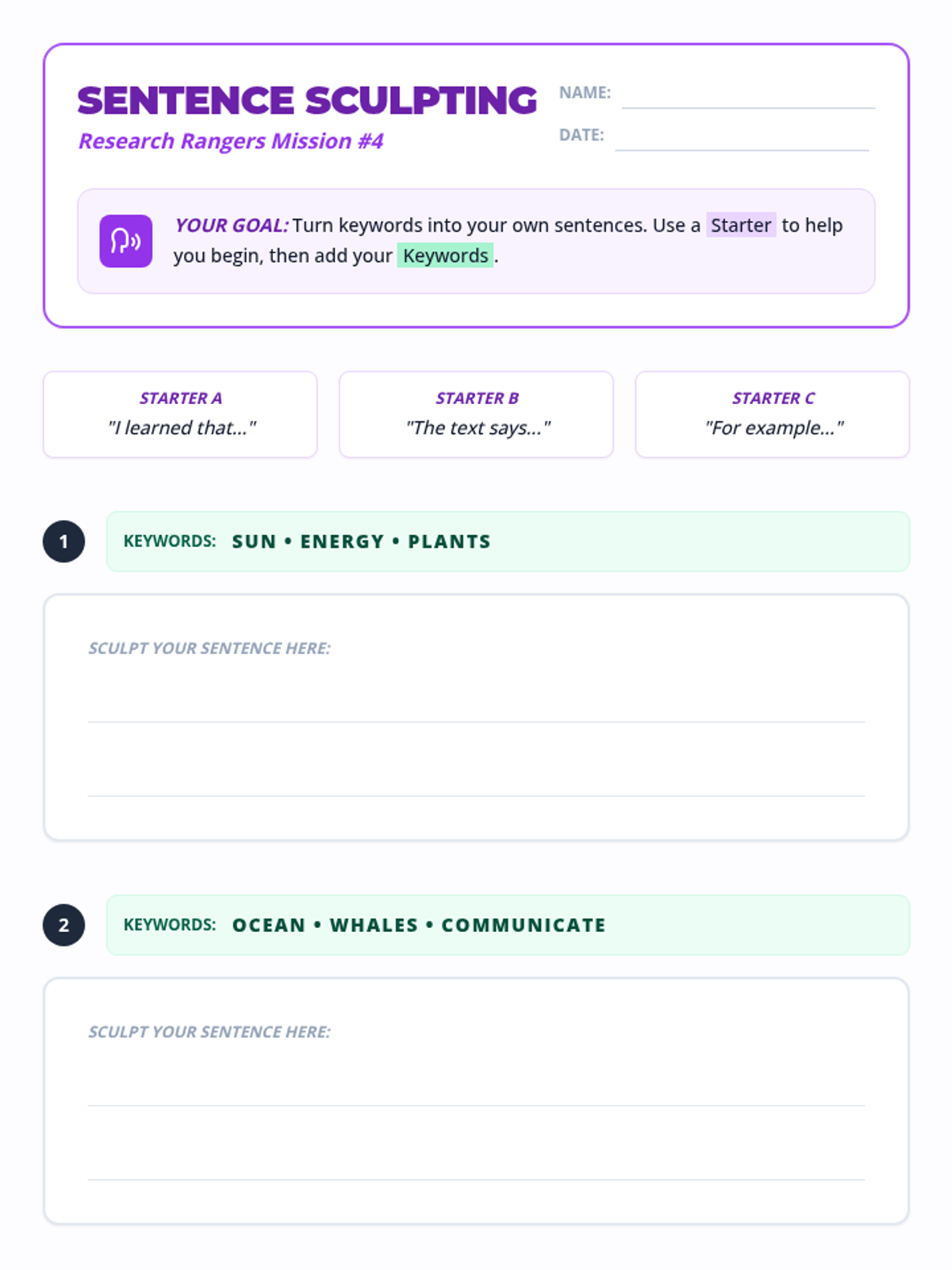
A student worksheet for practicing sentence construction using sentence starters and keywords. Features three structured practice areas and a self-check rubric.
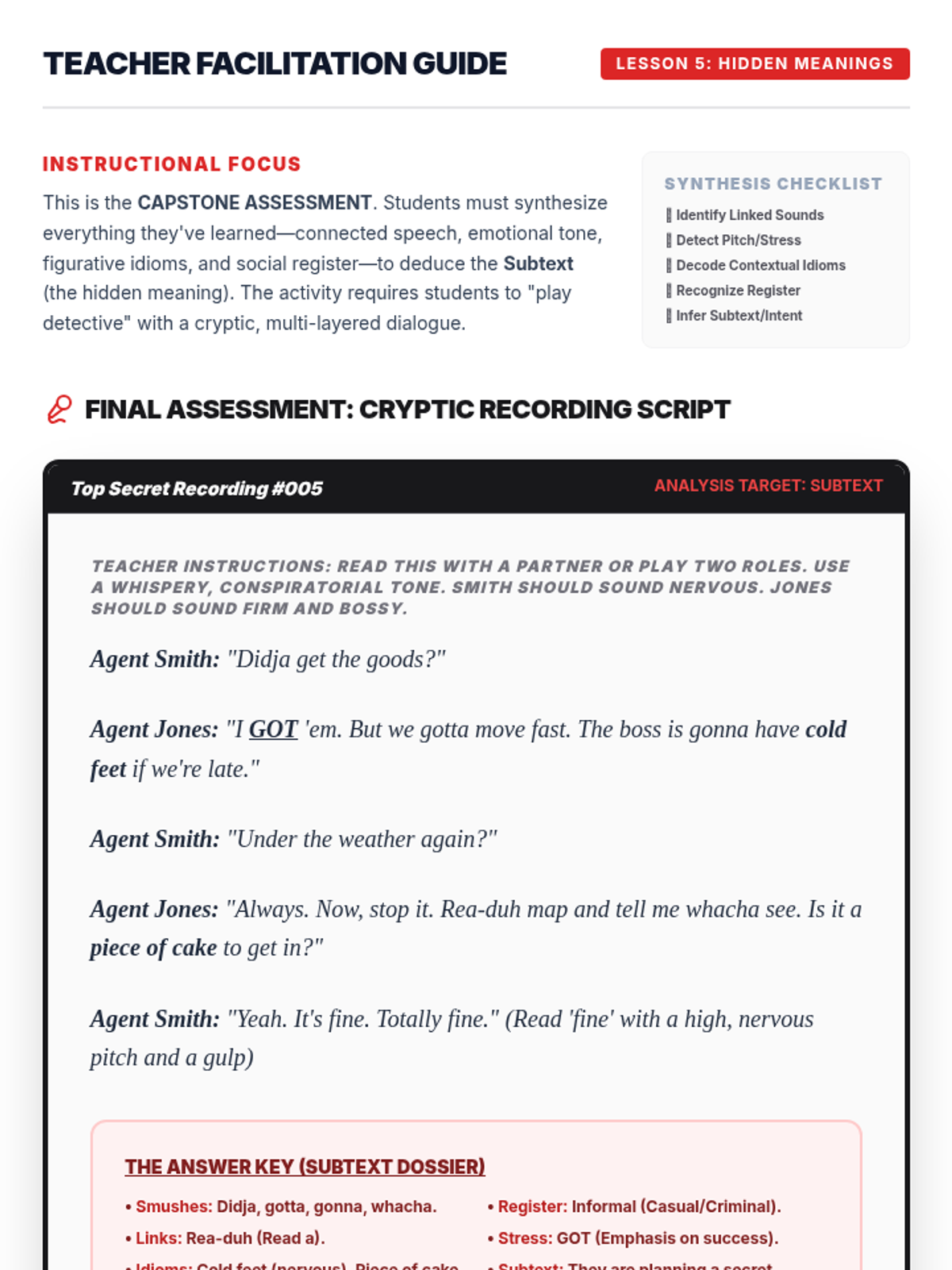
Teacher guide for Lesson 5: Hidden Meanings. Contains a multi-layered script and a synthesis answer key to assess student mastery of all Ear Detective skills.
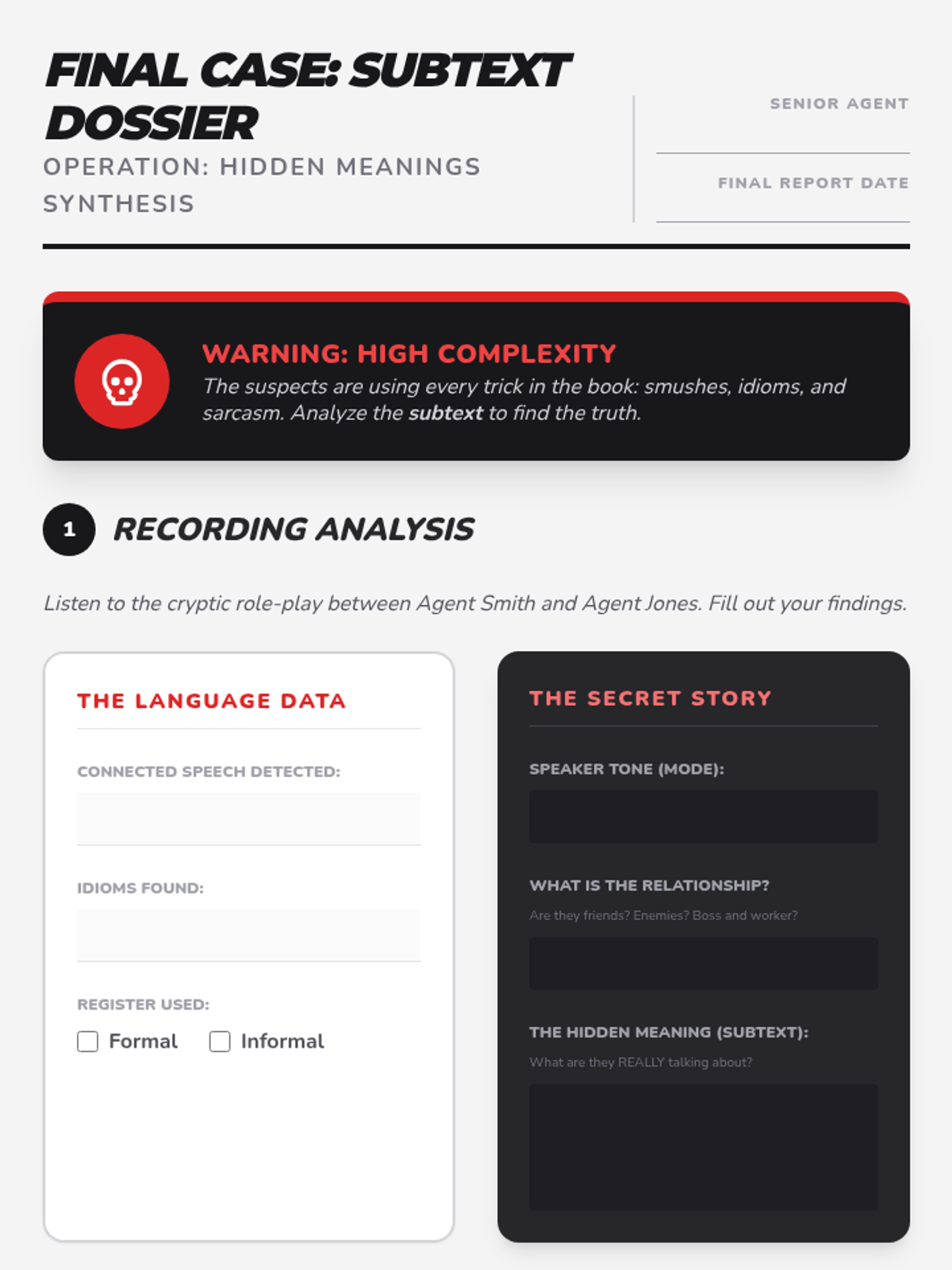
Capstone worksheet for Lesson 5: Hidden Meanings. Students perform a final synthesis by analyzing a complex audio clip for subtext, tone, idioms, and register.
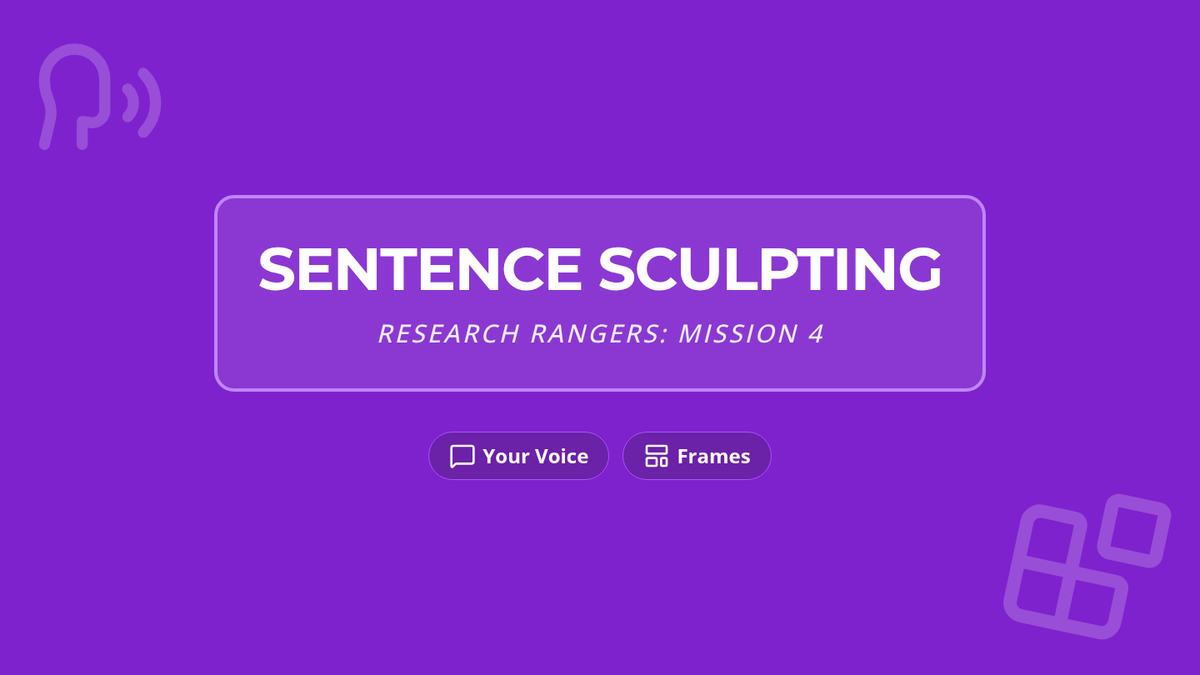
Educational slide deck for teaching students how to use sentence starters and kid-speak translation to paraphrase information. Includes a bank of starters and guided transformation examples.
Slides for Lesson 5: Hidden Meanings, the capstone of the Ear Detectives sequence. Synthesizes connected speech, tone, idioms, and register through subtext analysis.
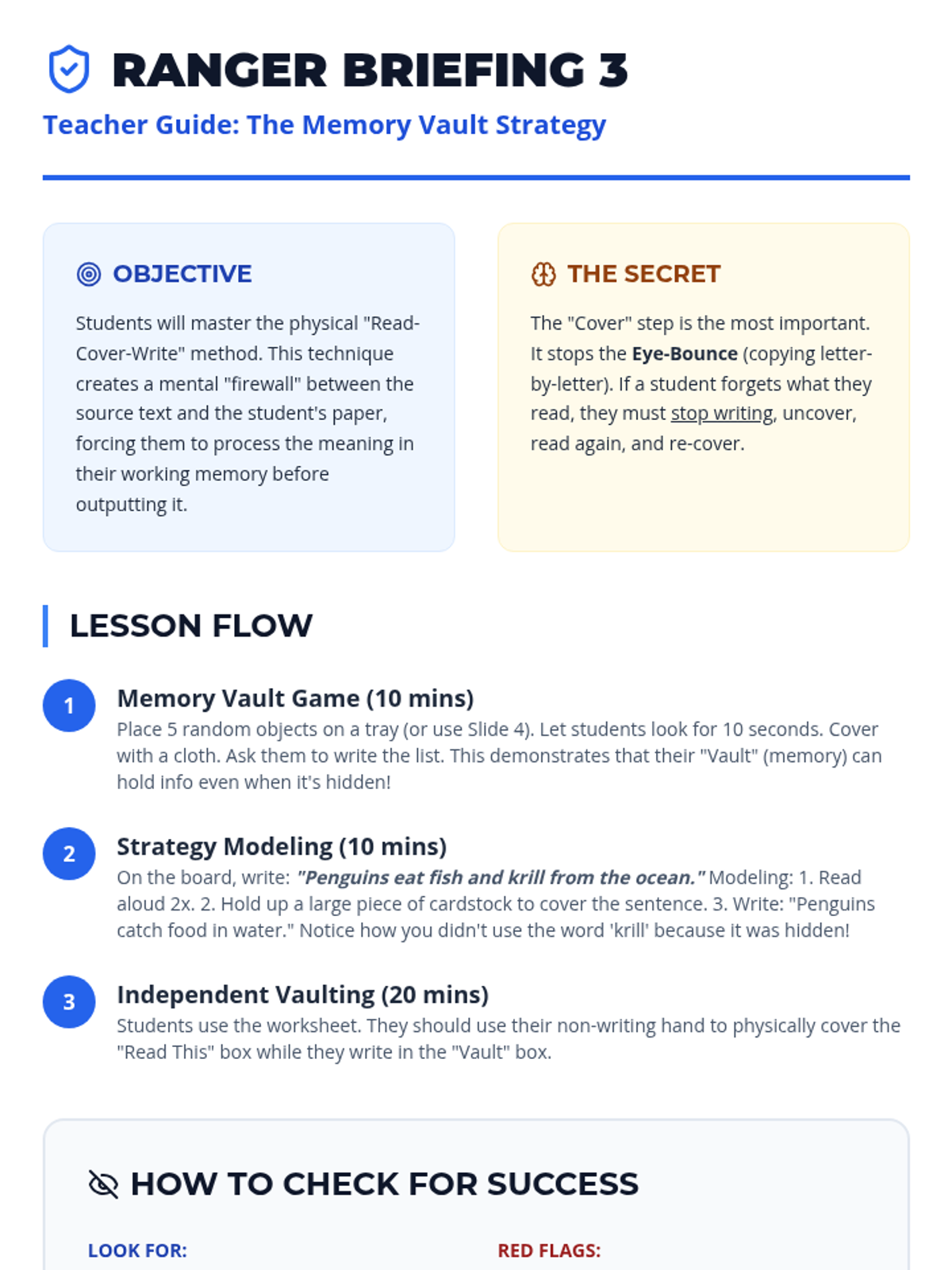
Teacher guide for Lesson 3. Includes the Memory Vault tray game instructions, modeling scripts, and an assessment checklist for detecting 'eye-bounce' vs. genuine paraphrasing.
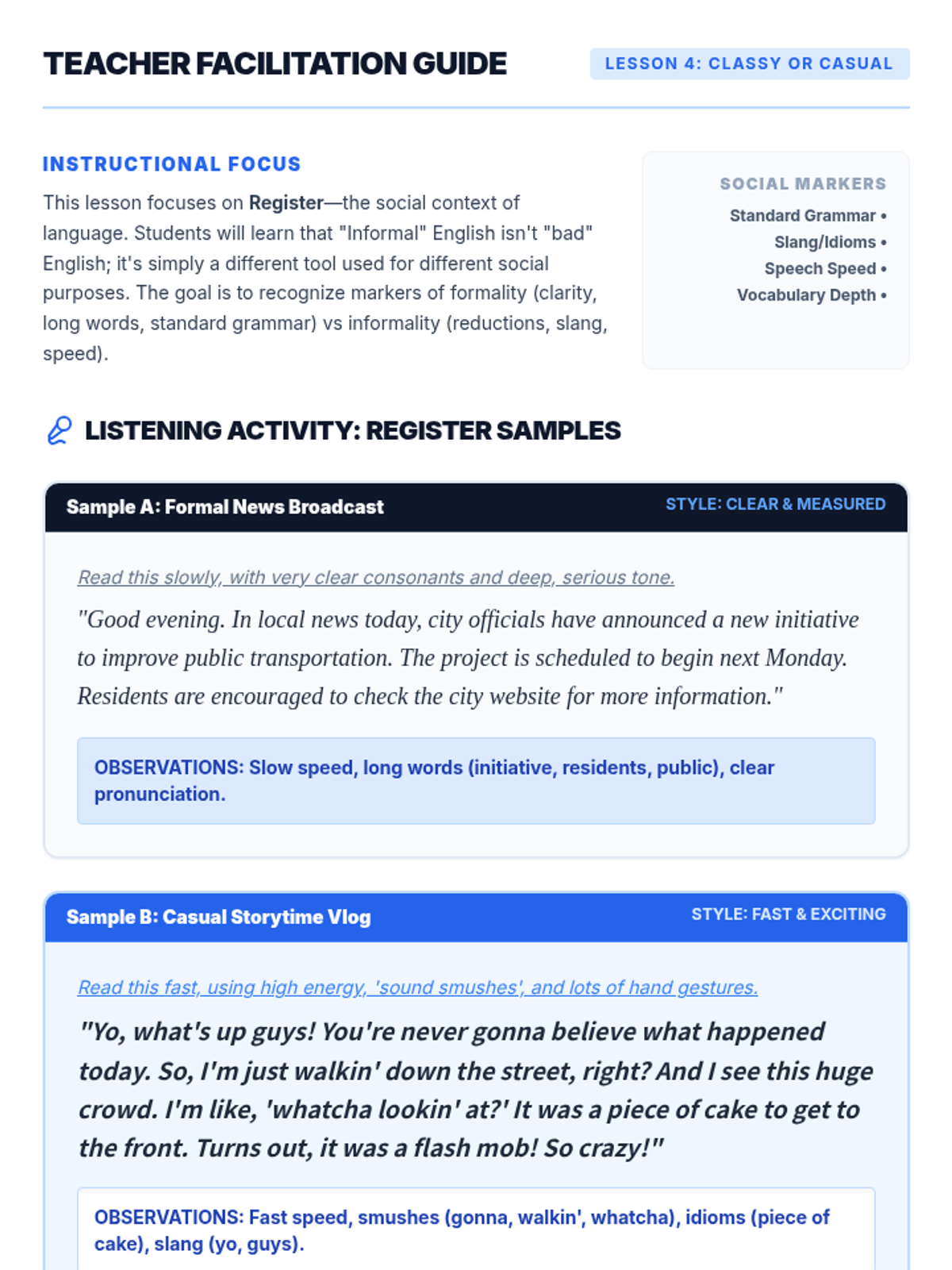
Teacher guide for Lesson 4: Classy or Casual. Provides scripts for formal news reports and casual vlog samples to help students distinguish between registers.
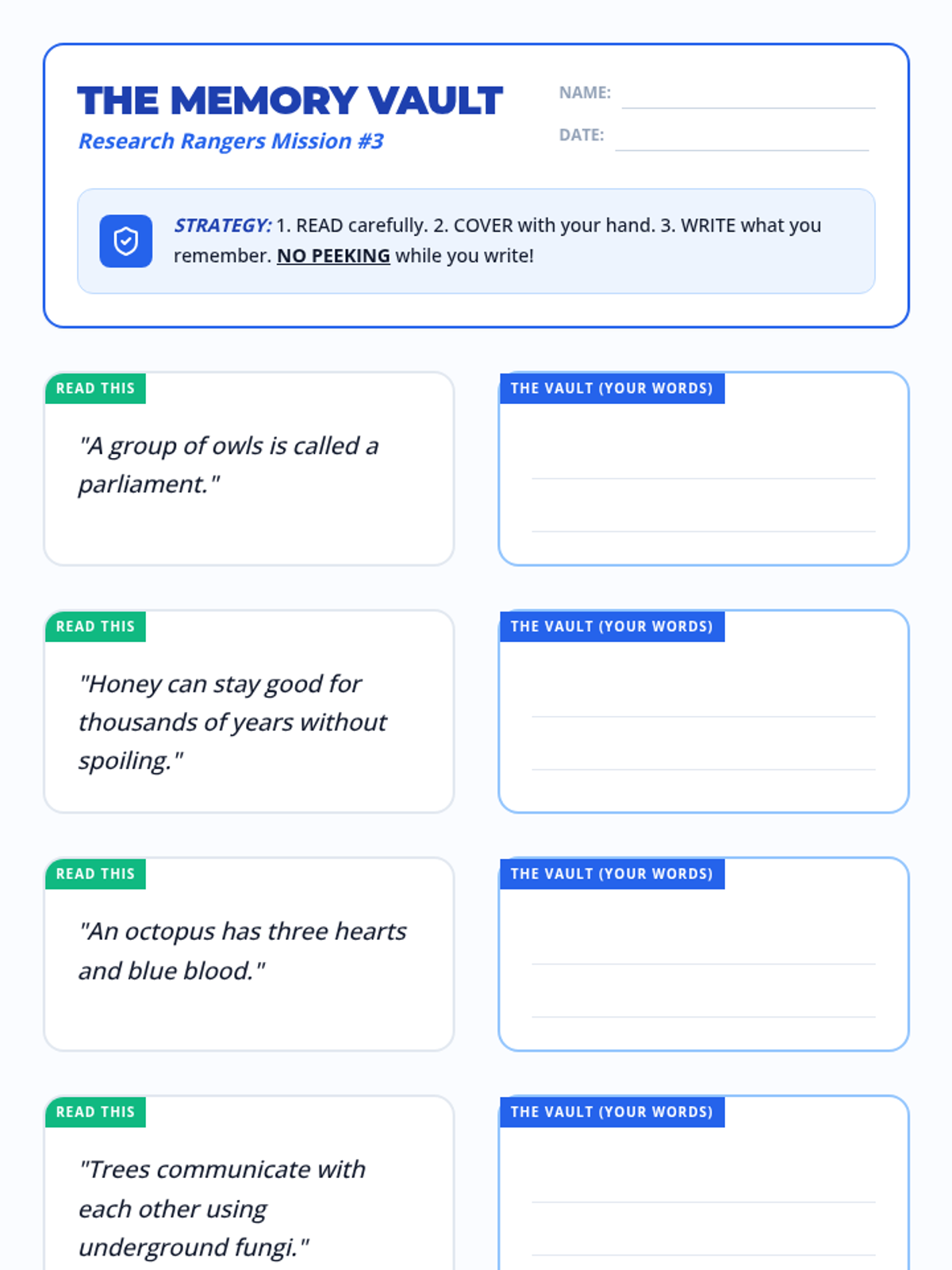
Student practice sheet for the 'Read-Cover-Write' strategy. Features side-by-side source text and student response areas designed to be used with a hand-covering technique to prevent copying.
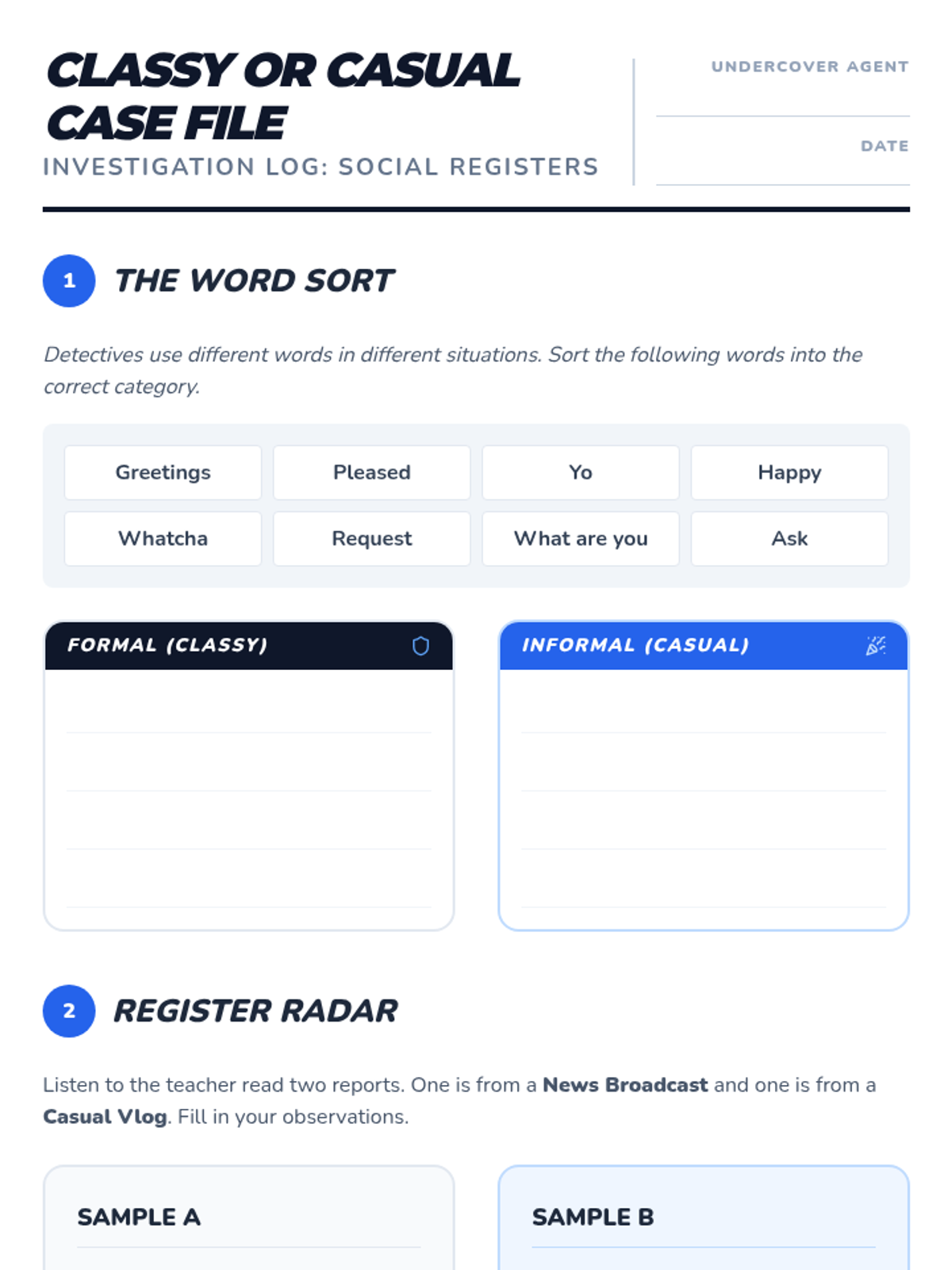
Student worksheet for Lesson 4: Classy or Casual. Students categorize vocabulary and analyze audio samples for formal and informal registers.
Educational slides for teaching the 'Read-Cover-Write' strategy. Introduces the 'eye-bounce' problem and provides a step-by-step guide for preventing plagiarism through memory recall.
Slides for Lesson 4: Classy or Casual, exploring formal and informal English registers. Features clear visual distinctions between different social contexts and speech styles.
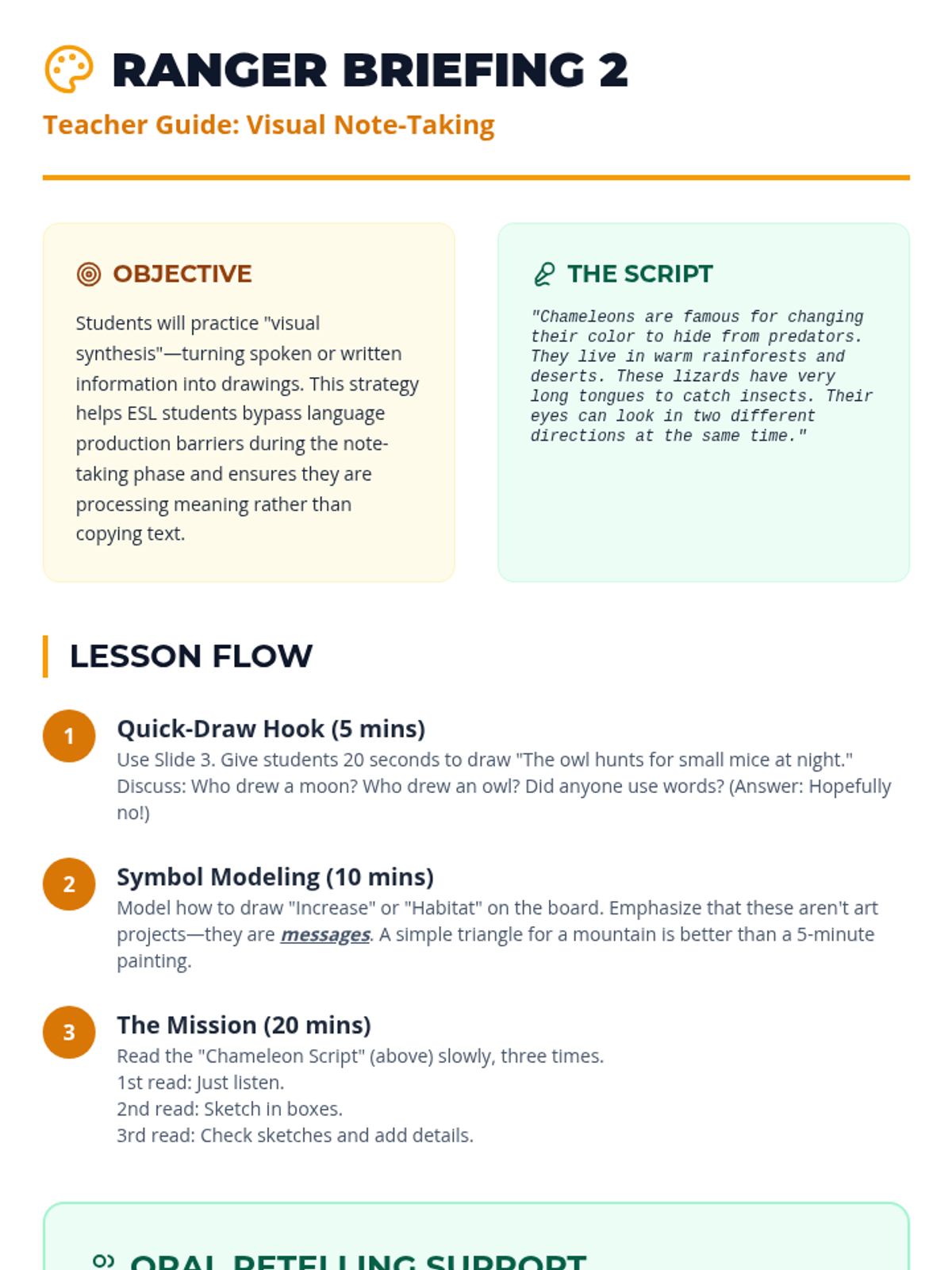
Teacher guide for Lesson 2. Includes the listening script (Chameleons), instructional steps for the quick-draw challenge, and facilitation tips for oral retelling.
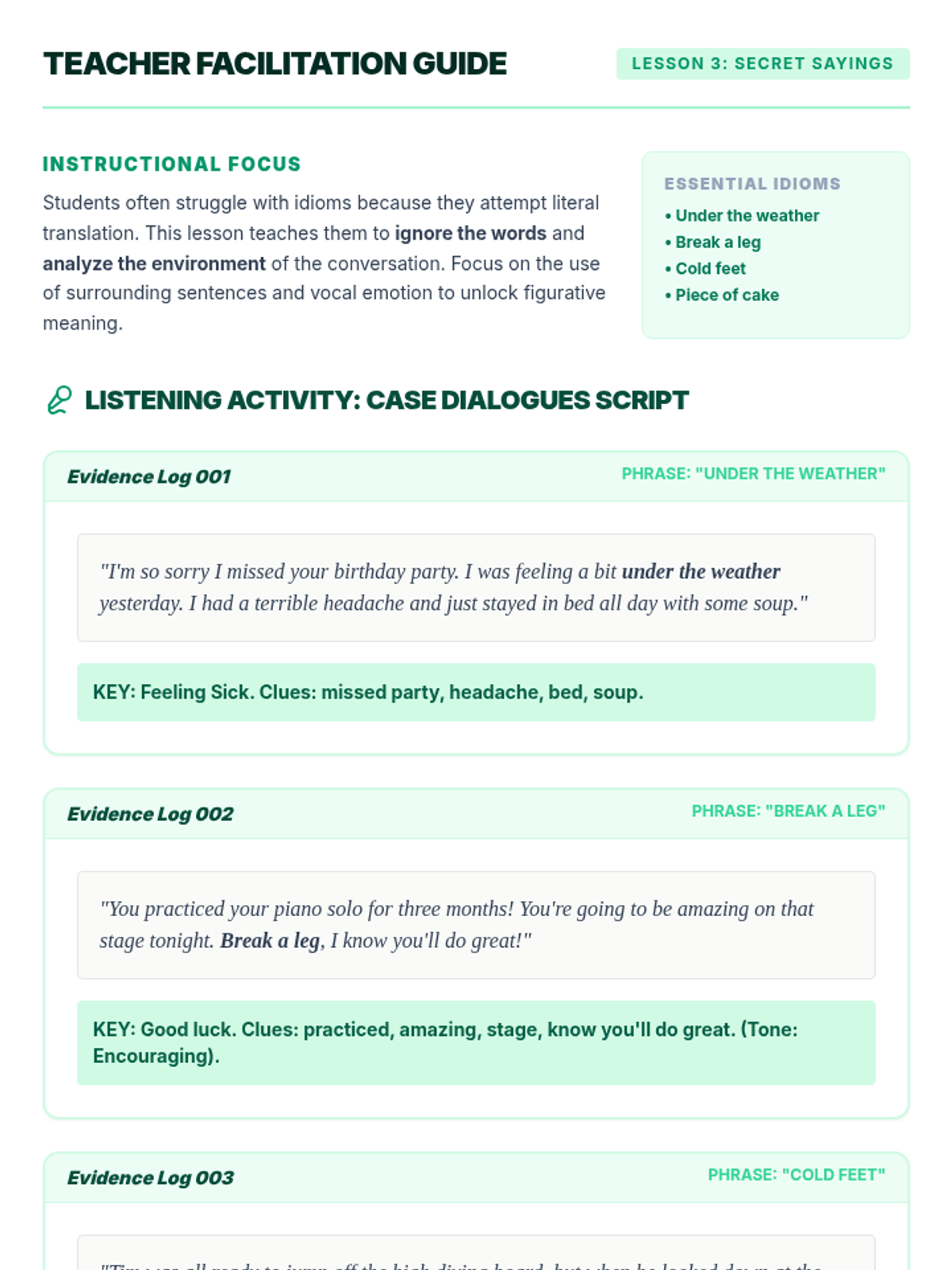
Teacher guide for Lesson 3: Secret Sayings. Provides dialogue scripts for four key idioms and guidance on how to teach context-based deduction over literal translation.
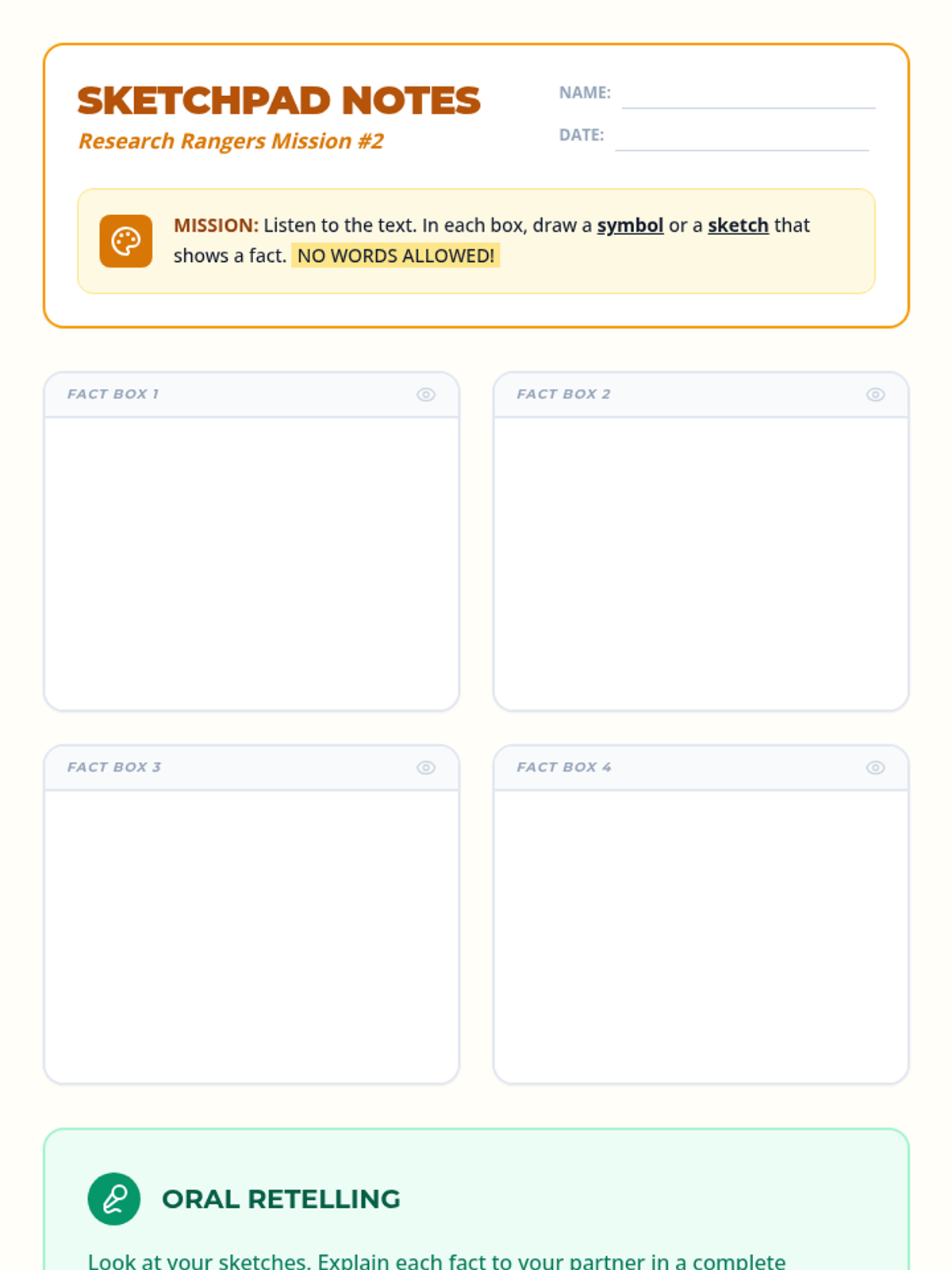
Student activity sheet for visual note-taking. Contains empty boxes for sketching facts and a section for peer retelling. Includes a small symbol cheat sheet for inspiration.
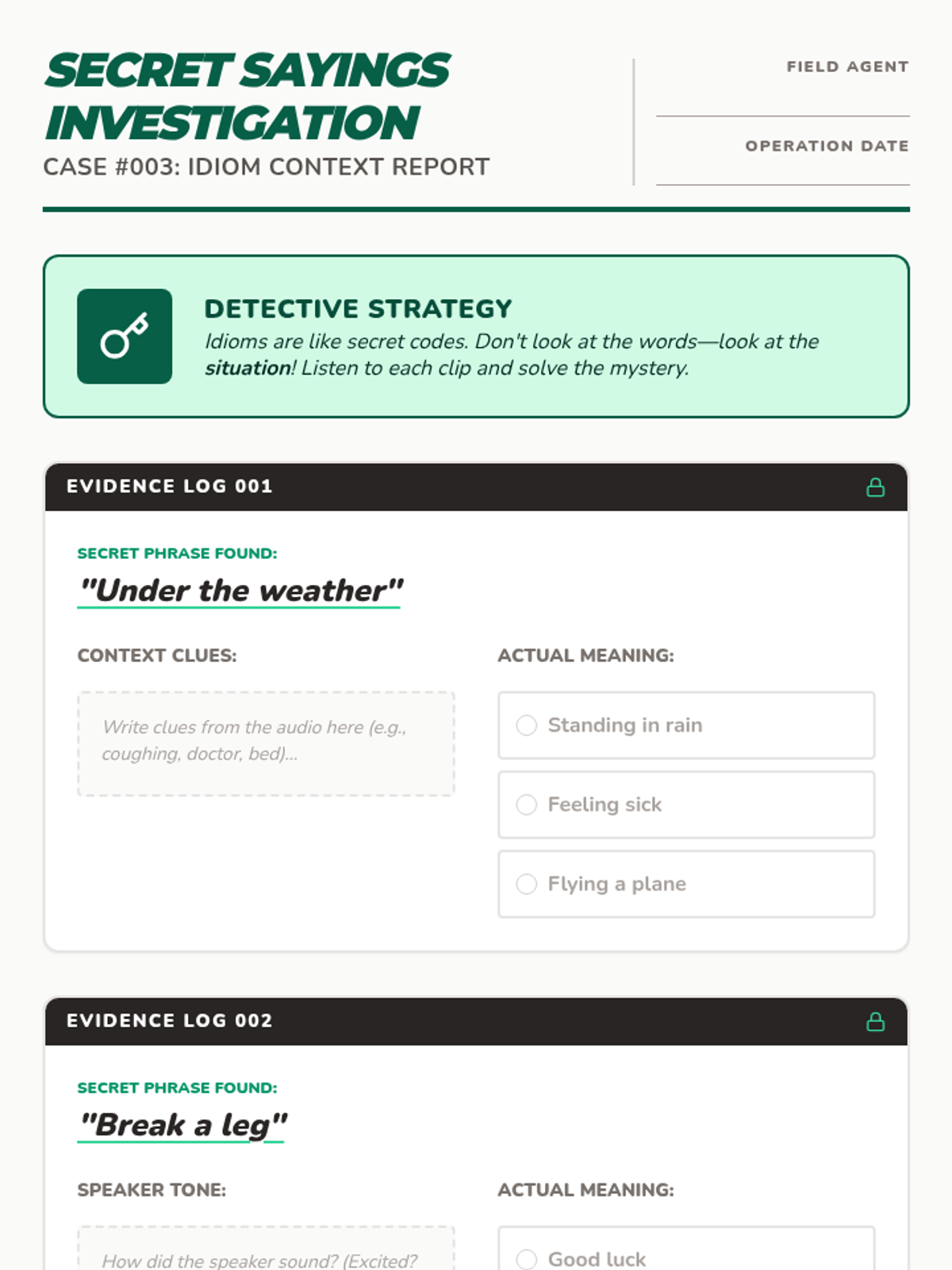
Student worksheet for Lesson 3: Secret Sayings. Students investigate three idioms by analyzing audio clips for context clues, speaker tone, and figurative meaning.
Educational slides for teaching visual note-taking strategies. Introduces the concept of sketching facts to bypass language barriers and prevent plagiarism, including a quick-draw challenge and symbol guide.
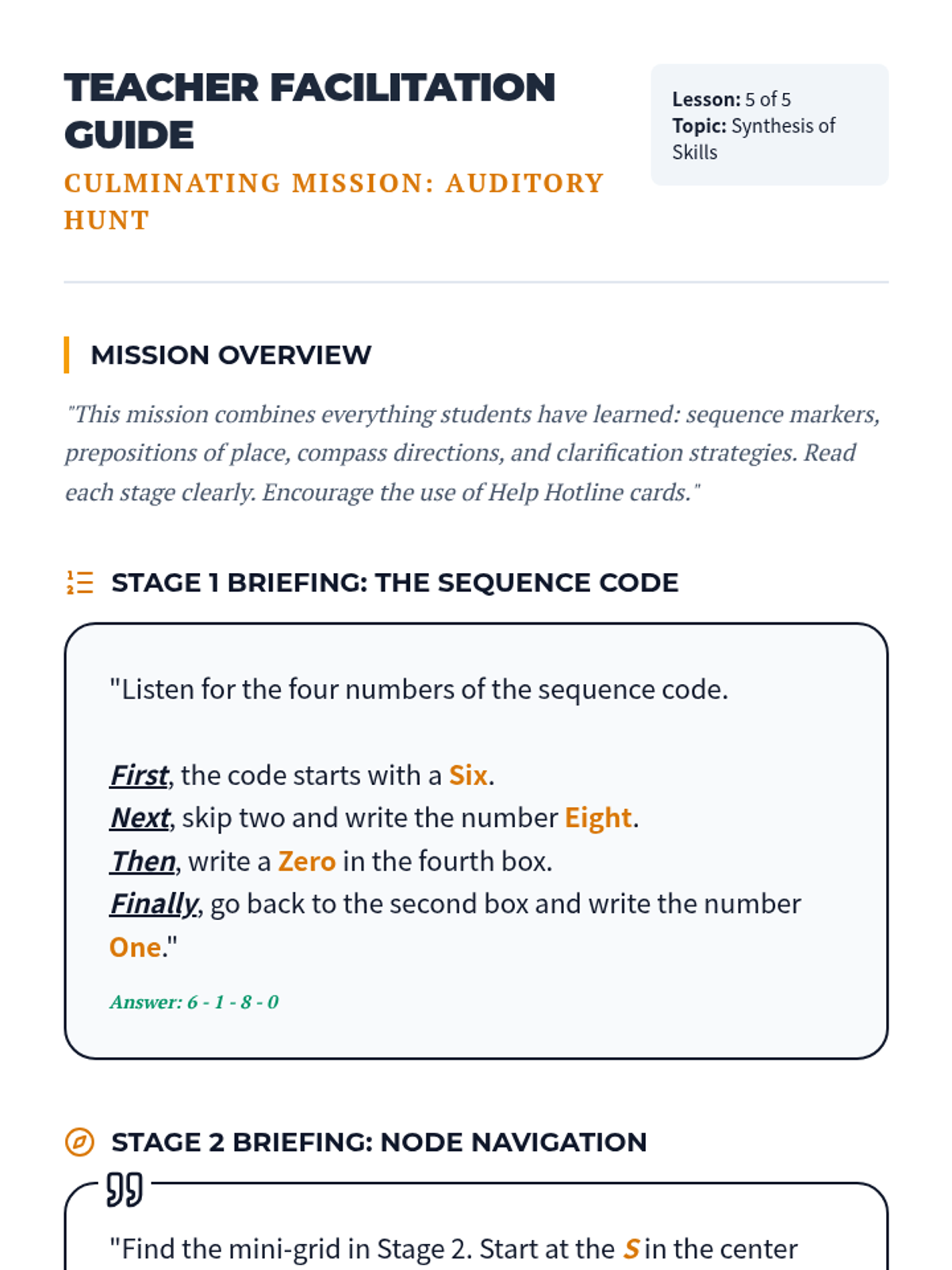
Teacher reference guide for Lesson 5, providing the auditory scripts for all mission stages and the final secret word solution for the Culminating Hunt.
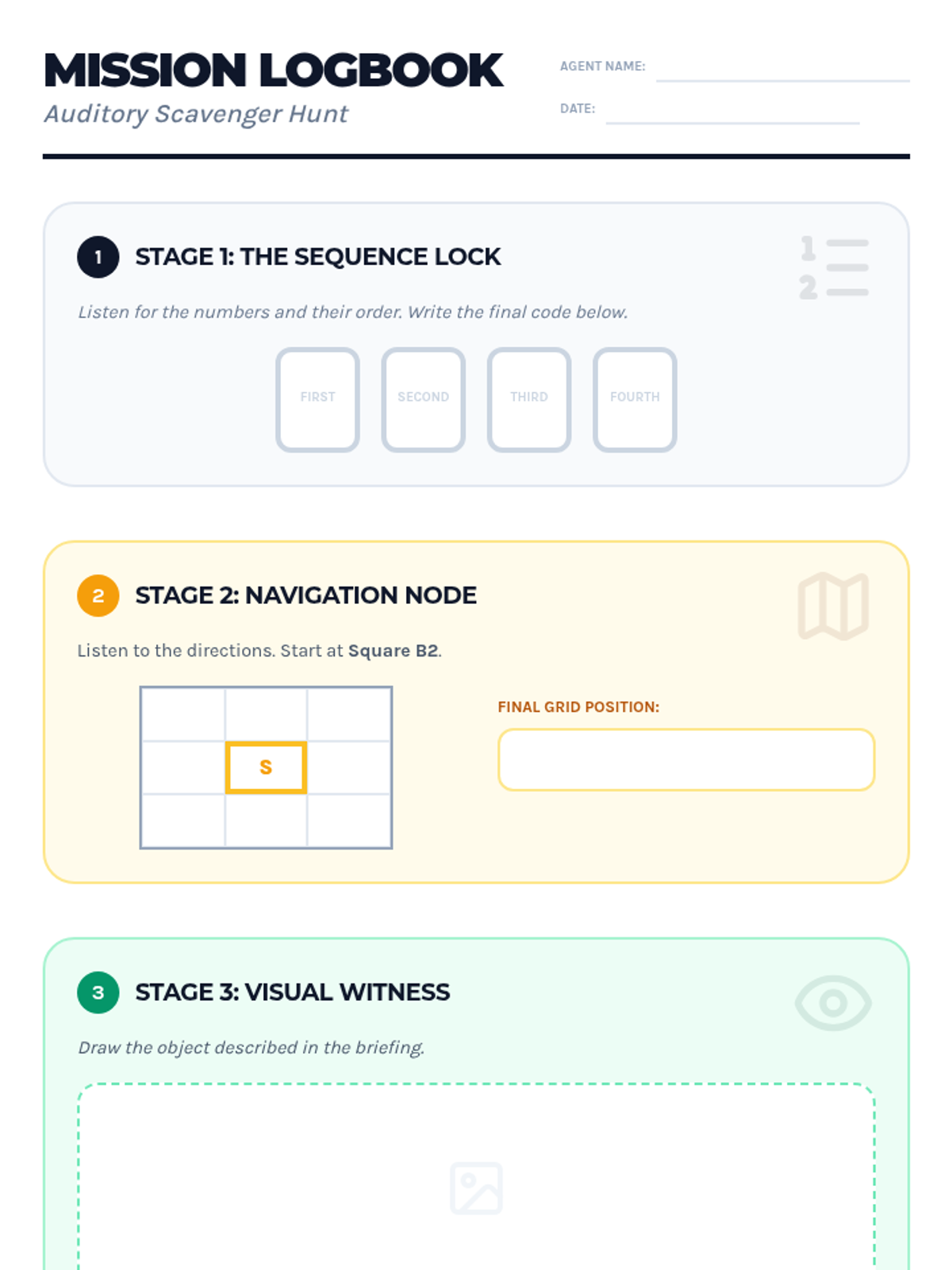
A multi-part student activity sheet for the culminating lesson, requiring students to synthesize sequence, spatial, and visualization skills to solve an 'Auditory Scavenger Hunt'.
Introductory slides for Lesson 5 focusing on the mission briefing and rules for the final Auditory Scavenger Hunt. Includes visual cues for mission readiness.
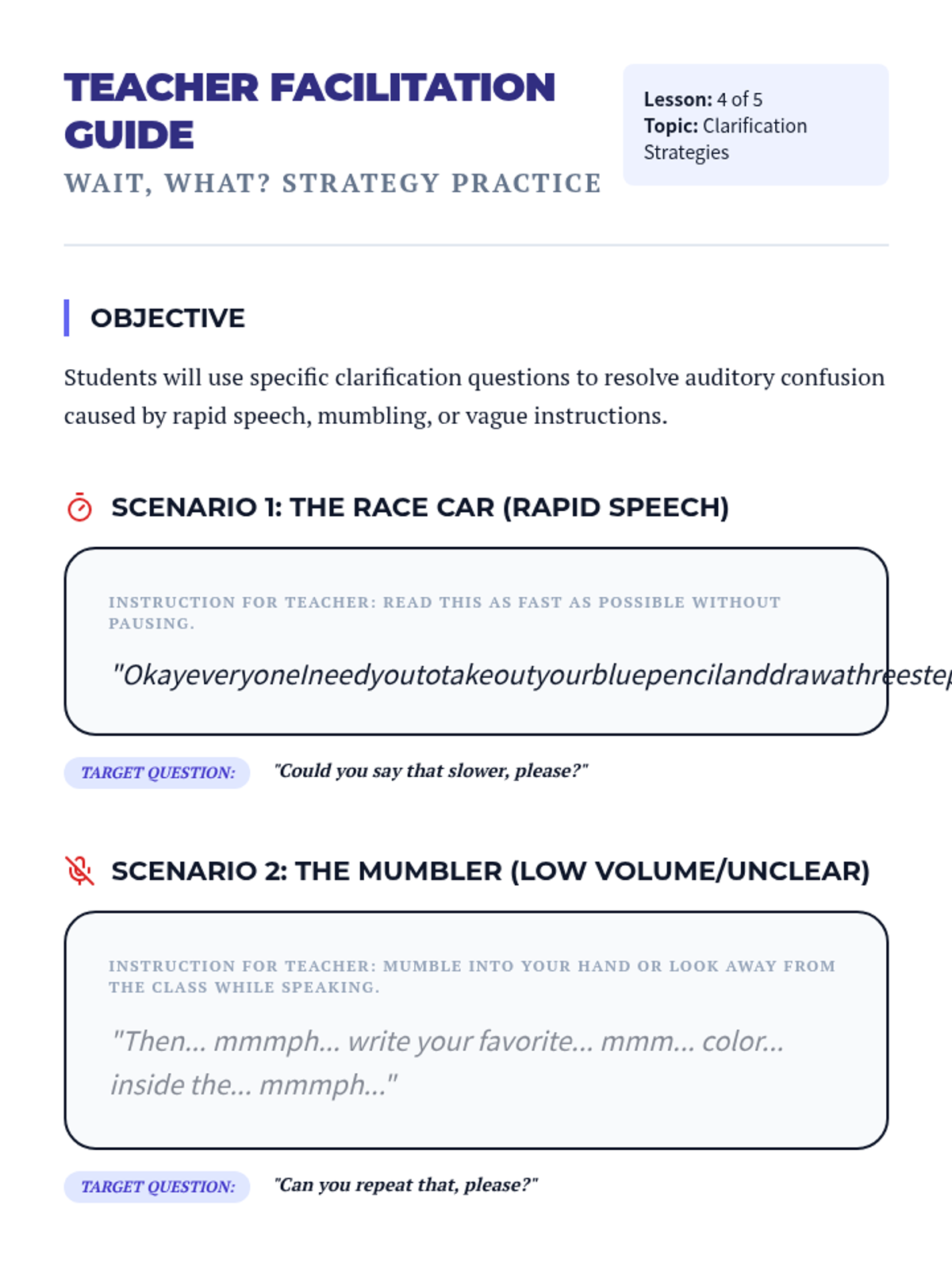
Teacher reference guide for Lesson 4, providing the auditory scripts for confusion scenarios and an assessment rubric for monitoring student clarification strategies.
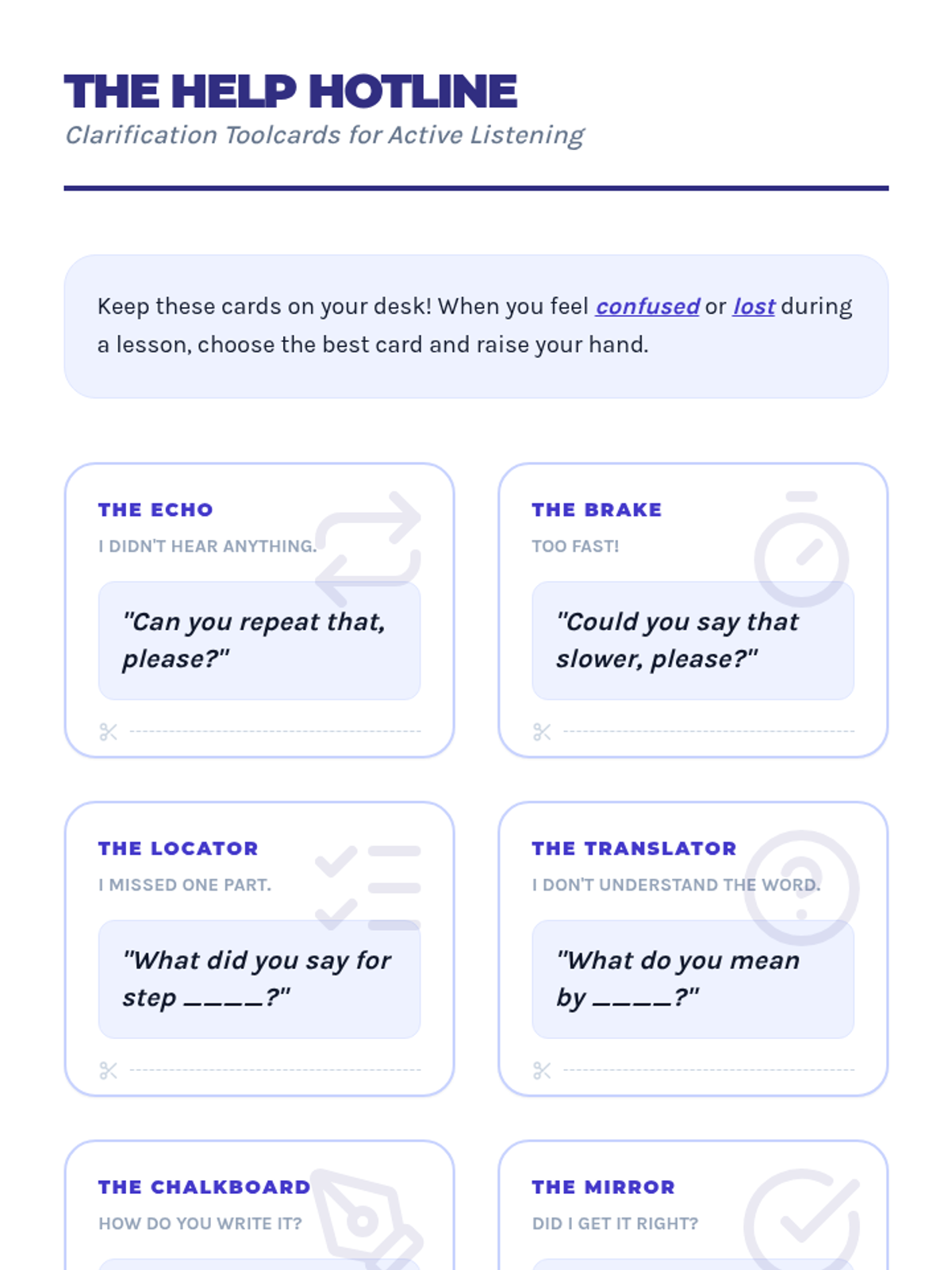
Student reference cards featuring essential phrases for asking for clarification, repetition, and explanation during auditory tasks. Designed for student use on desks.
Introductory slides for Lesson 4 focusing on clarification strategies, question structures, and active listening rules. Includes a hook for identifying 'instruction overload'.
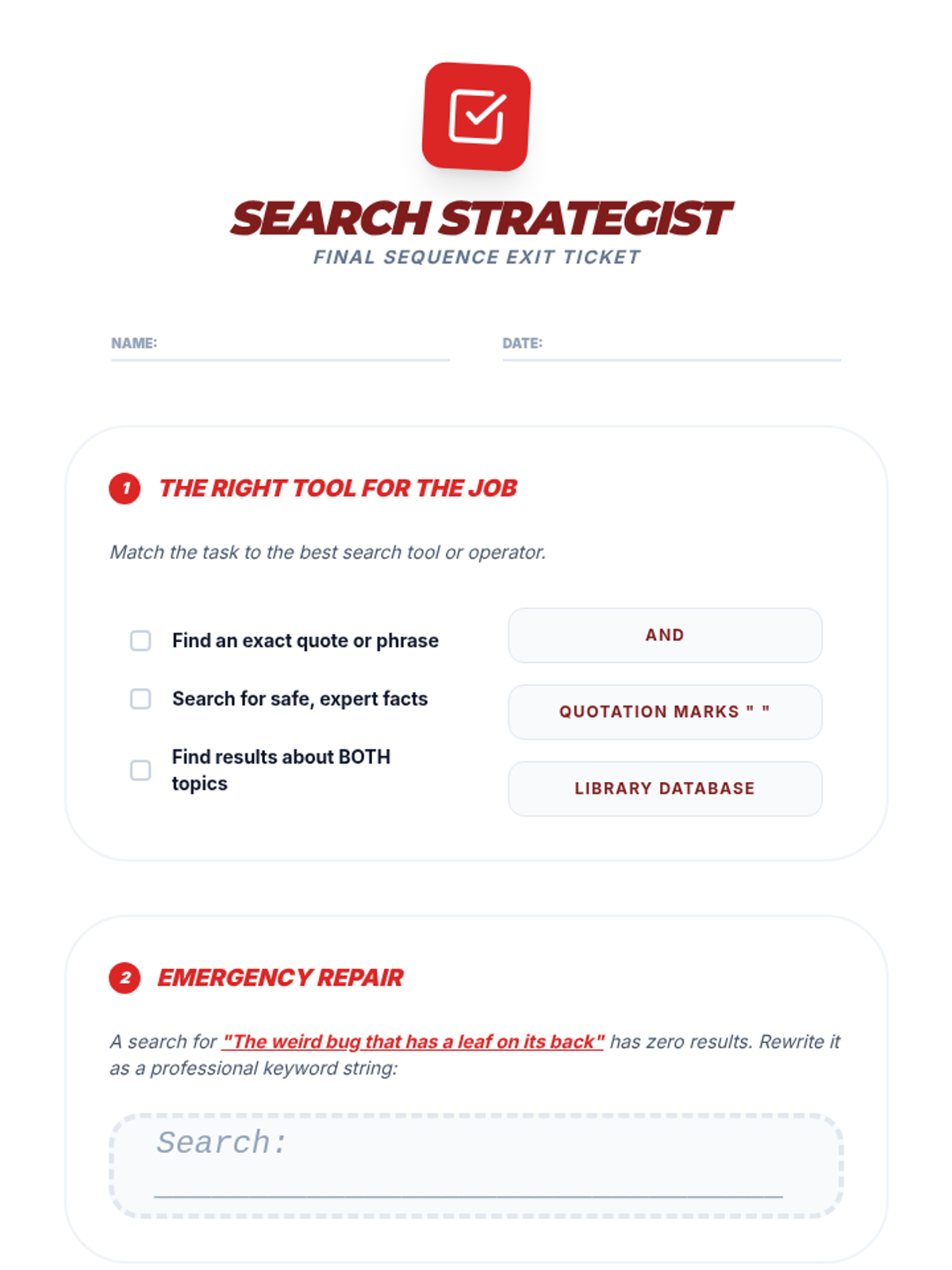
A cumulative exit ticket for the "Search Superstars" sequence, assessing student mastery of keywords, Boolean operators, text features, and database usage.
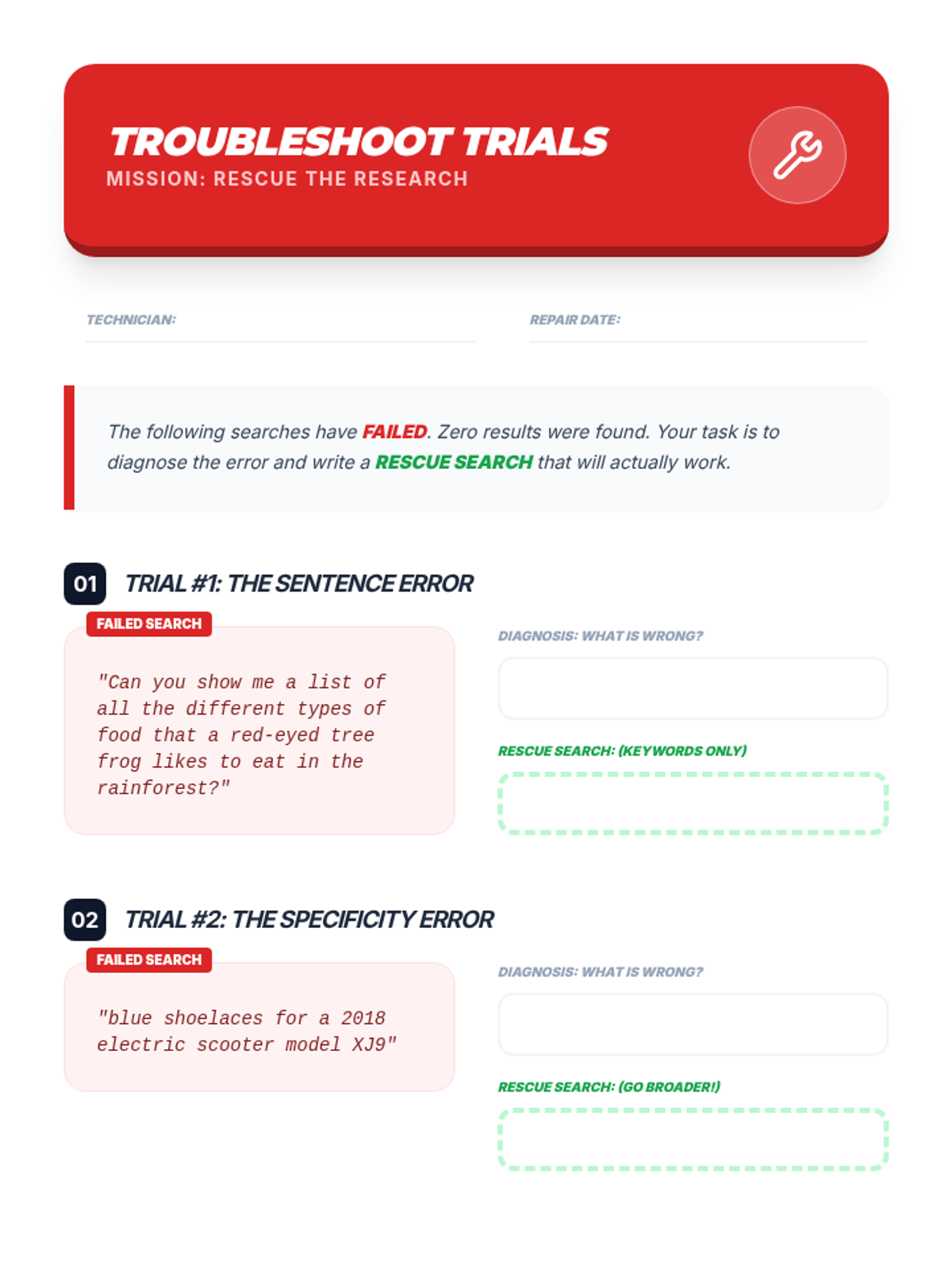
A troubleshooting-focused worksheet that presents students with failed search scenarios and requires them to diagnose the error and rewrite the search string using effective strategies.
A visual guide for 5th grade ESL students on troubleshooting failed search attempts, focusing on identifying too-long sentences and overly specific terms as common causes of zero results.
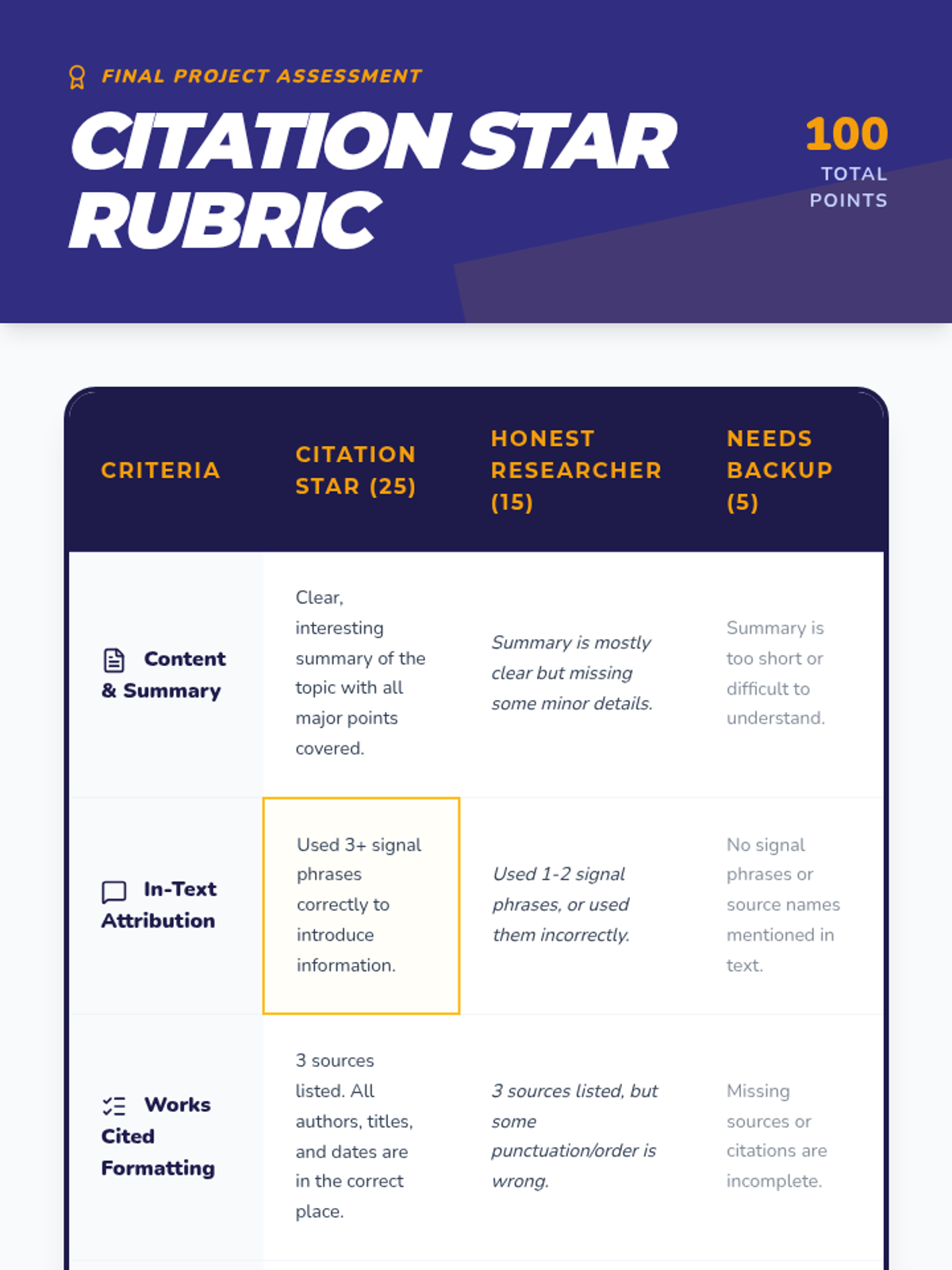
Comprehensive grading rubric for the Research Credits poster project, evaluating summary quality, in-text attribution, Works Cited formatting, and visual design.
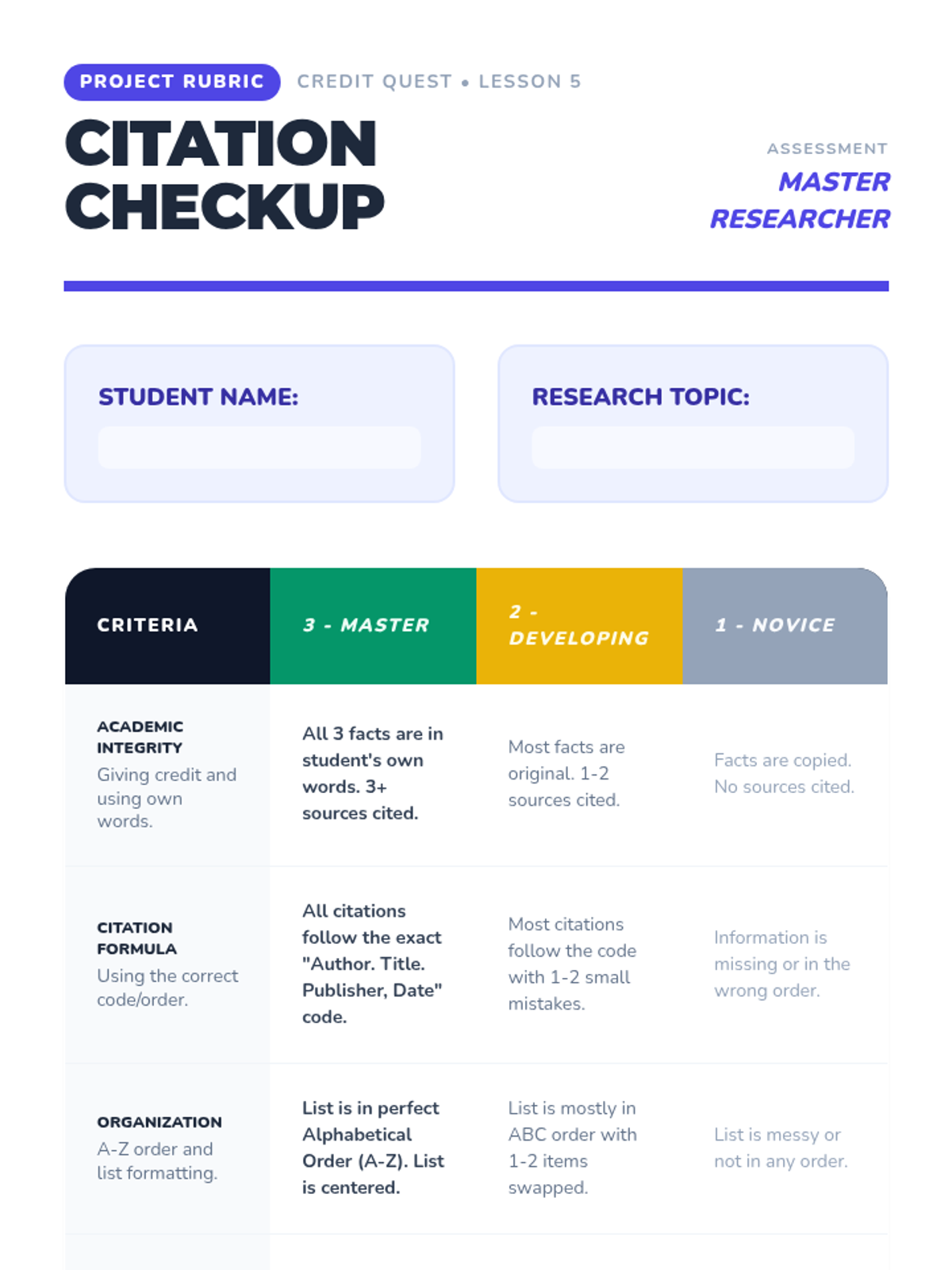
Final project rubric for Lesson 5. Evaluates academic integrity, citation formula accuracy, alphabetical organization, and punctuation. Includes sections for teacher feedback.
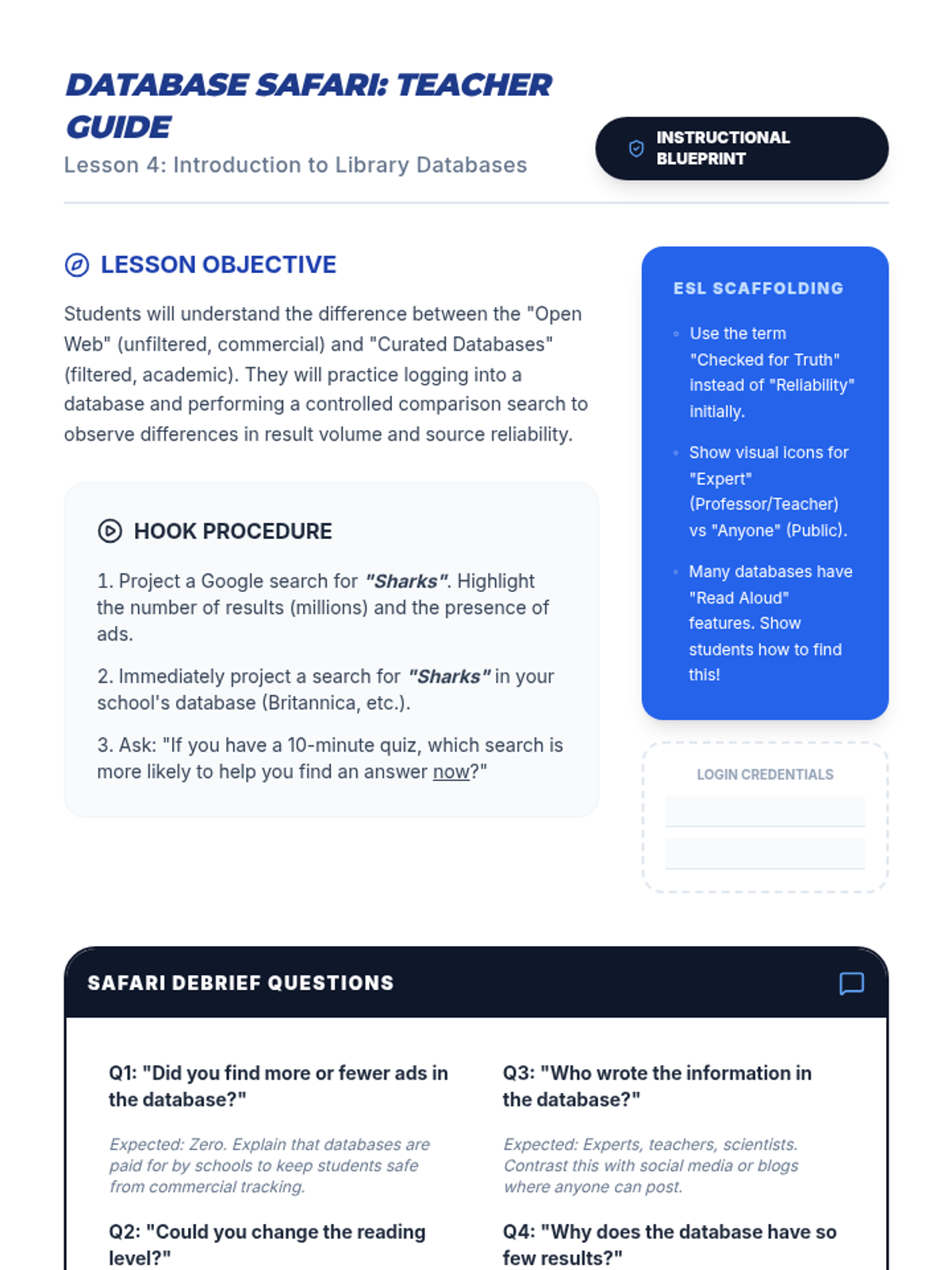
A comprehensive teacher resource for Lesson 4, including the lesson hook, ESL scaffolding strategies, debriefing questions, and a troubleshooting guide for database usage.
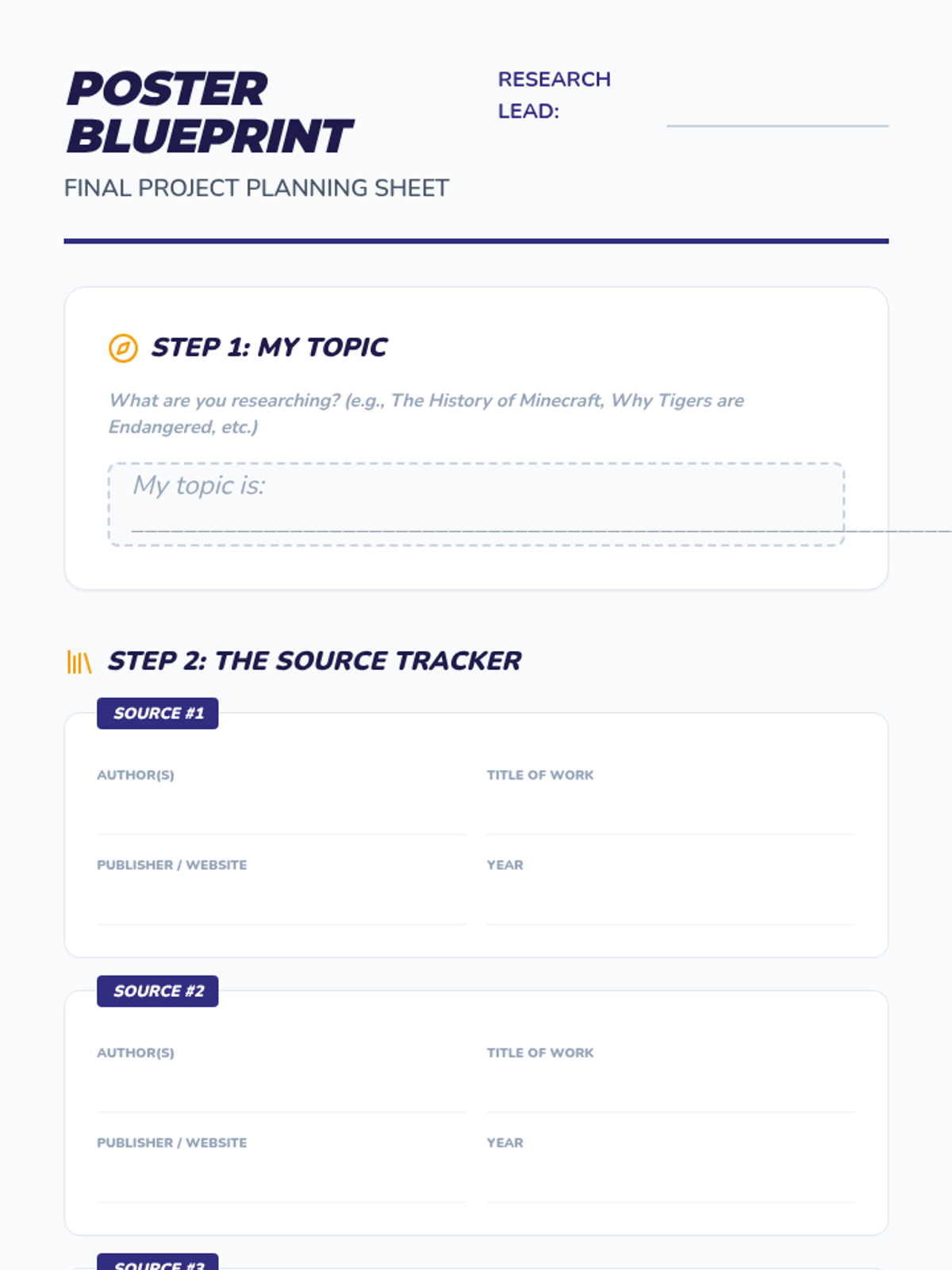
Detailed planning document for the Research Credits poster project, providing space for 6th-grade students to track sources, draft their summary, and plan their layout.
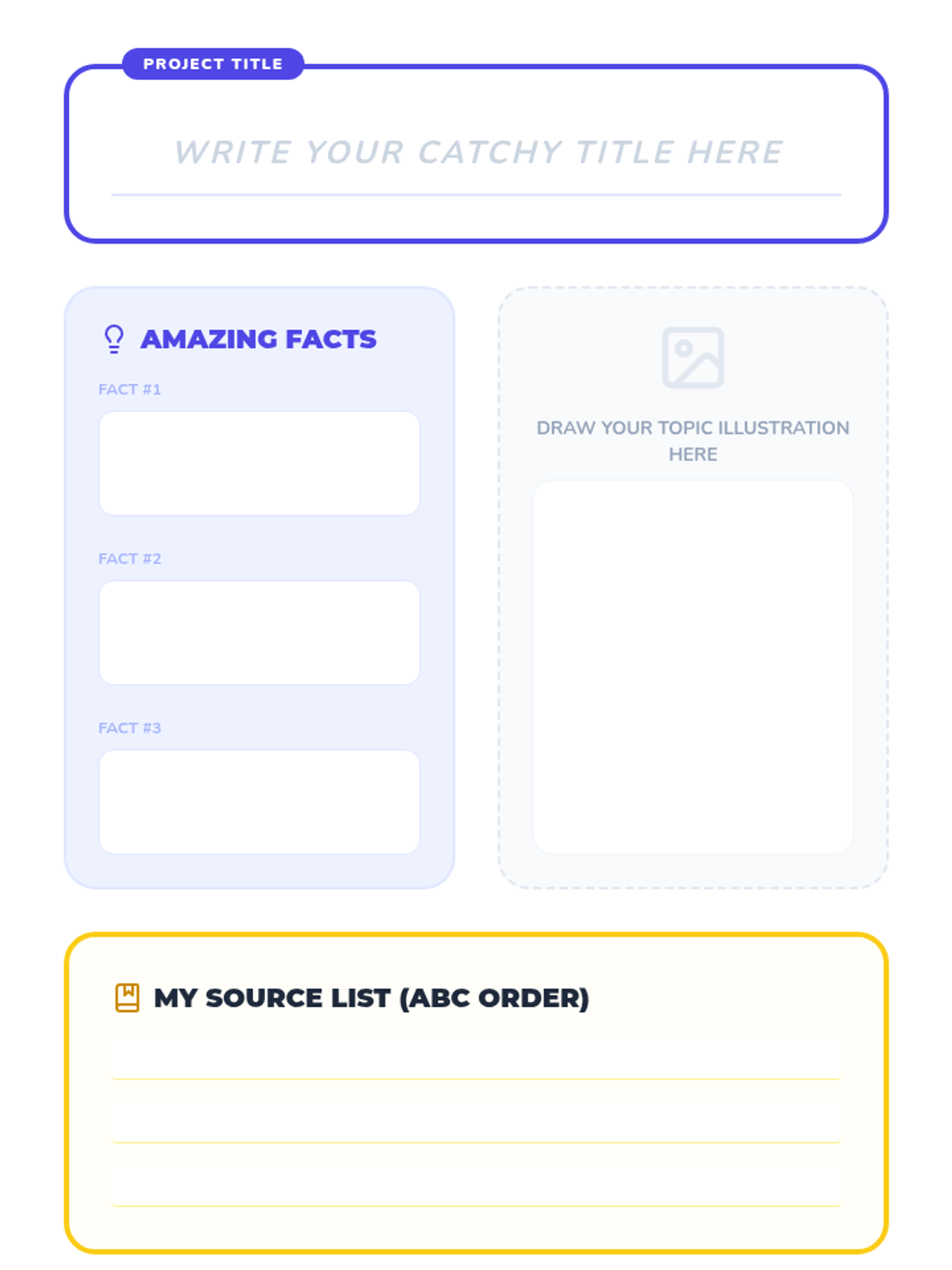
A structured research poster template for the final project. Includes sections for a title, three facts, an illustration, and a formatted bibliography.
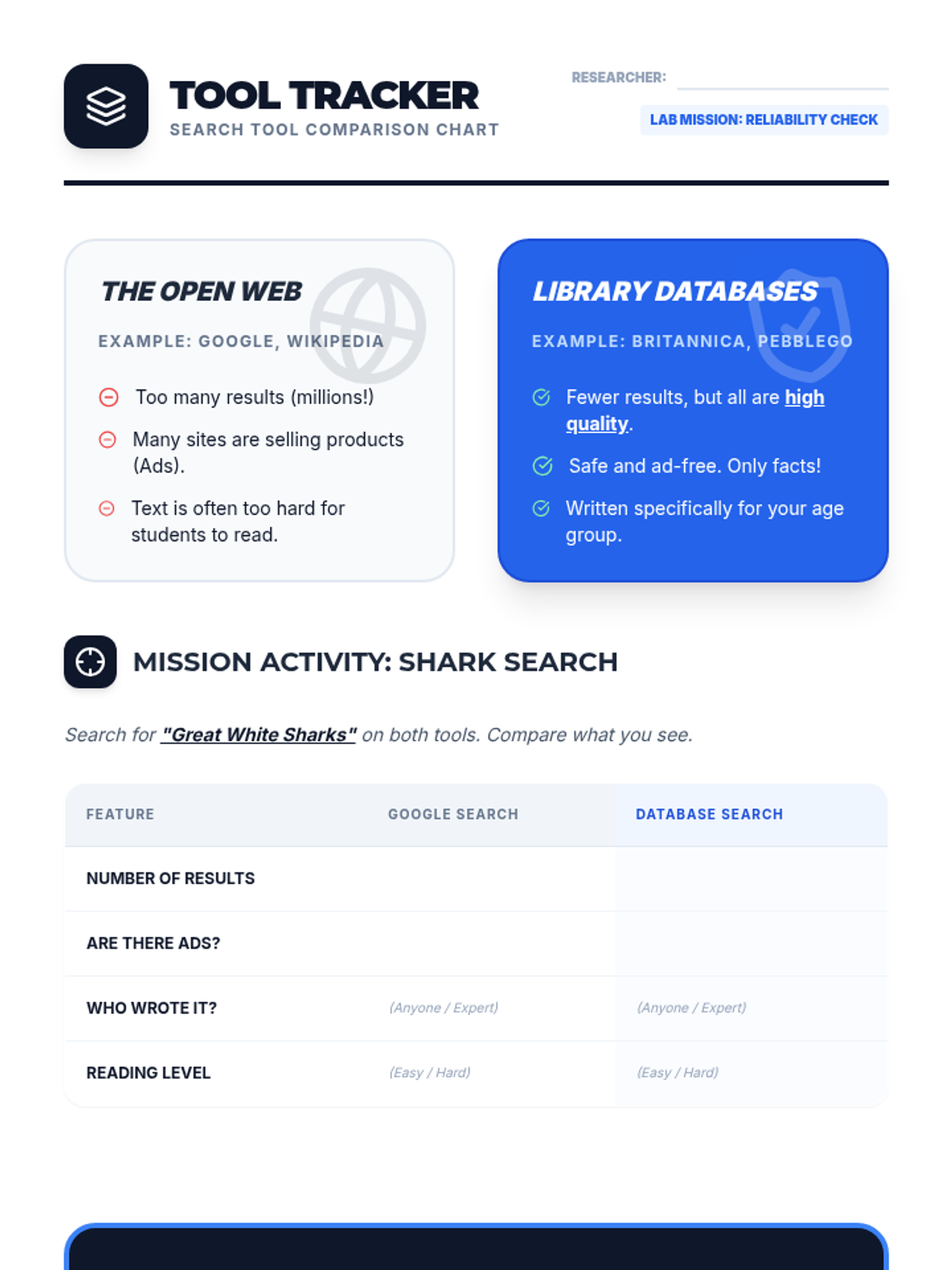
A guided comparison worksheet for 5th graders to track and analyze the differences between an open web search (Google) and a curated school database.
Slide deck for the final project of the sequence, explaining the "Research Credits" poster requirements and connecting academic integrity to the concept of a movie's credit roll.
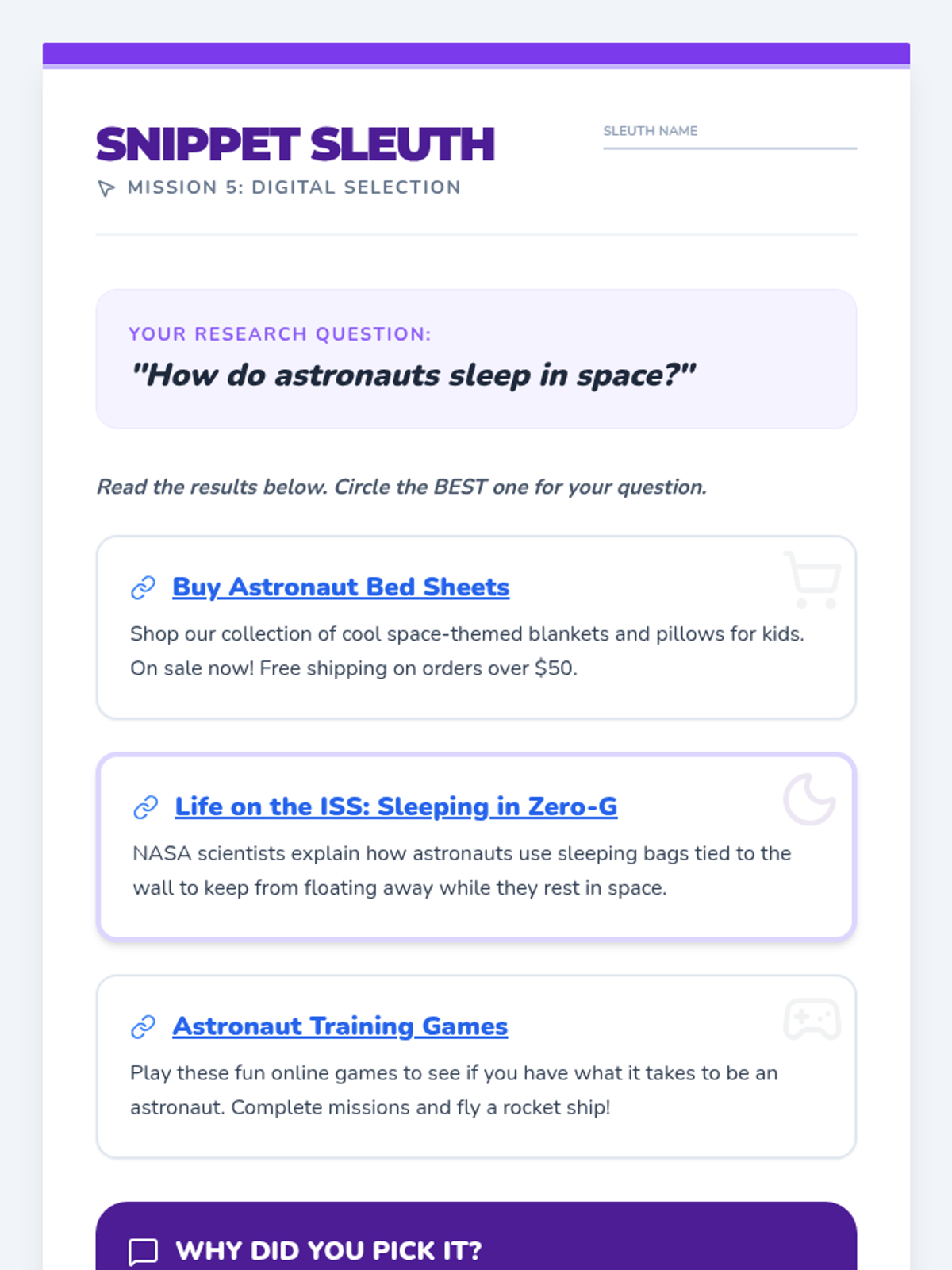
Student worksheet for Lesson 5, featuring simulated search results (snippets) that students must evaluate to choose the most appropriate source for a research question about astronauts.
Visual slides for Lesson 5 on the final mini-research project. Outlines project requirements and the gallery walk procedure.
A visual presentation for 5th grade ESL students comparing open web searches (Google) to curated library databases (Britannica, PebbleGo), highlighting reliability, safety, and organization.
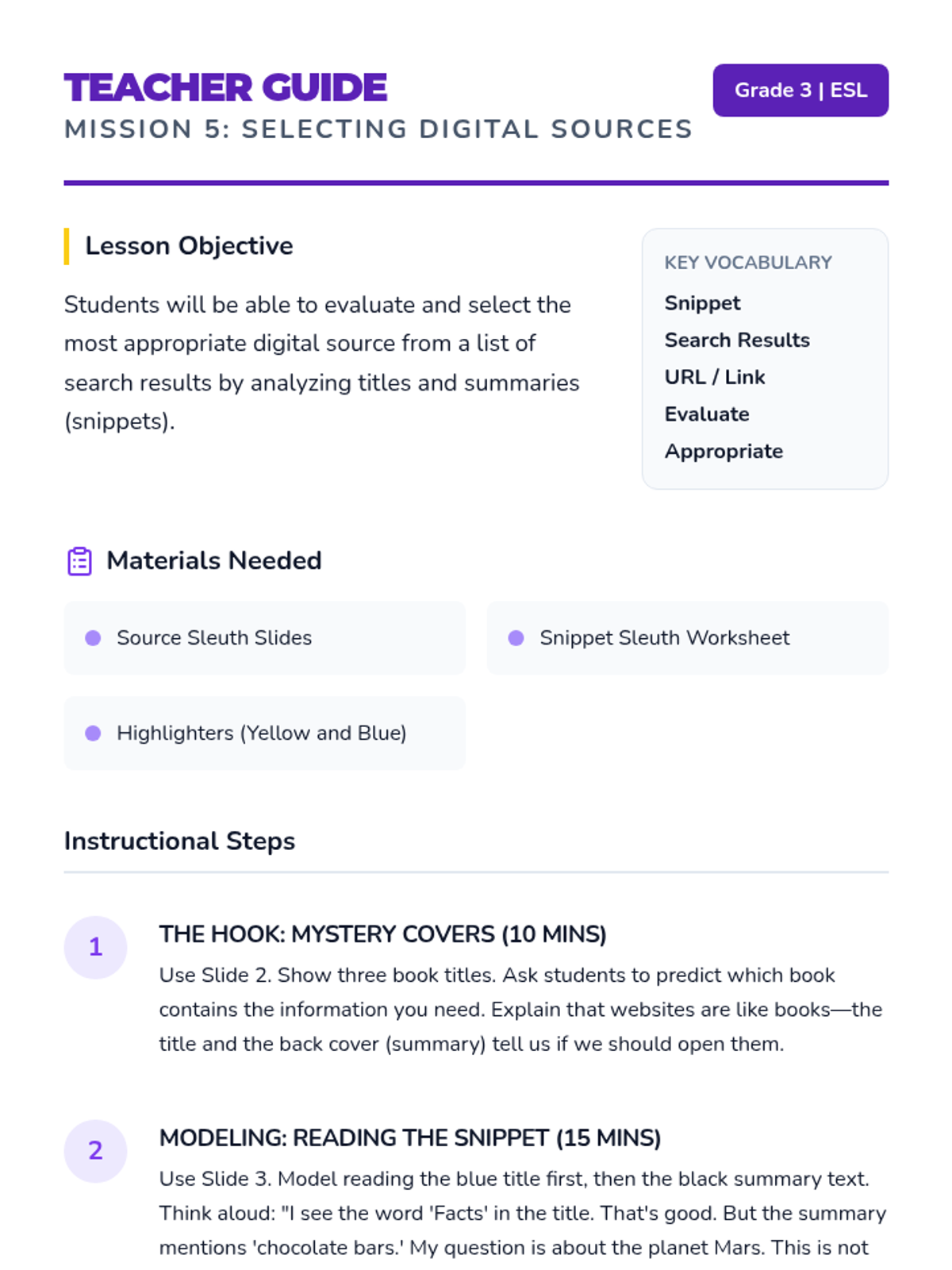
Teacher's guide for Lesson 5, focusing on evaluation of digital search snippets and teaching students to use titles and summaries as evidence for source selection.
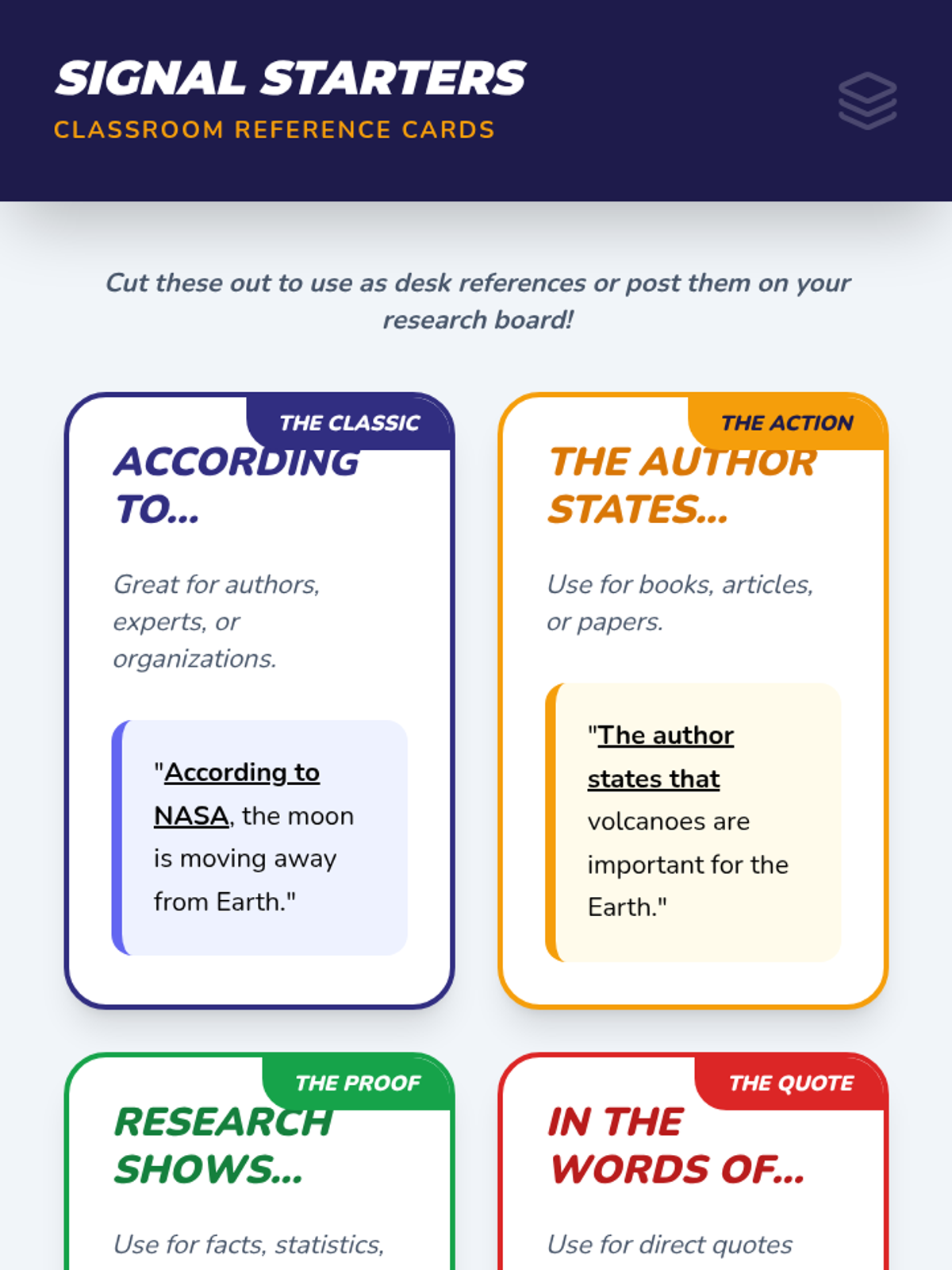
Set of classroom reference cards for 6th-grade students, featuring common signal starters for in-text citations with examples and punctuation tips.
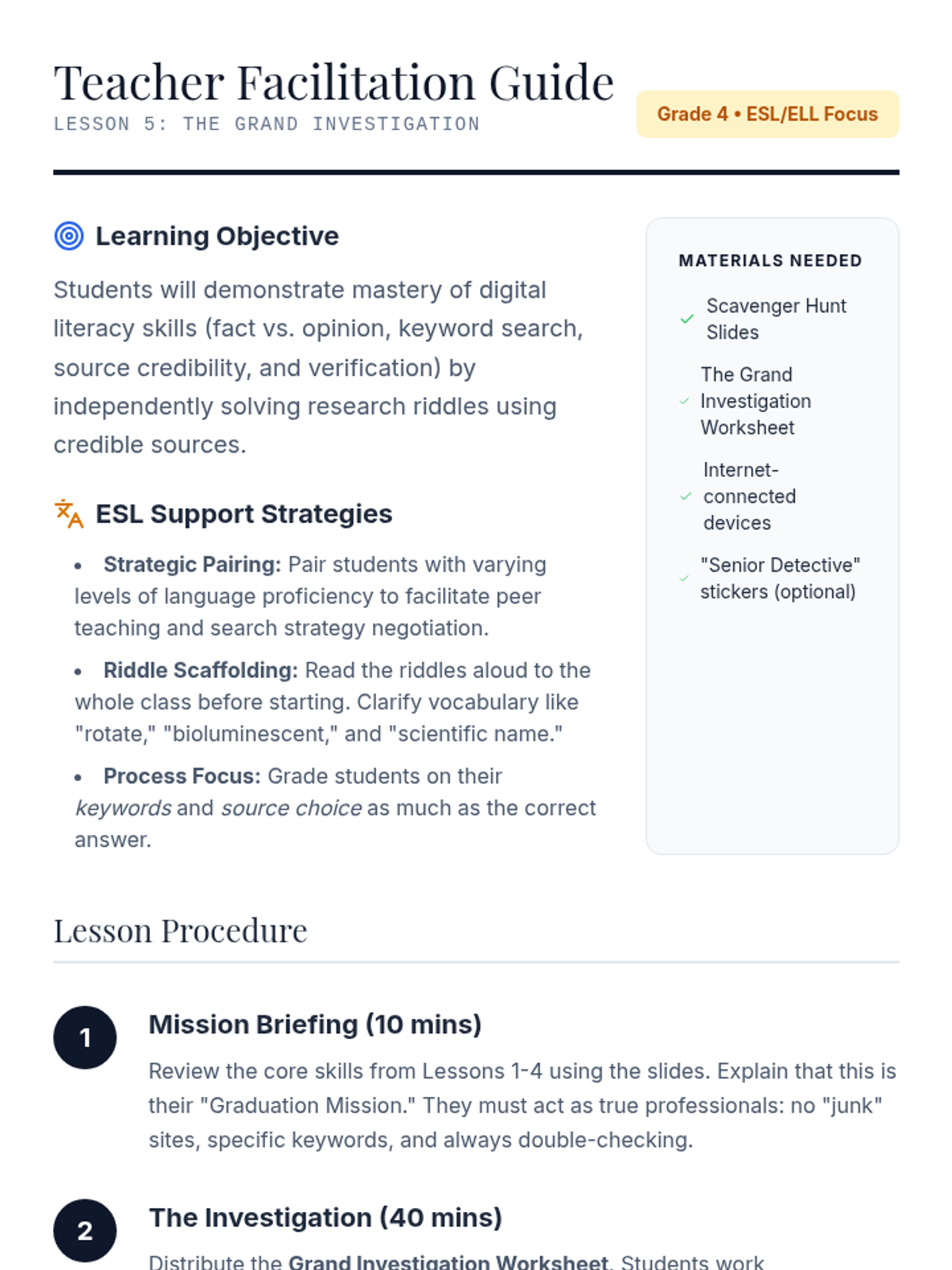
Teacher facilitation guide for the final "Grand Investigation" mission. Includes lesson timing, pairing strategies, and a detailed answer key for the scavenger hunt riddles.
Printable 'Lead Detective' badges to be awarded to students upon completion of the Information Detectives sequence.
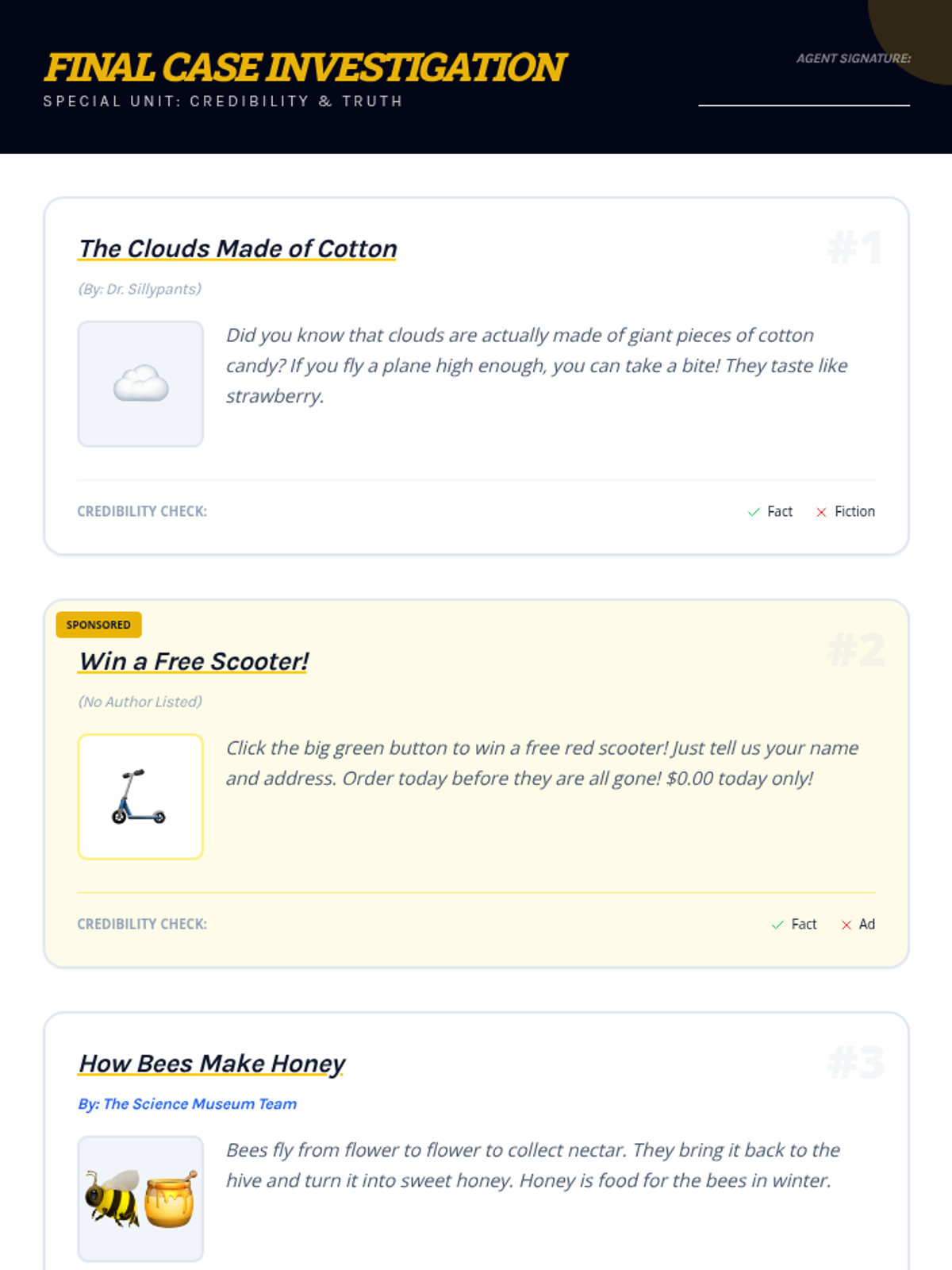
A final assessment worksheet where students investigate three articles and determine which is a credible fact based on their 'Information Detective' skills.