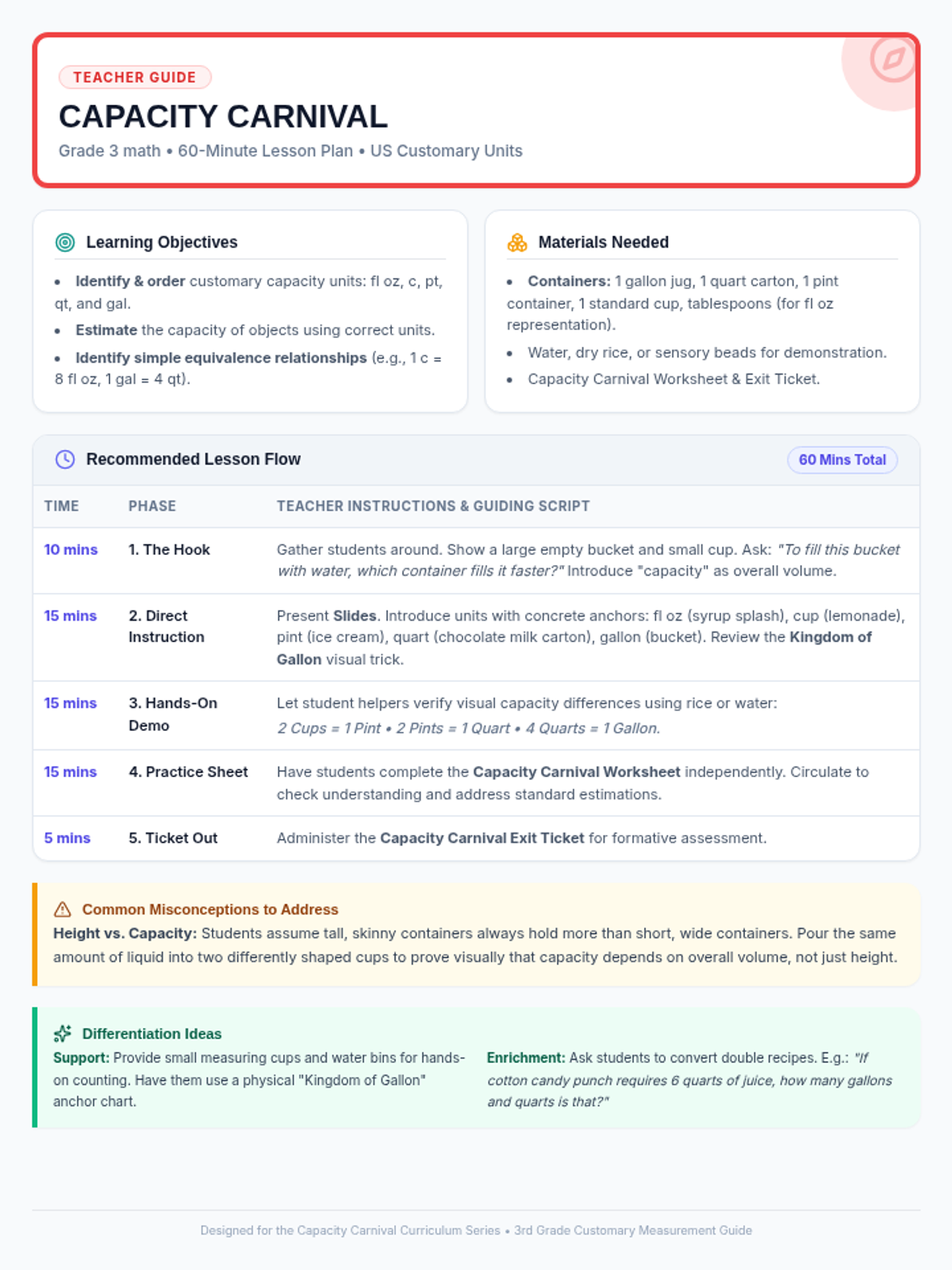
Students explore the conservation of liquid volume and the importance of standard measurement units (milliliters) through a hands-on estimation activity and video analysis.
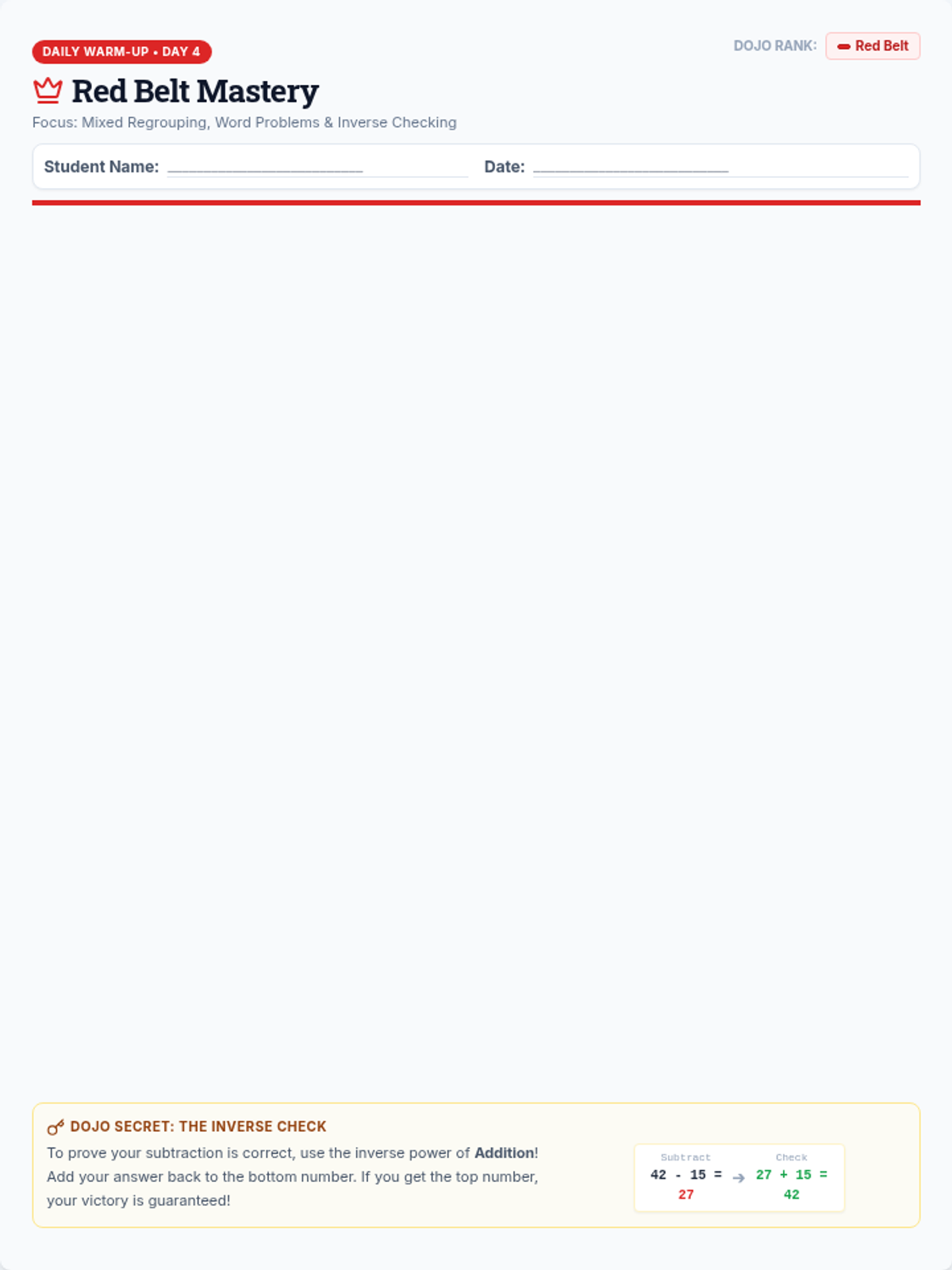
Synthesizing addition and subtraction strategies to solve multi-step word problems.
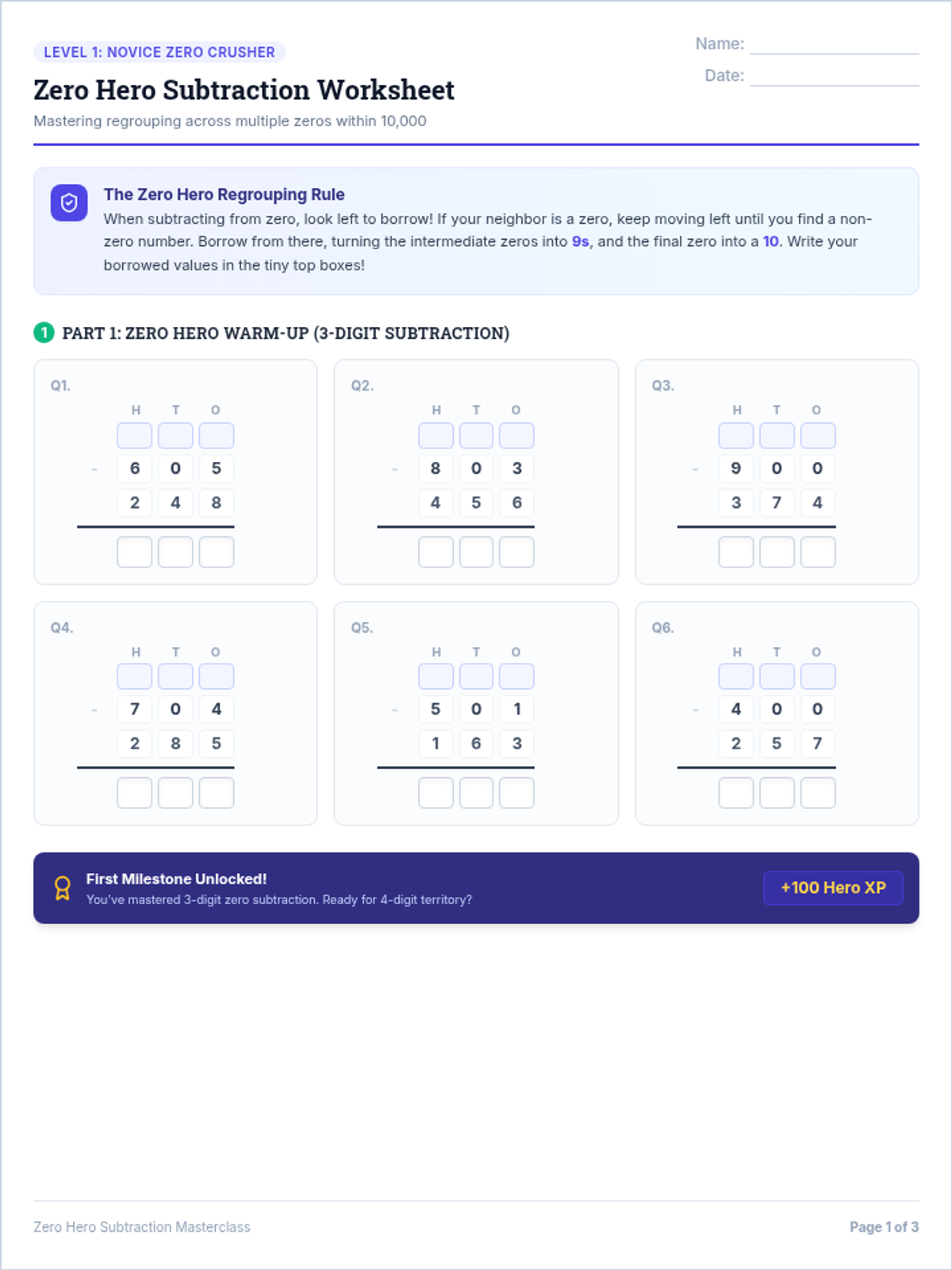
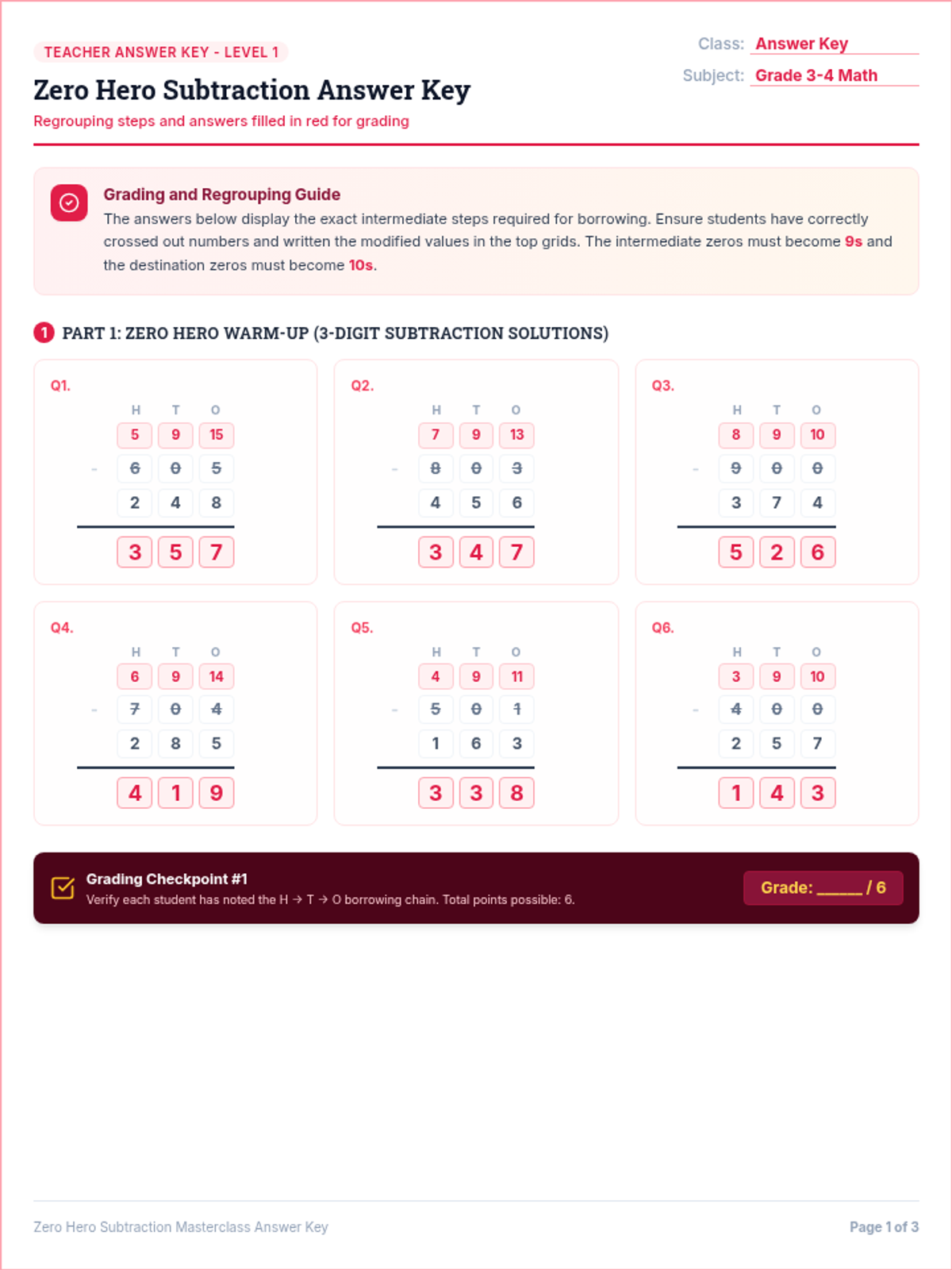
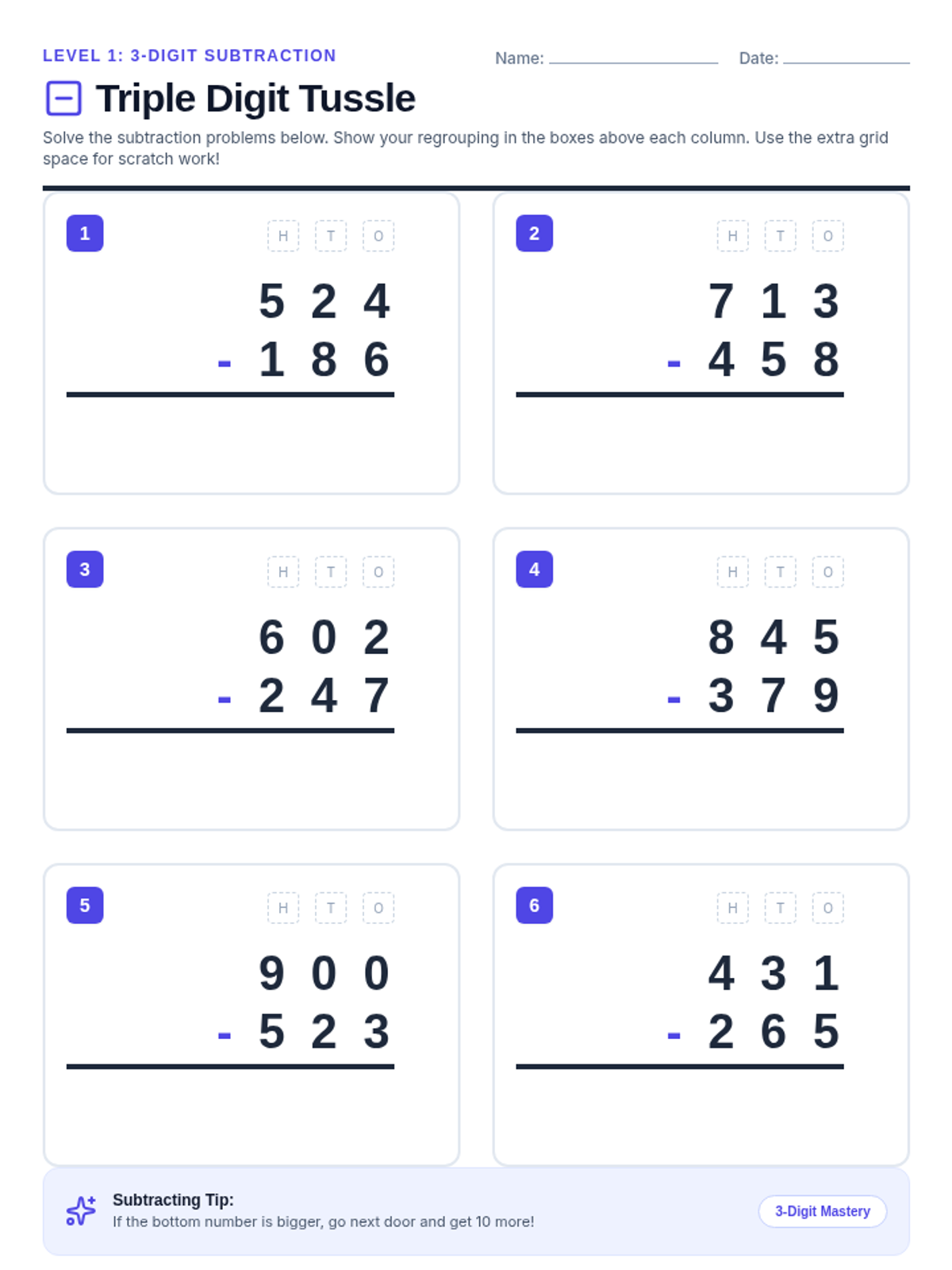
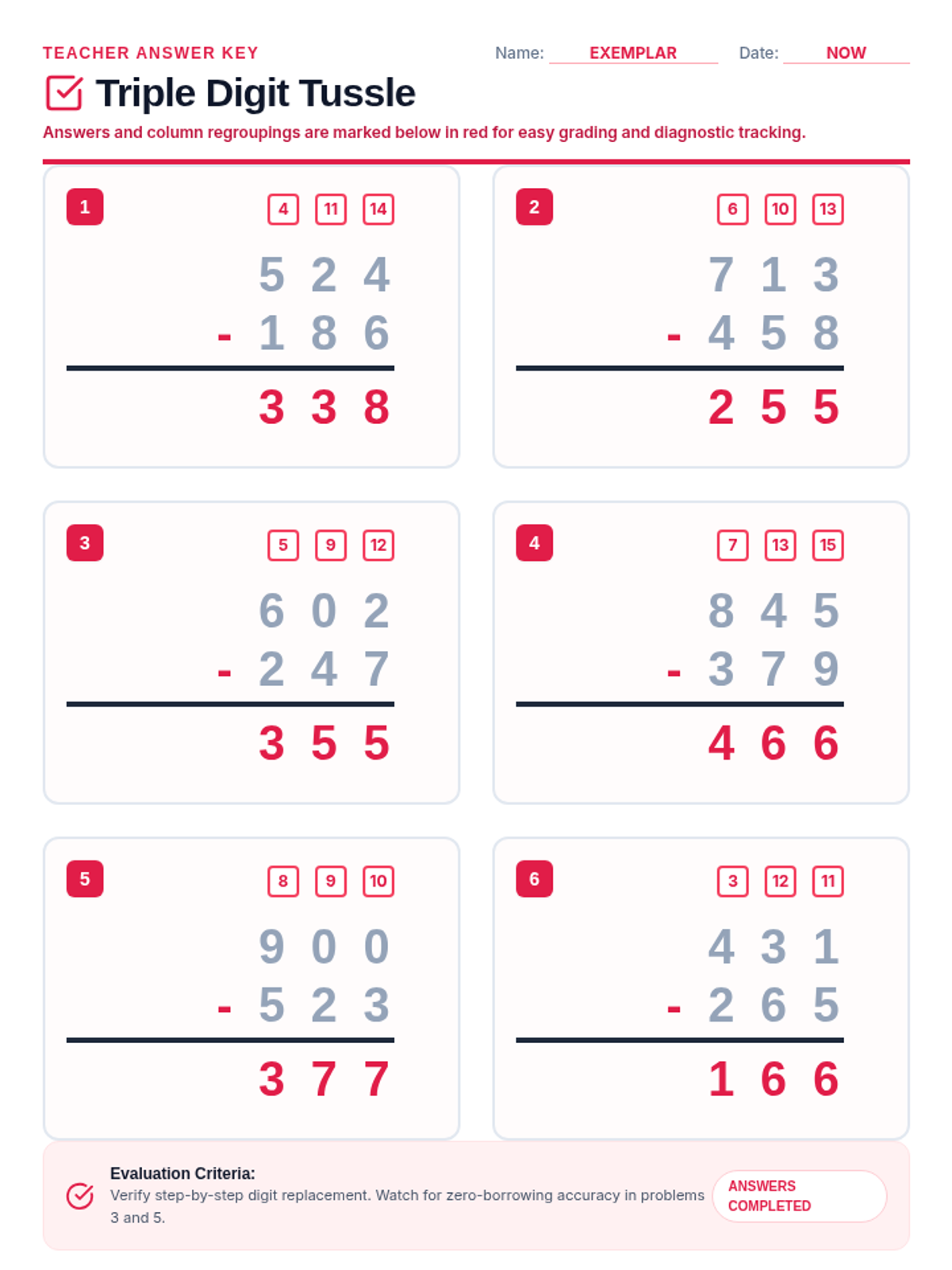
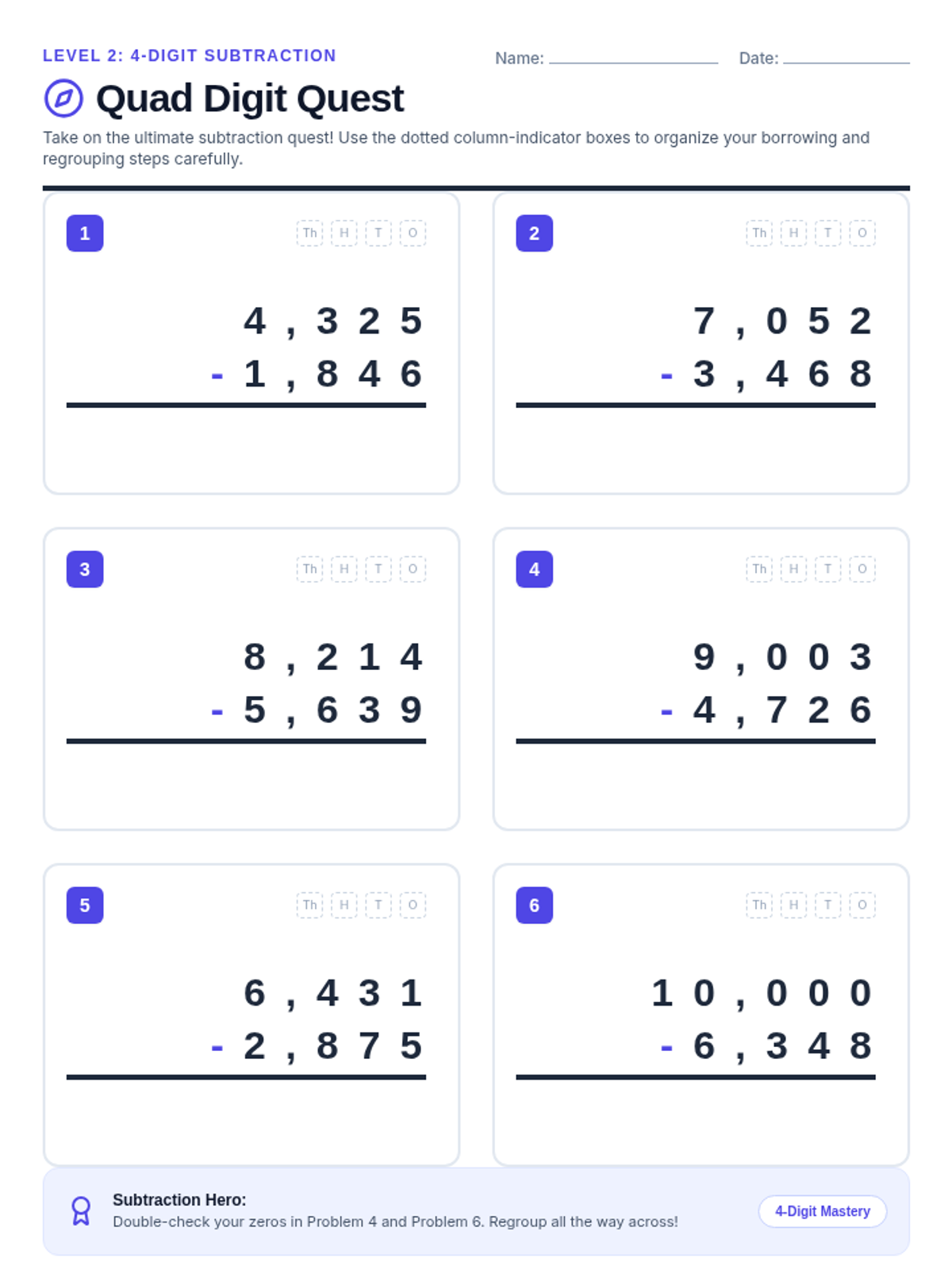
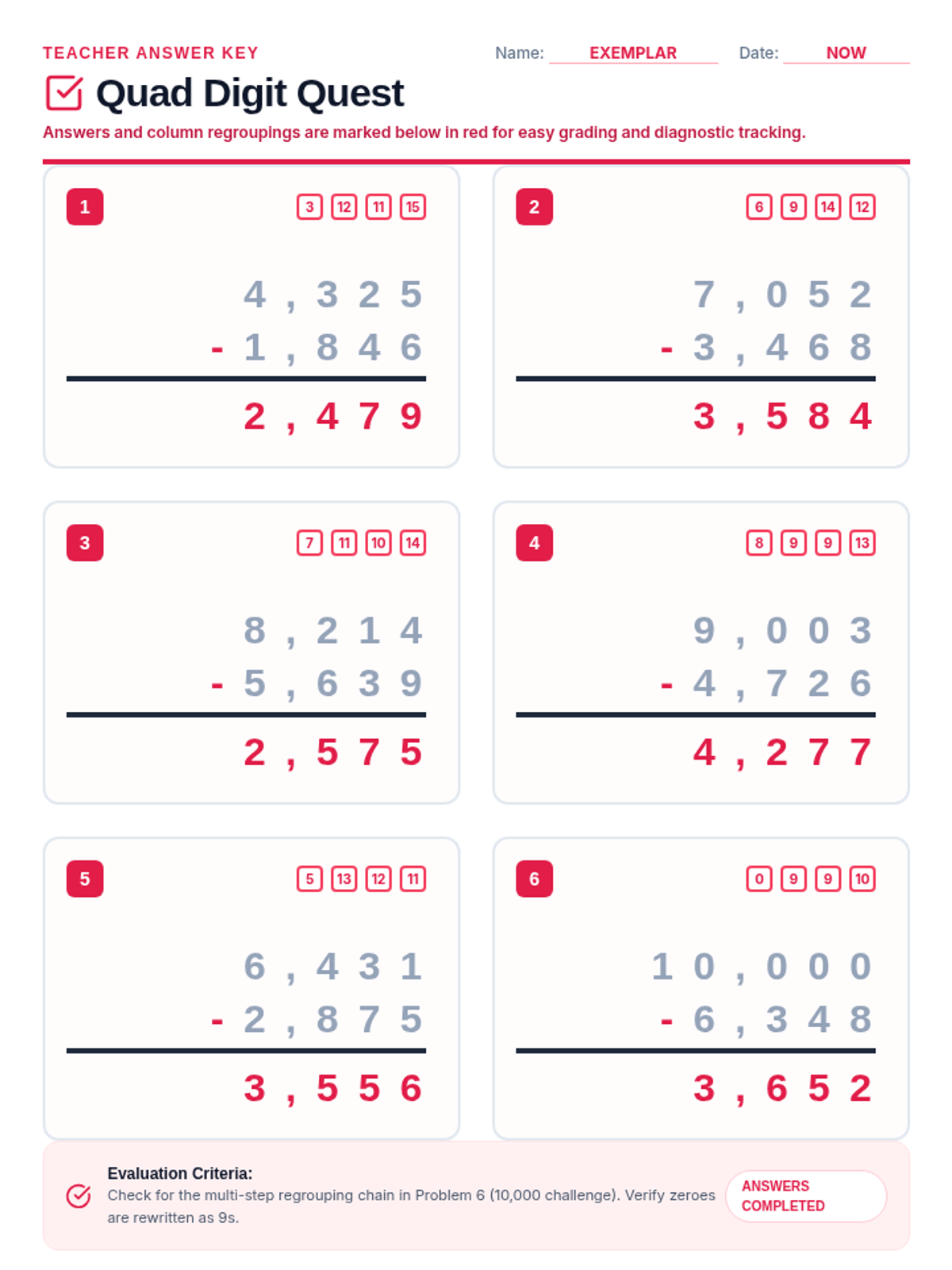
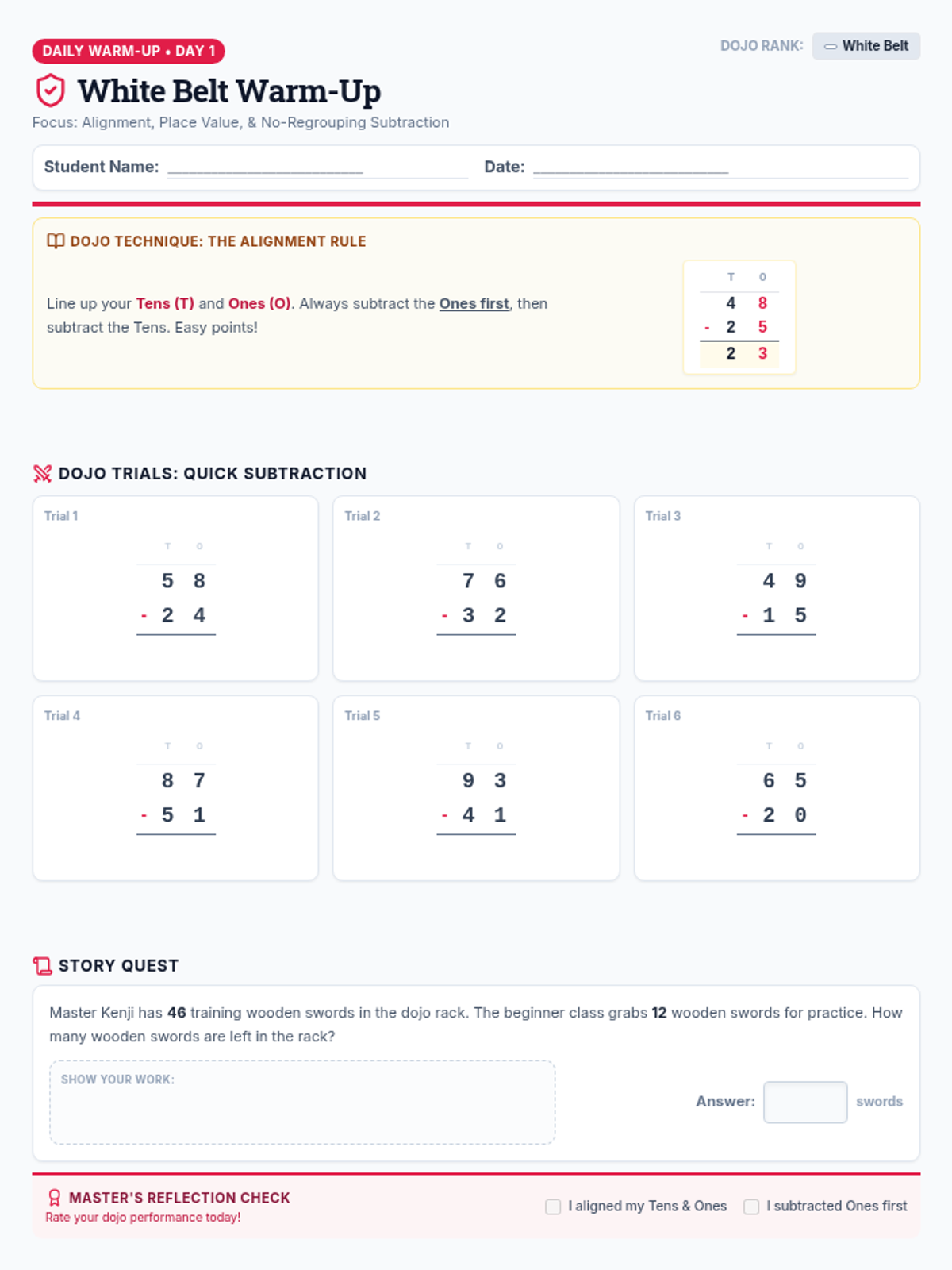
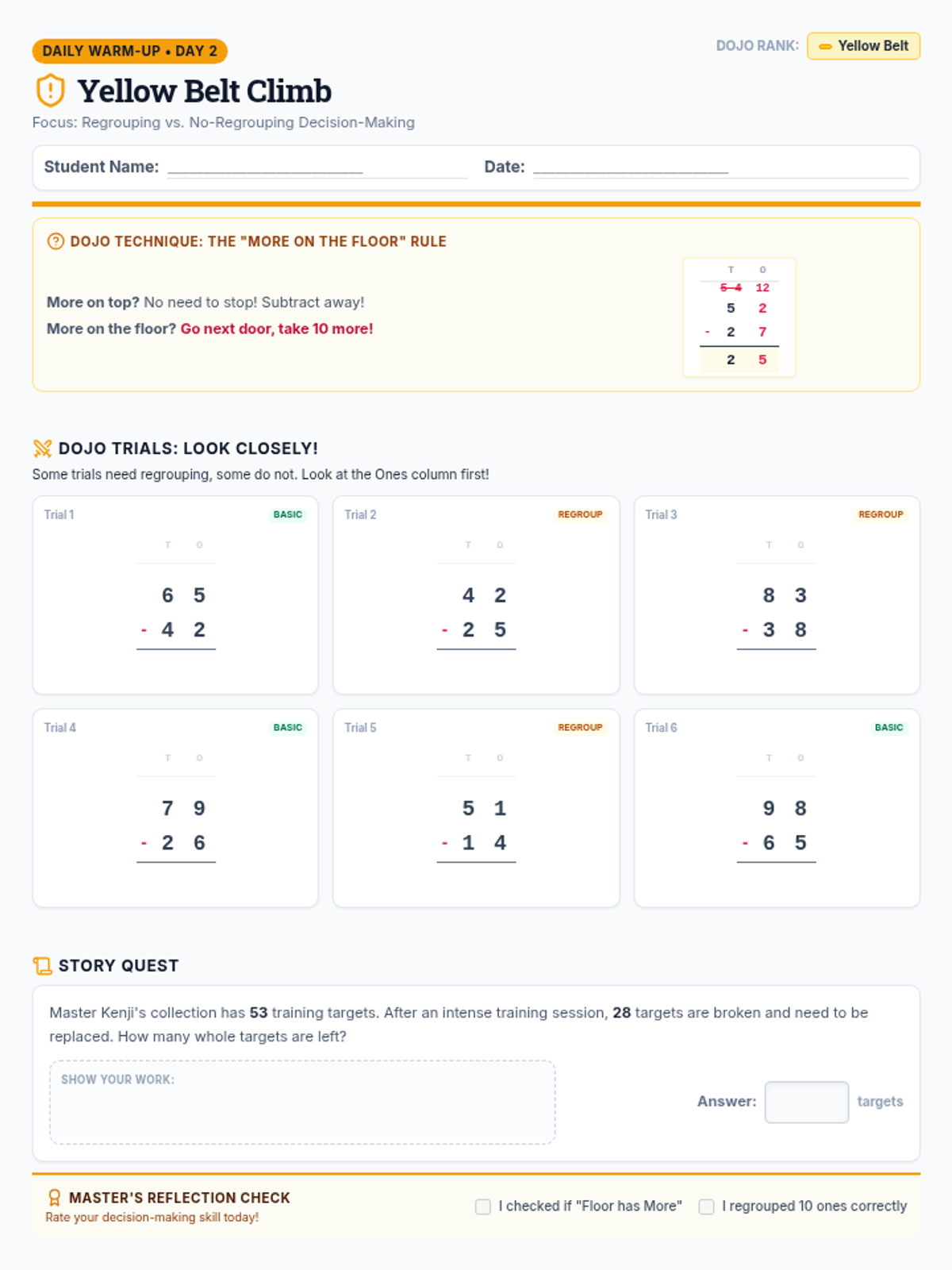
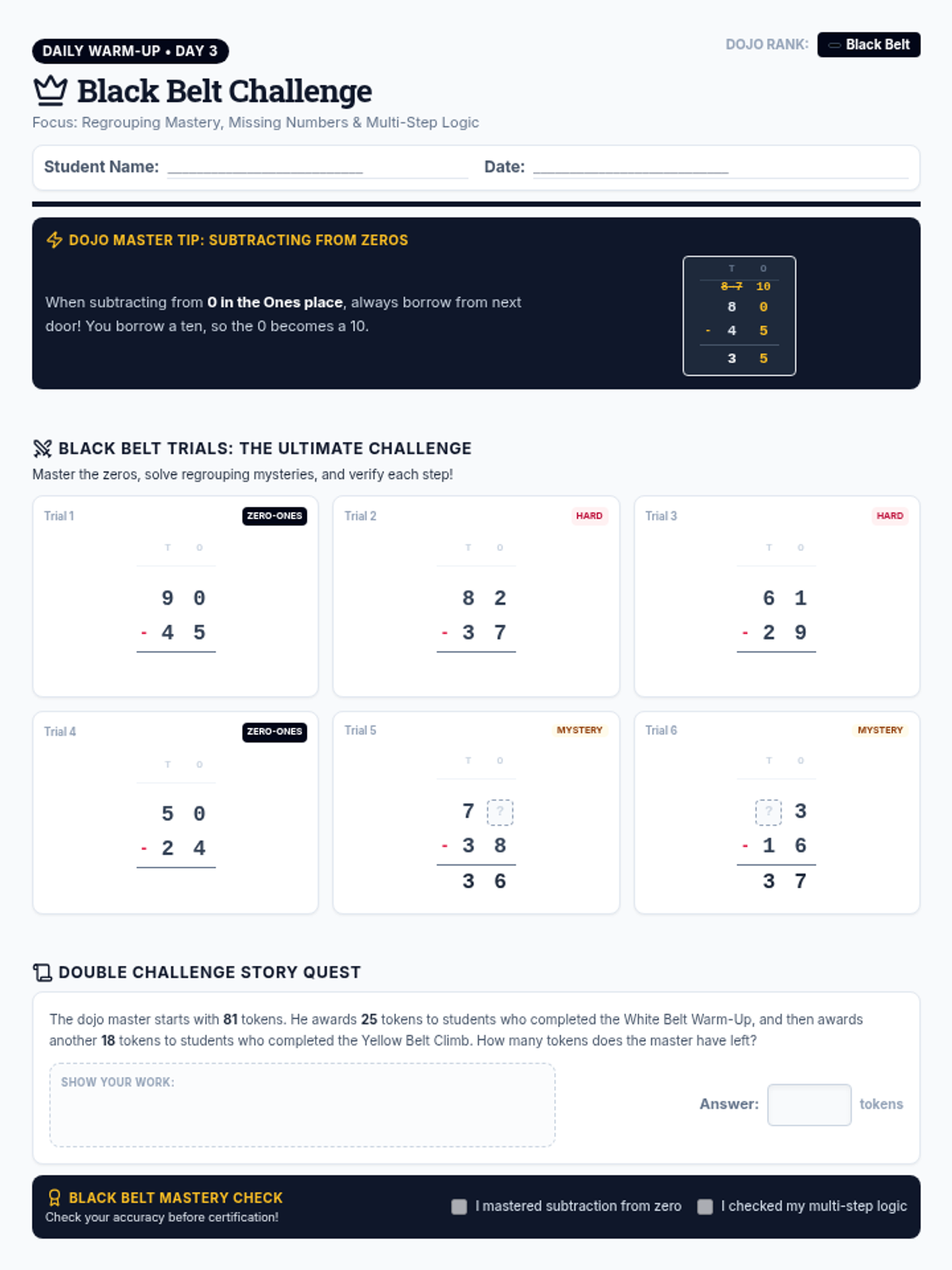
Developing strategies to subtract from numbers with zeros in the tens or ones place.
Applying place value understanding to subtract when a hundred must be decomposed into tens.
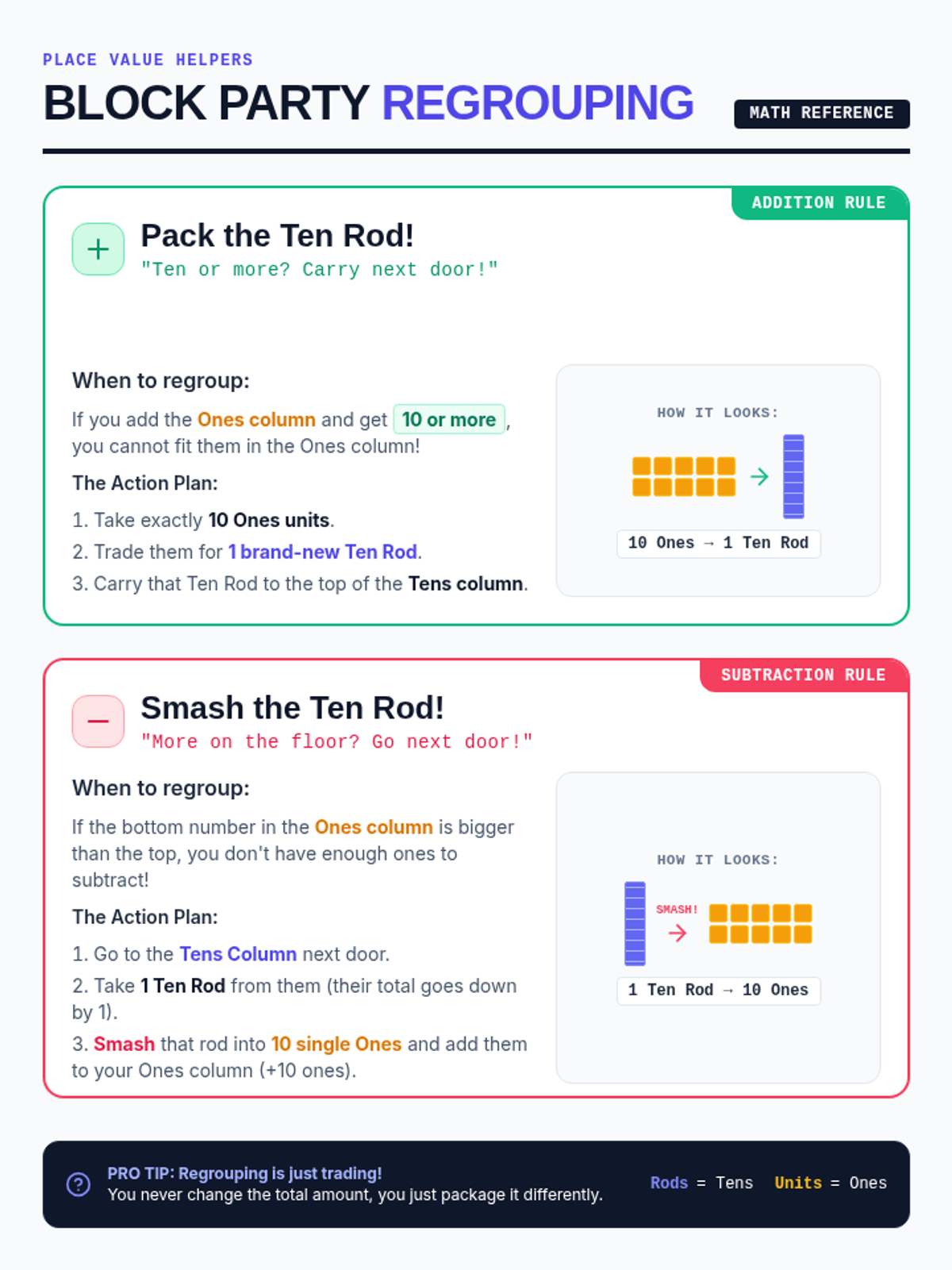
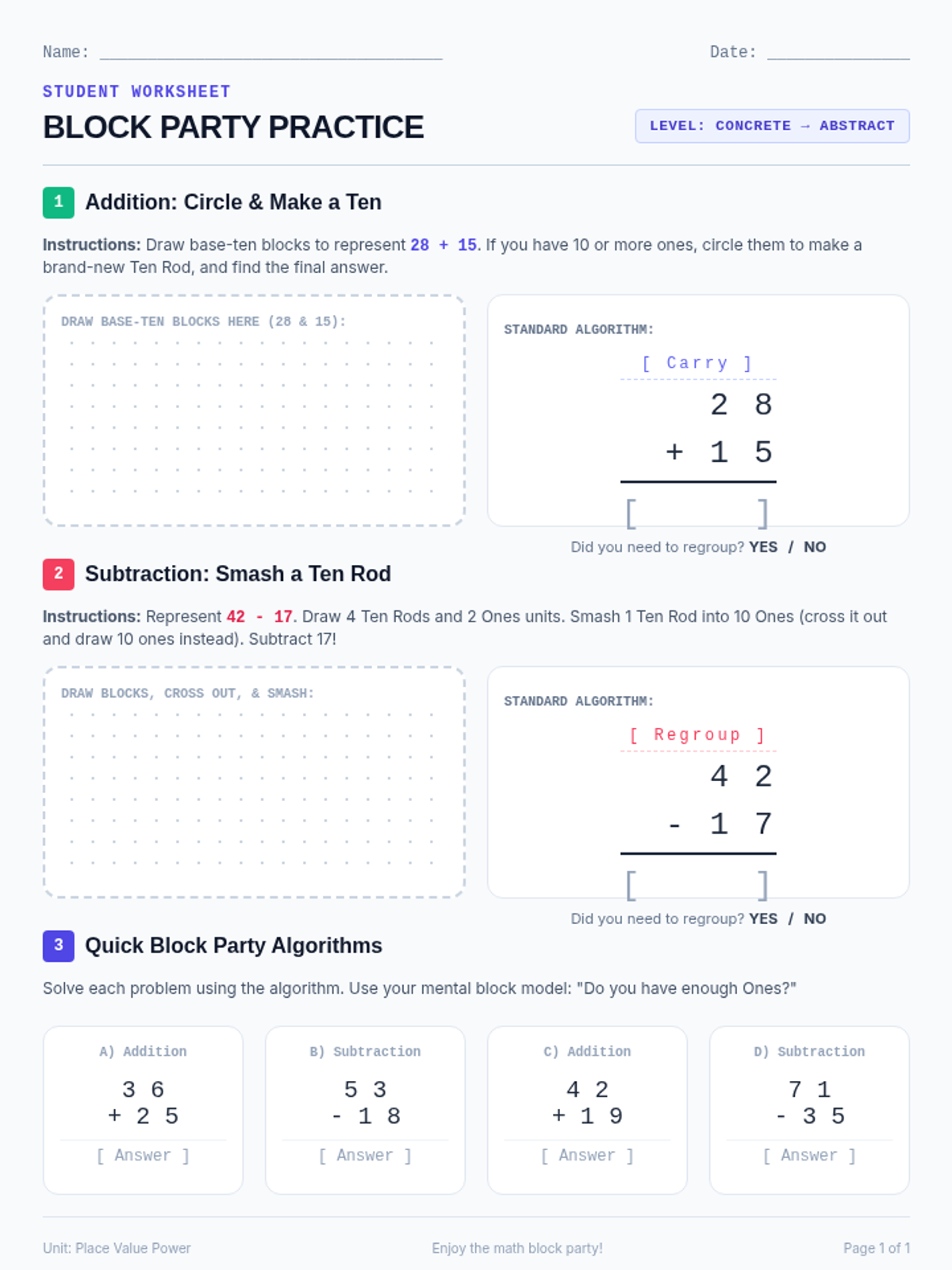
Visualizing the decomposition of a ten into ten ones during subtraction using base-ten drawings.
Using addition to solve subtraction by finding the difference between two numbers on a number line.
Subtracting 2-digit and 3-digit numbers by jumping back on an open number line.
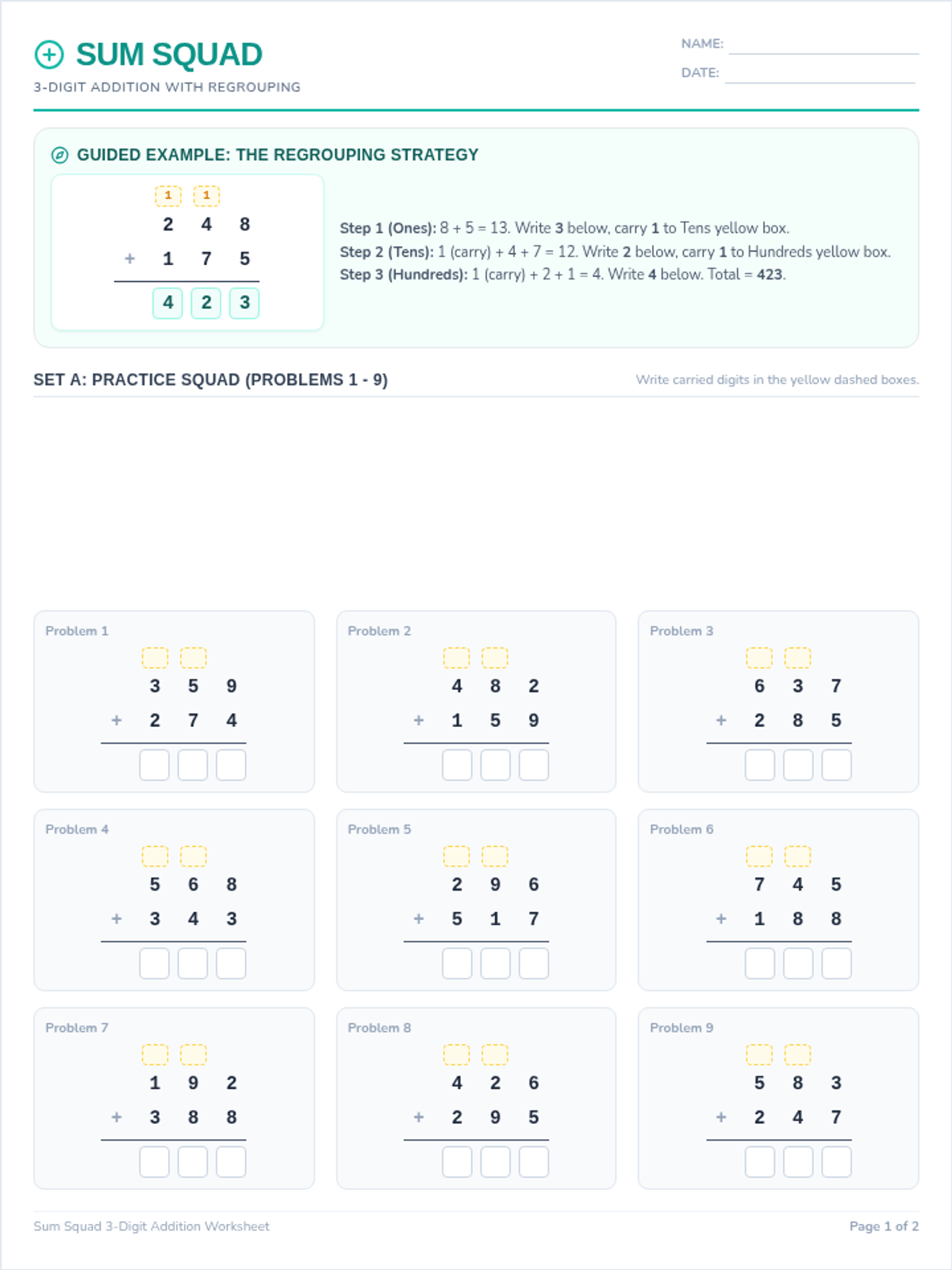
Practicing addition with regrouping tens into a hundred using base-ten diagrams and place value charts.
Using base-ten representations to visualize regrouping ones into a ten during addition.
Using open number lines to add 3-digit numbers by making jumps of hundreds, tens, and ones.
Introduction to addition within 1000 using expanded form to emphasize the value of each digit.
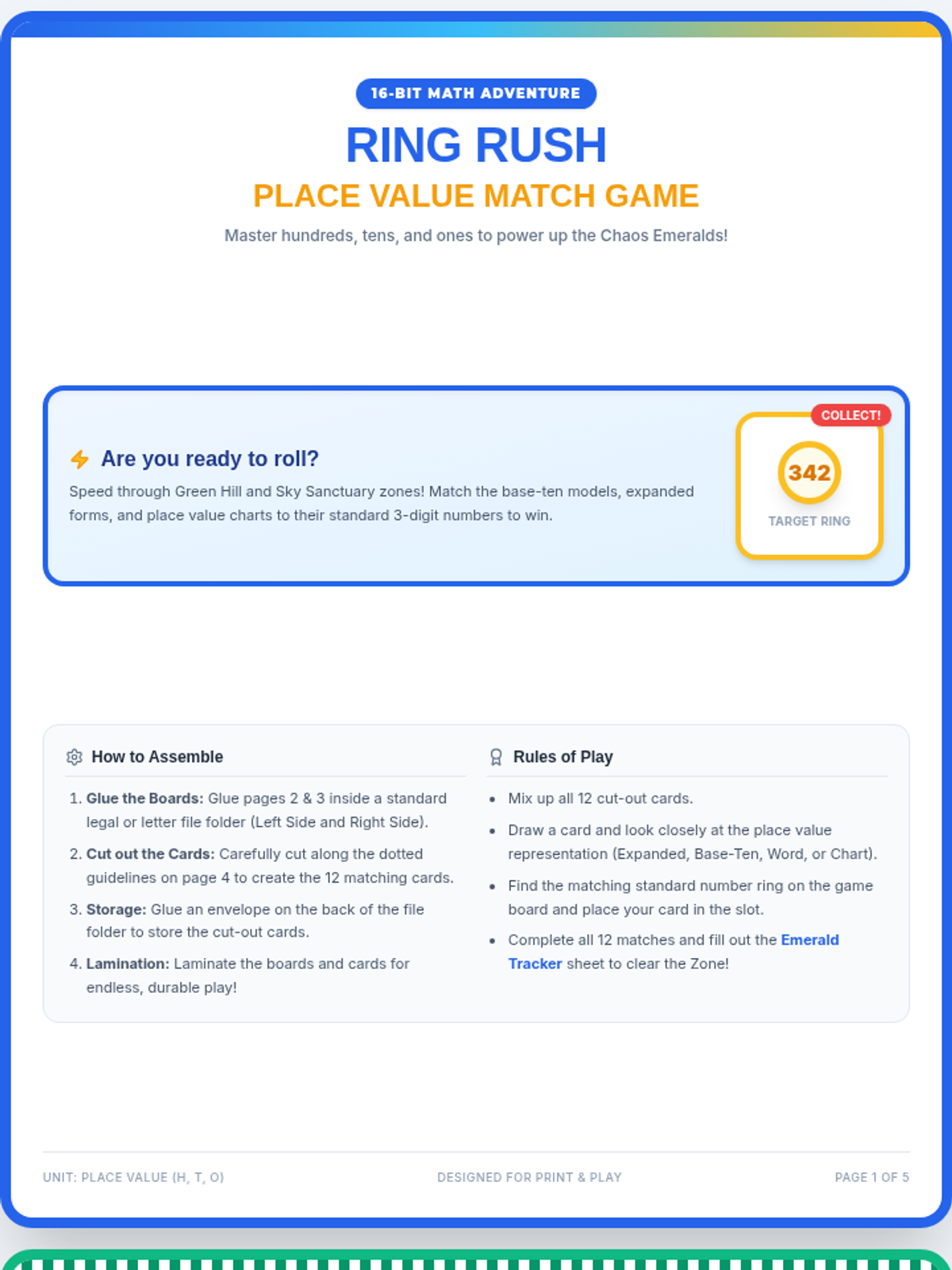
Extending rounding concepts to the nearest 100 using place value positioning on a 0-1000 number line.
Students use number lines to round numbers within 100 to the nearest 10, focusing on the halfway point as a decision maker.
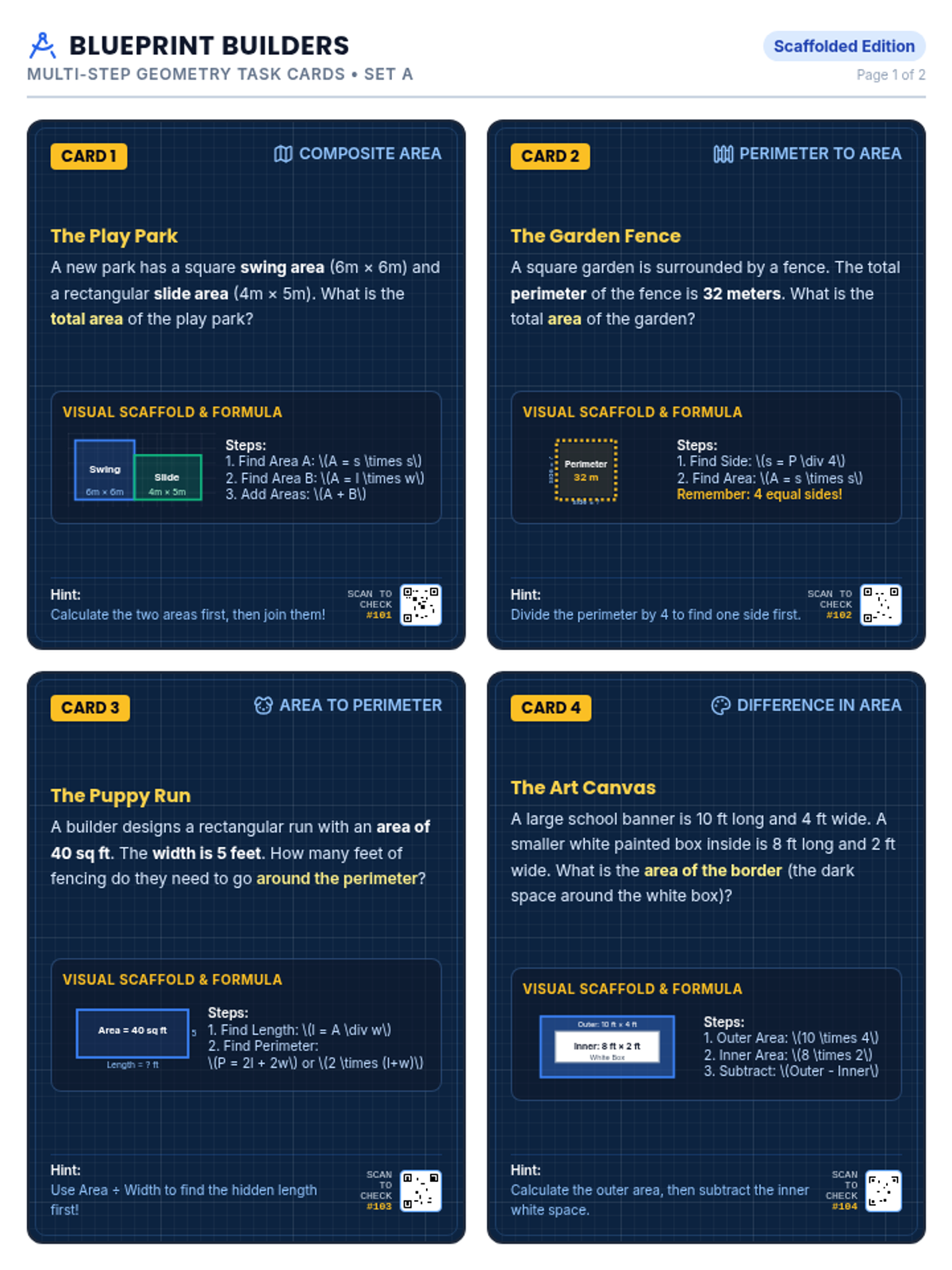
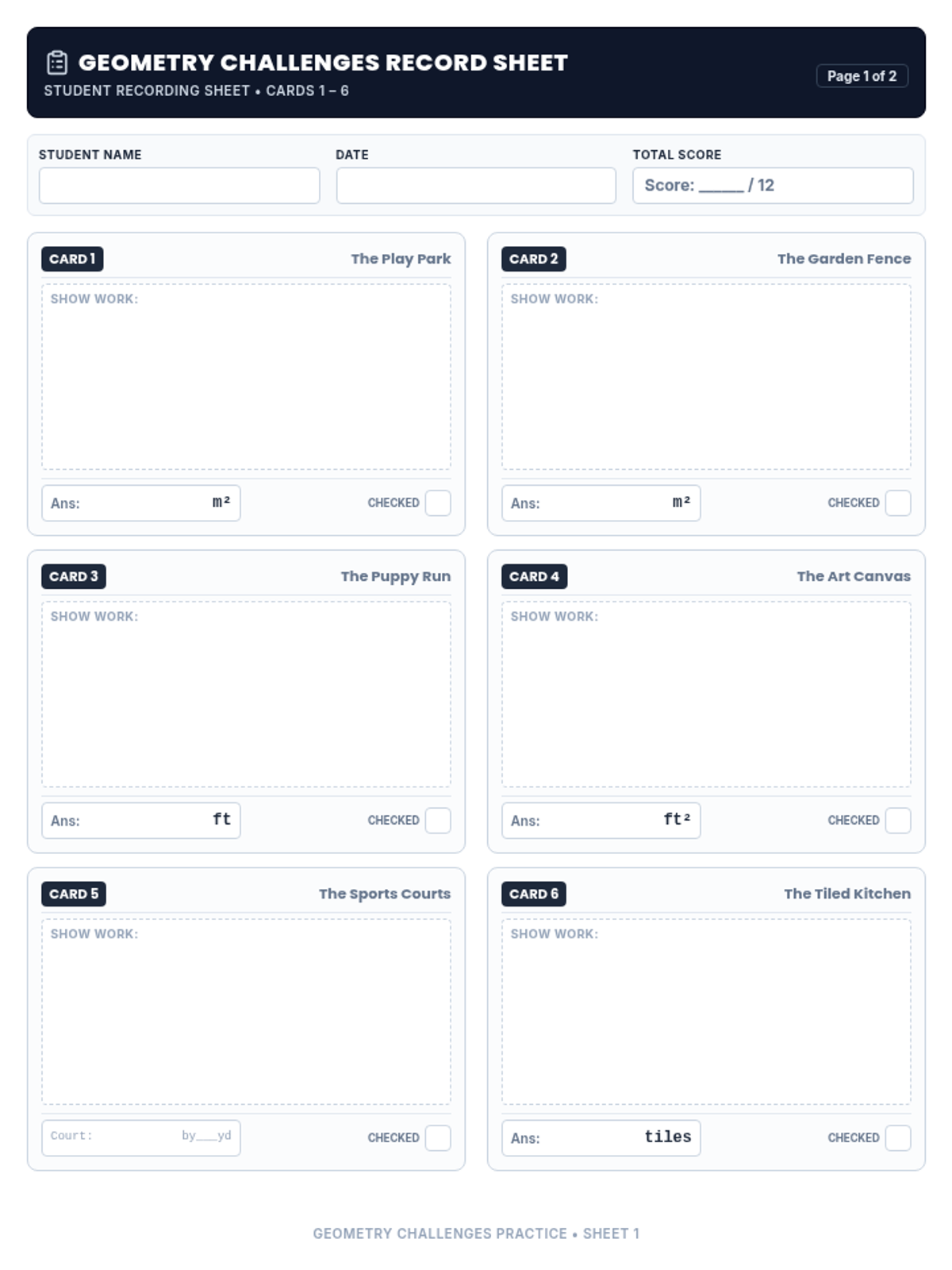
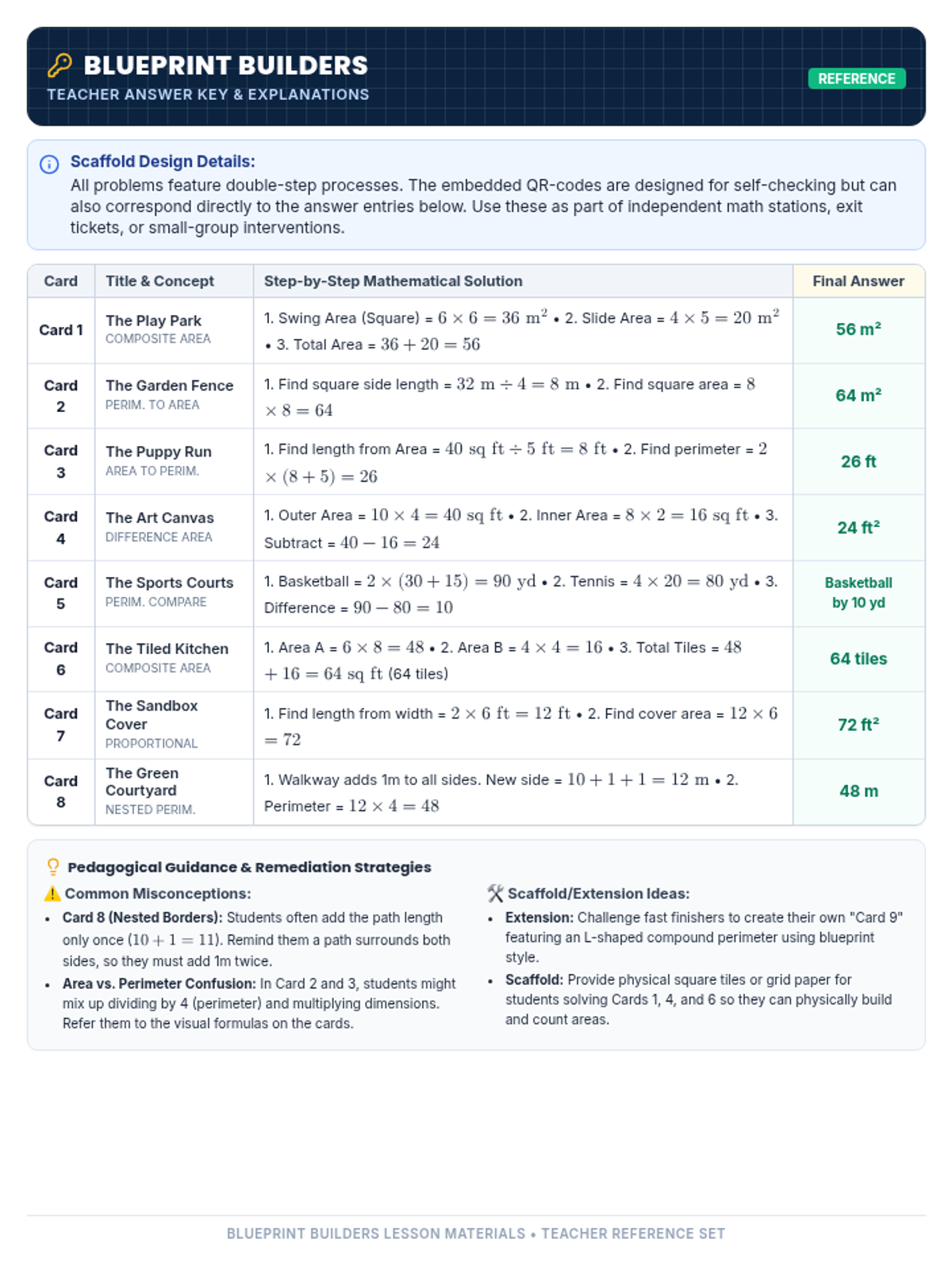
A cumulative review and hands-on design task where students apply all area skills learned in the sequence.
Learning that the total area of a large rectangle is the sum of its parts, introducing additive area concepts.
Comparing the areas of different garden plots and identifying that different shapes can have the same area.
Given the total area and one side length, students use division or multiplication facts to find the missing side length.
Applying area concepts to real-world scenarios like rugs, tabletops, and floors using word problems.
Practicing the area formula on rectangles where only the side lengths are labeled, transitioning away from visible grids.
Moving from counting individual squares to multiplying length by width to find the area of rectangles.
Connecting row and column counts to skip counting and repeated addition to find total area efficiently.
Students organize tiles into rows and columns to create arrays, building the foundation for the area formula.
Introduction to standard unit squares (square inches, square centimeters) and why using consistent units is necessary for measurement.
Students learn the critical rule of area measurement: unit squares must cover a region with no gaps and no overlaps.
Students explore area by covering flat shapes with square tiles, understanding that area is the amount of space a shape covers.
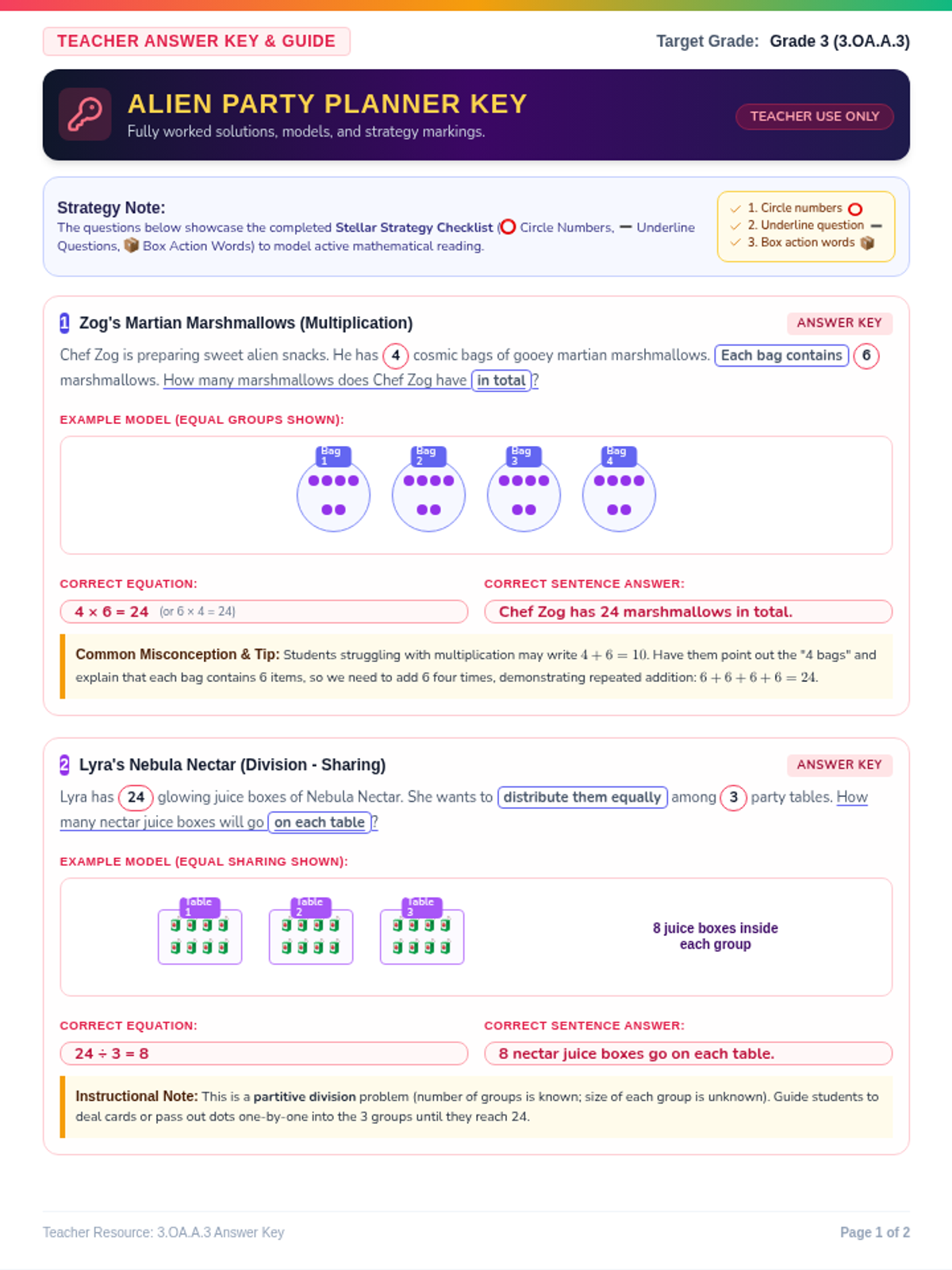
A culminating session where students demonstrate mastery of 3.OA standards through interactive challenges.
Connecting division to multiplication by finding unknown factors in related equations.
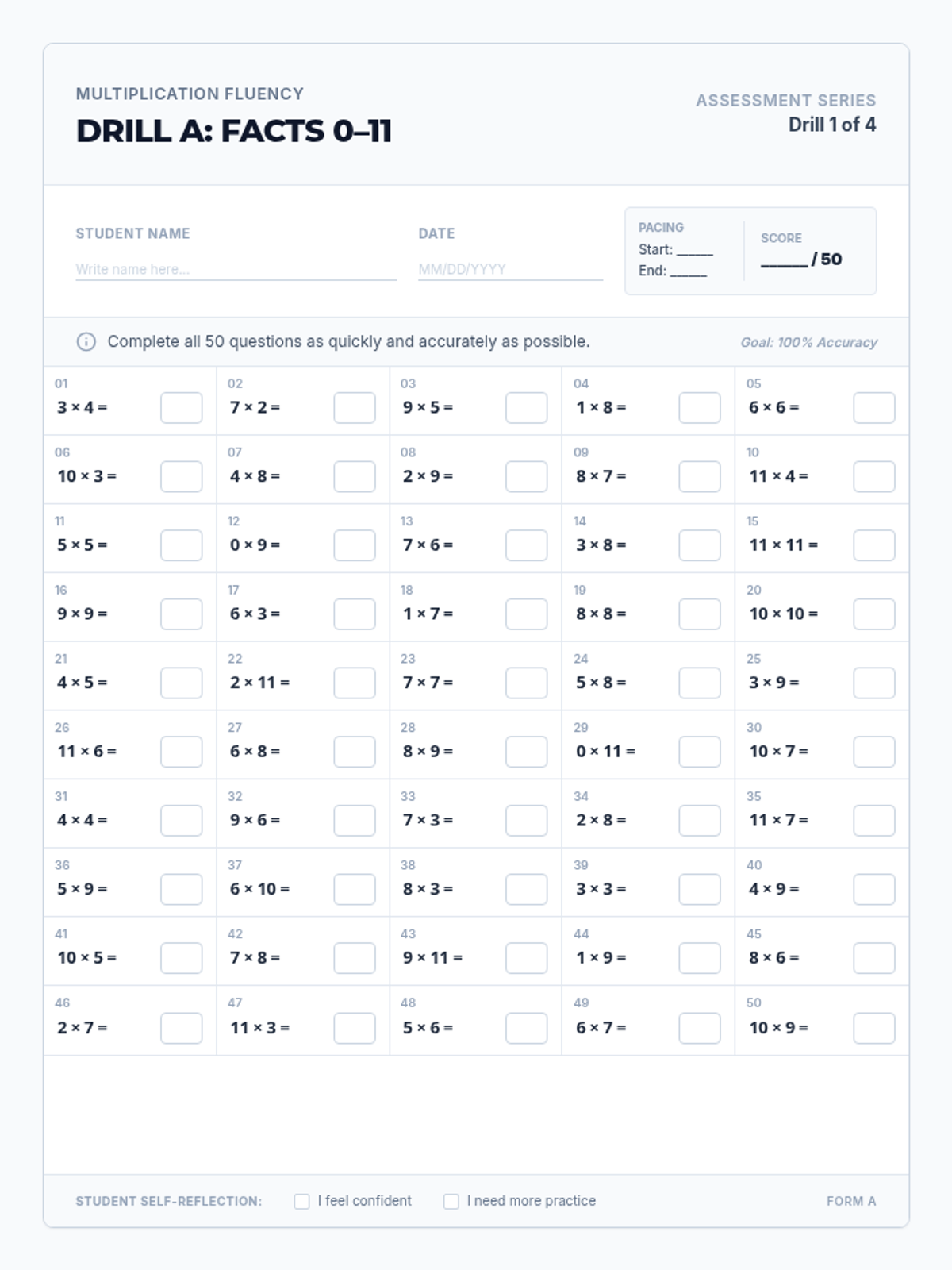
Solving mixed multiplication puzzles involving products, factors, and group counts.
Determining the unknown factor or group size in multiplication equations.
Understanding the meaning of '?' or '_' in multiplication equations and finding the product.
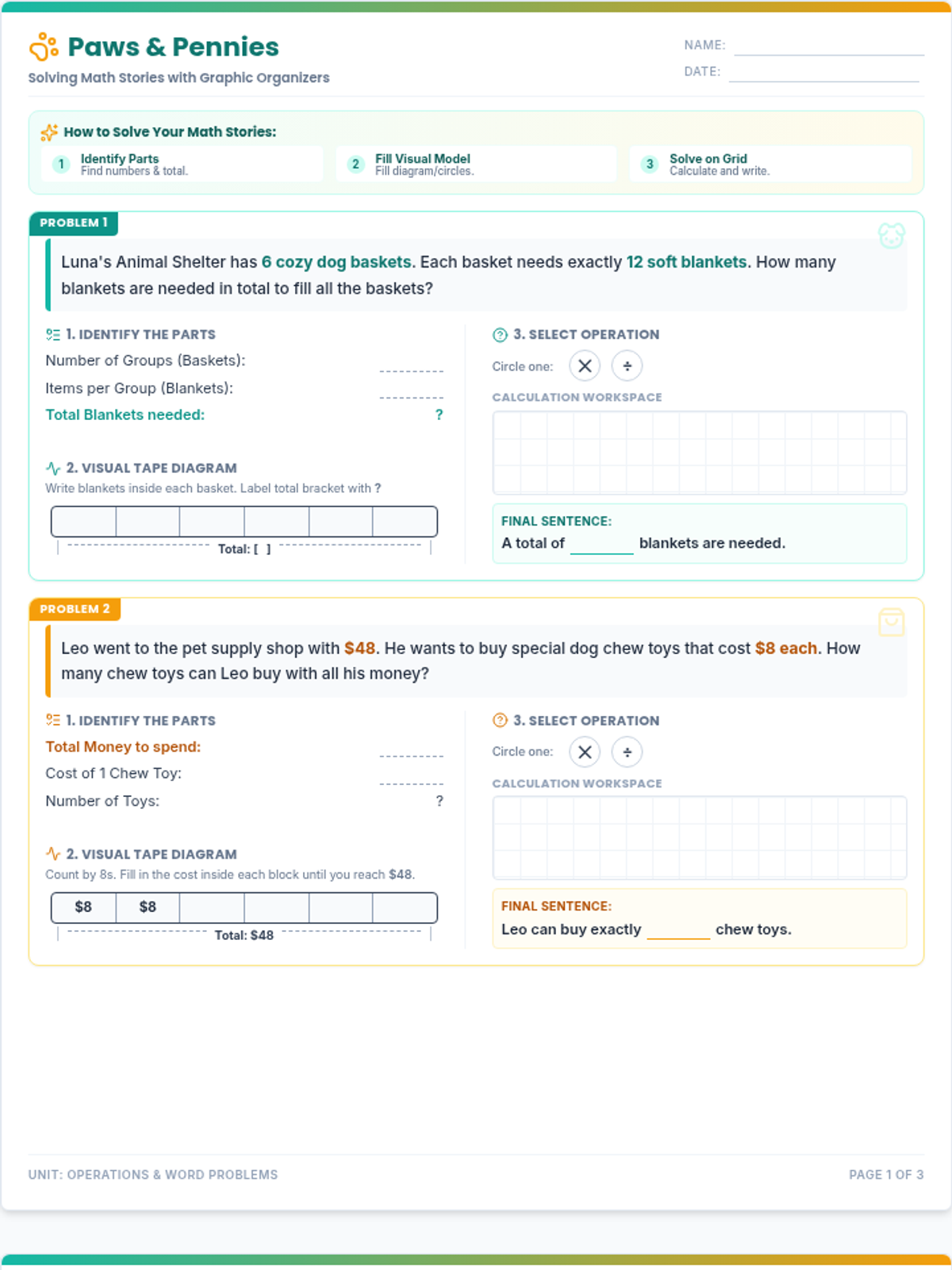
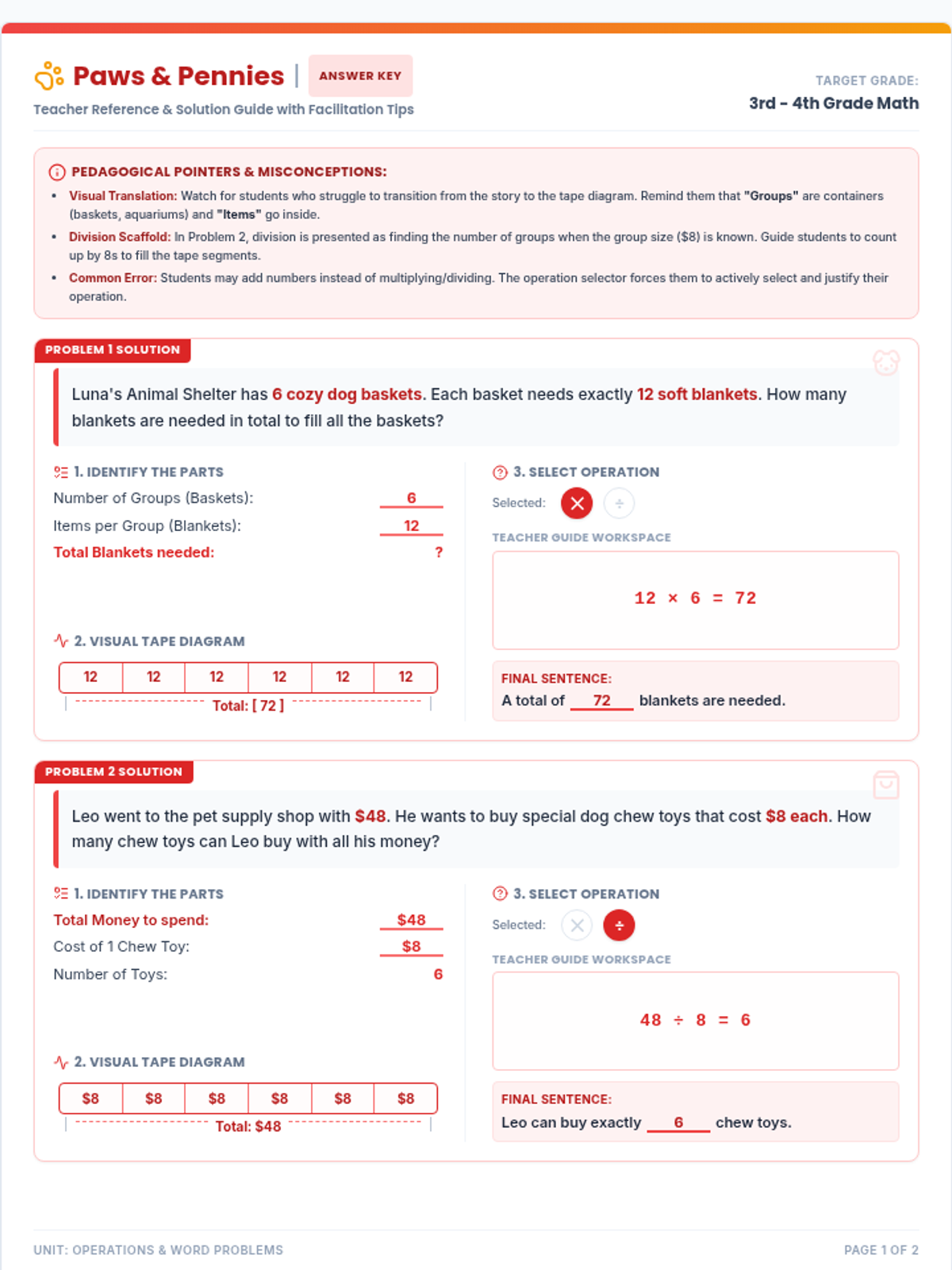
Applying tape diagrams and drawings to solve word problems with varying contexts.
Introduction to tape diagrams (bar models) as a representation for equal group multiplication problems.
Students use arrays to solve word problems and describe situations involving rows and columns.
Introduction to arrays as a structured way to represent multiplication using rows and columns.
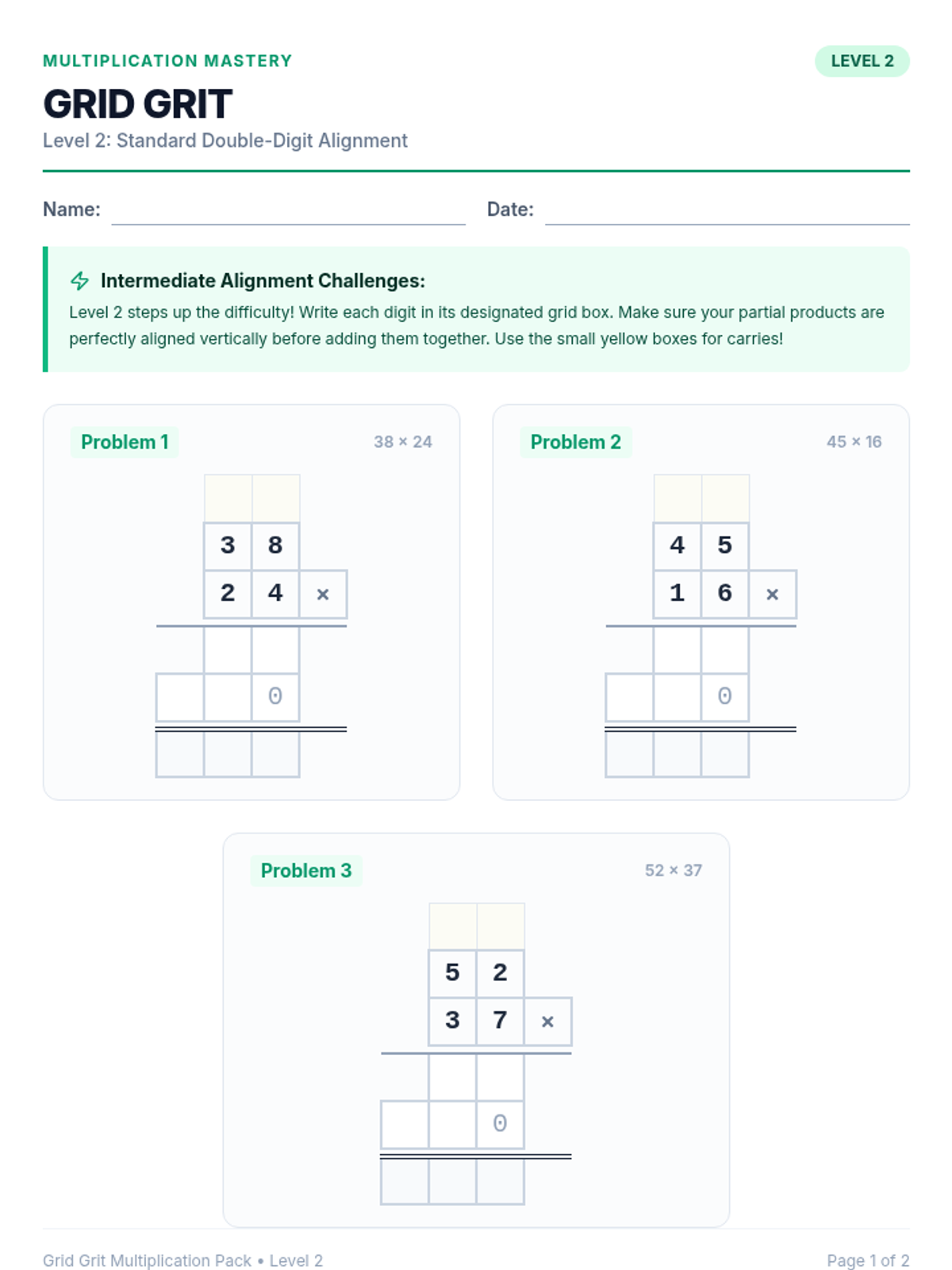
Students bridge the gap between 'groups of' language and the formal multiplication symbol (x) in equations.
Students represent equal group situations using drawings and connect them to multiplication expressions.
Students explore the concept of multiplication as 'groups of' through hands-on manipulation of counters and descriptive language.
A final assessment and review day to track progress towards identifying coins and performing money calculations with 80% accuracy.