Students use bar models and number lines to discover why dividing by a fraction involves multiplication by the reciprocal. They will visually prove that dividing by a value less than one results in a larger quotient.
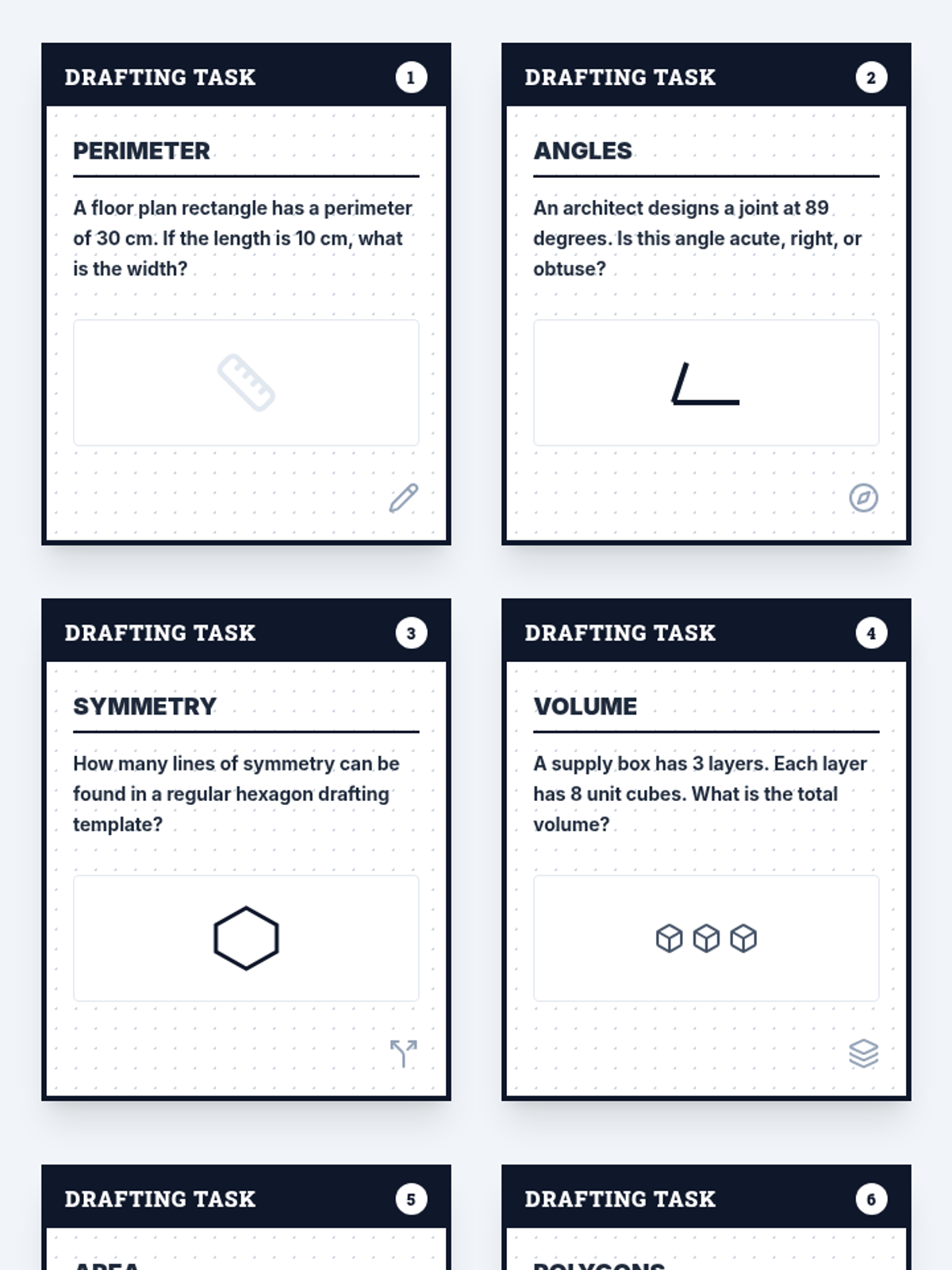
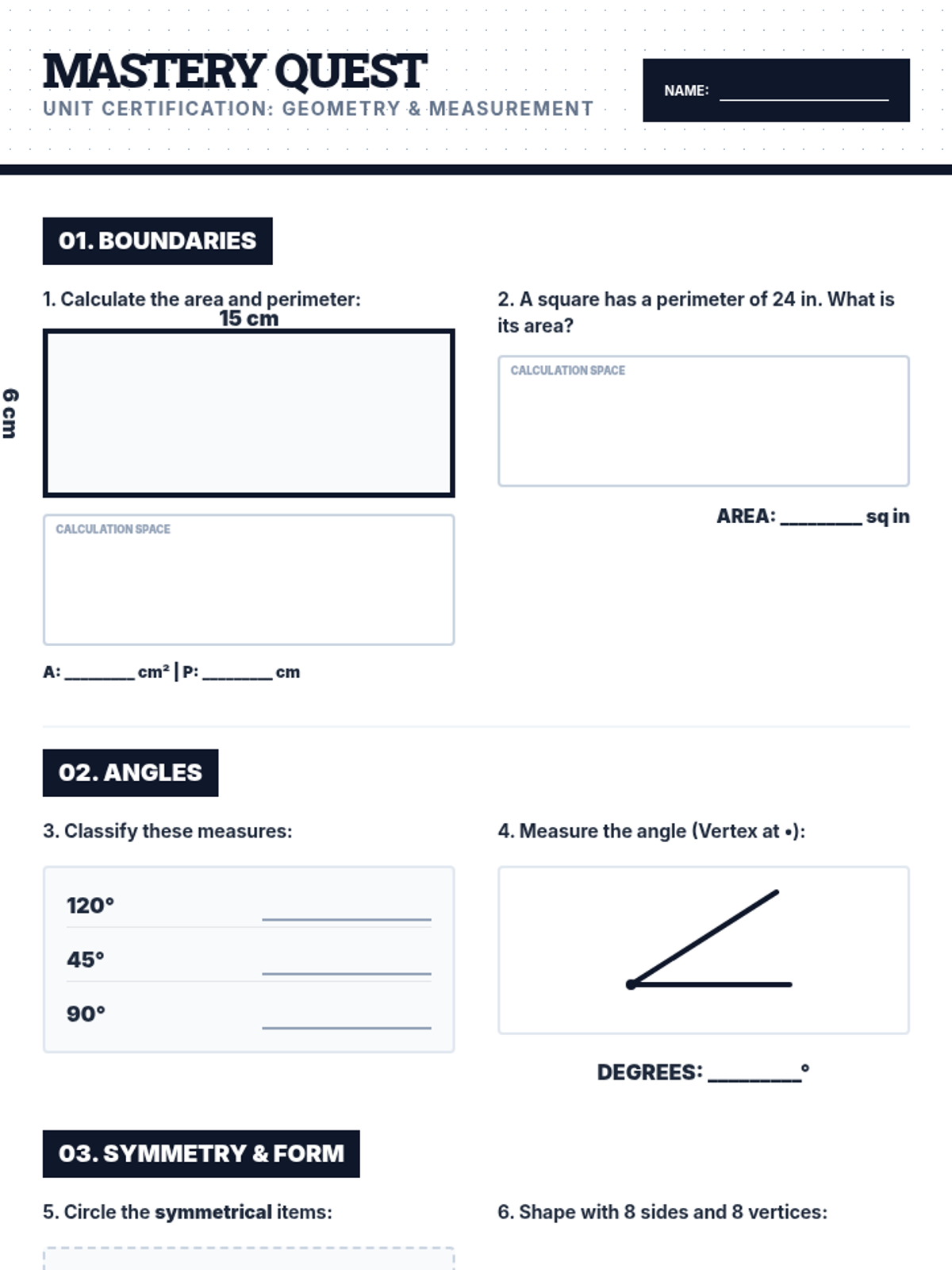
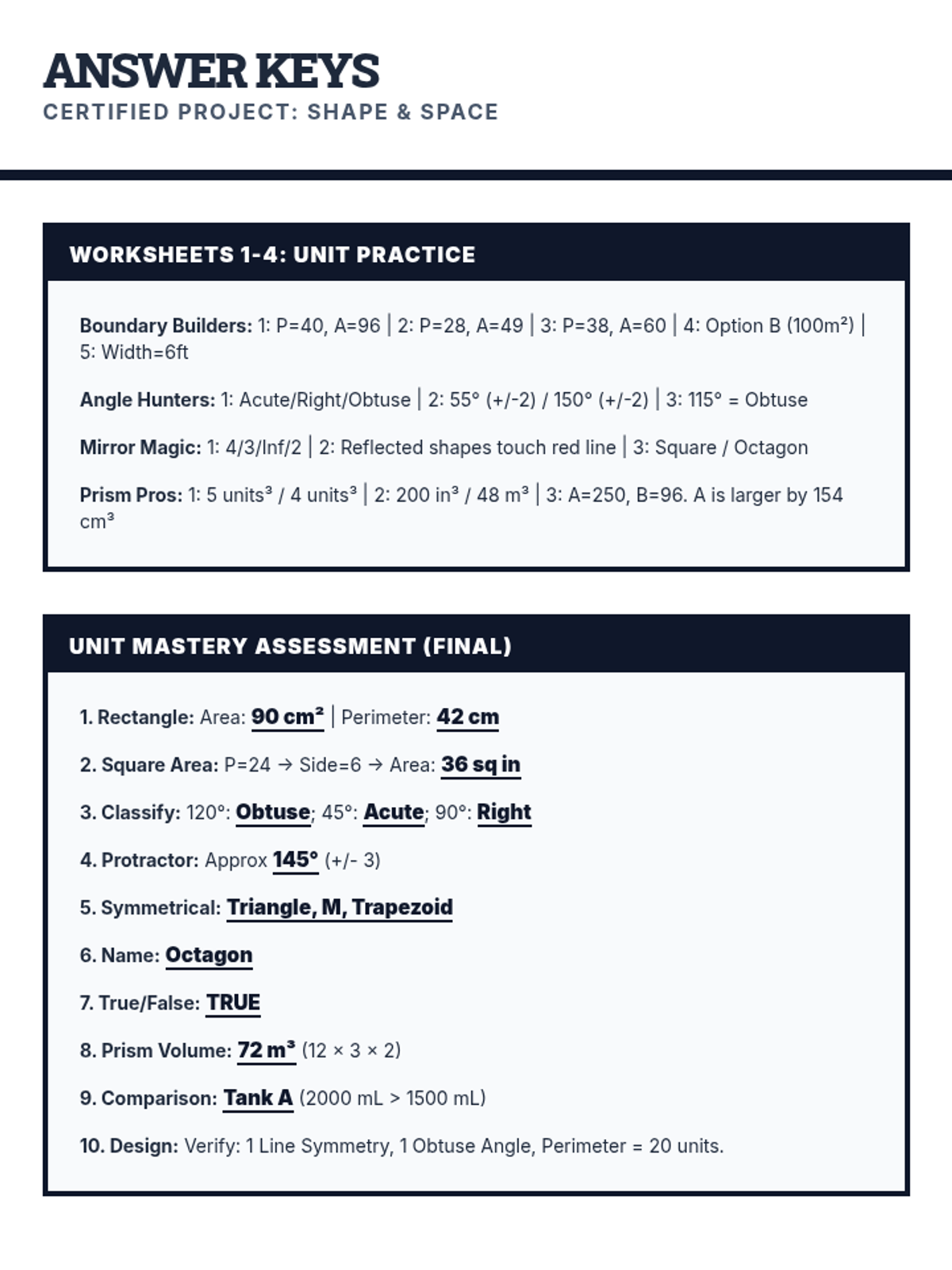
The culmination of the unit featuring comprehensive task cards for review and a final assessment to measure mastery across all topics.
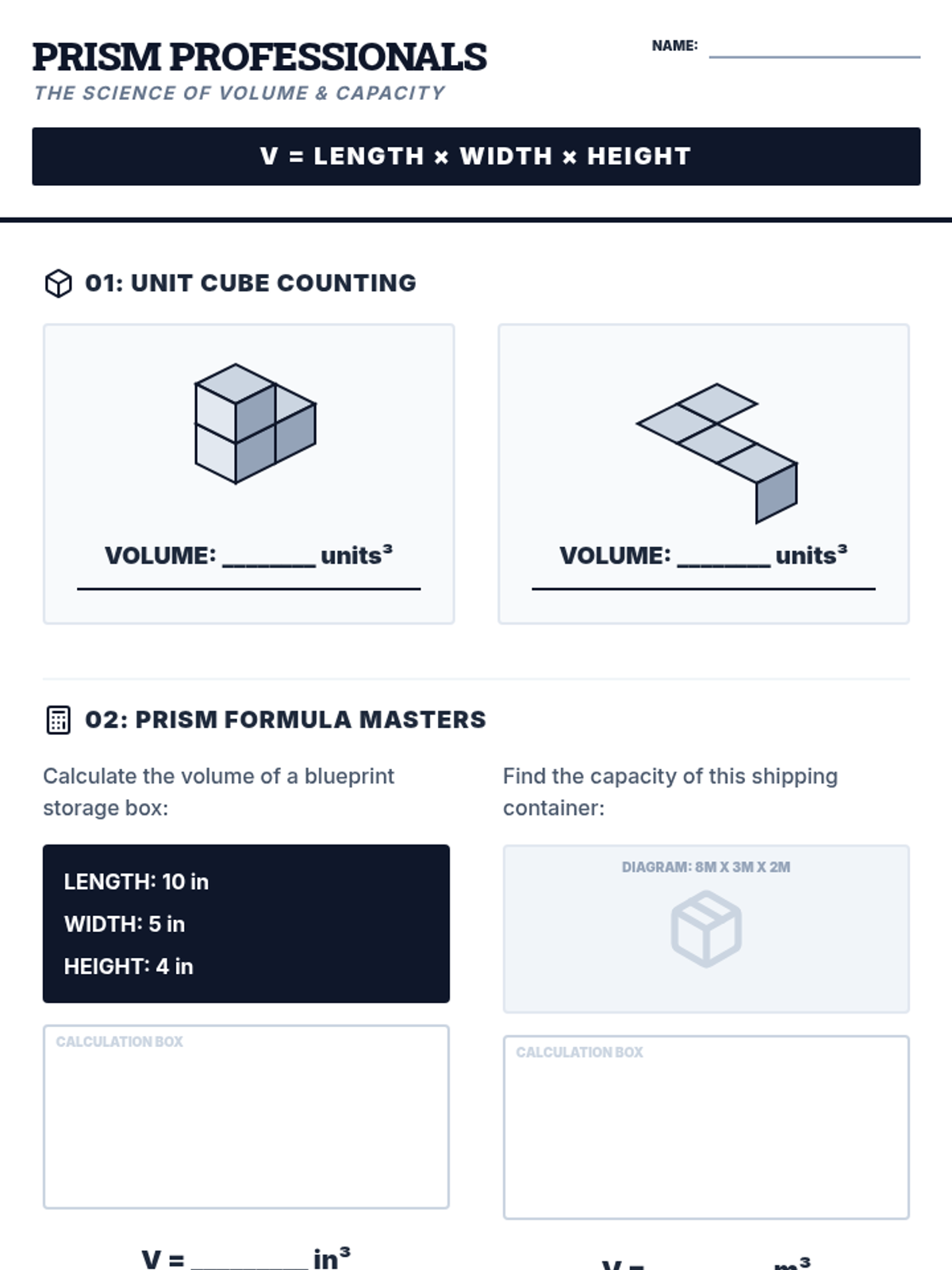
Introduces volume and capacity through the study of 3D objects and liquid measurements in real-world contexts.
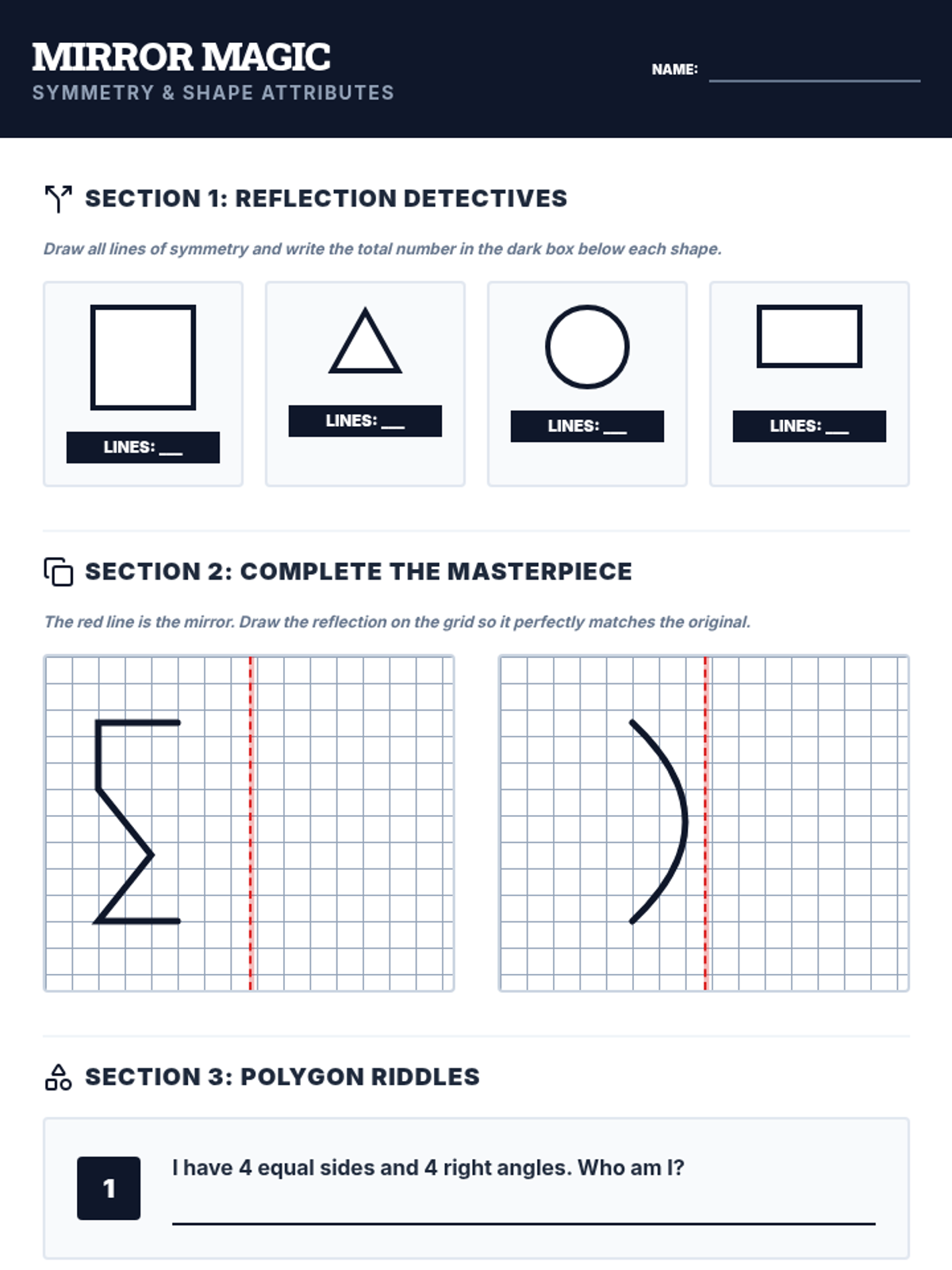
Focuses on identifying lines of symmetry and classifying 2D and 3D shapes based on their properties and attributes.
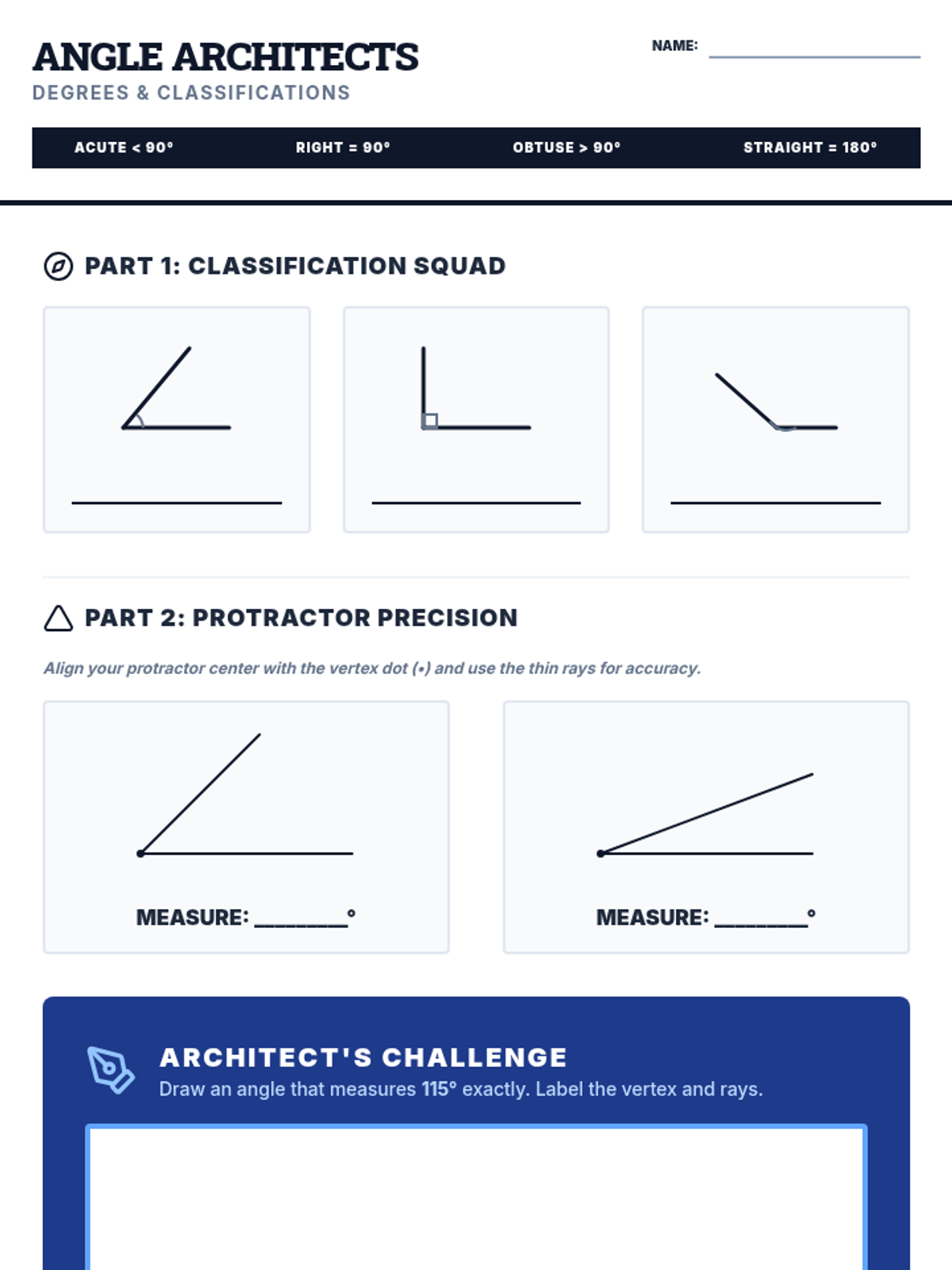
Students learn to identify, measure, and draw angles using protractors while understanding their role in geometric construction.
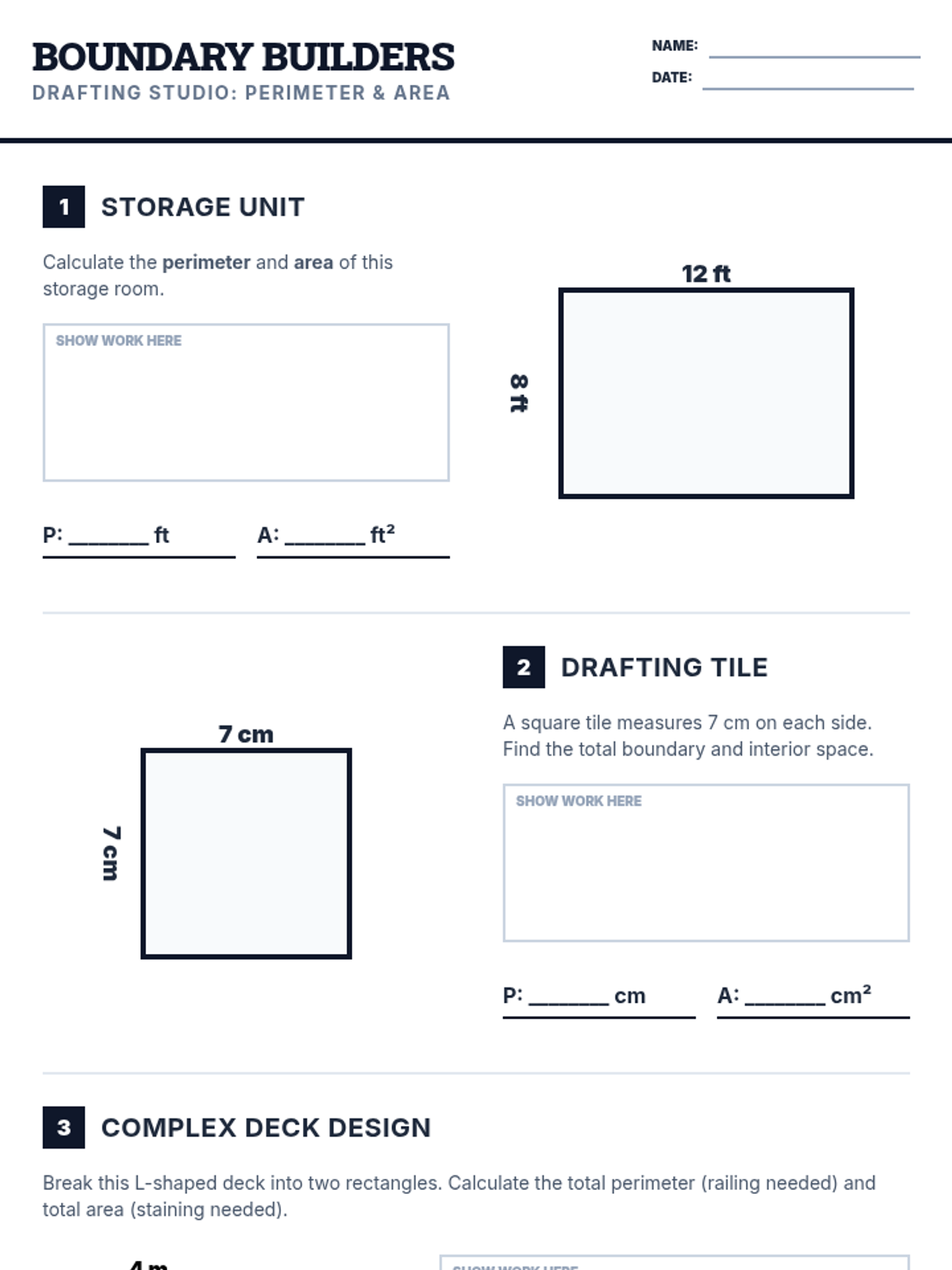
Students explore the relationships between perimeter and area through practical calculation and problem-solving on various polygons.
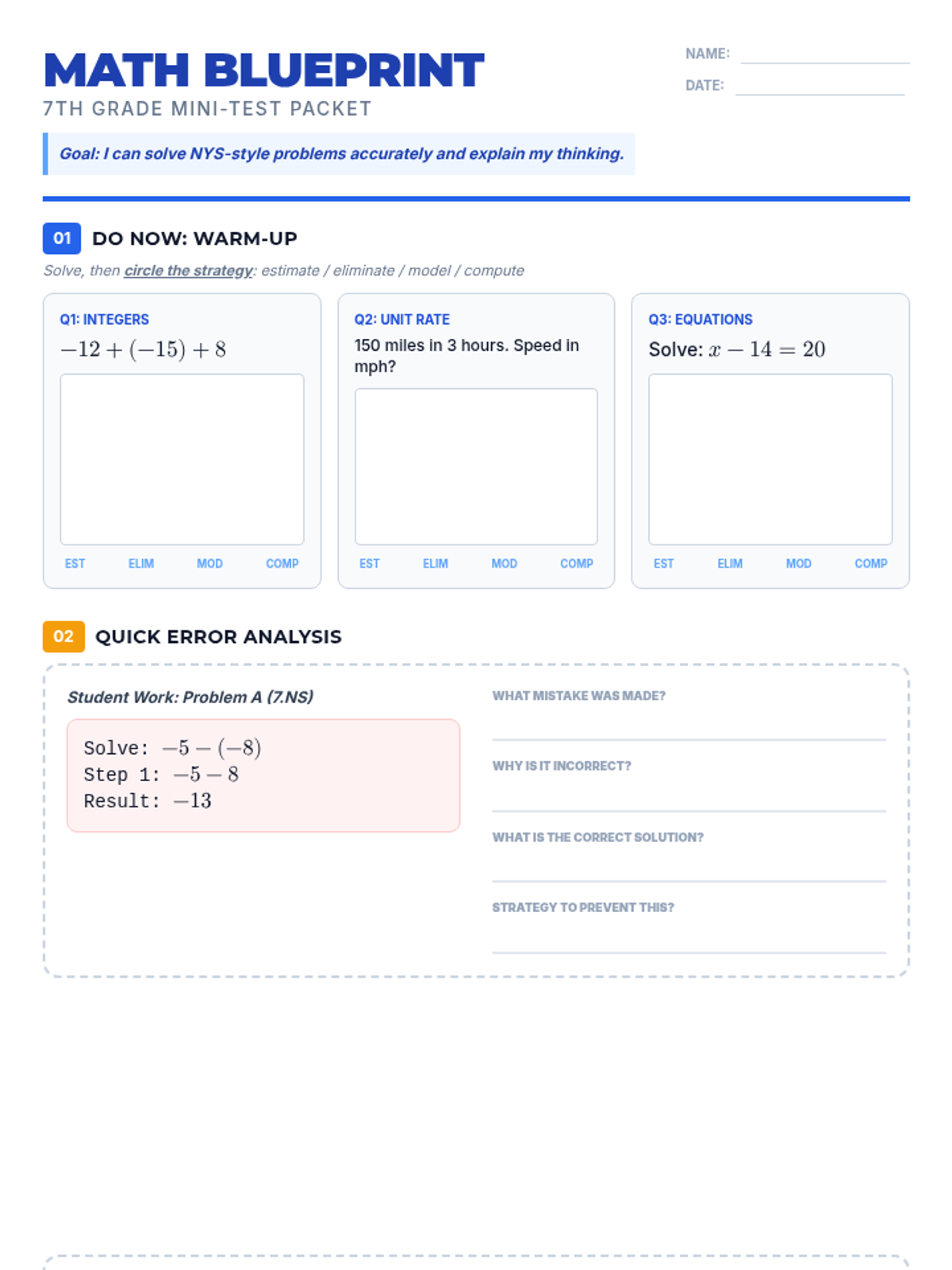
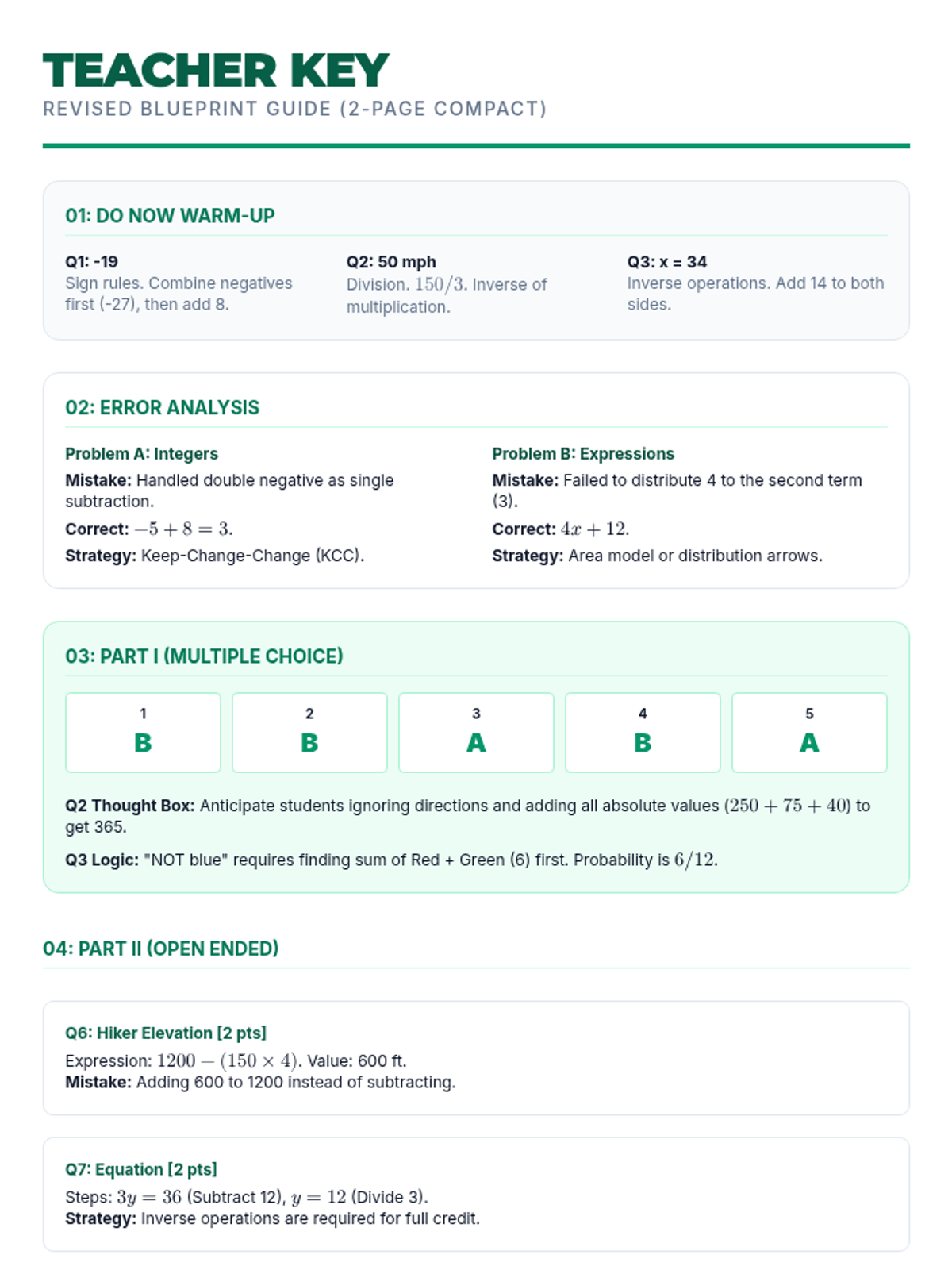
A comprehensive 7th-grade math review focused on NYS common core standards, simulating a test environment with confidence-building exercises and error analysis.
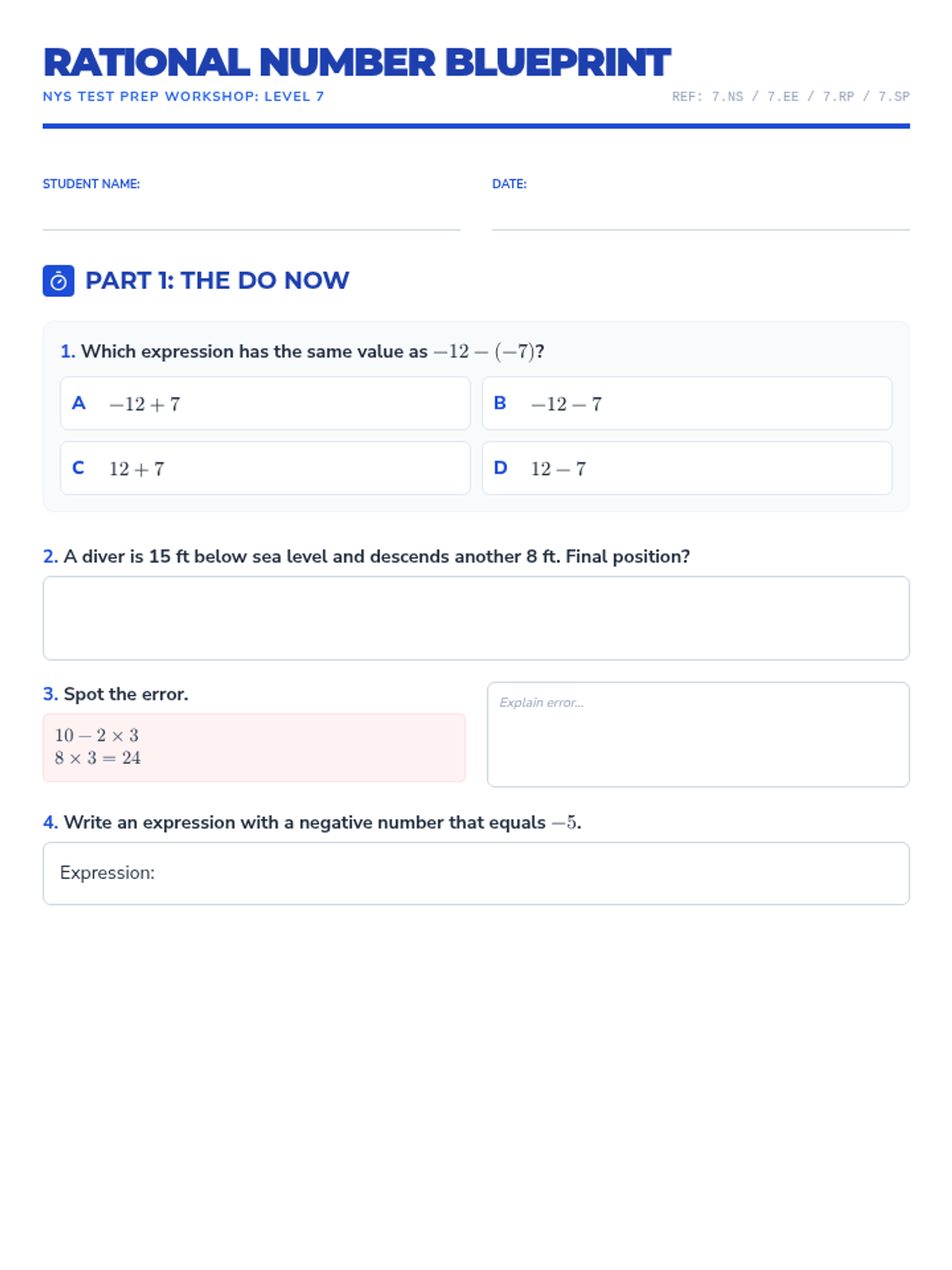
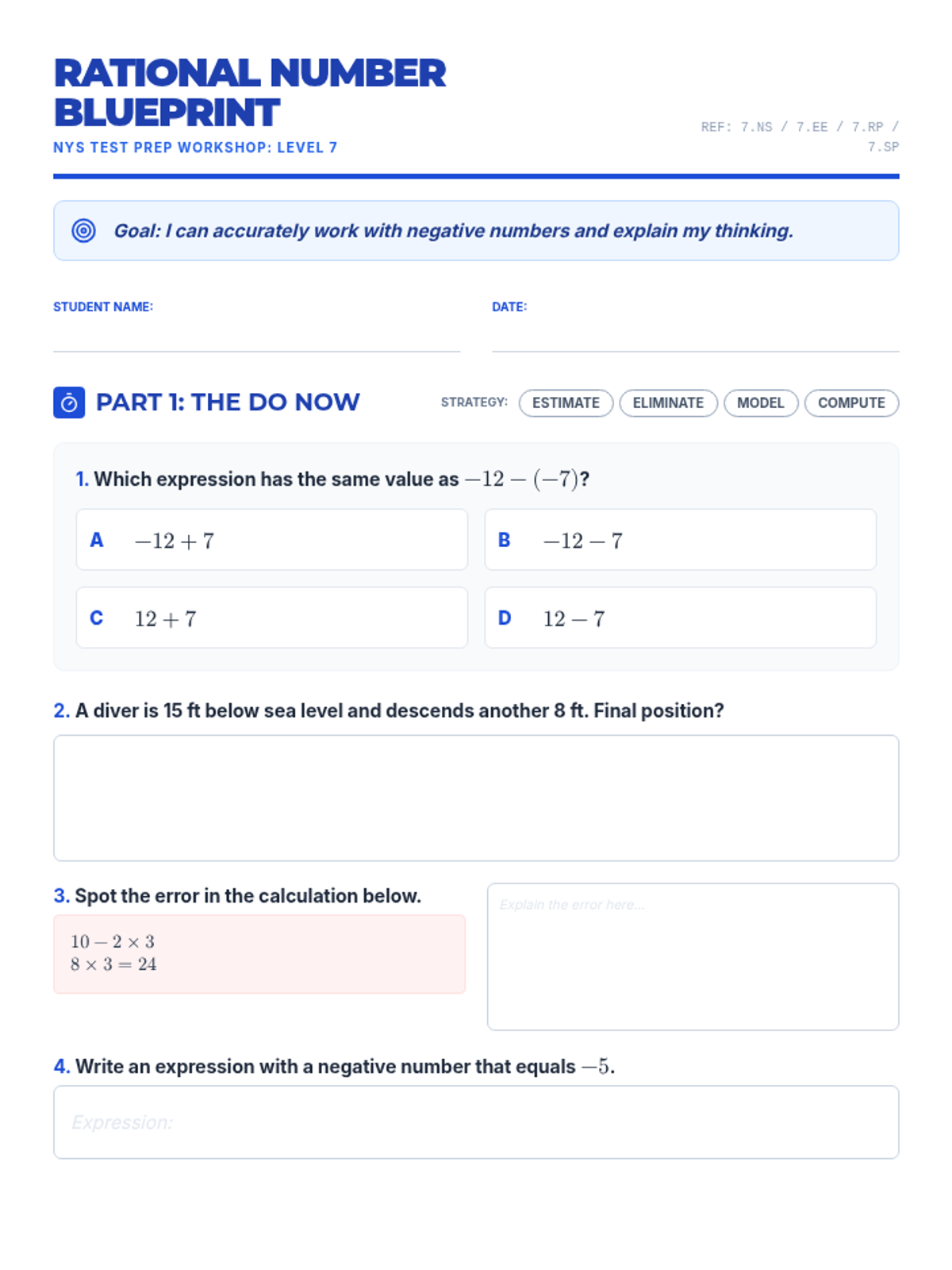
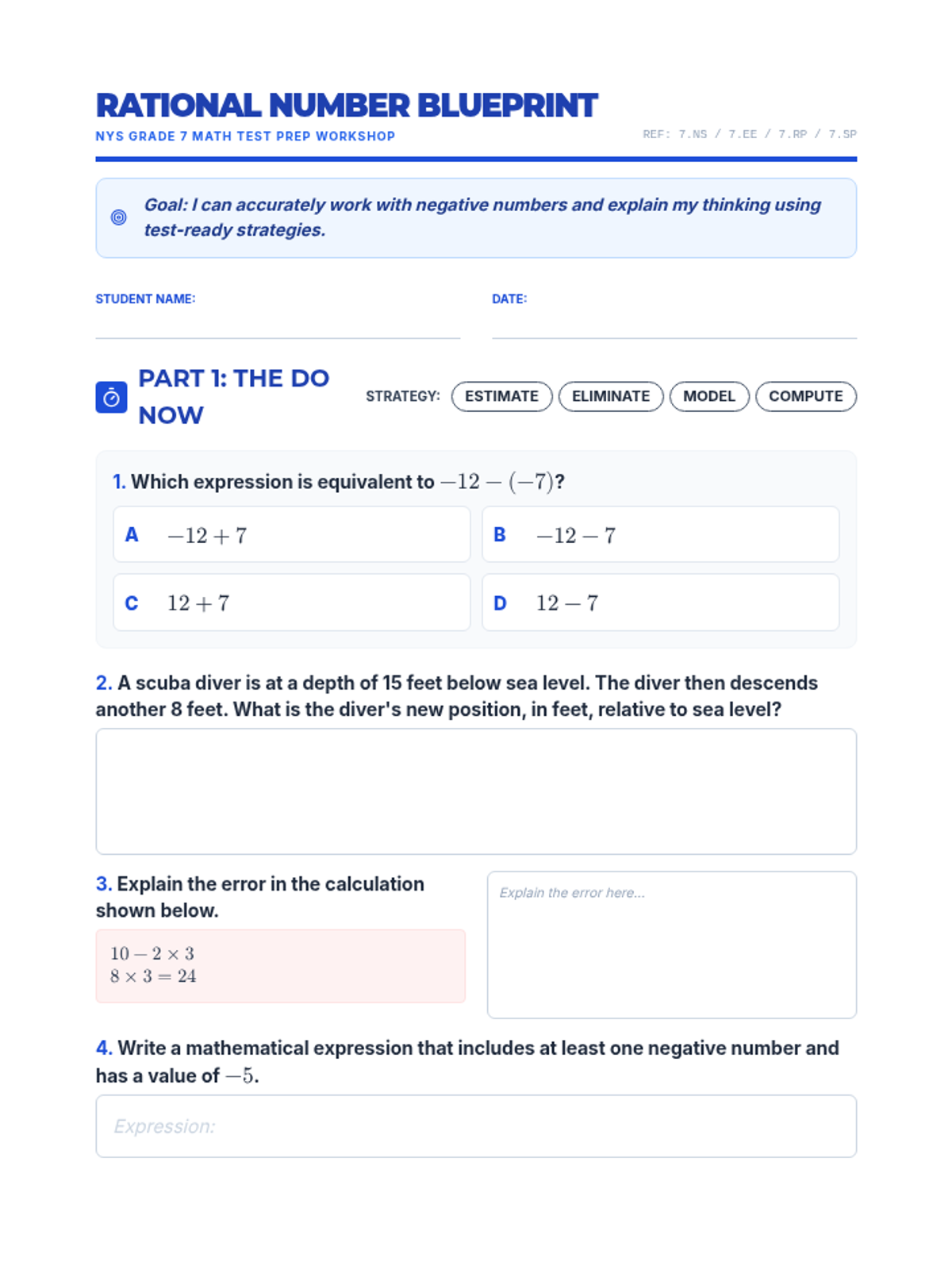
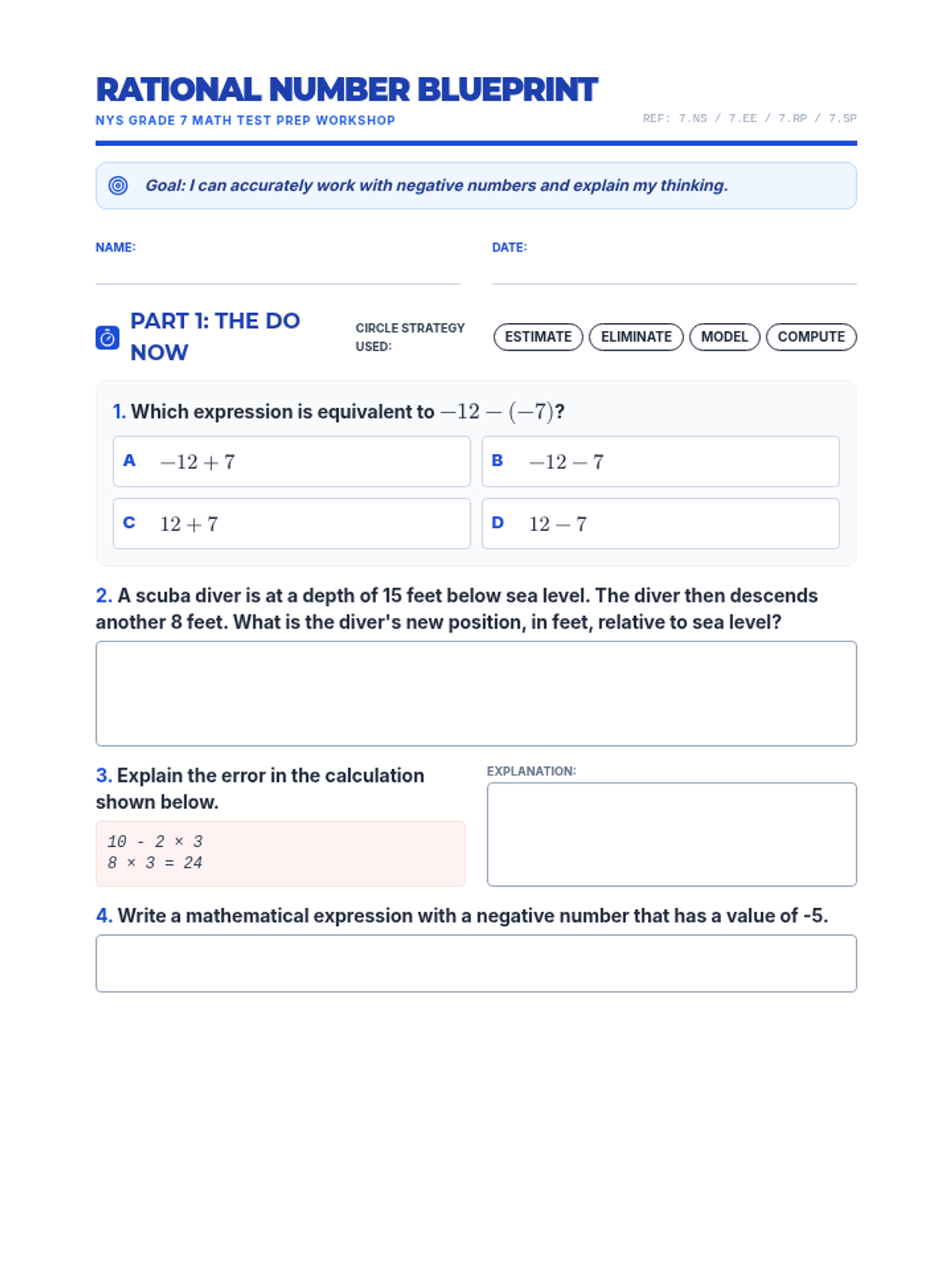
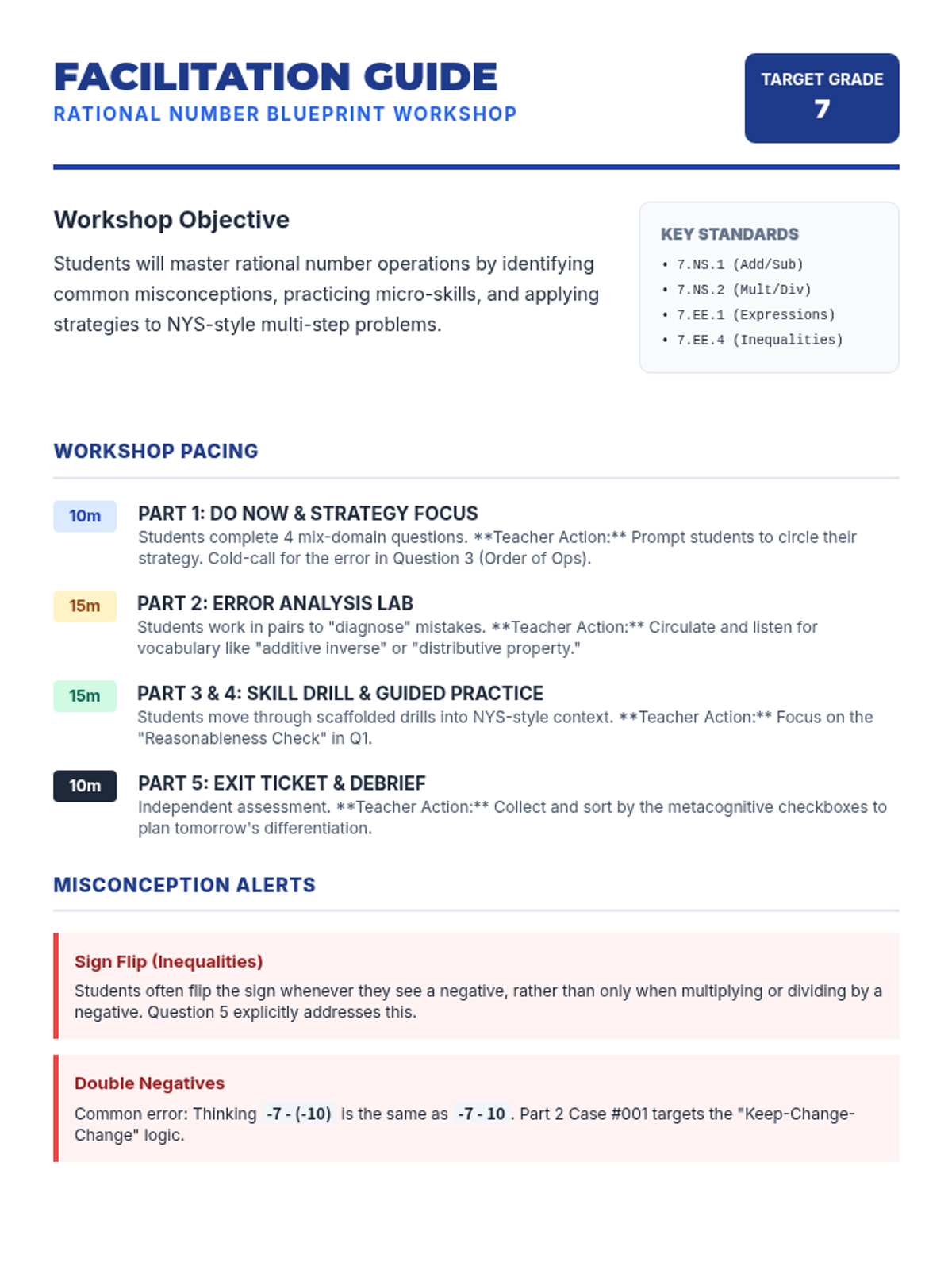
A comprehensive workshop focused on mastering rational number operations and common CCSS 7th grade math misconceptions in preparation for the NYS test.
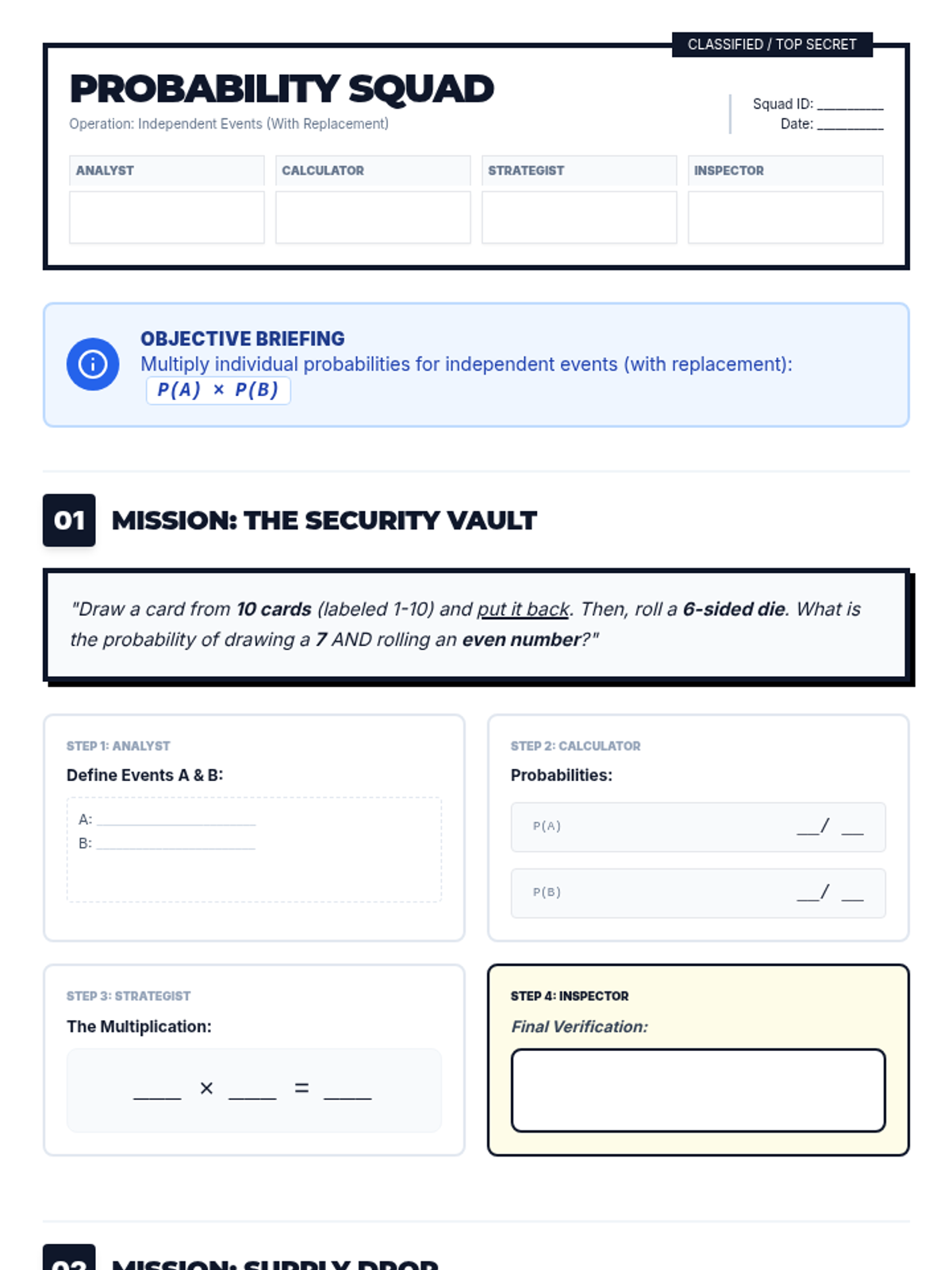
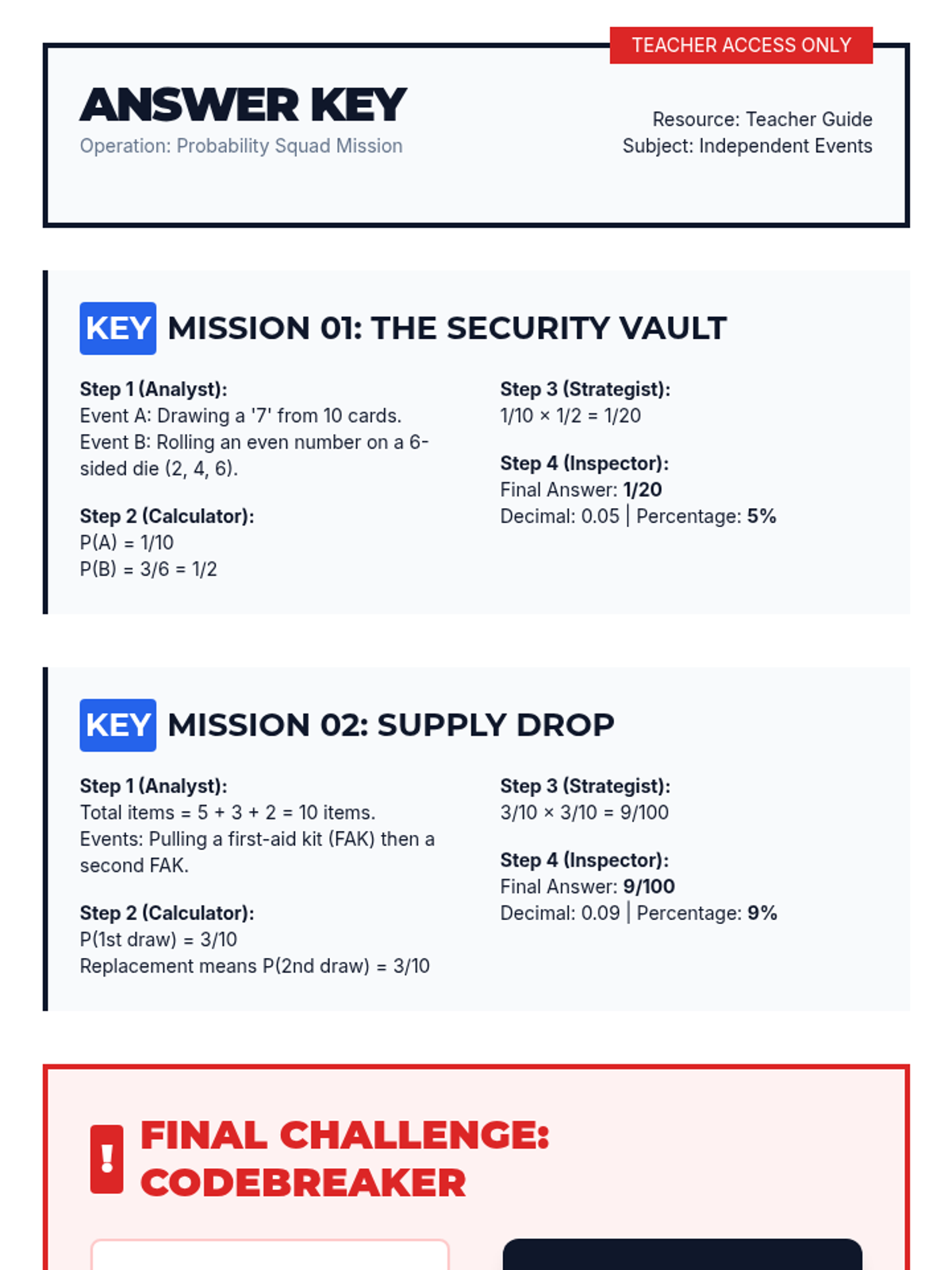
A collaborative lesson where students work in specialized roles to master compound probability of independent events with replacement through step-by-step mission scenarios.
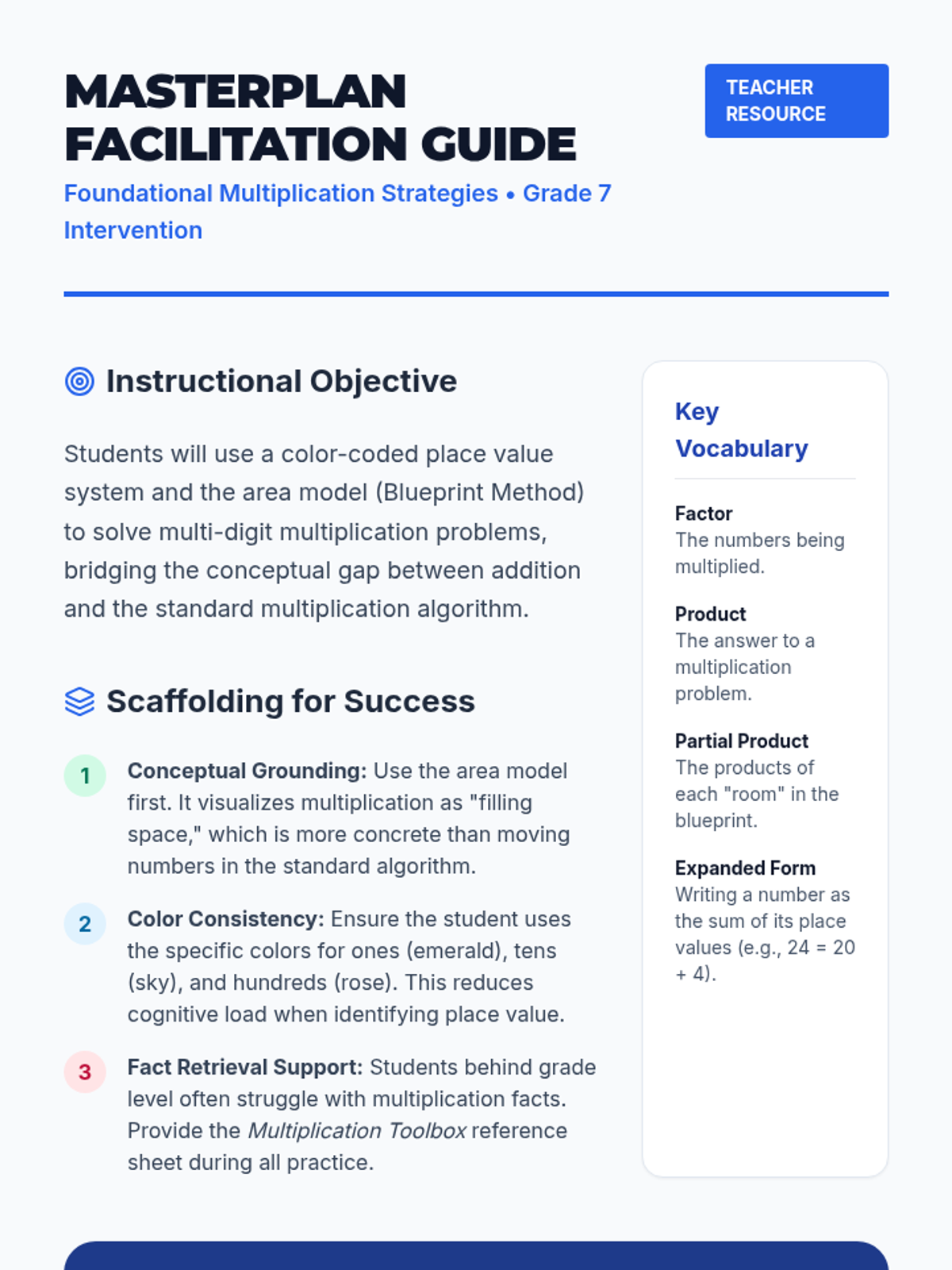
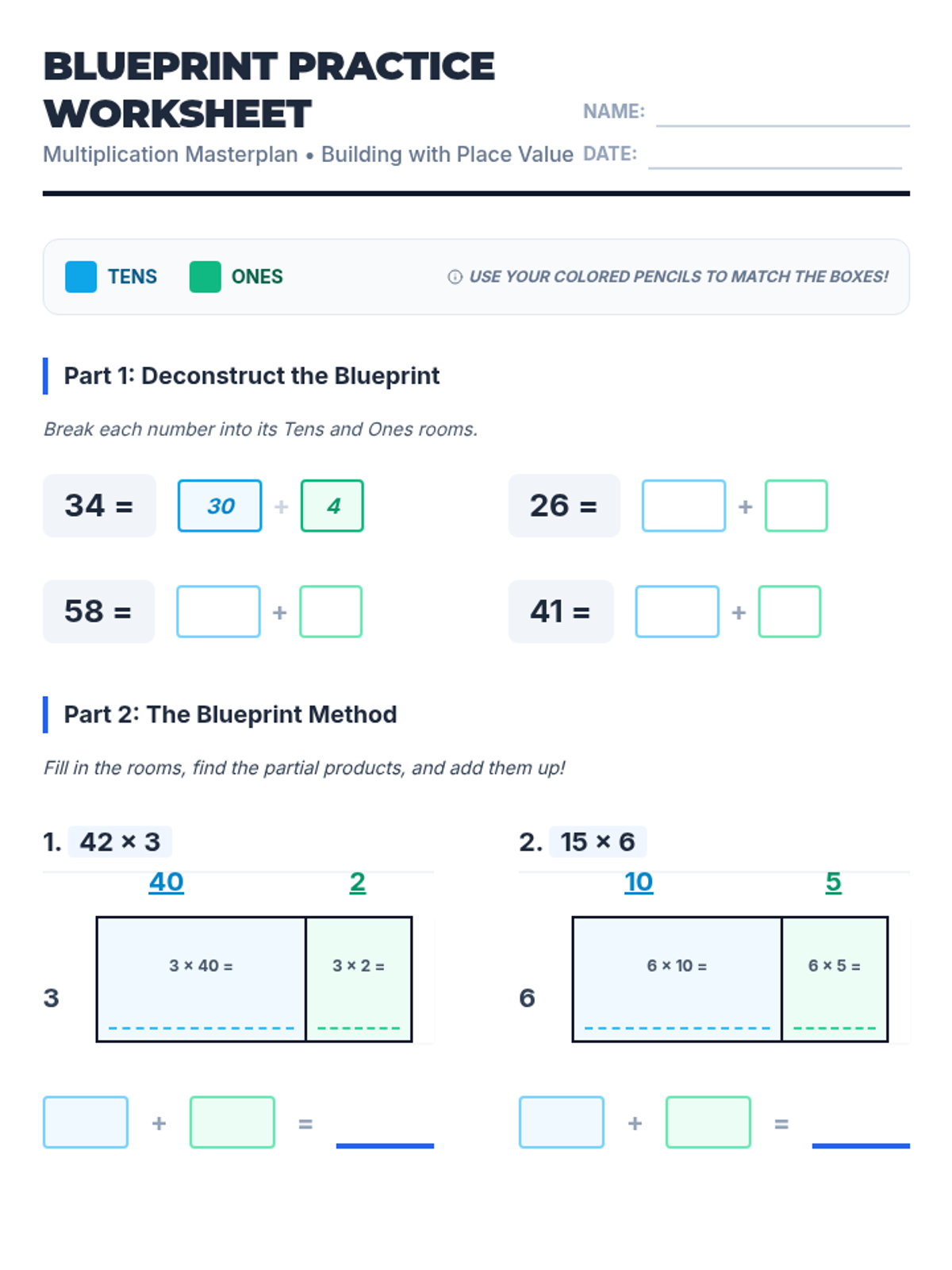
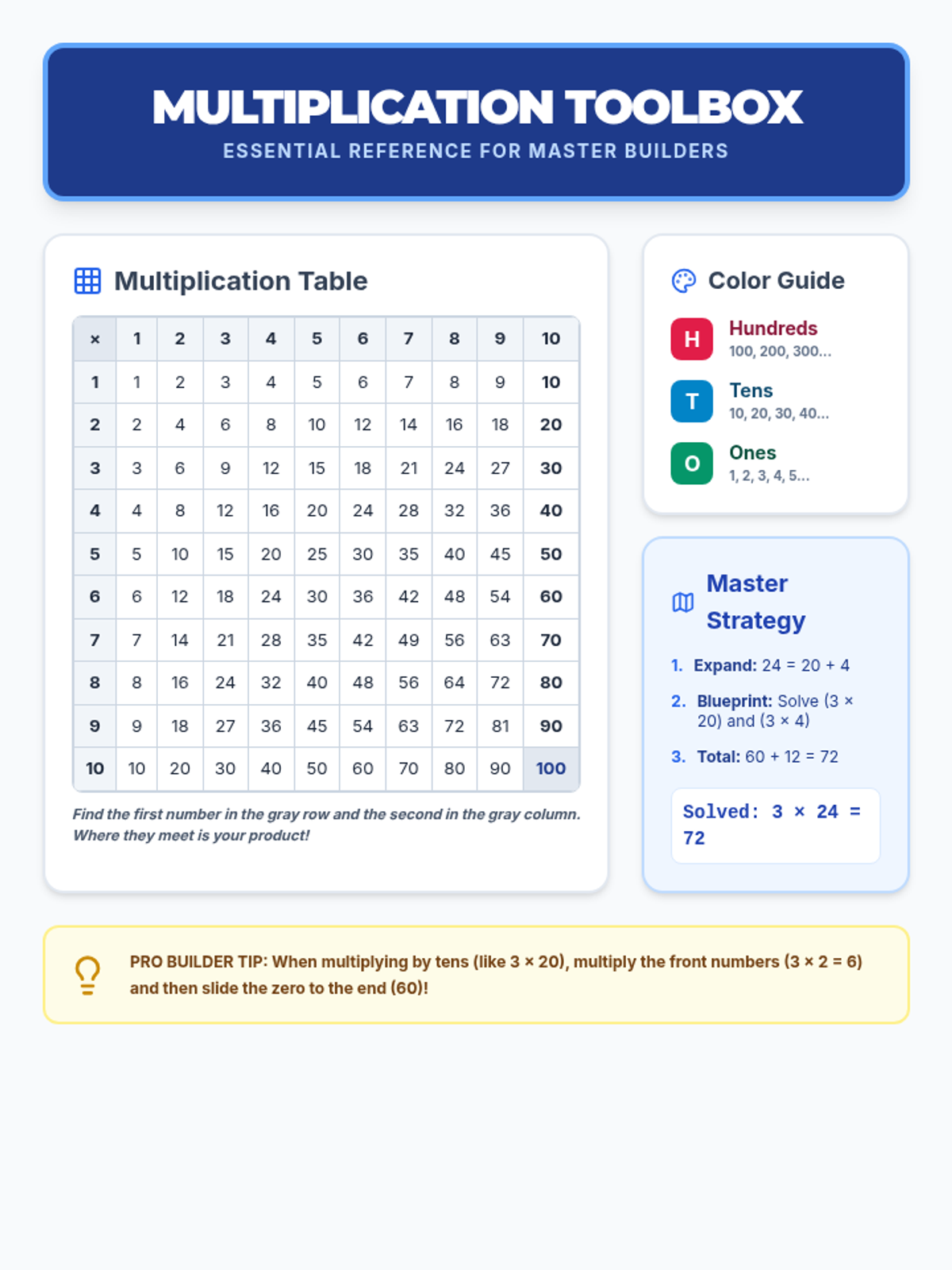
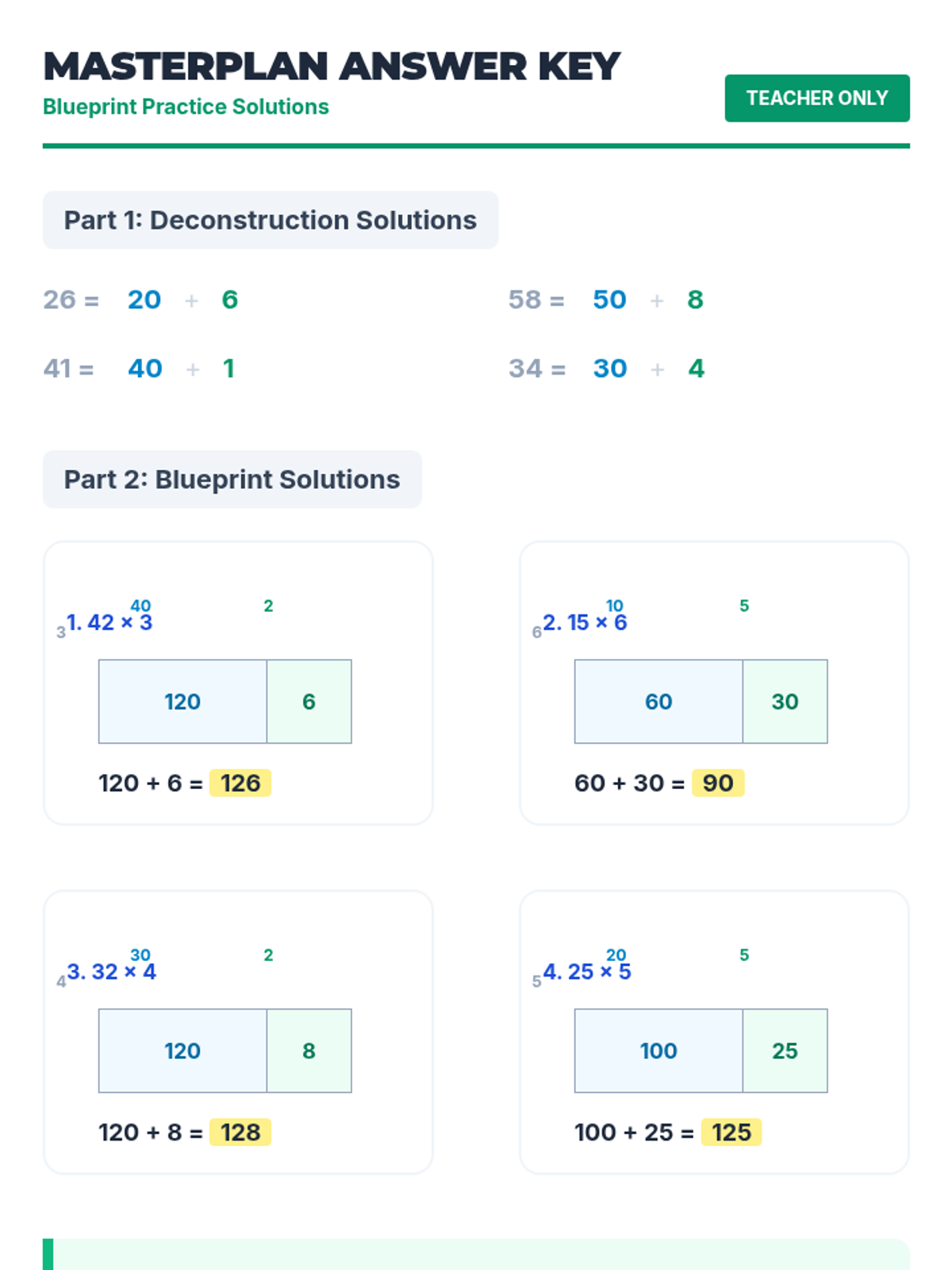
A foundational lesson on multi-digit multiplication using color-coded place value strategies and the area model to support students working significantly below grade level.
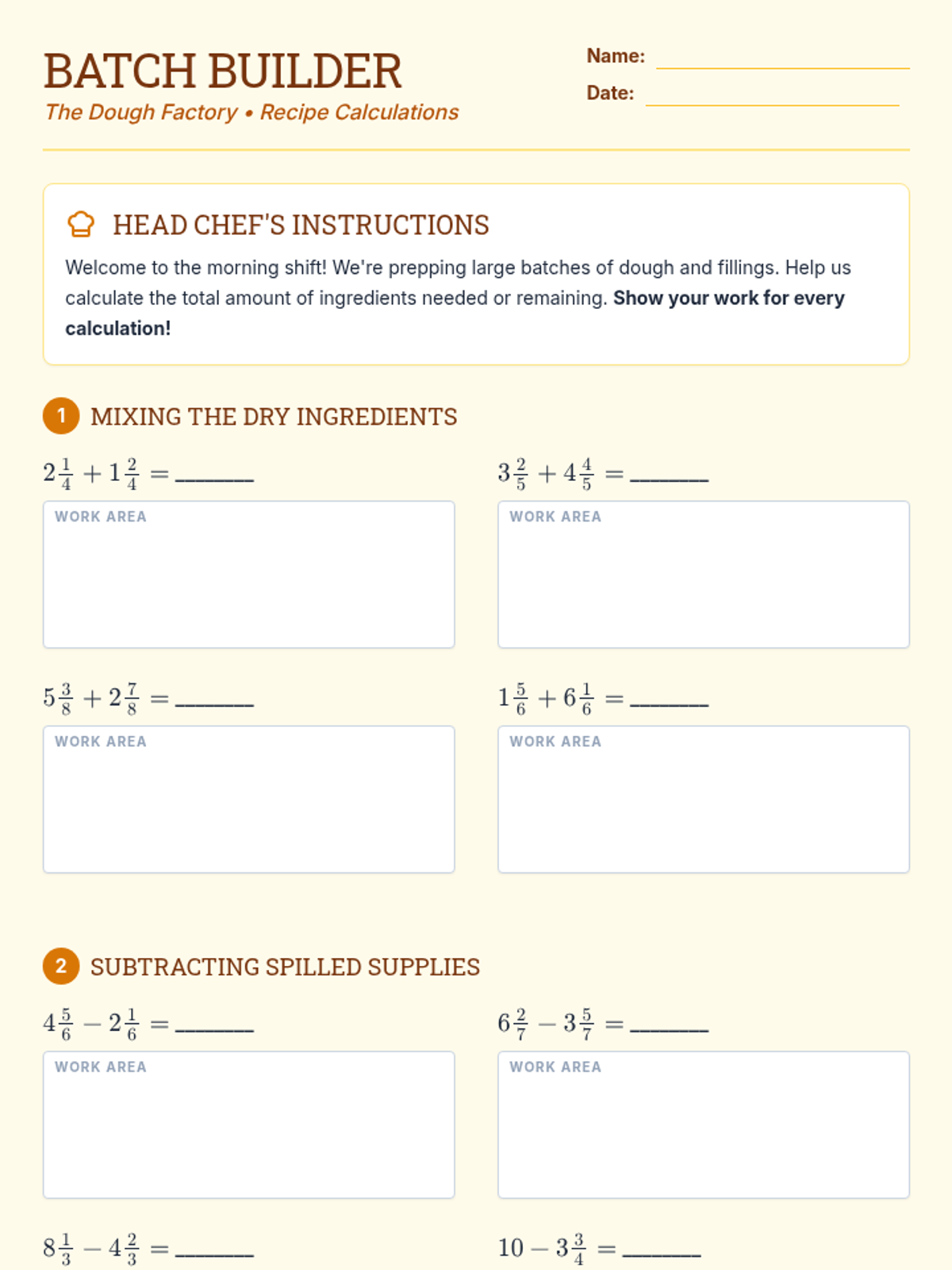
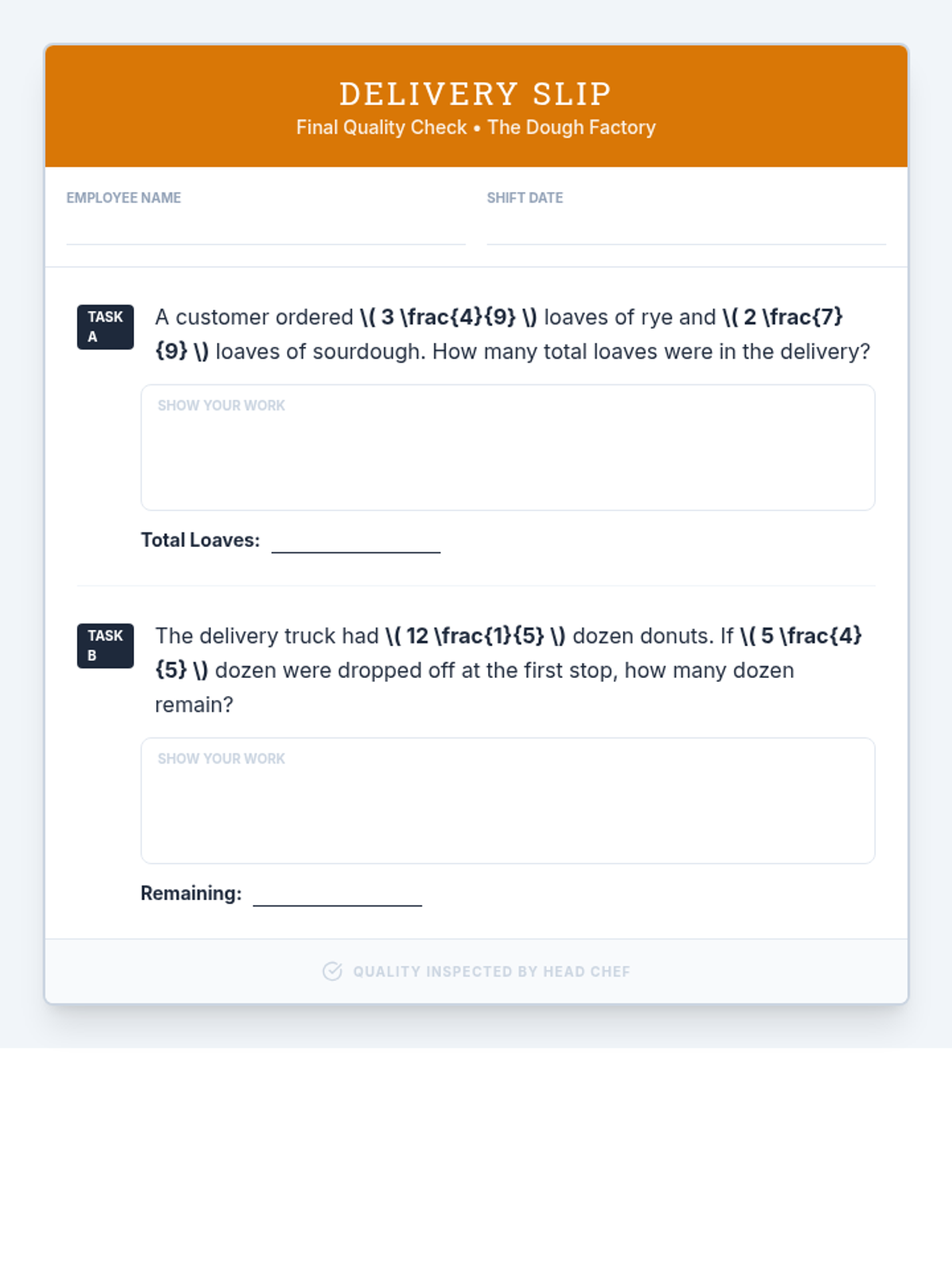
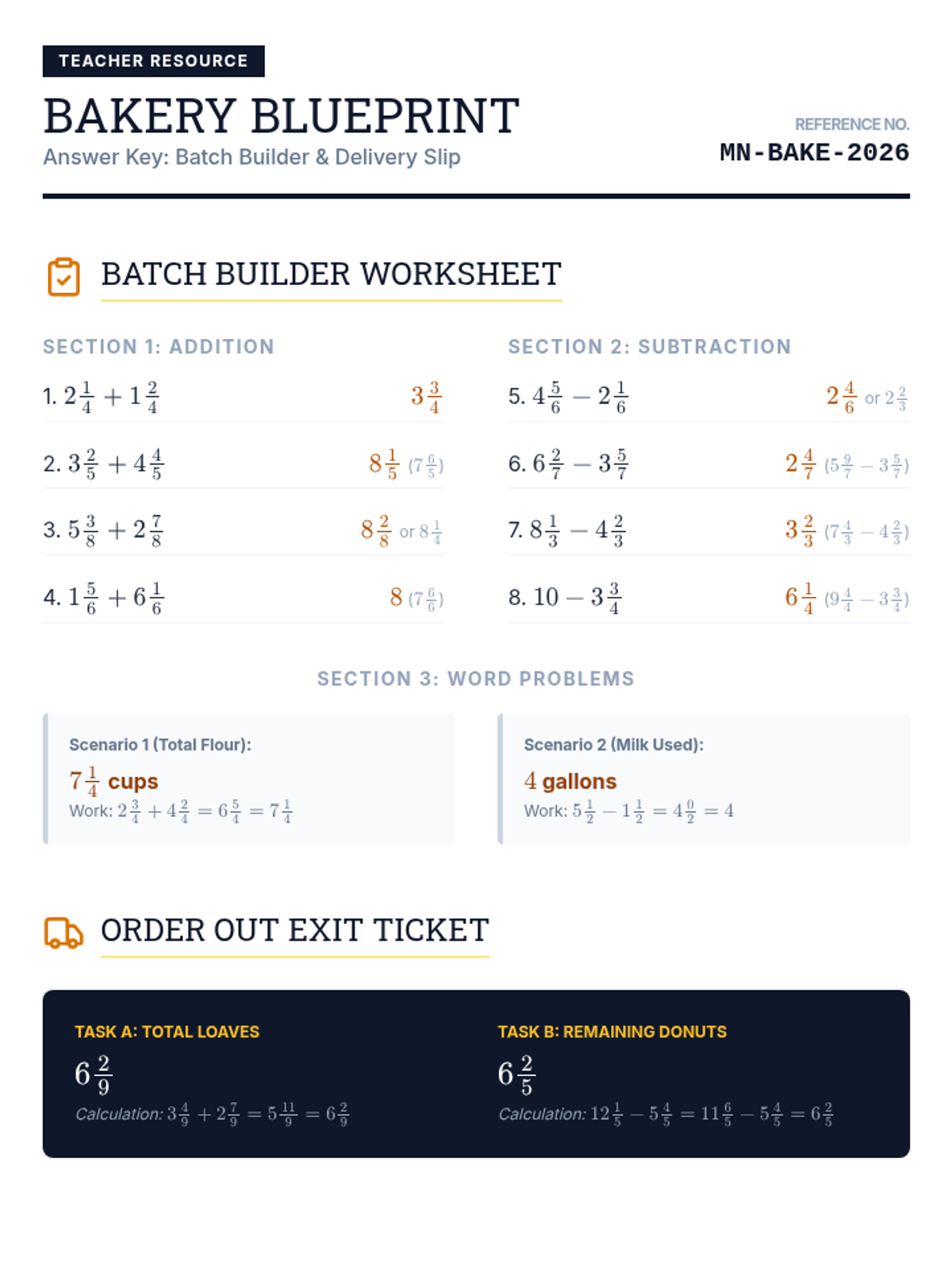
A lesson focused on adding and subtracting mixed numbers through the lens of a busy bakery, featuring word problems and computational practice.
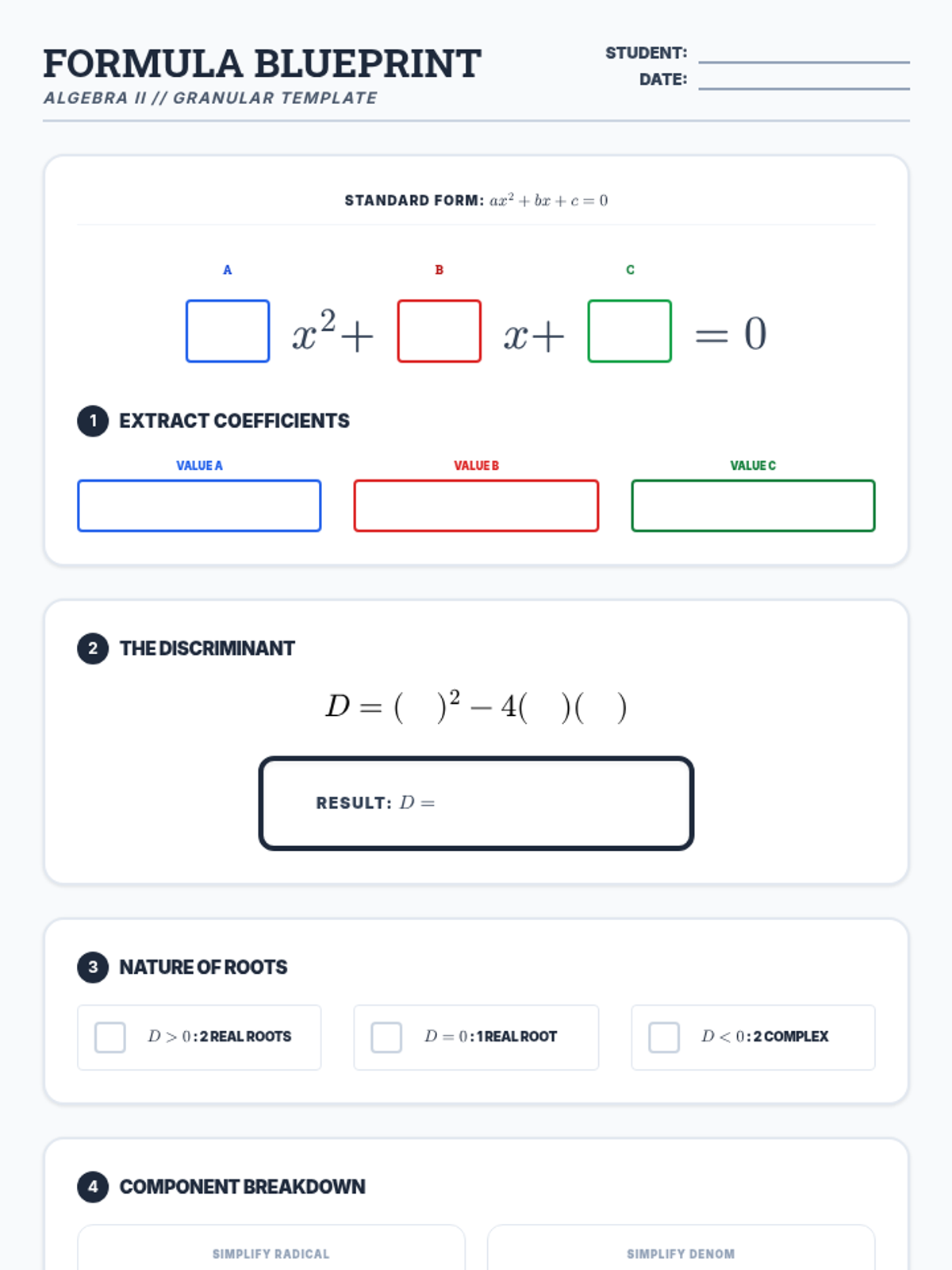
A technical, step-by-step guide and template for mastering the quadratic formula through visual color-coding. This lesson provides students with a structured 'blueprint' to decompose and solve quadratic equations with precision.
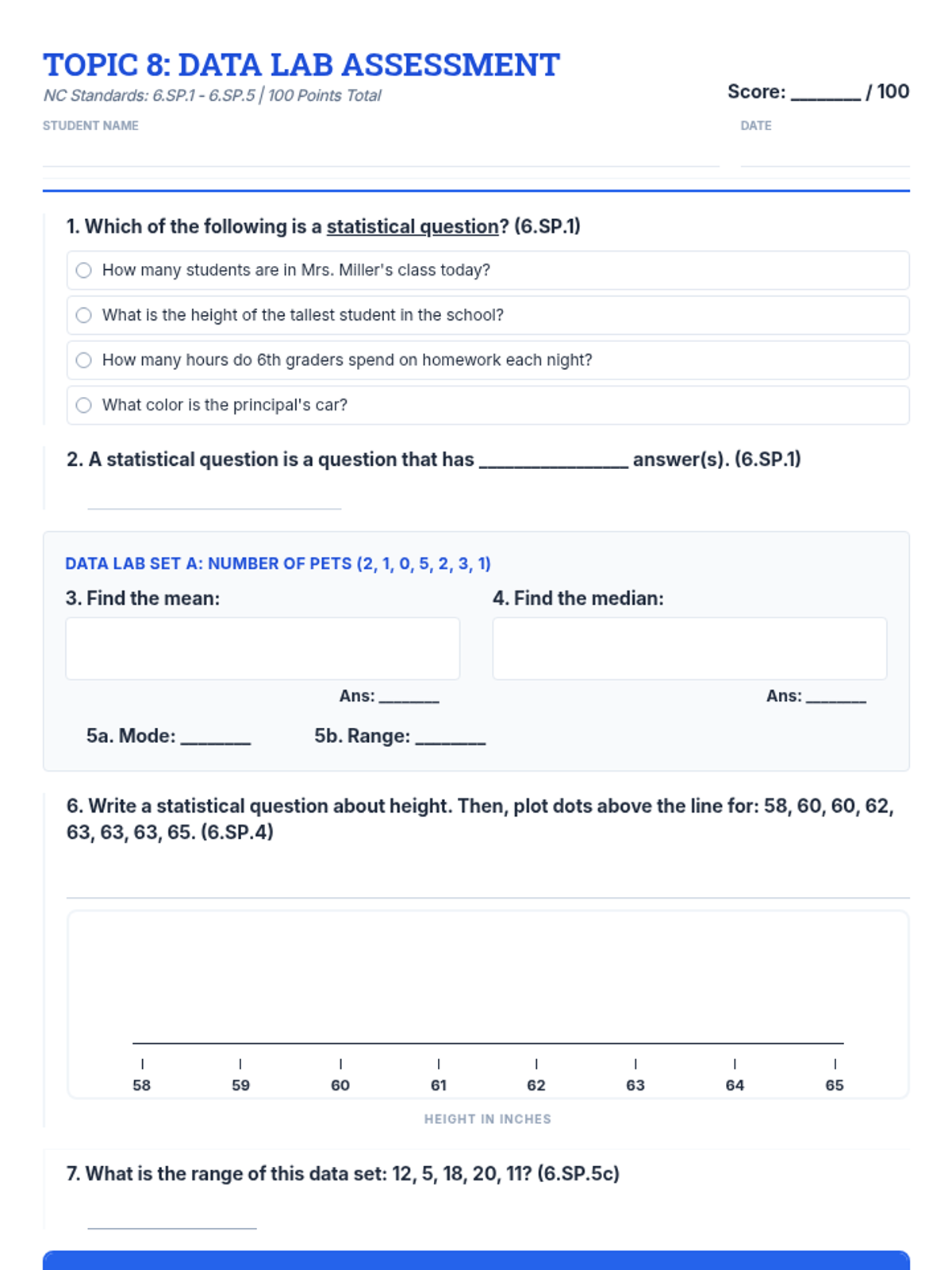
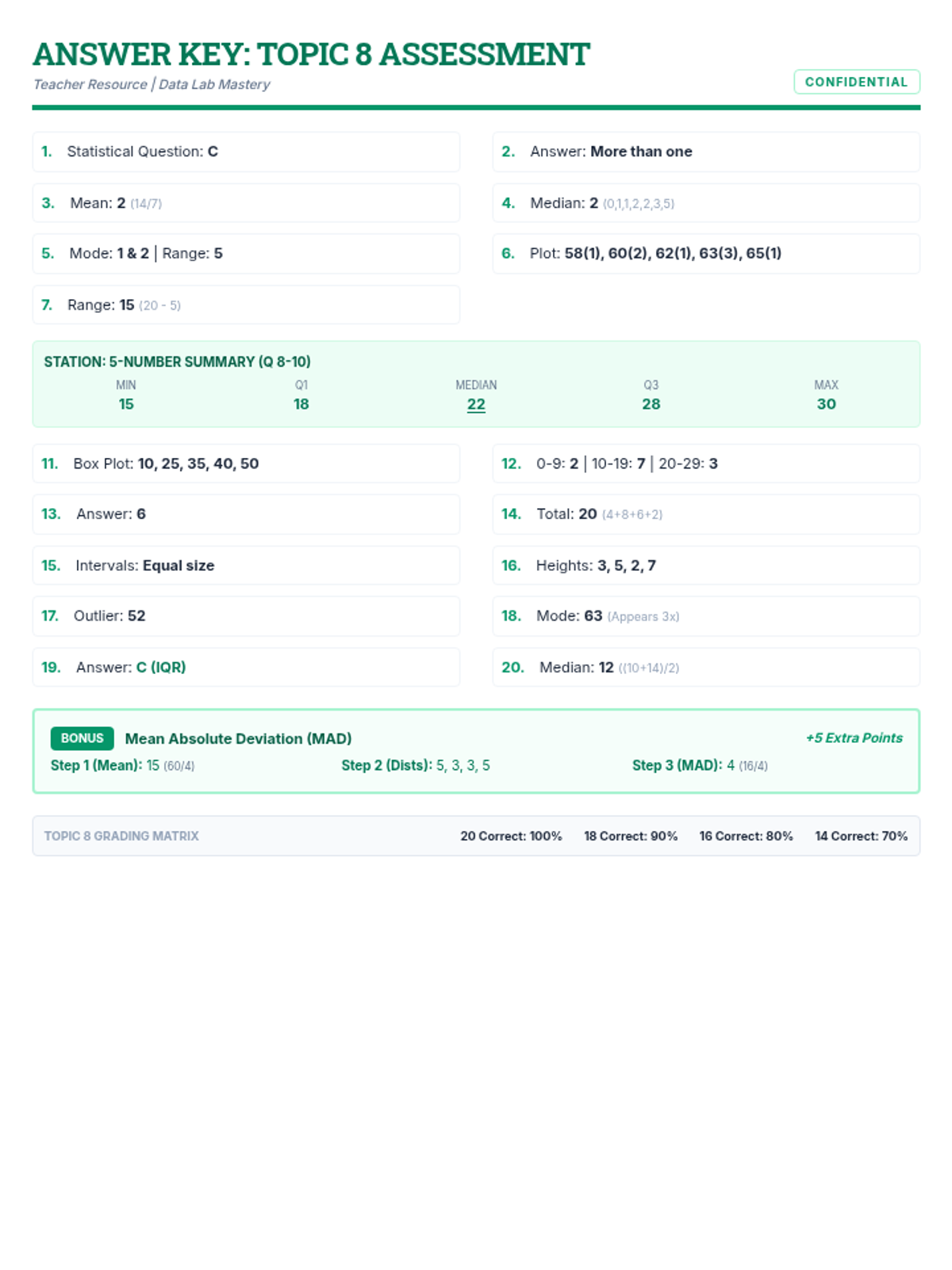
A comprehensive assessment covering 6th-grade statistics standards, including data display, measures of center and spread, and data interpretation. Students will create and analyze dot plots, histograms, and box plots while identifying statistical questions and describing distributions.
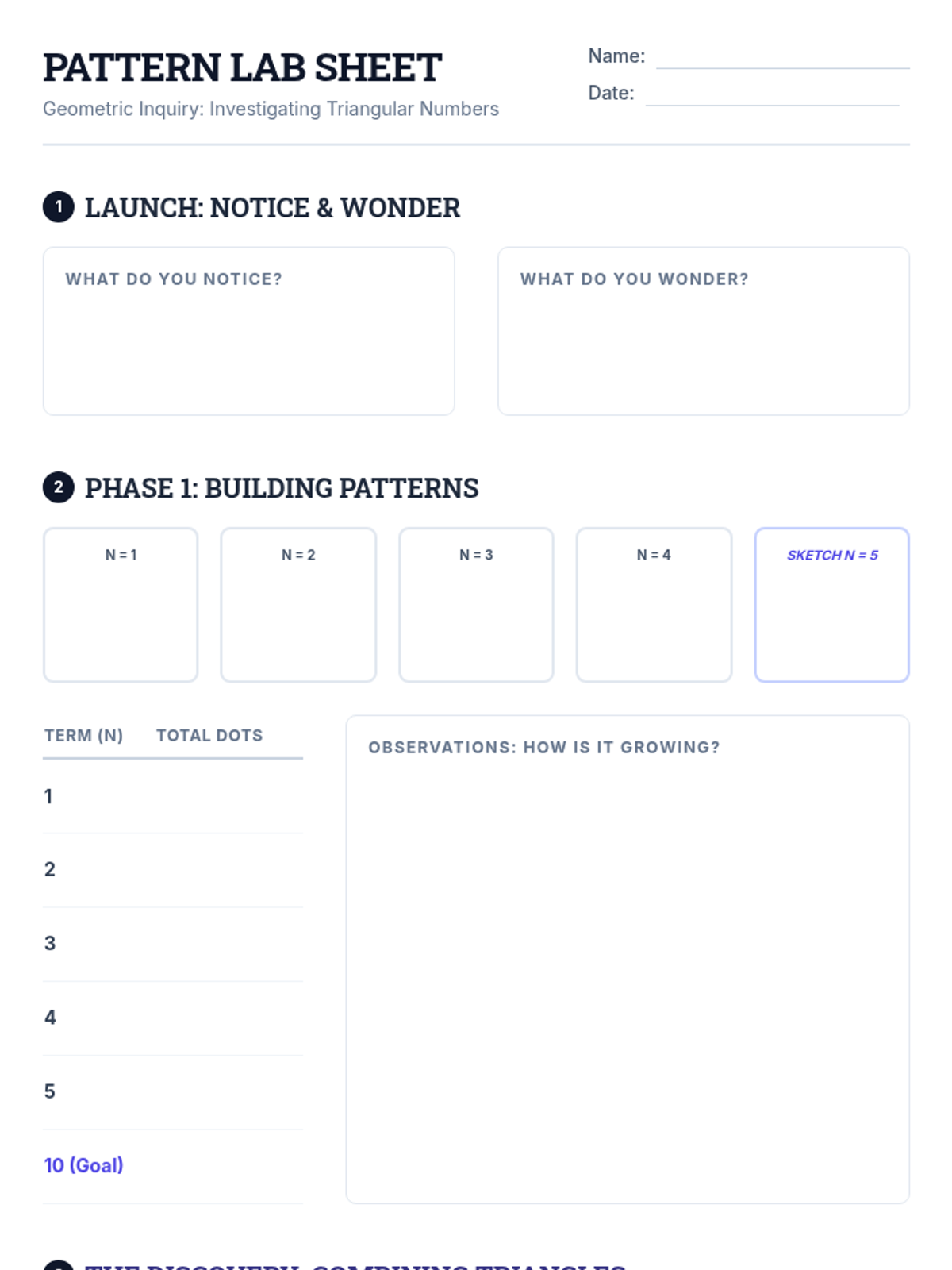
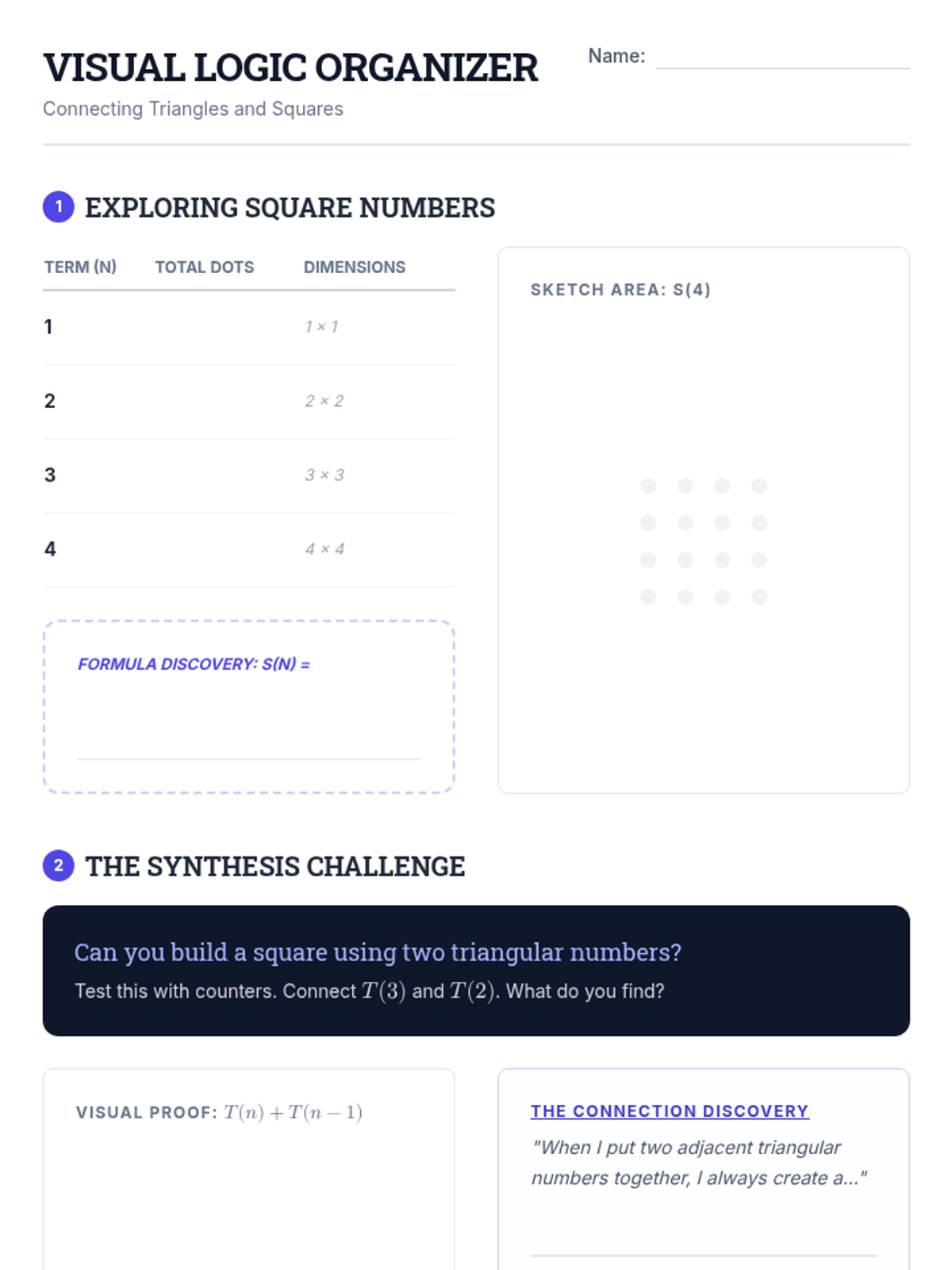
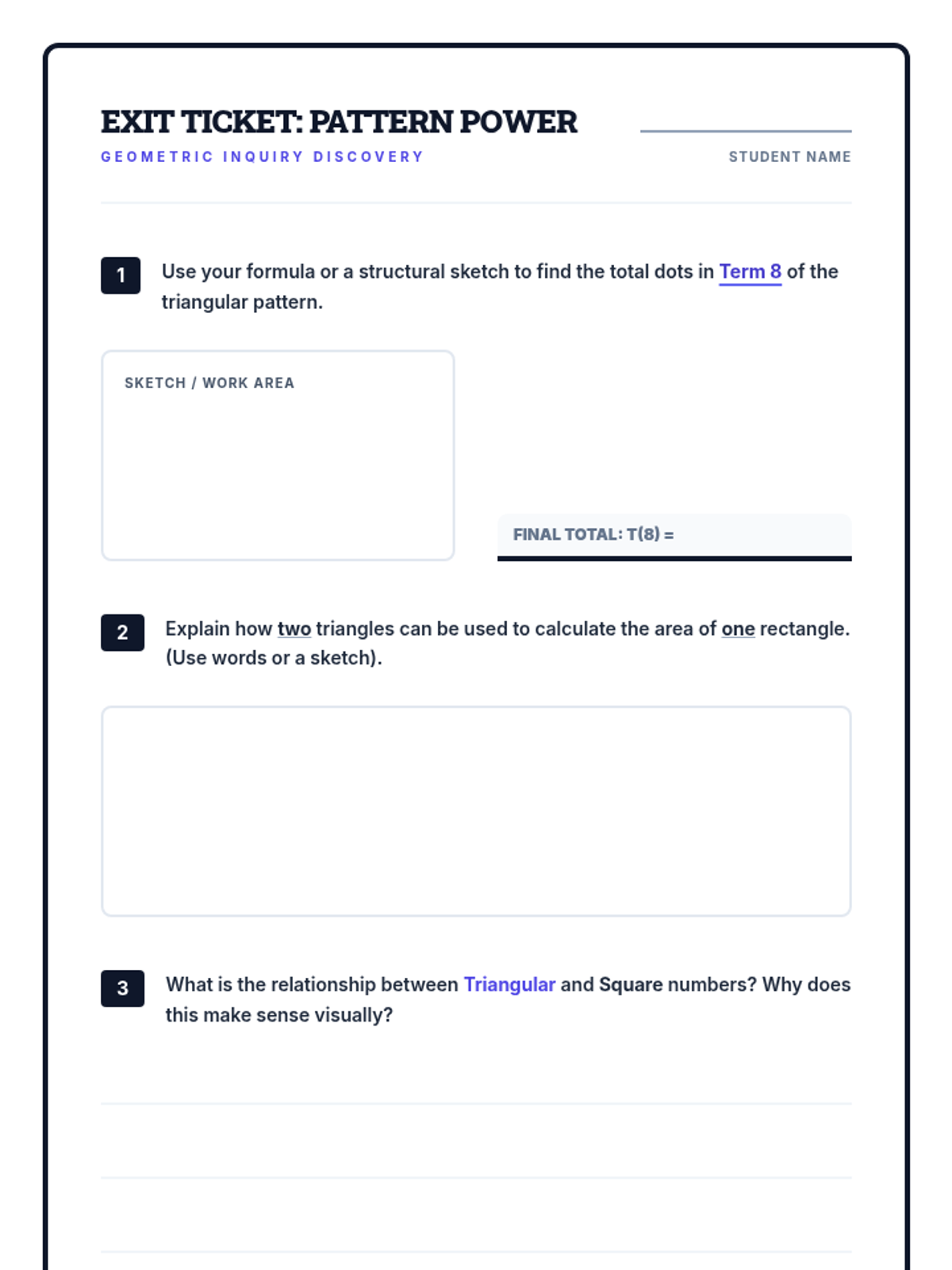
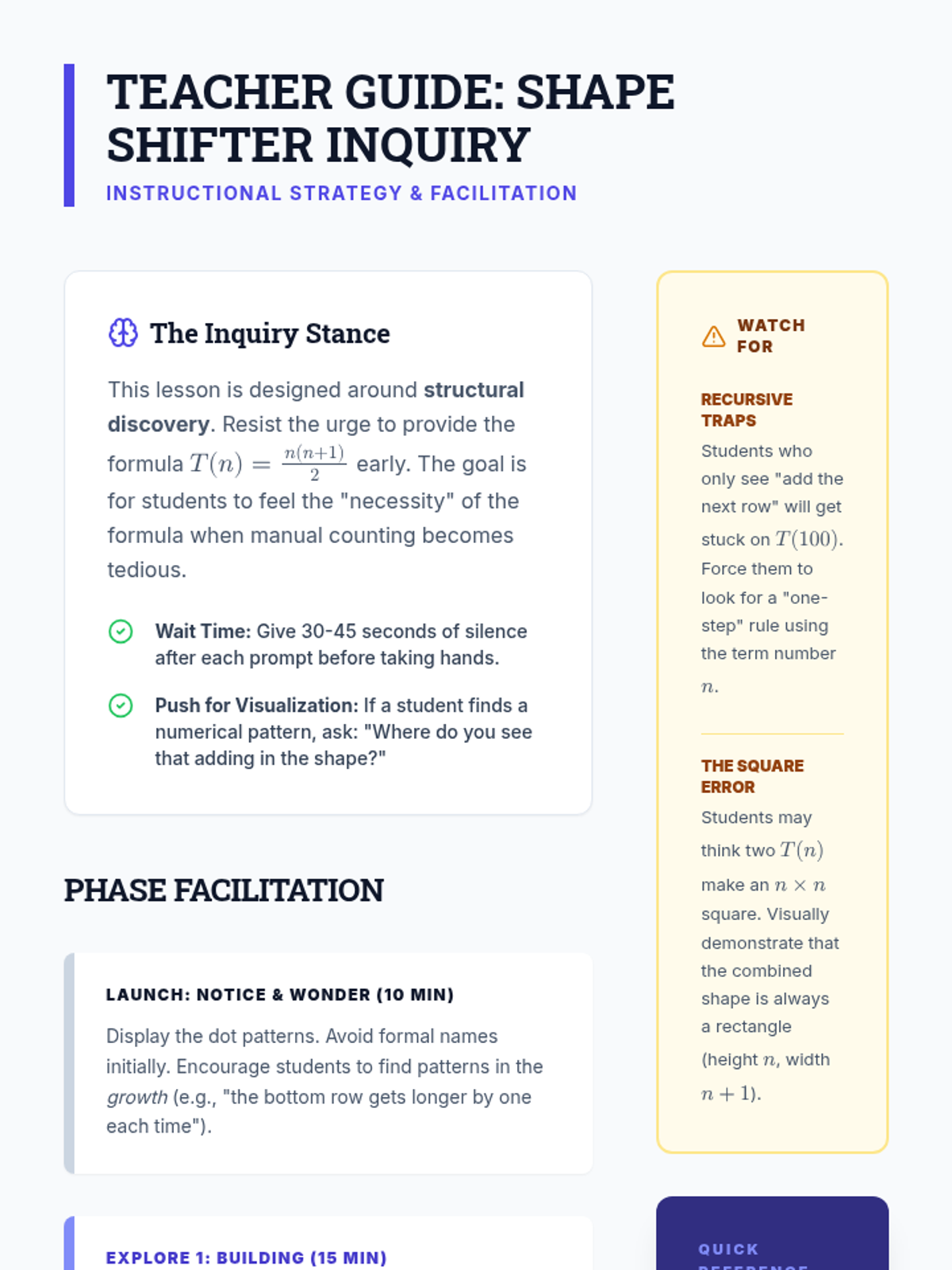
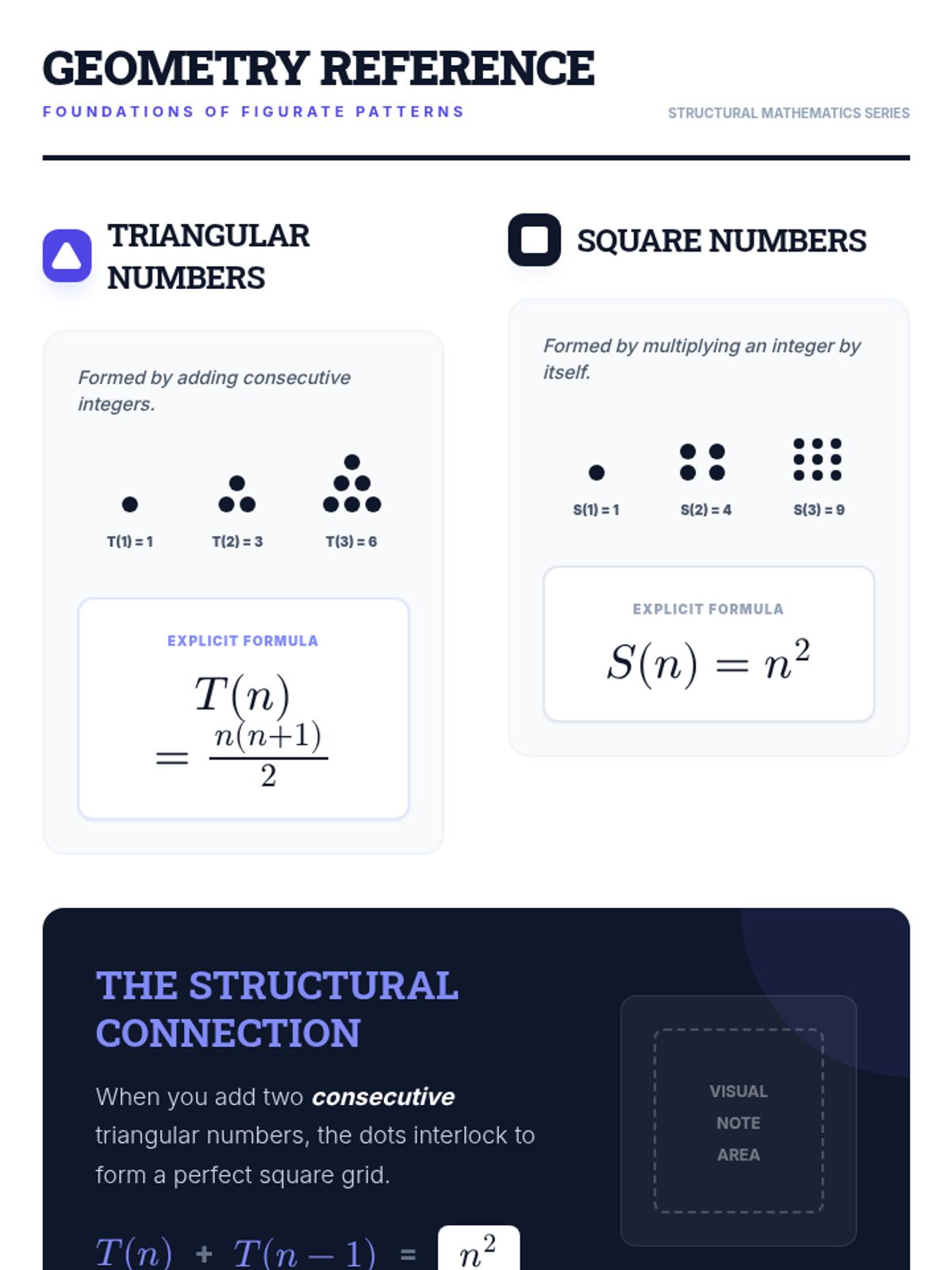
An inquiry-based exploration of triangular and square numbers where students discover formulas through visual manipulation and structural analysis.