A 60-minute immersive lesson exploring the multifaceted lives of Vikings as raiders, traders, and master shipbuilders. Students will analyze Viking expansion and daily life through a seafaring lens.
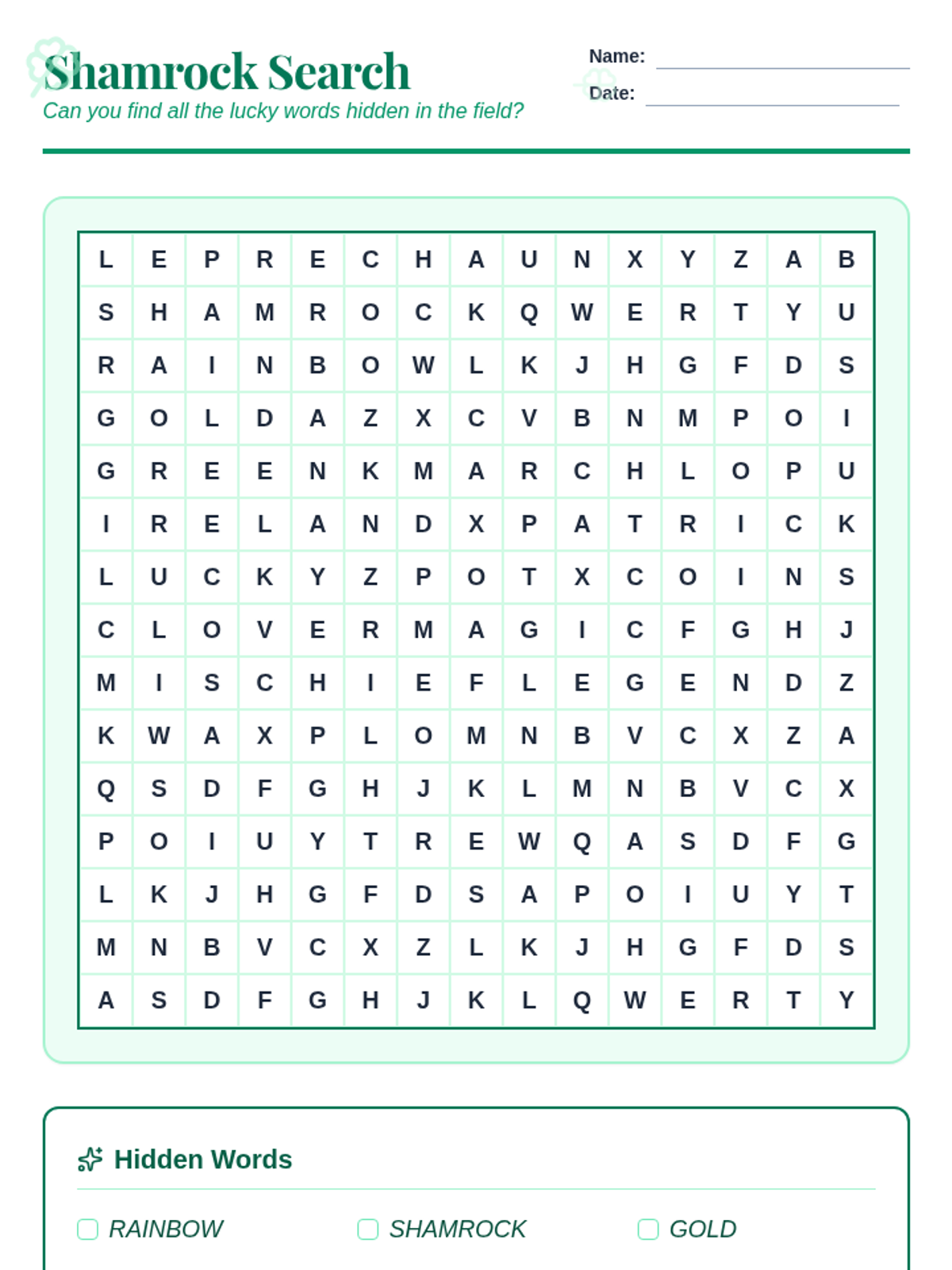
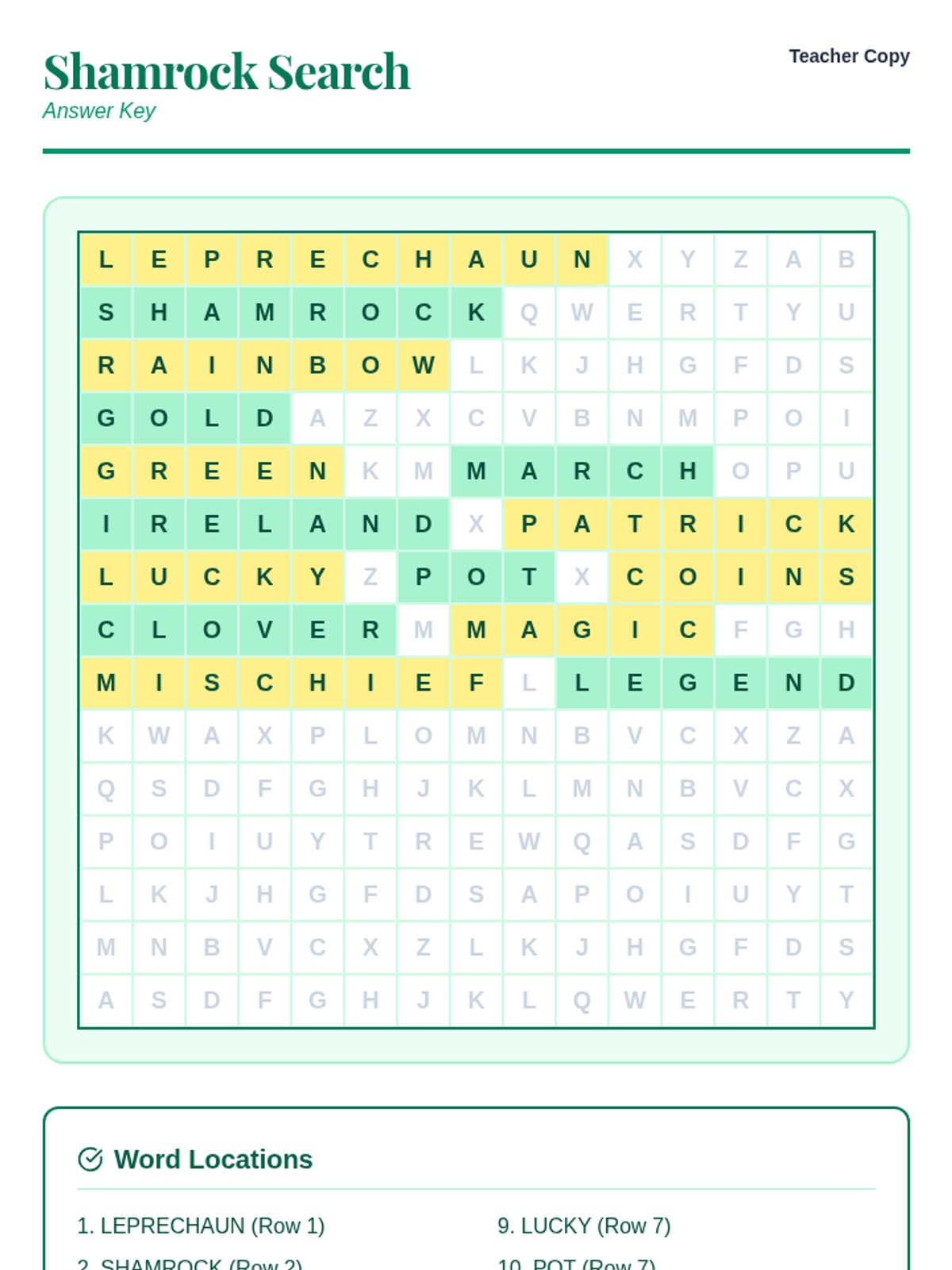
A festive collection of St. Patrick's Day activities focusing on vocabulary and Irish folklore.
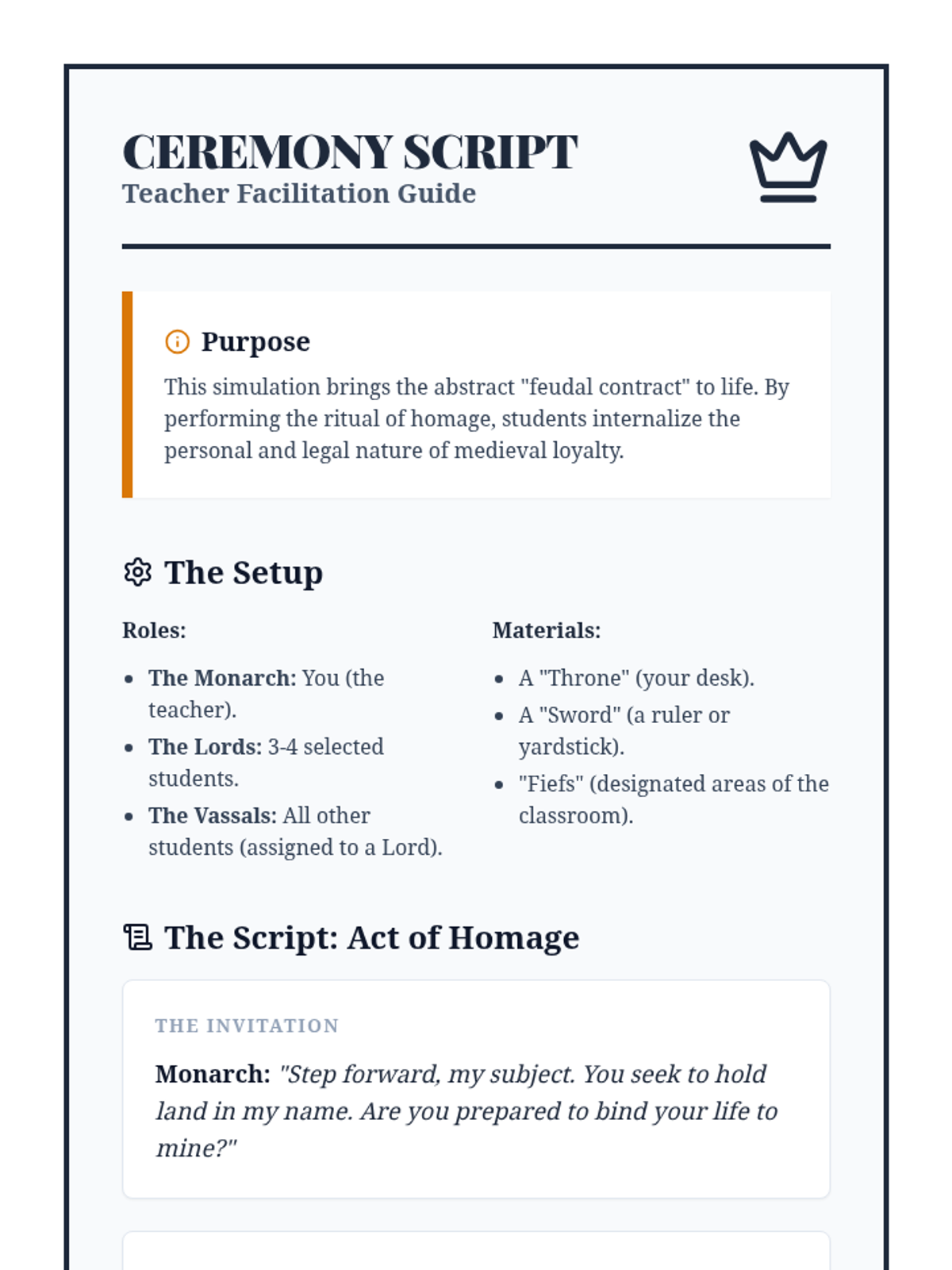
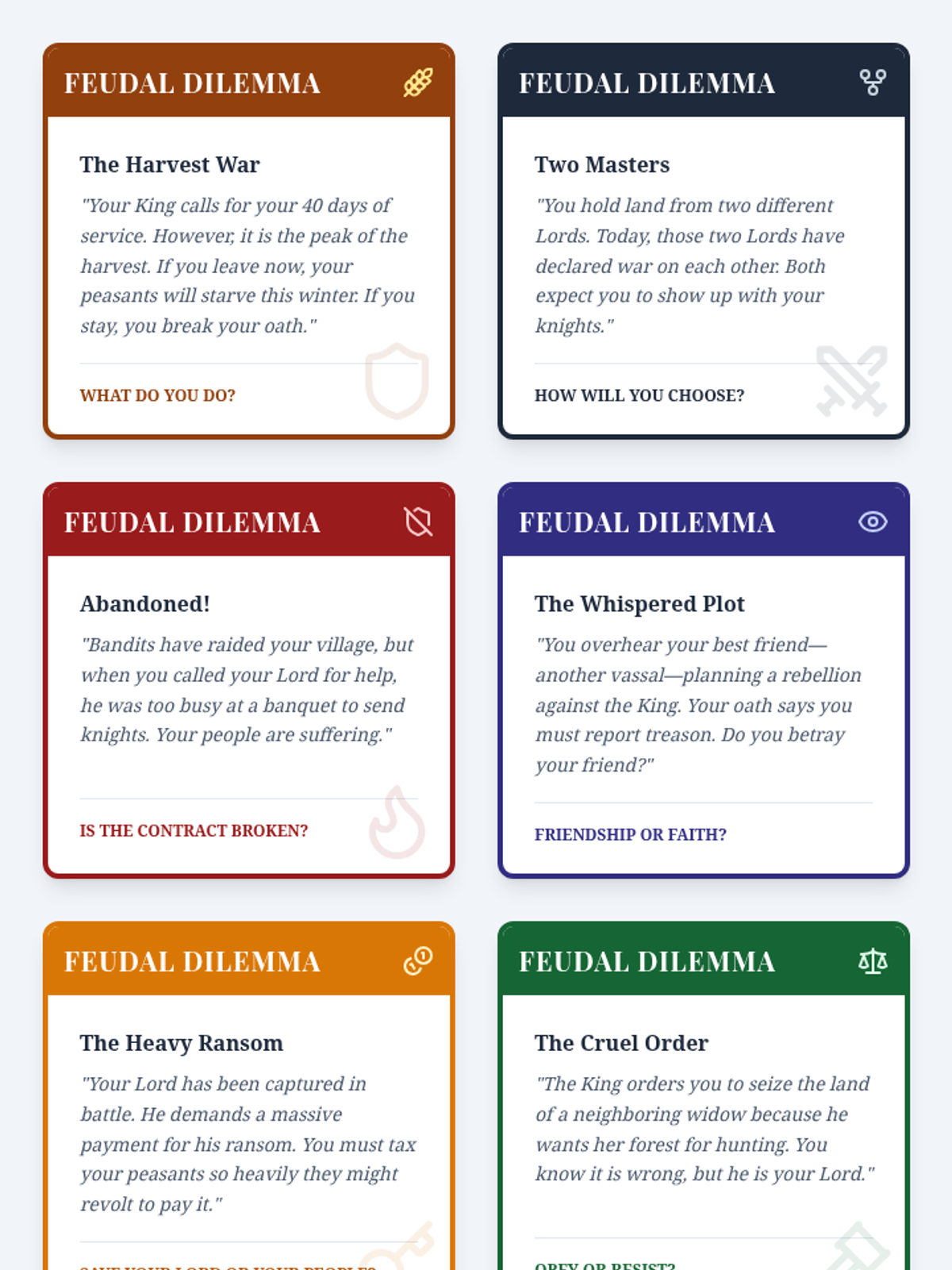
A brief overview of the feudal social contract, focusing on the Oath of Fidelity and the mutual obligations between lords and vassals in Medieval Europe.
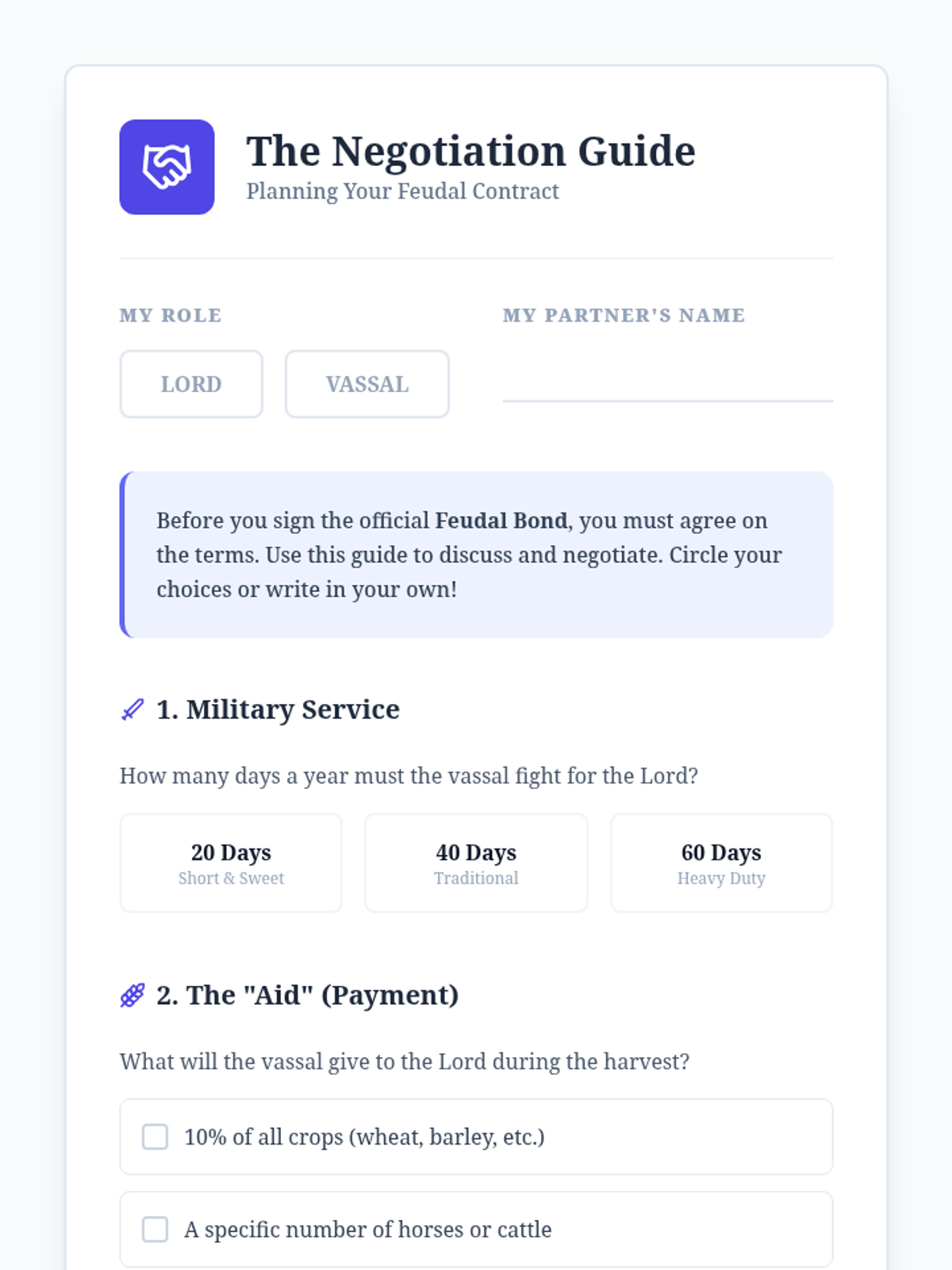
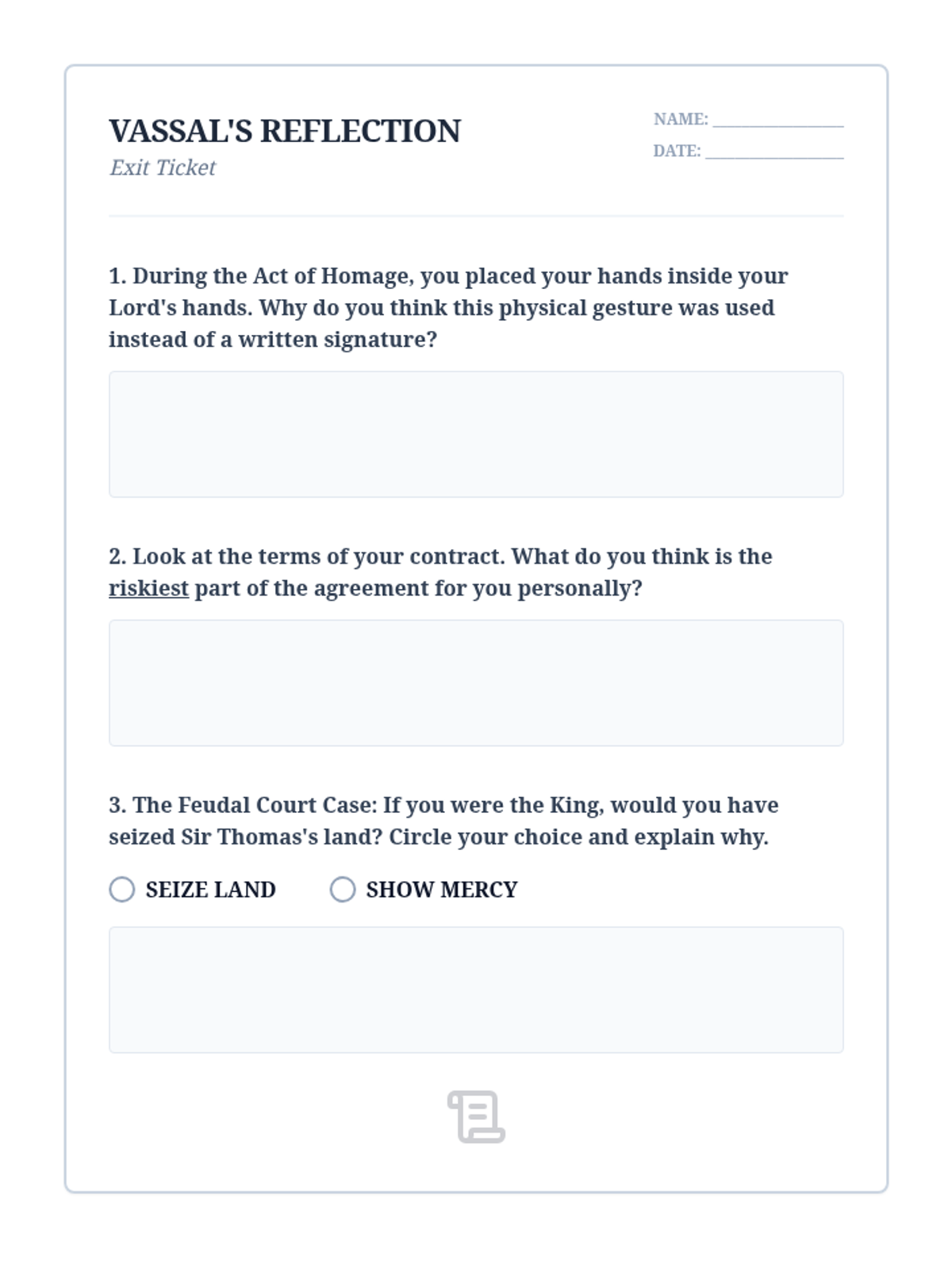
Students delve into the legal and social bonds of the feudal contract through a knighting ceremony simulation and drafting their own oaths of fealty.
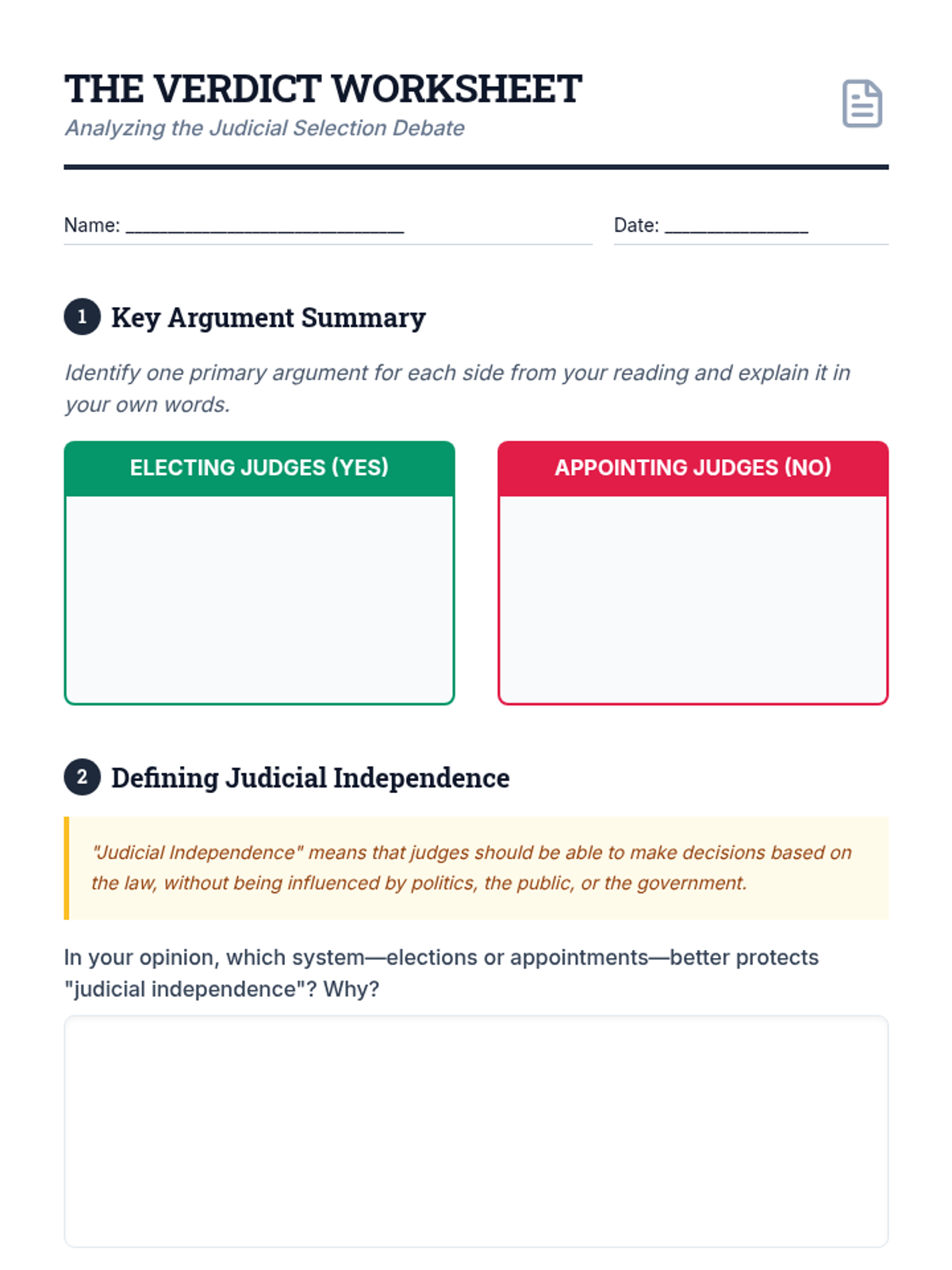
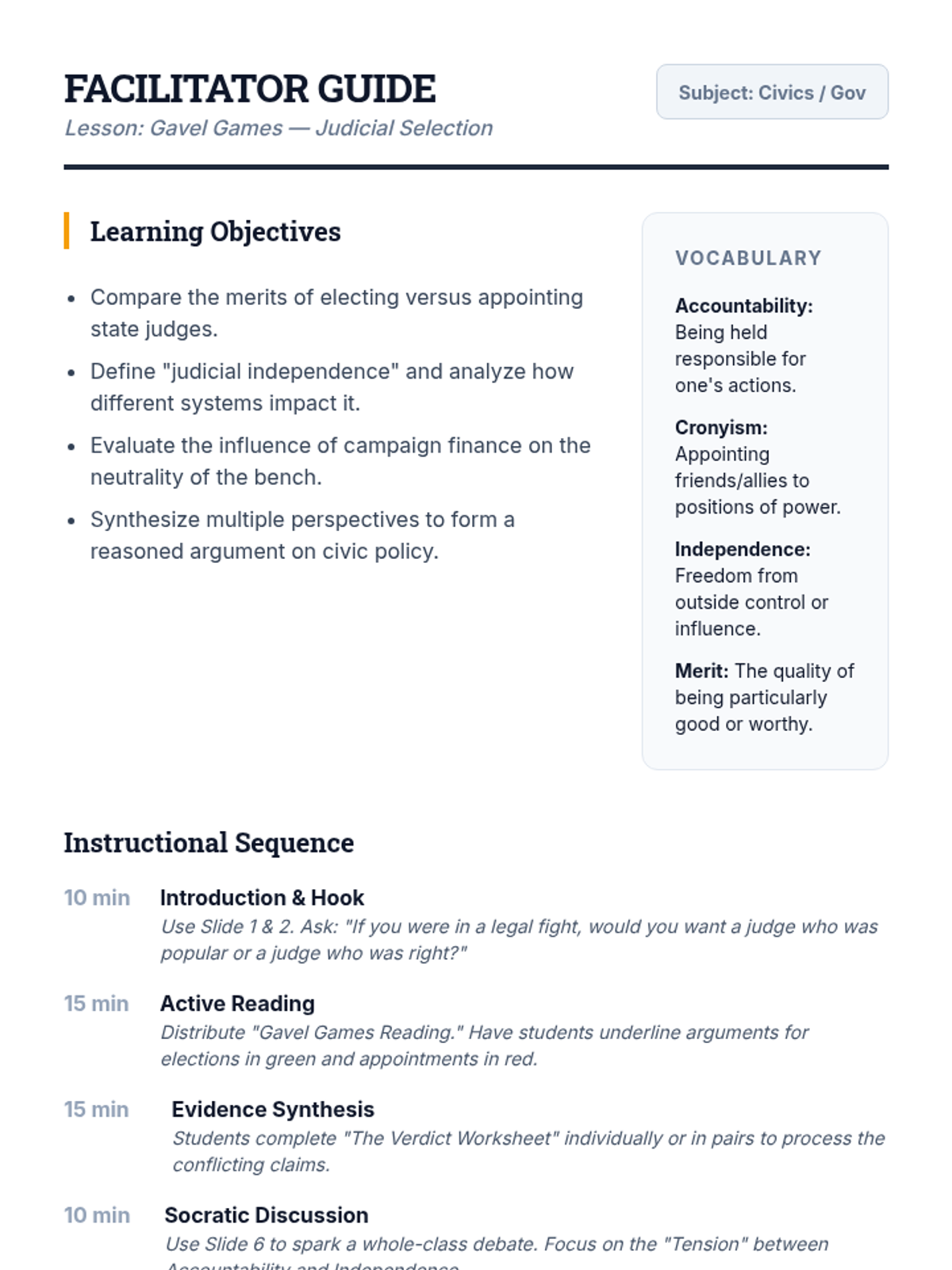
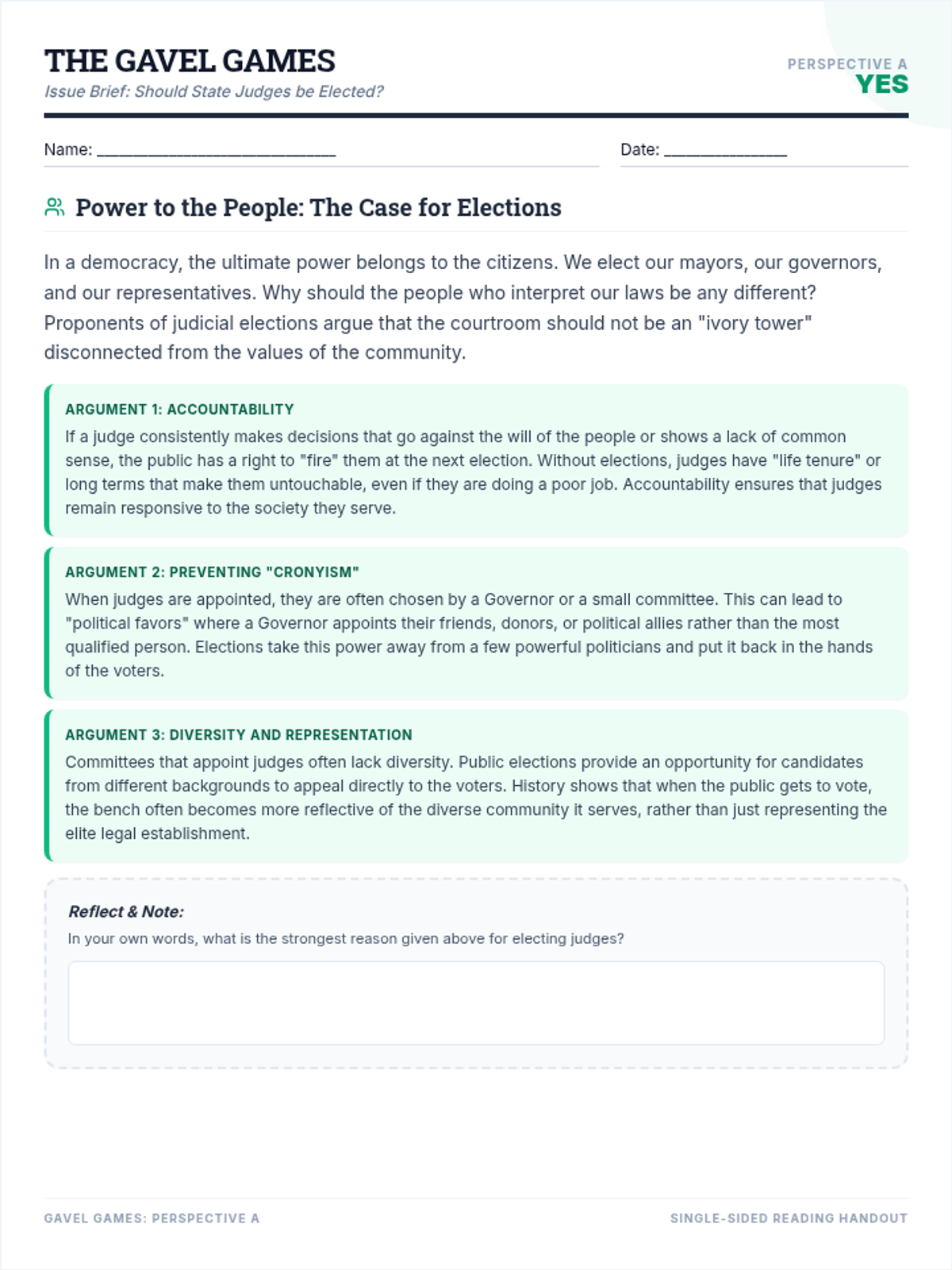
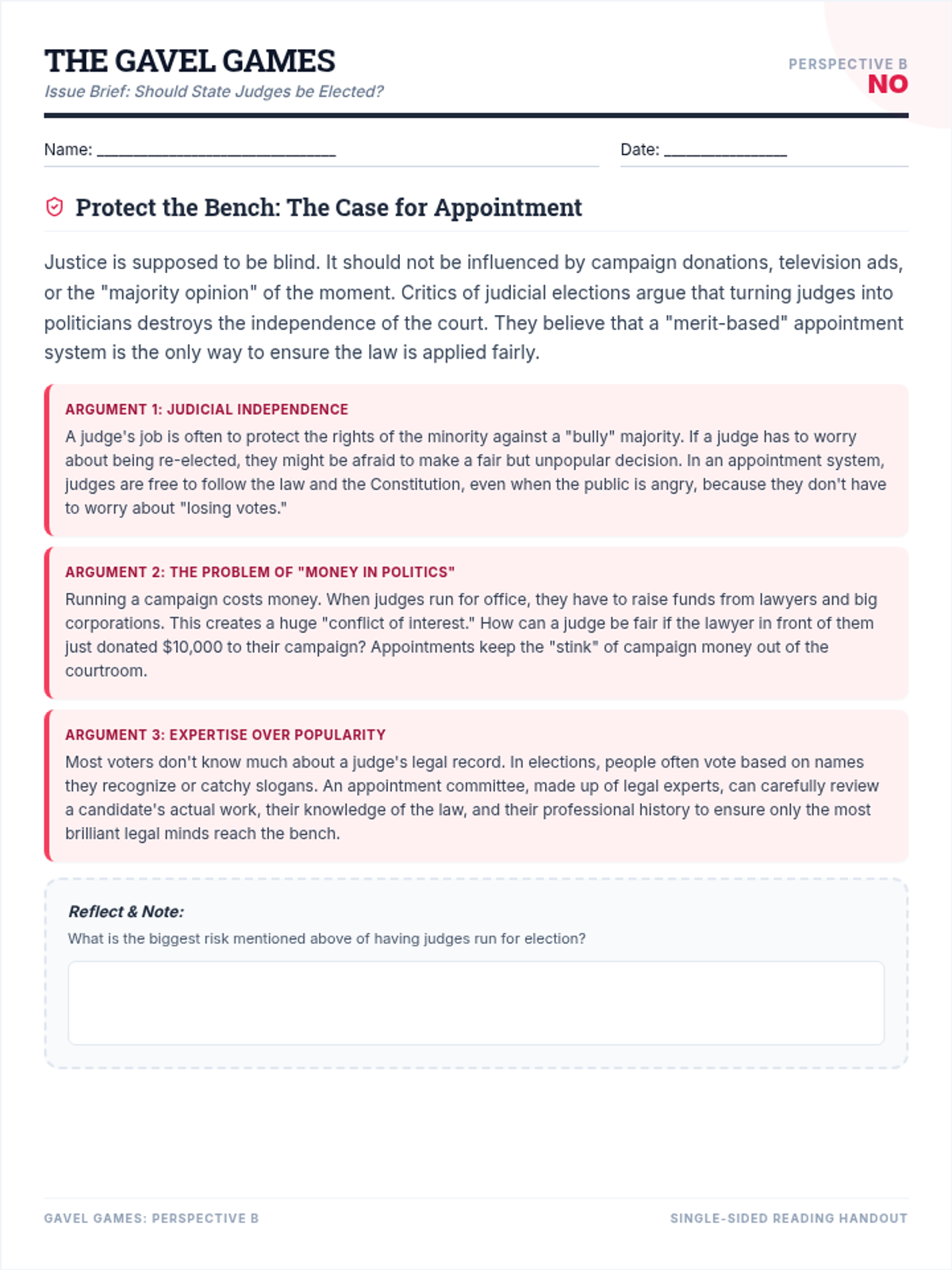
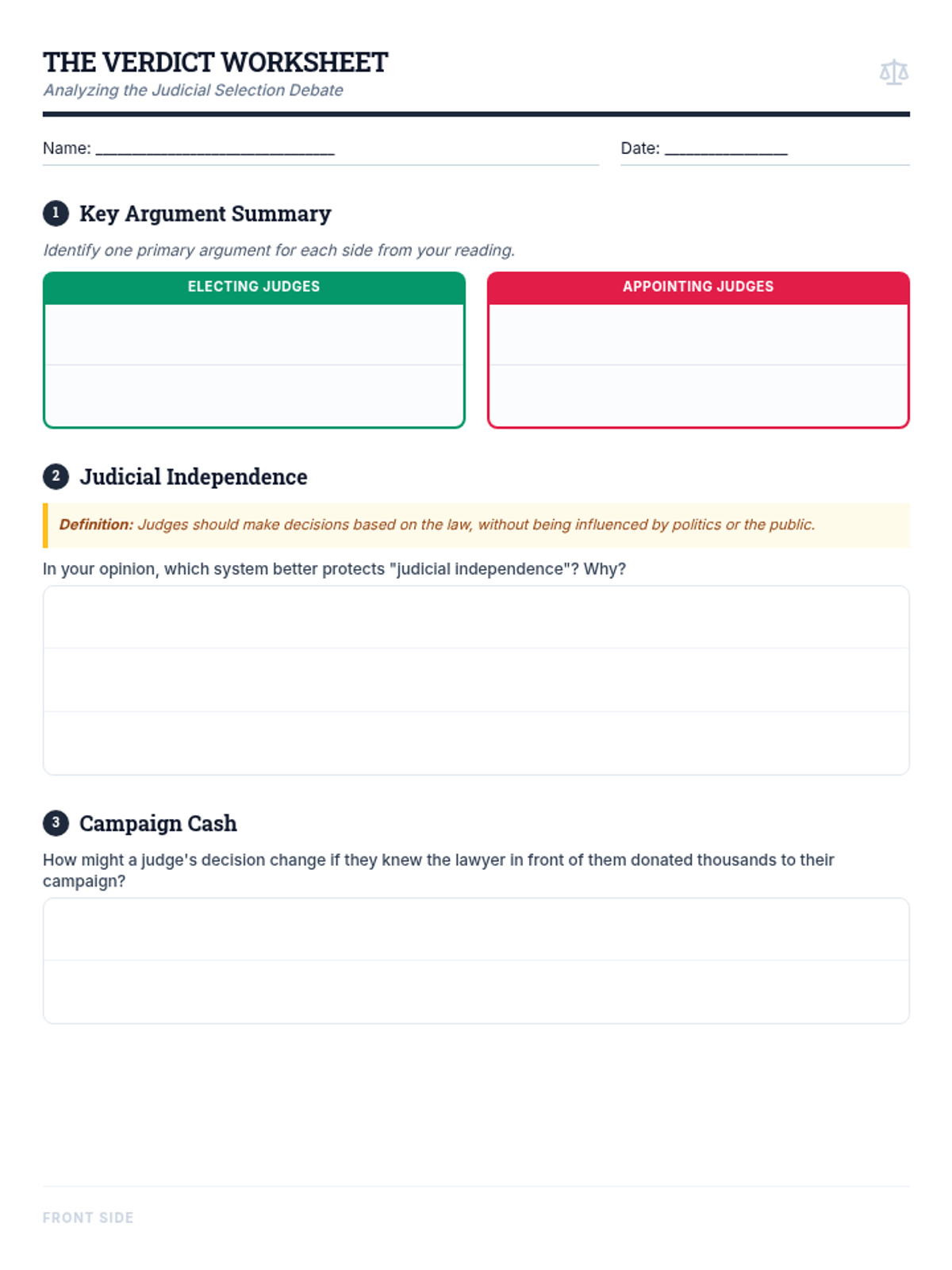
This lesson explores the debate over how state judges should take office, comparing the merits of democratic elections against the stability of executive appointments. Students will analyze arguments for both sides, focusing on judicial independence, accountability, and the role of the judiciary in a democracy.
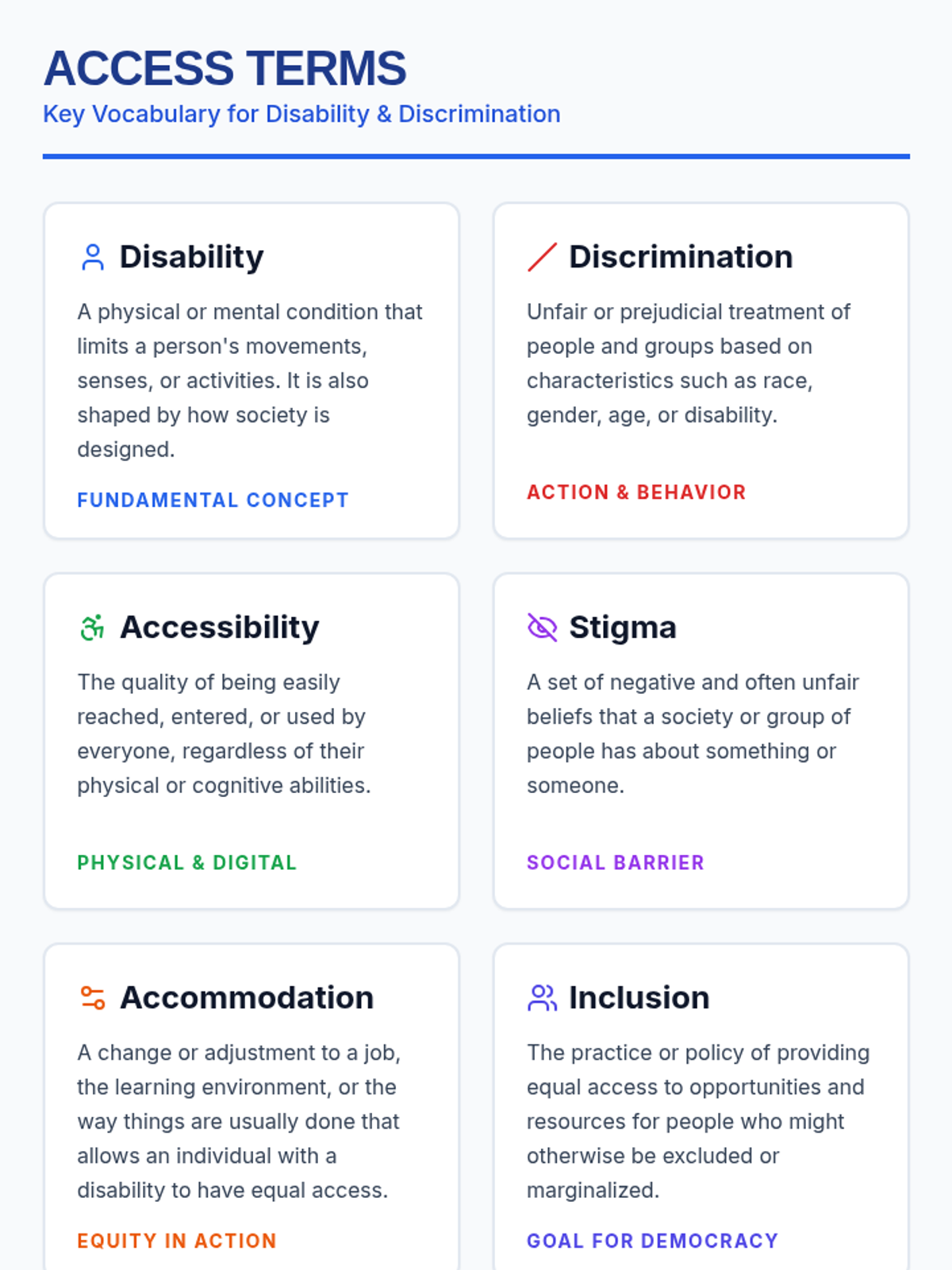
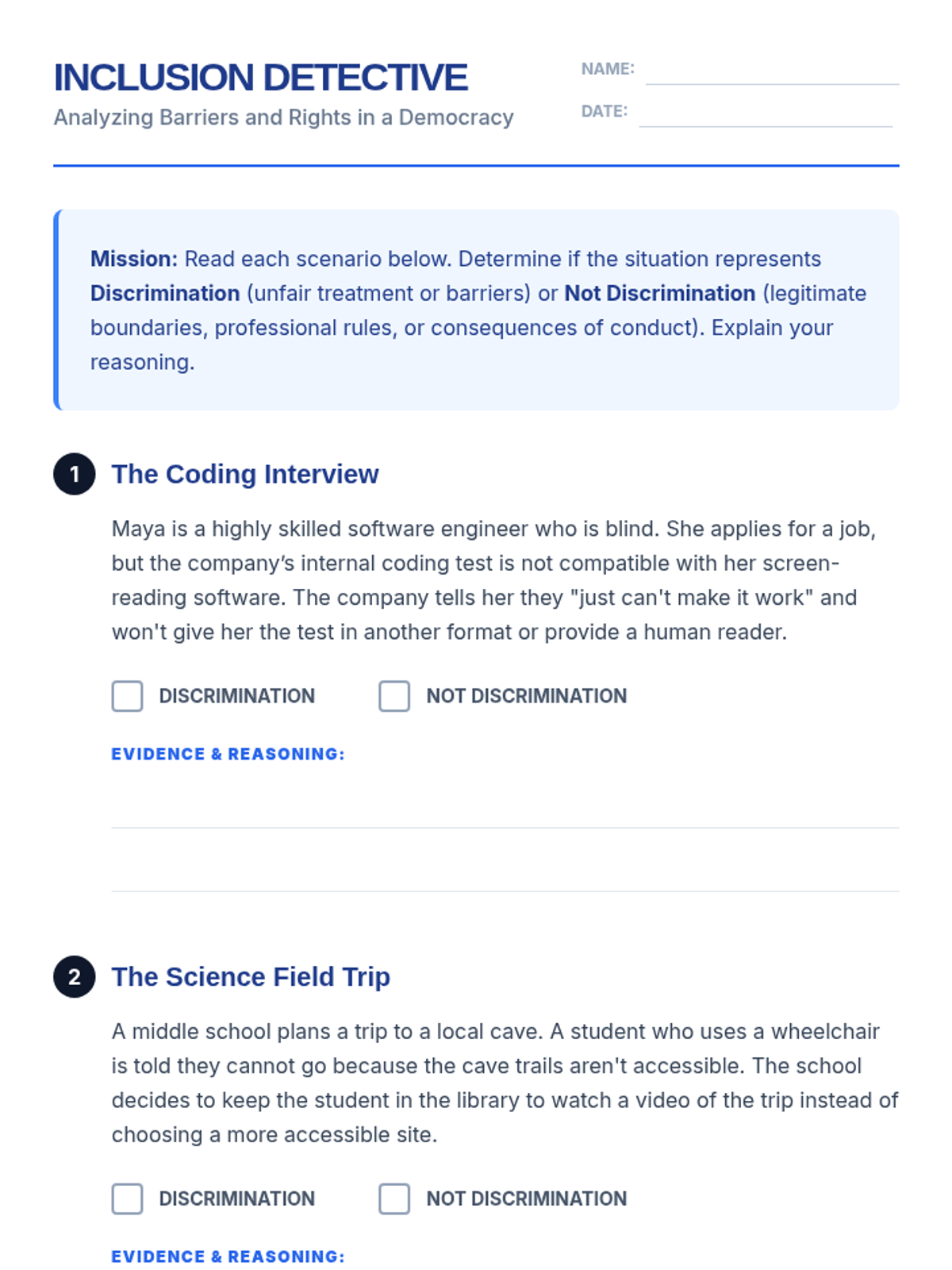
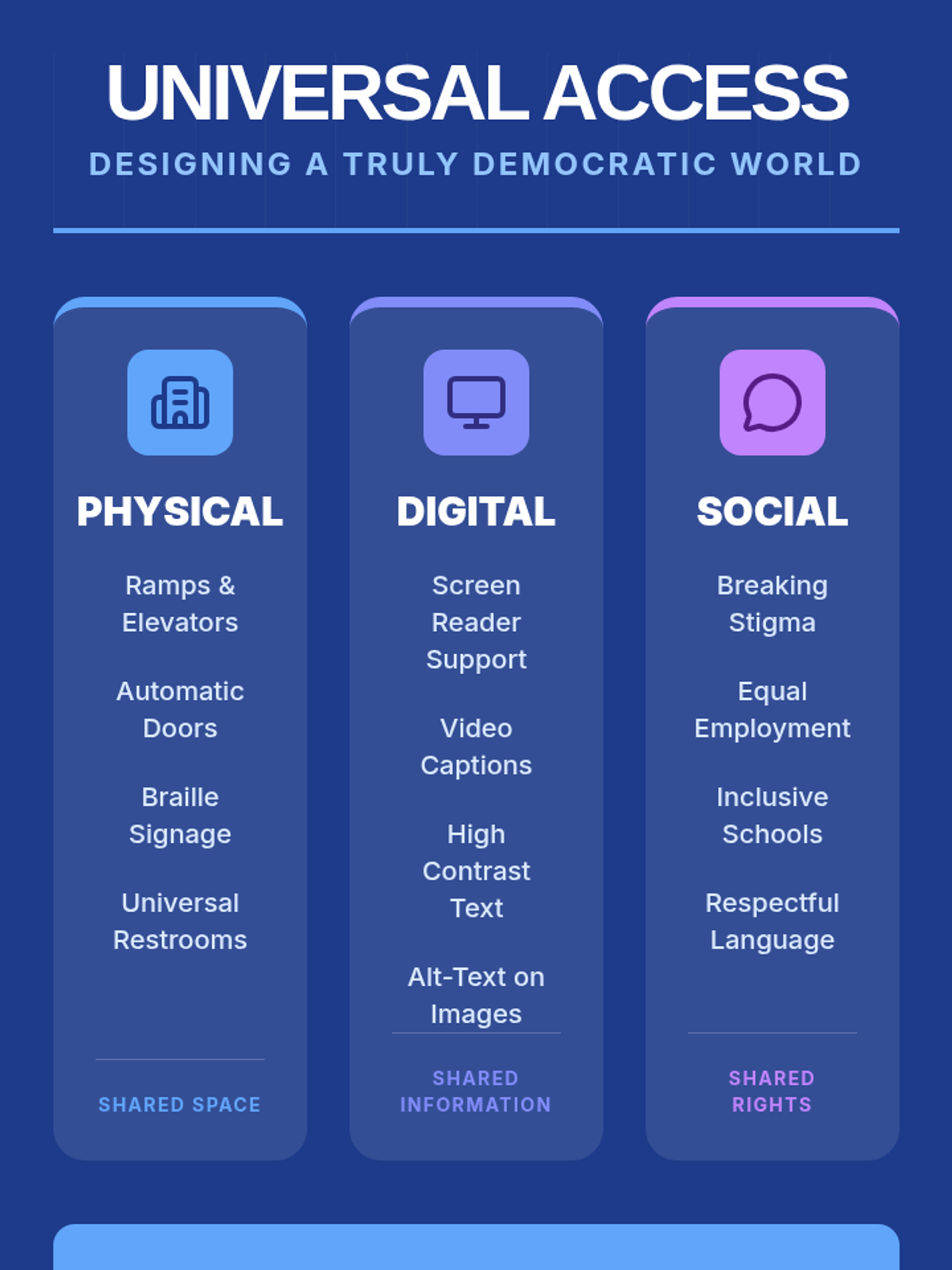
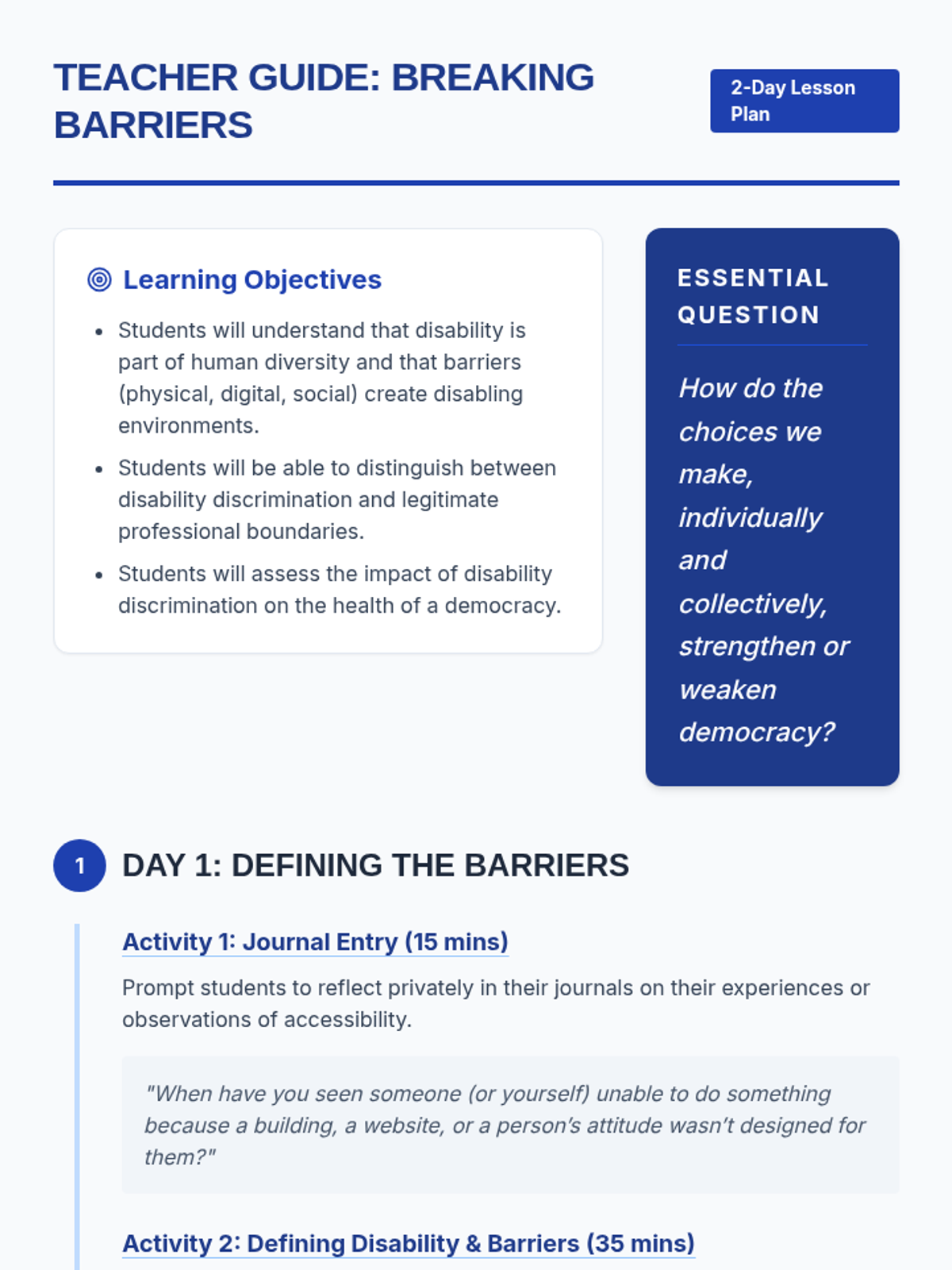
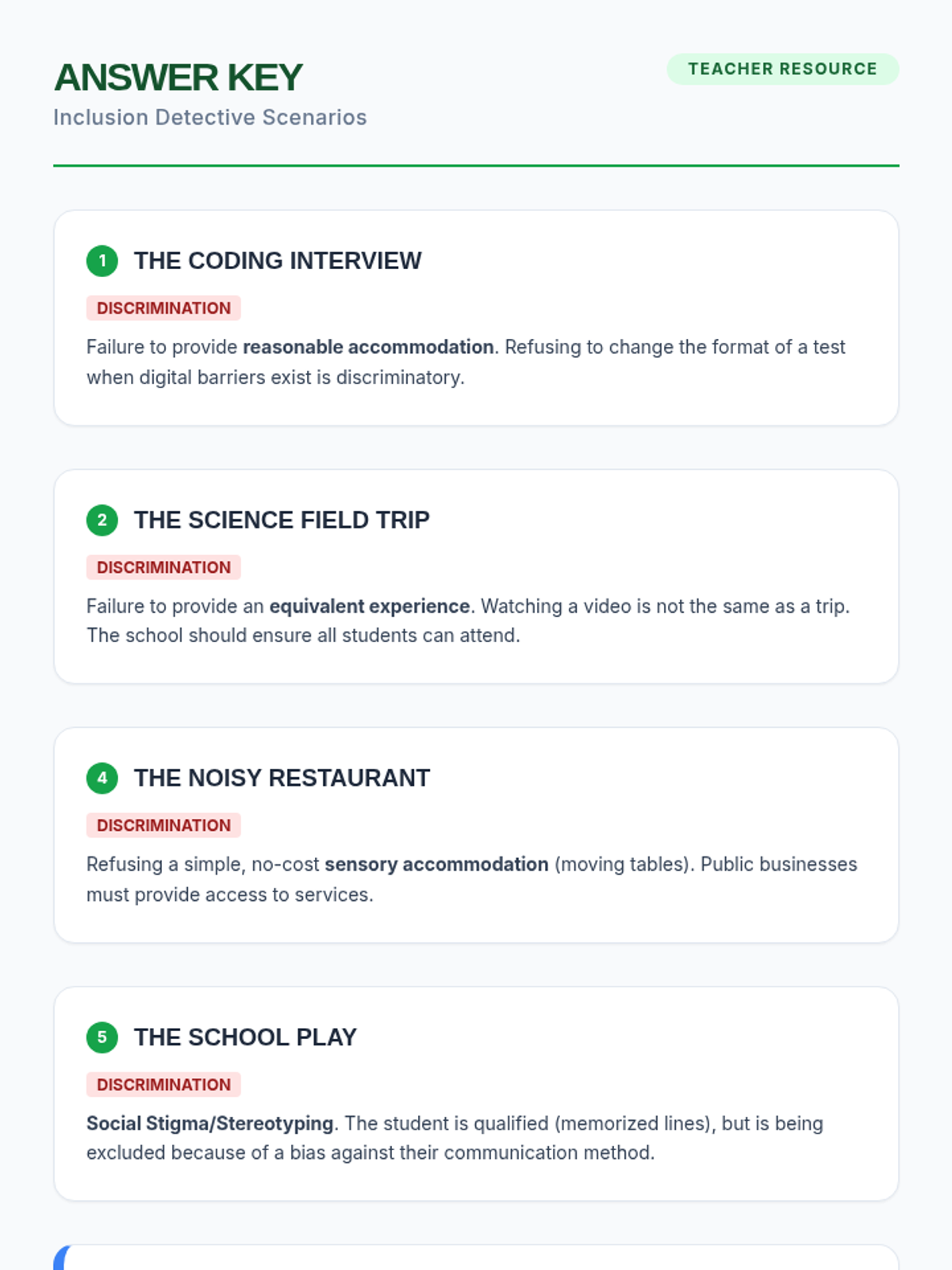
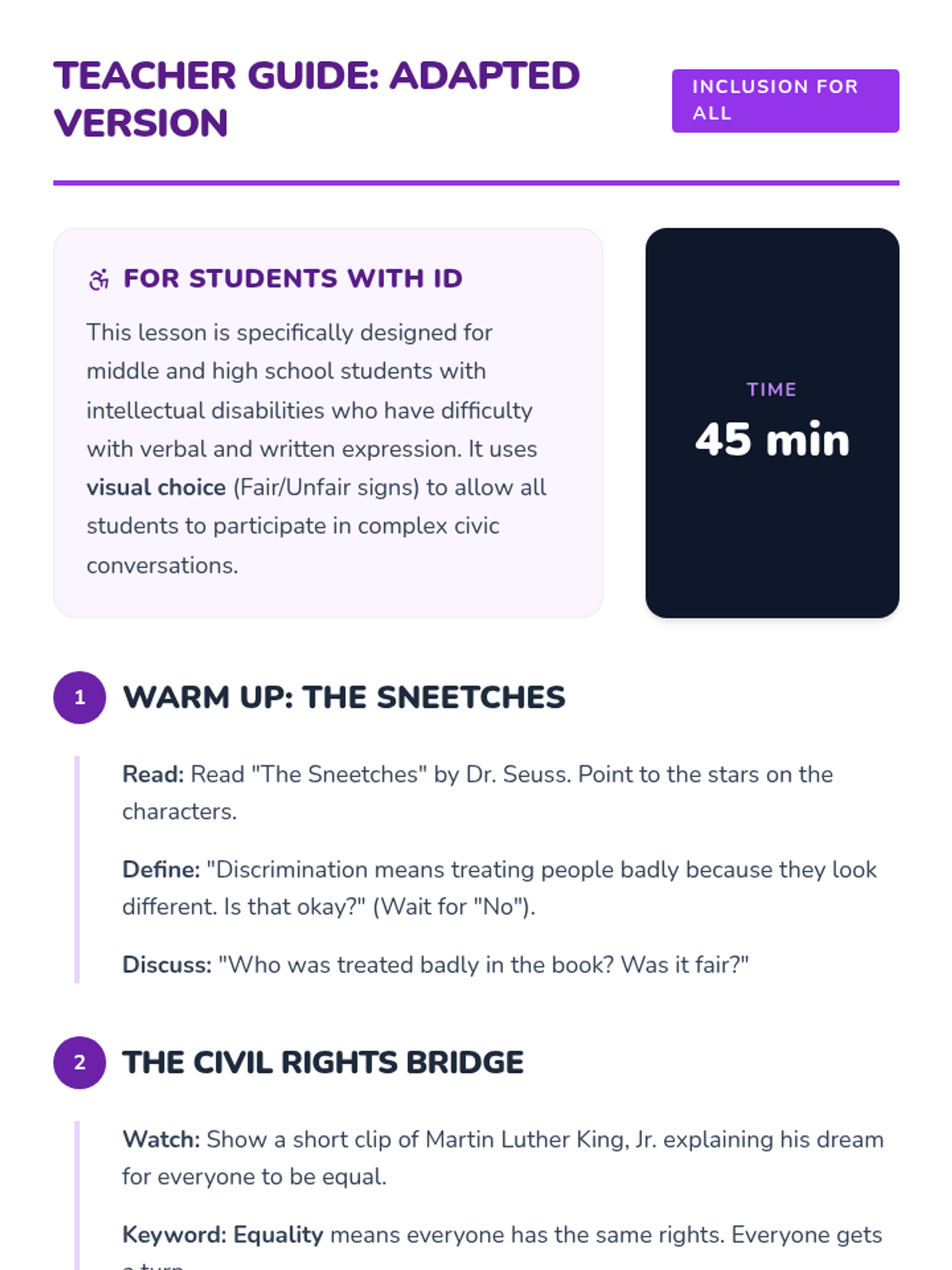
In this lesson, students explore the concepts of disability discrimination and accessibility, analyzing how physical, digital, and social barriers impact individuals and the health of a democracy. Students will learn to distinguish between discriminatory practices and legitimate professional boundaries.
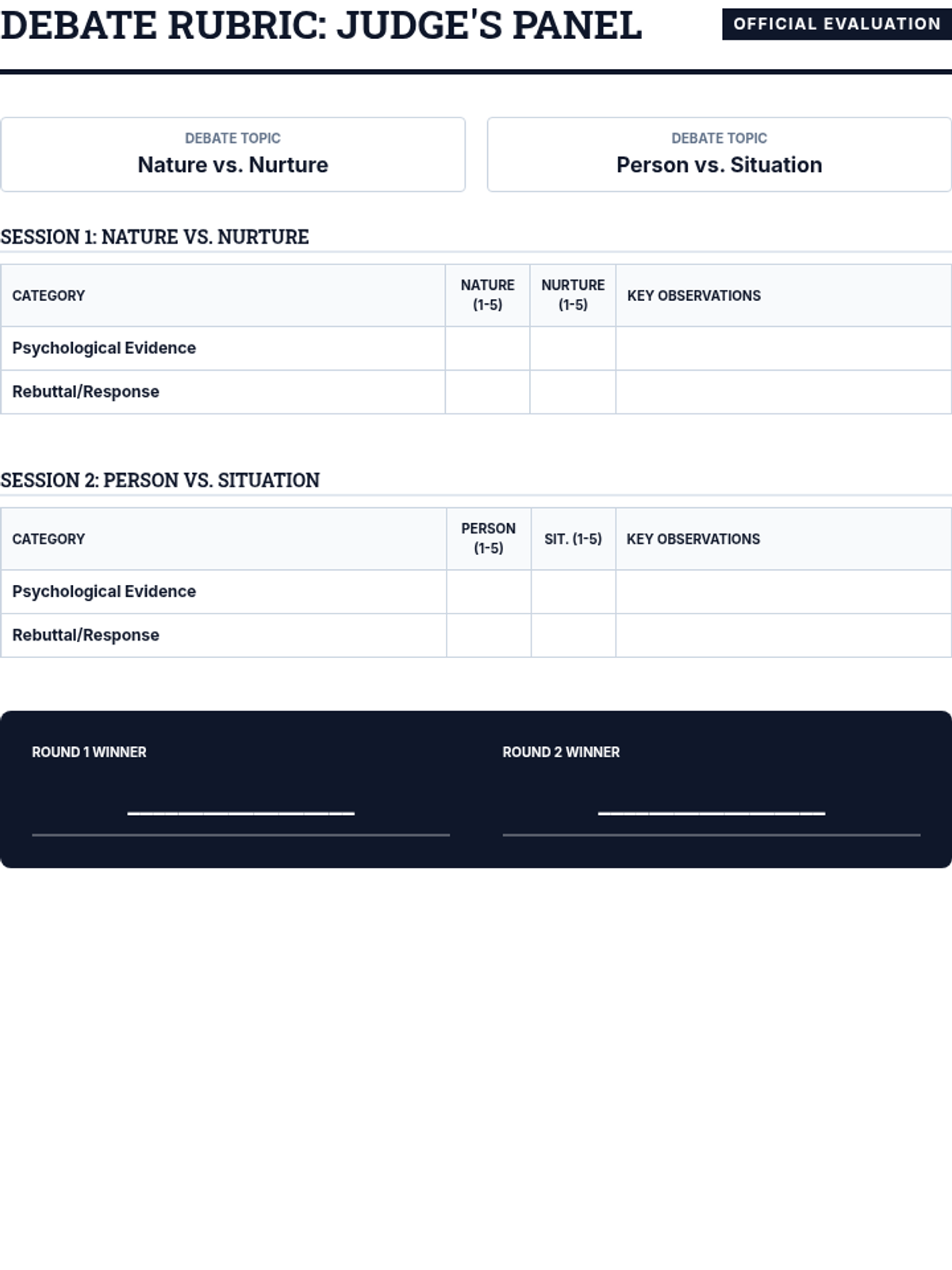
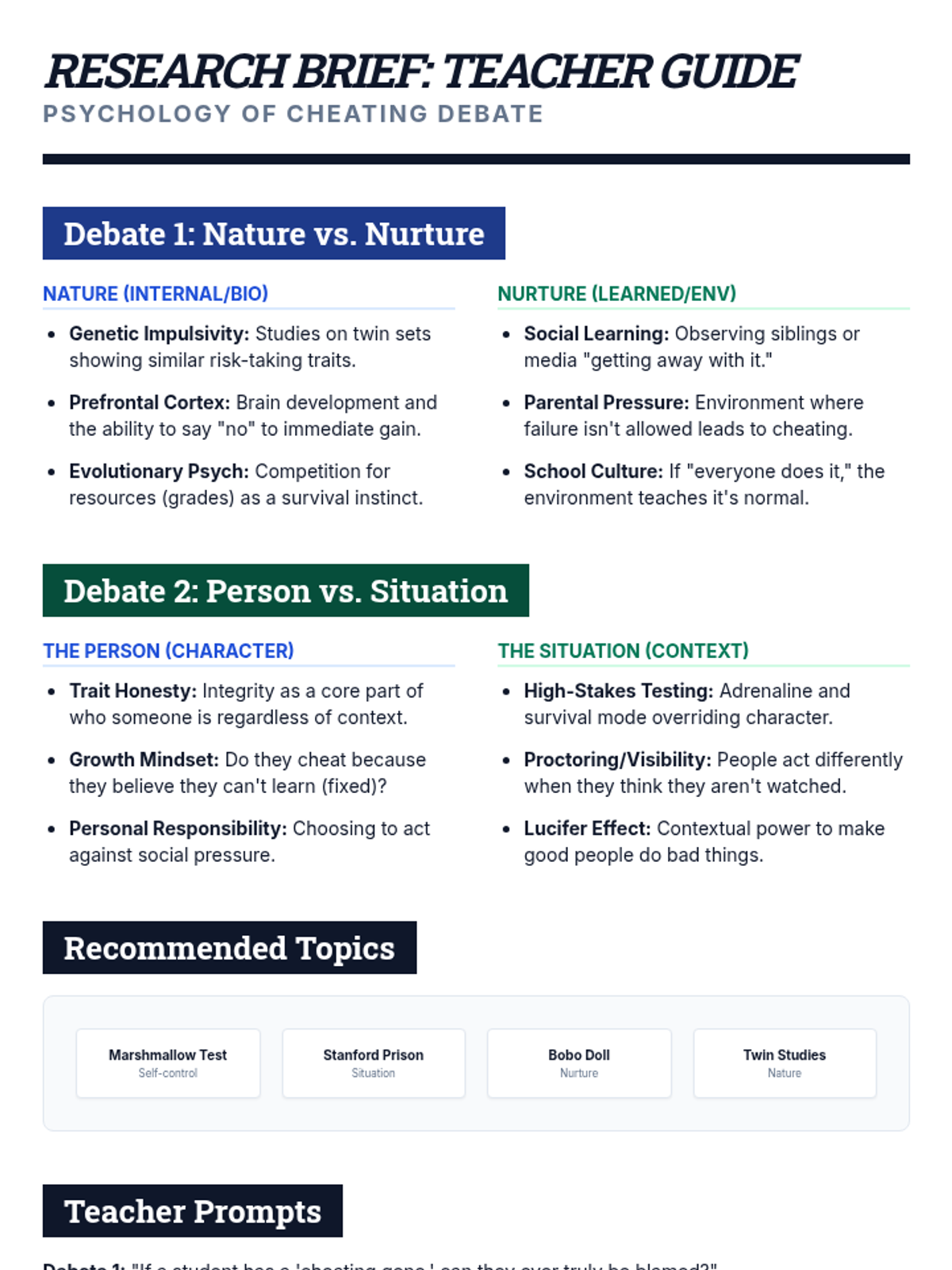
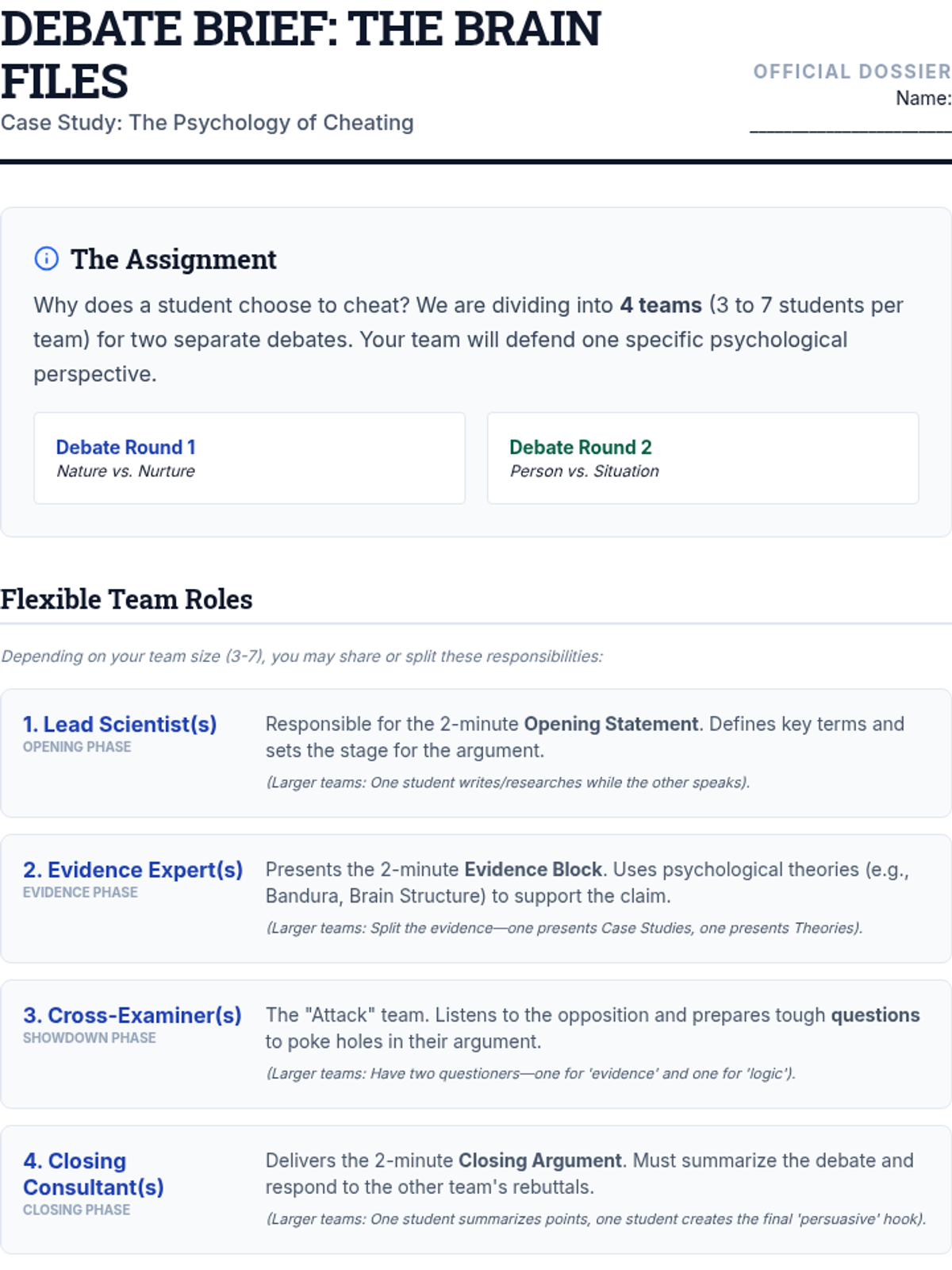
The final debate session where students engage in a 20-minute structured argument, applying their psychological knowledge to the question of why students cheat.
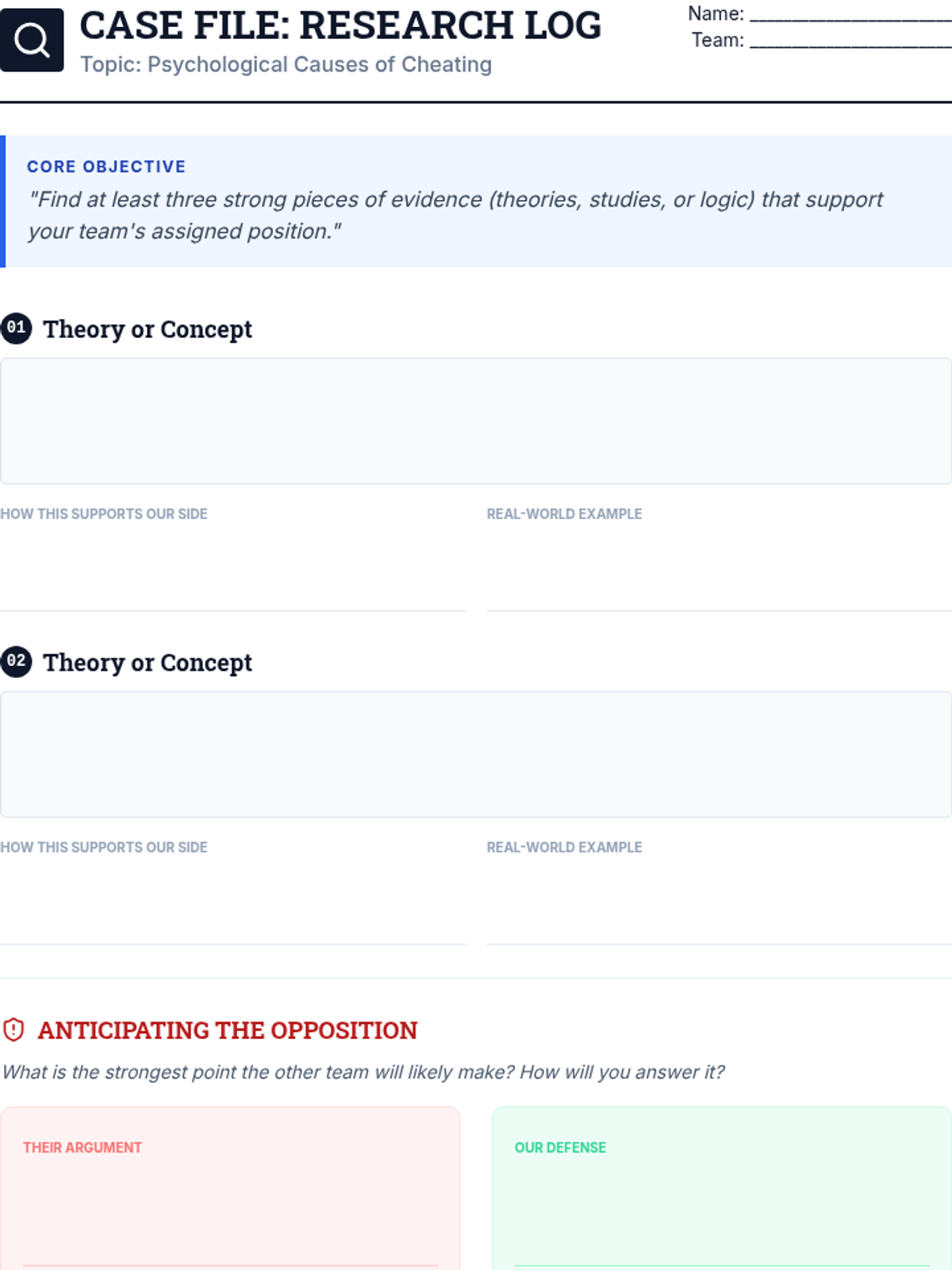
A dedicated research session where students work in their debate teams to gather evidence, psychological theories, and real-world examples to support their assigned side.
An introduction to the psychology of cheating, defining nature vs. nurture and person vs. situation while assigning student roles for the upcoming debate.
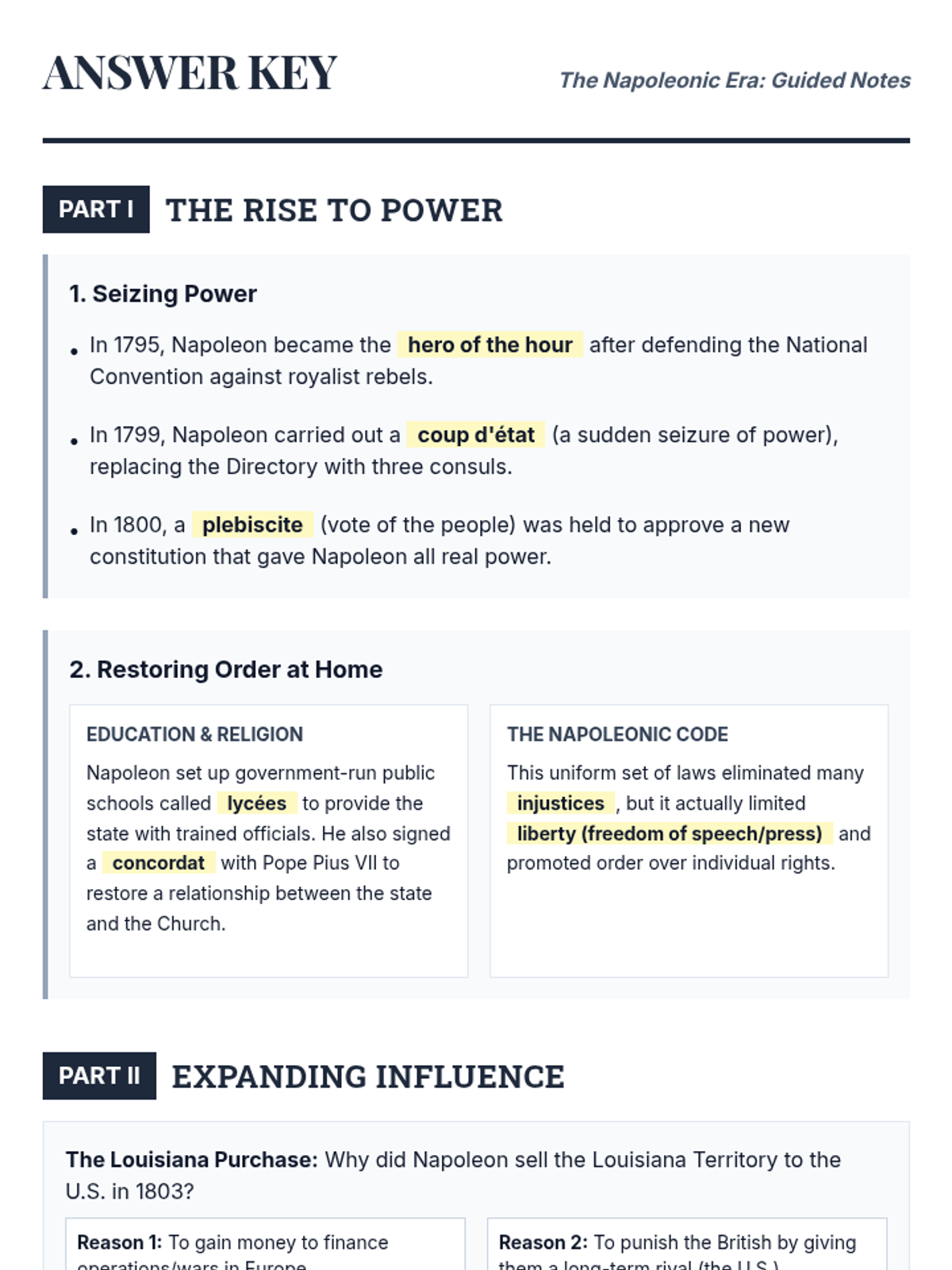
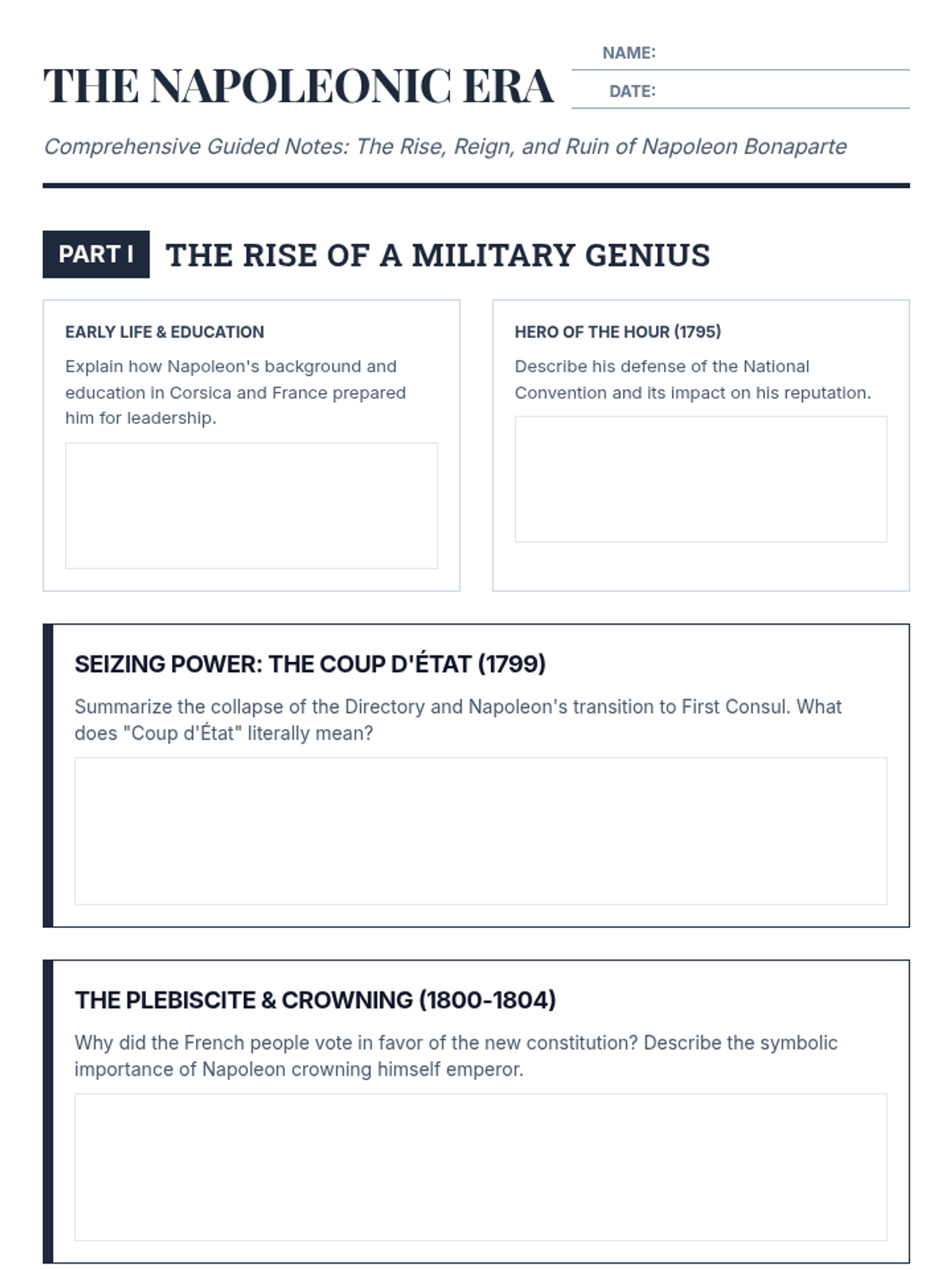
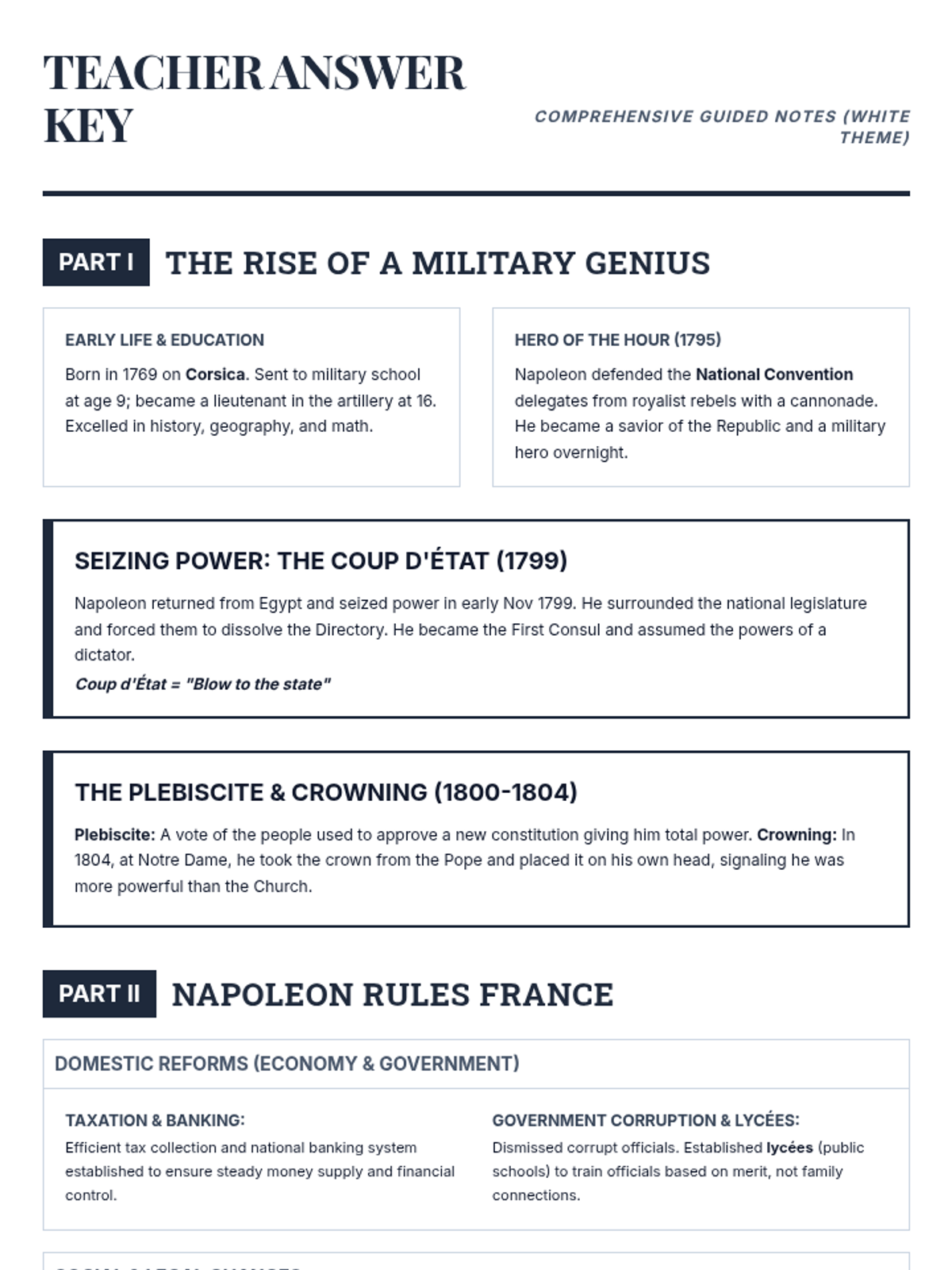
A comprehensive look at Napoleon Bonaparte's meteoric rise from military officer to Emperor of France, his major domestic and military achievements, and the strategic errors that led to his ultimate downfall and exile.
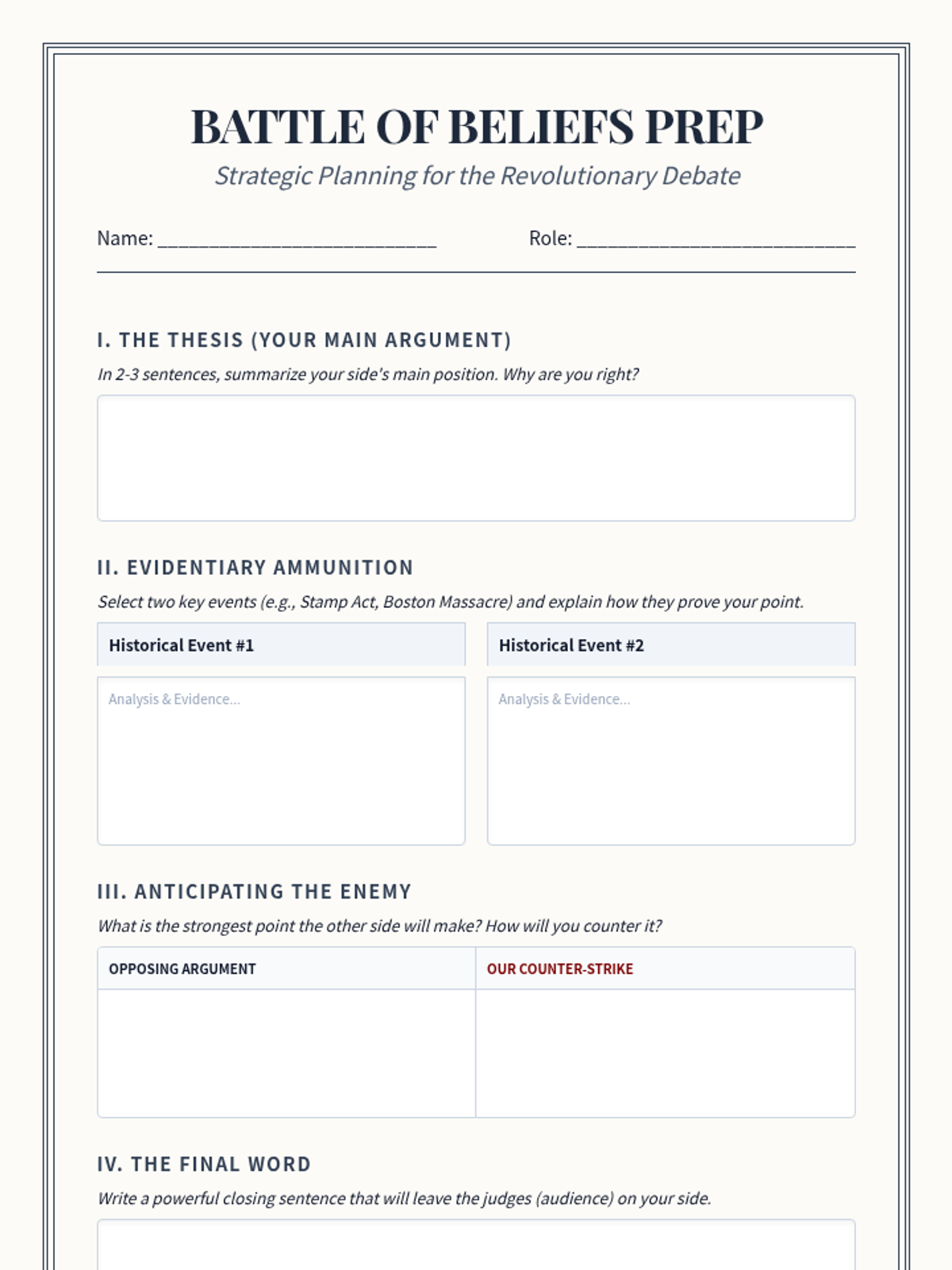
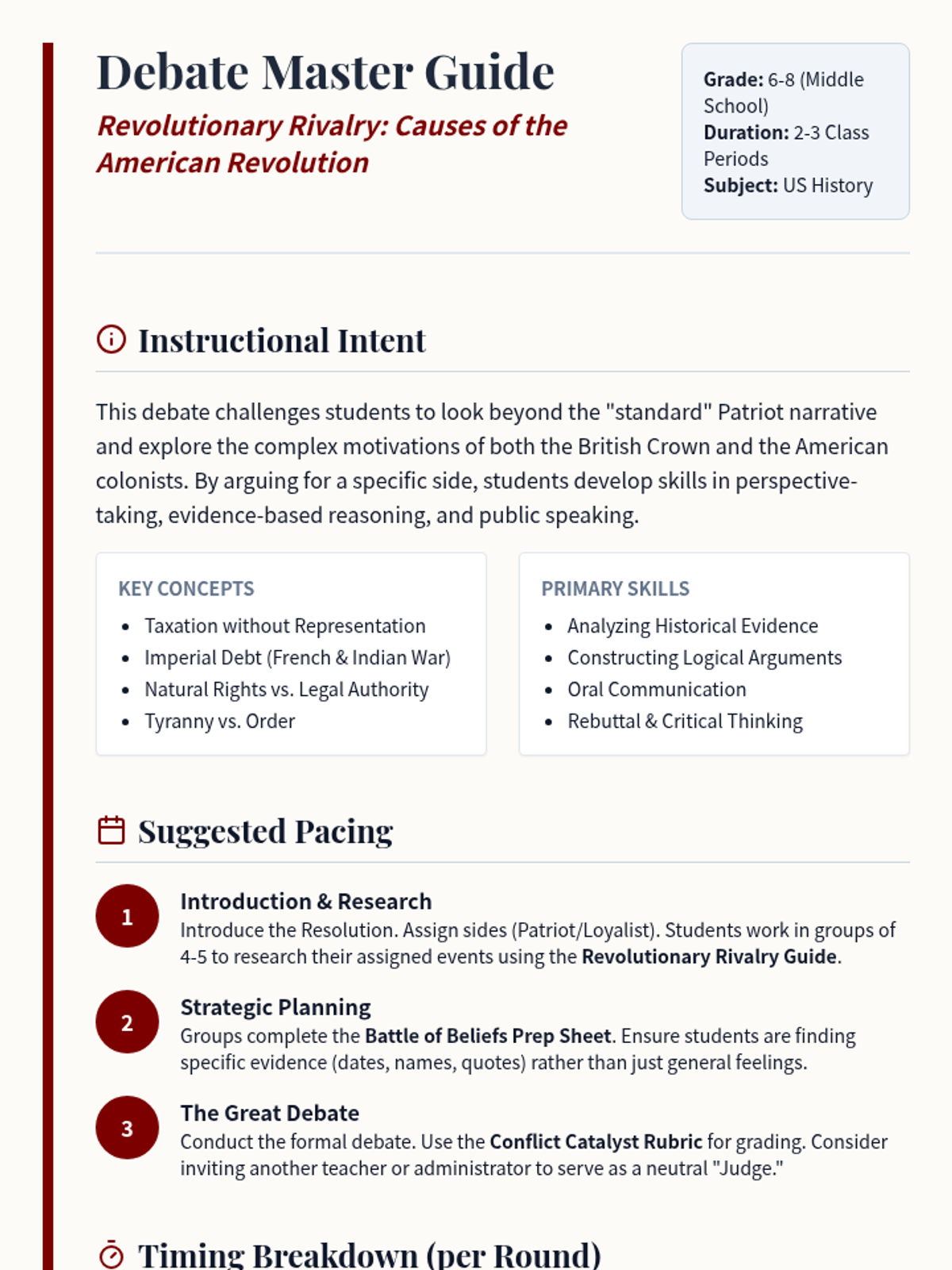
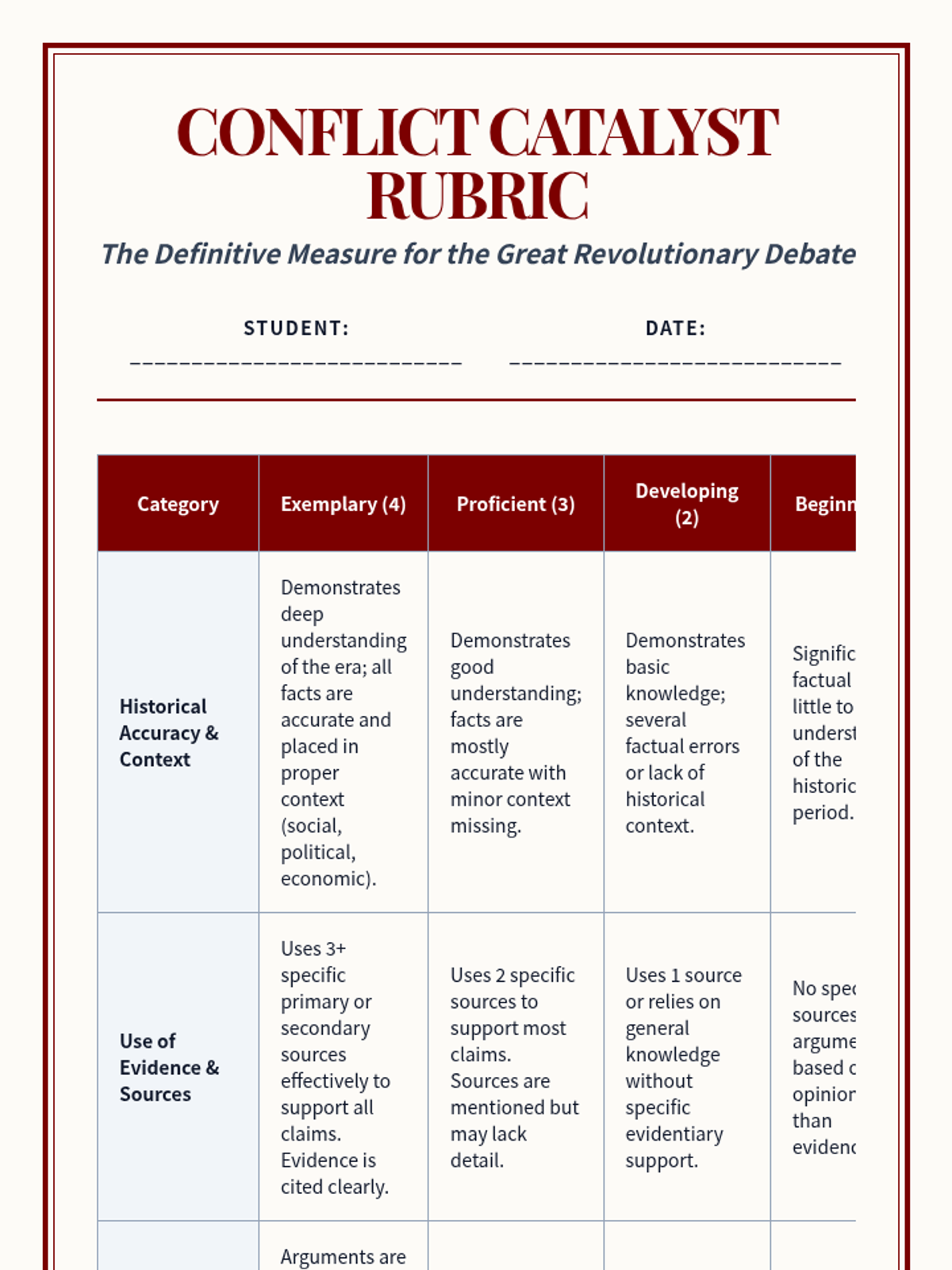
A middle school history lesson centered on a formal debate regarding the causes of the American Revolution, featuring research organizers, a comprehensive rubric, and teacher guidance.
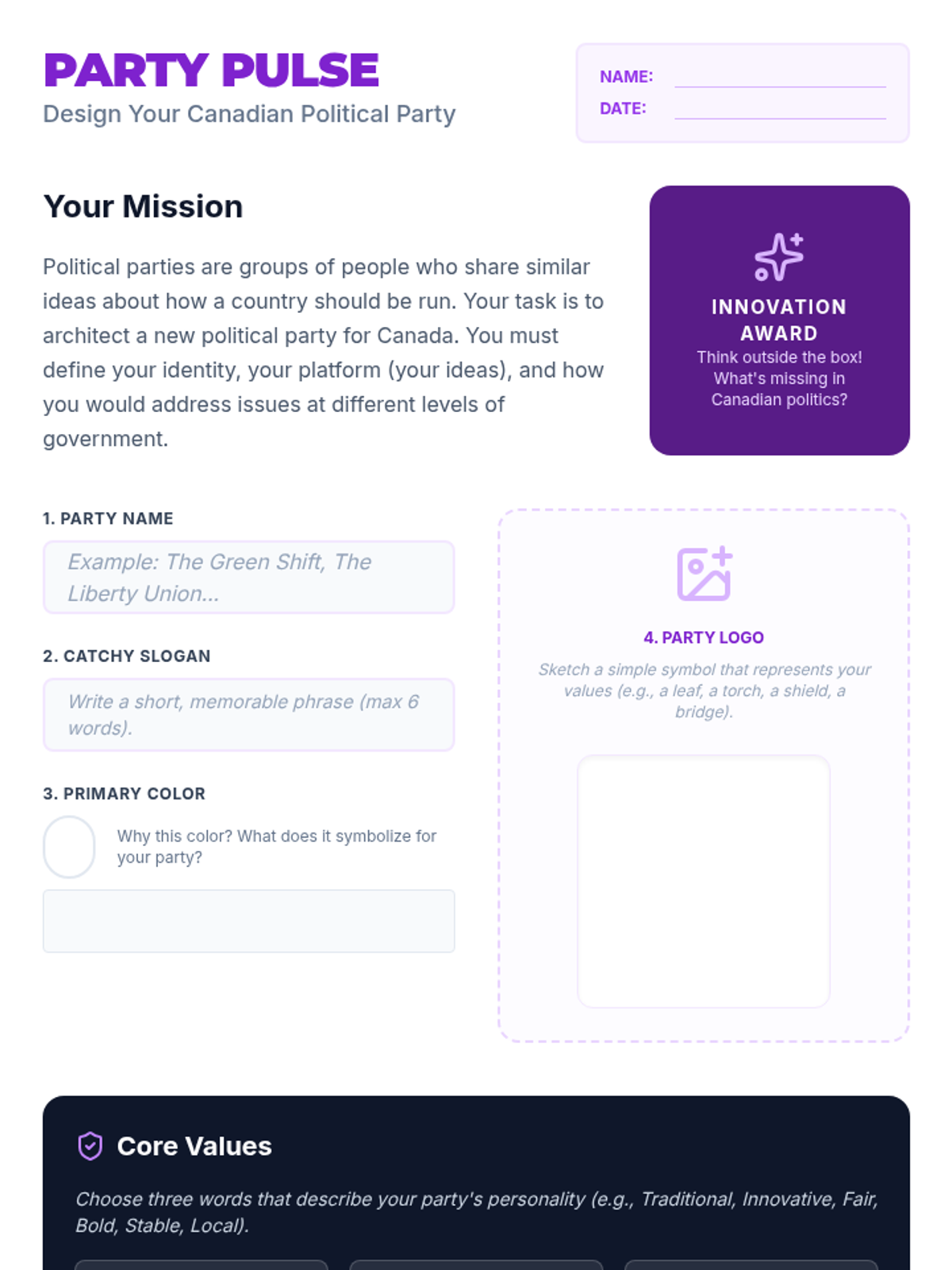
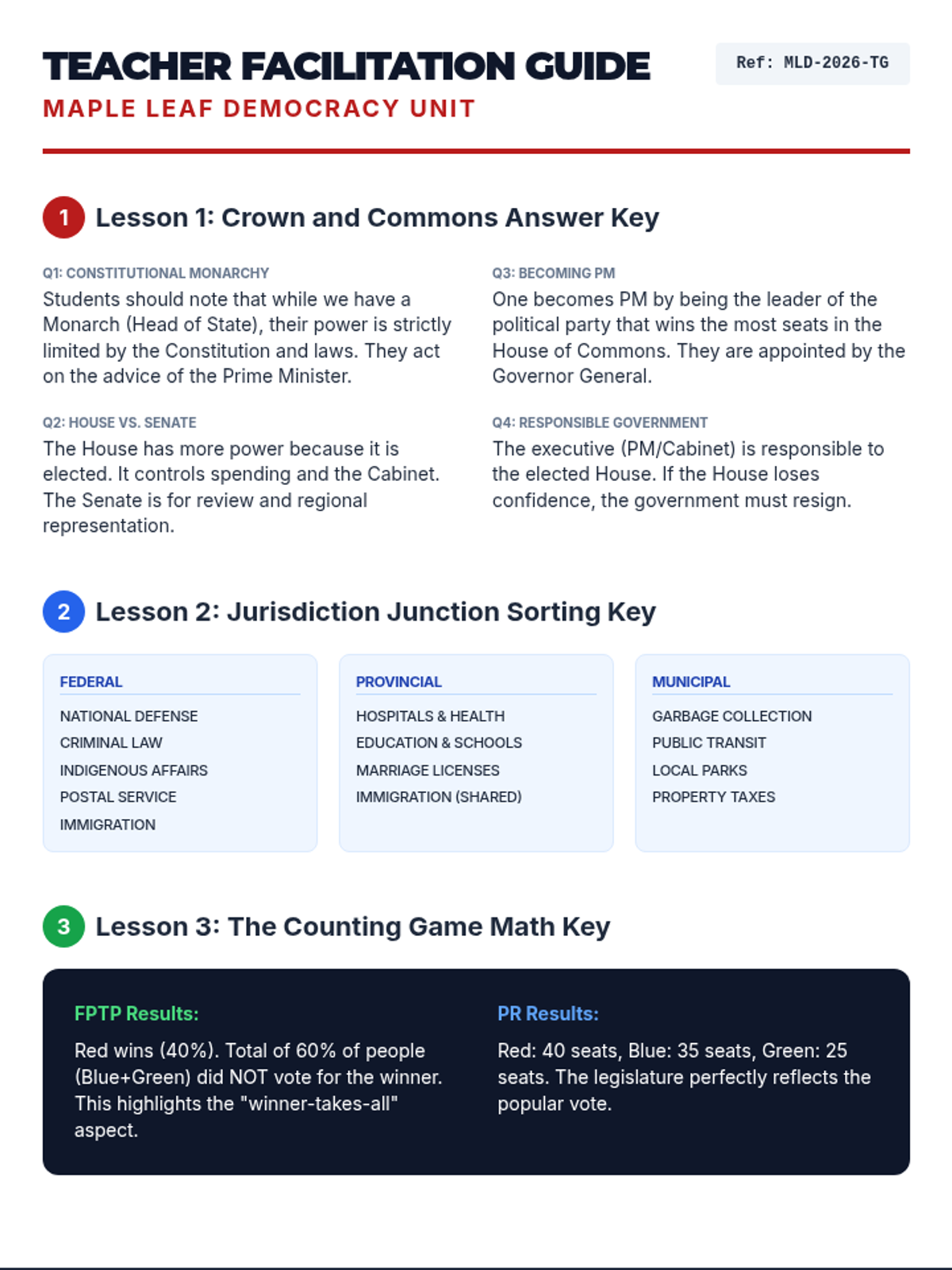
Apply knowledge of governance and political issues by designing a new Canadian political party.
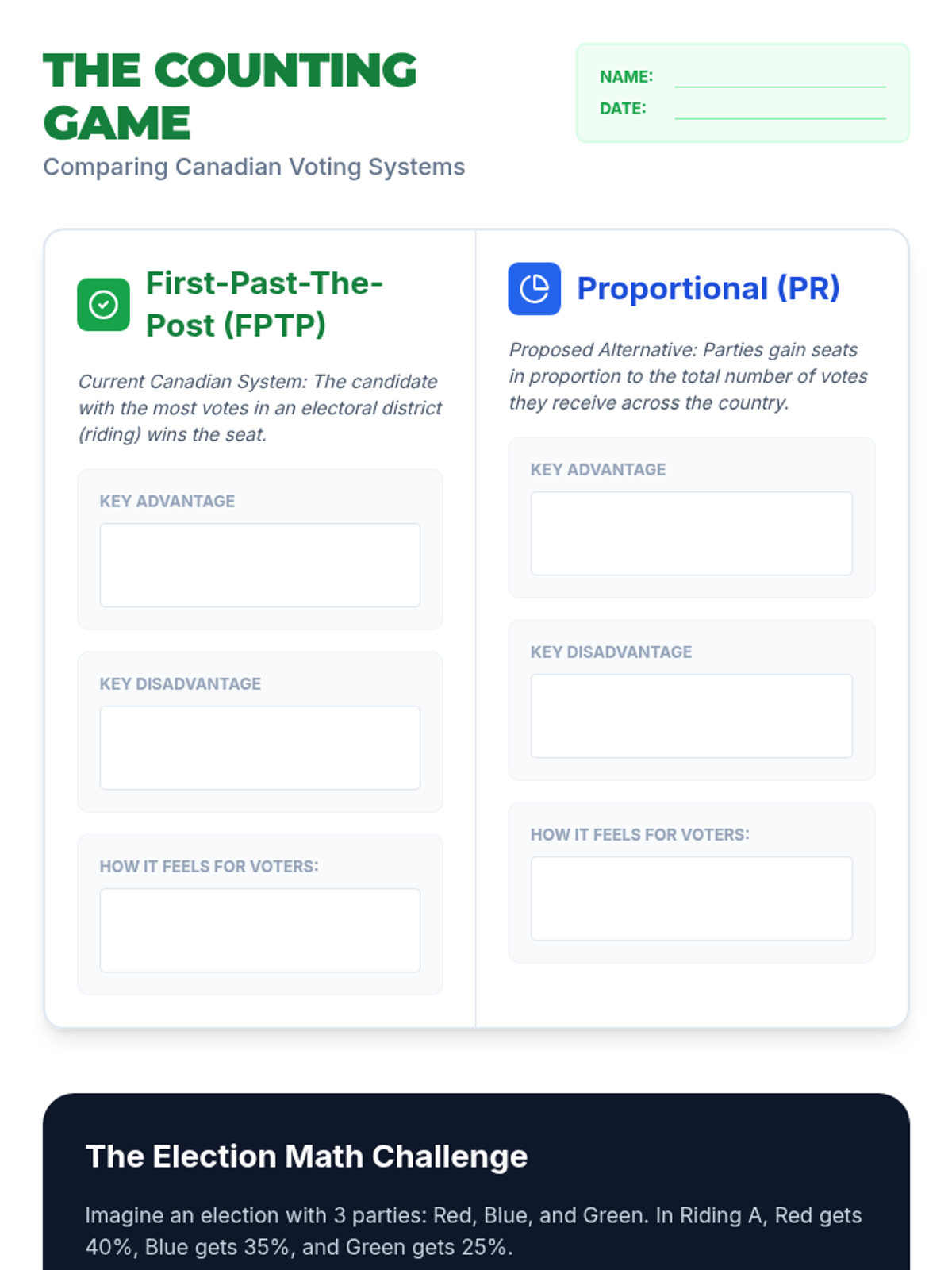
Compare and contrast First-Past-The-Post and Proportional Representation voting systems through critical analysis.
Understand the division of responsibilities between federal, provincial, and municipal levels of government in Canada.
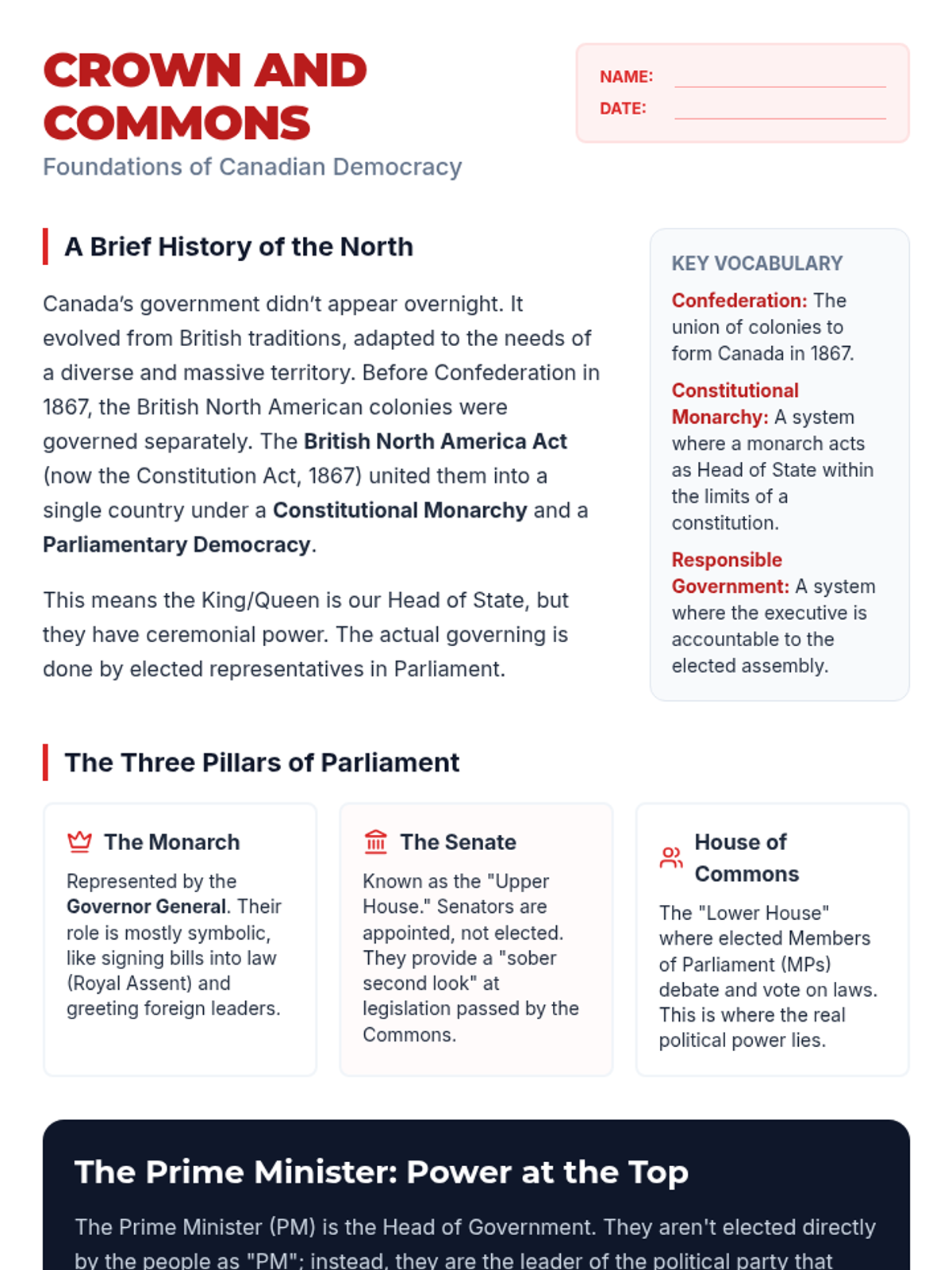
Explore the historical development of Canadian democracy and the roles within the federal government, specifically focusing on the Parliament and the Prime Minister.
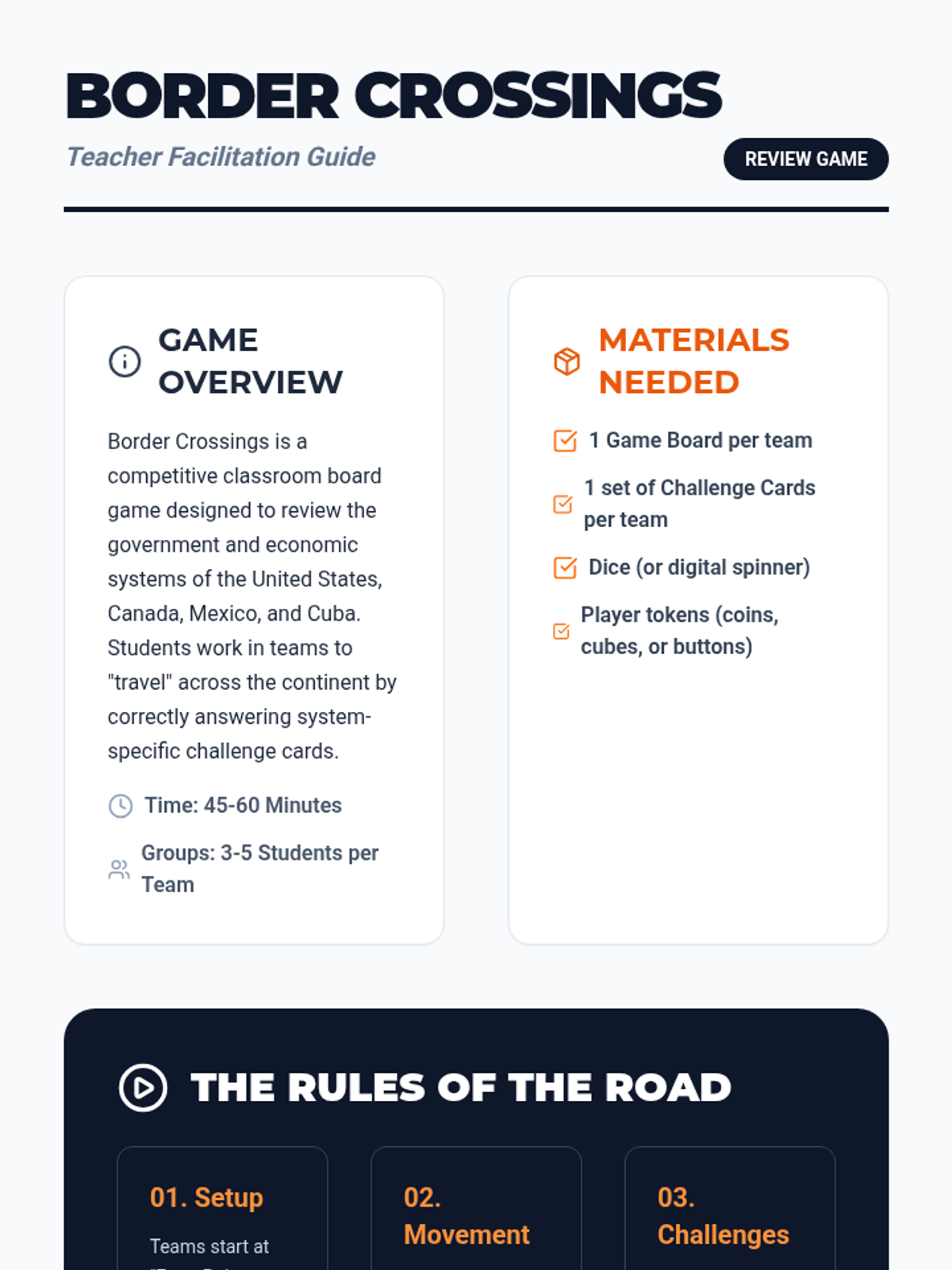
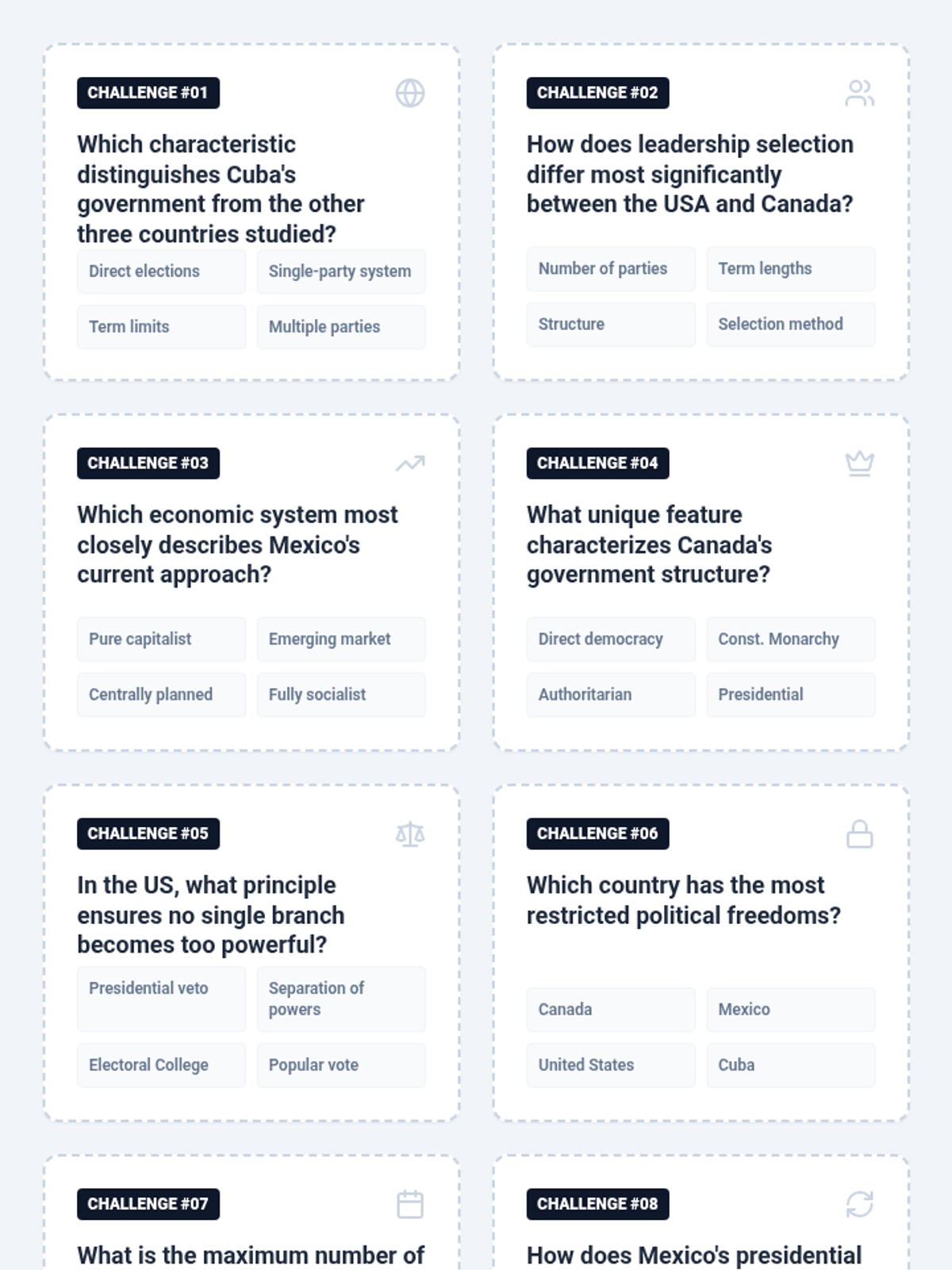
A high-energy review lesson comparing the government and economic systems of the United States, Canada, Mexico, and Cuba through a competitive board game.
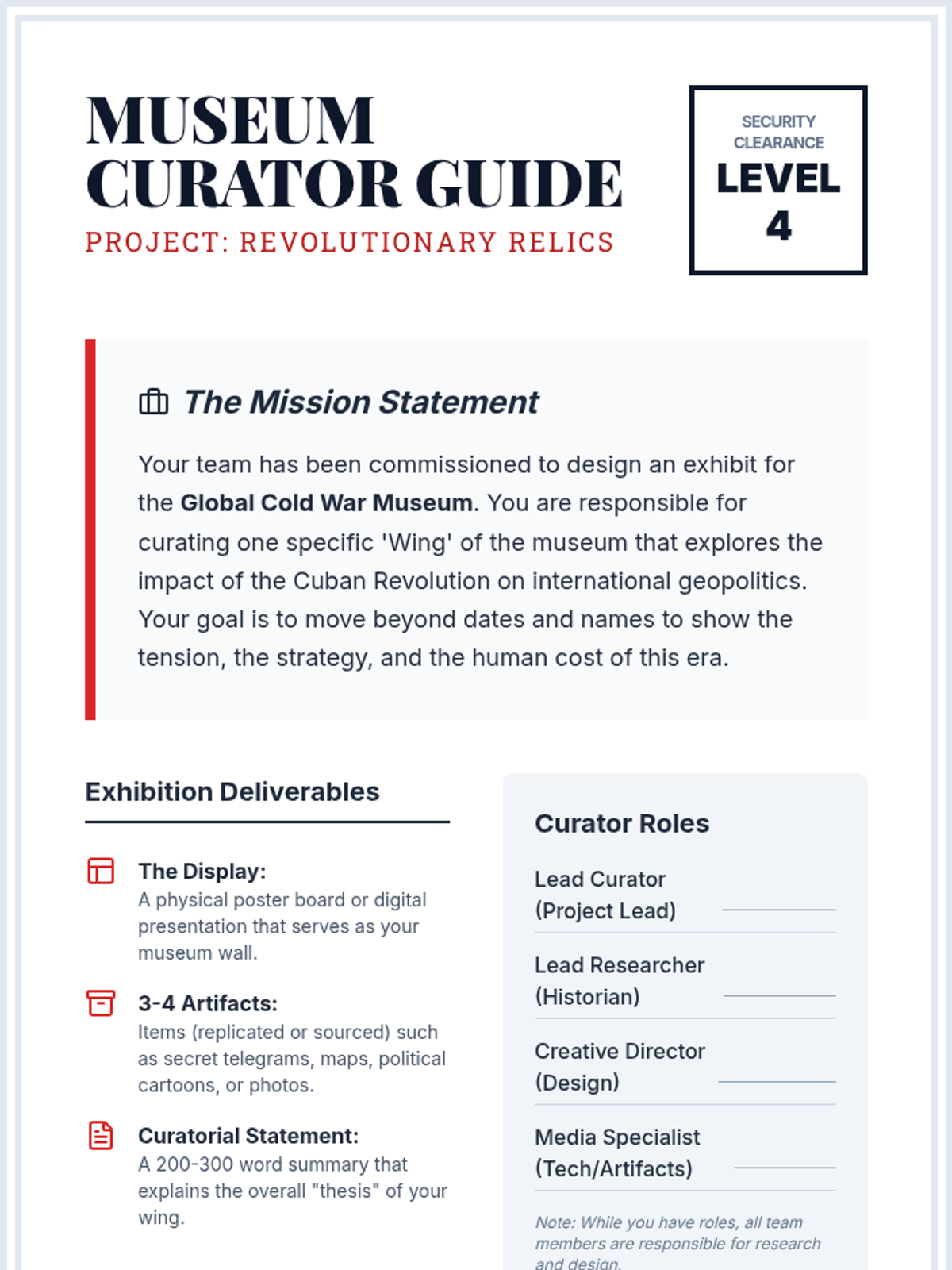
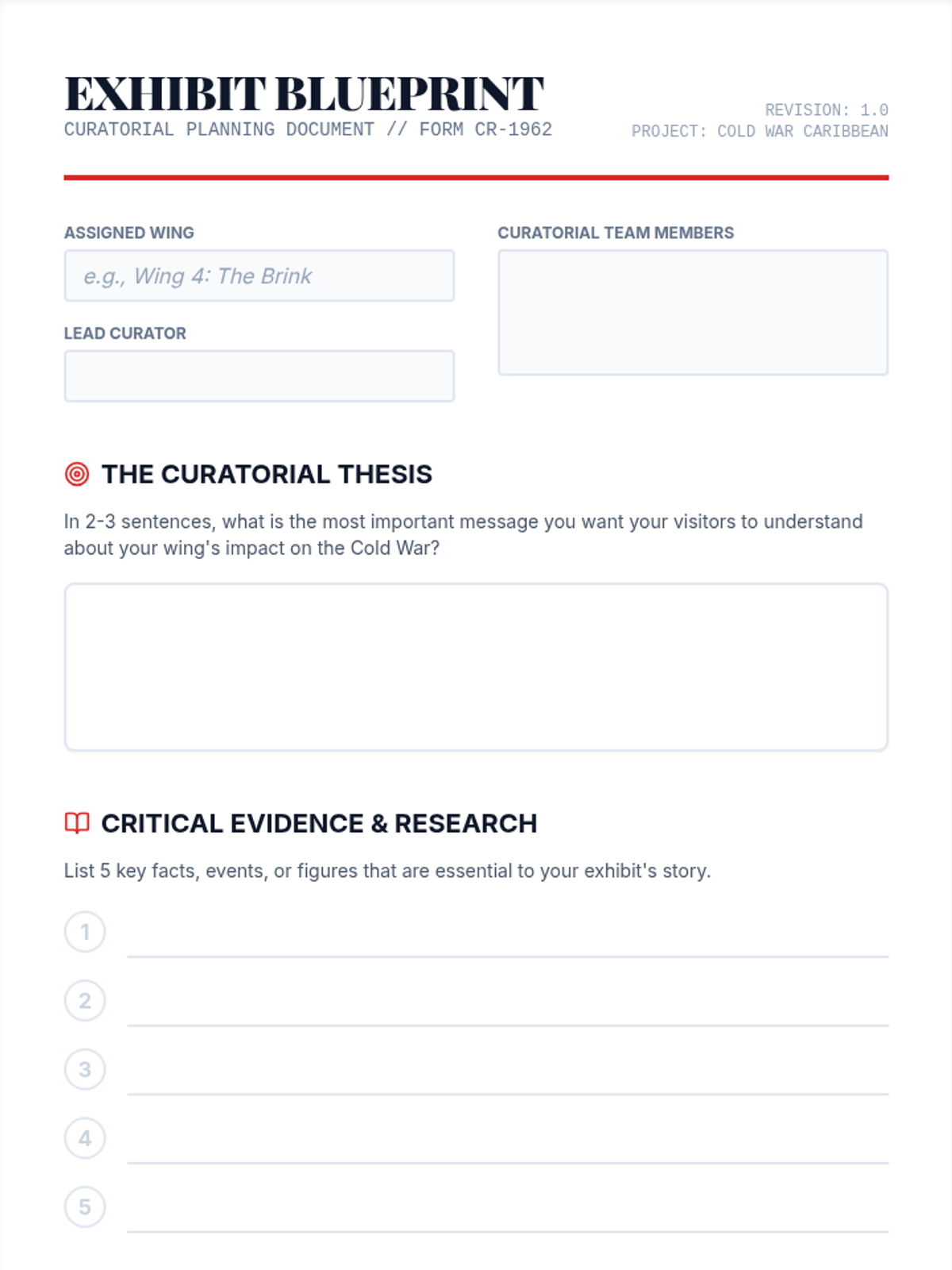
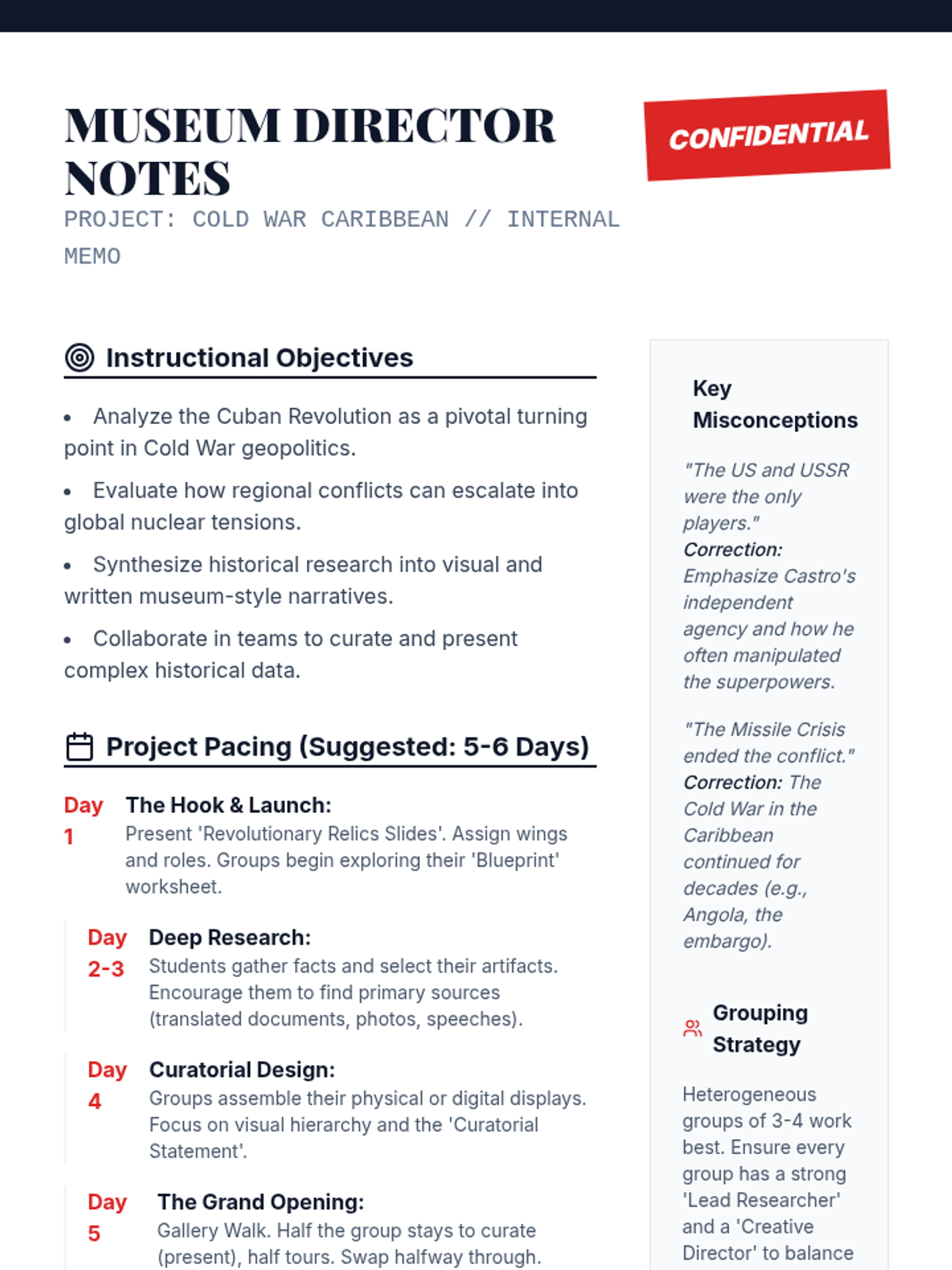
A multi-day group project where students curate a 'Cold War Museum' exhibit focusing on the Cuban Revolution's impact on global geopolitics. Students research specific events, design physical or digital artifacts, and present their findings through a curated gallery walk.
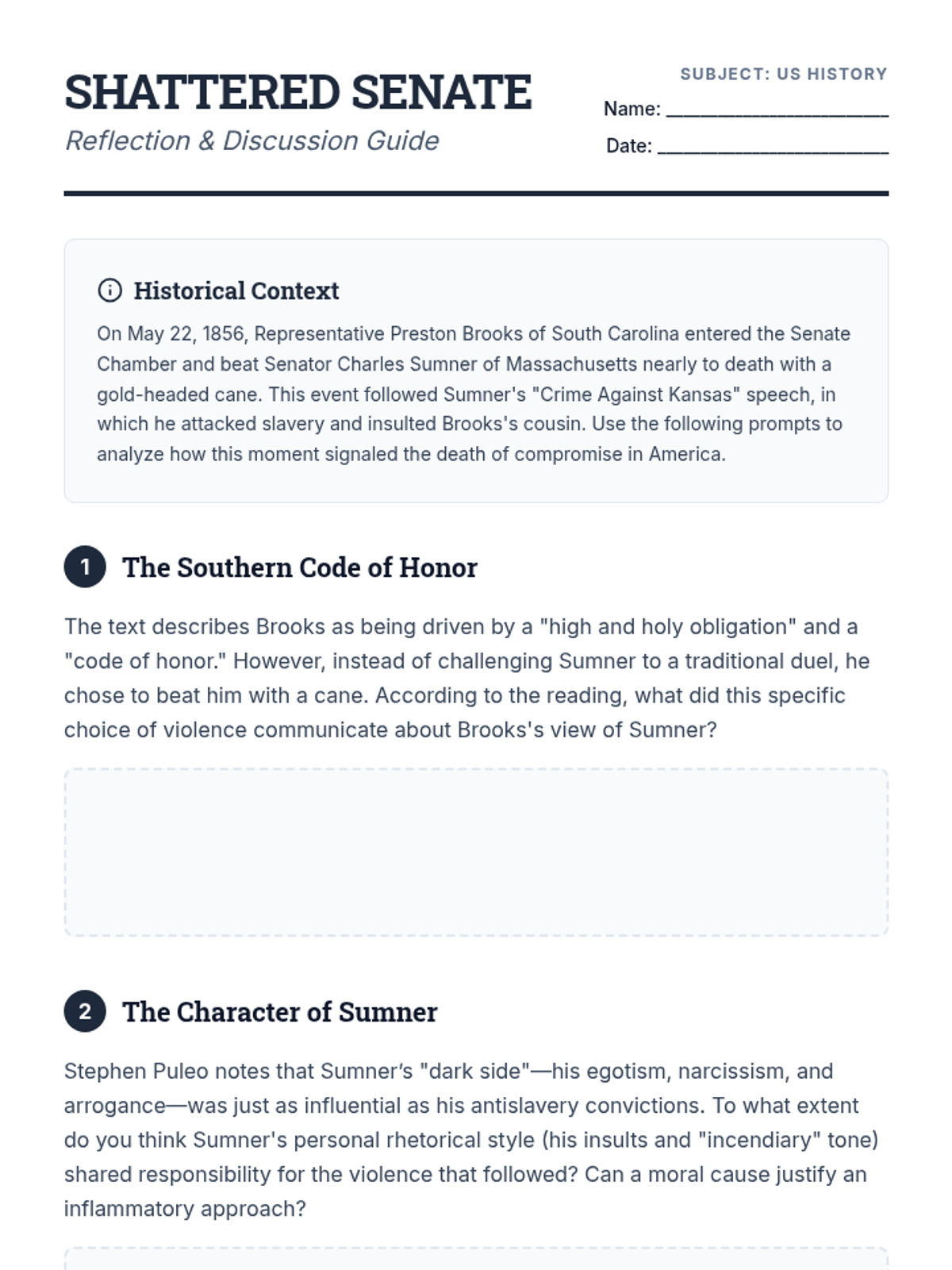
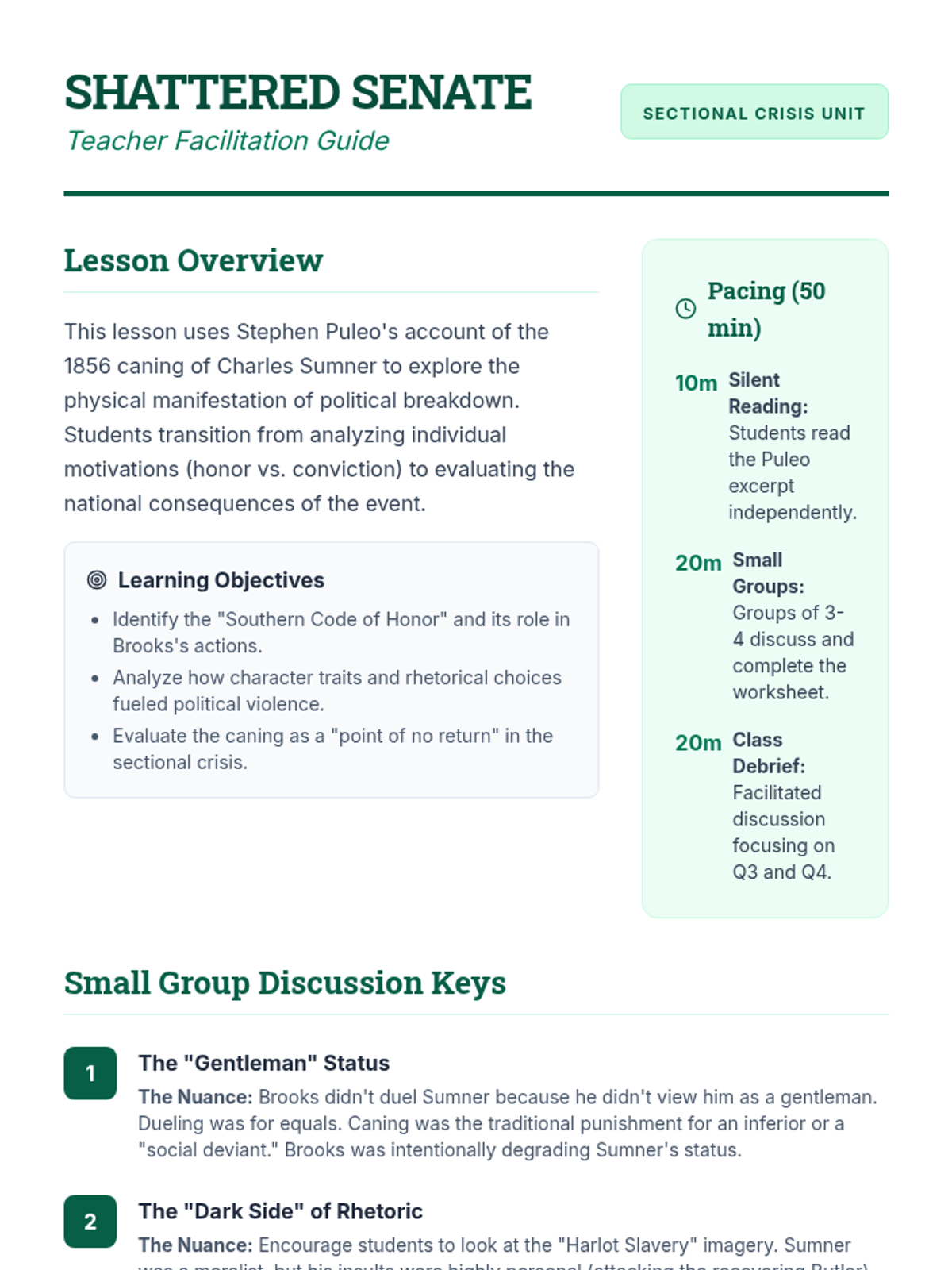
A deep dive into the 1856 caning of Charles Sumner, exploring the breakdown of political civility, the southern code of honor, and the escalating sectional tensions that led to the American Civil War. Students analyze the motivations of both Brooks and Sumner and evaluate the national reaction to this violent event.
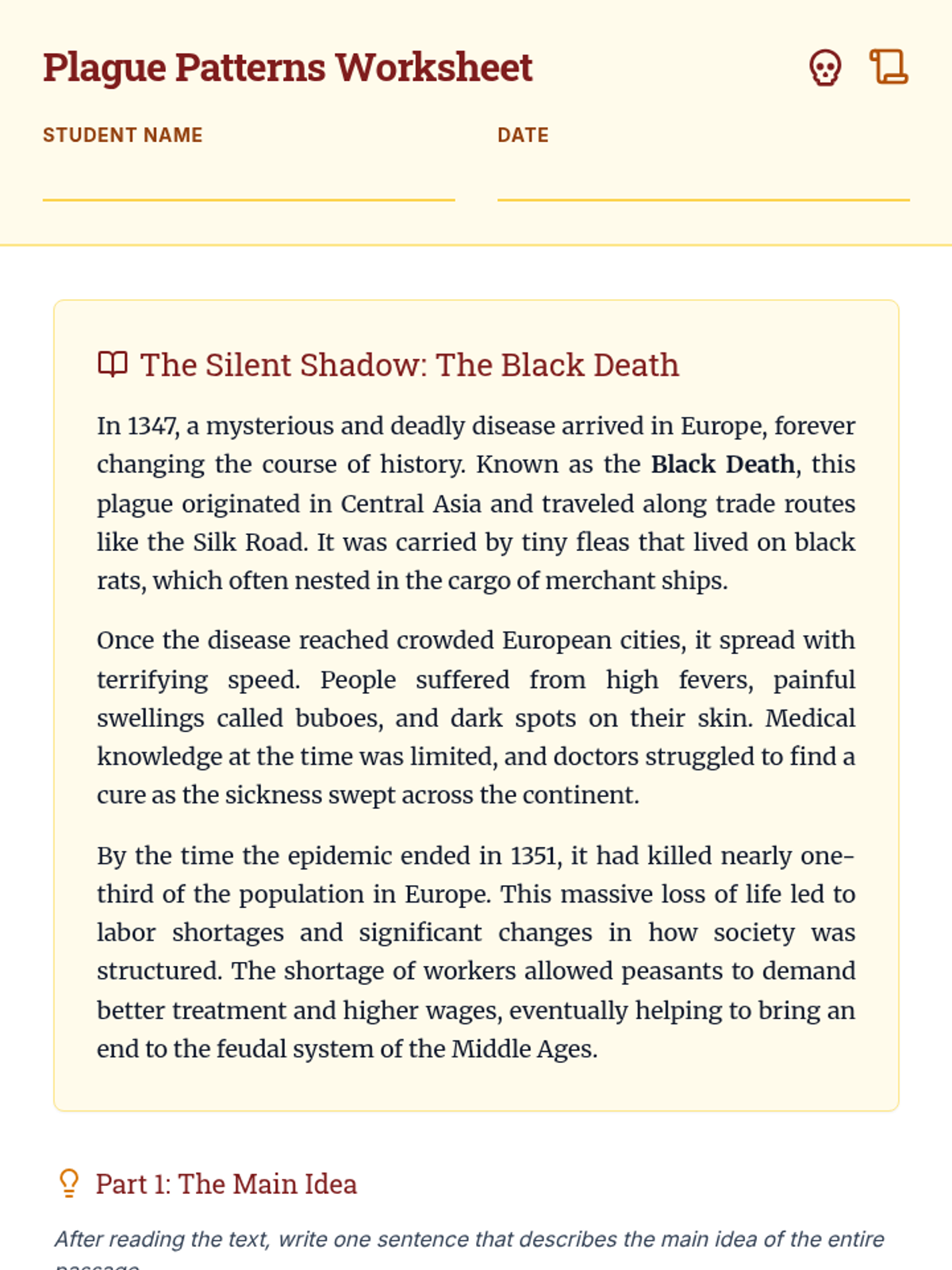
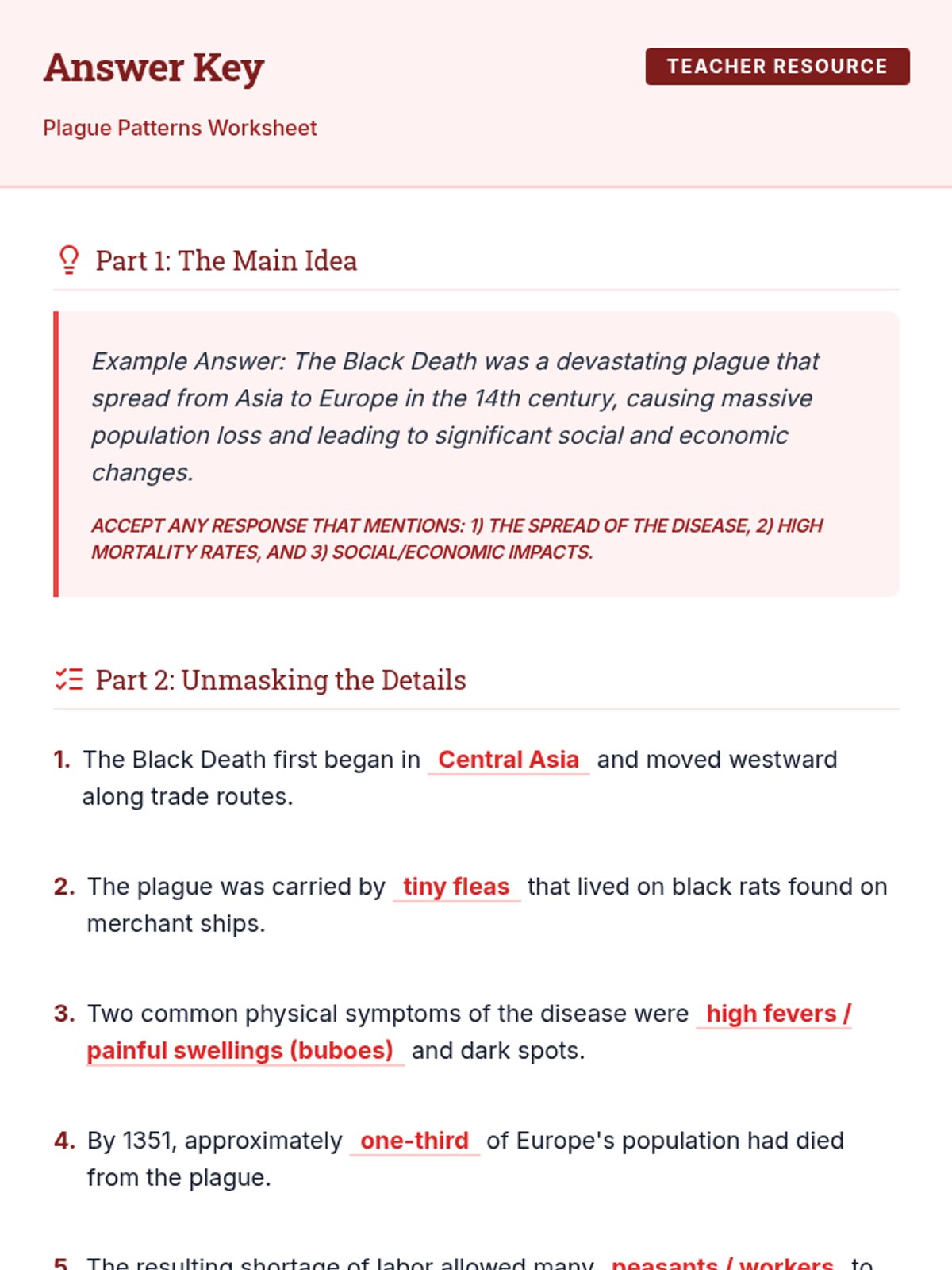
A lesson exploring the causes, spread, and impact of the Black Death in the 14th century, focusing on identifying the main idea and supporting details in historical texts.
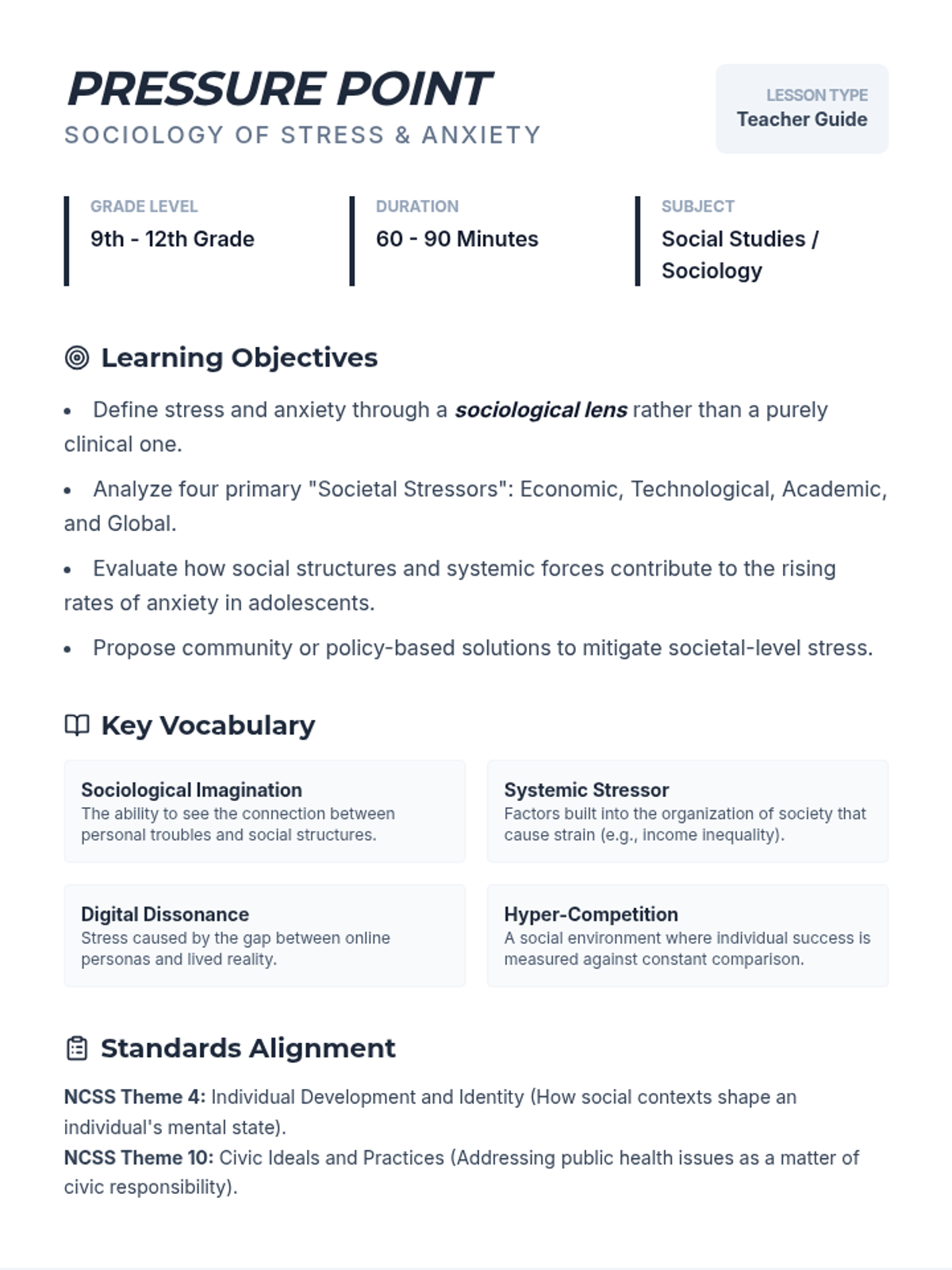
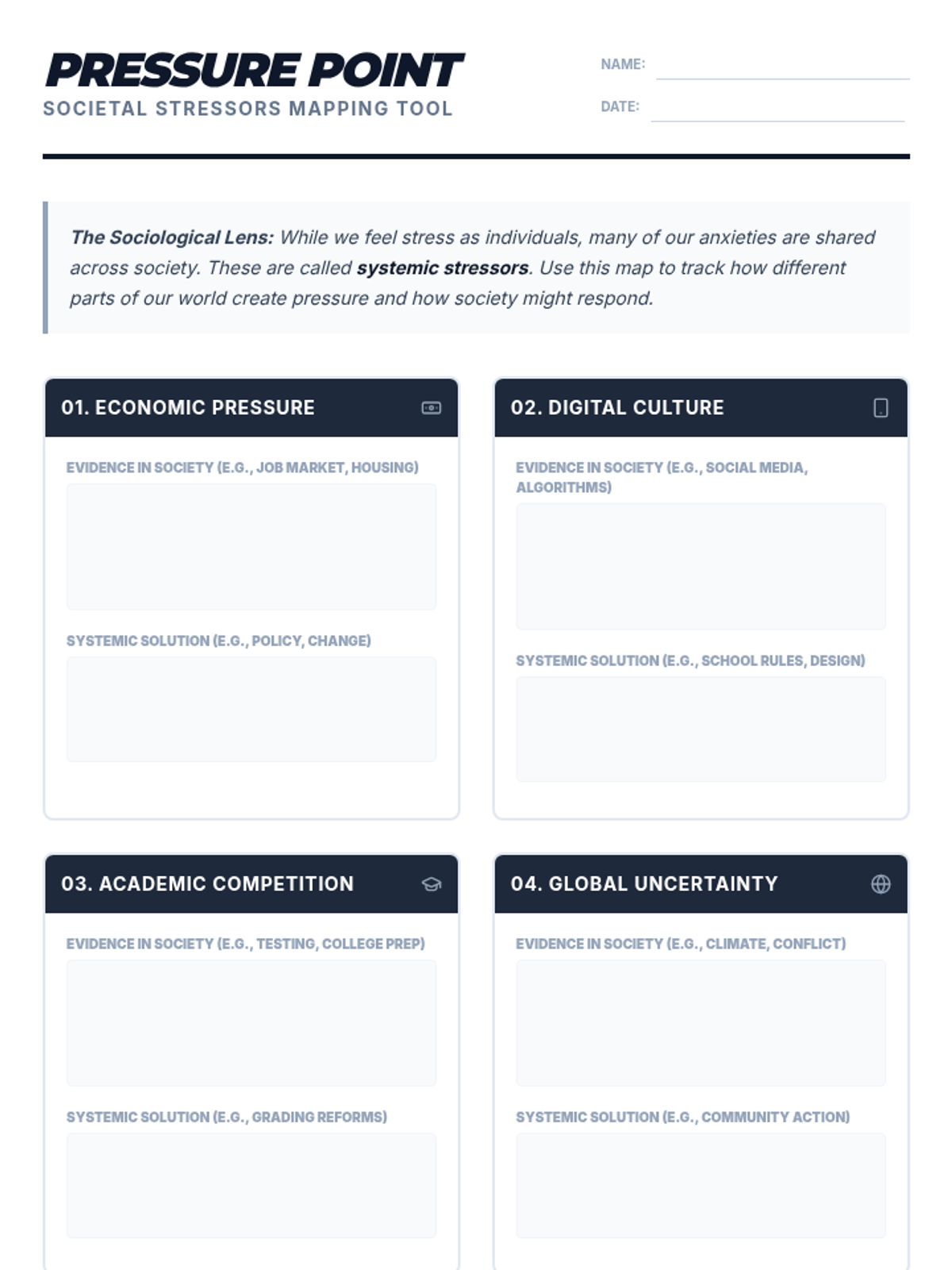
A high school social studies lesson exploring the sociological causes and societal impacts of stress and anxiety in the modern era. Students analyze systemic factors like economic pressure, digital culture, and global uncertainty through a sociological lens.
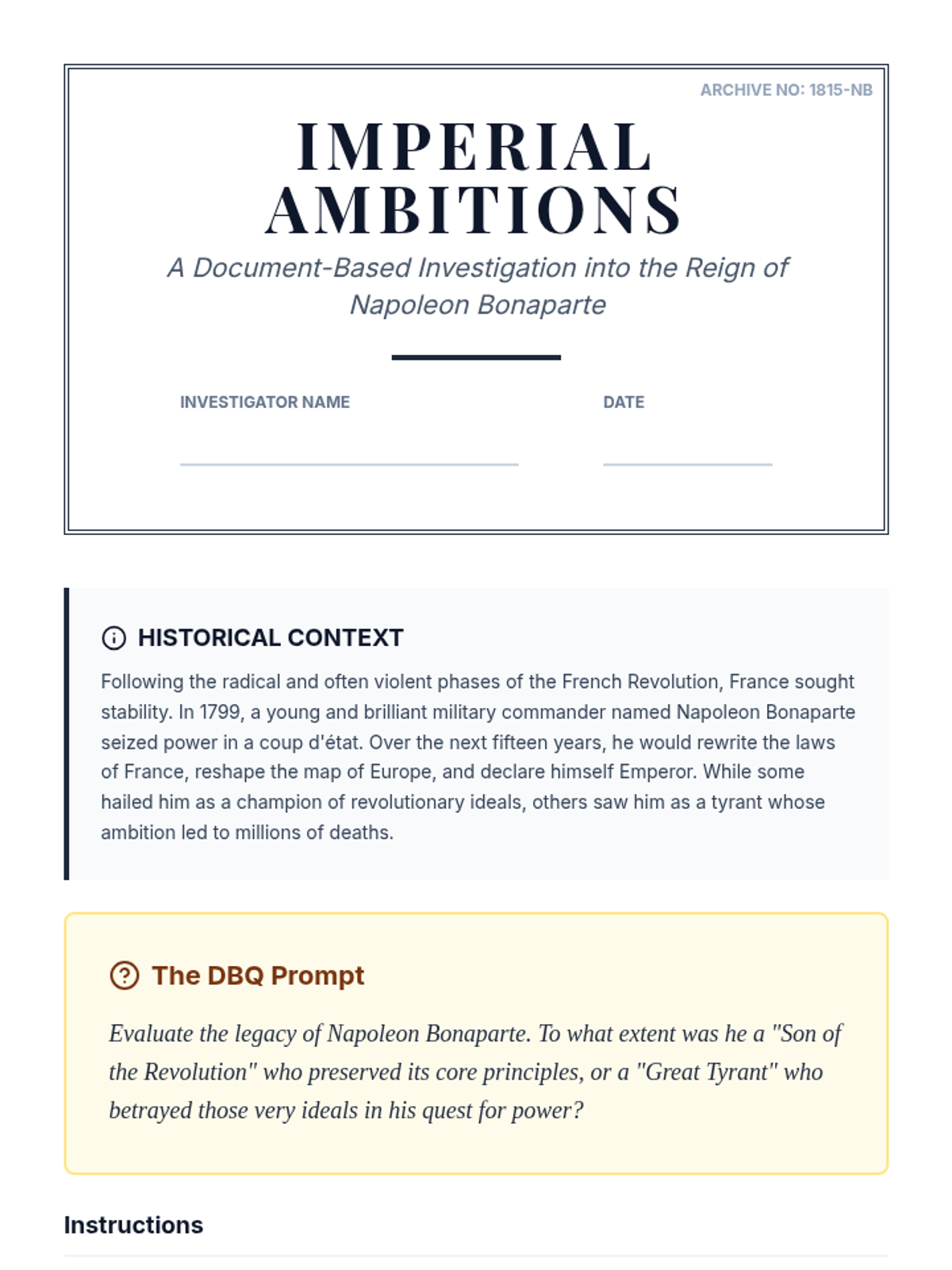
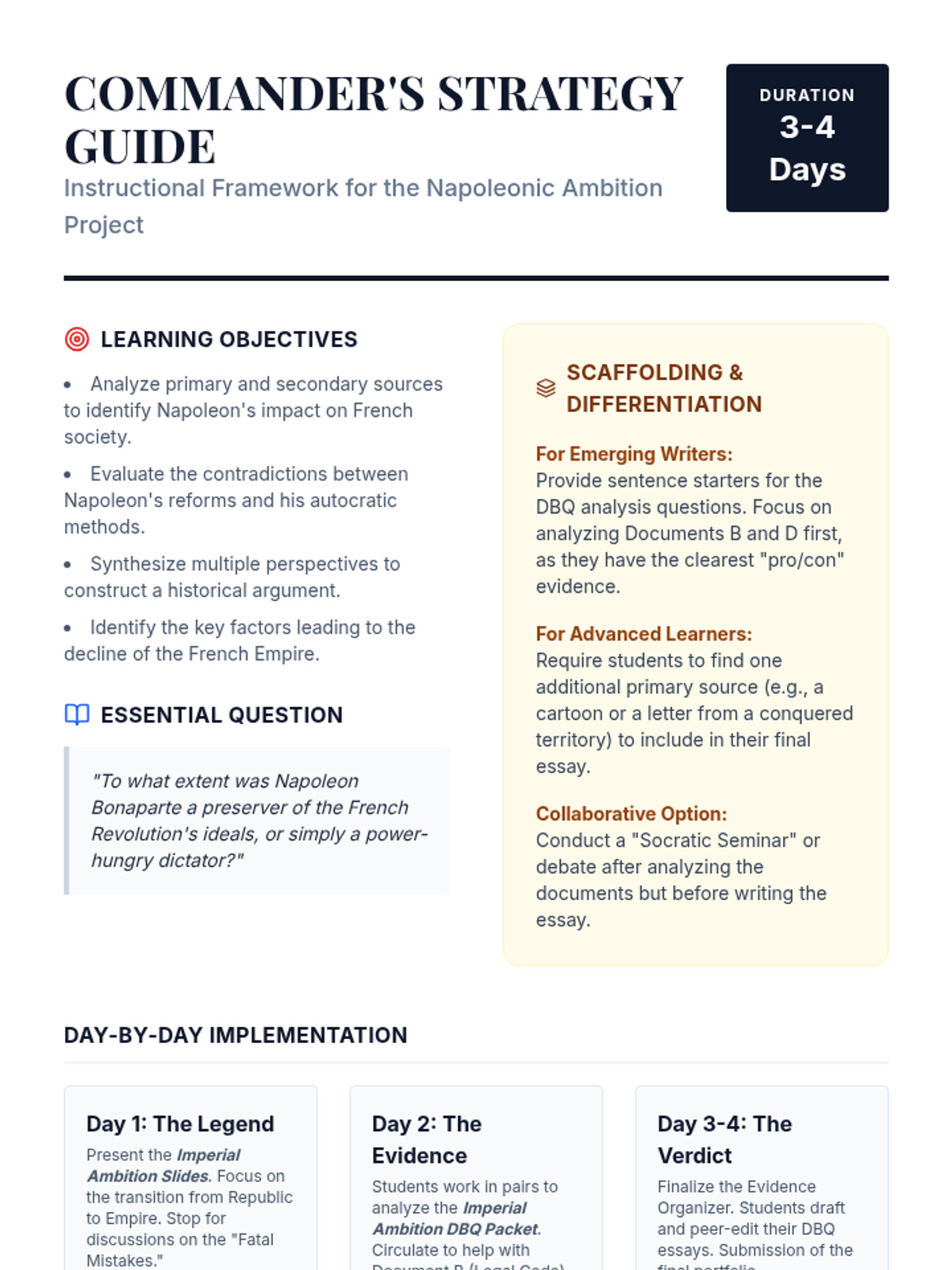
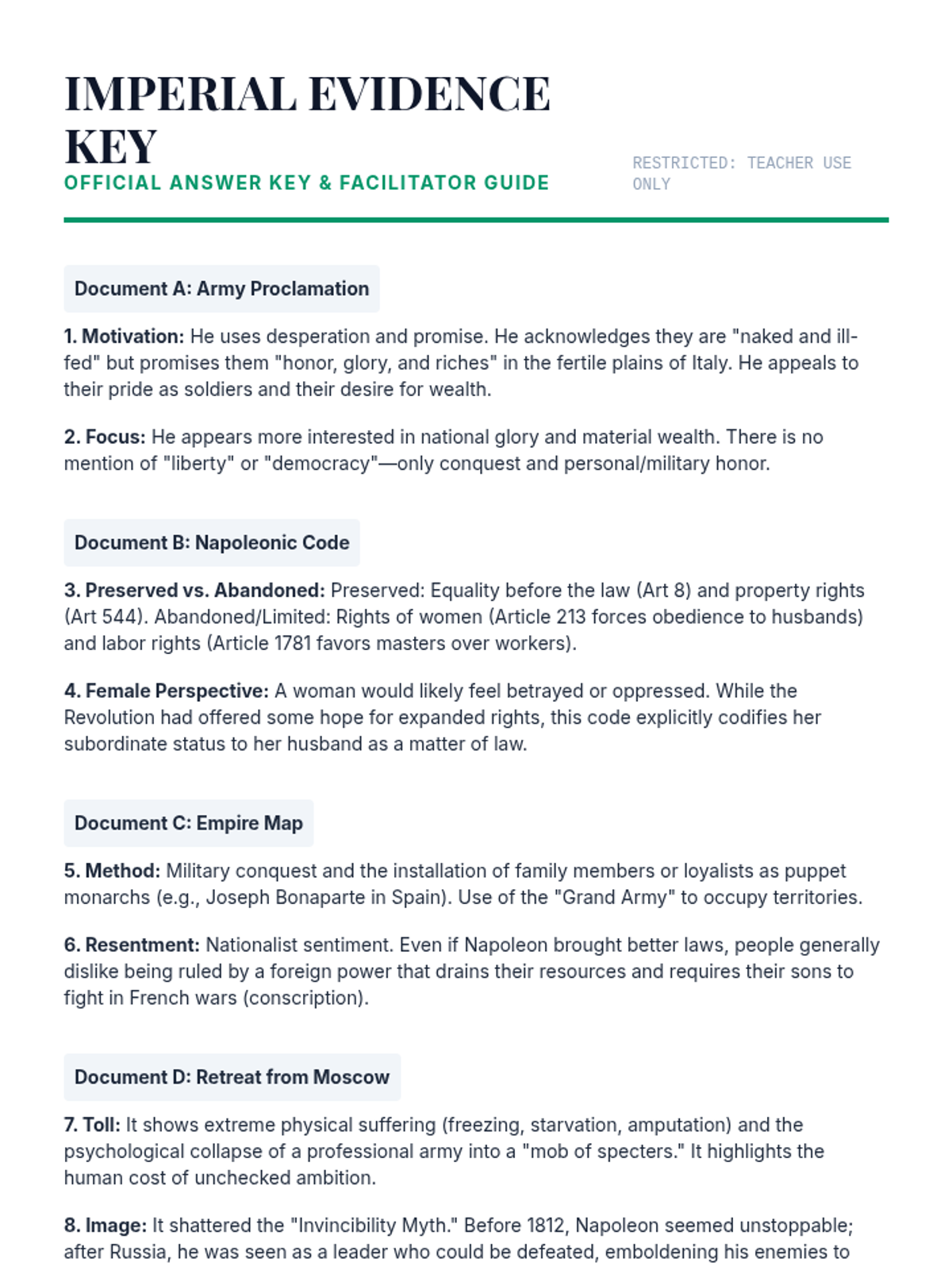
A comprehensive document-based project exploring the rise, reforms, and ultimate downfall of Napoleon Bonaparte through primary and secondary source analysis.
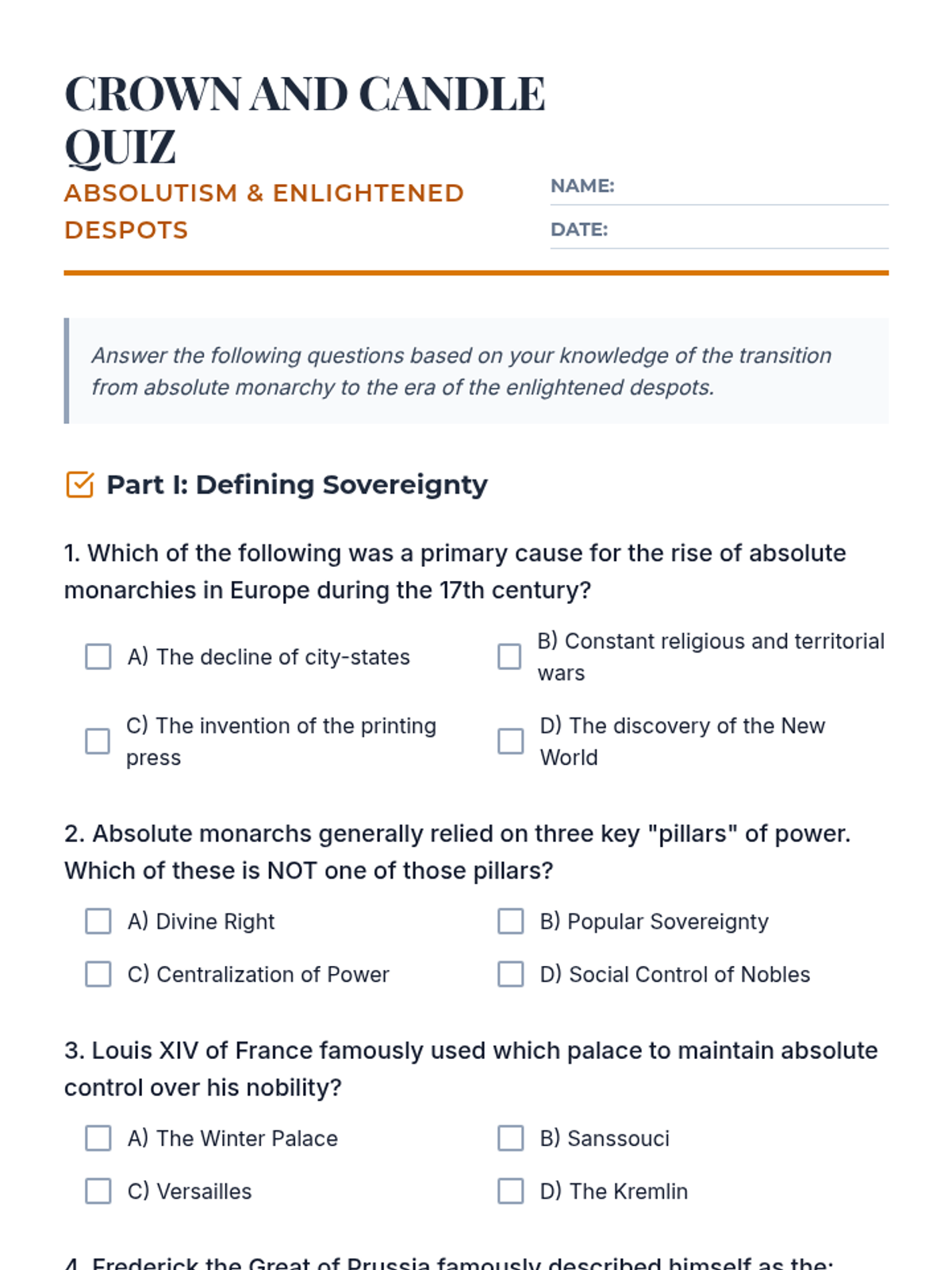
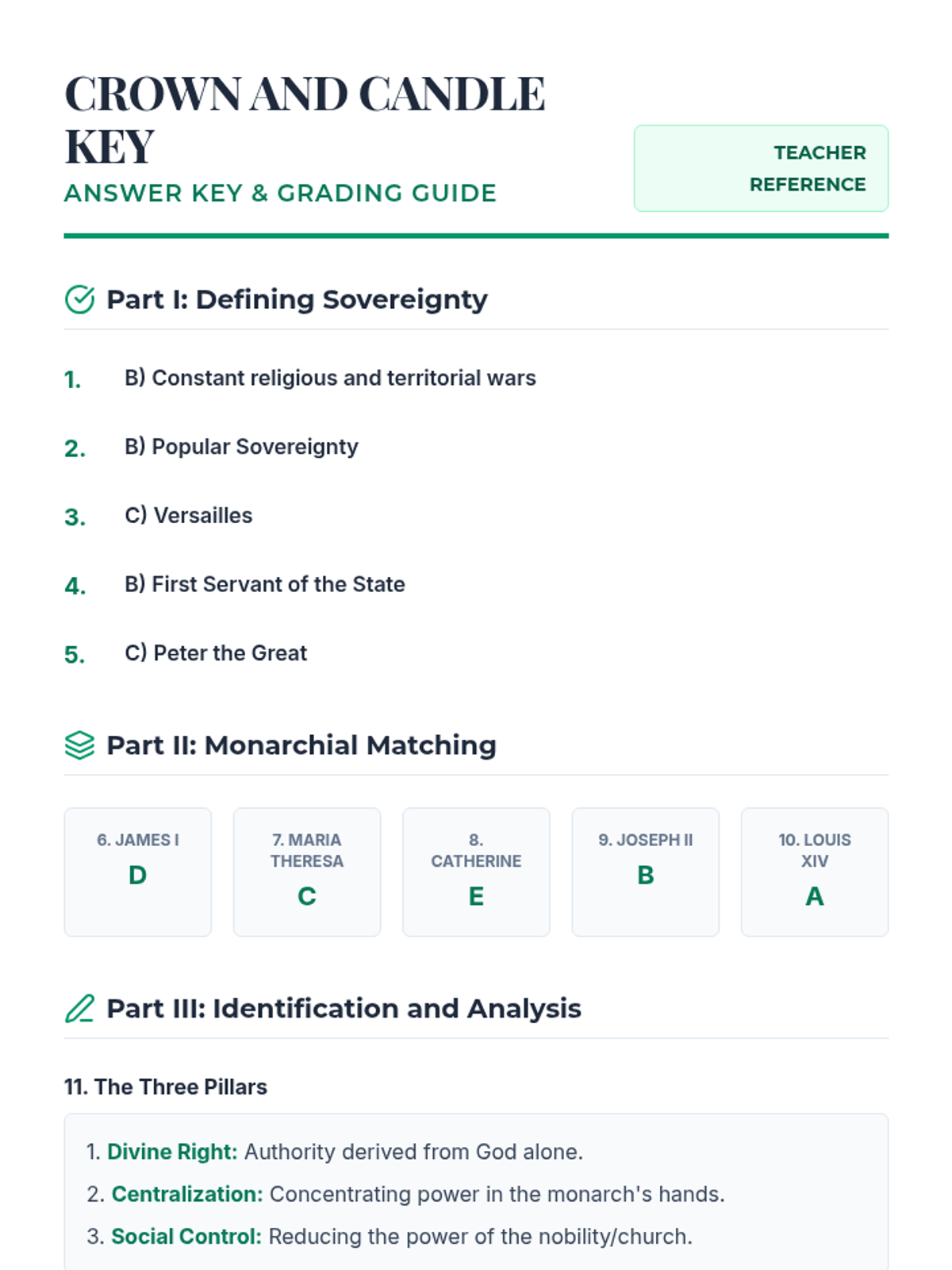
This lesson explores the rise of absolute monarchies and the subsequent emergence of enlightened despots who attempted to blend autocratic power with Enlightenment ideals. Students will analyze the reigns of key figures such as Peter the Great, Frederick the Great, and Catherine the Great.
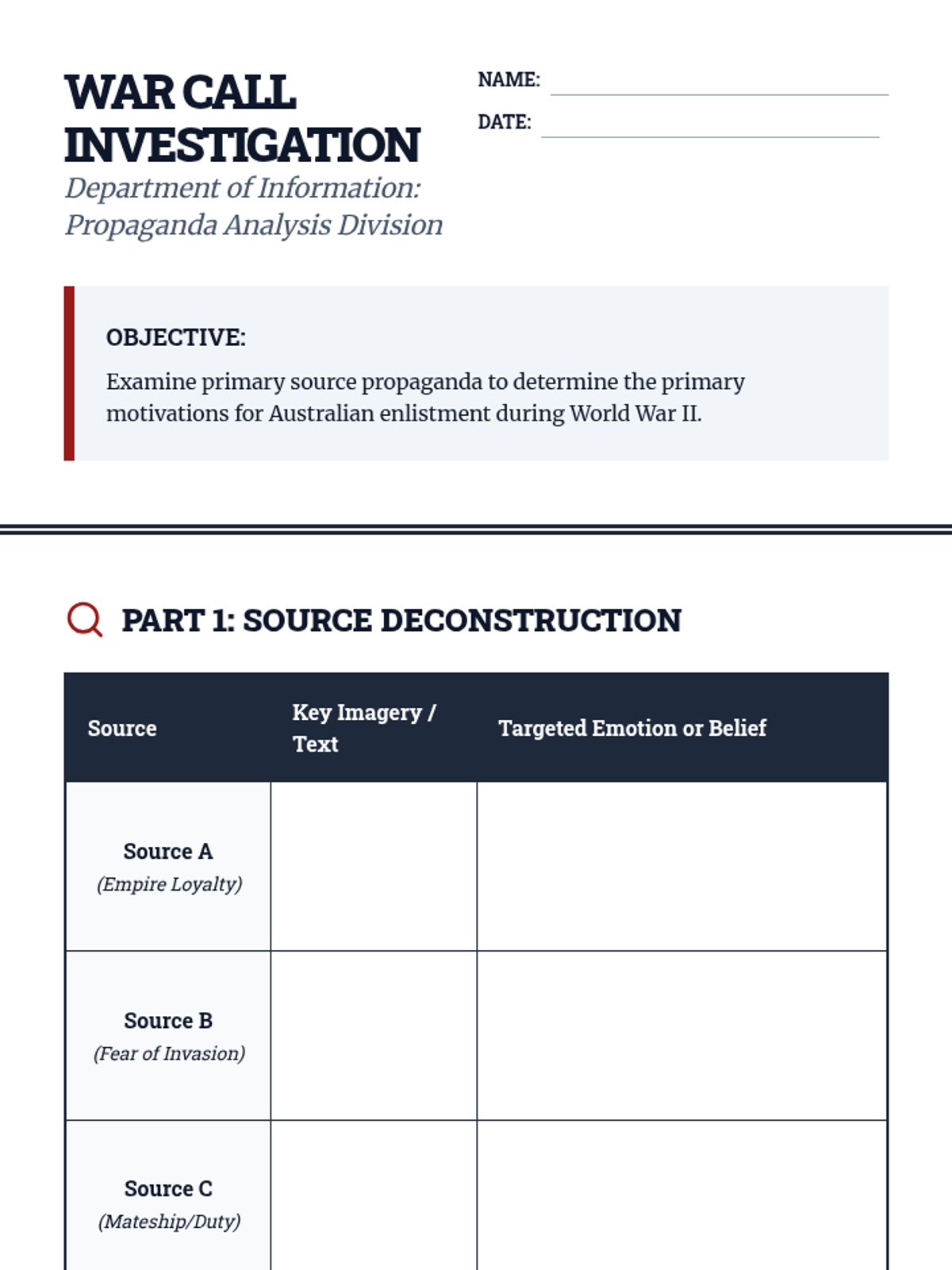
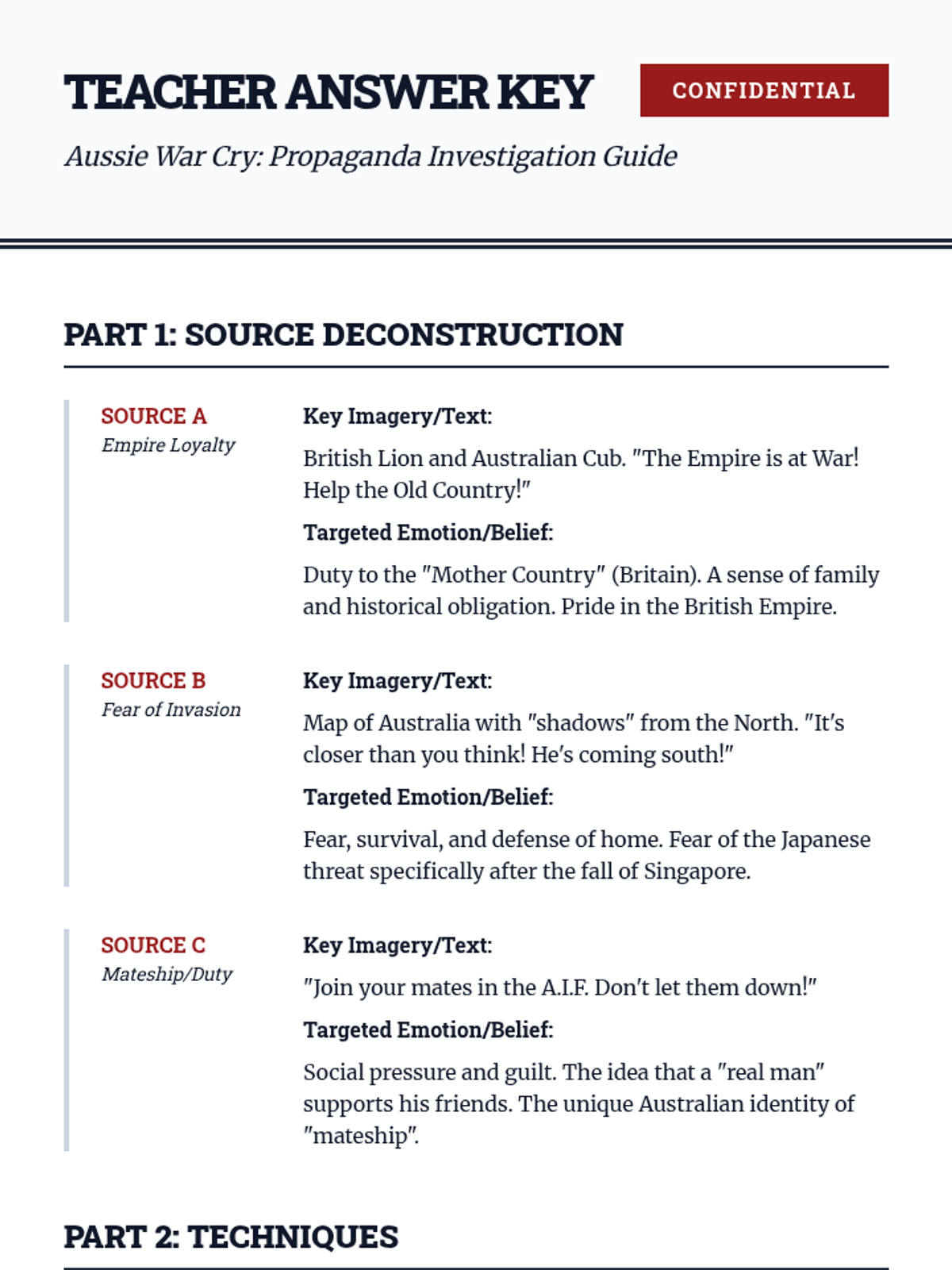
Explore the motivations behind Australian enlistment in WWII through the lens of propaganda and primary sources. Students analyze the emotional and political triggers used to mobilize the nation.