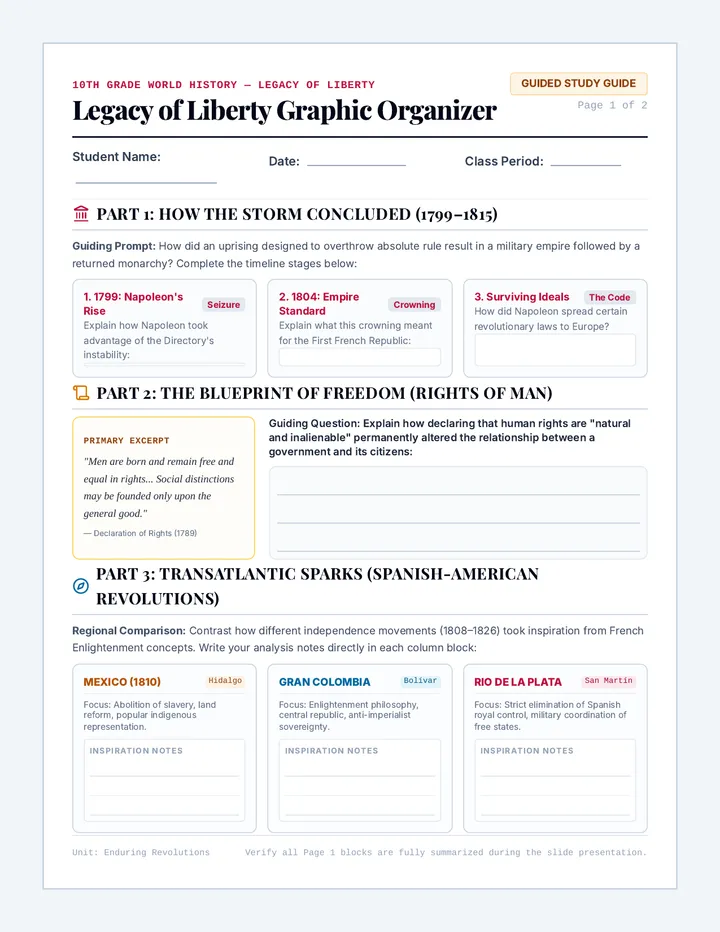
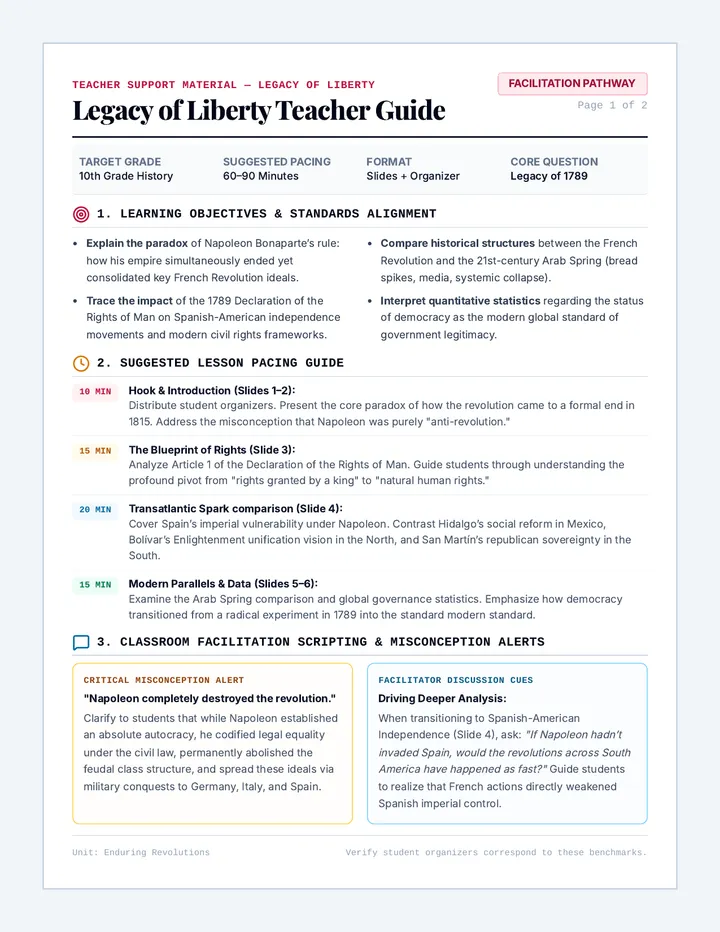
A comprehensive look at Napoleon Bonaparte's meteoric rise from military officer to Emperor of France, his major domestic and military achievements, and the strategic errors that led to his ultimate downfall and exile.
Students delve into the legal and social bonds of the feudal contract through a knighting ceremony simulation and drafting their own oaths of fealty.
This lesson explores the debate over how state judges should take office, comparing the merits of democratic elections against the stability of executive appointments. Students will analyze arguments for both sides, focusing on judicial independence, accountability, and the role of the judiciary in a democracy.
In this lesson, students explore the concepts of disability discrimination and accessibility, analyzing how physical, digital, and social barriers impact individuals and the health of a democracy. Students will learn to distinguish between discriminatory practices and legitimate professional boundaries.
The final debate session where students engage in a 20-minute structured argument, applying their psychological knowledge to the question of why students cheat.
A dedicated research session where students work in their debate teams to gather evidence, psychological theories, and real-world examples to support their assigned side.
An introduction to the psychology of cheating, defining nature vs. nurture and person vs. situation while assigning student roles for the upcoming debate.
A 60-minute immersive lesson exploring the multifaceted lives of Vikings as raiders, traders, and master shipbuilders. Students will analyze Viking expansion and daily life through a seafaring lens.
Apply knowledge of governance and political issues by designing a new Canadian political party.
Compare and contrast First-Past-The-Post and Proportional Representation voting systems through critical analysis.
Understand the division of responsibilities between federal, provincial, and municipal levels of government in Canada.
Explore the historical development of Canadian democracy and the roles within the federal government, specifically focusing on the Parliament and the Prime Minister.
Exploring the division of powers between federal, provincial, and municipal governments, culminating in a civic architecture project.
A deep dive into the legislative process, exploring how bills become law and the roles of the House of Commons and the Senate.
An introduction to the constitutional monarchy and the three branches of the Canadian government: executive, legislative, and judicial.