A 30-minute lesson for 9th-grade students to identify and analyze various types of media bias, including selection, placement, spin, sensationalism, and viewpoint. Students engage in guided discussion and practical analysis of news scenarios.
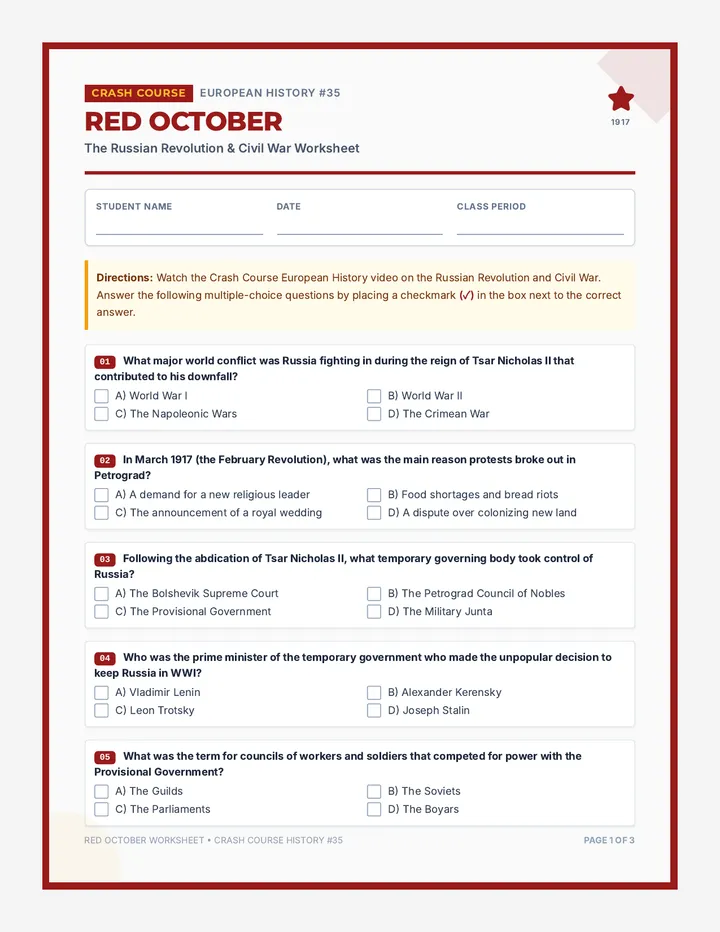
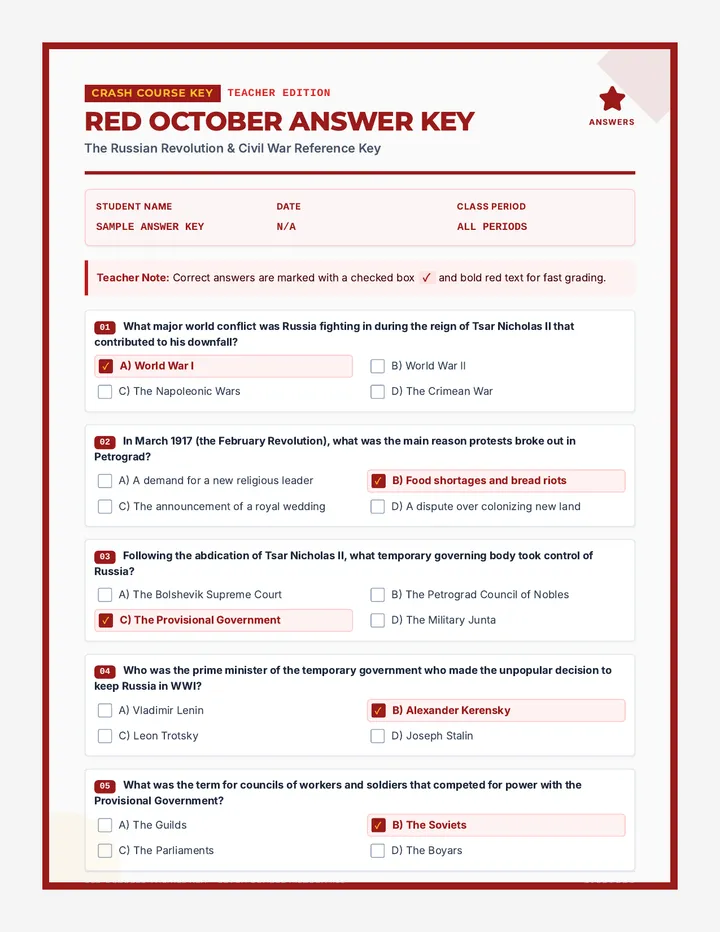
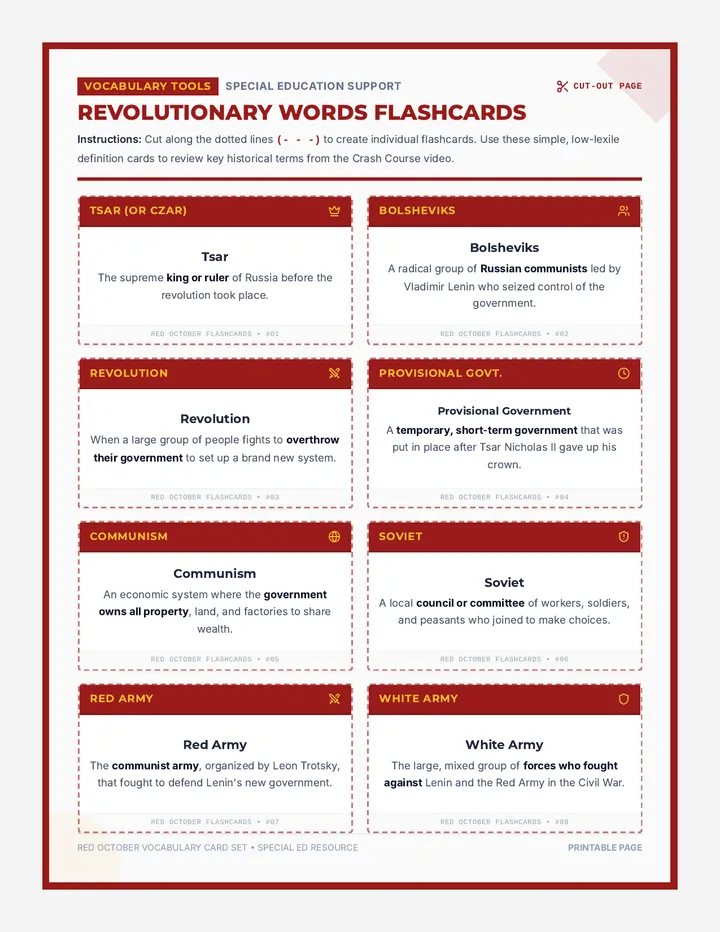
A comprehensive history sequence focusing on 20th-century communist revolutions in Russia and China. This sequence uses Crash Course videos, detailed worksheets, complete answer keys, and accessible vocabulary flashcards to explore the collapse of old empires and the rise of communist states.
An introductory lesson exploring the immigrant experience and systemic barriers through Suli Breaks' spoken word poem 'Fences'. Students engage in a structured movement and discourse activity to analyze literal and metaphorical barriers, connecting themes to their own lived experiences.
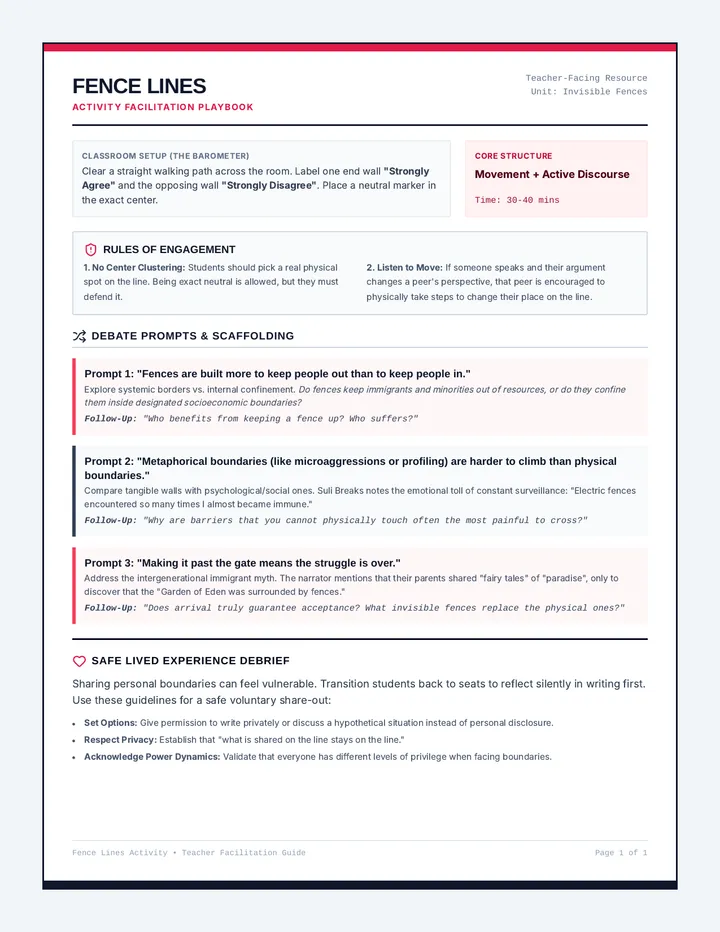
A 1-page teacher facilitation guide for the 'Fence Lines' movement and discourse activity. Provides structured guidelines for setting up the classroom barometer, lesson pacing, specific debate prompts, discussion scaffolds, and guidelines for managing sensitive personal reflections with care.
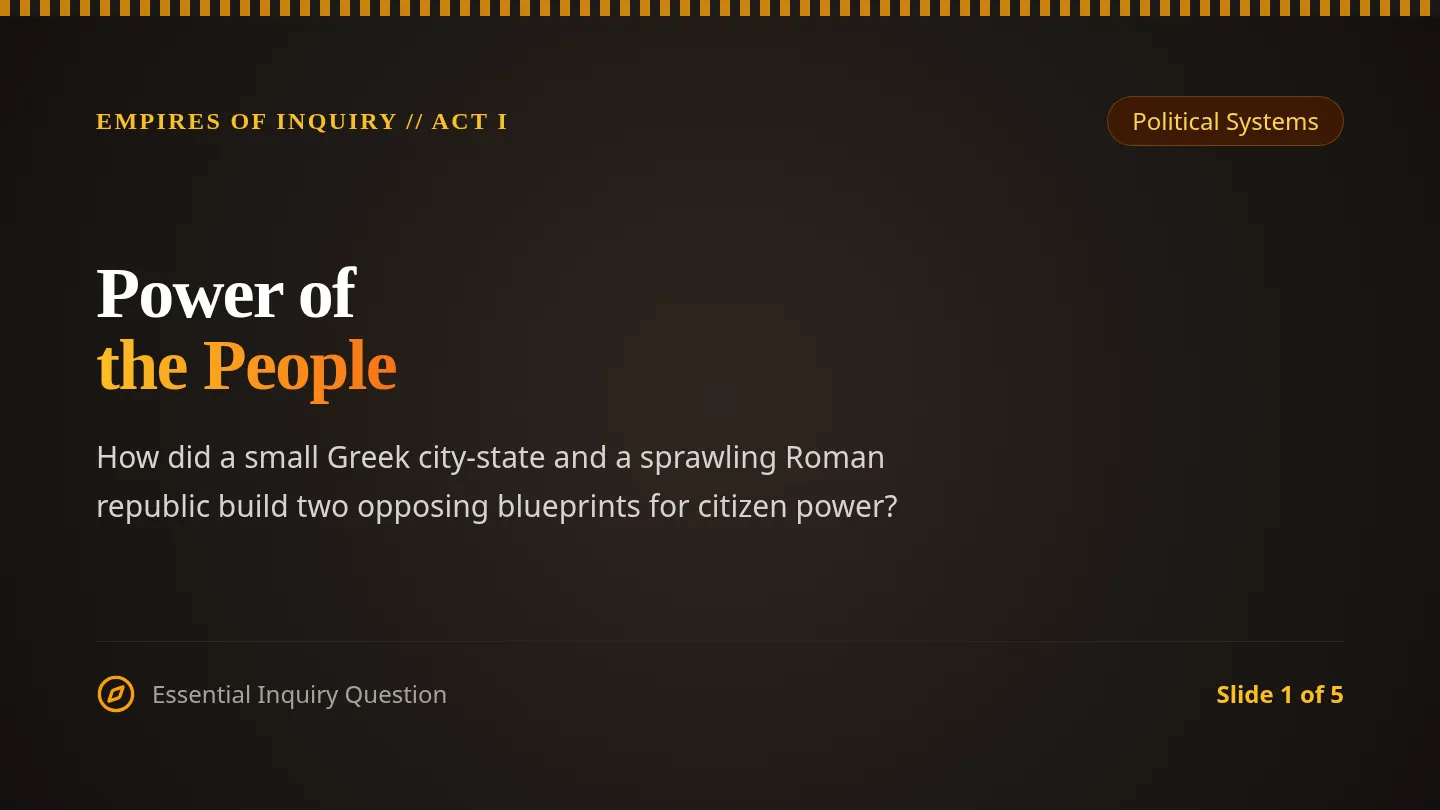
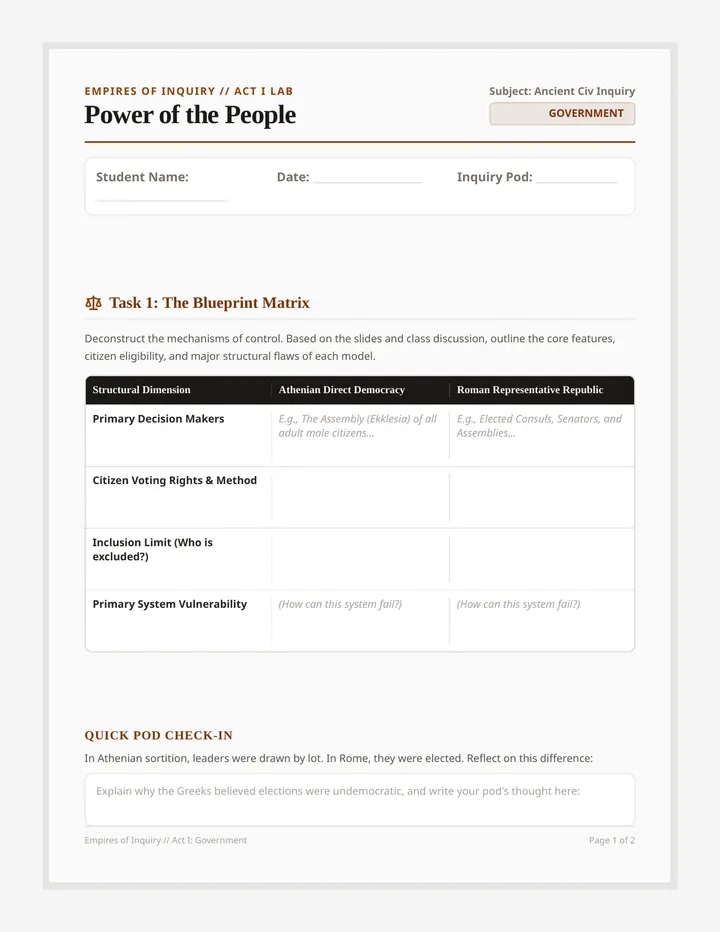
An inquiry-driven social studies sequence investigating Ancient Greece and Rome across four core pillars: government, philosophy, trade, and engineering. Students engage with primary sources, architectural achievements, and ethical dilemmas to construct arguments about classical legacies.
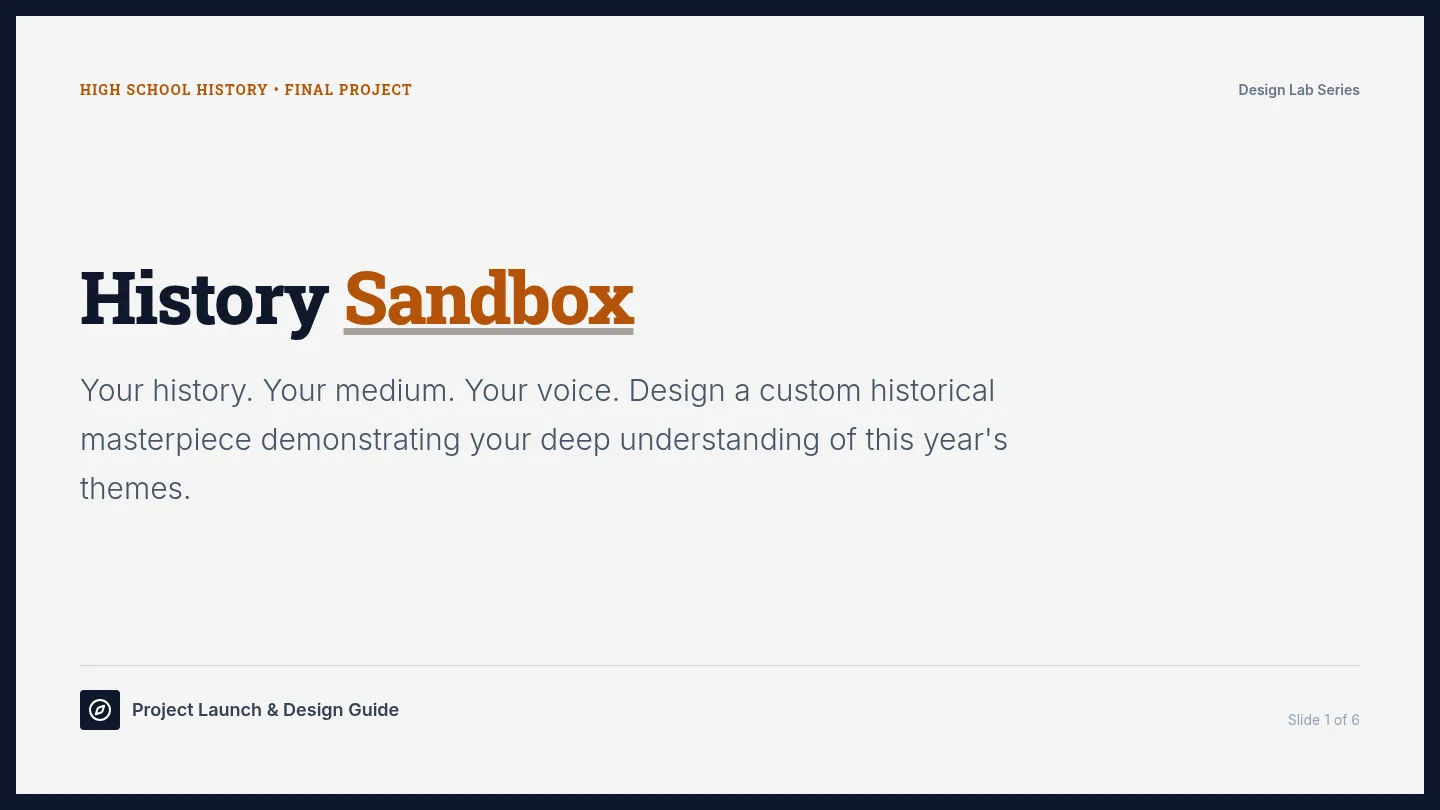
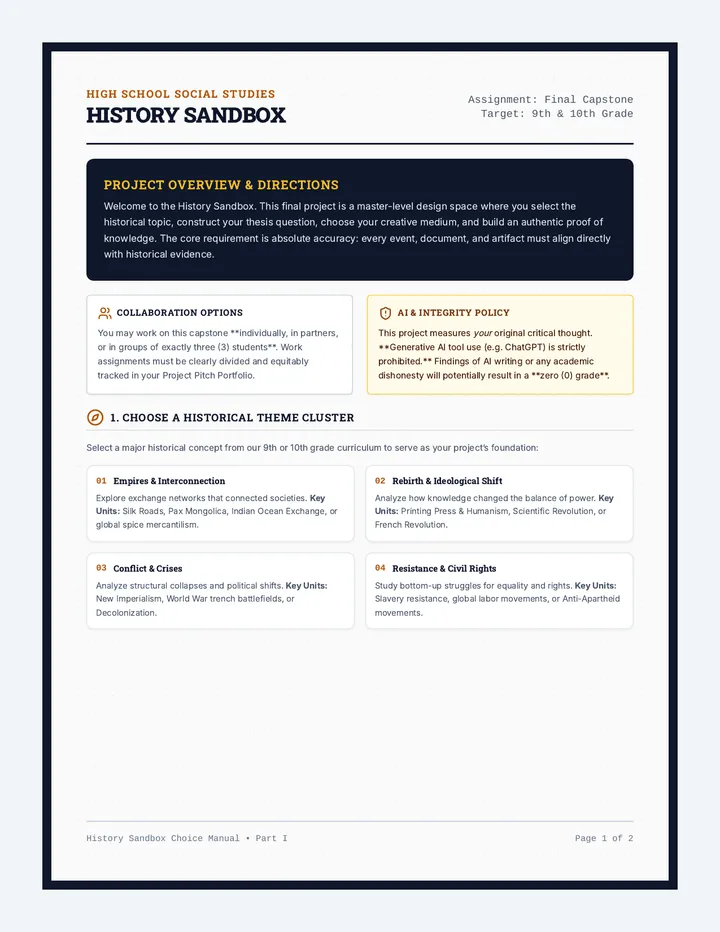
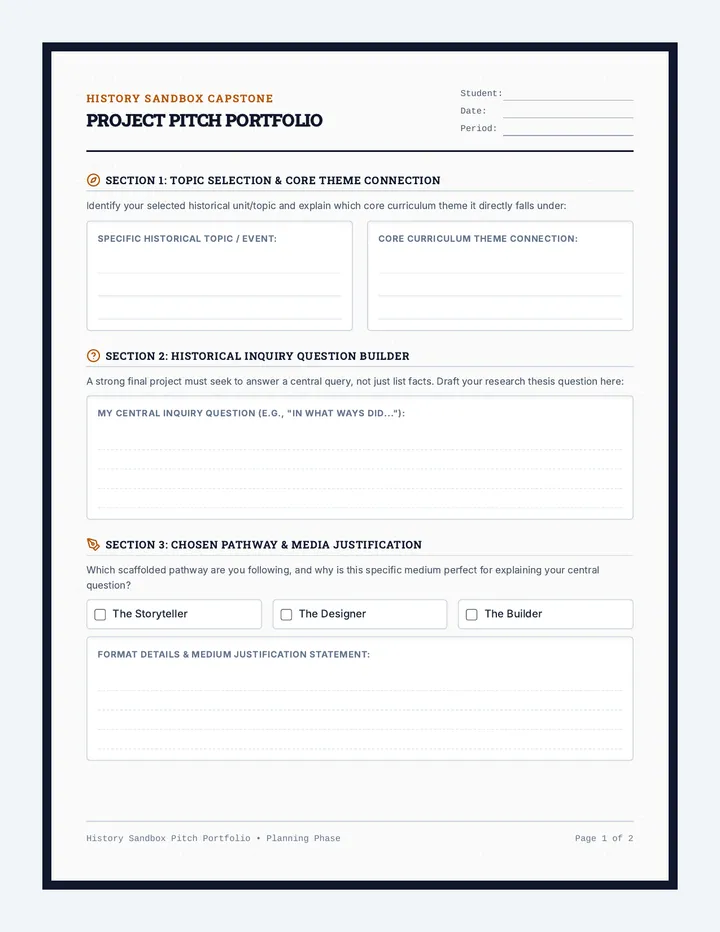
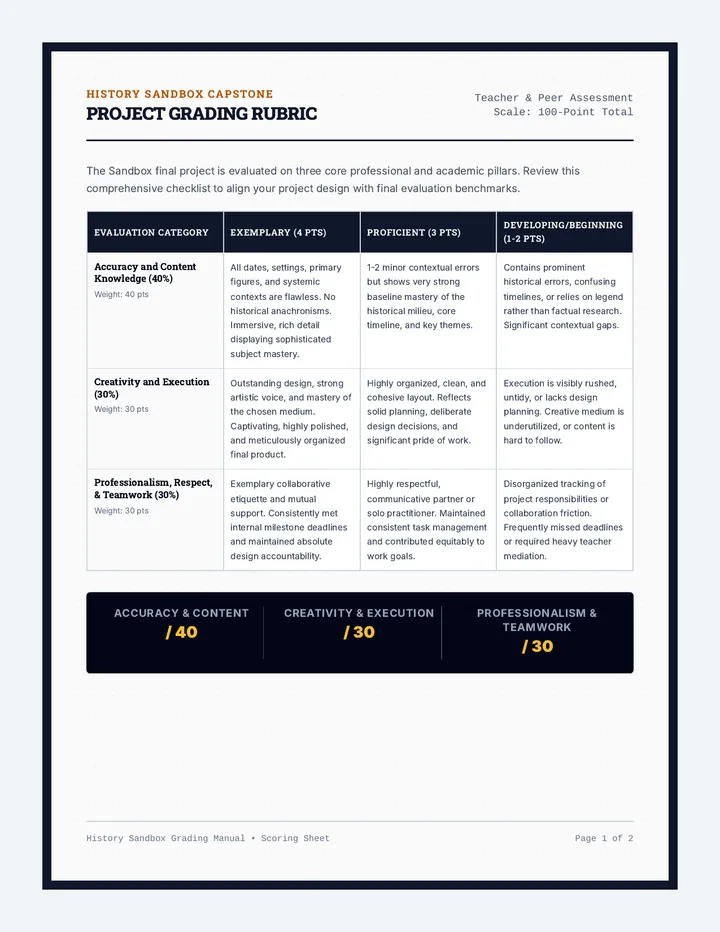
A highly flexible, scaffolded final project workspace for 9th and 10th-grade history classes, allowing students to demonstrate their historical knowledge through creative channels. It includes structured pathways, a comprehensive graphic organizer pitch sheet, a grading rubric, reflection prompts, and introductory slides.
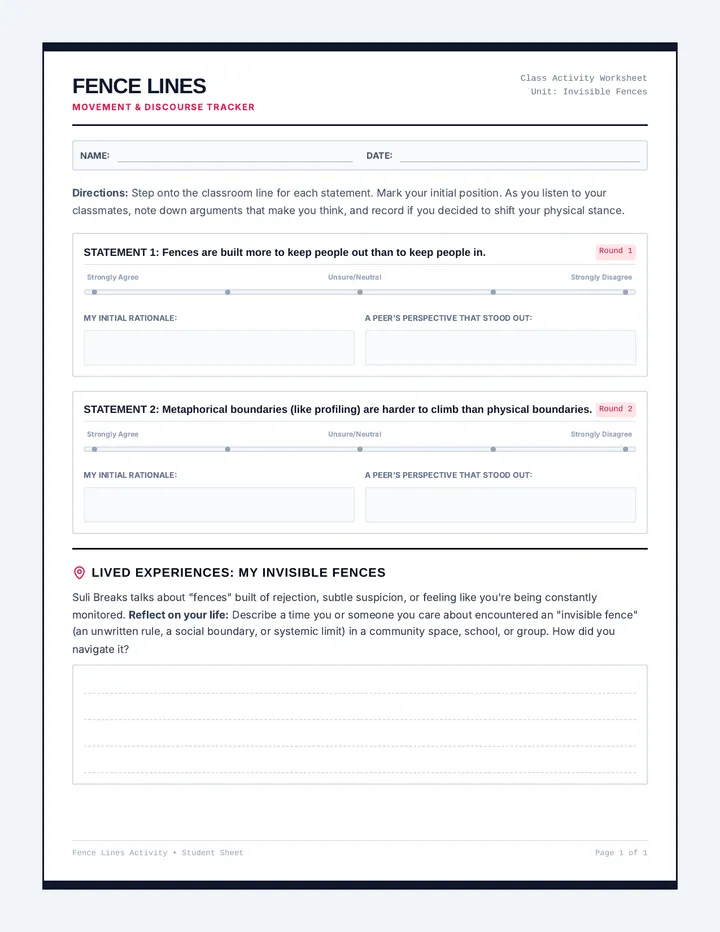
A 1-page student-facing tracker and reflection sheet for the 'Fence Lines' physical barometer activity. Includes visual scaling sliders for each movement prompt, spaces to record peer arguments, and a deep-dive writing area for real-world personal connections.
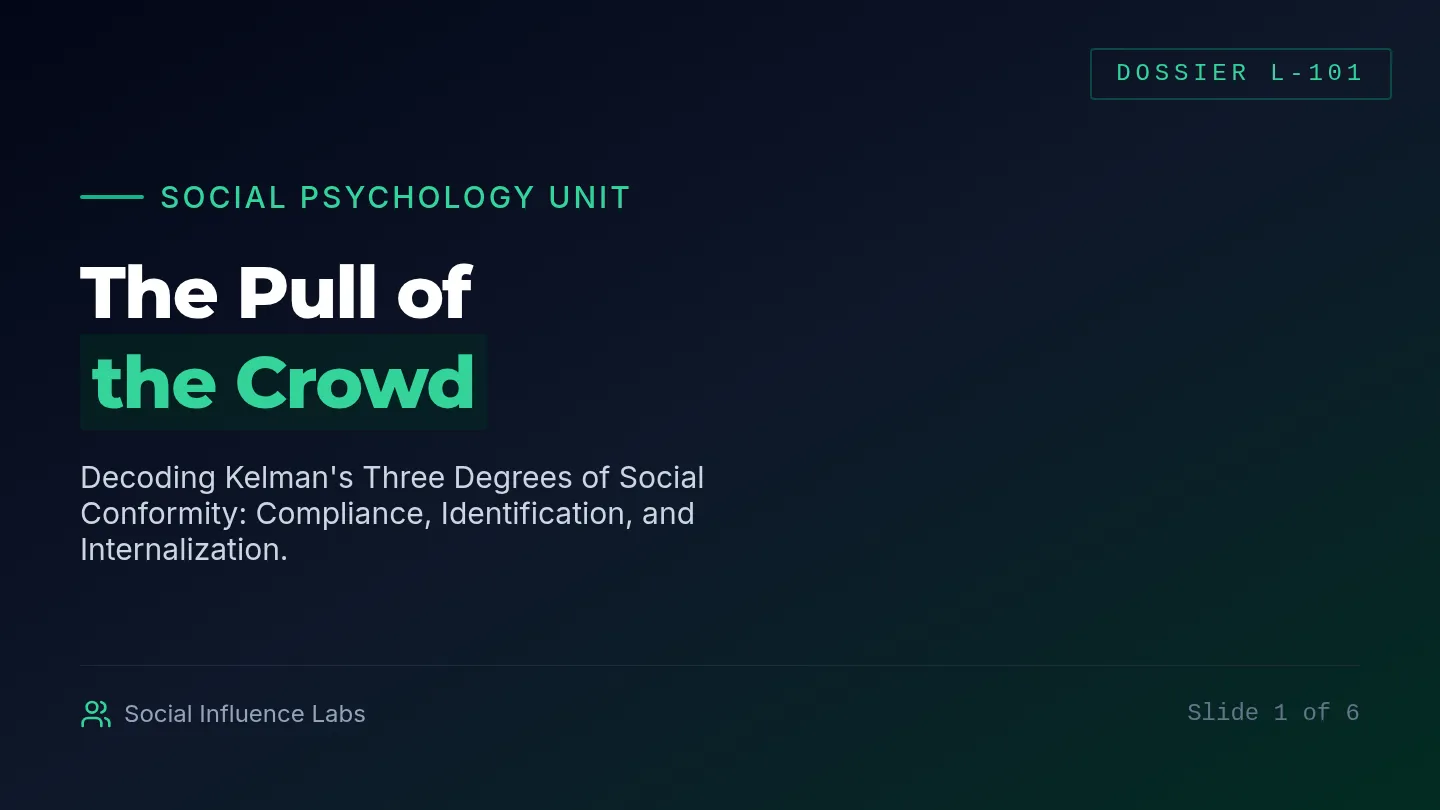
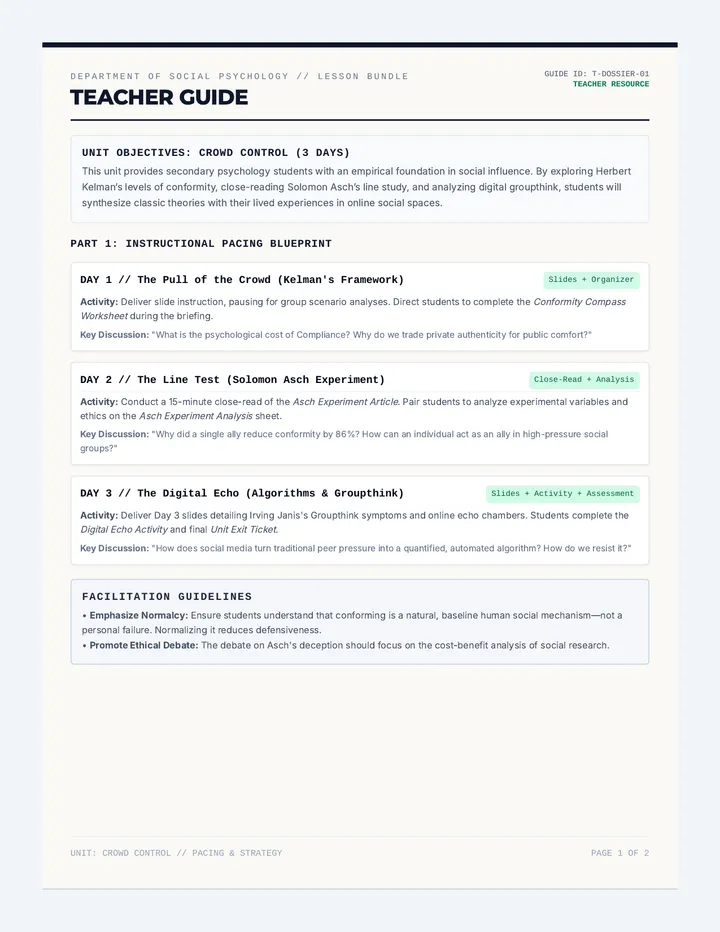
A three-day social psychology sequence exploring conformity, groupthink, and social influence. Students analyze foundational experiments, compare compliance versus internalization, and dissect modern digital peer pressure and media dynamics.
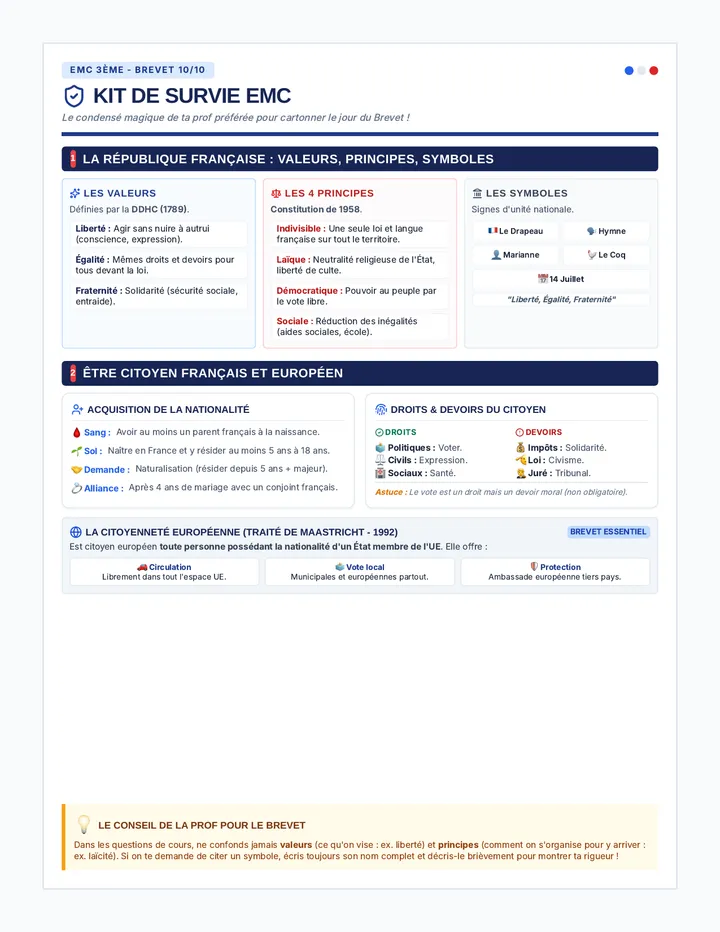
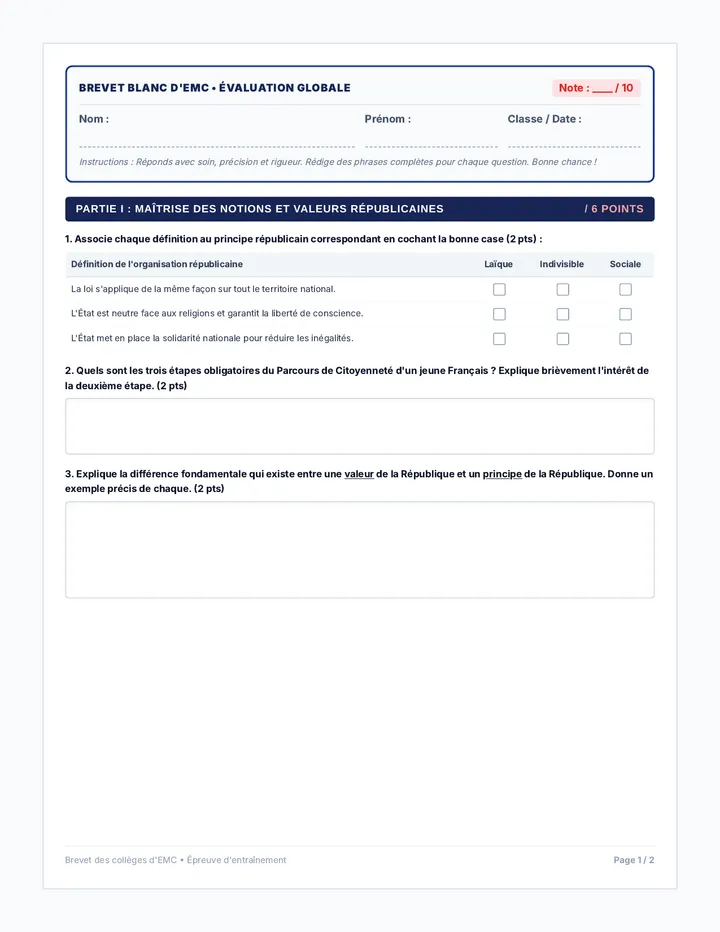
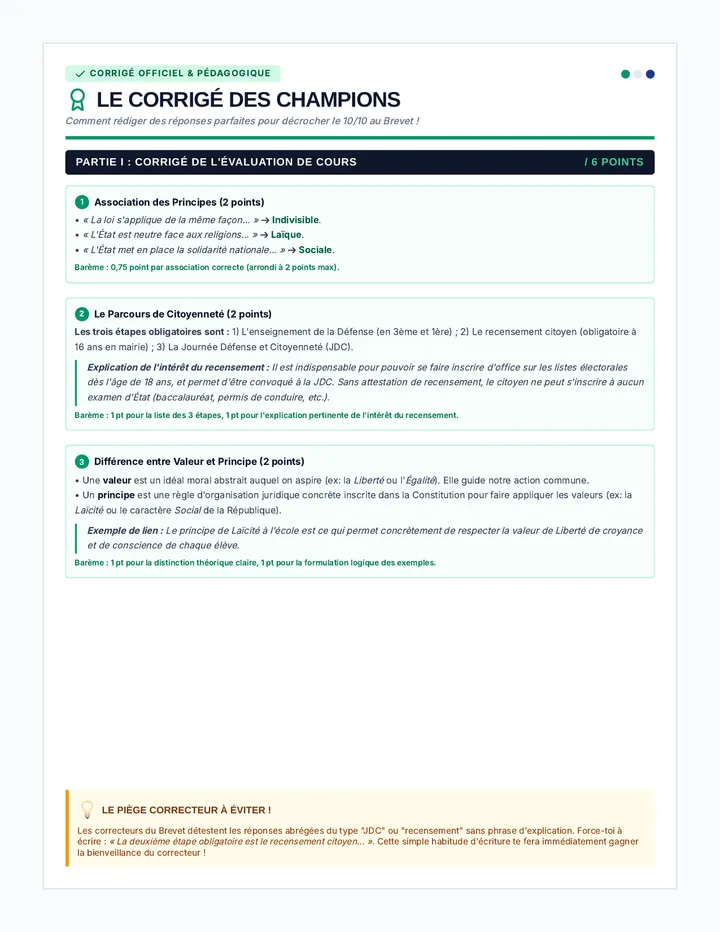
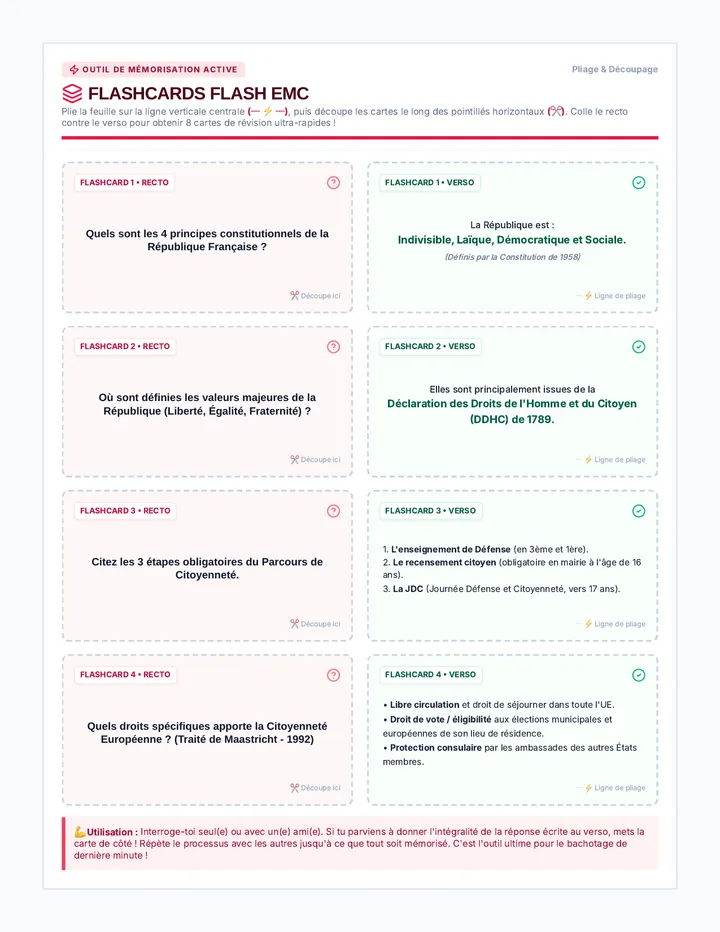
Un parcours de révision ultra-complet, engageant et pédagogique couvrant l'intégralité du programme d'EMC de 3ème. Conçu par une enseignante passionnée pour aider les élèves de 3ème à obtenir un 10/10 parfait au Brevet des collèges à travers des fiches de synthèse, un grand entraînement blanc, son corrigé méthodologique détaillé et des flashcards de mémorisation active.
A revised 2-page rubric and reflection document featuring three updated categories: Accuracy and Content Knowledge (40%), Creativity and Execution (30%), and Professionalism, Respect, and Teamwork (30%), along with a student self-assessment sheet.
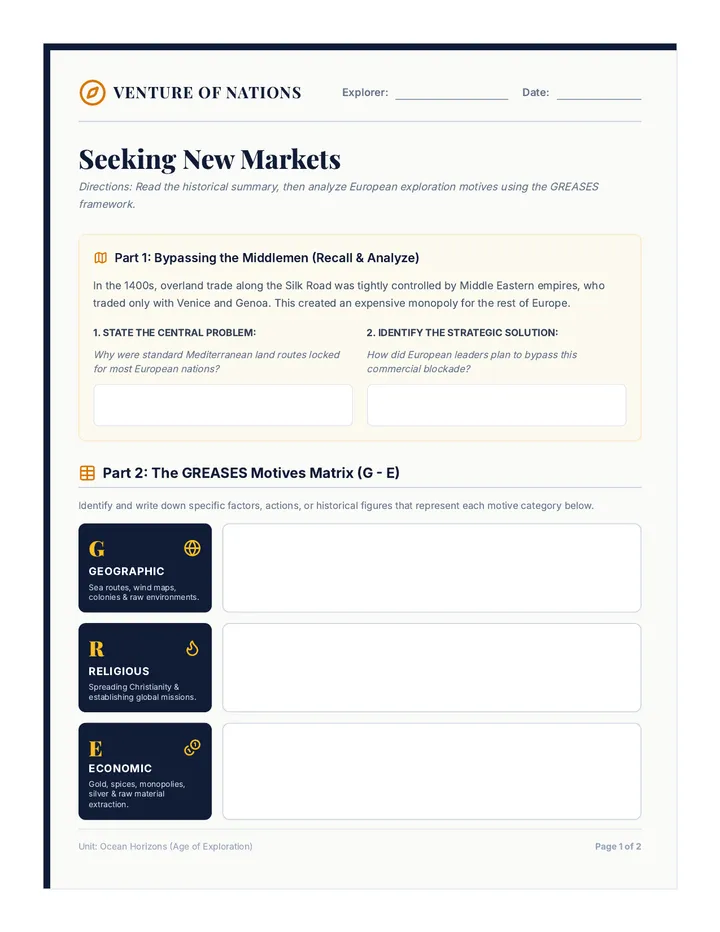
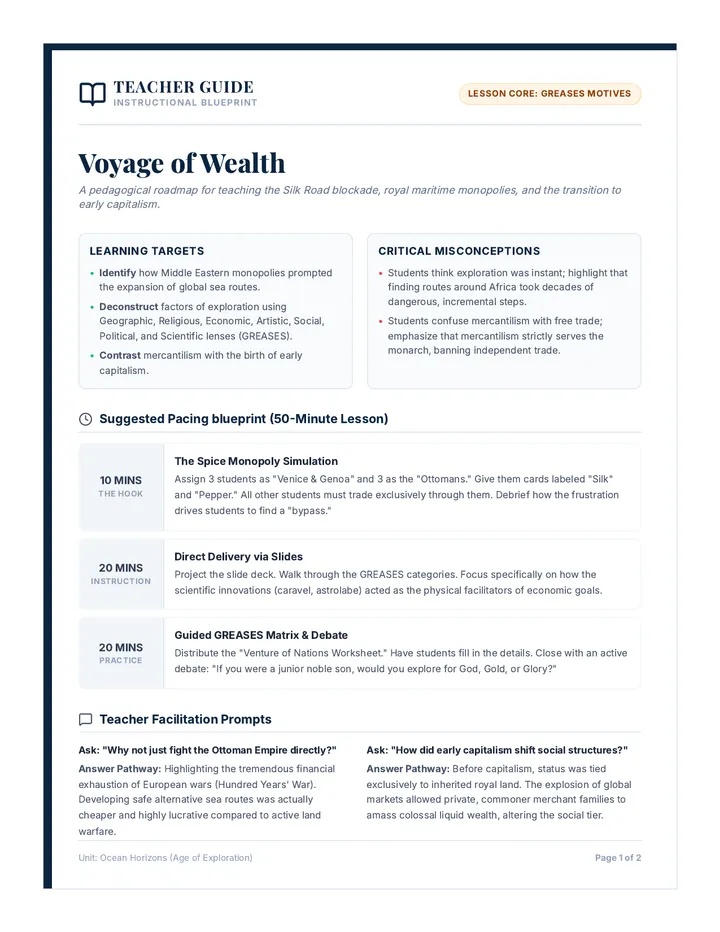
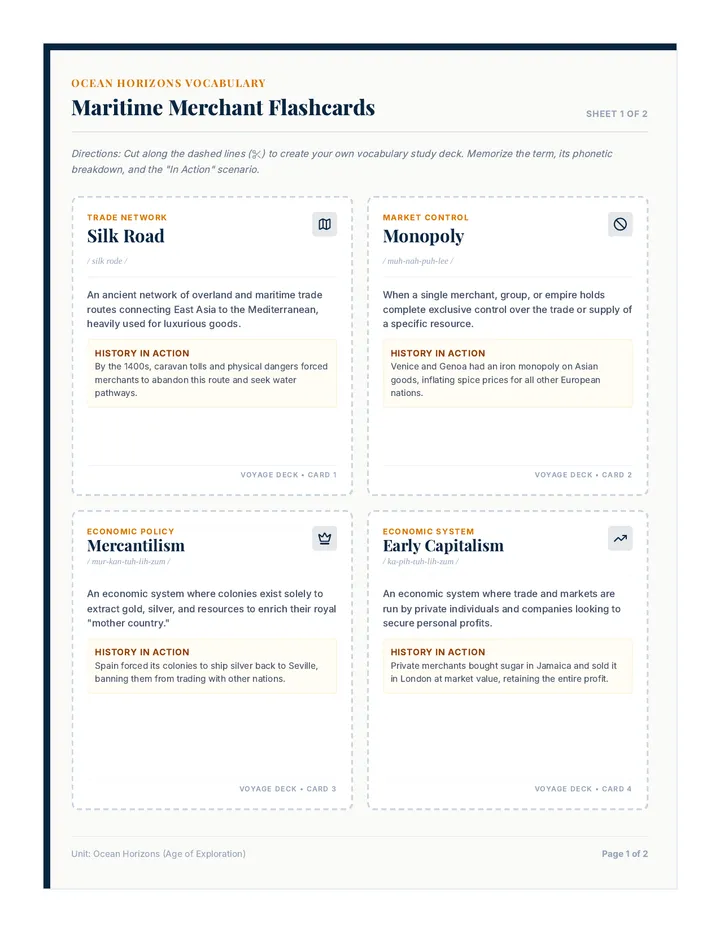
A comprehensive historical unit tracking the Age of Exploration, maritime trade routes, and the shift from mercantilism to early capitalism.
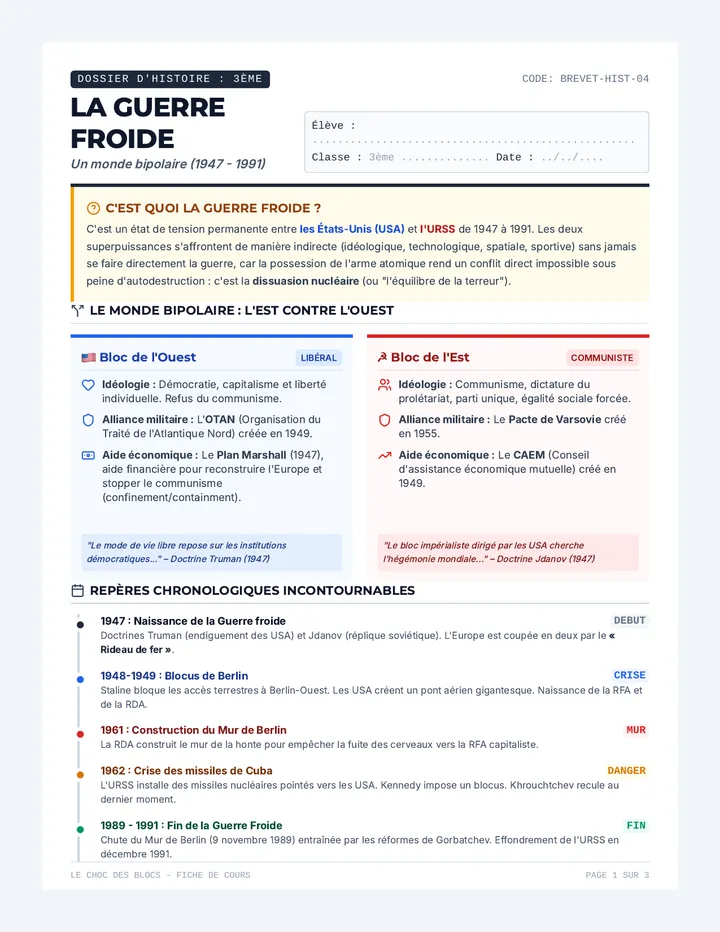
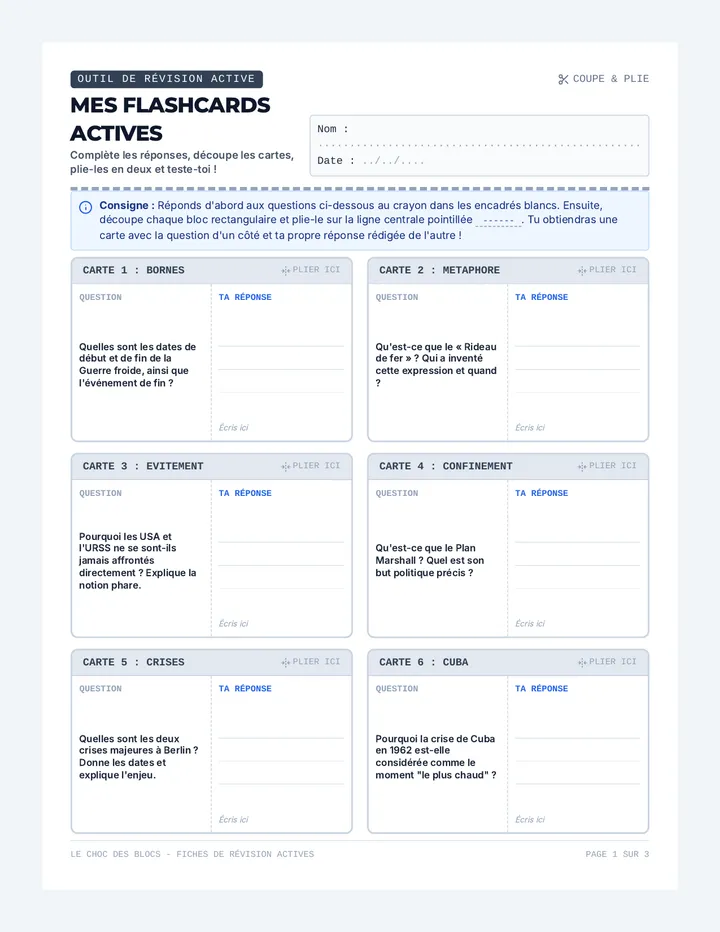
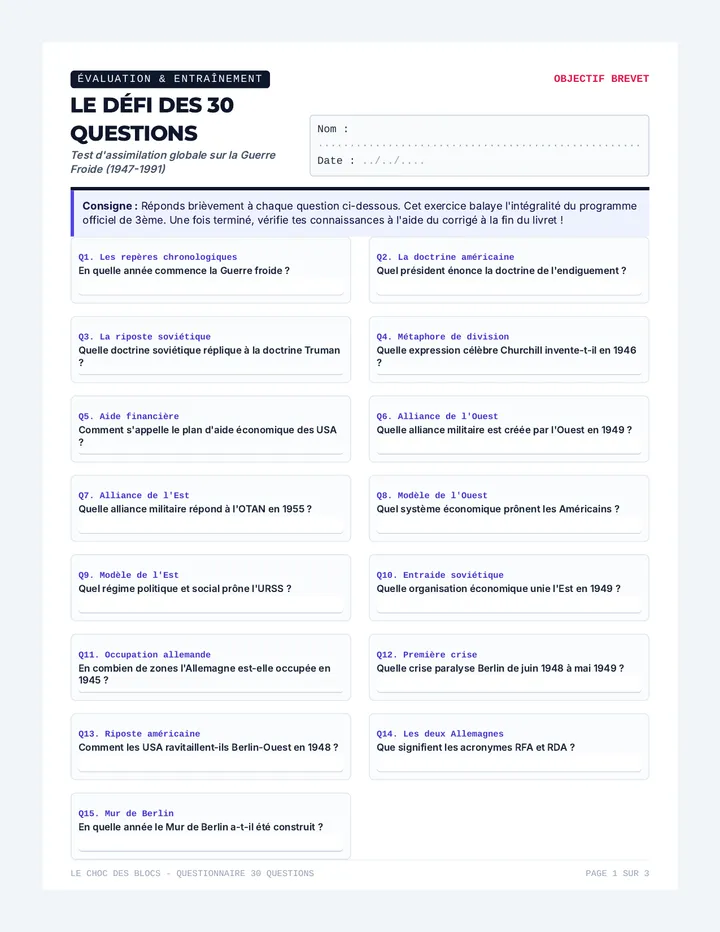
Une leçon complète sur la guerre froide (1947-1991) pour les élèves de 3ème, alliant fiches de cours visuelles, mémorisation active et entraînement intensif pour le Brevet.
A 2-page graphic organizer portfolio designed for student pitch creation. Includes dedicated brainstorming quadrants, a historical inquiry question builder, structural blueprints, and a 3-source scholarly citation tracker with clean writing boxes.