Students select a real-world advertisement or clip and present a breakdown of its logical structure to the class. They must identify at least two fallacies and explain how those fallacies are intended to work on the consumer.
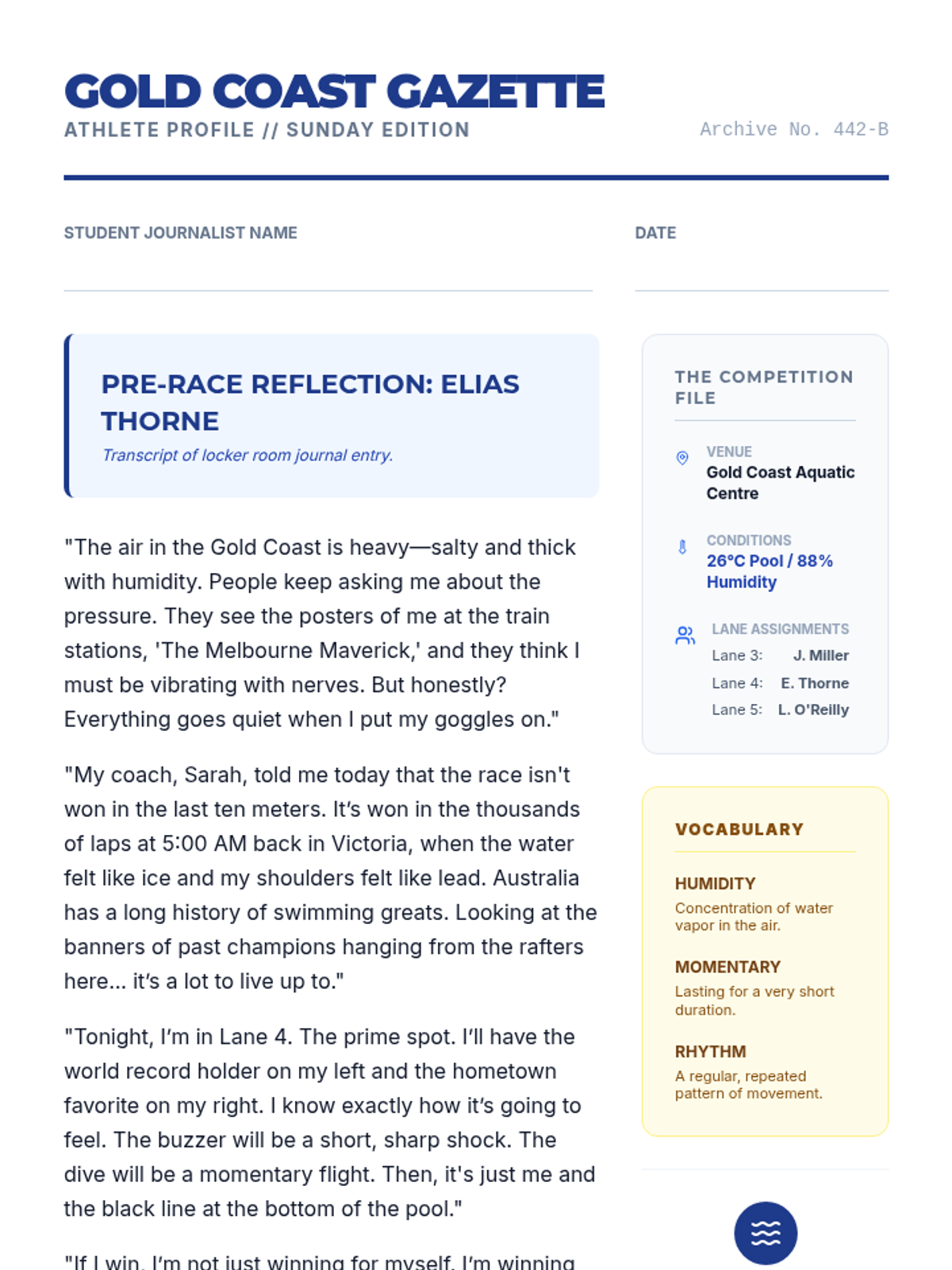
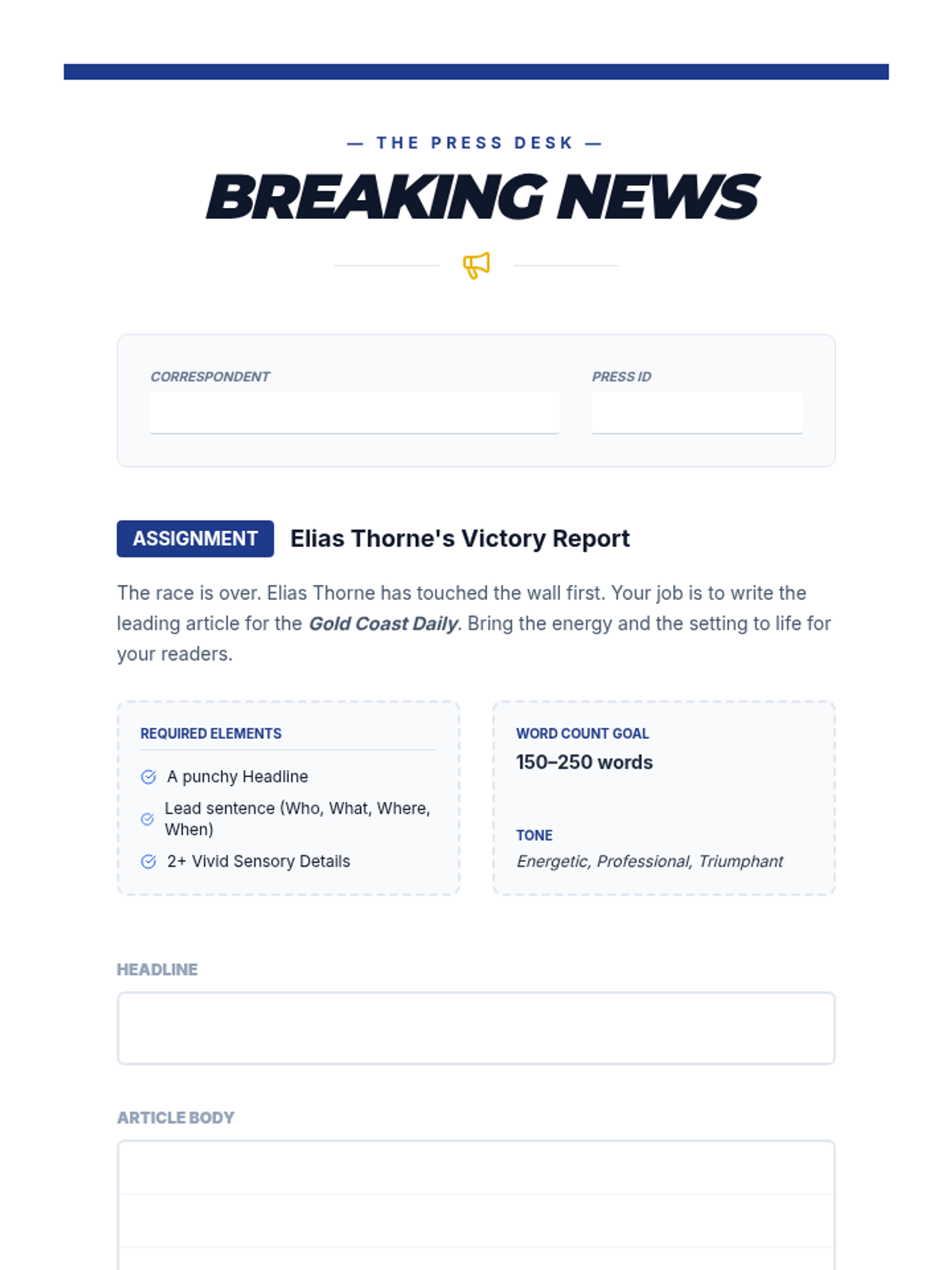
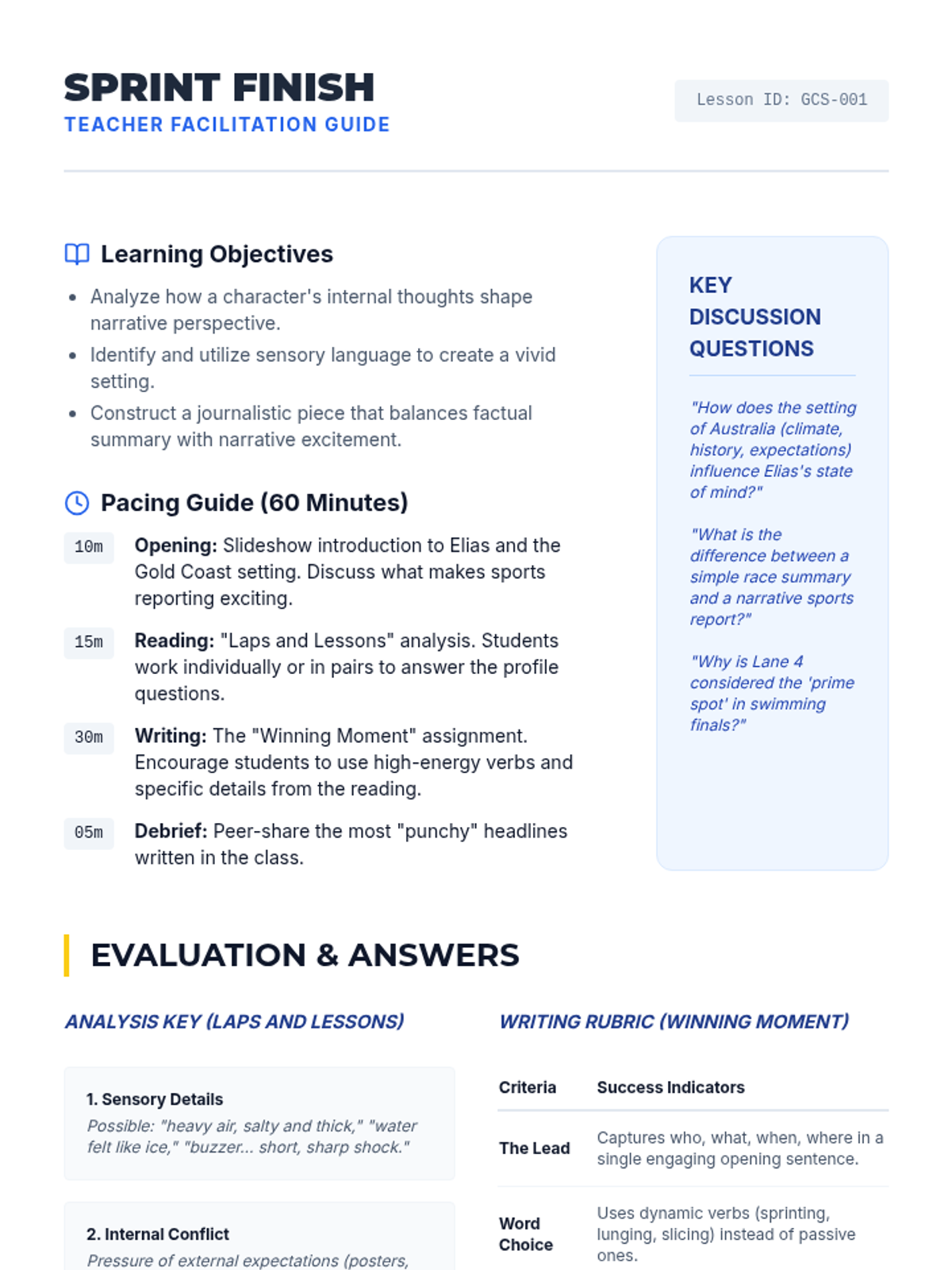
A creative writing and journalism lesson where students analyze a narrative about a swimmer named Elias competing in Australia and then craft their own sports report on his victory.
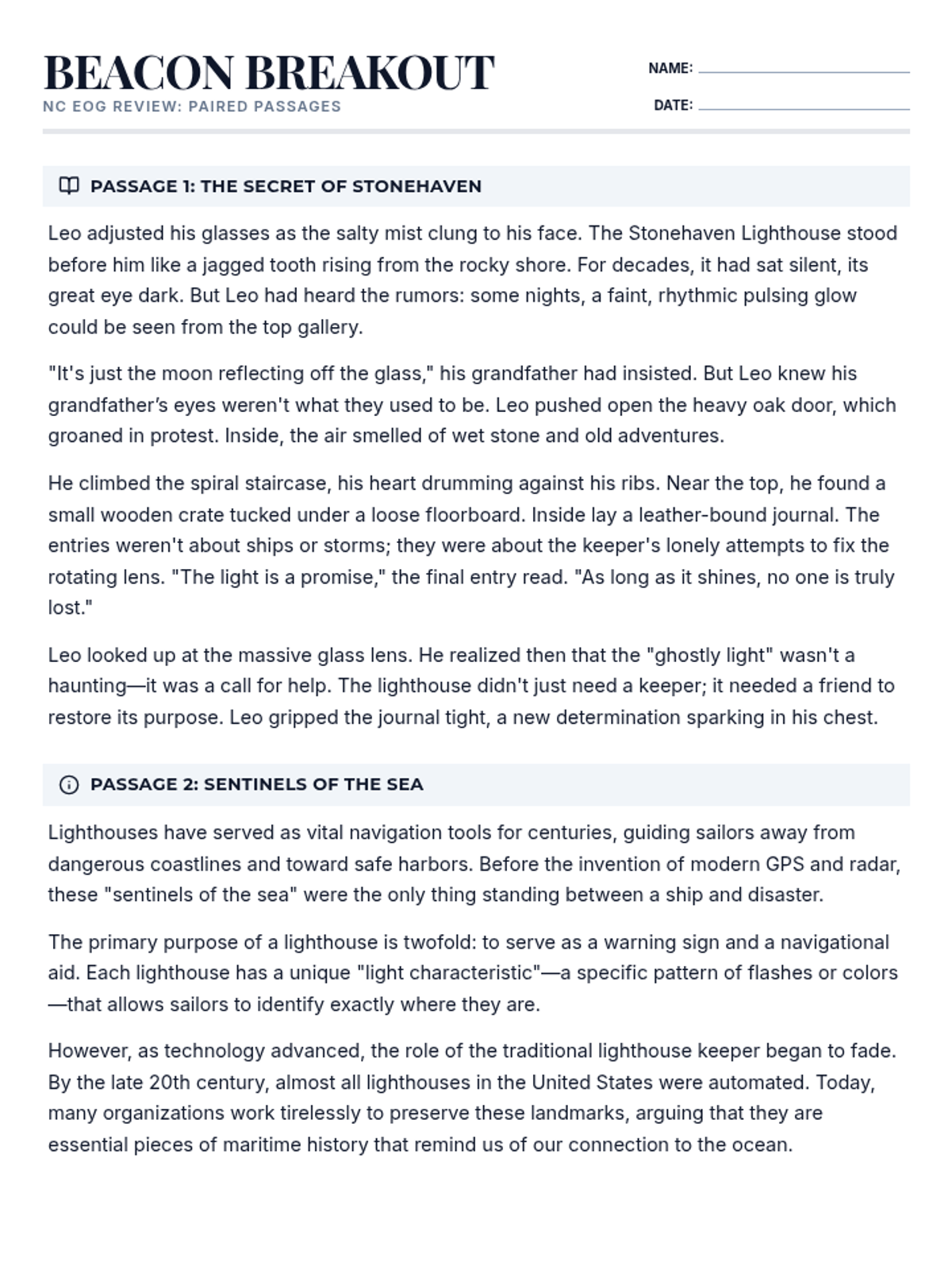
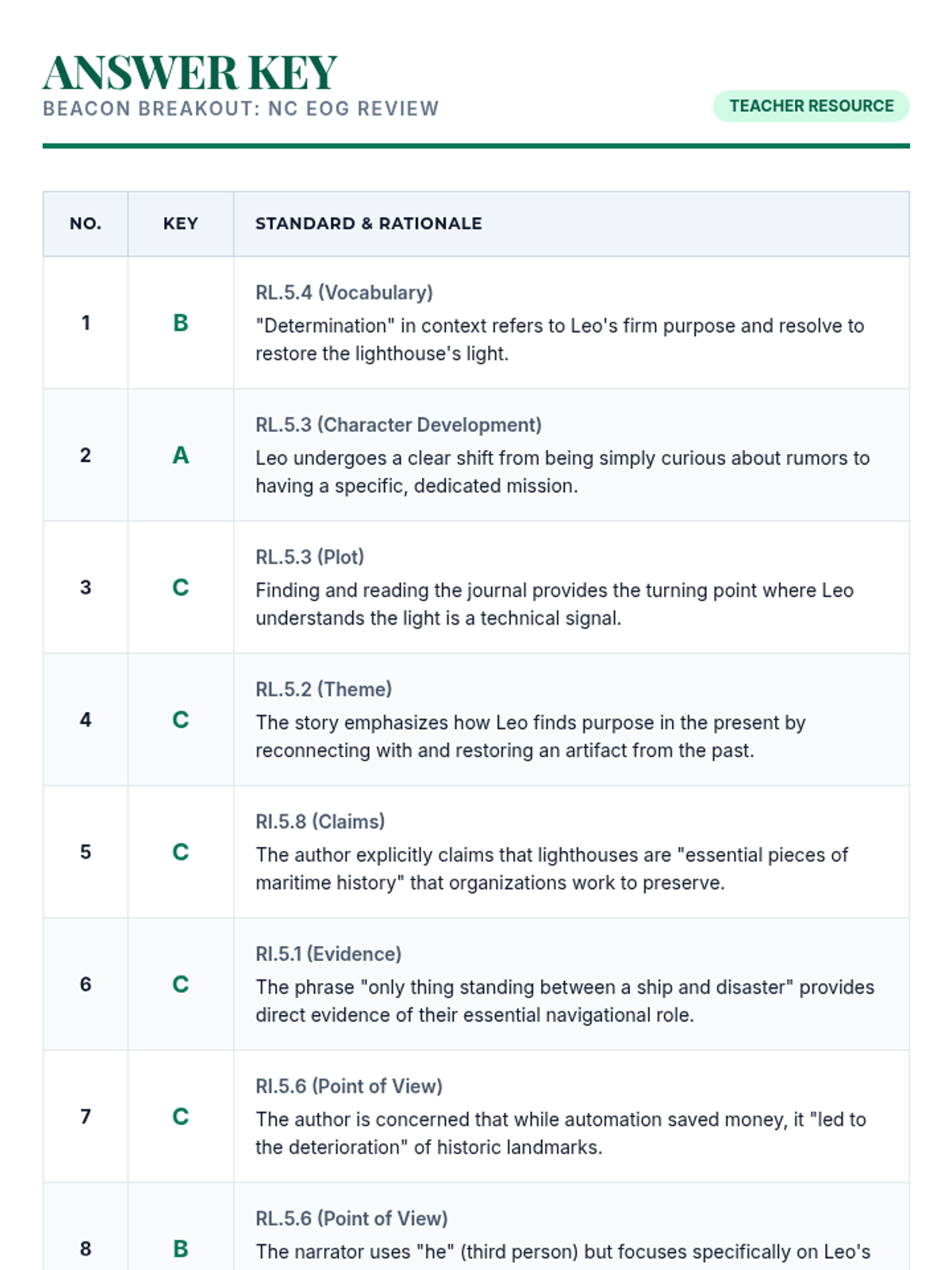
A comprehensive ELA review session focusing on paired passages (fiction and non-fiction) to prepare students for the NC EOG assessment. Students will analyze claims, evidence, point of view, and literary elements across two themed texts.
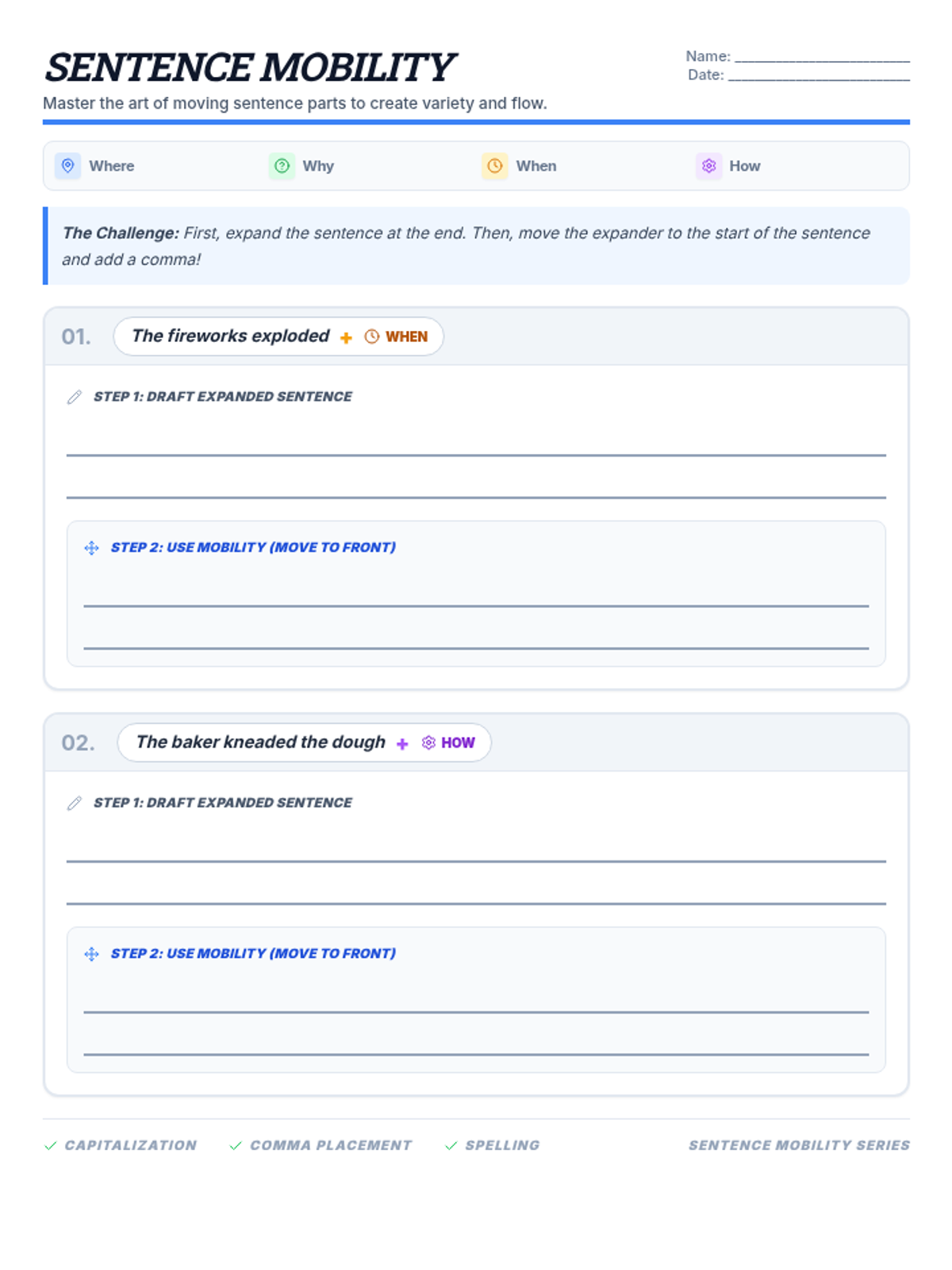
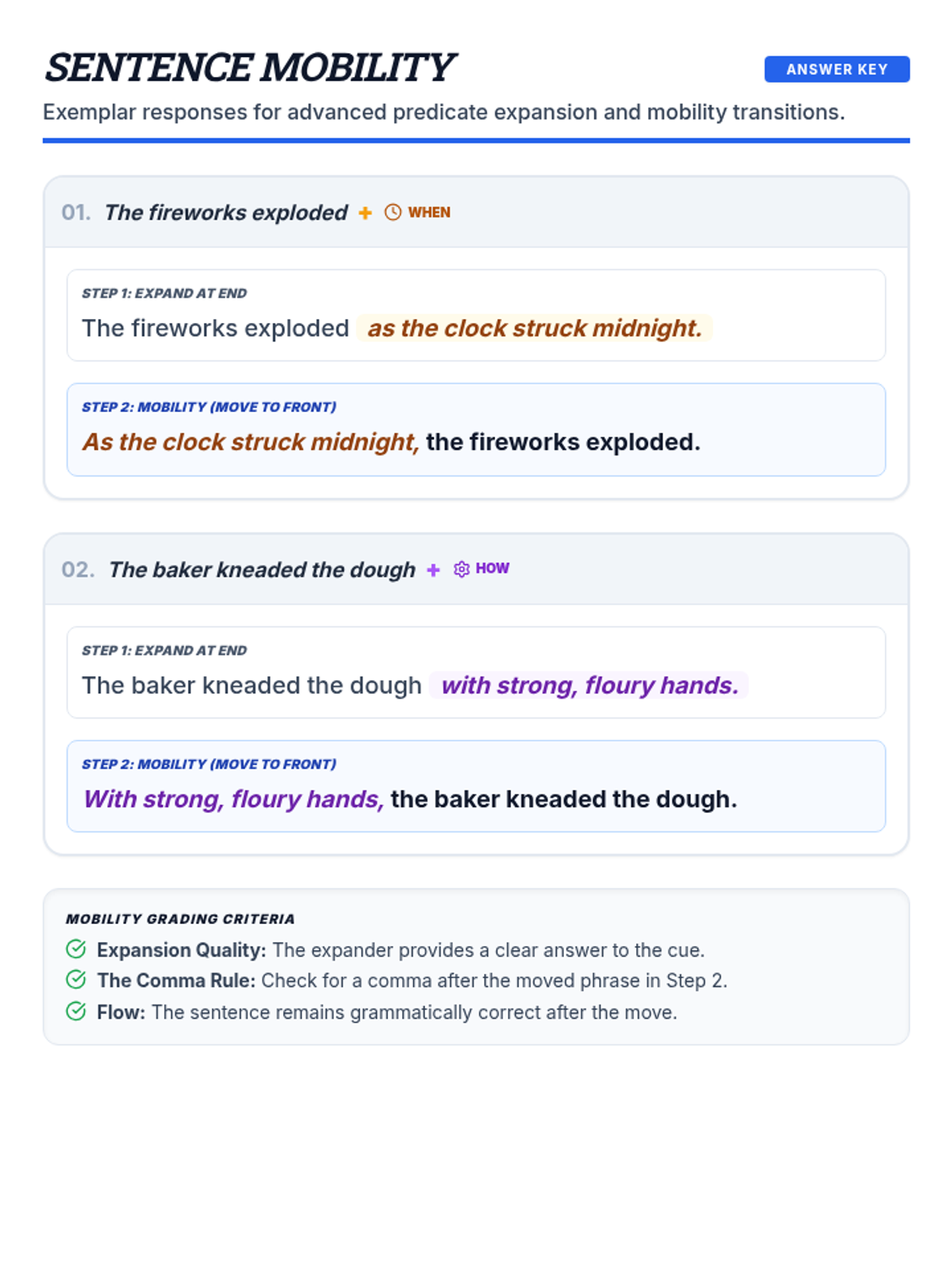
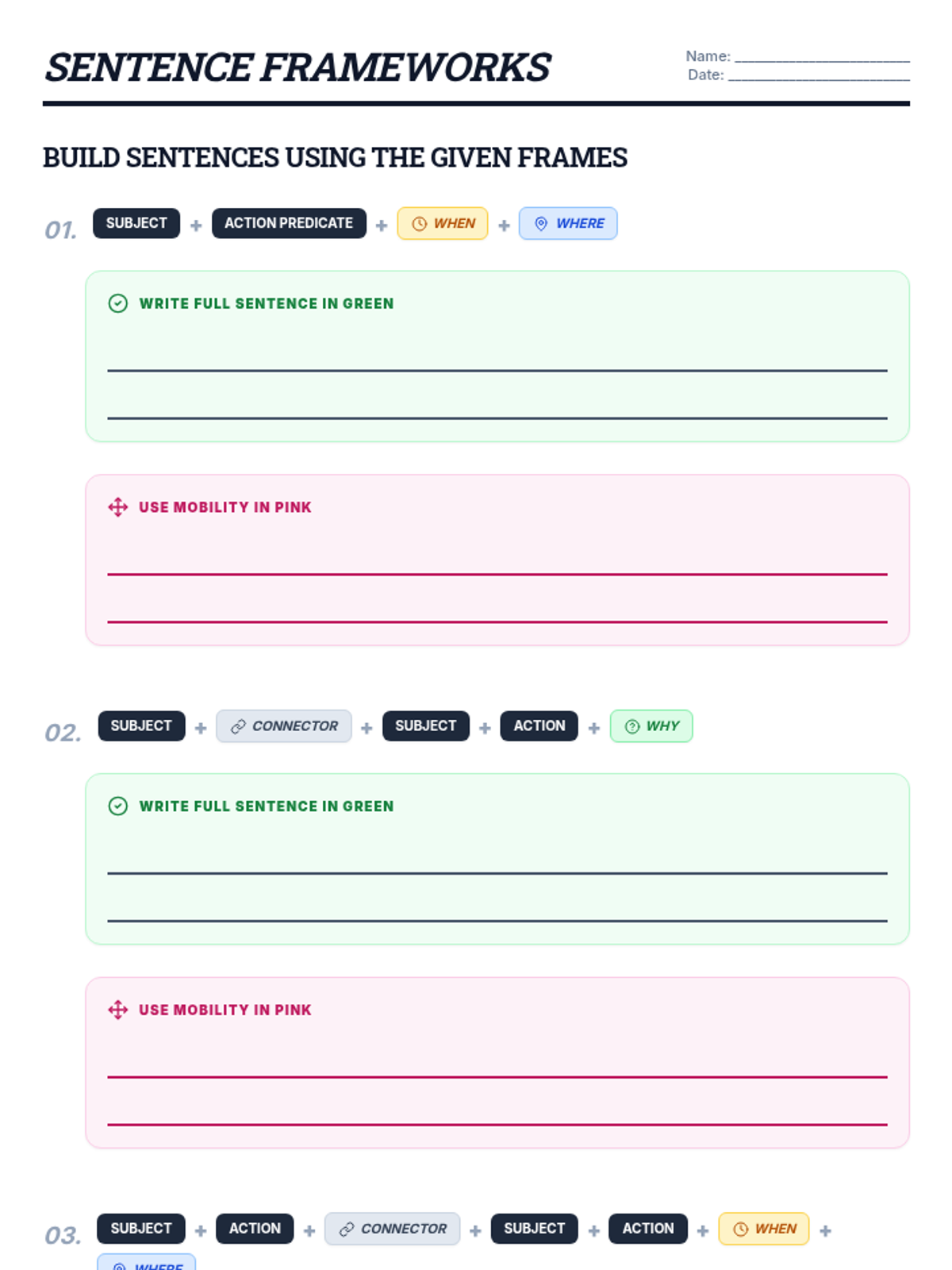
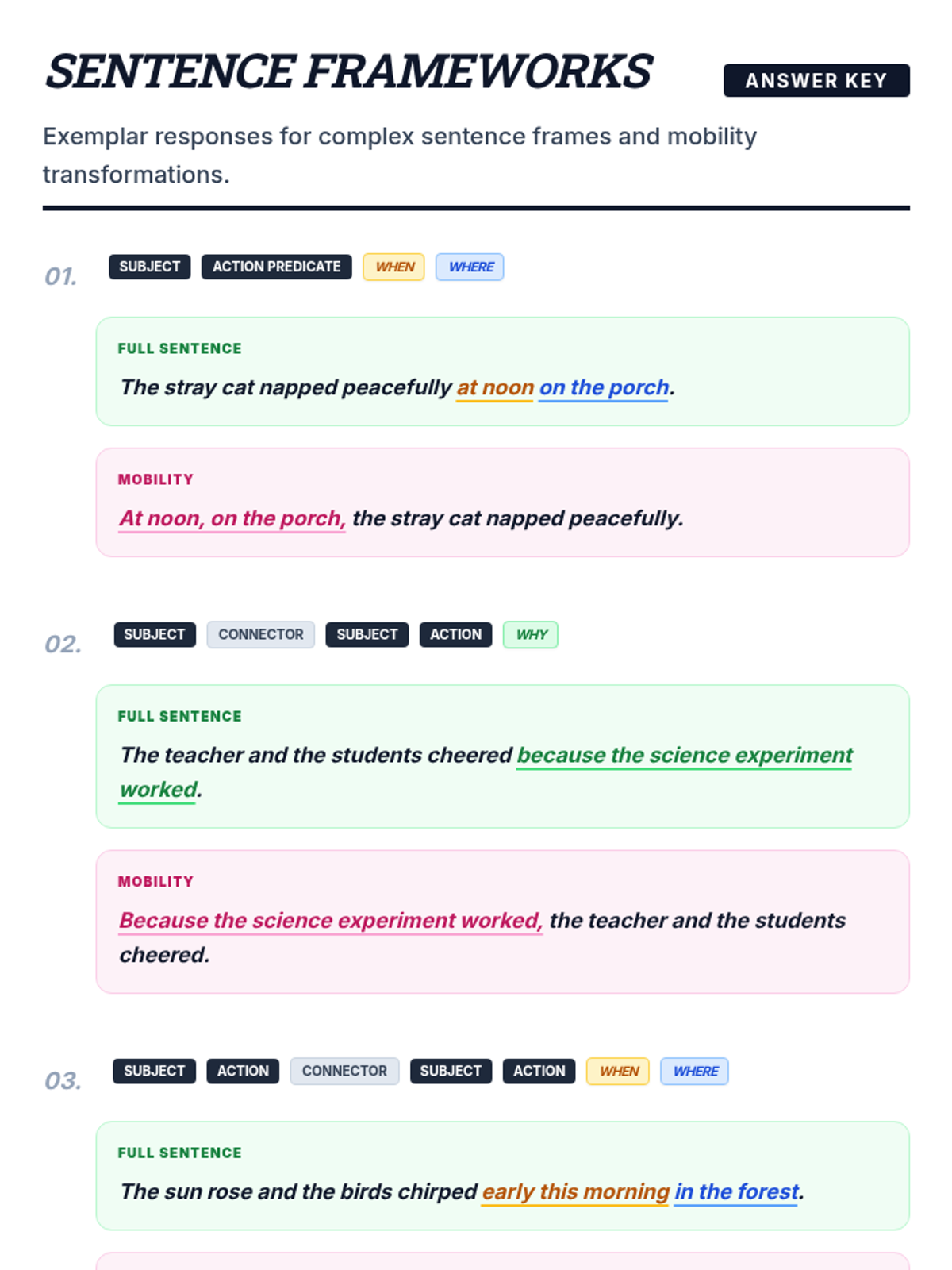
A practice lesson focusing on expanding sentences using 'where', 'why', 'when', and 'how' predicate expanders to add detail and variety.
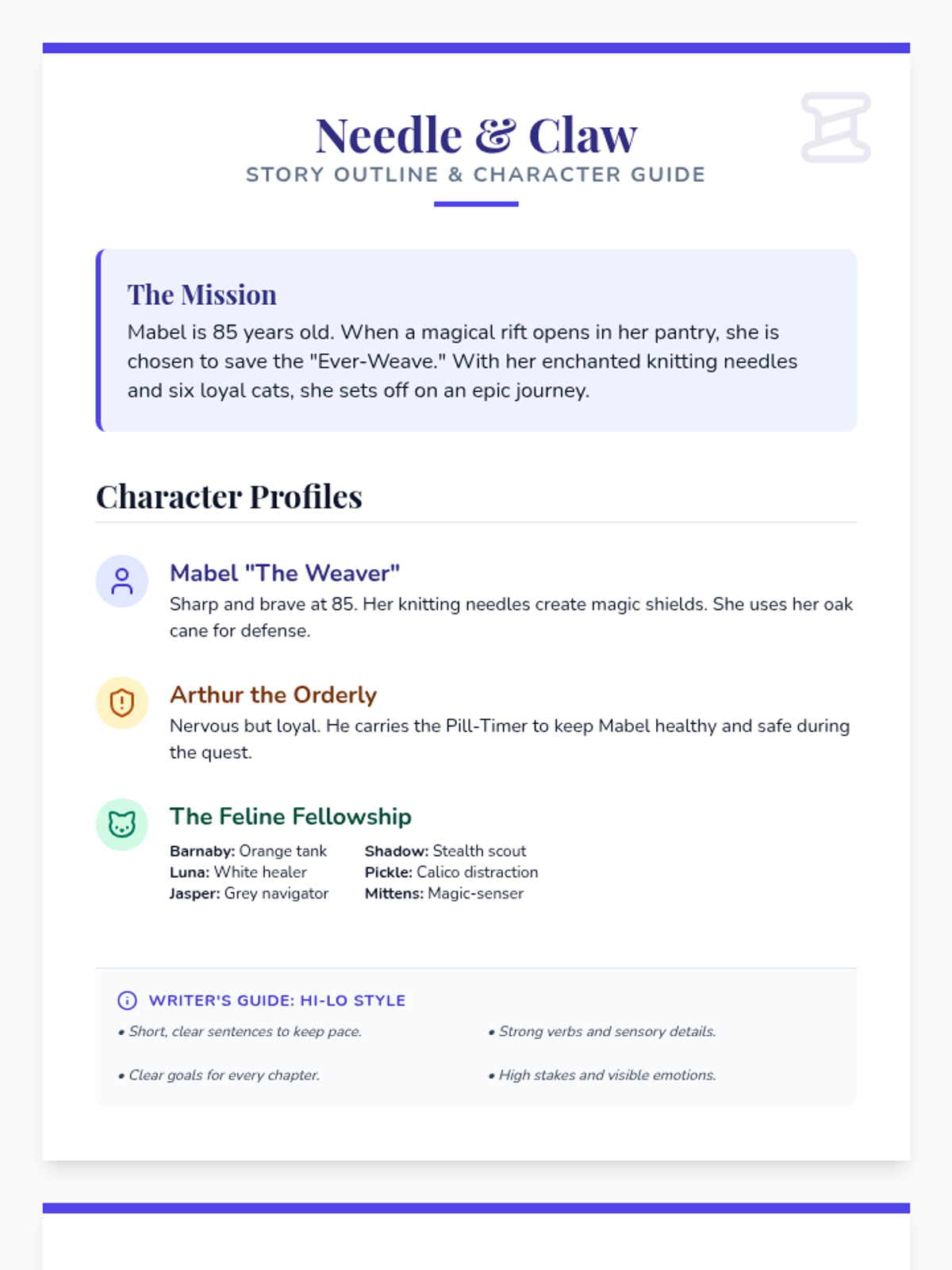
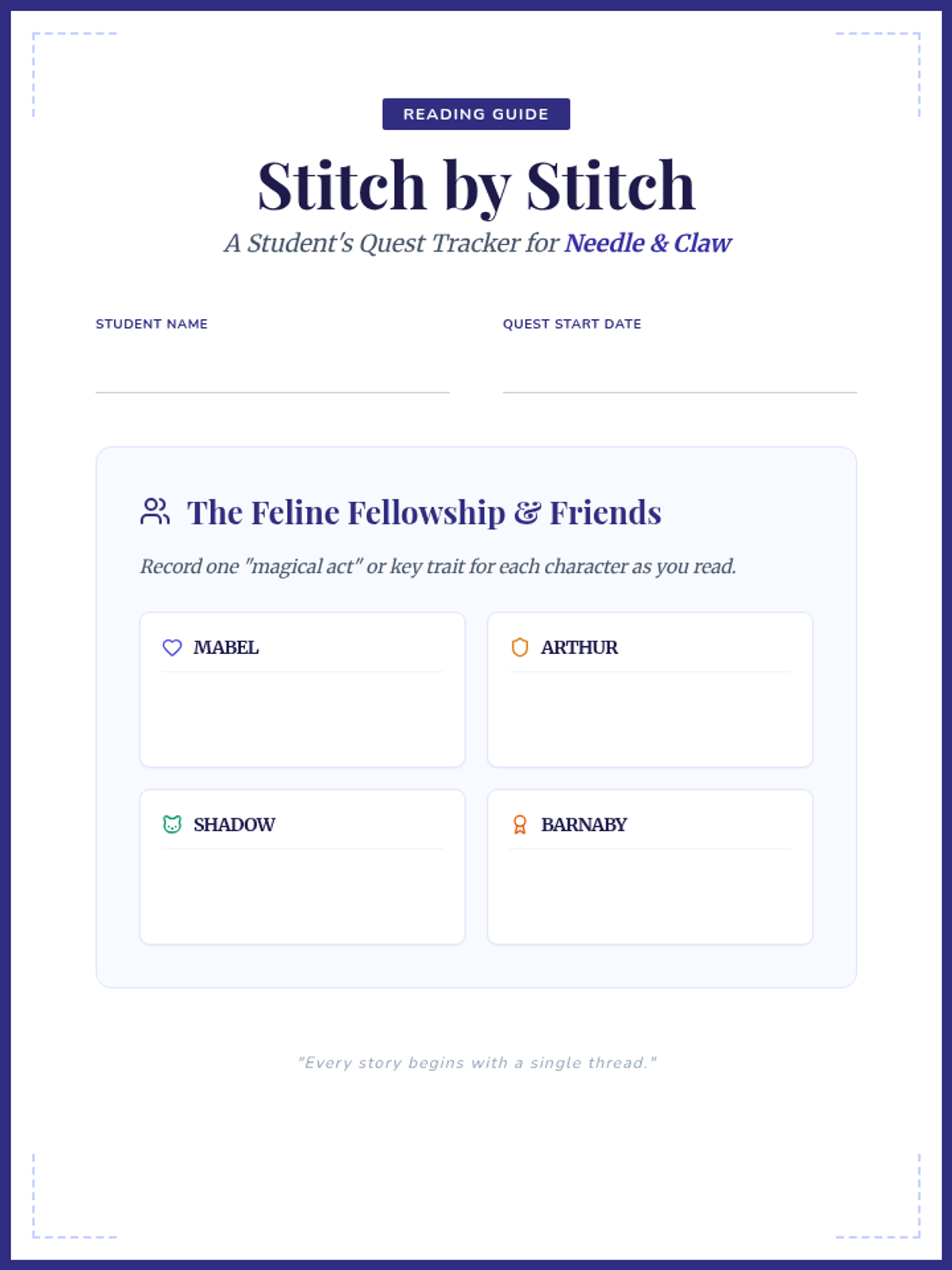
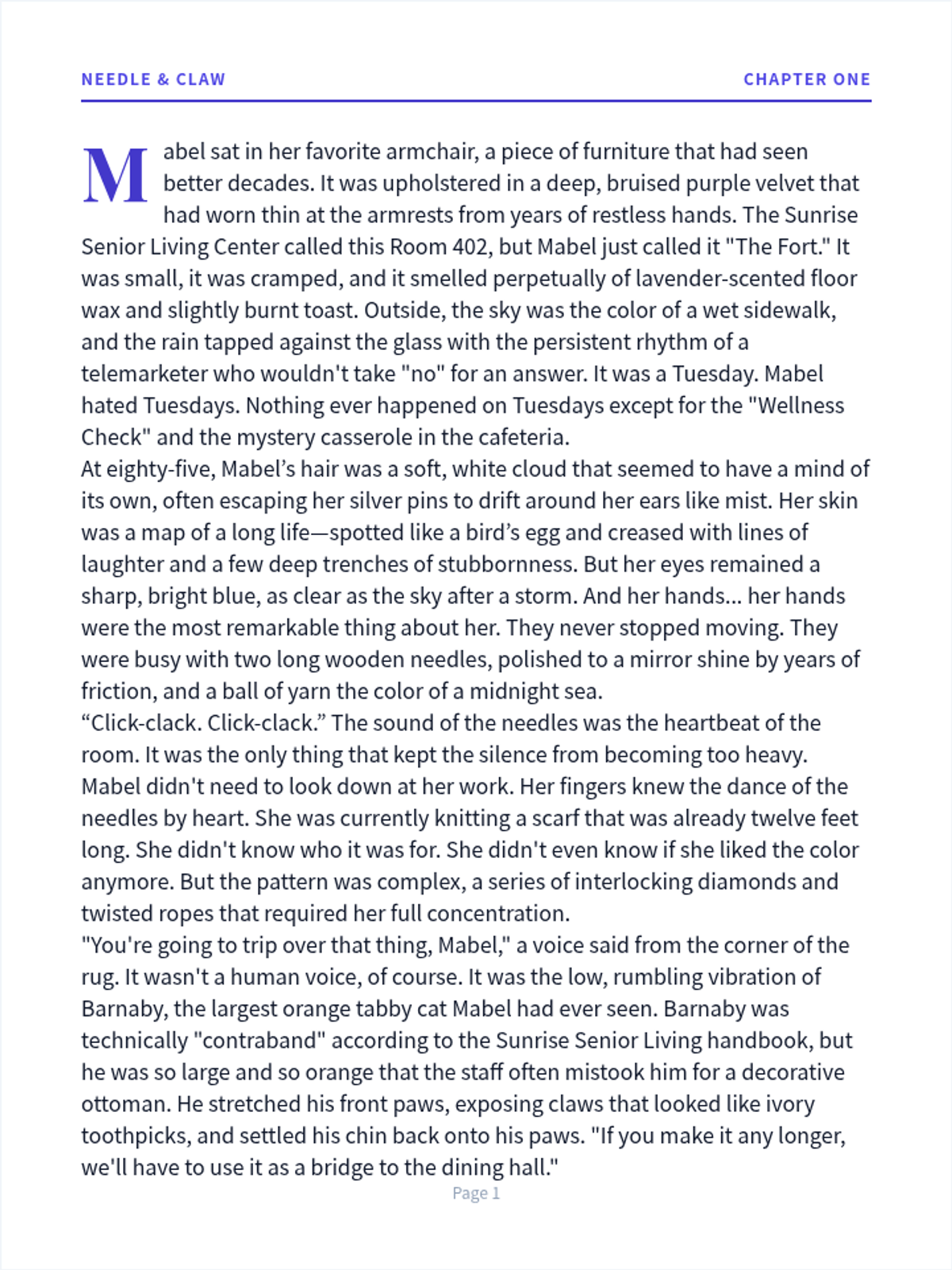
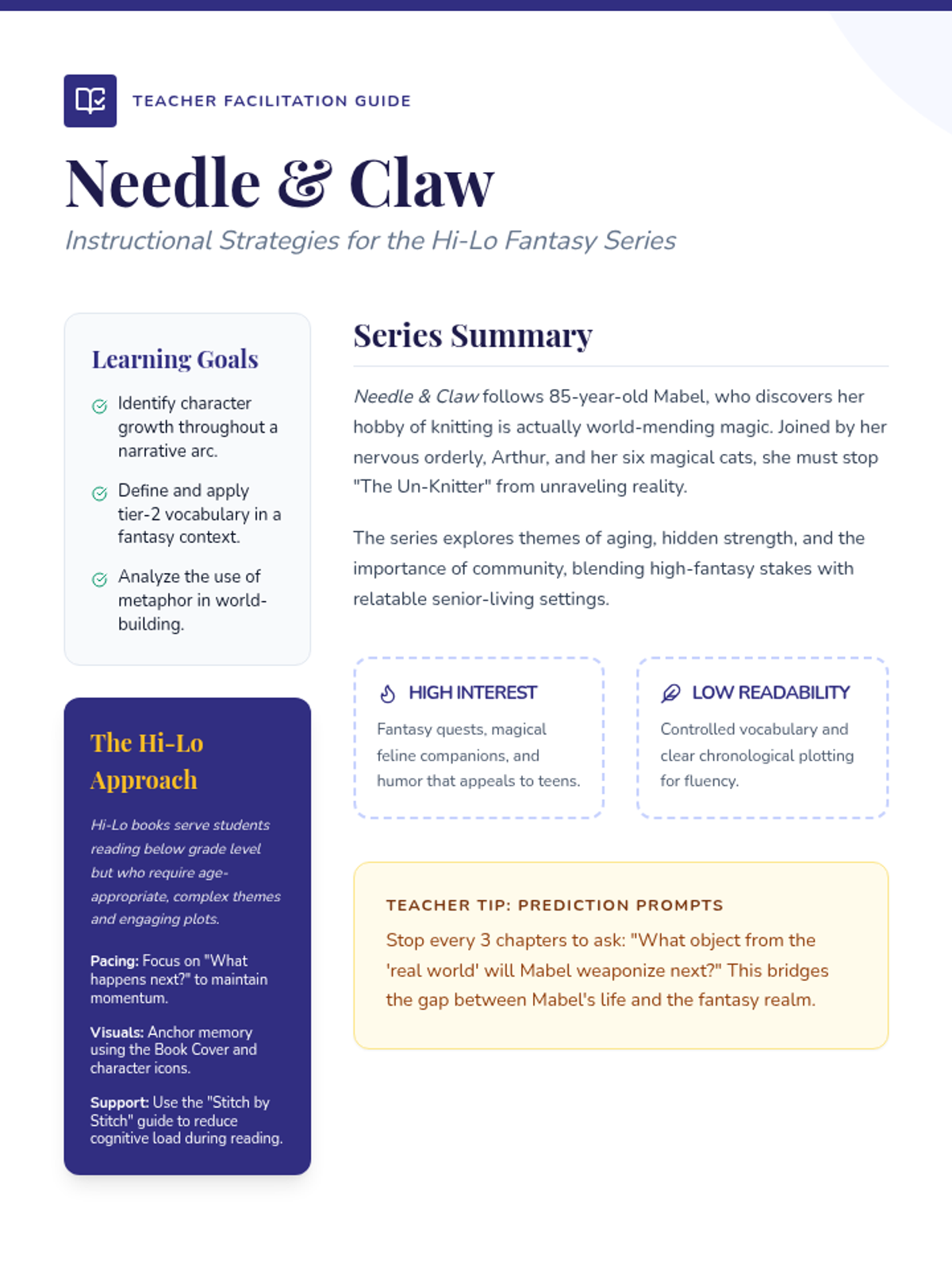
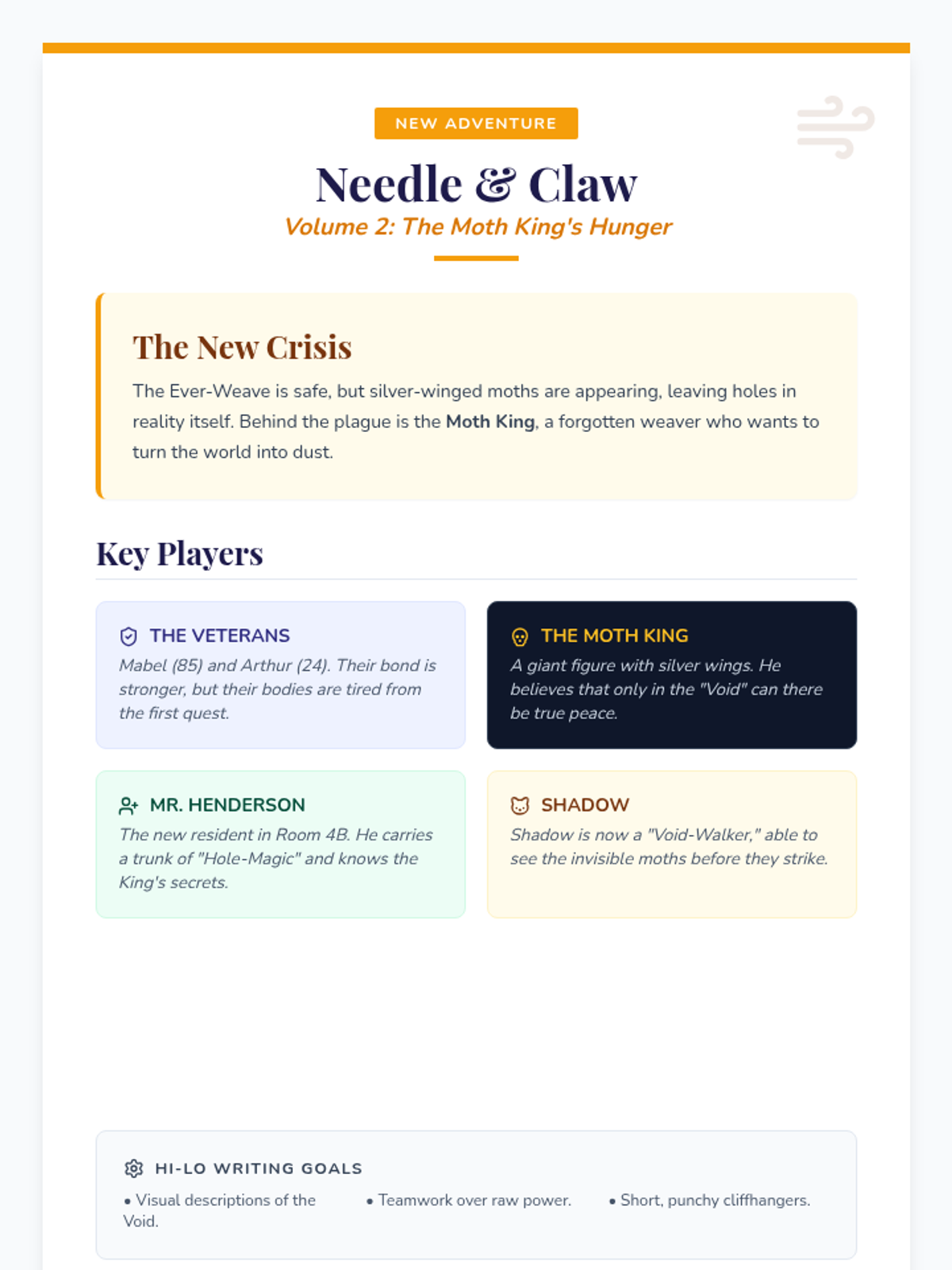
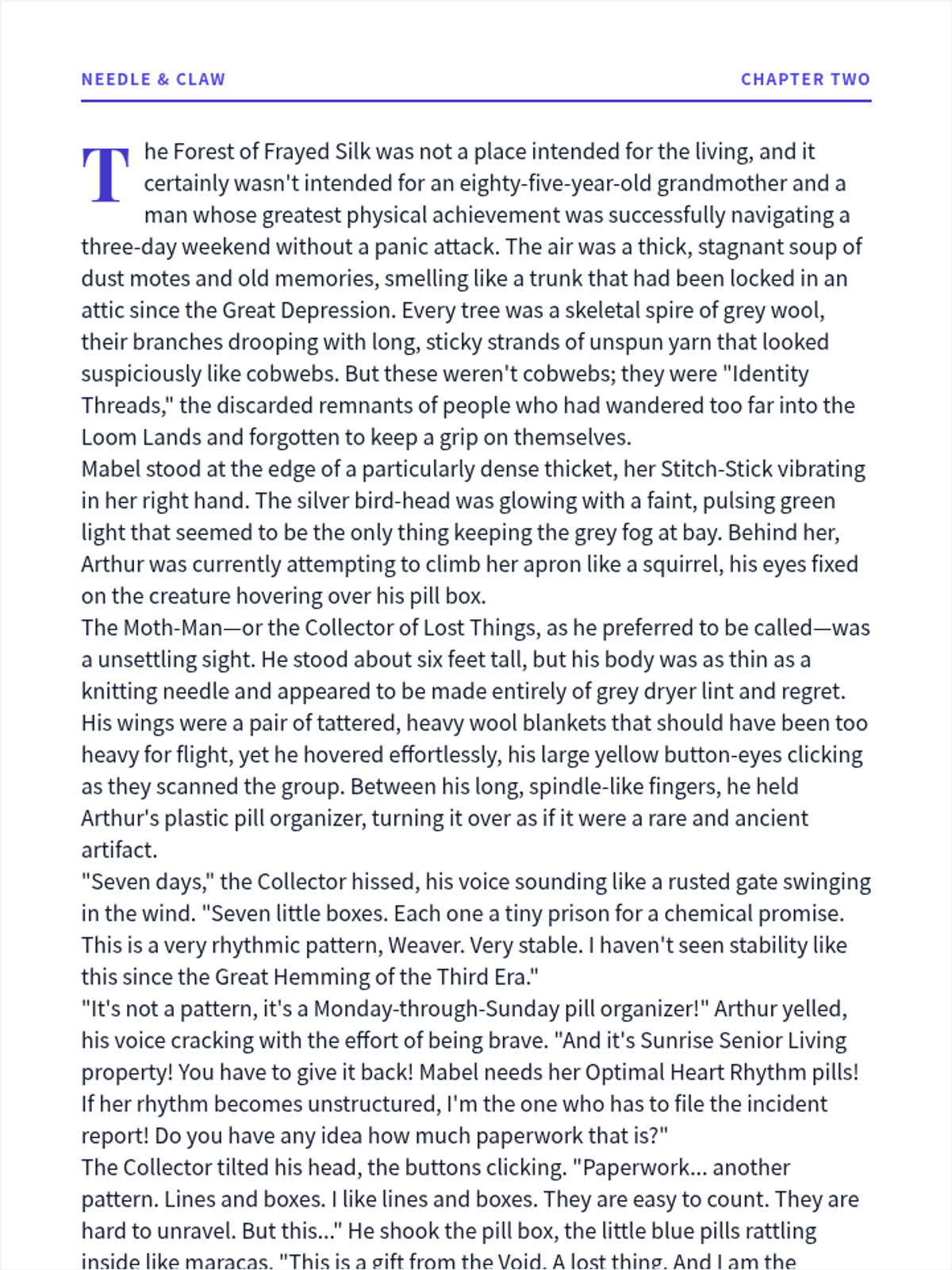
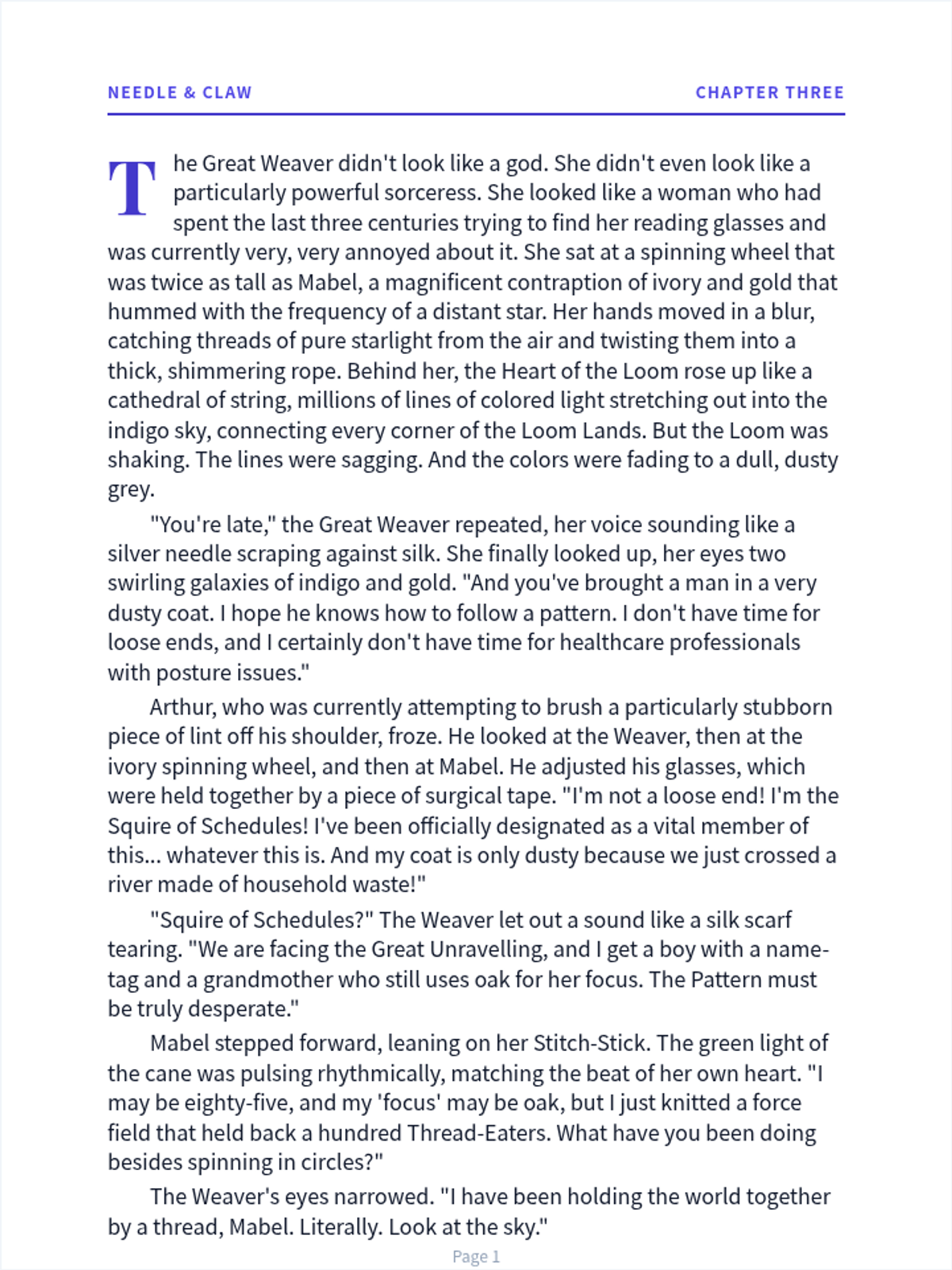
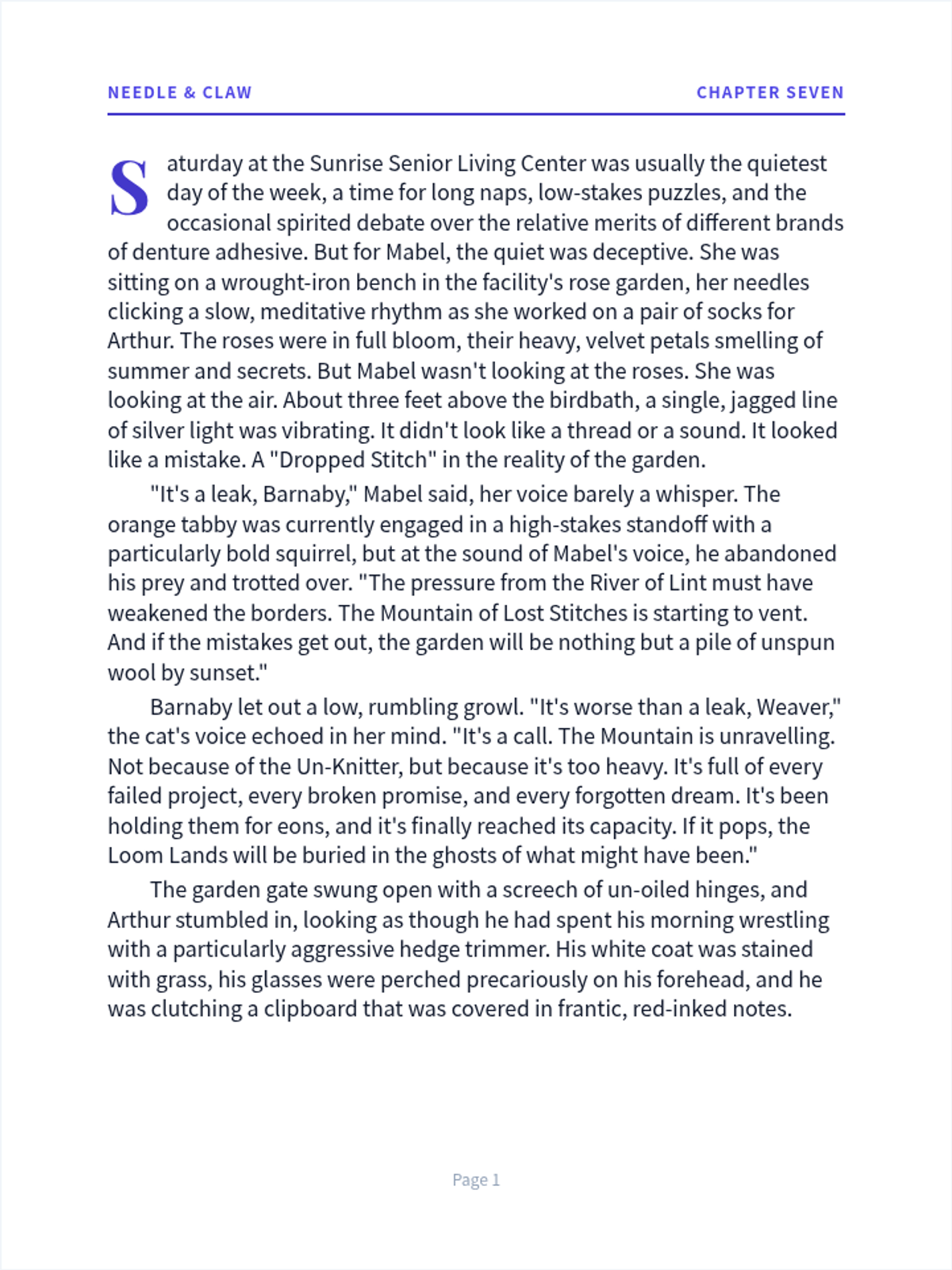
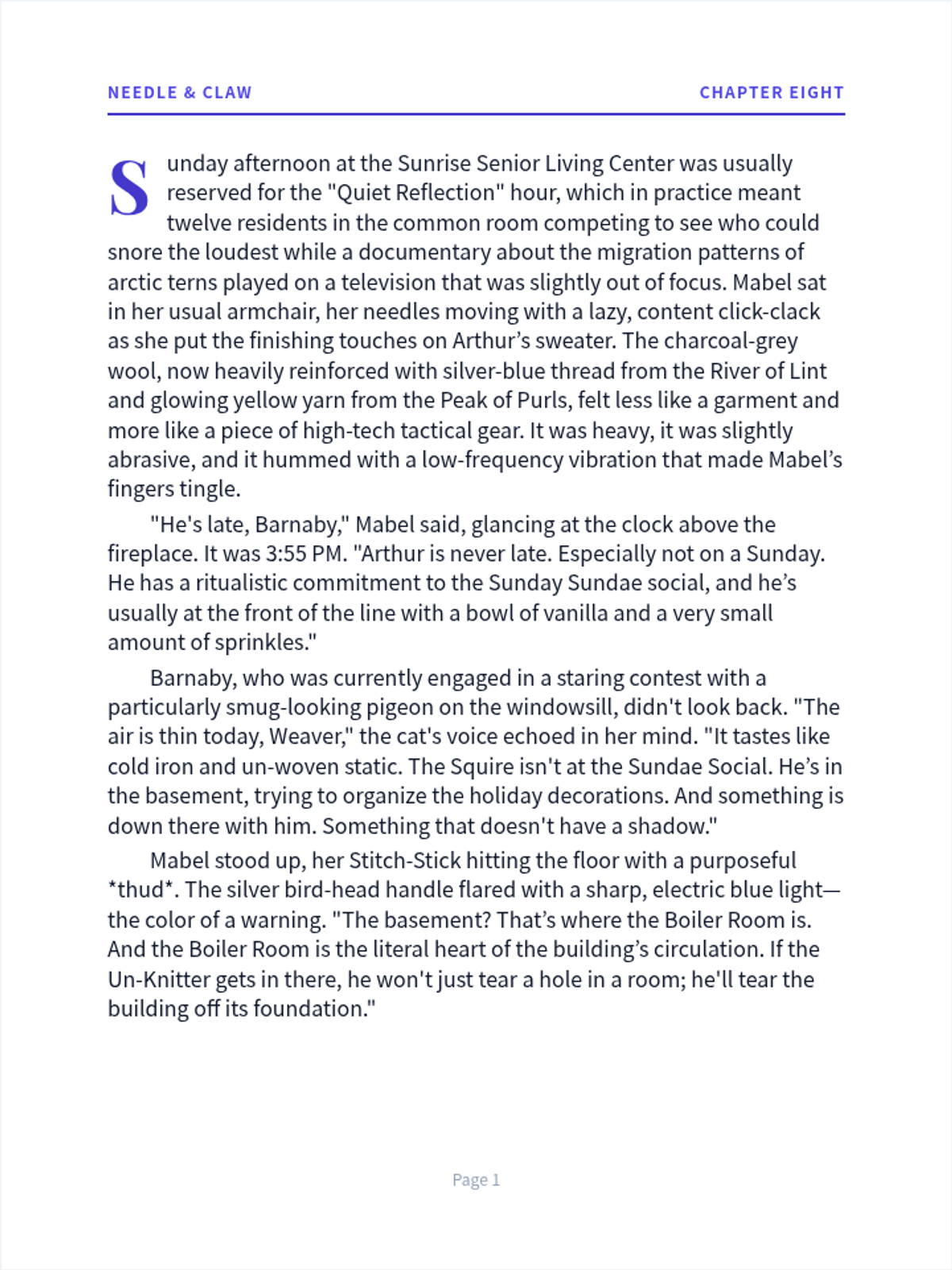
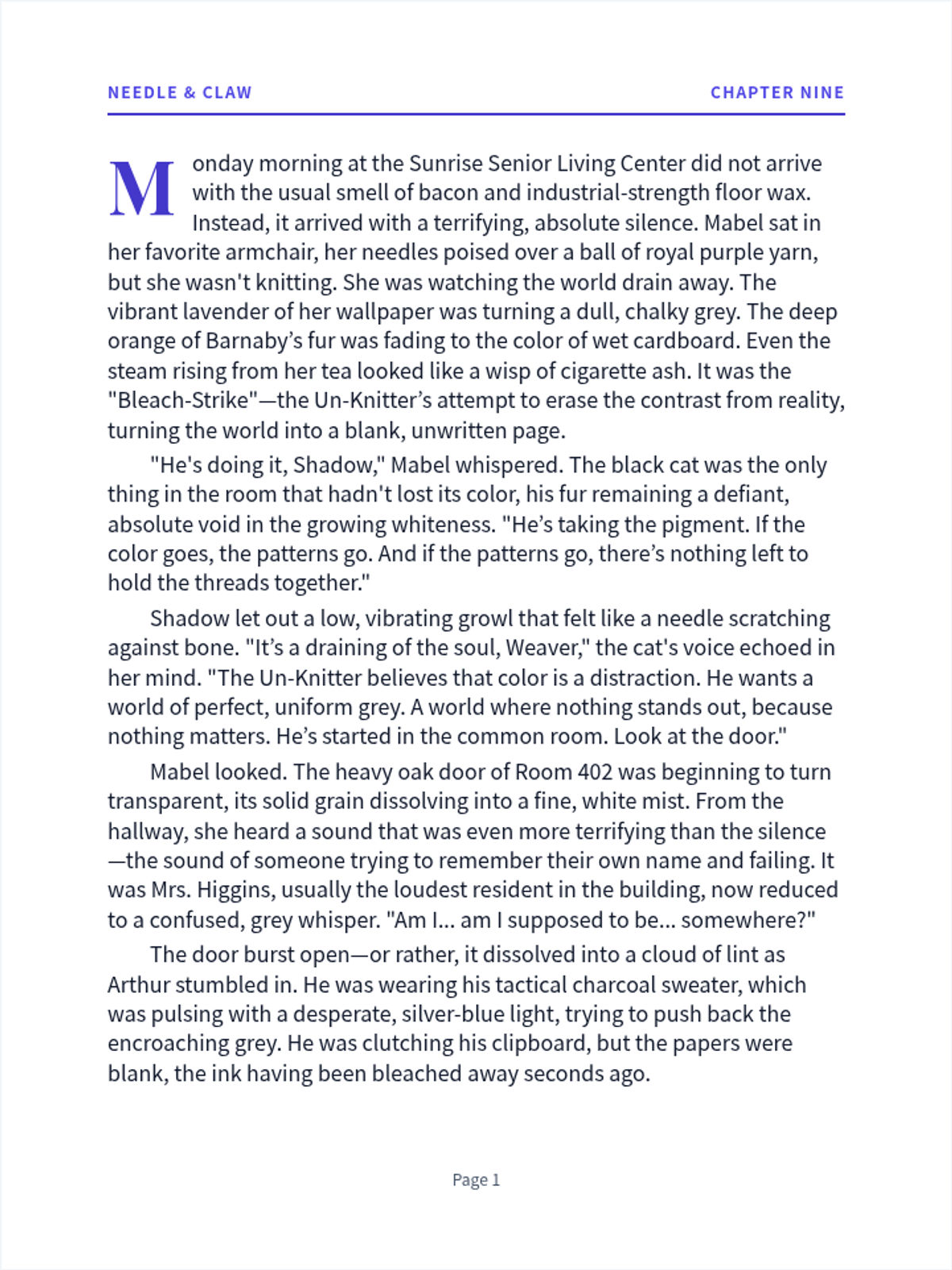
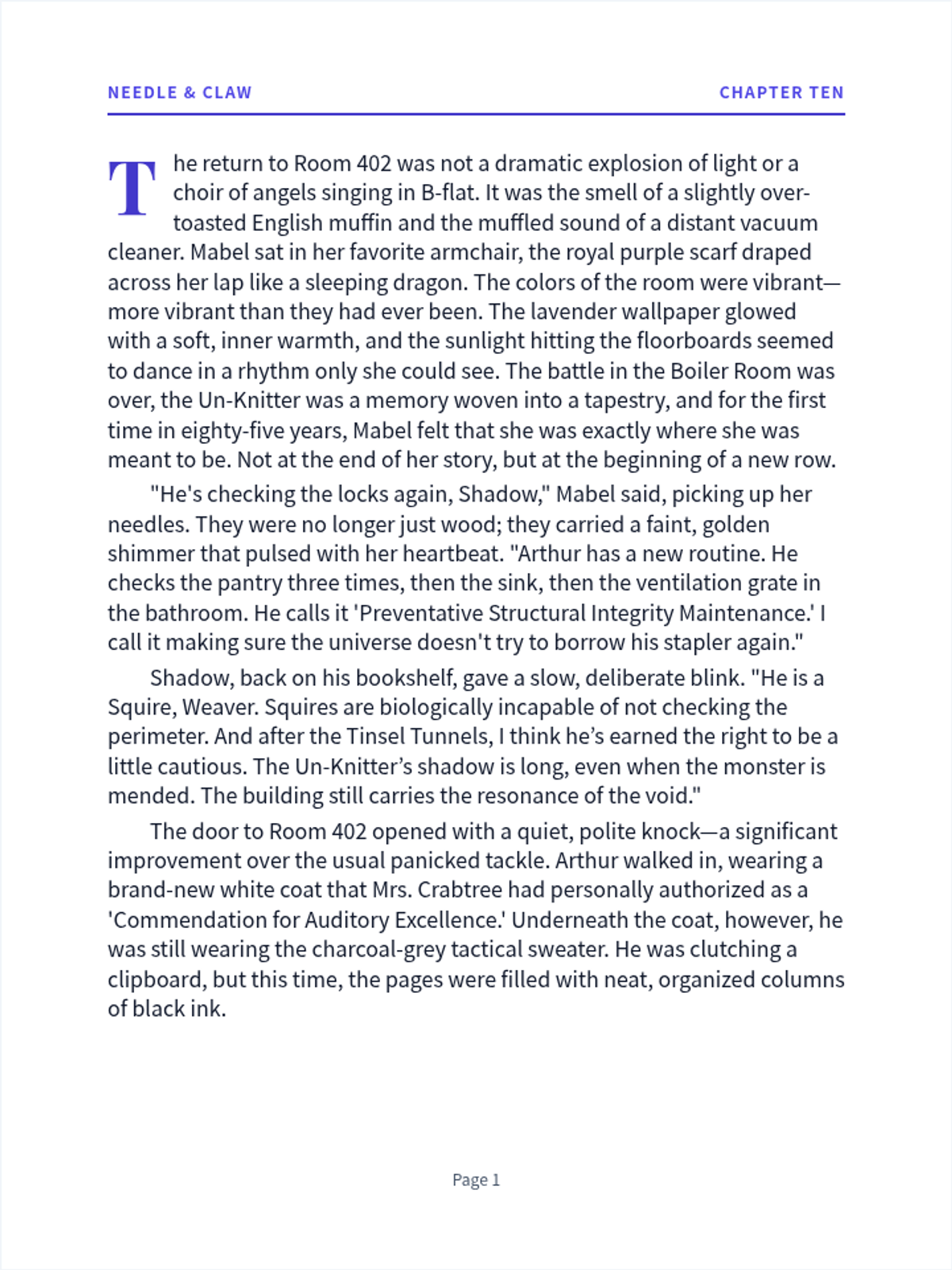
A creative story outline and character guide for a high-interest, low-readability (Hi-Lo) novel featuring an elderly protagonist in a fantasy world.
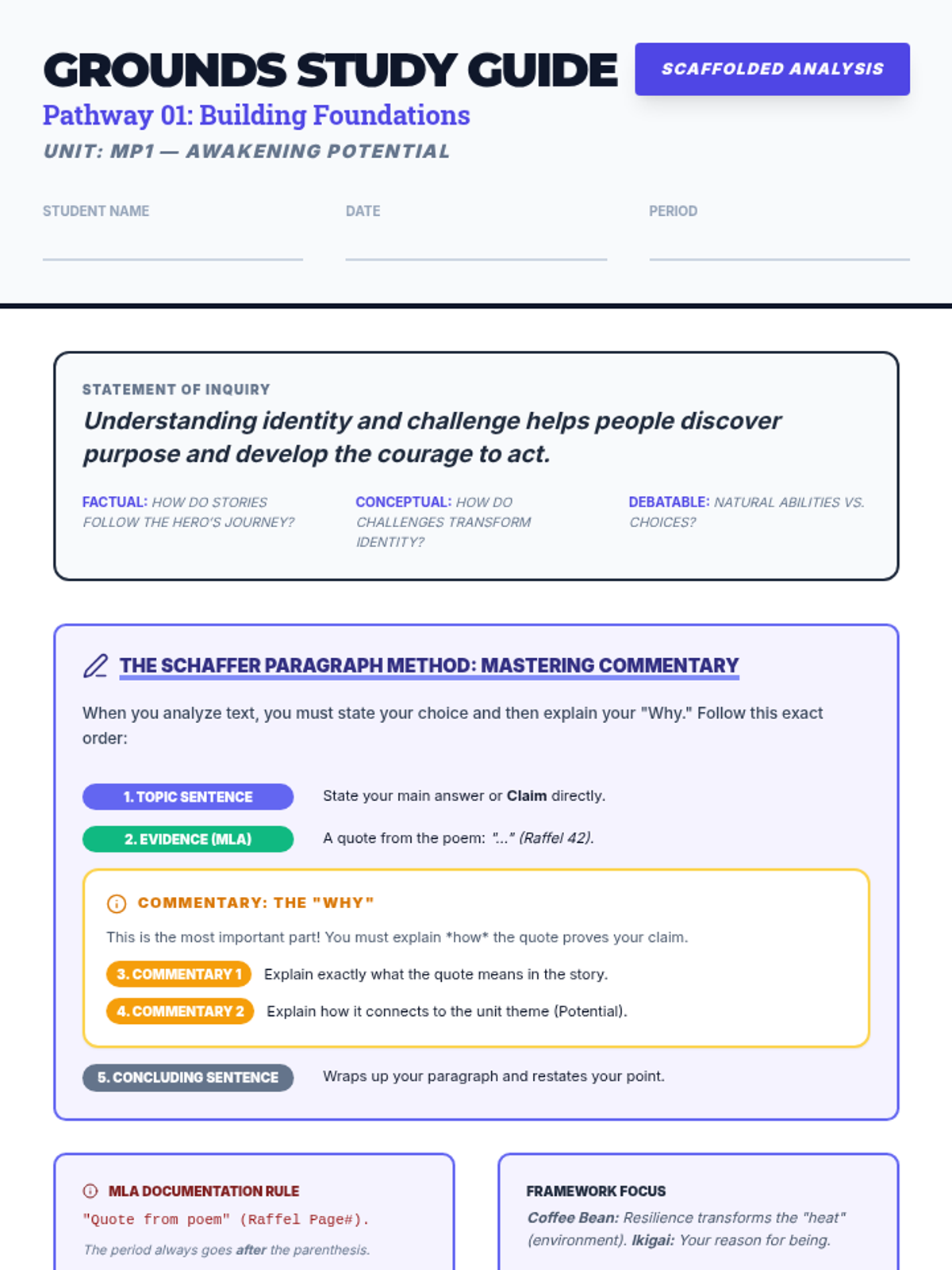
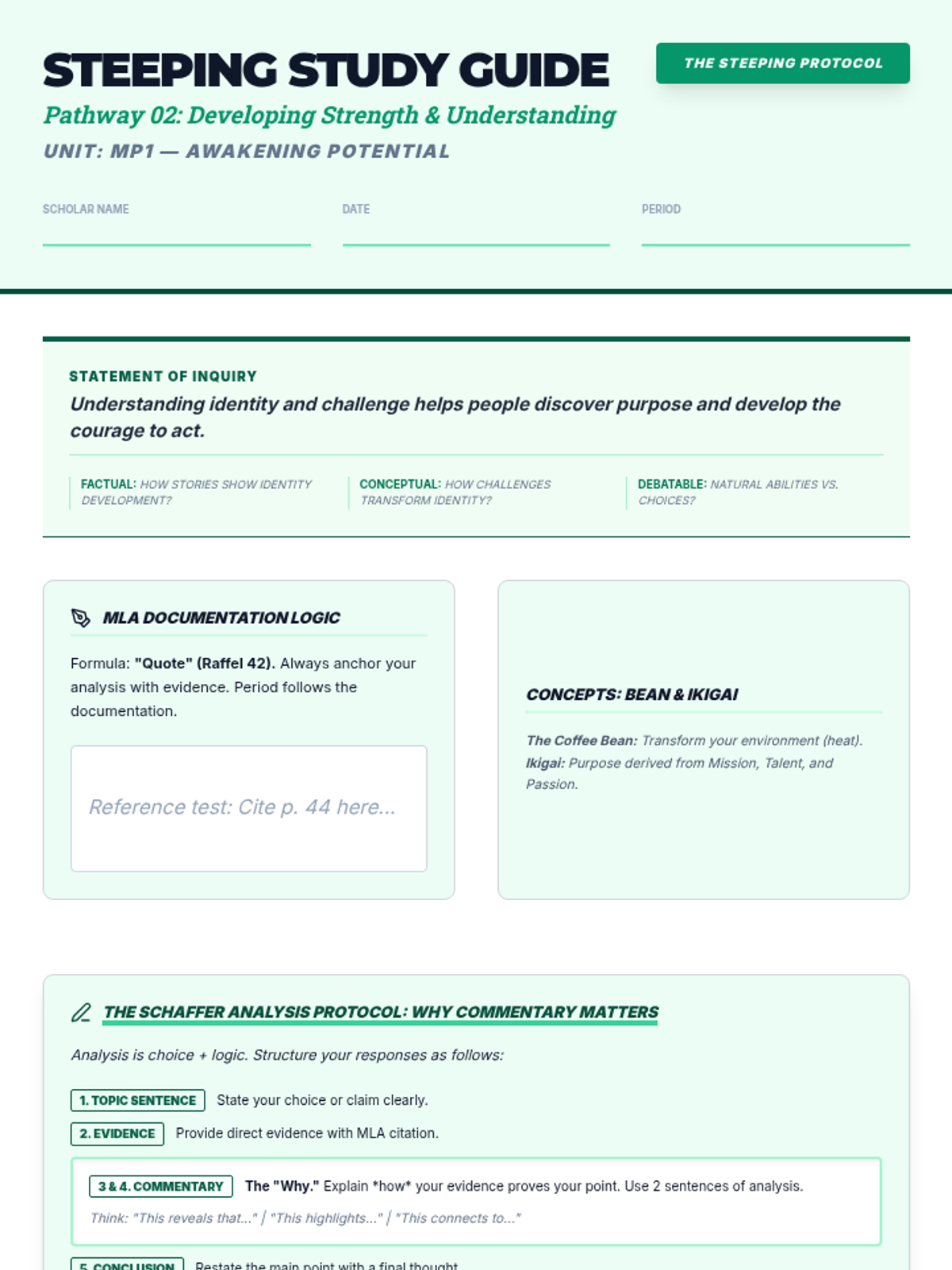
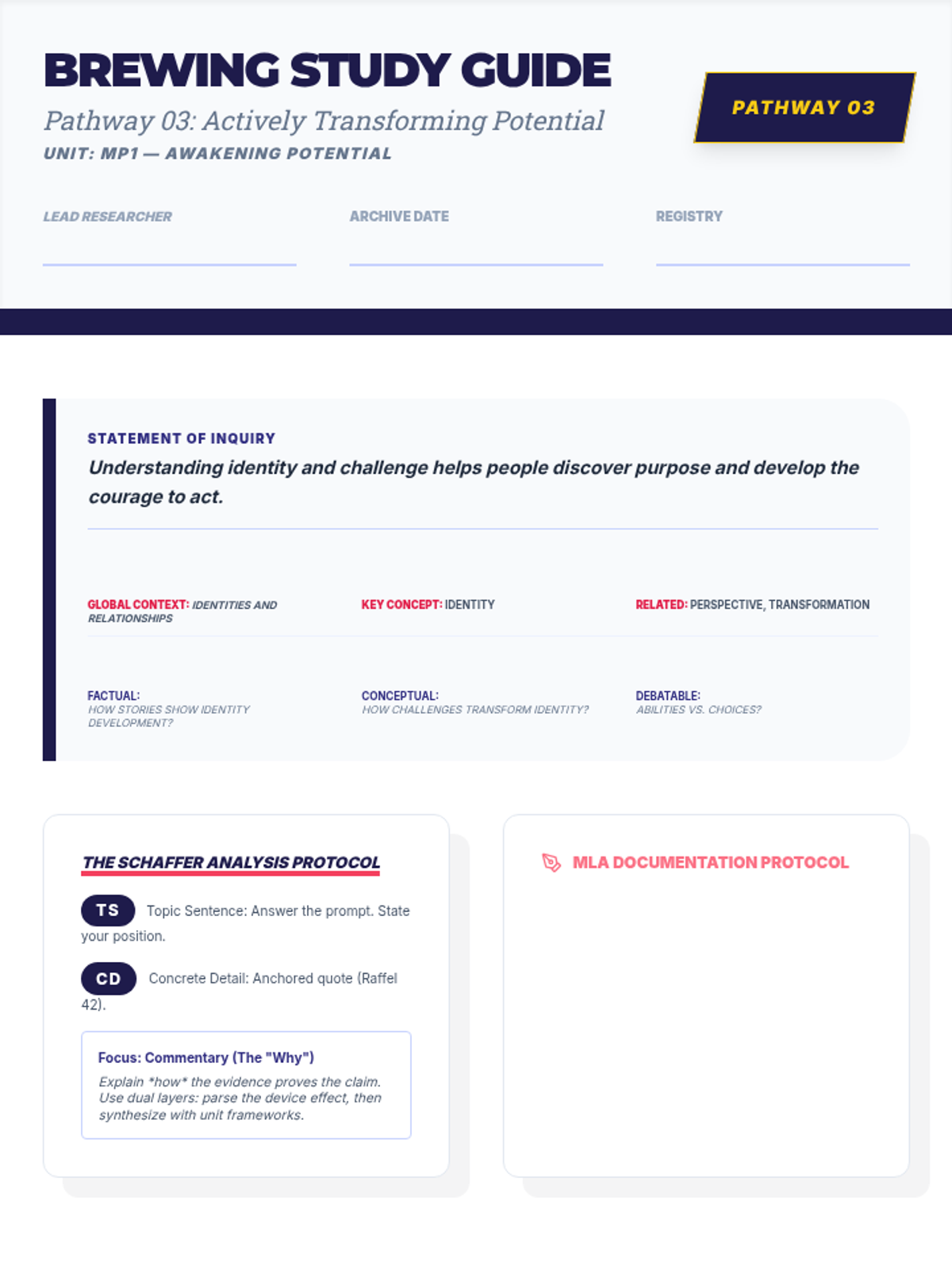
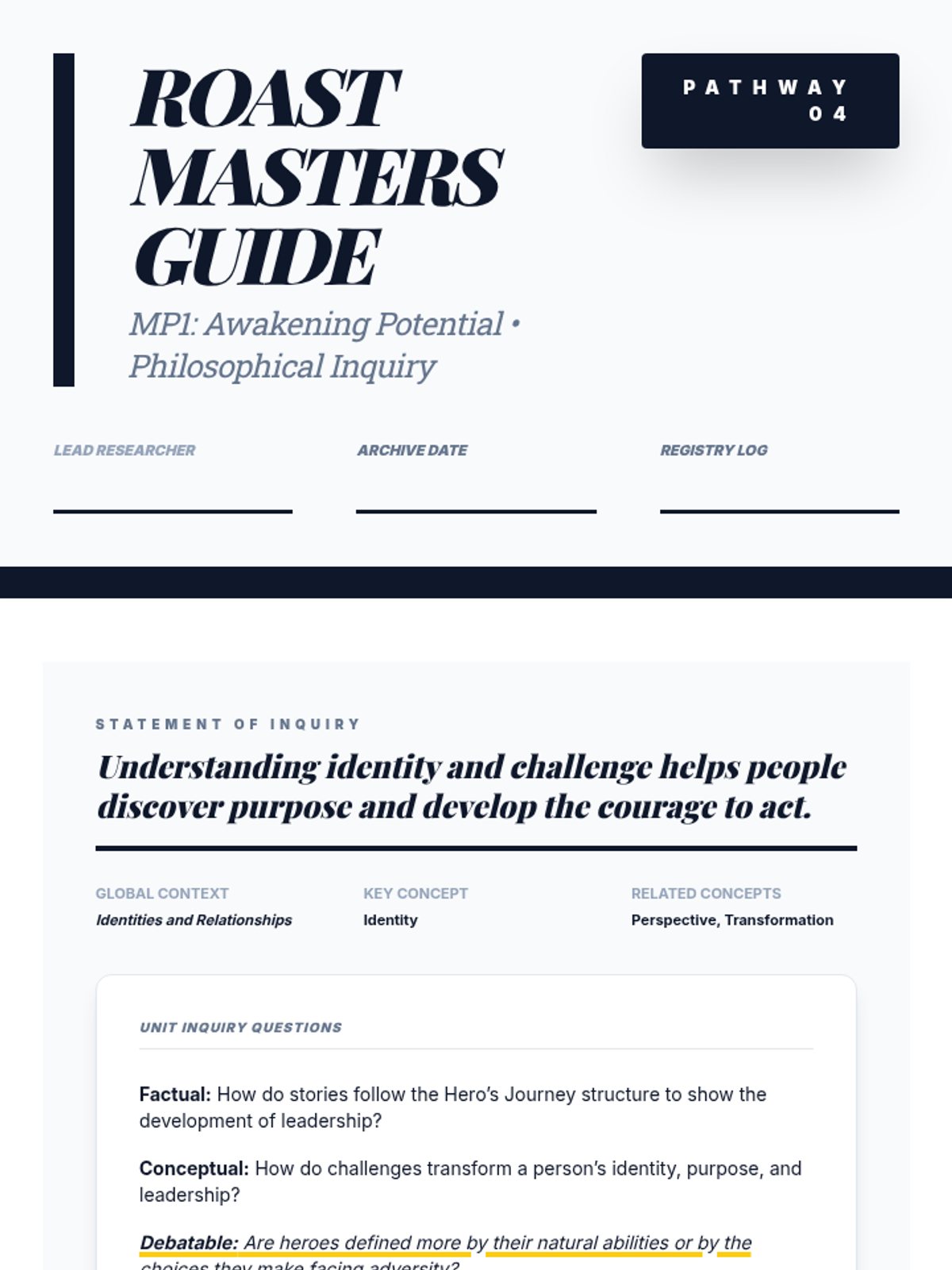
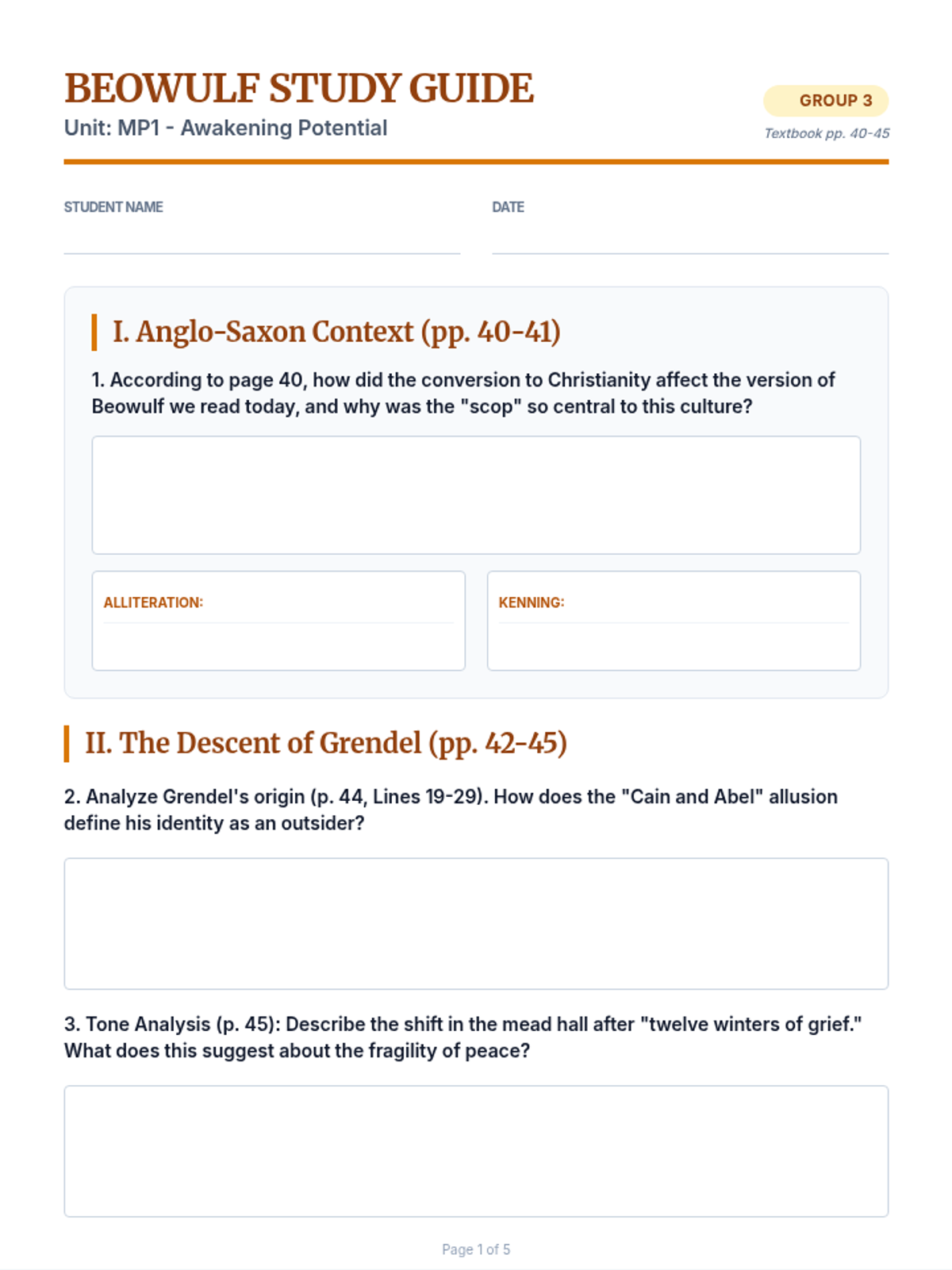
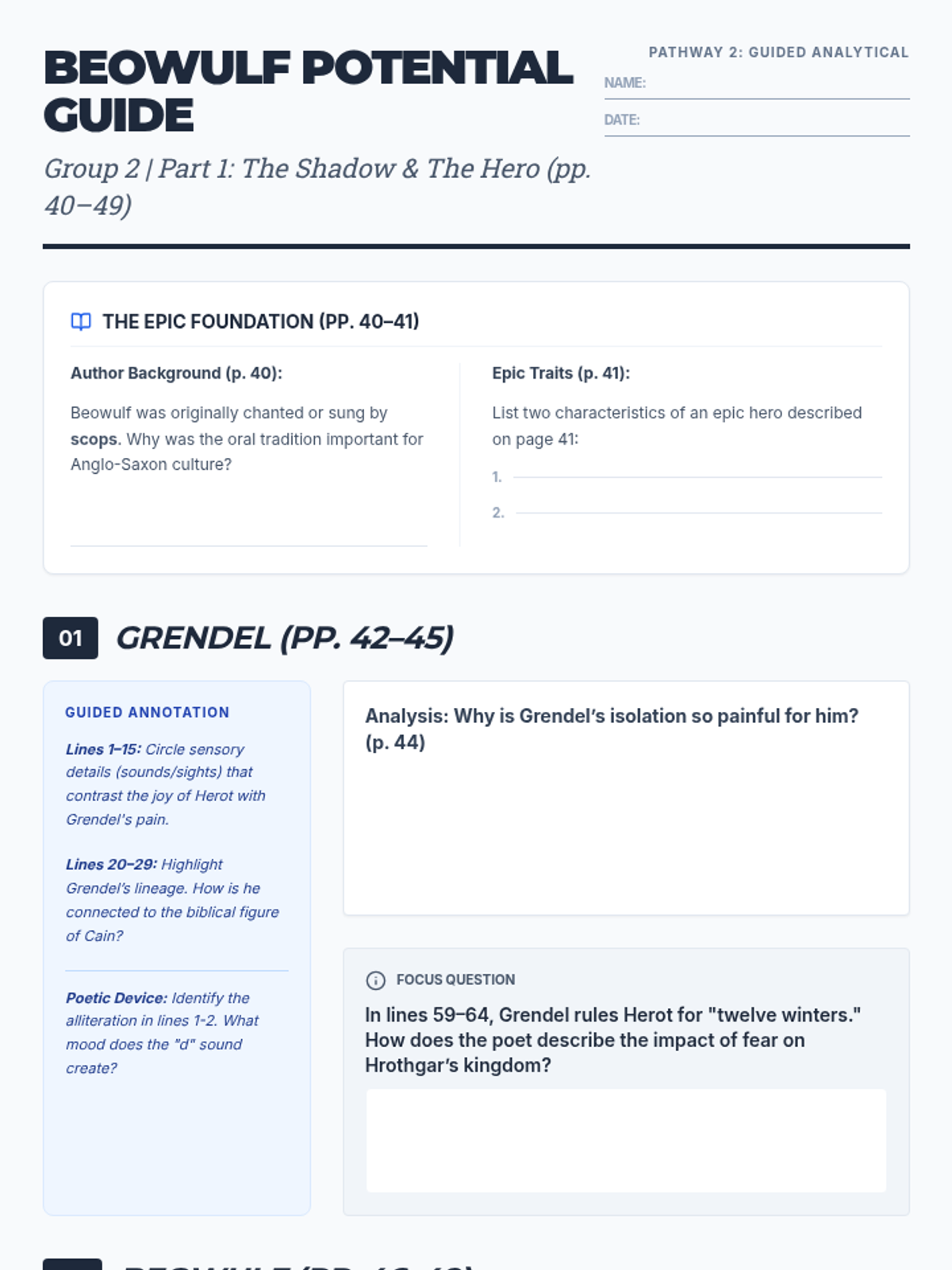
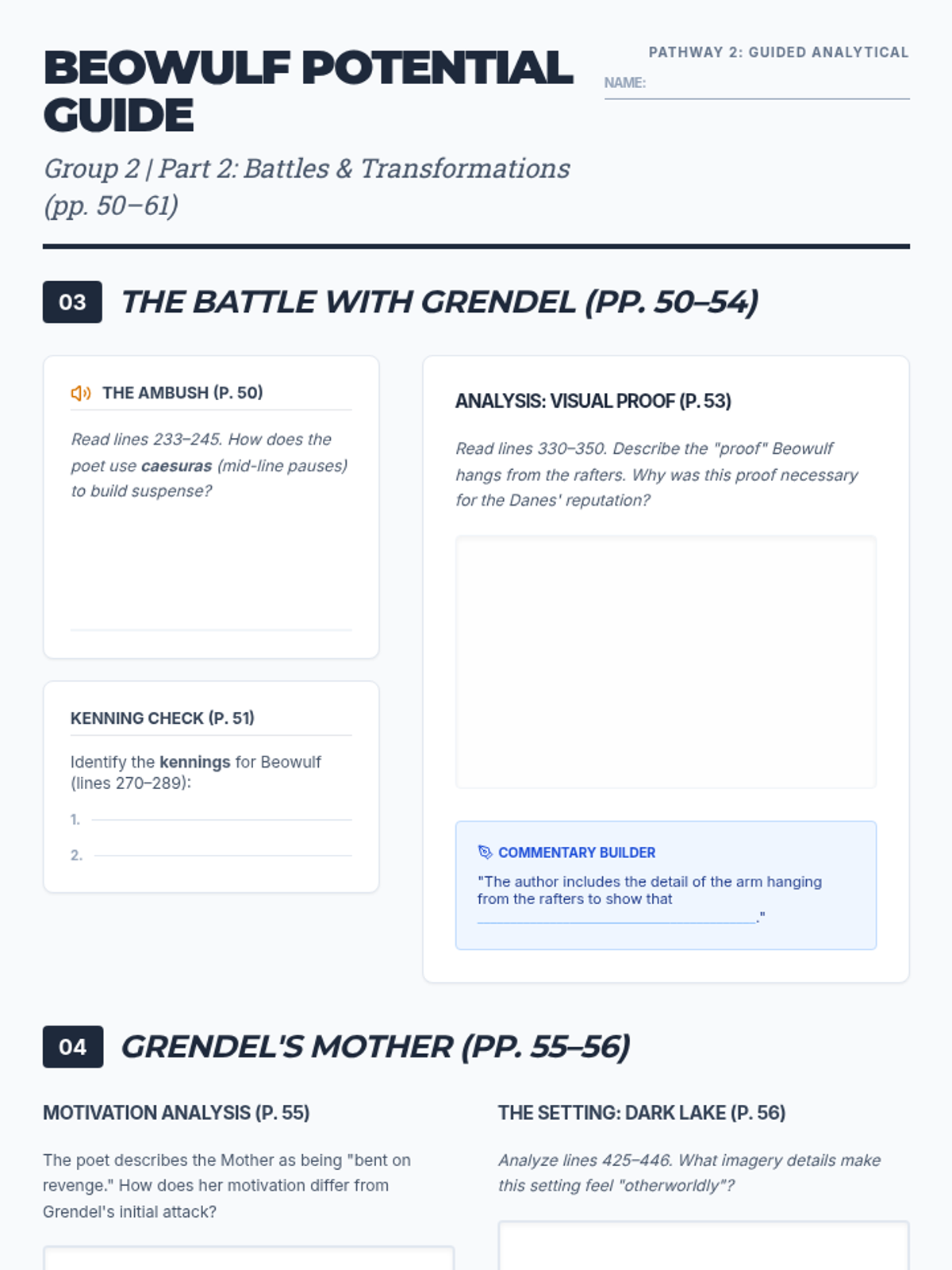
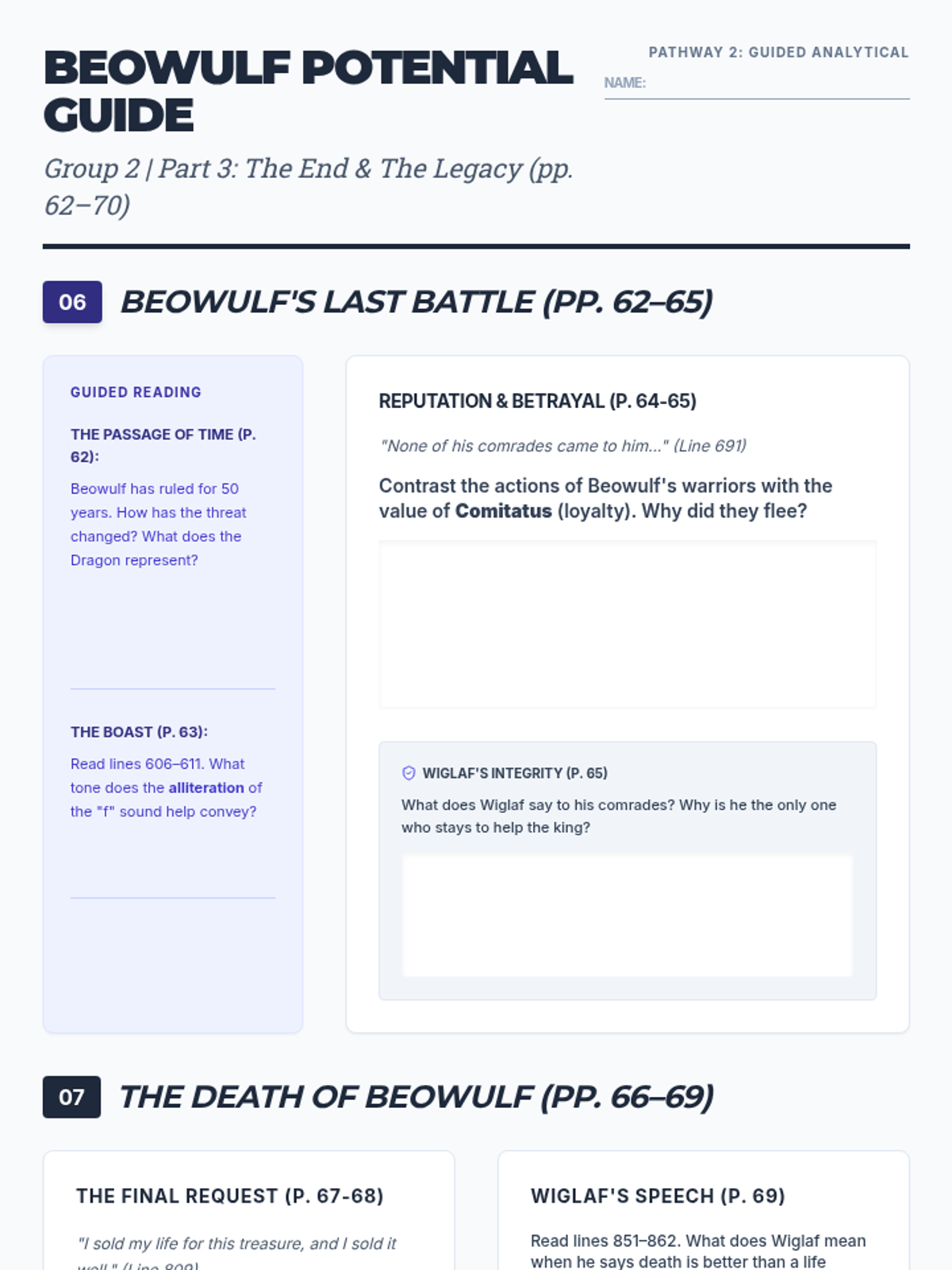
A multi-pathway study of Beowulf that integrates literary analysis, social-emotional learning, and project development for the Hero's Journey game. Supports diverse learners through four distinct analytical pathways.
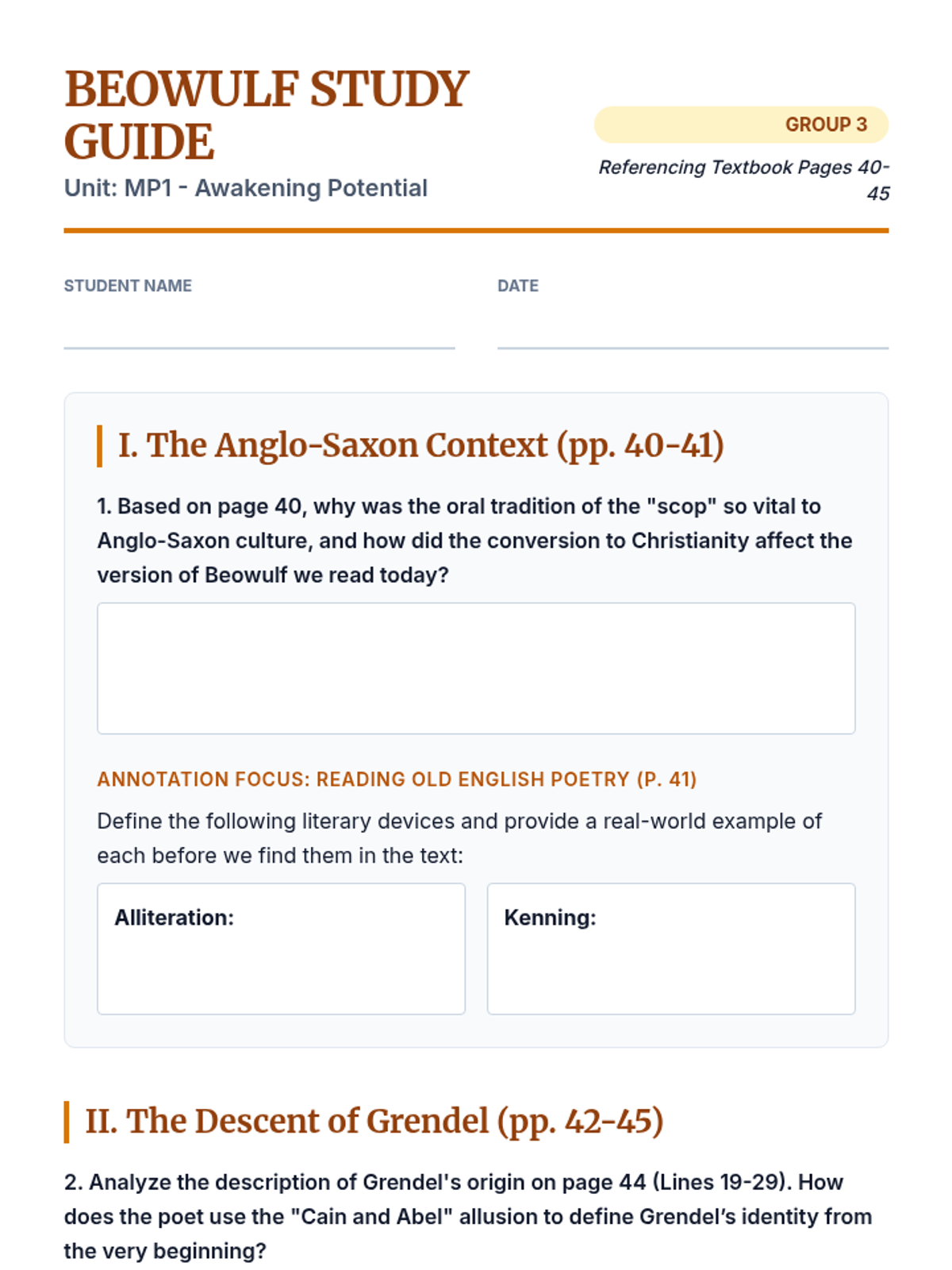
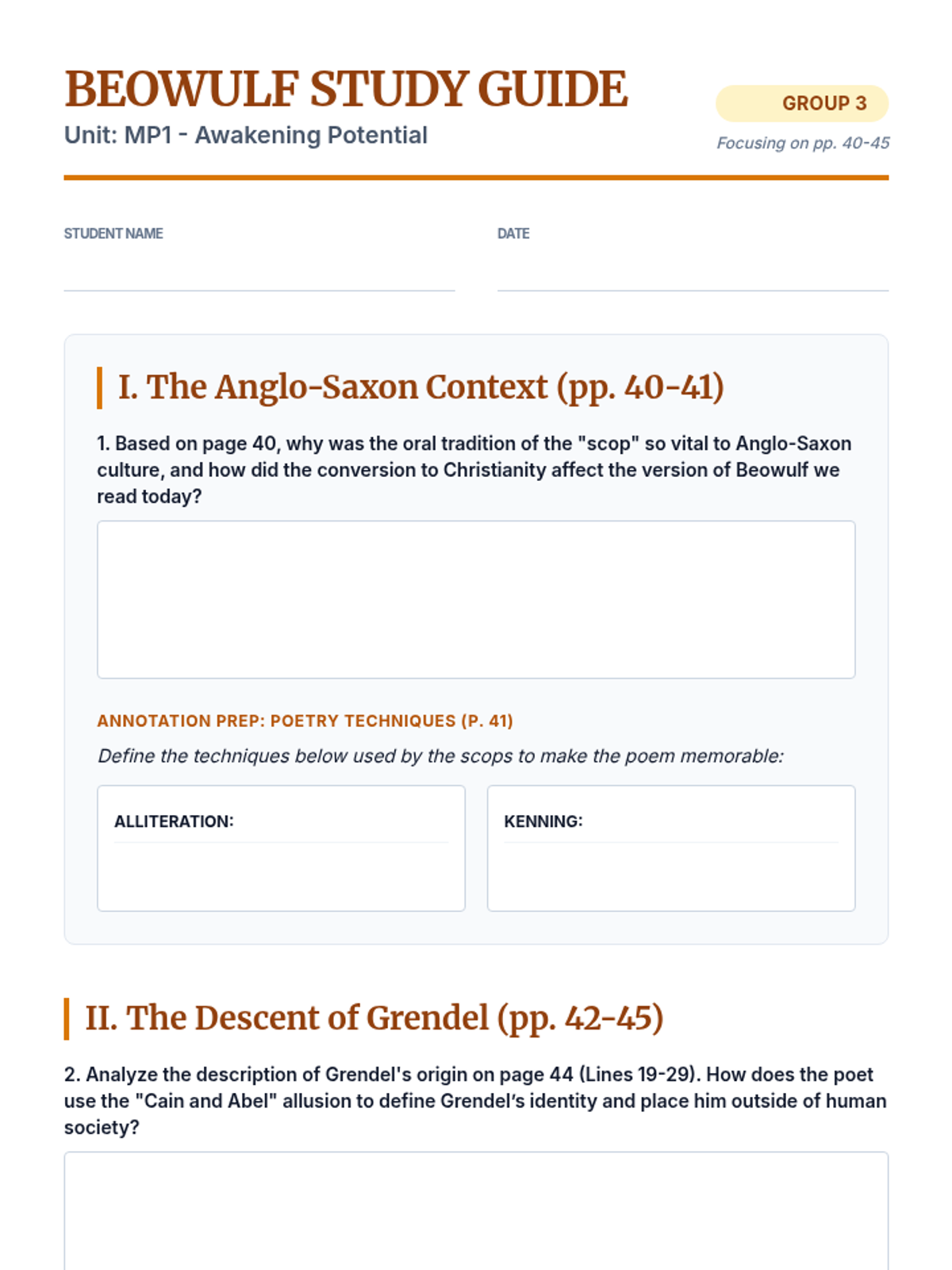
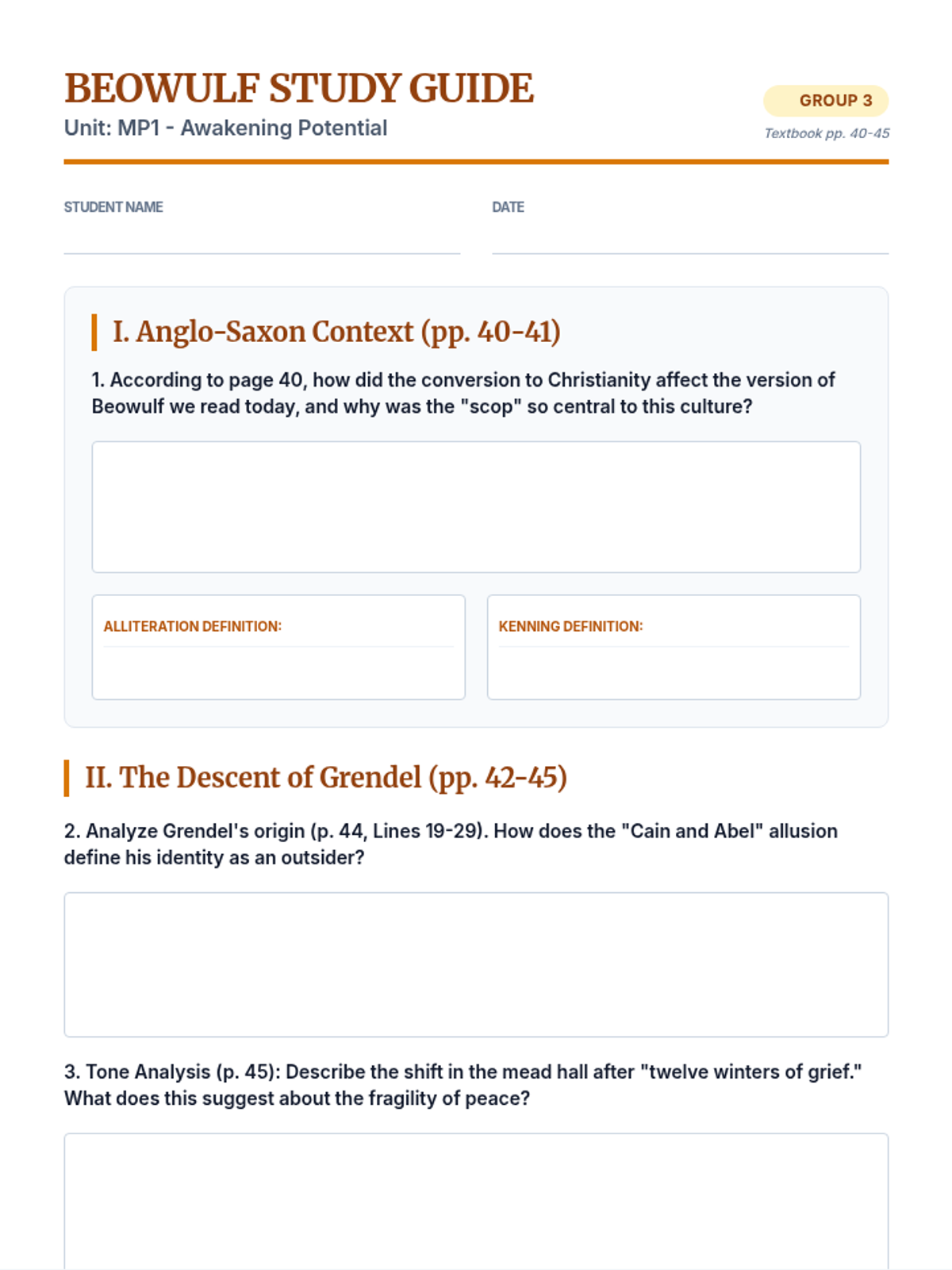
A comprehensive study of the epic poem Beowulf, focusing on the beginning of the Hero's Journey, leadership values, and the 'Awakening Potential' theme. This lesson includes a supplemental study guide designed for Pathway 3 students to build analytical and literary analysis skills.
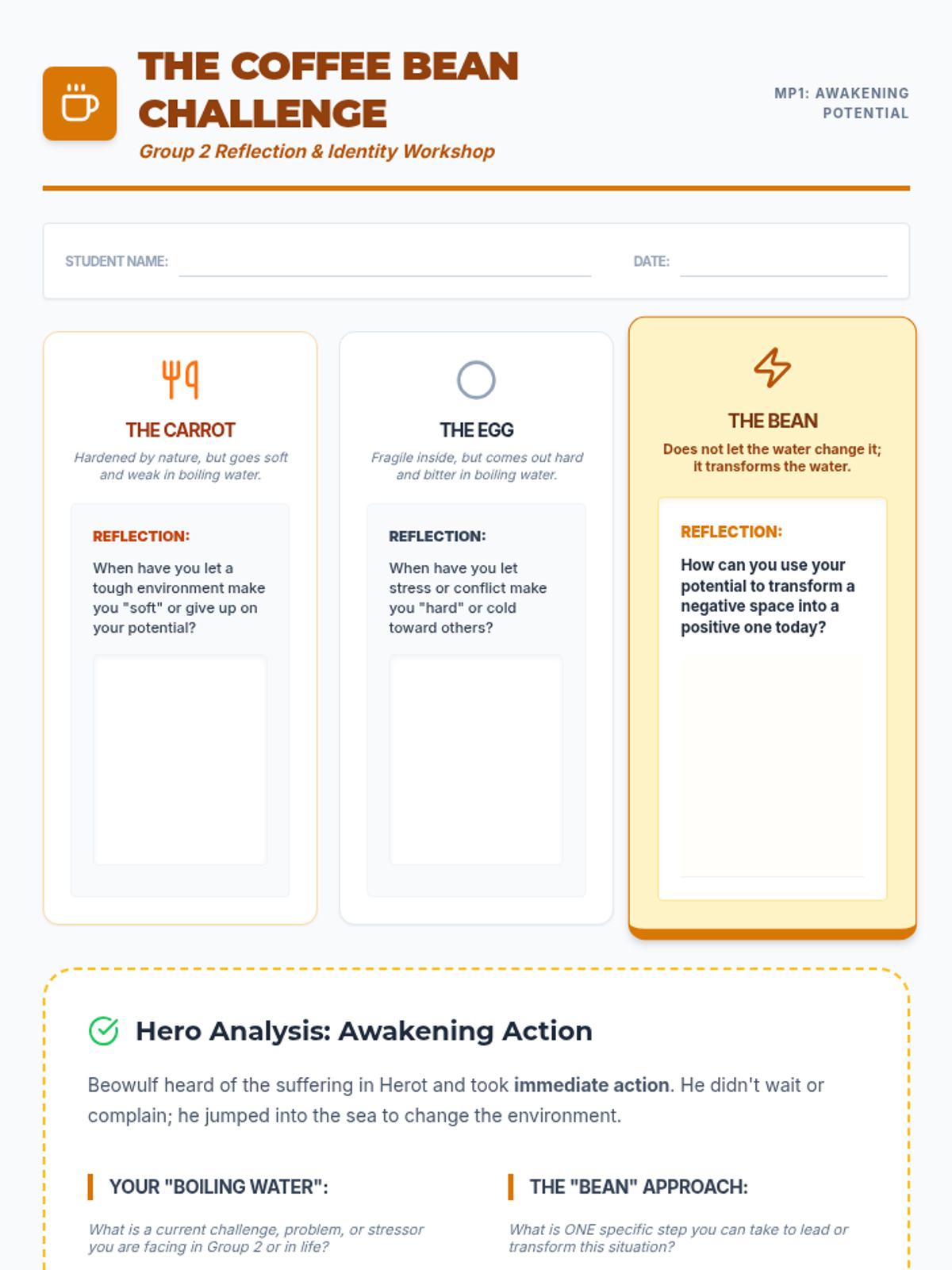
A comprehensive study guide series for Beowulf, focusing on the beginning of the hero's journey, identity, and personal potential. This lesson integrates Jon Gordon's 'The Coffee Bean' and connects Old English epic poetry to modern media archetypes.
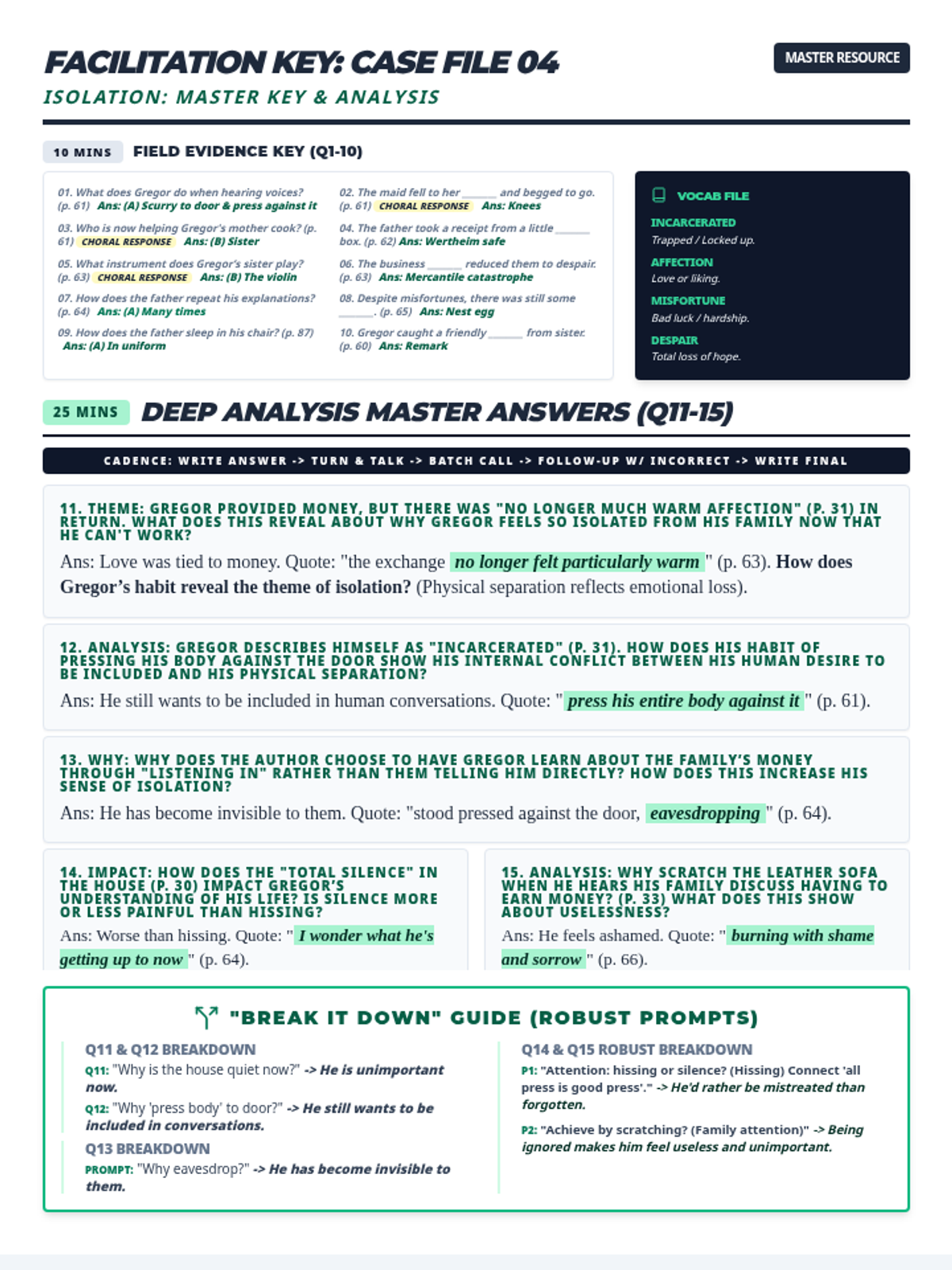
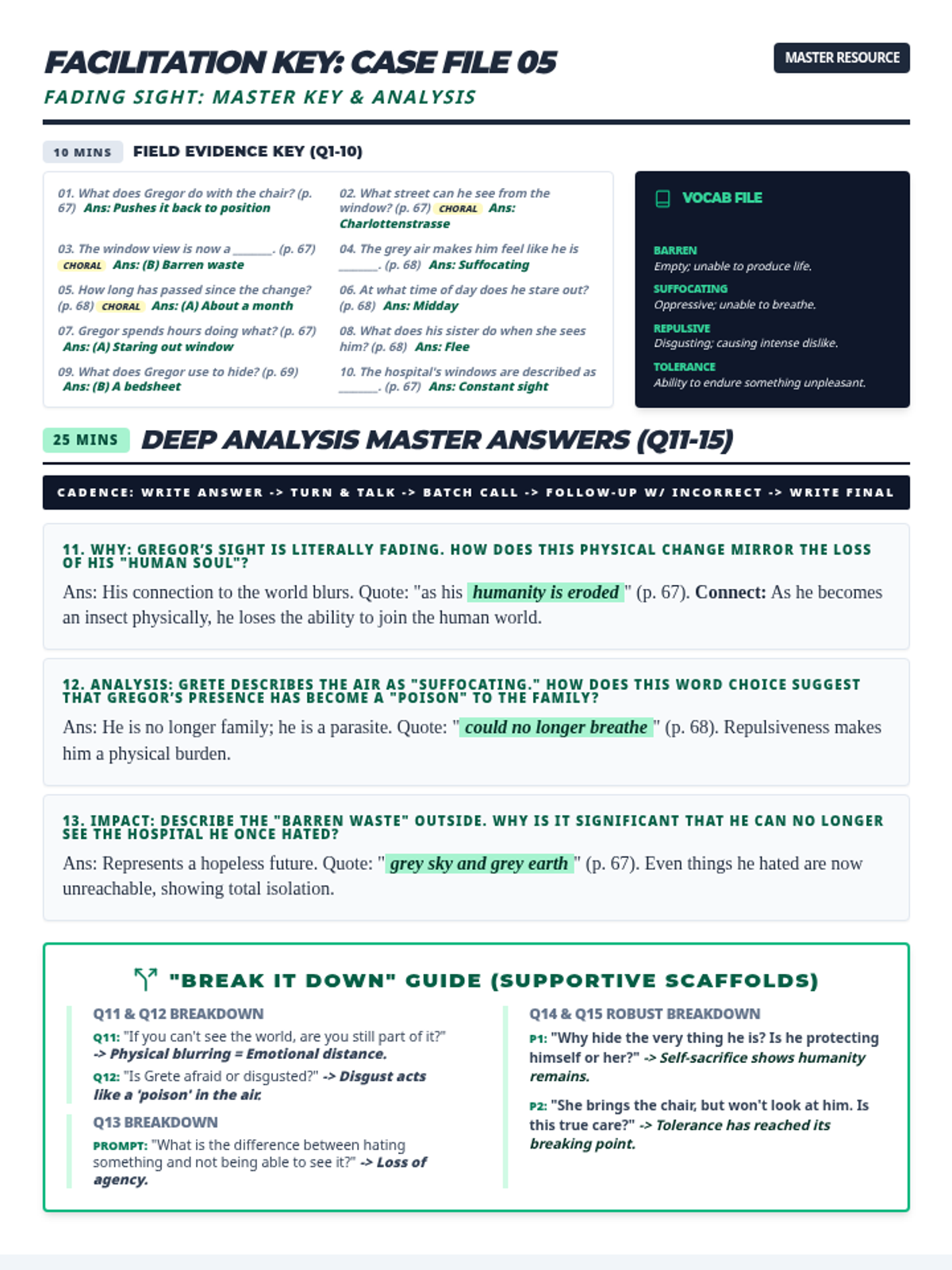
A lesson focusing on Gregor Samsa's physical and emotional decay, specifically his fading eyesight and the increasing conflict with his family as his humanity is further eroded. Students analyze symbols like the 'barren waste' and the 'suffocating' environment.
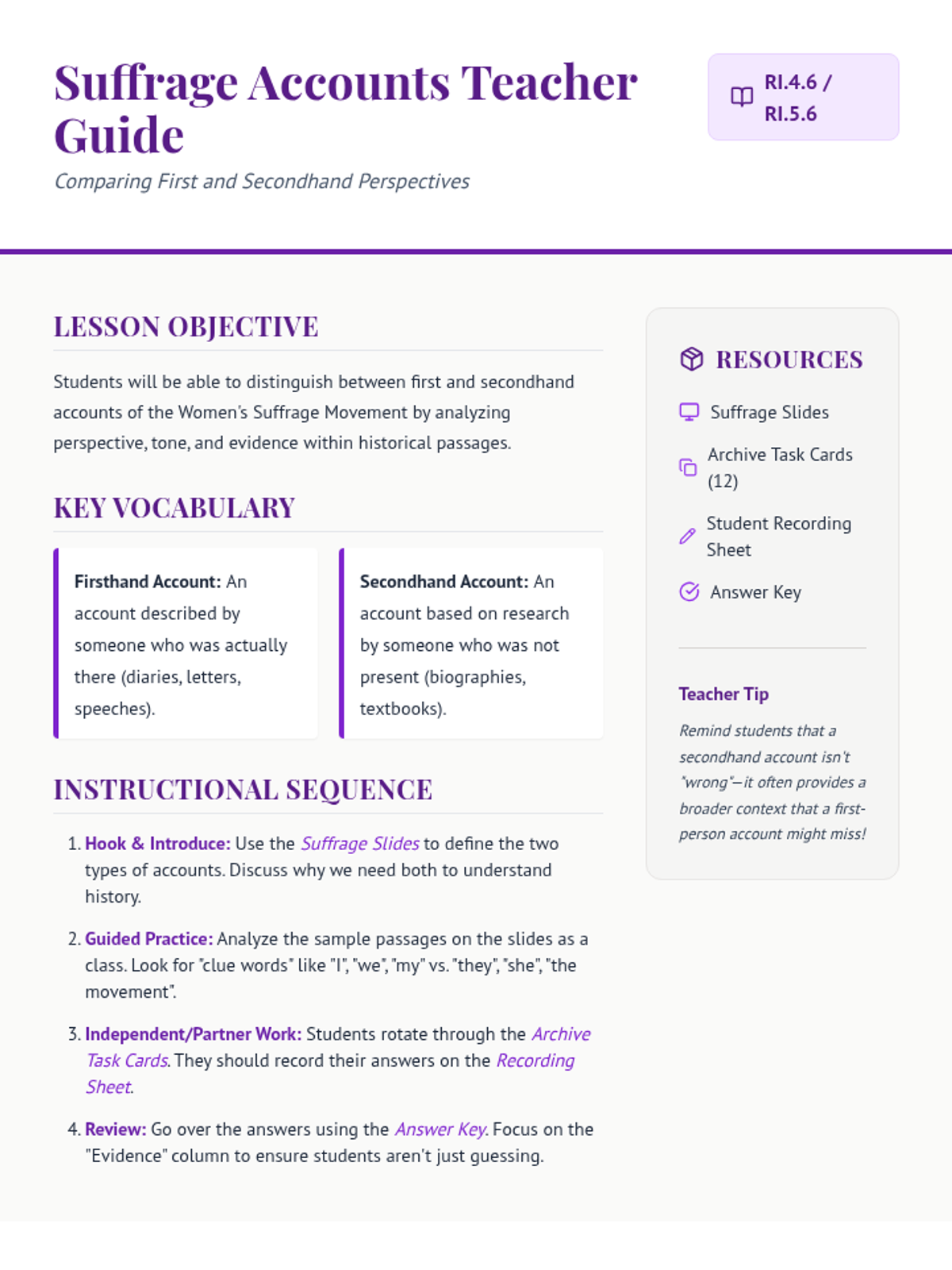
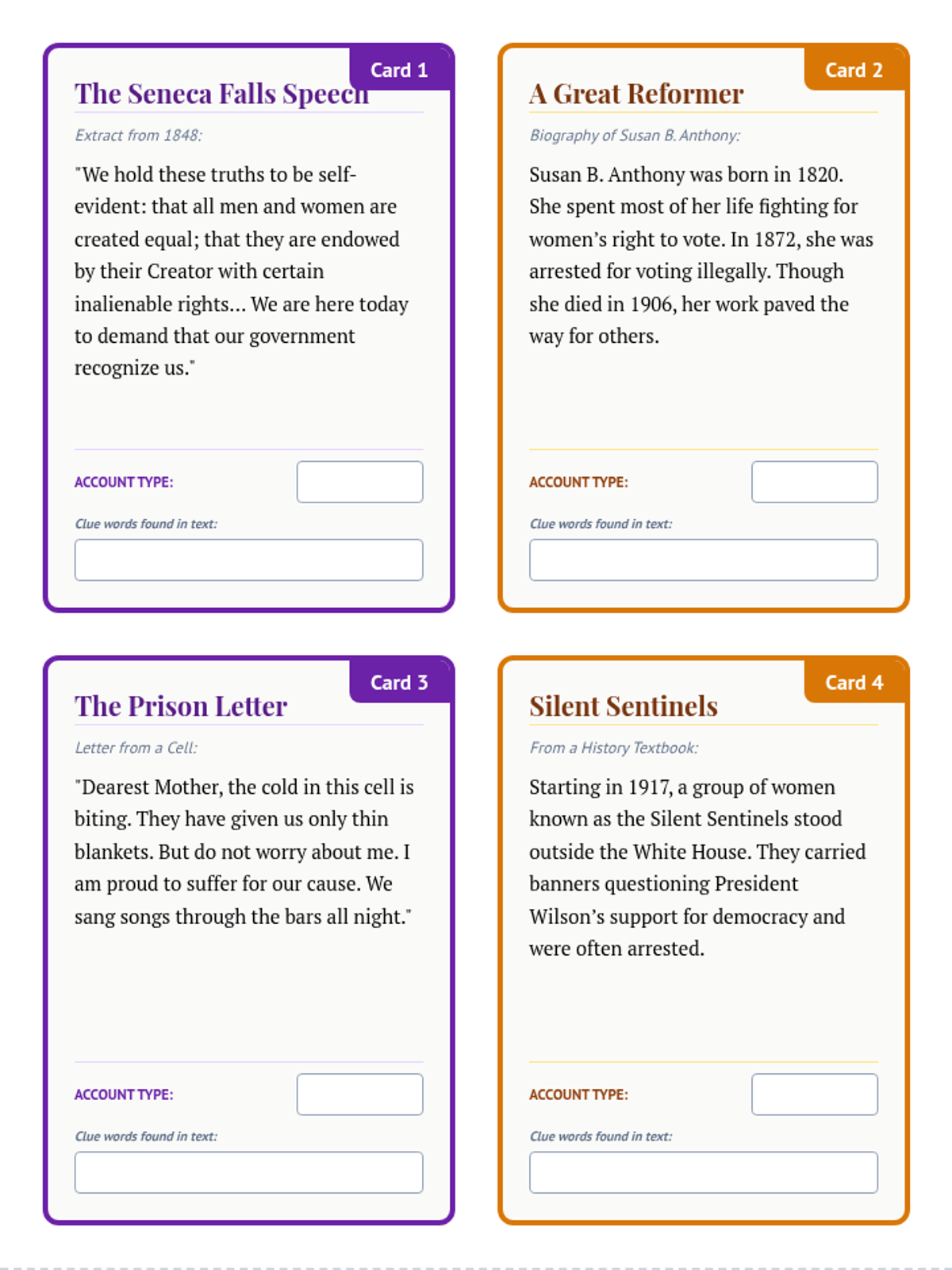
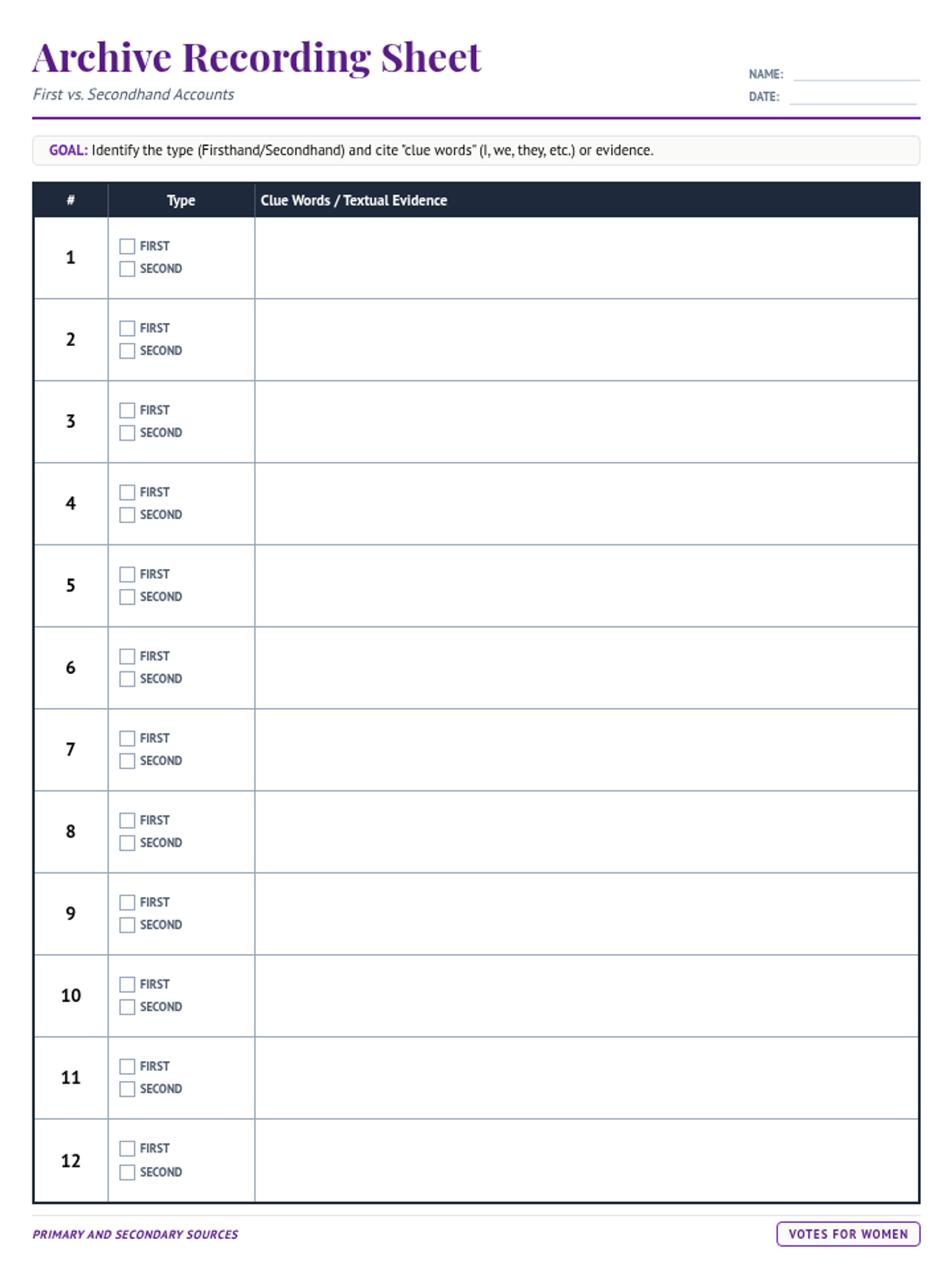
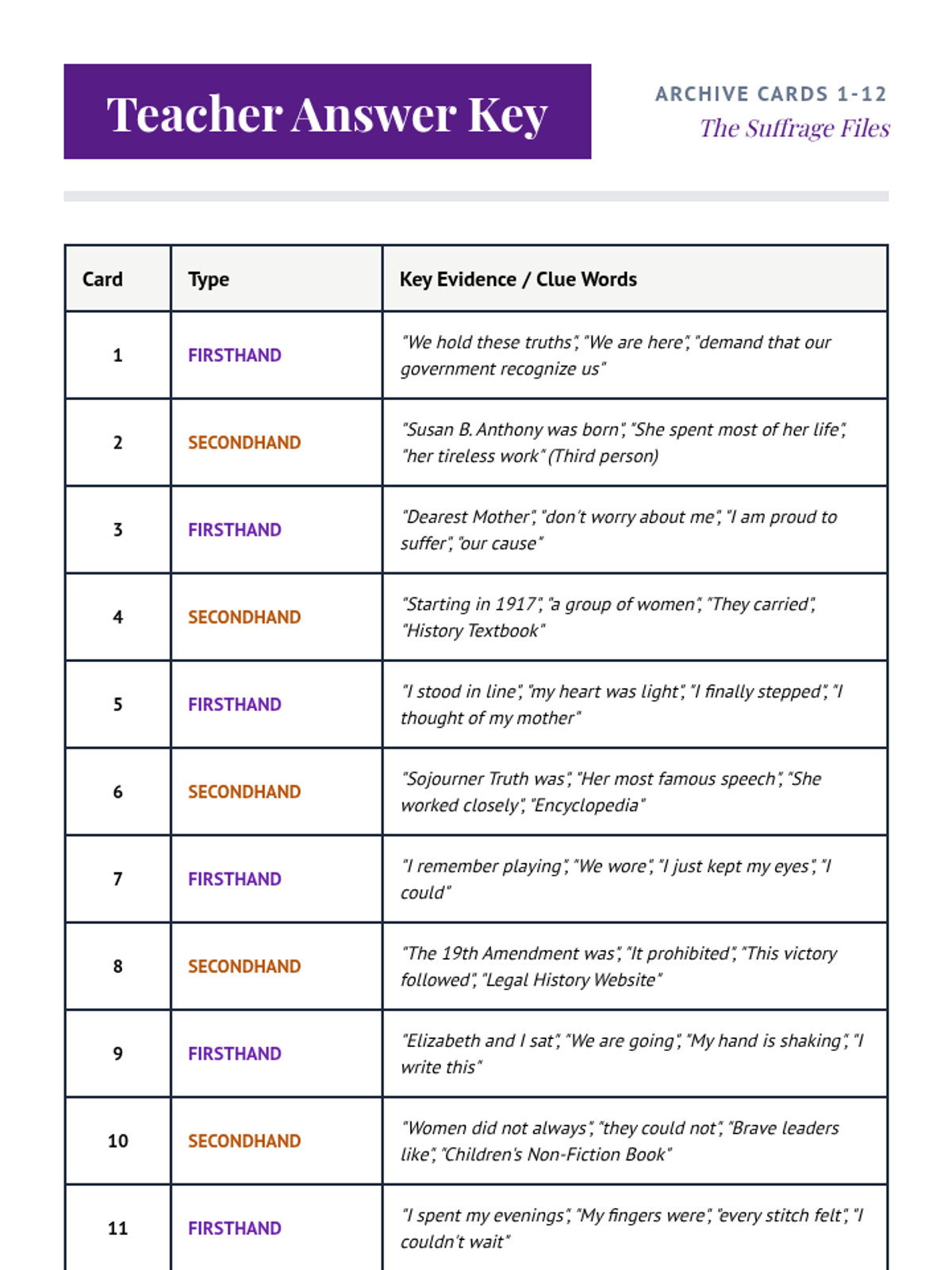
A comprehensive lesson comparing first and secondhand accounts using the historical lens of the Women's Suffrage Movement. Students will analyze primary and secondary sources to understand different perspectives and purposes.