Focuses on the thesis statement as the anchor of the introduction, teaching students to turn prompts into arguable claims.
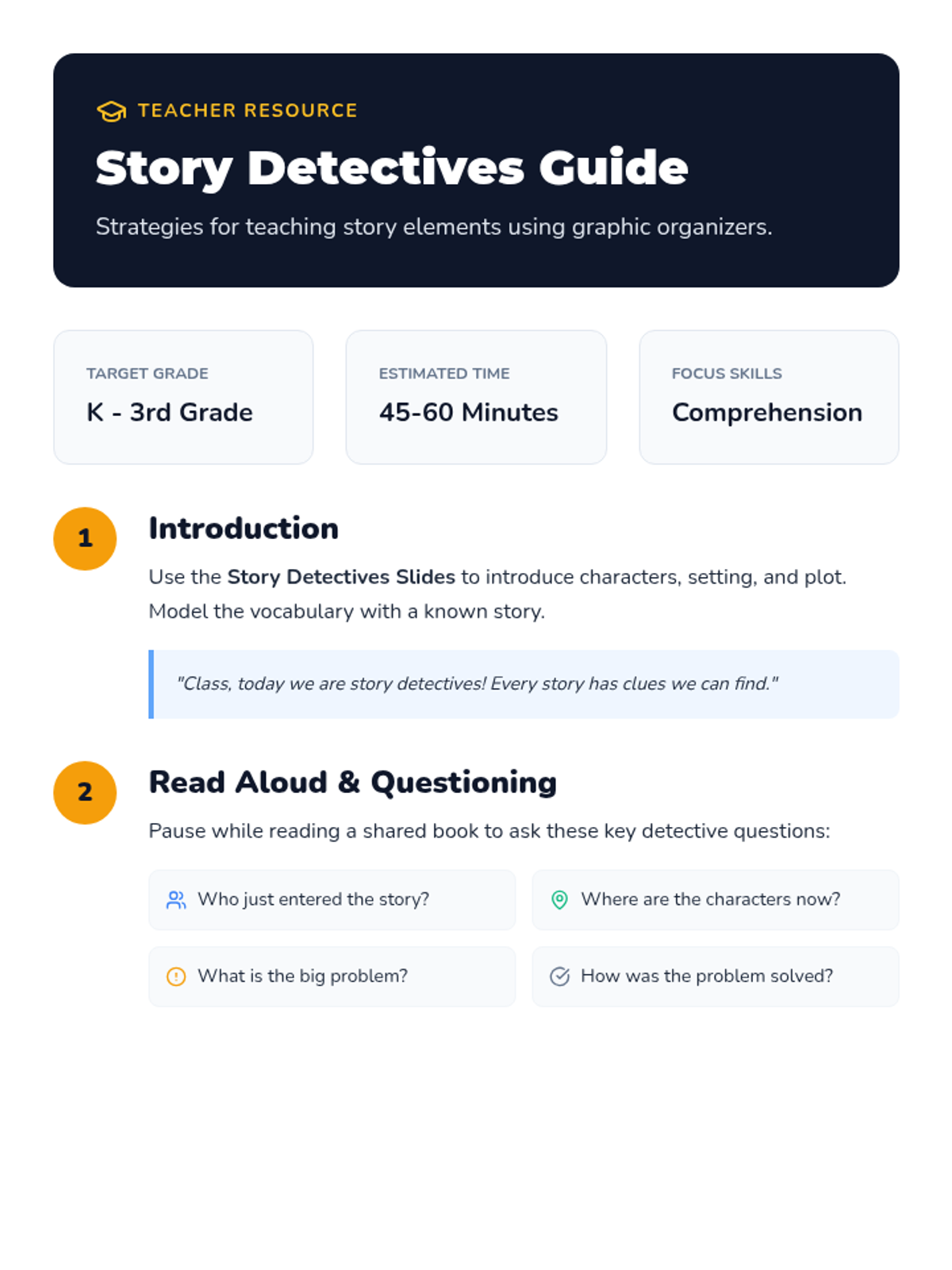
A fundamental lesson on identifying the core components of a narrative: characters, setting, and plot events. Students use visual organizers to map out stories they read or hear.
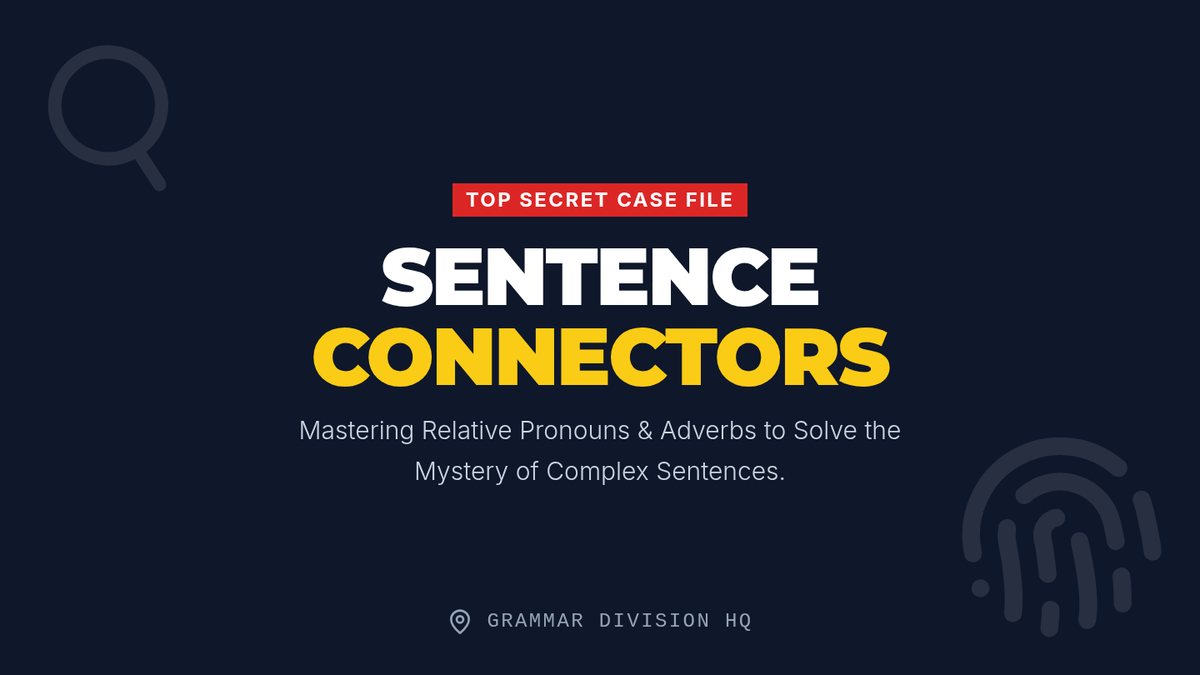
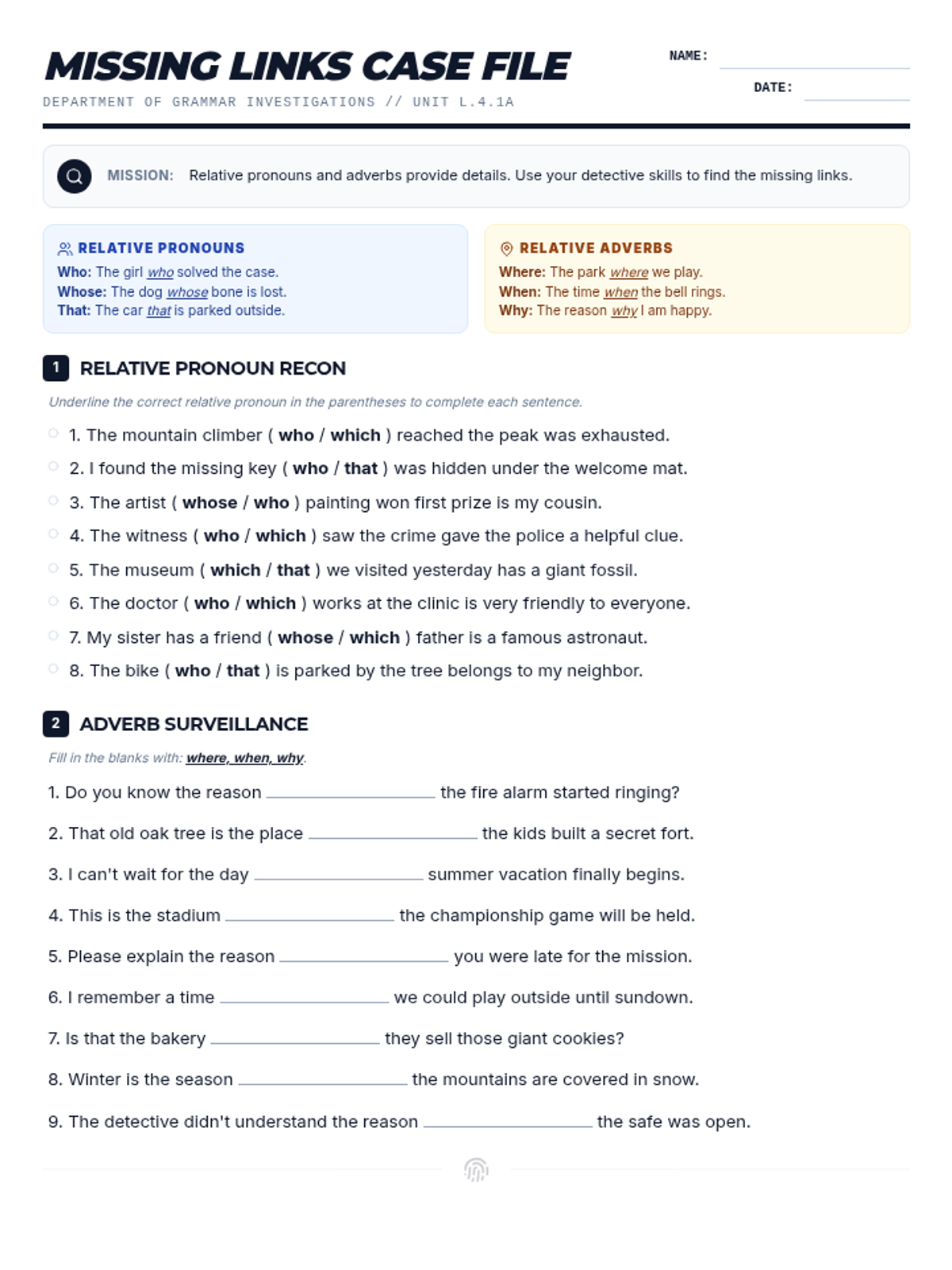
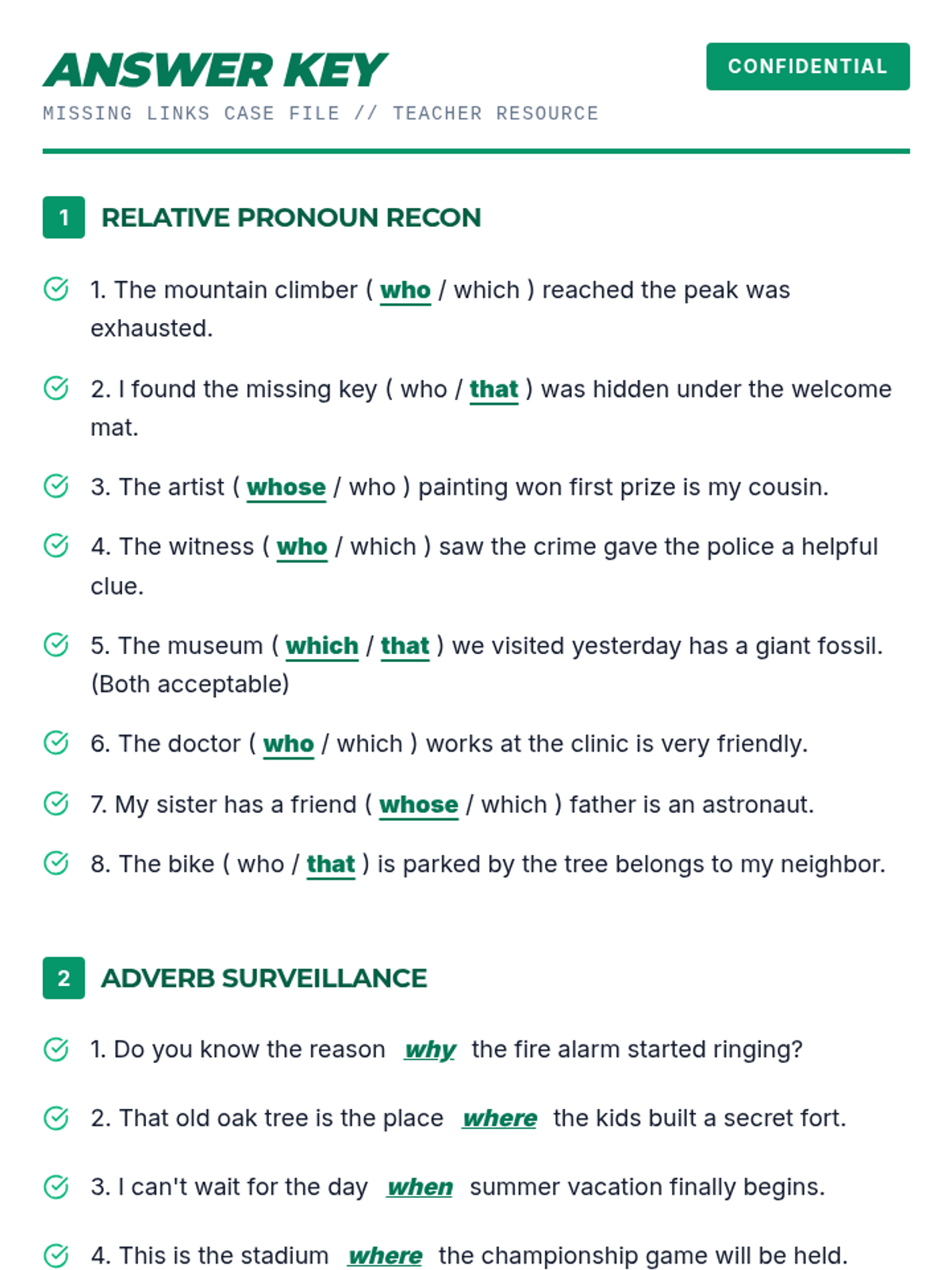
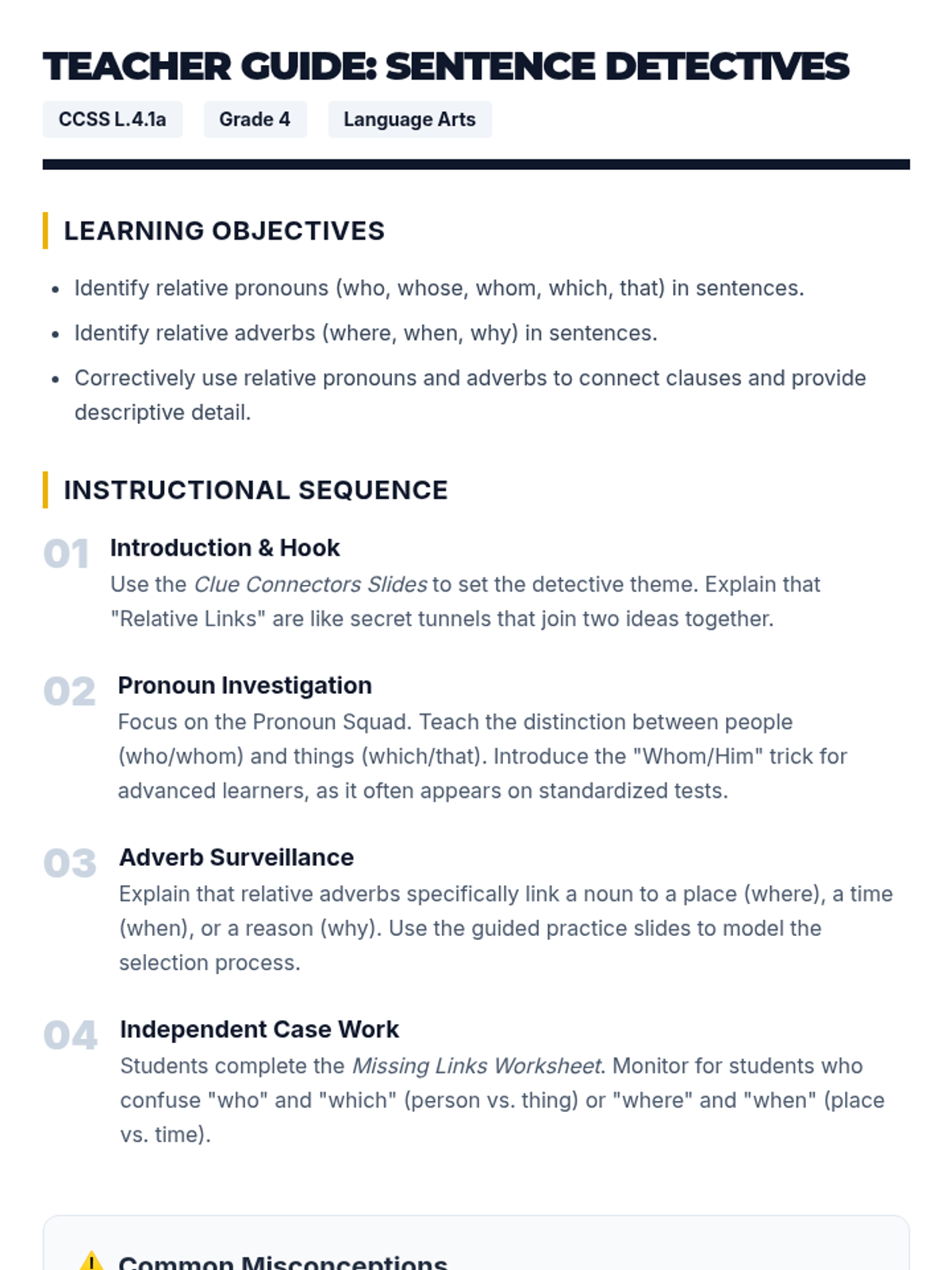
A detective-themed lesson teaching 4th graders how to use relative pronouns and relative adverbs to connect ideas in sentences, aligned to CCSS L.4.1a.
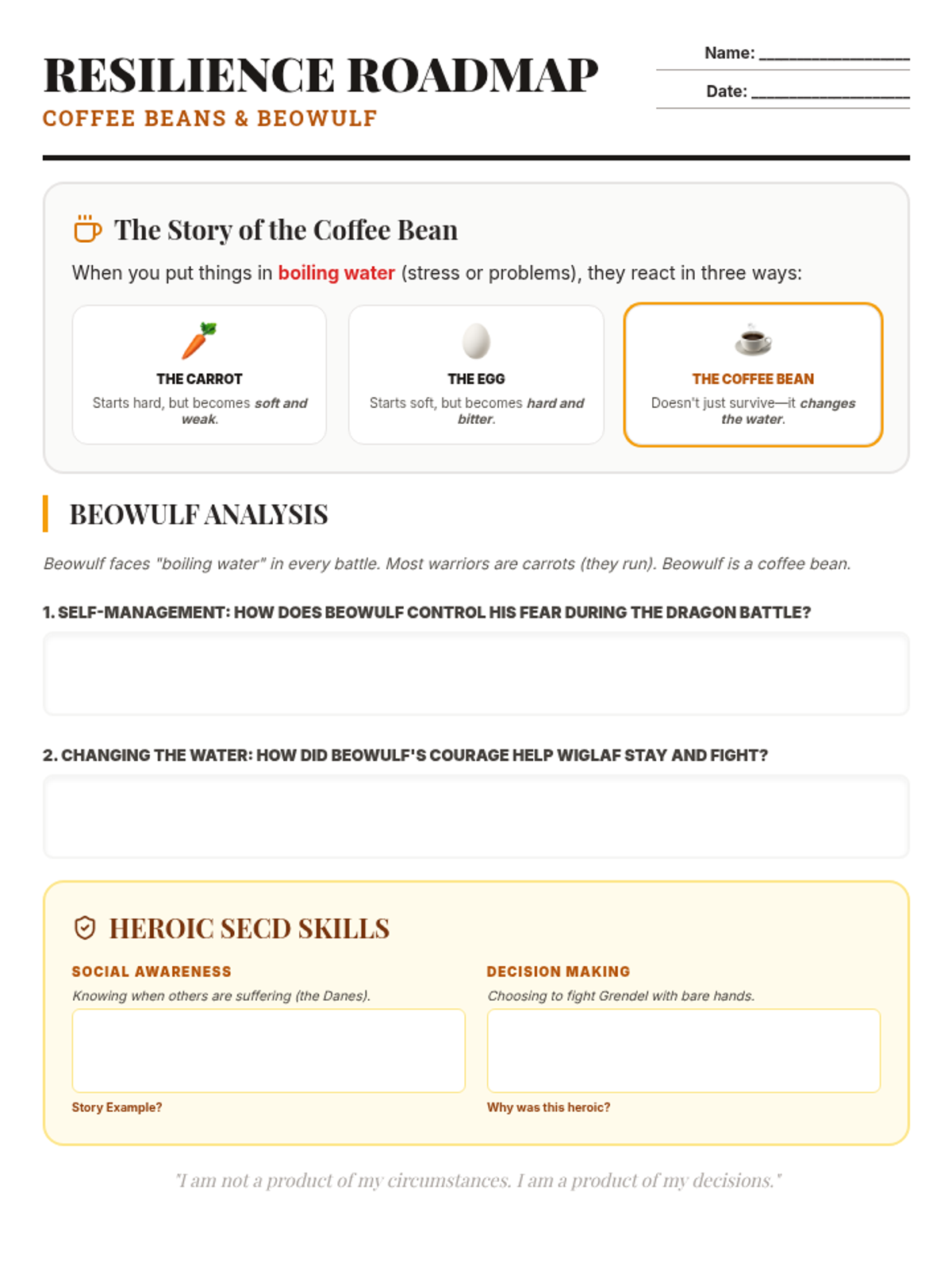
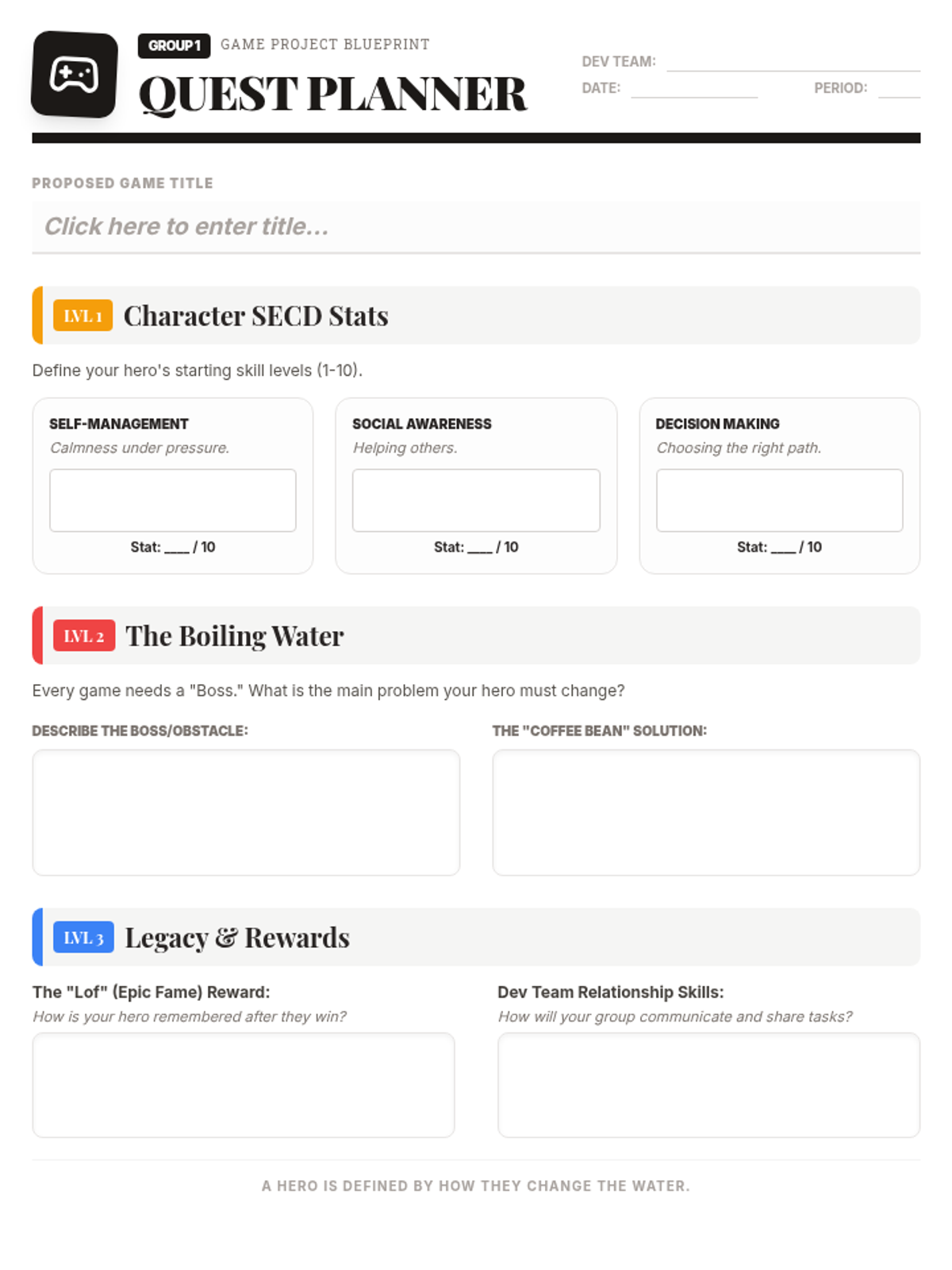
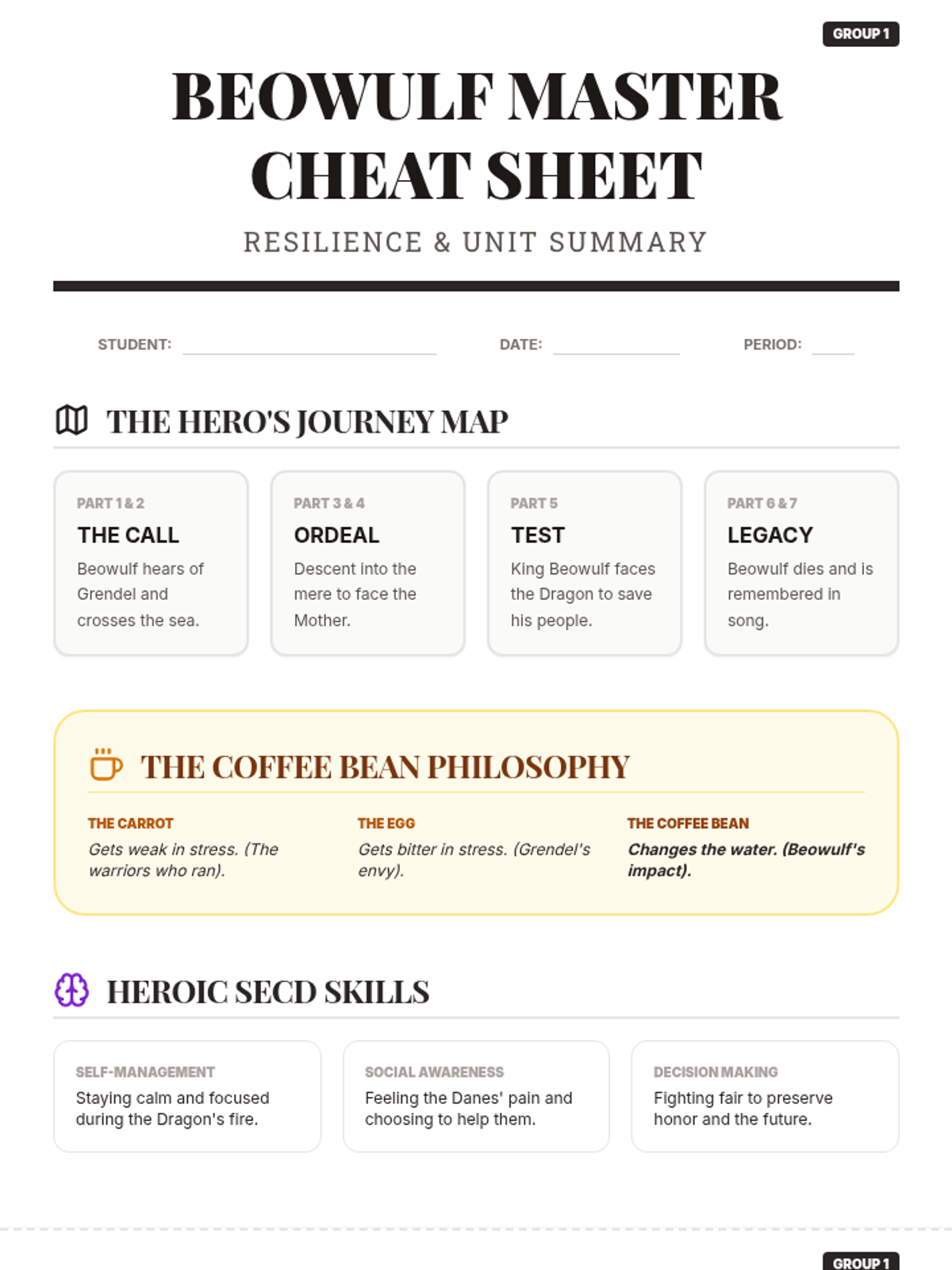
Connecting Beowulf's journey to personal resilience through the Coffee Bean metaphor and SECD frameworks, preparing students for the Hero's Journey game project.
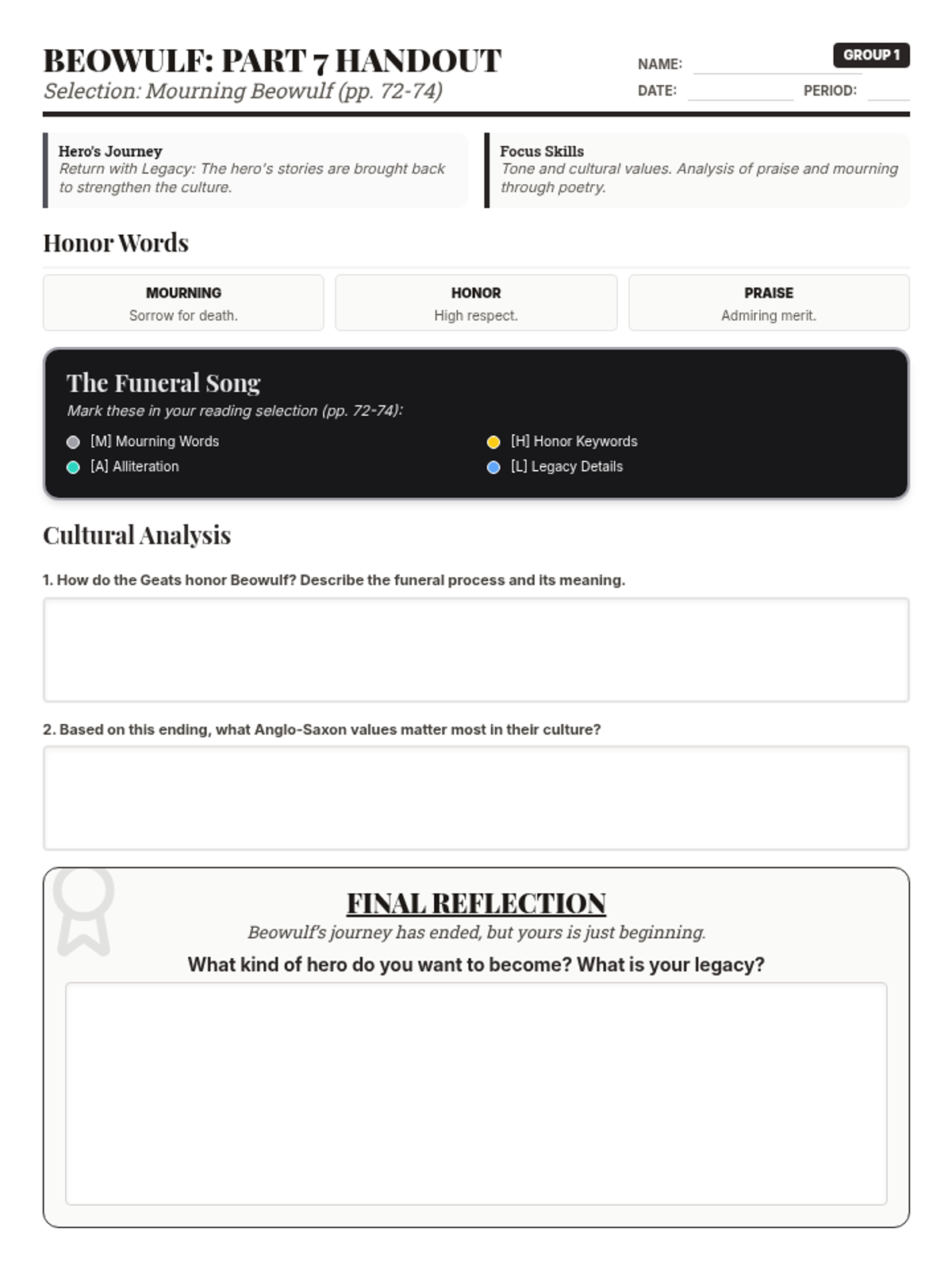
Cultural values of the Anglo-Saxons and how the hero is remembered through mourning and praise.
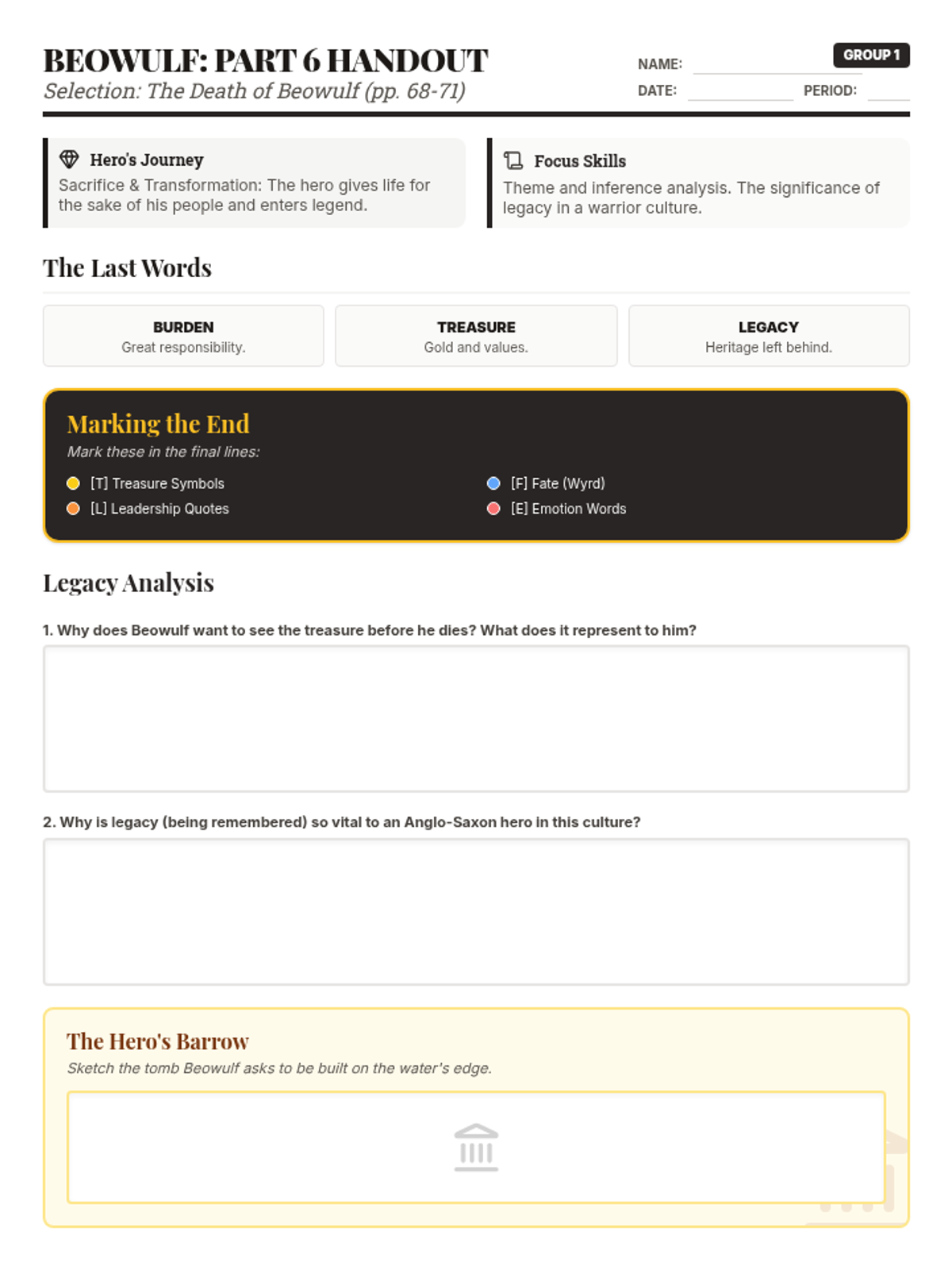
The death of Beowulf and the significance of treasure and legacy in the Hero's Journey.
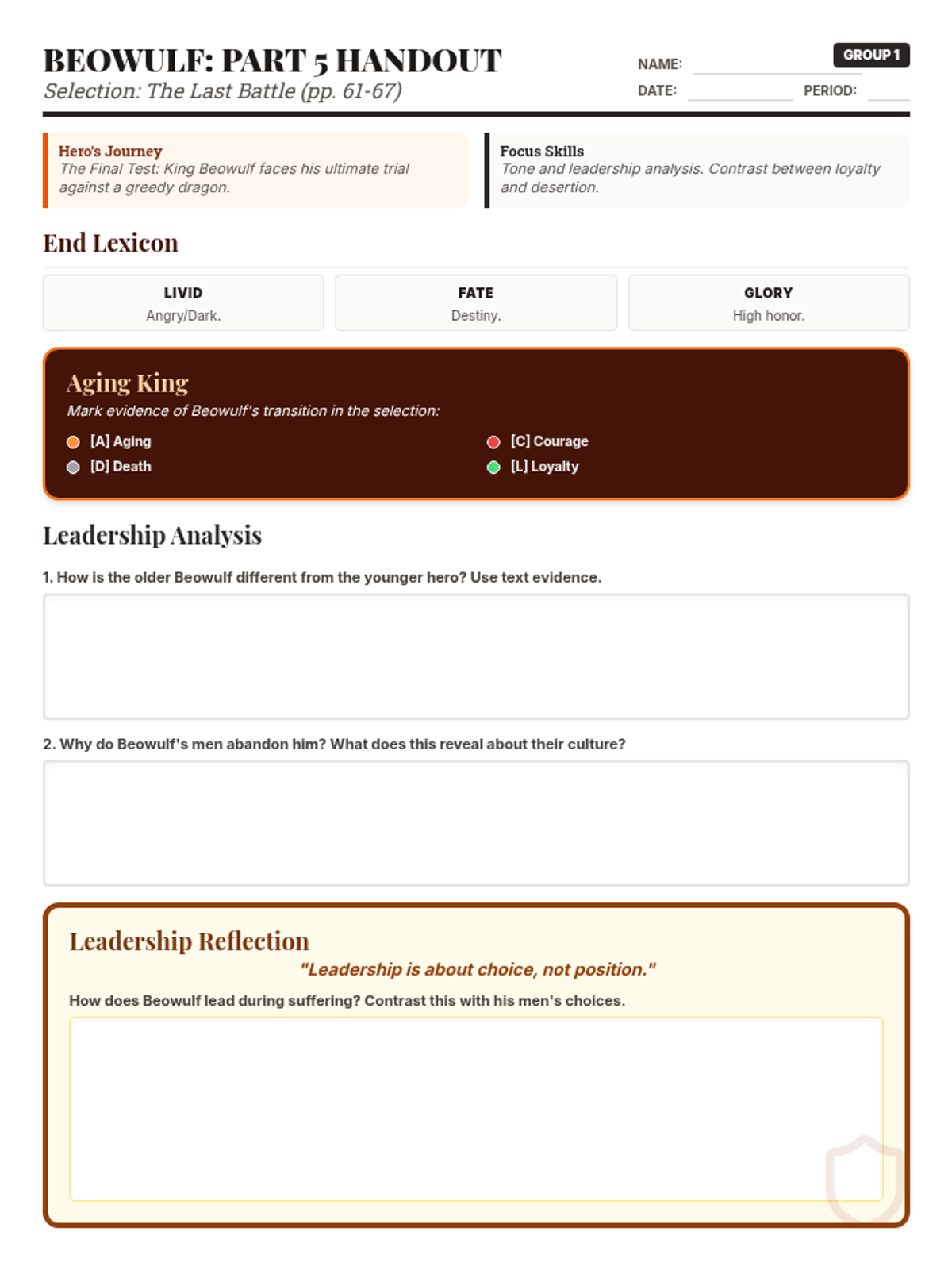
Beowulf's final battle against the dragon, focusing on themes of aging, leadership, and legacy.
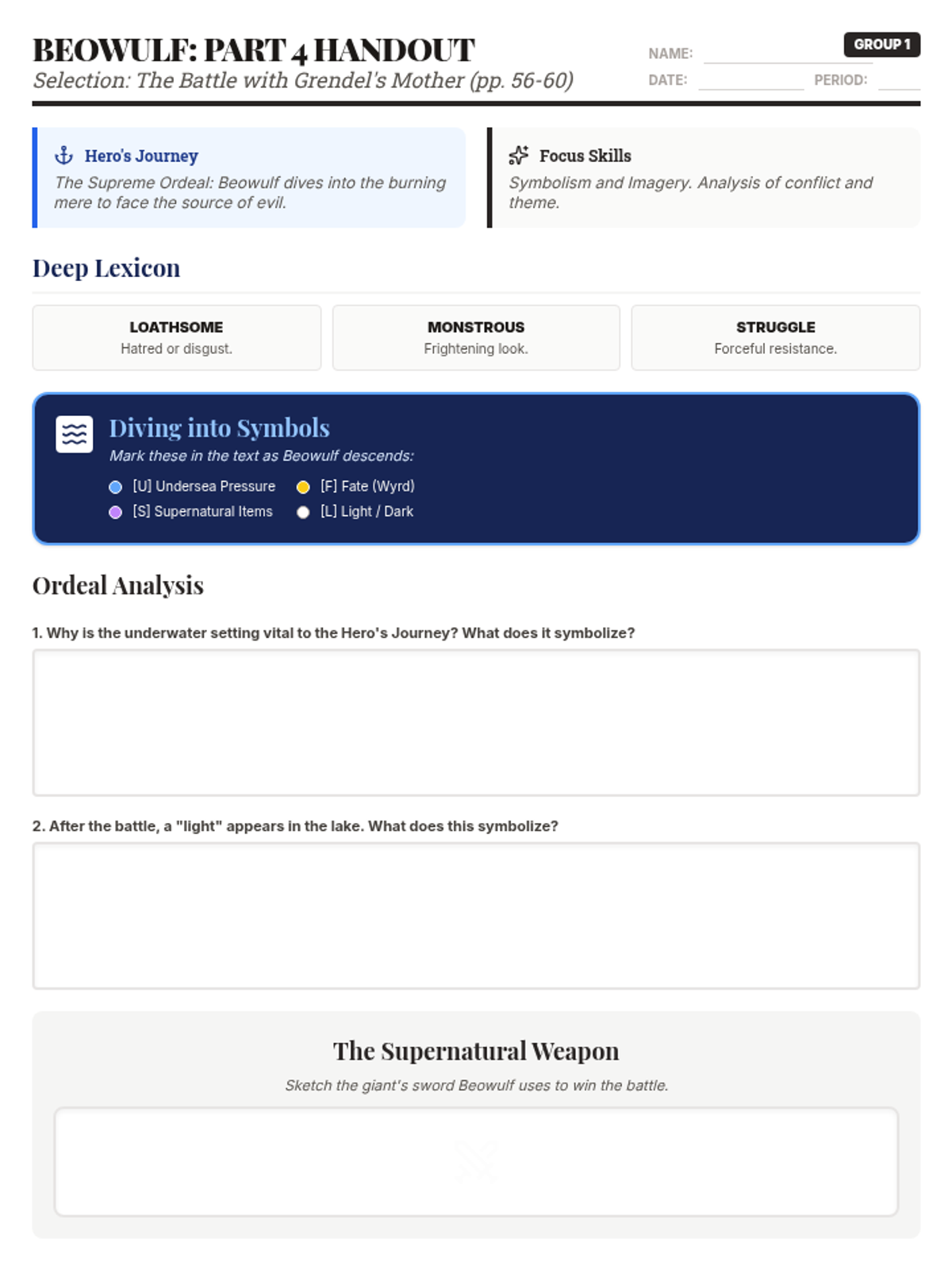
Beowulf's descent into the underwater lair, exploring symbolism and the Supreme Ordeal.
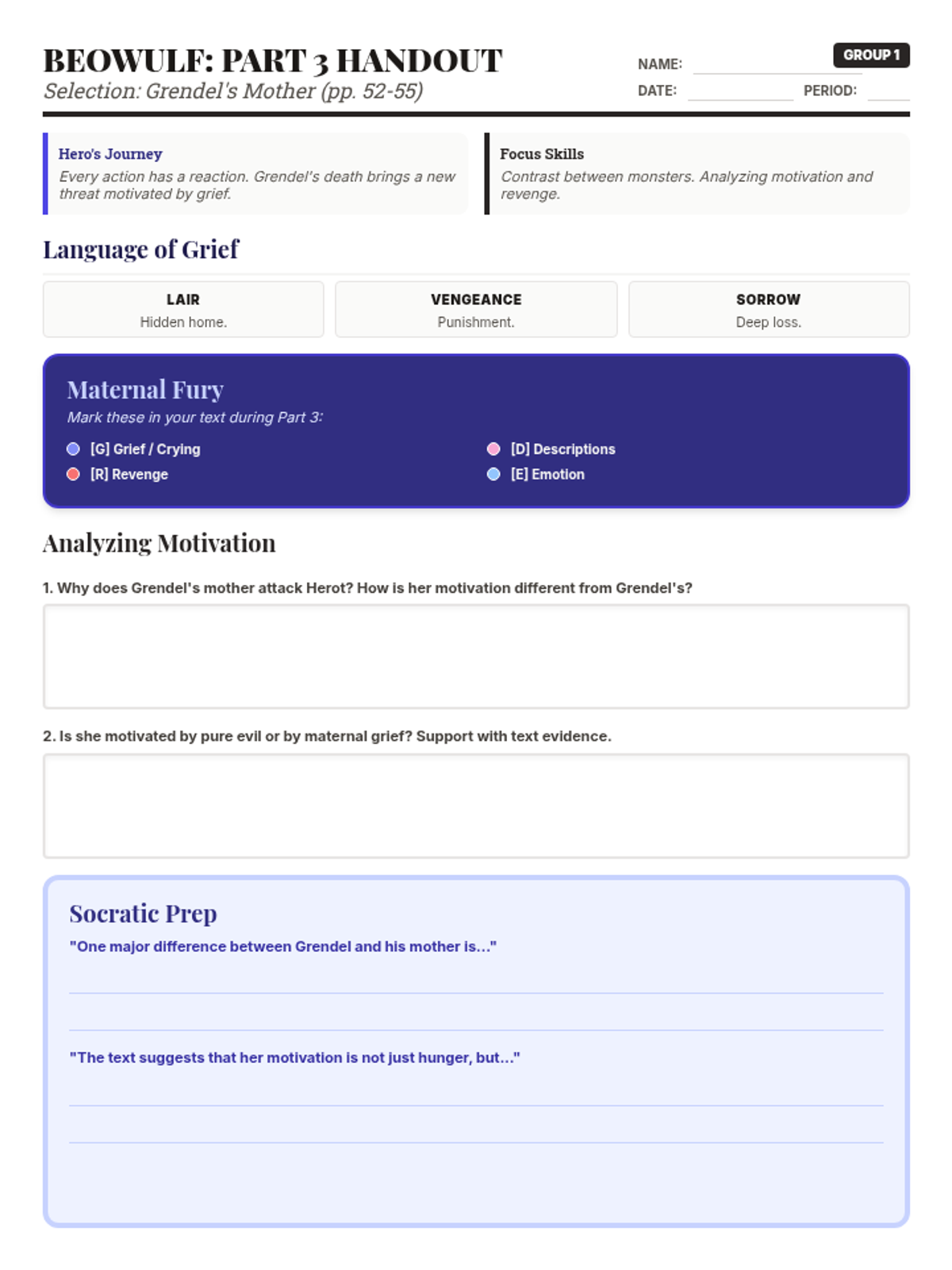
Analysis of Grendel's mother's motivation and the shift in threat, focusing on vengeance vs. evil.
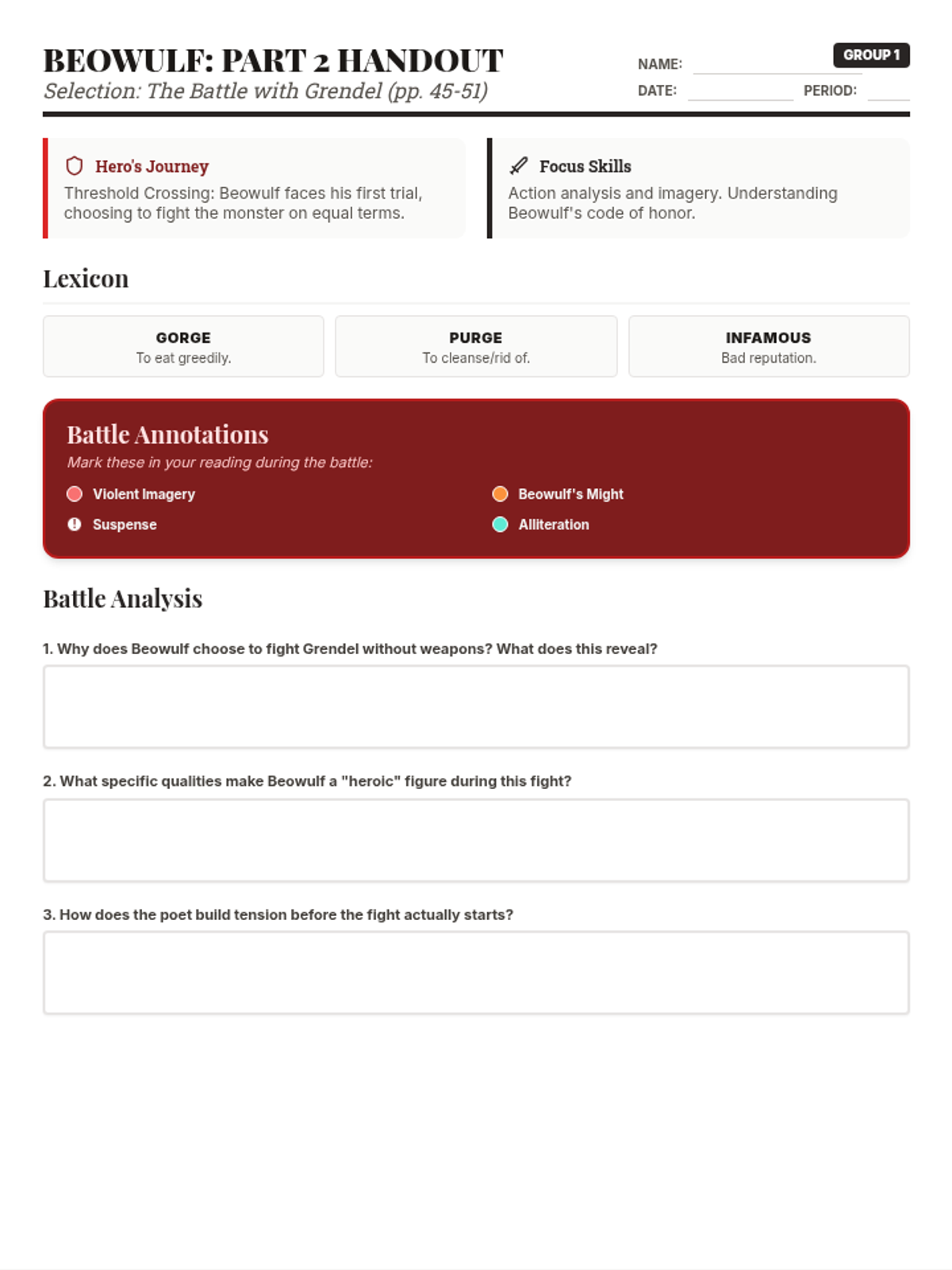
Beowulf's arrival and his first major trial against Grendel, emphasizing imagery, action analysis, and the Crossing of the Threshold.
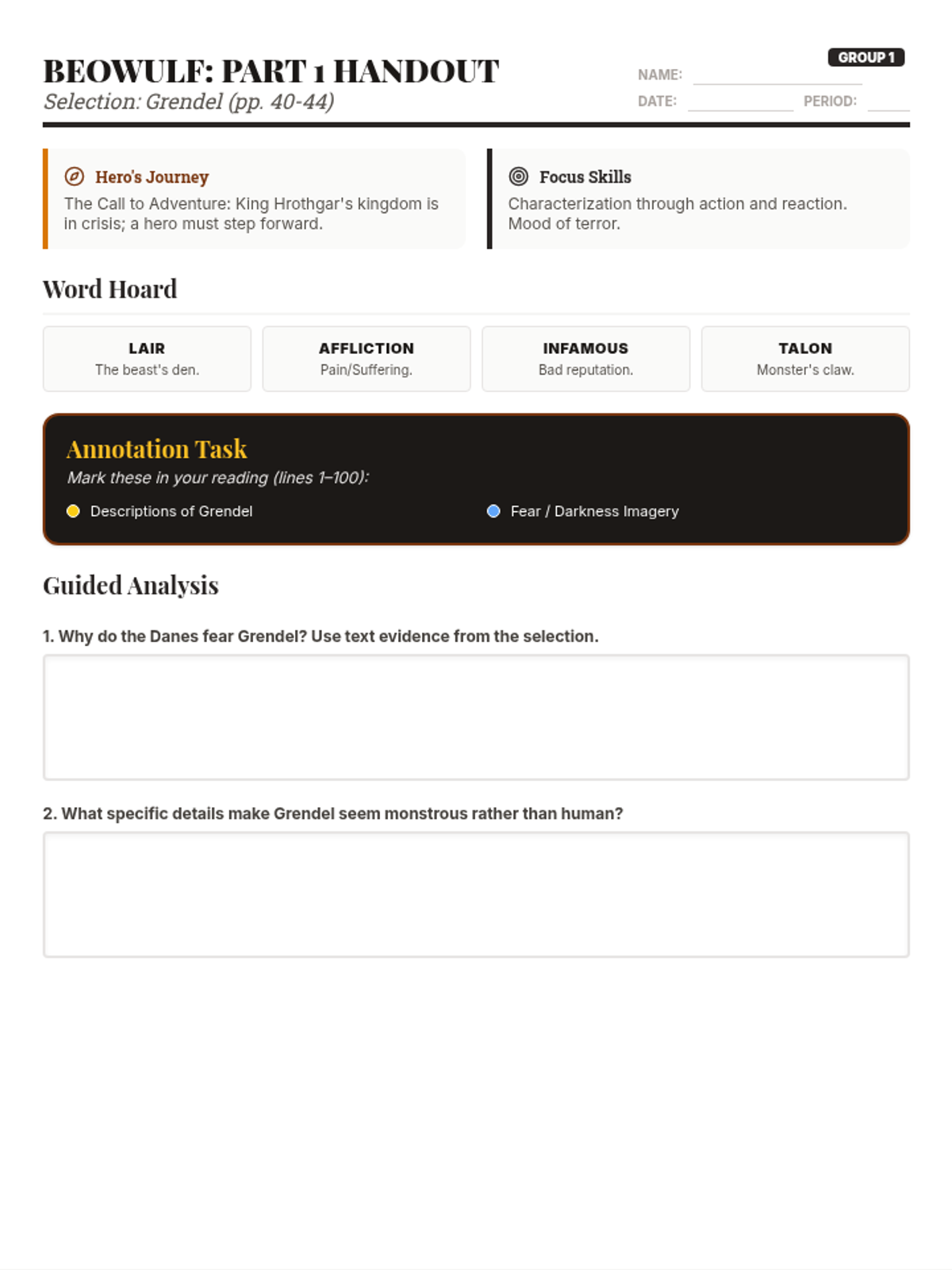
Introduction to Grendel, focusing on characterization, mood, and the initial Call to Adventure in the Hero's Journey.