Focuses on 'squinting modifiers'—words that sit between two actions and create double meanings—and how to resolve them for absolute clarity.
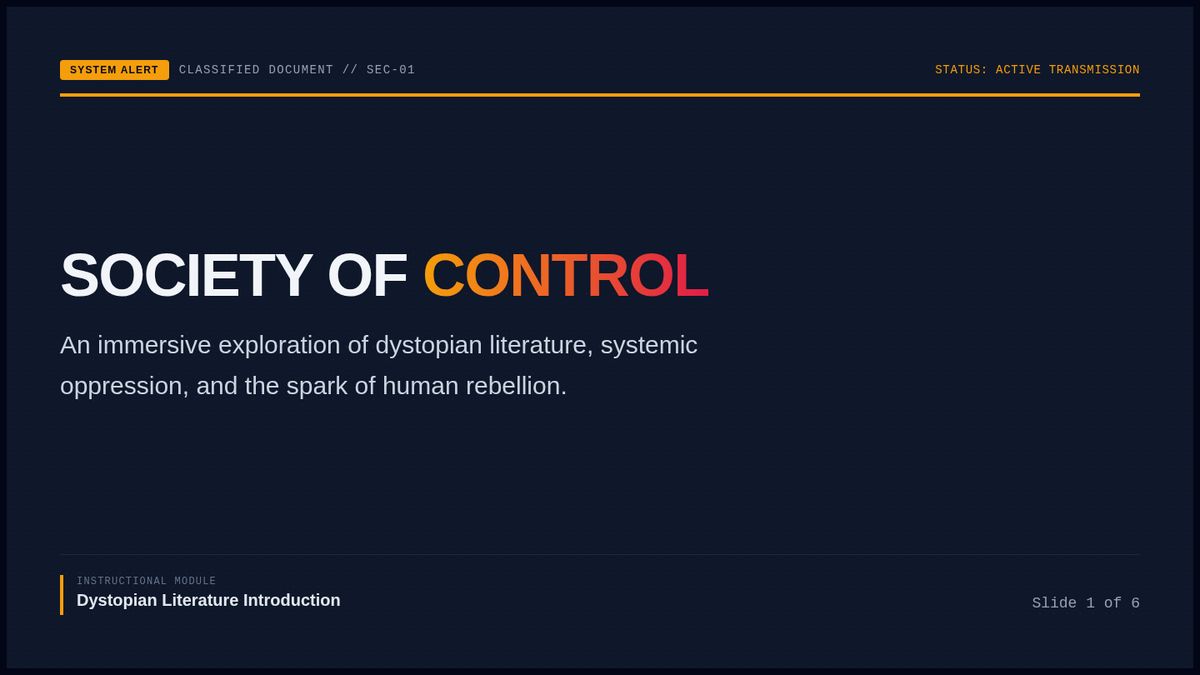
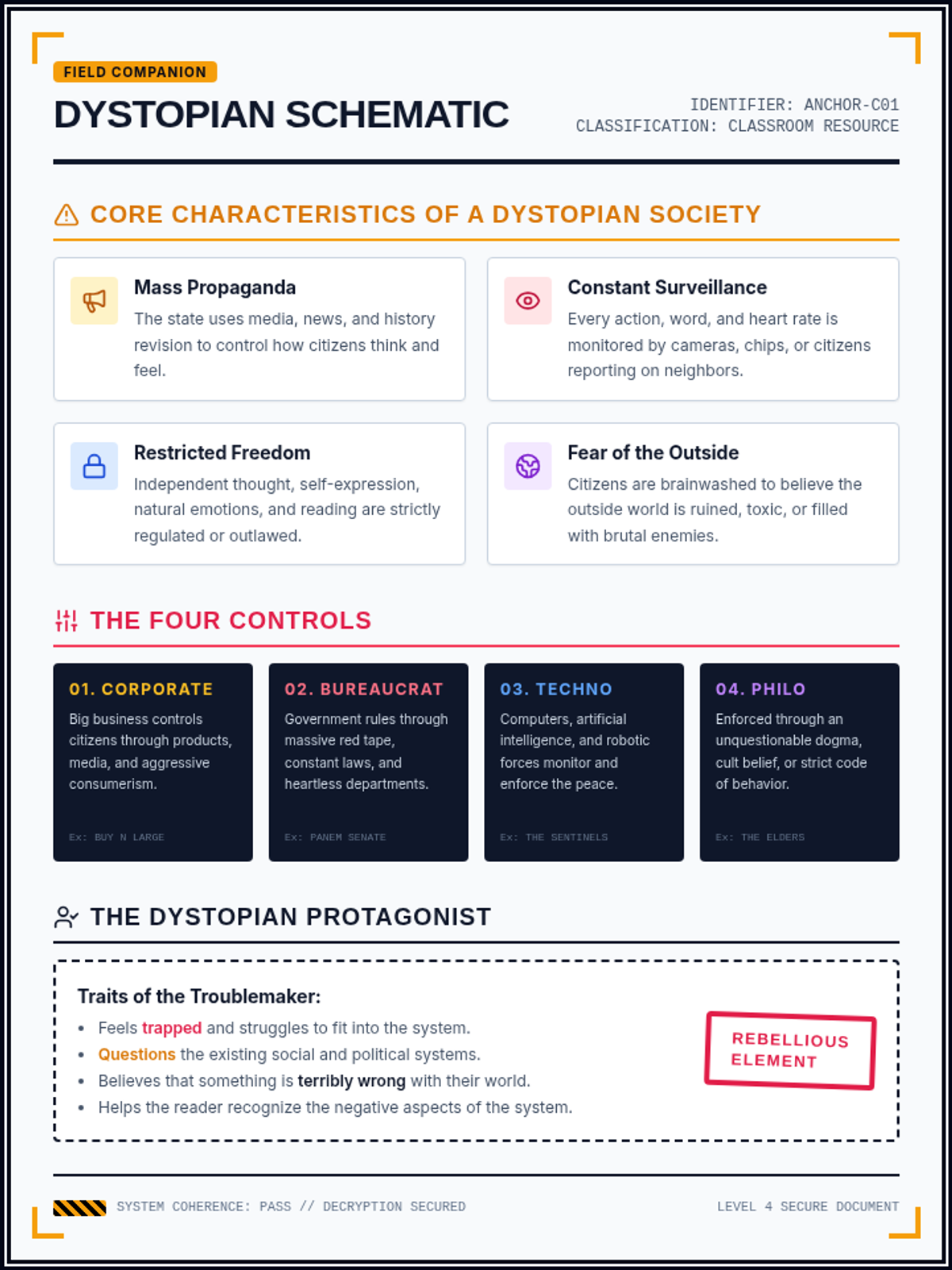
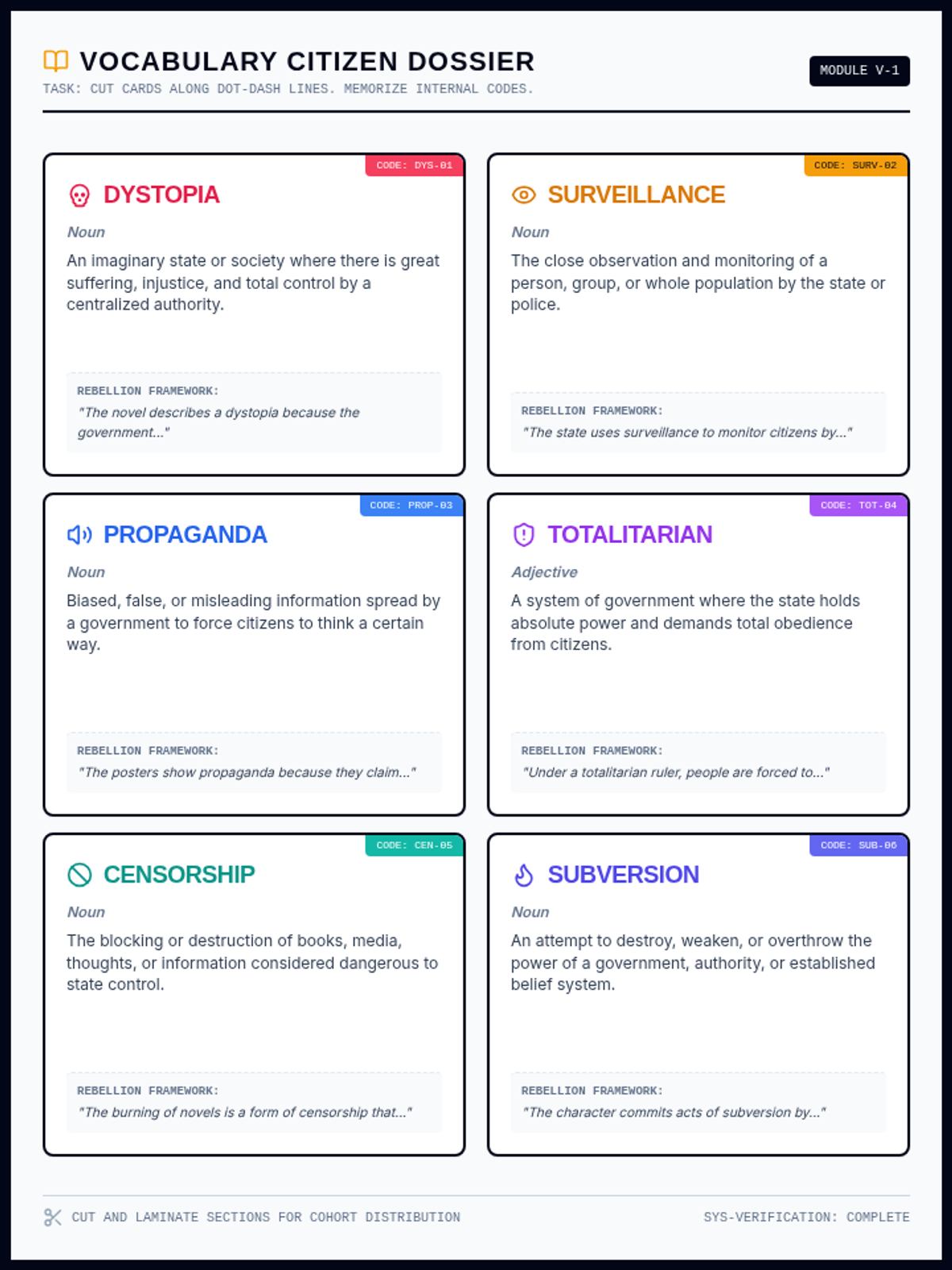
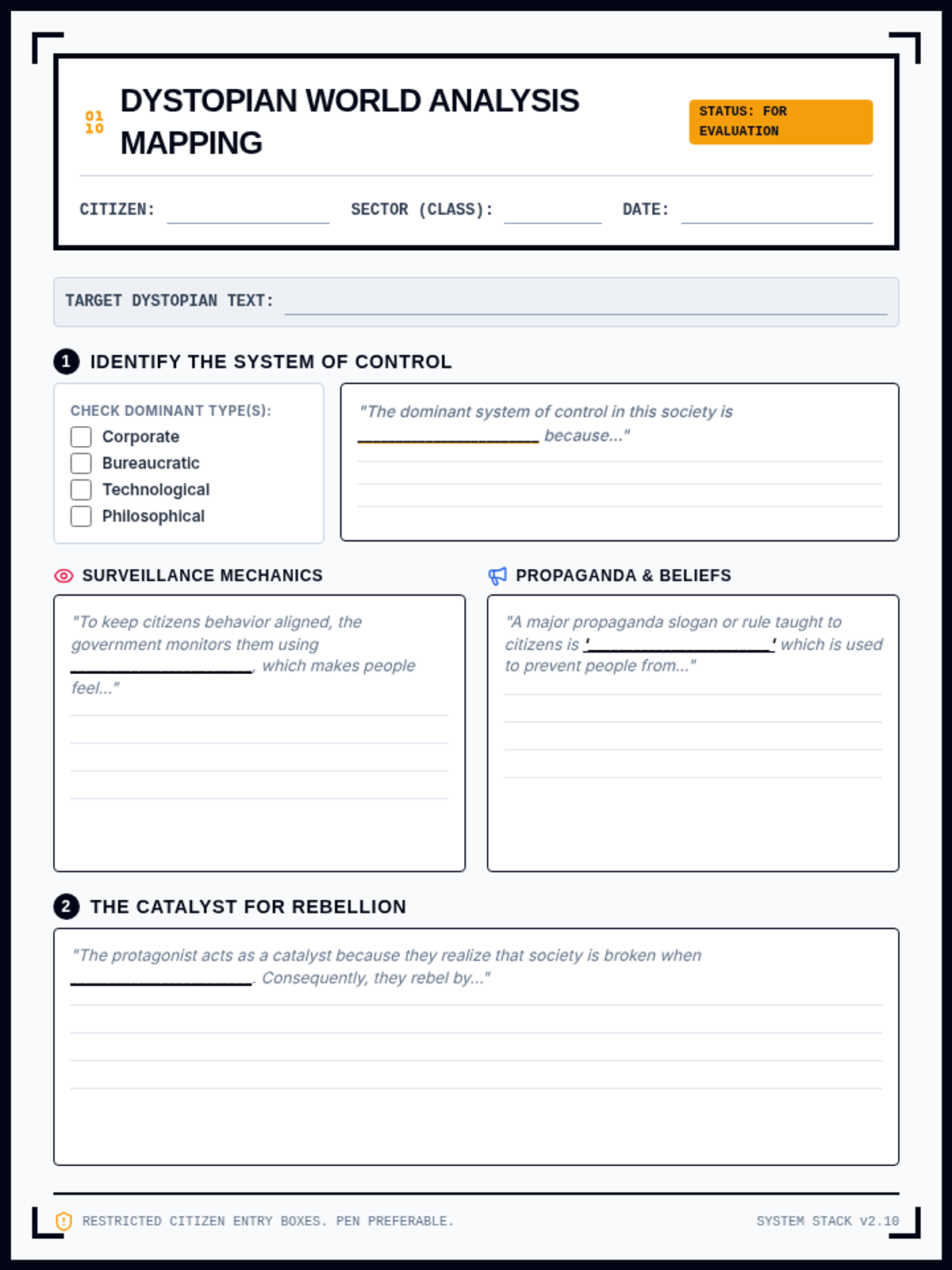
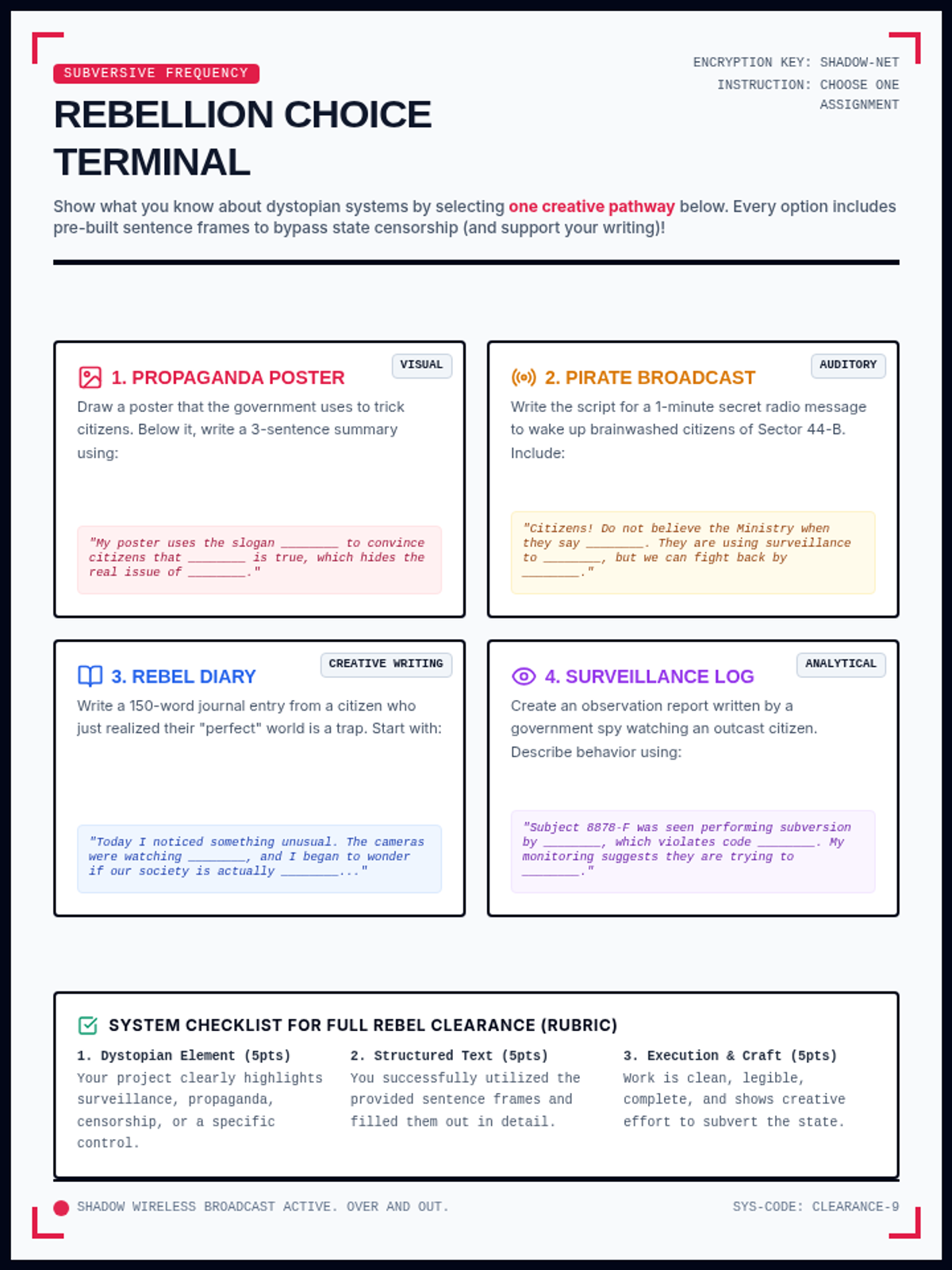
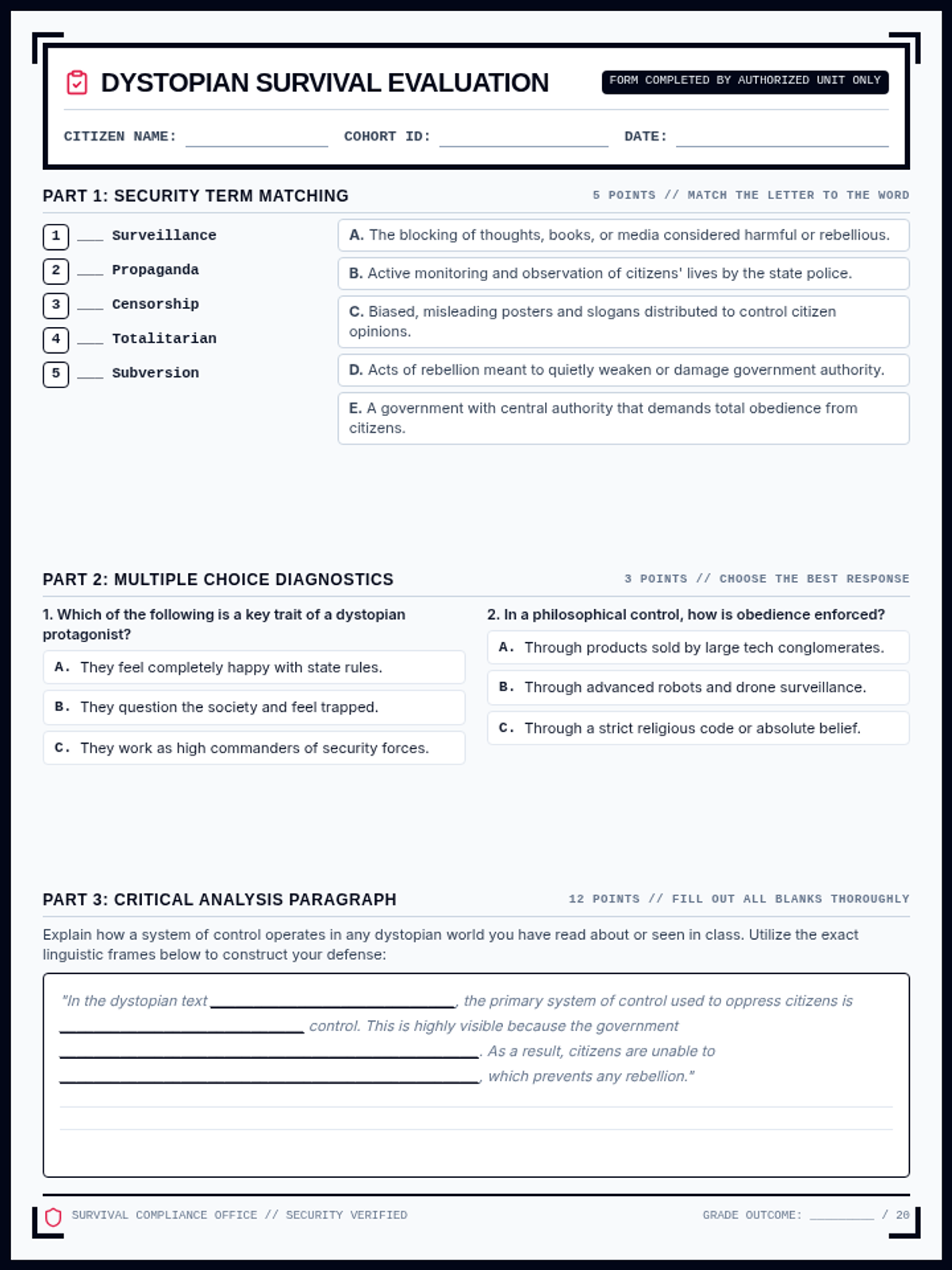
An immersive introductory lesson on dystopian literature. Students analyze systems of control, common tropes, and societal rebellion through visual slides, structured graphic organizers, and a creative choice board with heavy scaffolding and sentence starters.
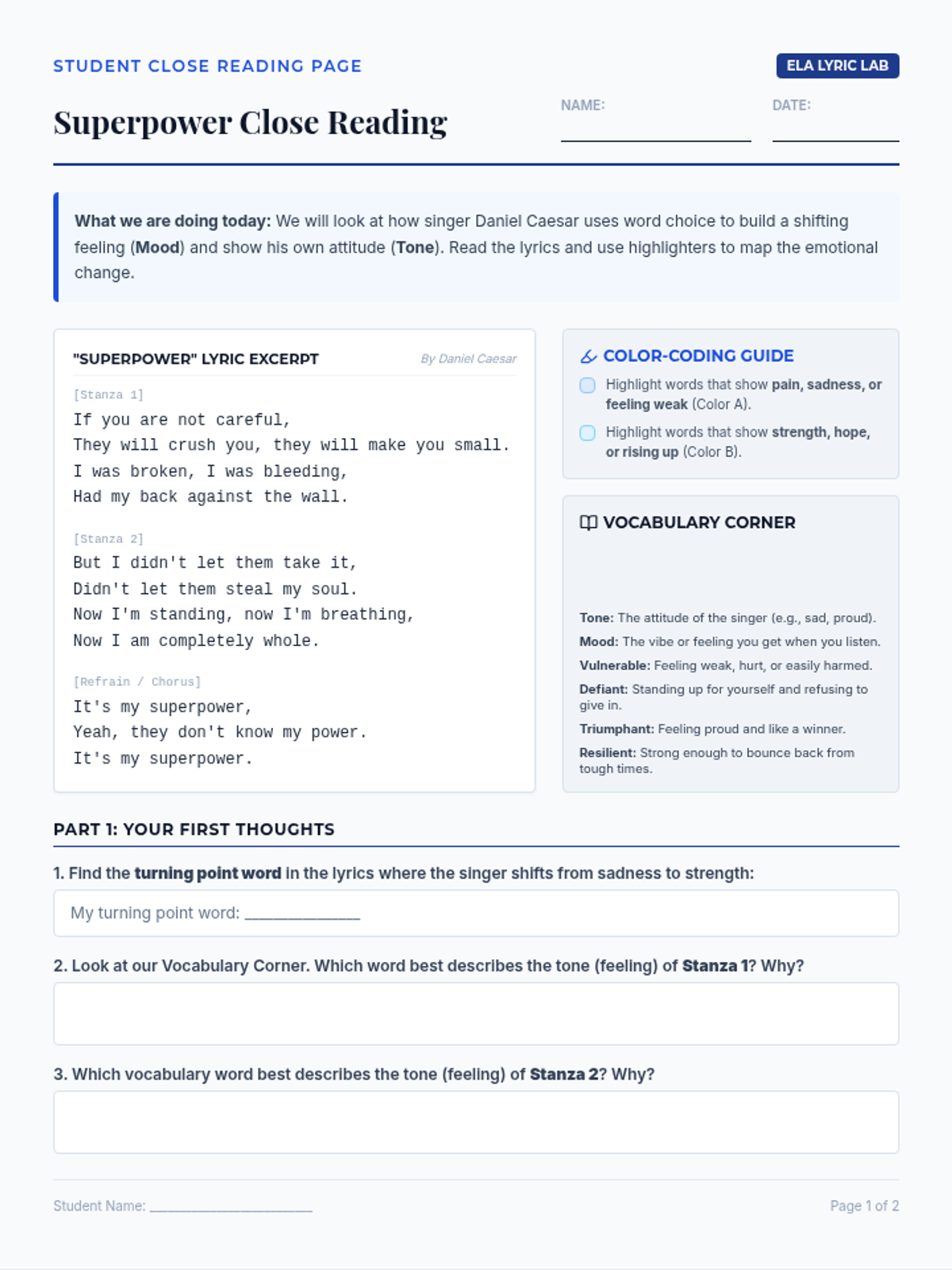
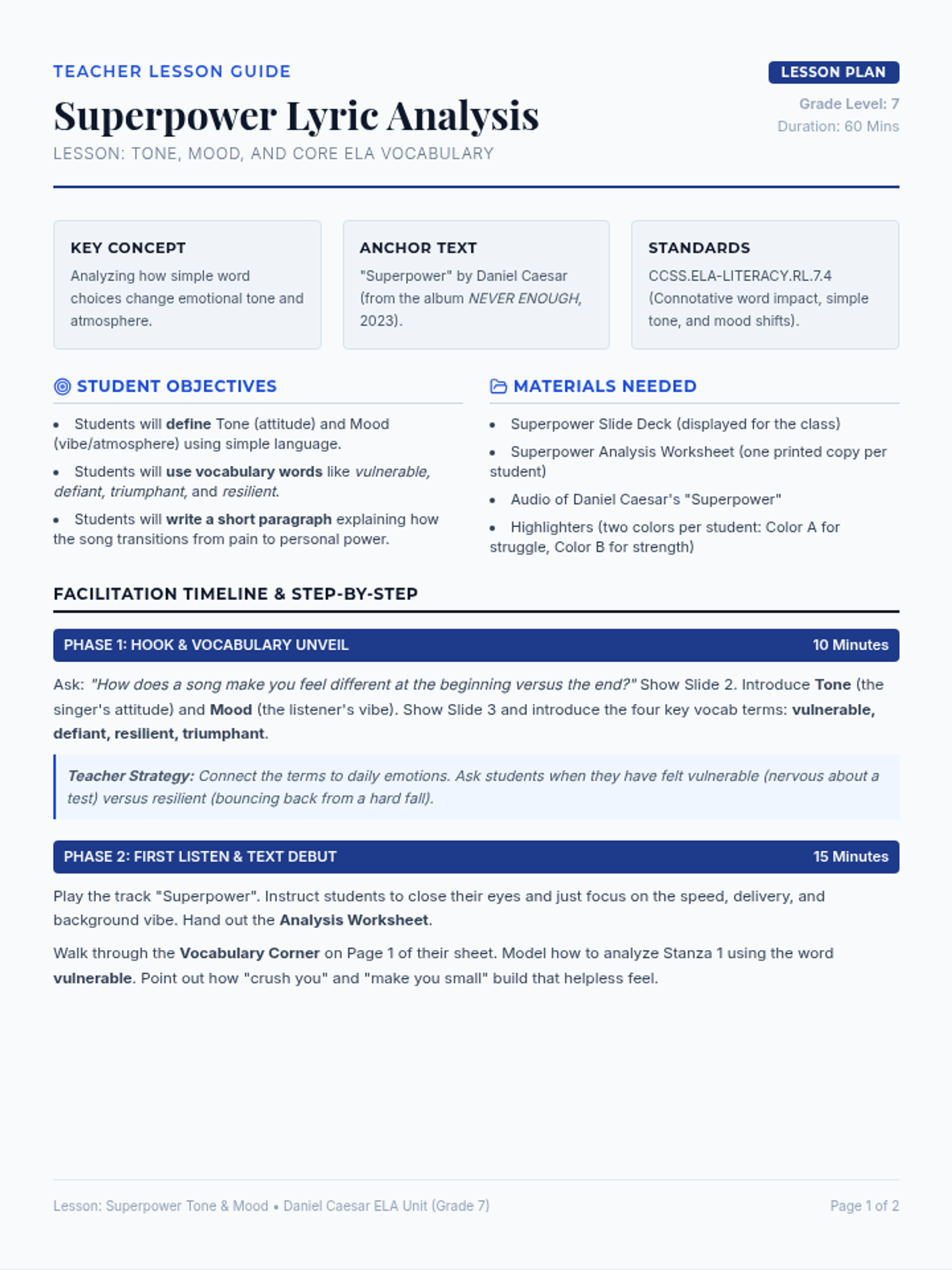
A complete ELA lesson examining tone, mood, and word choice shifts in Daniel Caesar's song 'Superpower', exploring themes of resilience and self-realization.
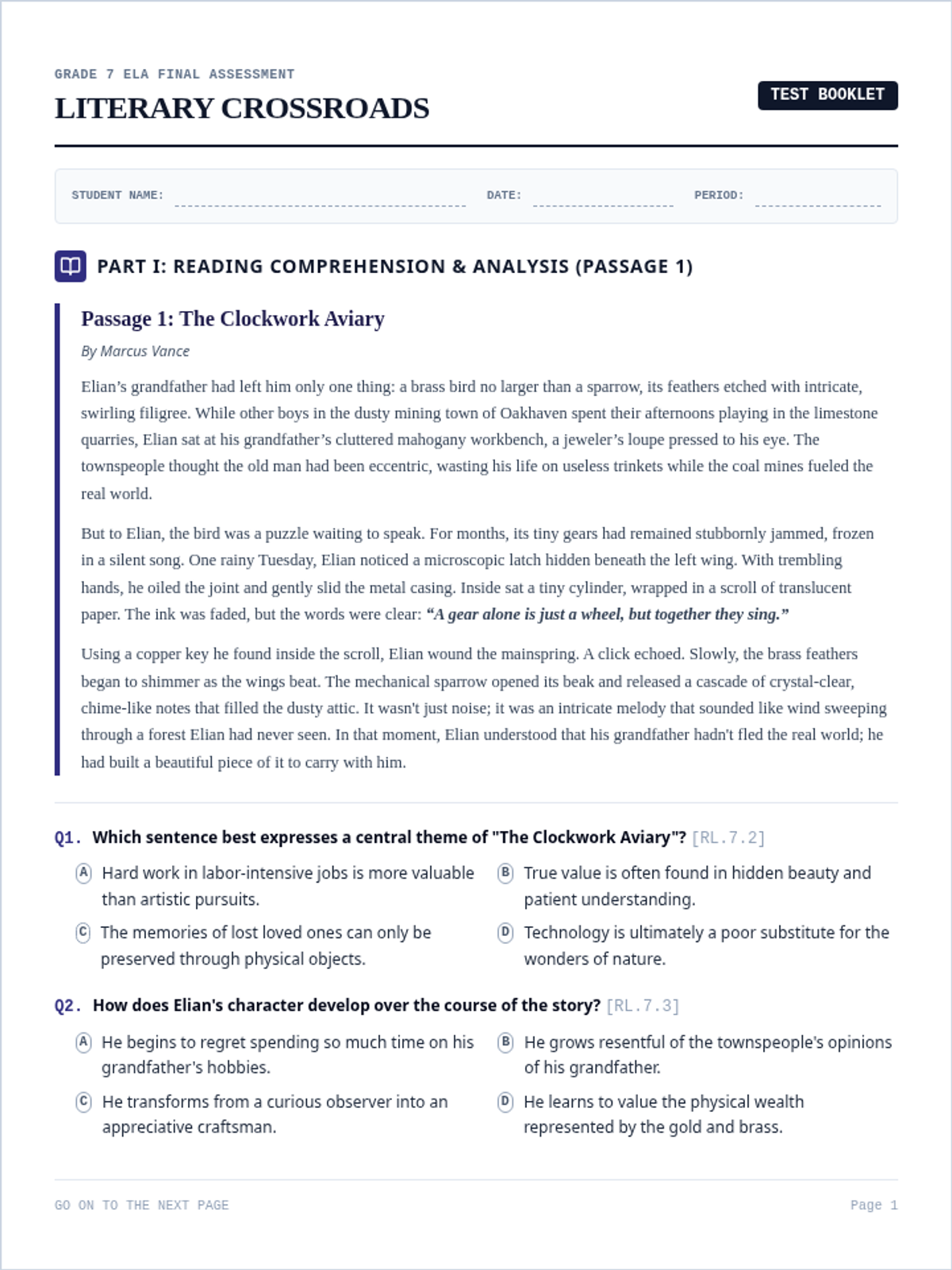
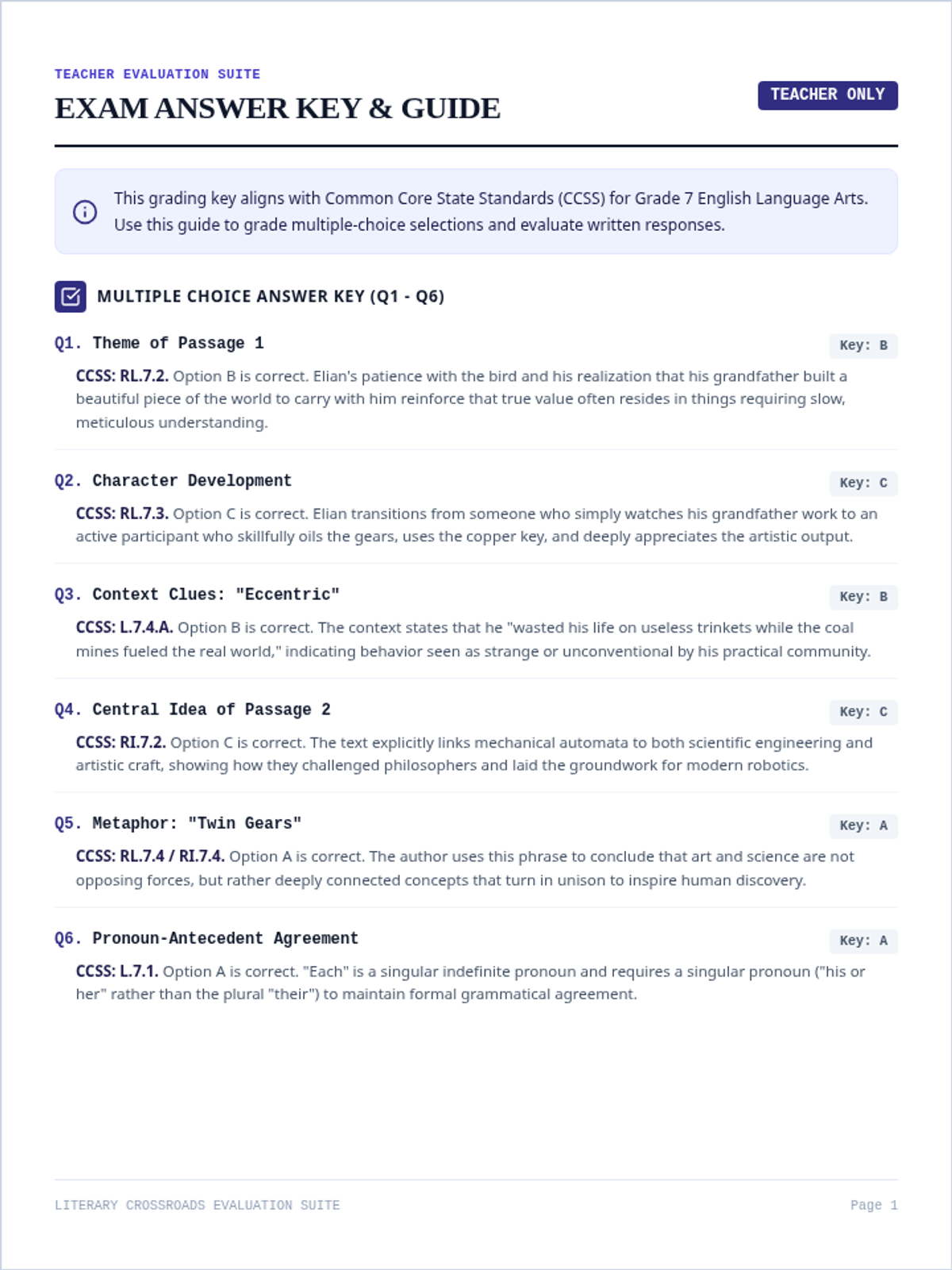
A comprehensive final assessment and evaluation suite for 7th grade ELA, covering theme, character development, central ideas, context clues, and analytical writing.
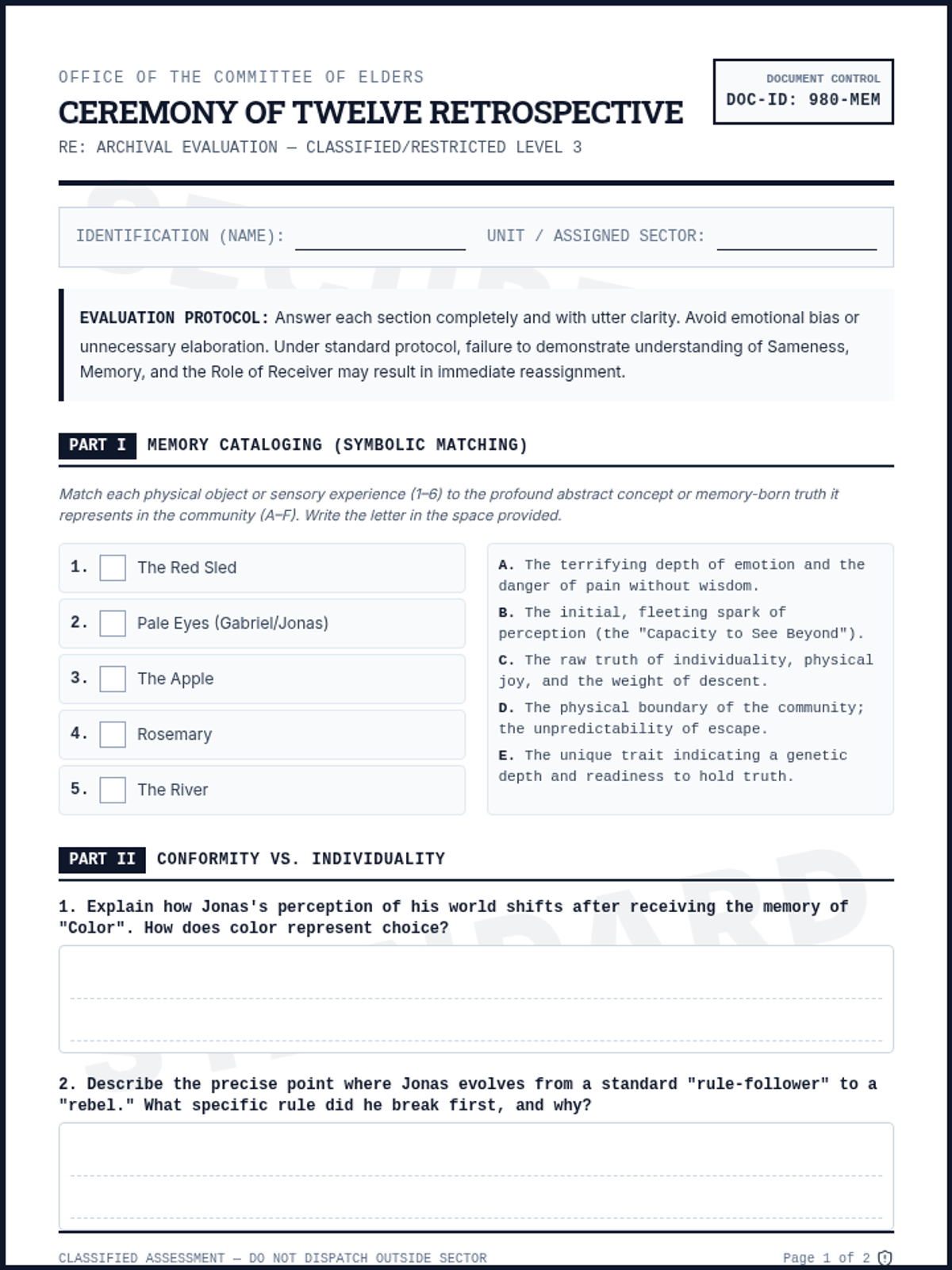
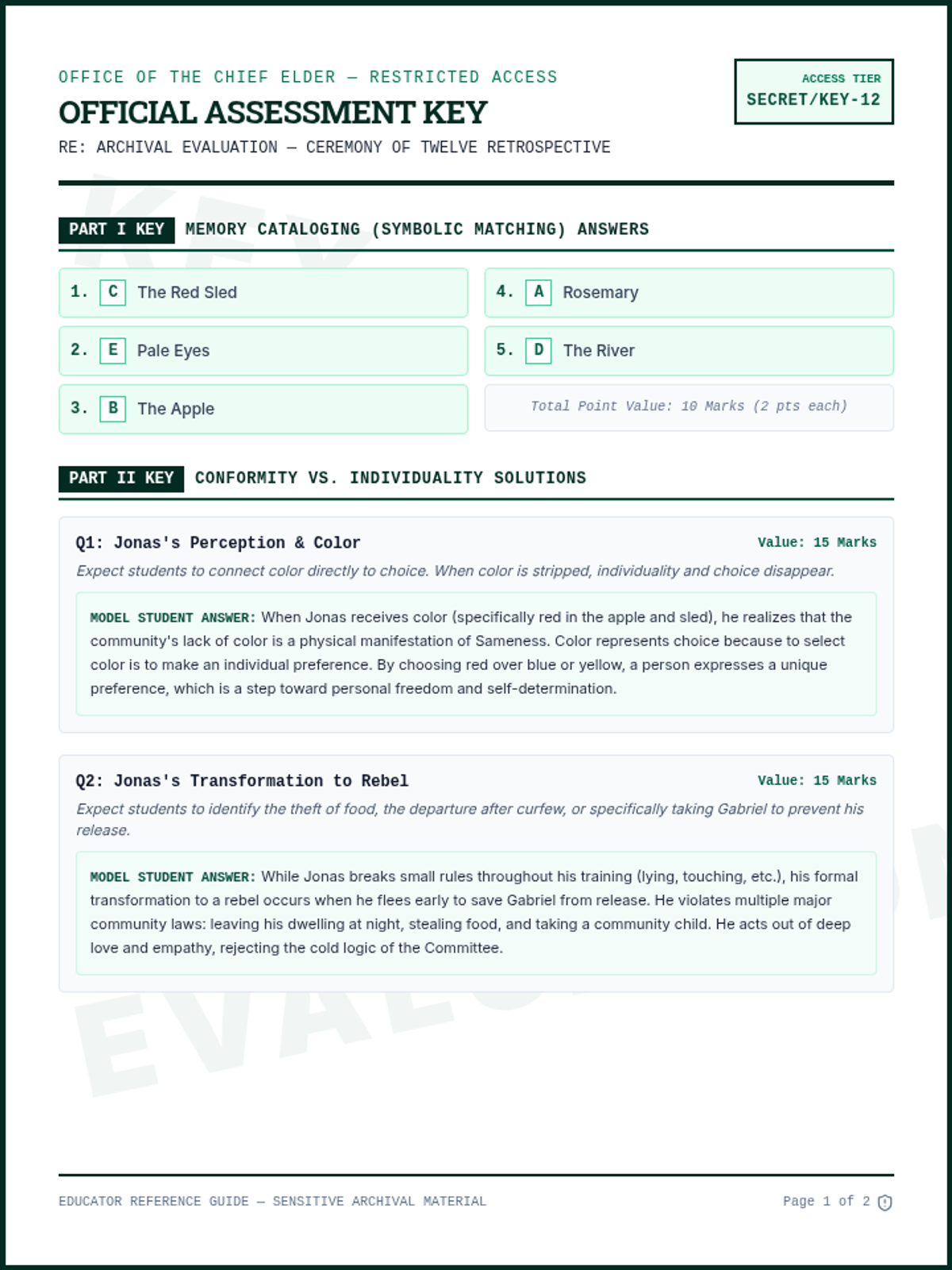
A comprehensive final exam lesson on Lois Lowry's 'The Giver', featuring a high-stakes, dystopian-themed student assessment and an educator's answer key and rubric focusing on memory, conformity, and character choice.
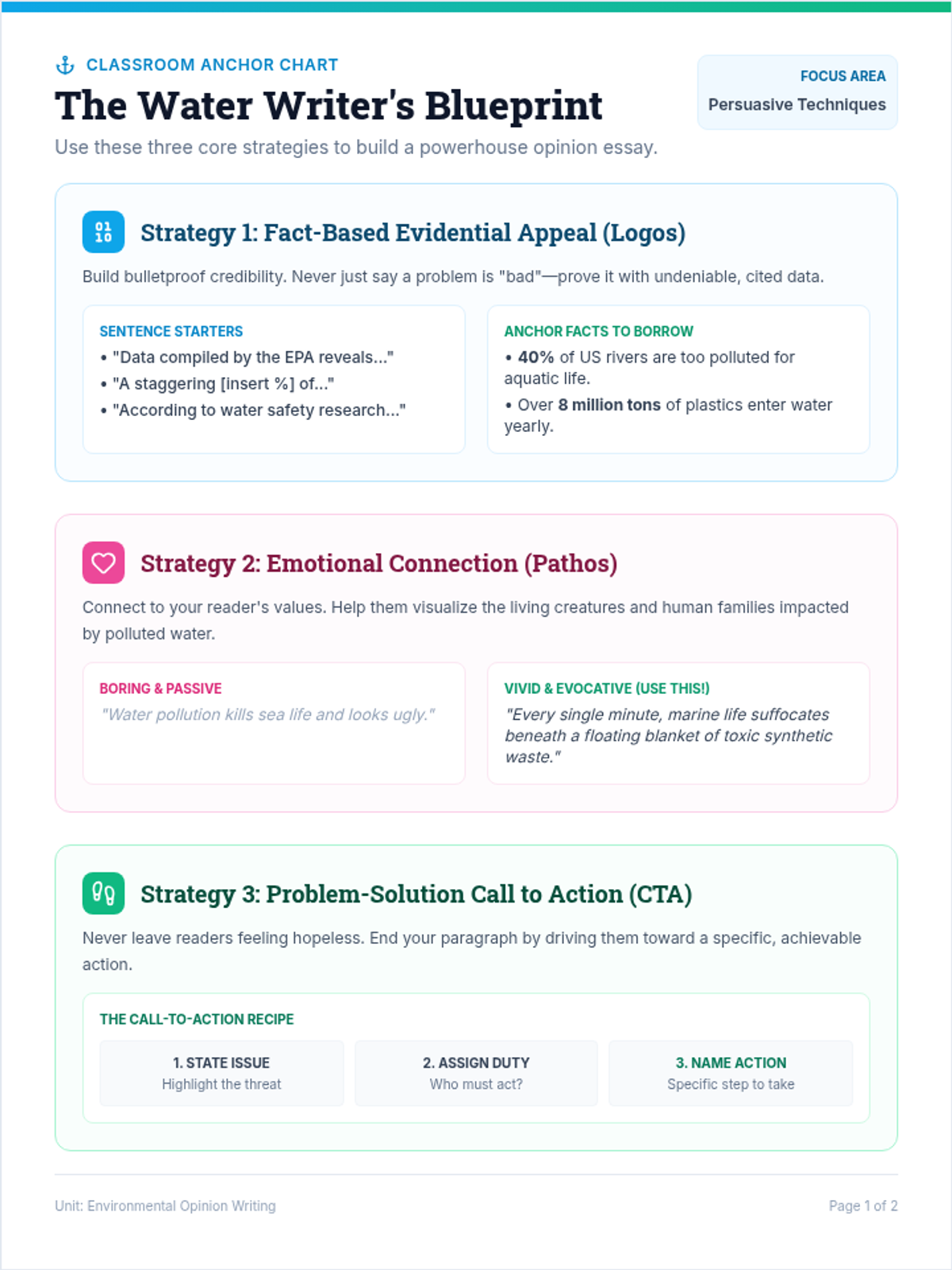
A targeted writing lesson that guides students through crafting high-impact opinion essays on water pollution and water demand. Students learn to combine fact-based evidential appeals, emotional connections, and structured problem-solution calls to action.
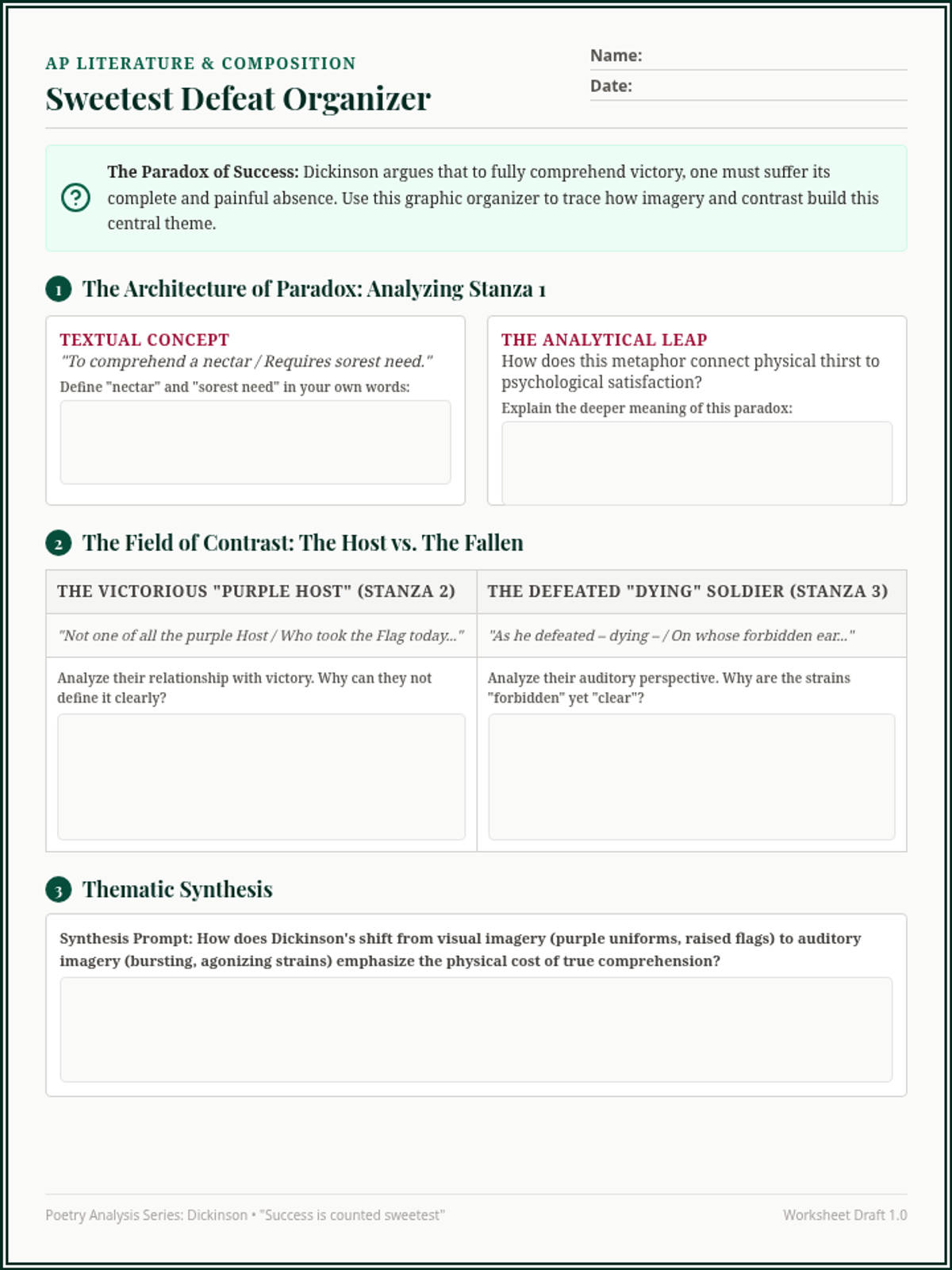
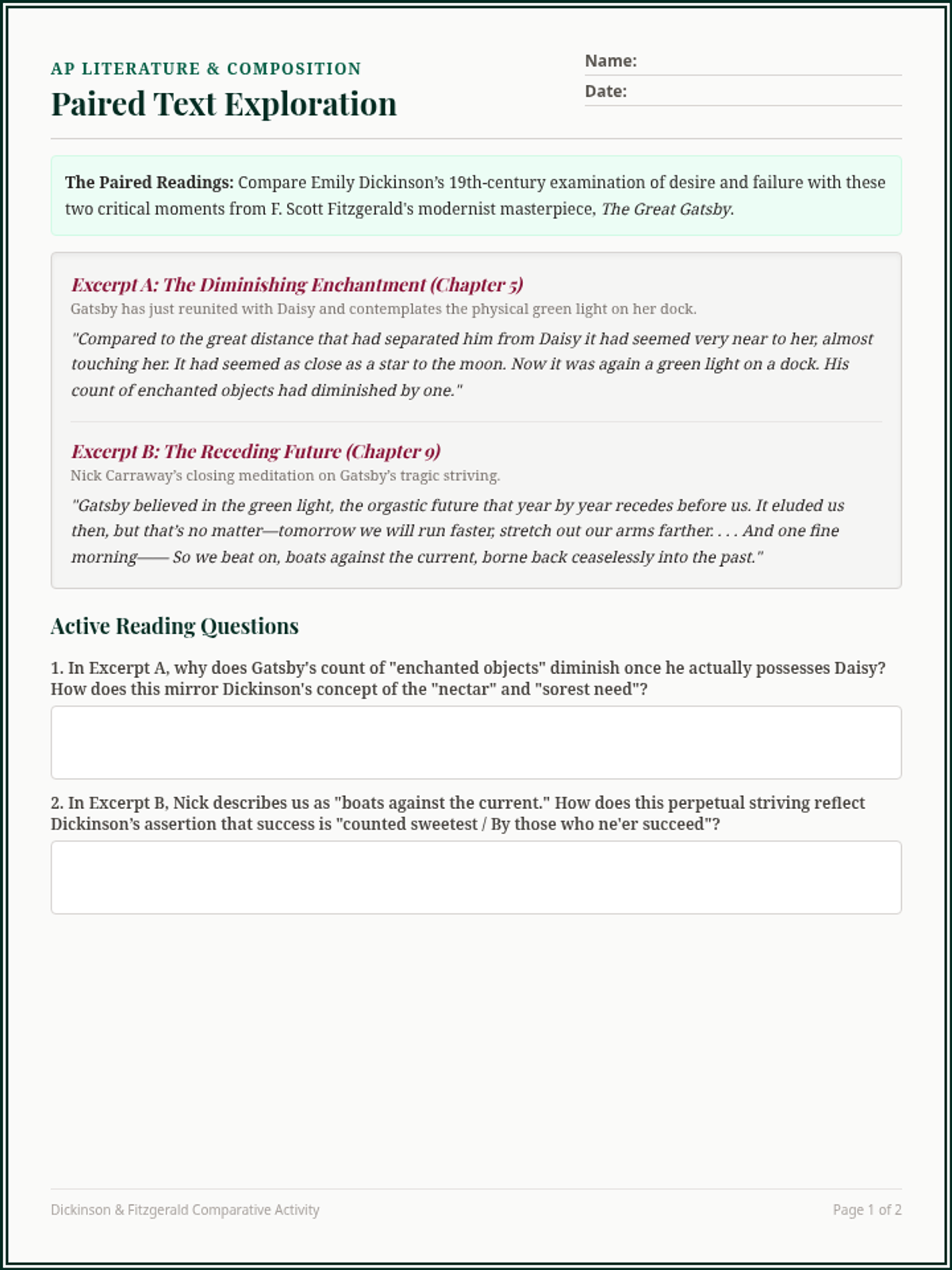
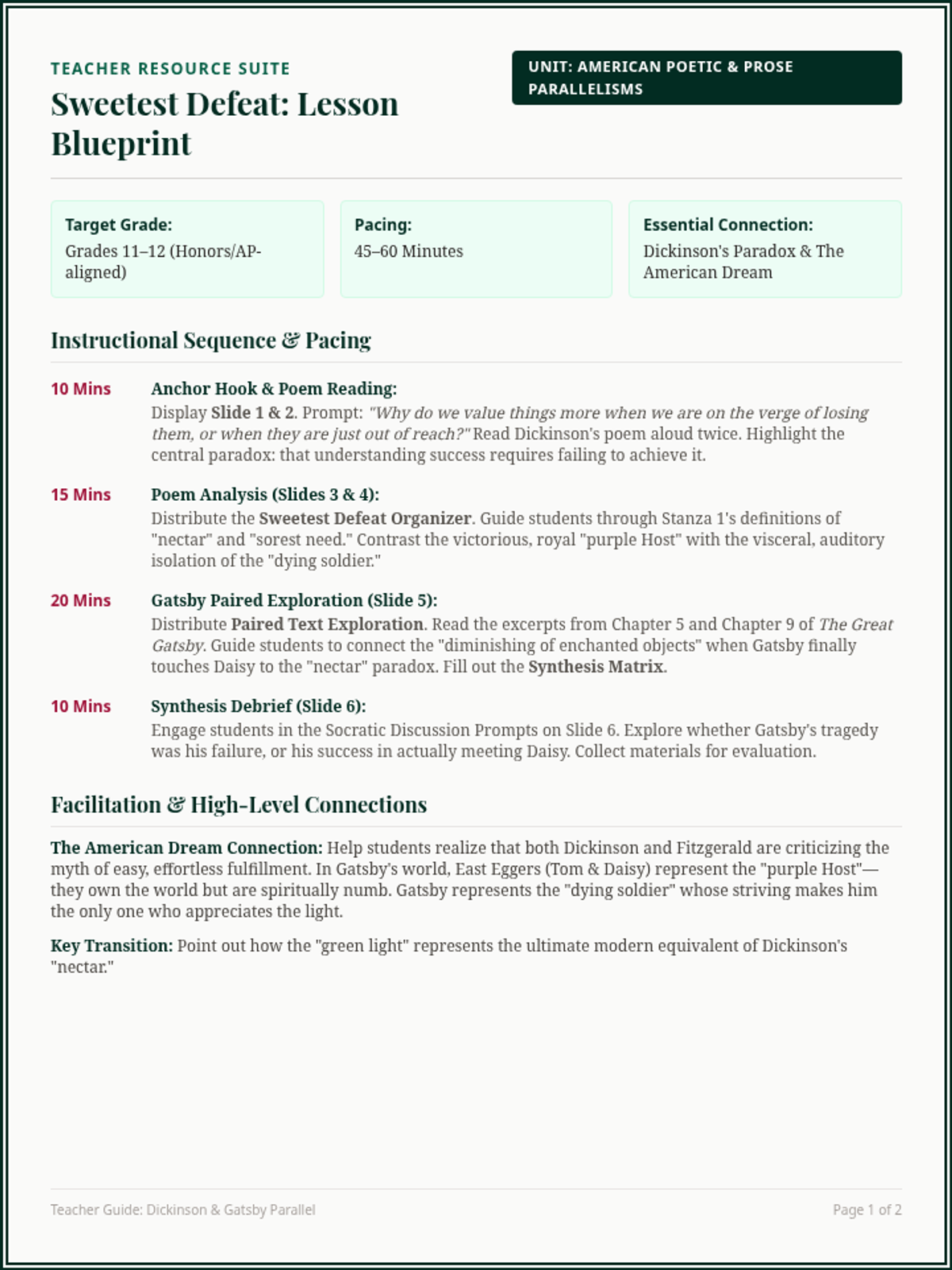
A deep-dive literature lesson exploring Emily Dickinson's 'Success is counted sweetest'. Students analyze how the central paradox—that defeat is necessary to truly comprehend victory—is built through imagery and contrast, and compare these themes to a modern text.
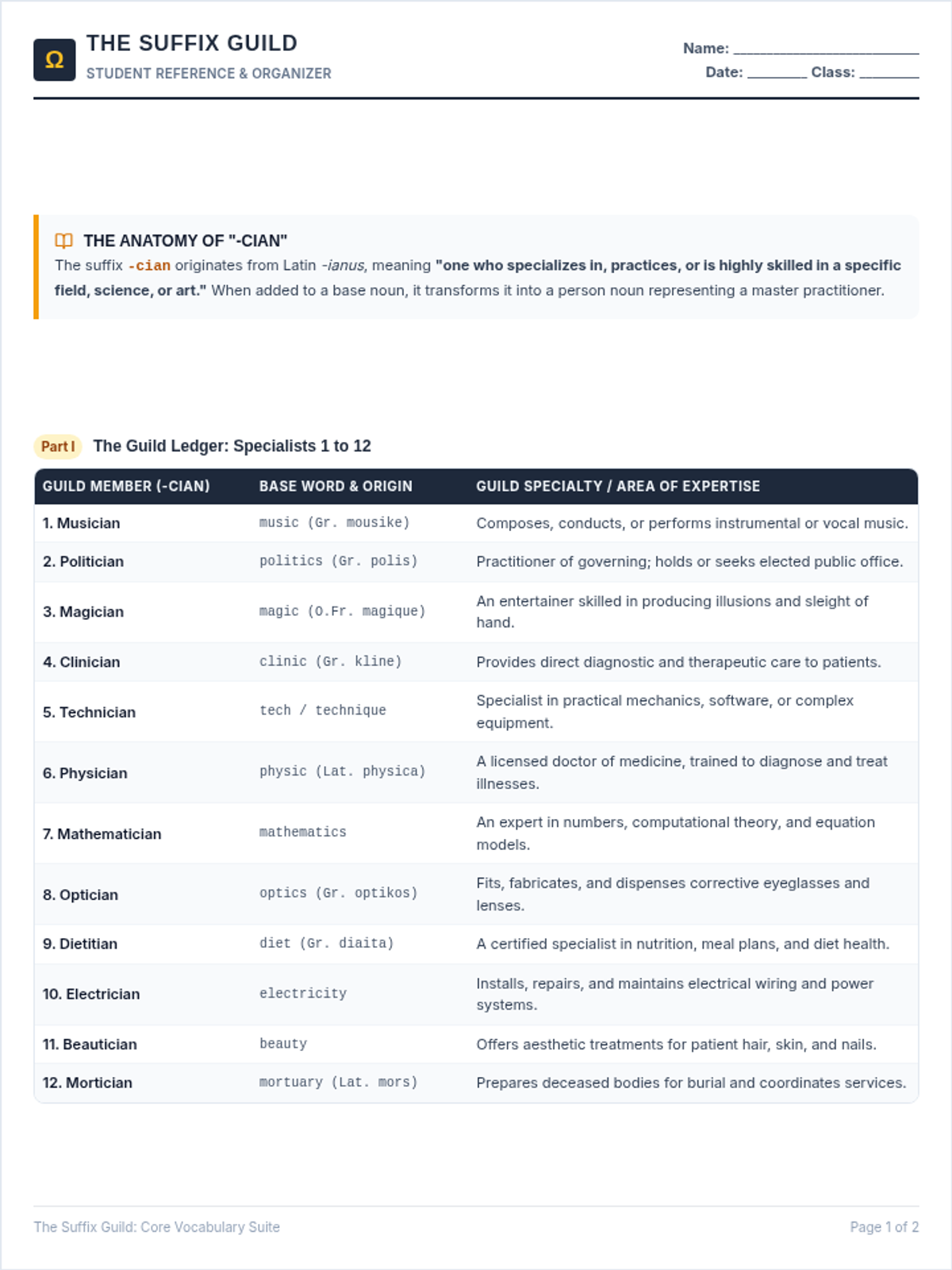
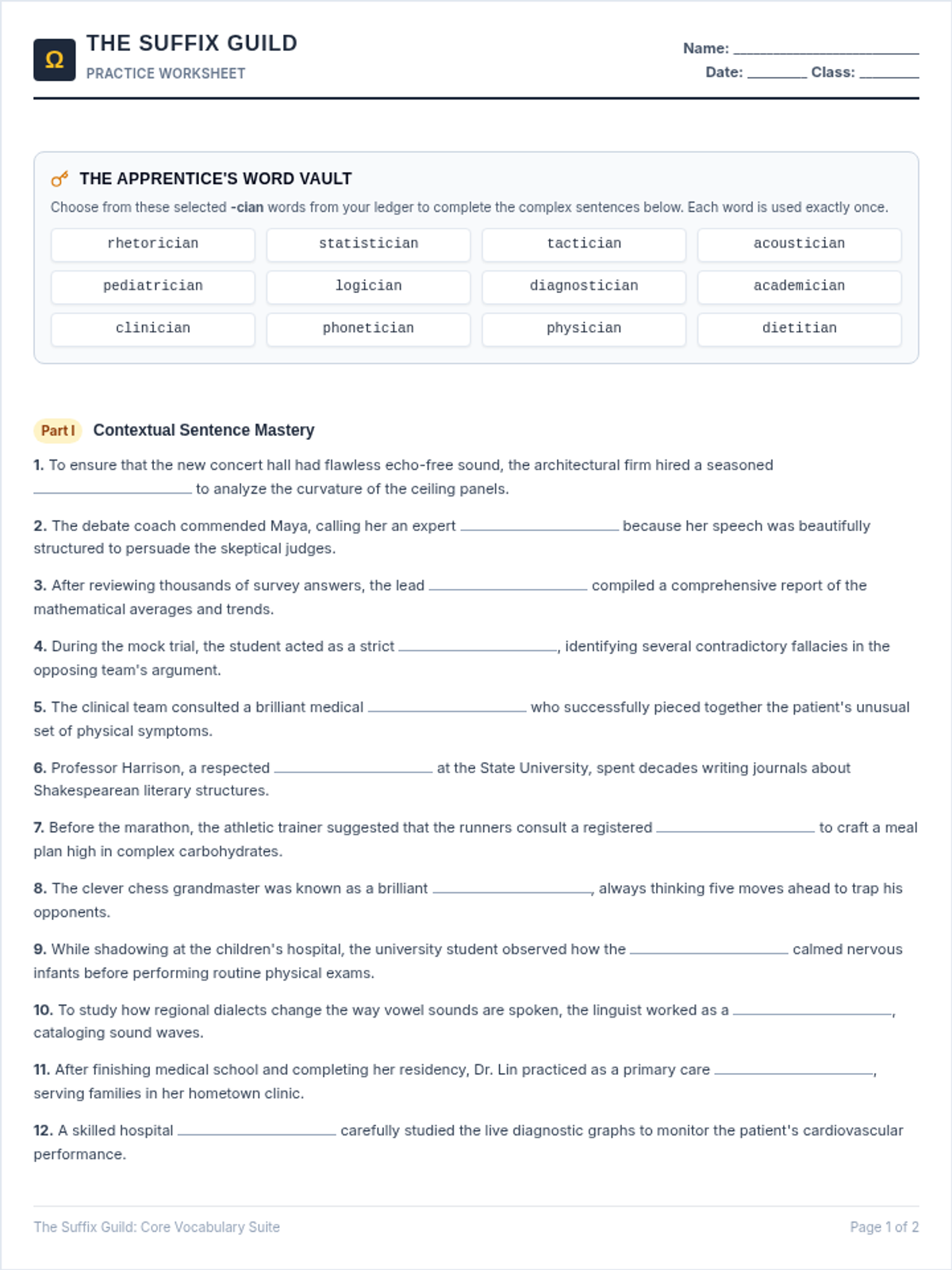
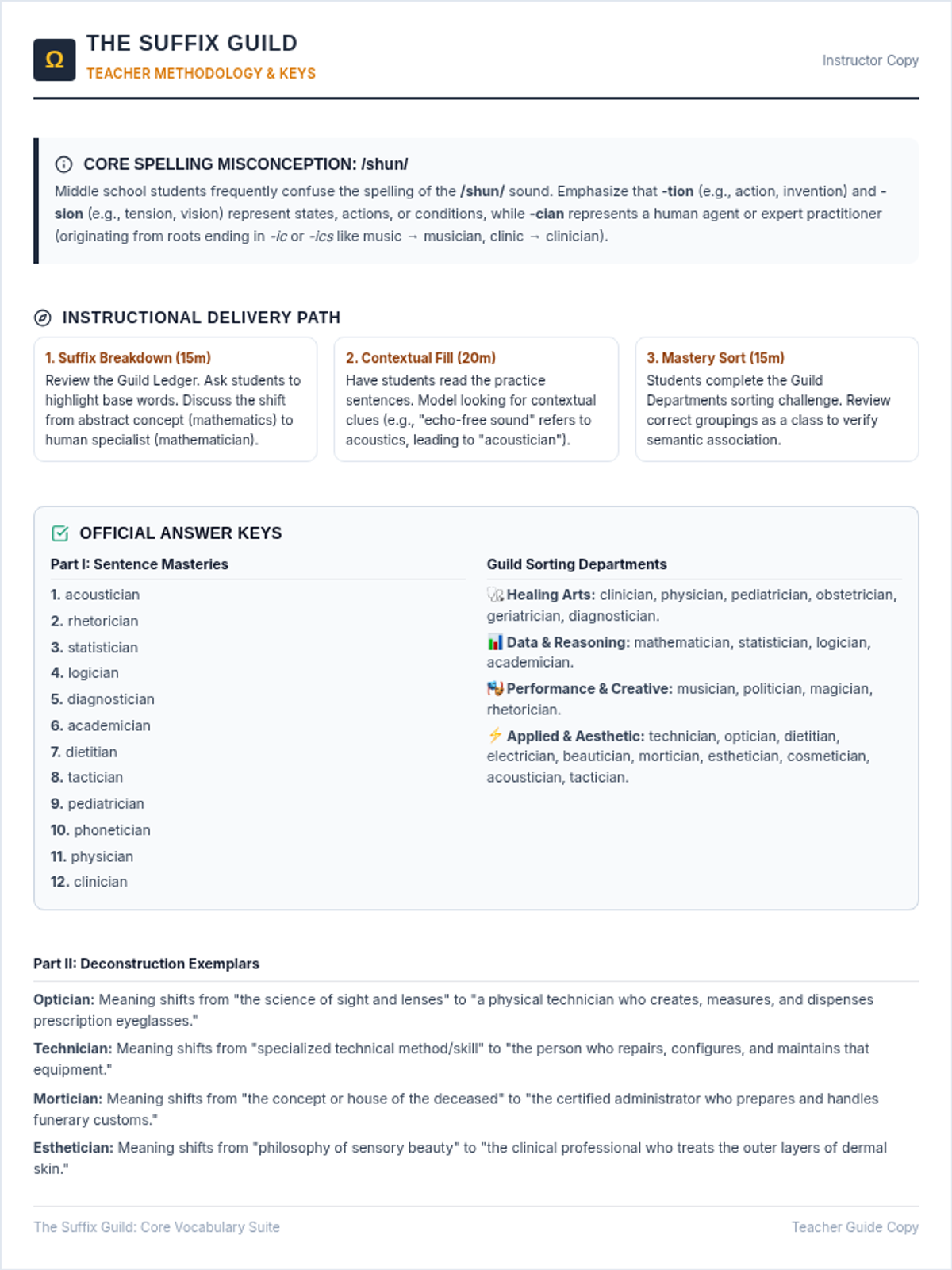
A middle school ELA lesson focusing on the suffix '-cian' (denoting a specialist or practitioner). Students learn 25 distinct terms, analyze their roots, and apply them in high-context graphic organizers, fill-in-the-blank challenges, and analytical writing exercises.
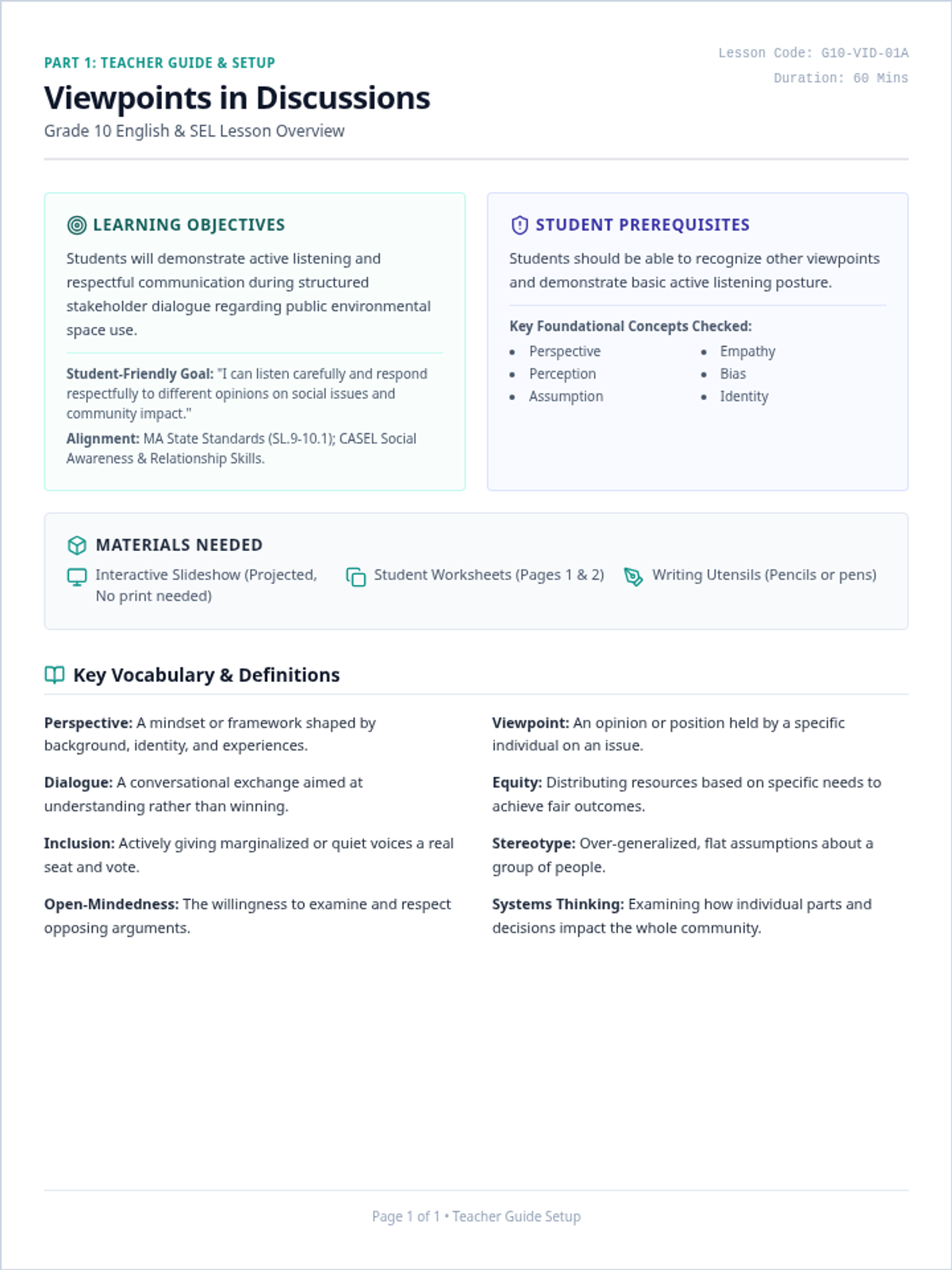
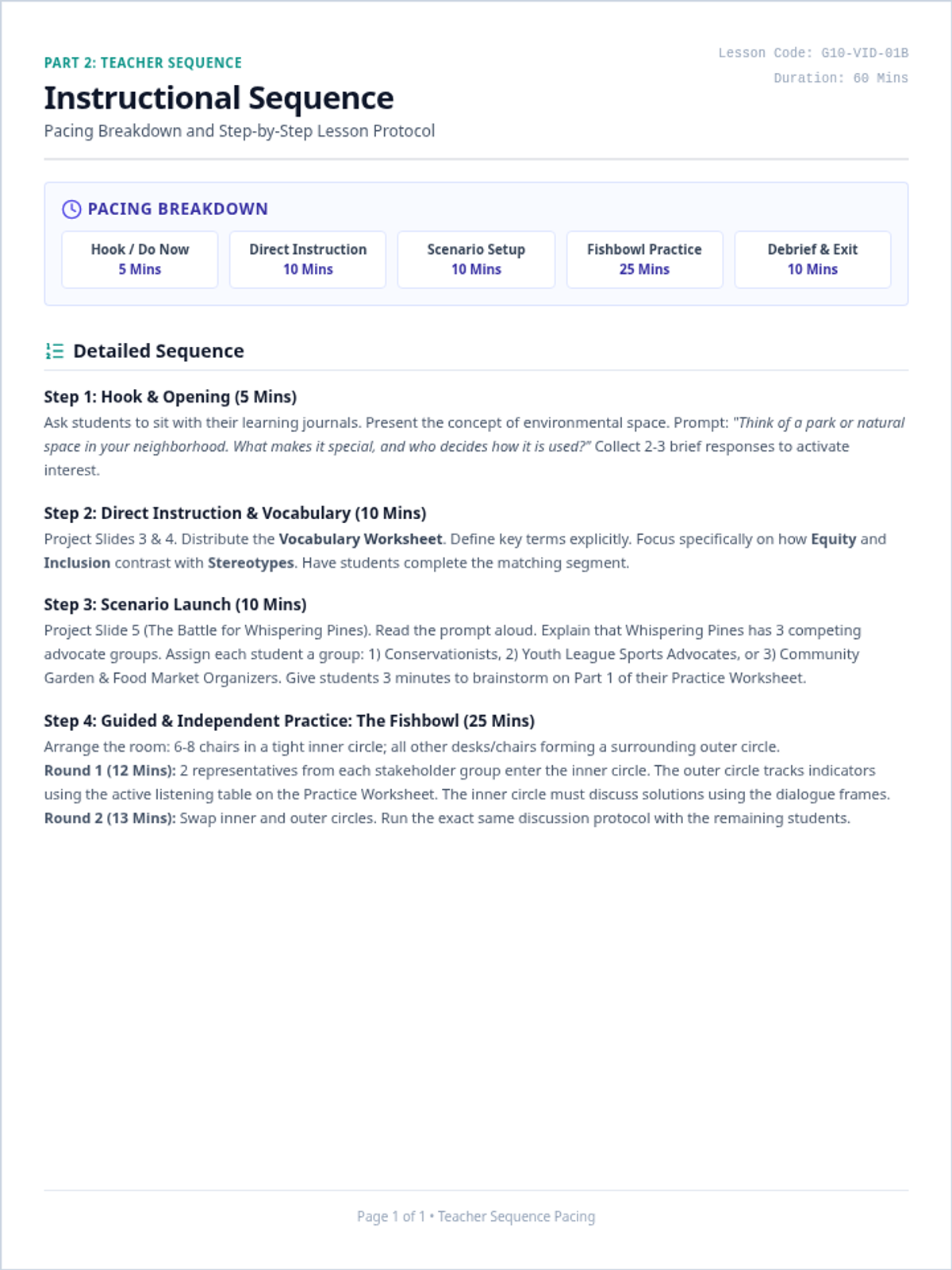
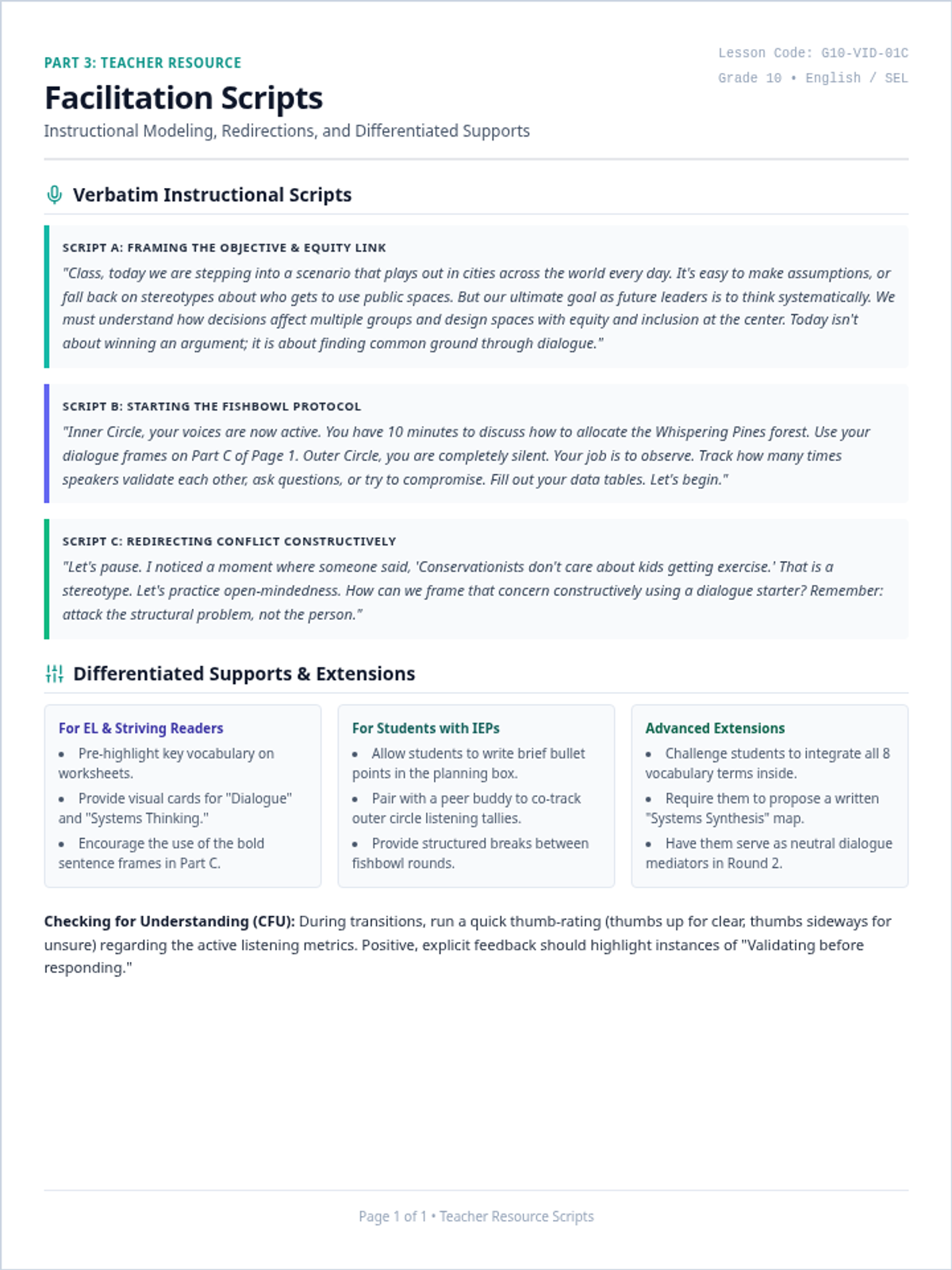
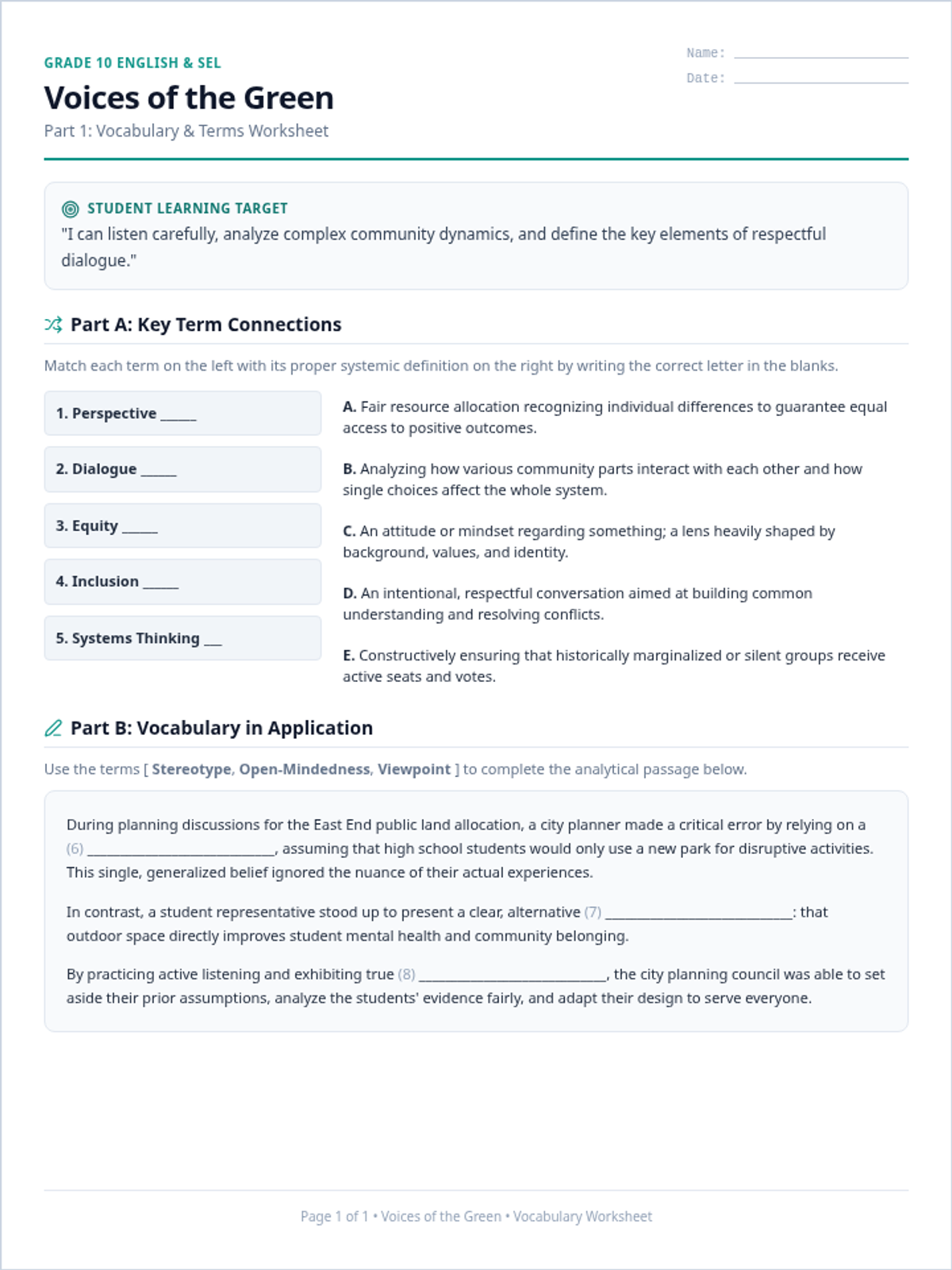
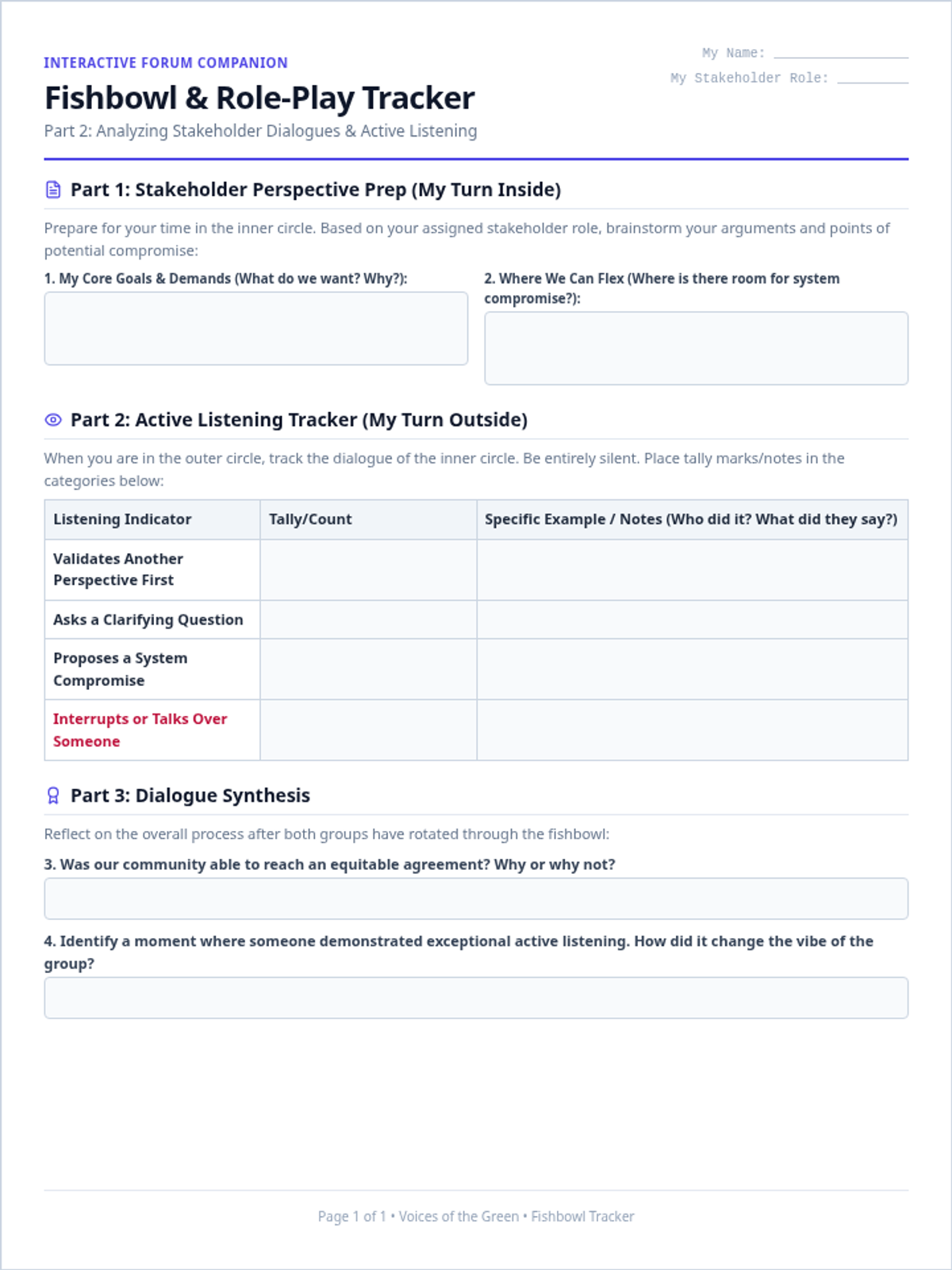
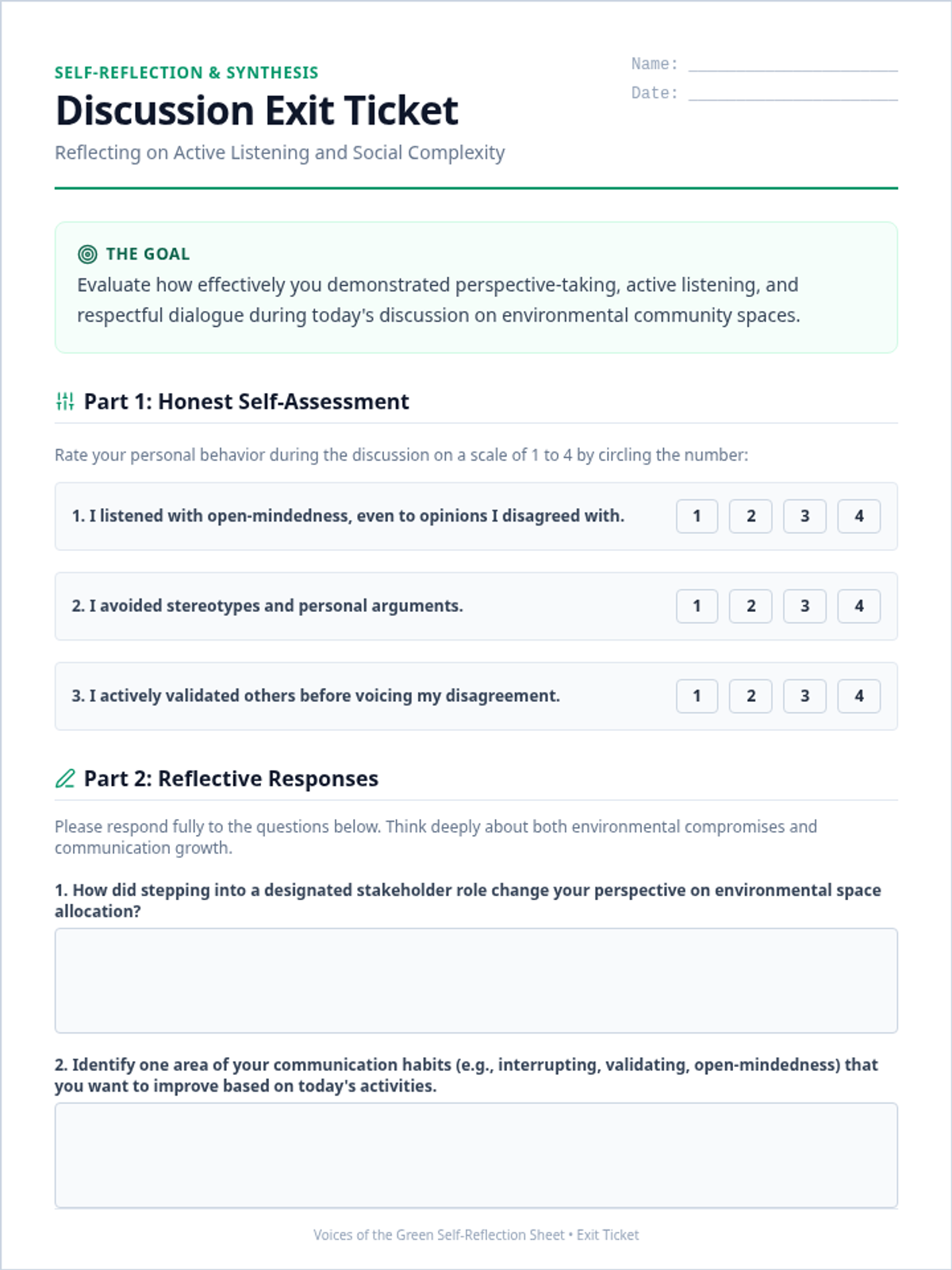
A Grade 10 English & SEL lesson focused on active listening and respectful communication during structured stakeholder dialogue about community environmental space use. Features a complete slide deck, a student worksheet, a teacher facilitation guide with scripts, and a self-reflective exit ticket.
A vocabulary and morphology lesson focusing on the academic and STEM suffix -cian, representing highly skilled occupational roles. Students explore word roots, spelling transformations, and professional definitions.
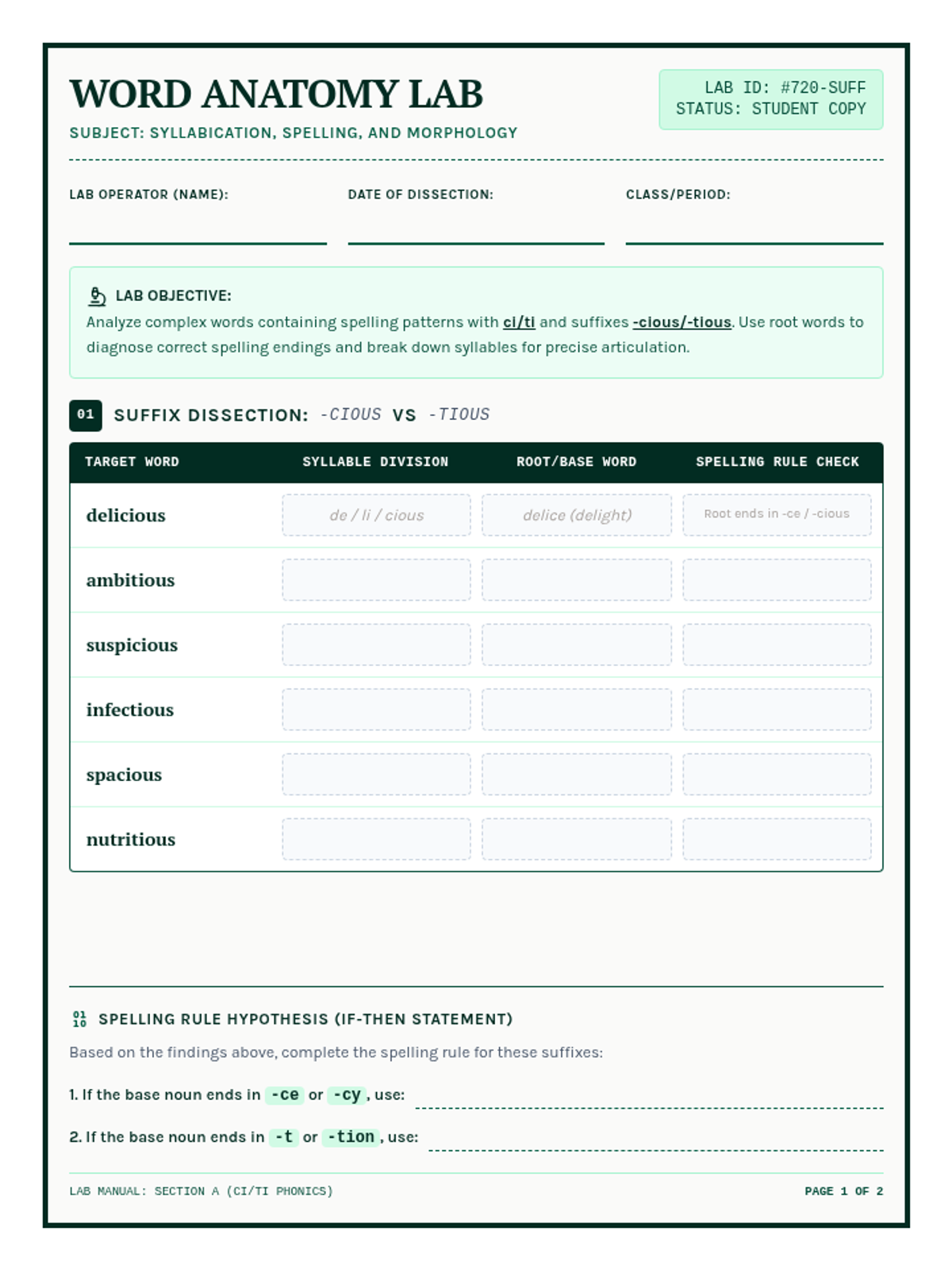
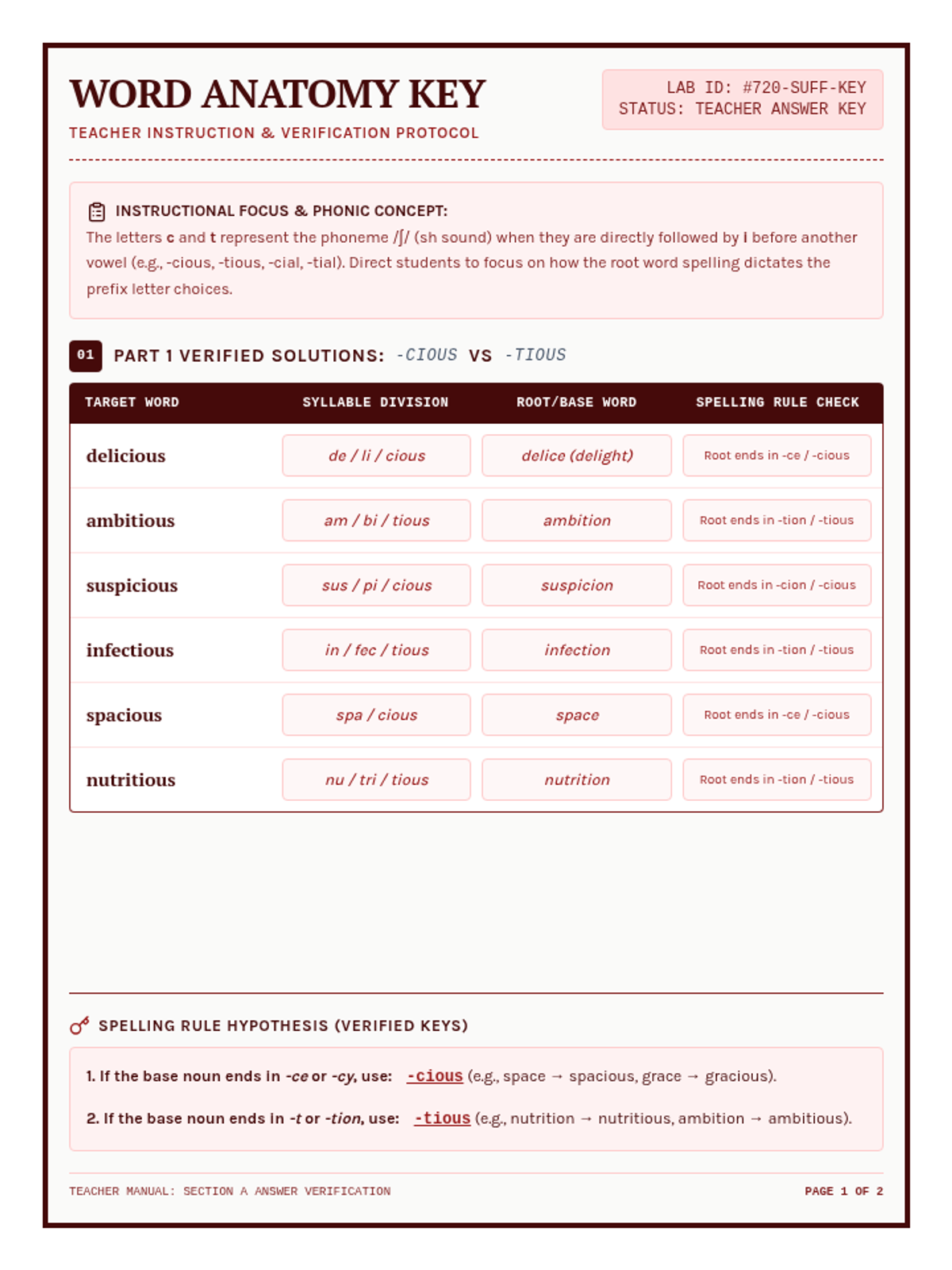
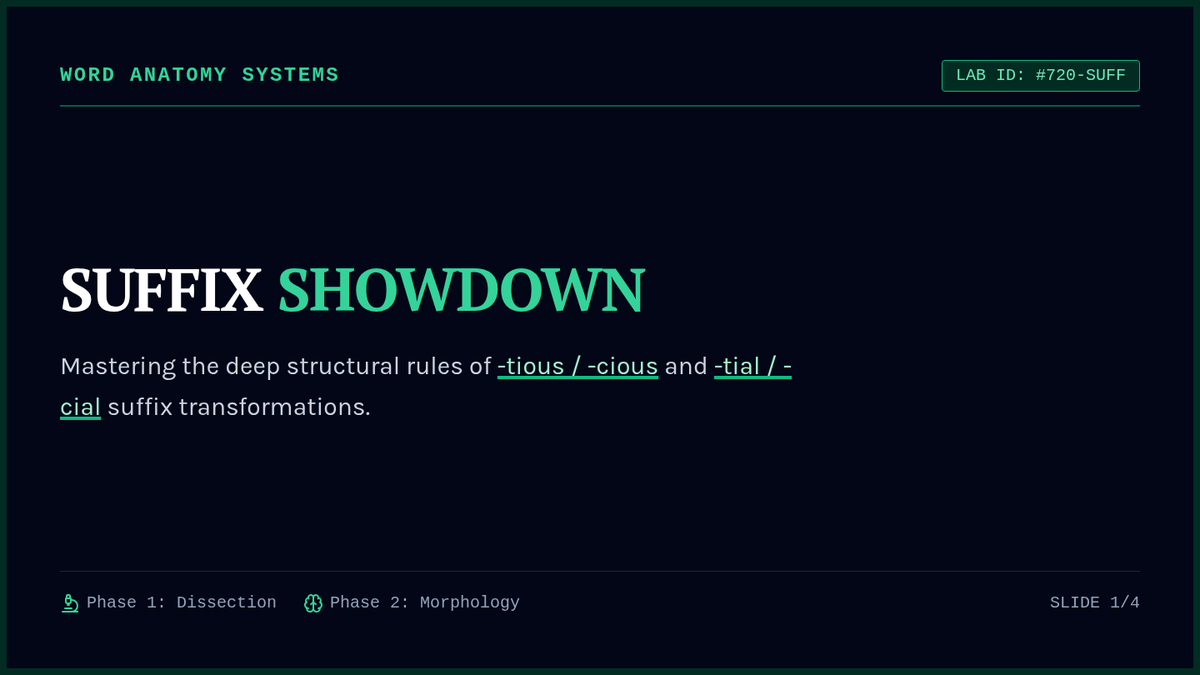
A masterclass in decoding, spelling, and analyzing 3- and 4-syllable words containing ti, ci, tious, cious, tial, and cial. Students explore phonics, spelling rules, and morphology through structured word breakdown.
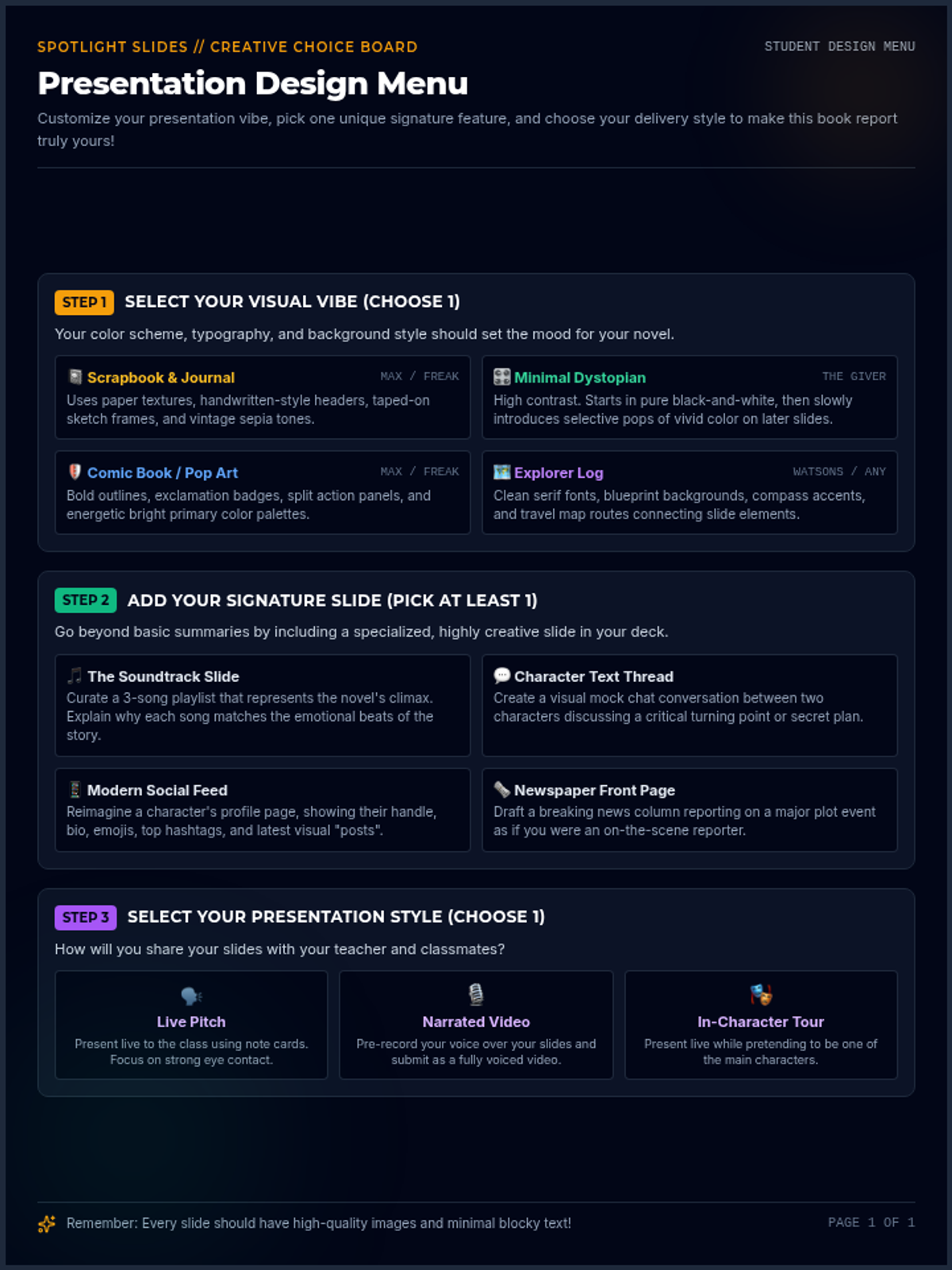
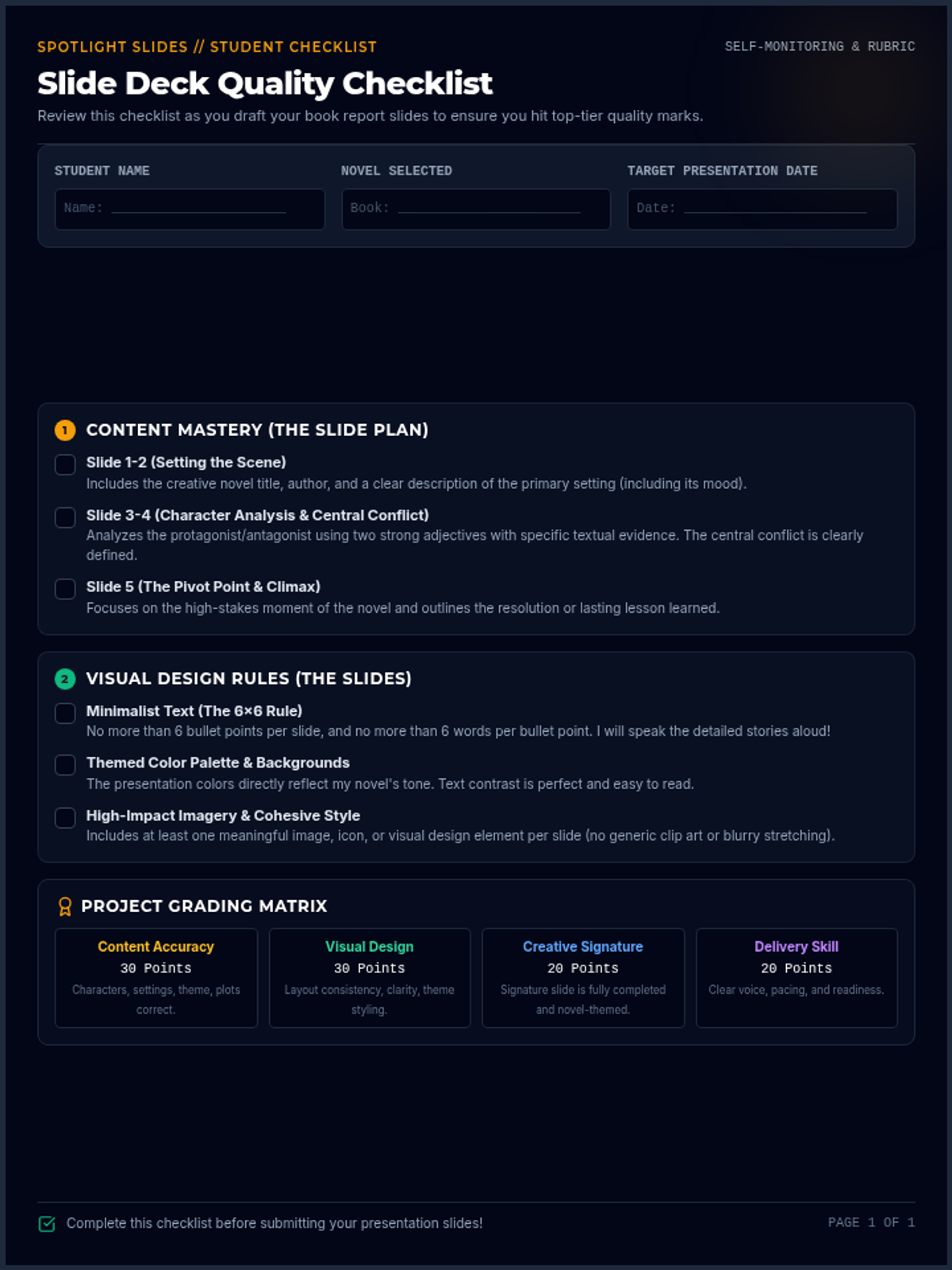
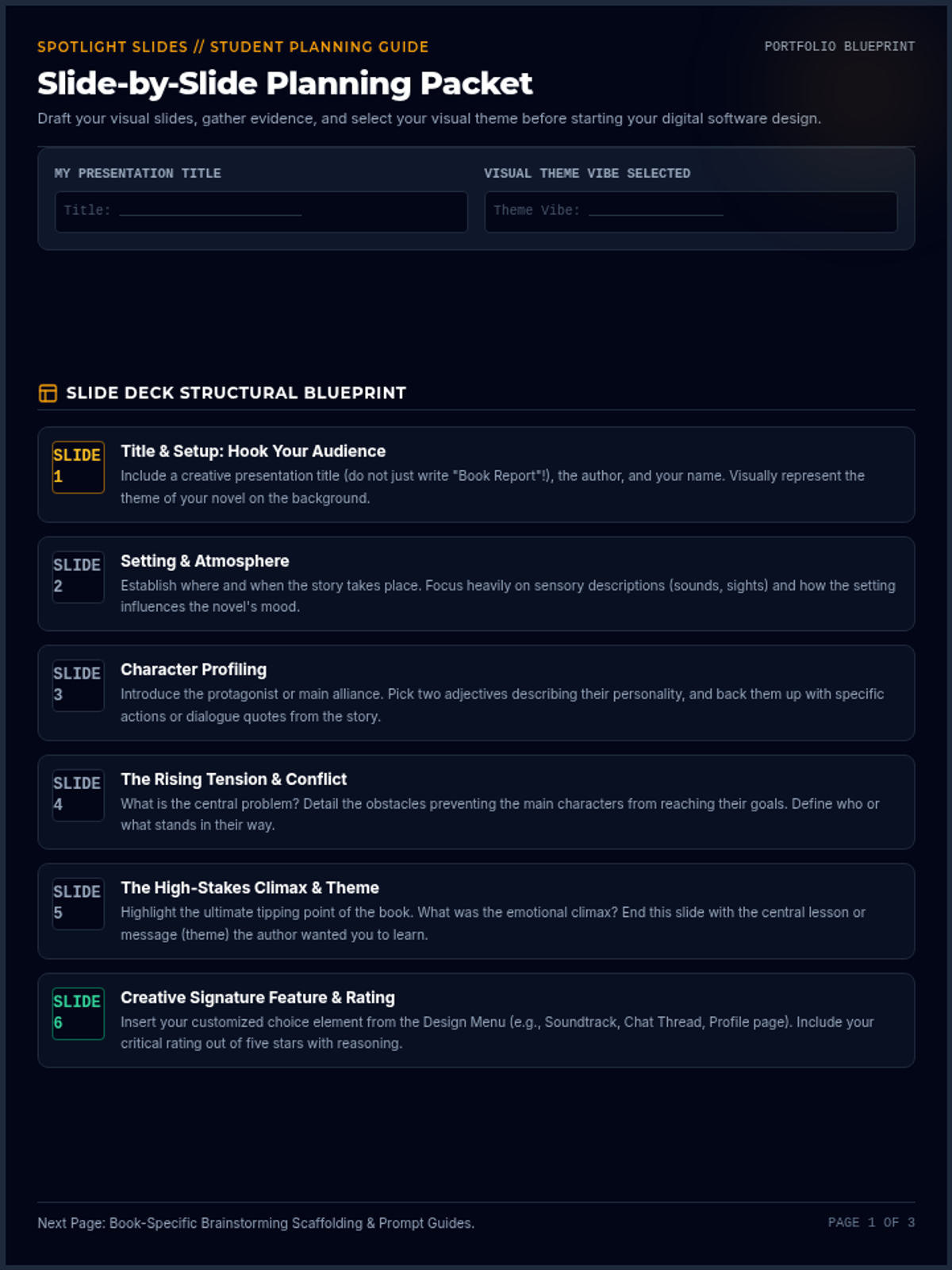
A comprehensive toolkit for guiding students through designing, planning, and executing a highly creative digital book report presentation on one of four shared class novels.
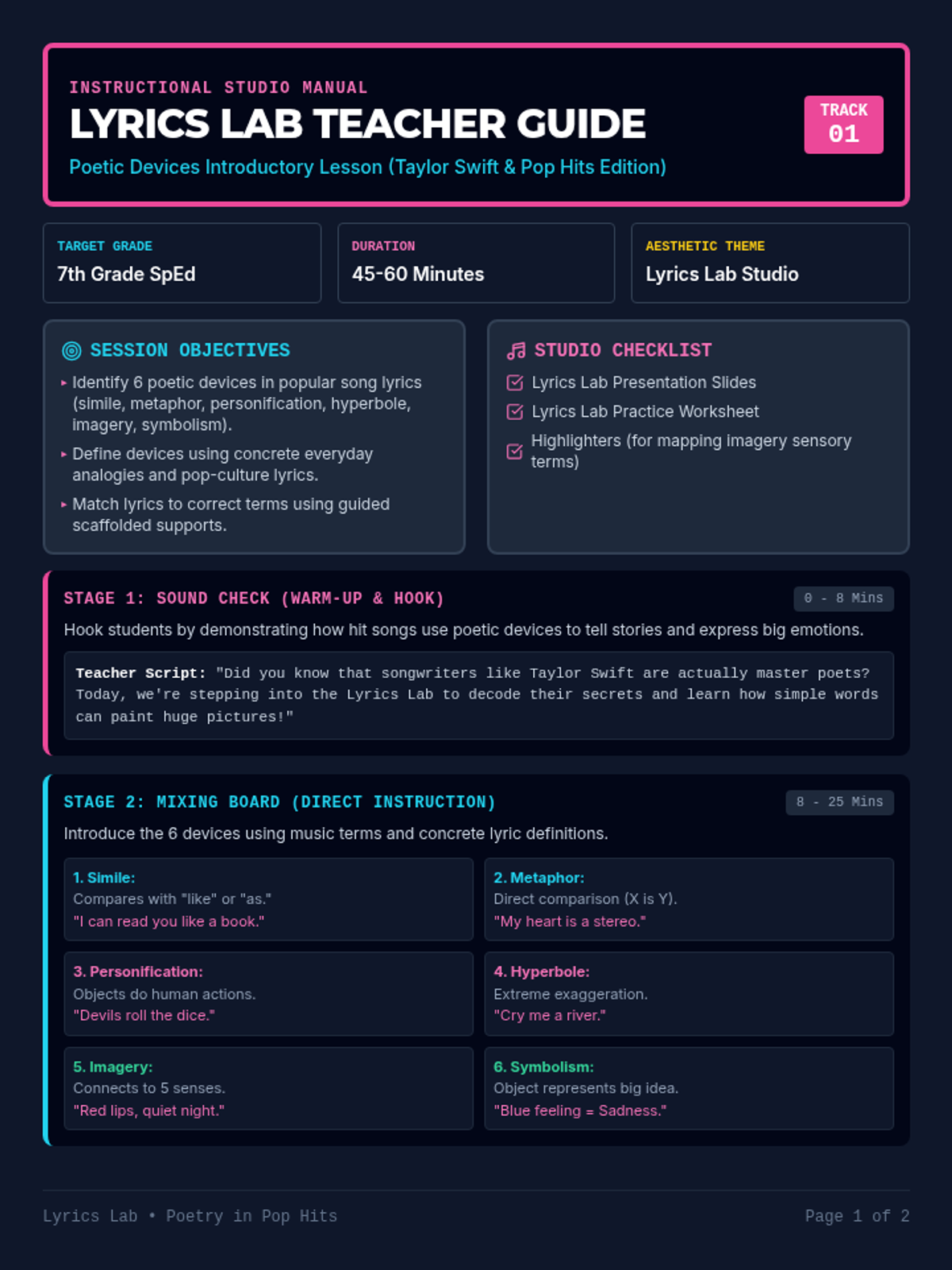
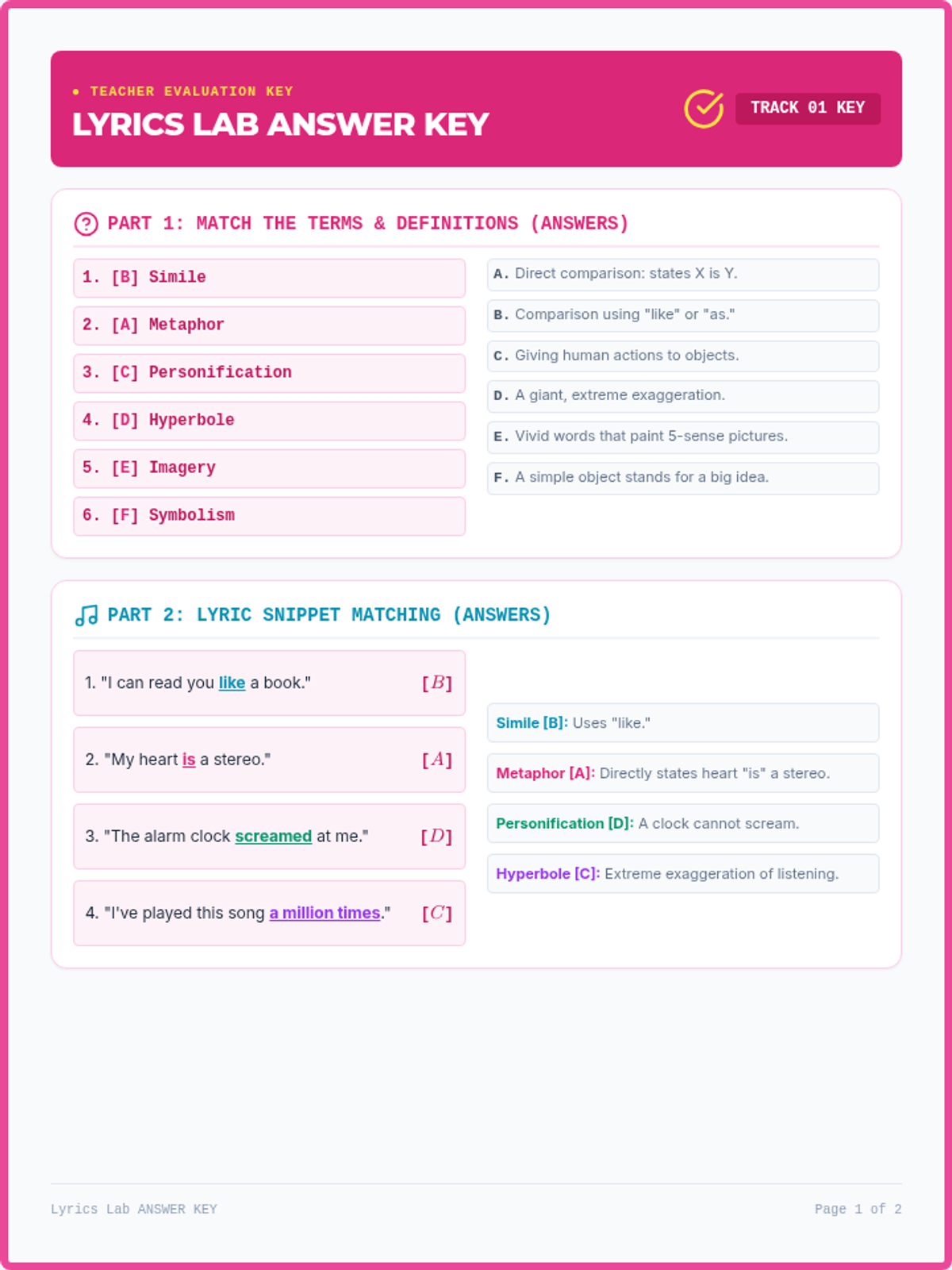
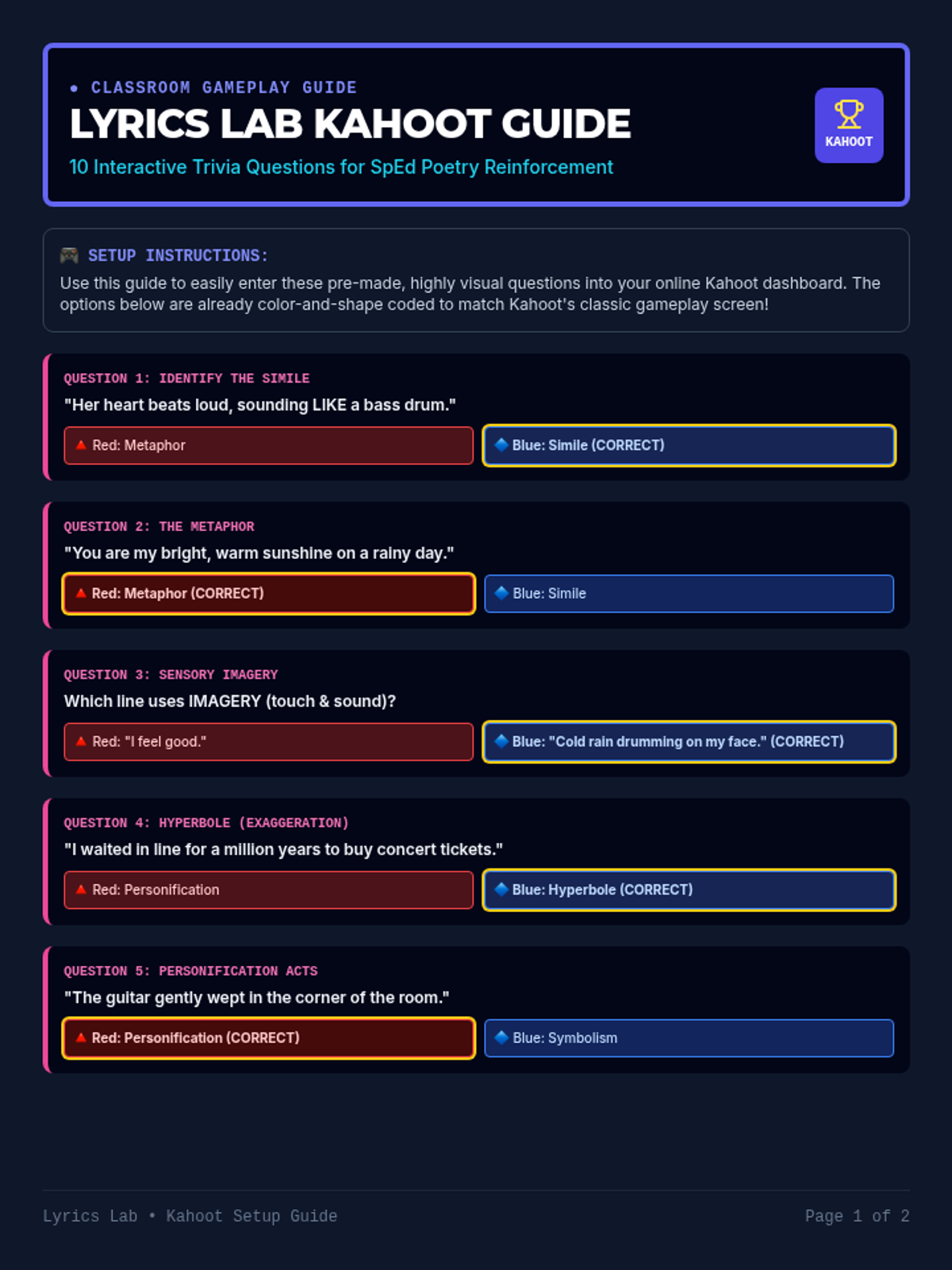
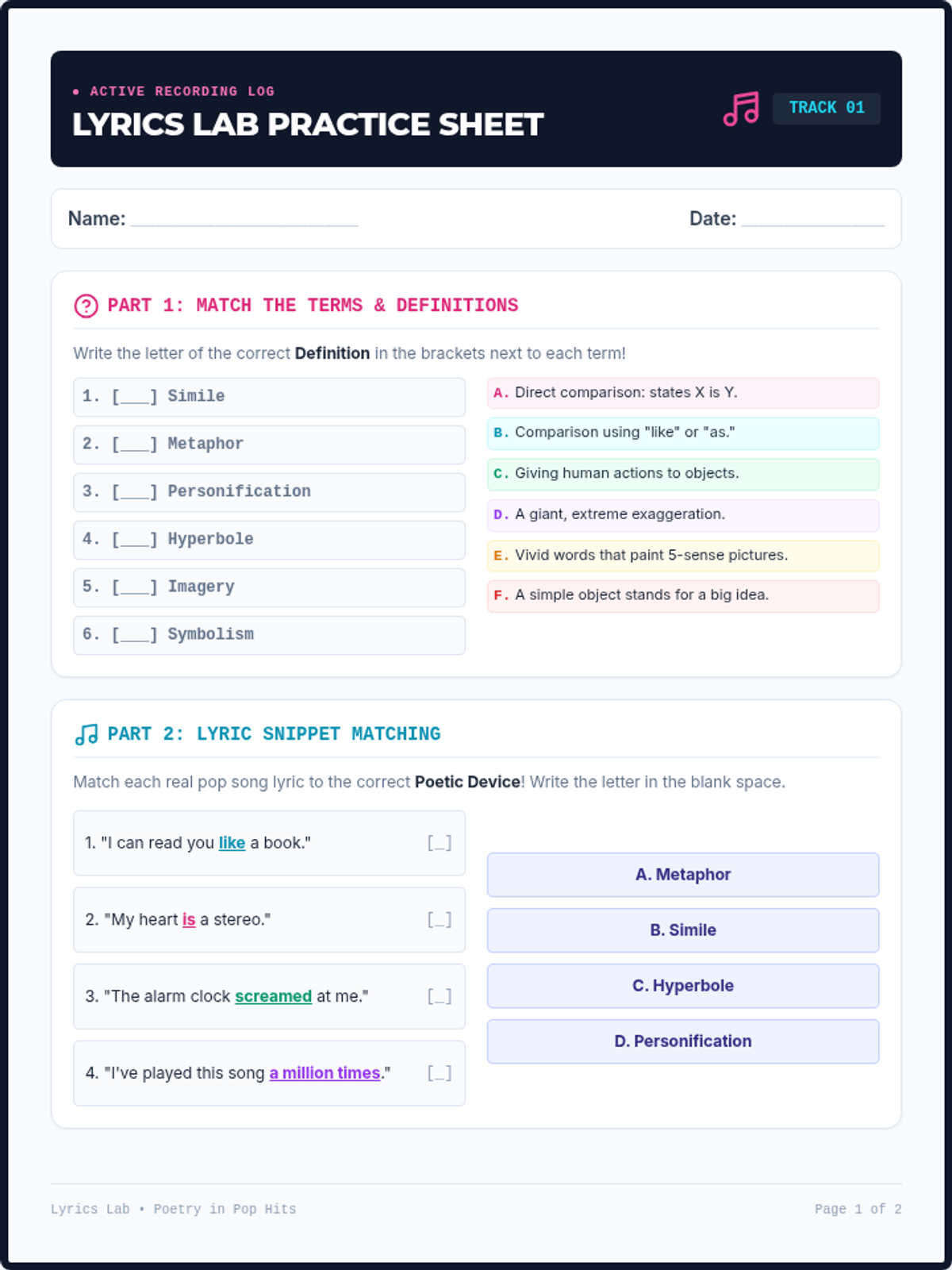
An engaging introductory poetry lesson for 7th-grade special education students focusing on six key poetic devices (simile, metaphor, personification, hyperbole, imagery, symbolism) using popular music lyrics (with a focus on Taylor Swift hits) to scaffold understanding with familiar texts.
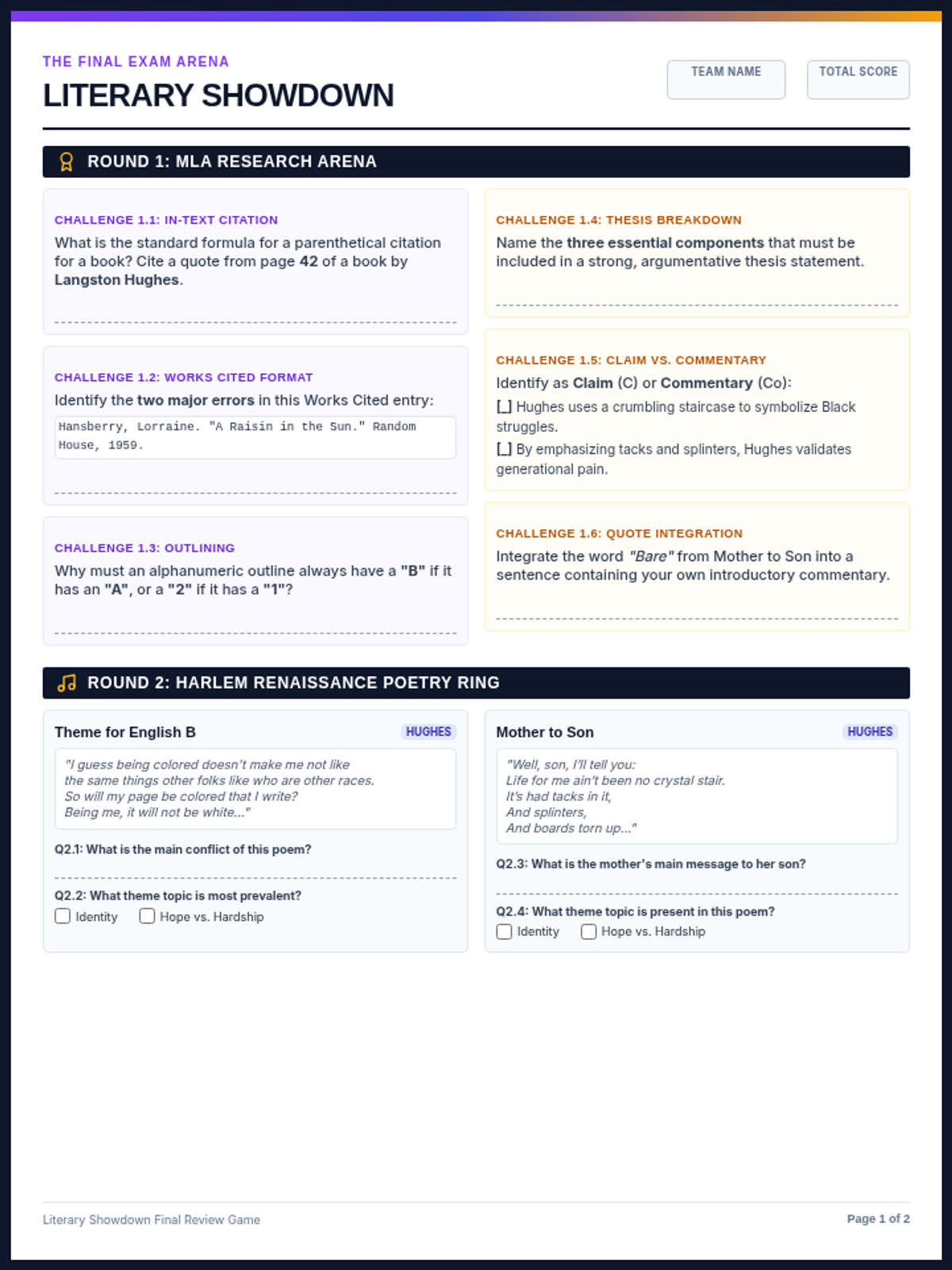
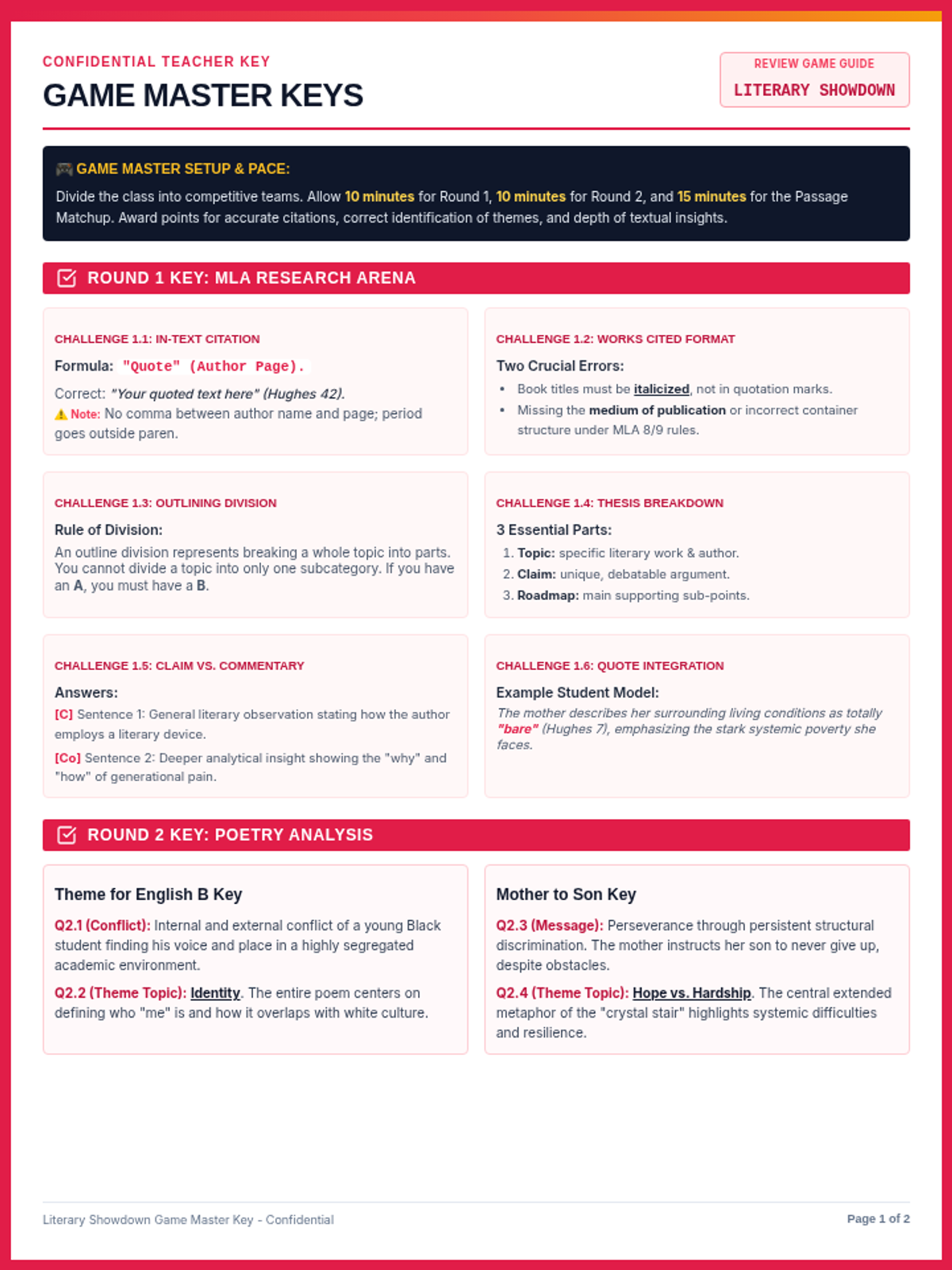
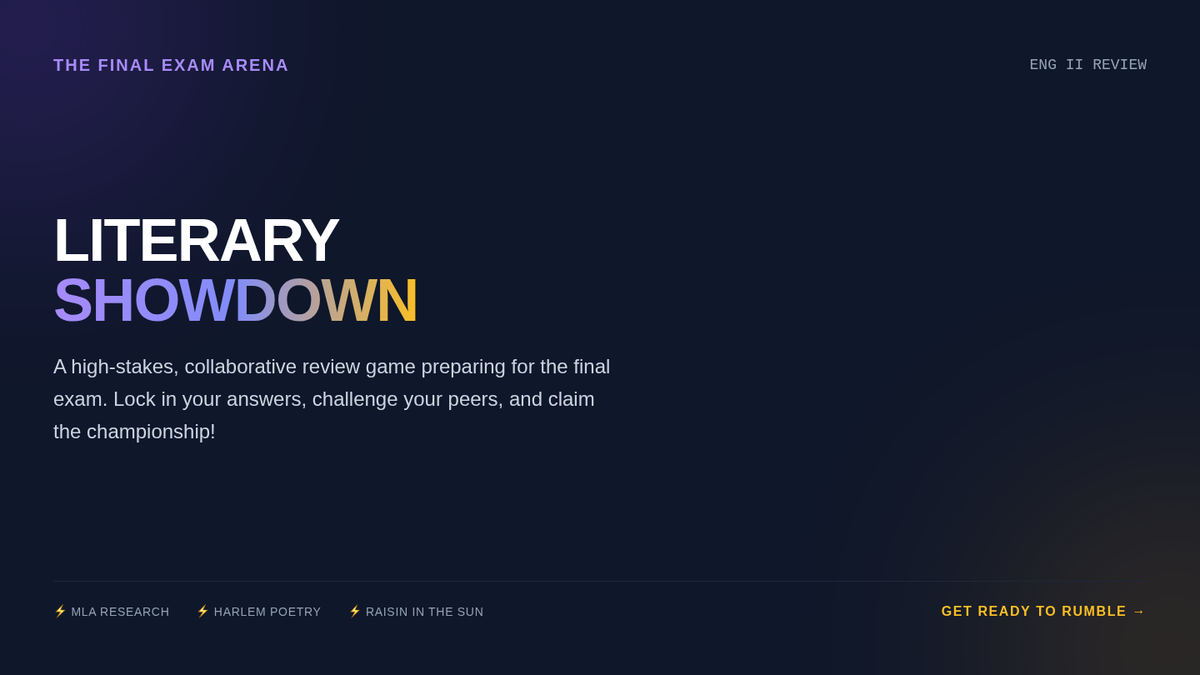
A comprehensive review lesson preparing students for the final exam covering MLA research, Harlem Renaissance poetry, and Acts II & III of A Raisin in the Sun.
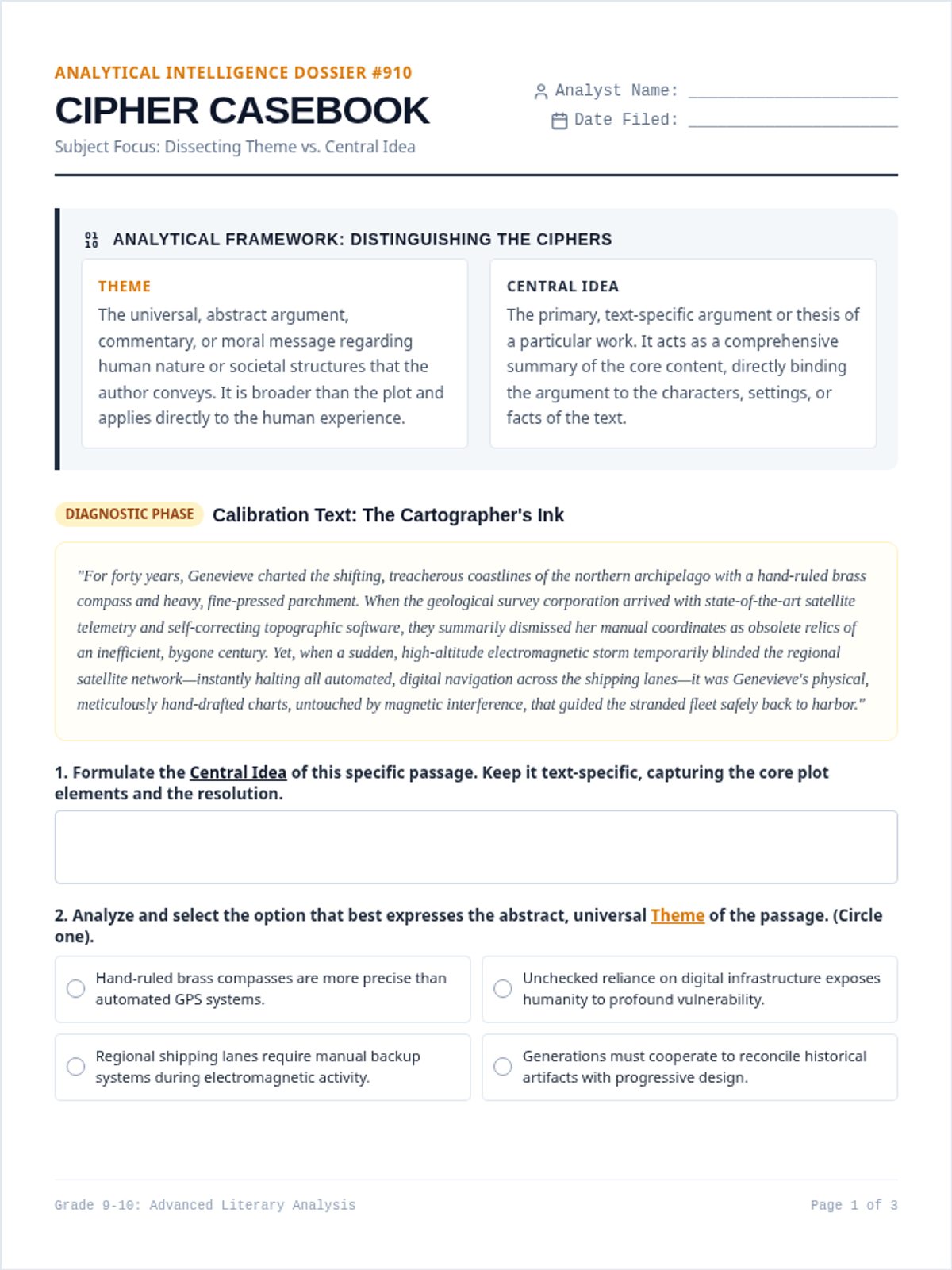
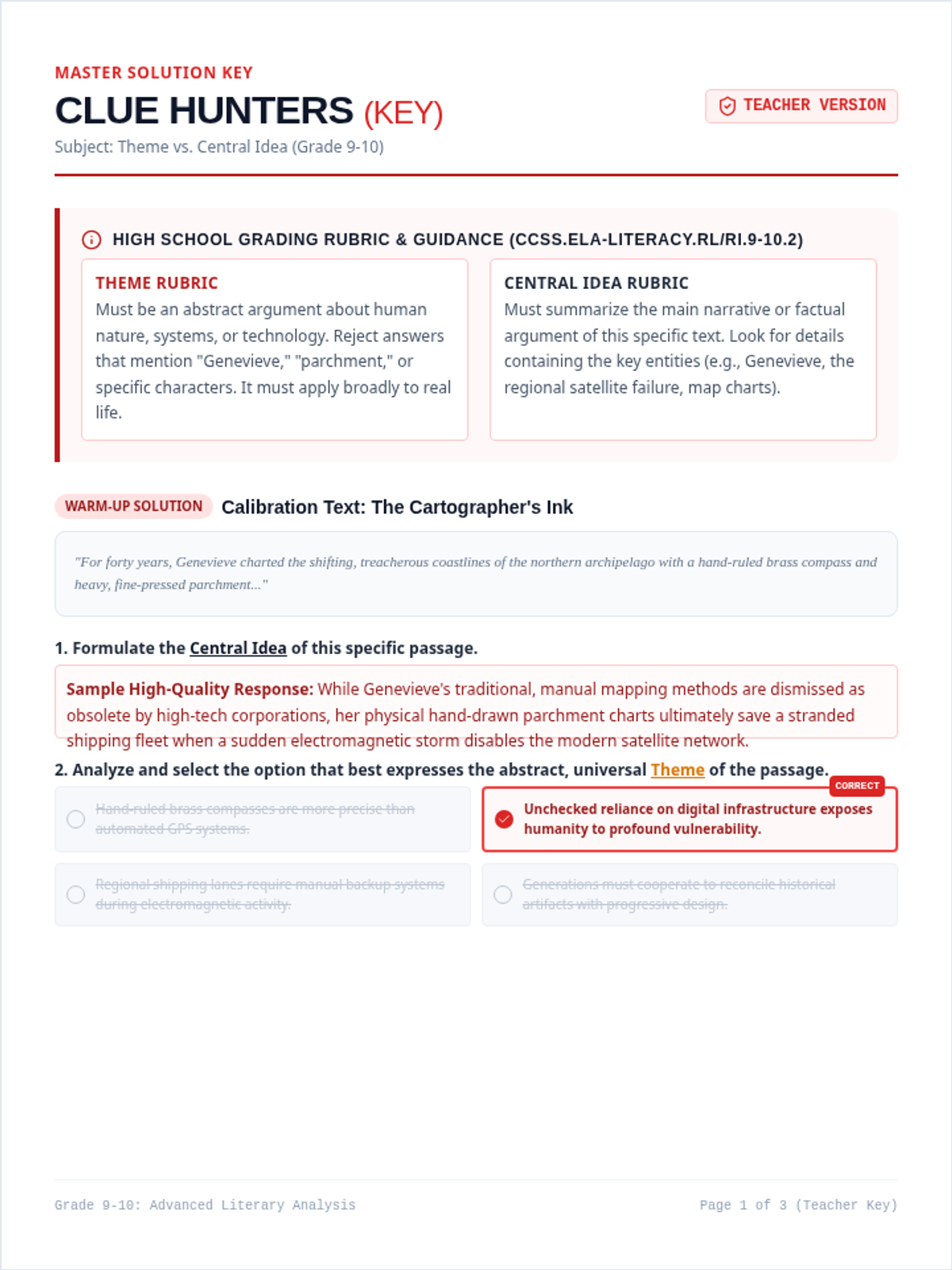
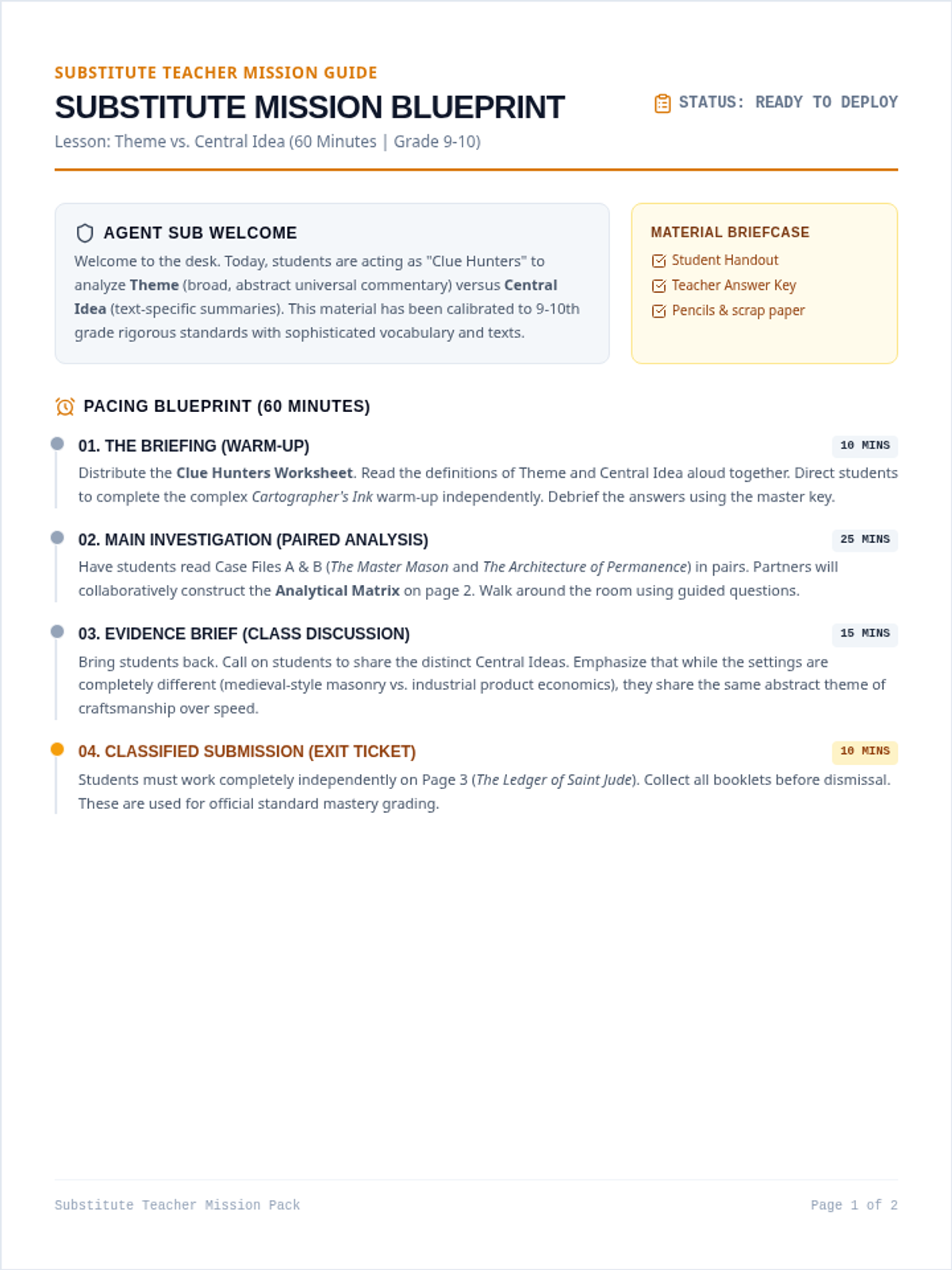
A comprehensive 60-minute lesson designed to help students distinguish theme from central idea using a codebreaker motif. Students analyze paired short texts, crack themes using graphic organizers, and demonstrate mastery through a structured exit ticket.
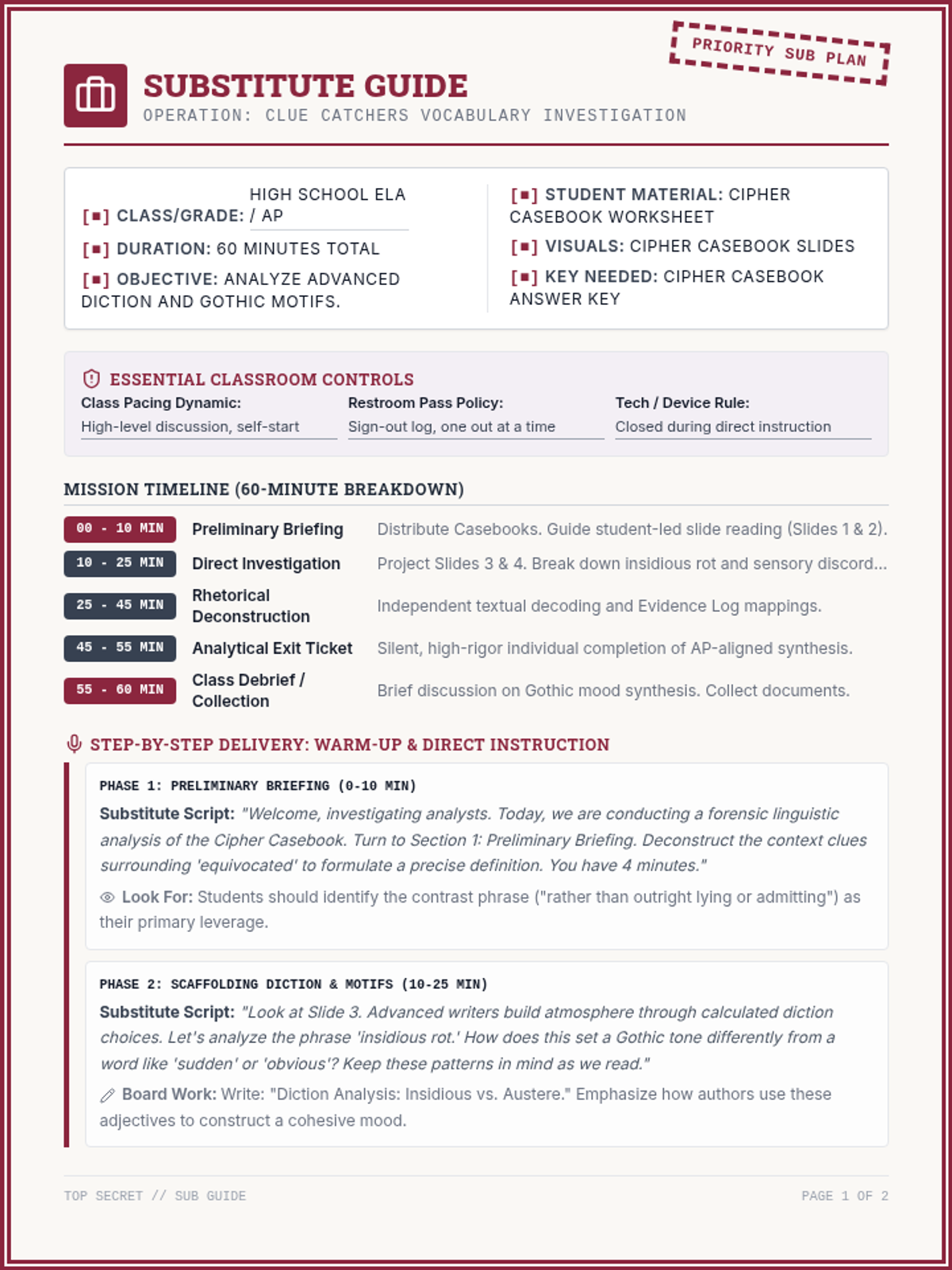
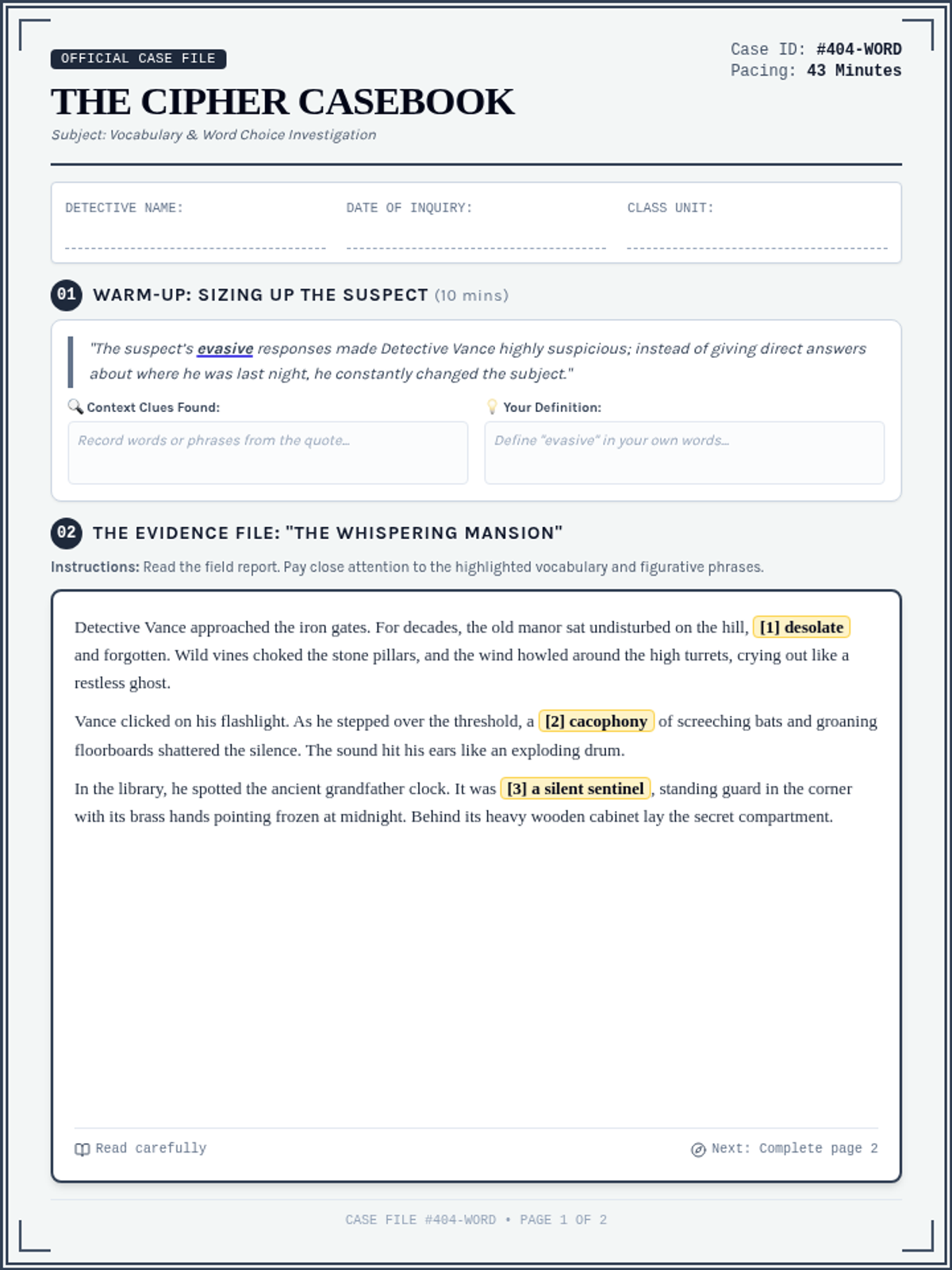
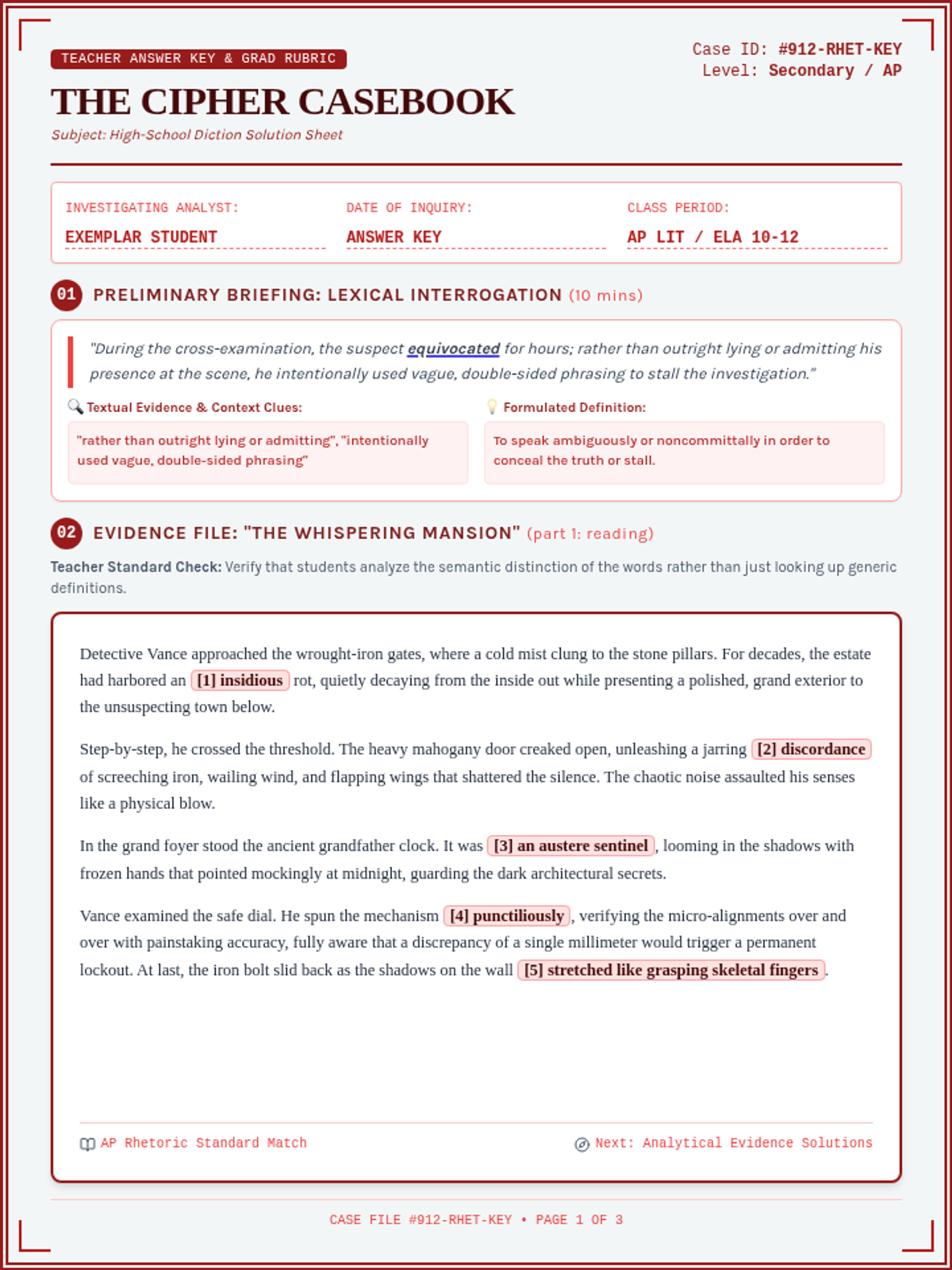
A 60-minute ELA lesson focused on decoding rich vocabulary and figurative language using context clues in a detective-themed investigation.
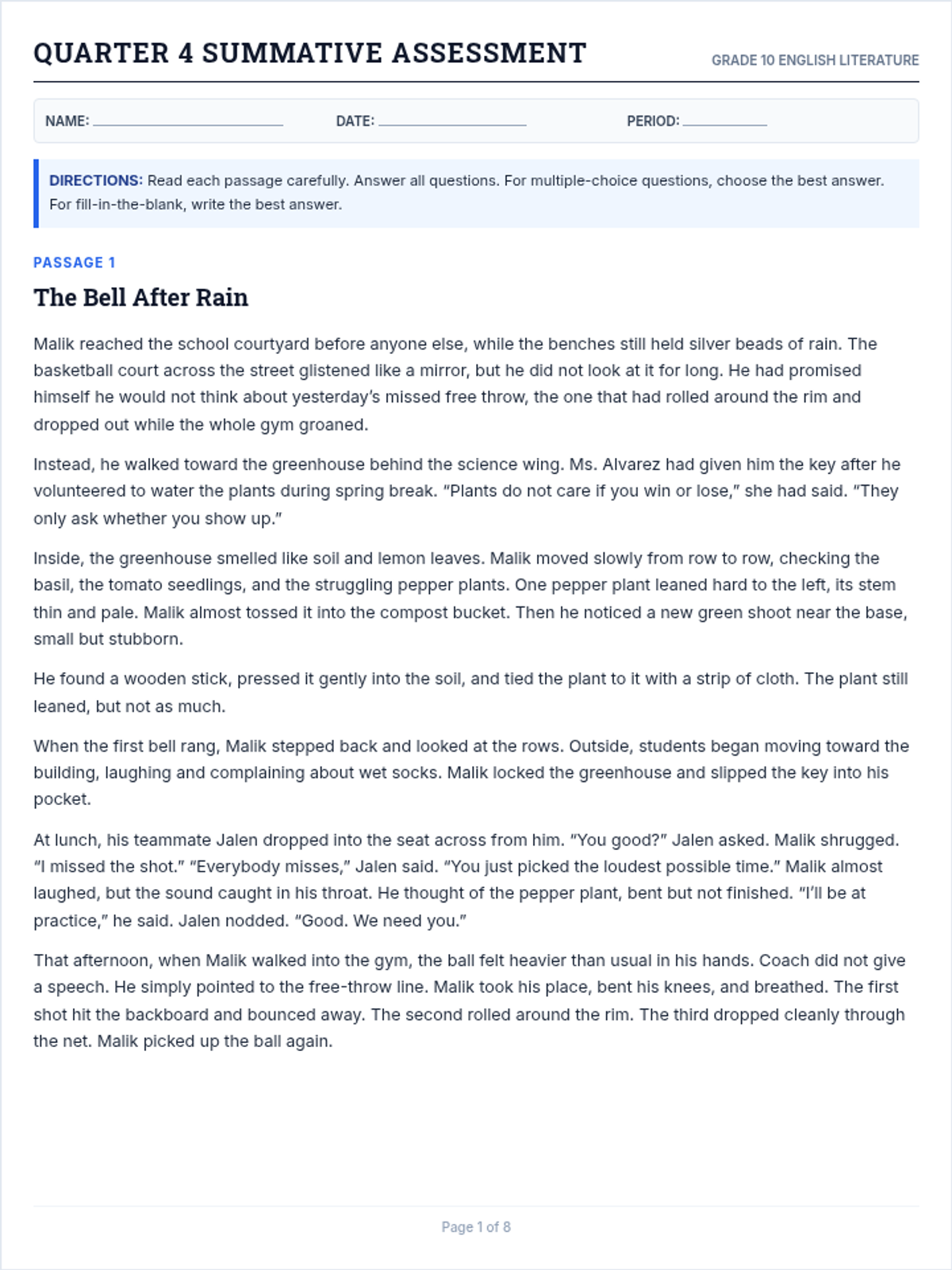
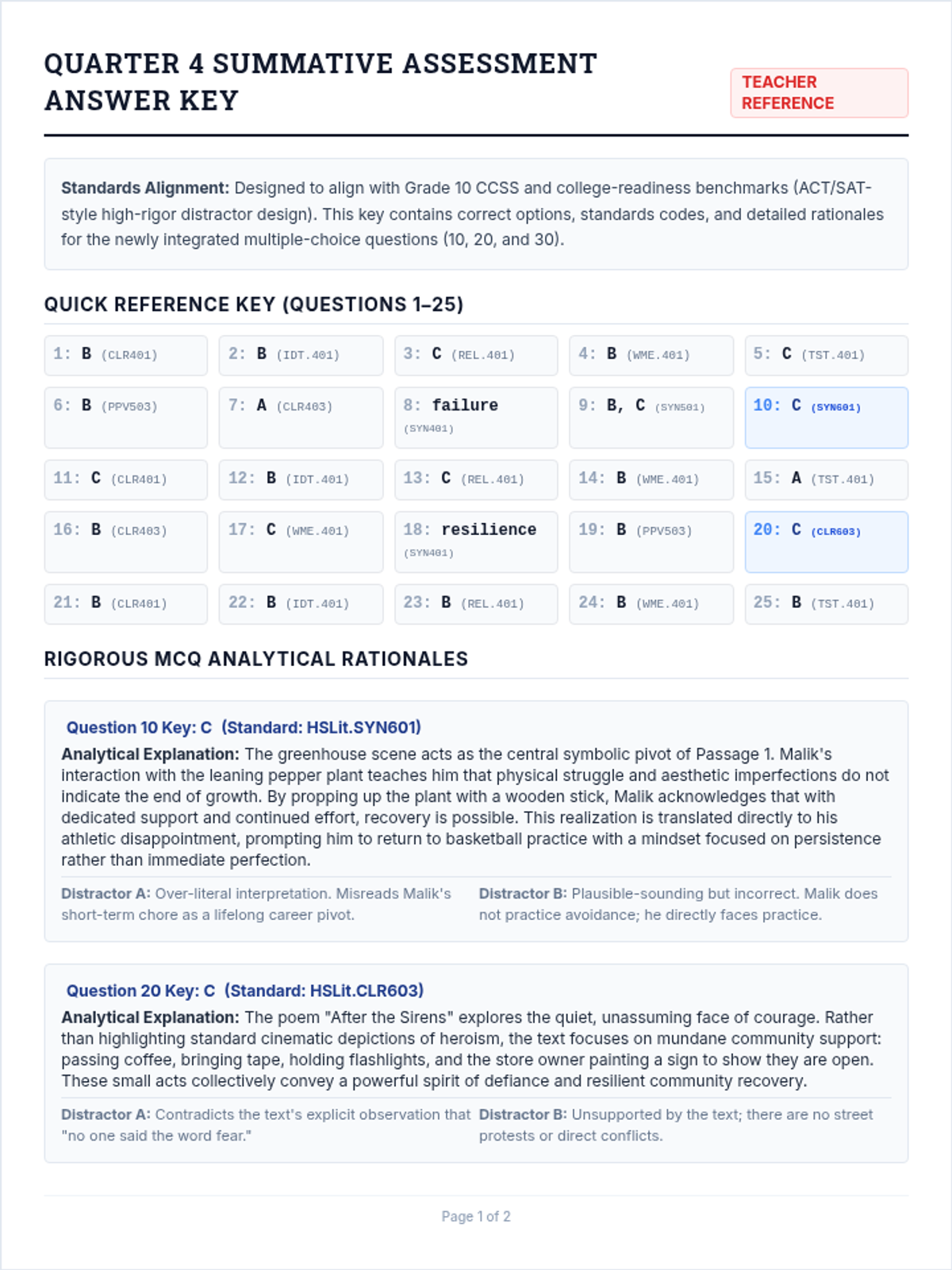
A comprehensive literature summative assessment evaluating comprehension of multiple prose and poetry passages, now updated with analytical multiple-choice items replacing selected short-response questions.
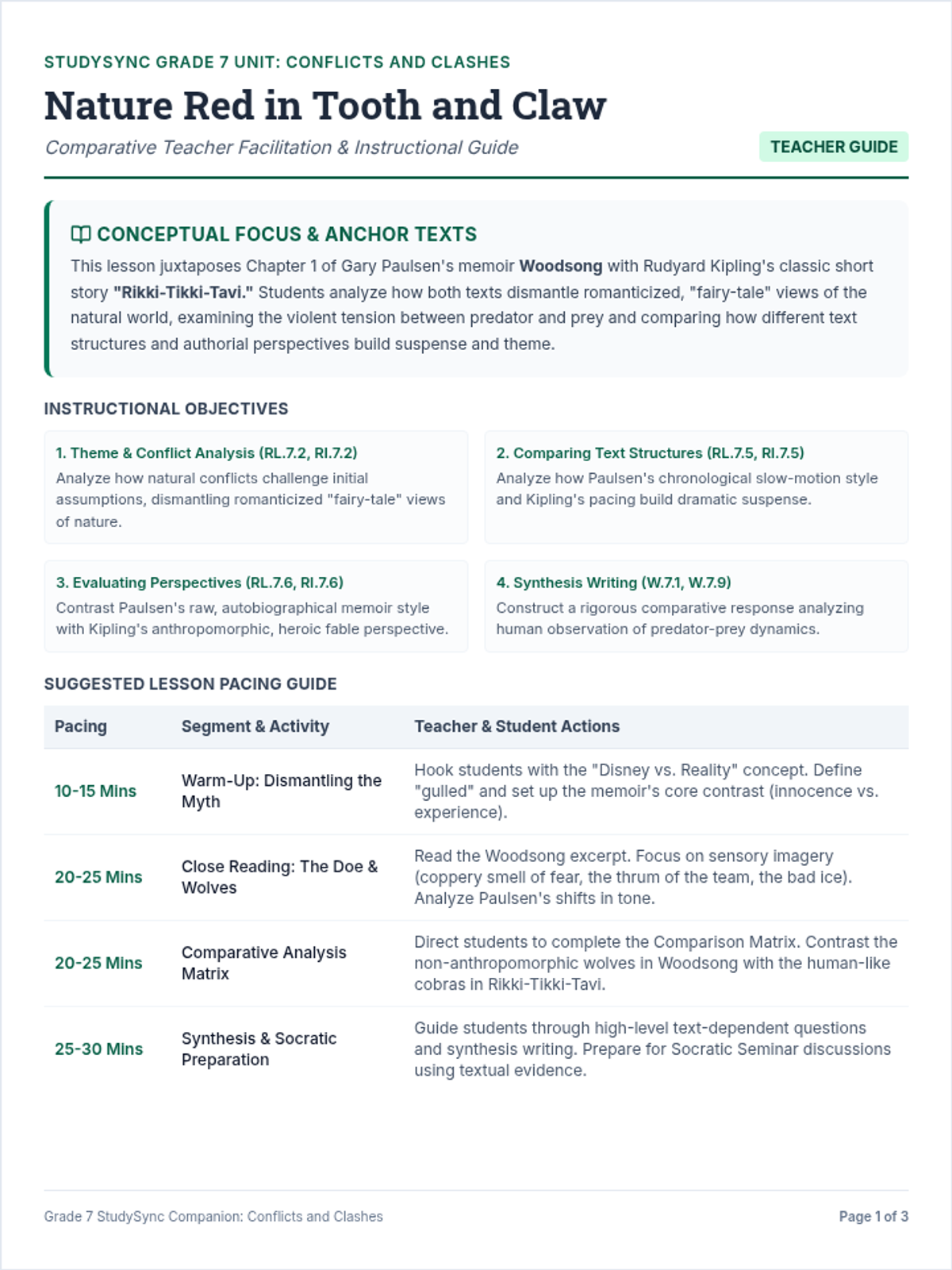
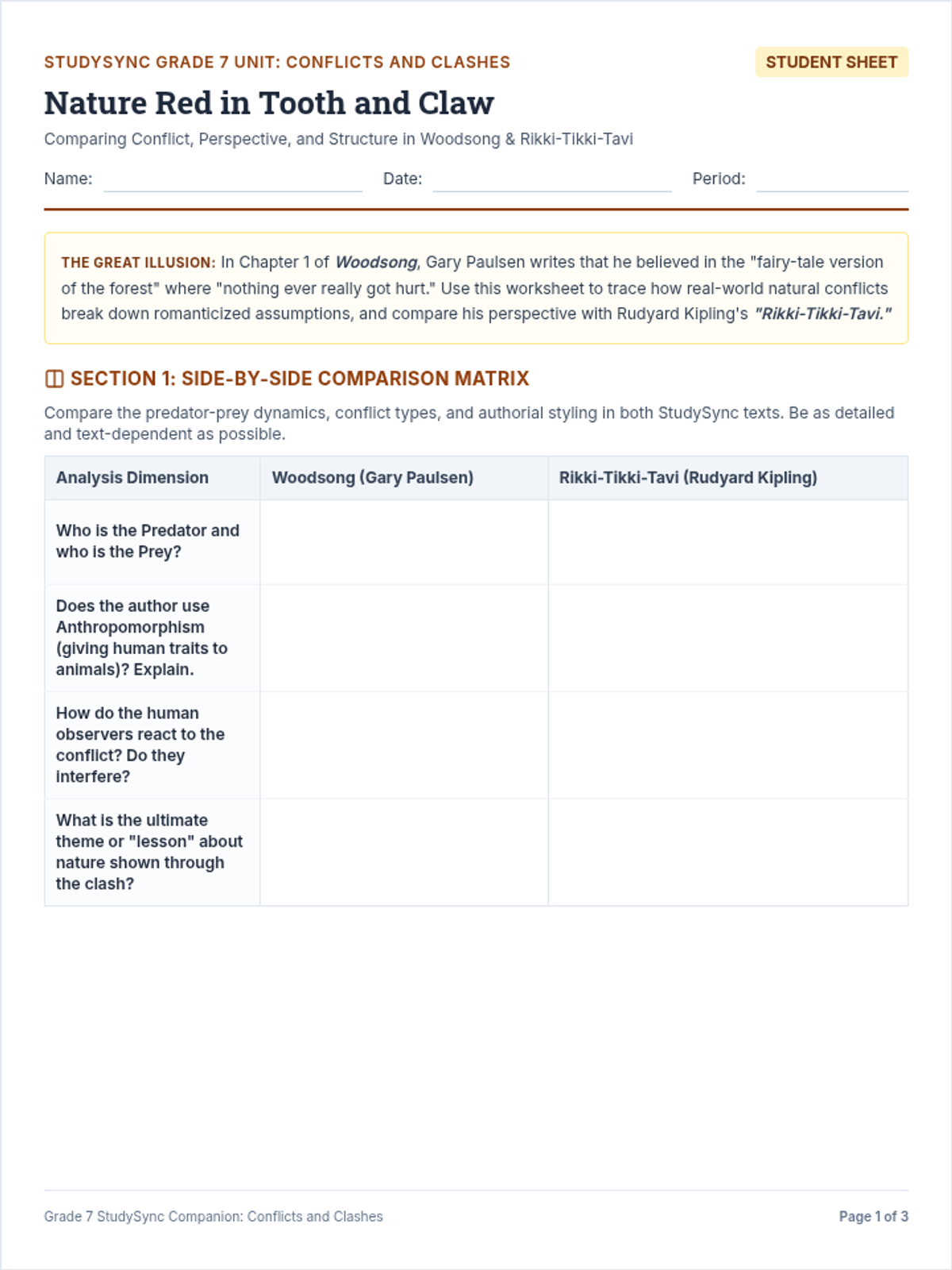
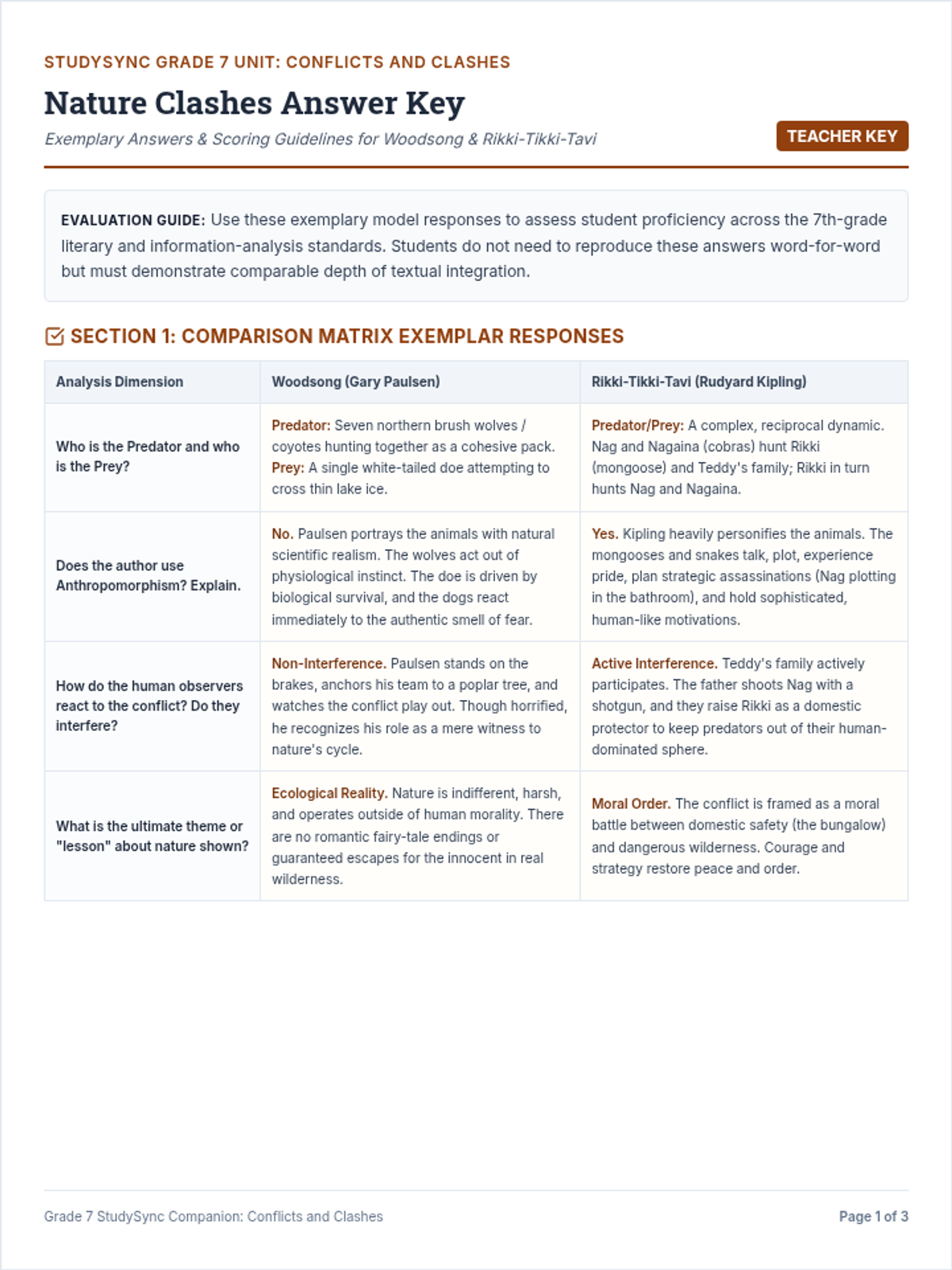
A comprehensive, deeply rigorous lesson centered on the theme of 'Conflicts and Clashes' in Gary Paulsen's memoir 'Woodsong' and Rudyard Kipling's 'Rikki-Tikki-Tavi'. The lesson explores how natural conflicts dismantle romanticized views of nature and how different authorial styles and narrative structures build suspense and theme.
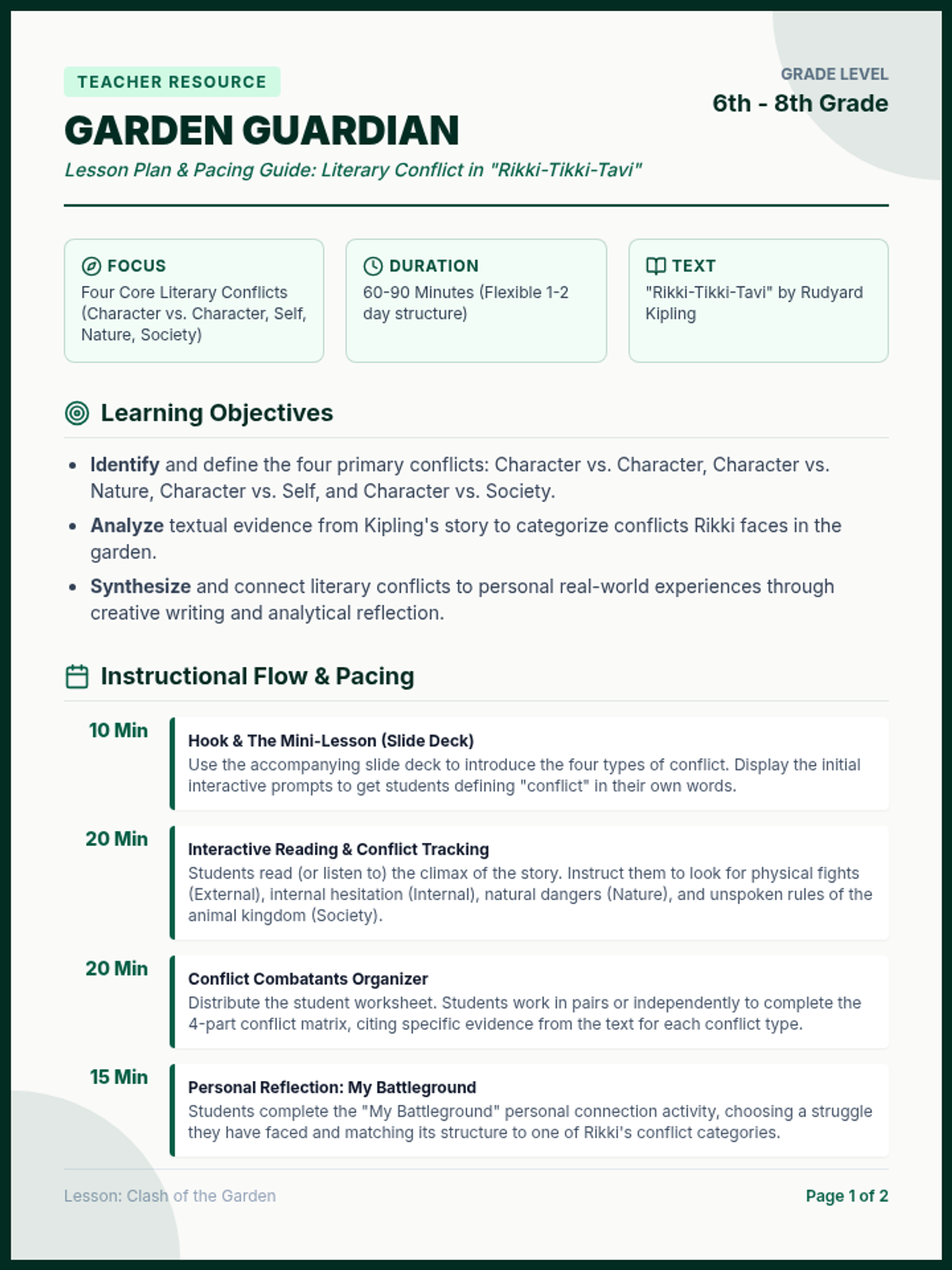
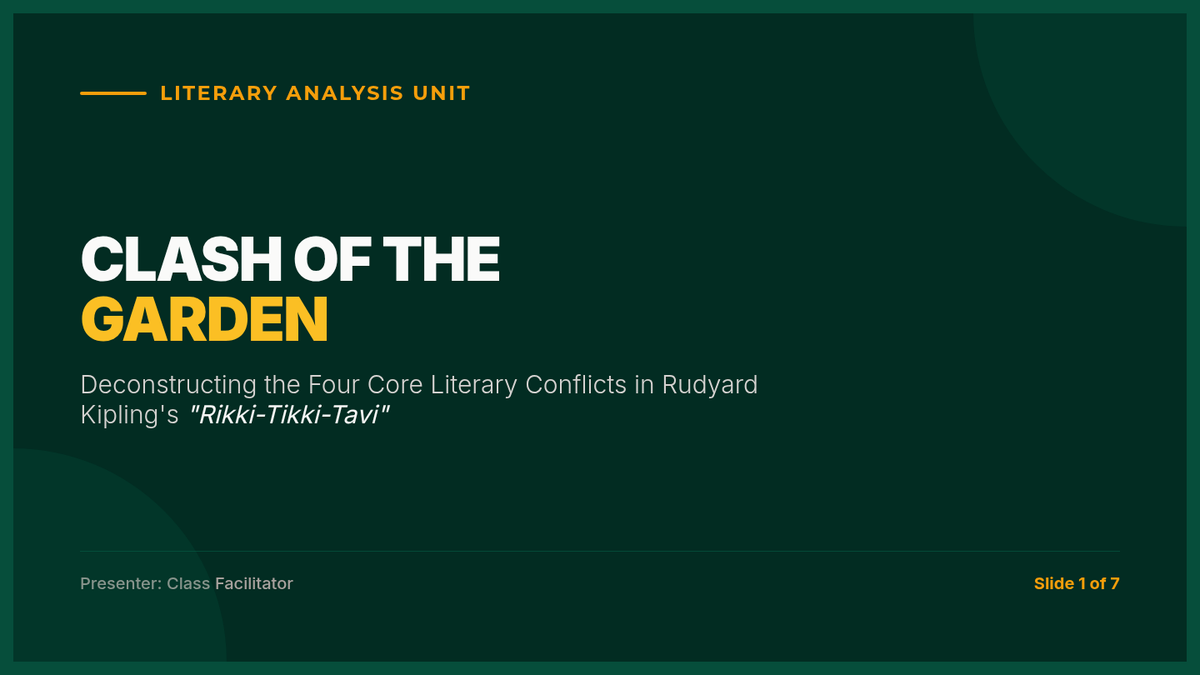
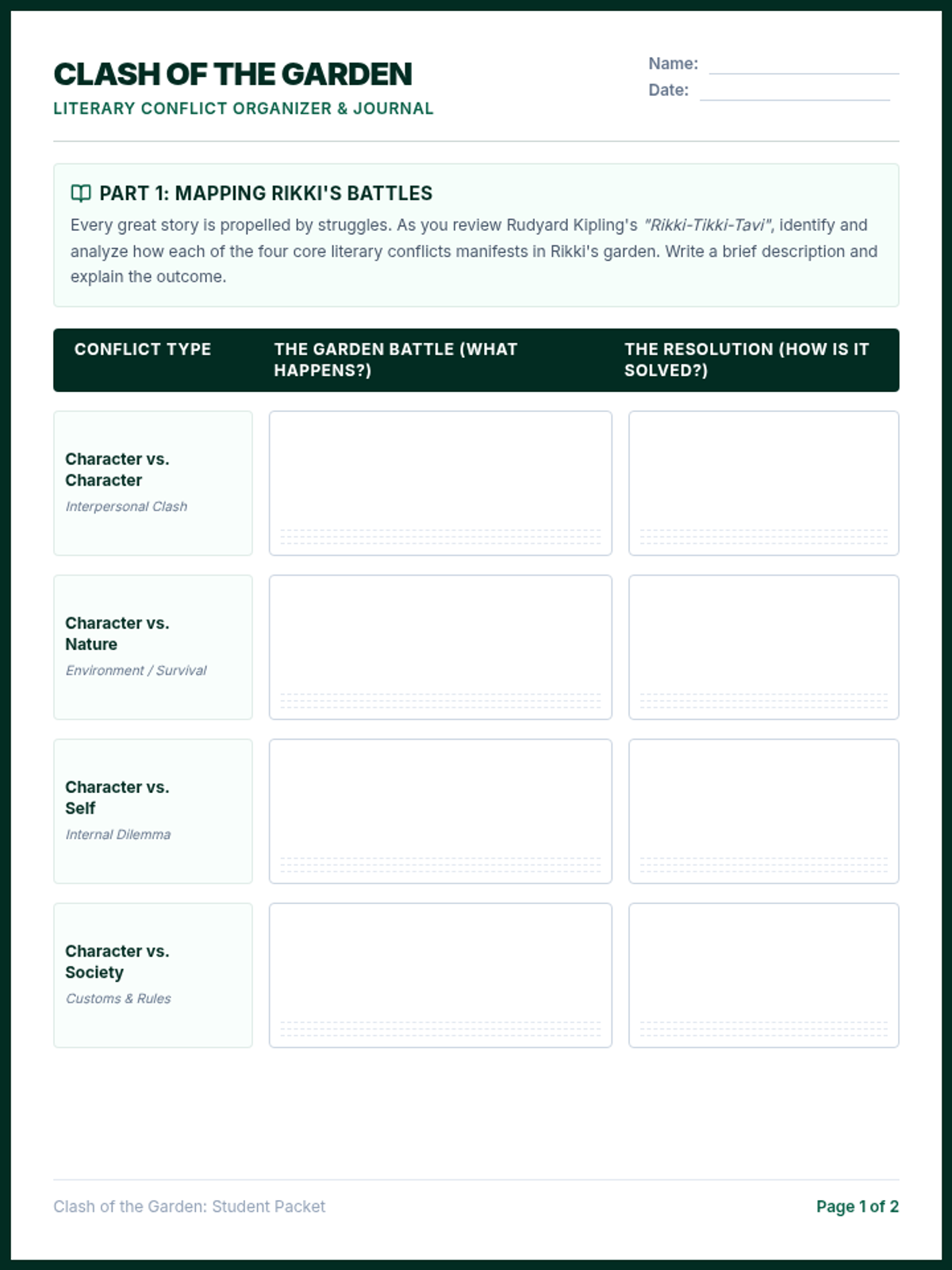
A comprehensive lesson exploring the four core literary conflicts (Character vs. Character, Self, Nature, and Society) using Rudyard Kipling's classic tale, 'Rikki-Tikki-Tavi'. Students map story conflicts and reflect on their own personal battles through structured graphic organizers and personal connection prompts.