Through a comparative analysis of Hitler, Mussolini, and Stalin, students identify common traits of totalitarianism such as censorship and secret police. Students create a graphic organizer comparing these leaders to democratic figures.
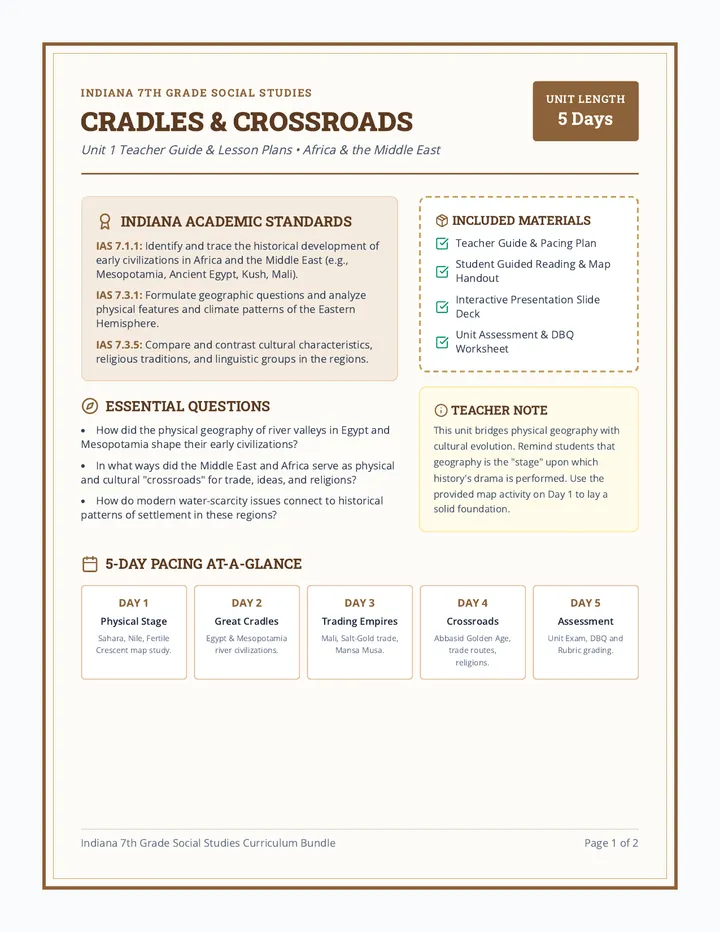
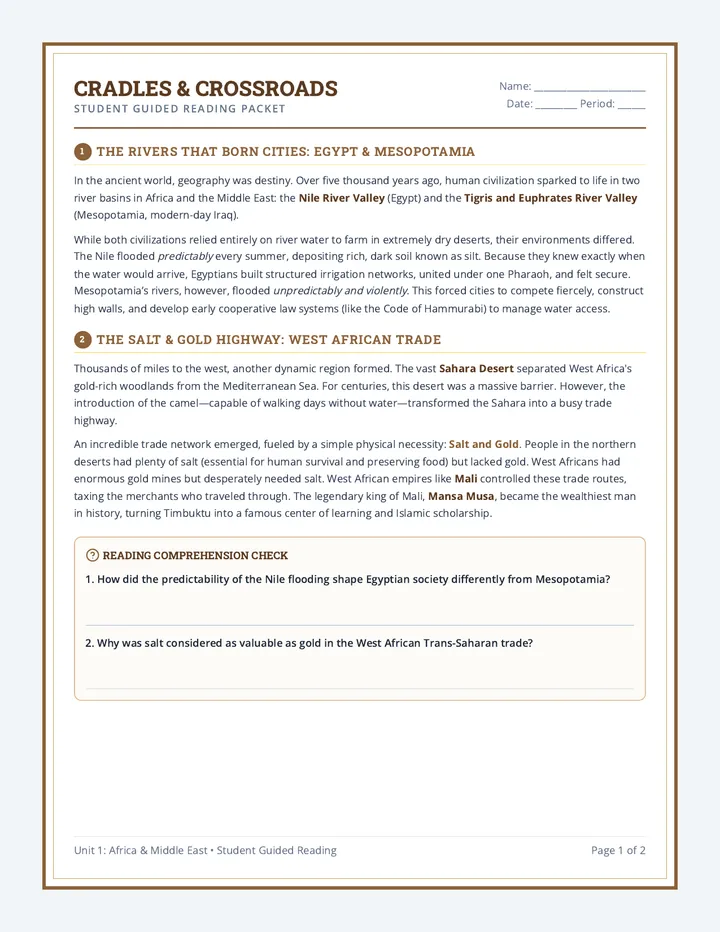
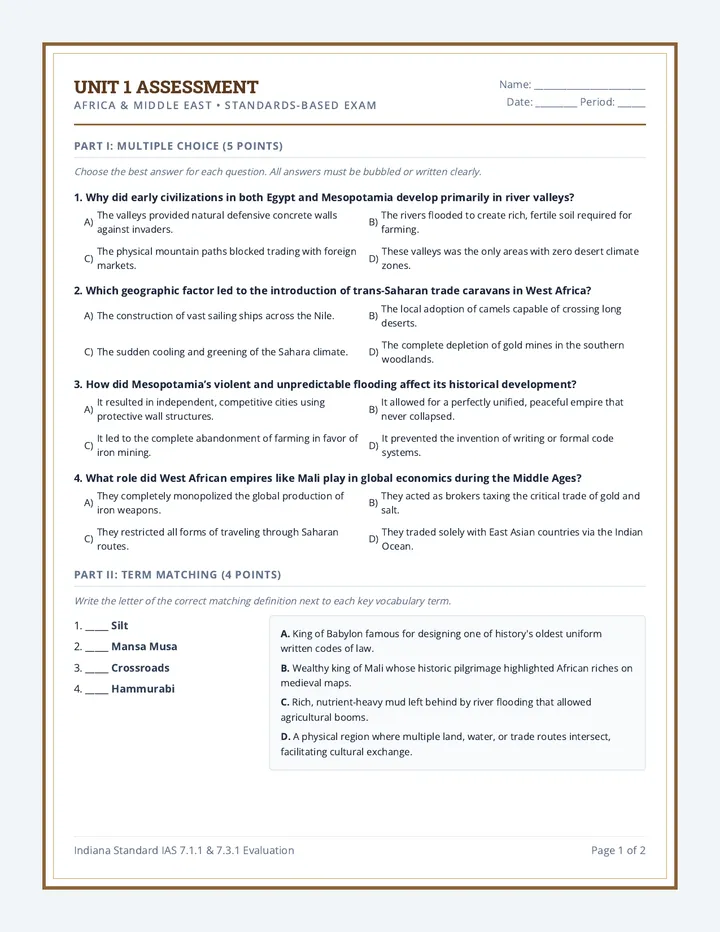
A comprehensive 7th-grade social studies curriculum sequence focused on the Eastern Hemisphere (Africa, Middle East, Asia, and the Pacific). This standards-aligned sequence includes detailed teacher lesson plans, student guided reading and worksheets, interactive presentation slides, and rigorous assessments with DBQs.
An introductory lesson exploring the immigrant experience and systemic barriers through Suli Breaks' spoken word poem 'Fences'. Students engage in a structured movement and discourse activity to analyze literal and metaphorical barriers, connecting themes to their own lived experiences.
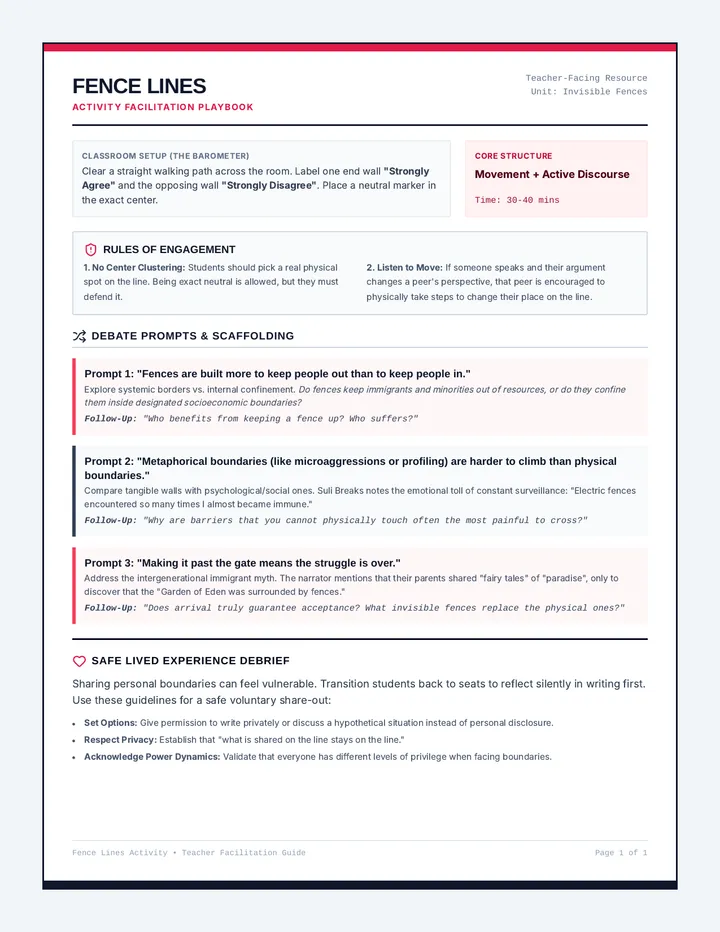
A 1-page teacher facilitation guide for the 'Fence Lines' movement and discourse activity. Provides structured guidelines for setting up the classroom barometer, lesson pacing, specific debate prompts, discussion scaffolds, and guidelines for managing sensitive personal reflections with care.
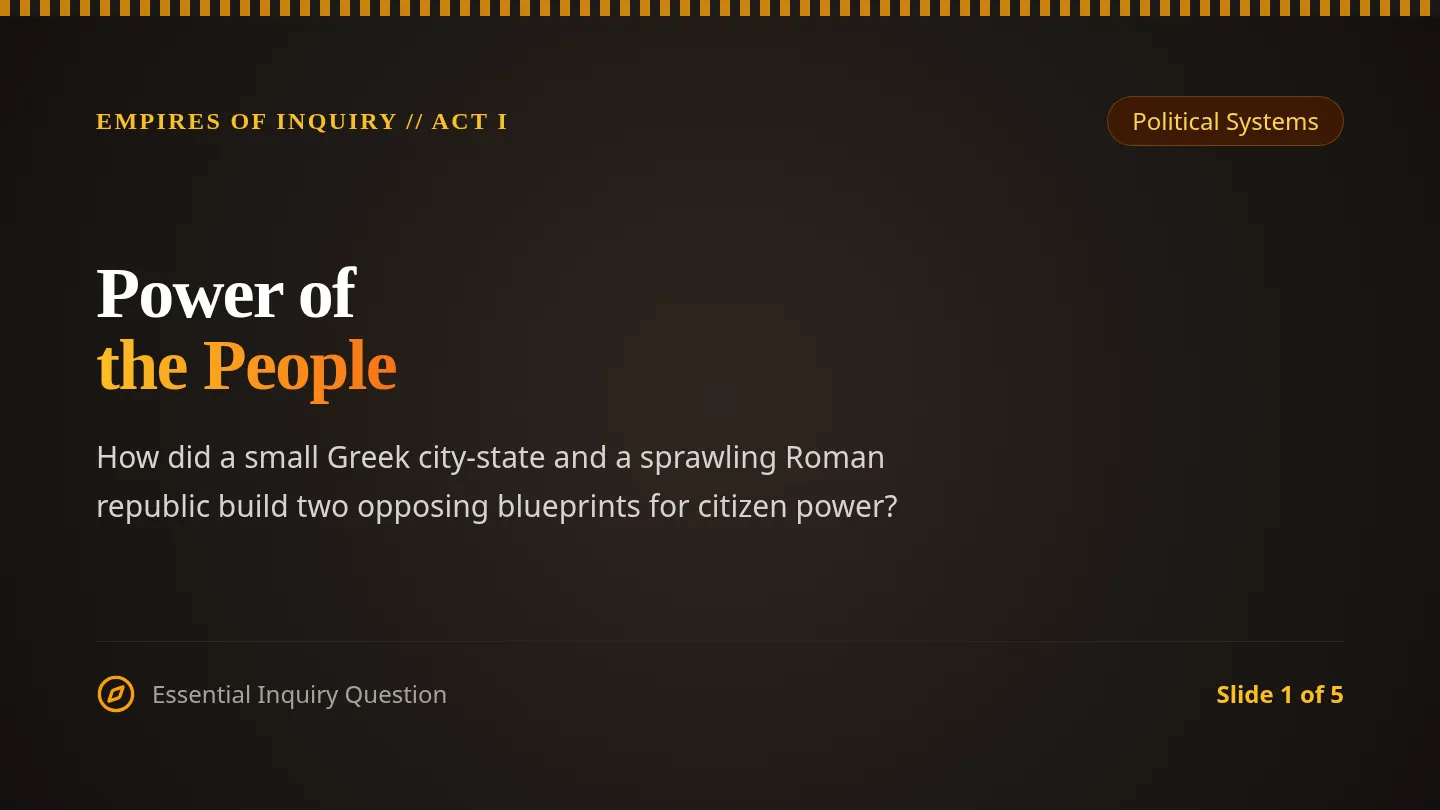
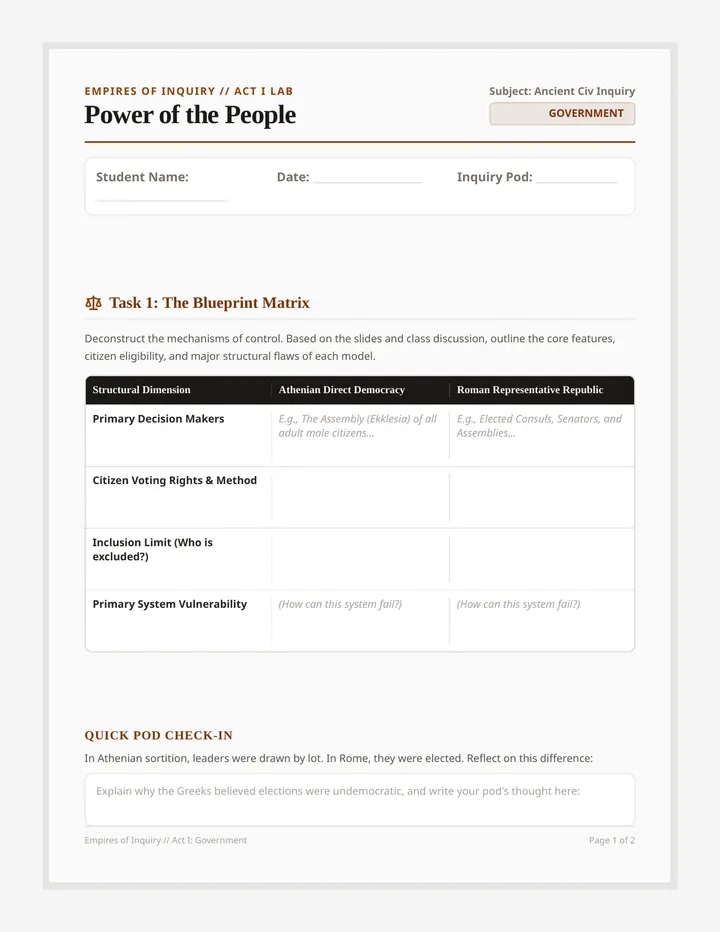
An inquiry-driven social studies sequence investigating Ancient Greece and Rome across four core pillars: government, philosophy, trade, and engineering. Students engage with primary sources, architectural achievements, and ethical dilemmas to construct arguments about classical legacies.
A lesson exploring the calling of the first disciples, focusing on Jesus' invitation to become fishers of men and share God's love with others through creative, hands-on activities.
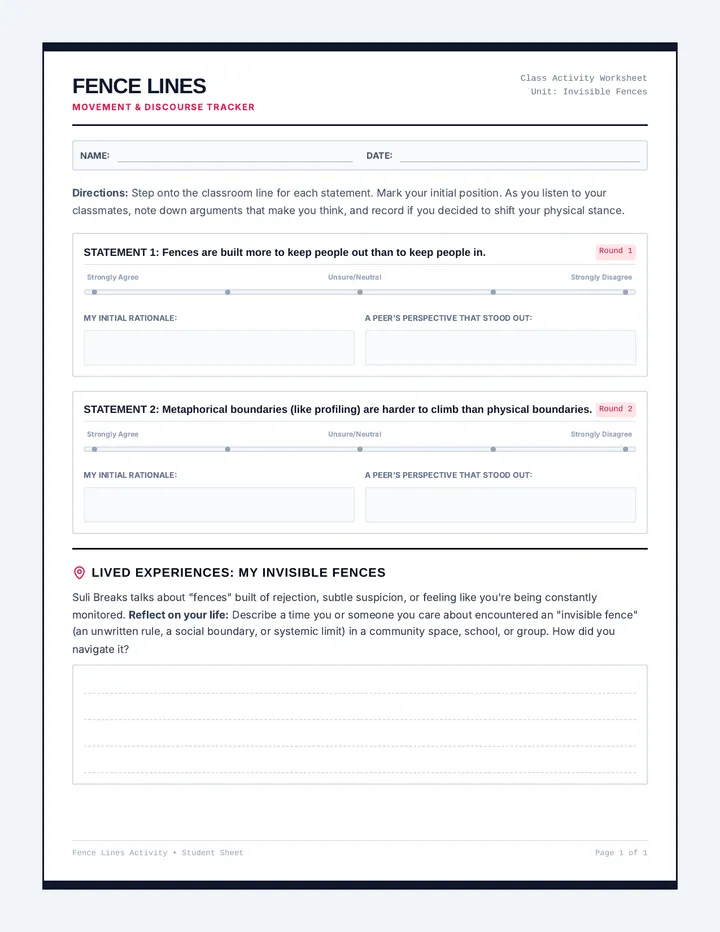
A 1-page student-facing tracker and reflection sheet for the 'Fence Lines' physical barometer activity. Includes visual scaling sliders for each movement prompt, spaces to record peer arguments, and a deep-dive writing area for real-world personal connections.
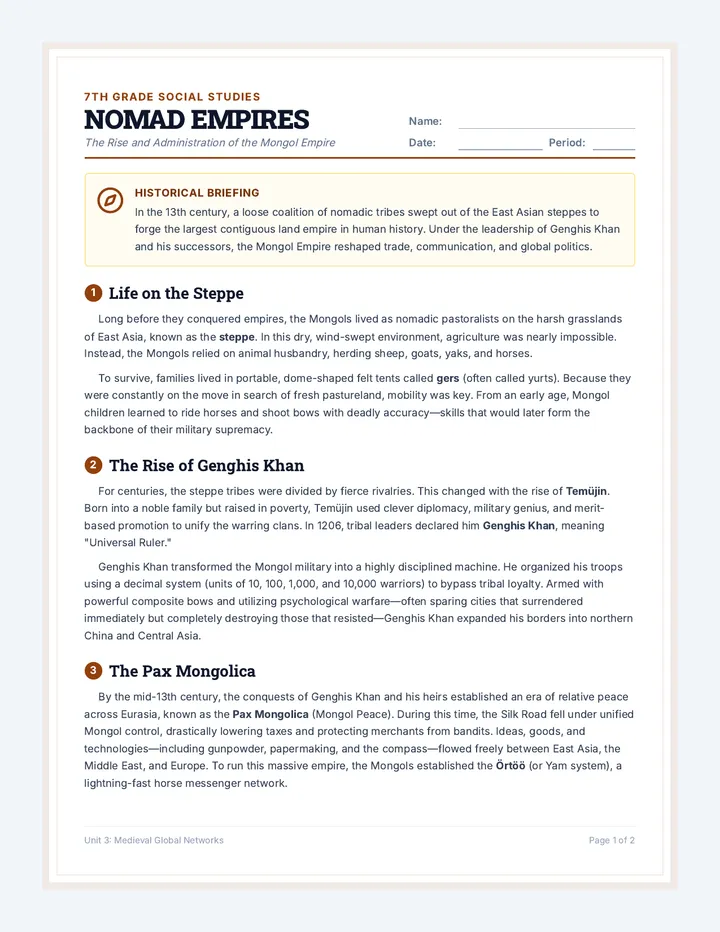
A comprehensive history lesson for 7th grade social studies exploring the rapid rise, administration, and ultimate division of the Mongol Empire. Includes a student reading worksheet and a corresponding teacher guide and answer key.
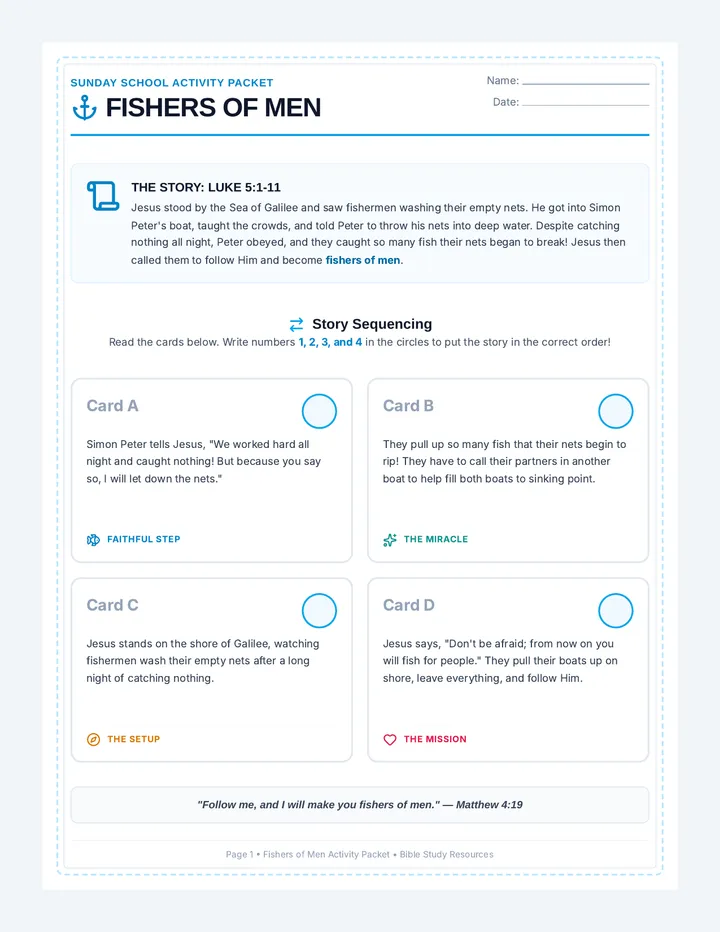
A gorgeous 4-page printable activity packet for the 'Fishers of Men' lesson. Includes a story sequencing activity, a word search and code breaker puzzle, a 'Catch of Love' cut-and-paste craft, and a coloring and reflection page. Fully styled with a nautical blue and seafoam green aesthetic.
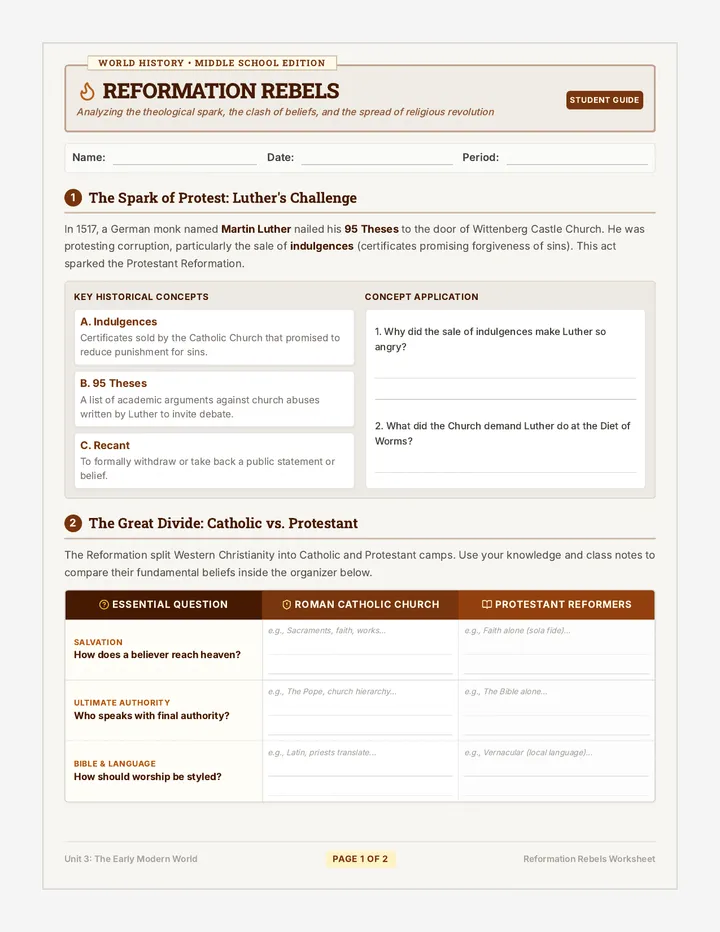
A middle school history lesson introducing the Protestant Reformation, focusing on Martin Luther's protest, the fundamental theological clashes, and the visual spread of Protestantism across Europe.
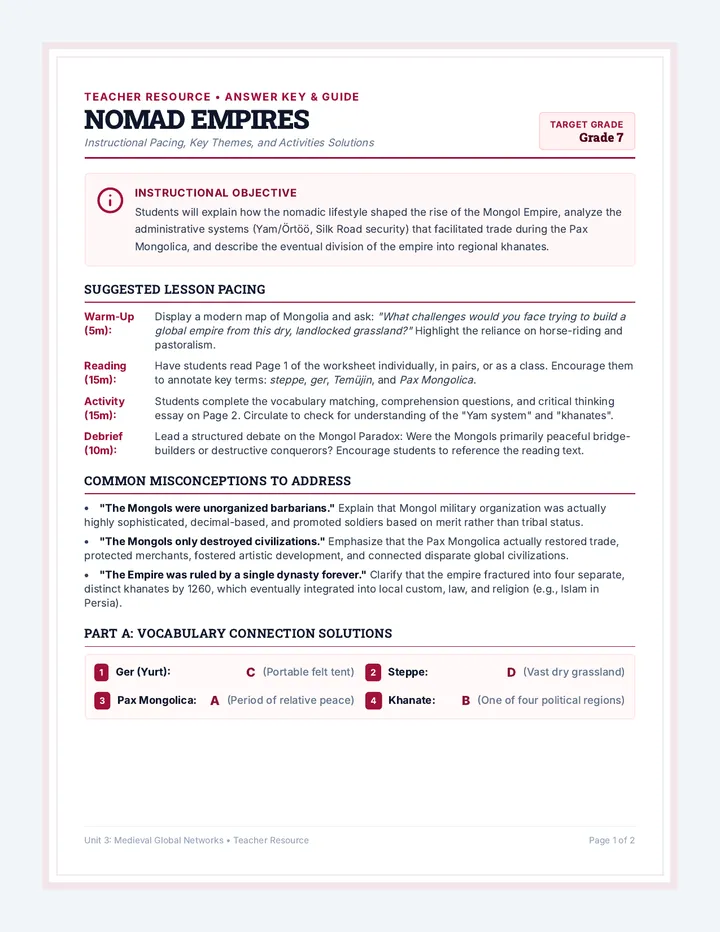
A 2-page comprehensive teacher's guide and answer key for the Nomad Empires lesson. Features step-by-step pacing guidance, common student misconceptions, a complete vocabulary and comprehension answer key, and an evaluation rubric for critical thinking.