This lesson focuses on the complex skill of subtracting mixed numbers by decomposing whole numbers into fractional parts, framed within a market stall grocery scenario.
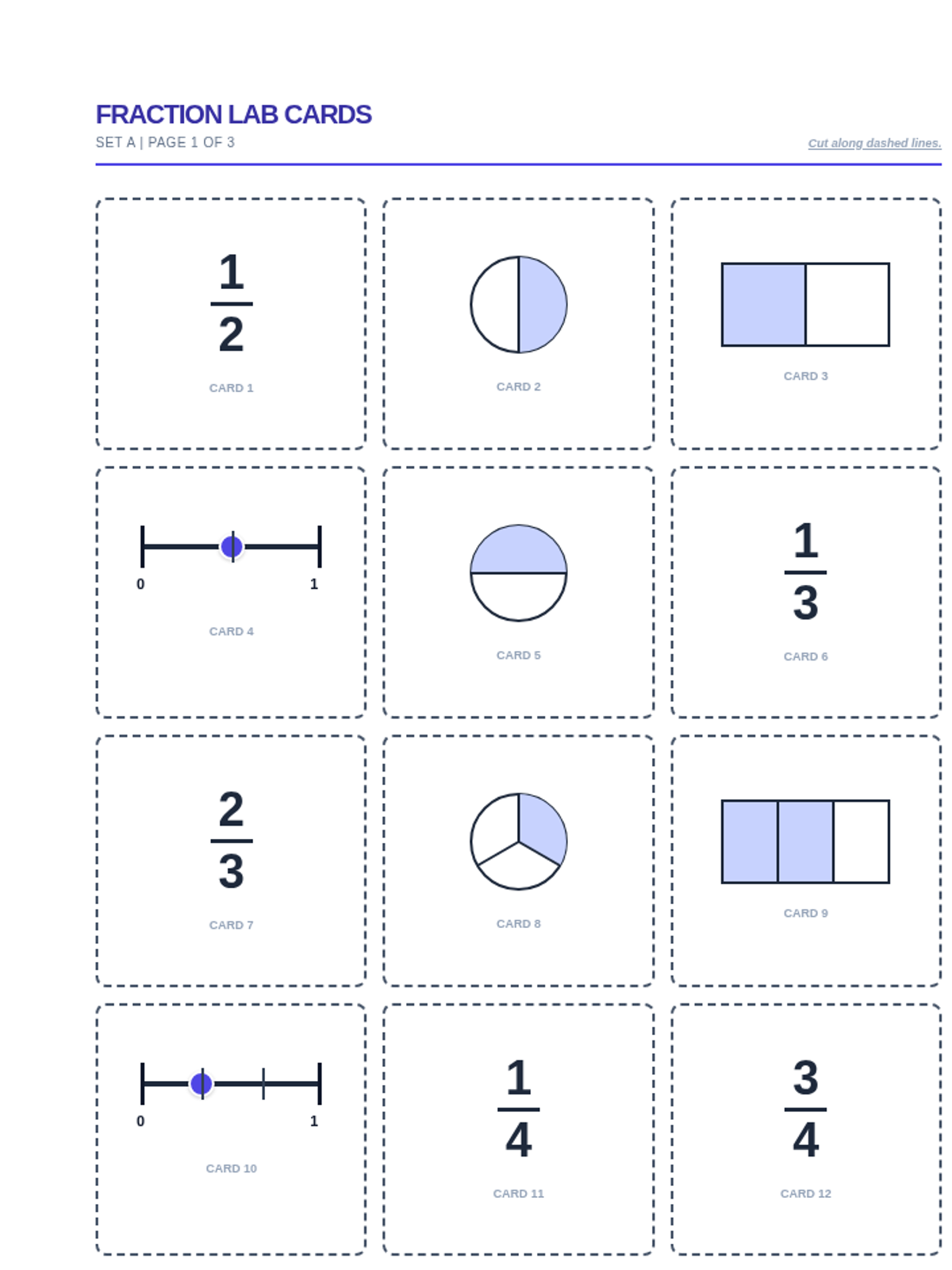
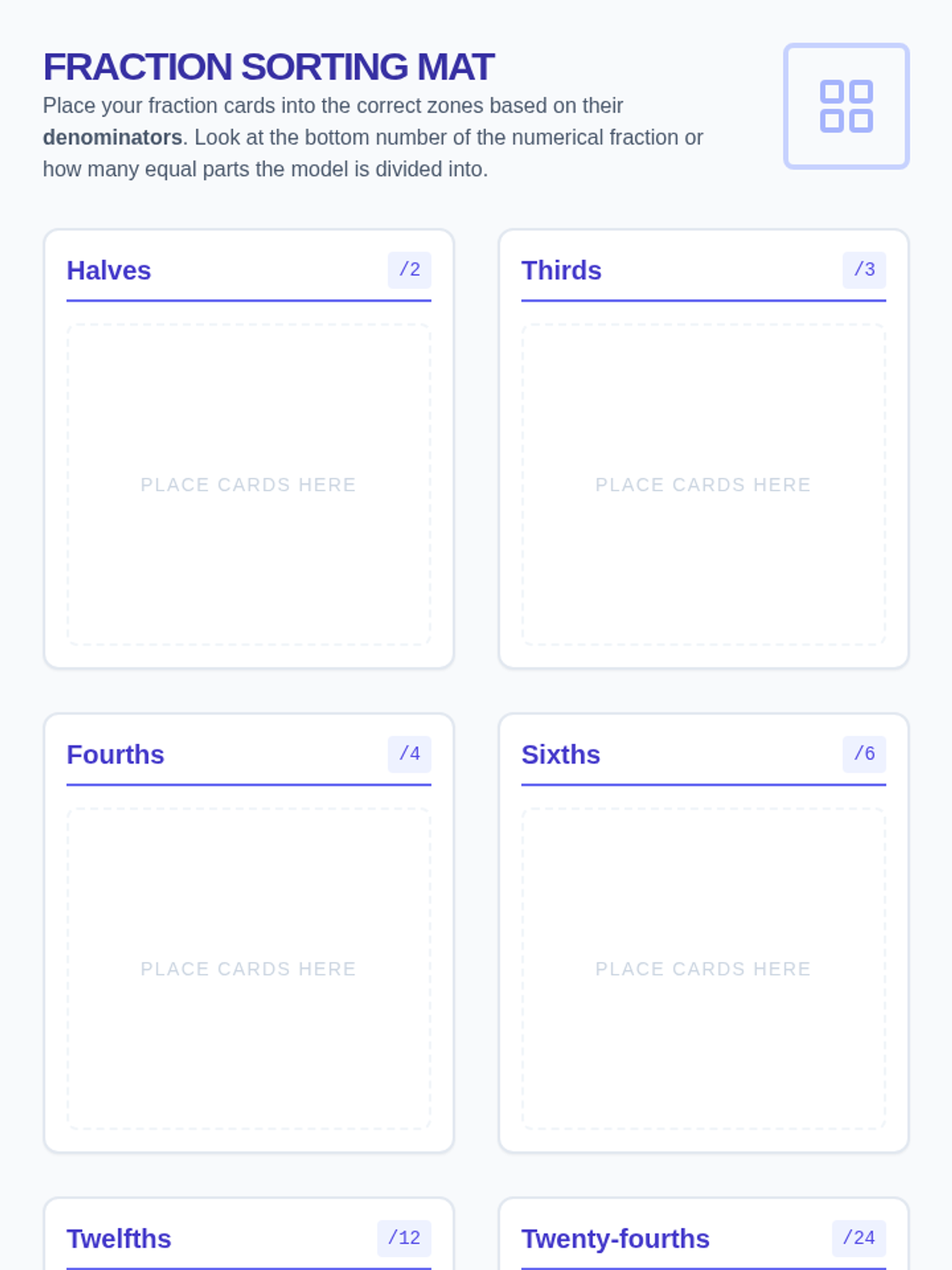
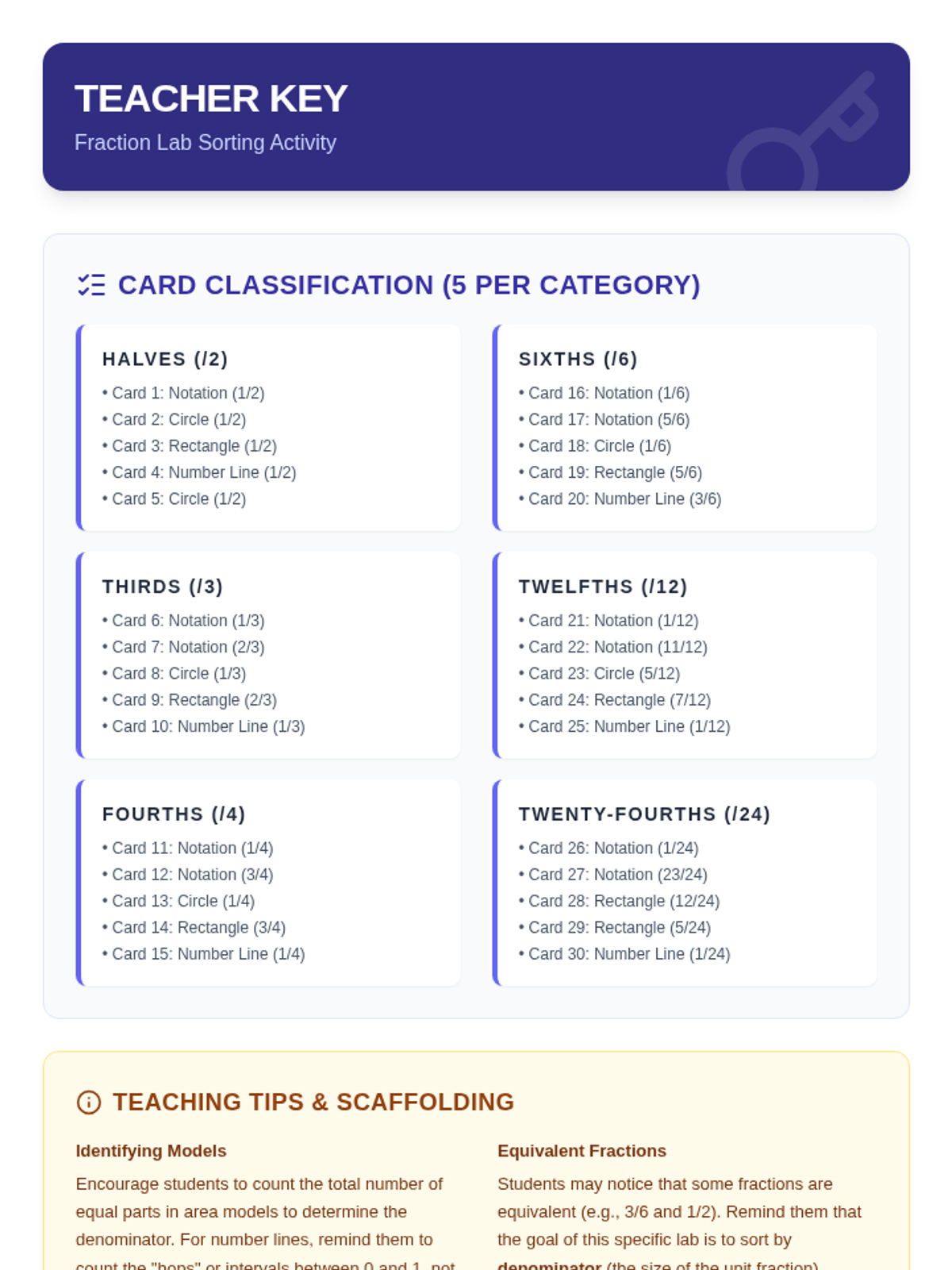
A hands-on exploration of fractions where students identify and sort fractions based on their denominators using various representations including number lines, area models, and numerical forms.
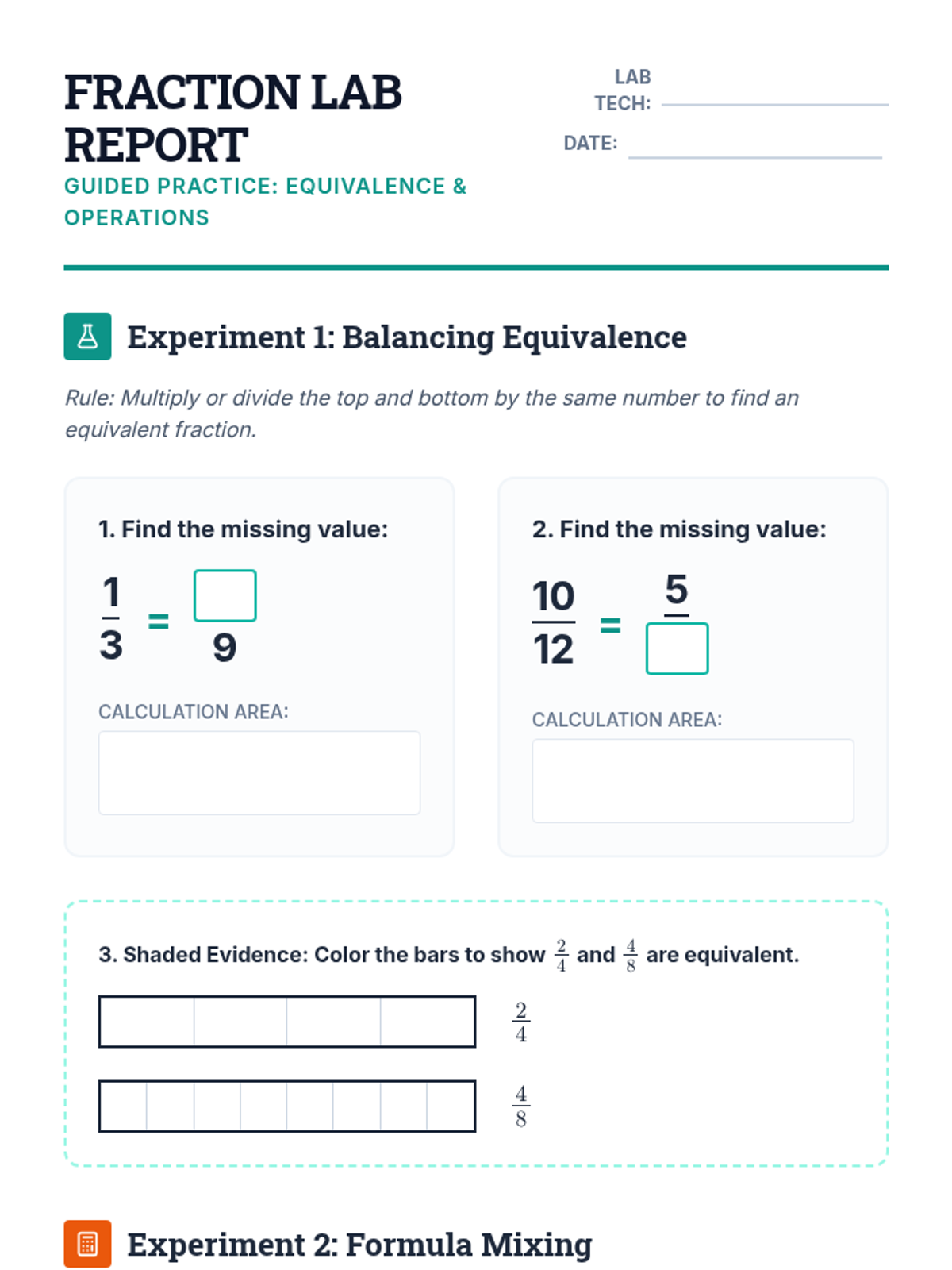
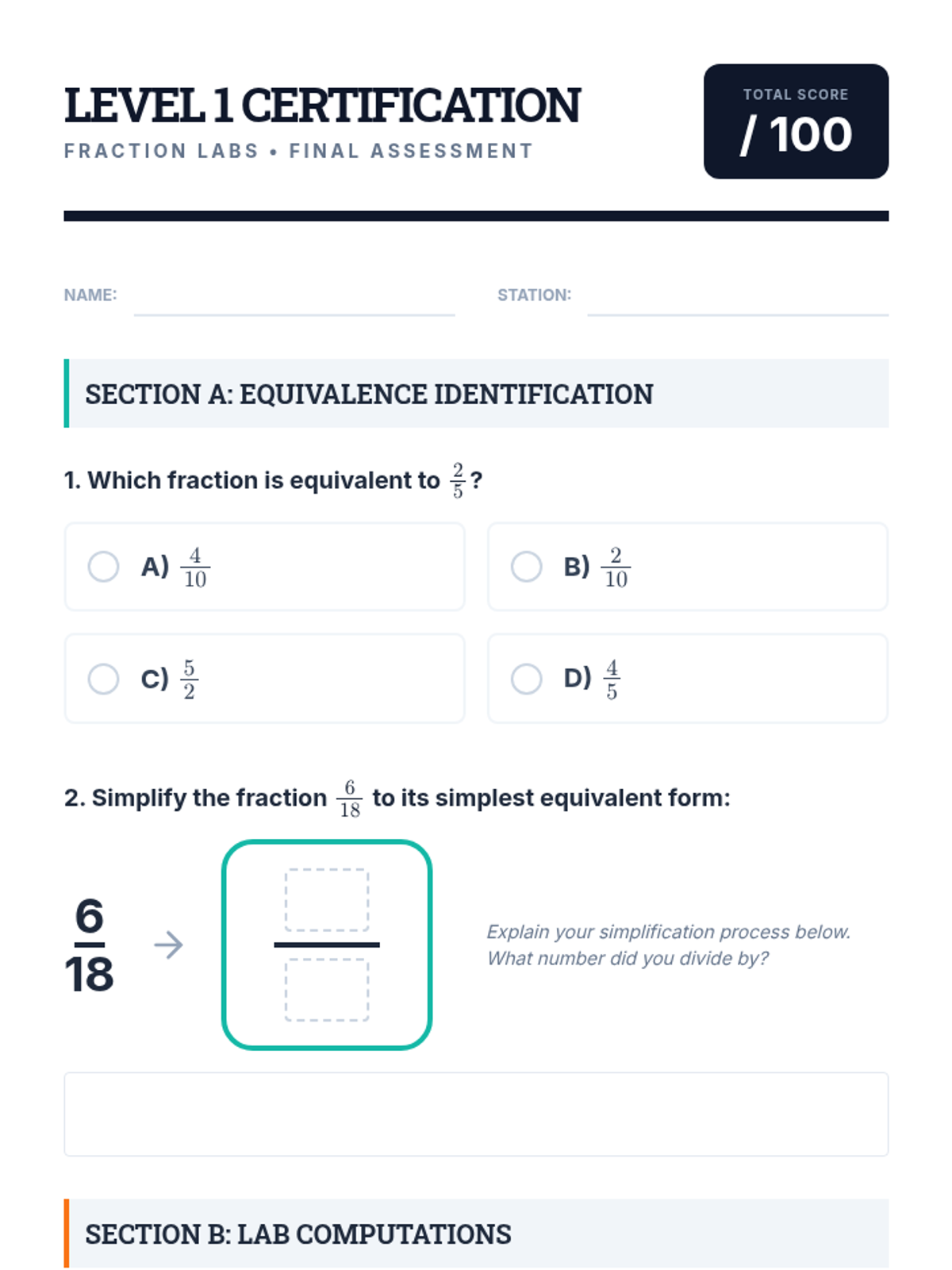
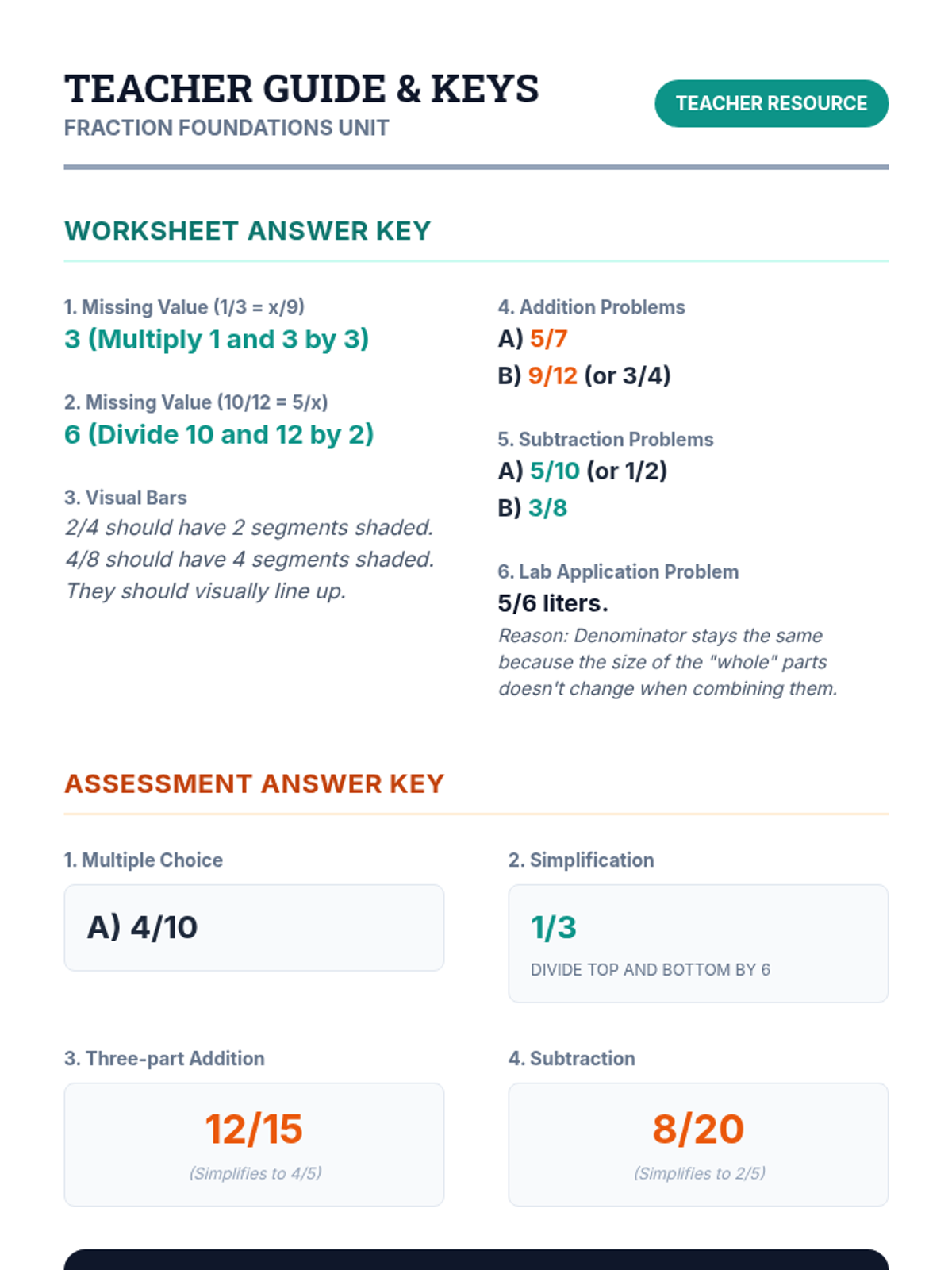
A comprehensive lesson on equivalent fractions and adding/subtracting fractions with like denominators, featuring a science lab theme.
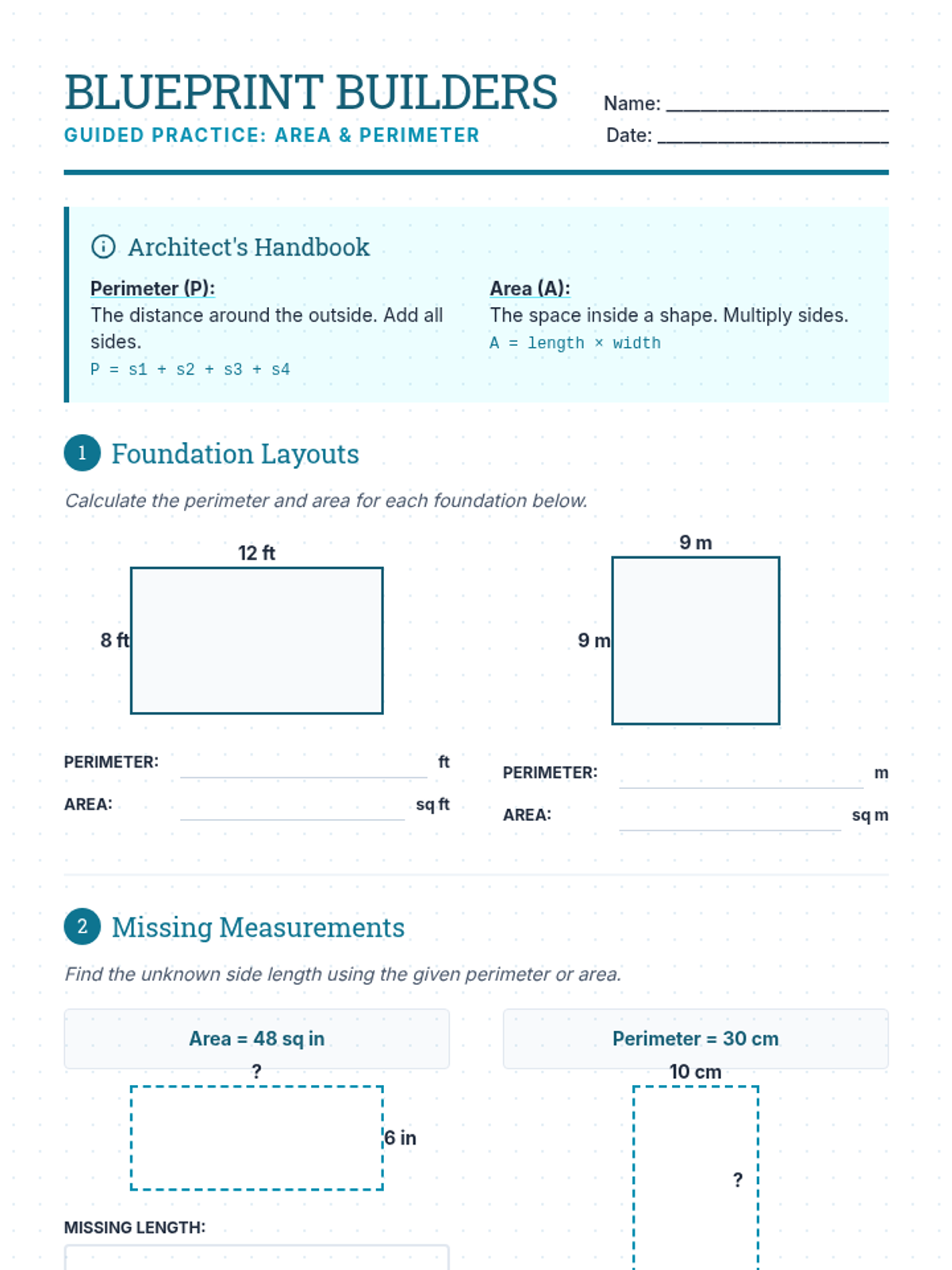
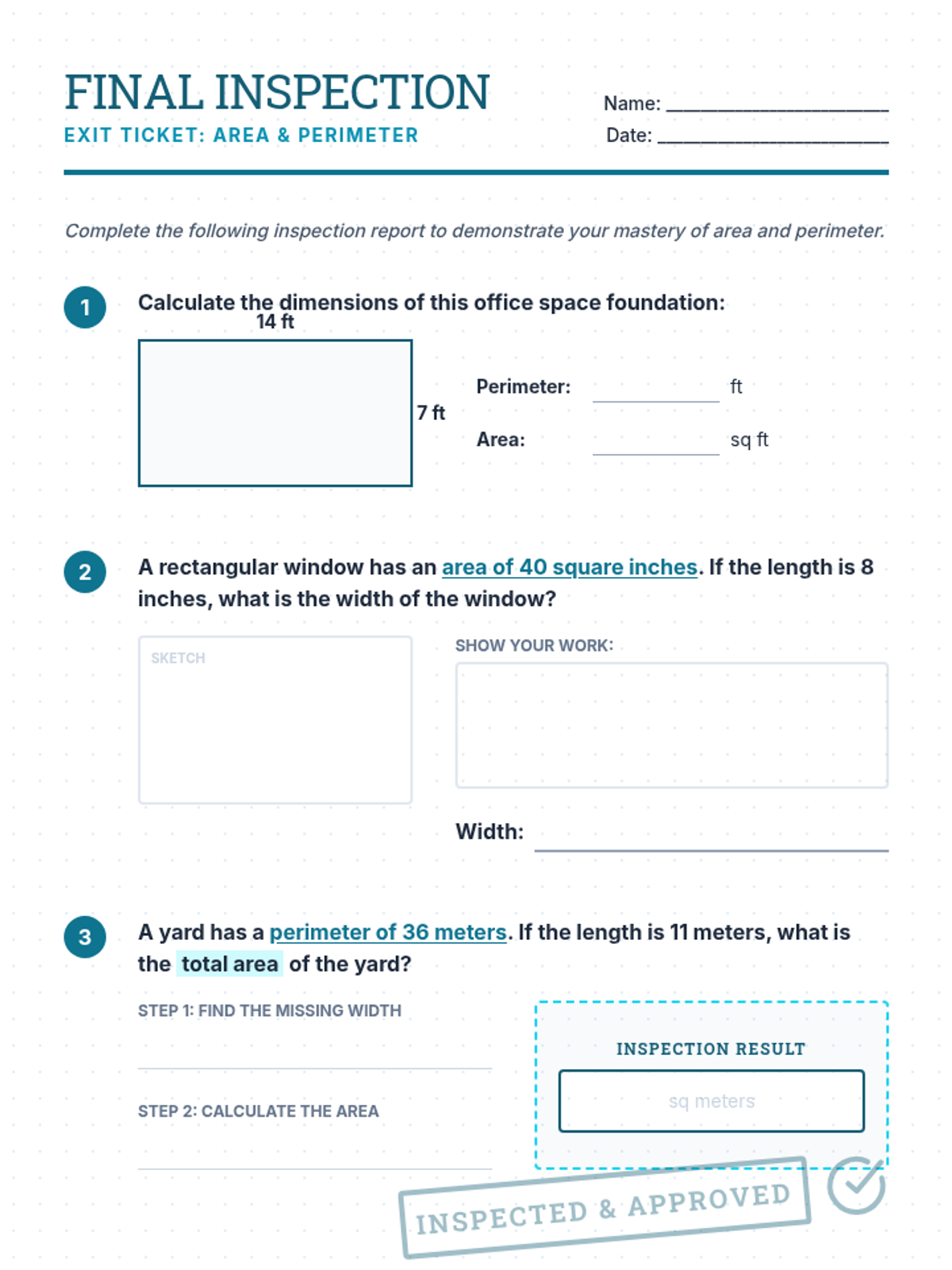
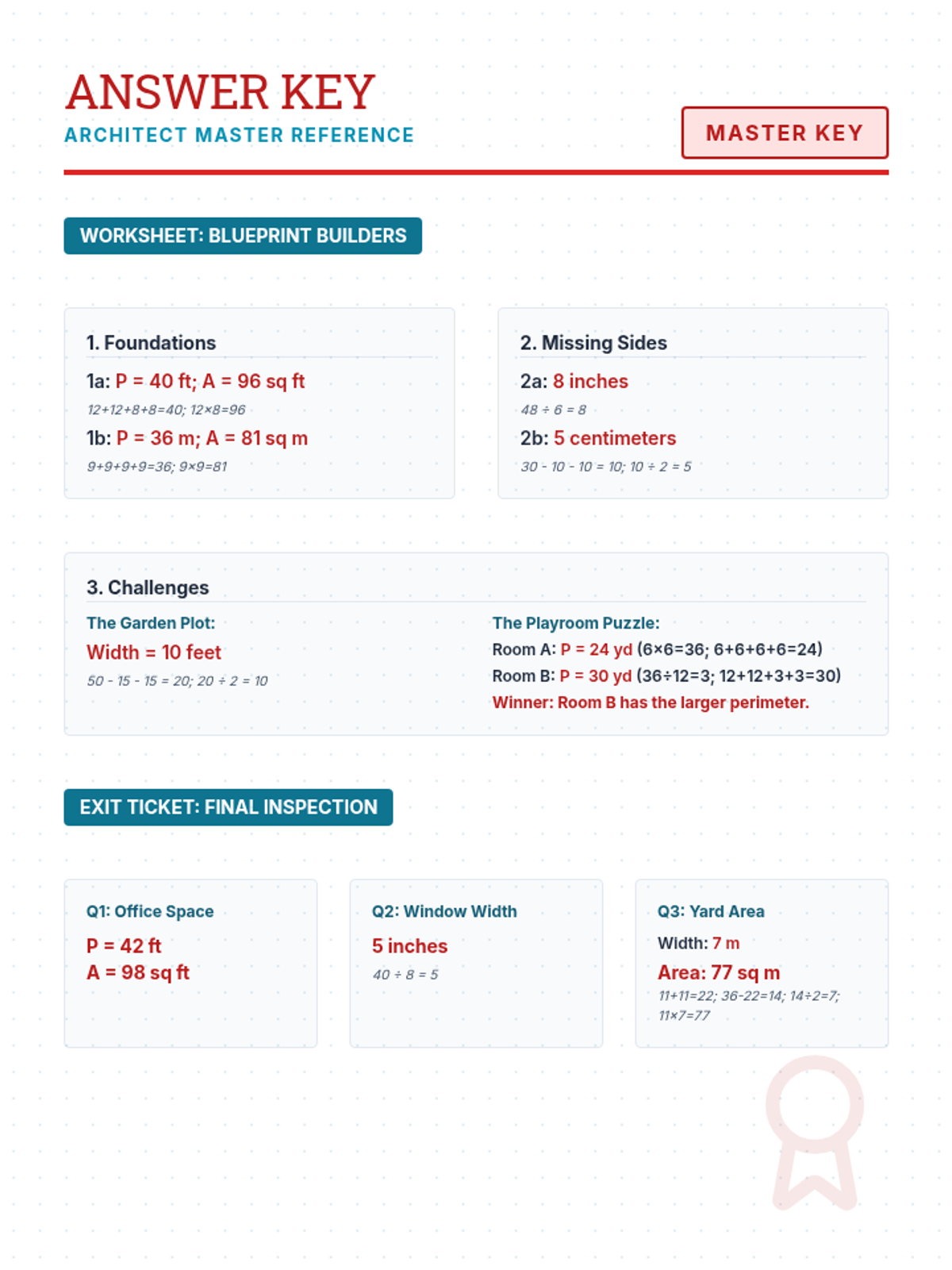
A lesson focused on solving real-world area and perimeter problems, including finding unknown side lengths and comparing rectangles with different dimensions but shared properties. Students act as junior architects to design and analyze blueprints.
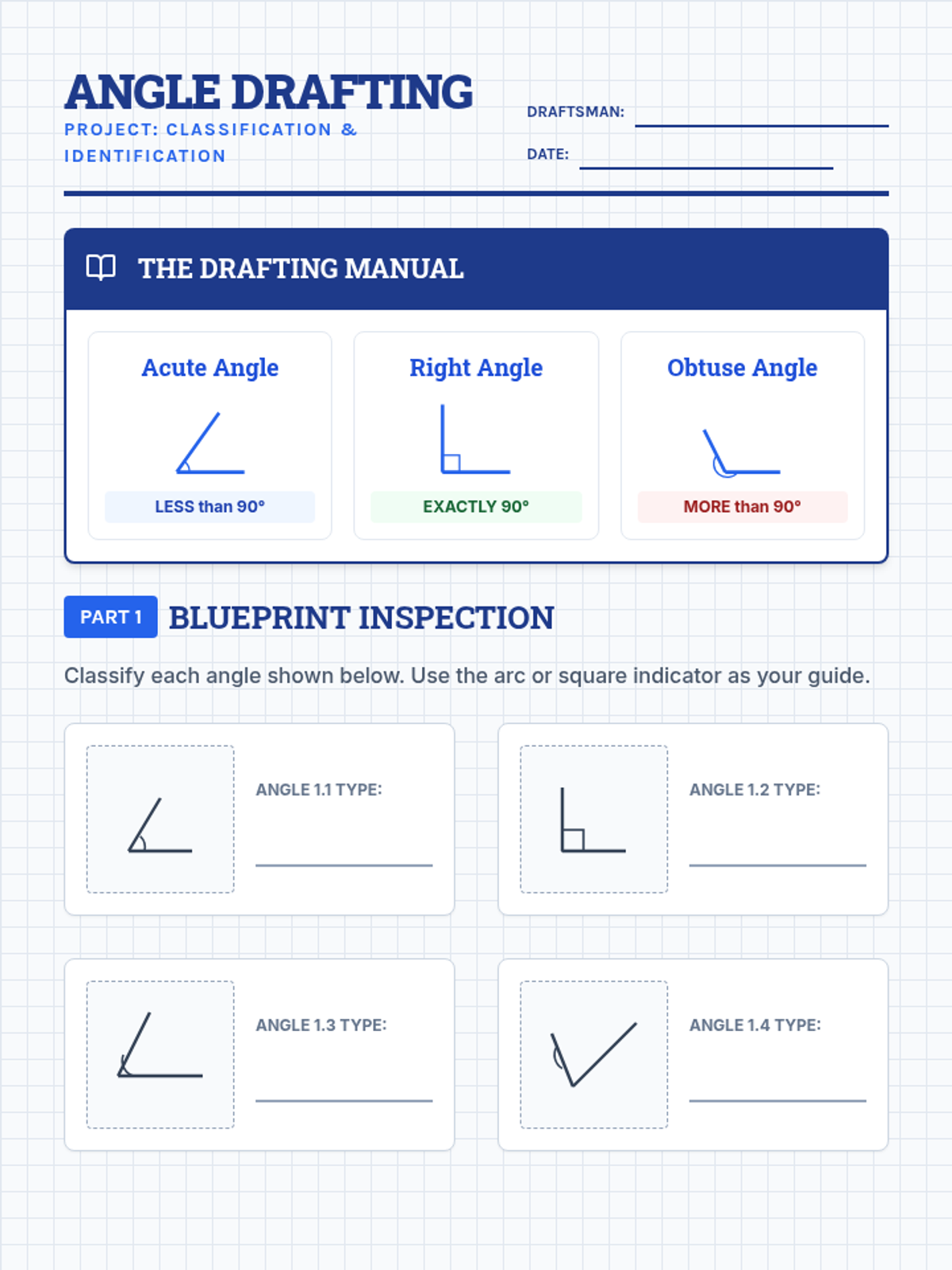
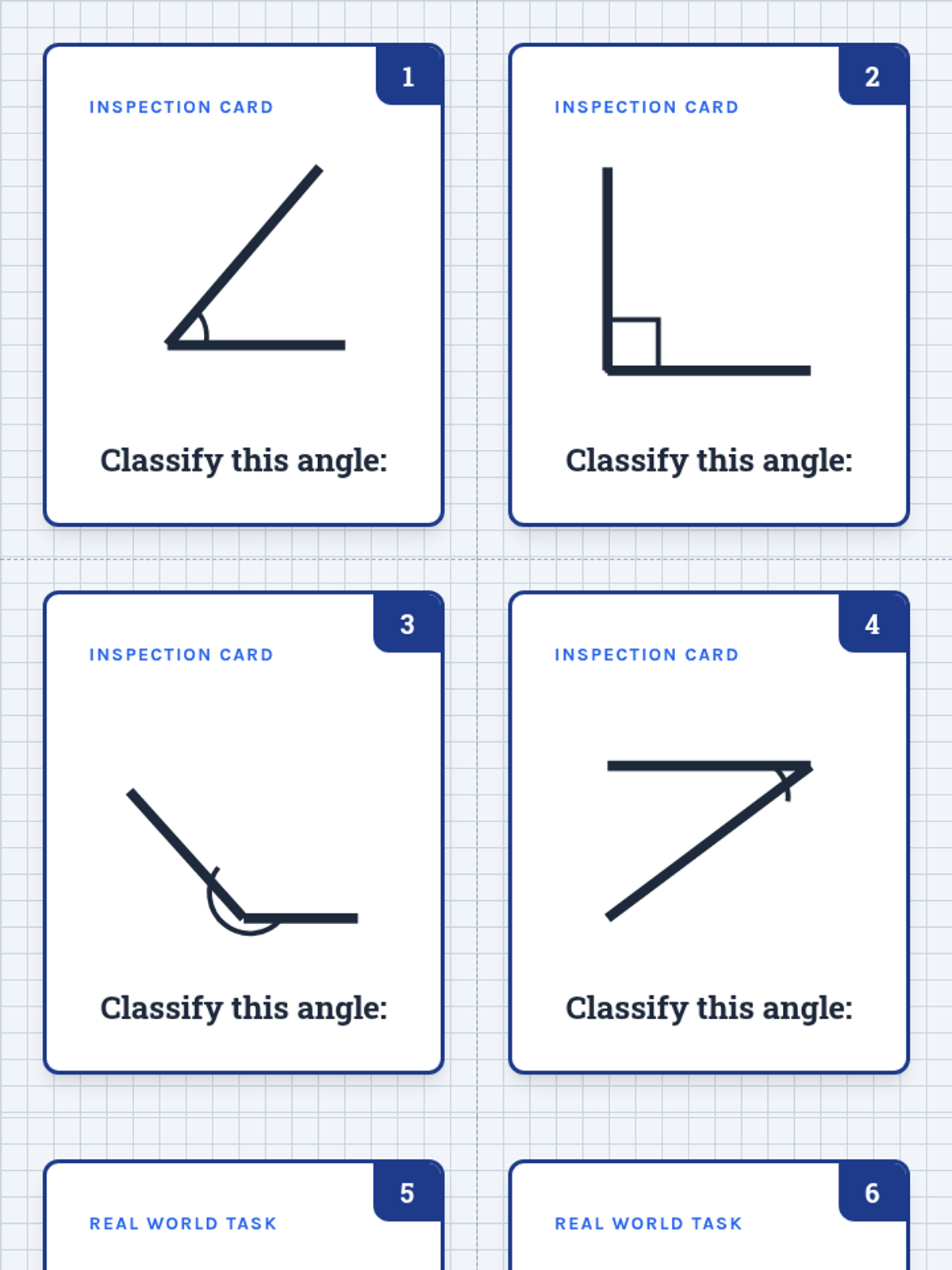
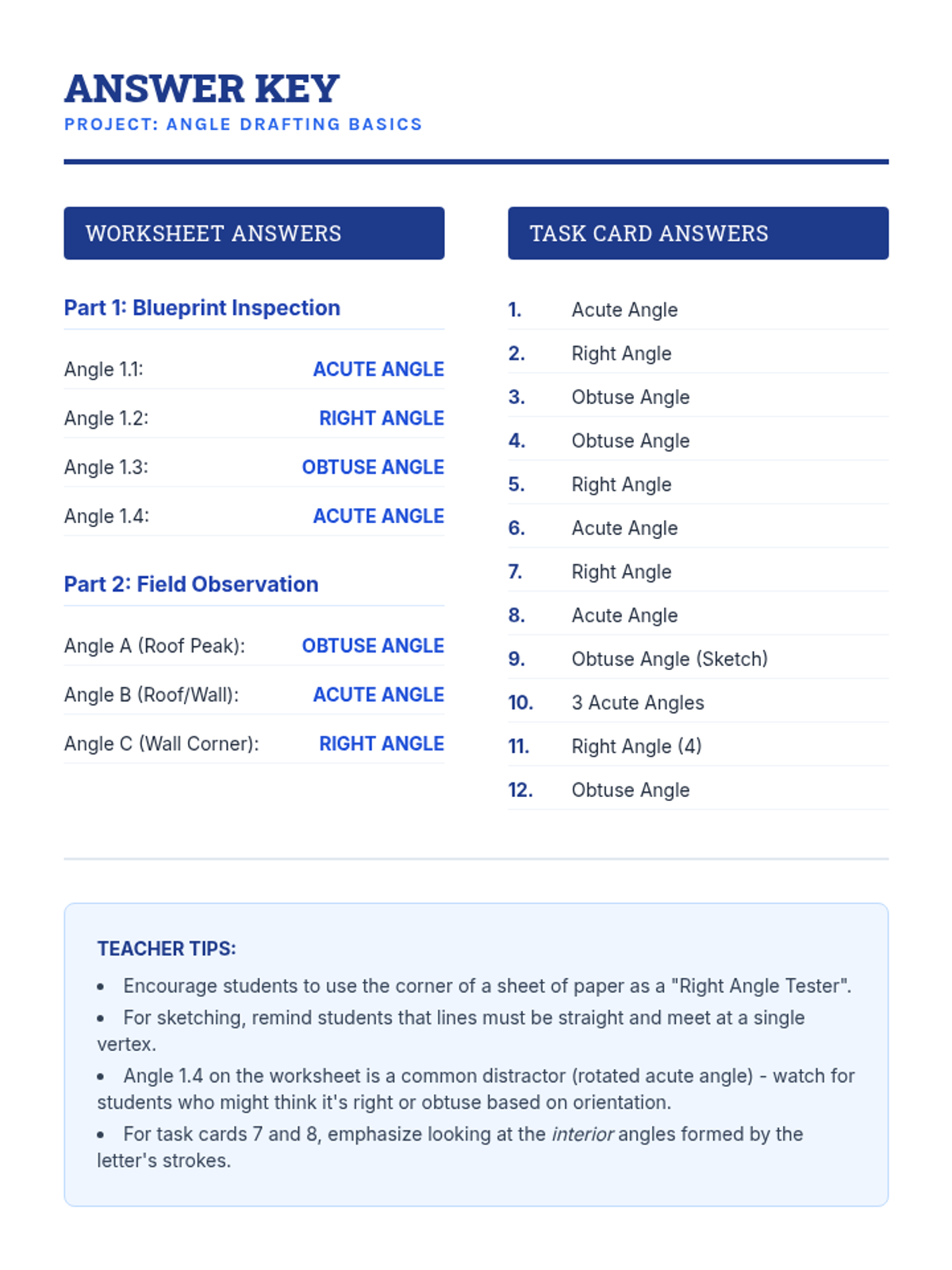
A foundational lesson on classifying angles as acute, obtuse, or right, serving as a prerequisite for measuring with a protractor. Students will identify, classify, and sketch angles within a technical blueprint-themed environment.
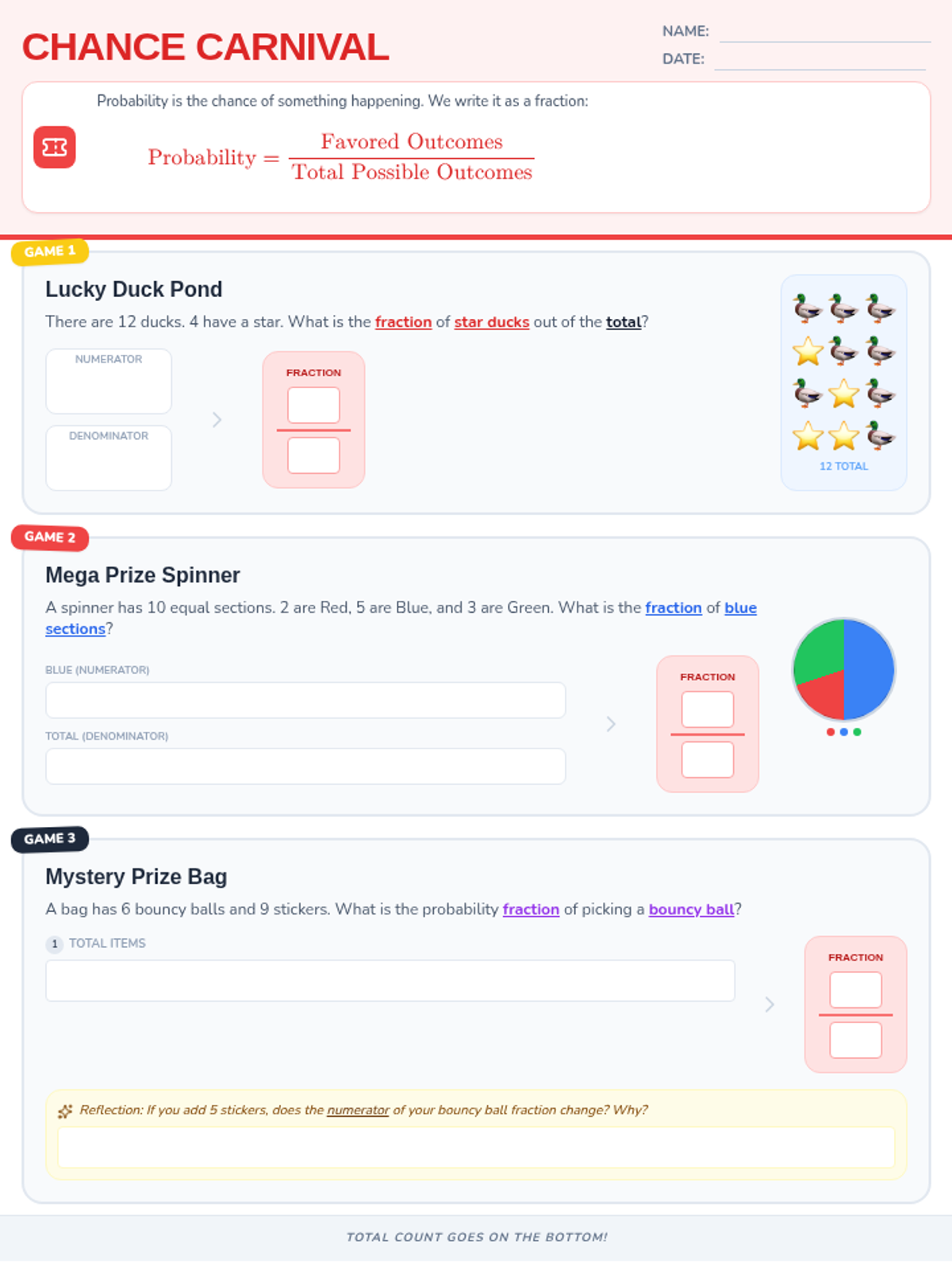
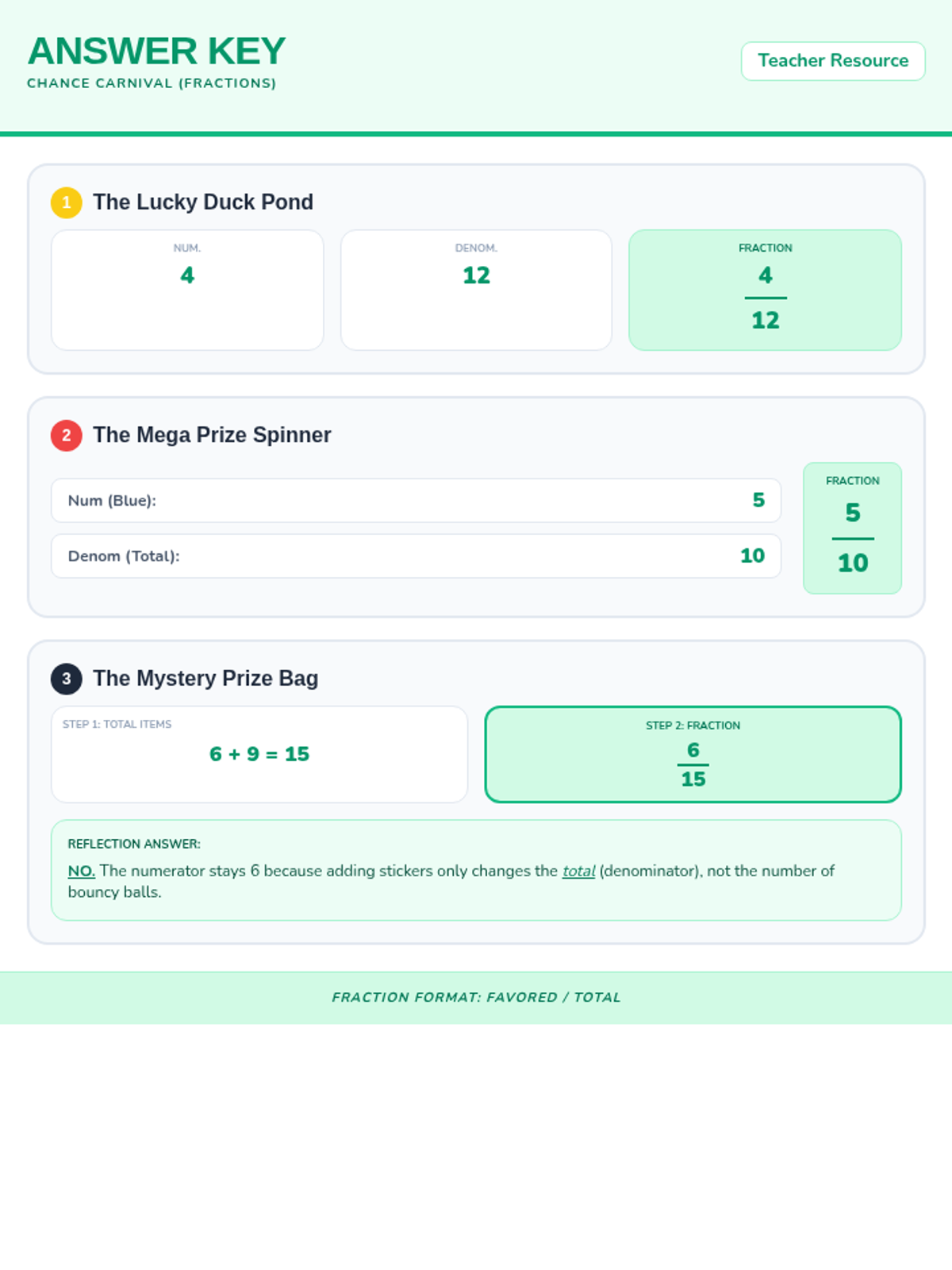
A quick introductory lesson focusing on the fundamental concept of probability as a ratio of favored outcomes to total possible outcomes.
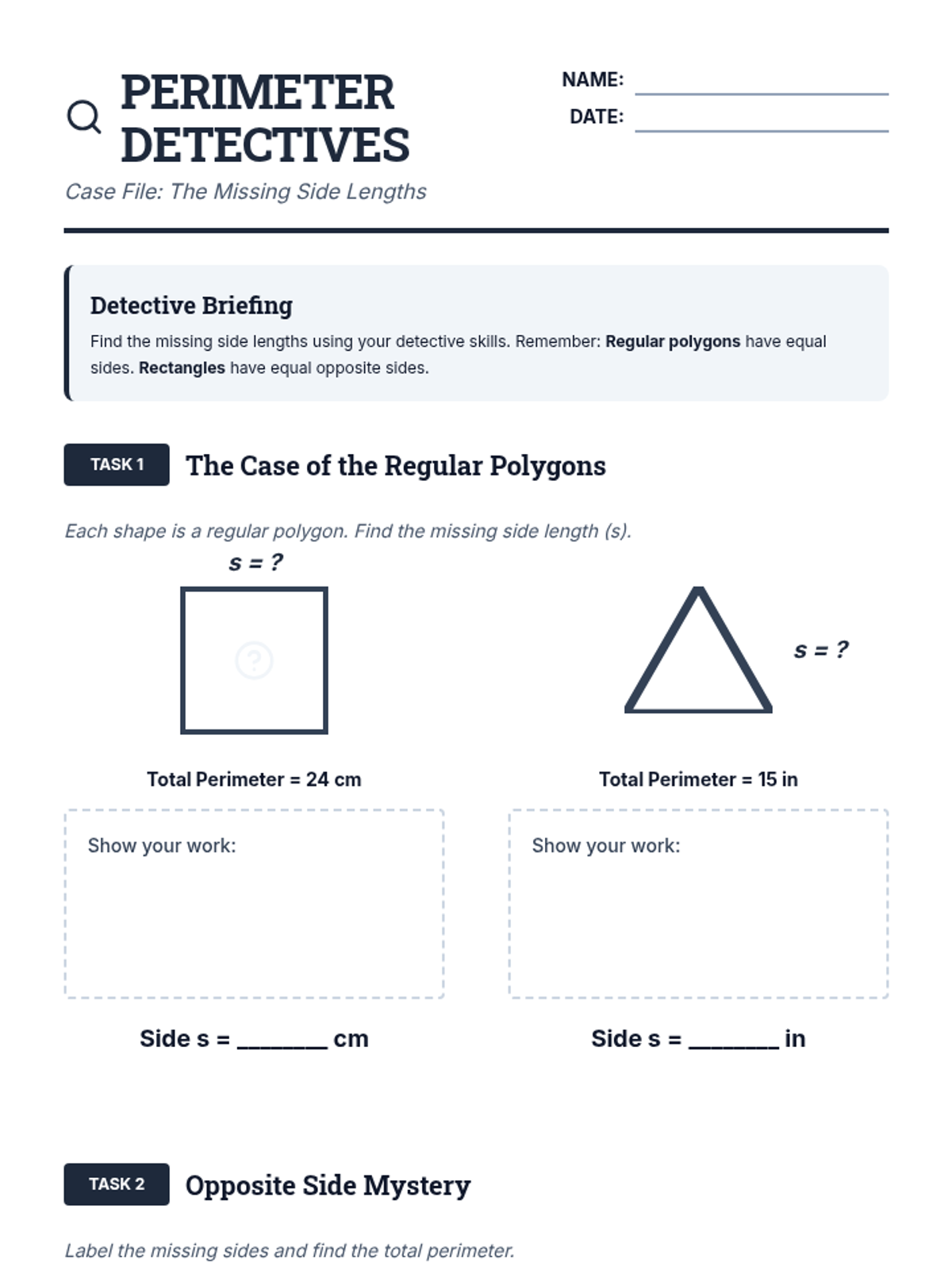
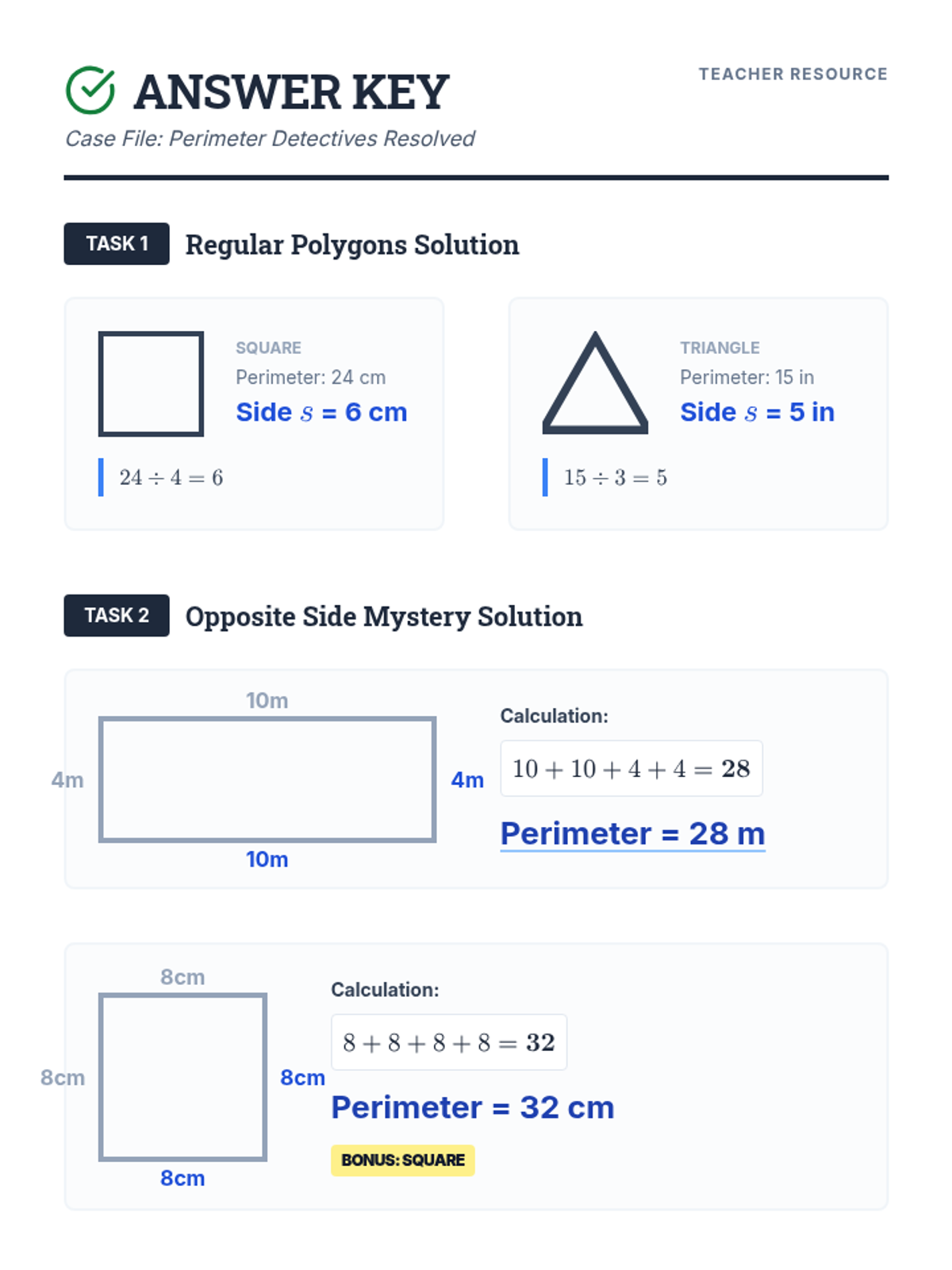
In this lesson, students become 'Perimeter Detectives' to solve for missing side lengths in regular polygons and rectangles. They use their knowledge of polygon properties and addition/subtraction to calculate perimeters and individual side measurements.
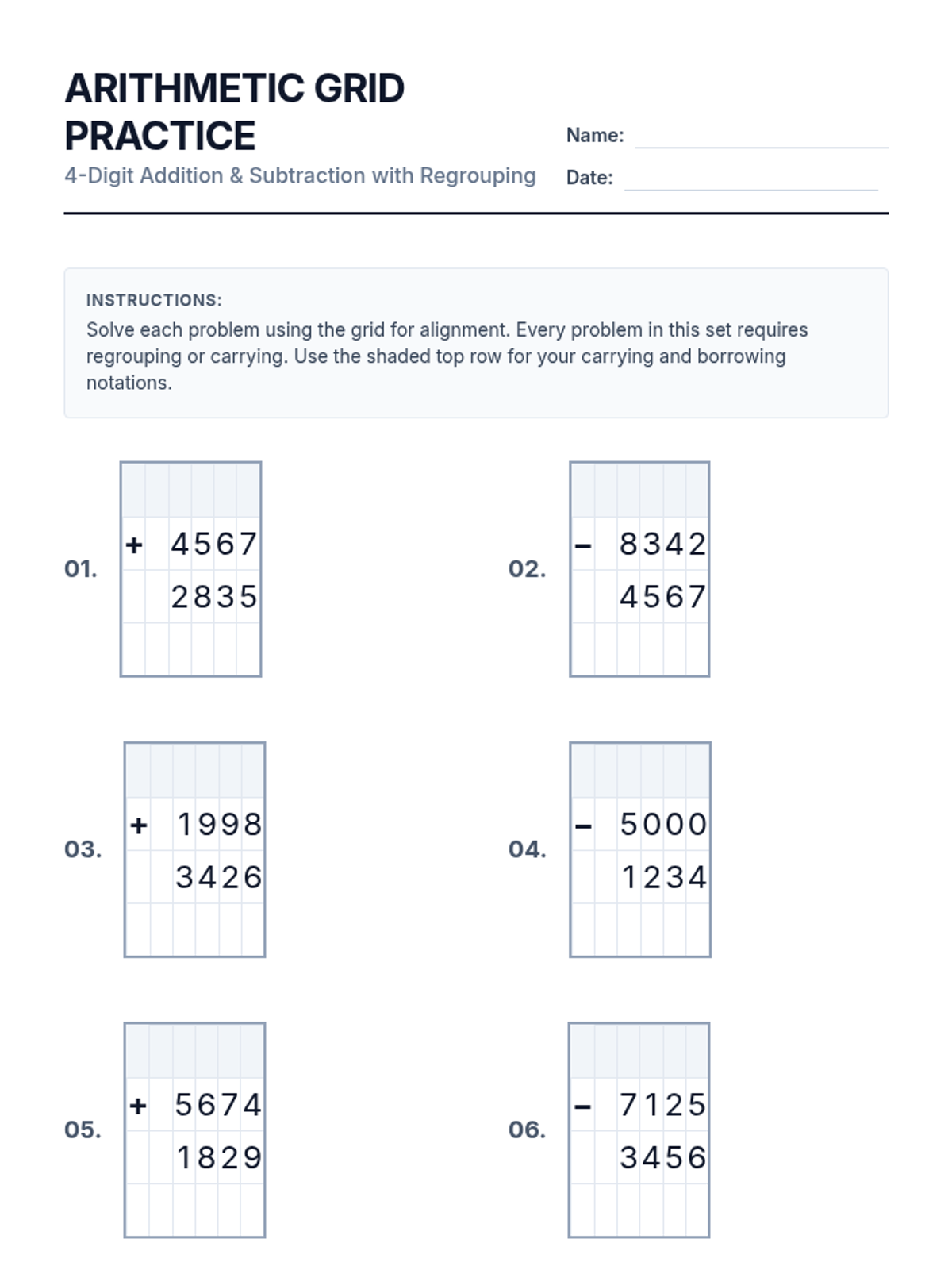
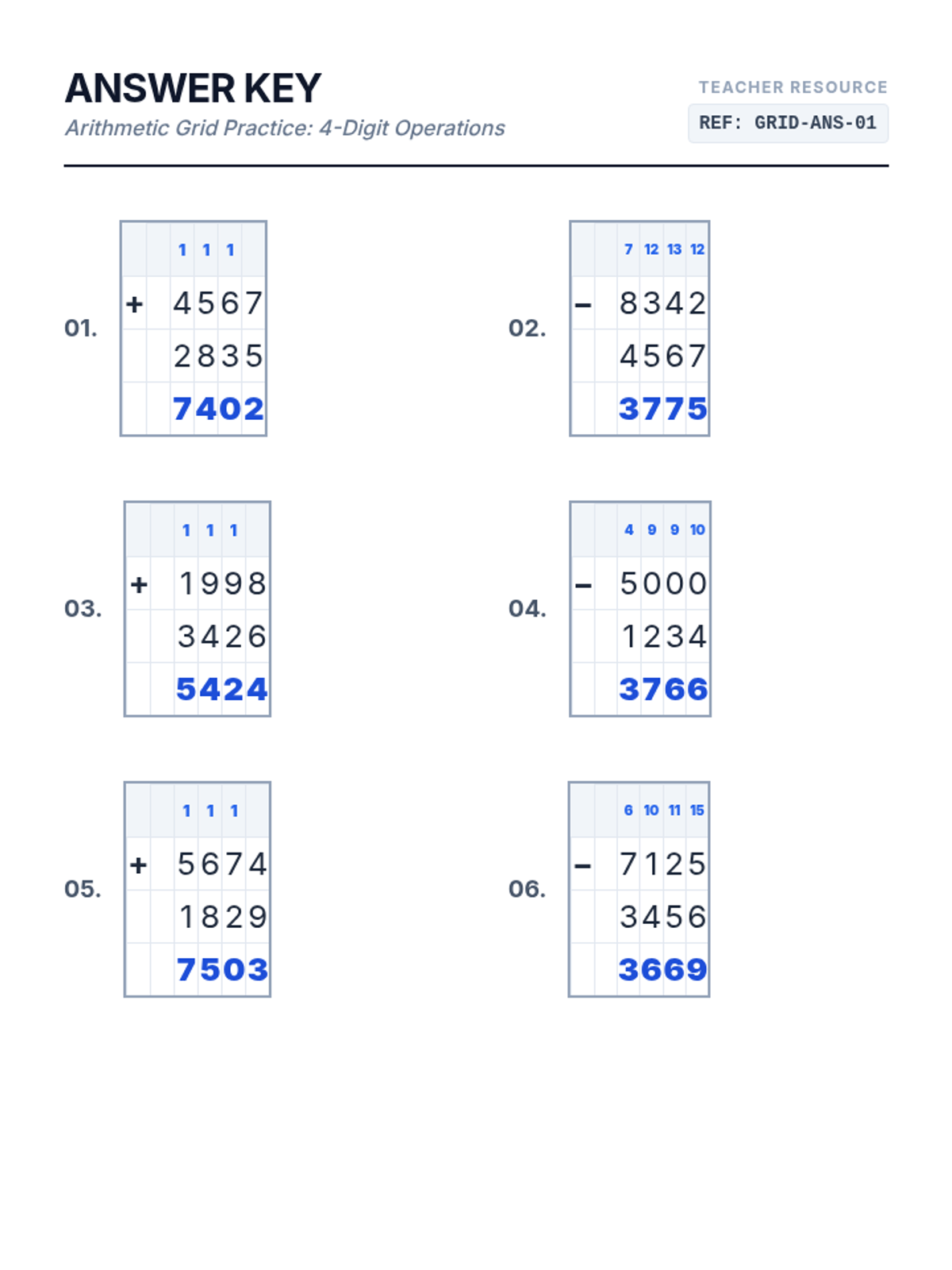
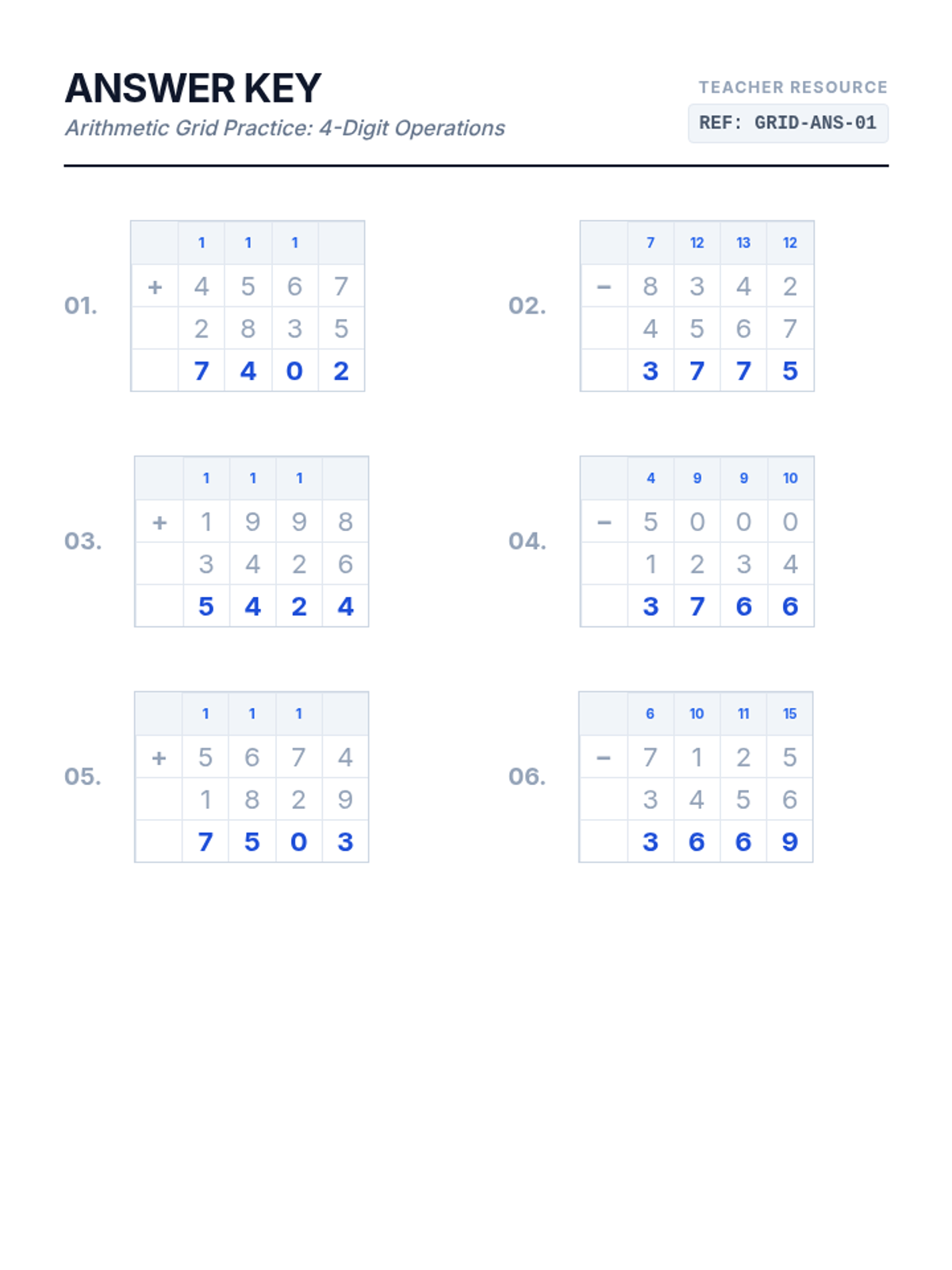
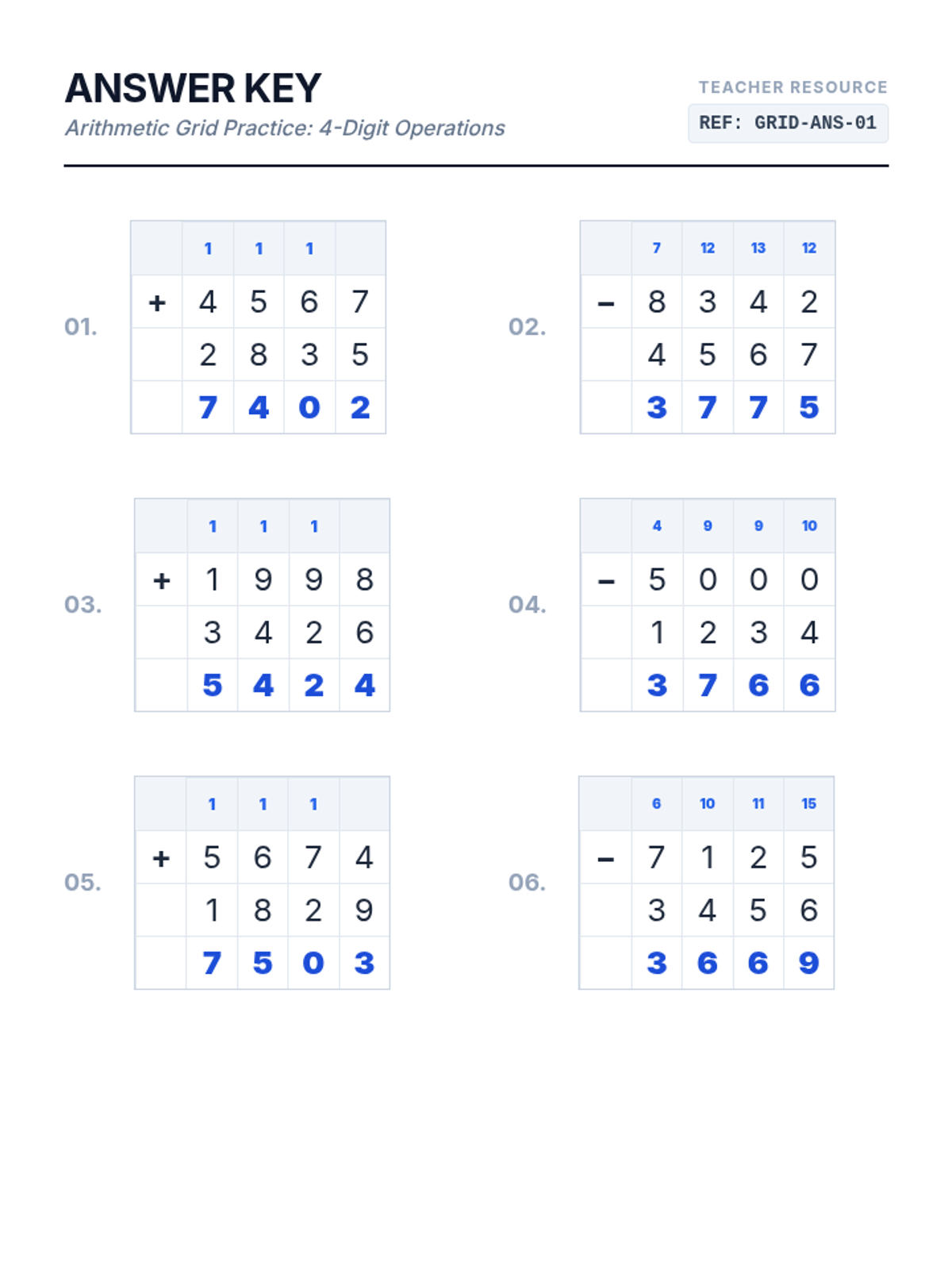
A specialized practice lesson on 4-digit addition and subtraction where every problem requires regrouping or carrying, presented on a clear grid layout for alignment.
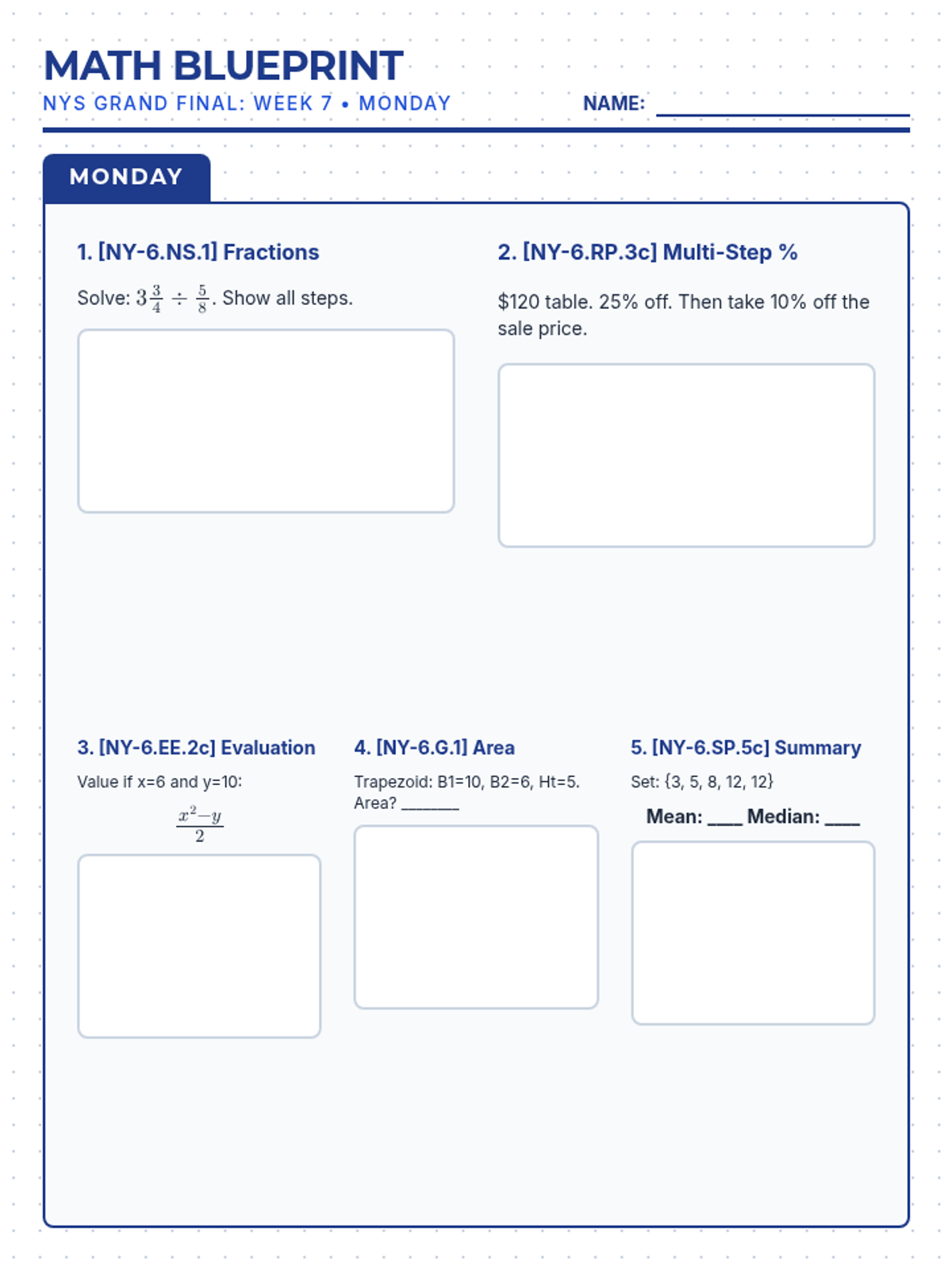
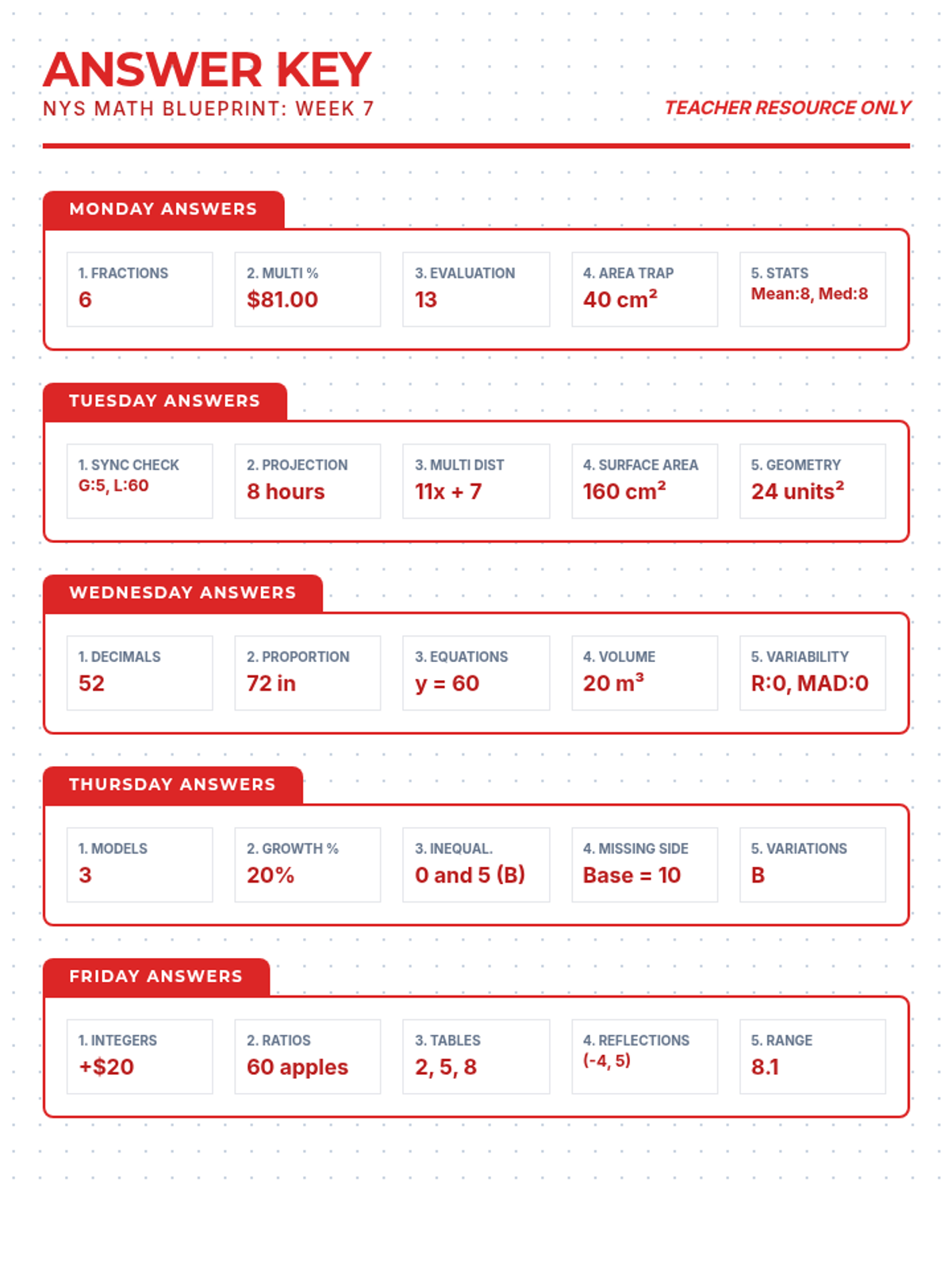
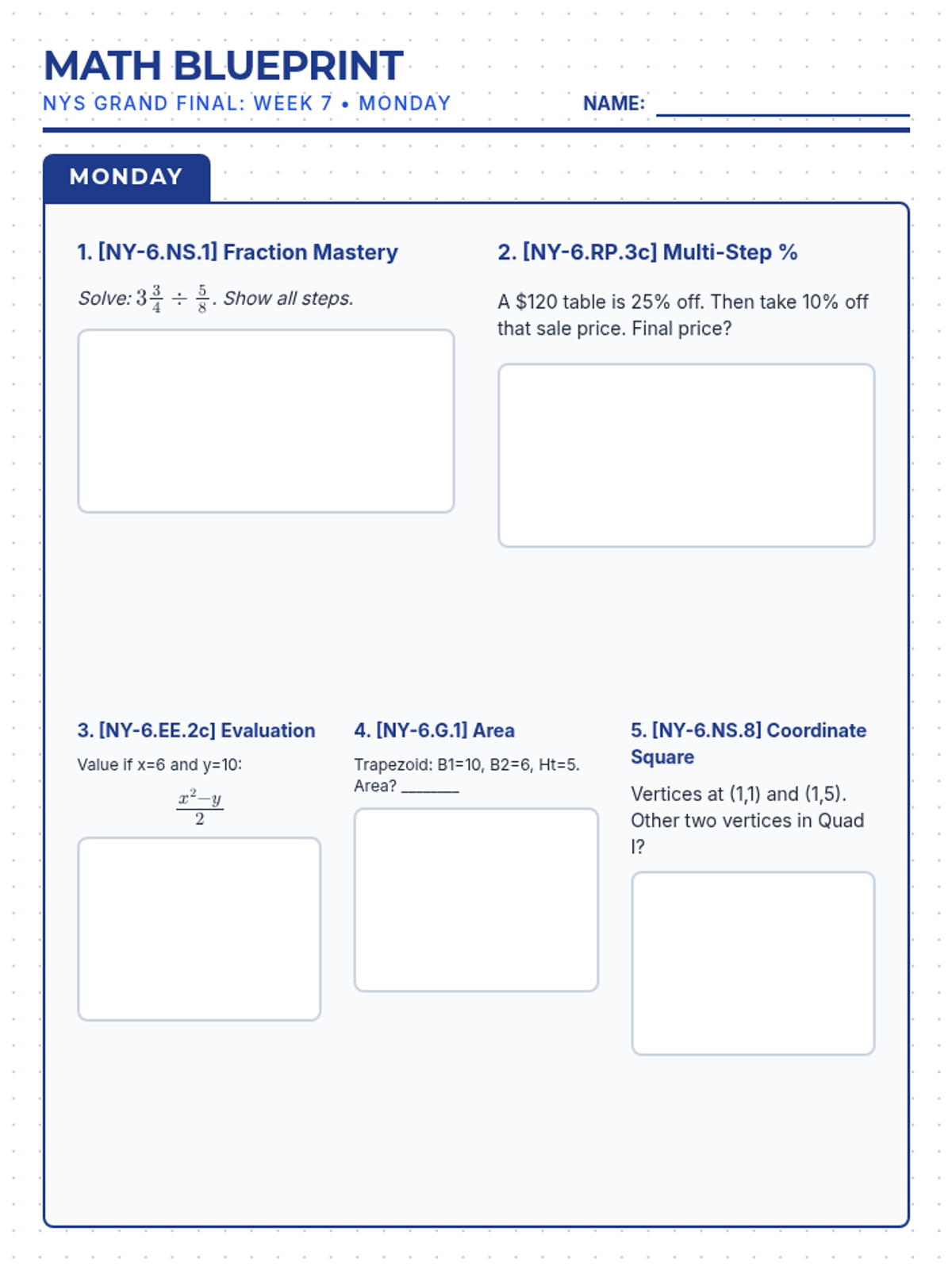
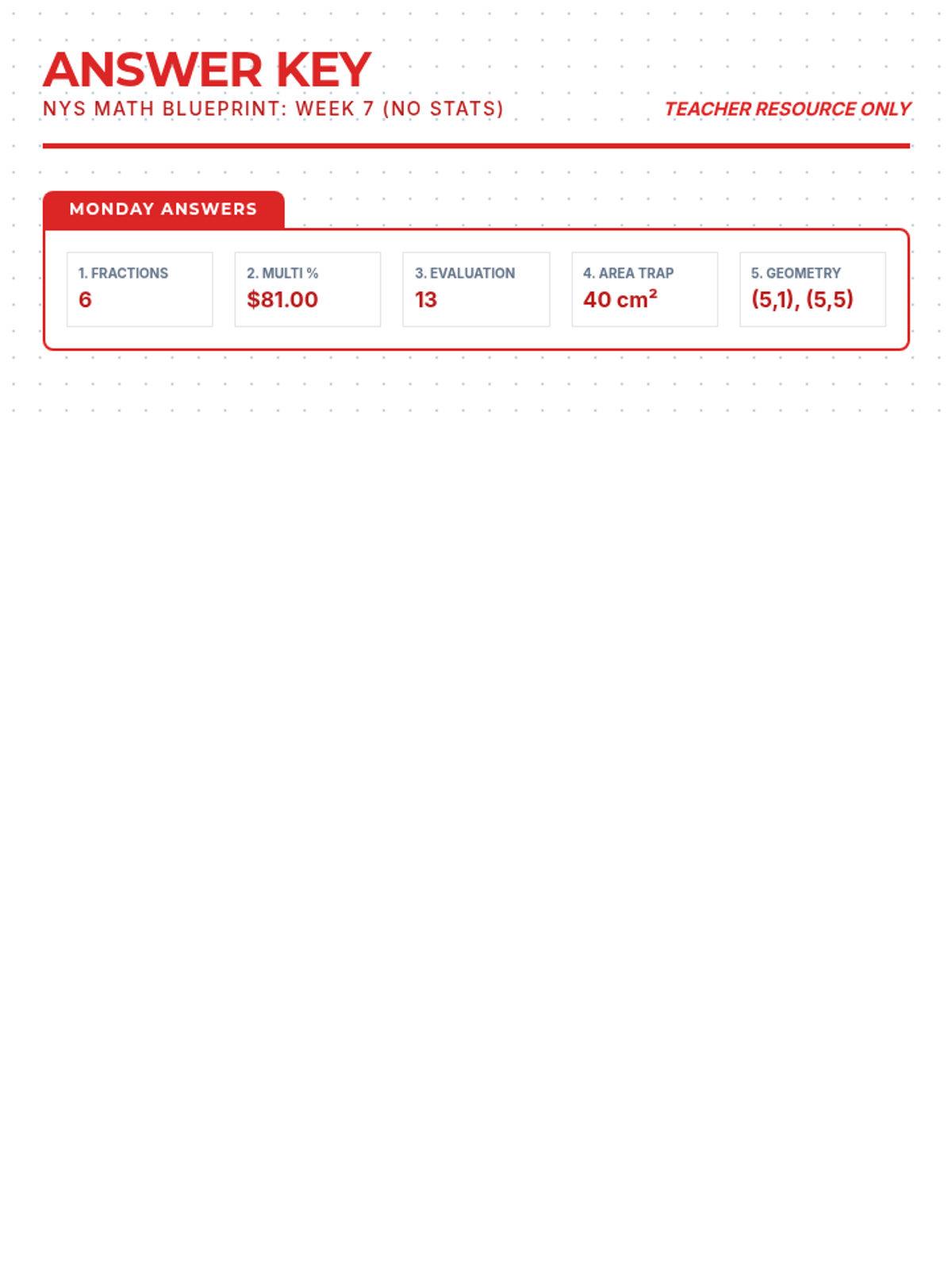
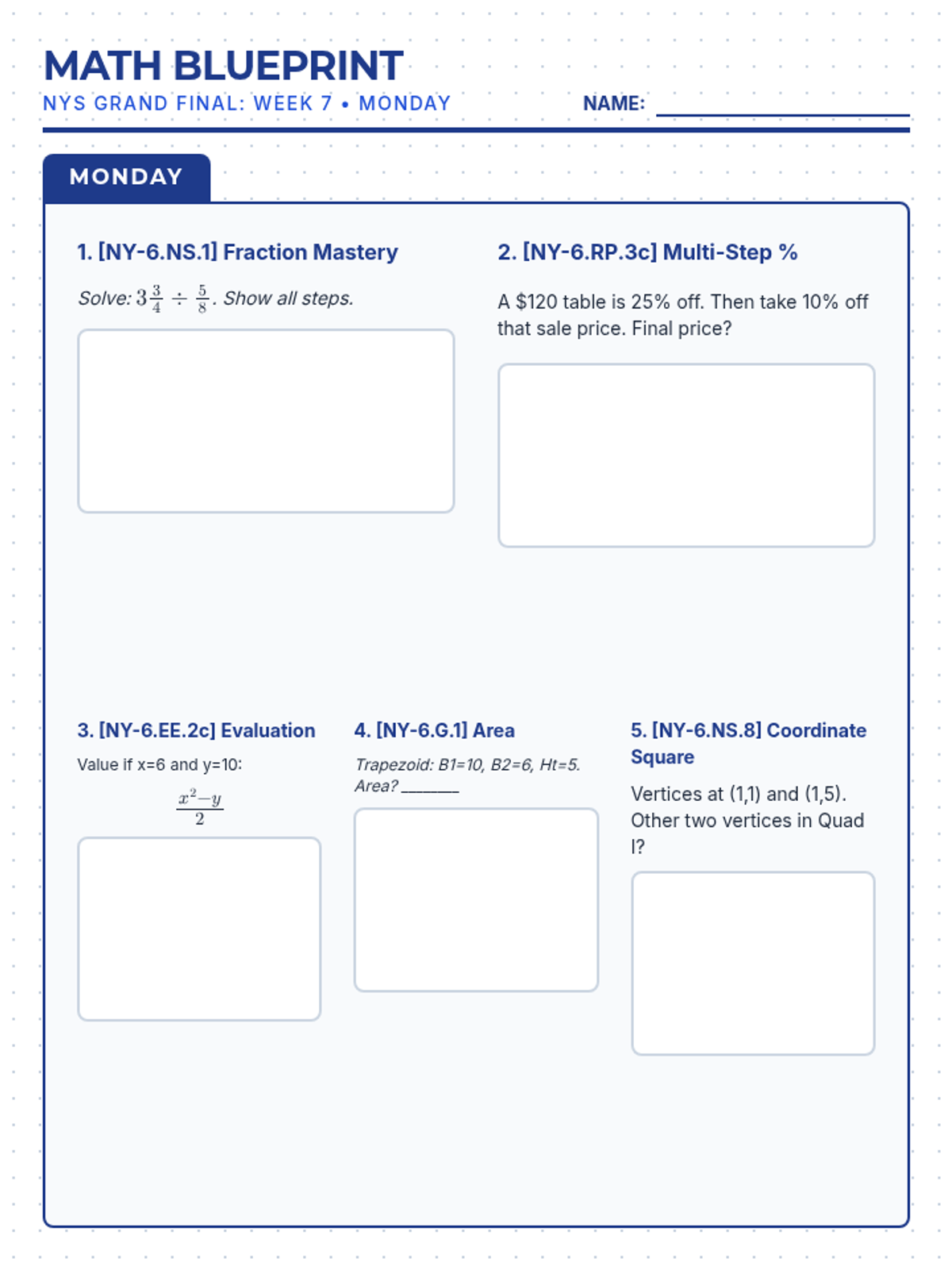
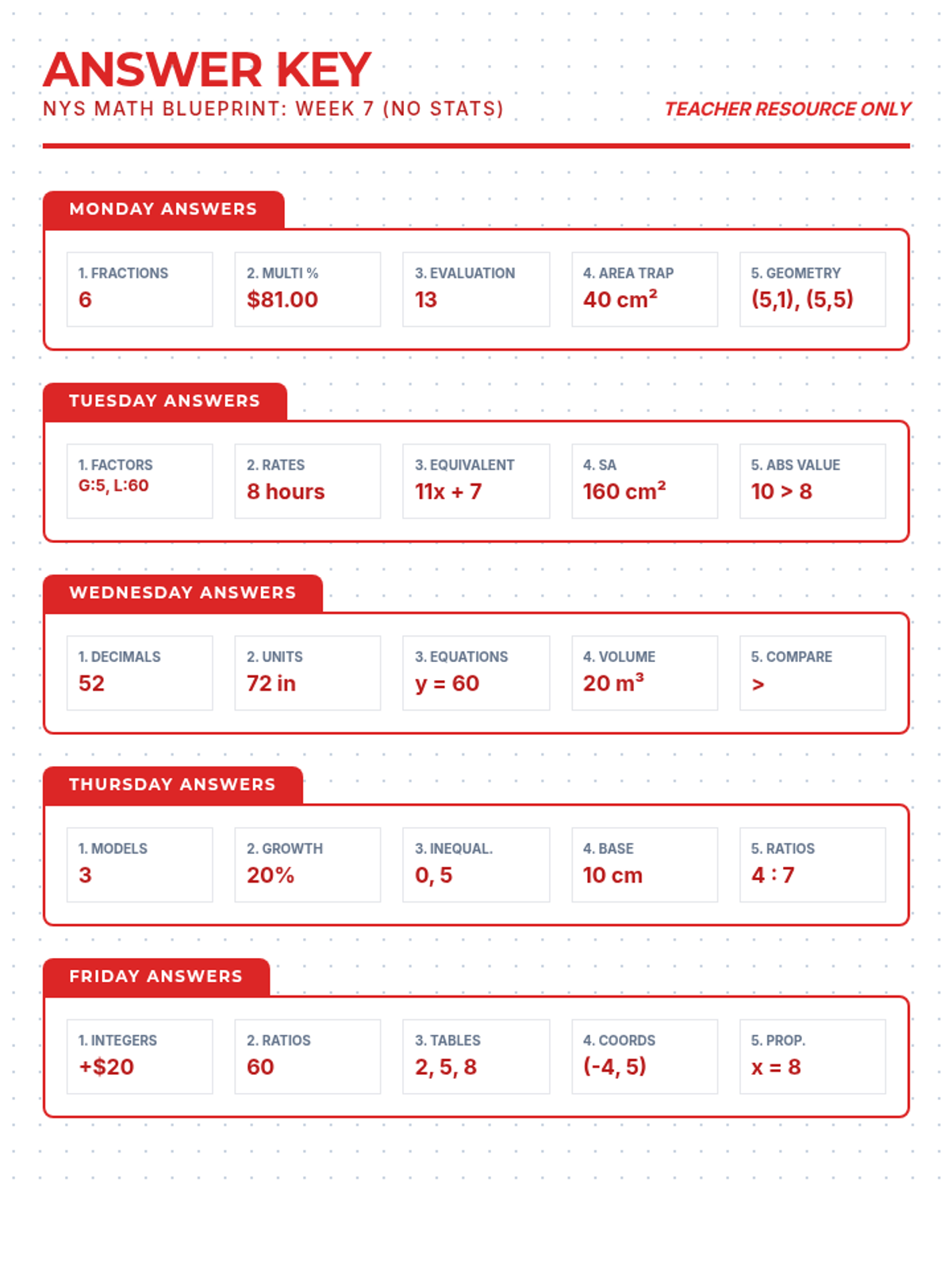
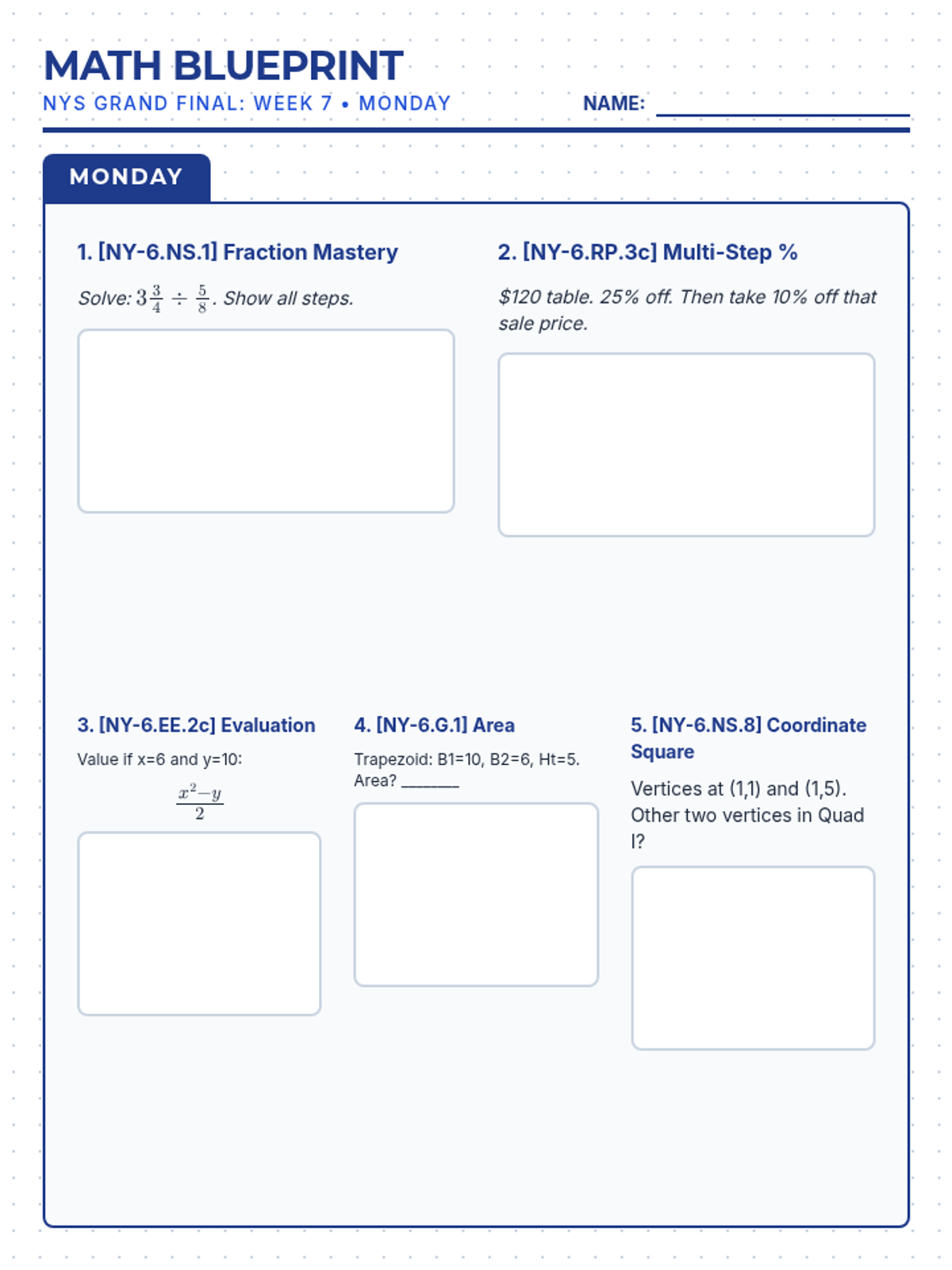
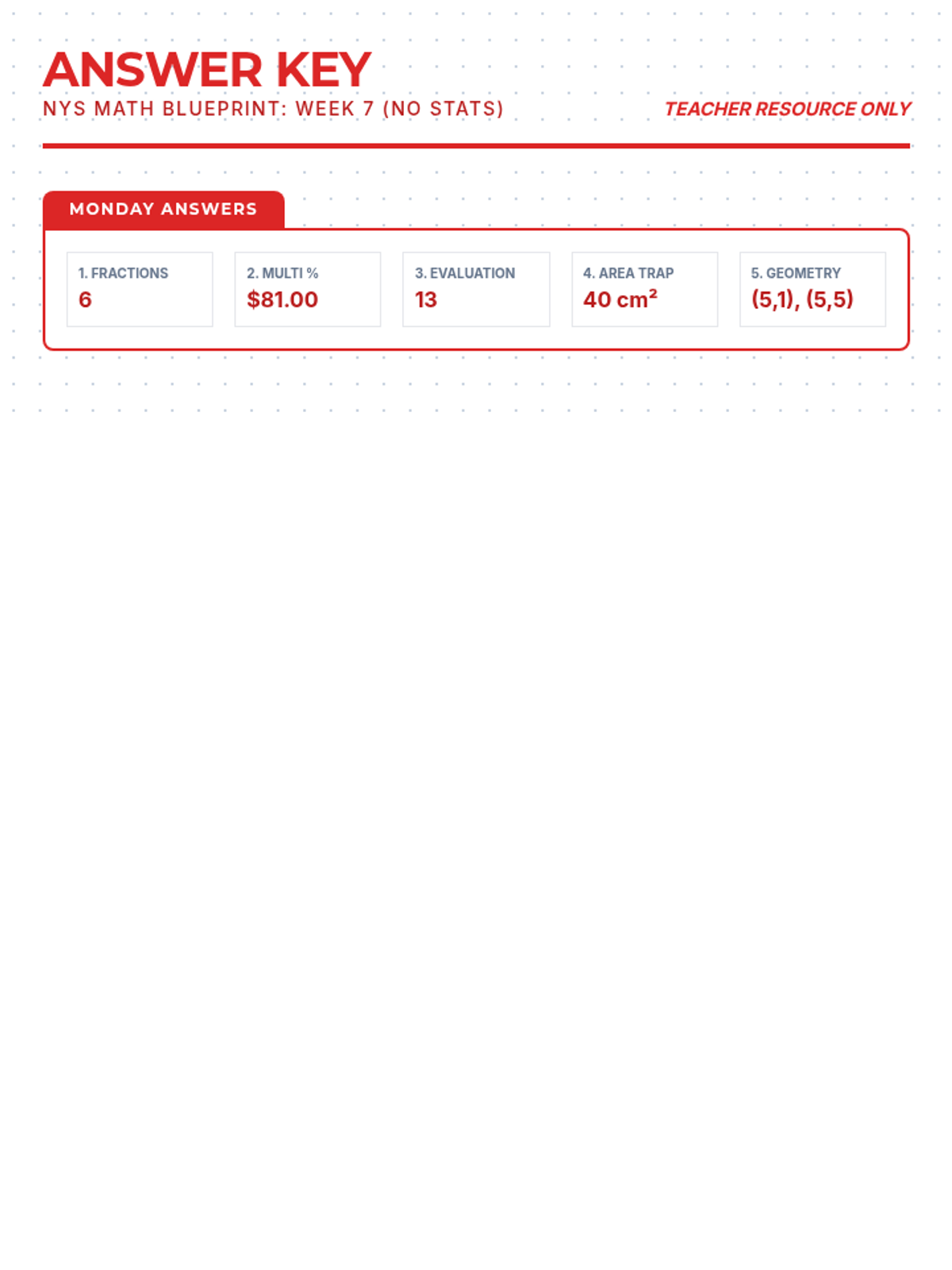
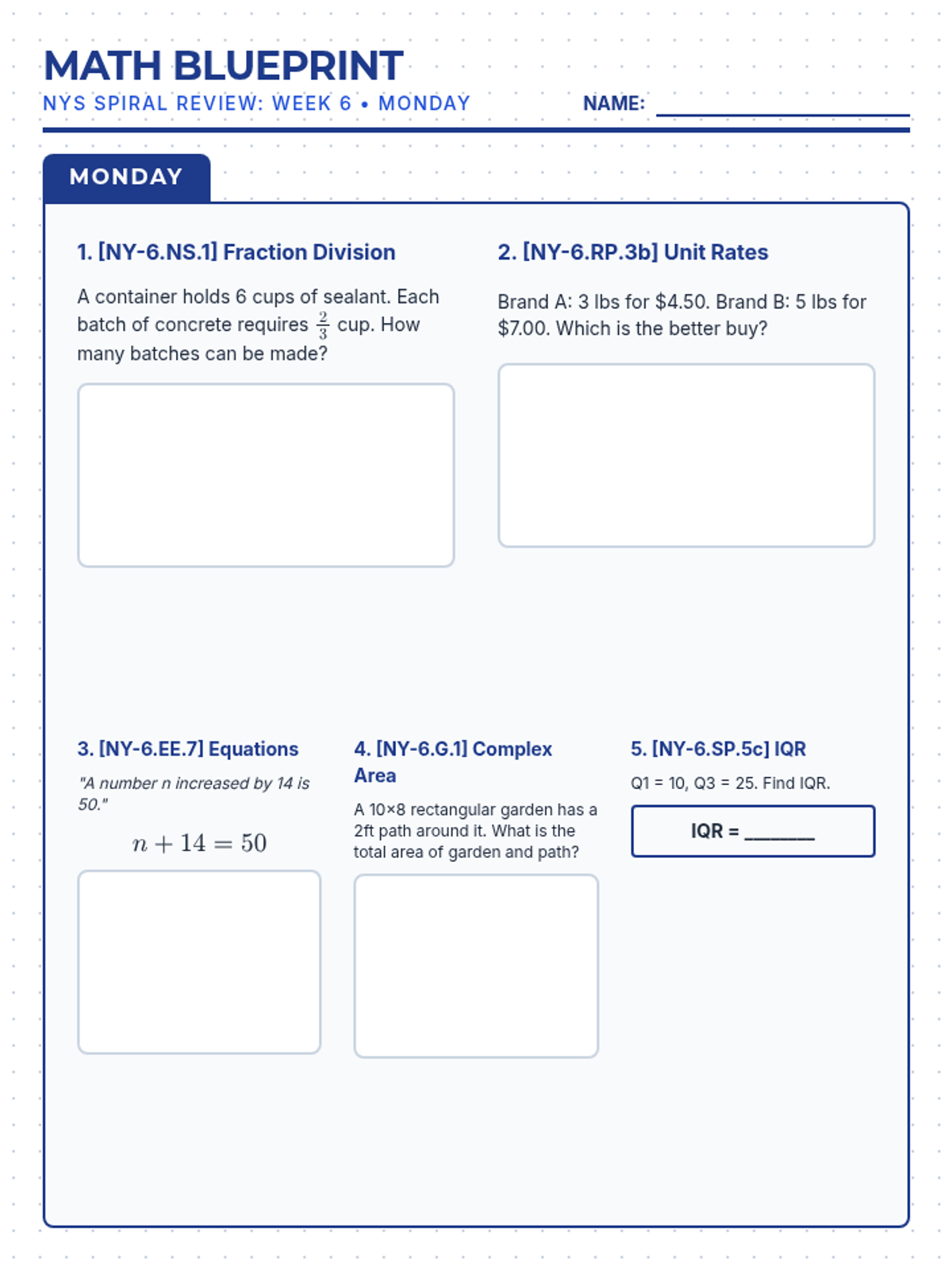
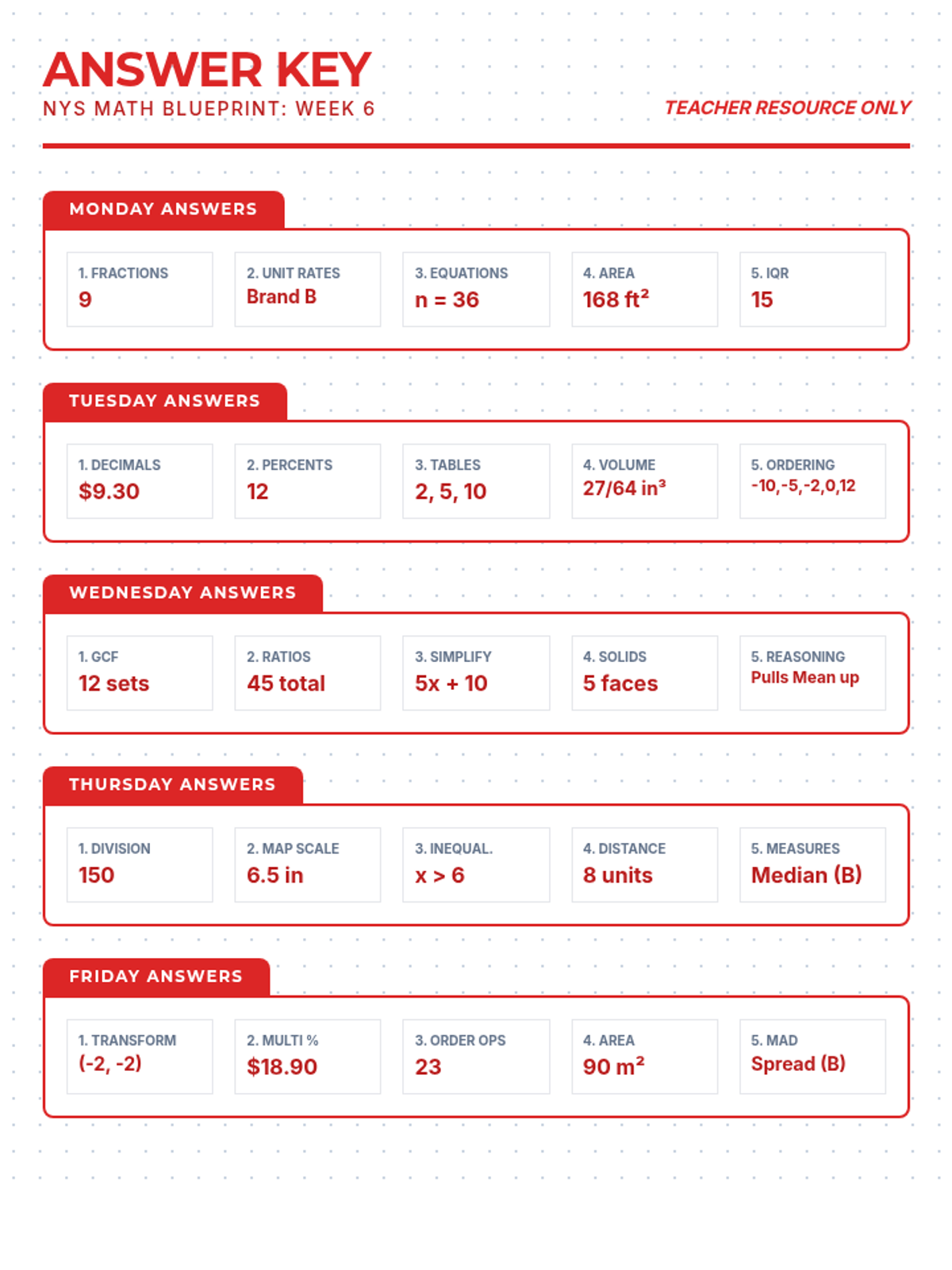
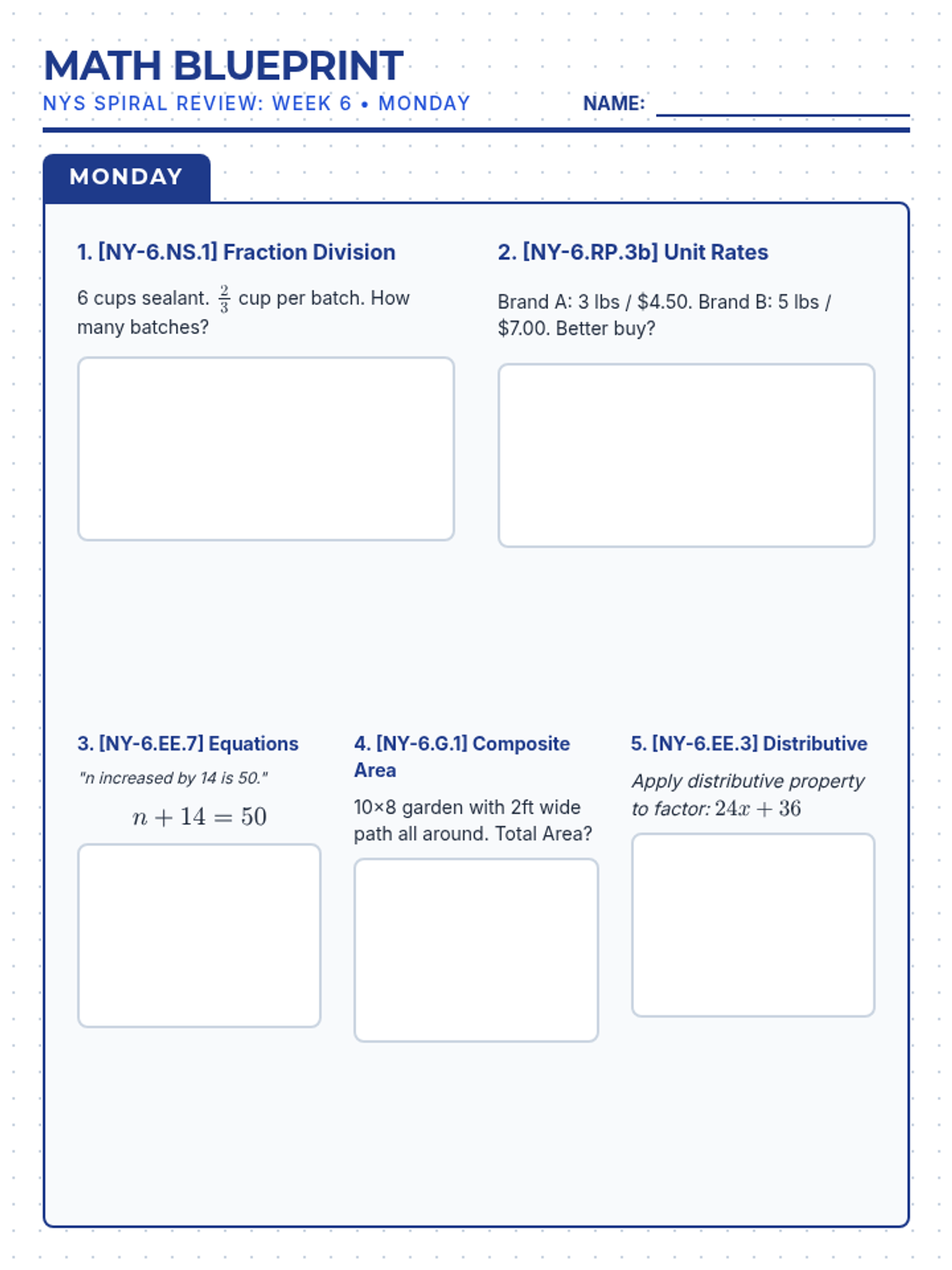
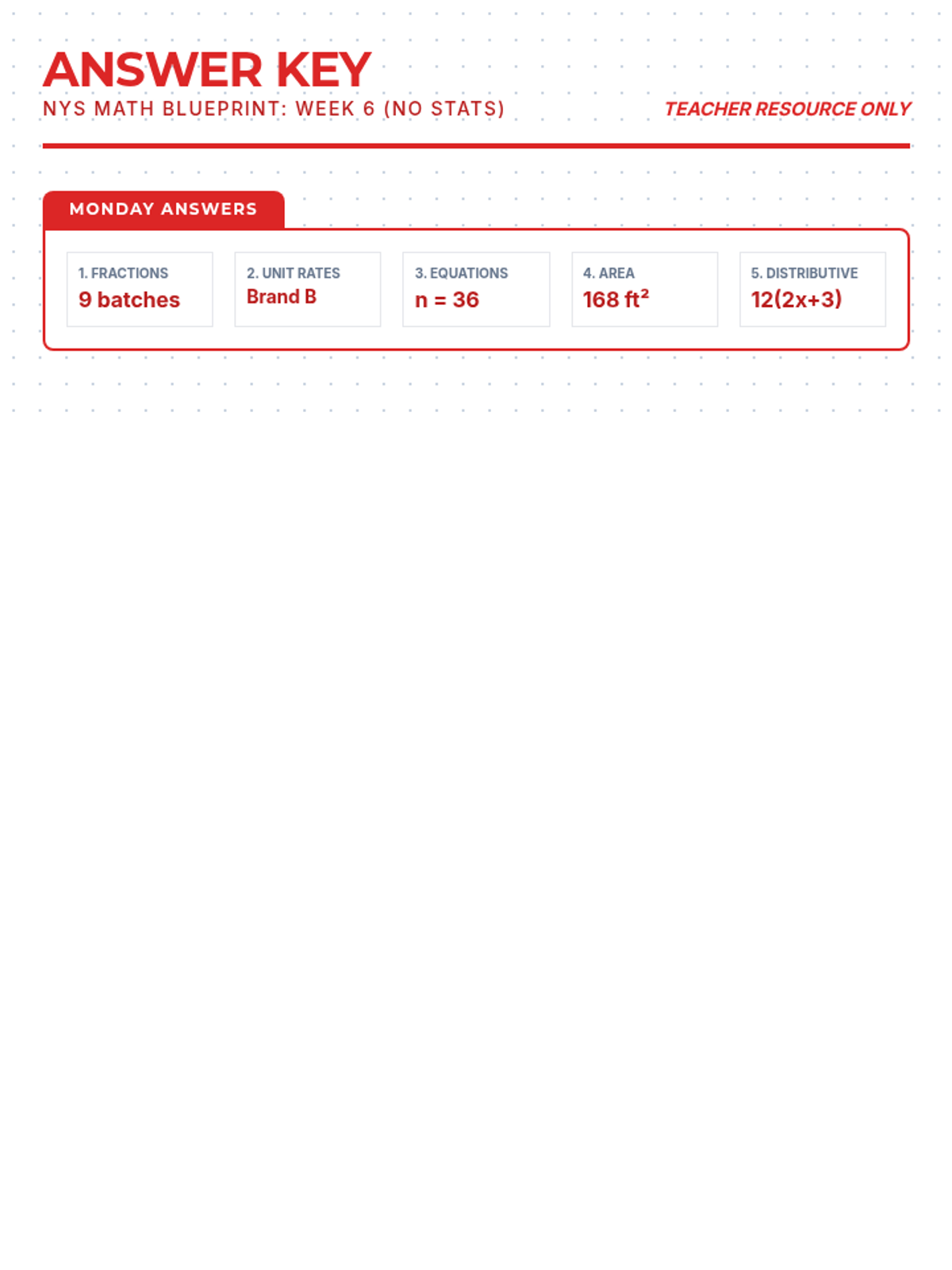
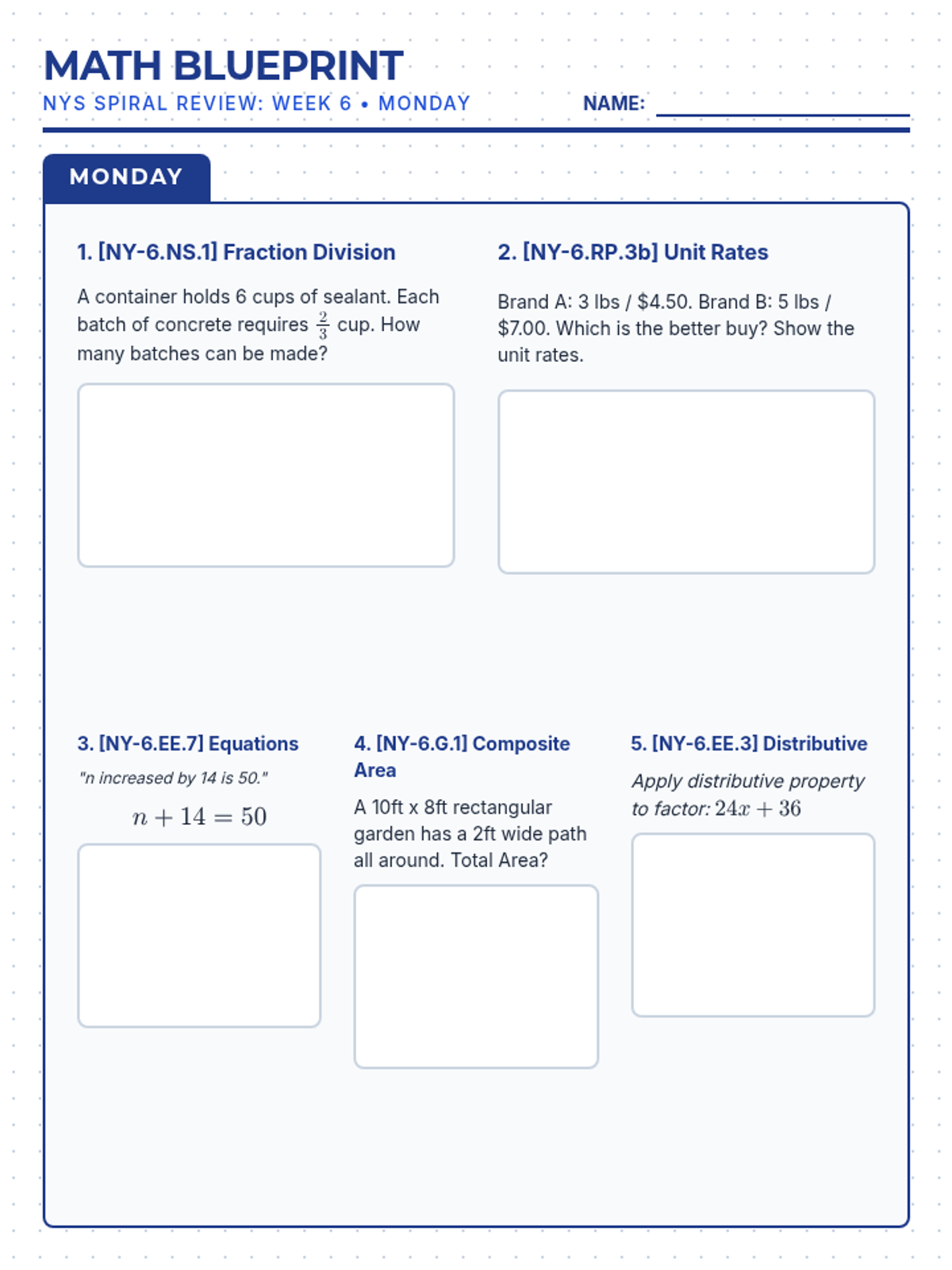
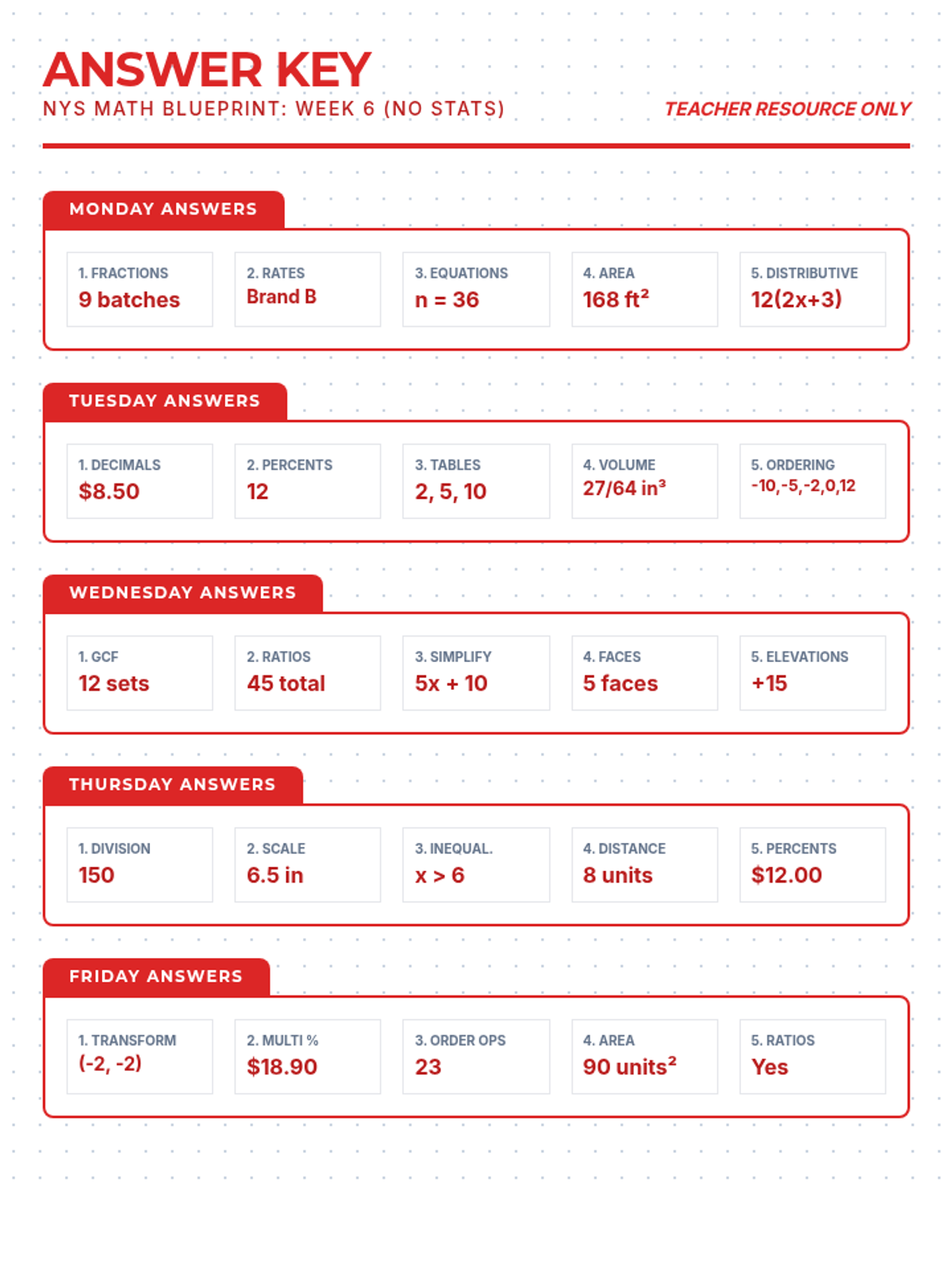
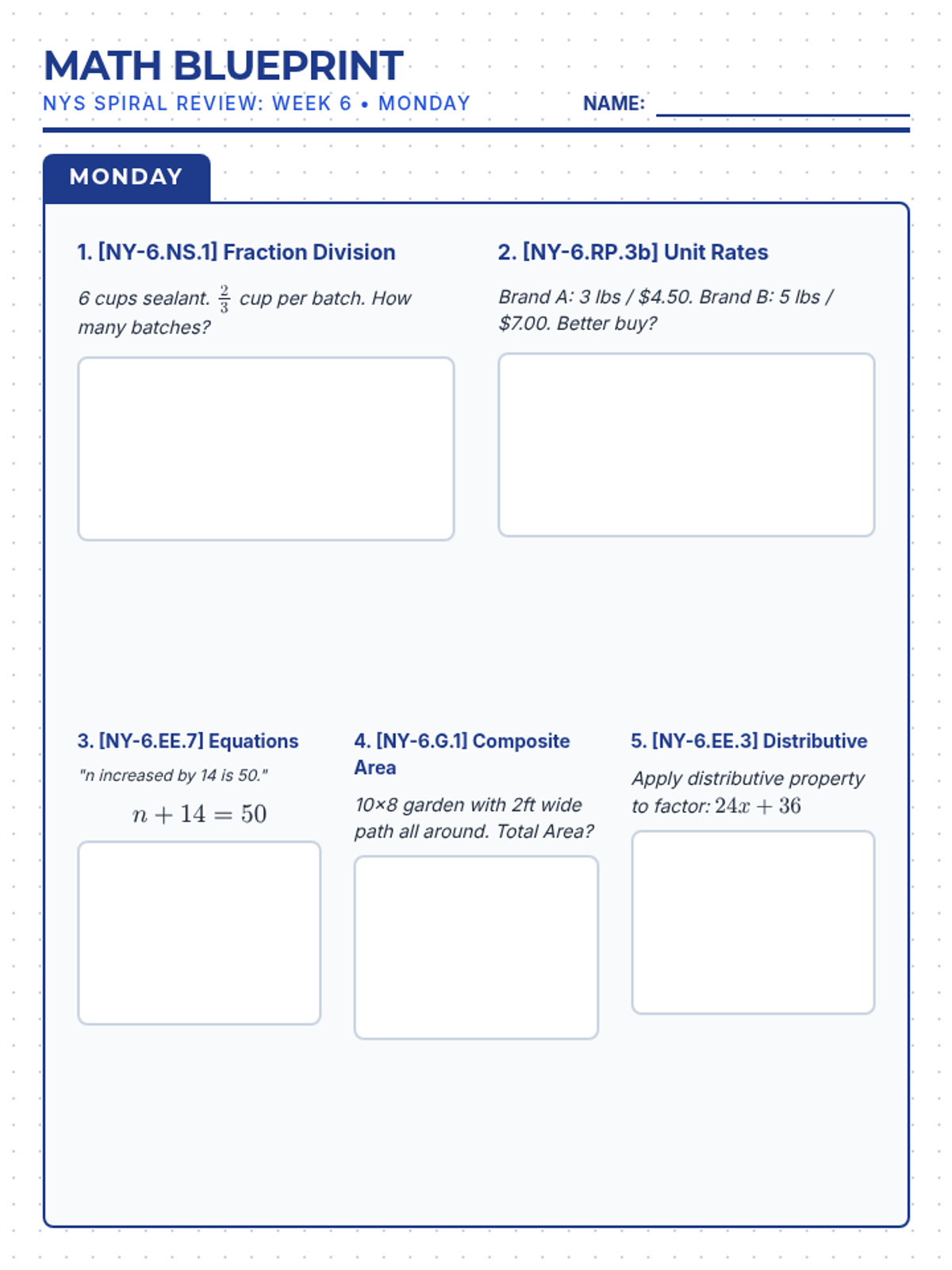
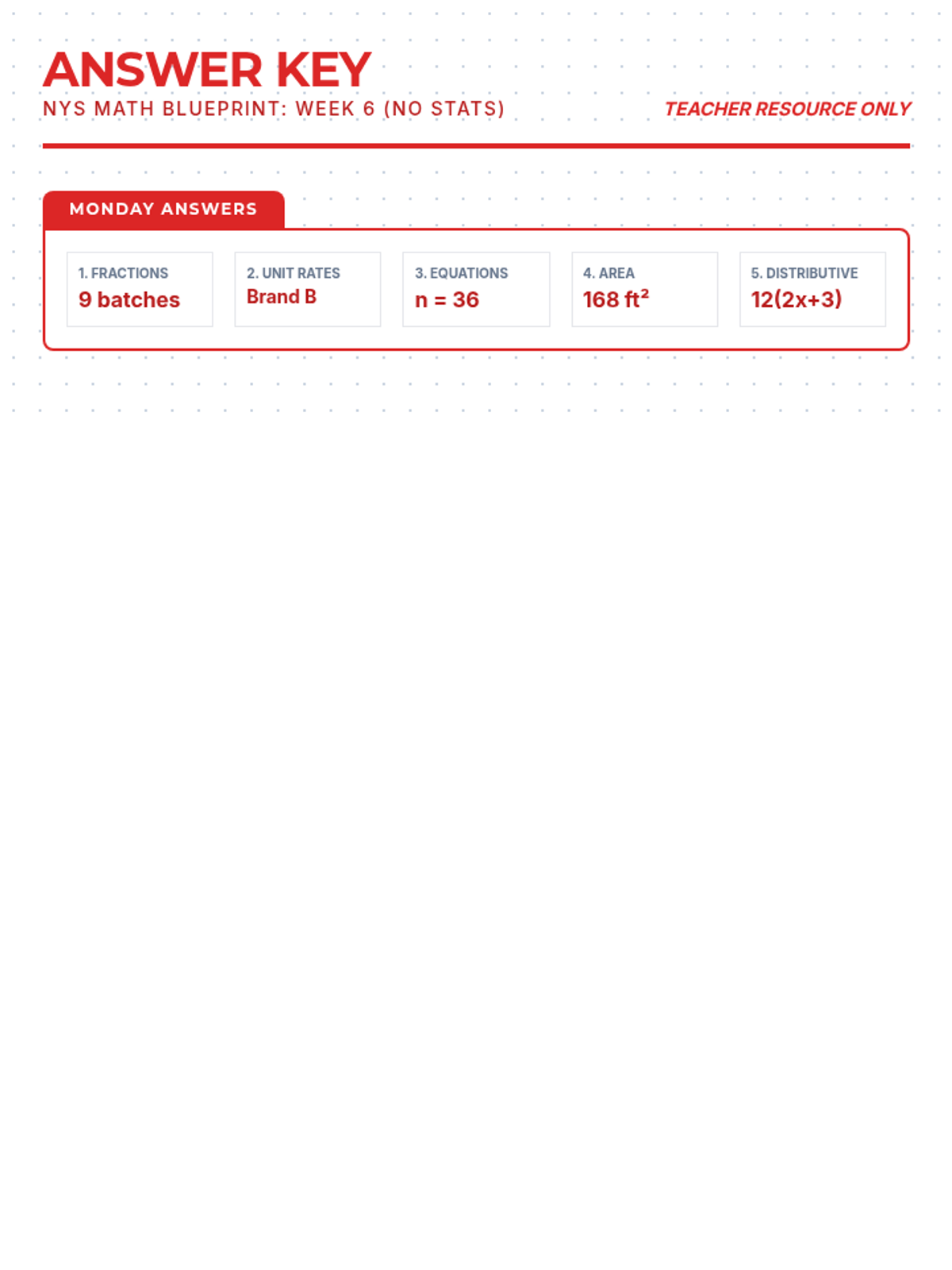
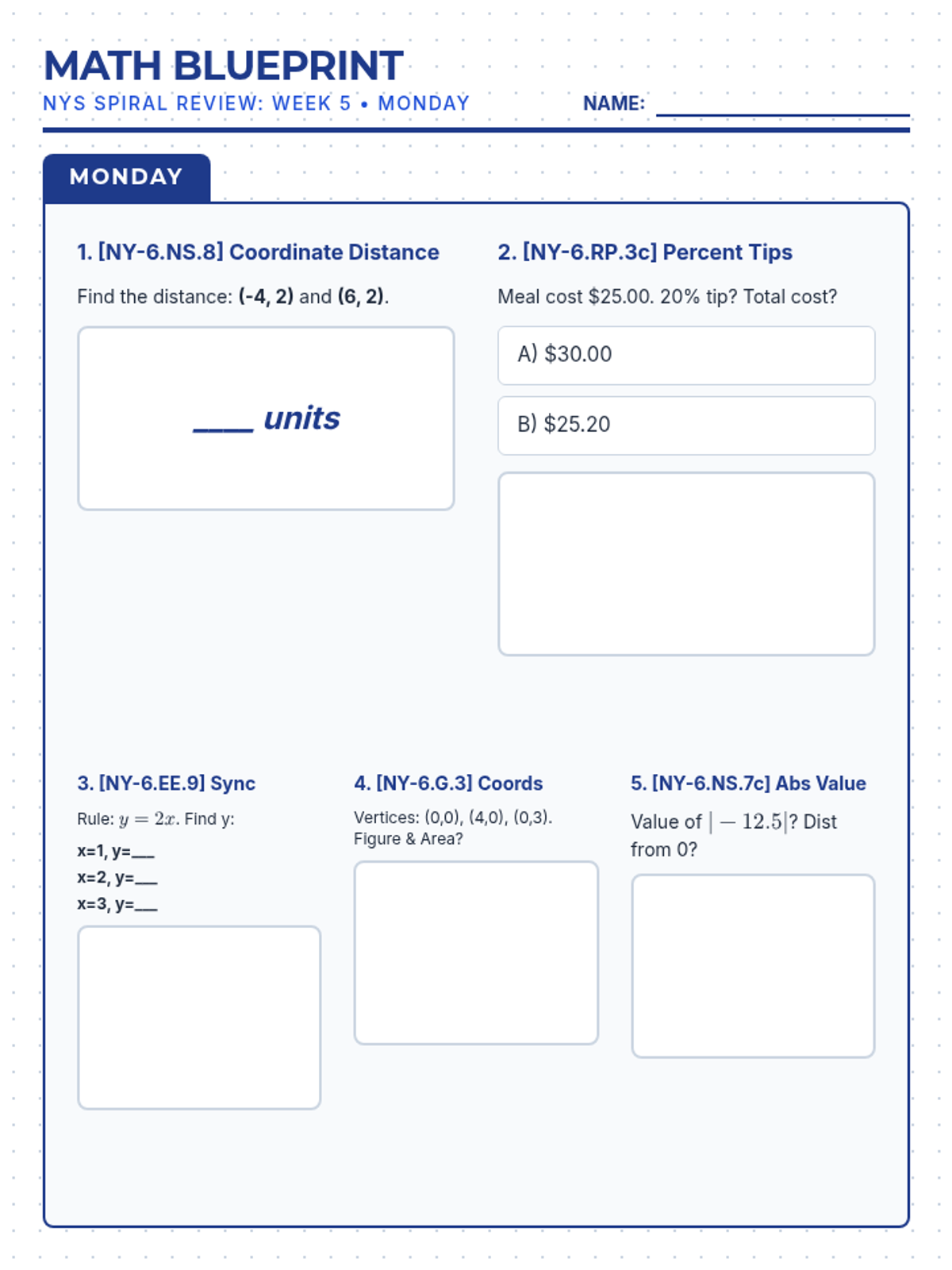
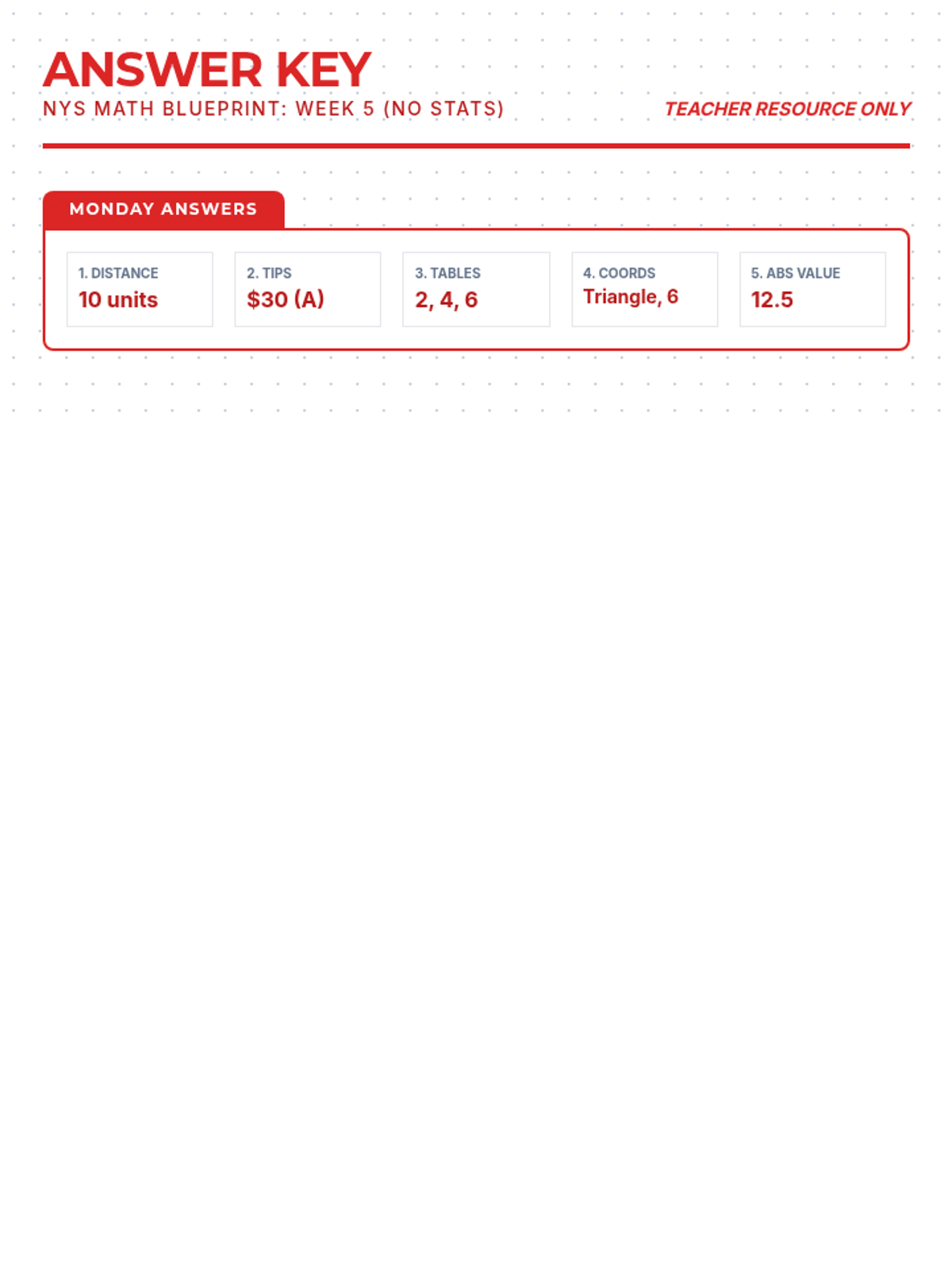
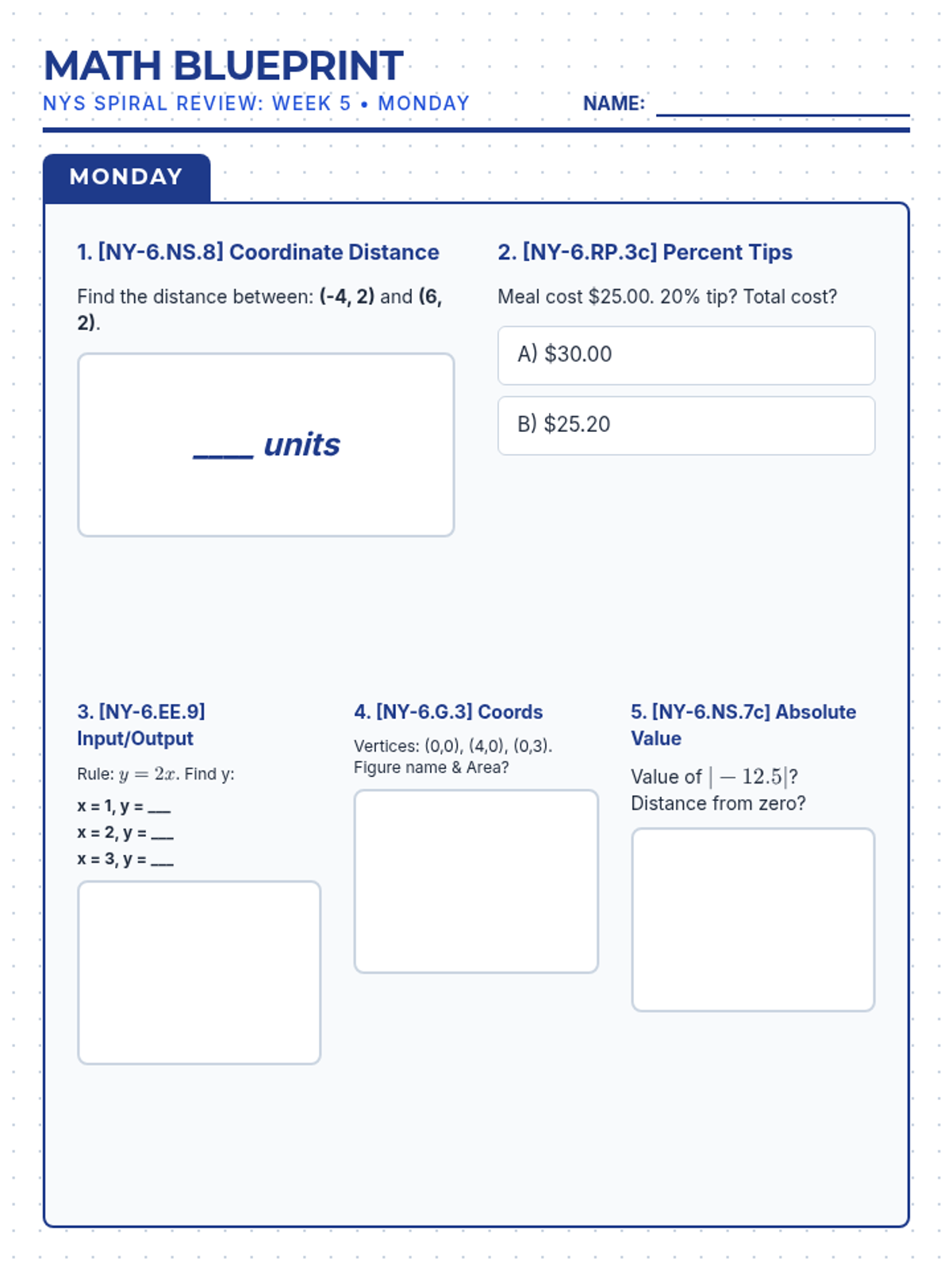
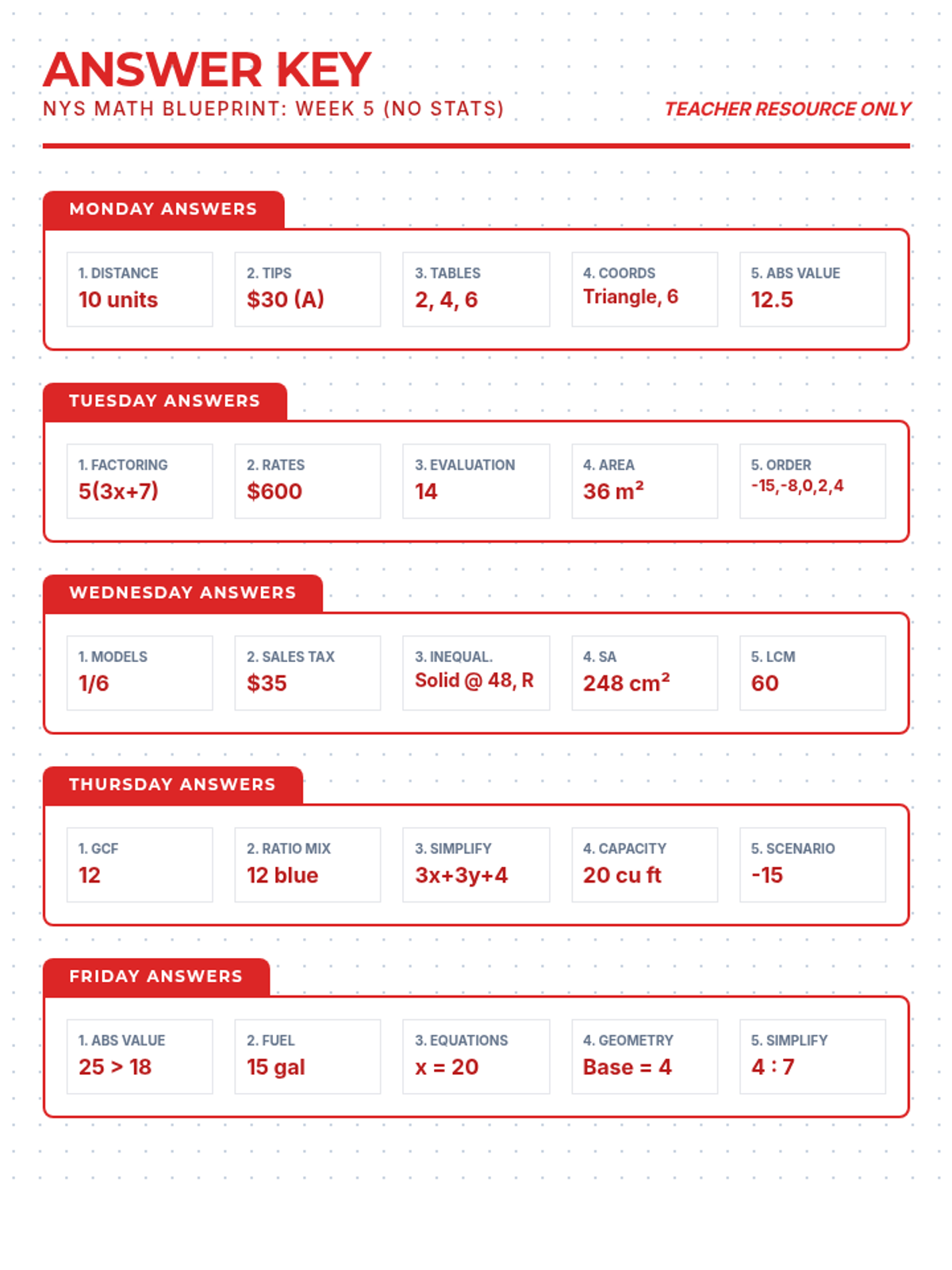
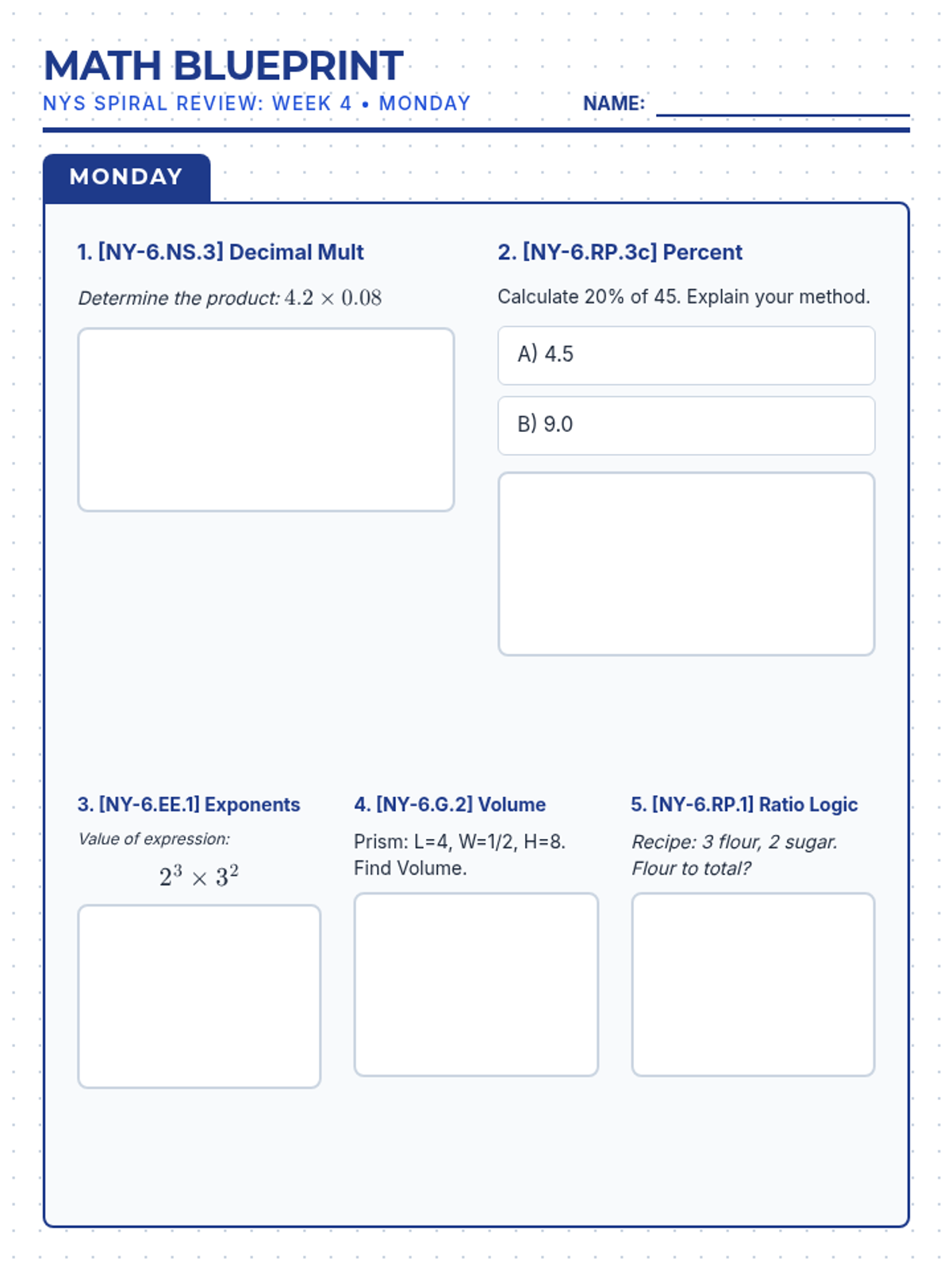
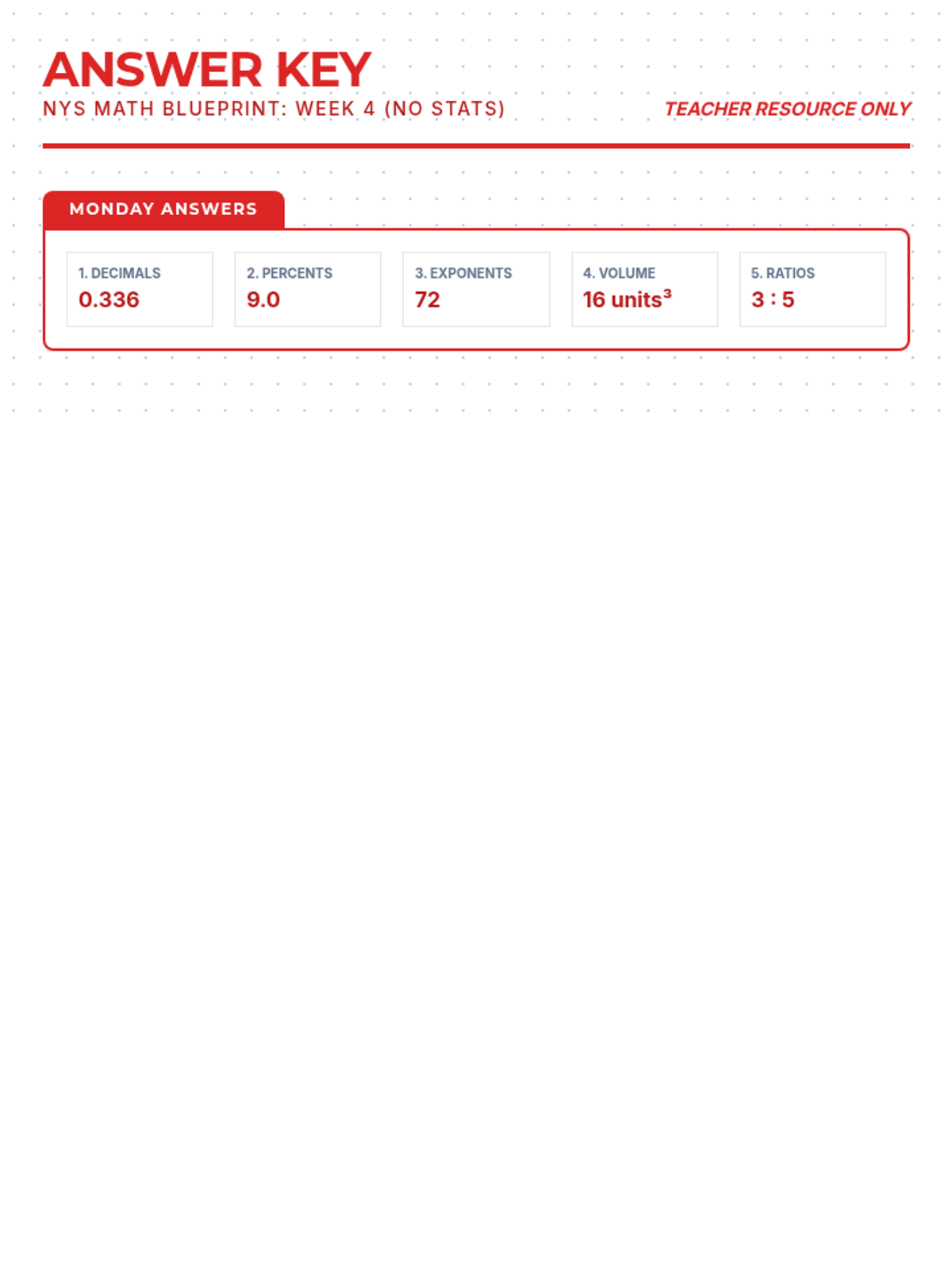
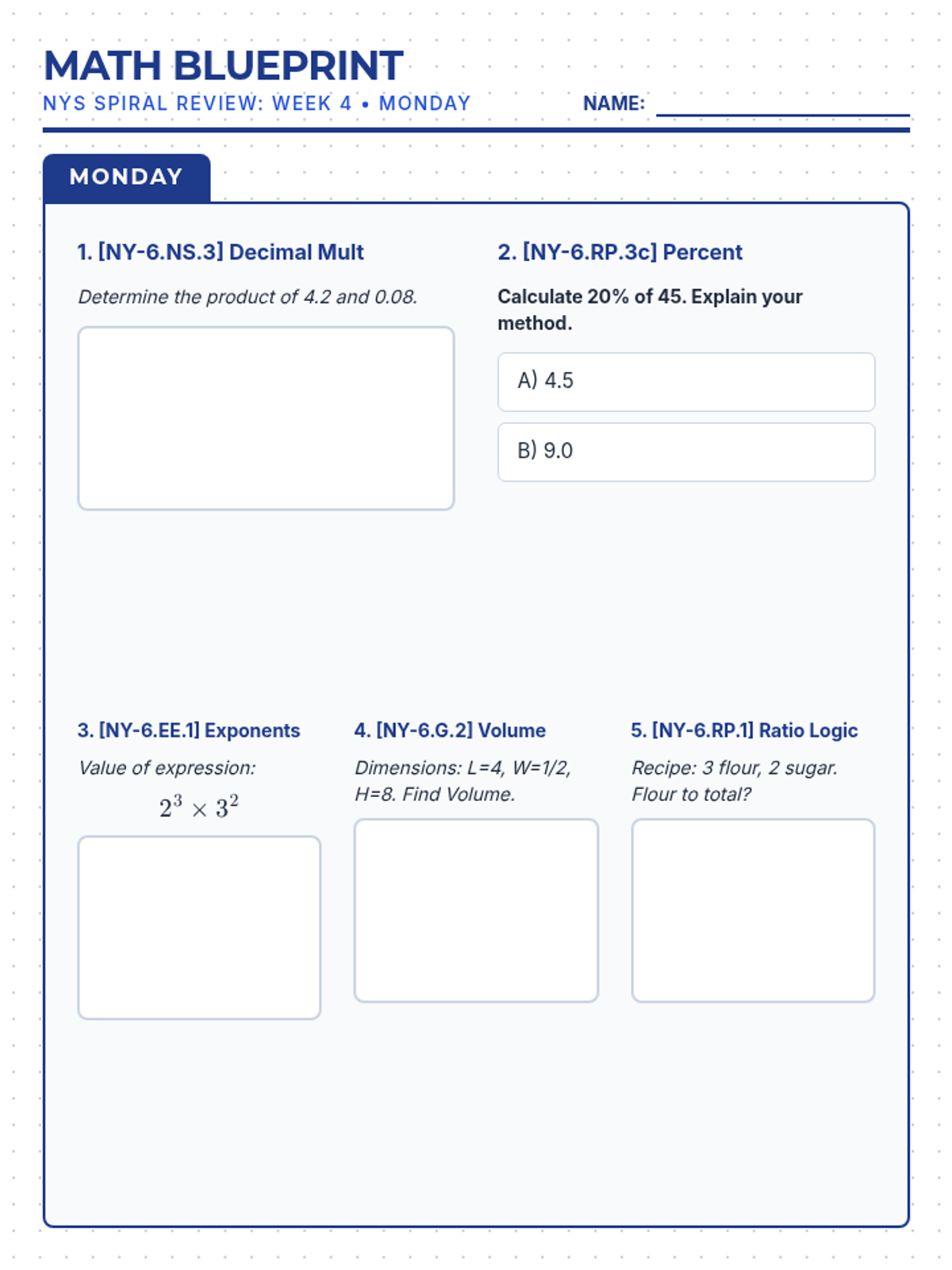
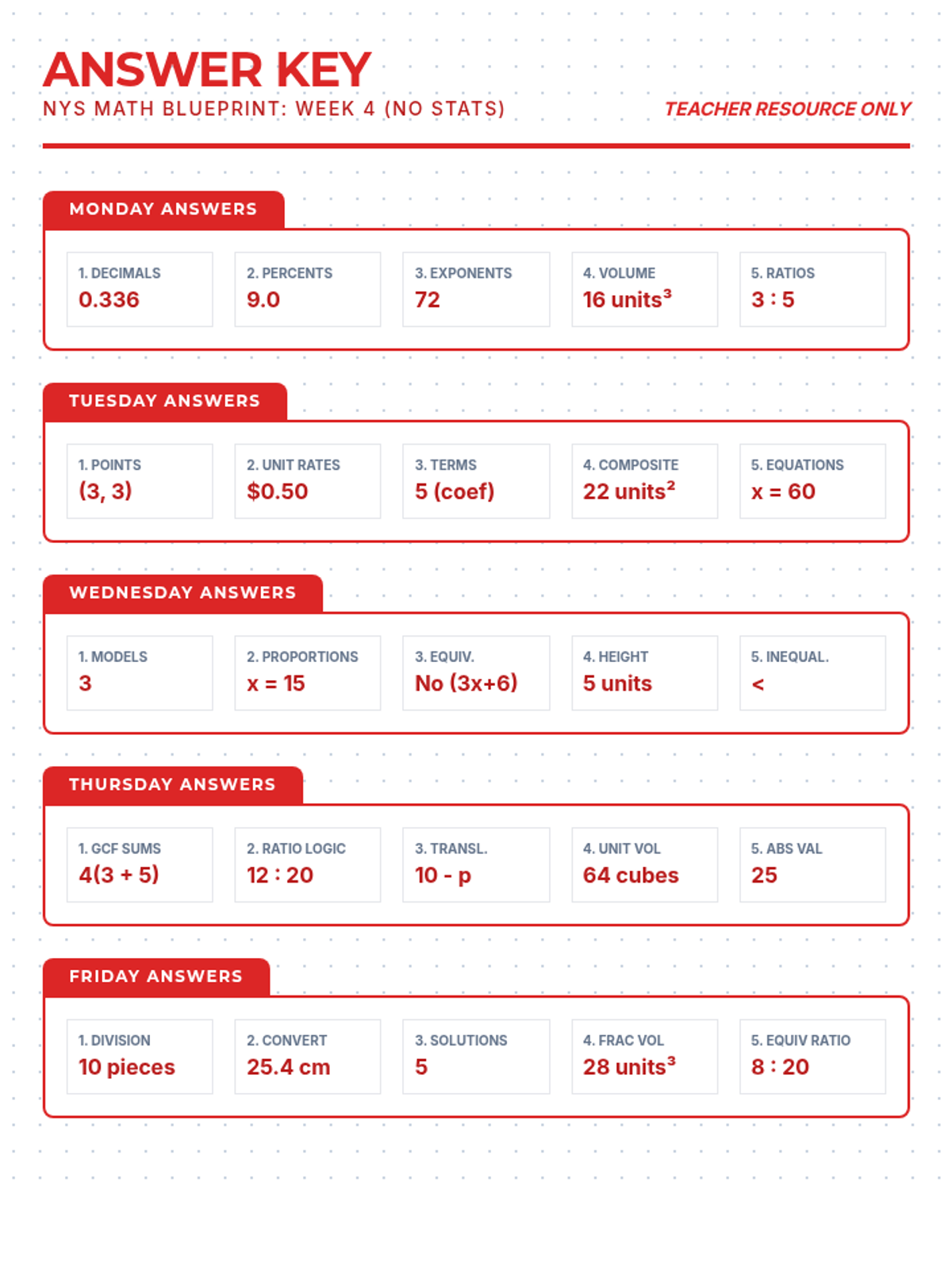
Final comprehensive review of all 6th-grade NYS Next Generation Learning Standards with a focus on test-taking strategies for multiple-choice and constructed-response questions.
Applying all NYS standards to multi-step word problems and higher-level thinking questions in preparation for the state assessment.
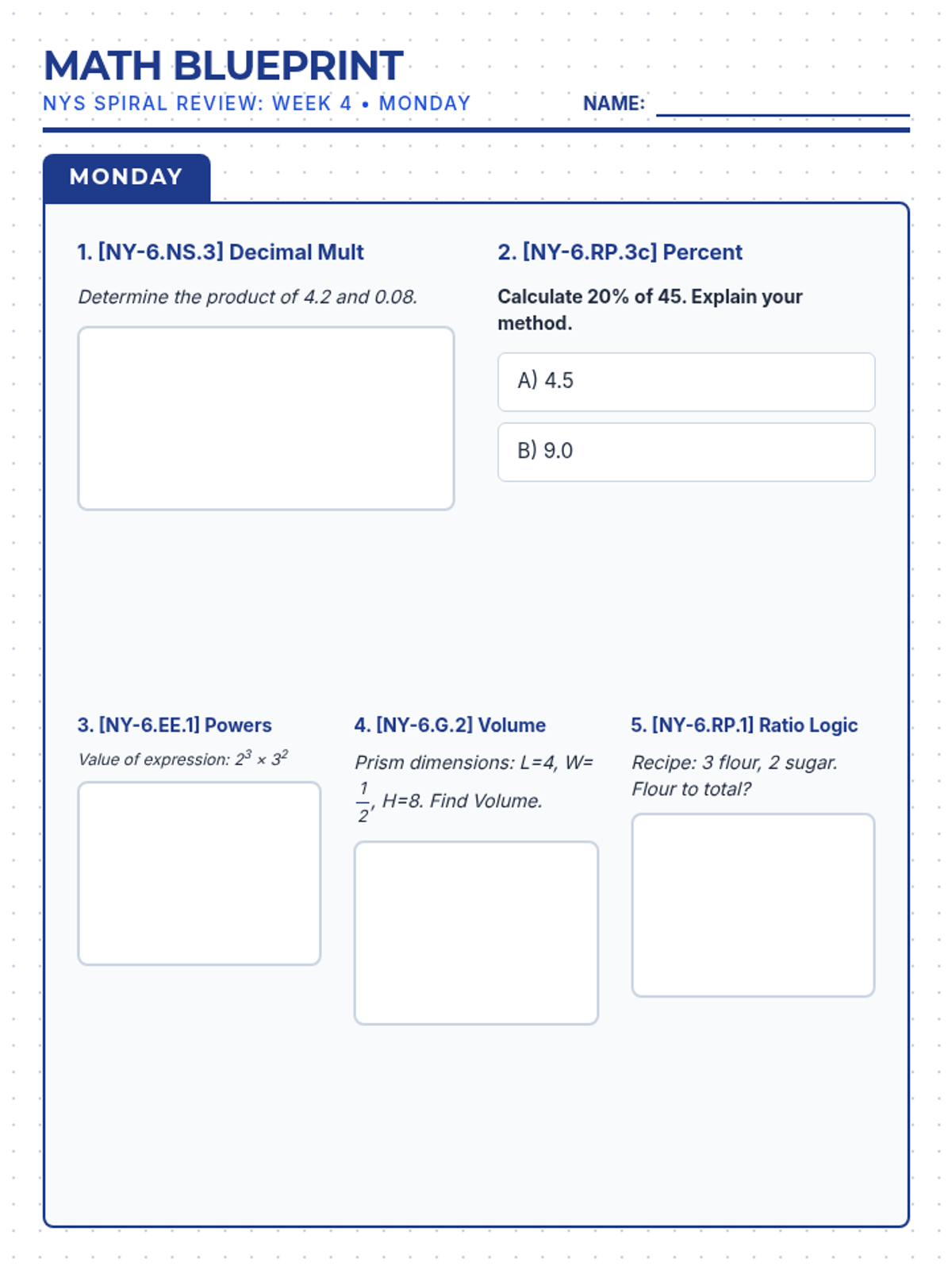
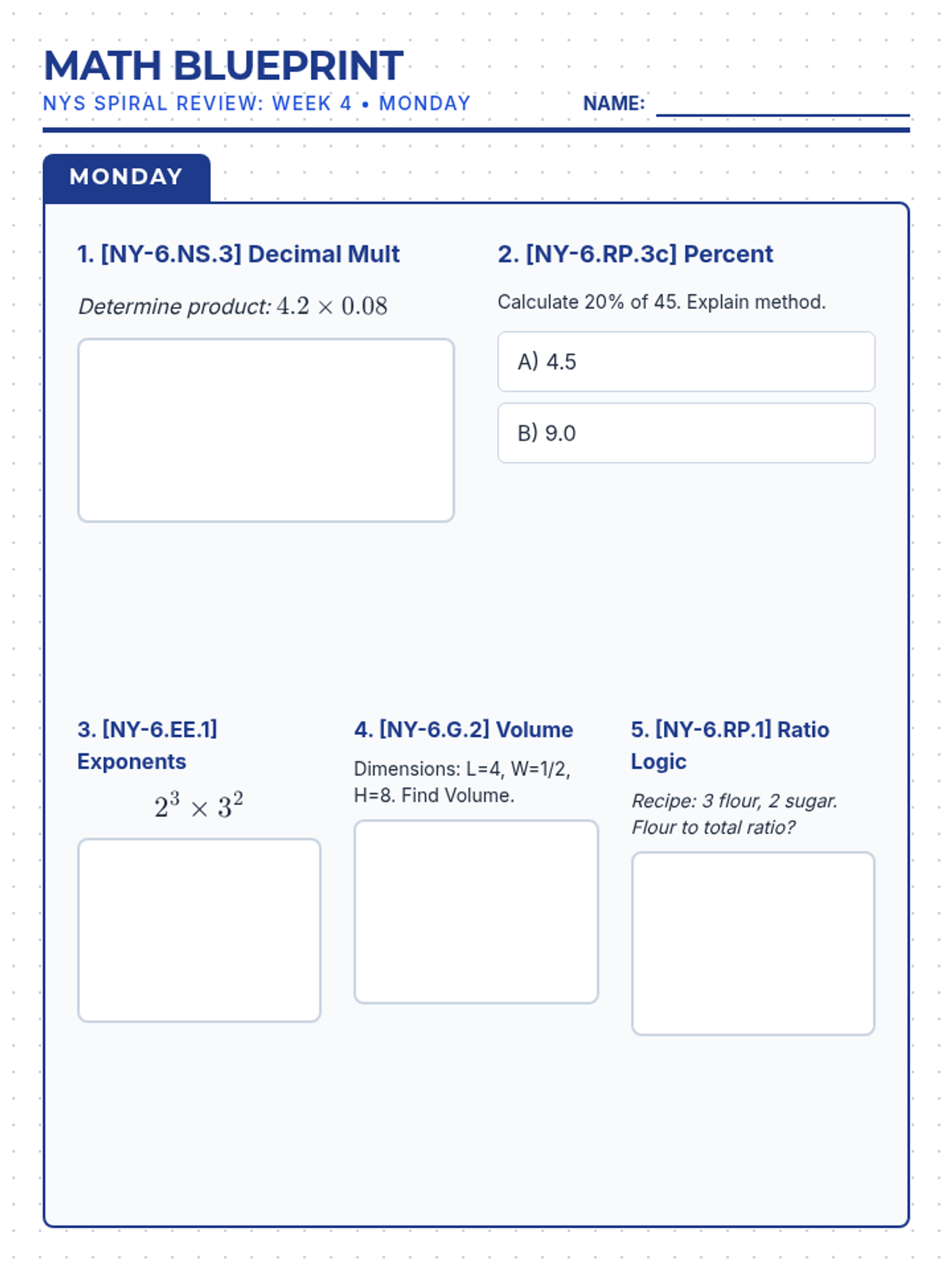
Reviewing multi-step percent problems (NY-6.RP.3c), complex coordinate geometry, and variability in data (NY-6.SP.2).
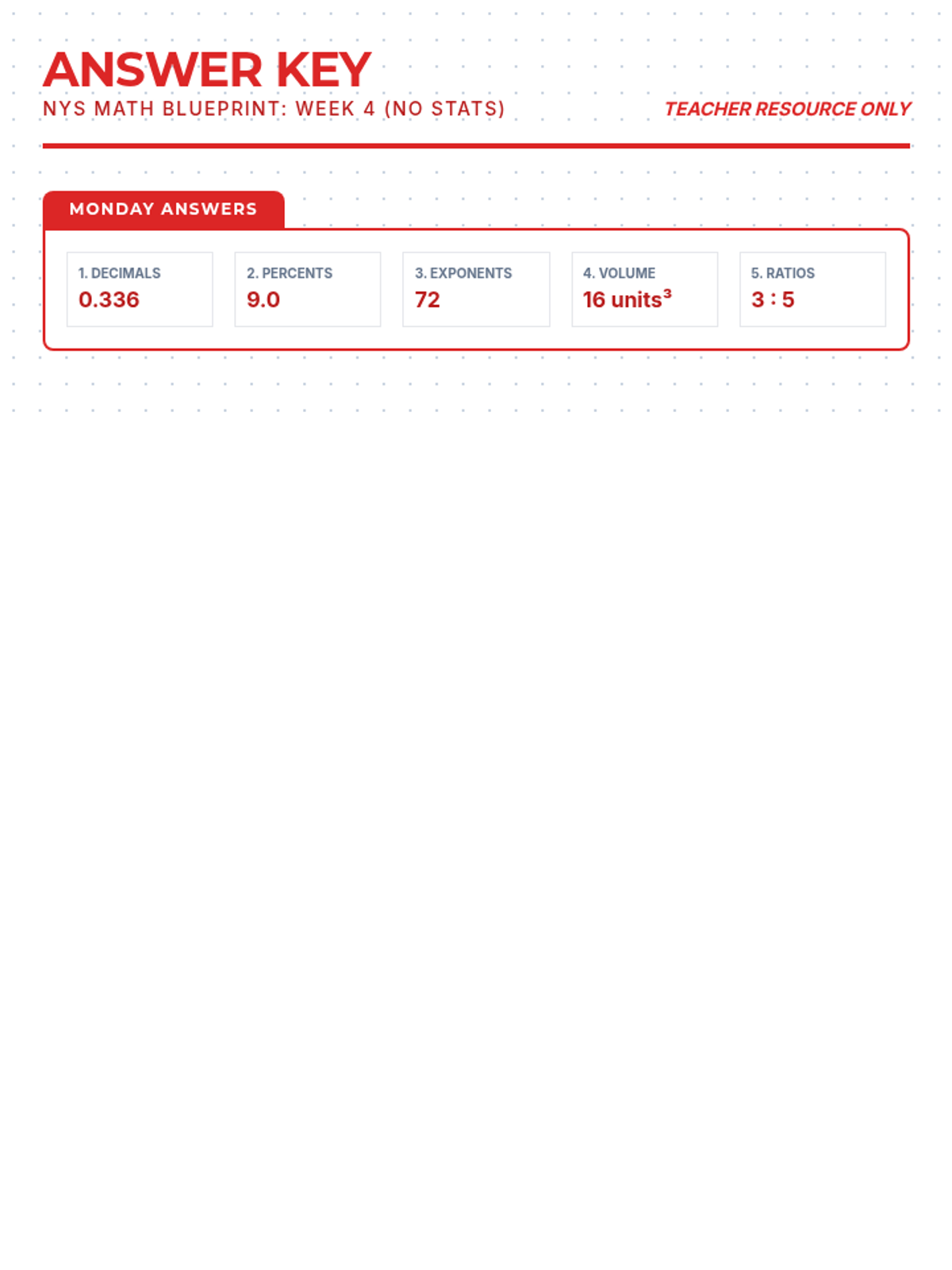
Deepening understanding of statistical measures (NY-6.SP.5), algebraic properties (NY-6.EE.3), and volume with fractional side lengths (NY-6.G.2).
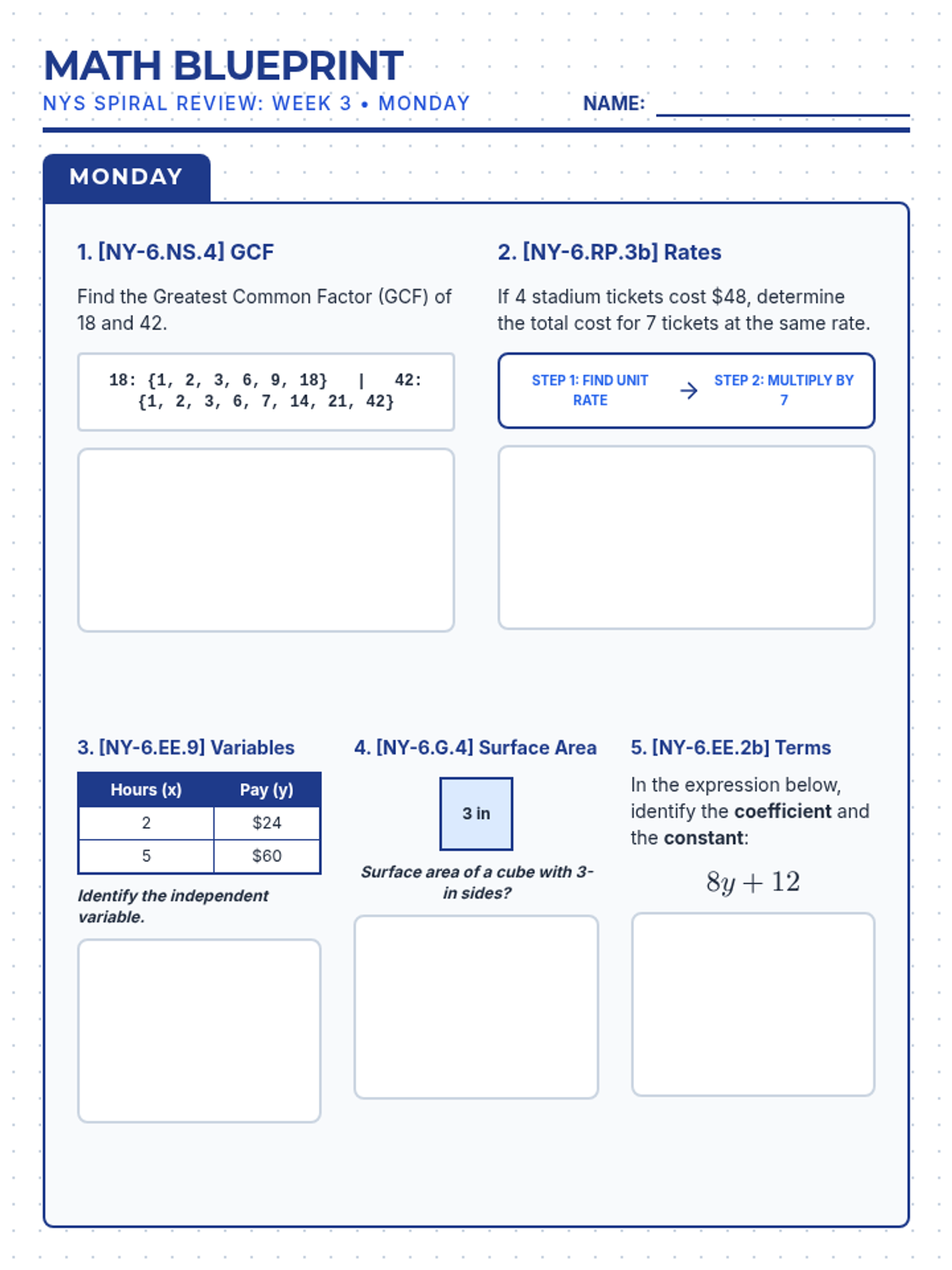
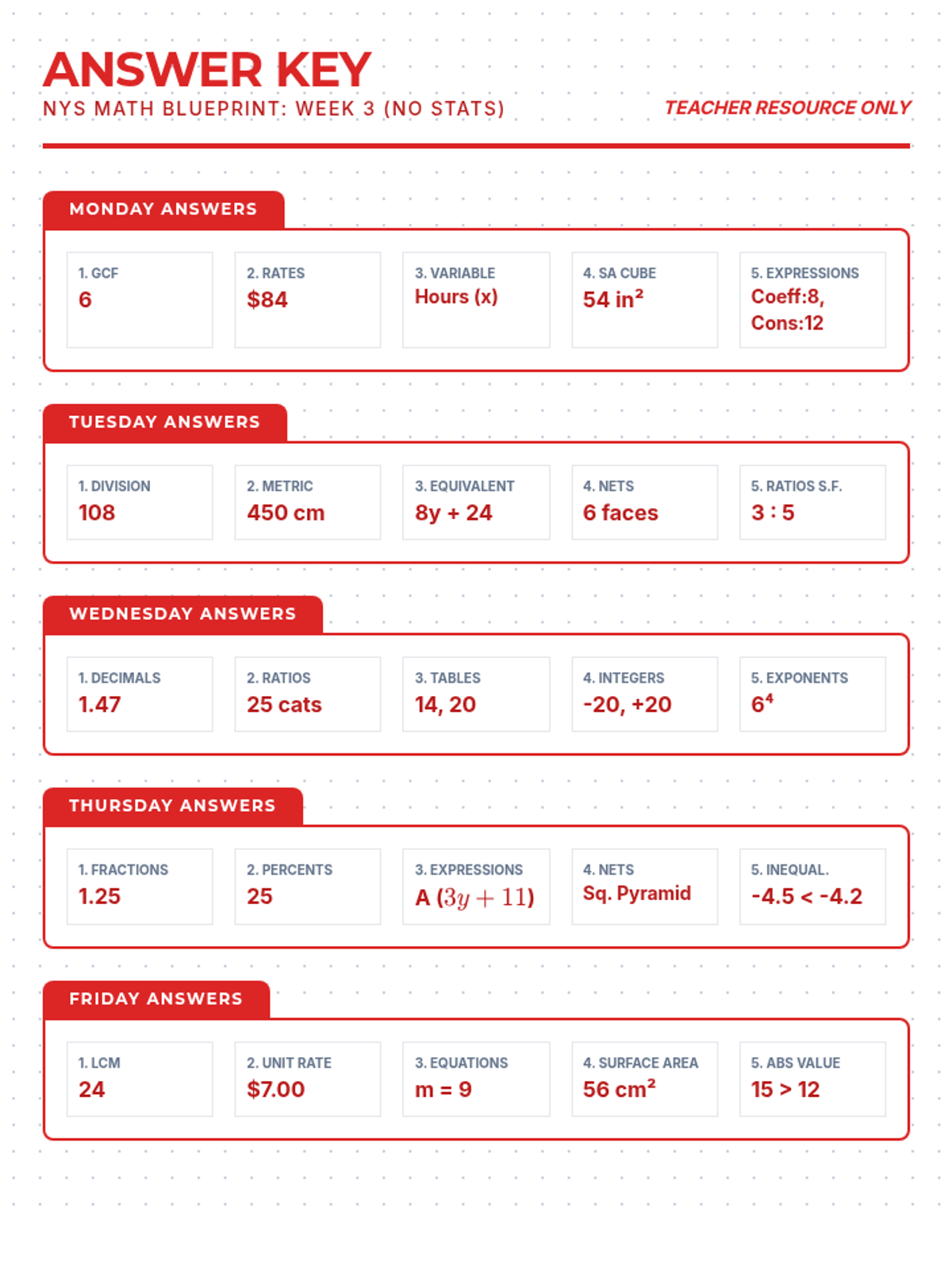
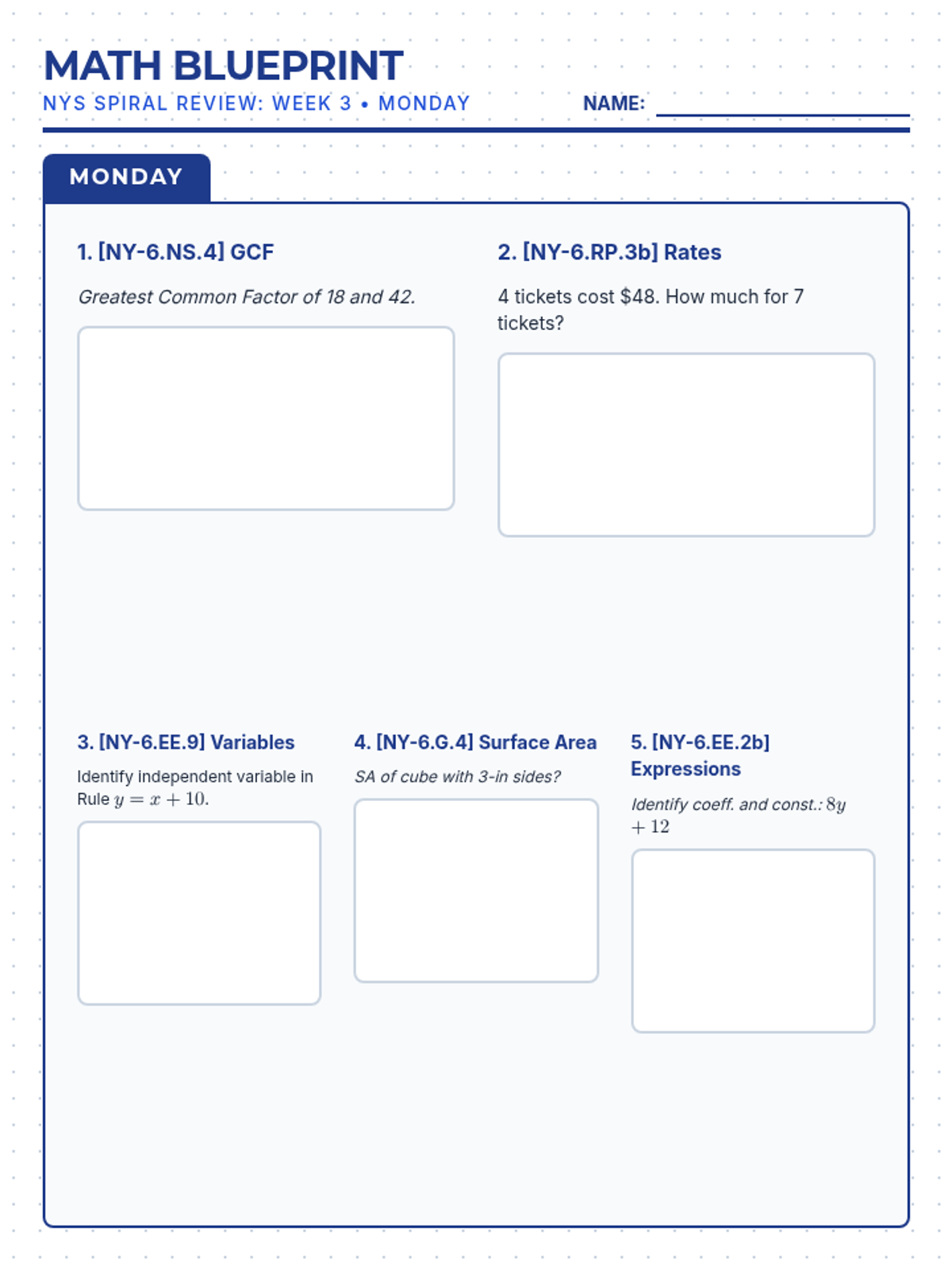
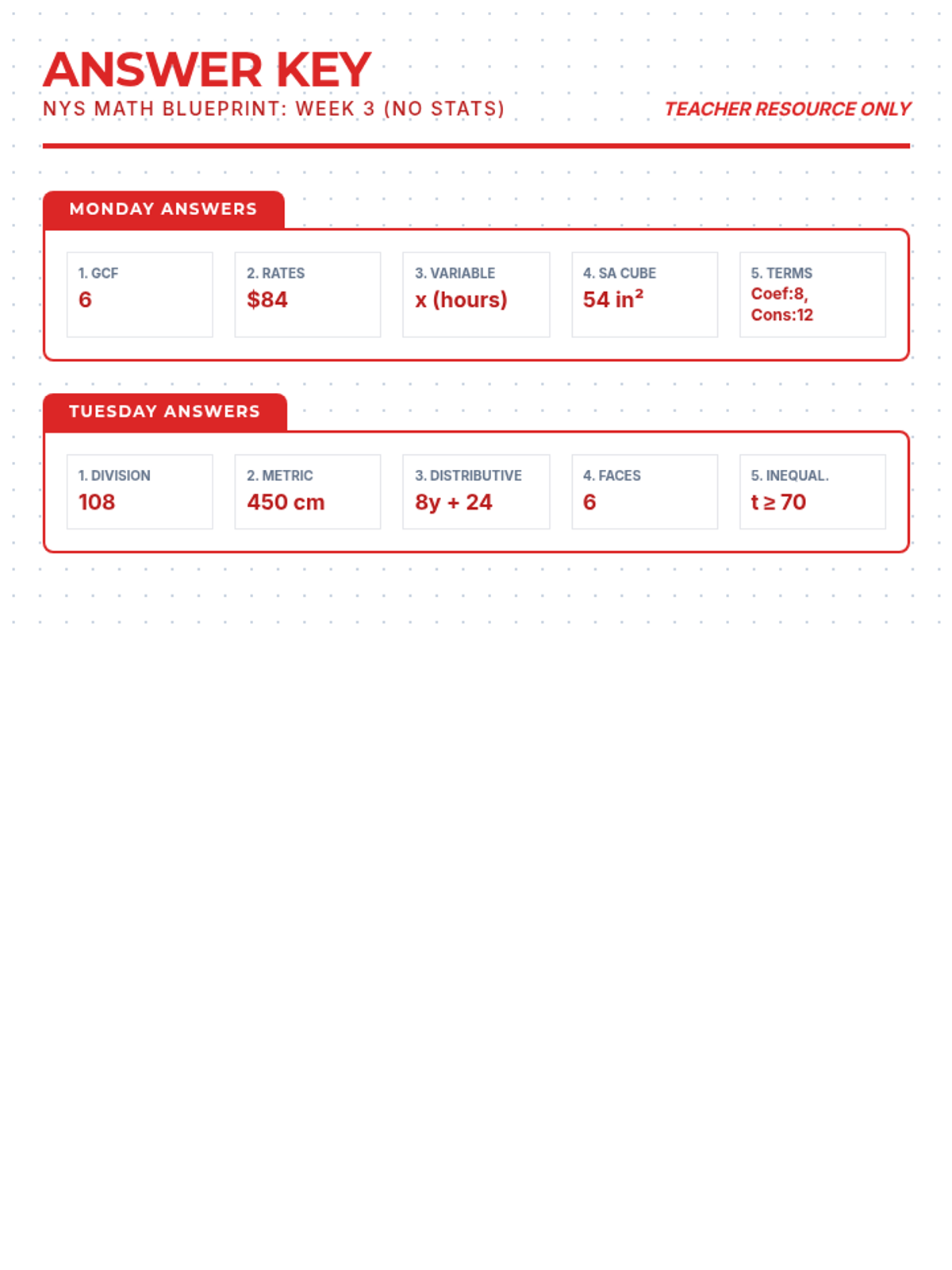
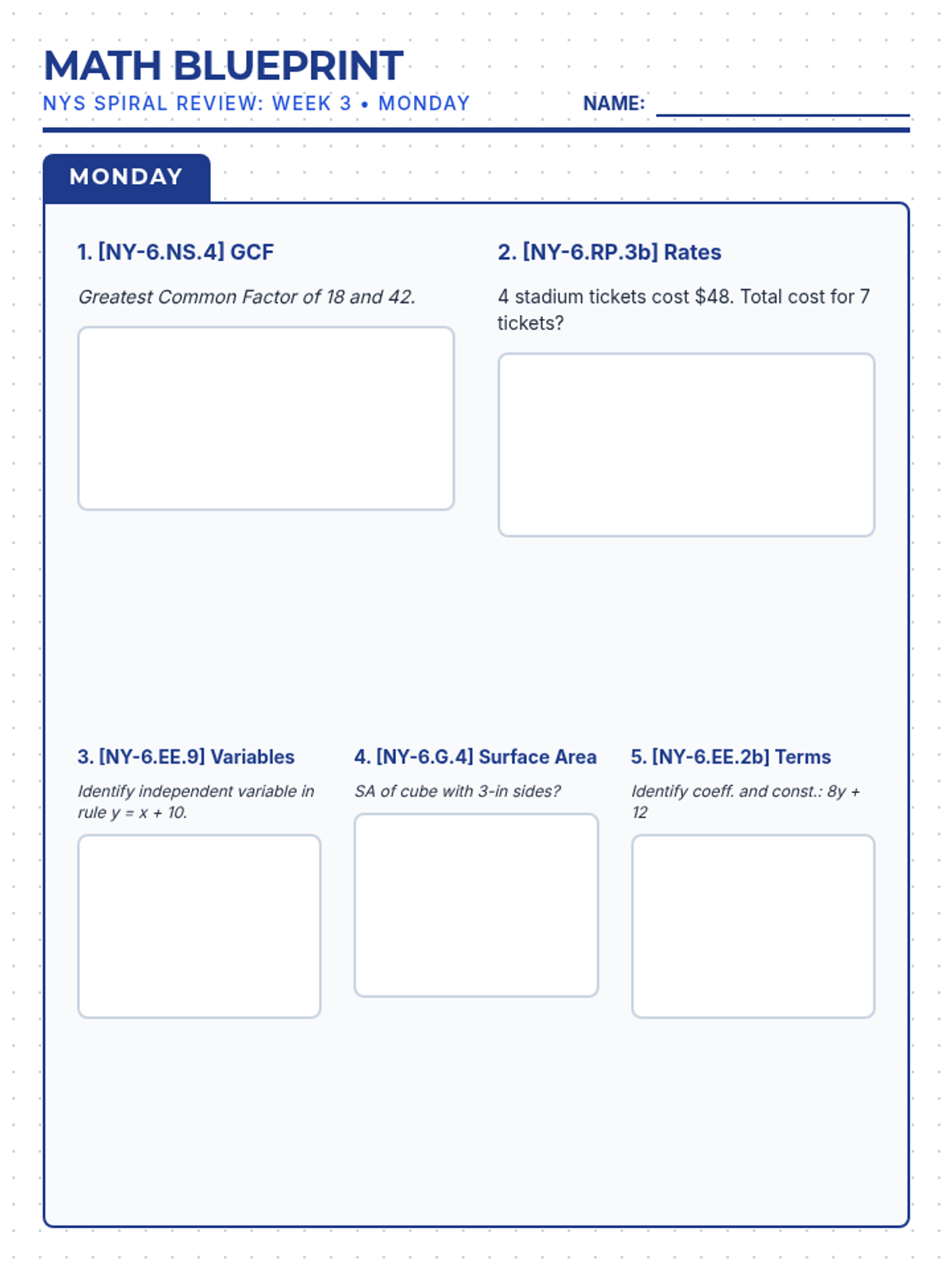
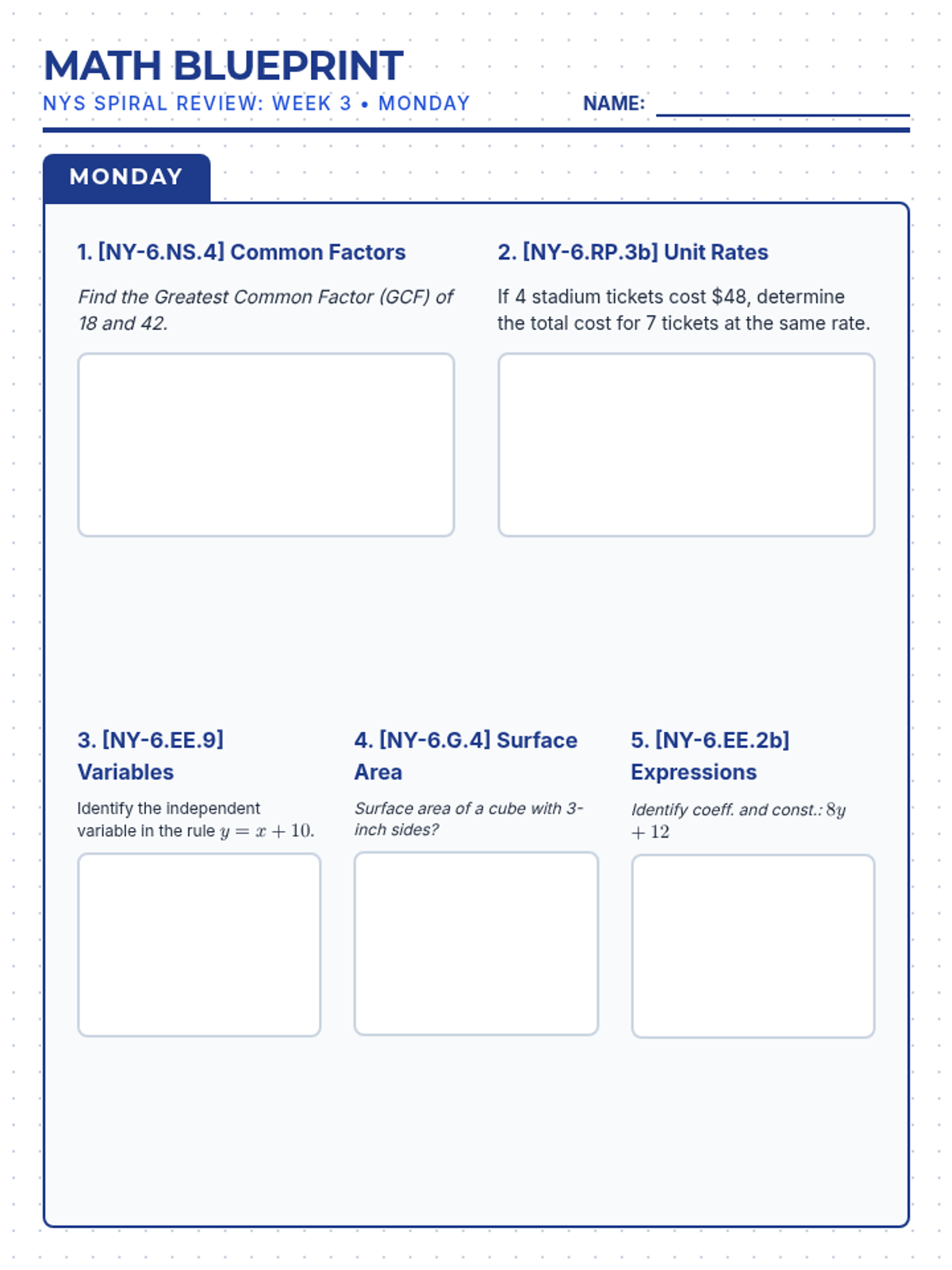
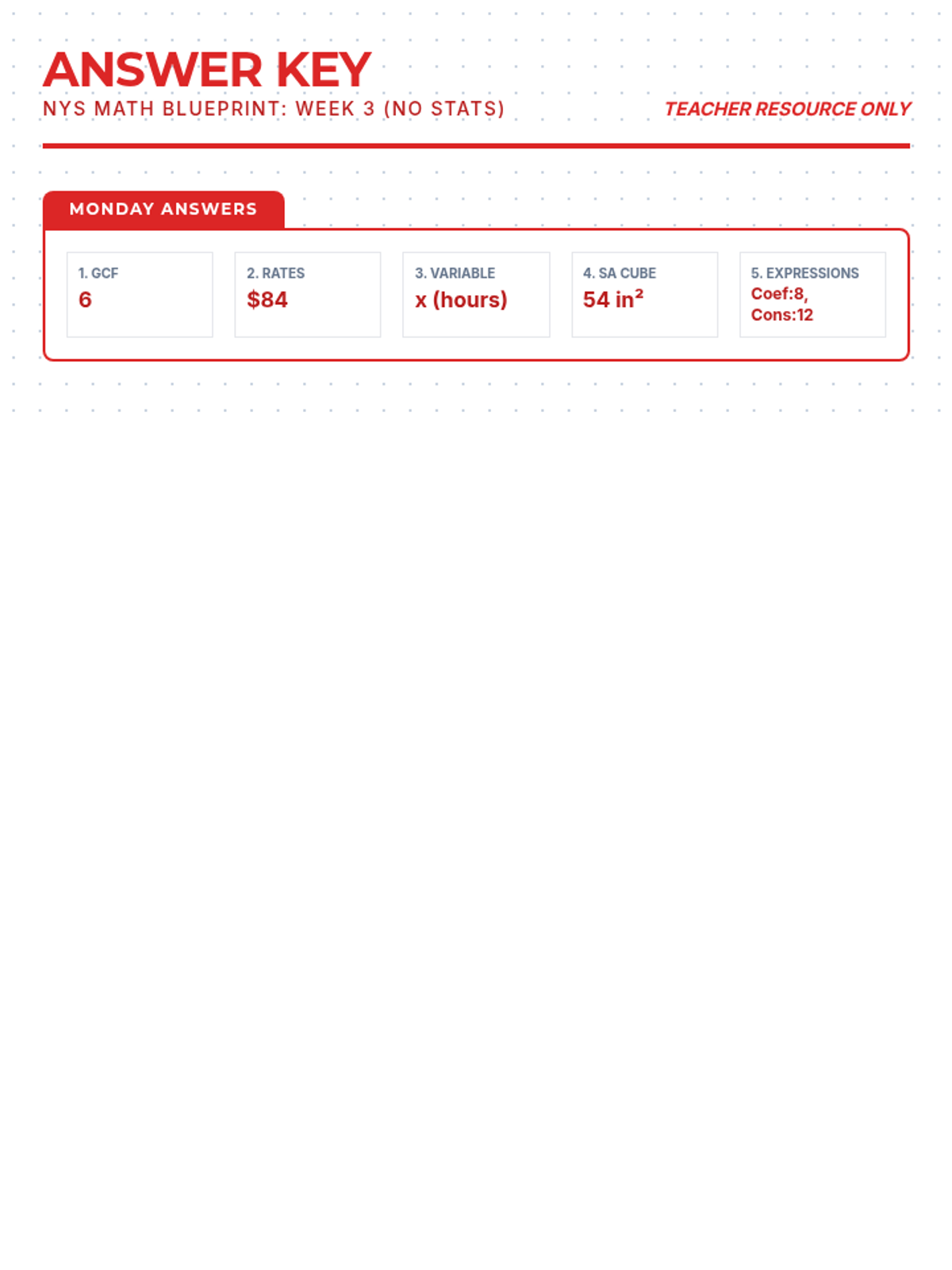
Focusing on surface area (NY-6.G.4), GCF/LCM (NY-6.NS.4), and independent/dependent variables (NY-6.EE.9).