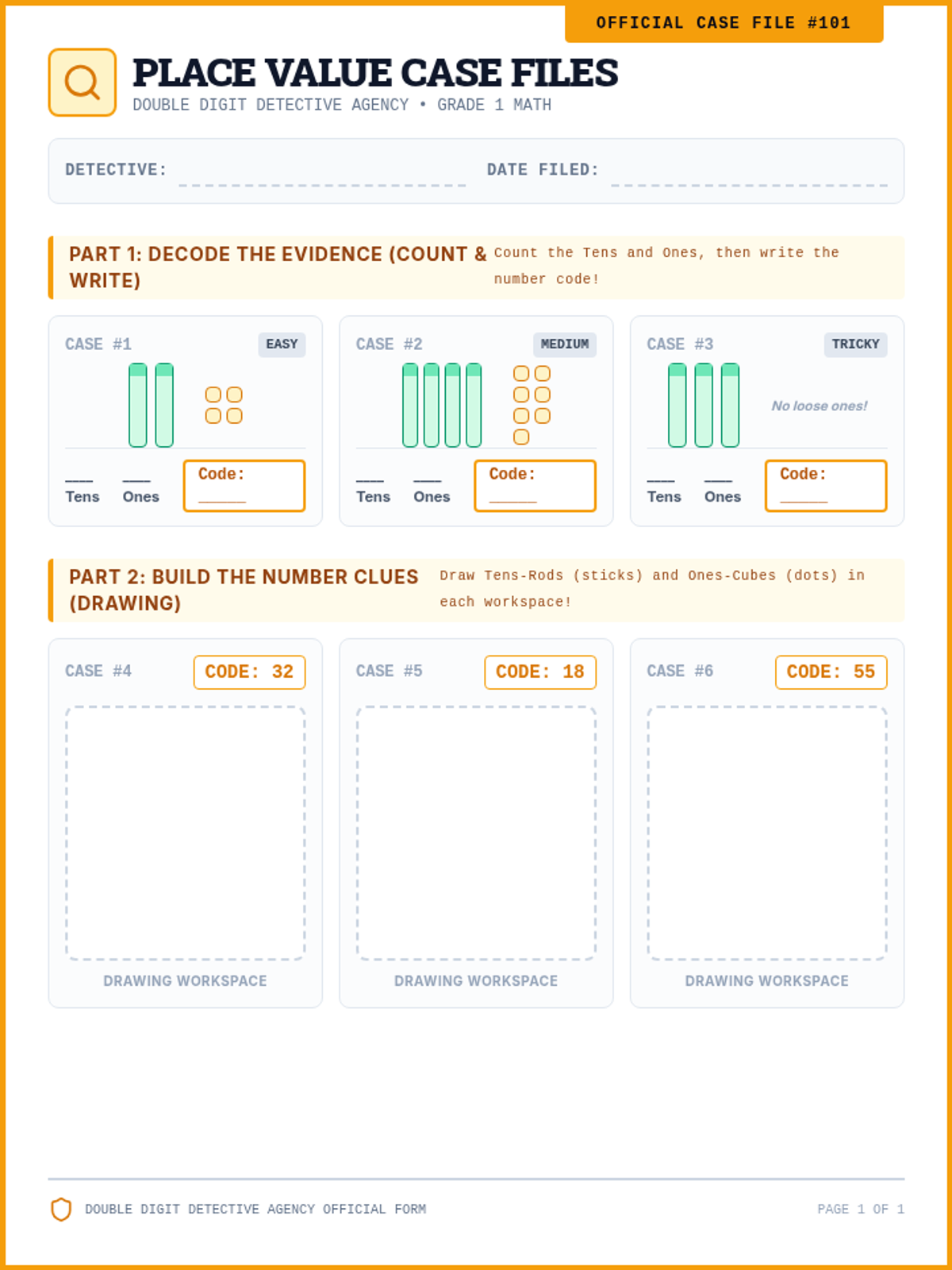
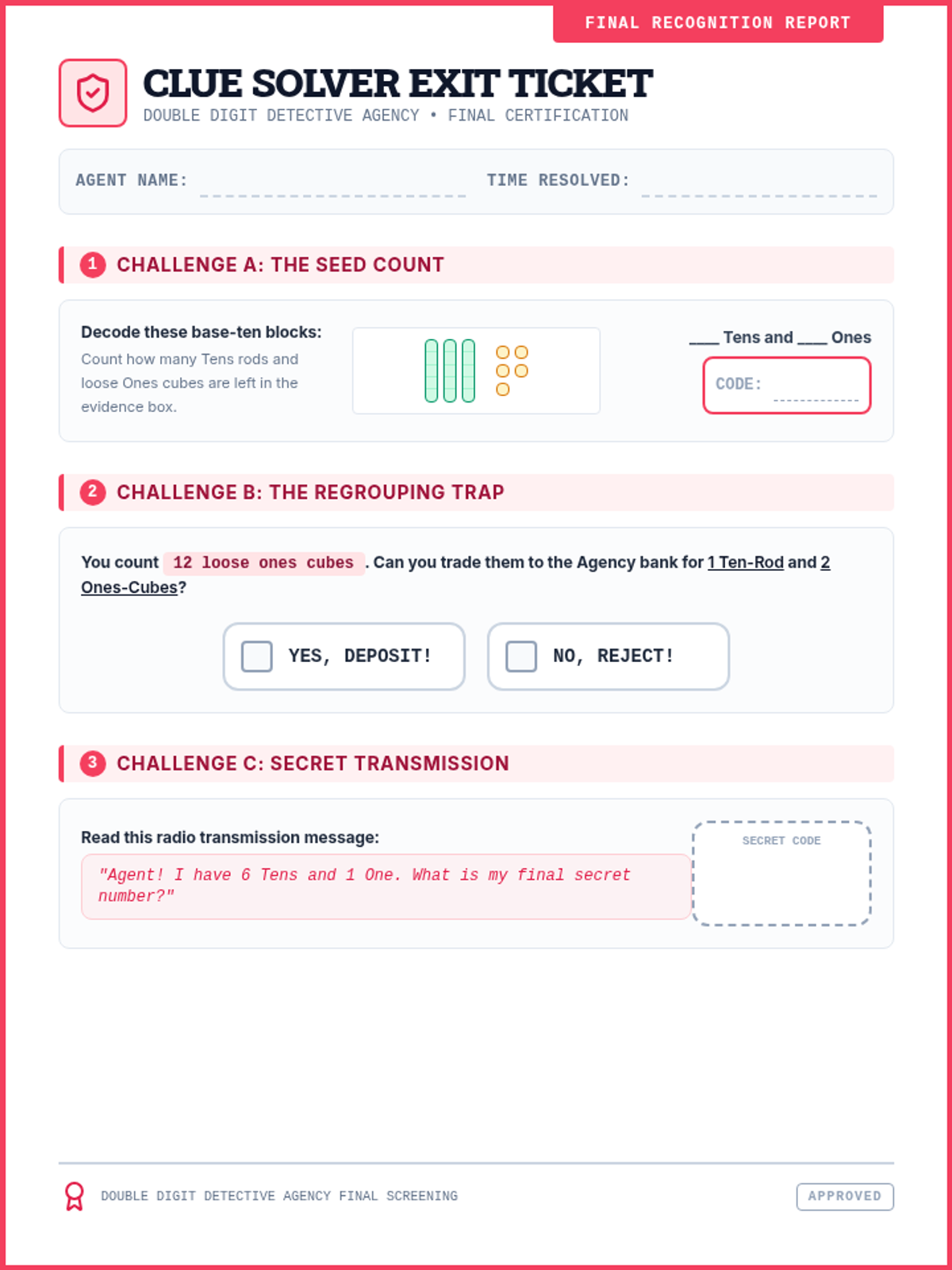
A collaborative, station-based math lesson where 1st-grade students physically construct number paths crossing 100. Students use "broken bridge" number segments to practice counting sequences from 90 to 120.
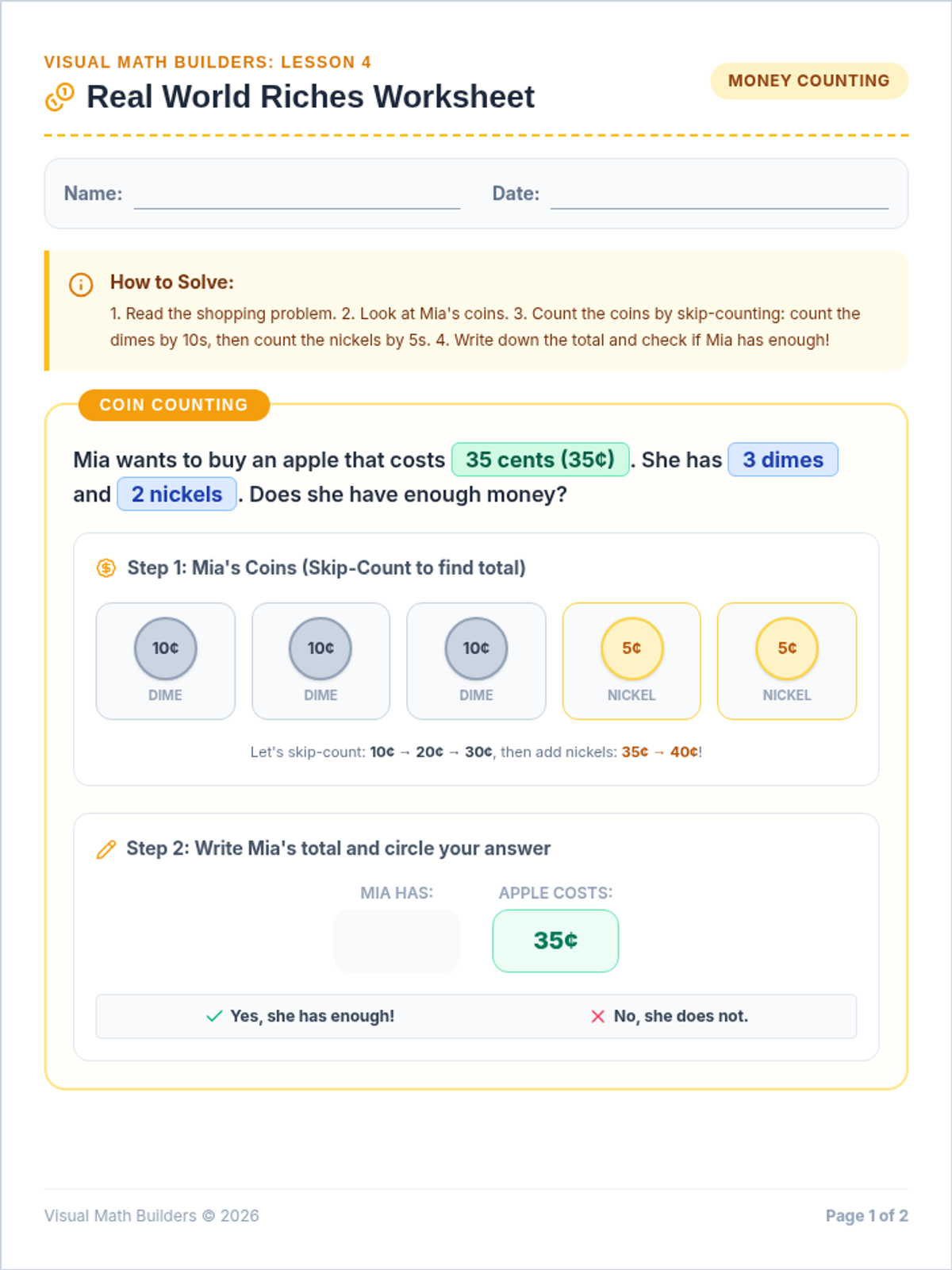
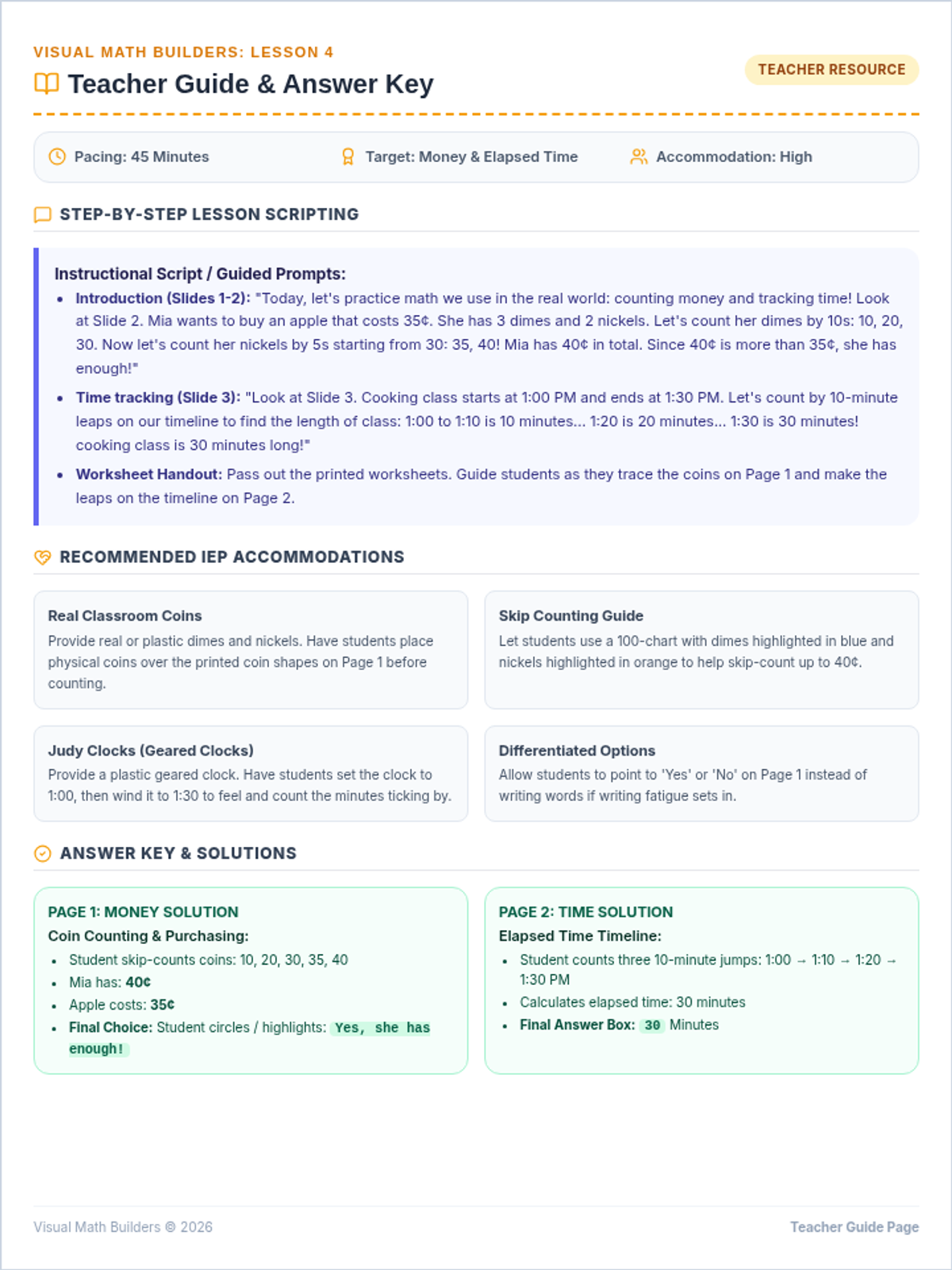
Targets practical, real-world application of math with highly visual scaffolding for coin counting, purchasing decisions, and elapsed time scenarios.

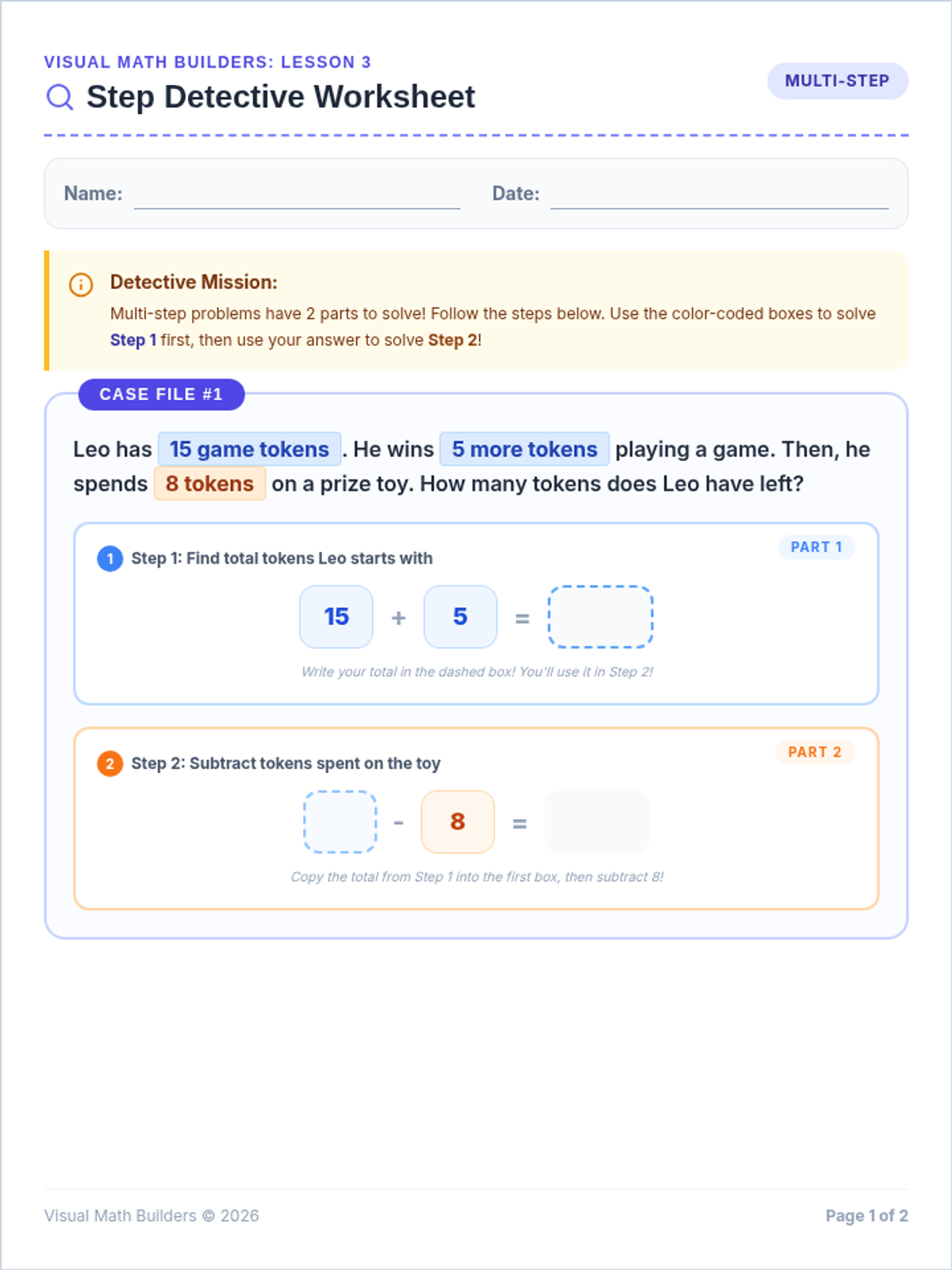
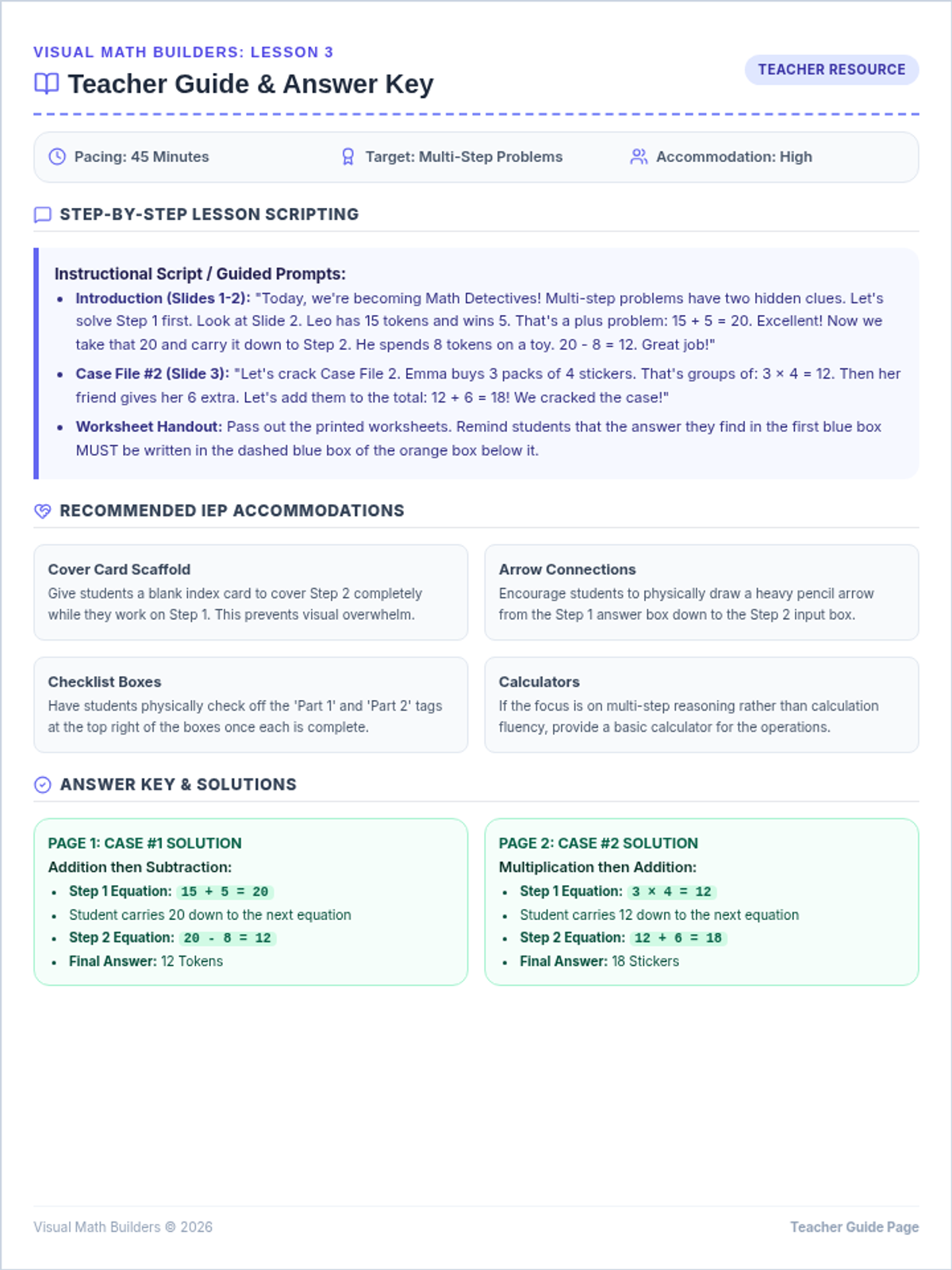
Breaks down multi-step math word problems into bite-sized, color-coded, sequentially numbered parts, helping students systematically parse and solve equations without visual overload.
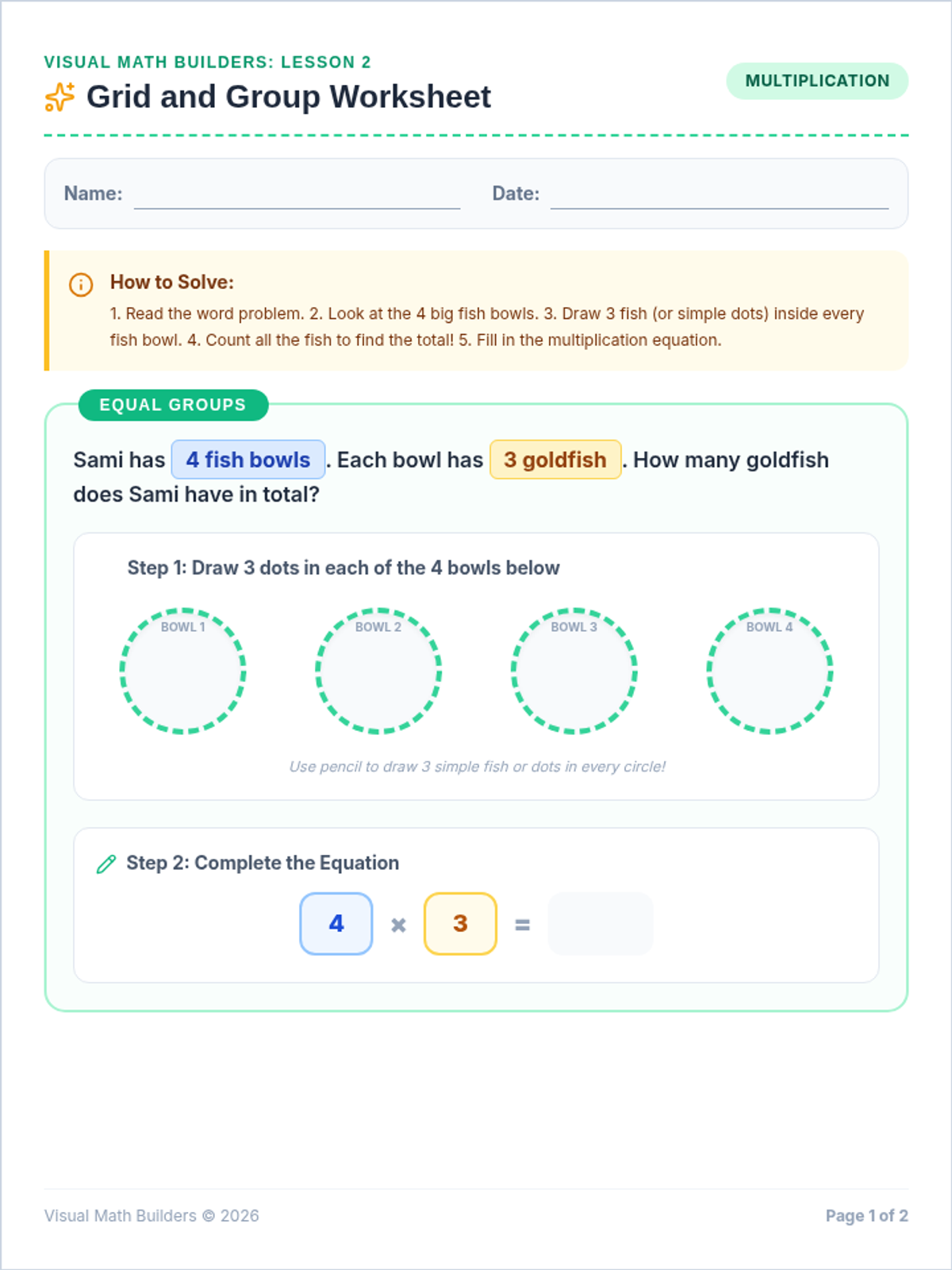
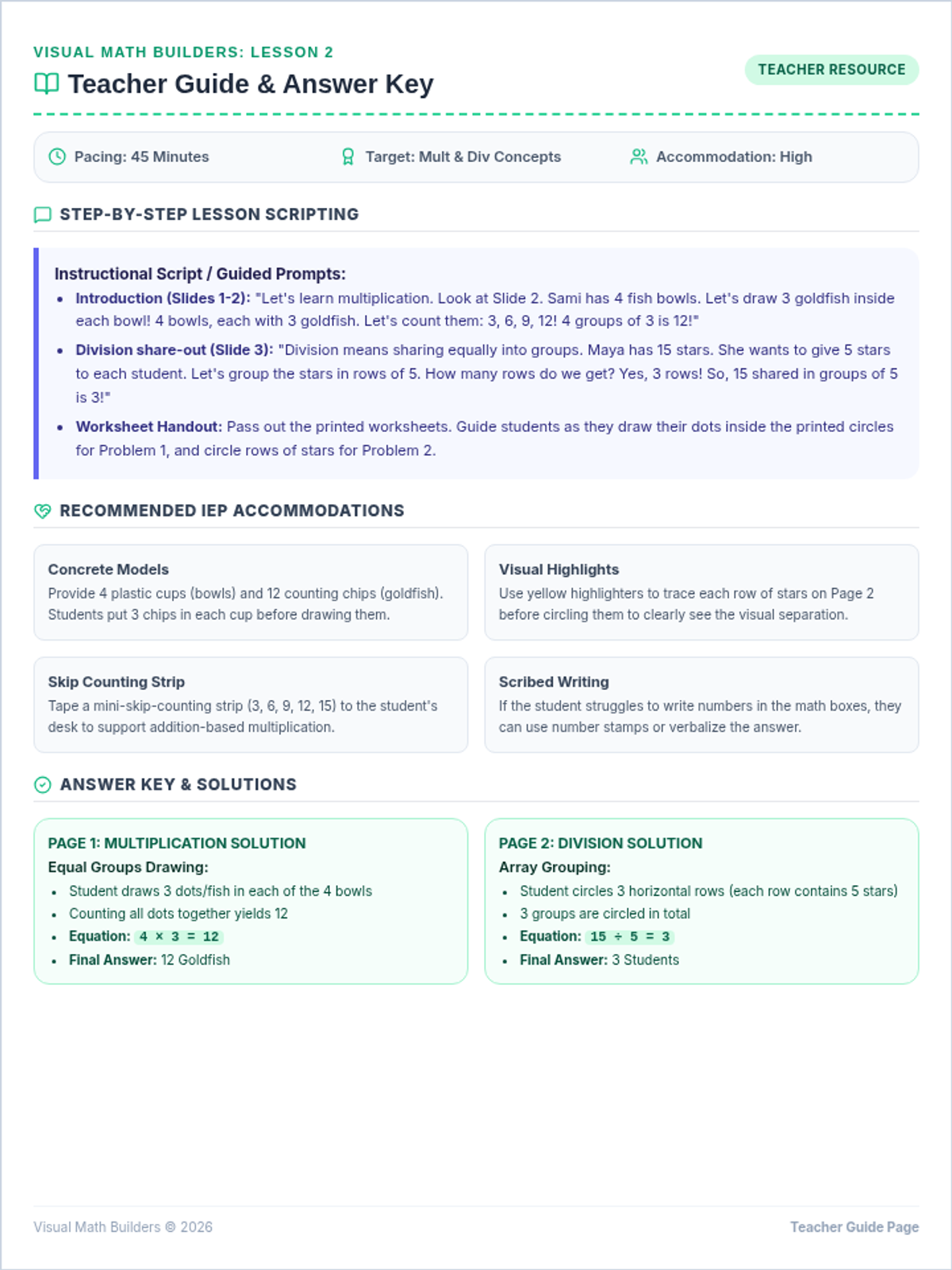
Covers multiplication and division word problems utilizing visual aids such as equal group drawings, array grids, and visual modeling templates to scaffold core concepts.
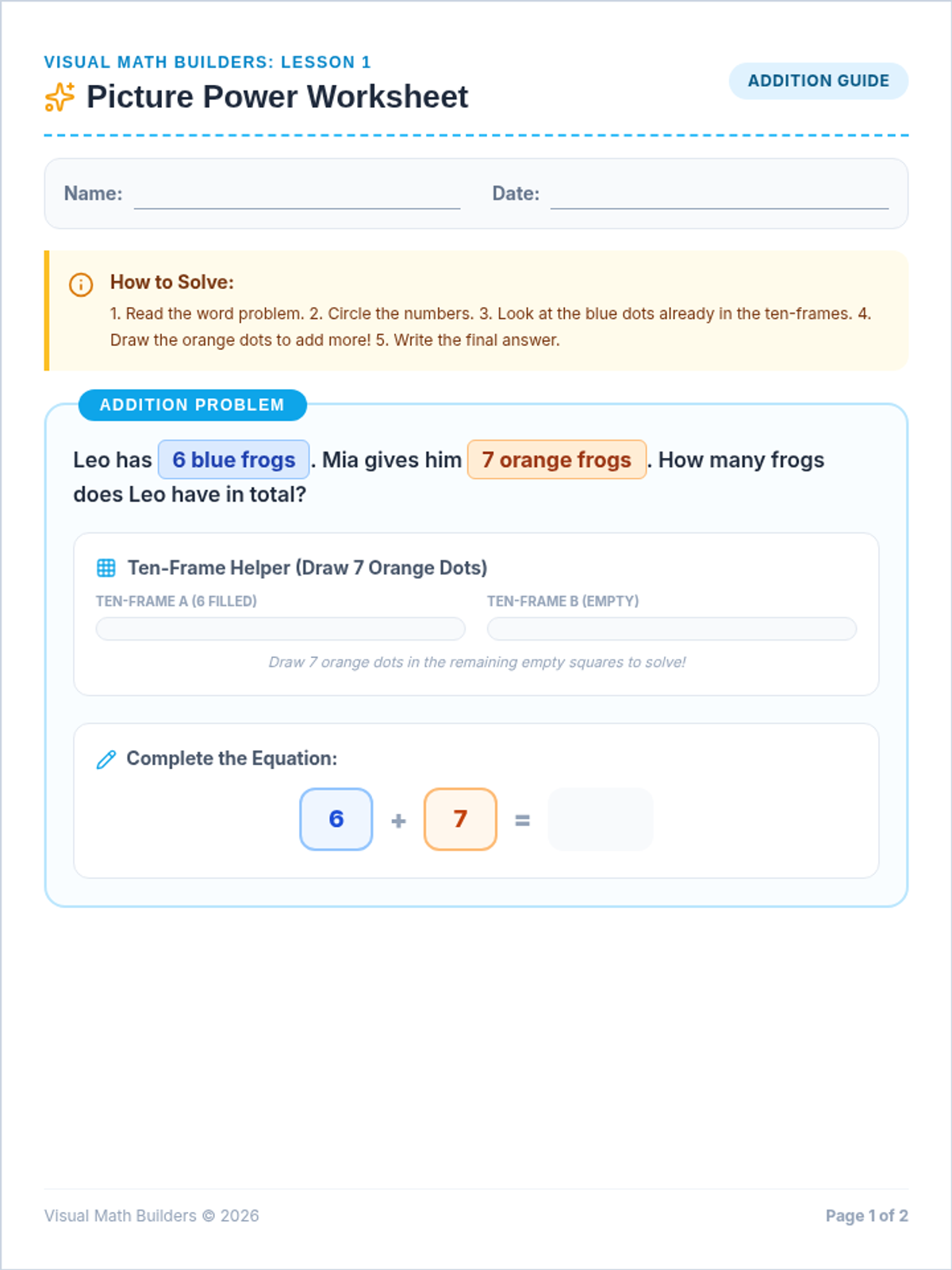
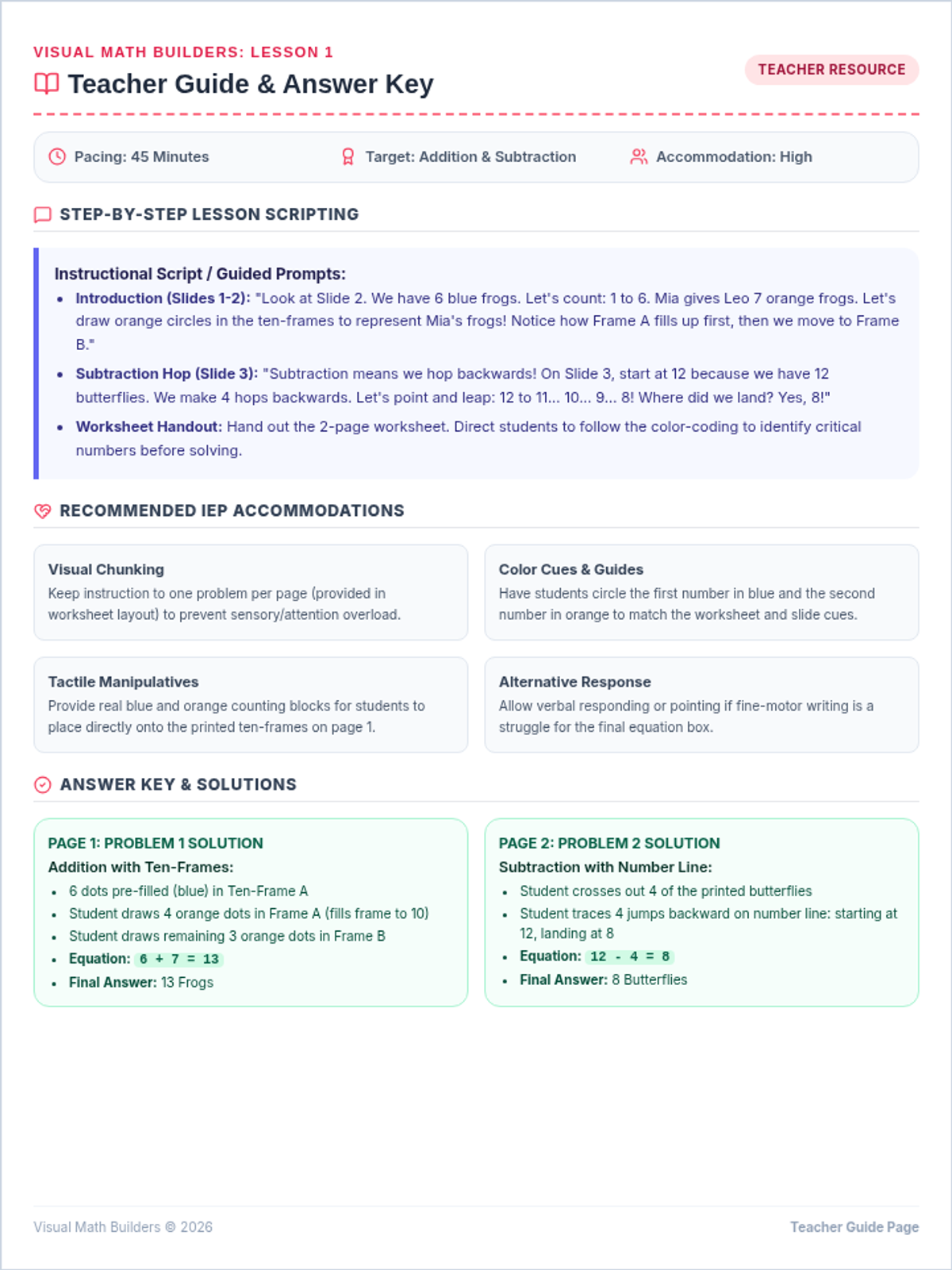
Focuses on addition and subtraction word problems with visual aids including built-in picture representations, ten-frames, and number lines to support student conceptual understanding.
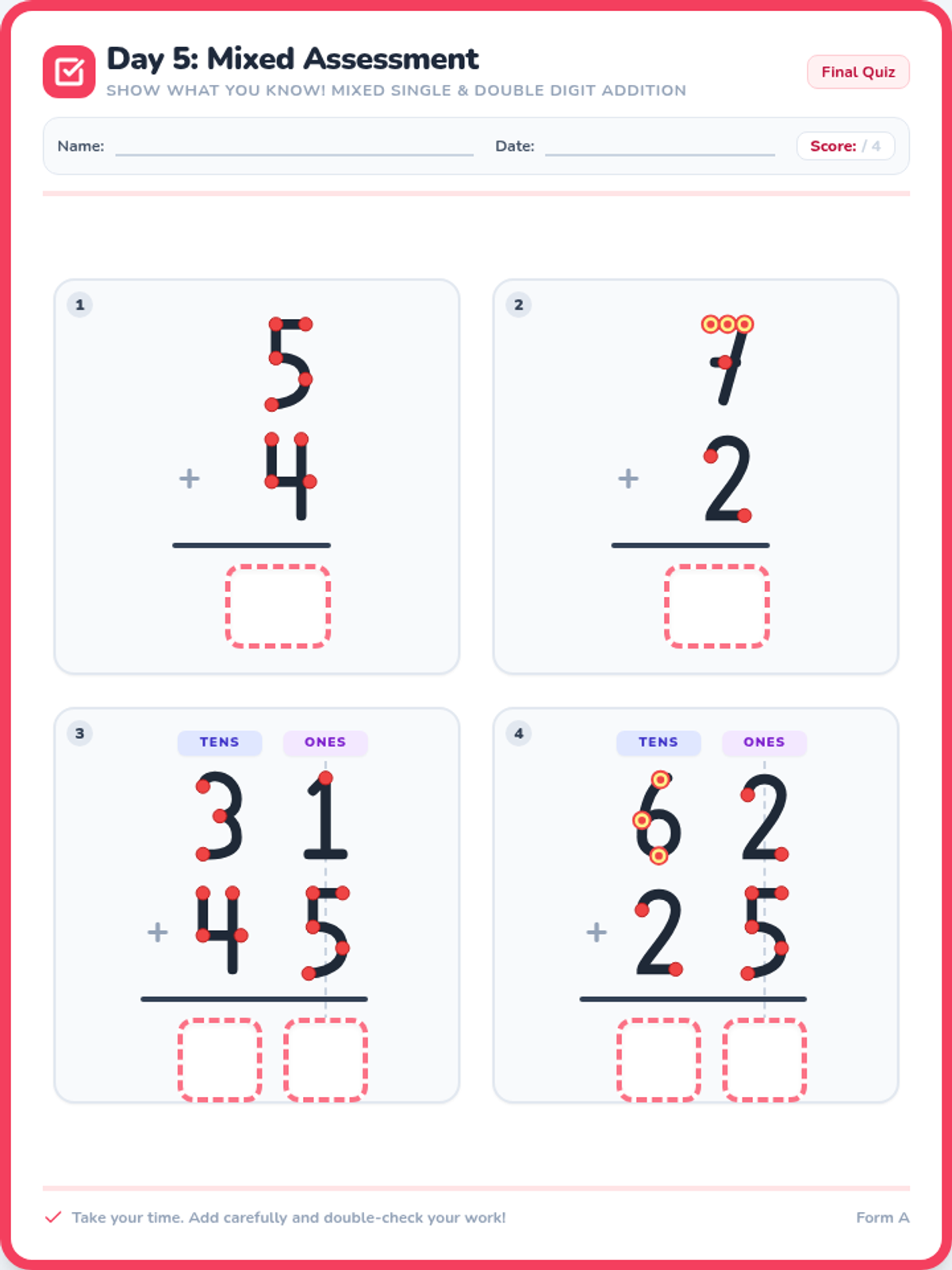
A final day of mixed practice and a structured assessment to measure mastery of single-digit and double-digit touchpoint addition.
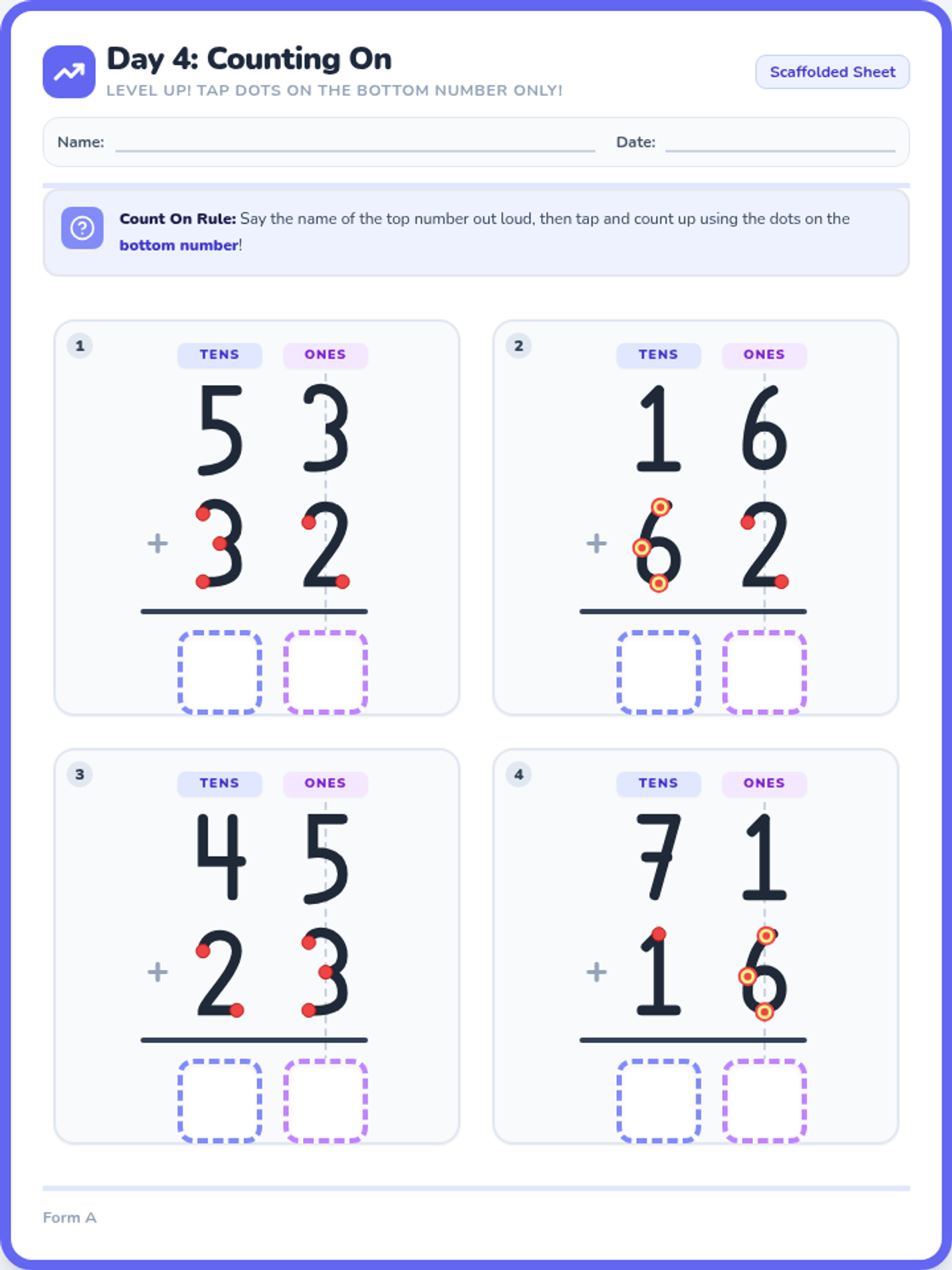
Reinforcing double-digit addition using scaffolded materials where grid lines and touchpoints are gradually faded to foster mental math and fluency.
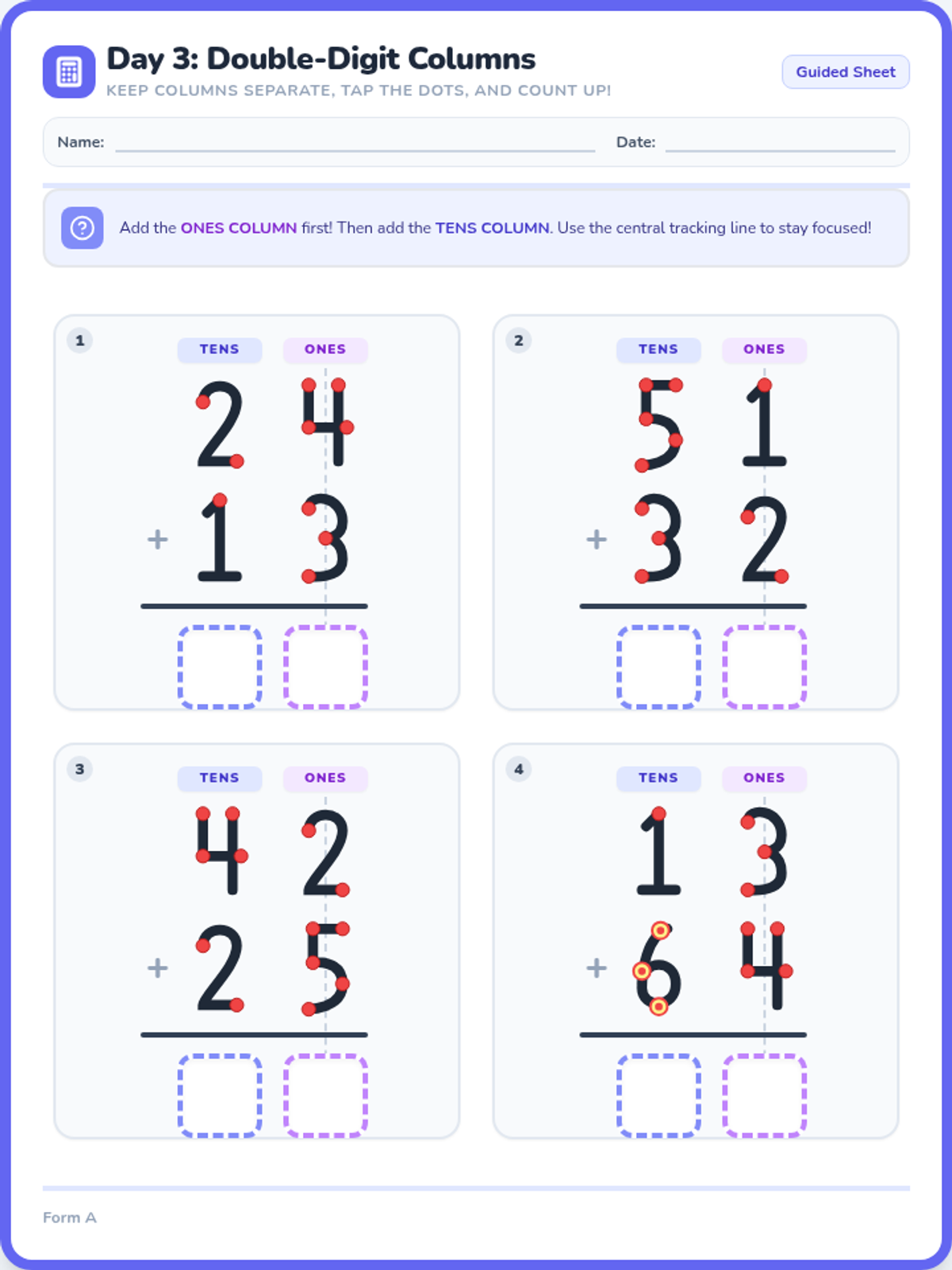
Transitioning to double-digit addition without regrouping, with high-contrast vertical dividers and large columns to support tracking.
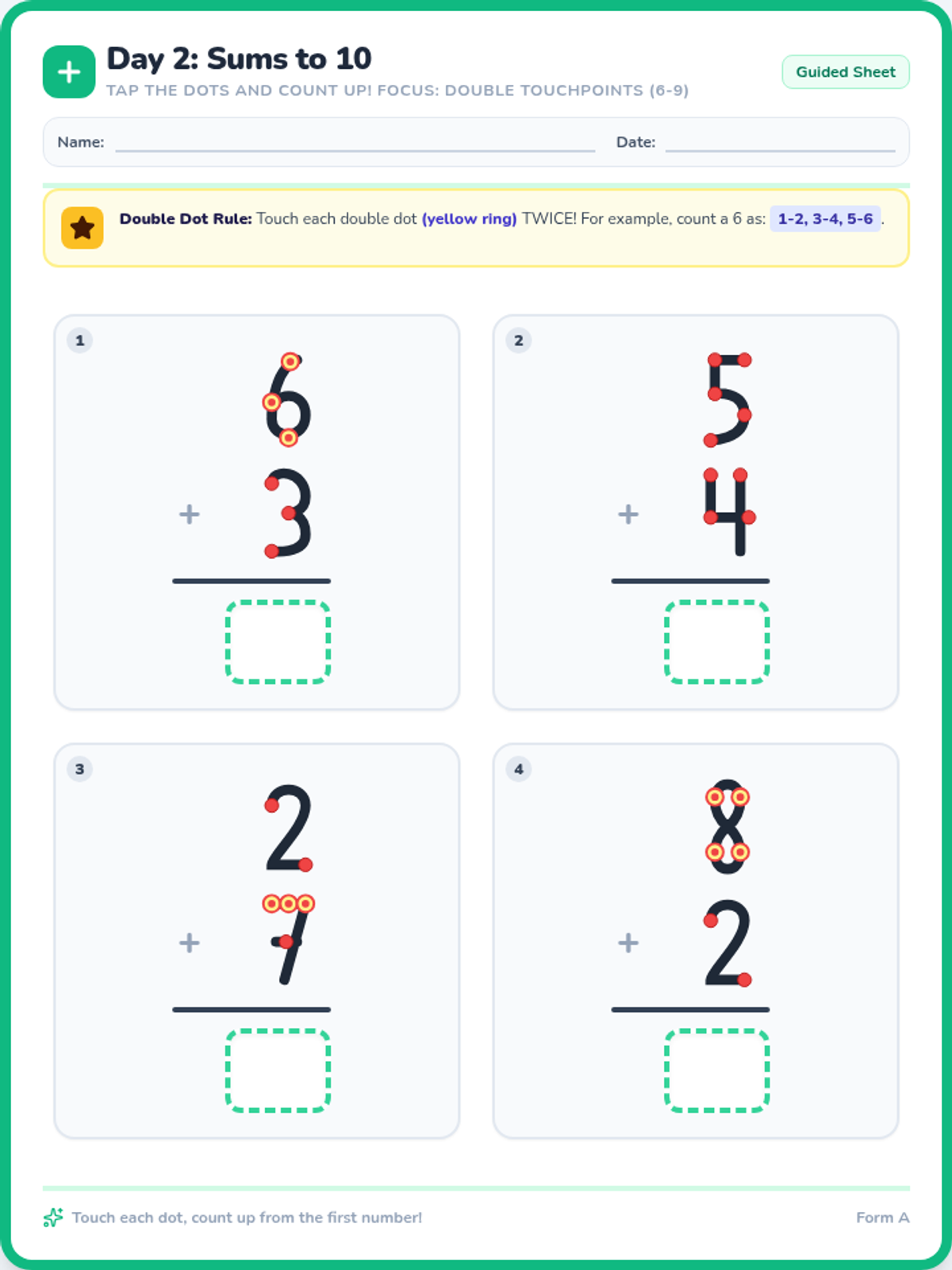
Developing single-digit addition with sums up to 10, utilizing single and double touchpoints on numbers 6 through 9 with scaffolded worksheets.
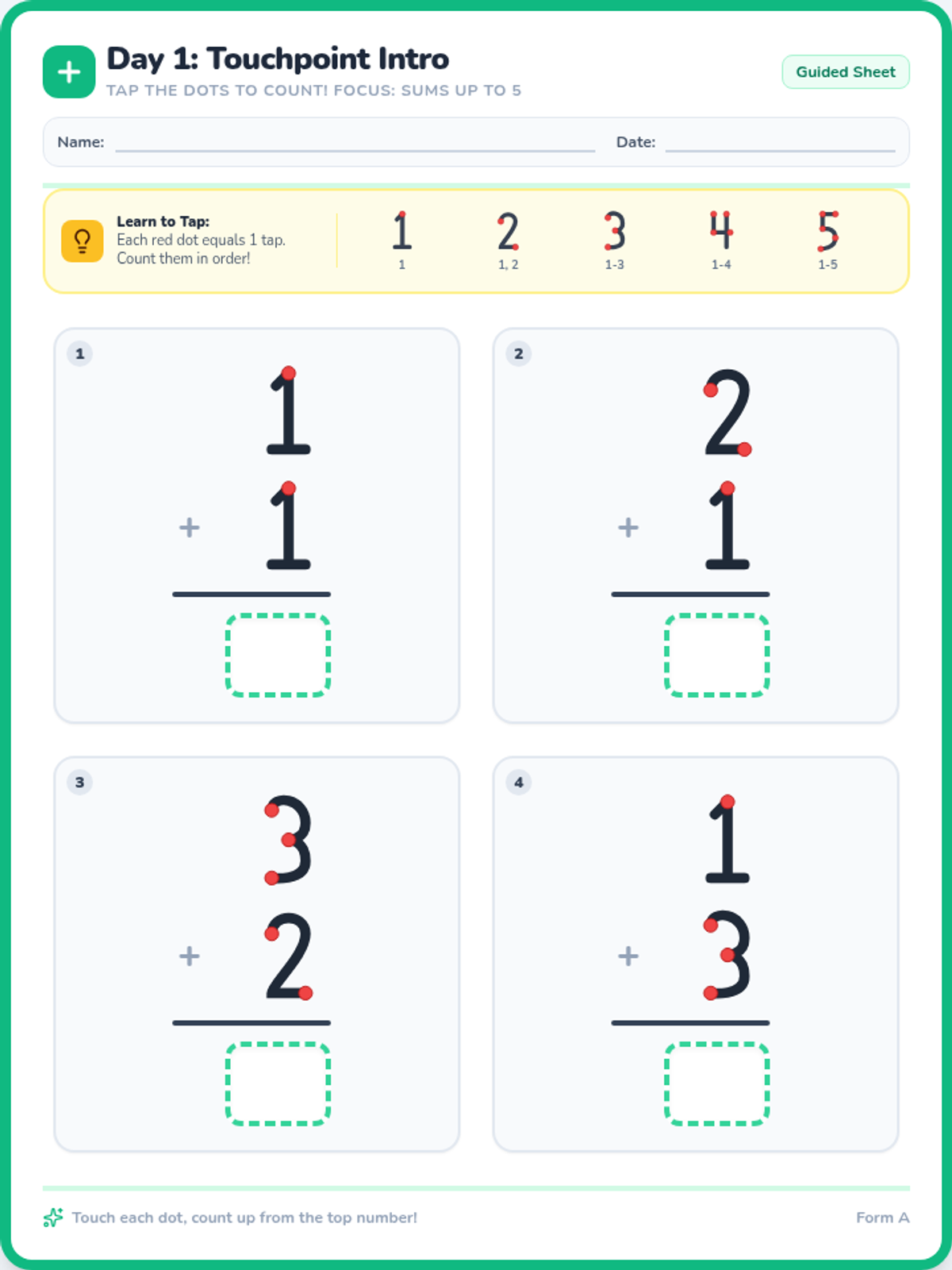
Introduction to single-digit touchpoint addition with sums up to 5, featuring large-print guided and independent practice sheets.
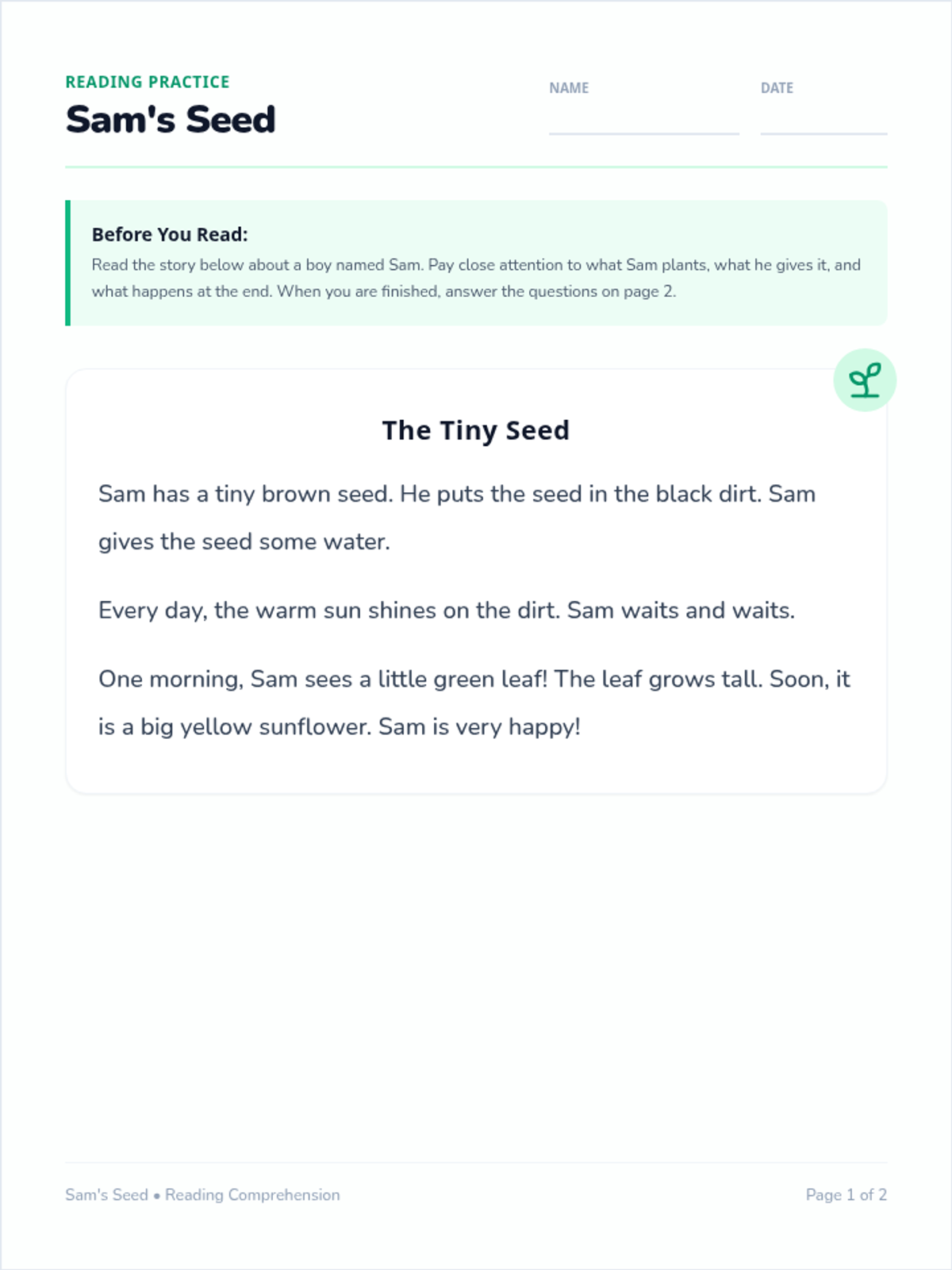
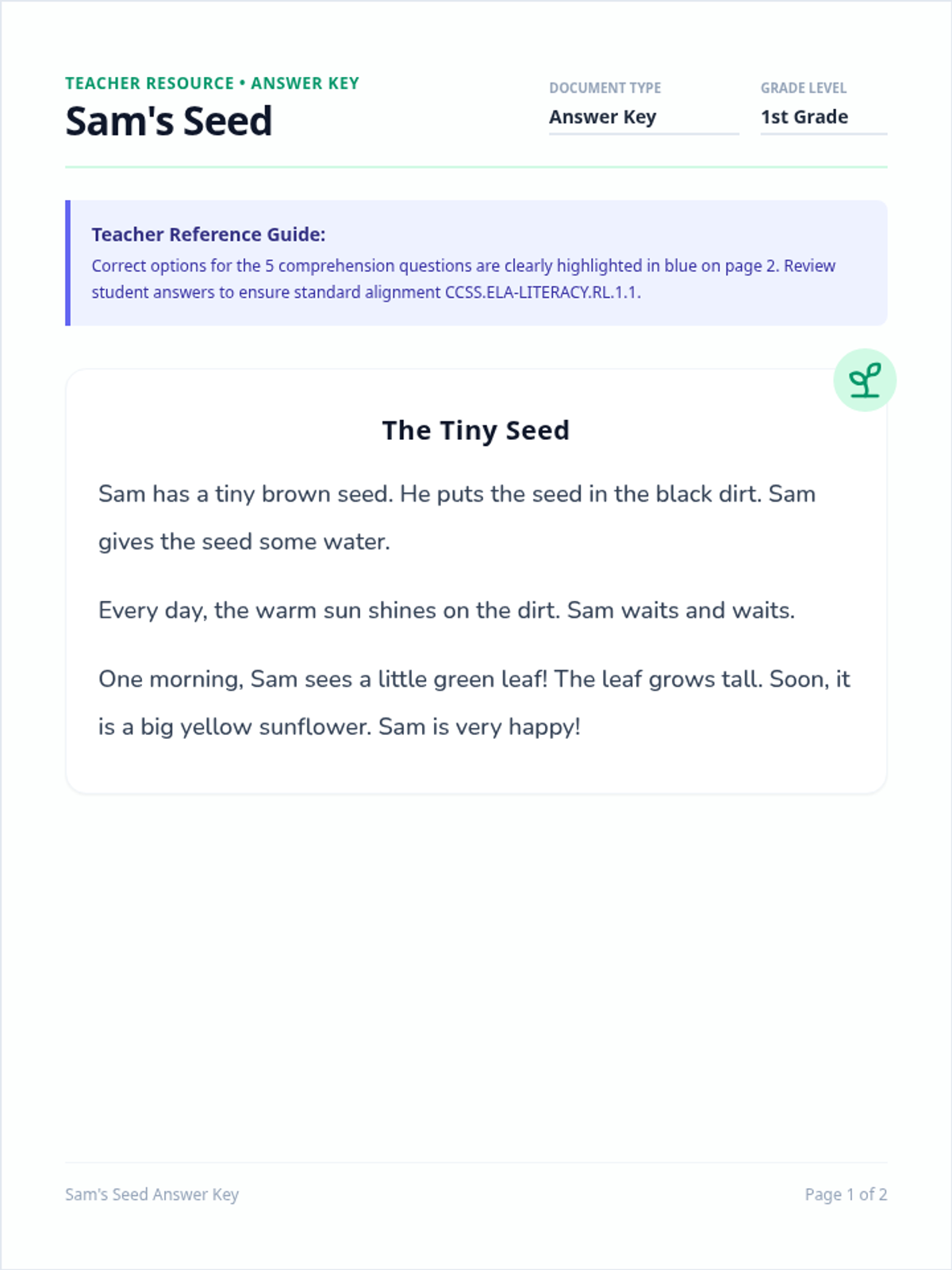
A single-lesson reading comprehension resource for 1st-grade students featuring a simple story about a boy named Sam who plants a sunflower seed.
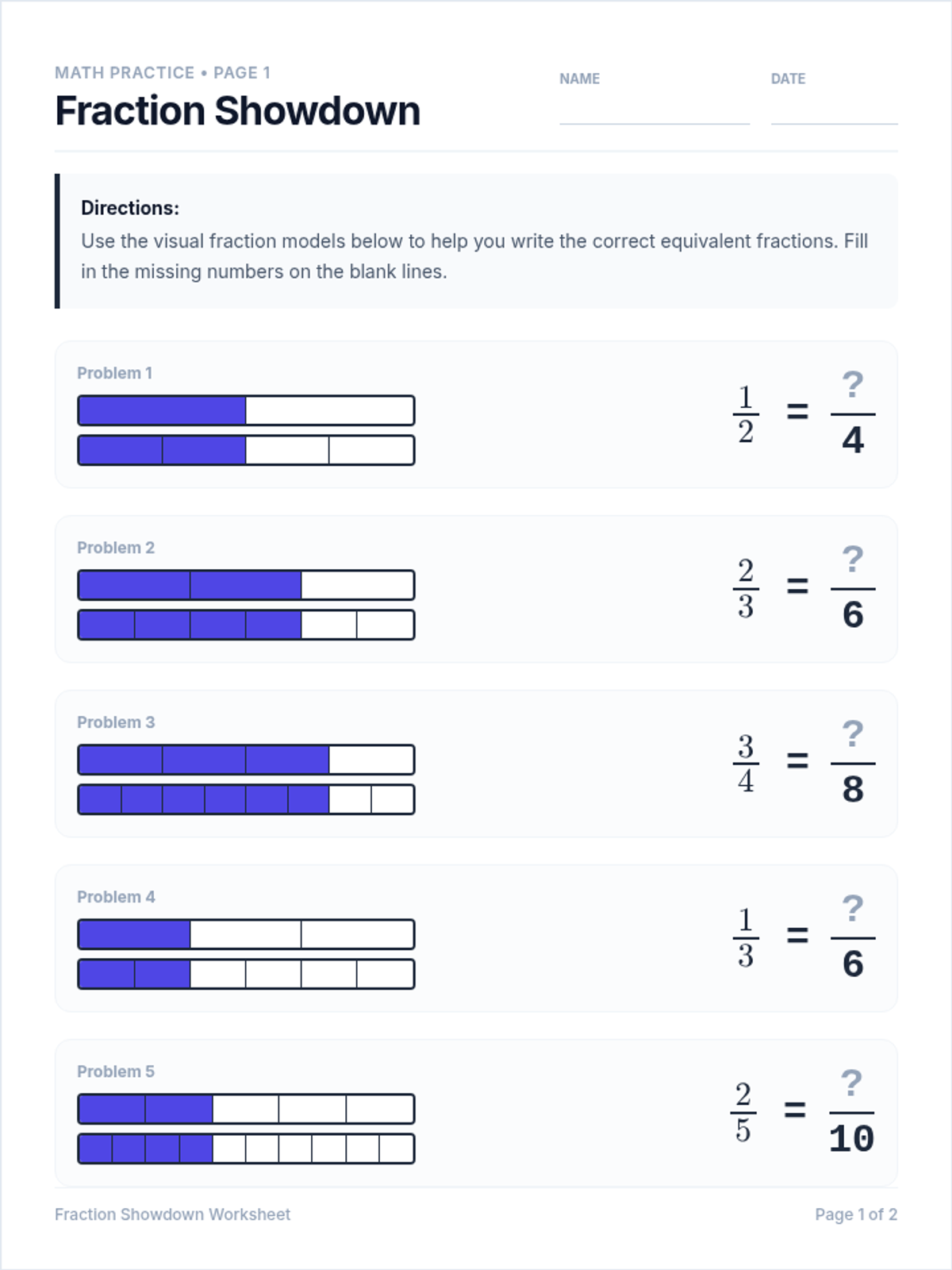
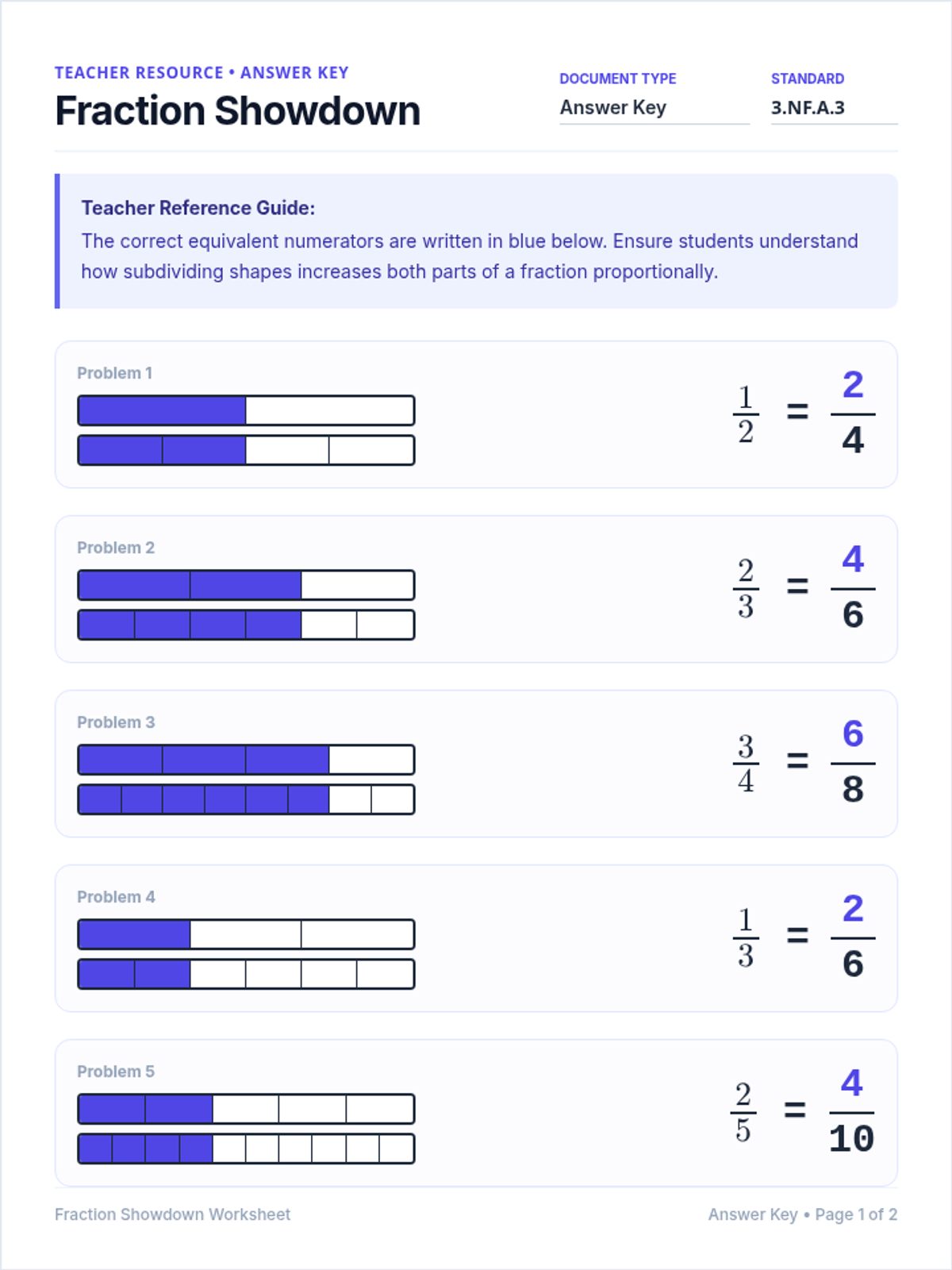
A single-lesson practice resource focusing on identifying and creating equivalent fractions using visual fraction bars and a custom Fraction Wall reference.
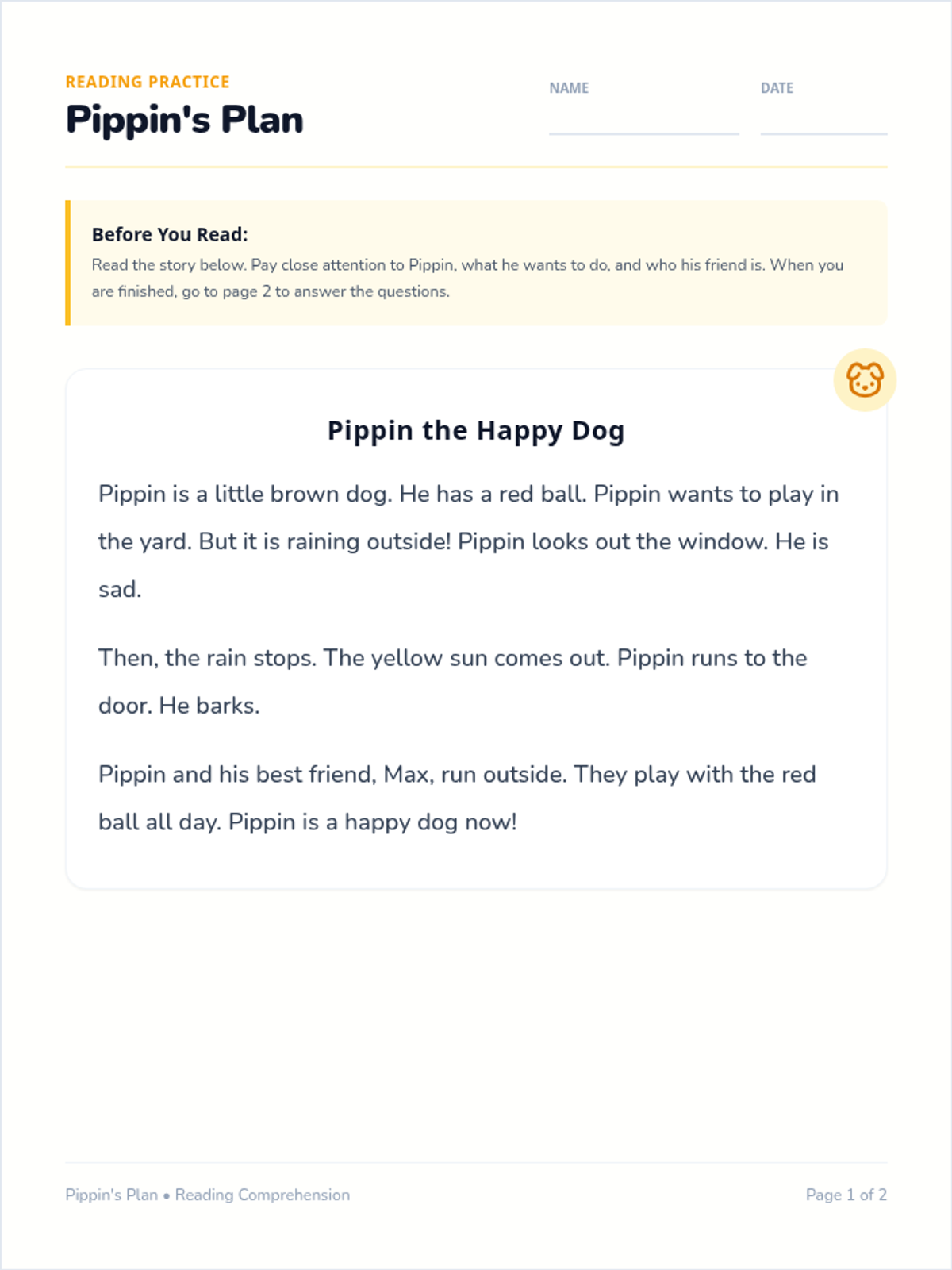
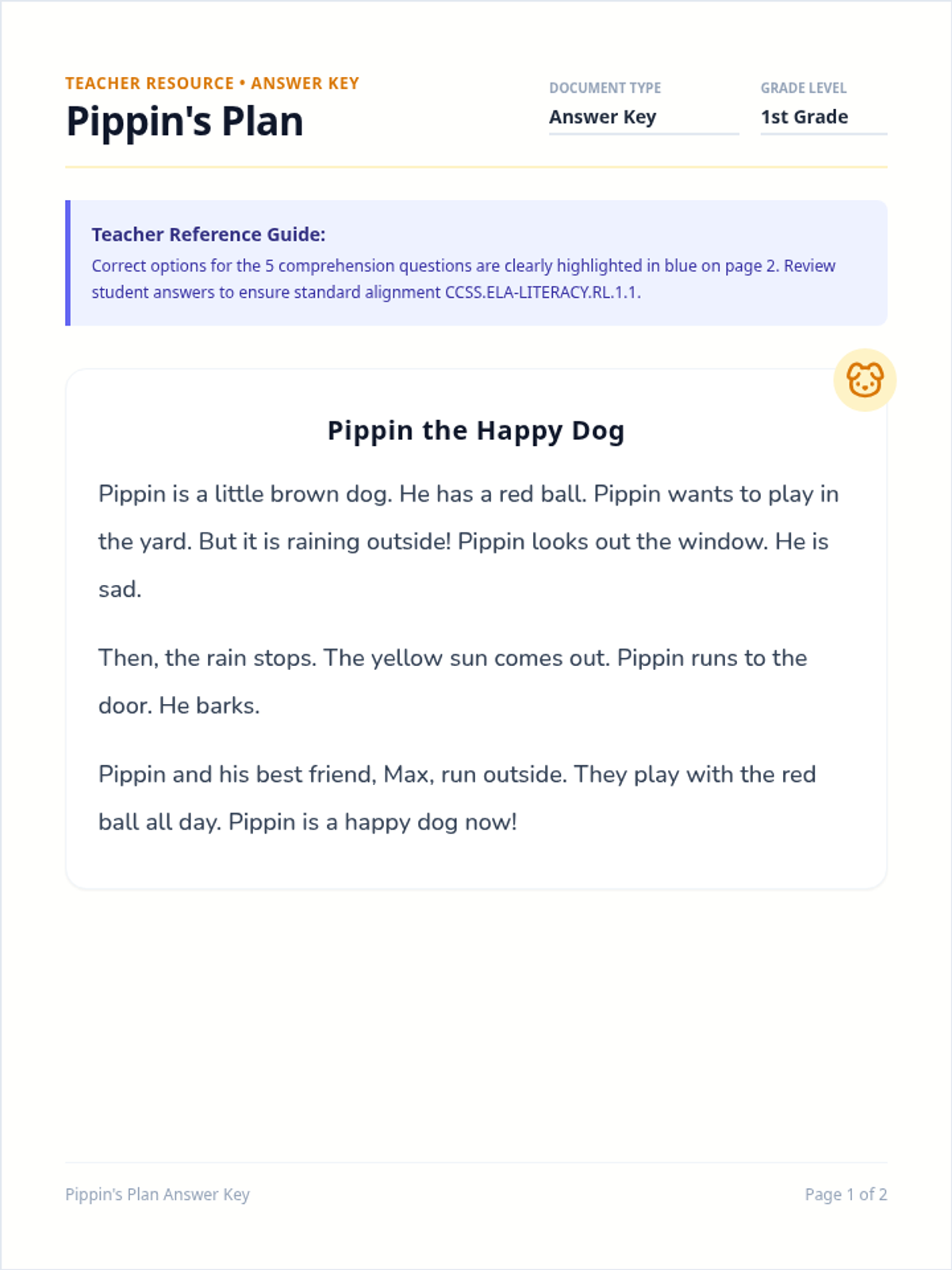
A single-lesson reading comprehension resource for 1st-grade students featuring a simple story about a dog named Pippin and five aligned multiple choice questions.
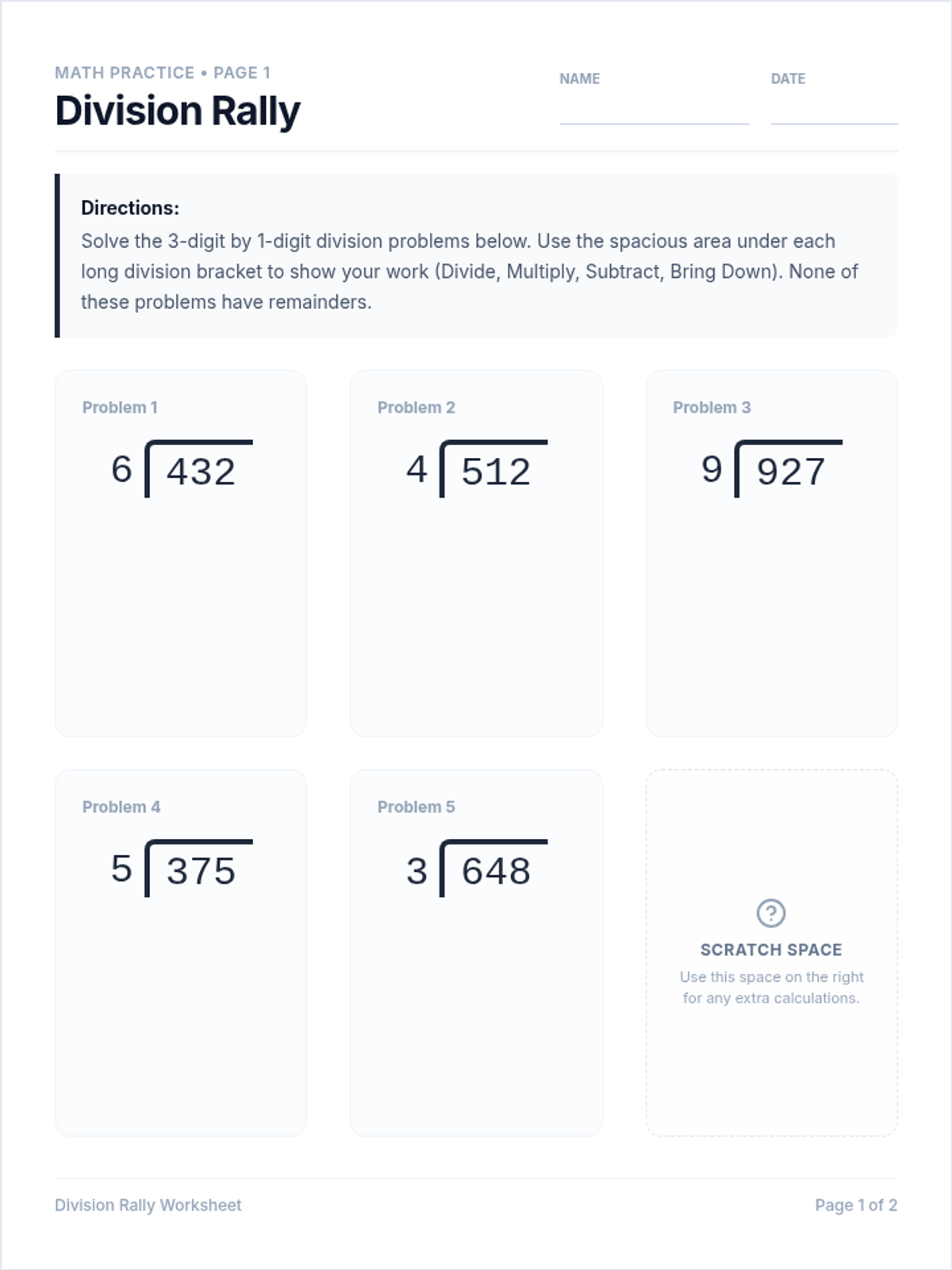
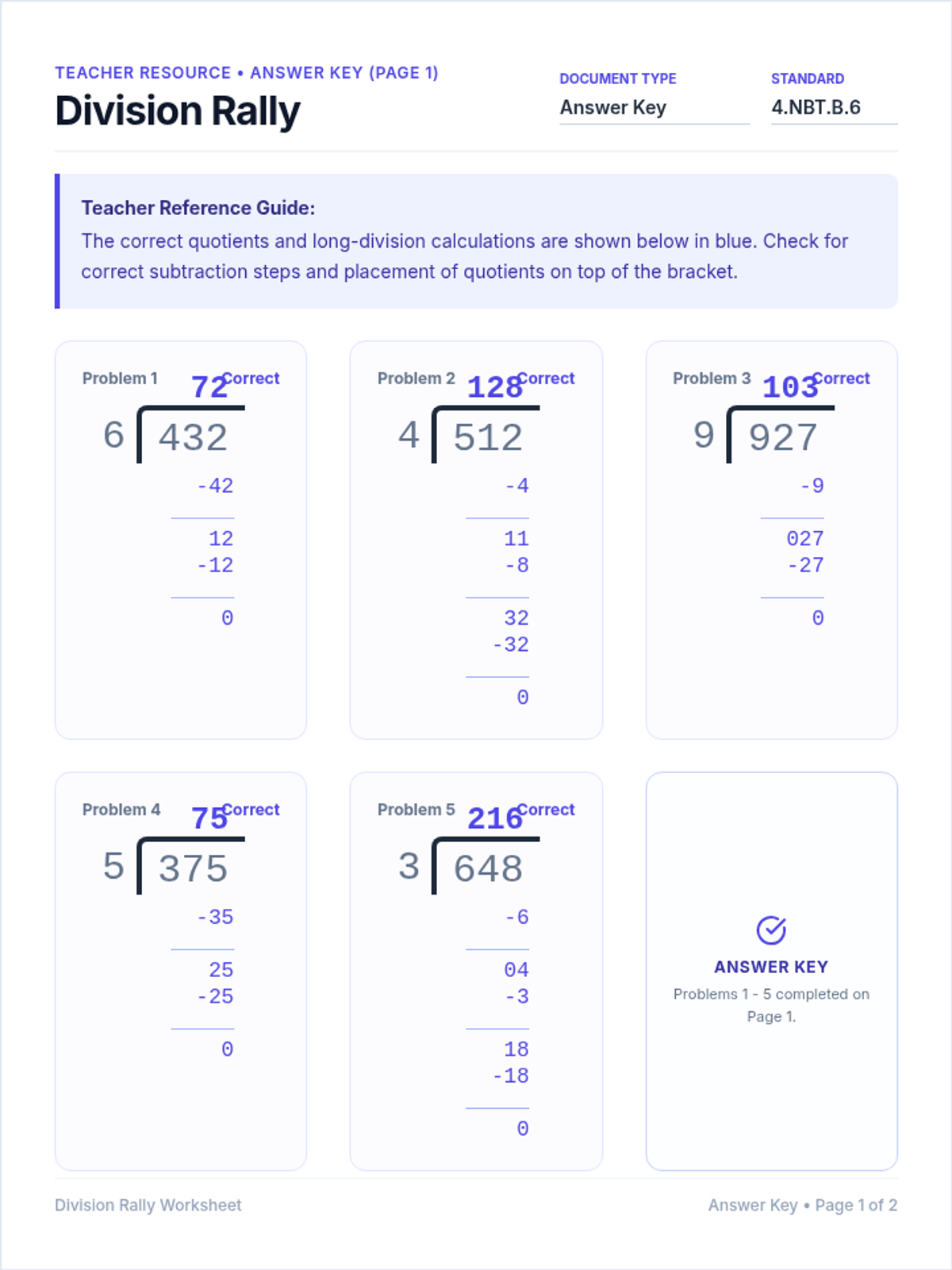
A single-lesson practice resource focusing on rapid recall of 10 random single-digit division facts, providing clean layouts and clear student completion spaces.
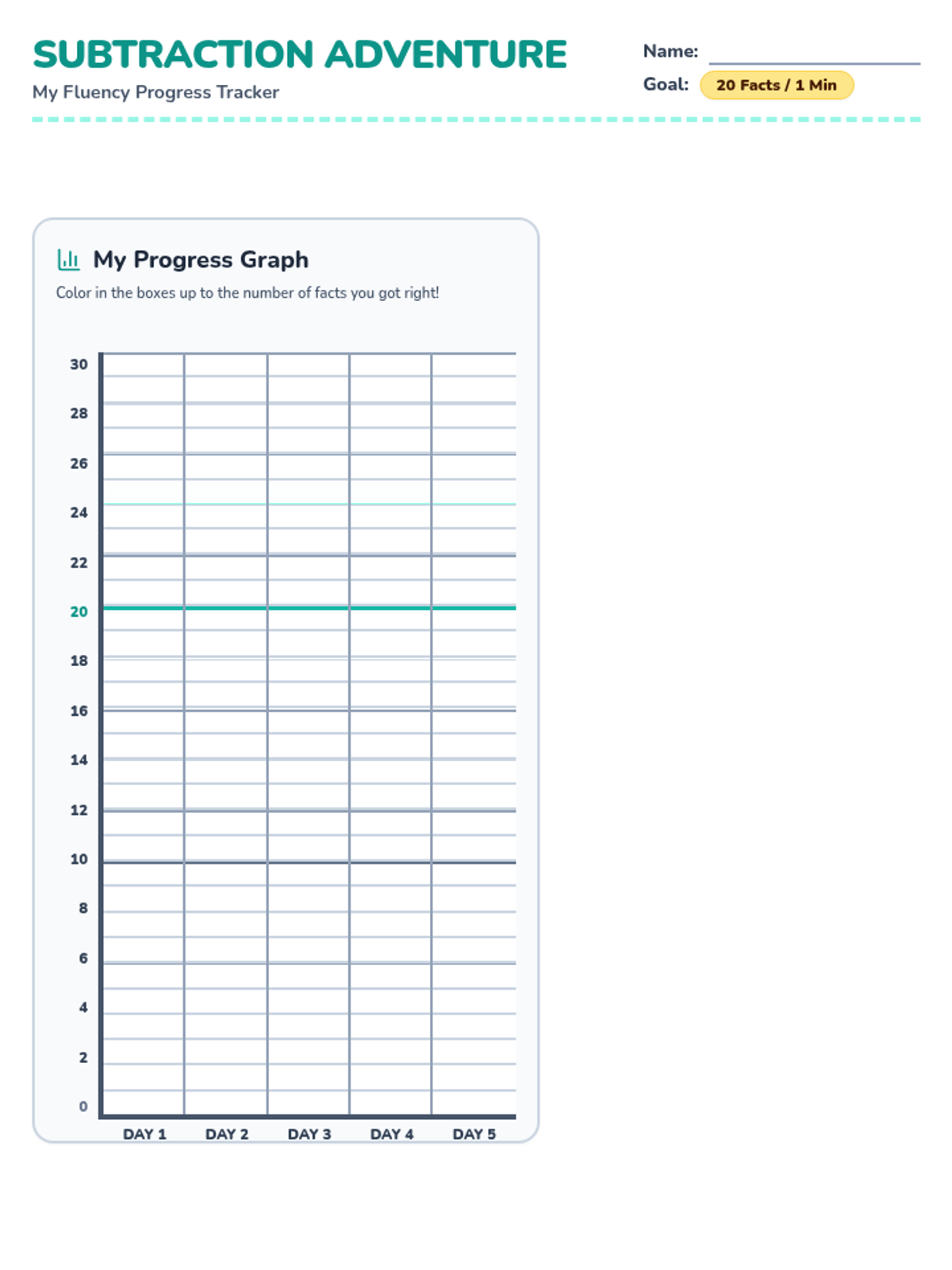
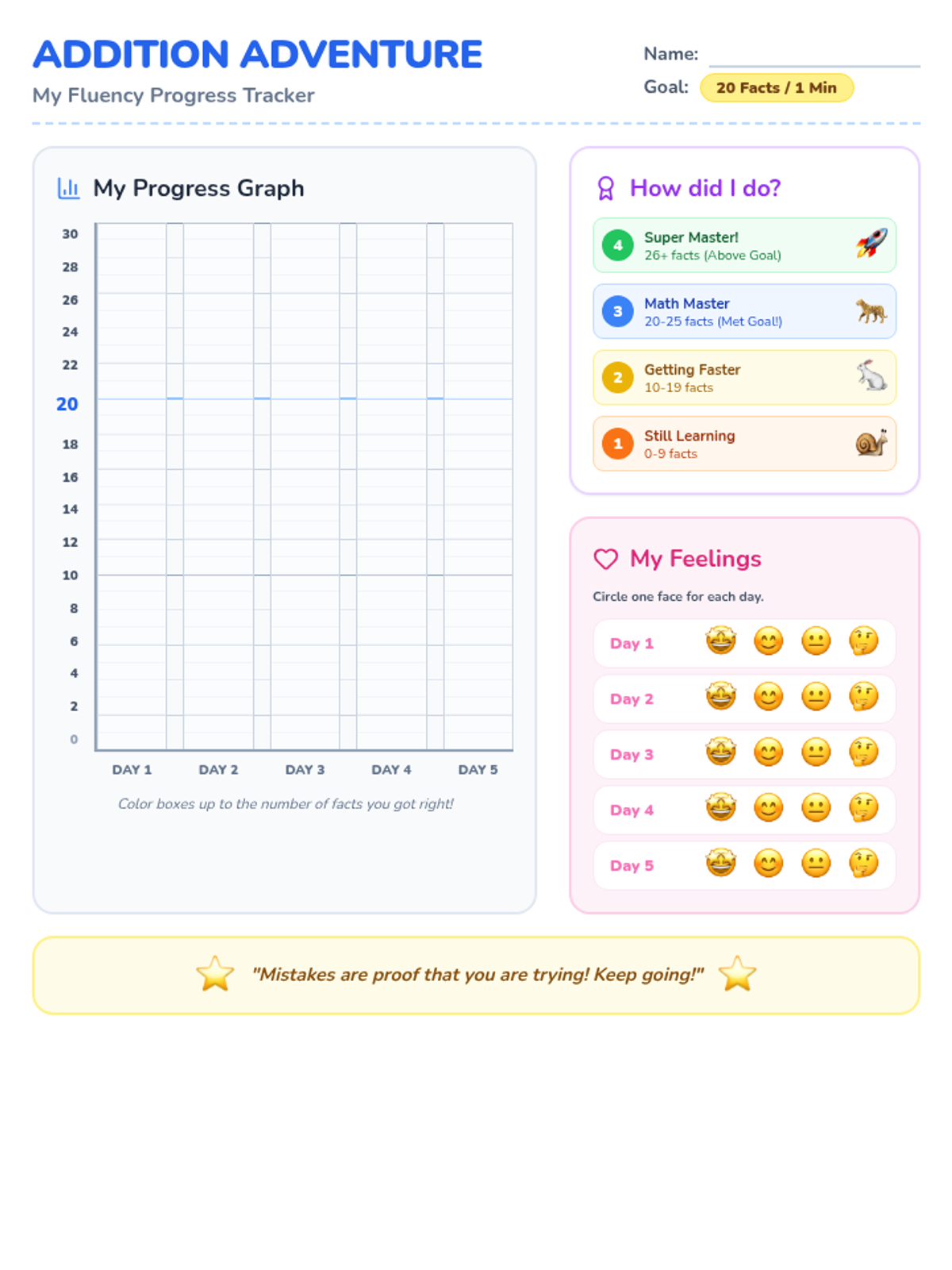
Vibrant progress tracking sheets to help grade 1 students master their core addition and subtraction facts.
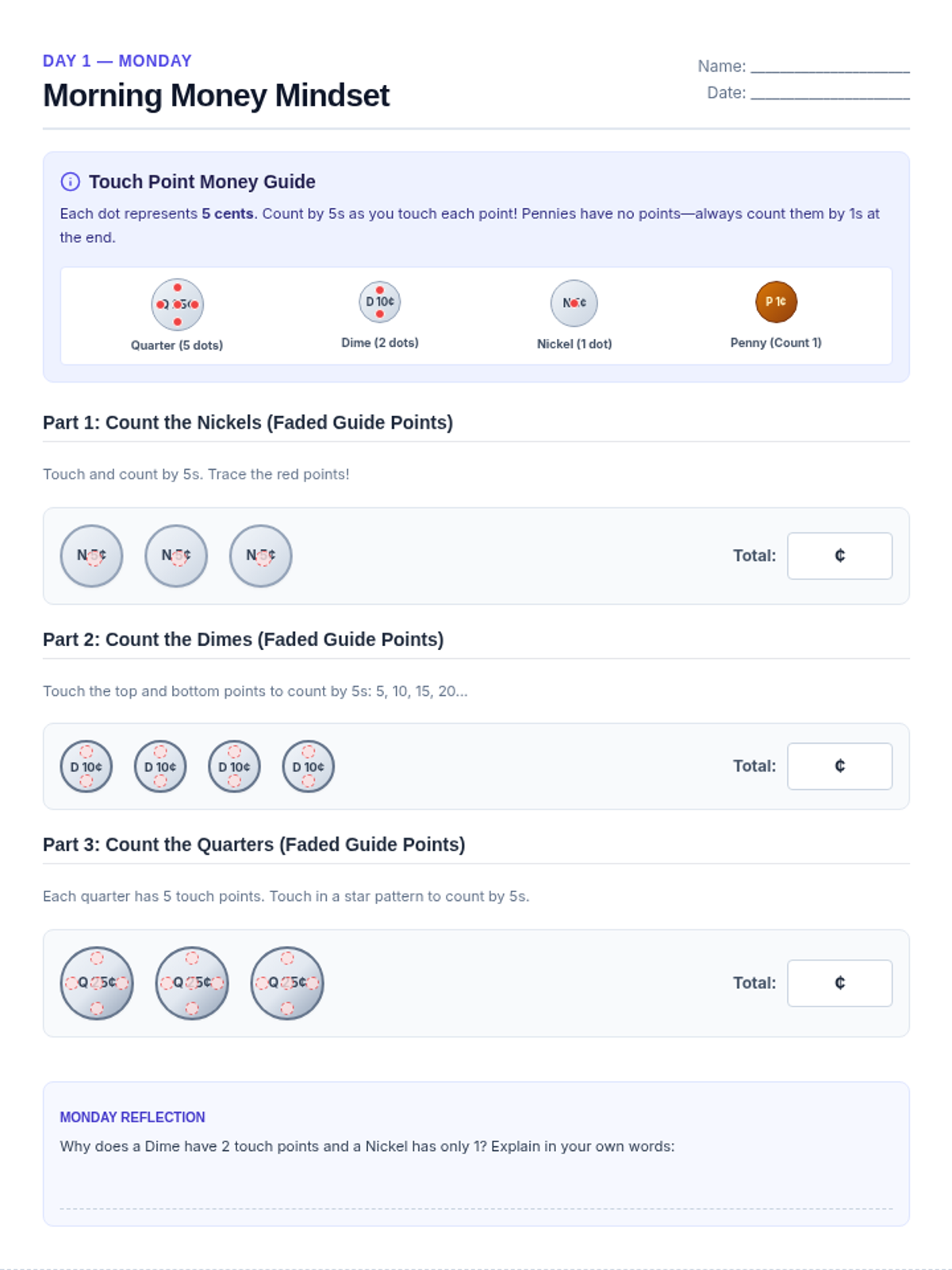
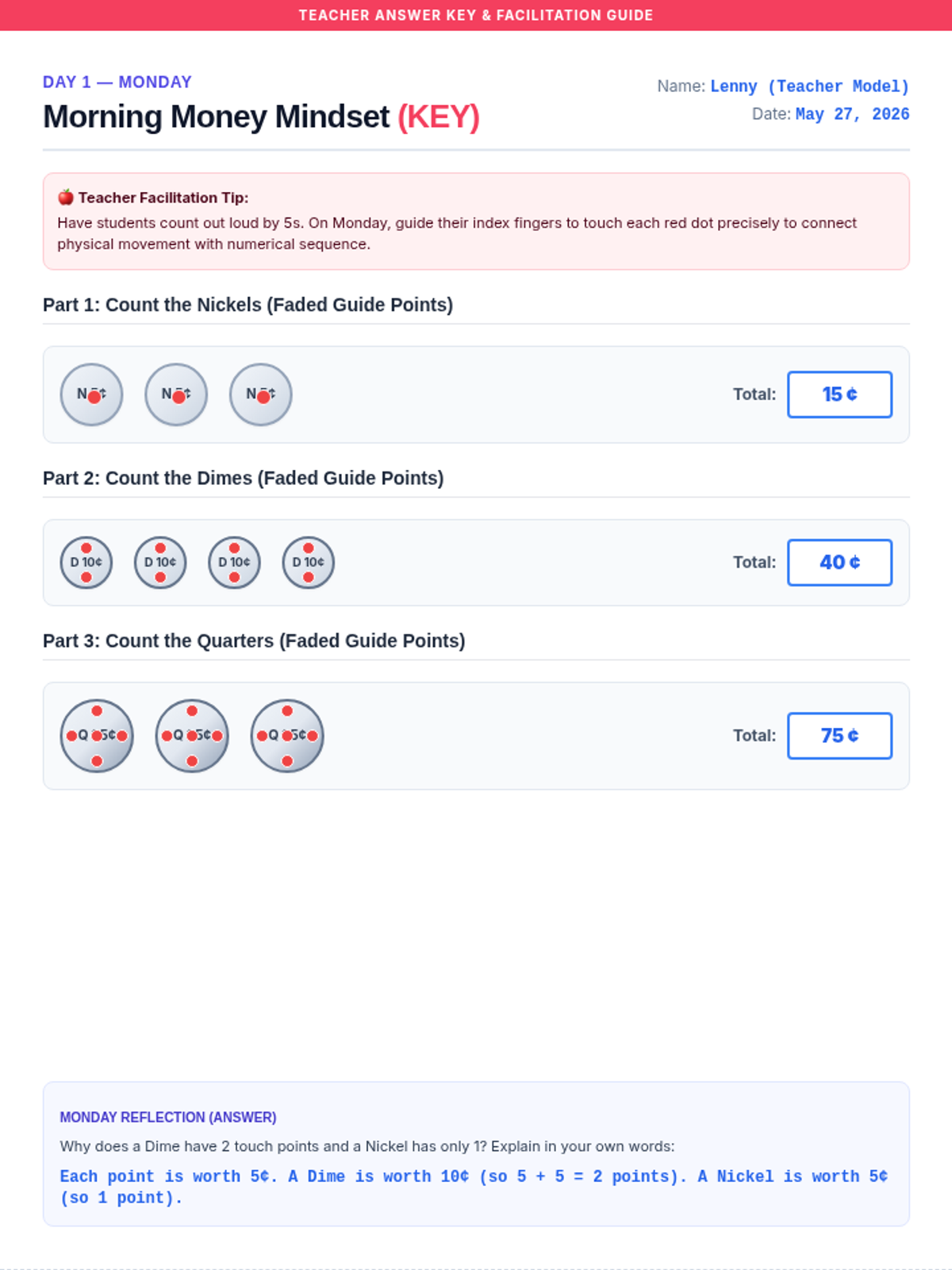
A weekly morning work lesson designed to build student confidence in counting coins and bills using Touch Points. Students transition from supported like-coin counting to independent coin and bill math, culminating in solving 3-item shopping decisions.
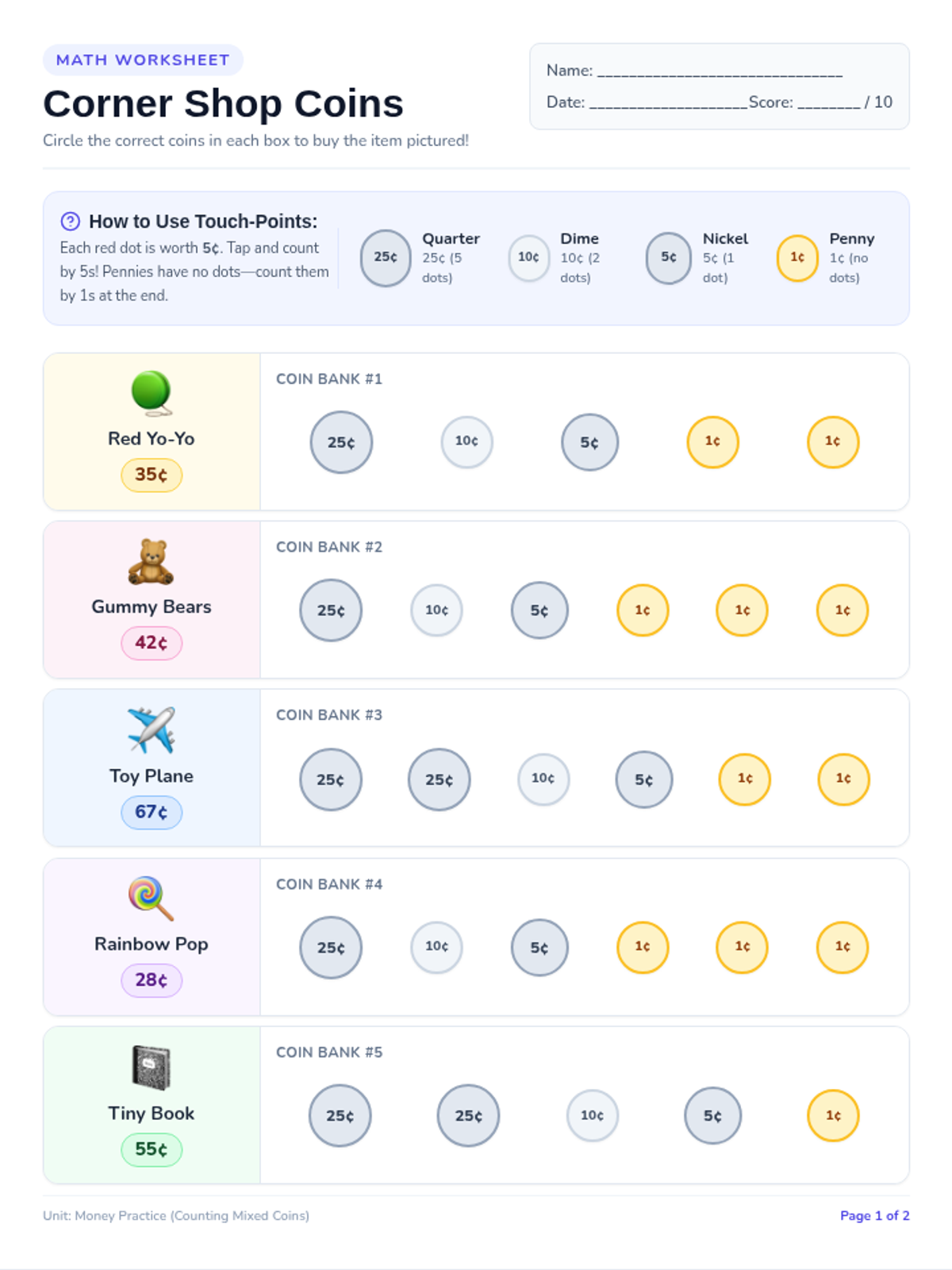
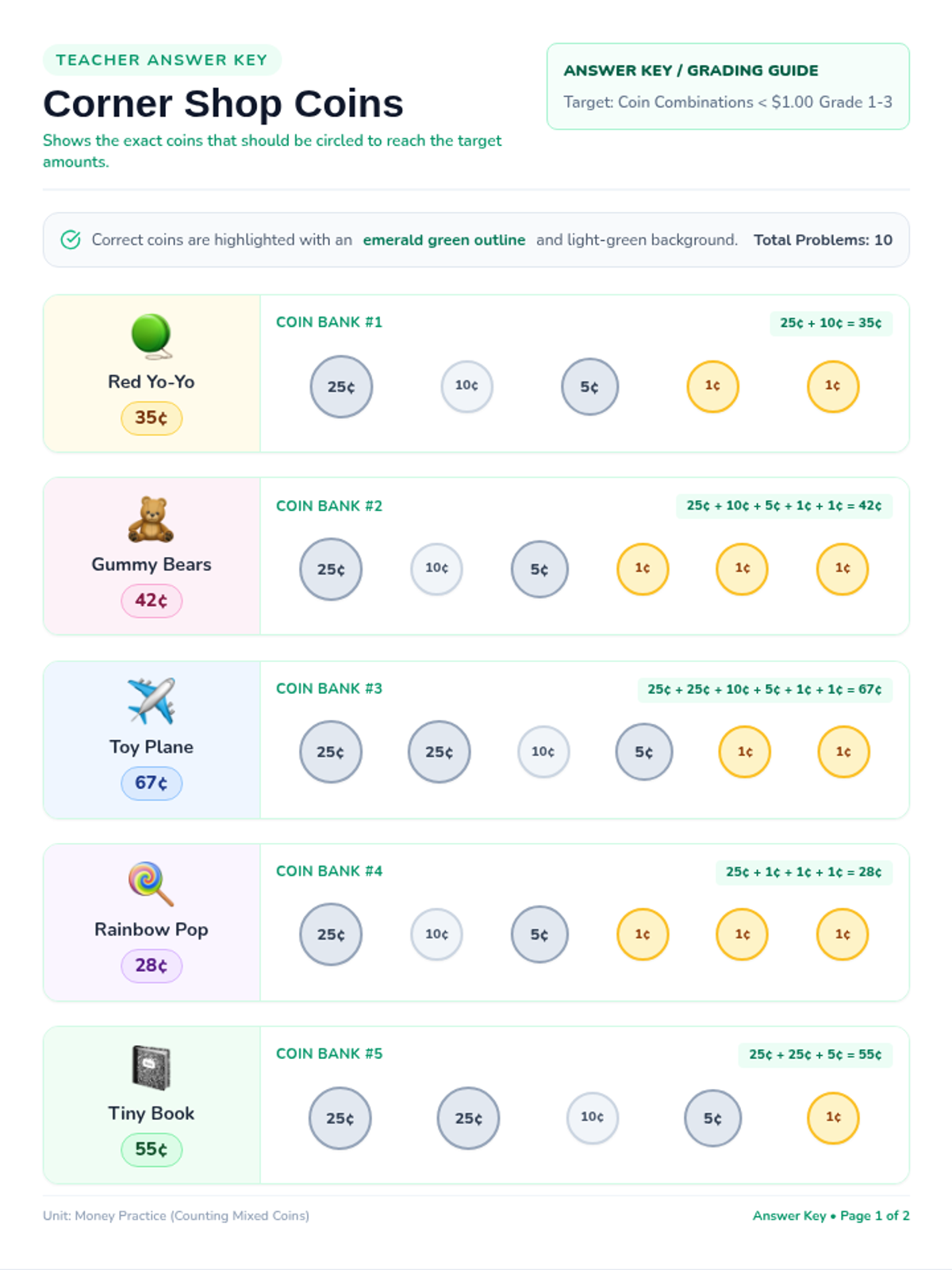
A interactive lesson centered on counting mixed coin combinations under $1.00 using structured coin banks and visual touch-points. Includes a student worksheet and an answer key.
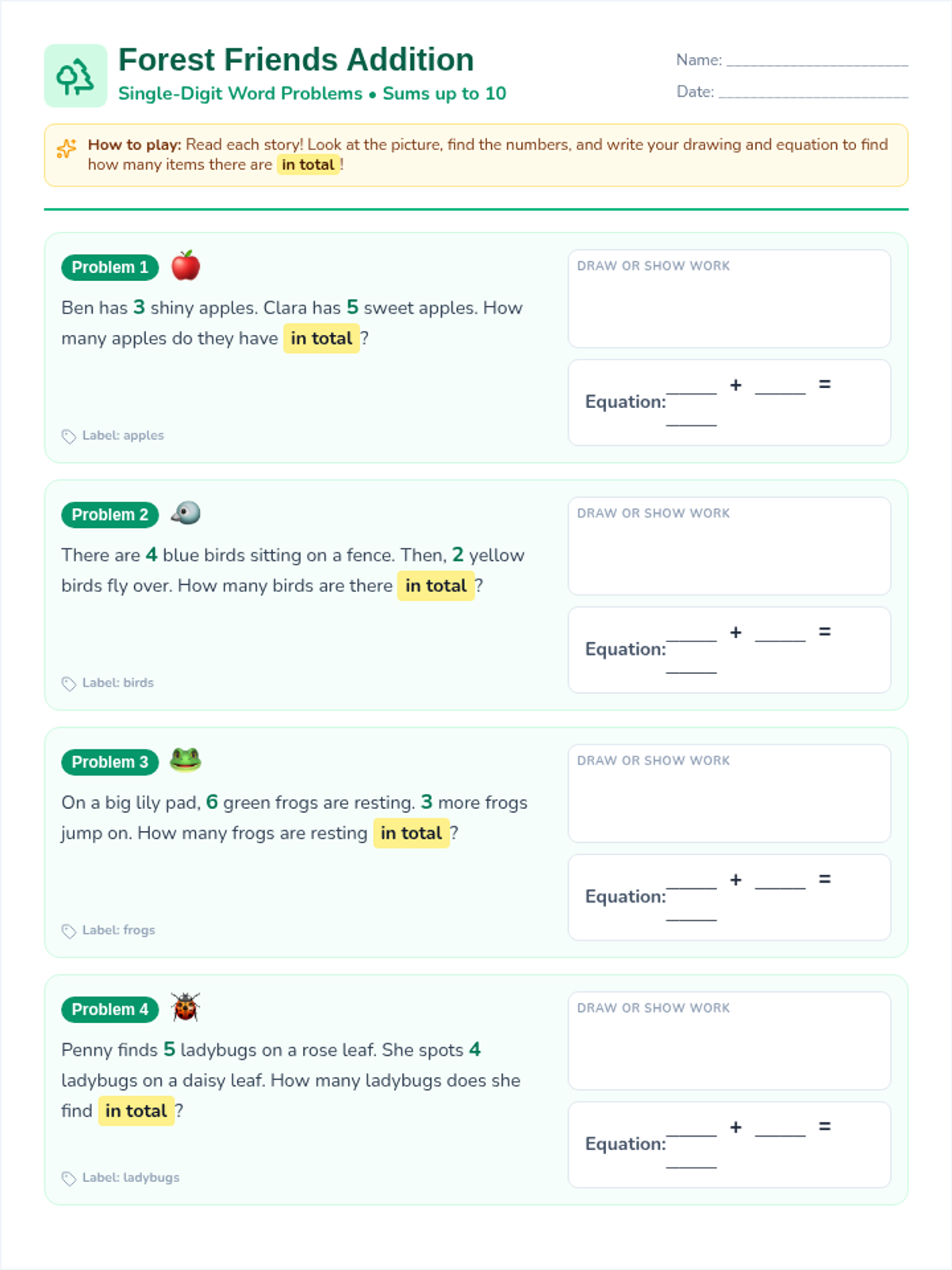
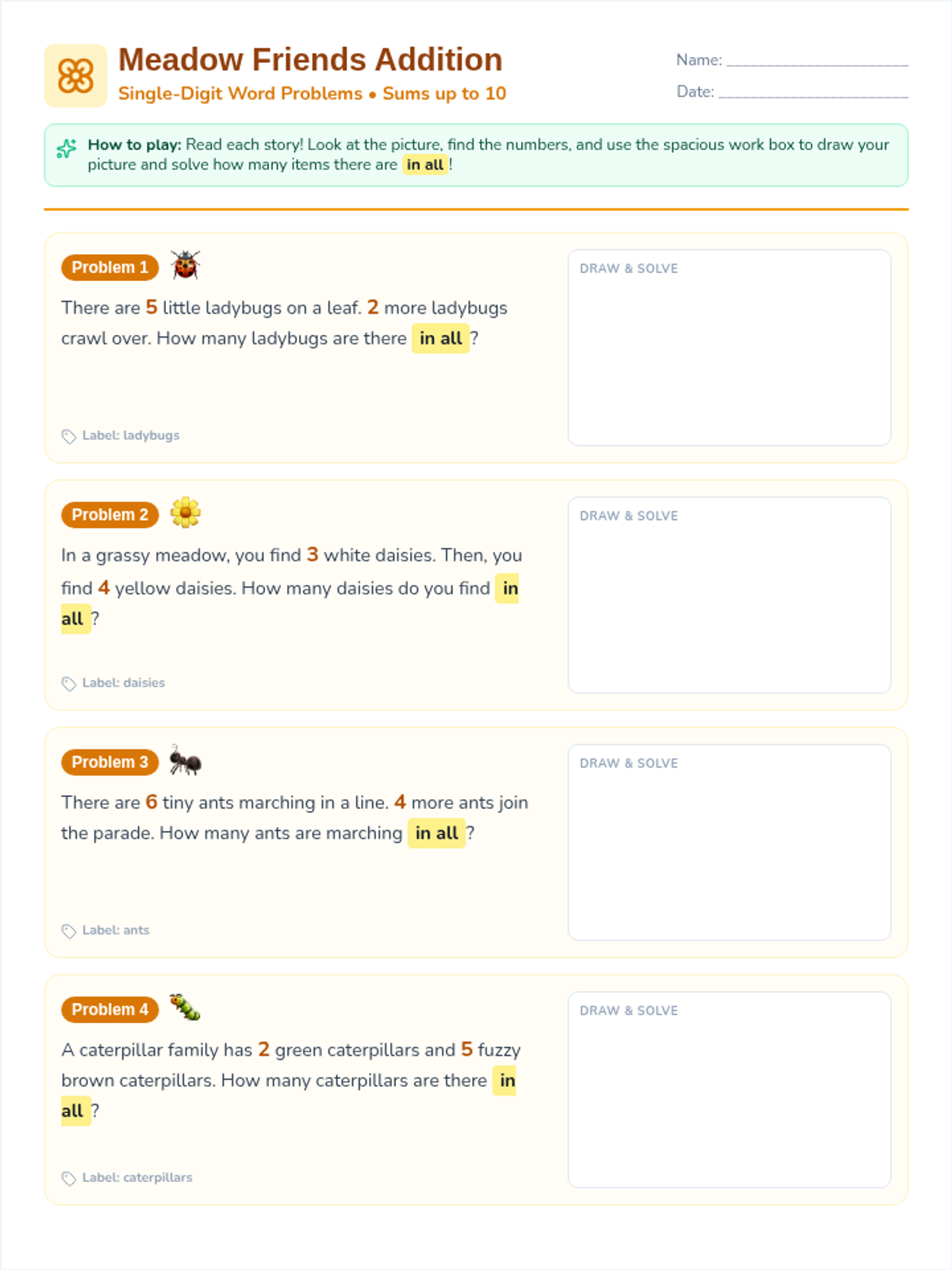
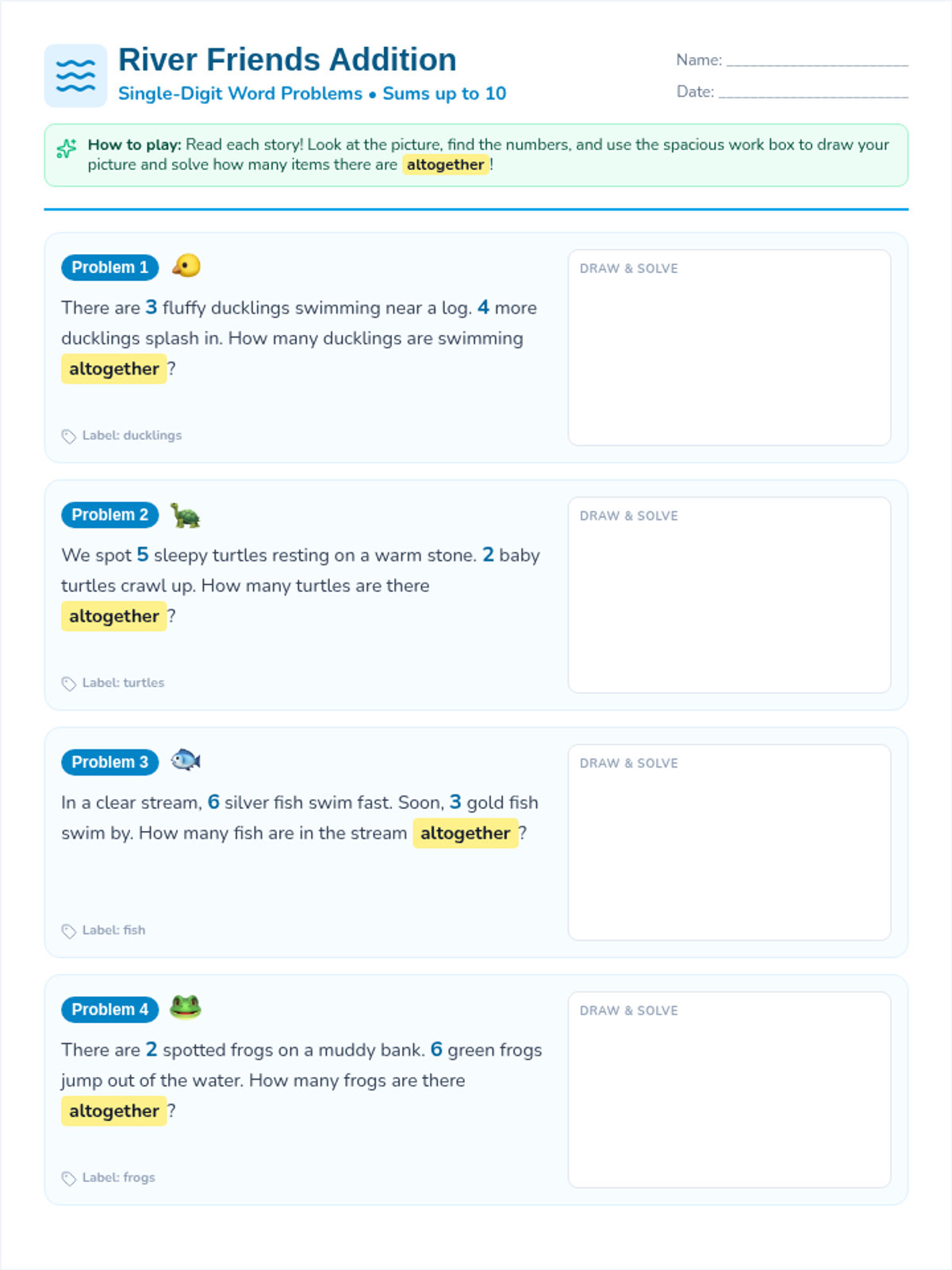
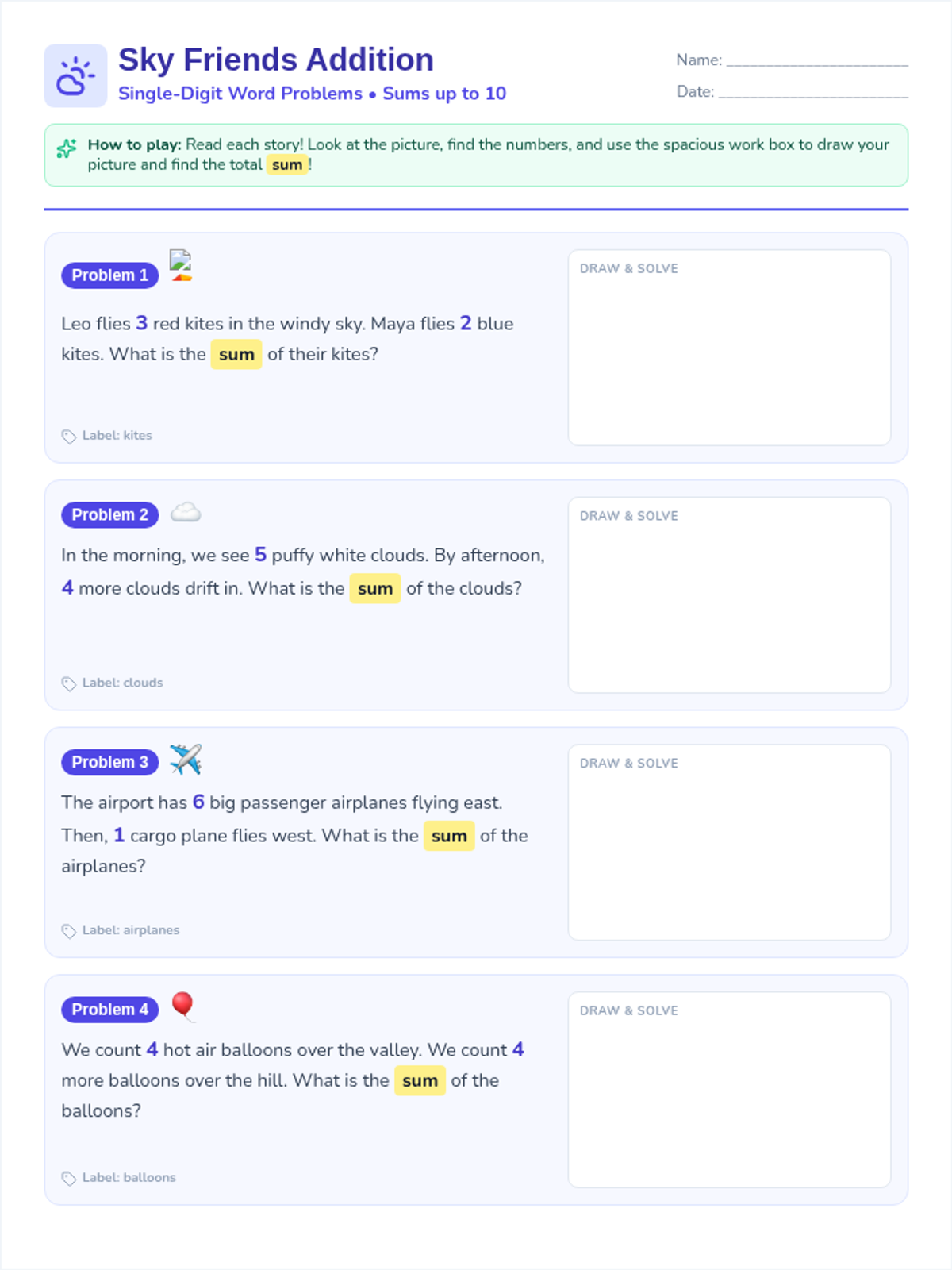
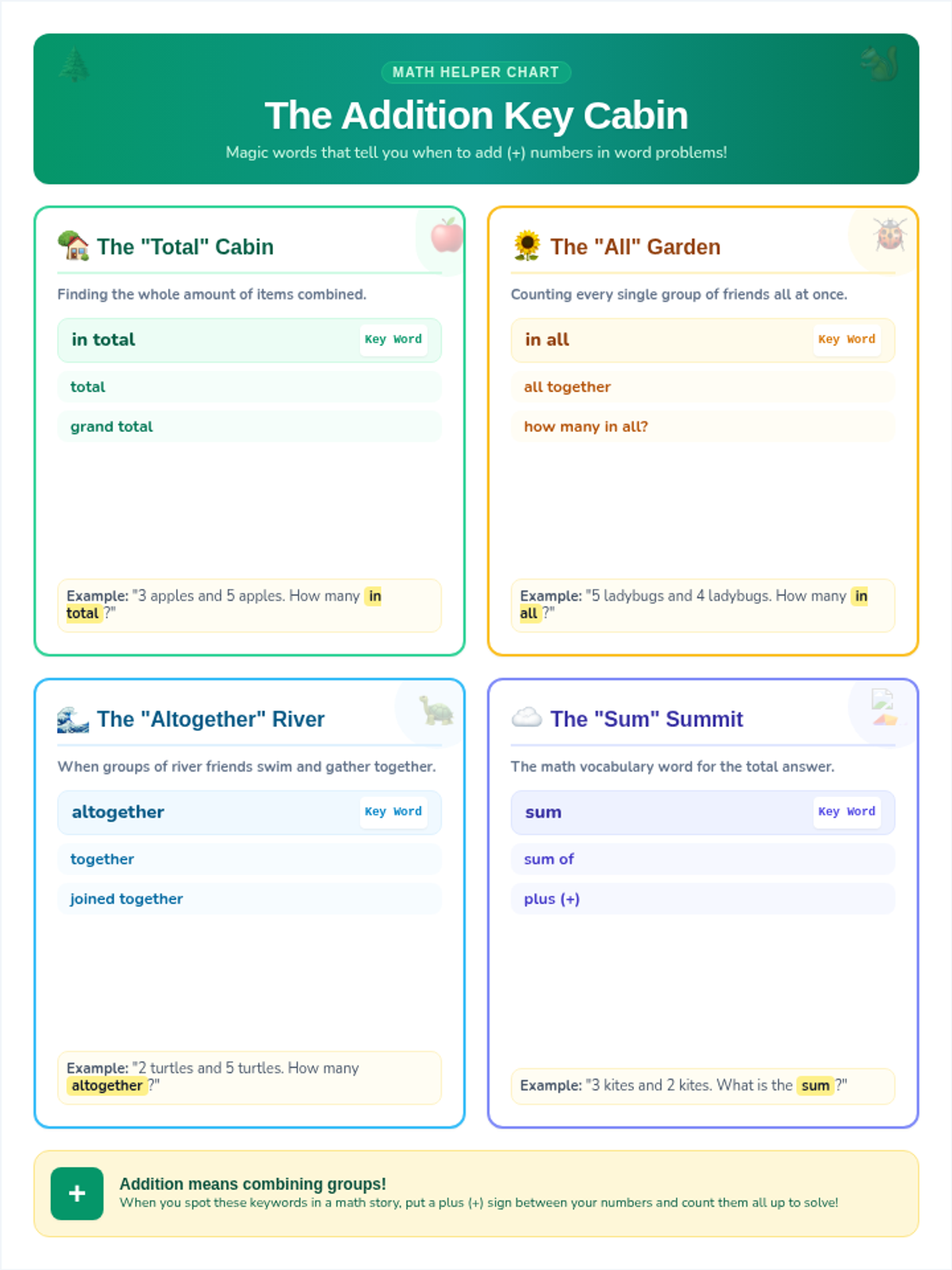
A foundational early-elementary lesson introducing single-digit addition word problems. Students use visual labels and highlighted keywords like 'in total' to parse and solve addition scenarios within 10, supported by spacious workspace grids.
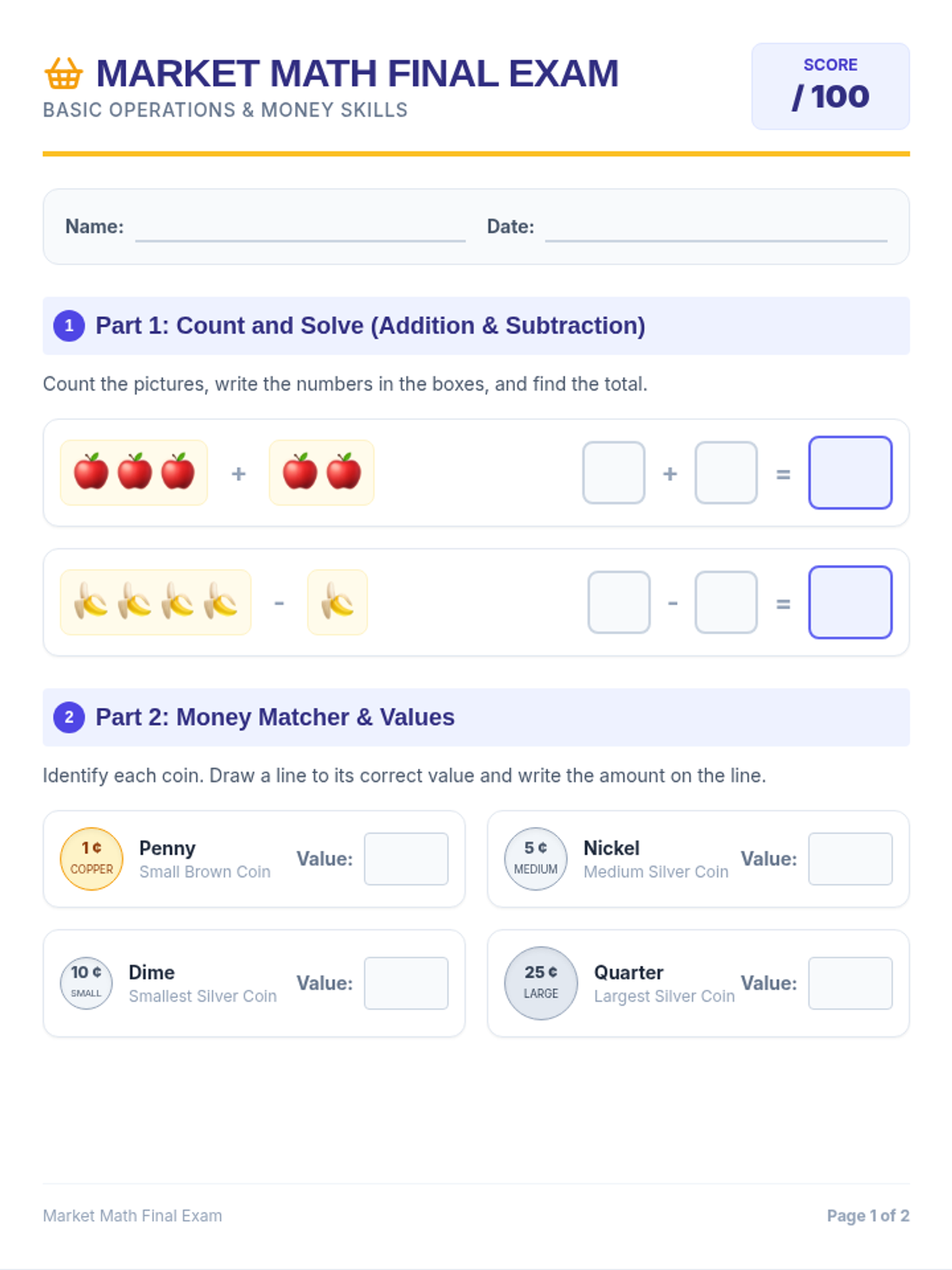
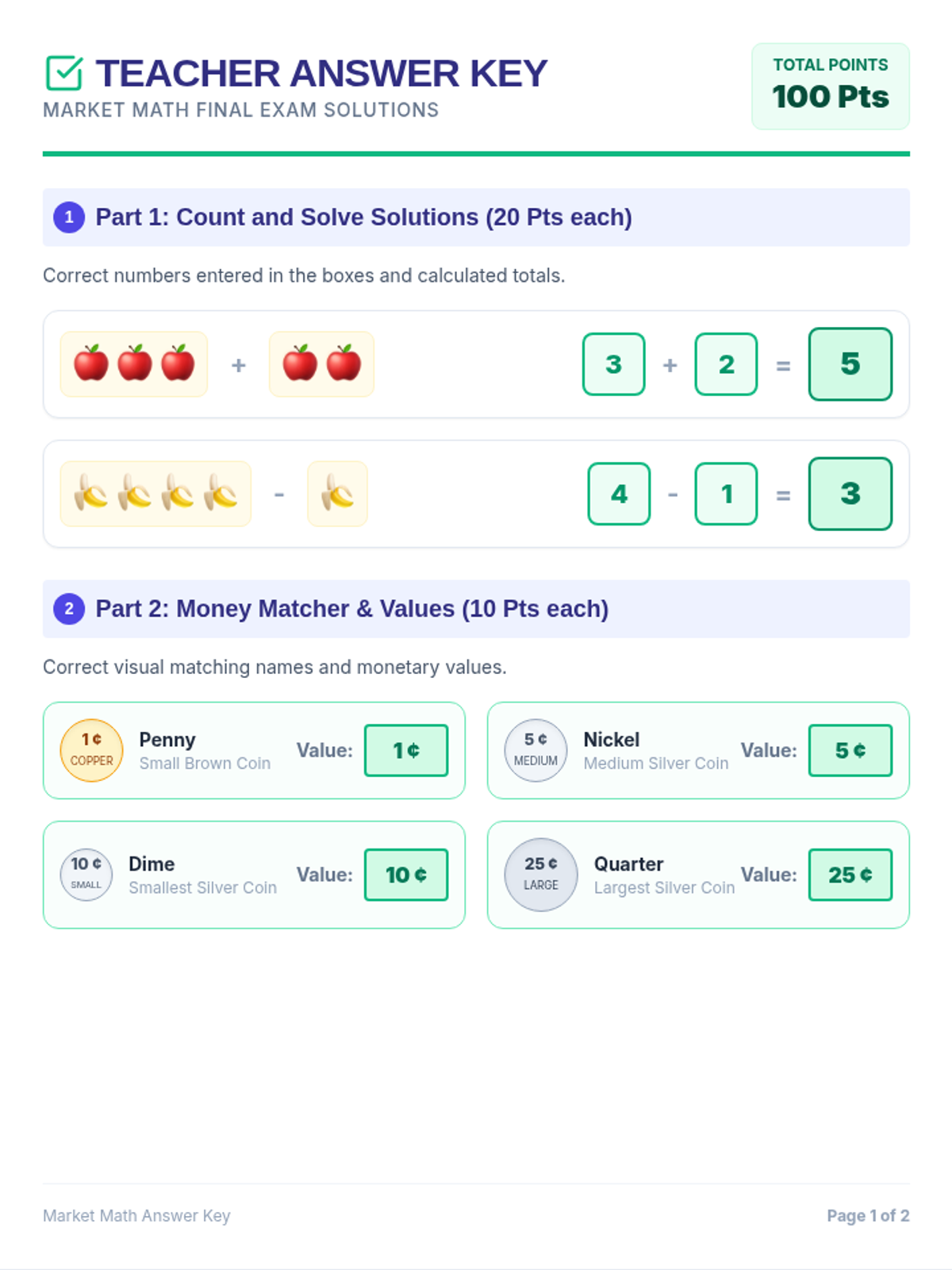
A comprehensive final exam lesson covering basic addition, subtraction, coin identification, and functional life skills grocery shopping math with visual support.
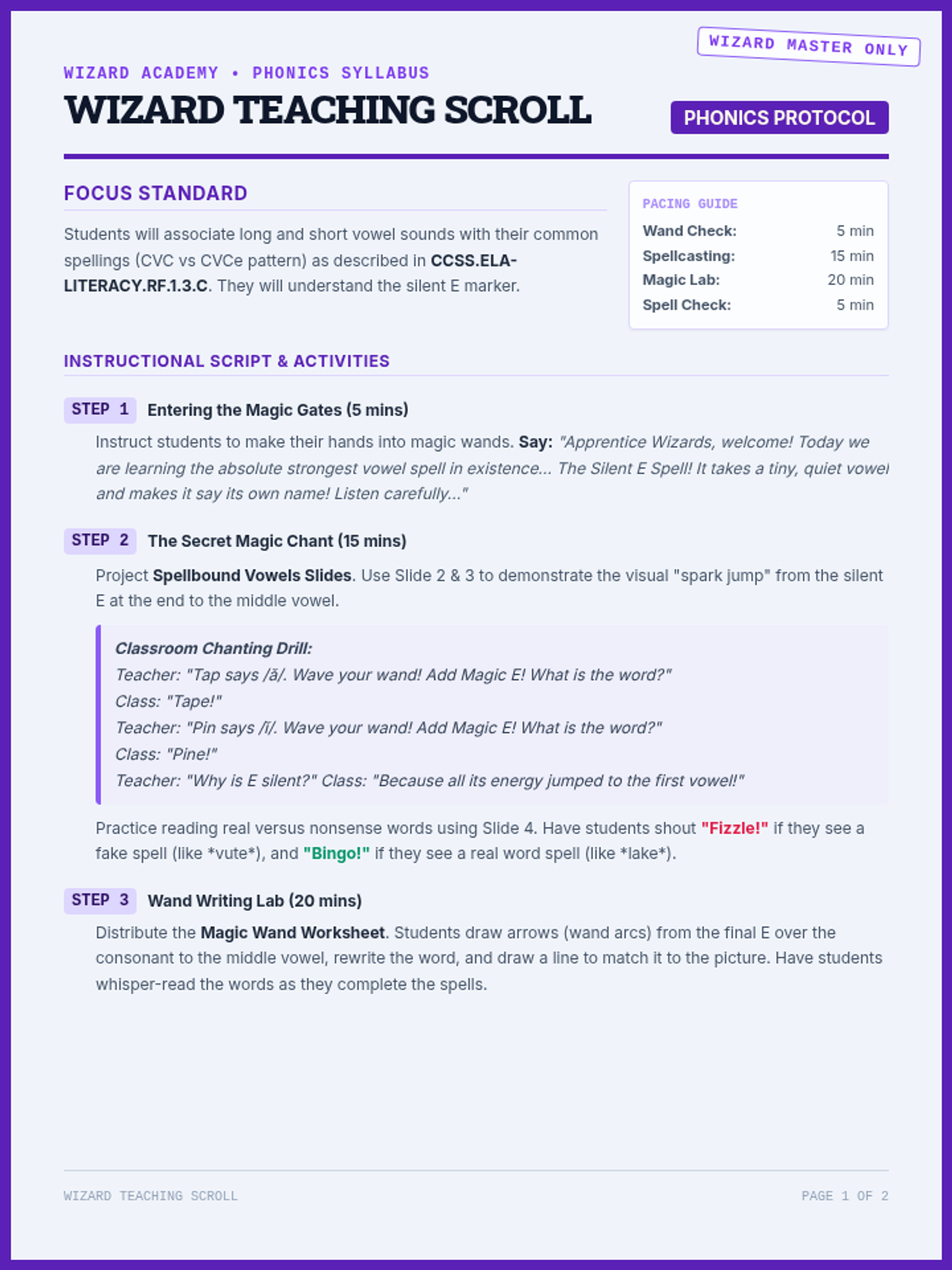
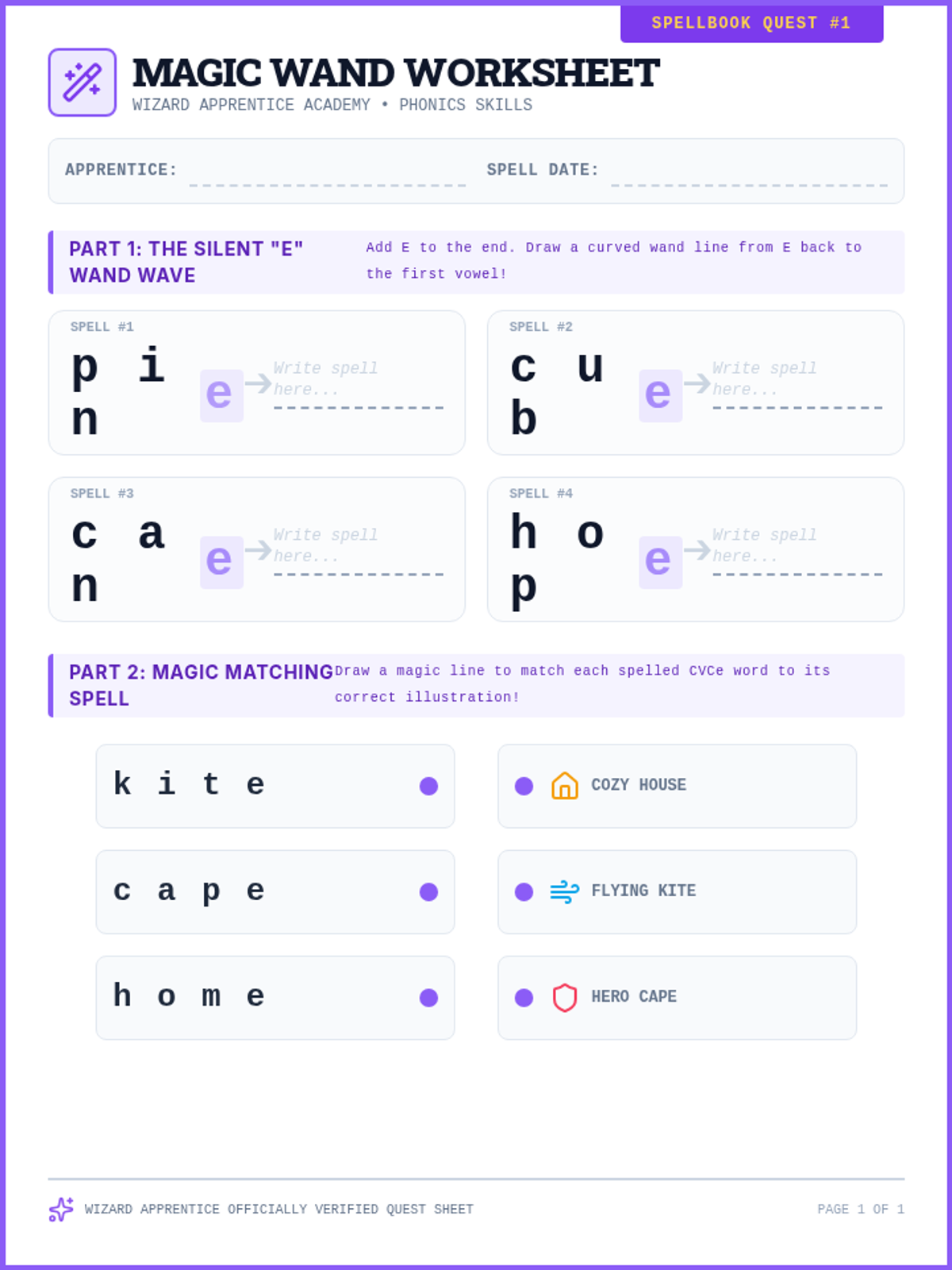
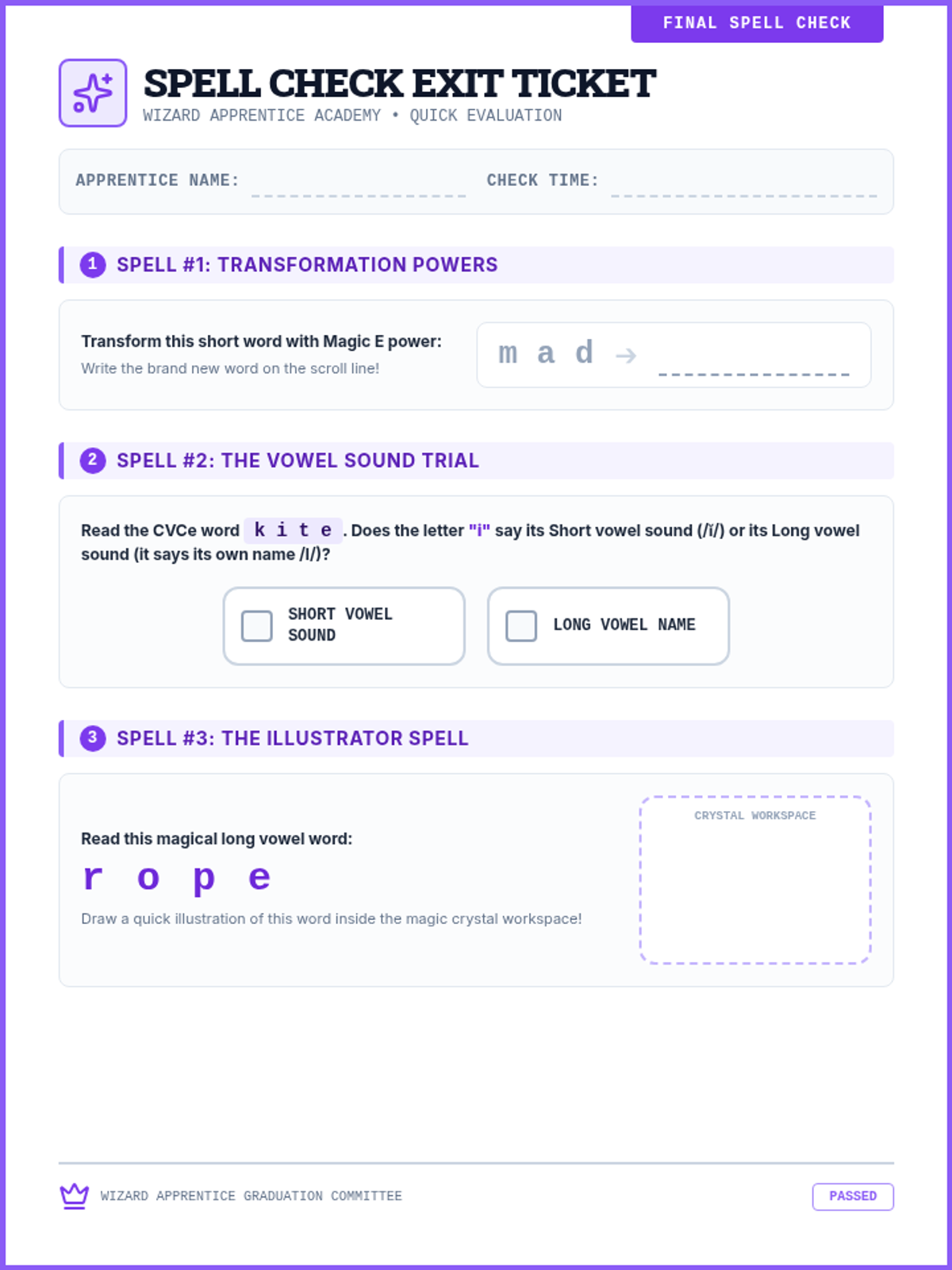
An enchanting, wizard-themed ELA phonics lesson where first graders become 'Wizard Apprentices' to master the Silent E rule. Students learn how Silent E waves its magic wand to make short vowels say their own name, converting simple CV-words into CVCe-words.
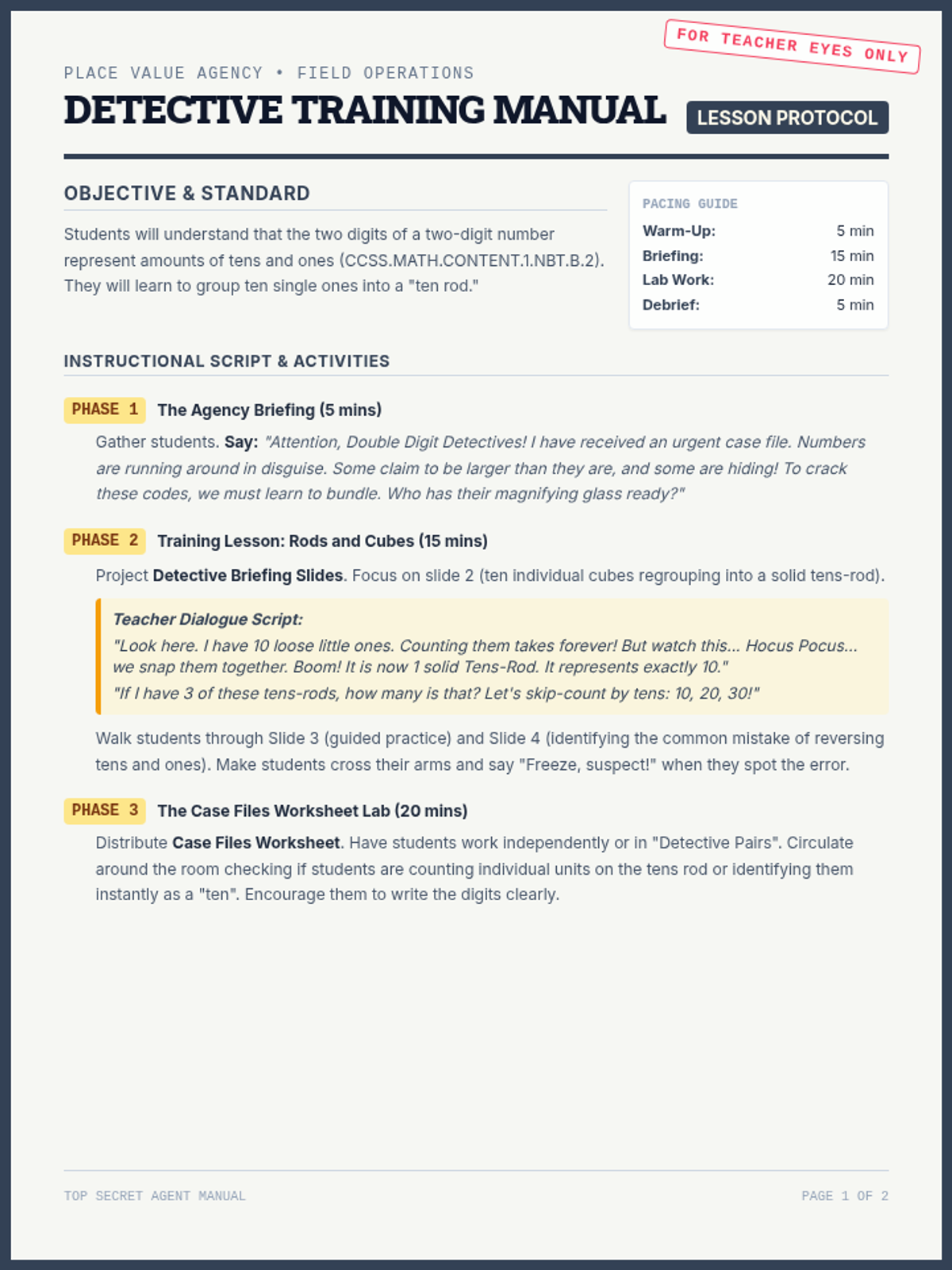
An engaging, detective-themed math lesson where first graders become 'Double Digit Detectives' to master place value (tens and ones). Students learn to bundle ones into tens, read base-ten representations, and solve place value cases using their detective toolkits.