A comprehensive lesson on music tempo covering Italian terminology, metronome markings, and practical application to musical scores. Students will learn to identify and apply various speeds to music.
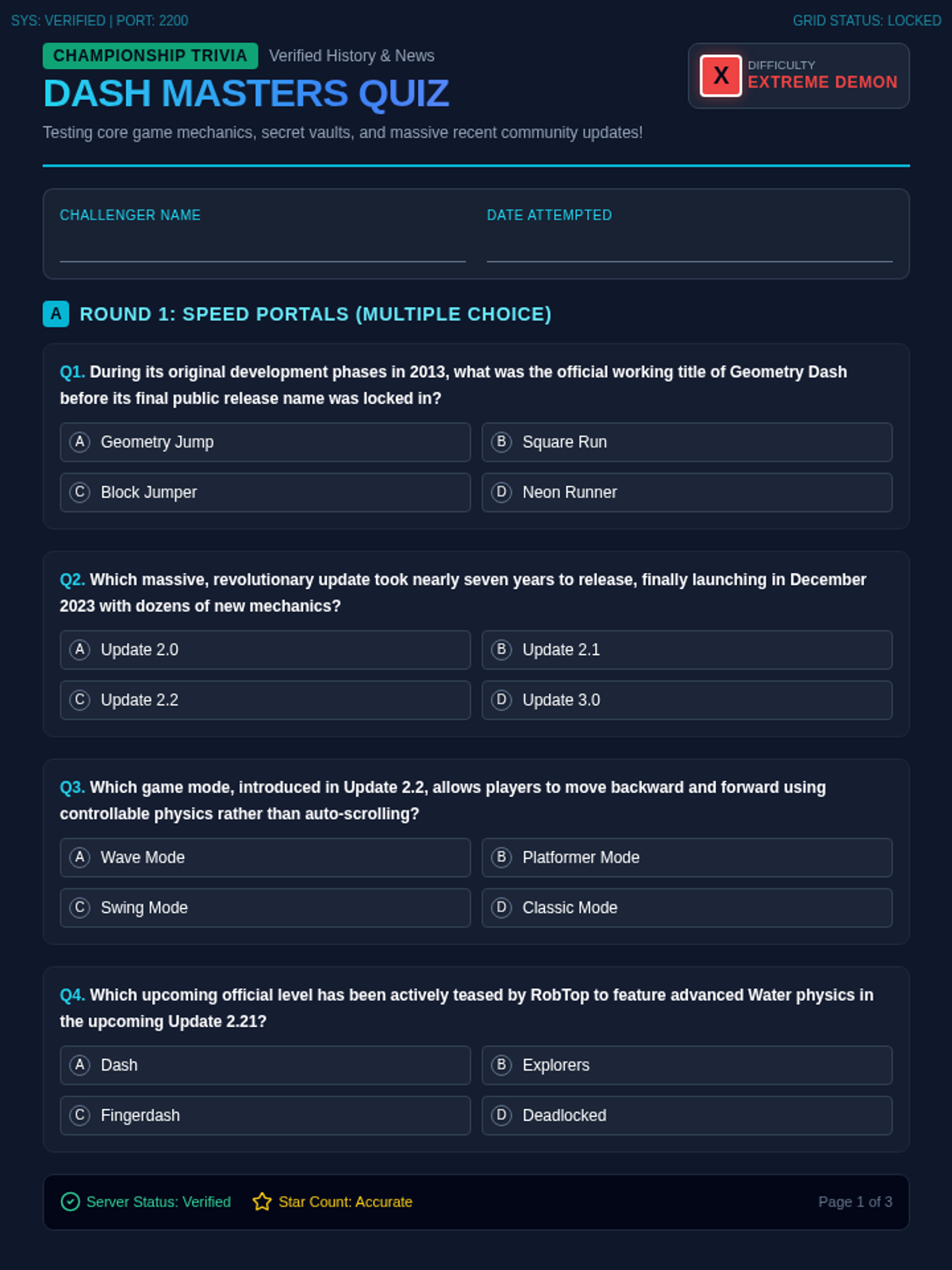
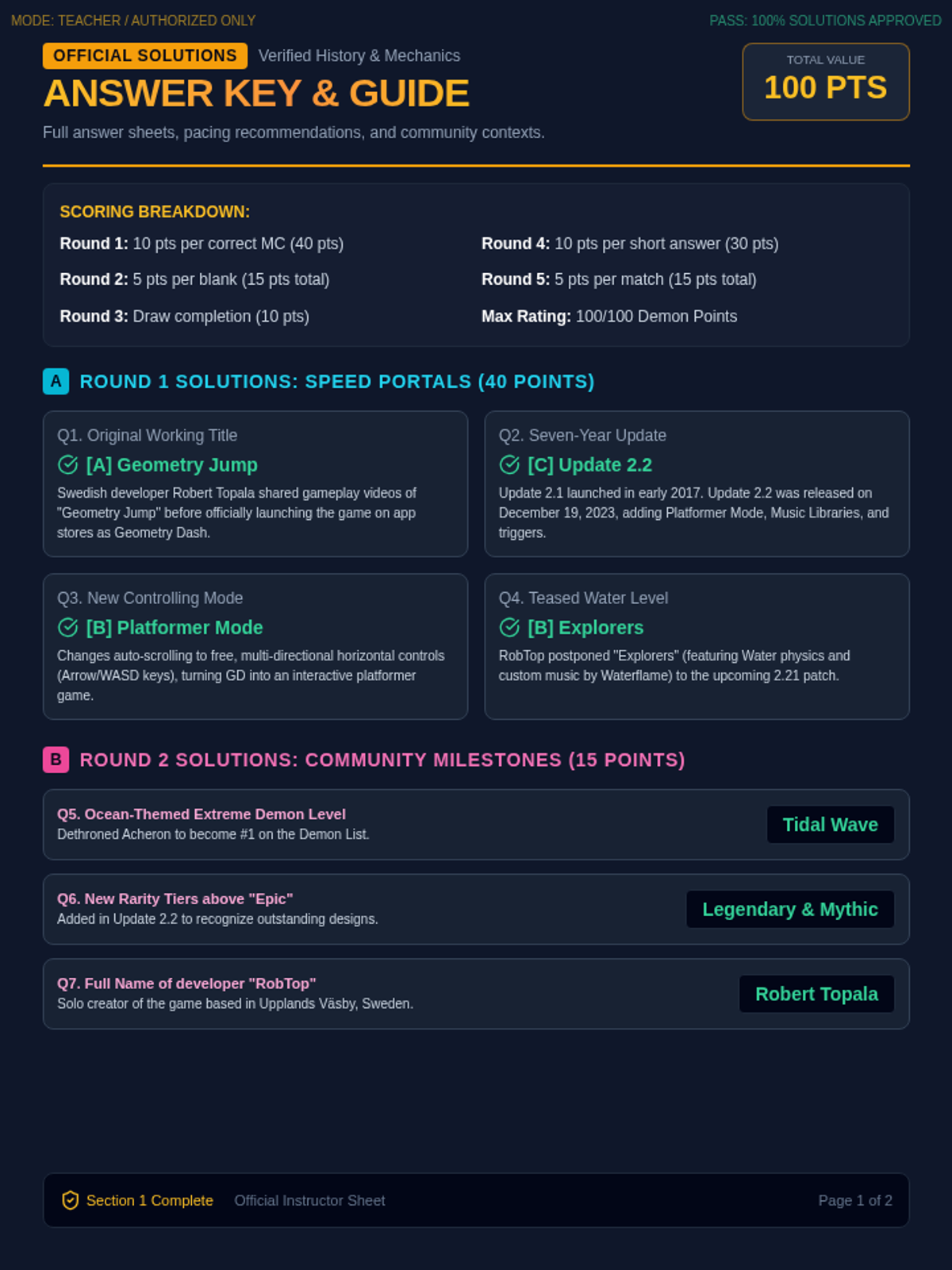
A fun-filled, competitive trivia challenge centered around the history, mechanics, and recent community updates of the sensation Geometry Dash. Perfect for gaming clubs, brain breaks, or student-led activities.
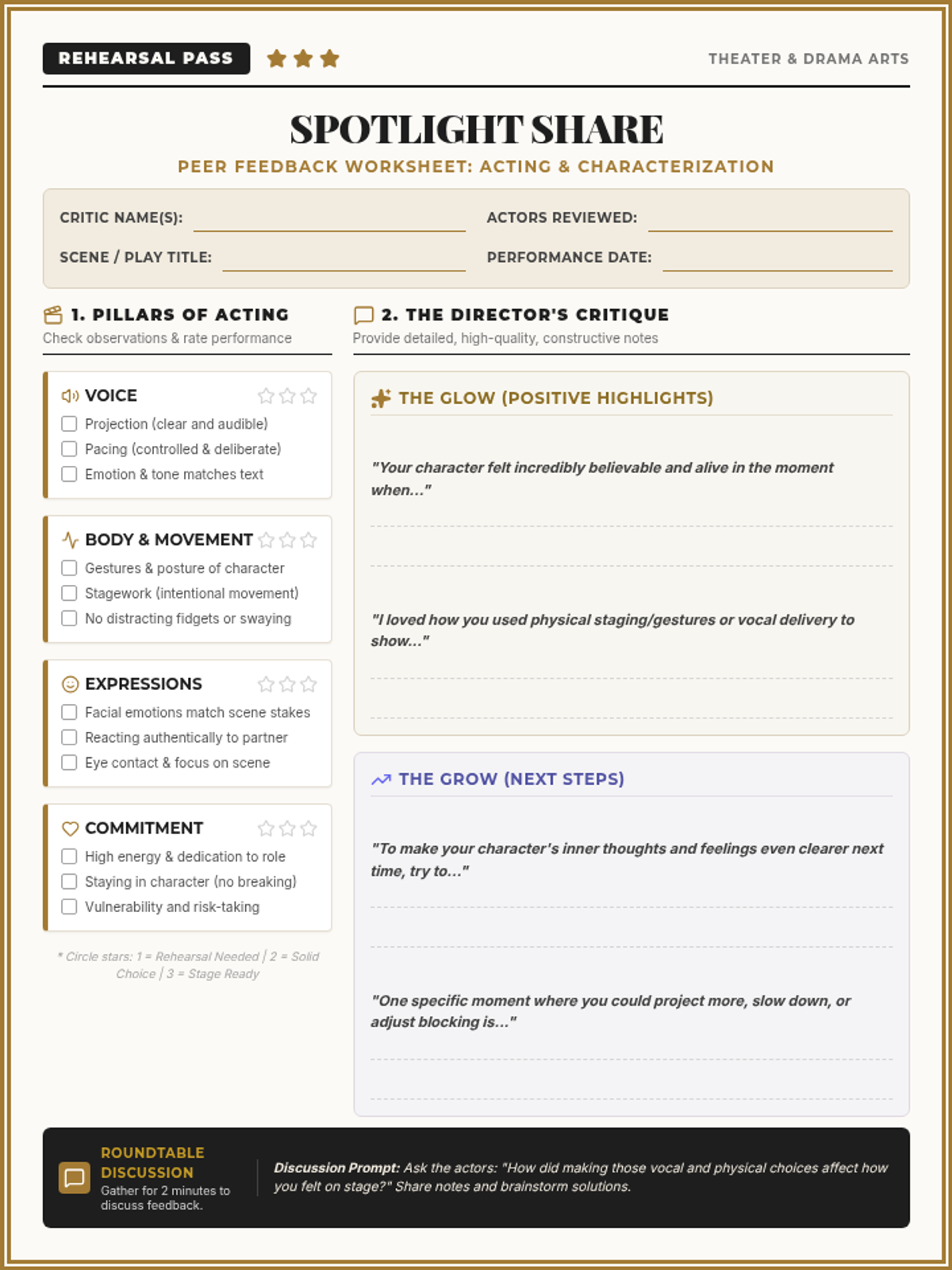
A lesson centered on scene work, characterization, and dramatic performance. Students analyze characters, rehearse scripts, and engage in peer feedback to elevate their physical and vocal choices before final performance.
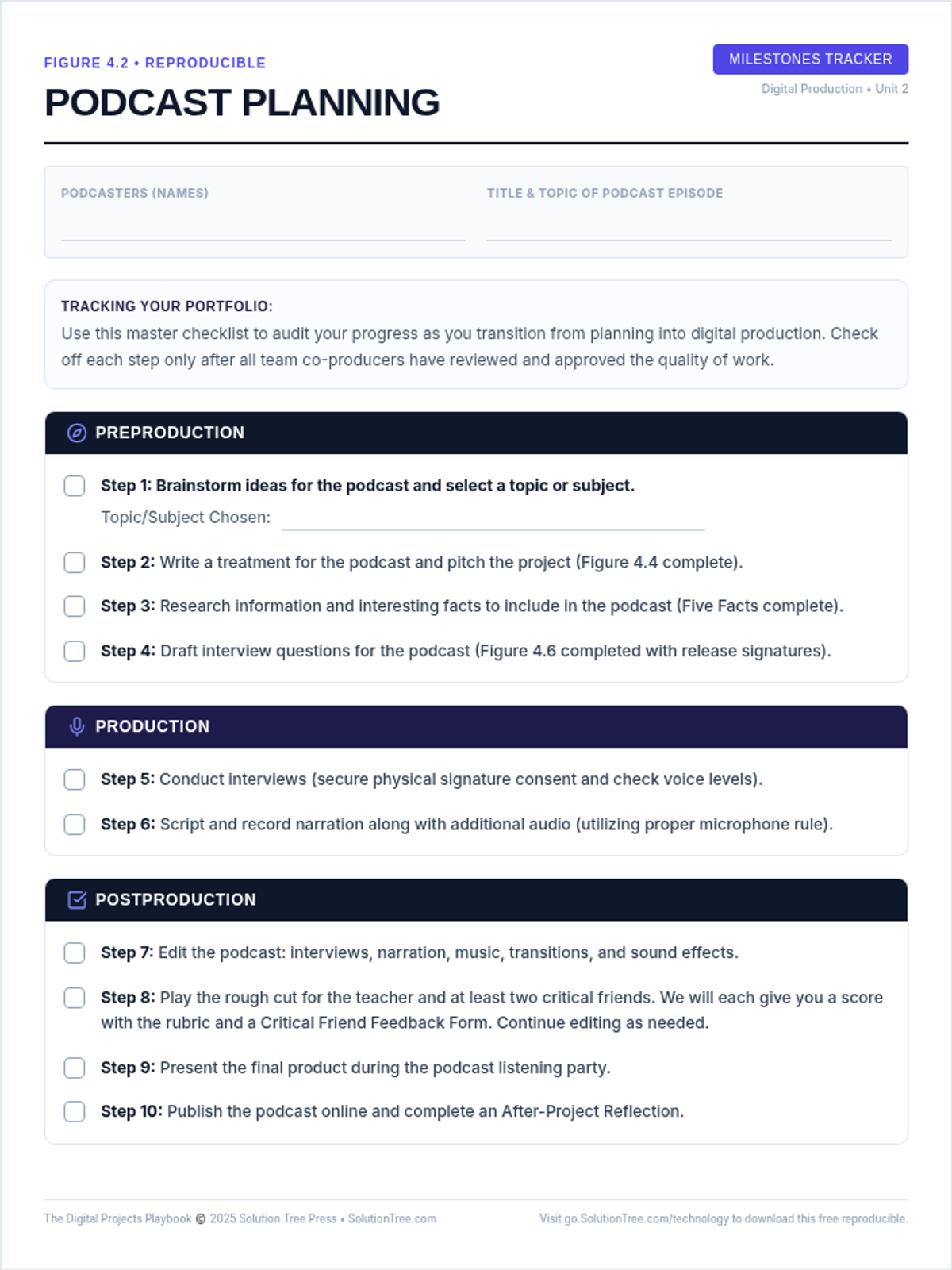
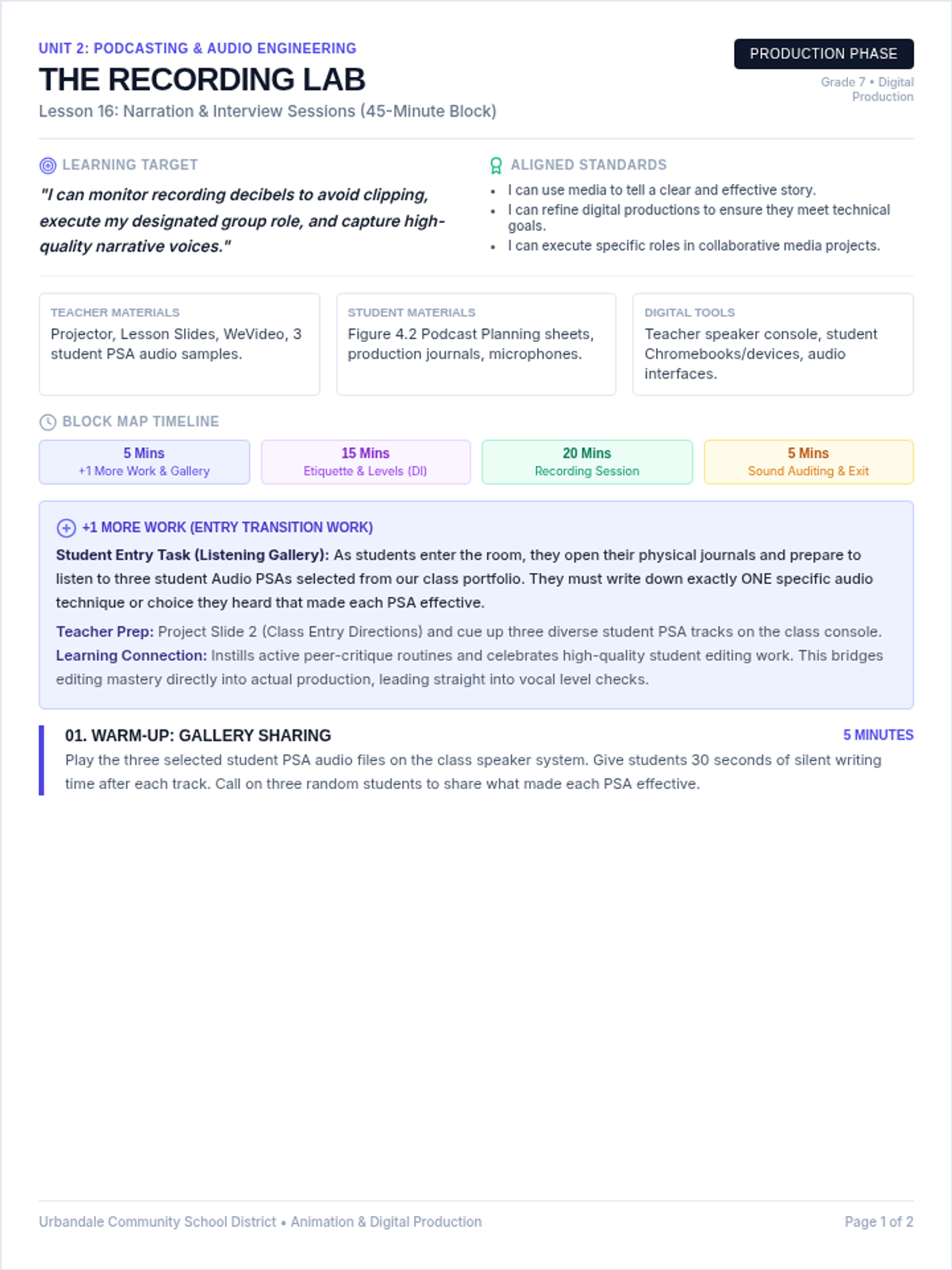
Students transition from planning to production. They explore recording etiquette, monitor input decibels to avoid 'The Red Zone' clipping, and conduct interviews and narration recordings following Figure 4.2 Steps 5 and 6.
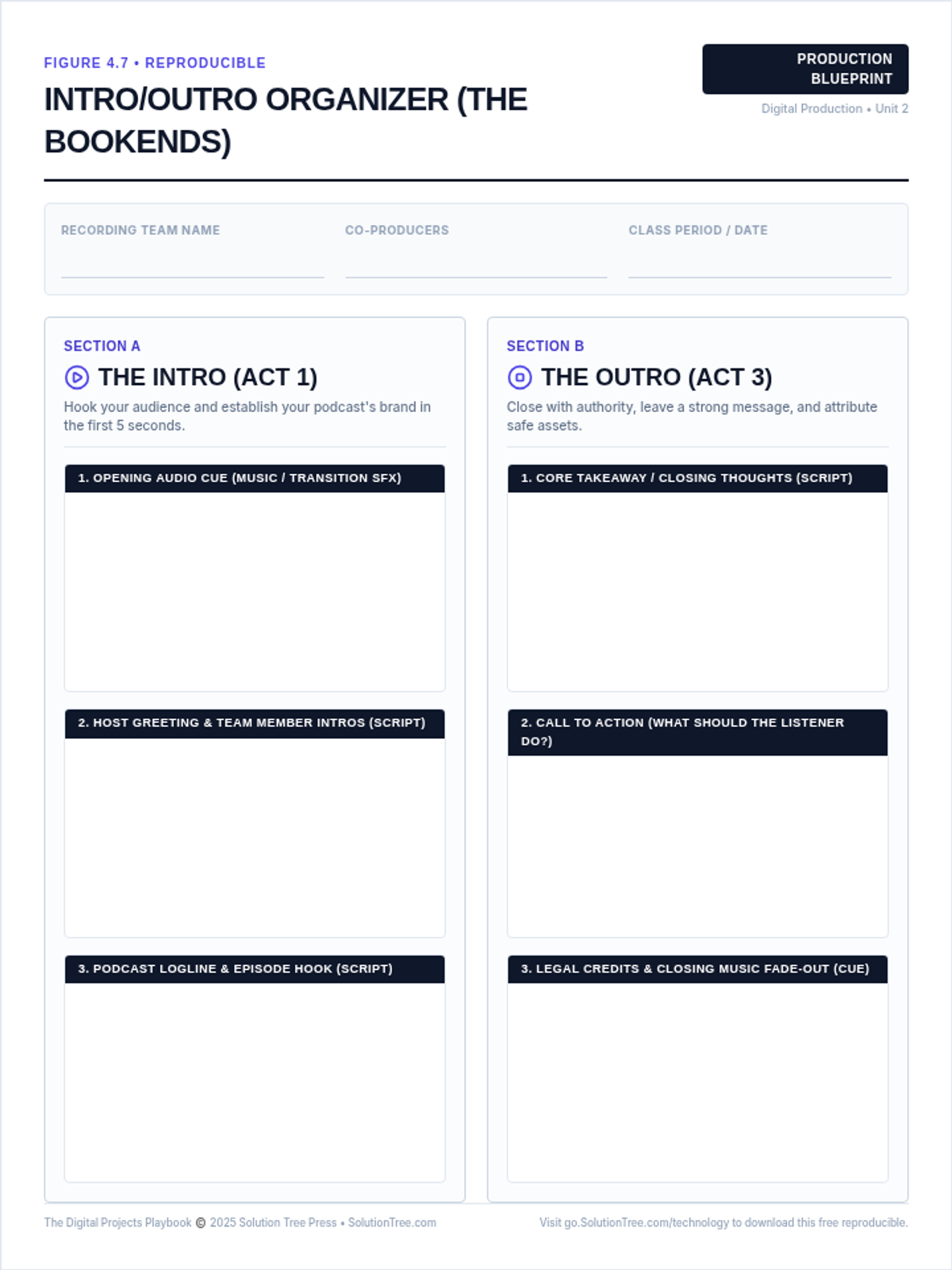
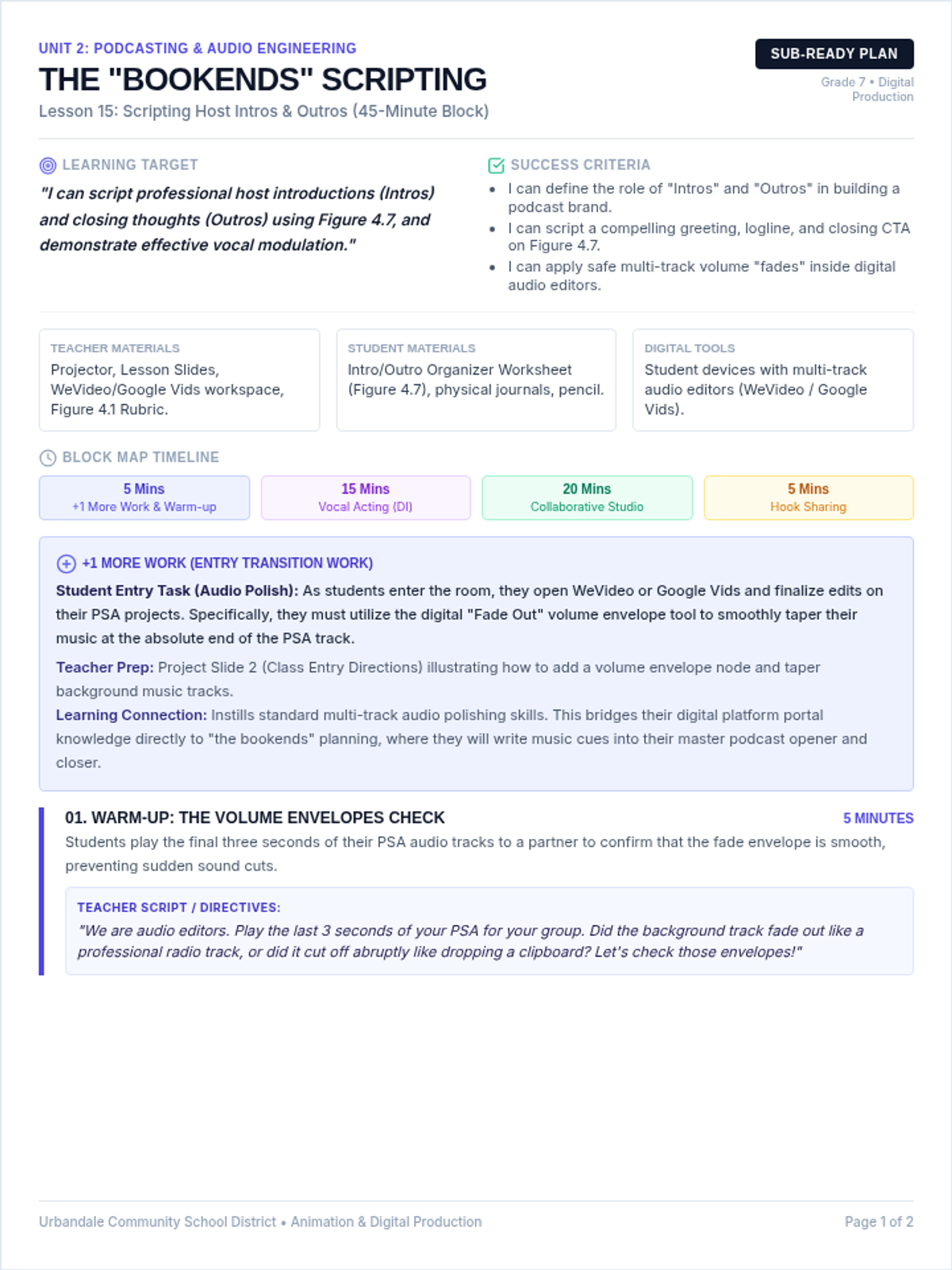
Students script their podcast host introductions (Intros) and closing thoughts (Outros) using Figure 4.7 (Intro/Outro Organizer). Teachers model vocal modulation and review Figure 4.1 Rubric standards.
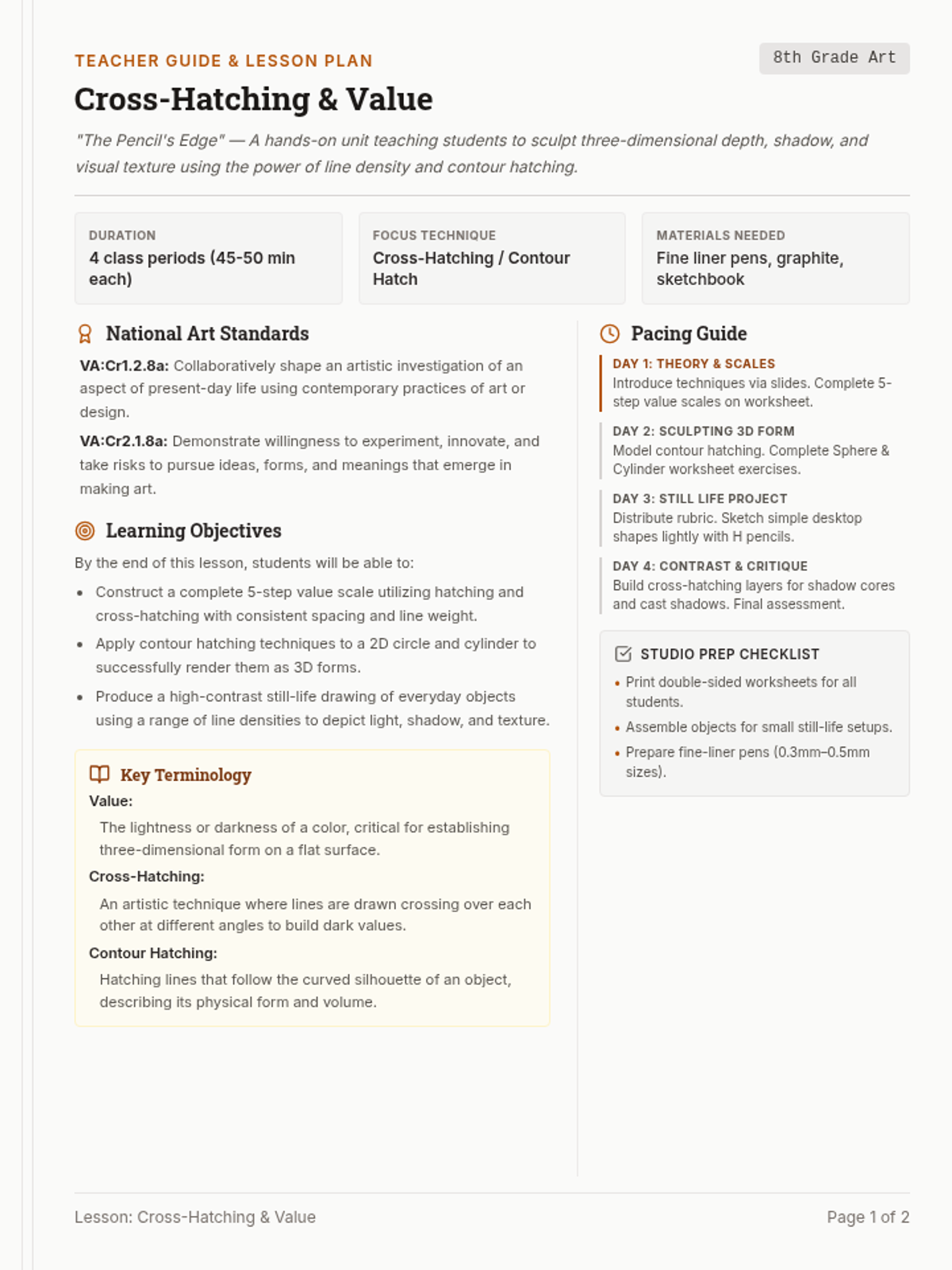
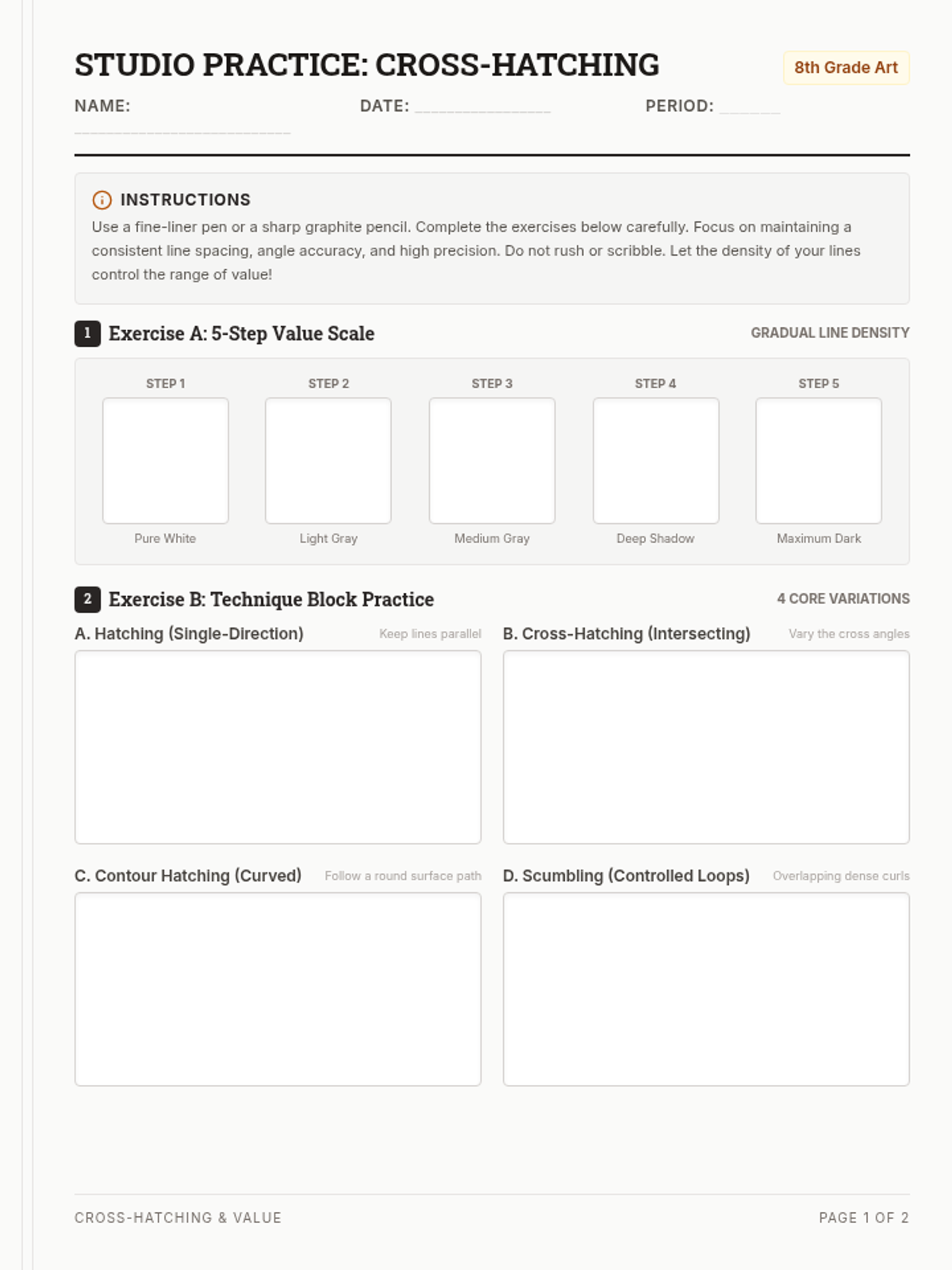
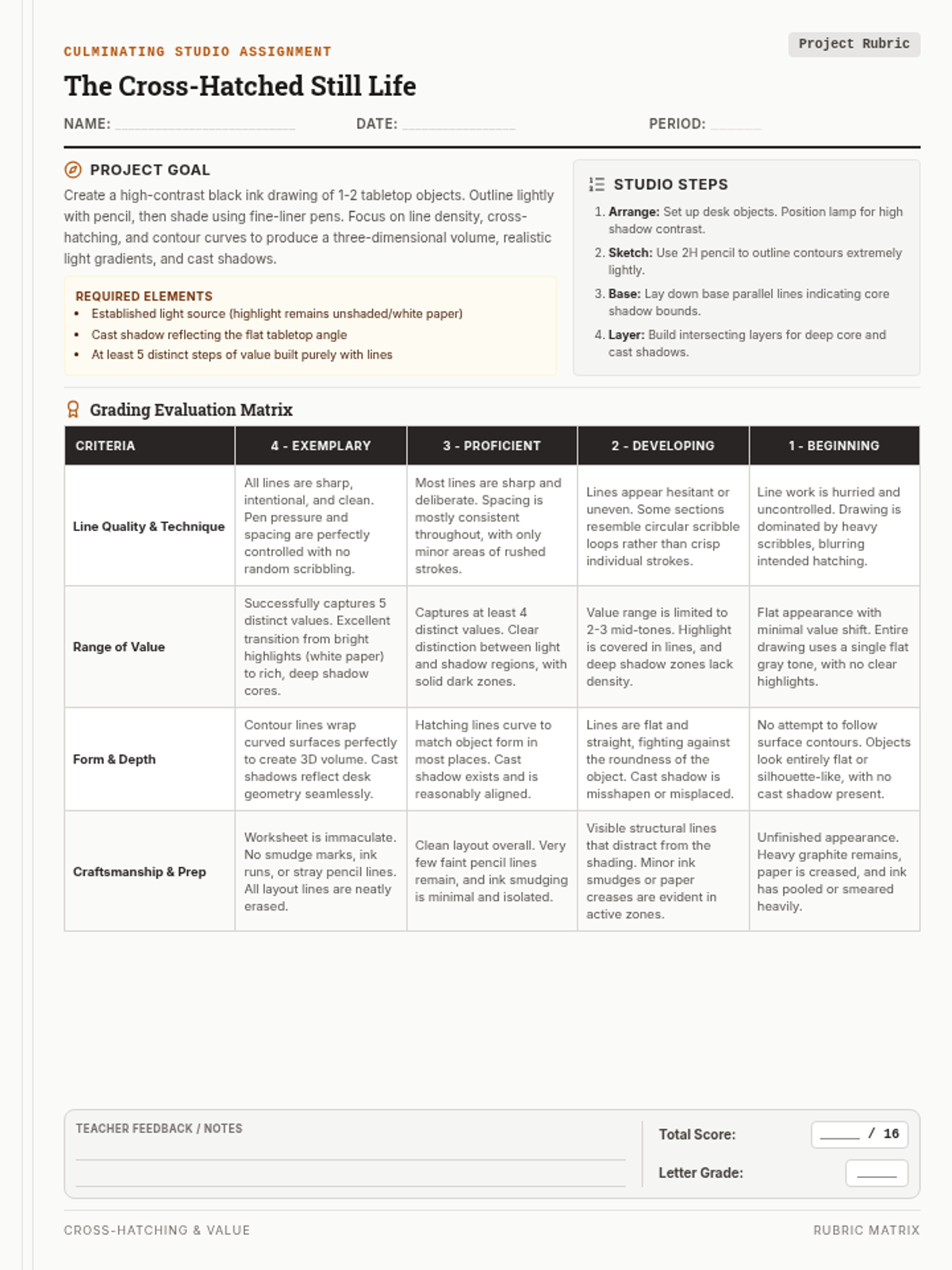
An introductory 8th-grade studio art lesson focused on cross-hatching and value. Students learn how to control line density, spacing, and layers to create a five-step value scale, apply contour hatching to 3D forms, and complete a still-life project evaluated with a comprehensive rubric.
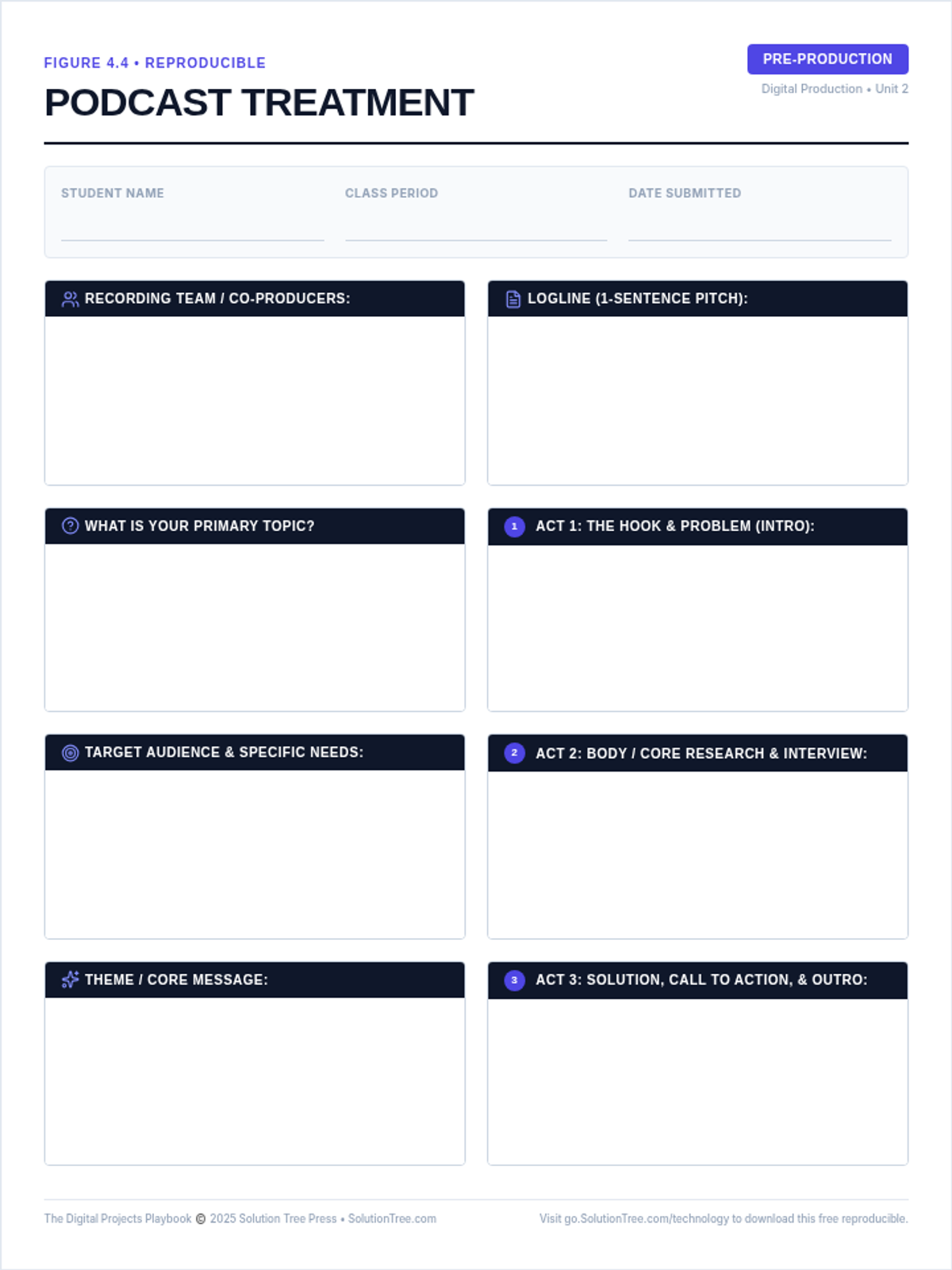
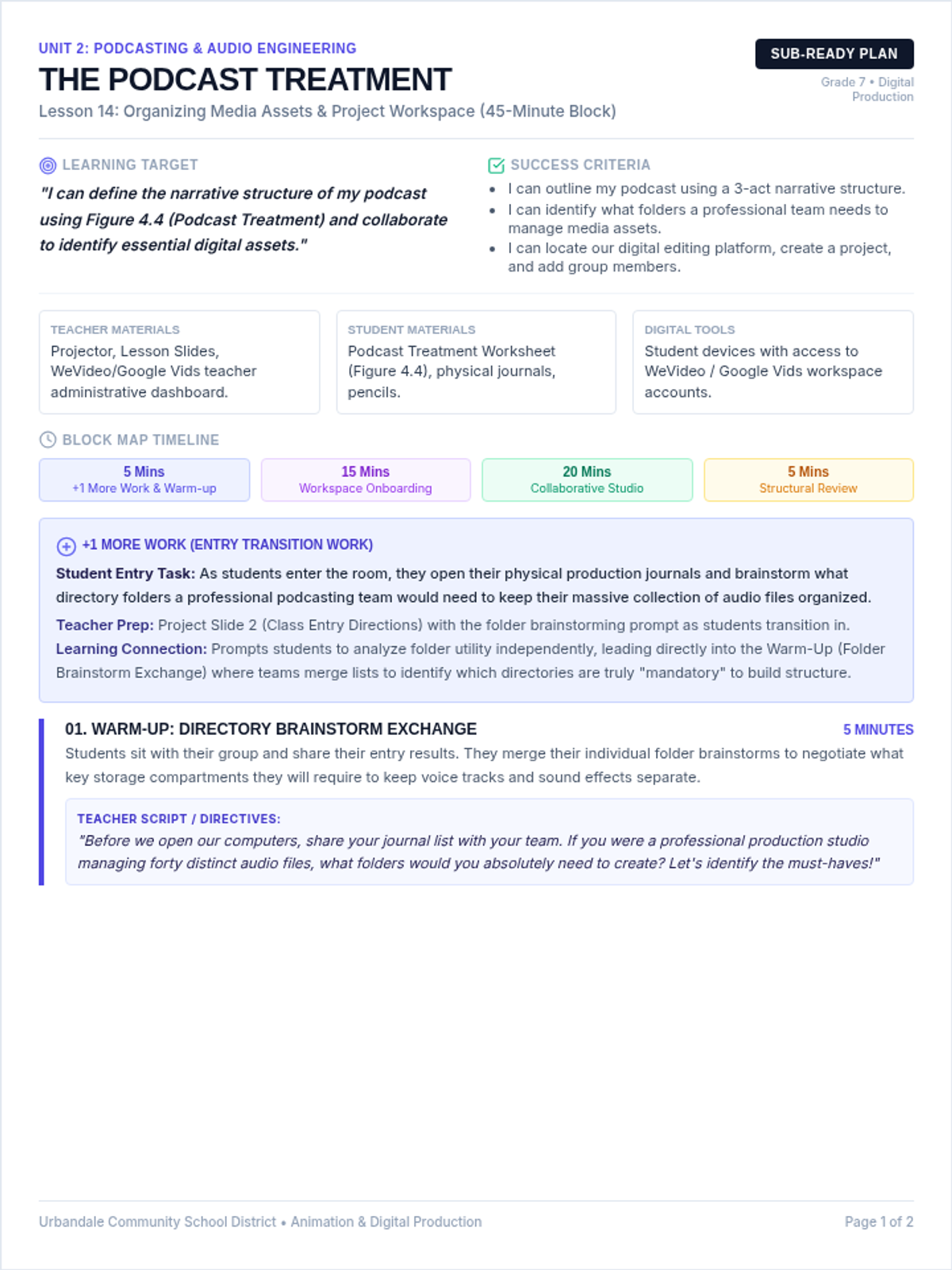
Students define the narrative structure of their podcast using Figure 4.4 (Podcast Treatment), organizing their show into a three-act structure. Teachers introduce WeVideo/Google Vids workspace setup and establish asset organization expectations.
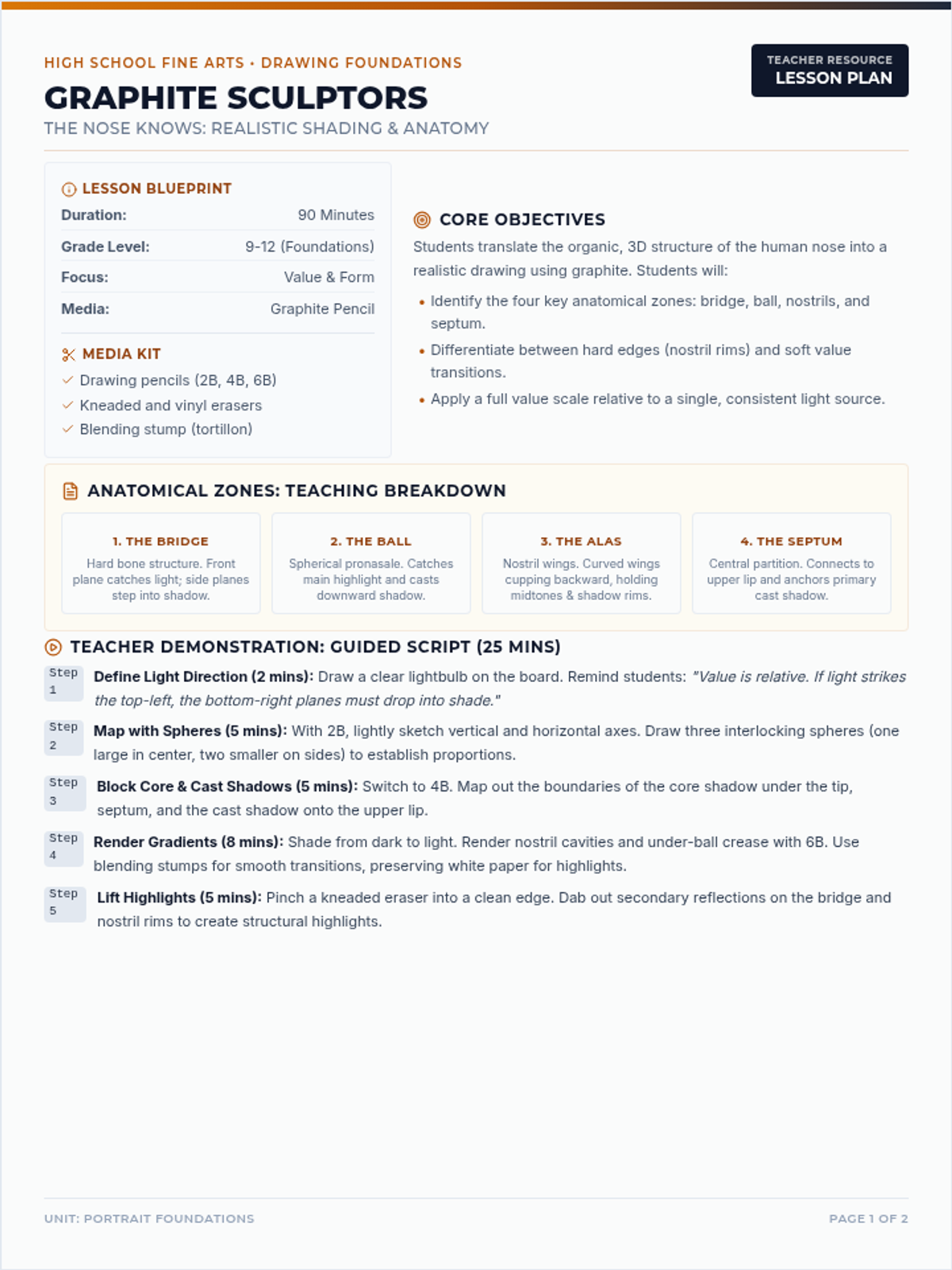
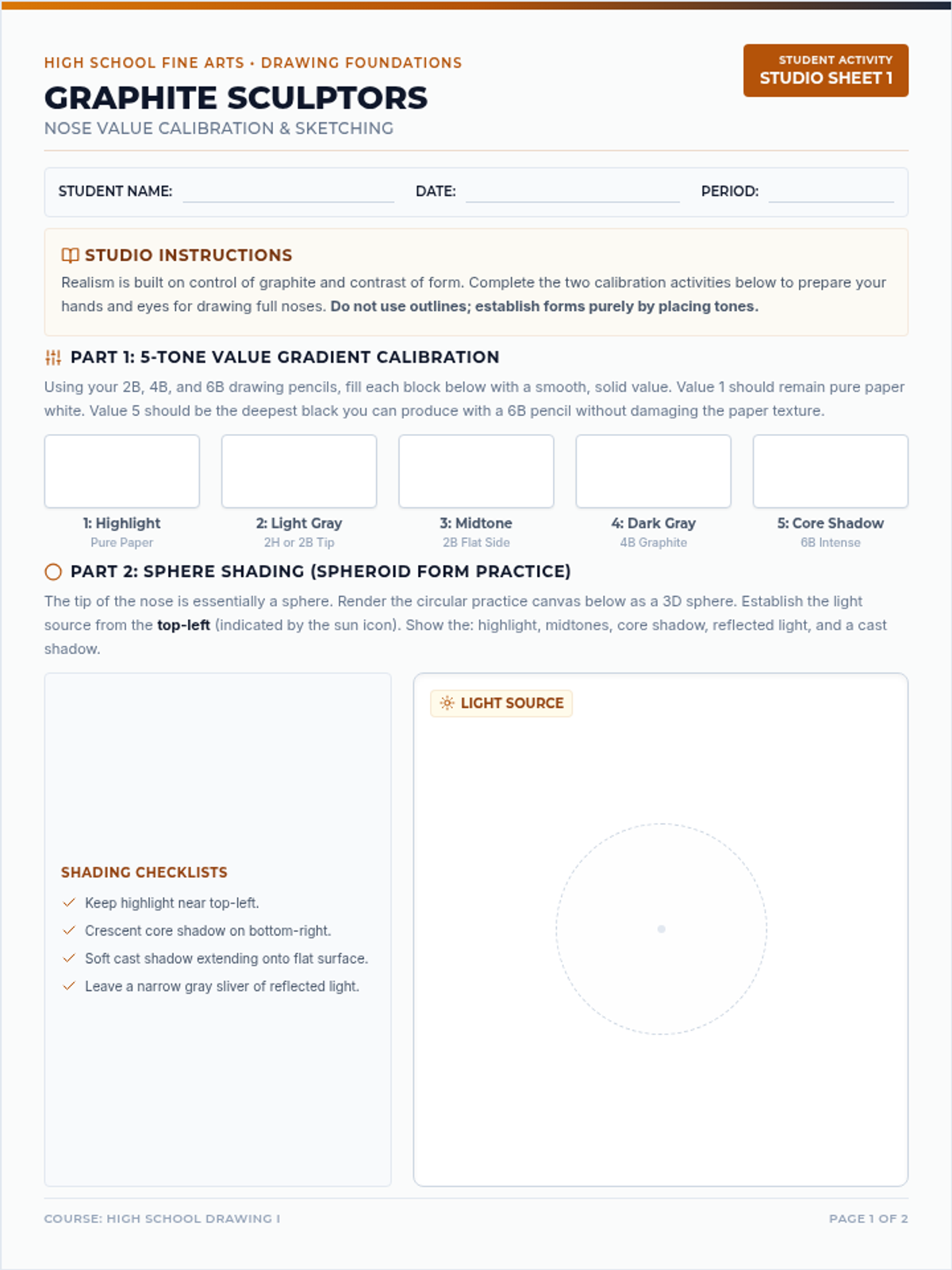
A foundational high school art lesson focusing on realistic value shading to draw three-dimensional noses. Students learn anatomical structures, light behavior, and graphite techniques to render form, highlights, and core shadows.
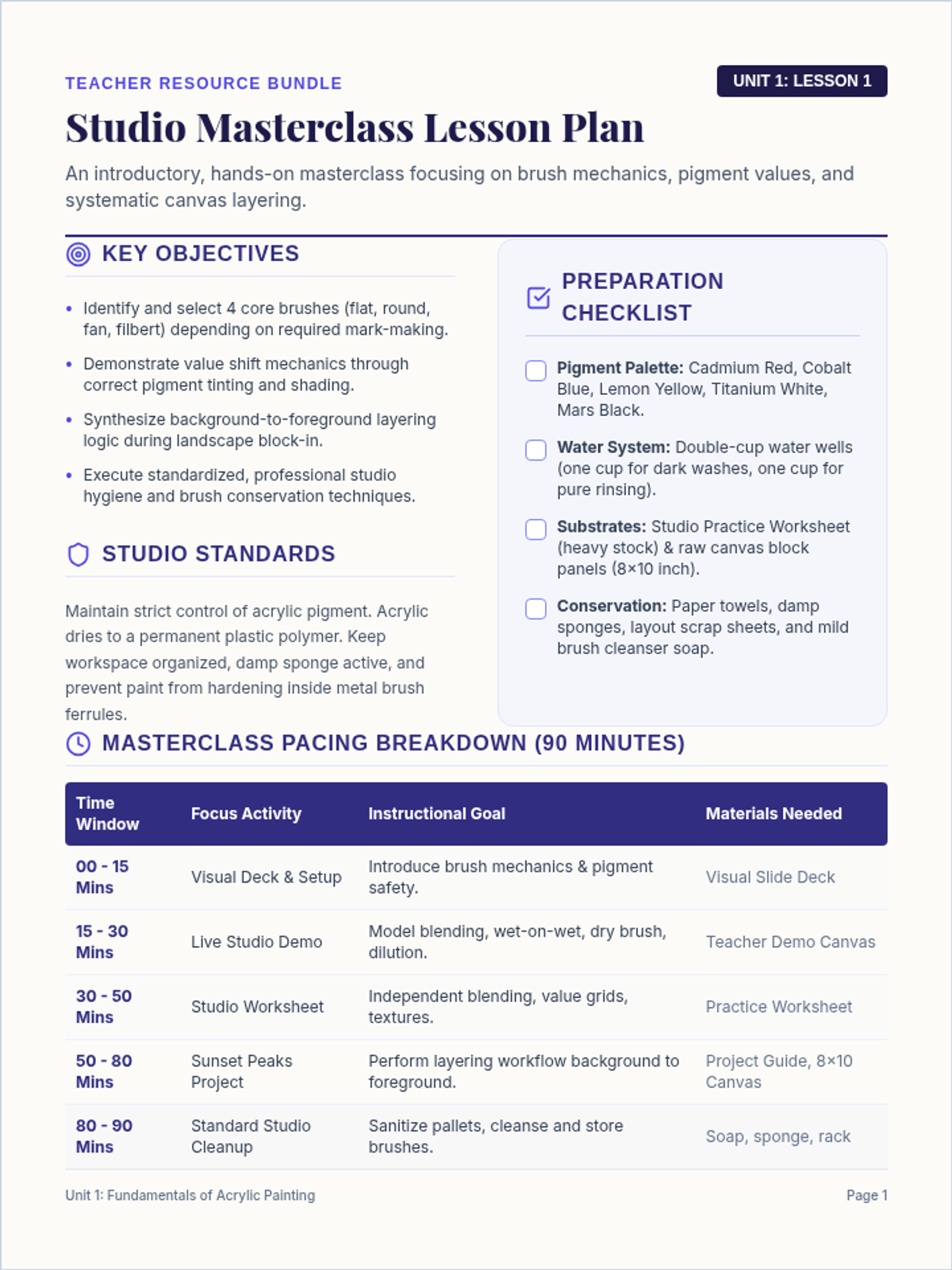
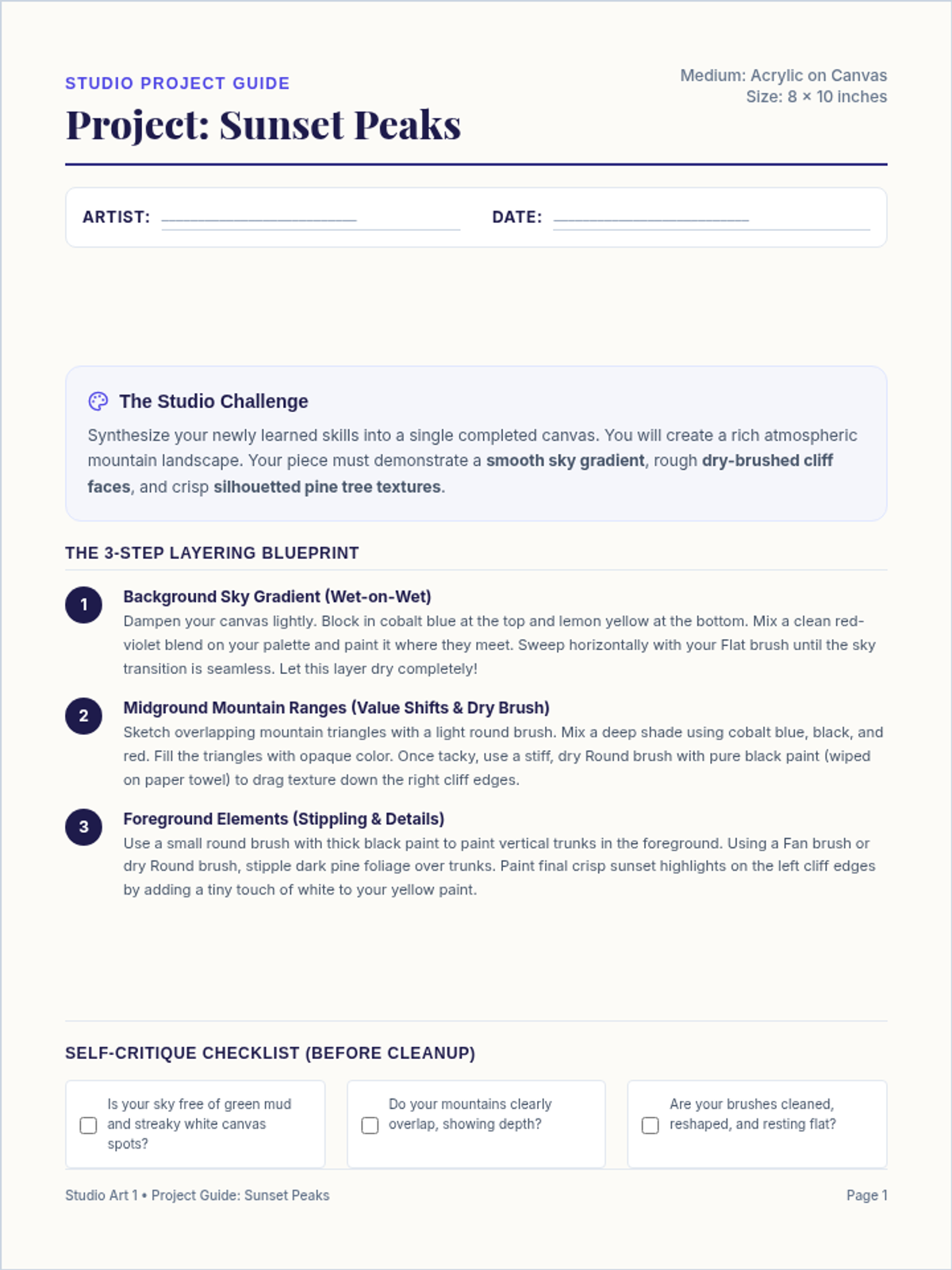
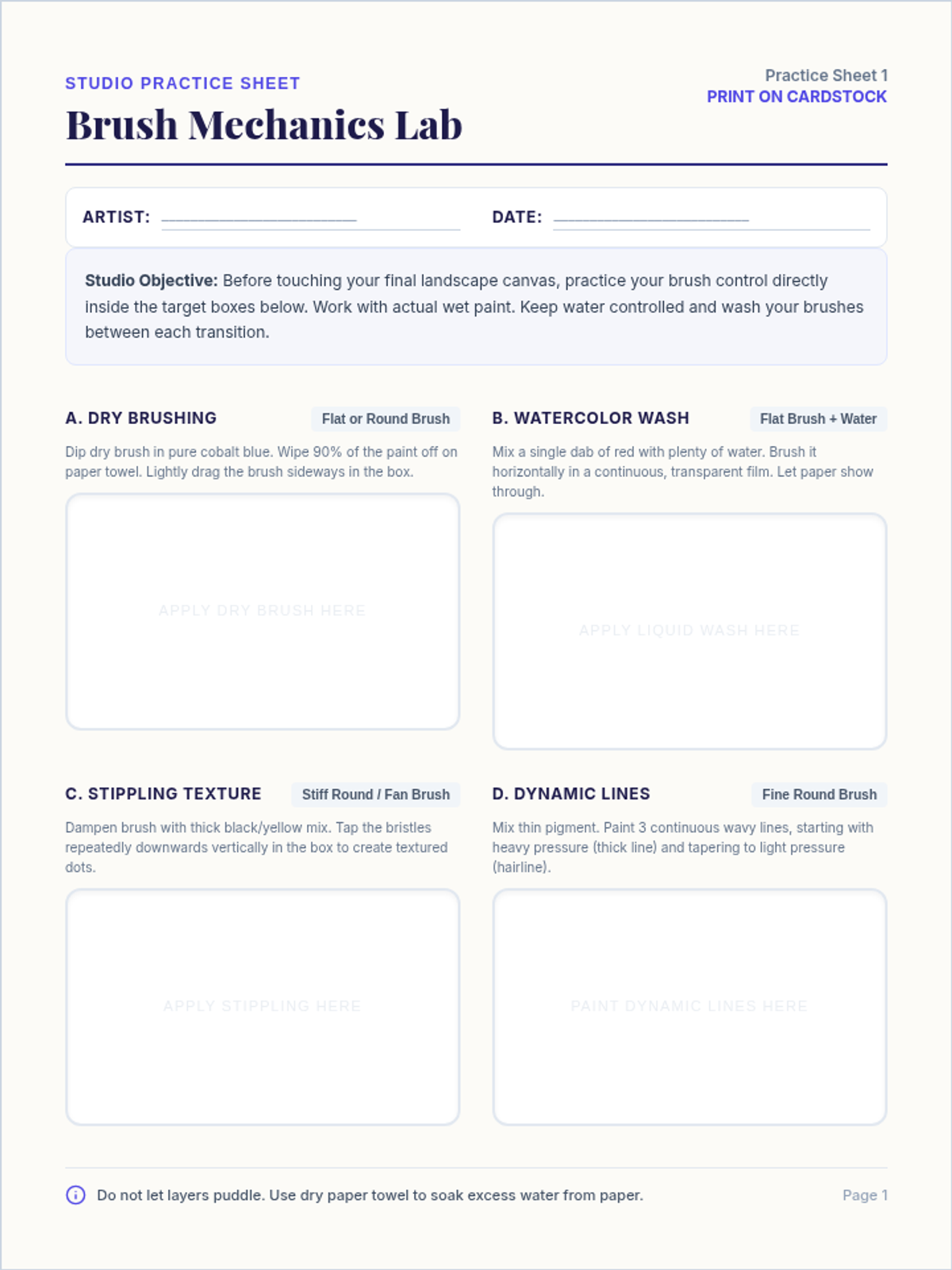
An introductory studio lesson on the fundamentals of acrylic painting. Students explore brushwork textures, color mixing mechanics, and structural layering through hands-on practice and a guided landscape project.
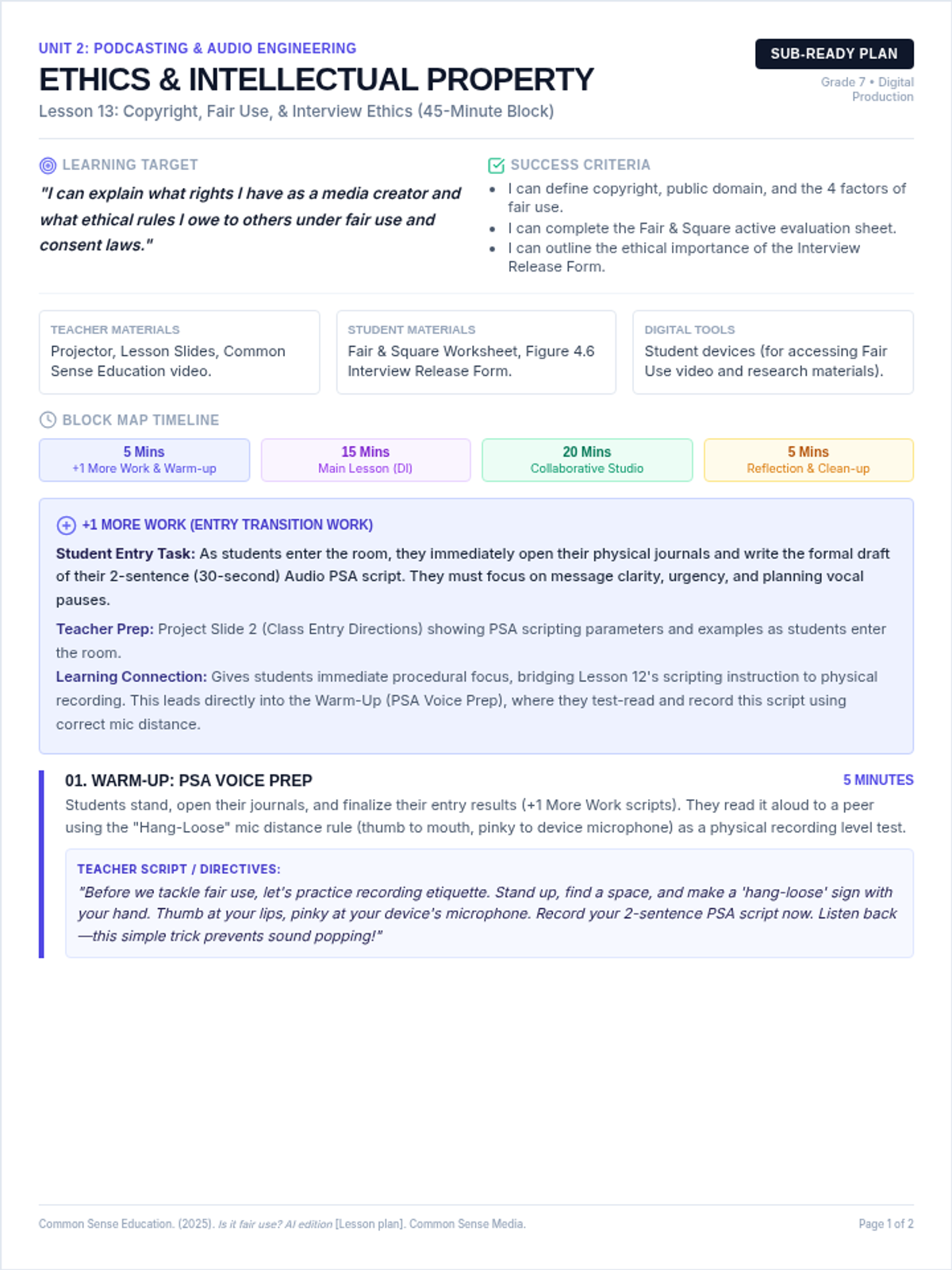
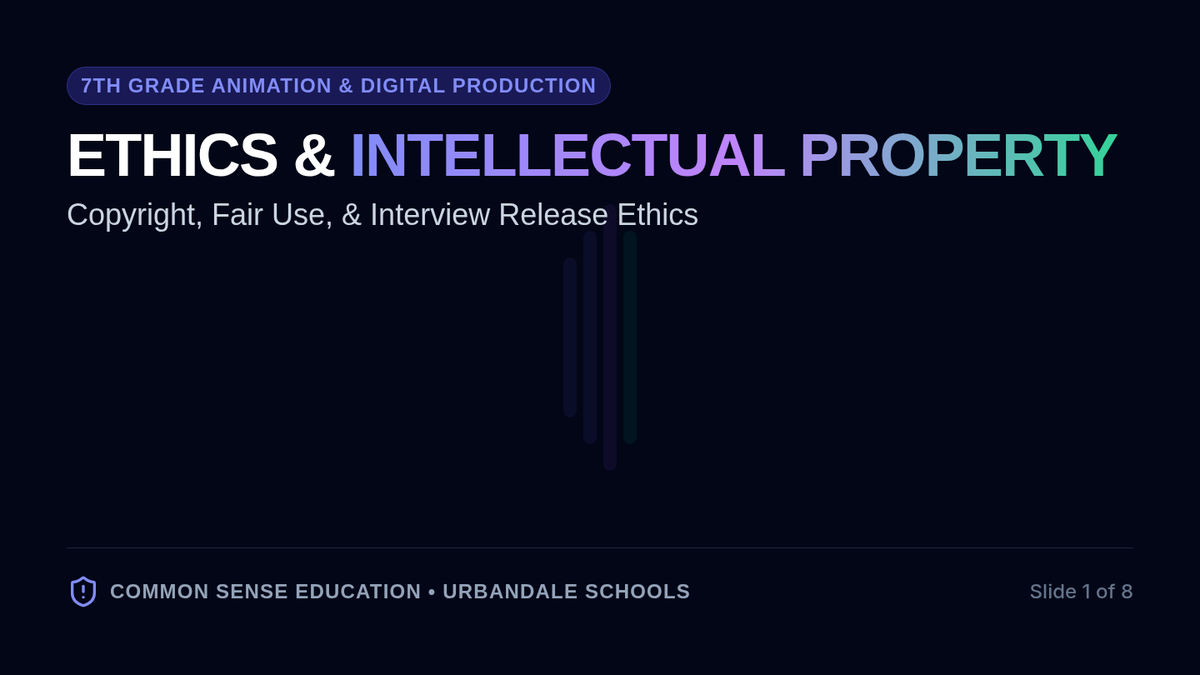
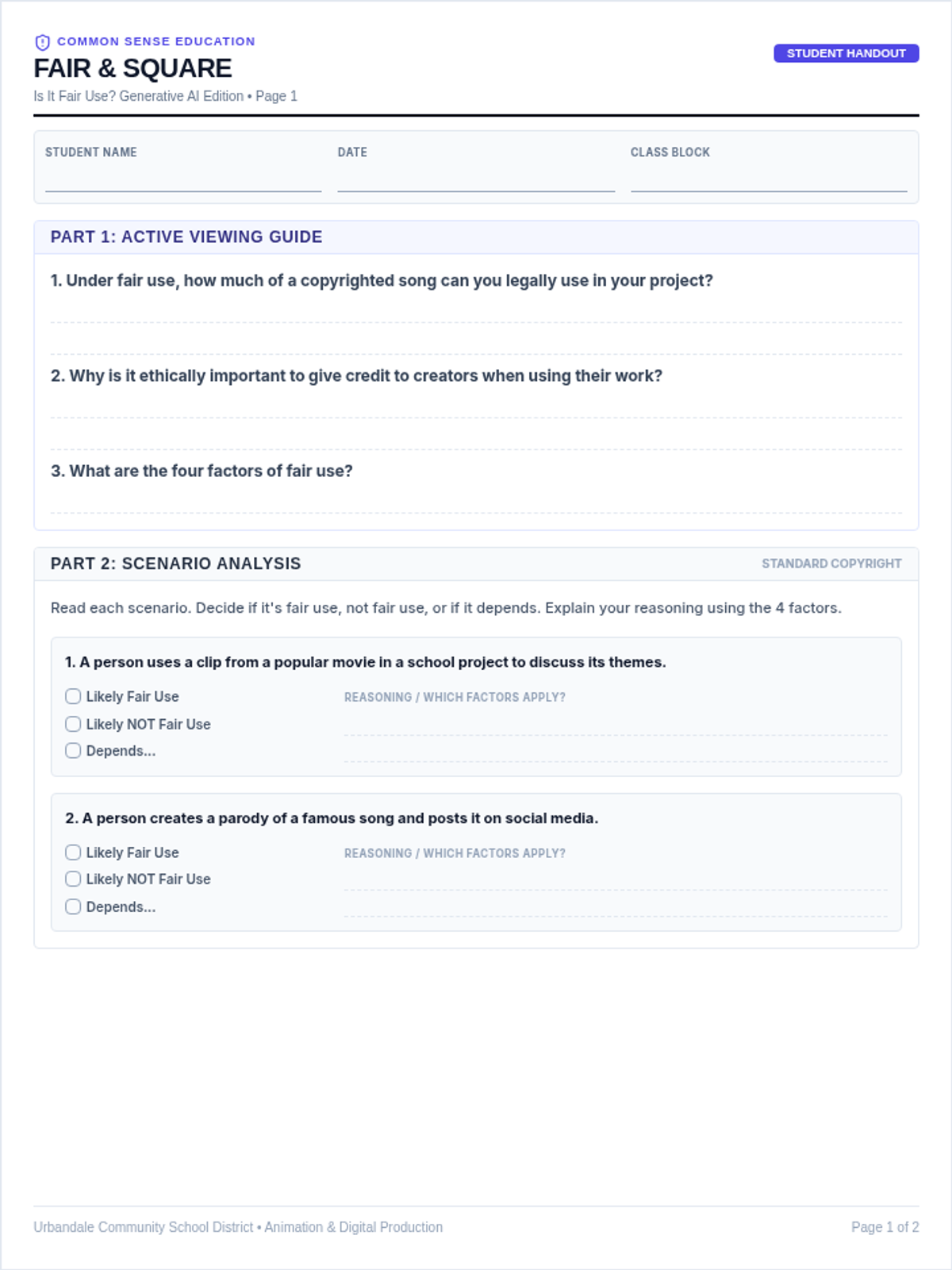
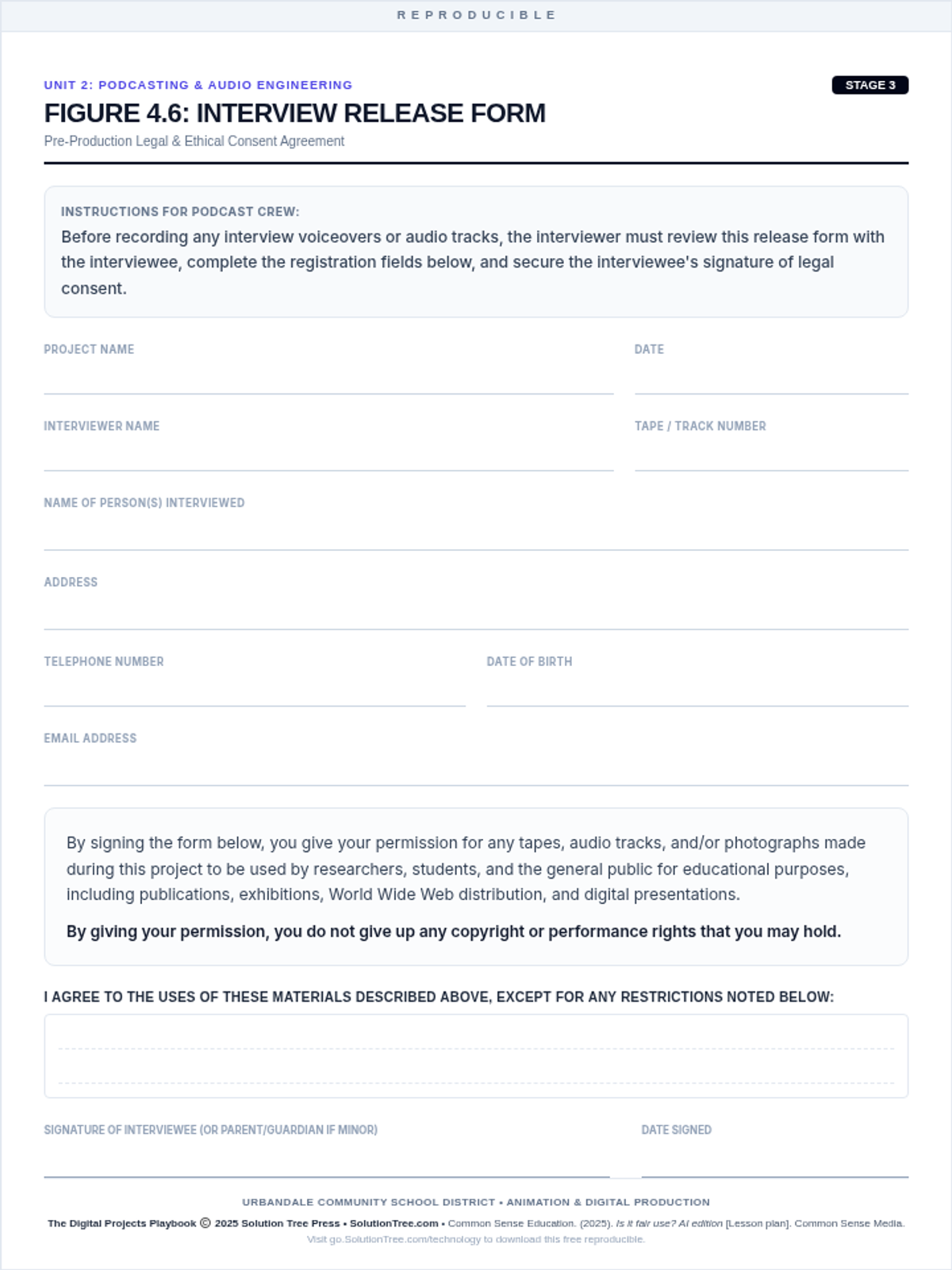
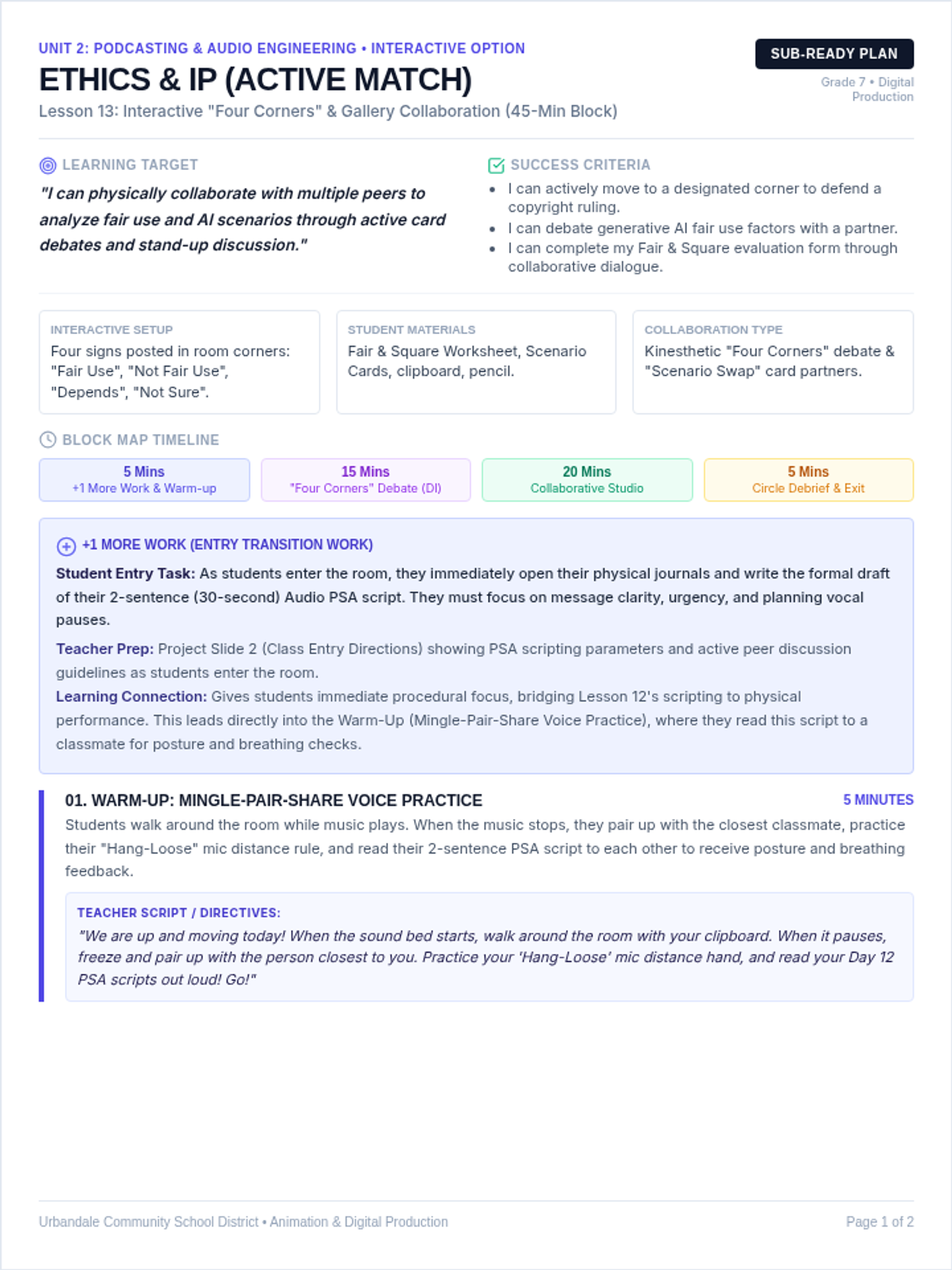
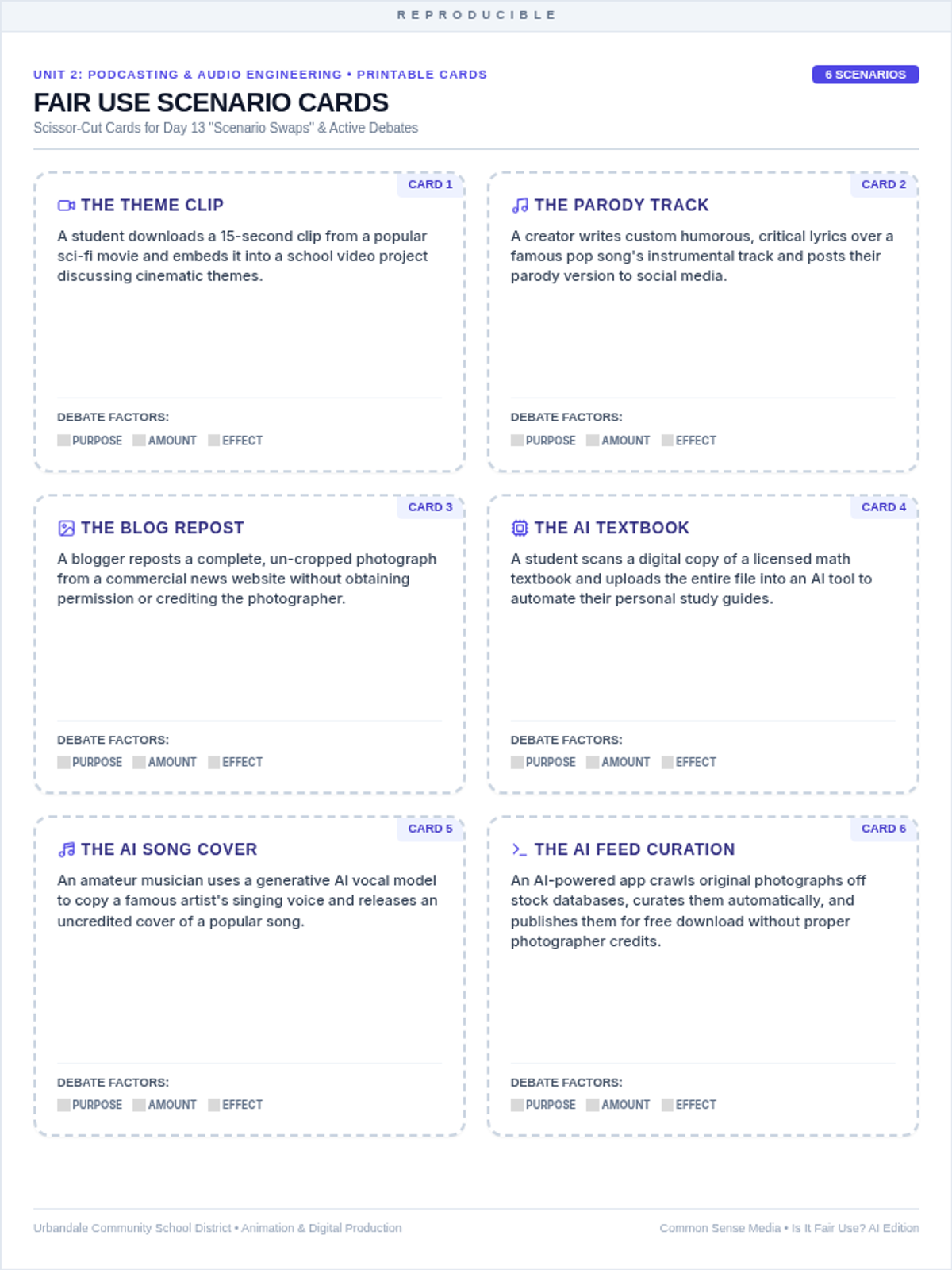
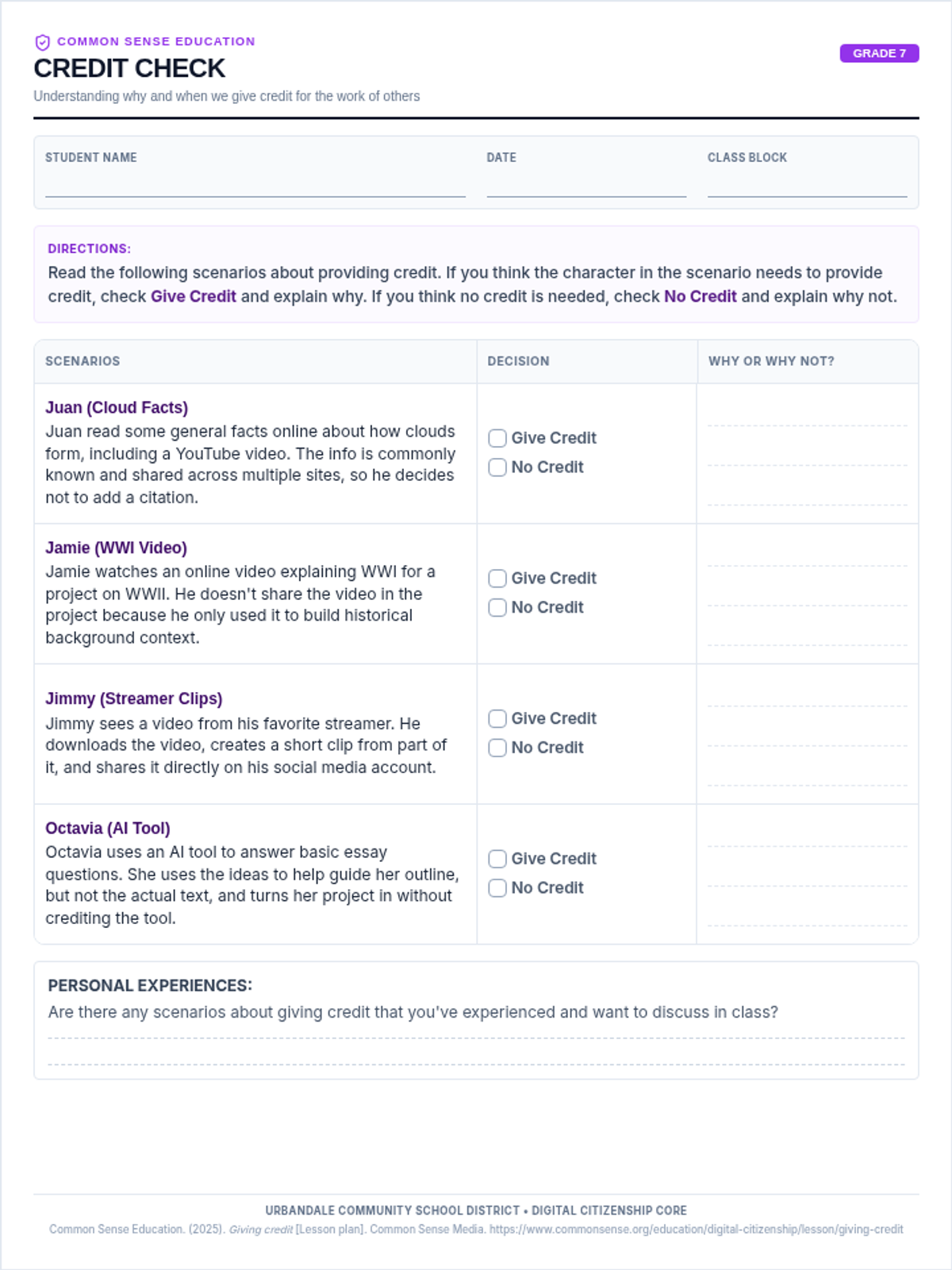
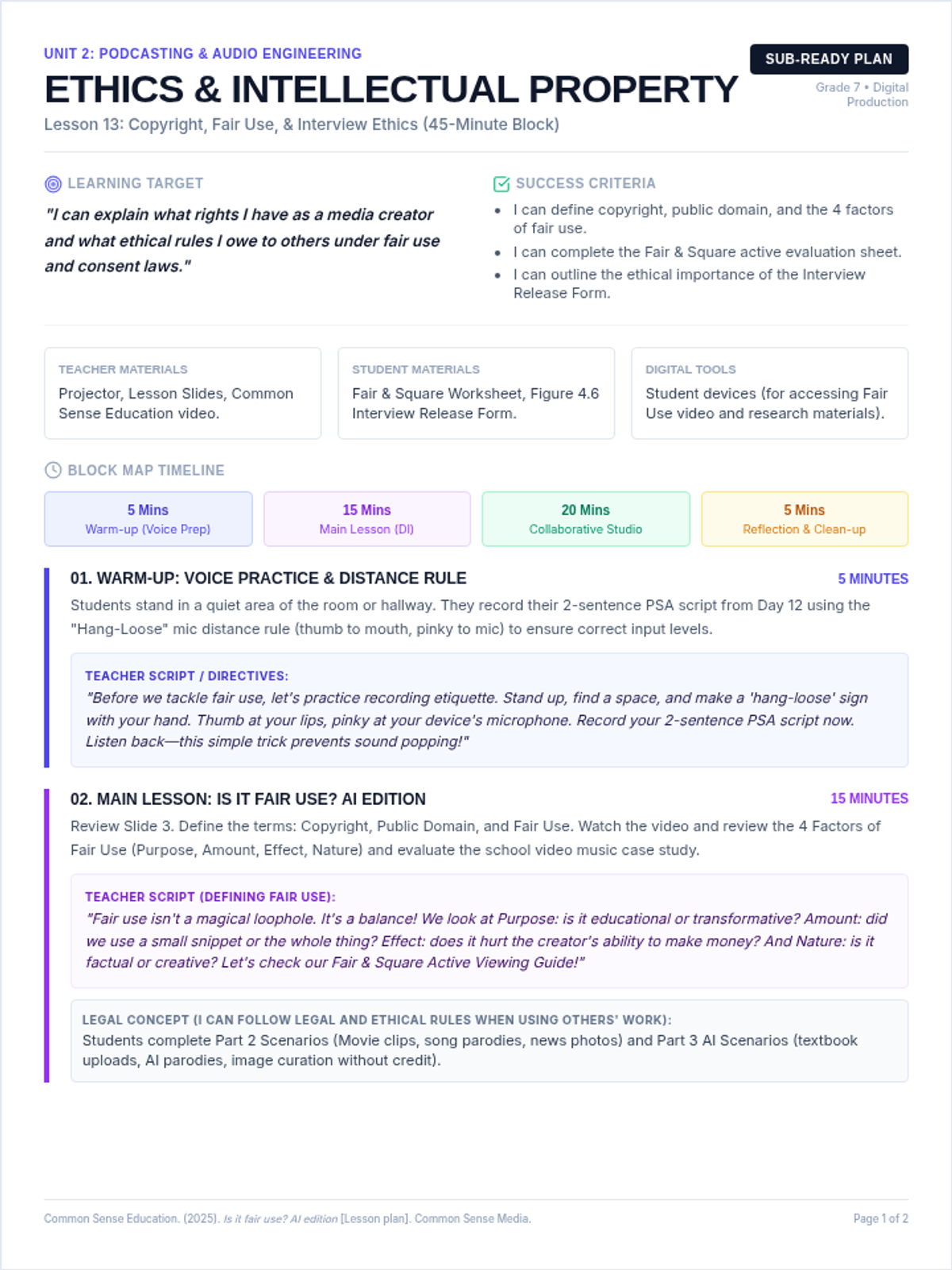
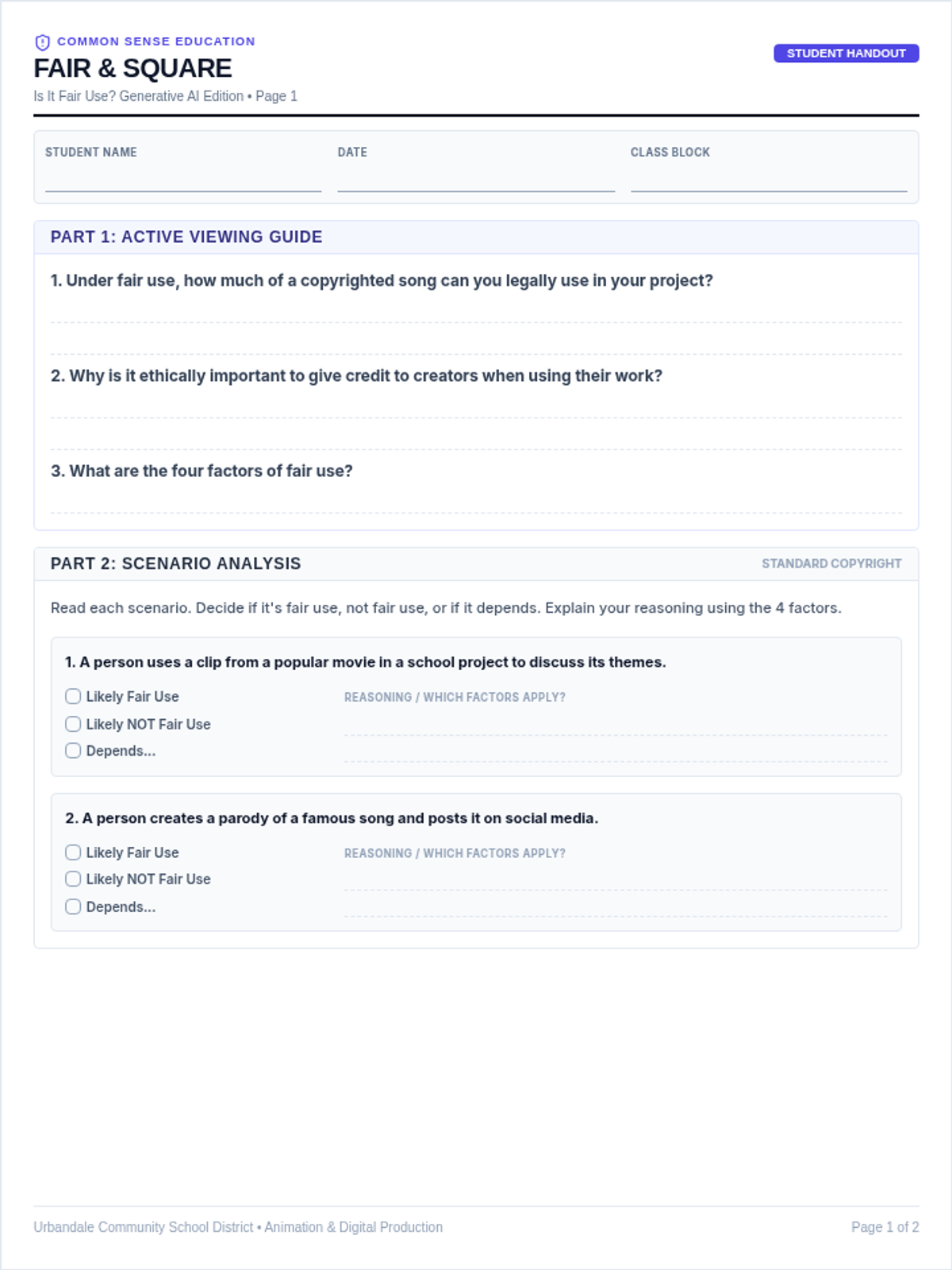
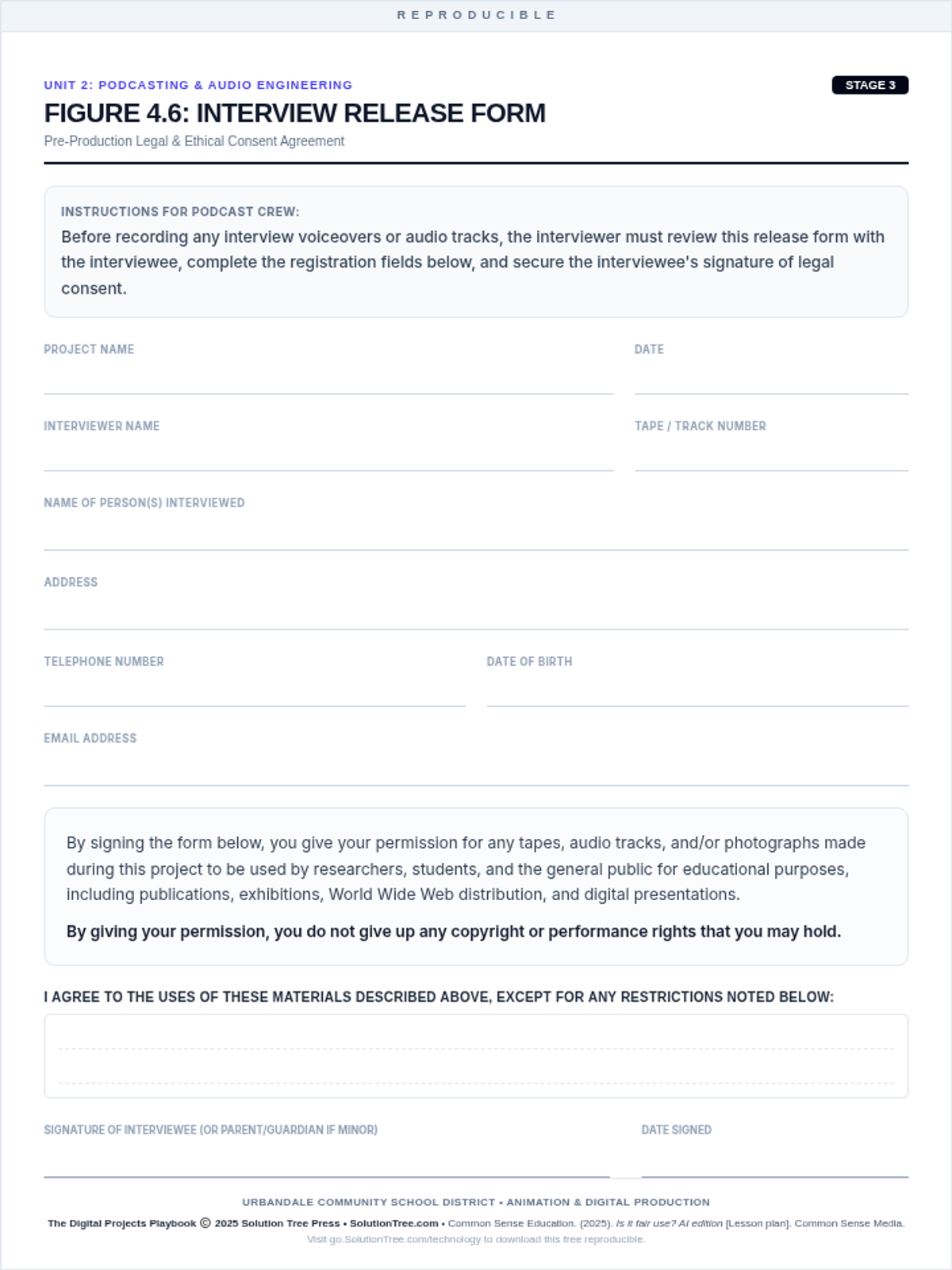
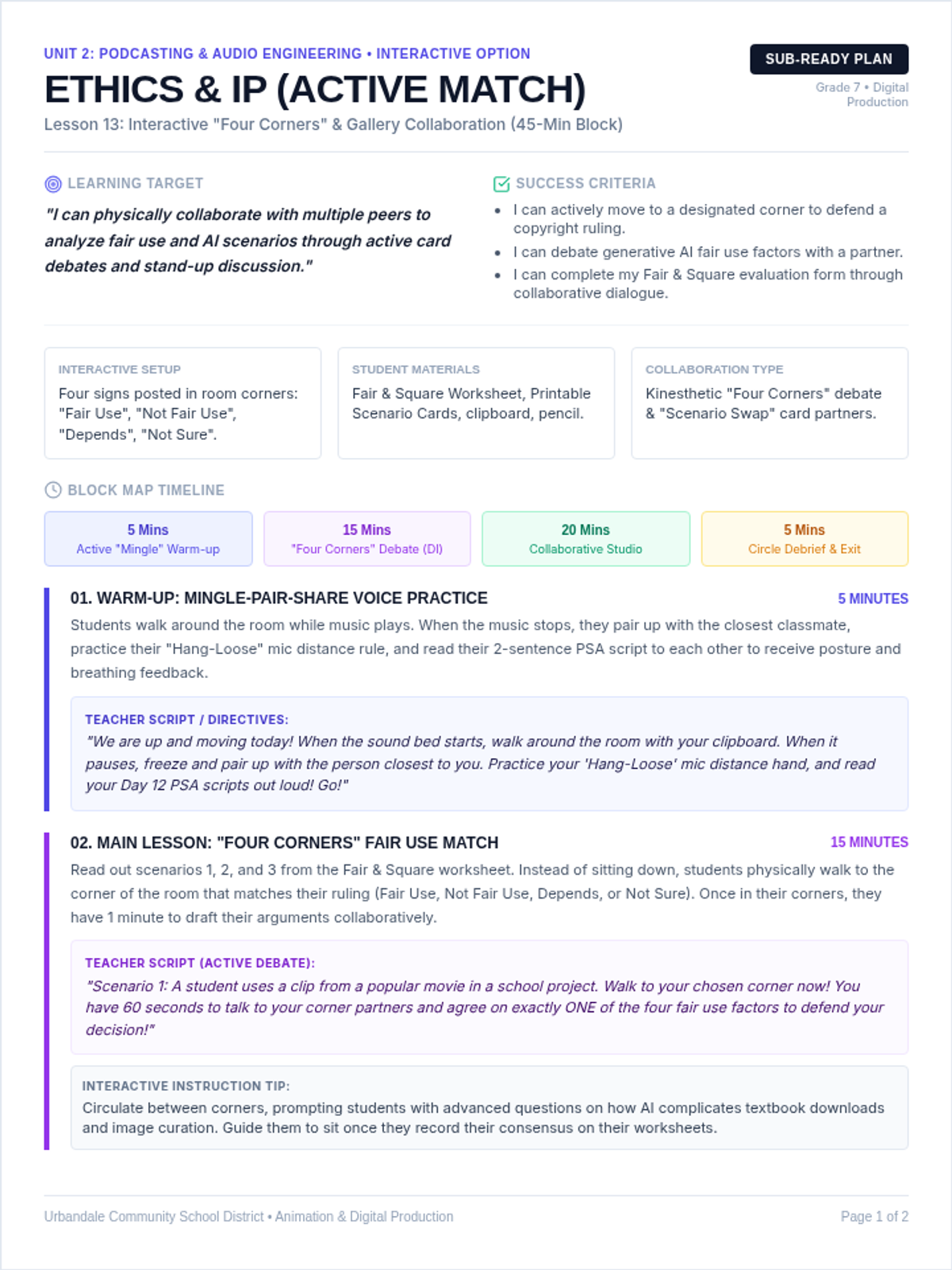
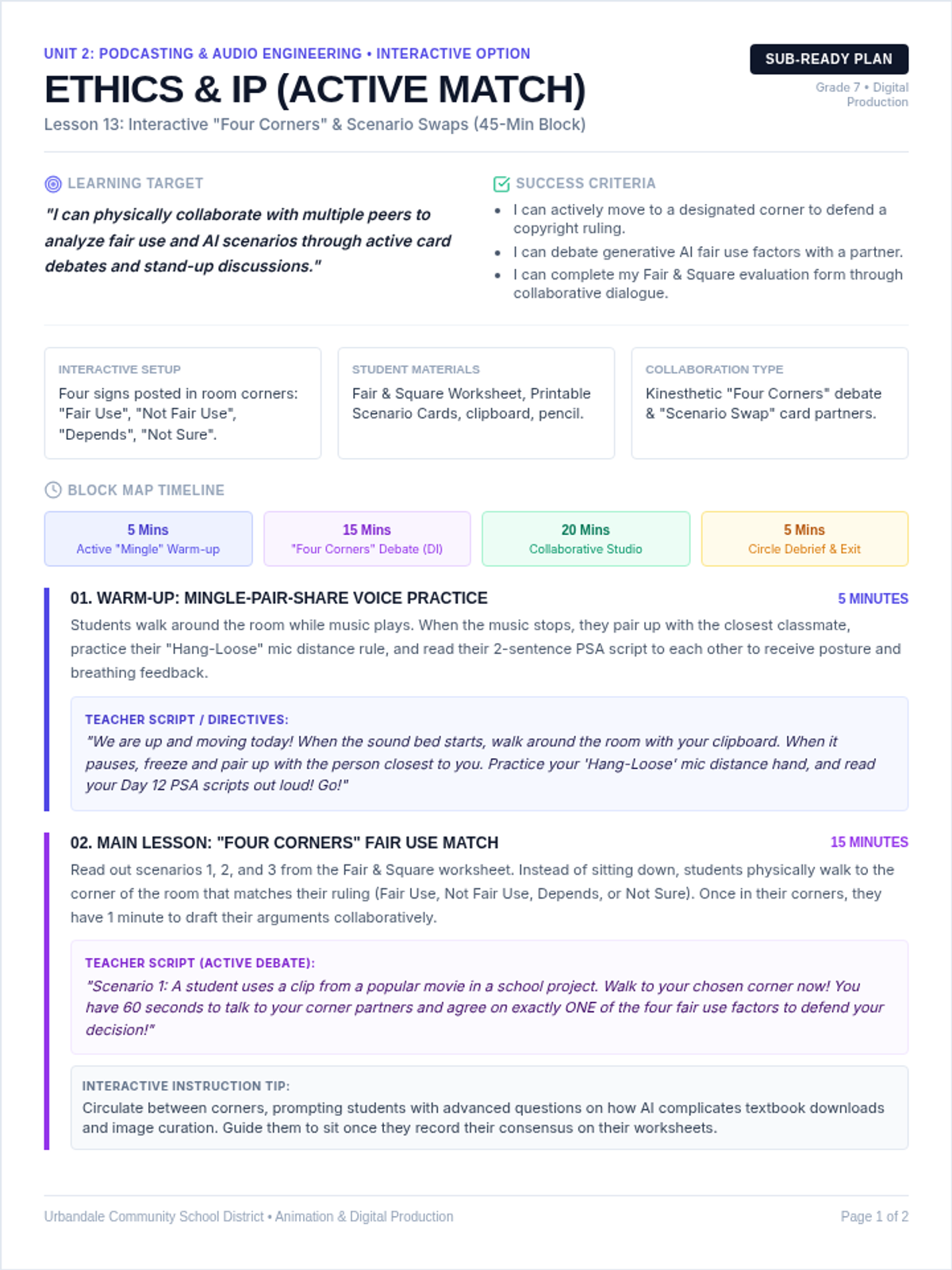
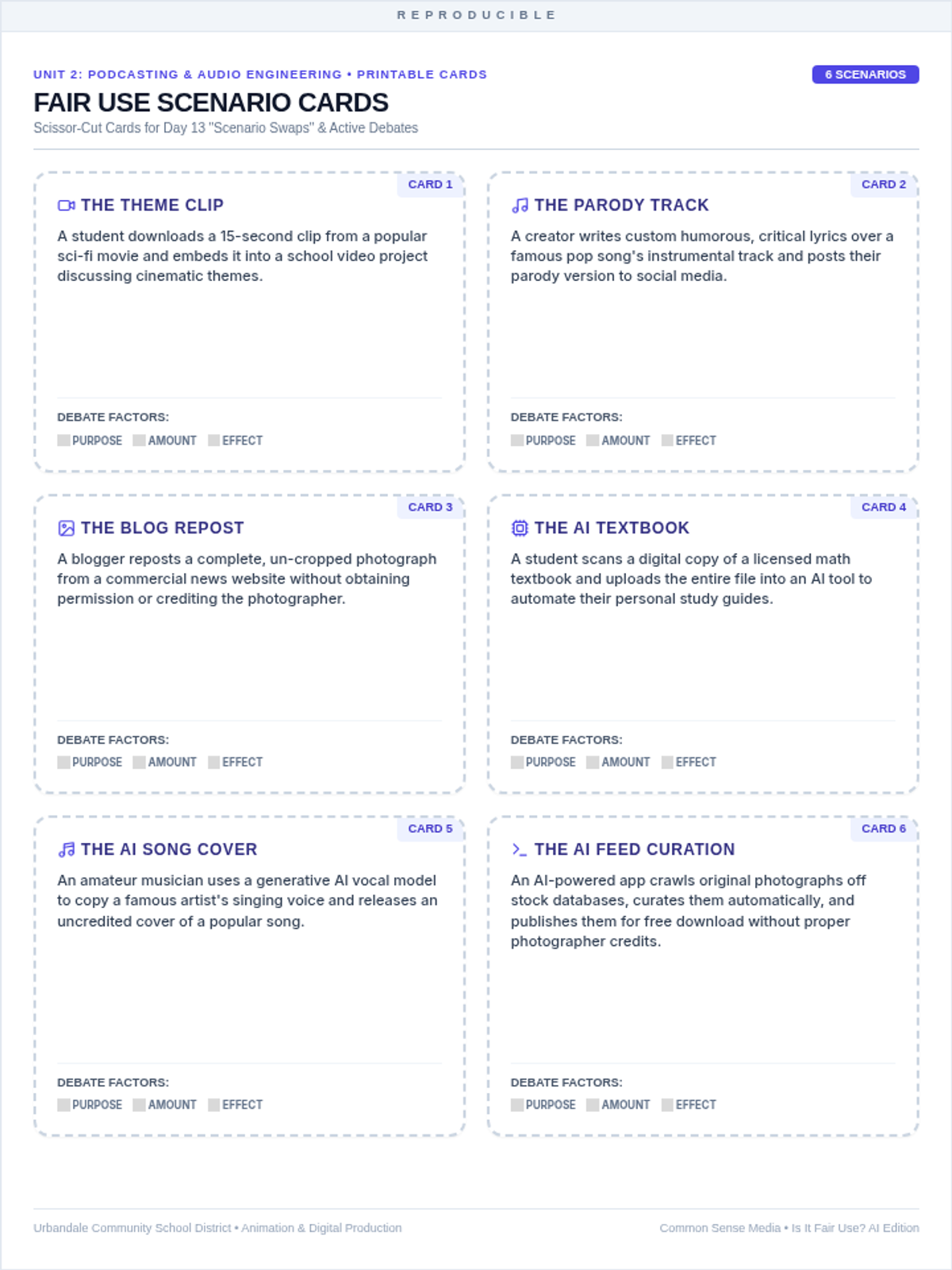
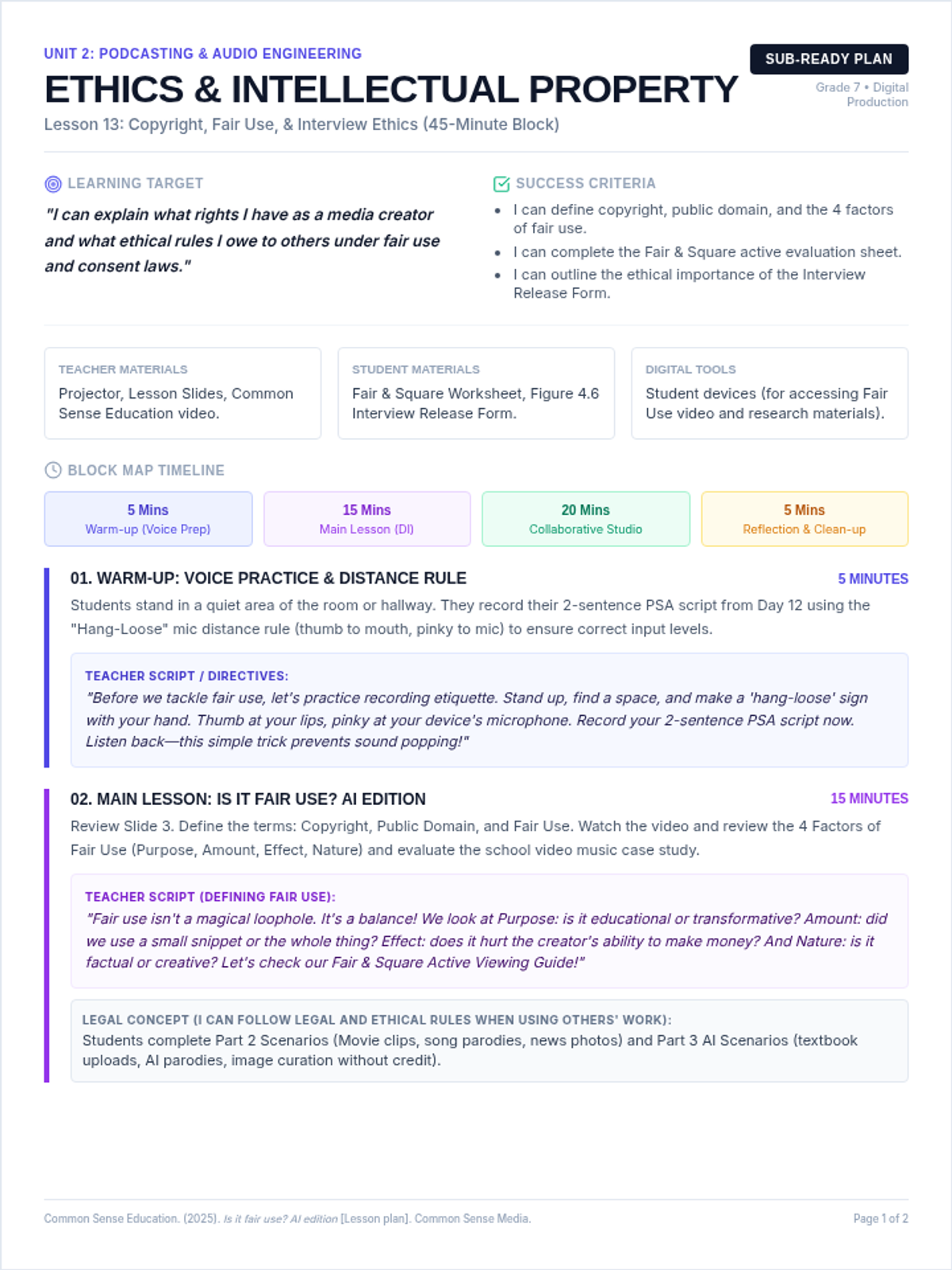
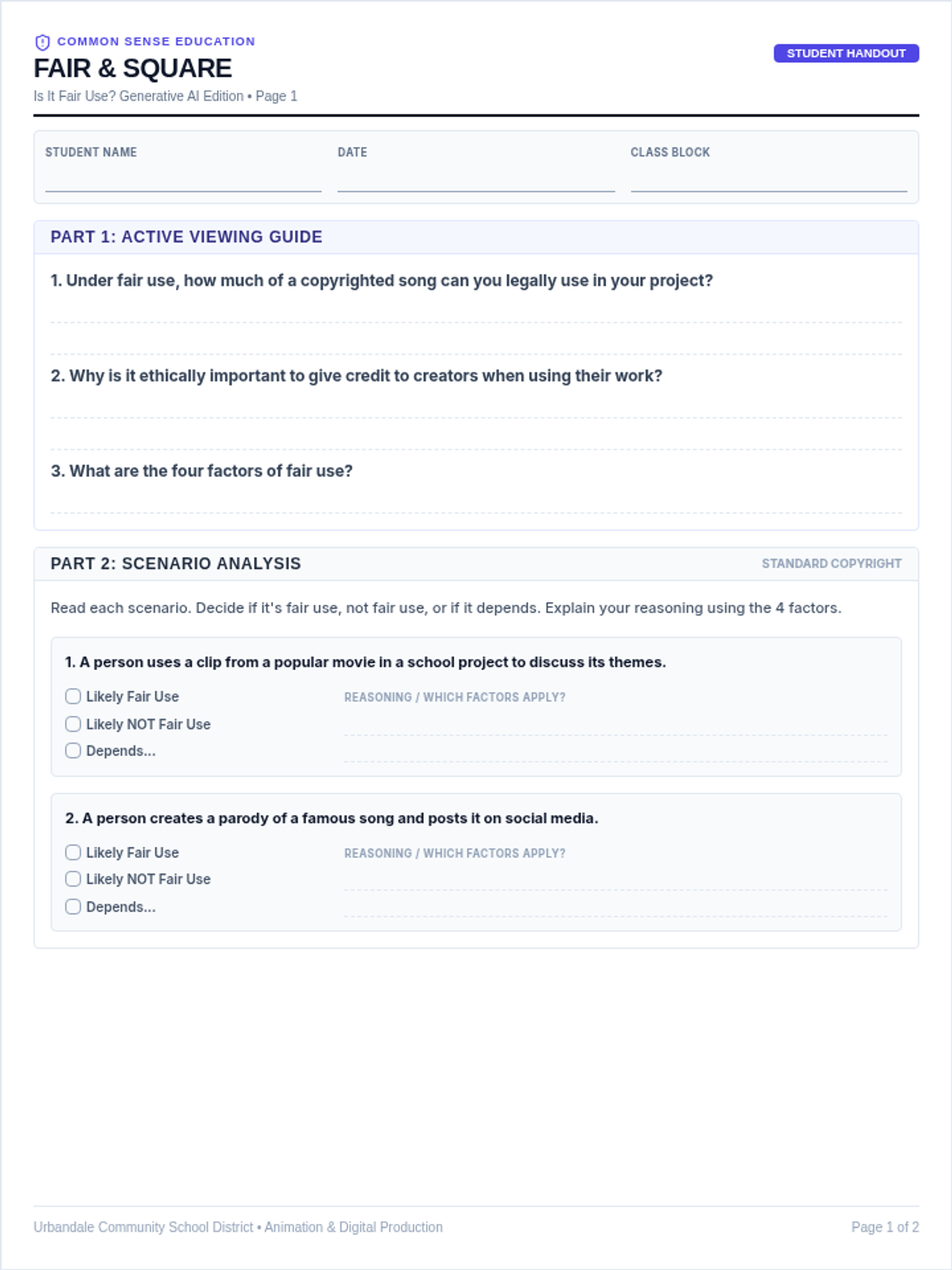
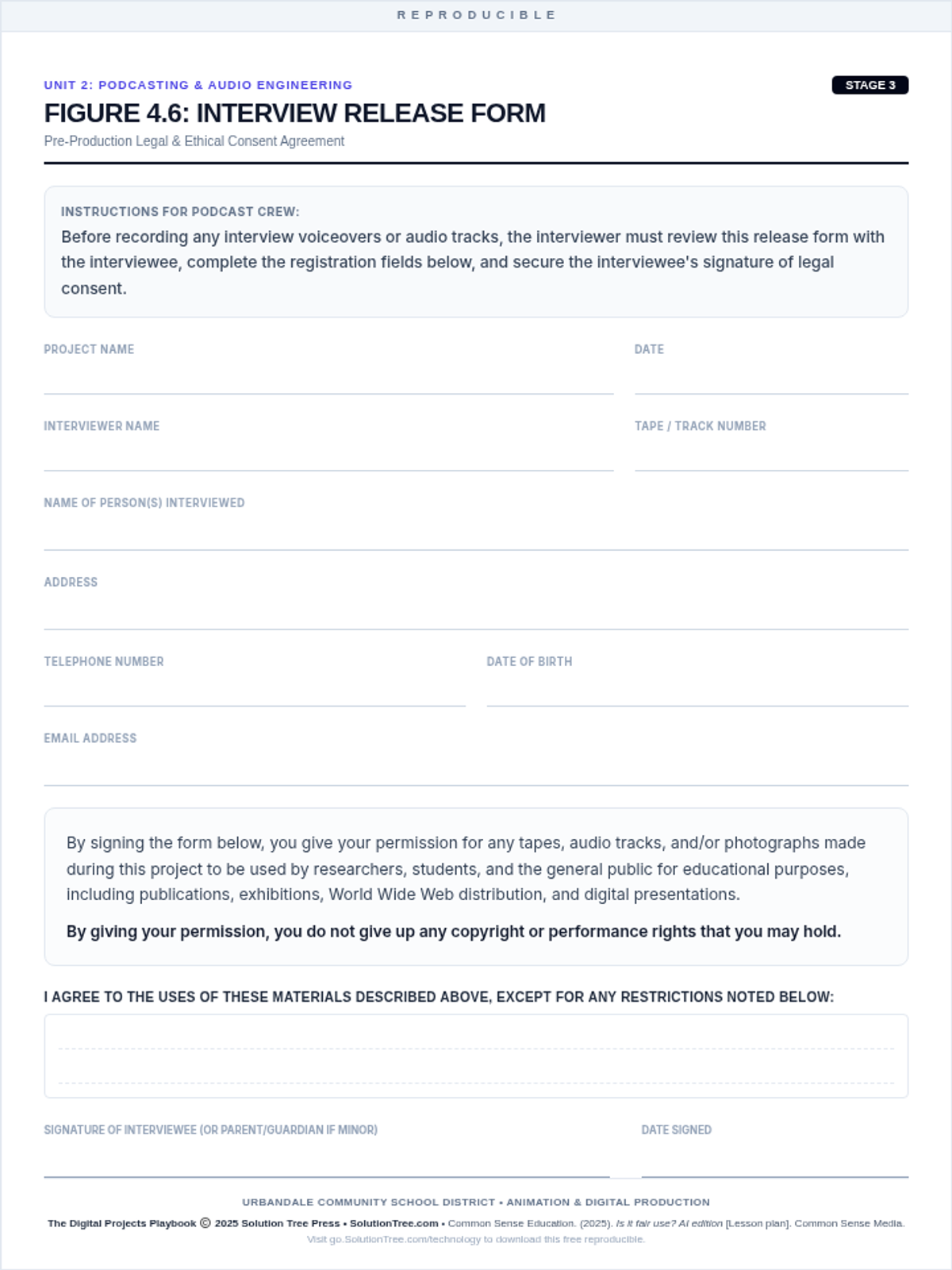
Introduce students to copyright, public domain, the four factors of fair use, generative AI complications, and interview release ethics.
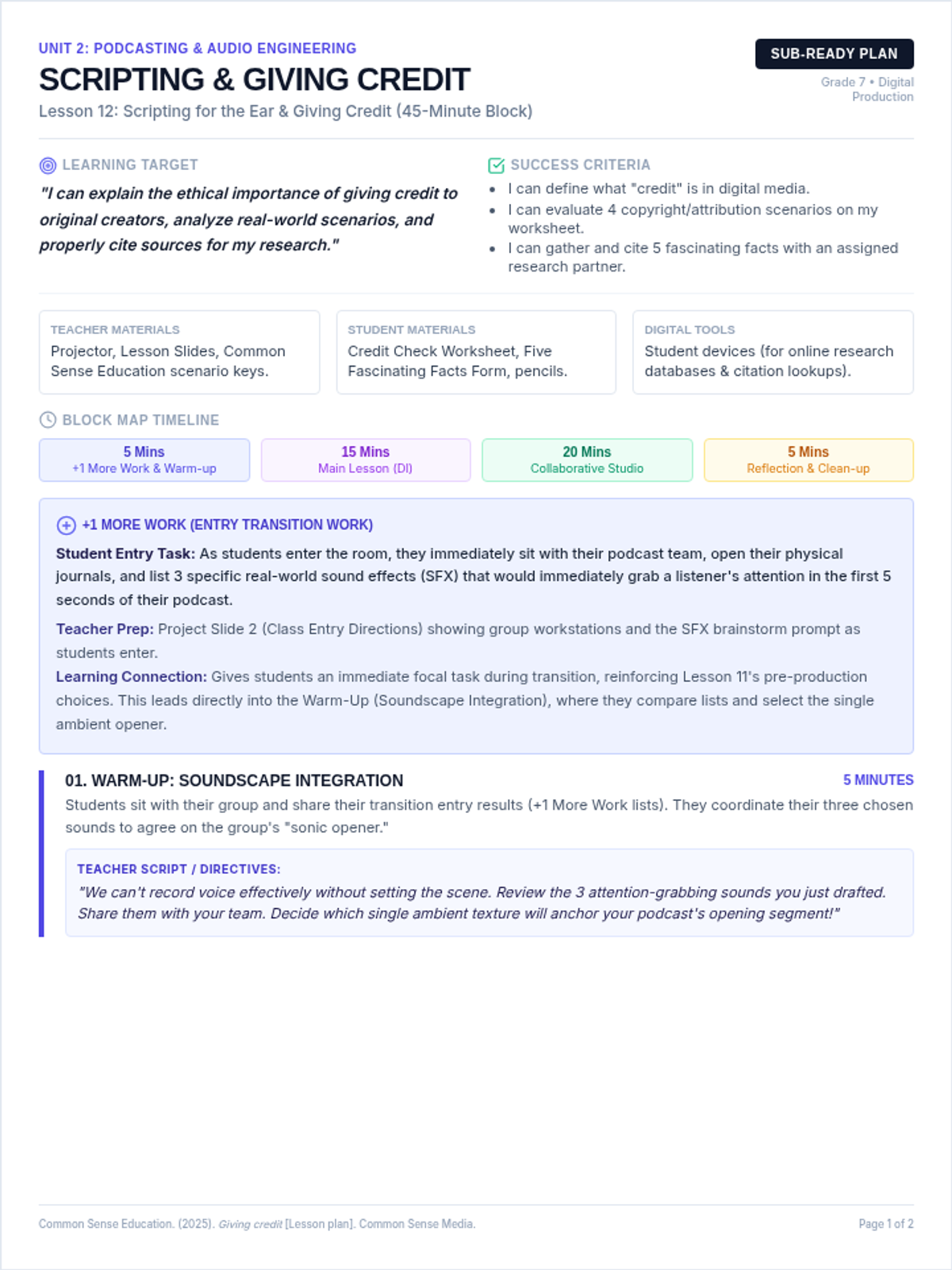
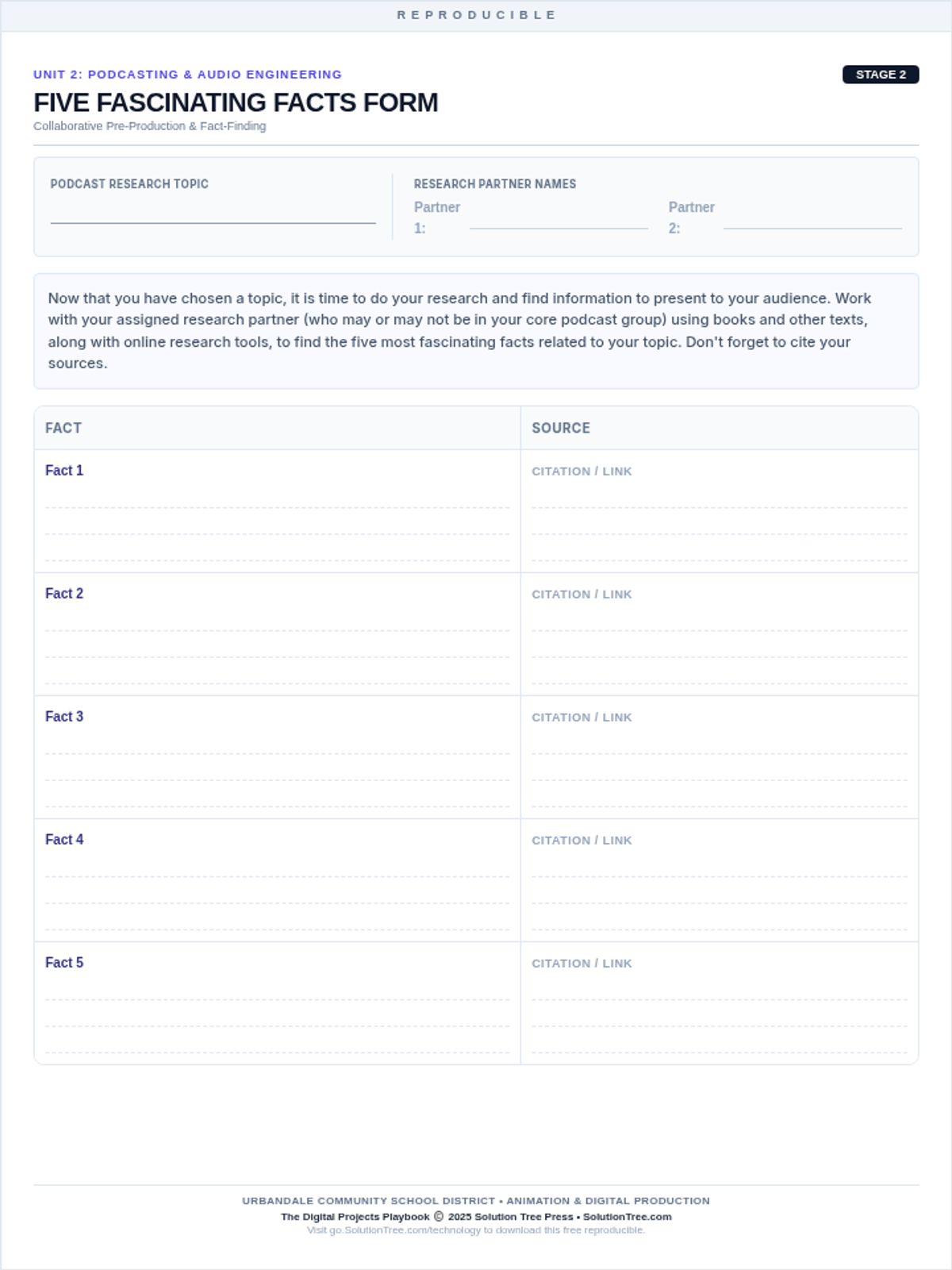
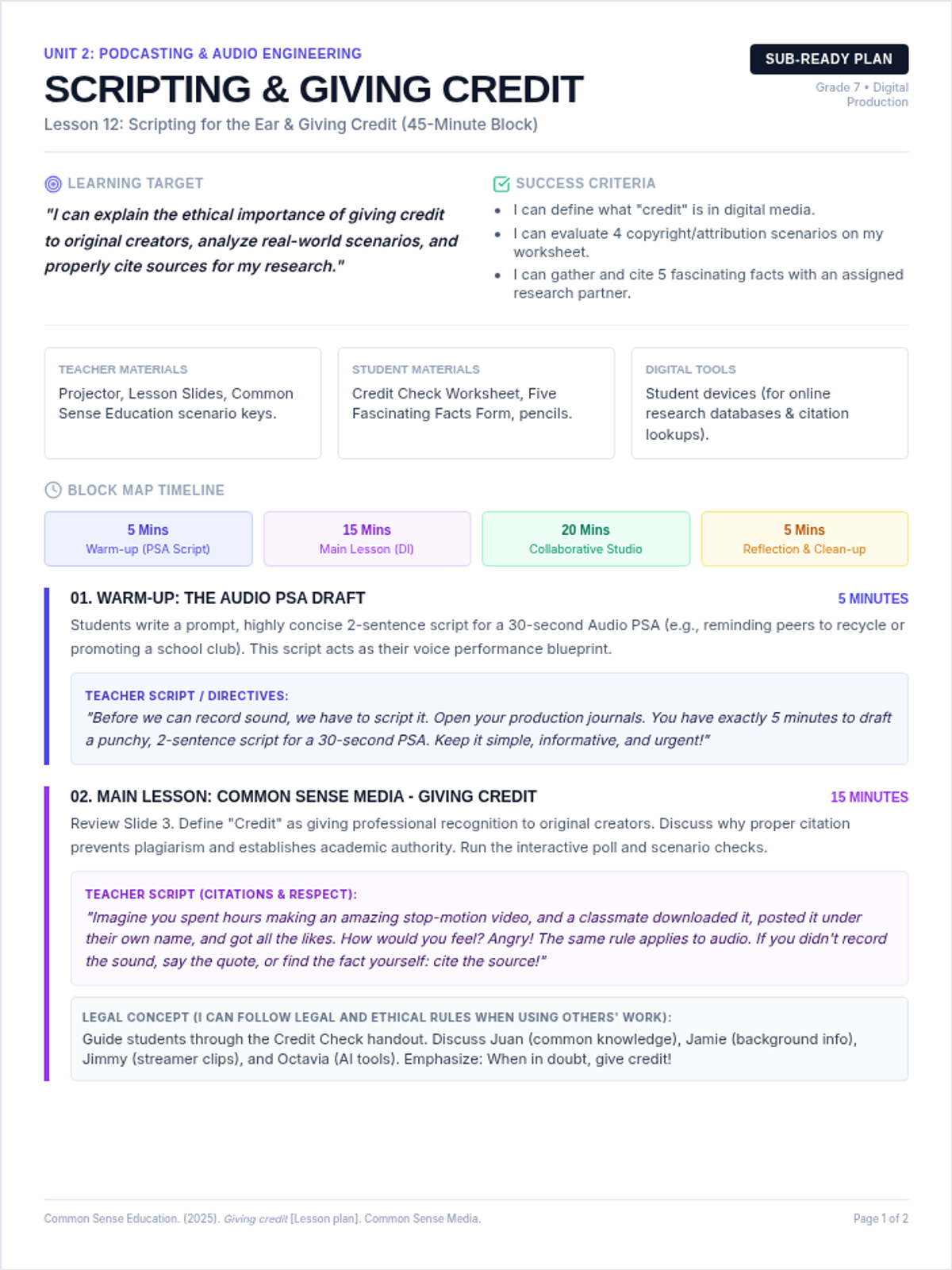
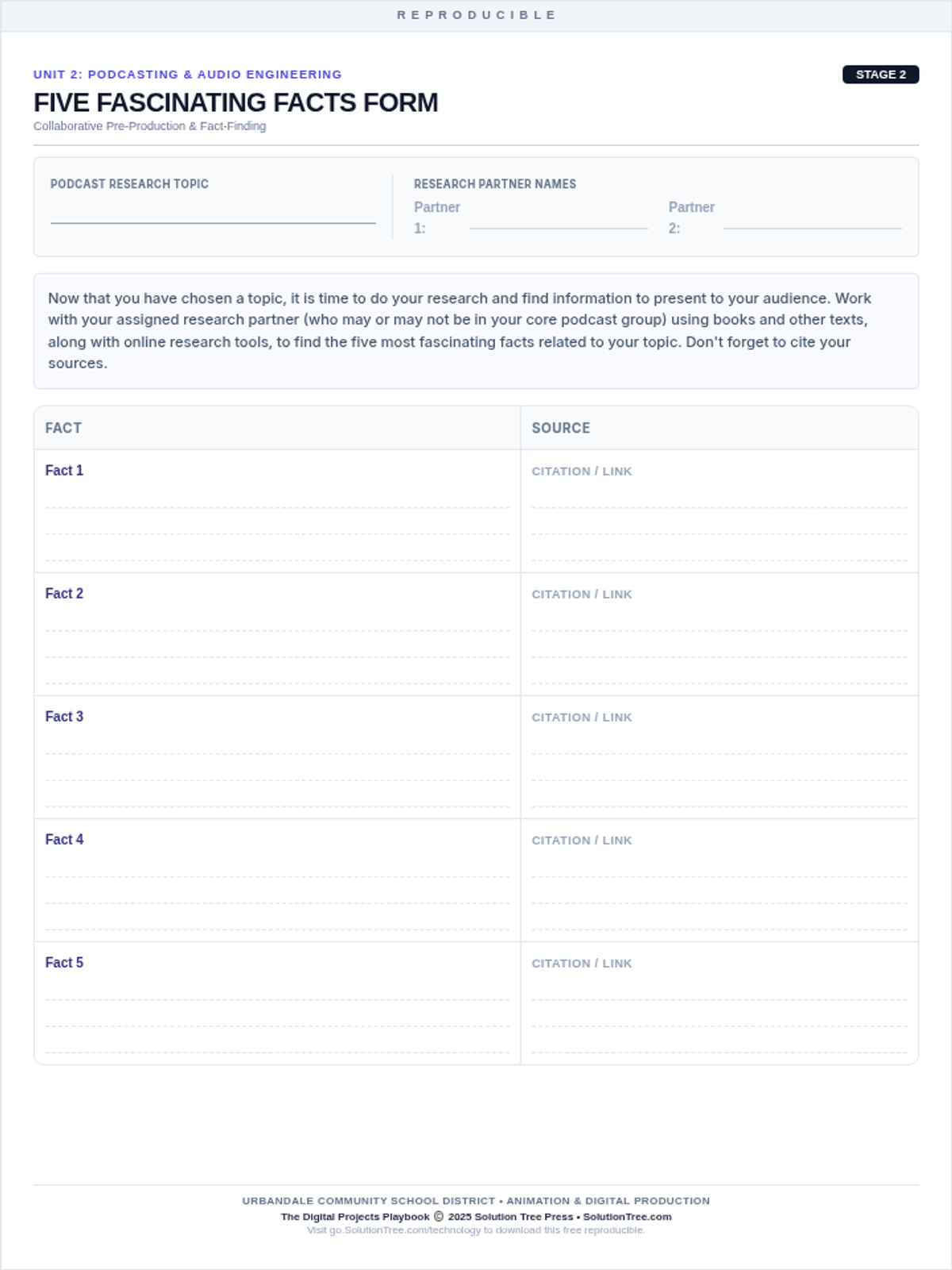
Learn the ethical and technical aspects of scripting for audio, focusing on writing for the ear, citing audio sources, and research fact-finding using the Five Fascinating Facts Form.
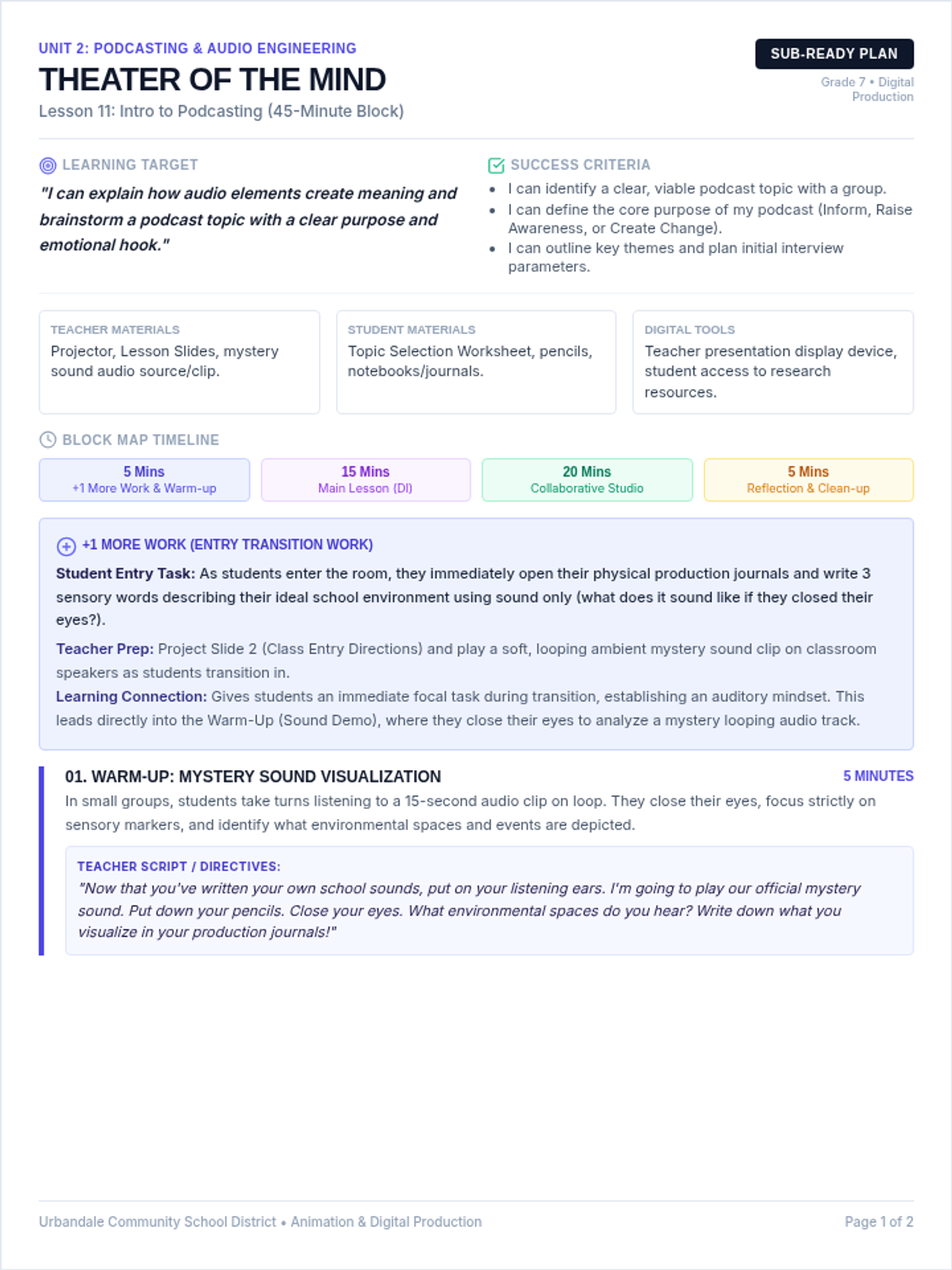
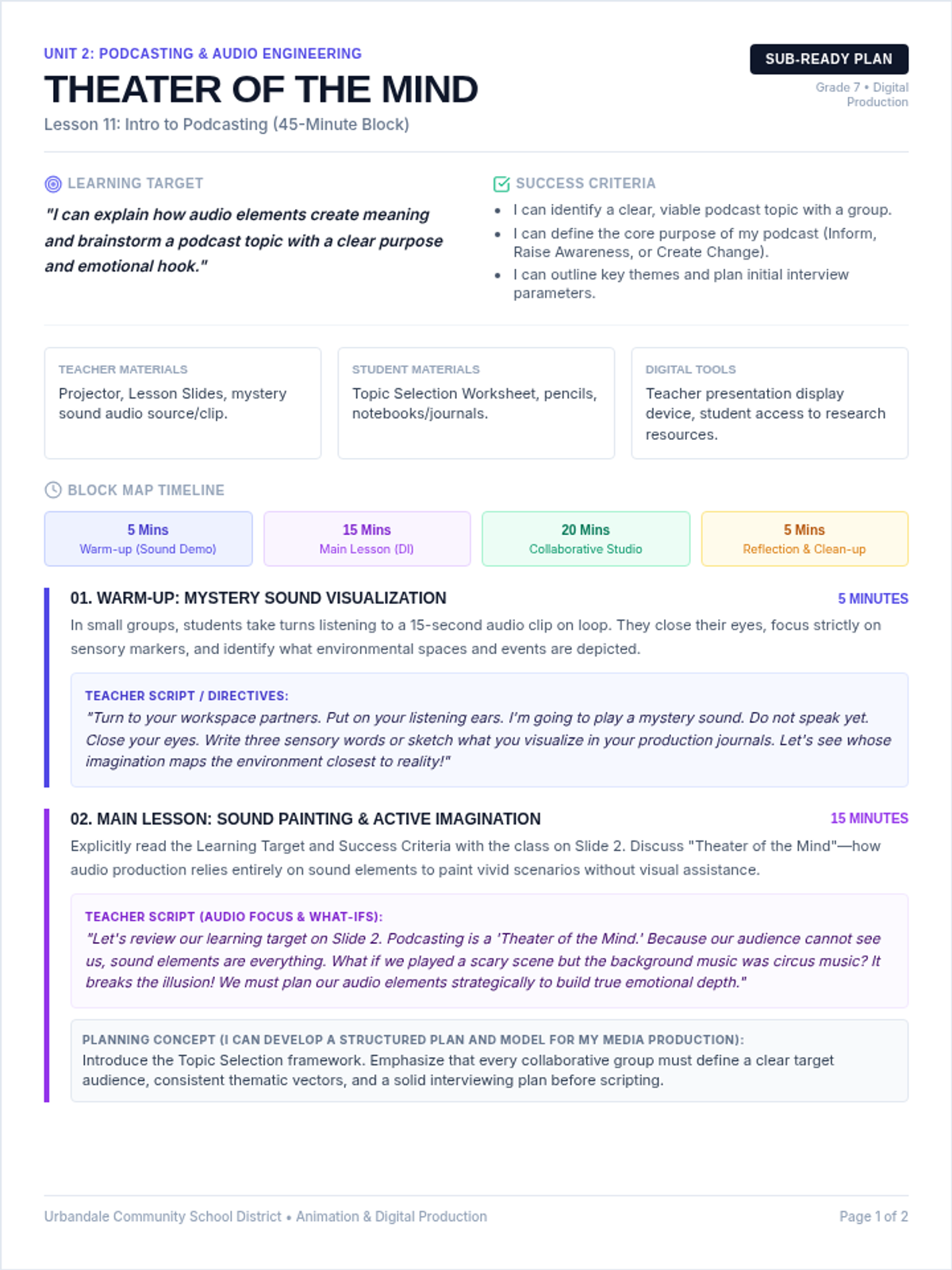
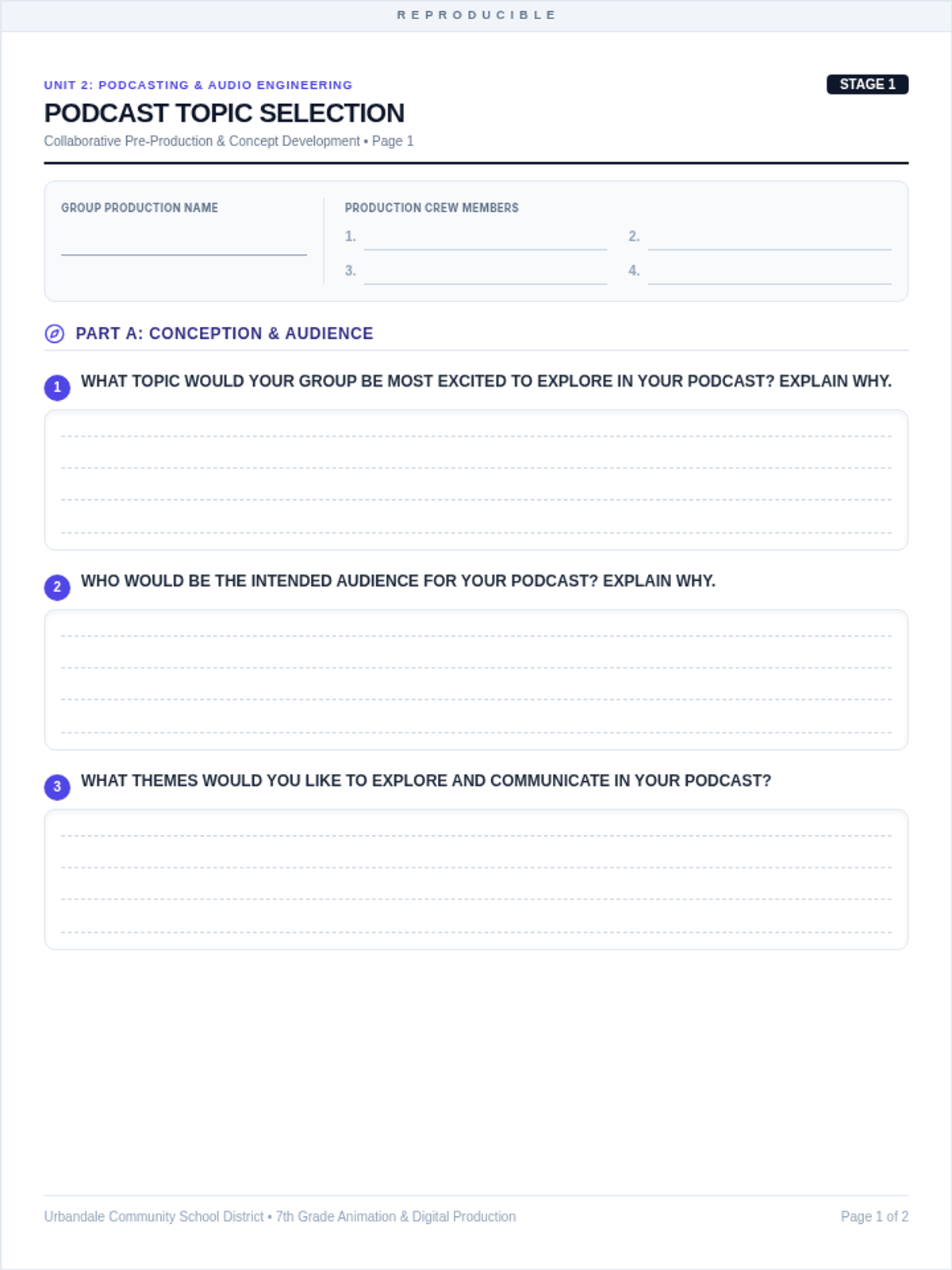
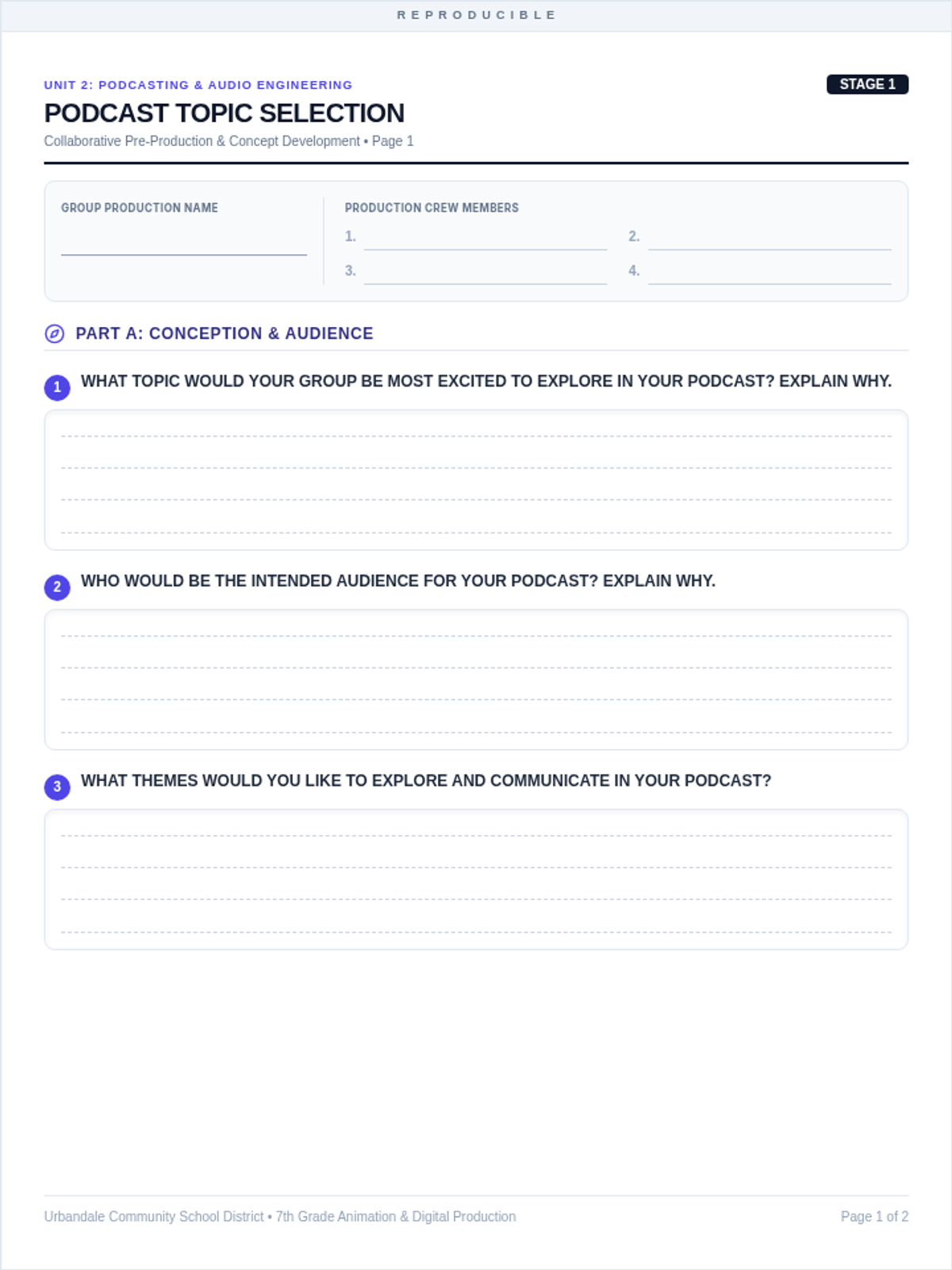
Introduce students to podcasting and the concept of 'Theater of the Mind.' Students explore how sound paints pictures, select topics, form groups, and complete Figure 4.3 (Topic Selection).
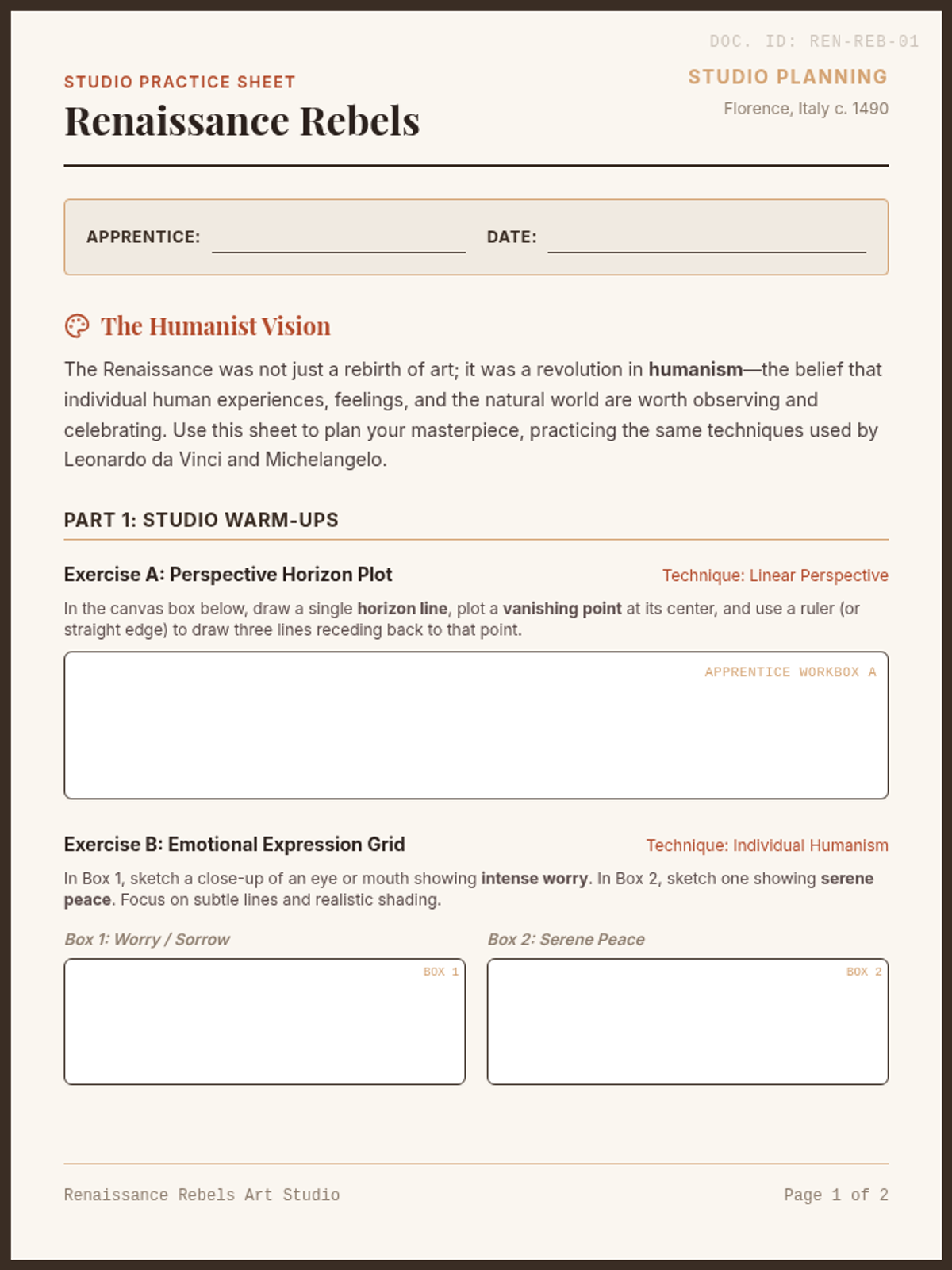
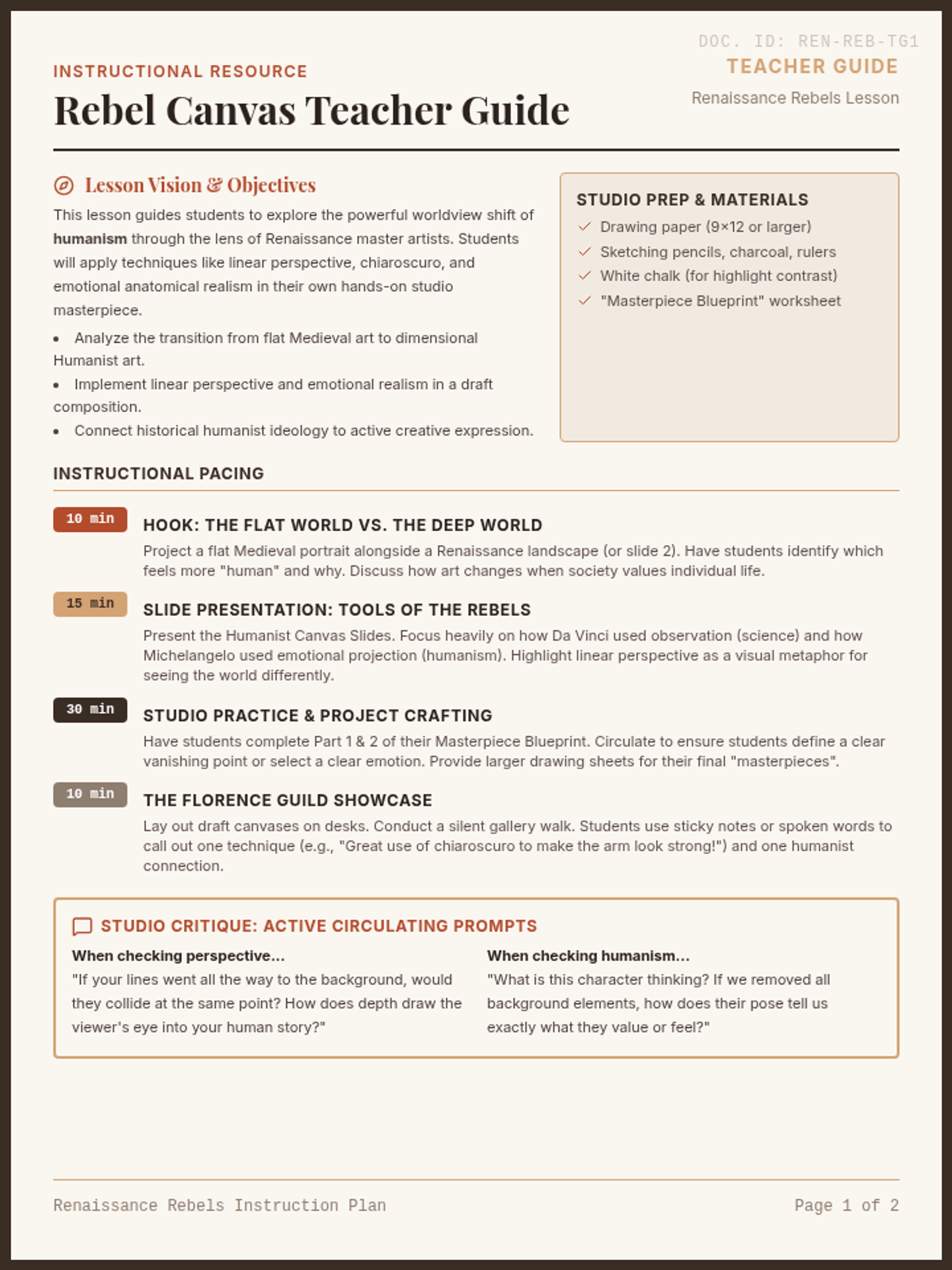
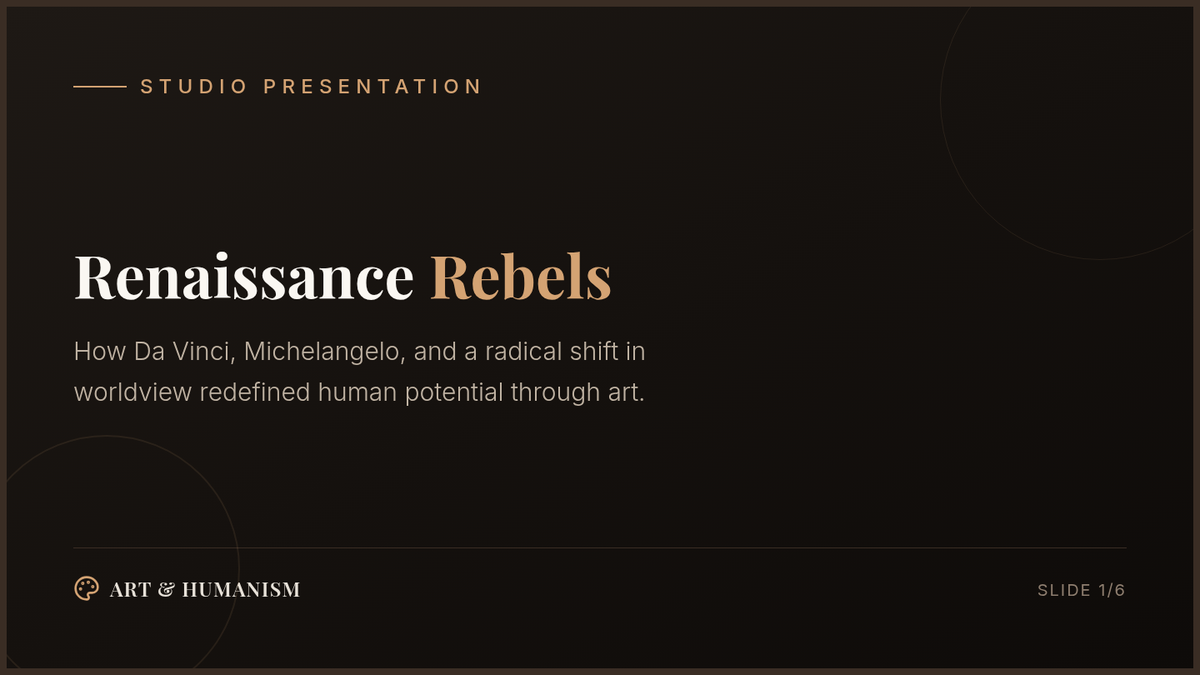
An art and history lesson exploring how Renaissance artists like Da Vinci and Michelangelo used humanism to shift the world's perspective, culminating in a hands-on student art project.
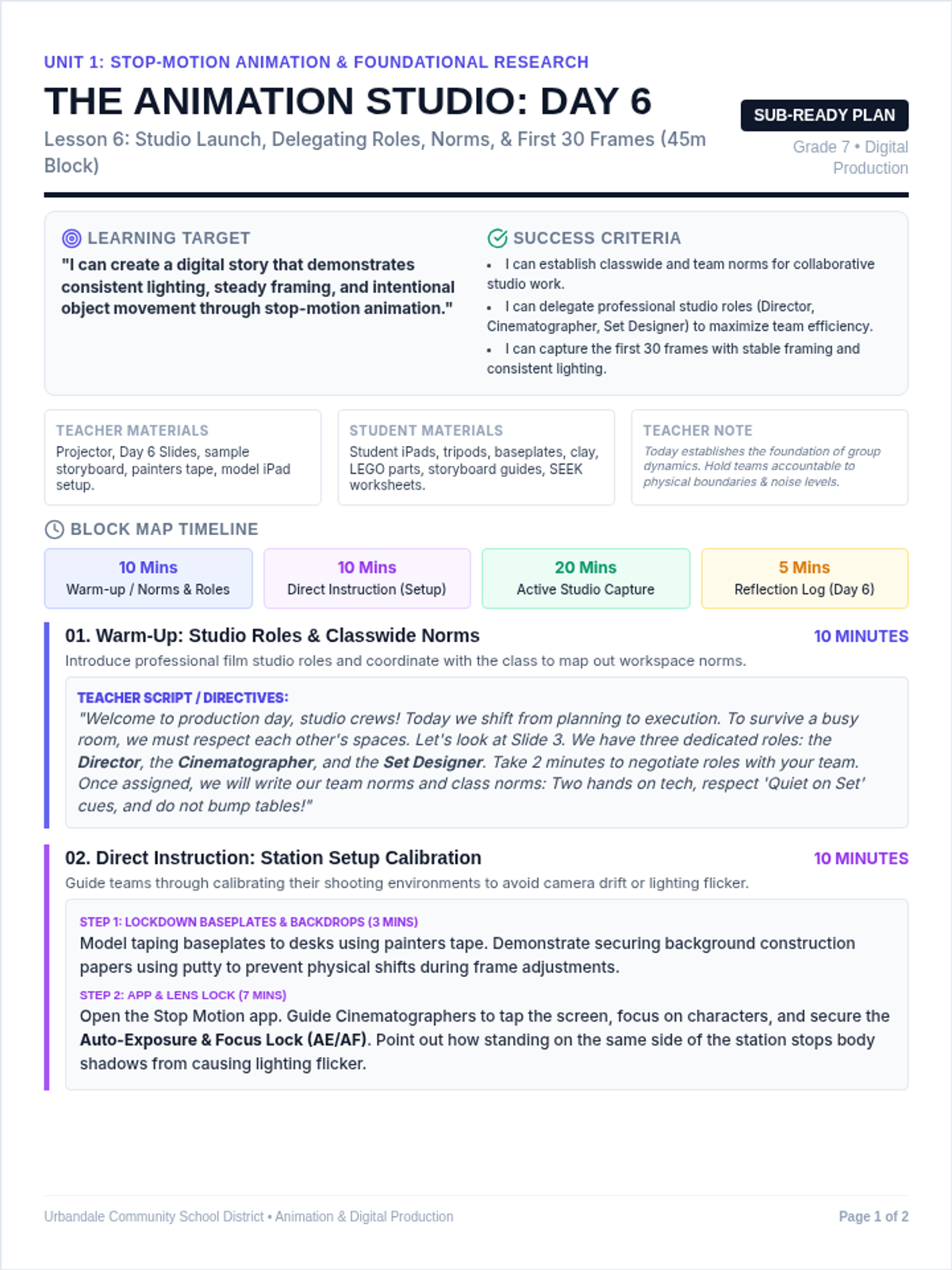
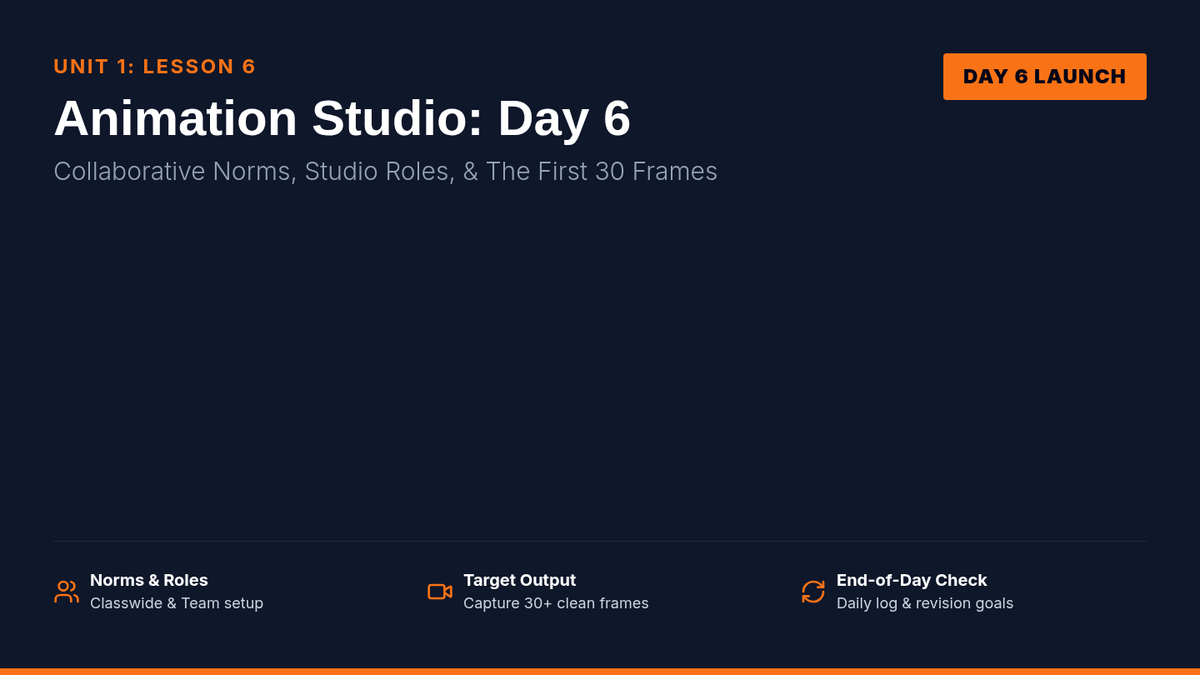
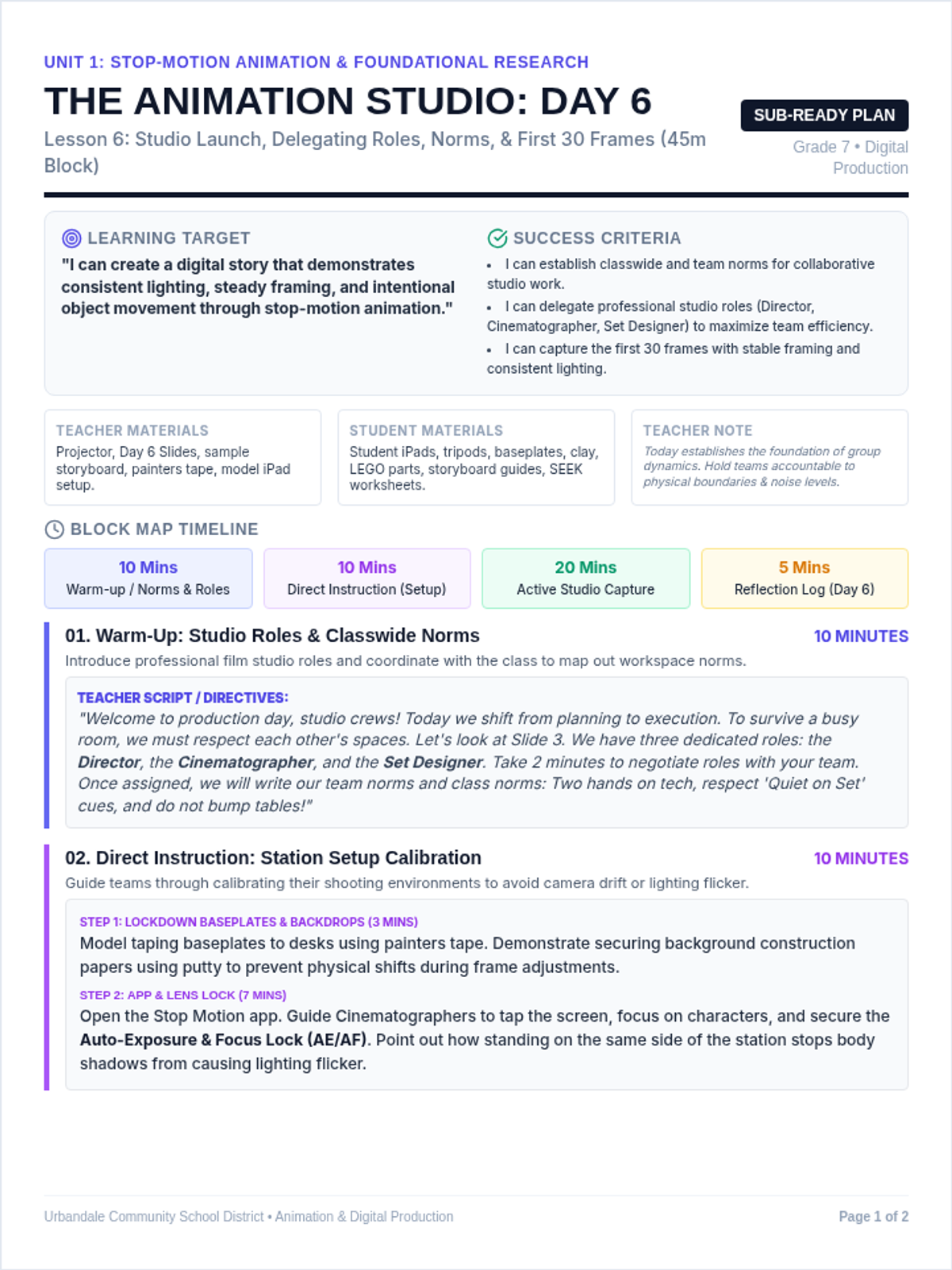
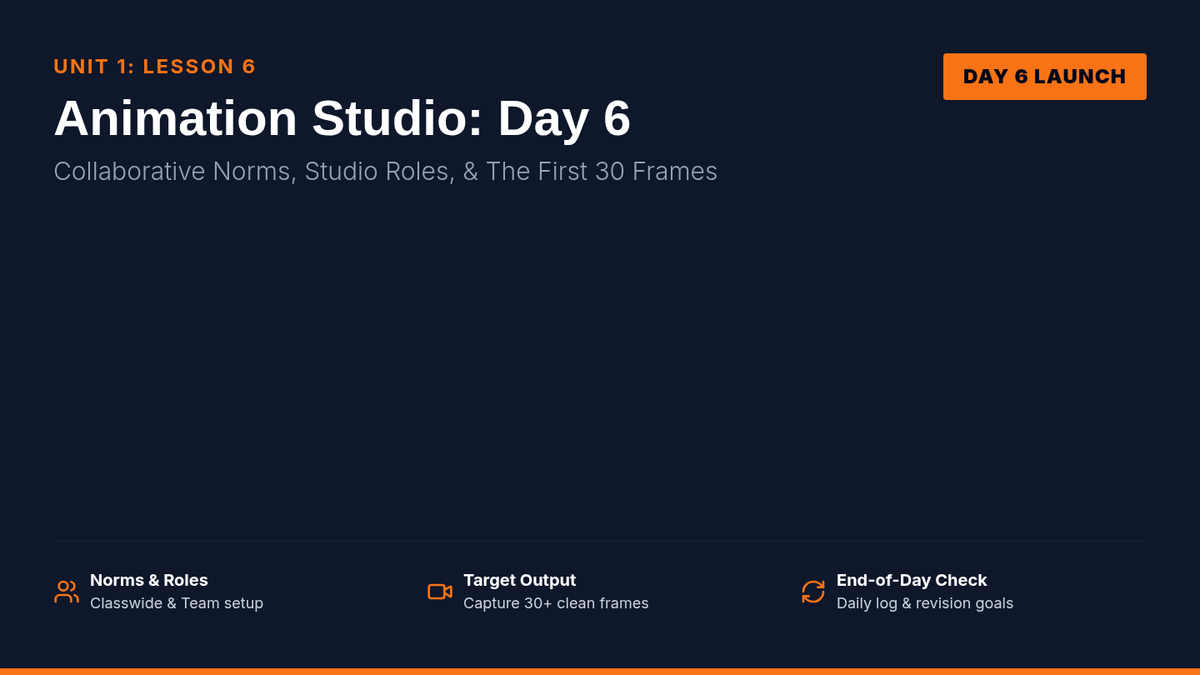
Unit 1, Lesson 6: The Animation Studio - Day 6. Teams establish collaborative group norms and class safety norms, delegate professional roles, and capture the first 30 frames.
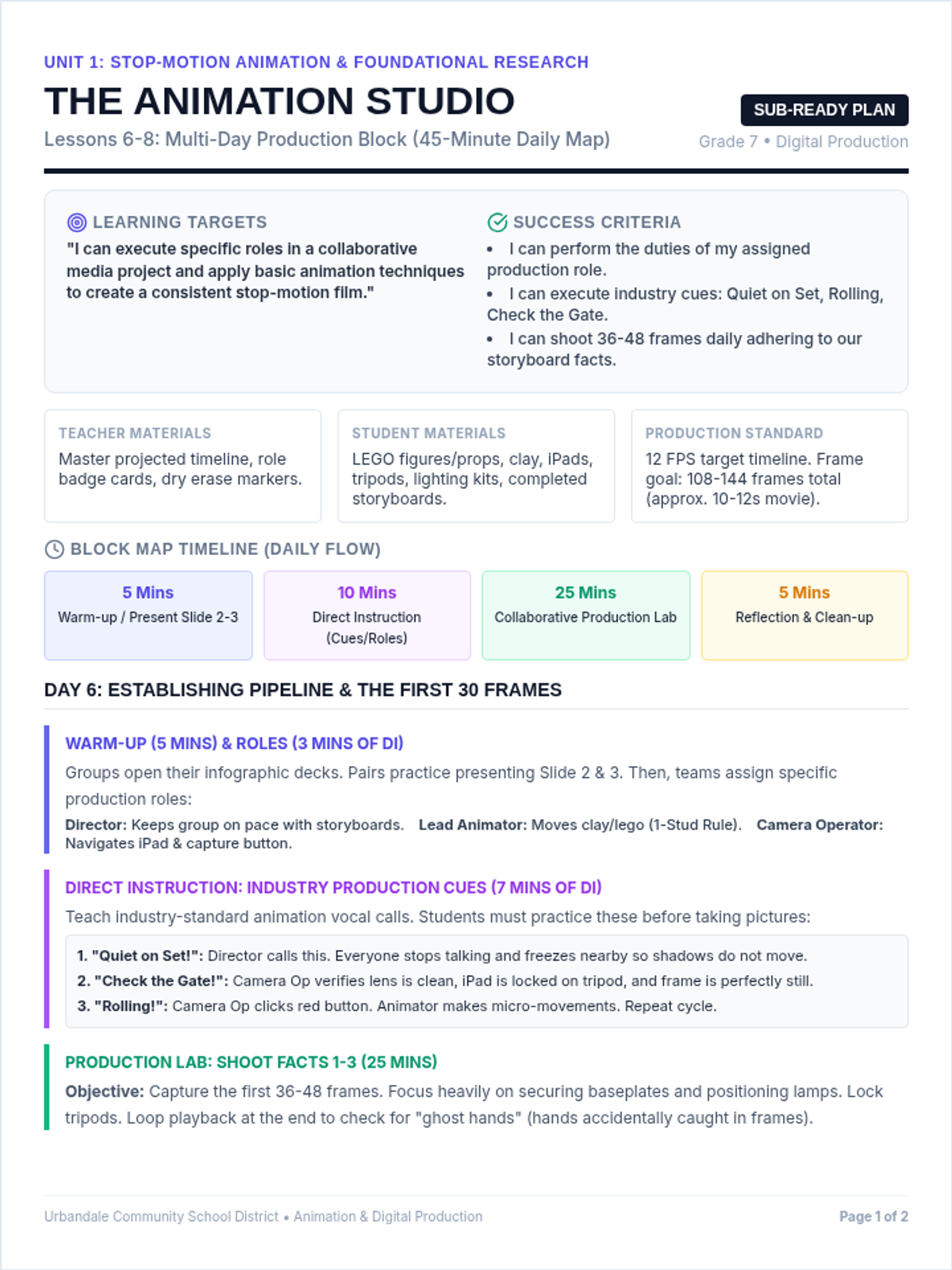
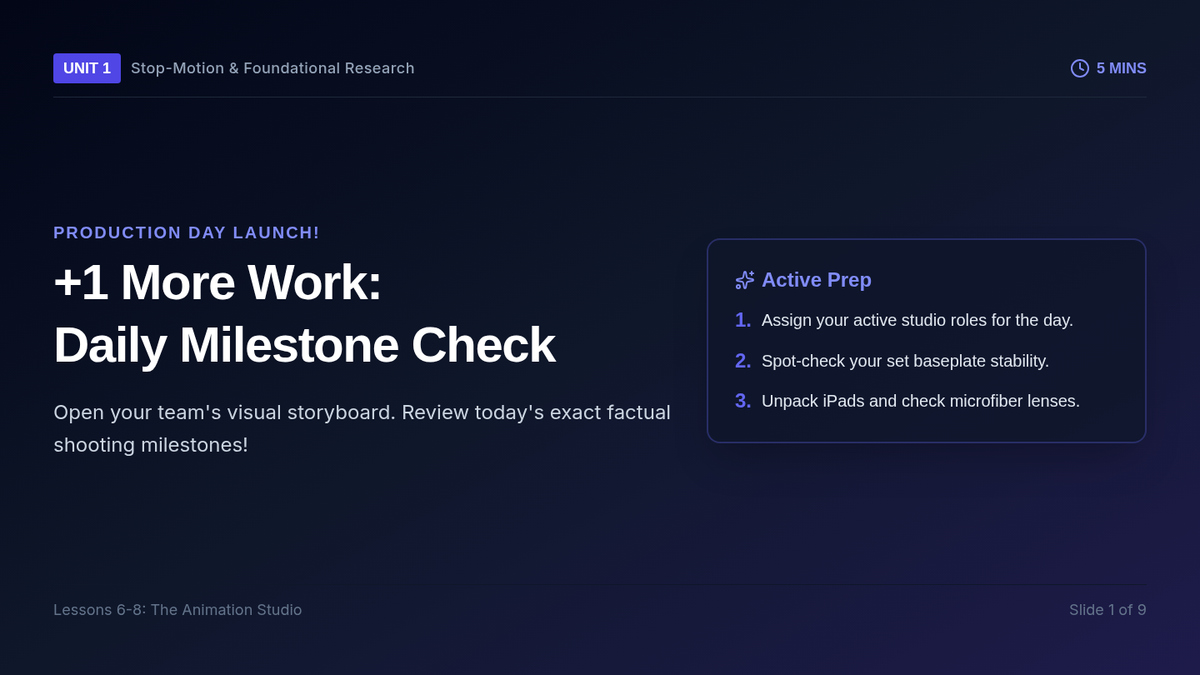
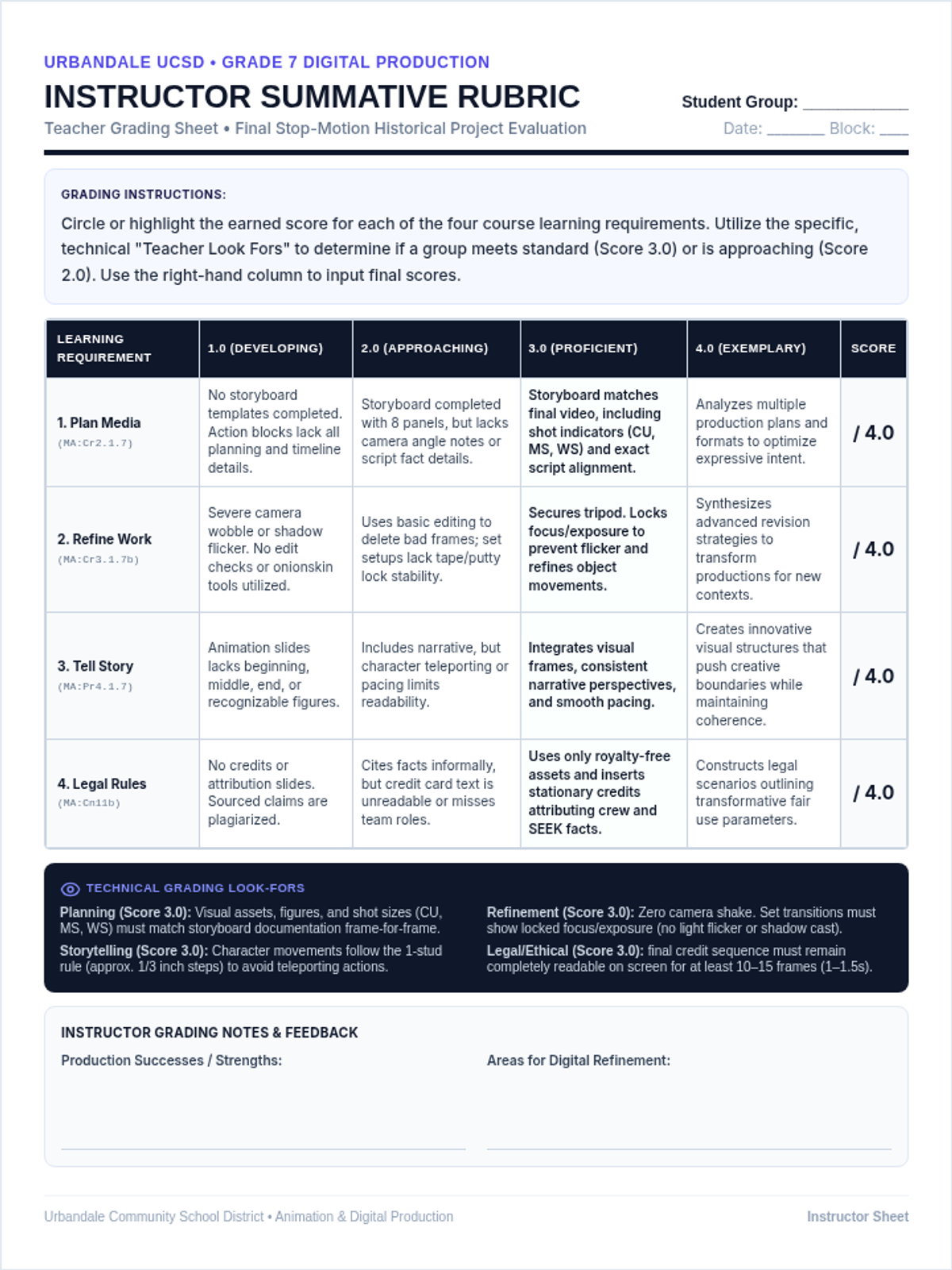
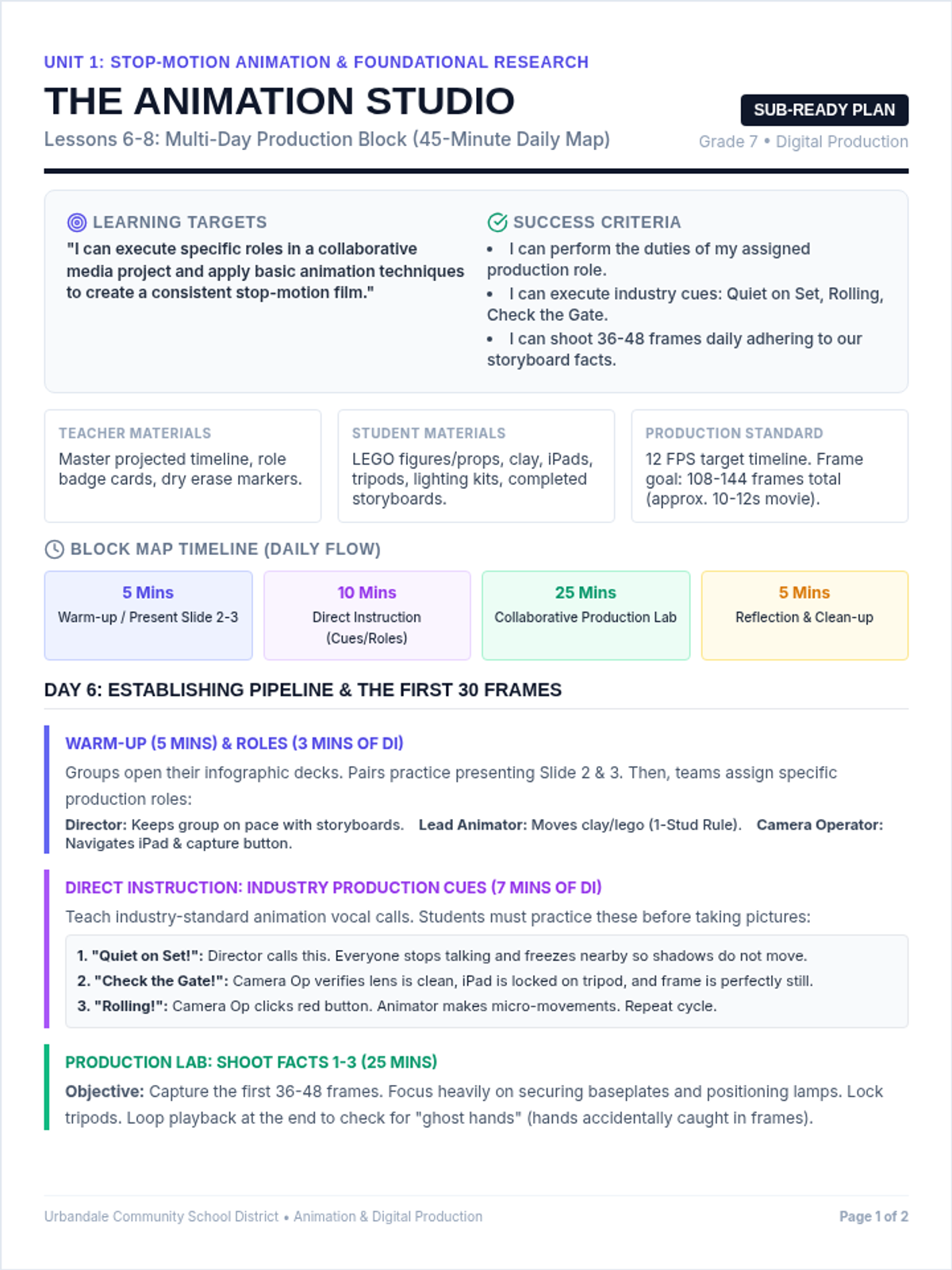
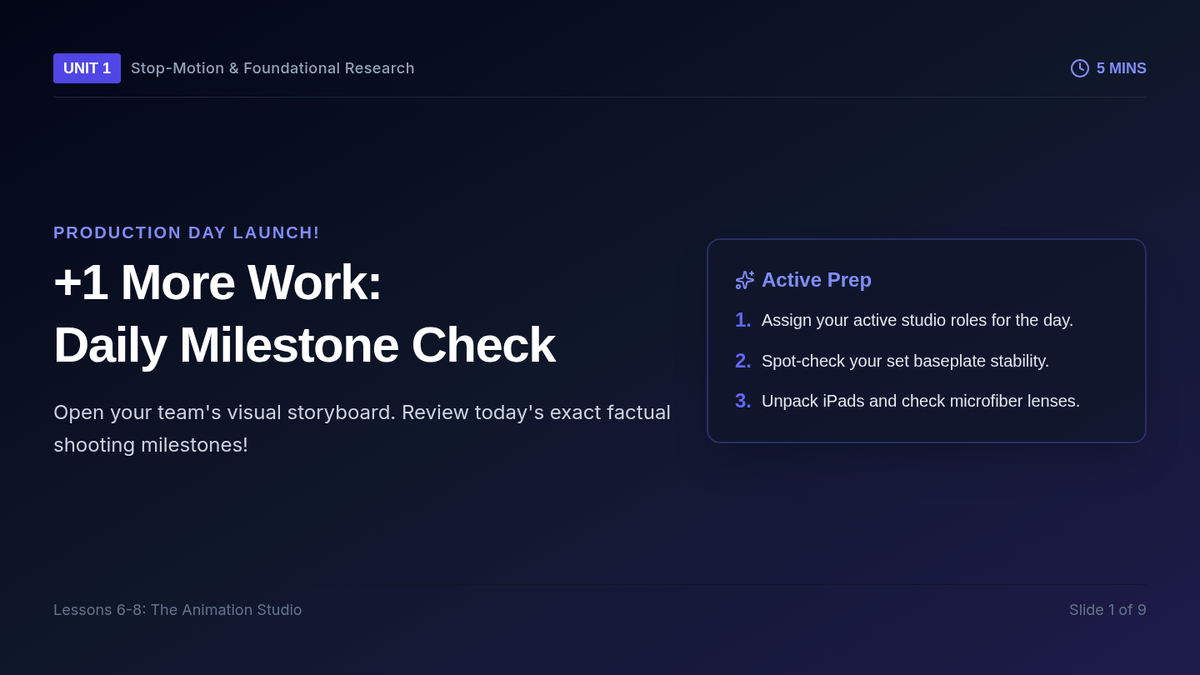
Unit 1, Lessons 6-8: Multi-day animation studio production block. Teams establish student roles, execute industry production cues, and shoot their 10-fact historical stop-motion animations on iPads.
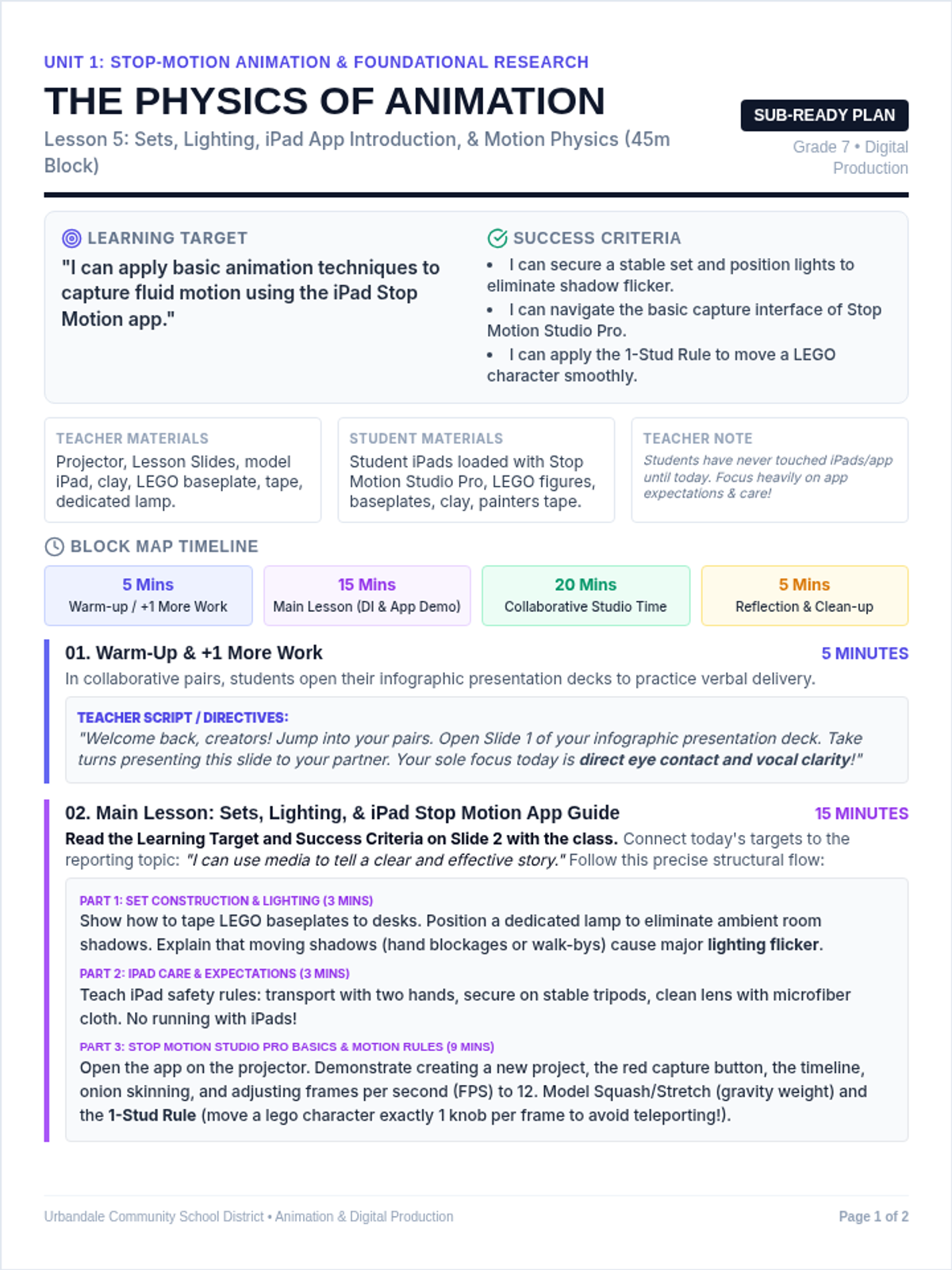
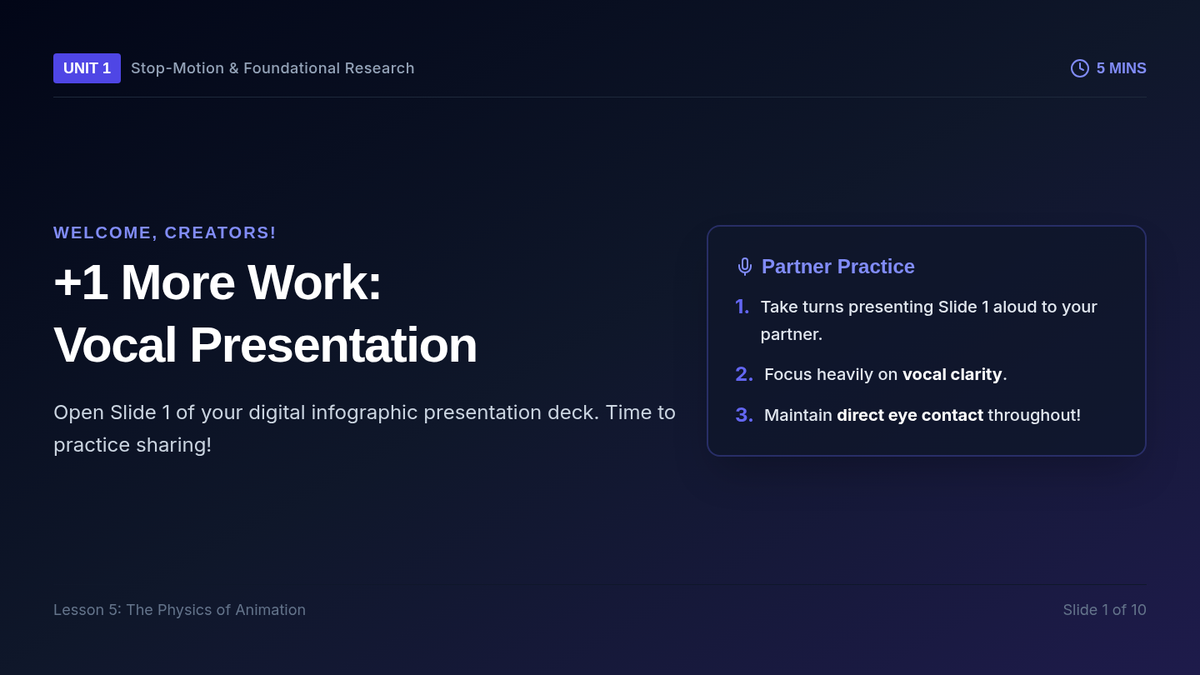
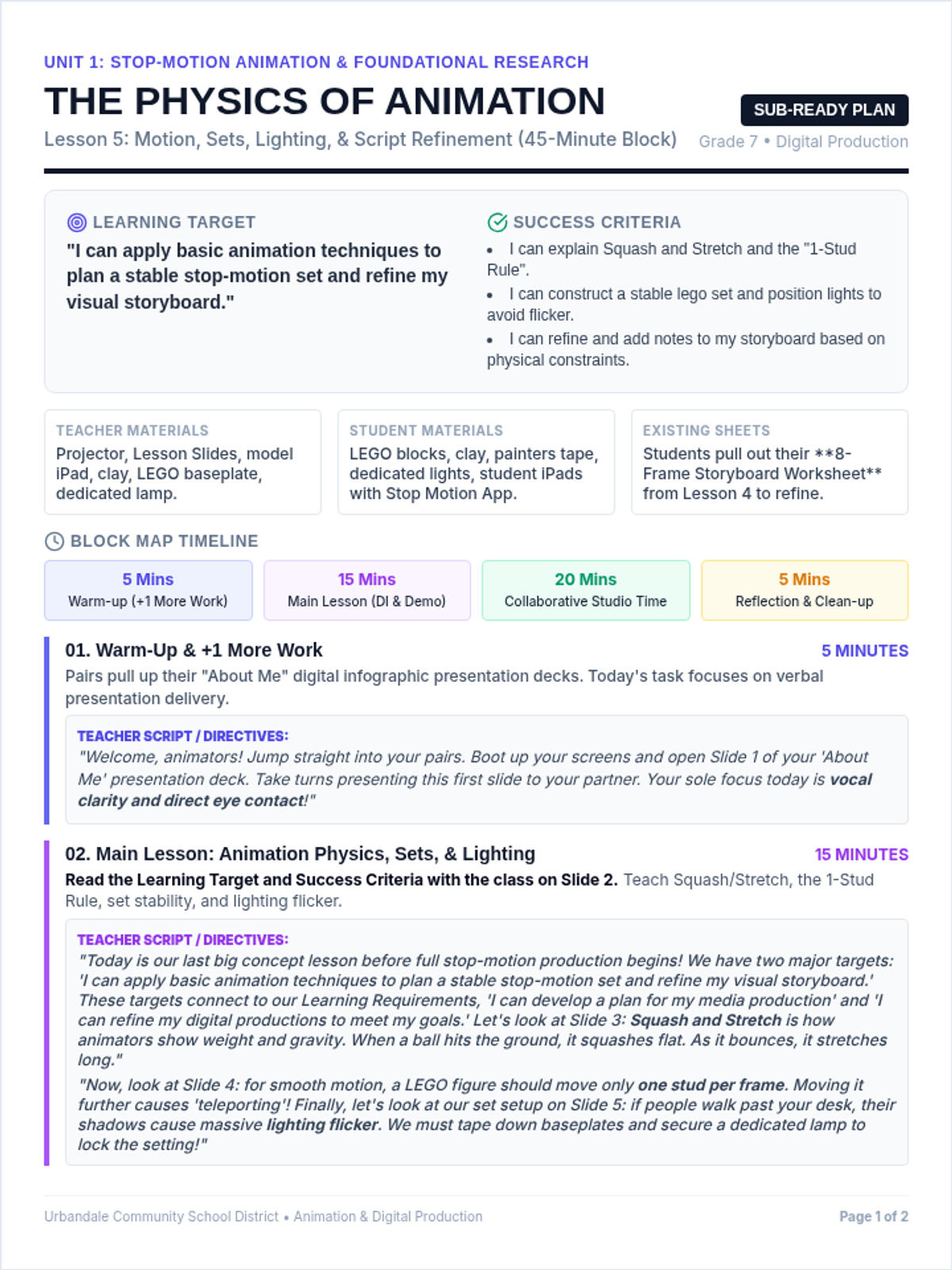
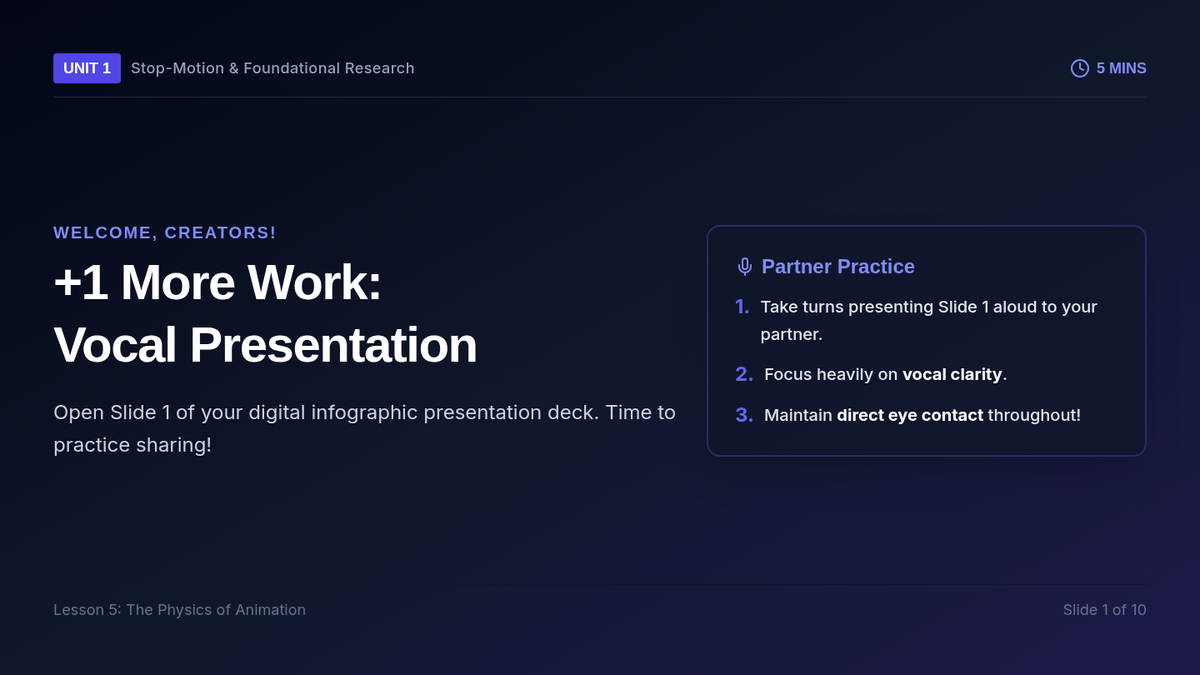
Unit 1, Lesson 5: The Physics of Animation. Combining Squash and Stretch, the 1-Stud Rule, set construction stability, lighting consistency, and storyboard revision.
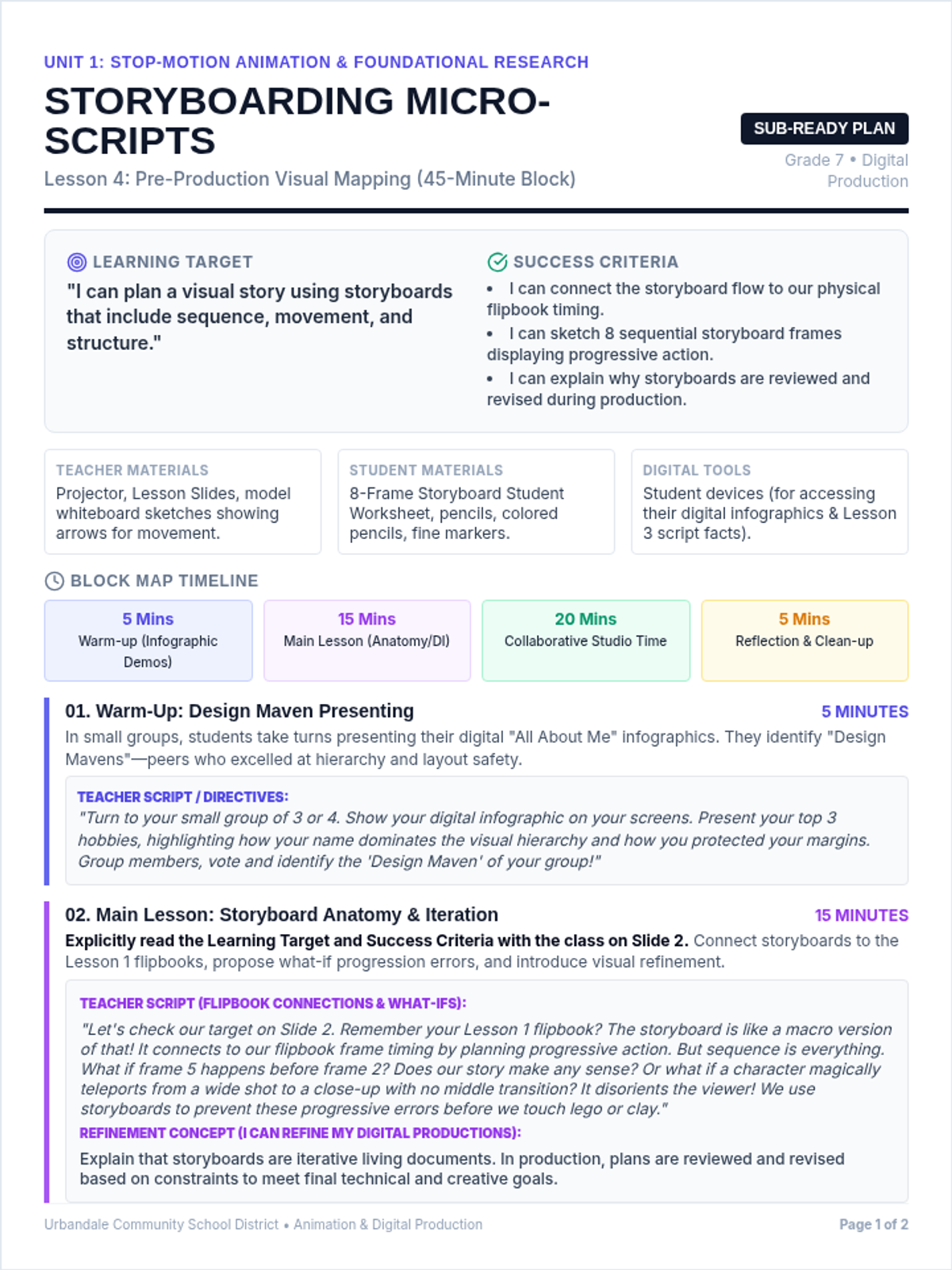
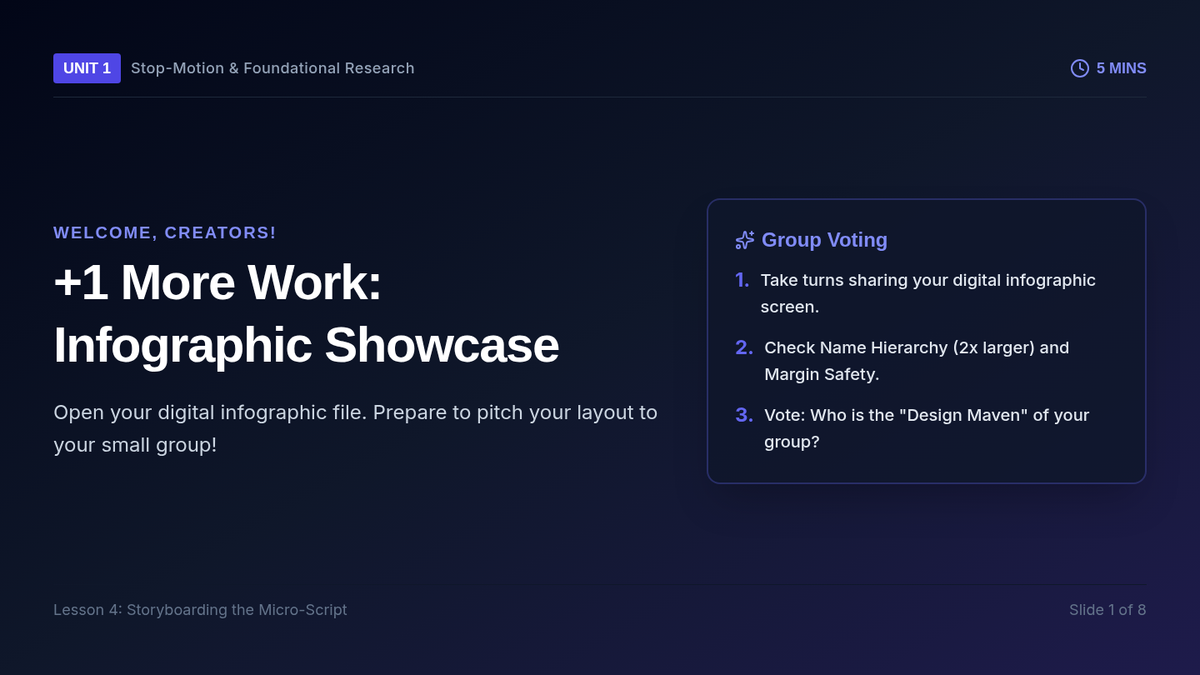
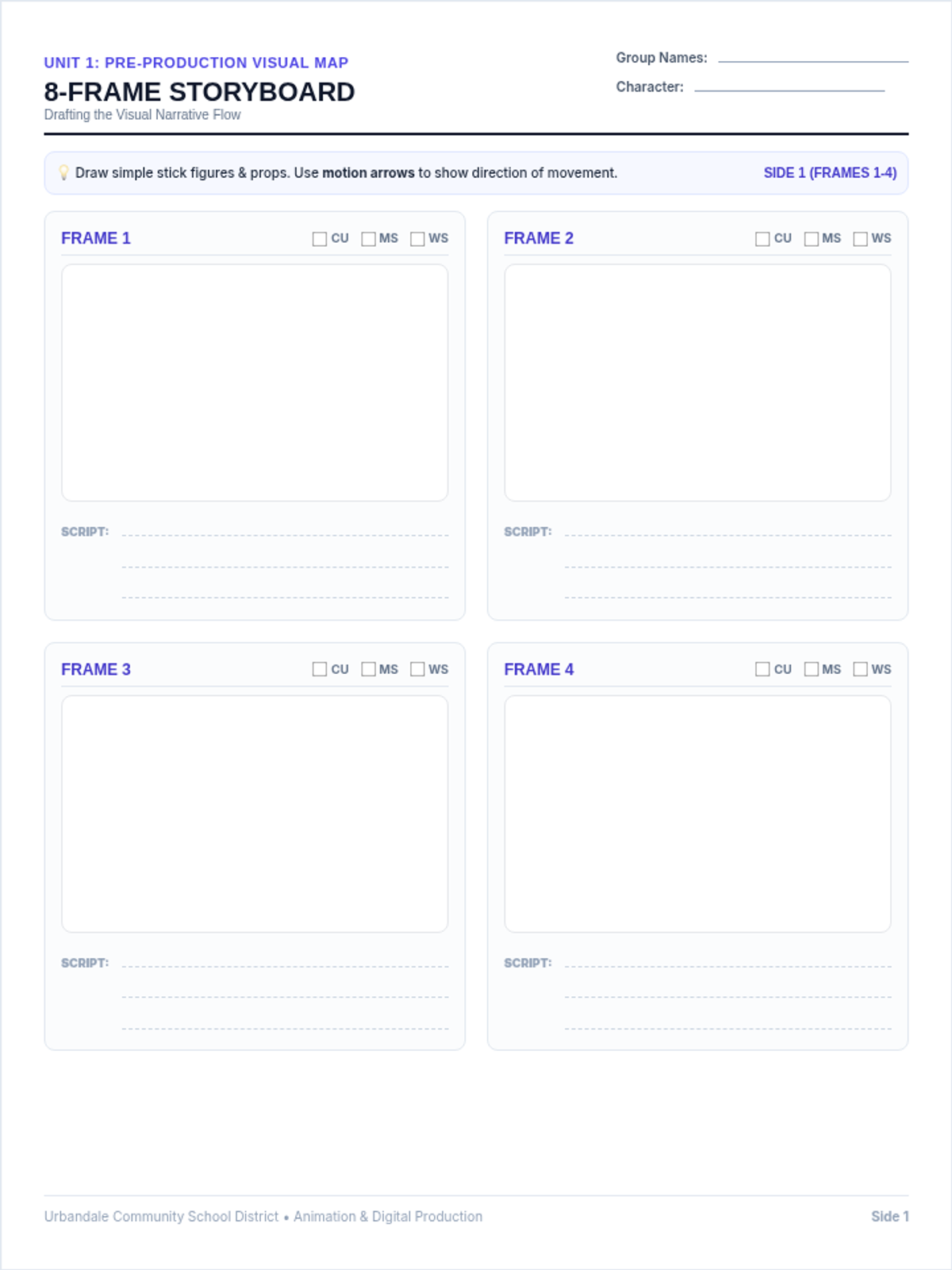
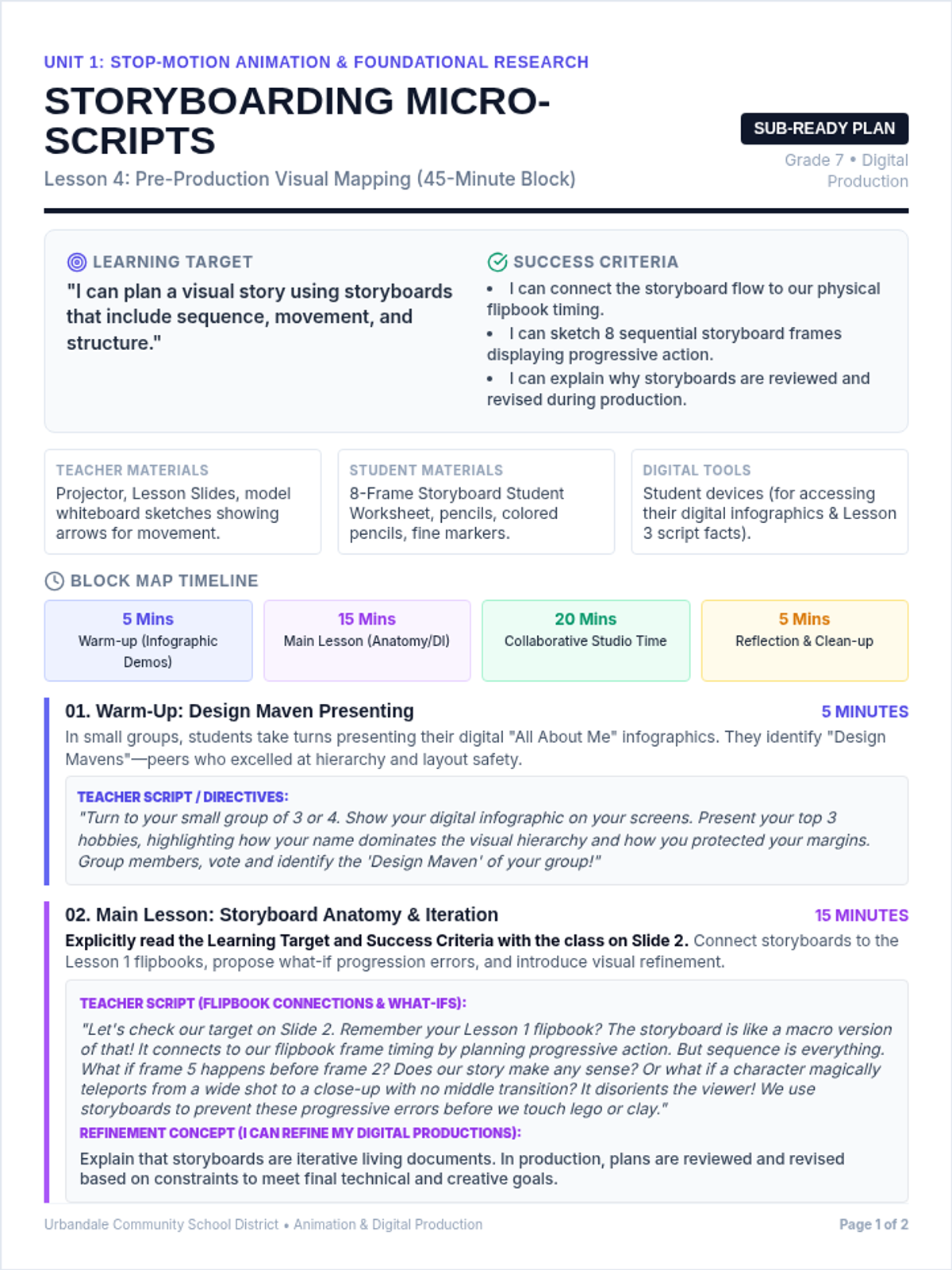
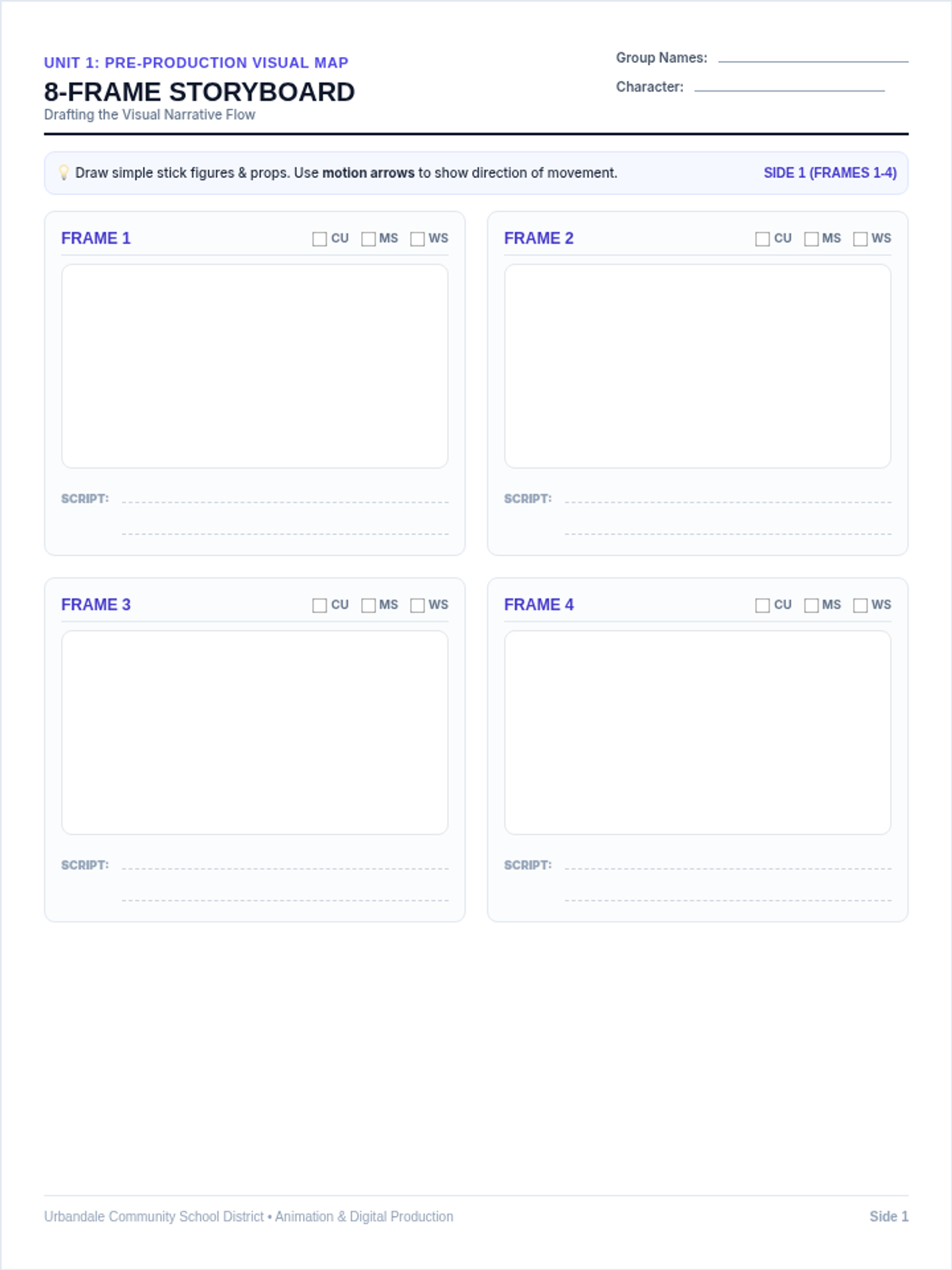
Unit 1, Lesson 4: Introducing the anatomy of a storyboard, exploring visual action, camera shot directions, and drafting an 8-frame visual storyboard plan for the stop-motion animation.
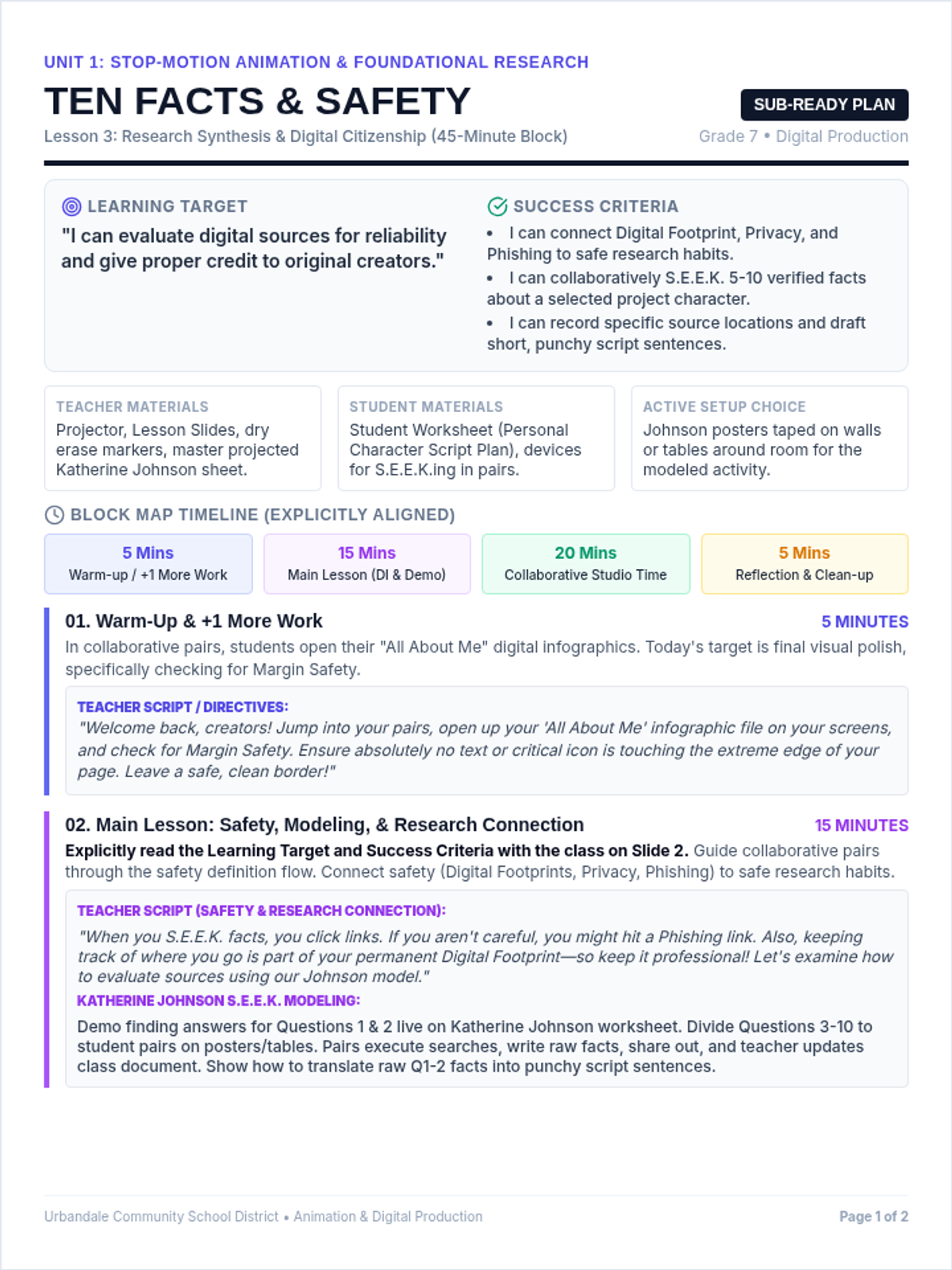
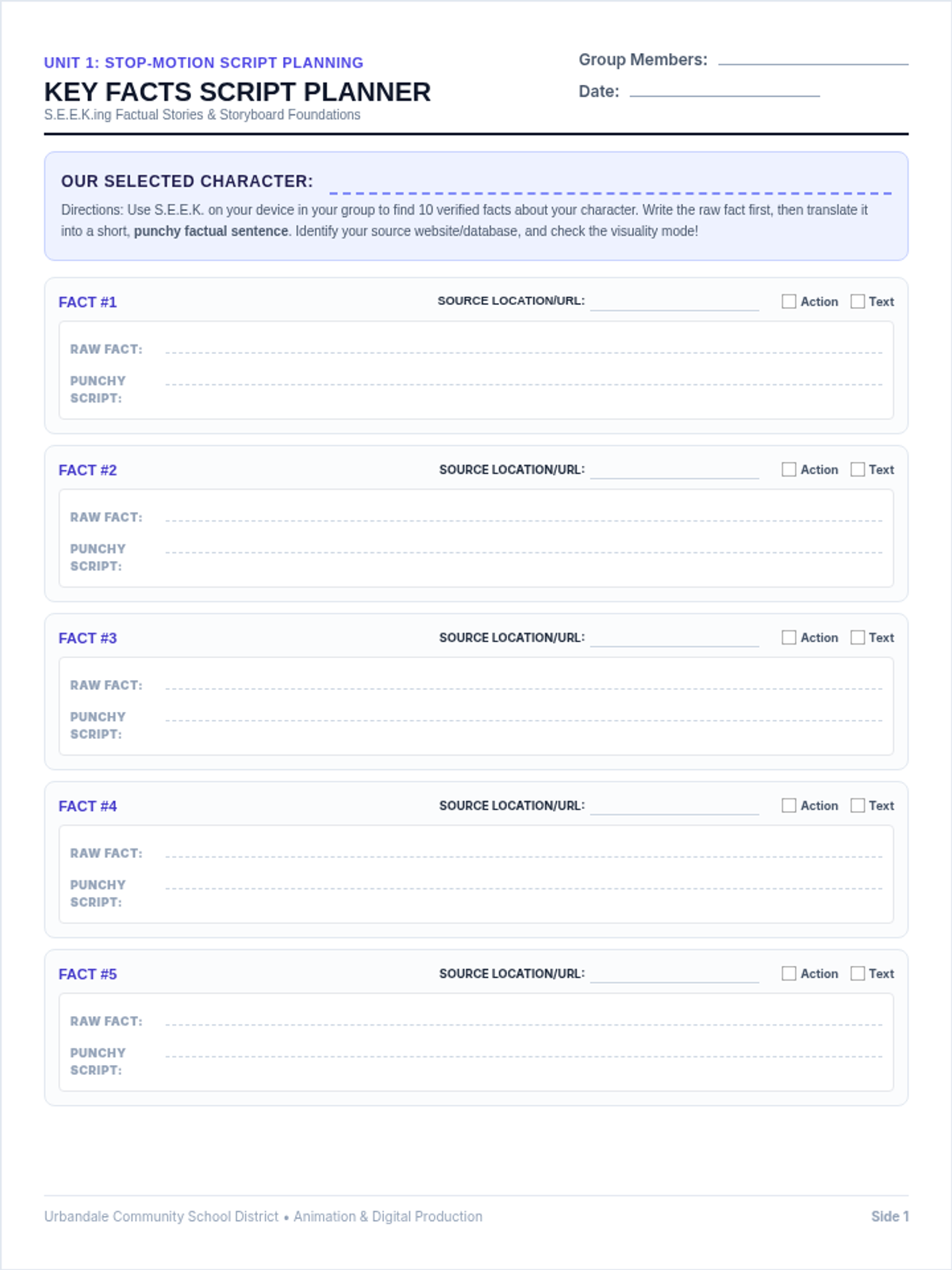
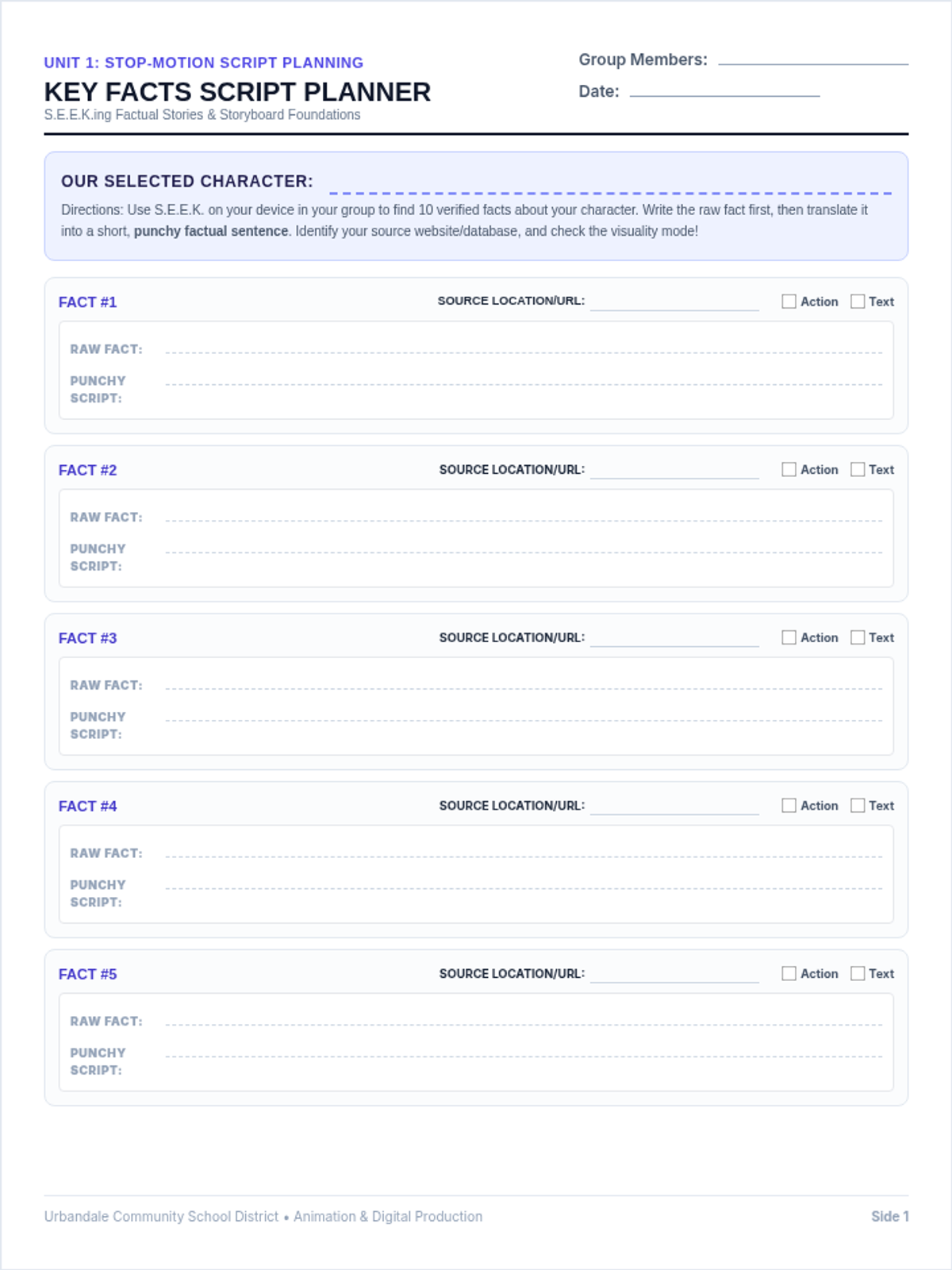
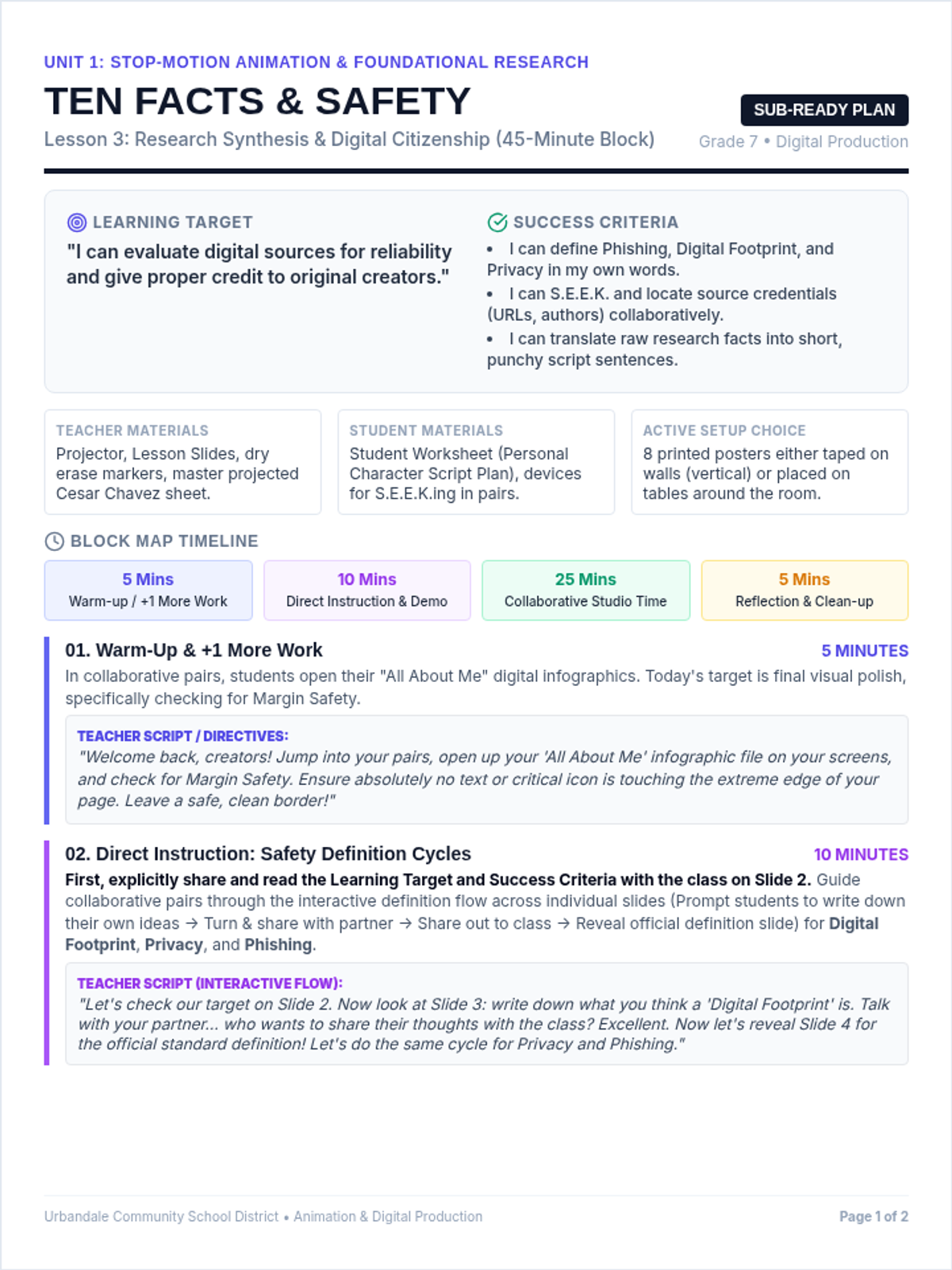
Unit 1, Lesson 3: Synthesizing historical research into 10 punchy factual sentences for the stop-motion script, while conducting an internet safety scavenger hunt on Phishing, Digital Footprint, and Privacy.
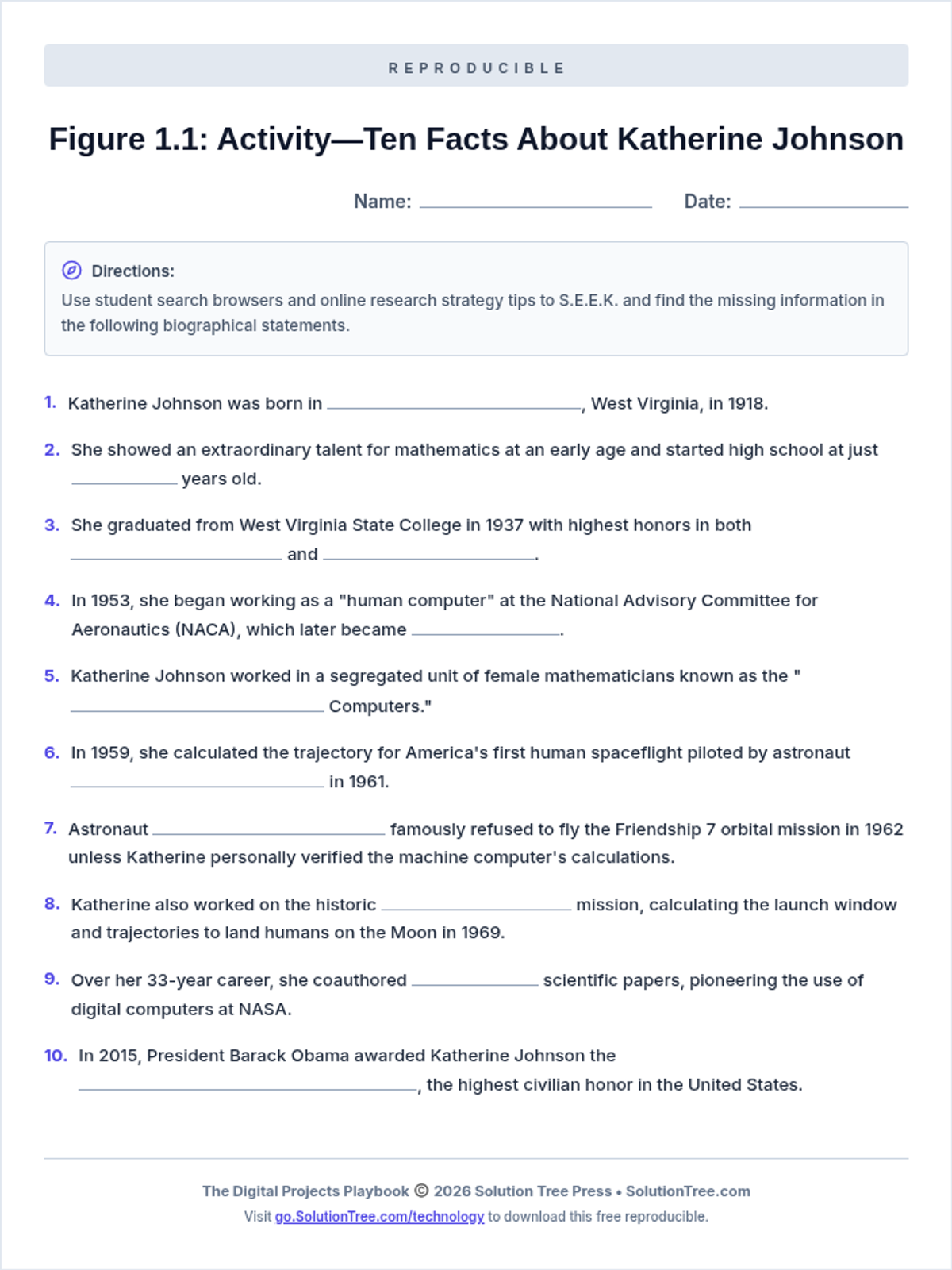
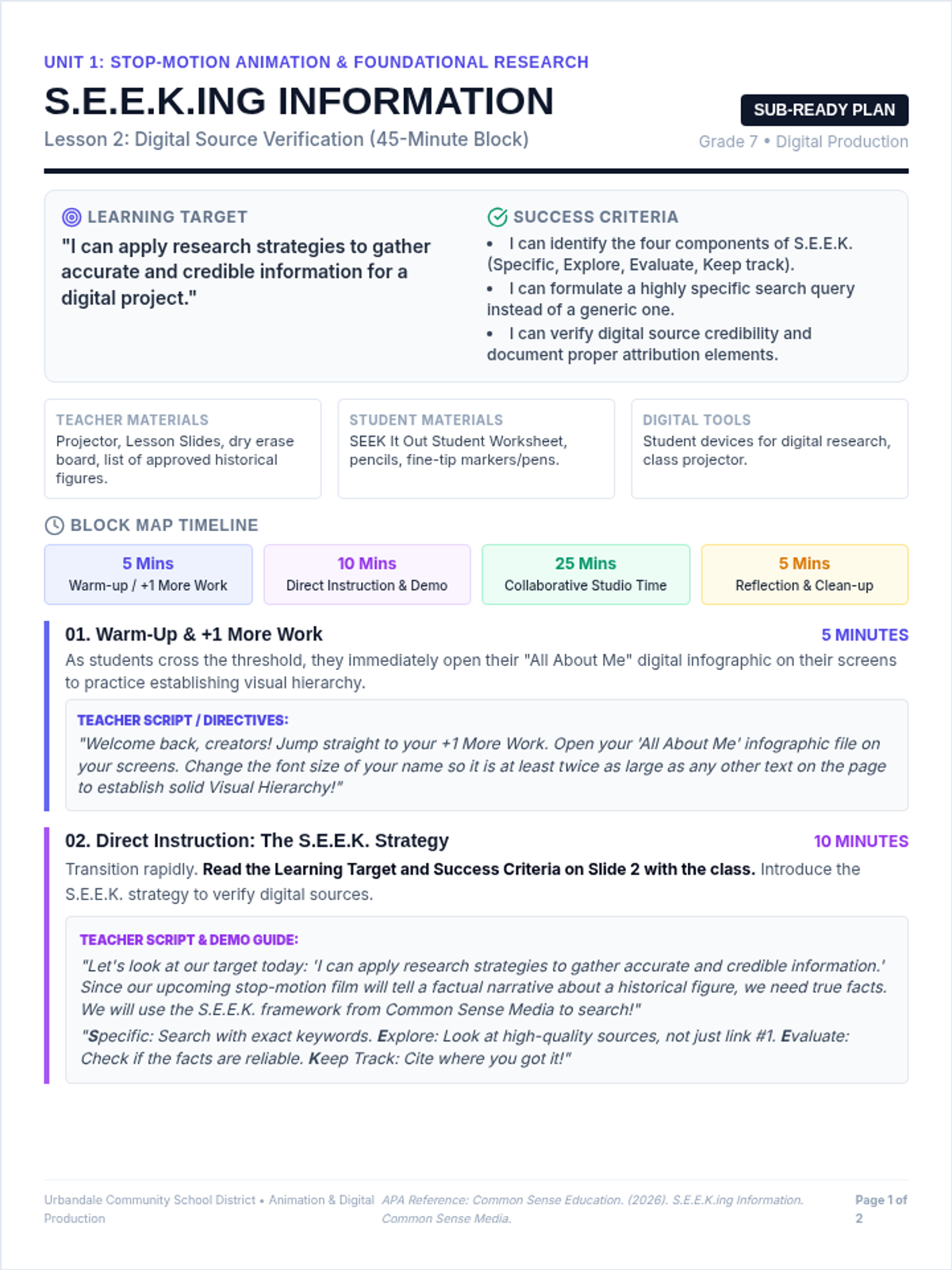
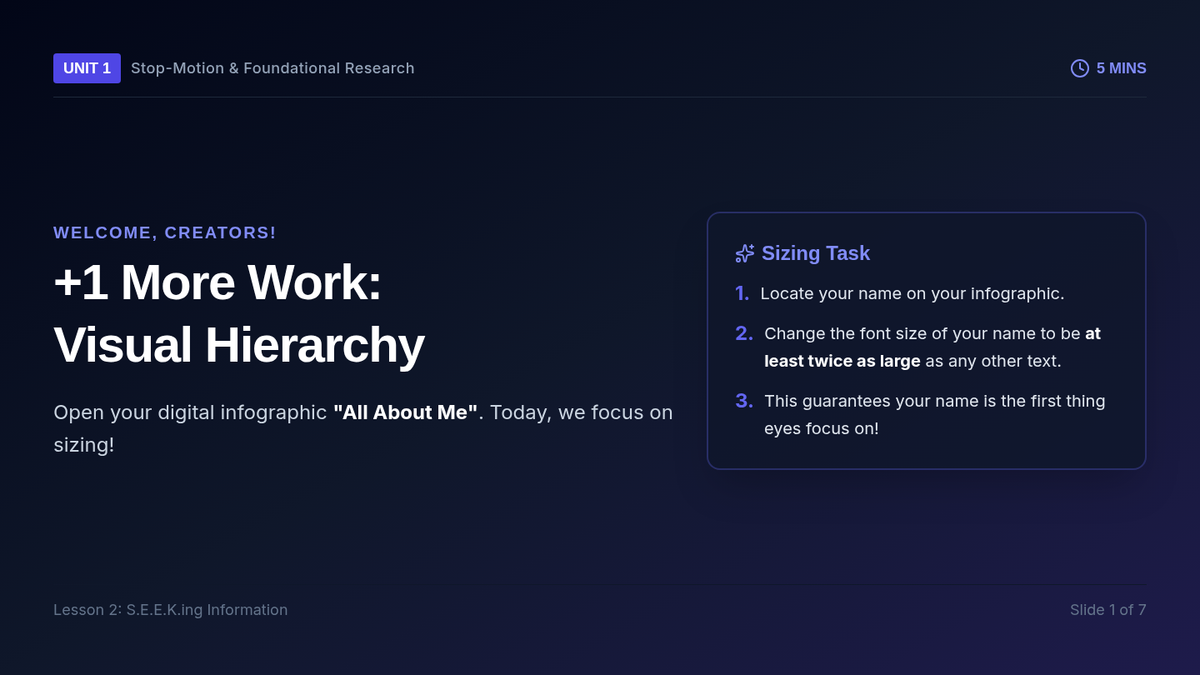
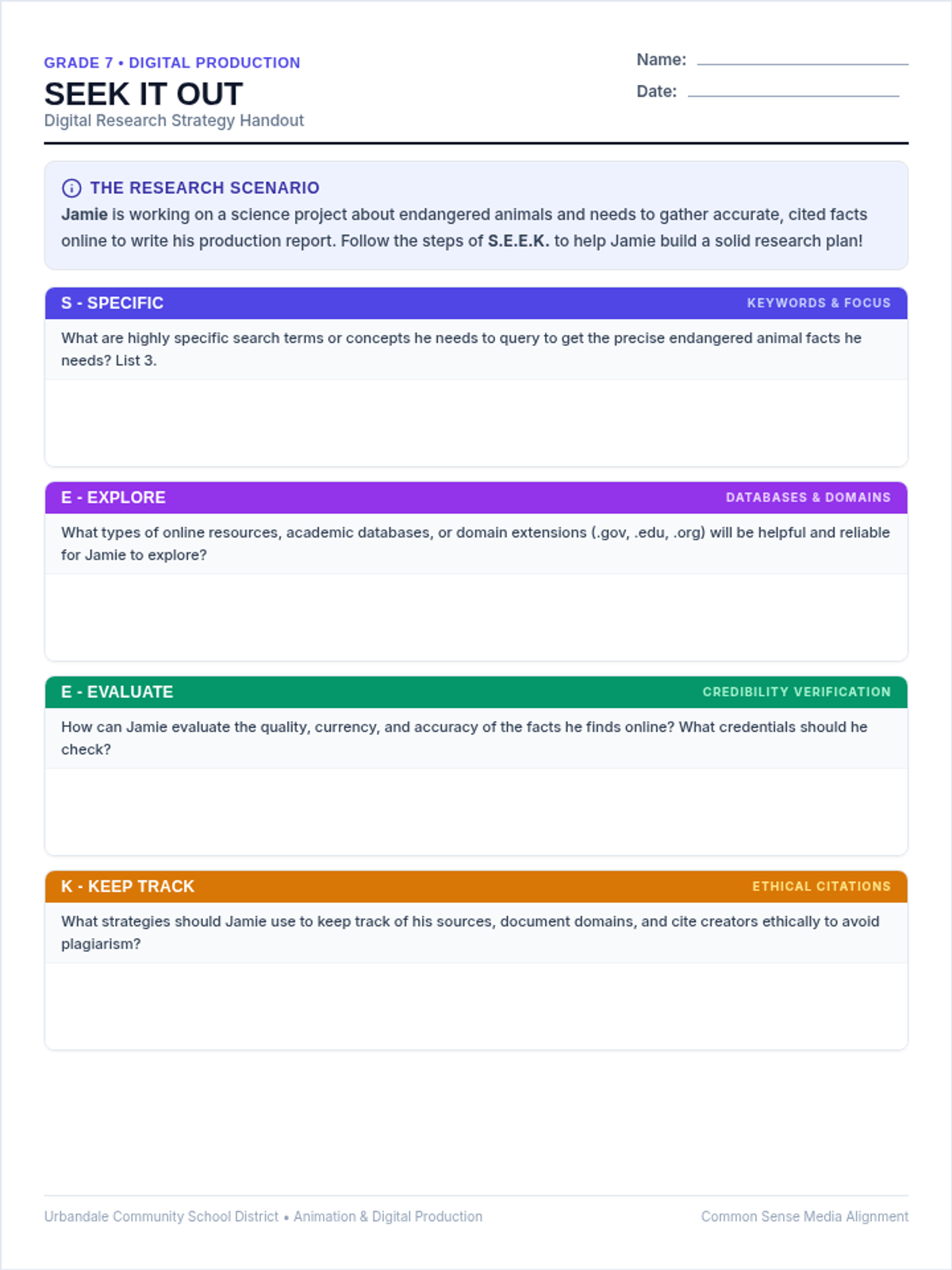
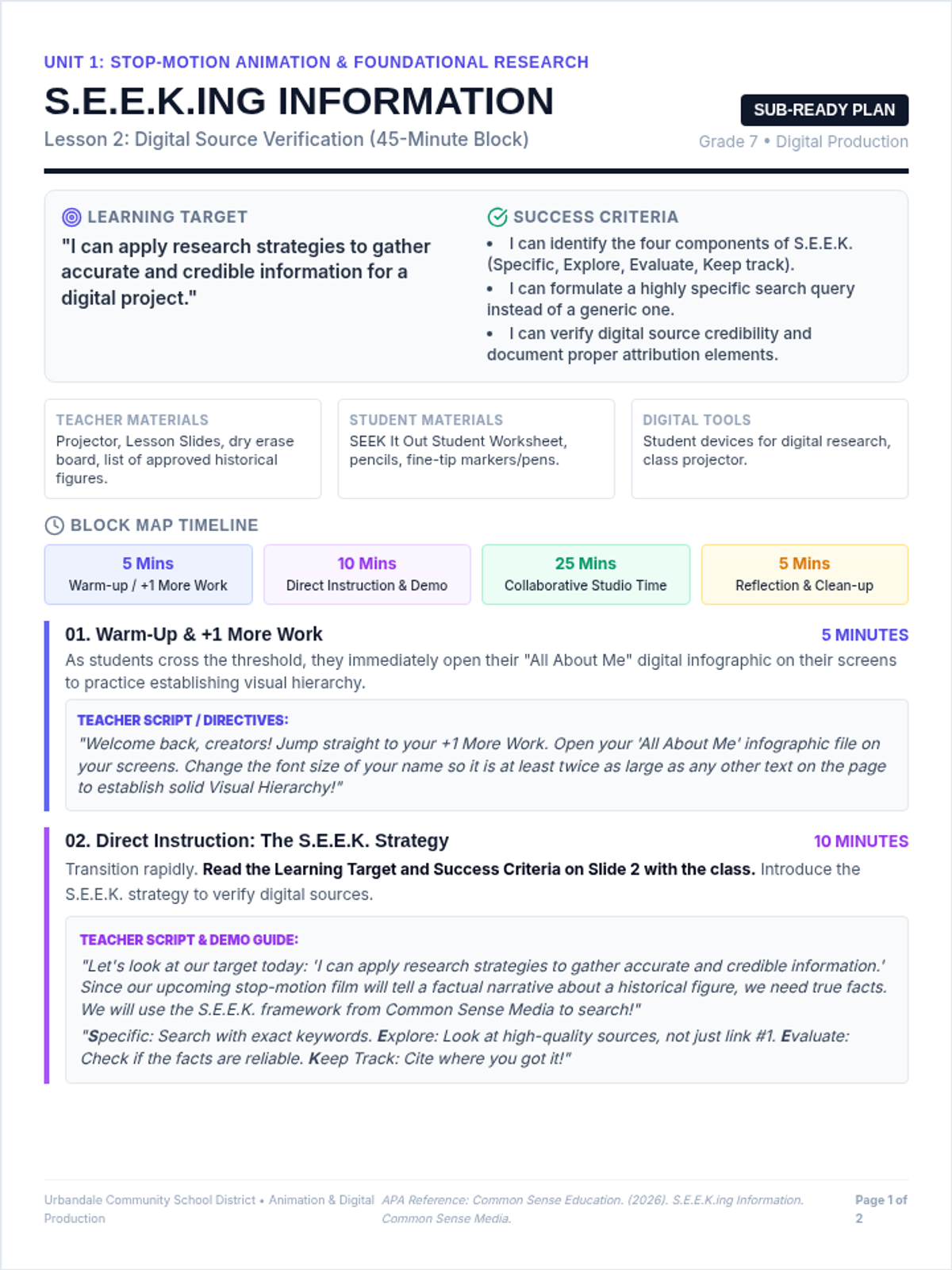
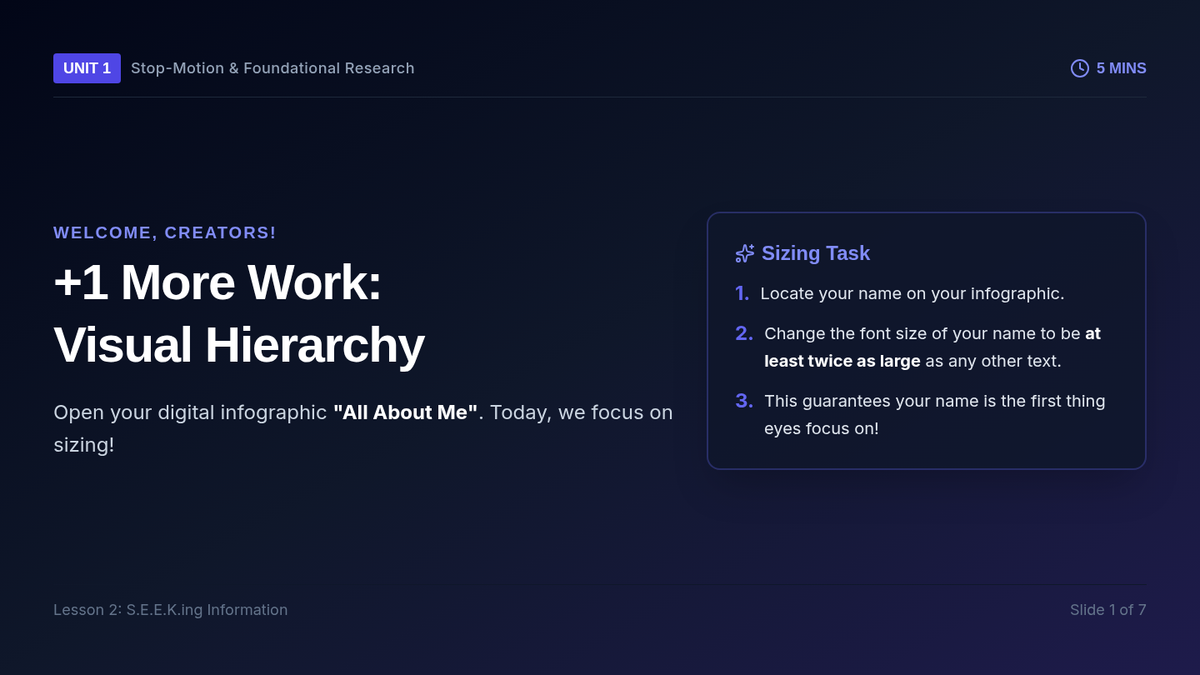
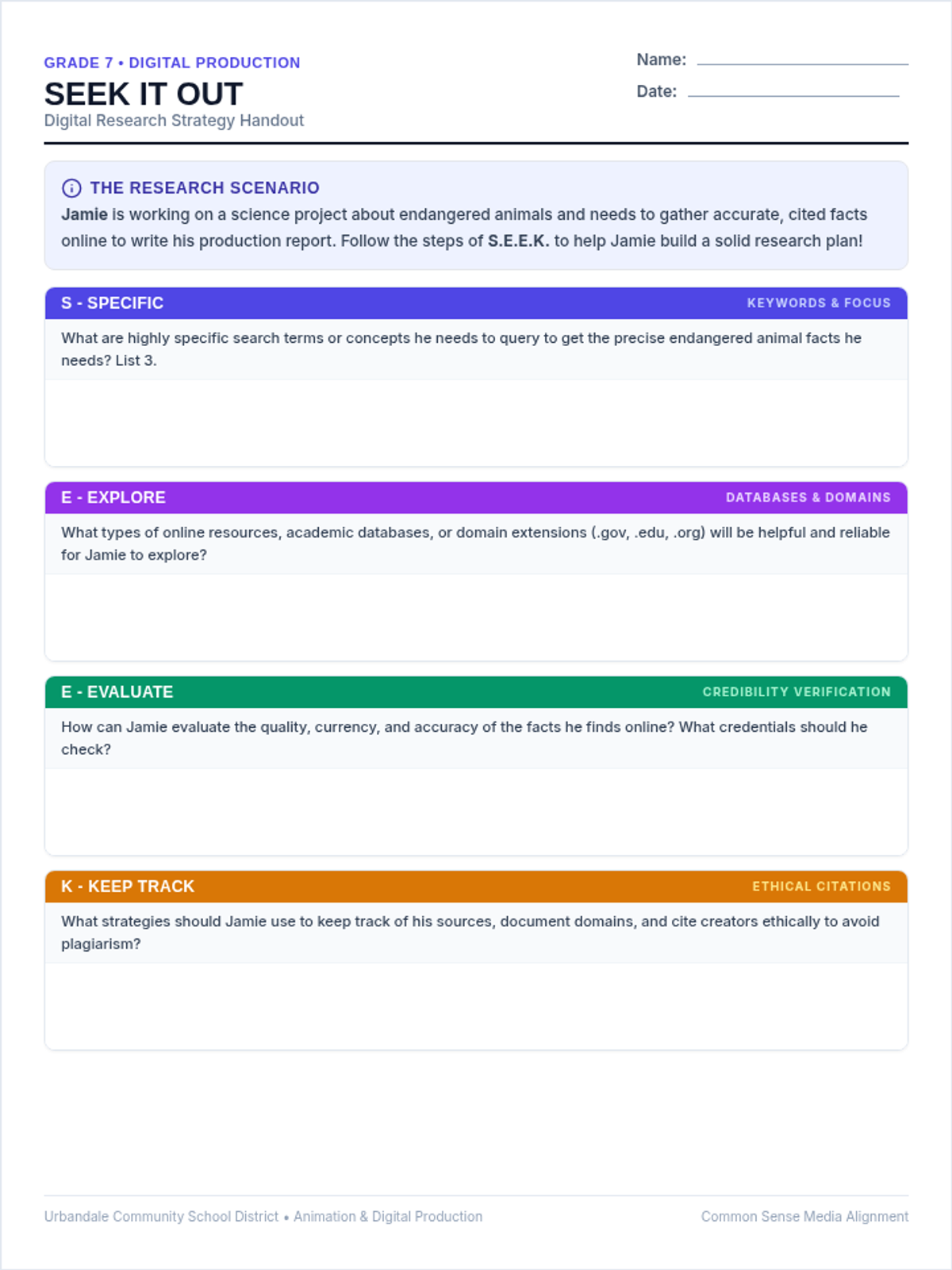
Unit 1, Lesson 2: Introducing the S.E.E.K. digital search strategy to help students research, verify, and document credible facts about a historical figure for their future stop-motion script.
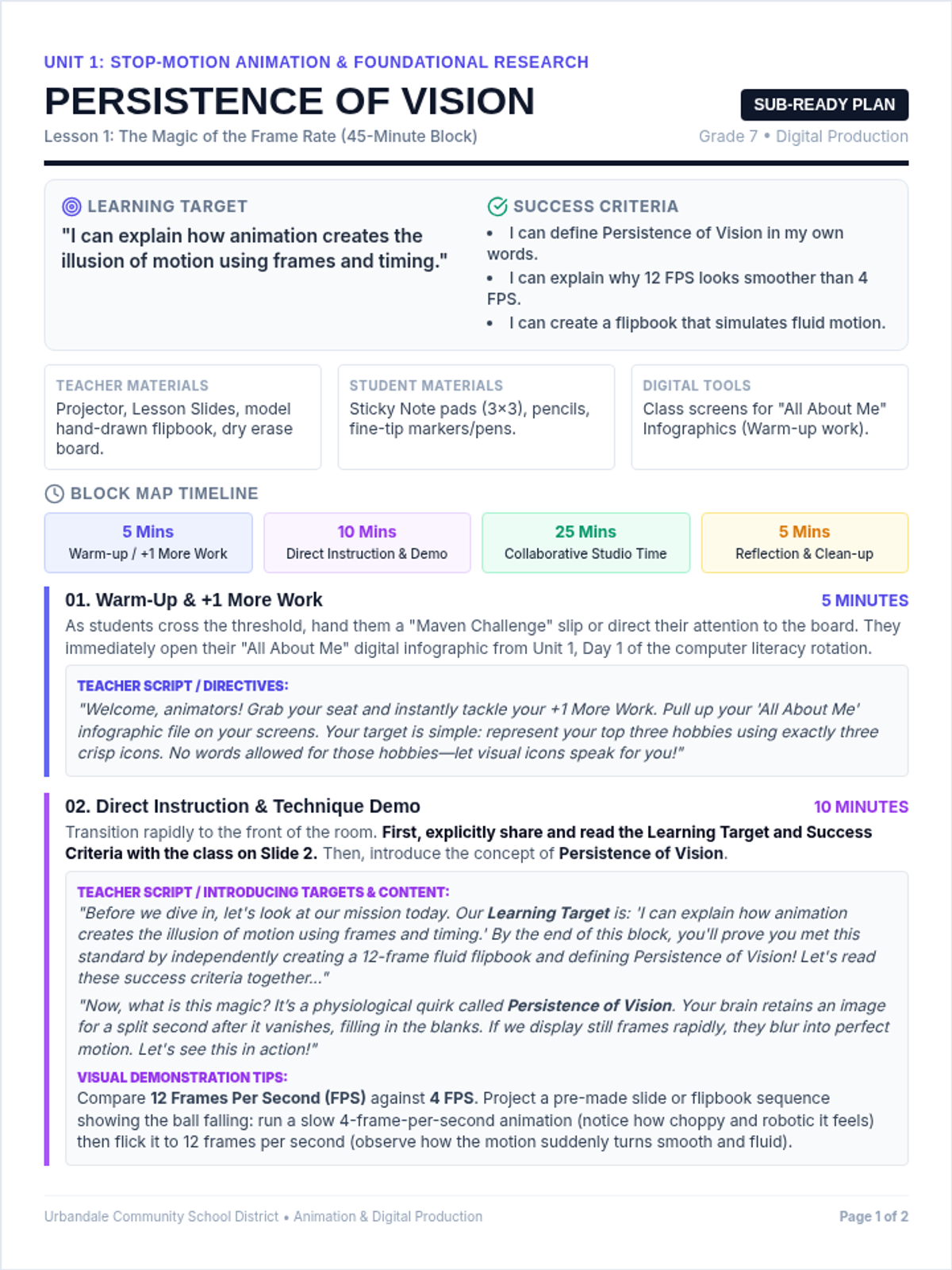
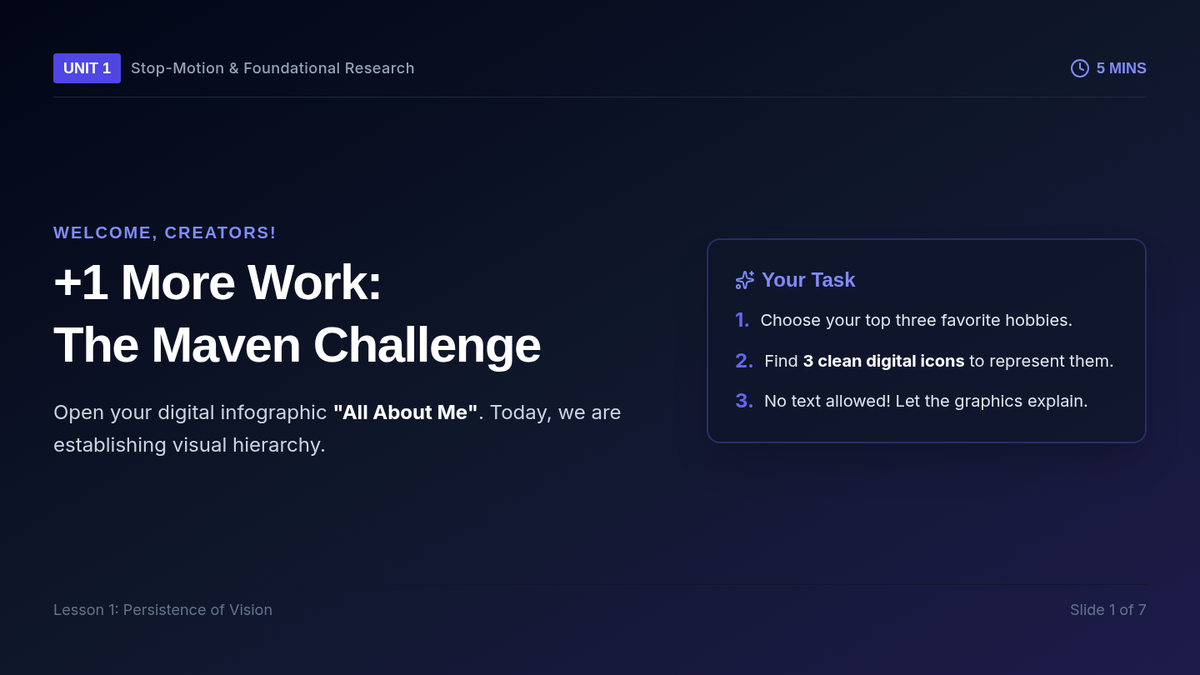
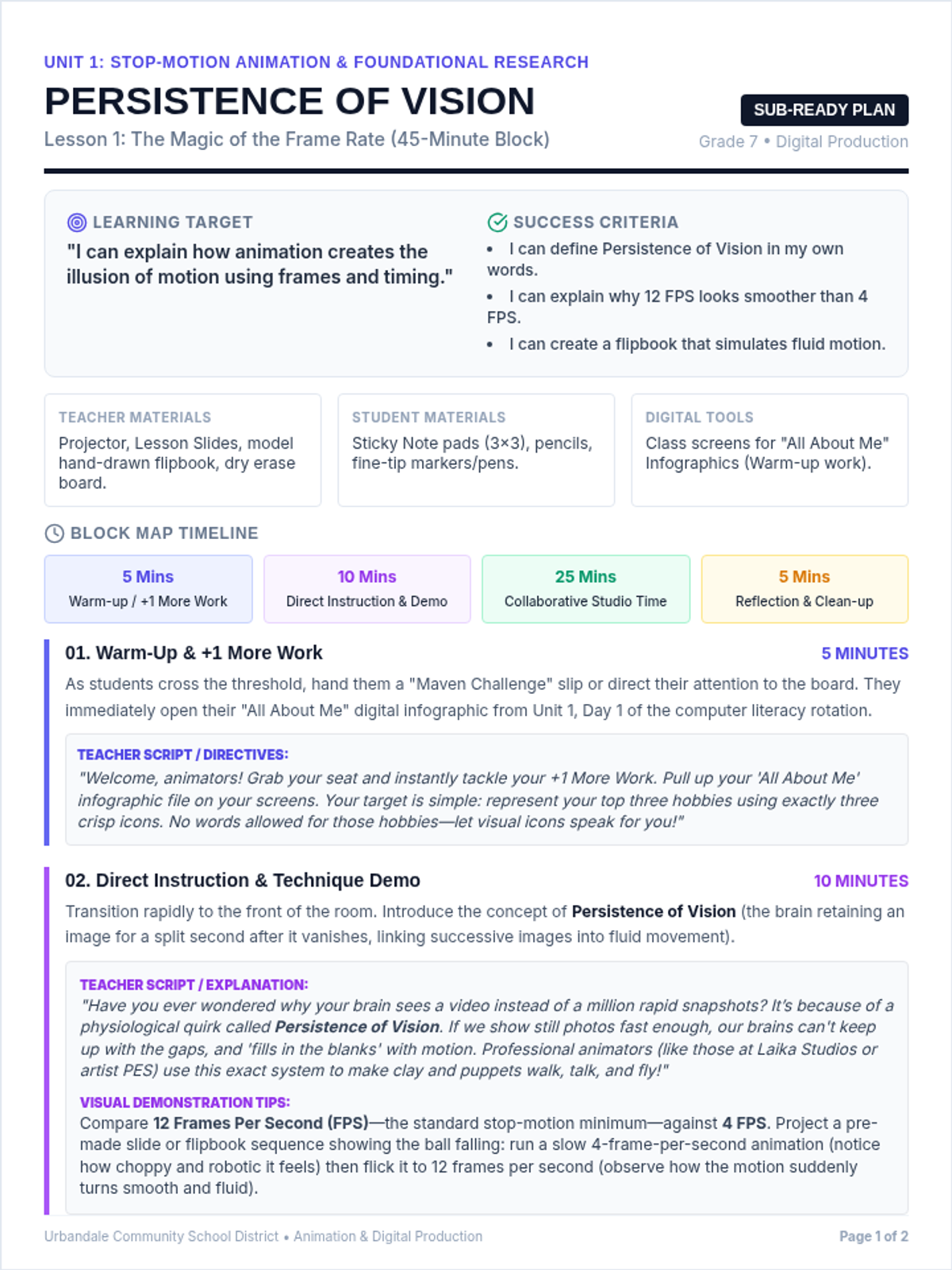
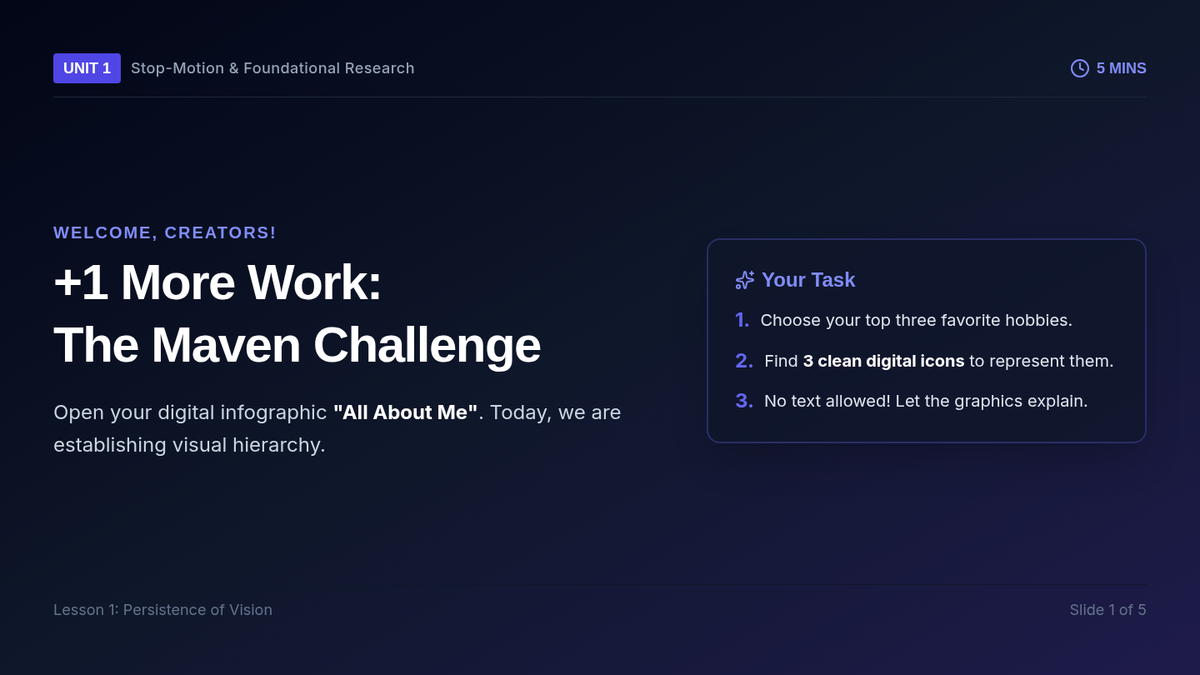
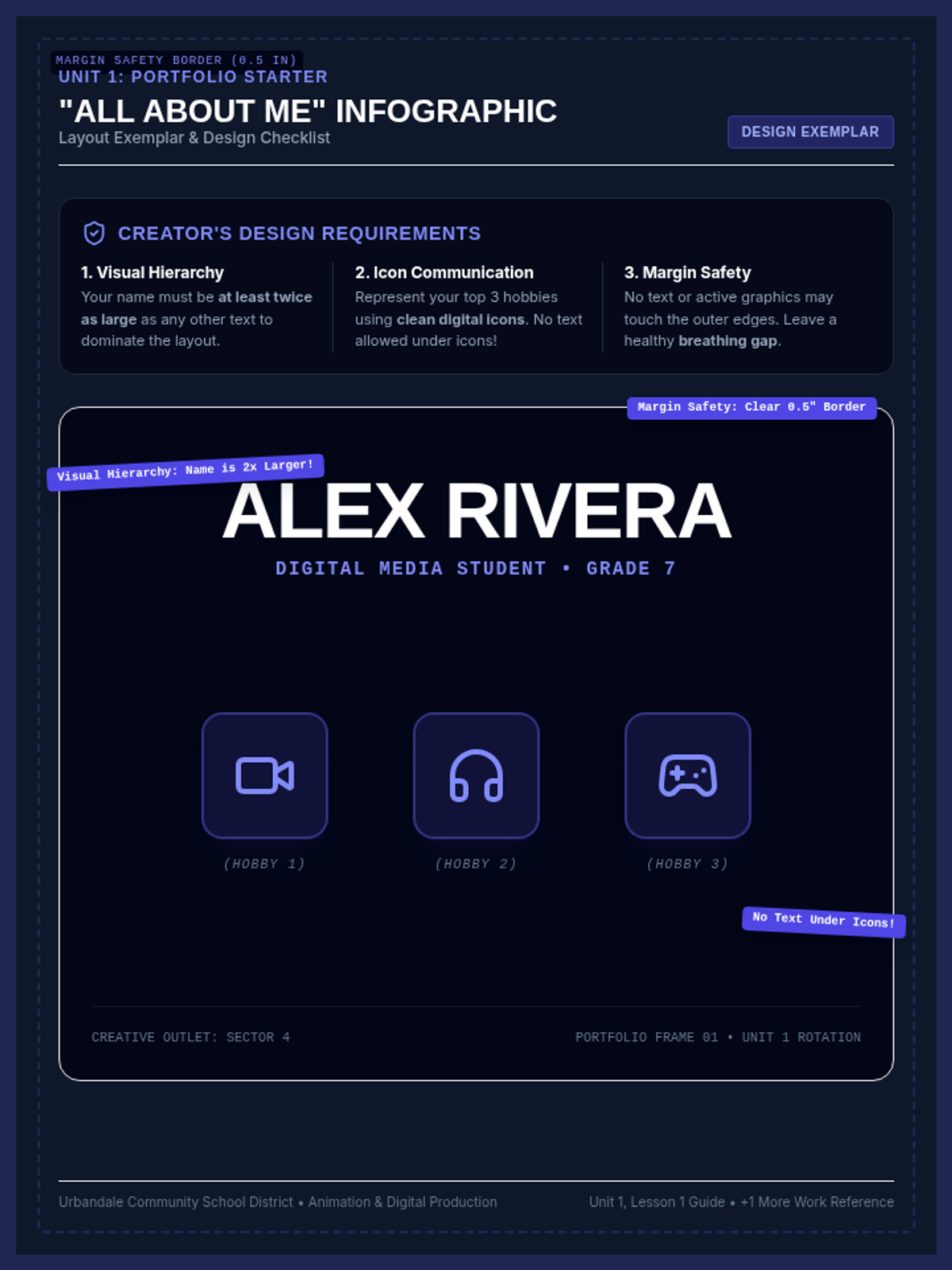
Unit 1, Lesson 1: Persistence of Vision lesson outline exploring frames per second (FPS), professional exemplars, and flipbook creation.
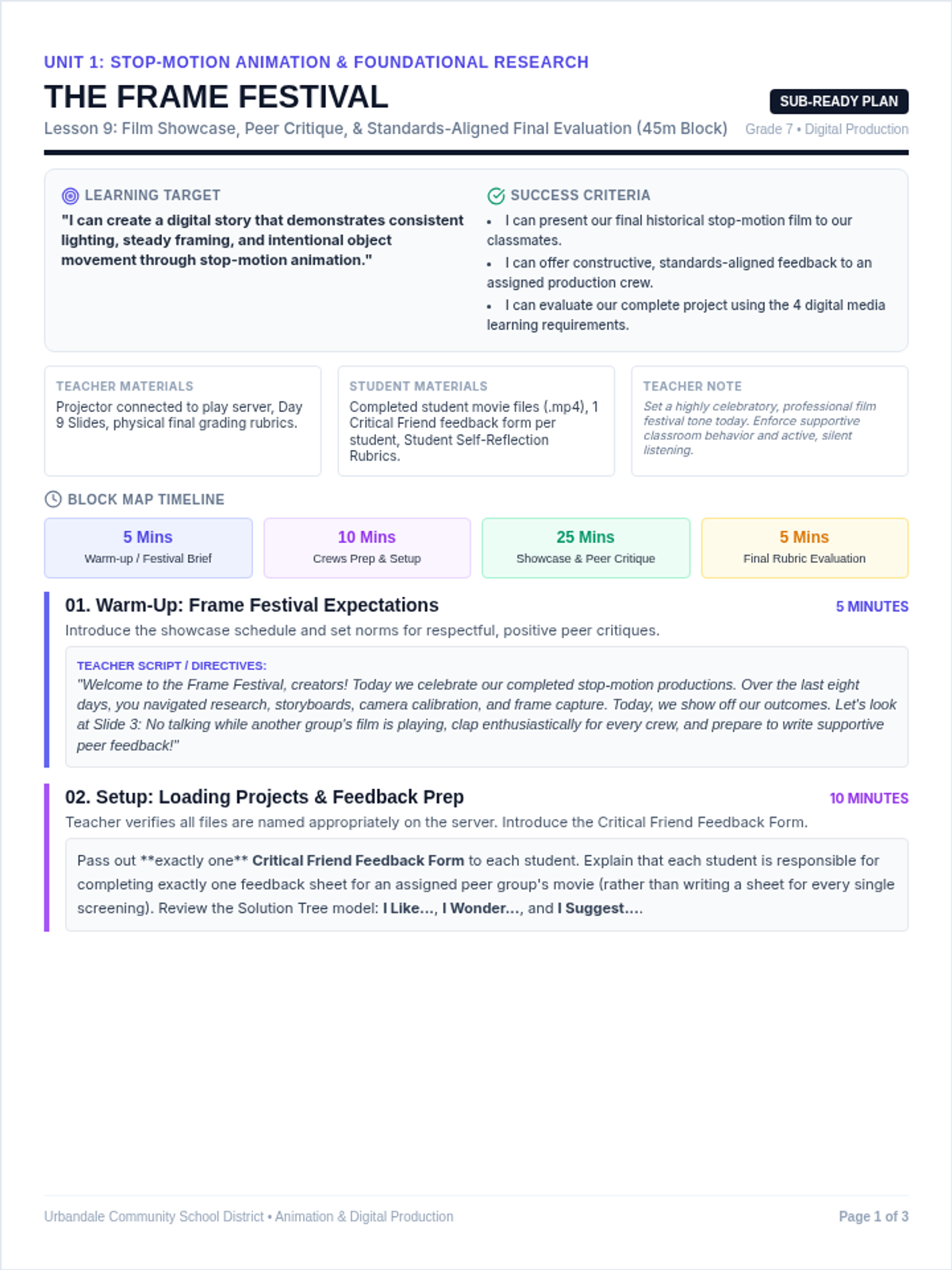
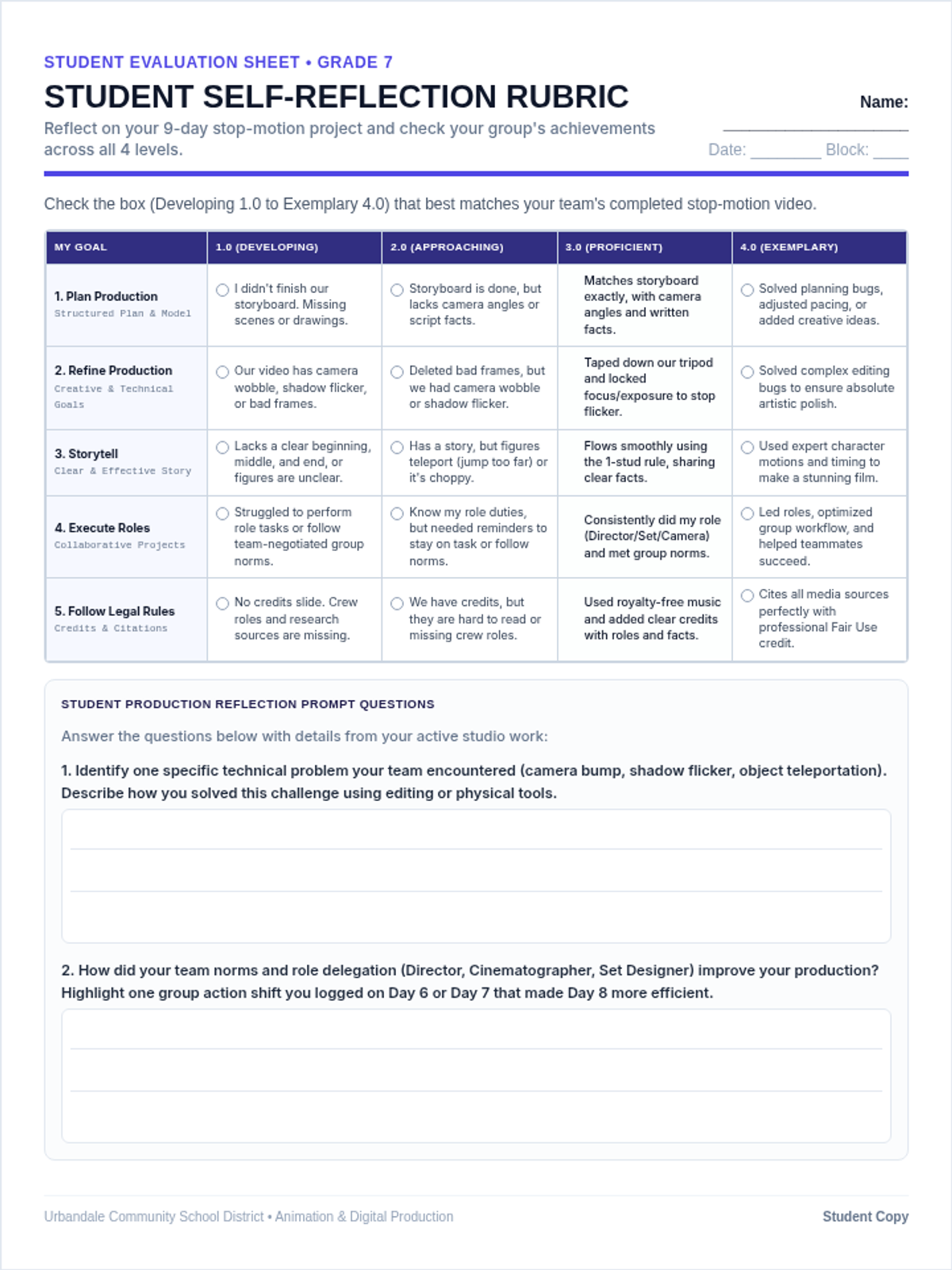
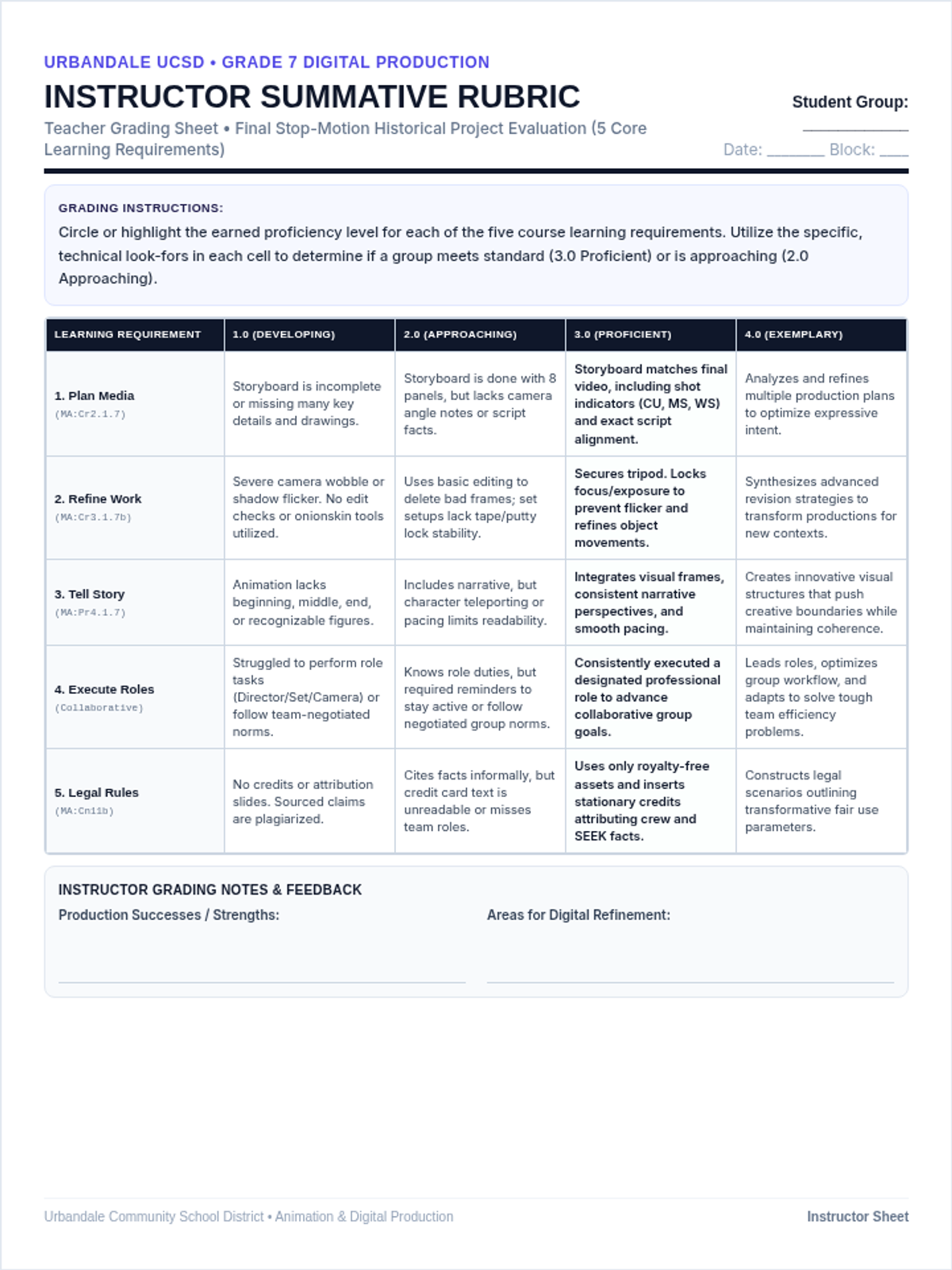
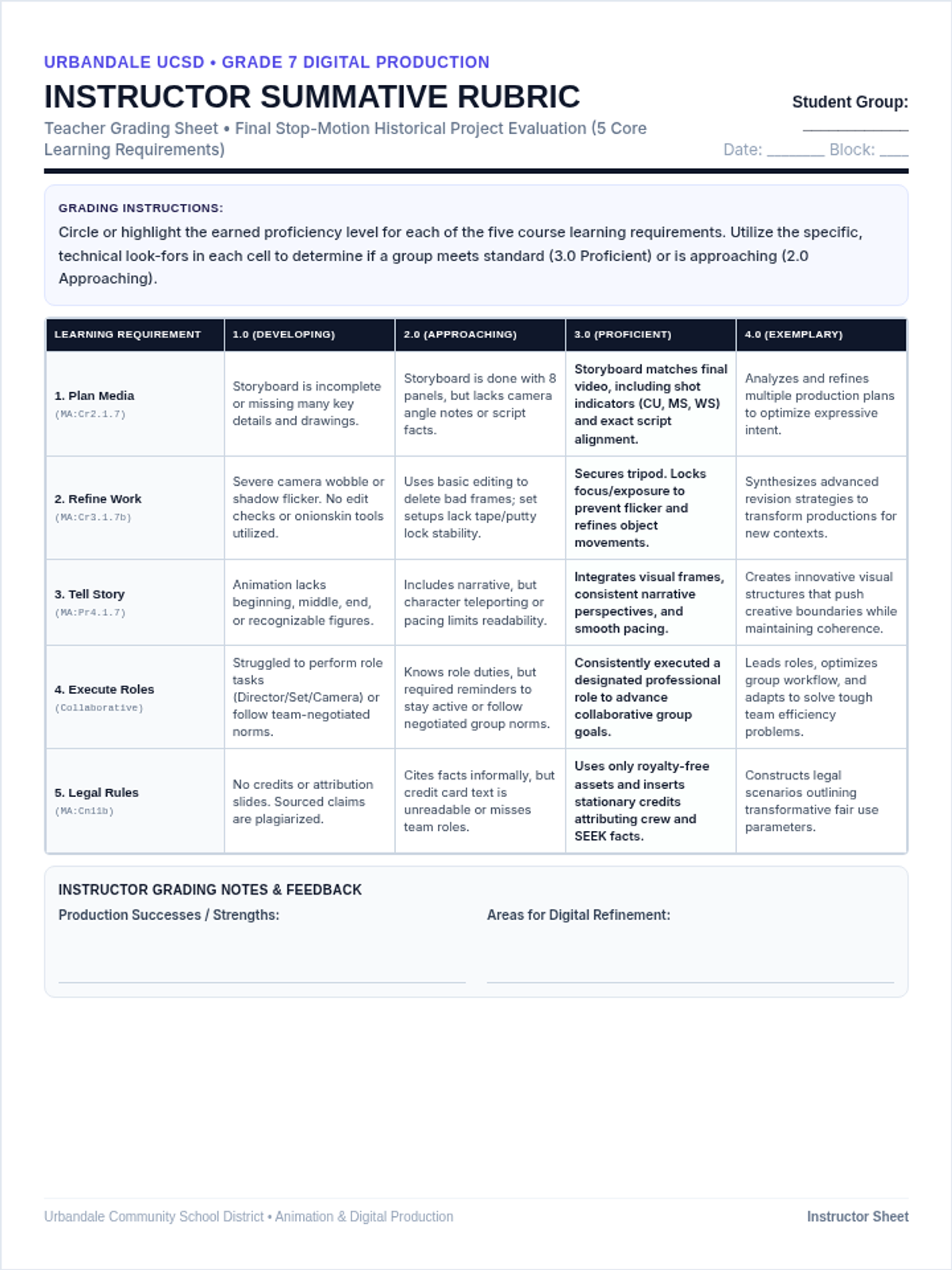
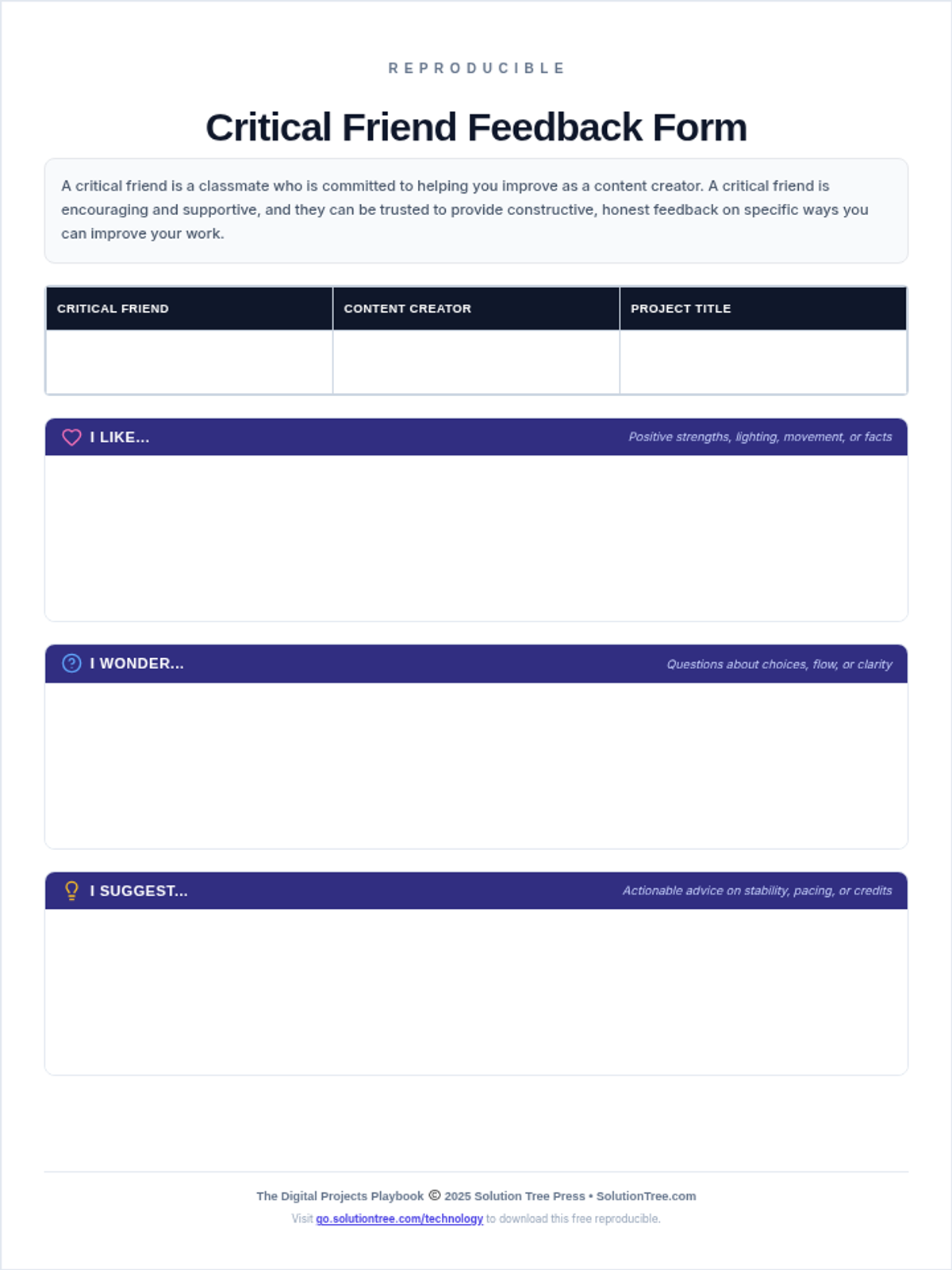
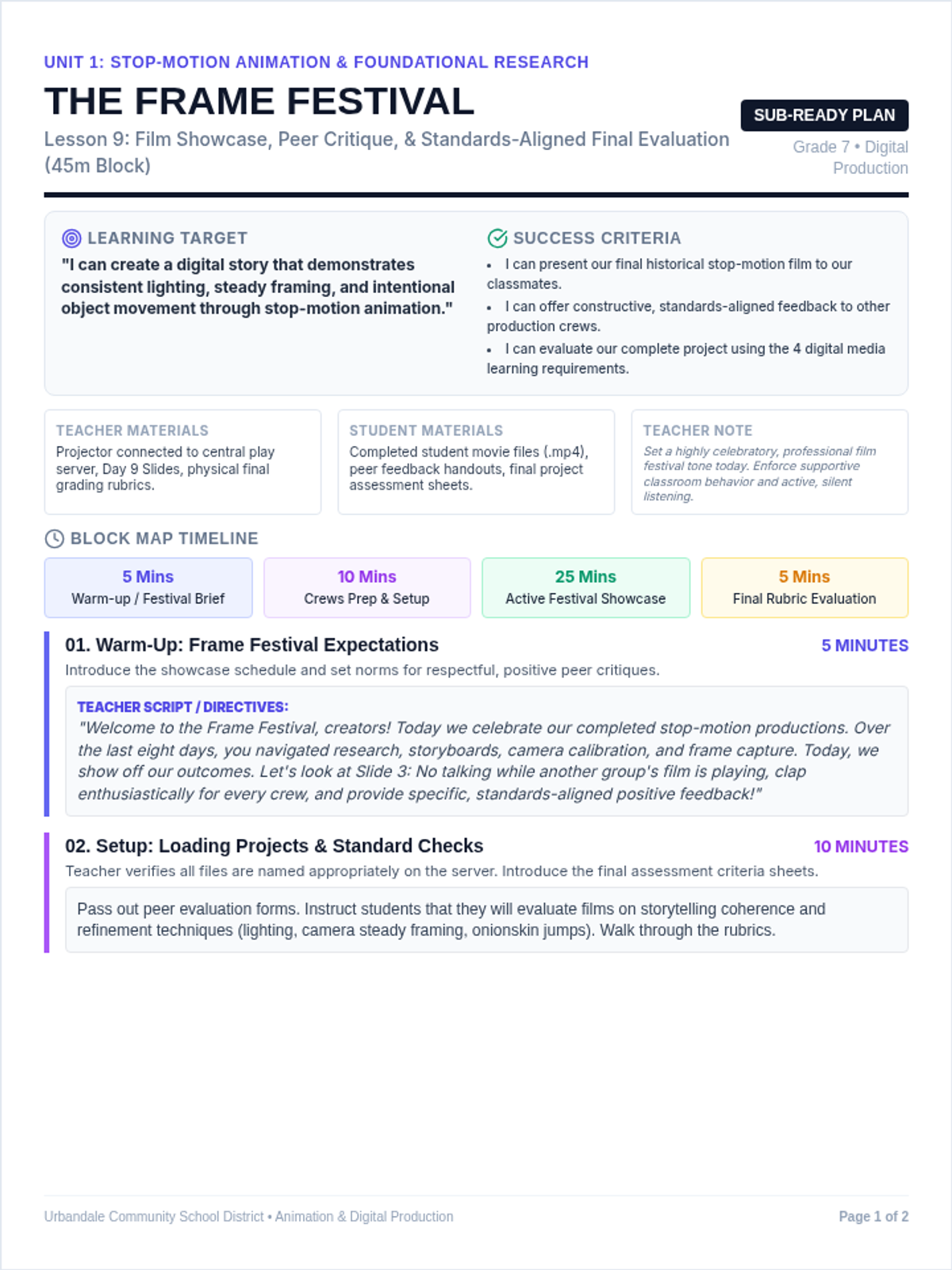
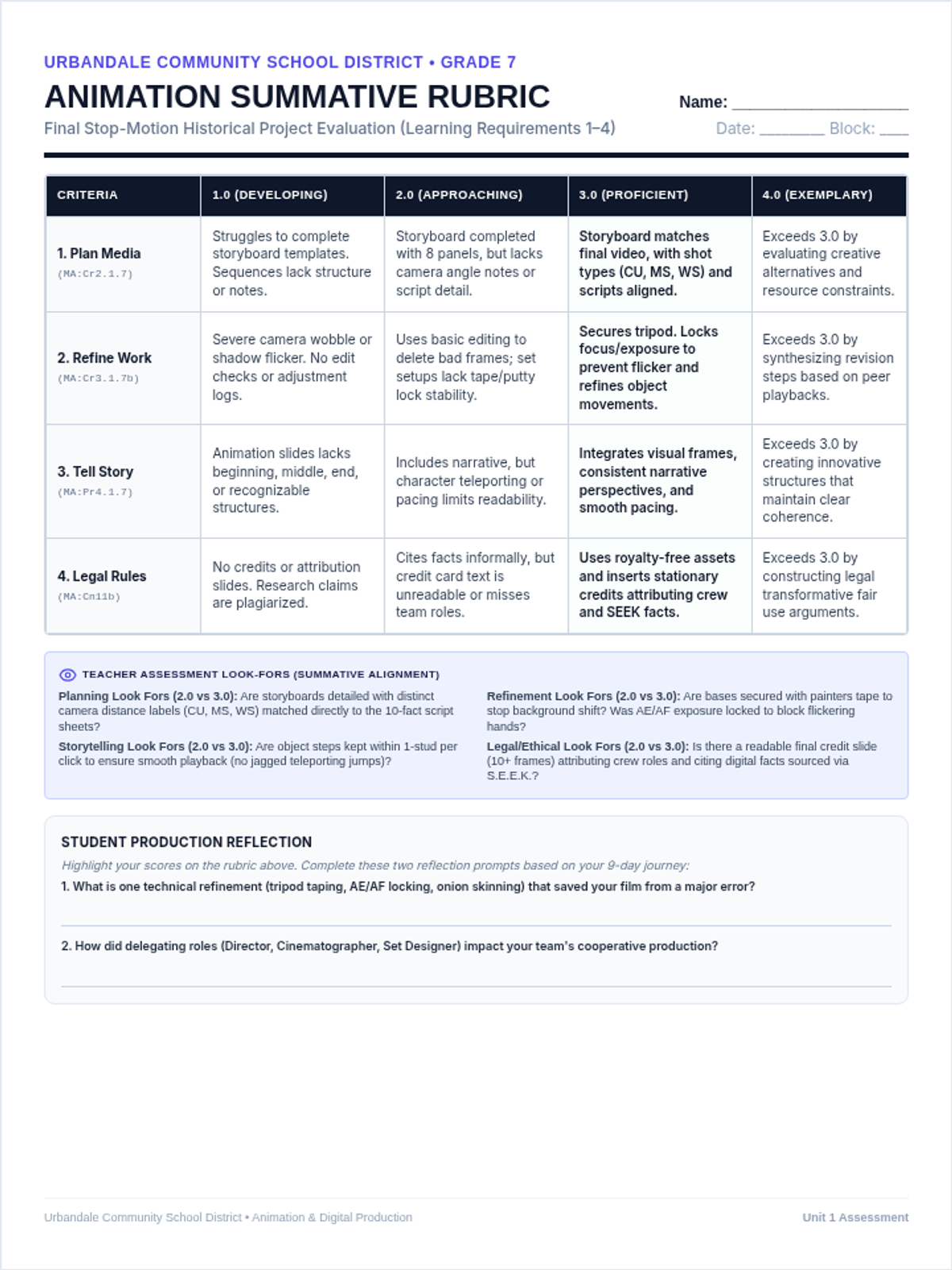
Unit 1, Lesson 9: The Frame Festival. A celebration block where students showcase their completed historical stop-motion animations, conduct peer critique reviews, and evaluate final projects using the comprehensive unit rubric.
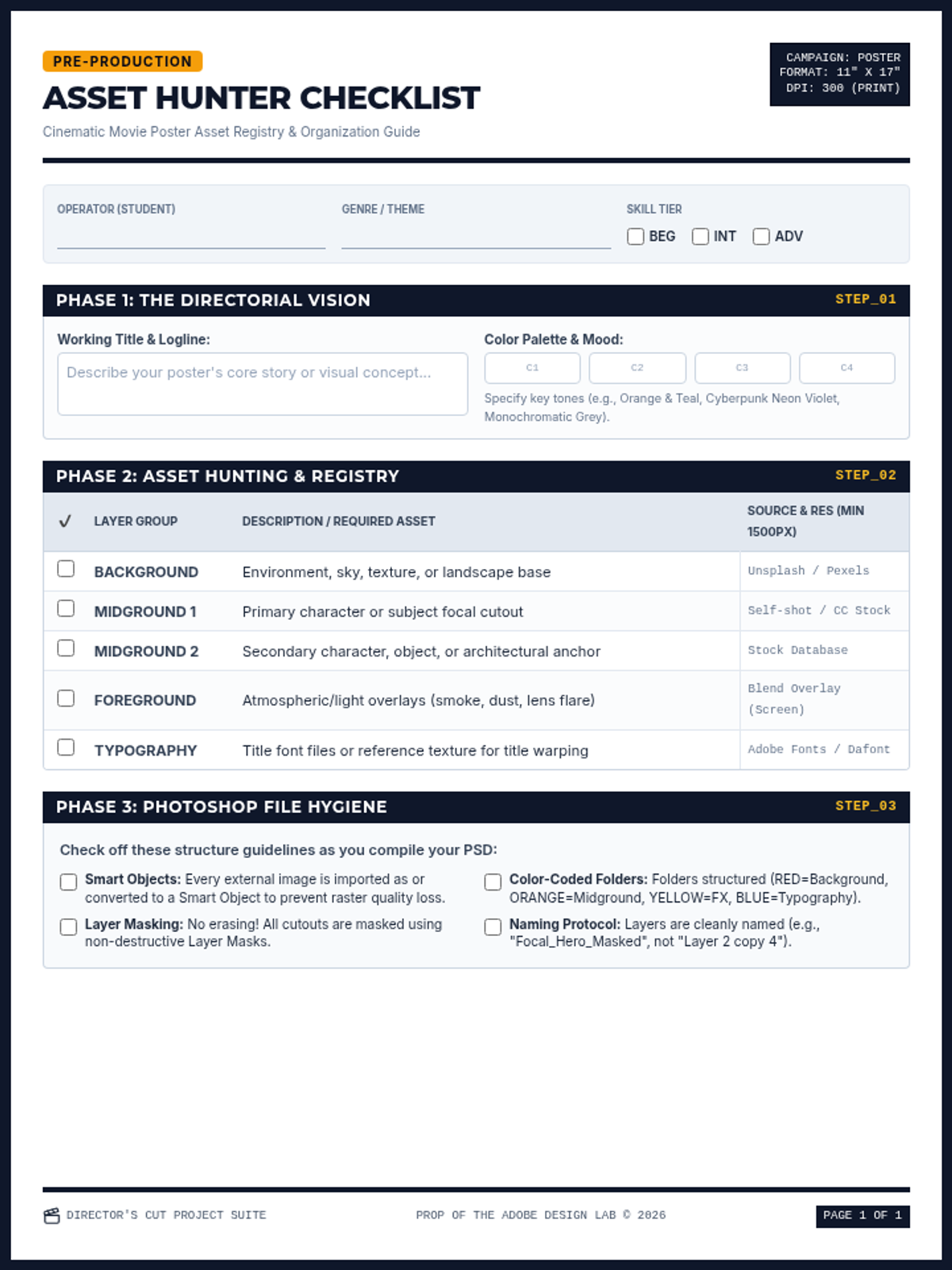
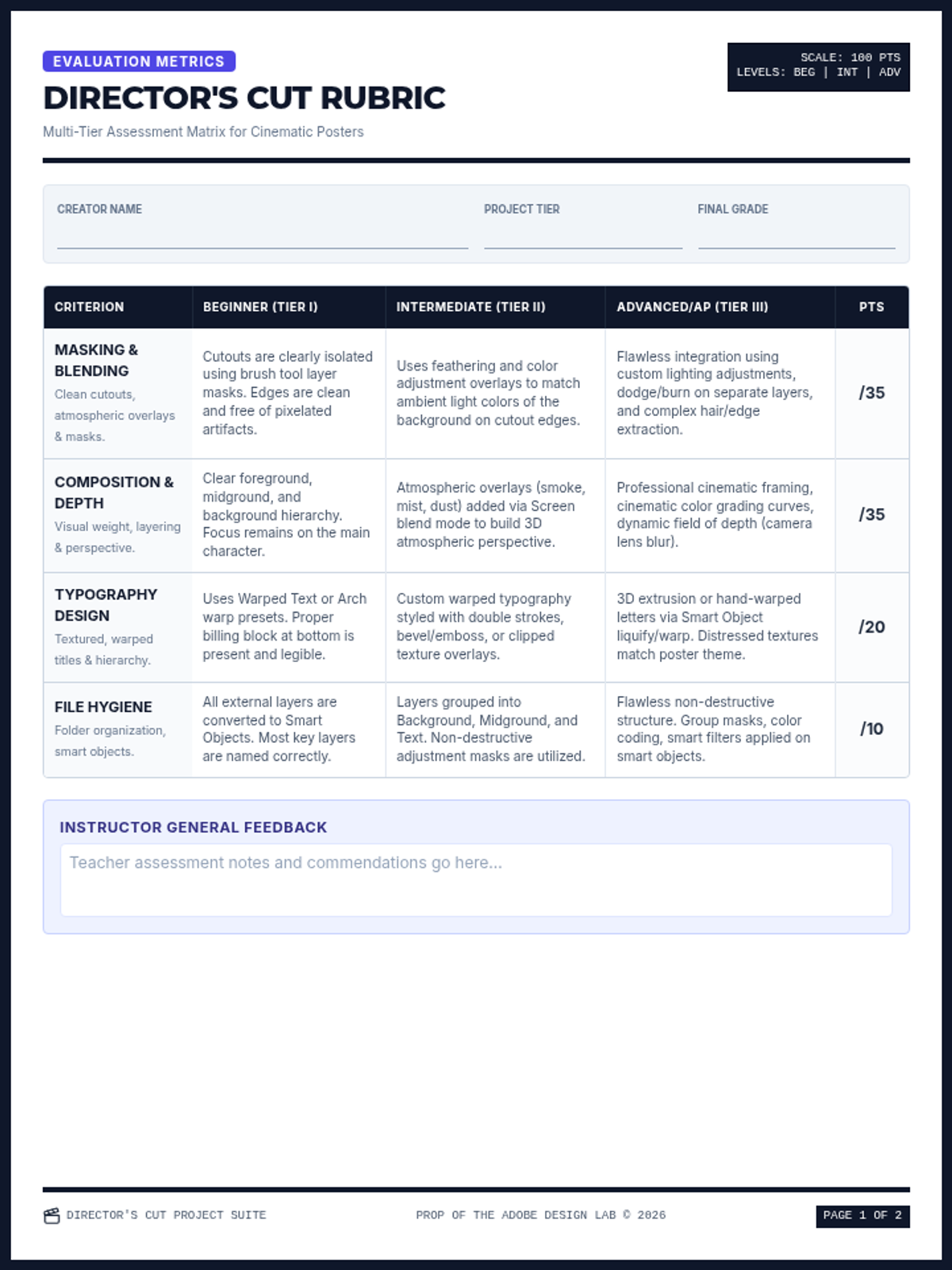
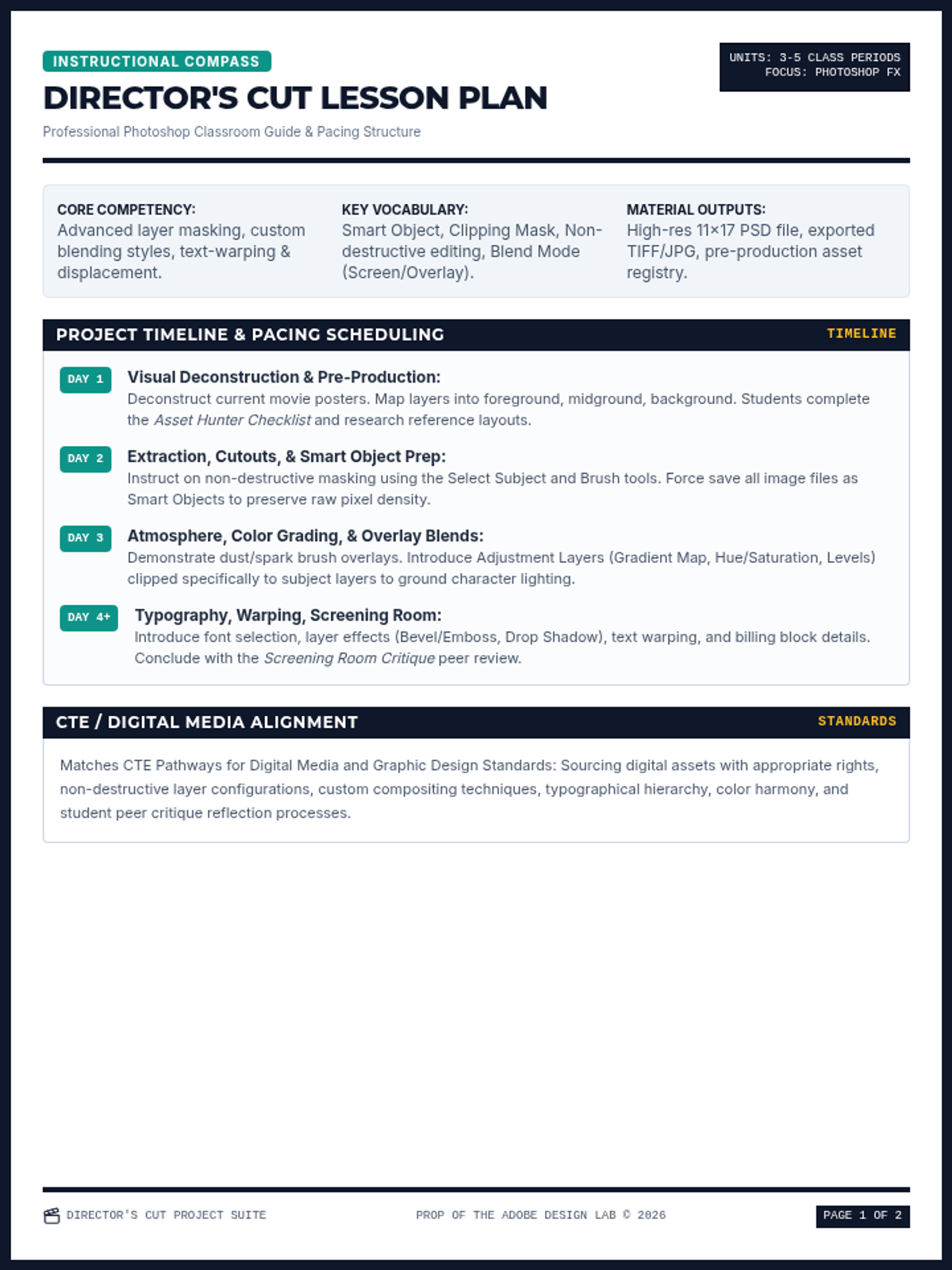
A comprehensive project-based lesson for designing cinematic movie or game posters in Adobe Photoshop. Covers image blending, atmospheric overlays, and textured typography tailored for Beginner, Intermediate, and Advanced/AP levels.
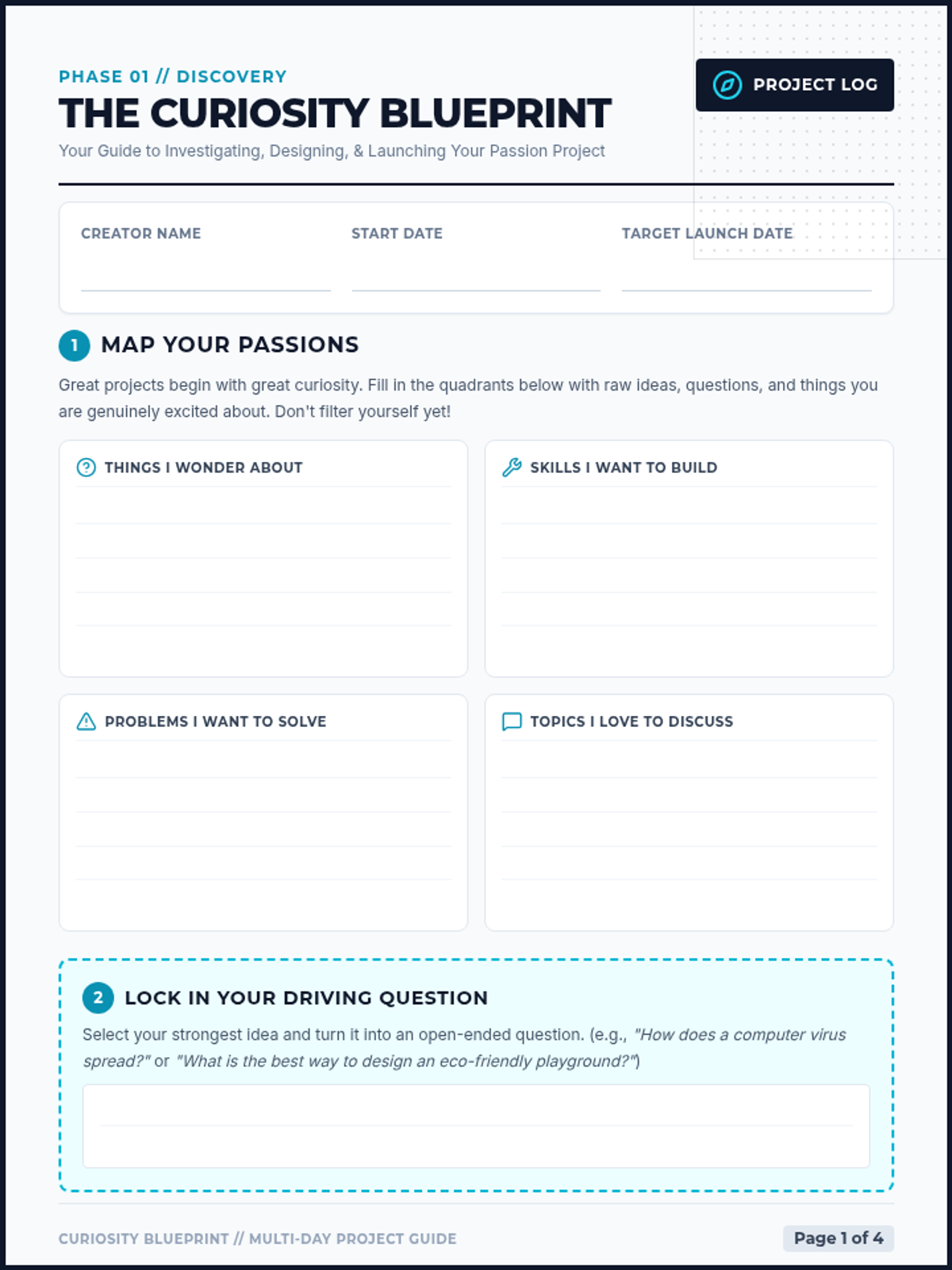
A comprehensive lesson launcher for a multi-day independent or group Creative Passion Project, providing the framework for students to research and build their own projects.
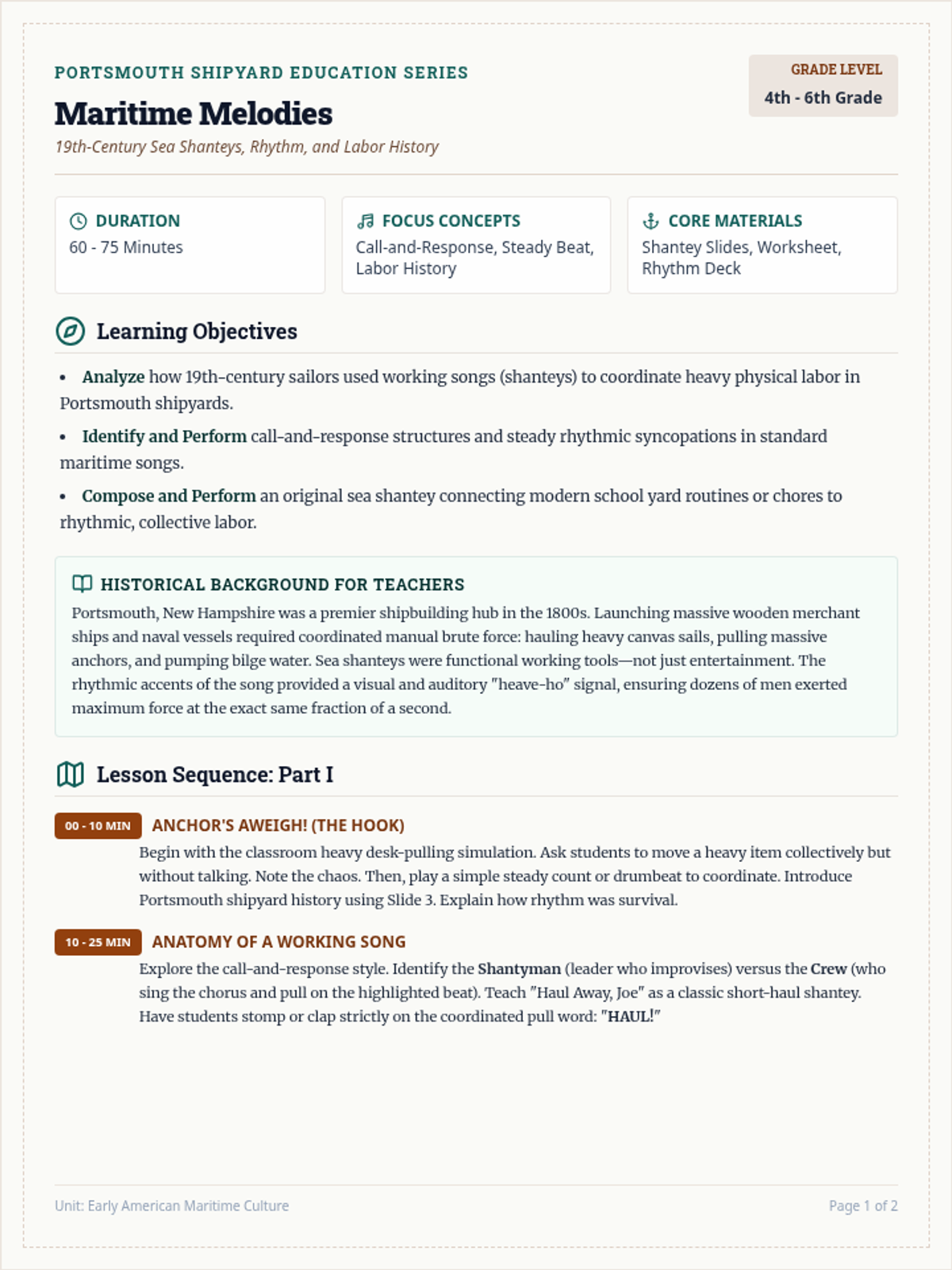
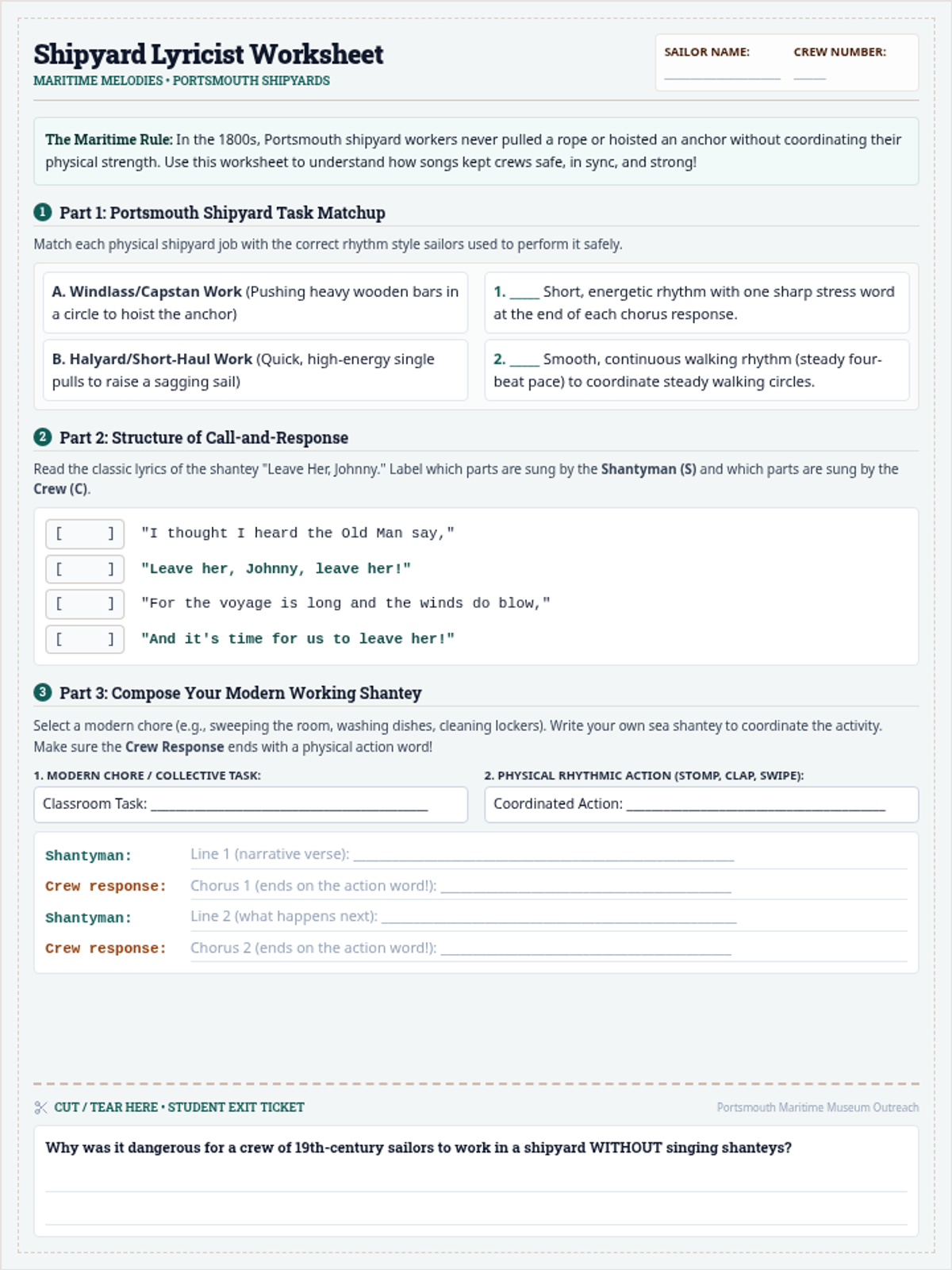
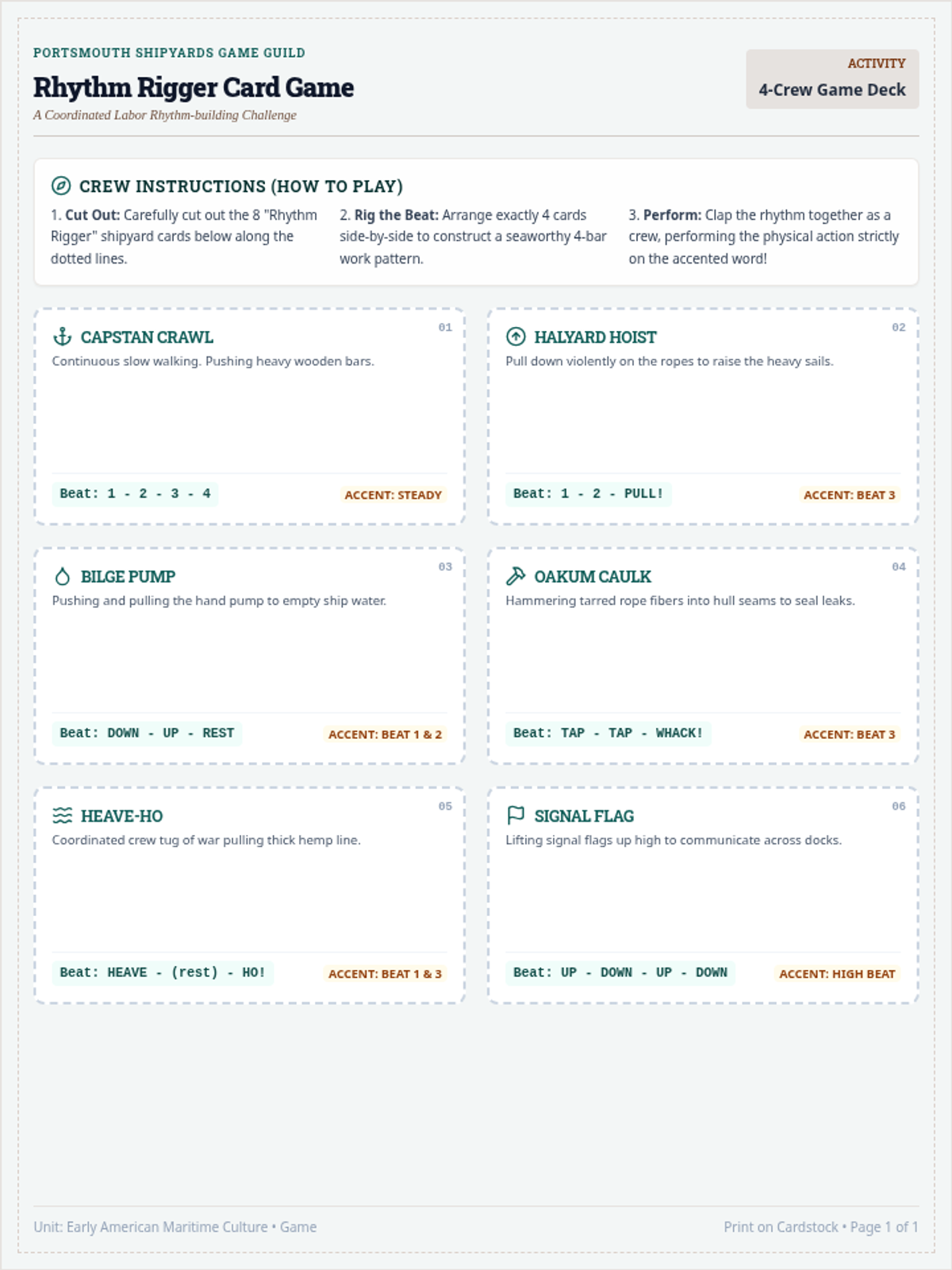
An exploration of nineteenth-century Portsmouth shipyards through historical sea shanteys, teaching upper elementary students about rhythm, labor history, and call-and-response song structures.
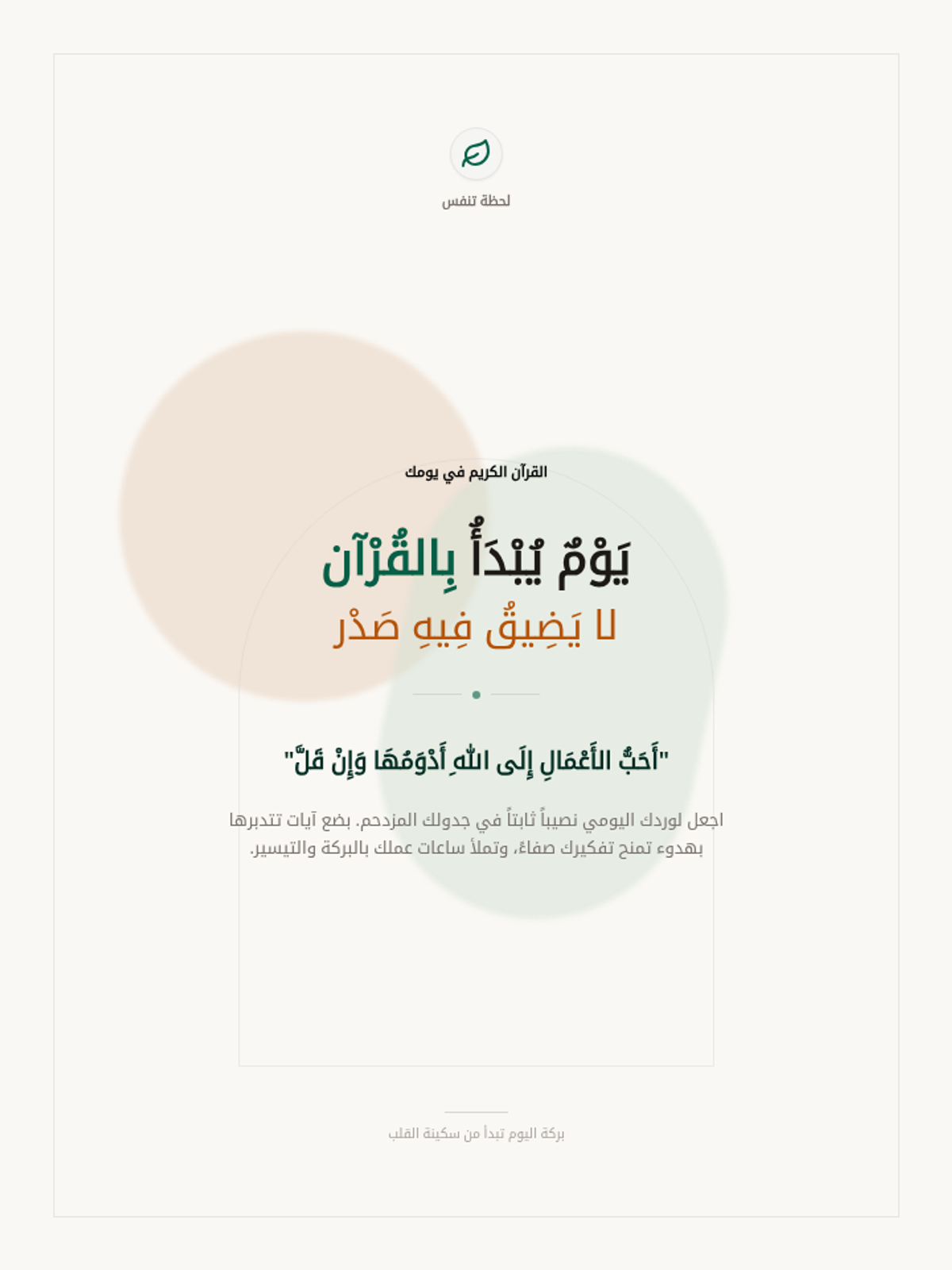
درس بسيط يركز على التذكير بالورد اليومي وقراءة القرآن الكريم، ويضم ملصقًا فنيًا وتذكيريًا مصممًا بأسلوب حديث ومريح للعين.
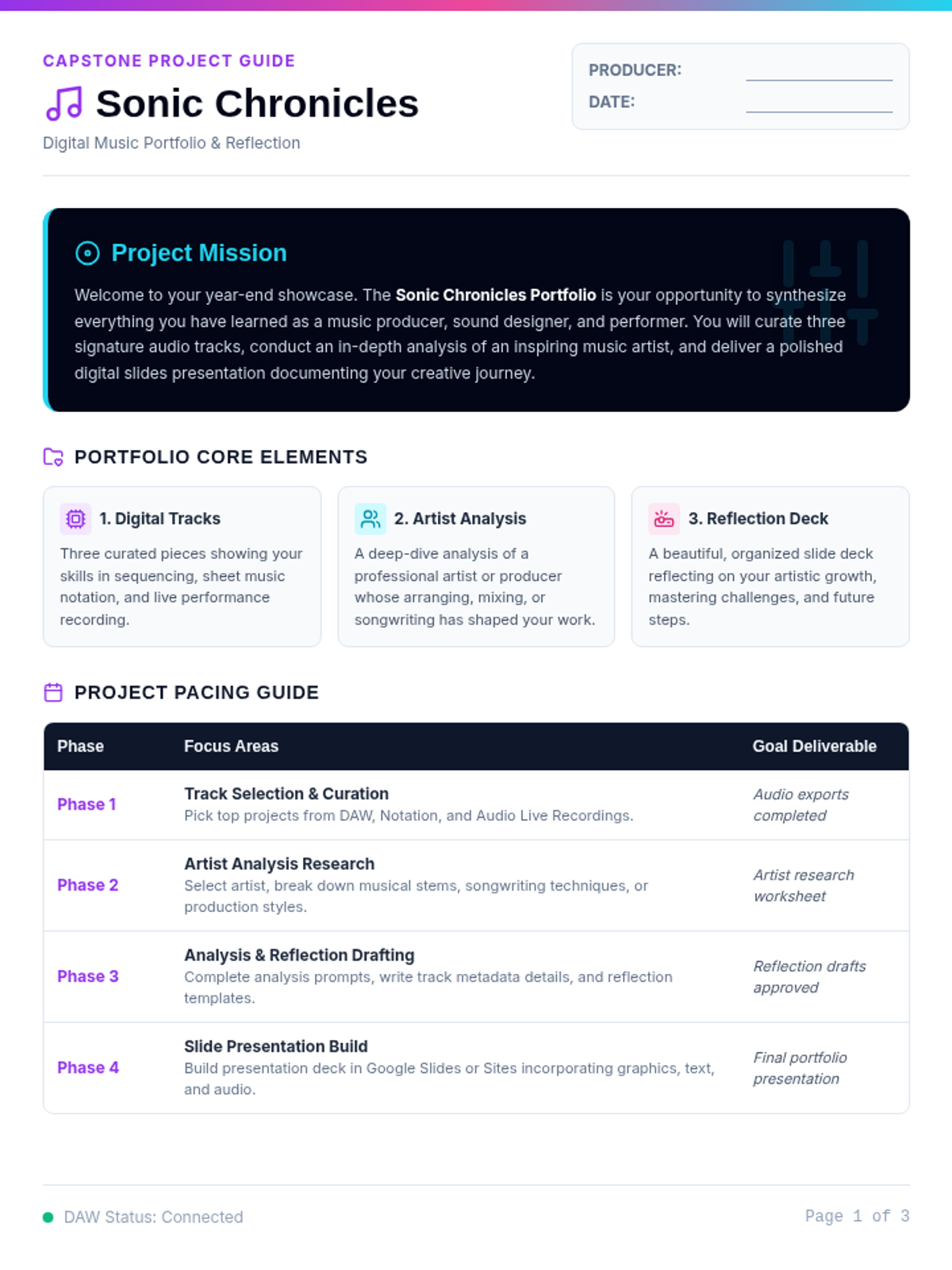
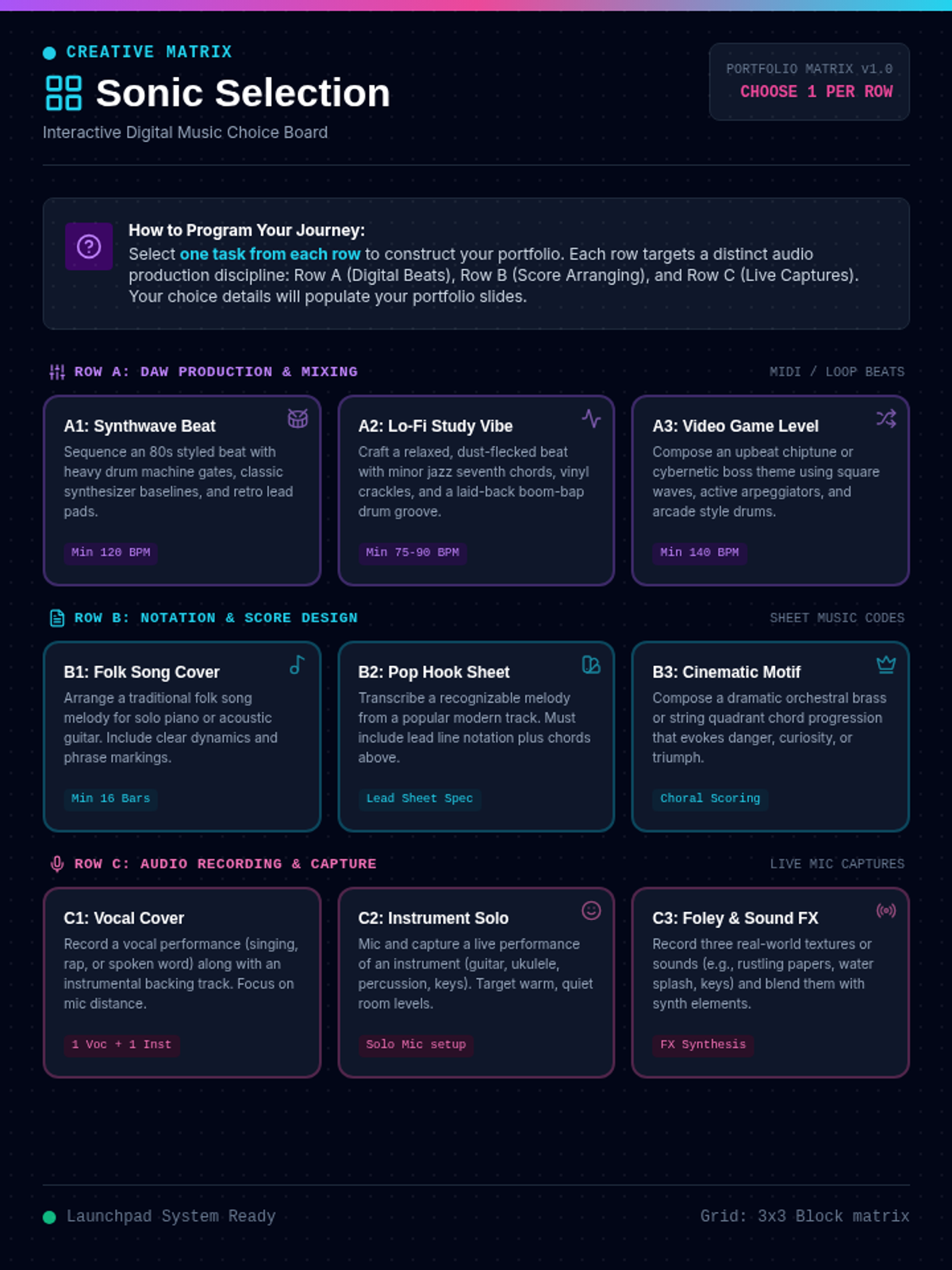
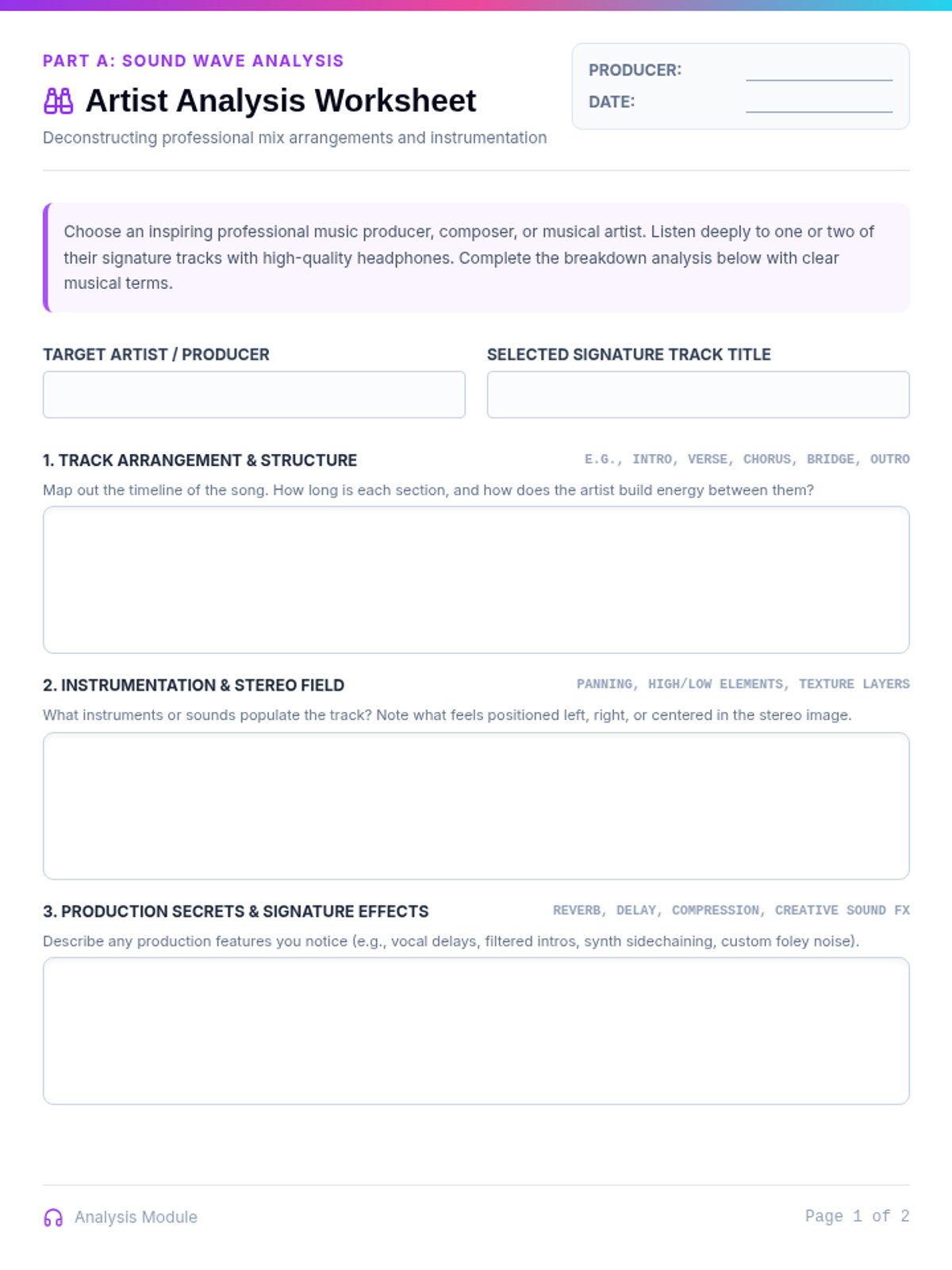
A comprehensive digital music portfolio project where students curate, analyze, and reflect on their musical creations using DAWs, notation tools, and audio recordings. This unit guides students through selecting their best work, performing deep artist analysis, and presenting a professional digital portfolio.
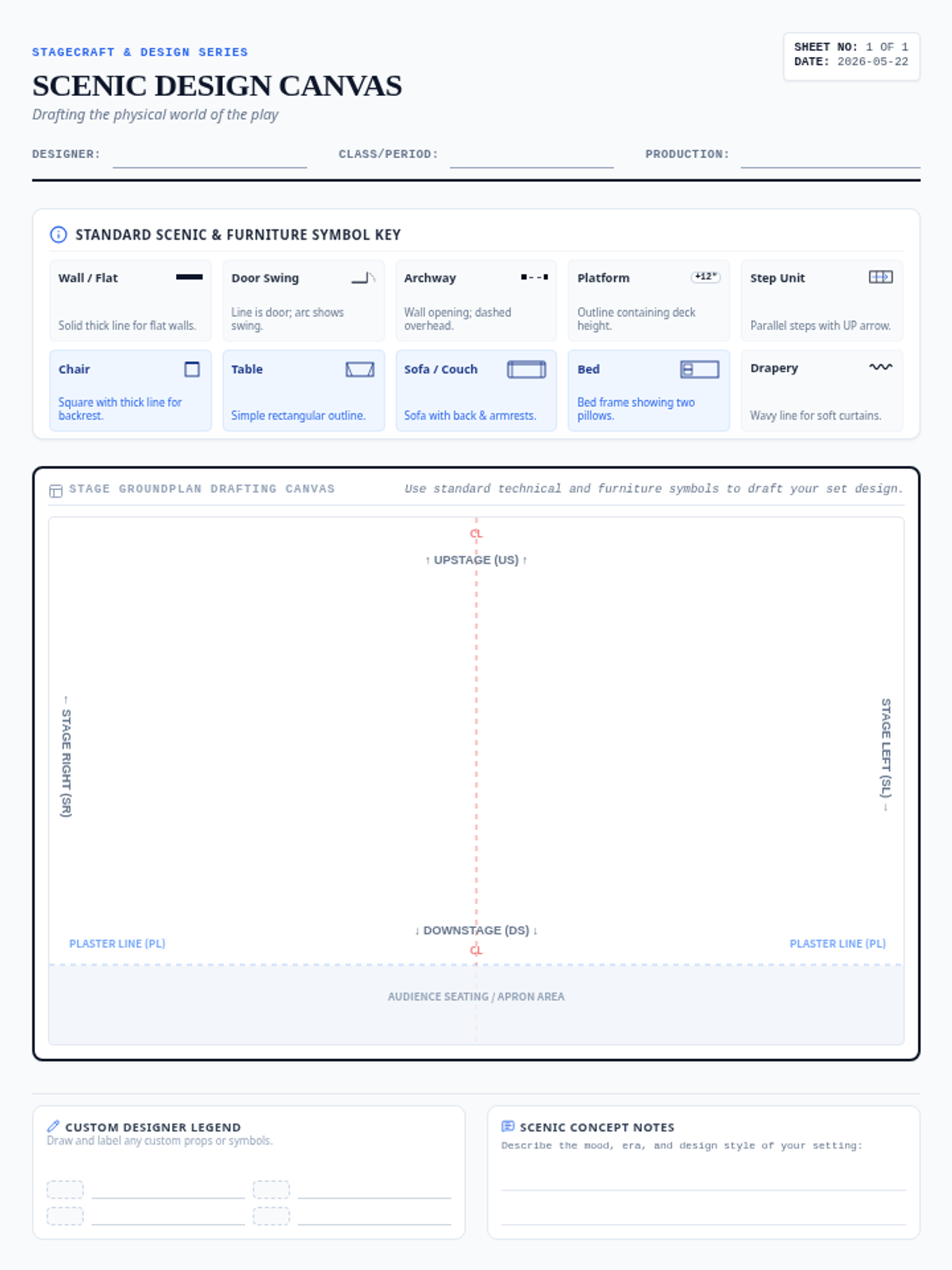
An introductory lesson on the fundamentals of scenic design, guiding students to create their own stage groundplans using industry-standard drafting symbols.
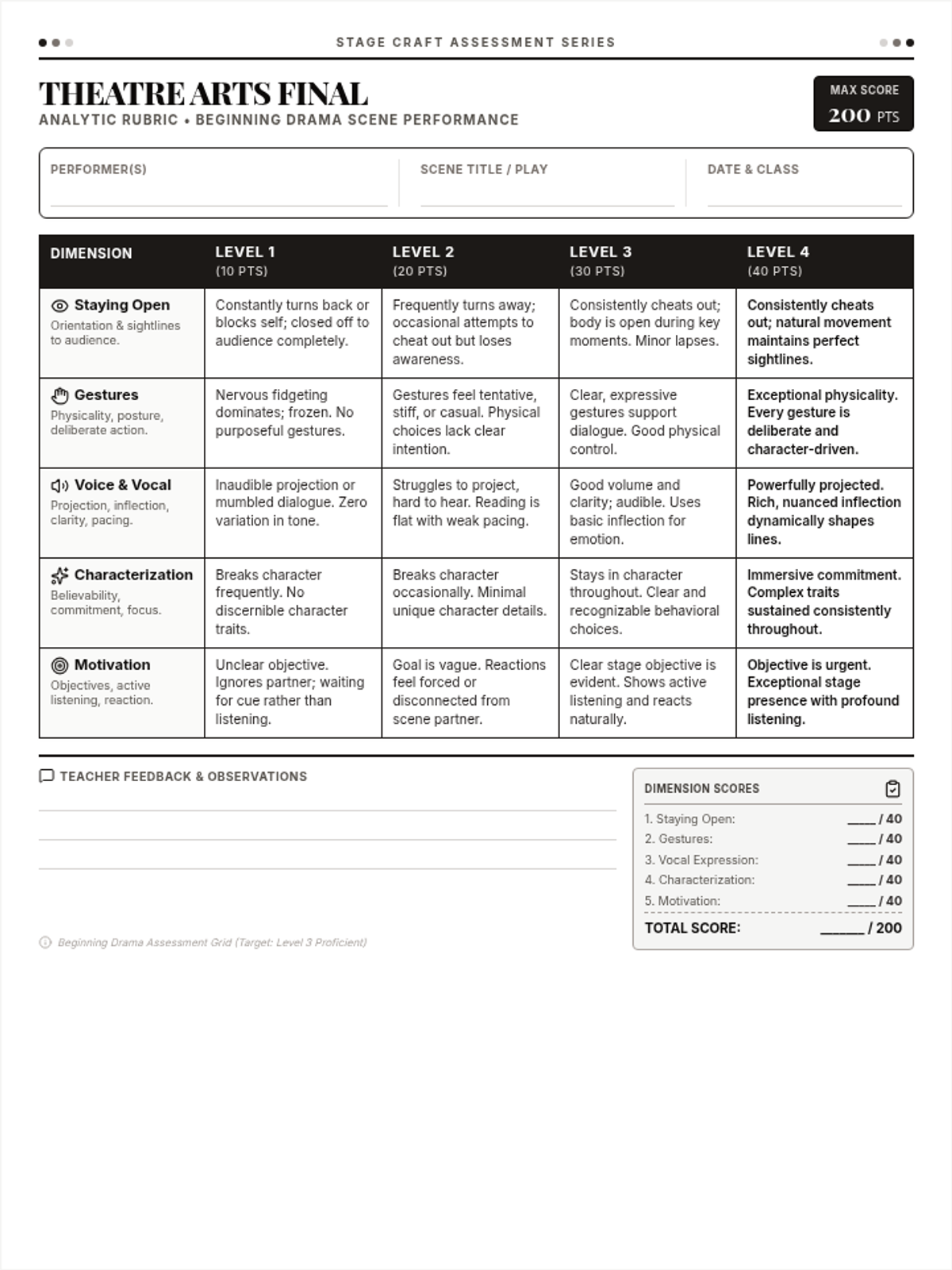
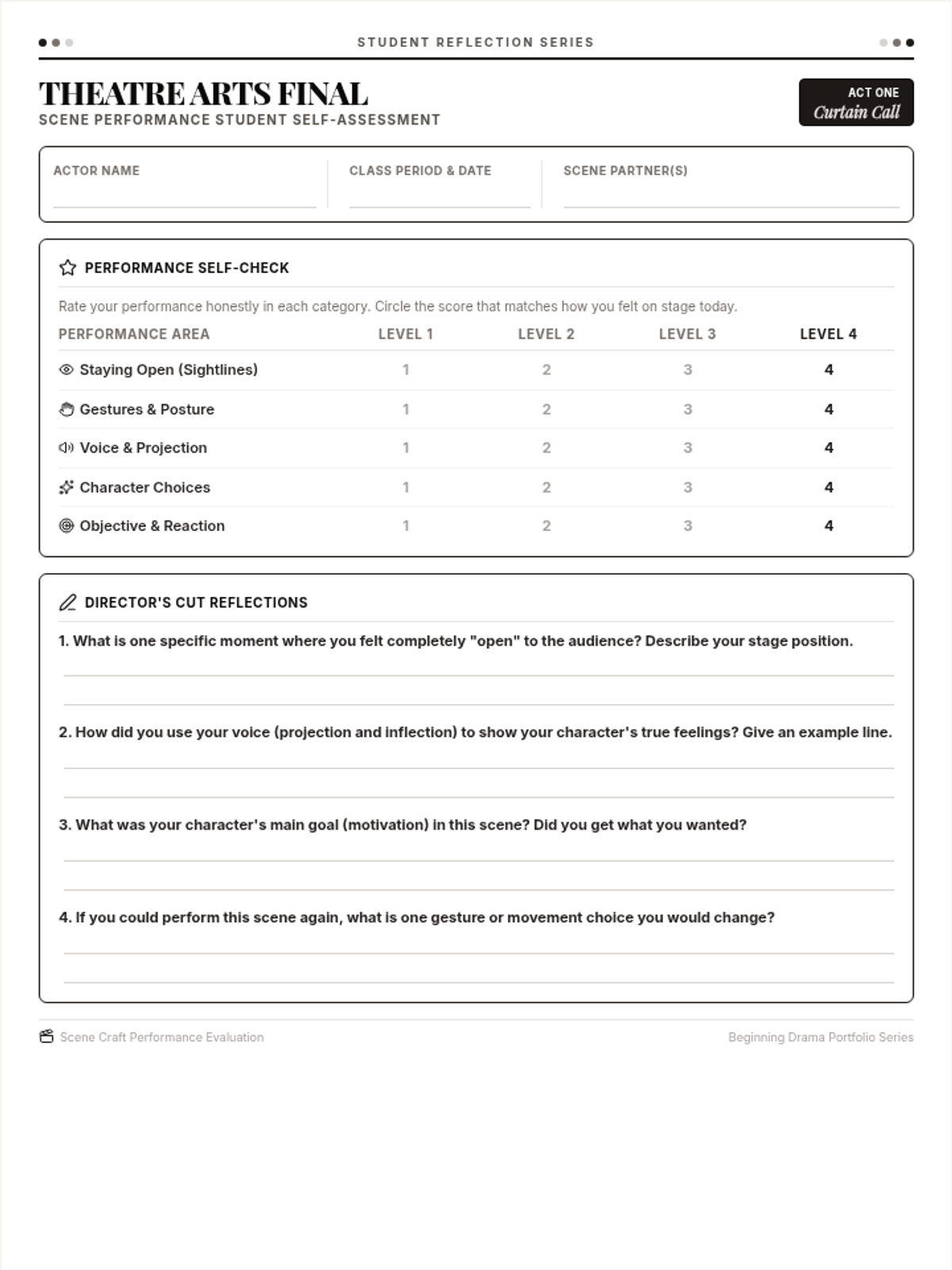
A comprehensive final performance evaluation package designed for theatre arts students. This bundle features a highly structured teacher-facing analytic grading rubric and an active student self-assessment reflection document, both customized for evaluating stage final scenes.
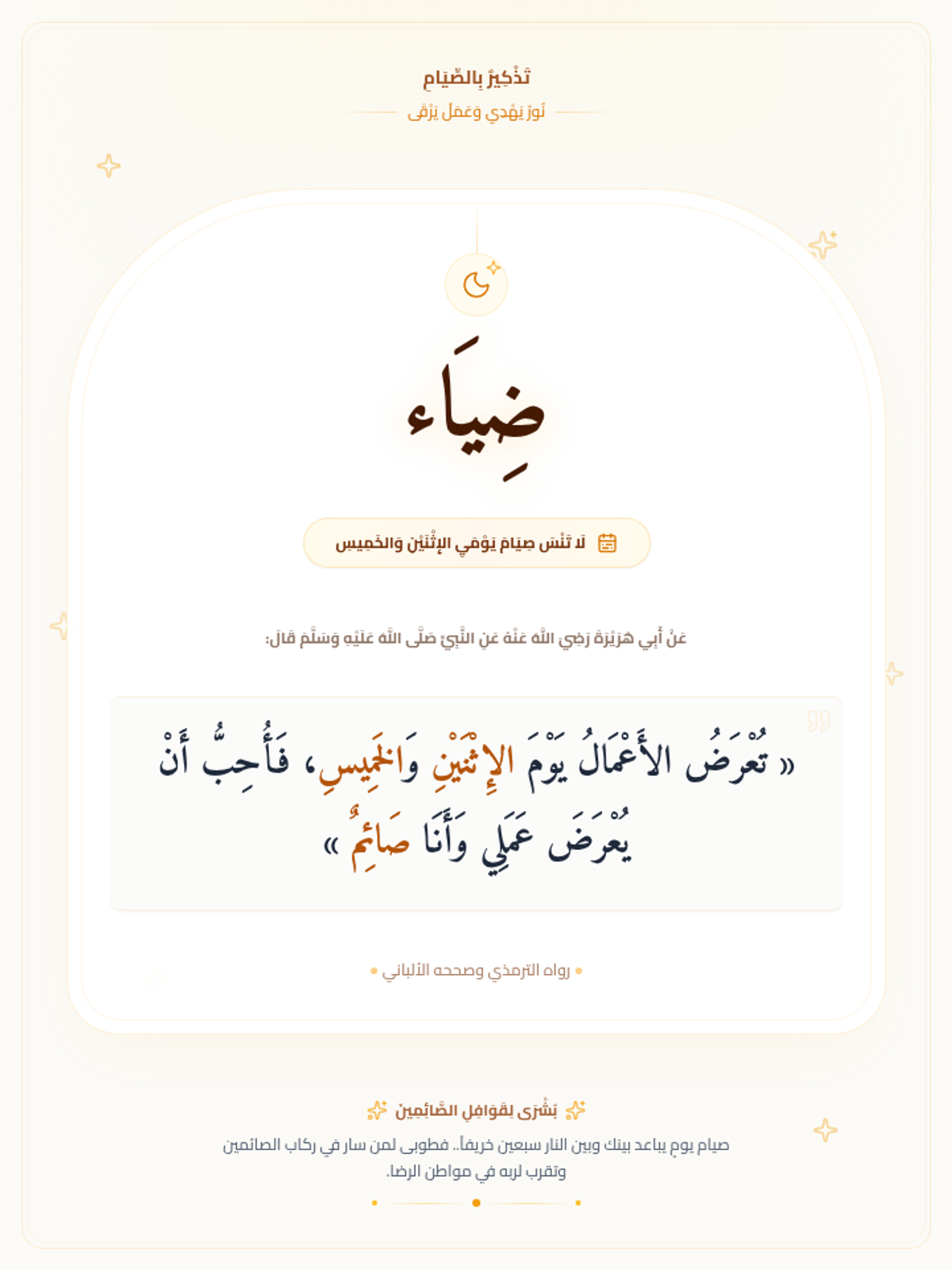
A premium, cohesive collection of beautifully designed spiritual and religious reminders for daily, weekly, and seasonal practices, featuring high-contrast connected Arabic typography, elegant arches, and glowing celestial themes.
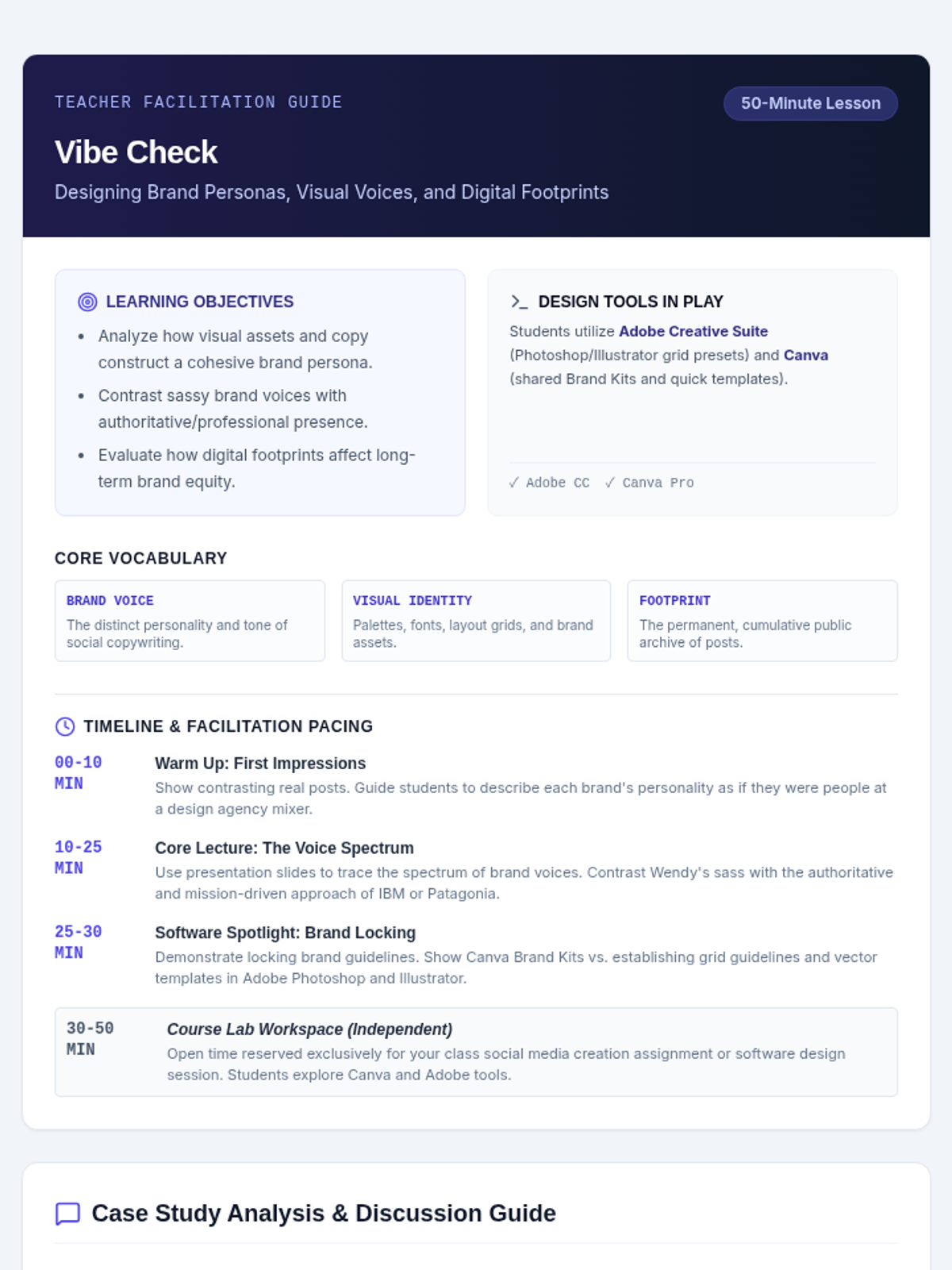
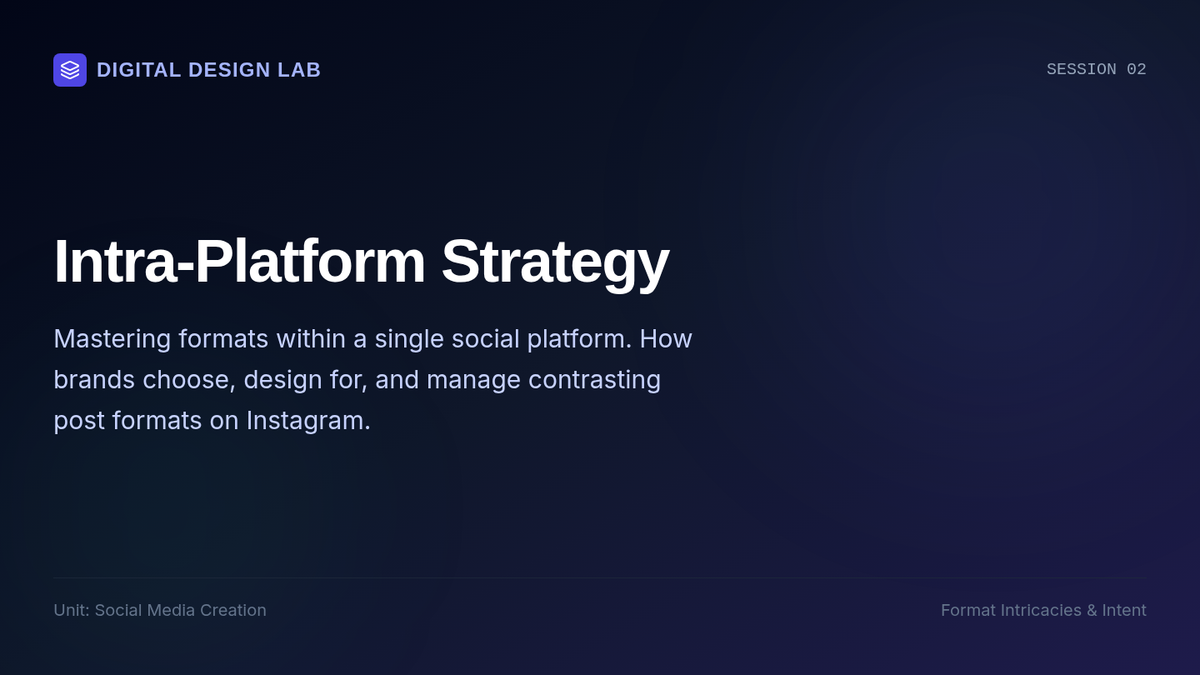
A digital design lesson focusing on social media brand personas, digital footprint, and visual design aesthetics using Adobe and Canva. Students compare contrasting brand voices, from Wendy's playful roasts to polished professional corporate presences.
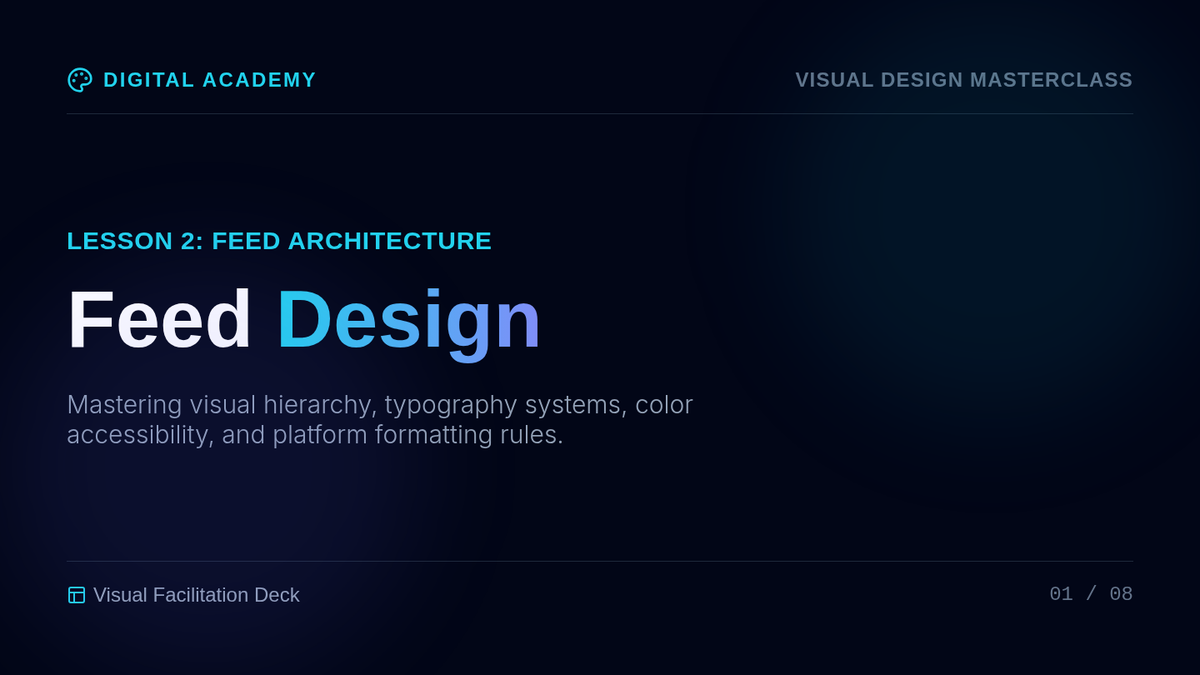
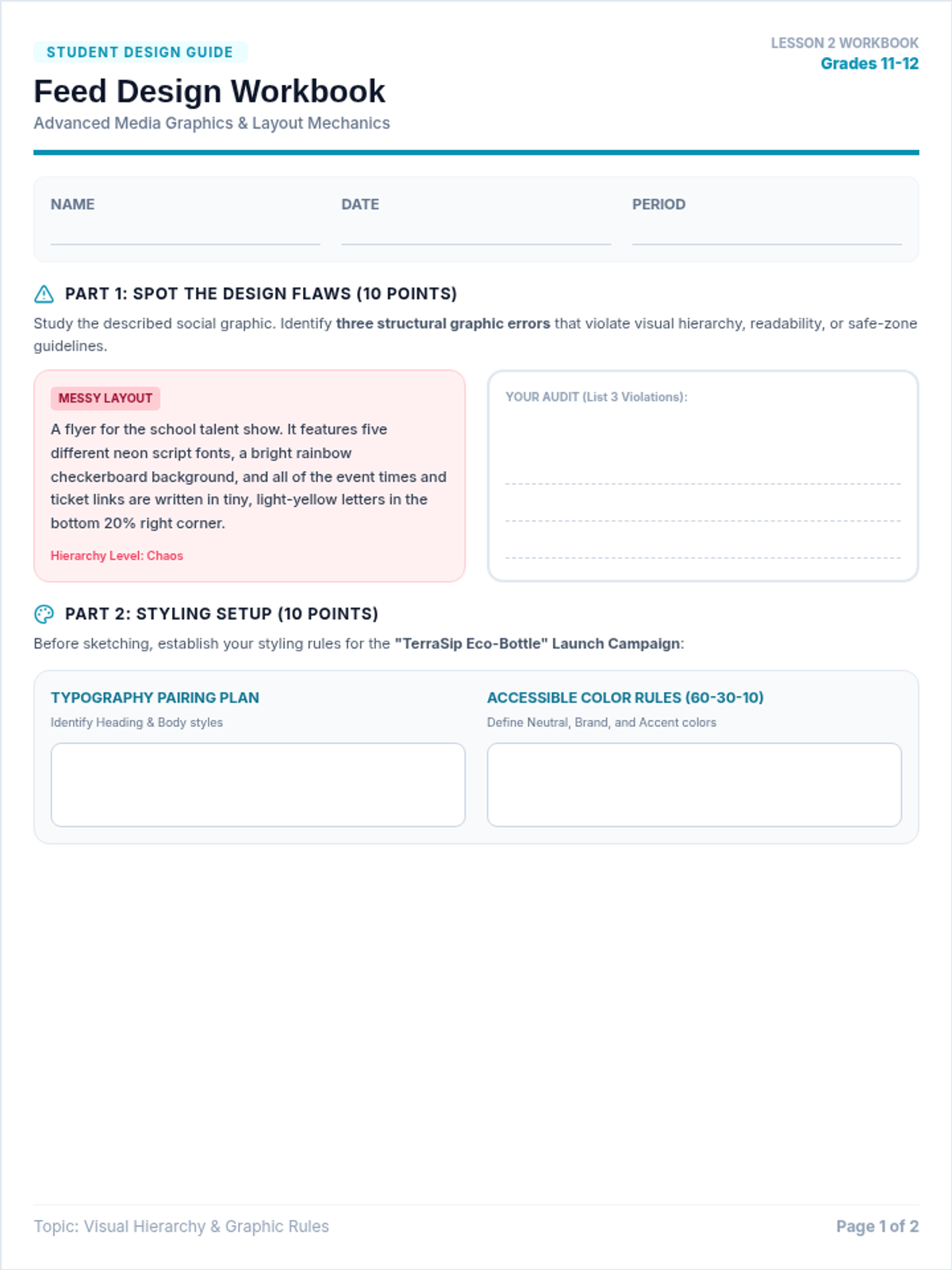
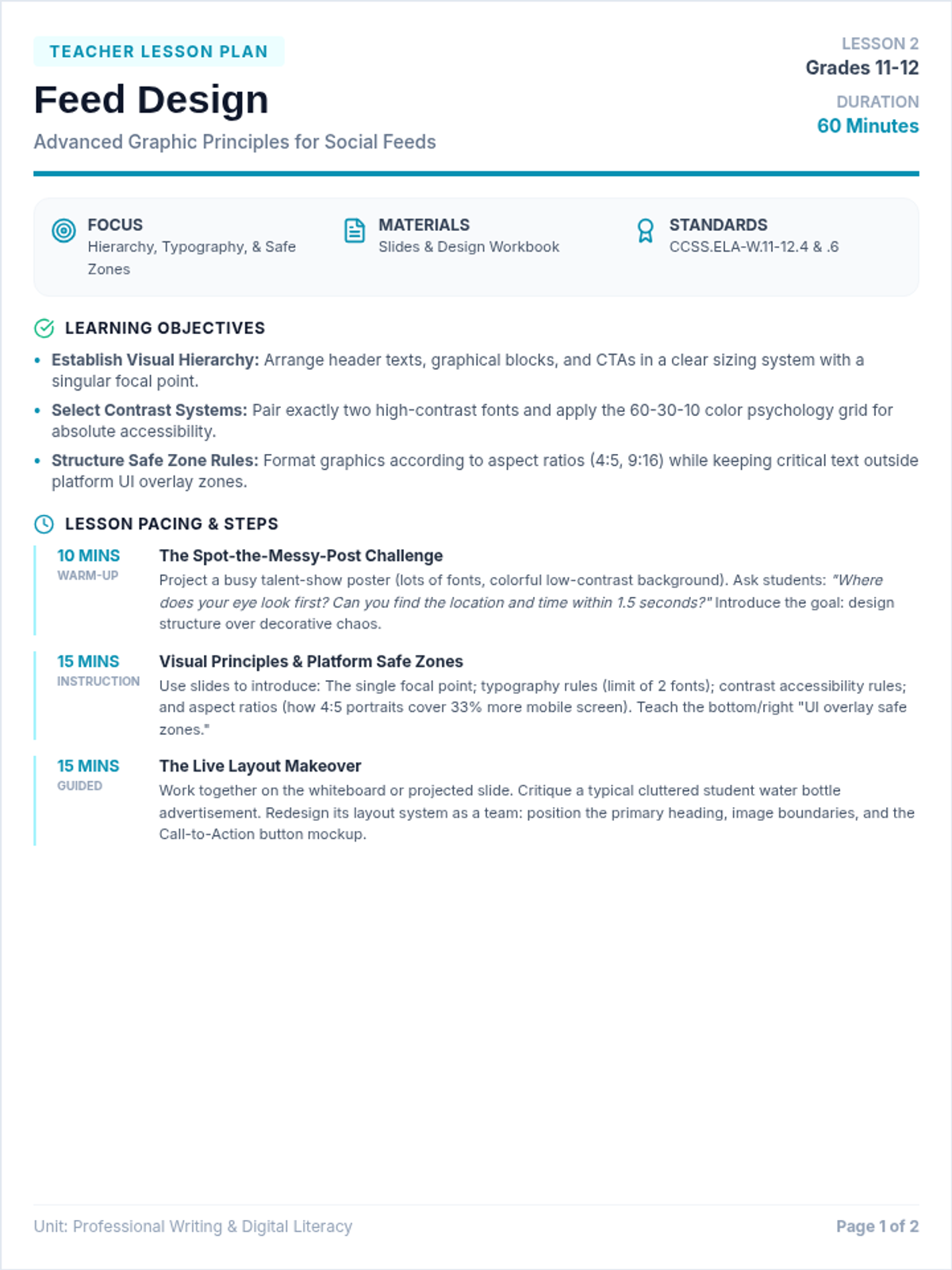
A professional-grade graphic design lesson for Grades 11-12. Students explore the core mechanics of visual hierarchy, typography pairings, color psychology, and platform post formatting for social media feeds.
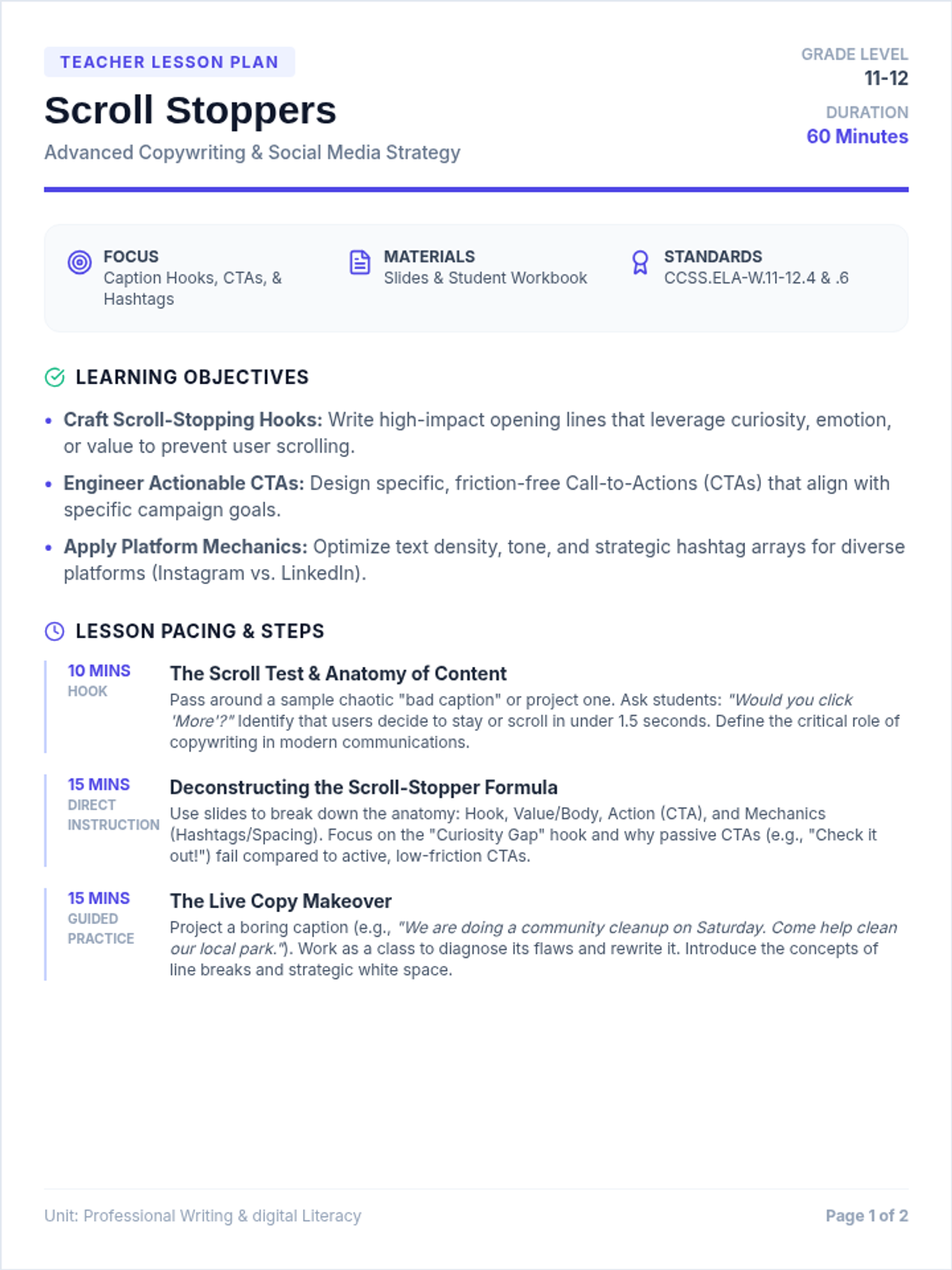
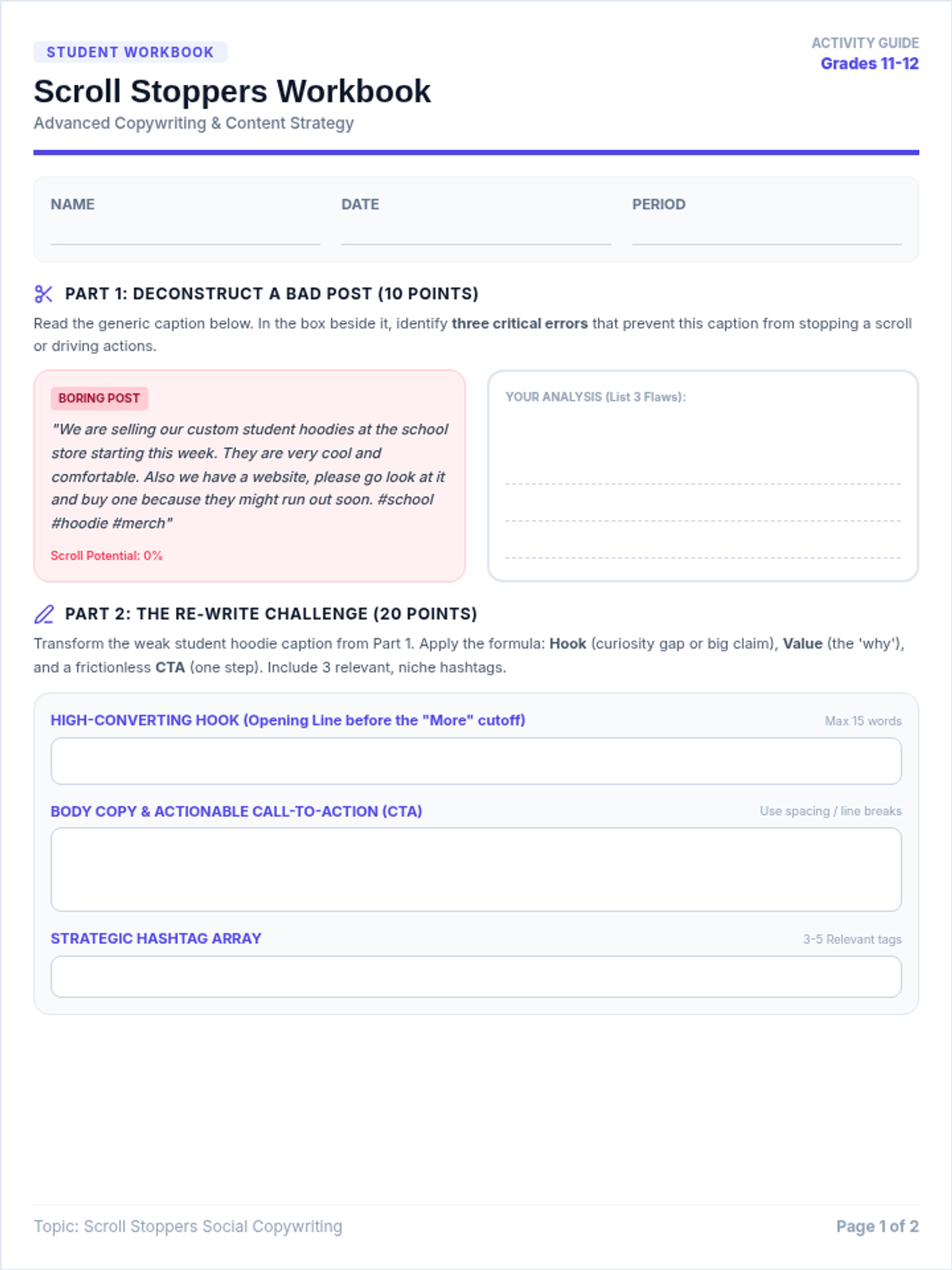
An advanced social media copywriting lesson for Grades 11-12. Students learn the science of scroll-stopping hooks, high-impact body copy, strategic calls-to-action (CTAs), and hashtag mechanics, concluding with a real-world caption-writing workbook activity.
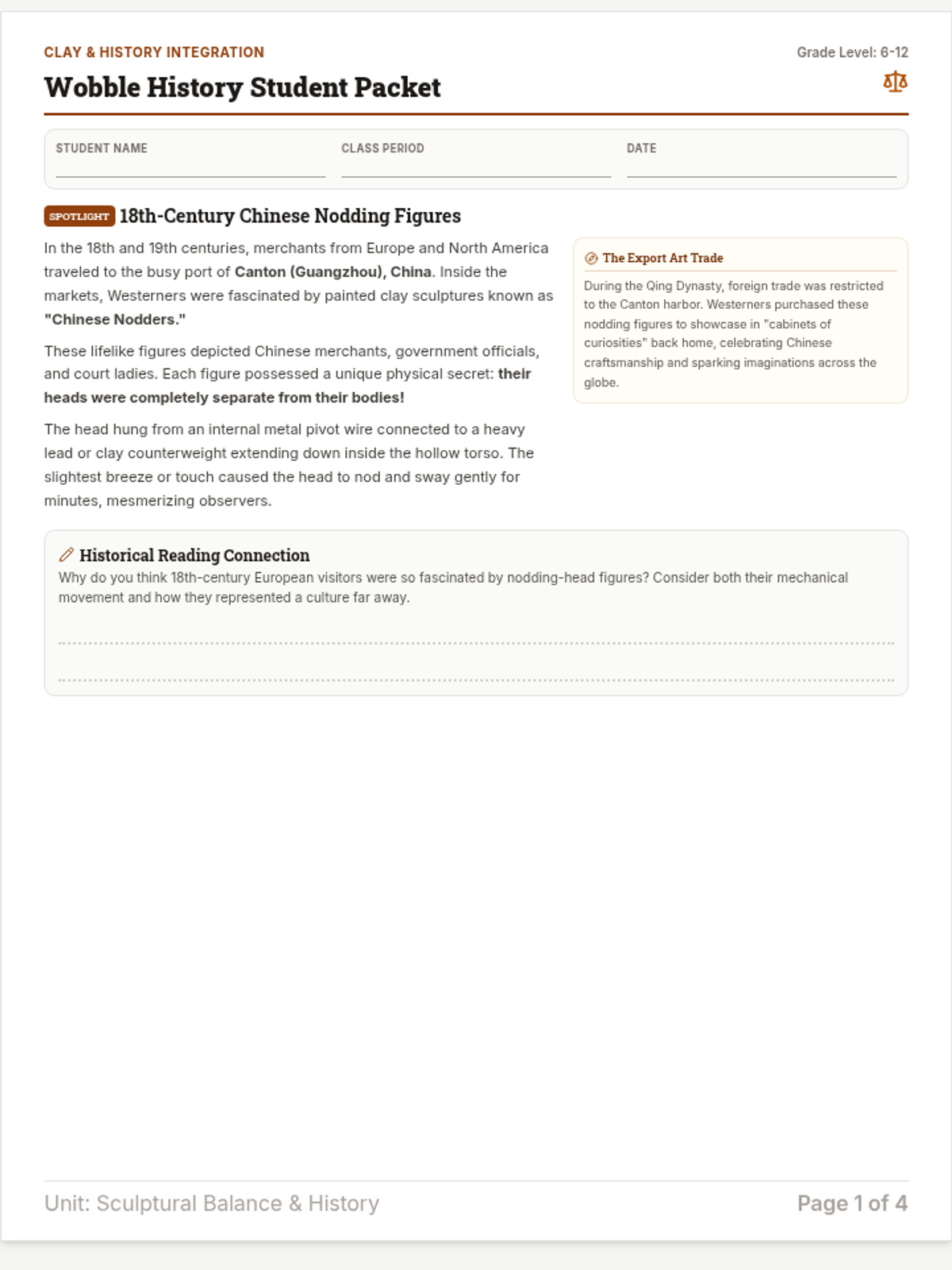
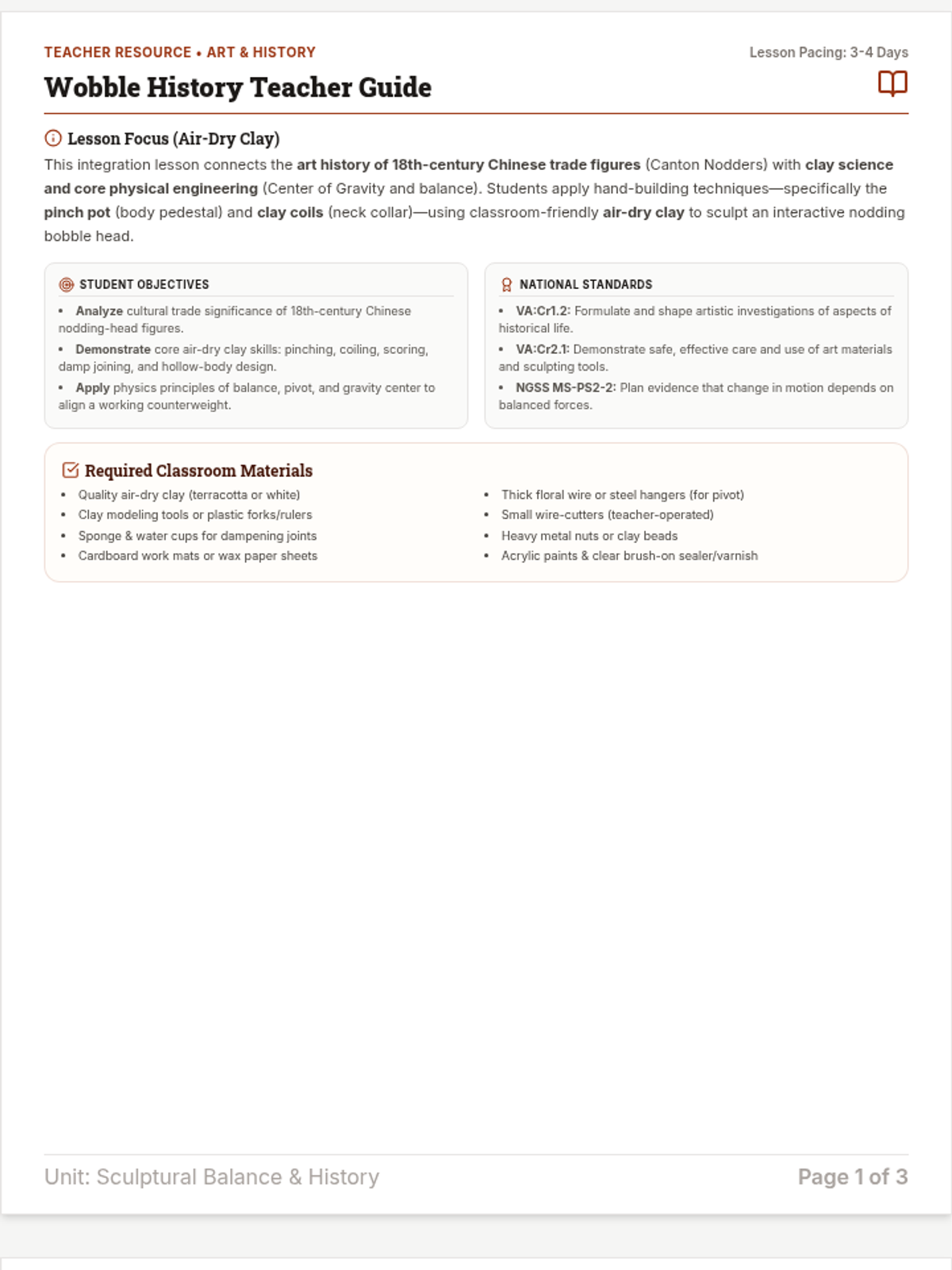
An art and history integration lesson focusing on 18th-century Chinese nodding-head figures. Students explore clay science, learn pinch pot and coil techniques, and sculpt their own clay bobble heads using balanced counterweights.
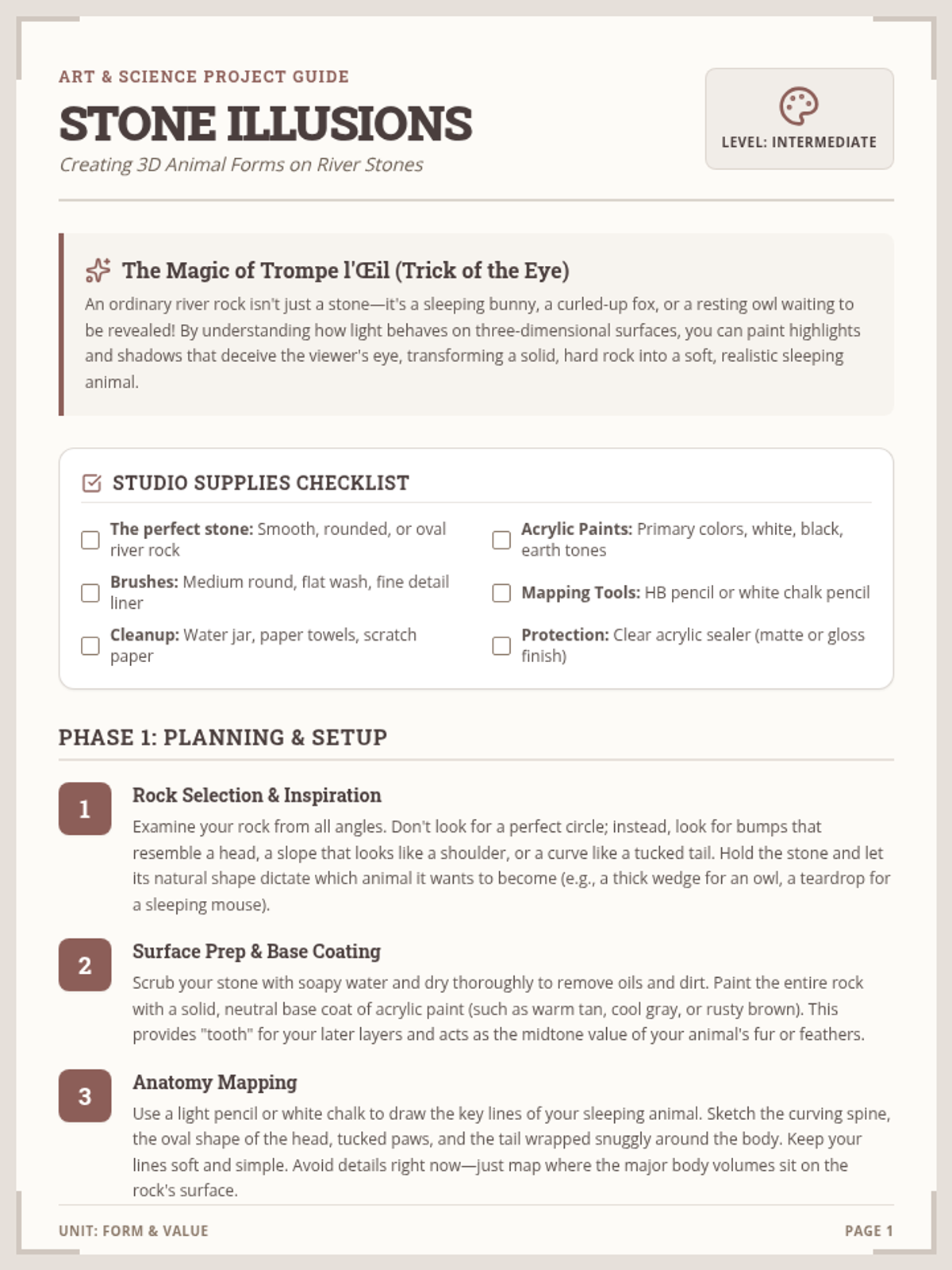
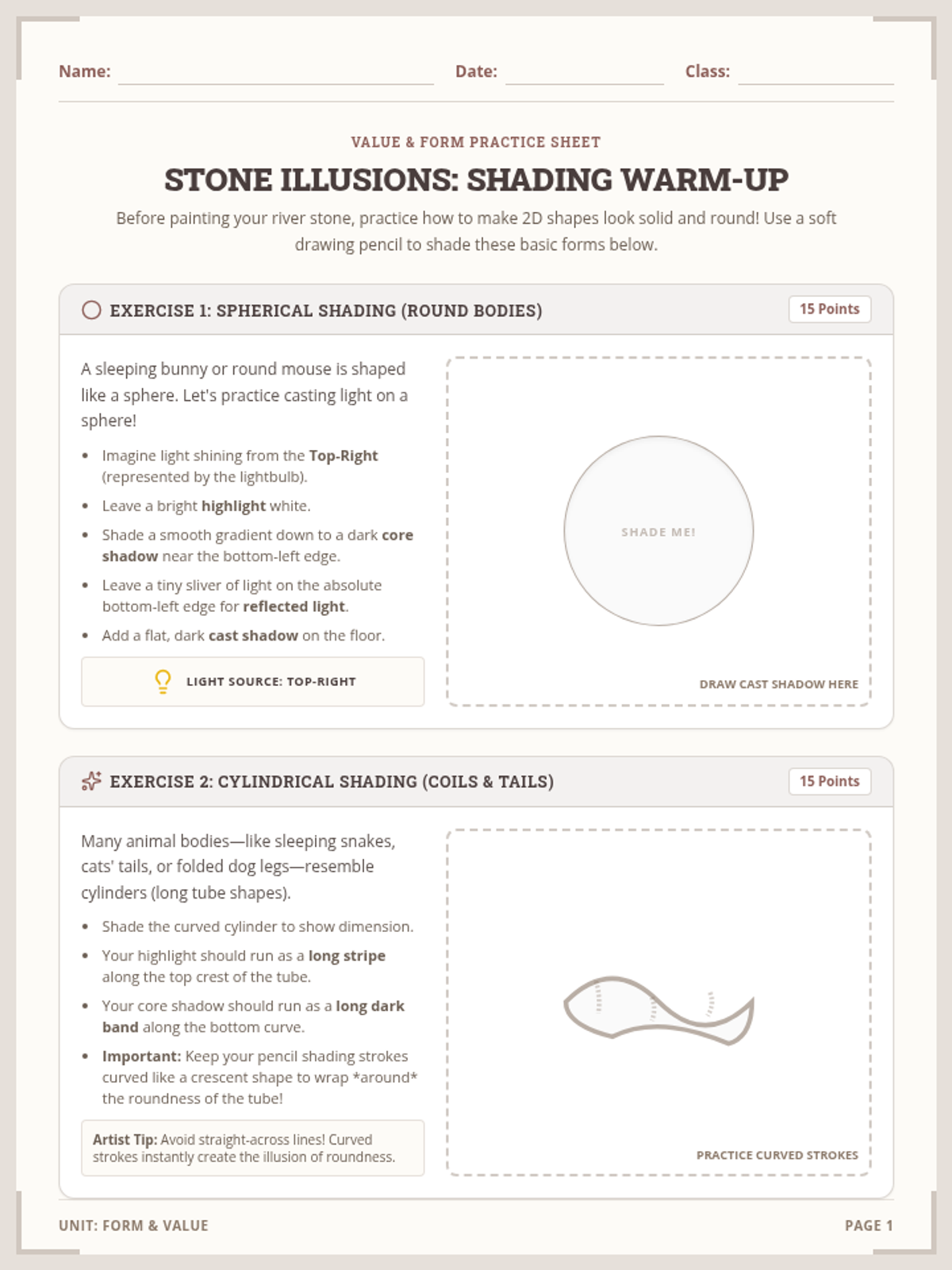
An art and science lesson exploring how to transform ordinary, irregular river rocks into convincing 3D animal illusions. Students learn the principles of light, shadow, value, and form placement to turn flat or rounded stone surfaces into realistic sleeping animals.
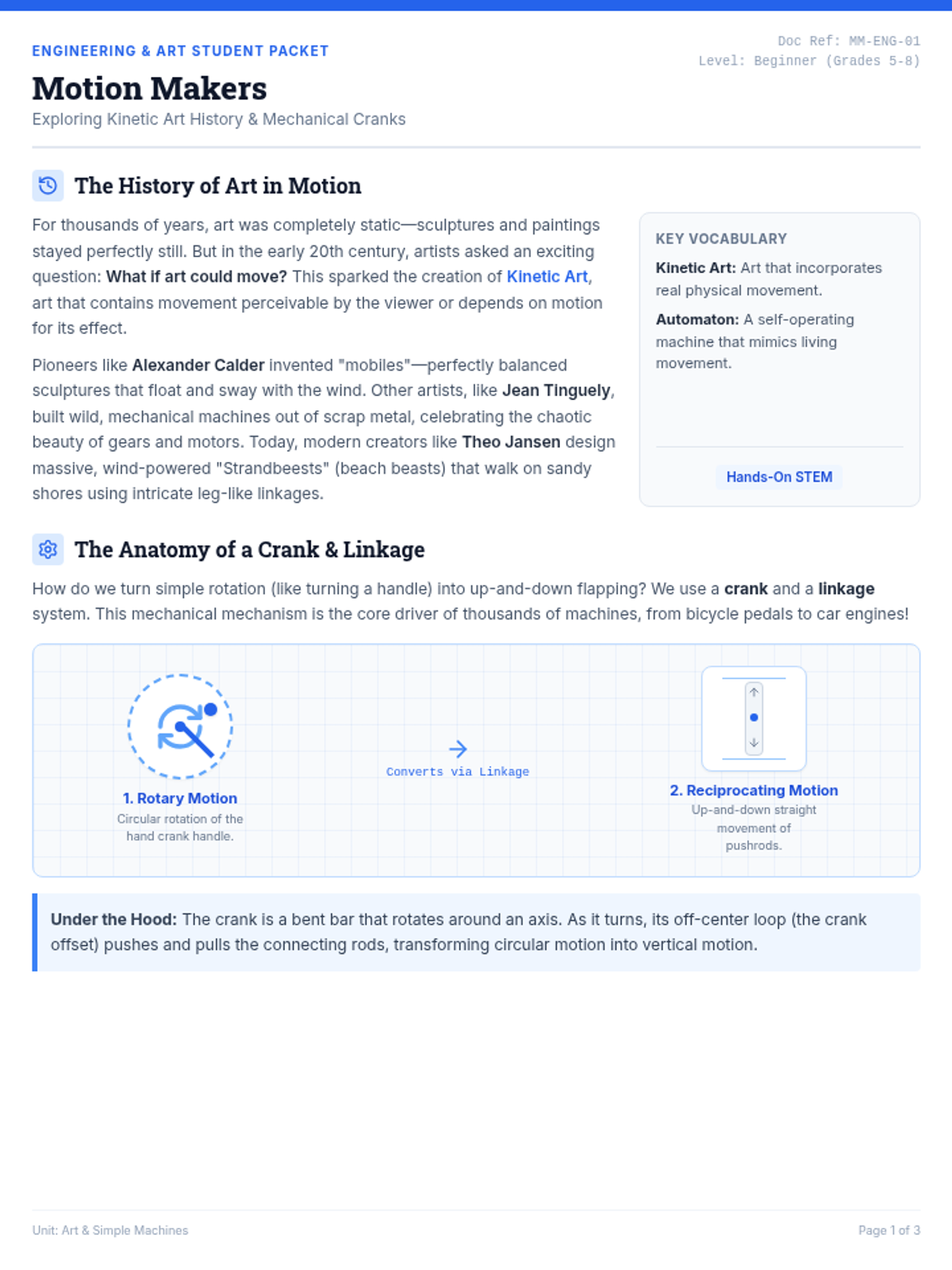
An introductory lesson on kinetic art and mechanics where students build their own flapping butterfly automaton. Using simple classroom materials like paperclips, bottle caps, and paper, students learn about cranks, linkages, and the history of art in motion without needing hot glue.