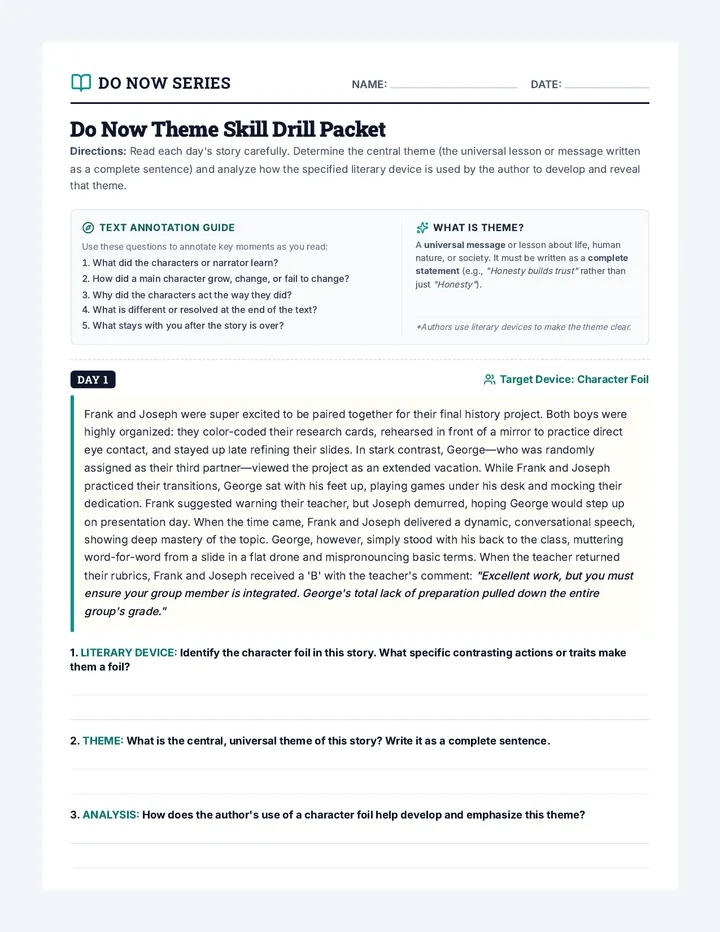
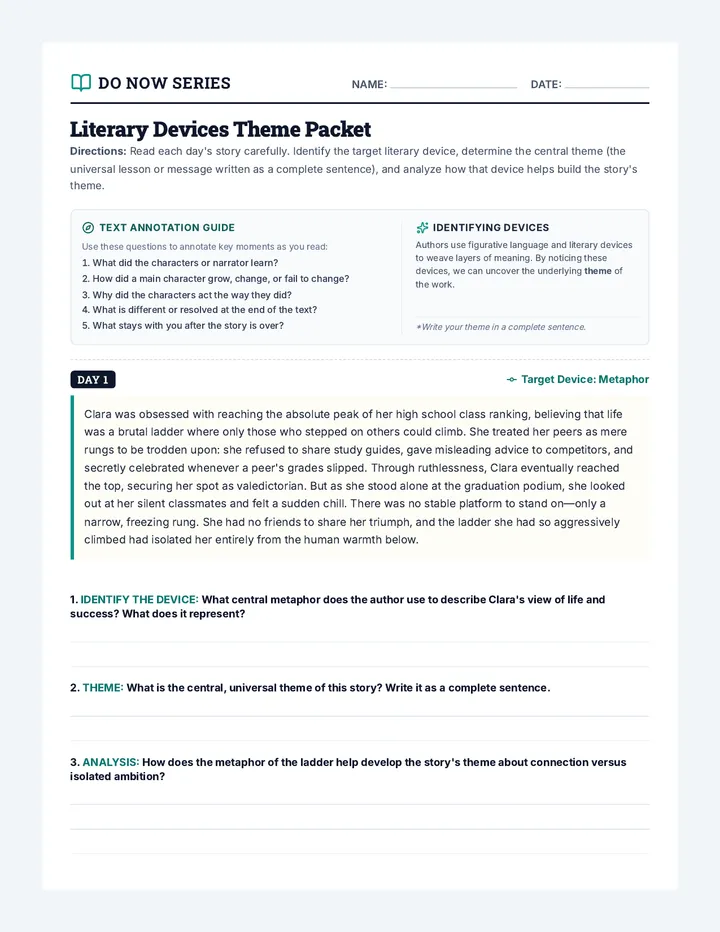
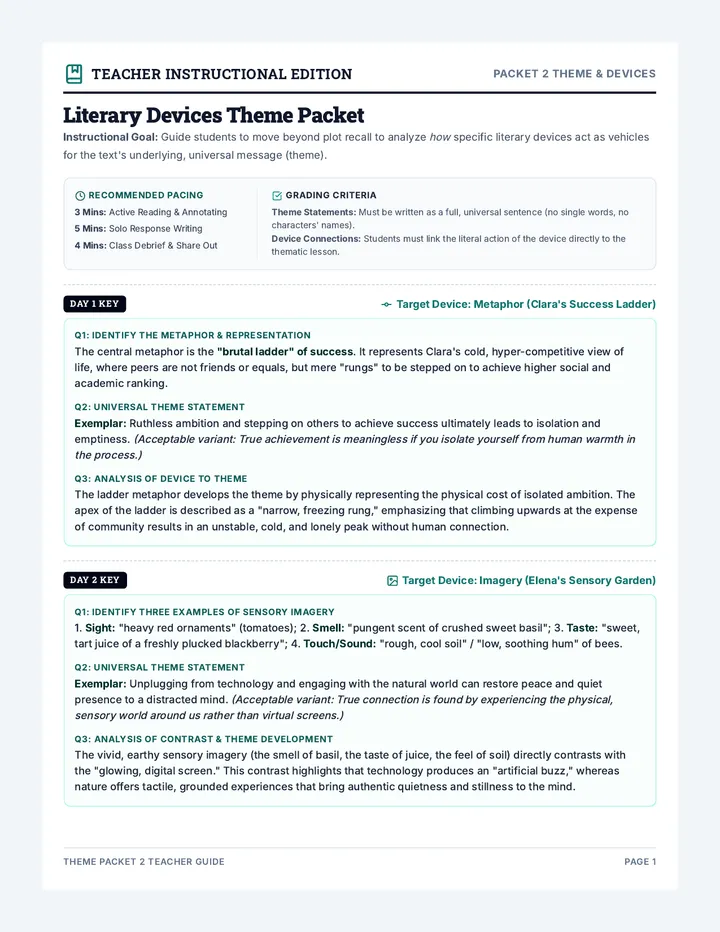
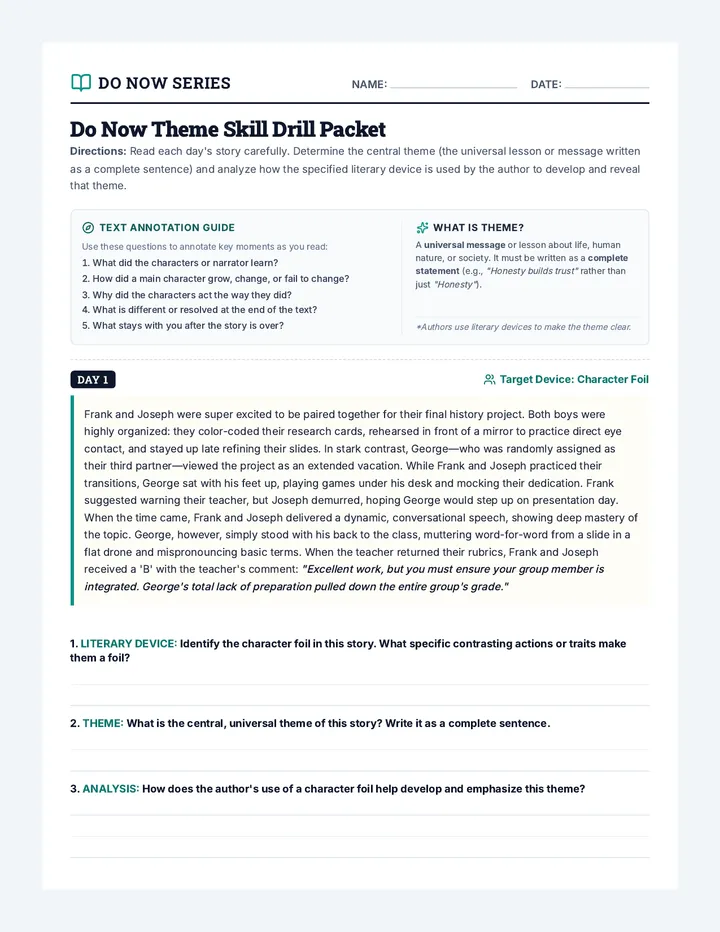
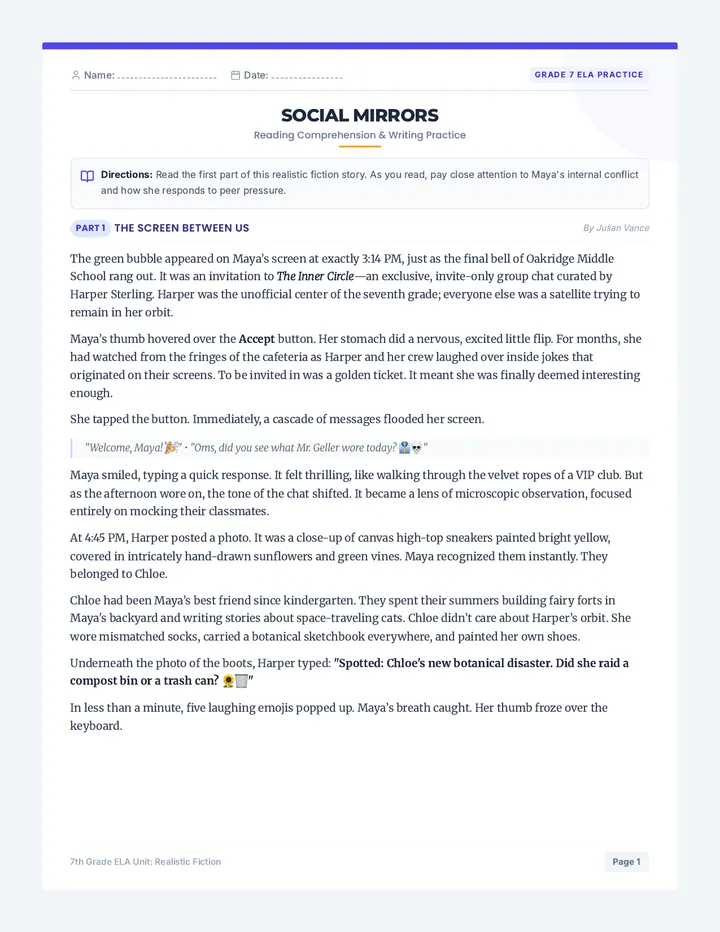
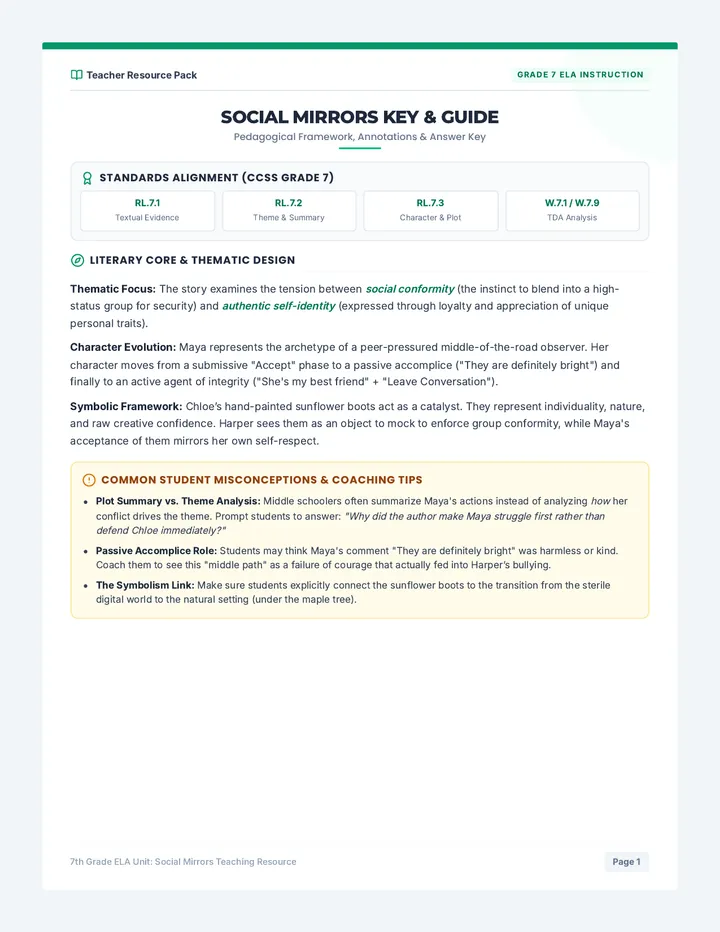
Students analyze the interconnectedness of literary devices—characterization, dialogue, and imagery—through a visual mapping activity inspired by the 'Storysmith' drafting process.
A lesson focusing on the transition of the Watson family from Flint to Birmingham, analyzing setting development and character shifts in chapters 12 and 13.
A deep dive into Chapter 10 of 'The Watsons Go to Birmingham – 1963', focusing on how the Appalachian setting and the shroud of night symbolize the growing racial tensions as the family heads South.
A middle school lesson on visual rhetoric, teaching students how to analyze and use color, layout, and typography to influence audience perception in media and advertising.
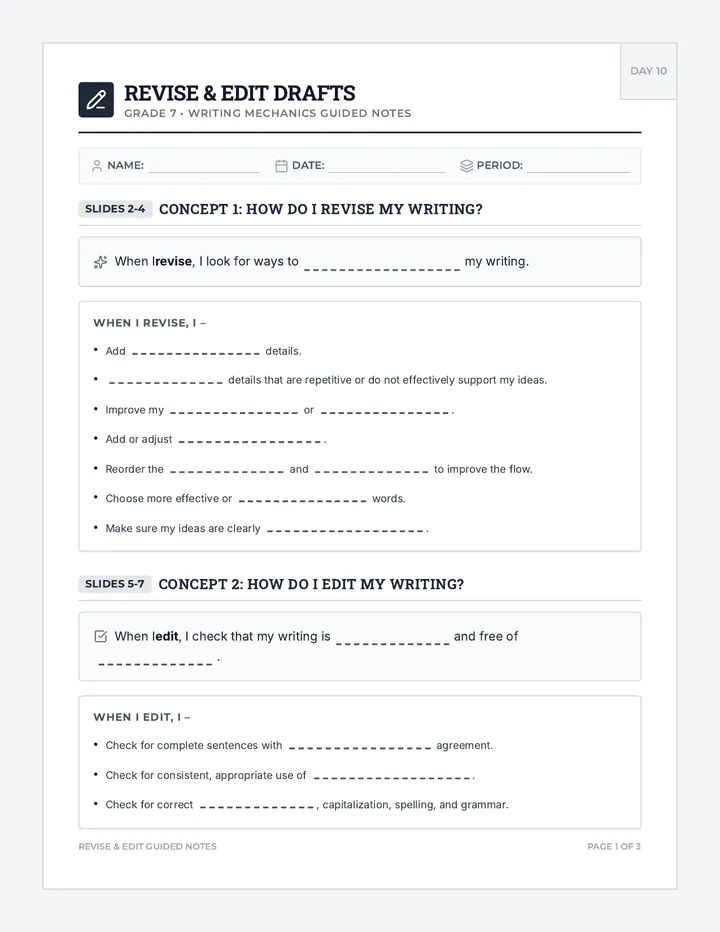
A 60-minute writing workshop focused on elevating 7th-grade prose through varied sentence structures, precise vocabulary, and appositives. Students act as 'Draft Surgeons' to transform weak soccer-themed text into professional, engaging writing.
A lesson focusing on the cultural shift of the 1920s through the lens of flapper culture, designed with highly accessible text for middle school students reading at a 1st-grade level. Students will analyze diction to identify positive and negative connotations.
A mini-lesson for a 6th-grade resource room ELA class focusing on Auggie's character traits and his development throughout the first month of school in the novel 'Wonder'. This lesson uses a space-exploration theme and provides high levels of scaffolding.
A mini-lesson for 6th grade resource room students focusing on the theme of kindness and character perspective in the novel Wonder, specifically centered around Mr. Browne's first precept and the transition into middle school.
This lesson introduces students to Manor Farm through the first chapter of Animal Farm, focusing on Old Major's rhetorical speech. Students will master high-level vocabulary, practice oral reading fluency through dramatic speech excerpts, and begin their reading of the first 10 pages.
An 8th-grade analysis lesson where students evaluate the benefits and drawbacks of mandatory homework versus extra credit using visual prompts and structured evidence.
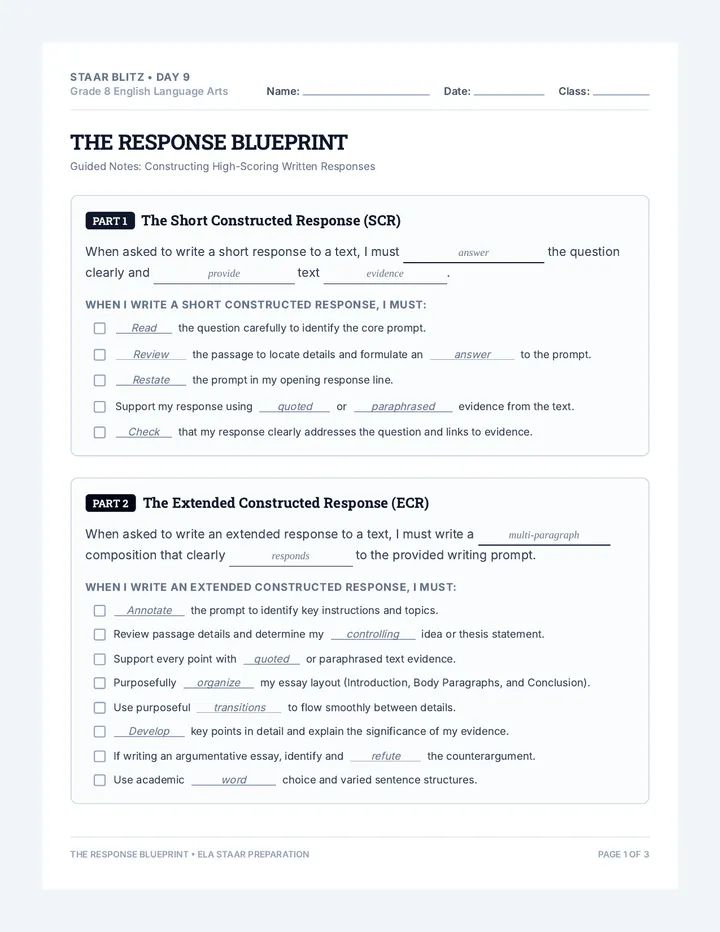
This lesson introduces 8th-grade students to the Claim-Evidence-Analysis (CEA) writing framework, focusing on how to construct objective arguments and effectively connect evidence to claims.
A collection of reflective and creative activities for Memorial Day, including a poppy craft writing activity, a gratitude letter template, and acrostic poems to honor fallen heroes.
A comprehensive lesson on analyzing poetry using the TPCASTT method, featuring a deep dive into Robert Frost's 'The Road Not Taken' and a gallery walk of diverse poems.