This lesson focuses on the critical skill of synthesizing ideas across two different genres, specifically analyzing a poem and a historical document to identify shared themes and contrasting evidence.
Combining prefixes, roots, and suffixes to decode complex multi-syllabic academic words.
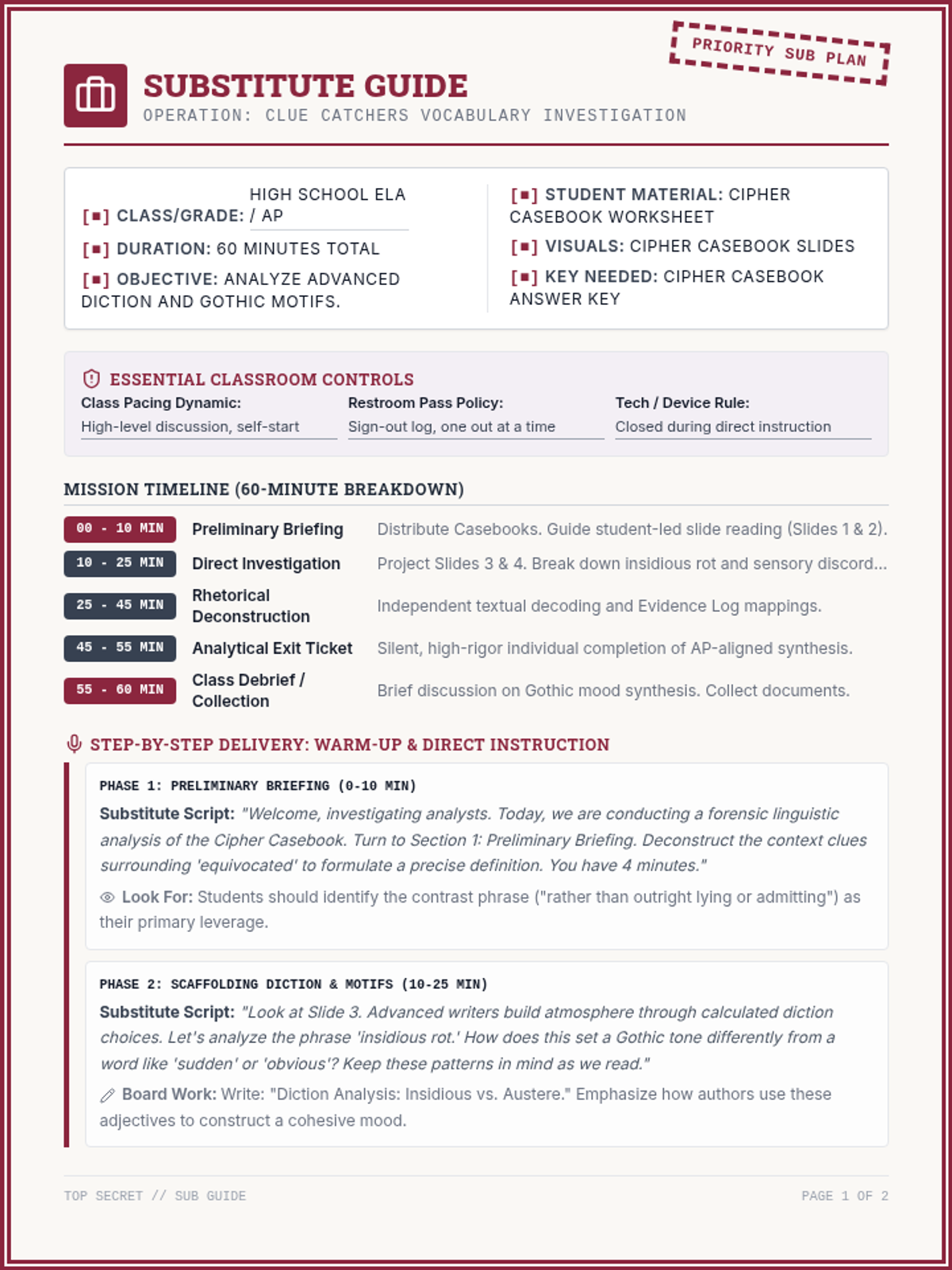
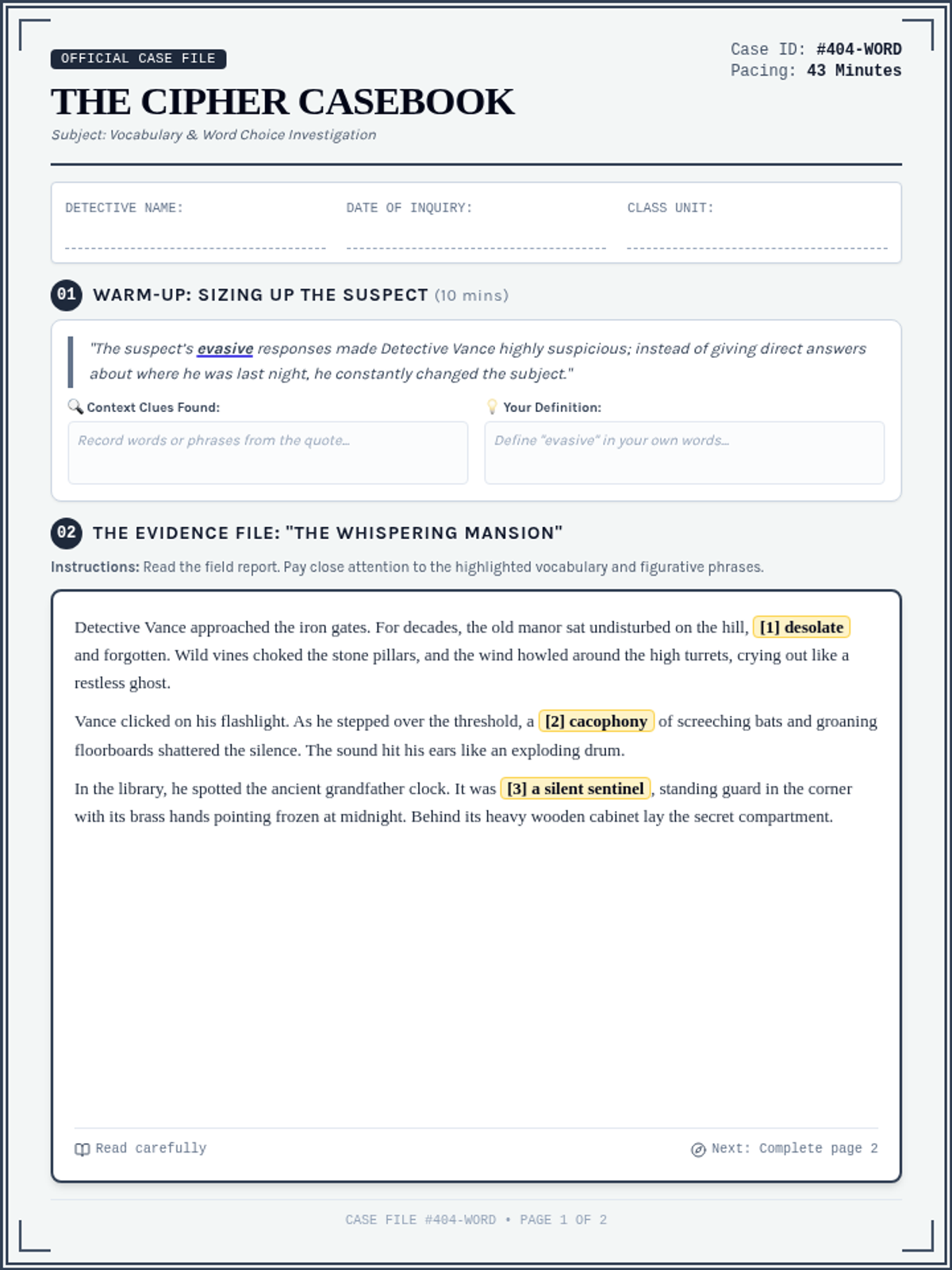
Mastering Latin roots commonly found in academic literature and formal writing.
Identifying and defining core Greek roots that form the foundation of scientific and technical vocabulary.
Exploring high-frequency academic suffixes and their role in determining a word's part of speech.
Introduction to common academic prefixes and how they modify the meaning of base words.
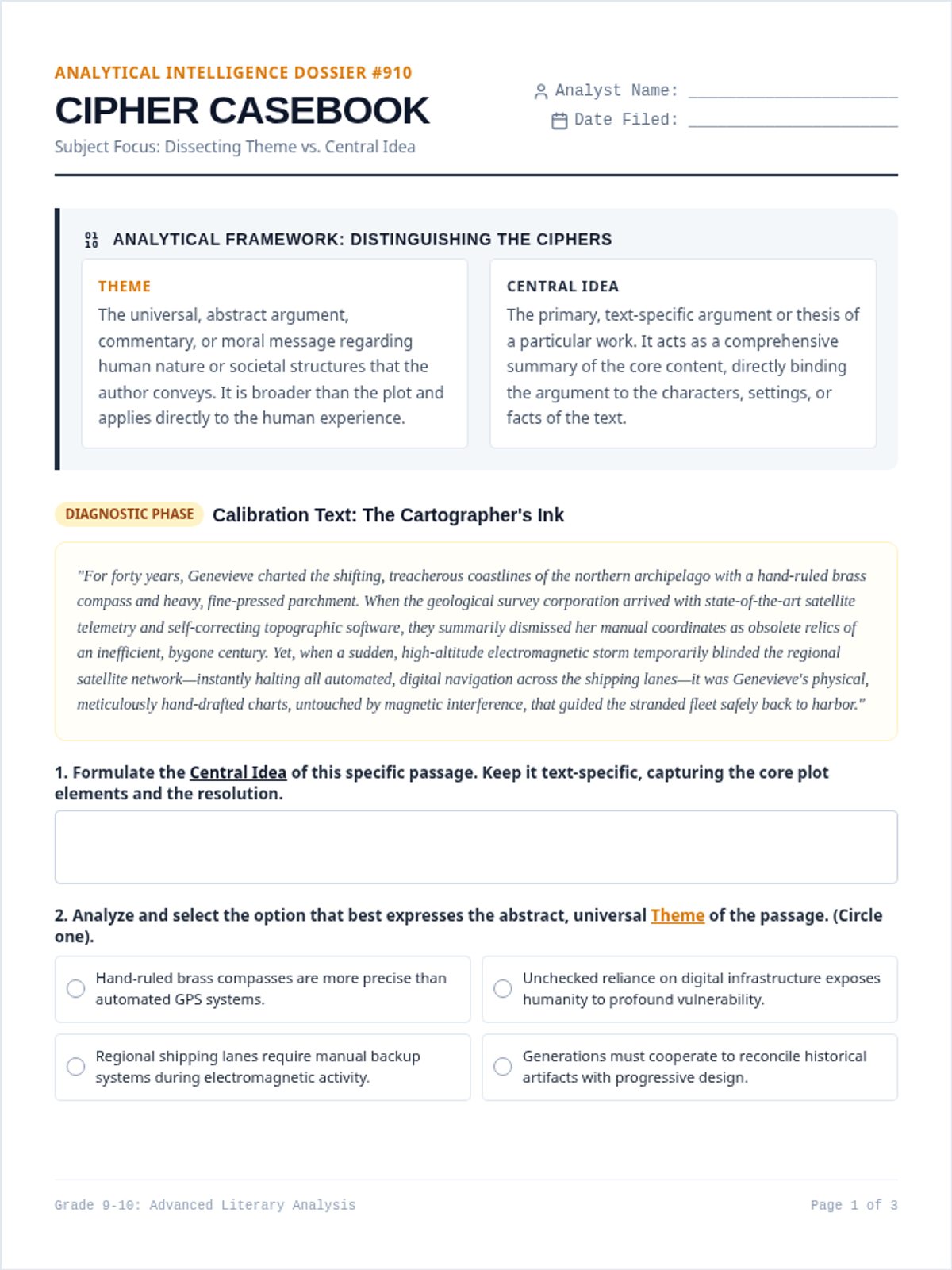
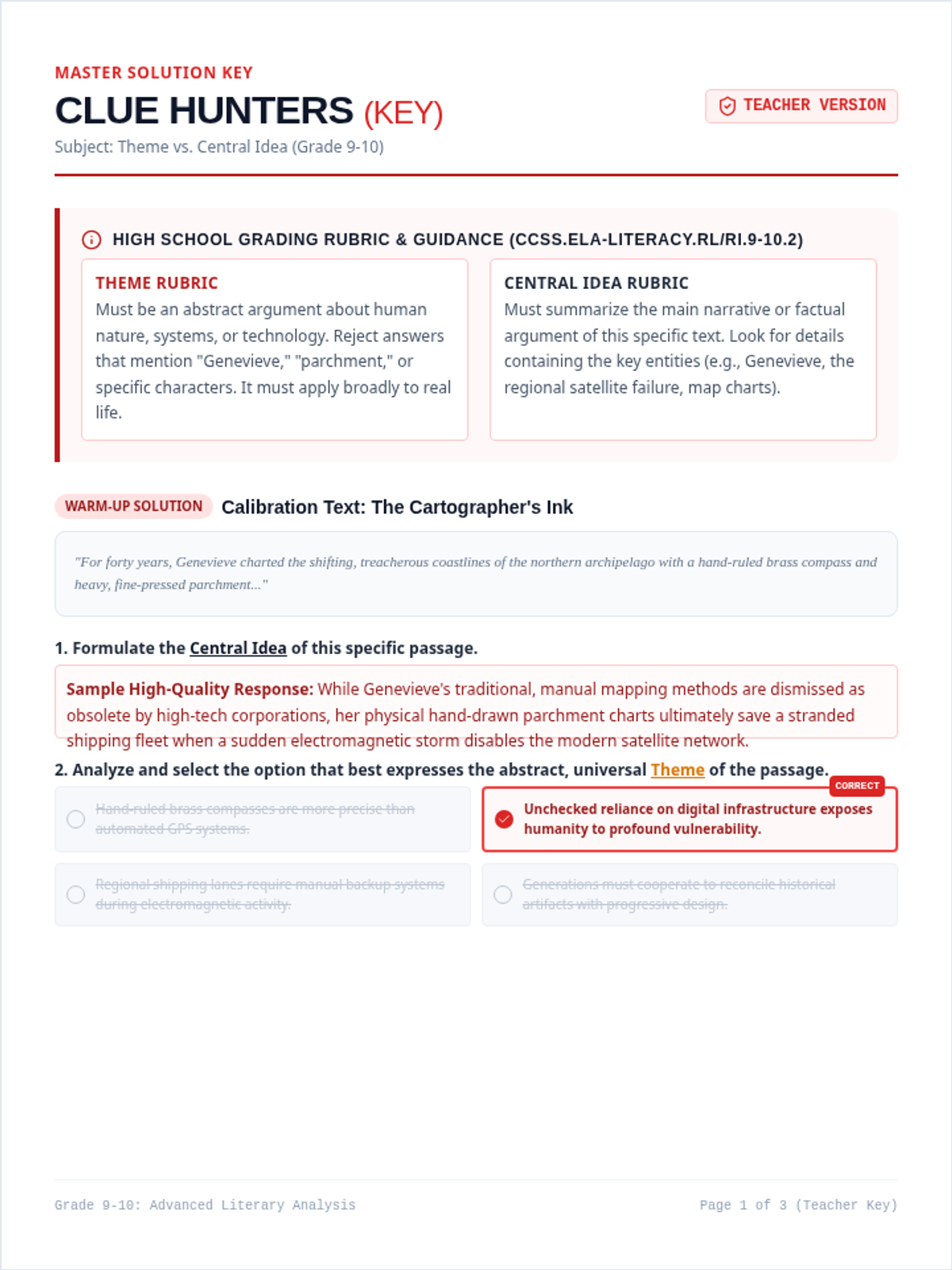
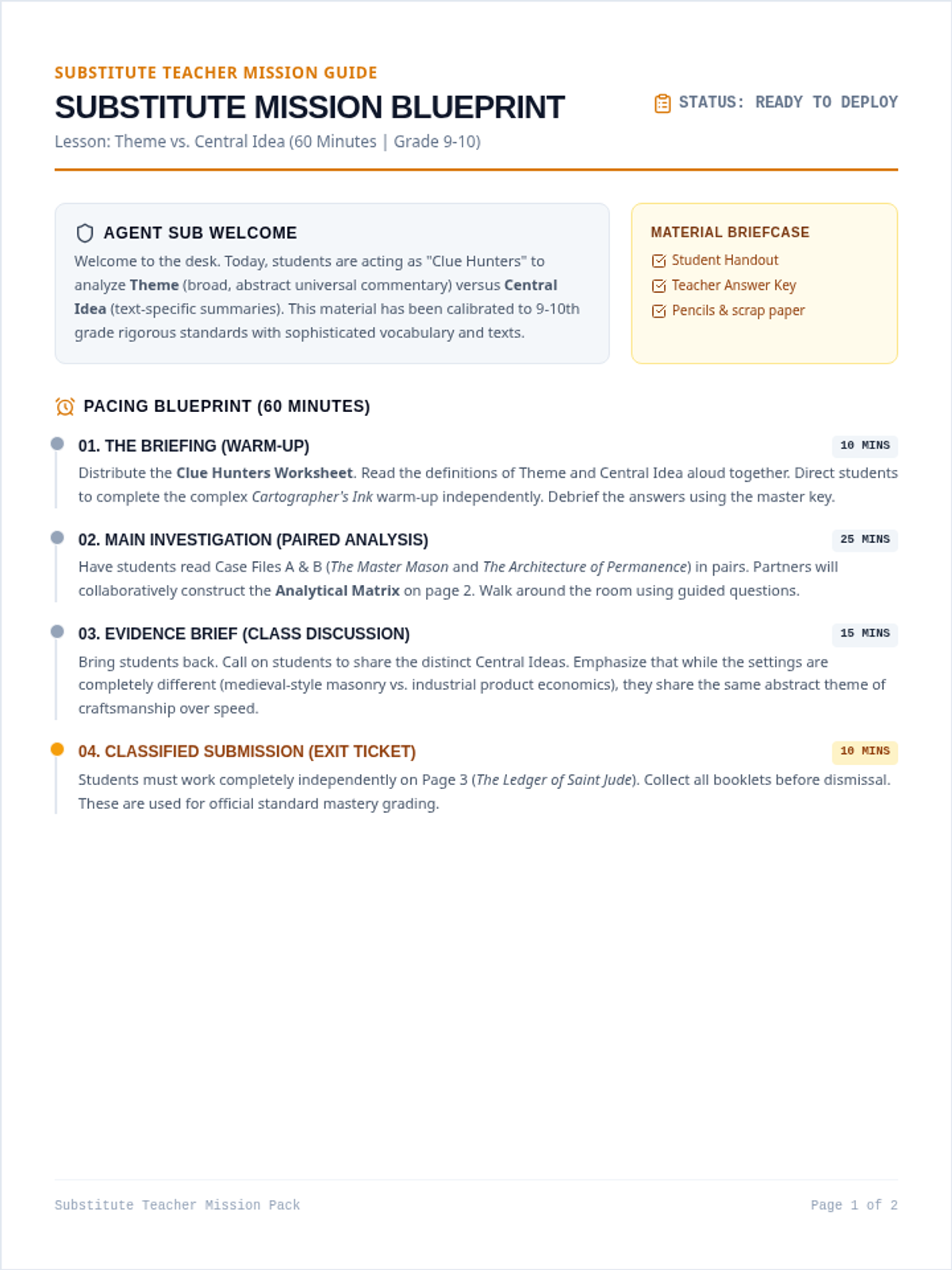
A lesson focused on identifying theme by collecting evidence, identifying topics, and synthesizing life lessons.
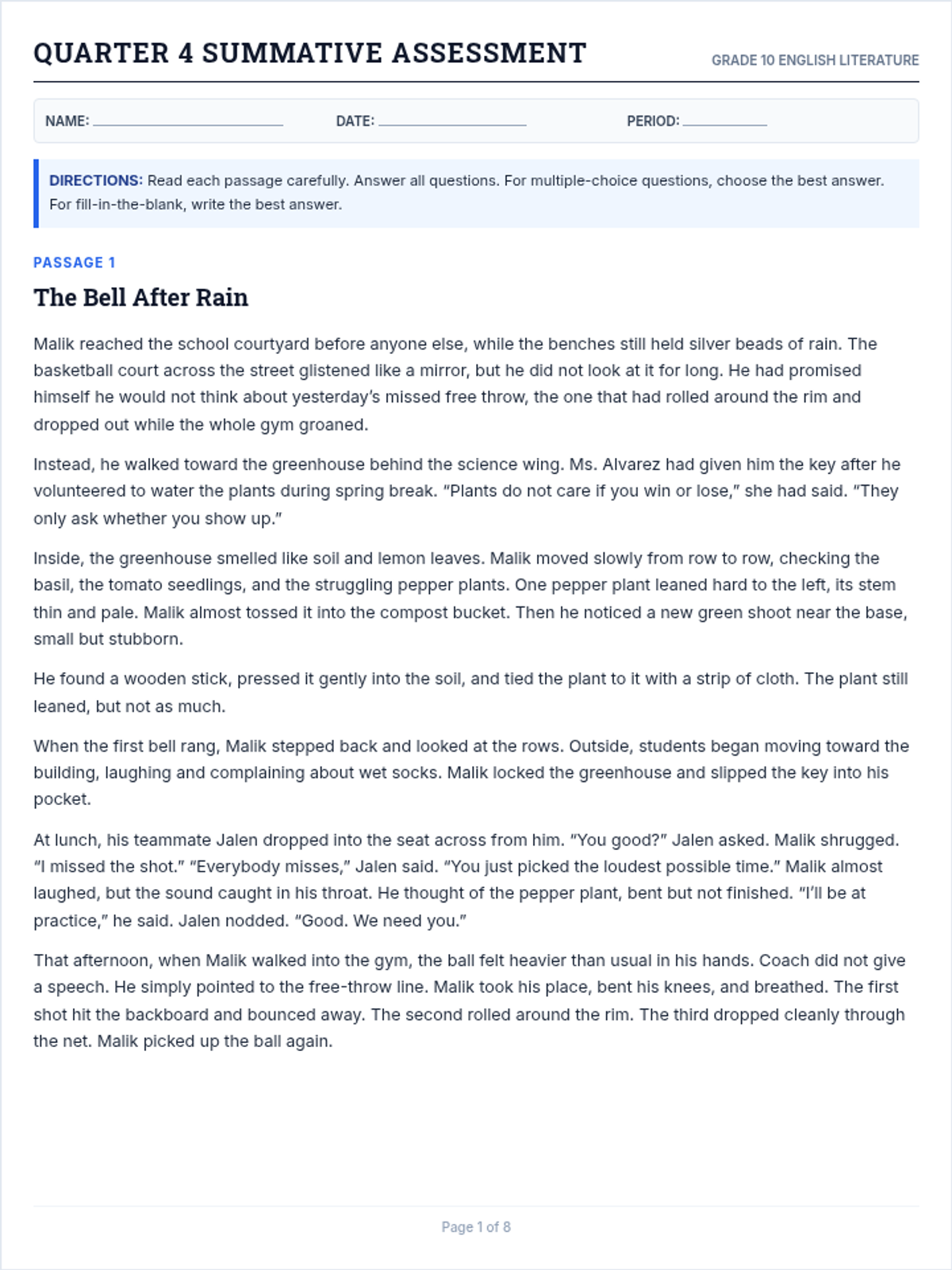
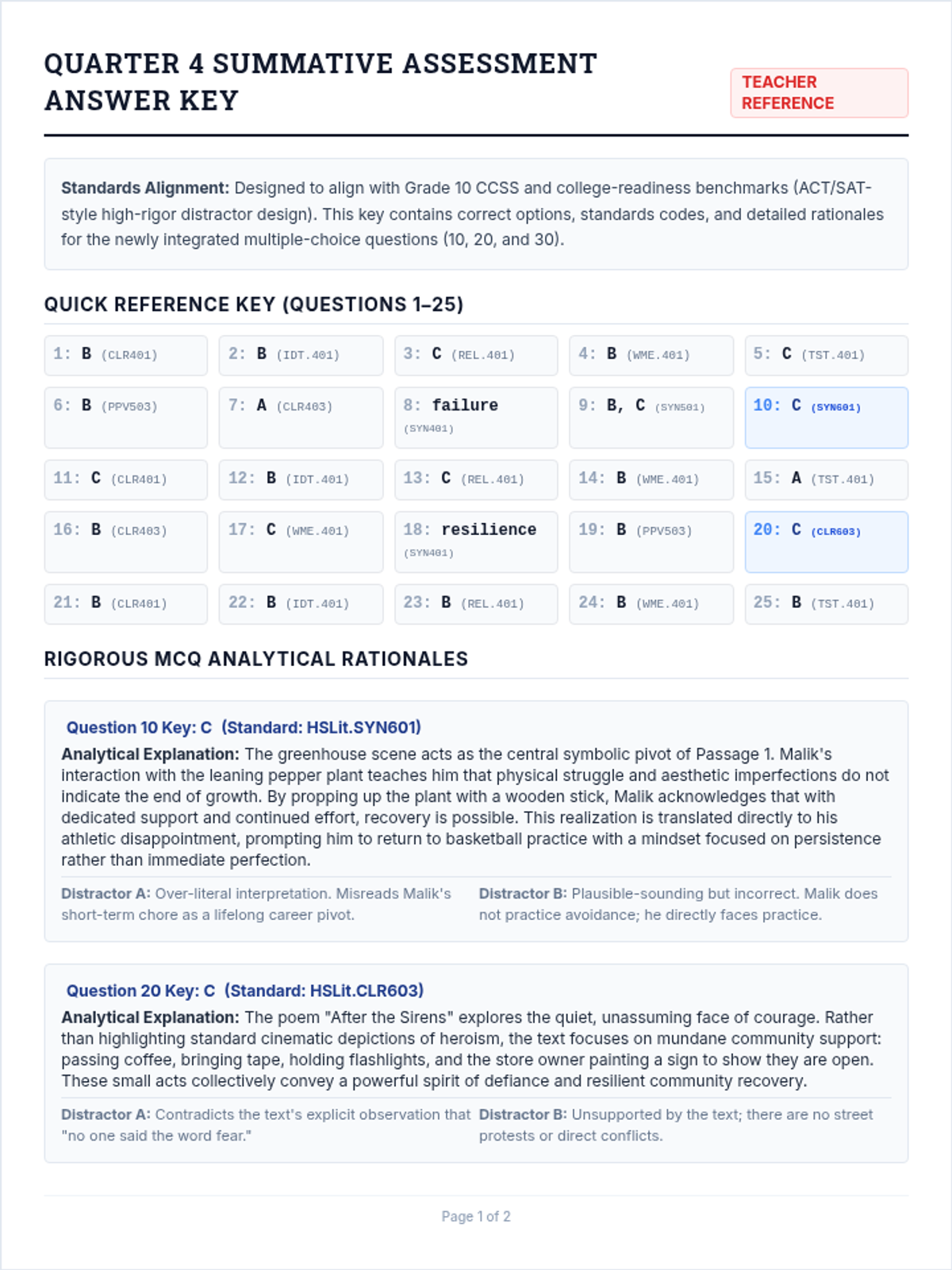
A rigorous assessment focusing on modern literary analysis and thematic synthesis. Students explore grit, struggle, and empathy through contemporary prose and poetry from diverse perspectives.
A comparative literary analysis assessment for 10th-grade students focusing on grit and perseverance in the works of Maya Angelou and Tara Westover. Students will analyze how literary techniques convey themes of resilience and overcoming systemic or personal limitations.
A literary analysis assessment where students connect the themes of social injustice and moral courage in Maya Angelou's 'Caged Bird' to Harper Lee's 'To Kill a Mockingbird'.
A comprehensive final assessment focused on synthesizing themes of the American Dream and the American Experience through a comparative analysis of unseen texts and core curriculum works.