A deep dive into the historical and cultural context of the supernatural in Shakespeare's plays, exploring the societal fears, royal obsessions, and dramatic techniques of the Elizabethan and Jacobean eras.
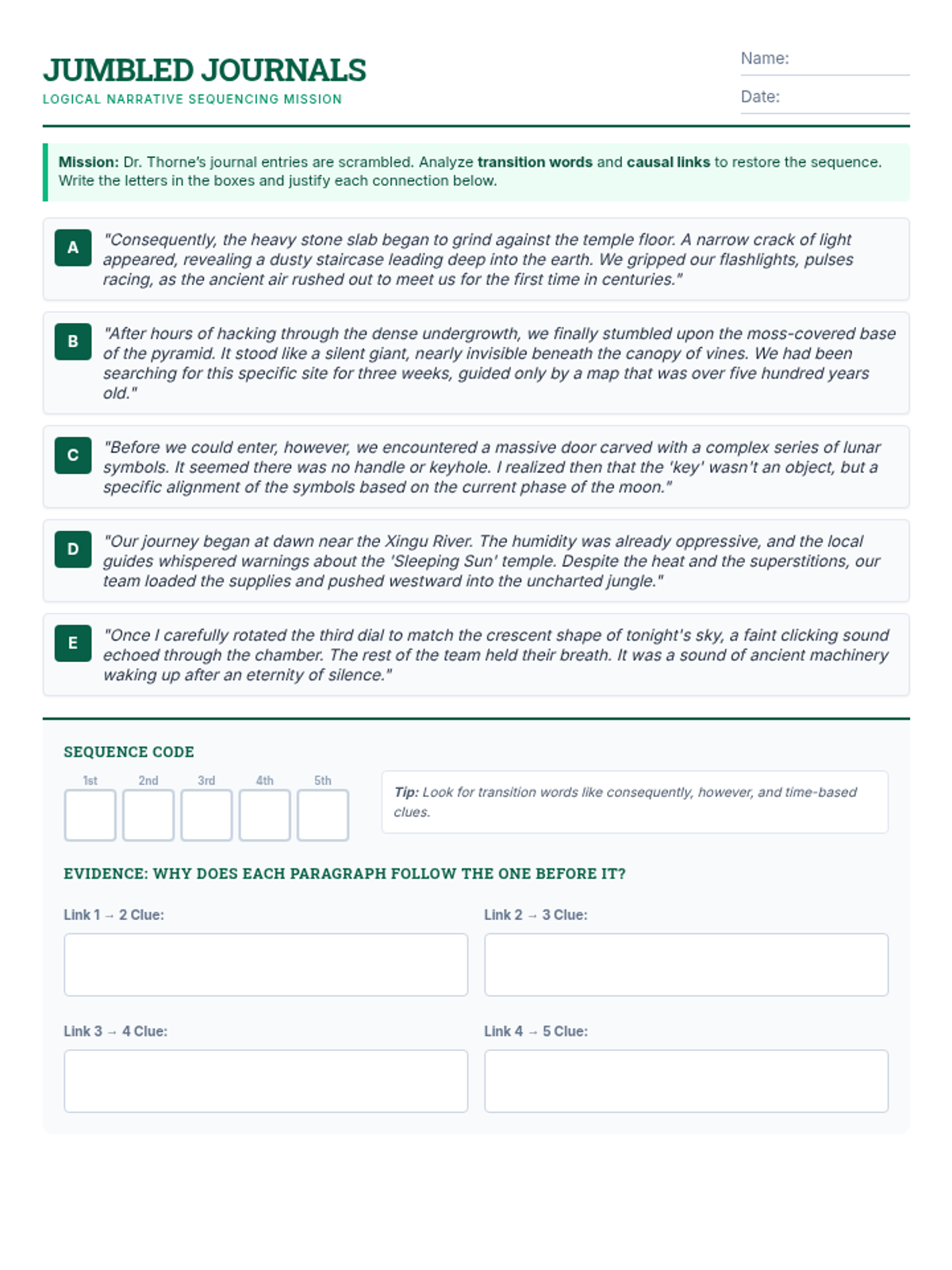
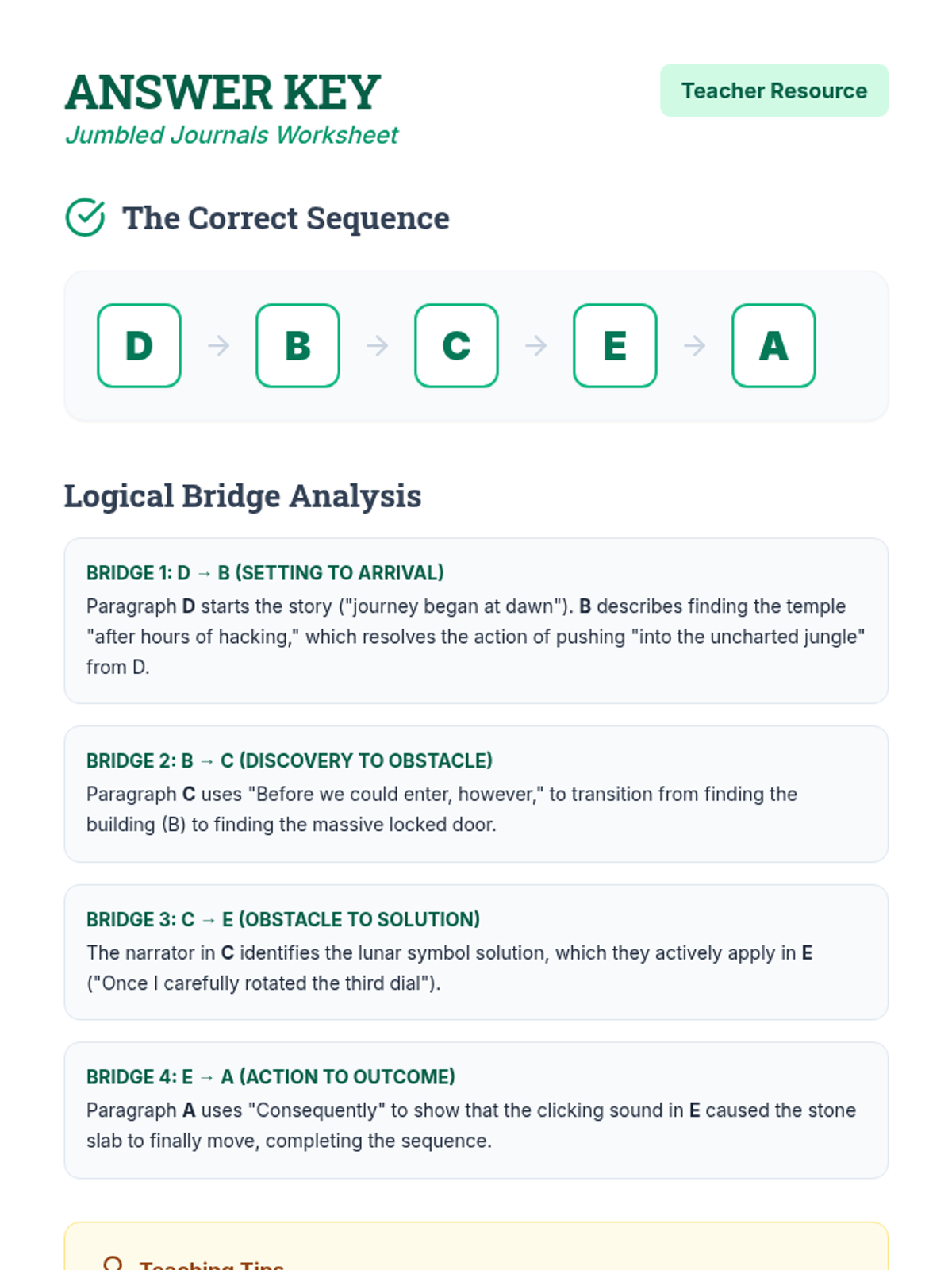
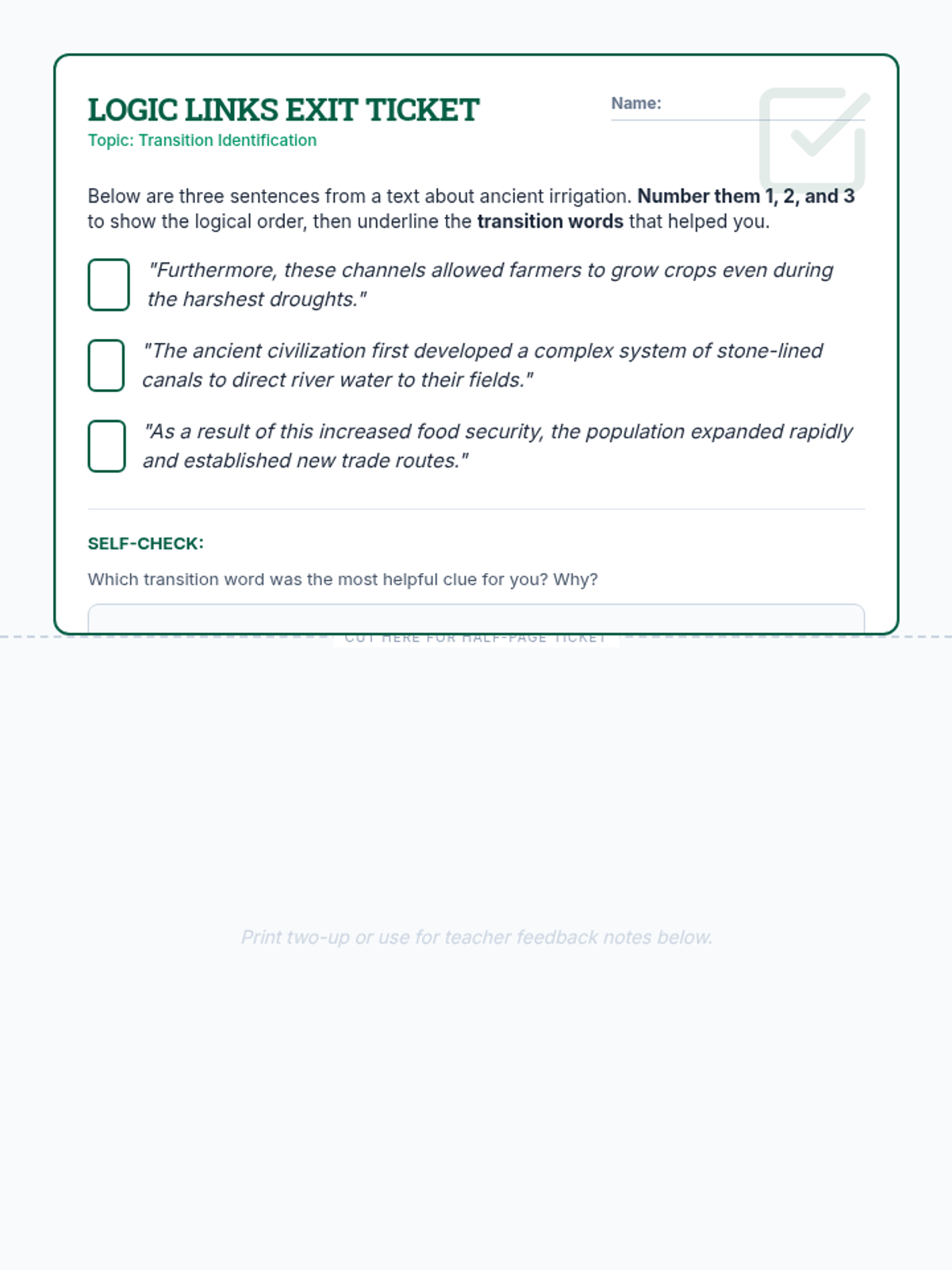
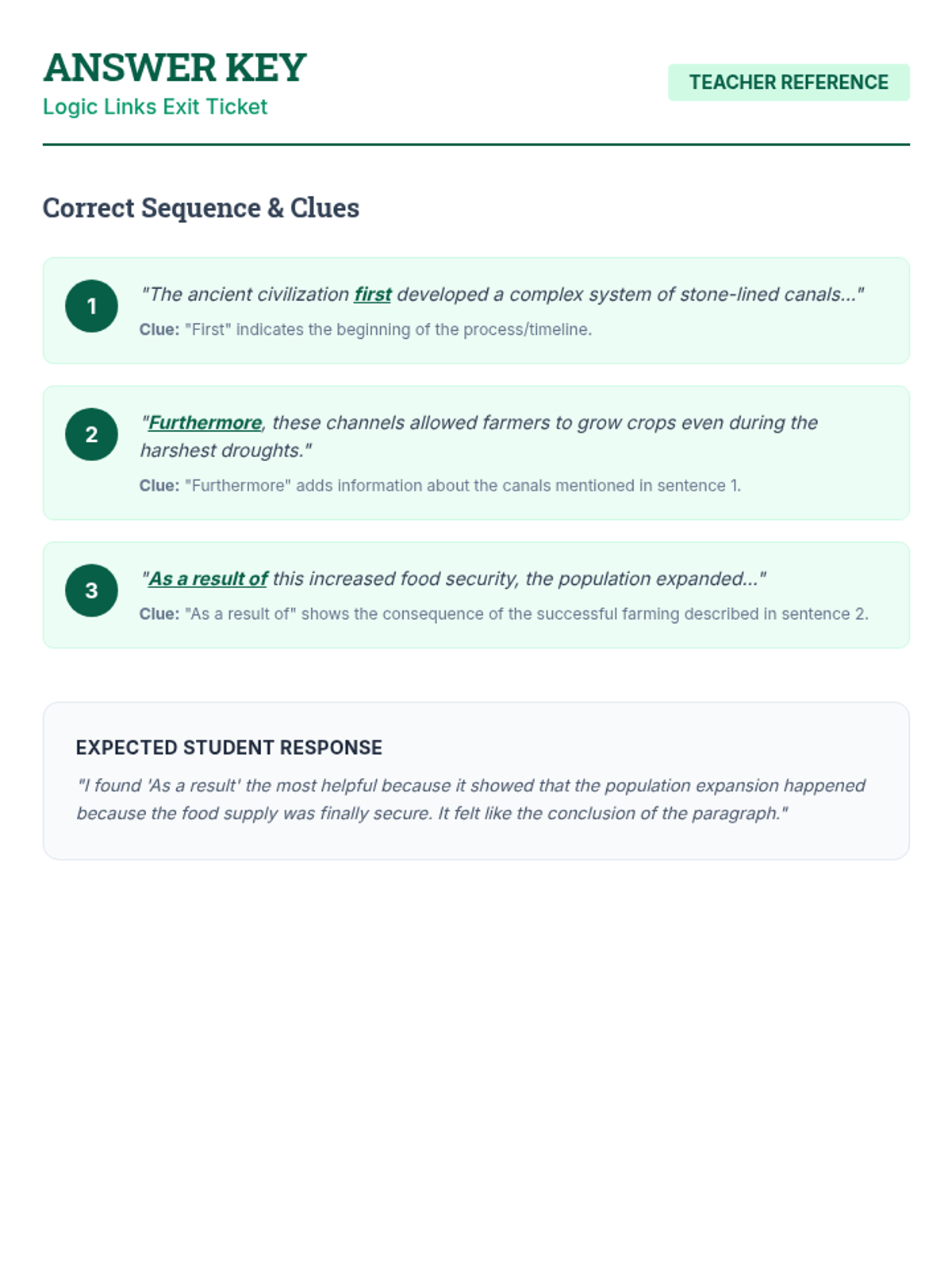
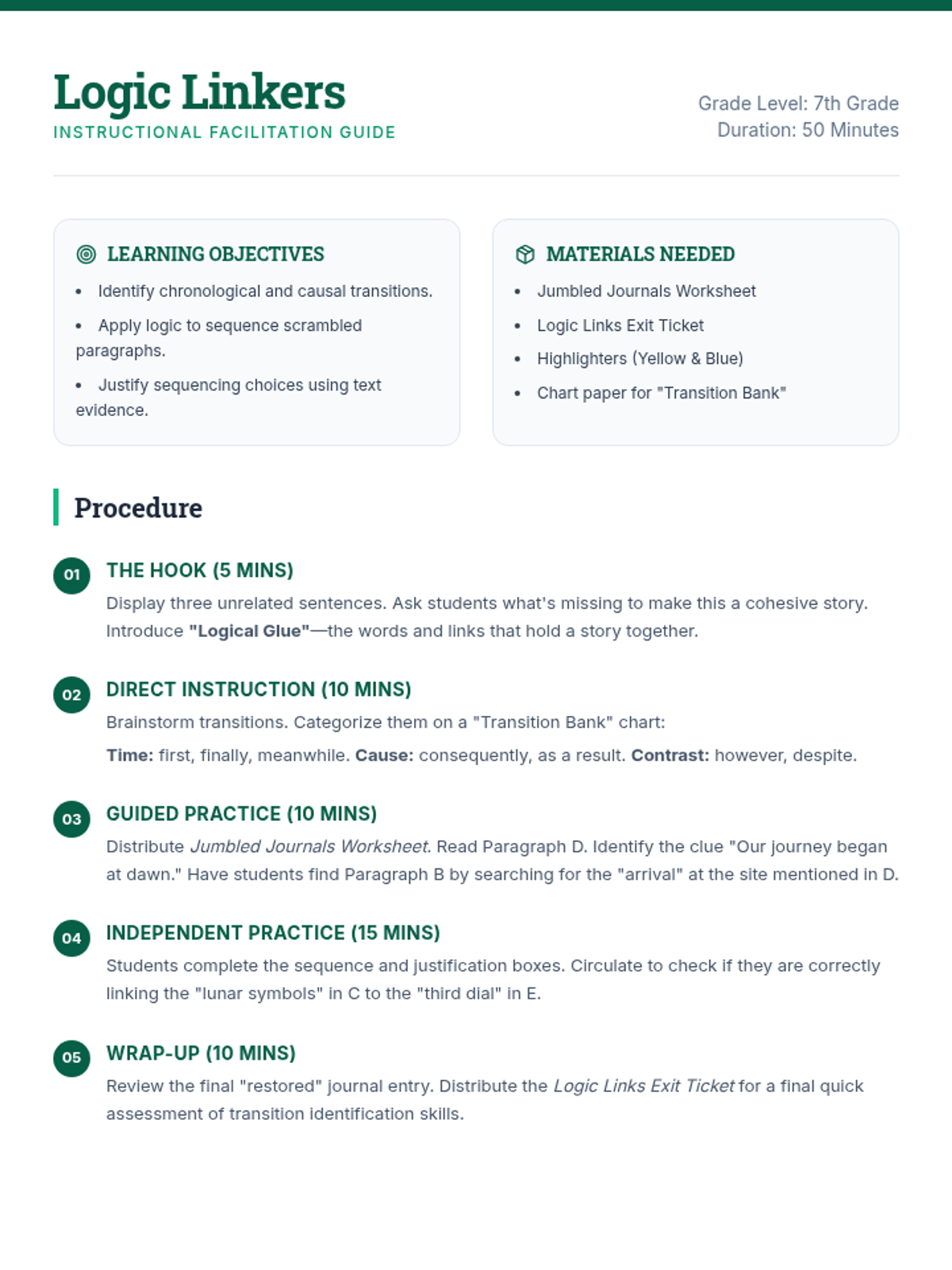
A lesson focused on identifying logical flow and transition markers to reorder scrambled paragraphs into a cohesive narrative or informational text.
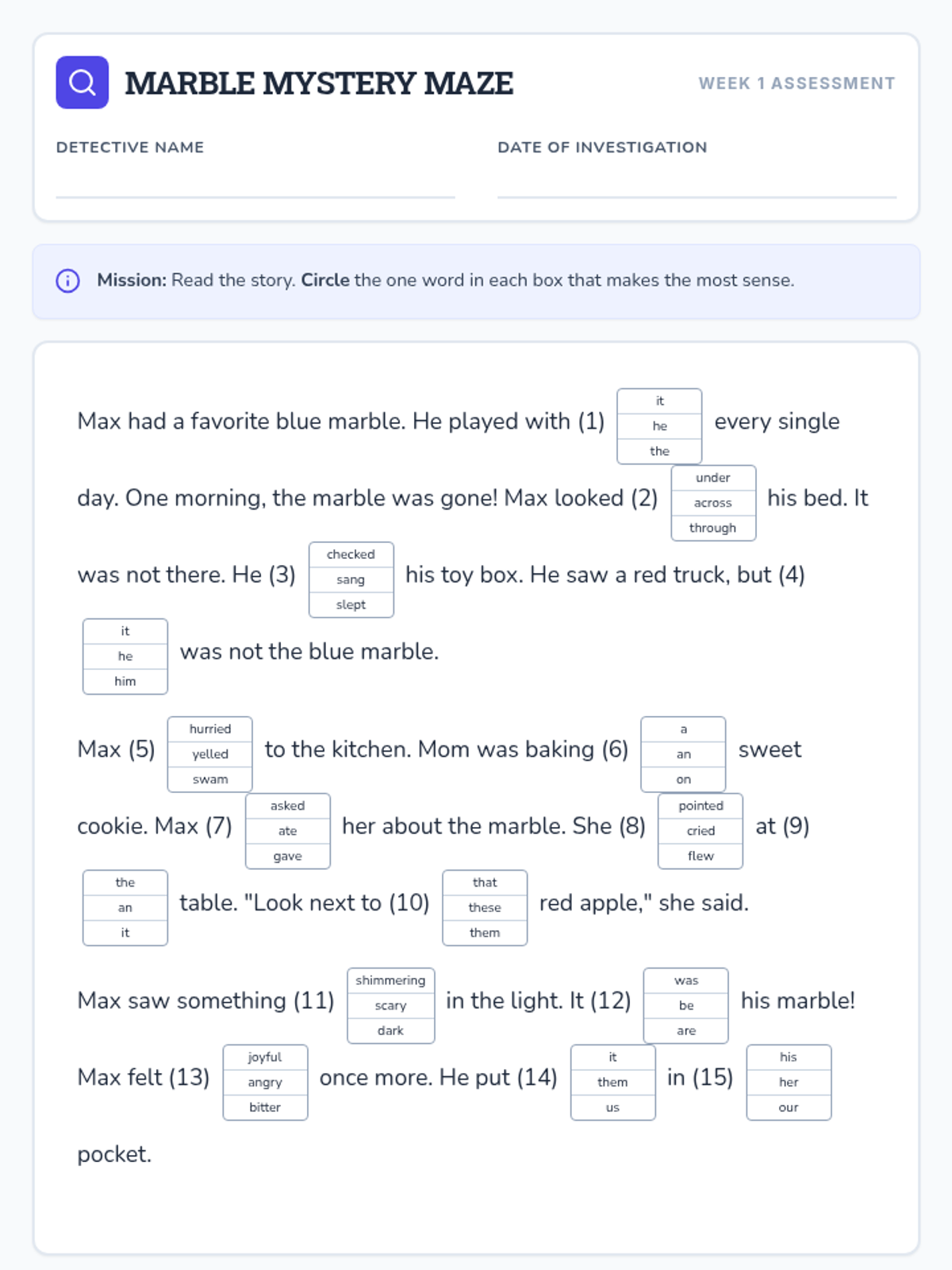
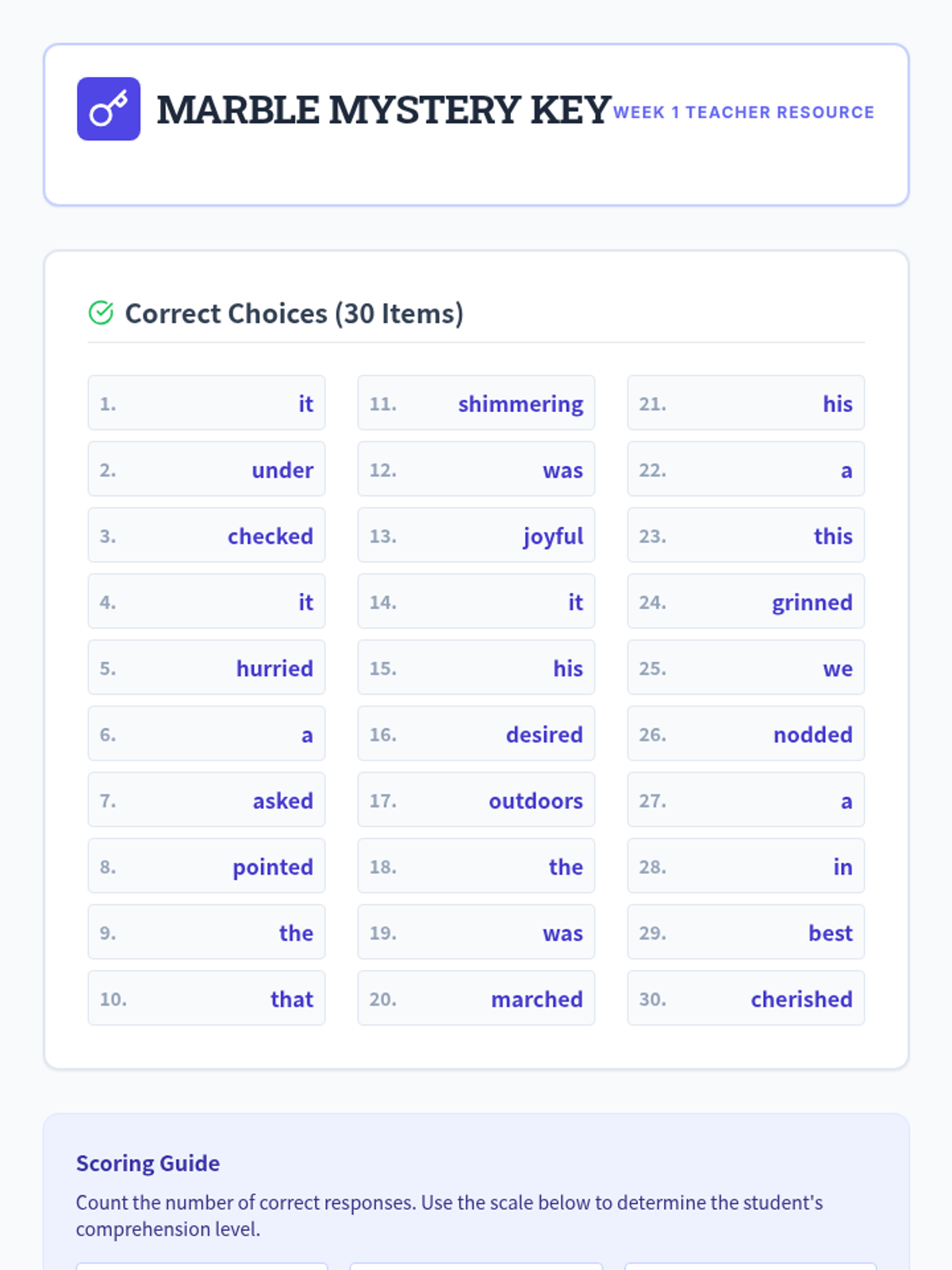
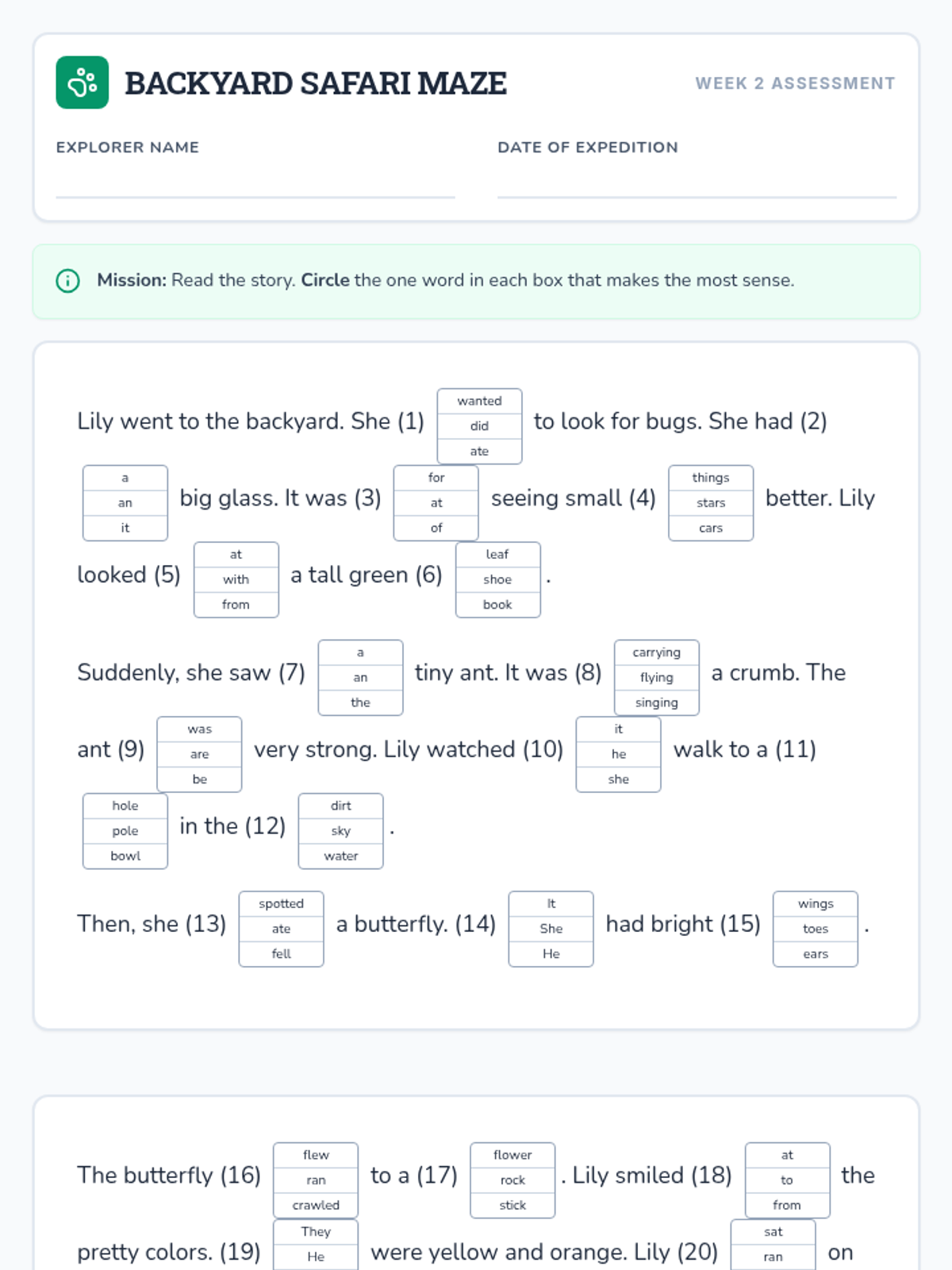
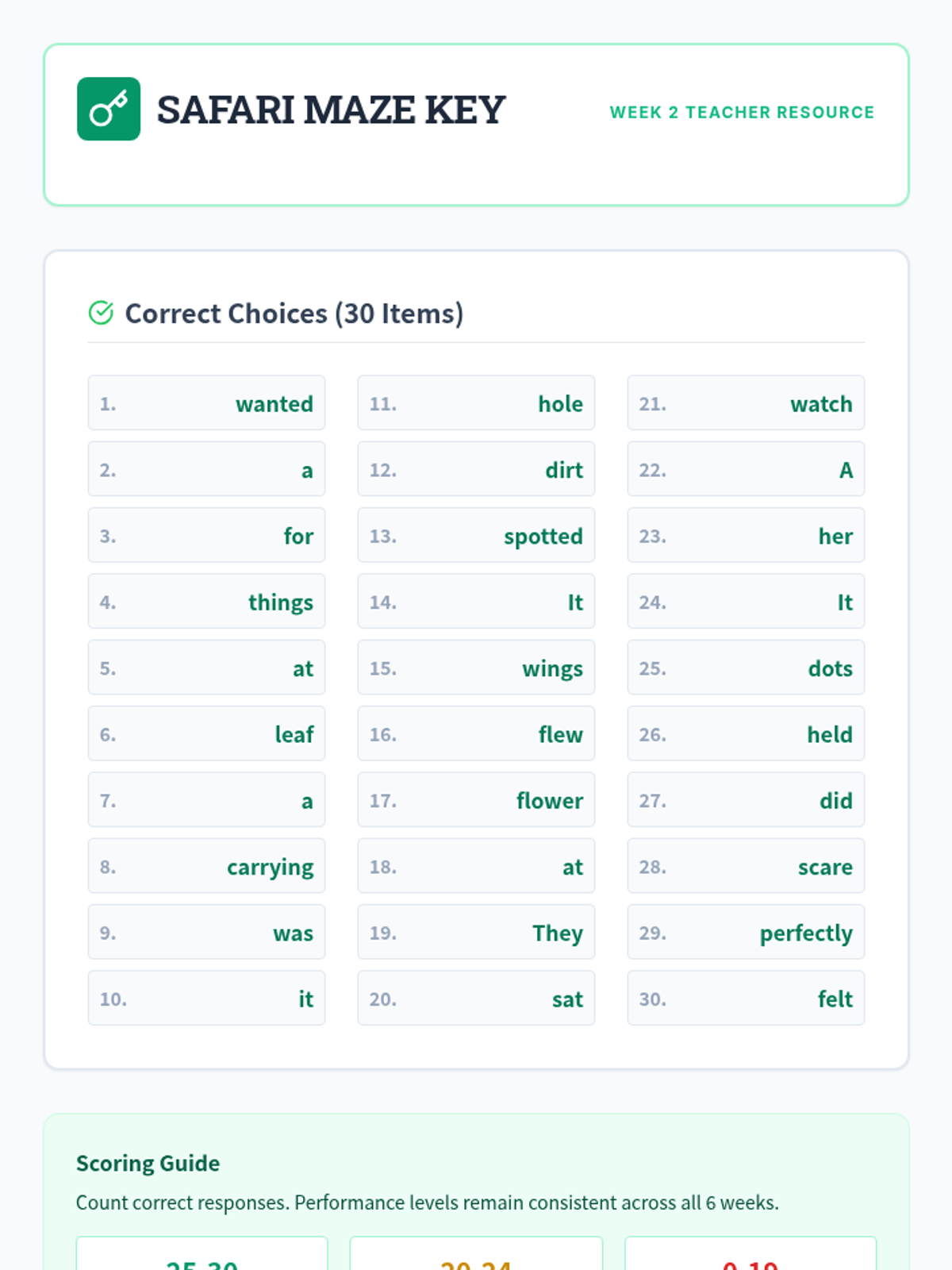
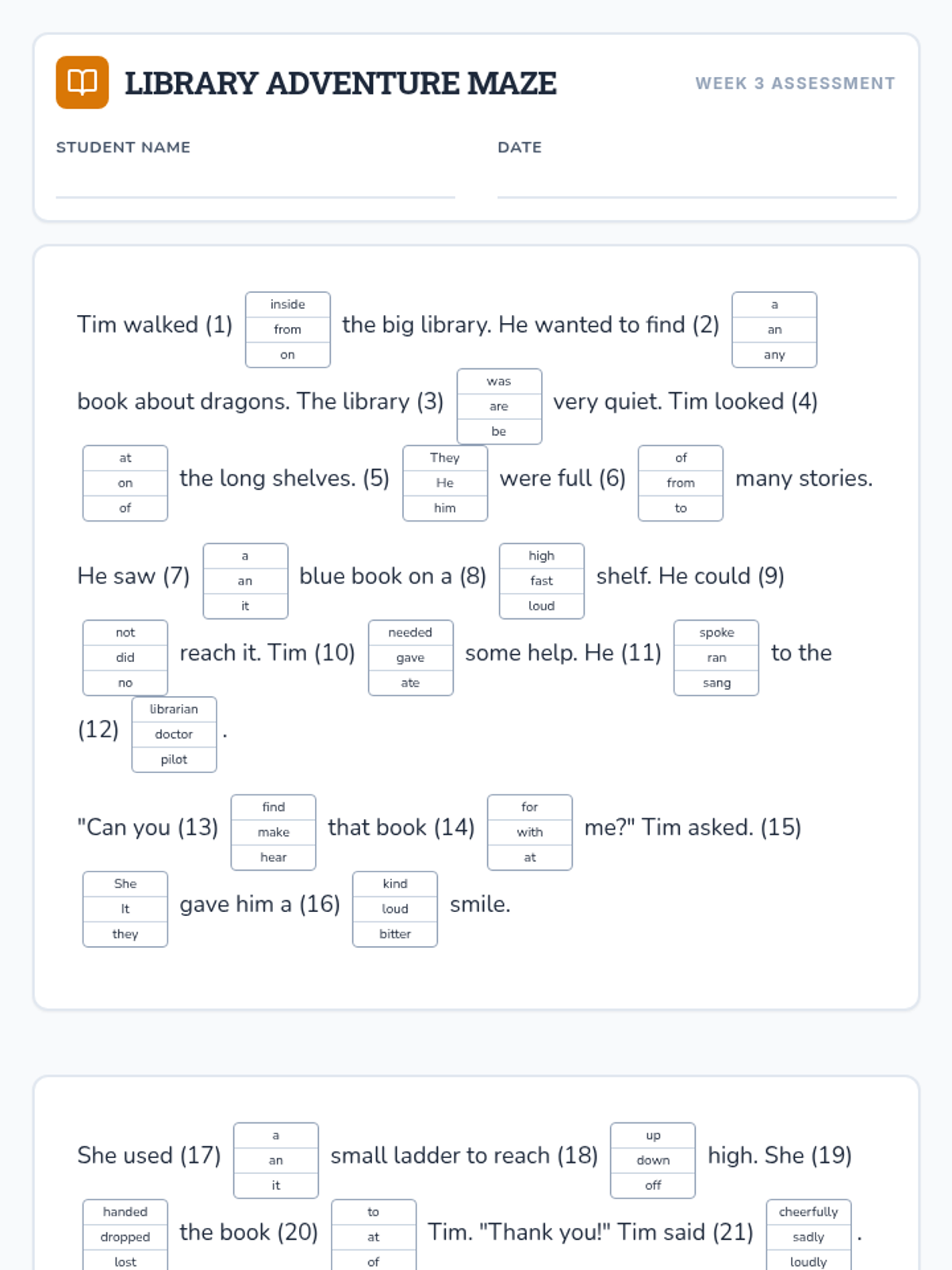
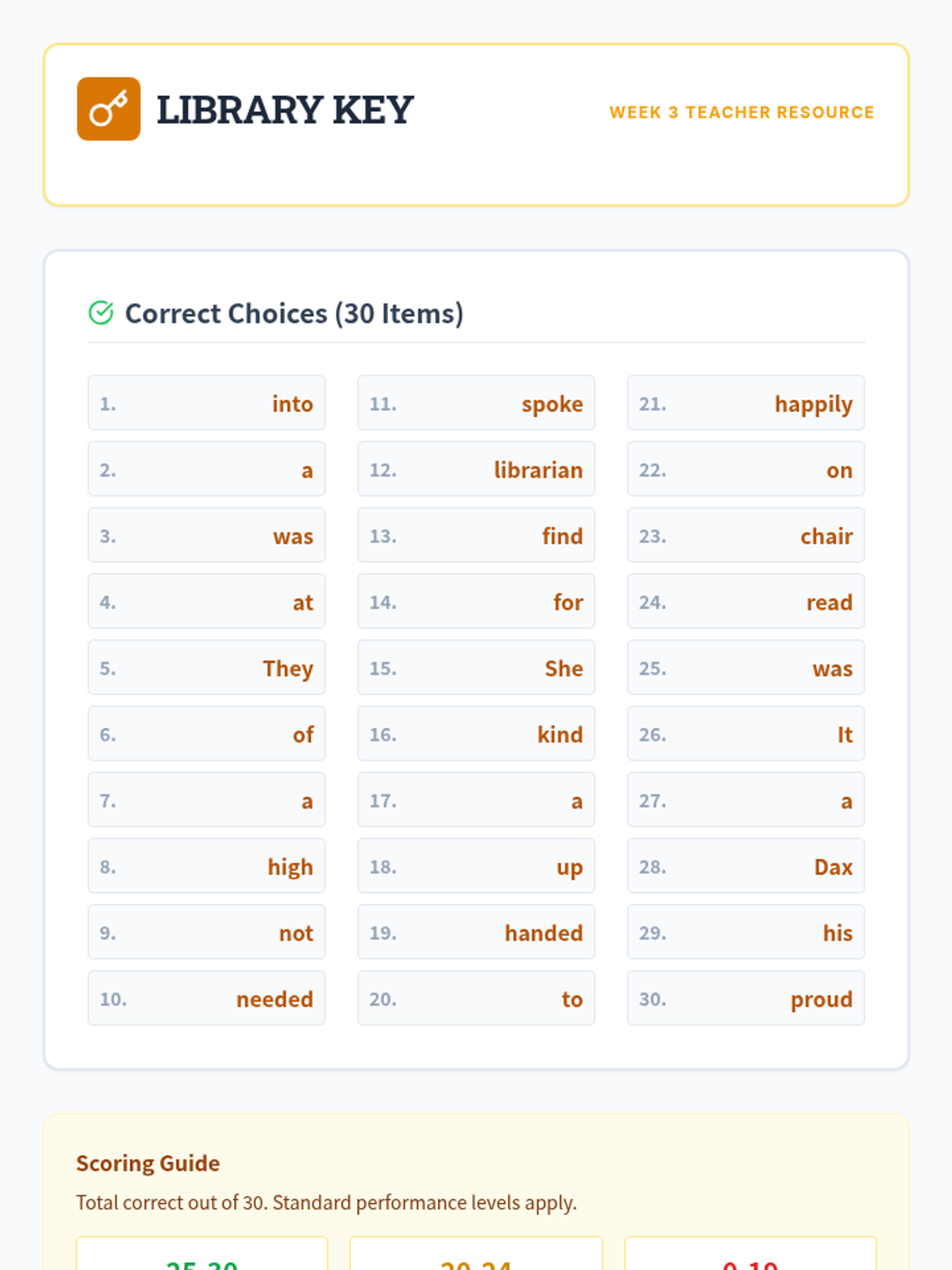
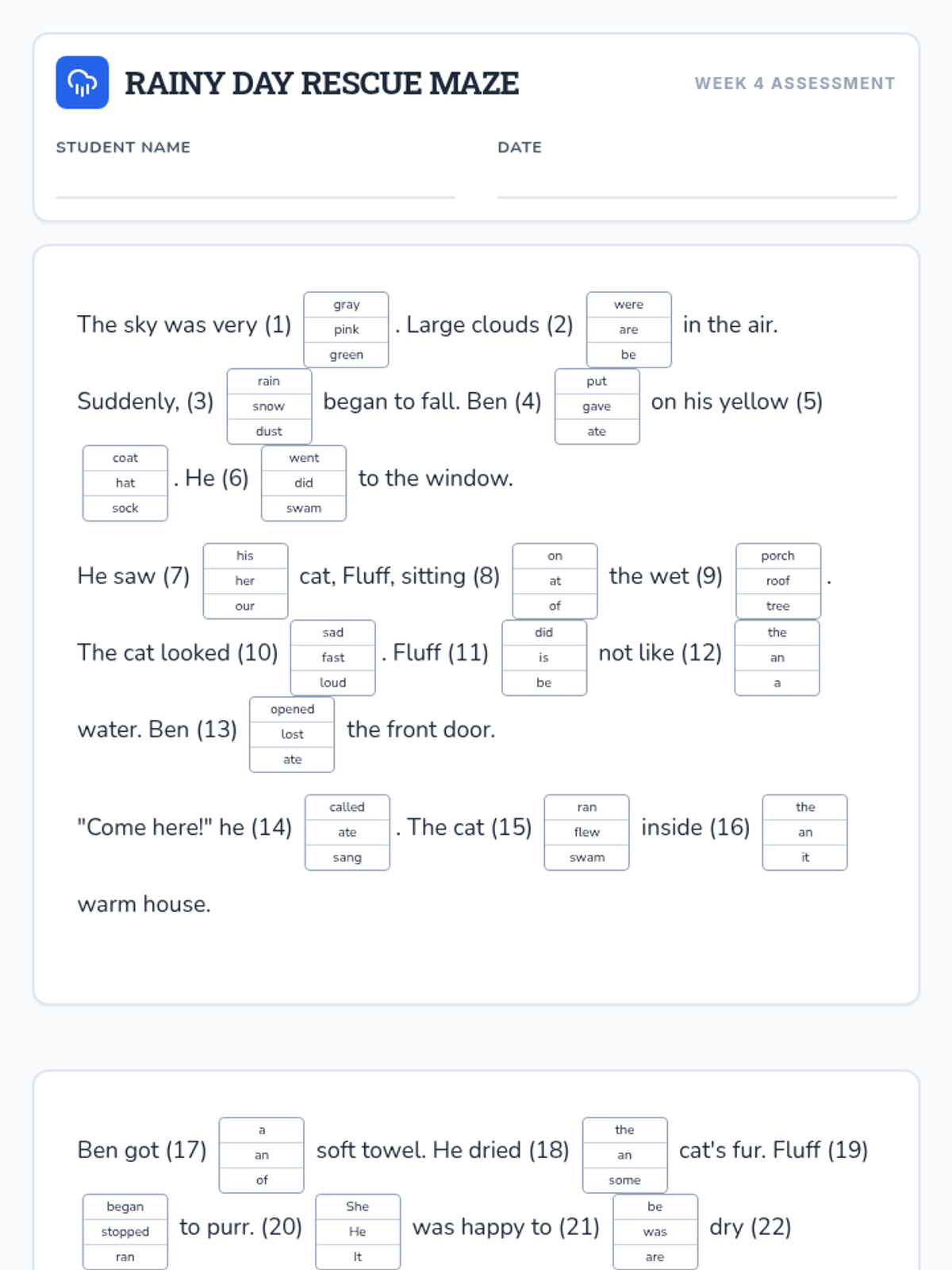
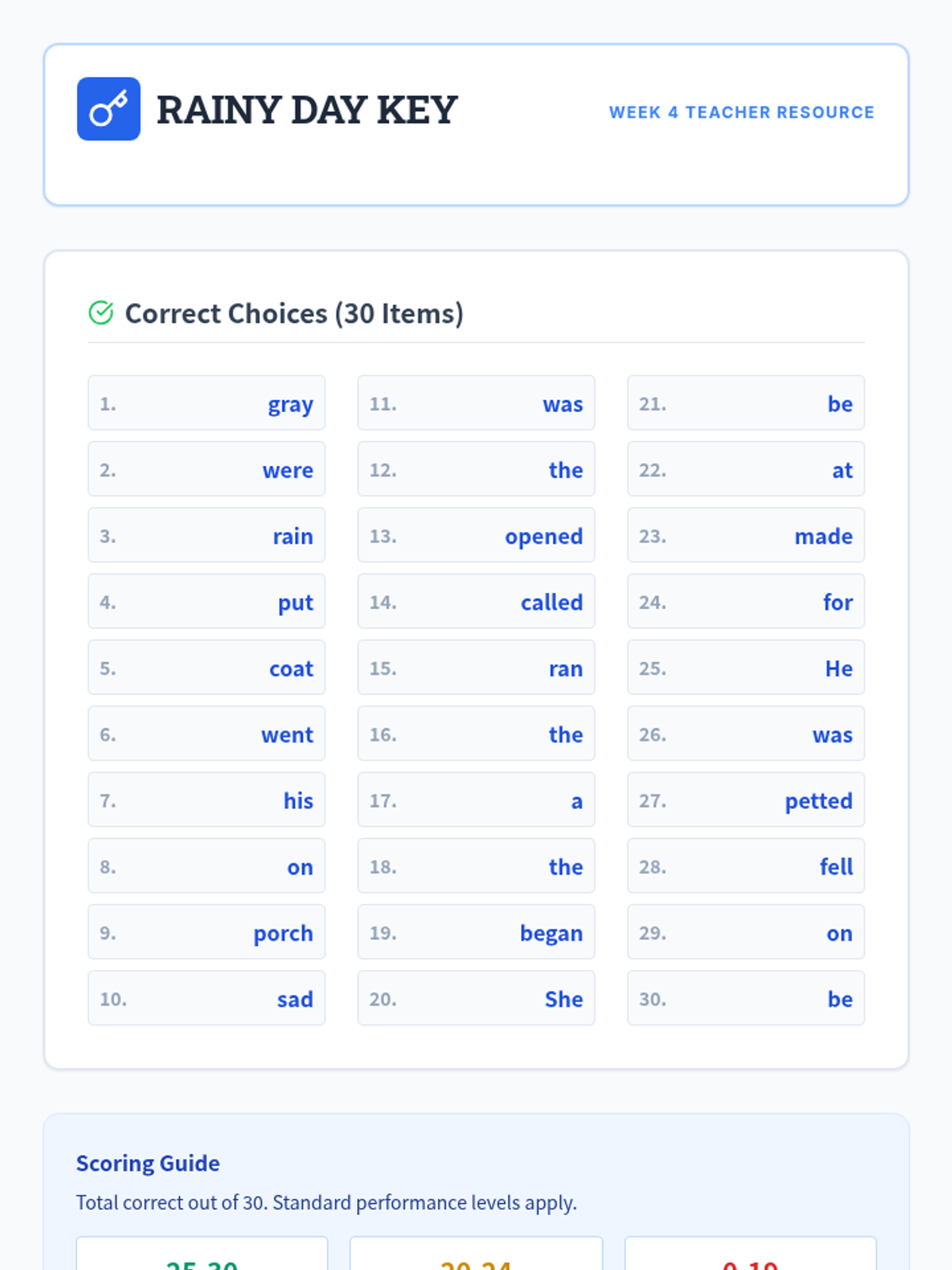
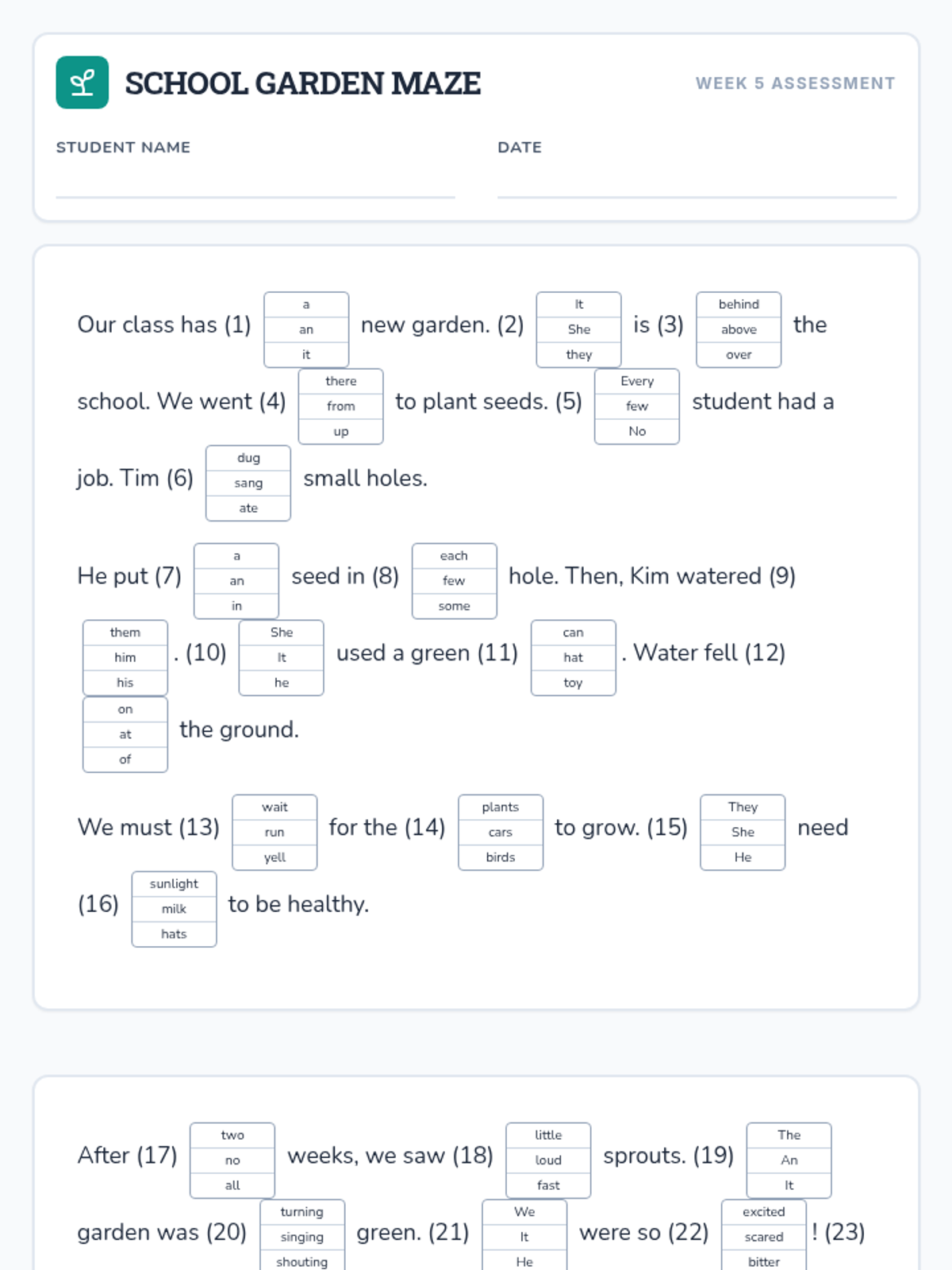
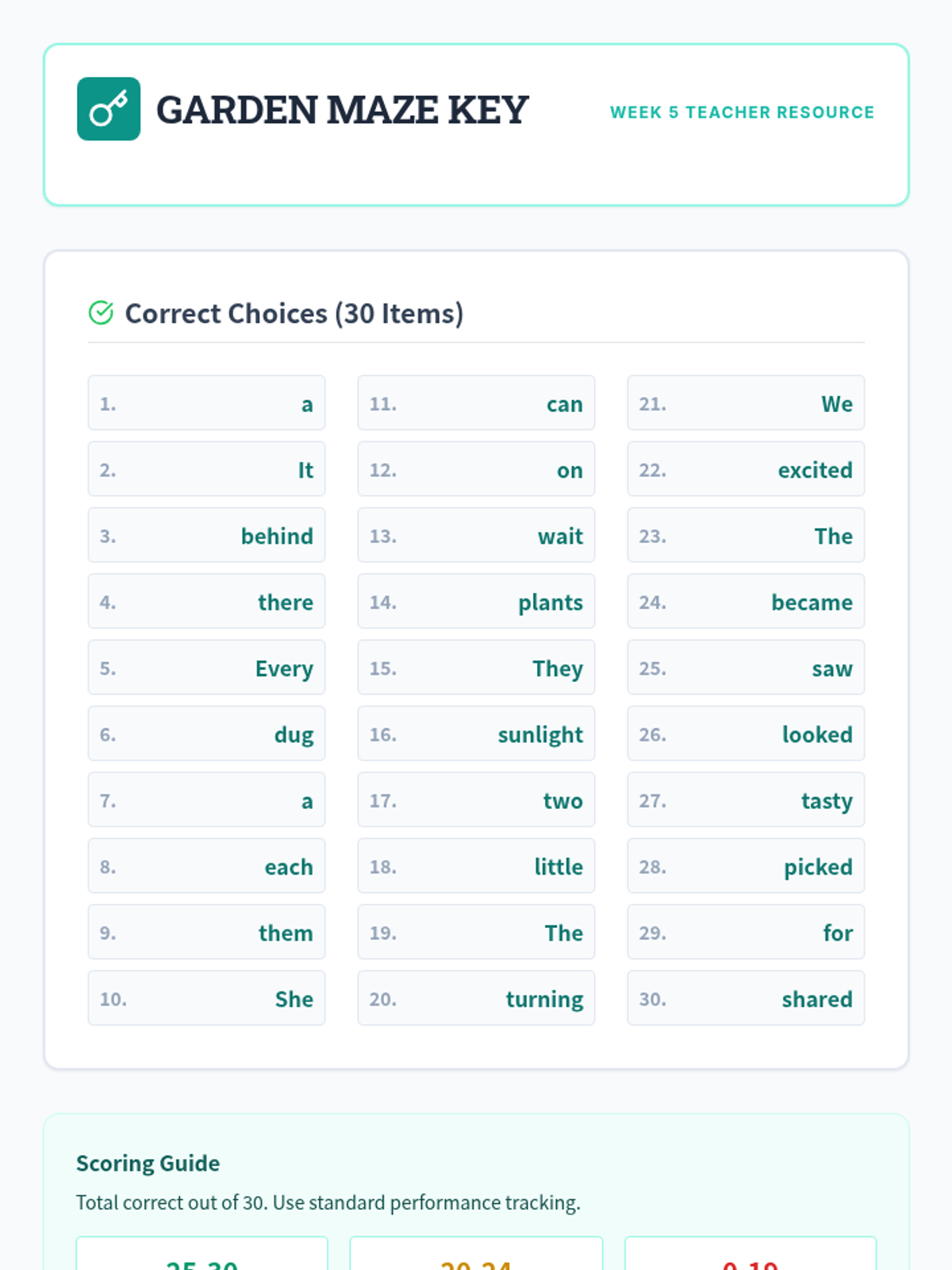
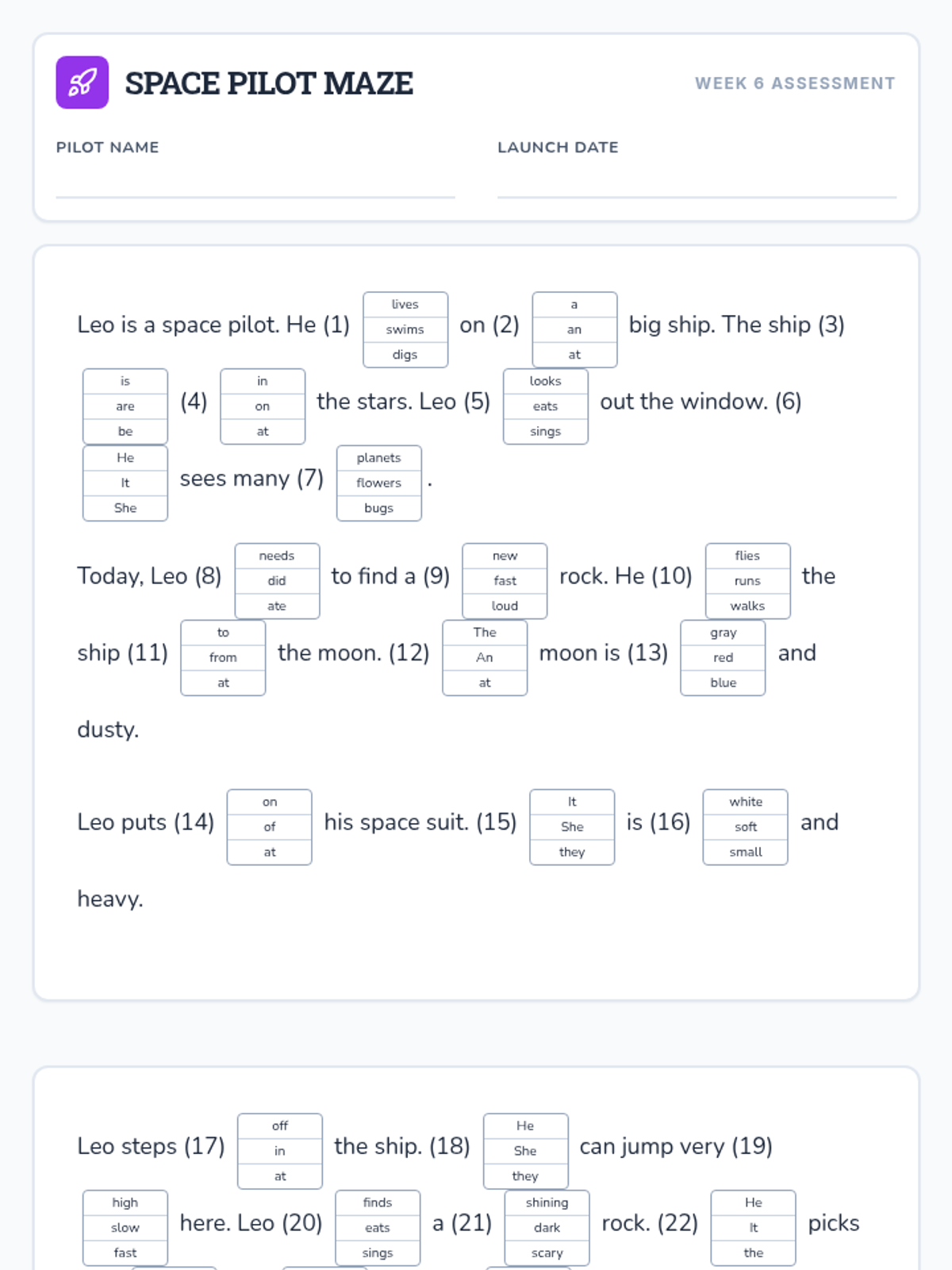
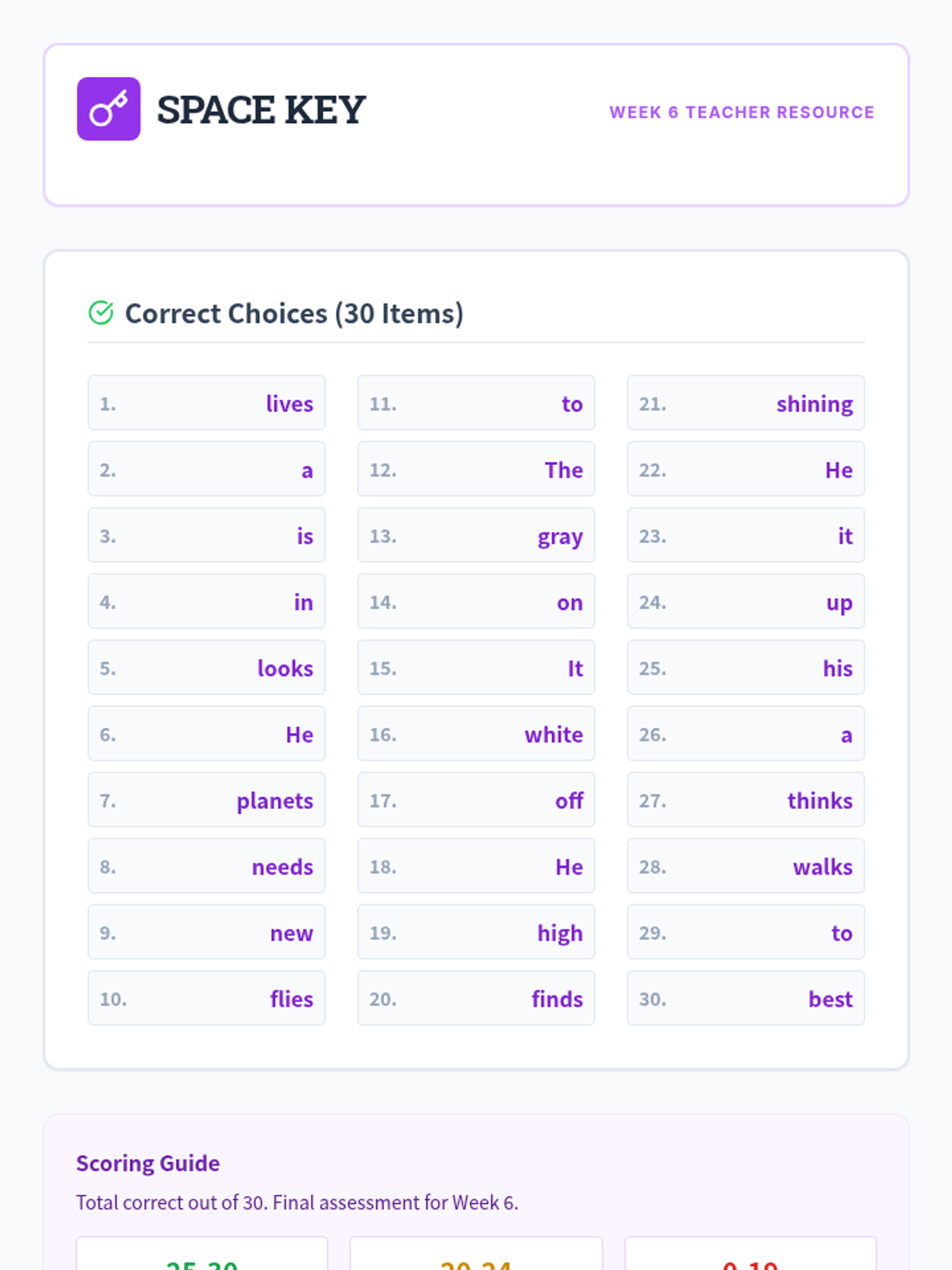
A reading intervention lesson focused on story comprehension using a maze assessment format, where students select the correct word to complete a narrative.
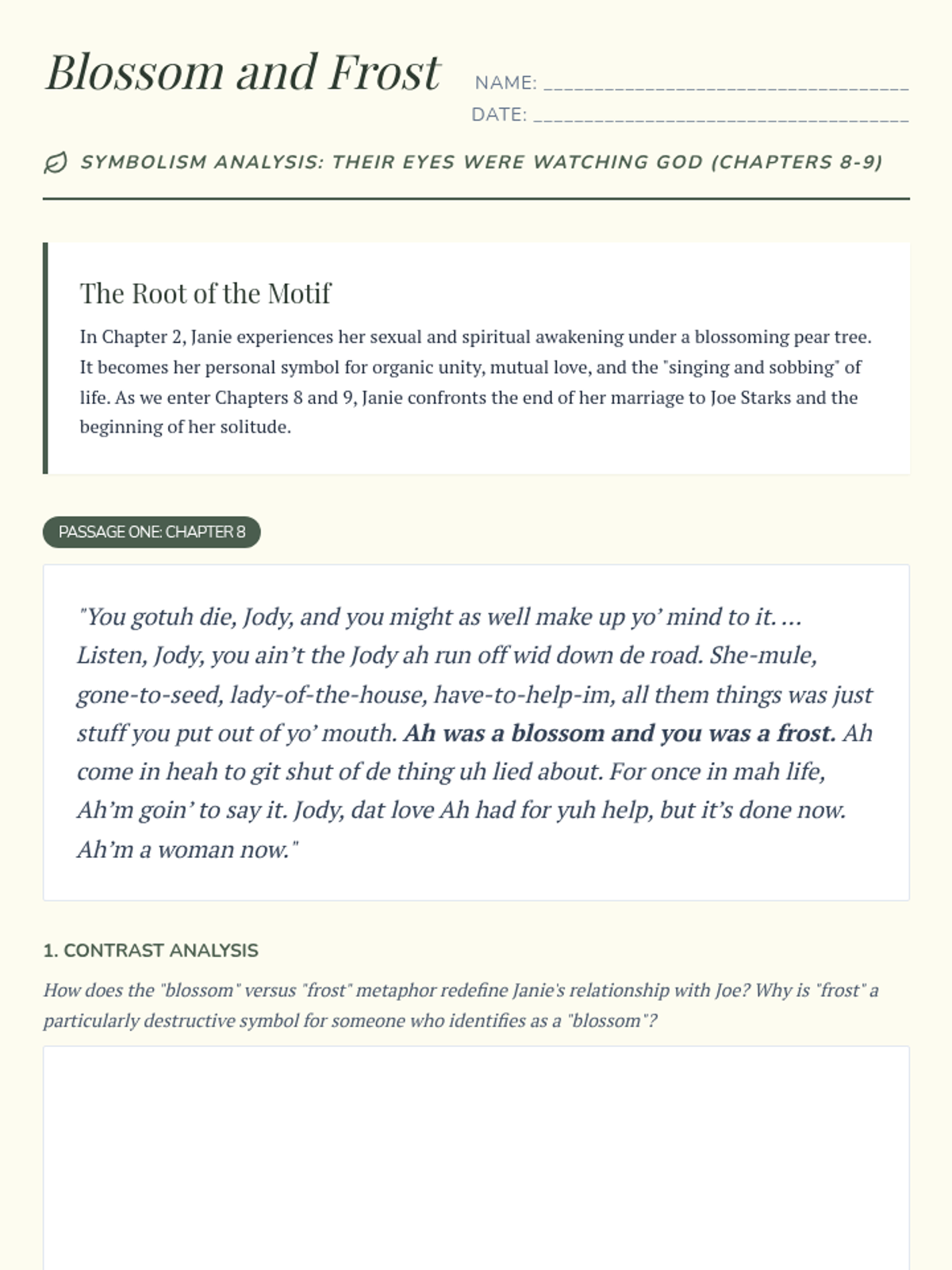
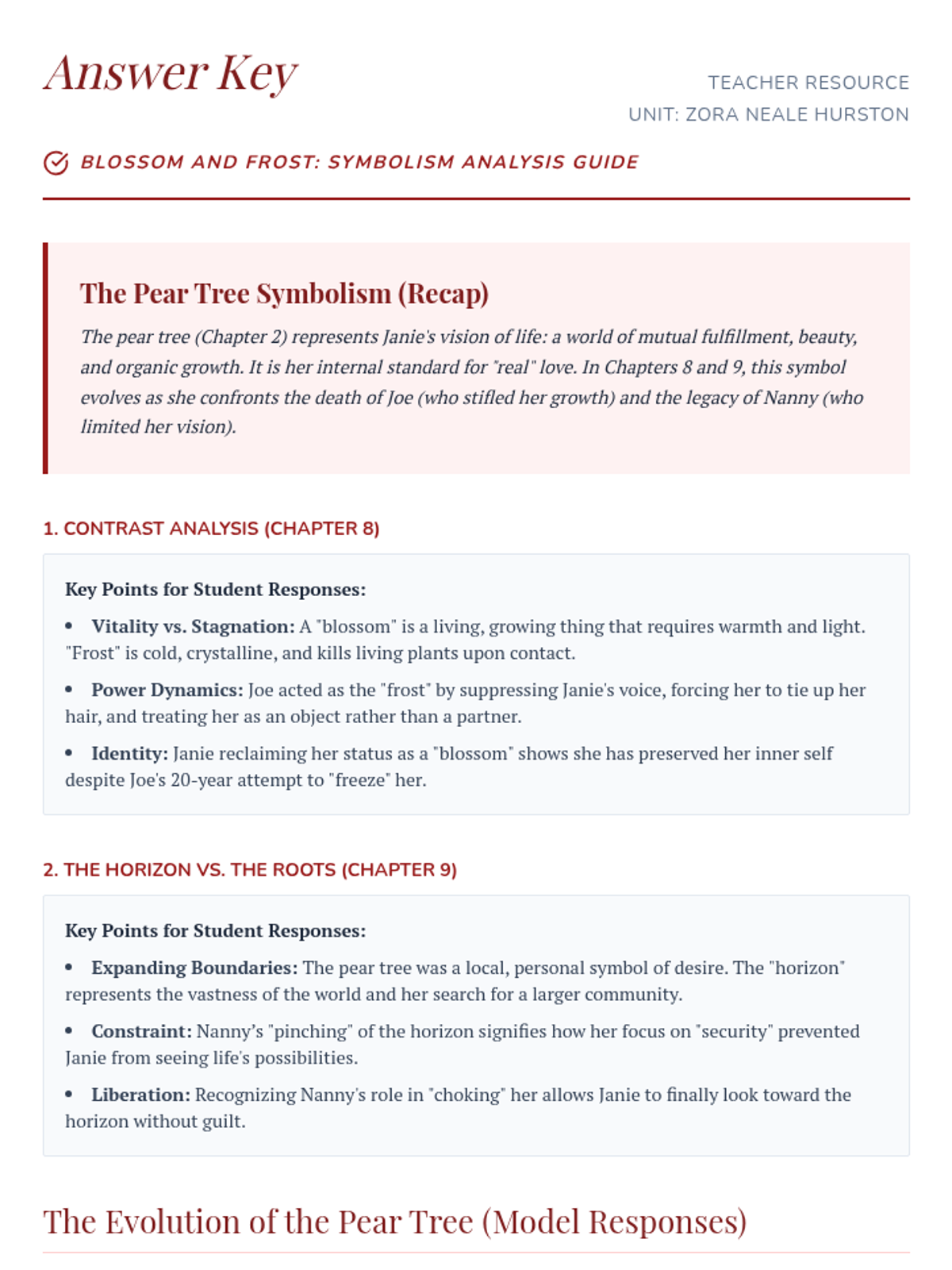
A lesson exploring the evolution of nature symbolism in Zora Neale Hurston's 'Their Eyes Were Watching God', specifically focusing on the transition from the pear tree of youth to the blossom and frost of Janie's maturity.
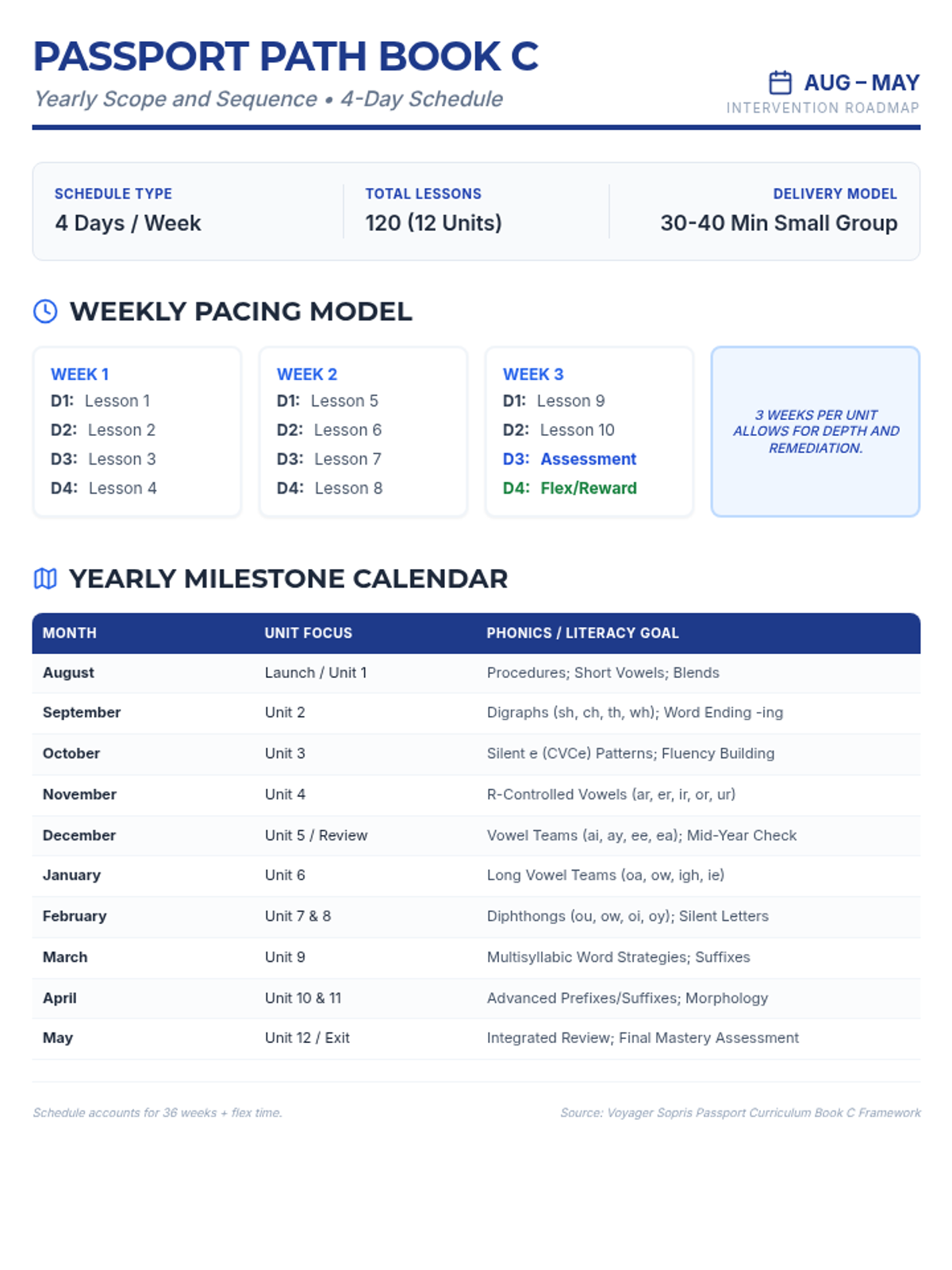
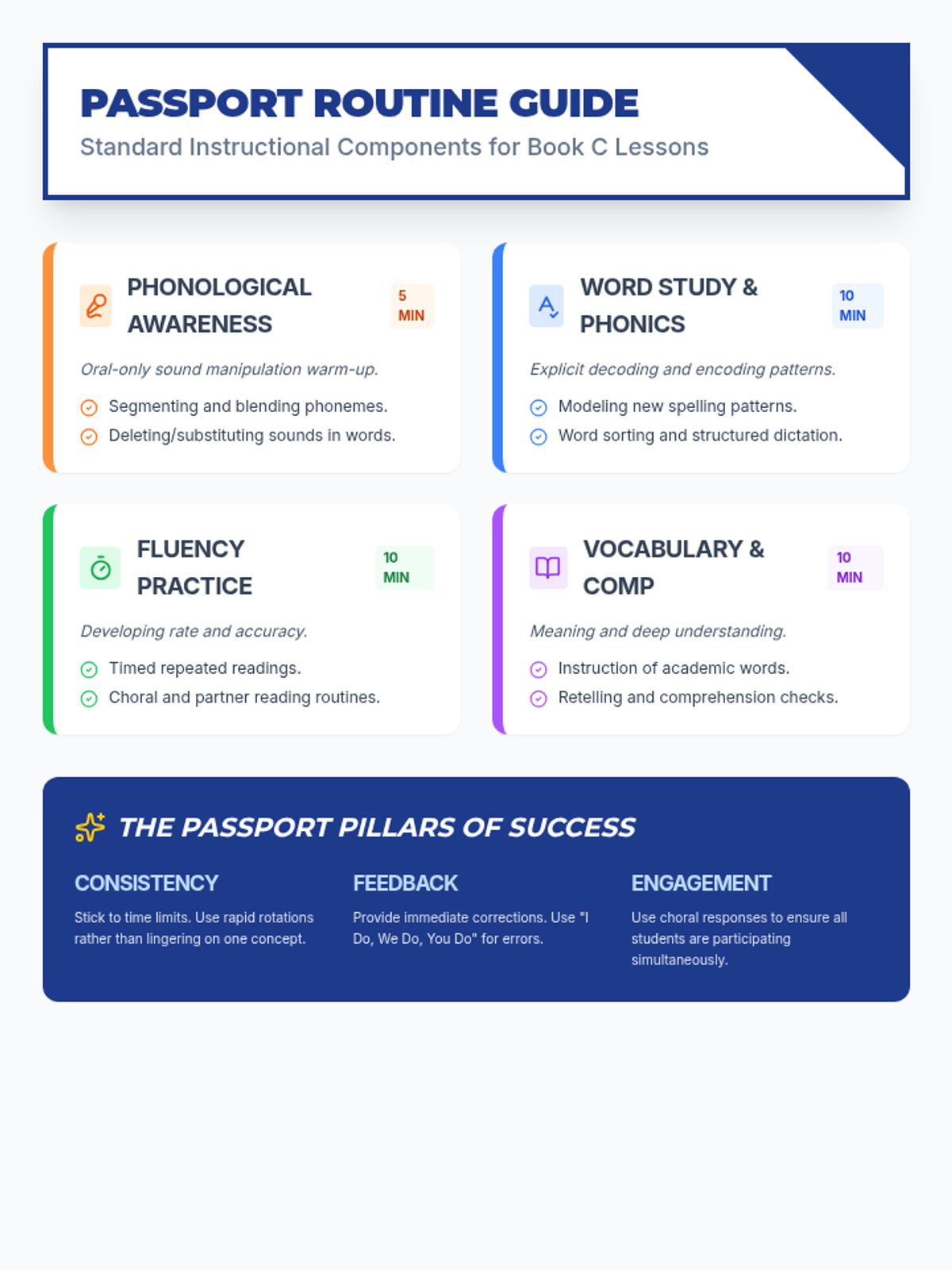
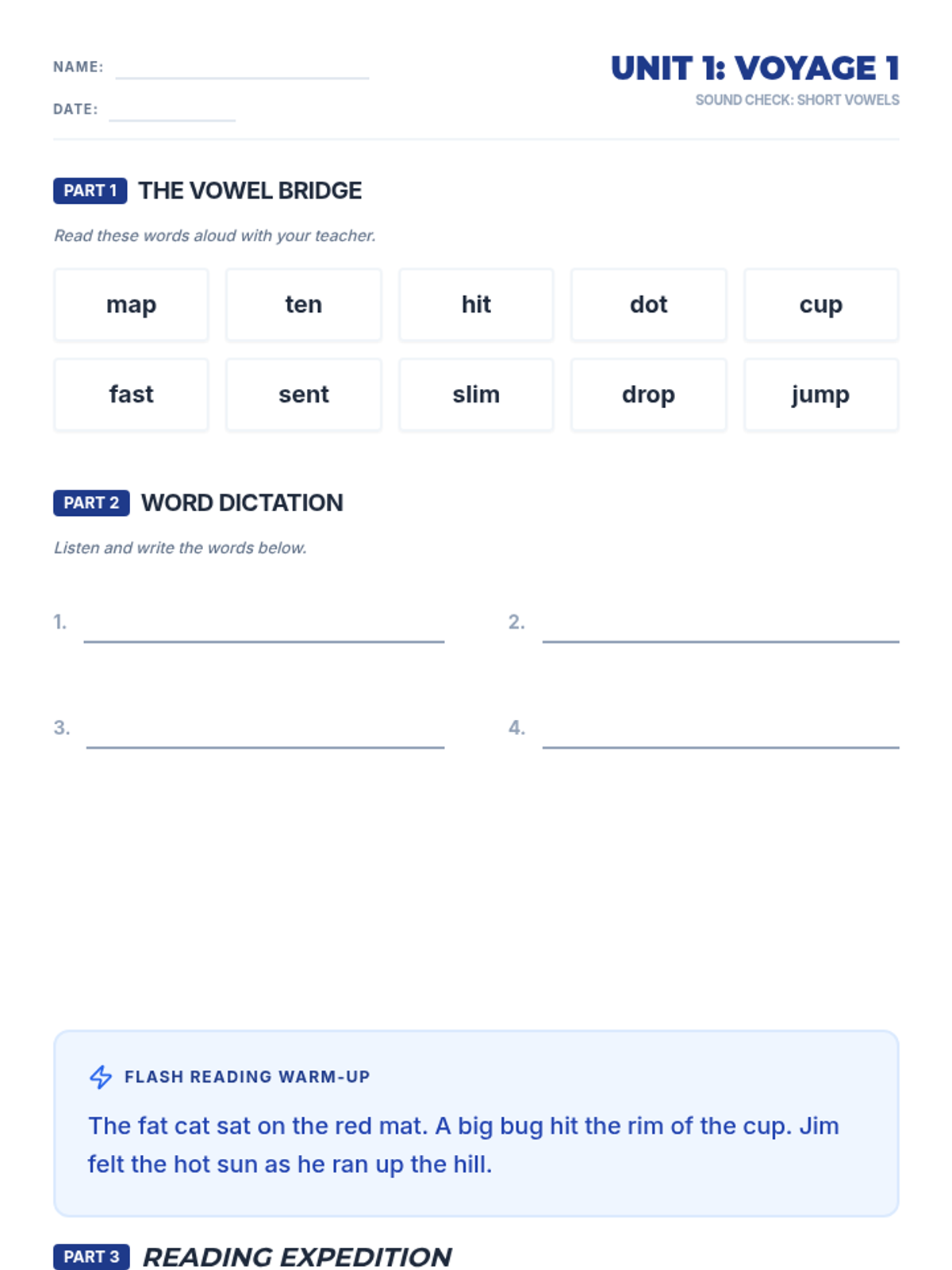
The introductory unit focusing on short vowels, consonant blends, and foundational fluency routines.
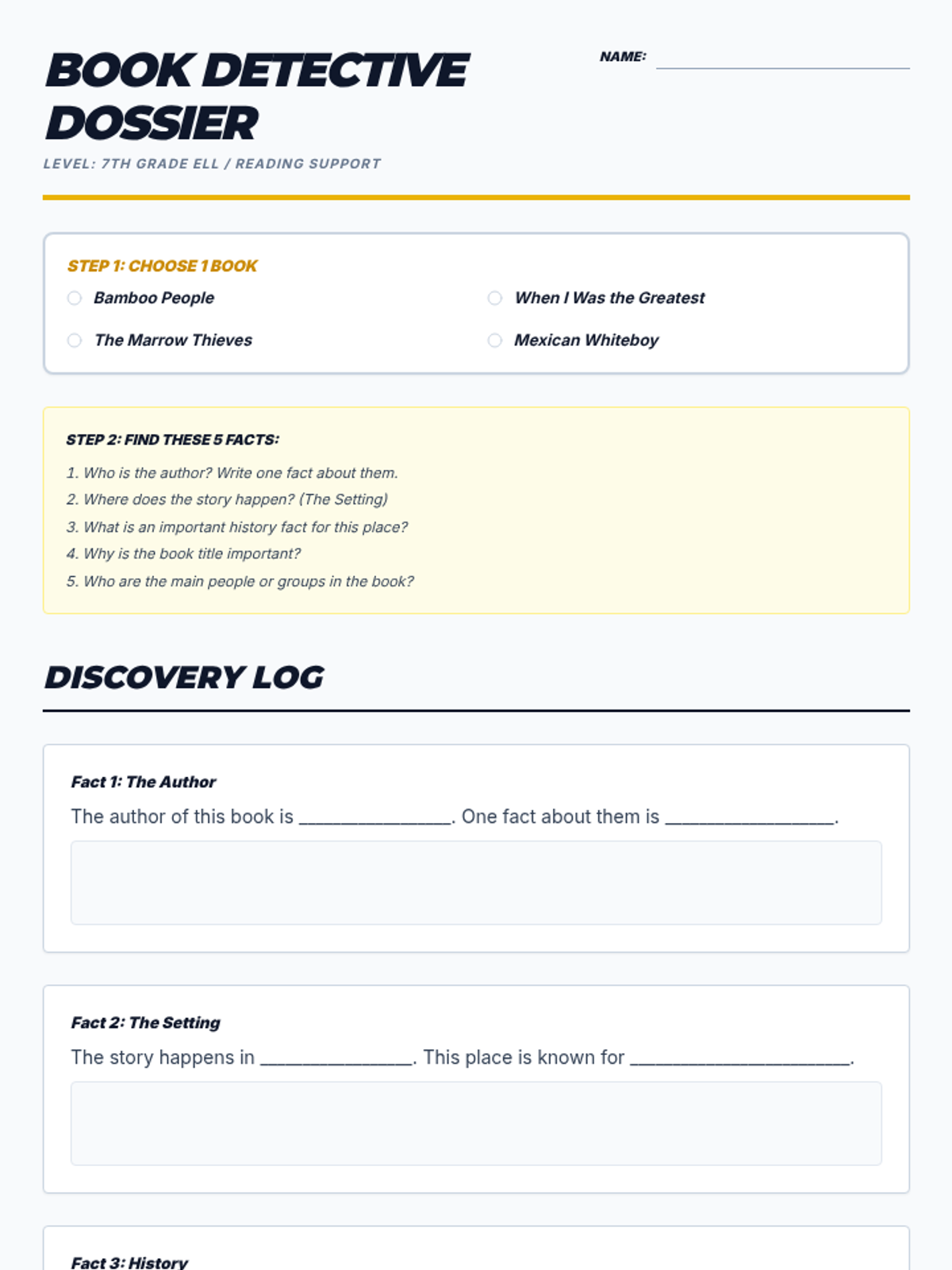
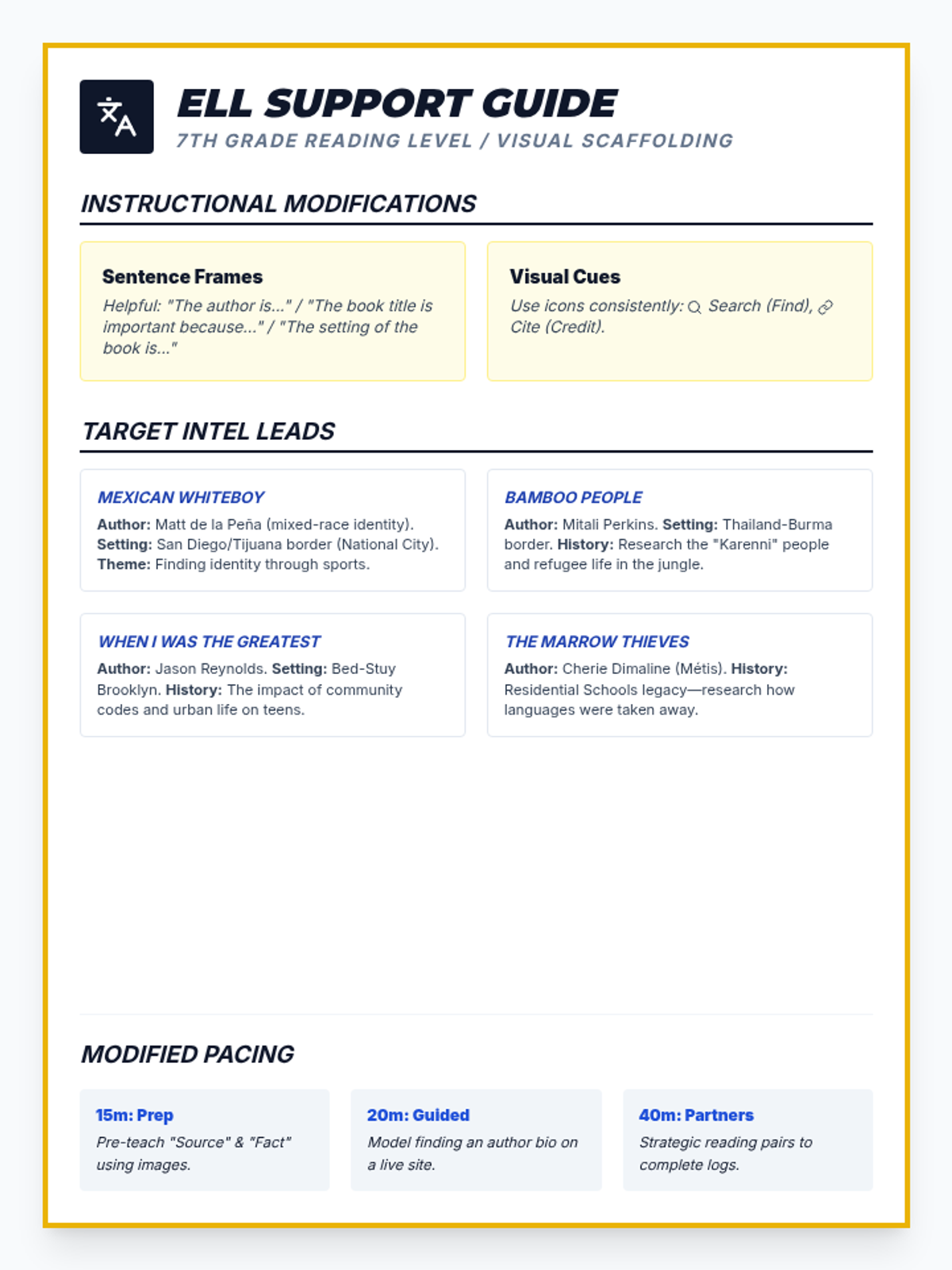
A highly scaffolded research project for ELL students reading at a 7th grade level, focusing on 4 book targets with visual supports and sentence frames.

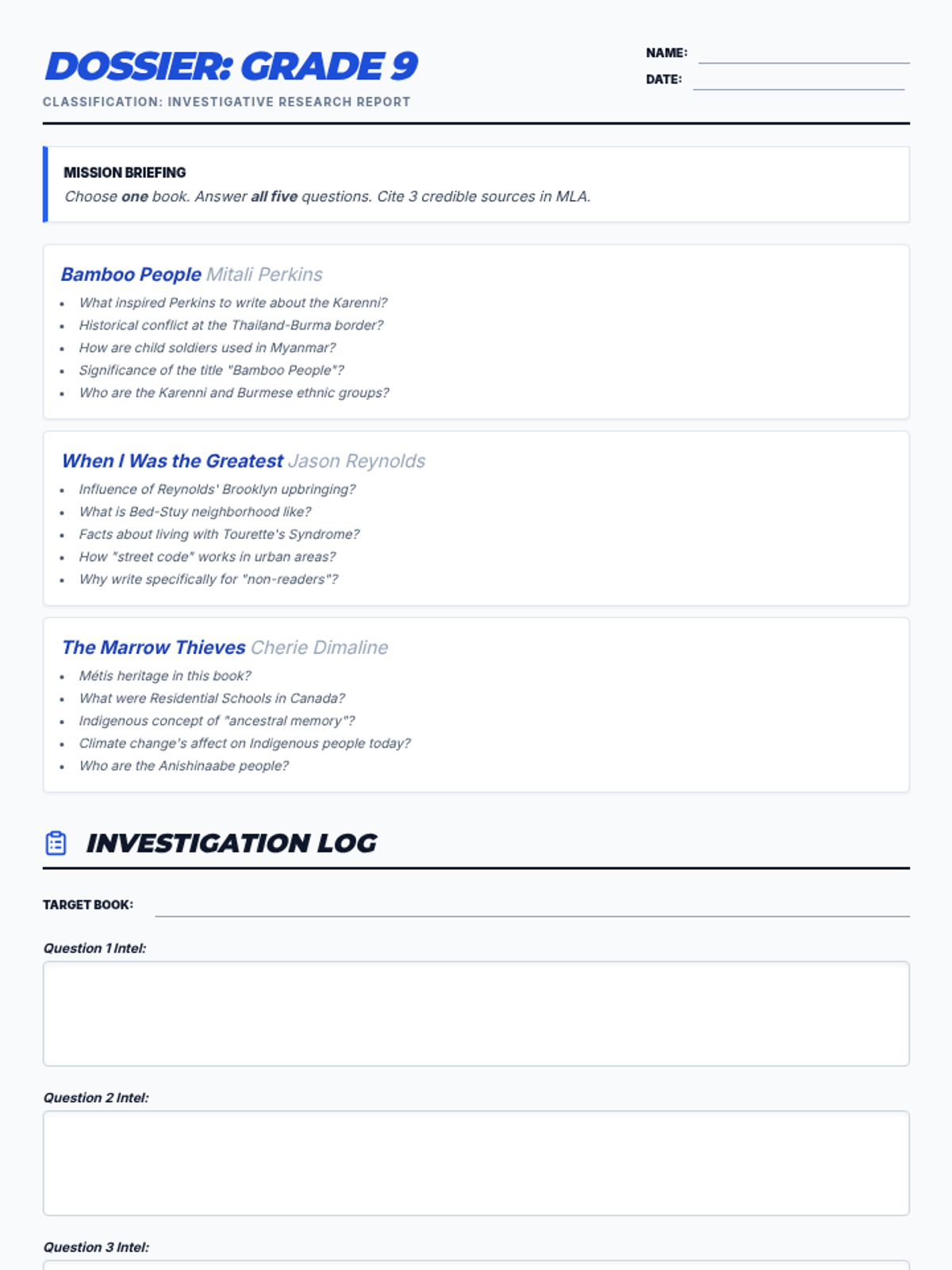
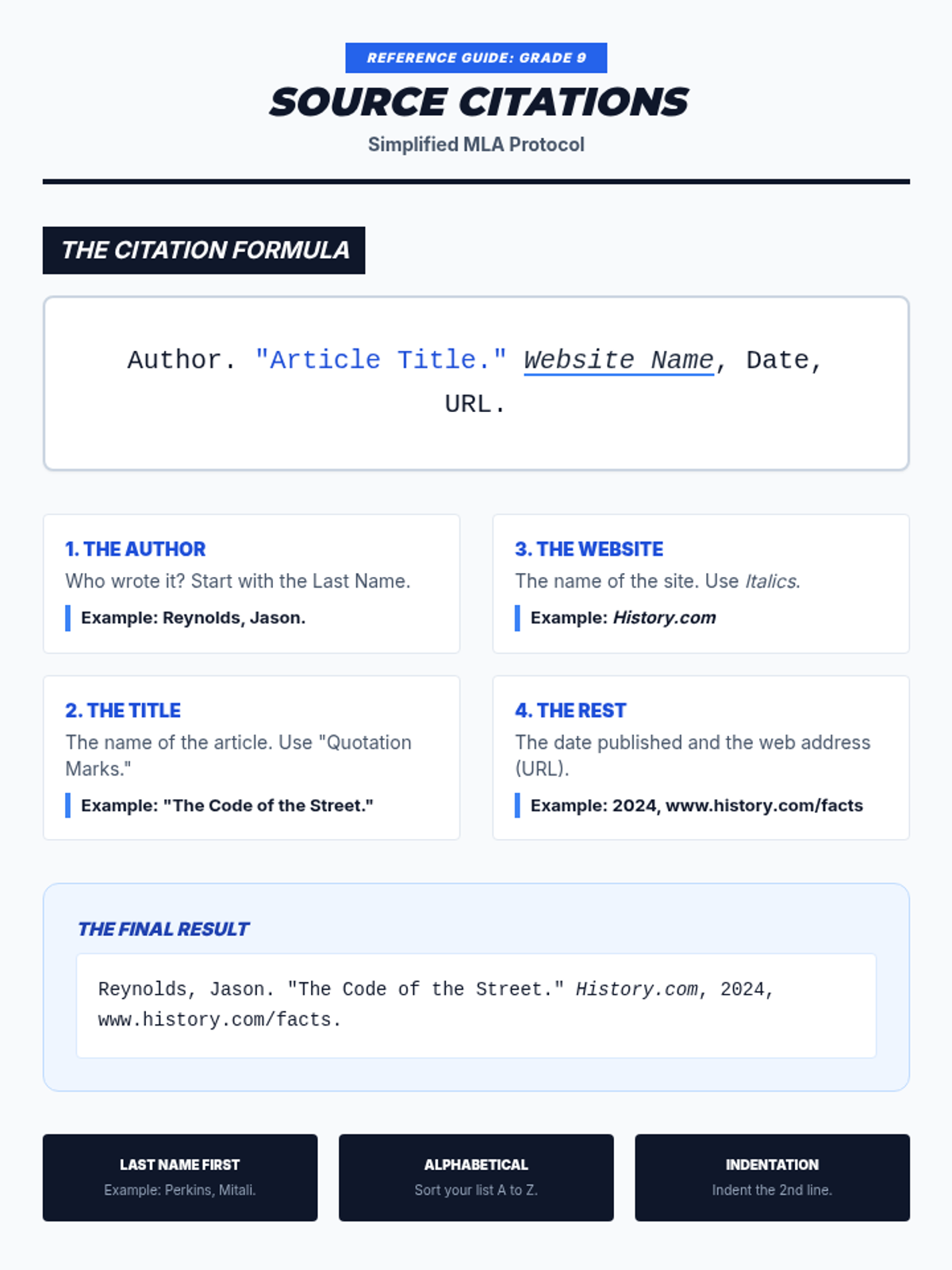
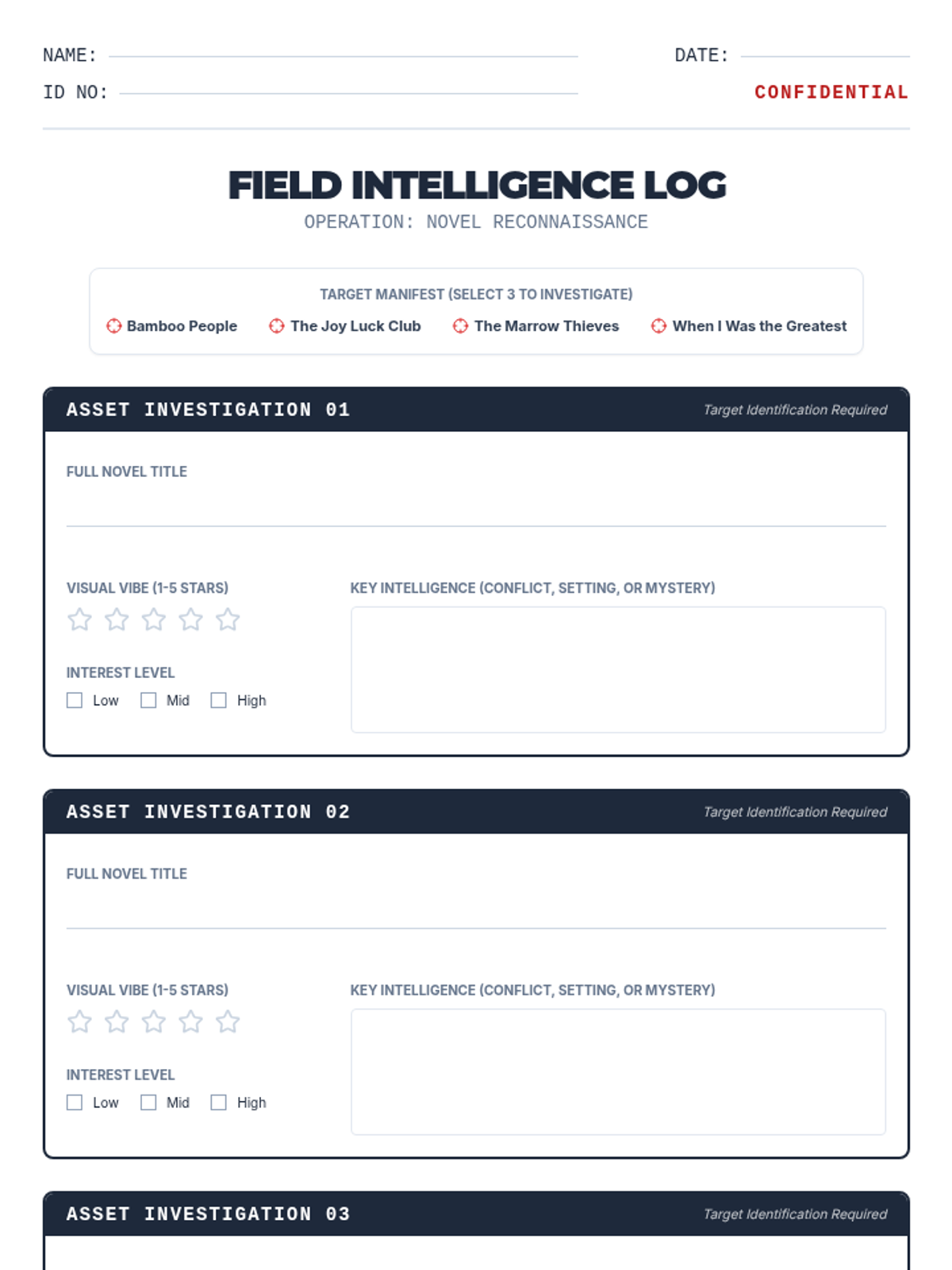
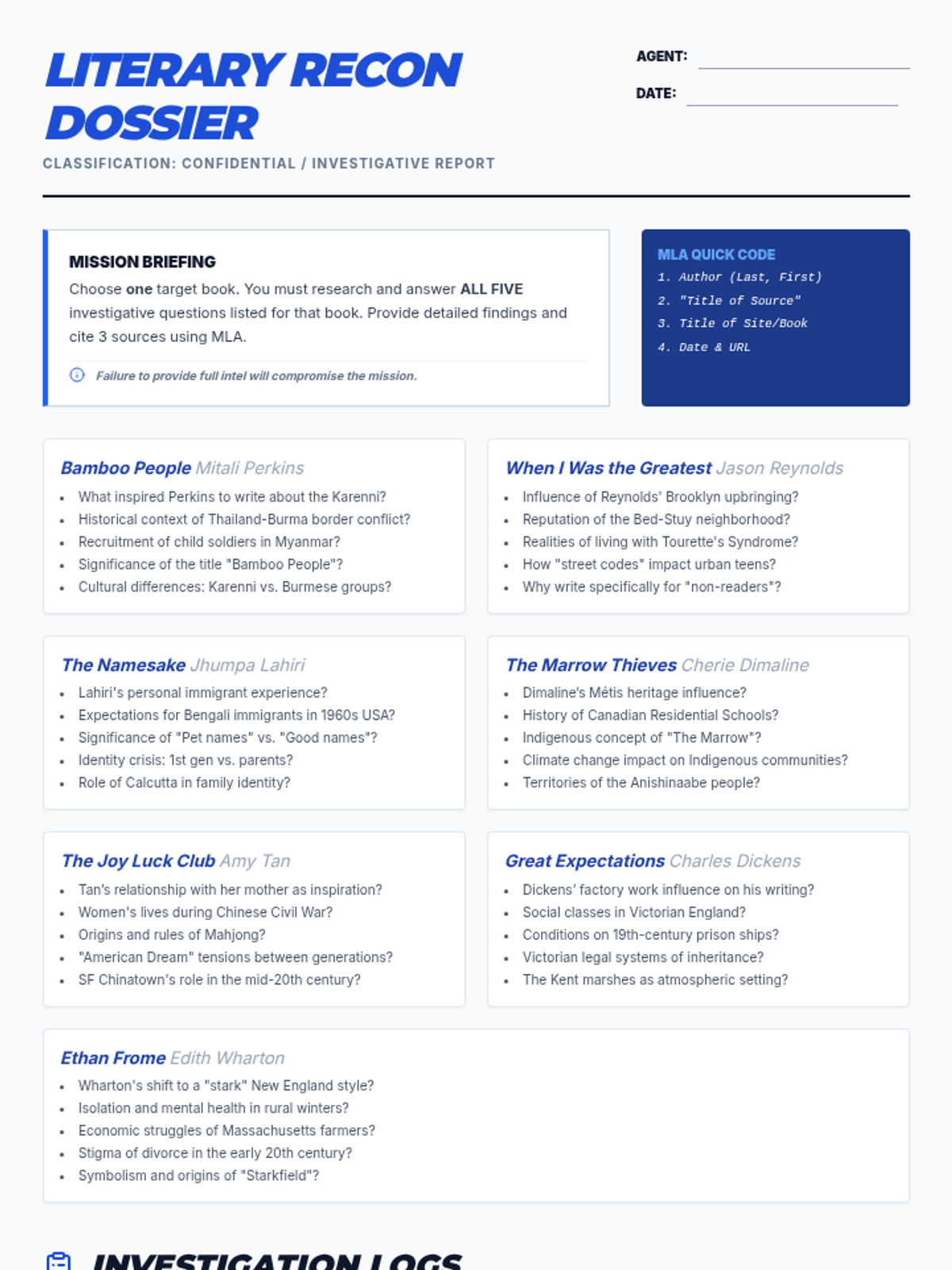
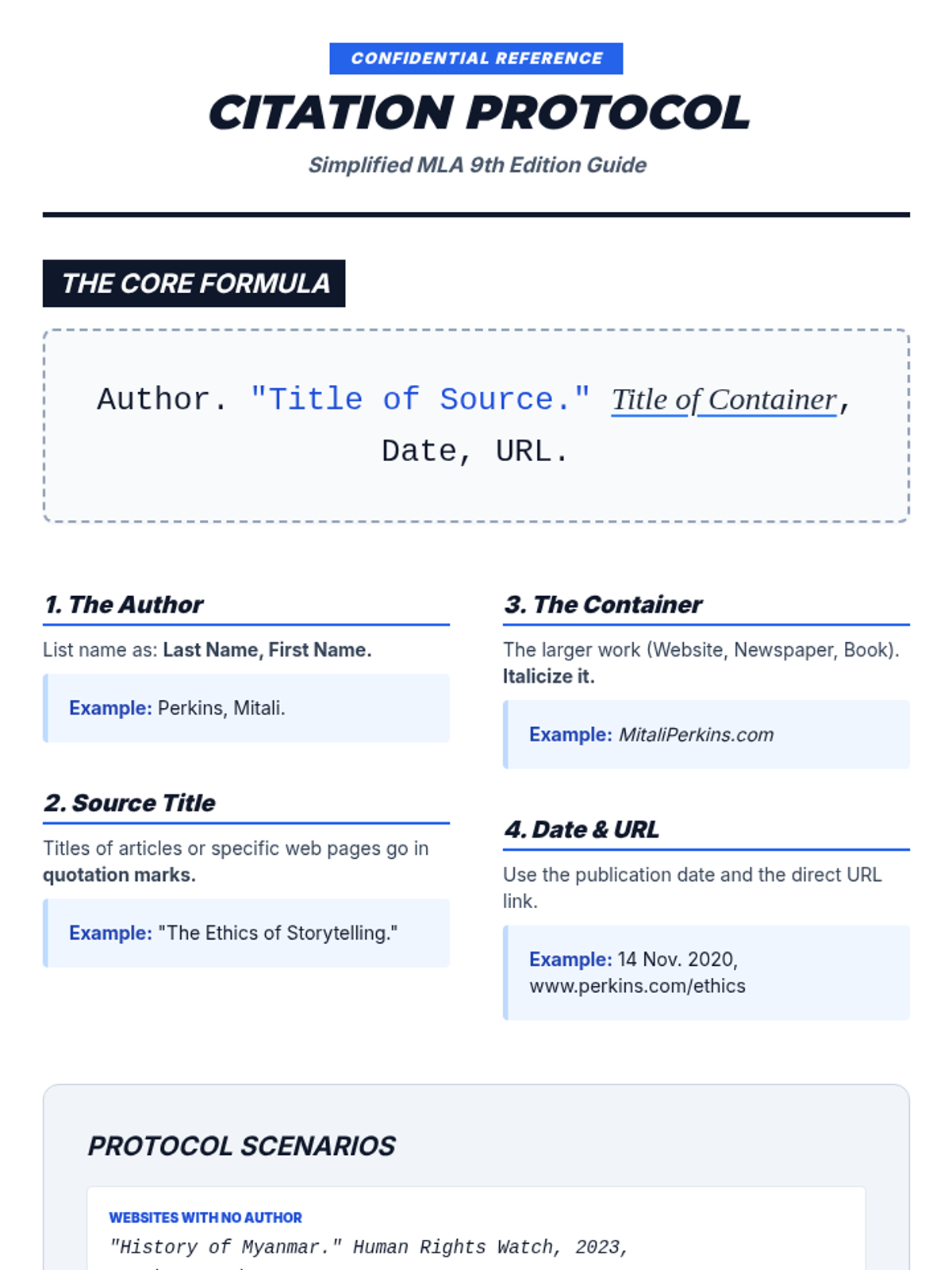
A modified research project for 9th graders focusing on three core book club targets, introducing investigative skills and simplified MLA formatting.
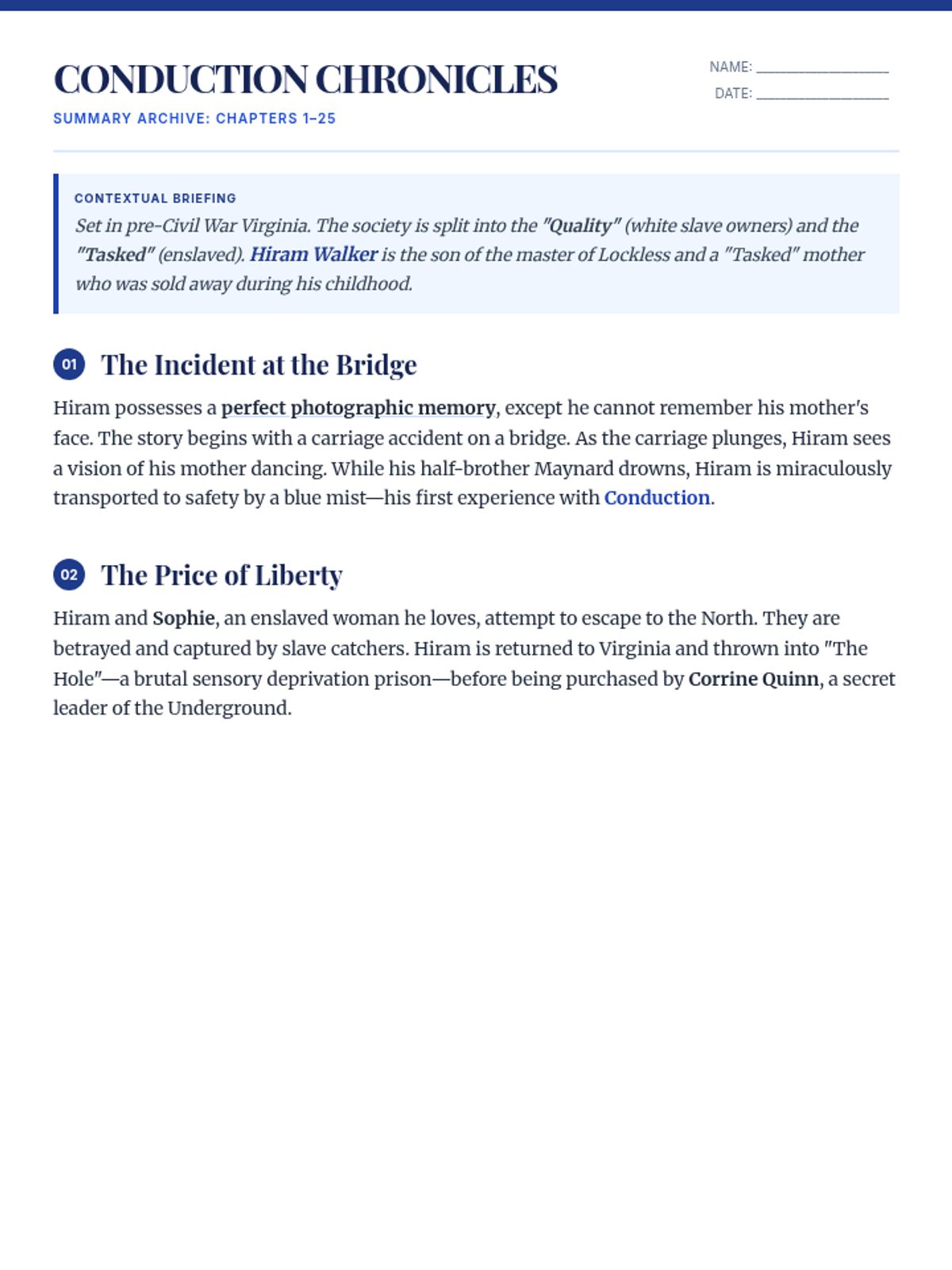
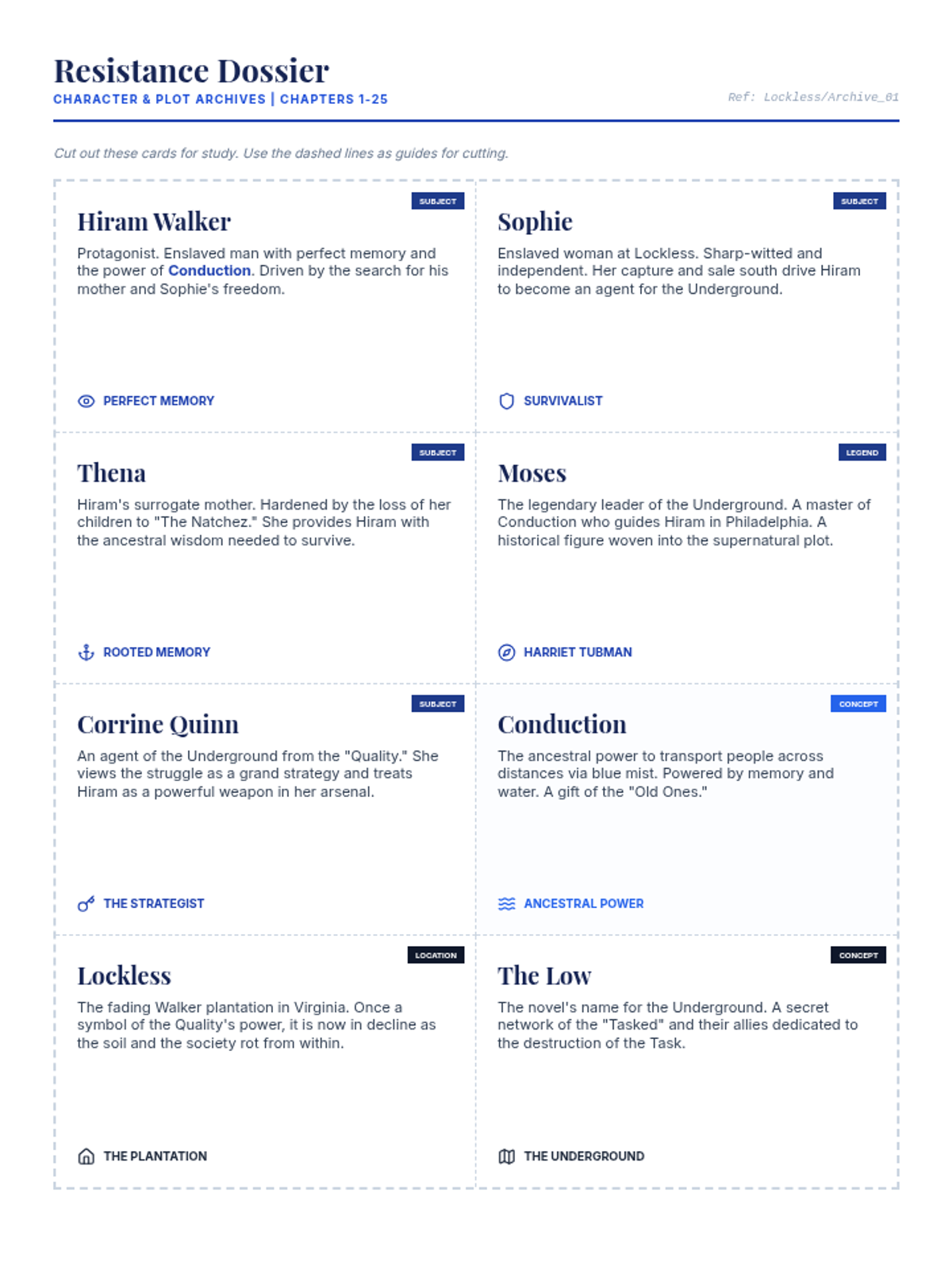
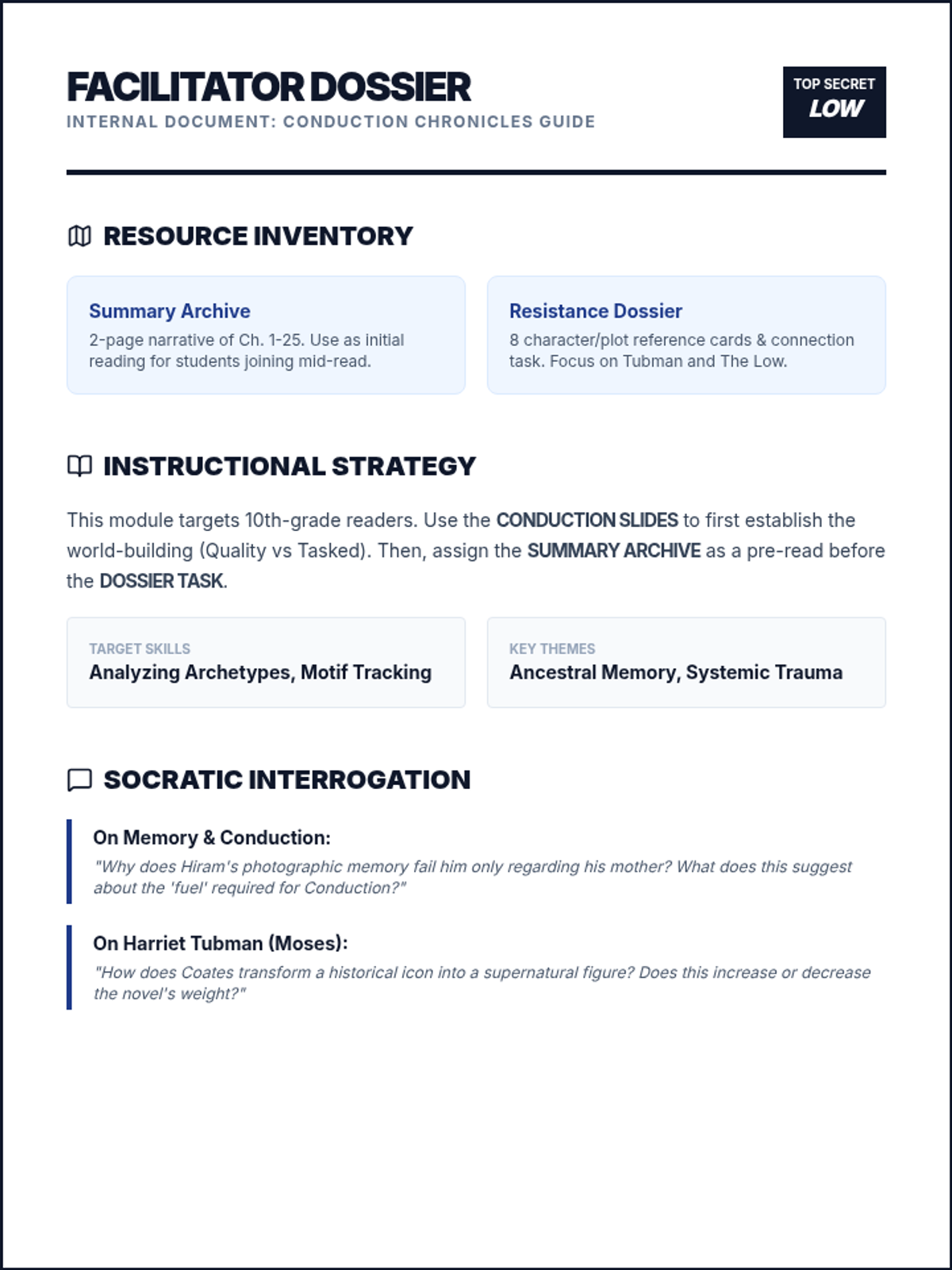
A comprehensive catch-up module for students joining mid-read of Ta-Nehisi Coates' 'The Water Dancer', focusing on the first 25 chapters. It covers the complex social hierarchy, the protagonist's journey, and the supernatural elements of 'Conduction'.
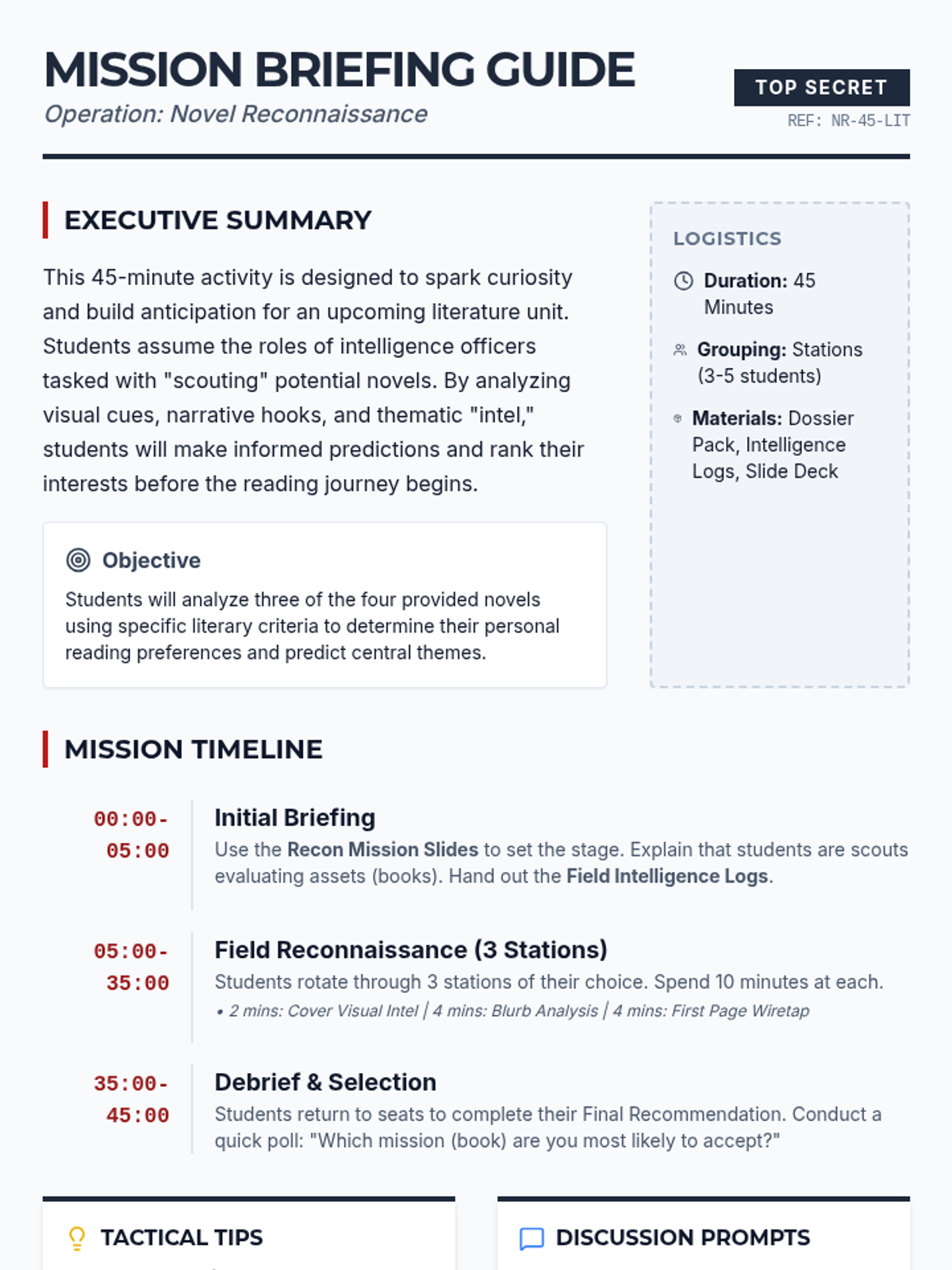
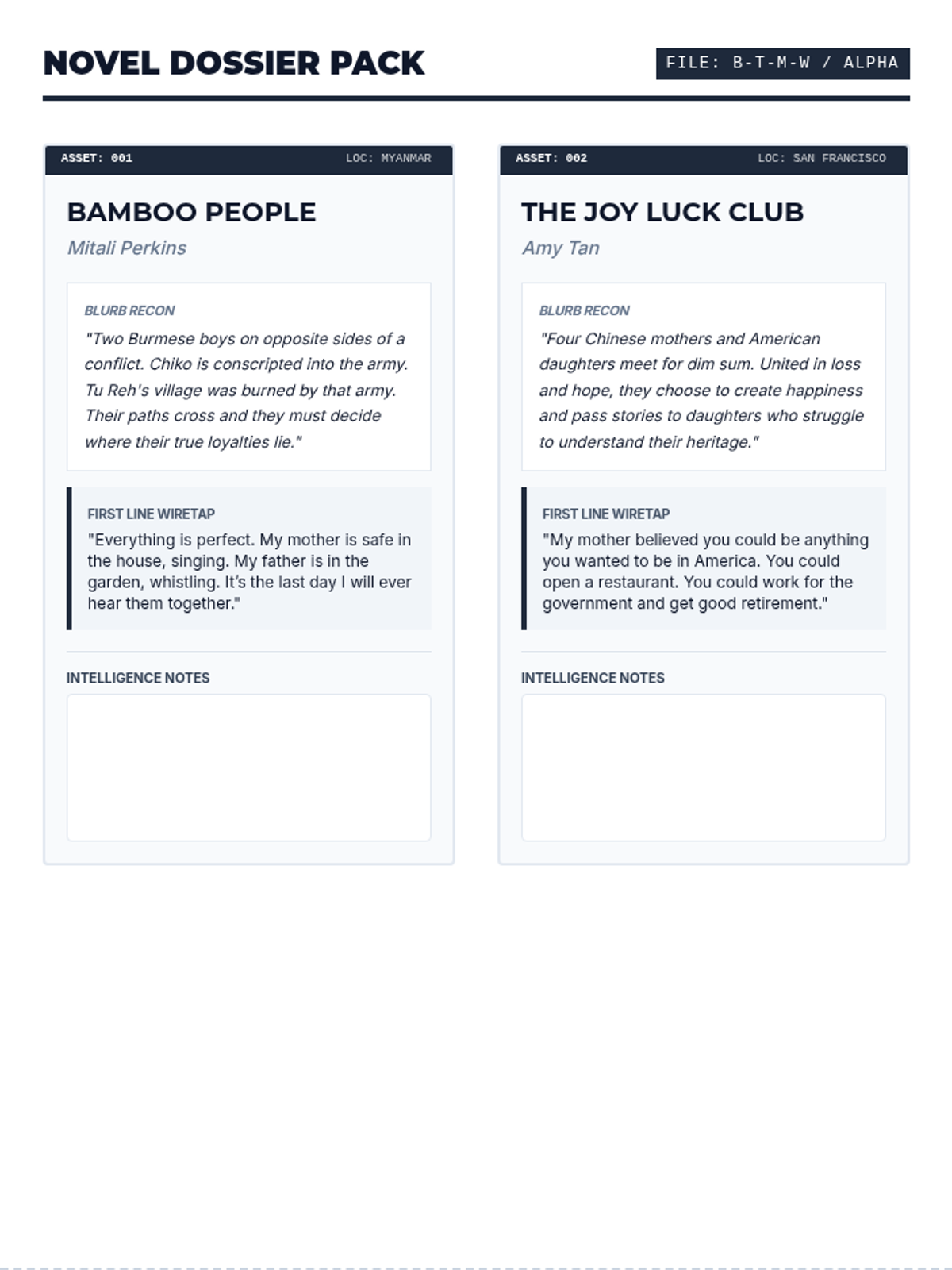
A 45-minute "Book Tasting" style activity where students act as intelligence officers to investigate and evaluate potential novels through cover analysis, blurb reconnaissance, and first-page 'wiretaps'.
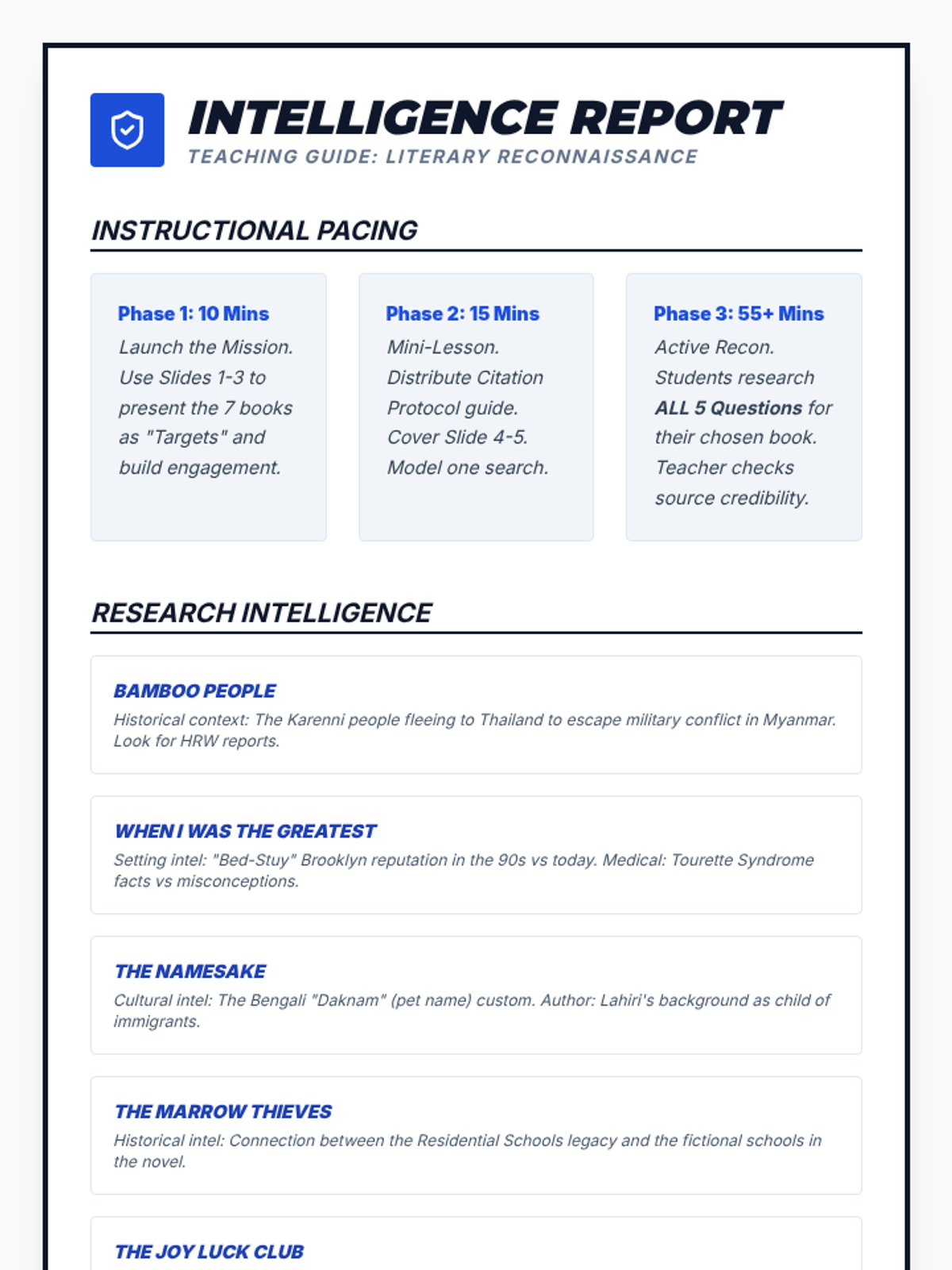
A research-based introduction to a diverse book club selection, teaching students to investigate author backgrounds, settings, and subject matter while mastering simplified MLA citations.
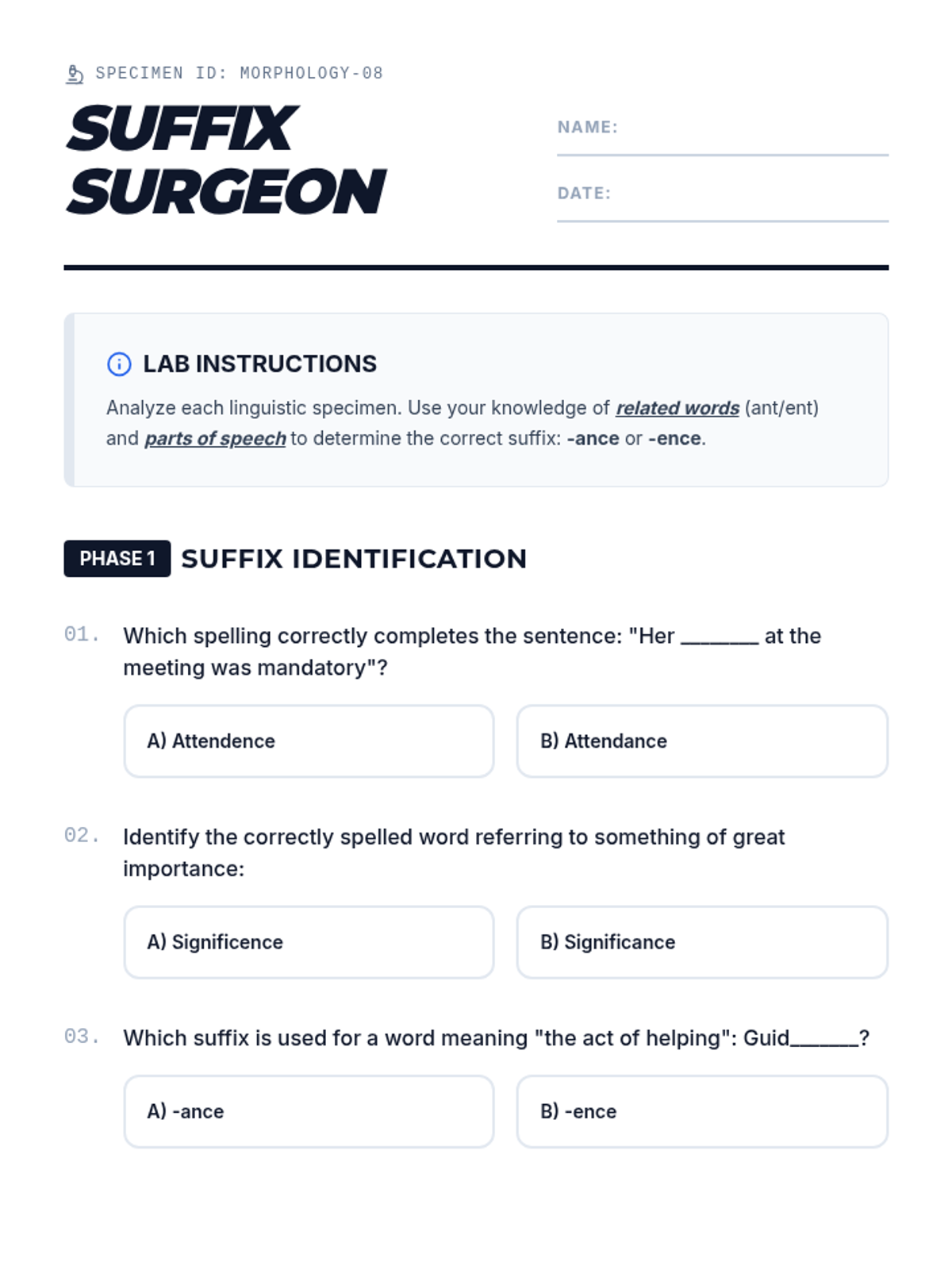
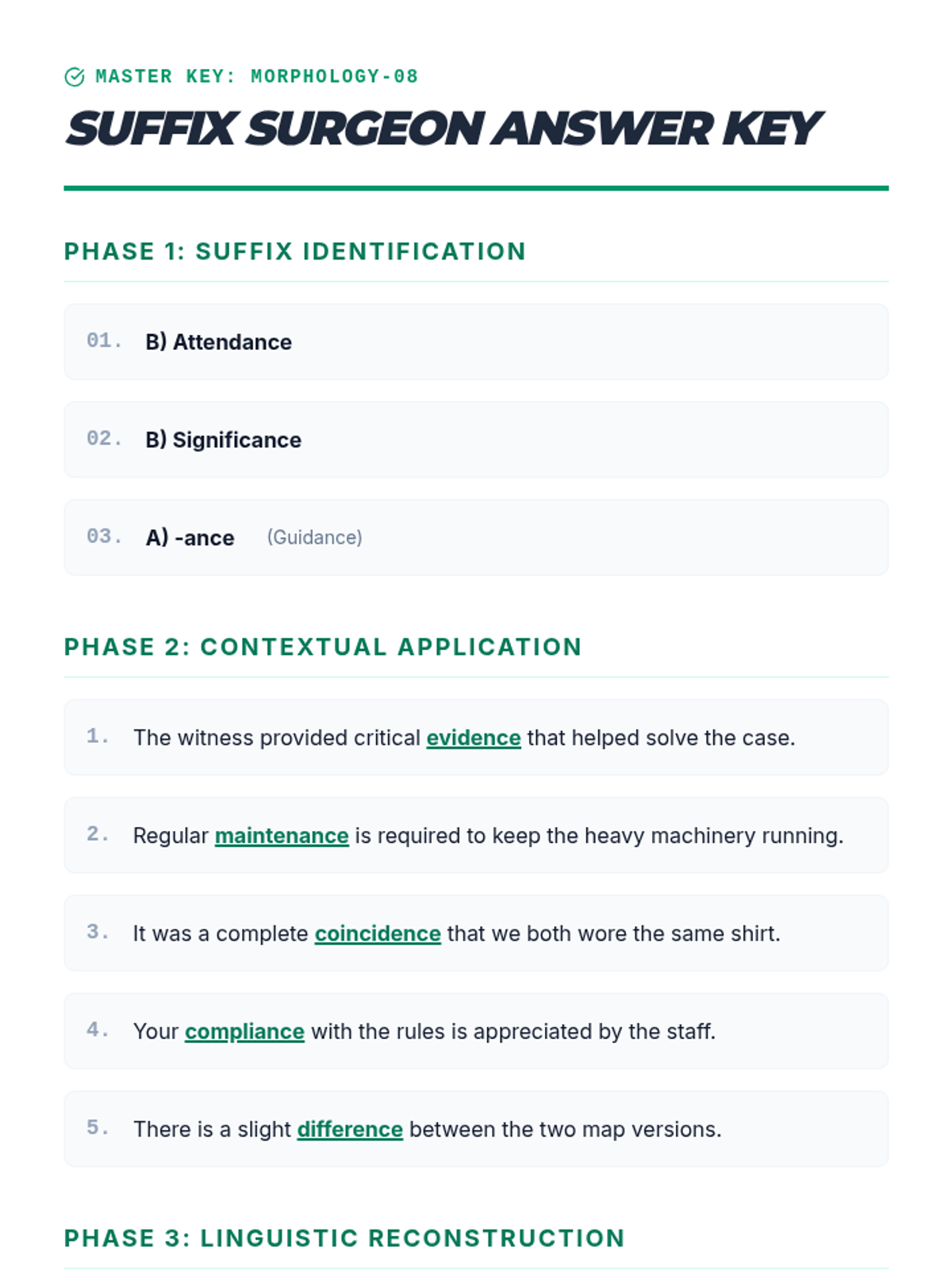
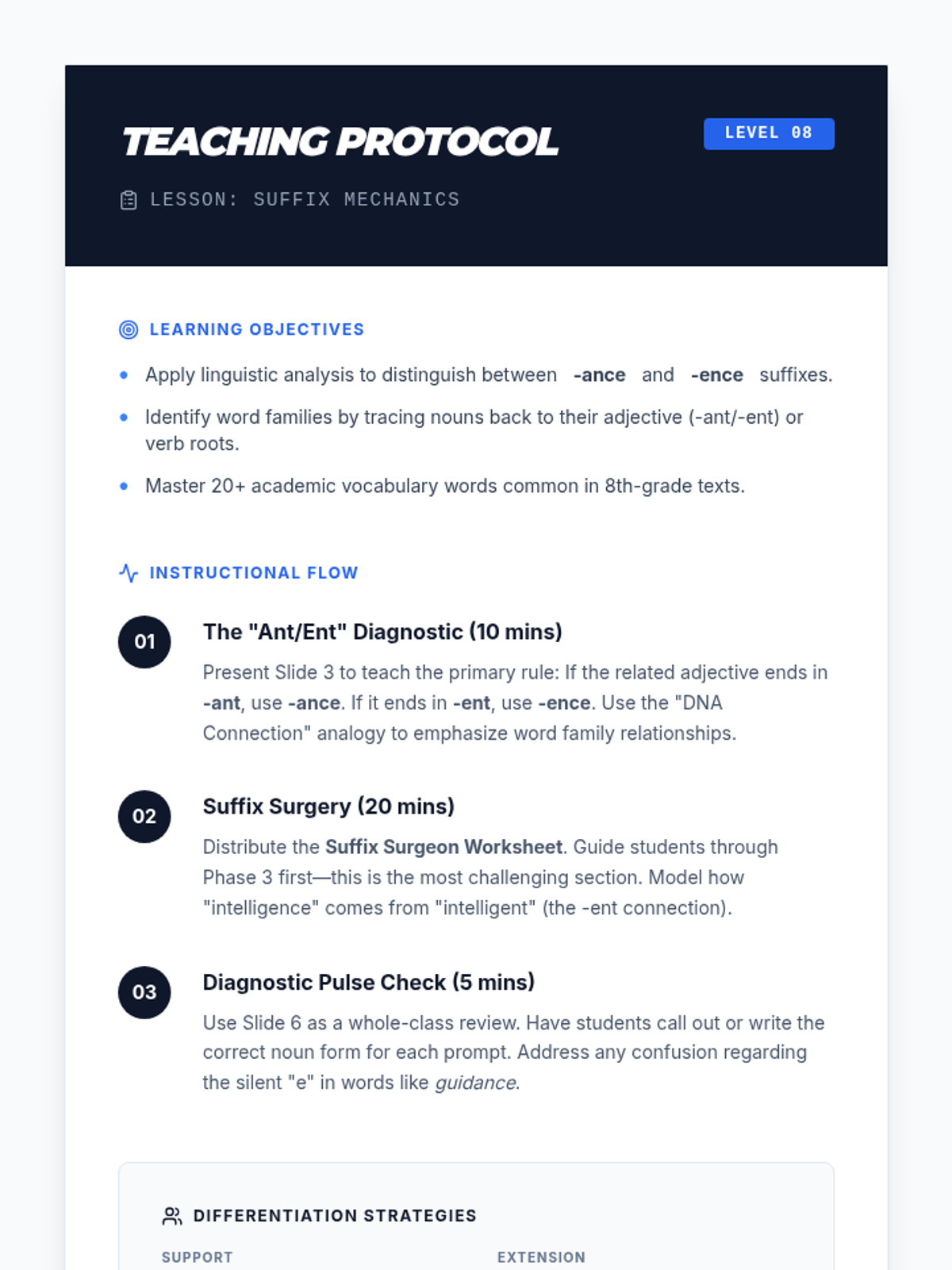
This lesson breaks down the patterns behind -ance and -ence suffixes, helping students use root words and parts of speech to determine correct spellings.
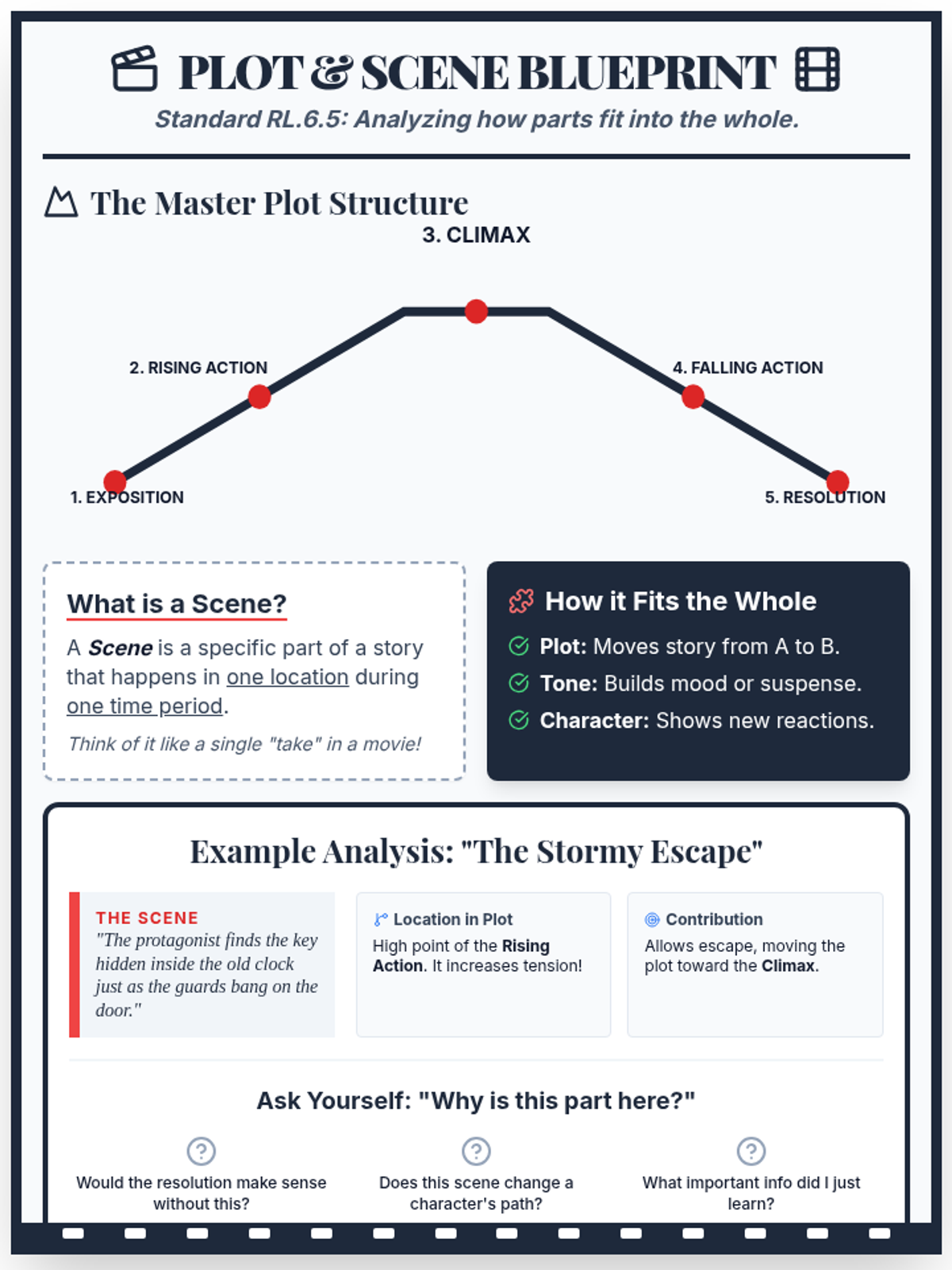
A lesson focused on analyzing how individual scenes and chapters contribute to the overall structure and development of a story's plot, setting, and theme.
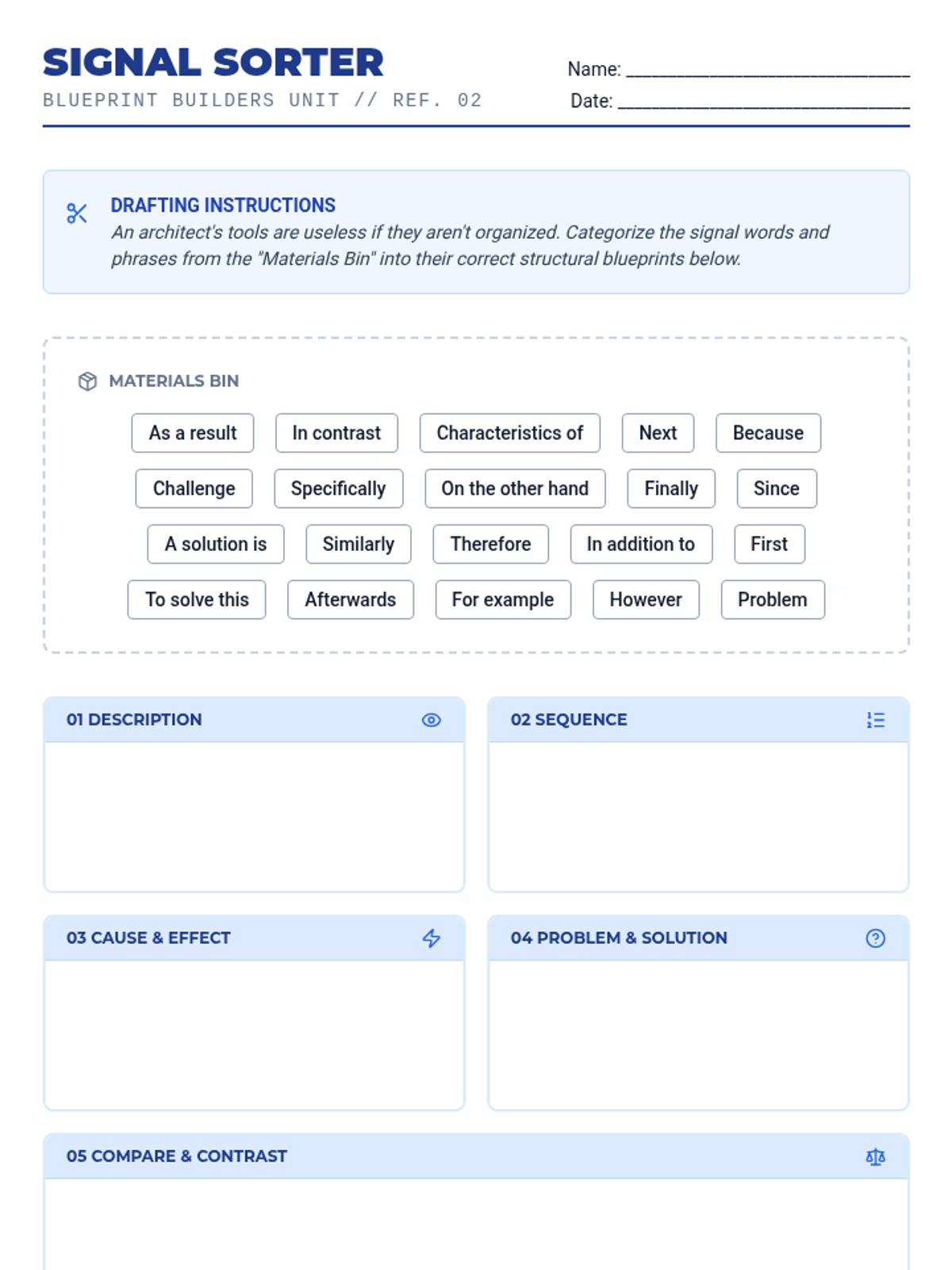
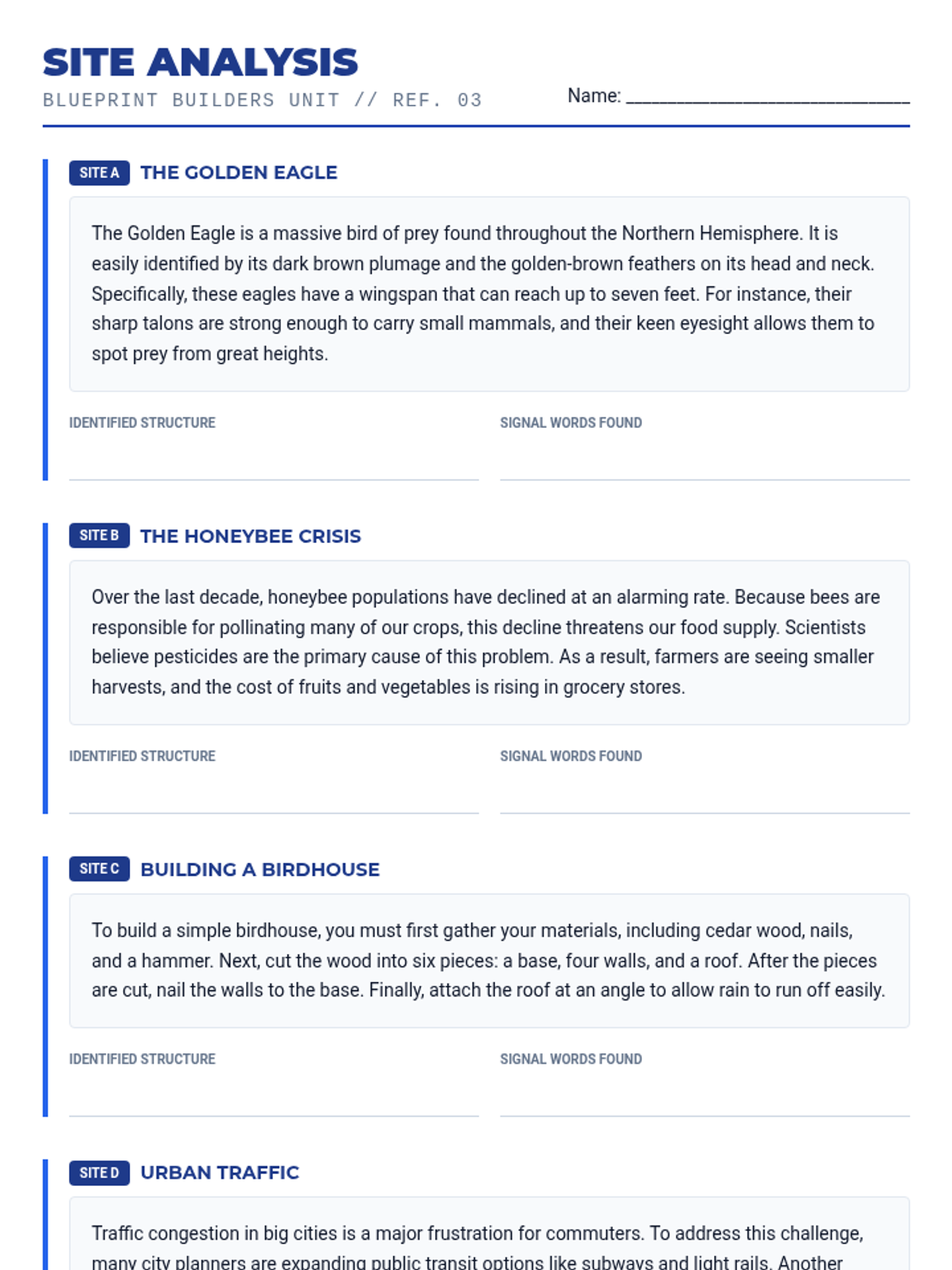
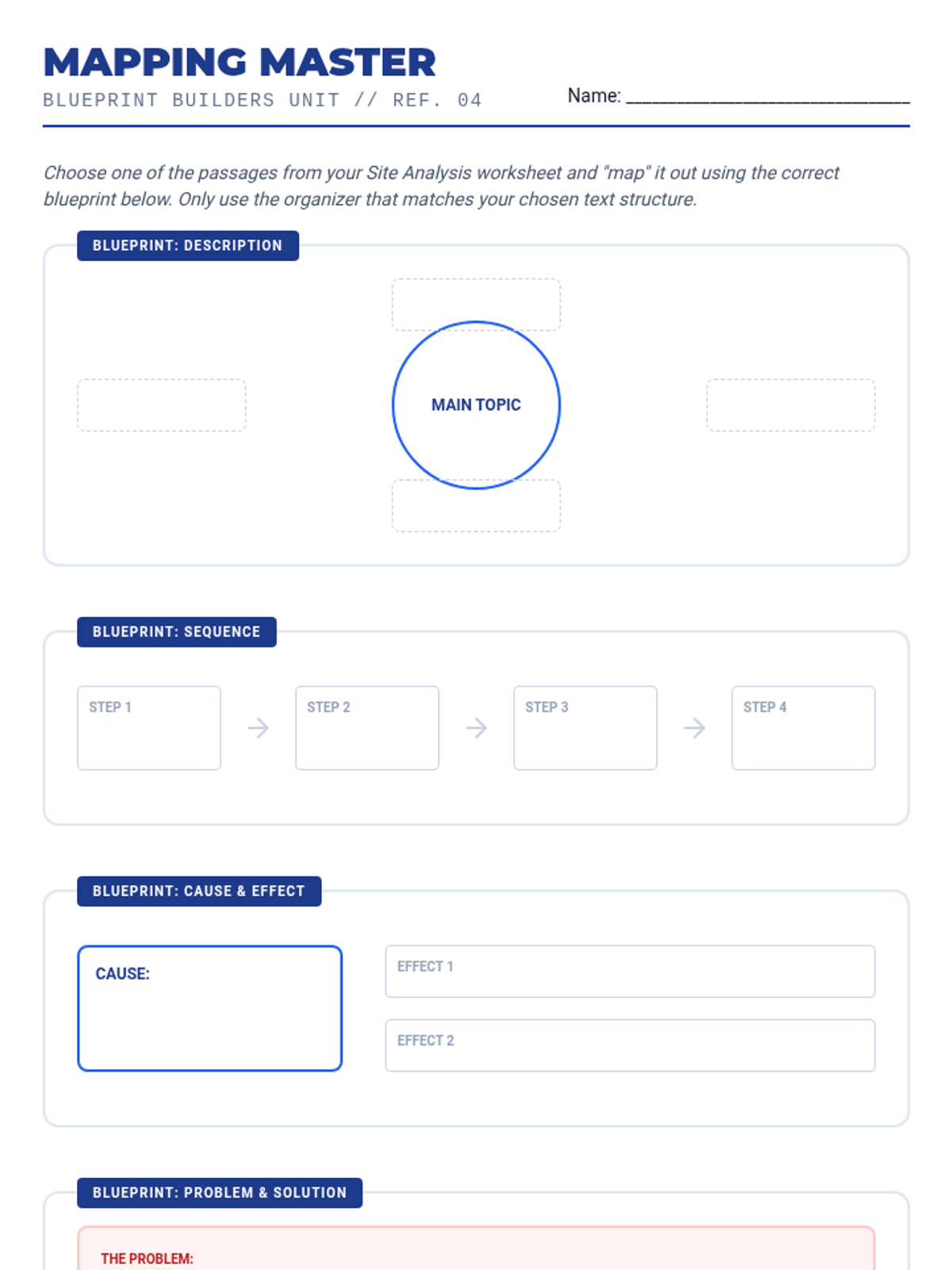
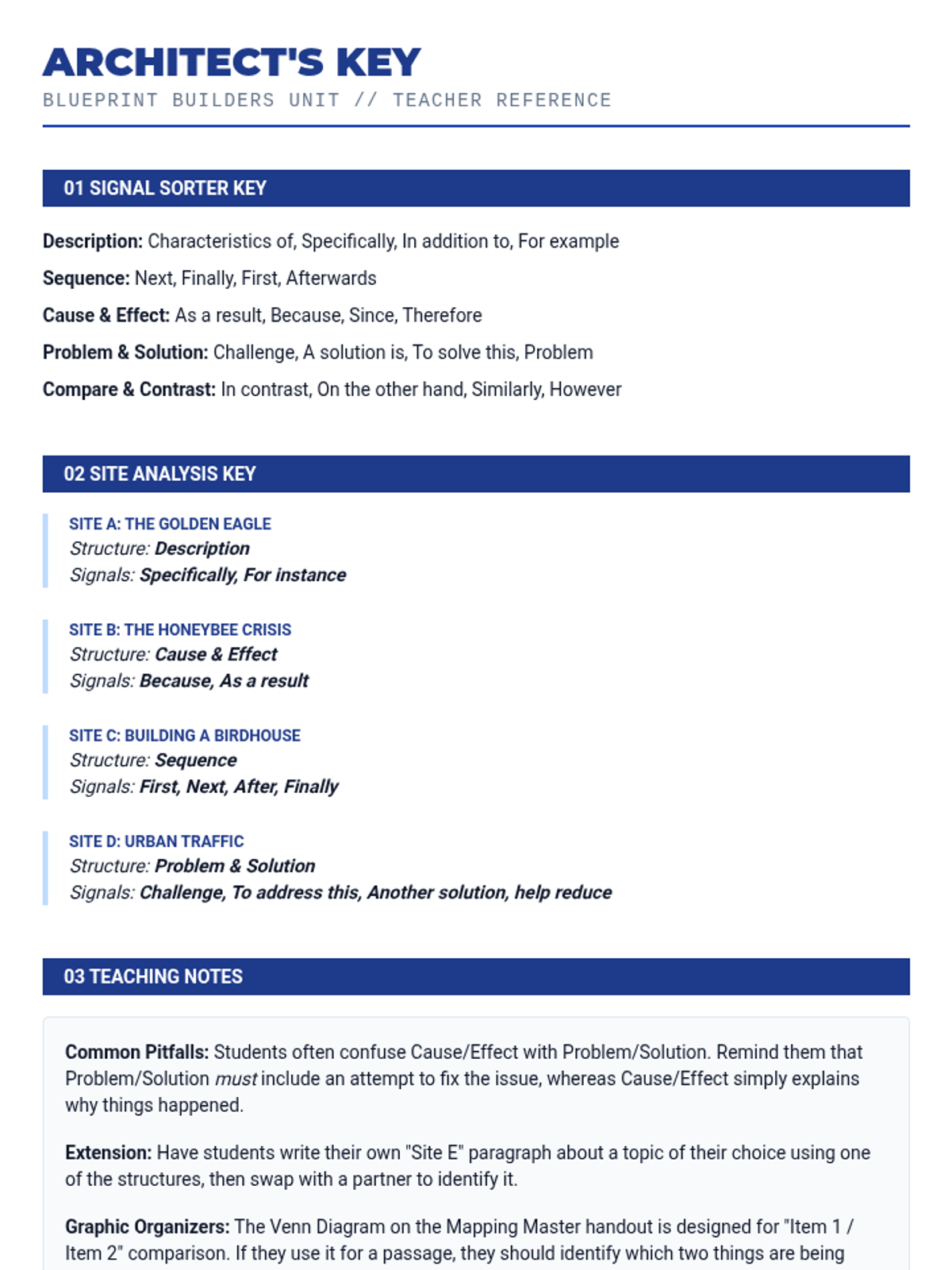
A comprehensive review of the five primary informational text structures: description, sequence, cause and effect, problem and solution, and compare and contrast. Students identify signal words, analyze short passages, and use graphic organizers to map text relationships.