The capstone lesson where students collaborate to score a wordless story using classroom instruments, applying their knowledge of musical representation.
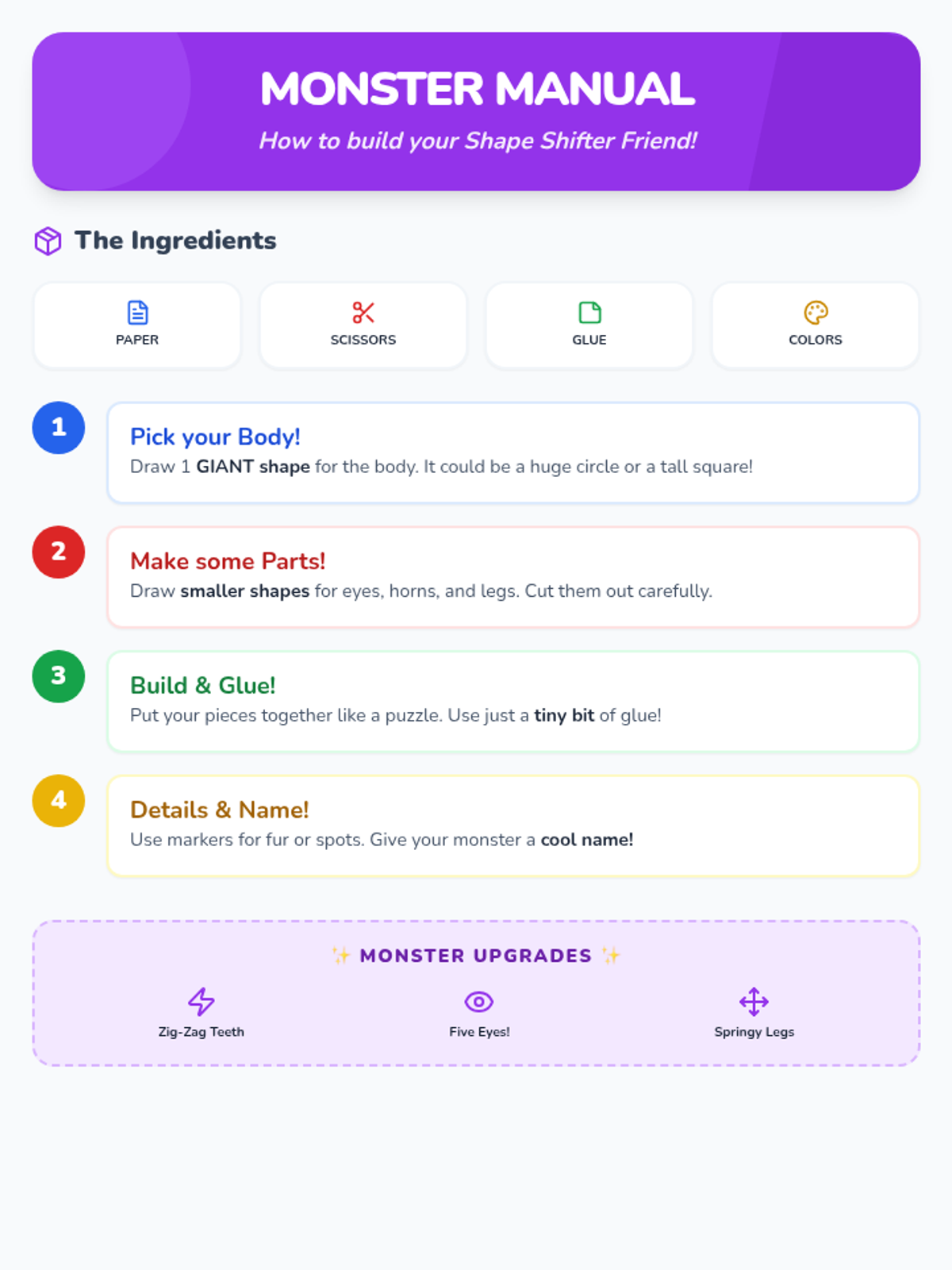
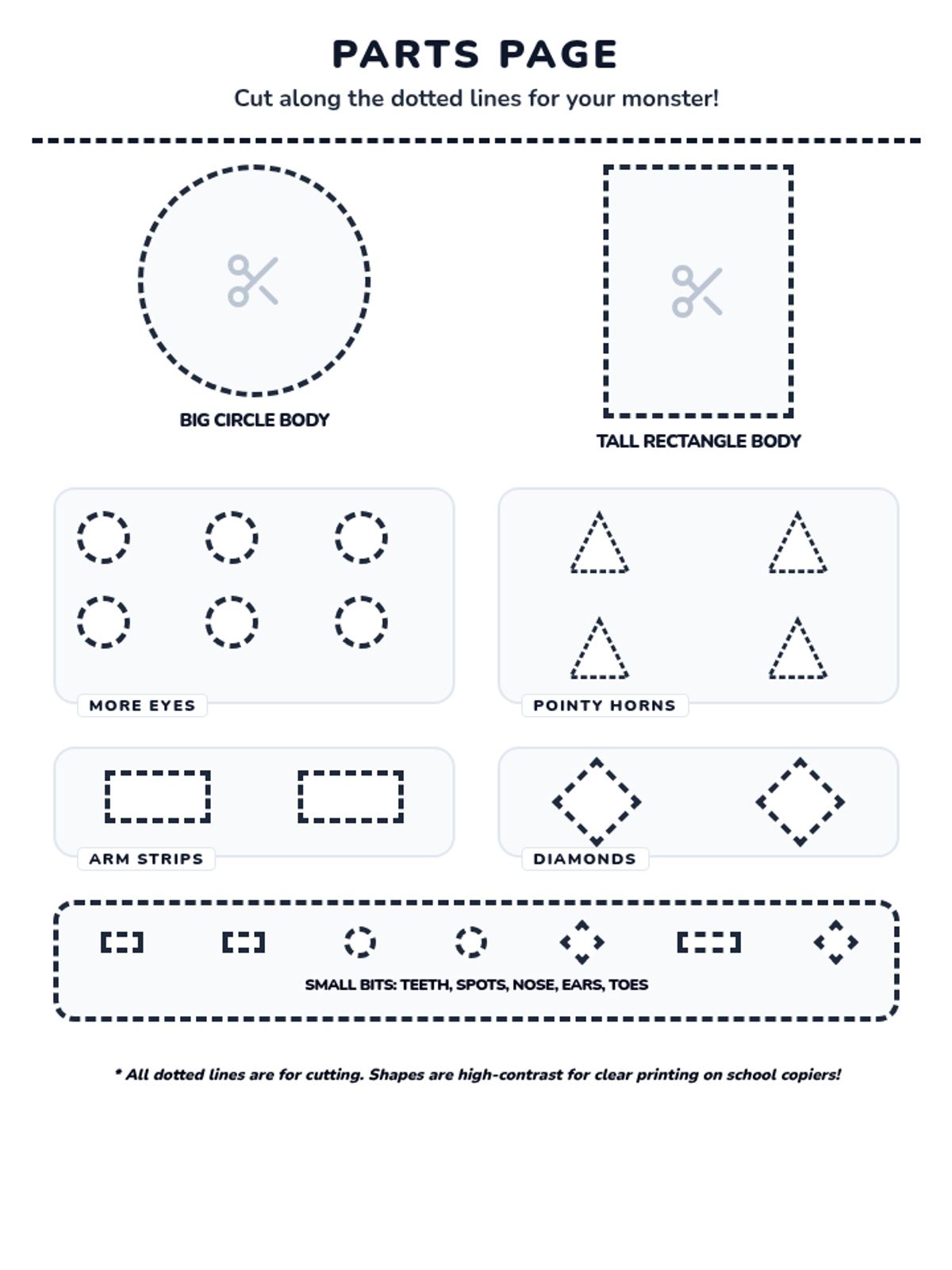
A fun and engaging 30-minute craft session where young students create their own 'Love Bug' characters using paper shapes. This lesson focuses on fine motor skills, shape recognition, and creative expression.
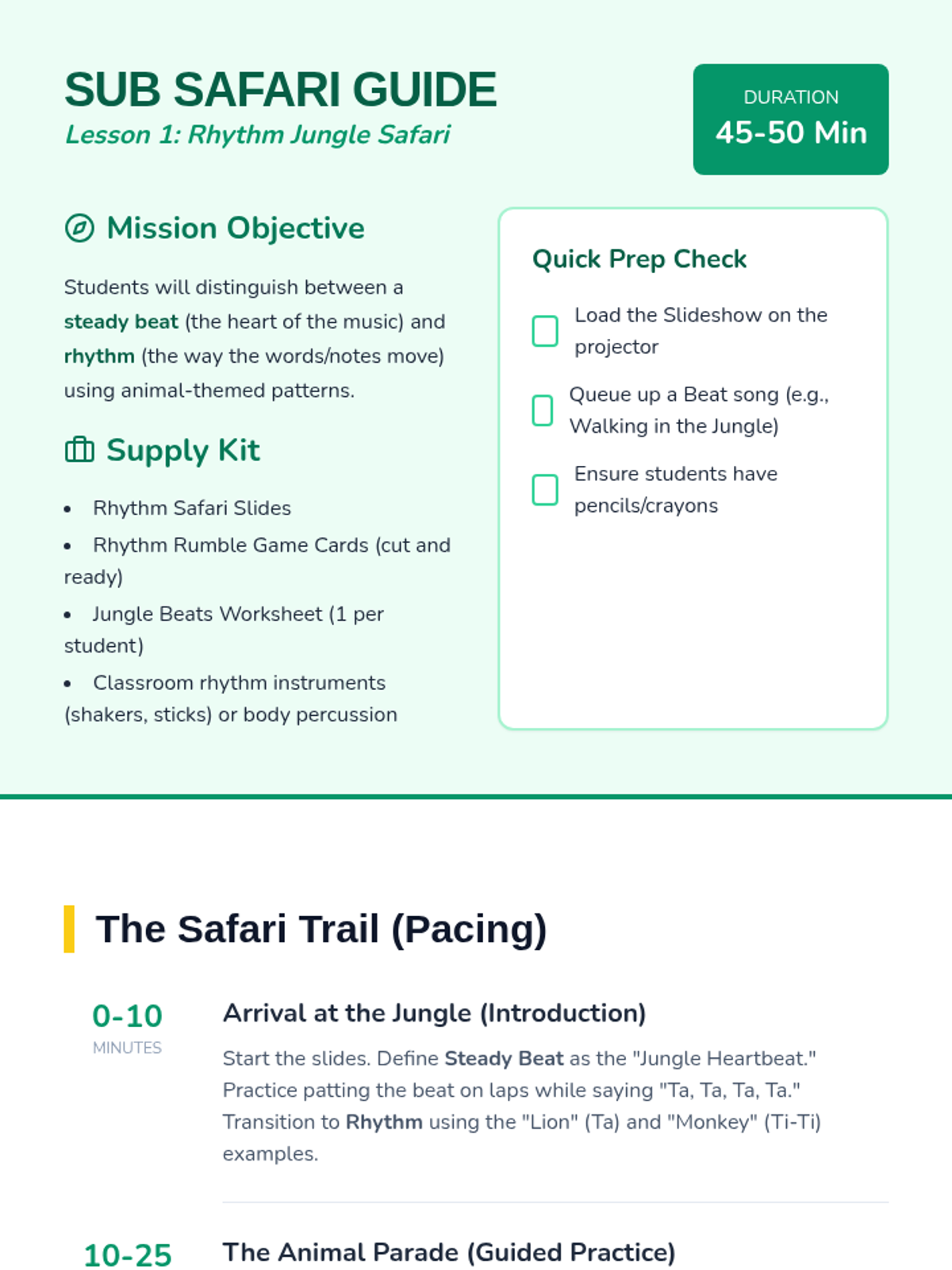
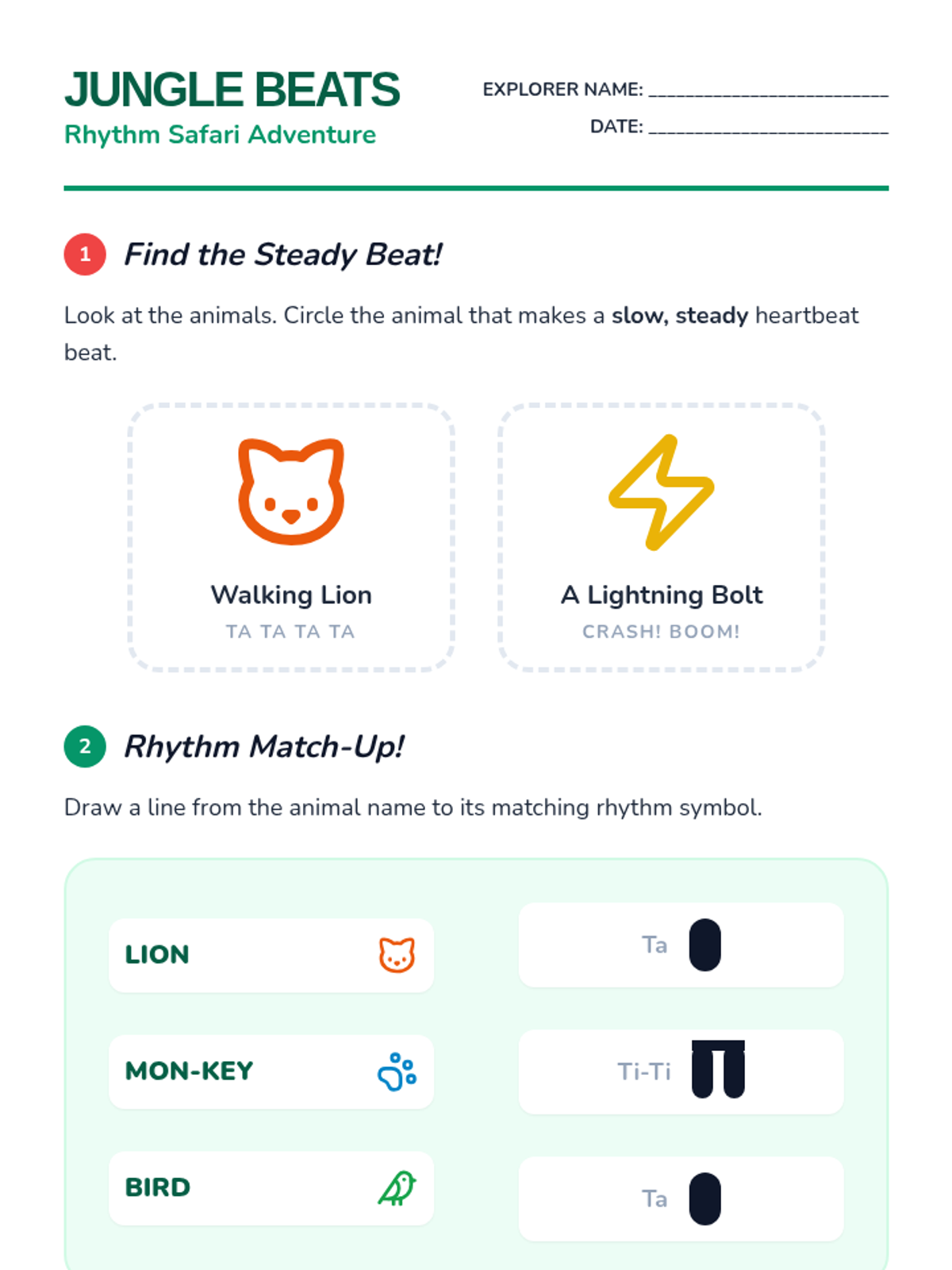
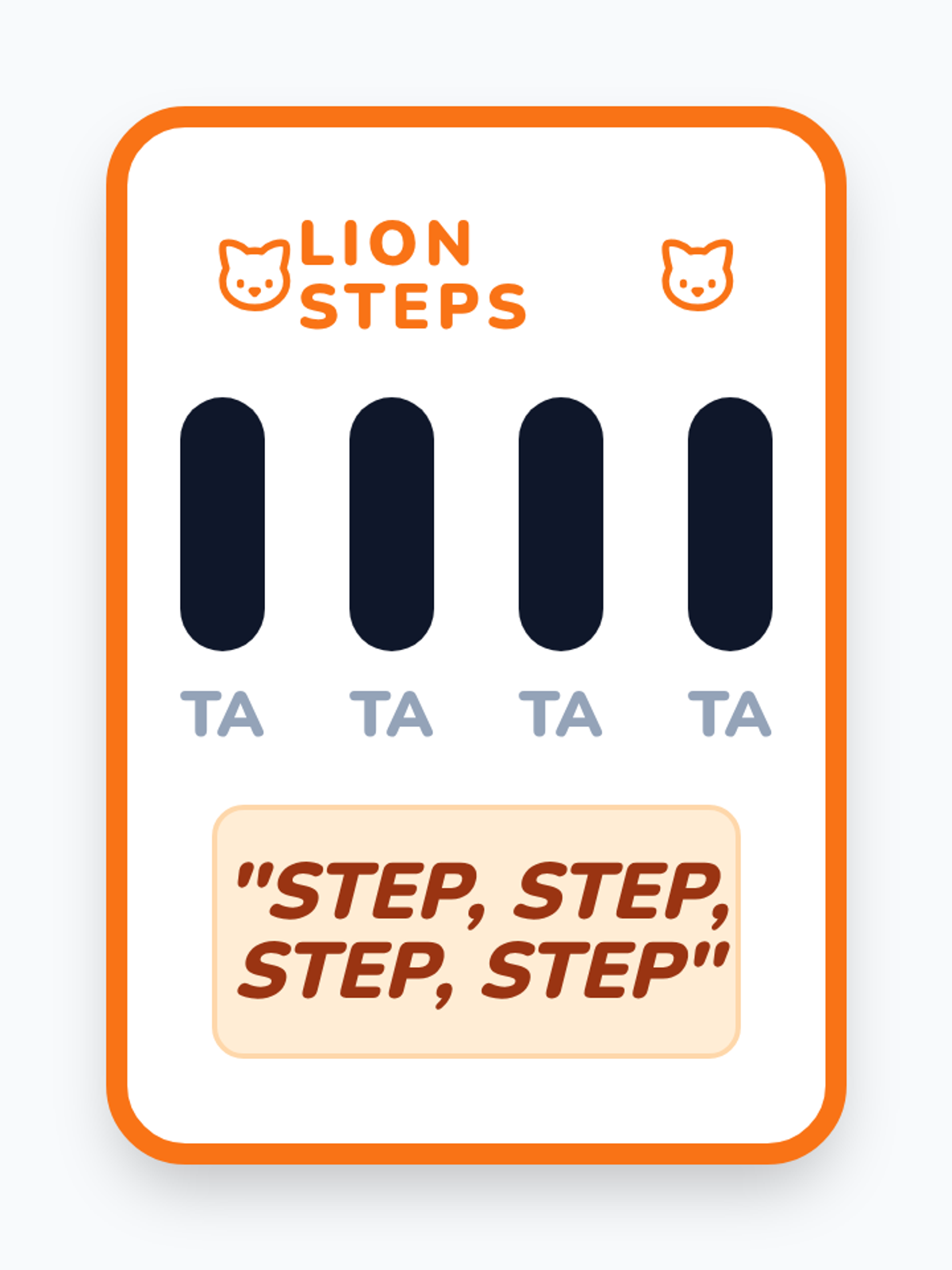
An interactive, game-based lesson where students use body percussion to perform quarter notes, eighth notes, and quarter rests at varying tempos.
A foundational visual literacy lesson for Pre-K students to understand that pictures and objects (symbols) can represent complex ideas like love, luck, and safety. Students engage with a video, play Symbol Bingo, and practice identifying symbols in their environment.
In this kindergarten music and science lesson, students explore rhythm and nature by investigating how and why woodpeckers 'drum' on trees. They use rhythm sticks and wooden blocks to mimic bird patterns, learn about biological adaptations through a video, and practice volume control.
Students explore colors and patterns in nature through the lens of insects, practicing observation skills and creating their own pattern-based bug art.
A visual arts and science lesson where students explore the concept of fog as a 'cloud on the ground' through watercolor painting and sponge-dabbing techniques.
A music lesson where students compose and perform a new verse for 'Going Green Song' about environmental issues in their own school.
Students explore how the brain uses patterns and expectations to process music, learning about the 'tonic' and 'resolution' through a rhythmic composition game.
Students explore the concept of tempo and rhythm through a catchy song about the solar system, using rhythm sticks to match shifting speeds.
An art and science integration lesson where students explore the Aurora Borealis through scientific inquiry and chalk pastel landscapes. Students learn about Earth's magnetic field and solar particles before recreating the shimmering sky.
Students explore the intersection of science and art by using homemade or primary watercolors to create original artwork, focusing on the magic of color mixing to create secondary colors.
A vibrant introduction to color theory where young students explore primary colors and discover how to create secondary colors through a mess-free "squish" experiment and interactive video predictions.
A hands-on STEAM lesson where students explore the physical transformation of Ivory soap through heat, then use the resulting 'cloud' material to create sensory soap dough sculptures. Students practice observation, descriptive language, and tactile art skills.
A Kindergarten lesson exploring circles as the building blocks of art, featuring a video-led discussion and a creative 'Circle Creatures' drawing activity.