Students integrate all etiquette skills in a complex role-play assessment involving a visit to a friend's home. They must navigate greetings, gift-giving, and dining correctly. Peers evaluate the performance based on cultural accuracy.
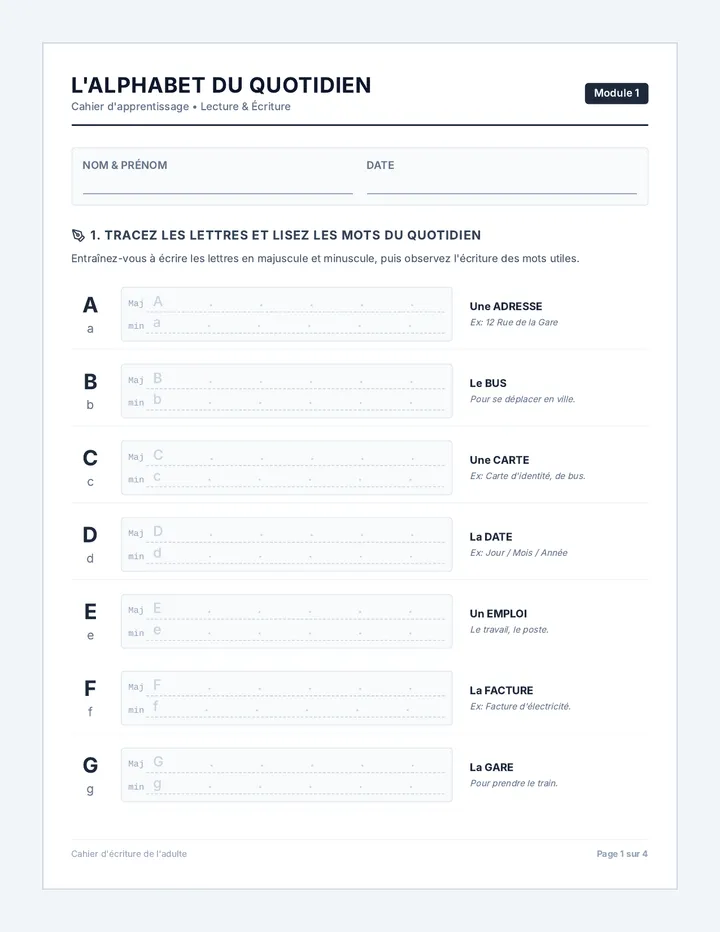
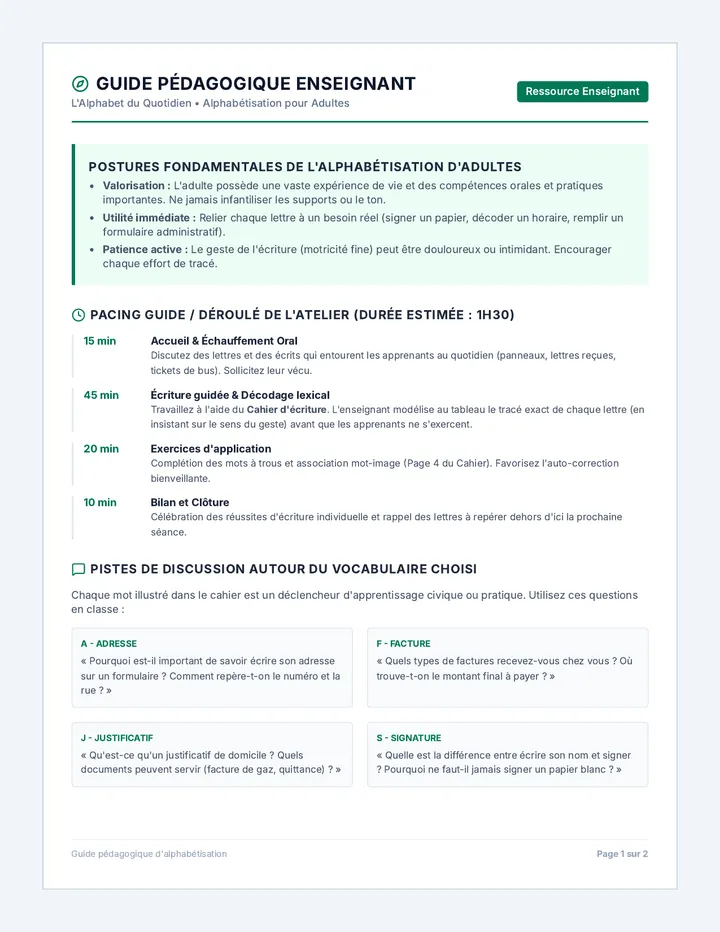
Une leçon conçue pour les adultes en situation d'alphabétisation. Elle se concentre sur l'apprentissage des lettres de l'alphabet à travers des mots du quotidien administratif, professionnel et personnel. Le ton est sobre, valorisant et adapté aux adultes.
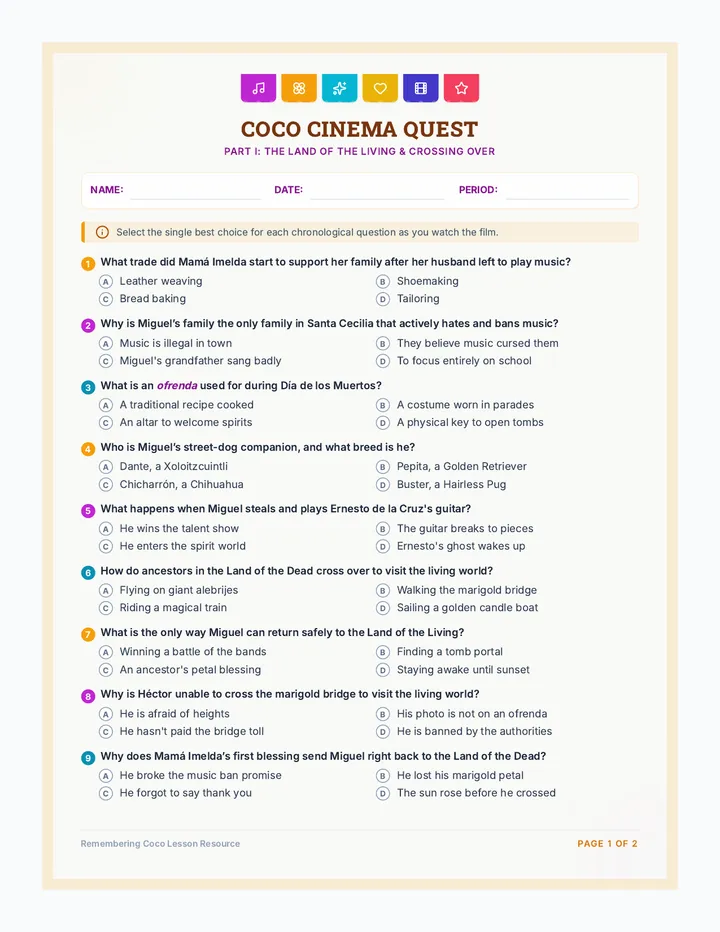
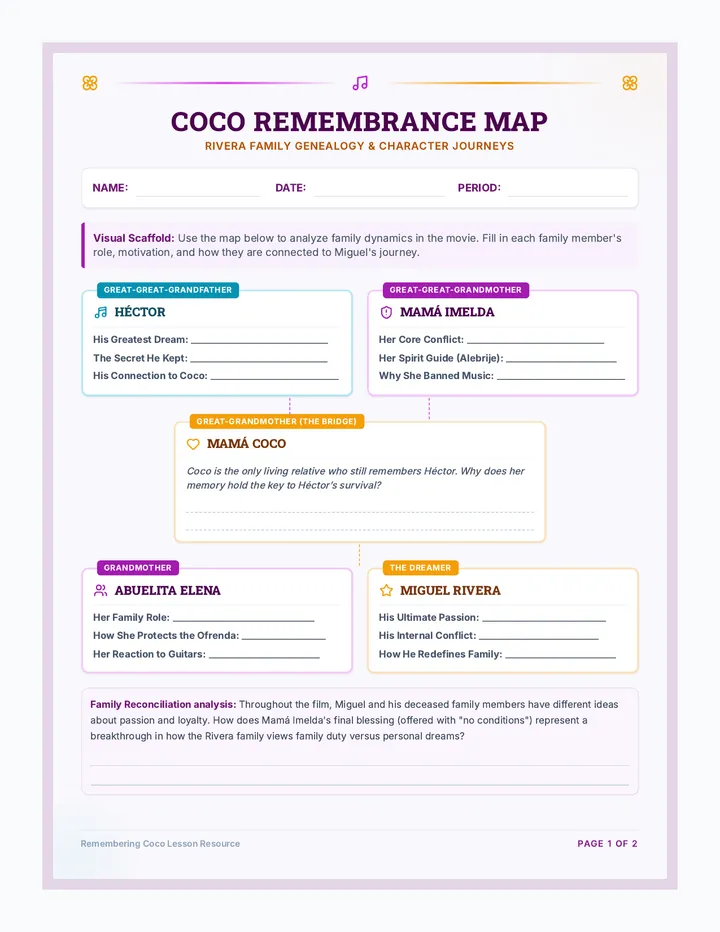
An exploration of the Pixar film Coco, focusing on Día de los Muertos cultural traditions, character choices, and key themes like family, memory, and forgiveness.
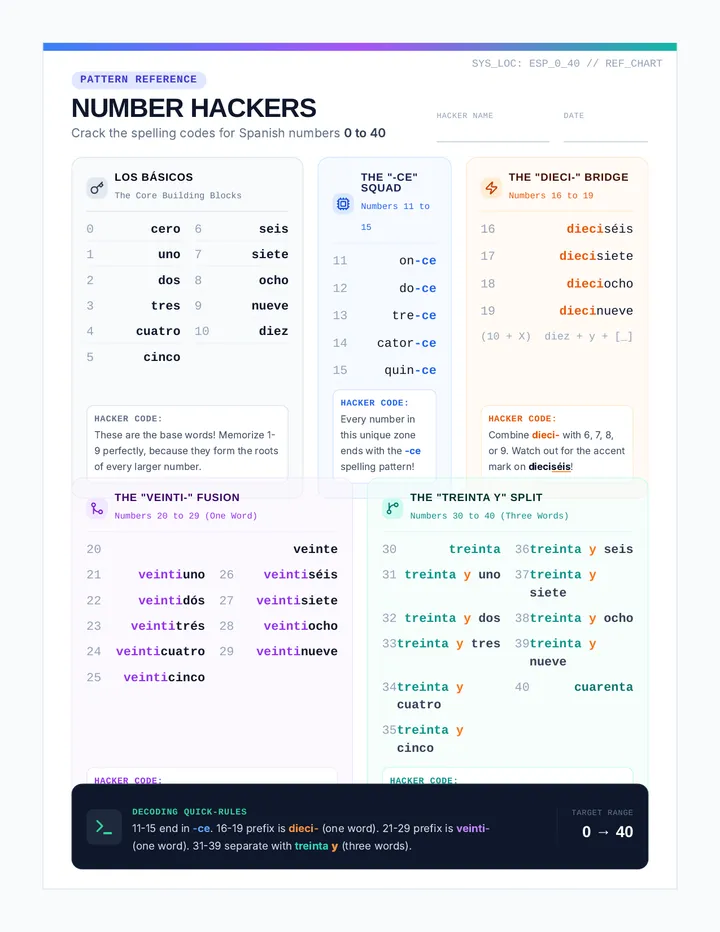
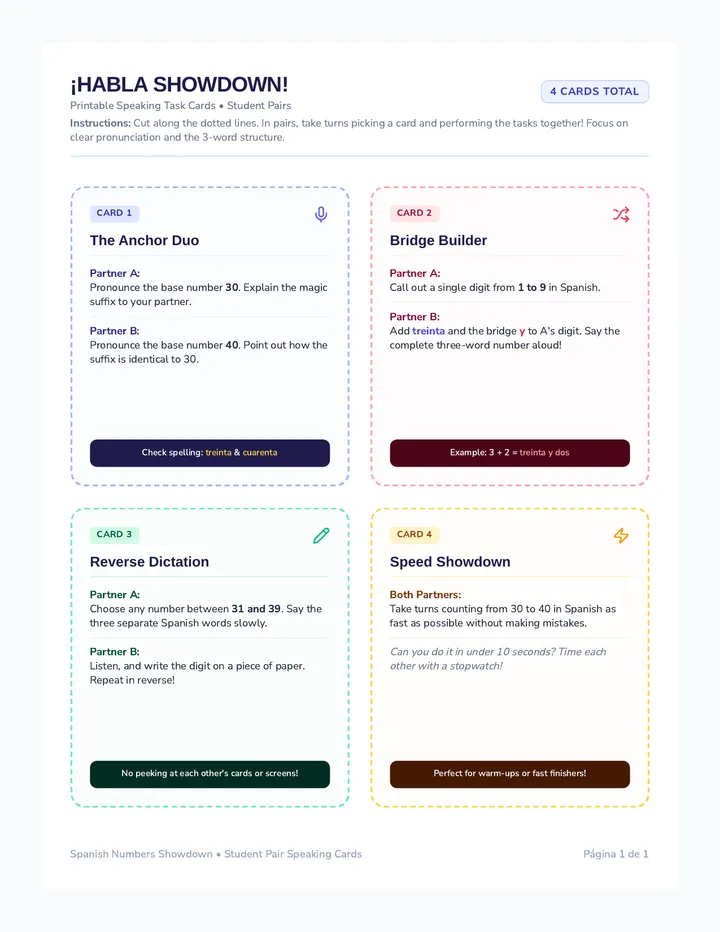
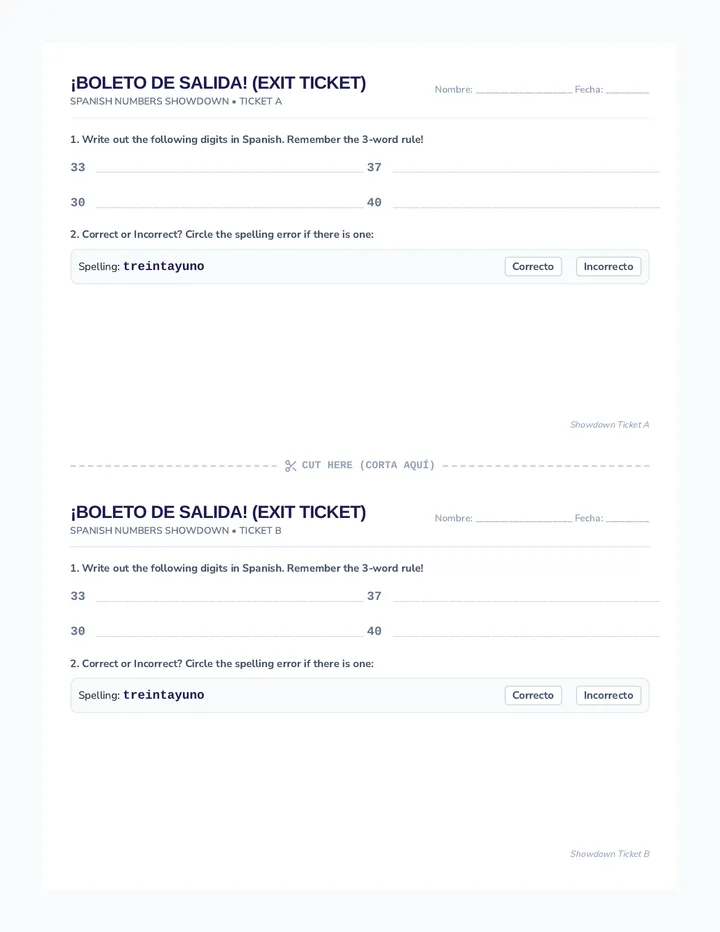
A lesson focused on mastering Spanish numbers 0-40 through pattern recognition, emphasizing key spelling transitions like -ce, dieci-, veinti-, and the conjunction 'treinta y'. Includes a highly visual pattern-coded anchor chart and a targeted spelling practice worksheet.
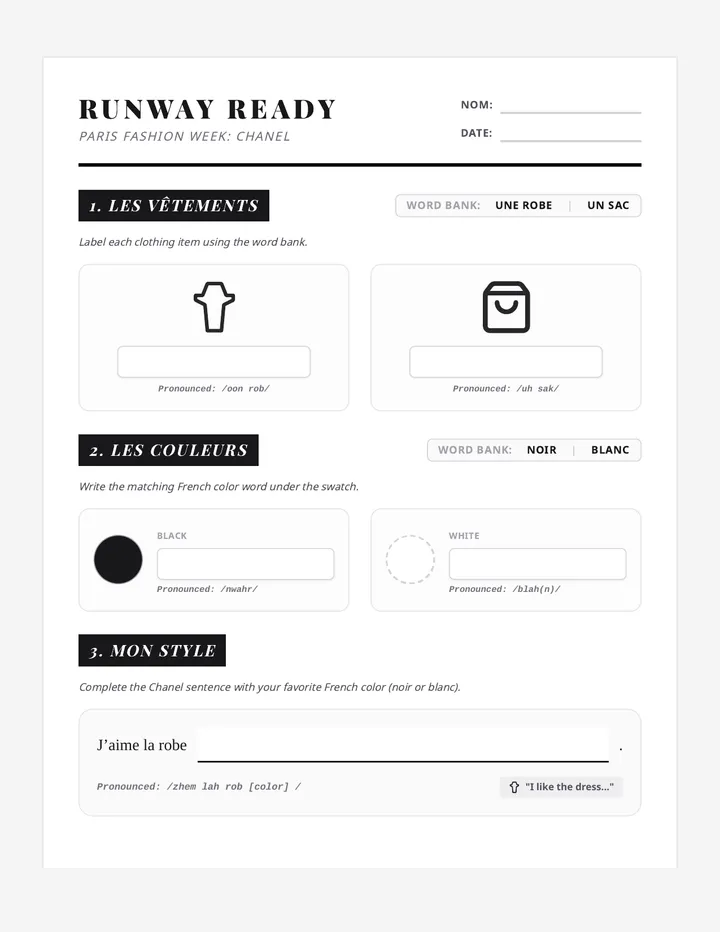
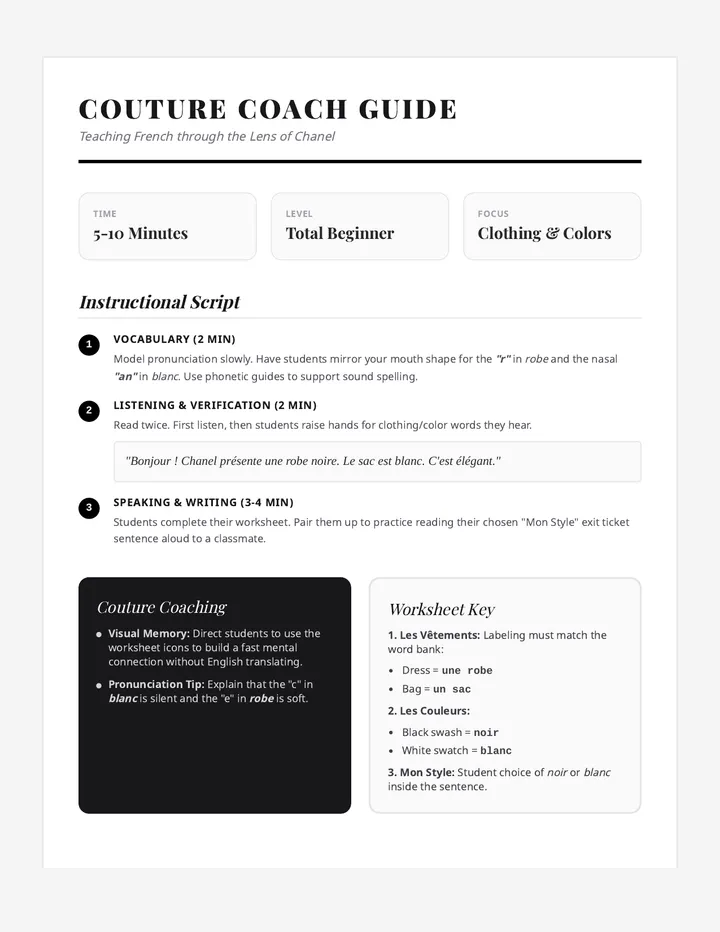
A 5-minute introductory lesson on French fashion vocabulary and basic colors. Students practice listening, speaking, and writing simple sentences about Chanel's iconic style.
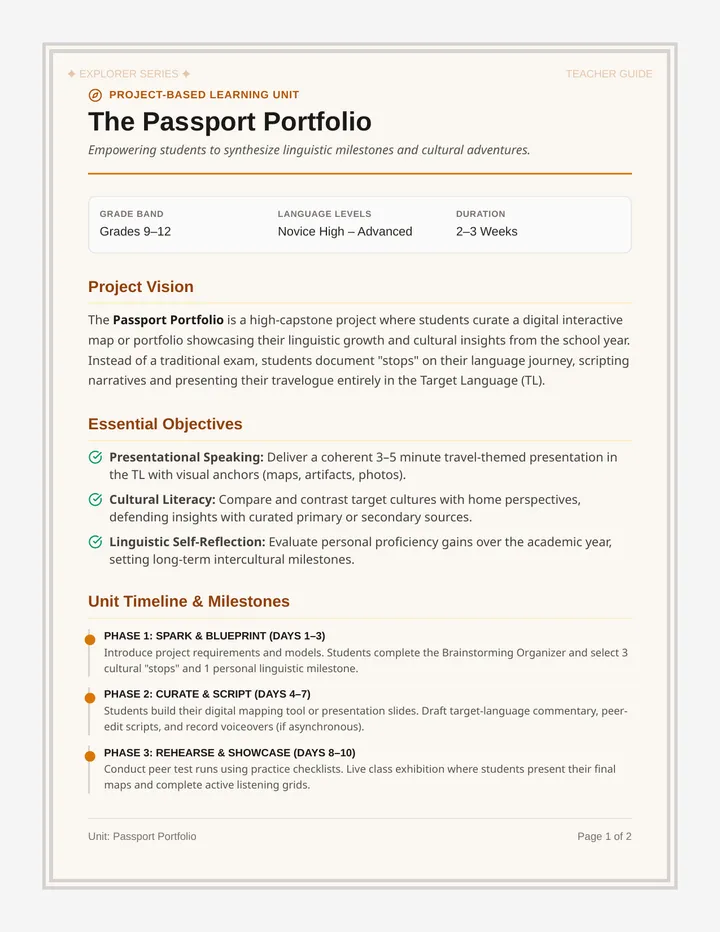
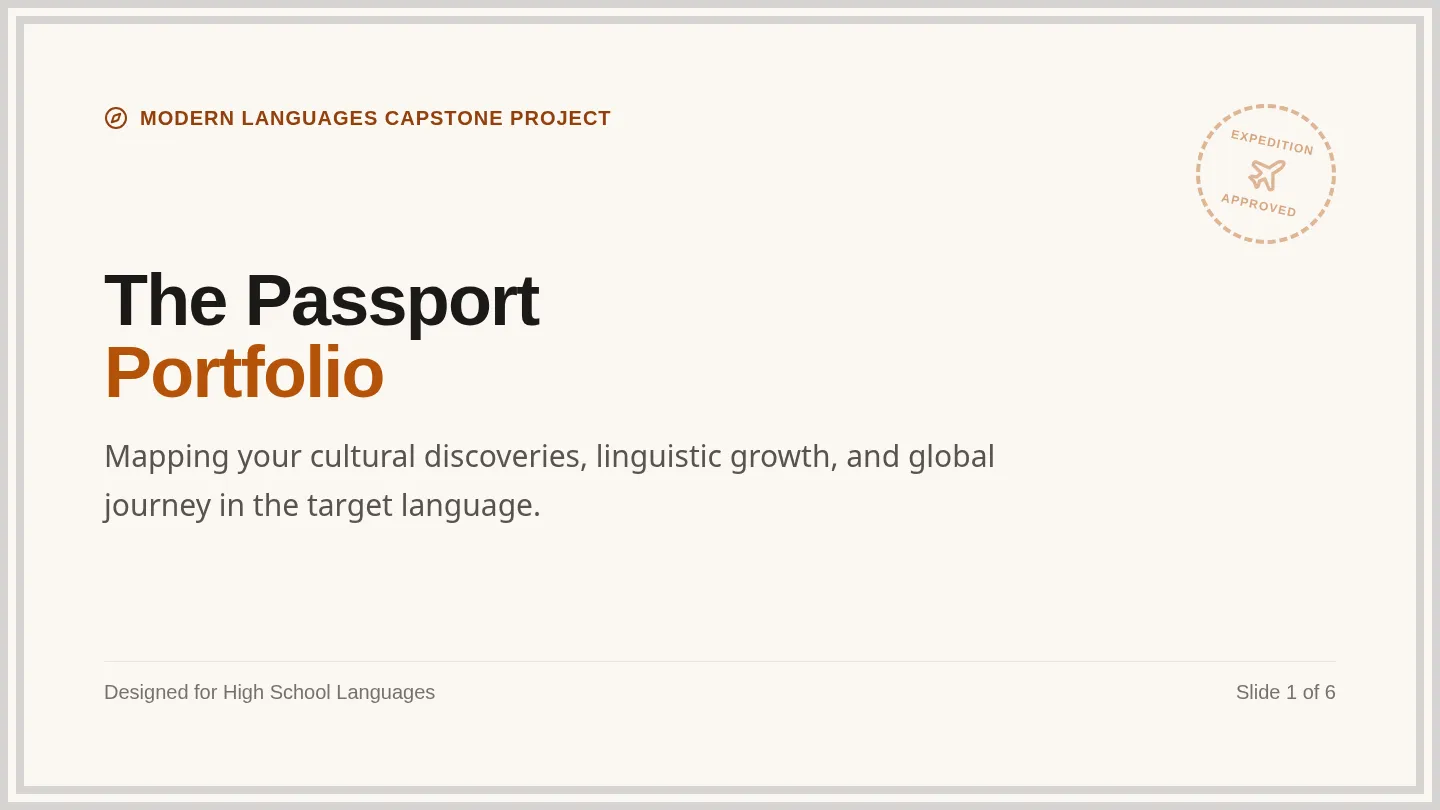
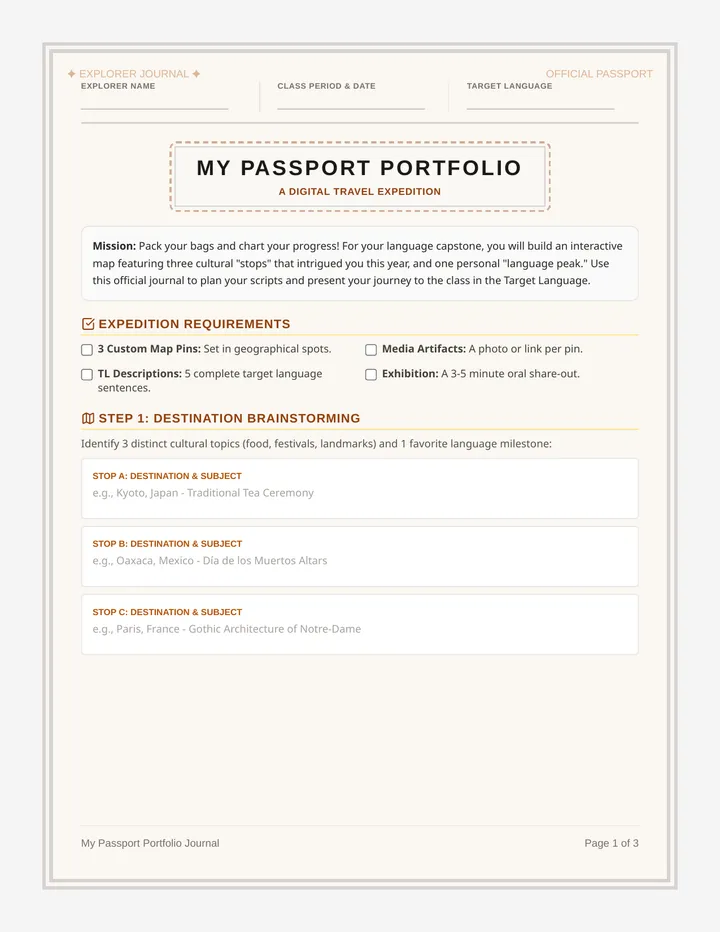
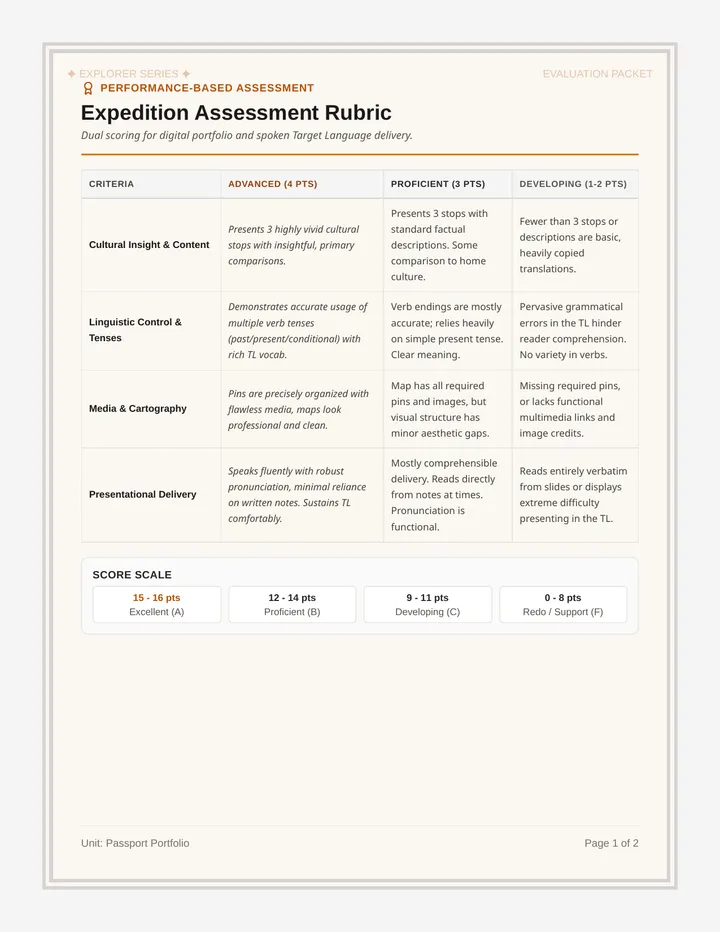
A project-based lesson where high school students design a digital travel map or portfolio of their cultural and linguistic discoveries, presenting their work in the target language.
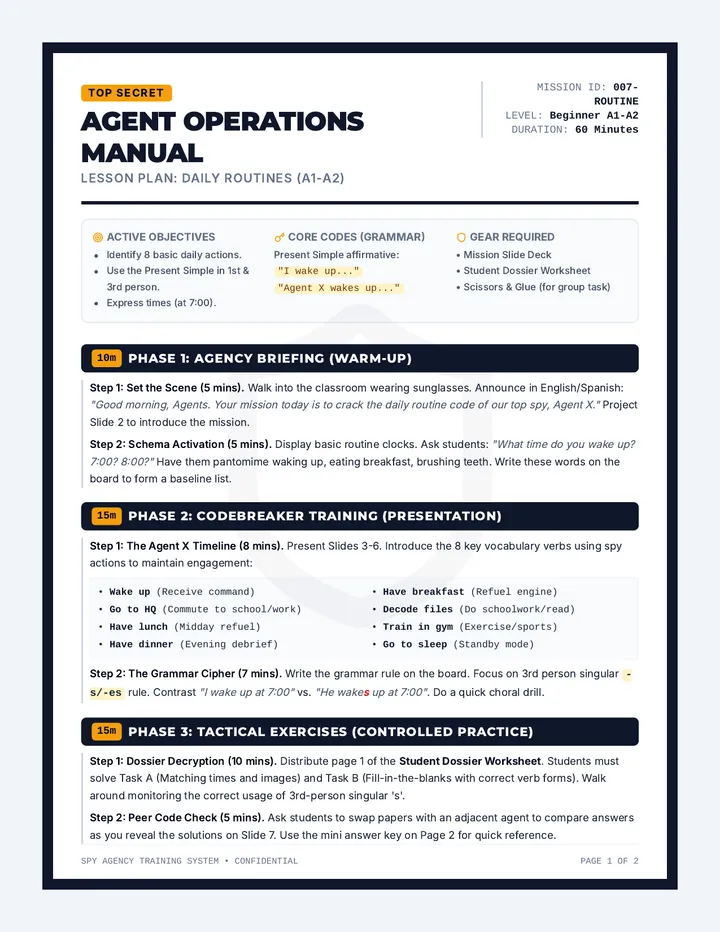
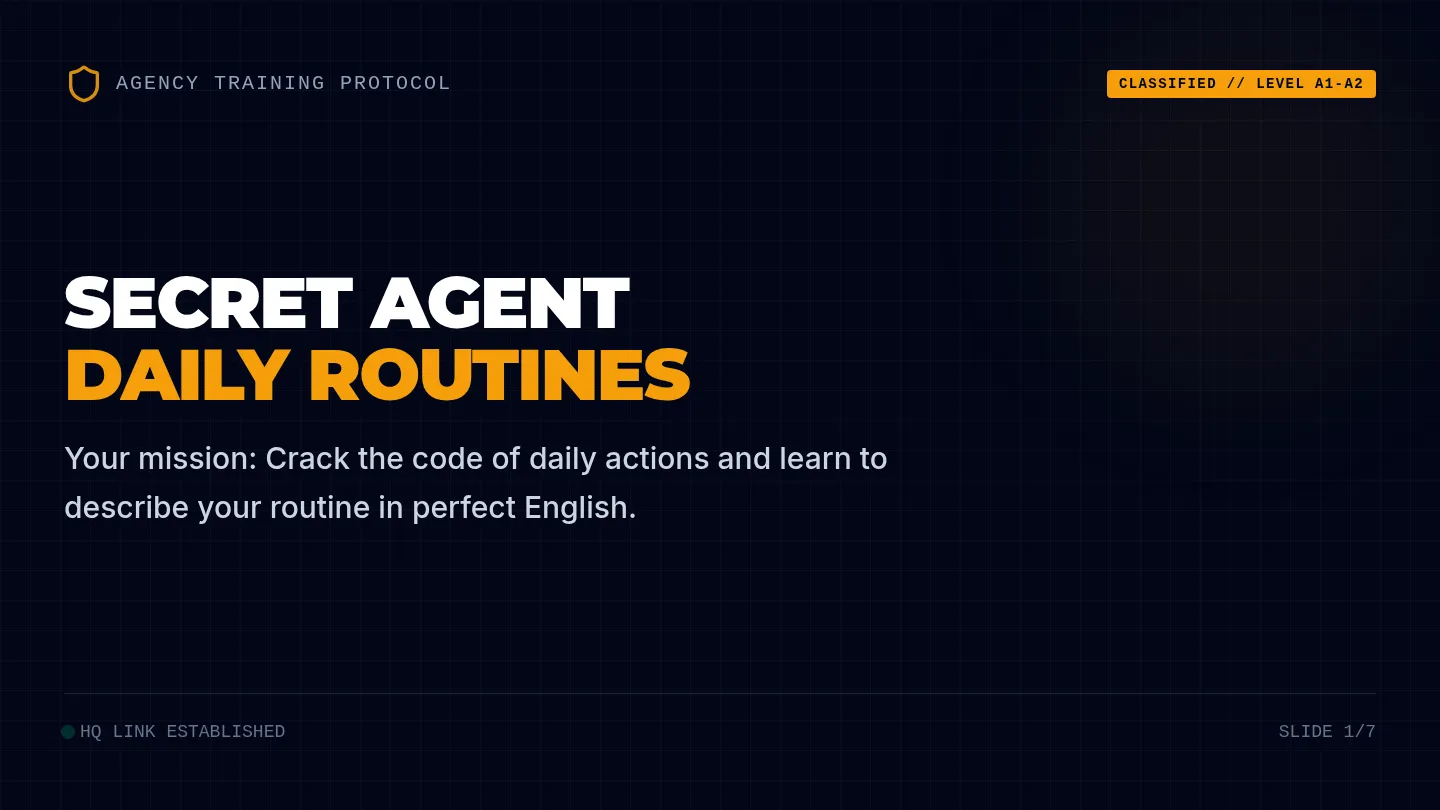
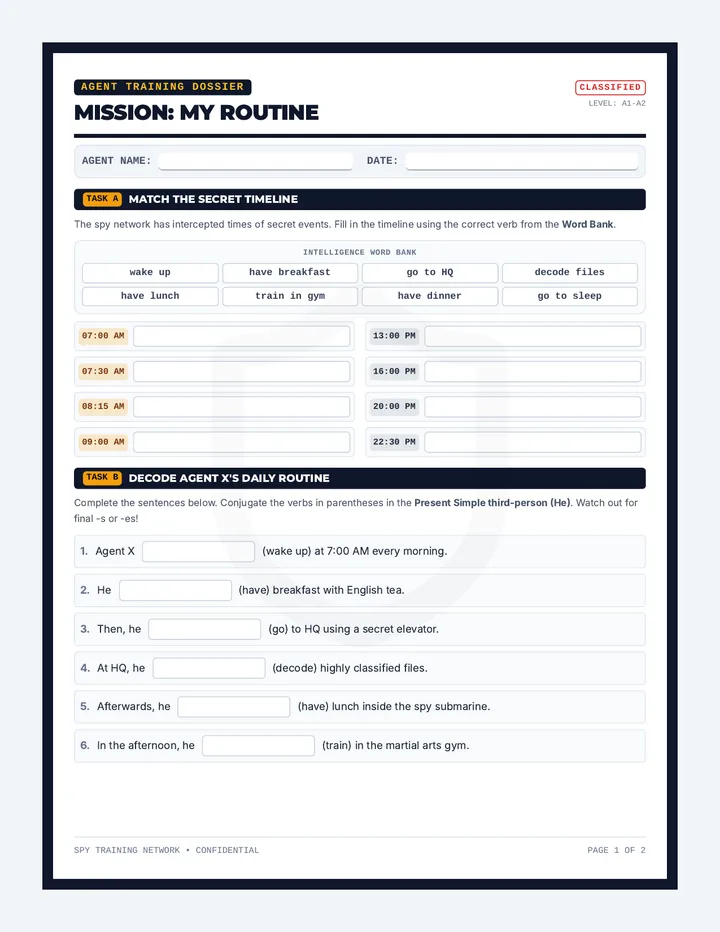
A high-engagement A1-A2 English lesson about daily routines using the exciting theme of secret agents. Includes a comprehensive step-by-step teacher lesson plan, an instructional slide deck, and printable student worksheets with daily routine practice.
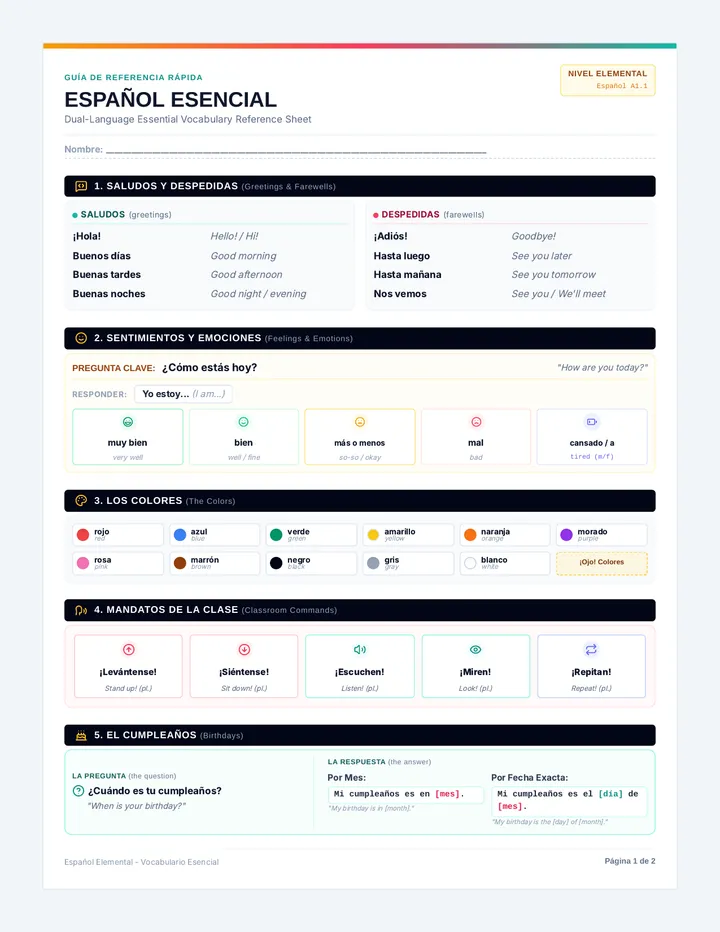
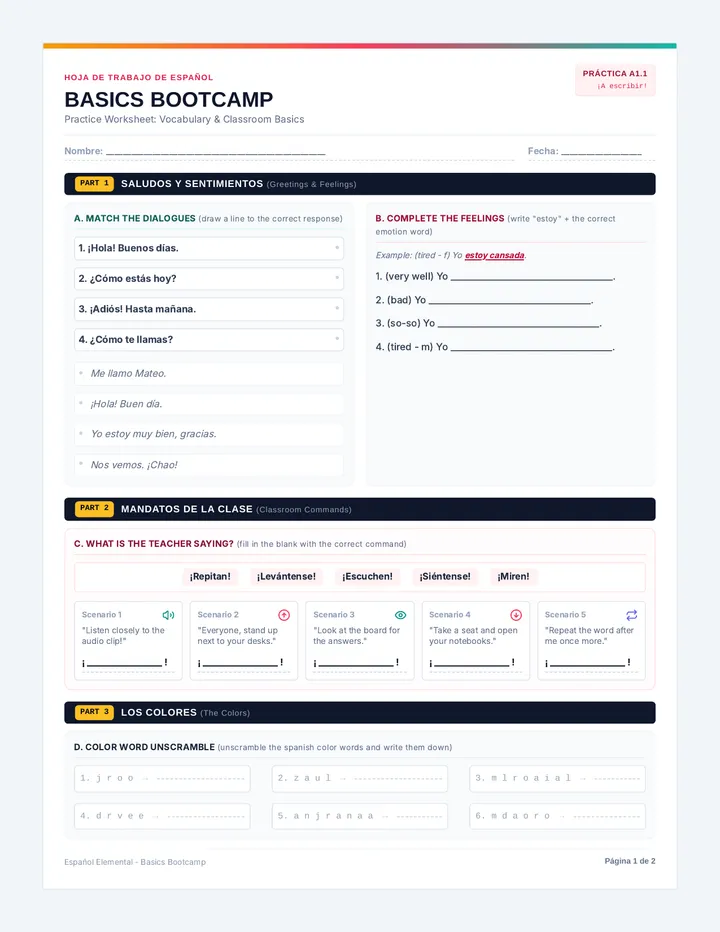
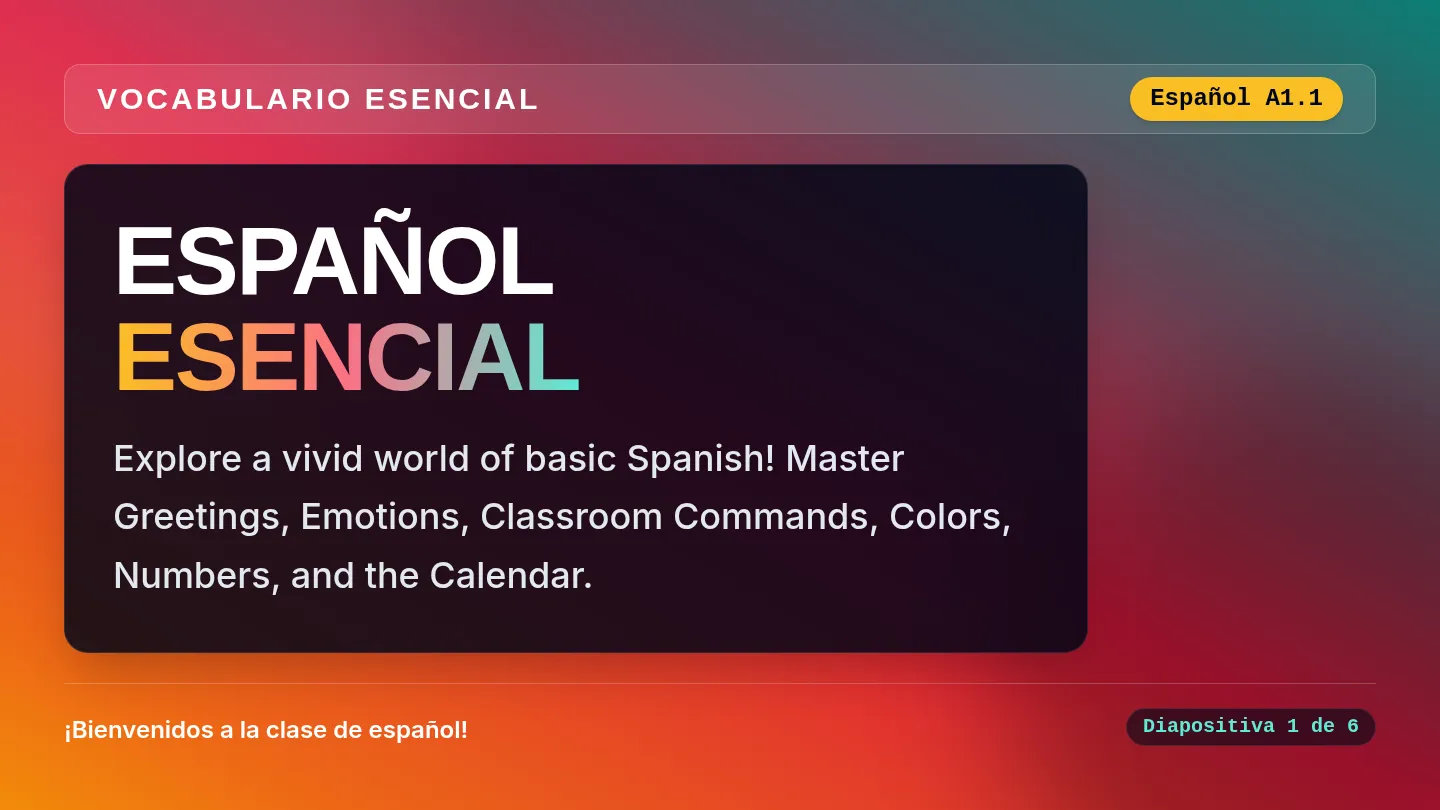
A foundational Spanish lesson covering basic conversational items: greetings, emotions, colors, numbers 0 to 40, and calendar systems (days of the week, months, and birthdays).
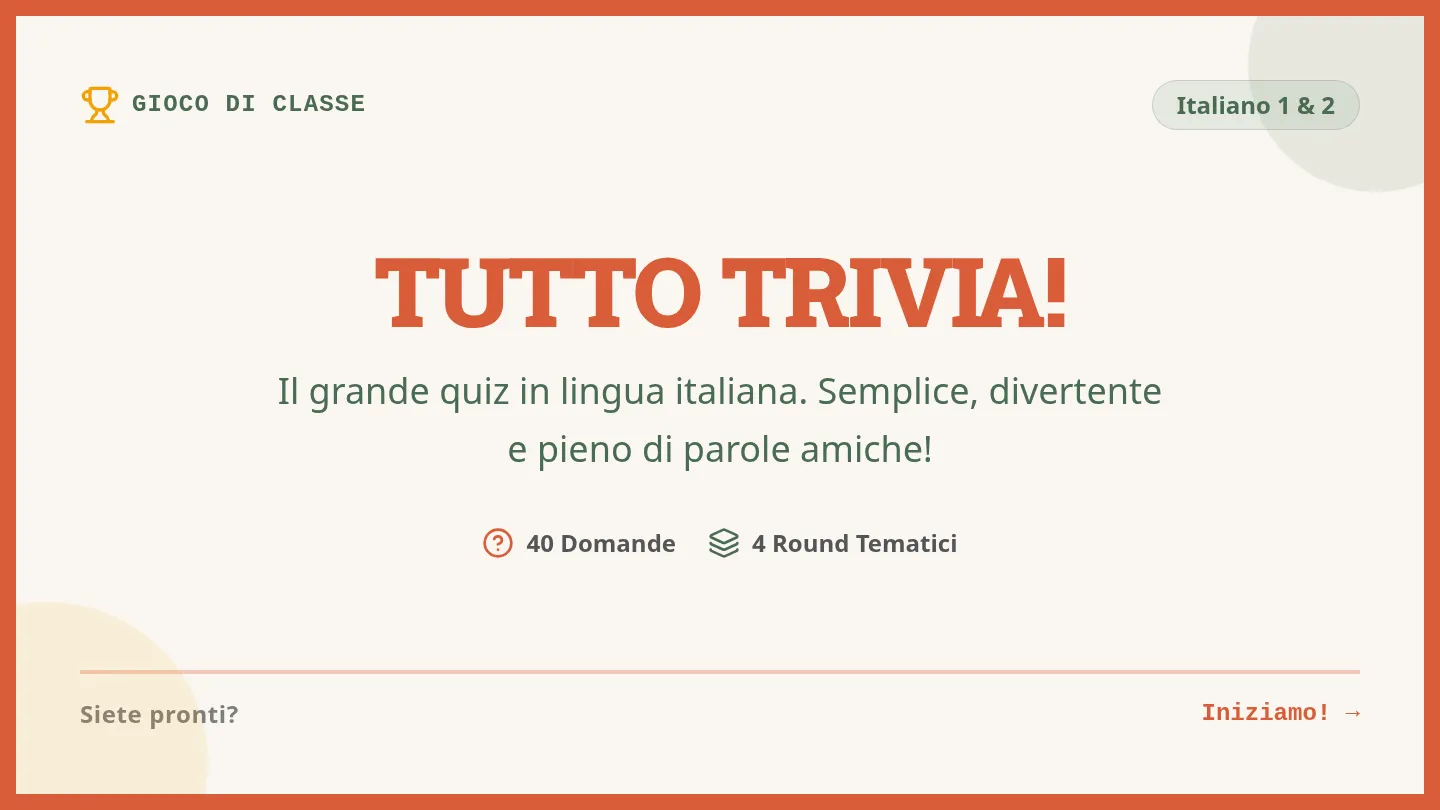
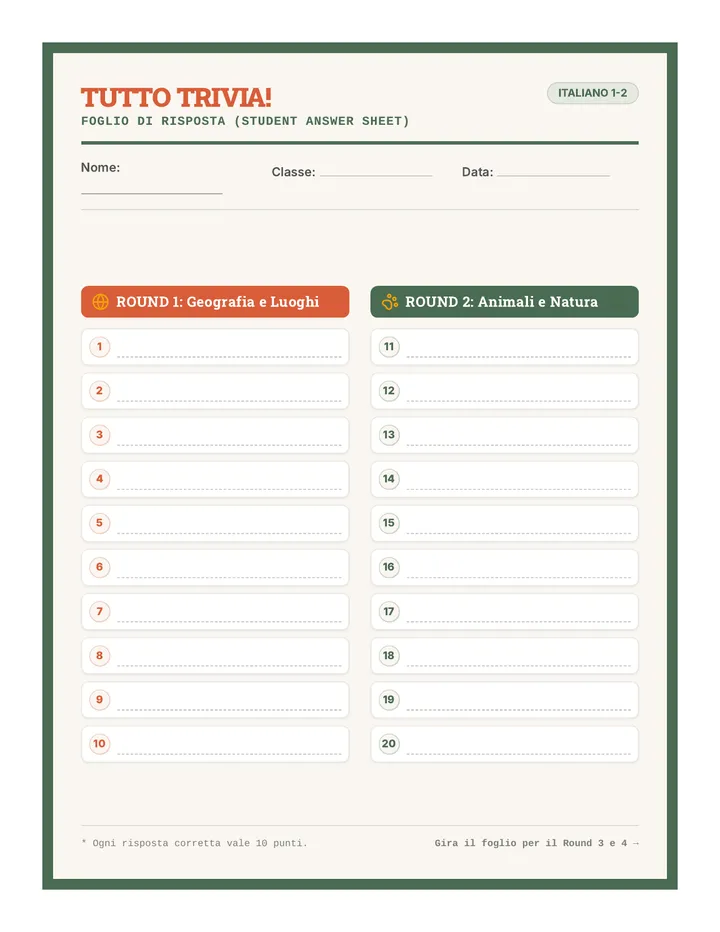
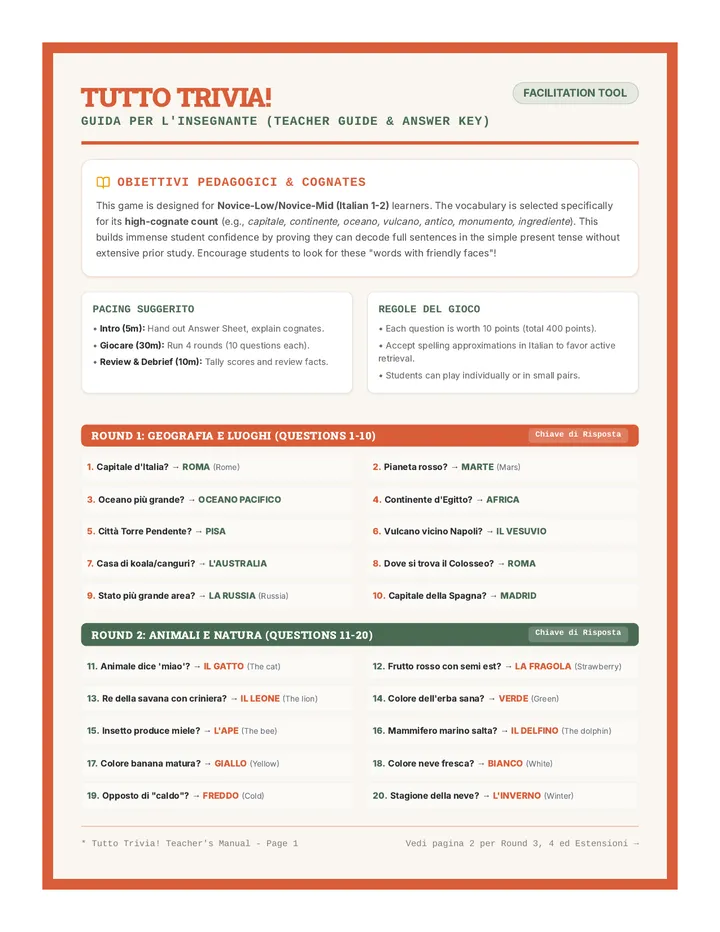
A comprehensive classroom trivia game featuring 40 highly cognate-rich questions in simple present tense. Students listen, read, and write down their answers, building confidence in Italian vocabulary, grammar, and sentence structure.
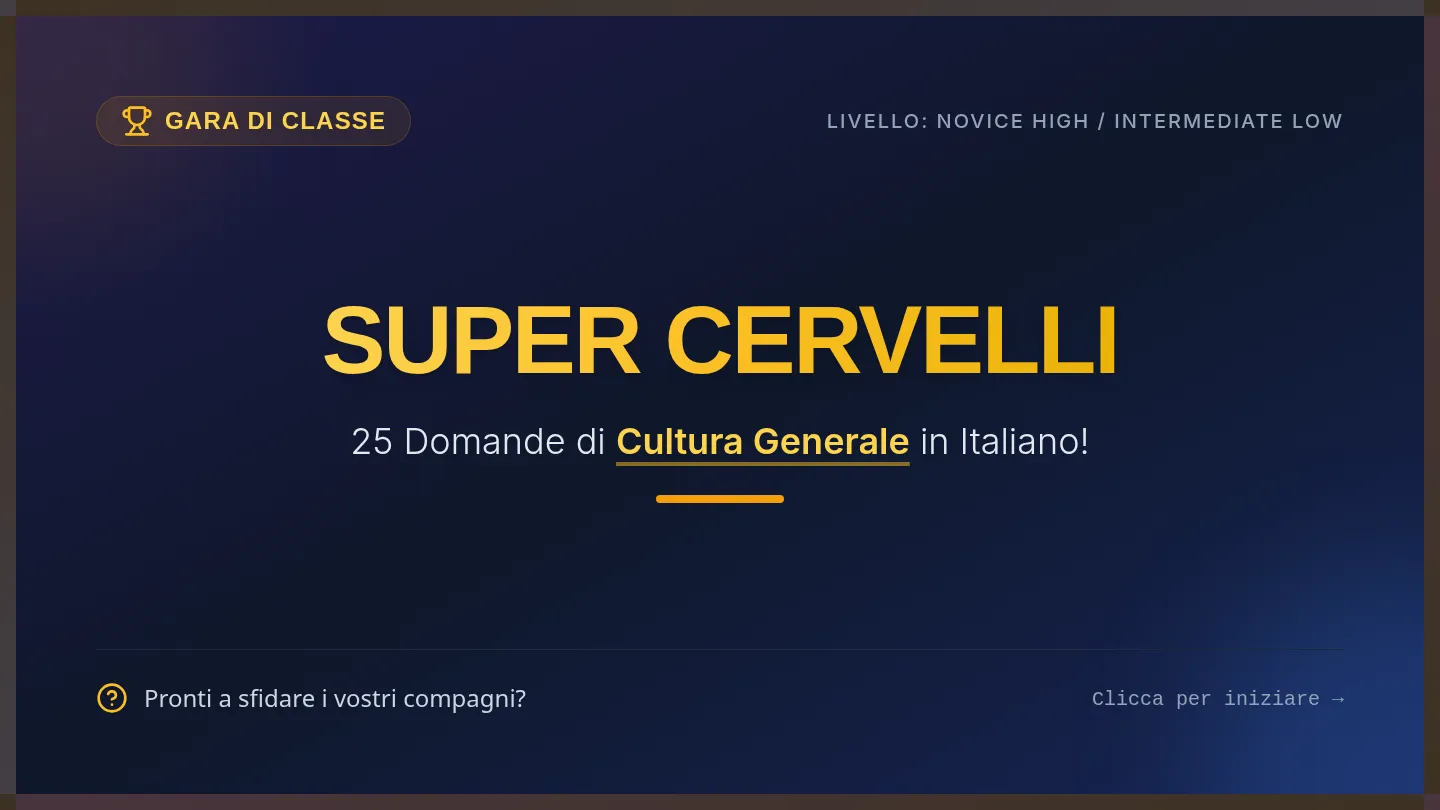
Una lezione divertente e interattiva focalizzata sul vocabolario di cultura generale in lingua italiana per studenti di livello Novice High / Intermediate Low.
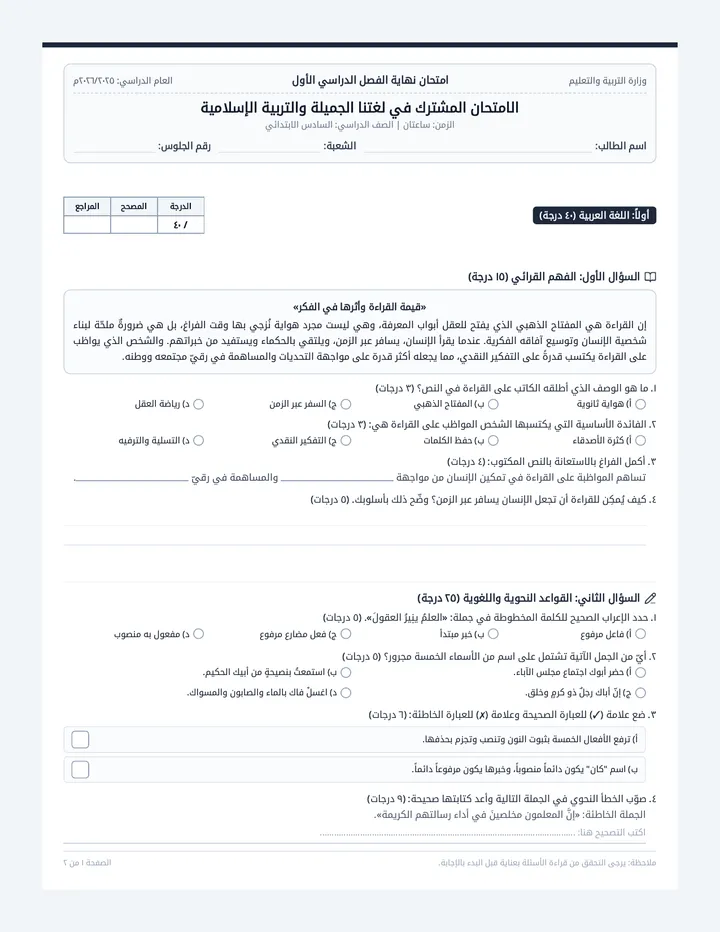
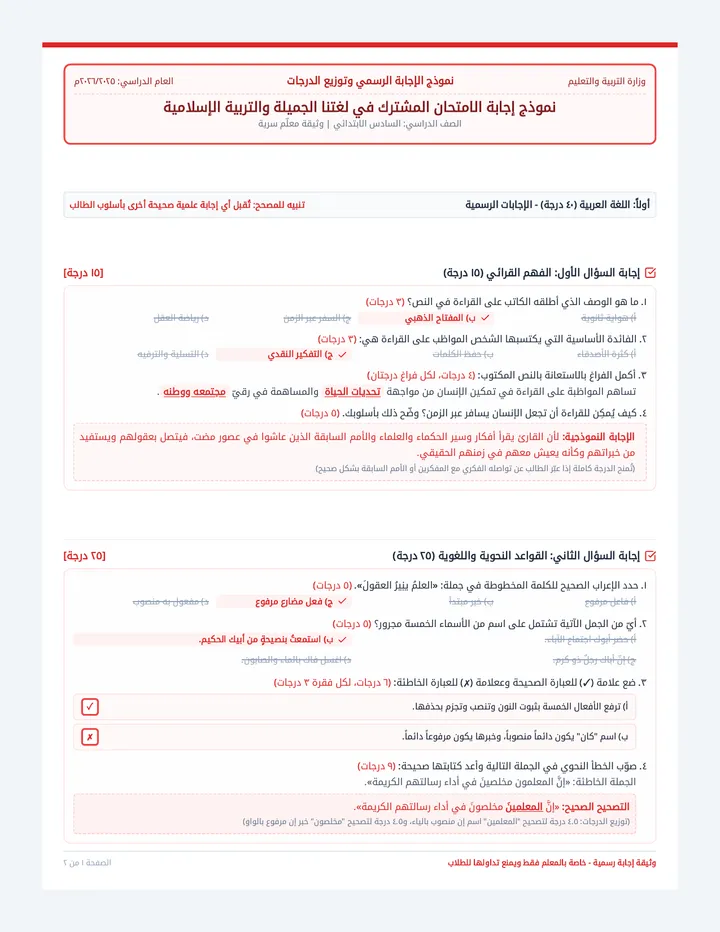
امتحان شامل وممنهج لمادتي اللغة العربية والتربية الإسلامية، يحتوي على نصوص قرائية، قواعد نحوية، أسئلة مقالية، وفراغات، مصمم بطريقة مرتبة ومحاكية للاختبارات الرسمية.
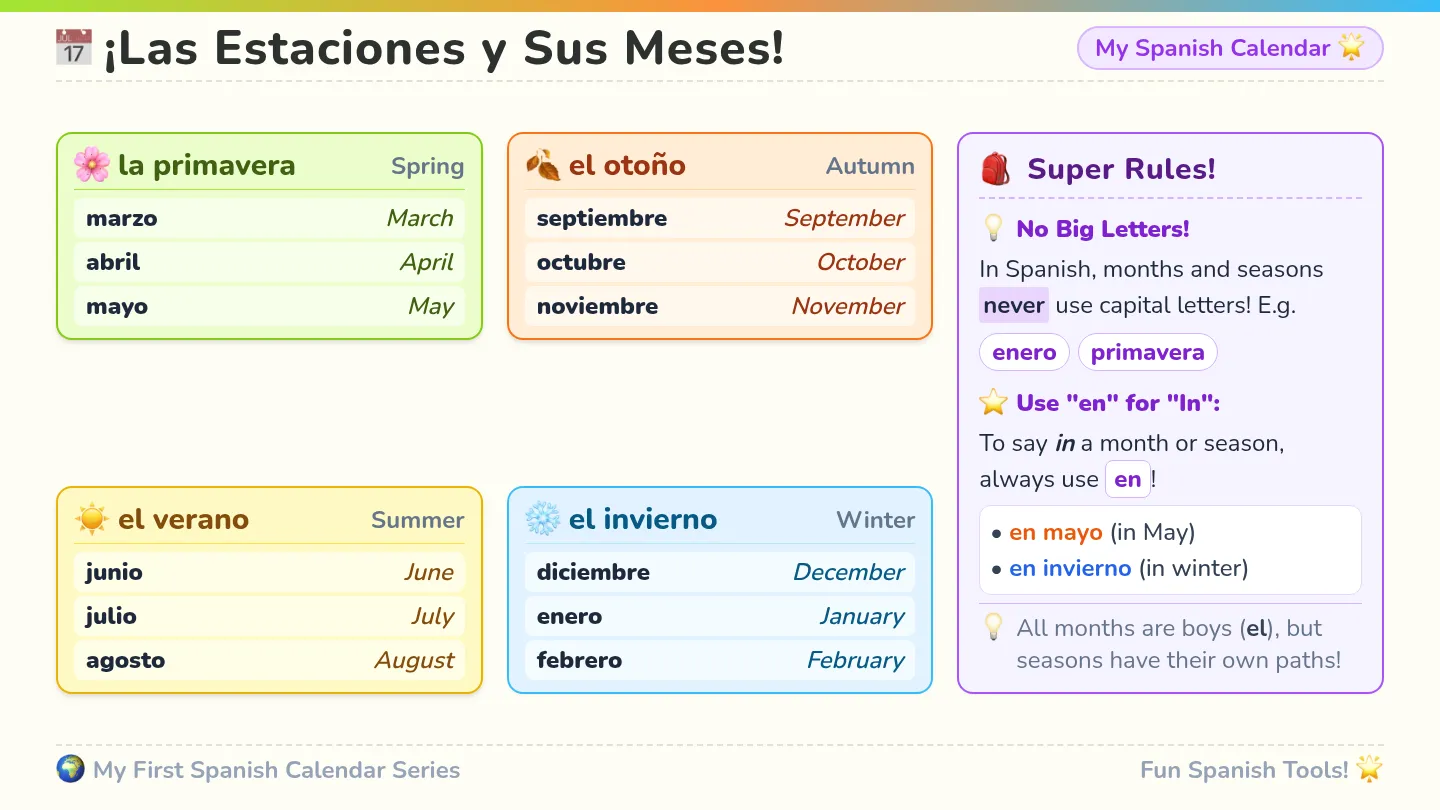
An academic lesson on Spanish months, seasons, and key capitalization rules, tailored specifically for older beginners and adult learners.
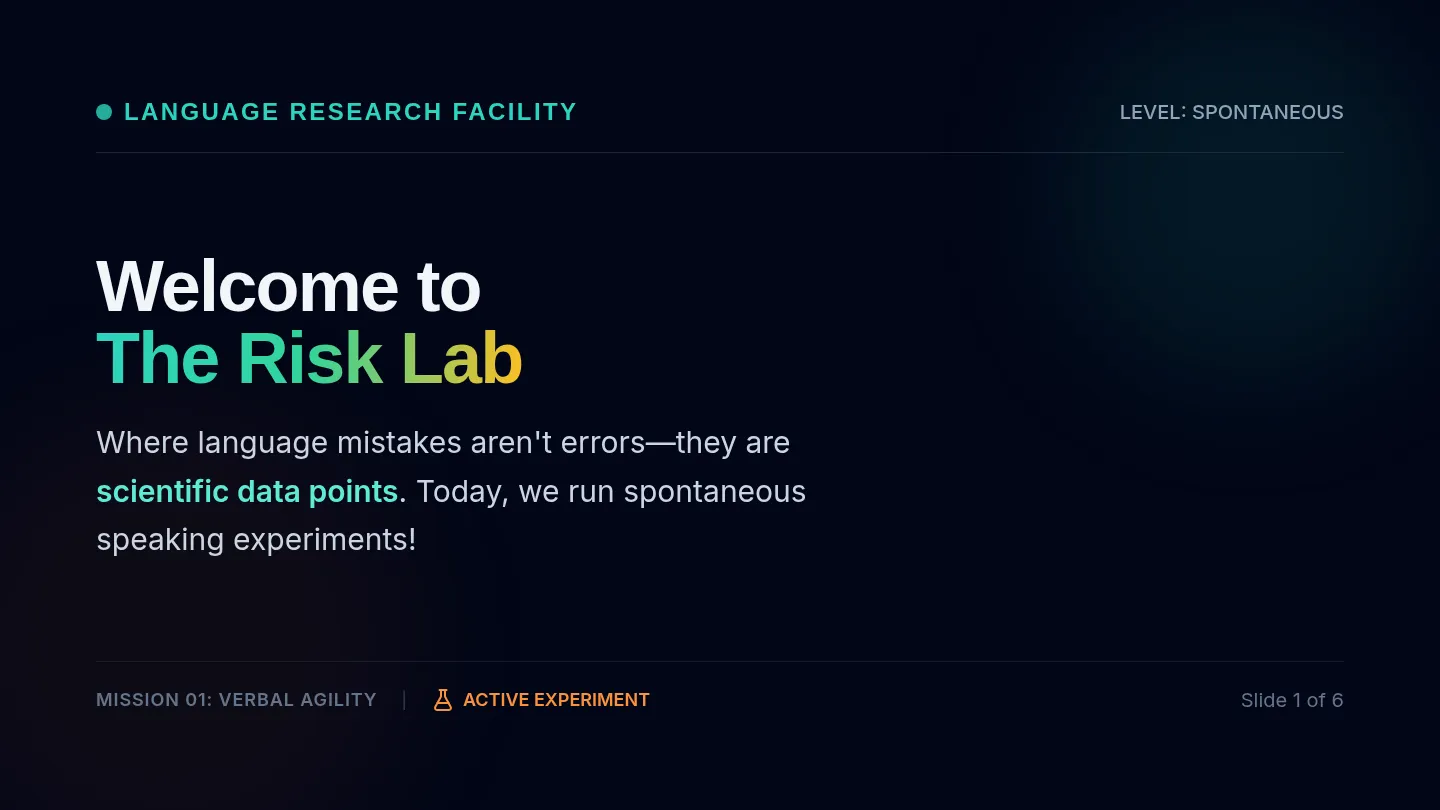
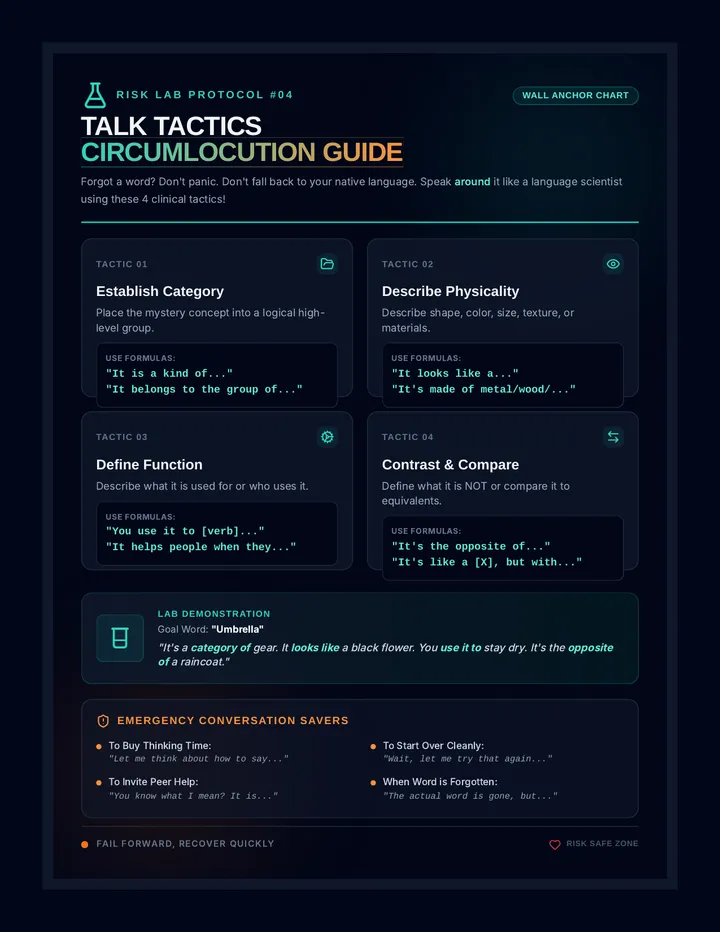
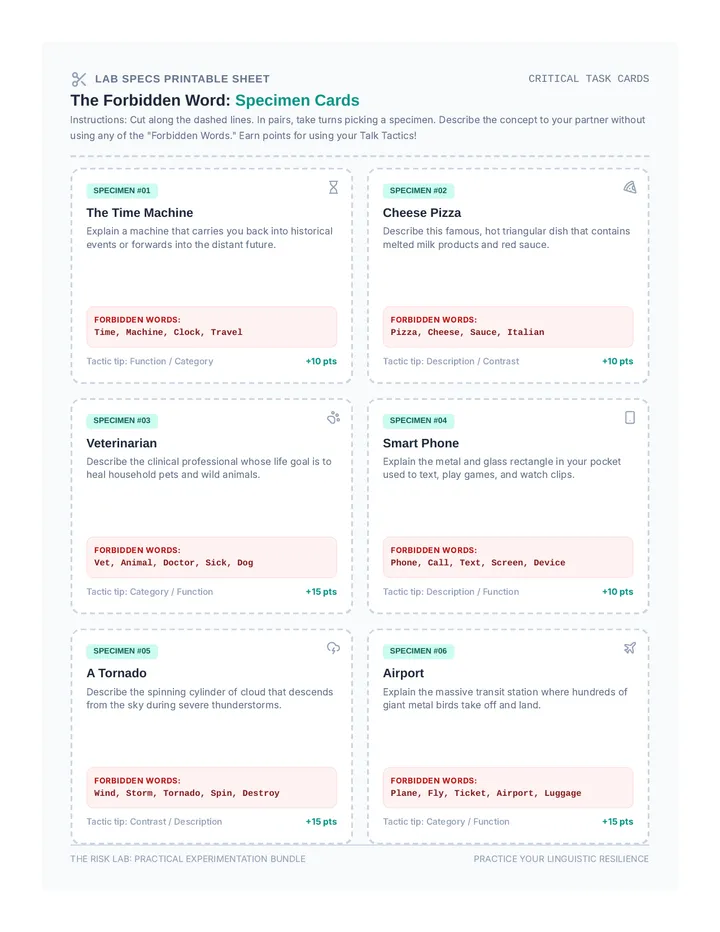
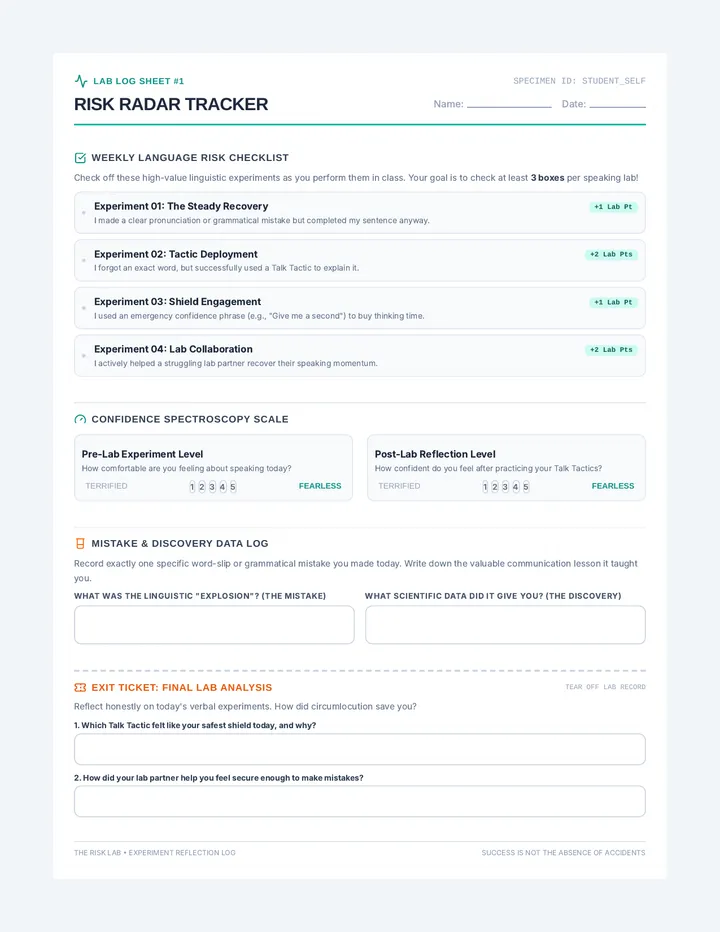
A confidence-boosting speaking lesson that reframes linguistic mistakes as scientific data points, training students in circumlocution and spontaneous conversation through the metaphor of a chemistry laboratory.
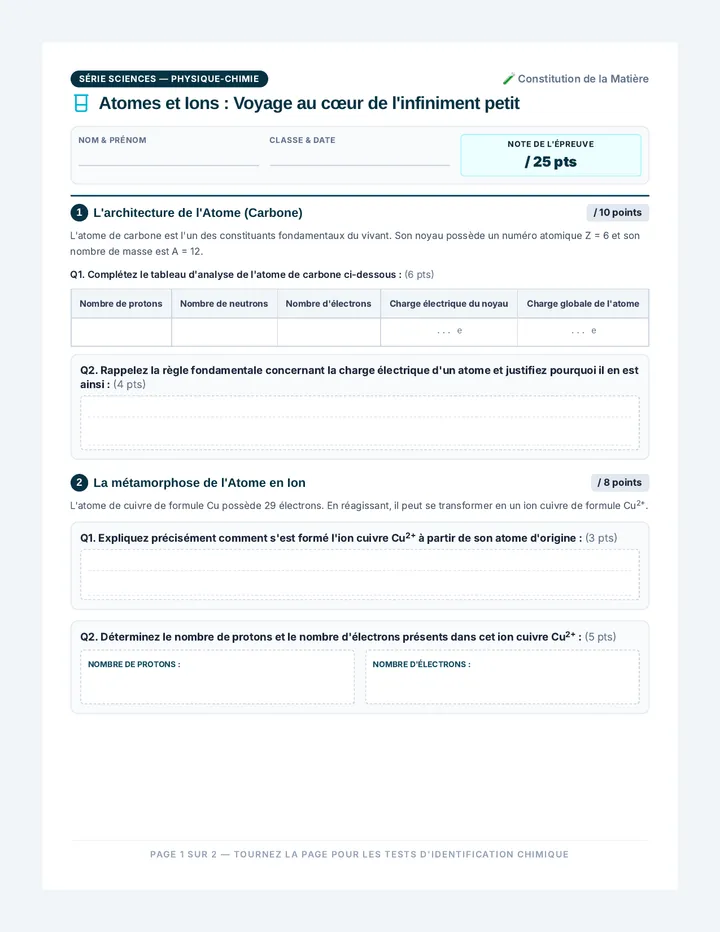
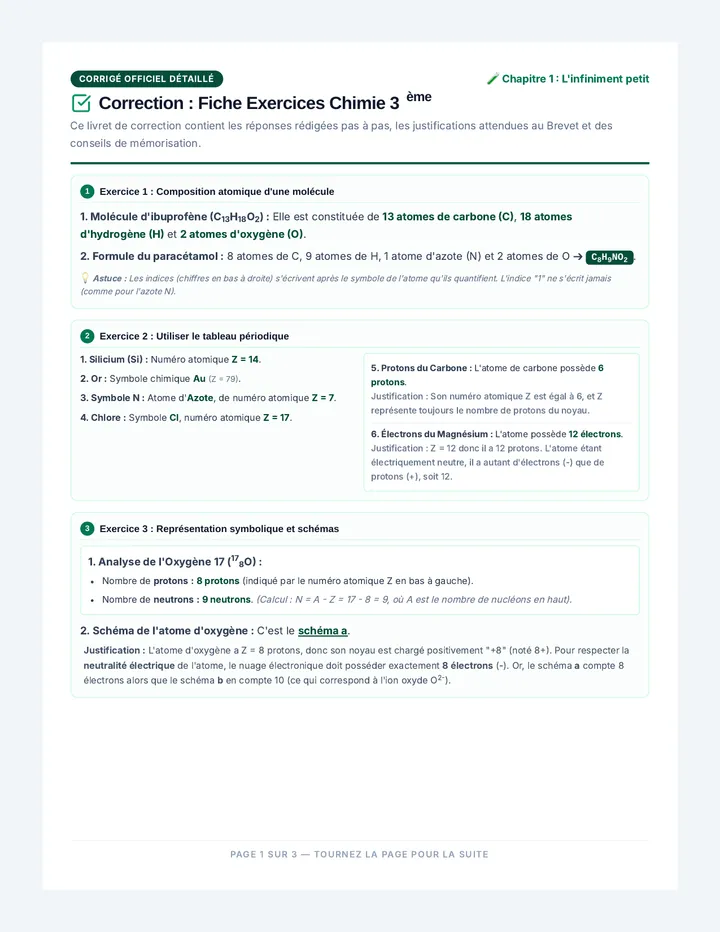
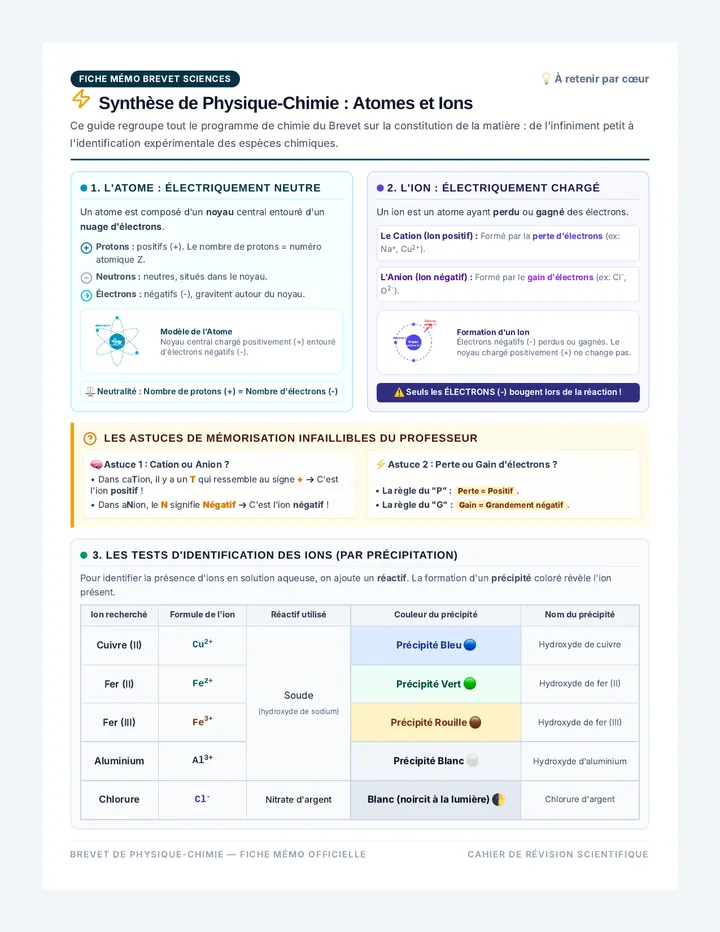
Une leçon de physique-chimie de niveau 3ème pour maîtriser la structure des atomes, la formation des ions et les tests d'identification chimique du Brevet.
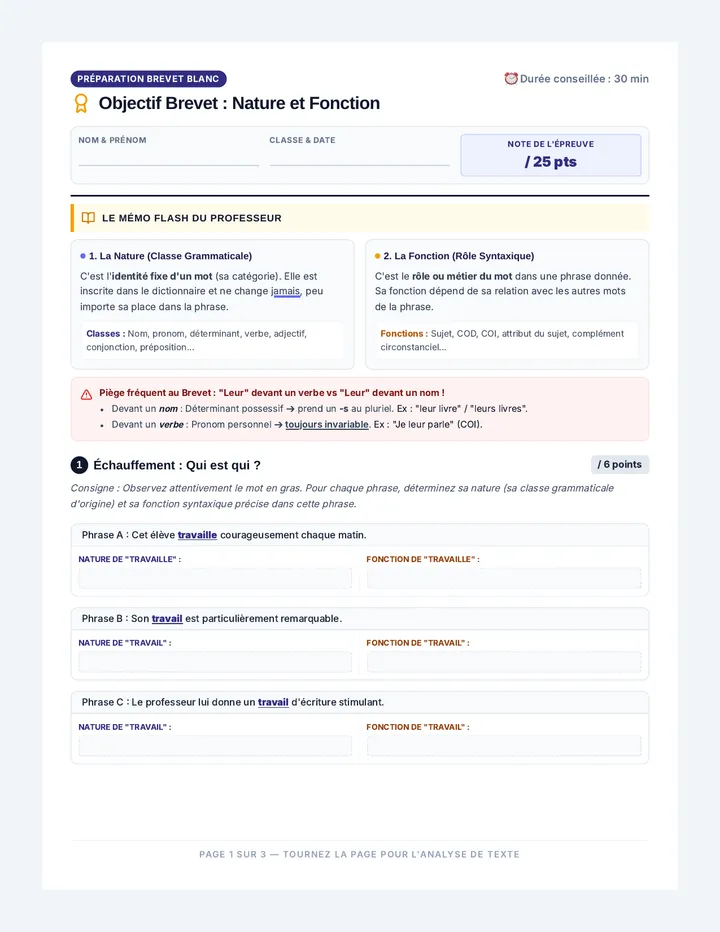
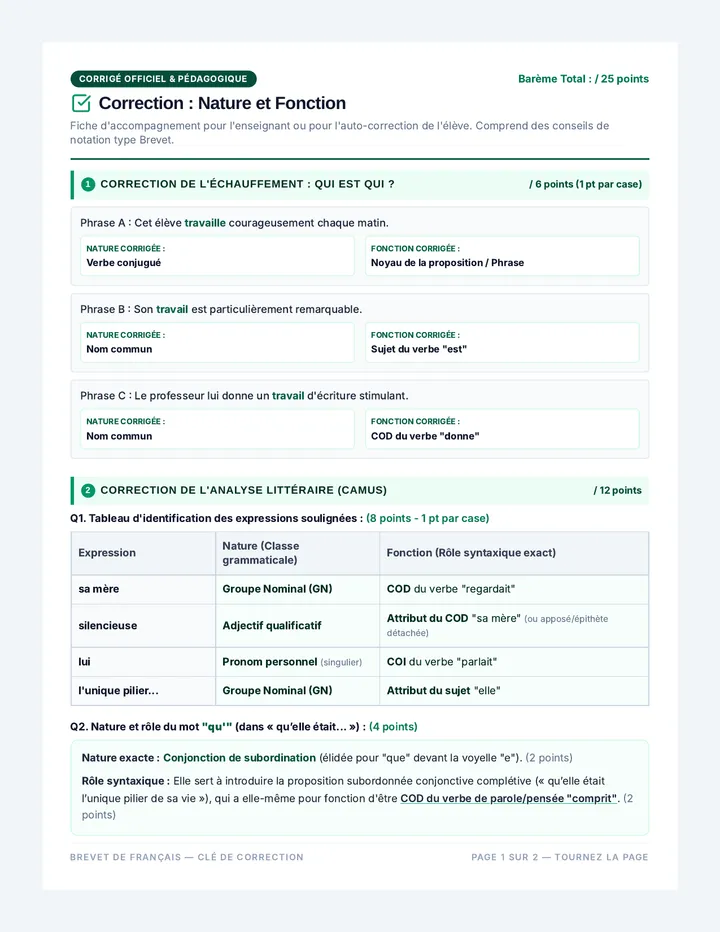
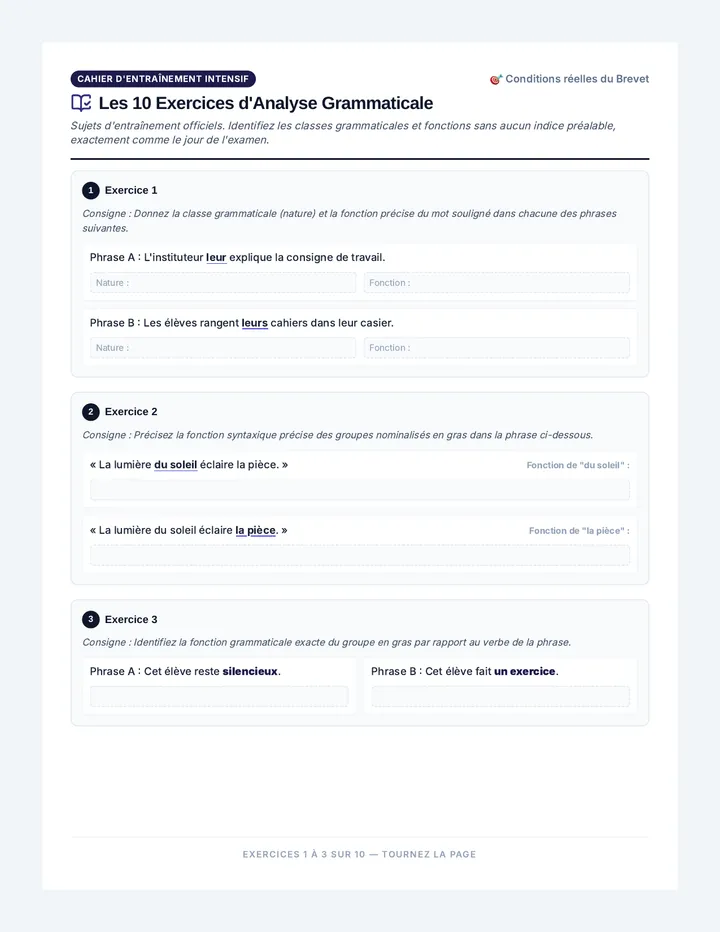
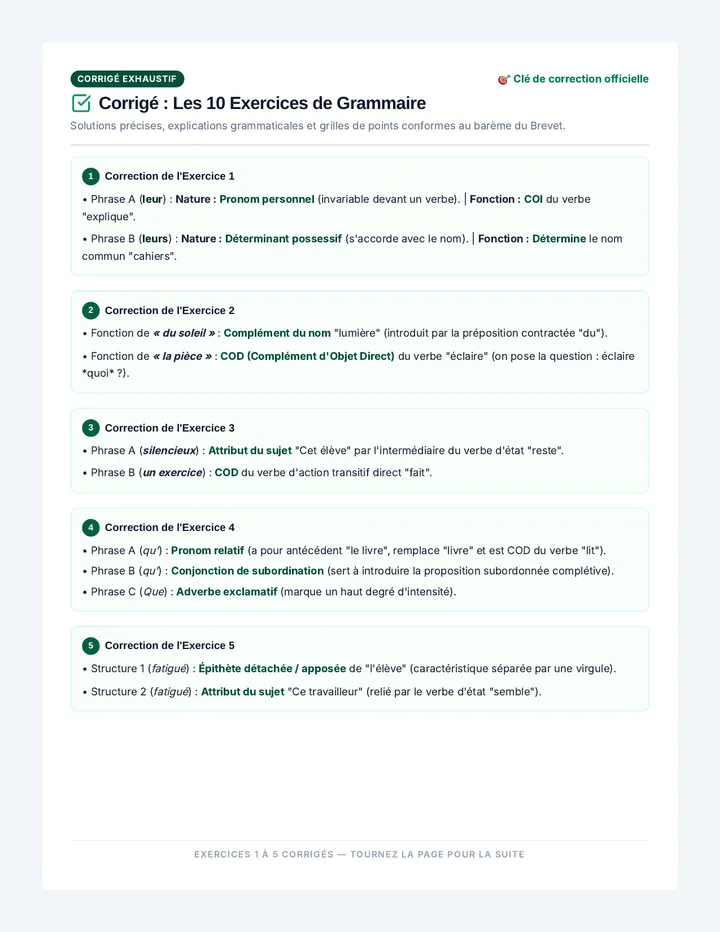
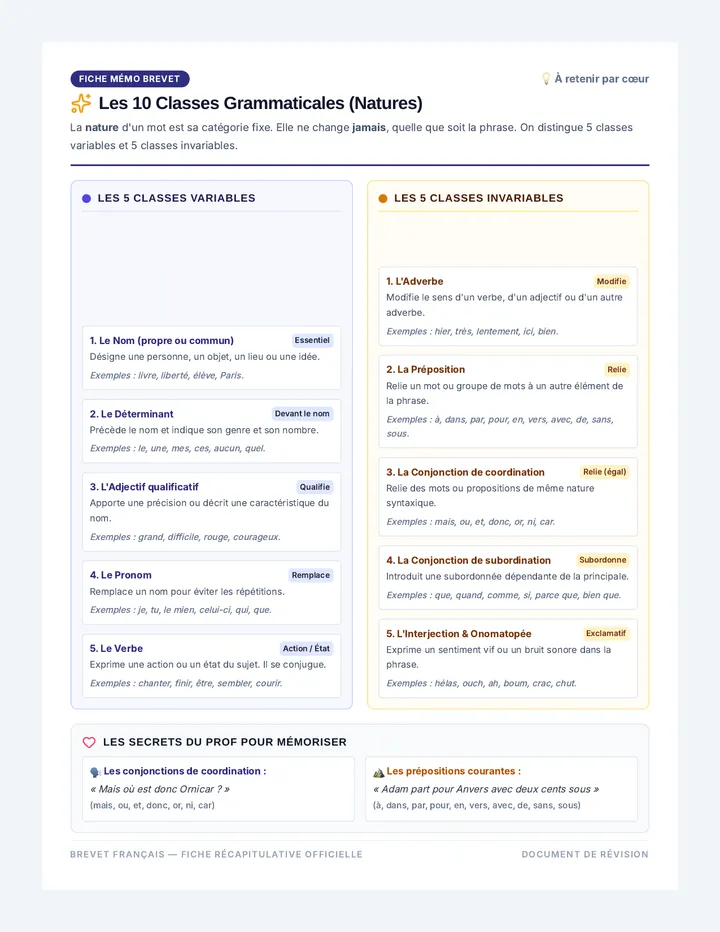
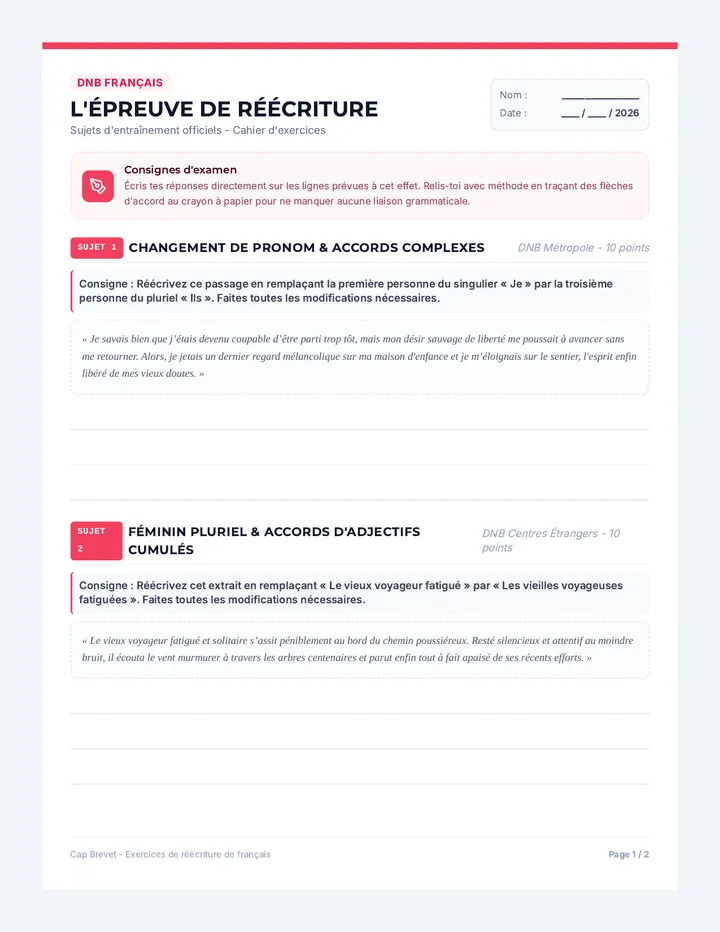
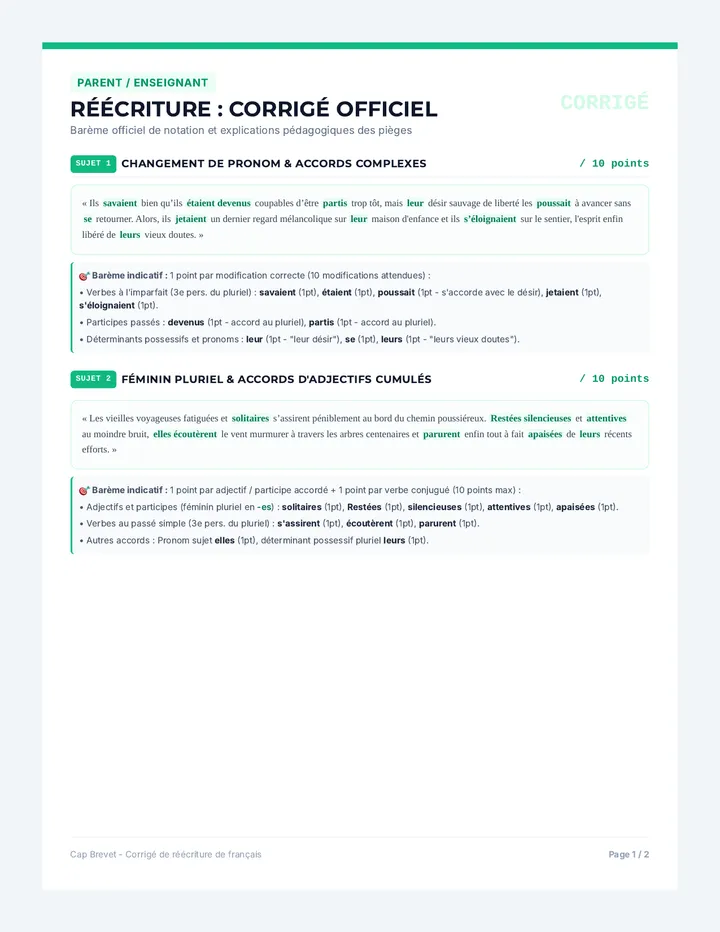
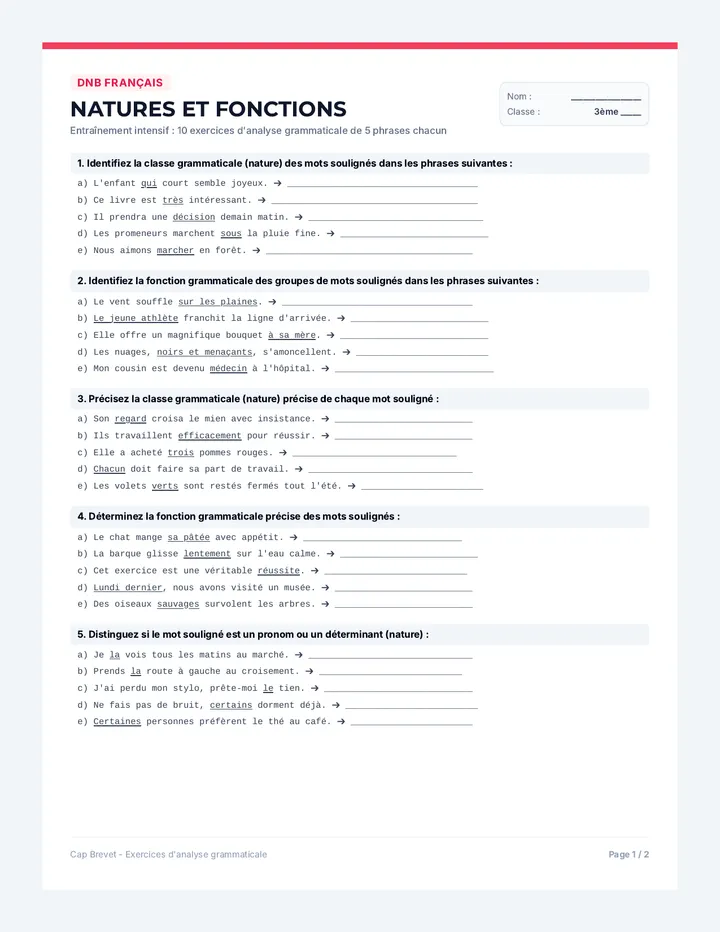
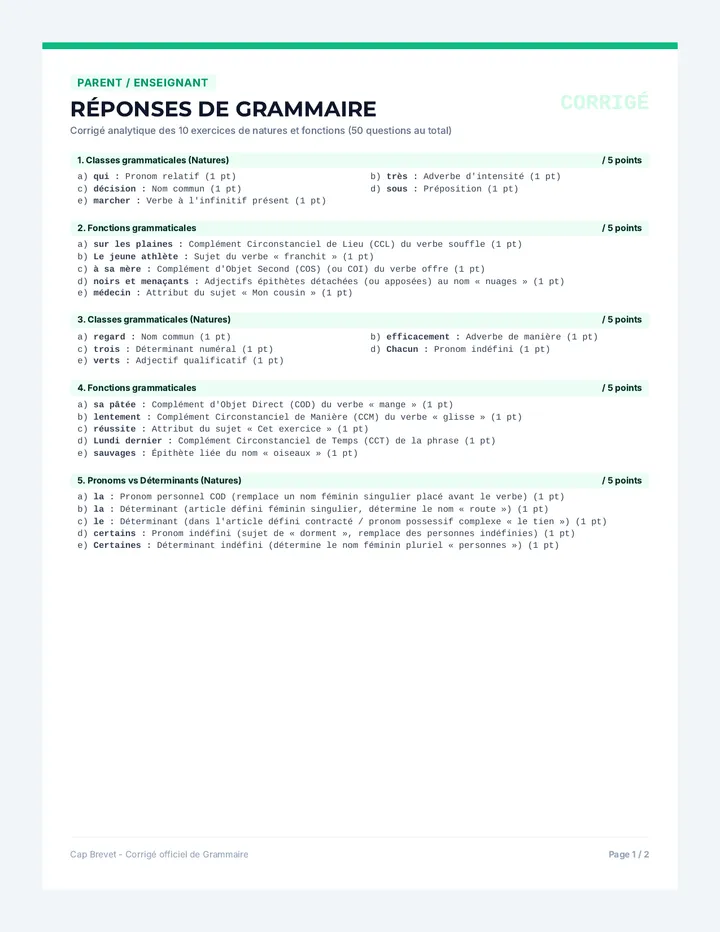
Séance d'entraînement intensive de 30 minutes conçue par un professeur pour maîtriser la distinction cruciale entre nature et fonction au brevet de français, accompagnée de sa correction détaillée.
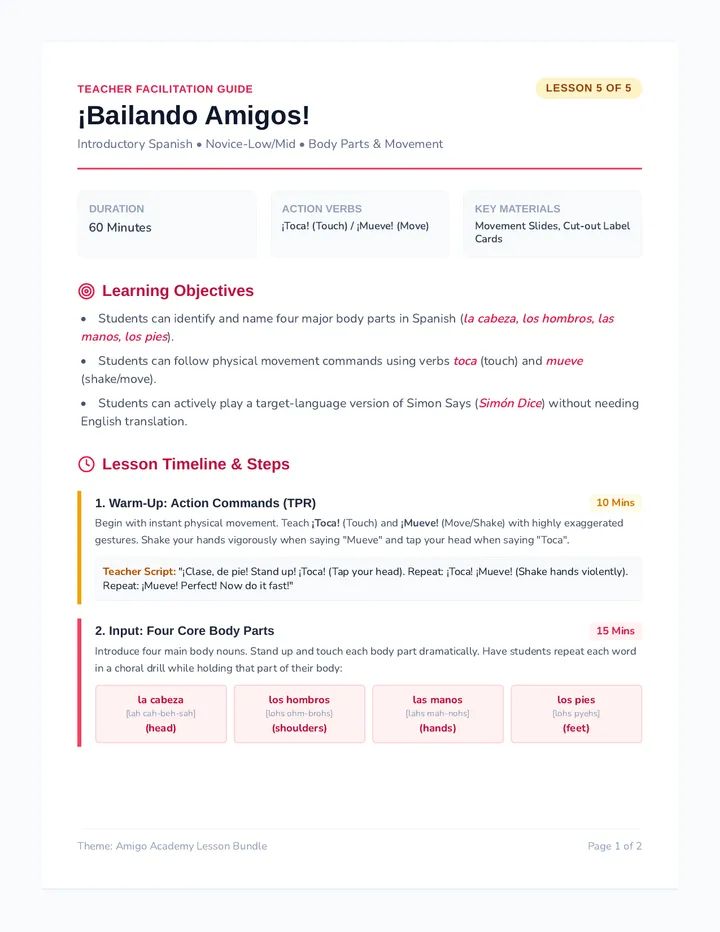
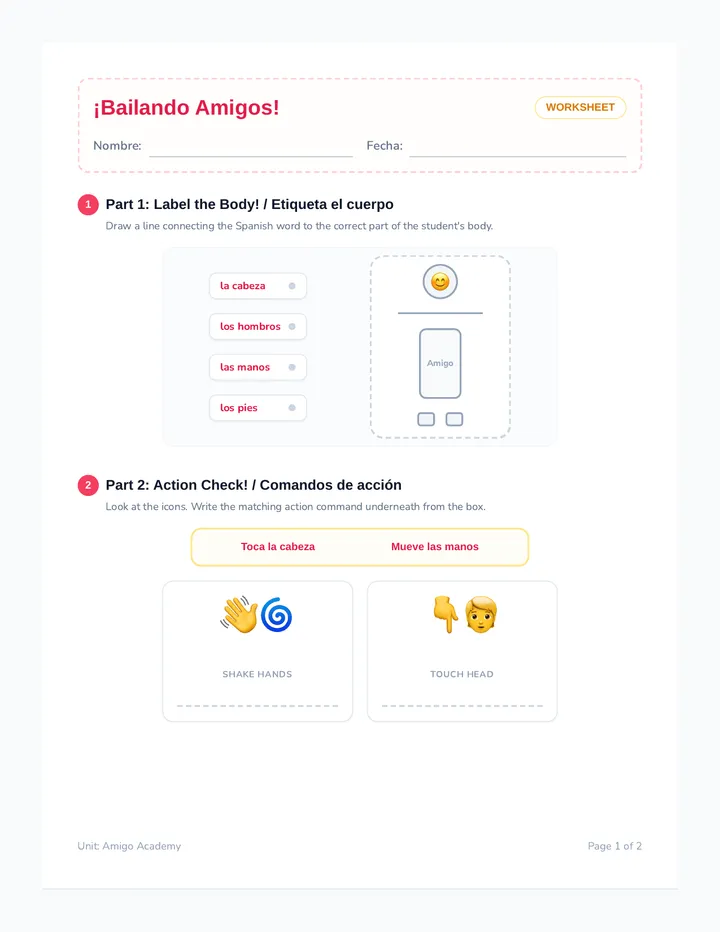
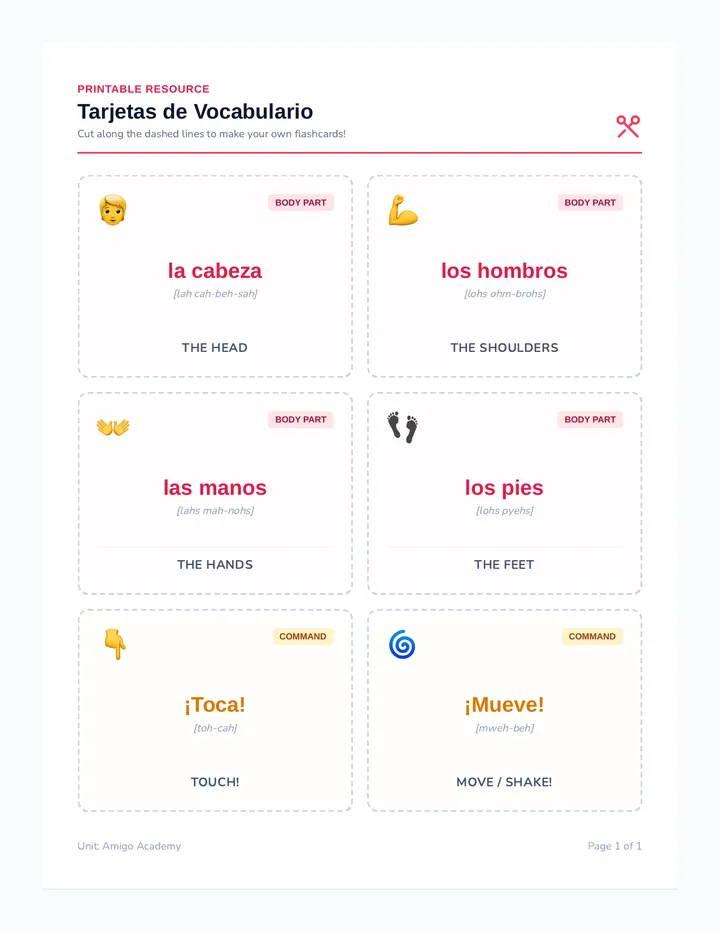
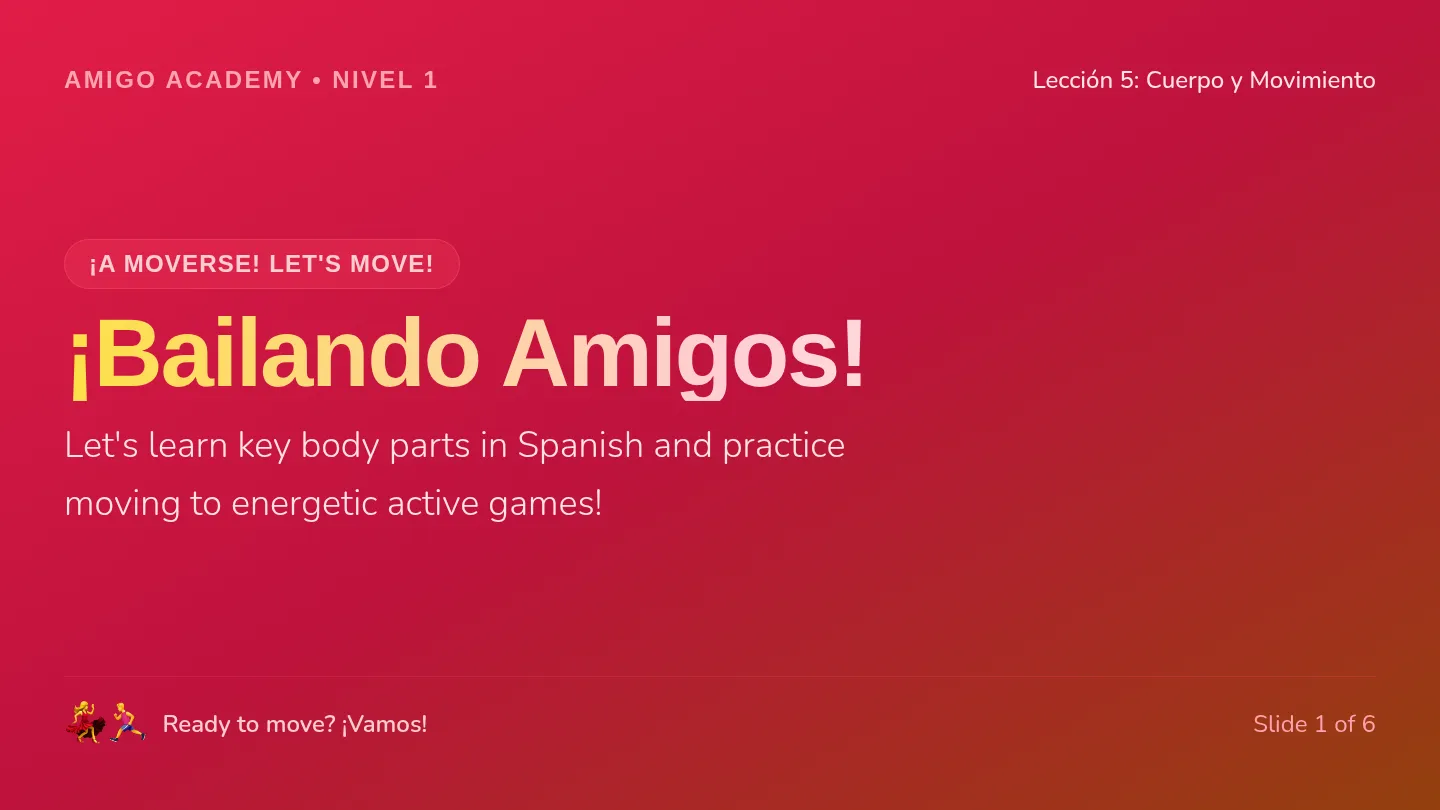
An active, movement-based beginner Spanish lesson teaching high-frequency body parts (cabeza, hombros, manos, pies) and physical action verbs (toca, mueve) through rhythmic dances and interactive 'Simón Dice' games.
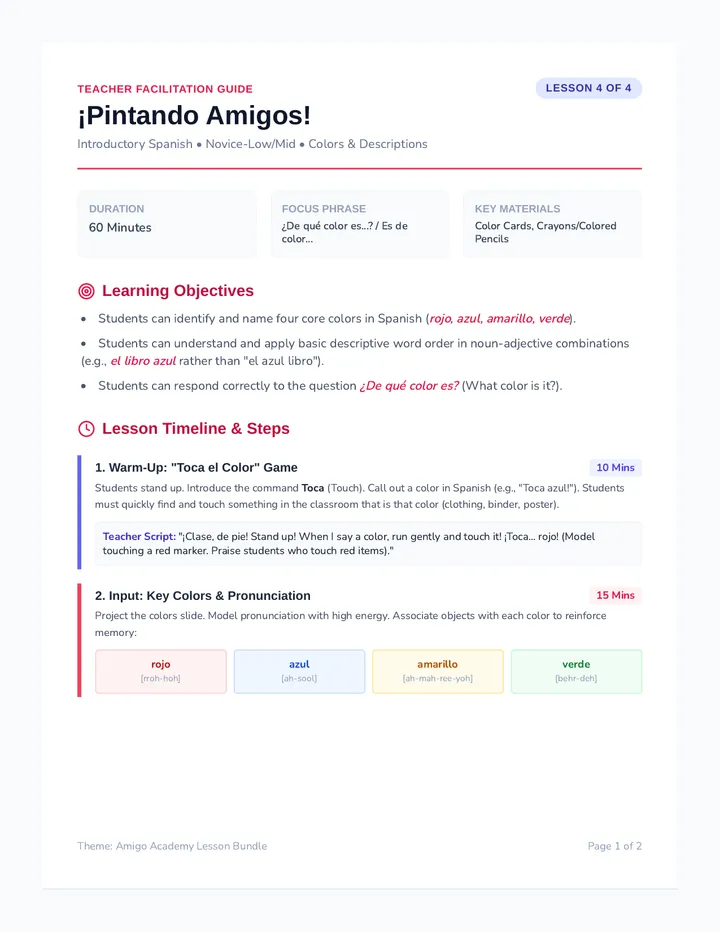
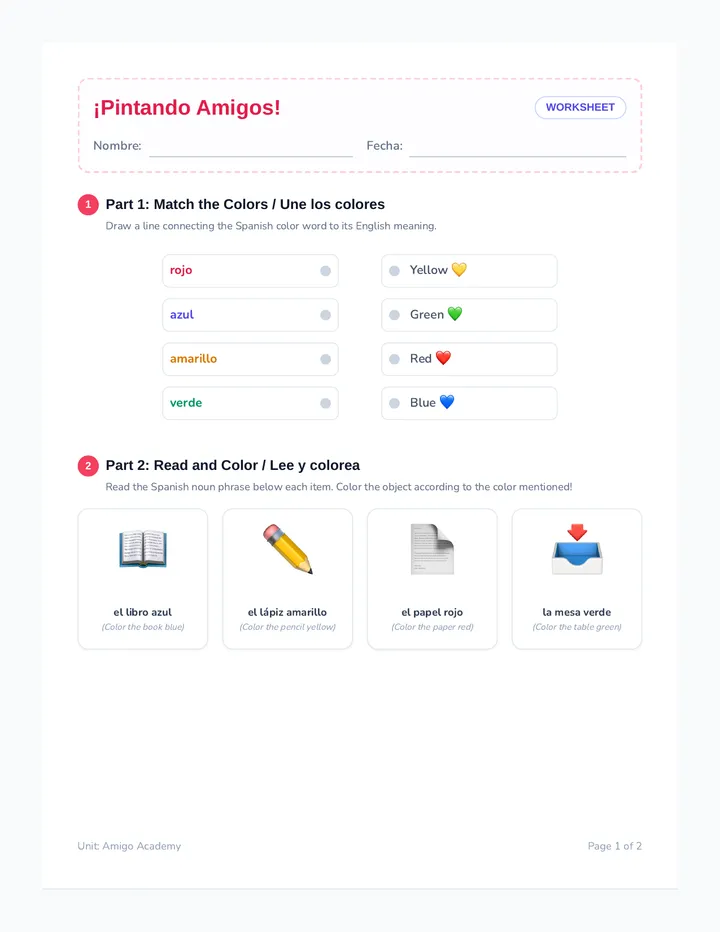
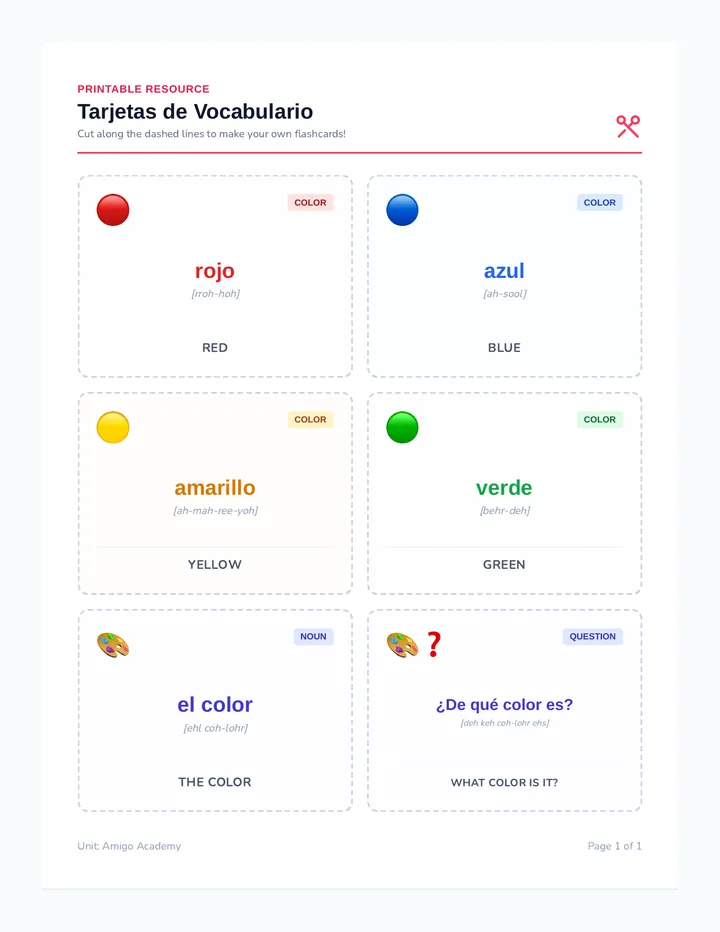
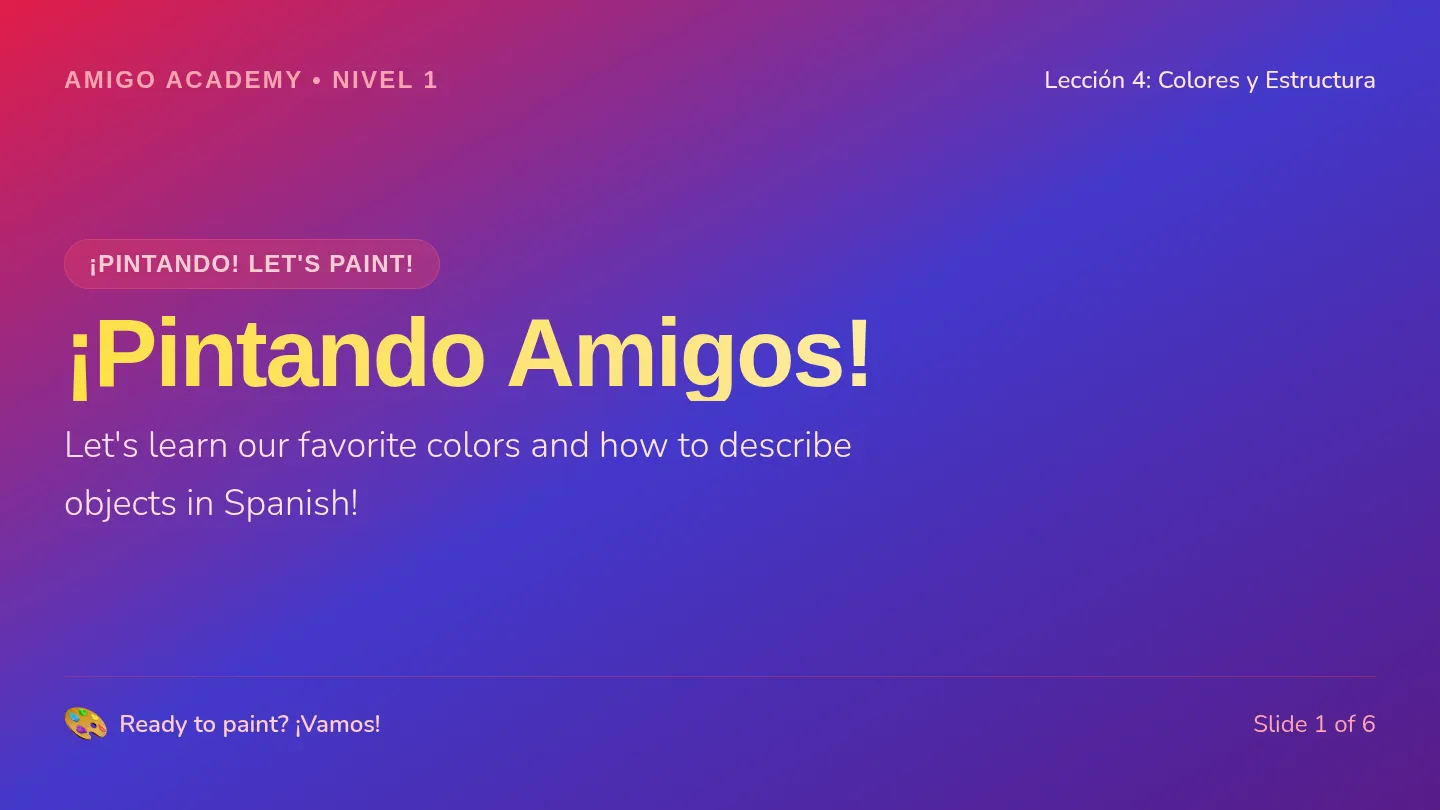
A vibrant beginner Spanish lesson teaching high-frequency colors (rojo, azul, amarillo, verde) and basic agreement/descriptive word order (e.g., 'el libro azul') through active color hunts and creative sorting activities.
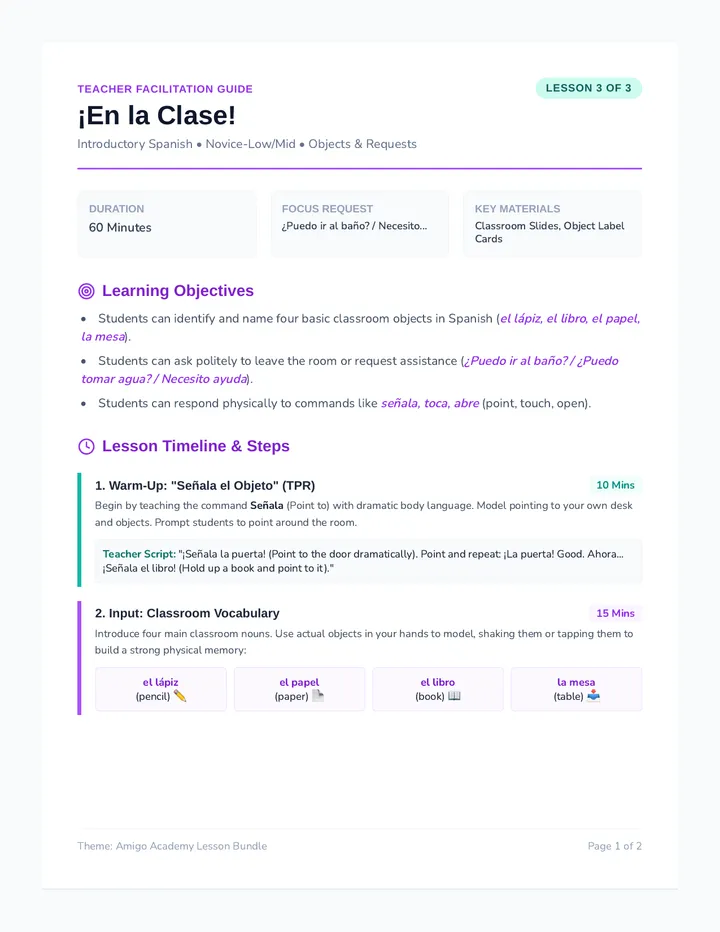
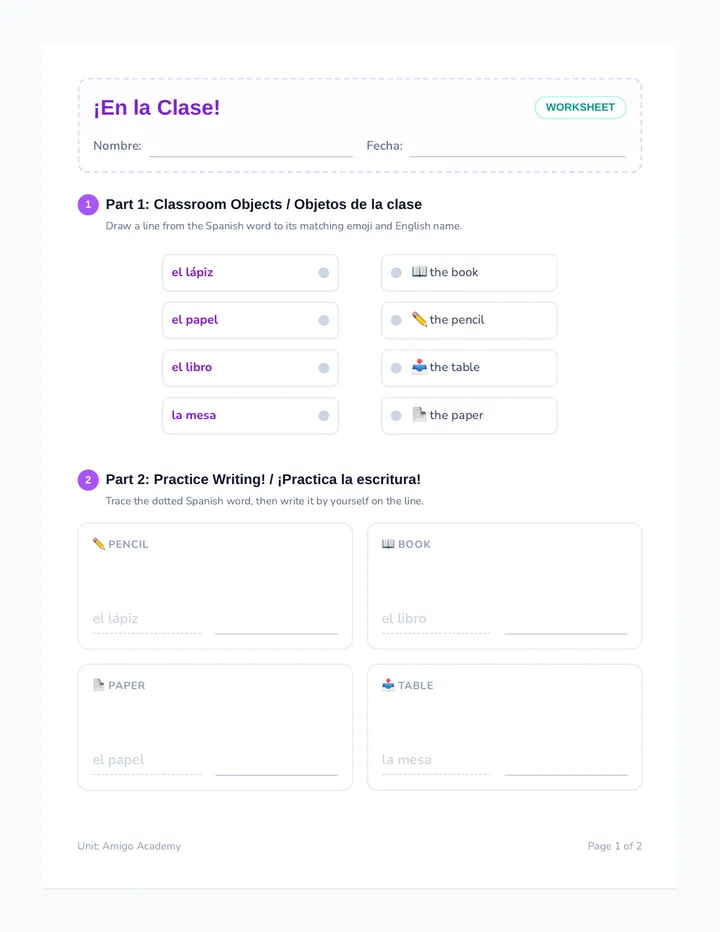
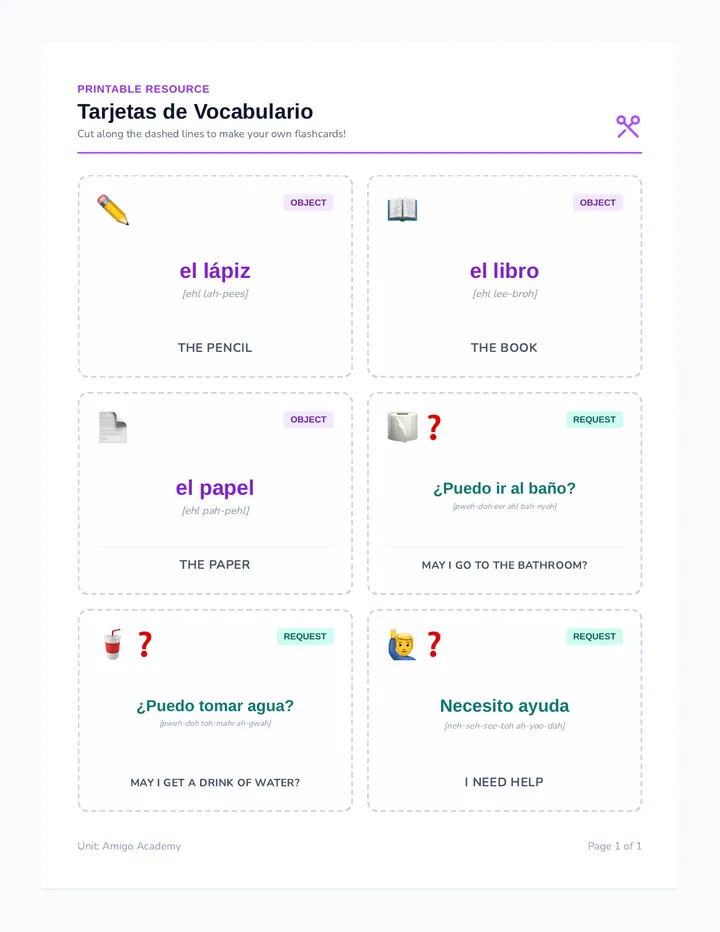
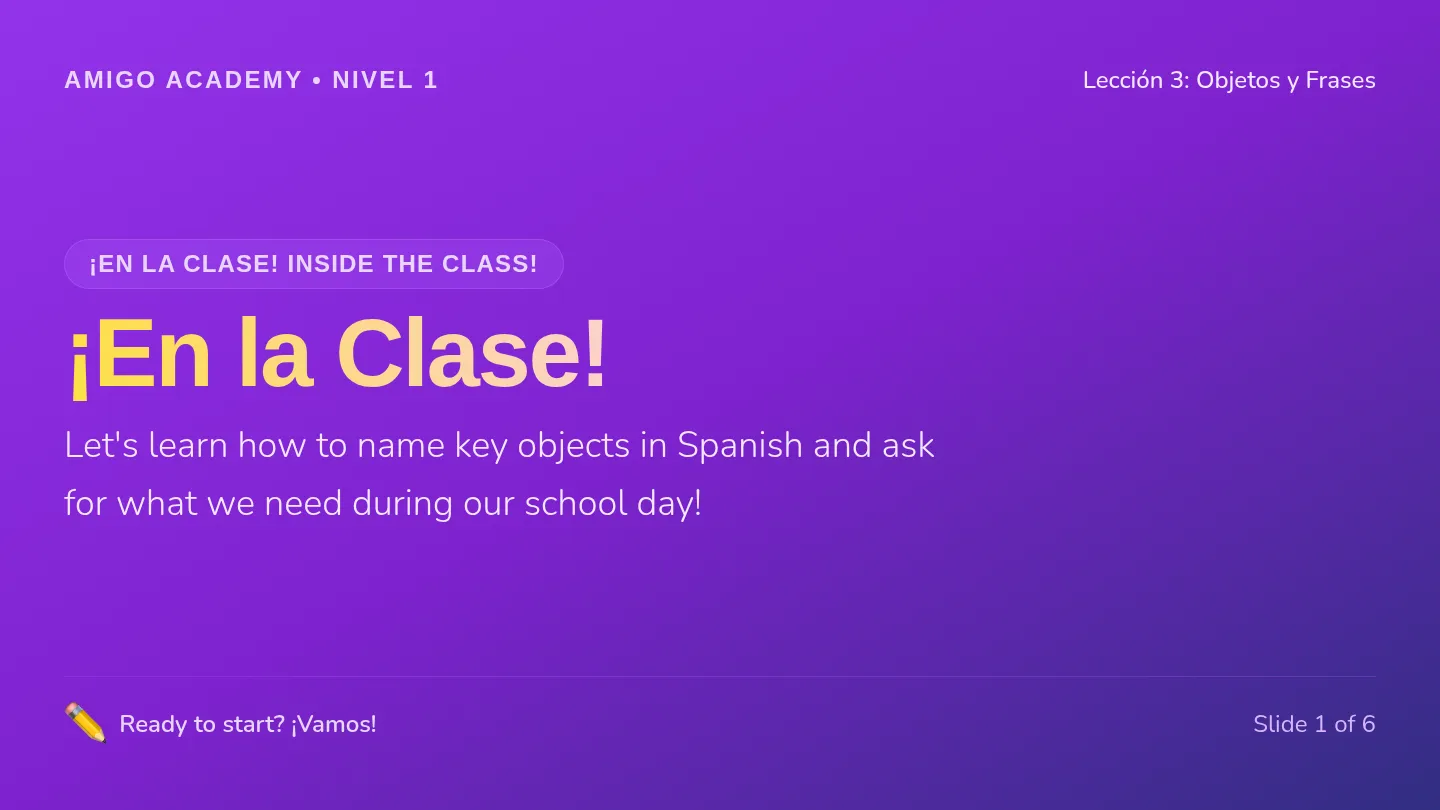
A beginner Spanish lesson teaching high-frequency classroom objects (lápiz, papel, libro) and essential classroom requests (¿Puedo ir al baño?, Necesito un lápiz) using physical pointing activities and visual matching cards.
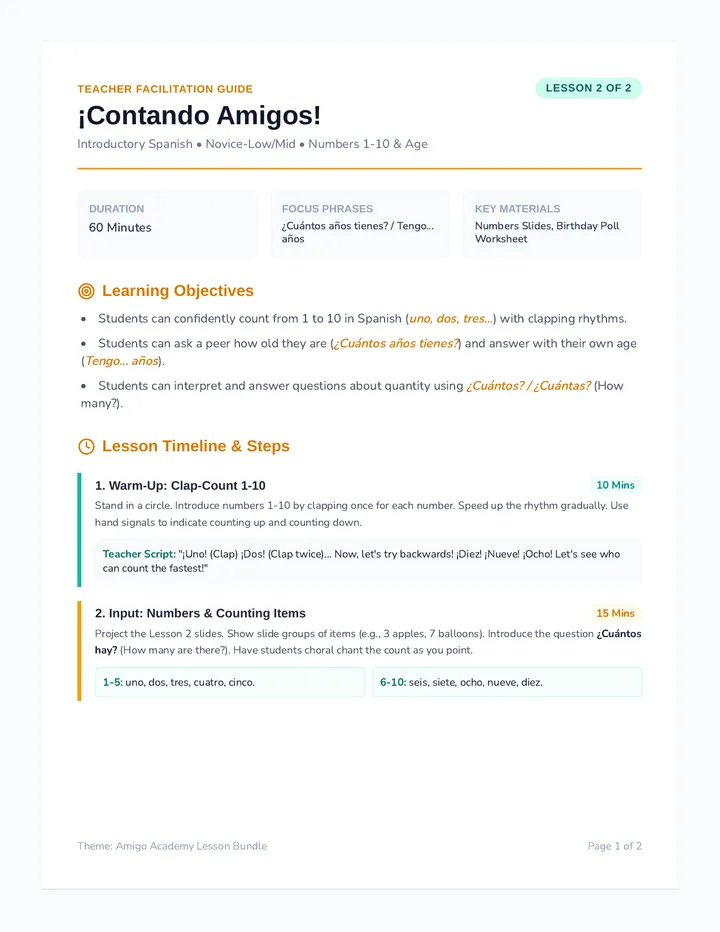
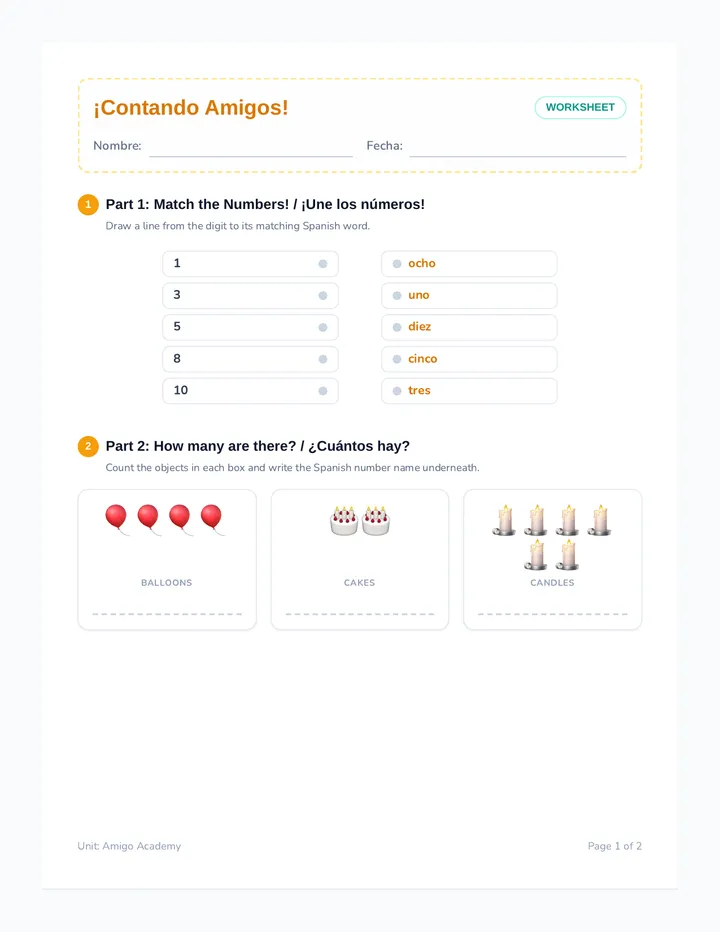
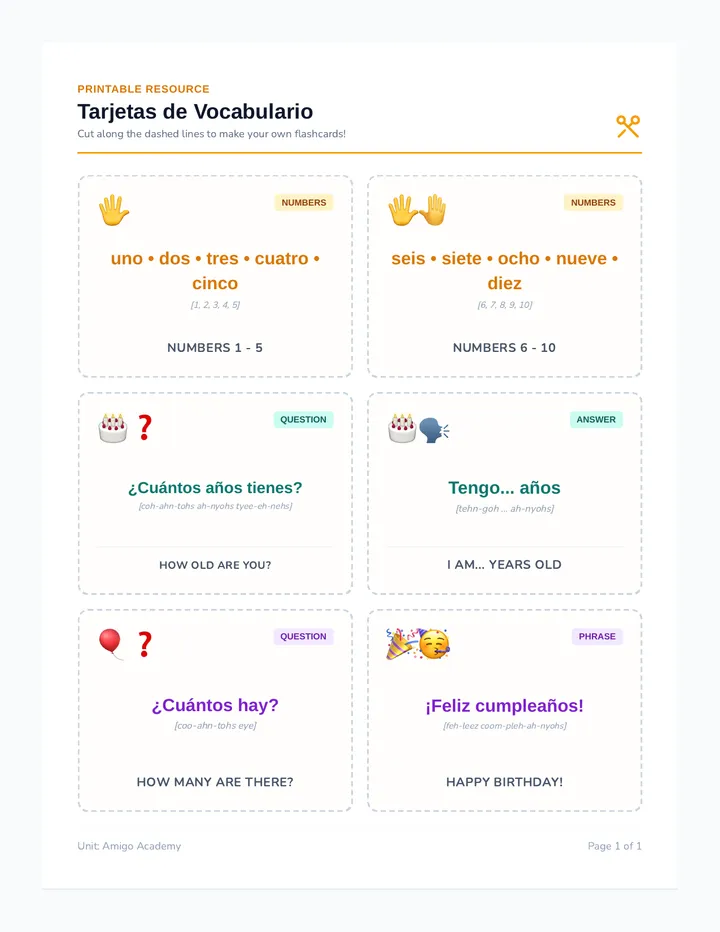
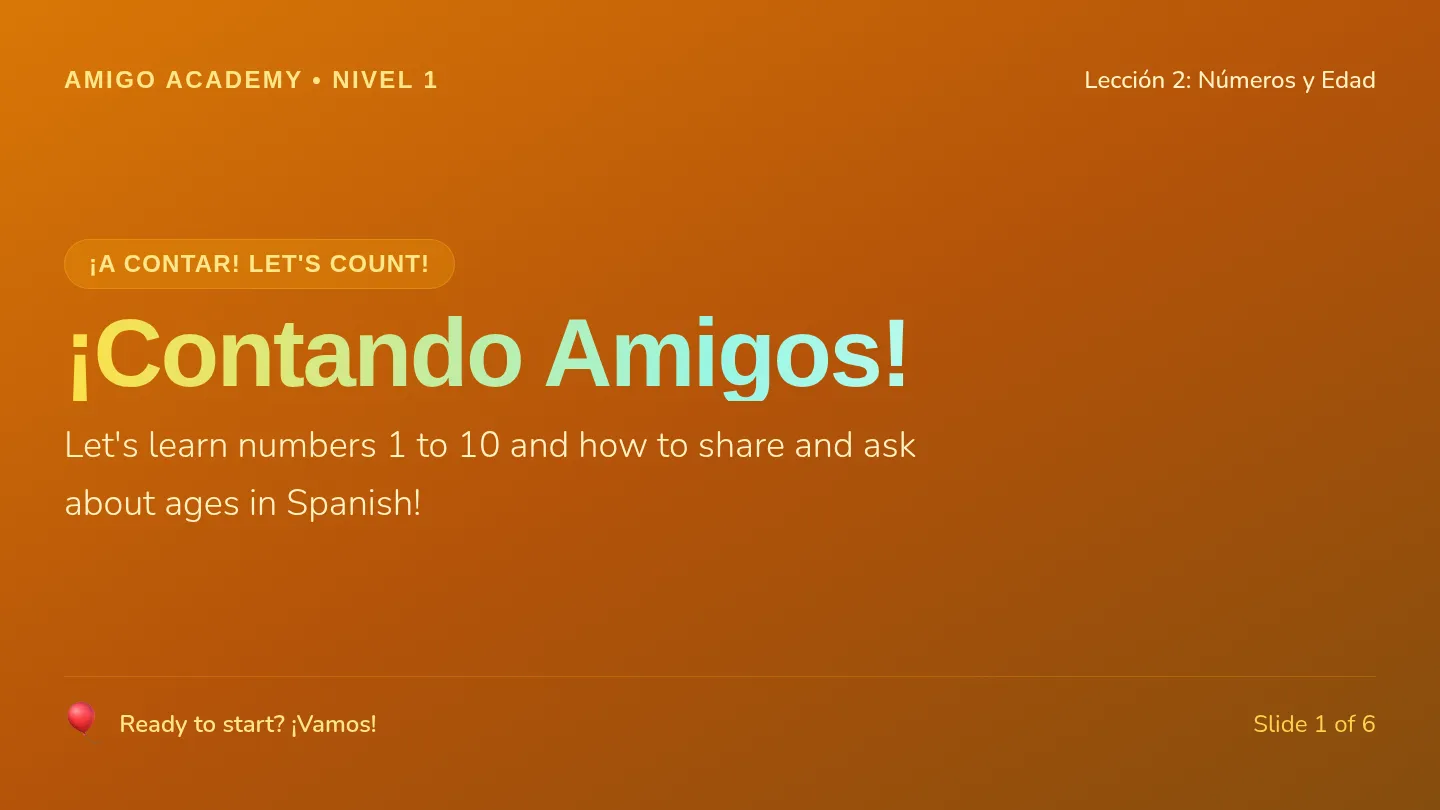
An engaging beginner Spanish lesson focusing on numbers 1-10, asking and answering age questions (¿Cuántos años tienes? Tengo... años), and conducting a classroom birthday/age poll.
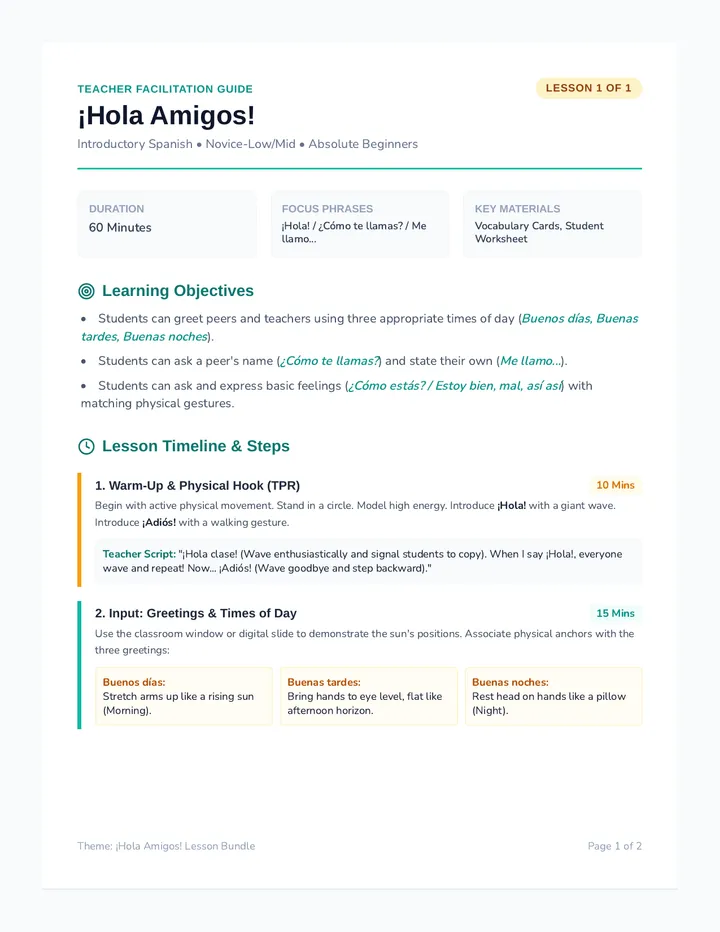
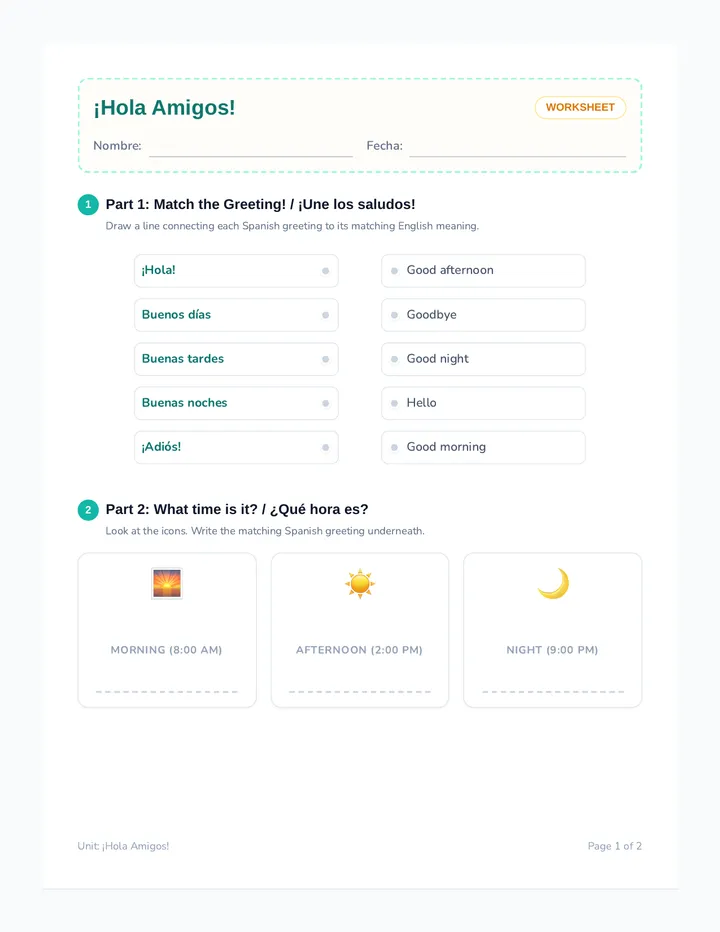
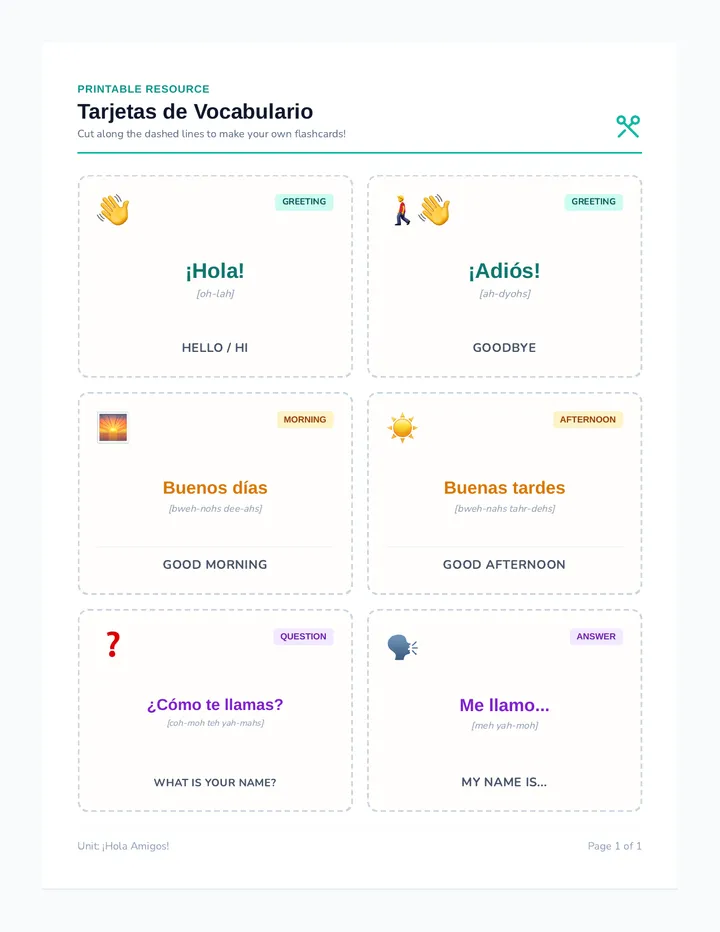
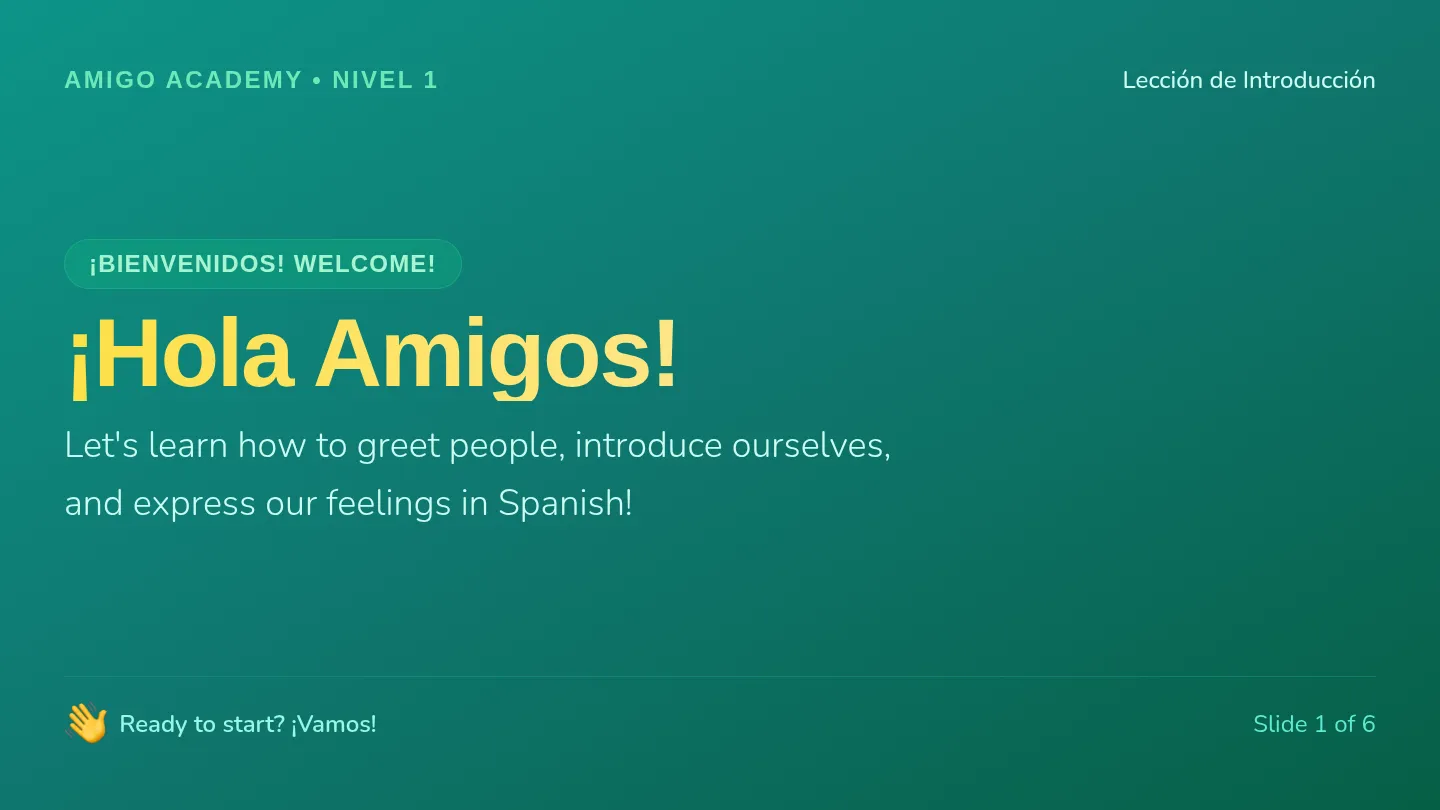
An introductory Spanish lesson for absolute beginners (Novice-Low/Mid) focusing on high-frequency greetings, self-introductions (¿Cómo te llamas? Me llamo...), and basic feelings expression through active physical response (TPR) and collaborative speaking activities.
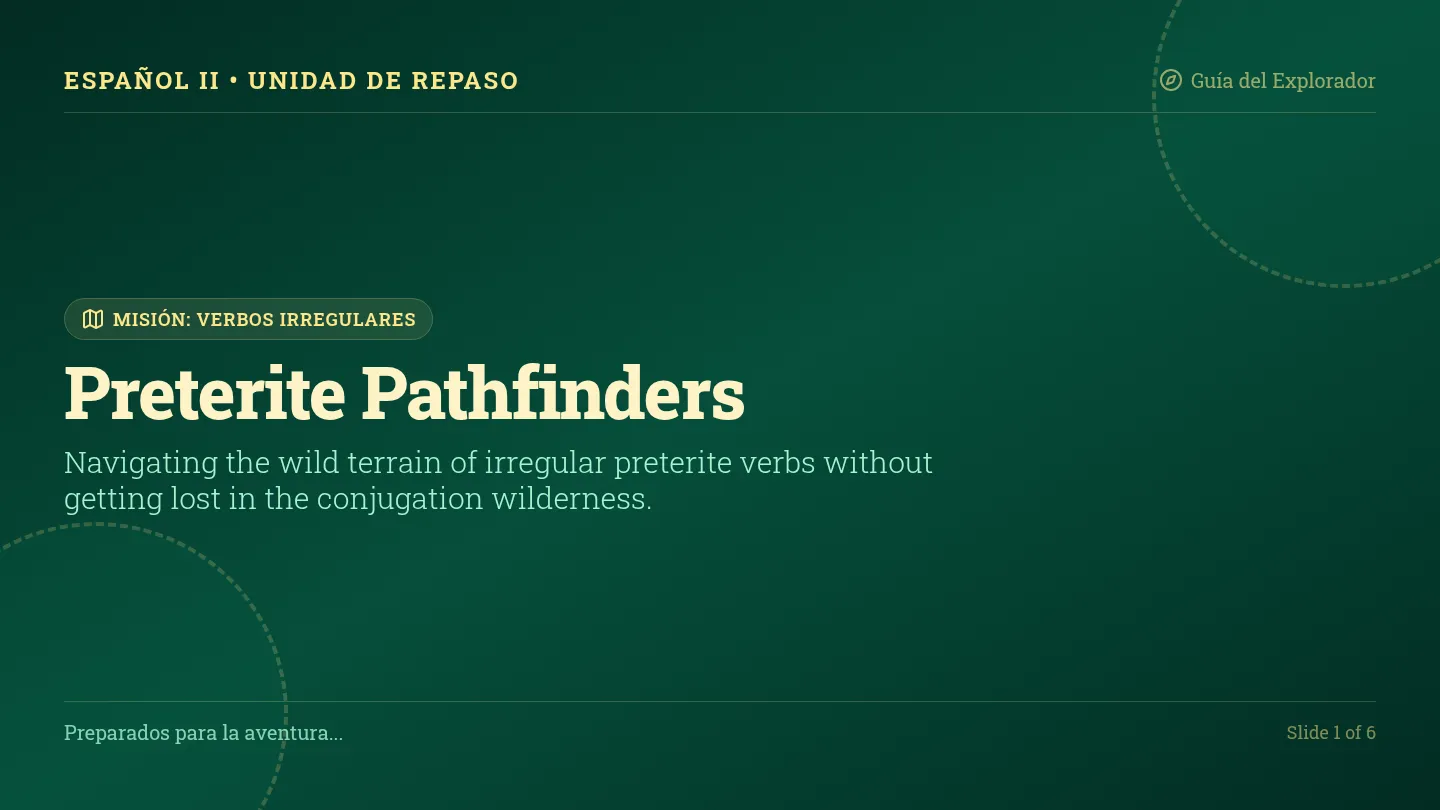
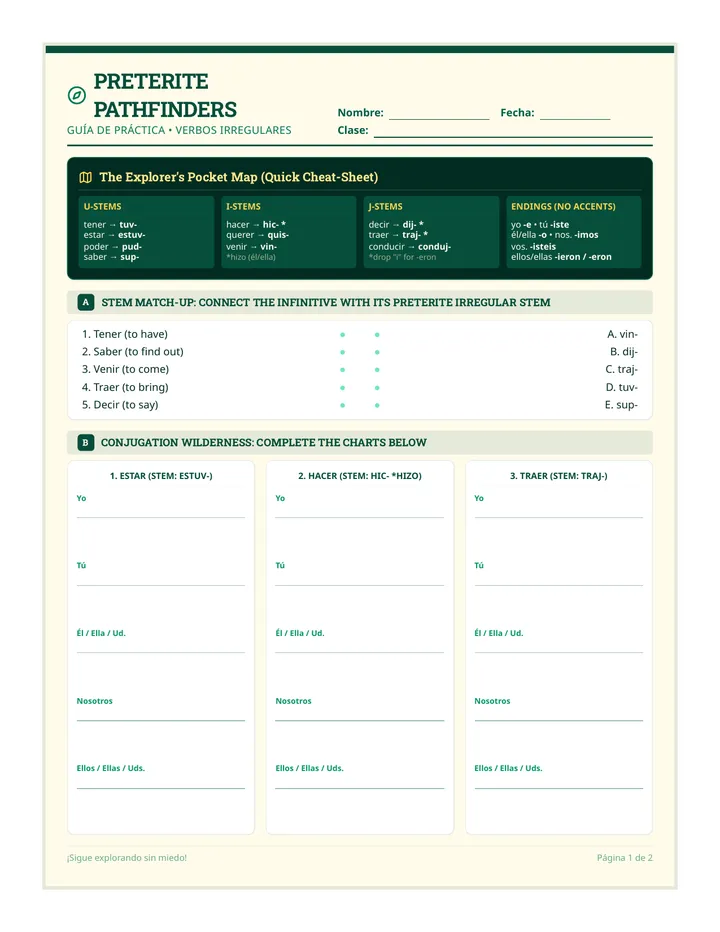
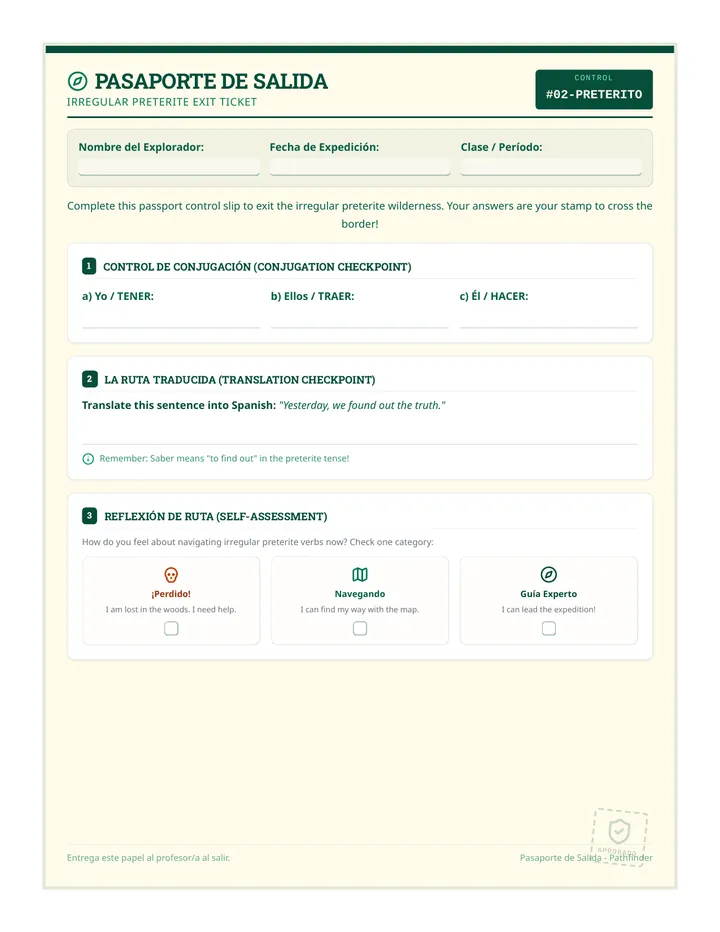
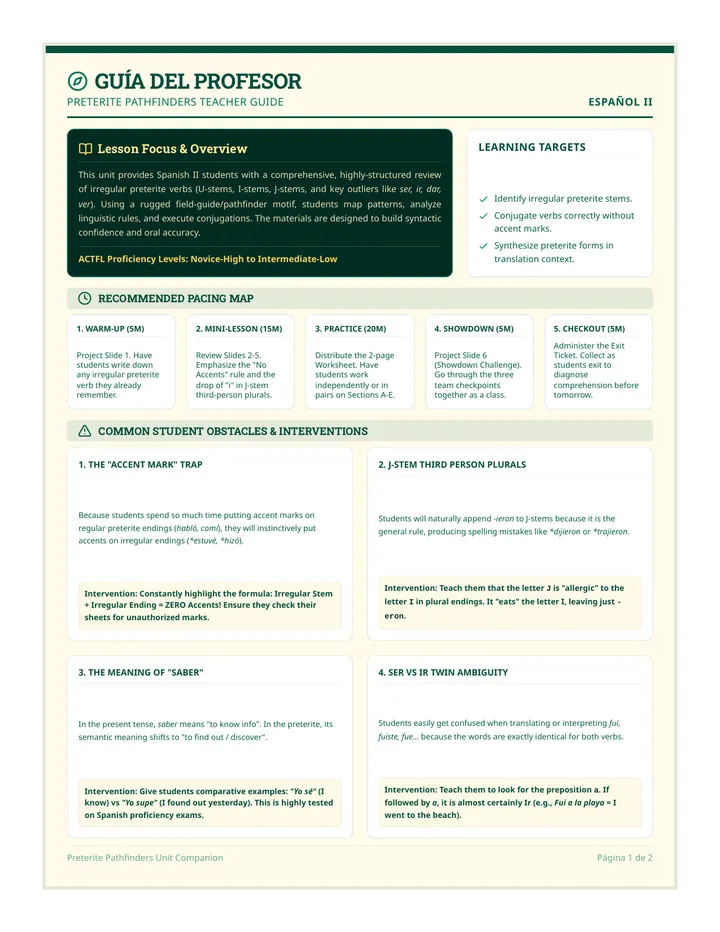
A comprehensive review and practice unit for second-year Spanish students focusing on mixed irregular preterite verbs. Includes instructional review slides, a structured guided practice worksheet, a quick exit ticket, and a teacher guide with answer keys.
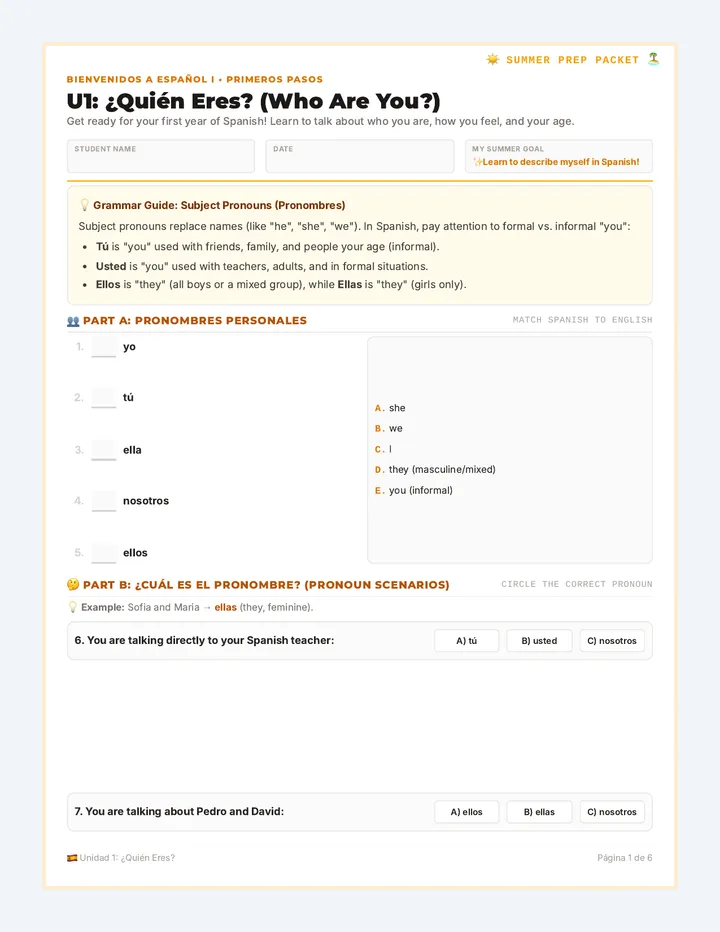
A foundational beginner Spanish lesson focused on personal descriptions, character traits, and feelings. Students learn how to express who they are, how they feel, their age, and where they live using pronouns, ser, estar, and tener.
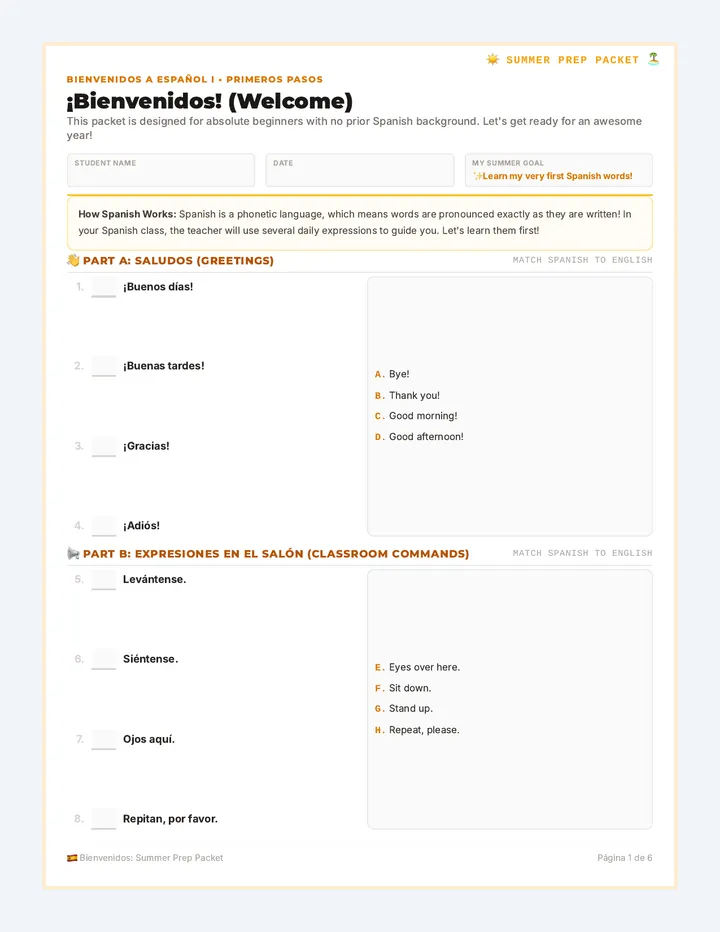
A preparatory summer lesson for complete beginner Spanish students with no prior background. Covers classroom expressions, essential classroom objects, the alphabet, Spanish-speaking geography, and basic numbers.
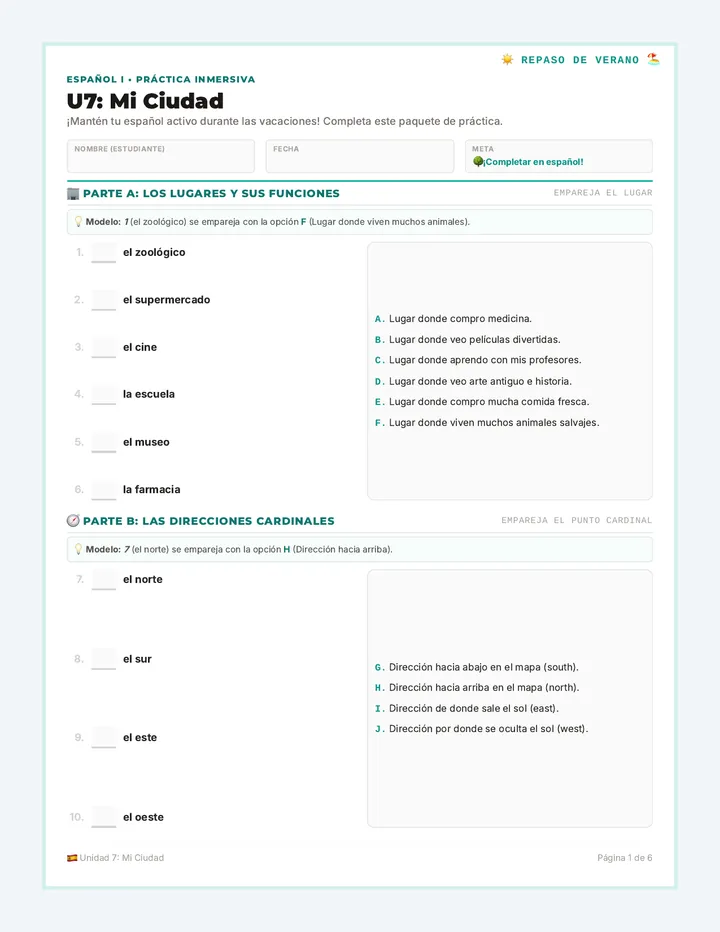
An immersive Spanish lesson centered on places in the city, transportation, and directional vocabulary. Students practice verb conjugations of "ir", prepositions, and simple sentence translations.
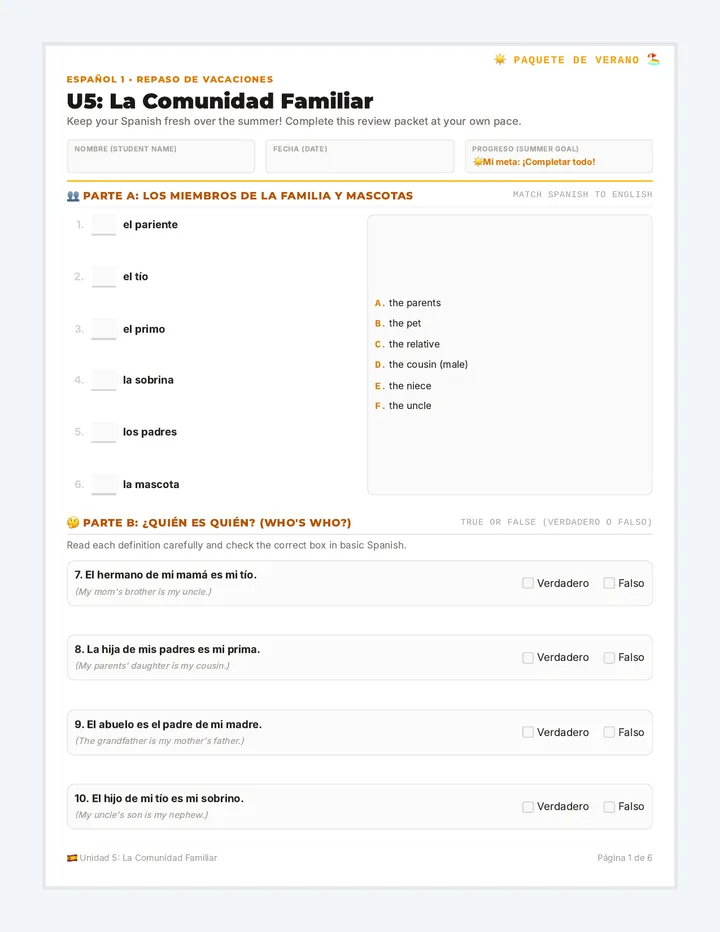
A Spanish lesson focused on family members, pets, household objects, rooms, and descriptions using pronombres and verbs like ser, estar, tener, and vivir.
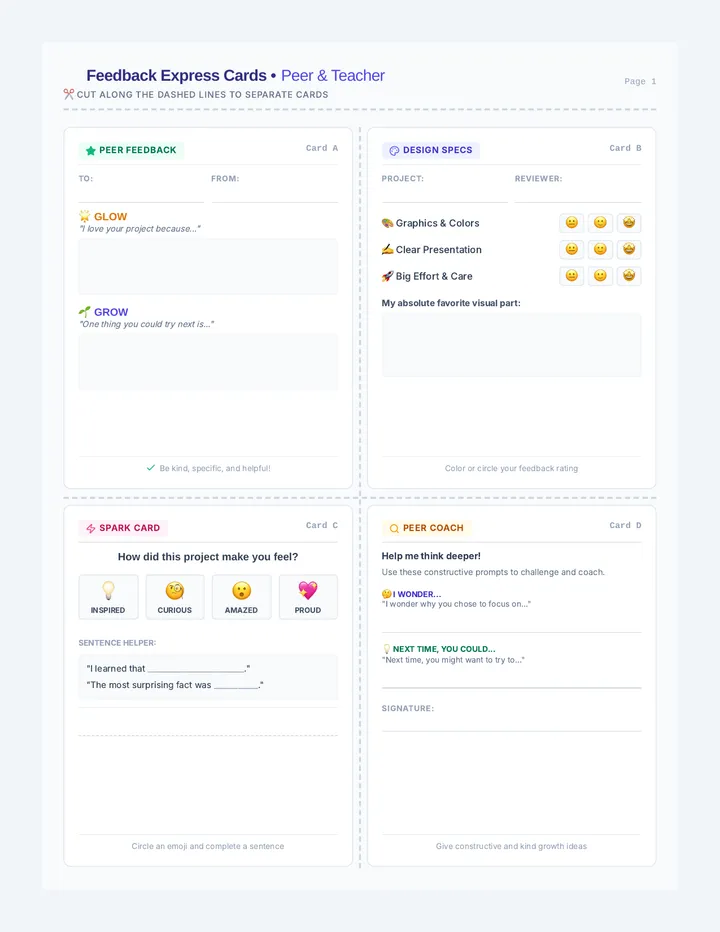
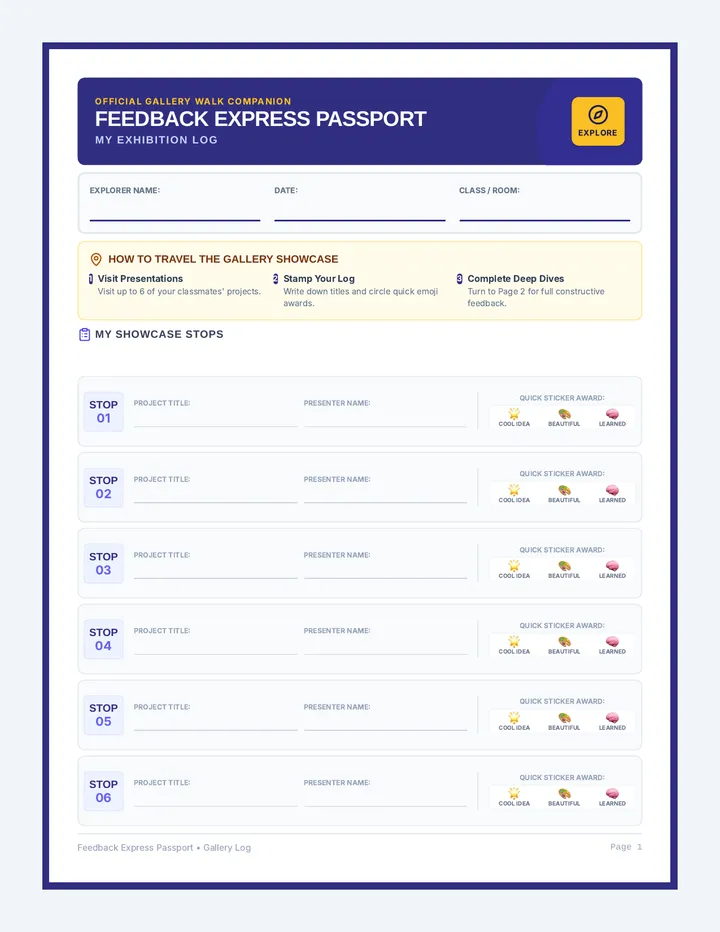
A visual feedback toolkit designed for elementary and middle school classrooms, families, and peers to provide meaningful project feedback. Includes emoji-rich rating systems, structured review guides, and sentence starter frames.
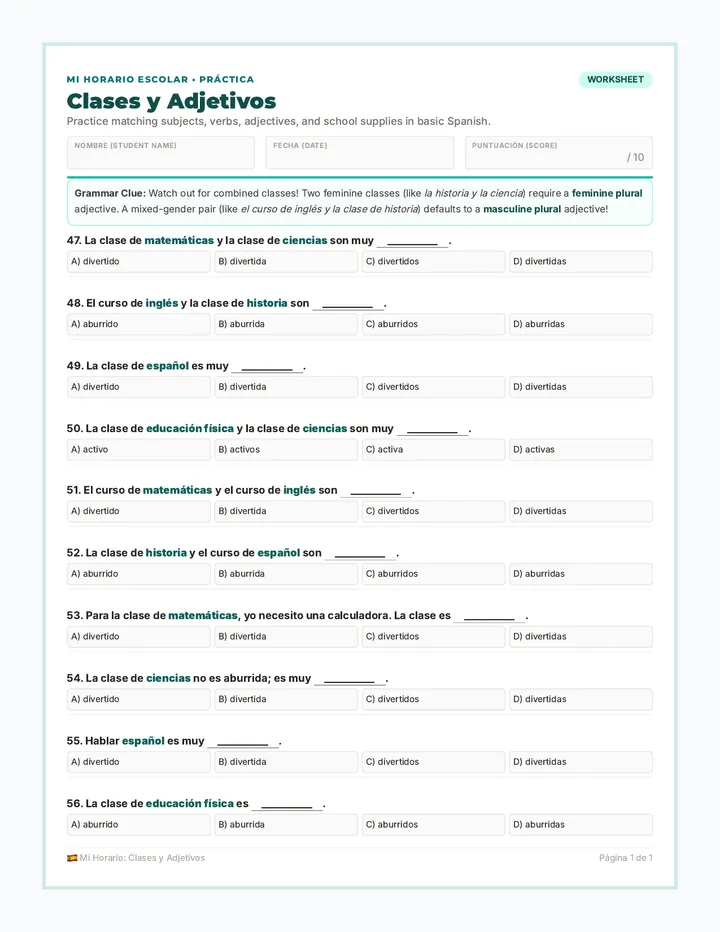
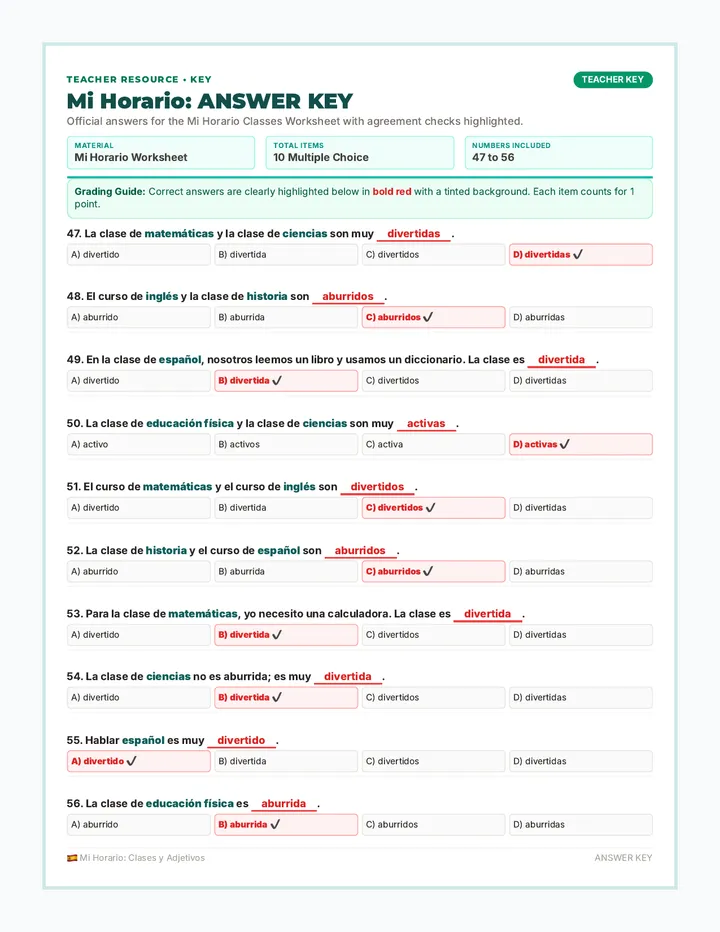
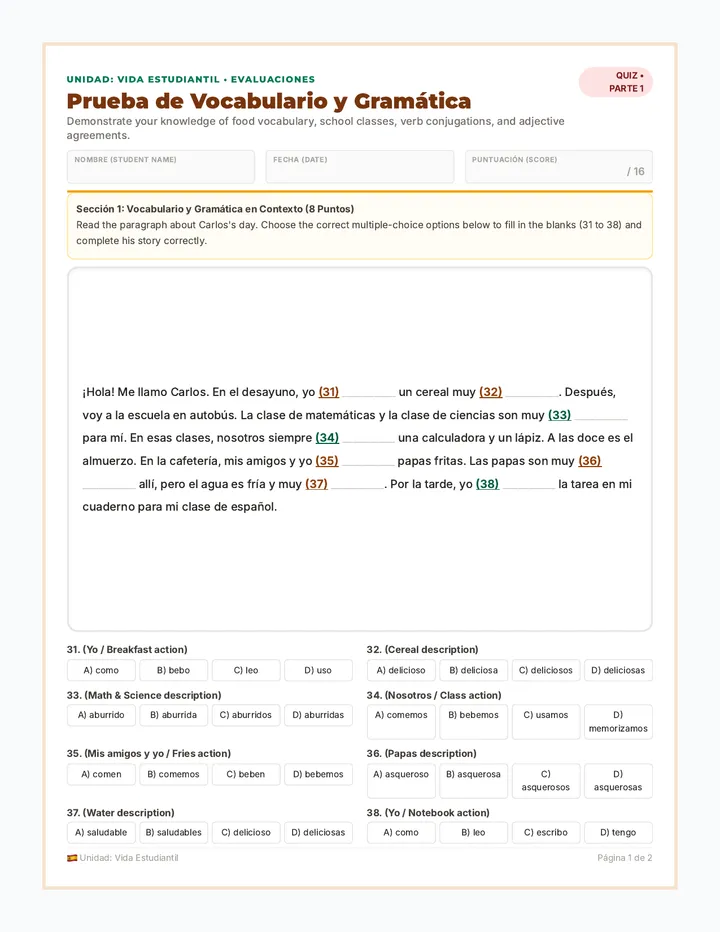
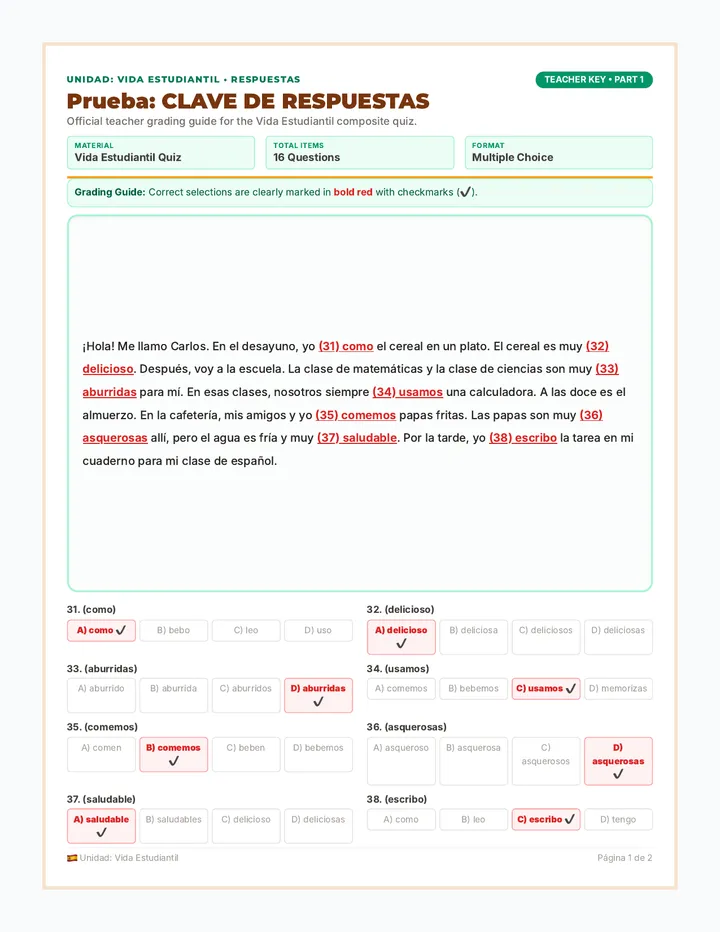
An engaging Spanish lesson covering school subjects (math, science, Spanish, English, history, physical education) and descriptive adjectives. Students practice describing courses, matching nouns with adjectives, and determining supply needs in basic Spanish.
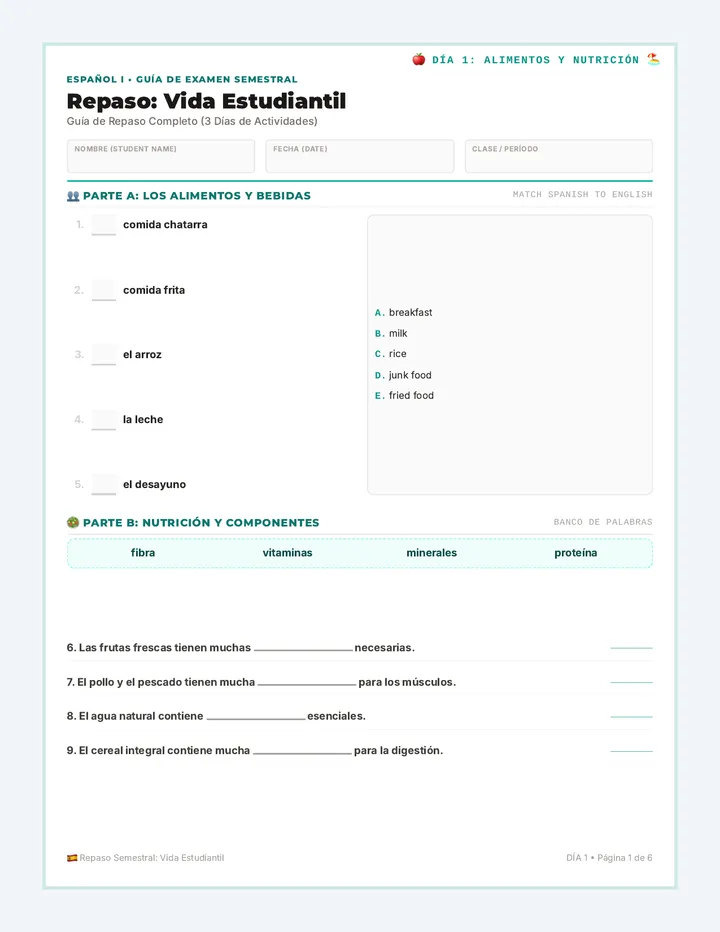
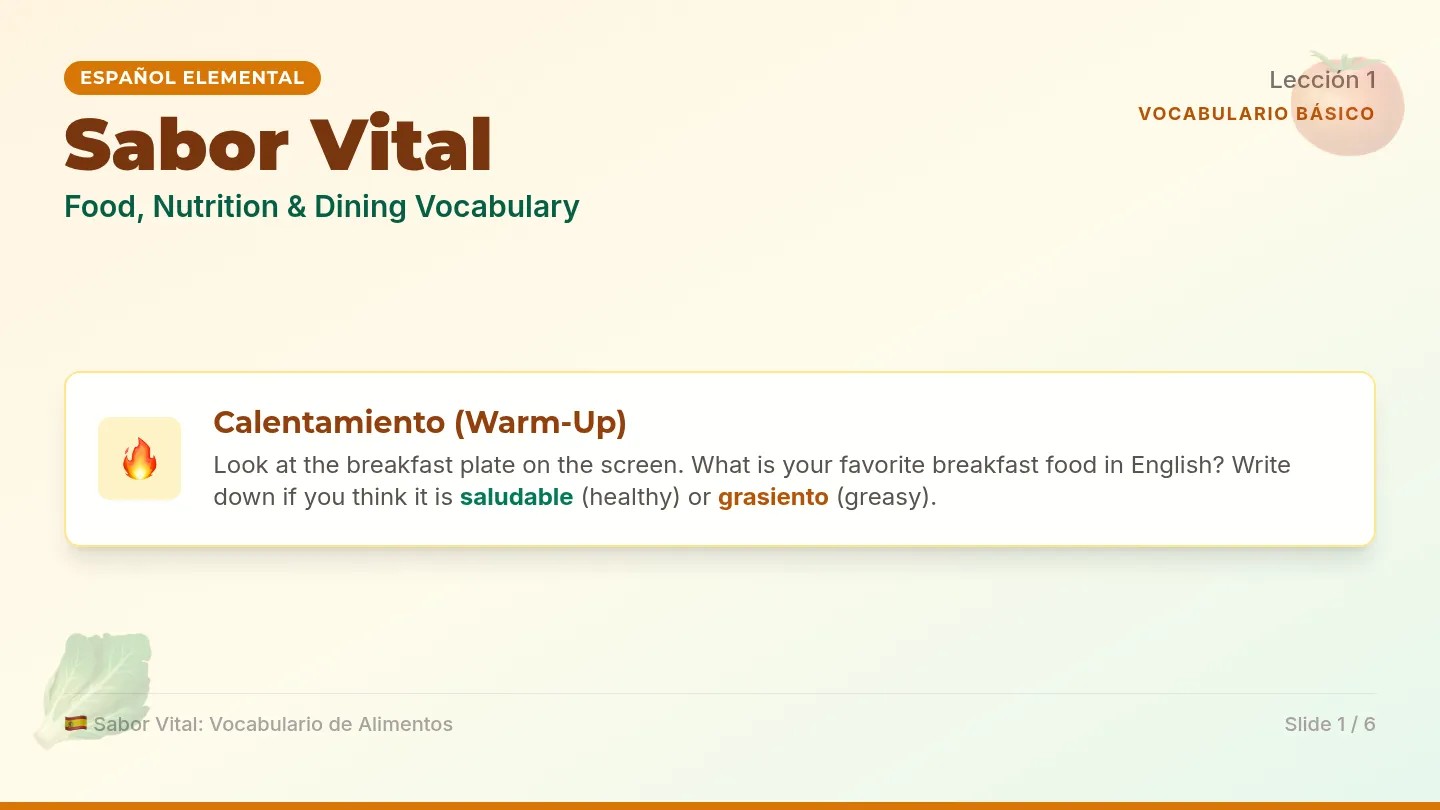
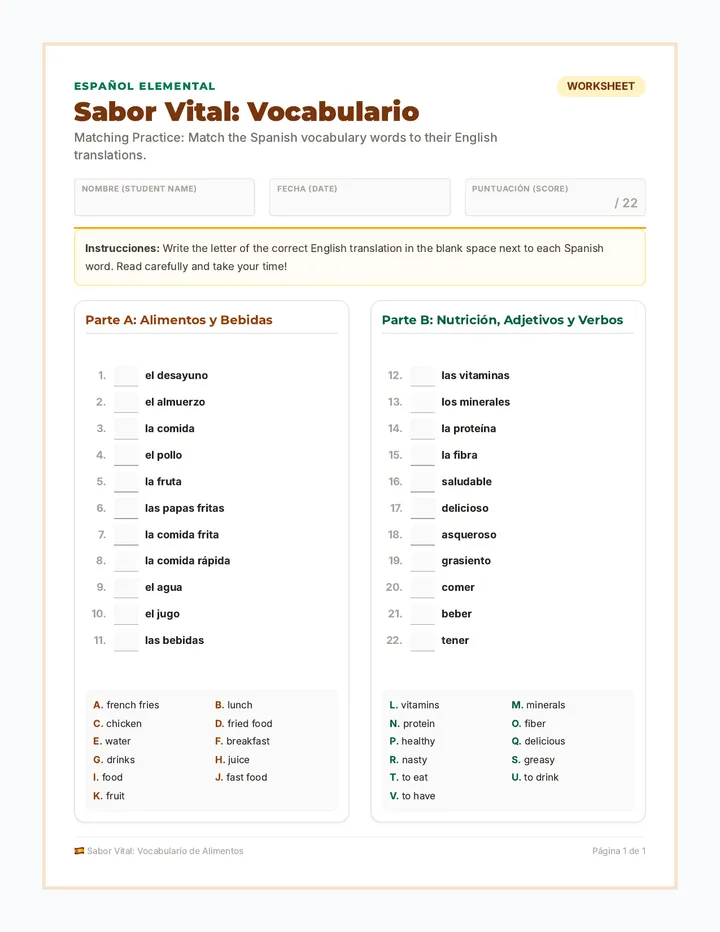
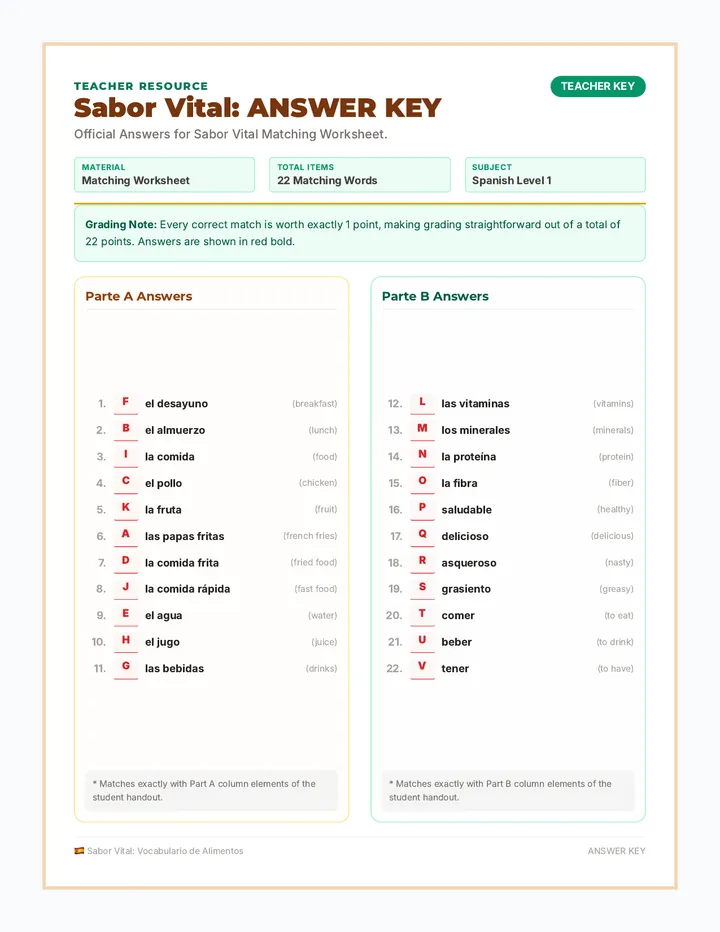
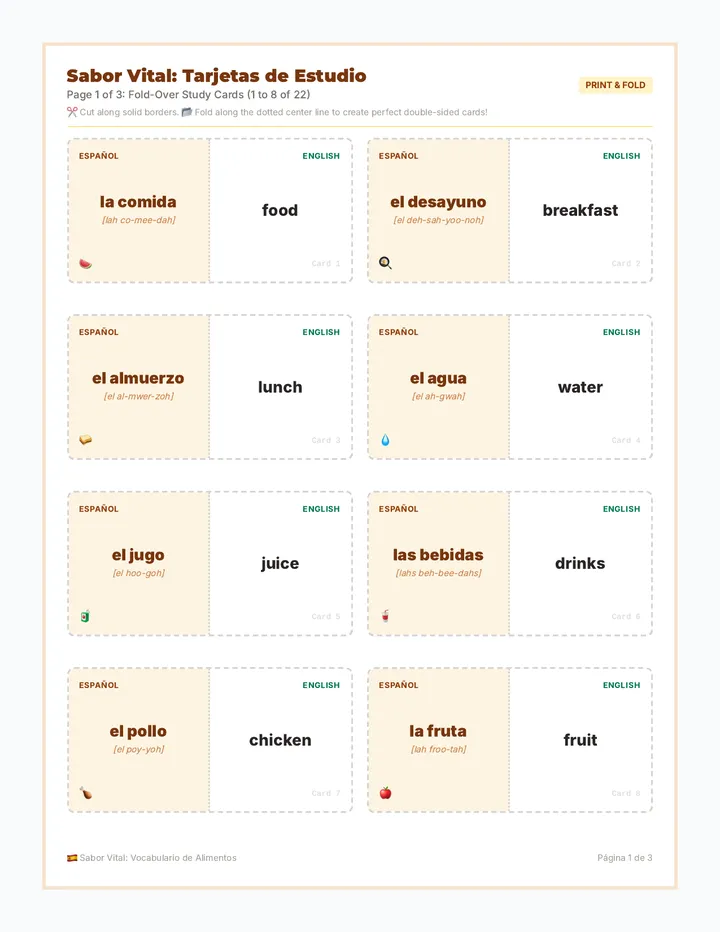
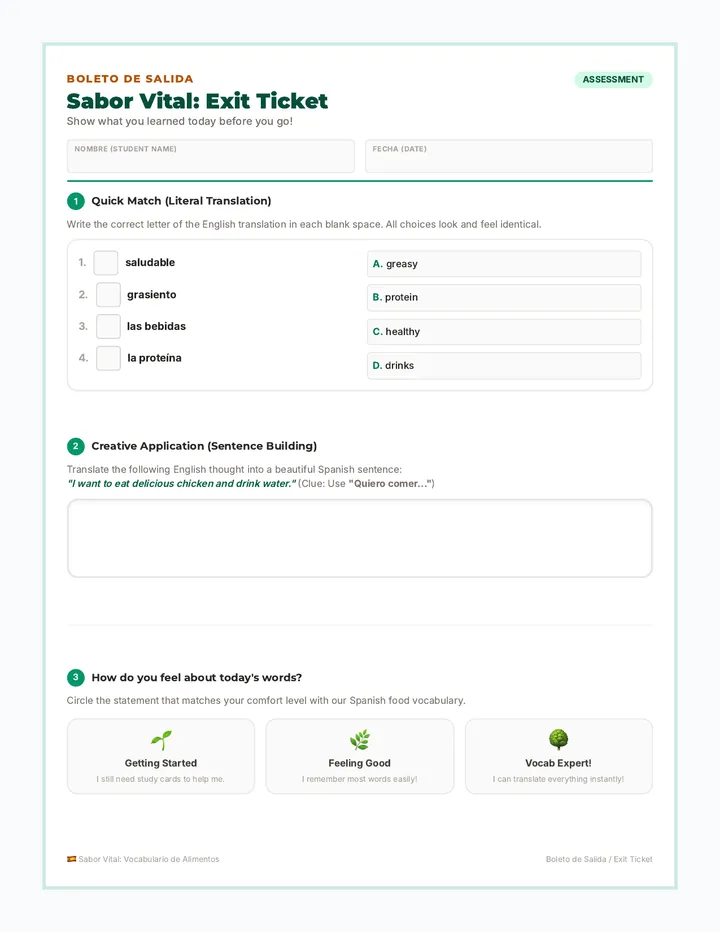
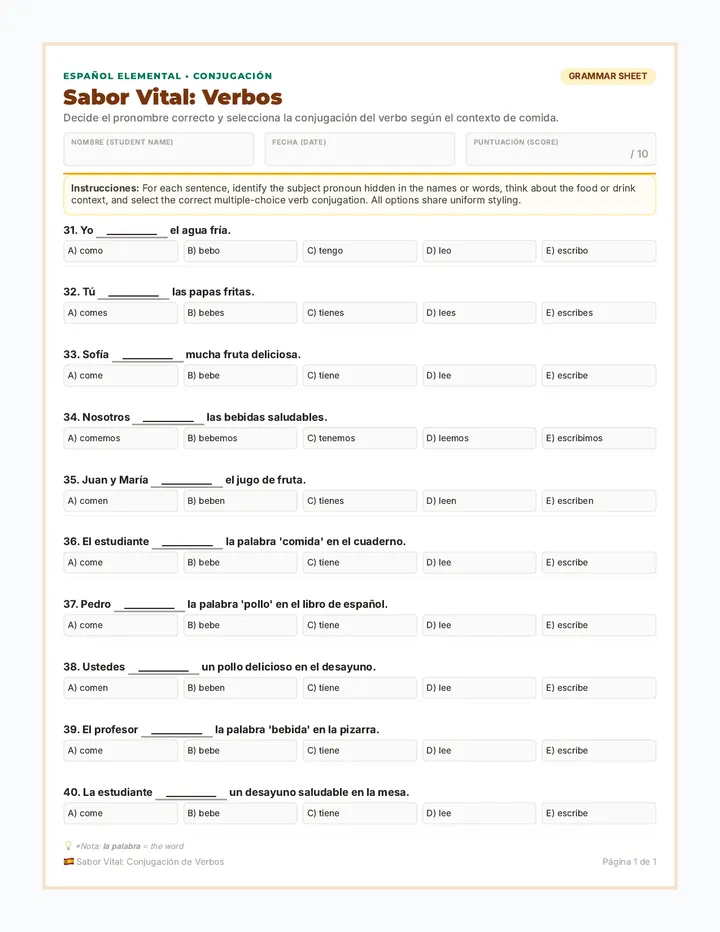
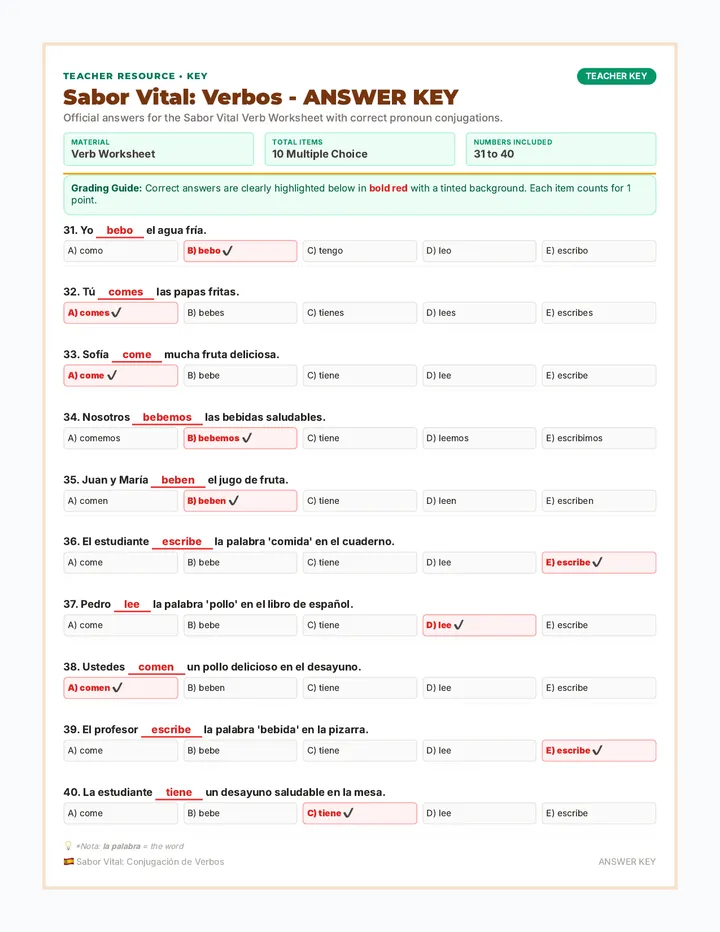
An introductory Spanish lesson centered on essential food, dining, and nutrition vocabulary. This lesson provides an immersive, interactive experience with visual slides, study flashcards, a structured matching worksheet, and a quick exit ticket.
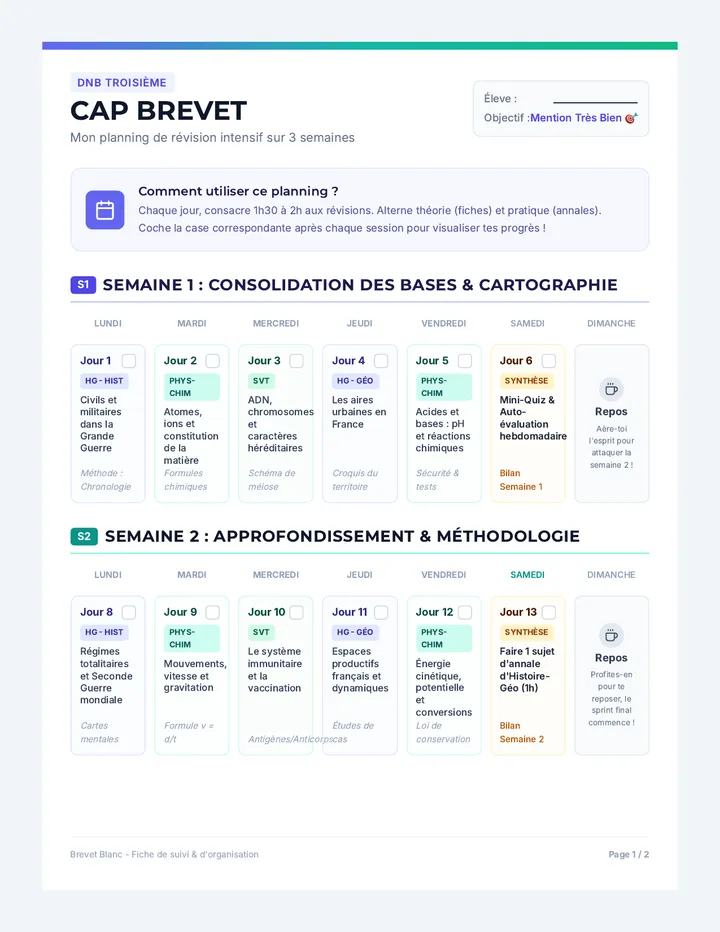
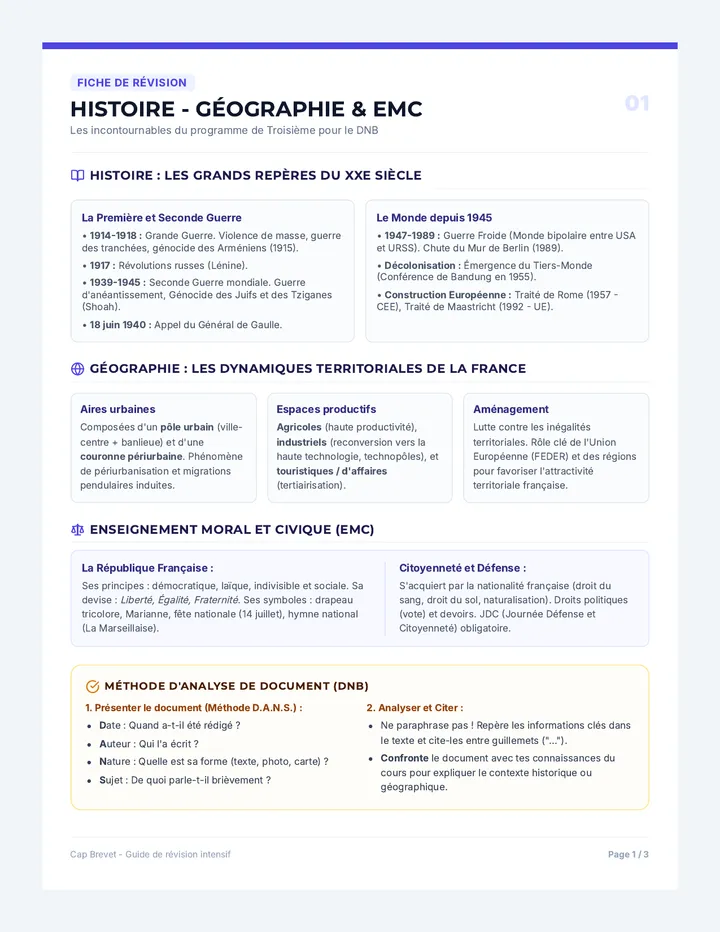
Un programme de révision intensif et structuré sur 3 semaines pour préparer sereinement les épreuves de SVT, Physique-Chimie et Histoire-Géographie du Diplôme National du Brevet.
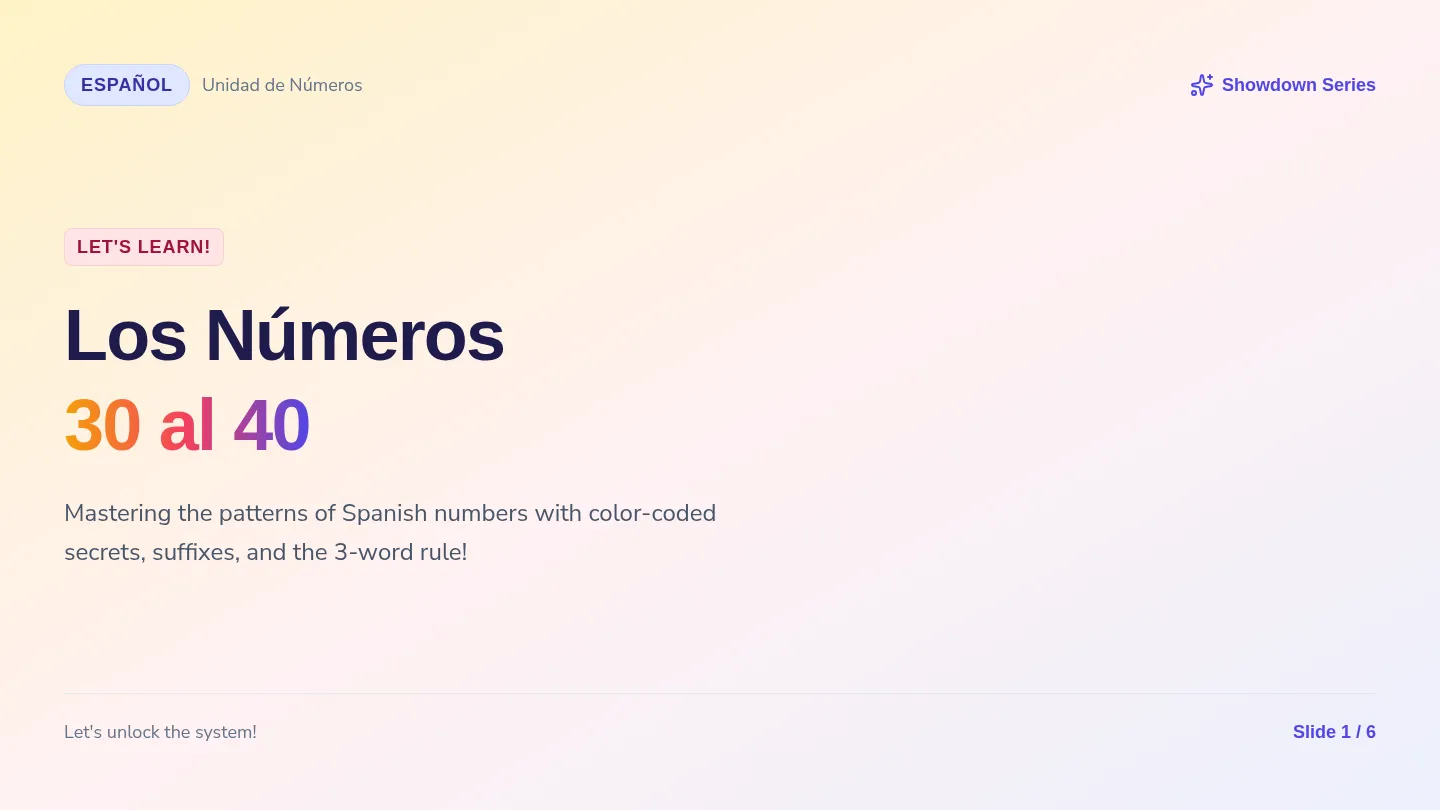
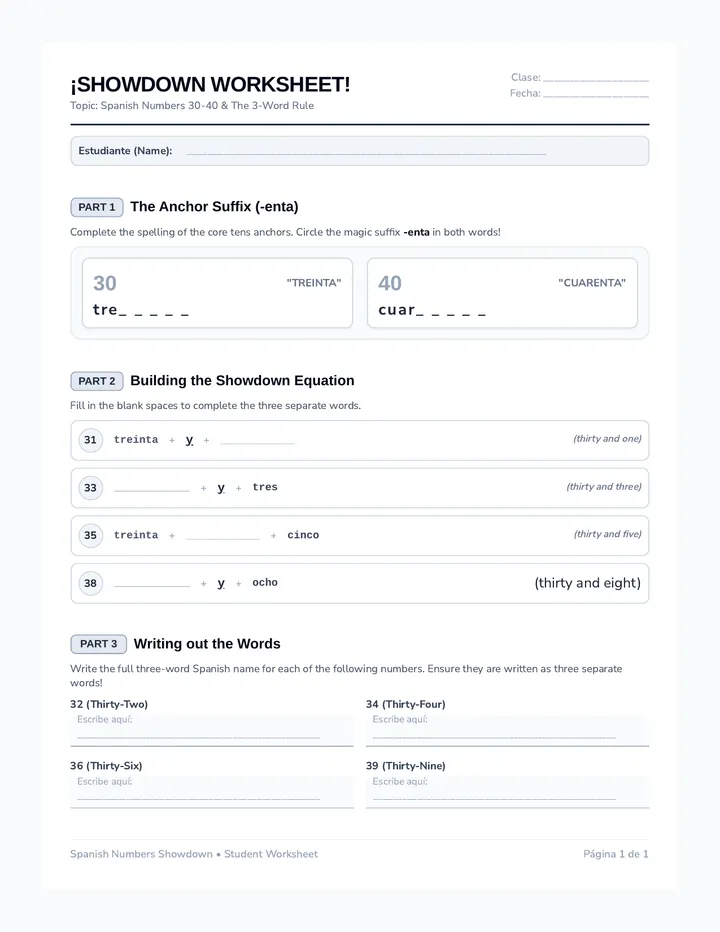
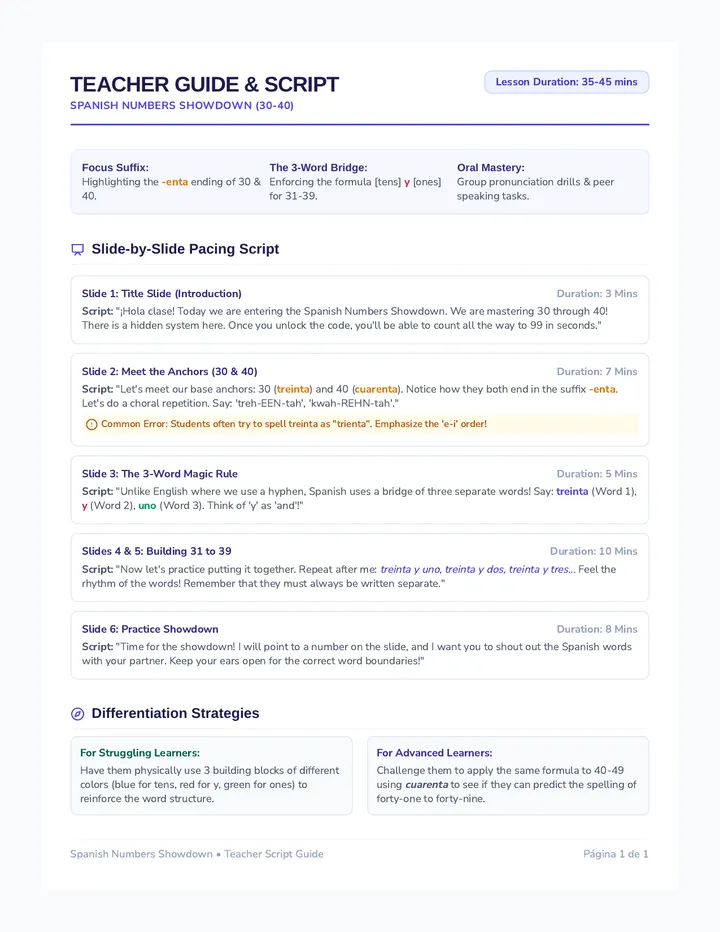
A structured, color-coded lesson introducing Spanish numbers 30 to 40, highlighting key linguistic rules like the "-enta" suffix and the three-word structure of numbers 31-39.
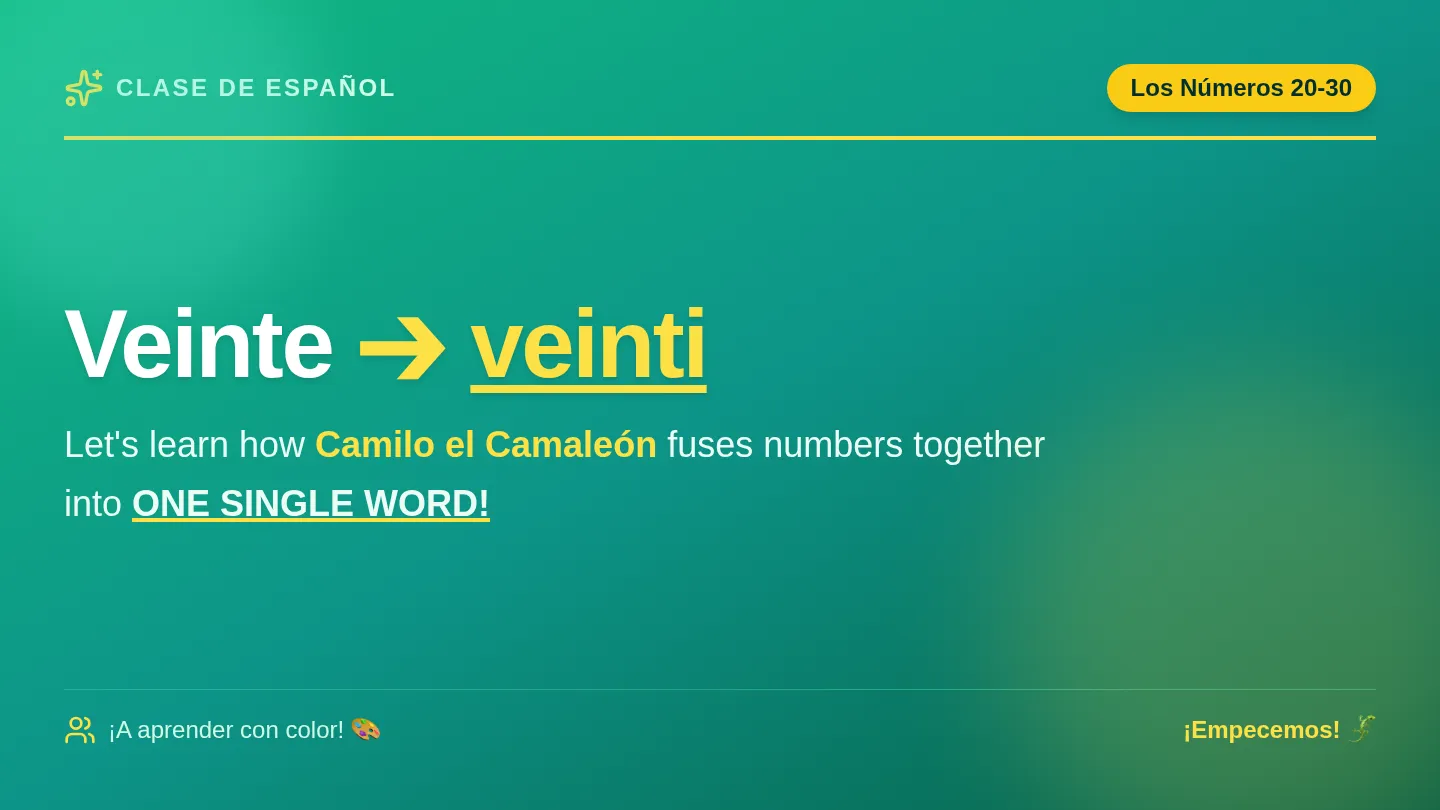
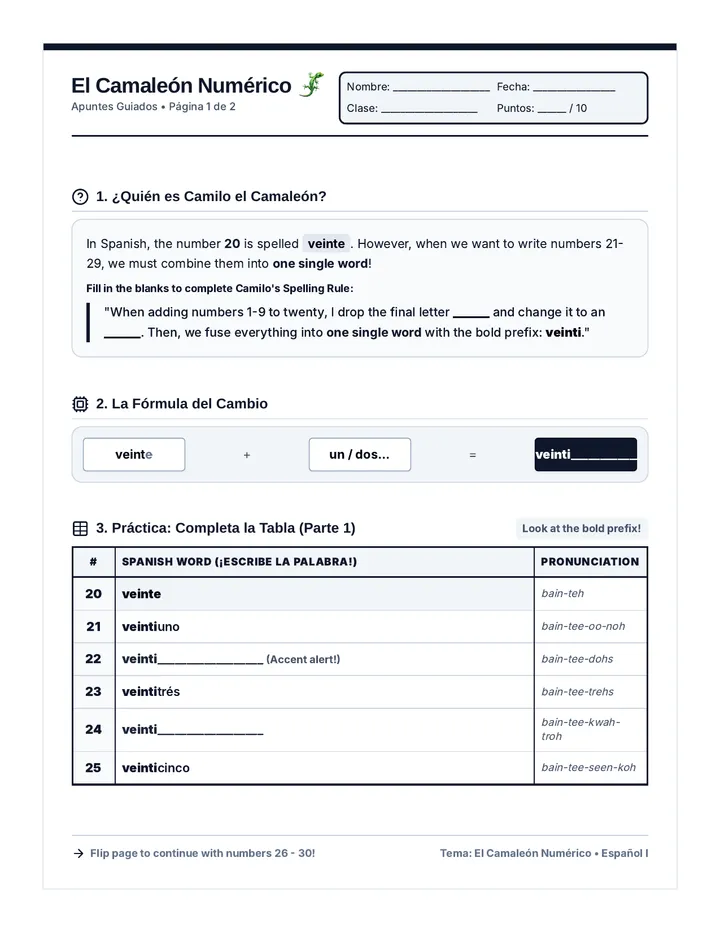
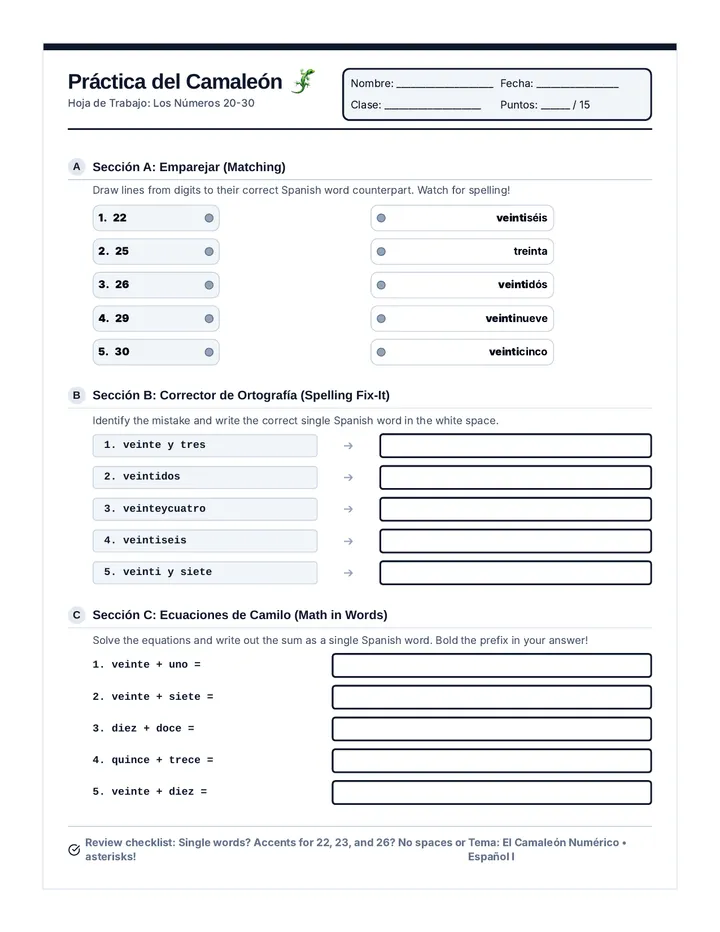
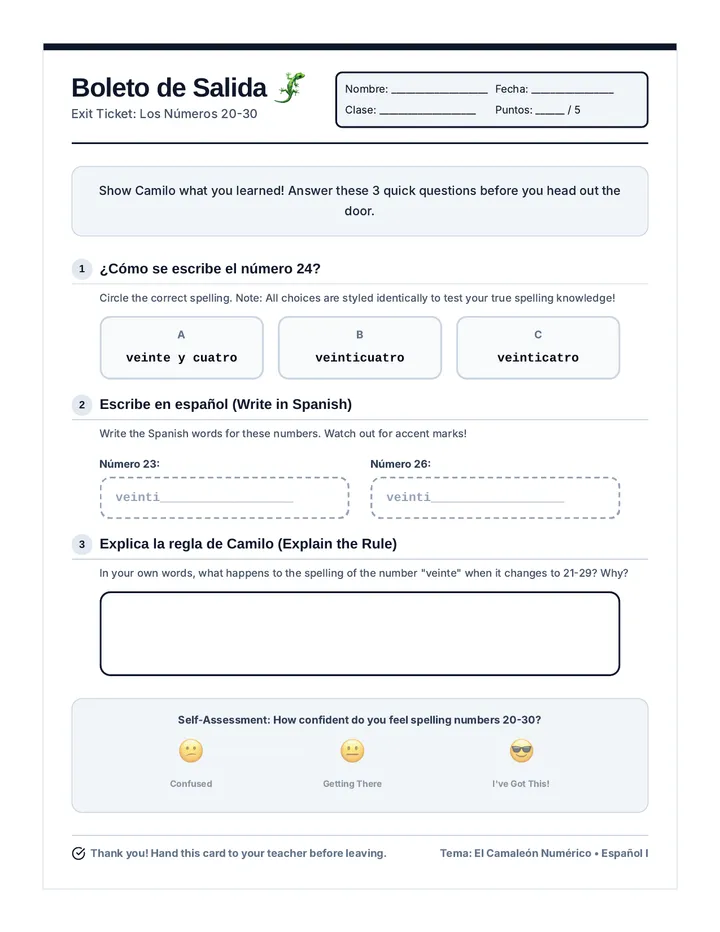
An interactive introductory lesson on Spanish numbers 20-30, focusing on the spelling shift from 'veinte' to 'veinti' using a fun chameleon metaphor. Includes instructional slides, matching guided notes, a practice worksheet, and an exit ticket.
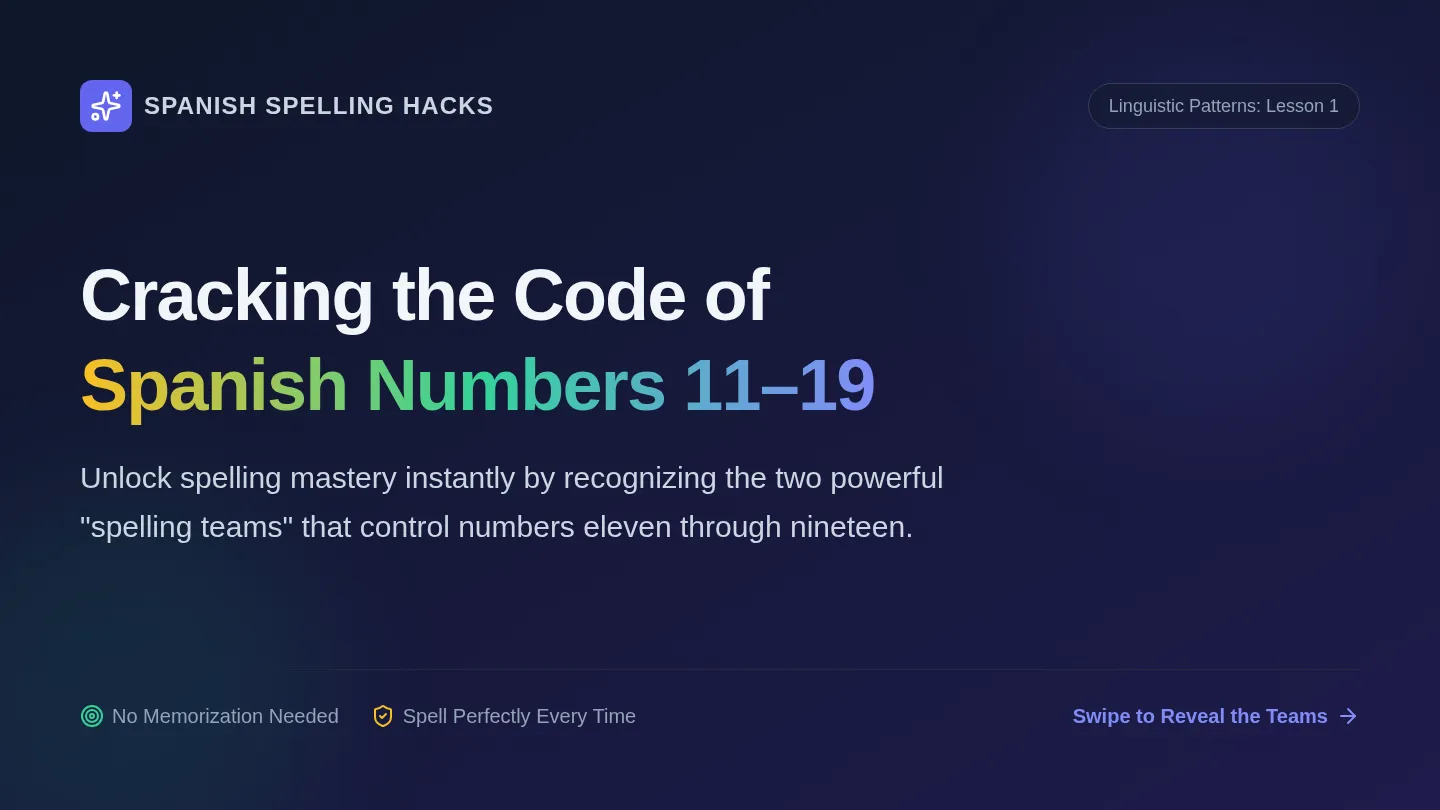
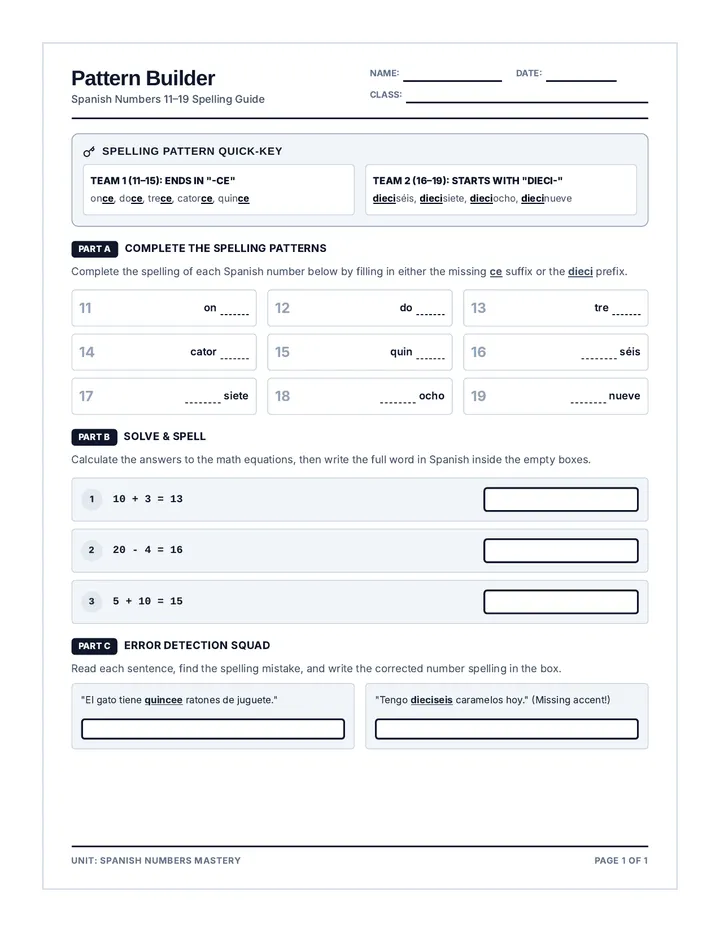
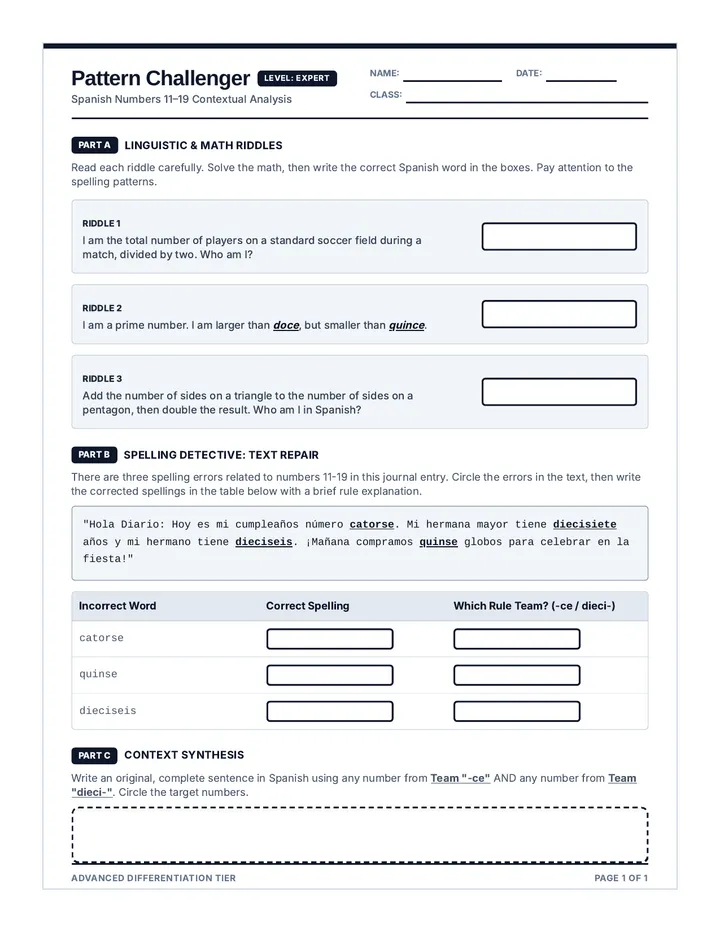
A focused lesson on Spanish numbers 11-19, highlighting the spelling patterns of '-ce' (11-15) and 'dieci-' (16-19) to improve spelling accuracy, pronunciation, and linguistic patterns.
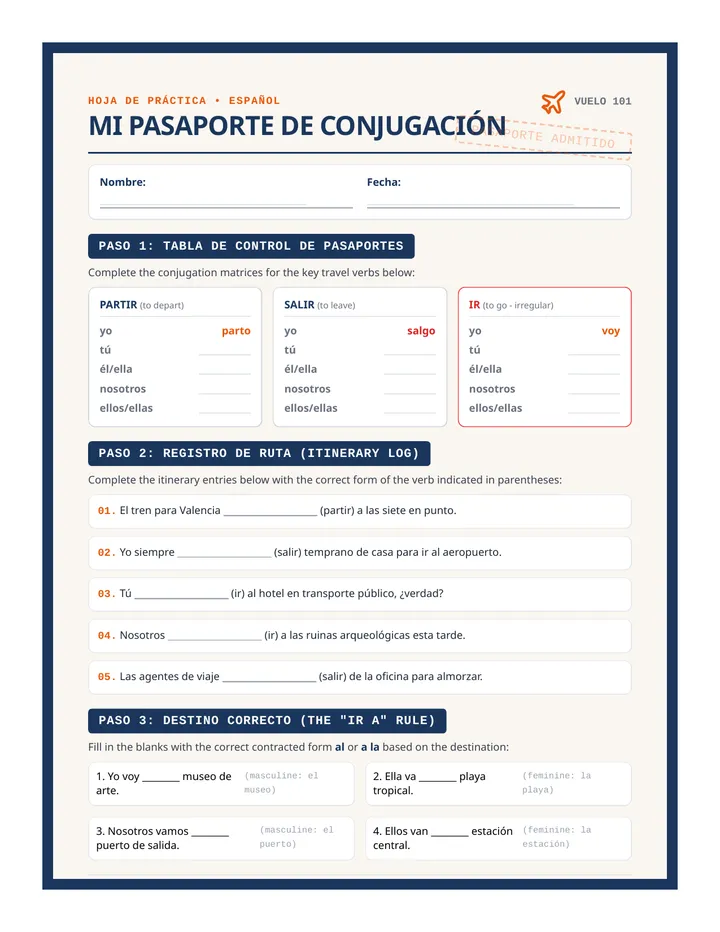
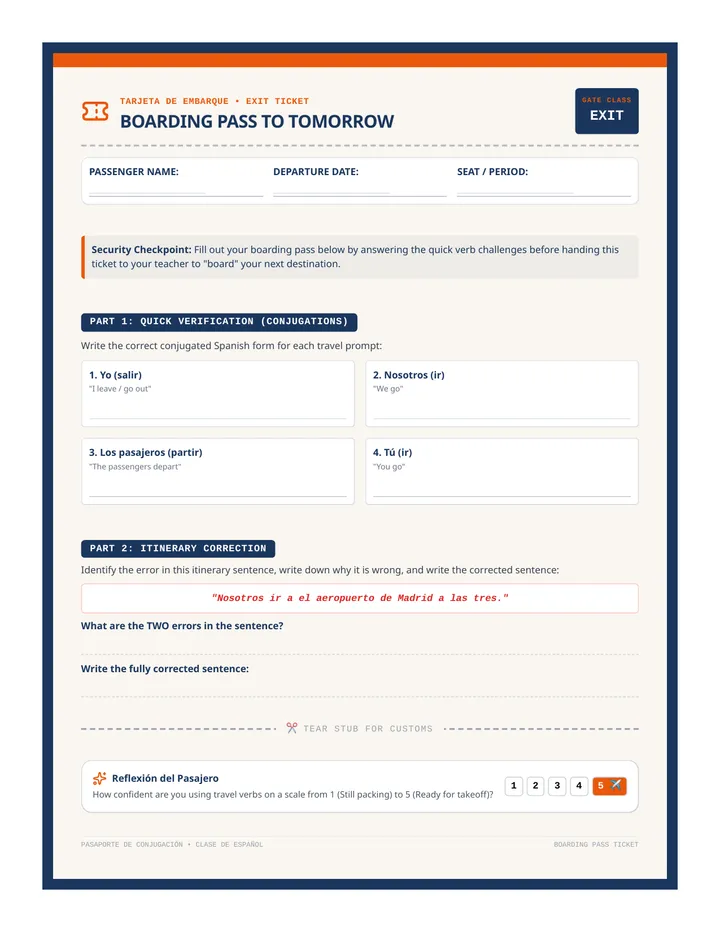
An interactive, travel-themed lesson that guides students through conjugating movement-related -IR verbs like partir, salir, and the irregular ir in real-world travel contexts.
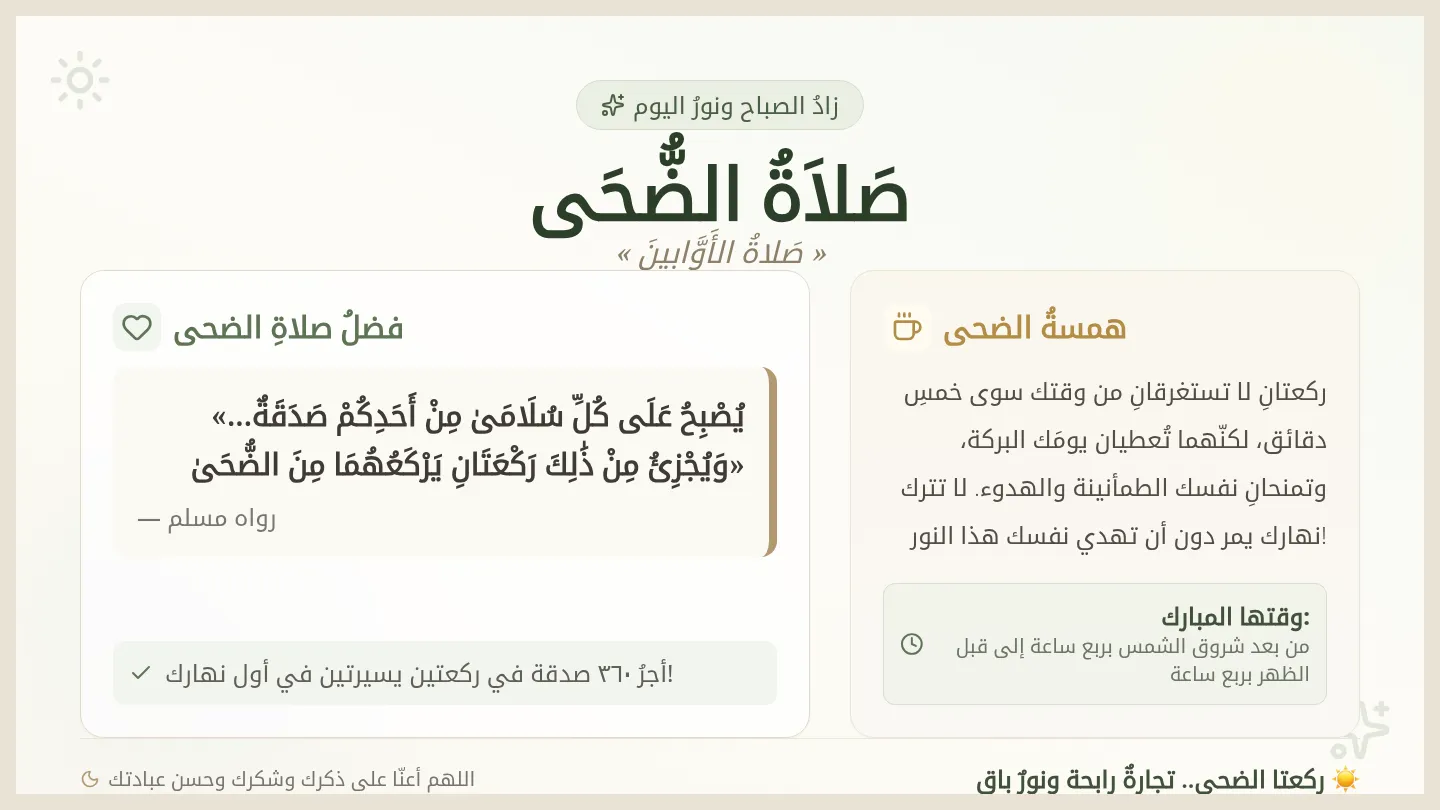
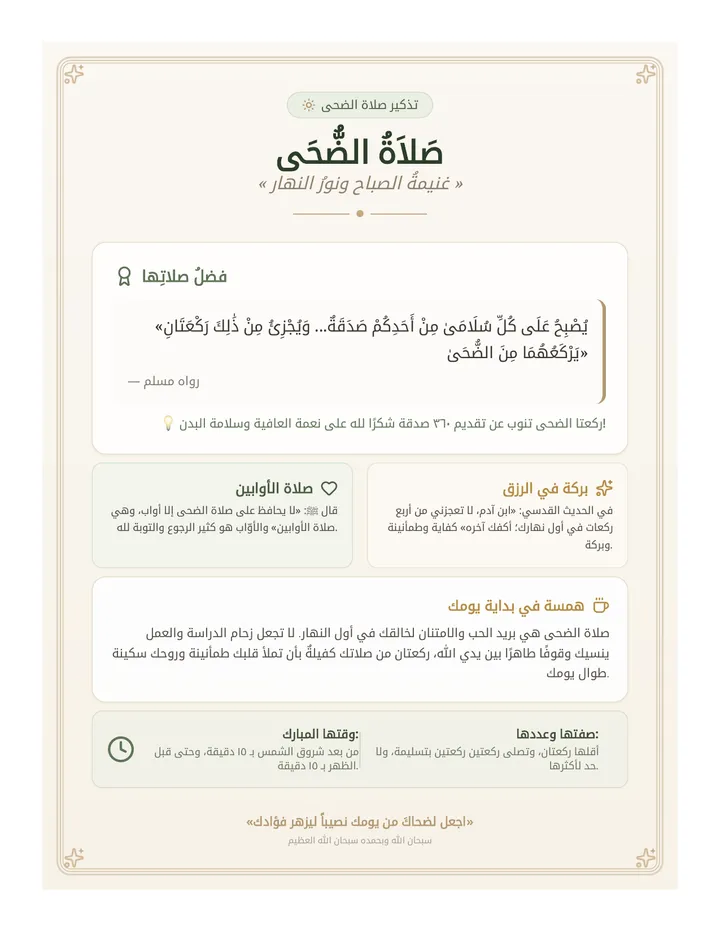
A lesson focusing on the Duha prayer reminder, offering both a digital slide for morning screens and a printable classroom poster to foster a peaceful, spiritual morning routine.
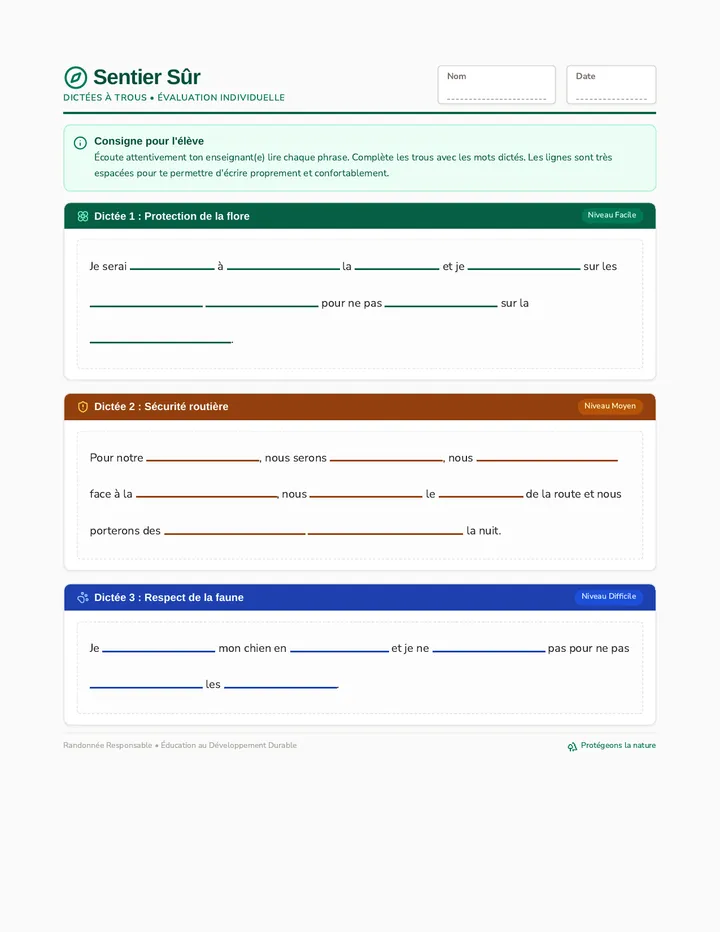
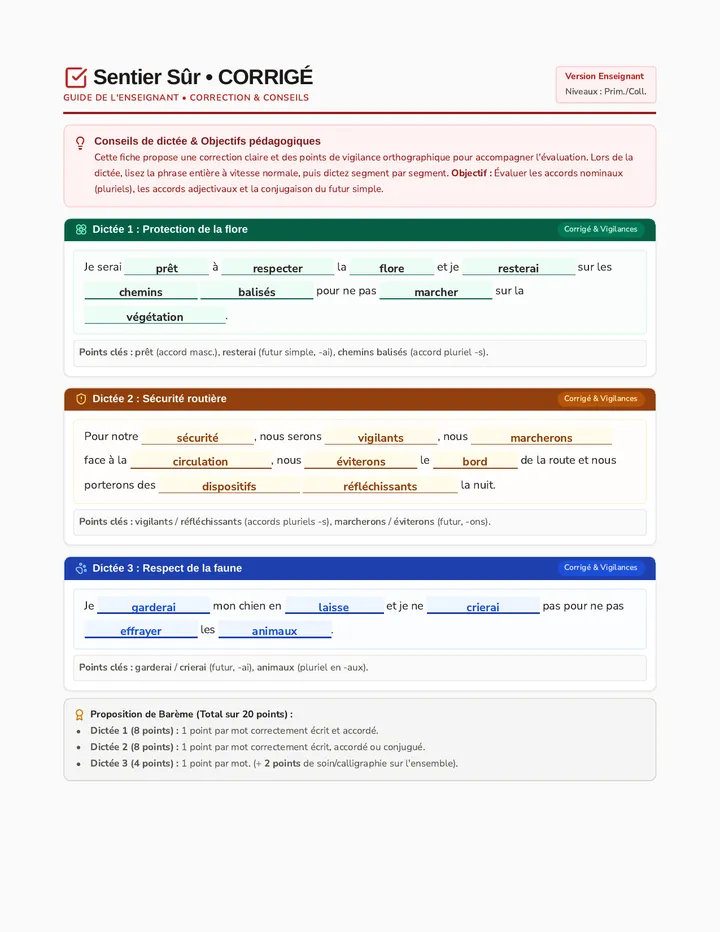
Une leçon de français et de civisme pour apprendre à respecter la nature et les règles de sécurité lors d'une randonnée à travers trois dictées à trous thématiques.
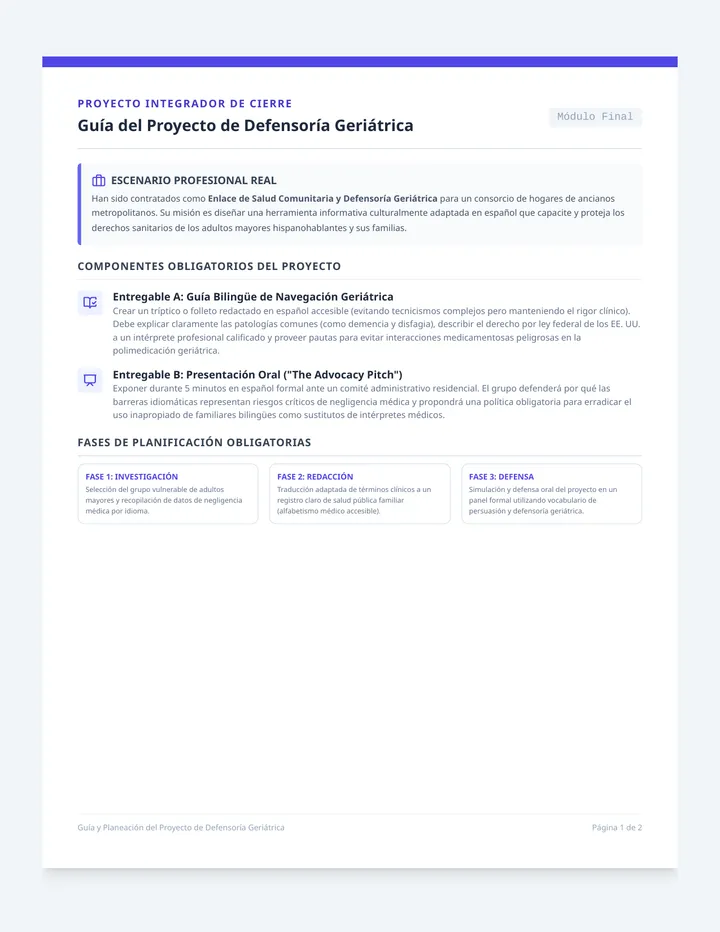
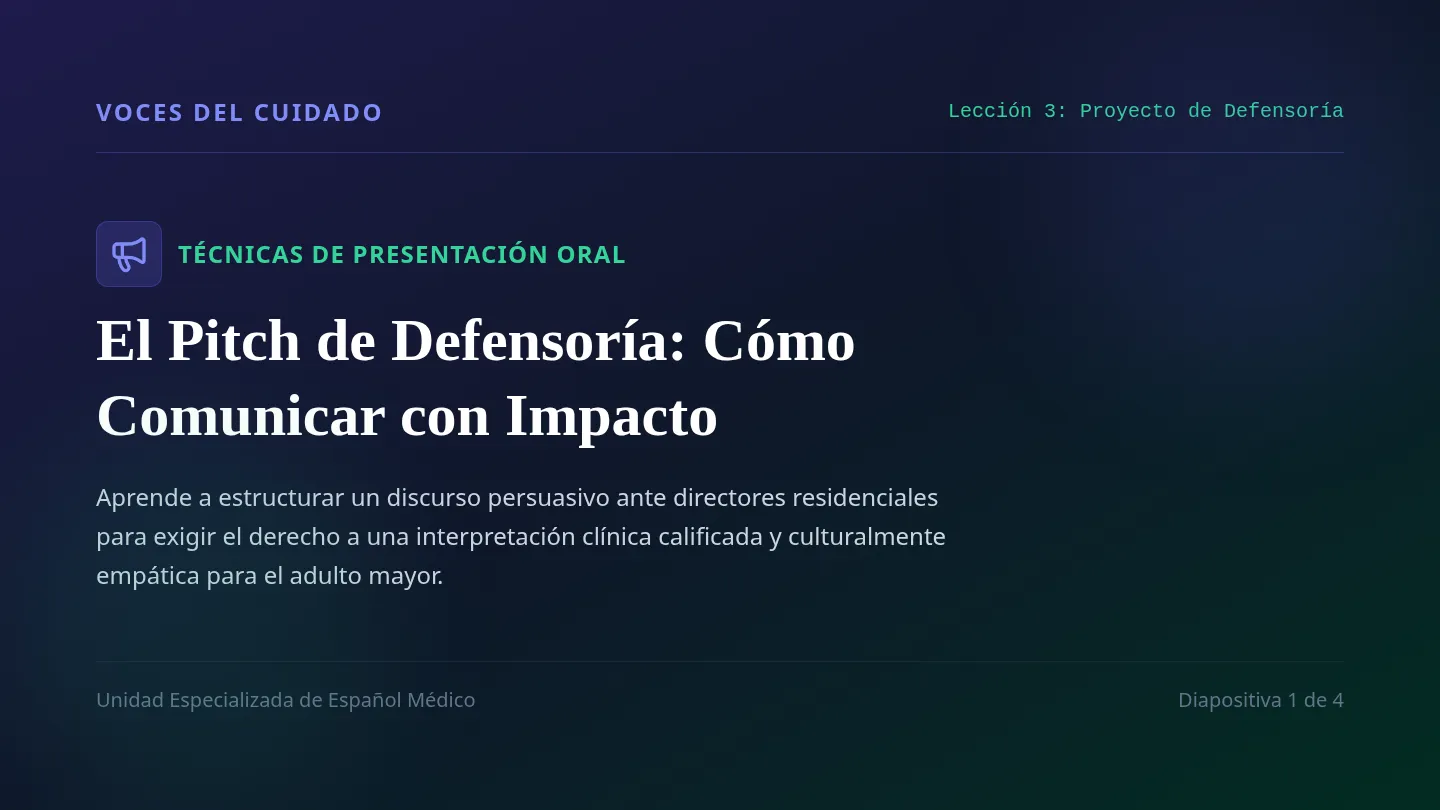
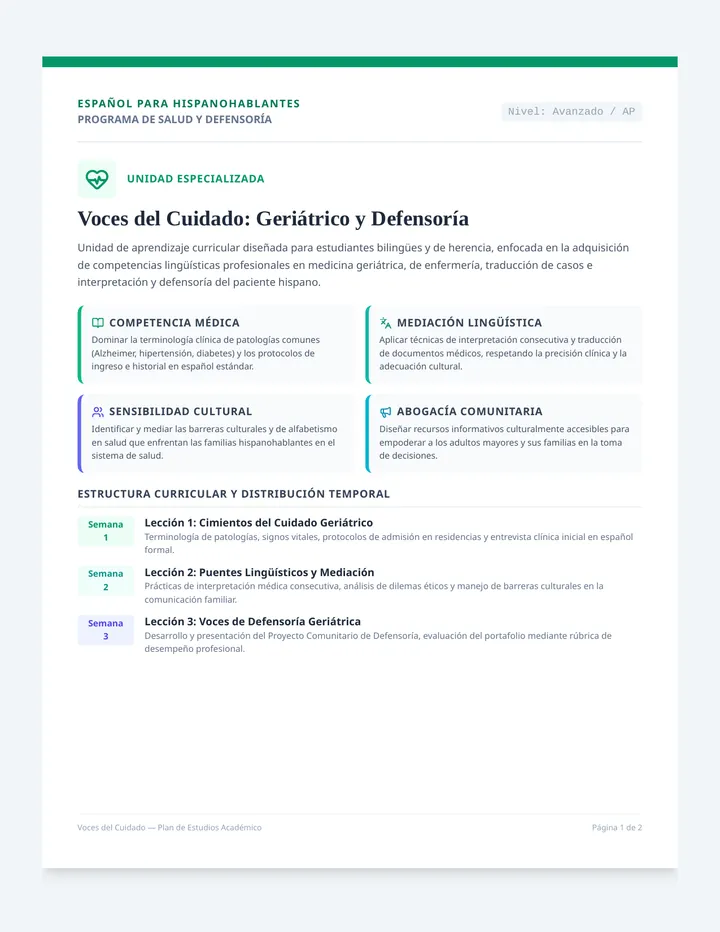
Desarrollo de un proyecto de abogacía comunitaria, diseño de recursos de salud accesibles para familias hispanohablantes, y evaluación del desempeño mediante rúbrica.
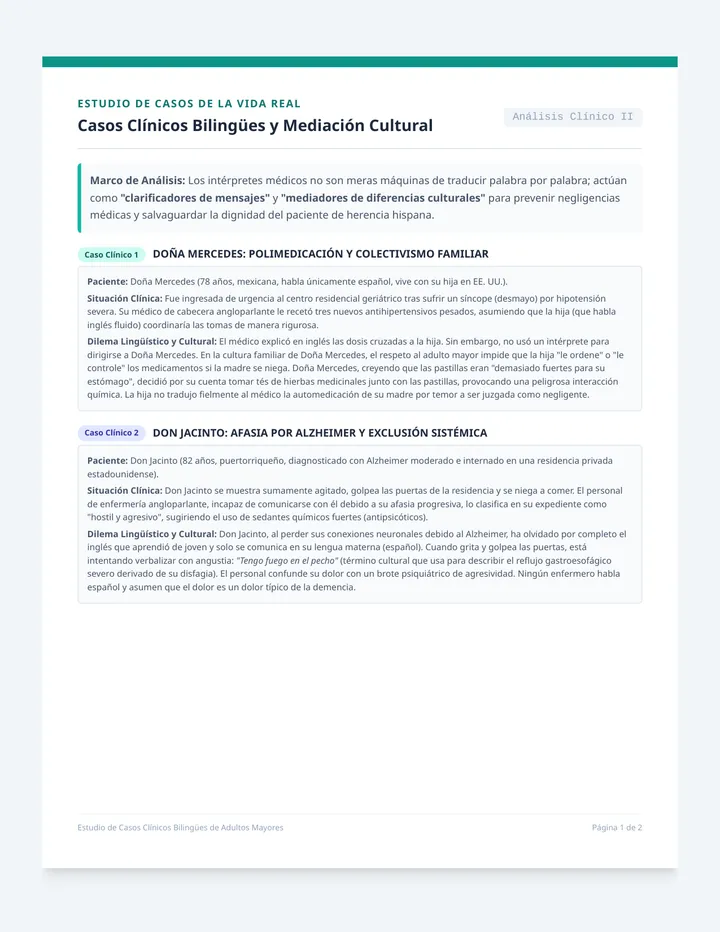
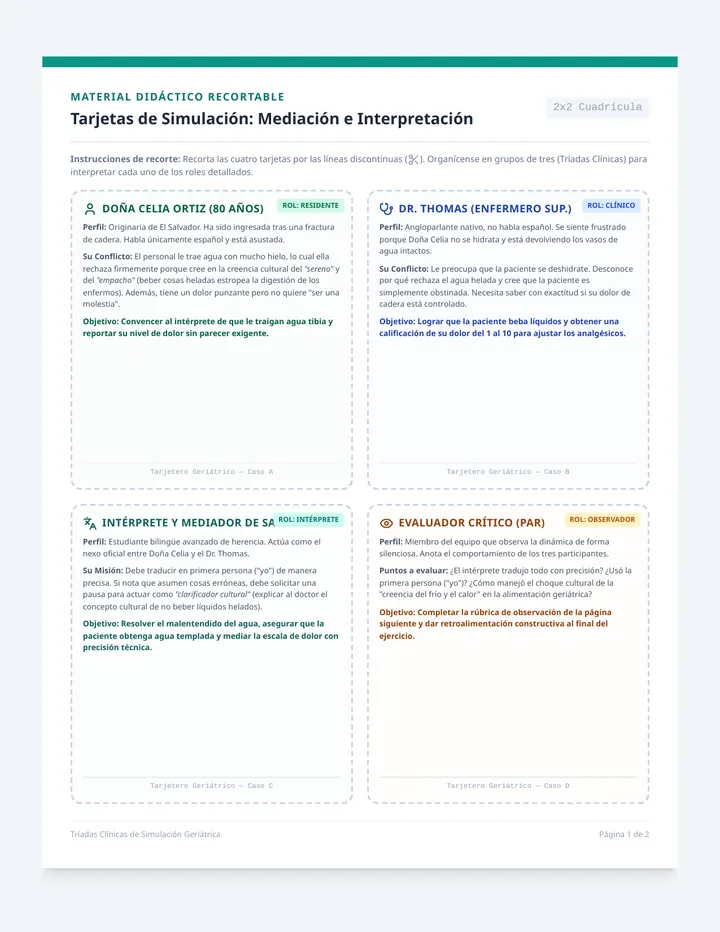
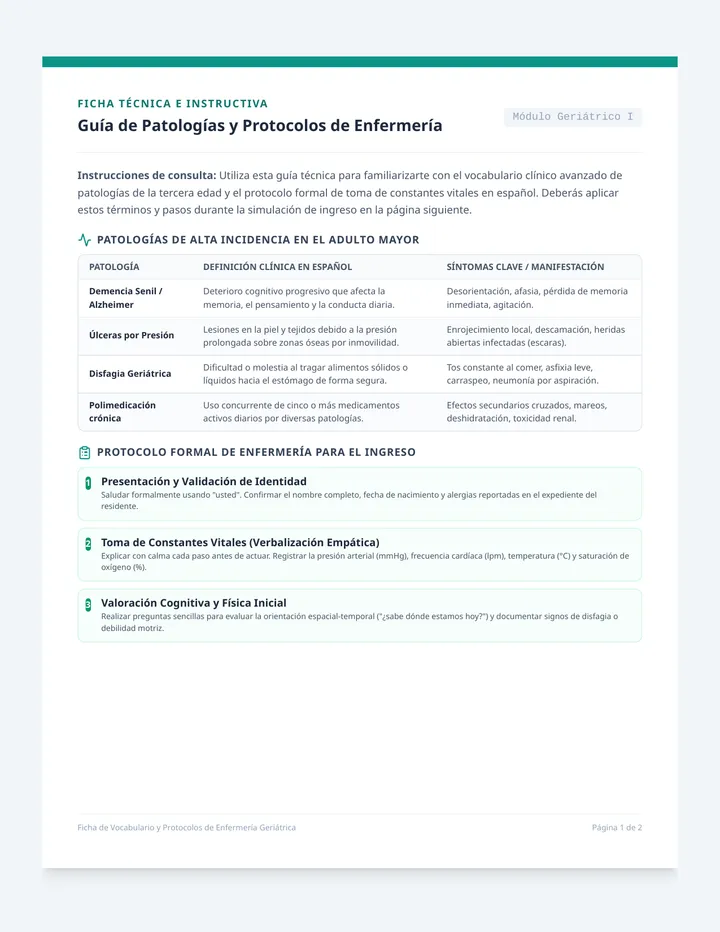
Técnicas de interpretación médica, análisis de barreras culturales en la atención de adultos mayores, y dinámicas de comunicación empática y mediación familiar.
Introducción al cuidado geriátrico, terminología clínica de patologías comunes, y protocolos de admisión y toma de signos vitales en español médico profesional.
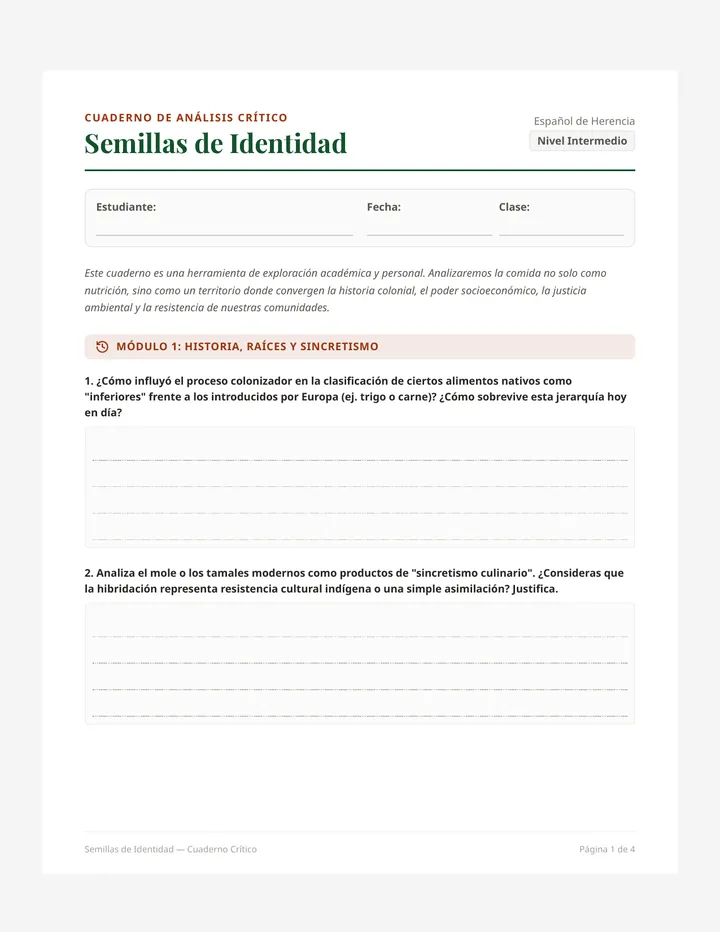
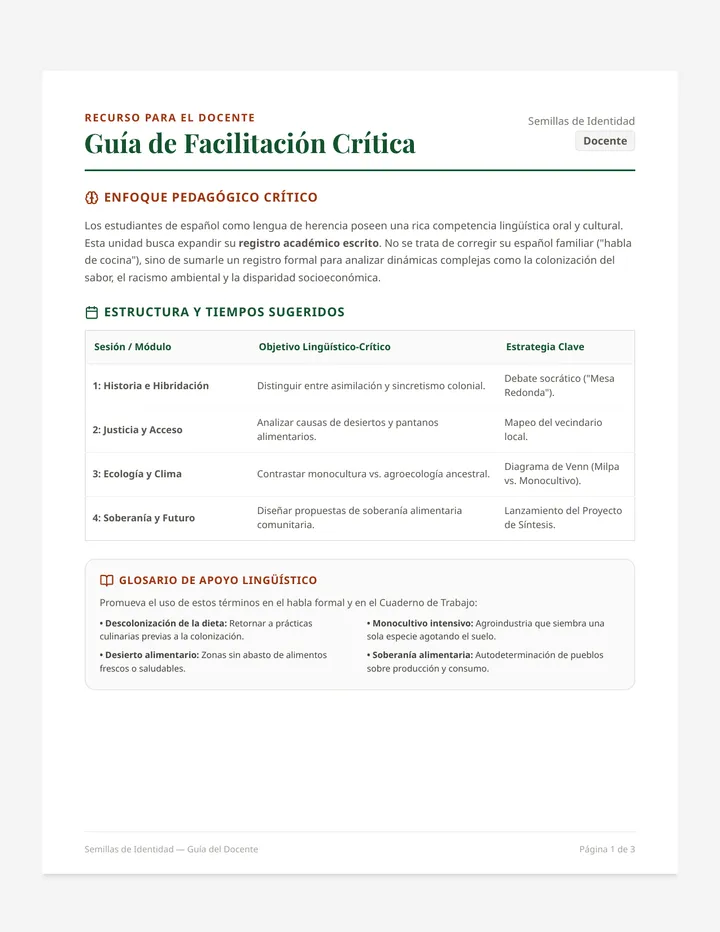
Un análisis crítico y multidisciplinario sobre la comida, la historia y la justicia alimentaria diseñado para estudiantes de español como lengua de herencia. Explora la intersección de la cultura, la soberanía alimentaria, el impacto ecológico y el costo socioeconómico de nuestros platos tradicionales.
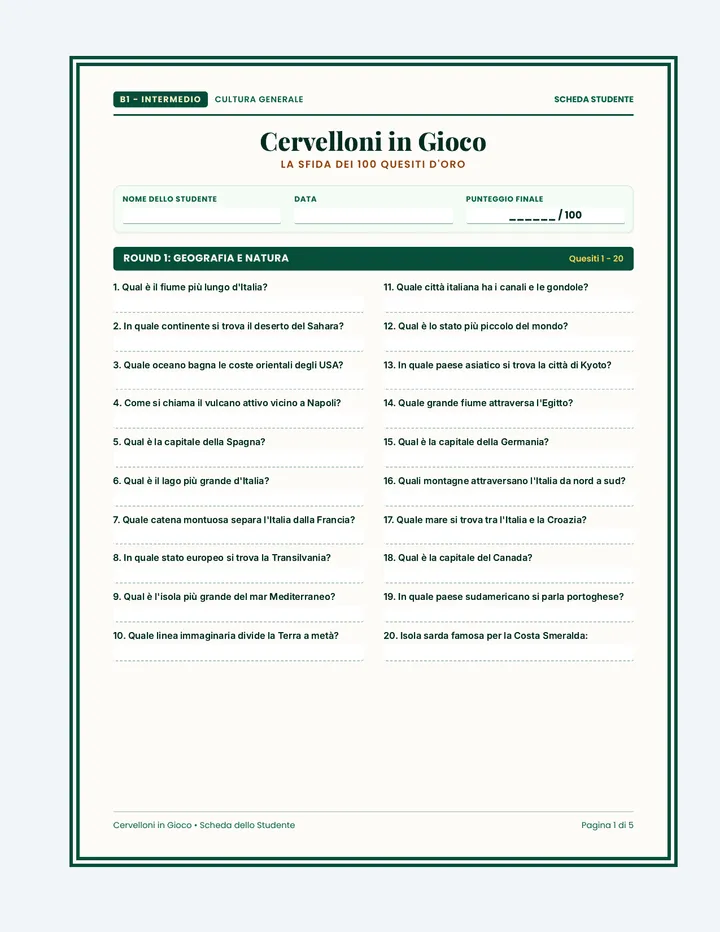
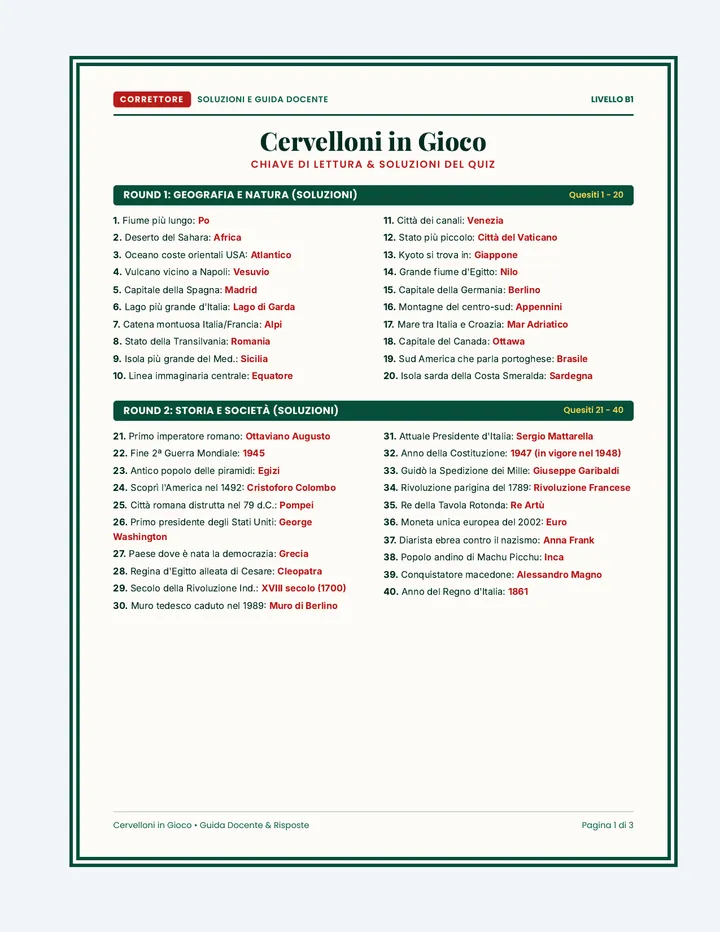
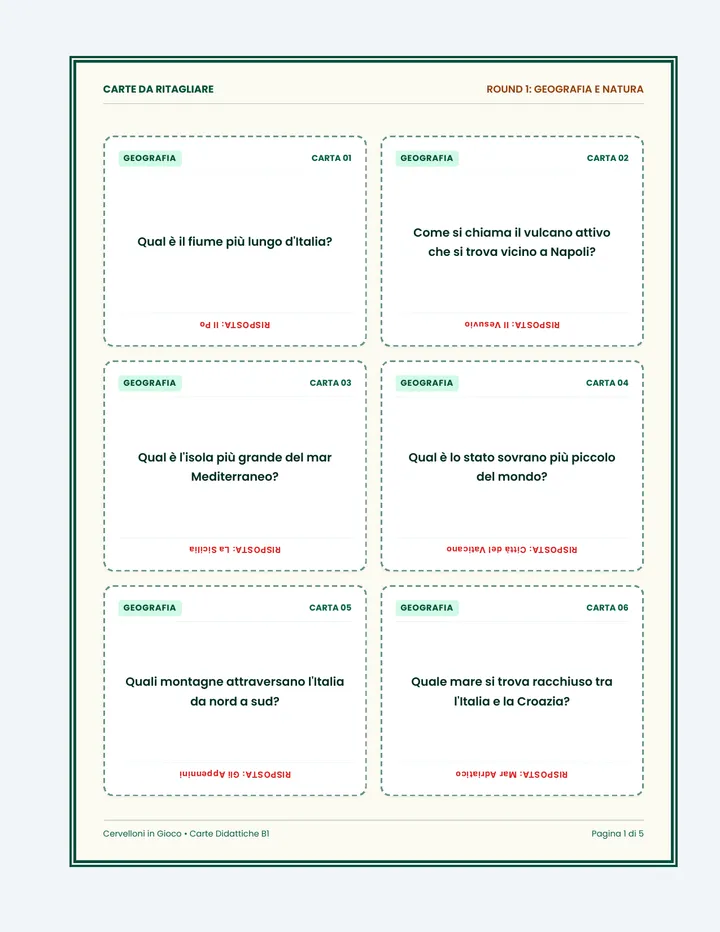
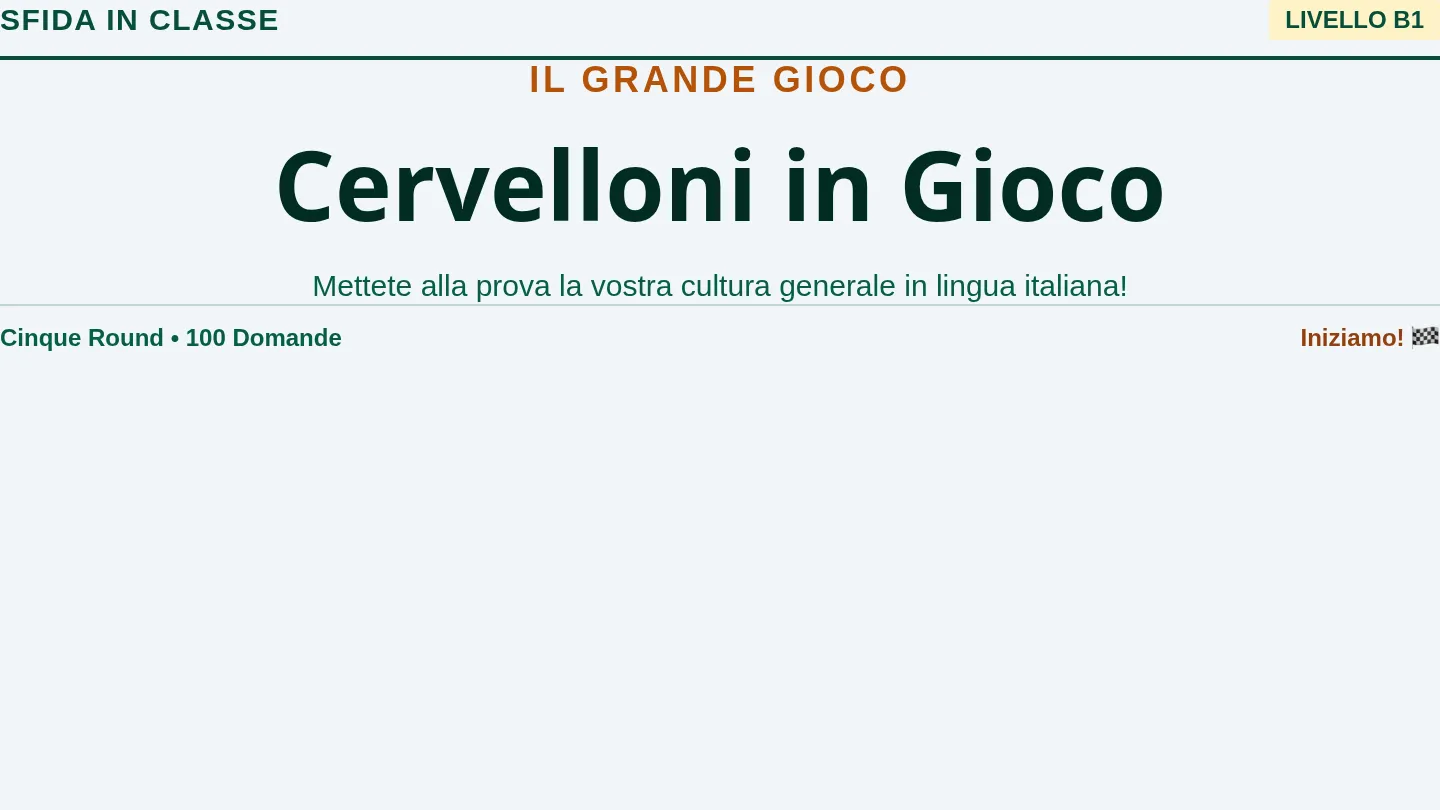
Un'entusiasmante sfida di cultura generale in lingua italiana per studenti di livello B1. Include un quiz di 100 domande con foglio risposte, carte da ritagliare e una presentazione interattiva per la classe.
Un set completo di risorse per un gioco di trivia in stile "pub-trivia" in lingua italiana. Progettato specificamente per gli studenti del secondo anno di italiano (livello A2/B1), copre cultura, cibo, geografia, sport, scienza e curiosità globali.
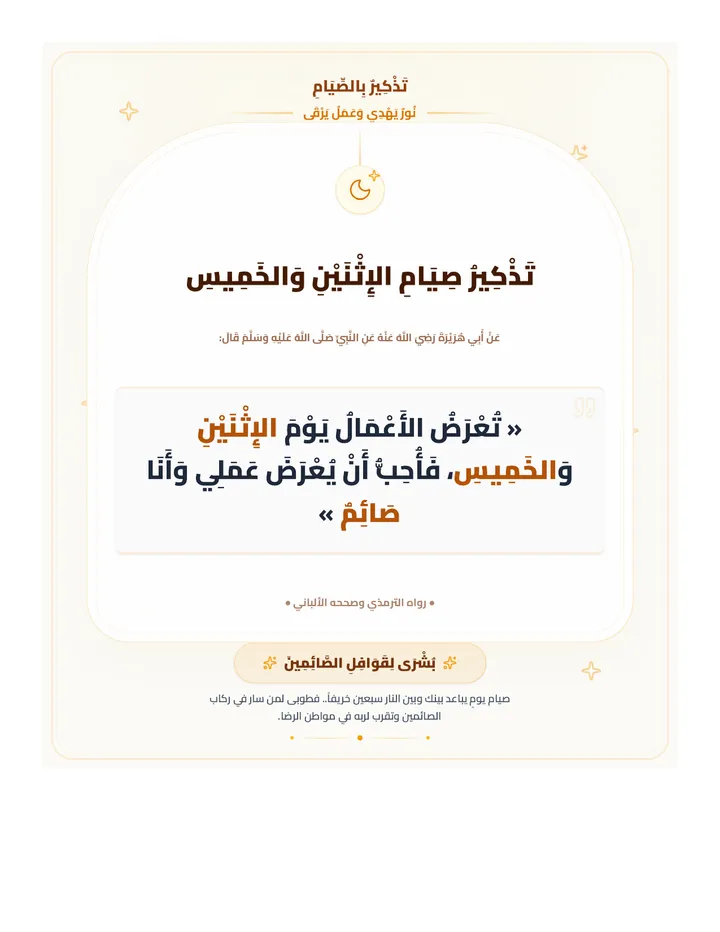
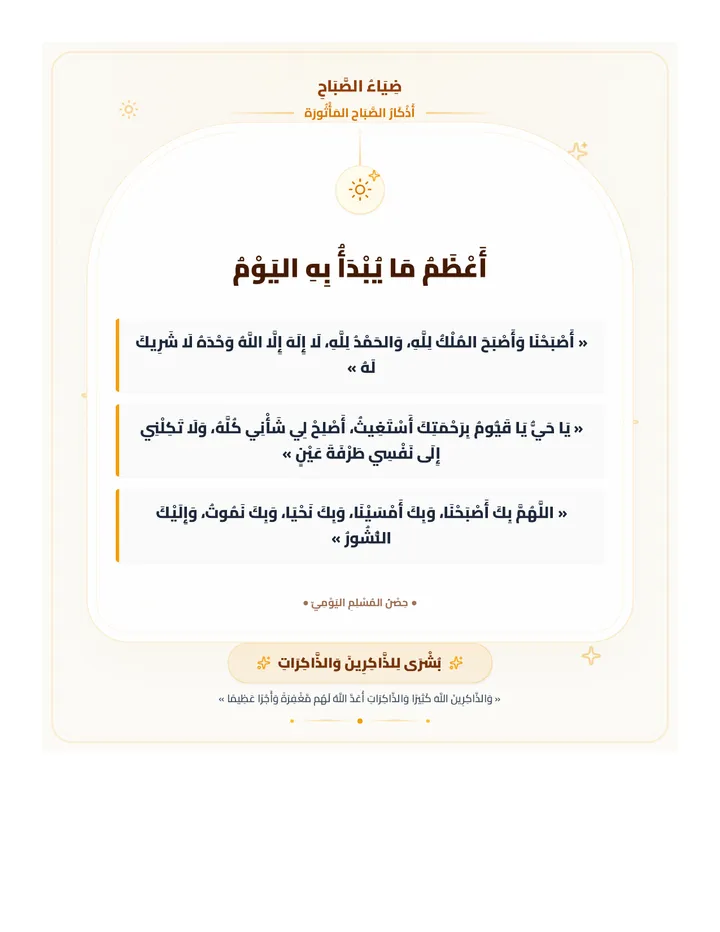
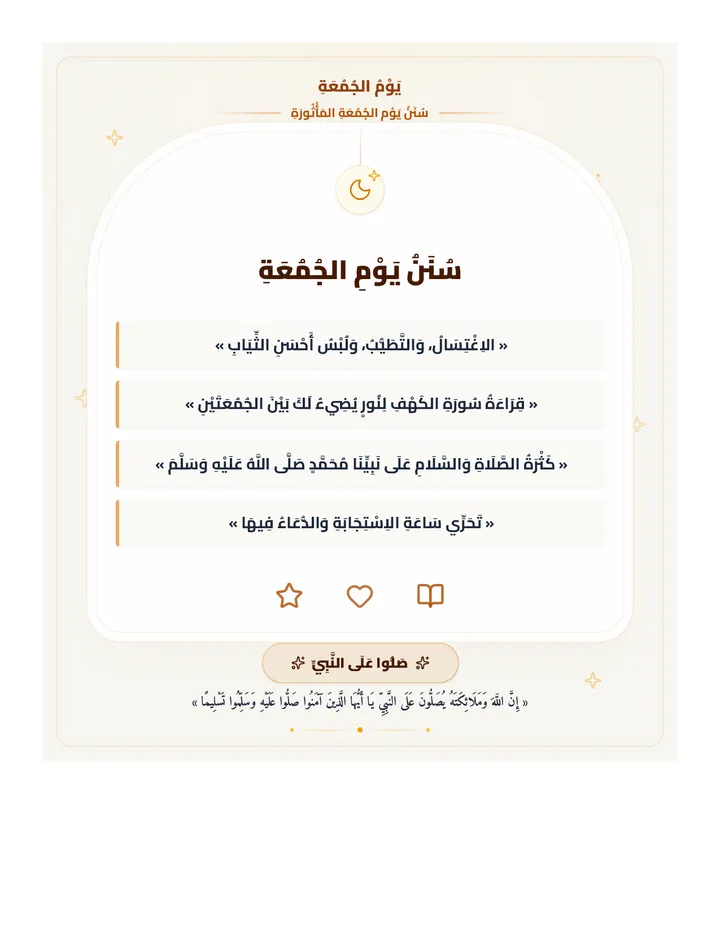
A premium, cohesive collection of beautifully designed spiritual and religious reminders for daily, weekly, and seasonal practices, featuring high-contrast connected Arabic typography, elegant arches, and glowing celestial themes.
Una unidad de debate crítico en español para hispanohablantes de herencia que analiza de manera interdisciplinaria la intersección entre los estándares de belleza, las redes sociales, la responsabilidad médica y la influencia familiar.
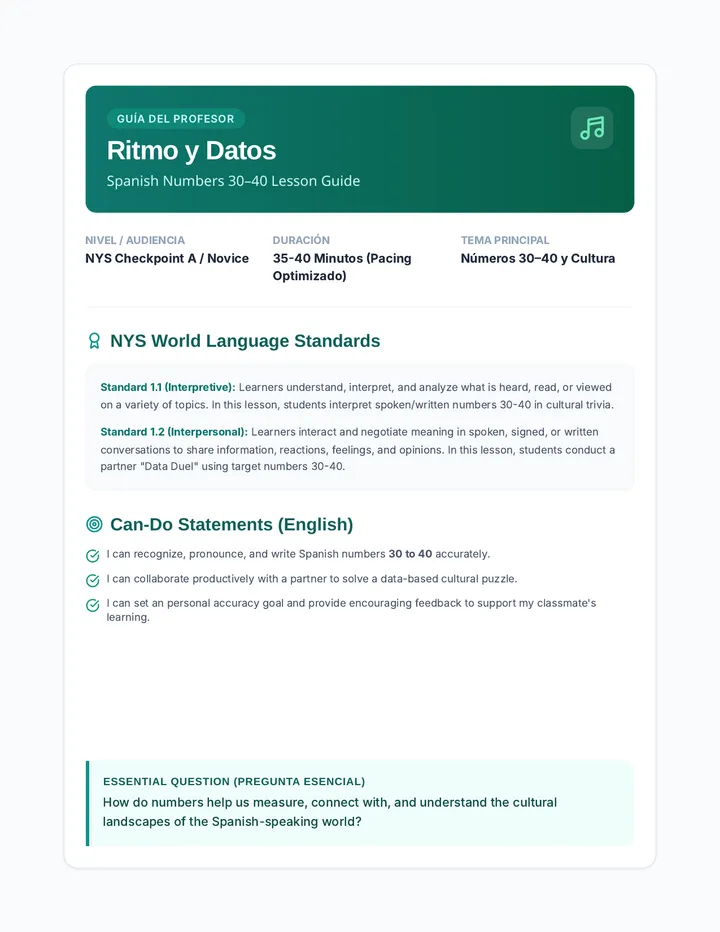
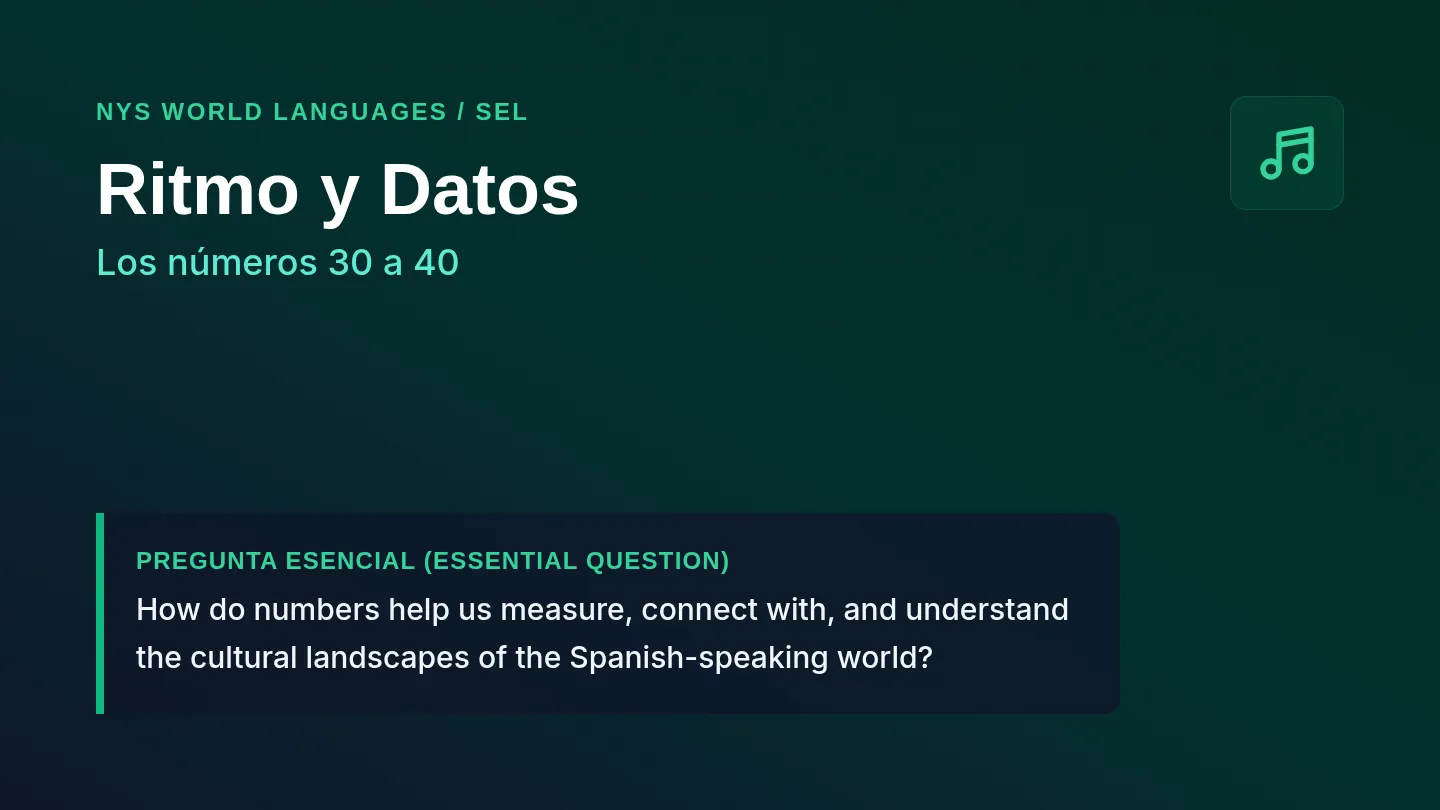
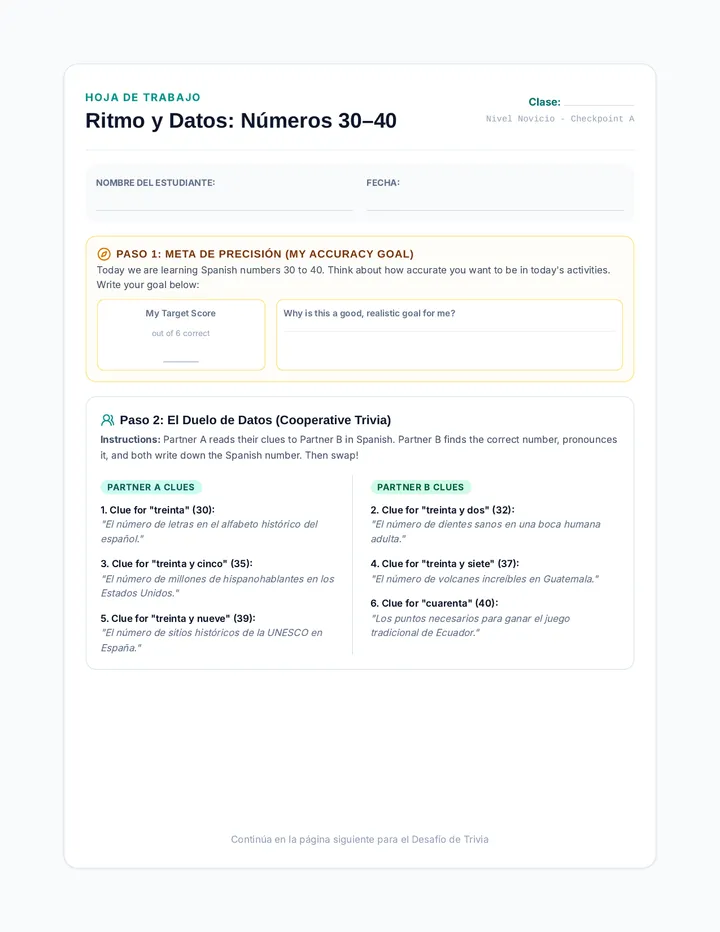
A Spanish lesson focusing on numbers 35-40 through kinesthetic counting, cultural trivia, and collaborative partner activities. It integrates New York State World Language Standards alongside key SEL components including self-management accuracy goals and respectful peer feedback.
A highly focused, 20-minute introductory lesson designed for young beginner English Language Learners from Syria and DR Congo, centering on belonging, kindness, and writing practice within a supportive classroom community.
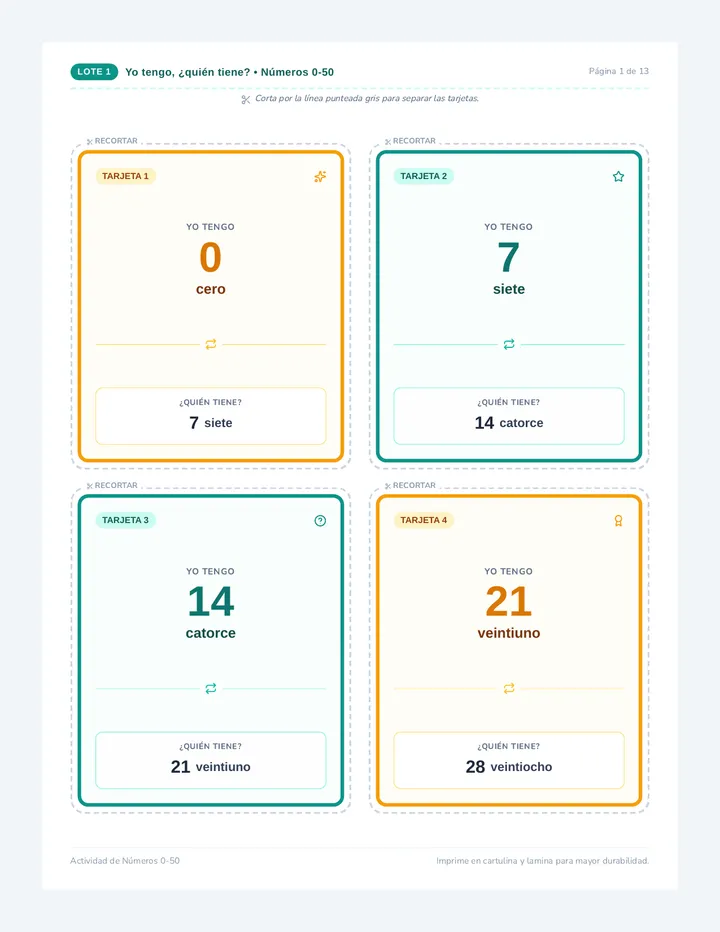
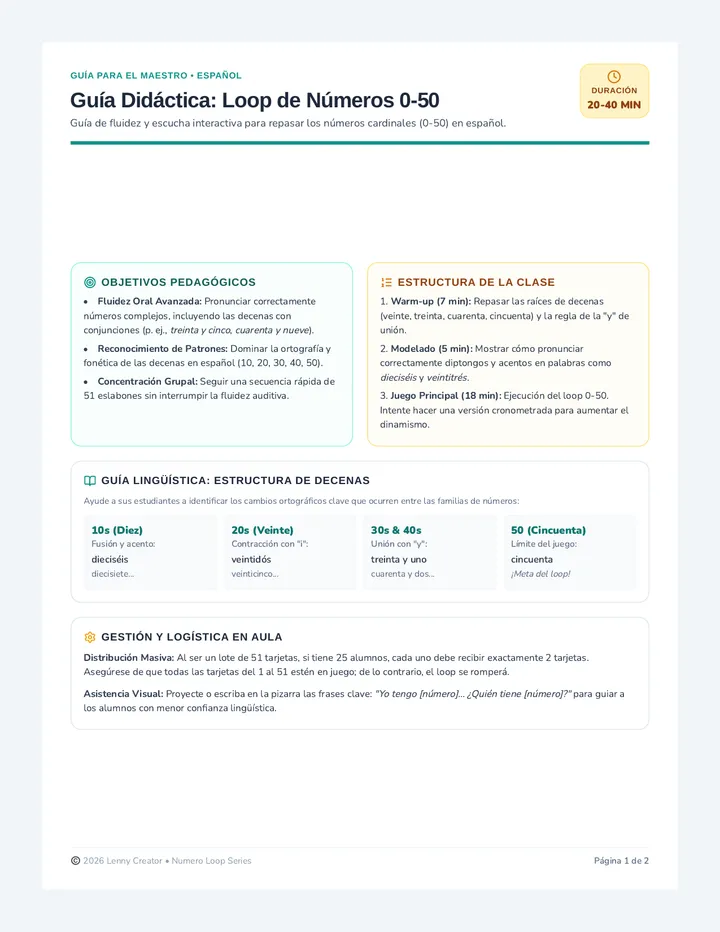
A dynamic Spanish language lesson centered on a 'Yo tengo, ¿quién tiene?' loop game for numbers 0-50. Students develop active listening and rapid oral recall skills while building classroom community through collaborative play.
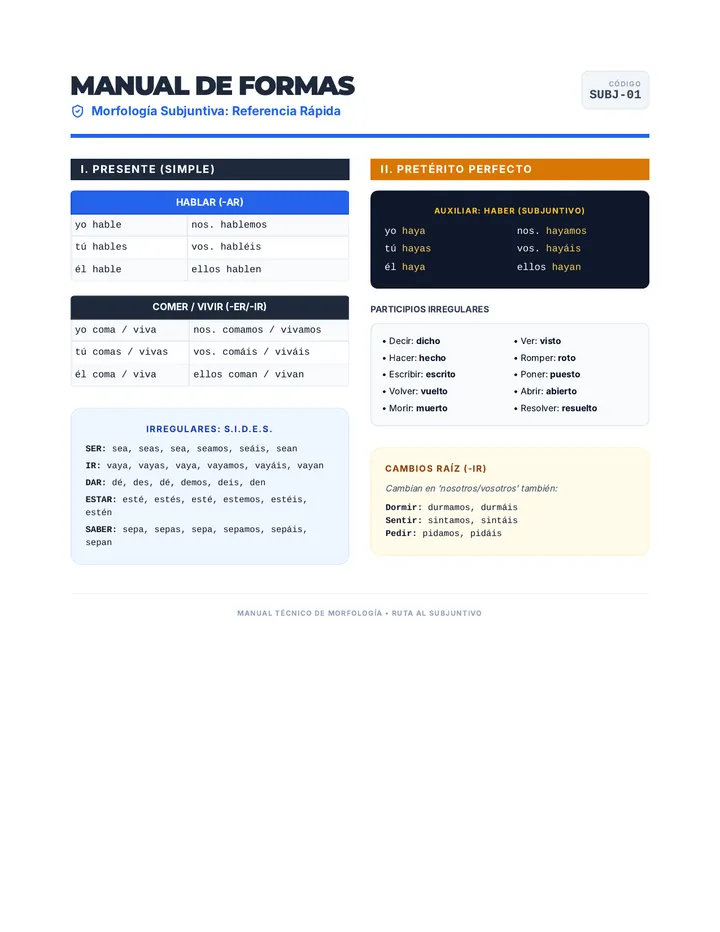
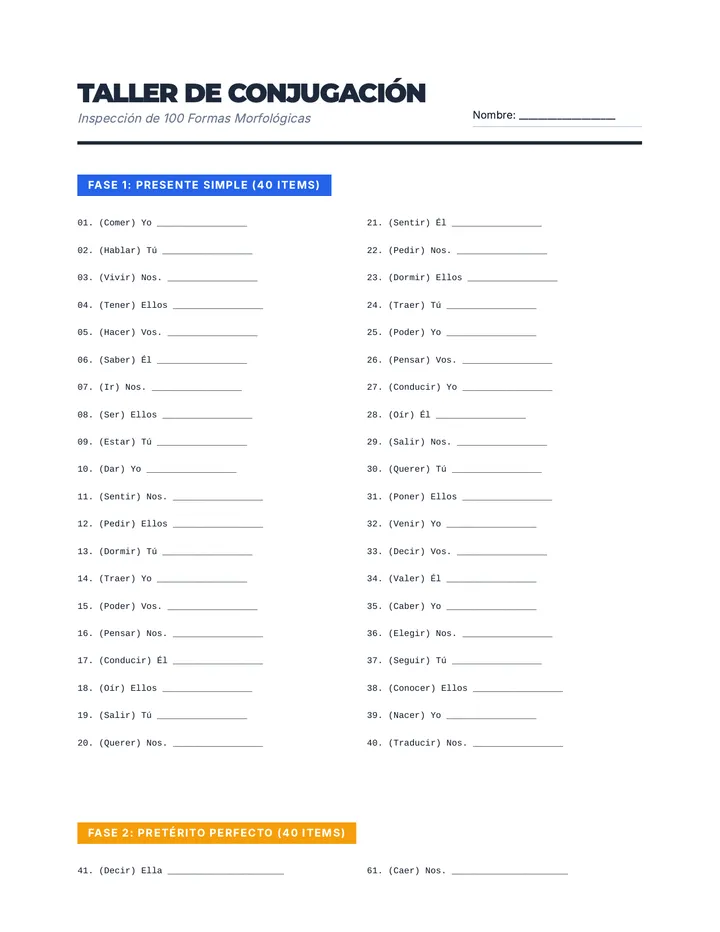
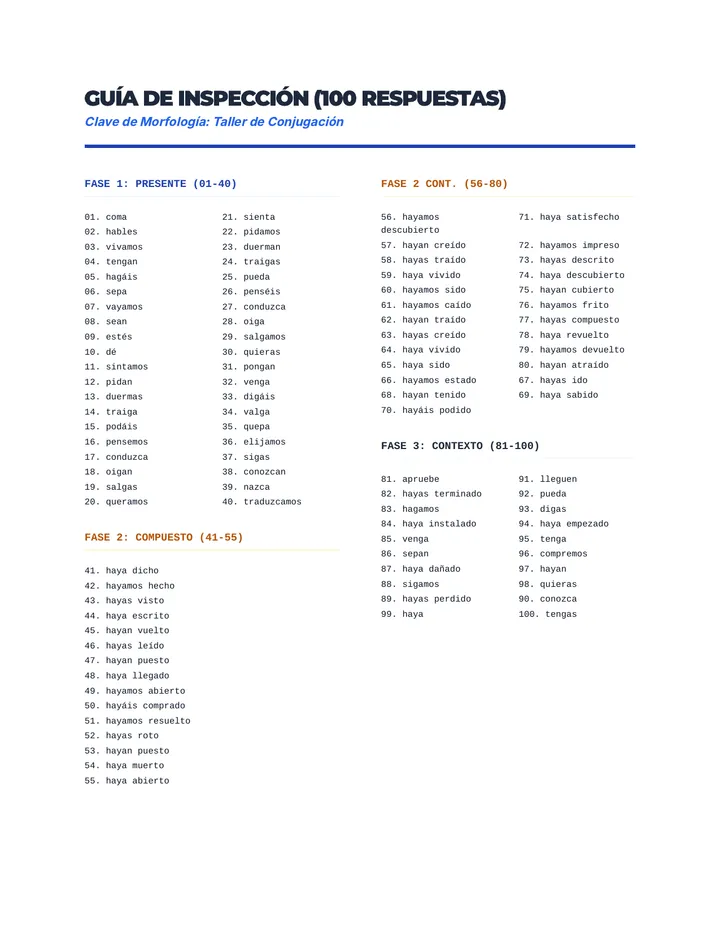
Una lección técnica enfocada en la morfología del presente y pretérito perfecto de subjuntivo. Cubre las reglas de formación para verbos regulares, los cambios ortográficos y los verbos irregulares más frecuentes, junto con la estructura del tiempo compuesto.
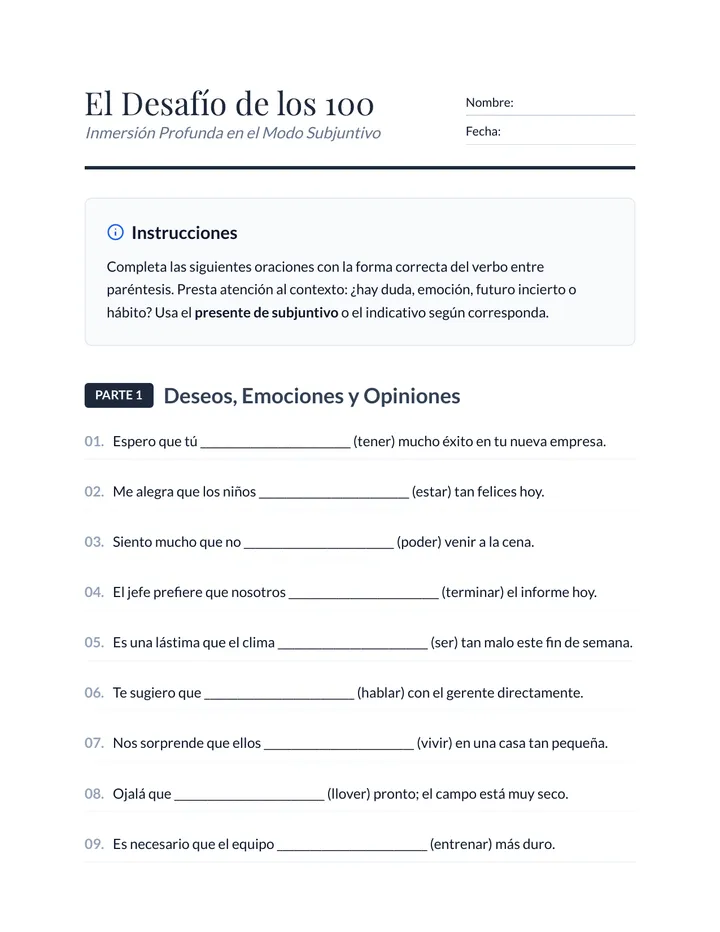
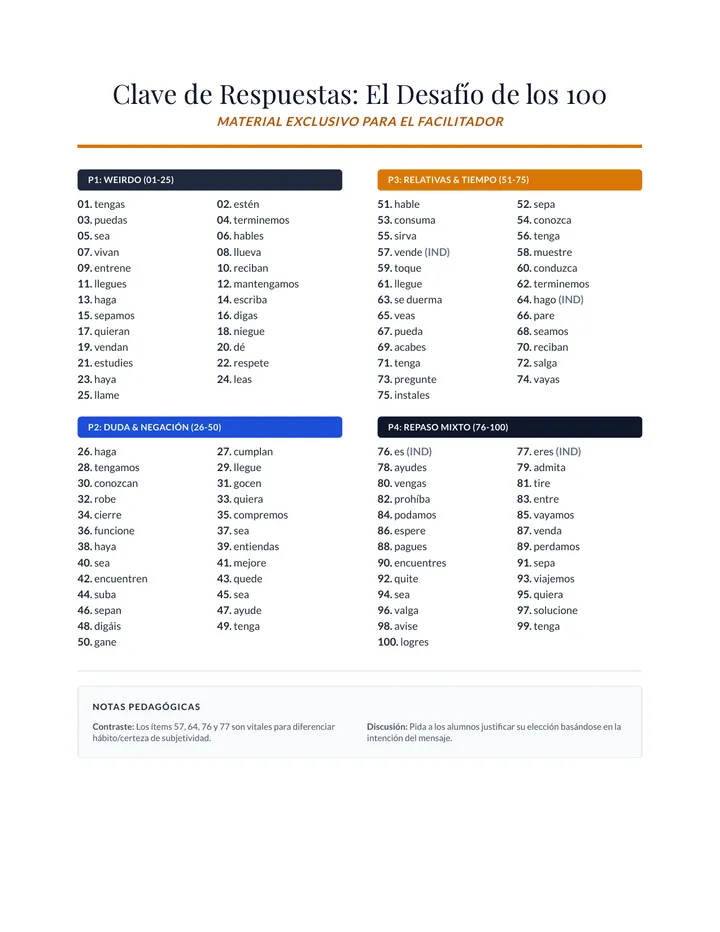
Una lección integral diseñada para estudiantes adultos que profundiza en el uso del modo subjuntivo en español, cubriendo deseos, emociones, duda, cláusulas relativas y conjunciones temporales. Incluye una presentación teórica y una práctica intensiva de 100 oraciones.
A high-energy 20-minute speaking activity for B2 adult learners, focusing on a cutting-edge hydrogel implant for blood pressure control. Students practice critical thinking by evaluating health technology and medical ethics.